Tag: Model

After Dorian, The Science of Power Restoration – Encore

The Caribbean is in crisis now; our region has just been devastated by Hurricane _______; it has wreaked catastrophic havoc in certain destinations: __________.
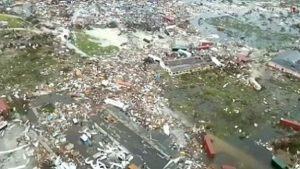
The foregoing was an exact sentence composed in September 17, 2017 in a previous blog-commentary. We are able to repeat this phrase again and again and fill in the blanks with the name of the storm and locations.  This is the reality of Caribbean tropical life, while arguably the greatest address in the world, the ever-present threat of hurricanes is our annual reality.

So the version of the foregoing sentence for September 2019 is as follows:

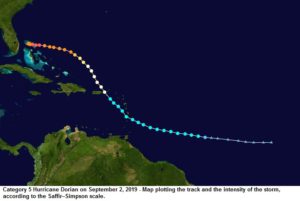
The Bahamas is in crisis now; our region has just been devastated by Hurricane Dorian; it has wreaked catastrophic havoc in certain destinations: the Bahama islands of Great Abaco and Grand Bahama.

The current situation on the ground is miserable. As always, there is an urgent need for infrastructure to be restored:

  • Power
  • Water
  • Telephone
  • Transportation

The recovery from this storm, as always, starts with the restoration of electrical power. There is an Art and a Science to this functionality. Let’s focus on the science; see the Encore of that previous blog-commentary

The science is the same since Hurricane Irma 2 years ago. See the Encore here-now:

—————

Go Lean CommentaryAfter Irma, The Science of Power Restoration

The problem with hurricanes – and there are many – is that it takes a long time for the storm preparation and response (relief, recovery and rebuilding). On average, the storm’s preparation takes 3 days; this includes provisioning, installing protective shutters, hoarding water and gasoline. The response on the other hand can take days, weeks, months and dread-to-say, years.

The most uncomfortable part of the storm response is undeniable waiting for electrical power to be restored.

CU Blog - After Irma, the Science of Power Restoration - Photo 2

In general, the good-bad-ugly scale of memories of previous storms tend to be tied to the length of time it took for power to be restored. The peak of the hurricane season is the very hot months of August/September; there is the need for air-conditioning.

The Caribbean is in crisis now; our region has just been devastated by Hurricane Irma; it has wreaked catastrophic havoc in certain destinations: Barbuda, Saint BarthélemySaint MartinAnguilla, Puerto Rico, the Virgin Islands and Florida. Consider the encyclopedic details in Appendix A below and these questions:

  • How long did/will it take for power to be restored now after Hurricane Irma?
  • How can we reform and transform our Caribbean communities to ensure the efficiency of ‘Power Restoration’?

There is an art and science to the subject of ‘Power Restoration’; actually mostly science. The ‘art’ applies to the efficient deliveries of the management of the restoration process. The science considerations are extensive, starting with the entire eco-system of energy deliveries. As related in a previous blog-commentary

… no one doubts that the inventory of basic needs include “food, clothing and shelter”. But modernity has forced us to add another entry: “energy”. In fact, the availability and affordability of energy can impact the deliveries of these order basic needs.

… In our region, energy costs are among the highest in the world. The book Go Lean… Caribbean relates (Page 100) how the Caribbean has among the most expensive energy costs in the world, despite having abundant alternative energy natural resources (solar, wind, tidal, geo-thermal). The Caribbean eco-system focuses on imported petroleum to provide energy options and as a result retail electricity rates in the Caribbean average US$0.35/kWh, when instead it could be down to US$0.088/kWh. …

With such a 75% savings … there is definitely the need to adapt some of the scientific best practices for energy generation and consumption. In a previous blog-commentary, it was confessed that one of the reasons why people flee the Caribbean region, is the discomforts during the summer months … hot weather, and the lack of infrastructure to mitigate and remediate the discomfort, is identified as one of the reasons for the brain drain/societal abandonment.

One motivation of the movement behind the book Go Lean… Caribbean – available to download for free – is to facilitate a turn-around of economic, security and governing engines of the Caribbean region to do better with power generation, distribution and consumption. The Go Lean book serves as a roadmap for the introduction and implementation of the technocratic Caribbean Union Trade Federation (CU). This Go Lean roadmap has 3 prime directives:

This commentary continues the 4-part series – this is 3 of 4 – on the Aftermath of Hurricane Irma. There are a lot of mitigation and remediation efforts that can be done to lessen the impact of this and future storms. There are lessons that we must consider; there are reforms we must make; there are problems we must solve. The full list of the 4 entries of this series are detailed as follows:

  1. Aftermath of Hurricane Irma – America Should Scrap the ‘Jones Act’
  2. Aftermath of Hurricane Irma – Barbuda Becomes a ‘Ghost Town’
  3. Aftermath of Hurricane Irma – The Science of Power Restoration
  4. Aftermath of Hurricane Irma – Failed State Indicators: Destruction and Defection

Despite the manifested threats of Climate Change-fueled hurricanes, we want to make the Caribbean homeland a better place to live, work and play. This is going to take some heavy-lifting to accomplish, but we can be successful. Yes, we can. This quest is detailed early on in the Go Lean book’s Declaration of Interdependence, as follows (Page 11 – 13):

i. Whereas the earth’s climate has undeniably changed resulting in more severe tropical weather storms, it is necessary to prepare to insure the safety and security of life, property and systems of commerce in our geographical region. As nature recognizes no borders in the target of its destruction, we also must set aside border considerations in the preparation and response to these weather challenges.

xi. Whereas all men are entitled to the benefits of good governance in a free society, “new guards” must be enacted to dissuade the emergence of incompetence, corruption, nepotism and cronyism at the peril of the people’s best interest. The Federation must guarantee the executions of a social contract between government and the governed.

xvi. Whereas security of our homeland is inextricably linked to prosperity of the homeland, the economic and security interest of the region needs to be aligned under the same governance. Since economic crimes … can imperil the functioning of the wheels of commerce for all the citizenry, the accedence of this Federation must equip the security apparatus with the tools and techniques for predictive and proactive interdictions.

xix. Whereas our legacy in recent times is one of societal abandonment, it is imperative that incentives and encouragement be put in place to first dissuade the human flight, and then entice and welcome the return of our Diaspora back to our shores. This repatriation should be effected with the appropriate guards so as not to imperil the lives and securities of the repatriated citizens or the communities they inhabit. The right of repatriation is to be extended to any natural born citizens despite any previous naturalization to foreign sovereignties.

The Go Lean book asserts that Caribbean stakeholders must find a Way Forward; they must institute better systems, processes and utilities to deliver electrical power (energy) despite the reality of hurricanes. Though power will go off – electricity and water is a bad combination – ‘Power Restoration’ must be a priority. Therefore Caribbean communities must adopt different community ethos, plus execute key – and different – strategies, tactics, implementations and advocacies to reform and transform.

This Way Forward must therefore fulfill these 2 requirements:

  • Flood Management and Control
    CU Blog - After Irma, the Science of Power Restoration - Photo 3
    According to a previous blog-commentary: “there is a thesis that flooding could be prevented. Yes, indeed! This is the experience and historicity of the Dutch people, the European country of the Netherlands or Holland.”
    Even in the low-lying American city of New Orleans, Louisiana there is the practice of pumping out excess water to mitigate and remediate flooding; see this depicted in the VIDEO in Appendix B below.
  • Implementation of a Caribbean Regional Power Grid
    CU Blog - After Irma, the Science of Power Restoration - Photo 1
    Power distribution is important for any mitigation-remediation plan. The problem with hurricane toppling trees and power lines is unavoidable – it is what it is – a better solution is to deliver electricity underground or underwater, as illustrated in the above photo. The Go Lean roadmap calls for an extensive smart Power Grid and a region-wide Utility Cooperative. This would allow for alternate power generation and electrical distribution. See sample of an underground/underwater “Power Cable” product depicted in the VIDEO in Appendix C below.
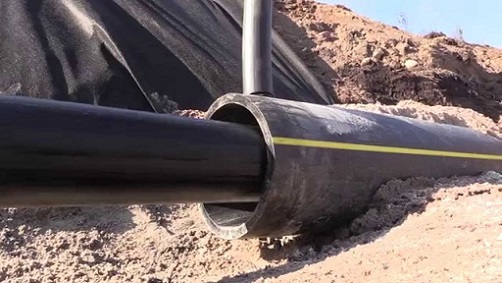
Many other communities have done a good job of optimizing their electrical utility grid. They execute strategies, tactics and implementations to mitigate the risk of power outages; then remediate any crises with technocratic deliveries to facilitate ‘Power Restoration’.

Go Green 1

There will be heavy-lifting for our Caribbean region to have this disposition. The Go Lean roadmap details that heavy-lift, describing the community ethos, strategies, tactics, implementations and advocacies to foster progress for Caribbean energy distribution, our own Regional Power Grid. The following list of entries in the Go Lean book highlights this theme:

Community Ethos – Lean Operations Page 24
Community Ethos – Return on Investments Page 24
Community Ethos – Cooperatives Page 25
Community Ethos – Ways to Impact the Future Page 26
Community Ethos – Ways to Improve Negotiations Page 32
Anecdote – Pipeline Transport – Strategies, Tactics & Implementations Page 43
Strategy – Harness the power of the sun/winds Page 46
Tactical – Fostering a Technocracy Page 82
Tactical – Separation of Powers – Energy Commission Page 82
Anecdote – “Lean” in Government – Energy Permits Page 93
Implementation – Regional Grid as Economies-of-Scale benefit Page 97
Anecdote – Caribbean Energy Grid Implementation Page 100
Implementation – Start-up Benefits from the EEZ Page 104
Implementation – Ways to Develop Pipeline Industry Page 107
Implementation – Ways to Improve Energy Usage Page 113
Advocacy – Ways to Impact Public Works Page 175
Advocacy – Ways to Foster Cooperatives Page 176
Advocacy – Ways to Impact Monopolies Page 202
Appendix – Underwater High Intensity Power Lines Page 282

The experience of enduring hurricanes is never pleasant. As such, we do not invite people to fly down from northern locations to pass storms with us. In fact, when there is a Hurricane Watch, the practice is to evacuate tourists and visitors. We evacuate our high-risk residents as well; (kidney dialysis patients, senior citizens, anyone that cannot endure the loss of electronic-based health instruments). This is a best-practice.

Why do we only evacuate just a limited group from the islands?

We assume that everyone else can endure.

Hah, lol …

But actually, with such high post-hurricane abandonment rates, as reported previously, it is obvious that everyone loses patience. So any improvement in the ‘Power Restoration’ experience would be a win-win; it would improve our communities’ endurance and make our Caribbean homeland better places to live, work and play. 🙂

Download the free e-Book of Go Lean … Caribbean – now!

Sign the petition to lean-in for this roadmap for the Caribbean Union Trade Federation.

———–

Appendix A – Hurricane Irma Devastation

  • In Barbuda, Hurricane Irma caused catastrophic damage on the island; it damaged or destroyed 95% of the island’s buildings and infrastructure, leaving Barbuda “barely habitable” according to Prime Minister Gaston Browne. Everyone on the island was evacuated to Antigua, leaving Barbuda uninhabited for the first time in modern history.[3]
  • In St. Martin, on 6 and 7 September 2017 the island was hit by Hurricane Irma (Category 5 at landfall), which caused widespread and significant damage to buildings and infrastructure. A total of 11 deaths had been reported as of 8 September 2017.[12][13] France’s Minister of the InteriorGérard Collomb, said on 8 September 2017 that most of the schools were destroyed on the French half of the island. In addition to damage caused by high winds, there were reports of serious flood damage to businesses in the village of Marigot. Looting was also a serious problem. Both France and the Netherlands sent aid as well as additional police and emergency personnel to the island.[14][15][16] The Washington Post reported that 95% of the structures on the French side and 75% of the structures on the Dutch side were damaged or destroyed.[17][18] Some days after the storm had abated, a survey by the Dutch Red Cross estimated that nearly a third of the buildings in Sint Maarten had been destroyed and that over 90 percent of structures on the island had been damaged.[19] Princess Juliana Airport was extensively damaged but reopened on a partial basis in two days to allow incoming relief flights and for flights that would take evacuees to other islands.[20]
  • In Anguila, the eye of the storm pass over it on September 6. Many homes and schools were destroyed, and the island’s only hospital was badly damaged.[163] The devastation was particularly severe in East End, where the winds uprooted scores of trees and power poles and demolished a number of houses. … One death was reported on the island.[163] According to [sources], Anguilla’s economy could suffer at least $190 million in losses from the hurricane.[129]
  • Puerto Rico avoided a direct hit by the Category 5 Hurricane Irma on September 8, 2017, but high winds caused a loss of electrical power to some one million residents. Almost 50% of hospitals were operating with power provided by generators.[133]
  • Damage in the British Virgin Islands was extensive. Numerous buildings and roads were destroyed on the island of Tortola, which bore the brunt of the hurricane’s core.[172] Irma’s effects in the U.S. Virgin Islands were most profound on Saint Thomas. Due to its normal reliance on electricity from Saint Thomas, the island [of St. John] was left without power.
  • In the Florida Keys, the hurricane caused major damage to buildings, trailer parks, boats, roads, the electricity supply, mobile phone coverage, internet access, sanitation, the water supply and the fuel supply. … As of 6:41 p.m. EDT on September 10 over 2.6 million homes in Florida were without power.[232]
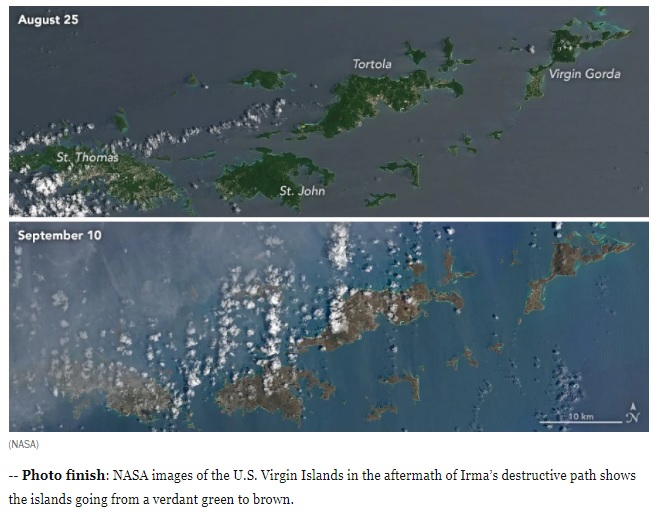
CU Blog - After Irma, Barbuda Becomes a 'Ghost Town' - Photo 2

———–

Appendix B VIDEO – Here’s how the pumps in New Orleans move water out during heavy rainfall – https://youtu.be/hZvGVUZi9FU

Published on Mar 30, 2017 – WDSU News: Pumps Work During Thursday’s Flooding

———–

Appendix C VIDEO – ABB launches world´s most powerful extruded HVDC cable system –

Published on Aug 21, 2014

ABB Power Grids

525 kV voltage (previous highest installed 320 kV) sets world record more than doubling power flow to 2600 MW (from 1000 MW) and extending range to 1500 km for more cost effective, efficient and reliable underground and subsea transmission while keeping losses to below 5 percent. Major breakthrough for applications like underground HVDC transmission, sub-sea interconnections, offshore wind integration etc. More information: http://new.abb.com/systems/high-volta…


Share this post:
, , ,

Chef Jose Andres – Role Model for Hurricane Relief – “One Meal at a Time”

Go Lean Commentary

We gotta eat!

Even when a devastating Category 5 Hurricane impacts your homeland, that natural law applies: We gotta eat!

Thank you Chef José Andrés for pulling out all the stops to feed the people of the Bahamas during this, their most desperate hour.

Why does he help? Why does he do “this”? Just because: People gotta eat!

Even though he has help – he brings a team – it is with the full might of his will, reputation and connections that he is able to have this impact. He is proof-positive that one man – or woman – can make a difference in society. See this VIDEO news story here-now:

VIDEO – Chef José Andrés in the Bahamas, helping save lives “one meal at a time”  https://youtu.be/woeweQTXZRg

Posted September 4, 2019 – The renowned chef’s non-profit World Central Kitchen is one of the aid groups spearheading relief efforts in the stricken island nation. CBS Reports.

Chef José Andrés did the same thing in Puerto Rico, after Hurricane Maria; and in Haiti after the 2010 Earthquake. He has been a great benefactor for all of the Caribbean – and he does not even have a Caribbean heritage.

He is from Spain; see his profile in the Appendix below.

Yes, one man can make a difference! The 2013 book Go Lean…Caribbean posits that one person – an advocate – can change the world (Page 122). It relates:

An advocacy is an act of pleading for, supporting, or recommending a cause or subject. For this book, it’s a situational analysis, strategy or tactic for dealing with a narrowly defined subject.

Advocacies are not uncommon in modern history. There are many that have defined generations and personalities. Consider these notable examples from the last two centuries in different locales around the world:

  • Frederick Douglas
  • Mohandas Gandhi
  • Martin Luther King
  • Nelson Mandela
  • Cesar Chavez
  • Candice Lightner – (Mothers Against Drunk Driving)

This is a consistent theme from the movement behind the Go Lean book– available to download for free. We have repeatedly presented profiles of “1” persons who have made lasting impacts on their community and the whole world. Consider this sample list, of previous blog-commentaries where advocates and role models have been elaborated upon:

https://goleancaribbean.com/blog/?p=17871 ‘Ross Perot’, Political Role Model – He was right on Trade – RIP
https://goleancaribbean.com/blog/?p=16942 Sallie Krawcheck – Role Model for Women Economic Empowerment
https://goleancaribbean.com/blog/?p=16926 Viola Desmond – Canadian Role Model for Blacks and Women
https://goleancaribbean.com/blog/?p=16702 W.E.B. Du Bois – Role Model in Pan-Africana
https://goleancaribbean.com/blog/?p=16696 Marcus Garvey – An Ancient Role Model Still Relevant Today
https://goleancaribbean.com/blog/?p=14558 Being the Change in ‘Brown vs Board of Education’ – Role Model Linda Brown, RIP
https://goleancaribbean.com/blog/?p=14556 “March for Our Lives” Kids – Observing the Change … with Guns
https://goleancaribbean.com/blog/?p=14139 Carter Woodson – One Man Made a Difference … for Black History
https://goleancaribbean.com/blog/?p=8165 Role Models Muhammad Ali and Kevin Connolly – Their Greatest Fight
https://goleancaribbean.com/blog/?p=7682 Frederick Douglass: Role Model for Single Cause – Death or Diaspora
https://goleancaribbean.com/blog/?p=866 Bob Marley: The legend of this Role Model lives on!

The Go Lean roadmap seeks to reform and transform Caribbean life and culture. But first we have to make sure our people’s basic needs are covered.

We gotta eat!

So thank you Chef José Andrés for pitching in and feeding our Bahamian and Caribbean people.

The Go Lean roadmap calls on every man, woman and child in the Caribbean to be an advocate, and/or appreciate the efforts of other advocates. Their examples can truly help us today with our passions and purpose.

In summary, we conclude about Chef José Andrés the same as we do about all the other Caribbean advocates; we say (Go Lean book conclusion Page 252):

Thank you for your service, love and commitment to all Caribbean people. We will take it from here.

The movement behind Go Lean book – the planners of a new Caribbean – stresses that a ‘change is going to come’, one way or another. As depicted in the foregoing VIDEO, Chef José Andrés facilitated all the logistics himself for our post-Hurricane Dorian Rescue/Relief – i.e. boats, helicopters and the food – but the new Caribbean should really be matured enough to handle our own Hurricane Response:

  • Rescue 
  • Relief
  • Recovery
  • Rebuild

We must Grow Up, Already!

Haiti, Puerto Rico and now the Bahamas – these were the natural disasters of the past; but there will be more … in the future.

Climate Change guarantees it.

We must copy the patterns and good examples of our role models; Chef José Andrés has provided us a perfect example of how to make the Caribbean a better homeland to live, work and play. 🙂

About the Book
The book Go Lean…Caribbean serves as a roadmap for the introduction and implementation of the technocratic Caribbean Union Trade Federation (CU), for the elevation of Caribbean society – for all member-states. This CU/Go Lean roadmap has these 3 prime directives:

  • Optimization of the economic engines in order to grow the regional economy to $800 Billion and create 2.2 million new jobs.
  • Establishment of a security apparatus to ensure public safety and protect the resultant economic engines.
  • Improve Caribbean governance to support these engines, including a separation-of-powers between the member-states and CU federal agencies.

The Go Lean book provides 370-pages of turn-by-turn instructions on “how” to adopt new community ethos, plus the strategies, tactics, implementations and advocacies to execute so as to reboot, reform and transform the societal engines of Caribbean society.

Download the free e-Book of Go Lean … Caribbean – now!

Who We Are
The movement behind the Go Lean book – a non-partisan, apolitical, religiously-neutral Community Development Foundation chartered for the purpose of empowering and re-booting economic engines – stresses that reforming and transforming the Caribbean societal engines must be a regional pursuit. This was an early motivation for the roadmap, as pronounced in the opening Declaration of Interdependence (Pages 12 – 14):

i. Whereas the earth’s climate has undeniably changed resulting in more severe tropical weather storms, it is necessary to prepare to insure the safety and security of life, property and systems of commerce in our geographical region. As nature recognizes no borders in the target of its destruction, we also must set aside border considerations in the preparation and response to these weather challenges.

xi. Whereas all men are entitled to the benefits of good governance in a free society, “new guards” must be enacted to dissuade the emergence of incompetence, corruption, nepotism and cronyism at the peril of the people’s best interest. The Federation must guarantee the executions of a social contract between government and the governed.

xii. Whereas the legacy in recent times in individual states may be that of ineffectual governance with no redress to higher authority, the accedence of this Federation will ensure accountability and escalation of the human and civil rights of the people for good governance, justice assurances, due process and the rule of law. As such, any threats of a “failed state” status for any member state must enact emergency measures on behalf of the Federation to protect the human, civil and property rights of the citizens, residents, allies, trading partners, and visitors of the affected member state and the Federation as a whole.

xvi. Whereas security of our homeland is inextricably linked to prosperity of the homeland, the economic and security interest of the region needs to be aligned under the same governance. Since economic crimes … can imperil the functioning of the wheels of commerce for all the citizenry, the accedence of this Federation must equip the security apparatus with the tools and techniques for predictive and proactive interdictions.

xxiv. Whereas a free market economy can be induced and spurred for continuous progress, the Federation must install the controls to better manage aspects of the economy: jobs, inflation, savings rate, investments and other economic principles. Thereby attracting direct foreign investment because of the stability and vibrancy of our economy.

xxxiii. Whereas lessons can be learned and applied from the study of the recent history of other societies, the Federation must formalize statutes and organizational dimensions to avoid the pitfalls …. On the other hand, the Federation must also implement the good examples learned from [successful] developments/communities.

Sign the petition to lean-in for this roadmap for the Caribbean Union Trade Federation.

—————

Appendix Reference Title: José Andrés
José Ramón Andrés Puerta
 (born 13 July 1969) is a Spanish-American[1] chef often credited with bringing the small plates dining concept to America.[2] He owns restaurants in Washington, D.C.Los AngelesLas VegasSouth Beach, FloridaOrlandoNew York City, and Frisco, Texas. Andrés is the founder of World Central Kitchen, a non-profit devoted to providing meals in the wake of natural disasters.[3] He was awarded a 2015 National Humanities Medal at a 2016 White House ceremony.[4]

Trump Hotel restaurant and lawsuit
Andrés planned to open a restaurant in the Trump International Hotel in Washington, DC, in 2016. After Donald Trump made disparaging comments about Mexicans in June 2015, Andrés withdrew from the contract with the Trump Organization, which then sued him.[13] Andrés counter-sued, and the parties reached a settlement in April 2017.[14] Andrés remains an outspoken critic of Trump.[15][16]

World Central Kitchen
In response to the 2010 Haiti earthquake, Andrés formed World Central Kitchen which provides healthy food to families and individuals touched by disasters.[17] Since its founding, the NGO has organized meals in the Dominican RepublicNicaraguaZambiaPeruCubaUganda, and in Cambodia.[3]

In January 2019 Andrés opened a World Central Kitchen on Pennsylvania Ave, Washington DC to feed federal workers that were furloughed during the government shutdown.[18]

Puerto Rico Hurricane Maria response
Andrés emerged as a leader of the disaster relief efforts in Puerto Rico in the wake of Hurricane Maria in 2017. His efforts to provide assistance encountered obstacles from FEMAand government bureaucrats, so instead, “we just started cooking.”[19] He organized a grass-roots movement of chefs and volunteers to establish communications, food supplies, and other resources and started serving meals. Andrés and his organization World Central Kitchen (WCK)[20] served more than two million meals in the first month after the hurricane.[21][22][23] WCK received two short term FEMA contracts and served more meals than the Salvation Army or the Red Cross, but its application for longer term support was denied.[24][25]

For his efforts in Puerto Rico, Andrés was named the 2018 Humanitarian of the Year by the James Beard Foundation.[26] He wrote a book about the experience called We Fed an Island: The True Story of Rebuilding Puerto Rico, One Meal at a Time.[27]

Source: Retrieved September 4, 2019 from: https://en.wikipedia.org/wiki/Jos%C3%A9_Andr%C3%A9s

Share this post:
, ,
[Top]

More Storms: Rinse and Repeat – Encore

I have friends …

… that live in North America and Europe. They always ask about visiting the many beautiful islands of the Caribbean. I strongly urge them to come on down and “be our guest“; to consume our hospitality, enjoy our culture, food, spirits, cigars, festivals, fishing, resorts and cruises.

But, I caution them: Do not come between August 15 and September 15; this is the peak of our mean season! This is when we Rinse and Repeat.

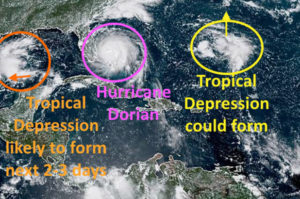
This has often been the case over the years – see Table 1 below – and this is true this year as well. The Bahamas just endured Category 5 Hurricane Dorian and now … there are other storms on the radar screen, in the vicinity. See photo here:

Rinse and Repeat is more than just a shampoo instruction, it is what we endure in the Caribbean region every year during Hurricane Season. Lastly, it is also the title of a previous blog-commentary from August 30, 2017.

Table 1 – Highest Number of named storm occurrences by month
Month
Storms Season
January 1 1938195119782016
February 1 1952
March 1 1908
April 1 199220032017
May 2 18872012
June 3 188619361968
July 5 2005
August 8 20042012
September 8 20022010
October 8 1950
November 3 2005
December 2 18872003
Based on data from: U.S. NOAA Coastal Service Center – Historical Hurricane Tracks Tool
† – Highest number for month by virtue of being only known season to see a storm form

Again, imagine 8 named storms in the same month; that is truly Rinse and Repeat. This is our reality. It is only apropos to Encore that previous blog-commentary here-now:

———–

Go Lean Commentary – Disaster Preparation: ‘Rinse and Repeat’

The reality of Caribbean life: we must contend with natural disasters, not of our making, “again and again”. The situation can be described as “Rinse and Repeat“.

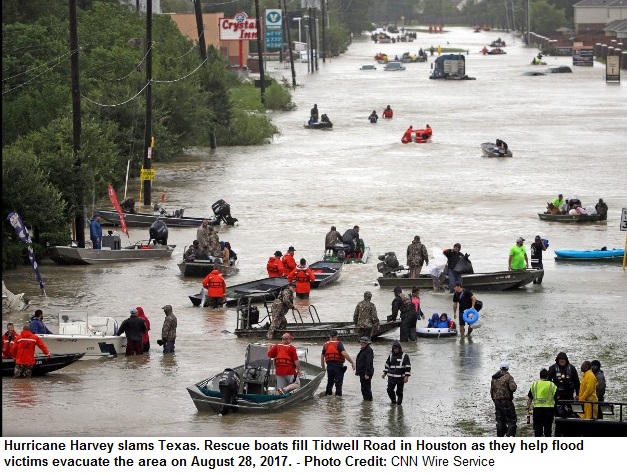
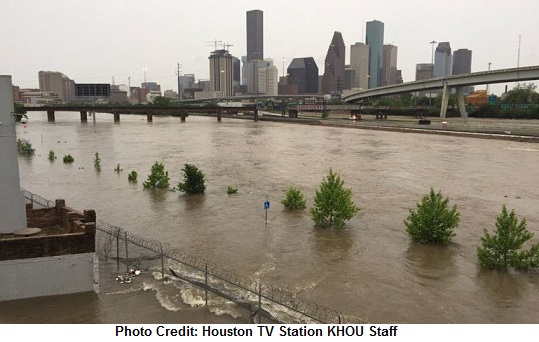
Climate Change is not of our making, but it is our problem. Truth be told, it is not just our problem alone; the whole planet is affected. Right now this moment, the Greater Metropolitan area of Houston, Texas USA is suffering “pangs of distress”; see the VIDEO in the Appendix below. CU Blog - Disaster Preparation - Rinse and Repeat - Photo 1

It is what it is!

Some communities have done a better job than others in preparing for the unavoidable:

“Some communities”? “Better job“? That is not us … in the Caribbean!

As related in a previous Go Lean commentary, our Caribbean region has failed … in our managing this Agent-of-Change:

… we do not have the luxury of “sticking our head in the sand” and pretending that these problems will simply go away. The region has been devastated with this dysfunction and mis-management. Some 70% of Caribbean college-educated citizens have already fled their homelands in an undisputed brain drain. It’s time now to manage change differently than the Caribbean has done as of late. It’s time now to “Go Lean”.

The book Go Lean…Caribbean – available to download for free – serves as a roadmap for the introduction and implementation of the technocratic Caribbean Union Trade Federation (CU), for the elevation of Caribbean society – for all member-states. This CU/Go Lean roadmap has these 3 prime directives for us to do a better job:

  • Optimization of the economic engines in order to grow the regional economy to $800 Billion and create 2.2 million new jobs. This includes an efficient Emergency Management apparatus to ensure business continuity.
  • Establishment of a security apparatus to ensure public safety and protect the resultant economic engines.
  • Improve Caribbean governance to support these engines, including a separation-of-powers between the member-states and CU federal agencies. We can “move” member-state governments simply through funding, rankings and ratings.

The book stresses that reforming and transforming the Caribbean societal engines must be a regional pursuit. This was an early motivation for the roadmap, as pronounced in the opening Declaration of Interdependence (Pages 12 – 13):

i. Whereas the earth’s climate has undeniably changed resulting in more severe tropical weather storms, it is necessary to prepare to insure the safety and security of life, property and systems of commerce in our geographical region. As nature recognizes no borders in the target of its destruction, we also must set aside border considerations in the preparation and response to these weather challenges.

xi. Whereas all men are entitled to the benefits of good governance in a free society, “new guards” must be enacted to dissuade the emergence of incompetence, corruption, nepotism and cronyism at the peril of the people’s best interest. The Federation must guarantee the executions of a social contract between government and the governed.

xvi. Whereas security of our homeland is inextricably linked to prosperity of the homeland, the economic and security interest of the region needs to be aligned under the same governance. Since economic crimes … can imperil the functioning of the wheels of commerce for all the citizenry, the accedence of this Federation must equip the security apparatus with the tools and techniques for predictive and proactive interdictions.

xxiv. Whereas a free market economy can be induced and spurred for continuous progress, the Federation must install the controls to better manage aspects of the economy: jobs, inflation, savings rate, investments and other economic principles. Thereby attracting direct foreign investment because of the stability and vibrancy of our economy.

The Go Lean book provides 370-pages of turn-by-turn instructions on “how” to adopt new community ethos, plus the strategies, tactics, implementations and advocacies to execute so as to reboot, reform and transform the societal engines of Caribbean society, for better preparation for natural disasters. Consider the Chapter excerpts and headlines here from this sample on Page 184 entitled:

10 Ways to Improve for Natural Disasters

1

Emergence of the Caribbean Union
Lean-in for the Caribbean Single Market & Economy initiative as the Caribbean Union Trade Federation. This allows for the unification of the 30 member-states into one market, thereby spreading the risk and premium base across a market of 42 million people. The Caribbean member-states have Hurricane Katrina styled disasters (relatively speaking) every year.

2

Caribbean Emergency Management Agency – Federal Disaster Declarations
Modeled after FEMA in the US, this agency will be charged with the preparation, response and reconstruction for the regions for the eventual manifestations of hurricanes, earthquakes, tsunamis, flooding and other declared disasters, natural and man-made like medical epidemic, drought, pollution, oil spills, terrorism, etc.

3

Support Services for First Responders
Training, licensing and standards for Emergency Managers, Paramedics, Firefighters, Search and Rescue resources. For major disasters, some of these resources will come from international origins; they will need the support services (language translation, guides, maps, etc.) and coordination to maximize their results.

4

Animal Partner Training and Development
Maintain plantations for the training, development and boarding of “search & rescue” dogs, cadavers dogs and other service animals (horses, mules, pigs, etc.) so that there will be local resources within the region. (We cannot always depend on international responses in light of other regions experiencing their own disasters). These animals need not be owned by any one member-state, they can be on loan from CU resources.

5

Siren Warnings & Notifications
The CU will install tornado-style alarms/sirens in all major municipalities. In addition, the CU will implement tsunami warning messaging (emails/text) in coastal areas & seismic meters throughout the region in the affected “fault-line” areas.

6

Airlift & Sealift Authorizations
The CU Emergency Management Agency can license, regulate and authorize (air & sea) vessels and vehicles for emergency deployment in a disaster zone, before during and after the disastrous event.

7

JUA-style Insurance Fund
The fiduciary management of premiums and claims to allow the immediate response for reconstruction after disasters. These financial services, sidecars traded in markets can be direct or indirect as in reinsurance or insurer-of-last-resort.

8

Economic Crime Enforcement During and After Disasters
The CU will police, investigate and prosecute price gouging, insurance red lining and other economic crimes of both the “white collar” and “blue collar” variety. Once a CU-member-state declares a Disaster Emergency, new rules (quasi-Marshall Law) goes into effect. The CU will review and prosecute the actions of civilians and institutions alike.

9

Disaster Declaration Loans
Once there’s a Federal Disaster Declaration, the CU will make funds available for low-interest loans for communities to fund reconstructions. With tourism as a major “cash crop” the goal will be to restore the locality as a tourist destination as soon as possible, as even the perception of prolonged disaster damage can affect future bookings and travel plans.

10

Building Codes and Standards
Through peer review, the CU will regionalize the standards of building codes to assuage the threat of hurricanes and earthquakes, ensuring a higher survivability rate in the Caribbean islands. Due to economic pressures, when buildings and homes cannot be retrofitted, they will be rated for evacuation during hurricane warnings, or earthquake after-shocks.

The Caribbean must foster a better disaster preparation and response apparatus. We must do it now! Lives are at stake.

Just look at our American neighbors – they are suffering right now in the Greater Metropolitan area of Houston, Texas.

CU Blog - Hurricane Flooding - Who Knew - Photo 1b

While Climate Change is the underlying Agent-of-Change, it is outside of our control. This does not imply that there is no remediation for Climate Change; there is. In fact …

Fix ‘Climate Change’ – Yes, We Can

CU Blog - Disaster Preparation - Rinse and Repeat - Photo 2

We do not have the resources (time, talent and treasuries) to fix Climate Change for the planet ourselves, but we can fix it in our Caribbean region. This is a “Lesson in History” that our community has learned … from back in 1863:

There is an important lesson to learn in considering the history of the American Civil War. The war was fought over the issue of slavery. This was an ugly institution for those condemned as slaves. In the United States, that ugly disposition extended beyond the slaves themselves to the entire Black race. Though individuals could be set free, laws in the country could push them back into slavery without any due process. This was the case with the “Fugitive Slave Act of 1850″. Any Black person could be detained as a runaway slave and returned to any alleged Slave Master in the South; no matter any proof or the truth, or lack there-of. In many jurisdictions, a Black man could not even testify against white people. (This was the basis for the autobiographical book – by Solomon Northup – and movie “12 Years A Slave”).

To be Black in the America of those days, one “could not win, could not break-even and could not get out of the game”. There was no neutral destination in America. The optimal option was the only option, to work towards the end of slavery.

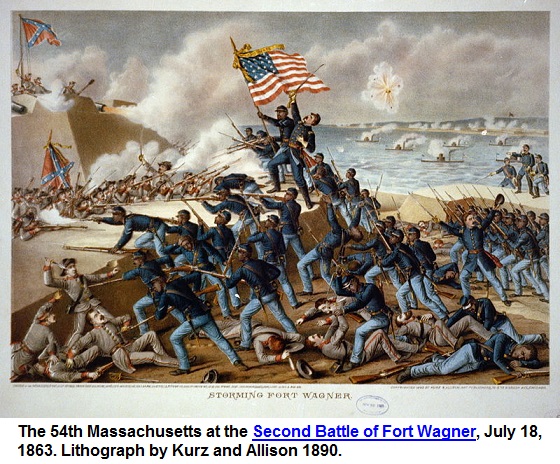
For this reason many Blacks joined the war effort, at great sacrifice to themselves and their community. This was a matter of principle! There is an important lesson for the Caribbean from this history[1] :

    The 54th Regiment Massachusetts Volunteer Infantry was an infantry regiment that saw extensive service in the Union Army during the American Civil War. The regiment was one of the first official African-American units in the United States during the Civil War.

CU Blog - A Lesson in History - During the Civil War - Principle not Principal - Photo 1

Remediating and mitigating Climate Change will be a battle. We need our own “Voluntary Infantry“ in this fight.

“We have a dog in this fight” – English language slang.

In the Caribbean, we must confederate and implement the institutions to work to remediate and mitigate Climate Change. We must “join in this fight”; we must Go Green and we must Go Blue. We have to be prepared for natural disasters – they will come … assuredly every season, some Caribbean destination will be impacted. We must be prepared to:

Rinse and Repeat.

If we are ready, to quickly respond, offer relief and rebuild – so as to guarantee the business continuity – we would then do a better job in our quest to make our homeland a better place to live, work and play. 🙂

Download the free e-Book of Go Lean … Caribbean – now!

Sign the petition to lean-in for this roadmap for the Caribbean Union Trade Federation.

———–

Appendix VIDEO – Historic flooding inundates Texas, hampering rescue efforts – https://youtu.be/Da-VS39gdfQ

PBS NewsHour
Published on Aug 27, 2017 – Houston’s mayor on Sunday urged his constituents in the nation’s fourth-largest city to stay off roadways as the state of Texas continues to contend with unprecedented flooding from Hurricane Harvey, now classified as a tropical storm. Officials said rising waters would reach catastrophic proportions, with more than 2,500 emergency calls made overnight in Houston alone. Hari Sreenivasan has more.

Share this post:
, , , ,
[Top]

Disaster Relief: Helping, Not Hurting – Encore

It’s happened again …

… a Climate-Change-infused hurricane has devastated the Commonwealth of the Bahamas; every year there seems to be one Caribbean country after another who suffers this fate; think Barbuda, Puerto Rico, etc.. In this case, it is the deadly Category 5 Hurricane Dorian.

Now it is time for the response:

  • Rescue
  • Relief
  • Recovery
  • Rebuilding

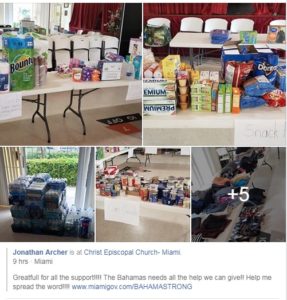
The appeal has gone out for aid … and supplies…

… but the truth of the matter, the best way to help is to just write a check or submit a credit card. The call for supplies can be interpreted in “oh so many wrong ways”. This theme was thoroughly detailed in a previous blog-commentary from April 26, 2016 in support of Haiti’s 2010 Earthquake Relief; it is only appropriate to Encore that submission now because …

… the Bahamas needs all the help it can get; see the previous entry here-now:

————–
Go Lean CommentaryThe Logistics of Disaster Relief

It is during the worst of times that we see the best in people.

This statement needs to be coupled with the age old proverb: “The Road to Hell is Paved with Good Intentions“…

… especially when it comes to disaster relief.

In previous blog-commentaries promoting the book Go Lean…Caribbean, it was established that “bad things happen to good people”; (i.e. ‘Crap Happens’ – So What Now?, Managing a ‘Clear and Present Danger’). Yes, disasters are a reality for modern life. The Go Lean book posits that with the emergence of Climate Change  that natural disasters are more common place.

In addition there are earthquakes …

… these natural phenomena may not be associated with Climate Change, but alas, they too are more common and more destructive nowadays. (People with a Christian religious leanings assert that “an increase of earthquakes is a tell-tale sign that we are living in what the Bible calls the “Last Days” – Matthew 24: 7).

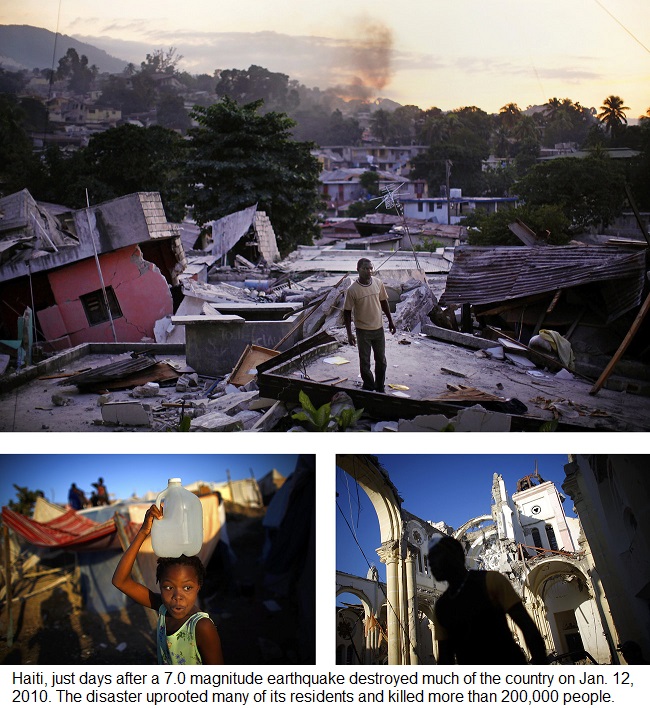
$500 Million In Haiti Relief - Photo 1The motives of the Go Lean book, and accompanying blogs is not to proselytize, but rather to prepare the Caribbean region for “bad actors”, natural or man-made. The book was written in response to the aftermath and deficient regional response following the great earthquake in Haiti on January 12, 2010. Many Non-Government Organizations (NGO) embarked on campaigns to shoulder a response, a relief and rebuilding of Haiti. Many people hold the view that those efforts did a lot of harm, along with some good.

In a previous blog-commentary, it was reported how the fundraising campaign by one group, the American Red Cross, raised almost US$500 million and yet only a “piddling” was spent on the victims and communities themselves.

Now we learn too that many good-intentioned people donated tons of relief supplies that many times turned out to be “more harm than help”. See the story here in this news VIDEO; (and/or the Narration Transcript/photos in the Appendix below):

VIDEO – When disaster relief brings anything but relief – http://www.cbsnews.com/videos/disaster-relief-donations-that-dont-bring-relief

Posted April 24, 2016 – Many of the well-meaning articles Americans donate in times of disaster turn out to be of no use to those in need. Sometimes, they even get in the way. That’s a message relief organizations very much want “us” to heed. This story is reported by Scott Simon, [on loan from] NPR. (VIDEO plays best in Internet Explorer).

This commentary asserts that more is needed in the Caribbean to facilitate good disaster relief, in particular a technocratic administration. This consideration is the focus of the strategies, tactics, implementations and advocacies of the Go Lean…Caribbean book. The declaration is that the Caribbean itself must be agile, lean, and optimized in providing its own solutions for disaster recovery. The alternative, from past experiences like in this foregoing VIDEO, is that others taking the lead for our solution seem to fall short in some way … almost every time!

The Caribbean must now stand up and be counted!

The Go Lean book declares (Page 115) that the “Caribbean should not be perennial beggars, [even though] we do need capital/money to get started”, we need technocratic executions even more.

What is a technocracy?

This is the quest of the Go Lean movement. The movement calls for a treaty to form a technocratic confederation of all the 30 member-states in the Caribbean region. This will form a Single Market of 42 million. The consolidation and integration allows for economies-of-scale and leverage that would not be possible otherwise. “Many hands make a big job … small”. But it is not just size that will define the Caribbean technocracy but quality, efficiency and optimization as well.

According to the Go Lean book (Page 64), the …

“… term technocracy was originally used to designate the application of the scientific method to solving social and economic problems, in counter distinction to the traditional political or philosophic approaches. The CU must start as a technocratic confederation – a Trade Federation – rather than evolving to this eventuality due to some failed-state status or insolvency.”

The book Go Lean…Caribbean serves as a roadmap for the introduction and implementation of the technocratic Caribbean Union Trade Federation (CU) to provide better stewardship for the Caribbean homeland. The foregoing VIDEO describes the efforts of non-governmental organizations (NGO) in shepherding disaster reliefs. These NGO’s are stakeholders in this Caribbean elevation roadmap. Even though many of the 30 member-states are independent nations, the premise of the Go Lean book is that there must be a resolve for interdependence among the governmental and non-governmental entities. This all relates to governance, the need for this new technocratic stewardship of regional Caribbean society. The need for this resolve was pronounced in the opening Declaration of Interdependence (Pages 11 & 14) with these acknowledgements and statements:

i.    Whereas the earth’s climate has undeniably changed resulting in more severe tropical weather storms, it is necessary to prepare to insure the safety and security of life, property and systems of commerce in our geographical region. As nature recognizes no borders in the target of its destruction, we also must set aside border considerations in the preparation and response to these weather challenges.

ii.    Whereas the natural formation of the landmass for our lands constitutes some extreme seismic activity, it is our responsibility and ours alone to provide, protect and promote our society to coexist, prepare and recover from the realities of nature’s occurrences.

x.   Whereas we are surrounded and allied to nations of larger proportions in land mass, populations, and treasuries, elements in their societies may have ill-intent in their pursuits, at the expense of the safety and security of our citizens. We must therefore appoint “new guards” to ensure our public safety and threats against our society, both domestic and foreign. The Federation must employ the latest advances and best practices … to assuage continuous threats against public safety.

xi.   Whereas all men are entitled to the benefits of good governance in a free society, “new guards” must be enacted to dissuade the emergence of incompetence, corruption, nepotism and cronyism at the peril of the people’s best interest. The Federation must guarantee the executions of a social contract between government and the governed.

xii. Whereas the legacy in recent times in individual states may be that of ineffectual governance with no redress to higher authority, the accedence of this Federation will ensure accountability and escalation of the human and civil rights of the people for good governance, justice assurances, due process and the rule of law. As such, any threats of a “failed state” status for any member state must enact emergency measures on behalf of the Federation to protect the human, civil and property rights of the citizens, residents, allies, trading partners, and visitors of the affected member state and the Federation as a whole.

xxxiii.   Whereas lessons can be learned and applied from the study of the recent history of other societies, the Federation must formalize statutes and organizational dimensions to avoid the pitfalls of [other] communities.

This is the quest of CU/Go Lean roadmap: to provide new guards for a more competent Caribbean administration … by governmental organizations and non-governmental organizations. (NGO would also be promoted, audited and overseen by CU administrators). The Caribbean must do better!

Our quest must start “in the calm”, before any storm (or earthquake). We must elevate the societal engines the Caribbean region through economic, security and governance empowerments. In general, the CU will employ better strategies, tactics and implementations to impact its prime directives; identified with the following 3 statements:

  • Optimization of the economic engines in order to grow the regional economy to $800 Billion & create 2.2 million new jobs.
  • Establishment of a security apparatus to protect the resultant economic engines and the Caribbean homeland.
  • Improvement of Caribbean governance to support these engines.

Former US President George W. Bush shares this advocacy!

He narrated this VIDEO here describing the efficiencies of the American logistics company, UPS, in delivering disaster relief:

VIDEO – Report Logistics and Haiti: Points of Light and President Bush – https://youtu.be/8-gmh1QyWTU

Uploaded on Mar 30, 2011 – [In 2009], Transportation Manager Chip Chappelle volunteered to help The UPS Foundation coordinate an ocean shipment of emergency tents from Indiana to Honduras. Since then, he has managed the logistics of humanitarian aid from every corner of the world to help the victims of floods, tsunamis, earthquakes, hurricanes and cyclones.

The Go Lean book stresses our own community ethos, strategies, tactics, implementations and advocacies necessary for the Caribbean to deliver, to provide the proactive and reactive public safety/security provisions in the region. See sample list here:

Community Ethos – Deferred Gratification Page 21
Community Ethos – Economic Principles – Respond to Incentives in Predictable Ways Page 21
Community Ethos – Economic Principles – Economic Systems Influence Individual Choices Page 21
Community Ethos – Economic Principles – Consequences of Choices Lie in the Future Page 21
Community Ethos – Security Principles – Whistleblower Protection Page 23
Community Ethos – Security Principles – Intelligence Gathering Page 23
Community Ethos – Security Principles – “Crap” Happens Page 23
Community Ethos – Governing Principles – Lean Operations Page 24
Community Ethos – Governing Principles – Return on Investments Page 24
Community Ethos – Governing Principles – Cooperatives Page 25
Community Ethos – Ways to Impact the Future Page 26
Community Ethos – Ways to Impact Turn-Arounds Page 33
Community Ethos – Ways to Improve Sharing – Emergency Response Page 35
Community Ethos – Ways to Impact the Greater Good Page 37
Strategy – Vision – Confederate all 30 member-states/ 4 languages into a Single Market Page 45
Strategy – Mission – Prepare for the eventuality of natural disasters Page 45
Strategy – Agents of Change – Climate Change Page 57
Tactical – Ways to Foster a Technocracy Page 64
Tactical – Growing the Economy – Post WW II European Marshall Plan/Recovery Model Page 68
Tactical – Separation-of-Powers – CU Federal Government versus Member-State Governance Page 71
Tactical – Separation-of-Powers – Homeland Security – Emergency Management Page 76
Tactical – Separation-of-Powers – State Department – Liaison/Oversight for NGO’s Page 80
Implementation – Assemble All Regionally-focus Organizations of All Caribbean Communities Page 96
Implementation – Ways to Pay for Change Page 101
Implementation – Ways to Foster International Aid Page 115
Planning – 10 Big Ideas – Homeland Security Pact Page 127
Planning – Ways to Make the Caribbean Better Page 131
Planning – Ways to Improve Failed-State Indices – Governance and the Social Contract Page 134
Advocacy – Ways to Grow the Economy Page 151
Advocacy – Ways to Create Jobs Page 152
Advocacy – Ways to Improve Housing – Hurricane Risk Reinsurance Fund Page 161
Advocacy – Ways to Improve Governance Page 168
Advocacy – Ways to Better Manage the Social Contract Page 170
Advocacy – Ways to Improve Homeland Security Page 180
Advocacy – Ways to Improve for Natural Disasters Page 184
Advocacy – Ways to Develop a Pre-Fab Housing Industry – One solution ideal for Haiti Page 207
Advocacy – Ways to Re-boot Haiti Page 238

The Go Lean roadmap seeks to empower and elevate Caribbean societal engines to be better prepared for the eventual natural disasters. The good intentions of Americans, as depicted in the foregoing VIDEO, is encouraging … but good intentions alone is not enough. We need good management! We need a technocracy! While it is out-of-scope for this roadmap to impact America, we can – and must – exercise good management in our Caribbean region. So what do we want from Americans in our time of need? See VIDEO here:

VIDEO – Donate Responsibly – https://youtu.be/14h9_9sopRA

Published on Nov 2, 2012 – A series of PSAs released by the Ad Council explain why cash is the best way to help. The campaign was launched on November 5, 2012 by the Ad Council and supported by the coalition — which includes CIDI, the U.S. Agency for International Development, InterAction, the UPS Foundation and National Voluntary Organizations Active in Disaster.

The Go Lean book calls on the Caribbean region to be more technocratic: collectively self-reliant, both proactively and reactively. Because of Climate Change or the Last Days, natural disasters (i.e. hurricanes and earthquakes) will occur again and again. Considering that our American neighbors may Pave our Road to Hell with Good Intentions, we need to prepare the right strategies, tactics and implementations ourselves, to make our region a better homeland to live, work and play. 🙂

Download the free e-Book of Go Lean … Caribbean – now!

——————

Appendix Transcript – When disaster relief brings anything but relief

When Nature grows savage and angry, Americans get generous and kind. That’s admirable. It might also be a problem.

“Generally after a disaster, people with loving intentions donate things that cannot be used in a disaster response, and in fact may actually be harmful,” said Juanita Rilling, director of the Center for International Disaster Information in Washington, D.C. “And they have no idea that they’re doing it.”

Rilling has spent more than a decade trying to tell well-meaning people to think before they give.

In 1998 Hurricane Mitch struck Honduras. More than 11,000 people died. More than a million and a half were left homeless.

And Rilling got a wake-up call: “Got a call from one of our logistics experts who said that a plane full of supplies could not land, because there was clothing on the runway. It’s in boxes and bales. It takes up yards of space. It can’t be moved.’ ‘Whose clothing is it?’ He said, ‘Well, I don’t know whose it is, but there’s a high-heeled shoe, just one, and a bale of winter coats.’ And I thought, winter coats? It’s summer in Honduras.”

Humanitarian workers call the crush of useless, often incomprehensible contributions “the second disaster.”

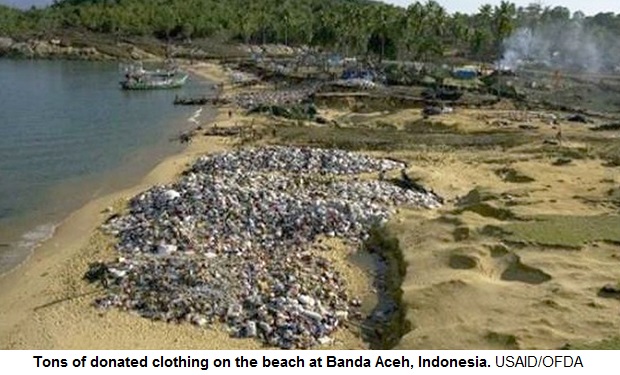
In 2004, following the Indian Ocean tsunami, a beach in Indonesia was piled with used clothing.

There was no time for disaster workers to sort and clean old clothes. So the contributions just sat and rotted.

CU Blog - Logistics of Disaster Relief - Photo 1“This very quickly went toxic and had to be destroyed,” said Rilling. “And local officials poured gasoline on it and set it on fire. And then it was out to sea.”

“So, rather than clothing somebody, it went up in flames?” asked Simon.

“Correct. The thinking is that these people have lost everything, so they must NEED everything. So people SEND everything. You know, any donation is crazy if it’s not needed. People have donated prom gowns and wigs and tiger costumes and pumpkins, and frostbite cream to Rwanda, and used teabags, ’cause you can always get another cup of tea.”

You may not think that sending bottles of water to devastated people seems crazy. But Rilling points out, “This water, it’s about 100,000 liters, will provide drinking water for 40,000 people for one day. This amount of water to send from the United States, say, to West Africa — and people did this — costs about $300,000. But relief organizations with portable water purification units can produce the same amount, a 100,000 liters of water, for about $300.”

And then there were warm-hearted American women who wanted to send their breast milk to nursing mothers in Haiti after the 2010 earthquake.

“It sounds wonderful, but in the midst of a crisis it’s actually one of the most challenging things,” said Rebecca Gustafson, a humanitarian aid expert who has worked on the ground after many disasters.

“Breast milk doesn’t stay fresh for very long. And the challenge is, what happens if you do give it to an infant who then gets sick?”

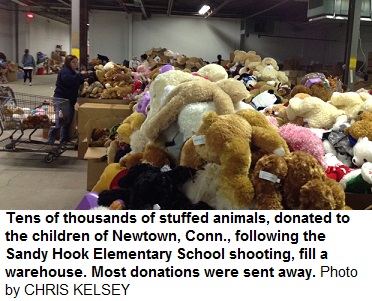
CU Blog - Logistics of Disaster Relief - Photo 2December 2012, Newtown, Connecticut: A gunman killed 20 children and six adults at Sandy Hook Elementary School. Almost instantaneously, stuff start arriving.

Chris Kelsey, who worked for Newtown at the time, said they had to get a warehouse to hold all the teddy bears.

Simon asked, “Was there a need for teddy bears?”

“I think it was a nice gesture,” Kelsey replied. “There was a need to do something for the kids. There was a need to make people feel better. I think the wave of stuff we got was a little overwhelming in the end.”

And how many teddy bear came to Newtown? “I think it was about 67,000,” Kelsey said. “Wasn’t limited to teddy bears. There was also thousands of boxes of school supplies, and thousands of boxes of toys, bicycles, sleds, clothes.”

Newtown had been struck by mass murder, not a tsunami. As Kelsey said, “I think a lot of the stuff that came into the warehouse was more for the people that sent it, than it was for the people in Newtown. At least, that’s the way it felt at the end.”

Every child in Newtown got a few bears. The rest had to be sent away, along with the bikes and blankets.

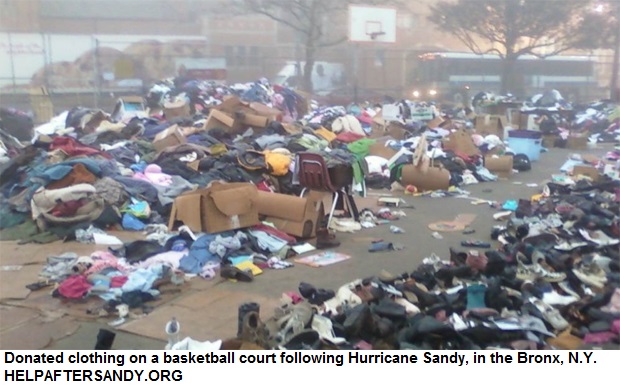
CU Blog - Logistics of Disaster Relief - Photo 3There are times when giving things works. More than 650,000 homes were destroyed or damaged in Hurricane Sandy in 2012. Thousands of people lost everything.

Tammy Shapiro is one of the organizers of Occupy Sandy, which grew out of the Occupy Wall Street movement.

“We were able to respond in a way that the big, bureaucratic agencies can’t,” Shapiro said.

When the hurricane struck, they had a network of activists, connected and waiting.

“Very quickly, we just stopped taking clothes,” Shapiro said. Instead, they created a “relief supply wedding registry.”

“We put the items that we needed donated on that registry,” said Shapiro. “And then people who wanted to donate could buy the items that were needed. I mean, a lot of what we had on the wedding registry was diapers. They needed flashlights.”

Simon asked, “How transportable is your experience here, following Hurricane Sandy?”

“For me, the network is key. Who has the knowledge? Where are spaces that goods can live if there’s a disaster? Who’s really well-connected on their blocks?”

Juanita Rilling’s album of disaster images shows shot after shot of good intentions just spoiling in warehouses, or rotting on the landscape.

“It is heartbreaking,” Rilling said. “It’s heartbreaking for the donor, it’s heartbreaking for the relief organizations, and it’s heartbreaking for survivors. This is why cash donations are so much more effective. They buy exactly what people need, when they need it.

“And cash donations enable relief organizations to purchase supplies locally, which ensures that they’re fresh and familiar to survivors, purchased in just the right quantities, and delivered quickly. And those local purchases support the local merchants, which strengthens the local economy for the long run.”

Disaster response worker Rebecca Gustafson says that most people want to donate something that is theirs: “Money sometimes doesn’t feel personal enough for people. They don’t feel enough of their heart and soul is in that donation, that check that they would send.

“The reality is, it’s one of the most compassionate things that people can do.”

Share this post:
, , , ,
[Top]

400 Years of Slavery – Sequel: Greatest Story Never Told

Go Lean Commentary

We just completed a special series of blog-commentaries for the month of August 2019, commemorating and commiserating the “400 Years of African Slavery” on the American mainland. Yes, slavery started in America in August 1619, and we are now at a pivotal anniversary; but this is not an occasion to be proud. This was NOT America’s finest moment.
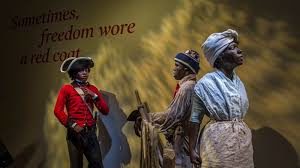
For the New World – discovered by Christopher Columbus in 1492 – African Slavery was not exclusive to the United States of America (then British North America). No, there was a race to the bottom and every European power wanted to get in on it:

  • British – North America (today’s USA & Canada), Central America (today’s Belize), South America (today’s Guyana) and many Caribbean islands
  • Denmark-Norway – today’s US Virgin Islands
  • Dutch/Netherlands –  Caribbean islands,
  • Sweden – Caribbean Island of St. Bartholomew
  • French – North America (think: Louisiana Purchase)
  • Portugal – Brazil
  • Spanish – Latin America

They all explored and settled colonies in the New World, instituting slavery in its wake.

Wait, wait?! No Germany, Italy or Belgium? These nations also engaged the race to exploit Africa and African people, but limited their involvement to the continent, rather than the New World. (The 1885 Berlin Conference gathered all these European powers to “divvy up” the continent for their own self-interest).

In between the initial New World exploration and the Berlin Conference, the Enlightenment Movement – “Age of Enlightenment” between 1650 to 1700 – took hold. It brought a new definition of Freedom, Egalitarianism and Liberalism. The orthodoxy of enslaving indigenous people (in the Americas or in Africa) came to be viewed as barbaric and uncivilized – thanks to a lot of Women in the Abolition Movement. By the 1770’s, there was momentum in the British Parliament to disenfranchise Slavery and the Slave Trade.

This history set the stage for the Greatest Story Never Told

The 13 original colonies that rebelled and Declared their Independence from Great Britain, were not inclined to abandon slavery – not just yet. The official tagline of the Revolutionary War or America’s War for Independence (1776) was “a conflict of the American Patriots versus the British Loyalists”. But in actuality, the War could have been considered a Slavery Rebellion-in-Reverse; a revolt to maintain the orthodoxy of slavery.

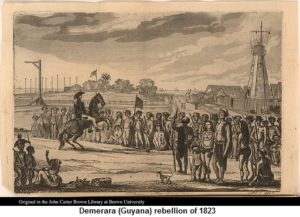
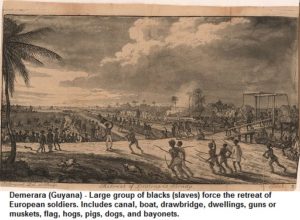
Through out the New World, Slave Rebellions abounded – see Appendix below. But the enslaved African people were always a minority in America, while in the Caribbean territories, they were the majority population, on average 4:1, but in some cases, 7-to-1 … Africans versus European. This reality, and the accompanying injustice of slavery, was a “powder keg waiting to explode”. No one group had a greater incentive to fight than the slaves themselves. Many such slaves – 20,000 actually; see VIDEO below – joined in formal conflicts during the American Revolutionary War, fighting on the side of the British. See the full story here:

Title: The Ex-Slaves Who Fought with the British
Subtitle: While the patriots battled for freedom from Great Britain, upwards of 20,000 runaway slaves declared their own personal independence and fought on the side of the British.
By: Christopher Klein

When American colonists took up arms in a battle for independence starting in 1775, that fight for freedom excluded an entire race of people—African-Americans. On November 12, 1775, General George Washington decreed in his orders that “neither negroes, boys unable to bear arms, nor old men” could enlist in the Continental Army.

Two days after the patriots’ military leader banned African-Americans from joining his ranks, however, black soldiers proved their mettle at the Battle of Kemp’s Landing along the Virginia coast. They captured an enemy commanding officer and proved pivotal in securing the victory—for the British.

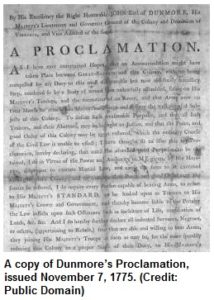
After the battle, Lord Dunmore, the royal governor of Virginia who had been forced to flee the capital of Williamsburg and form a government in exile aboard the warship HMS Fowey, ordered the British standard raised before making a startling announcement. For the first time in public he formally read a proclamation that he had issued the previous week granting freedom to the slaves of rebels who escaped to British custody.

Dunmore’s Proclamation was “more an announcement of military strategy than a pronouncement of abolitionist principles,” according to author Gary B. Nash in “The Unknown American Revolution: The Unruly Birth of Democracy and the Struggle to Create America.” The document not only provided the British with an immediate source of manpower, it weakened Virginia’s patriots by depriving them of their main source of labor.

Much like Lincoln’s Emancipation Proclamation, however, Dunmore’s Proclamation was limited in scope. Careful not to alienate Britain’s white Loyalist allies, the measure applied only to slaves whose masters were in rebellion against the Crown. The British regularly returned slaves who fled from Loyalist masters.

Dunmore’s Proclamation inspired thousands of slaves to risk their lives in search of freedom. They swam, dog-paddled and rowed to Dunmore’s floating government-in-exile on Chesapeake Bay in order to find protection with the British forces. “By mid-1776, what had been a small stream of escaping slaves now turned into a torrent,” wrote Nash. “Over the next seven years, enslaved Africans mounted the greatest slave rebellion in American history.”

Among those slaves making a break for freedom were eight belonging to Peyton Randolph, speaker of the Virginia House of Burgesses, and several belonging to patriot orator Patrick Henry who apparently took his famous words—“Give me liberty, or give me death!”—to heart and fled to British custody. Another runaway who found sanctuary with Dunmore was Harry Washington, who escaped from Mount Vernon while his famous master led the Continental Army.

Dunmore placed these “Black Loyalists” in the newly formed Ethiopian Regiment and had the words “Liberty to Slaves” embroidered on their uniform sashes. Since the idea of escaped slaves armed with guns stirred terror even among white Loyalists, Dunmore placated the slaveholders by primarily using the runaways as laborers building forts, bridges and trenches and engaging in trades such as shoemaking, blacksmithing and carpentry. Women worked as nurses, cooks and seamstresses.

As manpower issues grew more dire as the war progressed, however, the British army became more amenable to arming runaway slaves and sending them into battle. General Henry Clinton organized an all-black regiment, the “Black Pioneers.” Among the hundreds of runaway slaves in its ranks was Harry Washington, who rose to the rank of corporal and participated in the siege of Charleston.

On June 30, 1779, Clinton expanded on Dunmore’s actions and issued the Philipsburg Proclamation, which promised protection and freedom to all slaves in the colonies who escaped from their patriot masters. Blacks captured fighting for the enemy, however, would be sold into bondage.

According to Maya Jasanoff in her book “Liberty’s Exiles: American Loyalists in the Revolutionary World,” approximately 20,000 black slaves joined the British during the American Revolution. In contrast, historians estimate that only about 5,000 black men served in the Continental Army.

As the American Revolution came to close with the British defeat at Yorktown in 1781, white Loyalists and thousands of their slaves evacuated Savannah and Charleston and resettled in Florida and on plantations in the Bahamas, Jamaica and other British territories throughout the Caribbean. The subsequent peace negotiations called for all slaves who escaped behind British lines before November 30, 1782, to be freed with restitution given to their owners. In order to determine which African-Americans were eligible for freedom and which weren’t, the British verified the names, ages and dates of escape for every runaway slave in their custody and recorded the information in what was called the “Book of Negroes.”

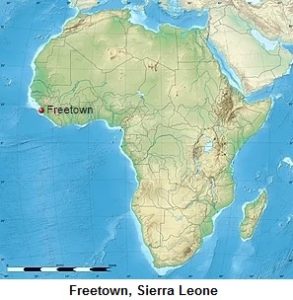
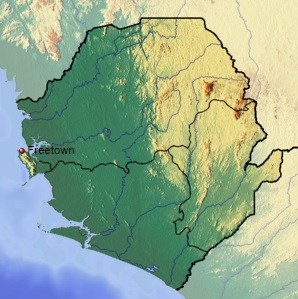
With their certificates of freedom in hand, 3,000 black men, women and children joined the Loyalist exodus from New York to Nova Scotia in 1783. There the Black Loyalists found freedom, but little else. After years of economic hardship and denial of the land and provisions they had been promised, nearly half of the Black Loyalists abandoned the Canadian province. Approximately 400 sailed to London, while in 1792 more than 1,200 brought their stories full circle and returned to Africa in a new settlement in [Freetown,] Sierra Leone. Among the newly relocated was the former slave of the newly elected president of the United States — Harry Washington — who returned to the land of his birth.

Source: Posted August 22, 2018; retrieved August 29, 2019 from: https://www.history.com/news/the-ex-slaves-who-fought-with-the-british

—————

VIDEO – History Stories – Slavery – https://www.history.com/news/the-ex-slaves-who-fought-with-the-british

The Greatest Story Never Told led to the origins of the City of Freetown, Sierra Leone in Africa. This tale features the full circle of those stakeholders, the Black Loyalists: enslaved in America; fought for the Royal Army; sought refuge in Canada, London and then repatriated to Africa.

Wow!

Among the nameless masses of 20,000 people, was the 1 named-hero: Harry Washington, the ex-slave of the First American President George Washington. See his story here:

Harry Washington (c. 1740–1800) was known as a slave of Virginia planter George Washington, later the first President of the United States. He served as a Black Loyalist in the American Revolutionary War and was granted his freedom by the British and evacuated to Nova Scotia. In 1792 he joined nearly 1200 freedmen for resettlement in Sierra Leone, where they set up a colony of free people of color.

Harry had been born in Gambia and sold into slavery as a war captive. He was purchased by George Washington, who had plantations in Virginia. During the American Revolutionary War, Harry Washington escaped from slavery in Virginia and served as a corporal in the Black Pioneers attached to a British artillery unit. After the war he was among Black Loyalists resettled by the British in Nova Scotia, where they were granted land. There Washington married Jenny, another freed American slave.

In 1792 the couple were among more than 1,000 freedmen chosen to migrate to Sierra Leone, West Africa, where the British had established a new colony of people of African descent.

Source: Retrieved August 29, 2019 from: https://en.wikipedia.org/wiki/Harry_Washington

“This” is the personification of the Greatest Story Never Told!

This is a sequel, a supplemental blog-commentary to the recently completed 5-part series from the movement behind the book Go Lean…Caribbean for August 2019. This series was composed to remember, reflect and reconcile the 400 Years of Slavery history in the American experience – 1619 until … today. The full series of these blogs-commentaries this month were cataloged as follows:

  1. 400 Years of Slavery: America, Not the first
  2. 400 Years of Slavery: International Day of Remembrance
  3. 400 Years of Slavery: Emancipation Day – Hardly ‘Free At Last’
  4. 400 Years of Slavery: Where is home?
  5. 400 Years of Slavery: Cop-on-Black Shootings in America’s DNA

This theme, discrediting the Moral High Ground in the history of American Patriotism, has been previously analyzed in numerous Go Lean commentaries; see a sample list here:

https://goleancaribbean.com/blog/?p=12380 ‘4th of July’ and Slavery – Should ‘We’ Be Celebrating?
https://goleancaribbean.com/blog/?p=11870 America’s First Official Victims: Indian Termination Policy
https://goleancaribbean.com/blog/?p=11048 The Missing Model of Hammurabi: No one is Managing the ‘Strong versus the Weak’
https://goleancaribbean.com/blog/?p=4971 A Lesson in History – Truth & Consequence of Royal Charters: Slavery

The Greatest Story Never Told is not very flattening of the United States of America. Nor does it extol honor on the British hierarchy – in the Peace Treaty to end the Revolutionary War, the British returned many runaway slaves to their previous masters. No, the heroes are the slaves who bravely fought for their chance of freedom for themselves and their children. The actuality of racial oppression, suppression and repression of being a Black Man in America was tragic. The biggest learned-lesson was:

Do not count on the White Man to bring you salvation.

This thought was embedded in the Go Lean book (Page 21), with this quotation:

The African Diaspora experience in the New World is one of “future” gratification, as the generations that sought freedom from slavery knew that their children, not them, would be the beneficiaries of that liberty. This ethos continued with subsequent generations expecting that their “children” would be more successful in the future than the parents may have been.

Reflecting on the history of 400 Years of Slavery in America, reminds us that we must do the heavy-lifting ourselves to reform and transform our society. We cannot count on the Americans nor the British, or any Europeans for that matter, to save us. We must save ourselves!

How?

This is the purpose of the Go Lean roadmap; it features the strategies, tactics, implementations and advocacies for us to make the Caribbean member-states a better place to live, work and play … on our own. We urge every Caribbean stakeholder to lean-in to this roadmap. Yes we can!  🙂

About the Book
The book Go Lean…Caribbean serves as a roadmap for the introduction and implementation of the technocratic Caribbean Union Trade Federation (CU), for the elevation of Caribbean society – for all member-states. This CU/Go Lean roadmap has these 3 prime directives:

  • Optimization of the economic engines in order to grow the regional economy to $800 Billion and create 2.2 million new jobs.
  • Establishment of a security apparatus to ensure public safety and protect the resultant economic engines.
  • Improve Caribbean governance to support these engines, including a separation-of-powers between the member-states and CU federal agencies.

The Go Lean book provides 370-pages of turn-by-turn instructions on “how” to adopt new community ethos, plus the strategies, tactics, implementations and advocacies to execute so as to reboot, reform and transform the societal engines of Caribbean society.

Download the free e-Book of Go Lean … Caribbean – now!

Who We Are
The movement behind the Go Lean book – a non-partisan, apolitical, religiously-neutral Community Development Foundation chartered for the purpose of empowering and re-booting economic engines – stresses that reforming and transforming the Caribbean societal engines must be a regional pursuit. This was an early motivation for the roadmap, as pronounced in the opening Declaration of Interdependence (Pages 12 – 13):

xi. Whereas all men are entitled to the benefits of good governance in a free society, “new guards” must be enacted to dissuade the emergence of incompetence, corruption, nepotism and cronyism at the peril of the people’s best interest. The Federation must guarantee the executions of a social contract between government and the governed.

xvi. Whereas security of our homeland is inextricably linked to prosperity of the homeland, the economic and security interest of the region needs to be aligned under the same governance. Since economic crimes … can imperil the functioning of the wheels of commerce for all the citizenry, the accedence of this Federation must equip the security apparatus with the tools and techniques for predictive and proactive interdictions.

xxiv. Whereas a free market economy can be induced and spurred for continuous progress, the Federation must install the controls to better manage aspects of the economy: jobs, inflation, savings rate, investments and other economic principles. Thereby attracting direct foreign investment because of the stability and vibrancy of our economy.

Sign the petition to lean-in for this roadmap for the Caribbean Union Trade Federation.

————–

Appendix – Revolts of the Caribbean Islands
Vincent Brown, a professor of History and of African and African-American Studies at Harvard, has made a study of the Transatlantic Slave Trade. In 2013, Brown teamed up with Axis Maps to create an interactive map of Jamaican slave uprisings in the 18th century called, “Slave Revolt in Jamaica, 1760-1761, A Cartographic Narrative.”[14] Brown’s efforts have shown that the slave insurrection in Jamaica in 1760-61 was a carefully planned affair and not a spontaneous, chaotic eruption, as was often argued (due in large part to the lack of written records produced by the insurgents).[15]

Later, in 1795, several slave rebellions broke out across the Caribbean, influenced by the Haitian Revolution:

Source: Retrieved August 29, 2019 from: https://en.wikipedia.org/wiki/Demerara_rebellion_of_1823

Share this post:
, , ,
[Top]

An Ode to Miami – Not A Temporary Stop for ‘Us’

Go Lean Commentary

Survivor: Outwit. Outplay. Outlast. 

This expression is more than just the tagline advertising for the television show ‘Survivor’; it is also the historic summary of Caribbean people in the metropolitan areas of Miami, Florida.

Over the years, decades and centuries, this city has been the home to a lot of different groups of people – think Miccosukee & Seminole Indians, Spanish Explorers, Slave Traders, Blockade Evaders, Railroad Barons, Rum-runners, Treasure seekers, Snowbirds, Latin American political refugees, Colombian Drug Smugglers and those seeking refuge from them. All of these people have come and gone – Miami was a temporary stop-over for them! But another group to have come over the years have been Caribbean immigrants …

… they have never left. Consider:

After 4 years of observing-and-reporting, by the movement behind the book Go Lean … Caribbean, it is time now for us to move on from our temporary stop-over in Miami, while we return to our Caribbean homeland. So we say:

Ode or “goodbye” to the City of Miami and the surrounding metropolitan areas.

While “we” leave to return to the Caribbean, we recognize that all the other Caribbean exiles living there are NOT leaving; it is not temporary for them; it is now Home. These ones are entrenched and embedded in Miami society. In fact, Miami society is now based on this demographic and Miami’s success is due to their success. See the Census figures here:

Miami-Dade Country Demographics – 2010 U.S. Census Ethnic/Race Demographics:[34][35]

In 2010, the largest ancestry groups were:[34]

Source: Retrieved August 21, 2019 from: https://en.wikipedia.org/wiki/Miami-Dade_County,_Florida#Demographics

This is sad but true! The Caribbean Diaspora in Miami is NOT going anywhere. Despite the many others that have come and gone, these ones have outwitted, outplayed and outlasted everyone else. They are the winning Survivors! (See Appendix VIDEO sample below of the highlights from one Season of the TV Show Survivor).
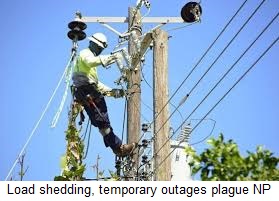
This reality is in contrast to the goals and ideals of the Go Lean movement. Our quest is to:

We accept now: Miami is NOT just a temporary stop for many Caribbean people. So we have to make the best of this reality. This is what we have done. The publishers of the Go Lean book have “observed and reported” on Miami’s eco-system and published many lessons-learned from previous blog-commentaries. Consider this sample:

https://goleancaribbean.com/blog/?p=17848 Forging Change from Miami – ‘That’s What Friends Are For’
https://goleancaribbean.com/blog/?p=14732 ‘Red Letter Day’ for Cubans in Miami – Raul Castro Retires
https://goleancaribbean.com/blog/?p=14556 Observing Change in Miami … with Guns
https://goleancaribbean.com/blog/?p=13720 Miami’s Caribbean Marketplace Revisited
https://goleancaribbean.com/blog/?p=13677 Economics of ‘South Beach’ (Miami Beach)
https://goleancaribbean.com/blog/?p=13105 Fixing Haiti – Can the Diaspora be the Answer?
https://goleancaribbean.com/blog/?p=13040 Jamaican Diaspora – Not the ‘Panacea’
https://goleancaribbean.com/blog/?p=12834 Hurricane Andrew – 25 Years of History from Miami’s Worst Hurricane
https://goleancaribbean.com/blog/?p=11006 Funding and Learning from the Russell Family Memorial – RIP
https://goleancaribbean.com/blog/?p=10910 Jazz in Miami Gardens – Lessons Learned
https://goleancaribbean.com/blog/?p=9897 Art Walk Miami – Its a ‘Real Thing’ in Wynwood
https://goleancaribbean.com/blog/?p=6760 Miami’s Lesson in ‘Garbage’ for the Caribbean
https://goleancaribbean.com/blog/?p=5921 Learning from Miami’s ‘Bad’ Impact Analysis of a Community Investment
https://goleancaribbean.com/blog/?p=3662 Caribbean Migrant flow into US spikes
https://goleancaribbean.com/blog/?p=3292 Art Basel Miami – A Testament to the Spread of Culture
https://goleancaribbean.com/blog/?p=2547 Miami’s Success versus Caribbean Failure
https://goleancaribbean.com/blog/?p=798 Lessons Learned from Miami and the American Airlines merger

So if the Caribbean Diaspora cannot be expected to leave Miami, what is our hope for this population in their future interactions with the Caribbean:

While this is not the ideal, it is what it is, but we must still make the most of this situation. This assessment was begrudgingly accepted in the Go Lean book. An advocacy is presented there with the title 10 Ways to Impact the Diaspora (Page 217). These “10 Ways” include the following highlights, headlines and excerpts:

1 Lean-in for the Caribbean Single Market & Economy initiative: Caribbean Union Trade Federation (CU).

This treaty allows for the unification of the region into one market, thereby expanding to an economy of 30 countries, 42 million people and a GDP of over $800 Billion (according to 2010 figures). In addition to expanding the economic activity within the region, the CU mission is also to empower the Caribbean Diaspora, believed to amount to be an additional 6 million people in 1996 (and 8 – 10 million today); residing in North America and Europe (Appendix EA on Page 267), to facilitate their development and investment back to their “home” territory. The CU’s mission is to incentivize repatriation of the Diaspora, their time (impacting family reunification), talents (reversing brain drain) and treasuries (optimizing remittances by facilitating cheaper transfers – see Appendix ED on Page 270).

2 Remittances

Remittances, in this case, refer to transfers of money by foreign workers to their home Caribbean country. Money sent home by migrants, using Western Union and competitors, constitutes the second largest financial inflow, (after the country’s primary exports) for many developing countries. CU remittances, $9 Billion in 2010, contribute to economic growth and in several Caribbean countries, they account for near or more than 10% of GDP. (See Appendix EB on Page 268).

3 Brain Drain
4 Education

With the incontrovertible evidence, no doubt, the study abroad model has failed the Caribbean, as many students never returned to the region. The CU therefore advocates e-Learning solutions for in-country tertiary education. The CU will impact this industry by facilitating libraries throughout the region with internet (desktop, tablet/e-Reader) access, and the proliferation of Wi-Fi in urban and suburban areas.

5 Diasporic Exports
6 Media Consumption
7 Health Risk – See Mitigation Model in Appendix R on Page 300
8 Security Risks
9 Retirement/Entitlement

The CU will administer foreign policies of negotiating with host countries of the Diaspora to allow them [(Diaspora members)] to repatriate and still receive their Entitlement benefits (Pension, Health, Veterans). The key is to elevate the facilities to a first rate level.

10 Real Estate Investment Trusts (REIT)

Inviting the Diaspora back to the Caribbean region does not mean returning to their original houses. The CU will foster advanced products for evolving housing development and funding needs with REITs, Co-ops and Mixed-use structures. REITs, trade-able on stock exchanges are excellent investment vehicles as the underlying asset is sound, real estate.

The Go Lean book doubles-down on the concept that Diaspora members are stakeholders for the Caribbean future. We may have missed out on their full contribution to our society, but we can still “exploit” them with supply-and-demands dynamics.

(Yet, there is caution not to build too much expectation that the Diaspora would be some savior for Caribbean society – they did leave after all; many not considering their former homelands at all. See this warning to Barbados, Jamaica, Dominica, Bahamas, St. Lucia and Grenada)

So, farewell Miami! You have been the epitome of an immigrant community – everyone from somewhere else, especially from the Caribbean. You have proven that while pluralistic democracies are heavy-lifting, they can have success … after some endurance, patience and adoption of universal respect.

Miami learned  this lesson the hard way! (Their immigrant communities all separately went through long trains of abuse: rejection, anger, protest, bargaining, toleration and eventual acceptance; only after the appeal to their better nature, did the experience turn to one of celebration).

In our 4 years here, we’ve seen our people outwit, outplay and outlast. We’ve learned the lessons easily, by observing and reporting on the full Miami eco-system. We have looked, listened, learned, lend-a-hand here; now we are ready to go back to the Caribbean … and lead. We can now lead the efforts to make our own homeland a better place to live, work and play.  🙂

About the Book
The book Go Lean…Caribbean serves as a roadmap for the introduction and implementation of the technocratic Caribbean Union Trade Federation (CU), for the elevation of Caribbean society – for all member-states. This CU/Go Lean roadmap has these 3 prime directives:

  • Optimization of the economic engines in order to grow the regional economy to $800 Billion and create 2.2 million new jobs.
  • Establishment of a security apparatus to ensure public safety and protect the resultant economic engines.
  • Improve Caribbean governance to support these engines, including a separation-of-powers between the member-states and CU federal agencies.

The Go Lean book provides 370-pages of turn-by-turn instructions on “how” to adopt new community ethos, plus the strategies, tactics, implementations and advocacies to execute so as to reboot, reform and transform the societal engines of Caribbean society.

Download the free e-Book of Go Lean … Caribbean – now!

Who We Are
The movement behind the Go Lean book – a non-partisan, apolitical, religiously-neutral Community Development Foundation chartered for the purpose of empowering and re-booting economic engines – stresses that reforming and transforming the Caribbean societal engines must be a regional pursuit. This was an early motivation for the roadmap, as pronounced in the opening Declaration of Interdependence (Pages 12 – 13):

xi. Whereas all men are entitled to the benefits of good governance in a free society, “new guards” must be enacted to dissuade the emergence of incompetence, corruption, nepotism and cronyism at the peril of the people’s best interest. The Federation must guarantee the executions of a social contract between government and the governed.

xvi. Whereas security of our homeland is inextricably linked to prosperity of the homeland, the economic and security interest of the region needs to be aligned under the same governance. Since economic crimes … can imperil the functioning of the wheels of commerce for all the citizenry, the accedence of this Federation must equip the security apparatus with the tools and techniques for predictive and proactive interdictions.

xix. Whereas our legacy in recent times is one of societal abandonment, it is imperative that incentives and encouragement be put in place to first dissuade the human flight, and then entice and welcome the return of our Diaspora back to our shores. This repatriation should be effected with the appropriate guards so as not to imperil the lives and securities of the repatriated citizens or the communities they inhabit. The right of repatriation is to be extended to any natural born citizens despite any previous naturalization to foreign sovereignties.

xx. Whereas the results of our decades of migration created a vibrant Diaspora in foreign lands, the Federation must organize interactions with this population into structured markets. Thus allowing foreign consumption of domestic products, services and media, which is a positive trade impact. These economic activities must not be exploited by others’ profiteering but rather harnessed by Federation resources for efficient repatriations.

xxiv. Whereas a free market economy can be induced and spurred for continuous progress, the Federation must install the controls to better manage aspects of the economy: jobs, inflation, savings rate, investments and other economic principles. Thereby attracting direct foreign investment because of the stability and vibrancy of our economy.

Sign the petition to lean-in for this roadmap for the Caribbean Union Trade Federation.

————–

Appendix VIDEO – SURVIVOR Borneo – Moments In History – https://youtu.be/55qPFFvN2dY


Outwit Outplay Outlast

Published on Jan 11, 2016

SURVIVOR Borneo, Season 1

0:03 Rudy and Rich Bond
1:10 Rat Feast
2:26 Nature Phone
3:17 Family Video
5:07 Snakes and Rats

PLAYLIST: https://www.youtube.com/playlist?list…

SUBSCRIBE: https://www.youtube.com/c/OutwitOutpl…

Used for entertainment [and educational] purposes only. The property and rights for this video/audio go to ©CBS.

Share this post:
, ,
[Top]

Nassau’s 2019 Self-Made Energy Crisis

Go Lean Commentary

It is seriously Hot-Hot-Hot out there …

So there is no intent here to be “cold and callous” … (callous = ‘feeling no emotion’).

But the Bahamas’s capital city – Nassau – is having an energy crisis right now:
The local power generation utility (Bahamas Power & Light or BPL) is not producing enough electricity to meet the needs of the community, so they have to load-share and force black-outs/brown-outs around the island to try and facilitate some delivery some time to all their customer base. They do not want to show favoritism to one group over another, so they are leveraging the load-sharing tactic on everybody. So now instead of some people being happy and some being angry, they have obtained universality …

… everybody is angry!

———-

VIDEO – B.P.L. Load Shedding Update – https://youtu.be/fW8JGGnlvzQ

ZNSNetwork
Published on May 15, 2019

Additionally, see this portrayal in this news article here (and the Appendix VIDEO below):

Title: BPL causing ‘chaos’
By: Jasper Ward, The Nassau Guardian Staff Reporter

Super Value food stores are taking a significant hit as a result of protracted power cuts, according to its owner Rupert Roberts.

Roberts said about six Super Value locations are impacted by outages daily and the company has spent around $100,000 recently on replacing equipment damaged by the outages.
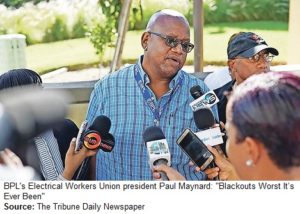
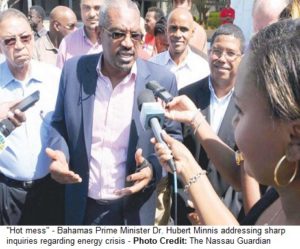
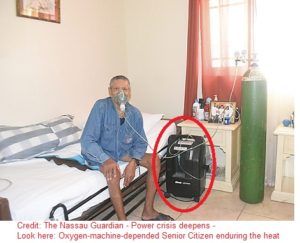
He described the outages as “a nuisance” and said they create “chaos”.

“This BEC (Bahamas Electricity Corporation) crisis is more than a crisis, it’s chaos,” Roberts said at the Nassau Street store.

“It’s costing us $250,000 a year from burning up our equipment.”

He said, “I suppose our biggest concern is burning up equipment.

“…[We] burn up a $10,000 or $20,000 air conditioning [unit and] we’re always burning up compressors. We’re using up spares so fast and we’re doing emergency imports.

“Fortunately, we’re able to get them in within three or four days without flying them in. But I noticed on Saturday we had a diary case down because we’re waiting on the compressor that burned out. That’s the biggest problem.”

Roberts said it will cost about $10,000 to replace a compressor in the dairy case at the Nassau Street location. He said it is unlikely that case will be operational before Saturday.

Roberts said dairy sales were up 14 percent before the case was damaged.

Since it was damaged, sales have gone down 17 percent, he said.

Roberts said the company has twice the amount of equipment needed “because of the serious problem” of the outages.

Although the food store chain is facing challenges with the outages, Roberts said the company is “managing quite well”.

“We’ve been in this business over 50 years and we’ve had power problems for the last 50 years,” he said.

“So, we learned how to cope. We don’t run out of fuel. Years ago, when I first started in the industry, we had generators because of hurricanes but for the past 25 years we’ve had to have generators because of power outages.”

For nearly two months, communities on New Providence have experienced hours-long blackouts as part of Bahamas Power and Light’s (BPL) load shedding exercise.

Over the last few weeks, BPL has conducted nearly four-hour-long load shedding.

On Sunday, BPL Chief Executive Officer Whitney Heastie said he could not guarantee an end to load shedding exercises in the immediate future, describing BPL as being “on a cliff”.

Heastie said BPL needs 250 megawatts of generation in order to meet the summer demand.

However, it is currently running on 210 megawatts, including 105 megawatts of rental generation.

Heastie said the 40-megawatt shortfall has led to load shedding across New Providence.

Source: Posted by The Nassau Guardian daily newspaper on August 13, 2019; retrieved August 14, 2019 from: https://thenassauguardian.com/2019/08/13/bpl-causing-chaos/

The need to explain that our statement is not “cold and callous” is due to the fact that the appearance is that “we” are ‘kicking the people when they are down’ when we make this assertion:

This energy crisis for Nassau is Self-Made!!

Wait, what?!

This is a matter of infrastructure and Nassau has had an inadequate infrastructure for a while. In fact, since the 1970’s residents on this island of New Providence (NP) have been encouraged to buy bottled-water and not consume the ‘tap’ water.

All of this is evident of the lacking municipal infrastructure. In fact, this is reminiscent of the US City of Flint, Michigan. Their infrastructure has become defective and the people there has to resort to bottled water. In Flint, that problem has now persisted for 4 years. In Nassau, it has been 40 years. (See an excerpt of our 2016 blog-commentary on the Flint crisis in the Appendix below).

Yep, self-made!

This is a BIGGER issue than water or electricity; this is an issue of the Social Contract.

The 2013 book Go Lean…Caribbean (Page 170) defines the Social Contract as the informal arrangement where citizens surrender some of their freedoms and submit to the authority of the State in exchange for protection of remaining natural and legal rights. This is why the State, in this case, the Commonwealth of the Bahamas, is allowed to operate monopolies for the water and power utilities. But any failures in these Social Contract deliveries causes repercussions and consequences. For example people leave and abandon their homeland. This relevance was detailed in a previous Go Lean commentary from July 28, 2015:

The issue of Caribbean citizens abandoning their homelands is one of the more dire threats to societal life in the region. Why do they do it?

“Push and Pull” reasons!

Push
Conditions at home drive Caribbean citizens to take flight and find refuge elsewhere. Many times these conditions are economic (jobs and entrepreneurial opportunities), security and governance related, but there are other reasons too; consider discriminations due to ethnic diversity or other lifestyle choices.

Lastly, there is the new threat of Climate Change. While this is a threat for the whole world, the Caribbean is on the frontline. Though there is some debate as to the causes of climate change, there is no question as to its outcome: temperatures are rising, droughts prevail, and most devastating, hurricanes are now more threatening. A Caribbean elevation plan must address the causes of climate change and most assuredly its consequences. …

Now, the anecdotal experience is that there is a need to mitigate excessive heat in the region for an even longer season. How do we mitigate excessive heat?

Air conditioning!

But this cure may at times be worse than the disease.

Air conditioning requires even greater energy consumption, (the Caribbean has among the highest energy costs in the Western Hemisphere); the Go Lean book posits that the average costs of energy can be decreased from an average of US$0.35/kWh to US$0.088/kWh in the course of the 5-year term of this roadmap; (Page 100).

In addition, the release of Chlorofluorocarbons (CFC’s) in the air-conditioning process is a contributor of greenhouse gases into the atmosphere.

The status quo needs remediation!

The Bahamas should have remediated these infrastructural problems years ago – the price is too high to allow it to linger. In addition to the societal abandonment threat; there are life-and-death issues associated with convalescing citizens needing continuous power supply – see photo here:

That’s the problem, now what is the solution?

In addition to the voluminous number of blog-commentaries on infrastructure – see this recent submission from July 26, 2019 – the Go Lean book presented strategies, tactics and implementations that must be pursued, not just for the Bahamas, but for the whole Caribbean region – all 30 member-states. In fact, the book presents one advocacy (Page 176) specifically focused on Public Works, entitled: “10 Ways to Impact Public Works“. These “10 Ways” include the following highlights, headlines and excerpts:

1 Lean-in for the Caribbean Union Trade Federation (CU).

The CU is chartered to unify the Caribbean region into one Single Market of 42 million people across 30 member-states, thereby re-engineering the economic engines in and on behalf of the region, including a currency & monetary union. This new eco-system allows for the design, funding and construction of Public Works and Infrastructural projects. The federal agency within the CU’s Department of the Interior has the scope for the Caribbean much like the Corps of Engineers has for the US. (Plus the CU will collaborate with the US Corps for projects related to Puerto Rico and the Virgin Islands).

There are a number of inter-state projects that must be coordinated on the federal level. There will also be projects that are “Too Big for One State” that will be facilitated by the CU. In addition, all CU efforts must comply with the Art in Public Places mandate, so sculptures and statutes will be embedded in projects or the project itself can be a work of art (bridges, water towers, building architecture). For existing projects that fail due to financial shortfalls, the CU will accommodate dissolution or reorganization in the federal courts, bringing balance to the process to all stakeholders.

2 Union Atlantic Turnpike
3 Pipelines and PCP (Pneumatic Capsule Pipeline)
4 Regional Power Grid

The CU will facilitate the installation of a regional power grid, and power sharing between member-states, with underwater and above-ground high-intensity wiring to alternate energy plants: wind/tidal turbines, solar panel & natural gas.

5 Self-Governing Entities (SGE)
6 Enterprise Zones
7 Empowerment Zones
8 Monopolies

The UN grants the CU the monopoly rights for an Exclusive Economic Zone, so the focus must be on quality delivery.

The CU plan is to liberalize management of monopolies, with tools like ratings/rankings against best practices. Plus

technological accommodations for ICT allows for cross-competition from different modes (satellite, cable, phone).

9 Cooperatives

The CU will task utility cooperatives with the delivery of some public utilities such as Air Chillers; Refrigerated Warehouses to its members. This strategy shares the cost of the “Works” installation across the full co-op membership.

10 Capital Markets

A single market and currency union will allow for the emergence of viable capital markets for stocks and bonds (public and private), thereby creating the economic engine to fuel growth and development. This forges financial products for “pre” disaster project funding (drainage, levies, dykes, sea walls) and post disaster recovery (reinsurance sidecars).

The Go Lean book doubles-down on the concept of leveraging across a larger population base so that BIGGER infrastructure projects can be facilitated in the region – on land or in the waters – see Photo here. Imagine large arrays of solar panels, wind turbines, tidal generators, geo-thermal energy captured at the volcanic hot zones, and even Natural Gas as a cleaner-cheaper fossil fuel. These energy options are realistic and should be available to us now in the Caribbean, so they should be explored and deployed. This, a regional power grid, is the energy prime directive for this Go Lean movement.

This theme – exploiting alternative options for the economic, security and governing empowerments in the region – aligns with many previous Go Lean commentaries; see a sample list here:

https://goleancaribbean.com/blog/?p=17925 ‘We’ have repeatedly failed the lessons from ‘Infrastructure 101’
https://goleancaribbean.com/blog/?p=17280 Way Forward – For Energy: ‘Trade’ Winds
https://goleancaribbean.com/blog/?p=13985 EU Assists Barbados in Renewable Energy Self-Sufficiency
https://goleancaribbean.com/blog/?p=12994 The Science of ‘Power Restoration’
https://goleancaribbean.com/blog/?p=12466 12 Caribbean Member-states have ‘Volcanic Energy’ to Exploit
https://goleancaribbean.com/blog/?p=10367 The Science of Sustenance – Green Batteries
https://goleancaribbean.com/blog/?p=5155 Green Energy Solution: Tesla unveils super-battery to power homes
https://goleancaribbean.com/blog/?p=4897 US Backs LNG Distribution for Caribbean Energy Solutions
https://goleancaribbean.com/blog/?p=915 Go ‘Green’ … Caribbean

Make no mistake, energy is a basic need!

The failure for a community to have continuous supply of energy is an energy crisis. (This means you Bahamas).

Enough already!

Now is the time for all Caribbean stakeholders to prepare for the empowerments of Green-Energy solutions. It is past-time for a regional power grid:

  • generation – Green options (solar, wind turbines, tidal, geo-thermal and natural gas)
  • distribution – Underwater cables to connect individual islands
  • consumption – efficient battery back-ups for home deployments.

These changes are coming … one way or another.

For you government revenue institutions who may be overly dependent of fuel taxes and surcharges – you are hereby put on notice:

Changes are afoot. We will succeed; we will make our Caribbean homeland a better place to live, work and play.

🙂

About the Book

The book Go Lean…Caribbean serves as a roadmap for the introduction and implementation of the technocratic Caribbean Union Trade Federation (CU), for the elevation of Caribbean society – for all member-states. This CU/Go Lean roadmap has these 3 prime directives:

  • Optimization of the economic engines in order to grow the regional economy to $800 Billion and create 2.2 million new jobs.
  • Establishment of a security apparatus to ensure public safety and protect the resultant economic engines.
  • Improve Caribbean governance to support these engines, including a separation-of-powers between the member-states and CU federal agencies.

The Go Lean book provides 370-pages of turn-by-turn instructions on “how” to adopt new community ethos, plus the strategies, tactics, implementations and advocacies to execute so as to reboot, reform and transform the societal engines of Caribbean society.

Download the free e-Book of Go Lean … Caribbean – now!

Who We Are
The movement behind the Go Lean book – a non-partisan, apolitical, religiously-neutral Community Development Foundation chartered for the purpose of empowering and re-booting economic engines – stresses that reforming and transforming the Caribbean societal engines must be a regional pursuit. This was an early motivation for the roadmap, as pronounced in the opening Declaration of Interdependence (Pages 12 – 13):

xi. Whereas all men are entitled to the benefits of good governance in a free society, “new guards” must be enacted to dissuade the emergence of incompetence, corruption, nepotism and cronyism at the peril of the people’s best interest. The Federation must guarantee the executions of a social contract between government and the governed.

xvi. Whereas security of our homeland is inextricably linked to prosperity of the homeland, the economic and security interest of the region needs to be aligned under the same governance. Since economic crimes … can imperil the functioning of the wheels of commerce for all the citizenry, the accedence of this Federation must equip the security apparatus with the tools and techniques for predictive and proactive interdictions.

xxiv. Whereas a free market economy can be induced and spurred for continuous progress, the Federation must install the controls to better manage aspects of the economy: jobs, inflation, savings rate, investments and other economic principles. Thereby attracting direct foreign investment because of the stability and vibrancy of our economy.

Sign the petition to lean-in for this roadmap for the Caribbean Union Trade Federation.

——————–

Appendix VIDEOAnother B.P.L. Blackouthttps://youtu.be/fOT0gfvSchM

ZNSNetwork
Published on Jul 2, 2019

——————–

Appendix – Excerpts from previous Commentary: Flint, Michigan – A Cautionary Tale – January 19, 2016

[The City of] Flint serves as a “cautionary tale” for other communities near “Failed City/Failed State” status. From this perspective, this community may be a valuable asset to the rest of the world and especially to the Caribbean.

CU Blog - Flint, Michigan - A cautionary tale - Photo 3The publishers of the book Go Lean…Caribbean are here in Detroit to “observe and report” the turn-around and rebirth of the once-great-but-now-distressed City of Detroit and its metropolitan areas, including Flint. (Previous commentaries featured the positive role model of the City of Ann Arbor).

What happened here?

According to the Timeline in the Appendix, Flint, MI suffered this fate as a chain reaction to its Failed-State status. Outside stakeholders – Emergency Managers – came into the equation to execute a recovery plan with focus only on the Bottom-Line. The consideration for people – the Greater Good – came second, if at all. They switched water sources, unwisely!

The assertion of the Go Lean book is that the Caribbean region can benefit from lessons learned from Good, Bad and Ugly governance. The book serves as a roadmap for the introduction and implementation of the technocratic Caribbean Union Trade Federation (CU). The Go Lean book and related commentaries call on citizens of the Caribbean member-states to lean-in to the empowerments described in the roadmap for elevation. This will require a constant vigil to ensure the Greater Good as opposed to personal gains.

See VIDEO here of the story in the national media …

VIDEO – Citizens’ Anger Continues Over Toxic Water in Flint, Michigan – http://abcnews.go.com/WNT/video/citizens-anger-continues-toxic-water-flint-michigan-36348795

This tragic story – cautionary tale of Flint – is an analysis of failure in the societal engines of economics, security and governance. These 3 facets are presented in the book Go Lean … Caribbean as the three-fold cord for societal harmony; for any society anywhere. The Caribbean wants societal harmony; we must therefore work to optimize all these three engines. As exhibited by Flint, this is easier said than done. This heavy-lifting is described in the book as both an art and a science.

The focus in this commentary is a continuation in the study of the societal engine of governance; previously, there was a series on economics and one on security. This commentary though, focuses on the bad eventually of Social Contract failures. The Social Contract refers to the unspoken expectations between citizens and the State. In many cases, State laws limit ownership of all mineral rights to the State; so citizens will be dependent on State systems to supply water. In the case of Flint, the City’s Water and Sewage Department has a monopoly; this supply is the only option for residents!

The Go Lean book describes “bad actors” wreaking havoc on the peace and security of the community. The book relates though that “bad actors” are not always human; they include bad events like natural disasters and industrial spills. Plus, actual “bad actors” may have started out with altruistic motives, good intentions. This is why the book and accompanying blogs design the organization structures for the new Caribbean with checks-and-balances, mandating a collaborative process, because sometimes even a well-intentioned individual may not have all the insight, hindsight and foresight necessary to pursue the Greater Good. This the defect of the Michigan Emergency Manager structure; it assigns too much power to just one person, bypassing the benefits of a collaborative process. This is one reason why this review is important: power corrupts…everyone … everywhere.

We must do better, than Flint! (Flint must do better; too many lives are involved).

We know that “bad actors and bad incidences” will always occur, even in government institutions, so we must be “on guard” against abusive influences and encroachments to Failed-State status. The Go Lean roadmap calls for engagement and participation from everyone, the people (citizens), institutions and government officials alike. We encouraged all with benevolent motives to lean-in to this roadmap, to get involved to effect a turnaround for the Caribbean Failed-States.

Our Caribbean stakeholders deserve the best … from their leaders.  🙂

Share this post:
, , , ,
[Top]

Born After Woodstock – Lessons for the Caribbean

Go Lean Commentary

50 years ago today, in 1969, the legendary Woodstock Music Festival took place in White Lake, New York, USA.
Wow! This event was so impactful that we were all Born After Woodstock. This was bigger than just music!

Woodstock was one of the enduring events of the 20th century.[37] For those born before the year 1969, theirs was a “Rebirth”.

Woodstock 1969 was also the end of “Reign of American Orthodoxy”; the counter-culture emerged there upon.

Strong opinion?!

Well, this is not just our viewpoint alone. Many others express similar views; see here the Wikipedia summary here:

… Thirty-two acts performed outdoors despite sporadic rain.[6] It has become widely regarded as a pivotal moment in popular music history, as well as the definitive nexus for the larger counterculture generation.[7][8]

The event’s significance was reinforced by a 1970 Academy Award–winning documentary film, an accompanying soundtrack album, and a Joni Mitchell–written song that became a major hit for both Crosby, Stills, Nash & Young and Matthews Southern Comfort.

Starting in 1979, music events bearing the Woodstock name have been planned for major anniversaries including the tenthtwentiethtwenty-fifththirtiethfortieth, and fiftieth. In 2004, Rolling Stone listed it as number 19 of the 50 Moments That Changed the History of Rock and Roll.[9] In 2017, the festival site was listed on the National Register of Historic Places.[10]

Having 32 acts and artists at a “concert” is a major undertaking; plus half-a-million attendees exacerbated the event. The fame and infamy of many of those artists – cause and effect of Woodstock – still lingers today. See the historic line-up here:

Friday – August 15 Saturday – August 16 Sunday – August 17
Richie Havens Quill Joe Cocker
Sweetwater Country Joe McDonald Country Joe and the Fish
Bert Sommer Santana Ten Years After
Tim Hardin John Sebastian The Band
Ravi Shankar Keef Hartley Band Johnny Winter
Melanie The Incredible String Band Blood, Sweat & Tears
Arlo Guthrie Canned Heat Crosby, Stills, Nash & Young
Joan Baez Mountain Paul Butterfield Blues Band
Grateful Dead Sha Na Na
Creedence Clearwater Revival Jimi Hendrix
Janis Joplin
Sly and the Family Stone
The Who
Jefferson Airplane

That’s a lot of artists, and a lot of music:

  • 36 hours
  • 432 songs

Undeniably, the Music World was re-born after Woodstock; and the Counter-Culture was cemented too. Different attitudes and values were definitely forged during this period – some changes for good; some for bad – that resulted in the abandonment of the “bad orthodoxy” that had impeded American progress. In a previous blog-commentary, the movement behind the book Go Lean…Caribbean summarized how racial segregation, questioning the rationale for war, gender rights, sexual toleration, and recreational drug use evolved from the “fringe” to the mainstream during this time. This quotation reflects that summary:

… we are now able to better embrace the historicity of the “counter-culture” of the 1960’s. This is our most recent example of a subculture whose values and norms of behavior differed substantially from those of mainstream society. …

[This] relates “how” the stewards for a new Caribbean can shepherd societal change in this region. We accept that with the Counter-Culture, young people can reject conventional social norms. This can be good when the “mainstream” culture reflects cultural standards that are defective. The counter-culturists of the 1960’s – think Hippies – rejected the norms of their parents – from the 1950’s and before.

Yes, looking back on the 50 years since Woodstock is looking at more than just music – this festival can be labeled the soundtrack of the “Hippies” and Counter-Culture – it looks at the mechanics of how change is forged in society.

Music is a great impetus …

… this was related in a different previous blog-commentary from December 30, 2014:

… “music” can be used to forge change. The Go Lean book declares that before any real change takes root in the Caribbean that we must reach the heart, that there must be an adoption of new community ethos – the national spirit that drives the character and identity of its people. We must therefore use effective and efficient drivers to touch the heart and forge this change. How? Here’s one suggestion:

      1. Music fills your heart, well that’s a real fine place to start
        Oh, my music makes you dance and gives you spirit to take a chance
      1. And I wrote some rock ‘n roll so you can move

The Need for Change is the driving motivation of the movement and book Go Lean … Caribbean. This is the biggest lesson for the Caribbean to learn from the historicity of Woodstock. The Caribbean status quo is unsustainable; it is broken. We must reform and transform our society if we are to have any hope of a future.

In that previous blog-commentary about the Counter-Culture, it was concluded that:

The ‘Hippies’ stood in the track of an oncoming locomotive … and stopped the train!

The counter-culture brought change, some good (ie: desegregation & anti-war protest) and some bad (ie: un-kept grooming & liberal drug use)! So the ‘Hippies’ are only to be emulated as a model for forging change, not necessarily what they change. …

We are not asking the Caribbean to be “Hippies”, just learn from the “Hippies” and reject the status quo and orthodoxy of the broken Caribbean eco-system.

While we need to look forward towards the future, we also need to look backwards and learn from the lessons of the past – Woodstock 1969 is one such lesson. Like the “Hippies”, we must also reject the “bad orthodoxies” in our communities; see how this theme has been conveyed in this sample of previous blog-commentaries:

https://goleancaribbean.com/blog/?p=17919 Bad Rules of Hospitality – Strangers Over Neighbors
https://goleancaribbean.com/blog/?p=17464 Bad Ethos Retarding ‘New Commerce’
https://goleancaribbean.com/blog/?p=16408 Bad Ethos on Home Violence
https://goleancaribbean.com/blog/?p=10532 Learning from Stereotypes – Good and Bad
https://goleancaribbean.com/blog/?p=10216 Waging a Successful War on Orthodoxy
https://goleancaribbean.com/blog/?p=5542 Economic Principle: Bad Ethos of Rent-Seeking

We can also use music in the future out-workings for changes in our society. Plus, we can use festivals and mega-events. These too are lessons learned for us in the Caribbean. These themes have also been conveyed in these previous blog-commentaries; see a sample list here:

https://goleancaribbean.com/blog/?p=12304 Caribbean Festival of the Arts – Past, Present and Future
https://goleancaribbean.com/blog/?p=11905 Want Better Event Security? ’Must Love Dogs’
https://goleancaribbean.com/blog/?p=11574 Bad Week for Bahamas Events – Missing out of Opportunities
https://goleancaribbean.com/blog/?p=10910 Lessons Learned from “Jazz in the Gardens” (Miami)
https://goleancaribbean.com/blog/?p=9712 Forging Change: Panem et Circenses (Food & Festivals)
https://goleancaribbean.com/blog/?p=3568 Forging Change: Music Moves People

So were you born after Woodstock?

Most assuredly! We have all had new beginnings since the monumental tremors (shakings) of this event 50 years ago. Now let’s keep on shaking up the status quo in the Caribbean and challenging the orthodoxy; we must reform and transform.

And let’s have fun too! The Woodstock 1969 event was fun … for the nearly half-a-million people who attended; and despite the obvious potential for disaster, riot, looting, and catastrophe, the attendees spent the three days with music and peace on their minds. (See the related VIDEO in the Appendix below). The usual profit motive was thrown out and only the music was left.

Organizers felt they had [only two options] … to complete the fencing and ticket booths, without which the promoters would lose any profit or go into debt, or [complete the] building of the stage, without which the promoters feared they would have a disappointed and disgruntled audience.  When the audience began arriving by the tens of thousands … the Wednesday before the weekend, the decision was made for them. Those without tickets simply walked through gaps in the fences, and the organizers were forced to make the event free of charge. Though the festival left its promoters nearly bankrupt, their ownership of the film and recording rights more than compensated for the losses after the release of the hit documentary film Woodstock in March 1970.[11]

Woodstock 1969 was not a Caribbean event; but it does pose lessons for us in the Caribbean. Let’s pay attention. 🙂

About the Book
The book Go Lean…Caribbean serves as a roadmap for the introduction and implementation of the technocratic Caribbean Union Trade Federation (CU), for the elevation of Caribbean society – for all member-states. This CU/Go Lean roadmap has these 3 prime directives:

  • Optimization of the economic engines in order to grow the regional economy to $800 Billion and create 2.2 million new jobs.
  • Establishment of a security apparatus to ensure public safety and protect the resultant economic engines.
  • Improve Caribbean governance to support these engines, including a separation-of-powers between the member-states and CU federal agencies.

The Go Lean book provides 370-pages of turn-by-turn instructions on “how” to adopt new community ethos, plus the strategies, tactics, implementations and advocacies to execute so as to reboot, reform and transform the societal engines of Caribbean society.

Download the free e-Book of Go Lean … Caribbean – now!

Who We Are
The movement behind the Go Lean book – a non-partisan, apolitical, religiously-neutral Community Development Foundation chartered for the purpose of empowering and re-booting economic engines – stresses that reforming and transforming the Caribbean societal engines must be a regional pursuit. This was an early motivation for the roadmap, as pronounced in the opening Declaration of Interdependence (Pages 12 – 13):

xi. Whereas all men are entitled to the benefits of good governance in a free society, “new guards” must be enacted to dissuade the emergence of incompetence, corruption, nepotism and cronyism at the peril of the people’s best interest. The Federation must guarantee the executions of a social contract between government and the governed.

xvi. Whereas security of our homeland is inextricably linked to prosperity of the homeland, the economic and security interest of the region needs to be aligned under the same governance. Since economic crimes … can imperil the functioning of the wheels of commerce for all the citizenry, the accedence of this Federation must equip the security apparatus with the tools and techniques for predictive and proactive interdictions.

xxiv. Whereas a free market economy can be induced and spurred for continuous progress, the Federation must install the controls to better manage aspects of the economy: jobs, inflation, savings rate, investments and other economic principles. Thereby attracting direct foreign investment because of the stability and vibrancy of our economy.

xxxii. Whereas the cultural arts and music of the region are germane to the quality of Caribbean life, and the international appreciation of Caribbean life, the Federation must implement the support systems to teach, encourage, incentivize, monetize and promote the related industries for arts and music in domestic and foreign markets. These endeavors will make the Caribbean a better place to live, work and play.

Sign the petition to lean-in for this roadmap for the Caribbean Union Trade Federation.

—————

Appendix VIDEO – By The Numbers: Woodstock 1969 – https://www.cbsnews.com/video/by-the-numbers-woodstock-1969/

Posted August 4, 2019 “Sunday Morning” takes account of one of the most heralded events of the 1960s: the Woodstock Music and Arts Fair, where 400,000 showed up for “three days of peace and music.” Jane Pauley reports.

Share this post:
, , ,
[Top]

What Went Wrong? Failing the Lessons from ‘Infrastructure 101’ – Encore

“You must have been absent that day when they gave out brains” – Stinging criticism from a High School Bully.
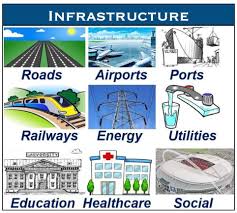
We have all had to contend with bullies during the days of our upbringing. What insult did they toss at you?

Put downs
Name calling
“Mama” jokes

“What doesn’t kill you, makes you stronger”. We all survived the bullying experiences, but did we learn? From a Caribbean perspective, we must be cognizant that our development has been arrested; we have defects and dysfunctions in every aspect of Caribbean life. What Went Wrong?

Were we truly absent that day that brains were given out? Answer that question as the personification of the Caribbean region. Because it truly seems as though our personified Caribbean was absent on the days that “Economic Principles” were taught. These principles have been ratified again and again. There are lessons that we must learn .. and apply in our Caribbean society. We cannot make progress without them; here they are – high level – from the book Go Lean…Caribbean (Page 21):

  • People Choose
  • All Choices Involve Costs
  • People Respond to Incentives in Predictable Ways:
    Incentives are actions, awards, or rewards that determine the choices people make. Incentives can be positive or negative. When incentives change, people change their behaviors in predictable ways.
  • Economic Systems Influence Individual Choices and Incentives:
    People cooperate and govern their actions through both written and unwritten rules that determine methods of allocating scarce resources. These rules determine what is produced, how it is produced, and for whom it is produced. As the rules change, so do individual choices, incentives, and behavior.
  • Voluntary Trade Creates Wealth
  • The Consequences of Choice Lie in the Future

Once we learn the “Economic Principles” then we learn the lessons from Infrastructure 101; we learn how important it is for governments to always prioritize Big Capital investments – think bridges, tunnels, highways, ports, etc.

The focus must always be on the future.

This is What Went Wrong in the Caribbean’s development; we have not always been future-focused. We may have only ever “put out fires”, rather than investing for the long term benefit of future citizens. Think about it:

How many tunnels, highways, nuclear power plants, solar farm and wind turbine arrays do we truly have in the Caribbean member-sates?
Answer: Minimal.

This commentary continues the July series from the movement behind the book Go Lean…Caribbean. This submission, 5-of-6 on the theme “What Went Wrong?“, focuses on Caribbean history and why we still have many of the same defects that other societies – think North America and Europe yes, but even India and China – have already remediated. The full catalog:

  1. What Went Wrong? Asking ‘Why’ is Important
  2. What Went Wrong? ‘We’ never had our war!
  3. What Went Wrong? ‘7 to 1’ – Caribbean ‘Less Than’
  4. What Went Wrong? ‘Be our Guest’ – The Rules of Hospitality
  5. What Went Wrong? Failing the Lessons from Infrastructure 101
  6. What Went Wrong? Losing the Best; Nation-building with the Rest

In this series, reference is made to the need for a comprehensive roadmap for investing in Big Infrastructure projects; one that would elevate the economic engines of Caribbean society, for the full 30 member-states. We are making reference to projects that are too big for any one member-state alone, we would need the whole Caribbean neighborhood, despite the language, race, colonial heritage or political structure. The movement behind the Go Lean book posits that we can confederate and deputize the Infrastructure 101 eco-system for the whole region.
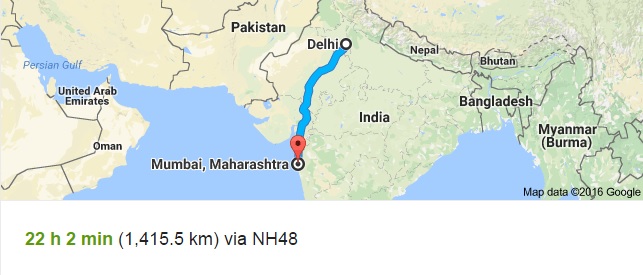
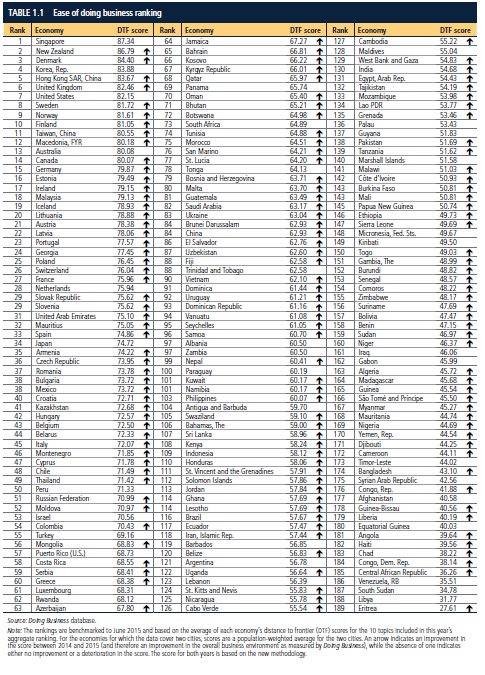
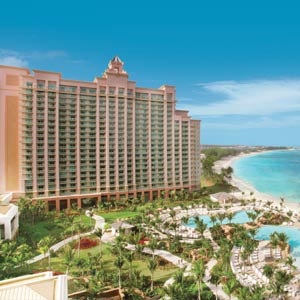
We can correct … What Went Wrong in our Caribbean development.

It is very apropos to Encore a previous blog-commentary from August 10, 2016 on the excellent role model the country of India is providing for investing in Big Infrastructure projects to transform its country. See that blog-commentary here-now:

——————–

Go Lean CommentaryBuild It and They Will Come – India’s $90 Billion Investment

Here are some interesting rankings about India:

World largest population: # 2 – 1.2 Billion people (Only behind China)

Ease of doing business? # 132 (2015; 130 for 2016; see Appendix B)

That gap, between 2 and 132, is a wide chasm for India to bridge.

What is this country to do? And what lessons can we learn from them, here in the Caribbean?

(Though our population is so small, our Ease of Doing Business rating is equally depressing; the best Caribbean option is Jamaica at 64).

The answer is investment!

Working for a Return on Investments is one of the driving forces of the book (and movement) Go Lean … Caribbean. The book asserts that in order to get the optimal return on any investment a community must adopt the appropriate “community ethos”, the fundamental spirit of a culture that drives the beliefs, customs and practices of its society. In this case, the identifying ethos is: Deferred Gratification.

CU Blog - Build It and They Will Come - India's $90 Billion Investment - Photo 1India is embarking on the Delhi-Mumbai Industrial Corridor. This is a ribbon of development along a route from Delhi to Mumbai, that traverses 6 (internal) states in India; see Appendix A. (India is a Federal Republic, with a President over the federal government, while states are led by governors). This plan so resembles the roadmap for the for the Caribbean Union Trade Federation (CU). The Go Lean book serves as a roadmap for the introduction and implementation of the CU.

This commentary is the 3 of 3 from the Go Lean movement on the subject of Infrastructure Policy. As related in previous submissions in this series, the assertion is that “if we build it, they will come”. This is a movie metaphor, yes, but it accurately depicts the surety of investing in capital infrastructure projects; or perhaps even more poignant, it conveys the surety of failure of not investing. The other commentaries detailed in this series are as follows:

  1. Before & After – Washington DC’s Streetcars Model
  2. Clinton vs Trump Campaigns – Politics of Infrastructure
  3. India’s Model – $90 billion infrastructure projects.

All of these commentaries are economic in nature, stressing the community investments required for nation-building. As depicted in this VIDEO here, India is playing catch-up in this regards with an aggressive plan – a “quantum leap”:

VIDEO – Amitabh Kant at TEDxDelhi on India’s Infrastructure Development – https://youtu.be/8BvMybtJ1-E

TEDx Talks
Published on Dec 17, 2012 –
 
Presently posted as CEO & MD of the Delhi Mumbai Industrial Corridor Development Corporation.Delhi-Mumbai Industrial Corridor is a mega infra-structure project of $90 billion covering an overall length of 1483 KMs between the political capital and the business capital of India.

A dynamic personality, Amitabh Kant has conceptualized and executed the positioning and branding of Kerala as “God’s Own Country” and later the “Incredible !ndia” campaign. Both these campaigns have won several International awards and embraced a host of activities — Infrastructure development, product enhancement, changes in organizational culture and promotional partnerships based on intensive market research. He has structured large infrastructure projects for diversification of India’s tourism product and sourced international funding through the Asian Development Bank (ADB), Japanese Bank for International Cooperation (JBIC) and UNDP.
During his tenure as Chairman and Managing Director, India Tourism Development Corporation (ITDC) he radically restructured the organization and turned it around into a highly profitable commercial enterprise. He also has wide ranging experience in innovative technical and financial structuring of Private — Public — Partnership in infrastructure projects and implemented the Calicut Airport project based on User’s fee, the BSES Kerala Power project and the Mattanchary Bridge project.

As demonstrated here in India, big infrastructure projects are necessary community investments – a “quantum leap” with a $90 Billion industrial corridor along 1500 kilometers. Is it possible for the Caribbean to consider such deployments?

Yes! The book Go Lean … Caribbean details exactly how the Big Infrastructure Projects for our region are to be conceived and achieved, (Page 127), with Self-Governing Entities and Exclusive Economic Zones. Most importantly, the roadmap details a plan to fund the projects.

The Go Lean/CU movement champions the cause of building and optimizing the overall Caribbean infrastructure. According to the foregoing VIDEO, it is important to identify and qualify funding sources for such ventures. There is the need for “new guards” for the Caribbean in this perspective. So there is the expectation that integrating and consolidating to a Single Market will contribute to the fulfillment of the Go Lean prime directives, defined here as follows:

  • Optimization of the economic engines in order to grow the regional economy to $800 Billion & create 2.2 million new jobs.
  • Establishment of a security apparatus to protect the resultant economic engines.
  • Improve Caribbean governance – including the funding of capital projects – to support these engines.

The Go Lean roadmap anticipates the opportunities of major infrastructure investments. However, the roadmap recognizes that many of the projects envisioned for the region may be too big for just one member-state alone; that it will take regional – super-national coordination. This point is highlighted in the opening Declaration of Interdependence, (Pages 12 & 14):

xiv.    Whereas government services cannot be delivered without the appropriate funding mechanisms, “new guards” must be incorporated to assess, accrue, calculate and collect revenues, fees and other income sources for the Federation and member-states. The Federation can spur government revenues directly through cross-border services and indirectly by fostering industries and economic activities not possible without this Union.

xxvi.  Whereas the Caribbean region must have new jobs to empower the engines of the economy and create the income sources for prosperity, and encourage the next generation to forge their dreams right at home, the Federation must therefore foster the development of new industries … impacting the region with more jobs.

xxix.  Whereas all Caribbean democracies depend of the free flow of capital for municipal, public and private financing, the institutions of capital markets can be better organized around a regional monetary union. The Federation must institute the controls to insure transparency, accounting integrity and analysis independence of the securities markets, thereby shifting the primary source of capital away from foreign lenders to domestic investors, comprising institutions and individuals.

The CU mission is to plan, fund, deploy and maintain infrastructure projects that are too big for any one member-state alone. Crossing borders will mean including member-states of various legalities: some independent member-states and some dependent overseas territories. This brings to the fore an array of issues, like legislative authority and currency. The Go Lean/CU regional roadmap undoubtedly calls for a common currency strategy; thusly, it calls for the establishment of the allied Caribbean Central Bank (CCB) to manage the monetary and currency affairs of each member-state in the region, independent or dependent territory. The Go Lean book describes the breath-and-width of the CCB as a technocratic institution with better stewardship, than in the recent past. From the outset, this stewardship was envisioned and pronounced in the same Declaration of Interdependence (Page 13):

xxiii. Whereas many countries in our region are dependent OverseasTerritory of imperial powers, the systems of governance can be instituted on a regional and local basis, rather than requiring oversight or accountability from distant masters far removed from their subjects of administration. The Federation must facilitate success in autonomous rule by sharing tools, systems and teamwork within the geographical region.

xxiv.  Whereas a free market economy can be induced and spurred for continuous progress, the Federation must install the controls to better manage aspects of the economy: jobs, inflation, savings rate, investments and other economic principles. Thereby attracting direct foreign investment because of the stability and vibrancy of our economy.

xxv.   Whereas the legacy of international democracies had been imperiled due to a global financial crisis, the structure of the Federation must allow for financial stability and assurance of the Federation’s institutions. To mandate the economic vibrancy of the region, monetary and fiscal controls and policies must be incorporated as proactive and reactive measures. These measures must address threats against the financial integrity of the Federation and of the member-states.

The CU roadmap drives change among the economic, security and governing engines. These solutions are as new community ethos, strategies, tactics, implementations and advocates; sampled as follows:

Community Ethos – Deferred Gratification Page 21
Community Ethos – Economic Principles: People Choose because Resources are Limited Page 21
Community Ethos – Economic Principles: All Choices Involve Costs Page 21
Community Ethos – Economic Principles: Voluntary Trade Creates Wealth Page 21
Community Ethos – Economic Principles: Consequences of Choices Lie in the Future Page 21
Community Ethos – Money Multiplier Page 22
Community Ethos – Job Multiplier Page 22
Community Ethos – Lean Operations Page 24
Community Ethos – Return on Investments Page 24
Community Ethos – Cooperatives Page 25
Community Ethos – Ways to Impact the Future Page 26
Community Ethos – Impact the Greater Good Page 37
Strategy – Vision – Integrate and Consolidate into a Single Market Page 45
Strategy – Mission – Facilitating Currency Union, Caribbean Dollar Page 45
Strategy – Mission – Collaborate for the Caribbean Central Bank Page 45
Anecdote – Caribbean Currencies Page 64
Tactical – Fostering a Technocracy Page 64
Tactical – $800 Billion Economy – How and When – Trade Page 67
Tactical – Recovering from Economic Bubbles Page 69
Tactical – Separation-of-Powers – Caribbean Central Bank Page 73
Implementation – Assemble Caribbean Central Bank Page 96
Implementation – Ways to Pay for Change Page 101
Implementation – Start-up Benefits from the EEZ Page 104
Implementation – Steps to Implement Self-Governing Entities Page 105
Implementation – Trade Mission Objectives Page 117
Implementation – Ways to Benefit Globalization Page 119
Planning – Ways to Improve Trade Page 128
Advocacy – Ways to Grow the Economy Page 151
Advocacy – Ways to Create Jobs Page 152
Advocacy – Ways to Improve Governance Page 168
Advocacy – Ways to Foster Cooperatives Page 176
Advocacy – Reforms for Banking Regulations Page 199
Advocacy – Ways to Impact Wall Street – Better Liquidity from Regional Capital Markets Page 200
Advocacy – Ways to Improve Transportation Page 205
Advocacy – Ways to Impact Urban Living – Optimize Transportation Options Page 234
Advocacy – Ways to Impact Rural Living – Optimize Transportation Options Page 235

The Caribbean region must learn this important lesson from the country of India: infrastructure is not optional. Put in the infrastructure in advance and it brings growth; it becomes an investment. But play catch-up afterwards and it bears a heavy cost burden.

Previous Go Lean commentaries highlighted other countries and communities that did the hard-work, the heavy-lifting, to facilitate their infrastructural needs so as to better compete in the world’s markets. This is the world that we in the Caribbean competes in – with trade and culture – so it is important to consider all lessons learned. Here is a sample of issues addressed and elaborated upon in previous blog/commentaries:

https://goleancaribbean.com/blog/?p=8549 Enhancing Sports Infrastructure for an Olympic dream – Some Day Maybe
https://goleancaribbean.com/blog/?p=7989 Transforming Infrastructure with ‘Free Money’
https://goleancaribbean.com/blog/?p=7384 Infrastructure for Oil Refineries – Strategy for Advanced Economics
https://goleancaribbean.com/blog/?p=6231 China’s Caribbean Playbook: Helping Transform the region
https://goleancaribbean.com/blog/?p=6016 The Need for Infrastructure to abate Climate Change’s excessive heat
https://goleancaribbean.com/blog/?p=5921 The Art & Science of Impact Analyses for Big infrastructure projects
https://goleancaribbean.com/blog/?p=3028 India is doing better than many Emerging Market countries. Why?
https://goleancaribbean.com/blog/?p=2953 Funding Caribbean Entrepreneurs – The ‘Crowdfunding’ Way
https://goleancaribbean.com/blog/?p=2750 Good Model: Disney World as a Self-Governing Entity
https://goleancaribbean.com/blog/?p=2670 A Lesson in History of Infrastructure Projects: Rockefeller’s Pipeline
https://goleancaribbean.com/blog/?p=2435 Latin America’s Dream and Trade Role-model: Korea
https://goleancaribbean.com/blog/?p=2090 Elaborating on the CU and CCB as Hallmarks of a Technocracy

The Caribbean is arguably the best address on the planet, but for modern life and conveniences, and to better compete with the rest of the world regarding trade and culture, we need to upgrade our infrastructure, and then keep pace with industrial best-practices. We need to make these investments. The returns on these investments are jobs and economic empowerments; (think entrepreneurship).

There is no choice to “opt-out”. If we do not invest, our people will “opt-out” instead, as has been the past experience, especially evident with our societal abandonment rate (brain drain) of 70%.

This past – our status quo – cannot continue as our future.

We must do better!

India did … so can we.

Ease of doing business is a real metric. We can “inch up” the chart and elevate our business eco-system accordingly; India increased from 132 to 130 in 2016.

The governments, institutions and businesses are hereby urged to “lean-in” for the deployments/empowerments as described in the book Go Lean … Caribbean. This is our “quantum leap”; the solutions herein are conceivable, believable & achievable. Yes, we can, “build it and they – progress – will come” to make the Caribbean a better place to live, work and play. 🙂

Download the book Go Lean … Caribbean – now!

———–

Appendix A – Delhi-Mumbai Industrial Corridor Project

The Delhi-Mumbai Industrial Corridor Project is a planned State-Sponsored Industrial Development Project of the Government of India. It is one of the world’s biggest infrastructure projects with an estimated investment of US$90 billion and is planned as a hi-tech industrial zone spread across seven states along the 1,500 km long Western Dedicated Freight Corridor which serves as its backbone.[1]

It includes 24 industrial regions, eight smart cities, two airports, five power projects, two mass rapid transit systems and two logistical hubs.[1] The eight investment regions proposed to be developed in Phase I of DMIC are Dadri-Noida-Ghaziabad (in UP); Manesar- Bawal (in Haryana); Khushkhera-Bhiwadi-Neemrana and Jodhpur- Pali-Marwar (in Rajasthan); Pithampur-Dhar-Mhow (in MP); Ahmedabad-Dholera Special Investment Region (SIR) in Gujarat; the Shendra-Bidkin Industrial Park and Dighi Port Industrial Area in Maharashtra.[1]

India needs to employ over 100 million people within the next decade and so this project assumes vital importance to develop manufacturing centres that could employ millions.

The ambitious Delhi Mumbai Industrial Corridor (DMIC) has received major boost with India and Japan inking an agreement to set up a project development fund. The initial size of the Fund will be ₹10 billion (US$148.6 million). Both the Japanese and Indian governments are likely to contribute equally. The work is already underway and progressing at a rapid pace, with the Dedicated Freight Corridor expected to be completed by 2017.[2]

Source: Retrieved August 10, 2016 from: https://en.wikipedia.org/wiki/Delhi_Mumbai_Industrial_Corridor_Project

———–

Appendix B – World Bank 2016 Ease of Doing Business Ranking

CU Blog - Build It and They Will Come - India's $90 Billion Investment - Photo 2

Share this post:
, , ,
[Top]

What Went Wrong? ‘Be our Guest’ – The Rules of Hospitality

Go Lean Commentary

Be our guest
Put our services to the test …
– Song: Be Our Guest from the Movie: Beauty and the Beast – See Appendices below.

The economic principle – slavery – at the origins of Caribbean society had both winners and losers: for the slaves, it was a Bad Start; but for the slave masters it was a Life of Leisure, they had servants to do all the heavy-lifting to sustain their life.

Change came … slavery ended …

… most of the slave masters left the region. A transformation had to take place: socially, politically and economically. So yes, the Caribbean transformed economically from that Bad Start.

Or did we?

Now the primary economic driver in the region – every member-state – is tourism. We are still in the Life of Leisure business. Except now, instead of a Life of Leisure it is now only a week of leisure, or a forth-night, or a month, or a season (i.e. Winter Snowbirds). We have replaced one master for multiple masters at  the resort properties; “one master at a time” still enjoys the leisure.

The more things change, the more they remain the same!

For the former slaves, the Black-and-Brown of Caribbean society, the community ethos – (the fundamental character or spirit of a culture; the underlying sentiment that informs the beliefs, customs, or practices of a group or society) –  for them changed from a spirit of servitude to a spirit of Hospitality. Consider the historicity of Hospitality from a Judeo-Christian perspective:

Hospitality – refers to the relationship between a guest and a host, wherein the host receives the guest with goodwill, including the reception and entertainment of guests, visitors, or strangers. Louis, Chevalier de Jaucourt describes hospitality in the Encyclopédie as the virtue of a great soul that cares for the whole universe through the ties of humanity.[4]

Historical practices – In ancient cultures hospitality involved welcoming the stranger and offering him food, shelter, and safety.[7]  …

Judaism … praises hospitality to strangers and guests based largely on the examples of Abraham and Lot in the Book of Genesis(Genesis 18:1–8 and 19:1–8). In Hebrew, the practice is called hachnasat orchim, or “welcoming guests”. Besides other expectations, hosts are expected to provide nourishment, comfort, and entertainment for their guests,[10] and at the end of the visit, hosts customarily escort their guests out of their home, wishing them a safe journey.[11]

Christianity … hospitality is a virtue which is a reminder of sympathy for strangers and a rule to welcome visitors.[12] This is a virtue found in the Old Testament, with, for example, the custom of the foot washing of visitors or the kiss of peace.[13][14] It was taught by Jesus in the New Testament [as well]. Indeed, Jesus said that those who had welcomed a stranger had welcomed him.[15] Some Western countries have developed a host culture for immigrants, based on the Bible.[16] – Source: Wikipedia

Now consider the fantasy associated with Hospitality in our pop culture. See this song-and-dance – Be Our Guest – from the animated movie “Beauty and the Beast” in the Appendix VIDEO below.

In general, the better we are at Hospitality, the better the financial rewards – think gratuity.

This has resulted in distortions in our society. The rules of Hospitality means that we place the needs of the “Stranger” ahead of the needs of the neighbor. Consider the above scriptural reference in Genesis 19:1 – 8, where Lot extended hospitality to two strangers while in the City of Sodom. He “urged them not to spend the night in the public square”. The strangers accepted his hospitality, but before they could retire, a mob surrounded Lot’s house, “from boy to old man.” They cried out to Lot that he turn over his guests for immoral purposes, but he [Lot] firmly refused; he protected them, even offering to pacify the mob with the offer of his own family members.

In these modern days, albeit public safety protections for all in society including strangers, along come Direct Foreign Investors. We perceive that their needs supersede the needs of the “townspeople”. Everyone, everywhere senses this. At times, the Direct Foreign Investor is even pejoratively referred to as “Dragons”. This theme was elaborated upon in a previous blog-commentary; see quotation here:

… assigning the term “Dragon” to a “Dependence on Foreign Investors” or DFI. …

Normally DFI refer to Direct Foreign Investment, but in this case the “Dependence on Foreign Investors” is portrayed as a negative factor or pest – a dragon –  unless “trained”, caroled and controlled to harness the energy in a positive way. …

The [Go Lean] book, and accompanying blogs posit that “dragons can be trained”. The sad state of affairs in Freeport (Bahamas 2nd City] can be turned around by the embrace of a “double down” strategy on the island’s nascent ship-building industry [in place on the sole reliance of tourism].

This – shift to depending on hospitality of strangers – is What Went Wrong in the Caribbean development. Time for a change!

The 2013 book Go Lean … Caribbean opened with this warning:

The Caribbean has tried, strenuously, over the decades, to diversify their economy away from the mono-industrial trappings of tourism, and yet tourism is still the primary driver of the economy. Prudence dictates that the Caribbean nations expand and optimize their tourism products, but also look for other opportunities for economic expansion. The requisite investment of the resources (time, talent, treasuries) for this goal may be too big for any one Caribbean member-state. Rather, shifting the responsibility to a region-wide, professionally-managed, deputized technocracy will result in greater production and greater accountability. This deputized agency is the Caribbean Union Trade Federation (CU).

To recap, it is not Tourism that is wrong is the Caribbean, rather it is the spirit of ” only accommodation to strangers” that is wrong. It subverts the community ethos and causes the stakeholders to become complacent, and settled that the “Foreign Man” – the Tourist or the Investor – will take care of us, rather than taking the necessary steps to take care of ourselves, like leveraging  and confederating with our neighbors, our neighboring communities and neighboring islands.

This is What Went Wrong in Caribbean history, society and culture.

Make happy those who are near, and those who are far will come”. – Ancient Chinese Proverb

This commentary continues the July series from the movement behind the book Go Lean…Caribbean. This submission, 4-of-6 on the theme “What Went Wrong?” focuses on Caribbean history and why we still have many of the same defects that other societies – think North America and Europe yes, but even Asia – have already remediated. The full catalog:

  1. What Went Wrong? Asking ‘Why’ is Important
  2. What Went Wrong? ‘We’ never had our war!
  3. What Went Wrong? ‘7 to 1’ – Caribbean ‘Less Than’
  4. What Went Wrong? ‘Be our Guest’ – The Rules of Hospitality
  5. What Went Wrong? Failing the Lessons from Infrastructure 101
  6. What Went Wrong? Losing the Best; Nation-building with the Rest

In this series, reference is made to the need for a comprehensive roadmap for elevating the regional engines of Caribbean society, for the full 30 member-states. The challenges are too big for any one member-state alone. We need the whole neighborhood, despite the language, race, colonial heritage or political structure – we need All Hands on Deck. The movement behind the Go Lean book asserts that this change is possible; we do not want to abandon Tourism; no, we want to optimize it and make it even better as an economic engine for our region. See how this theme was developed in many previous Go Lean commentaries; see a sample list here:

https://goleancaribbean.com/blog/?p=17337 Industrial Reboot – Amusement Parks
https://goleancaribbean.com/blog/?p=17072 Cruise Ports ‘Held Hostage’ – Need to Reboot Cruise Eco-System
https://goleancaribbean.com/blog/?p=15907 Industrial Reboot – Navy Pier 101
https://goleancaribbean.com/blog/?p=15844 Doubling Down on “Snowbird” Tourism
https://goleancaribbean.com/blog/?p=15521 The Need for Caribbean Unity to Mitigate Tourism Missteps
https://goleancaribbean.com/blog/?p=15380 Industrial Reboot – Cruise Tourism 2.0
https://goleancaribbean.com/blog/?p=15378 Industrial Reboot – Tourism 2.0
https://goleancaribbean.com/blog/?p=13856 Bad Case Study: Baha Mar – Doubling-down on Failure

All of the Caribbean had the historic background in slavery. Most of the Caribbean profess the Judeo-Christian religious affiliation. Most of the Caribbean have Tourism as the primary industry. The propensity for the Judeo-Christian form of hospitality and the mono-industrial expressions of Tourism is more than coincidental:

It is What Went Wrong with the Caribbean.

Now the focus must be on the changes that we need to move forward – the Way Forward.

Finally, we need to reboot our societal engines. While still extending our arms of hospitality in touristic expressions, we need to double-down in working with our neighbors – all neighbors in the region. We must convene, collude, cooperate, collaborate and confederate to address all our collective problems with collective solutions.

And we must carol and control our invitation of hospitality to Direct Foreign Investors – better train our dragons.

Yes, we can.

This is the urging of the book Go Lean…Caribbean and the resultant roadmap. We hereby urge all Caribbean stakeholders to lean-in to this roadmap. This roadmap is conceivable, believe and achievable. We can make our homeland a better place for all stakeholders to live, work and play. 🙂

About the Book
The book Go Lean…Caribbean serves as a roadmap for the introduction and implementation of the technocratic Caribbean Union Trade Federation (CU), for the elevation of Caribbean society – for all member-states. This CU/Go Lean roadmap has these 3 prime directives:

  • Optimization of the economic engines in order to grow the regional economy to $800 Billion and create 2.2 million new jobs.
  • Establishment of a security apparatus to ensure public safety and protect the resultant economic engines.
  • Improve Caribbean governance to support these engines, including a separation-of-powers between the member-states and CU federal agencies.

The Go Lean book provides 370-pages of turn-by-turn instructions on “how” to adopt new community ethos, plus the strategies, tactics, implementations and advocacies to execute so as to reboot, reform and transform the societal engines of Caribbean society.

Download the free e-Book of Go Lean … Caribbean – now!

Who We Are
The movement behind the Go Lean book – a non-partisan, apolitical, religiously-neutral Community Development Foundation chartered for the purpose of empowering and re-booting economic engines – stresses that reforming and transforming the Caribbean societal engines must be a regional pursuit. This was an early motivation for the roadmap, as pronounced in the opening Declaration of Interdependence (Pages 12 – 13):

iv. Whereas the natural formation of the landmass is in a tropical region, the flora and fauna allows for an inherent beauty that is enviable to peoples near and far. The structures must be strenuously guarded to protect and promote sustainable systems of commerce paramount to this reality.

xi. Whereas all men are entitled to the benefits of good governance in a free society, “new guards” must be enacted to dissuade the emergence of incompetence, corruption, nepotism and cronyism at the peril of the people’s best interest. The Federation must guarantee the executions of a social contract between government and the governed.

xvi. Whereas security of our homeland is inextricably linked to prosperity of the homeland, the economic and security interest of the region needs to be aligned under the same governance. Since economic crimes … can imperil the functioning of the wheels of commerce for all the citizenry, the accedence of this Federation must equip the security apparatus with the tools and techniques for predictive and proactive interdictions.

xxiv. Whereas a free market economy can be induced and spurred for continuous progress, the Federation must install the controls to better manage aspects of the economy: jobs, inflation, savings rate, investments and other economic principles. Thereby attracting direct foreign investment because of the stability and vibrancy of our economy.

Sign the petition to lean-in for this roadmap for the Caribbean Union Trade Federation.

————–

Appendix VIDEO – Be Our Guest | Beauty and the Beast | Lyrics – https://youtu.be/GXlgmqHpBkU


Disney DeKa
Published on Jul 8, 2011 – I do not own anything! Thanks for watching 🙂

————–

Appendix – Lyrics: Be Our Guest | Beauty and the Beast

“Ma chere Mademoiselle, it is with deepest pride
And greatest pleasure that we welcome you tonight
And now we invite you to relax, let us pull up a chair
As the dining room proudly presents
Your dinner!”

Be our guest, be our guest
Put our service to the test
Tie your napkin ’round your neck, cherie
And we’ll provide the rest
Soup du jour, hot hors d’oeuvres
Why, we only live to serve
Try the grey stuff, it’s delicious
Don’t believe me, ask the dishes

They can sing, they can dance
After all, miss, this is France
And a dinner here is never second best
Go on, unfold your menu
Take a glance and then you’ll
Be our guest oui, our guest
Be our guest

Beef ragout, cheese soufflé
Pie and pudding, on flambé
We’ll prepare and serve with flair
A culinary cabaret
You’re alone and you’re scared
But the banquet’s all prepared
No one’s gloomy or complaining
While the flatware’s entertaining
We tell jokes, I do tricks
With my fellow candlesticks

And it’s all in perfect taste that you can bet
Come on and lift your glass
You’ve won your own free pass
To be our guest if you’re stressed
It’s fine dining we suggest
Be our guest, be our guest, be our guest

Life is so unnerving
For a servant who’s not serving
He’s not whole without a soul to wait upon
Ah, those good old days when we were useful (hey Cogsworth)
Suddenly those good old days are gone
Too long we’ve been rusting
Needing so much more than dusting
Needing exercise, a chance to use our skills!
Most days we just lay around the castle
Flabby, fat and lazy
You walked in and oops-a-daisy!

It’s a guest, it’s a guest
Sake’s alive, well I’ll be blessed!
Wine’s been poured and thank the Lord
I’ve had the napkins freshly pressed
With dessert, she’ll want tea
And my dear that’s fine with me
While the cups do their soft-shoein’
I’ll be bubbling, I’ll be brewing

I’ll get warm, piping hot
Heaven’s sakes! Is that a spot?
Clean it up, we want the company impressed
We’ve got a lot to do!
Is it one lump or two?
For you, our guest (she’s our guest)
She’s our guest (she’s our guest)

Be our guest, be our guest!
Our command is your request
It’s been years since we’ve had anybody here
And we’re obsessed
With your meal, with your ease
Yes, indeed, we aim to please
While the candlelight’s still glowing
Let us help you, we’ll keep going

Course by course, one by one
‘Til you shout, “enough I’m done!”
Then we’ll sing you off to sleep as you digest
Tonight you’ll prop your feet up
But for now, let’s eat up
Be our guest
Be our guest
Be our guest
Please, be our guest

Source: Retrieved July 25, 2019 from: https://www.lyrics.com/lyric/33715733/Alan+Menken/Be+Our+Guest

Share this post:
, , , ,
[Top]