Tag: Civil Rights

ENCORE: Role Model Muhammad Ali’s Greatest Fight – RIP

s Greatest Battle - RIP - Photo 3

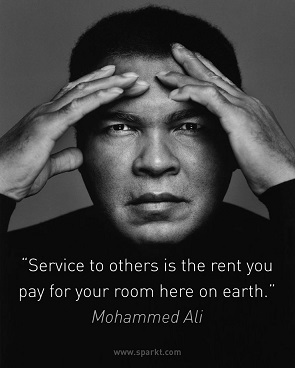
“Service to others is the rent you pay for your room here on earth.” – Muhammad Ali.

The world now mourns the passing of this great role model; boxing legend Muhammad Ali is dead!
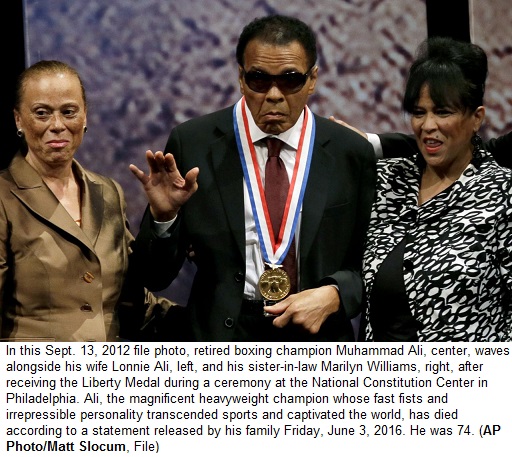
s Greatest Battle - RIP - Photo 1We all knew it would happen; he was frail, gaunt and semi-immobile; all of this combined with his muted speech – due to his end-stage Parkinson’s Disease. But the manifestation of the inevitable is still painful, grievous and depressing.

What a loss for the modern world! This is not just this writers view, but an opinion shared by many in the world. See sample tributes/quotes and a news VIDEO in the Appendices below.

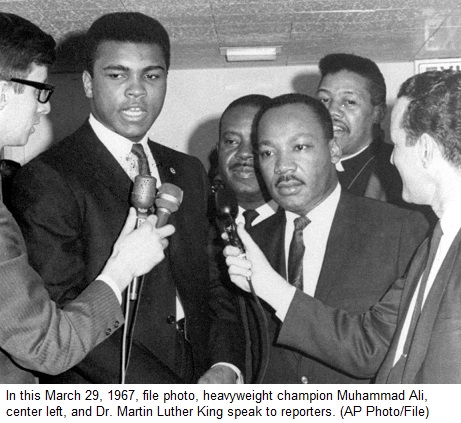
The full measure of the man Muhammad Ali is now gone – he would go on to become known as “The Greatest,” and at his peak in the 1970s was among the most recognizable faces on Earth – but his undeniable impact on society continues. This legacy includes more than just the boxing ring or sports world, as his greatest fight was not in the ring, but rather the social injustice in the United States and in the US Supreme Court. The commitment, sacrifice and success of that fight make him a role model for advocates around the world, including those in the Caribbean, or wanting to elevate the Caribbean.

This most impactful “battle/fight” for Ali was detailed in a previous blog-commentary from March 21, 2014; it is being re-distributed here in the aftermath of Ali’s death on June 3, 2016. This blog highlighted another “actor” in the Ali-Supreme Court drama, someone behind the scenes but still able to make a huge impact on the case and this legacy, Kevin Connolly, a Clerk for one of the Supreme Court Judges.
s Greatest Battle - RIP - Photo 2

The blog ENCORE follows:

————————–

Go Lean Commentary

This story-line is retrieved from the movie “Muhammad Ali’s Greatest Fight” (2013). See the summary here:

muhammad-ali-jpgIn 1964, world champion boxer Muhammad Ali requested exemption from the military draft based on his religious beliefs. His request was denied and when he subsequently refused induction into the army, he was convicted and sentenced to 5 years imprisonment. His case eventually works itself up the Supreme Court. In their first conference after the case is presented, the justices decide by majority vote (5 to 3) to uphold the conviction and Justice John Harlan is tasked with preparing the majority opinion. He assigns one of his clerks, Kevin Connolly, to prepare a first draft but try as he might [Mr. Connolly] believes that the decision is wrong. His draft argues for overturning the conviction… eventually Justice Harlan agrees with him. The Justice must now find a way to convince his colleagues.
Source: IMDB – http://www.imdb.com/title/tt2061756/?ref_=nv_sr_2
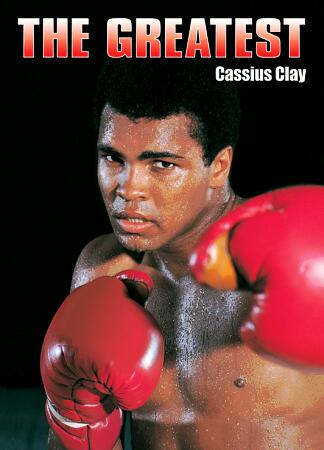
The review of this movie –  The Atlantic Magazine – adds great insight and perspective. Consider here:

In 1960 Cassius Clay burst onto the scene – and burst is about the only word to describe it – he was an 18-year-old amateur boxer who lit up the Summer Olympics in Rome with his brashness and youthful exuberance, to say nothing of his breathtaking ability. (He easily captured the light heavyweight gold medal.) Clay turned pro a few months after the Olympics, and within two years, he became more of a media star than the reigning heavyweight champion, Floyd Patterson, or Patterson’s successor, Sonny Liston. From the beginning he transcended boxing, making bold predictions – usually correct – about what round he would stop his opponents in; his hilarious doggerel poetry was recited by school kids who had never seen a boxing match. He cut a record (a cover of Ben E. King’s “Stand By Me”), appeared in a movie (as a heavyweight contender who knocks out Anthony Quinn in the opening moments of Requiem for a Heavyweight) and, in February of 1964, shocked everyone but himself by whipping the fearsome Sonny Liston, a 7-1 favorite for the heavyweight title. Within days of his victory, though, he created an even bigger shock when he announced that he had become a Black Muslim and changed his name to Muhammad Ali. And that was just the beginning.

In 1965, he failed a mental aptitude test for the draft. But early in 1966 the war in Vietnam was escalating and resistance to it was gathering momentum, so the standards for induction were lowered and Ali was classified as eligible for the draft. His lawyer presented a letter to the draft board requesting deferment as a conscientious objector. Three days later, the request was denied, and in 1967 he was arrested, convicted of draft evasion, and stripped of his heavyweight title by New York and other powerful state athletic commissions. In 1971, his appeal was heard by the U.S. Supreme Court. Opinion polls at the time (1971) indicated that the vast majority of older whites believed Ali should have been sent to jail, while an overwhelming number of blacks and younger white college students, many of whom had gone to see Ali on one of his campus appearances, vehemently supported his anti-war stance. Public sentiment about Ali pretty much followed the same lines as public opinion on the war in Vietnam, and as more people turned against the war, more supporters flocked to Ali’s corner.

The Justices reviewing this matter included Thurgood Marshall, as the only black justice on the court at the time. But Justice Marshall recused himself from the case, having been the Solicitor General on Ali’s earlier conviction. [(The Solicitor General is required to argue in front of the court on behalf of “The People”)]. Justice Harlan, the responsible party for communicating the majority decision, delegated this task to Kevin Connolly, his chief clerk; [(the Justices are allowed up to 4 Clerks to do the heavy-lifting of researching and composing opinions on before of their legal “masters”)]. Mr. Connolly was convincingly idealistic in this case; his dogged pursuit of justice helped turn the Court’s decision around.

At the time Justice Harlan, who was dying of cancer and would resign from the Court later that year, became finally convinced of the sincerity of Ali’s religious and anti-war beliefs and, against the wishes of his close friend Chief Justice Burger, shifted his vote to even the balance at 4 to 4. [(There was no further testimony from Ali or supporters, just the ruminated logic of the clerk Connolly and the appeal of a better nature)]. He eventually made such a convincing argument to the other conservatives on the court that the decision became unanimous (8 to 0, with an abstaining Justice Marshall).
Source: Extractions from Allen Barra, The Atlantic Magazine. Posted October 4, 2013; retrieved February 14, 2014 from: http://www.theatlantic.com/entertainment/archive/2013/10/muhammad-alis-most-formidable-opponent-was-the-us-supreme-court/280280/

The advocate in this drama is Kevin Connolly, the chief clerk for Supreme Court Justice John Harland. His steadfast commitment to justice prevailed, in the end. He saw the miscarriage of justice in the un-balanced application of the law for religious/conscientious objections for White ministers as opposed to Black Muslim adherents of faith. He wielded his influence on his boss, Justice Harland, who then influenced the remaining court – one man made a difference on this court, and eventually the world.

The book Go Lean … Caribbean serves as a roadmap for the introduction and implementation of the Caribbean Union Trade Federation (CU). The book posits that one person can make a difference in the Caribbean; that there are many opportunities where one champion can elevate society. In fact the book is a collection of 144 different advocacies, so there is inspiration for the Kevin Connolly’s and Muhammad Ali’s of the region to make their mark in many different fields of endeavor. The roadmap specifically encourages the region to foster the genius potential (Page 27) in their communities, forge leadership skills (Page 171) and pursue the Greater Good (Page 37). With the participation of many advocates on many different paths for progress, the Caribbean can truly become a better place to live, work and play.

Download the free e-Book of Go Lean … Caribbean – now!

——————

Appendix A – Quotes from around the world about the death of three-time heavyweight champion Muhammad Ali
(Source: Retrieved June 4, 2016 from: https://www.yahoo.com/news/reaction-death-greatest-muhammad-ali-100712903.html?ref=gs)

“He’s the most transforming figure of my time, certainly. He did more to change race relations and the views of people than even Martin Luther King. It was a privilege and an honor for me to know him and associate with him.” — Bob Arum, who promoted 26 of Ali’s fights.

——-

Ali, Frazier & Foreman we were 1 guy. A part of me slipped away, “The greatest piece” — tweet by George Foreman, Ali’s opponent in the “Rumble in the Jungle”

——-

“Muhammad Ali is a legend and one of the world’s most celebrated athletes, the fighter who ushered in the golden era of boxing and put the sport on the map. He paved the way for professional fighters, including myself, elevating boxing to become a sport watched in millions of households around the world” — Boxer Oscar De La Hoya, who won titles at six different weight classes.

——-

“We lost a giant today. Boxing benefited from Muhammad Ali’s talents but not nearly as much as mankind benefited from his humanity. Our hearts and prayers go out to the Ali family. May God bless them.” — Boxer Manny Pacquiao, a champion in eight weight classes.

——-

“Passing the Olympic torch to Muhammad to light the cauldron at the Atlanta Games in 1996 was the defining moment of my career, and a memory I will treasure forever, as much as any of the medals I won. As Olympians, our role is to inspire others to achieve their dreams, and no person has ever lived that role more than Muhammad Ali.” — swimmer Janet Evans.

——-

“Without question his legacy is one that he defied the odds because he stood up for what he believed in and when he was put to the test he took personal harm rather than go against his beliefs and what he stood for.” — Don King, promoter of “Rumble in the Jungle” and “Thrilla in Manilla.”

——-

“We are proud to call Ali not only a member of Team USA, but an Olympic champion. With unparalleled grit and determination, he left a legacy that will continue to inspire generations of Americans for years to come.” — Scott Blackmun, CEO of the U.S. Olympic Committee.

——-

“Hillary and I are saddened by the passing of Muhammad Ali. From the day he claimed the Olympic gold medal in 1960, boxing fans across the world knew they were seeing a blend of beauty and grace, speed and strength that may never be matched again. We watched him grow from the brash self-confidence of youth and success into a manhood full of religious and political convictions that led him to make tough choices and live with the consequences. Along the way we saw him courageous in the ring, inspiring to the young, compassionate to those in need, and strong and good-humored in bearing the burden of his own health challenges. I was honored to award him the Presidential Citizens Medal at the White House, to watch him light the Olympic flame, and to forge a friendship with a man who, through triumph and trials, became even greater than his legend. Our hearts go out to Lonnie, his children, and his entire family.” — President Bill Clinton.

——-

“He was an athlete who touched the hearts of people across the globe, an athlete who was engaged beyond sport, an athlete who had the courage to give hope to so many suffering illness by lighting the Olympic cauldron and not hiding his own affliction. He was an athlete who fought for peace and tolerance – he was a true Olympian. Meeting him in person was an inspiration. He was a man who at the same time was so proud and yet so humble.” — IOC President Thomas Bach.

——-

“Muhammad Ali was not just a champion in the ring – he was a champion of civil rights, and a role model for so many people.” — tweet by British Prime Minister David Cameron.

——-

“Rip the greatest of all times in many different ways” — tweet by world heavyweight champion Tyson Fury.

——-

“He sacrificed the heart of his career and money and glory for his religious beliefs about a war he thought unnecessary and unjust. His memory and legacy lingers on until eternity. He scarified, the nation benefited. He was a champion in the ring, but, more than that, a hero beyond the ring. When champions win, people carry them off the field on their shoulders. When heroes win, people ride on their shoulders. We rode on Muhammad Ali’s shoulders.” — Rev. Jesse Jackson, founder and president of the Rainbow PUSH Coalition, and longtime friend of Ali.

——-

“HBO is honored to have known Muhammad Ali as a fighter of beauty and a man of principle. We experienced the joy of working with him in support of initiatives he passionately cared about including, most importantly, his never-ending desire to teach tolerance and understanding of others to all people.” — HBO Sports.

——-

“Muhammad Ali transcended sports with his outsized personality and dedication to civil rights and social justice. He was an inspirational presence at several major NBA events and was deeply admired by so many throughout the league. While we are deeply saddened by his loss, Muhammad Ali’s legacy lives on in every athlete who takes a stand for what he or she believes.” — NBA Commissioner Adam Silver.

——-

“Muhammad Ali has not only been a sports legend but also an outstanding man, whose values transcend his fantastic boxing career. We will always remember him also for his full commitment for the values of equity and brotherhood. We’re proud he started his unique sports career winning the Olympic gold medal in Rome 1960, a story that still emotions me very much. He’ll be forever ‘The Greatest’ to all of us.” — Rome 2024 bid President Luca di Montezemolo.

——-

“Ali was not afraid of anything. He made up his own rules inside the ring and out, and he told the world that is how he acted even (if) they didn’t like it … He was suspended for political reasons, he was arrested, he lost, he once boxed 12 rounds with a broken jaw, but he always came back. We learned from him that victory is the ability to stay on your feet after everyone else has raised their hands and given up.” Yair Lapid, head of Israel’s centrist Yesh Atid party and a former amateur boxer.

 ————–

Appendix B VIDEO Muhammad Ali Dead at 74https://youtu.be/G9JRWAkUn7E

Published on Jun 3, 2016 – Boxing legend Muhammad Ali has died. The 74-year-old had been increasingly frail after being hospitalized several times, most recently for respiratory issues.
Share this post:
, , , ,

Referendum Outcome: Impact on the ‘Brain Drain’

Go Lean Commentary

The book Go Lean … Caribbean seeks to elevate society in the entire Caribbean homeland. The book, serving as a roadmap with turn-by-turn directions, seeks to transform – remediate and mitigate – the engines of regional economics, security and governance. This means optimizing justice institutions to ensure “liberty, equality and justice for all”.

Here’s a question for the Caribbean in general, and considering the subsequent news article, the Bahamas in particular:

Do minorities have any rights if the majority do not accord them?

Impact - Photo 1

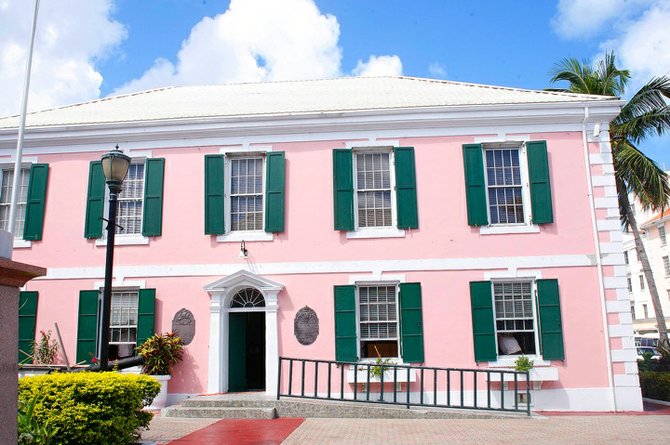
Bahamas Parliament – House of Assembly – Nassau

This is a serious issue!

This relates to the June 7th, 2016 referendum in the Bahamas. The measure listed 4 bills for constitutional amendments relating to Gender Equality, designed to correct some inequities in the legal structures of the country. The following summaries apply:

BILL 1: Would allow a child born outside of the Bahamas to a Bahamian mother and a non-Bahamian father to have citizenship.

BILL 2: Would allow a foreign man married to a Bahamian woman to seek citizenship.

BILL 3: Would allow an unmarried Bahamian father to pass his citizenship to a child born to a foreign mother.

BILL 4: Would end discrimination based on sex.
(Source: https://en.wikipedia.org/wiki/Bahamian_constitutional_referendum,_2016 )

Update June 8, 2016:  The Referendum failed in every constituency and every precinct. The ‘No‘ Vote movement succeeded overwhelmingly; see a related article here.

Like most societies, there are males and females, majorities and minorities. So an even more grave issue is brought to mind:

Human / Natural Rights of Men versus Women and Majorities versus Minorities

CU Blog - Women in Politics - Yes, They Can - Photo 5The Human Rights premise is: for those people who are not treated equal in a society, their rights should NOT be dependent on some popularity contests among the majority. No one should have to seek someone else’s permission to be happy. This is easier said than done, as our Caribbean is notorious for repression for those who do not conform with the majority.

This commentary asserts that natural rights / human rights should be accorded, no matter the results of some referendum.

The disposition of the Bahamas “lay in the balance” from this referendum. What message has been sent to the world: inviting or disinviting?

The book Go Lean … Caribbean addresses these issues, from the perspective of economics and nation-building. This book serves as a roadmap for the introduction and implementation of the Caribbean Union Trade Federation (CU); the purpose of which is to elevate Caribbean society, for all 30 member-states. The book stresses the need to guarantee human rights protections for all Caribbean people (Page 220), recognizing that the region is diverse in ethnicities and cultures.

Can’t we all just get along?! – Rodney King 1994

If we fail to try, or send the wrong message as to our inclusiveness, we suffer a dire consequence – “brain drain”. This is also the strong point made by the Bahamas Chamber of Commerce and Employers Confederation in the following news article:

By: Neil Hartnell, Business Editor, The Tribune Daily Newspaper
(Source: Posted May 6, 2016; retrieved June 2, 2016 from: http://www.tribune242.com/news/2016/may/06/referendum-outcomes-brain-drain-impact/)

The upcoming constitutional referendum’s outcome could have far-reaching consequences for the Bahamian economy and its ability to reverse the “brain drain”, a senior private sector executive warned yesterday.

Edison Sumner, the Bahamas Chamber of Commerce and Employers Confederation’s (BCCEC) chief executive, told Tribune Business that the four Bills that Bahamians will vote on have profound implications beyond gender equality.

Depending on the outcome, Mr Sumner said the referendum may impact the Bahamas’ ability to retain – and attract – the ‘best and brightest’, including future generations of entrepreneurs and managers, given that it would affect how citizenship is bestowed.

“The Bahamas already complains, as does the region, about there being a ‘brain drain’,” he told Tribune Business, referring to how many college and university graduates elected to remain abroad after completing their studies.

Most cited the lack of opportunity, and economic diversification, as the reasons behind this choice, but Mr Sumner warned that this trend could be exacerbated depending on which way Bahamians vote.

The Bills, as designed, will enable a child born outside the Bahamas to automatically become a Bahamian citizen at birth if either of the parents was a Bahamian citizen at birth.

They will also “enable a Bahamian woman married to a foreign man to secure for him the same entitlements to citizenship that a Bahamian man married to a foreign woman already has under the constitution”.

The Bahamian father of a child born outside of marriage will be able to pass on his citizenship to that child if the third Bill is approved by the electorate, while the fourth Bill effectively enshrines gender equality as a fundamental right under the constitution.

Mr Sumner said that, viewed strictly from an economic and workforce perspective, the Bills would eventually have major ramifications for the Bahamas’ ability to expand its labour and entrepreneur pools, plus its attraction for investors.

Making it easier for children born to Bahamians in the circumstances outlined by the Bills to obtain citizenship/status, he added, would be key to ensuring these people became positive contributors to the Bahamas’ economic development and growth

“Those born to a Bahamian parent outside the outside the country, or born outside marriage, may find themselves in a precarious position where they are not Bahamian, and have no more entitlement to become Bahamian,” Mr Sumner explained.

“We want to retain as much of our intellectual capital in the Bahamas as possible to help us grow the economy, the education system, the infrastructure of the country.

“It has to be one of those situations where they must see the benefits in coming to the Bahamas, getting their citizenship here, and helping to build the country and the economy.”

Mr Sumner also warned that Bahamian employers needed to “pay attention” to what happens with the Bills and the referendum, given that the outcome might impact employee workplace relations and hiring practices.

Given that the constitution “trumps all legislation”, he added that the Employment Act, Industrial Relations Act and other labour legislation might be impacted by the referendum.

So voting wrong on the referendum could exacerbate the “brain drain”? Yes! Justice for all? No!

Public referendums are a product of a democratic process. But there is something else more important: rule of law or a constitution. This normally defines the moral code by which a society is to judge “right from wrong”. For many Caribbean nations, their constitutions embed principles from the Judeo-Christian principles – from the Bible. But does that mean they are “Christian nations”. Just consider the comments of one of the founding fathers of the Bahamas, Arthur D. Hanna. See VIDEO here:

VIDEO – Hon. A. D. Hanna debunks the “Christian nation” myth – https://youtu.be/0q0o2-4t3UI

Published on Nov 15, 2014 – Founding Father, framer of the constitution and former Governor-General Arthur Dion Hanna makes it abundantly clear that the Bahamas is NOT a Christian nation. (recorded at the Bahamas Historical Society, 13th November, 2014)

A Christian character is preferred for the individual; a “Christian nation”, not so much. A Christian nation would impose orthodoxy and dogma, prohibiting gender equality and establishing men as the “head” in their families and communities; plus a Christian nation would prohibit the activities of the LGBT communities, due to the religious orthodoxy. This orthodoxy premise often lead victims to flee their homeland to find refuge abroad, exacerbating the “brain drain” further.

So what principle would be recommended for a Caribbean nation or the region as a whole? The Go Lean book (Page 37) answers: the Greater Good:

“It is the greatest good to the greatest number of people which is the measure of right and wrong”. Jeremy Bentham (1748-1832)

The Go Lean book (Page 20) advocates for all of the Caribbean the community ethos of the Greater Good – “fundamental character or spirit of a culture; the underlying sentiment that informs the beliefs, customs, or practices of a group or society”. But respect for the sovereign territories of each member-state mandates that we respect the individual laws enacted there. (Though we can use peer-pressure to foster change).

The Go Lean/CU roadmap employs a tactic of a “Separation-of-Powers between CU federal agencies and Caribbean member-state governments”; so the limitations of national laws in a member-state does not have to override the CU. The CU constitution would apply to the installation of Exclusive Economic Zones (EEZ) and Self-Governing Entities (SGE) that operate in controlled bordered territories like campuses, industrial parks, research labs and industrial plants.

This roadmap brings hope to assuage the Caribbean orthodoxy.

The CU – applying the Greater Good principle – would facilitate the regional prime directives:

  • Optimization of the economic engines in order to grow the regional economy to $800 Billion & create 2.2 million new jobs.
  • Establishment of a security apparatus to protect the resultant economic engines, specifically in EEZ’s and SGE’s.
  • Improvement of Caribbean governance, with the appropriate separation-of-powers, to support these engines.

The book Go Lean … Caribbean asserts that CU controlled territories – like EEZ’s and SGE’s – can be strategic, tactical and operationally efficient for elevating Caribbean society and mandating “justice for all”. These sites can serve as peer pressure on the rest of the region. These points are pronounced early in the book with this Declaration of Interdependence (Page 12), including these statements:

xi. Whereas all men are entitled to the benefits of good governance in a free society, “new guards” must be enacted to dissuade the emergence of incompetence, corruption, nepotism and cronyism at the peril of the people’s best interest. The Federation must guarantee the executions of a social contract between government and the governed.

xii. Whereas the legacy in recent times in individual states may be that of ineffectual governance with no redress to higher authority, the accedence of this Federation will ensure accountability and escalation of the human and civil rights of the people for good governance, justice assurances, due process and the rule of law. As such, any threats of a “failed state” status for any member state must enact emergency measures on behalf of the Federation to protect the human, civil and property rights of the citizens, residents, allies, trading partners, and visitors of the affected member state and the Federation as a whole.

xiii. Whereas the legacy of dissensions in many member-states … will require a concerted effort to integrate the exile community’s repatriation, the Federation must arrange for Reconciliation Commissions to satiate a demand for justice.

xvi. Whereas security of our homeland is inextricably linked to prosperity of the homeland, the economic and security interest of the region needs to be aligned under the same governance. Since economic crimes, including piracy and other forms of terrorism, can imperil the functioning of the wheels of commerce for all the citizenry, the accedence of this Federation must equip the security apparatus with the tools and techniques for predictive and proactive interdictions.

The subject of optimizing justice institutions and the “truth and consequences” of justice failures have been directly addressed and further elaborated upon in these previous blog/commentaries:

https://goleancaribbean.com/blog/?p=8099 Caribbean Image: ‘Less Than’?
https://goleancaribbean.com/blog/?p=7989 Political Transformation results in “free money”
https://goleancaribbean.com/blog/?p=7628 ‘A Change Is Gonna Come’ – Inevitable for the Caribbean
https://goleancaribbean.com/blog/?p=7490 Push Factor: Interpersonal Violence / Domestic
https://goleancaribbean.com/blog/?p=5784 Push Factor: Caribbean Unjust LGBT Treatments – ‘Say It Ain’t So’!
https://goleancaribbean.com/blog/?p=5695 Repenting, Forgiving and Reconciling the Past
https://goleancaribbean.com/blog/?p=5304 Mitigating the Eventual ‘Abuse of Power’
https://goleancaribbean.com/blog/?p=4840 Caribbean Orthodoxy: Jamaican Poll – ‘Bring back the British!’
https://goleancaribbean.com/blog/?p=4240 Bad Policy – Immigration Policy Exacerbates Productivity Crisis
https://goleancaribbean.com/blog/?p=2994 Justice Strategy: Special Prosecutors … et al
https://goleancaribbean.com/blog/?p=2709 Caribbean Study: 58% Of Boys Agree to Female ‘Discipline’
https://goleancaribbean.com/blog/?p=695 Help for Abused Women Depicts Societal Defects

The Go Lean book itself details the economic principles and community ethos to adopt, plus the executions of strategies, tactics, implementations and advocacies to mitigate the “push and pull” factors that imperil our Caribbean region:

Community Ethos – Economic Principles – All Choices Involve Costs Page 21
Community Ethos – Economic Principles – People Respond to Incentives Page 21
Community Ethos – Economic Principles – Economic Systems Influence Individual Choices Page 21
Community Ethos – Economic Principles – Voluntary Trade Creates Wealth Page 21
Community Ethos – Economic Principles – Consequences of Choices Lie in the Future Page 21
Community Ethos – Security Principles – Privacy –vs- Public Protection Page 23
Community Ethos – Security Principles – Whistleblower Protection Page 23
Community Ethos – Security Principles – Witness Security & Protection Page 23
Community Ethos – Security Principles – Anti-Bullying and Mitigation Page 23
Community Ethos – Governing Principles – Minority Equalization Page 24
Community Ethos – Governing Principles – Lean Operations Page 24
Community Ethos – Governing Principles – Cooperatives Page 25
Community Ethos – Ways to Manage Reconciliations Page 34
Community Ethos – Ways to Improve Sharing Page 35
Community Ethos – Ways to Impact the Greater Good Page 37
Strategy – Vision – Trade Federation with Proxy Powers of a Confederacy Page 45
Strategy – Mission – Build and Foster Local Economic Engines Page 45
Strategy – Mission – Protect Stakeholders with Vigorous Law-and-Order measures Page 45
Tactical – Confederating a Non-Sovereign Union Page 63
Tactical – Fostering a Technocracy Page 64
Tactical – Separation of Powers – Homeland Security Page 75
Tactical – Separation of Powers – Justice Department Page 77
Implementation – Foreign Policy Initiatives at Start-up Page 102
Implementation – Start-up Security Initiatives Page 103
Implementation – Start-up Benefits from the EEZ – Security – Interdictions Page 104
Implementation – Steps to Implement Self-Governing Entities – Security and Justice Page 105
Implementation – Ways to Foster International Aid – For oppressed minority groups Page 115
Planning – Ways to Make the Caribbean Better – Measures for the Rich and Poor Page 131
Planning – Ways to Improve Failed-State Indices – Law Enforcement Oversight Page 134
Planning – Lessons from the American West – Law & Order needed for progress Page 142
Advocacy – Ways to Grow the Economy Page 151
Advocacy – Ways to Create Jobs Page 152
Advocacy – Ways to Improve Governance Page 168
Advocacy – Ways to Better Manage the Social Contract Page 170
Advocacy – Ways to Improve Leadership Page 171
Advocacy – Ways to Impact Justice Page 177
Advocacy – Ways to Reduce Crime Page 178
Advocacy – Ways to Improve Homeland Security Page 180
Advocacy – Ways to Mitigate Terrorism Page 181
Advocacy – Ways to Improve Intelligence Gathering & Analysis Page 182
Advocacy – Ways to Protect Human Rights Page 220

The Caribbean is comprised of males and females, majorities and minorities. Everyone must be afforded every opportunity for life, liberty and the pursuit of happiness. But “push and pull” emigration factors are real and important considerations for the Caribbean. The standards of justice – or lack there-of – have and can contribute to the “push” factors for people abandoning their homeland.

The foregoing news article depicts the crisis for the Bahamas.

The strong references to “brain drain” in the foregoing article and this commentary indicate that many in the community have felt oppressed or repressed, and have thusly “taken their talents to South Beach” or South New York, or South Toronto, or South London, etc. Since we need our talented human resources to build-up our own communities, we must examine all the debilitating factors – societal defects – in our homelands. We need to do better. The Caribbean in general and Bahamas in particular needs to send this message to the world that in our homeland, the legal premise must be:

… liberty, equality and justice for all.

The Go Lean … Caribbean roadmap seeks to employ strategies, tactics and implementations to dissuade the societal abandonment, invite the Diaspora to repatriate and further to recruit empowering immigrants to join us in our quest to make the Caribbean a better place to live, work and play. 🙂

Download the book Go Lean … Caribbean – now!

Share this post:
, , ,
[Top]

Caribbean Image: ‘Less Than’?

Go Lean Commentary

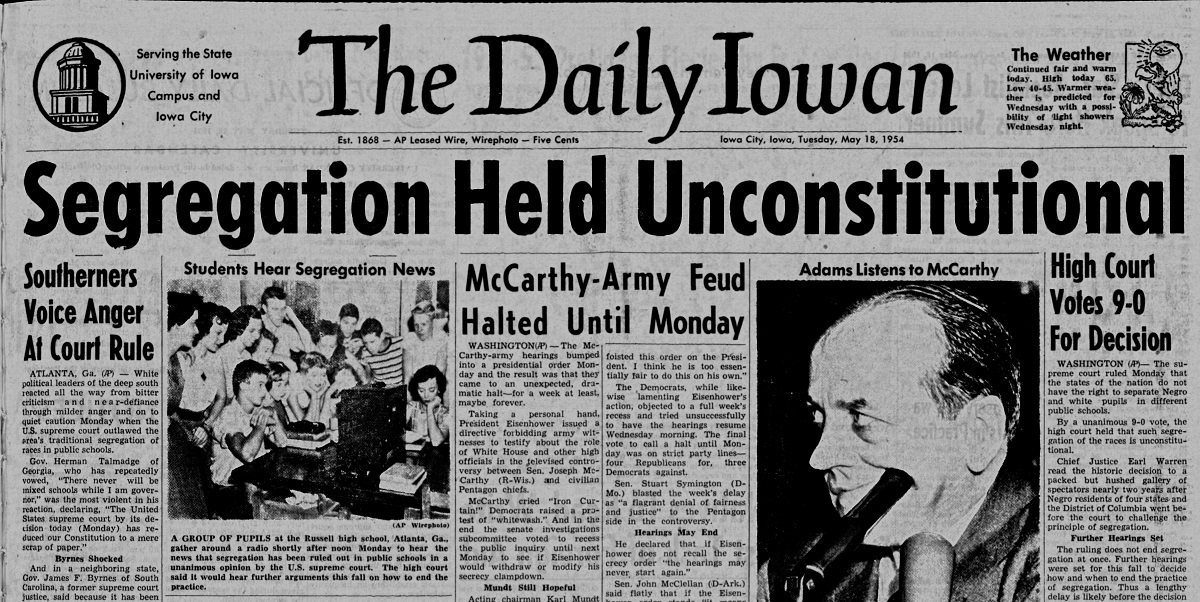
Picture this: The year is 1954, America is faced with a decision:

“Do we tear down the status quo and liberate 20 million African-Americans from a “Less Than” life or do we leave ‘well enough alone’?

If this question was a referendum, how do you think the American people would have voted … in 1954?

No doubt, the decision would have overwhelmingly aligned with words and expressions like “No!”, “Leave us alone”, “It has always been that way“, “this  is our country“, “Go home Niggers“, etc.

This is not just a “what if” scenario. This really happened! But not as a proposition to the whole country of the United States to contest; no, only for 9 men to consider – the Justices of the US Supreme Court. The end result: Unanimous … in favor of change.

- Photo 1

- Photo 2

This commentary is a discussion on image, the facts and fiction of being a minority in a majority world or being an immigrant to a foreign country. This anecdote is related in the book Go Lean…Caribbean, in its Epilogue entitled “The Greater Good”. The book details this experience:

Future Focus – Brown v. Board of Education (1954)
This was a landmark United States Supreme Court case in which the Court declared state laws establishing separate public schools for black and white students unconstitutional. The decision overturned the Plessy v. Ferguson decision of 1896, which allowed state-sponsored segregation, insofar as it applied to public education. Handed down on May 17, 1954, the Warren Court’s (between 1953 and 1969, when Earl Warren served as Chief Justice) unanimous decision (9–0) stated that “separate educational facilities are inherently unequal”. As a result, de jure racial segregation was ruled a violation of the Equal Protection Clause of the United States Constitution (Fourteenth Amendment). This ruling paved the way for integration and was a major victory of the civil rights movement.

This landmark ruling created chaos for nearly 60 years; the animosity created was real and every aspect of American society was affected. (Most legislative assemblies in the southern states passed resolutions and sanctions condemning the Supreme Court decision, though the federal law superseded all state legislations). Cities and urban areas suffered from white flight, where white Americans fled the cities to move out to the suburbs to avoid the integration of urban schools; with their flight went their capital and tax base. Many American cities have still not recovered, for example Detroit filed for Bankruptcy in July 2013 after suffering the pangs of distress from this white flight for 60 years.

So why would the learned men on the Supreme Court make this unanimous ruling and caused so much havoc on American life. Were they not wise, could they not “read the writing on the wall”? The answer is an emphatic No! They knew the real beneficiary of their judgment would come later. Their wisdom was strewn from the experience of modern society waging two world wars, the last of which was just concluded 9 years earlier. They saw the rampage, saw of devastation of 60 million deaths around the world and appreciated the wisdom that a downtrodden people would not stay down, that they would rise and revolt, that they would risk their lives and that of their children to pursue freedom. The Warren Court knew that the status quo of race inequality could not continue, but in order to effectuate that change would take writing-off an entire generation (or two). That time had come, the generation was now (1954); but the hope was with the next generation, and so the curative measures started with the children of that day, so that inevitably, future generations would inhabit an America that would not judge its people by the color of their skins, but rather the content of their character.

The issues pronounced here in the Go Lean book highlights an important factoid: de jure versus de facto

  • de jure = according to law
  • de facto = in reality

As a result of the 1954 Supreme Court’s decision, the de jure policy of the US was that of racial equality. But in reality, that decision didn’t manifest on the streets for the everyday man. The facts did not change the fiction, racism continued to dominate the American eco-system, even today. The aft-mentioned 20 million African-Americans in the US were viewed, treated and labeled as “Less Than“.

Don’t agree; think this is all fiction, speculation or propaganda?! Consider this VIDEO:

VIDEO – Would you want to be treated like blacks?https://youtu.be/RwA_4OamFhI

Published on Jan 19, 2016 – Every white person who wants to be treated how blacks are in this society stand up. [For this white audience, no one did.]

This is a relevant discussion for a Caribbean consideration, as 29 of the 30 member-states have a majority Black population; (St. Barthélemy is the only exception). So the Caribbean Diaspora and their legacies residing in the US – the Migration Policy Institute reported in 2012 that the numbers may be as high as 22 million – fits into the Black-and-Brown demographic. Unfortunately, every year that transpires, more and more Caribbean residents flee to foreign shores, like the US. The same report continues:

… the Caribbean population in the U.S. has surged more than 17-fold over the past half-century. But three-quarters of “Caribbeans” in the country arrived during the last two decades of the 20th century.

Why would they leave their beloved homelands? And what is their experience when they do leave and immigrate to the US?

The Go Lean book delves into the reasons for emigration. It identified them as an equation of “push and pull” factors. These factors highlight reasons that people want to get-away from “home” and seek “refuge” in these foreign countries. “Refuge” is a good word; because of societal defects, many from the Caribbean must leave – think LGBT, Disability, Domestic-abuse, Medically-challenged – for their life, liberty and pursuit of happiness. In addition, the lure of a more prosperous life in the US (and other destinations) drive the “pull” side of the equation. This aligns with the facts: there is always some doing better, and always some doing worse.

But what truly is the experience when these ones arrive in America?

Answer: Less Than!

The experience of new Caribbean Diaspora members is that their work ethic is appreciated by employers; they are welcomed for the mass of blue-collar or menial jobs. White-collar ones, not so much. Then there is the language challenges. Many Caribbean islands speak Creole-derivatives of European languages of Spanish (Cuba, Dominican Republic and Puerto Rico), French (Haiti and the French Caribbean islands), Dutch (Suriname and 6 islands – ABC and SSSIslands). These ones must come to the US and be classified as “English Speakers of Other Languages” (ESOL) for education and employment purposes. As for the English-speaking Caribbean, the consistent experience is one of a foreign accent; broken English spoken with a Caribbean “sing-song”. All in all, language fluency may be challenging.

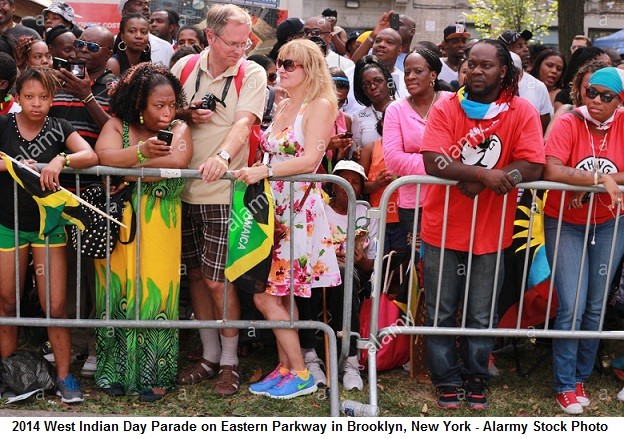
NYC News - Sept. 1, 2014This is the reality for the Caribbean Diaspora; they may find themselves invisible in the socio-economic relevance of American life; this is more fact than it is fiction. Is it surprising that this “Less Than” experience is preferred to enduring life at home in the Caribbean? This conveys the extent of the Caribbean defects.

An example of Caribbean “Less Than” is evident in the experience of dreadlock hairstyles. Those sporting this hairstyle are just immediately under-valued; treated as “Less Than“.

This is real talk about “Less Than“. This is not a reference to the de jure of American life, but rather the de facto. (Similar experiences are reported from the Diaspora communities in other countries, like in Toronto, Canada and London, England). The purpose of this commentary is to draw attention to the Go Lean book. It serves as a roadmap for the introduction and implementation of the technocratic Caribbean Union Trade Federation (CU). One goal of the roadmap is to lower the “push and pull” factors that lead many residents in the region to abandon their Caribbean homeland for American (or Canadian or European) shores. Another goal is to improve the image of Caribbean people, at home and abroad. We must target the societal defects and fix them. The Go Lean/CU quest is to reform and transform our region so that we may prosper where we are planted in our Caribbean homelands, so that our people do not have to leave to become aliens in a foreign land, to be ridiculed for their skin color, accents, and hairstyles (dreadlocks). This goal is detailed in the Go Lean book, presented as the prime directives, as follows:

  • Optimization of the economic engines in order to grow the regional economy to $800 Billion & create 2.2 million new jobs.
  • Establishment of a security apparatus to protect the resultant economic engines.
  • Improve Caribbean governance to support these engines.

The Go Lean roadmap calls for many changes and empowerments. There is so much we learn from the American experience, past and present. One paramount lesson: basic rights should not be subject to a public referendum. One group (minorities) should not have to seek the permission of another group (majority) to be happy. There should be a recognition of fundamental rights, above and beyond any national opinion polls.

Another important lesson we learn from the American experience is that the image associated with a minority group can be reformed and transformed. Look at the African-Americans populations; now it is considered politically incorrect to hold racist views or to engage in racist activities. The President of the US is actually an African-American. Image or brand management works, if there is someone (or something) working “it”.

The CU is not slated to be a national government, but rather a confederation of national governments (and overseas territories); so the CU does not feature sovereignty; it features the functionality of a Trade Union, capable of promotional activities and peer-pressure on domestic and international stakeholders. The CU/Go Lean effort is to cajole, prod and incentivize these individual member-states to embrace the protocols of international human rights mandates. The CU/Go Lean roadmap calls for fundamental human rights to be codified in regional treaties. These mandates would correspond to the “Universal Declaration of Human Rights”, which declare that:

… civil, economic and social rights should be asserted as part of the “foundation of freedom, justice and peace in the world”. – Go Lean book Page 220

There would be no place for any sub-group within the Caribbean population to feel as “Less Than” while at home.

The CU/Go Lean roadmap does not seek to reform America (or Canada or Europe); that is out-of-scope for our movement. Our quest is to reform and transform the Caribbean only. But we do try to manage impressions and images that these regions consume of Caribbean people, life and culture; we must accentuate the positive (promotion) and dissuade the negative (anti-defamation).

Domestically, there are many defects of Caribbean life that the Go Lean movement seeks to address. Right now internationally, these more advanced democracies, (US, Canada and Europe) may only consider us as parasites, but we would rather be recognized as protégés. This is a matter of image. This point is pronounced early in the book with the Declaration of Interdependence (Pages 12 & 13) with many statements that demonstrate the need to remediate Caribbean communities and enhance the Caribbean world-wide image:

xix. Whereas our legacy in recent times is one of societal abandonment, it is imperative that incentives and encouragement be put in place to first dissuade the human flight, and then entice and welcome the return of our Diaspora back to our shores. This repatriation should be effected with the appropriate guards so as not to imperil the lives and securities of the repatriated citizens or the communities they inhabit. The right of repatriation is to be extended to any natural born citizens despite any previous naturalization to foreign sovereignties.

xx. Whereas the results of our decades of migration created a vibrant Diaspora in foreign lands, the Federation must organize interactions with this population into structured markets. Thus allowing foreign consumption of domestic products, services and media, which is a positive trade impact. These economic activities must not be exploited by others’ profiteering but rather harnessed by Federation resources for efficient repatriations.

xxi. Whereas the preparation of our labor force can foster opportunities and dictate economic progress for current and future generations, the Federation must ensure that educational and job training opportunities are fully optimized for all residents of all member-states, with no partiality towards any gender or ethnic group. The Federation must recognize and facilitate excellence in many different fields of endeavor, including sciences, languages, arts, music and sports. This responsibility should be executed without incurring the risks of further human flight, as has been the past history.

xxiv. Whereas the Caribbean region must have new jobs to empower the engines of the economy and create the income sources for prosperity, and encourage the next generation to forge their dreams right at home, the Federation must therefore foster the development of new industries, like that of ship-building, automobile manufacturing, pre-fabricated housing, frozen foods, pipelines, call centers, and the prison industrial complex. In addition, the Federation must invigorate the enterprises related to existing industries like tourism, fisheries and lotteries – impacting the region with more jobs.

It goes without saying that every Caribbean member-state would prefer to keep their people – especially their educated work force – at “home” to prosper in the homeland. But this is not the de facto reality. It is no small task to assuage this crisis. The Go Lean book describes it as heavy-lifting; the book provides real solutions, detailing a series of community ethos, strategies, tactics, implementations and advocacies to impact the region, member-states, cities and communities economic prospects. See this sample here:

Community Ethos – Deferred Gratification Page 21
Community Ethos – Economic Principle – Economic Systems Influence Choices & Incentives Page 21
Community Ethos – Economic Principle – Voluntary Trade Creates Wealth Page 21
Community Ethos – Job Multiplier Page 22
Community Ethos – Lean Operations Page 24
Community Ethos – Ways to Impact the Future Page 26
Community Ethos – Ways to Foster Genius Page 27
Community Ethos – Ways to Help Entrepreneurship Page 28
Community Ethos – Ways to Impact Research & Development Page 30
Community Ethos – Ways to Promote Happiness Page 36
Community Ethos – Ways to Impact the Greater Good Page 37
Strategy – Mission – Facilitate Job-Creating Industries Page 46
Tactical – Fostering a Technocracy Page 64
Tactical – Tactics to Forge an $800 Billion Economy – High Multiplier Industries Page 70
Tactical – Separation of Powers – Self-Governing Entities Page 80
Implementation – Ways to Pay for Change Page 101
Implementation – Steps to Implement Self-Governing Entities Page 105
Implementation – Ways to Deliver Page 109
Implementation – Reasons to Repatriate to the Caribbean Page 118
Planning – Ways to Make the Caribbean Better Page 131
Planning – Ways to Better Manage Caribbean Image Page 133
Advocacy – Ways to Grow the Economy Page 151
Advocacy – Ways to Create Jobs Page 152
Advocacy – Ways to Improve Governance Page 168
Advocacy – Ways to Better Manage the Social Contract Page 170
Advocacy – Ways to Improve Communications Page 186
Advocacy – Ways to Foster Technology Page 197
Advocacy – Ways to Impact Hollywood Page 203
Advocacy – Ways to Impact the Diaspora Page 217
Advocacy – Ways to Improve the Arts Page 230
Advocacy – Ways to Promote Music Page 231
Advocacy – Ways to Impact US Territories Page 244
Advocacy – Ways to Impact British Territories Page 245
Advocacy – Ways to Impact Dutch Territories Page 246
Advocacy – Ways to Impact French Territories Page 247

It is the quest of every Caribbean leader to minimize the size of the Diaspora. They wish …

… but wishing alone will not accomplish this goal – there must be real solutions to the “push and pull” realities. One member-state alone may not have the leverage and/or economies-of-scale to effect the needed reform. This is why the regional scale is different … and better.  This is the purpose of the Go Lean…Caribbean roadmap: to compose, communicate and compel regional solutions back in the Caribbean homeland to lower the “push and pull” factors.

This subject – “push and pull” – was examined further in other related Go Lean commentaries, as sampled here:

https://goleancaribbean.com/blog/?p=7866 Switching Allegiances: Athletes move on to represent other countries
https://goleancaribbean.com/blog/?p=7682 Role Model Frederick Douglass: Single Cause – Death or Diaspora
https://goleancaribbean.com/blog/?p=7151 The Caribbean is Looking for Heroes … ‘to Return’
https://goleancaribbean.com/blog/?p=5759 Bad example of Greece – Crisis leading to abandonment of Doctors
https://goleancaribbean.com/blog/?p=5733 Better than America? Yes, We Can!
https://goleancaribbean.com/blog/?p=5695 Repenting, Forgiving and Reconciling the Past
https://goleancaribbean.com/blog/?p=5088 Immigrants account for 1 in 11 Blacks in USA
https://goleancaribbean.com/blog/?p=4613 The ‘Luck of the Irish’ – Past, Present and Future of the Diaspora
https://goleancaribbean.com/blog/?p=2547 Miami’s Success versus Caribbean Failure
https://goleancaribbean.com/blog/?p=2251 The Reality of Names of Caribbean people
https://goleancaribbean.com/blog/?p=2025 Image of the Caribbean Diaspora – Butt of the Joke
https://goleancaribbean.com/blog/?p=1433 Caribbean loses more than 70 percent of tertiary educated to brain drain
https://goleancaribbean.com/blog/?p=273 10 Things We Don’t Want from the US – Discrimination of Immigrations

Fact and Fiction

So is an 8-ounce glass with 4-ounces of water half-full or half-empty?

This is the reality of fact and fiction on image.

Mathematically, 4 is half of 8. But the “full” or “empty” label is the perception, impression and image to the beholder; as in:

Beauty is in the eye of the beholder.

The Caribbean has a lot to work with. But our “glass is not empty”! We have been recognized as “best in the world” in certain circles. We feature the best …

winter vacations, best cruises, best foods, best music, best festivals, best cigars and best rums. In the dimension of humans as opposed to destinations, we have some of the greatest athletes in the world. In these respects, we are not “Less Than“. We can argue to be the best address on the planet. But we cannot ignore our dire societal defects and deficiencies.

With some measure of success with the solutions at home, and communicating the facts and fictions of Diasporic life, we should be able to reduce the size of our Caribbean Diaspora, repatriating many to return to the homeland. Even more so, we should reduce the “push and pull” factors that lead many to abandon the region in the first place.  The Caribbean entertains 80 million visitors every year; we are associated with the image of a great place to ‘play’. We now need to complete that visual: a great place to live, work and play.

Yes, we can!

So are we “Less Than” ?

Not here … at home. Our Caribbean region is actually comprised of a diverse array of cultures, races, religions and languages.

So “say it loud” …

We are Black  … and proud.
We are White … and proud.
We are Indo-Caribbean … and proud.
We are Chino-Caribbean … and proud.
We are mixed races … and proud.
We are Caribbean … and proud!

Download the free e-Book of Go Lean … Caribbean – now!

Share this post:
, , ,
[Top]

Transformations: Civil Disobedience … Still Effective

Go Lean Commentary

This commentary has previously identified African-American Abolitionist Frederick Douglass as a role model for the Caribbean, despite the fact that his advocacy was 150 years ago. His is quite the legacy:

“Those who profess to favor freedom, yet deprecate agitation, are men who want crops without plowing up the ground. They want rain without thunder and lightening. They want the ocean without the awful roar of its many waters. This struggle may be a moral one; or it may be a physical one; or it may be both moral and physical; but it must be a struggle. Power concedes nothing without a demand. It never did and it never will.” – Frederick Douglass

CU Blog - American Defects - Racism - Is It Over - Photo 1

The publishers of the book Go Lean…Caribbean recognize the contributions of role models who used civil disobedience to reform and transform their societies, Frederick Douglass included. The book specifically details (Page 122) these other advocates:

Mohandas Gandhi Indian Independence
Dr. Martin Luther King African-American Civil Rights Movement
Nelson Mandela South Africa’s Anti-Apartheid
Cesar Chavez Migrant Farm Workers in the US
Candice Lightner Mothers Against Drunk Driving (MADD)

The quest to transform society, as accomplished by these foregoing named advocates, is familiar to the movement behind the book Go Lean…Caribbean. This book asserts that the societal engines in the Caribbean (economy, security, and governance) are deficient and defective and need to be reformed and transformed to make our homeland a better place to live, work and play. This is commentary 4 of 4 from this movement on the subject of transformations: how to move our region from the deficient-defective status quo to the undisputed title of “greatest address on the planet”. All these commentaries detailed transformation issues, as follows:

  1. Perfecting our Core Competence
  2. Money Matters – “Getting over” with “free money”
  3. Caribbean Postal Union (CPU) – Delivering the Future
  4. Civil Disobedience … Still Effective

The Go Lean book details the quest to transform the Caribbean; it features a how-to guide, a roadmap for elevating the region’s societal engines using effective tactics like civil disobedience.

Civil disobedience has been effective in the past … see a related history here:

Title: History of Mass Nonviolent Action

Source: ACT UPAIDS Coalition To Unleash Power – Civil Disobedience Training – Retrieved 05-22-2016 from: http://www.actupny.org/documents/CDdocuments/HistoryNV.html

The use of nonviolence runs throughout history. There have been numerous instances of people courageously and nonviolently refusing cooperation with injustice. However, the fusion of organized mass struggle and nonviolence is relatively new. It originated largely with Mohandas Gandhi in 1906 at the onset of the South African campaign for Indian rights. Later, the Indian struggle for complete independence from the British Empire included a number of spectacular nonviolent campaigns. Perhaps the most notable was the year-long Salt campaign in which 100,000 Indians were jailed for deliberately violating the Salt Laws.

The refusal to counter the violence of the repressive social system with more violence is a tactic that has also been used by other movements. The militant campaign for women’s suffrage in Britain included a variety of nonviolent tactics such as boycotts, noncooperation, limited property destruction, civil disobedience, mass marches and demonstrations, filling the jails, and disruption of public ceremonies.

The Salvadoran people have used nonviolence as one powerful and necessary element of their struggle. Particularly during the 1960s and 70s, Christian based communities, labor unions, campesino organizations, and student groups held occupations and sit-ins at universities, government offices, and places of work such as factories and haciendas.

There is rich tradition of nonviolent protest in this country as well, including Harriet Tubman’s underground railroad during the civil war and Henry David Thoreau’s refusal to pay war taxes. Nonviolent civil disobedience was a critical factor in gaining women the right to vote in the United States, as well.

The U.S. labor movement has also used nonviolence with striking effectiveness in a number of instances, such as the Industrial Workers of the World (IWW) free speech confrontations, the Congress of Industrial Organizations (CIO) sitdown strikes from 1935-1937 in auto plants, and the UFW grape and lettuce boycotts.

Using mass nonviolent action, the civil rights movement changed the face of the South. The Congress of Racial Equality (CORE) initiated modern nonviolent action for civil rights with sit-ins and a freedom ride in the 1940s. The successful Montgomery bus boycott electrified the nation. Then, the early 1960s exploded with nonviolent actions: sit-ins at lunch counters and other facilities, organized by the Student Nonviolent Coordinating Committee (SNCC); Freedom Rides to the South organized by CORE; the nonviolent battles against segregation in Birmingham, Alabama, by the Southern Christian Leadership Conference (SCLC); and the 1963 March on Washington, which drew 250,000 participants.

Opponents of the Vietnam War employed the use of draft card burnings, draft file destruction, mass demonstrations (such as the 500,000 who turned out in 1969 in Washington, D.C.), sit-ins, blocking induction centers, draft and tax resistance, and the historic 1971 May Day traffic blocking in Washington, D.C. in which 13,000 people were arrested.

Since the mid-70s, we have seen increasing nonviolent activity against the nuclear arms race and nuclear power industry. Nonviolent civil disobedience actions have taken place at dozens of nuclear weapons research installations, storage areas, missile silos, test sites, military bases, corporate and government offices and nuclear power plants. In the late 1970s mass civil disobedience actions took place at nuclear power plants from Seabrook, New Hampshire to the DiabloCanyon reactor in California and most states in between in this country and in other countries around the world. In 1982, 1750 people were arrested at the U.N. missions of the five major nuclear powers. Mass actions took place at the Livermore Laboratories in California and SAC bases in the midwest. In the late 80s a series of actions took place at the Nevada test site. International disarmament actions changed world opinion about nuclear weapons.

In 1980 women who were concerned with the destruction of the Earth and who were interested in exploring the connections between feminism and nonviolence were coming together. In November of 1980 and 1981 the Women’s Pentagon Actions, where hundreds of women came together to challenge patriarchy and militarism, took place. A movement grew that found ways to use direct action to put pressure on the military establishment and to show positive examples of life-affirming ways to live together. This movement spawned women’s peace camps at military bases around the world from Greenham Common, England to Puget Sound Peace Camp in Washington state, with camps in Japan and Italy among others.

The anti-apartheid movement in the 80s has built upon the powerful and empowering use of civil disobedience by the civil rights movement in the 60s. In November of 1984, a campaign began that involved daily civil disobedience in front of the South African Embassy. People, including members of Congress, national labor and religious leaders, celebrities, students, community leaders, teachers, and others, risked arrest every weekday for over a year. In the end over 3,100 people were arrested protesting apartheid and U.S. corporate and government support. At the same time, support actions for this campaign were held in 26 major Cities, resulting in an additional 5,000 arrests.

We also saw civil disobedience being incorporated as a key tactic in the movement against intervention in Central America. Beginning in 1983, national actions at the White House and State Department as well as local actions began to spread. In November 1984, the Pledge of Resistance was formed. Since then, over 5,000 people have been arrested at military installations, congressional offices, federal buildings, and CIA offices. Many people have also broken the law by providing sanctuary for Central American refugees and through the Lenten Witness, major denomination representatives have participated in weekly nonviolent civil disobedience actions at the Capitol.

Student activists have incorporated civil disobedience in both their anti-apartheid and Central America work. Divestment became the campus slogan of the 80s. Students built shantytowns and staged sit-ins at Administrator’s offices. Hundreds have been arrested resulting in the divestment of over 130 campuses and the subsequent withdrawal of over $4 billion from the South African economy. Central America student activists have carried out campaigns to protest CIA recruitment on campuses. Again, hundreds of students across the country have been arrested in this effort.

Nonviolent direct action has been an integral part of the renewed activism in the lesbian and gay community since 1987, when ACT UP (AIDS Coalition to Unleash Power) was formed. ACT UP and other groups have organized hundreds of civil disobedience actions across the country, focusing not only on AIDS but on the increasing climate of homophobia and attacks on lesbians and gay men. On October 13, 1987, the Supreme Court was the site of the first national lesbian and gay civil disobedience action, where nearly 600 people were arrested protesting the decision in Hardwick vs. Bowers, which upheld sodomy laws. This was the largest mass arrest in D.C. since 1971.

Political Analysis
Power itself is not derived through violence, though in governmental form it is usually violent in nature. Governmental power is often maintained through oppression and the tacit compliance of the majority of the governed. Any significant withdrawal of that compliance will restrict or dissolve governmental control. Apathy in the face of injustice is a form of violence. Struggle and conflict are often necessary to correct injustice.

Our struggle is not easy, and we must not think of nonviolence as a “safe” way to fight oppression. The strength of nonviolence comes from our willingness to take personal risk without threatening other people.

It is essential that we separate the individual from the role she/he plays. The “enemy” is the system that casts people in oppressive roles.

Civil disobedience is still effective today!

The Go Lean book serves as a roadmap for the introduction and implementation of the Caribbean Union Trade Federation (CU) to empower societal elevation (economics, security and governing engines) for the Caribbean region. This roadmap focuses on the political transformations and the practical transformations to elevate the Caribbean region, individually and collectively. But as identified in the foregoing quotation from Frederick Douglass, power is never ceded … without demand. It takes agitation, plowing up the ground, “thunder & lightening” and struggle. Those in power in the status quo will do what all “men” in power try to do: keep it!

The required transformation for the Caribbean may very well take some acts of civil disobedience, challenging the dysfunctional economic status, perhaps even with economic boycotts, sit-ins, general strikes, picket lines, marches and messaging campaigns.

There are effective role models for this as well. Consider here the very recent experience of the University of Missouri Football team:

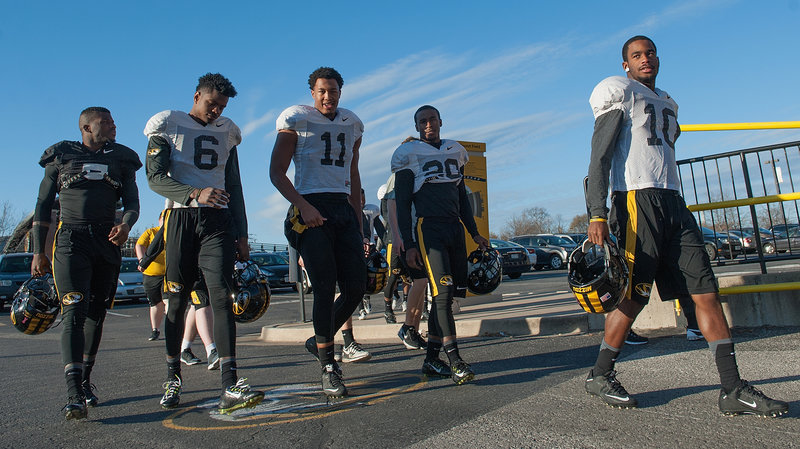
Amid escalating protests over complaints of racial bigotry at the University of Missouri, the school’s football team said it won’t play until the University President resigns or was replaced. These football players threatened to go on strike. At least 30 players with the support of their coach made the demand. They wanted University President Tim Wolfe to resign for allegedly failing to confront racial tensions at the school.
Commentary: Mizzou Football And The Power Of The Players

Posted November 18, 2015; retrieved May 22, 2016

CU Blog - Transformations - Civil Disobedience...Still Effective - Photo  1

Members of the University of Missouri Tigers football team – after threatening civil disobedience – returned to practice Nov. 10, 2015 at Memorial Stadium in Columbia, Mo. – Michael B. Thomas/Getty Images

AUDIO Podcast – Commentary heard on NPR’s Morning Edition – http://www.npr.org/2015/11/18/456360331/commentary-mizzou-football-and-the-power-of-the-players


It’s accepted that thePresident of the University of Missouri stepped down in a racial dispute only when the football team threatened not to play a game. The players showed us again — surprise, surprise — how powerful is football, and let’s throw in basketball, too, throughout our bastions of higher education.

It would have cost old Mizzou a million-dollar penalty had it forfeited. It would have cost the players next to nothing, because the NCAA rules they must be amateurs and risk serious injury for the love of the game. Ironically, for once, having nothing to gain actually strengthened the players’ hand.

The particular racially insensitive issues at Missouri and those that’ve produced protests at other colleges have nothing to do with sport, but, on the other hand, it’s worth noting well over half of the football players who bring in the big money in the big-time conferences are African-American. The percentage of minority basketball players is even higher.

The Go Lean book relates that the experience of Frederick Douglass and other advocates assert that one man or one woman can make a difference and impact his/her community, country and the whole world. Now we must add the student-athletes of the University of Missouri to that podium of role models for us to emulate.

The Go Lean/CU roadmap is designed to motivate the people, institutions and governmental leaders of the Caribbean, regional stakeholders, to make an impact – by the use of civil disobedience if necessary – on the region’s societal engines corresponding with these prime directives:

  • Optimization of the economic engines in order to grow the regional economy to $800 Billion & create 2.2 million new jobs.
  • Establishment of a security apparatus to protect the resultant economic engines.
  • Improve Caribbean governance to support these engines.

The focus of the previous commentary, Frederick Douglass’ legacy, is relevant for our life and times and the Go Lean prime directives. Notice the parallels: The institution of slavery was initiated for economic purposes; it took civil disobedience in the form of a civil war to assuage. In addition, there was no consideration to security principles for the enslaved population. But for the consideration of the Go Lean book, the subject of consideration is one of governance, the need for technocratic stewardship of the regional Caribbean society; how to reform and transform it. This point of governance against the backdrop of civil disobedience was pronounced early in the book, in the opening Declaration of Interdependence (Pages 10 – 14) with these declarations:

Preamble:  As the history of our region and the oppression, suppression and repression of its indigenous people is duly documented, there is no one alive who can be held accountable for the prior actions, and so we must put aside the shackles of systems of repression to instead formulate efficient and effective systems to steer our own destiny. … whenever any form of government becomes destructive to these ends, it is the right of the people to alter or to abolish it, and to institute new government, laying its foundation on such principles and organizing its powers in such form, as to them shall seem most likely to effect their safety and happiness.

xi. Whereas all men are entitled to the benefits of good governance in a free society, “new guards” must be enacted to dissuade the emergence of incompetence, corruption, nepotism and cronyism at the peril of the people’s best interest. The Federation must guarantee the executions of a social contract between government and the governed.

xii. Whereas the legacy in recent times in individual states may be that of ineffectual governance with no redress to higher authority, the accedence of this Federation will ensure accountability and escalation of the human and civil rights of the people for good governance, justice assurances, due process and the rule of law. As such, any threats of a “failed state” status for any member state must enact emergency measures on behalf of the Federation to protect the human, civil and property rights of the citizens, residents, allies, trading partners, and visitors of the affected member state and the Federation as a whole.

xxxiii. Whereas lessons can be learned and applied from the study of the recent history of other societies, the Federation must formalize statutes and organizational dimensions to avoid the pitfalls of [other] communities.

The Go Lean book stresses key community ethos, strategies, tactics, implementations and advocacies necessary to reform and transform the eco-systems of Caribbean society and apply the lessons learned from other advocates. The book details the following:

Community Ethos – Economic Principles – Economic Systems Influence Individual Choices Page 21
Community Ethos – Economic Principles – Consequences of Choices Lie in the Future Page 21
Community Ethos – Ways to Impact the Future Page 26
Community Ethos – Ways to Foster Genius – Developing genius in many endeavors, i.e. Sports Page 27
Community Ethos – Ways to Impact Turn-Arounds Page 33
Community Ethos – Ways to Manage Reconciliations Page 34
Community Ethos – Ways to Impact the Greater Good Page 37
Strategy – Vision – Confederate all 30 member-states / 4 languages into a Single Market Page 45
Strategy – Mission – Build and foster local economic engines Page 45
Tactical – Ways to Foster a Technocracy Page 64
Tactical – Separation-of-Powers – CU Federal Government versus Member-State Governance Page 71
Planning – 10 Big Ideas – Failed States Marshall Plan Page 127
Planning – Ways to Make the Caribbean Better Page 131
Planning – Ways to Improve Failed-State Indices – Advocate for Human Rights Page 134
Advocacy – Ways to Grow the Economy Page 151
Advocacy – Ways to Improve Governance Page 168
Advocacy – Ways to Better Manage the Social Contract Page 170
Advocacy – Ways to Impact Wall Street – Lessons Learned from Occupy Wall Street Protests Page 200
Advocacy – Ways to Preserve Caribbean Heritage Page 218
Advocacy – Ways to Protect Human Rights Page 220

Civil disobedience lead to political transformation and practical transformation. Protest movements, with civil disobedience activities, have effectively reformed and transformed societies in the past, present and no doubt, the future. Scattered through the pages of history, many times protest leaders have become political leaders. Consider Nelson Mandela of South Africa and Lech Walesa of Poland.

Previous Go Lean blogs presented other lessons for the Caribbean to learn from considering protest movements from history; the following previous blog/commentaries apply:

https://goleancaribbean.com/blog/?p=7682 Frederick Douglass: Role Model for a Single Cause
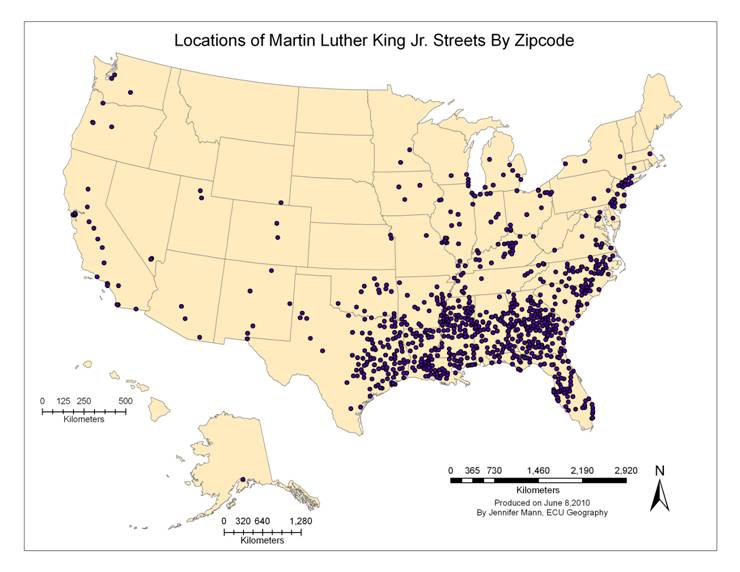
https://goleancaribbean.com/blog/?p=7221 ‘Street naming for Martin Luther King’ protests unveils the real America
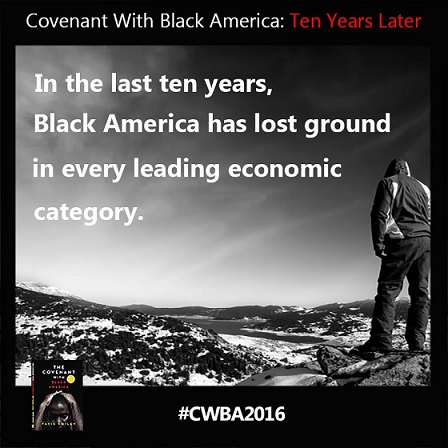
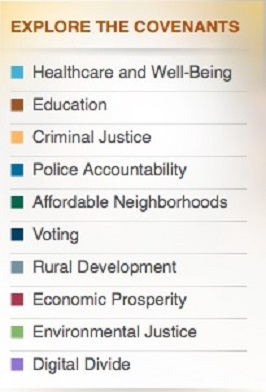
https://goleancaribbean.com/blog/?p=7204 ‘The Covenant with Black America’ – Ten Years Later
https://goleancaribbean.com/blog/?p=7103 COP21 Protest – ‘Climate Change’ Acknowledged
https://goleancaribbean.com/blog/?p=6720 A Lesson in Protest History – Principle over Principal During War
https://goleancaribbean.com/blog/?p=2907 Local Miami Haitian leaders protest Bahamian immigration policy
https://goleancaribbean.com/blog/?p=2633 Book Review: ‘The Protest Psychosis’
https://goleancaribbean.com/blog/?p=1918 Philadelphia Freedom – Successful Protest and Fight for Change
https://goleancaribbean.com/blog/?p=1683 British public sector workers strike over ‘poverty pay’

The words of Frederick Douglass echo loudly through the ages (19th, 20th and 21st centuries). Reform and transformation only comes with a struggle. This is because “power concedes nothing without a demand. It never did and it never will.”

This reality applies doubly for the Caribbean!

The Caribbean region is in crisis – all 30 member-states! But this crisis would be a terrible thing to waste. We must use this crisis as a motivation to transform the region. Motivation alone will not bring change – the powerful ones in the status quo will not give up power willingly; they will not accept change willingly. There must be struggle, employing tactics like civil disobedience! As conveyed by Frederick Douglass, we “cannot get the rain without thunder and lightening”. The Go Lean movement – books and blogs – call for rain, and calls for “thunder and lightening”. The movement calls for forging change – transformations – through approaches like the Fun Theory, Sales Process, Power of Music, Food Therapy, and Risking Too Much to Lose.

Once we succeed in transforming the Caribbean societal engines, we must then ensure the changes are permanent! The Go Lean book declares that for permanent change to take place, there must first be an adoption of new community ethos, the national spirit that drives the character and identity of its people. The roadmap was constructed with the primary community ethos of the Greater Good, not a political nor profit motive; but rather a commitment for the “greatest good for the greatest number of people”.

Now is the time for all Caribbean stakeholders to lean-in to this Go Lean regional solution. With this roadmap, the Caribbean can transform to a better society; a better place to live, work and play. 🙂

Download the book Go Lean … Caribbean – now!


Share this post:
, , ,
[Top]

ENCORE: Celebrating ‘Cinco De Mayo’

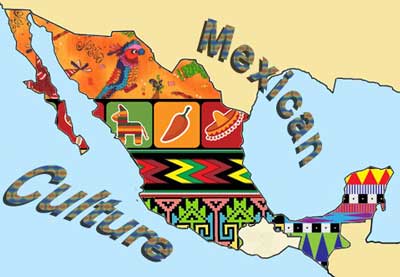
This Go Lean blog-commentary from May 5, 2015 is re-distributed on this occasion of Cinco De Mayo 2016. As always, this year’s commemoration is a celebration of Mexican culture, more so than Mexican history.

CU Blog - Celebrating Mexican Culture - Photo 1

Bienvenido Amigos …

————–

Go Lean Commentary

Today (May 5) is Cinco De Mayo – celebrating this is a move of solidarity with Mexico; its people and culture – Enjoy the festivities!

Enjoy the Mexican food, spirits, music and culture. The country and people of Mexico have so much to offer the world – see VIDEO below – this includes the Caribbean.

One thing more that they can offer us in our region: A Lesson in History!

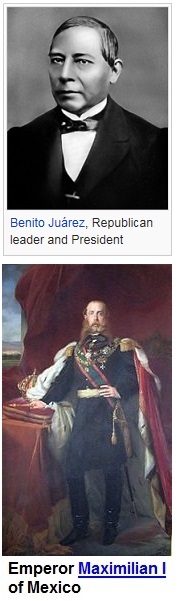
The summary of this celebration is simple on the surface: Mexican forces commanded by General Ignacio Zaragoza defeated the French army in the Battle of Puebla on 5 May 1862. 4 days later, on 9 May 1862, The then-President Benito Juárez declared that the anniversary of the Battle of Puebla would be a national holiday,[14][15][16][17][18] regarded as “Battle of Puebla Day” or “Battle of Cinco de Mayo”. Although today it is recognized in some countries as a day of Mexican heritage celebration, it is not a federal holiday in Mexico.[19]

Considering the real history of Cinco De Mayo is a really big deal. For starters, while Mexico was not the aggressor in this war, they were not exactly blameless.

The 1858 – 1860 Mexican civil war known as The Reform War had caused distress throughout Mexico’s economy. When taking office as the newly-elected president of the Republic in 1861, Juárez was forced to suspend payments of interest on foreign debts for a period of two years. At the end of October 1861 diplomats from Spain, France, and Britain met in London to form the Tripartite Alliance, with the main purpose of launching an allied invasion of Mexico, taking control of Veracruz, its major port, and forcing the Mexican government to negotiate terms for repaying its debts and for reparations for alleged harm to foreign citizens in Mexico. In December 1861, Spanish troops landed in Veracruz; British and French followed in early January. The allied forces occupied Veracruz and advanced to Orizaba. However, the Tripartite Alliance fell apart by early April 1862, when it became clear the French wanted to impose harsh demands on the Juarez government and provoke a war. The British and Spanish withdrew, leaving the French to march alone on Mexico City. French Emperor-President Napoleon III – the first democratically elected French President – wanted to set up a puppet regime, the Mexican Empire.

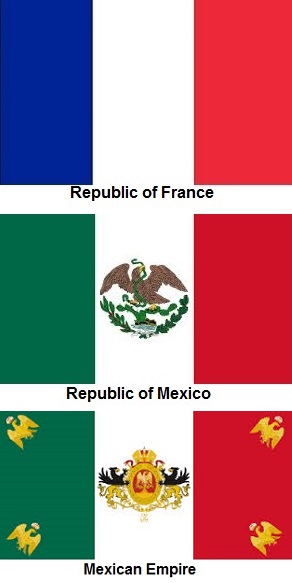
Thus started this French Intervention in Mexico. The effects of these 5 years were far-reaching, even to this day – consider the similarities in flags for these countries.

CU Blog - A Lesson in History - Cinco De Mayo - Photo 1Title: French Intervention in Mexico 1862 – 1867
Emperor Napoleon III of France was the instigator, justifying military intervention by claiming a broad foreign policy of commitment to free trade. For him, a friendly government in Mexico would ensure European access to Latin American markets. Napoleon also wanted the silver that could be mined in Mexico to finance his empire. Napoleon built a coalition with Spain and Britain while the U.S. was deeply engaged in its own civil war from 1861 to 1865.

Here is the main timeline of this French Intervention period:

1. 1862: Arrival of the French
After the initial victory by the Mexicans at the Battle of Puebla, the war continued in a different direction. The pursuing Mexican army was contained by the French at Orizaba, Veracruz, on 14 June. More British troops arrived on 21 September, and General Bazaine arrived with French reinforcements on 16 October. The French occupied the port of Tamaulipas on 23 October, and unopposed by Mexican forces took control of Xalapa, Veracruz on 12 December.

2. 1863: The French take the capital
CU Blog - A Lesson in History - Cinco De Mayo - Photo 2The French army of General François Achille Bazaine defeated the Mexican army led by General Comonfort in its campaign to relieve the siege of Puebla, at San Lorenzo, to the south of Puebla. Puebla surrendered to the French shortly afterward, on 17 May. On 31 May, President Juárez fled the capital city (Mexico City) with his cabinet, retreating northward to Paso del Norte and later to Chihuahua. Having taken the treasure of the state with them, the government-in-exile remained in Chihuahua until 1867.

French troops under Bazaine entered Mexico City on 7 June 1863. The main army entered the city three days later, led by General Forey. General Almonte was appointed the provisional President of Mexico on 16 June, by the Superior Junta (which had been appointed by Forey). The Superior Junta with its 35 members met on 21 June, and proclaimed a Catholic Empire on 10 July. The crown was offered to Austrian Prince Archduke Ferdinand Maximilian, following pressures by Napoleon. Maximilian accepted the crown on 3 October.

3. 1864: Arrival of Maximilian
Further decisive French victories continued with the fall of Guadalajara, Zacatecas, Acapulco, Durango by 3 July, and the defeat of republicans in the states of Sinaloa and Jalisco in November.

Maximilian formally accepted the crown on 10 April, signing the Treaty of Miramar (between France and Mexico), and landed at Veracruz on 28 May. He was enthroned as Maximilian I, Emperor of Mexico, [under French occupation].

4. 1865: Beginning of Republican victories
CU Blog - A Lesson in History - Cinco De Mayo - Photo 3After many more French victories, finally on 11 April, republicans defeated Imperial forces at Tacámbaro in Michoacán. In April and May the republicans had many forces in the states of Sinaloa and Chihuahua. Most towns along the Rio Grande, [(the border with the US),] were also occupied by republicans.

The decree known as the “Black Decree” was issued by Maximilian on 3 October, which threatened any Mexican captured in the war with immediate execution.

5. 1859-1867: U.S. Diplomacy and Involvement
The United States did not condone the French occupation of Mexico but it had to use its resources for the American Civil War, which lasted 1861 to 1865. Then-President Abraham Lincoln expressed his sympathy to Latin American republics against any European attempt to establish a monarchy; and the Congress passed a resolution in disgust of these French actions. In 1865, The US supported the sale of Mexican bonds by Mexican agents in the US to fund the Juarez Administration, raising up to $18-million dollars for the purchase of American war material.[16] By 1867, American policy shifted from thinly veiled sympathy to the republican government of Juarez to open threat of war to induce a French withdrawal, invoking the Monroe Doctrine, a policy to thwart any aggression by European powers in the Americas.

6. 1866: French withdrawal and Republican victories
Choosing Franco-American relations over his Mexican monarchy ambitions, Napoleon III announced the withdrawal of French forces beginning 31 May. Taking advantage of the end of French military support to the Imperial troops, the Republicans won a series of crippling victories in Chihuahua on 25 March, Guadalajara, Matamoros, Tampico and Acapulco in July. Napoleon III urged Maximilian to abandon Mexico and evacuate with the French troops; [but he persisted]. The French evacuated Monterrey on 26 July, Saltillo on 5 August, and the whole state of Sonora in September. Maximilian’s French cabinet members resigned on 18 September. The Republicans defeated imperial troops in Oaxaca in October, occupying the whole of Oaxaca in November, as well as parts of Zacatecas, San Luis Potosí and Guanajuato.

7. 1867: Republicans take the capital
The Republicans occupied the rest of the states of Zacatecas, San Luis Potosí and Guanajuato in January. The French evacuated the capital on 5 February.

On 13 February 1867, Maximilian withdrew to Querétaro. The Republicans began a siege of the city on 9 March, and Mexico City on 12 April. On 11 May, Maximilian finally resolved to try to escape through the enemy lines. He was intercepted on 15 May. Following a court-martial, he was sentenced to death and executed on 19 June.
Source: http://en.wikipedia.org/wiki/French intervention_in_Mexico  

This subject has relevance for the Caribbean. Mexico is a stakeholder in Caribbean affairs. They have a vast coastline (Yucatan Peninsula) on the Caribbean Sea, plus a few Caribbean islands (Cozumel, Isla Mujeres, Isla Contoy, and Isla Blanca). This country is also a member of the ACS – Association of Caribbean States – one of the relevant entities that must be assembled for this regional integration movement championed in the book Go Lean…Caribbean.

The underlying theme of this Lesson in Mexican History is the lack of effective security for the people and societal engines of Mexico. Now, after 150 years, this historic pattern has continued; Mexico proceeded to endure one revolution-rebellion-overthrow-coup d’etat after another until recent times.

The Caribbean cannot afford this same disposition: the dread and damage endured from decades of dysfunction.

Today, Mexico is known as a lawless society in many pockets, especially along the US border. Considering the art and science of security, it is sad that they never got it right! They resemble a Failed-State in so many perspectives. This is where their history, especially those 5 years of the Franco-Mexican War, provides lessons for the Caribbean people and institutions. But this Go Lean movement does not seek to remediate Mexico; this is out of scope. Rather the focus is strictly on the 30 Caribbean member-states: islands of the Caribbean plus the Central & South American states that caucus with the Caribbean Community (Belize, Guyana and Suriname).

This effort to elevate Caribbean society fully recognizes that security mitigations must be prioritized equally with economic and governing remediation. This is an underlying theme of the book Go Lean…Caribbean. The book declares that the region is in crisis, at the precipice of Failed-State status. This is the assertion of the Go Lean book, that the region must prepare its own security apparatus for its own security needs.

This book serves as a roadmap for the introduction and implementation of the technocratic Caribbean Union Trade Federation (CU). So while the CU is set to optimize Caribbean society through economic empowerment, the security dynamics will be inextricably linked to this same endeavor. Therefore the Go Lean roadmap has 3 prime directives:

  • Optimization of the economic engines in order to grow the regional economy to $800 Billion & create 2.2 million new jobs.
  • Establishment of a security apparatus to protect the resultant economic engines.
  • Improvement of Caribbean governance to support these engines.

The book contends, just as the French proved to be a “bad actor” to Mexico in 1862, that new “bad actors” will emerge for the Caribbean to contend with. This will be as a by-product of new economic successes in the region. This point is pronounced early in the book with the Declaration of Interdependence (Page 12) that claims:

x.   Whereas we are surrounded and allied to nations of larger proportions in land mass, populations, and treasuries, elements in their societies may have ill-intent in their pursuits, at the expense of the safety and security of our citizens. We must therefore appoint “new guards” to ensure our public safety and threats against our society, both domestic and foreign. The Federation must employ the latest advances and best practices … to assuage continuous threats against public safety.

xvi. Whereas security of our homeland is inextricably linked to prosperity of the homeland, the economic and security interest of the region needs to be aligned under the same governance. Since economic crimes, including piracy and other forms of terrorism, can imperil the functioning of the wheels of commerce for all the citizenry, the accedence of this Federation must equip the security apparatus with the tools and techniques for predictive and proactive interdictions.

The need for the Caribbean to appoint “new guards” or a security pact to mitigate foreign and domestic threats in the region is the primary lesson to glean from the foregoing encyclopedic article – a consideration of the history of Cinco De Mayo. This security pact is to be legally constituted by a Status of Forces Agreement which would be enacted as a complement to the CU confederation treaty. The Go Lean roadmap provides 370-pages of turn-by-turn directions on how to deploy cutting-edge strategies, tactics and implementations to succeed in this goal.

In addition, there are other lessons – secondary – that we learn from this consideration of the history of Cinco De Mayo:

The Go Lean book details a roadmap with turn-by-turn directions for transforming the Caribbean homeland. The following is a sample of the community ethos, strategies, tactics, implementations and advocacies to impact the Caribbean region for this turnaround:

Community Ethos – Economic Principle – Economic Systems Influence Choices Page 21
Community Ethos – Economic Principle – Consequences of Choices Lie in the Future Page 21
Community Ethos – Anti-Bullying and Mitigation Page 23
Community Ethos – Minority Equalization Page 24
Community Ethos – Cooperatives Page 25
Community Ethos – Ways to Improve Sharing Page 35
Strategy – Vision – Confederating a Non-Sovereign Union Page 45
Strategy – Mission – Protect Economic Engines from threats Page 45
Tactical – Fostering a Technocracy Page 64
Tactical – Separation of Powers Page 71
Implementation – Start-up Foreign Policy Initiatives Page 102
Implementation – Security Initiatives at Start-up Page 103
Implementation – Ways to Deliver Page 109
Implementation – Ways to Better Manage Debt Page 118
Implementation – Ways to Promote Independence – Interdependence Page 120
Planning – 10 Big Ideas – Defense / Homeland Security Pact Page 127
Planning – Ways to Make the Caribbean Better Page 131
Planning – Ways to Better Manage Image Page 133
Planning – Ways to Improve Failed-State Indices Page 134
Planning – Lessons from the American West Page 142
Advocacy – Ways to Grow the Economy Page 151
Advocacy – Ways to Create Jobs Page 152
Advocacy – Ways to Improve Governance Page 168
Advocacy – Ways to Better Manage the Social Contract Page 170
Advocacy – Ways to Impact Justice Page 177
Advocacy – Ways to Improve Homeland Security Page 180
Advocacy – Ways to Mitigate Terrorism Page 181
Advocacy – Ways to Protect Human Rights Page 220

Mexico is a beautiful country, with a beautifully diverse population plus a lot of natural resources. They experience a vibrant tourism product where millions visit annually for Mexican hospitality – they are a fit competitor of Caribbean tourism, even for cruises. See VIDEO here:

VIDEO: Mexico: Live It to Believe It – Cultural Diversity 2015 – https://youtu.be/jciVmLL_UgY

Published on Feb 27, 2014 – A production of the Mexico Department of Tourism; commissioned for the Central American and Caribbean Games in Veracruz from November 14 to 30, 2014.

Many people visit Mexico, but few would consider moving there permanently. In fact just the opposite occurs, the societal abandonment problem in Mexico is very pronounced. Their northern neighbor, the United States, has constant security issues of illegal Mexican migrants. Mexico has been dysfunctional for their entire history as a Republic. They must do better! While this quest is out-of-scope for the CU/Go Lean roadmap, we can learn lessons from their actions and inactions.

The Go Lean book posits (Page 3) that the Caribbean islands are among the greatest addresses in the world. But like Mexico, instead of the world “beating a path” to our doors, the people of the Caribbean have “beat down their doors” to get out; despite the absence of any war or revolution … like our Mexican neighbors. Our abandonment is inexcusable.

May we learn from this history of Mexico! Mexican culture is great! Enjoy the festivities: their people, food, drink, music and dance. But let’s do better … than they have done. Let’s make the Caribbean even better, where our citizens can prosper where they are planted; let’s make our homeland better places to live, work and play.  🙂

Download the free e-Book of Go Lean … Caribbean – now!

Share this post:
, , , , , ,
[Top]

ENCORE: In honor of “International Women’s Day” – #OneDayIWill!

This Go Lean blog-commentary from November 14, 2015 is re-distributed on this occasion of International Women’s Day – originally called International Working Women’s Day. This is celebrated on March 8 every year. (See more details at Wikipedia). Google gave it a great honor this year, with this VIDEO here – https://youtu.be/ztMIb6nEeyg:

See the original blog here …

———-

Go Lean Commentary

CU Blog - Women in Politics - Yes, They Can - Photo 4

The Caribbean member-states, despite their differences, (4 languages, 5 colonial legacies, terrain: mountains -vs- limestone islands), have a lot in common. Some similarities include:

  • Lack of equality for women compared to men.
  • The government is the largest employer.

So the reality of Caribbean life is that while the governmental administrations are not fully representative of the populations, they are responsible for all societal engines: economy, security and governance.

This is bad and this is good! Bad, because all the “eggs are in the same basket”. Good, because there is only one entity to reform, reboot and re-focus.

So how do we seriously consider reforming government in the Caribbean?

  • Start anew.
  • Start with politics and policy-makers.
  • Start with the people who submit for politics, to be policy-makers.
  • Start with people who participate in the process.

Considering the status-quo of the region – in crisis – there is this need to start again. But this time we need more women.

Consider Canada!

(The City of Detroit is across the river from Windsor, Ontario, Canada. The publishers of the book Go Lean…Caribbean are here to “observe and report” the turn-around and rebirth of the once-great-but-now-distressed City of Detroit and its metropolitan area. This proximity also allows us to observe-and-report on Detroit’s neighbor: Canada).

The Canadian political landscape can serve as a great role model for the Caribbean; (its a fitting role model for Detroit too). Consider these articles on Canada’s recent national elections:

News Article #1 Title: 50% population, 25% representation. Why the parliamentary gender gap?

CU Blog - Women in Politics - Yes, They Can - Photo 1A record 88 women were elected in the 2015 federal election, up from 76 in 2011. The increase represents a modest gain in terms of representation, with women now accounting for 26 per cent of the seats in the House. The following feature — which was initially published before the election — examines the gender imbalance in Canadian politics.

Canadian women held just one-quarter of the seats in the House of Commons when the writ dropped back in August. This figure places us 50th in a recent international ranking of women in parliaments.

The 41st Canadian Parliament featured 77 women MPs, with a record 12 female ministers in Prime Minister Stephen Harper’s cabinet.

The NDP’s success in Quebec during the 2011 federal election largely triggered the uptick in the number of women in Parliament, with the proportion rising to 25 per cent from 22 per cent in the 2008 election.

In spite of this, a large gender gap persists after decades of relative stagnation in Canada’s House of Commons. Women comprise just 33 per cent of the candidates from the five leading parties in this election.

“There is no doubt that in the old democracies, including Canada, there is stagnation,” said Drude Dahlerup, a political scientist from the University of Stockholm who has consulted in countries such as Tunisia and Sierra Leone on gender equality in parliament.

“We have this perception that gender equality should come naturally. Our research shows that is not necessarily a fact.”

Old democracies don’t favour ‘gender shocks’
There is significant growth in women representatives in what Dahlerup calls “fast-track” countries — places that have experienced recent conflict or are a new democracy.

In fact, some of the countries outpacing Canada in terms of parliamentary gender equality include Rwanda, Bolivia, Iraq and Kazakhstan.

Newer democracies like Bolivia can experience a gender shock as it did in an October 2014 election, rising from 22 per cent to 53 per cent women in the lower house.

Older democracies take the incremental approach, which is slower and involves grappling with the conventions of older institutions.

Does the electorate share some of the blame?
Despite what some term as a patronizing treatment in the public sphere it appears that gender is not a chief concern for voters.

Sylvia Bashevkin, a political scientist from the University of Toronto, looked at the negative effects of underrepresentation for women in her 2009 book Women, Power, Politics: The Hidden Story of Canada’s Unfinished Democracy and found a persistent marginalization of women’s contributions to politics in the media and public sphere.

“There’s a certain stream of gender stereotyping that still colours our discussions of public leadership that often tends to trivialize the contributions of women by paying particular attention to things like their appearance, speaking style or their personal lives rather than positions on policy.”

According to a recent poll, party loyalty factors far outweigh individual factors such as gender. In fact, respondents said women often tend to represent leadership qualities the voting public admires. The online Abacus survey was conducted in December 2014 and included a sample size of 1,438 Canadians.

“The argument is that [women] tend to be more community focused… and that they tend on average to be more honest and trustworthy than male politicians,” said Bashevkin.

The core of the issue comes back to the political parties and their nominations processes, says Melanee Thomas, a political scientist from the University of Calgary.

“We can find no evidence that voters discriminate against women candidates. We did find considerable evidence that party [nomination committees] were more likely to discriminate against women candidates,” said Thomas.

Thomas’s 2013 research with Marc André Bodet of LavalUniversity looked at district competitiveness. They found that women were more likely to be chosen as nominees in areas considered strongholds for other parties.

Where women are involved in the party nomination process, Thomas also said, more women are recruited to run for that nomination. Former MP and deputy prime minister Sheila Copps agrees.

“People try to replicate themselves and their social circle is usually very like-minded. I probably recruited more women in my time because it’s human nature,” said Copps.

Copps played a role in pitching the concept of a gender target of 25 per cent to former prime minister Jean Chrétien in 1993.

The target concept relies on the ability of the party leader to appoint women nominees required to meet the target.

Former prime minister Paul Martin opted to not have a target for women in the federal Liberal Party for 2004 while Stéphane Dion increased the target to 30 per cent in 2008.

Liberal Leader Justin Trudeau is running with an open nomination policy for the upcoming election, although this has caused some recent controversies. Ultimately, women comprised 31 per cent of the Liberal candidates.

The NDP has internal mechanisms to attempt to foster diversity. They say they have “parity policies,” that aim for gender diversity in the party structure, leadership and delegates.” It also insists that ridings must provide documentation of efforts to search for a woman or minority candidate before selecting a white male. When the final candidate list was released, the NDP touted a record proportion of 43 per cent women candidates.

Under the leadership of Prime Minister Stephen Harper, the Conservative Party holds that the matter should be left up to the local riding associations to determine. After running only 38 women candidates in 2006 the party’s figure spiked quickly in 2008 to 63 candidates. In 2015, 66 women, representing 20 per cent of the Conservatives roster of candidates, are in the running.

Read the whole story here: CBC News Site retrieved 11/13/2013 from: http://www.cbc.ca/news2/interactives/women-politics/

VIDEO 1 – Canada’s First Woman MP Agnes Macphail – https://youtu.be/0ALgilFMkug

Published on Sep 11, 2014 – Canada’s first female MP takes up the cause of Canadian penal system reform (1935).

————-

VIDEO 2 – MacPhail’s Successors – https://youtu.be/fyK7C6DA9lI

Published on Oct 21, 2015 – Political Scientist Sylvia Bashevkin reviews Canada’s gender facts: 50% population, 25% representation Why the parliamentary gender gap?

————

News Article #2 Title: New PM unveils cabinet that looks ‘like Canada’
Sub-title: Justin Trudeau’s younger, more diverse team comprises old-guard Liberal politicians and newcomers, half of them women.

CU Blog - Women in Politics - Yes, They Can - Photo 2

Justin Trudeau has been sworn in as Canada’s new prime minister, appointing a cabinet that he says looks “like Canada”.

The 43-year-old Liberal party leader, who swept to power in a general election two weeks ago to end nearly a decade of Conservative rule, took the oath on Wednesday and promised big changes as he introduced a younger, more diverse cabinet.

Most of the new ministers are between the ages of 35 and 50, while half of them are women – in line with Trudeau’s campaign pledge.

Asked why gender balance was important, Trudeau’s response was: “Because it’s 2015.

“Canadians from all across this country sent a message that it is time for real change, and I am deeply honoured by the faith they have placed in my team and me.”

The new cabinet includes a mix of old-guard Liberal politicians with many newcomers.

Among them is Indian-born Harjit Sajjan, a former Canadian soldier and Afghanistan war veteran who was named as Canada’s new defence minister.

He was Canada’s first Sikh commanding officer and received a number of recognitions for his service, having been deployed to Kandahar, Afghanistan, and Bosnia-Herzegovina.

Sajjan, a lieutenant-colonel in Canada’s armed forces, will oversee an anticipated change in Canada’s military involvement in the battle against the Islamic State of Iraq and the Levant (ISIL) fighters in Syria and Iraq.

Read the whole story here: http://www.aljazeera.com/news/2015/11/canada-pm-trudeau-diverse-women-cabinet-151105062433796.html posted November 5, 2015 by Al Jazerra News Service; retrieved November 13, 2015

This is not just a case for feminism. The issues in the foregoing news articles relate to policy-making participation and optimization, more than they relate to feminism. This story is being brought into focus in a consideration of the book Go Lean … Caribbean. The book serves as a roadmap for the introduction and implementation of the technocratic Caribbean Union Trade Federation (CU), for the societal elevation in the region. This roadmap calls for a fuller participation from women as stakeholders.

How do the foregoing stories relate to the Caribbean? The book relates that Canada (Page 146) has always provided a great role model for the Caribbean to consider for empowerment and elevation of our society. That country is a “friend” of the Caribbean; but it is also a competitor; a “frienemy” of sorts. How are we competing? What is our rate of participation of women in politics? See CHART here:

CHART – Caribbean Women Political Participation

Member-states

Women Eligible To Vote*

Women Eligible for Office*

Number of Legislators#

Number of Women Legislators#

Percentage

Anguilla

1951

1951

11

2

18.18%

Antigua and Barbuda

1951

1951

19

3

15.79%

Aruba

1949

1949

21

7

33.33%

Bahamas

1961

1961

38

5

13.16%

Barbados

1950

1950

30

5

16.67%

Belize

1954

1954

31

1

3.23%

Bermuda

1943

1943

36

8

22.22%

British Virgin Islands

1951

1951

15

3

20.00%

Cayman Islands

1959

1959

18

2

11.11%

Cuba

1934

1934

612

299

48.86%

Dominica

1951

1951

22

3

13.64%

Dominican Republic

1942

1942

183

38

20.77%

Grenada

1951

1951

16

5

31.25%

Guadeloupe (Fr)

1945

1945

41

11

26.83%

Guyana

1953

1945

65

18

27.69%

Haiti

1950

1950

95

4

4.21%

Jamaica

1944

1944

63

7

11.11%

Martinique (Fr)

1945

1945

41

14

34.15%

Montserrat

1951

1951

9

2

22.22%

Netherlands Antilles (Ne)^

1949

1949

150

56

37.33%

Puerto Rico

1920

1920

51

6

11.76%

Saint Barthélemy (Fr)

1945

1945

19

5

26.32%

Saint Kitts and Nevis

1951

1951

15

2

13.33%

Saint Lucia

1924

1924

18

3

16.67%

Saint Martin (Fr)

1945

1945

23

7

30.43%

Saint Vincent

1951

1951

23

3

13.04%

Suriname

1948

1948

51

13

25.49%

Trinidad and Tobago

1946

1946

42

12

28.57%

Turks and Caicos Islands

1951

1951

15

5

33.33%

US Virgin Islands

1920

1920

15

5

33.33%

TOTAL

1788

554

30.98%

^ Includes: Bonaire, Curaçao, Saba, Sint Eustatius, Sint Maarten
* – The Women Suffrage Timeline: http://womensuffrage.org/?page_id=69
# – Women in National Parliaments (2015) retrieved October 29, 2015 from: http://www.ipu.org/wmn-e/classif.htm

The Go Lean book advocates for more women in position of authority and decision-making in the new Caribbean.

CU Blog - Women in Politics - Yes, They Can - Photo 5

Why is this necessary?

Simple: With 50% of the population, there is the need for 50% of the representation; (this is the target). The foregoing CHART, however shows a different reality. These facts align with the Go Lean book’s quest to elevate Caribbean society.

Among the crises that the region contends with is human flight, the brain drain or abandonment of the highly educated citizenry. Why do they leave? For “push-and-pull” reasons!

“Push” refers to deficient conditions at home that makes people want to flee. “Pull” refers to better conditions abroad that appeals to Caribbean residents. They want that better life.

An underlying mission of the CU is to dissuade this human flight (and incentivize repatriation of the far-flung Diaspora). Canada is one of those refuge countries; a large number of Caribbean Diaspora live there. This country does a better job of facilitating participation from women in the political process. In competition of the Caribbean versus Canada, the Caribbean needs to do better.

For this lofty goal, of which we are failing, we can learn from Canada – our competitor – and follow their lead!

Change has come to the Caribbean. As the roadmap depicts, there is the need to foster more collaboration and optimization in the region’s governing eco-system. This involves including all ready, willing and abled stakeholders, men or women. In the Summer 2015 Blockbuster Movie Tomorrowland, the main character Frank Walker – played by George Clooney – advised the audience hoping to impact their communities for change:

“Find the ones who haven’t given up. They are the future”.

Women participating more readily in the political process can help a community.

CU Blog - Women in Politics - Yes, They Can - Photo 3

This has been proven true. Consider the example of Rwanda. (The country first on the above list). This country has endured a lot (Genocide in the 1990’s between Hutu and Tutsi tribes). Now, despite being a poorer African country, they have healed a lot of social issues. They now have many women in policy-making roles; and they have  transformed their society and now feature a great turn-around story. See details here:

Since 2000 Rwanda’s economy,[51] tourist numbers,[52] and Human Development Index have grown rapidly;[53] between 2006 and 2011 the poverty rate reduced from 57% to 45%,[54] while life expectancy rose from 46.6 years in 2000[55] to 59.7 years in 2015.[56] 

Following the 2013 election, there are 51 female deputies,[78] up from 45 in 2008;[79] as of 2015, Rwanda is one of only two countries with a female majority in the national parliament.[80]
(Source: https://en.wikipedia.org/wiki/Rwanda#CITEREFCJCR2003 retrieved November 13, 2015.)

The Go Lean roadmap posits that every woman has a right to work towards making their homeland a better place to live, work and play. The book details the following community ethos, strategies, tactics, implementations and advocates to impact our homeland:

Community Ethos – Deferred Gratification Page 21
Community Ethos – Economic Systems Influence Individual Choices Page 21
Community Ethos – Consequences of Choices Lie in the Future Page 21
Community Ethos – Minority Equalizations Page 24
Strategy – Fix the broken systems of governance Page 46
Tactical – Separation of Powers – Member-states versus CU Federal Government Page 71
Implementation – Reason to Repatriate Page 118
Planning – Lessons Learned from the previous West Indies Federation – Canada’s Support Page 135
Planning – Lessons from Canada’s   History Page 146
Advocacy – Ways to Better Manage the Social Contract Page 170
Advocacy – Ways to Impact the Diaspora – Page 218
Advocacy – Ways to Impact Foundations – NGO’s for Women Causes Page 219
Advocacy – Ways to Protect Human Rights – Women’s Rights Page 220
Advocacy – Ways to Improve Elder-Care – Needs of Widows Page 225
Advocacy – Ways to Empower Women Page 226
Advocacy – Ways to Impact Youth – Steering Young Girls to STEM Careers Page 227
Advocacy – Ways to Impact Persons with Disabilities Page 228

There are serious issues impacting the Caribbean; these must be addressed . Since many of these issues affect women, it is better to have women as stakeholders, as policy-makers and as politicians.

Many of these issues have been addressed in previous Go Lean blog/commentaries, as sampled here:

https://goleancaribbean.com/blog/?p=6836 Empowering Role Model – #FatGirlsCan
https://goleancaribbean.com/blog/?p=6722 A Lesson in History on Birthright Mandates from the US Civil War
https://goleancaribbean.com/blog/?p=6434 ‘Good Hair’ and the Strong Black Woman
https://goleancaribbean.com/blog/?p=5720 Role Model and Disability Advocate: Reasonable Accommodations
https://goleancaribbean.com/blog/?p=5648 Role Model Taylor Swift – Wielding Power in the Music Industry
https://goleancaribbean.com/blog/?p=3490 One Woman – Role Model Rallying a Whole Community
https://goleancaribbean.com/blog/?p=3244 Sports Role Model – espnW – Network for Women
https://goleancaribbean.com/blog/?p=3078 Honoring Women Victims – Bill Cosby Accusers’ Case Study
https://goleancaribbean.com/blog/?p=1918 Philadelphia Spirit Empowered Women and Other Causes
https://goleancaribbean.com/blog/?p=1037 Role Model & Humanities Advocate – Maya Angelou – R.I.P.
https://goleancaribbean.com/blog/?p=809 Case Study: Bad Treatment of Women – Abductions of Nigerian girls
https://goleancaribbean.com/blog/?p=695 Case Study: Abused wives find help by going to ‘Dona Carmen’

Politics represent the power of the people. Women represent 50% of the population; to engage the population, we must engage women. But, we need the women to engage as well, to lean-in, to this roadmap to elevate their societal engines (economy, security and governance). The goal of the Go Lean roadmap is to make the Caribbean a better place to live work and play; for all, regardless of gender.

This is not politics. This is not feminism. This is simply a quest for “better”. 🙂

Download the book Go Lean … Caribbean – now!

Share this post:
, , , , ,
[Top]

Street naming for Martin Luther King unveils the real America

Go Lean Commentary

We join the nation today to celebrate Dr. Martin Luther King Jr.’s birthday. This day is an opportunity to honor Dr. King and his legacy.CU Blog - Street naming for Martin Luther King unveils the real America - Photo 1

Born on January 15, 1929 in Atlanta, Georgia, Dr. King was a well-respected activist, scholar, pastor and humanitarian. Although his life was brief, Dr. King’s accomplishments in the civil rights movement and social justice are echoed throughout the world still today. Considered to be one of the greatest non-violent leaders in world history, Dr. King’s exceptional achievements used the power of legislation and social change.

As an advocate for freedom and non-violent resistance, Dr. King offered the power of words through public protests, grassroots organizing, and powerful sermons to achieve nearly insurmountable goals. He fought against racial segregation and poverty, advocated for international peace, and eliminated lasting barriers to voting for African-Americans.

In honor of his work, Dr. King received numerous awards during his lifetime including the Nobel Peace Prize in 1964. He continues to be remembered as one of the most lauded African-American leaders in history, often referenced by his 1963 speech, “I Have a Dream.” – Corporate Intranet Website for Credit Acceptance Corporation, Southfield (Detroit), Michigan; retrieved January 18, 2016.

Ditto”, for the promoters of the book Go Lean … Caribbean and accompanying blogs advocating for change in the Caribbean. Dr. Martin Luther King proved that “one man can make a difference” – a frequent theme of this Go Lean movement. He thusly serves as a role model for current and future Caribbean advocates, activists and humanitarians hoping to impact the Greater Good in their homeland.

Based on these accomplishments, one would think honoring Dr. King with a street-naming would be a simple task.

One would think!

Let us see how far America has progressed regarding race relations, in the naming of streets after Martin Luther King, in one town after another!

Consider this encyclopedic source – a website:

Title: A street fit for a King?
Website: Politics of Naming Streets for Martin Luther King, Jr. – Retrieved January 18, 2016: http://mlkstreet.com/

Naming streets is one of the most widespread and contentious ways of commemorating Martin Luther King Jr.  Debates over whether to name a street for King and which specific street to identify with him have led to the boycott of businesses, protest marches, court actions, petition drives, the vandalizing of roads, and even activists chaining themselves to street signs.

Honoring King with a street name is often controversial when the road in question challenges long-standing racial and economic boundaries within communities.  While few scholars have studied the King street naming phenomena, the naming process is an important indicator of local political tensions as well as broader debates about race, memory, and place in America.

CU Blog - Street naming for Martin Luther King unveils the real America - Photo 2I have studied the politics of naming streets after King for the past several years, seeking to understand the obstacles that face street naming proponents and the various strategies that communities have pursued in finding a street fit for remembering King. In many instances (but not all), public opposition has led King’s name to be socially and geographically marginalized within cities, which has worked to stigmatize these streets and create public anxiety about renaming more prominent streets.  As a cultural geographer, my work stresses the importance that location–the street’s site, situation, and scale within the city’s larger social landscape–plays in shaping the meaning of King’s commemoration.    Believing that my research and perspectives can be of some help to the public, I have set up this web page as a resource for engaging and assisting the movement to remember the civil rights leader.

Below (Appendix A) are some research papers that I have written about naming streets for King as well as some questions that I frequently encounter in my discussions with journalists and street naming stakeholders (proponents and opponents).  If you have a question not listed here, email me and I will try to provide some feedback.

—-

Site established to spread information and commentary on the (re)naming of streets for slain civil rights leader Martin Luther King, Jr. with the hope of informing public debate.

If you use any information or statistics from this site, please cite the source (Appendix C) as: Derek Alderman, Professor of Geography, University of Tennessee, Knoxville TN.

To the uninitiated, one would think the year is 1956, rather than 2016; see the VIDEO (Appendix D) of the documentary “MLK Streets Project”. One would think that such a racially-charged society was only representative of the America of old; that now America has transformed, to the point that the President is of African-American descent. But it must be concluded that the more things change, the more they remain the same.

The issue in the foregoing encyclopedic source (and the below VIDEO) relates the true disposition of the America many Caribbean citizens emigrate to, or want to. There is a great lure for Black-and-Brown Caribbean immigrants to come to America. But these portrayals/depictions would be the atmosphere that the new arrivals would have to navigate. Perhaps the shining light of that Welcome Sign should be dulled a little.

This consideration is brought to focus by the book Go Lean … Caribbean. The book serves as a roadmap for the introduction and implementation of the technocratic Caribbean Union Trade Federation (CU), for the economic optimization in the region. One mission of the roadmap is to minimize the “push-and-pull” factors that contribute to the alarming high abandonment rate of Caribbean citizens – one report reflects a 70% brain drain rate.

The Go Lean book posits that when the economic engines are not sufficient that people will flee, abandon their homelands, despite the love of family, friends and culture and endure all obstacles to secure a better livelihood. This has been the reality for all of the Caribbean, even the American member-states (Puerto Rico & Virgin Islands). So is the “grass greener”, is life in the American urban communities better that the status quo in the Caribbean? Considering the actuality of Caribbean emigrants, and the fact that there is no migration in the opposite direction, the answer must be true.

Sad! If only, there would be a better option for the Caribbean?

The book and movement Go Lean…Caribbean present that option!

This CU/Go Lean roadmap provides the turn-by-turn directions with the following 3 prime directives:

  • Optimization of the economic engines in order to grow the regional economy to $800 Billion & create 2.2 million new jobs.
  • Establishment of a security apparatus to protect the resultant economic engines.
  • Improve Caribbean governance to support these engines.

The roadmap posits that the United States of America should not be viewed as the panacea for Caribbean ailments; that when the choices of a challenge is “fight or flight” that Caribbean society must now consider the “fight” options. (No violent conflict is being advocated, in emulation of Martin Luther King, but rather a strenuous effort, heavy-lifting, to compete and win economic battles).

Are there social issues in America that are more important than street naming?

CU Blog - Street naming for Martin Luther King unveils the real America - Photo 3Proponents for naming streets for King often encounter the argument that African Americans should concern themselves with civil rights issues “more important” than street naming.

No doubt, there are a large number of worthy social and economic issues in need of addressing. At the same time, it is worth thinking about how the naming of roads is not necessarily separate from the larger racial/social justice picture. Naming streets for King can signal something very important about the willingness (or unwillingness) of the larger community to invest in African Americans, thus providing (or failing to provide) a platform on which to bring about more “substantive” change and improvement. When that community refuses to do something as seemingly minor as naming street, what does that say about the degree to which the community is really ready or willing to take on the “tough” issues?

I have argued in my research that the street naming issue is about the struggle to be seen and heard within public space, an important civil right in and of itself and one arguably necessary for other rights to be realized. Plus, we can also think about how street naming can be coupled with other larger and “more important” social and economic campaigns on streets in America, such as community redevelopment.

The problem is NOT that street naming is inherently less important. Rather it is the limited ways in which we imagine street naming as a social and political tool.  The photo above, from a street naming struggle in Melbourne, Florida, captures the deep emotions that proponents and opponents attach to the street renaming issue.  Street naming proponents in Melbourne were especially vocal about how honoring King was part of a larger campaign against racism. – Professor Derek Alderman.

As related in the foregoing article/VIDEO, America is not so welcoming a society for the “Black and Brown” populations from the Caribbean – and yet they come, they are in the USA and their numbers cannot be ignored. Here is the need for the heavy-lifting, to effect change to dissuade further brain drain and in reverse to incentivize repatriation. While not ignoring the “push” reason that cause people to flee, the book stresses (early at Page 13) the need to be on-guard for this fight in the following pronouncements in the Declaration of Interdependence:

xix.    Whereas our legacy in recent times is one of societal abandonment, it is imperative that incentives and encouragement be put in place to first dissuade the human flight, and then entice and welcome the return of our Diaspora back to our shores. This repatriation should be effected with the appropriate guards so as not to imperil the lives and securities of the repatriated citizens or the communities they inhabit. The right of repatriation is to be extended to any natural born citizens despite any previous naturalization to foreign sovereignties.

xx.    Whereas the results of our decades of migration created a vibrant Diaspora in foreign lands, the Federation must organize interactions with this population into structured markets. Thus allowing foreign consumption of domestic products, services and media, which is a positive trade impact. These economic activities must not be exploited by others’ profiteering but rather harnessed by Federation resources for efficient repatriations.

xxi.    Whereas the preparation of our labor force can foster opportunities and dictate economic progress for current and future generations, the Federation must ensure that educational and job training opportunities are fully optimized for all residents of all member-states, with no partiality towards any gender or ethnic group. The Federation must recognize and facilitate excellence in many different fields of endeavor, including sciences, languages, arts, music and sports. This responsibility should be executed without incurring the risks of further human flight, as has been the past history.

xxvi.    Whereas the Caribbean region must have new jobs to empower the engines of the economy and create the income sources for prosperity, and encourage the next generation to forge their dreams right at home, the Federation must therefore foster the development of new industries, like that of ship-building, automobile manufacturing, prefabricated housing, frozen foods, pipelines, call centers, and the prison industrial complex. In addition, the Federation must invigorate the enterprises related to existing industries like tourism, fisheries and lotteries – impacting the region with more jobs.

This commentary previously related details of the Caribbean Diaspora experience, the “push-and-pull” factors in the US, and the American record on Civil Rights. Here is a sample from earlier Go Lean blogs:

https://goleancaribbean.com/blog/?p=7204 ‘The Covenant with Black America’ – Ten Years Later
https://goleancaribbean.com/blog/?p=6722 A Lesson in History – After the Civil War: Birthright Mandates
https://goleancaribbean.com/blog/?p=6434 ‘Good Hair’ and the Strong Black Woman
https://goleancaribbean.com/blog/?p=5527 American Defects: Racism – Is It Over?
https://goleancaribbean.com/blog/?p=5333 American Urban Segregation Legacies: Cause and Effect
https://goleancaribbean.com/blog/?p=2297 A Lesson in History – Booker T versus Du Bois
https://goleancaribbean.com/blog/?p=2222 Sports Role Model – Playing For Pride … And More
https://goleancaribbean.com/blog/?p=1896 American “Pull” Factors – Crisis in Black Homeownership
https://goleancaribbean.com/blog/?p=1596 Book Review: ‘Prosper Where You Are Planted’
https://goleancaribbean.com/blog/?p=1433 Caribbean loses more than 70 percent of tertiary educated to brain drain
https://goleancaribbean.com/blog/?p=546 Book Review: ‘The Divide’: American Injustice in the Age of the Wealth Gap
https://goleancaribbean.com/blog/?p=209 Muhammad Ali’s Greatest Fight

For the Caribbean Diaspora, fleeing from their homelands to reside in the US is akin to “jumping from the frying pan into the fire”. While we may not be able to change American society, we can – no, we must – impact our own society. How? What? When? Why? All of these questions are valid, because the answers are difficult. The Go Lean book details the heavy-lifting answers with a roadmap to implement new community ethos, strategies, tactics and operational advocacies to effectuate this goal:

Community Ethos – Deferred Gratification Page 21
Community Ethos – People Respond to Incentives Page 21
Community Ethos – Economic Systems Influences Choices & Incentives Page 21
Community Ethos – The Consequences of Choice Lie in the Future Page 21
Community Ethos – Job Multiplier Page 22
Community Ethos – Minority Equalization Page 24
Community Ethos – Lean Operations Page 24
Community Ethos – Ways to Foster Genius Page 27
Community Ethos – Ways to Impact the Greater Good Page 37
Strategy – Vision – Make the Caribbean the Best Address on Planet Page 45
Strategy – Mission – Repatriate Diaspora Page 46
Strategy – Mission – Dissuade Human Flight/“Brain Drain” Page 46
Tactical – Ways to Foster a Technocracy Page 64
Tactical – Separation of Powers – Federal Government versus Member-States Page 89
Implementation – Ways to Deliver Page 109
Implementation – Reasons to Repatriate Page 118
Planning – Lessons Learned from the Year 2008 Page 136
Planning – Lessons from the US Constitutional Laws and Processes Page 145
Advocacy – Ways to Grow the Economy Page 151
Advocacy – Ways to Create Jobs Page 152
Advocacy – Ways to Impact the Diaspora Page 217
Advocacy – Ways to Preserve Caribbean Heritage Page 218
Advocacy – Battles in the War on Poverty Page 222
Advocacy – Ways to Help the Middle Class Page 223
Advocacy – Ways to Impact US Territories Page 244
Appendix – Analysis of Caribbean Emigration Page 269
Appendix – Puerto Rican Population in the US Page 304

The scope of this roadmap is to focus on the changes we have to make in the Caribbean, not the changes for American society. The Caribbean can be the world’s best address. This success is conceivable, believable and achievable.  Now is the time for all of the Caribbean, the people and governing institutions, to lean-in to this Go Lean … Caribbean roadmap.

This is a big deal for the region. This roadmap is not just a plan, it’s a Dream. We want the same sense of possibility that was manifested by Dr. Martin Luther King. We too, have a dream that one day … [we would be] “free at last, free at last; thank God almighty we are free (and home) at last”. 🙂

Download the free e-Book of Go Lean … Caribbean – now!

———

Appendix A – Publications Related to MLK Place/Street Naming

Mitchell, Jerry and Derek H. Alderman. 2014. “A Street Named for a King: A Lesson in the Politics of Place-Naming.” Social Education 78(3): 137-142.

Alderman, Derek H. and Joshua F.J. Inwood. 2013. “Street Naming and the Politics of Belonging: Spatial Injustices in the Toponymic Commemoration of Martin Luther King, Jr.” Social & Cultural Geography 14(2): 211-233.

Dwyer, Owen J. and Derek H. Alderman. 2008. Civil Rights Memorials and the Geography of Memory.  Book from Center for American Places and University of Georgia Press.

Alderman, Derek H. 2008. “Martin Luther King, Jr. Streets in the South: A New Landscape of Memory.Southern Cultures 14(3): 88-105.

Alderman, Derek H., Steve Spina, and Preston Mitchell. 2008. “A Bumpy Road: the Challenges of Naming Streets for Martin Luther King, Jr.” Planning 74(1): 18-21. Contribution to American Planning Association magazine.

Alderman, Derek H. and Preston Mitchell. 2007. “A Sign of Changing Times: A Street Renaming Lesson from Chapel Hill, North Carolina.” Public Management  89(6): 37-38. Contribution to International City/County Management Association magazine as part of special feature entitled Street Naming: Not as Easy as You Might Think.

Mitchelson, Matthew, Derek H. Alderman, Jeff Popke. 2007. “Branded: The Economic Geographies of MLK Streets.” Social Science Quarterly 88(1): 120-145.

Alderman, Derek H. 2006. “Naming Streets after Martin Luther King, Jr.: No Easy Road.” In Landscape and Race in the United States, Routledge Press (edited by Richard Schein), pp. 213-236.

Alderman, Derek H. 2003. “Street names and the scaling of memory: The politics of commemorating Martin Luther King, Jr. within the African-American community.Area 35 (2): 163-173.

Alderman, Derek H. 2002. “Street Names as Memorial Arenas: The Reputational Politics of Commemorating Martin Luther King, Jr. in a Georgia County.”  Historical Geography 30: 99-120.

Alderman, Derek H. 2002. “School Names as Cultural Arenas: The Naming of U.S. Public Schools after Martin Luther King, Jr.Urban Geography 23(7): 601-626.

Alderman, Derek H. 2000.  “A Street fit for a King: Naming Places and Commemoration in the American South.”  Professional Geographer 52(4): 672-684.

Alderman, Derek H.  1996. “Creating a New Geography of Memory in the South: The (Re) Naming of Streets in Honor of Martin Luther King, Jr.”  Southeastern Geographer 36(1): 51-69.

———

Appendix B – MLK Street Naming Educational Pamphlet

Electronic copy (pdf) of community outreach pamphlet on MLK street naming (produced 2005). Note data is now old. Pamphlet distributed to various schools, activists groups, and civil rights; national meetings of the NAACP and SCLC; and MLK Historic Site in Atlanta, Georgia.

Outside cover of pamphlet

Inside content of pamphlet

———

Appendix C – About Professor Derek Alderman

Professor of Cultural and Historical Geography and Head of the Department of GeographyUniversity of Tennessee-Knoxville (formerly affiliated with East Carolina University)

CV/Resume

Homepage

Academia.edu Page 

Book on Civil Rights Memorials and Street Naming

Email at: dalderma@utk.edu

Follow on: @MLKStreet

———

Appendix D – Trailer MLK Street Projecthttps://youtu.be/dE73UMlqaIs


Uploaded on Sep 28, 2010 – Trailer for the documentary “The MLK Streets Project”. A film by One Common Unity and Straight No Chaser Productions

Share this post:
, , , ,
[Top]

‘The Covenant with Black America’ – Ten Years Later

Go Lean Commentary

In 2006, [writer-commentator] Tavis Smiley — along with a team of esteemed contributors — laid out a national plan of action to address the ten most crucial issues facing African Americans. The Covenant, which became a #1 New York Times bestseller, ran the gamut from health care to criminal justice, affordable housing to education, voting rights to racial divides. But a decade later, Black men still fall to police bullets and brutality, Black women still die from preventable diseases, Black children still struggle to get a high quality education, the digital divide and environmental inequality persist, and American cities from Ferguson to Baltimore burn with frustration. In short, the last decade has seen the evaporation of Black wealth, with Black fellow citizens having lost ground in nearly every leading economic category.

And so in these pages Smiley calls for a renewal of The Covenant, presenting the original action plan alongside new data from the Indiana University School of Public & Environmental Affairs (SPEA) to underscore missed opportunities and the work that remains to be done. While life for far too many African Americans remains a struggle, the great freedom fighter Frederick Douglass was right: “If there is no struggle, there is no progress.”

Now is the time to finally convert the trials and tribulations of Black America into the progress that all of America yearns for.
The Covenant with Black America – Ten Years Later (Retrieved 01/14/2016) –
Hay House, Inc, January 5, 2016 – Social Science – 296 pages
https://books.google.com/books?id=VIk1CwAAQBAJ&source=gbs_similarbooks
- Photo 1

With descriptors like the foregoing, it would be understandable if Black people from other countries are dissuaded from emigrating to the United States. Yet, the opposite is happening! The book Go Lean … Caribbean relates that people in the Caribbean – mostly Black and Brown – are beating down the doors to get out of their Caribbean homelands, to seek refuge in places like the US; (a smaller faction emigrate to Canada and Western Europe). This really conveys the sad state of affairs for the Caribbean eco-system. While things are bad for Blacks in America, according to the foregoing, more Black people want to come in, instead of working to remediate the problems in their own homelands.

Black America has some work to do. Travis Smiley – the eloquent social-political commentator, and his band of experts – provided a blueprint-roadmap to effect change in their communities. See here:

Book Title: Covenant with Black America
By: Tavis Smiley
Third World Press, 2006 – Political Science – 254 pages

Six years’ worth of symposiums come together in this rich collection of essays that plot a course for African Americans, explaining how individuals and households can make changes that will immediately improve their circumstances in areas ranging from health and education to crime reduction and financial well-being. Addressing these pressing concerns are contributors Dr. David Satcher, former U.S. surgeon general; Wade Henderson, executive director of the Leadership Conference on Civil Rights; Angela Glover Blackwell, founder of the research think tank PolicyLink; and Cornell West, professor of Religion at PrincetonUniversity. Each chapter outlines one key issue and provides a list of resources, suggestions for action, and a checklist for what concerned citizens can do to keep their communities progressing socially, politically, and economically. Though the African American community faces devastating social disparities—in which more than 8 million people live in poverty—this celebration of possibility, hope, and strength will help leaders and citizens keep Black America moving forward.

What is the Covenant with Black America?

The Covenant with Black America is a national plan of action to address the primary concerns of African Americans today—from health to housing, from crime to criminal justice, from education to economic parity.

Why A Covenant and Why Now?

As we witnessed in the 2004 and 2008 presidential elections, Americans are deeply divided between race, class, gender, political ideology and moral values. A divide so extreme, that in order to bridge it, we must speak openly, freely, without judgment and work together. It is imperative that we take this opportunity to consider the issues of particular interest to African Americans and to establish a national plan of action to address them. No longer can we sit back and expect one political party, one segment of the population or one religious denomination to speak for us or to act on our behalf. It is our responsibility as an entire community to no longer be left behind politically, socially, or economically and to bridge the economic and social divides ourselves, by encouraging a conversation and a commitment that will inevitably benefit all Americans.

State of the Black Union: Defining the African American Agenda Part I & II

For the last ten years, the country’s visionaries, educators, public policy makers, religious leaders, opinion makers, and community organizers have come together to weigh in on the most challenging issues facing Black America. This symposium—The State of the Black Union—has always encouraged dialogue and the exchange of ideas about issues and factors that gauge the progress of America’s promise for African Americans; however, last year’s gathering marked a turning point.

On the heels of the 2004 presidential election, a sour economy, a rising death toll in Iraq, a growing prison population, and deepening disparities in healthcare and public education, collectively “we the people” decided that it was time to shift the conversation from talking about our “pain” to talking about our “plan”. It is a plan that moves our critique of America to a construction of America—a country that is as good as its promise. At the close of the 2005 State of the Black Union, the public was invited to share what they wanted from this plan. African Americans across the country let us know what their concerns were once we put out the call for them to do so at our website. In short, take control of their own destiny. We believe that The Covenant has the power to do this and more.

Less than one year later, that plan, roadmap, blueprint was published as the Covenant with Black America. On the recommendation of Rev. Dr. Joseph E. Lowery, co-founder with Dr. Martin Luther King, Jr. of the Southern Christian Leadership Conference, we decided to call this document a “covenant” and not a “contract” because it speaks to the spiritual dimension of the Black struggle for progress in America.

We are especially pleased with the thought-leaders and opinion-makers who have contributed introductory essays to each of the 10 covenant chapters in the book. Each is nationally recognized for contributions in their various fields of interest and each donated his/her time and expertise to make this project possible.

It was important for us to maintain the integrity of this project by guaranteeing that from conception to birth, this project would be imbued with the spirit and soul of Black people. We made the plea over the nationally-syndicated Tom Joyner Morning Show and Black folk everywhere responded. The name of each donor is listed in the text of the book. It’s a wonderful thing to peruse the list and to see the names of individual Black family members who supported this effort. It is even more empowering to know that these citizens are serious about their future and that of our country.

The rise of the Covenant with Black America to #1 on the New York Times best-seller list proved that there was tremendous interest in a plan of action that addressed the concerns of Black Americans. Tavis Smiley, the visionary responsible for creating and building the momentum around the book, embarked on a five-month, 20-city national tour, holding sessions in churches in cities such as Philadelphia, Atlanta, Memphis, New York, Baltimore, and Cleveland.

To build on the excitement and discussion around the book, Tavis Smiley invited people around the country to host Covenant Celebrations as part of the Covenant Conversation and Celebration Weekend. The first 1,000 party hosts who sent Smiley an invitation to their celebration received a special covenant gift pack. One lucky party hosted Smiley and PrincetonUniversity professor Cornel West as their guests, where they discussed issues in The Covenant.

- Photo 2Dr. Martin Luther King, Jr. once said that the nettlesome task of Black Americans is to bear the burden of redeeming the soul of America. Without question, Black folk have always been the conscience of the country. It is our hope that we can yet again help our beloved nation live up to the promise of her ideals. The political paradigm has shifted; it’s time to build a new construct, and the Covenant with Black America is the tool for the task.

The Back Story of The Covenant Cover Photo

The background image on the cover of The Covenant book is an original photograph by world renowned photographer Chester Higgins, Jr. The photograph features eight year old Sojourner from New York.

In the face of this young girl, the cover of The Covenant represents our family histories. The image of the child’s face is composed of over three hundred smaller images of our ancestors submitted by African Americans across the country.

The Covenant is about the future. About the hope of Black youth yet unborn. About our past and the courage of our ancestors. About the present—right here and right now. The Covenant will reflect our independence, our interdependence and our interconnectedness.
Source: http://www.covenantwithblackamerica.com/background.htm; posted 2006; retrieved January 14, 2016

The Caribbean also has some work to do. The book Go Lean … Caribbean serves as a roadmap for effecting change in the Caribbean; it introduces the technocratic Caribbean Union Trade Federation (CU) as a vehicle to bring about desired change in the region’s economics, security and governing engines.

The Covenant with Black America addresses Income Inequality in the US, identifying the Black population versus the full general population. The book reveals that the Black Population is not just failing to keep pace with other communities, but also falling behind; going backwards, in the last 10 years.

This is bad! This corresponds with much of the time period for the focus of the Go Lean book. Go Lean was composed in the wake of the Great Recession of 2008 – a frequent topic for the Go Lean book and accompanying blogs. The desire to eliminate or reduce Income Inequality is a practical argument to enhance social cohesion and reduce social unrest. Social eruptions can weaken society and start the slide down the “slippery slope” to Failed-State status. It is important for Caribbean society to be “on guard” for encroachments in this regard.

This Go Lean/CU roadmap is designed to provide better economic stewardship (governance), to ensure that the economic failures of the past, in the Caribbean and other regions – like the US – do not re-occur here in the Caribbean homeland. The book posits that we must NOT fashion ourselves as parasites of the US, but rather pursue a status as a protégé, benefiting from their lessons-learned but molding a better society.

The Go Lean book cites the example of the American Dream and the failings to execute on that promise, as demonstrated with the Occupy Wall Street protests of 2011, with these quotations:

The Bottom Line on the American DreamPage 223
The American Dream is a national ethos of the United States, a set of ideals in which freedom includes the opportunity for prosperity and success, and an upward social mobility achieved through hard work. This idea of the American Dream is rooted in the US Declaration of Independence which proclaims that “all men are created equal… endowed by their Creator with certain inalienable rights” including “Life, Liberty and the pursuit of Happiness.” The meaning of the “American Dream” has changed over history, and includes components as home-ownership and upward mobility. A lot of people followed the American Dream to achieve a greater chance of becoming rich. For example, the discovery of gold in California in 1849 brought in 100,000 men looking for their fortune overnight—and a few did find it. Thus was born the California Dream of instant success. Historian H. W. Brands noted that in the years after the Gold Rush, the California Dream spread across the nation: “The old American Dream . . . was the dream of the Puritans, of Benjamin Franklin’s “Poor Richard” . . . of men and women content to accumulate their modest fortunes a little at a time, year by year by year. The new dream was the dream of instant wealth, won in a twinkling by audacity and good luck. [This] golden dream . . . became a prominent part of the American psyche”. Today, some posit that the ease of achieving this Dream changes with technological advances, available infrastructure, regulations, state of the economy, and the evolving cultural values of the US demographics.

Ways to Impact Wall Street – Learn from Occupy Wall Street Protest MovementPage 200
This protest movement began on September 17, 2011, in Zuccotti Park, located in New York City’s Wall Street financial district. The main issues raised by the protests were social and economic inequality, greed, corruption and the perceived undue influence of financial service firms on the Federal government. The slogan, “We are the 99%”, referred to Income Inequality and wealth distribution in the U.S. between the wealthiest 1% and the rest of the population. In hindsight and as a lesson for the CU, these underlying concerns were legitimate as the 2008 Great Recession had its root causes tied to the many issues of Wall Street abuses against Main Street.

The Go Lean book does not cast judgment on all of the American people. It is the position of this commentary that for the most part, the people of the United States are good-natured and mean well in their pursuits of the Greater Good. But this commentary frequently relates that the continued institutional racism in America sets a barrier for progress for  Black Americans, in terms of education and career opportunities. In addition, there is a Shadow Influence in the US financial eco-system that undermines a lot of policies for the Greater Good. Therefore the inequalities between Black society and general society are merely a reflection of the societal defects in the US in total. This land (America), despite the actuality, should not be so alluring to foreign Black people. See a related VIDEO here:

VIDEOhttps://youtu.be/qIc014b491YTavis Smiley: Obama Failed Black Americans as President

Published on Jan 11, 2016 – Radio show host Tavis Smiley tells Fox News’ Megyn Kelly that Barack Obama failed Black Americans as President.

The book Go Lean … Caribbean posits that America is plagued with institutional racism and Crony-Capitalism. It is therefore not the eco-system for the Caribbean to model. Rather the roadmap designs more empowerments for the Caribbean Middle Class – as in creating 2.2 million new jobs – and less to the Rich – One Percent. (Though there is no plan to penalize success and to forcibly redistribute any wealth).

In general, the CU will employ better strategies, tactics and implementations to impact its prime directives; identified with the following 3 statements:

  • Optimization of the economic engines in order to grow the regional economy to $800 Billion & create 2.2 million new jobs.
  • Establishment of a security apparatus to protect the resultant economic engines and mitigate internal and external threats.
  • Improvement of Caribbean governance to support these engines.

Early in the Go Lean book, this need for careful technocratic stewardship of the regional Caribbean economy was pronounced (Declaration of Interdependence – Page 12 – 13) with these acknowledgements and statements:

xi.   Whereas all men are entitled to the benefits of good governance in a free society, “new guards” must be enacted to dissuade the emergence of incompetence, corruption, nepotism and cronyism at the peril of the people’s best interest. The Federation must guarantee the executions of a social contract between government and the governed.

xii.   Whereas the legacy in recent times in individual states may be that of ineffectual governance with no redress to higher authority, the accedence of this Federation will ensure accountability and escalation of the human and civil rights of the people for good governance, justice assurances, due process and the rule of law. As such, any threats of a “failed state” status for any member state must enact emergency measures on behalf of the Federation to protect the human, civil and property rights of the citizens, residents, allies, trading partners, and visitors of the affected member state and the Federation as a whole.

xxiv. Whereas a free market economy can be induced and spurred for continuous progress, the Federation must install the controls to better manage aspects of the economy: jobs, inflation, savings rate, investments and other economic principles. Thereby attracting direct foreign investment because of the stability and vibrancy of our economy.

xxv.  Whereas the legacy of international democracies had been imperiled due to a global financial crisis, the structure of the Federation must allow for financial stability and assurance of the Federation’s institutions. To mandate the economic vibrancy of the region, monetary and fiscal controls and policies must be incorporated as proactive and reactive measures. These measures must address threats against the financial integrity of the Federation and of the member-states.

The Go Lean book stressed the key community ethos, strategies, tactics, implementations and advocacies necessary to regulate and manage the regional economy and mitigate Income Inequality in the Caribbean eco-system. These points are detailed in the book, as in this sample list:

Community Ethos – Economic Principles – Economic Systems Influence Individual Choices Page 21
Community Ethos – Economic Principles – Consequences of Choices Lie in the Future Page 21
Community Ethos – Economic Principles – Money Multiplier Page 23
Community Ethos – Governing Principles – Lean Operations Page 24
Community Ethos – Ways to Impact the Future Page 26
Community Ethos – Ways to Impact the Greater Good Page 37
Strategy – Mission – Fortify the Stability of the Banking Institutions Page 45
Strategy – Provide Proper Oversight and Support for the Depository Institutions Page 46
Tactical – Ways to Foster a Technocracy Page 64
Tactical – Growing the Economy – Minimizing Bubbles Page 69
Tactical – Separation-of-Powers – Caribbean Central Bank Page 73
Tactical – Separation-of-Powers – Depository Institutions Regulatory Agency Page 73
Anecdote – Turning Around CARICOM – Effects of 2008 Financial Crisis Page 92
Implementation – Assemble Caribbean Central Bank as a Cooperative Page 96
Implementation – Ways to Better Manage Debt Page 114
Planning – 10 Big Ideas – Single Market / Currency Union Page 127
Planning – Ways to Improve Failed-State Indices Page 134
Planning – Lessons Learned from 2008 Page 136
Advocacy – Ways to Grow the Economy Page 151
Advocacy – Ways to Control Inflation Page 153
Advocacy – Ways to Impact Wall Street – Lessons from the “Occupy Wall Street” Protests Page 200
Advocacy – Ways to Impact Main Street Page 201
Advocacy – Battles in the War on Poverty Page 222
Advocacy – Ways to Help the Middle Class Page 223
Advocacy – Ways to Impact the One Percent Page 224

The points of effective, technocratic economic stewardship of the Caribbean have been detailed in these previous blog/commentaries:

https://goleancaribbean.com/blog/?p=6563 Lessons from Iceland – Model of Recovery
https://goleancaribbean.com/blog/?p=6531 A Lesson in History – Book Review of the ‘Exigency of 2008’
https://goleancaribbean.com/blog/?p=6399 Book Review on ‘Mitigating Income Inequality’
https://goleancaribbean.com/blog/?p=6286 Managing the ‘Invisible Hand of the Market’
https://goleancaribbean.com/blog/?p=5733 Better than America? Yes, We Can!
https://goleancaribbean.com/blog/?p=5597 Economic Principle: Market Forces -vs- Collective Bargaining
https://goleancaribbean.com/blog/?p=3582 For Canadian Banks: Caribbean is a ‘Bad Bet’
https://goleancaribbean.com/blog/?p=3090 Introduction to Europe – All Grown Up
https://goleancaribbean.com/blog/?p=2930 ‘Too Big To Fail’ – Caribbean Version
https://goleancaribbean.com/blog/?p=1014 All is not well in the sunny Caribbean
https://goleancaribbean.com/blog/?p=782 Open the Time Capsule: The Great Recession of 2008
https://goleancaribbean.com/blog/?p=353 Book Review: ‘Wrong – 9 Economic Policy Disasters and What We Can Learn…’

- Photo 3The Go Lean book reports that the Caribbean is in crisis. Too many people leave! The region is suffering a debilitating brain-drain estimated at 70% with some countries reporting up to 81%. This is due to “push-and-pull” factors. We must lower these factors. The “push” refers to the overbearing deficiencies in the homeland that people need refuge from; the “pull” refers to the lure from distant shores, as if the “grass is greener on the other side”. But look here at the 10 issues of concern for Black America. So while all is not well in the Caribbean, neither is all well in America.

The Go Lean roadmap declares that “enough is enough”. It is easier for the average person to remediate and mitigate defects in their Caribbean homeland than to try and fix America. It is akin to “jumping from the frying pan to the fire”.

This message must be enunciated, more stridently.

It is time for more empowerments in the Caribbean! It is time for us to build a better society. The strategies, tactics and implementations proposed in the book Go Lean…Caribbean are conceivable, believable and achievable. We can do these! We can be better; yes, we can!

Everyone in the Caribbean is hereby urged to lean-in for this Go Lean roadmap.  🙂

Download the book Go Lean … Caribbean Now!

Share this post:
, , , ,
[Top]

Women in Politics – Yes, They Can!

Go Lean Commentary

CU Blog - Women in Politics - Yes, They Can - Photo 4

The Caribbean member-states, despite their differences, (4 languages, 5 colonial legacies, terrain: mountains -vs- limestone islands), have a lot in common. Some similarities include:

  • Lack of equality for women compared to men.
  • The government is the largest employer.

So the reality of Caribbean life is that while the governmental administrations are not fully representative of the populations, they are responsible for all societal engines: economy, security and governance.

This is bad and this is good! Bad, because all the “eggs are in the same basket”. Good, because there is only one entity to reform, reboot and re-focus.

So how do we seriously consider reforming government in the Caribbean?

  • Start anew.
  • Start with politics and policy-makers.
  • Start with the people who submit for politics, to be policy-makers.
  • Start with people who participate in the process.

Considering the status-quo of the region – in crisis – there is this need to start again. But this time we need more women.

Consider Canada!

(The City of Detroit is across the river from Windsor, Ontario, Canada. The publishers of the book Go Lean…Caribbean are here to “observe and report” the turn-around and rebirth of the once-great-but-now-distressed City of Detroit and its metropolitan area. This proximity also allows us to observe-and-report on Detroit’s neighbor: Canada).

The Canadian political landscape can serve as a great role model for the Caribbean; (its a fitting role model for Detroit too). Consider these articles on Canada’s recent national elections:

News Article #1 Title: 50% population, 25% representation. Why the parliamentary gender gap?

CU Blog - Women in Politics - Yes, They Can - Photo 1A record 88 women were elected in the 2015 federal election, up from 76 in 2011. The increase represents a modest gain in terms of representation, with women now accounting for 26 per cent of the seats in the House. The following feature — which was initially published before the election — examines the gender imbalance in Canadian politics.

Canadian women held just one-quarter of the seats in the House of Commons when the writ dropped back in August. This figure places us 50th in a recent international ranking of women in parliaments.

The 41st Canadian Parliament featured 77 women MPs, with a record 12 female ministers in Prime Minister Stephen Harper’s cabinet.

The NDP’s success in Quebec during the 2011 federal election largely triggered the uptick in the number of women in Parliament, with the proportion rising to 25 per cent from 22 per cent in the 2008 election.

In spite of this, a large gender gap persists after decades of relative stagnation in Canada’s House of Commons. Women comprise just 33 per cent of the candidates from the five leading parties in this election.

“There is no doubt that in the old democracies, including Canada, there is stagnation,” said Drude Dahlerup, a political scientist from the University of Stockholm who has consulted in countries such as Tunisia and Sierra Leone on gender equality in parliament.

“We have this perception that gender equality should come naturally. Our research shows that is not necessarily a fact.”

Old democracies don’t favour ‘gender shocks’
There is significant growth in women representatives in what Dahlerup calls “fast-track” countries — places that have experienced recent conflict or are a new democracy.

In fact, some of the countries outpacing Canada in terms of parliamentary gender equality include Rwanda, Bolivia, Iraq and Kazakhstan.

Newer democracies like Bolivia can experience a gender shock as it did in an October 2014 election, rising from 22 per cent to 53 per cent women in the lower house.

Older democracies take the incremental approach, which is slower and involves grappling with the conventions of older institutions.

Does the electorate share some of the blame?
Despite what some term as a patronizing treatment in the public sphere it appears that gender is not a chief concern for voters.

Sylvia Bashevkin, a political scientist from the University of Toronto, looked at the negative effects of underrepresentation for women in her 2009 book Women, Power, Politics: The Hidden Story of Canada’s Unfinished Democracy and found a persistent marginalization of women’s contributions to politics in the media and public sphere.

“There’s a certain stream of gender stereotyping that still colours our discussions of public leadership that often tends to trivialize the contributions of women by paying particular attention to things like their appearance, speaking style or their personal lives rather than positions on policy.”

According to a recent poll, party loyalty factors far outweigh individual factors such as gender. In fact, respondents said women often tend to represent leadership qualities the voting public admires. The online Abacus survey was conducted in December 2014 and included a sample size of 1,438 Canadians.

“The argument is that [women] tend to be more community focused… and that they tend on average to be more honest and trustworthy than male politicians,” said Bashevkin.

The core of the issue comes back to the political parties and their nominations processes, says Melanee Thomas, a political scientist from the University of Calgary.

“We can find no evidence that voters discriminate against women candidates. We did find considerable evidence that party [nomination committees] were more likely to discriminate against women candidates,” said Thomas.

Thomas’s 2013 research with Marc André Bodet of LavalUniversity looked at district competitiveness. They found that women were more likely to be chosen as nominees in areas considered strongholds for other parties.

Where women are involved in the party nomination process, Thomas also said, more women are recruited to run for that nomination. Former MP and deputy prime minister Sheila Copps agrees.

“People try to replicate themselves and their social circle is usually very like-minded. I probably recruited more women in my time because it’s human nature,” said Copps.

Copps played a role in pitching the concept of a gender target of 25 per cent to former prime minister Jean Chrétien in 1993.

The target concept relies on the ability of the party leader to appoint women nominees required to meet the target.

Former prime minister Paul Martin opted to not have a target for women in the federal Liberal Party for 2004 while Stéphane Dion increased the target to 30 per cent in 2008.

Liberal Leader Justin Trudeau is running with an open nomination policy for the upcoming election, although this has caused some recent controversies. Ultimately, women comprised 31 per cent of the Liberal candidates.

The NDP has internal mechanisms to attempt to foster diversity. They say they have “parity policies,” that aim for gender diversity in the party structure, leadership and delegates.” It also insists that ridings must provide documentation of efforts to search for a woman or minority candidate before selecting a white male. When the final candidate list was released, the NDP touted a record proportion of 43 per cent women candidates.

Under the leadership of Prime Minister Stephen Harper, the Conservative Party holds that the matter should be left up to the local riding associations to determine. After running only 38 women candidates in 2006 the party’s figure spiked quickly in 2008 to 63 candidates. In 2015, 66 women, representing 20 per cent of the Conservatives roster of candidates, are in the running.

Read the whole story here: CBC News Site retrieved 11/13/2013 from: http://www.cbc.ca/news2/interactives/women-politics/

VIDEO 1 – Canada’s First Woman MP Agnes Macphail – https://youtu.be/0ALgilFMkug

Published on Sep 11, 2014 – Canada’s first female MP takes up the cause of Canadian penal system reform (1935).

————-

VIDEO 2 – MacPhail’s Successors – https://youtu.be/fyK7C6DA9lI

Published on Oct 21, 2015 – Political Scientist Sylvia Bashevkin reviews Canada’s gender facts: 50% population, 25% representation Why the parliamentary gender gap?

————

News Article #2 Title: New PM unveils cabinet that looks ‘like Canada’
Sub-title: Justin Trudeau’s younger, more diverse team comprises old-guard Liberal politicians and newcomers, half of them women.

CU Blog - Women in Politics - Yes, They Can - Photo 2

Justin Trudeau has been sworn in as Canada’s new prime minister, appointing a cabinet that he says looks “like Canada”.

The 43-year-old Liberal party leader, who swept to power in a general election two weeks ago to end nearly a decade of Conservative rule, took the oath on Wednesday and promised big changes as he introduced a younger, more diverse cabinet.

Most of the new ministers are between the ages of 35 and 50, while half of them are women – in line with Trudeau’s campaign pledge.

Asked why gender balance was important, Trudeau’s response was: “Because it’s 2015.

“Canadians from all across this country sent a message that it is time for real change, and I am deeply honoured by the faith they have placed in my team and me.”

The new cabinet includes a mix of old-guard Liberal politicians with many newcomers.

Among them is Indian-born Harjit Sajjan, a former Canadian soldier and Afghanistan war veteran who was named as Canada’s new defence minister.

He was Canada’s first Sikh commanding officer and received a number of recognitions for his service, having been deployed to Kandahar, Afghanistan, and Bosnia-Herzegovina.

Sajjan, a lieutenant-colonel in Canada’s armed forces, will oversee an anticipated change in Canada’s military involvement in the battle against the Islamic State of Iraq and the Levant (ISIL) fighters in Syria and Iraq.

Read the whole story here: http://www.aljazeera.com/news/2015/11/canada-pm-trudeau-diverse-women-cabinet-151105062433796.html posted November 5, 2015 by Al Jazerra News Service; retrieved November 13, 2015

This is not just a case for feminism. The issues in the foregoing news articles relate to policy-making participation and optimization, more than they relate to feminism. This story is being brought into focus in a consideration of the book Go Lean … Caribbean. The book serves as a roadmap for the introduction and implementation of the technocratic Caribbean Union Trade Federation (CU), for the societal elevation in the region. This roadmap calls for a fuller participation from women as stakeholders.

How do the foregoing stories relate to the Caribbean? The book relates that Canada (Page 146) has always provided a great role model for the Caribbean to consider for empowerment and elevation of our society. That country is a “friend” of the Caribbean; but it is also a competitor; a “frienemy” of sorts. How are we competing? What is our rate of participation of women in politics? See CHART here:

—————

CHART – Caribbean Women Political Participation

Member-states

Women Eligible To Vote*

Women Eligible for Office*

Number of Legislators#

Number of Women Legislators#

Percentage

Anguilla

1951

1951

11

2

18.18%

Antigua and Barbuda

1951

1951

19

3

15.79%

Aruba

1949

1949

21

7

33.33%

Bahamas

1961

1961

38

5

13.16%

Barbados

1950

1950

30

5

16.67%

Belize

1954

1954

31

1

3.23%

Bermuda

1943

1943

36

8

22.22%

British Virgin Islands

1951

1951

15

3

20.00%

Cayman Islands

1959

1959

18

2

11.11%

Cuba

1934

1934

612

299

48.86%

Dominica

1951

1951

22

3

13.64%

Dominican Republic

1942

1942

183

38

20.77%

Grenada

1951

1951

16

5

31.25%

Guadeloupe (Fr)

1945

1945

41

11

26.83%

Guyana

1953

1945

65

18

27.69%

Haiti

1950

1950

95

4

4.21%

Jamaica

1944

1944

63

7

11.11%

Martinique (Fr)

1945

1945

41

14

34.15%

Montserrat

1951

1951

9

2

22.22%

Netherlands Antilles (Ne)^

1949

1949

150

56

37.33%

Puerto Rico

1920

1920

51

6

11.76%

Saint Barthélemy (Fr)

1945

1945

19

5

26.32%

Saint Kitts and Nevis

1951

1951

15

2

13.33%

Saint Lucia

1924

1924

18

3

16.67%

Saint Martin (Fr)

1945

1945

23

7

30.43%

Saint Vincent

1951

1951

23

3

13.04%

Suriname

1948

1948

51

13

25.49%

Trinidad and Tobago

1946

1946

42

12

28.57%

Turks and Caicos Islands

1951

1951

15

5

33.33%

US Virgin Islands

1920

1920

15

5

33.33%

TOTAL

.

.

1788

554

30.98%

^ – Includes: Bonaire, Curaçao, Saba, Sint Eustatius, Sint Maarten
* – The Women Suffrage Timeline: http://womensuffrage.org/?page_id=69
# – Women in National Parliaments (2015) retrieved Oct. 29, 2015 from: http://www.ipu.org/wmn-e/classif.htm

—————

The Go Lean book advocates for more women in position of authority and decision-making in the new Caribbean.

CU Blog - Women in Politics - Yes, They Can - Photo 5

Why is this necessary?

Simple: With 50% of the population, there is the need for 50% of the representation; (this is the target). The foregoing CHART, however shows a different reality. These facts align with the Go Lean book’s quest to elevate Caribbean society.

Among the crises that the region contends with is human flight, the brain drain or abandonment of the highly educated citizenry. Why do they leave? For “push-and-pull” reasons!

“Push” refers to deficient conditions at home that makes people want to flee. “Pull” refers to better conditions abroad that appeals to Caribbean residents. They want that better life.

An underlying mission of the CU is to dissuade this human flight (and incentivize repatriation of the far-flung Diaspora). Canada is one of those refuge countries; a large number of Caribbean Diaspora live there. This country does a better job of facilitating participation from women in the political process. In competition of the Caribbean versus Canada, the Caribbean needs to do better.

For this lofty goal, of which we are failing, we can learn from Canada – our competitor – and follow their lead!

Change has come to the Caribbean. As the roadmap depicts, there is the need to foster more collaboration and optimization in the region’s governing eco-system. This involves including all ready, willing and abled stakeholders, men or women. In the Summer 2015 Blockbuster Movie Tomorrowland, the main character Frank Walker – played by George Clooney – advised the audience hoping to impact their communities for change:

“Find the ones who haven’t given up. They are the future”.

Women participating more readily in the political process can help a community.

CU Blog - Women in Politics - Yes, They Can - Photo 3

This has been proven true. Consider the example of Rwanda. (The country first on the above list). This country has endured a lot (Genocide in the 1990’s between Hutu and Tutsi tribes). Now, despite being a poorer African country, they have healed a lot of social issues. They now have many women in policy-making roles; and they have  transformed their society and now feature a great turn-around story. See details here:

Since 2000 Rwanda’s economy,[51] tourist numbers,[52] and Human Development Index have grown rapidly;[53] between 2006 and 2011 the poverty rate reduced from 57% to 45%,[54] while life expectancy rose from 46.6 years in 2000[55] to 59.7 years in 2015.[56] 

Following the 2013 election, there are 51 female deputies,[78] up from 45 in 2008;[79] as of 2015, Rwanda is one of only two countries with a female majority in the national parliament.[80]
(Source: https://en.wikipedia.org/wiki/Rwanda#CITEREFCJCR2003 retrieved November 13, 2015.)

The Go Lean roadmap posits that every woman has a right to work towards making their homeland a better place to live, work and play. The book details the following community ethos, strategies, tactics, implementations and advocates to impact our homeland:

Community Ethos – Deferred Gratification Page 21
Community Ethos – Economic Systems Influence Individual Choices Page 21
Community Ethos – Consequences of Choices Lie in the Future Page 21
Community Ethos – Minority Equalizations Page 24
Strategy – Fix the broken systems of governance Page 46
Tactical – Separation of Powers – Member-states versus CU Federal Government Page 71
Implementation – Reason to Repatriate Page 118
Planning – Lessons Learned from the previous West Indies Federation – Canada’s Support Page 135
Planning – Lessons from Canada’s   History Page 146
Advocacy – Ways to Better Manage the Social Contract Page 170
Advocacy – Ways to Impact the Diaspora – Page 218
Advocacy – Ways to Impact Foundations – NGO’s for Women Causes Page 219
Advocacy – Ways to Protect Human Rights – Women’s Rights Page 220
Advocacy – Ways to Improve Elder-Care – Needs of Widows Page 225
Advocacy – Ways to Empower Women Page 226
Advocacy – Ways to Impact Youth – Steering Young Girls to STEM Careers Page 227
Advocacy – Ways to Impact Persons with Disabilities Page 228

There are serious issues impacting the Caribbean; these must be addressed . Since many of these issues affect women, it is better to have women as stakeholders, as policy-makers and as politicians.

Many of these issues have been addressed in previous Go Lean blog/commentaries, as sampled here:

https://goleancaribbean.com/blog/?p=6836 Empowering Role Model – #FatGirlsCan
https://goleancaribbean.com/blog/?p=6722 A Lesson in History on Birthright Mandates from the US Civil War
https://goleancaribbean.com/blog/?p=6434 ‘Good Hair’ and the Strong Black Woman
https://goleancaribbean.com/blog/?p=5720 Role Model and Disability Advocate: Reasonable Accommodations
https://goleancaribbean.com/blog/?p=5648 Role Model Taylor Swift – Wielding Power in the Music Industry
https://goleancaribbean.com/blog/?p=3490 One Woman – Role Model Rallying a Whole Community
https://goleancaribbean.com/blog/?p=3244 Sports Role Model – espnW – Network for Women
https://goleancaribbean.com/blog/?p=3078 Honoring Women Victims – Bill Cosby Accusers’ Case Study
https://goleancaribbean.com/blog/?p=1918 Philadelphia Spirit Empowered Women and Other Causes
https://goleancaribbean.com/blog/?p=1037 Role Model & Humanities Advocate – Maya Angelou – R.I.P.
https://goleancaribbean.com/blog/?p=809 Case Study: Bad Treatment of Women – Abductions of Nigerian girls
https://goleancaribbean.com/blog/?p=695 Case Study: Abused wives find help by going to ‘Dona Carmen’

Politics represent the power of the people. Women represent 50% of the population; to engage the population, we must engage women. But, we need the women to engage as well, to lean-in, to this roadmap to elevate their societal engines (economy, security and governance). The goal of the Go Lean roadmap is to make the Caribbean a better place to live work and play; for all, regardless of gender.

This is not politics. This is not feminism. This is simply a quest for “better”. 🙂

Download the book Go Lean … Caribbean – now!

Share this post:
, , , , ,
[Top]

A Lesson in History – After the Civil War: Birthright Mandates

Go Lean Commentary

The subject of nationality is dominant in the news right now. This is due to many illegal migrants fleeing their homelands seeking a better life abroad, for themselves and/or their children, many times at great risk to their lives. The issue of “children of illegal immigrants” is where this simple desire becomes complicated politics, and draws on a complicated history.

Do children of illegal immigrants have the right to stay in their new country of birth or be deported back to the homelands of their parents? What if one parent is a citizen of the host country, should gender of the parent matter?

These questions so strongly parallel a different time and place: the Antebellum times (before the Civil War) of the United States of America.

CU Blog - A Lesson in History - After the Civil War - Birthrights - Photo 2The US confronted these issues in a comprehensive way, giving a full measure, and a complete lesson to a watching world. The country had a bad legacy with the issues of racism, racial supremacy and discrimination. Even the Supreme Court’s decision in Dred Scott v. Sandford (1857), asserted that Americans descended from African slaves could not be citizens of the United States. American society never accepted a common definition of human rights. As a result, African-Americans suffered in this country, first slavery, then even after the abolition of slavery the oppression, suppression and repression continued with a Peonage system, Jim Crow and blatant discrimination practices. This dread was manifested in the impassioned chant:

Injustice anywhere is injustice everywhere!

Since the early colonial period in America, slavery had been a part of the socio-economic system of British North America and was recognized in the Thirteen Colonies at the time of the United StatesDeclaration of Independence (1776). Since then, events and statements by politicians and others brought forth differences, tensions and divisions between the people of the slave states of the Southern United States and the people of the free states of the Northern United States (including Western states) over the topics of slavery. The issue and divisions of slavery became so irreconcilable and contentious [1] that only a violent clash – a war – would resolve. The war was a “Come to Jesus!” A Big Day of Reckoning!

Without a doubt, the Civil War was conclusive! The conflict transpired between 1861 and 1865; 625,000[5] Americans died…on both sides (365,000 total dead [4] on the Union side; 260,000 total dead on the Confederacy side). This blood should not be forgotten.

The LORD said, “What have you done? Listen! Your brother’s blood cries out to me from the ground. – Genesis 4:10 New International Version

This backdrop was the basis for the 14th Amendment of the Constitution. Consider the encyclopedic details here:

Title: Fourteenth Amendment to the United States Constitution
Source: Wikipedia – Online Encyclopedia (Retrieved 10/14/2015) retrieved from: https://en.wikipedia.org/wiki/Fourteenth_Amendment_to_the_United_States_Constitution

CU Blog - A Lesson in History - After the Civil War - Birthrights - Photo 1The Fourteenth Amendment (Amendment XIV) to the United States Constitution was adopted on July 9, 1868, as one of the Reconstruction Amendments. The amendment addresses citizenship rights and equal protection of the laws, and was proposed in response to issues related to former slaves following the American Civil War. The amendment was bitterly contested, particularly by Southern states, which were forced to ratify it in order for them to regain representation in Congress. The Fourteenth Amendment, particularly its first section, is one of the most litigated parts of the Constitution, forming the basis for landmark decisions such as Roe v. Wade (1973) regarding abortion, Bush v. Gore (2000) regarding the 2000 presidential election, and Obergefell v. Hodges (2015) regarding same-sex marriage. The amendment limits the actions of all state and local officials, including those acting on behalf of such an official.

The amendment’s first section includes several clauses: the Citizenship Clause, Privileges or Immunities Clause, Due Process Clause, and Equal Protection Clause. The Citizenship Clause provides a broad definition of citizenship, overruling the Supreme Court’s decision in Dred Scott v. Sandford (1857), which had held that Americans descended from African slaves could not be citizens of the United States. The Privileges or Immunities Clause has been interpreted in such a way that it does very little.

The Due Process Clause prohibits state and local government officials from depriving persons of life, liberty, or property without legislative authorization. This clause has also been used by the federal judiciary to make most of the Bill of Rights applicable to the states, as well as to recognize substantive and procedural requirements that state laws must satisfy.

The Equal Protection Clause requires each state to provide equal protection under the law to all people within its jurisdiction. This clause was the basis for Brown v. Board of Education (1954), the Supreme Court decision that precipitated the dismantling of racial segregation, and for many other decisions rejecting irrational or unnecessary discrimination against people belonging to various groups.

The second, third, and fourth sections of the amendment are seldom litigated. However, the second section’s reference to “rebellion and other crime” has been invoked as a constitutional ground for felony disenfranchisement. The fifth section gives Congress the power to enforce the amendment’s provisions by “appropriate legislation”. However, under City of Boerne v. Flores (1997), Congress’s enforcement power may not be used to contradict a Supreme Court interpretation of the amendment.

There are lessons from this history to be learned and applied in the Caribbean relating to nationality and immigration.

This commentary is 3 of 3 considering lessons that are especially apropos for application in the Caribbean region of 2015. The lessons are cataloged as follows:

  1. Before the War: Human Rights Cannot Be Compromised
  2. During the War: Principle over Principal – Boycott Over a Difference in Pay
  3. After the War: Birth Right – Assigning Same Value to All Life

The Civil War is being commemorated now, at the 150th Anniversary of its conclusion. But there is no need for “pomp and circumstance” in acknowledging these events in the “rear view” mirror – this was an American crisis. There is only the need to look and learn, as there is such an important lesson for Caribbean nationality consideration.

The book Go Lean…Caribbean serves as a roadmap for elevating Caribbean society, for all 30 member-states, with the introduction and implementation of the Caribbean Union Trade Federation (CU). The book does not ignore the subject of citizenship and nationality. In fact the roadmap provides perhaps the ultimate resolution to this perplexing problem, that of a regional entity providing a regional solution.

According to the foregoing encyclopedic reference, the Fourteenth Amendment changed the American standard of citizenship and nationality. The US “Super Power” status now influences the “normalized” view for many people in the Caribbean neighborhood for what is right and what is wrong with nationality recognition. The 14th Amendment to the United States Constitution addressed citizenship rights and equal protection of the laws, and was proposed in response to issues related to former slaves following the Civil War. This lesson was harvested from the sowing in blood.

Can other communities benefit from this now simple definition of citizenship?

“all persons born or naturalized in the United States, and subject to the jurisdiction thereof, are citizens of the United States and of the State wherein they reside”[24]

This is in effect, a citizenship rendition of the acclaimed Declaration of Independence (1776):

“All men are created equal”.

Early in the Go Lean book, this need for careful review of history was acknowledged and then placed into perspective with this pronouncement in a similar Declaration of Interdependence (Page 10):

As the history of our region and the oppression, suppression and repression of its indigenous people is duly documented, there is no one alive who can be held accountable for the prior actions, and so we must put aside the shackles of systems of repression to instead formulate efficient and effective systems to steer our own destiny.

As the colonial history of our region was initiated to create economic expansion opportunities for our previous imperial masters, the structures of government instituted in their wake have not fostered the best systems for prosperity of the indigenous people.

The sensitivities of the issue of migration is so heightened now because countries in the Caribbean neighborhood have been harsh in their treatment of Cuban and Haitian refugees, many even considering changes to their constitutions in an effort to tighten immigration policies so as to end the automatic birthright citizenship for children of illegal immigrants.[12]

The Latin phrases, jus soli (‘right of the soil’) and jus sanguinis (‘right of blood’), explain the applicable legal concepts in our region. But Latin does not describe the pain and suffering the African Diaspora experienced over the centuries in the Americas. We need more than language.

To apply lessons from the painful Civil War, this commentary urges the jus soli standard for the Caribbean Union Trade Federation.

Caribbean member-states are badly in need of remediation, to lower the “push and pull” factors that drive so many to risk their ‘life and limb’, and those of their children, to take flight under dangerous circumstances to seek a better life.

This is not a problem just for Cuba, Haiti and the countries in the migrants’ path (Bahamas, Dominican Republic, Puerto Rico) to get to better living conditions. This is a problem for all the Caribbean. There is always someone doing better and someone doing worse.

The Go Lean book – and blogs – posits that the effort is less to cure the Caribbean homeland than to thrive as an alien in a foreign land. This is easier said than done! But this is the quest of the Go Lean roadmap, to make the Caribbean homeland a better place to live, work and play for its 42 million residents and 80 visitors, across the 30 member-states. The CU, applying best-practices for community empowerment has these 3 prime directives, proclaimed as follows:

  • Optimization of the economic engines in order to grow the regional economy to $800 Billion & create 2.2 million new jobs.
  • Establishment of a security apparatus to protect the resultant economic engines and ensure the respect of human rights and public safety.
  • Improve Caribbean governance to support these engines.

How exactly can the CU impact the most troubled countries that are the source of so many illegal migrants: Cuba and Haiti? The book relates the history of post-war Europe, where the Marshall Plan was instrumental in rebooting that continent, and also the Reconstruction Years for rebuilding the Southern US after the Civil War. The book Go Lean…Caribbean details a Marshall Plan-like / Reconstruction-like roadmap for Cuba and Haiti, and other failing Caribbean institutions.

The related subjects of economic, security and governing dysfunction among American, European and Caribbean communities have been a frequent topic for Go Lean blogs, as sampled below. These represent other lessons for the Caribbean to learn from considering history:

https://goleancaribbean.com/blog/?p=6531 A Lesson in History – Book Review of the ‘Exigency of 2008’
https://goleancaribbean.com/blog/?p=6189 A Lesson in History – ‘Katrina’ is helping today’s crises
https://goleancaribbean.com/blog/?p=5183 A Lesson in History – Cinco De Mayo
https://goleancaribbean.com/blog/?p=5123 A Lesson in History – Royal Charter: Zimbabwe -vs- South Africa
https://goleancaribbean.com/blog/?p=5055 A Lesson in History – Empowering Families
https://goleancaribbean.com/blog/?p=4971 A Lesson in History – Royal Charter: Truth & Consequence
https://goleancaribbean.com/blog/?p=4935 A Lesson in History – The ‘Grand Old Party’ of American Politics
https://goleancaribbean.com/blog/?p=4720 A Lesson in History – SARS in Hong Kong
https://goleancaribbean.com/blog/?p=4166 A Lesson in History – Panamanian Balboa
https://goleancaribbean.com/blog/?p=2809 A Lesson in History – Economics of East Berlin
https://goleancaribbean.com/blog/?p=2670 A Lesson in History – Rockefeller’s Pipeline
https://goleancaribbean.com/blog/?p=2585 A Lesson in History – Concorde SST
https://goleancaribbean.com/blog/?p=2480 A Lesson in History – Community Ethos of WW II Detroit
https://goleancaribbean.com/blog/?p=2297 A Lesson in History – Booker T versus Du Bois
https://goleancaribbean.com/blog/?p=1531 A Lesson in History – 100 Years Ago Today – World War I
https://goleancaribbean.com/blog/?p=789 A Lesson in History – America’s War on the Caribbean

The Go Lean book details a series of community ethos, strategies, tactics, implementations and advocacies to elevate Caribbean society so as to optimize the “push/pull” factors that currently send Caribbean citizens to the High Seas to flee their homeland. See this sample list of details from the book:

Community Ethos – Economic Systems Influence Choices & Incentives Page 21
Community Ethos – Consequences of Choices Lie in the Future Page 21
Community Ethos – Anti-Bullying and Mitigation Page 23
Community Ethos – Minority Equalization Page 24
Community Ethos – Ways to Impact the Future Page 26
Community Ethos – Ways to Manage Reconciliations Page 34
Community Ethos – Ways to Impact the Greater Good Page 37
Strategy – Vision – Integrate region into a Single Market Economy Page 45
Strategy – Agents of Change – Globalization Page 57
Tactical – Separation of Powers – Department of Homeland Security Page 75
Implementation – Security Initiatives at Start-up – Border, Immigration & Emigration Page 103
Planning – 10 Big Ideas … in the Caribbean Region – # 10 Cuba & Haiti Page 127
Planning – Ways to Ways to Model the EU – From Worst to First Page 130
Planning – Reasons Why the CU Will Succeed – Germany Reconciliation Model Page 132
Planning – Ways to Improve Failed-State Indices – Cuba & Haiti on the List Page 134
Planning – Lessons from East Germany – European post-war rebuilding Page 139
Planning – Lessons from the Detroit – Best Practices for Turn-Around Page 140
Planning – Lessons from the Bible Page 144
Planning – Lessons from the US Constitution Page 145
Advocacy – Ways to Grow the Economy Page 151
Advocacy – Ways to Create Jobs Page 152
Advocacy – Ways to Foster Empowering Immigration – Case Study of Indian Migrants Page 174
Advocacy – Ways to Impact Justice Page 178
Advocacy – Ways to Impact the Diaspora Page 217
Advocacy – Ways to Protect Human Rights Page 220
Advocacy – Ways to Impact Youth – Citizenship Clarity Page 227
Advocacy – Ways to Re-boot Cuba Page 236
Advocacy – Ways to Impact the Dominican Republic Page 237
Advocacy – Ways to Re-boot Haiti Page 238
Advocacy – Ways to Impact Trinidad & Tobago – Indo versus Afro Page 240
Advocacy – Ways to Impact Guyana – Indo versus Afro Page 241
Advocacy – Ways to Impact US Territories – All is not well Page 244
Appendix – Puerto Rico Migrations to New York Page 303

All of the Caribbean needs to learn from the experiences of our neighbor, the United States during the Civil War. Too much blood – brother on brother – has been shed to ignore. As depicted in the Go Lean book, there is the need to minimize the push-pull factors that lead to our societal abandonment. Our citizens are dying in the waters trying to flee our homelands. The US learned its lessons from a Civil War (Page 145). As depicted in the foregoing encyclopedic reference, Reconstruction provisions can help to forge a New Society; see Appendix-VIDEO below.

Birth rights clarification is crucial for future progress.

If all in a community sacrifice, then all in the community should have the same rights and privileges. That is the very definition of birthrights.

When will we (in the Caribbean) learn? When is enough, enough?

The Go Lean/CU roadmap has proposed solutions: CU citizenship; and facilitating the Lex soli process at the CU level – thereby removing the subjectivity and bias to the nationality process. As depicting in a previous blog, fragments of this proposed system is already in place with the issuance of CariCom passports. The Go Lean roadmap calls for the assembling of CariCom organs into the CU Trade Federation, the Caribbean passport practice would therefore continue.

Now is the time for all of the Caribbean to learn the lessons from history of the American Civil War. Though not directly our homeland, we can still benefit from their bloodshed. We can hear the blood crying out to God for reckoning and reconciliation.

The Go Lean book posits that the Caribbean is in a serious crisis of its own, but asserts that this crisis would be a terrible thing to waste. The same as the blood of 625,000 Americans (Civil War dead) would have been a terrible thing to waste, we too can harvest progress from sacrifice. The people and governing institutions of the Caribbean region are hereby urged to lean-in for the empowerments described in this Go Lean roadmap.

This quest is conceivable, believable and achievable … without a war, nor bloodshed!

🙂

Download the book Go Lean … Caribbean – now!

————-

Appendix – VIDEO: US 13th,14th, and 15th Amendments – https://youtu.be/89fU1HvZLfA

Published on Sep 9, 2013 – Category: People & Blogs

Share this post:
, , , ,
[Top]