Tag: Security

Role Model for Justice – The Pinkertons

Go Lean Commentary

How do we learn from other people? By their precepts and by their examples.

Sometimes the lessons are from good, sometimes from bad and yes, sometimes from ugly examples. This commentary on the legendary Private Security firm “The Pinkertons” demonstrates the need to ensure economic engines have a security apparatus. This commentary also provides a cautionary tale of how excessive force can lead to abuse.

No Justice – No Peace!

This discussion harmonizes with the book Go Lean…Caribbean which posits that “bad actors” will always emerge to exploit opportunities in times of economic prosperity, with bad or evil intent. The book relates a number of related episodes from world history, such as the Pirates of the Caribbean (Page 181) and the Old American West (Page 142).

If only life could be so simple and we all “just get along”. However there is the reality! When the primary economic driver is tourism, the strategy is to market an image of “pleasure and paradise”. Pirates and Old West Outlaws do not fit into that image. Mitigation efforts must be exerted to ensure that chaos does not reign supreme.

This is where we learn so much from The Pinkertons, of old (though the company continues today). The historic details are as follows:

 CU Blog - Role Model for Justice - The Pinkertons - Photo 1

“We Never Sleep” – Company Motto

Pinkerton, founded as the Pinkerton National Detective Agency, is a private security guard and detective agency established in the United States by Allan Pinkerton in 1850 and currently a subsidiary of Securitas AB.[1]

Pinkerton became famous when he claimed to have foiled a plot to assassinate president-elect Abraham Lincoln, who later hired Pinkerton agents for his personal security during the Civil War.[2] Pinkerton’s agents performed services ranging from security guarding to private military contracting work. Pinkerton was the largest private law enforcement organization in the world at the height of its power.[3] By the early 1890s, the Pinkerton National Detective Agency employed more agents than there were members of the standing army of the United States of America.

During the labor strikes of the late 19th and early 20th centuries, businessmen hired the Pinkerton Agency to infiltrate unions, supply guards, keep strikers and suspected unionists out of factories, as well as recruiting “goon squads” to intimidate workers. One such confrontation was the Homestead Strike of 1892, in which Pinkerton agents were called in to reinforce the strikebreaking measures of industrialist Henry Clay Frick, acting on behalf of Andrew Carnegie. The ensuing battle between Pinkerton agents and striking workers led to the deaths of seven Pinkerton agents and nine steelworkers.[4]

The Pinkertons were also used as guards in coal, iron, and lumber disputes in Illinois, Michigan, New York, Pennsylvania, and West Virginia as well as the Great Railroad Strike of 1877 and the Battle of Blair Mountain in 1921. The organization was pejoratively called the “Pinks” by its opponents.

CU Blog - Role Model for Justice - The Pinkertons - Photo 3

The company now operates as “Pinkerton Consulting & Investigations, Inc. d.b.a. Pinkerton Corporate Risk Management”, a division of the Swedish security company SecuritasAB. The former Government Services division, PGS, now operates as Securitas Critical Infrastructure Services, Inc.[5]

At one point, the good, bad and ugly track record of The Pinkertons heightened to the point that the US Federal Government passed a landmark legislation called the Anti-Pinkerton Act in 1893. The following details apply:

The Anti-Pinkerton Act was a law passed by the U.S. Congress in 1893 to limit the government’s ability to hire strikebreakers. It is contained within 5 U.S.C. 3108 and specifically restricts the government (and Federal Territories) from hiring employees of The Pinkerton Agency or similar organizations.

So much of American history and media productions reference The Pinkertons:

  • The Pinkertons have been mentioned in season 1 and featured in seasons 2 and 3 of the HBO series “Deadwood“, and also the 1980 movie “The Long Riders,” where Pinkerton agents are depicted investigating criminal activity of the James brothers.
  • In the fourth season episode “Havre de Grace” of “Boardwalk Empire“, the character Roy Phillips is revealed to be a detective working for the agency.
  • The protagonist of the video game BioShock Infinite, Booker DeWitt, is an ex-Pinkerton, known for his violent methods in controlling strikes.
  • The character Captain Homer Jackson in the BBC series Ripper Street is also revealed as an ex-Pinkerton agent in series one.
  • Two Pinkerton Agents were featured in the movie “Legend Of Zorro”.
  • The Pinkertons are featured in the “3:10 to Yuma” remake featuring Russel Crowe and Christian Bale.
  • In Ian Fleming’s James Bond 007 Novels Felix Leiter worked for Pinkertons.
  • Three Pinkerton Agents were featured in the first season episode “Husbands & Fathers”, of the BBC America show Copper (TV series).
  • In 1966 Irwin Allen series The Time Tunnel on episode 12 “The Death Trap”, Mr. Pinkerton, with the help of the two main characters, saved President Lincoln.
  • In the Sherlock Holmes novel The Valley of Fear, Birdy Edwards is a Pinkerton agent.
  • In Cable TV network Showtime’s Penny Dreadful Season 1-Episode 8 “Grand Guignol” Ethan Chandler is confronted by 2 Pinkerton agents in a bar as his past catches up with him.
  • The song “Book, Saddle, And Go” on the 2013 album Earth Rocker from musical group “Clutch” references ‘Pinkerton Man’ – “Pinkerton man, murdering bastard, I’m gonna get even, get even with you, Get even with you”.
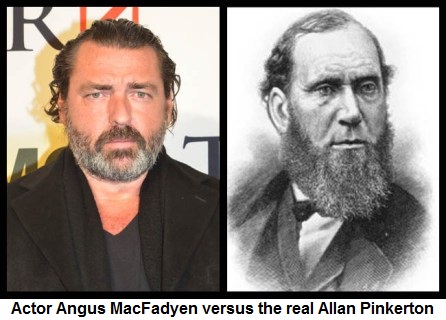
  • The Pinkertons, a scripted one-hour syndicated show starring Angus MacFadyen as Allan Pinkerton, debuted in 2014.[22][23]
    Actor Angus MacFadyen is set for one of the lead roles in The Pinkertons, Canadian companies Rosetta Media and Buffalo Gal Pictures’ upcoming 22-episode action-adventure detective series that is set to premiere in first-run syndication in the U.S. this fall. It has been cleared in more than 85% of the country by Rohrs Media Group on station groups including Tribune, Weigel, Hearst, LIN, Meredith, Cox and the CW PLUS. Drawing on the real cases of The Pinkerton Detective Agency, The Pinkertons follows founder Allan Pinkerton (MacFadyen), his son, William, and America’s first female detective, Kate Warne, as they solve crimes throughout the “Wild West” of the 1860s (Pinkerton is known for revolutionizing detective work by developing use of surveillance, undercover work and the mug shot). In part because of his commitment to AMC drama Turn, on which he is a regular, MacFadyen is will be a recurring guest star on The Pinkertons, not appearing in all episodes.[23]
CU Blog - Role Model for Justice - The Pinkertons - Photo 2
Promotional Video for the TV Series: The Pinkertons  https://www.youtube.com/watch?v=5Nhl9A5smo0

The security goal of Go Lean…Caribbean is for public safety! This is not the first (newly integrated) society needing public safety mitigations. The role model and history of The Pinkertons provides great insight. In 1871, Congress appropriated $50,000 to the new Department of Justice (DOJ) to form a sub-organization devoted to “the detection and prosecution of those guilty of violating federal law”. The amount was insufficient for the DOJ to fashion an integral investigating unit, so the DOJ contracted out the services to The Pinkerton National Detective Agency.[10] This is the biggest lesson for the Caribbean role model. The Pinkerton Agency had a nation-wide footprint and expedience in protecting economic engines – the US Federal government needed that expertise.

The Go Lean book calls for the establishment of “Justice Institutions” within the Caribbean at the outset of the roadmap. These institutions, similar to The Pinkertons, will have the broad scope for jurisdiction and prosecution of economic crimes throughout the entire region. In addition to economic crimes, there is the need for a military establishment in the region. Execution of the roadmap integrates and consolidates a regional naval force, escalated expeditionary forces, unified command-and-control and an intelligence gathering & analysis apparatus. But unlike The Pinkerton agency, the Caribbean’s public safety entities (law enforcement and security forces) will not be accountable to private or corporate interest, but rather accountable to a technocratic Caribbean governance.

This goal is detailed in the Go Lean book as it serves as a roadmap for the introduction and implementation of the technocratic Caribbean Union Trade Federation (CU). The CU would be set to optimize Caribbean society through economic empowerment, and the aligning security dynamics. In fact, the Go Lean roadmap has 3 prime directives:

  • Optimization of the economic engines in order to grow the regional economy to $800 Billion & create 2.2 million new jobs.
  • Establishment of a security apparatus to protect the resultant economic engines.
  • Improve Caribbean governance, (with Executive, Legislative and Judicial branches) to support these engines.

The security apparatus within this Go Lean roadmap asserts that the region (and member-states) must prepare for its own security needs. So the vision is that all Caribbean member-states authorize regional “Justice Institutions” and delegate jurisdiction to marshal and prosecute economic crimes. This delegation, or separation-of-powers, will cover law enforcement and regional defense, all encompassed in the book’s Homeland Security roadmap.

There is the need to ensure law-and-order in all 30 Caribbean member-states and the Exclusive Economic Zone (EEZ) of the Caribbean Sea. This point is pronounced early in the book with the Declaration of Interdependence (Page 12) that claims:

x.   Whereas we are surrounded and allied to nations of larger proportions in land mass, populations, and treasuries, elements in their societies may have ill-intent in their pursuits, at the expense of the safety and security of our citizens. We must therefore appoint “new guards” to ensure our public safety and threats against our society, both domestic and foreign. The Federation must employ the latest advances and best practices … to assuage continuous threats against public safety.

xvi. Whereas security of our homeland is inextricably linked to prosperity of the homeland, the economic and security interest of the region needs to be aligned under the same governance. Since economic crimes, including piracy and other forms of terrorism, can imperil the functioning of the wheels of commerce for all the citizenry, the accedence of this Federation must equip the security apparatus with the tools and techniques for predictive and proactive interdictions.

The Caribbean appointing “new guards”, or a security pact to ensure public safety has been previously detailed in these blogs/ commentaries:

https://goleancaribbean.com/blog/?p=2259 Economic Crime Enforcement – The Criminalization of American Business
https://goleancaribbean.com/blog/?p=1965 America’s Navy – 100 Percent – Model for Caribbean
https://goleancaribbean.com/blog/?p=1531 A Lesson in History: 100 Years Ago – World War I
https://goleancaribbean.com/blog/?p=1487 Here come the Drones … and the Concerns
https://goleancaribbean.com/blog/?p=1076 Caribbean “Terrorists” travel   to Venezuela for jihadist training
https://goleancaribbean.com/blog/?p=392 Jamaica to receive World Bank funds to help in crime fight
https://goleancaribbean.com/blog/?p=341 US slams Caribbean human rights practices
https://goleancaribbean.com/blog/?p=273 10 Things We Want from the US and 10 Things We Don’t Want …

The treaty to establish the “new guards”, the Homeland Security Force and Federal Justice Department within the Caribbean Union Trade Federation gets legal authorization from a Status of Forces Agreement with the initiation of the confederation. This process would be “Step One, Day One” in the Go Lean roadmap. The Go Lean book also details a series of community ethos, strategies, tactics, implementations and advocacies to provide increased public safety & security in the Caribbean region:

Community Ethos – Economic Principle – Consequences of Choices Lie in Future Page 21
Community Ethos – Security Principle – Privacy –vs- Public Protection Page 23
Community Ethos – Security Principle – Intelligence Gathering Page 23
Community Ethos – Security Principle – Crap” Happens Page 23
Community Ethos – Governing Principle – Lean Operations Page 24
Community Ethos – Governing Principle – Cooperatives Page 25
Community Ethos – Ways to Improve Sharing Page 35
Community Ethos – Ways to Impact the Greater Good Page 37
Strategy – Vision – Trade Federation with Proxy Powers of a Confederacy Page 45
Strategy – Vision – Defense Pact to Defend Against Systemic Threats Page 45
Tactical – Confederating a Non-Sovereign Union Page 63
Tactical – Fostering a Technocracy Page 64
Tactical – Separation of Powers – Homeland Security Page 75
Tactical – Separation of Powers – Justice Department – CariPol: Marshals and Investigations Page 77
Tactical – Separation of Powers – Justice Department – Witness Protection Page 77
Implementation – Ways to Pay for Change Page 101
Implementation – Start-up Security Initiatives Page 103
Implementation – Start-up Benefits from the EEZ – Security – Interdictions & Piracy Page 104
Implementation – Steps to Implement Self-Governing Entities – Security and Justice Page 105
Implementation – Ways to Foster International Aid – Military Aid Page 115
Planning – Ways to Make the Caribbean Better Page 131
Planning – Ways to Improve Failed-State Indices – Law Enforcement Oversight Page 134
Planning – Lessons Learned from the West Indies (WI) Federation – WI Regiment Page 135
Planning – Lessons from the American West – Law & Order Page 139
Advocacy – Ways to Grow the Economy Page 151
Advocacy – Ways to Improve Governance Page 168
Advocacy – Ways to Better Manage the Social Contract Page 170
Advocacy – Ways to Improve Leadership – Art of War Applications Page 171
Advocacy – Ways to Impact Justice Page 177
Advocacy – Ways to Reduce Crime Page 178
Advocacy – Ways to Improve for Gun Control Page 179
Advocacy – Ways to Improve Homeland Security Page 180
Advocacy – Ways to Mitigate Terrorism Page 181
Advocacy – Ways to Improve Intelligence Gathering & Analysis Page 182
Advocacy – Ways to Protect Human Rights Page 220
Appendix – Art of War Chapters – Chapter 7 – Engaging The Security Force Page 327

The history of The Pinkertons depicts honorable men (and women) engaging an honorable cause (law and order), but not always in an honorable manner. Their motto was “we never sleep” but their ethos appeared to be “by any means necessary”. Yes, bad actors will always emerge, but people of goodwill do not need to use bad behavior to stop bad things from happening – two wrongs don’t make a right.

The Go Lean roadmap calls for justice institutions of the CU to execute their role in a just manner, to impact the Greater Good. This does not happen accidently, this must be the output of a technocratic system bent on efficiency and effectiveness. The Go Lean roadmap ensures accountability, transparency, checks-and-balances in the execution of the rule-of-law. This is the change for the Caribbean. Public Safety, Law Enforcement and Homeland Security is necessary to make the Caribbean a better place to live, work and play. Everyone in the Caribbean, the people and institutions, are hereby urged to lean-in to this elevation of society.

Download the e-Book of Go Lean … Caribbean – free … now!

————————————

Source References:
1. “Pinkerton Government Services, Inc.: Private Company Information – Businessweek”. investing.businessweek.com. Retrieved 24 September 2012.
2. Green, James (2006). Death in the Haymarket: A Story of Chicago, the First Labor Movement, and the Bombing that Divided Gilded Age America. Pantheon Books.  Page 43
3. TM Becker (1974). “The place of private police in society: An area of research for the Social Sciences”. Social Problems (Social Problems) 21 (3): 438–453. doi:10.1525/sp.1974.21.3.03a00110. JSTOR 799910.
4. Krause, Paul (1992). The Battle for Homestead, 1890-1892: Politics, Culture, and Steel. University of Pittsburgh Press.  Page 20-21
5. http://www.linkedin.com/company/pinkerton-government-services
10. Churchill, Ward (Spring 2004). “From the Pinkertons to the PATRIOT Act: The Trajectory of Political Policing in the United States, 1870 to the Present”. The New Centennial Review 4 (1): 1–72. doi:10.1353/ncr.2004.0016. Archived from the original on 2009-07-29.
22. “The Pinkertons TV Series”. Rosetta Media and Buffalo Gal Pictures. Retrieved 2014-10-11.
23. Andreeva, Nellie (July 23, 2014). “Angus MacFadyen Set To Play Allan Pinkerton In Syndicated Drama Series ‘The Pinkertons’”. Deadline Hollywood (Penske Business Media, LLC). Retrieved 2014-10-11.

Share this post:
, , , ,

The ‘Great ShakeOut’ Earthquake Drill

Go Lean Commentary

At this moment (Thursday October 16), there is a Category 4 Hurricane (Gonzalo) bearing down on a Caribbean member-state (Bermuda), and yet this commentary is focusing on another type of natural disaster: Earthquakes.

January 2010 saw a devastating tremor hit Haiti. The whole world came to a halt – from Haiti’s perspective – the island nation has still not recovered.

Hurricanes. Earthquakes. This is the reality of Caribbean life – we have to contend with natural disasters; some with advanced warnings, some with no warnings at all.

In the past, our region has not done well managing the crisis associated with natural disasters. In fact, this was a motivation for the origination of the book, Go Lean … Caribbean. We do not have the luxury of “sticking our head in the sand” and pretending that there is no problem. Rather, we must prepare.

The foregoing news article/VIDEO is an example of earthquake preparation around the world, but especially in a region (US Eastern Seaboard) that usually do not have to contend with the threat of earthquakes; and yet got a surprising “shake” in August 2011:

Title: Damaged National Cathedral Hosts ‘Great ShakeOut’ Earthquake Drill
By: Alex DeMetrick, General Assignment Reporter

WASHINGTON (WJZ) – There’s nothing like an earthquake to get your attention, and the large quake Maryland felt three years ago is helping to spread the word to prepare for another.

Alex DeMetrick reports it’s all part of the great shakeout campaign.

Earthquake Drill - Photo 1

Depending on where you were three years ago, experiencing a 5.8 magnitude earthquake made an impression.

And you didn’t have to be scrambling out of the Washington Monument.

Maryland rocked all over.

“The Earth’s crust here is old; it’s cold. It transmits energy very effectively. Sort of rings like a bell,” said Dr. David Applegate, U.S. Geological Survey.

And because it could ring again, the Mid-Atlantic region is now part of the Great ShakeOut.

With the National Cathedral as a backdrop, the day is used to promote “drop, cover and hold on” in a quake.

“Something as simple as a book could hurt you, or a bookshelf could hurt, so you don’t want to try and run out, especially in our area here,” said Wendy Phillips, FEMA program specialist.

Bricks and masonry can fall. Thousands of pounds worth fell from the top of the National Cathedral.

“Top of the tower is the absolute worst,” said James Shepherd, director of preservation at the National Cathedral. “So those are the areas that really released the energy. Those are the areas we have the most damage.”

Repairs made the inside safe, although work still continues at the rear of the cathedral.

Just this reinforcement effort has cost $10 million.

Another $22 million will have to be found to strengthen the structure’s flying buttresses.

If it isn’t done, “what that means if there’s an earthquake, the stones move,” Shepherd said.

While repairs may still take years, the cathedral is a reminder the next earthquake could happen any time.

“Absolutely, earthquakes have defied efforts to give a short term prediction, so an earthquake in the east, less frequent, but the shaking can be a real issue over a wide area,” Applegate said.

The Great ShakeOut campaign began in California, and worldwide an estimated 25 million people, including 1 million in the Mid-Atlantic, practiced drop, cover and hold-on drills Thursday.
Baltimore Local CBS Station WJZ Newscast  (Retrieved 10-16-2014) – http://baltimore.cbslocal.com/2014/10/16/damaged-national-cathedral-hosts-great-shakeout-earthquake-drill/

CBS Baltimore Video: http://baltimore.cbslocal.com/video?autoStart=true&topVideoCatNo=default&clipId=10700214

The Go Lean book posits that earthquakes are outside of our control and can easily wreak havoc on one Caribbean island after another. This regional threat is due to the active Enriquillo fault-line in the Greater Antilles (Jamaica, Cuba, Hispaniola and Puerto Rico) and the Lesser Antilles subduction zone (also known for volcanoes) along the rim of the Eastern Caribbean basin. Already there have been a number of small quakes in a few Caribbean islands for 2014, including Puerto Rico, Dominican Republic, Martinique, Barbados and others.

So the earthquake threat is real. The foregoing article/VIDEO advocates preparing people in the region to survive quaking and shaking. The Caribbean has to be on guard for danger from seismic activities – we have failed miserably in the past, as in Haiti.

Earthquake Drill - Photo 2A previous blog/commentary asserted that the risk of earthquakes plus the constant threats during the annual hurricane season creates the need for a full-time sentinel to monitor, mitigate and manage the risks of natural disasters in the region. This is the mandate for the technocratic Caribbean Union Trade Federation (CU) for the 30 member-states of the Caribbean region. The Go Lean … Caribbean roadmap describes the CU’s prime directives as empowering the region’s economic engines, providing homeland security assurances and preparing/responding the region’s governance for natural disasters.

The point of natural disaster preparation, especially in the era of climate change, is pronounced early in the book with this Declaration of Interdependence (Page 11), with this opening statement:

i.        Whereas the earth’s climate has undeniably changed resulting in more severe tropical weather storms, it is necessary to prepare to insure the safety and security of life, property and systems of commerce in our geographical region. As nature recognizes no borders in the target of its destruction, we also must set aside border considerations in the preparation and response to these weather challenges.

The Go Lean book details the economic principles and community ethos to adopt, plus the executions of the following strategies, tactics, implementations and advocacies to prepare for the eventuality of earthquakes and hurricanes in Caribbean communities:

Economic Principles – People Respond to Incentives Page 21
Economic Principles – Economic Systems Influence   Individual Choices Page 21
Economic Principles – Consequences of Choices Lie in the   Future Page 21
Community Ethos – “Crap” Happens Page 23
Community Ethos – Lean Operations Page 24
Community Ethos – Return on Investments (ROI) Page 24
Community Ethos – Ways to Impact the Future Page 26
Community Ethos – Ways to Improve Sharing Page 35
Community Ethos – Impact the Greater Good Page 37
Strategy – Vision – Confederating 30 Member-states in a Union Page 45
Strategy – Agents of Change – Climate Change Page 57
Tactical – Fostering a Technocracy Page 64
Tactical – Separation of Powers – Emergency Management   Agency Page 76
Implementation – Ways to Deliver Page 109
Implementation – Ways to Foster International Aid – Haiti’s   Earthquakes Page 115
Planning – 10 Big Ideas – Homeland Security Pact Page 127
Advocacy – Ways to Grow the Economy Page 151
Advocacy – Ways to Improve for Natural Disasters Page 184
Advocacy – Ways to Improve Emergency Management Page 196

This is the change that has come to the region: the Caribbean is accepting that it is undoubtedly an earthquake zone.

There is the need for a regional sentinel to coordinate the preparation for earthquakes among the Caribbean member-states. There is the need for participation in the ‘Great ShakeOut’ Earthquake Drill, as related in the foregoing article and VIDEO, for this year (but its too late) and next year, and henceforth.

Natural disasters are unavoidable in the Caribbean. But we can prepare for them, we can make the Caribbean a better place to live, work and play. These elevations are identified, qualified and proposed in the book Go Lean…Caribbean; the mitigations are not just reactive, but also proactive.

All of the Caribbean, the people and institutions, are urged to lean-in to the roadmap from this book – and to “drop, cover and hold-on”.

Download the book Go Lean…Caribbean now!

Share this post:
, ,
[Top]

Guyana and Suriname Wrestle With High Rates of Suicides

Go Lean Commentary

This Caribbean member-state, Guyana, is Number One …

Not Number One on the list of most productive countries, but Number One on this infamous list: as the country with the highest rate of suicides in the world, according to the latest WHO report. (Suriname is also in the Top 10, at Number 6).

This is a tragedy!

The book Go Lean… Caribbean claims that this region is the best address in the world…physically. And yet this below article asserts that per capita, more people voluntarily “check-out permanently” here than anywhere else in the world. In a previous blog, this commentary presented that this same country Guyana is also Number One in the region with a 89% brain drain among college graduates.

This is not a coincidence, this is a crisis!

Title: Sleepy Guyana Wrestles With High Rate of Suicides
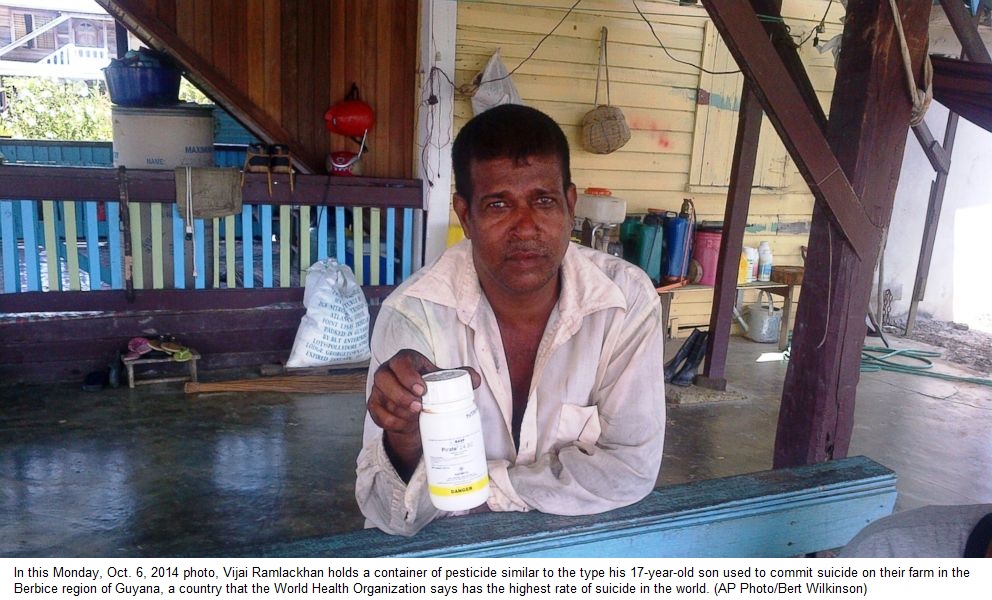
CU Blog - Guyana Wrestles With High Rate of Suicides - Photo 1
Lesbeholden, Guyana – The young man responds all too easily when asked whether he knows anyone who has committed suicide in his village, a sleepy cluster of homes and rum shops surrounded by vast brown fields of rice awaiting harvest.

Less than a year ago, Omadat Ramlackhan recalls, his younger brother swallowed pesticide after a drunken argument with their father and died five days later. “I don’t know what got into him,” the 23-year-old said. “It just happened like that.”

It wasn’t the family’s first brush with suicide. His stepmother, Sharmilla Pooran, volunteers that her brother hanged himself and the man’s son tried to do the same but survived, with rope marks on his neck to remember it. She once contemplated killing herself.

The fact that self-inflected harm is such a presence in the lives of this family is not surprising given that they live in an area that Guyana’s Ministry of Health has designated the “suicide belt,” in a country that the World Health Organization says in a new report has the highest rate of suicide in the world.

Guyana, a largely rural country at the northeastern edge of South America, has a suicide rate four times the global average, ahead of North Korea, South Korea, and Sri Lanka. Neighboring Suriname was the only other country from the Americas in the top 10.

There seem to be a number of reasons that Guyana tops the list, including deep rural poverty, alcohol abuse and easy access to deadly pesticides. It apparently has nothing to do with the mass cult suicide and murder of more than 900 people in 1978 at Jonestown, the event that made the country notorious.

“It’s not that we are a population that has this native propensity for suicide or something like that,” said Supriya Singh-Bodden, founder of the non-governmental Guyana Foundation. “We have been trying to live off the stigma of Jonestown, which had nothing to do with Guyana as such. It was a cult that came into our country and left a very dark mark.”

Just before the WHO published its report last month, the foundation cited rampant alcoholism as a major factor in its own study of the suicide phenomenon, which has been a subject of concern in Guyana for years. In 2010, the government announced it was training priests, teachers and police officers to help identify people at risk of killing themselves in Berbice, the remote farming region along the southeast border with Suriname where 17-year-old Ramdat Ramlackhan committed suicide after quarreling with his father, Vijai.

More recently, the government has sought to restrict access to deadly pesticides, though that is difficult in a country dependent on agriculture. In May, authorities announced a suicide-prevention hotline would be established and Health Minister Bheri Ramsarran said he would deploy additional nurses and social-service workers in response to the WHO report.

Some countries have had success with national strategies in bringing down the number of people who take their own lives, according to the WHO. The number of suicides rose rapidly in Japan in the late 1990s, but started to decrease in 2009 amid government prevention efforts and as discussion of the subject became less taboo.

It has declined in China and India as a result of urbanization and efforts to control the most common means of suicide, said Dr. Alan Berman, a senior adviser to the American Association of Suicidology and a contributor to the WHO report.

“A certain proportion of suicides are rather impulsive and if you can restrict access to the means of suicide, whether it’s by pesticides, or by firearms or by bridge, you can thwart the behavior and give people an opportunity to change their minds,” Berman said.

The WHO estimates there are more than 800,000 suicides around the world per year. Statistics on the subject are unreliable because in some places the practice is stigmatized, or illegal.

The agency found Guyana, which has a population of about 800,000, had an age-adjusted rate of just over 44 per 100,000 people based on 2012 data. For males alone, it was nearly 71 per 100,000. In raw numbers, there are about 200 per year and 500 attempts, according to local health authorities. The U.S. overall rate was 12 per 100,000.

Most occur in Berbice, a flat, sun-baked expanse of farmlands along the river that forms the border with Suriname, where similar social and economic conditions prevail and which was 6th on the WHO list, just ahead of Mozambique.

“Suicides tend to be higher in rural areas than urban areas,” Berman said. “If I’m living in rural Montana, or if I’m living in rural India or in rural Suriname the question then is if I need help for whatever is going on with me how am I going to get it?”

It is a touchy subject in Guyana. The country is divided politically and ethnically between the descendants of people brought from Africa as slaves and the descendants of people brought from India, both Hindus and Muslims, as indentured workers to replace them.

Berbice has many people of Hindus of Indian descent and, as a result, suicide is often portrayed in Guyana as a largely Hindu phenomenon. But Singh-Bodden of the Guyana Foundation said that may be because self-inflicted death among the Hindus of Berbice is more likely to be reported as such. Their study, for example, found little reporting of suicide among native Amerindians who live in the country’s rugged interior.

“I don’t buy into the argument necessarily that it’s an ethnic thing, that Indo Guyanese are more susceptible to suicide,” she said. “There has been a lot of suicide among mixed people as well. I honestly believe it’s the hopelessness.”

Pooran, describing her family’s experiences, said her brother apparently killed himself after struggling with health problems for years and difficult home life. She said she thought about taking her own life while cleaning her house after a day’s work at a local sawmill.

“One day, I picked up the poison and thought about drinking it but I called God’s name and then realized my husband would just get another woman and soon forget me,” she said. “Don’t think I would do that today.”
———
By Bert Wilkinson in Guyana and Ben Fox reported from Miami.
Associated Press News Wire Service (Retrieved 10-15-2014) – http://abcnews.go.com/international/wirestory/sleepy-guyana-wrestles-high-rate-suicides-26174156

There is something providential about this crisis as the Go Lean… Caribbean book also asserts that “a crisis is a terrible thing to waste”. The book declares (Page 36) that a man/woman needs three things to be happy:

Deficiency Mitigation
1. Something to do Jobs
2. Someone to love Repatriation of Diaspora
3. Something to hope for Future-focus

The book serves as a roadmap to mitigate these 3 deficiencies within Caribbean life, rural communities and also in The Guianas (Guyana & Suriname).

The subject of suicide is not a light matter and should not be ignored. It addresses one of the most serious aspects of the science of Mental Health. The Go Lean book is not a reference source for science, but it does glean from “social science” concepts in communicating the plan to elevate Caribbean society. The book thusly serves as a roadmap for the introduction and implementation of the technocratic Caribbean Union Trade Federation (CU). The complete prime directives are described as:

  • Optimize the economic engines of the Caribbean to elevate the regional economy and create 2.2 million new job.
  • Establish a security apparatus to protect the resultant economic engines.
  • Improve Caribbean governance to support these engines.

The Go Lean roadmap immediately calls for the establishment of a regional sentinel, a federal Health Department, to monitor, manage and mitigate public health issues in the region. This focus includes mental health in its focus, just as seriously as any other health concern like cancer, trauma, bacterial/viral epidemiology. This direct correlation of physical/mental health issue with the Caribbean (and American) economy has been previously detailed in Go Lean blog/commentaries, as sampled here:

Public Health Economics – The Cost of Cancer Drugs
Antibiotics Misuse Associated With Obesity Risk
Regional Health Sentinel – Stopping Ebola
Recessions and Public Health in the Caribbean Region
Health Concern – Climate Change May Bring More Kidney Stones
New Hope in the Fight Against Alzheimer’s Disease
For Diabetes Mitigation, Google and Novartis to develop “smart” contact  lens
Health-care fraud in America; criminals take $272 billion a year
Painful and rapid spread of new Chikungunya virus in the Caribbean
Cuban Cancer Medication registered in 28 countries

Being first on a list is not uncommon for the Caribbean – Cuba’s famous tobacco-cigar is already declared “Among the Best in the World”. This is the kind of notoriety we want with our global image; not suicides. No one wants to live in a society where these mental health crises remain unmitigated. But the foregoing article relates that suicide rates in Guyana (and Suriname) needs to be arrested.

A lot is at stake.

The Go Lean roadmap immediately calls for the coordination of the region’s healthcare needs. This point is declared early in the Go Lean book, commencing with this opening pronouncement in the Declaration of Interdependence (Page 12), as follows:

ix.  Whereas the realities of healthcare … cannot be ignored and cannot be afforded without some advanced mitigation, the Federation must arrange for health plans to consolidate premiums of both healthy and sickly people across the wider base of the entire Caribbean population. The mitigation should extend further to disease management, wellness, mental health, obesity and smoking cessation programs.

The Go Lean … Caribbean roadmap constitutes a change for the region, a plan to consolidate 30 member-states into a Trade Federation with the tools/techniques to bring immediate change to the region to benefit one and all member-states. This includes the monitoring/tracking/studying the physical and mental health trends. This empowerment would allow for better coordination with member-states, non-governmental organizations (NGOs) and the World Health Organization (WHO).

The book details Happiness as a community ethos that first must be adopted; this refers to the appropriate attitude/spirit to forge change in the region. Go Lean details this and other ethos; plus the executions of the following strategies, tactics, implementations and advocacies to impact the region’s public [mental] health:

Community Ethos – Deferred Gratification Page 21
Community Ethos – Economics Influence Choices Page 21
Community Ethos – “Crap” Happens Page 23
Community Ethos – Lean Operations Page 24
Community Ethos – Cooperatives Page 24
Community Ethos – Non-Government Organizations Page 25
Community Ethos – Ways to Impact the Future Page 26
Community Ethos – Ways to Impact Turn-Around Page 33
Community Ethos – Ways to Promote Happiness Page 36
Community Ethos – Impact the Greater Good Page 37
Strategy – Vision – Confederate 30 Member-States Page 45
Strategy – Mission – Reform our Health Care Response Page 47
Strategy – Agents of Change – Aging Diaspora Page 57
Tactical – Fostering a Technocracy Page 64
Separation of Powers – Department of Health Page 86
Implementation – Ways to Deliver Page 109
Implementation – Reasons to Repatriate Page 118
Planning – Ways to Make the Caribbean Better Page 131
Planning – Ways to Improve Failed-State Indices Page 134
Planning – Lessons from Indian Reservations – Suicides Page 148
Advocacy – Ways to Grow the Economy Page 151
Advocacy – Ways to Improve Healthcare Page 156
Advocacy – Ways to Better Manage the Social Contract Page 170
Advocacy – Ways to Foster Cooperatives Page 176
Advocacy – Ways to Improve Emergency Management Page 196
Advocacy – Ways to Impact Rural Living Page 235
Advocacy – Ways to Impact/Re-boot The Guianas Page 241

Guyana is a “failing” state, economy-wise. The CU mitigation to re-boot the economy there (& the region) is Step One for minimizing the risk of suicide. The foregoing news article links economic downturns and rural poverty to suicide risks. All in all, there is the need for better stewardship for Caribbean society, the economy, security and governing engines.

Who will provide this better stewardship? Who will take the lead? The book Go Lean…Caribbean provide 370 pages of turn-by-turn directions for how the CU is to provide this role for the region. The people are hereby urged to lean-in to this Go Lean roadmap, to make the Caribbean a better place to live, work and play. 🙂

Download the book Go Lean … Caribbean – now!

Share this post:
, , , , , , ,
[Top]

Antibiotics Use Associated With Obesity Risk

 Go Lean Commentary:

The below news article relates to our most vulnerable victims in society, our children under age 2. The article helps us to appreciate that they need to be protected.

This report was published by a recognized technocratic institution, the Children’s Hospital of Philadelphia (CHOP), a previously referenced source for the publishers of the book Go Lean…Caribbean. Many of the research of CHOP have relevance for Caribbean life and the Go Lean elevation effort.

The CHOP research is published as follows:

Title: Antibiotic Use by Age 2 Associated With Obesity Risk

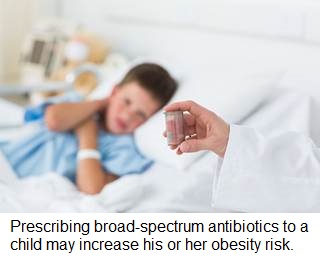
CU Blog - Antibiotics Use Associated with Obesity Risk - Photo 2

Repeated exposure to broad-spectrum antibiotics in the first two years of life is associated with early childhood obesity, say researchers from The Children’s Hospital of Philadelphia in a retrospective study based on data from electronic health records from the extensive CHOP Care Network.

Studying early life events that may affect how the body regulates weight

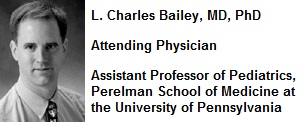
CU Blog - Antibiotics Use Associated with Obesity Risk - Photo 1The researchers found that children with four or more exposures to broad spectrum antibiotics during infancy were particularly more likely to be at risk for obesity. The study, published online September 29, 2014 in JAMA Pediatrics, did not directly examine cause and effect, said Charles Bailey, MD, PhD, (See Photo) lead author of the study, but he added, “as pediatricians, we’re interested in whether events that happen early in life might reset the baseline and have a long-term effect on how the body regulates weight.”

The researchers were intrigued by the emerging idea that the microbial population that begins to colonize in infants’ intestines shortly after birth, known as the microbiome, plays an important role in establishing energy metabolism. Previous studies have shown that antibiotic exposure influences the microbiome’s diversity and composition. “The thought is that the microbiome may be critically dependent on what is going on during infancy,” Bailey added.

The study team analyzed electronic health records from 2001 to 2013 of 64,580 children with annual visits at ages 0 to 23 months, as well as one or more visits at ages 24 to 59 months within the CHOP Care Network. They assessed the relationships between antibiotic prescription and related diagnoses before age 24 months and the development of obesity in the following three years.

Broad-spectrum drugs associated with obesity but not narrow-spectrum drugs

The investigators saw the association with broad-spectrum drugs, but they reported no significant association between obesity and narrow-spectrum drugs. For this study, they classified first-line therapy for common pediatric infections, such as penicillin and amoxicillin, as narrow-spectrum. They considered broad-spectrum antibiotics to include those recommended in current guidelines as second-line therapy.

“Treating obesity is going to be a matter of finding the collection of things that together have a major effect, even though each alone has only a small effect,” said Patricia DeRusso, MD, director of the Healthy Weight Program and vice president of Medical Staff Affairs at Children’s Hospital who was the senior author of the study. “Part of what we are exploring in this study is one of those factors that we can possibly modify in the way we take care of kids and make it better.”

Future investigations are needed involving multiple large pediatric health systems that will take a broader look at several populations and how adopting guidelines that accentuate the use of narrow-spectrum antibiotics might affect patients’ risk of obesity, Dr. Bailey said. In addition to supporting this type of research locally, CHOP is also a key contributor to networks such as PEDSnet that link many children’s hospitals to make more effective clinical research possible. Researchers also are looking at ways the microbial communities living in infants’ intestines are swayed by dietary and environmental factors.

Early intervention is key

Childhood obesity has more than doubled in children over the past 30 years, according to the Centers for Disease Control and Prevention. Many will remain obese into adulthood and be susceptible to heart disease, type 2 diabetes, stroke, several types of cancer, and osteoarthritis. Medical researchers at CHOP want to identify ways to intervene as early as possible, in order to avert the lifetime of medical, developmental, and social problems associated with obesity.

More information

“Association of Antibiotics in Infancy With Early Childhood Obesity” JAMA Pediatrics, published online on September 29, 2014 doi:10.1001/jamapediatrics.2014.1539

Dr. Bailey’s coauthors were Christopher Forrest, MD, PhD; Peixin Zhang, PhD; Thomas M. Richards, MS; Alice Livshits, BS; and Patricia A. DeRusso, MD, MS.

This research project was funded by an unrestricted donation to The Children’s Hospital of Philadelphia’s Healthy Weight Program from the American Beverage Foundation for a Healthy America.

Contact: Joey McCool, The Children’s Hospital of Philadelphia, 267-426-6070 or McCool@email.chop.edu
Children’s Hospital of Philadelphia Web Site – Posted 9-30-2014
http://www.chop.edu/news/antibiotic-use-by-age-2-associated-with-obesity-risk.html

Referenced Video: https://www.youtube.com/watch?v=HF3zTp5YQSg

Why is antibiotics misuse so high in American society*?

One theory is that Big Pharma, the Pharmaceutical industry, dictates standards of care in the field of medicine, more so than may be a best-practice. (Picture the scene of a Pharmaceutical Salesperson slipping in the backdoor to visit a doctor and showcase latest product lines).

This subject of damaging health effects deriving from capitalistic practices in medicine aligns with Go Lean … Caribbean (Page 157), as it posits that Cancer treatment (in the US) has been driven by the profit motive, more so than a quest for wellness and/or a cure.

This is not the model we want to effect the well-being of our young children.

The Go Lean roadmap specifies where we are as a region (minimal advanced medicine options), where we want to go (elevation of Caribbean society in the homeland for all citizens to optimize wellness) and how we plan to get there – confederating as a Single Market entity. While the Go Lean book strategizes a roadmap for economic empowerment, it clearly relates that healthcare, and pharmaceutical acquisitions are important in the quest to make the Caribbean a better place to live, work and play. At the outset of the Go Lean book, in the Declaration of Interdependence (Page 11), these points are pronounced:

viii.  Whereas the population size is too small to foster good negotiations for products and commodities from international vendors, the Federation must allow the unification of the region as one purchasing agent, thereby garnering better terms and discounts.

ix.     Whereas the realities of healthcare and an aging population cannot be ignored and cannot be afforded without some advanced mitigation, the Federation must arrange for health plans to consolidate premiums of both healthy and sickly people across the wider base of the entire Caribbean population. The mitigation should extend further to disease management, wellness, obesity and smoking cessation programs.

The Go Lean book is not a medical reference or science book, but it does touch on medical issues, especially as they relate to community economics. The publishers of the book are not trying to dictate policies for medical practice; that would be out-of-scope for Go Lean, which serves as a roadmap for the implementation and introduction of the technocratic Caribbean Union Trade Federation (CU). The CU‘s prime directives are identified with the following 3 statements:

  • Optimization of the economic engines in order to grow the regional economy to $800 Billion & create 2.2 million new jobs.
  • Establishment of a security apparatus to protect the resultant economic engines.
  • Improve Caribbean governance to support these engines.

Previous blog/commentaries addressed similar issues as the foregoing article. The following sample applies:

CHOP Research: Climate Change May Bring More Kidney Stones
Big Pharma & Criminalization of American Business
New Research and New Hope in the Fight against Alzheimer’s Disease
New Cuban Cancer medication registered in 28 countries

The Caribbean Union Trade Federation has the prime directive of optimizing the economic, security and governing engines of the region. The foregoing article/VIDEO depicts that research is very important to identify and qualify best-practices in health management for the public. Obviously the scourge of obesity is unwelcomed. Nutrition education is a key mitigation, but the foregoing article/VIDEO proclaims another driver that is outside of the control of the afflicted, or their families. This is the manifestation and benefits of Research & Development (R&D). The roadmap describes this focus as a community ethos. Then it goes on to stress that the CU must promote the community ethos that R&D is valuable and must be incentivized for adoption. The following list details additional ethos, strategies, tactics, implementations and advocacies to optimize the region’s health deliveries:

Community Ethos – Deferred Gratification Page 21
Community Ethos – The Consequences of Choices Lie in the Future Page 21
Community Ethos – Governing Principles – Return on Investments Page 24
Community Ethos – Cooperatives Page 25
Community Ethos – Non-Government Organizations Page 25
Community Ethos – Ways to Impact Research & Development (R&D) Page 30
Community Ethos – Ways to Promote Happiness Page 36
Community Ethos – Ways to Impact the Greater Good Page 37
Strategy – Integrate and unify region in a Single Market Page 45
Strategy – Agents of Change – Globalization Page 57
Tactical – Fostering a Technocracy Page 64
Tactical – Separation of Powers – Health Department Page 86
Tactical – Separation of Powers – Drug Administration Page 87
Implementation – Ways to Pay for Change Page 101
Implementation – Ways to Implement Self-Government Entities – R&D Campuses Page 105
Implementation – Ways to Deliver Page 109
Planning – Ways to Make the Caribbean Better Page 131
Advocacy – Ways to Improve Healthcare Page 156
Advocacy – Ways to Better Manage the Social Contract Page 170
Advocacy – Ways Foster Cooperatives Page 176
Advocacy – Ways to Improve Emergency Management Page 196
Advocacy – Ways to Impact Foundations Page 219
Advocacy – Ways to Impact Youth – Healthcare Page 227
Advocacy – Ways to Impact Persons with Disabilities Page 228
Appendix – Emergency Management – Medical Trauma Centers Page 336

The foregoing news/VIDEO story depicted analysis administered by the Children’s Hospital of Philadelphia, a teaching and research facility for the care of children.  There is a need for more such R&D on obesity causes and drivers. In the Caribbean, Cuba currently performs a lot of R&D into cancer, diabetes and other ailments. The Go Lean roadmap posits that more innovations will emerge in the region as a direct result of the CU prioritization on science, technology, engineering and medical (STEM) activities on Caribbean R&D campuses and educational institutions.

The Go Lean roadmap does not purport to be an authority on medical best-practices. The CU economic-security-governance empowerment plan should not direct the course of direction for obesity research and treatment. Neither should pharmaceutical salesmen. Their motive is strictly profit …

The CU motive, to impact the Greater Good, mandates monitoring progress in obesity research, the causes and effects. The hope is to minimize the affliction. This is the heavy-lifting the Caribbean region needs. This means life-or-death for some. All of the Caribbean is hereby urged to lean-in to this roadmap for Caribbean elevation.

Download the book Go Lean … Caribbean – now!

————–

* Appendix – Antibiotics Misuse – (http://en.wikipedia.org/wiki/Antibiotics)

“The first rule of antibiotics is try not to use them, and the second rule is try not to use too many of them.” – The ICU Book [70]

Inappropriate antibiotic treatment and overuse of antibiotics have contributed to the emergence of antibiotic-resistant bacteria. Self prescription of antibiotics is an example of misuse.[71] Many antibiotics are frequently prescribed to treat symptoms or diseases that do not respond to antibiotics or that are likely to resolve without treatment. Also incorrect or suboptimal antibiotics are prescribed for certain bacterial infections.[41][71] The overuse of antibiotics, like penicillin and erythromycin, have been associated with emerging antibiotic resistance since the 1950s.[56][72] Widespread usage of antibiotics in hospitals has also been associated with increases in bacterial strains and species that no longer respond to treatment with the most common antibiotics.[72]

Common forms of antibiotic misuse include excessive use of prophylactic antibiotics in travelers and failure of medical professionals to prescribe the correct dosage of antibiotics on the basis of the patient’s weight and history of prior use. Other forms of misuse include failure to take the entire prescribed course of the antibiotic, incorrect dosage and administration, or failure to rest for sufficient recovery. Inappropriate antibiotic treatment, for example, is their prescription to treat viral infections such as the common cold. One study on respiratory tract infections found “physicians were more likely to prescribe antibiotics to patients who appeared to expect them”.[73] Multifactorial interventions aimed at both physicians and patients can reduce inappropriate prescription of antibiotics.[74]

Referenced Sources:

41. Slama TG, Amin A, Brunton SA, et al. (July 2005). “A clinician’s guide to the appropriate and accurate use of antibiotics: the Council for Appropriate and Rational Antibiotic Therapy (CARAT) criteria”. Am. J. Med. 118 Suppl 7A (7): 1S–6S. doi:10.1016/j.amjmed.2005.05.007

56. Pearson, Carol (28 February 2007). “Antibiotic Resistance Fast-Growing Problem Worldwide”. Voice Of America. Archived from the original on 2 December 2008. Retrieved 29 December 2008.

70. Marino PL (2007). “Antimicrobial therapy”. The ICU book. Hagerstown, MD: Lippincott Williams & Wilkins. p. 817. ISBN 978-0-7817-4802-5.

71. Larson E (2007). “Community factors in the development of antibiotic resistance”. Annu Rev Public Health 28: 435–447. doi:10.1146/annurev.publhealth.28.021406.144020. PMID 17094768.

72. Hawkey PM (September 2008). “The growing burden of antimicrobial resistance”. J. Antimicrob. Chemother. 62 Suppl 1: i1–9. doi:10.1093/jac/dkn241. PMID 18684701.

73. Ong S, Nakase J, Moran GJ, Karras DJ, Kuehnert MJ, Talan DA (2007). “Antibiotic use for emergency department patients with upper respiratory infections: prescribing practices, patient expectations, and patient satisfaction”. Annals of Emergency Medicine 50 (3): 213–20. doi:10.1016/j.annemergmed.2007.03.026. PMID 17467120.

74. Metlay JP, Camargo CA, MacKenzie T, et al. (2007). “Cluster-randomized trial to improve antibiotic use for adults with acute respiratory infections treated in emergency departments”. Annals of Emergency Medicine 50 (3): 221–30. doi:10.1016/j.annemergmed.2007.03.022. PMID 17509729


Share this post:
, , ,
[Top]

Stopping Ebola

Go Lean Commentary

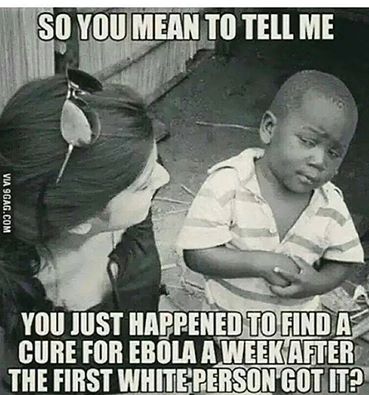
CU Blog - Stopping Ebola - Photo 1What a cute little boy in this photo…

Look at that sly look. It’s as if he just doesn’t understand why he is expected to believe the “nonsense”. He will not “drink the Kool-Aid”.

From the mouths of babes -The Bible; Matthew 21:16

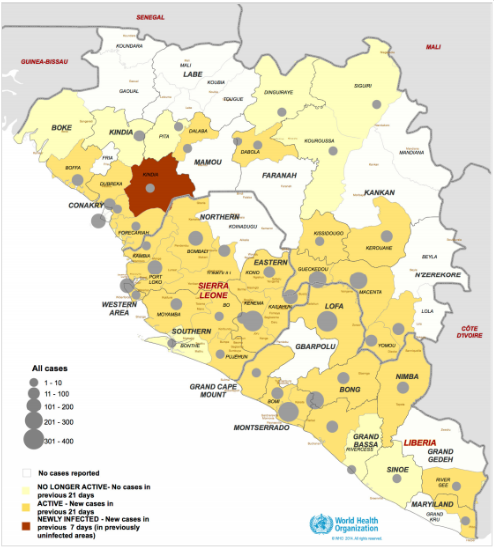
The below article by the Editorial Board of the Miami Herald newspaper seems to indicate that someone has been “drinking the Kool-Aid”. Ebola is not an American problem. As of this moment the figures reported by the World Health Organization is that 2,300 people have died during this recent spread of Ebola in West Africa (Sierra Leone, Liberia, Guinea and other neighboring countries). What’s more, that number afflicted is expected to rise to 20,000 by the end of November. What’s worse, 70% of the afflicted are expected to die, if nothing is done.

There is the need for leadership.

This editorial article therefore petitions for American leadership in this Ebola threat:

By: Miami Herald Editorial Board

CU Blog - Stopping Ebola - Photo 2 Rarely has the idea of the global village and the mantra that the world is one big neighborhood seemed as real as in the frightening case of the raging Ebola epidemic in Africa.

There was a time, not so long ago, that an outbreak of disease anywhere in the Third World would have seemed far removed from the daily concerns of Americans and the nation’s foreign-policy agenda. Safely protected from foreign plagues by vast oceans, U.S. leaders would not have felt compelled to order a rapid response along the lines announced last week by President Obama as a matter of self-protection.

There might have been a tardy and symbolic response, if any at all, but certainly it would not have been treated as a priority demanding presidential action, complete with a significant military deployment.

What makes Ebola different is the realization that the world is indeed smaller, that modern modes of transportation — with busier travel patterns and habits — have lowered the barriers against infection. In places like Miami, a major port of entry for overseas visitors, the threat is very real, and Ebola is a particularly scary virus.

The disease kills between 50 percent and 90 percent of people infected with the virus, and there is as yet no specific and effective treatment available. No vaccine exists. Senior U.N. officials say cases are rising at an almost exponential level, with 5,000 reported by the end of August and many more expected.

Officials in Africa are plainly scared, and should be. Over the weekend, the government in Sierra Leone confined the country’s entire population, some 6 million people, to their homes for three days, an action that one news report called “the most sweeping lockdown against disease since the Middle Ages.”

Some experts estimate that as many as 20,000 people could become infected before the epidemic is under control. Others said the number would be several times higher by year’s end.

“We don’t know where the numbers are going,” said Dr. Bruce Aylward, assistant director general of the World Health Organization. He said the virus was spreading faster than the (belated) escalation of the response by the international community.

Indeed, the international community could have responded more quickly, and more effectively. A major outbreak was reported in Guinea in March by WHO, but it was not until last week that President Obama announced action commensurate with the nature of the threat.

He ordered a deployment of medicine, equipment and soldiers to Liberia and Senegal. A contingent of 3,000 military personnel will help build emergency treatment centers and establish what Pentagon officials call “command and control” assistance to coordinate the overall effort with other countries. According to the White House, the Centers for Disease Control and Prevention has committed more than $100 million to the fight since the outbreak started, but months were lost before the alarm was sounded outside the borders of the affected countries.

As Mr. Obama explained, as a virus multiplies, it also mutates to fight human immunology and counter-measures. That adds to the urgency of the crisis and makes it imperative for the United   States to coordinate an effort on a scale large enough to make a difference.
Miami Herald Daily Newspaper (Posted 09-21-2014) – http://www.miamiherald.com/opinion/editorials/article2180670.html

Ebola is not an American problem but when American citizens have been afflicted, the US response has been inspiringly genius, deploying a potential cure within a week. (See caption on above photo). This is not the resume of a global leader, this is the resume of a nation playing favorites.

CU Blog - Stopping Ebola - Photo 3

The book Go Lean…Caribbean posits that the Caribbean region must promote its own interest and protect its own citizens. We cannot count on the US to pursue the Greater Good for the whole world, or the Caribbean for that matter. Assuredly, we must have our own preparation and response vehicle.

This is the goal of the Go Lean…Caribbean book.

The book serves as a roadmap for the introduction and implementation of that regional sentinel, the Caribbean Union Trade Federation (CU). The complete prime directives of the CU:

  • Optimize the economic engines of the Caribbean to elevate the regional economy.
  • Establish a security apparatus to protect the resultant economic engines.
  • Improve Caribbean governance to support these engines.

This CU roadmap declares that “Crap happens” (Page 23). The Go Lean roadmap immediately calls for the establishment of a Homeland Security Department, with an agency to practice the arts and sciences of Emergency Management. The emergencies include more than natural disasters (hurricanes, earthquakes, tsunamis, volcanoes, flooding, forest fires, and droughts), they include the man-made variety (industrial accidents, oil spills, factory accidents, chemical spills, explosions, terroristic attacks, prison riots) and epidemic threats. Of course, these types of emergencies, described in the foregoing article, require professional expertise, a medical discipline. Stopping Ebola therefore would require a hybrid response of the Emergency Management agency and the CU’s Department of Health Disease Control & Management agency. This agency of Medical experts would help contend with systemic threats of epidemic illness and infectious diseases.

The Go Lean roadmap immediately calls for the coordination of security monitoring and mitigation in the Caribbean; this point is declared early in the Go Lean book with a pronouncement in the Declaration of Interdependence (Page 12), as follows:

xvi. Whereas security of our homeland is inextricably linked to prosperity of the homeland, the economic and security interest of the region needs to be aligned under the same governance. …[to ensure] the functioning of the wheels of commerce for all the citizenry, the accedence of this Federation must equip the security apparatus with the tools and techniques for predictive and proactive interdictions.

The Go Lean roadmap calls for the integration of the viral sentinel responsibility of the 30 Caribbean member-states, despite the 4 different languages and 5 colonial legacies (American, British, Dutch, French, Spanish) into a Trade Federation with the tools/techniques to bring immediate change to the region to benefit one and all member-states. This includes the monitoring and epidemiological defense of common and emerging viruses. This empowered CU agency will liaison with foreign entities with the same scope, like the World Health Organization (WHO), and the US’s Center for Disease Control (CDC). The need for this empowerment had previously been discussed in a similar blog/commentary regarding the Chikungunya virus.

Embedded YouTube Video: https://www.youtube.com/watch?v=Ui8wMZpwnp0

Since the CU roadmap leads with economic reform, the primary economic driver of the region (tourism) would be a constant concern. A lot is at stake if the Ebola threat comes to Caribbean shores. The realization, or even the unsubstantiated rumor, of viral outbreaks can imperil the tourism product. We must therefore take proactive steps to protect our economic engines. So there are heavy responsibilities for the stewardship of the Caribbean economy, security and governing engines; the goal is to impact the Greater Good of the entire Caribbean region. There is the need for a Caribbean-based agency to do the heavy-lifting of epidemiology for the region – no such entity exists today.  The emerging CU will invite this role and will promote it as a community ethos.

The book details the community ethos, plus the executions of the following strategies, tactics, implementations and advocacies to impact the region’s public health security in protection of the economy:

Community Ethos – Privacy versus Public Protection Page 23
Community Ethos – “Crap” Happens Page 23
Community Ethos – Lean Operations Page 24
Community Ethos – Cooperatives Page 24
Community Ethos – Non-Government Organizations Page 25
Community Ethos – Ways to Improve Sharing Page 35
Community Ethos – Impact the Greater Good Page 37
Strategy – Vision – Confederate a Non-Sovereign Single Market Entity Page 45
Strategy – Customers – Residents & Visitors Page 47
Strategy – Agents of Change – Globalization Page 57
Tactical – Confederating a Permanent Union Page 63
Tactical – Fostering a Technocracy Page 64
Separation of Powers – Emergency Management Page 76
Separation of Powers – Disease Control & Management Page 86
Implementation – Ways to Pay for Change Page 101
Implementation – Security Initiatives at Start-up Page 103
Implementation – Ways to Deliver Page 109
Implementation – Ways to Foster International Aid Page 115
Implementation – Ways to Benefit from Globalization Page 119
Planning – Ways to Improve Failed-State Indices Page 134
Planning – Ways to Measure Progress Page 148
Advocacy – Ways to Grow the Economy Page 151
Advocacy – Ways to Improve Healthcare Page 156
Advocacy – Ways to Improve Governance Page 168
Advocacy – Ways to Better Manage the Social Contract Page 170
Advocacy – Ways to Foster Cooperatives Page 176
Advocacy – Ways to Improve for Natural Disasters Page 184
Advocacy – Ways to Improve Emergency Management Page 196

The foregoing news editorial assumes the US will be altruistic and only pursue the Greater Good for the rest of the world.

LOL…

Recent Go Lean blogs have reported that the US is still not an equal society for its own citizens; forget those in foreign lands looking to the US for leadership. See sample list here:

https://goleancaribbean.com/blog/?p=2297 A Lesson in US Racial History – Booker T versus Du Bois
https://goleancaribbean.com/blog/?p=2259 The Criminalization of American Business
https://goleancaribbean.com/blog/?p=2251 What’s In A Name… (American Job Discrimination for Minorities)
https://goleancaribbean.com/blog/?p=2183 A Textbook Case of Price-gouging
https://goleancaribbean.com/blog/?p=1896 The Unbalanced Crisis in Black Homeownership
https://goleancaribbean.com/blog/?p=1832 Many drug inmates who get break under new plan to be deported
https://goleancaribbean.com/blog/?p=1674 Obama’s Plans for $3.7 Billion Immigration Crisis Funds
https://goleancaribbean.com/blog/?p=1143 Health-care fraud in America; criminals take $272 billion a year
https://goleancaribbean.com/blog/?p=789 America’s War on the Caribbean
https://goleancaribbean.com/blog/?p=546 Book Review: ‘The Divide’ – American Injustice in the Age of the Wealth Gap
https://goleancaribbean.com/blog/?p=341 Hypocritical US slams Caribbean human rights practices
https://goleancaribbean.com/blog/?p=273 10 Things We Don’t Want from the US: #7 – Discrimination of Immigrants

The change now being fostered by this Go Lean roadmap (and blogs) is focused on the Caribbean member-states, not on the United States of America. The US is out-of-scope; the Caribbean, on the other hand is our home. According to the old adage: “charity begins at home”.

The region is hereby urged to lean-in to this Go Lean roadmap, to fulfill the vision of making the Caribbean region a better place to live, work and play.

Share this post:
, , , , , , ,
[Top]

Corporate Tax Dodging – Transfer Policing

Go Lean Commentary

Bermuda, Bahama … come on pretty mama” – List of fun-spots from the lyrics of the song “Kokomo” by the Beach Boys. (See Appendix & VIDEO below).

“Bermuda, Luxembourg and Ireland” – List of countries from the foregoing article that facilitate tax dodging and evading schemes by corporations in Big Economy countries.

Somehow this just seems wrong!

It seems even worst to be on this latter list.

This is not the Caribbean that we want to bequeath to our children. (According to previous blog commentaries, the children have also voted to divorce themselves of their Caribbean heritage).

The following article depicts the great lengths that “tax dodgers” go through to avoid their social responsibilities…and then use the Caribbean as “partners in crime”.

Subtitle: Big Economies take aim at the firms running circles around their taxmen

POLITICIANS in the rich world like to splutter about the ever more elaborate dodges that big multinational firms undertake to minimise their tax bills. But doing something about them is trickier. America’s Congress is struggling to agree on ways to stop companies “inverting”—switching domicile to reduce tax bills (see article). The European Union is locked in a protracted debate about whether the favourable treatment that some of its members give to particular forms of corporate revenue are tantamount to illegal subsidies. So the news that the world’s biggest economies have agreed on a plan to limit “base erosion and profit shifting” in corporate tax is something of a watershed.

It has become the norm for multinationals to park themselves or large chunks of their assets—especially intangible ones, such as rights to royalties—in low- or no-tax places such as Bermuda, Luxembourg and Ireland. The wiliest, including Apple, have even discovered ways to re-route funds so as to render income stateless. These transactions are generally legal, or at least exploit grey areas in the tax codes of the countries concerned. But they appear unfair to many in these fiscally strained times, not least because they are beyond the reach of small, domestic firms.

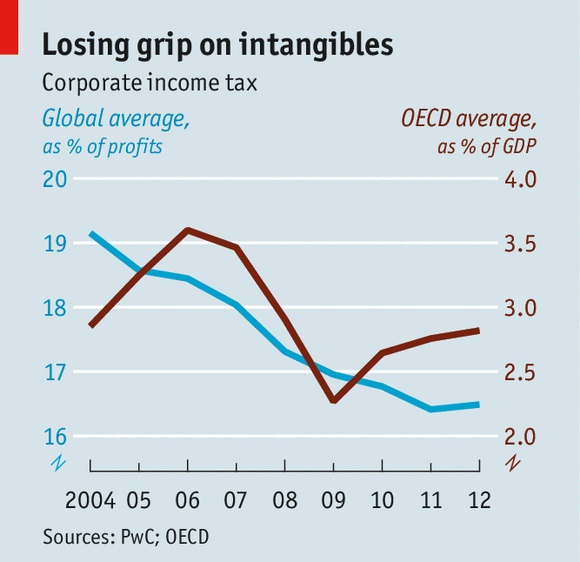
CU Blog - Corporate Tax Dodging - Transfer policing - Photo 1It is only natural that companies take advantage of the gaps. They plough huge resources into doing so, viewing cutting-edge tax arbitrage as a competitive advantage. One study estimated that the resulting tax avoidance could amount to a quarter of total corporate profit-tax receipts in rich countries, and more in poor ones. In truth, the extent of the fleecing is unclear. Corporate tax receipts as a share of GDP, although volatile, do not appear to have declined markedly in the past decade. As a share of profits, however, they have fallen steeply (see chart), though that is partly due to declining rates.

In 2012 the G20, a club of the world’s biggest economies, called on the OECD*, a similar grouping which has long overseen international tax standards, to seek consensus on ways to close the loopholes. Its members have agreed on one set of proposals, released this week, and are working on another. The G20 will formally approve the OECD’s plan at a summit in Australia on September 20th. All told, 44 countries accounting for 90% of the world economy are on board.

The proposals aim to reduce the discrepancy, for many firms, between where they do most of their business and where they pay most of their taxes. One target is “transfer pricing”, the rates that subsidiaries of a single firm charge each other for goods and services. By setting these high, firms can spirit profits out of the countries where they do most of their business to tax havens where they locate their intangibles. The proposals would also clamp down on “treaty shopping”, arrangements through which firms obtain benefits from a tax treaty despite not being resident in either country that is party to it.

Another measure attempts to end the absurd practice of “hybrid mismatches”, whereby companies claim double deductions by classifying financial instruments as debt in some countries and equity in others. In a genuine coup, all members will share basic information about multinationals (such as assets, sales, profits and employees), giving authorities a better chance of spotting tax dodging.

In some areas, consensus could not be reached or is slow to emerge. There was, for instance, no agreement on restricting the use of “patent boxes”, favourable tax regimes for patented inventions and other innovations. In a win for America, the countries agreed not to treat e-commerce as a distinct sector, subject to special “Google taxes”, although they did undertake to study the digital economy’s impact on taxes further. The second set of proposals, expected late next year, is unlikely to include anything much more concrete on this. It will, however, tackle a number of other thorny issues, such as the rampant use of intra-group loans to “strip” earnings out of higher-tax countries.

The chief complaint against the OECD’s approach is that it eschews more radical reforms, such as divvying up taxing rights among countries according to the proportion of a firm’s sales or staff located there. Sol Picciotto of Lancaster University and the Tax Justice Network, an NGO, calls the reforms “a patch-up job” that maintains the “fiction” that subsidiaries charge each other market prices and does little for the poor African countries that are among the main victims of profit-shifting. Jeffrey Owens, a former head of the OECD’s tax division, applauds his former employer’s work but thinks policymakers could struggle to keep up as location becomes an ever-fuzzier concept in business.

Moreover, much of what has been agreed requires the amending of laws and treaties. The risk is that countries implement only the bits that suit them. It remains to be seen how Britain, for instance, will square its official support for the project with its desire to be the most tax-competitive nation in the G20. It offers an alluring patent box and generous treatment of interest and has enthusiastically cut its corporate tax rate, to 20%. America often drops multilateral initiatives in favour of its own preferences.

Small wonder, then, that only 23% of the 3,000 firms surveyed recently by Grant Thornton, an accountancy, expect the proposals to win global approval. And even if they do, the next step is even harder: making sure the multinationals’ supremely inventive lawyers and accountants do not find a way around them.
The Economist Magazine (Posted 09-20-2014) –
http://www.economist.com/news/finance-and-economics/21618911-big-economies-take-aim-firms-running-circles-around-their-taxmen-transfer?fsrc=nlw|hig|18-09-2014|53552127899249e1cc9ea210|NA

*OECD = Organization of Economic Cooperation & Development

The book Go Lean…Caribbean asserts that governments need to collect their taxes, plain and simple. The Social Contract with their citizens requires that they collect revenues so as to render services on behalf of their people. The less tax revenues, the less services that can be rendered. When this trending continues, the destination takes on a “failed-state status”. Unfortunately, the Caribbean region is far too familiar with this “failed-state status”. So  cooperating with foreign companies looking to continue tax dodging practices would be counter-productive – a negative community ethos that we would want to avoid.

The Go Lean book purports that the Caribbean can – and must – do better.

This book, Go Lean… Caribbean, serves as a roadmap for the introduction and implementation of the technocratic Caribbean Union Trade Federation (CU), which represents change for the region. The CU/Go Lean roadmap has 3 prime directives:

  • Optimization of the economic engines in order to grow the regional economy.
  • Establishment of a security apparatus to protect the resultant economic engines against “bad actors”.
  • Improve Caribbean governance to support these engines.

The Go Lean roadmap provides turn-by-turn directions on how to forge a change in the region’s community ethos to encourage honest/moral business practices and a level-playing field.  There is this established business axiom: “there are two certainties: Death and Taxes”. This roadmap thusly views the moral obligation to facilitate government tax deliverables, pronouncing this point early in the Declaration of Interdependence (Page 12) with these statements:

xiv.      Whereas government services cannot be delivered without the appropriate funding mechanisms, “new guards” must be incorporated to assess, accrue, calculate and collect revenues, fees and other income sources for the Federation and member-states. The Federation can spur government revenues directly through cross-border services and indirectly by fostering industries and economic activities not possible without this Union.

The Caribbean have for far too long looked for opportunities on the grey-side of international laws. The foregoing article relates the business historicity of booking Intellectual Property rights royalties and other intangible assets in off-shore locales:

“These transactions are generally legal, or at least exploit grey areas in the tax codes of the countries concerned. But they appear unfair …”

Rather than being complicit in these “grey” activities, indicative of a “parasite” mentality, this roadmap now projects that it is past the time to “straighten up and fly right”. The Go Lean book, and accompanying blog commentaries, go even deeper in describing a “parasite” status that proliferates the Caribbean disposition.

Change has now come to the Caribbean. Rather than a “parasite” ethos, the Go Lean movement calls for a protégé ethos. This shift is now in progress. The Go Lean book (Pages 199, 321 – 326) describes the reform developments in the Offshore Tax & Financial Services industries, in moving the industries from Black List to White List status.

There are many Go Lean blog commentaries that have echoed this point, addressing the change for the Caribbean to shift from “parasite” to protégé:

https://goleancaribbean.com/blog/?p=2207 Hotels Parasite Policies are making billions from added fees
https://goleancaribbean.com/blog/?p=1984 Casinos Failing Business Model
https://goleancaribbean.com/blog/?p=1869 Senate Bill targets cowardly companies that move overseas
https://goleancaribbean.com/blog/?p=623 Only at the precipice, do they change
https://goleancaribbean.com/blog/?p=451 CARICOM Chairman to deliver address on reparations – Parasitical
https://goleancaribbean.com/blog/?p=273 10 Things We Want from the US – Free Market

Change is coming throughout the world, a by-product of globalization. It will not be tolerated for one country to exploit tax loopholes in other countries. This intolerance for “parasites” is not just among the publishers of Go Lean. While this movement anticipates change and then prepares the Caribbean for it, there is an international parallel effort. The G20, a club of the world’s biggest economies, has called on the OECD to oversee international tax standards, to seek consensus on ways to close the tax loopholes. The foregoing article relates that its members have agreed on one set of proposals; so far  44 countries, accounting for 90% of the world economy, are on board for the proposals.

How about for the Caribbean? It is only a matter of time for some international corporate tax reforms to take root. How will those changes affect the Offshore Financial industries and the practice of allowing companies to run circles around tax rules by using “Black List” countries?  The fact that these questions have to be considered demonstrate the need for a more “White List” community/business ethos. These questions should be moot! Never mind the answers.

Debate Over!

The Go Lean book purports that the Caribbean can – and must – do better. The roadmap for the CU is a confederation of the 30 member-states of the Caribbean to do the heavy-lifting of optimizing economic-security-governing engines. The Go Lean book details the community ethos to adopt, plus the executions of the following strategies, tactics, implementations and advocacies to change Caribbean society:

Community Ethos – Deferred Gratification Page 21
Community Ethos – Consequences of Choices Lie in the Future Page 21
Community Ethos – Whistleblower Protection Page 23
Community Ethos – Intelligence Gathering Page 23
Community Ethos – Lean Operations Page 24
Community Ethos – Ways to Help Entrepreneurship Page 28
Community Ethos – Ways to Promote Intellectual Property Page 29
Community Ethos – Ways to Impact Research & Development Page 30
Community Ethos – Ways to Impact the Greater Good Page 37
Strategy – Agents of Change – Technology Page 57
Strategy – Agents of Change – Globalization Page 57
Tactical – How to Grow to a $800 Economy – Trade and Globalization Page 70
Tactical – Separation of Powers – Securities Exchange Regulatory Agency Page 74
Tactical – Separation of Powers – Trade Anti-Trust Regulatory Commission Page 77
Tactical – Separation of Powers – Patent, Standards, and Copyrights Office Page 78
Implementation – Trade Mission Offices Objectives Page 117
Implementation – Ways to Benefit from Globalization Page 119
Planning – Ways to Improve Trade Page 128
Planning – Ways to Make the Caribbean Better Page 131
Advocacy – Ways to Grow the Economy Page 151
Advocacy – Ways to Create Jobs Page 152
Advocacy – Ways to Improve Governance Page 169
Advocacy – Ways to Better Manage the Social Contract Page 171
Advocacy – Ways to Impact Justice Page 177
Advocacy – Ways to Improve Intelligence Gathering & Analysis Page 182
Advocacy – Reforms for Banking Regulations Page 199
Advocacy – Ways to Impact Wall Street Page 200
Advocacy – Ways to Impact Main Street Page 201
Advocacy – Ways to Impact the One Percent Page 224
Advocacy – Ways to Impact … – Bottom Line on the OECD Page 240
Appendix – Offshore Tax & Financial Services Industry Developments Page 321
Appendix – Offshore Tax & Financial Services Industry – Bahamas Example Page 322

The book Go Lean…Caribbean posits that many problems of the region are too big for any one member-state to solve alone, that there is the need for the technocracy of the Caribbean Union Trade Federation. The purpose of this Go Lean/CU roadmap is to make the Caribbean homeland, a better place to live, work and play. We want to be on the list of fun places to PLAY, as conveyed by the below Beach Boys song, not on the list of the “grey”/shady places to WORK.

We do want to be on the consciousness of the rest of the world. We want them envious of our lifestyle and desirous to sample this imagery:

That’s where you wanna go
to get away from it all
Bodies in the sand,
tropical drink melting in your hand
We’ll be falling in love
to the rhythm of a steel drum band

Now is the time for all of the Caribbean, the people and governing institutions, to lean-in for the changes described in the book Go Lean … Caribbean.

Download the e-Book of Go Lean … Caribbean – free … now!

———————————–

Appendix – Song Lyrics for “Kokomo” by the Beach Boys

Aruba, Jamaica, ooh I wanna take ya
Bermuda, Bahama, come on pretty mama
Key Largo, Montego,
baby why don’t we go,
Jamaica

Off the Florida Keys
there’s a place called Kokomo
That’s where you wanna go
to get away from it all
Bodies in the sand,
tropical drink melting in your hand
We’ll be falling in love
to the rhythm of a steel drum band
Down in Kokomo

[Chorus:]
Aruba, Jamaica, ooh I wanna take you to
Bermuda, Bahama, come on pretty mama
Key Largo Montego,
baby why don’t we go
Ooh I wanna take you down to Kokomo,
we’ll get there fast
and then we’ll take it slow
That’s where we wanna go,
way down in Kokomo.

Martinique, that Monserrat mystique…

We’ll put out to sea
and we’ll perfect our chemistry
By and by we’ll defy
a little bit of gravity
Afternoon delight,
cocktails and moonlit nights
That dreamy look in your eye,
give me a tropical contact high
Way down in Kokomo

[Chorus]

Port au Prince, I wanna catch a glimpse…

Everybody knows a little place like Kokomo Now if you wanna go to get away from it all
Go down to Kokomo

[Chorus]

—————

YouTube Video: https://www.youtube.com/embed/_wHiliL4He4


Share this post:
, , , , , ,
[Top]

The Criminalization of American Business

Go Lean Commentary

Criminal Business

“Don’t throw out the baby with the bath water” – Old Adage

This old adage never encouraged infant abuse, but rather it illustrated the point that sometimes the whole eco-system can be preserved despite the extraction of bad actors.

After some decades of applying this strategy in the US Justice System, as regards to Big Business, it is the conclusion of this commentary that “No, this is wrong!”

In the words of Forrest Gump “stupid is as stupid does”.

The foregoing article/VIDEO looks at the trend of this double standard of the US Justice System as it applies to criminology of American business. The stakeholders in the Justice Department and the Securities & Exchange Commission (SEC) seems to have forgotten that we have seen this all before, just recently as the cause of the Great Recession, where the global economy was brought to the precipice (2008) due to defective oversight with American home mortgage financing and servicing. Now, the foregoing VIDEO alludes that the regulators and prosecutors have promoted  a “leaving the fox in the hen house” scenario under the guise of not curtailing industrial growth.

Subtitle: Companies must be punished when they do wrong, but the legal system has become an extortion racket


Who runs the world’s most lucrative shakedown operation? The Sicilian mafia? The People’s Liberation Army in China? The kleptocracy in the Kremlin? If you are a big business, all these are less grasping than America’s regulatory system. The formula is simple: find a large company that may (or may not) have done something wrong; threaten its managers with commercial ruin, preferably with criminal charges; force them to use their shareholders’ money to pay an enormous fine to drop the charges in a secret settlement (so nobody can check the details). Then repeat with another large company.

The amounts are mind-boggling. So far this year, Bank of America, JPMorgan Chase, Citigroup, Goldman Sachs and other banks have coughed up close to $50 billion for supposedly misleading investors in mortgage-backed bonds. BNP Paribas is paying $9 billion over breaches of American sanctions against Sudan and Iran. Credit Suisse, UBS, Barclays and others have settled for billions more, over various accusations. And that is just the financial institutions. Add BP’s $13 billion in settlements since the Deepwater Horizon oil spill, Toyota’s $1.2 billion settlement over alleged faults in some cars, and many more.

In many cases, the companies deserved some form of punishment: BNP Paribas disgustingly abetted genocide, American banks fleeced customers with toxic investments and BP despoiled the Gulf of Mexico. But justice should not be based on extortion behind closed doors. The increasing criminalisation of corporate behaviour in America is bad for the rule of law and for capitalism [a].

No soul, no body? No problem

Until just over a century ago, the idea that a company could be a criminal was alien to American law. The prevailing assumption was, as Edward Thurlow, an 18th-century Lord Chancellor of England, had put it, that corporations had neither bodies to be punished nor souls to be condemned, and thus were incapable of being “guilty”. But a case against a railway in 1909, for disobeying price controls, established the principle that companies were responsible for their employees’ actions, and America now has several hundred thousand rules that carry some form of criminal penalty. Meanwhile, ever since the 1960s, civil “class-action suits” have taught managers the wisdom of seeking rapid, discreet settlements to avoid long, expensive and embarrassing trials.

The drawbacks of America’s civil tort system are well known. What is new is the way that regulators and prosecutors are in effect conducting closed-door trials. For all the talk of public-spiritedness, the agencies that pocket the fines have become profit centres: Rhode Island’s bureaucrats have been on a spending spree courtesy of a $500m payout by Google, while New York’s governor and attorney-general have squabbled over a $613m settlement from JPMorgan. And their power far exceeds that of trial lawyers. Not only are regulators in effect judge and jury as well as plaintiff in the cases they bring; they can also use the threat of the criminal law.

Financial firms rarely survive being indicted on criminal charges. Few want to go the way of Drexel Burnham Lambert or E.F. Hutton. For their managers, the threat of personal criminal charges is career-ending ruin. Unsurprisingly, it is easier to empty their shareholders’ wallets. To anyone who asks, “Surely these big firms wouldn’t pay out if they knew they were innocent?”, the answer is: oddly enough, they might.

Perhaps the most destructive part of it all is the secrecy and opacity. The public never finds out the full facts of the case, nor discovers which specific people—with souls and bodies—were to blame. Since the cases never go to court, precedent is not established, so it is unclear what exactly is illegal. That enables future shakedowns, but hurts the rule of law and imposes enormous costs. Nor is it clear how the regulatory booty is being carved up. Andrew Cuomo, the governor of New York, who is up for re-election, reportedly intervened to increase the state coffers’ share of BNP’s settlement by $1 billion, threatening to wield his powers to withdraw the French bank’s licence to operate on Wall Street. Why a state government should get any share at all of a French firm’s fine for defying the federal government’s foreign policy is not clear.

I’ll see you in court—in another life

The best thing would be for at least some of these cases to go to proper trial: then a few of the facts would spill out. That is hardly in the interests of the regulators or their managerial prey, but shareholders at least should push for that. Two senators, Elizabeth Warren and Tom Coburn, have put forward a bill to make the terms of such settlements public, which would be a start. Prosecutors and regulators should also be required to publish the reasons why, given the gravity of their initial accusations, they did not take the matter all the way to court.

In the longer term, two changes are needed to the legal system. The first is a much clearer division between the civil and criminal law when it comes to companies. Most cases of corporate malfeasance are to do with money and belong in civil courts. If in the course of those cases it emerges that individual managers have broken the criminal law, they can be charged.

The second is a severe pruning of the legal system. When America was founded, there were only three specified federal crimes—treason, counterfeiting and piracy. Now there are too many to count. In the most recent estimate, in the early 1990s, a law professor reckoned there were perhaps 300,000 regulatory statutes carrying criminal penalties—a number that can only have grown since then. For financial firms especially, there are now so many laws, and they are so complex (witness the thousands of pages of new rules resulting from the Dodd-Frank reforms), that enforcing them is becoming discretionary.

This undermines the predictability and clarity that serve as the foundations for the rule of law, and risks the prospect of a selective—and potentially corrupt—system of justice in which everybody is guilty of something and punishment is determined by political deals . America can hardly tut-tut at the way China’s justice system applies the law to companies in such an arbitrary manner when at times it seems almost as bad itself.
The Economist Magazine (Posted 08-30-2014; retrieved 09-04-2014) –
http://www.economist.com/news/leaders/21614138-companies-must-be-punished-when-they-do-wrong-legal-system-has-become-extortion?fsrc=nlw|hig|28-08-2014|53552127899249e1cc9ea210|NA

The issue in this foregoing article/VIDEO is another reflection of American Crony Capitalism – where public policy is set to benefit private parties. Consider:

Big Oil While lobbying for continuous tax subsidies, the industry have colluded to artificially keep prices high and garner rocket profits ($38+ Billion every quarter).
Big Box Retail chains impoverish small merchants on Main Street with Antitrust-like tactics, thusly impacting community jobs.
Big Pharma Chemo-therapy cost $20,000+/month; and the War against Cancer is imperiled due to industry profit insistence.
Big Tobacco Cigarettes are not natural tobacco but rather latent with chemicals to spruce addiction.
Big Agra Agribusiness concerns bully family farmers and crowd out the market; plus fight common sense food labeling efforts.
Big Data Brokers for internet and demographic data clearly have no regards to privacy confines
Big Media Hollywood insists on big tax breaks/ subsidies   for on-location shooting; cable companies conspire to keep rates high; textbook publishers practice price gouging.
Big Banks Wall Street’s damage to the housing and student loan markets are incontrovertible.

The book Go Lean…Caribbean asserts that the Caribbean region must not allow the US to take the lead for our own nation-building, that American capitalistic interest tends to hijack policies intended for the Greater Good. This assessment is logical considering that despite the reality of the 2008 Great Recession and the Wall Street complexity, no one has gone to jail, even now 6 years later! The “land of the free and home of the brave” is now too coward to prosecute Wall Street for “lying, cheating and stealing”, despite the millions of victims and $11 Trillion in economic setbacks.

According to the foregoing article/VIDEO, the Justice Department strategizes settlements, rather than convictions. This is American neo-Justice 2014, where the government is in cahoots with Big Business, maintaining a dual standard of justice for corporate criminals versus ordinary felons. The foregoing article posits that the practices of the US Federal Justice Department is representative of a lucrative shakedown operation, actions akin to organized crime and racketeering.

No wonder critics and advocates point to American Justice as divided: one standard for the rich and one for the poor.

The Go Lean book, and accompanying blog commentaries, go even deeper and hypothesize that beyond justice, the American economic models are dysfunctional for the Caribbean perspective. The American wheels of commerce stages the Caribbean in a “parasite” role; imperiling regional industrialization even further. This is due to globalization, in which the US is one of the biggest proponents; this policy trumpets free trade and assessing opportunity costs (through comparative analysis). Under this model the exporter benefits while the importer suffers; trade surpluses – good; trade deficits – bad. The US foreign policy for the Caribbean is to incentivize consumption of American imports, and to ensure that no other European powers exert undo influence in the region – Monroe Doctrine and Pax Americana (Page 180).

The disposition of a “parasite” is not the only choice, for despite American pressure, countries like Japan and South Korea have trade surpluses with the US. They are protégés, not parasites, and thusly provide a model for the Caribbean to emulate.

This broken system in America does not have to be modeled in the Caribbean. Change has now come. The driver of this change is technology and globalization. The Go Lean book posits that the governmental administrations must be open to full disclosure and accountability. The ubiquity of the internet has allowed whistleblowers to expose “shady” practices to the general public; think WikiLeaks.

This book Go Lean… Caribbean, serves as a roadmap for the introduction and implementation of the technocratic Caribbean Union Trade Federation (CU), which represents change for the region. The CU/Go Lean roadmap has 3 prime directives:

  • Optimization of the economic engines in order to grow the regional economy.
  • Establishment of a security apparatus to protect the resultant economic engines against “bad actors”.
  • Improve Caribbean governance to support these engines.

The Go Lean roadmap provides turn-by-turn directions on how to forge this change in the region for a reboot of these Caribbean societal systems, including justice institutions. This roadmap is thusly viewed as more than just a planning tool, pronouncing this point early in the Declaration of Interdependence (Page 13) with these statements:

xvi.    Whereas security of our homeland is inextricably linked to prosperity of the homeland, the economic and security interest of the region needs to be aligned under the same governance. Since economic crimes…can imperil the functioning of the wheels of commerce for all the citizenry, the accedence of this Federation must equip the security apparatus with the tools and techniques for predictive and proactive interdictions.

xxiv.  Whereas a free market economy can be induced and spurred for continuous progress, the Federation must install the controls to better manage aspects of the economy: jobs, inflation, savings rate, investments and other economic principles. Thereby attracting direct foreign investment because of the stability and vibrancy of our economy.

xxv.   Whereas the legacy of international democracies had been imperiled due to a global financial crisis, the structure of the Federation must allow for financial stability and assurance of the Federation’s institutions. To mandate the economic vibrancy of the region, monetary and fiscal controls and policies must be incorporated as proactive and reactive measures. These measures must address threats against the financial integrity of the Federation and of the member-states.

The Go Lean book purports that the Caribbean can – and must – do better. The vision of the CU is a confederation of the 30 member-states of the Caribbean to do the heavy-lifting of optimizing economic-security-governing engines. The Go Lean book details the policies and other community ethos to adopt, plus the executions of the following strategies, tactics, implementations and advocacies to elevate Caribbean society, and still mandate “justice for all”:

Community Ethos – Deferred Gratification Page 21
Community Ethos – Consequences of Choices Lie in the Future Page 21
Community Ethos – Privacy versus Public   Protection Page 23
Community Ethos – Whistleblower Protection Page 23
Community Ethos – Witness Security & Protection Page 23
Community Ethos – Anti-Bullying and Mitigation Page 23
Community Ethos – Intelligence Gathering Page 23
Community Ethos – Lean Operations Page 24
Community Ethos – Ways to Manage Reconciliations Page 34
Community Ethos – Ways to Impact the Greater Good Page 37
Strategy – Agents of Change – Technology Page 57
Strategy – Agents of Change – Globalization Page 57
Tactical – Separation of Powers – Homeland Security Page 75
Tactical – Separation of Powers – Justice Department Page 77
Implementation – Security Initiatives at Start-up Page 103
Implementation – Ways to Benefit from Globalization Page 119
Planning – Ways to Improve Failed-State Indices Page 134
Planning – Lessons Learned from 2008 Page 136
Advocacy – Ways to Grow the Economy Page 151
Advocacy – Ways to Create Jobs Page 152
Advocacy – Ways to Impact Student Loans Page 160
Advocacy – Ways to Improve Housing Page 161
Advocacy – Ways to Improve Governance Page 169
Advocacy – Ways to Better Manage the Social Contract Page 171
Advocacy – Ways to Impact Justice Page 177
Advocacy – Ways to Improve Homeland Security Page 180
Advocacy – Ways to Improve Intelligence Gathering & Analysis Page 182
Advocacy – Ways to Impact Main Street Page 201
Advocacy – Ways to Ways to Protect Human Rights Page 220
Appendix – Credit Ratings Agencies in 2008 Page 276
Appendix – New Student Loan Scandal – Rolling Stone Magazine Page 286

The foregoing article/VIDEO relates to topics that are of serious concern for Caribbean planners. While the US is the world’s largest Single Market economy, we want to only model some of the American example. We would rather foster a business climate to benefit the Greater Good, not just some special interest group.

The world is not fooled! “Tamarind, Sour Sap and Green Dilly, you mussee think we silly” – Bahamian Folk Song

There are many Go Lean blog commentaries that have echoed this point, addressing the subject of the Caribbean avoiding American consequences. See sample here:

https://goleancaribbean.com/blog/?p=2183 A Textbook Case of Industry Price-gouging
https://goleancaribbean.com/blog/?p=2126 Where the Jobs Are – Computers Reshaping Global Job Market
https://goleancaribbean.com/blog/?p=2003 Where the Jobs Are – One Scenario
https://goleancaribbean.com/blog/?p=1433 Caribbean loses more than 70 percent of tertiary educated to brain drain
https://goleancaribbean.com/blog/?p=1309 5 Steps to a Bubble
https://goleancaribbean.com/blog/?p=1256 Traditional 4-year Colleges – Terrible Investment for Region and Jobs
https://goleancaribbean.com/blog/?p=1143 Health-care fraud in America; Criminals take $272 billion a year
https://goleancaribbean.com/blog/?p=1092 Aereo Founder on the future of TV – Fight Against Big Media
https://goleancaribbean.com/blog/?p=798 Lessons Learned from the American Airlines merger
https://goleancaribbean.com/blog/?p=789 America’s War on the Caribbean
https://goleancaribbean.com/blog/?p=782 Open the Time Capsule: The Great Recession of 2008
https://goleancaribbean.com/blog/?p=709 Student debt holds back many would-be home buyers
https://goleancaribbean.com/blog/?p=658 Indian Reservation Advocates Push for Junk-Food Tax
https://goleancaribbean.com/blog/?p=623 Book Review: “The Divide – American Injustice in the Age of the Wealth Gap”
https://goleancaribbean.com/blog/?p=378 Fed Releases Transcripts from 2008   Meetings to Save Big Banks
https://goleancaribbean.com/blog/?p=353 Book Review: ‘Wrong – Nine Economic Policy Disasters and What We Can Learn…’
https://goleancaribbean.com/blog/?p=273 10 Things We Don’t Want from the US – American Self-Interest Policies

The book Go Lean…Caribbean posits that many problems of the region are too big for any one member-state to solve alone, that there is the need for the technocracy of the Caribbean Union Trade Federation. The purpose of this Go Lean/CU roadmap is to make the Caribbean homeland, a better place to live, work, learn and play. This effort is more than academic, this involves many practical mitigations and heavy-lifting. While this charter is not easy, it is worth all effort.

In the Caribbean we need jobs; we need entrepreneurship; we need the business climate to grow the economy; we need to be able to compete with the rest of the world. We therefore need a level playing field. Go Lean is a different approach, especially from the foregoing American experiences. The roadmap posits that to succeed in the global marketplace, the Caribbean region must not only consume but rather also create, produce, and export/distribute domestics products (including intellectual property) and services to the rest of the world.

Optimized justice systems are not optional, as the Go Lean roadmap posits that “bad actors” will surely emerge to exploit the new Caribbean economic engines. The CU institutions must surely anticipate these scenarios and respond proactively and reactively. The charter is to marshal and prosecute all economic crimes at the federal (CU) level. There can be no “divide”, no compromise on right-and-wrong.

No justice, no peace!

Now is the time for all of the Caribbean, the people and governing institutions, to lean-in for the changes described in the book Go Lean … Caribbean.

Download the book Go Lean…Caribbean now!

——————-

Cited Reference:

a. “A mammoth guilt trip – Corporate America is finding it ever harder to stay on the right side of the law”. The Economist Magazine; posted August 30, 2014; retrieved September 4, 2014 from: http://www.economist.com/news/briefing/21614101-corporate-america-finding-it-ever-harder-stay-right-side-law-mammoth-guilt


Share this post:
,
[Top]

Students developing nail polish to detect date rape drugs

Go Lean Commentary

CU Blog - Students developing nail polish to detect date rape drugs - Photo

It’s back to school time! For K-12 and colleges. At the tertiary level, it’s time again for all the good, bad and ugly of the college experience.

The issue in the foregoing news article/VIDEO relates more to the ugly side of the college experience, especially for young girls on and near college campuses – sexual violence. But this issue is bigger than just college, date-rape, and university mitigations, this is about human rights.

By: NBC News – The Today Show
A group of male students at North Carolina State University is taking on a problem on campus, developing a nail polish that changes color to indicate the presence of date-rape drugs. NBC’s Gabe Gutierrez reports, as follows:


NBC News – The Today Show – August 26, 2014 –
http://www.today.com/video/today/55935260#55935260

This story is being brought into focus in a consideration of the book Go Lean … Caribbean. The book serves as a roadmap for the introduction and implementation of the technocratic Caribbean Union Trade Federation (CU), for the economic optimization in the region. How does this story relate?

Education
College Campuses
Justice Systems – Bad Actors
Women Rights
The Greater Good

This CU/Go Lean roadmap has 3 prime directives:

  • Optimization of the economic engines in order to grow the regional economy.
  • Establishment of a security apparatus to protect the resultant economic engines.
  • Improve Caribbean governance to support these engines.

The roadmap posits that the economy of the Caribbean is inextricably linked to the security of the Caribbean. The security scope of the CU is mostly focused on the “bad actors” that might emerge to exploit the new Caribbean economic engines. The book also focuses on traditional crime-and-punishment issues. The subject of date rape and sexual violence falls on the member-state side of the separation-of-powers divide, the CU does retain jurisdiction on Self-Governing Entities (SGE’s). A growth strategy of the roadmap is to invite, foster and incubate academic institutions to the region under the SGE scheme. The CU will also feature a jurisdiction of monitoring and metering (ratings, rankings, service levels, etc) the delivery of local governments in their execution of the Social Contract. For these reason, 3-prong focus of the CU prime directive is apropos: economic, security and governing engines.

Change has come to the Caribbean, but as the roadmap depicts, the problem of sexual violence (a human rights abuse) had persisted long before, so there is the need to mitigate recidivism in the region. Who are those most at risk for this behavior, and their victims? What efforts can be implemented to mitigate and protect our citizens, especially young innocent girls, venturing into the brave new world to foster their education and impact their communites.

Remember Natalee Holloway? (See the consideration on Page 190 of the Go Lean book).

“Serve and protect”. This is the new lean Caribbean!

The Go Lean roadmap posits that every woman has a right to a violence-free existence, on campus, in the family and in society; it is reprehensible that in so many Caribbean/Latin countries women are still viewed as lesser beings that can be abused at the whim of men.

What should be done to mitigate these bad practices? How does the Go Lean roadmap address this issue?

The solution in the foregoing VIDEO is “a good start”.

We made this issue personal, and interviewed a College Counselor for Freshman Women in one tertiary school in the Bahamas. (See Appendix).

There needs to be more research and development of more solutions.

This is the charge of the Go Lean…Caribbean roadmap: embrace R&D as a community ethos so as not to accept the status quo – keep moving forward. There are more ethos, strategies, tactics and operational advocacies presented in the Go Lean roadmap as well, so as to ensure that those vulnerable are protected and perpetrators are held accountable for their actions. The following are samples (with page numbers) from the book:

Community Ethos – Privacy –vs- Public Protection Page 23
Community Ethos – Whistleblower Protection Page 23
Community Ethos – Intelligence Gathering Page 23
Community Ethos – Witness Security Page 23
Community Ethos – Anti Bullying & Mitigations Page 23
Community Ethos – Light Up the Dark Places Page 23
Community Ethos – Minority Equalizations Page 24
Community Ethos – Impacting the Greater   Good Page 34
Strategy – Rule of Law –vs- Vigilantism Page 49
Separation of Powers – CariPol Page 77
Implementation – Ways to Pay for Change Page 101
Implementation – Steps to Implement SGE’s Page 105
Ways to Improve Education Page 159
Ways to Better Manage the Social Contract Page 170
Ways to Impact Justice Page 177
Ways to Remediate and Mitigate Crime Page 178
Ways to Improve Gun Control Page 179
Ways to Improve Intelligence Gathering Page 182
Ways to Improve Communications Page 186
Ways to Enhance Tourism – Mitigate Economic Crimes Page 190
Ways to Impact the Prison Industrial Complex – Recidivism Page 211
Ways to Impact Foundations Page 219
Ways to Protect Human Rights Page 220
Ways to Empower Women Page 226
Ways to Impact Youth Page 227
Ways to Impact Persons with Disabilities Page 228

In addition, many related issues/points were elaborated in previous blogs, sampled here:

https://goleancaribbean.com/blog/?p=1634 Book Review: ‘Chasing Youth Culture and Getting It Right’
https://goleancaribbean.com/blog/?p=809 Muslim officials condemn abductions of Nigerian girls
https://goleancaribbean.com/blog/?p=695 Brazil’s abused wives find help by going to ‘Dona Carmen’
https://goleancaribbean.com/blog/?p=392 Jamaica to receive World Bank funds to help in crime fight

For the CU’s deployment of SGE’s, we are front-and center in monitoring, managing and mitigating the issues in this foregoing article/VIDEO. For the Caribbean member-states in general, while the CU does not have sovereignty (its a deputized agency only), it can still provide support services to ensure compliance, accountability and service-level assurances. Yes, in addition to monitoring and metering, the CU can also provide ratings, funding, training, intelligence gathering, and cross border (fugitive) law enforcement.

The goal is simply to make the Caribbean a better place to live work, learn and play; with justice for all, regardless of gender. Simple goal, but heavy-lifting in the execution.

To the Caribbean communities, we say: “Bring it!”

This is not politics or feminism; this is law-and-order. This is just right!

Download the book Go Lean … Caribbean – now!

——————————————————————

Appendix – Interview

Camille Russell-Smith (CRS) is employed at the College of the Bahamas as a Counselor in the Counseling and Health Services Department. She pays it forward. One task among her duties that grabbed our attention is the “Violence in Interpersonal Relationships” workshops she conducts each semester for incoming freshmen.

Here is the interview with the Go Lean…Caribbean publishers (GLC):

GLC: In this day and age, do you find that it is difficult to reach young men and young women on proper behavior with regards to date-acquaintance-rape threats and risks?

CRS: Definitely a challenge exists in getting young people to realize proper attitudes they must have towards each other in order to foster healthy relationships It is important to raise their awareness of how they can easily abuse the rights of others. Further it is important to remind all students, particularly women, of the need to be ever vigilant, not to assume that a friend-date-acquaintance will respect their rights and not take advantage of any vulnerabilities.

GLC: Is there an ongoing problem on your campus with date- acquaintance rape?

CRS: There have been some related incidents between students of the College, though not necessarily on campus. However, I continue to counsel young women on the fallout and consequences of what happens when they go out at night. What I worry about the most is the fact that so many women believe that the rape may be their fault, for example if they went to a bar, but told their family/friends that they were going somewhere benign, like the library. However, the penalty for lying is definitely not being raped.

GLC: How do you hope to mitigate these threats?

CRS: Education, awareness, advocacies. But it is hard. I am going against a “tidal wave” in the other direction. The music, videos, images in the media, makes many young men feel as if they have some sense of entitlement. Then many women feel as if they can only be accepted if they allow, tolerate sexually abusive behavior without “making waves”.

GLC: How do you feel about the innovations in this foregoing VIDEO?

CRS: This innovation of a chemical that can detect the presence of a date-rape drug is a good start. We need more such innovations. The special glass, as mentioned in the foregoing article, sounds like another good innovation. I can imagine that other such developments will come soon.

GLC: What hope do you see for the future in our communities regarding these kinds of attitudes that can lead to unhealthy relationships?

CRS: We need to get our communities to the point that it is commonly accepted that “no means no”. Also, that those prosecuted for sex crimes would not be cuddled or excused and most importantly that women that report crimes would not be shunned. We can be successful. The acceptance in the community has changed regarding domestic violence and I believe that acceptance of date-acquaintance-rape will change also.

GLC: Thank you for your insights. Any final words?

CRS: We must do this. We must try to change our country and the Caribbean region as a whole. There are far too many “old views, old habits, and old philosophies” in our communities where some men think they can ignore the rights of women. Let’s please fix this…once and for all.

Share this post:
, , , , ,
[Top]

Recessions and Public Health

Go Lean Commentary

A man needs three things to be happy: something to do, someone to love and something to hope for – declares the book Go Lean… Caribbean (Page 36).

CU Blog - Recessions and Public Health - Photo 1In this vein, there is a whole field of study referred to as Public Health Economics, a subset of Econometrics. One champion of this field is the European Public Health Association or EUPHA; this is an international, multidisciplinary, scientific organization, bringing together around 14,000 public health experts for professional exchange and collaboration throughout Europe. They encourage a multidisciplinary approach to public health. Imagine a group studying the link between a failing economy and increased medical ailments.

While the logical connection of economy-stress-illness may be common sense, the quantification of actual ailments is a science… and art.

The book Go Lean … Caribbean is not a book of science, but gleans from scientific concepts in communicating the plan to elevate Caribbean society. The book focus on economics, and relates that the resultant societal engines can be seriously impacted by public safety/health threats. The book thusly serves as a roadmap for the introduction and implementation of a regional sentinel for public health, the technocratic Caribbean Union Trade Federation (CU). The complete prime directives are described as:

  • Optimize the economic engines of the Caribbean to elevate the regional economy.
  • Establish a security apparatus to protect the resultant economic engines.
  • Improve Caribbean governance to support these engines.

The Go Lean roadmap immediately calls for the establishment of a federal Health Department, with a charter to manage the health care and medical dimensions of the Caribbean, in conjunction with, and on behalf of the member-states. This charter will include mental health in its focus, just as serious as any other areas (cancer, trauma, virus, immunizations). This direct correlation of physical and mental health issues with the economy, in this foregoing article, thusly depicts the need for this charter:

Subtitle: The impact of downturns on physical and mental health

Exam results capture pupils’ achievements but not their enjoyment of learning. Life expectancy does not say anything about quality of life. Similarly, statistics on unemployment rates and wage levels do not tell the full story of recessions. Social scientists are increasingly interested in the effects of downturns on public health.

These effects are unclear. There is some evidence that physical health may actually improve in downturns. One paper by Christopher Ruhm[a], now of the University of Virginia, looking at American data from 1972 to 1991, suggests that a one-percentage-point increase in unemployment reduced mortality by 4.6 deaths per 100,000 people. “With shorter working hours, people spend more time at home with their families and may be less stressed from overwork,” suggests Stephen Bezruchka of the University of Washington.

But there is also evidence that big economic crises are correlated with a deterioration in health. The Depression of the 1930s was associated with increases in malnutrition because people had less money to spend on food. In 1928, 14% of adults over 20 in Philadelphia were deemed to be suffering from malnutrition. By 1932 the figure had risen to 26%.

Social scientists are now scouring public-health data for clues about the impact of the recent crisis. A National Bureau of Economic Research paper [b] found that in America there has been a 4.8% increase in the likelihood of self-reported poor health for every one-percentage-point drop in state employment rates.

Some diseases have become more prevalent. In Greece incidence of HIV has risen, with a 50% increase in new infections in 2011 compared with 2010. The jump has been concentrated among injecting drug-users, and has been linked to large cuts to health services. Needle-exchange projects have been pared back, making transmission more likely.

CU Blog - Recessions and Public Health - Photo 2Mental health does appear to suffer during downturns. Mr Ruhm’s work found that suicide rates rose with unemployment. The East Asian crisis of the late 1990s was marked by a spate of suicides: in Hong Kong, Japan and South Korea the crisis was responsible for 10,400 more suicides in 1998 than might normally have been expected. Research on Spain indicates that in the current crisis the suicide rate has increased by 8%. The rise is concentrated among people who are most likely to have lost their job.

Working out how health is affected by recessions is made harder by time lags. Job insecurity may lead people to the bottle, which will have repercussions later. A recent paper co-authored by Paul Frijters at the University of Queensland[c] found that the latest recessionary period was associated with an almost 20% increase in alcoholism-related Google searches in America. Higher alcohol abuse today will worsen health outcomes over time.

Obesity is another slow-burning health problem. Higher unemployment leads to lower incomes, which can make it more difficult for people to eat well. Research from the University of Nebraska finds that “financial stress”—not being able to pay for essentials such as food or rent—is a strong predictor of obesity. In Australia the risk of being obese in 2010 was 20% higher among individuals who experienced financial stress in 2008 and 2009 than among those who did not experience it in either year. Policymakers should keep an eye on this growing body of research for guidance on how to marshal health-care resources when economies fall ill.

Sources

The effect of the late 2000s financial crisis on suicides in Spain: an interrupted time-series analysis“, by J. A. L. Bernal, A. Gasparrini, C.M. Artundo and M. McKee, The European Journal of Public Health, 2013

More Than 10,000 Suicides Tied To Economic Crisis, Study Says“, by Melanie Haiken, Forbes Magazine, quoting study published in June (2014) in the British Journal of Psychiatry.

Was the economic crisis 1997–1998 responsible for rising suicide rates in East/Southeast Asia? A time–trend analysis for Japan, Hong Kong, South Korea, Taiwan, Singapore and Thailand“, by S.S. Chang, D. Gunnell, J.A. Sterne, T.H. Lu and A.T. Cheng, Social science & medicine, 2009

Decomposing the Relationship between Macroeconomic Conditions and Fatal Car Crashes during the Great Recession: Alcohol-and Non-Alcohol-Related Accidents“, by C. Cotti and N. Tefft, The BE Journal of Economic Analysis & Policy, 2011

Exploring the relationship between macroeconomic conditions and problem drinking as captured by Google searches in the US“, by P. Frijters, D.W. Johnston, G. Lordan and M.A. Shields, Social science & medicine, 2013

Financial crisis and austerity measures in Greece: Their impact on health promotion policies and public health care“, by A.A. Ifanti, A.A. Argyriou, F.H. Kalofonou and H.P. Kalofonos, Health Policy, 2013

Is Malnutrition Increasing?“, by E. Jacobs, American Journal of Public Health and the Nation’s Health, 1933

HIV-1 outbreak among injecting drug users in Greece, 2011: a preliminary report“, by D. Paraskevis, G. Nikolopoulos, C. Tsiara, D. Paraskeva, A. Antoniadou, M. Lazanas, P. Gargalianos, M Psychogiou, M. Malliori, J. Kremastinou and A Hatzakis, Euro Surveill, 2011

Are recessions good for your health?“, by C.J. Ruhm, The Quarterly Journal of Economics, 2000

Prolonged financial stress predicts subsequent obesity: Results from a prospective study of an Australian national sample“, by M. Siahpush, T.T.K. Huang, A. Sikora, M. Tibbits, R.A. Shaikh, G.K. Singh, Obesity, 2013

Health and Health Behaviors during the Worst of Times: Evidence from the Great Recession“, by E. Tekin, C. McClellan and K.J. Minyard, National Bureau of Economic Research, 2013

Appendix – Cited References:
a. Retrieved August 21, 2014 from: http://libres.uncg.edu/ir/uncg/f/C_Ruhm_Are_2000.pdf
b. Retrieved August 21, 2014 from: http://www.nber.org/papers/w19234
c. Retrieved August 21, 2014 from: http://www.york.ac.uk/media/economics/13_02.pdf

The Economist Magazine (Posted 08-24-2013; retrieved 08-21-2014) –
http://www.economist.com/news/finance-and-economics/21584020-impact-downturns-physical-and-mental-health-body-research

Consider these crises:

  • Suicides
  • Alcoholism
  • Drug Abuse (Prescription & Illegal Street Varieties)
  • Rage

No one wants to live in a society where these mental health crises remain unmitigated. But the foregoing article relates that increases in many physical ailments (HIV, malnutrition, obesity, etc) also constitute a crisis. The book declares that “a crisis is a terrible thing to waste”, so the required mitigations start with this Go Lean roadmap.

A lot is at stake – from a declining quality of life all the way to early death.

The Go Lean roadmap immediately calls for the coordination of the region’s healthcare needs. This point is declared early in the Go Lean book, commencing with this opening pronouncement in the Declaration of Interdependence (Page 12), as follows:

ix.  Whereas the realities of healthcare … cannot be ignored and cannot be afforded without some advanced mitigation, the Federation must arrange for health plans to consolidate premiums of both healthy and sickly people across the wider base of the entire Caribbean population. The mitigation should extend further to disease management, wellness, obesity and smoking cessation programs.

There is no doubt that the Great Recession devastated Caribbean economies, but what were the affects on the region’s physical and mental health? If we want to minimize the “push-and-pull” factors that lead people to emigrate, we must answer this question very thoughtfully, then be prepared for the next crisis. This point was also anticipated in a further pronouncement in the Declaration of Interdependence (Page 13), as follows:

xxv.   Whereas the legacy of international democracies had been imperiled due to a global financial crisis, the structure of the Federation must allow for financial stability and assurance of the Federation’s institutions. To mandate the economic vibrancy of the region, monetary and fiscal controls and policies must be incorporated as proactive and reactive measures. These measures must address threats against the financial integrity of the Federation and of the member-states.

Go Lean … Caribbean therefore constitutes a change for the Caribbean. This is a roadmap to consolidate 30 member-states of 4 different languages and 5 colonial legacies (American, British, Dutch, French, Spanish) into a Trade Federation with the tools/techniques to bring immediate change to the region to benefit one and all member-states. This includes the monitoring/tracking/studying the physical and mental health trends. This empowered CU agency will liaison with non-governmental organizations (NGOs) and agencies like EUPHA, plus other foreign entities with the similar scope, like the US’s Center for Disease Control (CDC) and the World Health Organization (WHO).

The book details that there must first be adoption of such a community ethos, the appropriate attitude/spirit to forge change in the region. Go Lean details this and other ethos; plus the executions of the following strategies, tactics, implementations and advocacies to impact the region’s public health:

Community Ethos – Deferred Gratification Page 21
Community Ethos – Economics Influence Choices Page 21
Community Ethos – Privacy versus Public Protection Page 23
Community Ethos – “Crap” Happens Page 23
Community Ethos – Lean Operations Page 24
Community Ethos – Cooperatives Page 24
Community Ethos – Non-Government Organizations Page 25
Community Ethos – Ways to Improve Sharing Page 35
Community Ethos – Ways to Promote Happiness Page 36
Community Ethos – Impact the Greater Good Page 37
Strategy – Vision – Confederate 30 Member-States Page 45
Strategy – Mission – Reform   our Health Care Response Page 47
Strategy – Agents of Change – Aging Diaspora Page 57
Tactical – Fostering a Technocracy Page 64
Separation of Powers – Department of Health Page 86
Implementation – Ways to Deliver Page 109
Planning – Ways to Model the EU Page 130
Planning – Ways to Make the Caribbean Better Page 131
Planning – Ways to Measure Progress Page 148
Advocacy – Ways to Grow the Economy Page 151
Advocacy – Ways to Improve Healthcare Page 156
Advocacy – Ways to Impact Cancer Page 157
Advocacy – Ways to Better Manage the Social Contract Page 170
Advocacy – Ways to Foster Cooperatives Page 176
Advocacy – Ways to Improve Emergency Management Page 196
Appendix – Disease Management – Healthways Model Page 300
Appendix – Trauma Center Definitions Page 336

The foregoing news article links economic downturns to physical and mental health ailments – there is no denying. There is need for a permanent union to provide efficient stewardship for the Caribbean economy, security and governing engines – plus serve as a Health and Medical Sentinel.

Who will be that Sentinel? The Caribbean Union Trade Federation hereby submits for this job. The region’s stakeholders (people and institutions) are hereby urged to lean-in to this Go Lean roadmap, to make the Caribbean a better place to live, work, heal and play.

Share this post:
, , ,
[Top]

Where the Jobs Are – One Scenario: Ship-breaking

Go Lean Commentary

Here is how the human psyche is wired:

We yawn at creation, yet wow at destruction.

With that accepted fact, comes the realization that there is a business model in destruction. Jobs can be created in the art and science of destruction (demolition, recycling and turn-arounds).

This is where the next round of new jobs are to be found …

… so says the book Go Lean…Caribbean which calls for the elevation of Caribbean economics. The book assesses the challenges of the tourism product in the Caribbean region, especially since 2008, where the influx of American tourists has slowed, due to economic realities in their homeland: the middle class is shrinking, the poor is expanding, and the One Percent is growing in affluence, influence and power.

It is what it is! According to recent blog commentaries, certain amenities of the tourism product, the mainstay of Caribbean economy, have now come under attack by social change: Golf and Casino Gambling.

So with the regional tourism business models being based on American middle class prosperity, these harsh realities have now come to fruition. The book therefore posits that there is a need to re-focus, re-boot, and optimize the engines of commerce so as to make the Caribbean a better place to live, work and play. And thus, this new focus on “destruction”, and the accompanying jobs.

Consider these two news articles that describe a business model in which opportunities exist and fulfilling those needs create jobs:

Title #1: International Shipbreaking Limited Wins Contract for Dismantle Constellation – June 13, 2014

Shipbreaking - Photo 4The [US] Navy competitively awarded a contract to International Shipbreaking Limited [a] of Brownsville, Texas, for the towing, dismantling and recycling of conventionally powered aircraft carriers stricken from service, June 13, 2014. Under the contract, the company will be paid $3 million for the dismantling and recycling of the decommissioned aircraft carrier Constellation (CV 64). The price reflects the net price proposed by International Shipbreaking, which considered the estimated proceeds from the sale of the scrap metal to be generated from dismantling. The Navy continues to own the ship during the dismantling process. The contractor takes ownership of the scrap metal as it is produced and sells the scrap to offset its costs of operations.

This is the third of three contracts for conventional aircraft carrier dismantling. All Star Metals of Brownsville was awarded the first contract Oct. 22, 2013, which included the towing and dismantling of ex-USS Forrestal (AVT 59). ESCO Marine of Brownsville was awarded the second contract May 8, 2014, for the scrapping of ex-USS Saratoga (CV 60). After the initial award of one carrier to each successful offeror, the Navy has the capability of scrapping additional conventionally-powered aircraft carriers over a five-year period under delivery orders competed between the three contractors.

Shipbreaking - Photo 4 NEWInternational Shipbreaking will now develop its final tow plan for the Navy’s approval for the tow of Constellation from its current berth at Naval Base Kitsap, Washington, to the company’s facility in Brownsville. The ship is expected to depart Kitsap this summer. Navy civilian personnel will be on site full time to monitor the contractor’s performance during dismantling of the ship.

Constellation was the second Kitty Hawk-class aircraft carrier to be built. She was laid down Sept. 14, 1957, at New York Naval Shipyard in Brooklyn, New York, and was the last U. S. aircraft carrier to be built at a yard outside of Newport News Shipbuilding and Drydock Company. The ship was commissioned Oct. 27, 1961. After nearly 42 years of commissioned service, Constellation was decommissioned at the NavalAirStationNorthIsland in San Diego Aug. 6, 2003. In September 2003, she was towed to the inactive ship maintenance facility in Bremerton to await its eventual disposal.
**************
Title #2: Muddy Waters – Are U.S. shipping companies still sending their clunkers to the toxic scrap yards of South Asia?

By: Jacob Baynham – Cincinnati, Ohio-based writer

When the 30-year-old cargo ship MV Anders cruised out of Norfolk, Va., at 11 p.m. on Wednesday, Aug. 26, it may have been sailing through one of the largest loopholes in U.S. maritime regulations.

CU Blog - Where the Jobs Are - One Scenario - Photo 1Three weeks earlier, the Anders was a U.S.-flagged vessel called the MV Pfc. James Anderson Jr., named for a young Marine who saved his platoon members’ lives by falling on a Viet Cong grenade. It had hauled cargo for the U.S. Navy for more than two decades and was now retiring. The ship’s new owners, Star Maritime Corp., had renamed it the Anders, painted over the excess letters on the hull, and raised the flag of its new registry—the Caribbean nation of St. Kitts and Nevis. The Anders left Virginia empty.

Its 29-year-old sister ship, the MVBonny (formerly the MV 1st Lt. Alex Bonnyman), followed two days later under the same flag and ownership. The Coast Guard listed the ships’ next port of call as Santos, Brazil. But environmental groups, trade journals, and industry watchdogs claim the ultimate destination for these aging vessels will be the Dickensian scrap yards of Bangladesh.

The Anders and the Bonny served in the U.S. Navy’s Military Sealift Command for 24 years. Stationed at Diego Garcia in the Indian Ocean, they delivered military cargo during both Iraq wars, as well as Operation Restore Hope in Somalia. But the Navy never actually owned the ships. They chartered them from Wilmington Trust, which sold them to Star Maritime earlier this summer. When Star Maritime renamed the ships and submitted an application to reflag them under St. Kitts and Nevis registration, environmental groups recognized the telltale signs of vessels about to be scrapped and cried foul.

The Basel Action Network, a Seattle-based environmental group leading the campaign to stop the export of old ships for scrap, monitors old vessels in U.S. waters and alerts the EPA when their owners attempt to recycle them overseas. There are several reliable warning signs. First, a ship is sold to an obscure company (which U.S. ship-breakers call a “Last Voyage Inc.”), which is sometimes a subsidiary of a larger company active in the scrapping business. Then it is renamed and registered under another nation’s flag before sailing to South Asia.

“It’s outrageous that these ships were allowed to sail,” says Colby Self, director of BAN’s Green Ship Recycling campaign. “In a sense, they were government vessels.” But once the ships’ contracts had expired, all legal responsibilities lay with their owners.

Most of the world’s old ships are sent to die on the shores of India, Pakistan, and Bangladesh. Vessels are beached there at high tide and cut into pieces by teams of poorly paid migrant workers. Heavy equipment and cranes are inoperable on the sand, so workers dismantle the ships by removing large portions, which drop to the beach. They use fire torches to cut through steel hulls—even those of old oil tankers. Dozens of workers die each year from explosions, falling steel, and disease. As for the asbestos, polychlorinated biphenyls (PCBs), tributyltin (TBT), and other toxic materials onboard the old ships, much of it washes out to sea. (PCBs and TBT are persistent organic pollutants that work their way up the marine food chain and damage the nervous systems of large mammals.)

If the Anders and Bonny are headed to Bangladesh, they won’t be alone. South Asia’s ship-breaking yards are experiencing an ironic boom in the middle of the global recession. Ship owners faced with shrinking cargo volumes are culling their fleets by scrapping old vessels rather than paying for them to sit empty. South Asia’s yards, which take advantage of cheap labor, scant regulations, and high regional demand for steel, will buy a vessel for twice the price a U.S. ship-breaker could offer. In Bangladesh, ships like the Anders and Bonny (which are two-and-a-half football fields long and weigh more than 23,000 tons) are worth at least $7 million apiece.

In 1998, the Clinton administration slapped a moratorium on scrapping U.S.-flagged vessels overseas after the Baltimore Sun ran a Pulitzer Prize-winning string of stories about the conditions of the South Asian scrap yards. But ship owners have dozens of so-called “flags of convenience” at their disposal to circumvent the ban. Most of these flags belong to small, poor countries with little maritime oversight—places like St. Kitts and Nevis.

Ship owners submit their reflagging requests to the U.S. Maritime Administration (MARAD), which considers whether the ships would be needed for national security in the event of war. For old vessels, this is seldom the case. MARAD began alerting the EPA of old ships attempting to reflag after the SS Oceanic, a former Norwegian Cruise Liner, slipped out of San Francisco last year with almost 500 tons of asbestos and PCBs onboard.

The Toxic Substances Control Act of 1976 prohibits the export of PCBs, asbestos, and lead-based paint—materials often used in the paint, cabling, and gaskets of older ships because of their fire-retardant qualities. If the EPA suspects a vessel applying for reflagging contains hazardous materials, it can order that vessel to be tested. But because ships are not required to inventory these materials, and the EPA has limited time and resources to devote to every old ship, environmentalists contend that each year many vessels slip through the cracks.

In the case of the Bonny and Anders, EPA spokesman David Sternberg says, “Based on the available information, the EPA has no sufficient reason to contain these ships.” Sternberg adds that the EPA received a letter from the new owners insisting the vessels will be used in trade and will not be scrapped.

This seems unlikely to Kevin McCabe, founder of International Shipbreaking Ltd. in Texas. He says buying two cargo ships at the end of their life spans for their utilitarian purposes alone would “belie the economics of the market today.” McCabe is convinced that the Bonny and Anders will be scrapped in Asia. And he doesn’t think they’re clean, either. “I’ll bet you dollars to doughnuts that there are PCBs on those ships,” he says. “No question about it.” The EPA would be singing a different tune if the ships were to be dismantled at his Brownsville recycling facility, he adds. “When we scrap a ship, we must assume it has hazardous material onboard until we can prove otherwise.”

Colby Self of BAN says he’s disappointed that the Obama administration could so easily let these ships slip away. “[The EPA] made a calculated decision based on their low-risk assessment, and they let them go,” he says. Under the Bush administration, the EPA was very diligent in following up on BAN’s warnings, he says.

But Self isn’t giving up hope that the ships can be stopped before they wash up on South Asian shores. “We will be warning Bangladesh to bar the entry of these renegade vessels,” he says. “This story is far from over.”

The above two articles depict “two sides of the same coin”: what happens when ship-breaking is done right, and done wrong.

The book Go Lean… Caribbean, serves as a roadmap for the introduction and implementation of the technocratic Caribbean Union Trade Federation (CU) with the charter to facilitate jobs in the region. We want to explore all the strong benefits of the shipbuilding (including ship-breaking) industry, by doing it right – more safety precautions than Bangladesh and lower labor costs than Brownsville-Texas. This aligns with the CU charter; as defined by these 3 prime directives:

  • Optimization of economic engines in order to grow the regional economy to $800 Billion and create 2.2 million new jobs.
  • Establishment of a security apparatus to protect the resultant economic.
  • Improve Caribbean governance to support these engines.

Early in the Go Lean book, the responsibility to create jobs was identified as an important function for the CU with this pronouncement in the Declaration of Interdependence (Pages 14):

xxvi.  Whereas the Caribbean region must have new jobs to empower the engines of the economy and create the income sources for prosperity, and encourage the next generation to forge their dreams right at home, the Federation must therefore foster the development of new industries, like that of ship-building, automobile manufacturing, prefabricated housing, frozen foods, pipelines, call centers, and the prison industrial complex. In addition, the Federation must invigorate the enterprises related to existing industries tourism, fisheries and lotteries – impacting the region with more jobs.

CU Blog - Where the Jobs Are - One Scenario - Photo 3According to the foregoing articles, ship-breaking activities in Third World countries, like Bangladesh, pose harm to the environment, workers and remaining systems of commerce. But when executed correctly, as in Brownsville-Texas, ship-breaking can be all positive. There are benefits in applying the appropriate best practices in handling hazardous materials. The tons of toxic waste (asbestos) can be properly managed and disposed of, with the proper eco-system surrounding the industry. The CU will facilitate the eco-system, especially with the Self-Governing Entities (SGE) concept for shipyards. This is covered in the Go Lean book under the auspices of “turn-around” industries, a federally regulated/promoted activity.

The Go Lean book also details the principle of job multipliers, how certain industries are better than others for generating multiple indirect jobs down the line for each direct job on a company’s payroll. The shipbuilding industry has a job-multiplier rate of 3.0. According to a report by the University of Strathclyde’s Fraser of Allander Institute in Scotland, a local reduction-in-force of 800 jobs at Govan & Scotstoun Shipyards will result in total job losses across Scotland of around 2,400 jobs, including those at the shipyards. (Source: http://www.scotsman.com/news/politics/top-stories/clyde-shipyard-cuts-may-lead-to-2-400-job-losses-1-3179593).

The Go Lean… Caribbean book details the creation of 15,000 direct jobs for the shipbuilding industry in the Caribbean region. Once the job multiplier is applied, the economic impact is that of 45,000 jobs.

How would the Caribbean advance from 0 to 45,000 jobs in the course of the 5-year roadmap? By adoption of empowering community ethos, plus the execution of key strategies, tactics, implementations and advocacies. The following is a sample:

Community Ethos – Deferred Gratification Page 21
Community Ethos – Economic Principle – Economic Systems Influence Choices & Incentives Page 21
Community Ethos – Economic Principle – Voluntary Trade Creates Wealth Page 21
Community Ethos – Job Multiplier Page 22
Community Ethos – Lean Operations Page 24
Community Ethos – Ways to Impact the Future Page 26
Community Ethos – Ways to Help Entrepreneurship Page 28
Community Ethos – Ways to Impact Research & Development Page 30
Community Ethos – Ways to Impact Turn-Around and Recycling and Demolition Industries Page 33
Community Ethos – Ways to Impact the Greater Good Page 37
Strategy – Mission – Facilitate a Shipbuilding Industry Page 46
Tactical – Fostering a Technocracy Page 64
Tactical – Tactics to Forge an $800 Billion Economy – High Multiplier Industries Page 70
Tactical – Separation of Powers – Self-Governing Entities Page 80
Implementation – Ways to Pay for Change Page 101
Implementation – Steps to Implement Self-Governing Entities Page 105
Implementation – Ways to Deliver Page 109
Planning – Ways to Make the Caribbean Better Page 131
Advocacy – Ways to Grow the Economy Page 151
Advocacy – Ways to Create Jobs Page 152
Advocacy – Ways to Improve Emergency Management Processes and Systems Page 196
Advocacy – Ways to Foster Technology Page 197
Advocacy – Ways to Develop/Grow a Ship-Building Industry Page 209
Appendix – Job Multipliers Page 259

The CU will foster industrial developments in support of tourism and as an alternative to tourism. Shipbuilding / ship-breaking is a prime-and-ready endeavor. The number one ingredient in the recipe for success in this industry is access to waterways, harbors and ports. The second most important ingredient is the willingness of the people to engage.

After the new pitfalls of tourism’s changing dynamics, the Caribbean people should now be ready for this industrial challenge of ship-breaking.

The Caribbean is arguable the best address on the planet, but a lot of infrastructure is missing; infrastructure like jobs. While this (Go Lean roadmap and accompanying blogs) is the start, the end of this roadmap is a clearly defined destination: a better place to live, work and play.

Download the book Go Lean … Caribbean – now!

—————————————————

Appendix a:

Company Overview: International Shipbreaking Limited LLC

International Shipbreaking Limited LLC provides dismantling and recycling services for maritime vessels and equipment. It offers various ferrous products, such as plate and structural steel, re-roll plate, cast iron, sheet metal, and scrap products; and non-ferrous products, including aluminum, brass, copper, cupro-nickel, lead, and non-ferrous scrap products. The company provides reusable equipment, such as propulsion systems, generators and engines, anchors, chains, and windlasses, as well as film projection machines, x-ray equipment, washing machines, kitchen galley tools, beds, lockers, gun racks, lighting fixtures, chairs, tables, and desks. It also offers artificial reefing.

Share this post:
, , ,
[Top]