Tag: Model

Exploring Medical School Opportunities … as Economic Engines

Go Lean Commentary

“Birds of a feather flock together” – Old Adage

Is this true?

Can we use this actuality to explore economic opportunities for our communities?

The reality is that Medical Schools average over $300,000 in tuition for a 4-year education; ($60,000/yr). Imagine 3,000 students. That’s a lot of economic opportunity; that’s $180 million annually added to a community’s GDP just based on tuition. Imagine too, room-and-board, extra-curricular activities and spending by visitors to the campus and students.

Economics = supply and demand dynamics; fulfilling the outstanding demand for some financial remuneration.

Now that we have your attention for the supply-side of Medical Education, how realistic is it to explore opportunities on the demand-side? (Unfortunately, this industry and demographic have seen abuse; thus the need for a new technocratic stewardship).

Since “birds of a feather flock together”, “we” assert that there is a great opportunity right now to attract and foster medical students from the African-American communities in the US to our Caribbean destinations. See a recent news article story here relating this overarching need:

Title: After decades of effort, African-American enrollment in medical school still lags
By:
Jayne O’Donnell and David Robinson, USA TODAY NETWORK

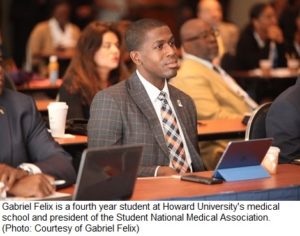
WASHINGTON – Gabriel Felix is on track to graduate from Howard University’s medical school in May. 

The 27-year-old from Rockland County, N.Y., has beaten the odds to make it this far, and knows he faces challenges going forward.

He and other black medical school students have grown used to dealing with doctors’ doubts about their abilities, and other slights: being confused with hospital support staff, or being advised to pick a nickname because their actual names would be too difficult to pronounce.

“We’re still on a steady hill toward progress,” says Felix, president of the Student National Medical Association, which represents medical students of color. But “there’s still a lot more work to do.”

After decades of effort to increase the ranks of African-American doctors, blacks remain an underrepresented minority in the nation’s medical schools.

USA TODAY examined medical school enrollment after the wide coverage of the racially controversial photo that appeared in the 1984 Eastern Virginia Medical School yearbook entry of Virginia Gov. Ralph Northam. The picture showed one person in blackface and another in a Ku Klux Klan hood and robe.

The proportion of medical students who identified as African-American or black rose from 5.6 percent in 1980 to 7.7 percent in 2016, according to the Association of American Medical Colleges. That’s a substantial increase but still short of the 13.2 percent in the general population.

The disparity matters, physicians, students and others say, because doctors of color can help the African-American community overcome a historical mistrust of the medical system – a factor in poorer health outcomes for black Americans.

“It’s been a persistent, stubborn racial disparity in the medical workforce,” says Dr. Vanessa Gamble, a professor at George Washington University. “Medical schools have tried, but it also has to do with societal issues about what happens to a lot of kids in our country these days.”

Those who have studied the disparity blame much of it on socioeconomic conditions, themselves the legacy of systemic racism. African Americans lag other Americans in household income and educational opportunity, among other indicators.

Medical schools and professional organizations have tried to boost enrollment and graduation rates by considering applicants’ socioeconomic backgrounds when reviewing grades and test scores, connecting doctors of color with elementary and middle schools and awarding more scholarship money.

They’ve achieved some success: The number of medical students who identified as African-American or black grew from 3,722 in 1980 to 6,758 in 2016, an 82 percent increase.

Individual schools have outperformed their peers.

Eastern Virginia Medical School has increased the enrollment of students of color since then. In 1984, 5 percent of M.D. students identified as black, the only category then available. In the school’s most recent class, 12.4 percent identified as African, African-American, Afro-Caribbean or black.

But further progress toward a more representative student body nationwide remains elusive. That’s due largely to the high cost of medical school – student loans average $160,000 and can take decades to pay off – and the attraction of other professional options available to the strongest minority students that cost less and require fewer years of training.

The benefits of greater enrollment could be considerable: Studies show that having more black doctors would likely improve black health in the United States. Many African-Americans remain mistrustful of the health care system, with some historic justification, and so are less likely than others to seek preventative or other care.

Gamble knows the phenomenon as well as anyone. She chaired a committee that investigated the Tuskegee Syphilis Study, the notorious experiment conducted by the U.S. Public Health Service from 1932 to 1972. Researchers withheld treatment from a group of black men with syphilis to study the progress of the disease, jeopardizing their health and that of their sexual partners.

Building pipelines to medical school
Universities are working to boost minority enrollment and increase the likelihood that students will stay in school and pass the exams required to graduate and get licensed to practice.

Dr. Thomas Madejski, president of the Medical Society of the State of New York, says efforts such as the American Medical Association’s Doctors Back to School program, in which physicians of color visit grade schools, help encourage minority students consider careers in medicine.

But he cautions that such programs don’t address all of the socioeconomic hurdles confronting African Americans.

“I think we may have to relook at some of the factors that may still be barriers and create some new initiatives to overcome those and get the citizens of the U.S. to have the physician workforce that they want and need,” Madejski says.

His group and others are pushing for tuition relief and expansion of scholarship programs for underrepresented groups.

Felix, the Howard student, calls for more outreach by physicians of color, particularly in African American communities.

Felix’s parents are from Haiti, where black doctors are a common sight. They could easily envision the career for their son. Felix says African-American parents might discourage their children.

Dr. Mia Mallory is associate dean for diversity, equity and inclusion at the University of Cincinnati medical school.

“Patients do better when they are taken care of by people who look like them,” she says. “So we’re trying to grow talented physicians that look like them and are more likely to go back into the community they came from.”

Some of what’s being done:

► New York. About a third of the state’s population is black and/or Latino, but only 12 percent of doctors in practice are. The decision of New York University’s decision to offer free tuition to medical students who maintain a certain grade point average has more than doubled the number of applicants who identify as a member of a group that’s underrepresented in medicine.

Associated Medical Schools of New York, which represents the state’s 16 public and private medical schools, says several programs give college students academic help, mentoring or other aid, and guarantee medical school acceptance upon completion.

About 500 practicing physicians from underrepresented groups graduated from one of these programs at University at Buffalo.

These were “kids who otherwise never would have gotten into medical school,” says Jo Wiederhorn, president of Associated Medical Schools of New York.

The share of black and Latino students at medical school rose from 13.5 percent in the 2010-11 school year to 15.4 percent for the past school year, Wiederhorn said.

► Maryland. University of Maryland, Baltimore County, produces more African-Americans who go on to earn dual M.D./Ph.D. degrees than any college in the country.

Its Meyerhoff Scholars program selects promising high school students for a rigorous undergraduate program that connects them with research opportunities, conferences, paid internships, and study-abroad experiences. The program is open to all people, but nearly 70 percent of the scholars are black.

The university also sends students in its Sherman Scholars program to teach math and science in disadvantaged elementary schools in the Baltimore area. That helps build an early pipeline to the university and its science and math programs.

UMBC President Freeman A. Hrabowski III says, “We’re going to find some prejudice wherever we go.” But he prefers to look for solutions that keep students of color in math and science, which increases their chances of medical school acceptance.

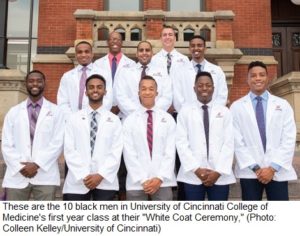
► University of Cincinnati. The College of Medicine welcomed the largest group of African-American men in its history last year at 10 – an important milestone, given the gender gap within the few black doctors.

Mallory says the school looks at students’ applications “holistically,” considering “what it took for them to get where they are.” That includes whether they had to work while they were in college and whether they had access to tutors.

The school’s Office of Diversity and Inclusion hired Dr. Swati Pandya, a physician and learning specialist, to teach medical school students how to take standardized tests and improve study habits.

All of the school’s third-year students last year passed the first of their medical licensing exams, achieving the highest average in the school’s and the highest of any medical school in the state.

Why so few?

Dr. Georges Benjamin executive director of the American Public Health Association, cites the criminal justice system’s targeting of young black men and the pull of other professions for others.

“The cream of the crop has a broader portfolio of things they can do,”  Benjamin says. “They can go into other disciplines, including MBA and law programs.”

Dr. Garth Graham is a cardiologist by training, but in a nearly 20-year career, he has become something akin to a doctor of disparities.

A former assistant secretary in the U.S. Department of Health and Human Services’ Office of Minority Health, he’s Aetna’s vice president of community health and president of the Aetna Foundation.

He also chairs the Harvard Medical School Diversity Fund, which supports science, technology, engineering and math education and other support for minority students and faculty members in kindergarten through grade 12.

The National Bureau of Economic Research studied African-American men’s use of preventive health services when they had black and non-black doctors. The bureau reported last year that black doctors could reduce black men’s deaths from heart disease by 16 deaths per 100,000 every year. That would reduce the gap between black and white men by 19 percent.

Black doctors “bring a cultural understanding because of their background in their communities,” Graham says. “Relatability is important in patient-doctor relationships.”

Contributing: Shari Rudavsky, The Indianapolis Star 

Source: Posted February 28, 2019; retrieved March 1, 2019 from: https://www.usatoday.com/story/news/health/2019/02/28/medical-school-student-african-american-enrollment-black-doctors-health-disparity/2841925002/
Since 29 of the 30 member-states of the Caribbean boast a majority Black population, it should be a natural assimilation to invite Black American students to Caribbean campuses.

By the way, this is being done already! There are medical colleges and universities operating in Caribbean communities right now that do a good job of providing the needed educational training and experience (internships). See the list of campuses in Appendix A below. Some schools have an impressive track record of success with testing and examinations on medical boards. Many alumni get residency in the US as International Medical Graduates.

This theme of medical education eco-system has been elaborated in previous blog-commentaries from the movement behind the book Go Lean … Caribbean; see a sample list here:

https://goleancaribbean.com/blog/?p=15543 Ross University Saga – Search for a New Home
This medical school actually had to move from their Dominica campus due to Hurricane Irma’s devastation in 2017. They created a new campus in Barbados.
https://goleancaribbean.com/blog/?p=15310 Industrial Reboot – Trauma 101
A successful business model is Trauma Centers affiliated with medical schools. For example: Jackson Memorial Hospital / University of Miami / Ryder Trauma Center (Miami, Florida).
https://goleancaribbean.com/blog/?p=13472 Future Focused – College, Caribbean Style
There is a comprehensive tertiary education eco-system already in the region.
https://goleancaribbean.com/blog/?p=9724 Bahamas Welcomes the New University
But no medical education option. HHMMmmmm?!?!?!
https://goleancaribbean.com/blog/?p=425 Low-cost Dominican surgeries spark warnings by US
Example of demand from patients for medical services.

The Go Lean book serves as a roadmap for the elevation of Caribbean economic engines. It describes an eco-system for a structure of autonomous industrial campuses branded Self-Governing Entities (SGE). These are ideal for Medical School campuses, with their exclusive regulation/promotion activities. Imagine bordered campuses – with backup power generations, autonomy for professional standards, building codes, and transportation easements from/to the campuses. The Go Lean movement (book and blogs) details the principles of SGE’s and job multipliers, how certain industries – education and medical deliveries are ideal – are better than others for generating multiple indirect jobs down the line (or off-campus) for each direct job on the SGE’s payroll.

One particular Caribbean city, the 2nd City in the Bahamas, Freeport, seems like a good candidate for medical education campuses. They have abandoned infrastructure that can be easily refurbished as educational facilities and student housing solutions.

But for the Bahamas to even contemplate such ventures in educational facilities, they have some heavy-lifting to do; they must first correct societal defects that deter young adults from their markets. Consider:

There is an organized movement to promote medical education in the Black community; see the foregoing news article above and the VIDEO about the Student National Medical Association in Appendix B below. Why is this important? It means economic opportunities (jobs and entrepreneurship) and better health deliveries. This is all good!

Yes, medical education – as a delivery, vocation and occupation – can facilitate better overall environments; “it” can help make our homeland a better place to live, work, learn, heal and play. 🙂

About the Book
The book Go Lean…Caribbean serves as a roadmap for the introduction and implementation of the technocratic Caribbean Union Trade Federation (CU), for the elevation of Caribbean society – for all member-states. This CU/Go Lean roadmap has these 3 prime directives:

  • Optimization of the economic engines in order to grow the regional economy to $800 Billion and create 2.2 million new jobs.
  • Establishment of a security apparatus to ensure public safety and protect the resultant economic engines.
  • Improve Caribbean governance to support these engines, including a separation-of-powers between the member-states and CU federal agencies.

The Go Lean book provides 370-pages of turn-by-turn instructions on “how” to adopt new community ethos, plus the strategies, tactics, implementations and advocacies to execute so as to reboot, reform and transform the societal engines of Caribbean society.

Download the free e-Book of Go Lean … Caribbean – now!

Who We Are
The movement behind the Go Lean book – a non-partisan, apolitical, religiously-neutral Community Development Foundation chartered for the purpose of empowering and re-booting economic engines – stresses that reforming and transforming the Caribbean societal engines must be a regional pursuit. This was an early motivation for the roadmap, as pronounced in the opening Declaration of Interdependence (Pages 12 – 13):

xi. Whereas all men are entitled to the benefits of good governance in a free society, “new guards” must be enacted to dissuade the emergence of incompetence, corruption, nepotism and cronyism at the peril of the people’s best interest. The Federation must guarantee the executions of a social contract between government and the governed.

xvi. Whereas security of our homeland is inextricably linked to prosperity of the homeland, the economic and security interest of the region needs to be aligned under the same governance. Since economic crimes … can imperil the functioning of the wheels of commerce for all the citizenry, the accedence of this Federation must equip the security apparatus with the tools and techniques for predictive and proactive interdictions.

xxiv. Whereas a free market economy can be induced and spurred for continuous progress, the Federation must install the controls to better manage aspects of the economy: jobs, inflation, savings rate, investments and other economic principles. Thereby attracting direct foreign investment because of the stability and vibrancy of our economy.

Sign the petition to lean-in for this roadmap for the Caribbean Union Trade Federation.

———–

Appendix A – List of Caribbean Medical Schools

Country or territory School Established Degree Regional/offshore WDMS CAAM-HP Other Accreditations
Anguilla(UK) Saint James School of Medicine 2010[6] MD Offshore Yes[7] CAAM-HP Probation[8]
Antigua and Barbuda American University of Antigua 2004 MD Offshore Yes[9] CAAM-HP[8] NYSED,[10]
Metropolitan University College Of Medicine 2018 MD Offshore Yes
University of Health Sciences Antigua School of Medicine 1983 MD Offshore Yes No
Aruba (NL) American University School of Medicine Aruba 2011 MD Offshore Yes Aruba Ministry of Education
Aureus University School of Medicine 2004 MD Offshore Yes No
Xavier University School of Medicine 2004 MD Offshore Yes CAAM-HP[8] ACCM[11]
Barbados American University of Barbados School of Medicine 2011 MD Offshore Yes CAAM-HP Initial Provisional[8]
American University of Integrative Sciences 1999 MD Offshore Yes No
Bridgetown International University 2017 MD Offshore Yes
Victoria University of Barbados 2017 MD Offshore Yes
Ross University School of Medicine 1978 MD Offshore Yes[12] CAAM-HP[8] NYSED,[10] Medical Board of Dominica
Washington University of Barbados 2015 MD Offshore Yes No
University of the West Indies Faculty of Medicine (Cave Hill) 1967 MBBS Regional Yes CAAM-HP[8]
Belize Central America Health Sciences University Belize Medical College 1996 MD Offshore Yes No Belize Ministry of Education
Washington University of Health & Science 2005 MD Offshore Yes No Belize Ministry of Education
Cayman Islands (UK) St. Matthew’s University School of Medicine 2002 MD Offshore Yes[13] No NYSED,[10] ACCM[11]
Cuba Escuela Latinoamericana de Medicina 1999 MD Offshore Yes No Cuban Ministry of Higher Education
Facultad de Ciencias Medicas Ciego de Avila 2000 MD Regional Yes No Cuban Ministry of Higher Education
Facultad de Ciencias Medicas Cienfuegos 1990 MD Regional Yes No Cuban Ministry of Higher Education
Facultad de Ciencias Medicas Granma 1982 MD Regional Yes No Cuban Ministry of Higher Education
Facultad de Ciencias Medicas Holguin 1976 MD Regional Yes No Cuban Ministry of Higher Education
Facultad de Ciencias Medicas Las Tunas 1986 MD Regional Yes No Cuban Ministry of Higher Education
Facultad de Ciencias Medicas Matanzas 1969 MD Regional Yes No Cuban Ministry of Higher Education
Facultad de Ciencias Medicas Pinar del Rio 1976 MD Regional Yes No Cuban Ministry of Higher Education
Facultad de Ciencias Medicas Sancti Spiritus 1994 MD Regional Yes No Cuban Ministry of Higher Education
Instituto Superior de Ciencias Medicas de La Habana 1976 MD Regional Yes No Cuban Ministry of Higher Education
Instituto Superior de Ciencias Medicas de Santiago de Cuba 1962 MD Regional Yes No Cuban Ministry of Higher Education
Instituto Superior de Ciencias Medicas de Villa Clara 1966 MD Regional Yes No Cuban Ministry of Higher Education
Universidad de Ciencias Medicas de Camaguey 1968 MD Regional Yes No Cuban Ministry of Higher Education
Universidad de Ciencias Medicas de Guantanamo 1982 MD Regional Yes No Cuban Ministry of Higher Education
Curacao(NL) Avalon University School of Medicine 2003 MD Offshore Yes[14] CAAM-HP No[8] Government of Curacao
Caribbean Medical University School of Medicine 2007 MD Offshore Yes CAAM-HP Denied[8]
John F. Kennedy University School of Medicine 2014 MD Offshore Yes No Government of Curacao
St. Martinus University Faculty of Medicine 2000 MD No Yes
Dominica All Saints University School of Medicine 2006 MD Offshore Yes No
Dominican Republic Instituto Tecnológico de Santo Domingo Escuela de Medicina 1972 MD Regional Yes CAAM-HP[8] Ministry of Higher Education, Science and Technology
Pontificia Universidad Católica Madre y Maestra Departamento de Medicina 1976 MD Regional Yes No Ministry of Higher Education, Science and Technology
Universidad Autónoma de Santo Domingo Departamento de Medicina 1538 MD Regional Yes No Ministry of Higher Education, Science and Technology
Universidad Católica Nordestana Facultad de Ciencias Medicas 1978 MD Regional Yes No Ministry of Higher Education, Science and Technology
Universidad Católica Tecnológica del Cibao Escuela de Medicina 1983 MD Regional Yes No Ministry of Higher Education, Science and Technology
Universidad Central del Este Escuela de Medicina 1970 MD Regional Yes No Ministry of Higher Education, Science and Technology
Universidad Iberoamericana (UNIBE) Escuela de Medicina 1982 MD Offshore Yes No Ministry of Higher Education, Science and Technology
Universidad Nacional Pedro Henríquez Ureña Escuela de Medicina 1966 MD Regional Yes No Ministry of Higher Education, Science and Technology
Universidad Tecnológica de Santiago Escuela de Medicina, Santiago de Los Caballeros 1979 MD Regional Yes No Secretary of State for Higher Education, Science and Technology
Universidad Tecnológica de Santiago Escuela de Medicina, Santo Domingo 1981 MD Regional Yes No Ministry of Higher Education, Science and Technology
France University of the French West Indies 2015 MD Regional Yes[15] No
Grenada St. George’s University School of Medicine 1977 MD Offshore Yes[16] CAAM-HP[8] Grenada Ministry of Health, NYSED,[10]
Guyana University of Guyana 1985 MBBS Regional Yes CAAM-HP[8]
American International School of Medicine 1999 MD Offshore Yes No World Health Organization; Ministry of Education and Health (Guyana); NAC (National Accreditation Council) of Guyana[17]
Georgetown American University 2013 MD Offshore Yes No NAC (National Accreditation Council) of Guyana[17]
Lincoln American University 2016 MD Offshore Yes No NAC (National Accreditation Council) of Guyana,[18]World Directory of Medical School,[19] Foundation for Advancement of International Medical Education and Research,[20] Educational Commission for Foreign Medical Graduates (ECFMG)[20]
Texila American University 2010 MD Offshore Yes CAAM-HP Denied[8] NAC (National Accreditation Council) of Guyana,[17] World Directory of Medical School
Alexander American University 2015 MD Offshore No No
Haiti Université d’Etat d’Haïti Faculté de Médecine 1867 MD Regional Yes No
GreenHeart Medical University 2007 MD Offshore No No World Health Organization; Ministry of Education and Health (Guyana); NAC (National Accreditation Council) of Guyana[17]
Université Lumière Faculté de Médecine 2006 MD No No
Université Notre Dame d’HaïtiFaculté de Médecine 1997 MD Regional Yes No
Université Quisqueya Faculté des Sciences de la Santé 2002 MD Yes No
Université Joseph Lafortune Faculté de Médecine 2005 MD Regional Yes[21] No
Jamaica All American Institute of Medical Sciences 2011 MD Offshore Yes[22] CAAM-HP Withdrawn[8]
University of the West Indies Faculty of Medicine (Mona) 1948 MBBS Regional Yes CAAM-HP[8]
Montserrat(UK) Seoul Central College of Medicine 2003 MD Offshore Yes No
University of Science, Arts and Technology Faculty of Medicine 2003 MD Offshore Yes CAAM-HP No[8]
Saba (NL) Saba University School of Medicine 1994 MD Offshore Yes[23] No NYSED,[10] NVAO[24]
Saint Kitts and Nevis International University of the Health Sciences (IUHS) 1998 MD Offshore Yes No Accreditation Board of Saint Kitts and Nevis[17]
University of Medicine and Health Sciences 2008 MD Offshore Yes No Accreditation Board of Saint Kitts and Nevis[17] ACCM[11]
Medical University of the Americas 1998 MD Offshore Yes[25] No ACCM,[11] NYSED[10]
Windsor University School of Medicine 2000 MD Offshore Yes CAAM-HP No[8] Accreditation Board of Saint Kitts and Nevis in the Caribbean[17]
Saint Lucia American International Medical University 2007 MD Offshore No CAAM-HP Denied[8]
Atlantic University School Of Medicine (AUSOM) 2010 MD Offshore No[26] No
College of Medicine and Health Sciences/aka Destiny University 2001 MD Offshore Yes No Provisional Accreditation from the Government of Saint Lucia
International American University College of Medicine 2003 MD Offshore Yes CAAM-HP[8] Ministry of Education, Saint Lucia
Spartan Health Sciences University 1980 MD Offshore Yes CAAM-HP[8] Ministry of Education, Saint Lucia
Washington Medical Sciences Institute 2011 MD Offshore Yes No
Saint Vincent and the Grenadines All Saints University School of Medicine 2011 MD Offshore Yes[27] CAAM-HP No[8] Recognized by Canadian Government of Designated Educational Institutions,[28] Considered a qualified Institution by the General Medical Council (UK),[29]recognized by the Ministry of Health and Ministry of Education, St. Vincent and the Grenadines,[30] IMED
American University of St Vincent School of Medicine 2012 MD Offshore Yes No National Accreditation Board (NAB) of the Government of St. Vincent and the Grenadines[31]
Saint James School of Medicine 2014[6] MD Offshore Yes[32] CAAM-HP Probation[8] National Accreditation Board (NAB) of the Government of St. Vincent and the Grenadines[33] WCFMG.
Trinity School of Medicine 2008 MD Offshore Yes CAAM-HP[8] National Accreditation Board (NAB) of the Government of St. Vincent and the Grenadines[34]
Sint Maarten(NL) American University of the Caribbean School of Medicine 1978 MD Offshore Yes[35] No NYSED,[10] ACCM[11]
Trinidad and Tobago University of the West Indies Faculty of Medicine (St. Augustine) 1967 MBBS Regional Yes CAAM-HP[8]

Source: Retrieved March 1, 2019 from: https://en.wikipedia.org/wiki/List_of_medical_schools_in_the_Caribbean

———-

Appendix B VIDEO – Student National Medical Assoc 2016 “Rep Your Region” – https://youtu.be/jsHys6jEOUo

SNMA Region III

Published on Aug 7, 2016

Share this post:
, , , , ,

Crypto-currency: Here comes ‘Trouble’

Go Lean Commentary

What materials should money be made from: Gold, Silver, Copper, Diamonds, Emeralds, Rubies and other precious stones?

How about “nothing”? Thin Air?

To insist on some orthodoxy of precious materials, would be inconsequential. Remember, the default currency now is paper. How much more precious a material is paper as opposed to Digits (1’s and 0’s). These are all close to “nothing”.

Yet, this is our economy. Yes, the medium for our currency is not the physical material, but rather: Trust.

The Trust equation is about to change, again. This time, instead of National Trust, we are looking at Corporate Trust.

Here comes the banks; here comes blockchain; here comes crypto-currency; here comes digitization.

Yes, here comes ‘trouble’. Here comes Big Wall Street Bank JPMorganChase. Here comes other players in other markets – see the news articles in the Appendices below:

  • Appendix A – JPMorganChase
  • Appendix B – Belarus
  • Appendix C – Sweden

All of these articles and news developments speak to the digitization of money and banking, highlighting that the primary ingredient in this recipe for success is Trust.

This is where this discussion comes home. In the Caribbean we need to embrace digital money and electronic payment solutions, but first we need Trust in a regional financial institution to manifest this roadmap. When we look at the reality of our Caribbean geography, we see:

American, Dutch, English, French, Spanish, Independent and Overseas Territories

Here comes trouble! We realize something very obvious: we do not trust each other!  So we may actually have to do the heavy-lifting that was always needed for our regional society to finally function as a coherent neighborhood. We have always needed to come together … in trust and unity; but never have.

Now more than ever, we must convene, collaborate and confederate banking solutions for our Caribbean homeland by committing vital resources for every Caribbean country, all 30 member-states. The basis for our trust must be, that we all have something to lose.

Then, only then, will we have no choice but to trust each other for a unified monetary and currency solution.

Trust but verify – Russian proverb Doveryai, no proveryai used by the 40th US President Ronald Reagan to emphasize “the extensive verification procedures that would enable both sides to monitor compliance with the INF Treaty of 1987 for nuclear disarmament by the US and USSR”[4].

We are urged to follow this wise “trust but verify” course of action. If it worked for bilateral cooperation between arch-enemies – USA and USSR – it can work for friendly neighbors in the Caribbean region.

The verification is key. The book Go Lean … Caribbean proposed a monetary-currency (Caribbean Dollar or C$) solution involving a cooperative of the Central Banks already in the region, dubbed the Caribbean Central Bank (CCB). Such a move should not be so unnerving. There is already currency interdependence for many member-states:

  • Eastern Caribbean Central Bank – services the monetary-currency needs of 8 countries (Antigua & Barbuda, Anguilla, Dominica, Grenada, Montserrat, St. Kitts & Nevis, St. Lucia, and St. Vincent & the Grenadines)
  • US Dollar is used as the monetary-currency solution for 4 Caribbean countries: British Virgin Islands, Puerto Rico, Turks & Caicos Islands, US Virgin Islands. (Plus used widely along with local currency in 9 countries).

With a Central Bank cooperative, we would already be half-way there! The Go Lean book (Page 73) details this CCB cooperative as follows:

The Caribbean Central Bank (CCB) is actually a cooperative among the region’s Central Banks. All the existing Central Banks, at the time of ascension, will cede their monetary powers to the CCB and continue their participation using well-established cooperative principles (Rochdale). This includes these 7 prime directives:
1). Open/voluntary membership – based on CU treaty ratification;
2). Democratic member control – the CCB cooperative is controlled by their Central Bank Governor-members, who actively participate in setting monetary policies and making tactical decisions;
3)-a. Members contribute equitably to, and democratically control, the capital of their co-operative – the C$ is the capital;
3)-b. Members are compensated for funds invested in the CCB cooperative, and decide how surpluses should be used – how much reserves to maintain and how much to return to the member-state governments;
4). Autonomous and independent – the very definition of a technocracy;
5). Provide education and training to their members and the public – the CCB champions the cause of an integrated currency to the public;
6). Co-ops cooperate with each other;
7). Work for the sustainable development of their communities through policies approved by their members – the community is the region as a whole.

Now, we can launch our own crypto-currency and electronic payments, clearing and settlements from this strong foundation. The missing ingredient, Trust, would be fulfilled. See how the underlying technology behind crypto-currencies, Blockchain, is explained in this TED Talk VIDEO here:

VIDEOHow the blockchain will radically transform the economy | Bettina Warburghttps://youtu.be/RplnSVTzvnU

TED
Published on Dec 8, 2016
– Say hello to the decentralized economy — the blockchain is about to change everything. In this lucid explainer of the complex (and confusing) technology, Bettina Warburg describes how the blockchain will eliminate the need for centralized institutions like banks or governments to facilitate trade, evolving age-old models of commerce and finance into something far more interesting: a distributed, transparent, autonomous system for exchanging value.

TEDTalks is a daily video podcast of the best talks and performances from the TED Conference, where the world’s leading thinkers and doers give the talk of their lives in 18 minutes (or less). Look for talks on Technology, Entertainment and Design — plus science, business, global issues, the arts and much more. Find closed captions and translated subtitles in many languages at http://www.ted.com/translate

Follow TED news on Twitter: http://www.twitter.com/tednews
Like TED on Facebook: https://www.facebook.com/TED
Subscribe to our channel: http://www.youtube.com/user/TEDtalksD…

A successful digital money / electronic payment scheme is very important in the strategy for elevating the Caribbean economy. The “risky” image of crypto-currency may now be nullified with all the global developments taking place.

Let’s get started!

This theme of Caribbean monetary and currency solutions have been elaborated in previous Go Lean commentaries; see a sample list here:

https://goleancaribbean.com/blog/?p=14248 Leading with Money Matters – New Almighty Caribbean Dollar
https://goleancaribbean.com/blog/?p=13744 Failure to Launch: The Quest for a Caribbean ‘Single Currency’
https://goleancaribbean.com/blog/?p=8381 Case Study on Central Banking for Puerto Rico
https://goleancaribbean.com/blog/?p=7034 The Future of Money – For the Caribbean and Beyond
https://goleancaribbean.com/blog/?p=906 Bitcoin needs regulatory framework to change ‘risky’ image
https://goleancaribbean.com/blog/?p=467 Barbados Central Bank records $3.7m loss in 2013
https://goleancaribbean.com/blog/?p=360 Central Banks Can Create Money from ‘Thin Air’ – Here’s How

The world of crypto-currency and electronic payment systems is here! But this is a good thing. The benefits of these new schemes are too enticing to ignore: fostering more e-Commerce, increasing regional money supply, mitigating Black Markets, more cruise tourism spending, growing the economy, creating jobs, enhancing security and optimizing governance.

Yep! Count us in!

Now is the time for all stakeholders of the Caribbean, (residents, visitors, merchants, vendors, bankers, and governing institutions), to lean-in for the empowerments described in the book Go Lean roadmap. These empowerments can help to make the Caribbean a better place to live, work and play. 🙂

About the Book
The book Go Lean…Caribbean serves as a roadmap for the introduction and implementation of the technocratic Caribbean Union Trade Federation (CU) and aligning Caribbean Central Bank (CCB), for the elevation of Caribbean society – for all member-states. This CU/Go Lean roadmap has these 3 prime directives:

  • Optimization of the economic engines in order to grow the regional economy to $800 Billion and create 2.2 million new jobs.
  • Establishment of a security apparatus to ensure public safety and protect the resultant economic engines.
  • Improve Caribbean governance to support these engines, including a separation-of-powers between the member-states and CU federal agencies.

The CCB provides a comprehensive role in this roadmap: facilitating and settling interbank transactions for the region, especially in light of the introduction of for new digital payment systems: new cards, telephony apps and crypto-currency. The Go Lean book provides 370-pages of turn-by-turn instructions on these solutions; and on “how” to adopt new community ethos, plus the strategies, tactics, implementations and advocacies to execute so as to reboot, reform and transform the societal engines of Caribbean society.

Download the free e-Book of Go Lean … Caribbean – now!

Who We Are
The movement behind the Go Lean book – a non-partisan, apolitical, religiously-neutral Community Development Foundation chartered for the purpose of empowering and re-booting economic engines – stresses that reforming and transforming the Caribbean societal engines must be a regional pursuit. This was an early motivation for the roadmap, as pronounced in the opening Declaration of Interdependence (Pages 12 – 13):

xi. Whereas all men are entitled to the benefits of good governance in a free society, “new guards” must be enacted to dissuade the emergence of incompetence, corruption, nepotism and cronyism at the peril of the people’s best interest. The Federation must guarantee the executions of a social contract between government and the governed.

xvi. Whereas security of our homeland is inextricably linked to prosperity of the homeland, the economic and security interest of the region needs to be aligned under the same governance. Since economic crimes … can imperil the functioning of the wheels of commerce for all the citizenry, the accedence of this Federation must equip the security apparatus with the tools and techniques for predictive and proactive interdictions.

xxiv. Whereas a free market economy can be induced and spurred for continuous progress, the Federation must install the controls to better manage aspects of the economy: jobs, inflation, savings rate, investments and other economic principles. Thereby attracting direct foreign investment because of the stability and vibrancy of our economy.

Sign the petition to lean-in for this roadmap for the Caribbean Union Trade Federation.

————-

Appendix A – JPMorgan launches ‘JPM Coin’ cryptocurrency, becomes first major bank to create its own digital coin By: Jade Scipioni

Nearly two years after JPMorgan Chase chief Jamie Dimon Opens a New Window. famously bashed bitcoin, calling it a “fraud,” the big bank announces it has created its own  cryptocurrency Opens a New Window. prototype.

Dubbed JPM Coin, the new tokens, which will be the first cryptocurrency backed by a U.S. bank, are set to be tested to instantly settle transactions, on a small portion of payments, among clients of the big bank’s wholesale payments business.

“The JPM Coin isn’t money per se. It is a digital coin representing United States Dollars held in designated accounts at JPMorganChase,” the company said in a press release.

In short, a JPM Coin will have a fixed value redeemable for one U.S. dollar. However, it won’t trade freely like bitcoin or other cryptocurrencies.

“When one client sends money to another over the blockchain, JPM Coins are transferred and instantaneously redeemed for the equivalents amount of U.S. dollars, reducing the typical settlement time,” the company added.

JPMorgan Opens a New Window. said it believes the new technology can help lower costs and risks associated with big money transfers around the world.

While the new tokens are initially designed for major ‘institutional clients’ for business-to-business transactions, not individuals, the cost-savings and efficiency benefits “would extend to the end customers of our institutional clients,” the company said.

The news does not come as a surprise either, as JPMorgan has been leading the charge in testing blockchain payments for more than two years.

As reported by FOX Business last September,Opens a New Window. more than 157 banks globally have joined a blockchain-based payment project led by JPMorgan to test how to streamline cross-border transactions.

The shared ledger called Interbank Information Network (IIN) was built by Dimon’s team in 2017 through its own blockchain platform called Quorum.

While Dimon did famously call bitcoin a “fraud” and “worse than tulip bulbs” — a reference to the 17th century economic bubble  — he and his key managers have consistently said that blockchain and regulated digital currencies do have promise.

Source: Posted February 14, 2019; retrieved February 19, 2019 from: https://www.foxbusiness.com/features/jpmorgan-set-to-roll-out-the-first-bank-backed-cryptocurrency

—— Related: Several banks (75) have now joined JPMORGAN to test Blockchain Payments

————-

Appendix B – Belarus’ Biggest Bank is ‘Working on’ Launching Its Own Cryptocurrency Exchange
By: Jimmy Aki, CCN
According to a report by local news outlet BeITA, Belarusbank, the largest bank in Belarus, is considering the launch of its very own cryptocurrency exchange platform.

The plans for the exchange were revealed by Viktor Ananich, the Chairman of Belrusbank’s board. Speaking with Belarus 1 TV channel, Ananich remarked:
“We are considering a possibility to establish a cryptocurrency exchange. We are working on it.”

For Belarusbank, Digitization is the Future
The bank is looking to intensify its focus on digitization, and it is reportedly seeking ways to expand its range of services by forming alliances with various mobile service providers. In addition to the reported cryptocurrency exchange, BeITA also stated that the bank is in the process of issuing virtual cards soon.

Source: Posted January 31, 2019; retrieved February 20, 2019 from: https://finance.yahoo.com/news/belarus-biggest-bank-working-launching-155444267.html

————-

Appendix C – Sweden Officially Backs a Cryptocurrency and Establishes It As Their Official Coin

It’s finally happened. A major worldwide government has just bestowed a huge vote of confidence and legitimacy onto the world of cryptocurrencies. Sweden, in an unprecedented move, just announced that they are officially adopting a certain cryptocurrency as Sweden’s official coin!
The Swedish government just informed us that they have chosen a preferred firm for the purchase and marketing of their new coin – Kryptonex Research Group. The sales of Sweden’s coin officially started on Friday, April 27th and currently these coins can be bought only from Kryptonex Research Group.

Industry experts weren’t surprised when Kryptonex was chosen by Sweden as their preferred firm for the release of their official coin. They had all seen for their own eyes the cutting edge insight that Kryptonex had brought to the cryptocurrency markets for their clients.

See the full article here: https://elevenews.com/2018/04/28/sweden-officially-backs-cryptocurrency-and-establishes-it-as-their-official-coin/ – posted April 28, 2018; retrieved January 20, 2018.

Share this post:
, , ,
[Top]

War on Cancer: Survivors Emerge from ‘Better Battles’

Go Lean Commentary

In 1971, there was a War Declaration … against the dreaded disease of Cancer.

We all know someone that has battled cancer. Many of us know people who fought and lost. Truly, the designation of a War on Cancer is appropriate. Here is the historical details as related in the 2013 book Go Lean … Caribbean on Page 157:

The Bottom Line on Cancer Industrial Complex
Cancer strikes nearly 1 in every 2 men and more than 1 in every 3 women. When President Richard Nixon signed the landmark measure, National Cancer Act, in 1971, he declared it as America’s War on Cancer. After 40 years, the overall incidence of cancer in the U.S. has escalated to epidemic proportions, now striking 1.8 million, and killing about 550,000 annually. The median age for the diagnosis of cancer is 67 in adults, and six in children. The war is being lost, even though it is being fought at the public’s expense (medically & financially).
.
To win the war on cancer would mean preventing cancer. Yet cancer is a multi-billion dollar business and preventing cancer would be bad for business. It is bad for the pharmaceutical and mammography businesses. These industries have intricate ties to U. S. policy makers, directing research funds to insure their continued profits in cancer diagnosis/treatment. – Cancer Prevention Coalition’s www.PreventCancer.com.
.
There are many medical practitioners and general advocates alike, that feel that cancer treatment uses “slash and burn” technology. They claim that these treatment schemes are a racket, designed to fleece the public. They point out that chemo-therapy costs $10,000 – $30,000 a month, and its success rate today is no better than 40 years ago. “It’s firstly a business; as long as health is considered to be a profit center, there is no reason for the cancer-industrial complex to cure cancer”.

The Go Lean book does not portend to be a manual on diagnosing or treating cancer. But it does strategize a roadmap for economic empowerment. It clearly relates that healthcare, disease management, cancer treatments and medicines are germane to the Caribbean quest for health, wealth and happiness. The primary author of the book was inspired to write this roadmap, after his sister died after a 32-year battle with cancer – See Dedication (Page 2). This supplemented the fact that their mother died first of breast cancer, almost 50 years ago in 1970.

This is now war …

… battles continue … there are victors and victims.

Yes, some people do survive their battles with cancer. They live to share lessons with the rest of us. These lessons are not just medical, but emotional, social and yes: economic as well.

Examine the experiences here in this news article from the American Daily Newspaper “USA Today“. The story is too important to ignore; (despite the American settings, there is application for us in the Caribbean as well):

Title: Life after cancer: More survivors living longer, facing new health challenges
Sub-title:
More cancer patients are living longer. Few are getting the help they need to stay healthy
By: Kim Painter, USA TODAY

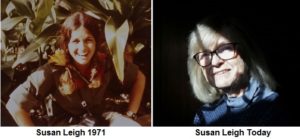
When Susan Leigh finished treatment for Hodgkin lymphoma back in 1972, she says, “no one knew what was going to happen.”

Certainly, no one knew that the Arizona woman would develop three more cancers and heart damage, all likely linked to the aggressive radiation and chemotherapy treatments that helped save her life.

Those treatments were new at the time. When Leigh finished them, apparently cancer-free, she was a pioneer.

“I remember saying to my radiation doctor, what do I do now?” recalls Leigh, 71, a retired cancer nurse. “What do I do to keep this from coming back and to recover?

“He said he really didn’t know. He said maybe I could try taking a good multivitamin pill.”

Four decades later, doctors know much more. They know that some cancer survivors are at increased risk for other cancers later, and for problems ranging from brittle bones to heart failure.

They also know more about how to help patients head off or manage those risks.

But few patients are getting that help – even 13 years after the influential Institute of Medicine warned that many survivors were “lost in transition,” and weren’t getting adequate follow-up care.

The number of cancer survivors continues to grow, yet high-quality, coordinated survivorship care is still infrequent,” experts from the National Academies of Sciences, Engineering, and Medicine said in a recent follow-up report (the nonprofit includes the former Institute of Medicine).

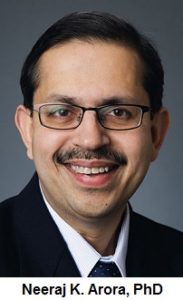
“Strides have been made, but there’s also been an acceleration in the demand,” says Neeraj Arora, associate director for science at the nonprofit Patient-Centered Outcomes Research Institute.

Arora, a 25-year survivor of non-Hodgkin lymphoma, helped write the report.

Even today, Leigh says, too many people “don’t get the kind of follow-up care they need.”

“Doctors say, ‘You are OK, we don’t need to see you anymore.’ ”

Numbers are growing – and so is the need
The American Cancer Society says more than 15.5 million Americans with a history of cancer were alive in 2016. By 2026, the group says, that number will rise to 20.3 million.

The population of survivors is also aging. Nearly two thirds are over age 65, meaning most face health challenges beyond those linked to their cancer.

And those over age 85 are the fastest growing segment – giving famous survivors such as Supreme Court Justice Ruth Bader Ginsburg, 85, and former President Jimmy Carter, 94, a lot of generational company.

Meanwhile, cancer patients, young and old, are living longer.

“Now, thanks to early detection and better treatment, we have a lot more people living many years beyond their initial diagnosis,” says Catherine Alfano, the cancer society’s vice president for survivorship.

The five-year survival rate for all cancers combined stands at 70 percent for whites and 63 percent for blacks, the society says. That’s up from 39 percent for whites and 27 percent for blacks in the 1960s.

People treated in 2019 might do still better. But they also might face unknown long-term risks, even from treatments meant to be less toxic and more targeted than those of the past.

Surviving cancer does not mean leaving health concerns behind.

Cancers can recur. And some survivors face an increased risk of other cancers, sometimes related to their treatment.

Some cancer treatments can damage bones, hearts and other organs in ways that might not show up for decades. Leigh and Arora can attest to that: both have been diagnosed with congestive heart failure.

Patients can leave initial treatment with ongoing symptoms. More than a quarter of patients in one study reported lingering problems such as fatigue, sleep disturbances and foggy thinking.

In another survey, 24 percent of survivors reported poor physical health and 10 percent reported poor mental health – roughly double the rates for other adults.

Psychologist Julia Rowland led the National Cancer Institute’s Office of Cancer Survivorship for 18 years.

“People are now thinking of cancer survival not just in terms of lifespan but health span,” she says. “There’s a growing recognition that it’s not just the length of life but the quality of life.”

The push for survivorship care plans
Arora, now 49, was diagnosed two decades after Leigh. But he also left treatment unprepared for his future.

“I got absolutely top-notch treatment. But when I left, after five years, my doctor said, ‘You are good.’ He said, ‘You don’t need to see anybody.’ Which today I know is not the right thing to say.  But that’s where the field was then.”

Under reforms first envisioned by the Institute of Medicine in 2006, patients are supposed to leave initial treatment with two things: A brief written summary that lists all treatments received and a survivorship care plan.

For a breast cancer survivor, the plan might prescribe regular mammograms and an exercise program. It might tell someone who took heart-toxic chemotherapy drugs to watch for cardiac symptoms. Some patients might be urged to keep seeing their cancer care team, often or occasionally; others might be told they face few cancer-related risks and can return to routine care by their regular doctors.

Ideally, advocates say, the plan starts a dialogue among providers, patients and caregivers and tells patients where to seek help with mental health, family matters, jobs and finances.

But when 53 top cancer centers were surveyed several years after the initial recommendation, fewer than half were using the plans.

The Commission on Cancer, which accredits cancer centers, started in 2015 to require them to phase in the plans. But uptake was so slow that the commission altered the standard in 2018 to allow more time for full implementation.

Costs, staffing shortages and inadequate electronic records all slow adoption, the National Academies reports.

Even where care plans have been adopted, their usefulness has not been proved.

“The data is not impressive,” Rowland says. One reason, she says, is that “people are treating this not as a conversation, but a piece of paper.”

Innovative cancer programs are now weaving survival planning into every phase of care, Alfano says. They’re also seeking better ways to use technology to track and guide patients.

But those innovations are not reaching enough patients, she says.

Progress for survivors
Leigh says much progress has been made since she became a founding member of the National Coalition for Cancer Survivorship in 1986.

“When we first started this, we were called cancer victims,” she says. “It was a way of looking a it that said you didn’t have any control.”

Today, the survivor community embraces everyone from newly diagnosed patients to the growing cadre of chronic cancer patients who stay on therapies for years.

Some, Leigh notes, reject the label “survivor,” for various reasons, including perceptions that it excludes those who will never be cancer-free. But even that debate, she says, is a sign that the movement has matured.

Another sign of progress: Most states now at least mention cancer survivors in their official cancer control plans, says Larissa Nekhlyudov, an associate professor of medicine at Harvard Medical School.

It’s not clear what impact state efforts have had, she says. But some states have launched innovative programs, often with funding from the federal Centers for Disease Control and Prevention.

In Kansas, for example, health officials worked with farmer’s markets for seniors to boost fruit and vegetable consumption among survivors. Iowa created educational materials for survivors facing sexual problems. Vermont trained survivors to counsel newly diagnosed patients as part of a program called Kindred Connections.

Volunteer David Cranmer says the program helps the volunteers almost as much as it helps those they counsel.

“We have training sessions with potluck suppers, and people get together and tell their stories,” says Cranmer, 70, of Williston, Vermont.

His own story includes a bone marrow transplant for chronic myeloid leukemia in 1999, followed by thyroid cancer. He’s now undergoing long-term chemotherapy for another condition, amyloidosis.

Despite his difficulties, he says, his story offers hope – and plants the idea that today’s cancer patients can and should plan for their futures.

“Most people aren’t thinking five or ten years from now. They are thinking about today,” he says. “But when I call up and say I’m a 20-year cancer survivor, that turns on a light that oh, there is life after cancer.”

Source: USA Today Newspaper; posted February 15, 2019; retrieved February 19, 2019 from: https://www.usatoday.com/in-depth/news/50-states/2019/02/13/life-after-cancer-survivors-oncology-survivorship-plans-long-term-health/2794121002/

————

Related: Advice for cancer patients: plan on surviving

————

VIDEO – Four-time cancer survivor pioneers recovery and advocacy – https://www.usatoday.com/videos/news/2019/02/13/four-time-cancer-survivor-pioneers-recovery-and-advocacy/2859322002/

USA TODAY – Susan Leigh has beaten multiple cancers and heart problems and now champions survivorship care plans for patients and their families.

Lessons abound – we must Battle Cancer Better:

  • We reap what we sow in this war. Hard work, smart work and better work pays off in victory.
  • Some places are better for surviving cancer than others.
  • The battle continues … even after cancer has been defeated … initially.
  • There are high-tech (advances drugs and surgical procedures) and low-tech solutions (diet, exercise, stress management, positivity, etc.).
  • The Caribbean must prepare and invest in Research & Development (R&D) and treatment deliveries for our people and visiting guests (patients) who may want to benefit from a new Caribbean commitment to Battle Cancer Better.

This theme has been elaborated upon in previous Go Lean commentaries; see a sample list here:

https://goleancaribbean.com/blog/?p=7822 Cancer: Doing More
Many Role Models want to invest their time, talent (business & entrepreneurship) and treasuries in this quest to impact the world of cancer R&D and treatment. This is good! This is better if/when we invite them to bring their operations to a Caribbean address. We have the perfect structure to Do More for cancer: Self-Governing Entities are detailed in the Go Lean roadmap.
https://goleancaribbean.com/blog/?p=3276 Role Model Shaking Up the World of Cancer
One person can make a difference in cancer R&D and treatment. We should always incentivizes innovators. In fact, the Go Lean roadmaps invites them to avail our Self-Governing Entity concepts for ful industrialization of medical research and delivery.
https://goleancaribbean.com/blog/?p=2522 The Cost of Cancer Drugs
The Americans eco-system may not be the best role model for emulating R&D and treatment for cancer. Their Crony-Capitalism is so acute  that their motives maybe profit more so than life.
https://goleancaribbean.com/blog/?p=554 Cuban cancer medication registered in 28 countries
Innovation in cancer drugs and treatment have already emerged from the Caribbean – Cuba or all places have doubled-down in their R&D ethos. Any apathy towards their politics should not deter medical progress – lives are at stake.
https://goleancaribbean.com/blog/?p=286 PR’s Comprehensive Cancer Center Project Breaks Ground
The Caribbean needs to facilitate an atmosphere for Cancer R&D and Treatment. There can be an organized industry for this quest. Jobs can be created, in addition to Battling Cancer Better.

Cancer is a crisis … everywhere. This is not just an American drama and solutions do not only emerge from America.

The Go Lean book demonstrates how developing the ethos that a “crisis is a terrible thing to waste”, could help save lives … and communities. There are winning battles in the War on Cancer, but we must do the heavy-lifting to succeed.

Let’s fight … and keep on battling!

Many of our loved ones have died trying. Let’s not allow their deaths to be in vain. Let’s work harder, smarter and better and win more battles in this War on Cancer. This is how we can make our homeland a better place to live, work, heal and play. 🙂

About the Book
The book Go Lean…Caribbean serves as a roadmap for the introduction and implementation of the technocratic Caribbean Union Trade Federation (CU), for the elevation of Caribbean society – for all member-states. This CU/Go Lean roadmap has these 3 prime directives:

  • Optimization of the economic engines in order to grow the regional economy to $800 Billion and create 2.2 million new jobs.
  • Establishment of a security apparatus to ensure public safety and protect the resultant economic engines.
  • Improve Caribbean governance to support these engines, including a separation-of-powers between the member-states and CU federal agencies.

The Go Lean book provides 370-pages of turn-by-turn instructions on “how” to adopt new community ethos, plus the strategies, tactics, implementations and advocacies to execute so as to reboot, reform and transform the societal engines of Caribbean society.

Download the free e-Book of Go Lean … Caribbean – now!

Who We Are
The movement behind the Go Lean book – a non-partisan, apolitical, religiously-neutral Community Development Foundation chartered for the purpose of empowering and re-booting economic engines – stresses that reforming and transforming the Caribbean societal engines must be a regional pursuit. This was an early motivation for the roadmap, as pronounced in the opening Declaration of Interdependence (Pages 11 – 13):

viii. Whereas the population size is too small to foster good negotiations for products and commodities from international vendors, the Federation must allow the unification of the region as one purchasing agent, thereby garnering better terms and discounts.

ix. Whereas the realities of healthcare and an aging population cannot be ignored and cannot be afforded without some advanced mitigation, the Federation must arrange for health plans to consolidate premiums of both healthy and sickly people across the wider base of the entire Caribbean population. The mitigation should extend further to disease management, wellness, obesity and smoking cessation programs.

xi. Whereas all men are entitled to the benefits of good governance in a free society, “new guards” must be enacted to dissuade the emergence of incompetence, corruption, nepotism and cronyism at the peril of the people’s best interest. The Federation must guarantee the executions of a social contract between government and the governed.

xvi. Whereas security of our homeland is inextricably linked to prosperity of the homeland, the economic and security interest of the region needs to be aligned under the same governance. Since economic crimes … can imperil the functioning of the wheels of commerce for all the citizenry, the accedence of this Federation must equip the security apparatus with the tools and techniques for predictive and proactive interdictions.

xxiv. Whereas a free market economy can be induced and spurred for continuous progress, the Federation must install the controls to better manage aspects of the economy: jobs, inflation, savings rate, investments and other economic principles. Thereby attracting direct foreign investment because of the stability and vibrancy of our economy.

Sign the petition to lean-in for this roadmap for the Caribbean Union Trade Federation.

Share this post:
, ,
[Top]

Role Models in Pan-Africana: W.E.B. Du Bois

Go Lean Commentary

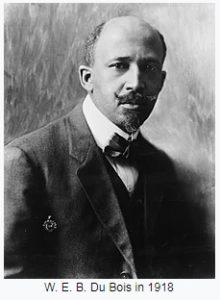
Here’s the summary of the life and legacy of W.E.B. Du Bois – see Appendix below:
The smartest Black man in America – the first to earn a doctorate – “wised” up and left America.

Du Bois lived from February 23, 1868 to August 27, 1963. That dash in between birth and death (1868 – 1963) was a long learning period for him (… and us). He died in Africa …

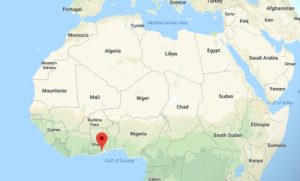
… after abandoning his American citizenship and taking up residence in Ghana, West Africa.

Dr. Du Bois was a sociologisthistoriancivil rights activistPan-Africanist, author, writer, editor and professor. He was front-and-center of all efforts to reform and transform America’s relations with the African-American population during his lifetime:

Du Bois’s life-long creed was that African-Americans should fight for equal rights and higher opportunities, rather than passively submit to the segregation and discrimination of White Supremacy[53]; he felt that in time, they would succeed.

“Silly Rabbit” …

Perhaps the biggest lesson he taught us was that the America of old could not be redeemed.

Go back to Africa! – chant of so many White Americans objecting to Civil Rights protests and demonstrations.

So simple, yet still so wise.

This is Black History Month; the media is filled with biographies or men and women who have toiled, labored and achieved in America despite the suppression, repression and oppression against them. Most just endured … until their end. This one though – Du Bois – the world smartest Black Man – in his day – did something different-better: He left!

Yes, Dr. Du Bois abandoned his American citizenship de facto (all practicality), not “de jure” (by law). How?

  • Even though Du Bois was not convicted [of any crimes], the [US] government confiscated Du Bois’s passport [in 1951] and withheld it for eight years.[261]
  • In 1958, Du Bois regained his passport …
  • In early 1963, the United States refused to renew his passport, so he made the symbolic gesture of becoming a citizen of Ghana.[277] While it is sometimes stated that he renounced his U.S. citizenship at that time,[278][279][280] and he did state his intention to do so, Du Bois never actually did.[281] His health declined during the two years he was in Ghana, and he died on August 27, 1963, in the capital of Accra at the age of 95.[277]

This history is apropos to consider now during February, during Black History Month. This entry – 5 of 5 – completes this series from the movement behind the book Go Lean … Caribbean in consideration of the impact that Black people have had on the recent history of modern society.

The full list of commentaries in the series are cataloged as follows:

  1. Black History Month 2019: Dr. Bennet Omalu – Definer of Gladiator Sports
  2. Black History Month 2019: Marcus Garvey’s World View
  3. Black History Month 2019: Starting 75 years of Bob Marley’s legacy
  4. Black History Month 2019: Angela Davis – Hero or Villian?
  5. Black History Month 2019: W.E.B. Du Bois – Moved to Africa for Later Life

Though he was not of Caribbean heritage, this submission about Dr. Du Bois helps us to appreciate that it is difficult for Black-and-Brown people to prosper where planted in the USA. Du Bois is hereby presented as a Role Model for our quest to dissuade Caribbean youth from leaving their homelands for American shores and encouraging the Diaspora there already to contemplate repatriating back home.

In all truth and fairness, change finally did come to America. The next generation of activists and advocates were able to “stand on the shoulders of Du Bois – and others – accomplishments” and reached greater heights … even an African-American President. This was openly acknowledged immediately after his death on August 27, 1963, on the occasion of Martin Luther King’s “I have a Dream” speech on August 28.

The following day, at the March on Washington, speaker Roy Wilkins asked the hundreds of thousands of marchers to honor Du Bois with a moment of silence.[282]

The Civil Rights Act of 1964, embodying many of the reforms Du Bois had campaigned for his entire life, was enacted almost a year after his death.[283]

But this Go Lean movement has repeatedly asserted that America is not home for the Black-and-Brown of the Caribbean. The racism that Dr. Du Bois navigated has only gone underground; so many facets of American life still reflect a “Less Than” disposition for Black Americans, even more so for those of Caribbean heritage. Many previous commentaries have highlighted the need for Caribbean people to Go Home and/or Stay Home; consider this sample here:

https://goleancaribbean.com/blog/?p=15126 Time to Go: States must have Population Increases
https://goleancaribbean.com/blog/?p=15123 Time to Go: Blacks Get Longer Sentences From “Republican” Judges
https://goleancaribbean.com/blog/?p=15121 Time to Go: Racist History of Loitering
https://goleancaribbean.com/blog/?p=15117 Time to Go: Mandatory Guns – Say it Ain’t So
https://goleancaribbean.com/blog/?p=15093 Time to Go: “Windrush” – 70th Anniversary of Migration to the UK
https://goleancaribbean.com/blog/?p=10657 Stay Home! Outreach to the Diaspora – Doubling-down on Failure
https://goleancaribbean.com/blog/?p=10654 Stay Home! Immigration Realities in the US
https://goleancaribbean.com/blog/?p=10629 Stay Home! Remembering ‘High Noon’ and its Back-Story
https://goleancaribbean.com/blog/?p=9648 Time to Go: Public Schools for Black-and-Brown
https://goleancaribbean.com/blog/?p=9646 Time to Go: American Vices; Don’t Follow
https://goleancaribbean.com/blog/?p=9626 Time to Go: Marginalizing Our Vote
https://goleancaribbean.com/blog/?p=9219 Time to Go: Logic of Senior Immigration
https://goleancaribbean.com/blog/?p=9216 Time to Go: No Respect for our Hair
https://goleancaribbean.com/blog/?p=9214 Time to Go: Spot-on for Protest

Dr. W.E.B Du Bois is dead-and-gone now, but his legacy remains. Let’s not let his labors go in vain.

Take heed.

Learn to “prosper where planted” in the Caribbean. Yes, we can!

This is what so many of our forefathers lived and died for:

Oh, island in the sun
Willed to me by my father’s hand
All my days I will sing in praise
Of your forest, waters,
Your shining sand … – Calypso song by Harry Belafonte – Island in the Sun

As we close-out this series on great Black men and women who have impacted the recent history of modern society, let’s give a “shout of gratitude” to these Role Models of the past – they are deserving of double honor. Let us now lean-in to this roadmap described in the Go Lean book to reform and transform our Caribbean homeland. We truly believe that …

… Yes, we can!

Reforming and transforming America may be possible … eventually. But it will take less effort now to make our Caribbean homeland a better place to live, work and play. 🙂

About the Book
The book Go Lean…Caribbean serves as a roadmap for the introduction and implementation of the technocratic Caribbean Union Trade Federation (CU), for the elevation of Caribbean society – for all member-states. This CU/Go Lean roadmap has these 3 prime directives:

  • Optimization of the economic engines in order to grow the regional economy to $800 Billion and create 2.2 million new jobs.
  • Establishment of a security apparatus to ensure public safety and protect the resultant economic engines.
  • Improve Caribbean governance to support these engines, including a separation-of-powers between the member-states and CU federal agencies.

The Go Lean book provides 370-pages of turn-by-turn instructions on “how” to adopt new community ethos, plus the strategies, tactics, implementations and advocacies to execute so as to reboot, reform and transform the societal engines of Caribbean society.

Download the free e-Book of Go Lean … Caribbean – now!

Who We Are
The movement behind the Go Lean book – a non-partisan, apolitical, religiously-neutral Community Development Foundation chartered for the purpose of empowering and re-booting economic engines – stresses that reforming and transforming the Caribbean societal engines must be a regional pursuit. This was an early motivation for the roadmap, as pronounced in the opening Declaration of Interdependence (Pages 12 – 13):

xi. Whereas all men are entitled to the benefits of good governance in a free society, “new guards” must be enacted to dissuade the emergence of incompetence, corruption, nepotism and cronyism at the peril of the people’s best interest. The Federation must guarantee the executions of a social contract between government and the governed.

xix. Whereas our legacy in recent times is one of societal abandonment, it is imperative that incentives and encouragement be put in place to first dissuade the human flight, and then entice and welcome the return of our Diaspora back to our shores. This repatriation should be effected with the appropriate guards so as not to imperil the lives and securities of the repatriated citizens or the communities they inhabit. The right of repatriation is to be extended to any natural born citizens despite any previous naturalization to foreign sovereignties.

xxxiii. Whereas lessons can be learned and applied from the study of the recent history of other societies, the Federation must formalize statutes and organizational dimensions to avoid the pitfalls of communities… . On the other hand, the Federation must also implement the good examples learned from developments/communities …

Sign the petition to lean-in for this roadmap for the Caribbean Union Trade Federation.

——————–

Appendix A – Reference: W.E.B. Du Bois

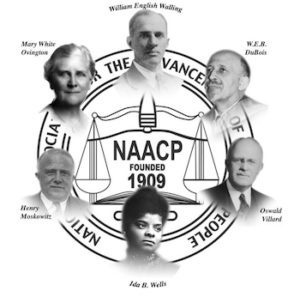
William Edward Burghardt Du Bois (February 23, 1868 – August 27, 1963) was an American sociologisthistoriancivil rights activistPan-Africanist, author, writer and editor. Born in Great Barrington, Massachusetts, Du Bois grew up in a relatively tolerant and integrated community, and after completing graduate work at the University of Berlin and Harvard, where he was the first African American to earn a doctorate, he became a professor of history, sociology and economics at Atlanta University. Du Bois was one of the founders of the National Association for the Advancement of Colored People (NAACP) in 1909.

Before that, Du Bois had risen to national prominence as the leader of the Niagara Movement, a group of African-American activists who wanted equal rights for blacks. Du Bois and his supporters opposed the Atlanta compromise, an agreement crafted by Booker T. Washington which provided that Southern blacks would work and submit to white political rule, while Southern whites guaranteed that blacks would receive basic educational and economic opportunities. Instead, Du Bois insisted on full civil rights and increased political representation, which he believed would be brought about by the African-American intellectual elite. He referred to this group as the Talented Tenth and believed that African Americans needed the chances for advanced education to develop its leadership.

Racism was the main target of Du Bois’s polemics, and he strongly protested against lynchingJim Crow laws, and discrimination in education and employment. His cause included people of color everywhere, particularly Africans and Asians in colonies. He was a proponent of Pan-Africanism and helped organize several Pan-African Congresses to fight for the independence of African colonies from European powers. Du Bois made several trips to Europe, Africa and Asia. After World War I, he surveyed the experiences of American black soldiers in France and documented widespread prejudice in the United States military.

Du Bois was a prolific author. His collection of essays, The Souls of Black Folk, was a seminal work in African-American literature; and his 1935 magnum opus, Black Reconstruction in America, challenged the prevailing orthodoxy that blacks were responsible for the failures of the Reconstruction Era. Borrowing a phrase from Frederick Douglass, he popularized the use of the term color line to represent the injustice of the separate but equal doctrine prevalent in American social and political life. He opens The Souls of Black Folk with the central thesis of much of his life’s work: “The problem of the twentieth century is the problem of the color-line.”

He wrote one of the first scientific treatises in the field of American sociology, and he published three autobiographies, each of which contains essays on sociology, politics and history. In his role as editor of the NAACP’s journal The Crisis, he published many influential pieces. Du Bois believed that capitalism was a primary cause of racism, and he was generally sympathetic to socialist causes throughout his life. He was an ardent peace activist and advocated nuclear disarmament. The United States’ Civil Rights Act, embodying many of the reforms for which Du Bois had campaigned his entire life, was enacted a year after his death.

Source: Retrieved February 7, 2019 from: https://en.wikipedia.org/wiki/W._E._B._Du_Bois

Share this post:
, , ,
[Top]

Role Models in Pan-Africana: Angela Davis – Hero or Villian?

Go Lean Commentary

He who does nothing makes no mistakes.

If this proverb is correct then the opposite must also have some merit: “those who are highly accomplished will make mistakes … and enemies along the way”. This can be said about most Civil Rights activists. In fact, the book Go Lean…Caribbean asserts that there must be effective advocates in society if change is to be forged; then the book lists some samples and examples like Mohandas Gandhi (India) and Dr. Martin Luther King (US Civil Rights). Both of these men were killed by assassins, their enemies.

The Caribbean wants change and progress; we want to reform and transform; we will also need advocates and sacrifice; (hopefully no assassinations). An earlier advocate Abolitionist Frederick Douglass is quoted as saying:

“Those who profess to favor freedom, yet deprecate agitation, are men who want crops without plowing up the ground. They want rain without thunder and lightening. They want the ocean without the awful roar of its many waters. This struggle may be a moral one; or it may be a physical one; or it may be both moral and physical; but it must be a struggle. Power concedes nothing without a demand. It never did and it never will.”
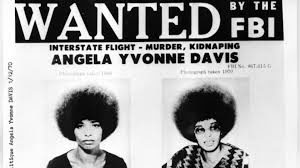
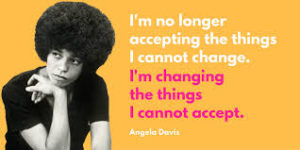
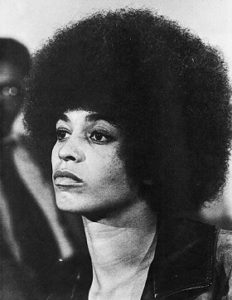
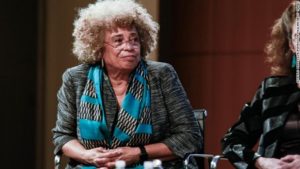
This is Black History Month; the encyclopedia is filled with biographies or men and women who have agitated, plowed, enticed thunder-lightening, roared and struggled; (we have address many in the postings of this commentary; see below). There is one more to consider; that of an American Civil Rights Activist with a long reach around the world, Dr. Angela Davis. Davis is associated with Good, Bad and Ugly; her biography features good deeds, bad deeds and some “ugly”.

Yes, Angela Davis’s resumé is not so straight-forward; to say she has “a controversial past” is kind of simplistic. Here are some highlights, according to the news article in Appendix A below:

  • Activism with the Black Panthers.
  • Running for Vice-President of the United States on the Communist party ticket.
  • Her role in a 1970 hostage situation in a California courtroom, where a judge and three others were killed. (She was accused of providing the weapons used in the attack and landed on the FBI Ten Most Wanted list, but was eventually acquitted).

This history is apropos to consider during this February, during Black History Month. This entry is 4 of 5 in this series from the movement behind the book Go Lean … Caribbean in consideration of the impact that Black people have had on the recent history of modern society.

The full list of commentaries in the series are cataloged as follows:

  1. Black History Month 2019: Dr. Bennet Omalu – Definer of Gladiator Sports
  2. Black History Month 2019: Marcus Garvey’s World View
  3. Black History Month 2019: Starting 75 years of Bob Marley’s legacy
  4. Black History Month 2019: Angela Davis – Hero or Villian?
  5. Black History Month 2019: WEB DuBois – Moved to Africa for Later Life

Though not of Caribbean heritage, this submission presents Dr. Angela Davis as a Role Model that has had an effect on our Caribbean people and culture. In the past, Davis has had direct relations with Caribbean affairs. Looking back – see Appendix B below – she has been Right and Wrong on Caribbean transformations:

  • Good: She has advocated for Majority Rule in this region, as most Caribbean lands – 29 of 30 – feature a majority Black-and-Brown population, but until the last 50 – 60 years, most only had ‘White Minority Rule“, while the Majority languished.
  • Bad: Embracing Angela Davis required a wide-eyed acceptance of her political leanings; she was a vocal and unapologetic Communist. She is known to have said: “only under socialism could the fight against racism be successfully executed”. This experimentation turned perilous for Cuba, Grenada and many other countries that toiled under this failed economic-political regime; (remember the USSR).
  • Ugly: The experimentations and sampling of cooperative-commune living turned deadly in Guyana in 1978 with the Jonestown Massacre where more than 900 people died. Though she was not there physically, many times she projected her presence there “virtually” with recordings, films and inspirational writings. It is difficult not to assign her some of the bloodguilt.

The Go Lean movement has presented many  previous commentaries that highlight the effectiveness of Role Models; consider this sample here:

https://goleancaribbean.com/blog/?p=14558 Be the Change – Model of Education Advocate: Linda Brown, RIP
https://goleancaribbean.com/blog/?p=14541 Viola Desmond – Canada’s Rosa Parks – She Made a Difference
https://goleancaribbean.com/blog/?p=13063 Learn from Billie Jean King – Get Gender Equity without a ‘Battle’
https://goleancaribbean.com/blog/?p=10124 Katherine Johnson – Rocket Scientist? Yes, We Can!

While many of these previous advocates and Role Models are dead-and-gone, Angela Davis is very much alive-and-well. She continues to give us her words (she has written a few books), her perspectives and her actions – she continues to advocate for Human Rights causes around the world. She has provided so much content for us to look, listen and learn lessons from.

We can truly summarize her biography with this assessment:

Her heart was in the right place.

This is what we should always expect from the February Black History Month exercises: education, inspiration, reflection, and a call to action.

Thank you Dr, Angela Davis, for all that you have done in trying to help the Caribbean and other victims of Human Rights and Civil Rights abuses around the world. We say to you as we concluded the epilogue of the Go Lean book (Page 252):

Thank you for your service. We’ll take it from here.

So thank for helping us to get one step closer to making our homelands, better places to live, work and play. 🙂

About the Book
The book Go Lean…Caribbean serves as a roadmap for the introduction and implementation of the technocratic Caribbean Union Trade Federation (CU), for the elevation of Caribbean society – for all member-states. This CU/Go Lean roadmap has these 3 prime directives:

  • Optimization of the economic engines in order to grow the regional economy to $800 Billion and create 2.2 million new jobs.
  • Establishment of a security apparatus to ensure public safety and protect the resultant economic engines.
  • Improve Caribbean governance to support these engines, including a separation-of-powers between the member-states and CU federal agencies.

The Go Lean book provides 370-pages of turn-by-turn instructions on “how” to adopt new community ethos, plus the strategies, tactics, implementations and advocacies to execute so as to reboot, reform and transform the societal engines of Caribbean society.

Download the free e-Book of Go Lean … Caribbean – now!

Who We Are
The movement behind the Go Lean book – a non-partisan, apolitical, religiously-neutral Community Development Foundation chartered for the purpose of empowering and re-booting economic engines – stresses that reforming and transforming the Caribbean societal engines must be a regional pursuit. This was an early motivation for the roadmap, as pronounced in the opening Declaration of Interdependence (Pages 12 – 13):

xi. Whereas all men are entitled to the benefits of good governance in a free society, “new guards” must be enacted to dissuade the emergence of incompetence, corruption, nepotism and cronyism at the peril of the people’s best interest. The Federation must guarantee the executions of a social contract between government and the governed.

xvi. Whereas security of our homeland is inextricably linked to prosperity of the homeland, the economic and security interest of the region needs to be aligned under the same governance. Since economic crimes … can imperil the functioning of the wheels of commerce for all the citizenry, the accedence of this Federation must equip the security apparatus with the tools and techniques for predictive and proactive interdictions.

xxiv. Whereas a free market economy can be induced and spurred for continuous progress, the Federation must install the controls to better manage aspects of the economy: jobs, inflation, savings rate, investments and other economic principles. Thereby attracting direct foreign investment because of the stability and vibrancy of our economy.

Sign the petition to lean-in for this roadmap for the Caribbean Union Trade Federation.

—————–

Appendix A – Title: Alabama group reverses course, wants to honor Angela Davis
By: Joe Sterling, CNN

An Alabama civil rights group that rescinded an award for political activist Angela Davis said it learned from its “mistakes” over the controversial move and asked the Birmingham native to accept the honor after all.

The move comes after the group’s board of directors last week issued a “public apology for its missteps in conferring, then rescinding, its nomination of Dr. Angela Y. Davis in early January ”

It is not known whether Davis will attend. CNN has reached out to her for comment.

Birmingham Civil Rights Institute President and CEO Andrea Taylor said in a statement. that “Dr. Angela Davis, a daughter of Birmingham, is highly regarded throughout the world as a human rights activist.

“In fact, the Schlesinger Library at Harvard University’s Radcliffe Institute of Advanced Study acquired her personal archives in 2018, recognizing her significance in the movement for human rights, her involvement in raising issues of feminism, as well as her leadership in the campaign against mass incarceration. Her credentials in championing human rights are noteworthy.”

The Birmingham Civil Rights Institute initially intended to honor her with its 2018 Reverend Fred L. Shuttlesworth Human Rights Award in February.

But the group earlier this month rescinded the honor following opposition.

Withdrawing the award came after “supporters and other concerned individuals and organizations, both inside and outside of our local community, began to make requests that we reconsider our decision,” the institute’s board said in a statement at the time.

“Upon closer examination of Ms. Davis’ statements and public record, we concluded that she unfortunately does not meet all of the criteria on which the award is based,” the statement said.

Mayor Randall Woodfin, who said he regretted the board’s move, said protests were made “by some members of the community, Jewish and otherwise.”

Reacting to the rescission, Davis said that “although the BCRI refused my requests to reveal the substantive reasons for this action, I later learned that my long-term support of justice for Palestine was at issue. ”

Davis, who is a critic of the Israeli policies in the Palestinian territories, said she was “stunned” by the move.

“I have devoted much of my own activism to international solidarity and, specifically, to linking struggles in other parts of the world to US grassroots campaigns against police violence, the prison industrial complex and racism more broadly. The rescinding of this invitation and the cancellation of the event where I was scheduled to speak was thus not primarily an attack against me but rather against the very spirit of the indivisibility of justice,” she said.

“Dissension” and “missteps”
The rescinding drew criticism from academics and the institute lost three board members who stepped down from their positions because they “regret the circumstances surrounding the selection process regarding the 2018 Reverend Fred L. Shuttlesworth Human Rights Award and the dissension this has caused.”

The institute’s board of directors on January 14 made a “public apology for its missteps in conferring, then rescinding, its nomination” of Davis.

“Immediately after that public apology, in keeping with its commitment to learning from its mistakes and in order to stay true to the BCRI’s founding mission, the board voted to reaffirm Dr. Davis as the recipient. Dr. Davis was immediately thereafter personally invited to reaccept the award,” the institute said.”

The Rev. Thomas L. Wilder, interim BCRI board chair, asked people to “partner with us to rebuild trust in the Institute and its important work.”

“At the end of the day, we stand for open and honest dialogue on issues. It is only through our ability to talk openly and honestly with one another that we can achieve true understanding and appreciation for one another’s perspectives. We look forward to continuing the institute’s legacy as we foster dialogue and open communications, improve our board governance and policies, and stay focused on our Vision 2020 strategic plan.”

In her reaction to the board’s initial rescinding, Davis said she was intent on planning an “alternative event organized by those who believe that the movement for civil rights in this moment must include a robust discussion of all of the injustices that surround us. ”

Other issues, not just Palestinians
Larry Brook, editor of Southern Jewish Life magazine, said it is incorrect that opposition to the Davis appearance was solely due to her stance on Israel and the Palestinians.

He wrote a story in December about Davis’ appearance but he said there wasn’t much talk about why the cancellation originally happened.

“In the absence of a concrete explanation, a narrative spread nationally and internationally that the event had been canceled because the Jewish community dislikes her views on the Middle East, with pro-Palestinian groups charging that the Jewish community is trying to ‘silence’ dissenting voices,” Brook said.

There were other issues, he said, and other recipients of the award had been tough on Israel, too.

“Davis also has a controversial past, through activism with the Black Panthers, running for vice president on the Communist party ticket, and her role in a 1970 hostage situation in a California courtroom, where a judge and three others were killed. She was accused of providing the weapons used in the attack and landed on the FBI Ten Most Wanted list, but was eventually acquitted,” Brook. wrote in his piece on Friday.

Brook said the latest development was unexpected.

“When they originally canceled the honor, I was surprised they’ve gone that far. Now that they’ve gone back and reestablished it? That also surprised me.”

Source: Posted January 25, 2019; retrieved February 6, 2019 from: https://www.cnn.com/2019/01/25/us/alabama-angela-davis-award/index.html

—————–

Appendix B – Reference: Angela Davis
Angela Yvonne Davis
 (born January 26, 1944) is an American political activist, academic, and author. She emerged as a prominent counterculture activist in the 1960s working with the Communist Party USA, of which she was a member until 1991, and was briefly involved in the Black Panther Party during the Civil Rights Movement.[4]

After Davis purchased firearms for personal security guards, those guards used them in the 1970 armed takeover of a Marin County, California courtroom, in which four people were killed. She was prosecuted for three capital felonies, including conspiracy to murder, but was acquitted of the charges.[5][6]

Davis is a professor emerita at the University of California, Santa Cruz, in its History of Consciousness Department. She is also a former director of the university’s Feminist Studies department.[7] Her research interests are feminism, African-American studiescritical theoryMarxismpopular musicsocial consciousness, and the philosophy and history of punishment and prisons. She co-founded Critical Resistance, an organization working to abolish the prison–industrial complex.

Davis’s membership in the Communist Party USA (CPUSA) led California Governor Ronald Reagan in 1969 to attempt to have her barred from teaching at any California university. She supported the governments of the Soviet Bloc for several decades. During the 1980s, she was twice a candidate for Vice President on the CPUSA ticket. She left the party in 1991.[8]

Source: Retrieved February 6, 2019 from: https://en.wikipedia.org/wiki/Angela_Davis

Share this post:
, , ,
[Top]

Role Models in Pan-Africana: Bob Marley’s Legend and Legacy – ENCORE

Today – February 6 – is the 74th Birthday for Caribbean Music legend Bob Marley. Despite his passing 38 years ago (1981), his life and productions continue to impact our society – even the whole world.

Despite the 42 million people alive in the Caribbean region right now, Bob Marley stands first among the All-time Lists of the Caribbean’s Most Impactful People. (This #1 status even considers the different languages and ethnic groups of our region: Dutch, English, French & Spanish).

Bob Marley was not a legend – tall tales of dubious accuracy – he was a legacy.

Starting tomorrow, we start to enjoy the 75th year of his legacy.

In a previous blog-commentary, these titles were awarded to him:

  • Artist – Musician
  • Caribbean Ambassador
  • Inspirational Leader
  • Saintly, though not a saint.
  • Role Model for the Future
    The world may never see another “star as bright” as Bob Marley; but we can still learn from his Role Model.

Since it has been 37 – 38 years since his passing, we must now count Bob Marley as an historic character – what a character he was. He provides so much content for us to look, listen and learn from. This is one of the many purposes of designating February as Black History Month: education, entertainment, remembrance and inspiration.
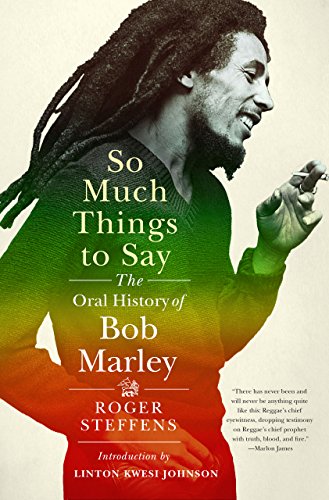
Bob Marley’s music is loved by all races of people. What’s more, his appeal for the Caribbean, Africa and Reggae Music continues to inspire. What a legacy! This entry is 3 of 5 in this series from the movement behind the book Go Lean … Caribbean in consideration of the impact that Black people have had on the recent history of modern society.

The other commentaries in the series are cataloged as follows:

  1. Black History Month 2019: Dr. Bennet Omalu – Definer of Gladiator Sports
  2. Black History Month 2019: Marcus Garvey’s World View
  3. Black History Month 2019: Starting 75 years of Bob Marley’s legacy
  4. Black History Month 2019: Angela Davis – Hero or Villian?
  5. Black History Month 2019: WEB DuBois – Moved to Africa for Later Life

Bob Marley, as a legacy is paramount among Caribbean artists for any discussion on Black History. It is only appropriate to Encore this July 14, 2017 landmark blog-commentary on Marley. This submission was published on the occasion of the release of the new book: “So Much Things to Say: The Oral History of Bob Marley” by Roger Steffens. See this Encore of that previous blog-commentary here-now:

—————

Go Lean Commentary – Book Review: ‘Oral History of Bob Marley

Bob Marley was not a saint; but he was saintly. – Author Roger Steffens

Marley SmilingBob Marley was perhaps the most influential person of Caribbean heritage; arguably so. He died 36 years ago, after living only to the age of 36. We have doubled the years of his life …

36 years here … 36 years gone!

… but it seems as if he lived a life of achievement equaling two or 3 lifetimes.

He was more than just a musician or an entertainer, he was a revolutionary icon. Many of the advocacies that he championed have now come full circle; come to fruition and come to regret:

In fact, references to Bob Marley have been consistent for the movement behind the book Go Lean… Caribbean – a guide to confederate, collaborate and convene the 30 member-states of the Caribbean region into a Single Market – he is mentioned in the book (Pages 119, 133 & 218) and featured in multiple blog-commentaries:

https://goleancaribbean.com/blog/?p=7738 A Lesson in History from Bob Marley – Buffalo Soldiers
https://goleancaribbean.com/blog/?p=866 Bob Marley: The legend lives on!

We now learn even more about Bob Marley in the new book by Reggae Archivist Roger Steffens, entitled: So Much Things to Say: The Oral History of Bob Marley. See a summary-review of that book here and listen to an AUDIO-Podcast interview with the Author:

Book Review for Book: So Much Things to Say: The Oral History of Bob Marley
By Roger Steffens 

Oral History of Marley 1

A revelatory, myth-shattering history of one of the most influential musicians of all time, told in the words of those who knew him best.

Roger Steffens is one of the world’s leading Bob Marley experts. He toured with the Wailers in the 1970s and was closely acquainted with Bunny Wailer, Peter Tosh and the rest of the band members. Over several decades he has interviewed more than seventy-five friends, business managers, relatives and confidants—many speaking publicly for the first time. Forty years in the making, So Much Things to Say weaves this rich testimony into a definitive telling of the life of the reggae king—the full, inside account of how a boy from the slums of Kingston, Jamaica, became a cultural icon and inspiration to millions around the world.

The intimacy of the voices and the frankness of their revelations will astonish even longtime Marley fans. Readers see the intense bonds of teenage friendship among Peter, Bunny and Bob, the vibrant early sessions with the original Wailers (as witnessed by members Junior Braithwaite, Beverley Kelso and Cherry Green) and the tumultuous relationships with Rita Marley and Cindy Breakspeare.

With unprecedented candor, these interviews tell dramatic, little-known stories, from the writing of some of Marley’s most beloved songs to the Wailers’ violent confrontation involving producer Lee “Scratch” Perry, Bob’s intensive musical training with star singer Johnny Nash and the harrowing assassination attempt at 56 Hope Road in Kingston, which led to Marley’s defiant performance two nights later with a bullet lodged in his arm.

Readers witness Marley’s rise to international fame in London, his triumphant visit to Zimbabwe to sing for freedom fighters inspired by his anthems and the devastating moment of his collapse while jogging in New York’s Central Park. Steffens masterfully conducts the story of Marley’s last months, as Marley poignantly sings “Another One Bites the Dust” during the sound check before his final concert in Pittsburgh, followed by his tragic death at the age of thirty-six.

So Much Things to Say explores major controversies, examining who actually ordered the shooting attack on Hope Road, scrutinizing claims of CIA involvement and investigating why Marley’s fatal cancer wasn’t diagnosed sooner. Featuring Steffens’s own candid photographs of Marley and his circle, this magisterial work preserves an invaluable, transformative slice of music history: the life of the legendary performer who brought reggae to the international stage.

Source: Amazon Online Bookstore-Portal; retrieved July 13, 2017 from: https://www.amazon.com/So-Much-Things-Say-History-ebook/dp/B01M68LN7U 

———-

AUDIO-PodcastBob Marley: Versions Of The Truth http://the1a.org/audio/#/shows/2017-07-10/oral-history-of-bob-marley/111467/@00:00

Bob Marley: Versions Of The Truth

Published July 10, 2017 – Reggae historian Roger Steffens has written that “there are no facts in Jamaica, just versions” of the truth. That’s certainly the case with the star of Steffens’ latest book: Bob Marley.

Marley lived a life of art, inspiration and hard and fast adherence to his principles and spirituality. While he only lived to the age of 36, Marley and his music inspired a wave of devotees who fought for freedom, as well as a few enemies who wanted him dead.

But even though he was a global superstar, there are many mysteries and misconceptions about Marley.

Steffens new book, “So Much Things to Say: The Oral History of Bob Marley” gathers 40 years of interviews with those closest to Marley to separate truth from the various versions.

Host Joshua Johnson interviews guest Roger Steffens, reggae archivist and author of the book “So Much Things to Say: The Oral History of Bob Marley“.

We learn so much more about Bob Marley and Caribbean culture from these foregoing media productions. Marley was truly a musical genius who overcame obstacles and the challenge of a dysfunctional Jamaican society to soar and shine as a star in the world of music. This corresponds with a theme in the book Go Lean…Caribbean which relates that genius – in its many forms, be it music, arts, sciences, sports, etc. – can flourish in the Caribbean … with the proper fostering. The Go Lean book serves as a roadmap for the introduction and implementation of the Caribbean Union Trade Federation (CU). This would be an inter-governmental entity to promote a regional Single Market that covers the homelands of all 30 Caribbean member-states. This effort strives to advance Caribbean culture. The Go Lean/CU roadmap features this prime directive, as defined by these 3 statements:

  • Optimization of the economic engines to grow the regional economy to $800 Billion & create 2.2 million new jobs.
  • Establishment of a security apparatus to protect public safety and ensure the economic engines of the region, including the seas.
  • Improvement of Caribbean governance to support these engines, including a separation-of-powers between the member-states and CU federal agencies.

The Go Lean roadmap recognizes that a prerequisite for advancing society is a change in the Caribbean “community ethos”. This book opens early with the declaration that music can contribute to the fabric of society, but that society must contribute to the fostering of musicians. The book relates that such an attitude – community ethos or national spirit – can be forged in the entire region; see these statements in the Declaration of Interdependence (Pages 13 – 14):

xxi. Whereas the preparation of our labor force can foster opportunities and dictate economic progress for current and future generations, the Federation must ensure that educational and job training opportunities are fully optimized for all residents of all member-states, with no partiality towards any gender or ethnic group. The Federation must recognize and facilitate excellence in many different fields of endeavor, including sciences, languages, arts, music and sports. This responsibility should be executed without incurring the risks of further human flight, as has been the past history.

xxxii. Whereas the cultural arts and music of the region are germane to the quality of Caribbean life, and the international appreciation of Caribbean life, the Federation must implement the support systems to teach, encourage, incentivize, monetize and promote the related industries for arts and music in domestic and foreign markets. These endeavors will make the Caribbean a better place to live, work and play.

As related in a previous blog-commentary regarding Bob Marley …

“… he was the embodiment of all of these above values. He impacted the music, culture and economics of the region. He set a pathway for success for other generations of talented, inspirational and influential artists – musical geniuses – to follow. Other artists of Caribbean heritage are sure to emerge and “rock the world”; we are hereby “banking” on it, with these CU preparations.”

The CU presents that change has come to the Caribbean; with this Go Lean movement, there is a plan for new stewardship so that the Caribbean can better avail themselves of the benefits of music. So when we consider Bob Marley – as gleaned from the foregoing book by author Roger Steffens – we can assign all these descriptors and attributes to him:

  • Artist – Musician
  • Caribbean Ambassador
  • Inspirational Leader
  • Saintly, though not a saint.
  • Role Model for the Future

The world may never see another “star as bright” as Bob Marley; but we can still learn from his Role Model. The Go Lean book provides 370-pages of turn-by-turn instructions on “how” to adopt new community ethos, plus the strategies, tactics, implementations and advocacies to execute so as to reboot, reform and transform the societal engines of Caribbean society. Consider the sample from this list detailing this “how” for the Caribbean region to foster more musical geniuses:

Community Ethos – Ways to Foster Genius Page 27
Community Ethos –Promote Intellectual Property Page 29
Community Ethos – Ways to Promote Happiness Page 36
Community Ethos – Impact the Greater Good Page 37
Strategy – Vision – Celebrate the music, people and culture of the Caribbean Page 46
Tactical – Separation of Powers – Patents & Copyrights Page 78
Tactical – Separation of Powers – Culture Administration Page 81
Implementation – Ways to Benefit from Globalization Page 118
Advocacy – Ways to Make the Caribbean Better Page 131
Advocacy – Ways to Better Manage Image Page 133
Advocacy – Ways to Preserve Caribbean Heritage Page 218
Advocacy – Ways to Promote Music Page 231
Advocacy – Ways to Re-boot Jamaica – To make it less dysfunctional Page 239

Bob Marley – 36 years here … 36 years gone!

We urge all Caribbean stakeholders – governments and citizens alike – to learn the lessons from the life and legacy of Bob Marley, and then lean-in to this Go Lean roadmap to make the Caribbean homeland a better place to live, work and play. 🙂

Sign the petition to lean-in for this roadmap for the Caribbean Union Trade Federation.

Download the free e-Book of Go Lean … Caribbean – now!

Share this post:
, ,
[Top]

Role Models in Pan-Africana: Marcus Garvey – ENCORE

What is your World View of the Black Race?

I can probably summarize it for you:

“All men are created equal so all Black Men have the same rights and privilege to thrive in society with every opportunity for life, liberty and the pursuit of happiness”.

That about sums it up, right?

This World View was not always the default assessment in the world. No, for many years, decades and centuries, the default World View was that the Black Race was “there for the taking”. This argument sounds so much like Black Nationalist & Civil Rights Leader Marcus Garvey.
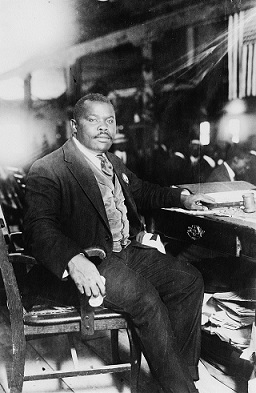
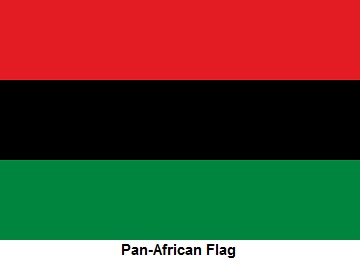
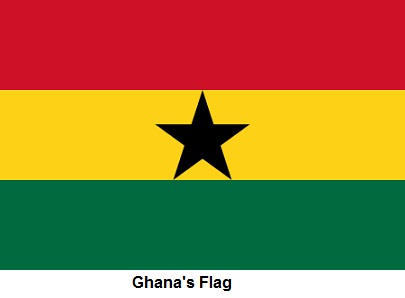
But Garvey was right! There was a constant, efficient and emphatic “grab” for the assets and capital of Africa – human capital included. Garvey’s assessment was 100 years after the formal Slave Trade ended in 1807. Yes, the European nations had divided up all of the African continent for their own empire-building and economic manifestations; see the encyclopedic reference here:

The Scramble for Africa was the occupation, division, and colonization of African territory by European powers during the period of New Imperialism, between 1881 and 1914. It is also called the Partition of Africa and by some the Conquest of Africa. In 1870, only 10 percent of Africa was under formal European control; by 1914 it had increased to almost 90 percent of the continent, with only Ethiopia (Abyssinia) and Liberia still being independent. With the Italian occupation of Ethiopia in 1936, only Liberia remained independent. There were multiple motivations including the quest for national prestige, tensions between pairs of European powers, religious missionary zeal and internal African native politics.

The Berlin Conference of 1884, which regulated European colonisation and trade in Africa, is usually referred to as the ultimate point of the scramble for Africa.[1] Consequent to the political and economic rivalries among the European empires in the last quarter of the 19th century, the partitioning, or splitting up of Africa was how the Europeans avoided warring amongst themselves over Africa.[2] The later years of the 19th century saw the transition from “informal imperialism” by military influence and economic dominance, to direct rule, bringing about colonial imperialism.[3]
Source:
Wikipedia – retrieved February 5, 2019 from: https://en.wikipedia.org/wiki/Scramble_for_Africa

Garvey’s solution was straight-forward: repatriate the pan-African world back to an African homeland.

This history is apropos to consider during this February, during Black History Month. This entry is 2 of 5 in this series from the movement behind the book Go Lean … Caribbean in consideration of the impact that Black people have had on the recent history of modern society. Though not a majority, there was a movement for African-Americans and Afro-Caribbean to return their attention to Africa, the African people and culture. All the commentaries in the series are cataloged as follows:

  1. Black History Month 2019: Dr. Bennet Omalu – Definer of Gladiator Sports
  2. Black History Month 2019: Marcus Garvey’s World View
  3. Black History Month 2019: Starting 75 years of Bob Marley’s legacy
  4. Black History Month 2019: Angela Davis – Hero or Villian?
  5. Black History Month 2019: WEB DuBois – Moved to Africa for Later Life

Marcus Garvey is paramount among Black role models of the last 100 years of Black History. Garvey is the epitome of Pan-Africanism. It is only appropriate to Encore this August 20, 2016 landmark blog-commentary on Garvey. The theme of that prior submission was the urgent plea for the then-US-President Barack Obama to award a Presidential Pardon posthumously to Garvey – he failed to do so. See that Encore here-now:

—————

Go Lean Commentary – Remembering Marcus Garvey: Still Relevant Today

The relations between the Caribbean and the United States of America have had a bumpy ride in the past. Consider just these few incidences:

But now, the people of the Caribbean has forgiven the US and now approve “life” within its borders….

… as so many Caribbean citizens have now fled to life in the US, as residents. There has been some reconciliation of the past … to allow for this normalized status quo.

But there is one more rift in the Caribbean-American history to consider, that of Marcus Garvey. Can this historicity also be re-approached, revisited, redeemed and reconciled? Is there a need for repentance?

In a previous commentary from this Go Lean movement, it was established how we cannot always leave past events in the past. At times, we must re-approach historic injustices so as to recognize the pain and legacy caused; only then can true reconciliation occur.

America had a bad legacy in terms of race relations. Has that country of the US reformed since the days of Marcus Garvey?

Accordingly, some stakeholders in the US Congress want that repentance, in the form of a posthumous pardon. See the story here:

CU Blog - Remembering Marcus Garvey - Still Relevant Today - Photo 3Title: U.S. Congresswoman Wants President Obama to Pardon Marcus Garvey
Marcus Garvey, Jamaica’s national hero who was charged with mail fraud in the United States could be in line for a presidential pardon if Congresswoman Yvette Clarke gets her way. Clarke is working to ensure that Garvey is exonerated before Obama steps down from his post in January 2017. Clarke announced the potential action in a speech to the Jamaica Diaspora after receiving the first Talawah Award for Politics. According to Clarke, two other congressional representatives – Charles Rangel and John Conyers – will join her in making sure that Garvey receives a pardon and that his name is cleared.

In 1923, Garvey was arrested in the U.S. on charges of mail fraud and spent two years in a federal prison before being deported back to Jamaica. In the years following, a number of governments and organizations lobbied authorities in the U.S. to expunge the record of Jamaica’s national hero. Clarke was one of seven Jamaicans presented with the Inaugural Talawah Awards for their contributions to both their homeland and their adopted home.
Source: Jamaicans.com – Lifestyle E-zine; posted: 05/15/2016; Retrieved 08/19/2016 from: http://jamaicans.com/u-s-congresswoman-wants-president-obama-pardon-marcus-garvey/

The subject of Marcus Garvey – see Appendix & VIDEO below – is very important from a Jamaican perspective. He is considered a National Hero in his homeland, where he was awarded the “Order of National Hero” posthumously in 1964; an esteemed honor awarded by the government (Parliament) of Jamaica and one of its first official acts after independence.

But the story of Marcus Garvey is more than just a “treasure to one, trash to another” consideration. Recognizing Jamaican value and worth, means recognizing Jamaica’s endurance despite a history of oppression, repression and suppression. Remember, there was a world, not very long ago, of no civil rights and intensed colonization. Marcus Garvey transcended that world. In effect, Jamaicans are saying to the world: “You see Marcus Garvey; you see me”.

Garvey was given major prominence as a national hero during Jamaica’s move towards independence. As such, he has numerous tributes there. The first of these is the Garvey statue and shrine in Kingston’s National Heroes Park. Among the honors to him in Jamaica are his name upon the Jamaican Ministry of Foreign Affairs; a major highway bearing his name and the Marcus Garvey Scholarship tenable at the University of the West Indies sponsored by The National Association of Jamaican and Supportive Organizations, Inc (NAJASO) since 1988.

Garvey’s birthplace, 32 Market Street, St. Ann’s Bay, Jamaica, has a marker signifying it as a site of importance in the nation’s history.[64]His likeness is on the 20-dollar coin and 25-cent coin. Garvey’s recognition is probably most significant in Kingston, Jamaica.
Source: Retrieved August 20, 2016 from: https://en.wikipedia.org/wiki/Marcus_Garvey

The book Go Lean…Caribbean posits that any attempt at unification of the Caribbean 30 member-states must consider the ancient and modern injustices some member-states have experienced (within themselves and with other nations). The book serves as a roadmap for the introduction and implementation of the Caribbean Union Trade Federation (CU). A mission of the roadmap is to champion the cause of Caribbean Image. For far too long, Caribbean people have been classified as “Less Than”, as parasites rather than protégés. Therefore an additional mission of the roadmap is to facilitate formal reconciliations, (much consideration is given to the model in South Africa with their Truth & Reconciliation Commissions (TRC)). But this commentary posits, that we need reconciliations in foreign relations too, (i.e. Caribbean / United States).

The approach is simple, correct the bad “community ethos” from the past. The African-American and African-Caribbean populations were oppressed, repressed an suppressed in the “White” world of the 1920’s. A good “community ethos” now is to repent, forgive and reconcile from that legacy.

“Community Ethos” is described in the Go Lean book as the fundamental character or spirit of a culture; the underlying sentiment that informs the beliefs, customs, or practices of a group or society; the dominant assumptions of a people or period. America has surely transformed – the current President, Barack Obama is of African-American heritage. Has that transformation advanced to the point of taking ownership of past misdeeds.

We truly hope so! But show us, by recognizing and redeeming the bad acts of the US federal government against Marcus Garvey. This year marks the 8th and final year of the Obama administration. He has always had the power to grant a pardon to the “good name” of Marcus Garvey. When requested before in 2011, his stance was that it is his policy not to consider requests for posthumous pardons. His assertion is that they should be enjoyed only by the living.

But more is involved, Mr. President. A pardon would send a message to the world about African-American and African-Caribbean heroes:

In hindsight, they should be held in high esteem for doing so much in a world that valued them so little!

The historicity of Marcus Garvey is a powerful role model for today’s Caribbean. He was truly an Advocate for the African race universally. (This race represents the majority of the population of all the Caribbean member-states except the French Overseas Territory of Saint Barthélemy). He championed this cause in words (speeches and writings), actions, commitments and sacrifice. He truly gave a full measure of blood, sweat and tears. He presented his vision and values in his quest to unify and elevate the Black race.

Our emulation of Marcus Garvey is a lot less ambitious, rather than the African-ethnic world, our scope is just the elevation of the 30 Caribbean member-states. Rather than the narrow focus of Blacks in general, our scope involves all current Caribbean ethnicities and languages. We are trying to “raise the tide in the Caribbean waters so that all boats will be elevated”. Further, as communicated in previous blog-commentaries, we are not trying to impact the United States of America – beyond help to our Diaspora – nor the continent of Africa – beyond providing them a great model of our technocratic deliveries. Our mission is a lot more laser-focused than that of Marcus Garvey; we are simply trying to make our Caribbean homeland a better place to live, work and play.

This CU/Go Lean mission is to elevate Caribbean society through cutting edge delivery of best practices, strategies, tactics and implementations. The prime directives of this movement is defined as the following 3 statements:

  • Optimization of the economic engines in order to grow the regional economy to $800 Billion & create 2.2 million new jobs.
  • Establishment of a security apparatus for public safety and to protect the resultant economic engines.
  • Improvement of Caribbean governance to support these engines.

The Go Lean book speaks of the Caribbean past, as it relates to the American past. The legacy of the common sufferings of slavery and racial repression should create a common bond; this bond should unite all of the Black World. It should also unite the Caribbean into accepting a premise of interdependence for solutions in the economic-security-governance eco-systems. This common need was defined early in the book (Page 10) in the following pronouncements in the Declaration of Interdependence:

Preamble: As the history of our region and the oppression, suppression and repression of its indigenous people is duly documented, there is no one alive who can be held accountable for the prior actions, and so we must put aside the shackles of systems of repression to instead formulate efficient and effective systems to steer our own destiny.

As the colonial history of our region was initiated to create economic expansion opportunities for our previous imperial masters, the structures of government instituted in their wake have not fostered the best systems for prosperity of the indigenous people. Despite this past, we thrust our energies only to the future, in adapting the best practices and successes of the societies of these previous imperial masters and recognizing the positive spirit of their intent and vow to learn from their past accomplishments and mistakes so as to optimize the opportunities for our own citizenry to create a more perfect bond of union.

xi. Whereas all men are entitled to the benefits of good governance in a free society, “new guards” must be enacted to dissuade the emergence of incompetence, corruption, nepotism and cronyism at the peril of the people’s best interest. The Federation must guarantee the executions of a social contract between government and the governed.

xii. Whereas the legacy in recent times in individual states may be that of ineffectual governance with no redress to higher authority, the accedence of this Federation will ensure accountability and escalation of the human and civil rights of the people for good governance, justice assurances, due process and the rule of law. As such, any threats of a “failed state” status for any member state must enact emergency measures on behalf of the Federation to protect the human, civil and property rights of the citizens, residents, allies, trading partners, and visitors of the affected member state and the Federation as a whole.

xiii. Whereas the legacy of dissensions in many member-states (for example: Haiti and Cuba) will require a concerted effort to integrate the exile community’s repatriation, the Federation must arrange for Reconciliation Commissions to satiate a demand for justice.

The Go Lean book details a lot more, a series of assessments, community ethos, strategies, tactics, implementations and advocacies to glean lessons from history and impact the Caribbean-side of the common Black experience:

Community Ethos – Deferred Gratification – Example of Black America of Olden Days Page 21
Community Ethos – Economic Systems Influence Choices & Incentives Page 21
Community Ethos – People Respond to Incentives Page 21
Community Ethos – Consequences of Choices Lie in the Future Page 21
Community Ethos – Ways to Impact Turn-Arounds Page 33
Community Ethos – Ways to Manage Reconciliations Page 34
Community Ethos – Ways to Promote Happiness Page 36
Community Ethos – Ways to Impact the Greater Good Page 37
Strategy – Vision – Confederating a Non-Sovereign Union of 30 Member-states Page 45
Strategy – Mission – Keep the next generation at home; Repatriate Diaspora Page 46
Tactical – Separation of Powers – Truth & Reconciliation Courts Page 78
Implementation – Ways to Deliver Page 109
Implementation – Reasons to Repatriate Page 118
Anatomy of Advocacies Page 122
Planning – Ways to Improve Image Page 133
Planning – Improve Failed-State Indices Page 134
Advocacy – Ways to Grow the Economy Page 151
Advocacy – Ways to Better Manage the Social Contract Page 170
Advocacy – Ways to Impact Justice – Truth & Reconciliation Commissions Page 177
Advocacy – Ways to Impact Hollywood – Managing Image through Films Page 203
Advocacy – Ways to Preserve Caribbean Heritage Page 218

The foregoing article relates the second request to US President Obama to extend a pardon to the legacy of Marcus Garvey. This is important to “us” in the Caribbean.

Just do it!

Obama claims to be a friend of the Caribbean, though many times his policies have worked contrary to the Caribbean’s best interests. Consider these examples:

https://goleancaribbean.com/blog/?p=7689 Obama – Bad For Caribbean Status Quo
https://goleancaribbean.com/blog/?p=4935 A Lesson Learned from Obama’s Caribbean Visit
https://goleancaribbean.com/blog/?p=1674 Obama’s Plans for $3.7 Billion Immigration Crisis Funds

The Go Lean/CU roadmap addresses the past, present and future challenges of Caribbean empowerment and image.

Now is the time for all of the Caribbean, the people and governing institutions, to lean-in for the empowerments described in the book Go Lean … Caribbean. There is reason to believe that these empowerment efforts can be successful. We have the legacy of so many National Heroes; we can now stand on their shoulders and reach even greater heights.

The Go Lean roadmap conveys how single causes have successfully been forged throughout the world (Page 122 – Anatomy of Advocacies) by individual Advocates. There is consideration for these examples:

Please note, while this movement petitions for reconciliation of the sullied past in race relations, there is no request for reparations. The Go Lean book punctuates this point with the following quotation:

We cannot ignore the past, as it defines who we are, but we do not wish to be shackled to the past either, for then, we miss the future. So we must learn from the past, our experiences and that of other states in similar situations, mount our feet solidly to the ground and then lean-in, to reach for new heights; forward, upward and onward. – Page 5

The new ethos being developed for the Caribbean by this Go Lean movement, is to reconcile conflicts from the past; to repent, forgive and hopefully forget the long history of human rights abuses from the past. All of this effort is heavy-lifting, but the Bible gives us an assurance that makes all the effort worthwhile:

Then you will know the truth, and the truth will set you free. – John 8:32; New International Version

🙂

Download the book Go Lean … Caribbean – now!

=============

Appendix VIDEO – Marcus Garvey — Look For Me In The Whirlwind (Review)https://youtu.be/hS3Y5RhBPd8

Published on Oct 8, 2012 – Black History Studies team (BHS) presents their Marcus Garvey screening, at the Marcus Garvey Centre in Tottenham. Sis Sonia Scully interviews film goers in the break, to find out how they’re receiving the Friday Black History Month screenings.

=============

Appendix – Marcus Garvey Biography Wiki

Marcus Mosiah Garvey, Jr., (17 August 1887 – 10 June 1940),[2] was a Jamaican political leader, publisher, journalist, entrepreneur, and orator who was a proponent of the Pan-Africanism movement, to which end he founded the Universal Negro Improvement Association and African Communities League (UNIA-ACL).[3] He also founded the Black Star Line, a shipping and passenger line which promoted the return of the African diaspora to their ancestral lands.

CU Blog - Remembering Marcus Garvey - Still Relevant Today - Photo 1Prior to the 20th century, leaders such as Prince HallMartin DelanyEdward Wilmot Blyden, and Henry Highland Garnet advocated the involvement of the African diaspora in African affairs. Garvey was unique in advancing a Pan-African philosophy to inspire a global mass movement and economic empowerment focusing on Africa known as Garveyism.[3] Promoted by the UNIA as a movement of African Redemption, Garveyism would eventually inspire others, ranging from the Nation of Islam to the Rastafari movement (some sects of which proclaim Garvey as a prophet.)[4]

Garveyism intended persons of African ancestry in the diaspora to “redeem” the nations of Africa and for the European colonial powers to leave the continent. His essential ideas about Africa were stated in an editorial in the Negro World entitled “African Fundamentalism”, where he wrote: “Our union must know no clime, boundary, or nationality… to let us hold together under all climes and in every country…”[5]

After years of working in the Caribbean, Garvey left Jamaica to live in London from 1912 to 1914, where he attended Birkbeck College, taking classes in law and philosophy. He also worked for the African Times and Orient Review, published by Dusé Mohamed Ali, who was a considerable influence on the young man. Garvey sometimes spoke at Hyde Park‘s Speakers’ Corner.

In 1914, Garvey returned to Jamaica, where he organized the Universal Negro Improvement Association (UNIA).

The UNIA held an international convention in 1921 at New York City’s MadisonSquareGarden. Also represented at the convention were organizations such as the Universal Black Cross Nurses, the Black Eagle Flying Corps, and the Universal African Legion. Garvey attracted more than 50,000 people to the event and in his cause. The UNIA had 65,000 to 75,000 members paying dues to his support and funding. The national level of support in Jamaica helped Garvey to become one of the most influential leaders of the 20th century on the island.[13]

After corresponding with Booker T. Washington, head of the Tuskegee Institute in Alabama and a national African-American leader in the United States, Garvey traveled by ship to the U.S., arriving on 23 March 1916 aboard the SS Tallac. He intended to make a lecture tour and to raise funds to establish a school in Jamaica modeled after Washington’s Institute. Garvey visited Tuskegee, and afterwards, visited with a number of black leaders.

After moving to New York, he found work as a printer by day. He was influenced by Hubert Harrison. At night he would speak on street corners, much as he did in London’s Hyde Park. Garvey thought there was a leadership vacuum among African Americans. On 9 May 1916, he held his first public lecture in New York City at St Mark’s Church in-the-Bowery and undertook a 38-state speaking tour.

The next year in May 1917, Garvey and thirteen others formed the first UNIA division outside Jamaica. They began advancing ideas to promote social, political, and economic freedom for black people. On 2 July, the East St. Louis riots broke out. On 8 July, Garvey delivered an address, entitled “The Conspiracy of the East St. Louis Riots”, at Lafayette Hall in Harlem. During the speech, he declared the riot was “one of the bloodiest outrages against mankind”, condemning America’s claims to represent democracy when black people were victimized “for no other reason than they are black people seeking an industrial chance in a country that they have laboured for three hundred years to make great”. It is “a time to lift one’s voice against the savagery of a people who claim to be the dispensers of democracy”.[14]

Garvey worked to develop a program to improve the conditions of ethnic Africans “at home and abroad” under UNIA auspices. On 17 August 1918, he began publishing the Negro World newspaper in New York, which was widely distributed. Garvey worked as an editor without pay until November 1920. He used Negro World as a platform for his views to encourage growth of the UNIA.[15] By June 1919, the membership of the organization had grown to over two million, according to its records.

On 27 June 1919, the UNIA set up its first business, incorporating the Black Star Line of Delaware, with Garvey as President. By September, it acquired its first ship. Much fanfare surrounded the inspection of the S.S. Yarmouth and its rechristening as the S.S. Frederick Douglass on 14 September 1919. Such a rapid accomplishment garnered attention from many.[15] The Black Star Line also formed a fine winery, using grapes harvested only in Ethiopia. During the first year, the Black Star Line’s stock sales brought in $600,000. This caused it to be successful during that year. It had numerous problems during the next two years: mechanical breakdowns on its ships, what it said were incompetent workers, and poor record keeping. The officers were eventually accused of mail fraud.[15]

Edwin P. Kilroe, Assistant District Attorney in the District Attorney’s office of the County of New York, began an investigation into the activities of the UNIA. He never filed charges against Garvey or other officers.

By August 1920, the UNIA claimed four million members. The number has been questioned because of the organization’s poor record keeping.[15] That month, the International Convention of the UNIA was held. With delegates from all over the world attending, 25,000 people filled Madison Square Garden on 1 August 1920 to hear Garvey speak.[16]Over the next couple of years, Garvey’s movement was able to attract an enormous number of followers. Reasons for this included the cultural revolution of the Harlem Renaissance, the large number of West Indians who immigrated to New York, and the appeal of the slogan “One God, One Aim, One Destiny,” to black veterans of the first World War.[17]

CU Blog - Remembering Marcus Garvey - Still Relevant Today - Photo 2Garvey also established the business, the Negro Factories Corporation. He planned to develop the businesses to manufacture every marketable commodity in every big U.S. industrial center, as well as in Central America, the West Indies, and Africa. Related endeavors included a grocery chain, restaurant, publishing house, and other businesses.

Convinced that black people should have a permanent homeland in Africa, Garvey sought to develop Liberia. It had been founded by the American Colonization Society in the 19th century as a colony to free blacks from the United States. Garvey launched the Liberia program in 1920, intended to build colleges, industrial plants, and railroads as part of an industrial base from which to operate. He abandoned the program in the mid-1920s after much opposition from European powers with interests in Liberia.

Sometime around November 1919, the Bureau of Investigation or BOI (after 1935, the Federal Bureau of Investigation) began an investigation into the activities of Garvey and the UNIA. … Although initial efforts by the BOI were to find grounds upon which to deport Garvey as “an undesirable alien”, a charge of mail fraud was brought against Garvey in connection with stock sales of the Black Star Line after the U.S. Post Office and the Attorney General joined the investigation.[36]

The accusation centered on the fact that the corporation had not yet purchased a ship, which had appeared in a BSL brochure emblazoned with the name “Phyllis Wheatley” (after the African-American poet) on its bow. The prosecution stated that a ship pictured with that name had not actually been purchased by the BSL and still had the name “Orion” at the time; thus the misrepresentation of the ship as a BSL-owned vessel constituted fraud. The brochure had been produced in anticipation of the purchase of the ship, which appeared to be on the verge of completion at the time. However, “registration of the Phyllis Wheatley to the Black Star Line was thrown into abeyance as there were still some clauses in the contract that needed to be agreed.”[37] In the end, the ship was never registered to the BSL.

Garvey chose to defend himself. In the opinion of his biographer Colin Grant, Garvey’s “belligerent” manner alienated the jury. … Of the four Black Star Line officers charged in connection with the enterprise, only Garvey was found guilty of using the mail service to defraud. His supporters called the trial fraudulent, [a miscarriage of justice].

He initially spent three months in the Tombs Jail awaiting approval of bail. While on bail, he continued to maintain his innocence, travel, speak and organize the UNIA. After numerous attempts at appeal were unsuccessful, he was taken into custody and began serving his sentence at the Atlanta Federal Penitentiary on 8 February 1925.[41] Two days later, he penned his well known “First Message to the Negroes of the World From Atlanta Prison”, wherein he made his famous proclamation: “Look for me in the whirlwind or the storm, look for me all around you, for, with God’s grace, I shall come and bring with me countless millions of black slaves who have died in America and the West Indies and the millions in Africa to aid you in the fight for Liberty, Freedom and Life.”[42]

Garvey’s sentence was eventually commuted by President Calvin Coolidge. Upon his release in November 1927, Garvey was deported via New Orleans to Jamaica, where a large crowd met him in Kingston. Though the popularity of the UNIA diminished greatly following Garvey’s expulsion, he nevertheless remained committed to his political ideals.[44]

Garvey continued active in international civil rights, politics and business in the West Indies and Europe.

Garvey died in London on 10 June 1940, at the age of 52, having suffered two strokes. Due to travel restrictions during World War II, his body was interred (no burial mentioned but preserved in a lead-lined coffin) within the lower crypt in St. Mary’s Catholic cemetery in London near KensalGreenCemetery. Twenty years later, his body was removed from the shelves of the lower crypt and taken to Jamaica, where the government proclaimed him Jamaica’s first national hero and re-interred him at a shrine in the National Heroes Park.[52]

Influence

Schools, colleges, highways, and buildings in Africa, Europe, the Caribbean, and the United States have been named in his honor. The UNIA red, black, and green flag has been adopted as the Black Liberation Flag. Since 1980, Garvey’s bust has been housed in the Organization of American States‘ Hall of Heroes in Washington, D.C.

Malcolm X‘s parents, Earl and Louise Little, met at a UNIA convention in Montreal. Earl was the president of the UNIA division in Omaha, Nebraska, and sold the Negro World newspaper, for which Louise covered UNIA activities.[53]

Kwame Nkrumah named the national shipping line of Ghana the Black Star Line in honor of Garvey and the UNIA. Nkrumah also named the national football team the Black Stars as well. The black star at the centre of Ghana’s flag is also inspired by the Black Star.

During a trip to Jamaica, Martin Luther King and his wife Coretta Scott King visited Garvey’s shrine on 20 June 1965 and laid a wreath.[54] In a speech he told the audience that Garvey “was the first man of color to lead and develop a mass movement. He was the first man on a mass scale and level to give millions of Negroes a sense of dignity and destiny. And make the Negro feel he was somebody.”[55]

King was a posthumous recipient of the first Marcus Garvey Prize for Human Rights on 10 December 1968, issued by the Jamaican Government and presented to King’s widow. In 2002, scholar Molefi Kete Asante listed Garvey on his list of 100 Greatest African Americans.[56]

Source: Retrieved August 20, 2016 from: https://en.wikipedia.org/wiki/Marcus_Garvey


Share this post:
, ,
[Top]

Role Models in Pan-Africana: Dr. Bennet Omalu – ENCORE

Go Lean Commentary

Welcome to Black History Month 2019.

The commemorations of this month are not just an American concept as this is not the only country in the New World with a large Black population. In fact, most of the homelands that comprise the political Caribbean – 29 of 30 – present a majority Black population. There is also the African continent, with majority of its 1.2 Billion population being Black (or some related ethnic blend).

Here, we present a full series of commentaries related to Black History Month; the series is cataloged as follows:

  1. Black History Month 2019: Dr. Bennet Omalu – Definer of Gladiator Sports
  2. Black History Month 2019: Marcus Garvey’s World View
  3. Black History Month 2019: Starting 75 years of Bob Marley’s legacy
  4. Black History Month 2019: Angela Davis – Hero or Villian?
  5. Black History Month 2019: WEB DuBois – Moved to Africa for Later Life

In this series, reference is made to the last 100 years of Black History in the New World. There are many Role Models in Pan-Africana and many lessons to learn from their history that can impact our daily lives now. Most important, there is a Caribbean consideration for all of these submissions. While the Caribbean region is in dire straits – we must reform and transform away from our bad history – the rest of Pan-Africana also remains in danger.

This commentary opens a 5-part series for Black History Month 2019. This entry is 1 of 5 in this series from the movement behind the book Go Lean … Caribbean in consideration of the impact that Black people have had on the recent history of modern society. This first submission looks at the “Dark Side of the American Sports World”, and the open acknowledgement that there is a undisputed danger with concussions and the dreaded disease Chronic Traumatic Encephalopathy (CTE).

Due to the advocacy of one initial role model, Nigerian-born Dr. Bennet Omalu, the world can no longer deny the medical consequences of these Gladiator Sports – the Football World did try; again and again, in classic Crony-Capitalistic denial mode – think Big Tobacco. In the midst of SuperBowl season – SuperBowl LIII was played yesterday (Sunday February 3, 2019) in the Mercedes-Benz Stadium in Atlanta, Georgia – it is now the clear analysis that the US has entered in a new age of Gladiator Sports. See this related news article here:

Are Football Players Really Modern-Day Gladiators?
Sub-title:
Comparisons between American football and Roman gladiator games are common. Do historians think they’re apt?

If you’ve read anything at all about football’s brain injury crisis in recent years, you know one thing for certain: players are “modern-day gladiators.” It’s a comparison soubiquitous that a series of hyperlinked words can hardly do it justice.

The analogy is nothing new. In 1881, a New York Times editorial lamented the brutality of this “modern gladiatorial contest.” Since then, every time football’s violence has caused concern, observers and critics have heard the clashing weapons of ancient Rome. The similarities seem obvious. Brutal conflict. Cheering fans. Competitors who end up broken or dead.

But is it that simple? While journalists, fans, and even many players are convinced that football is a rebirth of gladiatorial combat, what about people who actually know stuff about gladiators?

Read the full article here: https://sports.vice.com/en_us/article/d7mz3y/are-football-players-really-modern-day-gladiators; posted December 4, 2015; retrieved February 4, 2019.

In fact, in the traditional Pre-Game Presidential Interview, Donald Trump intimated that while he loves football, he will not allow his teenage son to participate in the sport due to the concussion risk. See that reference here:

Donald Trump Calls Football “Dangerous Sport” But “Great Product” On Super Bowl Sunday

President Donald Trump says he would steer youngest son Barron away from playing football, calling it a “dangerous sport” but a “great product.”

“I just don’t like the reports I see coming out having to do with football. It’s a dangerous sport,” Trump said in the traditional POTUS Super Bowl Sunday sit-down with the broadcasting network.

See the full article here: https://www.yahoo.com/entertainment/donald-trump-calls-football-dangerous-173332866.html; posted February 3, 2019; retrieved February 4, 2019

So who then will be the participants … and who will be the spectators?

This harkens back to the days of Gladiators.

So many of the participants in the American football space reflect the Black-and-Brown (Pan-Africana) populations in America. See this related VIDEO here, previewing the story on HBO’s Real Sports:

VIDEO – HBO Real Sports – Middle Class avoiding football due to CTE – https://youtu.be/jwyWIcvHRi4

Published on Jan 25, 2019 – A Real Sports investigation reveals that in towns across America, concussion concerns are leading wealthier families to flee the game, while the number of players on government assistance is significantly rising.
#RealSportsHBO
Subscribe to the HBO YouTube Channel: https://goo.gl/wtFYd7
Don’t have HBO? Order Now: https://play.hbonow.com/
Like on Facebook: https://www.facebook.com/realsportshbo
Official Site: http://www.hbo.com/real-sports-with-b…
Official Site: http://www.hbo.com

This Go Lean commentary has frequently focused on American Football. We have highlighted the “art and science” of the sport, the business and the pride. But the caution that was bravely warned by Dr. Bennet Omalu is even more apropos now for the American Black-and-Brown populations. His impact is thusly summarized:

Concussions? “They” do not care about you; as long as their families are spared.

Listen up people, the White Middle-class world is leaving the sport to you to entertain them. We must do better.

For the purpose of Black History Month, on the heals of SuperBowl LIII, it is only appropriate to Encore the 2015 landmark blog-commentary on Concussions.featuring Dr. Bennet Omalu. See that Encore here-now:

—————

Go Lean Commentary – ‘Concussions’ – The Movie; The Cause

“Are you ready for some football?” – Promotional song by Hank Williams, Jr. for Monday Night Football on ABC & ESPN networks for 22 years (1989 – 2011).

This iconic song (see Appendix) and catch-phrase is reflective of exactly how popular the National Football League (NFL) is in the US:

“They own an entire day of the week”.

- The Movie; The Cause - Photo 2So says the new movie ‘Concussions’, starring Will Smith, referring to the media domination of NFL Football on Sundays during the Autumn season. The movie’s script is along a line that resonates well in Hollywood’s Academy Award balloting: “David versus Goliath”; “a small man speaking truth to power”.

In the case of the NFL, it is not just about power, it is about money, prestige and protecting the status quo; the NFL is responsible for the livelihood of so many people. The book Go Lean … Caribbean recognized the importance of the NFL in the American lexicon of “live, work and play”; it featured a case study (Page 32) of the NFL and it’s collective bargaining successes (and failures) in 2011. An excerpt from the book is quoted as follows:

Football is big business in the US, $9 billion in revenue, and more than a business; emotions – civic pride, rivalries, and fanaticism – run high on both sides.

Previous Go Lean commentaries presents the socio-economic realities of much of the American football eco-system. Consider a sample here:

Socio-Economic Impact Analysis of [Football] Sports Stadiums
Watch the Super Bowl … Commercials
Levi’s® NFL Stadium: A Team Effort
Sports Role Model – College Football – Playing For Pride … And More
Sports Role Model – Turn On the SEC Network
Collegiate Sports in the Caribbean – Model of NCAA
10 Things We Want from the US: #10 – Sports Professionalism
10 Things We Don’t Want from the US: #10 – ‘Win At All Costs’ Ethos

While football plays a big role in American life, so do movies. Their role is more unique; they are able to change society. In a previous blog / commentary regarding Caribbean Diaspora member and Hollywood great, Sidney Poitier, it was declared that …

“Movies are an amazing business model. People give money to spend a couple of hours watching someone else’s creation and then leave the theater with nothing to show for the investment; except perhaps a different perspective”.

Yes, movies help us to glean a better view of ourselves … and our failings; and many times, show us a way-forward.

These descriptors actually describe the latest production from Hollywood icon Will Smith (the former Fresh Prince of Bel-Air). This movie, the film “Concussion”, in the following news article, relates the real life drama of one man, Dr. Bennet Omalu, a Nigerian-born medical doctor – a pathologist – who prepared autopsies of former players that suffered from football-related concussions. He did not buckle under the acute pressure to maintain the status quo, and now, he is celebrated for forging change in his adopted homeland. This one man made a difference. (The NFL is now credited for a Concussion awareness and prevention protocol so advanced that other levels of the sport – college, high schools and Youth – are being urged to emulate).

See news article here on the release of the movie:

Title: ‘Concussion’: 5 Take-a-ways From Will Smith’s New Film
Will Smith, 46, is definitely going to get a ton of Oscar buzz portraying Dr. Bennet Omalu in the new film “Concussion.” NFL columnist Peter King of Sports Illustrated got an exclusive first peek at the trailer and it has been widely shared on social media since. And it’s very chilling.

- The Movie; The Cause - Photo 1

Here are five take-aways and background you need to know before checking out the clip:

1 – It’s Based on a True Story

Omalu is the forensic pathologist and neuropathologist who discovered chronic traumatic encephalopathy in football players who got hit in the head over and over again, according to the Washington Post.

In the clip, he says repetitive “head trauma chokes the brain.”

Omalu was one of the founding members of the Brain Injury Research Institute in 2002. He conducted the autopsy of Pittsburgh Steelers center Mike Webster, played by David Morse in the film, which led to this discovery.

2 – Smith’s Version of Omalu’s Accent Is Spot On

Omalu is from Nigeria and Smith has been known to transform completely for a role. He was nominated for an Oscar for 2011’s “Ali,” playing the legendary Muhammad Ali.

For comparison, here’s Omalu’s PBS interview from 2013.

3 – Smith Is a Reluctant Hero

“If you don’t speak for them, who will,” Gugu Mbatha-Raw, who plays Prema Mutiso in the film, tells Smith’s character.

He admits he idolized America growing up and “was the wrong person to have discovered this.”

4 – Alec Baldwin and Luke Wilson

“Concussion” brought in some heavyweights for this movie. Baldwin plays Dr. Julian Bailes, who advises Omalu, and Wilson, who will reportedly play NFL Commissioner Roger Goodell, according to IMDB. There’s no official word on this. He’s seen at a podium in the trailer, but doesn’t speak.

5 – “Tell the Truth”

Smith captures Omalu’s passion to have the truth told about this injury and disease.

“I was afraid of letting Mike [Webster] down. I was afraid. I don’t know. I was afraid I was going to fail,” Omalu told PBS a couple years back.

———-

VIDEO Link: http://www.imdb.com/title/tt3322364/?ref_=nv_sr_1


Will Smith stars in the incredible true David vs. Goliath story of Dr. Bennet Omalu, the brilliant forensic neuropathologist who made the first discovery of CTE, a football-related brain trauma, in a pro player.

The subject of concussions is serious – life and death. Just a few weeks ago (August 8), an NFL Hall-of-Fame inductee was honored for his play on the field during his 20-year professional career, but his family, his daughter in particular, is the one that made his acceptance / induction speech. He had died, in 2012; he committed suicide after apparently suffering from a brain disorder – chronic traumatic encephalopathy (CTE), a type of chronic brain damage that has also been found in other deceased former NFL players[4] – sustained from his years of brutal head contacts in organized football in high school, college and in his NFL career. This player was Junior Seau.

- The Movie; The Cause - Photo 3a

- The Movie; The Cause - Photo 3b

Why would there be a need for “David versus Goliath”; “a small man speaking truth to power”? Is not the actuality of an acclaimed football player committing suicide in this manner – he shot himself in the chest so as to preserve his brain for research – telling enough to drive home the message for reform?

No. Hardly. As previously discussed, there is too much money at stake.

These stakes bring out the Crony-capitalism in American society.

The book Go Lean…Caribbean (and subsequent blog/commentaries) relates many examples of cronyism in the American eco-system. There is a lot of money at stake. Those who want to preserve the status quo or not invest in the required mitigations to remediate concussions will fight back against any Advocate promoting the Greater Good. The profit motive is powerful. There are doubters and those who want to spurn doubt. “Concussions in Football” is not the first issue these “actors” have promoted doubt on. The efforts to downplay concussion alarmists are from a familiar playbook, used previously by Climate Change deniers, Big Tobacco, Toxic Waste, Acid Rain, and other dangerous chemicals.

This Go Lean book serves as a roadmap for the introduction and implementation of the technocratic Caribbean Union Trade Federation (CU). Sports are integral to the Go Lean/CU roadmap. While sports can be good and promote positives in society, even economically, the safety issues must be addressed upfront. This is a matter of community security. Thusly, the prime directives of the CU are described as:

  • Optimize the economic engines of the Caribbean to elevate the regional economy to grow to $800 Billion and create 2.2 million new jobs, including sports-related industries with a projection of 21,000 direct jobs at Fairgrounds and sports enterprises.
  • Establish a security apparatus to protect the people and economic engines.
  • Improvement of Caribbean governance to support these economic and security engines.

The CU/Go Lean sports mission is to harness the individual abilities of athletes to not just elevate their performance, but also to harness the economic impact for their communities. So modern sports endeavors cannot be analyzed without considering the impact on “dollars and cents” for stakeholders. This is a fact and should never be ignored. There is therefore the need to carefully assess and be on guard for crony-capitalistic influences entering the decision-making of sports stakeholders. The Go Lean book posits that with the emergence of new economic engines, “bad actors” will also emerge thereafter to exploit the opportunities, with good, bad and evil intent”. These points were pronounced early in the opening Declaration of Interdependence (Page 12 &14):

x. Whereas we are surrounded and allied to nations of larger proportions in land mass, populations, and treasuries, elements in their societies may have ill-intent in their pursuits, at the expense of the safety and security of our citizens. We must therefore appoint “new guards” to ensure our public safety and threats against our society, both domestic and foreign. The Federation must employ the latest advances and best practices of criminology and penology to assuage continuous threats against public safety.

xi. Whereas all men are entitled to the benefits of good governance in a free society, “new guards” must be enacted to dissuade the emergence of incompetence, corruption, nepotism and cronyism at the peril of the people’s best interest. The Federation must guarantee the executions of a social contract between government and the governed.

xvi. Whereas security of our homeland is inextricably linked to prosperity of the homeland, the economic and security interests of the region needs to be aligned under the same governance. Since economic crimes … can imperil the functioning of the wheels of commerce for all the citizenry, the accedence of this Federation must equip the security apparatus with the tools and techniques for predictive and proactive interdictions.

xxxi. Whereas sports have been a source of great pride for the Caribbean region, the economic returns from these ventures have not been evenly distributed as in other societies. The Federation must therefore facilitate the eco-systems and vertical industries of sports as a business, recreation, national pastime and even sports tourism …

The Go Lean book envisions the CU – a confederation of the 30 member-states of the Caribbean chartered to do the heavy-lifting of empowering and elevating the Caribbean economy – as the landlord of many sports facilities (within the Self-Governing Entities design), and the regulator for inter-state sport federations. The book details the economic principles and community ethos to adopt, plus the executions of strategies, tactics, implementations and advocacies to optimize sports enterprises in the Caribbean:

Community Ethos – Deferred Gratification Page 21
Economic Principles – People Respond to Incentives in Predictable Ways Page 21
Economic Principles – Economic Systems Influence Individual Choices / Incentives Page 21
Economic Principles – The Consequences of Choices Lie in the Future Page 21
Economic Principles – Job Multiplier Page 22
Community Ethos – Security Principles – Whistleblower Protection Page 23
Community Ethos – Security Principles – Light-Up the Dark Places Page 23
Community Ethos – Security Principles – “Crap” Happens Page 23
Community Ethos – Governing Principles – Lean Operations Page 24
Community Ethos – Ways to Impact the Future Page 26
Community Ethos – Ways to Promote Happiness – Mitigate Suicide Threats Page 36
Community Ethos – Impact the Greater Good Page 37
Strategy – Vision – Confederating 30 Member-States into a Single Market Page 45
Strategy – Vision – Foster Local Economic Engines for Basic Needs Page 45
Strategy – Mission – Prepare for Natural Disasters Page 45
Strategic – Staffing – Sporting Events at Fairgrounds Page 55
Strategy – Agents of Change – Climate Change Page 57
Strategy – Agents of Change – Globalization Page 57
Tactical – Confederating a Permanent Union Page 63
Tactical – Fostering a Technocracy Page 64
Tactical – Separation of Powers – Sports & Culture Administration Page 81
Tactical – Separation of Powers – Fairgrounds Administration Page 83
Tactical – Separation of Powers – Health Department – Disease Management Page 86
Implementation – Assemble Regional Organs into a Single Market Economy Page 96
Implementation – Steps to Implement Self-Governing Entities – Sports Stadia Page 105
Implementation – Security Initiatives at Start-up – Unified Command & Control Page 103
Implementation – Industrial Policy for CU Self Governing Entities Page 103
Implementation – Ways to Deliver – Project Management/Accountabilities Page 109
Anatomy of Advocacies – Examples of Individuals Who Made Impact Page 122
Planning – Ways to Make the Caribbean Better Page 131
Advocacy – Ways to Grow the Economy Page 151
Advocacy – Ways to Create Jobs Page 152
Advocacy – Ways to Improve Governance Page 168
Advocacy – Ways to Better Manage the Social Contract Page 170
Advocacy – Ways to Promote Fairgrounds Page 192
Advocacy – Ways to Improve Emergency Management – Trauma Arts & Sciences Page 196
Advocacy – Ways to Improve Sports Page 229
Advocacy – Ways to Impact Urban Living – Sports Leagues Page 234

The Go Lean book and accompanying blogs declare that the Caribbean needs to learn lessons from other communities, especially when big money is involved in pursuits like sports. These activities should be beneficial to health, not detrimental. So the admonition is to be “on guard” against the “cronies”; they will always try to sacrifice public policy – the Greater Good – for private gain: profit.

Let’s do better. Yes, the Caribbean can be better than the American experiences.

The design of Self-Governing Entities allow for greater protections from Crony-Capitalistic abuses. While this roadmap is committed to availing the economic opportunities of sports and accompanying infrastructure, as demonstrated in the foregoing movie trailer, sport teams and owners can be plutocratic “animals” in their greed. We must learn to mitigate plutocratic abuses. While an optimized eco-system is good, there is always the need for an Advocate, one person to step up, blow the whistle and transform society. The Go Lean roadmap encourages these role models.

Bravo Dr. Bennet Omalu. Thank you for this example … and for being a role model for all of the Caribbean.

RIP Junior Seau.

Now is the time for all of the Caribbean, the people and governing institutions, to lean-in for the empowerments described in the book Go Lean … Caribbean. This roadmap will result in more positive socio-economic changes throughout the region; it will make the Caribbean a better place to live, work and play.   🙂

Download the free e-Book of Go Lean … Caribbean – now!

——-

Appendix VIDEO: Hank Williams Jr. – Are You Ready for Some Footballhttps://youtu.be/K8LLKO0-PAE

Uploaded on May 28, 2011 – Official Music Video


Share this post:
, , , ,
[Top]

Ready for February – Black History Month – Encore

While Black History Month is official only in the United States of America, it is recognized elsewhere.

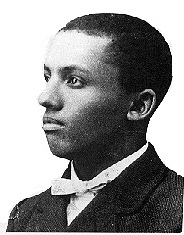
It needs to be …

It should be appreciated, commemorated and celebrated worldwide, because Black History has had an impact worldwide: good, bad and ugly.

So here-now, from a Caribbean perspective, we are ready for February 2019 and all the planned Black History events, activities, stories and remembrances. See this Encore of the previous blog-commentary from 2018 remembering the originator of the concept of setting-aside time for Black History considerations: Carter G. Woodson.

See the full submission of that previous blog, here:

————–

Go Lean CommentaryCarter Woodson – One Man Made a Difference … for Black History

Its February 1st – Black History Month commences…

Believe it or not, this was not always recognized or considered important. It was at the urging of one man that this cultural phenomenon came about. That one man is:

        Carter G. Woodson 

Yes, one man can make a difference. His research and archive accomplishments are fully recognized and celebrated, as is his subject – the contributions of the African-American people in the development of the United States. This high regard for Woodson is not just our opinion alone; today, Google has awarded Woodson with a Google Doodle – see above photo.

Also, see the full Wikipedia reference article on Carter Woodson in the Appendix below.

Though Woodson died in 1950 and the monthly observance started in 1970, he is still credited for the creation and fostering of this cultural phenomenon of Black History Month.

The movement behind the book Go Lean…Caribbean – available to download for free – tracks and monitors the developments of the African-American community. Since the majority population of 28 of the 30 Caribbean member-states is Black, we share the same ancestral heritage (Africa), same colonial origins (slave trade), and same history of societal oppression as American Blacks. Plus the vast majority of our Caribbean Diaspora who fled their homeland lives in the US – one estimate is 22 million.

The Go Lean book posits that one person – an advocate like Woodson – can make a difference (Page 122). It relates:

An advocacy is an act of pleading for, supporting, or recommending a cause or subject. For this book, it’s a situational analysis, strategy or tactic for dealing with a narrowly defined subject.

Advocacies are not uncommon in modern history. There are many that have defined generations and personalities. Consider these notable examples from the last two centuries in different locales around the world:

  • Frederick Douglas
  • Mohandas Gandhi
  • Martin Luther King
  • Nelson Mandela
  • Cesar Chavez
  • Candice Lightner

We must now consider Carter G. Woodson in this ilk; he is deserving of double honor:

Let the elders who preside in a fine way be considered worthy of double honor, especially those who work hard in speaking and teaching. – The Bible 1 Timothy 5:17

The Go Lean book seeks to advocate and teach the Caribbean – and the people who love it; it strives to learn lessons from history and direct regional stakeholders to a Way Forward from the dysfunctional past to a brighter future. The book serves as a roadmap for the introduction and implementation of the technocratic Caribbean Union Trade Federation (CU), for the elevation of Caribbean society – for all member-states. This CU/Go Lean roadmap has these 3 prime directives:

  • Optimization of the economic engines in order to grow the regional economy to $800 Billion and create 2.2 million new jobs.
  • Establishment of a security apparatus to ensure public safety and protect the resultant economic engines.
  • Improve Caribbean governance to support these engines, including a separation-of-powers between the member-states and CU federal agencies.

The book stresses that reforming and transforming the Caribbean societal engines must be a regional pursuit – we must unite all of the Caribbean: Black, White, Red and Yellow – that the problems are too big for any one Caribbean member-state alone. This was an early motivation for the roadmap, as pronounced in the opening Declaration of Interdependence (Pages 12 – 14):

xi. Whereas all men are entitled to the benefits of good governance in a free society, “new guards” must be enacted to dissuade the emergence of incompetence, corruption, nepotism and cronyism at the peril of the people’s best interest. The Federation must guarantee the executions of a social contract between government and the governed.

xix. Whereas our legacy in recent times is one of societal abandonment, it is imperative that incentives and encouragement be put in place to first dissuade the human flight, and then entice and welcome the return of our Diaspora …

xxxii. Whereas the cultural arts … of the region are germane to the quality of Caribbean life, and the international appreciation of Caribbean life, the Federation must implement the support systems to teach, encourage, incentivize, monetize and promote the related industries for arts … in domestic and foreign markets. These endeavors will make the Caribbean a better place to live, work and play.

xxxiii. Whereas lessons can be learned and applied from the study of the recent history of other societies, the Federation must formalize statutes and organizational dimensions to avoid the pitfalls of communities like East Germany, Detroit, Indian (Native American) Reservations, Egypt and the previous West Indies Federation. On the other hand, the Federation must also implement the good examples learned from developments/ communities …

The Go Lean book provides 370-pages of turn-by-turn instructions on “how” to adopt new community ethos, plus the strategies, tactics, implementations and advocacies to execute so as to reboot, reform and transform the societal engines of Caribbean society.

The Go Lean movement calls on every man, woman and child in the Caribbean to be an advocate, and/or appreciate the efforts of previous advocates. Their examples can truly help us today with our passions and purpose. Consider this sample of prior blog/commentaries where advocates and role models have been elaborated upon:

https://goleancaribbean.com/blog/?p=12542 Dr. Thomas W. Mason – FAMU Professor & STEM Influencer
https://goleancaribbean.com/blog/?p=11963 Oscar López Rivera – The ‘Nelson Mandela’ of the Caribbean?
https://goleancaribbean.com/blog/?p=11442 Caribbean Roots: Al Roker – ‘Climate Change’ Defender
https://goleancaribbean.com/blog/?p=10801 Caribbean Roots: John Carlos – The Man. The Moment. The Movement
https://goleancaribbean.com/blog/?p=10114 Caribbean Roots: Esther Rolle of ‘Good Times’
https://goleancaribbean.com/blog/?p=9948 Caribbean Roots: Sammy Davis, Jr.
https://goleancaribbean.com/blog/?p=9300 Edward Snowden – One Person Making a Difference
https://goleancaribbean.com/blog/?p=8724 Remembering Marcus Garvey: Still Relevant Today
https://goleancaribbean.com/blog/?p=8495 The NBA’s Tim Duncan – Champion On and Off the Court
https://goleancaribbean.com/blog/?p=8328 YouTube Millionaire: ‘Tipsy Bartender’
https://goleancaribbean.com/blog/?p=8165 Role Model Muhammad Ali’s Greatest Fight
https://goleancaribbean.com/blog/?p=7682 Frederick Douglass: Role Model for Single Cause – Death or Diaspora
https://goleancaribbean.com/blog/?p=866 Bob Marley: The legend lives on!

In summary, we conclude about Carter Woodson as we do about our own Caribbean historians and advocates; we say (Go Lean book conclusion Page 252):

Thank you for your service, love and commitment to all Caribbean people. We will take it from here.

The movement behind the Go Lean book, the planners of a new Caribbean stresses that a ‘change is going to come’, one way or another. We have endured failure for far too long; we have seen what works and what does not. We want to learn from history – the good, bad and ugly lessons. We have looked, listened, learned and lend-a-hand since then. We are now ready to lead our region to a better destination, to being a homeland that is better to live, work and play. 🙂

Download the free e-Book of Go Lean … Caribbean – now!

Sign the petition to lean-in for this roadmap for the Caribbean Union Trade Federation.

———-

Appendix Reference Title: Carter G. Woodson 

Carter Godwin Woodson (December 19, 1875 – April 3, 1950)[1] was an American historian, author, journalist and the founder of the Association for the Study of African American Life and History. He was one of the first scholars to study African-American history. A founder of The Journal of Negro History in 1916, Woodson has been cited as the “father of black history“.[2] In February 1926 he launched the celebration of “Negro History Week”, the precursor of Black History Month.[3]

[He] was born in Buckingham County, Virginia[4] on December 19, 1875, the son of former slaves, James and Eliza Riddle Woodson.[5] His father helped Union soldiers during the Civil War and moved his family to West Virginia when he heard that Huntington was building a high school for blacks.

Coming from a large, poor family, Carter Woodson could not regularly attend school. Through self-instruction, he mastered the fundamentals of common school subjects by the age of 17. Wanting more education, he went to Fayette County to earn a living as a miner in the coal fields, and was able to devote only a few months each year to his schooling.

In 1895, at the age of 20, Woodson entered Douglass High School, where he received his diploma in less than two years.[6] From 1897 to 1900, Woodson taught at Winona in Fayette County. In 1900 he was selected as the principal of Douglass High School. He earned his Bachelor of Literature degree from Berea College in Kentucky in 1903 by taking classes part-time between 1901 and 1903. From 1903 to 1907, Woodson was a school supervisor in the Philippines.

Woodson later attended the University of Chicago, where he was awarded an A.B. and A.M. in 1908. He was a member of the first black professional fraternity Sigma Pi Phi[7] and a member of Omega Psi Phi. He completed his PhD in history at Harvard University in 1912, where he was the second African American (after W. E. B. Du Bois) to earn a doctorate.[8] His doctoral dissertation, The Disruption of Virginia, was based on research he did at the Library of Congress while teaching high school in Washington, D.C. After earning the doctoral degree, he continued teaching in public schools, later joining the faculty at Howard University as a professor, and served there as Dean of the College of Arts and Sciences.

Career
Convinced that the role of his own people in American history and in the history of other cultures was being ignored or misrepresented among scholars, Woodson realized the need for research into the neglected past of African Americans. Along with Alexander L. Jackson and three associates, he founded the Association for the Study of Negro Life and History on September 9, 1915, in Chicago.[9][10] That was the year Woodson published The Education of the Negro Prior to 1861. His other books followed: A Century of Negro Migration (1918) and The History of the Negro Church (1927). His work The Negro in Our History has been reprinted in numerous editions and was revised by Charles H. Wesley after Woodson’s death in 1950.

In January 1916, Woodson began publication of the scholarly Journal of Negro History. It has never missed an issue, despite the Great Depression, loss of support from foundations, and two World Wars. In 2002, it was renamed the Journal of African American History and continues to be published by the Association for the Study of African American Life and History (ASALH).

Woodson believed that education and increasing social and professional contacts among blacks and whites could reduce racism and he promoted the organized study of African-American history partly for that purpose. He would later promote the first Negro History Week in Washington, D.C., in 1926, forerunner of Black History Month.[13] The Bronzeville neighborhood declined during the late 1960s and 1970s like many other inner-city neighborhoods across the country, and the Wabash Avenue YMCA was forced to close during the 1970s, until being restored in 1992 by The Renaissance Collaborative.[14]

He served as Academic Dean of the West Virginia Collegiate Institute, now West Virginia State University, from 1920 to 1922.[15]

He studied many aspects of African-American history. For instance, in 1924, he published the first survey of free black slaveowners in the United States in 1830.[16]

He once wrote: “If you can control a man’s thinking, you don’t have to worry about his actions. If you can determine what a man thinks you do not have to worry about what he will do. If you can make a man believe that he is inferior, you don’t have to compel him to seek an inferior status, he will do so without being told and if you can make a man believe that he is justly an outcast, you don’t have to order him to the back door, he will go to the back door on his own and if there is no back door, the very nature of the man will demand that you build one.”

NAACP
Woodson became affiliated with the Washington, D.C. branch of the NAACP, and its chairman Archibald Grimké. On January 28, 1915, Woodson wrote a letter to Grimké expressing his dissatisfaction with activities and making two proposals:

  1. That the branch secure an office for a center to which persons may report whatever concerns the black race may have, and from which the Association may extend its operations into every part of the city; and
  2. That a canvasser be appointed to enlist members and obtain subscriptions for The Crisis, the NAACP magazine edited by W. E. B. Du Bois.

Du Bois added the proposal to divert “patronage from business establishments which do not treat races alike,” that is, boycott businesses. Woodson wrote that he would cooperate as one of the twenty-five effective canvassers, adding that he would pay the office rent for one month. [But] Grimké did not welcome Woodson’s ideas. …

[Woodson’s] difference of opinion with Grimké, who wanted a more conservative course, contributed to Woodson’s ending his affiliation with the NAACP.

Black History Month
Woodson devoted the rest of his life to historical research. He worked to preserve the history of African Americans and accumulated a collection of thousands of artifacts and publications. He noted that African-American contributions “were overlooked, ignored, and even suppressed by the writers of history textbooks and the teachers who use them.”[18] Race prejudice, he concluded, “is merely the logical result of tradition, the inevitable outcome of thorough instruction to the effect that the Negro has never contributed anything to the progress of mankind.”[18]

In 1926, Woodson pioneered the celebration of “Negro History Week”,[19] designated for the second week in February, to coincide with marking the birthdays of Abraham Lincoln and Frederick Douglass.[20] However, it was the Black United Students and Black educators at Kent State University that founded Black History Month, on February 1, 1970.[21] Six years later Black History Month was being celebrated all across the country in educational institutions, centers of Black culture and community centers, both great and small, when President Gerald Ford recognized Black History Month, during the celebration of the United States Bicentennial. He urged Americans to “seize the opportunity to honor the too-often neglected accomplishments of black Americans in every area of endeavor throughout our history.”[22]

Colleagues 
Woodson believed in self-reliance and racial respect, values he shared with Marcus Garvey, a Jamaican activist who worked in New York. Woodson became a regular columnist for Garvey’s weekly Negro World.

Death and legacy
Woodson died … within his home in … Washington, D.C., on April 3, 1950, at the age of 74.

The time that schools have set aside each year to focus on African-American history is Woodson’s most visible legacy. His determination to further the recognition of the Negro in American and world history, however, inspired countless other scholars. Woodson remained focused on his work throughout his life. Many see him as a man of vision and understanding. Although Woodson was among the ranks of the educated few, he did not feel particularly sentimental about elite educational institutions. The Association and journal that he started are still operating, and both have earned intellectual respect.

Source: Wikipedia Online Encyclopedia – retrieved February 1, 2018 from: https://en.wikipedia.org/wiki/Carter_G._Woodson


Share this post:
,
[Top]

Justice and Economics – Both needed to forge change

Go Lean Commentary

Duels are now a thing of the past – Yippee!!!

Modern civilizations would not tolerate people using violence to avenge their honor or property loss. The new way is to sue in the Court of Law …

… lawsuits are even prevalent when there is the Wrongful Death of an individual:

Wrongful death is a claim against a person who can be held liable for a death.[1] The claim is brought in a civil action, usually by close relatives, as enumerated by statute. …
Many wrongful death claims are based upon death resulting from negligence, for example following a motor vehicle accident caused by another driver, a dangerous roadway or defective vehicle, or medical malpractice.[2] Dangerous roadway claims result from deaths caused in whole or in part by the condition of the roadway.[3]
Source: Retrieved January 30, 2019 from: https://en.wikipedia.org/wiki/Wrongful_death_claim

While the life of a loved one cannot be substituted for money, it does help to bring justice to the survivors that there is a judgment that “someone” has to pay.

But what if there was a “magic bullet” that can just swipe out the accountability of a valid Wrongful Death claim. There is …

… it’s called bankruptcy!

See this actuality portrayed in this news article here about the recent forest fires in California. People died; there is corporate negligence; there should be a reckoning, accountability and justice. See the full article and VIDEO here:

Title: PG&E to file for bankruptcy following devastating California wildfires
Sub-title:
Company blames liabilities, reconstruction costs and ‘increase in wildfire risk resulting from climate change’
By: Hamza Shaban and Steven Mufson

California’s largest power company intends to file for bankruptcy as it faces tens of billions of dollars in potential liability after massive wildfires devastated parts of the state over the past two years, according to a filing with the Securities and Exchange Commission.

Pacific Gas and Electric said Monday that declaring insolvency is “ultimately the only viable option to restore PG&E’s financial stability to fund ongoing operations and provide safe service to customers.”

The California wildfires, which have killed dozens of people and destroyed thousands of homes, have led to a surge in insurance claims. PG&E estimates that it could be held liable for more than $30 billion, according to the SEC filing, not including potential punitive damages, fines or damages tied to future claims. The company’s wildfire insurance for 2018 was $1.4 billion.

The PG&E bankruptcy promises to be more complex and political than most bankruptcies, pitting fire victims, ratepayers, bankers, insurance companies and renewable-energy providers against one another. Homeowners with property insurance will collect from their insurers, and a person familiar with the bankruptcy planning said that hedge funds are already offering to buy settlement claims from insurance companies.

One casualty of a bankruptcy could be billions of dollars of funding for clean-energy initiatives designed to fight the effects of climate change, Ralph Cavanagh, a California-based energy expert at the Natural Resources Defense Council (NRDC), said in an email. “PG&E is the state’s largest investor in energy efficiency and electric vehicle infrastructure alone, with annual commitments well in excess of $1 billion,” he said. “Other threatened initiatives involve grid upgrades, small-scale ‘distributed’ resources and technology innovation.”

Solar and wind-energy providers are among those who could suffer. In its drive to make the state electricity grid free from carbon dioxide emissions, California has pushed utilities to buy renewable energy. Gabe Grosberg, a utilities analyst at S&P Global, said Monday that “many of the power contracts are above market price” and that a renegotiation of those contracts “is something the bankruptcy judge will take a look at.”

The company said financial alternatives to bankruptcy would not serve the best interests of PG&E and its shareholders and “would not address the fundamental issues and challenges PG&E faces.” Among the many considerations that pushed the company closer to bankruptcy were the need to resolve its potential liabilities, extensive rebuilding efforts and “the significant increase in wildfire risk resulting from climate change,” PG&E said.

PG&E’s shares plummeted Monday, and closed at $8.38 a share, down 52 percent.

[As wildfires rage, California frets over a future of greater perils and higher costs]

The filing comes a day after the company announced the resignation of its chief executive, Geisha Williams. Williams, three other top executives who resigned last week and the company have come under harsh criticism in recent weeks over the utility’s corporate culture. The president of the California Public Utilities Commission had in November widened his investigation of PG&E to include its “safety culture” more generally.

“In our opinion, [PG&E] has significant organizational and leadership problems that have eroded the utility’s trust capital in Sacramento,” the investment advisory firm Height Securities said in a note at the time.

The company was already on federal probation as a result of a 2010 natural-gas pipeline explosion in San Bruno, Calif., that exposed violations of the Natural Gas Act and led to obstruction-of-justice charges. The five-year probation period runs through this year.

PG&E said it was required to give employees at least 15 days’ notice before it filed for bankruptcy, which it plans to do “on or about” Jan. 29.

PG&E said that, as of last week, it had about $1.5 billion in “cash or cash equivalents on hand” and was in discussions with “a number of major banks” to secure more than $5 billion to fund its ongoing operations as it seeks bankruptcy protection.

As a regulated utility, PG&E has appealed to the California Public Utilities Commission for higher gas and electric rates to recover costs. And the company has appealed to the California state legislature for protection, asking it to cap liabilities stemming from the fires.

Few politicians want to rush to the defense of a big utility, but many policy experts argue that PG&E wouldn’t be in this position if it weren’t for a unique California legal standard that makes utilities strictly liable for damages from wildfires linked to their equipment, even if the utilities were not negligent or unreasonable.

“The report of PG&E’s likely bankruptcy is deeply concerning news for the state, fire victims, and ratepayers,” California State Assembly member Chris Holden (D) said in a statement. “We don’t want to see the victims victimized again.” Holden, who has been an ally of PG&E, said he would work with the legislature and the state’s new governor, Gavin Newsom (D), on how to protect fire victims and ratepayers.

Newsom issued a statement saying that he would seek “a solution that ensures consumers have access to safe, affordable and reliable service, fire victims are treated fairly, and California can continue to make progress toward our climate goals.” He said the utility should “honor promises made to energy suppliers and to our community.”

Energy suppliers and the community, however, will join others with unsecured claims. Much of the power over how much they receive depends on how much higher the California Public Utilities Commission is willing to raise rates, PG&E’s revenue source.

PG&E, formed more than a century ago, has been blamed for dozens of major California fires that have started when trees have fallen on power lines, sending sparks onto dry grass or other trees. In response in May to a report by the California Department of Forestry and Fire Protection (Cal Fire) regarding October 2017 blazes, PG&E said it prunes or removes about 1.4 million trees a year in an effort to prevent such fires.

The company, which serves about 5.4 million electricity customers and 4.5 million natural-gas customers, also blamed changing weather for exacerbating the task of preventing fires. “Years of drought, extreme heat and 129 million dead trees have created a ‘new normal’ for our state,” the company said.

Moody’s investor rating service warned Nov. 15 that the potential liability of 21 major wildfires in 2017 was roughly $10 billion and that the destructive 2018 Camp Fire, which devastated the town of Paradise, Calif., and killed 86 people, would add further costs. PG&E said the cause of that fire was still under investigation, but Cal Fire is focusing on several of the utility’s transmission lines and towers.

The 2018 fires have compounded concerns about the viability of the company. Its stock has plunged about 80 percent since early November, wiping out about $19 billion of market value.

S&P Global’s Grosberg said that PG&E’s ratings were slashed as “public anger” spread after the Camp Fire, with protesters demonstrating outside a regulatory hearing in late November and in front of PG&E’s headquarters in early December.

“All Californians sympathize deeply with the victims of our recent catastrophes, which caused dozens of deaths and wreaked unprecedented destruction across the state,” the NRDC’s Cavanagh said. “But victims’ interests won’t be served by pushing utilities into bankruptcy, converting wildfire sufferers into one more class of frustrated creditors pursuing inadequate funds.”

Scott Wilson contributed to this report.

Source: Washington Post Daily Newspaper – Posted January 14, 2019; retrieved January 30, 2019 from: https://www.washingtonpost.com/technology/2019/01/14/pge-file-bankruptcy-following-devastating-california-wildfires/?noredirect=on&utm_term=.b0662c33d98e

———-

VIDEO – California deadly Camp & Woolsey fires, compared by the numbers  – https://www.washingtonpost.com/video/national/californias-deadly-camp-and-woolsey-fires-compared-by-the-numbers/2018/11/20/7d71bb96-ecd3-11e8-8b47-bd0975fd6199_video.html

Published January 14, 2019 – The wildfires reduced Paradise to ashes and razed much of Malibu’s landscape. (Luis Velarde /The Washington Post)

This foregoing article was composed before hand, with the anticipation that PG&E would file bankruptcy, despite being profitable – see Appendix below. They did file; see here:

January 29, 2019 – Pacific Gas and Electric’s bankruptcy filing on Tuesday, to deal with billions of dollars in wildfire liability, set off a scramble by the company, investors and elected leaders in California to protect themselves and influence what happens next.

The corporate reorganization is shaping up to be one of the most complicated and difficult in recent years. In addition to traditional legal tussles between the company and its creditors and suppliers, the bankruptcy court will contend with demands by California officials and victims to force PG&E to pay damage claims estimated at tens of billions of dollars for wildfires started by its equipment. 
See the full article here; (retrieved January 30, 2019): https://www.nytimes.com/2019/01/29/business/energy-environment/pge-file-bankruptcy.html

This is about the Social Contract – where citizens surrender some of their freedoms and submit to the authority of the State in exchange for protection of remaining natural and legal rights. The important lesson is that to have security and justice, there must be an economic requirement as well. The book Go Lean…Caribbean presents a roadmap to reform and transform the Caribbean societal engines of economics, security and governance. It introduces a new federal government branded the Caribbean Union Trade Federation (CU); this plan asserts that bankruptcy functionality must be elevated to federal jurisdiction rather than remain at the member-state level for processing. The need for justice is the rationale why; (as related here from the Go Lean book):

Ways to Impact Turn-Arounds – Bankruptcy Processing (Page 33)
Upon acceding this treaty, all bankruptcy processing in the region will be assimilated under the CU Federal Courts – applying to individuals, companies and even municipalities – thereby bringing protection to plaintiffs, but also balance and fairness to creditors.

Separation of Powers – Federal Courts (Page 90)
Upon the accedence of this CU Trade Federation, all the bankruptcy processing in the region will be assembled and rolled under the federal courts. These cases apply for individuals, companies and even municipalities. This federalized process will bring protection to plaintiffs, but also will bring balance and fairness to the creditors and avoid abuse by debtors.

Ways to Better Manage Debt – CU Federal Bankruptcies (Page 114)
When debt become too excessive and can no longer be managed by the debtor, the usual solution is bankruptcy. Most advanced economies even allow for governmental entities to avail this privilege. The CU treaty will grant this oversight (and receivership) to CU federal courts, with a mandate to lean towards reorganization, rather than outright dismissal of legitimate debt, though all creditors may have to take a “hair-cut” (minor loss). The courts will appoint direct receivership to Trustees to facilitate the processing of the bankruptcy obligations for municipalities, companies and individuals.

This bankruptcy theme aligns with previous Go Lean commentaries; see a sample list here:

https://goleancaribbean.com/blog/?p=15965 Retail Apocalypse and Sears Bankruptcy; Another One Bites the Dust
https://goleancaribbean.com/blog/?p=15787 Lessons Learned from 2008: Too Big to Fail –vs- Too Small to Thrive
https://goleancaribbean.com/blog/?p=11647 Righting a Wrong: Puerto Rico’s Bankruptcy
https://goleancaribbean.com/blog/?p=3311 Detroit to exit historic bankruptcy

If bankruptcies are not regulated with the economic engines, then justice becomes elusive. This is because, as the Go Lean book posits, “bad actors” will always emerge in times of economic optimizations to exploit opportunities, with bad or evil intent. The institutions must be in place to marshal against injustice in society. Once there is a reckoning, it must not be easily undermined with abusive bankruptcy practices.

Everyone in the Caribbean, the people and institutions, are hereby urged to lean-in to this Go Lean roadmap for elevation of Caribbean society. The roadmap calls for the heavy-lifting so that justice institutions, including the courts, can execute their responsibilities in a just manner, thus impacting the Greater Good.

We must do the heavy-lifting to ensure justice reigns – no justice; no peace. This is how we can make our homeland a better place to live, work and play. 🙂

About the Book
The book Go Lean…Caribbean serves as a roadmap for the introduction and implementation of the technocratic Caribbean Union Trade Federation (CU), for the elevation of Caribbean society – for all member-states. This CU/Go Lean roadmap has these 3 prime directives:

  • Optimization of the economic engines in order to grow the regional economy to $800 Billion and create 2.2 million new jobs.
  • Establishment of a security apparatus to ensure public safety and protect the resultant economic engines.
  • Improve Caribbean governance to support these engines, including a separation-of-powers between the member-states and CU federal agencies.

The Go Lean book provides 370-pages of turn-by-turn instructions on “how” to adopt new community ethos, plus the strategies, tactics, implementations and advocacies to execute so as to reboot, reform and transform the societal engines of Caribbean society.

Download the free e-Book of Go Lean … Caribbean – now!

Who We Are
The movement behind the Go Lean book – a non-partisan, apolitical, religiously-neutral Community Development Foundation chartered for the purpose of empowering and re-booting economic engines – stresses that reforming and transforming the Caribbean societal engines must be a regional pursuit. This was an early motivation for the roadmap, as pronounced in the opening Declaration of Interdependence (Pages 12 – 13):

xi. Whereas all men are entitled to the benefits of good governance in a free society, “new guards” must be enacted to dissuade the emergence of incompetence, corruption, nepotism and cronyism at the peril of the people’s best interest. The Federation must guarantee the executions of a social contract between government and the governed.

xvi. Whereas security of our homeland is inextricably linked to prosperity of the homeland, the economic and security interest of the region needs to be aligned under the same governance. Since economic crimes … can imperil the functioning of the wheels of commerce for all the citizenry, the accedence of this Federation must equip the security apparatus with the tools and techniques for predictive and proactive interdictions.

xxiv. Whereas a free market economy can be induced and spurred for continuous progress, the Federation must install the controls to better manage aspects of the economy: jobs, inflation, savings rate, investments and other economic principles. Thereby attracting direct foreign investment because of the stability and vibrancy of our economy.

Sign the petition to lean-in for this roadmap for the Caribbean Union Trade Federation.

—————

Appendix – PG&E Fortune 500 Metrics

PREVIOUS RANK: 157
REVENUES ($M): $17,135
REVENUE CHANGE: -3.0%
PROFITS ($M): $1,646.0
PROFIT CHANGE: 18.2%
ASSETS ($M): $68,012
MARKET VALUE AS OF 3/29/18 ($M): $22,664
EMPLOYEES: 23,000

Source: Retrieved January 30, 2019 from: http://fortune.com/fortune500/pge-corp/

Share this post:
, ,
[Top]