Tag: Civil Rights

Long Train of Abuses: Religious Leadership in Government – Reconciling Trump

Go Lean Commentary

Show me your friends and I will tell you who your are. – Old Adage

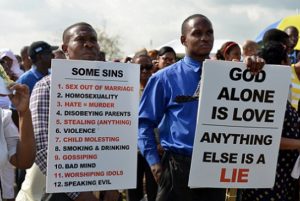
This is a sad imagery if we are talking about bullies and delinquents in the neighborhood; it is sadder still if we are talking about the religious leaders in the community.
Ouch! This is not the form of worship that is to be expected from Christianity. Face it, there is a sharp difference between Christianity and Christendom. The Bible gave the clear standard; consider these scriptures:

22 On the other hand, the fruitage+ of the spirit is love, joy,+ peace,+ patience, kindness, goodness,+ faith, 23 mildness, self-control.+ Against such things there is no law. – Galatians 5:22,23 NWT

*********

27  The form of worship* that is clean+ and undefiled+ from the standpoint of our God and Father is this: to look after orphans*+ and widows+ in their tribulation,+ and to keep oneself without spot+ from the world.+James 1:27 NWT

The actuality of life in the Caribbean is that our Christian-religious leaders do not have this track record. To the contrast, the religious orthodoxy is “sometimes good and acceptable”, then many times bad and unbecoming. Yes, we have to take the “bitter with the sweet”! Is this the way Christianity is supposed to be? Is this right and tolerable for our modern society?
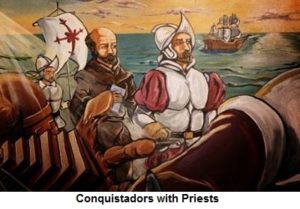
No! Yet, this is not a theoretical discussion; this is observing-and-reporting on the happenstances of our Caribbean society. The actuality reflects the Long Train of Abuses we have had to endure here in the Caribbean, over the centuries, decades and years. Remember the bad religious orthodoxy and how these precepts were embedded in national Law-and-Order edicts:

  • Conquest – The New World was explored and exploited with the expansion of Christianity in mind.
  • Slavery – The initial approval for slavery was granted by the Roman Catholic Pope as an allowance for savages (from Africa) to be exposed to Christianity.
  • Colonialism – Conquest of the New World to allow for the spread of Christianity and forge their flavor of God-fearing societies from the “cradle to the grave”. This was blatant hypocrisy.
  • PatriarchyNatural Law adherents, backed by twisted scriptural views, preached that only men mattered in society.
  • White Supremacy – False teachings that the Black Race was cursed and that all Bible prophets only look Europeans.
  • Buggery – LGBT Rights were frowned on because of Biblical prohibitions on Sodom & Gomorrah.
  • Childhood Violence – Twisted application of “spare the rod, spoil the child” scriptural mandates.

This is the continuation of the monthly Teaching Series from the movement behind the 2013 book Go Lean…Caribbean. The book presents issues that are germane to Caribbean life and culture and how to address them: problems and solutions. For this month of December 2020, we are looking at the Long Train of Abuses that could-would-should move our people to change, to reform and transform. This is entry 3-of-6; this one asserts that the embedded religiosity with Caribbean leaders-governance is a source of the toxicity and dysfunction in our society. Yes, their dysfunction is that bad.

The religious leaders are partly responsible for our Long Train of Abuses. This consideration is one of the assertions in this Teaching Series for this month of December 2020. See the full catalog of the series this month:

  1. Long Train of Abuses: Enough Already – Colonialism Be Gone!
  2. Long Train of Abuses: Overseas Masters – Cannot See Overseas
  3. Long Train of Abuses: Religious Leadership in Government – Reconciling Trump
  4. Long Train of Abuses: Religious Character in Society – Human Rights
  5. Long Train of Abuses: Dutch Hypocrisy – Liberal Amsterdam vs Conservative Antilles
  6. Long Train of Abuses: Puerto Rico – “Take the Heat” or “Get out of the Kitchen”

It is irrefutable, that the religiosity in the governance of the Caribbean has contributed to the Long Train of Abuses.

This is not just a Caribbean phenomenon. No, this commentary asserts that the Christian religious leaders in the US gave unconditional support for the 45th US President Donald Trump even though he provided a bad stewardship: for his country (USA), the Caribbean and the rest of the world. See the portrayal in the Appendix VIDEO below.

If Trump was so bad, why is it that the religious leaders continued to support him unconditionally?

Birds of a feather, flock together!  🙁

Now is the time to reconcile this actuality. Consider this excerpt from the news article – published during the build-up for the 2020 General Election of November, 2020 – in the Appendix below. This excerpt is prominent:

“… polls show Trump continues to hold a wide lead over Democrat Joe Biden among religious voters, a bad sign for the president is that some of his support is slipping, including among white evangelicals who, like the faculty at Christian colleges, have a college education.”

So the religious leaders hold sway over under-educated populations. Interesting?! The more education an individual gets, the less prone that individual is to the dark influences of the religious leaders.

What a statement!
This commentary is not a theological review nor is it chartered for spiritual guidance, but “if the shoe fits …”

… we simply must assert the Bible’s condemnation of the influences of false religious leaders in society. See these scriptures:

1 But understand this: In the last days terrible times will come. 2 For men will be lovers of themselves, lovers of money, boastful, arrogant, abusive, disobedient to their parents, ungrateful, unholy, 3 unloving, unforgiving, slanderous, without self-control, brutal, without love of good, 4 traitorous, reckless, conceited, lovers of pleasure rather than lovers of God, 5 having a form of godliness but denying its power. Turn away from such as these! – 2 Timothy 3: 1-5 Berean Study Bible

*********

For there will be a period of time when they will not put up with the wholesome* teaching,+ but according to their own desires, they will surround themselves with teachers to have their ears tickled.* 4 They will turn away from listening to the truth and give attention to false stories. – 2 Timothy 4: 3-4 NWT

Clearly, there is no refuting the clear difference between Christianity and Christendom.

Through out the Caribbean – except for the American territories – there is the practice of Seconding Government employees to religious organizations. (US Territories, despite a clear separation of Church and State, can provide some non-evangelical community development services-funding via Faith-based organizations). See this definition of seconding and secondment here:

secondment is the opportunity to work temporarily in a different firm or department to the one you are already working in.

In an internal secondment, the employee moves to a different part of the same organisation.

In an external secondment, the employee temporarily works at a different organisation.

This was/is a frequent strategy in Caribbean administrations. Consider these 2 examples here, from Jamaica & the Bahamas:

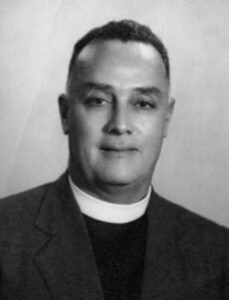
Remembering Father Hugh Braham Sherlock OJ, OBE, DD (1905-1998)

Father Hugh Sherlock

This year marks the 60th anniversary of the founding of Boys’ Town. It was in September 1940 that the Government of Jamaica and the YMCA collaborated on the need for a social intervention that would serve the needs of underprivileged youth in West Kingston and Trench Town.

The Methodist Church responded positively to the request for the secondment of 35-year-old minister, Hugh Sherlock, to spearhead this intervention. It was in these circumstances that the Kingston Boys’ Club was started in the hall of the Jones Town Baptist Church, which two years later moved to its own home in Trench Town and changed its name to Boys’ Town.

—————

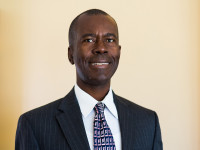
Bahamas Feeding Network thanks Government for Assistance to Households struggling to put food on tables

Philip Smith

For 14 years, Philip Smith has been feeding the hungry, first with loaves of bread he baked in his small apartment. For the last seven years as executive director of Bahamas Feeding Network, he has headed an unprecedented volunteer effort that has provided more than one million hot meals to those who most desperately need help. But never has he seen the extent of hunger explode as it has in the last seven months since the onset of the COVID-19 pandemic, and widespread unemployment.

“Hunger, especially in households with young children and among the elderly, was a major problem before, but in many ways, it was a quiet problem. Now with the coronavirus pandemic, the stark reality of hunger is staring us in the face and we are extremely grateful to the government of The Bahamas for their intervention which has made it possible to feed more than 55,000 households or 220,000 individuals,” he said. “For organizations like the Bahamas Feeding Network and all of us who are currently working within the framework of the National Food Security Task Force, we need to pause, take a deep breath and thank the administration for recognizing the depth and breadth of the extent of hunger, and funding its relief to the best of the government’s ability.”

The government is spending about $1 million a week to combat hunger and this week announced it would extend the work of the task force, originally scheduled to end this month, to December 31.
So it is quite common for Caribbean governments to deliver on their Social Contract by means of Faith-based organizations. So many times the roles and responsibilities of governance are delivered by means of religious stakeholders. So just how common is this practice?

    A lot …
    Too much …

Taking the “bitter with the sweet”, means that there will be some toxicity – the bad religious orthodoxy or Long Train of Abuses – embedded with the Faith-based deliveries. This is no longer acceptable. It is time now to end this Long Train of Abuses

The Go Lean book, serving as a roadmap for the introduction and implementation of the Caribbean Union Trade Federation (CU), an apolitical, religiously-neutral, economic-focused technocracy. The CU is not chartered to be a religious organization; there is no theocratic calling, but rather the motivation is solely for the Greater Good of civic society, defined as:

“It is the greatest good to the greatest number of people which is the measure of right and wrong” – Jeremy Bentham (1748-1832)

Enough already! It is time to think civic, and not religious. (Plus, there are many different religious faiths in our society).

We have addressed this theme – remediating the damage of the bad religious orthodoxy – in previous blog-commentaries; consider this sample here:

https://goleancaribbean.com/blog/?p=20237 Slavery in History: Good Lessons from the Bible
https://goleancaribbean.com/blog/?p=19217 Brain Drain – ‘Live and Let Live’: Introducing “non-preachy” Localism
https://goleancaribbean.com/blog/?p=16944 Accepting Black Women ‘As Is’ Despite Bad Bible Interpretation
https://goleancaribbean.com/blog/?p=16534 European Reckoning – Christianity’s Indictment for Human Rights Abuse
https://goleancaribbean.com/blog/?p=16172 Bad Christian History: 918 Deaths in Jonestown, Guyana
https://goleancaribbean.com/blog/?p=15580 Caribbean Unity? Religion’s Role: False Friend
https://goleancaribbean.com/blog/?p=10216 Waging a Successful War on Orthodoxy
https://goleancaribbean.com/blog/?p=9766 Rwanda’s Catholic bishops apologize for Christian genocide
https://goleancaribbean.com/blog/?p=5695 Repenting, Forgiving and Reconciling the Christian Past

Do you remember the expression “the Fourth Estate”, referring to the Press or the different expressions of Journalism?

Who or What is the First, Second and Third Estates?

The Fourth Estate (or fourth power)… most commonly refers to the news media, especially print journalism or “the press”. The term makes implicit reference to the earlier division of the three Estates of the Realm: the clergy, the nobility, and the commoners. – Wikipedia.

The First Estate is the clergy. (This is the focus of this commentary; the next submission in this blog series will address commoners or lay people).

The regionally accepted standard for leadership has simply been to just take the “bitter with the sweet”.

The religious stakeholders (leaders) have traditionally exerted their influence on society. Now comes the change; taking the “bitter with the sweet” is no longer acceptable. We must do better. We must pursue the Greater Good … always.

Taking the “bitter with the sweet” has led to a continuation of the Long Train of Abuses.

So this is now the urging to our Caribbean member-states:

Stop it … now! No longer accept the “bitter with the sweet”.

We hereby urge all leadership stakeholders – political and civic – to lean-in to this Way Forward – a formal separation of Church and State where religions organization are treated simply as civic NGO’s – for societal progress, this Go Lean roadmap. This is our plan to make our regional homeland a better place to live, work and play. 🙂

About the Book
The book Go Lean…Caribbean serves as a roadmap for the introduction and implementation of the technocratic Caribbean Union Trade Federation (CU), for the elevation of Caribbean society – for all member-states. This CU/Go Lean roadmap has these 3 prime directives:

  • Optimization of the economic engines in order to grow the regional economy to $800 Billion & create 2.2 million new jobs.
  • Establishment of a security apparatus to ensure public safety and protect the resultant economic engines.
  • Improve Caribbean governance to support these engines, including a separation-of-powers between the member-states and CU federal agencies.

The Go Lean book provides 370-pages of turn-by-turn instructions on “how” to adopt new community ethos, plus the strategies, tactics, implementations and advocacies to execute so as to reboot, reform and transform the societal engines of Caribbean society.

Download the free e-Book of Go Lean … Caribbean – now!

Who We Are
The movement behind the Go Lean book – a non-partisan, apolitical, religiously-neutral Community Development Foundation chartered for the purpose of empowering and re-booting economic engines – stresses that reforming and transforming the Caribbean societal engines must be a regional pursuit. This was an early motivation for the roadmap, as pronounced in the opening Declaration of Interdependence (Pages 12 – 13):

x. Whereas we are surrounded and allied to nations of larger proportions in land mass, populations, and treasuries, elements in their societies may have ill-intent in their pursuits, at the expense of the safety and security of our citizens. We must therefore appoint “new guards” to ensure our public safety and threats against our society, both domestic and foreign. The Federation must employ the latest advances and best practices … to assuage continuous threats against public safety.

xi. Whereas all men are entitled to the benefits of good governance in a free society, “new guards” must be enacted to dissuade the emergence of incompetence, corruption, nepotism and cronyism at the peril of the people’s best interest. The Federation must guarantee the executions of a social contract between government and the governed.

xxiv. Whereas a free market economy can be induced and spurred for continuous progress, the Federation must install the controls to better manage aspects of the economy: jobs, inflation, savings rate, investments and other economic principles. Thereby attracting direct foreign investment because of the stability and vibrancy of our economy.

Sign the petition to lean-in for this roadmap for the Caribbean Union Trade Federation.

—————-

Appendix A – Title: Christian College Faculty Aren’t Lining Up for Trump

Sub-title: Reflecting new polling that indicates college-educated white evangelicals are moving away from supporting Trump, many on Christian campuses are struggling to back him.

By: Kery Murakami

On Sunday evening, President Donald Trump took a break from tweeting to talk to a key segment of his supporters, people of faith, to tell them God will help the nation survive the coronavirus pandemic.

“We know that God hears our prayer,” Trump said in a broadcast on his campaign’s Facebook page. “We have no doubt about it. He’s always with us and he’ll help us overcome this challenge.”

He then switched to his re-election. “This is the most important election of our lives, and whether it’s evangelical, whether it’s Christian evangelical — call it whatever you want — people of religion — this is the most important election of our lives and we have to get out and we have to vote.”

As he spoke, another aspect of his pitch to religious voters, Supreme Court nominee Amy Coney Barrett, was poised to appear before the Senate Judiciary Committee. Opponents of abortion are excited that she will lead the court toward striking down Roe v. Wade.

And Monday morning, Trump’s campaign manager, Bill Stepien, told reporters in a call that Barrett’s confirmation hearings couldn’t be coming at a better time to mobilize religious voters. “This happening is a well-timed grassroots opportunity,” he said.
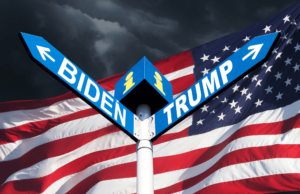
But while recent polls show Trump continues to hold a wide lead over Democrat Joe Biden among religious voters, a bad sign for the president is that some of his support is slipping, including among white evangelicals who, like the faculty at Christian colleges, have a college education.

At the nation’s Christian colleges, a number of professors described in interviews this week their struggle to reconcile their support for a president moving toward ending abortion with their discomfort, and even spiritual revulsion, over him.
Among those noticing the struggle is Shirley Hoogstra, president of the Council for Christian Colleges & Universities.

“President Trump has taken actions on issues like abortion and religious freedom that are important to Christians,” she said in an interview. “But President Trump’s actions distress many who have deeper faith practices. I think the president’s behavior has made it a hard choice.”

At the same time, she said, some religious voters are troubled by actions by the Democratic candidates, including a bill introduced by vice presidential nominee Kamala Harris to weaken a prohibition on laws burdening the exercising of religion.

Wheaton College — a Christian college in Illinois, which is described as sort as the Harvard of evangelical colleges — appears to be a place where Barrett’s nomination should be causing many to embrace Trump.

The university requires students and faculty each year to reaffirm a statement of faith, based on a biblical doctrine consonant with evangelical Christianity. Students and faculty are also expected to affirm that they agree with a community covenant, which, among other things, condemns “the taking of innocent life.”

David Iglesias, an associate professor of politics and law at Wheaton and director of the college’s Center for Faith, Politics and Economics, was clearly struggling whether his faith would allow him to vote for Trump.

“In my faith, everything is subservient to Scripture,” he said and brought up the biblical account of David’s adultery with Queen Bathsheba.

“The prophet did not give him a pass,” he said. “The Scripture is pretty clear that when our leaders do the wrong thing, we shouldn’t excuse them. Character counts. What you do matters.”

And, he said, “we know our Scripture here.”

Just in the past few months, he said, Trump has “failed to criticize the Proud Boys. What did he say? ‘Stand by’?”

“His behavior during the debate — he wouldn’t let Joe Biden speak. I’ve never seen a worse debate. It was pathetic. He’s said disparaging things about Muslim Americans,” Iglesias said.

“And there’s his recent treatment of veterans,” he said referring to a report in The Atlantic in September that Trump privately referred to service members killed in combat as “suckers” and “losers.” (Trump denied insulting veterans.)

Iglesias served in the U.S. Navy for 30 years.

On Christian campuses, “there’s going to be some soul searching in supporting someone you disagree with on 90 percent of the issues,” he said. “But who agrees with you on the one you that you hold dear, and that’s right to life.”

Supporting Trump shouldn’t be in doubt, either, at Union University, a Christian college in Tennessee, a state that Trump is expected to win easily.

“I really don’t know,” said Hunter Baker, the university’s dean of arts and sciences, when asked whom the college’s faculty is supporting. “People are keeping it close to their vest.”

But, he said, Trump will likely get less support on the campus than in the rest of western Tennessee.

He laughed when he was asked about Trump.

“What troubles me about Trump? Oh my gosh, how long do you have?” he said.

“He’s more polarizing than anyone I can remember,” he said. “Ideally we’d have someone who would reduce that polarizing. There’s no question he exacerbates it, and he almost seeks it out.”

Troubling Polling for Trump
In what could be a bad sign for Trump, polls are showing that recent controversies, from his failure to condemn white supremacists, even amid national protests over the killing of George Floyd, to his handling of the coronavirus pandemic, could be turning off key religious voters.

A Pew Research Center poll, released Tuesday, found that support of Trump by white Roman Catholics, white Protestants who are not evangelical and white evangelical Protestants has slipped since Sept. 30.

Just a little more than a month ago, 59 percent of white Protestants backed Trump. But in the latest Pew poll, conducted between Sept. 30 and Oct. 5, only 52 percent backed him. Among white evangelical Protestants, support for Trump dropped during that time from 83 percent to 78 percent.

More telling is data assembled by the nonprofit, nonpartisan Public Religion Research Institute at Inside Higher Ed’s request. Previous national polls have shown a political divide nationally based on education. Those without college degrees have been much more likely than those who graduated from college to support Trump.

Previously, polls had not shown that distinction among white evangelicals. But since this summer, “we do see a significant gap emerge,” said Natalie Jackson, PRRI’s director of research.

A PRRI poll in October 2016, for instance, showed that 61 percent of white evangelicals without a four-year degree had a favorable view of Trump, then a candidate for president — virtually the same as the 62 percent of white evangelicals with a college degree holding a favorable view of Trump.

Polls in 2017, 2018 and 2019 — in which 64 percent of white evangelicals without a college degree and 62 percent of those with a degree viewed Trump favorably — showed no difference.

A poll by the group between July and September, however, found that 65 percent of white evangelicals who hadn’t graduated from college continued to have a favorable view of Trump. But among white evangelicals with a degree, support for the president had dropped precipitously to 52 percent.

In addition, Federal Elections Commission data examined by Inside Higher Ed found 196 people who listed as their employer one of the 140 U.S. colleges that are members of the Council for Christian Colleges & Universities. Of those, 81 contributed to Trump and 115 to Biden.

The study was not definitive because of the potential for spelling errors in the FEC database, or contributors or donors not listing their employer. But even including the 14-to-1 advantage Trump holds among employees of conservative Liberty University, which is not part of the Christian colleges group, Trump doesn’t appear to be outraising Biden among the faculty as expected.

“Those trends are catastrophic for Trump,” said Micah Watson, director of the politics, philosophy and economics program at Calvin University, a Christian college in Grand Rapids, Mich.

“If that current data remains constant through Election Day (and people are actually voting now, too), then I don’t see a way he is competitive,” he said.

“It may well be that Trump is in as bad a shape as it appears,” said Baker, of Union University. But Baker, who is supporting Trump, said he is skeptical of polling, given that it was inaccurate in the 2016 elections.

To Dan Caldwell, distinguished professor of political science at Pepperdine University, a Christian college, that college-educated evangelicals might be turning away from Trump is not surprising.

“At long last, they’re opening their eyes to his behavior,” said Caldwell, who is supporting Biden. “I think people have become more skeptical that he believes in racial equality after his support of white nationalists.”

Caldwell, a Navy veteran, was also insulted by Trump’s comments about members of the military.

“I’m doing everything I can to keep him from getting elected,” said Caldwell, who is part of a group of more than 700 retired generals and admirals, former cabinet officials, and foreign policy experts called National Security Leaders for Biden, which has placed op-eds in local newspapers like the Pensacola Times.

That academics even at Christian colleges are troubled by Trump also isn’t surprising to Baker. “The more education you have, the more you value a certain type of discourse. And Trump violates that. He’s rude, and he doesn’t care how anybody feels.

“Christian college professors are still college professors,” he said.

Abortion a Key
But despite the polling, a positive sign for Trump is that even some of those like Baker, who struggle with supporting the president, are ultimately deciding to back him.

Like many faith leaders, Baker was troubled when Trump politicized the National Prayer Breakfast in February, where, according to the Associated Press, he held up two newspaper headlines about his acquittal by the Senate after impeachment then attacked Republican senator Mitt Romney, a member of the Church of Jesus Christ of Latter-day Saints, and House Speaker Nancy Pelosi, a Catholic.

“You haven’t experienced a conversion that brings with it a drive toward continuing repentance and personal holiness,” Baker wrote in an open letter to Trump.

Baker continued, “Please don’t shame us by attending events like the National Prayer Breakfast and turning a meeting based on faith into another avenue for political combat and vindication of your grievances.

“Here’s a Bible verse that might appeal to you and help with that. It’s Romans 12:20, which reads, ‘If your enemy is hungry, feed him; if he is thirsty, give him something to drink. In doing this, you will heap burning coals on his head.’ Maybe you should try that,” he wrote.

But despite all that, he is supporting Trump, he said, because of the issue of abortion.

“I view that cause as fundamentally about justice. In the way some people view the civil rights movement, I prioritize that more than every other issue,” he said.

A Call to Repent
Another sign of the soul searching among evangelicals came last week, when the National Association of Evangelicals released a statement, which in part calls on evangelicals to repent in ways that seem to run counter to Trump’s positions. The Christian college association endorsed the statement.

“Despite the example of Jesus and the teaching of Scripture, many of us have not adequately opposed the unjust systems that fail people of color, women, children and the unborn. We have not always fulfilled God’s commands to protect the immigrant, refugee and poor. We have not always treated those who hold different opinions — both inside and outside of our faith — with dignity,” the statement said.

Despite the conservative image of Christian colleges, Hoogstra said there are different viewpoints, noting many colleges have student groups focused on climate change and immigration.

In preparation for Hoogstra’s interview with Inside Higher Ed, the Christian college association surveyed the chief student development officers at their member campuses.

Those at the 54 campuses that responded estimated that 54 percent of their students are Republican and 41 percent are Democrats. Forty-one percent of the campuses have a Republican student club, while 32 percent have a Democratic student group. And 81 percent of the campuses said that they invite speakers from both political parties.

Richard Mouw, who served as president of Fuller Seminary before retiring in 2013, also sees a generational change among evangelical students. He recalled Democratic presidential candidate George McGovern being booed by students at the seminary during a speech in 1972.

Two years ago, he said, Wheaton College held a series of sermons against racism, where civil rights activists spoke. “All the students got up and gave them a standing ovation,” he recalled.

As some evangelicals struggle with reconciling their faith with politics, Mouw is helping organize a group called Pro-Life Evangelists for Biden, which is urging opponents of abortion to take a broader view.

Many women get abortions because they do not have enough money to care for another child, he said in an interview. Biden’s policies to raise the minimum wage, provide affordable health care and free childcare work to minimize abortions, he said.

Among those who agree is Daniel Lee, academic dean for the seminary’s Center for Asian American Theology and Ministry. “It’s about life. It’s not just about abortion. A lot of people don’t just think about the one issue, but the broader issue of social justice. About Muslims, refugees and how you treat the marginalized,” he said.

“If you don’t vote against Trump, you’re missing what the Gospel is all about, what our faith is all about,” said Lee, who was among 1,600 faith leaders who endorsed Biden through Vote Common Good, a Christian political group supporting the Democratic candidate.

“Love your neighbor,” he said. “It’s so basic.”

Source: Posted October 16, 2020; Retrieved December 8, 2020 from:  https://www.insidehighered.com/news/2020/10/16/christian-professors-try-reconcile-abortion-views-disdain-trump

—————–

Appendix B VIDEO – Why Evangelicals Are Still Voting For Donald Trump – https://youtu.be/-YAbuONPfVc

VICE News
Posted Aug 26, 2020 – Not as many Evangelical Christians are turning against Trump as you might think.

Subscribe to VICE News here: http://bit.ly/Subscribe-to-VICE-News

Check out VICE News for more: http://vicenews.com
Follow VICE News here:
Facebook: https://www.facebook.com/vicenews
Twitter: https://twitter.com/vicenews
Tumblr: http://vicenews.tumblr.com/
Instagram: http://instagram.com/vicenews

More videos from the VICE network: https://www.fb.com/vicevideo

Share this post:
, , ,

Long Train of Abuses: Enough Already … from Colonialism

Go Lean Commentary

For anyone in an abusive relationship, here is what your family, friends … and the world expects of you:

Get Out!

It is easier said than done – see the tongue-in-cheek song in the Appendix VIDEO below – but getting out is the quest, the goal and the end destination. This applies to all victims: individuals … and countries.

In fact, this was the actuality of the 1776 Declaration of Independence for the original 13 colonies that became the United States of America. Here is a powerful excerpt from that text, as recorded on Page 10 in the 2013 book Go Lean…Caribbean:

… Prudence, indeed, will dictate that governments long established should not be changed for light and transient causes; and accordingly all experience hath shown that mankind are more disposed to suffer, while evils are sufferable, than to right themselves by abolishing the forms to which they are accustomed. But when a long train of abuses and usurpations, pursuing invariably the same object evinces a design to reduce them under absolute despotism, it is their right, it is their duty, to throw off such government, and to provide new guards for their future security. — Such has been the patient sufferance of these [former] colonies [of European imperialism]; and such is now the necessity which constrains them to alter their former systems of government.

This was modus operandi for the Americans to establish New Guards. This was also the assertion of the Go Lean book. The 30 member-states of the Caribbean region has also endured a long train of abuses from its historicity, actuality and colonial heritage.

It’s enough already!

The same as it was the right time for the 13 original American Colonies to usurp their status quo, demand independence and appoint New Guards, it is past time for the Caribbean to take this stand. In 2013, the Go Lean book presented this:

Declaration of Interdependence
We, the people of Caribbean democracies find it necessary to accede and form a confederated Union, the Caribbean Union Trade Federation, with our geographic neighbors of common interest.

In addition, that Declaration “submitted facts”, detailing the shift in governance that must occur in the region. (Page 12):

xii. Whereas the legacy in recent times in individual states may be that of ineffectual governance with no redress to higher authority, the accedence of this Federation will ensure accountability and escalation of the human and civil rights of the people for good governance, justice assurances, due process and the rule of law. As such, any threats of a “failed state” status for any member state must enact emergency measures on behalf of the Federation to protect the human, civil and property rights of the citizens, residents, allies, trading partners, and visitors of the affected member state and the Federation as a whole.

Every month, the movement behind the Go Lean book presents a Teaching Series to address issues germane to Caribbean life and culture. For this month of December 2020, we are looking at the Long Train of Abuses that could-would-should move our people to change, to reform and transform. This is entry 1-of-6, the first one; it introduces the thesis that “enough already”; we are past the time when we should have made these changes. Consider here, the full catalog of the series this month:

  1. Long Train of Abuses: Enough Already – Colonialism Be Gone!
  2. Long Train of Abuses: Overseas Masters – Cannot See Overseas
  3. Long Train of Abuses: Religious Leadership in Government – Reconciling Trump
  4. Long Train of Abuses: Religious Character in Society – Human Rights
  5. Long Train of Abuses: Dutch Hypocrisy – Liberal Amsterdam vs Conservative Antilles
  6. Long Train of Abuses: Puerto Rico – “Take the Heat” or “Get out of the Kitchen”

The Go Lean book, serving as a roadmap for the introduction and implementation of the Caribbean Union Trade Federation (CU), asserts that Caribbean stakeholders must do the heavy-lifting to mitigate the societal defects, of which there are many. Our focus for Forging Change must consider both Top-Down and Bottoms-Up approaches. The purpose of the Go Lean roadmap is to optimize the economic, security and governing engines of Caribbean society, so there is a lot to consider.

There is not just One Stumbling Block that we must overcome; there are many. The purpose of this month’s Teaching Series is to focus on those Stumbling Blocks that have been aged for centuries here in our region. This is why we say, it is past time to reform and transform.

Enough already …

We must learn, as depicted in the opening of this commentary, that the structures of colonialism were not designed for our best interests, but rather the best interests of our colonizing host empires. So if we still maintain the same colonial structure that was instituted centuries ago, we are already behind in the race for the needed protection and prosperity in modern life.

Yes, we must finally Get Out of the abusive relationships that we have endured for such long times.

To the 18 (of 30) member-states that have a heritage of British colonialism – just 1 of the 5 – we have repeatedly warned to remove all vestiges of the Westminster ecosystem. It does not work! See this theme as it was presented in these previous blog-commentaries:

https://goleancaribbean.com/blog/?p=21138 Brexit Manifestation: Not So Good for Britain or Colonies
https://goleancaribbean.com/blog/?p=16317 When Queen ‘Elizabeth’ Dies … what’s next?
https://goleancaribbean.com/blog/?p=13993 First Steps – Following the ‘Dignified and Efficient’ British Model
https://goleancaribbean.com/blog/?p=13579 Colonialism’s Bloody History Revisited – ‘Thor’ Movie
https://goleancaribbean.com/blog/?p=12447 State of the Union: Deficient ‘Westminster System’
https://goleancaribbean.com/blog/?p=11420 ‘Black British’ and still ‘Less Than’
https://goleancaribbean.com/blog/?p=9485 10 Things We Want from the UK and 10 Things We Do Not Want

Life imitating art …

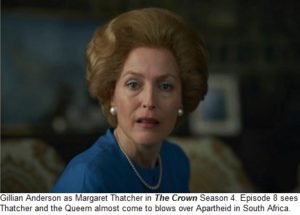
… the Netflix TV Series “The Crown Season 4” featured the storyline of British Prime Minister (PM) Margaret Thatcher’s rise and fall.

Three episodes from the fourth season — “Favourites,” “Fagan” and “48:1” — strongly imply that [Queen] Elizabeth objected to Thatcher’s harsh government spending cuts and refusal to impose economic sanctions on South Africa’s apartheid regime. The show depicts the queen politely but firmly confronting the prime minister over these matters during private meetings and “audiences” at Buckingham Palace.

The drama from this TV Show dramatizes that PM Thatcher had a clear conflict of interest regarding South Africa, in that “her son was an investor in projects promoted and supported by the Apartheid South African government“. When the UK  government (and many other international governments) were called on to impose economic sanctions against South Africa, the UK PM was the sole hold-out. See the series; consume it at your leisure. The performances are awe-inspiring; see this summary of one key character’s performances in this VIDEO here:

VIDEO – Best of Gillian Anderson as Margaret Thatcher | The Crown – https://youtu.be/gZgqQsFvyMM


Netflix UK & Ireland

Posted Nov 25, 2020 – Best known for her sensational performances in The X Files, The Fall and Sex Education, Gillian Anderson plays Britain’s first female Prime Minister, Margaret Thatcher, in The Crown Season 4. Here are her best moments from the series. That voice though…

➡️SUBSCRIBE FOR MORE: http://bit.ly/29kBByr

About Netflix:
Netflix is the world’s leading streaming entertainment service with over 195 million paid memberships in over 190 countries enjoying TV series, documentaries and feature films across a wide variety of genres and languages. Members can watch as much as they want, anytime, anywhere, on any internet-connected screen. Members can play, pause and resume watching, all without adverts or commitments.

Find Netflix UK on:
➡️TWITTER: http://bit.ly/29lYvcs
➡️INSTAGRAM: http://bit.ly/29slD8O
➡️FACEBOOK: http://bit.ly/29mx00a

Or visit the Netflix WEBSITE: http://nflx.it/29BcWb5

Best of Gillian Anderson as Margaret Thatcher | The Crown https://youtube.com/NetflixUK

In the 1980s, Elizabeth clashes with Prime Minister Margaret Thatcher while Prince Charles enters a tumultuous marriage with Lady Diana Spencer.

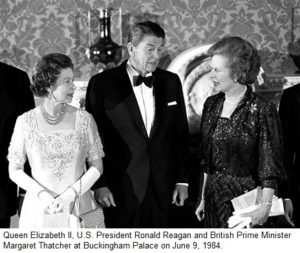
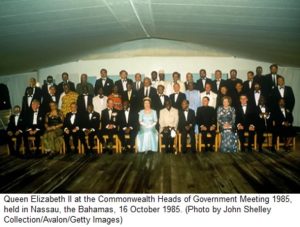
This foregoing show is set in London. This city is the cradle of the British brand of democracy around the world, with the seat of government for Her Royal Highness, Queen Elizabeth II, the Head of State of the UK and the Head of the Commonwealth of Nations. So we in the Caribbean – whose population reflect a majority Black-and-Brown demographic, just like South Africa – need to add this historicity to the “Long Train of Abuses” in our orthodoxy. Thatcher’s refusal to endorse the tougher program of economic sanctions against Apartheid, as originally laid out by other Commonwealth leaders, is a direct “slap in the face” to our race of people.

Colonialism has been the source of many of our toxic environments. Enough already!

We can do bad all by ourselves; we do not need a toxic hegemony to impede our societal progress. We should never “love people that do not love us back”; nor sacrifice for people that will not sacrifice for us.

This is why we say: Enough already!

At one point, South Africa said “Enough Already”, as they shed their colonial shackles; they migrated to a Republic with a more representative constitution.
This is our urging for all Caribbean member-states of British heritage. But don’t get it twisted …

… the same issue is applicable for the other colonial legacies: American, Dutch, French and Spanish. While we cannot change the past, we do not have to be chained to it. This goal, as depicted in the Go Lean book, is to learn from the past, value our culture, but adapt our society for the challenges of the future. See this excerpt from the first page of the book:

Though a lot of the options the CU advocates were available to Caribbean member-states in the past, the reasons and rationales as to why they were not pursued is now of no consequence. We cannot ignore the past, as it defines who we are, but we do not wish to be shackled to the past either, for then, we miss the future. So we must learn from the past, our experiences and that of other states in similar situations, mount our feet solidly to the ground and then lean-in, to reach for new heights; forward, upward and onward.

Lean-in or adapt?  A better way to state the action is to “reform and transform”.

This is how we change our world, after a long train of abuses, by feeling-saying-doing: “No; Stop; and Get Out”.

We hereby urge all stakeholders to lean-in to this Go Lean roadmap; this is our plan to make our regional homeland a better place to live, work and play.

Yes, we can … 🙂

About the Book
The book Go Lean…Caribbean serves as a roadmap for the introduction and implementation of the technocratic Caribbean Union Trade Federation (CU), for the elevation of Caribbean society – for all member-states. This CU/Go Lean roadmap has these 3 prime directives:

  • Optimization of the economic engines in order to grow the regional economy to $800 Billion & create 2.2 million new jobs.
  • Establishment of a security apparatus to ensure public safety and protect the resultant economic engines.
  • Improve Caribbean governance to support these engines, including a separation-of-powers between the member-states and CU federal agencies.

The Go Lean book provides 370-pages of turn-by-turn instructions on “how” to adopt new community ethos, plus the strategies, tactics, implementations and advocacies to execute so as to reboot, reform and transform the societal engines of Caribbean society.

Download the free e-Book of Go Lean … Caribbean – now!

Who We Are
The movement behind the Go Lean book – a non-partisan, apolitical, religiously-neutral Community Development Foundation chartered for the purpose of empowering and re-booting economic engines – stresses that reforming and transforming the Caribbean societal engines must be a regional pursuit. This was an early motivation for the roadmap, as pronounced in the opening Declaration of Interdependence (Pages 12 – 13):

x. Whereas we are surrounded and allied to nations of larger proportions in land mass, populations, and treasuries, elements in their societies may have ill-intent in their pursuits, at the expense of the safety and security of our citizens. We must therefore appoint “new guards” to ensure our public safety and threats against our society, both domestic and foreign. The Federation must employ the latest advances and best practices … to assuage continuous threats against public safety.

xi. Whereas all men are entitled to the benefits of good governance in a free society, “new guards” must be enacted to dissuade the emergence of incompetence, corruption, nepotism and cronyism at the peril of the people’s best interest. The Federation must guarantee the executions of a social contract between government and the governed.

xxii. Whereas the heritage of our lands share the distinction of cultural tutelage from European and American imperialists that forged their tongues upon our consciousness, it is imperative to form a society that is neutral and tolerant of the mother tongue influences of our people to foster efficient and effective communications among our citizens.

xxiii. Whereas many countries in our region are dependent Overseas Territory of imperial powers, the systems of governance can be instituted on a regional and local basis, rather than requiring oversight or accountability from distant masters far removed from their subjects of administration. The Federation must facilitate success in autonomous rule by sharing tools, systems and teamwork within the geographical region.

xxiv.  Whereas a free market economy can be induced and spurred for continuous progress, the Federation must install the controls to better manage aspects of the economy: jobs, inflation, savings rate, investments and other economic principles. Thereby attracting direct foreign investment because of the stability and vibrancy of our economy.

Sign the petition to lean-in for this roadmap for the Caribbean Union Trade Federation.

—————

Appendix VIDEO – 50 Years to Leave Your Loverhttps://youtu.be/K4xoHjNjxus

Simon & Garfunkel
Posted August 25, 2015 – “50 Ways to Leave Your Lover” by Simon & Garfunkel from The Concert in Central Park

Listen to Simon & Garfunkel: https://SimonAndGarfunkel.lnk.to/list…
Subscribe to the official Simon & Garfunkel YouTube channel: https://SimonAndGarfunkel.lnk.to/subs…
Watch more Simon & Garfunkel videos: https://SimonAndGarfunkel.lnk.to/list…
Follow Simon & Garfunkel: Facebook: https://SimonAndGarfunkel.lnk.to/foll…
Instagram: https://SimonAndGarfunkel.lnk.to/foll…
Twitter: https://SimonAndGarfunkel.lnk.to/foll…
Website: https://SimonAndGarfunkel.lnk.to/foll…
Spotify: https://SimonAndGarfunkel.lnk.to/foll…
YouTube: https://SimonAndGarfunkel.lnk.to/subs…

Lyrics:
“The problem is all inside your head”
She said to me
“The answer is easy if you
Take it logically
I’d like to help you in your struggle
To be free
There must be fifty ways
To leave your lover”

She said, “It’s really not my habit to intrude
Furthermore, I hope my meaning
Won’t be lost or misconstrued
But I’ll repeat myself
At the risk of being crude
There must be fifty ways
To leave your lover
Fifty ways to leave your lover”

You just slip out the back, Jack
Make a new plan, Stan
You don’t need to be coy, Roy
Just get yourself free
Hop on the bus, Gus
You don’t need to discuss much
Just drop off the key, Lee

And get yourself free

Ooh, slip out the back, Jack
Make a new plan, Stan
You don’t need to be coy, Roy
Just listen to me
Hop on the bus, Gus
You don’t need to discuss much
Just drop off the key, Lee
And get yourself free

She said, “It grieves me so
To see you in such pain
I wish there was something I could do
To make you smile again”
I said, “I appreciate that
And would you please explain
About the fifty ways?”
She said, “Why don’t we both
Just sleep on it tonight
And I believe in the morning
You’ll begin to see the light”
And then she kissed me
And I realized she probably was right
There must be fifty ways
To leave your lover
Fifty ways to leave your lover

You just slip out the back, Jack
Make a new plan, Stan
You don’t need to be coy, Roy
Just get yourself free
Hop on the bus, Gus
You don’t need to discuss much
Just drop off the key, Lee
And get yourself free
Slip out the back, Jack
Make a new plan, Stan
You don’t need to be coy, Roy
Just listen to me
Hop on the bus, Gus
You don’t need to discuss much
Just drop off the key, Lee
And get yourself free

#SimonAndGarfunkel #50WaystoLeaveYourLover #TheConcertInCentralPark

Music in this video

  • Song: 50 Ways to Leave Your Lover (Live at Central Park, New York, NY – September 19, 1981)
  • Artist: Simon & Garfunkel
  • Writers: Paul Simon
  • Licensed to YouTube by: SME (on behalf of Columbia); CMRRA, UNIAO BRASILEIRA DE EDITORAS DE MUSICA – UBEM, UMPG Publishing, BMI – Broadcast Music Inc., LatinAutorPerf, UMPI, LatinAutor – UMPG, and 9 Music Rights Societies
Share this post:
, , , , , , ,
[Top]

Decision 2020 – Latino Gender Gap – More Toxic Masculinity

Go Lean Commentary

“… When Mexico sends its people, they’re not sending their best. … They’re sending people that have lots of problems, and they’re bringing those problems with us [them]. They’re bringing drugs. They’re bringing crime. They’re rapists. And some, I assume, are good people.” – Donald Trump Announcement of running for President June 16, 2015 – Source: WashingtonPost

From the beginning of his presidential political career, Donald Trump named, blamed and shamed Mexicans and by extension all Latinos (sometimes referred to as Hispanics or Chicanos). From this moment, Trump was strongly opposed by many Latinos for his entire presidential tenure. See here, from the previous blog-commentary on Celebrity Chef Jose Andrés:

Andrés planned to open a restaurant in the Trump International Hotel in Washington, DC, in 2016. After Donald Trump made disparaging comments about Mexicans in June 2015, Andrés withdrew from the contract with the Trump Organization, which then sued him.[13] Andrés counter-sued, and the parties reached a settlement in April 2017.[14] Andrés remains an outspoken critic of Trump.[15][16]

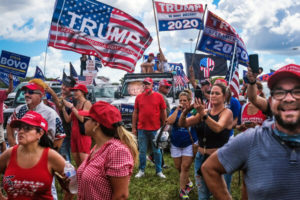
A Latinos for Trump rally in Miami on Sunday October 18, 2020. Mario Cruz/EPA, via Shutterstock

Trump was strongly opposed by many Latinos“, except for some men …

While there has been a consistent disgust towards Donald Trump, due to his Latin bashing, why has there been an exception among these men?

Blame it on Latin Machismo – Toxic Masculinity! See the rationale in the related Appendix VIDEO below … and in this New York Times article here:

Title: The Latino gender gap
It’s not just the public polls. Recent private polls conducted by political campaigns are filled with bad news for President Trump. He is doing eight to 10 percentage points worse in many congressional districts than he did in 2016, Dave Wasserman of The Cook Political Report writes.

His struggles have jeopardized the Republicans’ Senate majority and will probably lead to further Democratic gains in the House. “It would be a pleasant surprise if we only lost 10 House seats,” one Republican member of Congress told The Cook Political Report.

But there is one exception, and it will be familiar to regular readers of this newsletter: Trump and other Republicans don’t seem to be doing worse among Latino voters than in 2016. Nationwide, Republicans are still winning about one-third of the Latino vote, polls show.

As a result, Trump still has a good chance to win both Florida and Texas. Similarly, Senator John Cornyn of Texas continues to lead narrowly in his own re-election race, and House Republicans could hold onto districts in California, Florida and Texas.

Why is Trump holding steady with Latinos? There is no one answer, partly because Latinos are such a diverse group (many of whom also identify as white). But an important part of the explanation appears to involve gender.

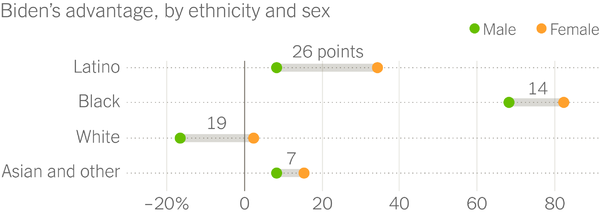
Recent Times polls of battleground states show that the gender gap among Latino voters — 26 percentage points — is significantly larger than it is among Black, white or Asian voters:

Among Latina women, Biden leads Trump by a whopping 34 percentage points (59 percent to 25 percent). Among Latino men, Biden’s lead is only eight points (47 percent to 39 percent). These patterns are similar across both Latino college graduates and those without a degree.

Stephanie Valencia, the president of Equis Research, which focuses on Latino voters, told us that its polls suggest that Latino men may have even moved slightly toward Trump this year. If so, they are the only large demographic group to do so.

In effect, gender seems to be outweighing ethnicity for some Latino men.

Race may get more attention, but gender also plays a huge and growing role in politics: The gender gap, which was virtually zero in the 1960s and ’70s, could reach a record high this year. The trend — men moving to the right and women to the left — is occurring in other high-income democracies as well, for a complicated mix of reasons, as Eric Levitz explains in New York magazine.

My colleague Jennifer Medina recently wrote an eye-opening story called “The Macho Appeal of Donald Trump,” focused on Latino men. The whole story is worth reading, but here is a key passage:

    … what has alienated so many older, female and suburban voters is a key part of Mr. Trump’s appeal to these men, interviews with dozens of Mexican-American men supporting Mr. Trump shows: To them, the macho allure of Mr. Trump is undeniable. He is forceful, wealthy and, most important, unapologetic. In a world where at any moment someone might be attacked for saying the wrong thing, he says the wrong thing all the time and does not bother with self-flagellation.

The story was set in Arizona — a state that could decide the election.

Source: New York Times – posted October 22, 2020; retrieved October 27, 2020 from: https://messaging-custom-newsletters.nytimes.com/template/oakv2

Did you get that?

… what has alienated so many older, female and suburban voters is a key part of Mr. Trump’s appeal to these men, interviews with dozens of Mexican-American men supporting Mr. Trump shows: To them, the macho allure of Mr. Trump is undeniable. He is forceful, wealthy and, most important, unapologetic.

It is not just Mexican-American men alone; the same attributes are common for all Latin males. This is not good! (We have this actuality with Hispanic men in Cuba, Dominican Republic and Puerto Rico).

This is the complaint that has emerged from Latin America and the Caribbean by so many women. The Toxic Masculinity is so thick, it can be cut with a knife. We addressed this actuality just recently; notice this excerpt:

Toxic Environment ==> Toxic Masculinity – October 2, 2020
We find that in certain societies, the “man code” has penetrated all aspects of society, not just prisons; think “locker room talk”, “Blue Codes” for conduct among law enforcement officials or bonding among soldiers in foxholes or trench-warfare ; there is even a “code of silence” among gang members or organized crime figures.

Toxic Masculinity is just one more way that Toxic Environments have affected the “community quest” to live, work and play in the Caribbean. Needless to say, community stewards cannot allow Toxic Masculinity to dominate society; think bullying, domestic violence, sexual harassment in the workplace. It is unfortunate but true, “bad actors” will always seek to exploit any weakness for their own selfish gain. So we must be prepared to curb the toxicity and promote a positive community ethos instead.

This is sad that our Dirty Laundry in the Latin America and Caribbean region is being exposed to the world. It is our Bad Community Ethos that should be named, blamed and shamed.

So many of our Latin men love the personage of Donald Trump, even though it is obvious that he does not love “them/us” back!

That is pathetic; we must do better.

This is the continuation of the monthly Teaching Series from the movement behind the 2013 book Go Lean…Caribbean. These Teaching Series address issues germane to Caribbean life and culture; this is entry 3-of-5, continuing the thesis that many people from Caribbean member-states have a voice in the American General Election for November 3; but our voice may not be all that positive, as many of our people – who subscribe to the Latin male machismo ethos – are doubling-down on our negative community ethos. It is hard for us to vent about the disgust towards the words and actions (or inactions) of the Trump Administration these last 4 years when we are taking comfort in the same negative vibes.

Our Caribbean Diaspora is relevant in America’s Decision 2020 due to the fact that our numbers are strong – upwards of 22 million people, 7 percent of the US population; this is enough to have relevance in a political race. But we need to think, feel, say and act properly.

American citizens of Caribbean heritage should be pursuing the Greater Good right now; people are watching and listening; they are noticing the disregard for the threats affecting our regional homeland and they expect us to demand change, not validate the Status Quo. Consider here, how this thesis is cataloged in the Teaching Series this month:

  1. Decision 2020: Puerto Rico claps back at Trump
  2. Decision 2020Haiti’s Agenda 2016 ==> 2020 – Trump never cared
  3. Decision 2020: Latino Gender Gap – More Toxic Masculinity
  4. Decision 2020More Immigration or Less
  5. Decision 2020What’s Next for Cuba & Venezuela

Yes, Decision 2020 allows us to analyze the motivations and sensibilities of not just the American eco-system, but also the Caribbean’s heart.

The problems of Toxic Masculinity and/or Latin Machismo has been addressed and detailed in many previous commentaries; see this chronological sample here:

Bahamas Study: 58% Of Boys Agree to Female ‘Discipline’ – October 21, 2014
Many times people flee the region to mitigate abusive situations; even more troubling, as victims they may have encountered an attitude of complacency and indifference among public safety authorities. The following article [Study] posits that this attitude is deeply entrenched in society, even among the next (younger) generation:
    FIFTY-eight per cent of high school boys and 37 per cent of high school girls participating in a recent academic survey believe men should discipline their female partners, according to a new College of the Bahamas study. …

Change has now come to the Caribbean. As the foregoing article [Study] depicts the problem of domestic violence is tied to a community ethos. This ‘negative’ ethos must be uprooted and replaced with a new, progressive spirit, starting at the adolescent level, when attitudes are pliable and sensitive to strategic messaging.

———–

Helping Black Caribbean Men & Boys – Hurt People Hurt People – March 3, 2018

Black men and boys” …

… this is a special group in the population of the New World, the Americas. This group has been victims and villains. To the point that academicians and clinicians alike can conclude that “hurt people hurt people”.

Societal defects within this group are higher than normal, compared to other populations groups. This includes violence, delinquencies, incarceration, repression and hopelessness. …

The New World experience for people of African descent is one of struggle; but our people have made a lot of progress over the last 2 centuries especially; that means we have “ruffled a lot of feathers” along the way. Caribbean music icon Bob Marley worded it perfectly in a song that was released posthumously: “Buffalo Soldier”. The lyrics say:

    Fighting on arrival; fighting for survival.

That fight though, was not always successful.

The experience of the Black men and boys in the New World is that these ones have often been hurt. Consider just the US experience with Lynchings … where “a total of 4,733 persons had died by lynching since 1882”; (Black men and boys were almost always the victims, with a few sprinkling of women here and there).

There is no excusing, rationalizing or minimizing this injustice. This “hurt” was state-action, state-sponsored and extra-judicial via mob-violence. (Other countries in the Americas also had lynchings, not just the Southern States of the US).

With this above introduction, is there any wonder that the crime rate is higher for Black men and boys than any other sub-group in the population? This is the accepted premise that “hurt people hurt people”.

This fact causes  breach in society. How do “we” repair this breach in societal dynamics? …

The Go Lean book presents 370 pages of instructions for how to reform and transform the Caribbean member-states. It stresses the key community ethos, strategies, tactics, implementations and advocacies necessary to shepherd a better society.

———–

Bad Ethos on Home Violence – December 23, 2018

People do tend to be a product of their environment and their early molding. Most times the discipline and attitudes learned at home forms the adult character that people become.

This is good … and bad! …

This concept refers to the “ethos” (a Greek word meaning “character” that is used to describe the guiding beliefs or ideals); we see that it is not just a personal attribute but also refer to a community characteristic. Thus the word community ethos. …

“Charity begins at home”.

Everyone knows that and assumes that. The good actions you exert towards others – strangers – is an exercise that starts at home, towards family. This is also true in the reverse: the bad actions you exert towards strangers, tend to stem from the practice to malevolent behavior towards family. Thusly, domestic violence do connect to violent crimes, think rape.

This is not just some academic thesis; this is real life and real bad, in Jamaica right now. See these two supporting news stories:

  1. Domestic Abuse – 15 percent of women experience violence – see Appendix A below.
  2. Tourist Rapes – A Black-eye for hospitality towards foreigners – see Appendix B below.

… The Go Lean book provides 370-pages of turn-by-turn instructions on “how” to adopt new community ethos, plus the strategies, tactics, implementations and advocacies to execute so as to reboot, reform and transform the societal engines of Caribbean society. Domestic violence and rape tend to victimize women. So the Go Lean book specifically – on Page 226 – presented an advocacy to help women; featuring this title: 10 Ways to Empower Women.

———-

Unequal Justice: Bullying Magnified to Disrupt Commerce – September 28, 2019
Analogies abound … as to why it is important to “nip bullying in the bud”. If we do nothing – or not enough – then conditions of Unequal Justice go from “bad to worse”. The bad actor can emerge from terrorizing a family, to a neighborhood, to a community, to a nation, to a region, to a hemisphere, to the whole world. Think: Nazi Germany, Imperial Japan, Soviet Russia, British Empire, Napoleonic France, Spanish Inquisition, and more …
Unchecked, bad actors in the community become tyrants – they can even affect the local economic engine.

In this series commentary, reference is made to the fact that Tourism, as the Number 1 economic driver in the region, is vulnerable to Bad Actors disrupting peaceful hospitality trade – we must protect our societal engines from tyrants, bullies and terrorists. So there is always the need to ensure justice institutions are optimized in the region; visitors will refuse to come and enjoy our hospitality if there are active threats or perceived instabilities. (At the same time, residents flee to foreign shores in search of refuge). So the need for justice in the Caribbean tourism deliveries transcends borders, politics, class and race.

As a presidential candidate, Donald Trump presented himself as a tyrant, bully, yet he won in 2016 thanks to many Hispanic men. They doubled-downed on Toxic Masculinity!

This is not “putting our best foot forward”. We can/must do better than Trump, better than Toxic Masculinity.

In the aforementioned previous blog-commentary, we asked:

How can we remediate and mitigate Toxic Masculinity? For one thing, we must start early. Then we must not settle for the bad orthodoxy of “boys will be boys”. It has been proven again and again that bad instincts can be corrected and weeded out of society. Yes, the solution is: reform and transform.

We must strive to do better in our homeland, otherwise our people will continue to flee in search of refuge. Toxic Masculinity exist in our society, we must work to dislodge it, message against it, coach it out of our young people and foster positive values and ethos in its place.

We definitely do not want to export our Toxic Masculinity to foreign lands, nor assimilate other people’s toxicity. We must recognize bad and filter it out of society.

Yes, we can …

Now, let’s abandon the toxic and work to make the Caribbean – our part of the world – a better place to live, work and play. 🙂

About the Book
The book Go Lean…Caribbean serves as a roadmap for the introduction and implementation of the technocratic Caribbean Union Trade Federation (CU), for the elevation of Caribbean society – for all member-states. This CU/Go Lean roadmap has these 3 prime directives:

  • Optimization of the economic engines in order to grow the regional economy to $800 Billion and create 2.2 million new jobs.
  • Establishment of a security apparatus to ensure public safety and protect the resultant economic engines.
  • Improve Caribbean governance to support these engines, including a separation-of-powers between the member-states and CU federal agencies.

The Go Lean book provides 370-pages of turn-by-turn instructions on “how” to adopt new community ethos, plus the strategies, tactics, implementations and advocacies to execute so as to reboot, reform and transform the societal engines of Caribbean society.

Download the free e-Book of Go Lean … Caribbean – now!

Who We Are
The movement behind the Go Lean book – a non-partisan, apolitical, religiously-neutral Community Development Foundation chartered for the purpose of empowering and re-booting economic engines – stresses that reforming and transforming the Caribbean societal engines must be a regional pursuit. This was an early motivation for the roadmap, as pronounced in the opening Declaration of Interdependence (Pages 12 – 13):

xi. Whereas all men are entitled to the benefits of good governance in a free society, “new guards” must be enacted to dissuade the emergence of incompetence, corruption, nepotism and cronyism at the peril of the people’s best interest. The Federation must guarantee the executions of a social contract between government and the governed.

xvi. Whereas security of our homeland is inextricably linked to prosperity of the homeland, the economic and security interest of the region needs to be aligned under the same governance. Since economic crimes … can imperil the functioning of the wheels of commerce for all the citizenry, the accedence of this Federation must equip the security apparatus with the tools and techniques for predictive and proactive interdictions.

xxiv. Whereas a free market economy can be induced and spurred for continuous progress, the Federation must install the controls to better manage aspects of the economy: jobs, inflation, savings rate, investments and other economic principles. Thereby attracting direct foreign investment because of the stability and vibrancy of our economy.

Sign the petition to lean-in for this roadmap for the Caribbean Union Trade Federation.

—————–

Appendix VIDEO – Trump’s “Macho Man” Image Working? – https://youtu.be/kOfnbd5Er7w

The View
Posted October 15, 2020 – A ‘New York Times’ report pointed out that despite a majority of Latino voters favoring Democrats, Hispanic men remain a stable part of Pres. Trump’s base due to his “macho allure” – Ana Navarro weighs in.

Subscribe to our YouTube channel: http://bit.ly/2Ybi4tM
MORE FROM ‘THE VIEW’: Full episodes: http://abcn.ws/2tl10qh
Twitter: http://twitter.com/theview
Facebook: http://facebook.com/TheView
Instagram: http://instagram.com/theviewabc

——-

Related: VIDEO – President Trump’s dance moves [to the song “YMCA” by the Village People] go viral – https://www.youtube.com/watch?v=u9X3nUmDJuY

Share this post:
, ,
[Top]

Remembering History Correctly – Encore

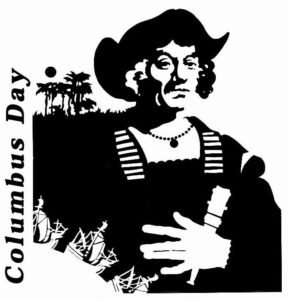
It is October 12. This is a holiday in many lands. This used to be Columbus Day; but now, as part of Civil Rights Reform, it has been rebranded. It is now called Indigenous Peoples Day in some places, while other places celebrate National Heroes Day.
Why and when did this rebranding happen?

Remembering history correctly, we learn that Christopher Columbus was not a hero for everybody. For many indigenous people – and the subsequent slave populations – Columbus was more of a villain than a hero.

When did this historic reconciliation take place? Recently! Indigenous People Day was instituted in 1992. That seems to be the Red Letter date on most calendars.

This theme of remediating historic reflection to more correctly assess Columbus is very familiar to the movement behind the 2013 book Go Lean…Caribbean. In fact, there was an October 14, 2019 blog-commentary that asserted Civil Rights Reform, with this title:

Refuse to Lose – Remediating Columbus Day

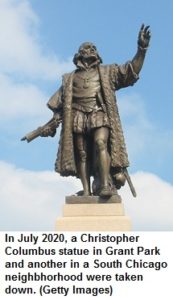
This remediation in our commemoration is affecting more than just holidays; it has also applied to monuments and statutes as well; many are being taken down.

Some of the heroes commemorated by monuments and statutes have not always been so heroic.

See this portrayed in this VIDEO here:

VIDEO – A monumental reckoning – https://youtu.be/L7Y-AHj9Gu4


CBS Sunday Morning
Posted October 11, 2020 – Since protests erupted over the death of George Floyd, the range of public monuments removed or vandalized has expanded well beyond those honoring the Confederacy. Criticized as racist or oppressive, statues depicting historic figures from Christopher Columbus to George Washington are now getting a second look. Correspondent Mo Rocca reports.

Subscribe to the “CBS Sunday Morning” Channel HERE: http://bit.ly/20gXwJT

Get more of “CBS Sunday Morning” HERE: http://cbsn.ws/1PlMmAz

Follow “CBS Sunday Morning” on Instagram HERE: http://bit.ly/23XunIh

Like “CBS Sunday Morning” on Facebook HERE: https://www.facebook.com/CBSSundayMor…

Follow “CBS Sunday Morning” on Twitter HERE: http://bit.ly/1RquoQb

Get the latest news and best in original reporting from CBS News delivered to your inbox.

Subscribe to newsletters HERE: http://cbsn.ws/1RqHw7T

Get your news on the go! Download CBS News mobile apps HERE: http://cbsn.ws/1Xb1WC8

Get new episodes of shows you love across devices the next day, stream local news live, and watch full seasons of CBS fan favorites anytime, anywhere with CBS All Access. Try it free! http://bit.ly/1OQA29B

“CBS Sunday Morning” features stories on the arts, music, nature, entertainment, sports, history, science, Americana and highlights unique human accomplishments and achievements. Check local listings for CBS Sunday Morning broadcast times.

This news story reveals that previous slaveholders are no longer being venerated for any other great acts or accomplishments. It is an inexcusable, unforgivable standard that “People should not own other people”. This is the actuality in the standards of right versus wrong. Anyone who have not embraced this simple standard should have never been idolized.

This indictment includes George Washington, Thomas Jefferson, Andrew Jackson and almost the full host of America’s Founding Fathers.

Is this runaway political correctness?

Yes, but far overdue!

What we have learned from all the reflection in racial history this past year is that:

If people never reconciled the evils of slavery then by default, they continue to think that “White is Right” and Superior and …

Black Lives do NOT Matter.

This wrong ethos have always needed to be corrected – “Come What May”. This theme was echoed in that previous blog-commentary from Columbus Day 2019; let’s Encore that now, but first let’s list the newer Go Lean commentaries that aligned with the same Civil Rights Reform theme that the “Remediating Columbus Day” entry presented:

https://goleancaribbean.com/blog/?p=20281 Cleaning up the Toxic Use of the N-Word to improve Black Image
https://goleancaribbean.com/blog/?p=20237 Slavery, the Original Sin for the ‘New World’? No, the Religiosity…
https://goleancaribbean.com/blog/?p=20203 ‘Pluralism is the Goal’ in transforming the Caribbean
https://goleancaribbean.com/blog/?p=20180 Corporate Reboots to remediate Bad History and Black Image
https://goleancaribbean.com/blog/?p=20105 Rising from the Ashes – Making sure there is “Love for All”, not just some
https://goleancaribbean.com/blog/?p=19979 Juneteenth – Finally, the Emancipation of the American Slaves
https://goleancaribbean.com/blog/?p=19833 Hypocritical Colonial Community Ethos eroded justice standards
https://goleancaribbean.com/blog/?p=18421 Introducing Formal Reconciliations to correct the past injustices

Here is the Columbus Day 2019 Encore here-now:

=================

Go Lean CommentaryRefuse to Lose – Remediating ‘Columbus Day’

Today is the Monday closest to October 12 – Day of Discovery by Christopher Columbus – so it is a day set aside as a Holiday in many places. But alas, there have been many communities that have remediated their historical appreciation for Christopher Columbus.
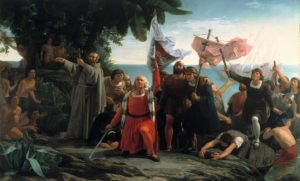
His impact was not all good!

This is part of the new attitude – community ethos – about losing. The actuality of Columbus is that while some people won – European Imperialists – many others lost. Those that lost, are stakeholders too in today’s Caribbean. The new attitude about winning-losing is actually a …

Refusal to lose

This community ethos is defined as a commitment by a group or society to the values of quality, success and winning. This corresponds to this formal definition of “community ethos” in the 2013 book Go Lean … Caribbean (Page 20):

… the fundamental character or spirit of a culture; the underlying sentiment that informs the beliefs, customs, or practices of a group or society; dominant assumptions of a people or period.

Celebrating Columbus Day is choosing the victories of some people over the losses of others. This is not winning; not win-win. Adapting the ethos to Refuse to Lose is supposed to be different, better; we want the Greater Good to win, not just a fraction of the population.

See, here, the encyclopedic reference on Columbus Day and the efforts to remediate its celebrations:

Reference: Columbus Day
Columbus Day is a national holiday in many countries of the Americas and elsewhere which officially celebrates the anniversary of Christopher Columbus‘s arrival in the Americas on October 12, 1492. Christopher Columbus was an Italian explorer who set sail across the Atlantic Ocean in search of a faster route to the Far East only to land at the New World. His first voyage to the New World on the Spanish ships Santa MaríaNiña, and La Pinta took approximately three months. Columbus and his crew’s arrival to the New World initiated the Columbian Exchange which introduced the transfer of plants, animals, culture, human populations, and technology (but also invasive species, including communicable diseases) between the new world and the old.

The landing is celebrated as “Columbus Day” in the United States but the name varies on the international spectrum. In some Latin American countries, October 12 is known as “Día de la Raza” or (Day of the Race). This is the case for Mexico, which inspired Jose Vasconcelos’s book celebrating the Day of the Iberoamerican Race. Some countries such as Spain refer the holiday as “Día de la Hispanidad” and “Fiesta Nacional de España” where it is also the religious festivity of la Virgen del Pilar. Peru celebrates since 2009 the “Day of the original peoples and intercultural dialogue”. Belize and Uruguay celebrate it as Día de las Américas (Day of the Americas). Since Argentina’s former president Cristina Fernández de Kirchner officially adopted “Día del Respeto a la Diversidad Cultural” (Day of Respect for Cultural Diversity) November 3, 2010. “Giornata Nazionale di Cristoforo Colombo or Festa Nazionale di Cristoforo Colombo” is the formal name of Italy‘s celebration as well as in Little Italys around the world.[1][2]

Non-observance
The celebration of Columbus Day in the United States began to decline at the end of the 20th century, although many Italian-Americans, and others, continue to champion it.[31][32] The states of Florida,[33] Hawaii,[34][35] Alaska,[36][37] Vermont,[38] South Dakota,[39] New Mexico,[40] Maine,[41]Wisconsin[42] and parts of California including, for example, Los Angeles County[43] do not recognize it and have each replaced it with celebrations of Indigenous People’s Day (in Hawaii, “Discoverers’ Day”, in South Dakota, “Native American Day”[32]). A lack of recognition or a reduced level of observance for Columbus Day is not always due to concerns about honoring Native Americans. For example, a community of predominantly Scandinavian descent may observe Leif Erikson Day instead.[44] In the state of Oregon, Columbus Day is not an official holiday.[45] Columbus Day is not an official holiday in the state of Washington [46]

Iowa and Nevada do not celebrate Columbus Day as an official holiday, but the states’ respective governors are “authorized and requested” by statute to proclaim the day each year.[47] Several states have removed the day as a paid holiday for state government workers, while still maintaining it—either as a day of recognition, or as a legal holiday for other purposes, including California and Texas.[48][49][50][51][52]

The practice of U.S. cities eschewing Columbus Day to celebrate Indigenous Peoples’ Day began in 1992 with Berkeley, California. The list of cities which have followed suit as of 2018 includes AustinBoiseCincinnatiDenverLos AngelesMankato, MinnesotaPortland, OregonSan FranciscoSanta Fe, New MexicoSeattleSt. Paul, MinnesotaPhoenixTacoma, and “dozens of others.”[31][53][54][55][49][56][57][58][59][60][61] Columbus, Ohio has chosen to honor veterans instead of Christopher Columbus, and removed Columbus Day as a city holiday. Various tribal governments in Oklahoma designate the day as Native American Day, or name it after their own tribe.[62]

Source: Retrieved October 12, 2019 from: https://en.wikipedia.org/wiki/Columbus_Day

This commentary is a continuation of this series on the Refuse to Lose ethos; this is Part 2-of-6. The full series is cataloged as follows:

  1. Refuse to Lose: Lesson from Sports
  2. Refuse to Lose: Remediating ‘Columbus Day’
  3. Refuse to Lose: Introducing Formal Reconciliations
  4. Refuse to Lose: Despite American Expansionism
  5. Refuse to Lose: Canada’s Model of Ascent
  6. Refuse to Lose: Direct Foreign Investors Wind-Downs

This is not the first time this commentary have addressed ‘Columbus Day’. As related in a previous Go Lean commentary, the orthodoxy of the ‘Columbus Day’ celebration is now frown on in many communities. See this quotation:

The human psyche is consistent; when we have been victimized, we want everyone to remember. But, when we have been the perpetrator – the bully – then we want everyone to forget. This applies to individuals and nations alike.

This experience relates to the history of the New World. Upon the discovery of the Americas by the European powers – Christopher Columbus et al – the focus had always been on pursuing economic interests, many times at the expense of innocent victims. (This is why the celebration of Columbus Day is now out of favor). First, there was the pursuit of gold, other precious metals (silver, copper, etc.) and precious stones (emeralds, turquoise, etc.).  Later came the exploitation of profitable agricultural opportunities (cotton, tobacco, sugar cane, etc.), though these business models required extensive labor. So the experience in the New World (the Caribbean and North, South & Central America) saw the exploitation of the native indigenous people, and then as many of them died off, their replacements came from the African Slave Trade.

See this comedic VIDEO here that portrays this history and the trending to remediate the holiday – “How is it still a thing?”:

VIDEO – Columbus Day – How Is This Still A Thing: Last Week Tonight with John Oliver (HBO) – https://youtu.be/eKEwL-10s7E

LastWeekTonight
Posted October 13, 2014 –
Christopher Columbus did a lot of stuff that was way more terrible than “sailing the ocean blue,” but we don’t learn about that.

Columbus Day: How is it still a thing?

Connect with Last Week Tonight online…
Subscribe to the Last Week Tonight YouTube channel for more almost news as it almost happens: http://www.youtube.com/user/LastWeekTonight

Find Last Week Tonight on Facebook like your mom would: http://Facebook.com/LastWeekTonight

Follow us on Twitter for news about jokes and jokes about news: http://Twitter.com/LastWeekTonight

Visit our official site for all that other stuff at once: http://www.hbo.com/lastweektonight

This foregoing VIDEO uses humor and punditry to convey a valid point:

Christopher Columbus should not be viewed as a hero of all the people. His legacy has blood stains on the annals of history.

The United States of America had been a majority White (European) country for its entire history. The minority populations finally won its battle for Civil Rights and equal treatment, appealing to the “Better Nature” of its founding principle:

We hold these truths to be self-evident, that all men are created equal, that they are endowed by their Creator with certain unalienable rights, that among these are life, liberty and the pursuit of happiness – Declaration of Independence for the United States of America, July 4, 1776.

The end product of the Civil Rights movement is the equal protection under the law for all ethnic groups – majority or minority. After nearly 400 years of European-dominated power-brokers in the US, finally in 2008, the first person of minority heritage was elected to the American presidency – Barack Obama.

Remediating ‘Columbus Day’ is an accomplishment and achievement for the Civil Rights struggle of minority ethnic groups in America. Now the Refuse to Lose mantra must include everyone and not exclude anyone.

The subject of the American Civil Rights movement and momentum – leveling out the inequities – over the history of the New World have been addressed in many previous commentaries; consider this sample list here:

https://goleancaribbean.com/blog/?p=18321 Unequal Justice of American Sheriffs and How to Remediate
https://goleancaribbean.com/blog/?p=18100 Nature or Nurture – Cop-on-Black Shootings in America’s DNA
https://goleancaribbean.com/blog/?p=17820 ‘Pride’ Movement – “Can we all just get along”
https://goleancaribbean.com/blog/?p=16944 Women Empowerment – Accepting Black Women ‘As Is’
https://goleancaribbean.com/blog/?p=16534 European Reckoning – Leveling Christianity’s Bad Influence
https://goleancaribbean.com/blog/?p=15123 Blacks get longer sentences from ‘Republican’ Judges
https://goleancaribbean.com/blog/?p=14633 Nature or Nurture: Women Have Nurtured Change to Level Society
https://goleancaribbean.com/blog/?p=14541 One Woman – Viola Desmond – Making a Difference for Canada
https://goleancaribbean.com/blog/?p=13063 Achieving Gender & Other Equity without the ‘Battle’
https://goleancaribbean.com/blog/?p=12722 How the West Was Won? Thru Pluralism and Ethnic Normalization
https://goleancaribbean.com/blog/?p=11870 The Journey From ‘Indian Termination Policy’ to Modern Pluralism
https://goleancaribbean.com/blog/?p=9974 Lessons Learned from Pearl Harbor and Civil Rights Remediated
https://goleancaribbean.com/blog/?p=8038 Transformations: Civil Disobedience … Very Effective
https://goleancaribbean.com/blog/?p=1020 The Advocacy to Rid Sports of Blatant Racism
https://goleancaribbean.com/blog/?p=546 ‘The Divide’ Book Review describing the unequal justice practice
https://goleancaribbean.com/blog/?p=209 The Case of Muhammad Ali – Equal Protection Under the Law

The Refuse to Lose mantra now includes everyone in America and should not exclude anyone. This is why ‘Columbus Day’ is “no longer a thing”.

(Most communities do not want to lose the paid-holiday on the books, so they have substituted ‘Columbus Day’ for some other worthy cause).

This is a good model …

May we apply this lesson throughout the Caribbean – this means you Puerto Rico; (they have 2 holidays: October 12 & November 19).

Using Puerto Rico as a microcosm of the rest of the New World, the demographic on that island is a vast majority of Black-and-Brown people. The Taino people and culture that Columbus discovered and encountered on the island is now gone and extinct. Columbus should not be viewed as a hero due to the course of events he set in motion.

The European people – remnant on the island – would elevate Columbus as a winner, while the indigenous people would have to be deemed the losers. This is not Win-Win!

We now need to Refuse to Lose – for every demographic in our society – not just one group at the expense of another.

This is the lesson learned from ‘Columbus Day’.

Let’s all lean-in and foster this Refuse to Lose attitude; this is the right community ethos to elevate our society to be a better homeland to live, work and play.  🙂

About the Book
The book Go Lean…Caribbean serves as a roadmap for the introduction and implementation of the technocratic Caribbean Union Trade Federation (CU), for the elevation of Caribbean society – for all member-states. This CU/Go Lean roadmap has these 3 prime directives:

  • Optimization of the economic engines in order to grow the regional economy to $800 Billion and create 2.2 million new jobs.
  • Establishment of a security apparatus to ensure public safety and protect the resultant economic engines.
  • Improve Caribbean governance to support these engines, including a separation-of-powers between the member-states and CU federal agencies.

The Go Lean book provides 370-pages of turn-by-turn instructions on “how” to adopt new community ethos, plus the strategies, tactics, implementations and advocacies to execute so as to reboot, reform and transform the societal engines of Caribbean society.

Download the free e-Book of Go Lean … Caribbean – now!

Who We Are
The movement behind the Go Lean book – a non-partisan, apolitical, religiously-neutral Community Development Foundation chartered for the purpose of empowering and re-booting economic engines – stresses that reforming and transforming the Caribbean societal engines must be a regional pursuit. This was an early motivation for the roadmap, as pronounced in the opening Declaration of Interdependence (Pages 12 – 14):

xi. Whereas all men are entitled to the benefits of good governance in a free society, “new guards” must be enacted to dissuade the emergence of incompetence, corruption, nepotism and cronyism at the peril of the people’s best interest. The Federation must guarantee the executions of a social contract between government and the governed.

xvi. Whereas security of our homeland is inextricably linked to prosperity of the homeland, the economic and security interest of the region needs to be aligned under the same governance. Since economic crimes … can imperil the functioning of the wheels of commerce for all the citizenry, the accedence of this Federation must equip the security apparatus with the tools and techniques for predictive and proactive interdictions.

xxiv.  Whereas a free market economy can be induced and spurred for continuous progress, the Federation must install the controls to better manage aspects of the economy: jobs, inflation, savings rate, investments and other economic principles. Thereby attracting direct foreign investment because of the stability and vibrancy of our economy.

xxxiii. Whereas lessons can be learned and applied from the study of the recent history of other societies, the Federation must formalize statutes and organizational dimensions to avoid the pitfalls of [negative] communities … . On the other hand, the Federation must also implement the good examples learned from [positive] developments/communities… .

Sign the petition to lean-in for this roadmap for the Caribbean Union Trade Federation.

Share this post:
, ,
[Top]

Toxic Environment ==> Toxic Masculinity

Go Lean Commentary

Every society, the Caribbean included, have both men and women that play a part in the fabric of society – in good, bad and ugly ways:

  • Male versus female
  • His versus Hers
  • Masculine versus Feminine
  • Masculinity versus Femininity

There is no problem with femininity, in this context, but “Woe Neely” there are issues with masculinity. The focus of this commentary is Toxic Masculinity.

The movement behind the 2013 book Go Lean…Caribbean just completed – during the month of September 2020 – a 6-part Teaching Series on the actuality of Toxic Environments. We’ve got it bad! See how this was related in the opening entry:

A Toxic Environment in a community is likened to a weak foundation for a house; think a workplace filled with harassment and discrimination or a neighborhood with blatant racism where minorities endure burning crosses … .

Consider here, the full catalog of the September series, plus this supplement:

  1. Toxic Environment: Ready for Football – Washington “Redskins”
  2. Toxic Environment: Homophobia – The problem is the Hate, not the Fear – Encore
  3. Toxic Environment: Opposite of Diversity & Inclusion
  4. Toxic Environment: Lessons from Yugoslavia
  5. Toxic Environment: Ease of Doing Business
  6. Toxic Environment: Make the Caribbean Great (Anew) – Encore
    ————–
  7. Toxic Environment ==> Toxic Masculinity

There is another dysfunctional angle of Toxicity that we did not consider last month, that of Toxic Masculinity. It is bad! Such that there are media advice to avoid even dating our Caribbean men – see Appendix B VIDEO below. See the full definition in Appendix A below, plus this summary excerpt here:

Toxic masculine traits are characteristic of the unspoken code of behavior among men in prisons, where they exist in part as a response to the harsh conditions of prison life.

Other traditionally masculine traits such as devotion to work, pride in excelling at sports, and providing for one’s family, are not considered to be “toxic”.

“Men in prison” – if only the toxicity ended there. Rather we find that in certain societies, the “man code” has penetrated all aspects of society, not just prisons; think “locker room talk”, “Blue Codes” for conduct among law enforcement officials or bonding among soldiers in foxholes or trench-warfare ; there is even a “code of silence” among gang members or organized crime figures.

Toxic Masculinity is just one more way that Toxic Environments have affected the “community quest” to live, work and play in the Caribbean. Needless to say, community stewards cannot allow Toxic Masculinity to dominate society; think bullying, domestic violence, sexual harassment in the workplace. It is unfortunate but true, “bad actors” will always seek to exploit any weakness for their own selfish gain. So we must be prepared to curb the toxicity and promote a positive community ethos instead. Community ethos? That is defined in the Go Lean book (Page 20) as:

  1. the fundamental character or spirit of a culture; the underlying sentiment that informs the beliefs, customs, or practices of a group or society; dominant assumptions of a people or period: In the Greek ethos the individual was highly valued.
  2. the character or disposition of a community, group, person, etc.

This focus, fostering change in the community ethos, has been a mission for this Go Lean movement from the beginning of this movement. This theme has been elaborated in many previous blog-commentaries; consider this sample here:

https://goleancaribbean.com/blog/?p=18337 Unequal Justice: Bullying Magnified to Disrupt Commerce
https://goleancaribbean.com/blog/?p=17652 A Lesson in History – 25 years after the “OJ Murders”
https://goleancaribbean.com/blog/?p=16408 Bad Ethos on Home Violence
https://goleancaribbean.com/blog/?p=14413 Helping Black Caribbean Men & Boys – Hurt People Hurt People
https://goleancaribbean.com/blog/?p=5238 #ManifestJustice – Lessons from the Prison Eco-System
https://goleancaribbean.com/blog/?p=2709 Bahamas Study: 58% Of Boys Agree to Female ‘Discipline’
https://goleancaribbean.com/blog/?p=2201 Students developing nail polish to detect date rape drugs

It is simple, if we want to grow our society, we must work hard to make it a better place to live, work and place for everyone, not just some people. We must accept that there are negatives in our society, Toxicity Masculinity is one of the things that we must Be On-guard against.

The seriousness of this subject was related in a previous Go Lean commentary from April 29, 2014 relating the societal defect of Domestic Violence:

Abused wives find help by going to ‘Dona Carmen’
An underlying mission of the CU [the Go Lean roadmap] is to dissuade further human flight and incentivize repatriation of the far-flung Diaspora. Many who had fled previously obtained refugee status due to the abuse and persecution from domestic perpetrators. These issues must be addressed and targeted for solutions and reconciliations.

In fact, the foregoing embedded article refers to the new enforcements introduced in Brazil in a 2006 law. That’s was just 8 years ago. (A similar Domestic Violence law was enacted in the Bahamas in 2008). A survey of other Latin American countries unveils even more new laws recently enacted in the Caribbean, Central and South America. Change has finally come.

Change has come to the Caribbean, but as the roadmap depicts, the problem of domestic violence (a human rights abuse) had persisted long before, and is thusly rooted in a [bad] community ethos. An ethos that must be uprooted and replaced with a new, progressive spirit, even within the public service entities, whose job it is to “serve & protect”. This is the new lean Caribbean!

The Go Lean book, serving as a roadmap for the introduction of the Caribbean Union Trade Federation (CU), asserts that Caribbean stakeholders must do the heavy-lifting to mitigate and remediate societal defects. There must be a technocratic security apparatus that works hand-in-hand with any economic optimization efforts and governing empowerments. We must have a good societal foundation; respect and protection of people and their rights for life, liberty and the pursuit of happiness. This was the purpose of last month’s Teaching Series, to focus on that foundation. There is a glaring need for reform, as we have a long track record of bad behavior like hate, bigotry, xenophobia and bullying in our Caribbean communities.

Have you ever notice the habit of men wearing their pants in a sagging manner, where their underwear is openly exposed? This is Toxic Masculinity run amok. This habit originated in prisons – see the relevant VIDEO in Appendix C below – while this has become common in the Black American community, it is not limited there, and it is more than just an American drama now.

Florida Town Drops Ordinance Against Sagging Pants, Saying It Targets Black Men
A controversial 13-year-old ban on sagging pants in a Florida town has been repealed because it disproportionately targeted African American men, city officials say. The Opa-locka, Fla., ordinance, originally passed in 2007, was voted down 4-1 by the City Commission, according to the Miami Herald. The legislation had stated men could not wear pants that exposed their underwear in city parks and buildings, with a citation as punishment for violation. A similar law was passed for women in 2013, but now both are expected to be overturned after a subsequent commission meeting.

The Caribbean is not the first nor the last Toxic Environment; there have been many in the past and even now in the present.

It is Toxic to allow prison culture to dominate our normal society. It is also Toxic to allow the “Strong to Abuse the Weak”; this is classic bullying.

How can we remediate and mitigate Toxic Masculinity? For one thing, we must start early. Then we must not settle for the bad orthodoxy of “boys will be boys”. It has been proven again and again that bad instincts can be corrected and weeded out of society. Yes, the solution is: reform and transform.

We must strive to do better in our homeland, otherwise our people will continue to flee in search of refuge. Toxic Masculinity exist in our society, we must work to dislodge it, message against it, coach it out of our young people and foster positive values and ethos in its place.

So we urge all stakeholders in the Caribbean – citizens and institutions – to lean-in to this Go Lean roadmap for the elevation of the Caribbean’s societal engines: economy, security and governance. We can do better and be better.  🙂

About the Book
The book Go Lean…Caribbean serves as a roadmap for the introduction and implementation of the technocratic Caribbean Union Trade Federation (CU), for the elevation of Caribbean society – for all member-states. This CU/Go Lean roadmap has these 3 prime directives:

  • Optimization of the economic engines to grow the regional economy to $800 Billion & create 2.2 million new jobs.
  • Establishment of a security apparatus to ensure public safety and protect the resultant economic engines.
  • Improve Caribbean governance to support these engines, including a separation-of-powers between the member-states and CU federal agencies.

The Go Lean book provides 370-pages of turn-by-turn instructions on “how” to adopt new community ethos, plus the strategies, tactics, implementations and advocacies to execute so as to reboot, reform and transform the societal engines of Caribbean society.

Download the free e-Book of Go Lean … Caribbean – now!

Who We Are
The movement behind the Go Lean book – a non-partisan, apolitical, religiously-neutral Community Development Foundation chartered for the purpose of empowering and re-booting economic engines – stresses that reforming and transforming the Caribbean societal engines must be a regional pursuit. This was an early motivation for the roadmap, as pronounced in the opening Declaration of Interdependence (Pages 11 – 13):

x. Whereas we are surrounded and allied to nations of larger proportions in land mass, populations, and treasuries, elements in their societies may have ill-intent in their pursuits, at the expense of the safety and security of our citizens. We must therefore appoint “new guards” to ensure our public safety and threats against our society, both domestic and foreign. The Federation must employ the latest advances and best practices of criminology and penology to assuage continuous threats against public safety. ….

xi. Whereas all men are entitled to the benefits of good governance in a free society, “new guards” must be enacted to dissuade the emergence of incompetence, corruption, nepotism and cronyism at the peril of the people’s best interest. The Federation must guarantee the executions of a social contract between government and the governed.

xvi. Whereas security of our homeland is inextricably linked to prosperity of the homeland, the economic and security interest of the region needs to be aligned under the same governance. Since economic crimes … can imperil the functioning of the wheels of commerce for all the citizenry, the accedence of this Federation must equip the security apparatus with the tools and techniques for predictive and proactive interdictions.

xxiv.  Whereas a free market economy can be induced and spurred for continuous progress, the Federation must install the controls to better manage aspects of the economy: jobs, inflation, savings rate, investments and other economic principles. Thereby attracting direct foreign investment because of the stability and vibrancy of our economy.

Sign the petition to lean-in for this roadmap for the Caribbean Union Trade Federation. 

————-

Appendix A – Reference: Toxic Masculinity

The concept of toxic masculinity is used in academic and media discussions of masculinity to refer to certain cultural norms that are associated with harm to society and to men themselves. Traditional stereotypes of men as socially dominant, along with related traits such as misogyny and homophobia, can be considered “toxic” due in part to their promotion of violence, including sexual assault and domestic violence. The socialization of boys in patriarchal societies often normalizes violence, such as in the saying “boys will be boys” with regard to bullying and aggression.

Self-reliance and emotional repression are correlated with increased psychological problems in men such as depression, increased stress, and substance abuse. Toxic masculine traits are characteristic of the unspoken code of behavior among men in prisons, where they exist in part as a response to the harsh conditions of prison life.

Other traditionally masculine traits such as devotion to work, pride in excelling at sports, and providing for one’s family, are not considered to be “toxic”. The concept was originally used by authors associated with the mythopoetic men’s movement such as Shepherd Bliss to contrast stereotypical notions of masculinity with a “real” or “deep” masculinity that they say men have lost touch with in modern society. Critics of the term argue that its meaning incorrectly implies gender-related issues are caused by inherent male traits.[1]

Etymology and usage
The term toxic masculinity originated in the mythopoetic men’s movement of the 1980s and 1990s.[2] It later found wide use in both academic and popular writing.[3] Popular and media discussions in the 2010s have used the term to refer to traditional and stereotypical norms of masculinity and manhood. According to the sociologist Michael Flood, these include “expectations that boys and men must be active, aggressive, tough, daring, and dominant”.[4]

Mythopoetic movement
Some authors associated with the mythopoetic men’s movement have referred to the social pressures placed upon men to be violent, competitive, independent, and unfeeling as a “toxic” form of masculinity, in contrast to a “real” or “deep” masculinity that they say men have lost touch with in modern society.[5][6] The academic Shepherd Bliss proposed a return to agrarianism as an alternative to the “potentially toxic masculinity” of the warrior ethic.[7] Sociologist Michael Kimmel writes that Bliss’s notion of toxic masculinity can be seen as part of the mythopoetic movement’s response to male feelings of powerlessness at a time when the feminist movement was challenging traditional male authority:

Thus Shepherd Bliss, for example, rails against what he calls ‘toxic masculinity’—which he believes is responsible for most of the evil in the world—and proclaims the unheralded goodness of the men who fight the fires and till the soil and nurture their families.[8]

Academic usage
In the social sciencestoxic masculinity refers to traditional cultural masculine norms that can be harmful to men, women, and society overall; this concept of toxic masculinity is not intended to demonize men or male attributes, but rather to emphasize the harmful effects of conformity to certain traditional masculine ideal behaviors such as dominance, self-reliance, and competition.[9][10] Toxic masculinity is thus defined by adherence to traditional male gender roles that consequently stigmatize and limit the emotions boys and men may comfortably express while elevating other emotions such as anger.[11] It is marked by economic, political, and social expectations that men seek and achieve dominance (the “alpha male“).

In a gender studies context, Raewyn Connell refers to toxic practices that may arise out of what she terms hegemonic masculinity, rather than essential traits.[3] Connell argues that such practices, such as physical violence, may serve to reinforce men’s dominance over women in Western societies. She stresses that such practices are a salient feature of hegemonic masculinity, although not always the defining features.[3][12]

Terry Kupers describes toxic masculinity as involving “the need to aggressively compete and dominate others”[13] and as “the constellation of socially regressive male traits that serve to foster domination, the devaluation of women, homophobia and wanton violence”.[14][15] According to Kupers, toxic masculinity includes aspects of “hegemonic masculinity” that are socially destructive, “such as misogyny, homophobia, greed, and violent domination”. He contrasts these traits with more positive traits such as “pride in [one’s] ability to win at sports, to maintain solidarity with a friend, to succeed at work, or to provide for [one’s] family”.[14] Feminist author John Stoltenberg has argued that all traditional notions of masculinity are toxic and reinforce the oppression of women.[16][17]

Gender norms
According to social learning theory, teaching boys to suppress vulnerable emotions, as in the saying “big boys don’t cry”, is a significant part of gender socialization in Western society.[18][19]

According to Kupers, toxic masculine norms are a feature of life for men in American prisons, where they are reflected in the behavior of both staff and inmates. The qualities of extreme self-reliance, domination of other men through violence, and avoiding the appearance of either femininity or weakness, comprise an unspoken code among prisoners.[20][21] Suppressing vulnerable emotions is often adopted in order to successfully cope with the harsh conditions of prison life, defined by punishment, social isolation, and aggression. These factors likely play a role in suicide among male prisoners.[20][22]

Toxic masculinity can also take the form of bullying of boys by their peers and domestic violence directed toward boys at home.[23] The often violent socialization of boys produces psychological trauma through the promotion of aggression and lack of interpersonal connection. Such trauma is often disregarded, such as in the saying “boys will be boys” with regard to bullying.[24] The promotion of idealized masculine roles emphasizing toughness, dominance, self-reliance, and the restriction of emotion can begin as early as infancy. Such norms are transmitted by parents, other male relatives, and members of the community.[18][25] Media representations of masculinity on websites such as YouTube often promote similar stereotypical gender roles.[25]

Some traditionally prescribed masculine behaviors can produce such harmful effects as violence (including sexual assault and domestic violence), promiscuity, risky and/or socially irresponsible behaviors including substance abuse, and dysfunction in relationships.[18][26]

Health effects
The American Psychological Association has warned that “traditional masculinity ideology” is associated with negative effects on mental and physical health.[27][28] Men who adhere to traditionally masculine cultural norms, such as risk-taking, violence, dominance, primacy of work, need for emotional control, desire to win, and pursuit of social status, tend to be more likely to experience psychological problems such as depressionstressbody image problems, substance abuse and poor social functioning.[29] The effect tends to be stronger in men who also emphasize “toxic” masculine norms, such as self-reliance, seeking power over women, and sexual promiscuity or “playboy”[clarification needed] behavior.[10][30]

The social value of self-reliance has diminished over time as modern American society has moved more toward interdependence.[25] Both self-reliance and the stifling of emotional expression can work against mental health, as they make it less likely for men to seek psychological help or to possess the ability to deal with difficult emotions.[25] Preliminary research suggests that cultural pressure for men to be stoic and self-reliant may also shorten men’s lifespans by causing them to be less likely to discuss health problems with their physicians.[31][32]

Toxic masculinity is also implicated in socially-created public health problems, such as elevated rates of alcoholism and certain types of cancer among men, [33] or the role of “trophy-hunting” sexual behavior in rates of transmission of HIV and other sexually transmitted infections.[34][non-primary source needed]

Psychiatrist Frank Pittman wrote about the ways in which men are harmed by traditional masculine norms, suggesting this includes shorter lifespans, greater incidence of violent death, and ailments such as lung cancer and cirrhosis of the liver.[17]

Source: Retrieved October 2, 2020 from: https://en.wikipedia.org/wiki/Toxic_masculinity

————-

Appendix B VIDEO – 5 Reasons Why You shouldn’t Date a Caribbean Man – https://youtu.be/cWrorwRSGh4

OJ Merge
Posted Sep 12, 2020 –  Hey guys – hope you are well, we’ve missed you! In this video, we will be talking the common reasons why “not to date a Caribbean” man. Check out this latest upload, and if you like this video make sure you hit that like button. Talk to us in the comments sections and if you’re new hit that SUBSCRIBE button and turn on your notifications to be notified each time we upload new content!

#datingJamaican #jamaicanmen #caribbeanmen

To learn more:
Visit our website: www.ojmerge.com
Stream our music on SoundCloud: https://soundcloud.com/ojmerge
Link to intro/outro song: https://www.youtube.com/watch?v=x7pOe
Follow us on Linked In: www.linkedin.com/in/ojmerge
Follow us on Twitter: https://twitter.com/OjMerge
Follow us on Instagram: @ojmerge
Email us at ojmerge@gmail.com
Background music:
El Guiso by Dubaquinho | https://soundcloud.com/dubaquinho
Music promoted by https://www.free-stock-music.com
Creative Commons Attribution 3.0 Unported License https://creativecommons.org/licenses/…

————-

Appendix C VIDEO – More than 90 percent of sagging pants arrests are African American men – https://youtu.be/oKYkUahHwtI

Posted Jun 3, 2019 – Local newscast from Shreveport, Louisiana about a biased municipal ordinance banning ‘Sagging Pants”.

Share this post:
, , , ,
[Top]

Toxic Environment – Lessons from Yugoslavia

Go Lean Commentary

Welcome to Yugoslavia … one of the most classic Toxic Environments in the history of civilization.
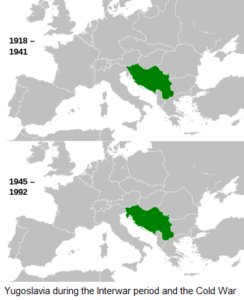
Wait, what?!

That country does not exist anymore. (See the encyclopedic reference in the Appendix A below). The land is still there; the people are still there … mostly, but the culture and national identity is gone.

The only things that remain are lessons … for other communities – like us in the Caribbean – to learn the consequences of an unchecked, un-remediated Toxic Environment. We need to look, listen and learn the lessons. But first consider the historic references in the VIDEO here:

VIDEO – The Breakup of Yugoslavia – https://youtu.be/oiSgAiM0d8A

Posted April 30, 2016 – Why did Yugoslavia split up? In this video, I attempt to look at the complex situation of the former Yugoslav republics and what led to their breakup.
Free audiobook and a 30-day free trial at:
http://www.audible.com/wonderwhy
Thanks to Audible for sponsoring this video!

MUSIC Satiate Kevin MacLeod (incompetech.com)
Licensed under Creative Commons: By Attribution 3.0 License http://creativecommons.org/licenses/b… 
All images/footage used in this video are either public domain, CC or free use.
Fair use as this is a transformative work for educational proposes.

No doubt, the Balkan region was Toxic in the distant past and the recent past. This is the same region that ignited World War I, back in 1914. We had addressed this history before, in a previous Go Lean commentary; see highlights in Appendix B below.

What are the lessons that we glean from this history, then and now?

  • The one country of Yugoslavia was an integrated and consolidated federation that combined these 6 neighboring member-states in a Single Market:
    Bosnia and Herzegovina, Croatia, Macedonia, Montenegro, Serbia, and Slovenia
  • The 6 member-states were not homogenous; there were many differences in their populations, i.e Official languages: Serbo-Croatian, Macedonian and Slovene.
  • Religiosity do not contribute to peace; in fact, religious intolerance can lead to Civil War. Yugoslavia featured 3 major faiths: Western Catholicism, Eastern Orthodox and Islam.
  • Historical disputes and grievances do not just dissipate – they must be reconciled – or future generation will still contest the issue.
  • Minorities will always be persecuted by majorities in Toxic Environments.

The lessons from World War I cannot be ignored.

The lessons from the recent Yugoslavia conflicts cannot be ignored.

This discussion on Yugoslavia underpins a consideration of the Toxic Environment that we suffer here in the Caribbean. The 2013 book Go Lean…Caribbean, serving as a roadmap for the introduction of the Caribbean Union Trade Federation (CU), asserts that Caribbean economic, security (Public Safety) and governing stakeholders must all work together to abate our Toxic Environment.

This commentary is a continuation on the Teaching Series related to Toxic Environments where we addressed the pseudo-phobias – irrational fear or hatred – and how these bring on the “fight or flight” psycho-drama in everyone’s response. In Yugoslavia, “fight” was frequently the selected option. Every month, the movement behind the Go Lean book presents a Teaching Series to address issues germane to Caribbean life and culture. For this month of September 2020, this is entry 3-of-6, we are looking at the history of persecuted minorities in this Eastern Europe country-culture – that is now extinct.

Consider here, the full catalog of the series this month:

  1. Toxic Environment: Ready for Football – Washington “Redskins”
  2. Toxic Environment: Homophobia – The problem is the Hate, not the Fear
  3. Toxic Environment: Opposite of Diversity & Inclusion
  4. Toxic Environment: Lessons from Yugoslavia
  5. Toxic Environment: Ease of Doing Business
  6. Toxic Environment: Make the Caribbean Great (Anew)

After 100 years, according to the foregoing VIDEO, the member-states that constituted Yugoslavia have now reconciled their Toxic Environments from the past – they gave up on integration. They gave up on diversity and just decided to continue as independent homogeneous nations – no leverage, no economies-of-scale, no “whole is more than the sum of its parts”. Sad!

The Go Lean roadmap urges the Caribbean region to confederate, asserting that we double-down on Diversity & Inclusion among the 30 different member-states. We need the inherent benefits; we need the leverage; we need the economies-of-scale; we need the “whole to be more than the sum of its parts”. Consider this list of previous blog-commentaries on the subject of confederation, when it worked and when it did not:

https://goleancaribbean.com/blog/?p=20072 Rise from the Ashes – Political Revolutions: Calling ‘Balls & Strikes’
https://goleancaribbean.com/blog/?p=19570 European Role Model: Not when ‘Push’ comes to ‘Shove’
https://goleancaribbean.com/blog/?p=19494 BHAG – One Voice: Foreign Policy and Diplomatic Stance
https://goleancaribbean.com/blog/?p=19452 BHAG – Regional Currency – ‘In God We Trust’
https://goleancaribbean.com/blog/?p=3090 Introduction to Europe – All Grown Up
https://goleancaribbean.com/blog/?p=816 The Future of CariCom – A Technocratic Confederacy

Yugoslavia was a unified country across a large geographic area. They were among the most successful communities; they even hosted the Olympics – Sarajevo 1984. They could have been in the G20 and be one of the “best addresses on the planet”, if only they had learned “how to get along” with each other, despite ethnic differences.

We must do better …

We must consider Yugoslavia as a cautionary tale for us in the Caribbean. We want Diversity & Inclusion; we want every distinct group in our society to have a “seat at the table, with no one being on the menu”.

  • Different races, no problem.
  • Different languages, no problem.
  • Different religions, no problem.
  • Different colonial heritage, no problem.

Yes, we can …

Let’s work to remediate and mitigate our Toxic Environment. Let’s make our homeland a better place to live, work and play.  🙂

About the Book
The book Go Lean…Caribbean serves as a roadmap for the introduction and implementation of the technocratic Caribbean Union Trade Federation (CU), for the elevation of Caribbean society – for all member-states. This CU/Go Lean roadmap has these 3 prime directives:

  • Optimization of the economic engines in order to grow the regional economy to $800 Billion & create 2.2 million new jobs.
  • Establishment of a security apparatus to ensure public safety and protect the resultant economic engines.
  • Improve Caribbean governance to support these engines, including a separation-of-powers between the member-states and CU federal agencies.

The Go Lean book provides 370-pages of turn-by-turn instructions on “how” to adopt new community ethos, plus the strategies, tactics, implementations and advocacies to execute so as to reboot, reform and transform the societal engines of Caribbean society.

Download the free e-Book of Go Lean … Caribbean – now!

Who We Are
The movement behind the Go Lean book – a non-partisan, apolitical, religiously-neutral Community Development Foundation chartered for the purpose of empowering and re-booting economic engines – stresses that reforming and transforming the Caribbean societal engines must be a regional pursuit. This was an early motivation for the roadmap, as pronounced in the opening Declaration of Interdependence (Pages 11 – 13):

x. Whereas we are surrounded and allied to nations of larger proportions in land mass, populations, and treasuries, elements in their societies may have ill-intent in their pursuits, at the expense of the safety and security of our citizens. We must therefore appoint “new guards” to ensure our public safety and threats against our society, both domestic and foreign. The Federation must employ the latest advances and best practices … to assuage continuous threats against public safety.

xi. Whereas all men are entitled to the benefits of good governance in a free society, “new guards” must be enacted to dissuade the emergence of incompetence, corruption, nepotism and cronyism at the peril of the people’s best interest. The Federation must guarantee the executions of a social contract between government and the governed.

xiv. Whereas a free market economy can be induced and spurred for continuous progress, the Federation must install the controls to better manage aspects of the economy: jobs, inflation, savings rate, investments and other economic principles. Thereby attracting direct foreign investment because of the stability and vibrancy of our economy.

xvi. Whereas security of our homeland is inextricably linked to prosperity of the homeland, the economic and security interest of the region needs to be aligned under the same governance. Since economic crimes … can imperil the functioning of the wheels of commerce for all the citizenry, the accidence of this Federation must equip the security apparatus with the tools and techniques for predictive and proactive interdictions.

Sign the petition to lean-in for this roadmap for the Caribbean Union Trade Federation.

————–

Appendix A – Yugoslavia

Yugoslavia (literally. ‘South Slavic Land’) was a country in Southeast Europe and Central Europe for most of the 20th century. It came into existence after World War I in 1918[B] under the name of the Kingdom of Serbs, Croats and Slovenes by the merger of the provisional State of Slovenes, Croats and Serbs (it was formed from territories of the former Austro-Hungarian Empire) with the Kingdom of Serbia, and constituted the first union of the South Slavic people as a sovereign state, following centuries in which the region had been part of the Ottoman Empire and Austria-Hungary. Peter I of Serbia was its first sovereign. The kingdom gained international recognition on 13 July 1922 at the Conference of Ambassadors in Paris.[2] The official name of the state was changed to Kingdom of Yugoslavia on 3 October 1929.

Yugoslavia was invaded by the Axis powers on 6 April 1941. In 1943, a Democratic Federal Yugoslavia was proclaimed by the Partisan resistance. In 1944 King Peter II, then living in exile, recognised it as the legitimate government. The monarchy was subsequently abolished in November 1945. Yugoslavia was renamed the Federal People’s Republic of Yugoslavia in 1946, when a communist government was established. It acquired the territories of Istria, Rijeka, and Zadar from Italy. Partisan leader Josip Broz Tito ruled the country as president until his death in 1980. In 1963, the country was renamed again, as the Socialist Federal Republic of Yugoslavia (SFRY).

The six constituent republics that made up the SFRY were the SR Bosnia and Herzegovina, SR Croatia, SR Macedonia, SR Montenegro, SR Serbia, and SR Slovenia. Serbia contained two Socialist Autonomous Provinces, Vojvodina and Kosovo, which after 1974 were largely equal to the other members of the federation.[3][4] After an economic and political crisis in the 1980s and the rise of nationalism, Yugoslavia broke up along its republics’ borders, at first into five countries, leading to the Yugoslav Wars. From 1993 to 2017, the International Criminal Tribunal for the former Yugoslavia tried political and military leaders from the former Yugoslavia for war crimes, genocide, and other crimes committed during those wars.

After the breakup, the republics of Montenegro and Serbia formed a reduced federative state, Serbia and Montenegro, known officially until 2003 as the Federal Republic of Yugoslavia (FRY). This state aspired to the status of sole legal successor to the SFRY, but those claims were opposed by the other former republics. Eventually, it accepted the opinion of the Badinter Arbitration Committee about shared succession[5] and in 2003 its official name was changed to Serbia and Montenegro. This state dissolved when Montenegro and Serbia each became independent states in 2006, while Kosovo proclaimed its independence from Serbia in 2008.

Source: Retrieved September 24, 2020 from: https://en.wikipedia.org/wiki/Yugoslavia

—————–

Appendix B – Previous Blog from June 28, 2014

A Lesson in History – 100 Years Ago Today – World War I
On this date 100 years ago, Archduke Franz Ferdinand of Austria, heir presumptive to the Austro-Hungarian throne, and his wife, Sophie, Duchess of Hohenberg, were shot dead in Sarajevo by Serbian assassins. The political objective of the assassination was to break off Austria-Hungary’s south-Slavic provinces so they could be combined into a Yugoslavia. The assassination led directly to the First World War when Austria-Hungary subsequently issued an ultimatum against Serbia, which was partially rejected. Austria-Hungary then declared war, marking the outbreak of the war. [a]

Multilateral military alliances abounded in that day among the Great Powers: Austria-Hungary with Germany (Triple Alliance of 1882) and Serbia with Russia and France (Triple Entente of 1907) and Britain. When war ensued later in August 1914, these were the sides. Many other military treaties were triggered thereby engaging empires/countries like Ottoman-Turks, Portugal, Japan and Italy, (The United States joined in 1917 allied with Britain). The resulting conflict was dubbed the Great War until subsequently rebranded World War I.
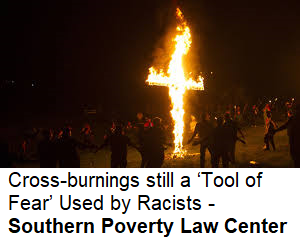
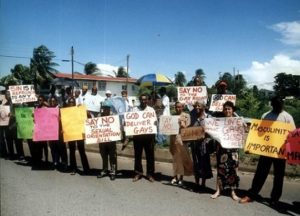
The people of the Caribbean understand societal decline and dysfunction all too well.

What have we learned in the 100 years since the events of June 28, 1914? How will these lessons help us today?

  • Minority Equalization – Bullying and terrorism must be mitigated at the earliest possible opportunity – the foregoing photo depicts the oppression the minority Balkan communities perceived in the Austria-Hungarian Empire. As a minority group they felt bullied in their own country; their Slavic culture and language set them apart, and their religious adherence led to even more dissension (Austria-Hungary: Catholic/Lutheran; Serbia: Eastern Orthodox and Bosnia- Herzegovina: Muslim) There were terrorist activities for decades before in the quest for independence. In the past 100 years, this same modus operandi has been repeated in countless locales around the world. The CU security pact must defend against regional threats, including domestic terrorism. This includes gangs and their junior counterparts, bullies. The CU plans for community messaging in the campaign to mitigate bullying.
  • Reconciliation of issues are not optional, more conflict will emerge otherwise – The issues that wedged the people of the Balkans were not resolved in World War I. More dissensions continued leading to World War II, and continued during the Cold War while most of the Balkans were under Soviets control. When the Soviet Union collapsed in 1991, civil war and ethnic cleansings proceeded in the Balkans. Their issues/differences had not been reconciled. A common practice after WW I & WW II was the prosecution of war crimes. But in South Africa an alternative justice approach was adopted, that of Truth & Reconciliation Commissions (TRC). These have become more successful as the emphasis is less on revenge and more on justice normalization. Many other countries have instituted similar TRC models. The CU plans for the TRC model for dealing with a lot of latent issues in the last Caribbean century (i.e. Cuba, Haiti, Dominican Republic, etc).
  • Self-determination of local currencies – in planning for postwar reconstruction, U.S. representatives with their British counterparts studied what had been lacking between the two world wars: a system of international payments that would allow trade to be conducted without fear of sudden currency depreciation or wild fluctuations in exchange rates—ailments that had nearly paralyzed world capitalism during the Great Depression. There is a multiplier associated with the currency in the money supply. Therefore the communities of the Caribbean must embrace its own currency, the Caribbean Dollar (managed by a technocratic Caribbean Central Bank), thereby bringing local benefits from local multipliers.
  • Security assurances must be enabled to complement economics objectives – A lot of dissension has resulted when economic engines become imperiled due to security conflicts. The instability then causes more economic dysfunction, which results in even more security threats – a downward spiral. The CU/Go Lean posits that security apparatus must be aligned with all economic empowerments. This is weaved throughout the roadmap.
  • Negotiate as partners not competitors – The end of World War I immediately set-up ripe conditions for WW II, because of the harsh terms in the Peace Treaties. The CU maintains that, negotiation is an art and a science. More can be accomplished by treating a negotiating counterpart as a partner, rather than not an adversary. (See VIDEO below).
  • Cooperatives and sharing schemes lighten burdens among neighbors – The Balkan conflict of 1914 resulted in a World War because of cooperative treaties with aligning nations. Despite this bad outcome, the practice of cooperatives and sharing still has more upside than downside. The CU will employ cooperatives and sharing schemes for limited scopes within the prime directives of optimizing the economic, security and governing engines.
  • Promote opportunities for the Pursuit of Happiness – A lot of terrorist activities are executed by “suicide” agents (i.e. suicide bombers). The Go Lean roadmap posits the when the following three fundamentals are in place, the risks of suicide is minimal: 1. something to do, 2. someone to love, 3. something to hope for. These are the things a man (or woman) needs to be happy. 
  • Consider the Greater Good – Complying with this principle would have prevented a lot of conflict in the past century. The philosophy is directly quoted as: “It is the greatest good to the greatest number of people which is the measure of right and wrong”. The CU/Go Lean roadmap calls for a number of measures that strike directly at the Greater Good mandate: accountable justice institutions, economic empowerment for rich and poor, strategic education initiatives, proactive health/wellness, etc.institutions, economic empowerment for rich and poor, strategic education initiatives, proactive health/wellness, etc.
Share this post:
, , , ,
[Top]

Toxic Environment – Opposite of ‘Diversity & Inclusion’

Go Lean Commentary

Picture this:

You spend $2,000 per night for accommodations for your Caribbean vacation.
You go to bed, only to be awaken by a fuzzing noise outside. You pull back the curtains and there it is:

  • A burning cross erected outside your window!

How long before you want to leave?
Will you ever return?
Will you tell your friends to come visit or stay away?
Why this persecution?

  • The guest in this scenario is a known Gay Man (LGBT), or …
  • The guest in this scenario is a foreigner from Wuhan, China, or …
  • The guest in this scenario is a Muslim from Dubai, in the Middle East.

This describes the Toxic Environment that we suffer here in the Caribbean. The 2013 book Go Lean…Caribbean, serving as a roadmap for the introduction of the Caribbean Union Trade Federation (CU), asserts that Caribbean economic, security (Public Safety) and governing stakeholders must work to mitigate and remediate our societal defects.

Despite the mono-industrial landscape of tourism, where we need to be inviting and hospitable to all visitors, many times we have chosen the opposite instead, to be: intolerant and judgmental. We give in, on a daily basis to:

This is not theory or conjecture; these intolerance, condemnations and judgments have happened and are happening … repeatedly.

Opponents of a gay rights bill gather in Guyana in 2003. (AP)

People march during a protest against gay rights in
Port-au-Prince, Haiti, Sunday, July 26, 2020.
The group marched demanding that President Jovenel Moise
rescind his most recent decree that rewrites the 185-year-old penal code,
addressing discrimination based on sexual orientation. Dieu Nalio Chery AP


Jamaican Anti-Gay Rally to Oppose Same-Sex Marriage, Even Though No One Has Proposed It

A previous Go Lean commentary from April 8, 2017 identified this example of our severe Caribbean Toxicity. Consider this summary:

‘Loose Lips Sink Ships’ – Leaders Undermine Tourism
… there is no war in the Caribbean, but we do have battles. We have trade wars and economic struggles to try and maintain our way of life and to improve it. For so many of our countries, tourism is the primary economic driver – our regional ship – we have to be on guard and aware of any kind of disparaging talk that can undermine the appeal of our destinations.

The United States is suffering the dire consequence of “loose lips sinking ships” right now. The new President – Donald Trump – has made disparaging remarks about certain foreign groups, and then introduced policies that reinforce his disdain for these foreigners.

As a result, more and more foreigners are refusing to come to the US for leisure travel. …

Nobody wants to spend their money in a place where they are not welcomed.

This lesson must be learned in the Caribbean. We have the same threats afoot. Unlike the US, who has the leverage and surety of “richest Single Market economy in the world” to absorb the fall, the Caribbean member-states are mostly Third World and failing.

… Yet, some leaders – Christian pastors in this case – have proclaimed, in a signed petition to this new American President, a heightened level of disdain for certain American tourists. They are protesting the US Human Rights agenda to seek relief for Caribbean populations with affinity for persons ascribing to the Lesbian, Gay, Bisexual and Trans-Gender (LGBT) lifestyles.

Rather than love and leisure … in the Caribbean, these community leaders are projecting “a climate of hate”.

A Toxic Environment bears bad fruit. It is not just homophobia that we are inflicted with, as we have hate and intolerance embedded within our Community Ethos – this refers to (as defined in the Go Lean book Page 20):

  1. the fundamental character or spirit of a culture; the underlying sentiment that informs the beliefs, customs, or practices of a group or society; dominant assumptions of a people or period: In the Greek ethos the individual was highly valued.
  2. the character or disposition of a community, group, person, etc.

Look at these additional phobias that have plagued our society, here in the Caribbean. These are the opposite of the pluralistic society that we feature/want. See these examples of anti-Diversity & Inclusion reality:

Sinophobia
The problem with having an intolerant society is that our citizens are less inclined to embrace people that are different, even when you need them. This is the situation with China right now. As there is an exhaustion from North American and European investors in Caribbean communities, China has stepped-up and stepped-in with funds and development support.

We, in the Caribbean, badly need all the help.

Yet, our people are so reticent towards Chinese foreigners, despite that we “hung a Welcome Sign” for visitors from around the world. We must face it, we – a majority Black-and-Brown population in most of 30 member-states – are part of the problem, as it appears that we only want to embrace “White Christian” foreigners.

Fears of new virus trigger anti-China sentiment worldwide – February 2, 2020
As fears of a new coronavirus from China spread around the world, many countries are seeing rising anti-Chinese sentiment, calls for a full travel ban on Chinese and even public aversion to those from the epicenter of the outbreak.

The subject of the Sinophone eco-system – China, Chinese people and culture – has been an important subject for Caribbean considerations. We have published previous commentaries that advocated for a healthy relationship with the Sino World; consider the list of previous blog-commentaries here:

https://goleancaribbean.com/blog/?p=18963 Happy Chinese New Year – Embracing the Sinophone World
https://goleancaribbean.com/blog/?p=18301 After Dorian, Rebuilding Partners: China Versus America
https://goleancaribbean.com/blog/?p=16530 European Reckoning – China seeks to de-Americanize World’s economy
https://goleancaribbean.com/blog/?p=9550 10 Things We Want from China and 10 Things We Do Not Want
https://goleancaribbean.com/blog/?p=6231 China’s Caribbean Playbook: America’s Script

Islamophobia
The actuality of Intolerance is the opposite of the qualities a pluralistic society like the Caribbean needs to develop. We have a new found economic engine that we can now exploit: Global Tourism. Imagine the profits that can be garnered for just being Better Versions of ourselves, “to just live and let live”. While this is just Common Sense, we find that Common Sense is not so common. In fact, just the opposite have occurred; in some societies Islamophobia has been enshrined in Public Policy. See the example from Australia here:
Islamophobia is practically enshrined as public policy in Australia
… any 28-year-old in Australia has grown up in a period when racism, xenophobia and a hostility to Muslims in particular, were quickly ratcheting up in the country’s public culture.

In the period of the country’s enthusiastic participation in the War on Terror, Islam and Muslims have frequently been treated as public enemies, and hate speech against them has inexorably been normalised.

We must do better in the Caribbean. In fact, Muslims are an integral part of our regional society; they have every right to life, liberty and the pursuit of happiness. If we honor that, not only can we have peace, but profit too. Imagine catering to the global Muslim community to enjoy our hospitality. (We had asserted the same about the Hindu community). See the Appendix VIDEO below for a glimpse of a previous celebration.

That requires a welcoming attitude of Diversity & Inclusion. Some communities see the need for this work – see here:

Trinidad – Confronting issues in Islam
… Non-Muslims should always be encouraged to exercise tolerance and understanding. But the standard defence of denying the ‘perpetrators as true Muslims’ or stating that ‘this is not Islam’ is no longer convincing. This may be part of the reason for the absence of worldwide outpouring over the massacres in Istanbul, Baghdad and Saudi Arabia as opposed to the response that Paris, Brussels and Orlando received. The backlash has gone beyond hate crimes and prejudice and is now one of apathy and indifference ie, ‘If they want to kill each other, let them go right ahead, as long as they leave the rest of us alone.’ The unfortunate truth is that Muslims, regardless of how friendly or moderate they may appear, are still looked upon with suspicion.

This is what is meant by “Good Community Ethos”, the positive group qualities, that this Go Lean movement encourages our people to foster.

Diversity & Inclusion is not automatic; in fact, it is the opposite; it takes hard work. But if we do the work, we can have benefits; we can remediate and mitigate a Toxic Environment. Diversity & Inclusion can and do work. Look at this opportunity:

How an ancient Islamic holiday became uniquely Caribbean on Trinidad shores
In Trinidad, the 100,000 Muslims who make up 5 percent of the island’s total population, celebrate the day of Ashura, as Hosay – the name derived from “Hussein.”

The first Hosay festival was held in 1854, just over a decade after the first Indian Muslims began to arrive from India to work on the island’s sugar plantations.

But Trinidad at the time was under British colonial rule and large public gatherings were not permitted. In 1884, the British authorities issued a prohibition against Hosay commemorations. Approximately 30,000 people took to the streets, in Mon Repos, in the south, to protest against the ordinance. Shots fired to disperse the crowd killed 22 and injured over 100. The ordinance was later overturned.

The “Hosay Massacre” or “Muharram Massacre,” however, lives in people’s memories.

As we see, Orthodoxy – from religious and cultural heritage – can hurt community harmony; it can discourage people from the libertarian view to “live and let live”. The Muslim World so often was on the receiving side of religious intolerance. But don’t get it twisted, Islam and the Muslim World is not a model for Diversity & Inclusion themselves; we have lots of examples of their intolerance (i.e. Middle East country of Jordan and their LGBT Intolerance).

This commentary is a continuation on the Teaching Series related to Toxic Environments where we addressed the pseudo-phobias – irrational fear or hatred – that have made life unbearable in the homeland. But now we see how this kind of intolerance imperils the economic engines as well. Yes, we’ve “shot ourselves in the foot” … again!

Every month, the movement behind the Go Lean book presents a Teaching Series to address issues germane to Caribbean life and culture. For this month of September 2020, we are looking at the actuality of persecuted minorities in this homeland. The qualities we need in the region is that of Diversity & Inclusion. Instead we get the opposite …

… we get homophobia, xenophobia and islamophobia; which are not real “phobias” (fear) but instead are representative of dislike, disapproval, prejudice, hatred, discrimination and/or hostility.

This means that we are not exactly the “greatest address on the planet”. Nope, our homelands are among the identified Toxic Environments on the planet. This is entry 3-of-6 in this series; this one presents the thesis that “our toxicity have long reaching consequences on the community quest to “live, work and play” here in the region. Our Toxic Environment makes it hard to retain our guests and tourists with encouragements for future and frequent visits. Instead, our Caribbean (tourism) industrial stakeholders must do the heavier lifting to always attract newer-and-newer visitors, rather than the easier job of repeat customers.

Consider here, the full catalog of the series this month:

  1. Toxic Environment: Ready for Football – Washington “Redskins”
  2. Toxic Environment: Homophobia – The problem is the Hate, not the Fear
  3. Toxic Environment: Opposite of Diversity & Inclusion
  4. Toxic Environment: Lessons from Yugoslavia
  5. Toxic Environment: Ease of Doing Business
  6. Toxic Environment: Make the Caribbean Great (Anew)

How can we abate the Toxic Environment described here-in:

Answer: Promote Diversity and Inclusion.

A previous Go Lean commentary from December 19, 2019 identified the benefits of an inclusive foundation – the opposite of a Toxic Environment – by studying the international conglomerate Mercedes-Benz or DaimlerBenz. Consider this summary:

Learning from Another ‘Great Place to Work’: Mercedes-Benz
A lot of companies formed 133 years ago are no longer around.

  • Time takes its toll
  • Business models change
  • Technology improves
  • Values are reformed

For the companies that have survived the “Win or Go Home” tournaments, it is important to study them and learn lessons of their successes … and failures. …

This “Old Dog” has learned a lot of “New Tricks”.

They are considered one of the Great Places to Work, by the formal Great Place to Work® Institute; they are in the Top Ten on the 2018 List. …

One such Value Reformation that Mercedes-Benz has completed that other companies, institutions and regions – this mean YOU Caribbean stakeholders – can learn from is the emphasis on Diversity and Inclusion. …

How we shape Diversity & Inclusion
Daimler employs more than 298,000 people from around 160 nations. And that is just one aspect of our company’s diversity. We shape Diversity & Inclusion with appropriate offers and measures for our employees in five dimensions:

  1. We work in international teams.
  2. We bring people from different generations together.
  3. We promote equal opportunity for all genders.
  4. We defend the rights of the LGBTI+ Community.
  5. We include people with disabilities on an equal footing.

Source: Posted December 9, 2019; retrieved December 19, 2019 from https://www.daimler.com/sustainability/basics/employees/how-we-shape-diversity-inclusion.html

The subject of Diversity & Inclusion has been an important subject for Caribbean considerations. We have thusly published a few commentaries that advocated for more Diversity & Inclusion. Consider this list of previous blog-commentaries:

https://goleancaribbean.com/blog/?p=19217 Brain Drain – ‘Live and Let Live’: Introducing Localism
https://goleancaribbean.com/blog/?p=19203 Brain Drain – Brain Gain: Yes we can!
https://goleancaribbean.com/blog/?p=17820 Caribbean ‘Pride’ – “Can we all just get along”
https://goleancaribbean.com/blog/?p=16532 European Reckoning – Settlers -vs- Immigrants
https://goleancaribbean.com/blog/?p=15998 Good Governance: The Kind of Society We Want – Minority Protections
https://goleancaribbean.com/blog/?p=14316 Soft Power – Clean-up the Toxic Environments for Economic Benefits
https://goleancaribbean.com/blog/?p=13321 Making a ‘Pluralistic Democracy’ – Multilingual Realities
https://goleancaribbean.com/blog/?p=8186 Respect for Minorities: ‘All For One’
https://goleancaribbean.com/blog/?p=3999 Sir Sidney Poitier – ‘Breaking New Ground’ as a Diversity Role Model

Majority versus minority; strong versus the weak; rich versus poor; Haves versus Have Nots…

… everywhere we turn, there are diverse people that needs to be included in the manifestation of society. This inclusion means a “seat at the table, not just being on the menu”. It is simpler than it sounds; all we have to do is “Live and Let Live”.

This has not always been the case in the past. In fact, we have some Bad Orthodoxy – many times the Caribbean religiosity has hurt rather than helped – that we must distance ourselves from. A lot of our friends, have not always been so friendly; a lot of our enemies have not been so adversarial. We need to reform from the past as we work for the new, brighter, better future.

Yes, we can …

Let’s accept the truth: we have been toxic! Let’s do the work that must be done to make our homeland a better place to live, work and play.  🙂

About the Book
The book Go Lean…Caribbean serves as a roadmap for the introduction and implementation of the technocratic Caribbean Union Trade Federation (CU), for the elevation of Caribbean society – for all member-states. This CU/Go Lean roadmap has these 3 prime directives:

  • Optimization of the economic engines in order to grow the regional economy to $800 Billion & create 2.2 million new jobs.
  • Establishment of a security apparatus to ensure public safety and protect the resultant economic engines.
  • Improve Caribbean governance to support these engines, including a separation-of-powers between the member-states and CU federal agencies.

The Go Lean book provides 370-pages of turn-by-turn instructions on “how” to adopt new community ethos, plus the strategies, tactics, implementations and advocacies to execute so as to reboot, reform and transform the societal engines of Caribbean society.

Download the free e-Book of Go Lean … Caribbean – now!

Who We Are
The movement behind the Go Lean book – a non-partisan, apolitical, religiously-neutral Community Development Foundation chartered for the purpose of empowering and re-booting economic engines – stresses that reforming and transforming the Caribbean societal engines must be a regional pursuit. This was an early motivation for the roadmap, as pronounced in the opening Declaration of Interdependence (Pages 11 – 13):

x. Whereas we are surrounded and allied to nations of larger proportions in land mass, populations, and treasuries, elements in their societies may have ill-intent in their pursuits, at the expense of the safety and security of our citizens. We must therefore appoint “new guards” to ensure our public safety and threats against our society, both domestic and foreign. The Federation must employ the latest advances and best practices … to assuage continuous threats against public safety.

xi. Whereas all men are entitled to the benefits of good governance in a free society, “new guards” must be enacted to dissuade the emergence of incompetence, corruption, nepotism and cronyism at the peril of the people’s best interest. The Federation must guarantee the executions of a social contract between government and the governed.

xiv. Whereas a free market economy can be induced and spurred for continuous progress, the Federation must install the controls to better manage aspects of the economy: jobs, inflation, savings rate, investments and other economic principles. Thereby attracting direct foreign investment because of the stability and vibrancy of our economy.

xvi. Whereas security of our homeland is inextricably linked to prosperity of the homeland, the economic and security interest of the region needs to be aligned under the same governance. Since economic crimes … can imperil the functioning of the wheels of commerce for all the citizenry, the accedence of this Federation must equip the security apparatus with the tools and techniques for predictive and proactive interdictions.

xxiv.  Whereas a free market economy can be induced and spurred for continuous progress, the Federation must install the controls to better manage aspects of the economy: jobs, inflation, savings rate, investments and other economic principles. Thereby attracting direct foreign investment because of the stability and vibrancy of our economy.

Sign the petition to lean-in for this roadmap for the Caribbean Union Trade Federation.

——————–

Appendix VIDEO – Hosay in Cedros, Trinidad (2007) – https://youtu.be/VtbaGduFVHE

Dion Samsoondar
Posted October 8, 2011
– A look at the final day of Muharram, or “Hosay” , a Shiite muslim ritual as observance in the tiny southern seaside village of Cedros, Trinidad in the Caribbean. Natural sound of tassa drums fill the air as villagers parade the tadjahs on the main street of this fishing community before the mini replica tomb are lead to the ocean for final rites. Video shot in 2007 with JVC GY-HD100U ,and edited in CS3 by Dion Samsoondar (2007).

Share this post:
, , ,
[Top]

Toxic Environment – Homophobia: Hate not Fear – Encore

What is a phobia?

Well, a summary of the definition is a “persistent and excessive fear”. The encyclopedic definition is as follows:

A phobia is a type of anxiety disorder defined by a persistent and excessive fear of an object or situation.[1] Phobias typically result in a rapid onset of fear and are present for more than six months.[1] Those affected will go to great lengths to avoid the situation or object, to a degree greater than the actual danger posed.[1] If the object or situation cannot be avoided, they experience significant distress.[1] Other symptoms can include fainting, which may occur in blood or injury phobia,[1] and panic attacks, which are often found in agoraphobia.[6] Around 75% of those with phobias have multiple phobias.[1] – Source: Wikipedia

There are other fears that are mistakenly called phobias that are really something else. (This is the focus on this commentary). See the continuation of the above definition:

Several terms with the suffix -phobia are used non-clinically (usually for political or deterrent purpose) to imply irrational fear or hatred. Examples include:

  • Chemophobia – Negative attitudes and mistrust towards chemistry and synthetic chemicals.
  • Homophobia – Negative attitudes and feelings toward homosexuality or people who are identified or perceived as being lesbian, gay, bisexual or transgender (LGBT).
  • Xenophobia – Fear or dislike of strangers or the unknown, sometimes used to describe nationalistic political beliefs and movements.
  • Islamophobia – Fear of anything Islamic

Usually these kinds of “phobias” are described as fear, dislike, disapproval, prejudice, hatred, discrimination or hostility towards the object of the “phobia”.[53]

Don’t get it twisted, these are not fears; these constitute hatred. Prejudice, hatred and discrimination exercised in a persistent and excessive manner is truly toxic. Imagine being on the receiving end of such treatment, such irrational fear or hatred.

How much can you tolerate? How much should you tolerate? This is like having a burning cross on your front lawn. How long before you want to leave?

This is a continuation on the Teaching Series from the movement behind the 2013 book Go Lean…Caribbean, related to Toxic Environments. The pseudo-phobias – irrational fear or hatred – all contribute to unbearable circumstances at home; thusly they contribute to the Exodus of so many Caribbean people; this exacerbates the Brain Drain and societal abandonment in the region. We’ve got it bad!

Every month, the movement behind the Go Lean book presents a Teaching Series to address issues germane to Caribbean life and culture. For this month of September 2020, we are looking at the actuality of persecuted minorities in this homeland. Unfortunately, Toxic Environments have long reaching consequences on the community quest to live, work and play. This is entry 2-of-6; it presents the thesis that the “strong in society should not be allowed to abuse the weak” just to allay some pseudo-fears. This is an important consideration, as it depicts the heavy-lifting that the Caribbean stakeholders must do.

Consider here, the full catalog of the series this month:

  1. Toxic Environment: Ready for Football – Washington “Redskins”
  2. Toxic Environment: Homophobia – The problem is the Hate, not the Fear
  3. Toxic Environment: Opposite of Diversity & Inclusion
  4. Toxic Environment: Lessons from Yugoslavia
  5. Toxic Environment: Ease of Doing Business
  6. Toxic Environment: Make the Caribbean Great (Anew)

The Go Lean book, serving as a roadmap for the introduction of the Caribbean Union Trade Federation (CU), asserts that Caribbean stakeholders must do the heavy-lifting to mitigate and remediate societal defects. While the purpose of the roadmap is to optimize the economic, security and governing engines of society, the roadmap recognizes that we must retain people in the homeland. No people = no society = no culture. Therefore, we must have a good societal foundation; respect and protection of all people and their rights for life, liberty and the pursuit of happiness. The purpose of this month’s Teaching Series is to focus on that foundation. There is a glaring need for reform, as we have a long track record of bad behavior like hate, bigotry, xenophobia and intolerance in our Caribbean communities.

As related in the previous submission in this month’s series, the Caribbean has fostered a Toxic Environment in our culture; it has been so bad that these identified bad behaviors have flourished. This is not good, as a Toxic Environment pits villains against victims and in the long run, the victims – and all those that love them – will seek refuge elsewhere. This is true with all Toxic Environments – think Asylum-seekers. Asylum-seeking is the manifesting of the Push dynamics for Caribbean abandonment:

  • “Push” refers to people who feel compelled to leave, to seek refuge in a foreign land. “Refuge” is an appropriate word; because of societal defects, many from the Caribbean must leave as refugees – think LGBTDisabilityDomestic-abuseMedically-challenged – for their life, liberty and pursuit of happiness.
  • “Pull”, on the other hand refers to the lure of a more liberal life abroad; many times our people are emigrating for societies that have better expressions of the rights for “life, liberty and the pursuit of happiness”.

The Caribbean is not the first nor the last Toxic Environment; there have been many in the past and even now in the present. Think Nazi Germany, who persecuted (i.e. Concentration Camps) many minority groups (Jews, Gypsies, homosexuals, etc.). Today, we have more bad role models of hate, bigotry, xenophobia and intolerance – like in the Muslim Word, (think ISIS), where persecuted minorities are frequently targeted. (There have been instances of public killing of convicted homosexuals).

We must look, listen and learn from these past and present Toxic Environments, then work towards making our society better – more tolerant. We cannot afford to keep losing our people; that will degrade our culture further. Using an analogy from medical trauma, our society is bleeding populations – we must stop the bleeding – otherwise the patient – our unique culture – will die.

How bad is our society? While not ISIS, we are recognized as one of the worst in our attitudes and toleration of homosexual practices.

Say it ain’t so …

This was our initial reaction in researching and writing about the Buggery Laws in the Anglo-Caribbean. Those laws seemed so barbaric for our modern times. And yet, they persists. A previous Go Lean commentary from July 2, 2015 identified this example of our severe Caribbean Toxicity. Consider this summary:

While this commentary directly targets Jamaica, the majority of the countries and overseas territories of the former British Empire, still criminalize sexual acts between consenting adults of the same sex and other forms of sexual orientation, gender identity and expression. This has been described as being the result of “the major historical influence” or legacy of the British Empire. In most cases, it was former colonial administrators that established anti-gay legislation or sodomy acts during the 19th century. … The majority of countries then retained these laws following independence.

Since that 2015 date, we have published a few additional commentaries that advocated for more tolerance for citizens – and visitors – with alternative life styles. Consider this list of previous blog-commentaries:

https://goleancaribbean.com/blog/?p=20292 Conscientizing on VIDEO: Advocating for Empathy
https://goleancaribbean.com/blog/?p=19217 Brain Drain – ‘Live and Let Live’: Introducing Localism
https://goleancaribbean.com/blog/?p=17820 Caribbean ‘Pride’ – “Can we all just get along”
https://goleancaribbean.com/blog/?p=14830 Counter-culture: Embracing the Change
https://goleancaribbean.com/blog/?p=11224 ‘Loose Lips Sink Ships’ – Leaders Undermine Tourism
https://goleancaribbean.com/blog/?p=10216 Waging a Successful War on Orthodoxy
https://goleancaribbean.com/blog/?p=8200 Respect for Minorities: Climate of Hate
https://goleancaribbean.com/blog/?p=8186 Respect for Minorities: ‘All For One’
https://goleancaribbean.com/blog/?p=341 Homosexual Intolerance listed among blatant human rights abuses

It is simple, if we want to grow our society, we must work hard to make it a better place to live, work and place for everyone, not just some people. Remember the old nursery rhyme: “rich man, poor man, beggar man, thief; doctor, lawyer, Indian Chief”.

It is Toxic to allow the “Strong to Abuse the Weak” – including LGBT – in our society.

Now is a good time to address those bad Buggery Laws that still prevail in the Anglo-Caribbean. It is apropos to Encore the full blog-commentary from July 2015; see that here now:

——————-

Go Lean Commentary Buggery in Jamaica – ‘Say It Ain’t So’!

This commentary has asserted that the Caribbean region can be a better society than the United States of America. Yes, we can!

But to even start the discussion, we must first:

Live and let live!

t So - Photo 3The topic of intolerance has been acute in the news as of late. We have the extreme example of the Islamic State in Iraq and Syria (ISIS) beheading non-Muslims because… well, just because. And the example of the US legalizing Gay Marriage may be considered too tolerant for some people’s good taste.

Where does the Caribbean fit in this discussion?

If ISIS is one end of a scale and Gay Marriage in America is another end, then one Caribbean member-state, Jamaica, would be closer to …

ISIS!

Yes, it is that bad. Say it ain’t so.

See Appendix-VIDEO’s below …

While this commentary directly targets Jamaica, the majority of the countries and overseas territories of the former British Empire, still criminalize sexual acts between consenting adults of the same sex and other forms of sexual orientation, gender identity and expression. This has been described as being the result of “the major historical influence” or legacy of the British Empire. In most cases, it was former colonial administrators that established anti-gay legislation or sodomy acts during the 19th century; see Appendix below. The majority of countries then retained these laws following independence.[1][2].

There is an effort now to transform society in Jamaica (and other countries) in this regards. There are Gay Pride Activities being planned for this Summer of 2015. See the relevant news article here:

Title: J-FLAG Is Planning Gay Pride Activities, But No Parade For August – Exec
Source: Jamaica Gleaner Daily Newspaper Online Site; posted June 30, 2015; retrieved from: http://jamaica-gleaner.com/article/news/20150630/j-flag-planning-gay-pride-activities-no-parade-august-exec  

Local gay lobby, J-FLAG, is refuting reports that it will host a road parade in August when the group plans to have a series of gay pride activities.

Social media has been abuzz since yesterday following a report that the group would host a parade, similar to what is done in the United   States and other countries.

However, executive director of J-FLAG, Dane Lewis, says the report is wrong, adding that Jamaica is not ready for such an event.

Meanwhile, he says the group is planning a week-long series of activities starting on Emancipation Day, August 1, to mark growing tolerance for members of the lesbian, gay, bisexual, and transgender (LGBT) community.

Some years ago, an attempt to host a gay parade was thwarted after anti-gay supporters reportedly planned attacks against marchers.

Jamaica is accused of being one of the most homophobic places on earth.

Last week, the US government released a report noting that anti-gay laws and the dancehall culture are responsible for perpetuating homophobia in Jamaica.
Additional reference sources: http://jflag.org/

t So - Photo 1
———–

VIDEO: Executive Director of JFLAG, Dane Lewis: “We Are Jamaicans” – https://youtu.be/sJ-17R5DCoI


Published on Jan 17, 2013 – “We Are Jamaicans” is funded with the kind support of the Caribbean Vulnerable Communities Coalition (CVC) through its Global Fund Vulnerablised Project.

Building a diverse society is not easy. The book Go Lean … Caribbean describes the challenge as heavy-lifting. Though the US had failed at this challenge, it proudly boasts that it got better with every generation. The Caribbean on the other hand, leaves much to be desired in terms of the willingness to change and keep pace with progressive societies. (Now the US, Canada, Ireland and other countries have legalized Gay Marriage).

In a previous blog-commentaries, this defect – Homosexual Intolerance – was listed among the blatant human rights abuses in the region.

This is an important consideration for the planners of Caribbean empowerment. The Caribbean, a region where unfortunately, we have NOT … tried to be as tolerant as may be required, expected and just plain moral.

We must do better!

The book Go Lean … Caribbean asserts that Caribbean society’s prosperity has been hindered with a high abandonment rate – reported at 70% for educated classes region-wide, but an even higher 85% in Jamaica. The primary mission of the Go Lean book is to “battle” against the “push-and-pull” factors that draw so many of our Caribbean citizens away from their homelands to go to more progressive countries.

The Go Lean book campaigns to lower the “push” factors!

The purpose of the Go Lean book is to fix the Caribbean; to be better. The Go Lean book serves as a roadmap for the introduction and implementation of the technocratic Caribbean Union Trade Federation (CU) to pursue the quest to elevate the Caribbean region through empowerments in economics, security and governance. It is the assertion that Caribbean citizens can stay home and effect change in their homelands more effectively than going to some foreign countries to find opportunities for life, liberty and the pursuit of happiness. The book therefore asserts that the region can turn-around from failing assessments by applying best-practices, and forging new societal institutions to impact the Greater Good for all the Caribbean. This point was pronounced in the opening Declaration of Interdependence (Pages 10 – 14) with these acknowledgements and statements:

xi.   Whereas all men are entitled to the benefits of good governance in a free society, “new guards” must be enacted to dissuade the emergence of incompetence, corruption, nepotism and cronyism at the peril of the people’s best interest. The Federation must guarantee the executions of a social contract between government and the governed.

xii. Whereas the legacy in recent times in individual states may be that of ineffectual governance with no redress to higher authority, the accedence of this Federation will ensure accountability and escalation of the human and civil rights of the people for good governance, justice assurances, due process and the rule of law. As such, any threats of a “failed state” status for any member state must enact emergency measures on behalf of the Federation to protect the human, civil and property rights of the citizens, residents, allies, trading partners, and visitors of the affected member state and the Federation as a whole.

xxxiii. Whereas lessons can be learned and applied from the study of the recent history of other societies, the Federation must formalize statutes and organizational dimensions to avoid the pitfalls of communities like … Egypt. On the other hand, the Federation must also implement the good examples learned from developments/ communities like New York City, … Canada, … and tenants of the US Constitution.

The CU/Go Lean vision to elevate Caribbean society must also consider the issue of image. There is the need for a sentinel role for Caribbean image, as there are a lot of times that Caribbean life and people are denigrated in the media: news, film, TV, books, magazines. It’s unfortunate when we are guilty of scathing allegations. The Go Lean roadmap calls for the CU to assume a role of protecting and projecting positive Caribbean images. The plan is to use cutting edge delivery of best practices; the applicable CU agencies will employ strategies, tactics and implementations to impact the Go Lean prime directives; identified with the following 3 statements:

  • Optimization of the economic engines in order to grow the regional economy to $800 Billion & create 2.2 million new jobs.
  • Establishment of a security apparatus to protect the resultant economic engines and mitigate challenges/threats to public safety for all citizens… LGBT or straight.
  • Improvement of Caribbean governance to support these engines.

Jamaica has a failing economy.

Jamaica’s primary economic driver is tourism. So …

t So - Photo 2

Is the Caribbean ready for this economic activity? A bridge too far, too soon?

t So - Photo 4Jamaica has a long way to go; the country has been described by some Human Rights groups as the most homophobic place on Earth because of the high level of violent crime directed at LGBT people; (Padgett, Tim: “The Most Homophobic Place on Earth?”Time Magazine posted 12 April 2006). The United States Department of State said that in 2012, “homophobia was [unacceptably] widespread in the country” (2012 Country Reports on Human Rights Practices: Jamaica, Bureau of Democracy, Human Rights and Labor, U.S. Department of State, pages 20-22). As depicted in the VIDEO below, even President Obama indicted the island on a recent official State Visit.

Why is this country’s homophobia so acute compared to other countries? For one, they have held on emphatically to the British Laws on Buggery – see Appendix below – from their colonial days; even though the host country of England has already abandoned the laws (in 1967).

Jamaica is partying like it’s 1899!

This is therefore a matter of community ethos. The Go Lean book defines community ethos as the fundamental character or spirit of a culture; the underlying sentiment that informs the beliefs, customs, or practices of a group or society; the dominant assumptions of a people or period. This tropical paradise of Jamaica, as defined in the foregoing news article and VIDEO continues to spur bad attitudes, bad ideas, bad speech and bad actions towards the LGBT community. This is unbecoming of a progressive society in 2015.

Alas, this is a crisis…for victims and their loved ones. The Go Lean book posits that this crisis can be averted, that the crisis is a “terrible thing to waste”. The Go Lean roadmap seeks to optimize the eco-systems for Jamaica and the entire Caribbean. The book stresses new community ethos, strategies, tactics, implementations and advocacies necessary to transform and turn-around the eco-systems of the regional society. These points are detailed in the book as follows:

Who We Are – SFE Foundation – Comprised of Caribbean Diaspora Page 8
Community Ethos – Economic Principles – Economic Systems Influence Individual Choices Page 21
Community Ethos – Economic Principles – Consequences of Choices Lie in the Future Page 21
Community Ethos – Governing Principles – Lean Operations Page 24
Community Ethos – Ways to Impact the Future Page 26
Community Ethos – Ways to Promote Happiness Page 36
Community Ethos – Ways to Impact the Greater Good Page 37
Strategy – Vision – Confederate all 30 member-states into a Single Market Page 45
Strategy – Mission – Build and foster local economic engines Page 45
Strategy – Mission – Repatriate the Diaspora, even Minorities like those of the LGBT community Page 46
Tactical – Ways to Foster a Technocracy Page 64
Tactical – Growing the Economy to $800 Billion GDP Page 68
Tactical – Separation-of-Powers – CU Federal Government versus Member-State Governance Page 71
Anatomy of Advocacies – Examples of Individuals Who Made Impact Page 122
Planning – 10 Big Ideas – Homeland Security Pact Page 127
Planning – Ways to Make the Caribbean Better Page 131
Planning – Ways to Improve Failed-State Indices – Minority and Human Rights Page 134
Planning – Lessons Learned from US Constitution – Equal Protection for all Minorities Page 145
Advocacy – Ways to Grow the Economy Page 151
Advocacy – Ways to Create Jobs Page 152
Advocacy – Ways to Improve Governance – For All Citizens Page 168
Advocacy – Ways to Better Manage the Social Contract – Security against “Bad Actors” Page 170
Advocacy – Ways to Impact Justice – Internal Affairs Reporting Line Page 177
Advocacy – Ways to Remediate and Mitigate Crime – Hate Crime Qualifiers Page 178
Advocacy – Ways to Improve Homeland Security Page 180
Advocacy – Ways to Mitigate Terrorism – Consider Bullying as Junior Terrorism Page 181
Advocacy – Ways to Impact Youth – Collaborating with Foundations Page 218
Advocacy – Ways to Re-boot Jamaica Page 239
Advocacy – Ways to Impact British Territories Page 245

Looking at the disposition of the island nation of Jamaica’s, we see that its societal engines are failing.

Could the investment in the diversity of its people be at the root of the problem?

The failing indices and metrics of Jamaica have been considered in previous blog/commentaries; see sample here:

https://goleancaribbean.com/blog/?p=4840 Jamaican Poll: ‘Bring back the British!’
https://goleancaribbean.com/blog/?p=3694 Looking for a job in Jamaica, go to Canada
https://goleancaribbean.com/blog/?p=2830 Jamaica’s Public Pension Under-funded
https://goleancaribbean.com/blog/?p=392 Jamaica to receive World Bank funds to help in crime fight
https://goleancaribbean.com/blog/?p=313 What’s Holding Back Jamaica’s Reforms

The Go Lean roadmap seeks to empower and elevate Caribbean societal engines to make Jamaica, and the rest of the Caribbean, better places to live, work and play … for all citizens, including the LGBT communities.

Most of the Jamaican Diaspora that has abandoned the island now lives in the US, Canada or the UK. Their new home-communities are more tolerant societies of their LGBT neighbors.

Perhaps, there is some correlation.

This commentary is not urging the abandonment of the Judeo-Christian moral code; Jesus Christ instructed to “let them be” at Luke 22:51 (The Message Translation). Rather this commentary urges tolerance and moderation: Live and let live!

Fight the hate!

Yes, we can … do this. Yes, we must do this. 🙂

Download the book Go Lean … Caribbean – now!
———–

Appendix VIDEO: US President Obama’s LGBT comments at Youth Leaders Town Hall – https://youtu.be/636mgw1THpc?t=5m1s


Published on Apr 9, 2015 – President Obama delivers remarks and answers questions at a town hall with Young Leaders of the Americas at University of the West Indies in Kingston, Jamaica. April 9, 2015.
———–

Appendix VIDEO: Gay rights in Jamaica – https://youtu.be/_nSgMGoBAmU

playbutton-300x300

———–

Appendix – Encyclopedic Reference: Buggery in English Common Law

The British English term buggery is very close in meaning to the term sodomy, often used interchangeably in law and popular speech. It may also be a specific common law offenceencompassing both sodomy and bestiality.

In English law “buggery” was first used in the Buggery Act 1533, while Section 61 of the Offences against the Person Act 1861, entitled “Sodomy and Bestiality”, defined punishments for “the abominable Crime of Buggery, committed either with Mankind or with any Animal”. The definition of “buggery” was not specified in these or any statute, but rather established by judicial precedent.[1] Over the years the courts have defined buggery as including either [of these]:

  1. anal intercourse or oral intercourse by a man with a man or woman[2] or
  2. vaginal intercourse by either a man or a woman with an animal,[3]

But [no other] form of “unnatural intercourse”[4] [was defined], the implication being that anal sex with an animal would not constitute buggery. Such a case has not, to date, come before the courts of a common law jurisdiction in any reported decision. However, it seems highly improbable that a person would be exculpated of a crime associated with sex with animals only by reason of the fact that penetration involved the anus rather than the vagina. In the 1817 case of Rex v. Jacobs, the Crown Court ruled that oral intercourse, even with an underage and/or non-consenting person, did not constitute buggery or sodomy.[4]

At common law consent was not a defence[5] nor was the fact that the parties were married.[6] In the UK, the punishment for buggery was reduced from hanging to life imprisonment by the Offences against the Person Act 1861. As with the crime of rape, buggery required that penetration must have occurred, but ejaculation is not necessary.[7]

Most common law jurisdictions have now modified the law to permit anal sex between consenting adults.[8] Hong Kong did so retroactively in 1990, barring prosecution for “crimes against nature” committed before the Crimes (Amendment) Ordinance 1990 entered into force except those that would still have constituted a crime if they had been done thereafter. In England and Wales, homosexual buggery was decriminalised in 1967 with an age of consent at 21 years, whereas all heterosexual intercourse had an age of consent at 16 years. The Sexual Offences Act 2003 did not fully remove buggery as a concept in United Kingdom law, as the previous law is retained for complainants (consensual or “pseudo-consensual”) under the age of 16, or 18 with regards to an adult perceived to be in a “position of trust”. As the law stands, buggery is still charged, exclusively regarding “pseudo-consensual” anal intercourse with those under 16/18, because children cannot legally consent to buggery although they may appear to do so. Rape is charged when the penetration is clearly not consensual. Buggery with an animal is still unlawful under Section 69 of the Sexual Offences Act 2003.

In the Republic of Ireland, the Criminal Law (Sexual Offences) Act 1993 abolished the offence of “buggery between persons”.[9] For some years prior to 1993, criminal prosecution had not been made for buggery between consenting adults. The 1993 Act created an offence of “buggery with a person under the age of 17 years”,[10] penalised similar to statutory rape, which also had 17 years as the age of consent. The Criminal Law (Sexual Offences) Act 2006 replaced this offence with “defilement of a child”, encompassing both “sexual intercourse” and “buggery”.[11] Buggery with an animal is still unlawful under Section 69 of the Sexual Offences Act 2003. In 2012 a man was convicted of this offence for supplying a dog in 2008 to a woman who had intercourse with it and died.[12]

Etymology – The word bugger and buggery are still commonly used in modern English as a mild exclamation. “Buggery” is also synonymous with anal sex.

The word “bugger” was derived, via the French bougre, from Bulgar, that is, “Bulgarian”, meaning the medieval Bulgarian heretical sect of the Bogomils, which spread into Western Europe and was claimed by the established church to be devoted to the practice of sodomy.[13] “Buggery” first appears in English in 1330, though “bugger” in a sexual sense is not recorded until 1555.[14]

(Source: https://en.wikipedia.org/wiki/Buggery)

Share this post:
, , , , , ,
[Top]

Toxic Environment – It Infects Everything

Go Lean Commentary

24 “Anyone who listens to my teaching and follows it is wise, like a person who builds a house on solid rock. 25 Though the rain comes in torrents and the floodwaters rise and the winds beat against that house, it won’t collapse because it is built on bedrock. 26 But anyone who hears my teaching and doesn’t obey it is foolish, like a person who builds a house on sand. 27 When the rains and floods come and the winds beat against that house, it will collapse with a mighty crash.” – The Bible re: Building on a Solid Foundation – Matthew 7:24-27 – New Living Translation

Having a solid foundation versus a sandy foundation, for a house, may not matter too much during a normal sunny day, but when “push comes to shove” – during a storm – is when the surety of the house becomes important. Will it stand, stabilize and survive?

A weak foundation for a house can be likened to the toxic environment of a community, think a workplace filled with harassment and discrimination or a neighborhood with blatant racism where minorities endure burning crosses on their lawn.

Such communities may have some functionality, but will it stand, stabilize and survive when “push comes to shove”?

Here’s the answer: No!

As Jesus Christ cautioned above: “it will collapse with a mighty crash”.

It is fair to conclude that we all want a “house that does not collapse during a storm”. It is also fair to assume that we all want to live in a community that is NOT a toxic environment. But just as Jesus described the heavy-lifting effort of building a house on a more solid foundation, we must conclude that it is also heavy-lifting to foster a community (workplace or neighborhood) that is not a toxic environment. For the record, we got toxic environments here in the Caribbean; we got it bad. But we must reform …

Ready for the effort?!

The path of least resistance is just to “fall into hate, bigotry, xenophobia and intolerance”. But to weed these defects out of society – or to not allow them to foster – we cannot default to that path of least resistance; we must do the heavy-lifting work; the homework, the shop work and the community work.

This is an acute issue for our Caribbean communities; we have near Failed-States as a result. These blatant societal defects can no longer be tolerated. We have lost good people; many have fled our society in search of refuge; we have Pushed many away, while others have been Pulled by more hopeful invitations – the “grass on the other side has been greener”.

This was the assertion in the 2013 book Go Lean…Caribbean, where it pronounced this in the opening Declaration of Interdependence (Page 12):

xii. Whereas the legacy in recent times in individual states may be that of ineffectual governance with no redress to higher authority, the accedence of this Federation will ensure accountability and escalation of the human and civil rights of the people for good governance, justice assurances, due process and the rule of law. As such, any threats of a “failed state” status for any member state must enact emergency measures on behalf of the Federation to protect the human, civil and property rights of the citizens, residents, allies, trading partners, and visitors of the affected member state and the Federation as a whole.

Every month, the movement behind the Go Lean book presents a Teaching Series to address issues germane to Caribbean life and culture. For this month of September 2020, we are looking at Toxic Environments. This is entry 1-of-6; the first one; it introduces the thesis that “doing the right thing, while not always easy, always pays off in the long run”. Despite our past, we can always start anew. There have been many bad experiences of hate, bigotry, xenophobia and intolerance in our Caribbean actuality. To cure these societal defects, we must reflect, recognize, repent and reconcile.

Yes, we can …

Let’s start now! Consider here, the full catalog of the series this month:

  1. Toxic Environment: Ready for Football – Washington “Redskins”
  2. Toxic Environment: Homophobia – The problem is the Hate, not the Fear
  3. Toxic Environment: Opposite of Diversity & Inclusion
  4. Toxic Environment: Lessons from Yugoslavia
  5. Toxic Environment: Ease of Doing Business
  6. Toxic Environment: Make the Caribbean Great (Anew)

The Go Lean book, serving as a roadmap for the introduction of the Caribbean Union Trade Federation (CU), asserts that Caribbean stakeholders must do the heavy-lifting to mitigate the societal defects. The purpose of the roadmap does include optimizing the economic, security and governing engines for greater opportunities, but we must have a good foundation first. The purpose of this month’s Teaching Series is to focus on that foundation. There is a glaring need for reform, as we have a long track record of bad behavior like hate, bigotry, xenophobia and intolerance in our Caribbean communities.

We have been fostering a toxic environment in our culture in which these bad behaviors have been permitted to flourish. This is not good! A toxic environment pits villains against victims; in the long run, the victims seeks refuge elsewhere. This is true with a toxic workplace and a toxic neighborhood. This is also true for the Push dynamics of Caribbean abandonment:

  • “Push” refers to people who feel compelled to leave, to seek refuge in a foreign land. “Refuge” is an appropriate word; because of societal defects, many from the Caribbean must leave as refugees – think LGBTDisabilityDomestic-abuseMedically-challenged – for their life, liberty and pursuit of happiness.
  • “Pull”, on the other hand refers to the lure of a more liberal life abroad; many times our people are emigrating for societies that have better expressions of the rights for “life, liberty and the pursuit of happiness”.

The Caribbean is not the first nor the last toxic environment. There are many of them out there. We must look, listen and learn from toxic workplaces and toxic neighborhoods. Just because we are not alone does not mean we can be complacent; we are still bleeding populations – we must stop the bleeding.

Let’s consider one example from the United States …

… that of the team in the National Football League (NFL), the Washington Football Team, formerly known as the Washington Redskins. Just that name “Redskins” – a derogatory reference similar the the N-Word – shows their disregard for the toxic environment they were fostering. See the details in the Appendix below.

What we have learned from the historicity of the Washington “Redskins” over those many years is that they had no regards nor remorse for offending others

… this normally means that they would have no regards nor remorse for offending their own people. This is exactly what has happened. We learned of other victimizations of this toxic workplace. See these two stories here:

Title 1: Washington Redskins Cheerleaders Describe Topless Photo Shoot and Uneasy Night Out
By: Juliet Macur

When the Washington Redskins took their cheerleading squad to Costa Rica in 2013 for a calendar photo shoot, the first cause for concern among the cheerleaders came when Redskins officials collected their passports upon arrival at the resort, depriving them of their official identification.

For the photo shoot, at the adults-only Occidental Grand Papagayo resort on Culebra Bay, some of the cheerleaders said they were required to be topless, though the photographs used for the calendar would not show nudity. Others wore nothing but body paint. Given the resort’s secluded setting, such revealing poses would not have been a concern for the women — except that the Redskins had invited spectators.

A contingent of sponsors and FedEx Field suite holders — all men — were granted up-close access to the photo shoots.

One evening, at the end of a 14-hour day that included posing and dance practices, the squad’s director told nine of the 36 cheerleaders that their work was not done. They had a special assignment for the night. Some of the male sponsors had picked them to be personal escorts at a nightclub.

“So get back to your room and get ready,” the director told them. Several of them began to cry.

“They weren’t putting a gun to our heads, but it was mandatory for us to go,” one of the cheerleaders said. “We weren’t asked, we were told. Other girls were devastated because we knew exactly what she was doing.”

Source: New York Times Investigation – posted May 2, 2018; retrieved September 20, 2020. See the full story here: https://www.nytimes.com/2018/05/02/sports/redskins-cheerleaders-nfl.html

————-

VIDEO 1 – Redskins Cheerleaders Reveal Disturbing Details Of 2013 Costa Rica Trip | NBC Nightly News – https://youtu.be/i7ZCHjYW2NE

NBC News
Posted May 3, 2018 – The cheerleaders tell NBC News that in addition to their passports being taken, they were forced to be topless for a calendar shoot, and later asked to escort team financial backers to a party.

» Subscribe to NBC News: http://nbcnews.to/SubscribeToNBC
» Watch more NBC video: http://bit.ly/MoreNBCNews
NBC News is a leading source of global news and information. Here you will find clips from NBC Nightly News, Meet The Press, and original digital videos. Subscribe to our channel for news stories, technology, politics, health, entertainment, science, business, and exclusive NBC investigations.
Connect with NBC News Online!
Visit NBCNews.Com: http://nbcnews.to/ReadNBC
Find NBC News on Facebook: http://nbcnews.to/LikeNBC
Follow NBC News on Twitter: http://nbcnews.to/FollowNBC
Follow NBC News on Google+: http://nbcnews.to/PlusNBC
Follow NBC News on Instagram: http://nbcnews.to/InstaNBC
Follow NBC News on Pinterest: http://nbcnews.to/PinNBC

—————————————————–

Title 2: At least 15 women are accusing Washington Redskins staffers of sexual harassment, report says
By: Ellie Kaufman, Pete Muntean and Laura Robinson, CNN
The Washington Redskins have launched an internal investigation after 15 former female employees and two journalists who covered the team accused team staffers of sexual harassment and verbal abuse, the team told CNN.

The allegations were first reported by The Washington Post on Thursday. The newspaper obtained screenshots of text messages in which Richard Mann II — the team’s assistant director of pro personnel — made inappropriate, sexual comments to a female employee. Mann was fired in the past week.

Former employees also accused Larry Michael, the team’s former senior vice president of content and play-by-play announcer, of talking about the attractiveness of a college intern in 2018 when he was being recorded for a team video, the newspaper reported. Michael retired Wednesday.

CNN was not able to reach Mann and Michael for comment Thursday.

Owner Dan Snyder and former team president Bruce Allen were not directly implicated in the sexual harassment allegations brought by the female employees and reported by the Post. But Snyder was criticized for fostering a culture in which the behavior was permitted.

Source: Cable News Network – posted July 18, 2020; retrieved September 20, 2020. See the full story here: https://www.cnn.com/2020/07/16/us/washington-redskins-sexual-harassment-allegations/index.html

—————-

VIDEO 2 – Washington Redskins accuser says she hopes for new policies – https://youtu.be/YAAX5qGnA0w

KEYT – KCOY – KKFX News
Posted July 23, 2020 – At least 15 women are accusing Washington Redskins staffers of sexual harassment, report says

We must change (reform and transform) the Caribbean to rid ourselves of our own toxic environments. How do we do that?

A previous Go Lean commentary from March 5, 2019 identified the chain of events: thoughts-feeling-speech-action. See an excerpt here:

[Thoughts-feeling-speech-action] is usually the order and process for change. Change doesn’t just start with Action; a lot more goes into it. It can be likened to a factory process; there is input and there is output. While Action is the output, “Thoughts, Feelings and Speech” qualify as input.

Got Change? Want Change?

The movement behind the book Go Lean … Caribbean asserts that we have to be prepared to contribute the appropriate Inputs. In fact we must start changing the current Inputs to better reflect the values we want to see in our society. That means changing our thoughts, feeling and speech.

The Go Lean roadmap has always focused on the actions for changing the Caribbean eco-system. We have always had focus on the thoughts-feeling-speech-action continuum. The target change here is what the Go Lean book refers to as a change in community ethos (Page 20).

  1. the fundamental character or spirit of a culture; the underlying sentiment that informs the beliefs, customs, or practices of a group or society; dominant assumptions of a people or period: In the Greek ethos the individual was highly valued.
  2. the character or disposition of a community, group, person, etc.

This focus, fostering change in the community ethos, has been a mission for this Go Lean movement from the beginning of this movement. This theme has been elaborated in many previous blog-commentaries; consider this sample here:

https://goleancaribbean.com/blog/?p=20281 Cleaning up the Toxic Use of the N-Word to improve Black Image
https://goleancaribbean.com/blog/?p=20105 When Rising from the Ashes – Watch Out for changes to Bad Ethos
https://goleancaribbean.com/blog/?p=19833 Stamping Out Hypocrisy from Community Ethos & Leadership
https://goleancaribbean.com/blog/?p=17464 The need to change Bad Ethos to launch ‘New Commerce’
https://goleancaribbean.com/blog/?p=16408 Mitigating Bad Ethos on Home Violence
https://goleancaribbean.com/blog/?p=2480 Learning a Lesson from History – Changed Community Ethos for WW II
https://goleancaribbean.com/blog/?p=214 Changing from Least Common Denominator to an Entrepreneurial Ethos

Cleaning up our toxic environment is conceivable, believable and achievable. We have seen it done many times before.

But, it is not just a matter of changing a brand name – like for the Washington Redskins – we have to change the community attitude. We have to message against:

hate, bigotry, xenophobia and intolerance

The presence of these bad attributes are not in dispute. The strategy for abating them is not in dispute. It starts and ends with messaging. This is 1-of-6 in that messaging. The rest of this Teaching Series portrays the messaging for the above-cited attributes. You are urged to lean-in to every entry of this series to glean the insights, strategies, tactics and implementations.

We cannot change the world, but we can change “us”. It is heavy-lifting to abate bad attributes, to reform and transform our society. But this is what must be done. It is the only way to make our regional homeland a better place to live, work and play.

Yes, we can!  🙂

About the Book
The book Go Lean…Caribbean serves as a roadmap for the introduction and implementation of the technocratic Caribbean Union Trade Federation (CU), for the elevation of Caribbean society – for all member-states. This CU/Go Lean roadmap has these 3 prime directives:

  • Optimization of the economic engines in order to grow the regional economy to $800 Billion & create 2.2 million new jobs.
  • Establishment of a security apparatus to ensure public safety and protect the resultant economic engines.
  • Improve Caribbean governance to support these engines, including a separation-of-powers between the member-states and CU federal agencies.

The Go Lean book provides 370-pages of turn-by-turn instructions on “how” to adopt new community ethos, plus the strategies, tactics, implementations and advocacies to execute so as to reboot, reform and transform the societal engines of Caribbean society.

Download the free e-Book of Go Lean … Caribbean – now!

Who We Are
The movement behind the Go Lean book – a non-partisan, apolitical, religiously-neutral Community Development Foundation chartered for the purpose of empowering and re-booting economic engines – stresses that reforming and transforming the Caribbean societal engines must be a regional pursuit. This was an early motivation for the roadmap, as pronounced in the opening Declaration of Interdependence (Pages 12):

x. Whereas we are surrounded and allied to nations of larger proportions in land mass, populations, and treasuries, elements in their societies may have ill-intent in their pursuits, at the expense of the safety and security of our citizens. We must therefore appoint “new guards” to ensure our public safety and threats against our society, both domestic and foreign. The Federation must employ the latest advances and best practices … to assuage continuous threats against public safety.

xi. Whereas all men are entitled to the benefits of good governance in a free society, “new guards” must be enacted to dissuade the emergence of incompetence, corruption, nepotism and cronyism at the peril of the people’s best interest. The Federation must guarantee the executions of a social contract between government and the governed.

xiv.  Whereas a free market economy can be induced and spurred for continuous progress, the Federation must install the controls to better manage aspects of the economy: jobs, inflation, savings rate, investments and other economic principles. Thereby attracting direct foreign investment because of the stability and vibrancy of our economy.

Sign the petition to lean-in for this roadmap for the Caribbean Union Trade Federation. 

—————

Appendix – Reference: Washington Redskins

The Washington Football Team are a professional American football team based in the Washington metropolitan area. Formerly known as the Washington Redskins, the team competes in the National Football League (NFL) as a member of the NFC East division. The team plays its home games at FedExField in Landover, Maryland, with its headquarters and training facility located in Ashburn, Virginia. The team has played more than 1,000 games and is one of only five in the NFL to record over 600 total wins. It was the first NFL franchise with an official marching band and a fight song, “Hail to the Redskins“.

The team was founded in 1932 as the Boston Braves before changing its name to the Redskins the following year. The franchise then relocated to Washington, D.C. in 1937, where they have been based since. …

Washington’s former Redskins name and logo drew controversy over its history, with many criticizing it as offensive to Native Americans. Pressure from major sponsors of the league and team eventually led them to retire the branding in 2020 as part of a wave of racial name changes in the wake of the George Floyd protests. The team will play as the Washington Football Team until a permanent replacement is chosen later. The team is valued at approximately US$3.4 billion according to Forbes, making them the seventh-most valuable team in the NFL and the 14th-most valuable sports franchise globally.[2]

Redskins name and logo controversy
The team’s former Redskins branding, used from 1933 until 2020, was one of the leading examples of Native American mascot controversy as the term redskin has been defined as offensive,[81] disparaging,[82][83] and taboo.[84] Various people and groups, such as the National Congress of American Indians (NCAI), considered the name a racial slur and attempted to get the team to change it for decades.[85][86] Supporters of the name countered both the dictionary definition of the term and the testimony of Native Americans by asserting that their use of the name was intended respectfully, and referred only to the football team and its history.

In a 2013 letter “To the Washington Redskins Nation”, team owner Daniel Snyder stated that while respecting those that say they are offended, a poll conducted by the Annenberg Public Policy Center in 2004 found that 90% of Native Americans were not offended by the name and logo.[87][88] This poll was essentially replicated in 2016 by The Washington Post with near identical results. However, public opinion polling, which places the question about the Redskins within a longer telephone survey on other topics, was deemed scientifically questionable by academic researchers. As an alternative, social scientists from the University of Michigan and University of California at Berkeley performed a study in 2020 that measured Native American opinion in detail, finding that 49% had responded that the name was offensive, with the level of offense increasing to 67% for those with a stronger involvement in Native American culture.[89]

Following renewed attention to questions of racial justice in wake of the George Floyd protests in 2020, a letter signed by 87 shareholders and investors was sent to team and league sponsors Nike, FedEx, and Pepsi urging them to cut their ties unless the name was changed.[90][91][92] Around the same time, several retail companies began removing Redskins merchandise from their stores.[93][94] In response, the team underwent a review in July 2020 and announced that it would retire its name,[95][96] with a new name and logo to be chosen at a later date.[97][98] As a team rebranding process usually takes over a year, the team will be playing as the Washington Football Team until a more permanent name is chosen.[99][100][101]

Source: Retrieved September 20, 2020 from: https://en.wikipedia.org/wiki/Washington_Football_Team

Share this post:
, , ,
[Top]

Pandemic Playbook – Freedom vs Safety

Go Lean Commentary

Land of the Free and Home of the Brave. – lyrics from America’s National Anthem

There is this great Summer Festival in this small town in the US State of South Dakota, the Sturgis Bike Rally. This event is so impressive that the Caribbean has long been urged to look, listen and learn from this event model. In fact, the 2013 book Go Lean…Caribbean – introducing the Caribbean Union Trade Federation (CU) – dedicates one Appendix (Page 288) to Sturgis.

If only we can plan and execute events that draw 600,000 people to our small towns. (Sturgis only has less than 10,000 residents).

There is another lesson from Sturgis for us to consider, especially this year – 2020 with the Coronavirus COVID-19 pandemic – that is the need to balance “Freedom versus Public Safety”. This is a delicate issue with strong opinions on both sides of the issue. (Even the US President would tweet “Liberate X-State” when citizens protested strong lockdowns in their States: Pennsylvania, Michigan, Wisconsin, etc.). The participants-attendees at Sturgis insisted on their freedoms above and beyond all other values. See the Sturgis story here:

VIDEO – Massive Sturgis motorcycle rally taking place amid coronavirus concerns – https://www.nbcnews.com/nightly-news/video/massive-sturgis-motorcycle-rally-taking-place-amid-coronavirus-concerns-89793093627

Posted August 10, 2020 – Hundreds of thousands of bikers are expected to gather in Sturgis, South Dakota, where masks are encouraged but not required, despite coronavirus concerns. As schools across the country begin to reopen, Georgia’s largest district is dealing with the fallout from an outbreak.

Related:
More than 100 coronavirus cases in 8 states linked to massive Sturgis Motorcycle Rally in South Dakota
August 26, 2020 – The annual Sturgis Motorcycle Rally in South Dakota drew hundreds of thousands of bikers to the small town earlier this month — despite coronavirus concerns. Now, about three weeks after the rally kicked off, the repercussions are starting to become clear. More than 100 cases of COVID-19 connected to the rally have been reported in at least eight states, the Associated Press reports.

The movement behind the 2013 Go Lean book just completed – during August 2020 – a 6-part series on Pandemic Playbooks for the Caribbean region. It presented many Best Practices for managing our society during times of crisis. This is an important consideration right now as many Caribbean communities have had to institute lockdowns, which some considers “trampling on civil liberties”, in order to protect the general public. Is that right, just and honorable or is the suppression of civil-human rights just an expression of Tyranny. This commentary is an important supplement to the 6-part August Teaching Series. The other commentaries in the series were cataloged as follows:

  1. Pandemic Playbook: Worldwide Leadership – Plan ==> Actual
  2. Pandemic PlaybookCaribbean Inadequacies – Missing the Bubble Opportunities
  3. Pandemic PlaybookBahamas Example – ‘Too Little Too Late’
  4. Pandemic PlaybookOnly at the Precipice ENCORE
  5. Pandemic PlaybookTo Be or Not To Be – COVID Vaccine
  6. Pandemic Playbook: Success – Looks like New Zealand

Let’s look at the jurisprudence of government lockdowns that imperil private citizens’ ability to live (attends births and weddings), work (provide for families), worship (limits on free assembly and at funerals) and play (travel and recreation impeded). The restriction placed on citizens by local governments call into question whether these homelands are truly free.

Are our freedoms absolute or only allowed when convenient? Is it Tyranny to impede those freedom during emergencies?

These are all good questions. Let’s see this comprehensive legal analysis by a respected lawyer (and law professor) here:

Title: The Peoples’ Constitution: COVID-19 versus Freedom
By: Ben Lenhart
The COVID-19 pandemic is threatening many of our most cherished freedoms. We are told by the government not to travel. We are told we can’t gather for religious services. We are told we must wear masks, but we must not go to restaurants or stores. Our favorite sporting events, school activities and even graduations are cancelled. In some places, we are told we may not gather even for the most important things in life: the birth of a newborn or the passing of a loved one. At rallies protesting the lockdown, participants claim their constitutional rights are being violated and that the “illegal” government orders must be lifted. Who is right: the protestors or the government?Put another way, do the governments’ actions taking away certain rights, even if only temporarily, violate the Constitution? This article seeks to answer that question using a few real-life examples.
COVID-19 Order Blocks Church in Kansas.
As part of a COVID “stay at home” order, Kansas barred more than 10 people from attending religious services. Two churches sued, claiming violation of their religious freedoms. The First Amendment bars the federal government from (A) establishing any official state religion, or (B) restricting Americans from freely exercising their religion of choice. A Kansas trial court realized this was a hard case: yes, the churches’ constitutional rights were being curtailed, but also, yes, the COVID-19 pandemic required urgent measures to protect public health. For guidance, the Kansas court looked to the famous quarantine case of Jacobson v. Massachusetts, where a man refused a mandatory smallpox vaccination during a smallpox epidemic. Recognizing the hard balance, the Supreme Court in Jacobson acknowledged both sides of the issue: First “when faced with a society-threatening epidemic, a state may implement emergency measures that curtail constitutional rights so long as the measureshaveatleastsome“realorsubstantialrelation”tothepublichealthcrisis …” But second, a law purporting to protect public health, may nevertheless be invalid if it “has no real or substantial relation to those objects, or is, beyond all question, a plain, palpable invasion of rights secured by the fundamental law.” In the end, the court upheld the government order requiring the vaccination.

A COVID-19 order taking away our constitutional rights may be valid if (A) that order directly advances a public health goal (such as controlling the spread of COVID-19), and (B) the same goal can’t be achieved in a narrower way that does not curtail our Constitution rights (or curtails them to a lesser degree). If (A) and (B) are not true, the court may decide to strike down the order as unconstitutional.

Applying these rules, the Kansas court sided with the churches and against the government. Noting that Kansas’ stay-at-home-order singled out places of worship for stricter measures, the court found that, while the public health goals were important, they could be achieved while still allowing the churches to hold services in a safe manner with more than 10 people. The case settled on favorable terms for the churches before it could be appealed, and so the churches largely won this fight.

COVID-19 Order Blocks Abortions in Texas.
In order to preserve medical resources during the coronavirus pandemic, a Texas order banned many non-essential medical procedures, including abortions under most circumstances.Roe v. Wadefirst recognized the constitutional right to abortion more than 45 years ago. Abortion providers sued, claiming the order deprived them of their constitutional rights. Much like the Kansas church case, the Texas court recognized the two competing forces: the need to protect public health during the COVID crisis versus the constitutional right to abortion. On the one hand, the court agreed thatindividual rights secured by the Constitution are not lostevenduring a severe public health crisis. There is no “emergency override” of the Constitution. On the other hand, the Texas court, said that “liberty secured by the Constitution … does not import an absolute right in each person to be, at all times and in all circumstances, wholly freed from restraint.” Instead, the court fund that “a community has the right to protect itself against an epidemic of disease which threatens the safety of its members,” even when that means temporarily curtailing certain rights.

In the end, the lower court largely sided with the abortion providers, ordering that they be allowed to continue during the COVID crisis, but an appellate court overruled the lower court, and allowed most of the abortion ban to continue. However, before the courts could come to a final ruling, the case was resolved, and abortions in Texas were largely allowed to continue during the Covid crisis.

COVID-19 Orders Deny the Right To Travel in Many States
To protect public health, many states have ordered that people not travel unless for essential purposes. But the right to travel is one of Americans’ most cherished freedoms. A drive to the mall, or to a friend’s house, or a road trip across America—the freedom to travel “where we want and when we want” helps define America. It is also a core rights long protected by the Constitution (although its precise source is still being debated). COVID travel bans present the same “hard balance” between our safety and constitutional rights. Faced with a severe pandemic where the very movement of people can spread the disease, courts would likely approve a limited travel ban, such as one that lasted a short time and had exceptions for emergencies and essential activities. On the other hand, courts would likely strike down a travel ban that was imposed rigidly for a year or more regardless of changes in the pandemic status, and that failed to allow reasonable exceptions to the ban. Such a ban would be unconstitutional because a more limited travel ban likely could achieve the same goal—protecting public health—without such a severe denial of constitutional liberty.

The Outer Banks Travel Ban
The Outer Banks (OB) is a beloved vacation spot along the North Carolina coast. In March, it banned nonresidents from entering most of the OB but permitted residents to enter. This ban has two potential constitutional problems. First, it denies the right to travel discussed above. Second, by discriminating against non-residents, the ban may violate the so-called Dormant Commerce Clause, which generally prohibits states from favoring their own residents at the expense of out-of-staters. A huge reason why America’s economy has succeeded and grown to the largest in the world is that we have a free market among the 50 states. The constitutional framework allows commerce to flow freely across state lines. By violating this basic rule, the OB may be violating the Constitution unless it can show there is no less restrictive way to protect public health in the OB short of discriminating against non-residents.

Korematsu
The COVID-19 stay-at-home orders impose real hardships, but compare those to the hardships during World War II. After Pearl Harbor, thousands of Japanese American citizens, most of unquestioned loyalty to the United States, were sent to internment camps far from their homes based on fears that a small number would side with Japanese war effort. This was a massive deprivation of the most basic constitutional rights of American citizens. In 1944 a sharply divided court, with stinging dissents, held that the urgent Japanese threat justified this extreme measure. But history was not kind to Korematsu, and it has become one of the Court’s most heavily criticized cases.

Last year, Chief Justice Roberts said this:“The dissent’s reference toKorematsu, however, affords this Court the opportunity to make express what is already obvious:Korematsuwas gravely wrong the day it was decided, has been overruled in the court of history, and—to be clear—’has no place in law under the Constitution.’”

Why was Korematsu so wrong? Both because withheld evidence showed less threat from the Japanese Americans, and because there were ways to achieve the government’s goal (such as police investigative work) that did not involve such flagrant denial our Constitution rights, the order at issue in Korematsu was unconstitutional.

Conclusion
The COVID-19 constitutional balance is hard because the things being balanced are both vitally important: stopping the spread of the coronavirus is a matter of life and death; but many lives have also been lost over the past 232 years fighting to protect the rights guaranteed to all Americans in the Constitution. The examples above shed light on whether any particular COVID-19 order is constitutional. If that order takes away constitutional rights—such as the right to travel, the right to assemble, or freedom of religion—then ask if the government can achieve the same COVID-19 health goal in some other way that does not take away those rights or involves materially less interference with those rights. If the answer is no, then the law may well be constitutional, but if the answer is yes, then the balance may tip in favor of protecting our constitutional rights and striking down the order.

—–

Contributor Ben Lenhart is a graduate of Harvard Law School and has taught Constitutional Law at Georgetown Law Center for more than 20 years. He lives with his family and lots of animals on a farm near Hillsboro.

Source: LoudounNow, Loudoun, Virginia Daily Newspaper; retrieved May 7, 2020 from: https://loudounnow.com/2020/05/07/the-peoples-constitution-covid-19-versus-freedom/

Also see the insistence on freedoms portrayed in the Reader’s Commentary Section on this foregoing article:

By David Dickinson – 2020-05-07:
As if we needed any reminders, COVID-19 amply demonstrates that you can’t trust any level of government. It is also a scary demonstration of how out-of-control powerful we have allowed government to become. I don’t want to downplay the seriousness of COVID-19 and its virulence, but 40,000 people a year die in car accidents and we didn’t shut down highways; 80,000 from diabetes and we didn’t outlaw donuts; 50,000 from regular flu and we didn’t lock down anything (except the cold medicine at the pharmacy).

This commentor is passionate; he conveys the thought of Tyranny if he cannot get his way. This commentor could very well have been speaking from Sturgis, about Sturgis and on behalf of Sturgis; (these same passions bubble in the Caribbean).

The references to Sturgis requires more insight of the city/event, its dynamism; see the Go Lean excerpt (Page 191) here:

The Bottom Line on the Sturgis, South Dakota
Sturgis is a city in Meade County, South Dakota, United States. The population was 6,627 as of the 2010 census. It is the county seat of Meade County and is named after General Samuel D. Sturgis. Sturgis is famous for being the location of one of the largest annual motorcycle events in the world, which [started in 1938 and] is held annually on the first full week of August. Motorcycle enthusiasts from around the world flock to this usually sleepy town during the Sturgis Motorcycle Rally.

The focus of a motorcycle rally was originally racing and stunts. Then in 1961, the rally was expanded to include the “Hill Climb” and Motocross races.[145] The attendance was tallied in excess of 600,000 visitors in the year 2000. The City of Sturgis has calculated that the Rally brings over $800 million to South Dakota annually. (The City of Sturgis earned almost $270,000 in 2011 from just selling event guides and sponsorships). Rally-goers are a mix of white-collar and blue-collar workers and are generally welcomed as an important source of income for Sturgis and surrounding areas. The rally turns local roads into “parking lots”, and draws local law enforcement away from routine patrols. [The City frequently contracts with law enforcement officers from near-and-far for supplemental support-enforcements during the rally]. (See Appendix J [on Page 288] of Sturgis City Rally Department’s Statistics).

[Sturgis generates a lot of media attention]. Annual television coverage of the festival by the [cable TV network] VH1 Classic includes interviews and performances as well as rock music videos. Also, the Travel Channel repeatedly shows two one-hour documentaries about Sturgis.

Don’t get it twisted, these times of the Coronavirus COVID-19 pandemic constitute an emergency and “critical times calls for critical measures”. Tyranny is not a consideration. This is where we are. Everybody simply wants public safety and Good Governance. In a previous blog-commentary, this point was made about governmental deliveries during times of emergency:

Good Governance: Stepping Up in an Emergency
Do you know what SOS stands for?

Of course you know what it infers – “Emergency; Need Help” …

SOS, plus 911 and other emergency outreach numbers, are all calls for help. In modern society, it is expected that someone-somewhere will respond.

That expectation is within the assumption of Good Governance. It is expected that someone-somewhere will step-up in the time of emergencies …

… failing this, we would have a Failed-State, [every man for himself].


[This roadmap provides] a glimpse of a new Caribbean that is ready for these New Guards. These are not foreigners. These are fellow Caribbean brothers and sisters, representing the 30 member-states in the region. They have the desire to help; they only need Good Governance …

The CU structure allows for an Emergency Management functionality within the Homeland Security Department. The CU‘s version is modeled after the Federal Emergency Management Agency (FEMA) in the US. That agency’s emergency response is based on small, decentralized teams trained in such areas as the National Disaster Medical  System (NDMS), Urban Search and Rescue (USAR), Disaster Mortuary Operational Response Team (DMORT), Disaster Medical Assistance Team (DMAT), and Mobile Emergency Response Support (MERS).

The Go Lean book provides … the strategies, tactics, implementations and advocacies to execute so as to reboot, reform and transform the societal engines of Caribbean society. We need to be better at responding to the SOS [(emergency)] calls in our region.

Good Governance versus Tyranny … “that is the question”.

This discussion on Sturgis 2020 presents that city/event as a good role model for us in the Caribbean, to contemplate both the opportunities and the bounds-limits of a free society. There is a pattern of Good Governance in Sturgis, even amongst all that Freedom – there is never tyranny. We have looked, listened and learned from that city/event before; most importantly, we have looked at Tyranny before. Let’s consider previous discussions (blog-commentaries) on Tyranny:

https://goleancaribbean.com/blog/?p=18648 Better Than ‘Bill of Rights’ – ‘Third & Fourth Amendments’: Justice First

When strong individuals abuse weaker ones in society, we call it bullying. When governmental institutions do it, we call it: Tyranny.

Planners for a new Caribbean governance must consider constitutional provisions to mitigate the threat of tyranny.

https://goleancaribbean.com/blog/?p=18337 Unequal Justice: Bullying Magnified to Disrupt Commerce

Conditions of Unequal Justice can go from “bad to worse” when bullies are not checked. Such “bad actors” can emerge from terrorizing a family, to a neighborhood, to a community, to a nation, to a region, to a hemisphere, to the whole world. Think: Nazi Germany, Imperial Japan, Soviet Russia, British Empire, Napoleonic France, Spanish Inquisition.

Unchecked, bad actors in the community become tyrants – they can even affect the local economic engine.

https://goleancaribbean.com/blog/?p=18321 Unequal Justice: Sheriffs and the need for ‘soft’ Tyrannicide

The reality of southern rural life for African Americans was that justice was impeded by one institution, often one character: the County Sheriff.
People sought refuge and succeeded in their quest for relief and justice by fleeing the jurisdiction of the Sheriff, that State and the whole oppressive racist region of the American South.
The tyrannicide was achieved by removing the racist Sheriffs from office. This was accomplished by defeating them at the ballot box. The people that fled did not defeat the Sheriffs. No, it was only those that stayed; thusly, the reformation took very long.

https://goleancaribbean.com/blog/?p=5506 Role Model: Edward Snowden – One Person Making a Difference

This whistleblower exposed the blatant tyranny in the electronic surveillance system.

https://goleancaribbean.com/blog/?p=2809 A Lesson in History – Economics of East Berlin
The City of “East” Berlin used tyranny to bully its citizens, even for its economics. They operated the city like a maximum security prison and ransomed the citizens wanting to leave.
https://goleancaribbean.com/blog/?p=2338 Welcoming the Dreaded ‘Plutocracy’

Big companies can bully and terrorize small communities. But the structure of a Self-Governing Entity would mitigate their threat of tyranny.

The Coronavirus COVID-19 virus has caused emergencies through out the Caribbean – freedoms have had to be culled in order to save lives and to preserve our economic engines for future executions. There is the need for better balance between freedoms and public safety. The reality and actuality of an efficient Pandemic Playbook reflects the urgent need for the Caribbean member-states to appoint “new guards”.

We urge all Caribbean stakeholders – governments and citizens – to deploy an effective and efficient Pandemic Playbook for our region. Allow the needed emergency powers, but for the shortest times possible. This is the purpose of the Go Lean roadmap; this is how we can make the Caribbean homeland a better place to live, work, worship and play.

There are good, bad and ugly lessons from Sturgis, South Dakota. There are lessons from other communities as well who have instituted emergencies and managed the careful balance between Freedom and Tyranny. Yes, Good Governance is hard-work; Good Governance in times of emergencies is even more heavy-lifting. So our obligation for an efficient and effective Pandemic Playbook is conceivable, believable and achievable. 🙂

About the Book
The book Go Lean…Caribbean serves as a roadmap for the introduction and implementation of the technocratic Caribbean Union Trade Federation (CU), for the elevation of Caribbean society – for all member-states. This CU/Go Lean roadmap has these 3 prime directives:

  • Optimization of the economic engines in order to grow the regional economy to $800 Billion & create 2.2 million new jobs.
  • Establishment of a security apparatus to ensure public safety and protect the resultant economic engines.
  • Improve Caribbean governance to support these engines, including a separation-of-powers between the member-states and CU federal agencies.

The Go Lean book provides 370-pages of turn-by-turn instructions on “how” to adopt new community ethos, plus the strategies, tactics, implementations and advocacies to execute so as to reboot, reform and transform the societal engines of Caribbean society.

Download the free e-Book of Go Lean … Caribbean – now!

Who We Are
The movement behind the Go Lean book – a non-partisan, apolitical, religiously-neutral Community Development Foundation chartered for the purpose of empowering and re-booting economic engines – stresses that reforming and transforming the Caribbean societal engines must be a regional pursuit. This was an early motivation for the roadmap, as pronounced in the opening Declaration of Interdependence (Pages 12 – 14):

x. Whereas we are surrounded and allied to nations of larger proportions in land mass, populations, and treasuries, elements in their societies may have ill-intent in their pursuits, at the expense of the safety and security of our citizens. We must therefore appoint “new guards” to ensure our public safety and threats against our society, both domestic and foreign. …

xi. Whereas all men are entitled to the benefits of good governance in a free society, “new guards” must be enacted to dissuade the emergence of incompetence, corruption, nepotism and cronyism at the peril of the people’s best interest. The Federation must guarantee the executions of a social contract between government and the governed.

xii. Whereas the legacy in recent times in individual states may be that of ineffectual governance with no redress to higher authority, the accidence of this Federation will ensure accountability and escalation of human and civil rights of the people for good governance, justice assurances, due process and the rule of law. As such, any threats of a “failed state” status for any member state must enact emergency measures on behalf of the Federation to protect the human, civil and property rights of the citizens, residents, allies, trading partners, and visitors of the affected member state and the Federation as a whole.

xvi. Whereas security of our homeland is inextricably linked to prosperity of the homeland, the economic and security interest of the region needs to be aligned under the same governance. Since economic crimes … can imperil the functioning of the wheels of commerce for all the citizenry, the accidence of this Federation must equip the security apparatus with the tools and techniques for predictive and proactive interdictions.

xxxiii. Whereas lessons can be learned and applied from the study of the recent history of other societies, the Federation must formalize statutes and organizational dimensions to avoid the pitfalls of communities like … . On the other hand, the Federation must also implement the good examples learned from developments/communities like … [Sturgis, South Dakota].

Sign the petition to lean-in for this roadmap for the Caribbean Union Trade Federation.

Share this post:
, , ,
[Top]