Tag: Diaspora

Decision 2020 – Haitian Agenda 2016 ==> 2020

Go Lean Commentary

Fool me once, shame of you; fool me twice, shame on me.

Haitians in the Diaspora (Miami) were fooled by the presidential candidacy of Donald Trump in 2016.

He asserted that he cared …

He did not!

Almost immediately after his inauguration he started disrespecting Haitians and undermining their progress. See this actuality in the reporting of this news article here:

Title: Trump And Haitians: He Said He’d Be Their Champ. Many Now Feel Like Chumps.
Sub-title: 
Donald Trump won a surprising number of Haitian-American votes in 2016. But since then he’s burned a lot of bridges to Little Haiti. Will it burn him next week?

AUDIO Podcast:
https://soundcloud.com/wlrn/645-am-trump-and-haitians-he-said-hed-be-their-champ-many-now-feel-like-chumps

————
By: Tim Padgett
In September 2016, then Republican presidential candidate came to Miami’s Little Haiti and made an unexpected pitch to Haitian-American voters, who have historically backed Democrats.

“I’m running to represent Haitian-Americans,” Trump told a supportive crowd at the Little Haiti Cultural Center. “I really want to be your greatest champion, and I will be your champion.”

And it worked. Surprisingly, an estimated fifth of Haitian voters in Florida, and many elsewhere in the U.S., cast ballots for Trump.

But it didn’t take long for President Trump to start burning his bridges with Haitians.

Less than a year after he took office, Haitians were protesting in front of his Mar-a-Lago resort in Palm Beach. They were angry that he’d moved to end the Temporary Protected Status, or TPS, that had been given to Haitians in the U.S. after Haiti’s catastrophic 2010 earthquake; that he’d accelerated deportations of Haitians — and that he’d called Haiti a “shithole” country.

“It hurt. It was a visceral hurt,” says Pierre Imbert, one of the Haitian-Americans who voted for Trump — and now regrets it.

“President Trump unfortunately has been horrible to Haitians.”

Imbert, who was born in Haiti and lives in Aventura, is a founding director of the Ayiti Community Trust, an NGO based in North Miami that promotes development in Haiti.

He’s a registered independent and — despite the anti-immigrant and race-baiting rhetoric that drenched Trump’s 2016 campaign — he voted for Trump hoping he’d change decades of failed U.S. policy in Haiti.

Failure, Imbert adds, that was especially frustrating after the earthquake, when U.S.-led reconstruction projects seemed to ignore regular Haitians like his relatives there.

“Close family members put together, in Haiti, a supermarket serving an area that was deprived and then folded because small and mid-size business enterprises couldn’t get the assistance that they needed,” Imbert recalls.

“It made it more difficult to nourish hope. And Trump presented himself as a viable alternative, a champion of Haiti causes.”

I voted for Trump in great defiance of my friends, my colleagues and family expectations. And I have had four years to pay for it.- Pierre Imbert

But Imbert says Trump’s disdainful neglect of Haiti since then has only helped to worsen its poverty and political chaos. Trump’s vulgar remark about Haiti was the low point — a betrayal that hurt more, Imbert says, because he’d gone out on a personal limb to support Trump.

“It was in great defiance of my friends, my colleagues and family expectations,” he says. “And I have had four years to pay for it.”

Imbert says this time he’ll vote for Trump’s Democratic opponent, Joe Biden. And that’s also a change from 2016. That year many Haitians, even if they didn’t support Trump, stayed home not to vote for Hillary Clinton.

CLINTON BACKLASH
Clinton and her husband, former President Bill Clinton, were particularly unpopular with the Haitian-American community. Their nonprofit Clinton Foundation was widely criticized for its work in post-earthquake Haiti.

The Clintons deny any wrongdoing, but Haitians felt there was a lack of transparency and accountability involving the spending of billions of dollars the international community pledged for Haiti’s reconstruction. And many, fairly or not, associated the Clintons with the U.S. and international mishandling of Haiti aid and crises like a cholera epidemic.

“There was a feeling of exploitation,” says Gilbert Saint-Jean, a Haitian-American scientist in Miami who works with the Haitian-American Voter Empowerment Coalition (HAVE).

“2016 represented a burgeoning movement within the Haitian-American community to hold their elected representatives accountable,” he says. “That backlash against the Clintons was a manifestation of that.”

Saint-Jean says it also reflected frustration that Washington rarely consults the Haitian diaspora.

“To have Donald Trump, a major U.S. presidential candidate, actually come visit the community was of significance.”

So Biden made a point of visiting Little Haiti himself this month — Trump, who is much less welcome in Little Haiti these days, has not visited during this campaign.

Haitian diaspora groups also sent Biden a letter this month laying out the issues they want him to address if he wins, such as TPS.

“I believe Biden has shown more support for Latin America and the Caribbean, and for Haiti too,” says Imbert. “But if we learned any lesson from 2016, it’s that we have to leverage our growing voter strength and hold whomever we support accountable.”

Even if far fewer Haitians are expected to vote for Trump this time, the Haitian expat who helped organize his visit here in 2016 has no regrets.

“We are facing two parties, Democrat and Republican, who don’t see us Haitians as allies,” says Ringo Cayard, a government lobbyist in North Miami.

Like many Haitians these days, Cayard feels if Haitians avoid becoming a monolithic bloc and instead split their vote, neither party will take them for granted or ignore them.

“We cannot put all our eggs in one basket,” he insists

Some Haitians do still plan to put their votes in Trump’s basket next week. WLRN reached out to at least half a dozen of them; but unlike four years ago, when Haitian-American Trump voters were usually vocal about their preference, none wanted to talk this time — including a Palm Beach Haitian expat who runs a Facebook page called “Haiti for Trump.”

In 2016 — when Trump won Florida by little more than 100,000 votes — his boost in the Haitian community might have helped put him over the top. In 2020, the apparent drop in enthusiasm could hurt Trump in a Florida race that looks to be as close — if not closer.

Related: Biden Senior Adviser Says Economic Plan Targets Left- and Right-Leaning Haitian Voters

Source: https://www.wlrn.org/2020-10-26/trump-and-haitians-he-said-hed-be-their-champ-many-now-feel-like-chumps posted and retrieved October 26, 2020.

Did the Haitian Diaspora, Caribbean emigrants from a majority Black country, really need the 4 years of the Trump Administration to know that Donald Trump would fool them?

No, his years as president were not his first act of foolery towards Black populations. He had previously disrespected, assaulted and insulted the Black community. He said and showed who he truly was … from before.

“From the abundance of the heart the mouth speaks” – The Bible Luke 6:45

See “Donald Trump’s long history of racism, from the 1970s to 2011″ in the Appendix below.

Every month, the movement behind the 2013 book Go Lean…Caribbean presents a Teaching Series to address issues germane to Caribbean life and culture. For this month of October 2020, we are looking at the US General Election of November 3. It is amazing that we in the Caribbean are relevant in America’s Decision 2020. This is because our numbers are strong – upwards of 22 million people, 7 percent of the US population; this is enough to have relevance in a political race.

This is entry 2-of-5, continuing the thesis that the Caribbean member-states finally get to voice their disgust for actions (or inactions) of the last 4 years. Caribbean people have more to say; people are listening now. Consider here, the full catalog of the series this month:

  1. Decision 2020: Puerto Rico claps back at Trump
  2. Decision 2020: Haiti’s Agenda 2016 ==> 2020 – Trump never cared
  3. Decision 2020: Latino Gender Gap – More ‘Toxic Masculinity’
  4. Decision 2020More Immigration or Less
  5. Decision 2020What’s Next for Cuba & Venezuela

Decision 2020 allows us to analyze the motivations and sensibilities of the Caribbean heart.

What is the Haitian Agenda for 2020? What is the Haitian Diaspora Agenda?

It should be the same as every other Caribbean member-state:

To make the homeland a better place to live, work and play.

But hoping for some Foreign Man in Washington – Trump or Biden – to do it for us is a fallacy. The heavy-lifting for change must be accomplished “for us by us“.

So yes, now is the time to vote Trump out, but then we need to engage a sound roadmap to make real change in Haiti and the other 29 Caribbean member-states.

How?

This is the key question … and possible answers has been detailed in previous commentaries; see this chronological sample here:

Fixing Haiti – Can the Diaspora be the Answer? – September 30, 2017
Haiti continues to be the poorest country in the Western Hemisphere. They boast bad dysfunction!

Many people may argue – and they would be correct – that the reformation and transformation of Haiti should come from Haiti and Haitians first. …

But can Haiti’s Diaspora be their “panacea” – the cure-all for all its societal ills?

Haiti’s problems have been too tumultuous for Haitians on the island to assuage on their own. Consider the news [articles]; as a poor country with a far-flung Diaspora, there is some hope for Diaspora financing. So the people within this community continue to hope that their panacea – solution, cure-all for their ills – may come from their Diaspora.

Here we go again. We have seen how one Caribbean country after another put their hope and faith in their young people that they send off to the “mainland”. …

When will “our” Caribbean people learn? A trip (relocation) from the Caribbean to the mainland, tends to be One-Way.

In many of the Caribbean homelands, there is such a high societal abandonment rate that the population of the citizenry is approaching a distribution where half of the citizens live in the homeland and the other half live abroad – in the Diaspora. When this is not the case – as in Haiti – then a majority of the educated population have fled. One report presents that abandonment rate of 70 percent. …

The movement behind the book Go Lean … Caribbean has been consistent in urging the governments of the Caribbean member-states to NOT put their hope and faith in their Diaspora to look back to their homelands and be the panacea that their societies need. …

Yes, the problem of this Diaspora-outreach strategy is that it double-downs on the failure of why the Diaspora left in the first place. When we look at Haiti and see the many failures of that country, we realize that the Haitians on the island and the Haitians in the Diaspora cannot, single-handedly or collectively, solve the problems on that homeland. No, something bigger and better is needed.

Enter the Caribbean Union Trade Federation (CU). This is presented as the organizational solution for Haiti; this is the panacea. We need people to stay in their Caribbean homelands, not flee. We need them to prosper where planted. Governments cannot expect to derive revenues from the emigrated Diaspora; this is equivalent to demanding alimony after a divorce. This is unrealistic and impractical as a government policy. There needs to be a better system of governance.

———–

Haiti – Beauty ‘Only a Mother Can Love’ – January 10, 2018
While this country [Haiti] has some beautiful terrain, poverty and mis-management has sullied a lot of its natural beauty. In some places, Haiti is a land where “only a mother can love”.

Yet still, many mothers have stepped in, stepped up and are showing love to this land!

May we all be inspired by their examples. …

The movement behind the book Go Lean…Caribbean … double-downs on the homeland; it advocates for the Caribbean Diaspora – like the above “Sheroes” – to return to their communities and for in-country residents to not leave in the first place. While no society is perfect anywhere in the world, the Go Lean book posits that the Caribbean is easier to reform and transform. Plus the inherent beauty of the islands, coastal states, cultures and hospitality makes the heavy-lifting to transform our community worth all the effort and sacrifice.

There is no doubt that Haiti has seen a lot of dysfunction; the country flirts with Failed-State status. But change is afoot!

The Go Lean book provides 370-pages of turn-by-turn instructions on “how” to adopt new community ethos, plus the strategies, tactics, implementations and advocacies to execute so as to reboot, reform and transform the societal engines of Caribbean society. One advocacy is the deployment of Self-Governing Entities – industrial sites though physically located in a member-state, like Haiti, actually administered by agencies of the CU Federation (Page 105). Another advocacy is the “Reboot of Haiti”. The book posits that solutions for the Caribbean must first come from the Caribbean. Therefore, the roadmap calls for a Caribbean-styled Marshall Plan. …

A big concern for Haiti is the lack of jobs – [one] article cited a 60 percent poverty/unemployment rate. The Go Lean roadmap seeks to assuage this economic challenge by the facilitation of formal jobs and informal gigs, especially on the Self-Governing Entity job sites. Welcome to the Gig Economy …

    A gig economy is an environment in which temporary positions are common and organizations contract with independent workers for short-term engagements. The trend toward a gig economy has begun. A study by financial systems company, Intuit, predicted that by 2020, 40 percent of American workers would be independent contractors.

We can ride this trend in the Caribbean as well. Haiti would be perfectly suited.

———–

The Spoken and Unspoken on Haiti – January 16, 2018
Donald J. Trump called Haiti a “shit-hole” country while negotiating the details for an immigration reform bill with his political opponents.

This declaration spewed controversy and disgust in the US … and abroad; even here in the Caribbean. …

For people to say something like the above about a Caribbean country shows that truly, they have no regard for that country. Take away their words and study their actions (i.e. policies) and we see a consistent trend – spoken or unspoken – that there is really no regard for Haiti – and other Caribbean member-states.

The movement behind the book Go Lean…Caribbean have said a lot about Haiti. We have told the truth, and the truth is not pretty.

Haiti is effectively a Failed-State.

Yet, still we make this statements in love – not hate; not bias; not prejudice nor blatant racism. We have also followed-up from “talking this talk” to “walking the walk” and have presented an Action Plan, a Way Forward for reforming and transforming Haiti.

———-

Marshall Plan – Haiti: Past time for Mitigation – May 12, 2019

Europe endured a lot of dysfunction during the 20th Century; think World War I and World War II. Let’s face it, these European countries did NOT deserve any kindness or help (such as the $13 Billion in the Marshall Plan) that were eventually given to them after WWII; it was a kindness and an investment from the US to the Europeans. It was Grace!

All of this time, and before, the Caribbean country of Haiti languished. They were past the time that they needed Grace and help; but such deliveries were fleeting. …

This is the assertion by the movement behind the book Go Lean…Caribbean – and the whole world knows it – that due to Haiti’s Black-and-Brown population demographic, their country was ignored or maybe even further abused. …

Will someone walk-up to Haiti and give them $13 Billion (or $91 Billion in today’s dollars) to reboot, recover and turn-around the prior 2 centuries of dysfunction?

Probably, not!

(What’s really sad, is people walk-up to further exploit and abuse Haiti and Haitians).

It will be up to the Caribbean to solve the Caribbean’s problems. We do have more than one Failed-State; think Cuba; and we have many other member-states, just a few notches behind Cuba & Haiti on the Failed-State indices. So we must execute strategies, tactics, implementations and advocacies to effect the needed reboot, recovery and turn-around.

Yes, we can succeed, the same as post-World War II Europe succeeded with the 4-year execution of their Marshall Plan. Yes, we can!

Haiti is already a member-state in the Caribbean Community (CariCom). So they have already embraced the concept of regional interdependence. What’s missing now is the leveraging of the Single Market, adding “teeth to the prospect” of  a unified neighborhood with “Trade & Security” initiatives.

———

Trump won in 2016 thanks to the Haitian Diaspora vote. They were fooled!

Now, let’s abandon WRONG politics and work only for real political change in the Caribbean region.

To reform the Caribbean,we do need politics and politicians: Top Down change is a requirement – referring to Public Leaders, Private Sector Leaders, & Public-Private Partnerships. Within this roadmap, we do plan to have a presence and our own advocacy in Washington (Go Lean book Page 117):

[Trade Mission] Office in Washington
This Washington-DC office will facilitate the interaction with the US federal government and its different agencies in the nation’s capital. There is also the need to lobby: the elected Congressmen representing the US territories (Puerto Rico & Virgin Islands) and the many NGOs based in Washington. The CU mission to facilitate repatriation with their US earned entitlements (Social Security, Medicare, unemployment, etc.) will take some tense negotiations and acute coordination.

The CU will also petition the US applicable departments (Defense, State) for grants/aid to facilitate military acquisitions.

But Bottoms-Up change is essential too. This refers to the aggregation of people, organizations and institutions demanding reform and transformations – building momentum.

This is the purpose of this roadmap, commentary, and the Go Lean movement in general: to do the heavy-lifting to finally:

Become a better place to live, work and play. 🙂

About the Book
The book Go Lean…Caribbean serves as a roadmap for the introduction and implementation of the technocratic Caribbean Union Trade Federation (CU), for the elevation of Caribbean society – for all member-states. This CU/Go Lean roadmap has these 3 prime directives:

  • Optimization of the economic engines in order to grow the regional economy to $800 Billion and create 2.2 million new jobs.
  • Establishment of a security apparatus to ensure public safety and protect the resultant economic engines.
  • Improve Caribbean governance to support these engines, including a separation-of-powers between the member-states and CU federal agencies.

The Go Lean book provides 370-pages of turn-by-turn instructions on “how” to adopt new community ethos, plus the strategies, tactics, implementations and advocacies to execute so as to reboot, reform and transform the societal engines of Caribbean society.

Download the free e-Book of Go Lean … Caribbean – now!

Who We Are
The movement behind the Go Lean book – a non-partisan, apolitical, religiously-neutral Community Development Foundation chartered for the purpose of empowering and re-booting economic engines – stresses that reforming and transforming the Caribbean societal engines must be a regional pursuit. This was an early motivation for the roadmap, as pronounced in the opening Declaration of Interdependence (Pages 12 – 13):

xi. Whereas all men are entitled to the benefits of good governance in a free society, “new guards” must be enacted to dissuade the emergence of incompetence, corruption, nepotism and cronyism at the peril of the people’s best interest. The Federation must guarantee the executions of a social contract between government and the governed.

xiii.   Whereas the legacy of dissensions in many member-states (for example: Haiti and Cuba) will require a concerted effort to integrate the exile community’s repatriation, the Federation must arrange for Reconciliation Commissions to satiate a demand for justice.

xvi. Whereas security of our homeland is inextricably linked to prosperity of the homeland, the economic and security interest of the region needs to be aligned under the same governance. Since economic crimes … can imperil the functioning of the wheels of commerce for all the citizenry, the accedence of this Federation must equip the security apparatus with the tools and techniques for predictive and proactive interdictions.

xxiv. Whereas a free market economy can be induced and spurred for continuous progress, the Federation must install the controls to better manage aspects of the economy: jobs, inflation, savings rate, investments and other economic principles. Thereby attracting direct foreign investment because of the stability and vibrancy of our economy.

Sign the petition to lean-in for this roadmap for the Caribbean Union Trade Federation.

————-

Appendix – Title: Donald Trump’s long history of racism, from the 1970s to [2011] 2020
Sub-title: Trump has repeatedly claimed he’s “the least racist person.” His history suggests otherwise.
By: German Lopez

If you ask President Donald Trump, he isn’t racist. To the contrary, he’s repeatedly said that he’s “the least racist person that you’ve ever encountered.”

Trump’s actual record, however, tells a very different story.

On the campaign trail, Trump repeatedly made explicitly racist and otherwise bigoted remarks, from calling Mexican immigrants criminals and rapists, to proposing a ban on all Muslims entering the US, to suggesting a judge should recuse himself from a case solely because of the judge’s Mexican heritage.

The trend has continued into his presidency. From stereotyping a Black reporter to pandering to white supremacists after they held a violent rally in Charlottesville, Virginia, to making a joke about the Trail of Tears, Trump hasn’t stopped with racist acts after his 2016 election.

Most recently, Trump has called the SARS-CoV-2 coronavirus the “Chinese virus” and “kung flu” — racist terms that tap into the kind of xenophobia that he latched onto during his 2016 presidential campaign; Trump’s own adviser, Kellyanne Conway, previously called “kung flu” a “highly offensive” term. And Trump insinuated that Sen. Kamala Harris, who’s Black, “doesn’t meet the requirements” to run for vice president — a repeat of the birther conspiracy theory that he perpetuated about former President Barack Obama.

This is nothing new for Trump. In fact, the very first time Trump appeared in the pages of the New York Times, back in the 1970s, was when the US Department of Justice sued him for racial discrimination. Since then, he has repeatedly appeared in newspaper pages across the world as he inspired more similar controversies.

This long history is important. It would be one thing if Trump misspoke one or two times. But when you take all of his actions and comments together, a clear pattern emerges — one that suggests that bigotry is not just political opportunism on Trump’s part but a real element of his personality, character, and career.

Trump has a long history of racist controversies

Here’s a breakdown of Trump’s history, taken largely from Dara Lind’s list for Vox and an op-ed by Nicholas Kristof in the New York Times:

  • 1973: The US Department of Justice — under the Nixon administration, out of all administrations — sued the Trump Management Corporation for violating the Fair Housing Act. Federal officials found evidence that Trump had refused to rent to Black tenants and lied to Black applicants about whether apartments were available, among other accusations. Trump said the federal government was trying to get him to rent to welfare recipients. In the aftermath, he signed an agreement in 1975 agreeing not to discriminate to renters of color without admitting to previous discrimination.
  • 1980s: Kip Brown, a former employee at Trump’s Castle, accused another one of Trump’s businesses of discrimination. “When Donald and Ivana came to the casino, the bosses would order all the black people off the floor,” Brown said. “It was the eighties, I was a teenager, but I remember it: They put us all in the back.”
  • 1989: In a controversial case that’s been characterized as a modern-day lynching, four Black teenagers and one Latino teenager — the “Central Park Five” — were accused of attacking and raping a jogger in New York City. Trump immediately took charge in the case, running an ad in local papers demanding, “BRING BACK THE DEATH PENALTY. BRING BACK OUR POLICE!” The teens’ convictions were later vacated after they spent seven to 13 years in prison, and the city paid $41 million in a settlement to the teens. But Trump in October 2016 said he still believes they’re guilty, despite the DNA evidence to the contrary.
  • 1991: A book by John O’Donnell, former president of Trump Plaza Hotel and Casino in Atlantic City, quoted Trump’s criticism of a Black accountant: “Black guys counting my money! I hate it. The only kind of people I want counting my money are short guys that wear yarmulkes every day. … I think that the guy is lazy. And it’s probably not his fault, because laziness is a trait in blacks. It really is, I believe that. It’s not anything they can control.” Trump later said in a 1997 Playboy interview that “the stuff O’Donnell wrote about me is probably true.”
  • 1992: The Trump Plaza Hotel and Casino had to pay a $200,000 fine because it transferred Black and women dealers off tables to accommodate a big-time gambler’s prejudices.
  • 1993: In congressional testimony, Trump said that some Native American reservations operating casinos shouldn’t be allowed because “they don’t look like Indians to me.”
  • 2000: In opposition to a casino proposed by the St. Regis Mohawk tribe, which he saw as a financial threat to his casinos in Atlantic City, Trump secretly ran a series of ads suggesting the tribe had a “record of criminal activity [that] is well documented.”
  • 2004: In season two of The Apprentice, Trump fired Kevin Allen, a Black contestant, for being overeducated. “You’re an unbelievably talented guy in terms of education, and you haven’t done anything,” Trump said on the show. “At some point you have to say, ‘That’s enough.’”
  • 2005: Trump publicly pitched what was essentially The Apprentice: White People vs. Black People. He said he “wasn’t particularly happy” with the most recent season of his show, so he was considering “an idea that is fairly controversial — creating a team of successful African Americans versus a team of successful whites. Whether people like that idea or not, it is somewhat reflective of our very vicious world.”
  • 2010: In 2010, there was a huge national controversy over the “Ground Zero Mosque” — a proposal to build a Muslim community center in Lower Manhattan, near the site of the 9/11 attacks. Trump opposed the project, calling it “insensitive,” and offered to buy out one of the investors in the project. On The Late Show With David Letterman, Trump argued, referring to Muslims, “Well, somebody’s blowing us up. Somebody’s blowing up buildings, and somebody’s doing lots of bad stuff.”
  • 2011: Trump played a big role in pushing false rumors that Obama — the country’s first Black president — was not born in the US. He claimed to send investigators to Hawaii to look into Obama’s birth certificate. Obama later released his birth certificate, calling Trump a “carnival barker.” The research has found a strong correlation between birtherism, as the conspiracy theory is called, and racism. But Trump has reportedly continued pushing this conspiracy theory in private.
  • 2011: While Trump suggested that Obama wasn’t born in the US, he also argued that maybe Obama wasn’t a good enough student to have gotten into Columbia or Harvard Law School, and demanded Obama release his university transcripts. Trump claimed, “I heard he was a terrible student. Terrible. How does a bad student go to Columbia and then to Harvard?”

For many people, none of these incidents, individually, may be damning: One of these alone might suggest that Trump is simply a bad speaker and perhaps racially insensitive (“politically incorrect,” as he would put it), but not overtly racist.

But when you put all these events together, a clear pattern emerges. At the very least, Trump has a history of playing into people’s racism to bolster himself — and that likely says something about him, too.

And, of course, there’s everything that’s happened through and since his presidential campaign.

See the full article here for many more evidence  of Trump’s blatant racism:  https://www.vox.com/2016/7/25/12270880/donald-trump-racist-racism-history posted August 13, 2020; retrieved October 26, 2020.
———
RELATED:
No, Trump hasn’t been the best president for Black America since Lincoln
Donald Trump’s history of encouraging hate groups and violence, from 2015 to 2020

Share this post:
, ,

Decision 2020 – Puerto Rico claps back at Trump

Go Lean Commentary

Puerto Ricans in Puerto Rico have no vote nor voice in the American capital city of Washington, DC. But let them leave and relocate to the US mainland, as is their right as American citizens, and then they can participate fully in the balloting for federal and state elections.

Then, they have a voice …

… they are anxious to make noise with their voice and vote this year, as many Puerto Ricans want to clap back at President Donald Trump … for his long train of abuses towards their homeland. The actuality of this abusive relationship had been detailed in a previous commentary; see this excerpt:

Way Forward – Puerto Rico: Learns its status with America – April 3, 2019

“You love America. But does “she” love you back?”

This is the reality of unrequited love. The people of the island of Puerto Rico love America – they give blood, sweat and tears. But America does not always love the island back. This has always been evident and obvious, but now even more so after Hurricane Maria devastated the island in 2017 and the US Federal Government lackluster response. Puerto Ricans, on the island and in the Diaspora, must accept that they are treated as the “ugly step-child”.

Today, we learn that the 45th President of the United States, Donald J. Trump, is now vocalizing that there is a fast approaching limit for gratitude towards Puerto Rico.

There is no love for Puerto Rico … within their American eco-system.

As related in this previous blog-commentary, Puerto Rico devotes more human capital – and sacrifice – to US military endeavors than any other state or territories per capita.

“Never kill yourself for people who are willing to watch you die.”

This is the analysis by the movement behind the 2013 book Go Lean…Caribbean. This book has consistently asserted that Puerto Rico, and the rest of the Caribbean, are parasites and need to “Grow Up“, “Manage our own Affairs“, “Take Care of Our Business”. We need to reform and transform … so we need partners in Washington to help us reach these goals.

Who, which candidates for federal offices, are beneficial to this Caribbean Quest?
The choice may be somewhat straight-forward, as Donald Trump had expressed a desire to sell Puerto Rico; see the Appendix VIDEO below.

But Which Candidate Decision is the question for the 2020 General Election, as it was for the 2016 General election; (then it was Donald Trump vs Hillary Clinton). In a 2016 blog-commentary leading up to that General Election, the voting trends of Puerto Ricans were identified and analyzed with this excerpt:

Courting Caribbean Votes – Puerto Ricans – October 8, 2016

… it is election season in the United States. There are many members of the Caribbean Diaspora living in the US – some figures project up to 22 million; many of them are eligible to vote on November 8, 2016.

  • Who will they vote for? Who should they vote for?
  • What if the criterion for the vote is benevolence to Caribbean causes?

… The Go Lean movement (book and blog-commentaries) asserts that Caribbean stakeholders need to take their own lead for their Caribbean destiny, but it does acknowledge that we have a dependency to the economic, security and governing eco-systems of the American SuperPower. This dependency is derisively called a parasite status, with the US as the host.
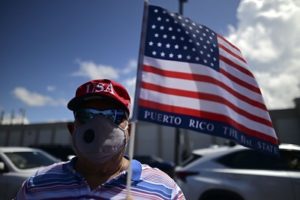
This accurately describes Puerto Rico.

Not only is the island of Puerto Rico a parasite of the US, but a near-Failed-State as well. While this has been a consistent theme of the Go Lean movement, it is no secret. Washington and Puerto Rico readily admit to this disposition. In fact this failing condition has driven many Puerto Ricans out of Puerto Rico. This has been within that consistent Go Lean theme, that “push-and-pull” factors drive Caribbean citizens away from their beloved homeland. Greater Orlando has become a new destination.

They are gone from Puerto Rico, but have not forgotten home. This year they are looking to impact their homeland with their vote. They seek to support candidates for federal offices that can help to reform and transform the island.

We must do better than our past. We must be an American protégé, rather than just an American parasite.

We want to make Puerto Rico and other places in our Caribbean homeland, better places to live, work and play. So we must engage the political process in Washington, DC as they are a major stakeholder for Puerto Rico. The island is bankrupt, it depends on federal bailouts just to execute even the basic functions in the Social Contract. Personally, many residents on the island depend on federal subsidies to survive: benefits like veterans, social security (disability & pension) and welfare. Many Puerto Ricans have understandably abandoned the island – this is both “push” and “pull”.

The choice for president should consider these needs.

We need Washington’s help. But the only way to impact Washington is through voting. This is why the Puerto Rican vote – for those in the Diaspora – is being courted. Which presidential candidate best extols the vision and values for a new Caribbean?

Trump won in 2016.

Trump proved toxic for Caribbean eco-systems, including Puerto Rico, during the 4 years of his administration.

Trump disrespected Puerto Rico … repeatedly.

Only now will Puerto Rico get a chance to clap back at Mr. Trump.

This is the main thrust of this news article here:

Title: Puerto Rico, unable to vote, becomes crucial to US election
By: Danica Coto and Adriana Gomez Licon
SAN JUAN, Puerto Rico (AP) — The campaigns of President Donald Trump and former Vice President Joe Biden are rallying people in a place where U.S. citizens cannot cast ballots but have the ear of hundreds of thousands of potential voters in the battleground state of Florida.

The candidates are targeting Puerto Rico in a way never before seen, with the U.S. territory suddenly finding itself in the crosshairs of a high-stakes race even though Puerto Ricans on the island cannot vote in presidential elections despite being U.S. citizens since 1917.

Campaigners know this, but they hope those on the island will push relatives and friends on the U.S. mainland to vote for them in a strategy that capitalizes on the close ties they share.

It’s a novel role that plays off the sentiment that Puerto Ricans in Florida feel they are voting by proxy for those back home left out of U.S. democracy. And a growing number find this role appealing, especially since many on the island are struggling to recover from hurricanes Irma and Maria, a string of strong earthquakes, a deep economic crisis and the pandemic.

“I’m voting for 3 million Puerto Ricans on the island, including my entire family,” said Jerick Mediavilla, who is from the mountain town of Corozal and is voting in a U.S. presidential election for the first time after moving to Orlando four years ago. “Puerto Rico doesn’t have a voice. Our voice is via the United States.”

It’s people like Mediavilla that Democrats and Republicans are trying to target as they court Latinos in Florida, which has the largest population of Puerto Ricans in the U.S., with nearly 1.2 million. Trump won Florida in 2016 and has virtually no path to the White House if he doesn’t do so again. Polls are tight, and as the Trump campaign worries of support slipping among suburban and older voters, Latinos in Florida have become crucial.

Puerto Ricans represent 27% of Hispanics of voting age in Florida, trailing only Cuban-Americans. While it’s unclear how many are Democrats or Republicans, Democrats have widened the gap of Hispanic voters registered for this election over the GOP compared with 2016. The gains were in counties with a high number of Puerto Ricans including Orange County, home to Orlando, and Hillsborough, home to Tampa. Polk County, where the Puerto Rican population has more than doubled since 2013, saw the fastest growth of Latino registered voters, with Democrats registering 21,000 more voters than Republicans. The gap in 2016 was 15,000. But those same counties also have a very high number of voters registered without party affiliation.
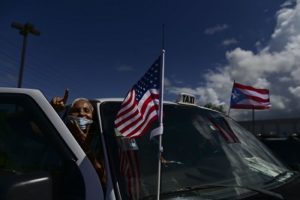
“Puerto Ricans will play a very crucial role in this election,” said Yadira Sánchez, co-executive director of Poder Latinx, a U.S.-based non-profit group that aims to mobilize Latino voters.

Election observers, however, note Puerto Ricans have weaker voter turnout rates than other Hispanic groups that favor Republican candidates.

Trump recently secured an endorsement from Puerto Rico’s governor and promised nearly $13 billion in additional aid last month to help the island rebuild from Hurricane Maria. During a recent rally in Florida, Trump declared: “I’m not gonna say the best, but I’m just about the best thing that ever happened to Puerto Rico. You better vote for me, Puerto Rico.” Many were quick to note that those living on the island don’t have that right.

Meanwhile, Biden granted an exclusive interview to Puerto Rico’s main newspaper that for the first time in its 50 years endorsed a U.S. presidential candidate and asked those in the U.S. mainland to support Biden: “We ask that you, with the great power of your vote, especially in key electoral states, help open the way to the transformation effort that will honor the dignity and promote the progress of every person.”

Biden recently launched digital and print ads on the island with the hashtag “HazloXMi,” or DoItForMe, urging Puerto Ricans to tell their friends and family on the U.S. mainland to participate: “With your vote over there, you help us here.”

“Both campaigns are doing it thinking this will bounce back to Florida,” said Carlos Suárez, a political science professor at the University of Florida.

It’s unclear whether the indirect campaign strategy will work, but Luis Gutiérrez, a former U.S. representative who served 26 years in Congress and now lives in Puerto Rico, called it a smart move.

Puerto Ricans “are always in contact. Why? Because whether you’re one of 3 million on the island or 5 million somewhere else, you’re part of one community,” the Democrat said. “If you are born in Puerto Rico, it will be part of your life until the last day.”

As the election draws near, pressure keeps growing on Puerto Ricans on the island and on the mainland.

A Florida political group recently created a song set to the tune of “Rakatá” by Wisin y Yandel, a renowned Puerto Rican reggaeton duo who first became popular in the early 2000s. The song encourages Puerto Ricans who moved to Florida to use their new voting power and hurl a “chancleta” or flip-flop at Trump to help those living on the island: “He doesn’t care one bit for Boricuas.”

Trump’s campaign has countered with ads highlighting the billions of dollars his administration has pledged to help Puerto Rico recover from Maria, a Category 4 storm that caused an estimated $100 billion in damage and killed an estimated 2,975 people in its aftermath. However, the administration withheld billions of dollars in emergency aid for months, saying it worried about mismanagement and corruption on the island.

Wyneska Méndez, who moved to Miami from Puerto Rico eight years ago, said she would not let fellow Puerto Ricans influence her decision, adding that Trump is the only choice to protect the economy. She especially likes that Trump feels strongly against abortion because of her Christian faith, and she believes Puerto Rico needed to get its affairs in order to receive the same kind of relief offered to U.S. states.

“I don’t let others get in my head,” Méndez said as she waited for a speech by Vice President Mike Pence on Thursday in Miami.

Dozens of Trump supporters who gathered Sunday in Puerto Rico for a rally shared her sentiment, saying the president has sent billions of dollars to help with hurricane reconstruction as they praised his pro-life stance.

Dr. Miriam Ramírez de Ferrer, a former senator and member of Puerto Rico’s pro-statehood party, said that Trump’s personality can be misinterpreted and that she believes he was joking when making comments about the island that critics have found offensive.

“There have been many erroneous messages from certain Puerto Ricans toward Trump, and we don’t want people to think that all Puerto Ricans are the same,” Ramírez said as she pulled down the face mask of a fellow Trump supporter decorated with bald eagles and U.S. flags.

Despite the aid Puerto Rico has received under the Trump administration, Mediavilla and his brother, Omar, who lives in Puerto Rico, remain unswayed.

“It’s a great help, but really, in the end, I see it as a political strategy,” said Omar Mediavilla, adding that he is grateful his brother was motivated by the aftermath of Maria to support Biden. “They’re our voice carrying our complaints … It’s important that Puerto Ricans over there give us this opportunity.”

Some who live on the island remain wary of the campaigning to influence Puerto Ricans on the mainland.

Omar Soto, a production supervisor whose brother lives in Lakeland, Florida, said the strategies are pointless.

“It seems like there’s a tone of despair,” he said, adding that he believes it could backfire. “I think it’s disrespectful. We should have the option to vote for president.” ___

Associated Press writer Danica Coto reported this story in San Juan, Puerto Rico, and AP writer Adriana Gomez Licon reported from Miami.
Source: https://apnews.com/article/election-2020-race-and-ethnicity-joe-biden-donald-trump-puerto-rico-3018eade64921c72b0ebb1df3f22061e posted October 18, 2020; retrieved October 20, 2020.

Now is the time for Puerto Rico and Puerto Ricans to tell Mr. Trump how they really feel about him and his policies toward their island homeland.

Listen to Puerto Rico’s message.

Listen to their messengers. (But, don’t get it twisted; Puerto Rico still has societal defects of its own making to remediate).

Yet still, the Go Lean movement is engaged in this territorial remediation as well, in that, we continue to present the vision that all people who love Puerto Rico should be pursuing:

A better homeland to live, work and play. 🙂

Every month, the movement behind the Go Lean book presents a Teaching Series to address issues germane to Caribbean life and culture. For this month of October 2020, we are looking at the US General Election for November 3. It is amazing that we in the Caribbean are relevant in Decision 2020. Previously, it was discussed that the Caribbean Diaspora in the US may amount to as much as 22 million people. This would constitute 7 percent of the US population; this is enough to sway a political race, left or right.

We do indeed have relevance.

This is entry 1-of-5; the first one; it introduces the thesis that the Caribbean member-states finally get to voice their disgust for actions (or inactions) of the last 4 years. Caribbean people have a lot to say; people are listening now. Consider here, the full catalog of the series this month:

  1. Decision 2020: Puerto Rico claps back at Trump
  2. Decision 2020Haiti’s Agenda 2016 ==> 2020 – Trump never cared
  3. Decision 2020Latino Gender Gap – More ‘Toxic Masculinity’
  4. Decision 2020More Immigration or Less
  5. Decision 2020What’s Next for Cuba & Venezuela

A Caribbean voice is important. The Bible reveals that “from the abundance of the heart the mouth speaks” (Luke 6:45). Decision 2020 allows us to learn what is truly in the heart of Caribbean people.

Brace yourself!

About the Book
The book Go Lean…Caribbean serves as a roadmap for the introduction and implementation of the technocratic Caribbean Union Trade Federation (CU), for the elevation of Caribbean society – for all member-states. This CU/Go Lean roadmap has these 3 prime directives:

  • Optimization of the economic engines in order to grow the regional economy to $800 Billion and create 2.2 million new jobs.
  • Establishment of a security apparatus to ensure public safety and protect the resultant economic engines.
  • Improve Caribbean governance to support these engines, including a separation-of-powers between the member-states and CU federal agencies.

The Go Lean book provides 370-pages of turn-by-turn instructions on “how” to adopt new community ethos, plus the strategies, tactics, implementations and advocacies to execute so as to reboot, reform and transform the societal engines of Caribbean society.

Download the free e-Book of Go Lean … Caribbean – now!

Who We Are
The movement behind the Go Lean book – a non-partisan, apolitical, religiously-neutral Community Development Foundation chartered for the purpose of empowering and re-booting economic engines – stresses that reforming and transforming the Caribbean societal engines must be a regional pursuit. This was an early motivation for the roadmap, as pronounced in the opening Declaration of Interdependence (Pages 12 – 13):

xi. Whereas all men are entitled to the benefits of good governance in a free society, “new guards” must be enacted to dissuade the emergence of incompetence, corruption, nepotism and cronyism at the peril of the people’s best interest. The Federation must guarantee the executions of a social contract between government and the governed.

xvi. Whereas security of our homeland is inextricably linked to prosperity of the homeland, the economic and security interest of the region needs to be aligned under the same governance. Since economic crimes … can imperil the functioning of the wheels of commerce for all the citizenry, the accedence of this Federation must equip the security apparatus with the tools and techniques for predictive and proactive interdictions.

xxiii. Whereas many countries in our region are dependent Overseas Territory of imperial powers, the systems of governance can be instituted on a regional and local basis, rather than requiring oversight or accountability from distant masters far removed from their subjects of administration. The Federation must facilitate success in autonomous rule by sharing tools, systems and teamwork within the geographical region.

xxiv. Whereas a free market economy can be induced and spurred for continuous progress, the Federation must install the controls to better manage aspects of the economy: jobs, inflation, savings rate, investments and other economic principles. Thereby attracting direct foreign investment because of the stability and vibrancy of our economy.

Sign the petition to lean-in for this roadmap for the Caribbean Union Trade Federation.

—————–

APPENDIX VIDEO – Trump Reportedly Looked To Sell Puerto Rico – https://youtu.be/2AmSovkTic4

HuffPost
Posted July 13, 2020 – Elaine Duke, the former acting head of homeland security, claimed to the New York Times that President Donald Trump looked to “divest” Puerto Rico after Hurricane Maria struck the island.

Subscribe to HuffPost today: http://goo.gl/xW6HG

Support our work: https://www.huffpost.com/subscribe

Read: https://www.huffpost.com/

Like: https://www.facebook.com/HuffPost

Follow: https://twitter.com/huffpost

Share this post:
, , ,
[Top]

Toxic Environment – Homophobia: Hate not Fear – Encore

What is a phobia?

Well, a summary of the definition is a “persistent and excessive fear”. The encyclopedic definition is as follows:

A phobia is a type of anxiety disorder defined by a persistent and excessive fear of an object or situation.[1] Phobias typically result in a rapid onset of fear and are present for more than six months.[1] Those affected will go to great lengths to avoid the situation or object, to a degree greater than the actual danger posed.[1] If the object or situation cannot be avoided, they experience significant distress.[1] Other symptoms can include fainting, which may occur in blood or injury phobia,[1] and panic attacks, which are often found in agoraphobia.[6] Around 75% of those with phobias have multiple phobias.[1] – Source: Wikipedia

There are other fears that are mistakenly called phobias that are really something else. (This is the focus on this commentary). See the continuation of the above definition:

Several terms with the suffix -phobia are used non-clinically (usually for political or deterrent purpose) to imply irrational fear or hatred. Examples include:

  • Chemophobia – Negative attitudes and mistrust towards chemistry and synthetic chemicals.
  • Homophobia – Negative attitudes and feelings toward homosexuality or people who are identified or perceived as being lesbian, gay, bisexual or transgender (LGBT).
  • Xenophobia – Fear or dislike of strangers or the unknown, sometimes used to describe nationalistic political beliefs and movements.
  • Islamophobia – Fear of anything Islamic

Usually these kinds of “phobias” are described as fear, dislike, disapproval, prejudice, hatred, discrimination or hostility towards the object of the “phobia”.[53]

Don’t get it twisted, these are not fears; these constitute hatred. Prejudice, hatred and discrimination exercised in a persistent and excessive manner is truly toxic. Imagine being on the receiving end of such treatment, such irrational fear or hatred.

How much can you tolerate? How much should you tolerate? This is like having a burning cross on your front lawn. How long before you want to leave?

This is a continuation on the Teaching Series from the movement behind the 2013 book Go Lean…Caribbean, related to Toxic Environments. The pseudo-phobias – irrational fear or hatred – all contribute to unbearable circumstances at home; thusly they contribute to the Exodus of so many Caribbean people; this exacerbates the Brain Drain and societal abandonment in the region. We’ve got it bad!

Every month, the movement behind the Go Lean book presents a Teaching Series to address issues germane to Caribbean life and culture. For this month of September 2020, we are looking at the actuality of persecuted minorities in this homeland. Unfortunately, Toxic Environments have long reaching consequences on the community quest to live, work and play. This is entry 2-of-6; it presents the thesis that the “strong in society should not be allowed to abuse the weak” just to allay some pseudo-fears. This is an important consideration, as it depicts the heavy-lifting that the Caribbean stakeholders must do.

Consider here, the full catalog of the series this month:

  1. Toxic Environment: Ready for Football – Washington “Redskins”
  2. Toxic Environment: Homophobia – The problem is the Hate, not the Fear
  3. Toxic Environment: Opposite of Diversity & Inclusion
  4. Toxic Environment: Lessons from Yugoslavia
  5. Toxic Environment: Ease of Doing Business
  6. Toxic Environment: Make the Caribbean Great (Anew)

The Go Lean book, serving as a roadmap for the introduction of the Caribbean Union Trade Federation (CU), asserts that Caribbean stakeholders must do the heavy-lifting to mitigate and remediate societal defects. While the purpose of the roadmap is to optimize the economic, security and governing engines of society, the roadmap recognizes that we must retain people in the homeland. No people = no society = no culture. Therefore, we must have a good societal foundation; respect and protection of all people and their rights for life, liberty and the pursuit of happiness. The purpose of this month’s Teaching Series is to focus on that foundation. There is a glaring need for reform, as we have a long track record of bad behavior like hate, bigotry, xenophobia and intolerance in our Caribbean communities.

As related in the previous submission in this month’s series, the Caribbean has fostered a Toxic Environment in our culture; it has been so bad that these identified bad behaviors have flourished. This is not good, as a Toxic Environment pits villains against victims and in the long run, the victims – and all those that love them – will seek refuge elsewhere. This is true with all Toxic Environments – think Asylum-seekers. Asylum-seeking is the manifesting of the Push dynamics for Caribbean abandonment:

  • “Push” refers to people who feel compelled to leave, to seek refuge in a foreign land. “Refuge” is an appropriate word; because of societal defects, many from the Caribbean must leave as refugees – think LGBTDisabilityDomestic-abuseMedically-challenged – for their life, liberty and pursuit of happiness.
  • “Pull”, on the other hand refers to the lure of a more liberal life abroad; many times our people are emigrating for societies that have better expressions of the rights for “life, liberty and the pursuit of happiness”.

The Caribbean is not the first nor the last Toxic Environment; there have been many in the past and even now in the present. Think Nazi Germany, who persecuted (i.e. Concentration Camps) many minority groups (Jews, Gypsies, homosexuals, etc.). Today, we have more bad role models of hate, bigotry, xenophobia and intolerance – like in the Muslim Word, (think ISIS), where persecuted minorities are frequently targeted. (There have been instances of public killing of convicted homosexuals).

We must look, listen and learn from these past and present Toxic Environments, then work towards making our society better – more tolerant. We cannot afford to keep losing our people; that will degrade our culture further. Using an analogy from medical trauma, our society is bleeding populations – we must stop the bleeding – otherwise the patient – our unique culture – will die.

How bad is our society? While not ISIS, we are recognized as one of the worst in our attitudes and toleration of homosexual practices.

Say it ain’t so …

This was our initial reaction in researching and writing about the Buggery Laws in the Anglo-Caribbean. Those laws seemed so barbaric for our modern times. And yet, they persists. A previous Go Lean commentary from July 2, 2015 identified this example of our severe Caribbean Toxicity. Consider this summary:

While this commentary directly targets Jamaica, the majority of the countries and overseas territories of the former British Empire, still criminalize sexual acts between consenting adults of the same sex and other forms of sexual orientation, gender identity and expression. This has been described as being the result of “the major historical influence” or legacy of the British Empire. In most cases, it was former colonial administrators that established anti-gay legislation or sodomy acts during the 19th century. … The majority of countries then retained these laws following independence.

Since that 2015 date, we have published a few additional commentaries that advocated for more tolerance for citizens – and visitors – with alternative life styles. Consider this list of previous blog-commentaries:

https://goleancaribbean.com/blog/?p=20292 Conscientizing on VIDEO: Advocating for Empathy
https://goleancaribbean.com/blog/?p=19217 Brain Drain – ‘Live and Let Live’: Introducing Localism
https://goleancaribbean.com/blog/?p=17820 Caribbean ‘Pride’ – “Can we all just get along”
https://goleancaribbean.com/blog/?p=14830 Counter-culture: Embracing the Change
https://goleancaribbean.com/blog/?p=11224 ‘Loose Lips Sink Ships’ – Leaders Undermine Tourism
https://goleancaribbean.com/blog/?p=10216 Waging a Successful War on Orthodoxy
https://goleancaribbean.com/blog/?p=8200 Respect for Minorities: Climate of Hate
https://goleancaribbean.com/blog/?p=8186 Respect for Minorities: ‘All For One’
https://goleancaribbean.com/blog/?p=341 Homosexual Intolerance listed among blatant human rights abuses

It is simple, if we want to grow our society, we must work hard to make it a better place to live, work and place for everyone, not just some people. Remember the old nursery rhyme: “rich man, poor man, beggar man, thief; doctor, lawyer, Indian Chief”.

It is Toxic to allow the “Strong to Abuse the Weak” – including LGBT – in our society.

Now is a good time to address those bad Buggery Laws that still prevail in the Anglo-Caribbean. It is apropos to Encore the full blog-commentary from July 2015; see that here now:

——————-

Go Lean Commentary Buggery in Jamaica – ‘Say It Ain’t So’!

This commentary has asserted that the Caribbean region can be a better society than the United States of America. Yes, we can!

But to even start the discussion, we must first:

Live and let live!

t So - Photo 3The topic of intolerance has been acute in the news as of late. We have the extreme example of the Islamic State in Iraq and Syria (ISIS) beheading non-Muslims because… well, just because. And the example of the US legalizing Gay Marriage may be considered too tolerant for some people’s good taste.

Where does the Caribbean fit in this discussion?

If ISIS is one end of a scale and Gay Marriage in America is another end, then one Caribbean member-state, Jamaica, would be closer to …

ISIS!

Yes, it is that bad. Say it ain’t so.

See Appendix-VIDEO’s below …

While this commentary directly targets Jamaica, the majority of the countries and overseas territories of the former British Empire, still criminalize sexual acts between consenting adults of the same sex and other forms of sexual orientation, gender identity and expression. This has been described as being the result of “the major historical influence” or legacy of the British Empire. In most cases, it was former colonial administrators that established anti-gay legislation or sodomy acts during the 19th century; see Appendix below. The majority of countries then retained these laws following independence.[1][2].

There is an effort now to transform society in Jamaica (and other countries) in this regards. There are Gay Pride Activities being planned for this Summer of 2015. See the relevant news article here:

Title: J-FLAG Is Planning Gay Pride Activities, But No Parade For August – Exec
Source: Jamaica Gleaner Daily Newspaper Online Site; posted June 30, 2015; retrieved from: http://jamaica-gleaner.com/article/news/20150630/j-flag-planning-gay-pride-activities-no-parade-august-exec  

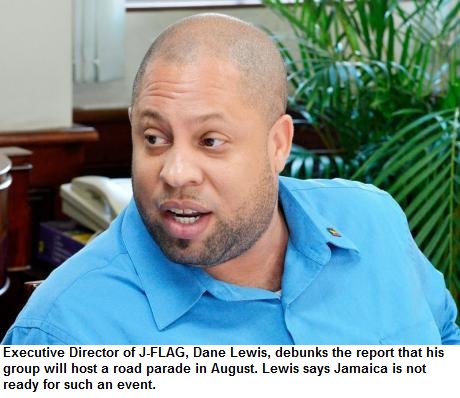
Local gay lobby, J-FLAG, is refuting reports that it will host a road parade in August when the group plans to have a series of gay pride activities.

Social media has been abuzz since yesterday following a report that the group would host a parade, similar to what is done in the United   States and other countries.

However, executive director of J-FLAG, Dane Lewis, says the report is wrong, adding that Jamaica is not ready for such an event.

Meanwhile, he says the group is planning a week-long series of activities starting on Emancipation Day, August 1, to mark growing tolerance for members of the lesbian, gay, bisexual, and transgender (LGBT) community.

Some years ago, an attempt to host a gay parade was thwarted after anti-gay supporters reportedly planned attacks against marchers.

Jamaica is accused of being one of the most homophobic places on earth.

Last week, the US government released a report noting that anti-gay laws and the dancehall culture are responsible for perpetuating homophobia in Jamaica.
Additional reference sources: http://jflag.org/

t So - Photo 1
———–

VIDEO: Executive Director of JFLAG, Dane Lewis: “We Are Jamaicans” – https://youtu.be/sJ-17R5DCoI


Published on Jan 17, 2013 – “We Are Jamaicans” is funded with the kind support of the Caribbean Vulnerable Communities Coalition (CVC) through its Global Fund Vulnerablised Project.

Building a diverse society is not easy. The book Go Lean … Caribbean describes the challenge as heavy-lifting. Though the US had failed at this challenge, it proudly boasts that it got better with every generation. The Caribbean on the other hand, leaves much to be desired in terms of the willingness to change and keep pace with progressive societies. (Now the US, Canada, Ireland and other countries have legalized Gay Marriage).

In a previous blog-commentaries, this defect – Homosexual Intolerance – was listed among the blatant human rights abuses in the region.

This is an important consideration for the planners of Caribbean empowerment. The Caribbean, a region where unfortunately, we have NOT … tried to be as tolerant as may be required, expected and just plain moral.

We must do better!

The book Go Lean … Caribbean asserts that Caribbean society’s prosperity has been hindered with a high abandonment rate – reported at 70% for educated classes region-wide, but an even higher 85% in Jamaica. The primary mission of the Go Lean book is to “battle” against the “push-and-pull” factors that draw so many of our Caribbean citizens away from their homelands to go to more progressive countries.

The Go Lean book campaigns to lower the “push” factors!

The purpose of the Go Lean book is to fix the Caribbean; to be better. The Go Lean book serves as a roadmap for the introduction and implementation of the technocratic Caribbean Union Trade Federation (CU) to pursue the quest to elevate the Caribbean region through empowerments in economics, security and governance. It is the assertion that Caribbean citizens can stay home and effect change in their homelands more effectively than going to some foreign countries to find opportunities for life, liberty and the pursuit of happiness. The book therefore asserts that the region can turn-around from failing assessments by applying best-practices, and forging new societal institutions to impact the Greater Good for all the Caribbean. This point was pronounced in the opening Declaration of Interdependence (Pages 10 – 14) with these acknowledgements and statements:

xi.   Whereas all men are entitled to the benefits of good governance in a free society, “new guards” must be enacted to dissuade the emergence of incompetence, corruption, nepotism and cronyism at the peril of the people’s best interest. The Federation must guarantee the executions of a social contract between government and the governed.

xii. Whereas the legacy in recent times in individual states may be that of ineffectual governance with no redress to higher authority, the accedence of this Federation will ensure accountability and escalation of the human and civil rights of the people for good governance, justice assurances, due process and the rule of law. As such, any threats of a “failed state” status for any member state must enact emergency measures on behalf of the Federation to protect the human, civil and property rights of the citizens, residents, allies, trading partners, and visitors of the affected member state and the Federation as a whole.

xxxiii. Whereas lessons can be learned and applied from the study of the recent history of other societies, the Federation must formalize statutes and organizational dimensions to avoid the pitfalls of communities like … Egypt. On the other hand, the Federation must also implement the good examples learned from developments/ communities like New York City, … Canada, … and tenants of the US Constitution.

The CU/Go Lean vision to elevate Caribbean society must also consider the issue of image. There is the need for a sentinel role for Caribbean image, as there are a lot of times that Caribbean life and people are denigrated in the media: news, film, TV, books, magazines. It’s unfortunate when we are guilty of scathing allegations. The Go Lean roadmap calls for the CU to assume a role of protecting and projecting positive Caribbean images. The plan is to use cutting edge delivery of best practices; the applicable CU agencies will employ strategies, tactics and implementations to impact the Go Lean prime directives; identified with the following 3 statements:

  • Optimization of the economic engines in order to grow the regional economy to $800 Billion & create 2.2 million new jobs.
  • Establishment of a security apparatus to protect the resultant economic engines and mitigate challenges/threats to public safety for all citizens… LGBT or straight.
  • Improvement of Caribbean governance to support these engines.

Jamaica has a failing economy.

Jamaica’s primary economic driver is tourism. So …

t So - Photo 2

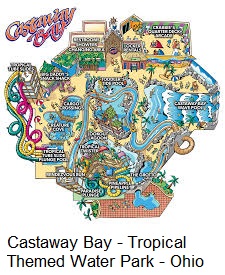
Is the Caribbean ready for this economic activity? A bridge too far, too soon?

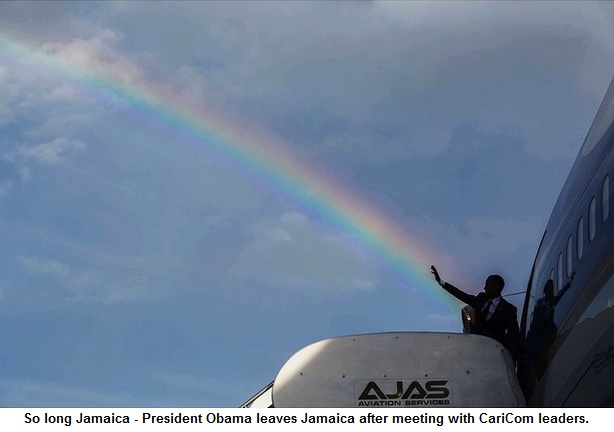
t So - Photo 4Jamaica has a long way to go; the country has been described by some Human Rights groups as the most homophobic place on Earth because of the high level of violent crime directed at LGBT people; (Padgett, Tim: “The Most Homophobic Place on Earth?”Time Magazine posted 12 April 2006). The United States Department of State said that in 2012, “homophobia was [unacceptably] widespread in the country” (2012 Country Reports on Human Rights Practices: Jamaica, Bureau of Democracy, Human Rights and Labor, U.S. Department of State, pages 20-22). As depicted in the VIDEO below, even President Obama indicted the island on a recent official State Visit.

Why is this country’s homophobia so acute compared to other countries? For one, they have held on emphatically to the British Laws on Buggery – see Appendix below – from their colonial days; even though the host country of England has already abandoned the laws (in 1967).

Jamaica is partying like it’s 1899!

This is therefore a matter of community ethos. The Go Lean book defines community ethos as the fundamental character or spirit of a culture; the underlying sentiment that informs the beliefs, customs, or practices of a group or society; the dominant assumptions of a people or period. This tropical paradise of Jamaica, as defined in the foregoing news article and VIDEO continues to spur bad attitudes, bad ideas, bad speech and bad actions towards the LGBT community. This is unbecoming of a progressive society in 2015.

Alas, this is a crisis…for victims and their loved ones. The Go Lean book posits that this crisis can be averted, that the crisis is a “terrible thing to waste”. The Go Lean roadmap seeks to optimize the eco-systems for Jamaica and the entire Caribbean. The book stresses new community ethos, strategies, tactics, implementations and advocacies necessary to transform and turn-around the eco-systems of the regional society. These points are detailed in the book as follows:

Who We Are – SFE Foundation – Comprised of Caribbean Diaspora Page 8
Community Ethos – Economic Principles – Economic Systems Influence Individual Choices Page 21
Community Ethos – Economic Principles – Consequences of Choices Lie in the Future Page 21
Community Ethos – Governing Principles – Lean Operations Page 24
Community Ethos – Ways to Impact the Future Page 26
Community Ethos – Ways to Promote Happiness Page 36
Community Ethos – Ways to Impact the Greater Good Page 37
Strategy – Vision – Confederate all 30 member-states into a Single Market Page 45
Strategy – Mission – Build and foster local economic engines Page 45
Strategy – Mission – Repatriate the Diaspora, even Minorities like those of the LGBT community Page 46
Tactical – Ways to Foster a Technocracy Page 64
Tactical – Growing the Economy to $800 Billion GDP Page 68
Tactical – Separation-of-Powers – CU Federal Government versus Member-State Governance Page 71
Anatomy of Advocacies – Examples of Individuals Who Made Impact Page 122
Planning – 10 Big Ideas – Homeland Security Pact Page 127
Planning – Ways to Make the Caribbean Better Page 131
Planning – Ways to Improve Failed-State Indices – Minority and Human Rights Page 134
Planning – Lessons Learned from US Constitution – Equal Protection for all Minorities Page 145
Advocacy – Ways to Grow the Economy Page 151
Advocacy – Ways to Create Jobs Page 152
Advocacy – Ways to Improve Governance – For All Citizens Page 168
Advocacy – Ways to Better Manage the Social Contract – Security against “Bad Actors” Page 170
Advocacy – Ways to Impact Justice – Internal Affairs Reporting Line Page 177
Advocacy – Ways to Remediate and Mitigate Crime – Hate Crime Qualifiers Page 178
Advocacy – Ways to Improve Homeland Security Page 180
Advocacy – Ways to Mitigate Terrorism – Consider Bullying as Junior Terrorism Page 181
Advocacy – Ways to Impact Youth – Collaborating with Foundations Page 218
Advocacy – Ways to Re-boot Jamaica Page 239
Advocacy – Ways to Impact British Territories Page 245

Looking at the disposition of the island nation of Jamaica’s, we see that its societal engines are failing.

Could the investment in the diversity of its people be at the root of the problem?

The failing indices and metrics of Jamaica have been considered in previous blog/commentaries; see sample here:

https://goleancaribbean.com/blog/?p=4840 Jamaican Poll: ‘Bring back the British!’
https://goleancaribbean.com/blog/?p=3694 Looking for a job in Jamaica, go to Canada
https://goleancaribbean.com/blog/?p=2830 Jamaica’s Public Pension Under-funded
https://goleancaribbean.com/blog/?p=392 Jamaica to receive World Bank funds to help in crime fight
https://goleancaribbean.com/blog/?p=313 What’s Holding Back Jamaica’s Reforms

The Go Lean roadmap seeks to empower and elevate Caribbean societal engines to make Jamaica, and the rest of the Caribbean, better places to live, work and play … for all citizens, including the LGBT communities.

Most of the Jamaican Diaspora that has abandoned the island now lives in the US, Canada or the UK. Their new home-communities are more tolerant societies of their LGBT neighbors.

Perhaps, there is some correlation.

This commentary is not urging the abandonment of the Judeo-Christian moral code; Jesus Christ instructed to “let them be” at Luke 22:51 (The Message Translation). Rather this commentary urges tolerance and moderation: Live and let live!

Fight the hate!

Yes, we can … do this. Yes, we must do this. 🙂

Download the book Go Lean … Caribbean – now!
———–

Appendix VIDEO: US President Obama’s LGBT comments at Youth Leaders Town Hall – https://youtu.be/636mgw1THpc?t=5m1s


Published on Apr 9, 2015 – President Obama delivers remarks and answers questions at a town hall with Young Leaders of the Americas at University of the West Indies in Kingston, Jamaica. April 9, 2015.
———–

Appendix VIDEO: Gay rights in Jamaica – https://youtu.be/_nSgMGoBAmU

playbutton-300x300

———–

Appendix – Encyclopedic Reference: Buggery in English Common Law

The British English term buggery is very close in meaning to the term sodomy, often used interchangeably in law and popular speech. It may also be a specific common law offenceencompassing both sodomy and bestiality.

In English law “buggery” was first used in the Buggery Act 1533, while Section 61 of the Offences against the Person Act 1861, entitled “Sodomy and Bestiality”, defined punishments for “the abominable Crime of Buggery, committed either with Mankind or with any Animal”. The definition of “buggery” was not specified in these or any statute, but rather established by judicial precedent.[1] Over the years the courts have defined buggery as including either [of these]:

  1. anal intercourse or oral intercourse by a man with a man or woman[2] or
  2. vaginal intercourse by either a man or a woman with an animal,[3]

But [no other] form of “unnatural intercourse”[4] [was defined], the implication being that anal sex with an animal would not constitute buggery. Such a case has not, to date, come before the courts of a common law jurisdiction in any reported decision. However, it seems highly improbable that a person would be exculpated of a crime associated with sex with animals only by reason of the fact that penetration involved the anus rather than the vagina. In the 1817 case of Rex v. Jacobs, the Crown Court ruled that oral intercourse, even with an underage and/or non-consenting person, did not constitute buggery or sodomy.[4]

At common law consent was not a defence[5] nor was the fact that the parties were married.[6] In the UK, the punishment for buggery was reduced from hanging to life imprisonment by the Offences against the Person Act 1861. As with the crime of rape, buggery required that penetration must have occurred, but ejaculation is not necessary.[7]

Most common law jurisdictions have now modified the law to permit anal sex between consenting adults.[8] Hong Kong did so retroactively in 1990, barring prosecution for “crimes against nature” committed before the Crimes (Amendment) Ordinance 1990 entered into force except those that would still have constituted a crime if they had been done thereafter. In England and Wales, homosexual buggery was decriminalised in 1967 with an age of consent at 21 years, whereas all heterosexual intercourse had an age of consent at 16 years. The Sexual Offences Act 2003 did not fully remove buggery as a concept in United Kingdom law, as the previous law is retained for complainants (consensual or “pseudo-consensual”) under the age of 16, or 18 with regards to an adult perceived to be in a “position of trust”. As the law stands, buggery is still charged, exclusively regarding “pseudo-consensual” anal intercourse with those under 16/18, because children cannot legally consent to buggery although they may appear to do so. Rape is charged when the penetration is clearly not consensual. Buggery with an animal is still unlawful under Section 69 of the Sexual Offences Act 2003.

In the Republic of Ireland, the Criminal Law (Sexual Offences) Act 1993 abolished the offence of “buggery between persons”.[9] For some years prior to 1993, criminal prosecution had not been made for buggery between consenting adults. The 1993 Act created an offence of “buggery with a person under the age of 17 years”,[10] penalised similar to statutory rape, which also had 17 years as the age of consent. The Criminal Law (Sexual Offences) Act 2006 replaced this offence with “defilement of a child”, encompassing both “sexual intercourse” and “buggery”.[11] Buggery with an animal is still unlawful under Section 69 of the Sexual Offences Act 2003. In 2012 a man was convicted of this offence for supplying a dog in 2008 to a woman who had intercourse with it and died.[12]

Etymology – The word bugger and buggery are still commonly used in modern English as a mild exclamation. “Buggery” is also synonymous with anal sex.

The word “bugger” was derived, via the French bougre, from Bulgar, that is, “Bulgarian”, meaning the medieval Bulgarian heretical sect of the Bogomils, which spread into Western Europe and was claimed by the established church to be devoted to the practice of sodomy.[13] “Buggery” first appears in English in 1330, though “bugger” in a sexual sense is not recorded until 1555.[14]

(Source: https://en.wikipedia.org/wiki/Buggery)

Share this post:
, , , , , ,
[Top]

Naomi Osaka – Shining Bright in the Darkness of 2020 – Encore

2020 has been a Bad Year; it has been filled with darkness and death, due to the raging Coronavirus COVID-19 pandemic plus the resultant global recession. In addition, in the United States and other countries, there has been reflection and a demand for reconciliation over racial injustice and police brutality.

For the Caribbean, there has been little for us to smile about. Unless, we look at the Wide World of Sports. Here is this example in this summary of a big Sports News story:


Japan’s Naomi Osaka came from a set down to beat Victoria Azarenka of Belarus to win the US Open on Saturday and clinch her third Grand Slam title. Osaka, the fourth seed, overcame her unseeded opponent 1-6, 6-3, 6-3 in 1hr 53min inside a near-empty Arthur Ashe Stadium at Flushing Meadows. It brought 22-year-old Osaka’s haul of tennis major trophies to three after her victories at the 2018 US Open and 2019 Australian Open. – Source.

2020 has been a devastating year due to events “above and beyond” sports. But this is what has been comforting and inspiring about Naomi Osaka; she has been comforting and inspiring above and beyond sports. See the continuation-conclusion of the foregoing news story:

… Osaka had walked onto the court wearing a mask bearing the name of Tamir Rice, a 12-year-old African-American boy who was shot dead by a white police officer in Cleveland, Ohio in 2014.

Osaka, of Japanese and Haitian heritage, wore different masks honoring victims of racial injustice and police brutality in each round of the tournament.

The 2019 Australian Open champion also donned face coverings bearing the names of Breonna Taylor, Elijah McClain, Ahmaud Arbery, Trayvon Martin, George Floyd and Philando Castile.

Naomi Osaka is a role model for all of the Caribbean to emulate. She represents the greatness that Caribbean people and culture can produce … and export to the world.

This was the assertion on September 12, 2018 in a previous blog-commentary from the movement behind the 2013 book Go Lean…Caribbean. It is only appropriate to encore that previous submission now. See it here-now:

——————

Go Lean CommentaryNaomi Osaka’s recipe for success: Caribbean Meld

There is actually a recipe for success on the world stage, one that has just been applied by tennis superstar Naomi Osaka in winning the 2018 US Open over fan-favorite Serena Williams. The recipe:

Meld Caribbean distinctiveness with that of other cultures.

Wait what?!

This sounds so familiar, even fictionalized! Those who are fans of the science fiction franchise Star Trek will remember the mantra of the cybernetic life form “The Borg”. Their announcement when attacking potential victims were as follows:

”We are the Borg. Lower your shields and surrender your ships. We will add your biological and technological distinctiveness to our own. Your culture will adapt to service us. Resistance is futile.” – Source

This is “Art imitating Life”! We see this recipe at work with this new sports champion and beneficiary of this international melding: Naomi Osaka.

She is a professional tennis player who represents Japan internationally. She is the first Japanese citizen to winGrand Slam singles tournament, defeating Serena Williams in the final of the 2018 US Open.[6] Osaka has reached a career-high world ranking of No. 7.[4] She was born to a Haitian father, Leonard “San” François, and a Japanese mother, Tamaki Osaka .[7]

This story, beyond its relevance to sports, has a Caribbean relevance because of Osaka’s parentage. The meld – noun/verb: blend – had produced an end-product that has accomplished more than any one component has accomplished on its own. Osaka is the first Japanese citizen to win a Grand Slam event, and needless-to-say, the first Haitian.  It has not been easy:

In racially homogeneous Japan, Osaka is considered hāfu, which is Japanese for biracial.[10] Her Japanese grandfather was furious when he found out that her mother was romantically involved with a black man. As a result of the interracial relationship, her mother did not have contact with her family for over ten years.[8] In a 2016 interview, Osaka said: “When I go to Japan, people are confused. From my name, they don’t expect to see a black girl.”[11]Wikipedia

This biography provides a lesson-learned for the rest of the Caribbean, and the world for that matter:

  • To our Caribbean brothers and sisters, we entreat you to embrace pluralism; good things come from the embrace of our differences.
  • To the rest of world, we declare that the Caribbean identity is not “Less Than”. We bring a strength of character and ethos that adds value and elevates any community where we meld.

If we can successfully meld and conquer a challenge on the world stage, how much more so can we meld our distinctiveness here at home or in our regional neighborhood to accomplish greater feats. This is the message of the movement behind the book Go Lean…Caribbean, which asserts that great Caribbean progress is in store when we meld – integrate, collaborate and confederate. The book – available to download for free – serves as a roadmap for the introduction and implementation of the technocratic Caribbean Union Trade Federation (CU), for the elevation of Caribbean society – for all member-states.

This CU/Go Lean roadmap has these 3 prime directives:

  • Optimization of the economic engines in order to grow the regional economy to $800 Billion and create 2.2 million new jobs. There are many industrial expressions that we will have to make in order to reach these goals, including the facilitation of the Art & Science of Sports.
  • Establishment of a security apparatus to ensure public safety and protect the resultant economic engines.
  • Improve Caribbean governance to support these engines, including a separation-of-powers between the member-states and CU federal agencies.

The book stresses that reforming and transforming the Caribbean societal engines must be a regional pursuit. This was an early motivation for the roadmap, as pronounced in the opening Declaration of Interdependence (Pages 12 – 14):

xi. Whereas all men are entitled to the benefits of good governance in a free society, “new guards” must be enacted to dissuade the emergence of incompetence, corruption, nepotism and cronyism at the peril of the people’s best interest. The Federation must guarantee the executions of a social contract between government and the governed.

xvi. Whereas security of our homeland is inextricably linked to prosperity of the homeland, the economic and security interest of the region needs to be aligned under the same governance. Since economic crimes … can imperil the functioning of the wheels of commerce for all the citizenry, the accedence of this Federation must equip the security apparatus with the tools and techniques for predictive and proactive interdictions.

xxiv. Whereas a free market economy can be induced and spurred for continuous progress, the Federation must install the controls to better manage aspects of the economy: jobs, inflation, savings rate, investments and other economic principles. Thereby attracting direct foreign investment because of the stability and vibrancy of our economy.

xxxi. Whereas sports have been a source of great pride for the Caribbean region, the economic returns from these ventures have not been evenly distributed as in other societies. The Federation must therefore facilitate the eco-systems and vertical industries of sports as a business, recreation, national pastime and even sports tourism …

The Go Lean book provides 370-pages of turn-by-turn instructions on “how” to adopt new community ethos, plus the strategies, tactics, implementations and advocacies to execute so as to reboot, reform and transform the societal engines for all member-states in the Caribbean region.

The story of Naomi Osaka is about more than just her heritage. She is an excellent athlete of her own making. It takes blood, sweat and tears to excel at the highest level of her sport. For Osaka to beat Serena Williams – earning $3.8 million – that was no fluke; that was the full measure of her athletic prowess; that was heavy-lifting. Even now, all the attention is on Serena losing, rather than Osaka winning; see the VIDEO here and the related story in the Appendix below:

VIDEO – US Open Highlights – https://nyp.st/2CM60t5

Published September 8, 2018 – Serena has mother of all meltdowns in US Open final loss.

Heavy-lifting in sports is a familiar theme for this Go Lean movement; we recognize that there could be more economic rewards if the regional stewards do a better job of facilitating a viable sports eco-system – we have few expressions of professional sports and no intercollegiate system in the region. We have previously elaborated on how the Art & Science of sports can be used to help elevate our societal engines. Re-consider these previous blog-commentaries:

https://goleancaribbean.com/blog/?p=11287 Creating a legacy in pro-Surfing
https://goleancaribbean.com/blog/?p=8495 Basketball Great and Caribbean Role Model: Tim Duncan
https://goleancaribbean.com/blog/?p=7866 Caribbean Track & Field Athletes monetize their talents “elsewhere”
https://goleancaribbean.com/blog/?p=1446 Caribbean Players in the World Cup
https://goleancaribbean.com/blog/?p=1020 Advocates and Revolutionaries for Caribbean Sports

So how can we foster more people in our Caribbean region to be like Naomi Osaka, people who can help to elevate our society and the global image of Caribbean contributions to the world? The Go Lean book addressed this question; within its 370-pages of instructions for impacting society, in the specific details for fostering more world-class athletes. Consider the summaries, excerpts and headlines from this one advocacy in the book on Page 229 entitled:

10 Ways to Improve Sports

1 Lean-in for the Caribbean Single Market
This will allow for the unification of the region of 30 member-states into a single market of 42 million people and a GDP exceeding $800 Billion (per 2010). This market size and multi-lingual realities allows for broadcasting rights with SAP-style language options for English, Spanish, French and Dutch. This makes the region attractive for media contracts for broadcast rights, spectrum auctions and sports marketing. The Olympics have demonstrated that sports can be profitable “big business”, and a great source of jobs and economic activity. The CU will copy the Olympic model, and harness the potential in many other sporting endeavors, so as to make the region a better place to live, work and play.
2 CU Games
Promote the CU Games, every 2 years, as the ascension of the CARIFTA Games for Amateur and now Professional Athletes. The CU Games Administration will also partner with all National Olympic Committees. This administration applies to feeder games, trials and qualification events. The ultimate goal is to field a world-class competitive Olympic Team representing the entire Caribbean. While the CARIFTA Games are for track-and-field events only, the CU Games will resemble a mini-Olympics with multi-sports (boxing, football/soccer, tennis, volleyball, sailing, baseball/softball, etc.)
3 Fairgrounds as Sport Venues
The CU Fairgrounds (managed by the Interior Department) will have the infrastructure to fund, build and maintain sports arenas and “stadiums” (stadia) in local markets. The mantra is “build it and they will come”, so the CU building and managing world-class sport facilities will result in a more organized industry and the emergence of vertical markets.
4 Regulate Amateur, Professional & Academically-Aligned Leagues
5 Establish Sports Academies
6 “Super” Amateur Sport Association
7 Regulator/Registrar of Scholar-Athletes – Assuage Abandonment
8 Sports Tourism
9 Professional Agents and Player Management Oversight (a la Bar/Lawyer Associations).
10 Impanel the CU Anti-Doping Agency

Congratulation Naomi Osaka!

… and thank you … for making it easier for us to impress on the world that Caribbean-anything is not “Less Than”. That argument is now easier to make.

It is now also easier to convey the message that “Yes, we can” forge a “pluralistic” democracy and make our homeland a better place to live, work and play. 🙂

Download the free e-Book of Go Lean … Caribbean – now!

Sign the petition to lean-in for this roadmap for the Caribbean Union Trade Federation.

—————–

Appendix – It’s shameful what US Open did to Naomi Osaka
Opinion by: Maureen Callahan

Naomi Osaka, 20 years old, just became the first player from Japan to win a Grand Slam.

Yet rather than cheer Osaka, the crowd, the commentators and US Open officials all expressed shock and grief that Serena Williams lost.

Osaka spent what should have been her victory lap in tears. It had been her childhood dream to make it to the US Open and possibly play against Williams, her idol, in the final.

It’s hard to recall a more unsportsmanlike event.

Here was a young girl who pulled off one of the greatest upsets ever, who fought for every point she earned, ashamed.

At the awards ceremony, Osaka covered her face with her black visor and cried. The crowd booed her. Katrina Adams, chairman and president of the USTA, opened the awards ceremony by denigrating the winner and lionizing Williams — whose ego, if anything, needs piercing.

“Perhaps it’s not the finish we were looking for today,” Adams said, “but Serena, you are a champion of all champions.” Addressing the crowd, Adams added, “This mama is a role model and respected by all.”

That’s not likely the case now, not after the world watched as Serena Williams had a series of epic meltdowns on the court, all sparked when the umpire warned her: No coaching from the side. Her coach was making visible hand signals.

“I don’t cheat to win,” Williams told him. “I’d rather lose.”

She couldn’t let it go, going back multiple times to berate the umpire. At one point she called him a thief.

“You stole a point from me!” she yelled.

After her loss, Williams’s coach admitted to ESPN that he had, in fact, been coaching from the stands, a code violation. The warning was fair.

Everything that followed is on Williams, who is no stranger to tantrums. Most famously, she was tossed from the US Open in 2009 after telling the line judge, “I swear to God I’ll take the f—king ball and shove it down your f—king throat.” John McEnroe was taken aback. Even Williams’s mother, Oracene Price, couldn’t defend her daughter’s outburst.

“She could have kept her cool,” Price said.

On Saturday, she also could have tried to be gracious in defeat. No matter how her fans try to spin this, Williams was anything but. Upon accepting her finalist award, she gave parsimonious praise to her competitor while telling the crowd she felt their pain.

“Let’s try to make this the best moment we can,” she said in part, “and we’ll get through it . . . let’s not boo anymore. We’re gonna get through this and let’s be positive, so congratulations, Naomi.”

Osaka accepted her trophy while choking back tears. She never smiled. When asked if her childhood dream of playing against Williams matched the reality, she politely sidestepped the question.

“I’m sorry,” Osaka said. “I know that everyone was cheering for her and I’m sorry it had to end like this.”

She turned to Williams. “I’m really grateful I was able to play with you,” Osaka said. “Thank you.” She bowed her head to Williams, and Williams just took it — no reciprocation, no emotion.

Osaka, a young player at the beginning of her career, showed grit, determination and maturity on that court and off.

She earned that trophy. Let’s recall that this wasn’t Osaka’s first victory over Williams — she beat Williams back in March, causing a hiccup in that great comeback narrative.

Osaka earned her moment as victor at the US Open, one that should have been pure joy. If anything was stolen during this match, it was that.

Source: New York Post Newspaper – Posted September 8, 2018; retrieved September 12, 2018 from: https://nypost.com/2018/09/08/its-shameful-what-us-open-did-to-naomi-osaka/

Share this post:
, , ,
[Top]

Labor Realities: Essential or Sacrificial – Encore

So you love your community, but does the community love you back?!

This is the description of everyday life for nurses at local hospitals. The Coronavirus-COVID-19 is devastating communities; there is an urgent need for good First Responders. Doctors and Nurses are among those First Responders, and yet nurses seems to be under-appreciated.

Put your money where your mouth is. This has been their continued experience:

Low wages
Deficient supply of Personal Protection Equipment (PPE)

Are these First Responders “Essential or Sacrificial”?

I am NOT a nurse; I am only able to report what the nurses themselves are advocating. Here is that reporting & a related VIDEO production:

Title: Why some nurses have quit during the coronavirus pandemic
By:
Safia Samee Ali, NBC News

For weeks, Kelly Stanton wasn’t sleeping. She lay in bed gripped with the anxiety of having to go to work at a Washington, D.C.-area hospital not knowing whether she might bring home the coronavirus to her husband and their three children.
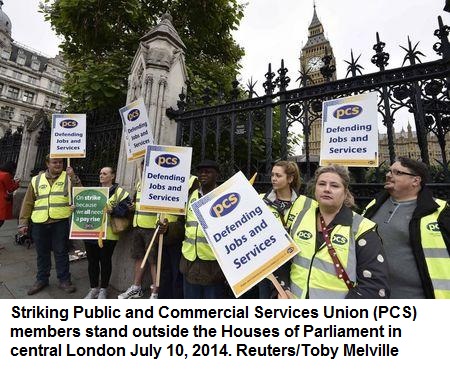
It was inevitable, she thought. She wasn’t protected.

Stanton, a nurse for 28 years, had seen federal safety protocols for health care workers begin to crumble amid the pandemic by early March.

Guidelines from the Centers for Disease Control and Prevention regarding personal protective equipment, or PPE, changed consistently. At Stanton’s hospital, nurses were told that they would have limited access to an already low stockpile of protective equipment and were being asked to reuse single-use masks multiple times, she said.

“Never in my time as a nurse have I seen this,” she said. “It was a position I could never have imagined I’d be in, even in my wildest dreams.”

Each time a safety regulation changed, she said, she began to feel more like “a sheep sent to slaughter” than a front-line nurse, and she started agonizing between her job and her family.

By late March, the risks weighed too heavily, and Stanton submitted her resignation.

“It was an extremely difficult decision, but as a mother and wife, the health of my family will always come first,” she said. “In the end, I could not accept that I could be responsible for causing one of my family members to become severely ill or possibly die.”

As COVID-19 has infected more than 1 million Americans, nurses working on the front lines with little protective support have made the gut-wrenching decision to step away from their jobs, saying that they were ill-equipped and unable to fight the disease and that they feared for not only their own safety but also that of their families.

Many of these nurses, who have faced backlash for quitting, said new CDC protocols have made them feel expendable and have not kept their safety in mind, leaving them no choice but to walk away from a job they loved.

‘We’re not cannon fodder. We’re human beings.’

As the nation took stock of its dwindling medical supplies in the early days of the pandemic, CDC guidance regarding personal protective equipment quickly took a back seat.

Supplies of N95 masks, which had previously been the acceptable standard of protective care for both patients and medical personnel, were depleting, so commercial grade masks, surgical masks and, in the most extreme cases, homemade masks, such as scarves and bandannas, were all sanctioned by the CDC — which didn’t return a request for comment — to counter the lack of resources.

Nurses, among other health care workers, were expected to pivot and adapt with no evidence to the view that new guidelines would provide any significant protection from a novel and contagious disease.

“Things they were telling us we had to now do, you would’ve been fired if we did that three weeks before,” Stanton said. “How is this suddenly OK?”

There had been warning that a pandemic was coming, she said. “Hospital administrators, states and the federal government should have stockpiled PPEs. All three failed.”

COVID-19 patients had only slowly started trickling in, but Stanton could see where things would head. It was almost guaranteed that nurses would be at risk under those conditions, she said.

“We’re not cannon fodder. We’re human beings,” she said.

In many respects, nurses who have had to treat COVID-19 patients with little or no protection, especially in the early days of the pandemic, have become collateral damage.

Nearly 10,000 health care workers on the front lines, including nurses, have tested positive, according to a preliminary survey the CDC conducted from February to April.

Because data collection has been slow and not comprehensive and many people with COVID-19 have been asymptomatic, actual numbers are likely much higher.

At least 79 nurses have died from the coronavirus, the American Nurses Association, which has been independently tracking reports, said Thursday.

“There are huge ethical dilemmas that nurses are now facing,” said Liz Stokes, director of the American Nurses Association Center for Ethics and Human Rights.

“Just imagine having to make decisions every day on whether you’re going to fulfill your professional obligation to care for patients versus sacrificing your personal safety or even that of your family because you’re in a situation where you don’t have adequate resources.”

Nurses have a duty to their patients, but they also have a duty to themselves under the nursing code of ethics, Stokes said. Those are equal obligations, and if you feel morally torn, you have to make the decision that’s right for you, she said.

Stokes added that it’s also important to be thankful for the nurses who have decided to step away because they recognized that they weren’t in the best situation physically or mentally to provide care.

‘No, we didn’t sign up for this’

For Rebecca, a nurse in the Albuquerque, New Mexico, area who didn’t want her full name used for fear that she won’t be rehired, the writing was on the wall when she saw a member of her hospital management collect all N95 masks from her floor and lock them in a cabinet in early March, before the country went into full-blown crisis.

“It’s really demoralizing to see someone lock them up in front of you knowing that you might need one of those,” she said. “The whole scene was very symbolic of how all this was going to go down. And it was a bad sign for what’s to come.”

Rebecca, who has been a nurse for four years, said that communication and infrastructure began to break down fairly quickly and that nurses were expected to make terrible compromises.

Masks were rationed to one per week and sometimes shared. Only nurses who dealt with patients who tested positive for COVID-19 were given an extra N95 mask, even if the patient showed symptoms.

During one 16-hour shift, Rebecca was repeatedly in close contact with a patient who later tested positive — and she wasn’t wearing a mask.

“I knew it was something I could no longer handle,” she said. “I know my limitations.”

Rebecca quit in mid-April, one week after she tested negative for COVID-19 after exposure to the patient.

Since quitting, she has been sensitive to the criticism many nurses like her have faced for stepping away during a pandemic. That’s why many of them have kept their decisions private, she said.

It’s especially hurtful when she reads comments on social media that nurses shouldn’t raise complaints because they “signed up for this.”

“We didn’t sign up to be sacrificial lambs. We didn’t sign up to fight a deadly disease without adequate resources,” she said. “We’re told we’re soldiers. Well, you don’t send soldiers to war without a gun and expect them to do their job, but you are doing that to us.”

The sentiments have been shared by thousands of other nurses who feel they are also being put in dangerous environments.

Last month, the New York State Nurses Association, representing more than 3,000 nurses, filed three lawsuits against the New York State Health Department and two hospitals over the health and safety of nurses treating COVID-19 patients.

Among other things, the lawsuits call out the state for not providing appropriate protective equipment for nurses, not properly training nurses deployed from hospital units and not providing safe enough working conditions for high-risk employees.

While the Health Department declined to comment directly on the lawsuit, it did say it was “deeply grateful for the ongoing efforts of New York’s health care workers to reduce the spread of COVID-19 by testing people who may be infected and treating those who are most in need.”

Quitting has been on the minds of many nurses, said Cara Lunsford, a nurse who founded Holliblu, an online community for nurses.

According to a survey conducted by Holliblu, 62 percent of over 1,000 respondents said they are planning to quit either their jobs or the profession altogether.

“They didn’t sign up to go into work and be unprotected from an invisible enemy, and the pressure is really starting to mount for a lot of nurses,” Lunsford said.

This is an unprecedented time, and nurses weren’t trained to be soldiers or handle biological threats with little protection and resources, she said. And if they leave for their sanity or safety, they shouldn’t be treated as defectors.

Constantly being anointed a “hero” by the public also hasn’t helped the added pressure, Rebecca said. While it’s a nice gesture, it gives the connotation that you should be risking yourself without help and that if you don’t you’re a “coward.”

She added that several colleagues reached out to her about wanting to quit after she left but that many just don’t have the option.

“I’ve realized that I’m very fortunate that I had a choice,” she said. “A lot of nurses have student loans, car loans, and they are single parents. They can’t quit, and that bothers me, because they are being taken advantage of right now.”

‘It was one of the most difficult decisions of my life’

Kate, who didn’t want her full name used for privacy, quit her job at a Virginia hospital in April after she was pulled from her floor as a post-anesthesia care unit nurse and reassigned to critical care after only four hours of training.

Throughout her hospital, protective equipment was siphoned for COVID-19-positive patients, but with testing not fully widespread, she never knew whether someone was infected, and worse she, didn’t know whether she was bringing it home.

Kate would go directly to the attic and quarantine away from her husband and children after getting home from work. But the emotional toll was high, and she could no longer be away from her 1- and 3-year-old children.

She knew she had to walk away from her job.

While putting her family first has got her through the painful decision, she still feels tremendous guilt for leaving.

“It’s not just a job, it’s a calling, and to walk away from it is extremely difficult and painful.” she said. “I wish I could have stayed with my patients. It’s not like I didn’t want to be there.”

Had masks been available and pre-pandemic precautions preserved, “without a doubt I’d still be working,” Kate said.

Stokes, of the American Nurses Association, said: “One of the issues that we are trying to emphasize is that nurses must be supported in whatever decision they make, whether they take the risk or choose not to take the risk to protect families.

“It’s a heart-wrenching decision, and many nurses have expressed that they feel sadness and sorrow that they are leaving their colleagues and patients. It’s a difficult decision, and that in itself can be emotionally traumatic.”

Stokes believes the psychological consequences of putting nurses in these dilemmas will be profound and long-lasting. She predicts high levels of post-traumatic stress disorder and secondary trauma syndrome trailing the pandemic.

“Nurses were already burned out before, and this pandemic might push many of them completely out,” she said.

The mental health toll on medical workers was put into sobering perspective after New York City emergency room doctor Lorna Breen died by suicide. A hotline created by physicians to help doctors deal with the anxiety of combating the crisis said it averages up to 20 calls a day. Another hotline, For The Frontlines, has also been set up as a 24-hour resource for other health care and essential workers.

“I would anticipate increased apprehension possibly extending into anxiety or mood problems,” said Dr. Sheetal Marri, a psychiatrist, referring not only to nurses who continued to work but also to those who stepped back. “These effects will impact the way nurses and other health care professionals will deal with workplace health hazards even after this pandemic is over.”

Stanton said she would like to return to nursing but only once guidelines are restored and she can feel safe going to work again. While she is taking this time to focus on her family, she still misses her job.

“I loved being a nurse. You do it because you care, you want to help people,” she said. ” But right now, nurses don’t feel like heroes. We feel expendable.”

If you or someone you know is in crisis, call the National Suicide Prevention Lifeline at 800-273-8255, text HOME to 741741 or visit SpeakingOfSuicide.com/resources for additional resources.

Source: Posted and retrieved May 10, 2020 from: https://news.yahoo.com/why-nurses-quit-during-coronavirus-104910947.html?.tsrc=notification-brknews

————–

VIDEO – Doctors and Nurses Reveal the Devastating Reality of COVID-19 – https://youtu.be/OVp2U2p4lmE

The Atlantic
Posted April 4, 2020 – Chaos. Fear. Dwindling stockpiles of equipment. Impossible choices. Patients dying alone. These are some of the things that health-care professionals describe facing while fighting the COVID-19 pandemic. Over the past week, we spoke with doctors, nurses, and physician assistants at some of the hardest-hit hospitals in the nation. In a new documentary from The Atlantic, they bring us into their devastating new reality.

Subscribe to The Atlantic on YouTube: http://bit.ly/subAtlanticYT

Don’t get it twisted, First Responders are dying, some have even committed suicide in this crisis.

This old adage seem apropos at this time:

Never kill yourself for people who would rather watch you die.

This commentary is manifesting a harsh reality: there are Crony-Capitalistic forces at play! Though only indirectly related, the designs of Big Pharma should not be ignored; this was conveyed in a previous commentary by the movement behind the 2013 book Go Lean…Caribbean:

Big Pharma or the Pharmaceutical industry, dictates standards of care in the field of medicine, more so than may be a best-practice. There is [the visual] of a familiar scene where pharmaceutical salesmen slip in the backdoor to visit doctors to showcase latest product lines … there are commission kick-backs [tied] in these arrangements.

As a result, treatments like Chemo-therapy cost $20,000+/month; and the War against Cancer is imperiled due to industry profit insistence.

So there are “Big Profits” in the medical industry, right?! Enough to go around so that everyone benefits, right? Nope; not at all; it becomes obvious very quickly that underlying to Crony-Capitalism is greed – more for them; less for you. In a previous Go Lean commentary, this attribute of Big Pharma was exposed:

Book Review – ‘Thimerosal: Let The Science Speak’
The King of Pop, Michael Jackson, released a song with the title: “They don’t really care about us”; he very well could have been talking about Big Pharma. In a previous blog/commentary, the pharmaceutical industry was assailed over one cancer drug, Gleevec. The commentary clearly depicted the perils of Crony-Capitalism.

Crony-Capitalism is not for the Greater Good. It is not good economics, good security nor good governance. These activities must be monitored and mitigated. [See the Michael  Jackson VIDEO of the song “They don’t care about us” in the link here.]

Accepting the truism of Crony-Capitalism in the medical industry, is there any doubt that nurses consider themselves undervalued by their employers and the overall community?

They have been treated as sacrificial, more so than essential.

This sends a Cautionary Warning to all those medical professionals in the Caribbean that may want to emigrate to the United States.

Stay home – “they do not really care about us”.

For those already in the US, lamenting the sad state of affairs, we urge:

Time to Go! We can readily reform and transform the Caribbean homeland with the lesser Crony-Capitalistic influences.

This was the consideration summary in many previous blog-commentaries:

Consider this sample:

https://goleancaribbean.com/blog/?p=14114 School Shootings ‘R’ Us – 11 in 23 Days
https://goleancaribbean.com/blog/?p=14087 Opioids and the FDA – ‘Fox guarding the Henhouse’
https://goleancaribbean.com/blog/?p=12949 US Charities too easily exploit Caribbean Disasters
https://goleancaribbean.com/blog/?p=11269 Managing the ‘Strong versus the Weak’ – An American Sickness
https://goleancaribbean.com/blog/?p=11057 Managing the ‘Strong versus the Weak’ – Selling-Out American Workers
https://goleancaribbean.com/blog/?p=6819 Perils of the deficient American food standards – Easy to Do Better

Essential or sacrificial … is a serious consideration for emigrant (overseas ) workers.

If a country shows little – or no – regards for their own people, imagine how much less they would show towards you, the alien-foreigner-worker?!

(There is the documented “bad” track record of American Cruise Lines treating their alien-foreign-workers with little regard – “modern-day-slavery”).

This “inconvenient truth” is related to a strong point conveyed in another previous Go Lean commentary about the immigrant workers who went to England – after World War II – only to find an unwelcoming society and unappreciated employers – their paychecks were likened to poverty wages. It is only apropos to Encore that original July 10, 2014 blog-commentary here-now:

—————

Go Lean Commentary – British public sector workers strike over ‘poverty pay’

The grass is not greener on the other side.
Go from being a big fish in a small pond, to a small fish in a big pond.

These expressions are relevant in considering the fate of so many Caribbean Diaspora that had fled their Caribbean homelands over the past decades to take residence in Great Britain. Many of them sought refuge as career civil servants; (one reason [a] was the acute racism and intolerance encountered in private enterprises). These ones are faced with the harsh reality that pay scales in the public sector have not kept pace with inflation; they are now at poverty level. See the news article here:

By: Tess Little (Editing by Stephen Addison)

British strike 1LONDON (Reuters) – Hundreds of thousands of public sector workers including teachers, council workers and firefighters staged a 24-hour pay strike on Thursday in a stoppage that has prompted Prime Minister David Cameron to pledge a crackdown on union powers.

Protesters marched through the streets of many of Britain’s main cities in one of the biggest co-ordinated labour stoppages for three years.

Denouncing what they called “poverty pay,” they demanded an end to restrictions on wage rises that have been imposed by the government over the past four years in an effort to help reduce Britain’s huge budget deficit.

In London, demonstrators marched towards Trafalgar Square at midday, chanting “Low pay, no way, no slave labour” to the beat of a drum. A giant pair of inflatable scissors, carried by members of the National Union of Teachers (NUT), read “Education cuts never heal.”

Firefighter Simon Amos, 47, marched wearing his uniform behind a flashing fire engine parading members of the Fire Brigades Union (FBU). “The government [is] making us pay more for our pension for it to be worth the same, and making us work longer,” he said.

British strike 2The biggest public sector union involved, Unison, said early reports showed the strike had led to 3,225 school closures with more than 1,000 others partially closed.

Refuse collectors, school support staff, cleaners, street sweepers, care workers, nursery assistants and social workers were joining the strike, it added.

Hot spots, it said, included the North East, Wales and East Midlands where most council offices had closed, while more than 60 picket lines have closed most services in Newcastle.

“It is a massive decision by local government and school support workers to sacrifice a day’s pay by going on strike, but today they are saying enough is enough,” said Unison General Secretary, Dave Prentis in a statement.

Britain’s coalition government has enforced a policy of pay restraint for public sector workers since coming to power in 2010, imposing a pay freeze until 2012 and then a one percent pay rise cap, resulting in a fall in income in real terms [compared to inflation].

The Cabinet Office played down the impact of the strike, saying that most schools in England and Wales were open and that fire services were operating throughout the country.

British strike 3On Wednesday, Cameron told parliament he planned to limit unions’ powers to call strikes.

“How can it possibly be right for our children’s education to be disrupted by trade unions acting in this way” he said.

Tough new laws would be proposed in the Conservative manifesto for next year’s general election, he added.

These would include the introduction of a minimum threshold in the number of union members who need to take part in a strike ballot for it to be legal.

The manifesto could also back the introduction of a time limit on how long a vote in favour of industrial action would remain valid.

The NUT mandate for Thursday’s strike, for example, came from a 2012 strike ballot based on a turnout of just 27 percent, Cameron said.

The issue of minimum voting thresholds last arose three months ago when a strike by London Underground train drivers caused huge disruption in the capital, prompting Mayor Boris Johnson to demand that at least half of a union’s members should vote in favour for a strike to go ahead.
Source: Reuters News Service; retrieved 07/10/2014 from: http://news.yahoo.com/public-sector-workers-strike-over-poverty-pay-105040672.html

Frankly, the Caribbean Diaspora employed in the British public sector can now do better at home … in the Caribbean.

This is the assertion of the book Go Lean…Caribbean. That once the proposed empowerments are put in place, the Caribbean Diaspora should consider repatriating to their ancestral homelands.

Unfortunately for the Caribbean, this societal abandonment has continued, since the early days of the “Windrush Generation”[a] right up to now. In a recent blog post, this commentary related analysis by the Inter-American Development Bank that the Caribbean endures a brain drain of 70% among the college educated population; (https://goleancaribbean.com/blog/?p=1433).

Change has now come to the Caribbean.

The book Go Lean…Caribbean serves as a roadmap for the introduction and implementation of the technocratic Caribbean Union Trade Federation (CU). This roadmap will spearhead the elevation of Caribbean society. The prime directives of the CU are presented as the following 3 statements:

  • Optimization of the economic engines in order to grow the regional economy & create 2.2 million new jobs at home.
  • Establishment of a security apparatus to protect the resultant economic engines.
  • Improve Caribbean governance to support these engines.

The book posits that the improved conditions projected over the 5 years of the roadmap will neutralize the impetus for Caribbean citizens to flee, identified as “push and pull” factors. This point is stressed early in the book (Page 13) in the following pronouncements in the opening Declaration of Interdependence:

xix.   Whereas our legacy in recent times is one of societal abandonment, it is imperative that incentives and encouragement be put in place to first dissuade the human flight, and then entice and welcome the return of our Diaspora back to our shores. This repatriation should be effected with the appropriate guards so as not to imperil the lives and securities of the repatriated citizens or the communities they inhabit. The right of repatriation is to be extended to any natural born citizens despite any previous naturalization to foreign sovereignties.

xx.   Whereas the results of our decades of migration created a vibrant Diaspora in foreign lands, the Federation must organize interactions with this population into structured markets. Thus allowing foreign consumption of domestic products, services and media, which is a positive trade impact. These economic activities must not be exploited by others’ profiteering but rather harnessed by Federation resources for efficient repatriations.

This foregoing article highlights other issues that have been prominently addressed in the Go Lean book, namely that of the Civil Service and Labor Relations. There is the need for a professional staff in the Federal Civil Service. They require marketable benefits and compensation. There is also a role for Labor Unions to play in the elevation of Caribbean society. The Go Lean roadmap envisions an inclusionary attitude towards unions. The Go Lean community ethos is that of being partners with unions, not competitors. The book features specific tools and techniques that can enhance management-labor relationships.

These issues constitute heavy-lifting for the regional administration of the Caribbean:

  • fostering best practices for federal civil service and labor unions,
  • minimizing the brain drain, and
  • facilitating repatriation to the homeland.

These issues cannot be glossed over or handled lightly; this is why the Go Lean book contains 370 pages of finite details for managing change in the region. The book contains the following sample of community ethos, strategies, tactics, implementations and advocacies to impact the Caribbean homeland:

Community Ethos – Economic Systems Influence Choices & Incentives Page 21
Community Ethos – The Consequences of Choices Lie in the Future Page 21
Community Ethos – Job Multiplier Page 22
Community Ethos – Lean Operations Page 24
Community Ethos – Return on Investments Page 24
Community Ethos – Ways to Impact the Future Page 26
Community Ethos – Ways to Improve Negotiations Page 32
Strategy – Competition – Remain home   –vs- Emigrate Page 49
Strategy – Agents of Change – Aging Diaspora Page 57
Tactical – Separation of Powers – Versus Member-States Governments Page 71
Implementation – Year 1 / Assemble Phase – Establish Civil Service Page 96
Implementation – Ways to Deliver Page 109
Implementation – Trade Mission Objectives Page 116
Implementation – Reasons to Repatriate Page 118
Anecdote – Experiences of a Repatriated Resident Page 126
Planning  – 10 Big Ideas for the Caribbean Region Page 127
Advocacy – Ways to Create Jobs Page 152
Advocacy – Ways to Impact Labor Unions Page 164
Advocacy – Ways to Manage Federal Civil Service Page 173
Anecdote – Experiences of Diaspora Member Living Abroad Page 216
Advocacy – Ways to Impact the Diaspora Page 217

The Go Lean roadmap has simple motives: fix the problems in the homeland to make the Caribbean a better place to live, work, learn and play. There should be no need to go abroad and try to foster an existence in a foreign land. So for those of Caribbean heritage working in the British Civil Service, we hear your pleas. Our response: Come home; come in from the cold.

Now is the time for all of the Caribbean, the people residing in the homeland and those of the Diaspora, to lean-in for the empowerments described in the book Go Lean … Caribbean. This Big Idea for the region is a dramatic change; one that is overdue. The policies & practices of the past have failed Caribbean society. Too many people left, yet have little to show for it.

Caribbean music icon Bob Marley advocated this same charter for the Caribbean Diaspora. He sang to “come in from the cold” in the opening song of his last album Uprisings in 1980. How “spot-on’ were his words in the following music/video:

Download the free e-Book of Go Lean … Caribbean – now!

———————

Appendix – Cited Reference
a: “There was plenty of work in post-war Britain and industries such as British Rail, the National Health Service and public transport recruited almost exclusively from Jamaica and Barbados”. Retrieved July 10, 2014 from: http://en.wikipedia.org/wiki/British_African-Caribbean_people#The_.22Windrush_generation.22

Share this post:
, , , ,
[Top]

BHAG – Outreach to the World: Why Not a Profit Center – Encore

The plan to reform and transform the Caribbean member-states does not ignore the rest of the world. No, it recognizes that there must be a lot of “coming and going” with other people in other places.

We honestly admit that many of our own citizens have abandoned the homeland, yet these ones still want to be engaged with Caribbean institutions and can truly still have a positive impact on our societal engines. If only we can “profit” from this engagement.

Yes, we can …

How about a plan for the Caribbean member-states to build-out their “Outreach to the World” – Embassies, Consulates and Trade Mission Offices – in such a way so as to generate traffic from consumer and commercial stakeholders – think: retail, dining, entertainment and amusements.

Generate traffic and generate profits!

This is a Big Hairy Audacious Goal (BHAG), but this can be done; this is being done; this could be expanded upon to a heightened extent.

Every month, the movement behind the 2013 book Go Lean…Caribbean presents a Teaching Series on a subject germane to Caribbean life, either at home or abroad. For this March 2020, our focus is on BHAG efforts that are too big for any one member-state alone. This is entry 5-of-6 for this series, which embraces the reality of the Caribbean Outreach to the World.

The full catalog of the series for this month – under the BHAG theme – is listed as follows:

  1. BHAG – The Audacity of Hope – Yes, we can!
  2. BHAG Regional Currency – In God We Trust
  3. BHAG – Infrastructure Spending … finally funding Toll Roads
  4. BHAG – One Voice – Foreign Policy and Diplomatic Stance
  5. BHAG – Outreach to the World – Why Not a Profit Center
  6. BHAG – Netflix, Hulu, CBS, Peacock ==> Caribbean Media

In addition to the 42 million people in the Caribbean member-states, there is also the Diaspora, estimated in some circles to be 10 to 26 million people; (the disparity is due to the status of first generation “legacies”; only “some” identify with the homeland). So the subject of Caribbean Outreach to the World is familiar for this movement behind the Go Lean book. In addition to the direct references to Diaspora and Trade Mission Offices in the 2013 book, there have been a number of previous Go Lean commentaries that elaborated on this theme of Outreach to this population; consider this sample list here:

https://goleancaribbean.com/blog/?p=19134 Caribbean Diaspora – All Member-states – Not the Panacea
https://goleancaribbean.com/blog/?p=17992 The ‘Best of the Caribbean’ … now live abroad
https://goleancaribbean.com/blog/?p=16532 Diaspora Reckoning – Settlers -vs- Immigrants – ‘We’ never catch-up
https://goleancaribbean.com/blog/?p=16395 The Caribbean – A People or A Place?
https://goleancaribbean.com/blog/?p=16208 Caribbean Trade and Outreach Can Transform Society
https://goleancaribbean.com/blog/?p=15858 Opportunities for a New Media Network to reach the Diaspora
https://goleancaribbean.com/blog/?p=15658 Realities and Dangers of American Immigrant Life – We need to protect our Diaspora
https://goleancaribbean.com/blog/?p=14746 Calls for Repatriation Strategy
https://goleancaribbean.com/blog/?p=13604 Outreach Goal: We Want Diaspora to Retire ‘Back at Home’
https://goleancaribbean.com/blog/?p=7151 The Caribbean is Looking For Heroes … to Return

In fact, this exact concept of Outreach to the World – Why Not A Profit Center has been addressed specifically in this prior Go Lean blog-commentary from May 3, 2014. It is only appropriate to Encore that 6-year old commentary now. But imagine how much progress has been made since then. For example, consider this establishment in Berlin Germany where developers have captured a Tropical Island experience indoors, open 365 days a year. Consider this VIDEO here:

VIDEO – Tropical Islans Water Park! – https://youtu.be/MRywPptaOrA


Posted March 12, 2017 – Tropical Islands is a tropical water park built in an old air ship hanger that protected air ships in bad weather. It is located about 45 minutes south of Berlin, Germany and is set in the largest freestanding hall in the world.
Category: Film & Animation

This is not the only one – there are many more “Indoor Water Parks” throughout the world; consider this list:

30 Top Indoor Water Parks around the World
i.e. #21: Castaway Bay, Cedars Point, Sandusky, Ohio, USA

Why can’t we do the same in other locations – especially our Trade Mission sites – in our Outreach to the World?!

“Can’t bring the people to the Caribbean? Then bring the Caribbean to the people.” – Yes, this is a BHAG.

See the Encore of the May 3, 2014 commentary here-now:

———————–

Go Lean CommentaryWhy not … a Profit Center?

Most Caribbean countries have Embassies, Consular Offices and/or Trade Mission Offices in world capitals. These are normally cost centers, where the governments have to maintain the cost burden for these facilities. But why do they have to be cost centers, why not profit centers?

Why not … a profit center? As in one integrated, consolidated center on behalf of all the Caribbean member-states – a classic “cooperative” model. This strategy meets a basic requirement of retail design: traffic. All the embassy, consular and trade mission activities would create impactful retail traffic demands.

This vision comes into focus as a result of the emergence of the Caribbean Union Trade Federation (CU), and the news article[c] below. The book Go Lean…Caribbean serves as a roadmap for the introduction and implementation of the CU. The roadmap fully anticipated integrating and consolidating Trade Mission Offices (Page 116) to advance the causes of the Caribbean people in foreign countries; eight (8) cities are specified in details.

The resultant facility, and accompanying eco-system, would fulfill a CU mandate, global outreach to expand Caribbean trade within the source country, city and regional area.

From the outset of the roadmap, the intent to leverage Trade Mission Offices was pronounced in the Declaration of Interdependence (Page 13), as follows:

xix. Whereas our legacy in recent times is one of societal abandonment, it is imperative that incentives and encouragement be put in place to first dissuade the human flight, and then entice and welcome the return of our Diaspora back to our shores. … The right of repatriation is to be extended to any natural born citizens despite any previous naturalization to foreign sovereignties.

xx. Whereas the results of our decades of migration created a vibrant Diaspora in foreign lands, the Federation must organize interactions with this population into structured markets. Thus allowing foreign consumption of domestic products, services and media, which is a positive trade impact. These economic activities must not be exploited by others’ profiteering but rather harnessed by Federation resources for efficient repatriations.

The roadmap also urges the urban design approach for mixed-use developments; (Page 234). This dictates a structure designed as retail (ground floor), mezzanine for offices, and higher levels/floors for residences (apartments, condominiums, and hotels). See a sample site in a US Midwestern city here – Photos & VIDEO:

Why Not ... a profit center - Photo 1 (2)

Why Not ... a profit center - Photo 2

Why Not ... a profit center - Photo SPECIAL

VIDEO Midtown Crossing Commercial – https://youtu.be/3Ua3FjWLfKk

A model of a successful mixed-use development is the Omaha-Nebraska Midtown Crossing[a].

Consider New York City; it is one of 8 mission cities envisioned. This  map below and the Appendix Table lists all the addresses of the Caribbean embassies, consulates, and outreach offices in New York City[b] – all within a 5 mile radius. Imagine if all those facilities were in one property – a mixed-use development.

Why Not ... a profit center - Photo 4 (3)

Imagine too, a climate-controlled atrium with Caribbean fauna & flora; a food court showcasing cuisines from all the participating Caribbean countries, (up to 30); art galleries, convention/banquet facilities, exhibit halls, night clubs, performing arts theaters and maybe even an indoor entertainment center (for instance, modeling the legacy of Caribbean Pirates). This vision would generate multiple streams of revenue – a profit center as opposed to 30 cost centers.

This vision would benefit a lot of Caribbean stakeholders with support and outreach services – those desiring to live, work, learn, heal and play in the Caribbean. These stakeholders include:

  • Visitors
  • Caribbean Citizens (travelling abroad)
  • Diaspora
  • Foreign Direct Investors
  • Students

There is the need for this manifestation right now in London, England (another designated Trade Mission Office – Page 116 ); as depicted in this referenced news story[c]:

LONDON, England (May 1, 2014) — Overseas Territory representatives from the British Virgin Islands, Bermuda, Montserrat, the Cayman Islands and Anguilla met with United Kingdom business networking specialists, CaribDirect International Business Network (CIBN) in London last week, as the first networking session focusing on trade and investment gathers momentum.

These discussions, held at the offices of the Bermuda representative, focused on introducing the CaribDirect International Business Network (CIBN) concept; outlining its broad scope; revealing the economic and political opportunities available for the Caribbean Overseas Territories (OTs); and examining practical ways to work together for the benefit of the dependent territories of the Caribbean.

CIBN is an agency designed to facilitate and connect entrepreneurs and business people in the UK with Caribbean government and business representatives for trade and investment.

Representatives attending the meeting were Cayman Islands’ deputy director Charles Parchment, Montserrat director Janice Panton, BVI London Office director Kedrick Malone, Bermuda director Kimberley Durrant, CaribDirect director of policy Ron Belgrave and CaribDirect multi-media CEO David Roberts.

If only this profit center concept existed now … in London … and in New York.

The CU roadmap is designed to bring change to the Caribbean region. This commentary demonstrates that a lean, nimble organization structure can also be “at the corner of preparation and opportunity” and that opportunity can be made in turning a cost center into a profit center. This structure can optimize the Caribbean’s economic, security and governing engines – no matter the location. If the Trade Mission Offices were constituted as profit centers, the following details from the book Go Lean…Caribbean would manifest, with impacted community ethos, strategies, tactics, implementations and advocates; listed as follows:

Community Ethos – Lean Operations Page 24
Community Ethos – Cooperatives Page 25
Community Ethos – Ways to Improve Sharing Page 37
Strategy – Repatriating Caribbean Diaspora Page 47
Strategy – Inviting Foreign Direct Investments Page 48
Tactical – Separation of Powers – State Department Page 80
Tactical – Design Requirements for the Capital District Page 110
Implementation – Trade Mission Objectives Page 116
Implementation – Reasons to Repatriate Page 118
Implementation – Ways to Benefit from Globalization Page 119
Advocacy – Ways to Improve Trade Page 128
Advocacy – Lessons from New York City Page 137
Advocacy – Ways to Enhance Tourism Page 190
Advocacy – Impact the Diaspora Page 217
Advocacy – Ways to Impact Urban Living Page 234

The Go Lean roadmap will make the outreach, and foreign support, for Caribbean stakeholders more efficient and effective. This plan would impact and change the Caribbean and the foreign world we reach out to.

All Caribbean stakeholders – citizens, businesses and governments alike – are urged to lean-in to this Go Lean roadmap.

Download the free e-Book of Go Lean … Caribbean – now!

———————

Appendix – References

a. http://www.midtowncrossing.com/about/default.aspx
b. http://michaelbenjamin2012.com/2012/06/21/caribbean-region-consulates-in-nyc/
c. http://www.caribbeannewsnow.com/topstory-Caribbean-overseas-territories-meet-with-UK-networking-specialists-20934.html

———————

Appendix – TABLE – Caribbean States Mission Offices – New York City

Member-State

Address

Anguilla 845 Third Avenue, New York, NY 10022  Phone: 212-745-0277
Antigua & Barbuda 610 Fifth Avenue, Ste 311, New York, NY 10020  Phone: 212-541-4117
Aruba 666 Third Avenue, 19th floor, New York, NY 10017 Phone 877-388-2443
Bahamas 231 East 46th Street, New York, NY 10017  Phone: 212-421-6420
Barbados 820 Second Avenue, 5th Fl, New York, NY 10017  Phone: 212-551-4325
Belize 675 Third Avenue, Ste 1911, New York, NY 10017  Phone: 212-593-0999
Bermuda 845 Third Avenue, New York, NY 10022 Phone: 212-745-8272
British Virgin Islands 845 Third Avenue, New York, NY 10022 Phone: 212-745-8272
Cayman Islands 845 Third Avenue, New York, NY 10022 Phone: 212-745-8272
Cuba 315 Lexington Ave 38th Street New York, NY 10016 Ph. 212-689-7215
Dominica 800 Second Ave, Ste 400H, New York, NY 10017 Phone: 212-949-0853
Dominican Republic 1500 Broadway, Ste 410, New York, NY 10036  Phone: 212-768-2480
Grenada 800 Second Ave, Ste 400K, New York, NY 10017 Phone 212-599-0301
Guadeloupe 45 W 34th Street, Suite 703, New York, NY 10001 Phone  877-203-2551
Guyana 370 Seventh Avenue, 4th Fl, New York, NY 10001  Phone: 212-947-5110
Haiti 271 Madison Avenue, 17th Fl, New York, NY 10016 Phone: 212-967-9767
Jamaica 767 Third Avenue, New York, NY 10017  Phone: 212-935-9000
Martinique 444 Madison Avenue, 16th Fl, New York, NY 10022 Phone: 212-838-6887
Monserrat 845 Third Avenue, New York, NY 10022  Phone: 212-745-0200
Netherland Antilles:Bonaire, Curaçao, Sint Eustatius, Saba 1 Rockefeller Plaza 11th Floor, New York, NY 10020 212-246-1429
Puerto Rico 666 5th Avenue # 15l, New York, NY, 10103-1599. Phone: 212-333-0300
St. Barthelemy 934 Fifth Ave, New York, NY 10021 Phone: 212-606-3601
St. Kitts & Nevis 414 East 75th Street, New York, NY 10103 – 212-535-5521
St. Lucia 800 Second Avenue, 9th Fl, New York, NY 10017 – 212-697-9360
St. Maarten 675 Third Avenue, Ste 1807, New York, NY 10017 – 800-786-2278
St. Vincent & The Grenadines 801 Second Avenue, 21st Fl, New York, NY – 212-687-4490
Suriname 1 UN Plaza, 26th Fl, New York, NY 10017 – 212-826-0660
Trinidad & Tobago 125 Maiden Lane, Unit 4A, 4th Fl, New York, NY 10038 Ph. 212-682-7272
Turks & Caicos Island 845 Third Avenue, New York, NY 10022 Phone: 212-745-8272
US Virgin Islands 45 W 34th Street, Suite 703, New York, NY 10001 Phone 877-203-2551
Share this post:
, , ,
[Top]

Brain Drain – ‘Live and Let Live’: Introducing Localism

Go Lean Commentary

  • So Brain Drains … are bad!
  • Brain Gains … are good.
  • Nerds, Geeks and Freaks often emerge as high achievers and can propel society forward … or exact revenge.
  • We can foster high achievement in our children by modeling best-practices in parenting, like Tiger Moms.

That is the summary … of this February 2020 Teaching Series on Brain Drains by the movement behind the 2013 book Go Lean … Caribbean. This entry, 5-of-5, urges Caribbean people to “live and let live”, positing that we need to retain and attract good people, not judge and condemn them. This concludes the considerations of this Brain Drain series; see the full catalog here:

    1. Brain Drain – Where the Brains Are
    2. Brain Drain – Brain Gain: Yes we can!
    3. Brain Drain – Geeks and Freaks: Ultimate Revenge
    4. Brain Drain – ‘Tiger Moms’ – Is that so bad?
    5. Brain Drain – Live and Let Live – Introducing ‘Localism’

“Do what you’ve always done; get what you’ve always got”.

Is this still a ‘bridge too far’ for the Caribbean?
You are not in this photo! You do not have to be, just ‘live and let live‘.

It is now time to do somethings different, so that we can get different results.

As related in a previous entry in this series, there are 2 dynamics associated with why people abandon their homeland: Push and Pull.

 “Push” – people leave, to seek refuge elsewhere. Social defects result in narrow-mindedness of attitudes and values towards anyone that looks, talks, thinks or loves differently that those in the community. This includes those identified as LGBT, Disabled, Domestic-abusedMedically-challenged.

Pull”, on the other hand refers to the lure of a more prosperous life elsewhere; many times people are leaving based on a mirage of “greener pastures”, though the “better prospect” may be elusive … especially for the first generation.

So if you don’t want the Brain Drain, there is something you can do to abate the Push factors:

Live and let live …

Would you want to be responsible for pushing people out? Would you want to be guilty of bullying someone to the extent that they just want to take their leave of your presence and proximity?

Would you want to be part of the solution or part of the problem? (This is not just theoretical; think of the recent Transgender Murder in Puerto Rico; yes, “this is on us”, we are the community that failed “Alexa Negrón Luciano”. See Appendix VIDEO.)

The way to forge change in our society is to promote a spirit of liberalism:

Political and moral philosophy based on liberty, consent of the governed and equality before the law.

What is shocking: We do this already – think of the reality at our “All-Inclusive” Hotel Resorts:

Do you really care what religion a resort guest practices on Sunday while on vacation? How about what he/she eats (vegetarian or carnivorous)? Would it matter who he/she shares the room with?

So we are already doing what is needed to reform and transform our societies; we are simply only liberal when the activities are wrapped around an economic engine, like a hotel resort.

This is the manifestation of localism – do what you want, just “over there” away from me. In the previous entry of this series on Brain Gains, localism was presented as follows:

One strategy that is emerging from the mitigation of Brain Drains , and for enabling Brain Gain, is that of localism.

Localism describes a range of political philosophies which prioritize the local. Generally, localism supports local production and consumption of goods, local control of government, and promotion of local history, local culture and local identity. – Source: Wikipedia

All-Inclusive Hotel Resorts – with their fenced-in/walled-off boundaries – are iterations of localism and/or Self-Governing Entities. See this manifestation in this news article here, showing how some Caribbean destinations roll out the welcome-mat for same-sex couples, while others have a reputation for homophobia:

Title: Gay and Lesbian Friendly Destinations in the Caribbean
By:
Robert Curley

With its fun-in-the-sun destinations, carefree attitude, and myriad couples-oriented resorts, the Caribbean seems an ideal vacation spot for gay and lesbian couples. But not all Caribbean islands are created equal: some (notably the French, Dutch, and U.S. islands) roll out the welcome mat for same-sex couples, while others, like Jamaica, Barbados, and the Cayman Islands, have a reputation for homophobia. With the help of the travel experts at LGBT News, here are our picks for the top Caribbean destinations for gay travelers:

1 of 10 – Saba
The tiny island of Saba is known mostly for its diving, hiking, and other outdoor activities, but is quickly gaining a reputation as a bastion of tolerance in the Caribbean, too. Saba was the first place in the Caribbean where same-sex couples could legally wed, has a significant gay and lesbian population of its own, and several dive operators on the island run special outings for gay and lesbian travelers.

————-

2 of 10 – St. Barts
With its laissez-faire French culture and a myriad of private villas to choose from, St. Barts is has been called the most gay-friendly island in the Caribbean. This is the place to get lost in the Caribbean for a few days, far from the cruise-ship crowds. By any measure, with its mix of celebrities, yachties, high-end shopping, and vibrant nightlife, St. Barts is fabulous.

————-

3 of 10 – St. Martin/St. Maarten
Both Dutch St. Maarten and French St. Martin have long had a gay-friendly reputation, with many private villas for rent and beaches and bars where gay and straight couples peacefully coexist. St. Maarten’s reputation was sullied somewhat by a 2004 incident where a gay couple was assaulted near a popular beach bar, but island tourism officials were quick to apologize, and the island remains near the top of the list for many gay Caribbean travelers. Clothing-optional beaches and resorts on the French side of the island earn bonus points. Same-sex marriage is legal here.

————-

4 of 10 – Puerto Rico
Gay travelers in Puerto Rico will find the Caribbean’s only real gay nightlife scene: San Juan highlights include the Atlantic Beach Hotel and Bar (set on a gay beach and with a weekly drag show) and clubs like Eros. On both the mainland and the island of Vieques you can find gay-friendly resorts, and gay travelers in Puerto Rico have the benefit of protection by U.S. antidiscrimination laws, including the recent U.S. Supreme Court ruling legalizing same-sex marriage.

————-

5 of 10 – U.S. Virgin Islands
The U.S. Virgin Islands, St. Croix, in particular, has become a mecca for gay travelers, many of whom wind up at the welcoming Sand Castle on the Beach Resort in Frederiksted. Gay travelers can expect a friendly and tolerant attitude throughout the U.S.V.I., and if public displays of affection are not exactly embraced, the reaction is not likely to be more than a second glance. As with Puerto Rico, U.S. law makes same-sex marriages legal here.

————-

6 of 10 – Curacao
While some Caribbean island privately welcome gay travelers, Curacao has been the most public in its embrace: “With exceptional gay friendly hotels and attractions, [Curacao] encourages gay and lesbian travelers to visit the island and experience its ‘live and let live’ atmosphere for themselves,” says the Curacao Tourist Board, which has a marketing campaign aimed at gays and lesbians and includes information on gay-friendly hotels and clubs on its website. Same-sex couples can get married here, too!

————-

7 of 10 – Aruba
Like its Dutch Caribbean neighbors, Curacao and Saba, the oh-so-popular tourist destination of Aruba is one of the gay-friendliest places to travel in the islands. The Bucuti and Tara Beach Resorts are among several hotels and resorts that bill themselves as welcoming to LGBT visitors; the gay-ownedLittle David Guesthouse is another option. District 7 in Oranjestad is the island’s premier gay bar. All in all, this is a destination that celebrates its diversity openly and fully.

————-

8 of 10 – The Mexican Caribbean
The Mexican state of Quintana Roo, which includes Cancun, Cozumel, Tulum, and the Mexican Caribbean coastline (a.k.a. the Riviera Maya) recognizes same-sex marriages performed in Mexico City, and Cancun has been building a reputation as a gay-friendly destination. The city has gay nightclubs downtown and an unofficial gay beach in the Hotel Zone (Playa Delfines), and hosts the annual Cancún International Gay Festival in May and the Cancún Riviera Maya Gay Fall Festival.

————-

9 of 10 – Cuba
Cuba’s gay community has increasingly stepped out of the closet and into the limelight as the island nation has increased its interaction with the world, Fidel Castro’s daughter, Mariela, heads the Cuban National Center for Sex Education and has advocated for LGBT rights. Vedado is Havana’s de facto gay neighborhood, Mi Cayito the unofficial gay beach, and many of the island’s casas particulares (B&Bs) are gay-friendly. Discrimination still lingers, but Cuba has come a long way since the days where gays were imprisoned and officially persecuted.

————-

10 of 10 – Unfriendly Islands
Ten formerly British West Indies nations still have “buggery” laws on the books and have displayed various levels of intolerance (ranging from mild disdain to outright hostility and criminal prosecution) toward gay and lesbian residents and travelers.

These include Antigua & Barbuda, Barbados, Dominica, Grenada, Guyana, Jamaica, Saint Lucia, Saint Kitts and Nevis, Saint Vincent and the Grenadines, and Trinidad and Tobago.

Source: Posted June 4, 2019; retrieved February 29, 2020 from: https://www.tripsavvy.com/gay-and-lesbian-friendly-caribbean-destinations-1488131

Notice the trending …

… the Dutch, French and American Caribbean territories are progressive, liberal and inclusive in their official and unofficial accommodations for the LGBT community – they have learned to “live and let live”. (Do you see how that works? No surprise these countries – France, Netherlands, USA – are very prosperous economically and their colonies represent their colonial masters adherence to Human Rights principles).

While All-Inclusive Resorts are mainstays in today’s Caribbean, the Go Lean book presents a roadmap for the introduction and implementation of formal Self-Governing Entities (SGE) under the administration of the Caribbean Union Trade Federation (CU). The roadmap calls for legal and regulatory compliance by the local government to mandate a laissez-faire allowance of SGE’s. Consider this excerpt from the book (Page 80) for a full definition of the concept.

Tactical – Separation of Powers – State Department – E2: Self Governing Entities (SGE)
The agencies of the [CU’s] State Department will promote and administer all Self-Governing Entities throughout the region. This refers to foreign military bases, scientific labs and industrial/commercial campuses. SGE campuses are presented as economic engines for the region. They will have to contract with their neighboring communities for utilities and services. Many times, these campuses may only be work-sites, and all human needs are dependent on the neighboring communities.

These facilities will not be subject to the laws of the local states of their address, rather CU, international, foreign sovereignty, or maritime laws will apply. This structure will not usher in some anarchist movement with “wild, wild west” guidelines. Rather, at the time of incorporation, by-laws (or constitutions) must be presented to the [CU’s} State Department for acceptance. In addition, the “due process” to apply changes to by-laws must also be submitted. This ensures that the SGE administration is in an orderly manner and does not undermine the original charter. For ongoing governance, the SGE must submit reporting (including board meeting minutes) to the State Department, quarterly.

The SGE will have controlled access for their boundaries (walls, fences, canals/waterways, etc) and their focus will be limited to the scope of their charter. A medical campus, for example, can conduct experimental therapies only on their designated grounds. Yet SGE’s must engage the neighboring localities for transport, and infrastructural needs. In the event of emergencies, (though the SGE will define proactively the responsible parties that can call 911), the CU institutions will have the right to intrude on the secured grounds to protect life, limb and/or property.

There is a Good Neighbor mandate for SGE’s to co-exist with their neighbors. So the administration of SGE’s will require careful collaboration with other CU departments, municipal authorities, national governments and foreign entities. The State Department therefore serves as 1st point of contact, a liaison office.

All the while, we have been proselytizing about SGE’s; now we see that this strategy can even be successful for mitigating the Brain Drain in the Caribbean. SGE’s can help to furnish the “Live and Let Live” mentality. The movement behind the Go Lean book have always championed this cause – this is a paramount strategy for reforming and transforming Caribbean society. See how SGE’s have been addressed in many previous Go Lean commentaries – consider this sample:

https://goleancaribbean.com/blog/?p=17686 SGE’s allow Enterprise Zones & Industrial Parks despite Communism
https://goleancaribbean.com/blog/?p=15907 Industrial Reboot: Creating Naval Piers as SGE’s – Many benefits flow
https://goleancaribbean.com/blog/?p=13677 Learning Lessons from the Economics of ‘South Beach’
https://goleancaribbean.com/blog/?p=13138 Prisons Industry – Can bring economic gains despite negatives
https://goleancaribbean.com/blog/?p=12146 SGE’s for Shipbuilding – Facilitating ‘Commerce of the Seas’
https://goleancaribbean.com/blog/?p=7822 Cancer: Doing More with SGE Research Parks and Treatment Centers
https://goleancaribbean.com/blog/?p=4037 “Training Our Dragons” – SGE’s mitigate the risks of Foreign Investors.
https://goleancaribbean.com/blog/?p=2750 Disney World – Role Model for Self-Governing Entities

Forging change in society is an Art and a Science.

All in all, it is not easy. In fact, the Go Lean roadmap describes the effort to forge change in the Caribbean as heavy-lifting. Alas, the roadmap has also identified “Soft Power” as an opening for the change to take root. A previous blog-commentary relating Soft Power of Amazon recruiting viable cities for their HQ2 identified:

Wow, what an expensive price to pay. People in cities like Atlanta actually have to clean-up their societal engines; they have to try and get along or Amazon will not consider them. Plus, Amazon is only considering 1 city, so if a community double-downs on the effort to forge a pluralistic democracy – fair treatment to all despite diverse backgrounds and lifestyles – and they are not selected by Amazon, then they would have loved their neighbors … for nothing.

How sad! This satirical comment is the height of sarcasm, but true!

So “can’t we all just get along” is no longer a question, it is now a ‘formula for success’. This is what we must do if we want our communities to survive and thrive, rather than suffer from one “societal abandonment” episode after another – Brain Drains. Even if you – the Public – cannot stomach the idea of people being different, just let them be in their own little corner or campus, in some SGE.

If this is still too much to ask, for any stakeholders in society, then the goal must be to disqualify that person, group, organization or institution. They must be named, blamed and shamed! We must abandon the bad orthodoxies of the past if we want to have a future; “Ghost Towns” do happen and we’d be on the way to such a disposition.

There is no guarantee for the survival of Caribbean communities. If we want to have a future, any future, we must reboot and turn-around. Yes, we can … it is only at the precipice that people change. See this poetic reference here from a previous blog-commentary:

“Well that’s where we are. You say we’re on the brink of destruction and you’re right. But it’s only on the brink that people find the will to change. Only at the precipice do we evolve. This is our moment. Don’t take it from us. We are close to an answer”.

We are there now!

We urge all Caribbean stakeholders to lean-in to this roadmap to reboot the societal engines of the region. Everyone is involved. We must all live and let live. This is how we make our homeland a better place to live, work and play.  🙂

About the Book
The book Go Lean…Caribbean serves as a roadmap for the introduction and implementation of the technocratic Caribbean Union Trade Federation (CU), for the elevation of Caribbean society – for all member-states. This CU/Go Lean roadmap has these 3 prime directives:

  • Optimization of the economic engines in order to grow the regional economy to $800 Billion & create 2.2 million new jobs.
  • Establishment of a security apparatus to ensure public safety and protect the resultant economic engines.
  • Improve Caribbean governance to support these engines, including a separation-of-powers between the member-states and CU federal agencies.

The Go Lean book provides 370-pages of turn-by-turn instructions on “how” to adopt new community ethos, plus the strategies, tactics, implementations and advocacies to execute so as to reboot, reform and transform the societal engines of Caribbean society.

Download the free e-Book of Go Lean … Caribbean – now!

Who We Are
The movement behind the Go Lean book – a non-partisan, apolitical, religiously-neutral Community Development Foundation chartered for the purpose of empowering and re-booting economic engines – stresses that reforming and transforming the Caribbean societal engines must be a regional pursuit. This was an early motivation for the roadmap, as pronounced in the opening Declaration of Interdependence (Pages 12 – 13):

xi. Whereas all men are entitled to the benefits of good governance in a free society, “new guards” must be enacted to dissuade the emergence of incompetence, corruption, nepotism and cronyism at the peril of the people’s best interest. The Federation must guarantee the executions of a social contract between government and the governed.

xvi. Whereas security of our homeland is inextricably linked to prosperity of the homeland, the economic and security interest of the region needs to be aligned under the same governance. Since economic crimes … can imperil the functioning of the wheels of commerce for all the citizenry, the ccidence of this Federation must equip the security apparatus with the tools and techniques for predictive and proactive interdictions.

xix. Whereas our legacy in recent times is one of societal abandonment, it is imperative that incentives and encouragement be put in place to first dissuade the human flight, and then entice and welcome the return of our Diaspora back to our shores. This repatriation should be effected with the appropriate guards so as not to imperil the lives and securities of the repatriated citizens or the communities they inhabit. The right of repatriation is to be extended to any natural born citizens despite any previous naturalization to foreign sovereignties.

xxi. Whereas the preparation of our labor force can foster opportunities and dictate economic progress for current and future generations, the Federation must ensure that educational and job training opportunities are fully optimized for all residents of all member-states, with no partiality towards any gender or ethnic group. The Federation must recognize and facilitate excellence in many different fields of endeavor, including sciences, languages, arts, music and sports. This responsibility should be executed without incurring the risks of further human flight, as has been the past history..

xxiv.  Whereas a free market economy can be induced and spurred for continuous progress, the Federation must install the controls to better manage aspects of the economy: jobs, inflation, savings rate, investments and other economic principles. Thereby attracting direct foreign investment because of the stability and vibrancy of our economy.

Sign the petition to lean-in for this roadmap for the Caribbean Union Trade Federation.

———————
Appendix VIDEO – For transgender women, going to the bathroom can turn traumatic or even deadly – https://youtu.be/PFaf2A7wUCo

Bianca Graulau
Posted Feb 27, 2020 – When she used the men’s bathroom, she was sexually harassed. When she used the women’s bathroom, she was humiliated by a female customer, and then fired. Kristy Ramirez’s story is all too relevant after a transgender woman was killed in Puerto Rico hours after being seen in the women’s bathroom.

Bianca’s IG: https://www.instagram.com/biancagraulau/

Video credit: https://www.facebook.com/nandy.torres…

Share this post:
, , , ,
[Top]

Brain Drain – Tiger Moms – Is that so bad?

Go Lean Commentary

Have you heard of retirement panning – pensions, Social Security, National Insurance, etc.?

Of course you have; but did you know that all of these concepts are new concepts – emerging for everyday acceptance only in the 20th century.

What did people do before?

Two things: Savings and Children.

Most ironic, before the Second World War (1939 – 1945) the middle class was very sparse; there was mostly only rich or poor. So for the majority: the retirement plan was their children.

Train up a child in the way he should go, And when he is old he will not depart from it. – The Bible Proverbs 22:6 NKJV

In modern times, and in the advanced democracies, people are facilitating their old age with the Art and Science of retirement planning. But for some ancient cultures, they still adhere to the ethos of “training children” for future success. This is the case for the Chinese Diaspora in America. They have the practice of strict upbringing and regimented discipline to the point of …

Tiger Moms

Tiger parenting is strict or demanding parenting. Tiger parents push and pressure their children to attaining high levels of academic achievement or success in high-status extracurricular activities such as music, using authoritarian parenting methods.[1] The term “tiger mother” (or “tiger mom”) was coined by Yale Law School professor Amy Chua in her 2011 memoir Battle Hymn of the Tiger Mother.[2] A largely Chinese-American concept, the term draws parallels to strict parenting styles typically enforced throughout households in East AsiaSouth Asia and Southeast Asia.[3][4][5][6][7] – Wikipedia

This is not a commentary on reforming or transforming Asian cultures. No, our focus is limited to the Caribbean only. But we can learn best-practices from studying this tradition. We want our children to achieve; we want them to be “all they can be”.

As related in a previous blog-commentary in this series, the song “The Greatest Love” (see Appendix VIDEO below), cast a light on an important directive that stewards of society should work towards – in fact, this should be a  Community Ethos (spirit of a culture; the underlying sentiment that informs the beliefs, customs, or practices).

“I believe that children are the future, teach them well and let them lead the way”.

If Caribbean parents can push and guide their children to be high achievers, would that be so bad?

If Caribbean children advanced to high achievement status, does that mean that they have to leave the Caribbean? No! Not any more…

This is the assertion of the 2013 book Go Lean … Caribbean, a roadmap for elevating the societal engines (economics, security and governance) in the region to make the 30 member-states better places to live, work and play. Now there is the opportunity to foster genius children and engage them for the betterment of our society. The opportunities will be here.

No more “fattening frogs for snake” – a Jamaican expression relating the actuality of the Brain Drain.

Speaking of the Brain Drain. This is the continuation of this February 2020 Teaching Series; this is entry 4-of-5 from the Go Lean movement. This entry asserts that we can defy the previous trend of losing our best and brightest to foreign destinations. The Go Lean book presents 144 different missions (strategies, tactics, implementations and advocacies) for elevating the Caribbean homeland. Other entries in this Brain Drain series includes the following:

  1. Brain Drain – Where the Brains Are
  2. Brain Drain – Brain Gain: Yes we can!
  3. Brain Drain – Geeks and Freaks: Ultimate Revenge
  4. Brain Drain – ‘Tiger Moms’ – Is that so bad?
  5. Brain Drain – Live and Let Live – Introducing ‘Localism’

As for the references to Tiger Mom’s or Tiger Parenting, it is advisable to fully consider (study) the context in that aforementioned 2011 book. See details here:

Book Review: Battle Hymn of the Tiger Mother Paperback (2011)
By: Amy Chua
Summary
An awe-inspiring, often hilarious, and unerringly honest story of one mother’s exercise in extreme parenting, revealing the rewards—and the costs—of raising her children the Chinese way.

“This is a story about a mother, two daughters, and two dogs. This was supposed to be a story of how Chinese parents are better at raising kids than Western ones. But instead, it’s about a bitter clash of cultures, a fleeting taste of glory, and how I was humbled by a thirteen-year-old.” —Amy Chua

All decent parents want to do what’s best for their children. What Battle Hymn of the Tiger Mother reveals is that the Chinese just have a totally different idea of how to do that. Western parents try to respect their children’s individuality, encouraging them to pursue their true passions and providing a nurturing environment. The Chinese believe that the best way to protect your children is by preparing them for the future and arming them with skills, strong work habits, and inner confidence. Battle Hymn of the Tiger Mother chronicles Chua’s iron-willed decision to raise her daughters, Sophia and Lulu, her way—the Chinese way—and the remarkable results her choice inspires.

Here are some things Amy Chua would never allow her daughters to do:

  • have a playdate
  • be in a school play
  • complain about not being in a school play
  • not be the #1 student in every subject except gym and drama
  • play any instrument other than the piano or violin
  • not play the piano or violin

The truth is Lulu and Sophia would never have had time for a playdate. They were too busy practicing their instruments (two to three hours a day and double sessions on the weekend) and perfecting their Mandarin.

Of course no one is perfect, including Chua herself. Witness this scene:
“According to Sophia, here are three things I actually said to her at the piano as I supervised her practicing:

  • Oh my God, you’re just getting worse and worse.
  • I’m going to count to three, then I want musicality.
  • If the next time’s not PERFECT, I’m going to take all your stuffed animals and burn them!”

But Chua demands as much of herself as she does of her daughters. And in her sacrifices—the exacting attention spent studying her daughters’ performances, the office hours lost shuttling the girls to lessons—the depth of her love for her children becomes clear. Battle Hymn of the Tiger Mother is an eye-opening exploration of the differences in Eastern and Western parenting—and the lessons parents and children everywhere teach one another.

Source: Retrieved February 28, 2020 from: https://www.goodreads.com/book/show/9160695-battle-hymn-of-the-tiger-mother

————

Reviews:
“[E]ntertaining, bracingly honest and, yes, thought-provoking.”—The New York Times Book Review

At once provocative and laugh-out-loud funny, Battle Hymn of the Tiger Mother ignited a global parenting debate with its story of one mother’s journey in strict parenting.  Amy Chua argues that Western parenting tries to respect and nurture children’s individuality, while Chinese parents typically believe that arming children with skills, strong work habits, and inner confidence prepares them best for the future.   Battle Hymn of the Tiger Mother chronicles Chua’s iron-willed decision to raise her daughters, Sophia and Lulu, the Chinese way – and the remarkable, sometimes heartbreaking  results her choice inspires.  Achingly honest and profoundly challenging, Battle Hymn of the Tiger Mother is one of the most talked-about books of our times.

“Few have the guts to parent in public. Amy [Chua]’s memoir is brutally honest, and her willingness to share her struggles is a gift. Whether or not you agree with her priorities and approach, she should be applauded for raising these issues with a thoughtful, humorous and authentic voice.” —Time Magazine

“[A] riveting read… Chua’s story is far more complicated and interesting than what you’ve heard to date — and well worth picking up… I guarantee that if you read the book, there’ll undoubtedly be places where you’ll cringe in recognition, and others where you’ll tear up in empathy.” —San Francisco Chronicle

Battle Hymn of the Tiger Mother hit the parenting hot button, but also a lot more, including people’s complicated feelings about ambition, intellectualism, high culture, the Ivy League, strong women and America’s standing in a world where China is ascendant. Chua’s conviction that hard work leads to inner confidence is a resonant one.”—Chicago Tribune

“Readers will alternately gasp at and empathize with Chua’s struggles and aspirations, all the while enjoying her writing, which, like her kid-rearing philosophy, is brisk, lively and no-holds-barred. This memoir raises intriguing, sometimes uncomfortable questions about love, pride, ambition, achievement and self-worth that will resonate among success-obsessed parents… Readers of all stripes will respond to [Battle Hymn of the] Tiger Mother.”—The Washington Post

Source: Posted December 27, 2011; retrieved February 28, 2020 from: https://www.amazon.com/Battle-Hymn-Tiger-Mother-Chua/dp/0143120581/ref=asc_df_0143120581/?tag=hyprod-20&linkCode=df0&hvadid=312069234664&hvpos=&hvnetw=g&hvrand=1067927149205499757&hvpone=&hvptwo=&hvqmt=&hvdev=c&hvdvcmdl=&hvlocint=&hvlocphy=1026411&hvtargid=pla-436599159541&psc=1&tag=&ref=&adgrpid=61316181119&hvpone=&hvptwo=&hvadid=312069234664&hvpos=&hvnetw=g&hvrand=1067927149205499757&hvqmt=&hvdev=c&hvdvcmdl=&hvlocint=&hvlocphy=1026411&hvtargid=pla-436599159541
————

VIDEO – Kids of ‘Tiger Mom’ speak out (from Harvard and Yale), 5 years later – https://www.nbcnews.com/video/kids-of-tiger-mom-speak-out-from-harvard-and-yale-5-years-later-611455555505


Posted Jan. 29, 2016 – She was one of the most controversial figures of 2011: Mother of two, Amy Chua, better known as “Tiger Mom” after she authored the book “The Battle Hymn of the Tiger Mother” and ignited a firestorm with her strict parenting methods. Five years later, her children are speaking out from Yale Law School and Harvard and say they plan to raise their kids the same way, TODAY’s Tamron Hall reports.

Of course, the reference to Tiger Mom (Mother) is a metonym for parent, guardian, grandparents, teachers (Music teachers), coaches, youth pastors or anyone else who takes the lead for guiding youngsters “in the way they should go”. This is one way we “teach them well to let them lead the way”. This is true even if it’s just “teaching some of them”, not all. (Also, consider the follow-up book in the Appendix below).

This is not the first time we have addressed the subject of teaching and tutelage for young people. In fact, any focus of guiding young people is actually a focus on the future. Of those 144 advocacies presented in the Go Lean book, one of them was specifically addressing the future. That advocacy is found on Page 26 of the book; see here some of the specific plans, excerpts and headlines, under the title:

10 Ways to Impact the Future

1 Lean-in for the Caribbean Single Market Confederation Treaty: Caribbean Union Trade Federation (CU)
This will allow for the unification of the region into a single market economy of 30 countries, 42 million people and a GDP of over $800 Billion (based on 2010 figures), thereby creating the world’s 29th largest economy. The CU will then forge multiple Agencies to foster technology growth and garner benefits from the economic “Catch-Up” principle. This should double the GDP after 5 years and help create the structures for the meaningful future that past visionaries had foreseen.
2 Put Your Money Where Your Mouth Is

The 3-word phase “Return On Investment” imply investing time, talents and treasuries to a cause, though the rewards may not be immediate. History has shown (i.e. US during WW II) that people will postpone immediate gratification and endure hard sacrifices – if they must — so long as they are convinced the future can be better than the past. This is the ethos for communities that invest R&D dollars. This is the ethos that the CU must adapt in order to impact the future.

3 Cannot Only Consume, We Must Produce As Well
4 Learn Lessons of Oversight
5 Count on the Greedy to be Greedy
6 Need People Too – Not All About Money, or is it?

The quality of life for the citizenry is very important, otherwise, people leave, and take their time, talents and treasuries elsewhere. Family, cultural pride is more important than economics, and yet when the economics are bad, people leave. This is evident by the large Caribbean Diaspora in foreign lands – where they re-assembled their culture and civic pride.

7 Include Everyone in the Plan
8 Grow from the Middle
9 Add Priority to Energy as a basic need – like Food, Clothing, Shelter
10 If Not Now, Then

The purpose of this commentary is not the ideology of Future Planning, rather it is about the Brain Gain. The current Brain Drain rate for the Caribbean has been reported to average 70 percent – that is 70 percent of all college-educated citizens have fled the region and now live in the Diaspora. We cannot have the same future that we have had in the past.

We must do better. Brain Drains should only be the reality of our past, not our future.

We now have a plan … we don’t even have to engage everyone in order to change society, just some people, some high-achievers that excel in their fields of endeavors. Tiger Moms are hereby needed to teach-guide-foster these achievers.

Consider the many previous blog-commentaries that the Go Lean movement have published related to Future Planning and fostering the development of our youth. See this sample list here-now:

https://goleancaribbean.com/blog/?p=17992 What Went Wrong? Losing the Best; Nation-building with the Rest
https://goleancaribbean.com/blog/?p=13524 Future Focused – e-Government Portal 101
https://goleancaribbean.com/blog/?p=13472 Future Focused – College, Caribbean Style
https://goleancaribbean.com/blog/?p=13466 Future Focused – Personal Development and the Internet
https://goleancaribbean.com/blog/?p=12645 Back to the Future: Textbooks or Tablets in School?
https://goleancaribbean.com/blog/?p=11520 Managing the ‘Strong versus the Weak’ – Lower Education
https://goleancaribbean.com/blog/?p=10351 Culture and Ethos are More Important than Strategy
https://goleancaribbean.com/blog/?p=9550 10 Things We Want from Chinese and 10 Things We Do Not Want
https://goleancaribbean.com/blog/?p=6269 Education & Economics – Need Top Level Attention
https://goleancaribbean.com/blog/?p=5964 Lesson from Movie ‘Tomorrowland’: We only need ‘Some People’
https://goleancaribbean.com/blog/?p=5423 Extracurricular Music Programs Boost Students
https://goleancaribbean.com/blog/?p=1634 Chasing Youth Culture and Getting It Right
https://goleancaribbean.com/blog/?p=1288 Future Bahamian Astronaut – Not so improbable

“I believe that children are the future, teach them well and let them lead the way” …

… this is more than just the lyrics of a song – though music education seems to be a catalysts for achievement among young people – this is a recipe for reforming and transforming the Caribbean future. For many older Caribbean people, it may be too late to forge new values or attitudes (ethos), we may be limited to the next generations. So we need Tiger Moms and Dads … and teachers … and coaches, etc..

This is the heavy-lifting we must do to make our homeland a better place to live, work, learn and play. 🙂

About the Book
The book Go Lean…Caribbean serves as a roadmap for the introduction and implementation of the technocratic Caribbean Union Trade Federation (CU), for the elevation of Caribbean society – for all member-states. This CU/Go Lean roadmap has these 3 prime directives:

  • Optimization of the economic engines in order to grow the regional economy to $800 Billion & create 2.2 million new jobs.
  • Establishment of a security apparatus to ensure public safety and protect the resultant economic engines.
  • Improve Caribbean governance to support these engines, including a separation-of-powers between the member-states and CU federal agencies.

The Go Lean book provides 370-pages of turn-by-turn instructions on “how” to adopt new community ethos, plus the strategies, tactics, implementations and advocacies to execute so as to reboot, reform and transform the societal engines of Caribbean society.

Download the free e-Book of Go Lean … Caribbean – now!

Who We Are
The movement behind the Go Lean book – a non-partisan, apolitical, religiously-neutral Community Development Foundation chartered for the purpose of empowering and re-booting economic engines – stresses that reforming and transforming the Caribbean societal engines must be a regional pursuit. This was an early motivation for the roadmap, as pronounced in the opening Declaration of Interdependence (Pages 12 – 13):

xi. Whereas all men are entitled to the benefits of good governance in a free society, “new guards” must be enacted to dissuade the emergence of incompetence, corruption, nepotism and cronyism at the peril of the people’s best interest. The Federation must guarantee the executions of a social contract between government and the governed.

xvi. Whereas security of our homeland is inextricably linked to prosperity of the homeland, the economic and security interest of the region needs to be aligned under the same governance. Since economic crimes … can imperil the functioning of the wheels of commerce for all the citizenry, the accedence of this Federation must equip the security apparatus with the tools and techniques for predictive and proactive interdictions.

xix. Whereas our legacy in recent times is one of societal abandonment, it is imperative that incentives and encouragement be put in place to first dissuade the human flight, and then entice and welcome the return of our Diaspora back to our shores. This repatriation should be effected with the appropriate guards so as not to imperil the lives and securities of the repatriated citizens or the communities they inhabit. The right of repatriation is to be extended to any natural born citizens despite any previous naturalization to foreign sovereignties.

xxi. Whereas the preparation of our labor force can foster opportunities and dictate economic progress for current and future generations, the Federation must ensure that educational and job training opportunities are fully optimized for all residents of all member-states, with no partiality towards any gender or ethnic group. The Federation must recognize and facilitate excellence in many different fields of endeavor, including sciences, languages, arts, music and sports. This responsibility should be executed without incurring the risks of further human flight, as has been the past history..

xxiv.  Whereas a free market economy can be induced and spurred for continuous progress, the Federation must install the controls to better manage aspects of the economy: jobs, inflation, savings rate, investments and other economic principles. Thereby attracting direct foreign investment because of the stability and vibrancy of our economy.

Sign the petition to lean-in for this roadmap for the Caribbean Union Trade Federation.

————-

Appendix – Follow-up Book: Beyond the Tiger Mom: East-West Parenting for the Global Age (2016)
By: Maya Thiagarajan
How do Asian parents prime their children for success from a young age by encouraging them to achieve academic excellence? Why do Asian kids do so well in math and science? What is the difference between an Asian upbringing and a Western one?

These are just a few of the fascinating questions posed and discussed in Beyond the Tiger Mom, a captivating new book by educator, author, and mother, Maya Thiagarajan. In this research-backed guide, she examines each of the “tiger mother” stereotypes and goes beneath the surface to discover what happens in Asian parenting households. How do Asian parents think about childhood, family, and education and what can Western parents learn from them? And what benefits does a traditional Western upbringing have that Asian parents, too, may want to consider?

Some of the takeaways from this parenting book include:
The best of Asian parenting practices — such as how to teach children math, or raise tech-healthy kids
Teaching your child to broaden his or her attention span
Finding the right balance between work and play, while including family time
Helping your child see failure as a learning experience
And many, many more insights
Each chapter offers interviews with hundreds of Asian parents and kids and ends with a “How To” section of specific tips for Asian and Western parents both to aid childhood education and development inside and outside the classroom. Woven into this narrative are her reflections on teaching and parenting in locations that span the East and West.

In this book, Thiagarajan synthesizes an extensive body of research on child education and Asian parenting both to provide accessible and practical guidelines for parents.

Source: https://www.goodreads.com/book/show/25986958-beyond-the-tiger-mom

———–

Appendix B VIDEO – The Greatest Love Of All (lyrics) – Whitney Houston, A Tribute – https://youtu.be/hRX4ip6PVoo

TheMusic1022

Published on Feb 15, 2012

Whitney Elizabeth Houston (August 9, 1963 — February 11, 2012) was an American recording artist, actress, producer, and model. In 2009, the Guinness World Records cited her as the most-awarded female act of all time. Her awards include two Emmy Awards, six Grammy Awards, 30 Billboard Music Awards, and 22 American Music Awards, among a total of 415 career awards in her lifetime. Houston was also one of the world’s best-selling music artists, having sold over 170 million albums, singles and videos worldwide. … RIP Whitney, you and your wonderful music will always be in our hearts.

Share this post:
, , , ,
[Top]

Brain Drain – Geeks and Freaks: Ultimate Revenge

Go Lean Commentary

Let’s talk about ostracism …

the act of being ostracized
noun:
exclusion, by general consent, from social acceptance, privileges, friendship, etc.

It’s no fun!

… especially for the recipient.

So many times, the victims face extreme resentful and uneasiness, hatred even …

The annals of American society is littered with tragedies of those who have been bullied or ostracized and have responded with violence, gun violence, school shooting, mass shootings, etc.

Just yesterday, a 51-year old gunman walked into his job in Milwaukee, Wisconsin; he killed 5 co-workers and then turn the gun on himself. – New York Times  🙁

Be afraid; be very afraid of the dire consequence of ostracism. But not all cases of ostracism is life-or-death, many times, it is just resentment and alienation – think Middle School clichés.

There is a social group that tends to be victimized the worst, at that level: Nerds, “Geeks and Freaks”.

So many times, the people that are the most accomplished academically, are characterized more as Nerds, “Geeks and Freaks”. Yet, these are the ones best suited for accomplishment and excellence.

The stone the builder rejected has become the cornerstone. – The Bible Matthew 21:42

Many times, the Nerds, “Geeks and Freaks” are anxious to grow-up and “go out” from their homeland, just as a payback for the years of ostracism and bullying – the ultimate “Revenge of the Nerds”. This scenario exacerbates the Brain Drain in the area. This is true, despite any yearning to family, homeland or culture – these ones just want to go. Once they leave, “Pandora’s Box” is opened and the repercussions and consequences are dire: things get worse, before it gets worst.

This disposition is 100% Push. (Considering the Brain Drain’s Push-Pull dynamics; where Push refers to the search for refuge and Pull refers to the lure of a different location). The actuality of this bad happenstance violates the mandate of this song:

I believe that children are the future, teach them well and let them lead the way. – Song: The Greatest Love – https://youtu.be/hRX4ip6PVoo

We have had 60 years of futility with our best-and-brightest leaving us, abandoning the Caribbean homeland. The “jury is in”:

This is bad; bad for the people and bad for the homeland. Our best-and-brightest can easily assimilate to another culture – in a foreign land – but the resultant effect of our Brain Drain is less skilled workers; less entrepreneurs; less law-abiding citizens; less capable public servants. We would lose our best and leave the communities with the rest; thusly creating even more of a crisis.

Let’s do better … we already have to contend with the “Pull” – there is little we can do, outside of truth in messaging to convey that life for the Caribbean’s Black-and-Brown in the Diaspora is actually limited to Less Than”. We do not need to further exacerbate our “Pull” imperilment with additional “Push” factors.

We must do the heavy-lifting to retain our people; we must protect the vulnerable, the weak and the innocent. We must be On Guard against bullying and other juvenile persecutions.

This was the quest of the 2013 book Go Lean … Caribbean, a roadmap for the introduction of the Caribbean Union Trade Federation (CU). It is designed to elevate the economic, security and governing engines of the 30 member-states of the Caribbean region. It focuses on the needs of all the 42 million people in the homeland, working to dissuade additional emigration. It identified the additional mitigation we have to implement to abate the Push of bullying. Consider these excerpts:

Page 24Security Principles – Anti-Bullying and Mitigation
The CU security pact must defend against regional threats, including domestic terrorism. This includes gangs and their junior counterparts, bullies. The community must accept that young ones will go astray, so Juvenile Justice programs should be centered on the goal to rehabilitate them into good citizens, before it’s too late. So community messaging (life-coaching and school-mentoring programs) must be part of the campaign for anti-bullying and mitigations.

Page 2710 Ways to Foster Genius
Anti-Bullying Campaign – “Revenge of the Nerds”
As is usually the case with young children, genius abilities usually stand-out from peer groups and can therefore render one child to ridicule from others. At times, this behavior leads to extreme bullying. The series of movies “Revenge of the Nerds” have become classic in depicting the adolescent struggles of this reality; (some researchers credit the first movie – 1984 – for a drop in US girls pursuing technical careers) [18]. The CU classifies “bullying” as domestic terrorism; while no adult-style interdiction is intended, the community ethos of “saying NO to bullies”, goes far in fostering future innovators.

Page 3610 Ways to Promote Happiness
Youth Programs
Youth suicides are not uncommon as societies increase up the economic ladder. Measures to monitor and mitigate for bullying and teen distress will allow the CU to “leave no child behind”. While no suicide is pleasant, the despair that results from a teen suicide wounds a community deeply, not only the immediate family, but also the extended family, school officials and other stakeholders.

Page 17910 Ways to Improve Gun Control
Public Relations / Anti-Bullying Campaign
The CU will implement a program similar to DARE (Drug-Alcohol-Resistance-Endeavors) in the US for drug, gang, violence anti-crime programs. The goal will be to minimize any lure young ones may see for dysfunctional gun behavior. Plus, Anti-Bullying campaigns will also be constant via media, internet, and life-coaching, school-mentoring programs.

Page 18110 Ways to Mitigate Terrorism
Consider Bullying as Junior Terrorism
The CU wants to “leave no child behind”. So bullying will be managed under a domestic terrorism and Juvenile Justice jurisdiction. The CU will conduct media campaigns for anti-bullying, life-coaching, and school-mentoring programs. The problem with teen distress is that violence can ensue from bullying perpetrators or in response to bullying.

Page 22010 Ways to Protect Human Rights
LGBT Toleration
It is no longer acceptable to deny natural rights or human rights to those with alternate sexual orientation. In fact, qualifications for current EU grants depend on compliance of this requirement, (not granting rights for same-sex  marriage), allowing this class to live free of discrimination, hazing, bullying and abuse. These rules are codified under Article 8 of the European Convention on Human Rights. This provides a right to respect for one’s “private and family life, his home and his correspondence”. The CU federal oversight is mandatory as these clauses clash with pro-Christian values.

Despite the emphasis here on Bullying, this is actually a commentary on the Brain Drain. This is the continuation, entry 3-of-5, of this February Teaching Series from the Go Lean movement; this entry asserts that we cannot afford to lose our Nerds, “Geeks and Freaks”. These ones usually become the most accomplished from among their cohort (class or peer group). We “need all hands on deck”. Other Brain Drain considerations are presented in this series; see the full catalog here:

  1. Brain Drain – Where the Brains Are
  2. Brain Drain – Brain Gain: Yes we can!
  3. Brain Drain – Geeks and Freaks: Ultimate Revenge
  4. Brain Drain – ‘Tiger Moms’ – Is that so bad?
  5. Brain Drain – Live and Let Live – Introducing ‘Localism’

There has been a number of references here to the title “Revenge of the Nerds”. This was a literary work and film production with a valid “moral of the story”. Truly, this is “Life Imitating Art” and “Art Imitating Life” …

Do you remember the 1984 Comedy movie? See the Trailer here:

VIDEO – Revenge of The Nerds | #TBT Trailer | 20th Century FOX – https://youtu.be/kIZH5TKnEeg

20th Century Studios
Posted January 8, 2015 – In this hilarious satire on college life, a group of misfits led by Robert Carradine and Anthony Edwards decides to start their own fraternity after being rejected by every house on campus. Chaos results, with a brains vs. brawn battle, as the football team jocks try to run the nerds off campus. But as the nerds carefully engineer their revenge, it begins to appear as if their day is at hand.

Own it on DVD: http://fox.co/RevengeOfTheNerds

SUBSCRIBE: http://bit.ly/FOXSubscribe

About 20th Century FOX: Official YouTube Channel for 20th Century Fox Movies. Home of Avatar, Aliens, X-Men, Die Hard, Deadpool, Ice Age, Alvin and the Chipmunks, Rio, Peanuts, Maze Runner, Planet of the Apes, Wolverine and many more.

Connect with 20th Century FOX Online: Visit the 20th Century FOX WEBSITE: http://bit.ly/FOXMovie Like 20th Century FOX on FACEBOOK: http://bit.ly/FOXFacebook Follow 20th Century FOX on TWITTER: http://bit.ly/TwitterFOX Revenge of The Nerds | #TBT Trailer | 20th Century FOX http://www.youtube.com/user/FoxMovies

Can you think of some famous or infamous Nerds who have gone on to success, whose very emergence has been a penultimate Revenge of the Nerds?

Think Jeff Bezos of Amazon fame …

Think Bill Gates of Microsoft fame …

Think Mark Zuckerberg of Facebook fame …

All of these “Original Nerds” have impacted society in shocking and disruptive ways (industries retreated, standards shifted, future projections altered and transformations forged). They have “gotten their revenge and have had the last laugh”. Consider this sample list of previous blog-commentaries highlighting these characters:

https://goleancaribbean.com/blog/?p=15875 Bezos: Amazon – ‘What I want to be when I grow up’
https://goleancaribbean.com/blog/?p=14316 Bezos: Forging Change: Soft Power – Clean-up or ‘Adios Amazon’
https://goleancaribbean.com/blog/?p=14224 Zuckerberg: Youth are only consuming media digitally, Duh!!!
https://goleancaribbean.com/blog/?p=13627 Bezos: Amazon Conquered the World in 20 Years
https://goleancaribbean.com/blog/?p=12291 Bezos: Big Tech’s Amazon – The Retailers’ Enemy
https://goleancaribbean.com/blog/?p=10869 Gates: Advocacy to ‘Tax the Robots’ to offset the Emergence of A.I.
https://goleancaribbean.com/blog/?p=8243 Zuckerberg: Philanthropy project makes First Investment: Newark
https://goleancaribbean.com/blog/?p=6422 Gates: Microsoft Pledges $75 million for Kids in Computer Science
https://goleancaribbean.com/blog/?p=1763 Gates: The World as 100 People – Showing the Gaps
https://goleancaribbean.com/blog/?p=1404 Zuckerberg: Facebook goes down, the world stands still
https://goleancaribbean.com/blog/?p=528 Zuckerberg: Facebook plans to provide mobile payment services

In addition, the Go Lean movement have frequently messaged on the perils of bullying and the resultant threat to the Brain Drain. Consider these previous Go Lean commentaries that have been published over the years – presented here in reverse chronological order:

https://goleancaribbean.com/blog/?p=18337 Unequal Justice: Bullying Magnified to Disrupt Commerce
https://goleancaribbean.com/blog/?p=17820 Reforming LGBT Policies – “Can’t we all just get along”
https://goleancaribbean.com/blog/?p=16408 Mitigating Home Violence
https://goleancaribbean.com/blog/?p=15998 Protecting the Vulnerable: The Kind of Society We Want
https://goleancaribbean.com/blog/?p=14482 Protecting Rural Women
https://goleancaribbean.com/blog/?p=13664 High Profile Sexual Harassment Accusers – Finally Believed?
https://goleancaribbean.com/blog/?p=11054 Managing the ‘Strong versus the Weak’ – Bullying in Schools
https://goleancaribbean.com/blog/?p=11048 Managing the ‘Strong versus the Weak’ – Model of Hammurabi

“Can’t we all just get along” – Rodney King, 1993

These must be more than just idle words; these must be the public safety mandate of society. This is reflected in the implied Social Contract that establishes modern society:

Citizens surrender some of their freedoms and submit to the authority of the State in exchange for protection of remaining natural and legal rights.

Once we fail in this delivery, the consequence is societal abandonment – the Brain Drain.

Let’s do better!

Everyone is hereby urged to lean-in to the empowerment here-in the Go Lean roadmap. This is how we can mitigate the  Brain Drain …and make our homeland a better place to live, work and play.  🙂

About the Book
The book Go Lean…Caribbean serves as a roadmap for the introduction and implementation of the technocratic Caribbean Union Trade Federation (CU), for the elevation of Caribbean society – for all member-states. This CU/Go Lean roadmap has these 3 prime directives:

  • Optimization of the economic engines in order to grow the regional economy to $800 Billion & create 2.2 million new jobs.
  • Establishment of a security apparatus to ensure public safety and protect the resultant economic engines.
  • Improve Caribbean governance to support these engines, including a separation-of-powers between the member-states and CU federal agencies.

The Go Lean book provides 370-pages of turn-by-turn instructions on “how” to adopt new community ethos, plus the strategies, tactics, implementations and advocacies to execute so as to reboot, reform and transform the societal engines of Caribbean society.

Download the free e-Book of Go Lean … Caribbean – now!

Who We Are
The movement behind the Go Lean book – a non-partisan, apolitical, religiously-neutral Community Development Foundation chartered for the purpose of empowering and re-booting economic engines – stresses that reforming and transforming the Caribbean societal engines must be a regional pursuit. This was an early motivation for the roadmap, as pronounced in the opening Declaration of Interdependence (Pages 12 – 13):

xi. Whereas all men are entitled to the benefits of good governance in a free society, “new guards” must be enacted to dissuade the emergence of incompetence, corruption, nepotism and cronyism at the peril of the people’s best interest. The Federation must guarantee the executions of a social contract between government and the governed.

xvi. Whereas security of our homeland is inextricably linked to prosperity of the homeland, the economic and security interest of the region needs to be aligned under the same governance. Since economic crimes … can imperil the functioning of the wheels of commerce for all the citizenry, the accedence of this Federation must equip the security apparatus with the tools and techniques for predictive and proactive interdictions.

xix. Whereas our legacy in recent times is one of societal abandonment, it is imperative that incentives and encouragement be put in place to first dissuade the human flight, and then entice and welcome the return of our Diaspora back to our shores. This repatriation should be effected with the appropriate guards so as not to imperil the lives and securities of the repatriated citizens or the communities they inhabit. The right of repatriation is to be extended to any natural born citizens despite any previous naturalization to foreign sovereignties.

xxi. Whereas the preparation of our labor force can foster opportunities and dictate economic progress for current and future generations, the Federation must ensure that educational and job training opportunities are fully optimized for all residents of all member-states, with no partiality towards any gender or ethnic group. The Federation must recognize and facilitate excellence in many different fields of endeavor, including sciences, languages, arts, music and sports. This responsibility should be executed without incurring the risks of further human flight, as has been the past history..

xxiv.  Whereas a free market economy can be induced and spurred for continuous progress, the Federation must install the controls to better manage aspects of the economy: jobs, inflation, savings rate, investments and other economic principles. Thereby attracting direct foreign investment because of the stability and vibrancy of our economy.

Sign the petition to lean-in for this roadmap for the Caribbean Union Trade Federation.

Share this post:
, , , , ,
[Top]

Brain Drain – Brain Gain: Yes we can!

Go Lean Commentary

Wait, what?!
Rather than the subtraction of a “drain”, there is a way to get the addition of a “gain”?
Then bring it on!

This is the change that is being promoted, projected and proposed for Caribbean people and Caribbean communities:

Yes, we can have a Brain Gain.

This simply means we have to do the heavy-lifting to retain our people and invite others to come join us. What a challenge?!

Challenge accepted!

This was the quest of the 2013 book Go Lean … Caribbean, it presented a roadmap for elevating the economic, security and governing engines of the 30 member-states of the Caribbean region. It focuses on the 42 million people in the homeland and the 20 million (plus or minus) in the Diaspora. Perhaps some of that Brain Gain will be those of the Diaspora repatriating, or just simply some empowering immigrants from foreign abodes.

“Make happy those who are near and those who are far will come” – Ancient Chinese proverb.

This is the continuation, entry 2-of-5, of this February Teaching Series from the movement behind the Go Lean book. The topic this month is on Brain Drains; we present the full width-and-breadth of the subject. Other Brain Drain considerations are presented in this series; see the full catalog here:

  1. Brain Drain – Where the Brains Are
  2. Brain Drain – Brain Gain: Yes we can!
  3. Brain Drain – Geeks and Freaks: Ultimate Revenge
  4. Brain Drain – ‘Tiger Moms’ – Is that so bad?
  5. Brain Drain – Live and Let Live – Introducing ‘Localism’

As related in the first entry in this series, even advanced democracy countries, like the United States, have challenges with Brain Drains. As related in the AUDIO-PODCAST below, 60 percent of the US population live in urban-suburban areas, as more and more people abandon the rural areas and seek refuge near cities.

Why do they leave? For the same reasons the Caribbean suffers from such an atrocious Brain Drain rate:

Push” – people leave, to seek refuge elsewhere. Social defects result in narrow-mindedness of attitudes and values towards anyone that looks, talks, thinks or loves differently that those in the community. This includes those identified as LGBT, Disabled, Domestic-abusedMedically-challenged.

Pull”, on the other hand refers to the lure of a more prosperous life elsewhere; many times people are leaving based on a mirage of “greener pastures”, though the “better prospect” may be elusive … especially for the first generation.

While there are more jobs in the Big Cities, the American pastoral lands – fly-over country – have always featured great agricultural opportunities – a popular expression of entrepreneurship. But this is not just an issue of economics. Those who live in the rural areas and small town have always had the privilege of ignoring the locks on their doors – so there is less of a security threat (crime and organized gangs).

So what’s the Push dynamics that threaten the viability of rural citizens, especially young ones:

The cultural differences between Urban Progressives and Rural Conservatives is stark and must be reconciled.

This fact was related in the aforementioned AUDIO-PODCAST; let’s consider that now and see how some rural areas have found success in attracting empowering New Comers:


AUDIO-VIDEO – Reversing the ‘Brain Drain’ in Rural America? – https://the1a.org/segments/2019-10-09-migrating-to-the-midwest/


Posted October 9, 2019 – Rural America has never been only one place, one type of person or one type of job. And new data points to the growing complexity and diversity of those parts of the country. Author and podcast host Sarah Smarsh wrote in The New York Times recently about so-called “brain gain” instead of “brain drain.”

The Christian Science Monitor recently reported a prairie trend of young people, drawn by family ties and affordable entrepreneurship, returning to rural and small-town homes around college graduation. They’re opening restaurants or starting small, unconventional farming operations. One college senior founded a direct-to-consumer beef company in Otoe County, Neb., and sold $52,000 worth of meat in the past nine months.

This return — or refusal to leave — is good news for Americans who will happily remain in cities. The future of rural is intertwined with suburban and urban outcomes by way of food production, natural resources, the economy, political movements and beyond.

What makes for success in some spots? And what’s driving people away from others?

We expand on our previous conversation about how to report on rural America with Smarsh, data journalist Dante Chinni of the American Communities Project at George Washington University and Monica Potts, who moved back home to Clinton, Arkansas, to write about low-income women in her hometown.

Produced by Stacia Brown.

Guests:

  • Dante Chinni – Director of the American Communities Project at the George Washington University; data journalist for NBC News and The Wall Street Journal; author of “Our Patchwork Nation”.
  • Sarah Smarsh – Journalist; host, “The Homecomers” podcast.
  • Monica Potts – Journalist based in rural Arkansas.


One strategy that is emerging from the mitigation of Brain Drains , and for enabling Brain Gain, is that of localism.

Localism describes a range of political philosophies which prioritize the local. Generally, localism supports local production and consumption of goods, local control of government, and promotion of local history, local culture and local identity. – Source: Wikipedia

This localism is clearly gleaned from the foregoing PODCAST; it provides a model for other rural communities to emulate and for the Caribbean as well. The featured local communities began to realize that they had to be tolerant of visitors, strangers and foreigners. So localism in this case brought a certain amount of pragmatism:

The town must survive – “we must put aside our differences and work together”.

Ditto for the Caribbean region and 30 member-states. This is why the movement behind the Go Lean book has always championed the need to reform and transform community values. See how this has been addressed in many previous Go Lean commentaries – consider this sample:

https://goleancaribbean.com/blog/?p=18410 Refuse to Lose – Remediating ‘Columbus Day’ & Reforming History
https://goleancaribbean.com/blog/?p=18321 Unequal Justice: Reforming Sheriffs with ‘soft’ Tyrannicide
https://goleancaribbean.com/blog/?p=17820 Reforming LGBT Policies – “Can’t we all just get along”
https://goleancaribbean.com/blog/?p=16408 Reforming Bad Ethos on Home Violence
https://goleancaribbean.com/blog/?p=15998 Reforming Our Governance: The Kind of Society We Want
https://goleancaribbean.com/blog/?p=15996 Reforming Our Governance: Stepping Up in an Emergency
https://goleancaribbean.com/blog/?p=15886 Reforming Reinsurance to Reform Disaster Response
https://goleancaribbean.com/blog/?p=9766 Rwanda’s Catholics Apologize for Genocide and Seeks to Reform
https://goleancaribbean.com/blog/?p=313 What’s Holding Back Jamaica’s Reforms

The opening theme in this commentary related the need to do the “heavy-lifting to retain our people and invite others to come join us”. This means being more willing to embrace empowering immigrants. Wow! This means overcoming the natural tendency to be xenophobic and expressing some disdain for strangers. But “the world is flat”, so to compete in this world will mean overcoming any dogma and orthodoxy. So rather than strangers, the advocacy is to think of outsiders as potential trading partners and new friends.

Can we consider this? Can we consider this … in regards to immigration and our view of new immigrants?

Yes, we can must … if we want to survive. Immigration policy has been a “lightning rod” issue in many communities. The American example is duplicitous: their President wants to “build a wall” to keep immigrants out, while the country’s economists tabulate the positive effects of immigration on their economy. Consider the lessons-learned in the Appendix VIDEO below.

Also consider how the Go Lean movement addressed the need to invite Empowering Immigrants in a previous commentary. This Case Study is presented regarding the once rural town of Huntsville, Alabama. They got over their reticence and disdain towards Germans – after World War II – and invited the Rocket Scientist Wernher von Braun, and his team of other German engineers, scientists and technologists. The end result was the fostering of an advanced Scientific Climate for building rockets for NASA for the space expeditions in the 1960’s … and continuing until today. See a summary of that Case Study and related references here:

Much of America’s leadership in the Space Race during the Cold War years of 1950 to 1991 was due to the contributions of one empowering immigrant: Rocket Scientist Wernher von Braun; see … more details …below.

Wernher Magnus Maximilian, Freiherr von Braun (March 23, 1912 – June 16, 1977) was a German and later American aerospace engineer and space architect. He was one of the leading figures in the development of rocket technology in Germany and the United States and is considered one of the “Fathers of Rocket Science”. He was also a member of the Nazi party and the Schutzstaffel (SS), and was suspected of perpetrating war crimes during World War II.

In his twenties and early thirties, Braun was already the central figure in the Nazis’ rocket development program, responsible for the design and realization of the V-2 rocket during World War II. After the war, he and selected members of his rocket team were taken to the United States as part of the secret Operation Paperclip. Braun worked on the United States Army’s intermediate range ballistic missile (IRBM) program before his group was assimilated by NASA. Under NASA, he served as director of the newly formed Marshall Space Flight Center and as the chief architect of the Saturn V launch vehicle, the super-booster that propelled the Apollo spacecraft to the Moon.[1] According to one NASA source, he is “without doubt, the greatest rocket scientist in history”.[2] In 1975 he received the National Medal of Science.

In 1950, at the start of the Korean War, von Braun and his team were transferred to Huntsville, Alabama, his home for the next 20 years. Between 1952 and 1956,[63] von Braun led the Army’s rocket development team at Redstone Arsenal, resulting in the Redstone rocket, which was used for the first live nuclear ballistic missile tests conducted by the United States. He personally witnessed this historic launch and detonation.[64] Work on the Redstone led to development of the first high-precision inertial guidance system on the Redstone rocket.[65]

NASA was established by law on July 29, 1958. One day later, the 50th Redstone rocket was successfully launched from Johnston Atoll in the south Pacific as part of Operation Hardtack I. Two years later, NASA opened the Marshall Space Flight Center at Redstone Arsenal in Huntsville, and the Army Ballistic Missile Agency (ABMA) development team led by von Braun was transferred to NASA.

Source: Retrieved February 26, 2020 from: https://en.wikipedia.org/wiki/Wernher_von_Braun

Huntsville, Alabama
The city is nicknamed “The Rocket City” for its close association with U.S. space missions.[41] On January 31, 1958, ABMA placed America’s first satellite, Explorer 1, into orbit using a Jupiter-C launch vehicle, a descendant of the Redstone. This brought national attention to Redstone Arsenal and Huntsville, with widespread recognition of this being a major center for high technology.

On July 1, 1960, 4,670 civilian employees, associated buildings and equipment, and 1,840 acres (7.4 km2) of land, transferred from ABMA to form NASA‘s George C. Marshall Space Flight Center (MSFC). Wernher von Braun was MSFC’s initial director. On September 8, President Dwight D. Eisenhower formally dedicated the MSFC.[42]

During the 1960s, the major mission of MSFC was in developing the Saturn boosters used by NASA in the Apollo Lunar Landing Program. For this, MSFC greatly increased its employees, and many new companies joined the Huntsville industrial community. The Cummings Research Park was developed just north of Redstone Arsenal to partially accommodate this industrial growth, and has now became the second-largest research park of this type in America.

Huntsville’s economy was nearly crippled and growth almost came to a standstill in the 1970s following the closure of the Apollo program. However, the emergence of the Space Shuttle, the International Space Station, and a wide variety of advanced research in space sciences led to a resurgence in NASA-related activities that has continued into the 21st century. In addition, new Army organizations have emerged at Redstone Arsenal, particularly in the ever-expanding field of missile defense.[43]

Now in the 2000s, Huntsville has the second-largest technology and research park in the nation,[44] and ranks among the top 25 most educated cities in the nation.[45][46][47] It is considered in the top of the nation’s high-tech hotspots,[48][49] and one of the best Southern cities for defense jobs,[50] It is the number one United States location for engineers most satisfied with the recognition they receive,[51] with high average salary and low median gross rent.[52]

Source: Wikipedia retrieved February 26, 2020 from: https://en.wikipedia.org/wiki/Huntsville,_Alabama#Missile_development

Go to Huntsville! Go visit! Tour and Engage!

This is the 5 L’s at work: Look, Listen, Learn, Lend-a-hand, then Lead!

This goal is among the missions and motivations of the Go Lean book, as related on Page 46:

Invite empowering immigrants to help us move our society and our economy to destinations where we have never been before.

We must reboot the 3 vital societal engines (economics, security, governance) by employing best practices in labor strategies. The Go Lean book provides 370 pages of details on how to spur such a reboot. First, it identified that new community ethos (attitudes and values) have to be adopted; then we must execute new strategies, tactics and implementations to elevate the societal engines. In fact, there is an actual advocacy for this purpose in the book; see here for some of the specific plans, excerpts and headlines from Page 174, entitled:

10 Ways to Foster Empowering Immigration

1 Lean-in for the Caribbean Single Market Confederation Treaty: Caribbean Union Trade Federation (CU)
This treaty allows for the unification of the region into one market, thereby creating a single economy of 30 member-states, 42 million people and a GDP of over $800 Billion. The Single Market structure allows for the controlled movement of labor from state to state, and the opportunity to correct actuarial imbalances. The CU is a re-boot of the economic engines, the same way indentured servitude rebooted the labor pool in 19th century Guyana. The skills needed for today’s global economy may not be plentiful in the Caribbean and thus the need to invite empowering immigrants. In general, this group of immigrants should give more than they take; they should not be looking for jobs, rather they should create jobs.
2 DFI Time, Talent, Treasuries

The CU will incentivize/promote direct foreign investments (DFI). The CU protections minimize the risk of failure, while extending greater reward because of the dynamics of this market. Members of the One Percent look for enterprising opportunities. The CU will therefore invite this Special Interest Group to immigrate to the region, along with their assets.

3 SGE Labor Rules
4 STEM Immigrants

The same as there is now priority for educational ventures for Science, Technology, Engineering & Mathematics, there is also the need for professionals (practitioners and teachers) in these fields. The CU will incentivize these immigrants.

5 Retirees and Tax Refugee – Long Term Tourists
6 Artistic Immigrants
7 Carnies – Event Staff
8 Refugees
9 Movie Making
10 Virtual Employees

Brain Gain, instead of Brain Drain – Yes, we can …

That opening quotation, originally published in a previous blog-commentary, is so apropos that it should be encored here:

“Make happy those who are near and those who are far will come”.

That previous blog-commentary identified tourists-visitors and repatriates (Re-patriots) as the target audience to “come from afar”. Now we are also applying this mantra to Empowering Immigrants.

Let’s get started and convert our atrocious Brain Drain to a Brain Gain. This is how we make our homeland a better place to live, work and play. 🙂

About the Book
The book Go Lean…Caribbean serves as a roadmap for the introduction and implementation of the technocratic Caribbean Union Trade Federation (CU), for the elevation of Caribbean society – for all member-states. This CU/Go Lean roadmap has these 3 prime directives:

  • Optimization of the economic engines in order to grow the regional economy to $800 Billion & create 2.2 million new jobs.
  • Establishment of a security apparatus to ensure public safety and protect the resultant economic engines.
  • Improve Caribbean governance to support these engines, including a separation-of-powers between the member-states and CU federal agencies.

The Go Lean book provides 370-pages of turn-by-turn instructions on “how” to adopt new community ethos, plus the strategies, tactics, implementations and advocacies to execute so as to reboot, reform and transform the societal engines of Caribbean society.

Download the free e-Book of Go Lean … Caribbean – now!

Who We Are
The movement behind the Go Lean book – a non-partisan, apolitical, religiously-neutral Community Development Foundation chartered for the purpose of empowering and re-booting economic engines – stresses that reforming and transforming the Caribbean societal engines must be a regional pursuit. This was an early motivation for the roadmap, as pronounced in the opening Declaration of Interdependence (Pages 12 – 13):

xi. Whereas all men are entitled to the benefits of good governance in a free society, “new guards” must be enacted to dissuade the emergence of incompetence, corruption, nepotism and cronyism at the peril of the people’s best interest. The Federation must guarantee the executions of a social contract between government and the governed.

xvi. Whereas security of our homeland is inextricably linked to prosperity of the homeland, the economic and security interest of the region needs to be aligned under the same governance. Since economic crimes … can imperil the functioning of the wheels of commerce for all the citizenry, the accedence of this Federation must equip the security apparatus with the tools and techniques for predictive and proactive interdictions.

xix. Whereas our legacy in recent times is one of societal abandonment, it is imperative that incentives and encouragement be put in place to first dissuade the human flight, and then entice and welcome the return of our Diaspora back to our shores. This repatriation should be effected with the appropriate guards so as not to imperil the lives and securities of the repatriated citizens or the communities they inhabit. The right of repatriation is to be extended to any natural born citizens despite any previous naturalization to foreign sovereignties.

xxi. Whereas the preparation of our labor force can foster opportunities and dictate economic progress for current and future generations, the Federation must ensure that educational and job training opportunities are fully optimized for all residents of all member-states, with no partiality towards any gender or ethnic group. The Federation must recognize and facilitate excellence in many different fields of endeavor, including sciences, languages, arts, music and sports. This responsibility should be executed without incurring the risks of further human flight, as has been the past history..

xxiv.  Whereas a free market economy can be induced and spurred for continuous progress, the Federation must install the controls to better manage aspects of the economy: jobs, inflation, savings rate, investments and other economic principles. Thereby attracting direct foreign investment because of the stability and vibrancy of our economy.

Sign the petition to lean-in for this roadmap for the Caribbean Union Trade Federation.

————

Appendix VIDEO – How does immigration impact the economy? | CNBC Explains – https://youtu.b e/f0dVfDiSrFo

CNBC International
Posted Dec 21, 2018 – It’s an incredibly complicated topic, with political disagreement about how immigration affects a nation’s economy. CNBC’s Uptin Saiidi explains the data behind the debate.
—–
Subscribe to us on YouTube: http://cnb.cx/2wuoARM Subscribe to CNBC Life on YouTube: http://cnb.cx/2wAkfMv Like our Facebook page: https://www.facebook.com/cnbcinternat… Follow us on Instagram: https://www.instagram.com/cnbcinterna… Follow us on Twitter: https://twitter.com/CNBCi

Share this post:
, , ,
[Top]