Tag: Disaster

Long Train of Abuses: Enough Already … from Colonialism

Go Lean Commentary

For anyone in an abusive relationship, here is what your family, friends … and the world expects of you:

Get Out!

It is easier said than done – see the tongue-in-cheek song in the Appendix VIDEO below – but getting out is the quest, the goal and the end destination. This applies to all victims: individuals … and countries.

In fact, this was the actuality of the 1776 Declaration of Independence for the original 13 colonies that became the United States of America. Here is a powerful excerpt from that text, as recorded on Page 10 in the 2013 book Go Lean…Caribbean:

… Prudence, indeed, will dictate that governments long established should not be changed for light and transient causes; and accordingly all experience hath shown that mankind are more disposed to suffer, while evils are sufferable, than to right themselves by abolishing the forms to which they are accustomed. But when a long train of abuses and usurpations, pursuing invariably the same object evinces a design to reduce them under absolute despotism, it is their right, it is their duty, to throw off such government, and to provide new guards for their future security. — Such has been the patient sufferance of these [former] colonies [of European imperialism]; and such is now the necessity which constrains them to alter their former systems of government.
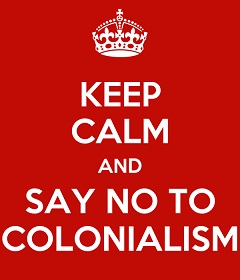
This was modus operandi for the Americans to establish New Guards. This was also the assertion of the Go Lean book. The 30 member-states of the Caribbean region has also endured a long train of abuses from its historicity, actuality and colonial heritage.

It’s enough already!

The same as it was the right time for the 13 original American Colonies to usurp their status quo, demand independence and appoint New Guards, it is past time for the Caribbean to take this stand. In 2013, the Go Lean book presented this:

Declaration of Interdependence
We, the people of Caribbean democracies find it necessary to accede and form a confederated Union, the Caribbean Union Trade Federation, with our geographic neighbors of common interest.

In addition, that Declaration “submitted facts”, detailing the shift in governance that must occur in the region. (Page 12):

xii. Whereas the legacy in recent times in individual states may be that of ineffectual governance with no redress to higher authority, the accedence of this Federation will ensure accountability and escalation of the human and civil rights of the people for good governance, justice assurances, due process and the rule of law. As such, any threats of a “failed state” status for any member state must enact emergency measures on behalf of the Federation to protect the human, civil and property rights of the citizens, residents, allies, trading partners, and visitors of the affected member state and the Federation as a whole.

Every month, the movement behind the Go Lean book presents a Teaching Series to address issues germane to Caribbean life and culture. For this month of December 2020, we are looking at the Long Train of Abuses that could-would-should move our people to change, to reform and transform. This is entry 1-of-6, the first one; it introduces the thesis that “enough already”; we are past the time when we should have made these changes. Consider here, the full catalog of the series this month:

  1. Long Train of Abuses: Enough Already – Colonialism Be Gone!
  2. Long Train of Abuses: Overseas Masters – Cannot See Overseas
  3. Long Train of Abuses: Religious Leadership in Government – Reconciling Trump
  4. Long Train of Abuses: Religious Character in Society – Human Rights
  5. Long Train of Abuses: Dutch Hypocrisy – Liberal Amsterdam vs Conservative Antilles
  6. Long Train of Abuses: Puerto Rico – “Take the Heat” or “Get out of the Kitchen”

The Go Lean book, serving as a roadmap for the introduction and implementation of the Caribbean Union Trade Federation (CU), asserts that Caribbean stakeholders must do the heavy-lifting to mitigate the societal defects, of which there are many. Our focus for Forging Change must consider both Top-Down and Bottoms-Up approaches. The purpose of the Go Lean roadmap is to optimize the economic, security and governing engines of Caribbean society, so there is a lot to consider.

There is not just One Stumbling Block that we must overcome; there are many. The purpose of this month’s Teaching Series is to focus on those Stumbling Blocks that have been aged for centuries here in our region. This is why we say, it is past time to reform and transform.

Enough already …

We must learn, as depicted in the opening of this commentary, that the structures of colonialism were not designed for our best interests, but rather the best interests of our colonizing host empires. So if we still maintain the same colonial structure that was instituted centuries ago, we are already behind in the race for the needed protection and prosperity in modern life.

Yes, we must finally Get Out of the abusive relationships that we have endured for such long times.

To the 18 (of 30) member-states that have a heritage of British colonialism – just 1 of the 5 – we have repeatedly warned to remove all vestiges of the Westminster ecosystem. It does not work! See this theme as it was presented in these previous blog-commentaries:

https://goleancaribbean.com/blog/?p=21138 Brexit Manifestation: Not So Good for Britain or Colonies
https://goleancaribbean.com/blog/?p=16317 When Queen ‘Elizabeth’ Dies … what’s next?
https://goleancaribbean.com/blog/?p=13993 First Steps – Following the ‘Dignified and Efficient’ British Model
https://goleancaribbean.com/blog/?p=13579 Colonialism’s Bloody History Revisited – ‘Thor’ Movie
https://goleancaribbean.com/blog/?p=12447 State of the Union: Deficient ‘Westminster System’
https://goleancaribbean.com/blog/?p=11420 ‘Black British’ and still ‘Less Than’
https://goleancaribbean.com/blog/?p=9485 10 Things We Want from the UK and 10 Things We Do Not Want

Life imitating art …

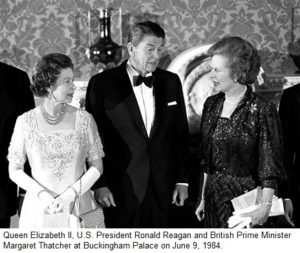
… the Netflix TV Series “The Crown Season 4” featured the storyline of British Prime Minister (PM) Margaret Thatcher’s rise and fall.

Three episodes from the fourth season — “Favourites,” “Fagan” and “48:1” — strongly imply that [Queen] Elizabeth objected to Thatcher’s harsh government spending cuts and refusal to impose economic sanctions on South Africa’s apartheid regime. The show depicts the queen politely but firmly confronting the prime minister over these matters during private meetings and “audiences” at Buckingham Palace.

The drama from this TV Show dramatizes that PM Thatcher had a clear conflict of interest regarding South Africa, in that “her son was an investor in projects promoted and supported by the Apartheid South African government“. When the UK  government (and many other international governments) were called on to impose economic sanctions against South Africa, the UK PM was the sole hold-out. See the series; consume it at your leisure. The performances are awe-inspiring; see this summary of one key character’s performances in this VIDEO here:

VIDEO – Best of Gillian Anderson as Margaret Thatcher | The Crown – https://youtu.be/gZgqQsFvyMM


Netflix UK & Ireland

Posted Nov 25, 2020 – Best known for her sensational performances in The X Files, The Fall and Sex Education, Gillian Anderson plays Britain’s first female Prime Minister, Margaret Thatcher, in The Crown Season 4. Here are her best moments from the series. That voice though…

➡️SUBSCRIBE FOR MORE: http://bit.ly/29kBByr

About Netflix:
Netflix is the world’s leading streaming entertainment service with over 195 million paid memberships in over 190 countries enjoying TV series, documentaries and feature films across a wide variety of genres and languages. Members can watch as much as they want, anytime, anywhere, on any internet-connected screen. Members can play, pause and resume watching, all without adverts or commitments.

Find Netflix UK on:
➡️TWITTER: http://bit.ly/29lYvcs
➡️INSTAGRAM: http://bit.ly/29slD8O
➡️FACEBOOK: http://bit.ly/29mx00a

Or visit the Netflix WEBSITE: http://nflx.it/29BcWb5

Best of Gillian Anderson as Margaret Thatcher | The Crown https://youtube.com/NetflixUK

In the 1980s, Elizabeth clashes with Prime Minister Margaret Thatcher while Prince Charles enters a tumultuous marriage with Lady Diana Spencer.

This foregoing show is set in London. This city is the cradle of the British brand of democracy around the world, with the seat of government for Her Royal Highness, Queen Elizabeth II, the Head of State of the UK and the Head of the Commonwealth of Nations. So we in the Caribbean – whose population reflect a majority Black-and-Brown demographic, just like South Africa – need to add this historicity to the “Long Train of Abuses” in our orthodoxy. Thatcher’s refusal to endorse the tougher program of economic sanctions against Apartheid, as originally laid out by other Commonwealth leaders, is a direct “slap in the face” to our race of people.
Colonialism has been the source of many of our toxic environments. Enough already!

We can do bad all by ourselves; we do not need a toxic hegemony to impede our societal progress. We should never “love people that do not love us back”; nor sacrifice for people that will not sacrifice for us.

This is why we say: Enough already!
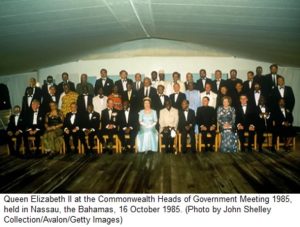
At one point, South Africa said “Enough Already”, as they shed their colonial shackles; they migrated to a Republic with a more representative constitution.

This is our urging for all Caribbean member-states of British heritage. But don’t get it twisted …

… the same issue is applicable for the other colonial legacies: American, Dutch, French and Spanish. While we cannot change the past, we do not have to be chained to it. This goal, as depicted in the Go Lean book, is to learn from the past, value our culture, but adapt our society for the challenges of the future. See this excerpt from the first page of the book:

Though a lot of the options the CU advocates were available to Caribbean member-states in the past, the reasons and rationales as to why they were not pursued is now of no consequence. We cannot ignore the past, as it defines who we are, but we do not wish to be shackled to the past either, for then, we miss the future. So we must learn from the past, our experiences and that of other states in similar situations, mount our feet solidly to the ground and then lean-in, to reach for new heights; forward, upward and onward.

Lean-in or adapt?  A better way to state the action is to “reform and transform”.

This is how we change our world, after a long train of abuses, by feeling-saying-doing: “No; Stop; and Get Out”.

We hereby urge all stakeholders to lean-in to this Go Lean roadmap; this is our plan to make our regional homeland a better place to live, work and play.

Yes, we can … 🙂

About the Book
The book Go Lean…Caribbean serves as a roadmap for the introduction and implementation of the technocratic Caribbean Union Trade Federation (CU), for the elevation of Caribbean society – for all member-states. This CU/Go Lean roadmap has these 3 prime directives:

  • Optimization of the economic engines in order to grow the regional economy to $800 Billion & create 2.2 million new jobs.
  • Establishment of a security apparatus to ensure public safety and protect the resultant economic engines.
  • Improve Caribbean governance to support these engines, including a separation-of-powers between the member-states and CU federal agencies.

The Go Lean book provides 370-pages of turn-by-turn instructions on “how” to adopt new community ethos, plus the strategies, tactics, implementations and advocacies to execute so as to reboot, reform and transform the societal engines of Caribbean society.

Download the free e-Book of Go Lean … Caribbean – now!

Who We Are
The movement behind the Go Lean book – a non-partisan, apolitical, religiously-neutral Community Development Foundation chartered for the purpose of empowering and re-booting economic engines – stresses that reforming and transforming the Caribbean societal engines must be a regional pursuit. This was an early motivation for the roadmap, as pronounced in the opening Declaration of Interdependence (Pages 12 – 13):

x. Whereas we are surrounded and allied to nations of larger proportions in land mass, populations, and treasuries, elements in their societies may have ill-intent in their pursuits, at the expense of the safety and security of our citizens. We must therefore appoint “new guards” to ensure our public safety and threats against our society, both domestic and foreign. The Federation must employ the latest advances and best practices … to assuage continuous threats against public safety.

xi. Whereas all men are entitled to the benefits of good governance in a free society, “new guards” must be enacted to dissuade the emergence of incompetence, corruption, nepotism and cronyism at the peril of the people’s best interest. The Federation must guarantee the executions of a social contract between government and the governed.

xxii. Whereas the heritage of our lands share the distinction of cultural tutelage from European and American imperialists that forged their tongues upon our consciousness, it is imperative to form a society that is neutral and tolerant of the mother tongue influences of our people to foster efficient and effective communications among our citizens.

xxiii. Whereas many countries in our region are dependent Overseas Territory of imperial powers, the systems of governance can be instituted on a regional and local basis, rather than requiring oversight or accountability from distant masters far removed from their subjects of administration. The Federation must facilitate success in autonomous rule by sharing tools, systems and teamwork within the geographical region.

xxiv.  Whereas a free market economy can be induced and spurred for continuous progress, the Federation must install the controls to better manage aspects of the economy: jobs, inflation, savings rate, investments and other economic principles. Thereby attracting direct foreign investment because of the stability and vibrancy of our economy.

Sign the petition to lean-in for this roadmap for the Caribbean Union Trade Federation.

—————

Appendix VIDEO – 50 Years to Leave Your Loverhttps://youtu.be/K4xoHjNjxus

Simon & Garfunkel
Posted August 25, 2015 – “50 Ways to Leave Your Lover” by Simon & Garfunkel from The Concert in Central Park

Listen to Simon & Garfunkel: https://SimonAndGarfunkel.lnk.to/list…
Subscribe to the official Simon & Garfunkel YouTube channel: https://SimonAndGarfunkel.lnk.to/subs…
Watch more Simon & Garfunkel videos: https://SimonAndGarfunkel.lnk.to/list…
Follow Simon & Garfunkel: Facebook: https://SimonAndGarfunkel.lnk.to/foll…
Instagram: https://SimonAndGarfunkel.lnk.to/foll…
Twitter: https://SimonAndGarfunkel.lnk.to/foll…
Website: https://SimonAndGarfunkel.lnk.to/foll…
Spotify: https://SimonAndGarfunkel.lnk.to/foll…
YouTube: https://SimonAndGarfunkel.lnk.to/subs…

Lyrics:
“The problem is all inside your head”
She said to me
“The answer is easy if you
Take it logically
I’d like to help you in your struggle
To be free
There must be fifty ways
To leave your lover”

She said, “It’s really not my habit to intrude
Furthermore, I hope my meaning
Won’t be lost or misconstrued
But I’ll repeat myself
At the risk of being crude
There must be fifty ways
To leave your lover
Fifty ways to leave your lover”

You just slip out the back, Jack
Make a new plan, Stan
You don’t need to be coy, Roy
Just get yourself free
Hop on the bus, Gus
You don’t need to discuss much
Just drop off the key, Lee

And get yourself free

Ooh, slip out the back, Jack
Make a new plan, Stan
You don’t need to be coy, Roy
Just listen to me
Hop on the bus, Gus
You don’t need to discuss much
Just drop off the key, Lee
And get yourself free

She said, “It grieves me so
To see you in such pain
I wish there was something I could do
To make you smile again”
I said, “I appreciate that
And would you please explain
About the fifty ways?”
She said, “Why don’t we both
Just sleep on it tonight
And I believe in the morning
You’ll begin to see the light”
And then she kissed me
And I realized she probably was right
There must be fifty ways
To leave your lover
Fifty ways to leave your lover

You just slip out the back, Jack
Make a new plan, Stan
You don’t need to be coy, Roy
Just get yourself free
Hop on the bus, Gus
You don’t need to discuss much
Just drop off the key, Lee
And get yourself free
Slip out the back, Jack
Make a new plan, Stan
You don’t need to be coy, Roy
Just listen to me
Hop on the bus, Gus
You don’t need to discuss much
Just drop off the key, Lee
And get yourself free

#SimonAndGarfunkel #50WaystoLeaveYourLover #TheConcertInCentralPark

Music in this video

  • Song: 50 Ways to Leave Your Lover (Live at Central Park, New York, NY – September 19, 1981)
  • Artist: Simon & Garfunkel
  • Writers: Paul Simon
  • Licensed to YouTube by: SME (on behalf of Columbia); CMRRA, UNIAO BRASILEIRA DE EDITORAS DE MUSICA – UBEM, UMPG Publishing, BMI – Broadcast Music Inc., LatinAutorPerf, UMPI, LatinAutor – UMPG, and 9 Music Rights Societies
Share this post:
, , , , , , ,

Hello Travel Insurance – No Longer Optional

Go Lean Commentary

The actuality of 2020 has changed the world. Period.

Many of the changes have been bad; but there are some that are shaping up to be good. One such is the emergence of Travel Insurance as a necessary product for visitors to the different Caribbean member-states (islands and coastal countries). Imagine a tourist contracting Coronavirus COVID-19 while vacationing in the Caribbean. How would that complicated situation be managed … and paid for?

The need for Travel Insurance is indisputable.

What exactly is Travel Insurance?

Travel insurance is an insurance product for covering unforeseen losses incurred while travelling, either internationally or domestically. Basic policies generally only cover emergency medical expenses while overseas, while comprehensive policies typically include coverage for trip cancellation, lost luggage, flight delays, public liability, and other expenses.[1]

Cost calculation
Travel insurance, are risk-based, and take into account a range of factors to determine whether a traveller can purchase a policy and what the premium will be. This generally includes destination countries or regions, the duration of the trip, the age of the travellers, and any optional benefits that they require coverage for such as pre-existing medical conditions, adventure sports, rental vehicle excess, cruising, or high-value electronics.[2] Some policies will also take into account the traveller’s estimated value of their trip to determine price. …

Journey departure and return conditions
Most travel insurance policies must be purchased prior to departure from home, or from the first departure point (e.g. an airport), depending on the product….

Complimentary travel insurance
Some credit card issuers offer automatic travel insurance if travel arrangements are paid for using their credit cards, but these policies are generic and do not take into account personal requirements and circumstances.[5]

Common benefits
Medical
In the event of minor injury or illness overseas, medical benefits offer coverage for visits to general practitioners, medicine, ambulance fees, and limited dentistry benefits. In the event of hospitalisation, most travel insurance policies include emergency assistance services, which can offer guarantees of payment to hospitals for treatment, liaise treating doctors, and organise transfers between hospitals or medical evacuations back to the insured person’s country of origin.[6] More comprehensive policies include an emergency companion cover, so that a family member can remain with the insured person while in hospital.

In the event of death overseas, medical benefit sections typically include cover for repatriation of remains to insured person’s the country of origin, or a funeral overseas.

Compulsory travel insurance
Certain countries require foreign visitors have proof of sufficient travel insurance as a condition for granting a visa or of approving visa-free entry. This includes travellers applying for a Schengen Area or UAE visa, and all visitors to CubaTurkey and Belarus.[21] Thailand[22] and Egypt[23] have announced plans to introduce similar requirements. Tour companies and cruise providers may also require passengers possess a minimum level of travel insurance before the traveller can commence their journey. – Source: Retrieved November 28, 2020 from https://en.wikipedia.org/wiki/Travel_insurance.

As related here in the foregoing, some countries have mandated Travel Insurance; we see now that a number of Caribbean member-states have followed suit, as a mitigating strategy to the actualities of the Coronavirus COVID-19 pandemic. See here, the details for Jamaica and the Bahamas:

Title 1: “This must become international”: Jamaica launches mandatory protection program
By: Cindy Sosroutomo
KINGSTON, JAMAICA — Jamaica has announced a groundbreaking – and mandatory – new program for all foreign travellers, effective next month [November 2020].

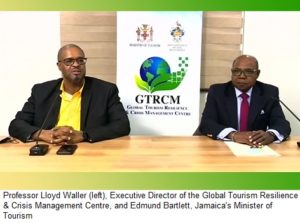
Jamaica Cares, a joint collaboration between the Global Tourism Resilience & Crisis Management Centre (GTRCMC), the Global Travel and Tourism Resilience Council, and Global Rescue, is being hailed as a first-of-its kind traveller protection and emergency services program designed to protect both visitors and the people of Jamaica.
For approximately US$40, the end-to-end program provides all nationalities who are entering Jamaica with non-Jamaica passports with access to compulsory traveller protection and emergency medical services. It is comprised of two major components:

  • All Hazards program: Case management, transport logistics, field rescue, evacuation, and repatriation for medical emergencies, including COVID-19 and other crises up to and including natural disasters
  • COVID-19-specific program: International health coverage up to US$100,000 for visitors traveling to and from Jamaica, and on-island health coverage up to US$50,000

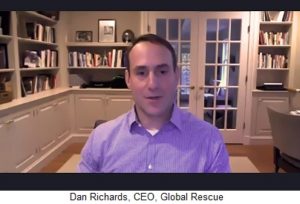
In a virtual press conference earlier this morning, Dan Richards, CEO of Global Rescue, confirmed that the fee will go towards supporting its new Jamaica Operations Centre (JOC) based in Montego Bay, and additional expansion to other locations as necessary.

“The JOC will ensure a rapid boots-on-the-ground response capability for dealing with crises when they occur, including coordinating our COVID-19 response in Jamaica and the region,” said Richards. “We envision head count to grow as we grow out the program to Jamaica and, ultimately, throughout the region and potentially the world.

“We will not rest until we have accomplished our mission, and that is the restoration of Jamaican travel and tourism to pre-COVID-19 levels and ongoing support thereafter.”

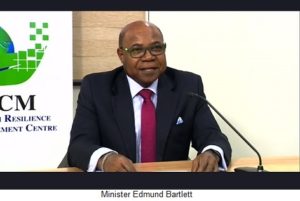
Jamaica’s Minister of Tourism, Edmund Bartlett, stressed the need for a proactive approach to global tourism recovery, saying that “destination assurance” is becoming a critical pre-condition for travel today.

“Trust has to be earned, we can only do that with action – not just words – through innovation, partnership and empathy,” said Bartlett. “As thought leaders, Jamaica has proactively taken a vital role in recovering and building the spirit of travel by restoring the trust and confidence of travellers in our destination. Jamaica Cares represents another prong in our COVID resilience and has been designed very specifically and deliberately. The program’s protocols will ensure our ability to welcome travellers to Jamaica safely.”

Bartlett expects the program to be implemented by U.S. thanksgiving, and confirms that Jamaica has already begun speaking with other countries that wish to follow suit. More information regarding how travellers can access the program and when payment will be required will come in the next few weeks, though Bartlett said that “the market will be given enough time to be able to respond to whatever the requirements are to comply.”

For travellers who already have travel insurance in place, Richards said that Jamaica Cares is an additive program.

“The extent that the individual already has a mechanism in place, either a service provider or a travel insurance package that they’ve already purchased, our personnel will work with whatever insurance they have to deconflict that program with ours and to make sure the delivery of services is seamless,” said Richards. “At the end of the day, what we are aiming for is that seamless delivery of service with respect to these types of issues.”

Also joining the press conference was Gloria Guevara, president & CEO of the World Travel & Tourism Council (WTTC), and Dr. Taleb Rifai, Co-Chair of the GTRCMC and the Global Travel and Tourism Resilience Council, and former Secretary-General of the United Nations’ World Tourism Organization (WTO).

Guevara stressed the need for the global community to eliminate quarantines so that “people can freely move around”, and said that today’s announcement is an important step towards resuming international travel.

“From WTTC, we believe that we have to learn how to co-exist with this virus, and we cannot wait for a vaccine to be ready and be deployed around the world,” she said. “We see Jamaica Cares as a very important initiative that will be a good example around the world and will hopefully be replicated by other countries.”

Rifai also hailed the program, calling it a great initiative between the public and private sectors.

“Now it’s in the hands of governments,” he said. “This concept must become international and we must have most governments adhere to it. It’s the only way we can travel safely and have peace of mind.”

Source: Posted Monday, October 26, 2020; retrieved November 15, 2020 from: https://www.travelweek.ca/news/this-concept-must-become-international-jamaica-launches-mandatory-protection-program/

———-

Title 2: Travel Insurance for the Bahamas
Sub-title: Do I Need Travel Insurance for the Bahamas?

“Bermuda, Bahama, come on pretty mama…” It’s no surprise the 1988 Beach Boys hit “Kokomo” features the Bahamas so prominently. Even today, the island getaway remains one of the most popular vacation destinations among travelers.

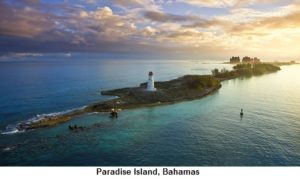
In light of recent hurricane activity in the area and COVID-19 pandemic, our customers are increasingly asking if travel insurance is required for trips to the Bahamas. As of November 14, 2020, travel health insurance is required for all incoming visitors. The cost for the mandatory insurance is included in the price of the Travel Health Visa that all tourists are required to apply for before entry. Travelers should keep in mind that this required coverage may be limited, so we recommend purchasing additional coverage to cover non-health-related expenses, like travel delays or baggage loss, for example.

Concerns about illness, injuries, and medical issues have historically been the top reasons those traveling to the Bahamas ask about insurance. However, the destruction caused by Hurricane Dorian has changed the way people are thinking about coverage for the islands. Weather is now the number one concern driving Bahamas trip insurance inquiries. Unforeseen weather events can wreak havoc on travel plans by causing delays, cancellations, and even total destruction of your accommodations in some cases. Choosing an insurance plan that will cover these types of events is your best defense.

As mentioned above, many travelers to the Bahamas buy coverage to supplement or replace their domestic health insurance while they’re away. Most domestic health insurance providers do not provide coverage while you are out of the country. For this reason, those taking a trip to the Bahamas frequently purchase travel medical plans. This way, they can stay protected against hefty out-of-pocket costs as a result of unforeseen illnesses or injuries.

While healthcare and weather concerns are the main reasons travelers purchase trip insurance for the Bahamas, there are additional reasons worth considering. For example, the Bahamas is a popular destination among cruisers, so you might consider choosing a plan that incorporates cruise coverage if you plan to set sail. Other travelers may be flying internationally to reach the islands. In these cases, flight insurance can help travelers with unexpected issues, including delays, interruptions, and missed connections.

Many comprehensive travel insurance plans include specialized coverages, like baggage delay or lossemergency medical evacuation, or dental care while abroad. It’s important to think about which coverages make sense for your Bahamian vacation or business trip before choosing a plan.

How Much is Travel Insurance for the Bahamas?
One of the most common questions we get from customers planning a visit to the Bahamas is “how much travel insurance will cost?” The cost of the required travel insurance is now included in the Bahamas Travel Health Visa. However, the cost of a plan with additional coverage varies due to several factors. First, the number of travelers in the group may affect the rate. In general, policies that cover more than one traveler have an increased cost. Second, traveler ages can play a role in determining pricing, as older travelers typically carry more risk as a result of medical concerns. This increased risk can translate to a higher cost, especially if one or more travelers in the group have any pre-existing conditions. Another important factor is the duration of your trip. Traveling for a longer period of time usually means there are more opportunities for travel hiccups. So, a plan that covers a week-long trip or vacation will be considerably cheaper than a plan that covers long-term travel. One of the most significant factors for determining the cost of travel insurance is the kind of coverage the plan offers. Typically, the price of a plan will increase for each coverage it includes.

Source: Retrieved November 16, 2020 from: https://www.insuremytrip.com/destinations/bahamas-travel-insurance/

The “pangs of distress” of this pandemic rages on. Leave well enough alone and “things go to hell”: residents and citizens alike end up in the Emergency Room and the ICU. There is the need for therapeutics, oxygen, breathing aids, ventilators and even lung transplants.

Leave well enough alone and things go from worse to worst.

We must act … before, during and after affliction. Travel Insurance is a good Way Forward. See the documented experiences of a Frequent Traveller-Couple in the Appendix VIDEO below.

Change is afoot! There is still the need for touristic hospitality while pragmatically addressing the real risk of this pandemic.

Expect more Caribbean member-states and cruise lines to follow this model, individually. How about collectively? Is there a need for a regional coordination of tourism activities and risk management?

Yes, indeed …

We needed this construct before COVID-19 … and we will need it after COVID-19. We simply need a strong regional foundation for economics, security (Public Safety) and governance, This has been the assertion since the publication of the 2013 book Go Lean…Caribbean. The 30 member-states of the region must collaborate, consolidate and confederate their tourism promotion and protection operations. This collectivity will create leverage across the entire regional base.

The Go Lean book serves as a roadmap for that regional construct: the Caribbean Union Trade Federation (CU) and the Caribbean Central Bank (CCB). So why not also a locally-regionally owned insurance carrier; maybe even a CU/CCB subsidiary. We should be able to keep the profits here at home.

In a previous Go Lean commentary, from June 16, 2018, it was related how …

“the world is telling the Caribbean: Better band together to assuage your challenges. We are united in affliction, we might as well be united in solutions. Yes, it is no longer optional for our region to confederate as a Single Market.”

Confederation is not a bad thing! In a different previous blog-commentary from December 7, 2017, it was asserted that our Caribbean member-states all suffer from the same inadequate infrastructure, and thusly need to benefit from regional empowerments. Yes, the effect of regional integration could even be an Increased Caribbean Tourism Market Share. That commentary quoted:

It’s time to take inventory of Caribbean tourism:

      1. It has been found wanting! …
      It has been weighed in the balance; it has been measured …

Tourism is the current dominant industry; the goal is to “stand on the shoulders” of previous accomplishments, add infrastructure not possible by just one member-state alone and then reap the benefits. Imagine this manifestation in just this one new strategy: inter-island ferries that connect all islands for people, cars and goods.

The movement behind the book Go Lean … Caribbean seeks to reboot the economic engines of the Caribbean member-states. So while tourism is the region’s primary economic driver, it is inadequate for providing the needs of the people in the region, and inadequate for dealing with the crisis of pandemics. We must do better!

The likelihood of more pandemics/epidemics in the Caribbean is great. We have already had to contend with:

The Go Lean book explains further that the Caribbean region must install a security apparatus to prepare the economic engines, with the directive to prepare and respond to pandemic and natural disasters. The efficiency and effectiveness of a Caribbean Emergency Management Agency must be streamlined to ensure the world that there is business continuity of our systems of commerce. This quotation is derived from the Go Lean book at Page 184:

Modeled after FEMA in the US, this agency will be charged with the preparation, response and reconstruction for the regions for the eventual manifestations of hurricanes, earthquakes, tsunamis, flooding and other declared disasters, natural and man-made like medical epidemic, drought, pollution, oil spills, terrorism, etc.

This is what it means to be a technocracy, to promote the arts and sciences of Professional Emergency Management; as explained further at Page 64:

The CU treaty calls for a collective security agreement for the Caribbean member-states to prepare-respond to natural disasters, emergency incidents and assuage against systemic threats against the homeland. The CU employs the professional arts and sciences of Emergency Management to spread the costs and risks across the entire region. Outside of hurricanes or earthquakes, the emergency scope includes medical trauma, pandemic incidents and industrial accidents (i.e. oil or chemical spills) – any scenario that can impact the continuity of the economic engines and/or community.

This commentary describes the dynamics of a regional tourism promotion and protection. Yes, managing regional tourism means optimizing the planning and response for pandemics and natural disasters. As we have asserted time and again, this is no longer optional for this Caribbean region. We must now invest in the earnest effort for integration and collaboration. We must have the leverage to spread the costs, risks and premium base across the entire Caribbean region. Only then will the rest of the world know that a trip to the Caribbean is safe, risk-free and rewarding.

The Go Lean movement has previously detailed many related issues and advocacies for regional tourism management. Consider this sample of previous blog-commentaries:

https://goleancaribbean.com/blog/?p=20561 Toxic Environment – Opposite of ‘Diversity & Inclusion’
https://goleancaribbean.com/blog/?p=19409 Coronavirus: ‘Clear and Present’ Threat to Economic Security
https://goleancaribbean.com/blog/?p=19217 ‘Live and Let Live’ – Allowing some Localism for Touristic Administrations
https://goleancaribbean.com/blog/?p=18831 Opportunity: Supply Cruise Line with their Food needs
https://goleancaribbean.com/blog/?p=17919 ‘Be our Guest’ – But the Rules of Hospitality damage Societal Ethics
https://goleancaribbean.com/blog/?p=17072 Caribbean Cruise Ports can be ‘Held Hostage’ without Collective Bargaining
https://goleancaribbean.com/blog/?p=15521 Caribbean Unity? What a Joke – Tourism Missteps Again and Again
https://goleancaribbean.com/blog/?p=15380 Industrial Reboot – Cruise Tourism 2.0 – A Better End-Product for All
https://goleancaribbean.com/blog/?p=14761 Flying the Caribbean Skies – Optimizing the Regional Air Travel Ecosystem
https://goleancaribbean.com/blog/?p=12879 Disaster Preparation: ‘Rinse and Repeat’
https://goleancaribbean.com/blog/?p=11544 Forging Change in the Cruise eco-system: Collective Bargaining
https://goleancaribbean.com/blog/?p=6341 Tourism Stewardship — What’s Next?
https://goleancaribbean.com/blog/?p=5210 Cruise Ship Commerce – Getting Ready for Change
https://goleancaribbean.com/blog/?p=235 Tourism’s changing profile

We have to get along with our neighbors better; we have to “share the load”.

The Go Lean book quotes the Singer-Songwriter Bill Withers in his 1970 Hit Song “Lean On Me”. (Bill Withers died earlier in 2020). Art imitates Life and Life imitates Art as the song lyrics explain, here:

If there is a load you have to bear
That you can’t carry
I’m right up the road
I’ll share your load
If you just call me.

If one or two Caribbean countries adapt a mandatory Travel Insurance scheme, then really, all countries should consider. That universality can create more demand; a greater demand can create greater supply options; greater supply options can create better pricing and quality options.

This is Travel Insurance 101.

This is Economics 101.

People will get sick; people will die. Be prepared!

So we must reform and transform the Caribbean’s societal engines so as to assuage the dangers of global pandemics and natural disasters. This is the quest of the Go Lean roadmap. and this is not just a pipe dream; it is conceivable, believable and achievable for our regional stakeholders to do better and be better with regional tourism promotion and protections.

All Caribbean stakeholders – residents and tourists alike – are urged to lean-in to this roadmap for change … and empowerment. We can make the region a better place to live work and play. 🙂

Sign the petition to lean-in for this roadmap for the Caribbean Union Trade Federation.

About the Book
The book Go Lean…Caribbean serves as a roadmap for the introduction and implementation of the technocratic Caribbean Union Trade Federation (CU) and the Caribbean Central Bank (CCB), for the elevation of Caribbean society – for all member-states. This CU/Go Lean roadmap has these 3 prime directives:

  • Optimization of the economic engines in order to grow the regional economy to $800 Billion and create 2.2 million new jobs.
  • Establishment of a security apparatus to ensure public safety and protect the resultant economic engines.
  • Improve Caribbean governance to support these engines, including a separation-of-powers between the member-states and CU federal agencies.

The Go Lean book provides 370-pages of turn-by-turn instructions on “how” to adopt new community ethos, plus the strategies, tactics, implementations and advocacies to execute so as to reboot, reform and transform the societal engines of Caribbean society.

Download the free e-Book of Go Lean … Caribbean – now!

Who We Are
The movement behind the Go Lean book – a non-partisan, apolitical, religiously-neutral Community Development Foundation chartered for the purpose of empowering and re-booting economic engines – stresses that reforming and transforming the Caribbean societal engines must be a regional pursuit. This was an early motivation for the roadmap, as pronounced in the opening Declaration of Interdependence (Pages 12 – 13):

x. Whereas we are surrounded and allied to nations of larger proportions in land mass, populations, and treasuries, elements in their societies may have ill-intent in their pursuits, at the expense of the safety and security of our citizens. We must therefore appoint “new guards” to ensure our public safety and threats against our society, both domestic and foreign. The Federation must employ the latest advances and best practices … to assuage continuous threats against public safety. …

xi. Whereas all men are entitled to the benefits of good governance in a free society, “new guards” must be enacted to dissuade the emergence of incompetence, corruption, nepotism and cronyism at the peril of the people’s best interest. The Federation must guarantee the executions of a social contract between government and the governed.

xvi. Whereas security of our homeland is inextricably linked to prosperity of the homeland, the economic and security interest of the region needs to be aligned under the same governance. Since economic crimes … can imperil the functioning of the wheels of commerce for all the citizenry, the accedence of this Federation must equip the security apparatus with the tools and techniques for predictive and proactive interdictions.

xxiv. Whereas a free market economy can be induced and spurred for continuous progress, the Federation must install the controls to better manage aspects of the economy: jobs, inflation, savings rate, investments and other economic principles. Thereby attracting direct foreign investment because of the stability and vibrancy of our economy.

Sign the petition to lean-in for this roadmap for the Caribbean Union Trade Federation.

——————

Appendix VIDEO – Travel insurance 2020 don’t make the mistake traveling without travel insurance – https://youtu.be/nWlWTy3kAEE


Jerry Brown Travels

Published July 12, 2020 – Understanding travel insurance protect yourself by using international travel insurance. COVID-19 has changed our lives and the way we travel.

Why should I consider international travel medical insurance?

Buying a travel medical insurance plan is a smart choice for international travelers. When you’re far from home, this type of plan provides insurance benefits designed for travelers and non-insurance travel assistance services.

Travel with Us on YouTube https://goo.gl/SCHrdw

Subscribe Now – It’s FREE: Patreon: https://www.patreon.com/jerrybrowntra…

Follow us on Facebook https://www.facebook.com/JerryBrownTr…

Want to improve your Spanish now? get 5% off: https://travelspanishconfidence.com/?…

https://youtu.be/nWlWTy3kAEE

Share this post:
, , ,
[Top]

‘Climate Change’ raging Worse for some compared to others

Go Lean Commentary

We are all in this together! – popular fallacy for global problems

This is not true for Climate Change. Some communities are on the frontlines; some communities take all the beatings, while some other communities are unscathed.
Inequality rules the day!

This writer recently repatriated back to the Caribbean (Bahamas) in 2019 and have consistently endured power utility bills of US$900 to US$1,100 during the summer months. “Our A/C never goes off”.

Most residents in Caribbean communities cannot afford this actuality. This is not about enjoying; this is about enduring.

This has always been true in society: There are the Haves and the Have-Nots. But what is emerging in the Climate Change eco-system, is not just the individual inequalities, but rather the national inequalities. Some countries have suffered pangs of distress from Climate Change … some countries have-not.

Though we have experienced and expressed these distresses, this is not our thoughts alone …

No, the highly-regarded New York Times has recently published their own formal journalistic depiction of this assertion. See that story highlights here:


Title: A warming world
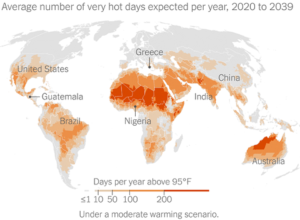
In the past 60 years, every decade has been hotter than the last, and 2020 is on track to be among the hottest years yet. But the burden of extreme heat is not shared equally — it’s significantly worse for people at the bottom of the socioeconomic ladder.

Extreme heat can exacerbate poor health, ravage crops and make it dangerous to work outside. And in many parts of the world, simple ways to alleviate those effects — like water, or electricity for fans and air-conditioners — are a luxury.

Somini Sengupta, The Times’s international climate reporter, and a team of photographers have a new story that documents how rising temperatures are affecting people across multiple continents.

Excerpts
The agony of extreme heat, though, is profoundly unequal.

This Is Inequity at the Boiling Point

It was a record 125 degrees Fahrenheit in Baghdad in July, and 100 degrees above the Arctic Circle this June. Australia shattered its summer heat records as wildfires, fueled by prolonged drought, turned the sky fever red.

For 150 years of industrialization, the combustion of coal, oil and gas has steadily released heat-trapping gases into the atmosphere, driving up average global temperatures and setting heat records. Nearly everywhere around the world, heat waves are more frequent and longer lastingthan they were 70 years ago.

But a hotter planet does not hurt equally. If you’re poor and marginalized, you’re likely to be much more vulnerable to extreme heat. You might be unable to afford an air-conditioner, and you might not even have electricity when you need it. You may have no choice but to work outdoors under a sun so blistering that first your knees feel weak and then delirium sets in. Or the heat might bring a drought so punishing that, no matter how hard you work under the sun, your corn withers and your children turn to you in hunger.

It’s not like you can just pack up and leave. So you plant your corn higher up the mountain. You bathe several times a day if you can afford the water. You powder your baby to prevent heat rash. You sleep outdoors when the power goes out, slapping mosquitoes. You sit in front of a fan by yourself, cursed by the twin dangers of isolation and heat.

Extreme heat is not a future risk. It’s now. It endangers human health, food production and the fate of entire economies. And it’s worst for those at the bottom of the economic ladder in their societies. See what it’s like to live with one of the most dangerous and stealthiest hazards of the modern era.  …

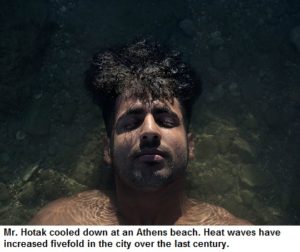
Heat waves are becoming more frequent in Athens. It’s toughest in the city’s treeless, concrete neighborhoods.

… Mr. Hotak was 16 when he left his home in the Sholgara district of Afghanistan, the only one among his 11 brothers and sisters to do so. After one failed attempt to enter Europe and two years in a refugee camp, he was granted asylum in Greece. That’s when he arrived on the rooftop refuge with a friend, in the crowded warrens of Kolonos, a working class Athens neighborhood where many migrants have settled.
The city has grown hotter by the decade. According to temperature records kept by the National Observatory of Athens, there were fewer than 20 hot days (with temperatures over 99 degrees Fahrenheit, or 37 Celsius) from 1897 until 1906. By the mid-1980s, there were still fewer than 50 hot days per decade. From 2007 to 2016, though, the number had risen to 120 hot days. …

In Athens, heat waves have increased fivefold over the last century. Diminished rains and longer dry seasons are destroying Guatemala’s farmlands, where Indigenous farmers could see crop yields fall sharply. In Nigeria, hotter nights make it easier for mosquitoes to breed, increasing the risk of mosquito-borne diseases. And in the United States, heat kills older people more than any other extreme weather event, including hurricanes.

We spoke with Somini about what she described as “one of the most profound inequities of the modern age.”

“I have seen over the last couple of years the impact of what is truly a global problem,” she said. “We know that high heat and humidity is a dangerous combination for health, agriculture and economies of whole regions — nearly everywhere around the world, heat waves are more frequent and longer lasting than they were 70 years ago.”

What do experts recommend to combat rising temperatures?

“Draw down the combustion of fossil fuels,” Somini said. “The world is capable of getting off coal in many instances, capable of vastly reducing the burning of oil and gas.”

But the world also has to adjust to the extreme heat we’re seeing already, she said. That includes making water, air-conditioners and fans more accessible, and planting trees to bring down temperatures in cities.

“It could also mean adjusting things you might not immediately think of, like labor laws so people don’t have to work for hours under the blistering sun, agricultural changes in farming methods or what is grown in what place to adapt to higher temperatures,” she said.

“In short, it requires doing everything pretty differently.”

In other climate news:

Source: posted August 6, 2020; retrieved September 14, 2020 from:  https://www.nytimes.com/interactive/2020/08/06/climate/climate-change-inequality-heat.html


Go Lean Commentary continues …

What’s next for the Caribbean? While excessive heat and the need for air-conditioning is critical, the pang of distress that impacts us most severely is that of hurricanes. Remember Irma, Maria or Dorian

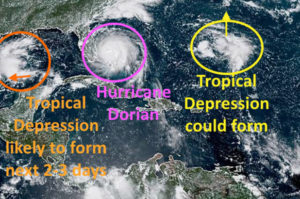
Hurricanes are worse; more frequent and more powerful. In fact for 2020, the meteorological officials have ran out of names to assign for this year’s Atlantic Hurricane season. They are now assigning the Greek alphabet as hurricane names; think Alpha, Beta, Gamma, Delta, Epsilon, etc.. Here is the actuality of the Alpha Storm here:
Subtropical Storm Alpha (2020)
… a very unusual subtropical cyclone that made landfall in Portugal, the first ever recorded occurrence for the country. The system was also the easternmost-forming Atlantic tropical cyclone on record in the basin, exceeding the previous record of Tropical Storm Christine in 1973.[1] The twenty-fourth cyclone and twenty-second named storm of the extremely active and record-breaking 2020 Atlantic hurricane season, Alpha originated from a large non-tropical low that was first monitored by the National Hurricane Center on 15 September. Initially not anticipated to transition into a tropical cyclone, the low gradually tracked south-southeastward for several days with little development. By 18 September, the low began to separate from its frontal features and exhibited sufficient organization to be classified as a subtropical cyclone as it approached the Iberian Peninsula, becoming a subtropical storm later that day. Alpha made landfall just north of Lisbon, Portugal during the evening of 18 September, becoming the first recorded landfalling (sub)tropical cyclone in mainland Portugal.[2] Alpha was also the third confirmed (sub)tropical cyclone landfall in mainland Europe, following a hurricane in Spain in 1842 and Hurricane Vince (as a tropical depression) in 2005. Alpha rapidly weakened and became a remnant low early on 19 September.

There is no denying, this is all relative! Imagine a necessary ingredient for managing snow removal in society: rock salt. If there was a shortage of rock salt, countries nearer to the Arctic and Antarctic poles would be more directly affected. It does not snow in the tropical regions, near the equator, so these would be disaffected.

Well, the opposite is occurring; there are shortages – like precipitation, cool breezes, shady trees – and dire consequences (drought, forest fires, storms, flooding, rising sea levels, etc.) being endured in the tropical regions and the communities closer to the poles are less affected. (Note: Melting glacial ice does have universal effects with rising sea levels; think Canada).
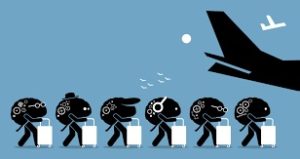
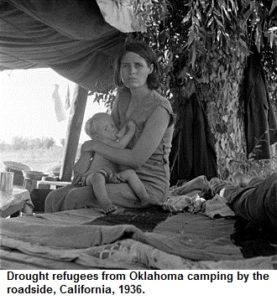
The dire consequences of Climate Change are not equally shared. This actuality has fostered the threat of Climate Refugees or Migrants – people leaving one part of the planet – think: deserts of the Middle East and North Africa – to seek refuge in lesser affected locales, like Western Europe and North America.

Ready or not, climate migration is now also acute here in the Caribbean. Societal abandonment had previously been identified as the most dire threat to Caribbean society. The 2013 book Go Lean…Caribbean opens with this declaration:

There is something wrong in the Caribbean … instead of the world “beating a path” to these doors, the people of the Caribbean have “beat down their doors” to get out.

So first there was the brain drain (college educated population), but now we are noticing the rest of society also taking leave:

  • Overseas Territories – i.e. Puerto Rico, USVI, Aruba, St. Martin, Martinique, Bermuda, Caymans, etc. – have no hope of retaining young people.
    • High School Graduation on Friday; flights to the colonizing Fatherland on Saturday.
  • Independent countries emigrate through legal (family sponsor-ships) and illegal means (trafficking).

As stated in the opening, we are not all in “this” together! There are the “Haves and the Have-Nots”. This is the new normal; we must adapt to this new reality; see the VIDEO portrayal in the Appendix below. This is a consistent theme in many previous Go Lean commentaries; see a sample here:

https://goleancaribbean.com/blog/?p=19347 Go Green … Caribbean … finally
https://goleancaribbean.com/blog/?p=18182 Disaster Relief: Helping, Not Hurting
https://goleancaribbean.com/blog/?p=12949 Grow Up Already! The Caribbean must manage Charities ourselves
https://goleancaribbean.com/blog/?p=12068 Abating Climate Change – Ready to reboot, reform and transform
https://goleancaribbean.com/blog/?p=10895 Not expecting the relief and refuge only from others – Readying Ourself
https://goleancaribbean.com/blog/?p=9455 Fix Climate Change – Yes, We Can
https://goleancaribbean.com/blog/?p=7103 COP21 – Caribbean lands acknowledges ‘Climate Change’
https://goleancaribbean.com/blog/?p=5462 American Red Cross raised $500 million for Haiti but kept most of it
https://goleancaribbean.com/blog/?p=3432 OECS diplomat has dire warning for the Caribbean looking for hand-outs

Our choices are that simple: prepare for Climate Change or watch our people migrate away from the homeland to foreign shores where the dire effects are lessened. While all humans are created equal, all people do not get equal treatment from … Mother Nature. Some people get more hot and wet than other people, yet they may not be able to afford the physical relief.
Even air-conditioning may not be equally accessible to everyone – we need cooperative refrigeration.

There are strategies, tactics and implementations to abate Climate Change and relieve the dire consequences for people and property. We can … must endure this new normal. This is how and why we can make our homeland a better place to live, work and play.  🙂

About the Book
The book Go Lean…Caribbean serves as a roadmap for the introduction and implementation of the technocratic Caribbean Union Trade Federation (CU), for the elevation of Caribbean society – for all member-states. This CU/Go Lean roadmap has these 3 prime directives:

  • Optimization of the economic engines in order to grow the regional economy to $800 Billion and create 2.2 million new jobs.
  • Establishment of a security apparatus to ensure public safety and protect the resultant economic engines.
  • Improve Caribbean governance to support these engines, including a separation-of-powers between the member-states and CU federal agencies.

The Go Lean book provides 370-pages of turn-by-turn instructions on “how” to adopt new community ethos, plus the strategies, tactics, implementations and advocacies to execute so as to reboot, reform and transform the societal engines of Caribbean society.

Download the free e-Book of Go Lean … Caribbean – now!

Who We Are
The movement behind the Go Lean book – a non-partisan, apolitical, religiously-neutral Community Development Foundation chartered for the purpose of empowering and re-booting economic engines – stresses that reforming and transforming the Caribbean societal engines must be a regional pursuit. This was an early motivation for the roadmap, as pronounced in the opening Declaration of Interdependence (Pages 11 – 13):

i. Whereas the earth’s climate has undeniably changed resulting in more severe tropical weather storms, it is necessary to prepare to insure the safety and security of life, property and systems of commerce in our geographical region. As nature recognizes no borders in the target of its destruction, we also must set aside border considerations in the preparation and response to these weather challenges.

xi. Whereas all men are entitled to the benefits of good governance in a free society, “new guards” must be enacted to dissuade the emergence of incompetence, corruption, nepotism and cronyism at the peril of the people’s best interest. The Federation must guarantee the executions of a social contract between government and the governed.

xvi. Whereas security of our homeland is inextricably linked to prosperity of the homeland, the economic and security interest of the region needs to be aligned under the same governance. Since economic crimes … can imperil the functioning of the wheels of commerce for all the citizenry, the accedence of this Federation must equip the security apparatus with the tools and techniques for predictive and proactive interdictions.

xxiv. Whereas a free market economy can be induced and spurred for continuous progress, the Federation must install the controls to better manage aspects of the economy: jobs, inflation, savings rate, investments and other economic principles. Thereby attracting direct foreign investment because of the stability and vibrancy of our economy.

Sign the petition to lean-in for this roadmap for the Caribbean Union Trade Federation.

—————–

Appendix VIDEO – Refugees Are Fleeing Climate Change – https://youtu.be/nIlMHFwC1MM


The YEARS Project
Tens of millions of people could be displaced by climate change by the end of this century. Climate scientist Michael Oppenheimer explains why that matters, why he supports the right to migrate, and what governments need to do to prepare.
This story is part of Covering Climate Now, a global collaboration of more than 250 news outlets that aims to strengthen coverage of the climate crisis.

Share this post:
, , ,
[Top]

Abaco, Bahamas – Losing the Battles on Two Fronts

Go Lean Commentary

At the beginning of World War II, it became obvious, very early, that Germany was going to lose. Why?

Because they had to fight battles … alone … on two fronts:

That was a strategic and tactical disadvantage for Nazi Germany! Time was to catch up with them eventually.

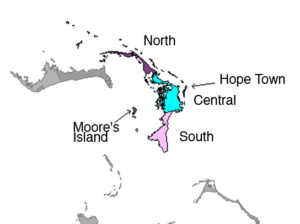
There is a parallel situation today in the Caribbean, in the Northern Bahamas community of Abaco in particular. They have battles on two fronts: A hurricane and a pandemic.
  • Climate Change – infused storms like Hurricane Dorian in September 2019
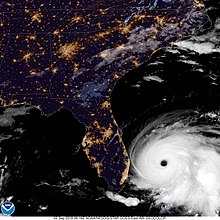
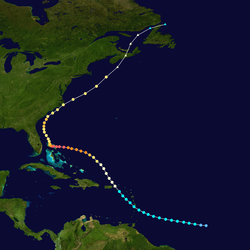
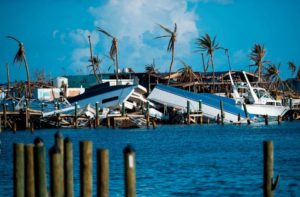
    At 16:40 UTC on September 1, Dorian made landfall on Great Abaco Island in the Bahamas, with one-minute sustained winds of 185 mph (298 km/h), wind gusts over 220 mph (355 km/h), and a central barometric pressure of 910 millibars (27 inHg),[26][27] as Dorian reached its peak intensity during landfall.[28] Storm chaser Josh Morgerman observed a pressure of 913.4 mbar (26.97 inHg) in Marsh Harbour.[29] Dorian’s forward speed decreased around this time, slowing to a westward crawl of 5 mph (8.0 km/h).[28] At 02:00 UTC on September 2, Dorian made landfall on Grand Bahama near the same intensity, with the same sustained wind speed.[30] Afterward, Dorian’s forward speed slowed to just 1 knot (1.2 mph; 1.9 km/h), as the Bermuda High that was steering the storm westward weakened. Later that day, the storm began to undergo an eyewall replacement cycle to the north of Grand Bahama; the Bermuda High to the northeast of Dorian also collapsed, causing Dorian to stall just north of Grand Bahama.[31][32] Around the same time, the combination of the eyewall replacement cycle and upwelling of cold water caused Dorian to begin weakening, with Dorian dropping to Category 4 status at 15:00 UTC.[33] Due to the absence of steering currents, Dorian stalled north of Grand Bahama for about a day.[34][35] – Wikipedia

  • Pandemic – Coronavirus COVID-19
    Consider the actuality of life in the Bahamas during this crisis as related in a previous blog-commentary; (this reporting describes the situation on the ground in the Bahamas as miserable):

    • Jobs are affected – most private businesses, including tourist resorts, are closed or curtailed.
    • Retail food prices increase because of higher inventory-carrying costs.
    • Hospitals and public safety institutions are overwhelmed with COVID cases: testing, tracing, therapeutics and terminal patients.
    • Government Shutdown – No administrative processing, at all; no passport processing, no business registrations, etc.

Abaco is failing miserably on both fronts. It is not wise to bet that they will win, overcome, survive or thrive. 🙁

These are not just our thoughts alone; see these 2 articles here depicting the acute crisis on the ground in Abaco:

Title # 1: Everything Is Not Okay in the Bahamas… Not by a Long Shot – Surfline
By: Matt Pruett
For those who don’t regularly deal with natural disasters like hurricanes, earthquakes, wildfires or tornadoes, it’s easy to think of these violent events as one-offs, cosmic flukes, and after a year or so passes, old news. When in reality, the devastating effects from these catastrophes can last many, many years after the initial deathblow, and casualties continue to stack.

It’s been a little over a year since the prolonged and record-breaking Category 5 Hurricane Dorian blasted the Bahamas with 185mph maximum sustained winds — effectively become the most intense tropical cyclone to ever strike the islands, the costliest event in Bahamian history with $3.4 billion in damage, and the worst natural disaster in the country’s history — leaving at least 70,000 people homeless and 74 dead (although the exact death toll is unknown, as 245 people were still missing as of April 2020).
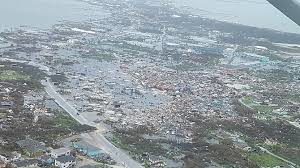
But there is compassion, especially from Floridian surfers who’ve been island-hopping this area for generations. And with compassion comes aid, and with aid comes relief, and with relief comes recovery. At least that’s what we hope.

“There are very few moments in life when we as individuals have the opportunity to do something larger than ourselves and help,” explains acclaimed filmmaker Wesley Dunham-Brown, who co-created the surfing documentary films Peel: The Peru Project and Chasing Dora before starting his own production company, Arora Entertainment. “I believe this is what we were ultimately put on this planet to do. When Hurricane Dorian decimated the Bahamas, and more specifically the area of Hope Town, it gave us the opportunity to do just that. Our small group of passionate filmmakers at Arora Entertainment went down to help these people, tell their incredible stories of loss, grief, love and compassion and share their unrelenting faith, will and perseverance to see the Bahamas rebuilt.”

Respected for their storytelling techniques, industry contacts, and ability to spread awareness, Brown and his directorial partner Bobby Pura were hired by Hope Town Rising — a grassroots initiative of the Community Assistance Foundation focused on supporting and rebuilding Elbow Cay — to focus their lenses on this devastated area in the way of a full-length documentary, “This is Hope Town.” The film shadows a close-knit community of Bahamians as they join together to work around-the-clock in terrible conditions to rebuild their lives, while recounting the damage, emotional toll and physical wreckage in heart-wrenching interviews. Brown and Pura immediately tapped longtime Bahamas traveler and professional surfer Cory Lopez to serve as ambassador for the mission.
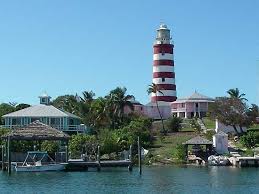
“I spent a lot of time in the Bahamas over the years,” says Cory. “I started going there when I was a kid, and one year Andy [Irons] and I spent six weeks there. So I have a lot of great memories from the place. Looking at how big that storm was, I expected it to be bad. And of course I heard stories and saw pictures of how bad it ended up being. But once you get down there and actually see the severity of it, a year later… it’s catastrophic, man. It’s been such a slow process of removing debris off the island while getting supplies that are needed — and food — on to the island. And unfortunately with COVID-19, it’s just been a double-whammy for those people. At this rate it’ll take two to three years to rebuild, five years to bring this place back.”

“With disasters like this, it’s like a lot of people will donate right away, but then three months later there’s another disaster somewhere else in the world,” Cory adds. “So hopefully this film will bring another boost of money to the Bahamian people. And they were very grateful that we went down there to give them a voice and bring attention to the problems they’re facing.”

“This is not simply a documentarian journey, it’s a human journey,” Brown continues. “One that demonstrates to the world that we all possess the power to affect change, and a human responsibility to assist those in need wherever they may be. This is our time and opportunity to change things for the people of Hope Town, and to show the world what the people of the Abacos, and those who are doing everything in their power to help them, are truly made of.”

For more information, to watch the movie or to make a donation, visit Hope Town Rising.

Source: Posted September 12, 2020; retrieved September 19, 2020 from: https://www.surfline.com/surf-news/everything-not-okay-bahamas-not-long-shot/95982

————

VIDEO – This is Hope Town Trailer – Extended Cut (3:34)https://youtu.be/CfqqaHzFO_A


————————-

Title # 2: Abaco in “precarious situation” with COVID, ongoing reconstruction — says MP
NASSAU, BAHAMAS — Central and South Abaco MP James Albury said because the construction industry represents a major hotspot for COVID-19, Abaco is in a “precarious situation” as reconstruction forges on.
Infections on the island continue to rise, albeit more slowly in recent weeks.“It’s something that is on everyone’s mind, including my own,” Albury told Eyewitness News.
“We’re in a very precarious situation and trying to handle that as well as handle reconstruction of course, is a double whammy that is really keeping us on the back foot. We’re pushing forward as much as possible, but there is always a danger there in terms of a resurgence.Abaco has the third-highest number of infections in The Bahamas with 104 infections as of yesterday, trailing Grand Bahama (607) and New Providence (2,186).
The island remains in recovery mode more than a year after deadly Hurricane Dorian decimated many of its once-thriving communities.
Amid the height of lockdown and curfew measures nationwide, exemptions were made for reconstruction of the island, a major undertaking, to continue.
The MP said while it is hoped a rapid increase is avoided, “realistically, if it does happen it will require a lot more effort on behalf of the health team”.
He said an increase in cases and exposures also challenges residents, many of whom remain in alternative housing and tents.
“Even quarantining is difficult for lack of available housing, so it is a big concern and it is certainly nothing to take lightly,” Albury said.
“It is certainly nothing that we can afford to sleep on.” Albury said while new infections per appear to have somewhat slowed “things can change tomorrow”.

“We’re at [over] 100 cases spread out through several areas — Moore’s Island, Sandy Point, and some of the cays as well — so we have a bit of a spread of cases, and we’re dealing with a disaster already within a disaster,” he said.“It’s a very challenging position for the health team on the ground, so I do give them kudos.

“I think they have been working very hard to make sure that testing and monitoring is going on.”

Asked about compliance with emergency protocols on the recovering island, Albury said: “There are always going to be people who try and skirt around the law or skirt around the laid out protocols, but it’s something that Abaconians are taking very seriously.

“…Those members of society who are not really complying of course are going to face the end of the law on that.

Of the total cases on Abaco, 25 were recorded in the last two weeks.

In the two weeks prior, 35 cases were recorded.
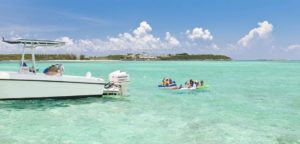
This means in the last month, Abaco has more than doubled its cases — from 44 on August 20 to 104 yesterday.

During the first wave, which spanned mid-March through the end of June, Abaco recorded zero cases.

Moore’s Island in the Abacos recorded its first few cases on July 23.

Two days later, a case was recorded on Great Guana Cay in the Abacos.

And on July 28, mainland Abaco recorded its first case.

Source: Posted EyeWitness News – September 18, 2020; retrieved September 19, 2020 from: https://ewnews.com/abaco-in-precarious-situation-with-covid-ongoing-reconstruction-says-mp

The Abaco chain of islands are a beautiful part of the Bahamas archipelago – the natural beauty flourishes. The Bahamas has been rocked by the pandemic but the country was in crisis even before COVID-19; this was due to structural deficiencies that were exacerbated by Agents of Change like Climate Change, globalization, technology and an Aging Diaspora. So the cupboards are now bare; this makes relief and refuge from these recent crises (COVID-19 and Dorian) untenable. Crisis within a crisis; failure on top of failure.
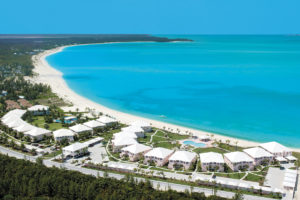
This theme – Bahamian Deficiencies – aligns with many previous commentaries; see a sample list here:

https://goleancaribbean.com/blog/?p=19327 ‘Missing Solar’ – Inadequacies Exposed to the World
https://goleancaribbean.com/blog/?p=18266 After Dorian, ‘Fool Me Twice’ on Flooding
https://goleancaribbean.com/blog/?p=18038 Bahamas 2019 Self-Made Energy Crisis
https://goleancaribbean.com/blog/?p=18011 Regulating Plastics in the Bahamas – So Little; So Late
https://goleancaribbean.com/blog/?p=17992 What Went Wrong? Losing the Best; Nation-building with the Rest
https://goleancaribbean.com/blog/?p=17118 White Paper: A Nation in Chaos
https://goleancaribbean.com/blog/?p=16645 Economic Dysfunction: Bad Partners – Cruise Lines Interactions
https://goleancaribbean.com/blog/?p=13856 Economic Dysfunction: Baha Mar – Doubling-down on Failure
https://goleancaribbean.com/blog/?p=12911 Bahamian Diaspora: Not the ‘Panacea’

But we are here to explain, not just complain.

So the problems in Abaco are bigger than just COVID, bigger than just Dorian. The systematic defects are still present and still impacting the viability of this community for the future. There is the need to reboot the Abaco eco-system.

How?

The 2013 book Go Lean … Caribbean identified the root causes of Caribbean communities’ dysfunctions and presented viable solutions: strategies, tactics and implementations. But it cautioned that the remediation work is not easy; it takes heavy-lifting. The book decomposed the societal engines to these sub-categories: economics, security and governance. Then it proposed confederating the 30 member-states of the Caribbean region so as to better leverage the solutions across a wider base – 42 million people – as opposed to just the small populations of many of the Small Island Development States. This is true for sparsely populated Abaco – 10,000-ish population; before Dorian; well before some documented defection-abandonment. Abaco is just a skinny string in the fabric of the regional society.

This is the urging right now; we need more than a string; we need to make the “rope” of our society stronger and better. We must … confederate, collaborate, collude, consolidate and convene:

Many strains of strings in a rope make it stronger. – The Bible Ecclesiastes 4:12

The mono-industrial engine of tourism-alone must be retired. This community – Abaco – must diversify, whatever it takes.

So the certainty of Abaco’s failure, does not have to be so certain; it can be averted. Learning the lessons from ill-fated Nazi Germany, Abaco, the Bahamas and the entire Caribbean need a more structure alliance (allied nations) fighting along-side them for victory.

Yes, we can! Confederation – this is how … we can make our homeland a better place to live, work and play.  🙂

About the Book
The book Go Lean…Caribbean serves as a roadmap for the introduction and implementation of the technocratic Caribbean Union Trade Federation (CU), for the elevation of Caribbean society – for all member-states. This CU/Go Lean roadmap has these 3 prime directives:

  • Optimization of the economic engines in order to grow the regional economy to $800 Billion and create 2.2 million new jobs.
  • Establishment of a security apparatus to ensure public safety and protect the resultant economic engines.
  • Improve Caribbean governance to support these engines, including a separation-of-powers between the member-states and CU federal agencies.

The Go Lean book provides 370-pages of turn-by-turn instructions on “how” to adopt new community ethos, plus the strategies, tactics, implementations and advocacies to execute so as to reboot, reform and transform the societal engines of Caribbean society.

Download the free e-Bookof Go Lean … Caribbean – now!

Who We Are
The movement behind the Go Lean book – a non-partisan, apolitical, religiously-neutral Community Development Foundation chartered for the purpose of empowering and re-booting economic engines – stresses that reforming and transforming the Caribbean societal engines must be a regional pursuit. This was an early motivation for the roadmap, as pronounced in the opening Declaration of Interdependence (Pages 11 – 13):

i. Whereas the earth’s climate has undeniably changed resulting in more severe tropical weather storms, it is necessary to prepare to insure the safety and security of life, property and systems of commerce in our geographical region. As nature recognizes no borders in the target of its destruction, we also must set aside border considerations in the preparation and response to these weather challenges.

xi. Whereas all men are entitled to the benefits of good governance in a free society, “new guards” must be enacted to dissuade the emergence of incompetence, corruption, nepotism and cronyism at the peril of the people’s best interest. The Federation must guarantee the executions of a social contract between government and the governed.

xvi. Whereas security of our homeland is inextricably linked to prosperity of the homeland, the economic and security interest of the region needs to be aligned under the same governance. Since economic crimes … can imperil the functioning of the wheels of commerce for all the citizenry, the accedence of this Federation must equip the security apparatus with the tools and techniques for predictive and proactive interdictions.

xxiv. Whereas a free market economy can be induced and spurred for continuous progress, the Federation must install the controls to better manage aspects of the economy: jobs, inflation, savings rate, investments and other economic principles. Thereby attracting direct foreign investment because of the stability and vibrancy of our economy.

Sign the petition to lean-in for this roadmap for the Caribbean Union Trade Federation.

Share this post:
, , ,
[Top]

Coronavirus Deaths: Debunking a Conspiracy Theory

Go Lean Commentary

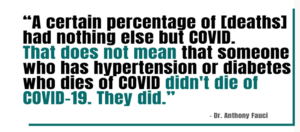
A Gun Shot Wound (GSW) victim contracts Coronavirus while in the hospital and dies. What is the Cause of Death? The GSW?! Coronavirus?! Both?!

Unfortunately, the management of the Coronavirus COVID-19 pandemic has become politicized … especially in the US. There are two sides on the issue: Liberals vs Conservatives.

Conservatives tend to be less cooperative with Science; (also opposing Climate Change); and prone to support conspiracy theories, i.e. 5G cause for COVID-19.

This is the issue again now. The Conservatives have downplayed the seriousness of the Coronavirus; first labeling it a hoax, then assigning it as “just the common flu”, and now conspiring that less people have actually died compared to the official scientific tally. (The Liberals only want to count the dead).

See this news story here, as it highlights the new conspiracy theory that the Coronavirus deaths are overblown and exaggerated:

Title: The conspiracy theorists are wrong: Doctors are not inflating America’s COVID-19 death toll for cash  VIDEO: https://youtu.be/VpjZoOruTso

———
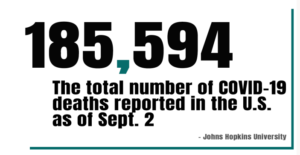
Earlier this week, Iowa Republican Sen. Joni Ernst became the first member of “the world’s greatest deliberative body” to embrace a false online conspiracy theory that seeks to minimize the danger of COVID-19 by claiming only a few thousand Americans have died from the virus — not the 185,000 reported by state and local health agencies and hospitals.

Ernst, who described herself as “so skeptical” of the official death toll, even went so far as to echo the nonsense argument spread by QAnon and other right-wing conspiracy-mongers that medical providers who have risked their own lives and health to treat COVID-19 patients have been attributing non-COVID deaths to the virus to rake in extra cash from the federal government.

“These health-care providers and others are reimbursed at a higher rate if COVID is tied to it, so what do you think they’re doing?” Ernst, who is facing a tight reelection race, said Monday at a campaign stop near Waterloo, Iowa, according to a report by the Waterloo-Cedar Falls Courier.

“They’re thinking there may be 10,000 or less deaths that were actually singularly COVID-19,” Ernst added in an interview with the paper. “I’m just really curious. It would be interesting to know that.”

Since Ernst is “really curious,” here are the facts.

Yes, Medicare pays hospitals more for treating COVID-19 patients — 20 percent more than its designated rate, to be exact. Incidentally, this additional payment was approved 96-0 in the U.S. Senate — including by Joni Ernst. The reason Ernst (and all of her Senate colleagues) voted for it is simple: It helped keep U.S. hospitals open and operating during a worldwide emergency.

“This is no scandal,” Joseph Antos, a scholar in health care at the conservative American Enterprise Institute, explained in a recent PolitiFact fact-check. “The 20 percent was added by Congress because hospitals have lost revenue from routine care and elective surgeries that they can’t provide during this crisis, and because the cost of providing even routine services to COVID patients has jumped.”

In other words, no one is getting rich by misclassifying COVID-19 deaths.

It’s also fair to say that fewer than 185,000 Americans have died “singularly,” as Ernst put it, from COVID-19. According to a recent update by the Centers for Disease Control and Prevention, 94 percent of patients whose primary cause of death was listed as COVID-19 were also judged to have comorbidities — secondary conditions like diabetes that often exacerbate the virus’s effects. For the remaining 6 percent, COVID-19 was the only cause listed in conjunction with their deaths.

On Sunday, President Trump retweeted a QAnon backer who falsely claimed this meant that only 6 percent of reported COVID-19 deaths — that is, 10,000 or so — were actually caused by the virus. Perhaps this “report” is what Ernst was referring to when she agreed Monday with an audience member who theorized that COVID-19 deaths had been overcounted. “I heard the same thing on the news,” she said.

Yet Twitter quickly removed the tweet for spreading false information, and for good reason.

Despite all the innuendo, there’s nothing unusual about the way the government is counting coronavirus deaths, as we have previously explained. In any crisis — whether it’s a pandemic or a hurricane — people with preexisting conditions will die. The standard for attributing such deaths to the pandemic is to determine whether those people would have died when they did if the current crisis had never happened.

When it comes to the coronavirus, the data is clear: COVID-19 is much more likely to kill you if your system has already been compromised by some other ailment, such as asthma, HIV, diabetes mellitus, chronic lung disease or cardiovascular disease. But that doesn’t mean patients with those health problems would have died this week (or last week, or next month) no matter what. The vast majority of them probably wouldn’t have. COVID-19 was the cause of death — the disease that killed them now, and not later.

A closer look at the CDC data, meanwhile, reveals that many of the comorbidities listed by medical providers are complications caused by COVID-19 rather than chronic conditions that predated infection: heart failure, renal failure, respiratory failure, sepsis and so on.

Feverishly creating a baseless fiction from two threads of unrelated information — the additional Medicare payments and the CDC update about comorbidities — is a classic conspiracy-theorist move. But that doesn’t make it true.

“Let there not be any confusion,” Dr. Anthony Fauci, the nation’s top infectious disease expert, said Tuesday. “It’s not 9,000 deaths from COVID-19. It’s 180,000-plus deaths.”

“The point that the CDC was trying to make was that a certain percentage of [deaths] had nothing else but COVID,” Fauci continued. “That does not mean that someone who has hypertension or diabetes who dies of COVID didn’t die of COVID-19. They did.”

In reality, it’s more likely that the U.S. is undercounting rather than overcounting COVID-19 deaths. According to a recent New York Times analysis of CDC estimates, at least 200,000 more people than usual died in the U.S. between March and early August — meaning that the official COVID-19 death count, which hit 140,000 over the same period, is probably too low.

In the Hawkeye State, COVID-19 had killed at least 1,125 as of Wednesday afternoon. Over the past week, the state has reported an average of 1,177 cases per day, an increase of 124 percent from the average two weeks earlier. Its positive testing rate has risen from 10 percent to 18.5 percent since then.

So while Republican lawmakers such as Ernst seek to downplay the lethality of the virus, Theresa Greenfield, Iowa’s Democratic Senate candidate, seized on her opponent’s baseless claim to underscore the gravity of the situation in one of the only states in America where the pandemic is getting worse.

“It’s appalling for you to say you’re ‘so skeptical’ of the toll this pandemic has on our families and communities across Iowa,” Greenfield tweeted Tuesday, addressing the senator. “We need leaders who will take this seriously.”

Source: Retrieved September 4, 2020 from: https://news.yahoo.com/the-conspiracy-theorists-are-wrong-doctors-are-not-inflating-americas-covid-19-death-toll-for-cash-142709384.html?ncid=facebook_yahoonewsf_akfmevaatca

———

Related: Republican Governor Ron DeSantis sidelined his health department. Florida paid the price.

Let’s recap: Some people have downplayed the COVID-19 deaths and suffering of people to promote a political story-line. Ouch! But, this sounds so familiar. We have been there; done that. Remember Puerto Rico?!

In a previous blog-commentary from the movement behind the 2013 book Go Lean…Caribbean, it related how Puerto Rico’s death toll from devastating Category 5 Hurricane Maria in 2017 was downplayed (under-counted) to project a fallacy that the response by the Federal Government under the “Conservative” President, Donald Trump, was adequate or benevolent. It was neither! See this except here:

We learn now that even the resultant deaths from Hurricane Maria had been under counted.

What? How? Why?

The act of counting deaths is more straight-forward than the Washington and San Juan officials would have you believe. Simply count the number of mortalities (death certificates issued) for the 4th Quarter of the last few years. The PR government try to assert that the number of deaths were 64 people; and yet demographers and other social scientists counted the mortality rate for 4th Quarter 2017 and the 4th Quarters in previous years and the real count is more like:

4600+

Wait, wait … don’t tell me! According to this story here, “researchers concluded the final death count could [actually] be as high as 8,500”.

There is no valid dissent: 185,000 people have died … as of September 3, 2020. Period!

A desire to downplay this actuality is reflective of a malevolent spirit. This is America today – not the ideal “city on the hill” that they want to project. This is the same country – and administration – that undervalued the lost lives in the US Territory of Puerto Rico. This is mindful of the expression:

Never kill yourself for someone who would rather watch you die.

This is not just theoretical!

In an interview, in response to the request for sorrow on the large number of dead, President Trump callously declared:

It is what it is.

VIDEO – Trump: It Is What It Is – https://youtu.be/ldOeB4htKD8

Posted August 4, 2020 – American Bridge 21st Century

The Go Lean book presented a roadmap to introduce and implement the Caribbean Union Trade Federation (CU) as a technocracy to act on behalf of Caribbean member-states so that we will not be parasites of the American hegemony but rather protégés. The vision is for the CU to do its own heavy-lifting for health-wellness and Homeland Security. This would remediate and mitigate all domestic threats, natural or pandemic. So the regional Security Apparatus would include Disease Control and Management. The functionalities of this technocracy are described as follows:

Strategies – Comparing Strategies – Healthcare –vs- Bush Medicine (Page 50)
The CU plans calls for some health care reform, under the guise of homeland and economic security, emergency management and cross border initiatives (disease management and organ transplantation).

Tactical – Separation of Powers –  I2: Disease Control & Management (Page 86)
Due to the systemic threat, epidemic response and disease control will be coordinated at the CU level. This agency will manage the detailed inventory needs of pharmaceuticals (vaccinations, etc.) so that the Group Purchasing Organization can negotiate for volume-wholesale pricing/discounts and delivery schedules on the regional level.

The data associated with Flu Shots, Vaccinations, STDs should be mined and published by the CU.

This agency will also sponsor Disease Management schemes to identify, educate, treat patients with chronic diseases like diabetes, asthma, heart, COPD, and other ailments that tend to have no cure, but the affected could prosper with proper management.

Advocacy – 10 Ways to Improve Healthcare – Public Health Extension (Page 156)
Due to the systemic threat, epidemic response and disease control will be coordinated at the federal level. Also, the acquisition of public-bound pharmaceuticals (vaccinations, etc.) can be negotiated at the regional level, using the Group Purchasing Organizations (GPO) envisioned in this roadmap. This will lead to a better supply and pricing dynamics. …

Advocacy – 10 Ways to Impact Cancer – Public Health Administration (Page 157)
Not all [disease] cancer is hereditary or tied to lifestyle (smoking, obesity, diet), sometimes there are environmental agents. The CU treaty grants jurisdiction for systemic threats, epidemic response and/or disease control. Despite the pro-business ethos, the CU will assuage any threat of new/existing industrial endeavors with thorough environmental impact studies.

Since we have been here before – Puerto Rico – we should have learned. This is not the first epidemic and will not be the last! This is why the Go Lean movement urges the Caribbean to have a Pandemic Playbook for regional protection.

The points of effective, technocratic epidemiological stewardship gleaned from facts in history were further elaborated upon in these previous blog/commentaries:

https://goleancaribbean.com/blog/?p=20361 A 7-part series on Pandemic Playbooks for the Caribbean
https://goleancaribbean.com/blog/?p=19568 BHAG – Need ‘Big Brother’ for Pandemics
https://goleancaribbean.com/blog/?p=15310 Industrial Reboot – Trauma 101
https://goleancaribbean.com/blog/?p=8943 Zika’s Drug Breakthrough
https://goleancaribbean.com/blog/?p=7327 Zika – A 4-Letter Word
https://goleancaribbean.com/blog/?p=5002 Managing a ‘Clear and Present Danger’
https://goleancaribbean.com/blog/?p=2397 Stopping Ebola
https://goleancaribbean.com/blog/?p=1003 Painful and rapid spread of Chikungunya virus in the Caribbean

The purpose of this commentary was to stress the fact we need to count the dead … accurately. Our Pandemic Playbook must include the act of counting.

The Go Lean movement (book and subsequent blog-commentaries) stresses that reforming and transforming the Caribbean societal engines must be a regional pursuit; no one member-states has the prowess, resources and experience to implement a Pandemic Playbook alone.

Prowess, resources and experience, yes? But genius skills are not necessarily the requirement for just counting the dead. While the Pandemic Playbook must reflect an “Art and a Science”, counting the dead is all about “arithmetic”. “They” say many fields of endeavors require “Art and Science” in order to master. But counting the dead is no “Art”; this is STEM 101 -(Science, Technology, Engineering and Mathematics).

Its ironic that the political faction, Conservatives, that opposes most scientific scrutiny – like Climate Change – seems to be the same people that are refusing the proper count. Their “science” comprehension and competence always seem to fall short; yet, they are quick to embrace conspiracy theories … Arrrgggghhh!!!

We urge all Caribbean stakeholders – governments and citizens – to lean-in to the science, not the conspiracies … and lean-in to this roadmap for an effective and efficient Pandemic Playbook for our region; this reflects the Best Practices of medical science.

We need scientific accomplishments to make progress. This is how we make our homeland a better place to live, work, heal and play. 🙂

About the Book
The book Go Lean…Caribbean serves as a roadmap for the introduction and implementation of the technocratic Caribbean Union Trade Federation (CU), for the elevation of Caribbean society – for all member-states. This CU/Go Lean roadmap has these 3 prime directives:

  • Optimization of the economic engines in order to grow the regional economy to $800 Billion & create 2.2 million new jobs.
  • Establishment of a security apparatus to ensure public safety and protect the resultant economic engines.
  • Improve Caribbean governance to support these engines, including a separation-of-powers between the member-states and CU federal agencies.

The Go Lean book provides 370-pages of turn-by-turn instructions on “how” to adopt new community ethos, plus the strategies, tactics, implementations and advocacies to execute so as to reboot, reform and transform the societal engines of Caribbean society.

Download the free e-Book of Go Lean … Caribbean – now!

Who We Are
The movement behind the Go Lean book – a non-partisan, apolitical, religiously-neutral Community Development Foundation chartered for the purpose of empowering and re-booting economic engines – stresses that reforming and transforming the Caribbean societal engines must be a regional pursuit. This was an early motivation for the roadmap, as pronounced in the opening Declaration of Interdependence (Pages 12 – 13):

ix. Whereas the realities of healthcare and an aging population cannot be ignored and cannot be afforded without some advanced mitigation, the Federation must arrange for health plans to consolidate premiums of both healthy and sickly people across the wider base of the entire Caribbean population. The mitigation should extend further to disease management, wellness, mental health, obesity and smoking cessation programs. …

x. Whereas we are surrounded and allied to nations of larger proportions in land mass, populations, and treasuries, elements in their societies may have ill-intent in their pursuits, at the expense of the safety and security of our citizens. We must therefore appoint “new guards” to ensure our public safety and threats against our society, both domestic and foreign. The Federation must employ the latest advances and best practices of criminology and penology to assuage continuous threats against public safety. …

xi. Whereas all men are entitled to the benefits of good governance in a free society, “new guards” must be enacted to dissuade the emergence of incompetence, corruption, nepotism and cronyism at the peril of the people’s best interest. The Federation must guarantee the executions of a social contract between government and the governed.

xvi. Whereas security of our homeland is inextricably linked to prosperity of the homeland, the economic and security interest of the region needs to be aligned under the same governance. Since economic crimes … can imperil the functioning of the wheels of commerce for all the citizenry, the accedence of this Federation must equip the security apparatus with the tools and techniques for predictive and proactive interdictions.

xxiv.  Whereas a free market economy can be induced and spurred for continuous progress, the Federation must install the controls to better manage aspects of the economy: jobs, inflation, savings rate, investments and other economic principles. Thereby attracting direct foreign investment because of the stability and vibrancy of our economy.

Sign the petition to lean-in for this roadmap for the Caribbean Union Trade Federation.

Share this post:
, , ,
[Top]

Pandemic Playbook – Freedom vs Safety

Go Lean Commentary

Land of the Free and Home of the Brave. – lyrics from America’s National Anthem

There is this great Summer Festival in this small town in the US State of South Dakota, the Sturgis Bike Rally. This event is so impressive that the Caribbean has long been urged to look, listen and learn from this event model. In fact, the 2013 book Go Lean…Caribbean – introducing the Caribbean Union Trade Federation (CU) – dedicates one Appendix (Page 288) to Sturgis.

If only we can plan and execute events that draw 600,000 people to our small towns. (Sturgis only has less than 10,000 residents).

There is another lesson from Sturgis for us to consider, especially this year – 2020 with the Coronavirus COVID-19 pandemic – that is the need to balance “Freedom versus Public Safety”. This is a delicate issue with strong opinions on both sides of the issue. (Even the US President would tweet “Liberate X-State” when citizens protested strong lockdowns in their States: Pennsylvania, Michigan, Wisconsin, etc.). The participants-attendees at Sturgis insisted on their freedoms above and beyond all other values. See the Sturgis story here:

VIDEO – Massive Sturgis motorcycle rally taking place amid coronavirus concerns – https://www.nbcnews.com/nightly-news/video/massive-sturgis-motorcycle-rally-taking-place-amid-coronavirus-concerns-89793093627

Posted August 10, 2020 – Hundreds of thousands of bikers are expected to gather in Sturgis, South Dakota, where masks are encouraged but not required, despite coronavirus concerns. As schools across the country begin to reopen, Georgia’s largest district is dealing with the fallout from an outbreak.

Related:
More than 100 coronavirus cases in 8 states linked to massive Sturgis Motorcycle Rally in South Dakota
August 26, 2020 – The annual Sturgis Motorcycle Rally in South Dakota drew hundreds of thousands of bikers to the small town earlier this month — despite coronavirus concerns. Now, about three weeks after the rally kicked off, the repercussions are starting to become clear. More than 100 cases of COVID-19 connected to the rally have been reported in at least eight states, the Associated Press reports.

The movement behind the 2013 Go Lean book just completed – during August 2020 – a 6-part series on Pandemic Playbooks for the Caribbean region. It presented many Best Practices for managing our society during times of crisis. This is an important consideration right now as many Caribbean communities have had to institute lockdowns, which some considers “trampling on civil liberties”, in order to protect the general public. Is that right, just and honorable or is the suppression of civil-human rights just an expression of Tyranny. This commentary is an important supplement to the 6-part August Teaching Series. The other commentaries in the series were cataloged as follows:

  1. Pandemic Playbook: Worldwide Leadership – Plan ==> Actual
  2. Pandemic PlaybookCaribbean Inadequacies – Missing the Bubble Opportunities
  3. Pandemic PlaybookBahamas Example – ‘Too Little Too Late’
  4. Pandemic PlaybookOnly at the Precipice ENCORE
  5. Pandemic PlaybookTo Be or Not To Be – COVID Vaccine
  6. Pandemic Playbook: Success – Looks like New Zealand

Let’s look at the jurisprudence of government lockdowns that imperil private citizens’ ability to live (attends births and weddings), work (provide for families), worship (limits on free assembly and at funerals) and play (travel and recreation impeded). The restriction placed on citizens by local governments call into question whether these homelands are truly free.

Are our freedoms absolute or only allowed when convenient? Is it Tyranny to impede those freedom during emergencies?

These are all good questions. Let’s see this comprehensive legal analysis by a respected lawyer (and law professor) here:

Title: The Peoples’ Constitution: COVID-19 versus Freedom
By: Ben Lenhart
The COVID-19 pandemic is threatening many of our most cherished freedoms. We are told by the government not to travel. We are told we can’t gather for religious services. We are told we must wear masks, but we must not go to restaurants or stores. Our favorite sporting events, school activities and even graduations are cancelled. In some places, we are told we may not gather even for the most important things in life: the birth of a newborn or the passing of a loved one. At rallies protesting the lockdown, participants claim their constitutional rights are being violated and that the “illegal” government orders must be lifted. Who is right: the protestors or the government?Put another way, do the governments’ actions taking away certain rights, even if only temporarily, violate the Constitution? This article seeks to answer that question using a few real-life examples.
COVID-19 Order Blocks Church in Kansas.
As part of a COVID “stay at home” order, Kansas barred more than 10 people from attending religious services. Two churches sued, claiming violation of their religious freedoms. The First Amendment bars the federal government from (A) establishing any official state religion, or (B) restricting Americans from freely exercising their religion of choice. A Kansas trial court realized this was a hard case: yes, the churches’ constitutional rights were being curtailed, but also, yes, the COVID-19 pandemic required urgent measures to protect public health. For guidance, the Kansas court looked to the famous quarantine case of Jacobson v. Massachusetts, where a man refused a mandatory smallpox vaccination during a smallpox epidemic. Recognizing the hard balance, the Supreme Court in Jacobson acknowledged both sides of the issue: First “when faced with a society-threatening epidemic, a state may implement emergency measures that curtail constitutional rights so long as the measureshaveatleastsome“realorsubstantialrelation”tothepublichealthcrisis …” But second, a law purporting to protect public health, may nevertheless be invalid if it “has no real or substantial relation to those objects, or is, beyond all question, a plain, palpable invasion of rights secured by the fundamental law.” In the end, the court upheld the government order requiring the vaccination.

A COVID-19 order taking away our constitutional rights may be valid if (A) that order directly advances a public health goal (such as controlling the spread of COVID-19), and (B) the same goal can’t be achieved in a narrower way that does not curtail our Constitution rights (or curtails them to a lesser degree). If (A) and (B) are not true, the court may decide to strike down the order as unconstitutional.

Applying these rules, the Kansas court sided with the churches and against the government. Noting that Kansas’ stay-at-home-order singled out places of worship for stricter measures, the court found that, while the public health goals were important, they could be achieved while still allowing the churches to hold services in a safe manner with more than 10 people. The case settled on favorable terms for the churches before it could be appealed, and so the churches largely won this fight.

COVID-19 Order Blocks Abortions in Texas.
In order to preserve medical resources during the coronavirus pandemic, a Texas order banned many non-essential medical procedures, including abortions under most circumstances.Roe v. Wadefirst recognized the constitutional right to abortion more than 45 years ago. Abortion providers sued, claiming the order deprived them of their constitutional rights. Much like the Kansas church case, the Texas court recognized the two competing forces: the need to protect public health during the COVID crisis versus the constitutional right to abortion. On the one hand, the court agreed thatindividual rights secured by the Constitution are not lostevenduring a severe public health crisis. There is no “emergency override” of the Constitution. On the other hand, the Texas court, said that “liberty secured by the Constitution … does not import an absolute right in each person to be, at all times and in all circumstances, wholly freed from restraint.” Instead, the court fund that “a community has the right to protect itself against an epidemic of disease which threatens the safety of its members,” even when that means temporarily curtailing certain rights.

In the end, the lower court largely sided with the abortion providers, ordering that they be allowed to continue during the COVID crisis, but an appellate court overruled the lower court, and allowed most of the abortion ban to continue. However, before the courts could come to a final ruling, the case was resolved, and abortions in Texas were largely allowed to continue during the Covid crisis.

COVID-19 Orders Deny the Right To Travel in Many States
To protect public health, many states have ordered that people not travel unless for essential purposes. But the right to travel is one of Americans’ most cherished freedoms. A drive to the mall, or to a friend’s house, or a road trip across America—the freedom to travel “where we want and when we want” helps define America. It is also a core rights long protected by the Constitution (although its precise source is still being debated). COVID travel bans present the same “hard balance” between our safety and constitutional rights. Faced with a severe pandemic where the very movement of people can spread the disease, courts would likely approve a limited travel ban, such as one that lasted a short time and had exceptions for emergencies and essential activities. On the other hand, courts would likely strike down a travel ban that was imposed rigidly for a year or more regardless of changes in the pandemic status, and that failed to allow reasonable exceptions to the ban. Such a ban would be unconstitutional because a more limited travel ban likely could achieve the same goal—protecting public health—without such a severe denial of constitutional liberty.

The Outer Banks Travel Ban
The Outer Banks (OB) is a beloved vacation spot along the North Carolina coast. In March, it banned nonresidents from entering most of the OB but permitted residents to enter. This ban has two potential constitutional problems. First, it denies the right to travel discussed above. Second, by discriminating against non-residents, the ban may violate the so-called Dormant Commerce Clause, which generally prohibits states from favoring their own residents at the expense of out-of-staters. A huge reason why America’s economy has succeeded and grown to the largest in the world is that we have a free market among the 50 states. The constitutional framework allows commerce to flow freely across state lines. By violating this basic rule, the OB may be violating the Constitution unless it can show there is no less restrictive way to protect public health in the OB short of discriminating against non-residents.

Korematsu
The COVID-19 stay-at-home orders impose real hardships, but compare those to the hardships during World War II. After Pearl Harbor, thousands of Japanese American citizens, most of unquestioned loyalty to the United States, were sent to internment camps far from their homes based on fears that a small number would side with Japanese war effort. This was a massive deprivation of the most basic constitutional rights of American citizens. In 1944 a sharply divided court, with stinging dissents, held that the urgent Japanese threat justified this extreme measure. But history was not kind to Korematsu, and it has become one of the Court’s most heavily criticized cases.

Last year, Chief Justice Roberts said this:“The dissent’s reference toKorematsu, however, affords this Court the opportunity to make express what is already obvious:Korematsuwas gravely wrong the day it was decided, has been overruled in the court of history, and—to be clear—’has no place in law under the Constitution.’”

Why was Korematsu so wrong? Both because withheld evidence showed less threat from the Japanese Americans, and because there were ways to achieve the government’s goal (such as police investigative work) that did not involve such flagrant denial our Constitution rights, the order at issue in Korematsu was unconstitutional.

Conclusion
The COVID-19 constitutional balance is hard because the things being balanced are both vitally important: stopping the spread of the coronavirus is a matter of life and death; but many lives have also been lost over the past 232 years fighting to protect the rights guaranteed to all Americans in the Constitution. The examples above shed light on whether any particular COVID-19 order is constitutional. If that order takes away constitutional rights—such as the right to travel, the right to assemble, or freedom of religion—then ask if the government can achieve the same COVID-19 health goal in some other way that does not take away those rights or involves materially less interference with those rights. If the answer is no, then the law may well be constitutional, but if the answer is yes, then the balance may tip in favor of protecting our constitutional rights and striking down the order.

—–

Contributor Ben Lenhart is a graduate of Harvard Law School and has taught Constitutional Law at Georgetown Law Center for more than 20 years. He lives with his family and lots of animals on a farm near Hillsboro.

Source: LoudounNow, Loudoun, Virginia Daily Newspaper; retrieved May 7, 2020 from: https://loudounnow.com/2020/05/07/the-peoples-constitution-covid-19-versus-freedom/

Also see the insistence on freedoms portrayed in the Reader’s Commentary Section on this foregoing article:

By David Dickinson – 2020-05-07:
As if we needed any reminders, COVID-19 amply demonstrates that you can’t trust any level of government. It is also a scary demonstration of how out-of-control powerful we have allowed government to become. I don’t want to downplay the seriousness of COVID-19 and its virulence, but 40,000 people a year die in car accidents and we didn’t shut down highways; 80,000 from diabetes and we didn’t outlaw donuts; 50,000 from regular flu and we didn’t lock down anything (except the cold medicine at the pharmacy).

This commentor is passionate; he conveys the thought of Tyranny if he cannot get his way. This commentor could very well have been speaking from Sturgis, about Sturgis and on behalf of Sturgis; (these same passions bubble in the Caribbean).

The references to Sturgis requires more insight of the city/event, its dynamism; see the Go Lean excerpt (Page 191) here:

The Bottom Line on the Sturgis, South Dakota
Sturgis is a city in Meade County, South Dakota, United States. The population was 6,627 as of the 2010 census. It is the county seat of Meade County and is named after General Samuel D. Sturgis. Sturgis is famous for being the location of one of the largest annual motorcycle events in the world, which [started in 1938 and] is held annually on the first full week of August. Motorcycle enthusiasts from around the world flock to this usually sleepy town during the Sturgis Motorcycle Rally.

The focus of a motorcycle rally was originally racing and stunts. Then in 1961, the rally was expanded to include the “Hill Climb” and Motocross races.[145] The attendance was tallied in excess of 600,000 visitors in the year 2000. The City of Sturgis has calculated that the Rally brings over $800 million to South Dakota annually. (The City of Sturgis earned almost $270,000 in 2011 from just selling event guides and sponsorships). Rally-goers are a mix of white-collar and blue-collar workers and are generally welcomed as an important source of income for Sturgis and surrounding areas. The rally turns local roads into “parking lots”, and draws local law enforcement away from routine patrols. [The City frequently contracts with law enforcement officers from near-and-far for supplemental support-enforcements during the rally]. (See Appendix J [on Page 288] of Sturgis City Rally Department’s Statistics).

[Sturgis generates a lot of media attention]. Annual television coverage of the festival by the [cable TV network] VH1 Classic includes interviews and performances as well as rock music videos. Also, the Travel Channel repeatedly shows two one-hour documentaries about Sturgis.

Don’t get it twisted, these times of the Coronavirus COVID-19 pandemic constitute an emergency and “critical times calls for critical measures”. Tyranny is not a consideration. This is where we are. Everybody simply wants public safety and Good Governance. In a previous blog-commentary, this point was made about governmental deliveries during times of emergency:

Good Governance: Stepping Up in an Emergency
Do you know what SOS stands for?

Of course you know what it infers – “Emergency; Need Help” …

SOS, plus 911 and other emergency outreach numbers, are all calls for help. In modern society, it is expected that someone-somewhere will respond.

That expectation is within the assumption of Good Governance. It is expected that someone-somewhere will step-up in the time of emergencies …

… failing this, we would have a Failed-State, [every man for himself].


[This roadmap provides] a glimpse of a new Caribbean that is ready for these New Guards. These are not foreigners. These are fellow Caribbean brothers and sisters, representing the 30 member-states in the region. They have the desire to help; they only need Good Governance …

The CU structure allows for an Emergency Management functionality within the Homeland Security Department. The CU‘s version is modeled after the Federal Emergency Management Agency (FEMA) in the US. That agency’s emergency response is based on small, decentralized teams trained in such areas as the National Disaster Medical  System (NDMS), Urban Search and Rescue (USAR), Disaster Mortuary Operational Response Team (DMORT), Disaster Medical Assistance Team (DMAT), and Mobile Emergency Response Support (MERS).

The Go Lean book provides … the strategies, tactics, implementations and advocacies to execute so as to reboot, reform and transform the societal engines of Caribbean society. We need to be better at responding to the SOS [(emergency)] calls in our region.

Good Governance versus Tyranny … “that is the question”.

This discussion on Sturgis 2020 presents that city/event as a good role model for us in the Caribbean, to contemplate both the opportunities and the bounds-limits of a free society. There is a pattern of Good Governance in Sturgis, even amongst all that Freedom – there is never tyranny. We have looked, listened and learned from that city/event before; most importantly, we have looked at Tyranny before. Let’s consider previous discussions (blog-commentaries) on Tyranny:

https://goleancaribbean.com/blog/?p=18648 Better Than ‘Bill of Rights’ – ‘Third & Fourth Amendments’: Justice First

When strong individuals abuse weaker ones in society, we call it bullying. When governmental institutions do it, we call it: Tyranny.

Planners for a new Caribbean governance must consider constitutional provisions to mitigate the threat of tyranny.

https://goleancaribbean.com/blog/?p=18337 Unequal Justice: Bullying Magnified to Disrupt Commerce

Conditions of Unequal Justice can go from “bad to worse” when bullies are not checked. Such “bad actors” can emerge from terrorizing a family, to a neighborhood, to a community, to a nation, to a region, to a hemisphere, to the whole world. Think: Nazi Germany, Imperial Japan, Soviet Russia, British Empire, Napoleonic France, Spanish Inquisition.

Unchecked, bad actors in the community become tyrants – they can even affect the local economic engine.

https://goleancaribbean.com/blog/?p=18321 Unequal Justice: Sheriffs and the need for ‘soft’ Tyrannicide

The reality of southern rural life for African Americans was that justice was impeded by one institution, often one character: the County Sheriff.
People sought refuge and succeeded in their quest for relief and justice by fleeing the jurisdiction of the Sheriff, that State and the whole oppressive racist region of the American South.
The tyrannicide was achieved by removing the racist Sheriffs from office. This was accomplished by defeating them at the ballot box. The people that fled did not defeat the Sheriffs. No, it was only those that stayed; thusly, the reformation took very long.

https://goleancaribbean.com/blog/?p=5506 Role Model: Edward Snowden – One Person Making a Difference

This whistleblower exposed the blatant tyranny in the electronic surveillance system.

https://goleancaribbean.com/blog/?p=2809 A Lesson in History – Economics of East Berlin
The City of “East” Berlin used tyranny to bully its citizens, even for its economics. They operated the city like a maximum security prison and ransomed the citizens wanting to leave.
https://goleancaribbean.com/blog/?p=2338 Welcoming the Dreaded ‘Plutocracy’

Big companies can bully and terrorize small communities. But the structure of a Self-Governing Entity would mitigate their threat of tyranny.

The Coronavirus COVID-19 virus has caused emergencies through out the Caribbean – freedoms have had to be culled in order to save lives and to preserve our economic engines for future executions. There is the need for better balance between freedoms and public safety. The reality and actuality of an efficient Pandemic Playbook reflects the urgent need for the Caribbean member-states to appoint “new guards”.

We urge all Caribbean stakeholders – governments and citizens – to deploy an effective and efficient Pandemic Playbook for our region. Allow the needed emergency powers, but for the shortest times possible. This is the purpose of the Go Lean roadmap; this is how we can make the Caribbean homeland a better place to live, work, worship and play.

There are good, bad and ugly lessons from Sturgis, South Dakota. There are lessons from other communities as well who have instituted emergencies and managed the careful balance between Freedom and Tyranny. Yes, Good Governance is hard-work; Good Governance in times of emergencies is even more heavy-lifting. So our obligation for an efficient and effective Pandemic Playbook is conceivable, believable and achievable. 🙂

About the Book
The book Go Lean…Caribbean serves as a roadmap for the introduction and implementation of the technocratic Caribbean Union Trade Federation (CU), for the elevation of Caribbean society – for all member-states. This CU/Go Lean roadmap has these 3 prime directives:

  • Optimization of the economic engines in order to grow the regional economy to $800 Billion & create 2.2 million new jobs.
  • Establishment of a security apparatus to ensure public safety and protect the resultant economic engines.
  • Improve Caribbean governance to support these engines, including a separation-of-powers between the member-states and CU federal agencies.

The Go Lean book provides 370-pages of turn-by-turn instructions on “how” to adopt new community ethos, plus the strategies, tactics, implementations and advocacies to execute so as to reboot, reform and transform the societal engines of Caribbean society.

Download the free e-Book of Go Lean … Caribbean – now!

Who We Are
The movement behind the Go Lean book – a non-partisan, apolitical, religiously-neutral Community Development Foundation chartered for the purpose of empowering and re-booting economic engines – stresses that reforming and transforming the Caribbean societal engines must be a regional pursuit. This was an early motivation for the roadmap, as pronounced in the opening Declaration of Interdependence (Pages 12 – 14):

x. Whereas we are surrounded and allied to nations of larger proportions in land mass, populations, and treasuries, elements in their societies may have ill-intent in their pursuits, at the expense of the safety and security of our citizens. We must therefore appoint “new guards” to ensure our public safety and threats against our society, both domestic and foreign. …

xi. Whereas all men are entitled to the benefits of good governance in a free society, “new guards” must be enacted to dissuade the emergence of incompetence, corruption, nepotism and cronyism at the peril of the people’s best interest. The Federation must guarantee the executions of a social contract between government and the governed.

xii. Whereas the legacy in recent times in individual states may be that of ineffectual governance with no redress to higher authority, the accidence of this Federation will ensure accountability and escalation of human and civil rights of the people for good governance, justice assurances, due process and the rule of law. As such, any threats of a “failed state” status for any member state must enact emergency measures on behalf of the Federation to protect the human, civil and property rights of the citizens, residents, allies, trading partners, and visitors of the affected member state and the Federation as a whole.

xvi. Whereas security of our homeland is inextricably linked to prosperity of the homeland, the economic and security interest of the region needs to be aligned under the same governance. Since economic crimes … can imperil the functioning of the wheels of commerce for all the citizenry, the accidence of this Federation must equip the security apparatus with the tools and techniques for predictive and proactive interdictions.

xxxiii. Whereas lessons can be learned and applied from the study of the recent history of other societies, the Federation must formalize statutes and organizational dimensions to avoid the pitfalls of communities like … . On the other hand, the Federation must also implement the good examples learned from developments/communities like … [Sturgis, South Dakota].

Sign the petition to lean-in for this roadmap for the Caribbean Union Trade Federation.

Share this post:
, , ,
[Top]

Pandemic Playbook – Success Looks like New Zealand

Go Lean Commentary

Keeping up with the Joneses.

It is so hard to be an island, off the coast of a continent.

Or is it?!

The island-nation of New Zealand seems to have gotten “it” right. What is the “it”? The management of the Coronavirus COVID-19 pandemic. They have demonstrated how to do “it” right.

… and in doing so have provided us in the Caribbean a role model for how to do “it”. They are the Joneses we need to keep up with.

See how New Zealand’s success is being described in this globally respected Trade Journal, Contagion® – a fully integrated news resource covering all areas of infectious disease; (also see the related VIDEO):

Title: How Did New Zealand Control COVID-19?
By:
Kevin Kunzmann Contagion Live
New Zealand, a modern small island nation, has become an emblematic champion of proper prevention and response to the coronavirus 2019 (COVID-19) pandemic.
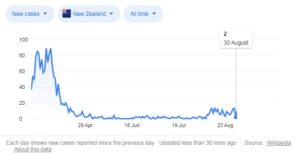
Leading into this weekend, the country of approximately 5 million has just 2 dozen active COVID-19 cases—a full month after having reported absolutely none, on the backbone of strict initial travel policies, science-based government action, and strategies responsive to testing limitations.

What else went into New Zealand’s pandemic response—and what could serve as guidance for other countries?
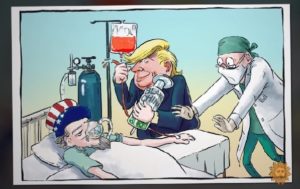
A new correspondence published in The New England Journal of Medicine from a team of New Zealand-based investigators at the University of Otago highlighted the public health successes of the country—measures which have brought New Zealand to the post-elimination phase of response approximately 100 days after its first case.

The trio of authors—Michael G. Baker, MB, ChB; Nick Wilson, MB, ChB, MPH; Andrew Anglemyer, PhD, MPH—wrote SARS-CoV-2 introduction to New Zealand was known to be imminent early on, due to a great rate of visiting tourists and students from Europe and China annually.

In fact, their disease models showed estimated wide pandemic spread, with capability to “overwhelm” the healthcare system and disproportionately affect Maori and Pacific persons.

“New Zealand began implementing its pandemic influenza plan in earnest in February, which included preparing hospitals for an influx of patients,” they wrote. “We also began instituting border-control policies to delay the pandemic’s arrival.”

The first New Zealand COVID-19 case was diagnosed February 26, around the same time that global agencies began reporting the SARS-CoV-2 infection was behaving more like a severe acute respiratory syndrome (SARS) than an influenza—giving investigators hope for containment.

Because of lacking testing and contact-tracing capability in mid-March, the country’s leaders made a dramatic and critical switch in strategy: from mitigating the disease, to eliminating it.

A countrywide lockdown—Alert Level 4—was implemented on March 26.

“After 5 weeks, and with the number of new cases declining rapidly, New Zealand moved to Alert Level 3 for an additional 2 weeks, resulting in a total of 7 weeks of what was essentially a national stay-at-home order,” authors wrote.

It was in early May that the last identified COVID-19 case was observed in the community; with the patient placed in isolated, the country had ended its community spread. On June 8, the New Zealand moved to Alert Level 1—in 103 days, they had declared the pandemic over in the country.

At the time of the paper’s publishing, New Zealand had just 1569 cases, 22 deaths, and a coronavirus-related mortality of 4 per 1 million—the lowest reported rate among 37 nations in the Organization for Economic Cooperation and Development.
“Many parts of the domestic economy are now operating at pre-COVID levels,” authors wrote. “Planning is under way for cautious relaxing of some border-control policies that may permit quarantine-free travel from jurisdictions that have eliminated COVID-19 or that never had cases.”

However, the post-elimination stage of the pandemic is not certain for safety. The authors noted the only cases identified in the country are via international travelers kept in government-managed quarantine or isolation for 2 weeks post-arrival. Failures of border control or continued quarantine/isolation policies could result in new spread.

“New Zealand needs to plan to respond to resurgences with a range of control measures, including mass masking, which hasn’t been part of our response to date,” authors wrote.

But there are takeaways from the early and immediate successes of the New Zealand response. The authors credited the combination of immediate risk assessment driven by science, with the decisive actions of the government.

Additionally, the country’s border-control strategies, as well as both community-based and individual case-based control measures, were overall effective in eliminating the virus’ presence when mitigation was no longer feasible.
Lastly, the authors praised their leader’s message.

“Prime Minister Jacinda Ardern provided empathic leadership and effectively communicated key messages to the public—framing combating the pandemic as the work of a unified “team of 5 million”—which resulted in high public confidence and adherence to a suite of relatively burdensome pandemic-control measures,” they wrote.

Source: Posted August 9, 2020; retrieved August 30, 2020 from: https://www.contagionlive.com/news/how-did-new-zealand-control-covid19

—————

VIDEO 1 – Sharing COVID-19 experiences: The New Zealand response – https://youtu.be/bLT-XdPRUAA

World Health Organization (WHO)
Posted July 7, 2020 – In response to community transmission of COVID-19, New Zealand implemented a range of measures to contain the virus, including extensive testing, contact tracing and clear and consistent communications to the public. On 8 June 2020, the government reported that there was no more active transmission of the virus in the country but stressed that it needed to remain vigilant. This video tells the story of New Zealand’s response. More information: www.who.int/COVID-19.

The member-states of the Caribbean, individually and collectively, need an efficient and effective Playbook to manage the Coronavirus COVID-19 pandemic. The Playbook must include strategies, tactics and implementations to mitigate and abate the underlying influenza conditions. This is exactly what New Zealand did:

  • Control the borders, so as eliminate any new flu arrivals.
  • Test the full population to identify infections
  • Contact Trace and capture movement data on all possible infected candidates
  • Lockdown communities as needed, catch and release promptly
  • Make decisions related to economic engines – cash  crops – based on near-term and long-term benefits
  • Fund subsistence … adequately – 2-week wage subsidy
  • Embrace e-Learning and work from home
  • Embrace e-Government
  • Be an early adopter on scientific solutions
  • Remain vigilant, even in success.

While this commentary addresses the Pandemic Playbook for the Caribbean region and compares it to New Zealand, we are not trying to compete, we are only trying to learn Best Practices. This commentary concludes the 6-part Teaching Series for the month of August 2020 on the subject of Pandemic Playbooks – the need for them and the deficiency there of in the Caribbean status quo. This is the final entry, 6-of-6, from the movement behind the 2013 book Go Lean…Caribbean. The other commentaries in the series are cataloged as follows:

  1. Pandemic Playbook: Worldwide Leadership – Plan ==> Actual
  2. Pandemic PlaybookCaribbean Inadequacies – Missing the Bubble Opportunities
  3. Pandemic PlaybookBahamas Example – ‘Too Little Too Late’
  4. Pandemic PlaybookOnly at the Precipice ENCORE
  5. Pandemic PlaybookTo Be or Not To Be – COVID Vaccine
  6. Pandemic Playbook: Success – Looks like New Zealand

The references to New Zealand apply to their government, yes, but compliance is expected on the part of the people and institutions. Like everywhere, there is dissent, opposition and pushback. But look at the result:

  • Economy resumed.
  • Lives protected
  • Kids are in school … now.
  • Tourism soaring – (visitors must submit to testing).
  • Global respect heightened.

So success in New Zealand has culled any resistance. See the portrayal in the VIDEO here depicting the PM vs Opposition:

VIDEO 2 – Jacinda Ardern and Judith Collins go head to head on wage subsidy and Covid testing | nzherald.co.nz – https://youtu.be/I1RDlvL4VUo

nzherald.co.nz
Posted August 25, 2020 – National leader Judith Collins continues to press the Government in Question Time this afternoon over its decision not to extend the wage subsidy scheme and testing in managed isolation.

Full story: http://nzh.tw/12359734
Subscribe: https://goo.gl/LP45jX
Check out our playlists: https://goo.gl/Swd249
Like NZ Herald on Facebook: https://goo.gl/tUC4oq
Follow NZ Herald on Instagram: https://goo.gl/oLicXe
Follow NZ Herald on Twitter: https://goo.gl/Wi6mbv

The Go Lean roadmap calls for the full execution of the strategies, tactics and implementations to plan and respond to  disasters – pandemics have always been considered among the threats – the Clear and Present Dangers. These points had been embedded in the 2013 book and further refined by looking, listening and learning from other communities managing their own epidemic and infectious disease episodes. We previously considered these infectious diseases:

New Zealand provides a good role model for us in the Caribbean, Their pattern of Good Governance is consistent. We have looked, listened and learned from New Zealand before; they had provided other examples of Best Practices, beyond Pandemic Playbooks. See this sample of previous blog-commentaries featuring New Zealand:

https://goleancaribbean.com/blog/?p=17267 Way Forward – For Justice: Special Prosecutors – NZ examples abound
https://goleancaribbean.com/blog/?p=15075 e-Government example in Zealand
https://goleancaribbean.com/blog/?p=14811 New Zealand’s openness benefiting from International College Students
https://goleancaribbean.com/blog/?p=13746 New Zealand’s Homeland Security preparedness with ANZUS Alliance
https://goleancaribbean.com/blog/?p=13579 NZ reconciliation of Past Colonialism with Indigenous People
https://goleancaribbean.com/blog/?p=13155 NZ use of Underwater Pipelines to connect remote islands to power grid
https://goleancaribbean.com/blog/?p=12447 NZ’s Westminster but with mixed-member proportional representation
https://goleancaribbean.com/blog/?p=11989 NZ’s Great Model as one of the first countries to allow Diaspora Voting

The Coronavirus COVID-19 virus can be mastered; we see success in New Zealand. They have done it, so can we.

As related in the foregoing, New Zealand provides a great role model for the Caribbean in a number of subject areas; here is an additional one:

Both the Prime Minister and the Leader of the Opposition are women, Jacinda Ardern and Judith Collins respectively.

Perhaps, one reason for the efficiency and effectiveness of New Zealand’s government is that they draw upon the best people in-country, no matter the person’s gender.  This point about Gender Equality aligns with another previous blog-commentary from November 14, 2015:

So how do we seriously consider reforming government in the Caribbean?

  • Start anew.
  • Start with politics and policy-makers.
  • Start with the people who submit for politics, to be policy-makers
  • Start with people who participate in the process.

Considering the status-quo of the region – in crisis – there is this need to start again. But this time we need more women.

The Caribbean member-states, individually and collectively, need the strategy of a Pandemic Playbook. This is a requirement for Good Governance; it mandates that we submit to Science and then Better Science.

Even our neighbor to the north, United States of America, can benefit from New Zealand’s example. as we related back on May 30, 2020 in this previous Go Lean commentary:

Good Leadership: Example – “Leader of the Free World”?
The current POTUS (President of the United States) – Donald Trump – is not to be credited as the “Leader of the Free World”. He has not provided a good example of Good Leadership. He is not ready, willing nor able. This is not our opinion alone …

We urge all Caribbean stakeholders – governments and citizens – to deploy an effective and efficient Pandemic Playbook for our region. This is the purpose of the Go Lean roadmap; this is how we can make the Caribbean homeland a better place to live, work  and play.

New Zealand did it; we can too. So our vision, this quest is conceivable, believable and achievable. 🙂

About the Book
The book Go Lean…Caribbean serves as a roadmap for the introduction and implementation of the technocratic Caribbean Union Trade Federation (CU), for the elevation of Caribbean society – for all member-states. This CU/Go Lean roadmap has these 3 prime directives:

  • Optimization of the economic engines in order to grow the regional economy to $800 Billion & create 2.2 million new jobs.
  • Establishment of a security apparatus to ensure public safety and protect the resultant economic engines.
  • Improve Caribbean governance to support these engines, including a separation-of-powers between the member-states and CU federal agencies.

The Go Lean book provides 370-pages of turn-by-turn instructions on “how” to adopt new community ethos, plus the strategies, tactics, implementations and advocacies to execute so as to reboot, reform and transform the societal engines of Caribbean society.

Download the free e-Book of Go Lean … Caribbean – now!

Who We Are
The movement behind the Go Lean book – a non-partisan, apolitical, religiously-neutral Community Development Foundation chartered for the purpose of empowering and re-booting economic engines – stresses that reforming and transforming the Caribbean societal engines must be a regional pursuit. This was an early motivation for the roadmap, as pronounced in the opening Declaration of Interdependence (Pages 12 – 14):

x. Whereas we are surrounded and allied to nations of larger proportions in land mass, populations, and treasuries, elements in their societies may have ill-intent in their pursuits, at the expense of the safety and security of our citizens. We must therefore appoint “new guards” to ensure our public safety and threats against our society, both domestic and foreign. …

xi. Whereas all men are entitled to the benefits of good governance in a free society, “new guards” must be enacted to dissuade the emergence of incompetence, corruption, nepotism and cronyism at the peril of the people’s best interest. The Federation must guarantee the executions of a social contract between government and the governed.

xii. Whereas the legacy in recent times in individual states may be that of ineffectual governance with no redress to higher authority, the accidence of this Federation will ensure accountability and escalation of human and civil rights of the people for good governance, justice assurances, due process and the rule of law. As such, any threats of a “failed state” status for any member state must enact emergency measures on behalf of the Federation to protect the human, civil and property rights of the citizens, residents, allies, trading partners, and visitors of the affected member state and the Federation as a whole.

xvi. Whereas security of our homeland is inextricably linked to prosperity of the homeland, the economic and security interest of the region needs to be aligned under the same governance. Since economic crimes … can imperil the functioning of the wheels of commerce for all the citizenry, the accidence of this Federation must equip the security apparatus with the tools and techniques for predictive and proactive interdictions.

xxxiii. Whereas lessons can be learned and applied from the study of the recent history of other societies, the Federation must formalize statutes and organizational dimensions to avoid the pitfalls of communities like … . On the other hand, the Federation must also implement the good examples learned from developments/communities like … [New Zealand].

Sign the petition to lean-in for this roadmap for the Caribbean Union Trade Federation.

Share this post:
, ,
[Top]

Pandemic Playbook – COVID Vaccine: To Be or Not To Be

Go Lean Commentary

To be or not to be; that is the question – Shakespeare’s Hamlet

Is it worth it to “hang in there”? This is a question for us in the Caribbean as well. The world is enduring the Coronavirus COVID-19 pandemic crisis; it is wreaking havoc on the world’s economic engines – $250 Billion a day in losses – and Public Health deliveries. The only hope is a vaccine, of which there are a number of them in development (Phase I – Test Tubes, Phase II – Lab Mice, Phase III – Human Trials). Around $10bn is being spent on finding a vaccine for this Coronavirus.
Will you consume or ingest the eventual vaccine?

Will you allow your children to ingest? What percentage of people in the community will refuse to ingest?

What if consumption is a prerequisite for work, school, church, travel, etc.?

To be or not to be; that is the question
To be or not to be’ is a soliloquy of Hamlet’s – meaning that although he is speaking aloud to the audience none of the other characters can hear him. Soliloquies were a convention of Elizabethan plays where characters spoke their thoughts to the audience. Hamlet says ‘To be or not to be’ because he is questioning the value of life and asking himself whether it’s worthwhile hanging in there. He is extremely depressed at this point and fed up with everything in the world around him, and he is contemplating putting an end to himself. – Source
——
See Hamlet’s full Soliloquy in the Appendix below.

Do you want cultural suicide or do you want to be a part of the future world?

Please note: You will not be a Guinea Pig; those were the rodent-like creatures that functioned as Lab Mice. Also, you are not a part of the Human Trials. So at the point that the vaccine offer is made to you, many iterations of Quality Assurance would have already been executed.
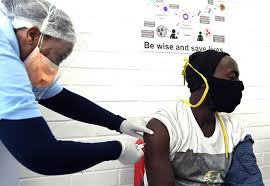
When exactly will a vaccine be ready?

We are not certain of the Day/Time, but we can say SOON. See this VIDEO as it  addresses this and other related issues:

VIDEO – Covid-19: When will a vaccine be ready? | The Economist – https://youtu.be/FgR6t7vQtn8

The Economist
Posted August 14, 2020 – Around $10bn is being spent on finding a vaccine for coronavirus—it’s not nearly enough. And even when a covid-19 vaccine is found how should it be distributed fairly? Our experts answer your questions.

00:00 Covid-19: When will a vaccine be ready?
00:50 Will there ever be a “silver-bullet” vaccine?
01:41 How long would it take for the whole world to be vaccinated?
02:25 Who benefits financially from the vaccine?
03:54 How much will each vaccine cost?
05:10 What percentage of Americans do you estimate will choose not to get vaccinated & how much of an issue will this be?
06:44 In an ideal world, how should a vaccine be optimally distributed?
07:21 Will new versions of the vaccine be required periodically?
07:54 Will developing countries receive equal access to the vaccine, or will they be left behind?
08:50 Should richer countries pay for vaccines in the developing world?
10:01 How should we respond to crises like this one in the future?

Further reading:
Find The Economist’s most recent coverage of covid-19 here: https://econ.st/3iwmMMH

Sign up to The Economist’s daily newsletter to keep up to date with our latest covid-19 coverage: https://econ.st/2Ckne0X

Listen to “The Intelligence” podcast about the vaccine candidates and equitable distribution: https://econ.st/3aqh4Jl

How the world can think better about catastrophic and existential risks: https://econ.st/2CqYN28

Read our leader on how people must adapt to living in the covid-19 pandemic era: https://econ.st/3gSw0SS

How SARS-CoV-2 causes disease and death in covid-19: https://econ.st/33S1jcU

Covid-19 testing labs are being overwhelmed: https://econ.st/3iDGMx1

How the pandemic has shown the urgency of reforming care for the elderly: https://econ.st/2XUqfgh

Read about the hunt for the origins of covid-19: https://econ.st/3iAoX1L

This commentary addresses the Pandemic Playbook for the Caribbean region – asserting that it should include vaccines. This continues the Teaching Series for the month of August 2020 on the subject of Pandemic Playbooks – the need for them and the deficiency there of in the Caribbean. This is entry 5-of-6 from the movement behind the 2013 book Go Lean…Caribbean. The other commentaries in the series are cataloged as follows:

  1. Pandemic Playbook: Worldwide Leadership – Plan ==> Actual
  2. Pandemic PlaybookCaribbean Inadequacies – Missing the Bubble Opportunities
  3. Pandemic PlaybookBahamas Example – ‘Too Little Too Late’
  4. Pandemic PlaybookOnly at the Precipice ENCORE
  5. Pandemic Playbook: To Be or Not To Be – COVID Vaccine
  6. Pandemic Playbook: Success – Looks like New Zealand

A big area of consideration must be past history:
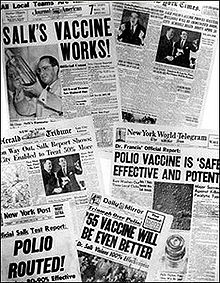
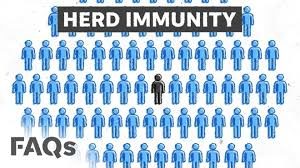
  • COVID-19 is not the first pandemic
  • COVID-19 immunization would not be the first vaccine

What lessons can we learn from past considerations of this “To Be or Not To Be” vaccine drama?

Let’s consider the historicity (good, bad and ugly) of the Polio vaccine and the Lead Researcher Dr. Jonas Salk; see here:

Title 1: Polio Vaccine

During the early 1950s, polio rates in the U.S. were above 25,000 annually; in 1952 and 1953, the U.S. experienced an outbreak of 58,000 and 35,000 polio cases, respectively, up from a typical number of some 20,000 a year, with deaths in those years numbering 3,200 and 1,400.[62] Amid this U.S. polio epidemic, millions of dollars were invested in finding and marketing a polio vaccine by commercial interests, including Lederle Laboratories in New York under the direction of H. R. Cox. Also working at Lederle was Polish-born virologist and immunologist Hilary Koprowski of the Wistar Institute in Philadelphia, who tested the first successful polio vaccine, in 1950.[8][41] His vaccine, however, being a live attenuated virus taken orally, was still in the research stage and would not be ready for use until five years after Jonas Salk’s polio vaccine (a dead-virus injectable vaccine) had reached the market. Koprowski’s attenuated vaccine was prepared by successive passages through the brains of Swiss albino mice. By the seventh passage, the vaccine strains could no longer infect nervous tissue or cause paralysis. After one to three further passages on rats, the vaccine was deemed safe for human use.[39][63] On 27 February 1950, Koprowski’s live, attenuated vaccine was tested for the first time on an 8-year-old boy living at Letchworth Village, an institution for the physically and mentally disabled located in New York. After the child suffered no side effects, Koprowski enlarged his experiment to include 19 other children.[39][64]

Jonas Salk
The first effective polio vaccine was developed in 1952 by Jonas Salk and a team at the University of Pittsburgh that included Julius Youngner, Byron Bennett, L. James Lewis, and Lorraine Friedman, which required years of subsequent testing. Salk went on CBS radio to report a successful test on a small group of adults and children on 26 March 1953; two days later, the results were published in JAMA.[57] Leone N. Farrell invented a key laboratory technique that enabled the mass production of the vaccine by a team she led in Toronto.[65][66] Beginning 23 February 1954, the vaccine was tested at Arsenal Elementary School and the Watson Home for Children in Pittsburgh, Pennsylvania.[67]

Salk’s vaccine was then used in a test called the Francis Field Trial, led by Thomas Francis, the largest medical experiment in history at that time. The test began with about 4,000 children at Franklin Sherman Elementary School in McLean, Virginia,[68][69] and eventually involved 1.8 million children, in 44 states from Maine to California.[70] By the conclusion of the study, roughly 440,000 received one or more injections of the vaccine, about 210,000 children received a placebo, consisting of harmless culture media, and 1.2 million children received no vaccination and served as a control group, who would then be observed to see if any contracted polio.[39] The results of the field trial were announced 12 April 1955 (the tenth anniversary of the death of President Franklin D. Roosevelt, whose paralytic illness was generally believed to have been caused by polio). The Salk vaccine had been 60–70% effective against PV1 (poliovirus type 1), over 90% effective against PV2 and PV3, and 94% effective against the development of bulbar polio.[71] Soon after Salk’s vaccine was licensed in 1955, children’s vaccination campaigns were launched. In the U.S, following a mass immunization campaign promoted by the March of Dimes, the annual number of polio cases fell from 35,000 in 1953 to 5,600 by 1957.[72] By 1961 only 161 cases were recorded in the United States.[73]

Safety incidents

In April 1955, soon after mass polio vaccination began in the US, the Surgeon General began to receive reports of patients who contracted paralytic polio about a week after being vaccinated with Salk polio vaccine from Cutter pharmaceutical company, with the paralysis limited to the limb the vaccine was injected into. In response the Surgeon General pulled all polio vaccine made by Cutter Laboratories from the market, but not before 250 cases of paralytic illness had occurred. Wyeth polio vaccine was also reported to have paralyzed and killed several children. It was soon discovered that some lots of Salk polio vaccine made by Cutter and Wyeth had not been properly inactivated, allowing live poliovirus into more than 100,000 doses of vaccine. In May 1955, the National Institutes of Health and Public Health Services established a Technical Committee on Poliomyelitis Vaccine to test and review all polio vaccine lots and advise the Public Health Service as to which lots should be released for public use. These incidents reduced public confidence in polio vaccine leading to a drop in vaccination rates.[76]

Source: Retrieved August 29, 2020 from: https://en.wikipedia.org/wiki/Polio_vaccine#1950%E2%80%931955

Is there an alternative to taking a vaccine?

Yes, there is herd or community immunity – where if enough people are vaccinated, like 70 percent – then the rest will automatically benefit from the protections.

But don’t get it twisted! The Caribbean member-states boast a Service industrial economy – tourism. To participate in this industry space will require compliance. Tourists – by air for resort-based stay-overs or cruise line passengers – will not want to expose themselves to possible infections.

Lastly, individuals can simply chose to exit societal functioning – a self-imposed quarantine; think: Leper Colony. These ones will have to take a seat – with a view – and watch life pass them by.

Is this what you want for yourself, your family and your community? If you chose NO VACCINE, you have that right. But your children may choose differently. Especially those children that you invested so selflessly to get advanced education – college graduates. Already, this population have a higher than normal abandonment rate in the region.

One report estimates 70 percent of college educated Caribbean citizens have fled and live abroad in the Diaspora:

Caribbean loses more than 70 percent of tertiary educated to Brain Drain
According to the analysis by the Inter-American Development Bank, the people in the “Caribbean 6” countries, including the Bahamas, Barbados, Guyana, Jamaica, Suriname, and Trinidad & Tobago have wasted money on educating their populations, especially tertiary (college) education. …

The Go Lean book posits that the Caribbean is the greatest address in the world. So why would people want to leave? The book answers by relating “push” and “pull” factors. Push, in that the dire economic conditions in the Caribbean homeland, plus governmental failures in response, caused responsible people to look elsewhere to fulfill their responsibilities and aspirations. On the other hand, pull factors came from the geo-political circumstances in the world. … Many West Indians were attracted by these better prospects in what was often referred to as the mother country. …

The Caribbean region features the world’s best address. The world should be beating down the doors to come to the Caribbean, not the Caribbean people beating down doors to get out.

“To be or not to be? That is the question” …

There must be a Pandemic Playbook for inclusion and participation in the COVID-19 vaccine race.

We must have a seat at the table or we will be “on the menu“.

The Go Lean roadmap promotes, plans and prepares for that inclusion and participation.

We want to start early in the participation cycle; the Go Lean roadmap calls for the full strategies, tactics and implementations for Research & Development. We also want full participation with Disaster (as in pandemic) Preparation & Response. These participations had already been embedded in this roadmap for reforming and transforming the Caribbean. These prime drivers are part of the vision for a Pandemic Playbook. These participations were presented as part of the New Guards for Homeland Security and Public Safety in the Caribbean region.

See the vision for Caribbean Research & Development (R&D) plus Disaster Preparation (and Response) as presented in previous blog-commentaries; consider this sample:

https://goleancaribbean.com/blog/?p=19568 Big Hairy Audacious Goal – Need ‘Big Brother’ for Pandemics
https://goleancaribbean.com/blog/?p=19189 We have people with genius qualifiers to do Research & Development
https://goleancaribbean.com/blog/?p=18243 The Need after Disasters? Regionalism – ‘How you like me now?’
https://goleancaribbean.com/blog/?p=16882 Exploring Medical School Opportunities for R&D and Economic Engines
https://goleancaribbean.com/blog/?p=16817 The Call for Caribbean R&D to Battle Cancer
https://goleancaribbean.com/blog/?p=15996 Good Governance: Stepping Up in an Emergency
https://goleancaribbean.com/blog/?p=15310 Industrial Reboot – Trauma 101
https://goleancaribbean.com/blog/?p=8943 Zika’s Drug Breakthrough – End-Game of an Playbook
https://goleancaribbean.com/blog/?p=7449 ‘Crap Happens’ – So What Now?
https://goleancaribbean.com/blog/?p=7822 A model for doing more Cancer R&D in the Caribbean
https://goleancaribbean.com/blog/?p=6580 On Guard for the Good, Bad & Ugly of Capitalism on Drug Patents
https://goleancaribbean.com/blog/?p=4720 Lesson Learned – Mitigating SARS in Hong  Kong
https://goleancaribbean.com/blog/?p=2397 Lesson Learned – Monitoring and Mitigating Ebola
https://goleancaribbean.com/blog/?p=1003 Painful and rapid spread of new virus – Chikungunya – in Caribbean
https://goleancaribbean.com/blog/?p=554 Cuba already had Head-start with Drug R&D – Let’s do more

The Coronavirus COVID-19 virus is the master; we are all just slaves, doing the master’s bidding.

Wanna take back control?
Vaccine or bust!

We have no other choice but to contend with these challenges that come with participating in a vaccine program.
We need this strategy in our Pandemic Playbook. A requirement for Good Governance mandates that we capitulate with one or many of these vaccines that have been researched and developed; lives and livelihoods are stake. Next time – and there will be a next time – we need our own people doing the research & the development.

We urge all Caribbean stakeholders – governments, citizens, doctors and patients – to participate in the global quest to eradicate this pandemic. This is the roadmap for making the Caribbean homeland a better place to live, work, heal and play. Jonas Salk did it with Polio … eventually; we can too. So our vision, this quest is conceivable, believable and achievable. 🙂

About the Book
The book Go Lean…Caribbean serves as a roadmap for the introduction and implementation of the technocratic Caribbean Union Trade Federation (CU), for the elevation of Caribbean society – for all member-states. This CU/Go Lean roadmap has these 3 prime directives:

  • Optimization of the economic engines in order to grow the regional economy to $800 Billion & create 2.2 million new jobs.
  • Establishment of a security apparatus to ensure public safety and protect the resultant economic engines.
  • Improve Caribbean governance to support these engines, including a separation-of-powers between the member-states and CU federal agencies.

The Go Lean book provides 370-pages of turn-by-turn instructions on “how” to adopt new community ethos, plus the strategies, tactics, implementations and advocacies to execute so as to reboot, reform and transform the societal engines of Caribbean society.

Download the free e-Book of Go Lean … Caribbean – now!

Who We Are
The movement behind the Go Lean book – a non-partisan, apolitical, religiously-neutral Community Development Foundation chartered for the purpose of empowering and re-booting economic engines – stresses that reforming and transforming the Caribbean societal engines must be a regional pursuit. This was an early motivation for the roadmap, as pronounced in the opening Declaration of Interdependence (Pages 11 – 13):

ix. Whereas the realities of healthcare and an aging population cannot be ignored and cannot be afforded without some advanced mitigation, the Federation must arrange for health plans to consolidate premiums of both healthy and sickly people across the wider base of the entire Caribbean population. The mitigation should extend further to disease management …

x. Whereas we are surrounded and allied to nations of larger proportions in land mass, populations, and treasuries, elements in their societies may have ill-intent in their pursuits, at the expense of the safety and security of our citizens. We must therefore appoint “new guards” to ensure our public safety and threats against our society, both domestic and foreign. …

xi. Whereas all men are entitled to the benefits of good governance in a free society, “new guards” must be enacted to dissuade the emergence of incompetence, corruption, nepotism and cronyism at the peril of the people’s best interest. The Federation must guarantee the executions of a social contract between government and the governed.

xii. Whereas the legacy in recent times in individual states may be that of ineffectual governance with no redress to higher authority, the accidence of this Federation will ensure accountability and escalation of human and civil rights of the people for good governance, justice assurances, due process and the rule of law. As such, any threats of a “failed state” status for any member state must enact emergency measures on behalf of the Federation to protect the human, civil and property rights of the citizens, residents, allies, trading partners, and visitors of the affected member state and the Federation as a whole.

xvi. Whereas security of our homeland is inextricably linked to prosperity of the homeland, the economic and security interest of the region needs to be aligned under the same governance. Since economic crimes … can imperil the functioning of the wheels of commerce for all the citizenry, the accidence of this Federation must equip the security apparatus with the tools and techniques for predictive and proactive interdictions.

Sign the petition to lean-in for this roadmap for the Caribbean Union Trade Federation.

————————

Appendix – Hamlet’s Soliloquy

To be, or not to be, that is the question:
Whether ’tis nobler in the mind to suffer
The slings and arrows of outrageous fortune,
Or to take arms against a sea of troubles
And by opposing end them. To die—to sleep,
No more; and by a sleep to say we end

The heart-ache and the thousand natural shocks
That flesh is heir to: ’tis a consummation
Devoutly to be wish’d. To die, to sleep;
To sleep, perchance to dream—ay, there’s the rub:
For in that sleep of death what dreams may come,
When we have shuffled off this mortal coil,
Must give us pause—there’s the respect
That makes calamity of so long life.

For who would bear the whips and scorns of time,
Th’oppressor’s wrong, the proud man’s contumely,
The pangs of dispriz’d love, the law’s delay,
The insolence of office, and the spurns
That patient merit of th’unworthy takes,
When he himself might his quietus make
With a bare bodkin? Who would fardels bear,
To grunt and sweat under a weary life,
But that the dread of something after death,
The undiscovere’d country, from whose bourn
No traveller returns, puzzles the will,
And makes us rather bear those ills we have
Than fly to others that we know not of?

Thus conscience does make cowards of us all,
And thus the native hue of resolution
Is sicklied o’er with the pale cast of thought,
And enterprises of great pitch and moment
With this regard their currents turn awry
And lose the name of action.

Source: Retrieved Aigust 29, 2020 from: https://www.nosweatshakespeare.com/quotes/soliloquies/to-be-or-not-to-be/#:~:text=To%20be%20or%20not%20to%20be’%20is%20a%20soliloquy%20of,other%20characters%20can%20hear%20him.&text=Hamlet%20says%20’To%20be%20or,it’s%20worthwhile%20hanging%20in%20there.

Share this post:
, , , ,
[Top]

Pandemic Playbook – Only at the Precipice, Do People Change – ENCORE

When the going gets tough, the tough gets going – Old Adage
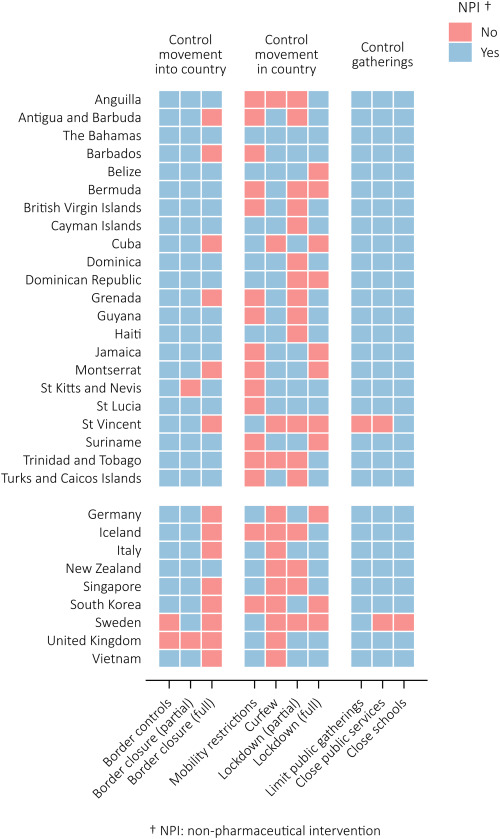
We have all heard that expression and knows what it means; but here is a different angle:

When things get critical, we cannot sit still or maintain the status quo.

Things have always been critical in the Caribbean, but right now, conditions are even more acute than our normal critical. The world is enduring the Coronavirus COVID-19 pandemic – every societal engine is shattered.

  • Our revenues are curtailed because the tourism-only economy is shattered.
  • Economic activities in the private sector are shattered due to the fact that there is no money.
  • Governments cannot function.
  • Public Health deliveries are imperiled … and overwhelmed.

Each Caribbean member-state, one after another, is suffering this disposition:

(Click to Enlarge)

In a research report by the University of the West Indies entitled “COVID-19 containment in the Caribbean: The experience of small island developing states” it related the intersection of Public Health measures and economic motivations. The May 25, 2020 report provides this summary:

Tourism is a dominant revenue stream for many Caribbean SIDS, with their reliance on international arrivals, particularly from Europe and North America. Governments were aware that border controls and closures would have severe economic effects. Weighed against this was the known fragility of regional health systems, and governments were keen to avoid their health systems being overwhelmed by a sharp increase in hospitalisations. Using the date of first confirmed case in each country as our indicator, Caribbean SIDS generally implemented NPIs (Non-Pharmaceutical Interventions) earlier than our chosen comparator countries. For movements into a country, the Caribbean on average implemented controls 23 days before their comparator counterparts. For control of movement within countries, the Caribbean implemented controls 36 days before comparators, and for control of gatherings the Caribbean on average implemented controls 30 days before comparator countries.

This report reveals the critical disposition of the Caribbean region; this is the dreaded precipice that the movement behind the 2013 book Go Lean…Caribbean have always been on alert for. This actuality aligns with the observation that it is only at the precipice that people are willing to change.

The COVID-19 pandemic is creating the Perfect Storm to finally forge change in the region. This actuality forces us to compose a Pandemic Playbook. We need that now.

This commentary continues the Teaching Series for the month of August 2020 on the subject of Pandemic Playbooks – the need for them and the deficiency there of in the Caribbean. This is entry 4-of-6 from the movement behind the Go Lean book. The other commentaries in the series are cataloged as follows:

  1. Pandemic Playbook: Worldwide Leadership – Plan ==> Actual
  2. Pandemic PlaybookCaribbean Inadequacies – Missing the Bubble Opportunities
  3. Pandemic PlaybookBahamas Example – ‘Too Little Too Late’
  4. Pandemic Playbook: Only at the Precipice – ENCORE
  5. Pandemic PlaybookTo Be or Not To Be – COVID Vaccine
  6. Pandemic Playbook: Success – Looks like New Zealand

The theme of Forging Change at the Precipice is very familiar to the Go Lean movement. In fact, there was an April 21, 2014 blog-commentary that featured almost the same title:

‘Only at the precipice, do they change’

Who is the “they”?

The target audience we want to change include the people and institutions (i.e. governments, banks, schools, etc.) of the region. We need both Top-Down and Bottoms-Up change.

See how this urgent-emergent crisis can finally usher in the reforms and transformations that Caribbean society have always needed.  Let’s revisit that previous blog-commentary here-now:

=================

Go Lean Commentary – ‘Only at the precipice, do they change’

Keanu Nanu

“Life imitating Art”; “Art imitating life”.

This is more than a cliché; it is also factual for describing how people finally get the will to change.

The movie The Day the Earth Stood Still (2008) – demonstrates “Art imitating Life” – is a remake of the classic 1951 sci-fi film of the same name; see Trailer VIDEO in the Appendix below. These films are about an alien visitor and his giant robot counterpart who visit Earth.

The character Professor Jacob Barnhardt, in the 2008 version, was played by John Cleese, the English actor of some repute, known for his start with the Mighty Python players.

The counter character in this dialogue, Klaatu, was played by American mega-star Keanu Reeves.

The storyline proceeds that the character Klaatu is a spokesman that preceded the robot sent to destroy human life on earth. And thus this quotation from the Movie Dialogue:

Professor Barnhardt: There must be alternatives. You must have some technology that could solve our problem.

Klaatu: Your problem is not technology. The problem is you. You lack the will to change.

Professor Barnhardt: Then help us change.

Klaatu: I cannot change your nature. You treat the world as you treat each other.

Professor Barnhardt: But every civilization reaches a crisis point eventually.

Klaatu: Most of them don’t make it.

Professor Barnhardt: Yours did. How?

Klaatu: Our sun was dying. We had to evolve in order to survive.

Professor Barnhardt: So it was only when your world was threatened with destruction that you became what you are now.

Klaatu: Yes.

Professor Barnhardt: Well that’s where we are. You say we’re on the brink of destruction and you’re right. But it’s only on the brink that people find the will to change. Only at the precipice do we evolve. This is our moment. Don’t take it from us. We are close to an answer.

(Source: Internet Movie Database – Movie: The Day the Earth Stood Still (2008). Retrieved 04/21/2014 – http://www.imdb.com/character/ch0012790/quotes)

This foregoing dialogue from the movie The Day the Earth Stood Still (2008) is symbolic of the crisis facing the Caribbean. The problem in the Caribbean is not technology, but rather the will to change. This is a consistent theme in the book Go Lean … Caribbean, it asserts that the changes necessary to preserve Caribbean heritage, culture and economies must first be preceded by an evolution in the community ethos. This pronouncement is as follows from Page 20:

The people of the Caribbean must change their feelings about elements of their society – elements that are in place and elements missing. This is referred to as “Community Ethos”, defined as:

    “the fundamental character or spirit of a culture; the underlying sentiment that informs the beliefs, customs, or practices of a group or society; dominant assumptions of a people or period.

This book serves as a roadmap for the introduction and implementation of the Caribbean Union Trade Federation (CU), a technocratic agency seen as the Caribbean’s best hope to avert the current path of disaster, human flight and brain drain, and grant the Caribbean a meaningful future for its youth.

This movie dialogue synchronizes with the exact details of the book. On Page 21, Go Lean presents a series of community ethos that must be adapted to forge change in the Caribbean. In addition, there are specific advocacies to:

  • Impact the Future (Page 26)
  • Impact Turn-Around (Page 33)
  • Impact the Greater Good (Page 37)
  • Grow the Economy (Page 151)
  • Preserve Caribbean Heritage (Page 218)

As a roadmap, this book provides the turn-by-turn guidance to optimize the Caribbean economy, security apparatus and governing engines.

With the assessment that many Caribbean states have lost more than 50% of their population to foreign shores (Pages 18 & 303), the region is now at that “precipice”.

“It is only at the precipice, do they change!”

Now is the time to lean-in to this roadmap for change, the book Go Lean … Caribbean, and the Caribbean Union Trade Federation. Our society/civilization is at the crisis point.

Download the book Go Lean … Caribbean – now!

————-

Appendix VIDEO – The Day The Earth Stood Still 2008 Official Trailer  – https://youtu.be/rcSJ-6354-A

Published on Aug 5, 2012 – A remake of the 1951 classic sci-fi film about an alien visitor and his giant robot counterpart who visit Earth.
Keanu Reeves & Jennifer Connelly http://www.keanureeves.us/movie/the-d…
Share this post:
, ,
[Top]

Pandemic Playbook – Caribbean Inadequacies – Bahamas Example: ‘Too Little Too Late’

Go Lean Commentary

My thimble runneth over! – Derisive Pun based on the Biblical expression “My cup runneth over”.

Considering the reality of the Coronavirus COVID-19 pandemic on our economic engines and Public Health deliveries, how do you answer:

Is your cup running over?

My cup runneth over” is a quotation from the Hebrew Bible (Psalm 23:5) and means “I have more than enough for my needs”, though interpretations and usage vary. In desert cultures one is required by laws of hospitality to provide a drink to strangers. – Source: Wikipedia.

For many the answer can only be: My thimble runneth over!

(Check out this blog-site – http://mythimblerunnethover.blogspot.com/ – of a simple woman in Tennessee who feels that she is blessed just to have the simple things in life).

Consider the actuality of life in the Bahamas during this crisis; (this writer is a descendant of Freeport, Bahamas and observed-reported on the pandemic from Nassau):

  • Jobs are affected – most private businesses, including tourist resorts, are closed or curtailed.
  • Retail food prices increase because of higher inventory-carrying costs
  • Hospitals and public safety institutions are overwhelmed with COVID cases: testing, tracing, therapeutics and terminal patients.
  • Government Shutdown – No administrative processing, at all; no passport processing, no business registrations, etc.

This reporting describes the situation on the ground in the Bahamas as miserable. In fact, a Misery Index (inflation, unemployment and crime rate) would not do justice in depicting the despair in-country. Even Food Security is an issue; the government has had to implement a national feeding program. See a related story here, describing this program and the challenges:

Title: PM: Food assistance costs soar to $1 mil., more than 110k in need
By: Ava Turnquest
NASSAU, BAHAMAS — Prime Minister Dr Hubert Minnis yesterday revealed the government is supporting the National Food Distribution Task Force with $1 million per week to assist more than 110,000 people.
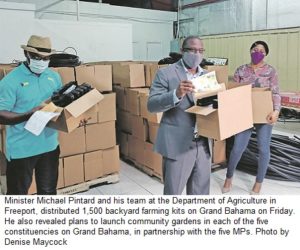
Now entering its 11th week, Minnis advised the task force will move to erestructure aid into three categories: most, moderately and least vulnerable; with assistance to be distributed weekly, bi-weekly, and once a month, respectively.

The prime minister said 27,705 households have registered for assistance, to date.

“Access to food is a basic human right,” Minnis said during his national address on Sunday.

“Around the world, and here at home, people who have been self-sufficient their entire lives are now struggling to feed themselves and their families.

“Ensuring that our people in need are being helped is one of our leading priorities. We are investing heavily in food assistance.”

He continued: “I understand the unique situation so many of you find yourselves in, never imagining that you would ever have to seek assistance to have enough to eat.

“It is important, at this point in the program, to emphasize that first and foremost the Task Force is implementing a needs-based program.

“We have set out to help those in our communities who are the most vulnerable.”

Minnis said he asked the task force to reach out to smaller grocery stores so that arrangements can be made for food vouchers to be purchased from stores throughout the country.

“We would like neighborhood “Mom and Pop Shops” to participate in, and benefit from, this exercise with us,” he said.

During his address, Minnis noted the budget allocation of $16 million dollars for food assistance.

“Your government is delivering on this commitment,” he said.

“We are now providing $1 million dollars per week to the National Food Distribution Task Force for food assistance, to ensure those who are truly in need of food are being helped.

“Our Food Task Force is making every effort to preserve safety and dignity.”

Minnis noted an interaction with an individual who registered for assistance but later advised they were no longer in need.

“We are so grateful to people like Mr. Knowles, who I am told registered for food assistance but recently wrote back to the Task Force saying, “I am well and God has provided me with more than enough, so I don’t need any further assistance. Please provide it to those in need”.”

“Mr. Knowles’ noble action enables the Task Force to stretch the budget and help those who really need it most.”

Minnis added: “We thank Mr. Knowles and others like him, who understand that even in these difficult times, there are those who are in deep, deep need while others are not struggling as much.”

Source: Posted August 20, 2020; retrieved August 27, 2020 from: https://ewnews.com/pm-food-assistance-costs-soar-to-1-mil-more-than-110k-in-need

The Bahamas has a population of 340,000 (circa 2010) and yet 110,000 are being fed by the government.

Sad! $1 million per week for 110,000 people means $10 each … per week. Wow, the thimble runneth over!

One cannot wait until it rains to get an umbrella.

There should have been some disaster planning for this pandemic in advance – this is called a Pandemic Playbook. The Bahamas, and the whole Caribbean region, was alerted 5 years ago to be prepared for such a possibility; see here:

Lesson Learned – Mitigating SARS in Hong  Kong – March 24, 2015
The people, institutions and governance of the Caribbean need to pay more than the usual attention to the lessons of SARS in Hong Kong [(2003], not just from the medical perspective, but also from an economic viewpoint.

During the “heyday” of the SARS crisis, travel and transport to Hong Kong virtually came to a grinding halt! Hong Kong had previously enjoyed up to 14 million visitors annually; they were a gateway to the world. The SARS epidemic became a pandemic because of this status. Within weeks of the outbreak, SARS had spread from Hong Kong to infect individuals in 37 countries in early 2003.[3]

Can we afford this disposition in any Caribbean community?

This commentary continues the Teaching Series for the month of August 2020 on the subject of Pandemic Playbooks – the need for them and the current deficiency there of in the Caribbean. This is entry 3-of-6 from the movement behind the 2013 book Go Lean…Caribbean. The other commentaries in the series are cataloged as follows:

  1. Pandemic Playbook: Worldwide Leadership – Plan ==> Actual
  2. Pandemic PlaybookCaribbean Inadequacies – Missing the Bubble Opportunities
  3. Pandemic Playbook: Bahamas Example – ‘Too Little; Too Late’
  4. Pandemic PlaybookOnly at the Precipice – ENCORE
  5. Pandemic PlaybookTo Be or Not To Be – COVID Vaccine
  6. Pandemic Playbook: Success – Looks like New Zealand

Are we assigning blame to the Government of the Bahamas for being ill-prepared for the eventuality of this COVID-19 crisis?

Yes – Too Little; Too Late.

In fact, we assigned the same blame to all the member-states of the entire Caribbean. This is because governments have a certain expectation, responsibility and job description. This is referred in the Go Lean book – and in standard Good Governance – as the implied Social Contract; defined as follows:

“citizens surrender some of their freedoms and submit to the authority of the State in exchange for protection of remaining natural and legal rights”.

No Food Security on an island or within a chain of islands?

Wait! Why not just Go Fish?

Nope! The government’s playbook forbids standard fishing solutions among the archipelago of island. See this source here:

THE COMMONWEALTH OF THE BAHAMAS
GENERAL PROTOCOLS FOR
BOATS, YACHTS, PRIVATE CRAFT, RECREATIONAL CRAFT, CRUISING IN, PLYING THE WATERS OF, OR SHELTERING IN THE BAHAMAS OR SEEKING TO DO SO
DURING THE COVID-19 SHUT-DOWN
14 April, 2020

  • All foreign boats shall remain in place. There shall be no boating, cruising, fishing, day trips or other movement of any kind.
  • Boats belonging to Bahamians or Bahamian residents whose boats have a regular berth or place in The Bahamas shall comply with the following restrictions:
    • On no account shall Bahamian boats travel from one island of The Bahamas to another …
    • In order to minimize interpersonal contact and to respect the lockdown and curfew requirements, Bahamian boats shall not engage in boating, cruising, day trips or other movement. However, Bahamian boats may engage in subsistence fishing and local fishing for sustenance only (no sports fishing) at allowable times only and with all possible precautions (including Pars. (10) to (13) hereof), and only with the boat departing from and returning to the same location.

So unless you own your own boat – rare in the community  – no subsistence fishing (for personal consumption) is allowed.

How about the land? Can Bahamians feed themselves “of the land”, as in subsistence farming?

Nope! Despite our foregoing assertion that “one cannot wait until it rains to get an umbrella”, the Bahamas Ministry of Agriculture is doubling-down in its desire to encourage Backyard Farming and Community Gardens; only now. See the full story here:

Title: Michael Pintard – Agriculture Minister – Relaunches Backyard Farming Programme
By: DENISE MAYCOCK, Tribune Freeport Reporter
AGRICULTURE and Marine Resources Minister Michael Pintard relaunched the Backyard Farming Programme on Friday, distributing 1,500 backyard kits here on Grand Bahama.
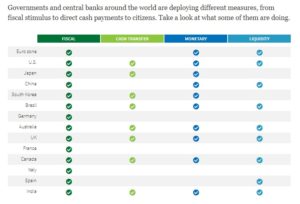
This comes a day after the announcement of an extension of the lockdown for another two weeks to August 19, to control the spread of the coronavirus infections on Grand Bahama.

Additionally, Mr Pintard revealed plans to launch community gardens throughout the island, in partnership with the five GB MPs. Land will be identified and cleared in each of the five constituencies to grow community gardens.

Mr Pintard said these programme initiatives are part of the food security programme, which is important, especially due to the global coronavirus pandemic.

“Again, we are in a difficult period and we believe that the potential for disruption in the food supply is real, given COVID-19,…” he said.

According to Minister Pintard, of the 1,500 kits assembled at the Department of Agriculture in Freeport, 100 will be distributed to each of the five MPs, and the remainder to churches, NGOs, and others.

He believes that “the revitalized” backyard farming programme will not only help the country in terms of its expenditure on food imports, but will also benefit residents.

“We believe it will enhance our ability to save money on our food bill, but also assist a number of persons in growing their farming operation as well. This is going to be accompanied by two other programmes: the distribution of a variety of seeds also on the island as a separate part of our backyard and community farming programmes. We have many more seeds that supply a minimum of 1,000 households,” Mr Pintard said.

The minister was pleased that all five MPs have agreed to support and participate, including Minister of State for Disaster Preparedness Iram Lewis, MP for Central Grand Bahama, Pakesia Parker-Edgecombe of West Grand Bahama and Bimini, Deputy Prime Minister Peter Turnquest of East Grand Bahama, and Frederick McAlpine, MP for Pineridge.

“We don’t believe that MPs are the only conduits by which kits should be distributed, and we want to make sure we have 1,000 kits, plus 1,000 additional seed packages distributed, through partnership with churches, NGOs, and others,” he said.

In terms of the community gardens, Mr Pintard noted that they will be clearing properties for community gardening in every constituency, and will also be partnering with local government on that initiative.

MP Pakesia Parker Edgecombe said she is very appreciative for the kits, which will be distributed in her constituency. “It is important for us to promote food sustainability. I know with the crisis we are going through many are asking about food security. What Mr Pintard and his ministry have been able to do with this initiative and this programme, is to (encourage people) to grow your own food and not spend so much at the supermarket,” she said.

MP Iram Lewis said he has been a strong advocate for backyard farming. “I was happy when the Minister decided to partner with us to take backyard farming to the next level where we form cooperatives in the community by having community gardens. All MPs have identified an area in their constituencies for these community gardens.”

Mr Lewis said a major anchor garden has been identified on South Mall Drive where there will be a seedling nursery and a production area, and weekly Farmers’ Market.

“We really appreciate this gesture,” he said. We are happy it is officially launched and will go a long way, with respect to food security and putting healthy produce that we grow ourselves on our table,” he said.

Tutorial videos and workshop for persons interested in backyard and community gardening is available on the Ministry’s website. Anthony Hutcheson will also provide lectures and tips on how to plant and care for the garden.

Source: Posted Friday August 7, 2020; retrieved August 27, 2020 from: http://www.tribune242.com/news/2020/aug/07/michael-pintard-relaunches-backyard-farming-progra/

Yes, indeed! The assessment is conclusive: Too little; Too late!

In contrast, the full strategies, tactics and implementations for Food Security and Disaster Preparation had already been embedded in a roadmap for reforming and transforming the Caribbean; this is the purpose of the Go Lean book. This is a vision of a Pandemic Playbook. Rather than “waiting for it to rain and then go looking for an umbrella”, the Go Lean roadmap presents a plan for New Guards for Homeland Security and Public Safety on Day One / Step One of the ascension of the Caribbean Union Trade Federation.

See the vision for Caribbean Food Security plus Disaster Preparation (and Response) as presented in previous blog-commentaries; consider this sample:

Food Security

https://goleancaribbean.com/blog/?p=19725 Keep the Change: Being ‘Basic’ about Basic Needs
https://goleancaribbean.com/blog/?p=18836 Food Security – Big Chicken 101
https://goleancaribbean.com/blog/?p=18834 Food Security – A Lesson in History: Free Trade Agreements & Food
https://goleancaribbean.com/blog/?p=18831 Food Security – Planning and Opportunities for the Cruise Line industry
https://goleancaribbean.com/blog/?p=18828 Food Security – A Plan for Temperate Foods in the Tropics
https://goleancaribbean.com/blog/?p=18817 Food Security – Bread Basket 101
https://goleancaribbean.com/blog/?p=13184 Industrial Reboot – Frozen Foods 101

Disaster Preparation and Response

https://goleancaribbean.com/blog/?p=20052 Natural Disasters: The Price of Paradise
https://goleancaribbean.com/blog/?p=19568 Big Hairy Audacious Goal – Need ‘Big Brother’ for Pandemics
https://goleancaribbean.com/blog/?p=18243 The Need after Disasters? Regionalism – ‘How you like me now?’
https://goleancaribbean.com/blog/?p=18182 Disaster Relief: Helping, Not Hurting
https://goleancaribbean.com/blog/?p=17500 Continuity of Business: Lessons on Recovery from System Failures
https://goleancaribbean.com/blog/?p=15996 Good Governance: Stepping Up in an Emergency
https://goleancaribbean.com/blog/?p=15886 Industrial Reboot – Planning for Disasters with Reinsurance
https://goleancaribbean.com/blog/?p=8943 Zika’s Drug Breakthrough – End-Game of an Playbook
https://goleancaribbean.com/blog/?p=7449 ‘Crap Happens’ – So What Now?
https://goleancaribbean.com/blog/?p=4720 Lesson Learned – Mitigating SARS in Hong  Kong
https://goleancaribbean.com/blog/?p=4308 911 – Emergency Response: System in Crisis
https://goleancaribbean.com/blog/?p=2397 Lesson Learned – Monitoring and Mitigating Ebola
https://goleancaribbean.com/blog/?p=1003 Painful and rapid spread of new virus – Chikungunya – in Caribbean

Here’s the major problem: the whole Caribbean – not just the Bahamas – is in competition with the rest of the world, whether we want to be or not. In fact, the original motivation of the 2013 book Go Lean…Caribbean was to execute a Regional Battle Plan to dissuade emigration – to lower the Push-Pull factors that lead to the Brain Drain.

We are losing that Battle.

Some countries – that we compete against – are stepping up and filling the “cups of sustenance” for their citizens and residents, while here in the Caribbean, we are falling short. This is evident in the Bahamas, as related in the foregoing, as they are only able to provide some basic food support for some citizens, as a rate of $10 per person per week. Yes, the competition is doing so much more; see here:

  • Canada is providing families $950 every 2 weeks for the duration of the pandemic, plus freezing rents & mortgages.
    Source: https://www.usatoday.com/story/news/factcheck/2020/07/24/fact-check-canadas-pandemic-relief-isnt-broad-claimed/5493166002/
  • The US provided a one-time $1,200 Stimulus Check to all their tax-payers – plus $500 per child.
  • The UK government’s emergency fiscal measures – including paying 80% of the salaries of furloughed workers, higher welfare spending, tax cuts and grants for small companies – will cost around 104 billion pounds. The government has also announced 330 billion pounds in state-guaranteed loans.
  • As of May 2020, the Euro Zone’s (which includes the Caribbean stakeholders of France and The Netherlands) total fiscal response to the epidemic is tallied at 3.2 trillion Euros. Of that total some 2.7 trillion Euros comes from national fiscal stimulus and government guarantees for companies to keep them in business. On top of that, 100 billion Euros of money jointly borrowed by the EU is to go to a scheme to subsidize wages so firms can cut working hours, not jobs.
    Source: https://www.fm-magazine.com/news/2020/may/global-coronavirus-pandemic-relief-efforts-infographic.html

For us in the Caribbean in general, and in the Bahamas in particular, can you see the “Too Little; Too Late” dilemma? Do you see the “Push”? Do you see the “Pull”?

Brain Drain – Where the Brains Are – February 25, 2020
For us in the Caribbean, it is important for us to understand the full width-and-breadth of Brain Drains. Every month, the movement behind the Go Lean book present a Teaching Series on a subject germane to Caribbean life. For this February 2020, our focus is on the machinations that lead to Brain Drain. This is entry 1 of 5 for this series, which details that every community everywhere has people with brains – or those with genius qualifiers – it is just the opportunities that is missing in many communities. So there is the need to analyze the “Push and Pull“ factors that causes our genius-qualified-people to abandon this homeland and then identify the strategies, tactics and implementations that we must consider in order to abate this bad trend.

Firstly, the “Push and Pull” reasons are identified in the Go Lean book as follows:

  • Push” refers to people who feel compelled to leave, to seek refuge in a foreign land. “Refuge” is an appropriate word; because of societal defects, many from the Caribbean must leave as refugees – think LGBTDisabilityDomestic-abuseMedically-challenged– for their life, liberty and pursuit of happiness. 
  • Pull”, on the other hand refers to the lure of a more prosperous life abroad; many times our people are emigrating based on a mirage of “greener pastures”; but many times, the “better prospect” is elusive for the first generation.

The Coronavirus COVID-19 pandemic is a real threat and crisis for our Caribbean region; we have no choice but to contend with it. Our competition, with the rest of the world is also real; we have to contend with that as well.

We need a better Pandemic Playbook; we need Good Governance. We need to do more! Individually, our member-states are crippled – we cannot fill a cup; only drip into a thimble. We must leverage the full region; we need a Single Market for the Caribbean now more than ever. See how the EU Single Market – our role model – is micro-managing the economic-fiscal fall-out in the Appendix VIDEO below.

This crisis would be a terrible thing to waste

We urge all Caribbean stakeholders – governments, citizens, institutions, trading partners and Diaspora – to come together, to convene, collaborate and confederate to forge a better response to this global pandemic crisis.  This is how we can make the homeland a better place to live, work and play. Our people have choices and options; they can, and have abandoned us and fled to more prosperous (resilient) lands abroad. Let’s wake up, fight back and compete for our people.

Despite the challenges, if we unify, we can compete – Yes, we can – it is conceivable, believable and achievable.  🙂

About the Book
The book Go Lean…Caribbean serves as a roadmap for the introduction and implementation of the technocratic Caribbean Union Trade Federation (CU), for the elevation of Caribbean society – for all member-states. This CU/Go Lean roadmap has these 3 prime directives:

  • Optimization of the economic engines in order to grow the regional economy to $800 Billion & create 2.2 million new jobs.
  • Establishment of a security apparatus to ensure public safety and protect the resultant economic engines.
  • Improve Caribbean governance to support these engines, including a separation-of-powers between the member-states and CU federal agencies.

The Go Lean book provides 370-pages of turn-by-turn instructions on “how” to adopt new community ethos, plus the strategies, tactics, implementations and advocacies to execute so as to reboot, reform and transform the societal engines of Caribbean society.

Download the free e-Book of Go Lean … Caribbean – now!

Who We Are
The movement behind the Go Lean book – a non-partisan, apolitical, religiously-neutral Community Development Foundation chartered for the purpose of empowering and re-booting economic engines – stresses that reforming and transforming the Caribbean societal engines must be a regional pursuit. This was an early motivation for the roadmap, as pronounced in the opening Declaration of Interdependence (Pages 12 – 14):

x. Whereas we are surrounded and allied to nations of larger proportions in land mass, populations, and treasuries, elements in their societies may have ill-intent in their pursuits, at the expense of the safety and security of our citizens. We must therefore appoint “new guards” to ensure our public safety and threats against our society, both domestic and foreign. …

xi. Whereas all men are entitled to the benefits of good governance in a free society, “new guards” must be enacted to dissuade the emergence of incompetence, corruption, nepotism and cronyism at the peril of the people’s best interest. The Federation must guarantee the executions of a social contract between government and the governed.

xii. Whereas the legacy in recent times in individual states may be that of ineffectual governance with no redress to higher authority, the accedence of this Federation will ensure accountability and escalation of the human and civil rights of the people for good governance, justice assurances, due process and the rule of law. As such, any threats of a “failed state” status for any member state must enact emergency measures on behalf of the Federation to protect the human, civil and property rights of the citizens, residents, allies, trading partners, and visitors of the affected member state and the Federation as a whole.

xvi. Whereas security of our homeland is inextricably linked to prosperity of the homeland, the economic and security interest of the region needs to be aligned under the same governance. Since economic crimes … can imperil the functioning of the wheels of commerce for all the citizenry, the accedence of this Federation must equip the security apparatus with the tools and techniques for predictive and proactive interdictions.

xxxiii. Whereas lessons can be learned and applied from the study of the recent history of other societies, the Federation must formalize statutes and organizational dimensions to avoid the pitfalls of communities like … . On the other hand, the Federation must also implement the good examples learned from developments/communities like … .

Sign the petition to lean-in for this roadmap for the Caribbean Union Trade Federation.

—————–

APPENDIX VIDEO – COVID-19: EU’s plan to save the economy – https://youtu.be/KyRKU2DePO0


EURACTIV

Posted April 20, 2020 – The European Commission estimates the economic impact of the coronavirus outbreak could be greater than the financial crisis in 2008.

In order to keep the economy running, the EU executive introduced flexibility for funds and national expenditure, member states approved a safety net of liquidity for countries, workers and companies involving the ESM, EIB, and Commission SURE, and EU leaders agreed on the need to work out a recovery plan for the block in the coming months.

EURACTIV looked into the details of the EU’s economic response to the COVID-19 outbreak.

Share this post:
, , ,
[Top]