Tag: Health

Repairing the Breach: Mental Health Realities

Go Lean Commentary

Who are the manliest of the manly men?

The Ballers!

No doubt! Talented, athletic and rich. All the men want to be them and all the women want to be with them.

And yet, these ones too have the need for Mental Health services.
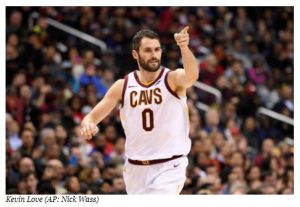
If this is the truth for the “greatest of the greats”, how much more so for the “lesser of the Less Than‘s”?

” Everyone is going through something that we can’t see ” – quote by Kevin Love: NBA All-Star and Cleveland Cavaliers Forward.

Kevin Love is in the news right now for something other than basketball, rather Mental Health requirements for men and boys. See the story here, as reported in this PODCAST from NPR’s daily show On-Point:

AUDIO-PODCAST: NPR On-Point: We Need to Talk About Mental Health of Men – https://www.npr.org/player/embed/591984234/591984273

Published March 8, 2018 – Basketball superstar Kevin Love opens up about his panic attacks. Are men getting the kind of Mental Health support they need?

The American experience in Mental Health should be a cautionary tale for neighboring countries. These statistics were related in a previous commentary by the movement behind the book Go Lean…Caribbean:

America is very much troubled with their management of [transactional and degenerative] mental weakness:

Mental Health is a real concern for the population in general and for men in particular. One of the biggest problems is that men rarely want to admit to any problems or seek any help. Yet, the evidence of dysfunction is there:

  • Substance Abuse (Drugs and Alcohol)
  • Suicide

Volumes have been written on the subject. One prominent book is mentioned in the foregoing PODCAST, with this quote:

“A man is as likely to ask for help with Mental Health as he is to ask for directions”. – Terry Real, Psychologist and Author of the book “I Don’t Want to Talk About It: Overcoming the Secret Legacy of Male Depression“. See the critical review in the Appendix below.

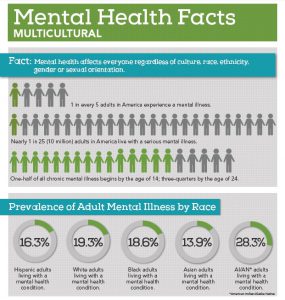
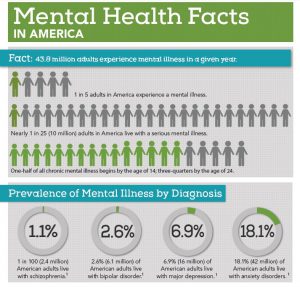
This is not just an American issue; where it is reported that 1 in 5 adults experience mental illness in a given year.
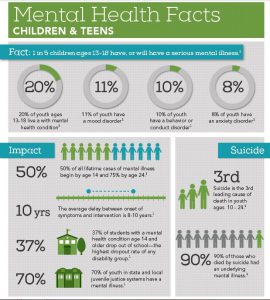
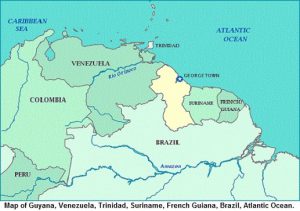
The Caribbean also has an atrocious record with Mental Health. If we measure Mental Health deficiencies by substance abuse and suicide, then we are in crisis. Recently (reported in a previous blog-commentary), one Caribbean member-state, Guyana, was rated Number One worldwide for suicides … per capita; Suriname was slightly behind at Number Six

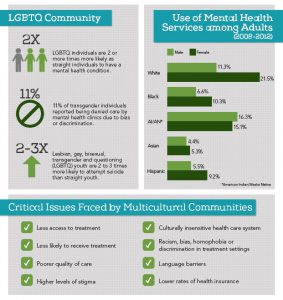
There is a movement to effect change in the Caribbean, among our Black men and boys. We cannot seriously consider the needs of this population without considering the Mental Health realities in the region. We have a lot more information about America’s Mental Health dispositions than we do about the Caribbean’s – this is an expected consequence of Third World status. But we know that there are Mental Health inadequacies. We can glean some insights by analyzing the Mental Health indices from Caribbean-born immigrants in the US. A recent study published this summary:

… a national study found that the small number of Blacks of Caribbean ancestry included in the sample had higher levels of psychological stress compared with US born Blacks,24 and another national study found that persons of Black Caribbean ancestry had a lower frequency of heavy drinking compared with US Blacks in general.25
Footnotes:
24. Williams DR. Race, stress, and mental health: findings from the Commonwealth Minority Health Survey. In: Hogue C, Hargraves M, Scott-Collins K, eds. Minority Health in America: Findings and Policy Implication from the Commonwealth Fund Minority Health Survey. Baltimore, Md: Johns Hopkins University Press; 2000:209–243.

25. Dawson DA. Beyond black, white and Hispanic: race, ethnic origin and drinking patterns in the United States. J Subst Abuse. 1998;10:321–338.

Currently, there is no Caribbean governmental singularity. While there are some integration efforts by language groups (CariCom for English-speaking, Netherland Antilles, French Overseas territories, etc.), there is no one entity to tabulate consumption of Mental Health services in the full Caribbean region.

According to a White Paper by a Caribbean academician, Dr. Donald McCartney of the Bahamas, the Black men and boys of the Caribbean region is a dysfunctional population sub-group. This group is a “hurt people” that “hurt people”. These ones are victims and villains and have experienced a breach in good citizenship. The White Paper addresses the question: “How to repair this breach?”. See that full White Paper here, and an Excerpt as follows:

Repairing the Breach in the Caribbean – Excerpt

By: Donald M. McCartney, D.M., MPA, MSc.Ed. (Hons.), B.A., T.C.

On 16 April 1889, while speaking on the occasion of the 27th anniversary of the abolition of slavery, Frederick Douglass attempted to harness and clarify the defining questions that were of importance, at the time, with respect to Black men and boys. … He raised the following crucial and defining questions:

  1. How does one protect a group from public dissection as if it existed as a mere aberration in the society?
  2. How does one create for that group a group concept so that it is able to sustain itself as a self-respecting group within (the Caribbean) a society, which views it as an aberration?

The answers to these questions must be sought as we search for a way out of the morass in which we, as a people, find ourselves.

Questions, regarding Black men and boys, are being raised … these questions are being revived because many, too many Black men and boys are not a part of the economic structure or the body politic. Upon close examination, it becomes clear that many of them are not in community with their ethnic group.

For the most part, Black men and boys live in isolation, better yet, they are marginalized. They find it difficult to connect with society in general and the significant persons in their lives in particular.

Even though [this] question goes far beyond Black men and boys, it is directly related to our young men in particular and their inability to participate and develop within the body politic and the economic structure of the Caribbean:

How do we expect to engage Black men and boys in constructive dialogue and participation within Caribbean society? …

In order to accomplish the goal of creating a better society for all stakeholders, there must be an integrated plan of action.

See the full White Paper here: https://goleancaribbean.com/blog/?p=14392

Surely, part of the problem of Black men and boys must be related to Mental Health. There is the need for viable solutions for the Caribbean region to consider.

This commentary revisits the foregoing White Paper; even though there is no mention of Mental Health, this is a consideration of the full width-and-breadth of Caribbean dysfunction. This submission therefore supplements the recent 4-part series on Repairing the Breach; using the foregoing White Paper by Dr. McCartney as the premise. This entry is a Plus-One for the 4 parts of the series from the movement behind the book Go Lean … Caribbean in consideration of solutions – Way Forward – to assuage the plight of Black men and boys. The other commentaries in the series were cataloged as follows:

  1. Repairing the Breach: Hurt People Hurt People
  2. Repairing the Breach: Crime – Need, Greed, Justice & Honor
  3. Repairing the Breach: One Option – National Youth Service
  4. Repairing the Breach: Image Impacts Economics
    ———–
  5. Repairing the Breach: Mental Health Realities

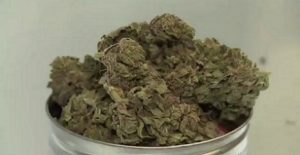
While all of the previous commentaries related to “how” the stewards for a new Caribbean can assuage the failing dispositions of the Caribbean among our Black men and boys, this supplemental submission highlights the need for universal Mental Health offerings in this region. Think of universal Mental Health as a quilt, a web or fabric with additions and subtractions. All new triggers add to the quilt, all remediation and Mental Health provisions subtract from it. Caribbean communities are re-thinking their views on recreational drug use. There is a movement to legalize and de-criminalize marijuana in society; this was reported previously about Jamaica and see this breaking news here of new legal acceptance in the country of Antigua and Barbuda. With this reality, there is the need for Caribbean Mental Health stakeholders to double-down the outreach for supportive services.

This discussion is relevant for the movement behind the Go Lean book, which serves a roadmap for the introduction and implementation of the technocratic Caribbean Union Trade Federation (CU); there-in is an advocacy to “Improve Healthcare“ in general (Page 156), but It also delves into strategies, tactics and implementations to provide more Mental Health solutions in the Caribbean region. The book projects this regional-federal law that summarizes the need:

Caribbean (Persons) with Disabilities
Modeled after Americans with Disability Act, the Caribbean people with physical and mental disabilities should have equal rights and the provisions of “reasonable accommodations” by the institutions and establishments in the Caribbean. This move would extend a “welcome mat” to tourists, residents and repatriates alike, who may not be considered fully whole, but can still contribute to society and the economic engines, with small adjustments …

In fact, the prime directives of the Go Lean roadmap for the CU federal administration is described as follows:

We have considered a lot of lessons-learned in prior Go Lean commentaries that we glean by considering the US experiences. But the reality of the Black men and boys in the Caribbean is even worse than the disposition of African-Americans in the US (or other Diasporic countries). So we need Mental Health solutions front-and-center if we hope to Repair the Breach in this region. This has been a consistent subject in these previous blog-commentaries; consider this sample:

https://goleancaribbean.com/blog/?p=14087 Opioids Addiction and the FDA – ‘Fox guarding the Henhouse’

The American Opioid crisis is a self-made crisis due to the country’s blatant Crony-Capitalism. Big Pharma was allowed to peddle their addictive drugs on an unwitting public, and the regulator, the FDA, was complicit. This American model is a caution for us in the Caribbean.

https://goleancaribbean.com/blog/?p=11052 Managing the ‘Strong versus the Weak’ – Mental Disabilities

The creed to protect the Weak from being abused by the Strong is age-old as an honor code. All societies have those that are mentally weak; the Social Contract must allow for protection and remediation of these ones.

https://goleancaribbean.com/blog/?p=5901 The Demographic Theory of Elderly Suicide

Failures in Mental Health delivery results in suicides. Among senior citizens, this prevalence is due to the fact that they may not consider themselves as relevant in modern society. We can learn from others on Mental Health remediation and solutions for Caribbean senior citizens.

https://goleancaribbean.com/blog/?p=2633 Book Review: ‘The Protest Psychosis’

Advocates for change have often been labeled as insane for not accepting their status quo. This Protest Psychosis often is a distortion by the powerful to resist change and abuse those mandating improvement.

https://goleancaribbean.com/blog/?p=2602 Guyana and Suriname Wrestle With High Rates of Suicides

Failures in Mental Health delivery results in suicides and some Caribbean countries have it worse than anywhere else in the world. Sad!

https://goleancaribbean.com/blog/?p=2105 Recessions and Public Physical and Mental Health

Mental Health disorders can spark when the economy sours. Public Health officials need to be “on guard” for Mental Health fallout during periods of economic recession.

https://goleancaribbean.com/blog/?p=1751 New Hope in the Fight against Alzheimer’s Disease

Everyone ages, and so Alzheimer’s disease is a guaranteed risk in every community. This is a Mental Health reality that must be planned for, so as to ensure the best outcomes for communities.

As related above, men in general do not like to acknowledge the need for Mental Health services, so Caribbean stewards must do some heavy-lifting with its Black men and boys to Repair the Breach they present in this society. There is a Way-Forward for effecting change and elevation.

Repairing the Breach in the Caribbean means “fixing our defects” in the service and delivery of Mental Health remediation. But this challenge is too big for any one member-state alone; this is why we need the economies-of-scale and leverage of an integrated Single Market; the Caribbean region is comprised of 30 member-states and 42 million people. This point was pronounced early in the Go Lean book with the Declaration of Interdependence (Pages 11 – 13) with many statements that demonstrate the need to collaborate so as to optimize Caribbean communities and elevate our Social Contract services:

ix. Whereas the realities of healthcare and an aging population cannot be ignored and cannot be afforded without some advanced mitigation, the Federation must arrange for health plans to consolidate premiums of both healthy and sickly people across the wider base of the entire Caribbean population. The mitigation should extend further to disease management, wellness, mental health, obesity and smoking cessation programs. …

xi. Whereas all men are entitled to the benefits of good governance in a free society, “new guards” must be enacted to dissuade the emergence of incompetence, corruption, nepotism and cronyism at the peril of the people’s best interest. The Federation must guarantee the executions of a Social Contract between government and the governed.

xii. Whereas the legacy in recent times in individual states may be that of ineffectual governance with no redress to higher authority, the accedence of this Federation will ensure accountability and escalation of the human and civil rights of the people for good governance, justice assurances, due process and the rule of law. As such, any threats of a “failed state” status for any member state must enact emergency measures on behalf of the Federation to protect the human, civil and property rights of the citizens, residents, allies, trading partners, and visitors of the affected member state and the Federation as a whole.

The American role model for Mental Health care and support is not ideal; we must pay more than the usual attention and try to do better in the Caribbean. That should not be as hard, when the motive is the Greater Good. This would mean removing the institutional racism and Crony-Capitalism of American life.

The Go Lean book provides a roadmap for doing better, detailing 370-pages of turn-by-turn directions to better optimize the societal engines of economics, security and governance to better deliver on the Social Contract. All segments of the population need support with Mental Health concerns; Black men and boys need it especially, because “hurt people hurt people”.

Repairing the Breach for this population includes identifying, qualifying, proposing and delivering good Mental Health solutions. Only then can our homeland be a better place to live, work and play. 🙂

Download the free e-Book of Go Lean … Caribbean – now!

Sign the petition to lean-in for this roadmap for the Caribbean Union Trade Federation.

————

Appendix – Book Review: “I Don’t Want to Talk About It: Overcoming the Secret Legacy of Male Depression” (1998)

By: Terrence Real

A revolutionary and hopeful look at depression as a silent epidemic in men that manifests as workaholism, alcoholism, rage, difficulty with intimacy, and abusive behavior by the cofounder of Harvard’s Gender Research Project.

Twenty years of experience treating men and their families has convinced psychotherapist Terrence Real that depression is a silent epidemic in men—that men hide their condition from family, friends, and themselves to avoid the stigma of depression’s “un-manliness.” Problems that we think of as typically male—difficulty with intimacy, workaholism, alcoholism, abusive behavior, and rage—are really attempts to escape depression. And these escape attempts only hurt the people men love and pass their condition on to their children.

This groundbreaking book is the “pathway out of darkness” that these men and their families seek. Real reveals how men can unearth their pain, heal themselves, restore relationships, and break the legacy of abuse. He mixes penetrating analysis with compelling tales of his patients and even his own experiences with depression as the son of a violent, depressed father and the father of two young sons.

Source: Retrieved March 11, 2018 from: https://www.amazon.com/Dont-Want-Talk-About-Overcoming/dp/0684835398


 

Share this post:
, , ,

Opioids and the FDA – ‘Fox guarding the Henhouse’

Go Lean Commentary

“Absolutely criminal…” – US Senator reviewing the FDA handling of America’s Opioid crisis.

Saying “the grass is not greener on the other side” is just too simplistic a criticism of the American eco-system for pharmaceutical use … and abuse. Pain is real and need to be mitigated, but the American experience is one of dysfunction.

Yet, this is to be expected, when one places the ‘fox to guard the henhouse’.

This is not just our opinion alone. This aligns with the criticism of the FDA’s Former Head; they are supposed to be the Watch-Dog. (While the Watch-Dog for them is supposed to be the US Congress, providing checks-and-balances over the Executive Branch, FDA included). See this related story-criticism here:

VIDEO: Former FDA Head weighs in on Opioid epidemic – https://youtu.be/QEzSJRBQ9RU


CBS Evening News
Posted May 9, 2016 – Each day in America, 78 people die from overdosing on painkillers. Doctor David Kessler, former head of the FDA from 1990 to 1997, called the rise of America’s Opioid crisis “one of the great mistakes of modern medicine.” Jim Axelrod has more.

Yet, still we continue to say, despite the simplicity of the criticism:  the grass is not greener on the American side. Mature communities address the problems that they face; they monitor, manage and mitigate them. To allow a problem to persist, to take lives and then do nothing or little about it makes stakeholders blood-guilty. This is a direct indictment from the Judeo-Christian moral code, the Bible; see the justice standard here:

29 But if a bull was in the habit of goring and its owner had been warned but he would not keep it under guard and it killed a man or a woman, the bull is to be stoned and its owner is also to be put to death. 30 If a ransom* is imposed on him, he must give as the redemption price for his life* all that may be imposed on him. – Exodus 21: 29, 30

Analysis
[In Bible times], certain deliberate acts that indirectly caused or could have resulted in the death of another person were considered tantamount to deliberate murder. For example, the owner of a goring bull who disregarded previous warnings to keep the animal under guard could be put to death if his bull killed someone. In some cases, however, a ransom could be accepted in place of the life of the owner. Undoubtedly the judges would take circumstances into consideration in such a case. (Ex 21:29, 30) Also, an individual scheming to have another person killed by presenting false testimony was himself to be put to death.—Deuteronomy 19:18-21.

But this standard is not the reality of America, where the original 2 societal defects America was built on still persists:

Shockingly, this indictment of the FDA – who is supposed to protect American people – raises a Caribbean debate:

Is it better to emigrate to America or any other foreign destination for economic success, or prosper where planted in the Caribbean homeland?

The movement behind the book Go Lean … Caribbean campaigns to inform the people of the Caribbean that life is not idyllic in America, that death is more readily because of a greater disregard of life, especially of those of minority (non-white) ethnicities.

Some might argue that “this” charge is not fair, nor accurate!

And yet … as reported in a previous blog-commentary (and highlighted in the foregoing VIDEO), millions suffer from Opioid addictions – 33,000 die every year.  This is not new, as the evidence suggest this is decades old, and yet the FDA “slept”; truly, the ‘fox guarding the henhouse’.

🙁

The Go Lean book serves as a roadmap to introduce the technocratic Caribbean Union Trade Federation (CU) to elevate the region’s societal engines – economics, homeland security and governance – of the 30 Caribbean member-states. In fact, the prime directives of the roadmap includes the following 3 statements:

  • Optimization of the economic engines in order to grow the regional economy to $800 Billion & create 2.2 million new jobs.
  • Establishment of a security apparatus to ensure public safety and protect the resultant economic.
  • Improve Caribbean governance for all people, even minority groups, to support these engines.

The quest of the Go Lean book and movement is to minimize the lure for America to Caribbean citizens. We need our people to Stay Home, and so we want to make the Caribbean region better places to live, work and play. People only leave because they believe that life abroad will be better. So facts to the contrary should go far in quelling such misconceptions.

In this movement for a new Caribbean, we do not want to be like America, we want to be Better! While this is heavy-lifting, it is not impossible, just start without the two known societal defects: Institutional Racism, and Crony-Capitalism.

No one is being fooled, the Opioid crisis in the US has persisted because Big Pharma is profiting. This is what a previous Go Lean commentary lamented, “stupidity persists in society when ‘someone’ is getting rich and want to preserve their profits, even at the expense of human life. This is so familiar, as in the same playbook of Big Tobacco for the entire 20th Century; see/listen to the Podcast in the Appendix below.

When it comes to chronic pain relief, the CDC is asking doctors and patients to think about alternatives to opioids.

We do not want our people to die ignominiously in America due to some opioid overdose. And so, we do not want our citizens to have to leave … in the first place. But the truth is a two-sided coin…

… on the flipside, life in America is more prosperous than in any Caribbean member-state.

(Recently, the American President Donald J. Trump, even referred to the Caribbean member-state of Haiti as a “shit-hole” country).

As related previously, the Go Lean book, in its 370 pages, introduces the Caribbean Union Trade Federation as an inter-governmental agency for the 30 member-states, to provide a better – technocratic – stewardship for Caribbean life, to make it more prosperous … at home. The book identifies that we have a crisis – our failing societal engines – but asserts that this crisis would be a terrible thing to waste. We can use the urgency – we do not want to be bloodguilty –  to introduce and implement effective community ethos, strategies, tactics, implementations and advocacies to reboot, reform and transform the economic engines of Caribbean society.

The Go Lean book contends that as a people, we must be prepared for accidents and illnesses – pain is normal. It asserts that bad actors – and bad incidences – will emerge just as a result of economic successes in the region. This point is pronounced early in the book with the Declaration of Interdependence (Page 12) that claims:

xi. Whereas we are surrounded and allied to nations of larger proportions in land mass, populations, and treasuries, elements in their societies may have ill-intent in their pursuits, at the expense of the safety and security of our citizens. We must therefore appoint “new guards” to ensure our public safety and threats against our society, both domestic and foreign. The Federation must employ the latest advances and best practices … to assuage continuous threats against public safety.

xvi. Whereas security of our homeland is inextricably linked to prosperity of the homeland, the economic and security interest of the region needs to be aligned under the same governance. Since economic crimes, including piracy and other forms of terrorism, can imperil the functioning of the wheels of commerce for all the citizenry, the accedence of this Federation must equip the security apparatus with the tools and techniques for predictive and proactive interdictions.

As related above, for us to become a mature society, we must address the risks and problems that we face; we must monitor, manage and mitigate them. The Go Lean book describes the need for the Caribbean to appoint “new guards” to protect the people, not exploit them, this should be a lesson learned from the US. The purpose of the CU security pact will be to ensure public safety as a comprehensive endeavor, encapsulating the needs of all Caribbean stakeholders: residents and visitors alike.

Consider this sample of previous blog-commentaries that have expanded on this theme:

https://goleancaribbean.com/blog/?p=13746 Security Dreams for the Caribbean Basin
https://goleancaribbean.com/blog/?p=13251 A Better Way to Manage Hurricane Risks
https://goleancaribbean.com/blog/?p=12949 Being Mature to Handle Charity Management
https://goleancaribbean.com/blog/?p=12930 Managing Dangers, Disasters and Emergencies
https://goleancaribbean.com/blog/?p=11808 Not Ignoring the Public Health Risks of ‘Concussions’
https://goleancaribbean.com/blog/?p=11654 Righting A Wrong – A Series on Ensuring Public Safety: Air Bags
https://goleancaribbean.com/blog/?p=10959 See Something; Say Something; Do Something
https://goleancaribbean.com/blog/?p=10771 Logical Addresses – It Could Mean ‘Life or Death’
https://goleancaribbean.com/blog/?p=2105 Monitoring the Risks of Economics on Public Health

We want to “live long and prosper”. We want to prosper right here in the Caribbean. How sad it would be for a family to move to the US (and other countries) and fall victim to a voluntary opioid addiction … and overdose … and death.

So we urge all Caribbean stakeholders to lean-in for the empowerments of this Go Lean roadmap. It is conceivable, believable and achievable to plant here and prosper here in our Caribbean region.

Yes, we can make our homelands better places to live, work and play. 🙂

Download the free e-book of Go Lean … Caribbean – now!

Sign the petition to lean-in for the roadmap for the Caribbean Union Trade Federation.

———–

Appendix AUDIO – Opioids As The New Big Tobacco – https://www.npr.org/2017/06/30/534969884/opioids-as-the-new-big-tobacco

Posted June 30, 2017 – A wave of litigation by state attorneys general against the biggest opioid manufacturers and distributors feels reminiscent of lawsuits brought by states in the 1990s against the tobacco industry.


Share this post:
, ,
[Top]

Managing ‘Change’ in California

Go Lean Commentary

This is a Big Deal

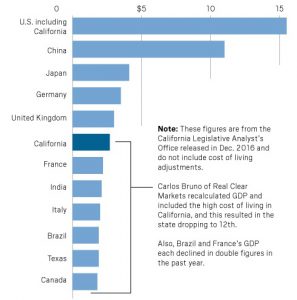
California, the biggest state in the Union (USA) – #6 GDP if ranked as an independent country – has enacted legislation to legitimize recreational marijuana use. Wow, what a ‘change’ to manage! That’s 37 million people, millions of cars and billions of dollars. The implementation of this New Order will surely be heavy-lifting.

For the Caribbean, let’s pay more than the usual attention for lessons learned for our own Big Deal implementation. See the VIDEO on California’s challenge here:

VIDEO – California residents line up to buy recreational marijuana – https://www.today.com/video/california-residents-line-up-to-buy-recreational-marijuana-1127548995762


Posted January 2, 2018 – Vendors in The Golden State began selling recreational marijuana legally on Monday, a milestone moment in the push to legalize marijuana across the country. NBC’s Jacob Soboroff has the report for TODAY from Los Angeles.

Again, California is managing the ‘change’ of implementing the legalization of recreational marijuana use, while the Caribbean needs to implement a roadmap to forge change in its societal engines (economics, security and governance) for the 30 member-states of our region.

The book Go Lean…Caribbean – available to download for free – serves as a roadmap for the introduction and implementation of the technocratic Caribbean Union Trade Federation (CU), for the elevation of Caribbean society – for all member-states. This CU/Go Lean roadmap has these 3 prime directives:

  • Optimization of the economic engines in order to grow the regional economy to $800 Billion and create 2.2 million new jobs.
  • Establishment of a security apparatus to ensure public safety and protect the resultant economic engines.
  • Improve Caribbean governance to support these engines, including a separation-of-powers between the member-states and CU federal agencies.

The State of California is taking on the heavy-lifting of this marijuana legalization while the US federal government continues to consider the drug as illegal. But California is NOT the first state; that distinction belongs to Colorado. The movement behind the Go Lean book has explored Colorado and observed-and-reported on the societal developments there. Notice these main points from a previous blog-commentary entitled – Lessons from Colorado: Legalized Marijuana: Heavy-lifting! – from August 17, 2017:

… in 2017, the phrase “Rocky Mountain High” has a total different meaning, because the State of Colorado has since legalized recreational use of marijuana.

This is not an easy topic; this is heavy …

There are so many lessons we can learn from the debate, legalization, implementation and regulation of this product in this State. All in all, it is heavy-lifting. This is the theme of this series of commentaries of lessons that have been learned by Caribbean stakeholders visiting, observing and reporting on the US State of Colorado.

We have so much in common and so much in contrast. One commonality to consider is how Colorado is now associated with marijuana consumption. …

“Welcome to our club”! This has always been the image of Caribbean people and culture – think: Rasta Man smoking Ganja.

California … Colorado … other states to follow, according to another previous blog-commentary after the last American General Election on November 8, 2016. That submission was entitled – Time to Go: American Vices; Don’t Follow and quoted:

Marijuana legalization is now the norm for 40 percent of the American population. …
Voter measures [passed] in Massachusetts and Nevada. Maine’s referendum was still being counted early Wednesday morning, and Arizona’s was poised to lose. Three other states passed medical marijuana reforms, and a fourth appeared likely to do so. This means that in eight states (plus Washington, D.C.) weed will be legal for recreational purposes, and in sum, 28 will have some kind of legalization on the books.

There will be a lot of security and governing dynamics that these states – like California – will now have to manage, since the process will decriminalize marijuana use, after a long history of criminalization. This is a BIG DEAL considering that many people may be in a penal status – active or parole – for marijuana use or trafficking. Wow, indeed; this is a BIG transformation!

This point too, was addressed in a previous blog-commentary entitled – Marijuana in Jamaica – ‘Puff Peace’:

There are moral, religious, legal and psychological (treatment) issues associated with this topic; and there is history – good and bad. Any jurisdiction decriminalizing the use of marijuana has to contend with the previous messaging to the community of: “Just say no to drugs”.

The [Go Lean] book asserts that before the strategies, tactics, implementations and advocacies of a roadmap to elevate a society can be deployed, the affected society must first embrace a progressive community ethos. The book defines this “community ethos” as the fundamental character or spirit of a culture; the underlying sentiment that informs the beliefs, customs, or practices of society; dominant assumptions of a people or period. Think of the derivative term: “work ethic”.

Marijuana is a mood-altering drug; it has negative effects, one being preponderance for apathy, to tune out of any active engagement. In the US, even in the states where marijuana is legal, most firms/governments still screen staffers (new hires and veterans) and ban consumption of the drug. The reason is simple: Apathy does not make for industriousness.

The Go Lean book provides 370-pages of turn-by-turn instructions on “how” to adopt new community ethos, plus the strategies, tactics, implementations and advocacies to execute so as to transform the societal engines of Caribbean society, regarding the whole drug eco-system. The Go Lean book asserts that every community has bad actors, and with a more liberal-progressive attitude towards a once-illegal drug, community attitudes must be paramount. There must be “new guards” to assuage any threats from this practice on society. This point is pronounced early in the book with the Declaration of Interdependence (Pages 12 – 13) that claims:

x. Whereas we are surrounded and allied to nations of larger proportions in land mass, populations, and treasuries, elements in their societies may have ill-intent in their pursuits, at the expense of the safety and security of our citizens. We must therefore appoint new guards to ensure our public safety and threats against our society, both domestic and foreign. The Federation must employ the latest advances and best practices of criminology and penology to assuage continuous threats against public safety. The Federation must allow for facilitations of detention for [domestic and foreign] convicted felons of federal crimes, and should over-build prisons to house trustees from other jurisdictions.

xi. Whereas all men are entitled to the benefits of good governance in a free society, “new guards” must be enacted to dissuade the emergence of incompetence, corruption, nepotism and cronyism at the peril of the people’s best interest. The Federation must guarantee the executions of a social contract between government and the governed.

xvi. Whereas security of our homeland is inextricably linked to prosperity of the homeland, the economic and security interest of the region needs to be aligned under the same governance. Since economic crimes, including piracy and other forms of terrorism, can imperil the functioning of the wheels of commerce for all the citizenry, the accedence of this Federation must equip the security apparatus with the tools and techniques for predictive and proactive interdictions.

So legalizing marijuana in the BIG market of California will be about more than just managing change, it will also be about managing risks. The Go Lean book relates that managing risk is more than just “One Act”, there is lengthy, engaged process (Page 76):

  • Education
  • Mentoring
  • Monitoring
  • Mitigation
  • Licensing
  • Coordination

Let’s see how this process goes for California. While this state’s independent streak has made it a “maverick” among the other American states – see Independence Movement detailed in this previous blog – this effort with marijuana may be “biting off more than they can chew”. This is truly a BIG DEAL!

We need to pay attention, as there are parallels for California compared to the full Caribbean:

This writer, having lived in California for 10 years, can conclude that California wants the same thing that the Caribbean wants (or should want): to be an elevated society; to be a better homeland, a better place to live, work and play. 🙂

Let’s observe-and-report on these California’s developments and manifestations, their successes and failures.

Download the free e-Book of Go Lean … Caribbean – now!

Sign the petition to lean-in for this roadmap for the Caribbean Union Trade Federation.

Share this post:
, ,
[Top]

ENCORE: Managing a ‘Clear and Present Danger’

Oh, Oh! We have a problem bearing down on us. Hurricane Irma seems ominous. This is definitely a “Clear and Present Danger”.

This is a familiar declaration for us; one that requires desperate measures in the response to a desperate situation. We have had to contend with this before, many times in the past. We have also defined what is a Clear and Present Danger … and how to contend with it.

It is only apropos to Encore our previous blog-commentary on this subject from April 23, 2015. See it here-now:

===================

Go Lean CommentaryManaging a ‘Clear and Present Danger’

A ‘Clear and Present Danger’ sounds ominous…

- Photo 4

There should be no question as to intent or consequence if the situation goes unimpeded.

The ‘Clear and Present Danger’ doctrine is a concept in jurisprudence, which has bearing on everyday life for everybody. It refers to not just a potential danger but one that will likely cause a catastrophe if not immediately obstructed or neutralized.

This phrase was suggested as a test of harmful speech by the US Supreme Court Justice Oliver Wendell Holmes in the 1919 case of Schenck v. United States. In delivering the court’s unanimous decision upholding the conviction of a Socialist Party Officer (who encouraged resistance to the World War 1 Draft) under the Espionage Act (which suppressed Free Speech), Justice Holmes noted that the “character of every act depends upon the circumstances in which it is done.” He went on to say that, “when a nation is at war many things that might be said in time of peace are such a hindrance to its effort that their utterance will not be endured so long as men fight and that no court could regard them as protected by any constitutional right.” (Source: http://www.businessdictionary.com/definition/clear-and-present-danger.html)

How would this concept in jurisprudence relate to the everyday life for the average person in the Caribbean?

This consideration is presented in conjunction to mitigations and remediation for protecting the Caribbean homeland. The assertion in the book Go Lean … Caribbean (Page 23) is that with the emergence of new economic engines, “bad actors” will also emerge thereafter to exploit the opportunities, with good, bad and evil intent. But the book warns against more than just bad people, rather “bad actors”; thusly referring to corporate entities, natural disasters (hurricanes are assigned people names) and other “random acts” (think “red tides”, pandemics, etc.). The book relates that this is a historical fact that is bound to be repeated … again and again.

This point is pronounced early in the book with the Declaration of Interdependence (Page 12) that claims:

i.     Whereas the earth’s climate has undeniably changed resulting in more severe tropical weather storms, it is necessary to prepare to insure the safety and security of life, property and systems of commerce in our geographical region. As nature recognizes no borders in the target of its destruction, we also must set aside border considerations in the preparation and response to these weather challenges.

ii.    Whereas the natural formation of the landmass for our lands constitutes some extreme seismic activity, it is our responsibility and ours alone to provide, protect and promote our society to coexist, prepare and recover from the realities of nature’s occurrences.

x.   Whereas we are surrounded and allied to nations of larger proportions in land mass, populations, and treasuries, elements in their societies may have ill-intent in their pursuits, at the expense of the safety and security of our citizens. We must therefore appoint “new guards” to ensure our public safety and threats against our society, both domestic and foreign. The Federation must employ the latest advances and best practices … to assuage continuous threats against public safety.

xii. Whereas the legacy in recent times in individual states may be that of ineffectual governance with no redress to higher authority, the accedence of this Federation will ensure accountability and escalation of the human and civil rights of the people for good governance, justice assurances, due process and the rule of law. As such, any threats of a “failed state” status for any member state must enact emergency measures on behalf of the Federation to protect the human, civil and property rights of the citizens, residents, allies, trading partners, and visitors of the affected member state and the Federation as a whole.

xvi. Whereas security of our homeland is inextricably linked to prosperity of the homeland, the economic and security interest of the region needs to be aligned under the same governance. Since economic crimes, including piracy and other forms of terrorism, can imperil the functioning of the wheels of commerce for all the citizenry, the accedence of this Federation must equip the security apparatus with the tools and techniques for predictive and proactive interdictions.

The Caribbean appointing “new guards”, or a security pact to ensure public safety includes many strategies, tactics and implementations considered “best-practices”. We must be on a constant vigil against these “bad actors”, man-made or natural. This necessitates being pro-active in monitoring, mitigating and managing risks. Then when “crap” does happen, the “new guards” will be prepared for any “Clear and Present Danger“. The Go Lean book describes an organization structure with Emergency Management functionality, including Unified Command-and-Control for Caribbean Disaster Response, Anti-crime and Military Preparedness.

Wait! Wasn’t this done before? Didn’t the Caribbean region member-states come together – September 1, 2005 – and establish a security apparatus so as to assuage public safety risks and threats?

Yes, this is part of the CariCom (Caribbean Community) effort. The Go Lean book and these blogs commentaries have consistency railed against the ineffectiveness and inefficiency of CariCom and its regional organs.

The Caribbean Disaster Emergency Management Agency (CDEMA)[1] is an inter-regional supportive network of independent emergency units throughout the Caribbean region; see Appendix below. Originally formed as the Caribbean Disaster Emergency Response Agency (CDERA) it under-went the name change to CDEMA in September 2009.

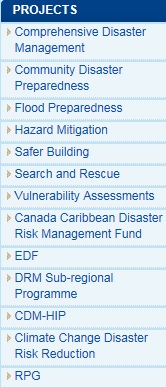
See Photo below for a listing of the CDEMA functionality:

- Photo 1

The participating member states and agencies of the CDEMA include:

Country

Organization

Anguilla Department of Disaster Management (DDM)
Antigua and Barbuda National Office of Disaster Services (NODS)
Bahamas Disaster Management Unit
Barbados Department of Emergency Management
Belize National Emergency Management Organisation (NEMO)
British Virgin Islands Department of Disaster Management
Dominica Office of Disaster Management (ODM)
Grenada National Disaster Management Agency (NaDMA)
Guyana Civil Defense Commission
Haiti Civil Protection Directorate
Jamaica Office of Disaster Preparedness and Emergency Management (ODPEM)
Montserrat Disaster Management Coordination Agency
Saint Kitts and Nevis National Emergency Management Agency (NEMA)
Saint Lucia National Emergency Management Organisation (NEMO)
Saint Vincent and the Grenadines National Emergency Management Organisation (NEMO)
Suriname National Coordination Center For Disaster Relief (NCCR)
Trinidad and Tobago Office of Disaster Preparedness and Management (ODPM)
Turks and Caicos Islands Department of Disaster Management & Emergencies

What about regional defense?

There is a regional initiative branded the Regional Security System (RSS); it is an international agreement for the defense and security of the eastern Caribbean region. The Regional Security System was created out of a need for collective response to security threats, which were impacting on the stability of the region in the late 1970s and early 1980s. On 29 October 1982 four members of the Organisation of Eastern Caribbean States—namely, Antigua & Barbuda, Dominica, St. Lucia, and St. Vincent & the Grenadines—signed a memorandum of understanding (MOU) with Barbados to provide for “mutual assistance on request”. The signatories agreed to prepare contingency plans and assist one another, on request, in national emergencies, prevention of smuggling, search and rescue, immigration control, fishery protection, customs and excise control, maritime policing duties, protection of off-shore installations, pollution control, national and other disasters and threats to national security. Saint Kitts & Nevis joined following independence in 1983, and Grenada joined two years later.

These two initiatives CDEMA and RSS constitutes the regional security solutions for the Caribbean. “Our thimble runneth over!”

What is the problem with CDEMA, RSS and CariCom? For starters these regional efforts, the Caribbean Community, does not represent the full community of the Caribbean; not even half of the Caribbean. Consider here:

CU Member states not included or participating in CDEMA, RSS or CariCom:

  • Cuba
  • Dominican Republic
  • US Territories (Puerto Rico, US Virgin Islands)
  • Dutch Territories (ABC Islands: Aruba, Bonaire, Curacao; SSS Islands: Saba, Saint Marteen; Saint Eustatius)
  • French Territories (Guadeloupe, Martinique, St. Barthélemy, St. Martin)

Secondly, CariCom has extreme funding challenges; the regional construct depends on income derived almost exclusively from grants from the American federal government (US-AID), Canadian agencies and the EU’s Development Fund (EDF). After 40 years of CariCom, it can be concluded that the CariCom Secretariat and regional organs fail to meet the needs of the Caribbean people, even for the people in its participating member-states. They are a great “talking head”; nothing more. The Go Lean book quotes an internal report (Page 92) complaining of the severe weaknesses of the regional construct, stating their tendency to announce decisions over new initiatives as if full implementation were imminent, resulting in a so-called “implementation deficit”.

Obviously, the established security solution is not fully established and does not really solve any threats; therefore the region is not secured.

This reality is pronounced early in the Go Lean book (Page 8) with this declaration regarding the promoters of the Go Lean movement, that they are …

… not affiliated with the CariCom or any of its agencies or institutions. This movement is not an attempt to re-boot the CariCom, but rather a plan to re-boot the Caribbean… This movement was bred from the frustrations of the Diaspora, longing to go home, to lands of opportunities. But this is not a call for a revolt against the governments, agencies or institutions of the Caribbean region, but rather a petition for a peaceful transition and optimization of the economic, security and governing engines in the region.

The Go Lean book is a petition for change and optimization, serving as a roadmap for the introduction and implementation of the technocratic Caribbean Union Trade Federation (CU). The CU would roll the charters of CDEMA, RSS and CariCom into one consolidated, integrated and collaborated effort. The CU is set to optimize Caribbean society through economic empowerment, and also homeland security in the region, since these are inextricably linked to this same endeavor.

Therefore the Go Lean roadmap has 3 prime directives:

  • Optimization of the economic engines in order to grow the regional economy to $800 Billion & create 2.2 million new jobs.
  • Establishment of a security apparatus to protect the resultant economic engines and theCaribbean homeland.
  • Improvement of Caribbean governance to support these engines.

The CU Homeland Security forces have to always be “on guard”, on alert for real or perceived threats. The legal concept is one of being deputized by the sovereign authority for a role/responsibility in a member-state. So when “crap” happens these CU forces are expected to aid, assist, and support local resources in these member-states when called on. But, when a member-state is the problem, in terms of malfeasance, misfeasance or nonfeasance, the “Clear and Present Danger” mandate should be invoked. As a security apparatus, there should also be certain defined threats that would be designated as primarily assigned to the CU; this would apply in a Declaration of War against a known state-sponsored enemy.

But the world has now changed; there is the new threat of an unknown, non-state-sponsored enemy: the scourge of terrorism. Consider the situation in the United States, we all know of the World Trade Center attacks on September 11, 2001, but since then terrorist attacks have actually been a constant threat in the US. In a recent blog/commentary, it was reported that there were 17  terrorist attacks against the American homeland in this decade alone, since 2010. Surely the threat of terrorism is a “clear and present danger” in the US.

The CU treaty calls for the mitigation of terrorism to be a constant charter for the CU Homeland Security forces.

For most of the Caribbean, we are allied with the US; we even have two US Territories “smack-dab” in the middle of our archipelago. So the American terrorist-enemies are very much our enemies. Therefore the CU/Go Lean roadmap posits that the region must prepare an optimized security apparatus for its own security needs. This time for real!

The request is that all Caribbean member-states empower a security force to execute a limited scope on their sovereign territories. The legal basis for this empowerment is a Status of Forces Agreement (SOFA), embedded at the CU treaty initiation, thereby authorizing the CU Homeland Security Department for its role and responsibility for all the “crap” that could happen to the peace and prosperity of the Caribbean people. The CU Trade Federation would lead, fund and facilitate a security force, even encapsulating existing armed forces (full-time or part-time/reserves) as needed, at the discretion of the CU Commander-in-Chief.

The existing Caribbean Security initiatives have failed the region. Despite the existence of agencies like the CDEMA and RSS, the CariCom has not ascended to prominence in local communities. Most people do not even know these agencies exist. It is not seen, heard or felt. This is not the level of governance the Caribbean region needs; we need more; we need better. Previous Go Lean commentaries have meticulously detailed the overall failure of CariCom.

Perhaps the problem is economics (funding)? Or perhaps the security enablement (legal authorization to act)? Or perhaps, its the governance and administration? There are many questions; the only answer that matters is the solutions must address the Clear and Present Dangers.

Consider these monumental episodes and events in the Caribbean region that have occurred in the recent past; the expectation is that they would have invoked the “Clear and Present Danger” clause for engagement from the CDEMA entity. The following list is the Top 20 disasters in CDERA member states, according to the CDEMA published database and sorted by total losses:

No

Date

Year

Country

Event

Killed

Affected

Losses US$

1

20-Dec

2005

Guyana Flood

37

274,774

2,674,322,175

(Details)

2

7-Sep

2004

Grenada Tropical Cyclone

28

81,883

895,199,567

(Details)

3

9-Sep

2004

Jamaica Tropical Cyclone

17

369,685

592,971,569

(Details)

4

2-Sep

2004

The Bahamas Tropical Cyclone

0

8,000

356,983,000

(Details)

5

25-Sep

2004

The Bahamas Tropical Cyclone

2

28,000

350,886,000

(Details)

6

4-Aug

1980

Saint Lucia Tropical Cyclone

9

0

92,592,593

(Details)

7

9-Sep

1994

Saint Lucia Tropical Cyclone

3

0

85,185,185

(Details)

8

14-Jul

2005

Grenada Tropical Cyclone

1

39,085

75,478,163

(Details)

9

21-Nov

2004

Dominica Earthquake

0

19,527

45,150,614

(Details)

10

12-Nov

2004

Trinidad
(Details)
Mudslide

2

1,200

33,333,333

11

7-Sep

2004

Saint Lucia Tropical Cyclone

0

0

10,464,720

(Details)

12

26-Oct

1996

Saint Lucia Tropical Cyclone

0

0

4,444,444

(Details)

13

7-Sep

2004

St Vincent Tropical Cyclone

0

0

4,110,037

(Details)

14

10-Jul

1960

Saint Lucia Tropical Cyclone

6

0

1,421,481

(Details)

15

7-Sep

1967

Saint Lucia Tropical Cyclone

1

0

740,741

(Details)

16

9-Jun

1955

Saint Lucia Fire

3

0

462,963

(Details)

17

1-Aug

1966

Saint Lucia Tropical Cyclone

0

0

277,778

(Details)

18

25-Sep

1963

Saint Lucia Tropical Cyclone

0

0

277,778

(Details)

19

21-Oct

1998

Saint Lucia Tropical Cyclone

1

0

230,185

(Details)

20

1-Feb

1990

Saint Lucia Earthquake

0

0

214,813

(Details)
Total

110

822,154

$5,224,747,139

Was there a noticeable Caribbean-Regional presence in response to these disastrous events?

There are also examples of Industrial Incidents – Chemical Spills – not on the CDEMA list; (the exclusion is inexcusably surprising). These would have gotten the attention of CU Emergency Management agencies, as these also pose a “Clear and Present Danger”. This sample list is just for Jamaica:

Year

Activity Location Details

2005

Use/Application Hotel Explosion from inflammable gas; cause due to management failure

2003

Road Transport Road Tanker Trailer Oil Spill in Montego Bay

1981

Storage Port Sabotage/Vandalism of the Oil Tanker Erodona at Port Kaiser

The presence of this regional construct has not been felt in most of the Caribbean member-states. They have emerged more as an after-the-fact data collector. The burden of direct remediation, beyond the direct member-state, is elusive in the Caribbean homeland. Consider this short-list of emphatic disasters that, to date, have remained unmanaged and unresolved, despite the  “Clear and Present Dangers”:

Member-State Event/Episode
Bahamas Freeport – Hawksbill-area Industrial Plants Spill-Closure-Relocation
Bahamas Nassau – 2013 Rubis Gas Station Underground Tank leakage; need for relocation and remediation.
Haiti January 2010 Earthquake – Long drawn-out inadequate response from local, national and foreign stakeholders.

There is a difference between effectiveness and efficiency. It is easy for an individual or small group to simply deliver on a plan; that is efficiency. Effectiveness would be to get the buy-in from all stakeholders, so as to complete the needed collaboration, consensus-building and compromise. That is heavy-lifting.

All in all, the failures of CariCom, CDEMA and RSS are attributable to this one premise: “Too little, too late”.

It is time for more and better. By contrast, the CU‘s requirement for the SOFA is “Step One, Day One” in the Go Lean roadmap. The CU organization must be empowered for proactive and reactive management of natural disasters, industrial accidents, bacterial & viral pandemics and terrorism-related events. The Go Lean book details the series of community ethos, strategies, tactics, implementations and advocacies to provide the proactive and reactive public safety/security in the Caribbean region:

Community Ethos – Economic Systems Influence Individual Choices Page 21
Community Ethos – Consequences of Choices Lie in Future Page 21
Community Ethos – Privacy –vs- Public Protection Page 23
Community Ethos – Intelligence Gathering Page 23
Community Ethos – Whistleblower Protection Page 23
Community Ethos – “Crap” Happens Page 23
Community Ethos – Cooperatives Page 25
Community Ethos – Ways to Manage Reconciliations Page 34
Community Ethos – Ways to Improve Sharing Page 35
Community Ethos – Ways to Promote Happiness Page 36
Community Ethos – Ways to Impact the Greater Good Page 37
Strategy – Vision – Confederating a non-sovereign permanent union Page 45
Tactical – Fostering a Technocracy Page 64
Tactical – Separation of Powers – Coast Guard & Naval Authorities Page 75
Tactical – Separation of Powers – Ground Militia Forces Page 75
Tactical – Separation of Powers – Emergency Management Agency Page 76
Tactical – Separation of Powers – CariPol: Marshals & Investigations Page 75
Implementation – Ways to Pay for Change Page 101
Implementation – Start-up Foreign Policy Initiatives Page 102
Implementation – Start-up Security Initiatives Page 103
Implementation – Ways to Foster International Aid Page 115
Planning – 10 Big Ideas – #3: Consolidated Homeland Security Pact Page 130
Planning – Ways to Make the Caribbean Better Page 131
Planning – Ways to Improve Failed-State Indices – Escalation Role Page 134
Planning – Lessons from the American West – Needed Law & Order Page 142
Planning – Lessons from Egypt – Law & Order for Tourism Page 143
Advocacy – Ways to Grow the Economy – Quick Disaster Recovery Page 151
Advocacy – Ways to Improve Governance Page 168
Advocacy – Ways to Better Manage the Social Contract Page 170
Advocacy – Ways to Impact Justice – Policing the Police Page 177
Advocacy – Ways to Reduce Crime – Regional Security Intelligence Page 178
Advocacy – Ways to Improve Homeland Security Page 180
Advocacy – Ways to Mitigate Terrorism Page 181
Advocacy – Ways to Improve Intelligence Gathering & Analysis Page 182
Advocacy – Ways to Improve for Natural Disasters Page 184
Advocacy – Ways to Improve for Emergency Management Page 196
Advocacy – Ways to Protect Human Rights – Watchful World Page 220

Other subjects related to security and governing empowerments for the region have been blogged in other Go Lean…Caribbean commentary, as sampled here:

https://goleancaribbean.com/blog/?p=4809 Americans arrest 2 would-be terrorists – a Clear and Present Danger
https://goleancaribbean.com/blog/?p=4741 Vanuatu and Tuvalu Cyclone – Inadequate response to human suffering
https://goleancaribbean.com/blog/?p=4720 A Lesson in History: SARS in Hong Kong
https://goleancaribbean.com/blog/?p=4360 Dreading the ‘Caribbean Basin Security Initiative’
https://goleancaribbean.com/blog/?p=2614 The ‘Great ShakeOut’ Earthquake Drill / Planning / Preparations
https://goleancaribbean.com/blog/?p=2397 Stopping a Clear and Present Danger: Ebola
https://goleancaribbean.com/blog/?p=1076 Trinidad Muslims travel to Venezuela for jihadist training
https://goleancaribbean.com/blog/?p=1003 Painful and rapid spread of new virus – Chikungunya – in Caribbean
https://goleancaribbean.com/blog/?p=960 Lessons from NSA recording all phone calls in Bahamas
https://goleancaribbean.com/blog/?p=809 Muslim officials condemn abductions of Nigerian girls
https://goleancaribbean.com/blog/?p=535 Remembering and learning from Boston
https://goleancaribbean.com/blog/?p=273 10 Things We Want from the US – #4: Pax Americana
https://goleancaribbean.com/blog/?p=87 Fact, not fiction: 6.5M Earthquake Shakes Eastern Caribbean

The concept of “Clear and Present Danger” is conveyed in the following VIDEO, a “trailer” for a movie of the same name. This is art imitating life:

Title: Clear and Present Danger – Movie Trailer  – https://youtu.be/900kPg1lomU

Published on Jun 19, 2012 – This is the third film based on Tom Clancy’s high-tech espionage potboilers starring CIA deputy director Jack Ryan. Harrison Ford, returning to the Ryan role after his first go-round in 1992’s Patriot Games, is assigned to a delicate anti-drug investigation after a close friend of the President (a Reaganesque Donald Moffat) is murdered by a Colombian drug cartel. When Ryan discovers that the President’s wealthy friend was in league with the cartel, the President’s devious national security adviser (Harris Yulin) and an ambitious CIA deputy director (Henry Czerny) send a secret paramilitary force into Colombia to wipe out the drug lords. The force is captured and then abandoned by the President’s lackeys. It falls to Ryan to enter Colombia and rescue them, aided only by a renegade operative named Clark (Willem Dafoe), with both his life and career on the line.

The adoption of a “Clear and Present Danger” mandate is reflective of a technocratic work edict and community ethos. We can and must do better!

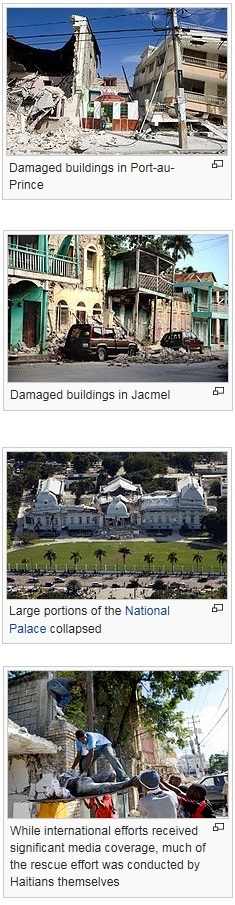
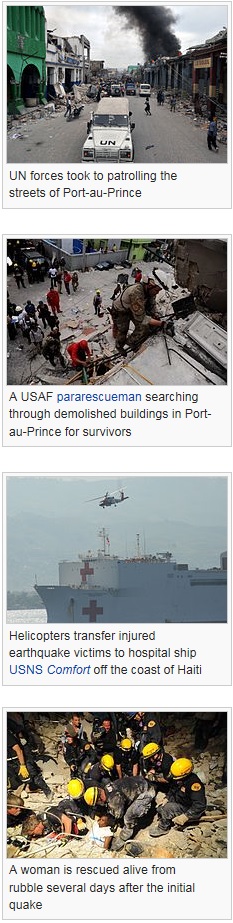
The advocacy to adopt the structure of a technocracy is reflective of this commitment to do better. The term technocracy is used to designate the application of the scientific method to solving social and economic problems. The CU must start as a technocracy, not grow into a technocracy – too much is at stake – lives are involved; see Appendix B below of Haiti’s Earthquake Photos.

All of the Caribbean is hereby urged to lean-in to this roadmap, to make the Caribbean safer and make the region a better destination to live, work and play.

🙂

Download the book Go Lean … Caribbean – now!

————

Appendix – CDEMA Role / Responsibilities:

Specific Roles and Responsibilities of the CDM Coordination and Harmonization Council:

  • Contribute to and provide recommendations for the development and implementation of a CDM monitoring and evaluation framework.
  • To consider reports on CDM implementation and provide guidance towards sustainability.
  • Identify and Provide recommendations for the integration of ongoing initiatives as well as planned initiatives that will support the achievement of the outcomes enshrined in the enhanced CDM Strategy
  • Discuss and address issues and opportunities to further good governance of the CDM
  • Nurture opportunities for synergies between development partners, participating states, representatives of the private sector, civil society and other relevant stakeholders responsible for the mainstreaming of the CDM strategy in development planning.
  • Provide policy guidance for the maintenance of the CDM database to ensure effective sharing of CDM knowledge.
  • Share annually  with the CDM Programming Consultation meeting, progress on CDM implementation
  • Identify a technical committee to support the planning process for the CDM Conference

The CDM Coordination and Harmonization Council comprise development partner representatives, sector leaders, participating states and private sector. The group includes:

  1. Caribbean Disaster Emergency Management Agency (Chair),
  2. Caribbean Development Bank (CDB),
  3. Canadian International Development Agency (CIDA),
  4. United Nations Development Programme (UNDP),
  5. United States Agency for International Development (Development Arm and OFDA),
  6. United Kingdom Department for International Development (DFID),
  7. European Union (EU),
  8. CARICOM Secretariat,
  9. Organization of American States (OAS),
  10. Organization of Eastern Caribbean States (OECS),
  11. University of the West Indies (UWI),
  12. Food and Agriculture Organisation (FAO),
  13. Caribbean Tourism Organization (CTO),
  14. Pan American Health organization (PAHO),
  15. Caribbean Electric Utility Services Cooperation (CARILEC),
  16. Caribbean Policy Development Centre (CPDC),
  17. United Nations Development Fund for Women (UNIFEM),
  18. Caribbean Community Climate Change Centre (CCCCC),
  19. Caribbean Association of Industry and Commerce (CAIC),
  20. Four representatives of CDERA Participating States – one representative from each sub-region.

—————-

Appendix B – Haiti Earthquake Photos – Evidence of a Clear and Present Danger

- Photo 2

- Photo 3


Share this post:
, , , ,
[Top]

State of the Union – Annexation: French Guiana

Go Lean Commentary

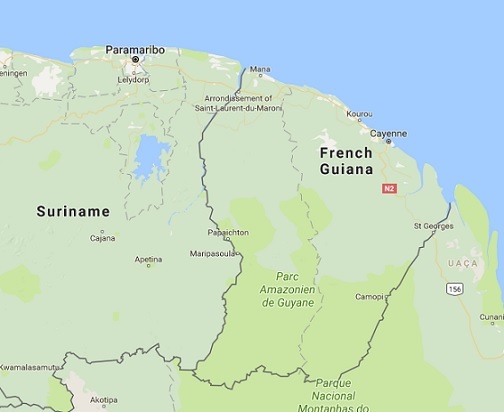
CU Blog - State of the Union - Annexation - French Guiana - Photo 0

There is the Big Dogthe Alpha – and then there are the other dogs. While this is just nature, it also applies to the societal developments. In the Caribbean region, for example, there is the Big Dog of the United States of America dominating the region? Who is next? The British and …

The French.

This does not refer to just these French Caribbean islands, but rather the whole Republic of France, in which these Caribbean member-states are considered Overseas Departments (administrative sub-sets of the national government); see census numbers here:

Member –State Land Area (Mile2) Population GDP Millions GDP Per Capita
Guadeloupe 1,628 405,000 $6,169 $21,780
Martinique 1,128 402,000 $9,610 $24.118
Saint Barthélemy 21 8,938 $255 $37,000
Saint Martin 53 35,925 $599 $20,600
French Guiana 32,253 250,109 $4,900 $20,000
Republic of France 248,573 66,991,000 $2,833,000 $43,652

There is one French territory in this region that is NOT included in the roadmap for Caribbean confederation, as described in the book Go Lean … Caribbean. This refers to French Guiana, the territory on the mainland of South America, adjacent to Suriname; see photo above.

While the US is Number 1 in the world for Single Market economies, the French is shortly behind; (UK #9; France #10; The Netherlands #28). In the Caribbean, the French structure calls for the administrative designation of an overseas departments that have identical powers to those of the regions of metropolitan France. (This is different than overseas collectivities which is the particular status of Saint Barthélemy and Saint Martin). As integral parts of the French Republic, an overseas department is represented in the National AssemblySenate and Economic and Social Council, elect a Member of the European Parliament (MEP), and use the Euro as their currency.

So nowadays, Guiana is fully integrated in the French central state; they are even a part of the European Union, and its official currency is the Euro. The region is the most prosperous territory in all of South America with the highest GDP per capita.[2] A large part of Guiana’s economy derives from the presence of the Guiana Space Centre, now the European Space Agency‘s primary launch site near the equator. As elsewhere in France, the official language is French, but each ethnic community has its own language, of which Guianan Creole is the most widely spoken.

French Guiana and the European Space Agency were prominently featured in the Go Lean book – Page 105; see Appendix below – as a model for Self-Governing Entities (SGE). The hope – as expressed in the book – was that this territory would someday join the regional neighborhood.

French Guiana is complete administratively, but still features a lot of societal defects – not colonial de jure; but colonial de facto. It is the opinion of this Go Lean commentary, that this homeland needs … its neighbors: regional integration, which is the best strategy for anti-colonialism. See this VIDEO and news article here, highlighting the blatant discord there in that territory:

VIDEO – French Guiana Marches Against Colonialism – https://videosenglish.telesurtv.net/player/653436/french-guiana-marches-against-colonialism/?aspectratio=auto

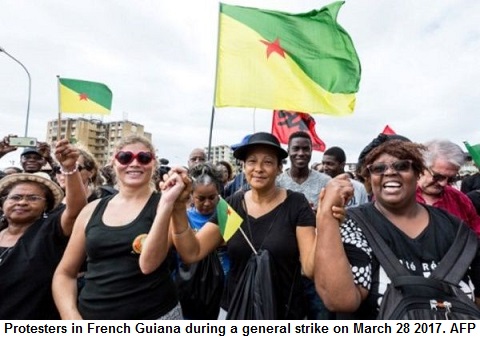
General Strike and National Protest on March 28, 2017

———-

Opinion Article – How Racism Hampers Health Care in French Guiana
By: Estelle Carde

Limited access to health care is exacerbated by everyday discrimination based on ethnicity and national origin.
Oft-overlooked French Guiana, one of France’s five overseas departments, has suddenly captured international media attention. And the news from this small South American territory is not good.

Crime, overcrowding in schools and hospitals, unemployment, the cost of living and slums have reached alarming levels.

Citizen discontent led to a massive demonstration this March, the most intense such strike since 2009. Demonstrators are asking for a $US2.7 billion emergency aid package from the French government to assist in the territory’s social and economical crisis.

CU Blog - State of the Union - Annexation - French Guiana - Photo 2

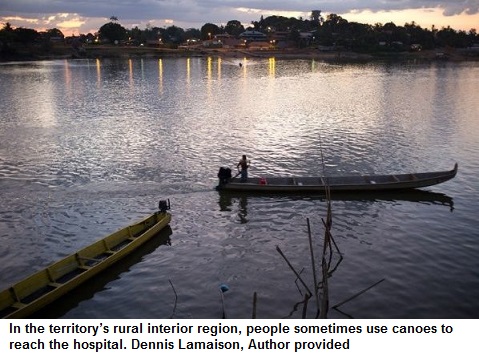
Health care is a particular concern in the former penal colony of 276,000 people. Hospitals are under-staffed and technical facilities are lacking. In some areas, the nearest hospital is a two-day canoe trip away.

CU Blog - State of the Union - Annexation - French Guiana - Photo 1

The recent deaths of five premature babies from infection at Cayenne hospital, in the capital, have heightened concerns.

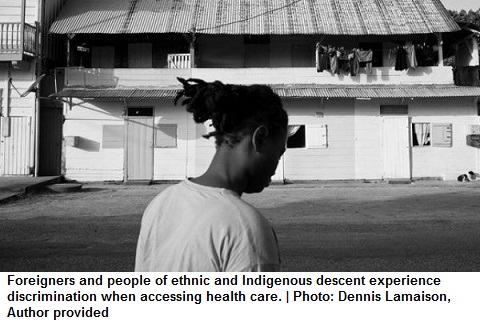
But there’s one critical health care-related issue that almost no one is talking about: racism. In a diverse territory comprised of people of European, African, Asian and Indigenous descent and a growing immigrant population, limited access to health care is exacerbated by everyday discrimination based on ethnicity and national origin.

Too many foreigners?
Foreign-born residents of French Guiana are among those impacted by discrimination in the health-care system.

Though socioeconomically the territory lags severely behind the rest of France, French Guiana constitutes a regional haven of wealth whose attractiveness has grown since the 1960s. Today, more than one in three inhabitants is born abroad. People from Suriname, Brazil and Haiti represent the largest immigrant groups.

This “tidal wave” of immigration is often cited as the main cause of French Guiana’s current socioeconomic crisis, even in some French political circles. The discriminatory behaviours that sometimes result from such widespread immigrant-blaming may be only thinly veiled.

State health office assistants might apply stricter conditions than legally necessary to those seeking medical benefits. Some, for instance might ask the foreign-born applicants to give proof of longer residency than required by law, thinking that it will discourage them from settling in the territory.

The same arguments are, in fact, used to justify similar discriminatory practices against immigrants in mainland France, too. But in Guiana they are more openly displayed.

Ethnic categorizations
Immigrants are not the only group that experiences discrimination in accessing health care in French Guiana. Members of minority populations, whether they are French or not, can also be affected.

This is partly because in French Guiana, people commonly use ethnicity to identify themselves and others. Creole, Maroon, Amerindian, Hmong, Chinese or French Métropolitains (mainlanders) are frequently invoked categories.

Under French law, the government cannot collect data or use it based on ethnicity. But in Guiana such usage goes back to the territory’s early times as a slave colony.

And, of course, each grouping comes with its stock of stereotypes: “Maroons are child-like”, for instance, or “Hmongs are disciplined” and “Amerindians drink their dole money”.

But these assumptions are not set in stone. Because they serve to justify power relations between groups, they tend to change with the ethnic identity of the speaker. This social dynamic plays out in French Guiana’s health-care system.

In Saint-Laurent-du-Maroni, French Guiana’s second largest city, Maroons – the descendants of escaped former slaves – are the majority population and therefore the largest group of health-care users. Health-care professionals, on the other hand, are primarily Creoles or French mainlanders.

CU Blog - State of the Union - Annexation - French Guiana - Photo 3

These professionals often point to the Maroon people’s history to explain certain patient behaviours. In the 18th and 19th centuries, slaves who escaped from plantations would hide in the forest, creating communities that remained more or less isolated from coastal Guianese society for almost 200 years.

In 1969, the large territory they still occupy – mainly tropical forests in the country’s interior – was finally integrated into the Department of Guiana. At that point, they began to gain access to French citizenship and public services such as education and health.

Doctors, nurses and other health professionals readily highlight these facts to explain Maroons’ difficulties in accessing treatment, inferring that they are not yet used to doing things “the Western way.”

‘Them’ and ‘us’
Such references to historical facts are charged with connotations. Some Creole professionals suggest that Maroon people are undeserving of care because they only had to “leave their forest” to access to such services. Contrasting that status with their own position as “Guianese taxpayers” who fund these services, some may use this as justification to refuse Maroon people help in accessing treatment.

This attitude can be better understood considering the Creole people’s own history in French Guiana. Their process of accessing civil rights was slow and gradual. Social empowerment came only at the tail end of a gradual Westernisation process that began with slavery in the 17th century.

After emancipation and the granting of French citizenship in 1848, this population slowly rose to local economic and political power, spurred along by Guiana’s transformation into a French department (1946) and a national policy of decentralisation (1982).

Now hard-won Creole dominance is threatened by Maroon people, who recently obtained the same civil rights as them, and whose numbers have surpassed their own numbers in the Western part of Guiana.

Health professionals from the French mainland, for their part, tend to emphasise the “cultural differences” of these “new citizens”. They cite, for example, the “traditional” way in which Maroons transmit information (watching without asking questions) and their way of “living in the moment” to explain their apparent inability to request health coverage prior to needing treatment.

This tendency to highlight cultural differences can also end up amounting to discrimination because it overshadows systemic failures that do impact access to health care, such as the lack of health coverage offices in the country’s rural inland regions. This tendency is more present among professionals who have been in Guiana for just a few months and who readily admit to being allured by the very different culture of this “exotic” overseas corner of France.

Discriminatory behaviours among health professionals therefore exacerbate the failures of the ailing health-care system now under protest by Guianese demonstrators. Foreigners and Maroon people are the first victims of administrative failures due to their vulnerable socioeconomic status. They are also worst hit by geographical obstacles because they represent a majority of inhabitants in the territory’s remote rural areas.

But this accumulation of racist, economic and geographical inequalities is no accident. It is the result of centuries of history of Guianese society.

Source: TeleSur Media Network – Published April 13, 2017; retrieved July 26, 2017 from: http://www.telesurtv.net/english/opinion/How-Racism-Hampers-Health-Care-in-French-Guiana-20170413-0007.html

——-

Translated from the French by Alice Heathwood for Fast for Word.

Estelle Carde is a professor of Sociology of Health at Université de Montréal.

This article was originally published on The Conversation. Read the original article.

RELATED:
Guiana Workers ‘Toughen Up’ Mobilizations Against French State 

This theme – “All is not well in the Caribbean” – aligns with the movement behind the book Go Lean … Caribbean, where the assertion is that the problems facing the Caribbean region are too big for any one member-state alone. There needs to be a regional solution. The book posits that shifting the help-seeking responsibility to a region-wide, professionally-managed, deputized technocracy will result in greater production and greater accountability. This deputized agency is the Caribbean Union Trade Federation (CU). The Go Lean book serves as a roadmap for the introduction and implementation of the CU.

This commentary is a follow-up to the 5-part series on the subject of the State of the Caribbean Union. Our Caribbean region is unique in that there are 4 different languages and 5 colonial legacies, spread across 30 member-states and 42 million people. The goal is to execute the 5-year plan of the roadmap and then add a 31st member: French Guiana. Based on the dispositions in the foregoing VIDEO and news-opinion article, French Guiana can use the Go Lean empowerments NOW! That land is suffering from many of the same dysfunctions that plague the rest of the Caribbean and the neighboring states of Suriname and Guyana. There might be the need to act NOW to seek refuge and relief.

The other 5 entries in the series are as follows:

Just the phraseology “Caribbean Union” assumes a collective collaboration of all the territories that identify with Caribbean culture; there is the need for better local stewardship. This Go Lean effort is a confederation of sovereign and non-sovereign territories, as is the case for French Guiana. There is no need for independence, as the authority of these territories can still be deputized into the CU as an umbrella intergovernmental organization. In total, the Go Lean/CU roadmap will employ strategies, tactics and implementations to impact its prime directives; identified with the following 3 statements:

  • Optimization of the economic engines in order to grow the regional economy to $800 Billion & create 2.2 million new jobs.
  • Improvement of Caribbean governance to support these engines, including a “Separation-of-Powers between CU federal agencies and Caribbean member-state governments”; so the limitations of national laws in a member-state does not have to override the CU. A CU constitution would apply to the installation – and continuation – of Exclusive Economic Zones (EEZ) and Self-Governing Entities (SGE) that operate in controlled bordered territories like campuses, industrial parks, research labs and industrial plants.

The Go Lean/CU roadmap always anticipated the French Caribbean territories. This theme was detailed in previous Go Lean blog-commentaries; consider this sample:

https://goleancaribbean.com/blog/?p=12466 Managing Volcanoes in the French Caribbean – Martinique and Guadeloupe
https://goleancaribbean.com/blog/?p=10554 Welcoming the French in Formal Integration Efforts
https://goleancaribbean.com/blog/?p=10043 Caribbean Integration Plan for Greater Prosperity
https://goleancaribbean.com/blog/?p=7834 French Caribbean ready for the Martinique Surf Pro
https://goleancaribbean.com/blog/?p=382 Guadeloupe, Martinique, St Maarten Join the Association of Caribbean States

Now the status of the French Caribbean is indistinguishable from colonial status. All authority still rest in Paris. But there is an opportunity for more (and better) autonomous governance in the region. As depicted in these previous commentaries, this opportunity is extended for the French Caribbean to align with the rest of the Caribbean region to adopt strategies, tactics and implementations to assuage the societal dysfunctions … together.

This quest of optimizing the entire Caribbean economic-security-governance eco-system is more than just a dream; this was the motivation for the origins of the Go Lean movement. This vision is defined early in the book (Pages 12 & 13) in the following pronouncements in the Declaration of Interdependence:

ix. Whereas the realities of healthcare and an aging population cannot be ignored and cannot be afforded without some advanced mitigation, the Federation must arrange for health plans to consolidate premiums of both healthy and sickly people across the wider base of the entire Caribbean population. The mitigation should extend further to disease management, wellness, mental health, obesity and smoking cessation programs. …

xi. Whereas all men are entitled to the benefits of good governance in a free society, “new guards” must be enacted to dissuade the emergence of incompetence, corruption, nepotism and cronyism at the peril of the people’s best interest. The Federation must guarantee the executions of a social contract between government and the governed.

xii. Whereas the legacy in recent times in individual states may be that of ineffectual governance with no redress to higher authority, the accedence of this Federation will ensure accountability and escalation of the human and civil rights of the people for good governance, justice assurances, due process and the rule of law. As such, any threats of a “failed state” status for any member state must enact emergency measures on behalf of the Federation to protect the human, civil and property rights of the citizens, residents, allies, trading partners, and visitors of the affected member state and the Federation as a whole.

xxii. Whereas the heritage of our lands share the distinction of cultural tutelage from European and American imperialists that forged their tongues upon our consciousness, it is imperative to form a society that is neutral and tolerant of the mother tongue influences of our people to foster efficient and effective communications among our citizens.

xxiii. Whereas many countries in our region are dependent Overseas Territory of imperial powers, the systems of governance can be instituted on a regional and local basis, rather than requiring oversight or accountability from distant masters far removed from their subjects of administration. The Federation must facilitate success in autonomous rule by sharing tools, systems and teamwork within the geographical region.

xxiv. Whereas a free market economy can be induced and spurred for continuous progress, the Federation must install the controls to better manage aspects of the economy: jobs, inflation, savings rate, investments and other economic principles. Thereby attracting direct foreign investment because of the stability and vibrancy of our economy.

The Go Lean book posits that the inefficient Caribbean communities – French Guiana included – can be reformed and transformed if they adopt the community ethos, strategies, tactics, implementations and advocacies as depicted in the Go Lean roadmap. The book provides 370-pages of turn-by-turn instructions on “how” so as to reboot, reform and transform the societal engines of Caribbean society. For one, the strategy calls for the implementation of Self-Governing Entities like the European Space Agencies and many more industrial sites – i.e. 10 Steps to Implement Self-Governing Entities on Page 105 of the book.

The effort of the Go Lean roadmap is not “stuck” on Caribbean geography; rather we are committed to Caribbean culture. As such we confederate with territories not only in the Caribbean Sea but also those in the Atlantic Ocean (Bahamas, Bermuda and the Turks & Caicos Islands), on the Central American mainland (Belize) and the South American mainland (Guyana, Suriname and now French Guiana). All of this constitutes the Caribbean homeland.

Together, Caribbean stakeholders can succeed in efforts to improve; to end the parasite status with European capitals (and Washington) and instead exert our autonomy as mature democracies. We can be protégés instead of parasites.

Yes, we can … reform and transform our homeland to make it a better place to live, work and play. 🙂

Download the book Go Lean … Caribbean – now!

Sign the petition to lean-in for this roadmap for the Caribbean Union Trade Federation.

———–

Appendix – The Bottom Line on the French Guiana Space Center

The European Space Agency (ESA) is an intergovernmental organization of 20 member states, dedicated to the exploration of space. Established in 1975 and headquartered in Paris, France, ESA has a staff of more than 2,000 with an annual budget of about US$5.51 billion (2013). ESA’s space flight program includes human spaceflight, mainly with the International Space Station program, the launch and operations of unmanned exploration missions to other planets and the Moon, Earth observation, science, telecommunication as well as maintaining a major spaceport, the Guiana Space Center (CSG) at Kourou, French Guiana, and designing launch vehicles. The main European launch vehicle, Ariane 5 is operated through Arianespace with ESA sharing in the costs and further developing this launch vehicle.

The CSG has been operational since 1968; it is particularly suitable as a location for a spaceport as it fulfills the two major geographical requirements:

• it is quite close to the equator, so that the spinning earth can impart some extra velocity to the rockets for free when launched eastward, and

• it has uninhabited territory (in this case, open sea) to the east, so that lower stages of rockets and debris from launch failures cannot fall on human habitations.

CSG is the spaceport used by the ESA to send supplies to the International Space Station using the Automated Transfer Vehicle. Commercial launches are bought also by non-European companies. ESA pays two thirds of the spaceport’s annual budget and has also financed the upgrades made during the development of the Ariane launchers.

Source: Go Lean … Caribbean book (Page 105).

Share this post:
, , , ,
[Top]

Managing the ‘Strong versus the Weak’ – An American Sickness

Go Lean Commentary

“There is a special ‘place in hell’ …”
“… for someone that would steal your wallet after you collapse/faint due to a health crisis; (think heart-attack, epileptic seizure, etc.)”.

Sickness 1Imagine this scenario at the country level; how inconceivable for an advanced society. And yet, this is the actual situation in the United States. This is according to the new book – An American Sickness: How Healthcare Became Big Business and How You Can Take It Back – by Dr. Elisabeth Rosenthal, a former E.R. doctor and current journalist for medical issues.

This commentary asserts that there is a need for the Caribbean communities to reform and transform our healthcare deliveries, yet still, we do NOT want to model the American system. This point aligns with the book Go Lean…Caribbean, which seeks to reboot the 30 member-states of the Caribbean region, to ensure better stewardship of the Social Contract for all citizens in our homelands, strong and weak. The Go Lean book petitions the Caribbean region to do better! It describes the necessary empowerments to optimize the economic, security and governing engines of Caribbean society to ensure a better adherence to the principle of the Greater Good.

In a 4-part series of blog-commentaries on the “Strong versus the Weak”, the pattern from the Code of Hammurabi was detailed and presented as an Old World model that was ignored in the formation of the New World. The Americans got it bad! If that ancient King Hammurabi was around in present day, he would have a harsh judgment for the American healthcare system. It is figuratively like “stealing the wallet when a person collapses”, as many of the financial abuses in American hospitals occur when the patient is unconscious or only concerned about seeking relief from pain and/or discomforts.

This commentary is an spin-off from that series; though it was originally presented as a 4-parter, we are hereby adding this 5th entry. The full series is now as follows:

  1. Managing the Strong versus the Weak – Model of Hammurabi
  2. Managing the Strong versus the Weak – Mental Disabilities
  3. Managing the Strong versus the Weak – Bullying in Schools
  4. Managing the Strong versus the Weak – Book Review: Sold-Out!
  5. Managing the Strong versus the Weak – An American Sickness

The need for this 5th entry arose with the release of this new book today – April 11, 2017. It is ‘spot-on’ for the criticism of the pattern of abuse of the ‘Weak’ in American society. See the review-synopsis of Dr. Rosenthal’s book here:

Book Review: An American Sickness: How Healthcare Became Big Business and How You Can Take It Back
By: Elisabeth Rosenthal (Author)

At a moment of drastic political upheaval, a shocking investigation into the dangerous, expensive, and dysfunctional American healthcare system, as well as solutions to its myriad of problems

Sickness 2

In these troubled times, perhaps no institution has unraveled more quickly and more completely than American medicine. In only a few decades, the medical system has been overrun by organizations seeking to exploit for profit the trust that vulnerable and sick Americans place in their healthcare. Our politicians have proven themselves either unwilling or incapable of reining in the increasingly outrageous costs faced by patients, and market-based solutions only seem to funnel larger and larger sums of our money into the hands of corporations. Impossibly high insurance premiums and inexplicably large bills have become facts of life; fatalism has set in. Very quickly Americans have been made to accept paying more for less. How did things get so bad so fast?

Breaking down this monolithic business into the individual industries—the hospitals, doctors, insurance companies, and drug manufacturers—that together constitute our healthcare system, Rosenthal exposes the recent evolution of American medicine as never before. How did healthcare, the caring endeavor, become healthcare, the highly profitable industry? Hospital systems, which are managed by business executives, behave like predatory lenders, hounding patients and seizing their homes. Research charities are in bed with big pharmaceutical companies, which surreptitiously profit from the donations made by working people. Patients receive bills in code, from entrepreneurial doctors they never even saw.

The system is in tatters, but we can fight back. Dr. Elisabeth Rosenthal doesn’t just explain the symptoms, she diagnoses and treats the disease itself. In clear and practical terms, she spells out exactly how to decode medical doublespeak, avoid the pitfalls of the pharmaceuticals racket, and get the care you and your family deserve. She takes you inside the doctor-patient relationship and to hospital C-suites, explaining step-by-step the workings of a system badly lacking transparency. This is about what we can do, as individual patients, both to navigate the maze that is American healthcare and also to demand far-reaching reform. An American Sickness is the frontline defense against a healthcare system that no longer has our well-being at heart.

Source: Posted and Retrieved 04-11-2017 from: https://www.amazon.com/American-Sickness-Healthcare-Became-Business/dp/1594206759/ref=sr_1_1?ie=UTF8&qid=1491928851&sr=8-1&keywords=Book+American+Sickness

—————

AUDIO Podcast – Terry Gross interviews Elisabeth Rosenthal – Heard on Fresh Air

Mental Photo 4April 10, 2017 – Health care is a trillion-dollar industry in America, but are we getting what we pay for? Dr. Elisabeth Rosenthal, a medical journalist who formerly worked as a medical doctor, warns that the existing system too often focuses on financial incentives over health or science.

“We’ve trusted a lot of our health care to for-profit businesses and it’s their job, frankly, to make profit,” Rosenthal says. “You can’t expect them to act like Mother Teresas.”

Rosenthal’s new book, An American Sickness, examines the deeply rooted problems of the existing health-care system and also offers suggestions for a way forward. She notes that under the current system, it’s far more lucrative to provide a lifetime of treatments than a cure.

“One expert in the book joked to me … that if we relied on the current medical market to deal with polio, we would never have a polio vaccine,” Rosenthal says. “Instead we would have iron lungs in seven colors with iPhone apps.”

Notice this small sample of the book’s revelations and disclosures, symptomatic of Crony-Capitalism:

  • Healthcare economics do not align with normal economic laws: “Usual & Customary” versus supply-and-demand
  • Hospital systems behave like predatory lenders
  • Consumers cannot decide, as prices may be unknown at the time of delivery
  • Lifetime of treatment preferable for service-providers rather than a cure.
  • Doctors owning Surgical Centers, therefore dictating procedures that they can accommodate at their facilities
  • Unknown and unauthorized “Drive-by Doctors” adding to hospital bills.

This commentary and the previous 4 commentaries in this series all relate to nation-building, stressing the community ethos necessary to forge a society where all the people are protected all the time. While we are analyzing the American system, we clearly recognize that the Caribbean eco-system is equally – or perhaps even more – in a crisis and in need of reform. The premise in the Go Lean book and subsequent blog-commentaries is that “a crisis is a terrible thing to waste”. We can use the acknowledgement of our crisis to optimize our healthcare deliveries once and for all. We must assuredly look beyond the American model. According to the foregoing book and AUDIO Podcast, many more successful models exist.

Dr. Rosenthal’s book asserts that there may be better models in Europe than there is in the US. This is already a familiar thesis for the Go Lean movement – a roadmap for the introduction and implementation of the Caribbean Union Trade Federation (CU) – as the Go Lean book advocates studying all dimensions of the EU:

10 Ways to Model the EU – Page 130.
The CU will emulate the European Union by unifying and integrating the Caribbean region into one market, thereby creating a single economy of 30 member-states, 42 million people and a GDP of over $800 Billion (per 2010). The EU is 28 member-states, 507.89 million people and $16.6 Trillion GDP (per 2012). Though the CU is only a fraction the size of the EU, there is the similarity of divergent peoples (24 languages) putting aside their differences in a quest to confederate. The EU region has quite an ignoble history of contending with differences, spurning 2 World Wars in the last century. Yet they came together to unite and integrate to make Europe a better place to live, work and play. Just like the EU, the CU will not possess sovereignty; this feature remains with each member-state.

Still, there was a previous attempt to reform the American healthcare delivery eco-system. There is wisdom to glean from that development. The Go Lean book provides this excerpt (Page 156):

The Bottom Line on Obama Care
The Patient Protection and Affordable Care Act (PPACA), commonly called Obama Care is a US federal statute signed into law by President Barack Obama on March 23, 2010. It represents the most significant government expansion and regulatory overhaul of the U.S. healthcare system since the passage of Medicare and Medicaid in 1965. The PPACA is aimed at increasing the rate of health insurance coverage for Americans and reducing the overall costs of health care. It provides a number of mechanisms—including mandates, subsidies, and tax credits — to employers and individuals to increase the coverage rate.Additional reforms aim to improve healthcare outcomes and streamline the delivery of health care. The PPACA requires insurance companies to cover all applicants and offer the same rates regardless of pre-existing conditions or sex. The Congressional Budget Office projected that the PPACA will lower both future deficits and Medicare spending. On June 28, 2012, the United States Supreme Court upheld the constitutionality of most of the Obama Care.

The US, despite its advanced democracy status, has definite societal defects in the healthcare arena. Overcoming the defects – particularly Crony-Capitalism or exploiting public resources for private gains – make solving healthcare challenging.

It is truly heavy-lifting!

This was recently discovered by the new US president, Donald Trump.

After campaigning for the 2016 election on the promise of “repealing and replacing Obama Care”, the administration’s first healthcare legislation attempt flopped. The president’s exclamation:

President Trump: ‘Nobody Knew Health Care Could Be So Complicated’

The truth of the matter Mr. President, everybody – engaged in the process of transforming society – knew!

Transforming the Caribbean healthcare will also be equally complicated. It will engage all 3 societal engines: economic, security and governance. In fact, the prime directives of the Go Lean/CU roadmap includes the following 3 statements:

  • Optimization of the economic engines in order to grow the regional economy to $800 Billion & create 2.2 million new jobs.
  • Establishment of a security apparatus – including emergency management – to ensure public safety and protect the resultant economic engines.
  • Improve Caribbean governance for all people – with empowerments for healthcare – to support these engines.

This comprehensive view – economics, security and governance – is the charge of the Go Lean roadmap, opening with these pronouncements in the Declaration of Interdependence (Page 11):

viii. Whereas the population size is too small to foster good negotiations for products and commodities from international vendors, the Federation must allow the unification of the region as one purchasing agent, thereby garnering better terms and discounts.

ix. Whereas the realities of healthcare and an aging population cannot be ignored and cannot be afforded without some advanced mitigation, the Federation must arrange for health plans to consolidate premiums of both healthy and sickly people across the wider base of the entire Caribbean population. The mitigation should extend further to disease management, wellness, mental health, obesity and smoking cessation programs. The Federation must proactively anticipate the demand and supply of organ transplantation as developing countries are often exploited by richer neighbors for illicit organ trade.

Overall, the Go Lean book stresses the community ethos, strategies, tactics, implementations and advocacies to reboot, reform and transform healthcare delivery in the Caribbean; see this expressed in this one advocacy here:

10 Ways to Improve Healthcare – Page 156

1 Embrace the advent of the CU Single Market to leverage across the 42 million people in the 30 member-states.
2 Organ Procurement Authority
3 Deploy Disease Management Models
4 Universal Health Insurance Care
Much like with auto insurance, there is a need to mandate health insurance coverage for most Caribbeans. The coverage does not have to be $0 deductible and 100% coverage, rather it could be less attractive – low-end terms – like $6000 deductible and 60% coverage. The US model, Obama Care has plans branded Bronze (low end), Silver, Gold and Platinum. The goal for the CU is simply to ensure that catastrophic illnesses or injuries do not imperil the financial viability of individual, families or communities. The coverage risk is minimized with insurance carriers having a larger premium base (42 million) to calculate their actuarial formulas. To maximize savings, individual states may choose to combine their health insurance marketplaces with other states or go at it alone.
5 Wellness, Nutrition, Fitness and Smoking Cessations Programs
6 Medical Tourism
7 Repatriate MediCare Beneficiaries
8 Caribbeans with Disabilities
9 Medical Education Outreach
10 Public Health Extension
Due to the systemic threat, epidemic response and disease control will be coordinated at the federal level. Also, the acquisition of public-bound pharmaceuticals (vaccinations, etc.) can be negotiated at the regional level, using the Group Purchasing Organizations (GPO) envisioned in this roadmap. This will lead to a better supply and pricing dynamics.

The points of effective, technocratic stewardship of healthcare were further elaborated upon in previous blog/commentaries. Consider this sample:

https://goleancaribbean.com/blog/?p=7822 Cancer: Doing More
https://goleancaribbean.com/blog/?p=7586 Blink Health: The Cure for High Drug Prices
https://goleancaribbean.com/blog/?p=7430 Brazilian Shrunken Head Babies: Zika or Tdap?
https://goleancaribbean.com/blog/?p=6580 Capitalism of Drug Patents
https://goleancaribbean.com/blog/?p=3276 Role Model Shaking Up the World of Cancer
https://goleancaribbean.com/blog/?p=2522 The Cost of Cancer Drugs
https://goleancaribbean.com/blog/?p=2105 Recessions and Public Health
https://goleancaribbean.com/blog/?p=1751 New Hope in the Fight against Alzheimer’s Disease
https://goleancaribbean.com/blog/?p=1003 Painful and rapid spread of new virus in Caribbean
https://goleancaribbean.com/blog/?p=554 Cuban cancer medication registered in 28 countries
https://goleancaribbean.com/blog/?p=286 PR’s Comprehensive Cancer Center Project Breaks Ground
https://goleancaribbean.com/blog/?p=278 Tim Armstrong, the CEO of AOL – Health-care Concerns

The opening imagery:

“There is a special ‘place in hell’ …”

… is just an metaphorical reference. There is no assumption of a literal burning abyss of torment. But this does convey the abomination of the “strong abusing the weak”. So many times in the past this abuse has proliferated, for those weaker physically, mentally, economically and sadly, medically.

The movement behind the Go Lean/CU roadmap wants us, in the Caribbean, to do better. Yes, healthcare is not easy, but it is possible to reform and transform. There are so many good examples and models to learn from:

The underlying book reviewed here – An American Sickness: How Healthcare Became Big Business and How You Can Take It Back – considers Switzerland.

We want to “weed out” any bad practices of Crony-Capitalism in our health delivery system. Instead, we want to pursue the Greater Good (greatest good to the greatest number of people which is the measure of right and wrong). Most importantly, we want to proclaim the truth of American life. So many of our Caribbean citizens “beat down their doors to get out” and emigrate to the US. We want to “dull the lights on any American Welcome signs” – considering the reality of American Crony-Capitalism, the “grass is not necessarily greener on the other side”.

Now is the time to lean-in to this Go Lean roadmap to reboot, reform and transform Caribbean healthcare. If we do this, we will make the Caribbean a better place to live, work, heal and play. 🙂

Sign the petition to lean-in for the roadmap for the Caribbean Union Trade Federation.

Download the free e-book of Go Lean … Caribbean – now!

Share this post:
, , , ,
[Top]

Managing the ‘Strong versus the Weak’ – Mental Disabilities

Go Lean Commentary

“Are you an idiot?”

“No, I’m a moron”

Imagine this exchange. Funny isn’t it! But truth be told the etymology of the words “idiot” and “moron” is that they represent scales in the range of intellectual disability.

There is a 3rd classification: “Imbecile”, to represent the mid-range. In total, the following is the full range, from higher (better) to lower (intellectually disabled):

3.  Moron – is a term once used in Psychology to denote mild intellectual disability.[1] This term was coined in 1910 by psychologist Henry H. Goddard[3] from the Ancient Greek word  moros, which meant “dull”[4] and used to describe a person with a mental age in adulthood of between 8 and 12 on the Binet scale.[5]

2.  Imbecile – is a term for people with moderate to severe intellectual disability.[1][2] The term arises from the Latin word imbecillus, meaning weak, or weak-minded. It included people with an IQ of 26–50, between “idiot” (IQ of 0–25) and “moron” (IQ of 51–70).[3]

1.  Idiot – is a term for a person perceived to be lacking intelligence. In Psychology, it is a historical term for a person so mentally deficient as to be incapable of ordinary reasoning.

All of these terms were closely tied with the American Eugenics Movement[2] (where they attempted to sterilize and colonize the mentally disabled in society so as to control the risks of procreating further). Once the terms became popularized, they fell out of use by the Psychological community, and were used more commonly as insults rather than as psychological classifications.

Note: We have “Idiots”, “Imbeciles” and “Morons” in every community in the Caribbean. People with congenital mental weaknesses are everywhere!

This backdrop allows us to better appreciate a societal defect that exists in much of the New World. From the beginning of time, there have always been people who suffered from congenital mental weakness or intellectual disability. These persons need protection in society, not abuse and insults. Accordingly, from the Enlightenment Age (between 1650 and 1700), the concept of a Social Contract emerged; this is the implied arrangement where citizens surrender some of their freedoms and submit to the authority of the State in exchange for protection of remaining natural and legal rights. By extension the assumption is that as all societies have both “strong” and “weak” constituents, so there must always be some societal protections for the weak – physically weak and mentally weak.

In addition to congenital mental weakness, we find that that are other categories of people that at one time or another fall under the category of the mentally “weak”. There are those with:

  • Transactional Mental Weakness – PTSD, Family/Marriage/Divorce counseling, Bereavement, Addiction and Alcoholism. (“Transactional” is not a clinical term, but rather an adjective). People can and do recover-rehabiltate from these disorders.
  • Adult Onset Illnesses – Schizophrenia and Bi-Polar Disorders that emerge in the late 20’s / early 30’s
  • Degenerative Illnesses – Alzheimer’s, Dementia and other age-induced neural disorders

In the previous blog-commentary on the Model of Hammurabi it was detailed how that ancient King established laws to ensure that the “strong in society did not abuse the weak”. That blog concluded that New World societies need to do better in applying the sage advice from a 3,800-year-old regent. This point aligns with the book Go Lean…Caribbean, which seeks to reform and transform the 30 member-states of the Caribbean region, to ensure better stewardship of the Social Contract for all citizens in our homeland, strong and weak.

The Go Lean book describes empowerments to target the economic, security and governing engines of Caribbean society to ensure an adherence to the principle of the Greater Good. This commentary is the 2nd of 4 in a series on “Managing the Strong versus the Weak”. The other commentaries detailed in this series are as follows:

  1. Managing the Strong versus the Weak – Model of Hammurabi
  2. Managing the Strong versus the Weak – Mental Disabilities
  3. Managing the Strong versus the Weak – Bullying in Schools: “Teach them well and let them lead the way”
  4. Managing the Strong versus the Weak – Book Review: Sold-Out!

All of these commentaries relate to nation-building, stressing the community ethos necessary to forge a society where all the people are protected all the time. This has not always been the case in the Caribbean nor has it been in the US – the “city on the hill” – the model of advanced democracy in our region. We must do better!

There is a lesson in American history in which they abused the rights (life, liberty and pursuit of happiness) of 70,000 people. We can observe-and-report on this bad experience and commit to effect change here in our Caribbean homeland. See-listen to the AUDIO Podcast here, relating this sad history based on the following book:

Mental Photo 2

Book Cover

AUDIO Podcast – The Supreme Court Ruling That Led To 70,000 Forced Sterilizations – Heard on Fresh Air

Mental Photo 4In the early 20th century, American eugenicists used forced sterilization to “breed out” traits considered undesirable. Adam Cohen tells the story in Imbeciles. Originally broadcast March 7, 2016.

This foregoing AUDIO report reviews the new paperback book Imbeciles by writer-lawyer Adam Cohen. Here is a representative sound-bite:

One of the worst Supreme Court decisions in US history … was the 1927 decision upholding a state’s right to forcibly sterilize a person considered unfit to procreate – unfit because they were deemed to be mentally deficient. That decision is part of a larger chapter of American history in which the eugenics movement was behind preventing so-called mentally deficient people from procreating through not allowing them to marry, sterilizing them and segregating them in special colonies.

The Nazis borrowed some ideas from American eugenicists. The eugenics movement also influenced the 1924 Immigration Act, which was designed in part to keep out Italians and Eastern European Jews. Adam Cohen’s book titled “Imbeciles” is about the eugenics movement in the early 20th century and the Supreme Court case legalizing sterilization.

This true history of the United States exposes what is embedded in this country’s DNA – a propensity for the “strong to abuse the weak”. And yet, the Caribbean suffers from an atrocious emigration rate of our citizens fleeing our homeland to go to the US. Surely, this history is unknown among these expatriates.  Surely, a rich education to the next generation of Caribbean citizens would deter some of them from setting their sights on US shores as the panacea for all Caribbean ills.

The reasons why people leave in the first place have been identified as “push and pull”:

“Push” refers to the reasons people who feel compelled to leave, to seek refuge in a foreign land. “Refuge” is an appropriate word; because of societal defects – like the “strong abusing the weak” – many from the Caribbean must leave as refugees – think DisabilityDomestic-abuseMedically-challenged and LGBT – for their life, liberty and pursuit of happiness.

“Pull”, on the other hand refers to the lure of a more safer life abroad; many times our people are emigrating to communities where they perceive that there are protections for the “weak against the abusive strong”.

It has been a consistent theme from the promoters of the Go Lean book, that we can dull the bright lights on any flashing American “Welcome Signs” so as to dissuade the “Pull” factor. Indeed, the consistent messaging of these Go Lean blogs has been that it takes less effort to reform and transform our Caribbean society than abandoning our home and trying to succeed in a Diasporic life.

Surely, the truth of American history will hurt … any false impressions that Caribbean people may have about American life and culture. Consider this sample of previous blog-commentaries:

https://goleancaribbean.com/blog/?p=10933 White is Right – Not!
https://goleancaribbean.com/blog/?p=10895 Trump’s Vision of the Caribbean: Yawn
https://goleancaribbean.com/blog/?p=10654 Stay Home! Immigration Realities in the US
https://goleancaribbean.com/blog/?p=10629 Stay Home! Remembering the Societal Defects of McCarthyism
https://goleancaribbean.com/blog/?p=10532 Learning from American Stereotypes – Good and Bad
https://goleancaribbean.com/blog/?p=10336 A Lesson in History: Haiti’s Reasonable Doubt of America
https://goleancaribbean.com/blog/?p=10052 Fake News? Welcome to America
https://goleancaribbean.com/blog/?p=9974 Lessons Learned from Pearl Harbor
https://goleancaribbean.com/blog/?p=9626 ‘Time to Go’ – America Marginalizes the Black-n-Brown Vote
https://goleancaribbean.com/blog/?p=9214 ‘Time to Go’ – Spot-on for Protest
https://goleancaribbean.com/blog/?p=8431 A Caribbean State Issued US Travel Advisory Citing Police Violence
https://goleancaribbean.com/blog/?p=7221 Street naming for Martin Luther King unveils a ‘Climate of Hate’
https://goleancaribbean.com/blog/?p=5733 Better than America? Yes, We Can!
https://goleancaribbean.com/blog/?p=5529 American Defects: Inventory of Crony-Capitalism
https://goleancaribbean.com/blog/?p=5527 American Defects: Racism – Is It Over?

Still some may conclude that the American ethos of yesteryear no longer applies today. Yet, the foregoing AUDIO Podcast relates that the landmark 1927 Supreme Court decision is still the law of the land in the US, and that there have been many times – including a recent 2001 Sterilization case – where provisions of this law is still being applied.

Mental Photo 3

America is very much troubled with their management of [transactional and degenerative] mental weakness:

The Go Lean book serves as a roadmap for the introduction and implementation of the technocratic Caribbean Union Trade Federation (CU) to “weed out” our own bad practices of the “strong abusing the weak” in our society. We want to pursue the Greater Good (greatest good to the greatest number of people which is the measure of right and wrong). And this includes help for people who are mentally weak.  The Go Lean/CU roadmap includes many strategies, tactics, implementations and advocacies to impact Caribbean society and our treatment of the weak, including the mentally weak due to congenital, transactional, adult-onset and degenerative causes.

“Persons with Disabilities” are still people. They can still contribute to society. Even in the US, people with disorders like Bi-Polar and Schizophrenia have been extremely impactful in their communities – consider the example of Nobel Prize Winner Dr. John Nash.

These previous Go Lean blog-commentaries have detailed mental health challenges in communities:

https://goleancaribbean.com/blog/?p=7659 Pre-Fab Housing and Elder-Care Conjunction
https://goleancaribbean.com/blog/?p=5901 The Demographic Theory of Elderly Suicide
https://goleancaribbean.com/blog/?p=5720 Role Model advocates for ‘Reasonable Accommodations’
https://goleancaribbean.com/blog/?p=2633 Book Review: ‘The Protest Psychosis’
https://goleancaribbean.com/blog/?p=2602 Guyana and Suriname Wrestle With High Rates of Suicides
https://goleancaribbean.com/blog/?p=2105 Recessions and Public Physical and Mental Health
https://goleancaribbean.com/blog/?p=1751 New Hope in the Fight against Alzheimer’s Disease

We must learn from this lesson … that the “weak (physical and mental) must be protected from the strong” that may have malice towards them. If we can assuage such abuses, we would mitigate the “push and pull” factors that have previously befallen our territories. Let’s do better in reforming and transforming our societal engines in the Caribbean homeland in regards to mental healthcare. If we do this, we will make the Caribbean a better place to live, work, heal and play for all citizens, “strong or weak”. 🙂

Download the free e-Book of Go Lean … Caribbean – now!

Sign the petition to lean-in for the roadmap for the Caribbean Union Trade Federation.


Share this post:
, , ,
[Top]

ENCORE: US Warnings on Low-cost Dominican Surgeries

UPDATE – Go Lean Commentary

The warning was sounded 3 years ago, today. What is the status now? Have the warnings been heeded?

Surely, we have paid attention and we have put in the risk mitigations so as to preserve life-and-limb in the activities of cosmetic surgeries in the Dominican Republic.

Sad to report, but the answer is “No”.

The risks continue; the disfigurements continue; the deaths continue.

Say it ain’t so!

See the news article in the Appendix relating the details of a fresh warning from the US Center for Disease Control and Prevention (CDC).

In this previous Go Lean blog-commentary – being ENCORED below – the prospects of Medical Tourism were heralded, with the caution for proper regulatory control. The appeal was made for the new Caribbean Union Trade Federation (CU) to serve as that regulator, under the guise of a Self-Governing Entity. That appeal is echoed again here-now. There is too much …

… money at stake.

… jobs at stake.

… lives at stake.

But while this original blog-commentary below published on April 1, 2014 related the death of Beverly Brignoni (28), there have been other deaths; as with these women:

See the related October 3, 2016 story: Pretty Hurts – Dishing on the dangers of Plastic Surgery 

CU Blog - US Warnings on Low-cost Dominican Surgeries - Photo 2
———–

ENCORE Title: Low-cost Dominican surgeries spark warnings by US

CU Blog - Low-cost Dominican surgeries spark warnings by US - PhotoTo the family of Beverly Brignoni, according to the foregoing news article, the publishers of the book Go Lean … Caribbean, SFE Foundation, extend condolences for the loss of their dearly departed loved one. This article – as follows – shows the down-side of medical tourism, an accidental death from an apparent lax oversight in a cosmetic surgery clinic.

By: Ben Fox and Ezequiel Abiu Lopez
Beverly Brignoni was a young New Yorker seeking a less expensive way to enhance her appearance and she did what many other people are now doing: travel to the Dominican Republic for cosmetic surgery; (see undated “selfie” photo posted to her Instagram account, courtesy of the Brignoni family).

It went horribly wrong. The 28-year-old died Feb. 20 from what the doctor told her family was a massive pulmonary embolism while getting a tummy tuck and liposuction at a clinic in the Dominican capital recommended by friends. Family members want local authorities to investigate.

“We want to know exactly what happened,” said Bernadette Lamboy, Brignoni’s godmother. “We want to know if there was negligence.”

The district attorney’s office for Santo Domingo says it has not yet begun an investigation because it has not received a formal complaint from Brignoni’s relatives. Family members say they plan to make one.

Shortly after Brignoni’s death, the Health Ministry inspected the Vista del Jardin Medical Center where she was treated and ordered the operating room temporarily closed, citing the presence of bacteria and violations of bio-sanitary regulations. The doctor who performed the procedure and the clinic have not responded to requests for comment.

Brignoni’s death is unusual, but it is not isolated. Concerns about the booming cosmetic surgery business in the Dominican Republic are enough of an issue that the State Department has posted a warning on its page for travel to that country, noting that in several cases U.S. citizens have suffered serious complications or died.

The U.S. Centers for Disease Control issued an alert March 7 after health authorities in the United States reported that at least 19 women in five states had developed serious mycobacterial wound infections over the previous 12 months following cosmetic procedures in the Dominican Republic such as liposuction, tummy tucks and breast implants.

There were no reported deaths in those cases, but treatment for these types of infections, which have been caused in the past by contaminated medical equipment, tend to involve long courses of antibiotics and can require new surgery to remove infected tissue and drain fluid, said Dr. Douglas Esposito, a CDC medical officer.

“Some of these patients end up going through one or more surgeries and various travels through the medical system,” Esposito said. “They take a long time typically to get better.”

The Dominican Republic, like countries such as Mexico, Costa Rica and Thailand, has promoted itself as a destination for medical tourism, so-called because people will often tack on a few days at a resort after undergoing surgery. The main allure is much lower costs along with the promise that conditions will be on par with what a patient

would encounter at home.

In 2013, there were more than 1,000 cosmetic procedures performed in the Dominican Republic, 60 percent of them on foreigners, according to the country’s Plastic Surgery Society.

The Internet is flooded with advertisements and testimonials from people who say they have had successful procedures in the Dominican Republic, and an industry of “recovery houses” has sprung up to serve clients, along with promoters who canvass for clients in the United States. The price is often about a third of the cost in the United States.

Dr. Braun Graham, a plastic surgeon in Sarasota, Florida, says he done corrective surgery on people for what he says were inferior procedures abroad. He warns that even if a foreign doctor is talented, nurses and support staff may lack adequate training.

“Clearly, the cost savings is certainly not worth the increased risk of a fatal complication,” said Graham, past president for Florida Society of Plastic Surgeons.

Brignoni was referred to the Vista del Jardin Medical Center by several acquaintances in the New York borough of the Bronx where she lived, said Lamboy and Lenny Ulloa, the father of the 4-year-old daughter she left behind.

“Supposedly, it was a high-end clinic, one of the best in the city,” Ulloa said.

The doctor who performed Brignoni’s procedure, Guillermo Lorenzo, is certified by the Plastic Surgery Society, but there

are at least 300 surgeons performing cosmetic procedures who are not, said Dr. Severo Mercedes, the organization’s director. He said the government knows about the problem but has not taken any action. “We complain but we can’t go after anyone because we’re not law enforcement,” Mercedes said.

The number of people pursuing treatment in the Dominican Republic doesn’t seem to have been affected by negative reports, including a previous CDC warning about a cluster of 12 infections in 2003-04.

In one recent case, the Dominican government in February closed a widely advertised clinic known as “Efecto Brush,” for operating without a license. Prosecutors opened a criminal case after at least six women accused the clinic of fraud and negligence. The director, Franklin Polanco, is free while awaiting trial. He denies wrongdoing.

There was also the case of Dr. Hector Cabral. New York prosecutors accused him of conducting examinations of women in health spas and beauty parlors in that state in 2006-09 without a license, then operating on them in the Dominican Republic, leaving some disfigured. Cabral pleaded guilty to one count of unauthorized practice of medicine in October 2011 and returned to the Dominican Republic, where he still practices.

In 2009, Dominican authorities charged Dr. Johan Tapia Bueno with illegally practicing plastic surgery at his apartment after several women, including a local television personality, accused him of malpractice that left them with infections. Awaiting trial, he has pleaded innocent to charges that include fraud.

Juan Linares, a lawyer hired by Brignoni’s boyfriend, said he is still awaiting an autopsy report.

Because she arrived in the country late at night on a delayed flight and was on the operating table early the next morning, a main concern is whether she received an adequate medical evaluation before the procedure. Graham, the Florida surgeon, said sitting on a plane for several hours can cause blood to stagnate in the legs and increase the risk of an embolism.

Brignoni paid the Dominican clinic $6,300 for a combination of liposuction, tummy tuck and breast surgery. Lamboy said she had decided not to have the work done on her breasts and was expecting a partial refund. The woman, who worked as a property manager, had lost about 80 pounds about a year earlier after gastric bypass surgery.

Brignoni was clearly excited about the procedure. Her final post on Facebook was a photo she took of her hands holding her passport and boarding pass for the flight from New York to Santo Domingo.

“She wanted it so bad,” her godmother said. “It felt like she was going to have a better outlook on life, getting this done.”

Associated Press writer Ben Fox reported this story from Miami and Ezequiel Abiu Lopez reported in Santo Domingo.

Source: Associated Press (AP); retrieved 03/31/2014 from: http://news.yahoo.com/low-cost-dominican-surgeries-spark-warnings-us-042418398.html

This is a very important issue for the planning and execution of the new inter-governmental agency: Caribbean Union Trade Federation (CU). First of all, someone died – life is too precious to skim over this issue with indifference. The Go Lean book serves as a roadmap to introduce and implement the CU, so as to re-boot the region’s economic engines, including avenues of medical tourism.

There are also peripheral issues associated with this news story, many of which are examined, as missions, in great details in the Go Lean book. The issues/missions are:

  • Image: Confidence in the competence of service providers is sometimes based on reputation and branding. This is para-mount in medical fields. While the Caribbean is home to many excellent medical schools, facilities and practitioners, there is no regional “sentinel” role-player. The CU mandate is to zealously protect and promote the image and branding for industrial developments. So now when the media portrays “negative” depiction of Caribbean life, culture and people, there is no formal response mechanism. But with the CU’s implementation, there will be an entity to effectuate an anti-defamation response and better manage the region’s image.
  • Health Administration: The Go Lean roadmap recognizes healthcare as a basic need for the people of the Caribbean. As such, there is the acknowledgement that health delivery systems generate excessive costs and risks for a community. As a planning tool, the roadmap commences with a Declaration of Interdependence, pronouncing regional integration (Page 11) as the strategy for optimized benefits:
      IX.   Whereas the realities of healthcare and an aging population cannot be ignored and cannot be afforded without some advanced mitigation, the Federation must arrange for health plans to consolidate premiums of both healthy and sickly people across the wider base of the entire Caribbean population. The mitigation should extend further to disease management, wellness, obesity and smoking cessation programs. The Federation must proactively anticipate the demand and supply of organ transplantation as developing countries are often exploited by richer neighbors for illicit organ trade.
  • Self-Government Entities: The foregoing news story involves a clinic regulated by a Caribbean member-state, the Dominican Republic. The Go Lean roadmap institutes an arrangement for medical/research campuses as SGE’s (Self-Governing Entities) that are only regulated by the CU federal authorities. Had this tragedy occurred on such a facility, the response would have been immediate and comprehensive, employing best-practices of trauma medicine arts and sciences, thusly requiring a post-mortem lessons-learned process that would be fully transparent and accountable.
  • Lean Government: The Go Lean roadmap also extends optimizations to the member-states governments, requiring a separation-of-powers dictum to transfer oversight and administration of certain state functions to federal authorities. This includes standards, licensing and administration of healthcare facilities. The application of best-practices would most assuredly minimize the risk of medical negligence.
  • US Exceptionalism: The Go Lean roadmap maintains that other countries have their own version of the American Dream. The quest for life, liberty and the pursuit of happiness is not exclusively American. Whereas there are millions of negligent deaths in the US hospitals/clinics every year, one American dying in a Caribbean facility does not constitute an exceptional event; bad things do happen to good people … everywhere, in the US, in the Caribbean and in the Dominican Republic. Having a tourism-based regional economy means we always want to extend hospitality to our American guests, but embarking on medical tourism, also means assuming some degree of risks, for the facilities, the doctors and most importantly the patients.

The foregoing article crystalizes the need for the CU Trade Federation, a super-national administration to regulate, protect, promote and foster quality delivery of the most vital public services. The publishers of the Go Lean roadmap will hereby “sit back”, observe-and-report on the manifestations of this case, hoping for the quest for justice and accountability to be fulfilled. And remembering the unconscionable loss of the beautiful 28-year-old woman, Beverly Brignoni; RIP.

Download the book Go Lean … Caribbean – now!

Sign the petition to lean-in for the roadmap for the Caribbean Union Trade Federation.

———–

Appendix – CDC warns of dangers of plastic surgery in Dominican Republic

(HealthDay) — U.S. health officials are warning about the dangers of “medical tourism” after at least 18 women from the East Coast became infected with a disfiguring bacteria following plastic surgery procedures they had in the Dominican Republic.

The infections, caused by a type of germ called mycobacteria, can be difficult to treat. At least several of the women had to be hospitalized, undergo surgery to treat the infection and take antibiotics for months, according to the report from the U.S. Centers for Disease Control and Prevention.

One expert said the effects can be devastating.

“It’s a very mutilating infection. They’re going for cosmetic surgery, and they will be scarred. It’s a terrible scenario for people to go down there, get surgery and come back worse than they imagined they could be,” said Dr. Charles Daley. He is a Denver infectious disease physician whose clinic has seen patients infected after undergoing these kinds of procedures in the Dominican Republic.

According to the CDC, 21 women from six Northeast and Mid-Atlantic states appear to have been affected by mycobacterial infections after visiting five plastic surgery clinics in the Dominican Republic, a nation in the Caribbean. (Eighteen of the cases are confirmed, and three are considered probable.)

Mycobacteria, which are found worldwide in the environment, “usually infect the skin or lungs, and are responsible for chronic and recurrent infections that are notoriously resistant to antibiotics and difficult to treat,” said report co-author Dr. Douglas Esposito. He is a medical officer and epidemiologist with the CDC’s Travelers’ Health Branch.

More than 80 percent of the infected women reported swelling, pain and scarring. Daley, who works at the National Jewish Health respiratory hospital in Denver, said infected people often need to undergo reconstructive surgery.

It’s not clear how the women were infected, although Daley said it’s possible the bacteria entered their plastic surgery wounds through tap water or instruments used in surgery. Most underwent liposuction and at least one other surgery, such as procedures to expand the size of the breasts and buttocks, or breast reduction.

Daley said his clinic has seen two patients infected after plastic surgery and consulted on a third case. It’s not clear how many, if any, are among those in the CDC report.

The risk of this kind of infection is higher in countries like the Dominican Republic and Brazil, he noted, but patients have become infected in the United States, too. “We are definitely seeing more of these postoperative infections, particularly ones that are related to cosmetic surgery,” Daley said.

The CDC report warns about the risks of medical tourism, a term that describes leaving the United States for medical procedures to save money. According to the report, many of the women—most of whom were born in the Dominican Republic—said they went to the country for plastic surgery to save money.

People who have undergone plastic surgery in the Dominican Republic should talk to their doctor about getting tested, Daley suggested. And, people who plan to go there for a procedure should ask the clinic whether they’ve had infections, he added.

“I would never go to one of those places,” he said. “I know too many stories about what’s happened to people. It has ruined people’s lives.”

The study was published online July 13 in Emerging Infectious Diseases.

Reporting by: Randy Dotinga, Healthday Reporter

Source: Posted July 14, 2016; retrieved March 30, 2017 from: https://medicalxpress.com/news/2016-07-cdc-dangers-plastic-surgery-dominican.html#jCp

Share this post:
, , , ,
[Top]

Zika’s Drug Breakthrough

Go Lean Commentary:

As related previously, the Zika virus is proving to be a real “4-Letter” word. Many repercussions have emerged in all aspects of societal life: economics, security and governance. The virus first activated in Brazil, then in the Caribbean. Now, there are reported incidences in Florida.

Bienvenido a Miami!

Now the best practice for Public Health officials is to dissuade pregnant women – and all hoping to someday get pregnant – from traveling to Latin America and the Caribbean…

… and now Miami and other Florida destinations.

Considering the economic consequences (tourism), is there any surprise that there is a breakthrough in drug treatment for Zika, and what’s more that this breakthrough is emerging from Florida. This aligns with a previous commentary, that only at the precipice …

Consider this article here of the medical breakthrough:

Title: FSU research team makes Zika drug breakthrough
By: Kathleen Haughney

CU Blog - Zika Drug Breakthrough - Photo 1A team of researchers from Florida State University, Johns Hopkins University and the National Institutes of Health has found existing drug compounds that can both stop Zika from replicating in the body and from damaging the crucial fetal brain cells that lead to birth defects in newborns.

One of the drugs is already on the market as a treatment for tapeworm.

“We focused on compounds that have the shortest path to clinical use,” said FSU Professor of Biological Science Hengli Tang. “This is a first step toward a therapeutic that can stop transmission of this disease.”

Tang, along with Johns Hopkins Professors Guo-Li Ming and Hongjun Song and National Institutes of Health scientist Wei Zheng identified two different groups of compounds that could  potentially be used to treat Zika — one that stops the virus from replicating and the other that stops the virus from killing fetal brain cells, also called neuroprogenitor cells.

One of the identified compounds is the basis for a drug called Nicolsamide, a U.S. Food and Drug Administration approved drug that showed no danger to pregnant women in animal studies. It is commonly used to treat tapeworm.

This could theoretically be prescribed by a doctor today, though tests are still needed to determine a specific treatment regimen for the infection.

Their work is outlined in an article published Monday by Nature Medicine.

Though the Zika virus was discovered in 1947, there was little known about how it worked and its potential health implications — especially among pregnant women — until an outbreak occurred in South America last year. In the United States, there have been 584 cases of pregnant women contracting Zika, though most of those are travel related. As of Friday, there have been 42 locally transmitted cases in Florida.

The virus, among other diseases, can cause microcephaly in fetuses leading them to be born with severe birth defects.

“It’s so dramatic and irreversible,” Tang said. “The probability of Zika-induced microcephaly occurring doesn’t appear to be that high, but when it does, the damage is horrible.”

Researchers around the world have been feverishly working to better understand the disease — which can be transmitted both by mosquito bite and through a sexual partner — and also to develop medical treatments.

Tang, Ming and Song first met in graduate school 20 years ago and got in contact in January because Tang, a virologist, had access to the virus and Ming and Song, neurologists, had cortical stem cells that scientists needed for testing.

The group worked at a breakneck pace with researchers from Ming and Song’s lab, traveling back and forth between Baltimore and Tang’s lab in Tallahassee where they had infected the cells with the virus.

In early March, the group was the first team to show that Zika indeed caused cellular phenotypes consistent with microcephaly, a severe birth defect where babies are born with a much smaller head and brain than normal.

They immediately delved into follow-up work and teamed with NIH’s Zheng, an expert on drug compounds, to find potential treatments for the disease.

Researchers screened 6,000 compounds that were either already approved by the FDA or were in the process of a clinical trial because they could be made more quickly available to people infected by Zika.

“It takes years if not decades to develop a new drug,” Song said. “In this sort of global health emergency, we don’t have time. So instead of using new drugs, we chose to screen existing drugs. In this way, we hope to create a therapy much more quickly.”

All of the researchers are continuing the work on the compounds and hope to begin testing the drugs on animals infected with Zika in the near future.

The research was supported by the National Institutes of Health, FloridaStateUniversity, EmoryUniversity and the Maryland Stem Cell Research Fund.

Other institutions contributing to the research are the Zhejiang University School of Medicine in China, Emory University and the Icahn School of Medicine. Emily Lee, a Florida State University graduate student working with Tang, shared the first authorship position with Assistant Professor of Biology at Emory Zhexing Wen and NIH scientist Miao Xu.
Source: Florida State University Press Release – Posted August 29, 2016; retrieved September 3, 2016 from: http://news.fsu.edu/news/science-technology/2016/08/29/fsu-research-team-makes-zika-drug-breakthrough/

—————-

VIDEO FSU research team makes Zika drug breakthrough – https://youtu.be/E8lfY07yWqY

Published on Aug 29, 2016 – A Florida State, Johns Hopkins and NIH team of researchers has identified existing drug compounds that can both stop Zika from replicating in the body and from damaging crucial fetal brain cells that lead to birth defects in newborns.

—————-

AUDIO – Florida State University SoundCloud – https://soundcloud.com/floridastateuniversity/fsu-researchers-make-zika-drug-breakthrough

FSU researchers make Zika drug breakthrough

Somehow, when it comes to Zika and tourism, there seems to always be some inconvenient truths. This is not the first time, inconvenient truths have emerged with this pandemic; and it will not be surprising if this is not the last time.

The book Go Lean…Caribbean relates that there are economic and security consequences tied to public health crises. It relates the bitter experiences of cancer and the quest to optimize the treatment options for Caribbean citizens. As demonstrated by cancer, and now Zika, health crises bring a lot of governmental complications.

The book does not purport to be a roadmap for public health, but rather a roadmap for elevating Caribbean society by optimizing the economic, security and governing engines in the region. Yet, within this roadmap is the strategy to incentivize medical research and facilitate treatment options and workable solutions. In fact this roadmap invites the community spirit to encourage research and development (R&D), and to invite role models like Professor Hengli Tang and the medical research team at the university in the foregoing story.

The Go Lean book serves as a roadmap for the implementation and introduction of the technocratic Caribbean Union Trade Federation (CU). The CU‘s prime directives are identified with the following 3 statements:

  • Optimization of the economic engines in order to grow the regional economy to $800 Billion & create 2.2 million new jobs.
  • Establishment of a security apparatus to protect the economic engines, including the monitoring and response of epidemiological threats.
  • Improve Caribbean governance to support these engines, including a separation-of-powers between CU agencies and member-states.

One feature of the Go Lean roadmap is the emphasis on community ethos. The book explains, that the Caribbean communities must adopt a fundamental spirit, an underlying sentiment, that would inform the beliefs, customs, and practices to embrace research and development. A community ethos for R&D must be purposeful; we cannot accidentally fall into it..

Another feature of the Go Lean roadmap is the adoption of Self-Governing Entities (SGE). These are to be featured as dedicated, bordered grounds that are ideal for medical research and treatment campuses. SGE requires a hybrid governance involving the CU federal agencies and local administrators – at the start-up.

The Go Lean roadmap clearly relates that healthcare and pharmaceutical drug research are important in the quest to make the Caribbean a better place to live, work and play. At the outset of the Go Lean book, in the Declaration of Interdependence (Page 11), these points are pronounced as essential for the Caribbean:

viii.   Whereas the population size is too small to foster good negotiations for products and commodities from international vendors, the Federation must allow the unification of the region as one purchasing agent, thereby garnering better terms and discounts.

ix. Whereas the realities of healthcare and an aging population cannot be ignored and cannot be afforded without some advanced mitigation, the Federation must arrange for health plans to consolidate premiums of both healthy and sickly people across the wider base of the entire Caribbean population. The mitigation should extend further to disease management, wellness, obesity and smoking cessation programs.

Previous blog/commentaries addressed issues related to medical research and drug research & practices, sampled here:

Doing More for Cancer – Philanthropist-Billionaire invest in R&D
Capitalism of Drug Patents – Pricing Dysfunctions
The Cost of Cancer Drugs
Antibiotics Misuse Linked to Obesity in the US
CHOP Research: Climate Change May Bring More Kidney Stones
Welcoming Innovators and Entrepreneurs under an SGE Structure
Medical Research Associates Kidney Stones and Climate Change – Innovative!
New Research and New Hope in the Fight against Alzheimer’s Disease
Research in Diabetes Detection – Novartis and Google develop ‘smart’ contact lens
New Cuban Cancer medication registered in 28 countries
Puerto Rico’s Comprehensive Cancer Center Project Breaks Ground – Model of Medical SGE

Kudos to the research team at Florida State University; they have responded at a time of crisis for the State of Florida – the only American State with live Zika mosquitoes – and have forged a solution. This is a fine lesson for the Caribbean to learn …

… Zika is a crisis, and a “crisis would be a terrible thing to waste”.

One local community, Wynwood, in Miami is ground-zero for the Zika battleground. Their current disposition is that business output in the affected areas has been retarded. As related in this article, this summer season has been slower than normal – the peak time is in the winter months:

Zika changes a way of life in Wynwood

After more than 15 local cases of the Zika virus in Wynwood — the first instance of the virus spreading within continental U.S. borders — the artsy district quickly became “ground zero” for the exotic illness.

“It’s definitely slowed down business considerably,” an employee at Fireman Derek’s Bake Shop said Sunday morning. “Usually we do really good on weekends, but today it’s been super slow.”

Source: Retrieved September 5, 2016 from: http://www.miamiherald.com/news/health-care/article94223717.html

CU Blog - Zika Drug Breakthrough - Photo 2

————–

VIDEO – Wynwood baker’s newest creation — shrine to Zika – http://www.miamiherald.com/news/local/community/miami-dade/article93717707.html

After all of the news of Zika cases in the neighborhood near his Wynood business slowed down his walk-in business, Zak the Baker, decided to make a new creation — a shrine to Zika. The light-hearted shrine was made to make people smile and not take things – Emily Michot emichot@miamihereald.com

The foregoing news article and VIDEO-AUDIO productions provide an inside glimpse into the medical research discipline. Obviously, the motivation of the medical research is to protect the economic engines of the Florida economy. The State was at the “precipice and only then, has the needed empowerment” emerged.

The Go Lean roadmap posits that more R&D is needed in the Caribbean too. We need the community ethos to prioritize and encourage careers in science, technology, engineering and mathematics/medicine (STEM). We have a Zika problem in the Caribbean region too. We need innovations too. We need R&D at our educational institutions and SGE campuses.

This is an issue of economics, security and governance…

… and this is a familiar drama:

  • Ebola – While not an American problem, when American citizens become afflicted in 2014, the US response was inspiringly genius, deploying a potential cure within a week.
  • SARS – During the “heyday” of the SARS crisis, travel and transport to Hong Kong virtually came to a grinding halt! Hong Kong had previously enjoyed up to 14 million visitors annually; they were a gateway to the world. The SARS epidemic became a pandemic because of this status. Within weeks of the outbreak, SARS had spread from Hong Kong to infect individuals in 37 countries in early 2003.s

The CU has the prime directive of optimizing the economic, security and governing engines of the Caribbean region. The foregoing article and VIDEO-AUDIO productions depict that research is very important to new medical innovations and break-throughs. This is the manifestation and benefits of Research & Development (R&D). The book describes this focus as a community ethos and promotes R&D as valuable for the region. The following list details additional ethos, strategies, tactics, implementations and advocacies to optimize the region’s health deliveries and R&D investments:

Community Ethos – Deferred Gratification Page 21
Community Ethos – Economic Systems Influence Individual Choices and Incentives Page 21
Community Ethos – The Consequences of Choices Lie in the Future Page 21
Community Ethos – Governing Principles – Return on Investments Page 24
Community Ethos – Governing Principles – Cooperatives Page 25
Community Ethos – Non-Government Organizations Page 25
Community Ethos – Ways to Impact Research & Development (R&D) Page 30
Community Ethos – Ways to Impact the Greater Good Page 37
Strategy – Integrate and unify region in a Single Market Page 45
Strategy – Agents of Change – Globalization Page 57
Tactical – Fostering a Technocracy Page 64
Tactical – Separation of Powers – Health Department Page 86
Tactical – Separation of Powers – Drug Administration Page 87
Implementation – Ways to Pay for Change Page 101
Implementation – Ways to Implement Self-Government Entities – R&D Campuses Page 105
Implementation – Ways to Deliver Page 109
Planning –  Ways to Improve Trade Page 128
Planning –  Ways to Make the Caribbean Better Page 131
Advocacy – Ways to Improve Healthcare Page 156
Advocacy – Ways to Better Manage the Social Contract Page 170
Advocacy – Ways Foster Cooperatives Page 176
Advocacy – Ways to Enhance Tourism Page 190
Advocacy – Ways to Impact Cruise Tourism Page 193
Advocacy – Ways to Improve Emergency Management Page 196
Advocacy – Ways to Impact Foundations Page 219
Appendix – Emergency Management – Medical Trauma Centers Page 336

The Go Lean roadmap does not purport to be an authority on medical research best practices. This economic-security-governance empowerment plan should not direct the course of direction for epidemiology or pharmacological research and/or treatment. But this war against Zika has dire consequences for tourism-based economies – this descriptor fits most of the Caribbean. So we must pay more than the usual attention to the issue. And we must incentivize those with the passion … and genius to make an impact in this area.

The champions for this issue in the Caribbean might come down to the contributions of just a few people, or maybe just one. This is the reality of genius qualifiers. Not everyone can do it. So those who cannot, need to step aside and not abate those that can. Epidemiology or pharmacological research & development is no time for egalitarianism.

Now is the time for all of the Caribbean, the people and governing institutions, to lean-in for the empowerments in the book Go Lean … Caribbean. This is a Big Idea for the region, one where SGE’s, R&D and geniuses can soar. We can make the Caribbean a better place to live, work, heal and play. 🙂

Download the free e-Book of Go Lean … Caribbean – now!


Share this post:
, , , ,
[Top]

Lessons from China – Harvesting Organs: Facts & Fiction

Go Lean Commentary

There are so many lessons from China.

There are so many …

… everything in China.

The country has 1.3 billion people. That’s a lot of people. That’s a lot of lessons, good and bad. This commentary is 3 of 6 in consideration the good and bad lessons from China. The other commentaries detailed in this series are as follows:

  1. History of China Trade: Too Big to Ignore
  2. Why China will soon be Hollywood’s largest market
  3. Organ Transplantation: Facts and Fiction
  4. Mobile Games Apps: The new Playground
  5. South China Seas: Exclusive Economic Zones
  6. WeChat: Model for Caribbean Social Media – www.MyCaribbean.gov

All of these commentaries relate to nation-building, stressing the community investments required to facilitate the short-term, mid-term and long-term needs of our communities.

CU Blog - Lessons from China - Harvesting Organs - Photo 1With 1.3 billion people, a country will have all dispositions and statuses: young, old, strong, weak, healthy, and sick. There will always be the need for a range of health care: from preventative all the way up to advanced trauma. Therefore, the need for organ transplantation will arise, maybe even more often than in smaller-populated countries. We can learn a lot by considering China’s vision and values in this dramatic area of modern life.

China has a lot of mileage in the medical history of organ transplantation and the impact on social values. This is a recent history anywhere, as the medical capability only became viable since the 1970’s.

This commentary is in consideration of the book Go Lean…Caribbean; it serves as a roadmap for the introduction and implementation of the technocratic Caribbean Union Trade Federation (CU) to provide better stewardship for the region’s economic and healthcare eco-systems. The book actually conveys that healthcare is an economic consideration. It is a matter of life-and-death that requires community investments even when the issue itself is NOT life or death.

There are a lot of preventative health care decisions that community leaders have to make, for example: vaccinations, hospital availability, nursing standards and trauma center logistics. There is a certain level of delivery for Third World countries – the Caribbean member-states are mostly all Third Word. The goal of this Go Lean roadmap is to elevate the region from this status quo. How does the Third World handle advanced healthcare issues like organ transplantation?

Answer: Not well.

The Go Lean book details the sad reality of abuse and exploitation traditionally experienced in Third World cases involving organ transplantations. The book relates (Page 214):

The Bottom Line on Organ Trade
Organ trade is the trade involving inner organs (heart, liver, kidneys, cornea, etc.) of a human for transplantation. In the 1970s pharmaceuticals that prevent organ rejection were introduced. This along with a lack of medical regulation helped foster the organ market. The problem of organ trafficking is widespread, although data on the exact scale of the organ market is difficult to obtain. (Most organ trade involves kidney or liver transplants). There is a worldwide shortage of organs available for transplantation, yet trade in human organs is illegal in all countries, except Iran.

Many countries had a program for legal transplant exchange, but have all universally abandoned the practice.

Most countries now allow donors to give organs if they are related or emotionally close to the recipient. But in China, there is a program for organs to be procured from executed prisoners. According to the World Health Organization (WHO), international organ trade amounted to 66,000 kidney transplants, 21,000 liver transplants, and 6000 heart transplants in 2005, but WHO estimated that 5% of all those procedures where engaged in commercial transactions.

WHO states that, “Payment for…organs is likely to take unfair advantage of the poorest and most vulnerable groups, undermining altruistic donation and leads to profiteering and human trafficking.”

Imagine China; just recently elevating from Third World status; and only in the urban communities. They have billions of people living in the rural areas. It would not be inconceivable that some “bad actors” may view the masses as prime harvesting grounds for organ transplantation. (The Go Lean book posits that “bad actors” are inevitable in every society; the Caribbean history is littered with stories of the emergence of “bad actors”).

Inconceivable? Not according to this news article and VIDEO here:

Title: Angry Claims and Furious Denials Over Organ Transplants in China

CU Blog - Lessons from China - Harvesting Organs - Photo 2HONG KONG — Eyes flashing, lips curled in operatic scorn, a middle-aged woman holding a placard reading “Evil Cult Falun Gong!” ordered me off the sidewalk outside Hong Kong’s convention center, where organ transplant specialists from around the world were gathered.

“Go away!” she shouted. “You’re no good!”

My crime? After interviewing her as she stood with a group called the Anti-Cult Association, she had spotted me interviewing a woman at a competing demonstration of practitioners of Falun Gong, a meditation and exercise-based spiritual practice that the Chinese government outlawed as a cult in 1999, jailing many practitioners. The Anti-Cult Association says it is a civil society organization, but its aims closely reflect the Chinese government’s.

Falun Gong adherents say that after the movement was banned, many were blood-typed in detention, and thousands became a secret source of organs for human transplants. The Chinese government and the Anti-Cult Association, which, according to its website, promotes “Confucian thinking and science,” deny this.

The searing debate over forced organ extraction is not new. For about 15 years it has raged, between the Chinese government and its supporters and Falun Gong practitioners and investigators. But as hundreds of the world’s leading transplant surgeons, including from China, gathered at the Transplantation Society’s biennial meeting in Hong Kong this week and last, the issue seemed more explosive than ever — perhaps because the meeting was on Chinese soil for the first time, bringing the debate closer to home.

The accusations of forced organ extraction were “ridiculous,” Huang Jiefu, a former deputy health minister who is in charge of overhauling China’s organ donation system, said in a speech. The Chinese government says that it switched from a system dependent on executed prisoners to one based on voluntary, nonprisoner donations on Jan. 1, 2015.

“I’m in stress,” Dr. Huang said of the accusations. “I couldn’t sleep well enough at night.”

“There is wild speculation” of “100,000 transplants per year from executed prisoners in China,” he added, possibly conflating the issues of using organs from prisoners convicted of capital crimes and organs from prisoners of conscience.

Some investigators and Falun Gong adherents say that their compiled data from individual hospitals shows at least 60,000 organ transplants a year, about six times the official total of about 10,000 last year, and that the difference is made up by forced organ extractions from prisoners of conscience.

In a cafe at the convention center, David Matas and David Kilgour, who first published a report on the issue in 2006, said they were familiar with the widespread skepticism, even hostility, not just from the Chinese government but from many outside China, including the news media. (An update to their book, “Bloody Harvest,” this time with Ethan Gutmann, author of “The Slaughter,” came out this year.)

The statistics cited by investigators and Falun Gong practitioners are overwhelming, they agreed. And, by definition, the victims are dead, and cannot speak.

“Nameless, voiceless,” said Mr. Kilgour, a former member of the Canadian Parliament.

Many Falun Gong adherents have also alienated people with claims tinged with hysteria, a byproduct of the urgency of the topic and an “in-your-face” propagandistic style widespread in China, they said.

“The Falun Gong community, they don’t read the reports” of human rights organizations, said Mr. Matas, a rights lawyer. “They don’t talk the human rights language, and they’re disorganized. Everybody does what they want,” undercutting their credibility, he said.

What if, one day, the allegations were proved to be true, as accusations of Nazi genocide against the Jews were? How would the Chinese government deal with it then?

“Probably they would say this is an aberration, the responsibility of a few people,” Mr. Matas said.

———

Related:

Chinese Claim That World Accepts Its Organ Transplant System Is Rebutted –  AUG. 19, 2016

Debate Flares on China’s Use of Prisoners’ Organs as Experts Meet in Hong Kong – AUG. 17, 2016

Doctor’s Plan for Full-Body Transplants Raises Doubts Even in Daring China – JUNE 11, 2016

China Bends Vow on Using Prisoners’ Organs for Transplants – NOV. 16, 2015

———

VIDEO – China’s Shocking Military Secret REVEALED – https://youtu.be/bIxE5kZXjsY

Published on Jul 6, 2016 – For more than 15 years, Chinese military hospitals across China have kept a closely guarded secret. Doctors at private hospitals know about it, and even participate. But no one dares reveal it to the public.

Say it ain’t so…

… that “bad actors” in China may exploit a class of people to harvest their organs. The experience of exploiting a class of people is something familiar to the Caribbean. From the history journals, we are reminded of local examples; our region played host to the ethnic cleansing of indigenous people, African Slave Trade & Slavery, and Piracy. The book Go Lean…Caribbean asserts that the vision and values of a community must be conditioned for a society to endure such exploitation. The book describes this “vision and value” factor as the term “community ethos”:

“… the fundamental character or spirit of a culture; the underlying sentiment that informs the beliefs, customs, or practices of a group or society; dominant assumptions of a people or period; practices of a group or society; dominant assumptions of a people or period” Page 20.

What is the community ethos of China?

… such that the claims of forced harvesting of organs would gain such notoriety?

This question requires an onsite inspection and investigation. The promoters of the Go Lean movement conducted a structured interview with a Caribbean (Bahamas) Exchange Student who matriculated in China; she made the following contributions to this discussion on China’s vision and values. So as to protect her identity, she is being referred to here as “Bahama Mama“. Consider these responses related to her China experiences:

Give us details of your China experience:

Bahama Mama: I participated in a Exchange Program between the College of the Bahamas and Nanjing University of Information Science and Technology in Nanjing, Jiangsu Province, in the Peoples Republic of China. That city, while the largest in Jiangsu with its 8,187,828 residents, is not the largest in China, not even close.

Is China a country that you would consider emigrating to?

Bahama Mama: No. They have a lot more jobs in China, but it is not home. I felt foreign and would probably always feel like a foreigner there.

What were you most impressed with while in China?

Bahama Mama: Their infrastructure to accommodate so many people.

Did you perceive that the voluminous population created a sense of worthlessness among the Chinese people?

Bahama Mama: No. The culture in the country created a sense of value for Chinese people among Chinese people. But the perception is different for foreigners among them; their community sense of worth for foreigners is lower.

The Go Lean book conveys that community ethos can be remediated, that new ethos can be adopted. It is not easy but possible. The book likens the process to “the effort to quit smoking”. This roadmap calls on the CU Trade Federation to take the lead in forging the needed changes to the region’s community ethos as it relates to nation-building. This is Step One in rebooting the economic-security-governing engines. The premise is simple: while we are a different culture than China, people are “the same” everywhere, with good and bad tendencies. Classes of people have also been exploited in our region, while not harvesting for organs, we must be “on guard” for this potential threat.

The Go Lean book details an advocacy for organ transplantation in the Caribbean region, with a focus to be “on guard” for exploitation. The book relates (Page 214) how organ transplantation is to be introduced to the region:

Lean-in for the Caribbean Union Trade Federation (CU)
This [confederation] treaty allows for the unification of the region into one market, thereby expanding to an economy of 30 member-states, 42 million people and a GDP of over $800 Billion (circa 2010). In addition to empowering the economic engines, this treaty calls for a collective security pact for the member-states so as to assuage systemic threats, security risks and organized crime. One CU mission is to eliminate any “black market” viability by installing a regional/federal administration for Organ Donor Registration, Procurement and Distribution for the Caribbean. The CU advocates the policy of presumed consent, (successful in Brazil, US and many EU nations), but different in that “opt-in” is the default setting. Citizens can easily “opt-out” (Drivers License, Medical Directives, Last Will and Testament, witnessed statements to family/friends) or next-of-kin can override [the decision] on-demand.

The challenge for managing an organ transplantation eco-system may be too big for any one Caribbean member-state alone; there is the need for this regional technocracy. The population is far too small in some of our member-states. The whole region is better, while no billions as in China, the 42 million of the entire region is adequate for effective matching. The stewardship for this effort was pronounced in the opening of the Go Lean book, with these statements in the Declaration of Interdependence (Pages 11 – 13):

ix.   Whereas the realities of healthcare and an aging population cannot be ignored and cannot be afforded without some advanced mitigation, the Federation must arrange for … disease management, wellness, mental health, obesity and smoking cessation programs. The Federation must [also] proactively anticipate the demand and supply of organ transplantation as developing countries are often exploited by richer neighbors for illicit organ trade.

xi.   Whereas all men are entitled to the benefits of good governance in a free society, “new guards” must be enacted to dissuade the emergence of incompetence, corruption, nepotism and cronyism at the peril of the people’s best interest. The Federation must guarantee the executions of a social contract between government and the governed.

xii.  Whereas the legacy in recent times in individual states may be that of ineffectual governance with no redress to higher authority, the accedence of this Federation will ensure accountability and escalation of the human and civil rights of the people for good governance, justice assurances, due process and the rule of law. As such, any threats of a “failed state” status for any member state must enact emergency measures on behalf of the Federation to protect the human, civil and property rights of the citizens, residents, allies, trading partners, and visitors of the affected member state and the Federation as a whole.

xvi. Whereas security of our homeland is inextricably linked to prosperity of the homeland, the economic and security interest of the region needs to be aligned under the same governance. Since economic crimes, including piracy and other forms of terrorism, can imperil the functioning of the wheels of commerce for all the citizenry, the accedence of this Federation must equip the security apparatus with the tools and techniques for predictive and proactive interdictions.

The Go Lean book, and previous blog/commentaries, stressed the key community ethos, strategies, tactics, implementations and advocacies necessary to provide better stewardship to the Caribbean medical eco-system for an eventual organ transplantation offering. These points are detailed in the book as follows:

Community Ethos – Deferred Gratification Page 21
Community Ethos – Economic Principles – All Choices Involve Costs Page 21
Community Ethos – Economic Principles – Consequences of Choices Lie in the Future Page 21
Community Ethos – Security Principles – Whistleblower Protection Page 23
Community Ethos – Security Principles – Anti-Bullying and Mitigation Page 23
Community Ethos – Security Principles – “Crap” Happens Page 23
Community Ethos – Governing Principles – Minority Equalization Page 24
Community Ethos – Governing Principles – Lean Operations Page 24
Community Ethos – Governing Principles – Cooperatives Page 25
Community Ethos – Governing Principles – Non-Government Organizations (NGO) Page 25
Community Ethos – Ways to Impact the Future – Count on the Greedy to be Greedy Page 26
Community Ethos – Ways to Impact Research & Development Page 30
Community Ethos – Ways to Improve Sharing Page 35
Community Ethos – Ways to Impact the Greater Good Page 37
Strategy – Mission – Reform our Health Care Industries Page 46
Strategy – Mission – Provide for Organ Procurement Page 46
Strategy – Agents of Change – Aging Diaspora Page 57
Strategy – Agents of Change – Globalization Page 57
Tactical – Confederating a Permanent Union of 30 Member-States Page 63
Tactical – Separation-of-Powers – Health Department Page 86
Implementation – Assemble Caribbean Organ Procurement Authority Page 96
Implementation – Ways to Deliver – Quality Assurance Page 109
Planning – 10 Big Ideas – Creating a Single Market Page 127
Advocacy – Ways to Improve Healthcare Page 156
Advocacy – Ways to Improve Governance Page 168
Advocacy – Ways to Better Manage the Social Contract Page 170
Advocacy – Ways to Foster Cooperatives Page 176
Advocacy – Ways to Impact Justice – Regional Sentinel Page 177
Advocacy – Ways to Improve Communications – Foster new ethos Page 186
Advocacy – Ways to Improve Organ Transplantation Page 214
Appendix – Lied Transplant Center – Omaha, Nebraska, USA Page 339
Appendix – Organ Transplants from Animals: Examining the Possibilities Page 341

There is a lot to learn from the analysis of medical stewardship of other communities. The lessons of successes and failures of other communities’ medical practices and policies were further elaborated upon in these previous blog-commentaries:

https://goleancaribbean.com/blog/?p=7822 Cancer: Doing More
https://goleancaribbean.com/blog/?p=7586 Blink Health: The Cure for High Drug Prices
https://goleancaribbean.com/blog/?p=7327 Zika – A 4-Letter Word
https://goleancaribbean.com/blog/?p=6580 Capitalism of Drug Patents
https://goleancaribbean.com/blog/?p=2522 The Cost of Cancer Drugs
https://goleancaribbean.com/blog/?p=1143 Health-care fraud in America; criminals take $272 billion a year

China has a large population: 1.3 billion people. Many of its cities have large numbers. As previously mentioned, the City of Nanjing has 8,187,828 residents. Other Chinese cities feature even larger populations:

Source: Retrieved August 27, 2016 from: https://en.wikipedia.org/wiki/List_of_cities_proper_by_population

Notice the reality for Chinese urban life in the VIDEO here:

VIDEO – Beijing Subway, Line 13, morning rush hour – just a little crowded – https://youtu.be/xG-meaGqg-M

Published on Jul 22, 2013 – July 18, 7:30 am, likely the Xierqi subway station on Line 13. http://beijingcream.com/2013/07/beiji…
Source: http://v.youku.com/v_show/id_XNTg0Nzc…

Bullying and class oppression is not so inconceivable with numbers like this.

The Go Lean book relates that this situation is manifested time and again, all over the world. The Go Lean book provides the roadmap to anticipate class oppression, to monitor and mitigate it. The book declares (Page 23):

… “bad actors” will also emerge thereafter to exploit the opportunities, with good, bad and evil intent. A Bible verse declares: “What has been will be again, what has been done will be done again; there is nothing new under the sun” – Ecclesiastes 1:9 New International Version.

We have so many lessons to learn from China. The large population calls for extra mitigations in the area of organ transplantation. The quest for survival by those that are sick (and rich) will cause them to entertain options … at the expense of others… of the lower classes.

That is not justice.

The lesson learned from China is that we must be “on guard” for threats against justice. There must be a justice sentinel for the Caribbean region.

The Caribbean is hereby urged to lean-in to this Go Lean confederation roadmap. Everyone – people, institutions and governments – can benefit from the consideration of this roadmap to make the Caribbean a better place to live, work, heal and play. 🙂

Download the book Go Lean … Caribbean – now!

Share this post:
, , ,
[Top]