Tag: Power

Restoration of Diplomatic Relations with Cuba

Go Lean Commentary

The subject matter in this blog’s title does not mean the end of the Castro regime, but rather the beginning of the struggle to integrate Cuba with the rest of the Caribbean.

Let’s get started!

The book Go Lean…Caribbean was designed with this intent: integrate and unify all of the Caribbean into a Single Market with technocratic stewardship and oversight. This stewardship is the Caribbean Union Trade Federation (CU). The book describes the process of working for Cuba as heavy-lifting, including all the economic, security and governing engines. The article here describes the catalyst for these changes:

Title: US to Normalize Relations With Cuba
By: Alexander Britell

CU Blog - Restoration of Diplomatic Relations with Cuba - Photo 1The Caribbean changed forever on Wednesday morning.

United States President Barack Obama announced a major shift in more than half-century of American politics, signaling the two countries’ desire to work toward normalizing relations.

The announcement came alongside a high-level prisoner swap of Alan Gross, a USAID contractor jailed for five years on espionage charges, for three Cubans convicted of spying on the United States.

Gross was released alongside an unnamed agent whom Obama called one of the most important intelligence agents the US has ever had in Cuba, who had been imprisoned for nearly two decades.

The imprisonment of all parties had been a point of major contention between the two countries.

In an address Wednesday, Obama said he had ordered US Secretary of State John Kerry to immediately begin discussions with Cuba to reestablish diplomatic relations severed since January 1961.

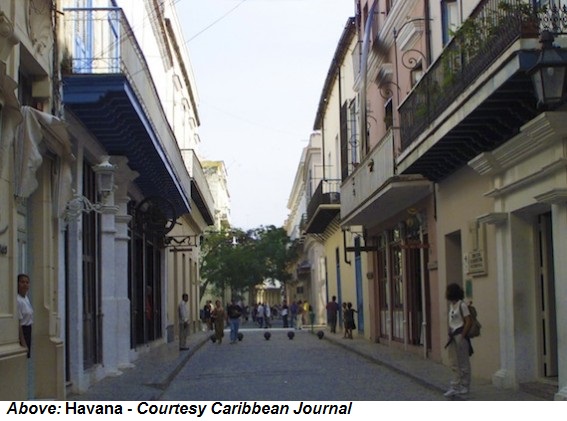
The US will also reestablish an embassy in Havana and “high-ranking officials will visit Havana.”

Obama said he had also asked Kerry to review Cuba’s designation as a state sponsor of terrorism.

He said the US was taking steps to increase travel, commerce and the flow of information to Cuba.

The plan includes the aforementioned re-establishment of diplomatic relations, a change in travel and remittance policies to increase people to people contact and the overall expansion of travel to Cuba.

That also includes expanded sales and exports of certain goods and services from the US to Cuba, along with the authorization of American citizens to import $400 goods from Cuba, with a maximum of $100 on alcohol and tobacco.

The White House also said US telecom providers will be allowed to establish “the necessary mechanisms, including infrastructure, in Cuba to provide commercial telecommunications and internet services,” in a country that has one of the lowest rates of Internet penetration on earth.

Obama said he would end an “outdated approach that for decades has failed to advance our interests.”

In a statement to the Cuban people, Cuban President Raul Castro said he and Obama had spoken by telephone on Tuesday to address “issues of interest to both nations.”

He also thanked Pope Francis and the government of Canada, who reportedly helped facilitate high-level talks between the two countries.

Of course, much of the President’s actions will take time and face roadblocks, with the biggest impediment, the Cuban Embargo, one that can only be changed with approval by the US Congress.

Indeed, the announcement was immediately met with criticism from a number of US lawmakers and the Cuban diaspora community, including US Senator Marco Rubio, the son of Cuban exiles who criticized the prisoner exchange and said Obama’s actions had “vindicated the brutal behavior of the Cuban government.”

Raul Castro himself confirmed the agreement, but noted the tough road ahead and that the announcement was by no means decisive.

“This does not mean the main matter is resolved,” Castro said. “The economic, commercial and financial blockade that causes enormous human and economic damage to our country must cease.”

“Recognizing that we have deep differences, mainly on national sovereignty, democracy, human rights and foreign policy, I reaffirm our willingness to discuss all these issues,” Castro said.

Castor said he urged “the government of the United States to remove obstacles that prevent or restrict the links between our peoples, families and citizens of both countries,” Castro said. “In particular, those relating to travel, direct mail and telecommunications.”

But what does a normalized relationship mean for the wider Caribbean?

Cuba welcomed around 2.85 million tourists last year, the vast majority from Canada and Europe, and a number that, with the proper development of tourist infrastructure and the like, could surpass the Dominican Republic, the current regional leader.

Indeed, that number will certainly increase if and when American travel becomes formally legalized; but will that mean travelers choosing Cuba over Jamaica or the Dominican Republic?

Or will a renewed Cuban tourism sector mean a larger tourism pie for the whole Caribbean?

There is another issue — notably, the impact of the massive size of the Cuban market on the rest of the region’s economy — how will potential Cuban exports to America impact Caribbean exports to Cuba?

The answers will soon become clear.
Caribbean Journal Regional News Site – December 17, 2014 (Retrieved 12/11/2014) –
http://www.caribjournal.com/2014/12/17/us-to-normalize-relations-with-cuba/#
After news broke that President Obama would use Executive Powers to normalize diplomatic relations with Cuba, members of Miami’s Cuban and Cuban-American communities have “screamed in agony, cheered with joy, or vowed angrily to dismantle the decision”.

Here are some other headlines from the Miami Herald Daily Newspaper associated with this historic news:

Miami would be a natural choice should Havana want a consulate outside of Washington, D.C., but some elected officials expressed their opposition to such a move.

According to the Miami Herald, the public response was a mix of the opinionated, the emotional and the thoughtful.

“Depending on how old you were or how long you had lived in the United States, especially if you were U.S.-born, your view on Cuba and its politics might have been shaped generationally. [The Herald] asked South Florida Cubans and Cuban Americans for their thoughts on social platforms. This is some of what they shared:”

@Miamiblues – 1st gen immigrants are too stubborn and proud to admit that embargo was epic fail. In complete denial with blinders on.

@PedazosdelaIsla – It’s not a division of young/old, it’s a division of those who want 2 legitimize a brutal dictatorship & those who don’t #Cuba

@mannyafer  – Divide in Cuban-American community– old who lived thru Castro regime want embargo, while young gen wishes to do away with it.
(Source: http://www.miamiherald.com/news/nation-world/world/americas/cuba/article4623942.html)

The foregoing article stressed the potential of an imminent re-integration of Cuba. The current regional construct CariCom wants to consider the inclusion of Cuba as a member-state. But the Go Lean book asserts that CariCom is a failed institution and need to correct its own structural defects – they are in no position to claim the burdens of Cuba. The CU on the other hand is designed as a lean technocracy, mastering Delivery Arts and Sciences. This Go Lean book details the step-by-step roadmap for including Cuba in with the rest of the Caribbean to form a confederation of the 30 member-states of the region into the integrated Single Market. The prime directives of the CU are pronounced in these statements:

  • Optimization of the economic engines in order to grow the regional economy to $800 Billion & create 2.2 million new jobs.
  • Establishment of a security apparatus to protect the resultant economic engines.
  • Improve Caribbean governance to support these engines.

This re-boot roadmap commences with the recognition that Cuba and the rest of the Caribbean are in crisis; they are in the “same boat” despite their colonial heritage or language differences. One crisis is associated with the societal abandonment that has crippled so much of Caribbean societal engines. In Cuba, this transpired in mass, while the other countries experienced a steady draining. The CU member-states need to confederate, collaborate, and convene for repatriation and reconciliation. This pronouncement is made in the Declaration of Interdependence, (Page 12) is included as follows:

xiii.      Whereas the legacy of dissensions in many member-states (for example: Haiti and Cuba) will require a concerted effort to integrate the exile community’s repatriation, the Federation must arrange for Reconciliation Commissions to satiate a demand for justice.

The Go Lean book details the series of community ethos, strategies, tactics, implementations and advocacies designed to re-boot and integrate Cuba to the region:

Anecdote – Caribbean Single Market & Economy Page 15
Community Ethos – Economic Systems Influence Individual Choices & Incentives Page 21
Community Ethos – Job Multiplier Page 22
Community Ethos – “Crap” Happens Page 23
Community Ethos – Lean Operations Page 24
Community Ethos – Cooperatives Page 25
Community Ethos – Ways to Impact the Future Page 26
Community Ethos – Ways to Manage Reconciliations Page 34
Community Ethos – Ways to Impact the Greater Good Page 37
Strategic – Vision – Integrated Region in a Single Market Page 45
Strategic – Vision – Agents of Change Page 57
Tactical – Confederating a Non-sovereign Union Page 63
Tactical – Fostering a Technocracy Page 64
Tactical – Growing to $800 Billion Regional Economy Page 67
Tactical – Separation of Powers Page 71
Tactical – Separation of Powers – Office of Trade Negotiations Page 80
Tactical – Separation of Powers – Federal Courts – Truth & Reconciliation   Commissions Page 90
Anecdote – Turning Around CariCom Page 92
Anecdote – “Lean” in Government Page 93
Implementation – Assemble & Create Super-Regional Organs to   represent all Caribbean Page 96
Implementation – Ways to Pay for Change Page 101
Implementation – Foreign Policy Initiatives at Start-up Page 102
Implementation – Ways to Deliver Page 109
Implementation – Reasons to Repatriate to the Caribbean Page 118
Implementation – Ways to Benefit from Globalization Page 119
Planning – 10 Big Ideas – Cuba Page 127
Planning – Big Ideas for the Caribbean Region Page 127
Planning – Ways to Model the EU Page 130
Planning – Ways to Improve Failed-State Indices Page 134
Advocacy – Ways to Grow the Economy Page 151
Anecdote – Governmental Integration: CariCom Parliament Page 167
Advocacy – Ways to Improve Governance Page 168
Advocacy – Ways to Impact the Diaspora Page 217
Advocacy – Ways to Re-boot Cuba Page 236
Appendix – New CariCom Model Urged Page 255

The foregoing news article relates the bilateral move to re-instate Cuba’s diplomatic relations with the US; this was 55 years in the making – far too long. The next step: the Cuban Trade Embargo. Good luck with Congress … until the Castros (Fidel and Raul) are all gone from Cuban public life – expected for 2017.

This point is the strong theme of so many of these previous Go Lean commentaries/blogs that featured issues on Cuba’s eventual integration into the world’s economic networks; detailed here:

CARICOM Chair calls for an end to US embargo on Cuba
Miami’s Success versus Caribbean Failures
‘Raul Castro reforms not enough’, Cuba’s bishops say
Cuban Cigars – Declared “Among the best in the world”
Cuba mulls economy in Parliament session
America’s War on the Caribbean
Cuban cancer medication registered in 28 countries
Cuba Approves New “Law on Foreign Investment”

The news of President’s Obama Executive Order on Cuba is causing upheaval in the Cuban Diaspora, especially in Miami. But they are not the only stakeholders on guard of these pending changes. Another stakeholder of note is the US business community. What are their expectations? What are their fears? What is their hope? See AppendixVIDEO for a comprehensive report.

The Go Lean roadmap addresses the concerns of all Cuban and Caribbean stakeholders. The book posits that challenges that Cuba must face are too insurmountable for Cuba alone to contend with; there must be a regional solution, a super-national, professionally-managed, deputized technocracy to impact greater production and greater accountability than a re-invigorated Cuba can do alone. This deputized agency is the Caribbean Union Trade Federation. This CU structure is especially inviting to the Cuban and Caribbean Diaspora; it presents a workable plan for the contribution of their time, talents and treasuries in the repatriation to their homeland.

Now is the time for all Cuban stakeholders, the people, business community and governing institutions, to lean-in for the Caribbean/Cuban integration and re-boot. Now is the time to make this region as a whole, and Cuba specifically, a better place to live, work and play. 🙂

Download Go Lean … Caribbean – now!

——————

APPENDIX – The Nightly Business Report

The “Nightly Business Report produced by CNBC” (NBR) is an award-winning and highly-respected nightly business news program that airs on public television. Television’s longest-running evening business news broadcast, “NBR” features in-depth coverage and analysis of the biggest financial news stories of the day and access to some of the world’s top business leaders and policy makers.

Referenced Video – Nightly Business Report — December 17, 2014 – http://youtu.be/dnIEYPQ8K2A?t=8m43s

President Obama announces sweeping changes to U.S. policy with Cuba and it could, eventually, create opportunities for both investors and business.

 

Share this post:
, , , , ,

OECS diplomat has dire warning for Caribbean countries

Go Lean Commentary

CU Blog - OECS diplomat has dire warning for Caribbean countries - Photo 3There goes the begging again…

The below news article is indicative of the past 50 years of  Caribbean integration movements (West Indies Federation, OECS or Organization of Eastern Caribbean States and CariCom); their prime directive appears to be to solicit aid from the richer North American and European nations. This is sad!

When are “we” expected to grow up?

This theme is weaved throughout the book Go Lean…Caribbean. The book serves as a roadmap for the introduction and implementation of the technocratic Caribbean Union Trade Federation (CU) with the prime directive to elevate Caribbean society by optimizing the economic engines, establishing a security apparatus to protect the resultant economic engines, and improving Caribbean governance to support these engines.

50 years ago, most of the Caribbean member-states were petitioning for independence (Page 134). This status is naturally associated with some degree of maturity. Begging for money under the guise of international aid, does not reflect a readiness for  independence. As reported in the following article, “development funds” have been very important to the sub-region having been used as budgetary support at both the national and sub-regional levels.

By: Ernie Seon, Contributor

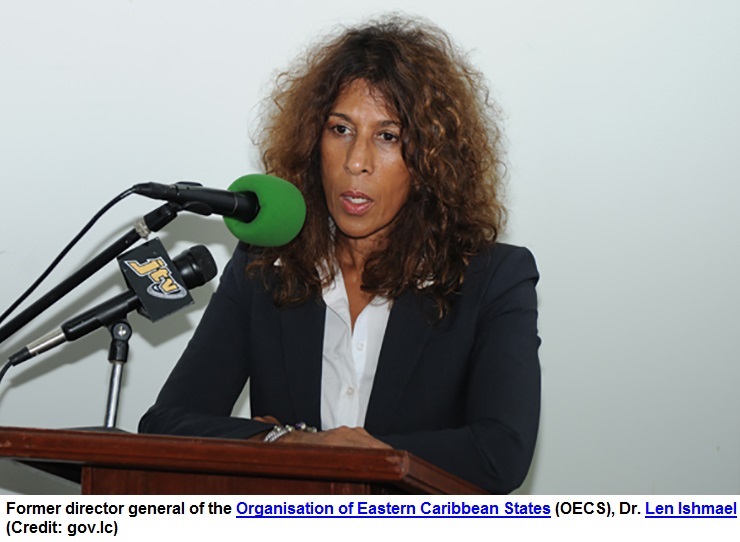
CU Blog - OECS diplomat has dire warning for Caribbean countries - Photo 1BRUSSELS, Belgium – The former director general of the Organisation of Eastern Caribbean States (OECS), Dr. Len Ishmael, says the Caribbean will never achieve the status of economic resilience, as long as the international community insist on graduating it to middle income status at the level of the European Partnership Agreement (EPA) negotiations.

Ishmael, who is now the OECS Ambassador to Belgium and the European Union, told the Caribbean Media Corporation (CMC) that European Development Funds (EDF) have been very important to the sub-region having been used as budgetary support at both the national and sub-regional levels.

“In the case of St. Kitts Nevis these funds have been vital through trade windows accompanying measures that seek to cushion the shock with the loss of the sugar market, and in the case of the Windwards, the banana market,” she told CMC on the sidelines of the just completed 100th African Caribbean and Pacific (ACP) Ministerial Summit.

But she said that over time, the islands have been graduated to middle income countries, given the fact the European Union has been using gross domestic product (GDP) per capital to undertake fresh comparative analysis with the rest of the world.

Ishmael told CMC that with that middle income status comes the loss of several privileges, and access to concessionary financing which inevitably makes capital more and more expensive.

As a result, she contends the islands are required to engage in commercial ventures so as to attract capital and loans which have been critical to support their development.

“We argue strenuously in this theatre that GDP as a means of speaking to the health and wealth of our countries is a bit of an artifice when you are dealing with islands that are naturally small.

“The fact that we are small mean that there are systemic vulnerabilities that come with our size, the fact that we have been able to emerge from cycles of real poverty, does not mean that the vulnerabilities associated with small size, are no longer there,” she noted.

The OECS diplomat said on one hand there is the European Union very much in favour of supporting vulnerability and providing finance to ensure sustainable development while on the other it is graduating the Caribbean out of the access to the very funds that it would use in pursuit of a life of sustainable development.

“So the issue of graduating is a very vital one in this theatre because GDP per capita is used not only in the EU but by the IMF (International Monetary Fund), the World Bank, multi-laterals, the WTO (World Trade Organization) and everywhere else to determine those countries which are graduated out of their ability to attract any new concessions for financing,” she said.

“In fact we have received word that St. Kitts Nevis will soon be graduated out entirely, you and I both know that as Small Islands Development States (SIDS) we are acutely vulnerable not just economically but environmentally and we don’t need to indulge in a conversation to know exactly what that means.

“Now we are not even safe from a wet weather event associated with last December’s tropical low pressure that wrecked St. Lucia and St. Vincent, not even a hurricane as a consequence of climate change, wrecked such havoc on our physical infrastructure including our livestock and crop supplies.

“The problem therefore for SIDS, is if we have no economic resilience, there is no way we can become economically resilient,” Ishmael noted.

She said that the paradox of all of this is that these small states are not saying that anyone else should be paying their way, but they argue that there should be across all theatres an understanding of the unique criteria that makes SIDS as vulnerable as they are.

“So it’s not all well and good to have a discussion on our vulnerability only when it comes to talking once every 10 years through Mauritius or the Barbados Plan of Action.

“These discussions should result in policy prescriptions that cut across all theatres, at the WTO, the UN General Assembly, post 2015 agenda for development or all of the global issues that directly impact us uniquely because of our small size.

“We will continue to ask that SIDS issues should be cross cutting and SIDS sensitivity is one that should be inherent to all national discussion on sustainable development,” she added.

The issue of graduating the Caribbean to middle income designation has been identified by the new ACP Secretary General Dr. P.I. Gomes as one of more challenging tasks of his five year term.

“We will need to resolve the principle of differentiation in the Cotonou agreement where Caribbean countries are being unjustly graduated to a middle income designation, and thereby excluded from grant assistance,” he told reporters.

“We need to fight graduation because of how it is calculated, it should not be on the basis of capital income alone, we are vulnerable because of the environment where we are located. One natural disaster and your GDP can be reduced to 60 per cent as happened in more recently in Grenada,” he added.

Gomes, Guyana’s Ambassador to Brussels and Europe, replaced Alhaji Muhammad Mumuni as Secretary General of the ACP group. He previously served as Chair of the Committee of Ambassadors a decision making body of the ACP group. He will serve as Secretary General for a five year period starting in 2015.

He said the Caribbean being considered largely middle income countries, with the exception of Haiti, which is the only lesser developed country (LDC) in the grouping, is a serious situation that needs to be addressed urgently.

“The Caribbean would also need to move very effectively in making optimal use of the development aid it receives in terms of ensuring that it has an impact, in addition to diversifying its sources of development assistance,” he said.

However Gomes said he did not share the view that aid is a big contributor to the GDP as the Cuban economy has shown.

“What I think is more important are the terms and conditions under which investments comes into your country and how they are able to help structural transformation of your economy,” he stated.
Caribbean 360 – Online Regional News Source (Retrieved 12-16-2014) –
http://www.caribbean360.com/news/oecs-diplomat-dire-warning-caribbean-countries

Make no mistake, all these references to development funds, concessions, support, privileges, grants and assistance, are just synonyms for the money the islands in the region want to continue to receive.

CU Blog - OECS diplomat has dire warning for Caribbean countries - Photo 2This is begging…plain and simple.

The book Go Lean … Caribbean describes that change has come to the region. There are stakeholders for the Caribbean that do not want to beg. These stakeholders do not consider success is leaving the homeland and obtaining prosperity in some foreign residence. No, the hope is to “prosper where planted” in the Caribbean.

This is possible. We believe we can fly – see VIDEO below.

Yet, the Caribbean member-states need monies. The Go Lean book delves into innovative ideas for funding member-states treasuries. The book describes the roles and responsibilities of the CU oversight and stewardship. Where as federal governments normally bring a new level of governmental overhead and tax on public finances, this one is different. The CU pledges to increase the Caribbean “pie not split the slices”. This is “give, not take”. This pledge is embedded in the Declaration of Interdependence, pronouncing as follows, (Page 12):

xiii. Whereas all men are entitled to the benefits of good governance in a free society, “new guards” must be enacted to dissuade the emergence of incompetence, corruption, nepotism and cronyism at the peril of the people’s best interest. The Federation must guarantee the executions of a social contract between government and the governed.

xiv. Whereas government services cannot be delivered without the appropriate funding mechanisms, “new guards” must be incorporated to assess, accrue, calculate and collect revenues, fees and other income sources for the Federation and member-states. The Federation can spur government revenues directly through cross-border services and indirectly by fostering industries and economic activities not possible without this Union.

The Go Lean book posits, within its 370 pages, that the “whole is worth more than the sum of its parts”, that from this roadmap Caribbean economies will grow individually and even more collectively as a Single Market. This roadmap calls for growing  the region’s economy from $378 Billion (2010) to $800 Billion in a 5 year time span. This growth will naturally result in increases in government revenues as well.

The following details from the Go Lean book relate the community ethos, strategies, tactics, implementation and advocacies to deploy efficient and effective government revenue options:

Community Ethos – Lean Operations Page 24
Community Ethos – Ways to Improve Sharing Page 35
Strategy – Customers – Member-State Governments Page 51
Strategy – Agents of Change – Globalization Page 57
Strategy – Agents of Change – Climate Change Page 57
Tactical – Fostering a Technocracy Page 64
Tactical – Separation of Powers Page 71
Anecdote – Turning Around the CARICOM construct Page 92
Anecdote – “Lean” in Government Page 93
Implementation – Ways to Pay for Change Page 101
Implementation – Foreign Policy Initiatives at Start-up Page 102
Implementation – Ways to Deliver Page 109
Implementation – Ways to Better Manage Debt Page 114
Implementation – Ways to Foster International Aid Page 115
Planning – Ways to Model the EU Page 130
Planning – Ways to Make the Caribbean Better Page 131
Planning – Reasons Why the CU Will Succeed Page 132
Planning – Lessons Learned from the W.I. Federation Page 134
Advocacy – Ways to Grow the Economy Page 151
Advocacy – Ways to Create Jobs Page 152
Advocacy – Ways to Improve Credit Reporting Page 155
Advocacy – Ways to Improve Governance Page 168
Advocacy – Better Manage the Social Contract Page 170
Advocacy – Revenue Sources … for Administration Page 172
Advocacy – Ways to Manage Federal Civil Service Page 173
Advocacy – Ways to Improve for Natural Disasters Page 184
Advocacies – Re-organize Industries & Stakeholders Page 188

The ‘shambled’ state of treasuries for Caribbean member-states and sub-regional organs has frequently been featured in previous Go Lean blog/commentaries. As sampled here:

https://goleancaribbean.com/blog/?p=3354 CARICOM Chair calls for Unity and an end to US embargo on Cuba
https://goleancaribbean.com/blog/?p=3225 Caribbean Tourism less competitive due to increasing aviation taxes
https://goleancaribbean.com/blog/?p=3090 Europe All Grown Up – Model for Caribbean Maturity
https://goleancaribbean.com/blog/?p=2887 Caribbean must work together to address rum subsidies
https://goleancaribbean.com/blog/?p=2359 CARICOM calls for innovative ideas to finance SIDS development
https://goleancaribbean.com/blog/?p=2041 NY/NJ Port Authority – Model for Caribbean Union Governance
https://goleancaribbean.com/blog/?p=1965 America’s Naval Security – Model for Caribbean Security
https://goleancaribbean.com/blog/?p=1193 EU willing to fund study on cost of not having CARICOM
https://goleancaribbean.com/blog/?p=1184 Bahamas Introducing 7.5 Percent VAT in 2015 to reboot treasuries
https://goleancaribbean.com/blog/?p=1014 Canadian assessment: All is not well in the sunny Caribbean
https://goleancaribbean.com/blog/?p=833 Model of One currency, versus divergent economies
https://goleancaribbean.com/blog/?p=816 The Future of CariCom
https://goleancaribbean.com/blog/?p=789 America’s War on the Caribbean; Not the Leadership role for region
https://goleancaribbean.com/blog/?p=467 Barbados Central Bank records $3.7m loss in 2013; need for C$ and CCB
https://goleancaribbean.com/blog/?p=451 CARICOM deliver address on reparations – Looking for $$$

CU Blog - OECS diplomat has dire warning for Caribbean countries - Photo 4Looking at the foregoing news article, there is too much attention on receiving international aid; it seems to be a fixation of the regional organs to “have their hands out” – a sense of entitlement. This is unbecoming; it reflects a negative ethos. The adoption of appropriate ethos is a strong focus of the Go Lean book.

All in all, we are not entitled to any foreign aid.

“Whoever does not work, neither shall he eat.” – Page 144 – this reflects a better, more mature ethos. This is a community ethos that fosters building effective economic engines, deploying an efficient security apparatus and organizing governing stewardship. The Go Lean roadmap describes the dependent (“hands out”) attitude as “parasite” but the mature, independent attitude as “protégé”.

The Go Lean book calls on the Caribbean region to be collectively self-reliant, both proactively and reactively, in the case of natural disaster events. The excuse related in the foregoing article: “one natural disaster and your GDP can be reduced” is a “tool of incompetence”.

Now is the time for all of the Caribbean, the people, governing institutions and regional organs, to lean-in for the empowerments described in the book Go Lean … Caribbean. We can make a Caribbean homeland a better place to live, work and play. 🙂

Download the book Go Lean … Caribbean – now!
————–
Appendix VIDEO I Believe I Can Flyhttp://youtu.be/43KirCJgrK0

For educational purposes only; no copyright infringement intended.


Share this post:
, ,
[Top]

A Christmas Present for the Banks from the Omnibus Bill

Go Lean Commentary

What do you get for $5.3 Billion? There must be some return on that investment.

The book Go Lean … Caribbean asserts that the US Federal Election-Campaign system is not the model that the Caribbean should want to emulate.  This book relates that $5.3 Billion was spent for the 2008 Federal Elections (Page 116), a lot of it contributed by corporations, resulting in a lot of influence peddling. This drama was vividly demonstrated this Saturday evening when the “lame-duck” Congress (the Senate in particular), delayed the required Omnibus Spending Bill – just in time – to extort favorable legislation that would roll back some of the federal regulations enacted after the Great Recession of 2008 to protect against banking systemic risks.

Senate Minority Leader Mitch McConnell speaks to reporters on upcoming budget battle in Washington

The Shadow Influences spearheading these changes are known to adhere to the principle that “a crisis is a terrible thing to waste” – a quotation credited to famed American Economist Paul Romer. While others will think that this drama was just politics as usual, the following article depicts the more strategic nature of the new legislation, to foster the environment and industry for financial derivative trading – this is too specific for any life-long politician (the US Senate) to advocate on the sly. No, this has the fingerprints of Wall Street Shadow Influences all over it. (See Appendix below for encyclopedic references on derivatives and swaps). See the news article here:

Title: A Christmas Present For The Banks From The Omnibus Bill
Forbes Magazine Investing Online Blog (Posted 12/13/2014; retrieved 12/15/2014) –
http://www.forbes.com/sites/robertlenzner/2014/12/13/wall-street-reverses-ban-on-trading-derivatives-backed-by-uncle-sam/
By: Robert Lenzner, Contributor

Wall Street banks like Citigroup and JP Morgan Chase have flexed the power of their influence to pressure Congress and the White House into a key change in the law that will allow the trading of risky financial derivatives in bank operations that are insured by the Federal Deposit Insurance Corp. This means the nation’s largest banks used the deadline for passing the Omnibus spending bill as pressure to reverse a key section of the Dodd-Frank bill of 2010 that was meant to prohibit a federal government bailout of swaps entities.

It was the existence of over $500 billion of Credit Default Swaps on the balance sheet of AIG in 2008 that threatened to bankrupt the largest insurance company in the world. So, in effect, six years later, the same Wall Street banks that were bailed out by federal largesse, are being given a legislative gift that will enable them to freely trade the securities that brought Lehman Bros down in 2008 — and obtain access to the benefit of insurance and loans from the federal government.

Behind the scenes, unbenownst to the media or the public, the nation’s Too Big To Fail banks used the Omnibus spending bill that is necessary to finance federal spending in 2015 to undo this little-known Dodd Frank provision that might have restricted the volume of trading in financial derivatives that have been a major source of profits as well as controversy since the 2008 financial crisis. Most financial derivatives will be able to be traded in entities holding deposits guaranteed by the Federal Deposit Insurance Corp. and subject to borrowing at the Federal Reserve’s discount window. This is a key advantage for the banks that will enable them to increase their activity in these securities.

Former Rep. Barney Frank, who was a key sponsor of the Wall Street reform legislation, attacked the change in Dodd-Frank as “a road map for further attacks on our protection against financial instability.” Frank was incensed that the last-minute procedure was “inserted with no hearings, no chance for further modification, and no chance for debate into a mammoth bill in the last days of a lame-duck Congress.”

If President Obama signs the Omnibus spending bill, he will have effectively rewarded Wall Street by reversing a provision that prohibits any federal assistance from being provided to “swaps entities,” including registered swaps dealers, security-based swap dealers, major swap participants and major security-based swap participants, according to information obtained by Forbes. This measure required banks to remove their swaps dealing from the bank itself and do its trading in non-bank affiliates not eligible for deposit insurance. Access to the Fed’s discount window would also be denied in case of a financial crisis in the markets.

The net effect of the changes in the Omnibus spending bill would be to expand permissible swaps activities within a bank and to only exclude swaps based on asset-backed securities that are unregulated and not of a credit quality.

All very technical, but the net result is to allow Citigroup, JP Morgan Chase and others to use the Fed’s discount window to borrow money in case of a crisis that roiled the derivative market for credit swaps again as took place in September 2008. In effect, it means the major banks need not limit their trading of financial derivatives to non-bank operations that the market will never be fooled into thinking some future risk of danger has just been avoided. It is a complex holiday present for Wall Street. And it is a warning sign that other sections of the Dodd-Frank Wall Street reform may also be vulnerable to political rollback.

An additionally relevant blog by Robert Lenzer: http://www.forbes.com/sites/robertlenzner/2014/12/08/the-ten-reasons-why-there-will-be-another-systemic-financial-crisis/

The crisis of the 2008 Great Recession was the lynchpin for the Go Lean movement, (book and blogs). This book, serving as a roadmap for the introduction and implementation of the Caribbean Union Trade Federation (CU), posits that the effects of the 2008 Great Recession continue to linger in the Caribbean. Therefore the book advocates learning lessons from 2008 and to turn-around, reform, and reboot the region’s economic, security and governing engines to ensure that “never again” will our society be so vulnerable to the financial misgivings of our American neighbors; or the “plutocratic” elements there-in.

The field of economics is not always solutions-oriented; sometimes, they have been responsible for the problem. Consider this VIDEO snippet here:

Documentary Film “Inside Job” – http://youtu.be/CaXNqGgIc-g

Published on Apr 19, 2012 – Since the repeal of Glass-Steagall in 1999, the total notional value of derivatives has grown by over 700% for holdings companies and 674% for commercial banks. Even more alarming, since the third quarter of 2008 when the cracks in the financial system were clearly evident, derivatives at the commercial banks have grown from $175 TRILLION to $234 TRILLION ” a $59 TRILLION increase. To put this in perspective, the cumulative Gross Domestic Product in the United States over that same time frame (Q3 2008 through Q3 2010) was approximately $32 TRILLION.

Despite our region’s small size (42 million people in 30 member-states), we do have some control over our own destiny. We want to be a protégé, not a parasite.

The CU’s prime directives, elevating the Caribbean’s economic-security-governing engines, recognize that the changes the region needs must start first with the adoption of new community ethos and controls. Early in the book, the need for this shift is pronounced (Declaration of Interdependence – Page 13) with these statements:

xxiv.      Whereas a free market economy can be induced and spurred for continuous progress, the Federation must install the controls to better manage aspects of the economy: jobs, inflation, savings rate, investments and other economic principles. Thereby attracting direct foreign investment because of the stability and vibrancy of our economy.

xxv.      Whereas the legacy of international democracies had been imperiled due to a global financial crisis, the structure of the Federation must allow for financial stability and assurance of the Federation’s institutions. To mandate the economic vibrancy of the region, monetary and fiscal controls and policies must be incorporated as proactive and reactive measures. These measures must address threats against the financial integrity of the Federation and of the member-states.

The Go Lean book, and previous blog/commentaries, stressed the key community ethos, strategies, tactics, implementation and advocacies necessary to effect change in the region ourselves, to improve the stewardship over the economy. They are detailed as follows:

Who We Are – 2008 Internal Experiences Page 8
Community Ethos – Economic Principles Page 21
Community Ethos – Security Principles – Private Interest –vs- Public Protection Page 23
Community Ethos – Security Principles – “Light Up Dark Place” Page 23
Community Ethos – Governing Principles – Lean Operations Page 24
Community Ethos – Ways to Impact the Future Page 26
Community Ethos – Impact Research and Development Page 30
Community Ethos – Ways to Improve Negotiations Page 32
Community Ethos – Ways to Impact Turn-around – 2008 Crisis Page 33
Community Ethos – Ways to Impact the Greater Good Page 37
Strategy – Mission – Fortify   the Stability of the Securities Markets Page 47
Strategy – CU Stakeholders to Protect – Banks & Depositors Page 47
Tactical – Growing the Economy – Minimizing Bubbles Page 69
Tactical – Separation-of-Powers – Depository Insurance & Regulatory Agency Page 73
Anecdote – Turning Around CARICOM – Effects of 2008 Financial Crisis Page 92
Implementation – Assemble Caribbean Central Bank as Cooperative Page 96
Implementation – Assemble Constitutional Convention Page 97
Implementation – Ways to Better Manage Debt – Optimizing Wall Street Role Page 114
Implementation – Ways to Impact Elections Page 116
Planning – 10 Big Ideas – Single Market / Currency Union Page 127
Planning – Lessons Learned from 2008 Page 136
Planning – Ways to Measure Progress Page 147
Advocacy – Ways to Grow the Economy – Case Study of $5.3 Billion Influence Page 151
Advocacy – Ways to Improve Credit Ratings – 2008 Lessons Page 155
Advocacy – Ways to Improve Housing – 2008 Mortgage Crisis Lessons Page 161
Advocacy – Ways to Impact Labor Unions – 2008 Effects on Main Street Jobs Page 164
Anecdote – Caribbean Industrialist – Growing without Shadow Influence Page 189
Advocacy – Reforms for Banking Regulations Page 199
Advocacy – Ways to Impact Wall Street Page 200
Appendix – Whitepaper: The 2008 Financial Crisis and Its Aftermath Page 276
Appendix – Currency Capital Controls Page 325

The points of effective, technocratic regional stewardship, especially in response to the 2008 Great Recession / Financial Crisis, were further elaborated upon in these previous blog/commentaries:

https://goleancaribbean.com/blog/?p=3311 Detroit to exit historic bankruptcy – Finally recovering from 2008
https://goleancaribbean.com/blog/?p=3164 Michigan Unemployment – Then (2008/2009) and Now
https://goleancaribbean.com/blog/?p=3090 Lessons Learned – Europe Sovereign Debt Crisis of 2009
https://goleancaribbean.com/blog/?p=3028 Why India is doing better than most emerging markets since the crisis
https://goleancaribbean.com/blog/?p=2930 ‘Too Big To Fail’ – Caribbean Version
https://goleancaribbean.com/blog/?p=2448 ‘Consumer Reports’ Survey Finds the American Consumer is Back
https://goleancaribbean.com/blog/?p=2435 Korea’s Protégé Model – A Dream for Latin America / Caribbean
https://goleancaribbean.com/blog/?p=2338 Lesson Learned – How Best to Welcome the Dreaded ‘Plutocracy’
https://goleancaribbean.com/blog/?p=2259 The Criminalization of American Business – Big Banks Let Loose
https://goleancaribbean.com/blog/?p=2105 Recessions and Public Health – Lessons from the 2008 Crisis
https://goleancaribbean.com/blog/?p=2090 The Depth & Breadth of Remediating 2008
https://goleancaribbean.com/blog/?p=1896 The Crisis in Black Homeownership since 2008
https://goleancaribbean.com/blog/?p=1309 5 Steps of a Bubble
https://goleancaribbean.com/blog/?p=841 Post 2008 – Having Less Babies is Bad for the Economy?
https://goleancaribbean.com/blog/?p=782 Open/Review the Time Capsule: The Great Recession of 2008
https://goleancaribbean.com/blog/?p=709 Post 2008 – Student debt holds back home buyers
https://goleancaribbean.com/blog/?p=522 Financial Crisis Jokes – Reflecting the cultural impact on society
https://goleancaribbean.com/blog/?p=518 Post 2008 – What Banks learn about financial risks
https://goleancaribbean.com/blog/?p=378 Fed Releases Transcripts from 2008 Meetings
https://goleancaribbean.com/blog/?p=242 Post 2008 – The Erosion of the Middle Class

The 2008 Great Recession brought major upheaval to American and Caribbean societies, plus the rest of the world. Much of the world is interconnected; this is even more acute in our region. Our economy is structured as parasites on the US economy. According to the foregoing news article, our parasitic host is not worthy of our devotion. What qualifies the Go Lean promoters to make these assessments? Principals of this publishing foundation were also there in 2008, engaged with major stakeholders of the Global Financial crisis: Lehman Brothers, JPMorganChase, Citigroup, etc. They were on the inside looking out, not the outside looking in. They were equipped to discern the Shadow Influence.

The Go Lean movement advocates the role of protégé, not parasite. We must diversify our economy and additionally cater to other markets, other countries and other industries. This is the purpose of the Go Lean roadmap, to provide a turn-by-turn direction to accomplish this diversification.

If we want to make our homeland a better place to live, work and play then we cannot depend on the stewards of the US economy to shepherd the Caribbean. Look! Despite the cruel and harsh lessons from 2008, it appears – from the foregoing article and the Appendix below – that the Wall Street Shadow Influence wants to repeat the “Bubble” that lead up to 2008. When they succeed, they profit; but when they fail, the “low man” on Main Street – and parasite economies like the Caribbean – has to endure the pain, not Wall Street.

The Go Lean roadmap does not seek to change America, (though we lobby against these arbitrary “Derivative” rule changes in the Omnibus Budget Bill); only teach the lessons to the Caribbean. We can do so much better.

Download the free e-Book of Go Lean … Caribbean – now!

——————–

Appendix – Derivatives:
(Source: http://en.wikipedia.org/wiki/Derivative_(finance) )

In finance, a derivative is a contract that derives its value from the performance of an underlying entity. This underlying entity can be an asset, index, or interest rate, and is often called the “underlying”.[1][2] Derivatives can be used for a number of purposes – including insuring against price movements (hedging), increasing exposure to price movements for speculation or getting access to otherwise hard to trade assets or markets.[3]

Some of the more common derivatives include forwards, futures, options, swaps, and variations of these such as collateralized debt obligations, credit default swaps, and mortgage backed securities. Most derivatives are traded over-the-counter (off-exchange) or on an exchange such as the Chicago Mercantile Exchange, while most insurance contracts have developed into a separate industry. Derivatives are one of the three main categories of financial instruments, the other two being equities (i.e. stocks or shares) and debt (i.e. bonds and mortgages).

Speculation
Derivatives can be used to acquire risk, rather than to hedge against risk. Thus, some individuals and institutions will enter into a derivative contract to speculate on the value of the underlying asset, betting that the party seeking insurance will be wrong about the future value of the underlying asset. Speculators look to buy an asset in the future at a low price according to a derivative contract when the future market price is high, or to sell an asset in the future at a high price according to a derivative contract when the future market price is less.

Risks
The use of derivatives can result in large losses because of the use of leverage, or borrowing; (see VIDEO below). Derivatives allow investors to earn large returns from small movements in the underlying asset’s price. However, investors could lose large amounts if the price of the underlying moves against them significantly. There have been several instances of massive losses in derivative markets, such as the following:

  • American International Group (AIG) lost more than US$18 billion through a subsidiary over the preceding three quarters on credit default swaps (CDSs).[42] The United States Federal Reserve Bank announced the creation of a secured credit facility of up to US$85 billion, to prevent the company’s collapse by enabling AIG to meet its obligations to deliver additional collateral to its credit default swap trading partners.[43]
  • The loss of US$7.2 Billion by Société Générale in January 2008 through mis-use of futures contracts.
  • The loss of US$6.4 billion in the failed fund Amaranth Advisors, which was long natural gas in September 2006 when the price plummeted.
  • The loss of US$4.6 billion in the failed fund Long-Term Capital Management in 1998.
  • The loss of US$1.3 billion equivalent in oil derivatives in 1993 and 1994 by Metallgesellschaft AG.[44]
  • The loss of US$1.2 billion equivalent in equity derivatives in 1995 by Barings Bank.[45]
  • UBS AG, Switzerland’s biggest bank, suffered a $2 billion loss through unauthorized trading discovered in September 2011.[46]

This comes to a staggering $39.5 billion; the majority in the last decade after the Commodity Futures Modernization Act of 2000 was passed.

Financial Reform and Government Regulation
Under US law and the laws of most other developed countries, derivatives have special legal exemptions that make them a particularly attractive legal form to extend credit.[47] The strong creditor protections afforded to derivatives counterparties, in combination with their complexity and lack of transparency however, can cause capital markets to underprice credit risk. This can contribute to credit booms, and increase systemic risks.[47] Indeed, the use of derivatives to conceal credit risk from third parties while protecting derivative counterparties contributed to the financial crisis of 2008 in the United States.[47][48]

CU Blog - A Christmas Present for The Banks From The Omnibus Bill - Photo 2

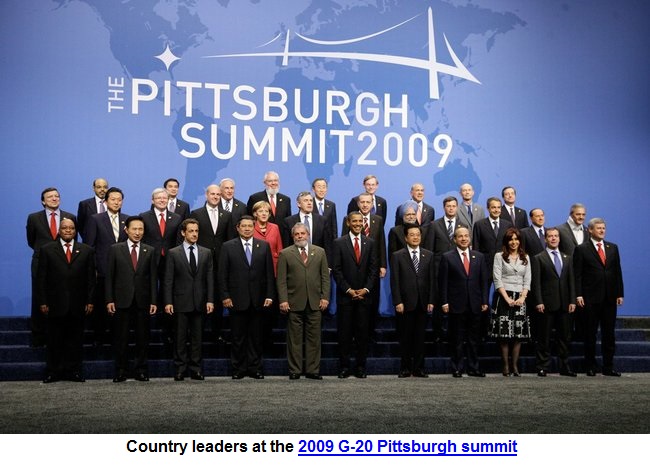
In November 2012, the SEC and regulators from Australia, Brazil, the European Union, Hong Kong, Japan, Ontario, Quebec, Singapore, and Switzerland met to discuss reforming the OTC derivatives market, as had been agreed by leaders at the 2009 G-20 Pittsburgh summit (see Photo) in September 2009.[54] In December 2012, they released a joint statement to the effect that they recognized that the market is a global one and “firmly support the adoption and enforcement of robust and consistent standards in and across jurisdictions”, with the goals of mitigating risk, improving transparency, protecting against market abuse, preventing regulatory gaps, reducing the potential for arbitrage opportunities, and fostering a level playing field for market participants.[54] They also agreed on the need to reduce regulatory uncertainty and provide market participants with sufficient clarity on laws and regulations by avoiding, to the extent possible, the application of conflicting rules to the same entities and transactions, and minimizing the application of inconsistent and duplicative rules.[54] At the same time, they noted that “complete harmonization – perfect alignment of rules across jurisdictions” would be difficult, because of jurisdictions’ differences in law, policy, markets, implementation timing, and legislative and regulatory processes.[54]

VIDEO: Leverage Explained – https://youtu.be/GESzfA9odgE
When things turn out good, big risk means big return; but if it turns out bad, you lose everything and left with a debt.

Source References:
1.       Derivatives (Report). Office of the Comptroller of the Currency, U.S. Department of Treasury. http://www.occ.gov/topics/capital-markets/financial-markets/trading/derivatives/index-derivatives.html. Retrieved February 2013. “A derivative is a financial contract whose value is derived from the performance of some underlying market factors, such as interest rates, currency exchange rates, and commodity, credit, or equity prices. Derivative transactions include an assortment of financial contracts, including structured debt obligations and deposits, swaps, futures, options, caps, floors, collars, forwards, and various combinations thereof.”
2.       Derivative Definition Investopedia
3.       Koehler, Christian. “The Relationship between the Complexity of Financial Derivatives and Systemic Risk”. Working Paper: 10–11.
——
42.   Kelleher, James B. (September 18, 2008). “”Buffett’s Time Bomb Goes Off on Wall Street” by James B. Kelleher of Reuters”. Reuters.com. Retrieved August 29, 2010.
43.   “Fed’s $85 billion Loan Rescues Insurer”
44.   Edwards, Franklin (1995). “Derivatives Can Be Hazardous To Your Health: The Case of Metallgesellschaft”. Derivatives Quarterly (Spring 1995): 8–17
45.   Whaley, Robert (2006). Derivatives: markets, valuation, and risk management. John Wiley and Sons. p. 506. ISBN 0-471-78632-2.
46.   “UBS Loss Shows Banks Fail to Learn From Kerviel, Leeson”. Businessweek. September 15, 2011. Retrieved March 5, 2013.
47.   “Michael Simkovic, Secret Liens and the Financial Crisis of 2008.”. American Bankruptcy Law Journal, Vol. 83, p. 253. 2009. Retrieved March 5, 2013.
48.   Michael Simkovic (January 11, 2011). “Bankruptcy Immunities, Transparency, and Capital Structure, Presentation at the World Bank”. Ssrn.com. doi:10.2139/ssrn.1738539. Retrieved March 5, 2013.
——
54.   “Joint Press Statement of Leaders on Operating Principles and Areas of Exploration in the Regulation of the Cross-Border OTC Derivatives Market; 2012-251”. Sec.gov. December 4, 2012. Retrieved March 5, 2013.

Share this post:
, , ,
[Top]

Gas Prices Drop Below $2

Go Lean Commentary

This is one of the year’s biggest economic stories; Gas Prices have dropped below $2.

The OnCue Drive Thru in Oklahoma sold gas for $1.99 a gallon Wednesday, a trend that many U.S. drivers are hoping will spread. – Published December 3rd 2014, 6:52 pm

Video: http://www.nbcnews.com/nightly-news/gas-prices-drop-below-2-gallon-oklahoma-n261101

It’s worth appreciating what’s going on here. The Power Player in this story is the Organization of the Petroleum Exporting Countries (better known as OPEC):

OPEC – a cartel of [12] oil producers that include Saudi Arabia, Iran, Iraq, and Venezuela – had a big meeting in Vienna on November 27. Before the gathering, there was speculation that OPEC countries might cut back on their own oil production in order to prop up prices. But in the end, the cartel couldn’t agree on how to respond and did nothing.

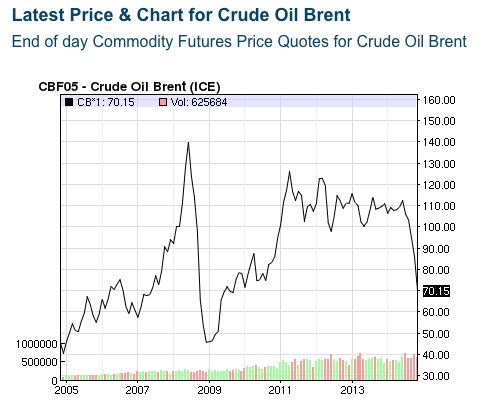
Oil prices promptly nosedived, with the price of Brent crude now hovering around $70 per barrel.

As recently as the summer, that price was over $100 per barrel.

CU Blog - Gas Prices Drop Below $2 - Photo 1

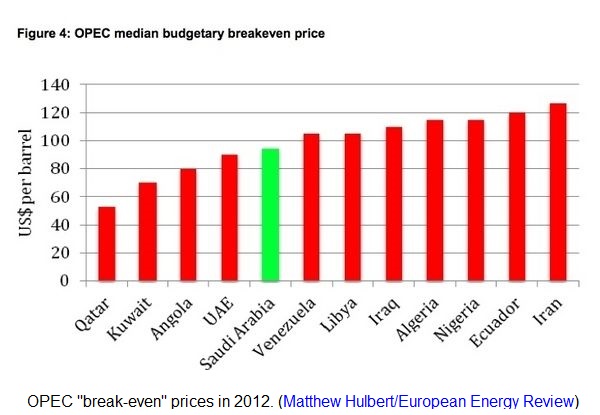
At this big meeting in Vienna, there was a lot of heated debate among OPEC members about how best to respond to this current drop in oil prices. Some countries, like Venezuela and Iran, wanted the cartel (mainly Saudi Arabia) to cut back on production in order to prop up the price of oil. The reason is that these countries need high prices in order to “break even” on their budgets and pay for all the government spending they’ve racked up:

CU Blog - Gas Prices Drop Below $2 - Photo 2

Source – Brad Plumer of Vox.com. Posted November 28, 2014; retrieved December 4, 2014 from: http://www.vox.com/2014/11/28/7302827/oil-prices-opec

OPEC is an international intergovernmental organization and economic cartel whose mission is to coordinate the policies of the oil-producing countries. This structure aligns with the book Go Lean… Caribbean, a roadmap for the introduction and implementation of the Caribbean Union Trade Federation (CU). This calls for the confederation, collaboration and convention of 30 member-states into one intergovernmental organization. The same as OPEC does for its 12 oil-producing nations – a proxy agency to represent all members – the CU seeks for the Caribbean region. But instead of elevating oil prices, the CU coalition has these 3 prime directives:

  • Optimization of the economic engines in order to grow the regional economy to $800 Billion & create 2.2 million new jobs.
  • Establishment of a security apparatus, including energy security, to protect the resultant economic engines.
  • Improve Caribbean governance to support these engines.

The goal of the CU is to optimize Caribbean society, allowing us to better compete globally and hopefully present more favorable options for our youth here in the homeland. (Previous generations sought refuge abroad).

The goal of OPEC is to secure a steady income to the member states and to collaborate in influencing world oil prices through economic means. Though this charter seems fairly benign, the reality of OPEC is vastly different; they have emerged as a monstrous entity! Autocratic leaders of OPEC countries – think Saddam Hussein – would constantly urge pushing world oil prices up; their claims were to help all OPEC members financially, but their motivation were purely nationalistic. The public view of OPEC now coincides with this dialogue from a movie, “art imitating life”:

“It can’t be bargained with, it can’t feel pain or mercy, and it will stop at absolutely nothing until you are dead!” – Movie dialogue from The Terminator (1984)

OPEC is not a monster, just protective of its own self-interest; many of their member-states feature a mono-industrial economy; it’s oil or bust! Plus, with 40 percent of global oil production, they do wield some power, influence and control of the eco-system of crude-oil pricing. But their power-influence-control is not absolute; there are always the laws of Economics!

Back to the foregoing article, the fact remains that oil prices were falling well before OPEC’s Friday announcement; this change was driven in large part by factors from Economics 101: less demand + higher supply = lower prices. In this case, economic slowdowns in much of the world have dampened demand, as supply has expanded considerably, especially within the U.S.

This premise directs the Energy Policy as communicated in the Go Lean book: the Caribbean region must lower crude oil demand.

This Go Lean/CU roadmap recognizes that modern life has expanded the definition of basic needs to now include food, clothing, shelter and energy. And thusly the book proposes many solutions for the region to optimize energy generation, distribution and consumption. No “stone is left unturned”. Go Lean posits that the average costs of energy can be decreased from an average of US$0.35/kWh to US$0.088/kWh in the course of the 5-year term of this roadmap. (Page 100).

Primary to this strategy of lowering the demand for crude oil is increasing options with alternative energy sources: natural gas, solar, wind and tidal. This will translate to more electric, hybrids, and fuel-efficient vehicles. The CU is a strong proponent of compressed-natural-gas vehicles (buses, trucks and passenger vehicles).

Lowering demand for energy works in lowering the costs.

In the US, the Obama administration’s improved fuel-efficiency standards have ultimately affected consumers, in that they are using less gas: “The sales-weighted fuel economy of vehicles in the U.S. increased from 20.8 miles per gallon in 2008 to 25.3 miles per gallon in 2014.” Other countries share the same experiences.

The Go Lean roadmap details a series of community ethos, strategies, tactics, implementations and advocacies to foster the progress in the wide fields of energy generation, distribution and consumption. The following list applies:

Community Ethos – Lean Operations Page 24
Community Ethos – Return on Investments Page 24
Community Ethos – Cooperatives Page 25
Community Ethos – Regional Taxi Commissions Page 25
Community Ethos – Non-Government Organizations Page 25
Community Ethos – Ways to Impact the Future Page 26
Community Ethos – Ways to Improve Negotiations Page 32
Anecdote – Pipeline Transport – Strategies, Tactics & Implementations Page 43
Strategy – Harness the power of the sun/winds Page 46
Tactical – Fostering a Technocracy Page 82
Tactical – Separation of Powers – Energy Commission Page 82
Anecdote – “Lean” in Government – Energy Permits Page 93
Anecdote – Caribbean Energy Grid Implementation Page 100
Implementation – Ways to Develop Pipeline Industry Page 107
Implementation – Ways to Improve Energy Usage Page 113
Advocacy – Ways to Impact Public Works Page 175
Advocacy – Ways to Foster Cooperatives Page 176
Advocacy – Ways to Impact Monopolies Page 202
Advocacy – Ways to Improve Transportation Page 205
Advocacy – Ways to Develop the Auto Industry Page 206
Appendix – North Dakota Oil Boom Economic-Societal Effects Page 334

This commentary asserts that energy needs are undeniable; and that OPEC may or may not be classified as a “monster”. The main take-away though is that monitoring and mitigating the realities of the global energy eco-system is a necessary role, a heavy-lifting task for the lean, agile operations of the CU technocracy.

So the message to the Caribbean region is clear: Help is on the way – the Terminator can be defeated – “life imitating art”!

Now is the time for all of the Caribbean, the people, business, institutions and governments, to lean-in for the optimizations and opportunities described in the book Go Lean … Caribbean. 🙂

Download the book Go Lean … Caribbean – now!

Share this post:
, , , ,
[Top]

Bill Cosby’s Accusers – Why They Weren’t Believed

Go Lean Commentary

It is hard to reconcile the accusations floating against Bill Cosby with his television characters: Dr. Huxtable, Jell-O Pudding Pitch-Man and the voice/persona of the animated do-gooder Fat Albert (and the Cosby Kids ; see Appendix below*). Or is it?

… that it’s easy to categorize personalities as good versus bad. “We don’t think good and evil can co-exist in the same person” – Psychologist David Adams.

The following article posits that those who do horrible things may still be talented in their gifts and notoriously good to people in their lives, like family members. While it maybe difficult to understand the complexities of personalities, it is very much necessary that society be receptive to the possibility of good people doing bad things. The entire article is presented here:

By: NO MORE Staff

Bill Cosby Photo 1America’s Dad is having a very bad week. A few days ago, Barbara Bowman wrote a personal essay in The Washington Post chronicling how Bill Cosby drugged and raped her 30 years ago.

The story went viral and inspired several others to echo her experiences.

Not so when the teenager spoke out soon after the alleged attacks: When she went to a lawyer after the assaults, she was accused of lying. Her agent did nothing, either. Eventually, she moved on. Years later, Andrea Constand accused Cosby of rape and Bowman was asked to speak in court, but the case was quietly settled.

At this writing, a grand total of 15 women have accused Cosby of assault, dating from the late 1960s. (Here’s a timeline of the accusations.) Despite all this, Cosby’s career had coasted along—in fact, he was awarded the Mark Twain Prize for American Humor not long ago and was planning a new TV show.

But things are changing.

Finally, the accusers’ stories are getting traction. Why now? Last month, comedian Hannibal Buress called Cosby a rapist in his stand-up routine, which went viral. The Twitter-verse responded in kind: Last week, Cosby’s tone-deaf invitation to “meme me!” resulted in people superimposing assault accusations over his photo. #Cosbymeme did not go according to plan, and things only got worse: Last weekend, NPR interviewed him about his African American art collection and then asked him to respond to the Post story. He went silent. Eventually, his lawyer issued a statement firmly denying the allegations and refusing to comment further.

But the damage has been done: New stories about Cosby’s behavior continue to surface, Netflix has put his upcoming comedy special on hold, and NBC has abandoned plans to develop a new sitcom with him.

Why Accusations About Celebrities Aren’t Believed

Cosby isn’t the first icon to be accused of sexual assault or domestic violence, and yet the question persists: Why aren’t these accusers heard or given any credence—not just Cosby’s alleged victims, but the countless other people who have dared to challenge a celebrity?

The answer lies in the American conflation of celebrity and security, says Ulester Douglas, executive director of Men Stopping Violence. “We are a celebrity culture. Seeing someone we idolize, revere, and idealize being accused of horrific crimes makes us wonder: Who are we? It makes us realize that our own families could be capable of it, too,” he says. It’s unsettling and even terrifying to associate an idol with evil, particularly because there are so many celebrities who are good people, capable of powerful, positive influence.

Dissonance Perpetuates Silence

David Adams is a psychologist and co-director of Emerge, a Boston-based abusers’ intervention and counseling program. He sees a difference in how we respond to a stereotypical criminal and a celebrity accused of bad behavior due to our preconceptions about abusers. “We tend to think of an abuser as someone who is easily detectable: someone who is crude, sexist, and boorish. A quarter of men who abuse women do fit this stereotype, and since that’s a substantial subgroup, we tend to spot those guys and not the ones who are more likable. If we don’t know what to do with bad information about someone we adore, it creates dissonance, and we sometimes choose to disbelieve or to ignore it,” he says.

“When we see someone likable accused of a crime, we have a choice to believe something bad about them or to discount it because it doesn’t fit our experience. In some ways it’s easier to do that than to think, oh God, the world really is unknowable—I might as well give up on knowing people,” he says. “If we don’t know what to do with information about someone we worship, we put it aside.”

Why Celebrities Feel Immune

Of course, Cosby is hardly the first famous person to be accused of rape or assault. When we think about any celebrity facing serious allegations, though, it’s difficult to believe that an image-conscious idol could be willing to engage in hugely risky behavior, throwing away the very image they need. What’s going through their mind?

“Any consequence is overridden by the high of the conquest,” Douglas says. And, on a purely logistical level, “They do it because they can. They truly think they can get away with it, based on the very fact that they have a certain image. They will be believed; the accusers will be laughed out of the room.”

Absorbing The Narcissism Factor

In many celebrity cases, narcissism also plays a starring role. “A hallmark of narcissism is exceptionality. You literally think you will not get caught. This personality takes chances, acts reckless, and even associates the behavior with success, because they’ve always been rewarded,” Adams says.

“We think narcissists are people nobody would like. But, in fact, they’re quite charismatic, with good social and image-maintenance skills”— which often allow them to get away with bad behavior, even more so when there’s a PR team on call. Narcissists are also skilled at compartmentalization, Adams says, and they choose to focus on the “part of their life that everybody adores. They don’t focus on other parts of their lives, and if they do something wrong, they think, ‘Gee, everybody loves me. What’s the problem?’” he says. “It’s a lack of character development.”

“Narcissists can engage in all sorts of psychological gymnastics not to feel empathy,” says Douglas.

The Changing Tide

Adams says that it’s easy to categorize personalities as good versus bad. “We don’t think good and evil can co-exist in the same person,” he says. “But look at the Mafia—these guys who do horrible things but are notoriously good to their mothers. And along comes a show like The Sopranos to paint them in a more nuanced light. There’s now less focus on ‘good guys’ and ‘bad guys,’” he says. Understanding the complexities of personalities—refusing to glorify a celebrity as all good, all the time—could help to close the dissonance gap.

“We can also go a long way toward preventing male sexual and domestic violence against women by stopping the pervasive and pernicious victim-blaming,” Douglas says. “The media, for example, should quit asking the toxic, ‘Why did you go back to your abuser?’ and ‘Why didn’t you leave?’ A reporter could say instead, ‘As you know, there are some who question your credibility because of some of the choices you made. What, if anything, would you want to say to them?’ That is respectful journalism. The [accuser] should never be made to feel like she has to justify the choices she made or makes.”

Finally, in his own work with Men Stopping Violence, Douglas sees firsthand the power of healing through sharing. “I see survivors who are finding peace through coming forward and telling their stories. One of the most powerful things that survivors can do is tell their own stories, on their own terms,” he says.
The NO MORE Project – Posted November 19, 2014; retrieved November 26, 2014–
http://nomore.org/why-cosby-victims-werent-believed/

The subject matter in the foregoing article relates to the attitudes that communities must foster so as to mitigate the toleration of domestic violence, rape and stalking. These points are being brought into focus in a consideration of the book Go Lean … Caribbean. The book serves as a roadmap for the introduction and implementation of the technocratic Caribbean Union Trade Federation (CU), for the economic optimization in the region.

The focus of the Go Lean book is Economics, not domestic violence, rape or stalking! And yet this commentary relates that there is an alignment of objectives. The Go Lean roadmap posits that the economy of the Caribbean is inextricably linked to the security (public safety) of the Caribbean.

This CU/Go Lean roadmap has 3 prime directives:

  • Optimization of the economic engines in order to grow the regional economy and create 2.2 million new jobs.
  • Establishment of a security apparatus to protect the resultant economic engines and their relevant stakeholders.
  • Improve Caribbean governance (Executive facilitations, Legislative oversight and Judicial prudence) to support these economic/security engines.

Among the objectives to accomplish the economic elevation is the mission to retain Caribbean citizens in their homelands and repatriate the far-flung Diaspora back to the region. Since many people may have fled the region to mitigate abuse, attitudes of victim-blaming or complacency among public safety authorities must be “weeded out”.

The subject of Celebrity Culture is also germane for the Caribbean empowerment effort (Pages 203 & 224). The Go Lean roadmap consolidates the region’s 30 member-states into a Single Market, media market included – with the caveat of multi-language “simul-casting”. Celebrities will surely emerge. From a governance perspective, the CU will oversee the jurisdiction of monitoring and metering (ratings, rankings, service levels, etc) local public safety institutions to ensure their delivery of the Social Contract. for all regardless of gender or race.

Change has now come to the Caribbean. As the foregoing article depicts, there is a changing tide. It is no longer acceptable to dismiss accusers, even against celebrities. The article relates that “we can go a long way toward preventing male sexual and domestic violence against women by stopping the pervasive and pernicious victim-blaming”. This is part of a new community ethos – the value of women is not undermined! Many related issues/ points were elaborated in previous blogs, sampled here:

Justice Strategy: Special Prosecutors … et al
Caribbean Study: 58% Of Boys Agree to Female ‘Discipline’
Sex Crimes Mitigations – Students developing nail polish to detect date rape drugs
Aereo Founder on the future of TV; Caribbean included
Bob Marley: The legend of a Caribbean Celebrity lives on!
Muslim officials condemn abductions of Nigerian girls
Caribbean/Latin countries still view women as lesser
Book Review: ‘The Divide’ – Differences in US Justice for Rich versus Poor
Jamaica to receive World Bank funds to help in crime fight

The above commentaries examined global developments in crime mitigations and gender based attitudes, then relate their synchronicity with the principles in the Go Lean book. There are a number of touch points that relate to domestic violence, rape and stalking; these blogs also cite the community attitude to dissuade such behavior. Most importantly, the Go Lean book depicts solutions. These are presented as community ethos, strategies, tactics, implementations and advocates; detailed as follows:

Community Ethos – Privacy –vs- Public Protection Page 23
Community Ethos – Whistleblower Protection Page 23
Community Ethos – Witness Security Page 23
Community Ethos – Anti Bullying & Mitigations Page 23
Community Ethos – Light Up the Dark Places Page 23
Community Ethos – “Crap” Happens Page 23
Community Ethos – Minority Equalization Page 24
Community Ethos – Lean Operations Page 24
Community Ethos – NGO’s Page 25
Community Ethos – Reconciliations Page 34
Strategy – Rule of Law –vs- Vigilantism Page 49
Tactical – Separation of Powers – CariPol Page 77
Implementation – Reasons to Repatriate Page 118
Planning – Ways to Improve Failed-State Indices Page 134
Advocacy – Ways to Improve Governance Page 168
Advocacy – Ways to Better Manage the Social Contract Page 170
Advocacy – Ways to Impact Justice Page 177
Advocacy – Ways to Remediate and Mitigate Crime Page 178
Advocacy – Ways to Improve Gun Control – Restraining Orders Automatic Restrictions Page 179
Advocacy – Ways to Improve Intelligence Gathering Page 182
Advocacy – Ways to Improve Communications – Messaging Page 186
Advocacy – Ways to Impact Hollywood Page 203
Advocacy – Ways to Impact the Prison Industrial Complex – Reduce Recidivism Page 211
Advocacy – Ways to Impact Foundations Page 219
Advocacy – Ways to Protect Human Rights Page 220
Advocacy – Ways to Impact the One Percent –    Balancing Justice Provisions for Celebrities Page 224
Advocacy – Ways to Empower Women Page 226
Advocacy – Ways to Impact Persons with Disabilities – including Mental Challenges Page 228

The book Go Lean…Caribbean was written by resources from an organized movement, by people (residents and Diaspora) with passion to change/elevate the Caribbean’s economic, security and governing engines. One principal within this Go Lean movement has a direct job function to dissuade crimes against women.

While there is always the need to give the accused the benefit of the doubt, as in the current case against Bill Cosby, we do not want 30 years of inaction on reported sex crimes by celebrities. The CU roadmap’s goal is to optimize “Justice” institutions in the region. Why? All members of society (celebrities and regular citizens alike) need to be protected, and not dismissed or ignored, especially related to serious allegations like sexually inappropriate behavior. Any “misfeasance, malfeasance or nonfeasance” in this regards reflects negatively on the region’s hospitality – think of the unsolved disappearance of Natalee Holloway in Aruba in 2005; (see Page 190).

Though this topic may be a security issue, community wealth is undoubtedly linked, affecting push-and-pull factors for citizens to flee their homelands. This is lose-lose for all concerned. To the contrast, the goal of the Go Lean effort is to make the Caribbean a better place to live work and play; with justice for all. Since the region failed in the past, the new messaging is simple: “No More“!

The foregoing article is sourced by the Not-For-Profit organization, the “No More” Project. Their goal is to neutralize public attitudes that had previously tolerated and thusly promoted domestic violence, rape and stalking. This is a great role model for the Caribbean to emulate, as attitude adjustment is among the heavy-lifting tasks that regional administrators must undertake to bring positive change to the Caribbean.

Download the book Go Lean … Caribbean – now!

————

* Appendix – Video – Fat Albert And The Cosby Kidshttp://youtu.be/ga7gflAUGCc

It’s Bill Cosby coming at you with music and fun, and if you’re not careful, you might learn something before its done.


Share this post:
, , , ,
[Top]

Justice Strategy: Special Prosecutors … et al

Go Lean Commentary

The quest to elevate Caribbean society is a three-prong approach: economics, security and governance.

Economic optimizations are easiest to introduce; show up with investments (money) and jobs and almost any community will acquiesce. But to introduce empowerments for security and/or governing engines is more complicated, as changes in these categories normally require a political process; implying consensus-building and compromise. (Think: Iraq – “A military solution to a political problem?”; see Footnote 1)

This is what the book Go Lean…Caribbean calls “heavy-lifting”.

This Go Lean book posits that “bad actors” will always emerge in times of economic optimizations to exploit opportunities, with bad or evil intent. In support of this argument, the book relates a number of law-and-order episodes from world history: Pirates of the Caribbean (Page 181) and the Old American West (Page 142). In addition to the direct book references, there are a number previously published blogs/commentaries that covered subjects and dimensions for Caribbean justice institutions:

Role Model for Justice – The Pinkertons
Economic Crime Enforcement – The Criminalization of American Business
America’s Navy – 100 Percent – Model for Caribbean
A Lesson in History: 100 Years Ago – World War I
Here come the Drones … and the Concerns
Caribbean “Terrorists” travel to Venezuela for jihadist training
Jamaica to receive World Bank funds to help in crime fight
US slams Caribbean human rights practices
10 Things We Want from the US and 10 Things We Don’t Want: Pax Americana

It is evident that justice is very important to this roadmap for societal elevation. We do not want to only react (after the fact) to episodes undermining public security or the integrity of law-and-order in the homeland. We want to have a constant sentinel. This will be accomplished with two regional agencies (defined later): Justice Department and Homeland Security Department.

The Caribbean governance structures were developed under the tutelage of 4 European legacies (British, Dutch, French, Spanish) and the United States of America (territories of Puerto Rico & US Virgin Islands and the dominant cultural influence in the region). We now have fitting role models of their societies for the management of justice institutions. This commentary urges their best-practices.

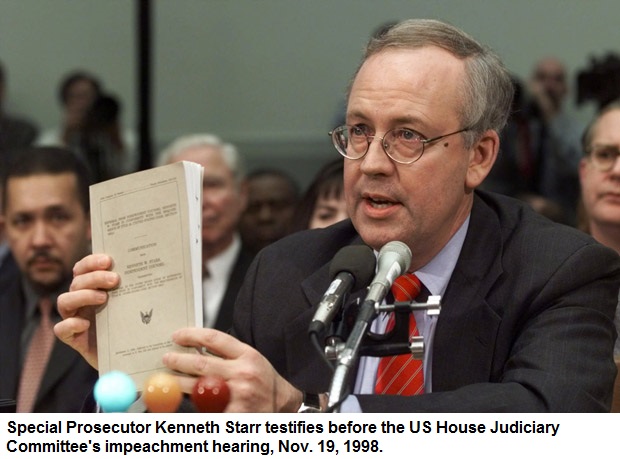
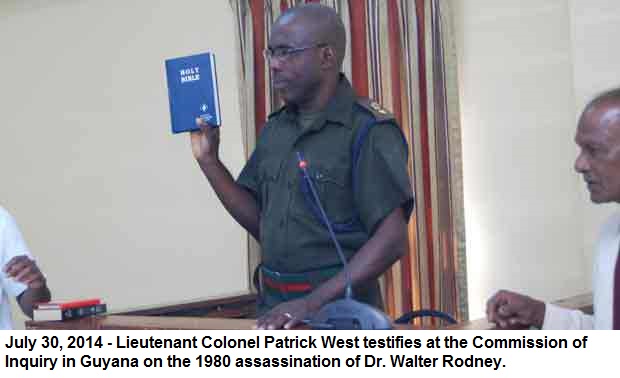
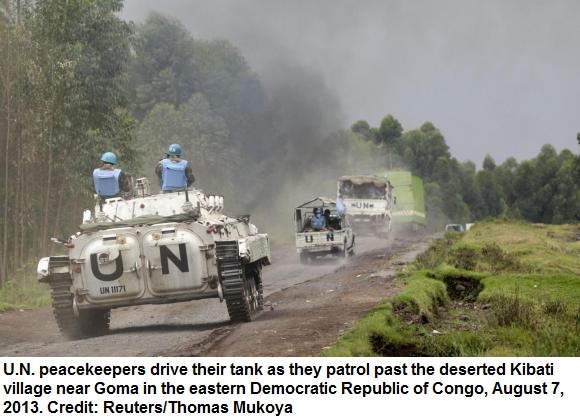
The Go Lean book serves as a roadmap for the introduction and implementation of the technocratic Caribbean Union Trade Federation (CU). Normally, when there are questions of integrity in the due-process in executive, legislative or judicial branches of government, the curative measure is a Special Prosecutor (American) or a Commission of Inquiry (European and United Nations).

As defined in the following encyclopedia source reference, these measures are normally reactive, but for the CU, the strategy is proactive…from Day One:

1. UNITED STATES

A Special Prosecutor generally is a lawyer from outside the government appointed by an Attorney General or, in the United States, by Congress to investigate a government official for misconduct while in office. A reasoning for such an appointment is that the governmental branch or agency may have political connections to those it might be asked to investigate. Inherently, this creates a conflict of interest and a solution is to have someone from outside the department lead the investigation. The term “Special Prosecutor” may have a variety of meanings from one country to the next, from one government branch to the next within the same country, and within different agencies within each government branch. Critics of the use of Special Prosecutors argue that these investigators act as a “fourth branch” to the government because they are not subject to limitations in spending or have deadlines to meet.

STARR

Federal government
Attorneys in the United States may be appointed/hired particularly or employed generally by different branches of the government to investigate. When appointed/hired particularly by the judicial branch to investigate and, if justified, seek indictments in a particular judicial branch case, the attorney is called Special Prosecutor. When appointed/hired particularly by a governmental branch or agency to investigate alleged misconduct within that branch or agency, the attorney is called Independent Counsel.

State government
Special Prosecutors may also be used in a state prosecution case when the prosecutor for the local jurisdiction has a conflict of interest in a case or otherwise may desire another attorney handle a case.
Source: Wikipedia Online Encyclopedia (Retrieved November 17, 2014) – http://en.wikipedia.org/wiki/Special_prosecutor

2. BRITISH DOMINION

A Royal Commission is a major ad-hoc formal public inquiry into a defined issue in some monarchies. They have been held in the United Kingdom, Australia, Canada, New Zealand, Bahrain, Malaysia, Hong Kong and Saudi Arabia. A Royal Commission is similar in function to a Commission of Enquiry (or Inquiry) found in other countries such as Ireland, South Africa, and Hong Kong; (all examples here are from the British Dominion).

CU Blog - Justice Strategy - Special Prosecutors - Photo 1

A Royal Commissioner has considerable powers, generally greater even than those of a judge but restricted to the Terms of Reference of the Commission. The Commission is created by the Head of State (the Sovereign, or his/her representative in the form of a Governor-General or Governor) on the advice of the Government and formally appointed by Letters Patent. In practice—unlike lesser forms of inquiry—once a Commission has started the government cannot stop it. Consequently governments are usually very careful about framing the Terms of Reference and generally include in them a date by which the commission must finish.

Royal Commissions are called to look into matters of great importance and usually controversy. These can be matters such as government structure, the treatment of minorities, events of considerable public concern or economic questions.

Many Royal Commissions last many years and, often, a different government is left to respond to the findings. In Australia—and particularly New South Wales—Royal Commissions have been investigations into police and government corruption and organised crime using the very broad coercive powers of the Royal Commissioner to defeat the protective systems that powerful, but corrupt, public officials had used to shield themselves from conventional investigation.

Royal Commissions usually involve research into an issue, consultations with experts both within and outside of government and public consultations as well. The Warrant may grant immense investigatory powers, including summoning witnesses under oath, offering of indemnities, seizing of documents and other evidence (sometimes including those normally protected, such as classified information), holding hearings in camera if necessary and—in a few cases—compelling all government officials to aid in the execution of the Commission.

The results of Royal Commissions are published in reports, often massive, of findings containing policy recommendations. These reports are often quite influential, with the government enacting some or all recommendations into law.
Source: Wikipedia Online Encyclopedia (Retrieved November 17, 2014) –
http://en.wikipedia.org/wiki/Royal_Commission

3. NETHERLANDS

Though never a member of British Dominion, the Kingdom of the Netherlands has a similar process. An example of a Commission of Inquiry in the Netherlands include this case study:

  • From mid-2010 to December 2011 the Commission of Inquiry carried out an independent study of the sexual abuse of minors in the Roman Catholic Church from 1945 to 2010.

Source: Investigation of Roman Catholic Church Online Site (Retrieved Nov. 17, 2014) –
http://www.onderzoekrk.nl/english-summery.html

4. UNITED NATIONS

a. Commissions and Investigative Bodies

The UN Security Council has established a wide-variety of Commissions to handle a variety of tasks related to the maintenance of international peace and security. Commissions have been created with different structures and a wide variety of mandates including investigation, mediation, or administering compensation. Below is a list of all commissions established by the Security Council, with a short description prepared on the basis of the Repertoire, as well as links to the sections covering them in the Repertoire (Public Relations Publication). They are organized by region, and then under relevant areas or sub-regions, placed chronologically starting with those established most recently:

1946-1951 1952-1955 1956-1958 1959-1963 1964-1965 1966-1968 1969-1971 1972-1974 1975-1980 1981-1984 1985-1988 1989-1992 1993-1995 1996-1999 2000-2003 2004-2007 2008-2009 2010-2011

U.N. peacekeepers drive tank as they patrol past deserted Kibati village

For more information on the investigative and fact-finding powers of the Security Council, see this section on Article 34:

  • Article 34 – Investigation of disputes & fact-finding.
    Article 34 of the UN Charter empowers the Security Council to investigate any dispute, or any situation that is likely to endanger international peace and security. The provision covers investigations and fact-finding missions mandated by the Security Council or by the Secretary-General to which the Council expressed its support or of which it took note. Furthermore, this section has also looked at instances in which Member-States demanded or suggested to the Council that an investigation be carried out or a fact-finding mission be dispatched.

b. UN Commission for Conventional Armaments

The Commission for Conventional Armaments was established on 13 February 1947 to formulate proposals for carrying out General Assembly resolution 41 (I) of 14 December 1946 concerning the general regulation and reduction of armaments. This was a standing Commission, but it was formally dissolved on 30 January 1952.

Source: United Nations Online Archive – Retrieved Nov. 17, 2014 – http://www.un.org/en/sc/repertoire/subsidiary_organs/commissions_and_investigations.shtml

Normally a Special Prosecutor assignment has a limited time expiration. Also a Commission of Inquiry refers to individuals employed, during conciliation (Footnote 2), to investigate the facts of a particular dispute and to submit a report stating the facts and proposing terms for the resolution of the differences. Such a commission is one of many bodies available to governments to inquire/investigate into various issues. The commissions may report findings, give advice and make recommendations; and while their findings may not be legally binding, they can be highly influential.

The declared assignment documents for Special Prosecutors and/or Commissions of Inquiries are called “Warrants”.

The foregoing encyclopedic source explains that “Warrants” may grant immense investigatory powers, including summoning witnesses under oath, offering of indemnities, seizing of documents and other evidence, holding hearings, and compelling aid from government officials. This description provides the role-model for the CU‘s effort in justice and security. The Trade Federation will feature a federal Justice Department, with a separation-of-powers, a ‘Divide’, with the regional member-states. On the CU side of the ‘Divide’ is the jurisdiction for economic crimes, systemic threats, regional escalations and marshaling of any offenses on the federally-regulated grounds, Self-Governing Entities.

This separation-of-powers mandate also dictates that the CU‘s Homeland Security apparatus is the local manifestation of the United Nations Security (Peacekeeping) Forces , except for a regional scope only. This specific federal department will handle a variety of tasks related to the maintenance of regional peace and security.

The book Go Lean…Caribbean posits that the region must prepare its own security apparatus for its own security needs. So the vision is that all Caribbean member-states will authorize the CU as Special Prosecutors and Commissions of Inquiries. These warrants would legally authorize the regional “Justice Institutions”, covering law enforcement and regional defense, all encompassed in the book’s Homeland Security roadmap.

The CU would thusly be set to optimize Caribbean society through economic empowerment, and the aligning security dynamics. In fact, the Go Lean roadmap has 3 prime directives:

  • Optimization of the economic engines in order to grow the regional economy to $800 Billion & create 2.2 million new jobs.
  • Establishment of a security apparatus to protect the resultant economic engines.
  • Improve Caribbean governance to support these engines.

There is the need to ensure the economic engines in all 30 Caribbean member-states; plus extractions (mining, drilling) in the Exclusive Economic Zone (EEZ) of the Caribbean Sea. This point is pronounced early in the book with the Declaration of Interdependence (Page 12) that claims:

x.   Whereas we are surrounded and allied to nations of larger proportions in land mass, populations, and treasuries, elements in their societies may have ill-intent in their pursuits, at the expense of the safety and security of our citizens. We must therefore appoint “new guards” to ensure our public safety and threats against our society, both domestic and foreign. The Federation must employ the latest advances and best practices … to assuage continuous threats against public safety.

xi.  Whereas all men are entitled to the benefits of good governance in a free society, “new guards” must be enacted to dissuade the emergence of incompetence, corruption, nepotism and cronyism at the peril of the people’s best interest. The Federation must guarantee the executions of a social contract between government and the governed.

xii. Whereas the legacy in recent times in individual states may be that of ineffectual governance with no redress to higher authority, the accedence of this Federation will ensure accountability and escalation of the human and civil rights of the people for good governance, justice assurances, due process and the rule of law. As such, any threats of a “failed state” status for any member-state must enact emergency measures on behalf of the Federation to protect the human, civil and property rights of the citizens, residents, allies, trading partners, and visitors of the affected member-state and the Federation as a whole.

xvi. Whereas security of our homeland is inextricably linked to prosperity of the homeland, the economic and security interest of the region needs to be aligned under the same governance. Since economic crimes, including piracy and other forms of terrorism, can imperil the functioning of the wheels of commerce for all the citizenry, the accedence of this Federation must equip the security apparatus with the tools and techniques for predictive and proactive interdictions.

The treaty to establish the “new guards”, the Homeland Security Force and Federal Justice Department within the Caribbean Union Trade Federation gets legal authorization from the provisions of Special Prosecutors and Commissions of Inquiries, therefore enacting a Status of Forces Agreement with the initiation of the confederation. This elaborate process would be “Step One, Day One” in the Go Lean roadmap. The Go Lean book also details a series of community ethos, strategies, tactics, implementations and advocacies to provide increased public accountability and security in the Caribbean region:

Community Ethos – Economic Principle – Consequences of Choices Lie in Future Page 21
Community Ethos – Security Principle – Privacy –vs- Public Protection Page 23
Community Ethos – Security Principle – Whistleblower Protection Page 23
Community Ethos – Security Principle – Witness Security & Protection Page 23
Community Ethos – Security Principle – Anti-Bullying and Mitigation Page 23
Community Ethos – Security Principle – Intelligence Gathering Page 23
Community Ethos – Governing Principle – Minority Equalization Page 24
Community Ethos – Governing Principle – Lean Operations Page 24
Community Ethos – Governing Principle – Cooperatives Page 25
Community Ethos – Ways to Manage Reconciliations Page 34
Community Ethos – Ways to Improve Sharing Page 35
Community Ethos – Ways to Impact the Greater Good Page 37
Strategy – Vision – Trade Federation with Proxy Powers of a Confederacy Page 45
Strategy – Mission – Defense Pact to Defend against Systemic Threats Page 45
Strategy – Mission – Protect Stakeholders   with Vigorous Law-and-Order measures Page 45
Tactical – Confederating a Non-Sovereign Union Page 63
Tactical – Fostering a Technocracy Page 64
Tactical – Separation of Powers – Homeland Security Page 75
Tactical – Separation of Powers – Justice Department – District Attorneys as Special Prosecutors Page 77
Tactical – Separation of Powers – Justice Department – CariPol: Marshals & Investigations Page 77
Tactical – Separation of Powers – Justice Department – Witness Protection Page 77
Tactical – Separation of Powers – Trade Anti-Trust Regulatory Commission Page 77
Implementation – Foreign Policy Initiatives at Start-up Page 102
Implementation – Start-up Security Initiatives Page 103
Implementation – Start-up Benefits from the EEZ – Security – Interdictions & Piracy Page 104
Implementation – Steps to Implement Self-Governing Entities – Security and Justice Page 105
Implementation – Ways to Foster International Aid – Military Aid Page 115
Planning – Ways to Make the Caribbean Better – Safety Measures for the Rich and Poor Page 131
Planning – Ways to Improve Failed-State Indices – Law Enforcement Oversight Page 134
Planning – Lessons Learned from the West Indies (WI)   Federation – Regiment on the Ready Page 135
Planning – Lessons from the American West – Law & Order Needed Enforcements Page 142
Advocacy – Ways to Grow the Economy Page 151
Advocacy – Ways to Create Jobs Page 152
Advocacy – Ways to Improve Governance Page 168
Advocacy – Ways to Better Manage the Social Contract Page 170
Advocacy – Ways to Improve Leadership Page 171
Advocacy – Ways to Impact   Justice Page 177
Advocacy – Ways to Reduce Crime Page 178
Advocacy – Ways to Improve Homeland Security Page 180
Advocacy – Ways to Mitigate Terrorism Page 181
Advocacy – Ways to Improve Intelligence Gathering & Analysis Page 182
Advocacy – Ways to Protect Human Rights Page 220
Appendix – Art of War Chapters – Chapter 7 – Engaging The Security Force Page 327

Everyone in the Caribbean, the people and institutions, are hereby urged to lean-in to this Go Lean roadmap for elevation of Caribbean society. The roadmap calls for the heavy-lifting so that the justice institutions (permanent Special Prosecutors/Commissions of Inquiries) of the CU can execute their role in a just manner, thus impacting the Greater Good; see VIDEO below of South Africa’s example. This produces the output of a technocratic system bent on efficiency and effectiveness. In practice, this would mean accountability, transparency, and checks-and-balances in the execution of the rule-of-law.

This is the change for the Caribbean: elevated Public Safety, Law Enforcement and Homeland Security, all necessary to make the Caribbean a better place to live, work and play.

Download the free e-Book of Go Lean … Caribbean – now!

————–

Footnote:
1 – Iraq: A military solution to a political problem?

2 – Conciliation: The process of adjusting or settling disputes in a friendly manner through extra judicial means.

————–

Video: Marikana Commission of Inquiry has concluded its hearings – http://youtu.be/k0XAfRzjSXc


The Marikana Commission of Inquiry in South Africa has concluded its hearings after two years of attempting to establish what happened during the violent Wage Strike at Lonmin Platinum Mine in August 2012. 34 people were shot and killed in a confrontation with the police. 10 others including 2 police officers and 2 Mine Guards were also killed in the days preceding the August 16th tragedy.


Share this post:
, ,
[Top]

Jamaica’s Public Pension Under-funded

Go Lean Commentary

“Stealing from Peter to pay Paul” – Old Adage.

This above statement does not need to be explained; every reader fully understands and appreciates the meaning of this expression. It reflects a practice in financial management when revenue resources are out-paced by financial obligations. This is when reorganization becomes necessary. In fact, the publishers of the book Go Lean … Caribbean, SFE Foundation, is well suited to comment on these practices, as their charter is portfolio reorganizations for individuals, families and institutions.

On Page 8 of the book, the detailed profile of the foundation features influences from a noted American Economist Paul Romer by listing two of his famous quotations:

1. “A crisis is a terrible thing to waste”
2. “Economic growth occurs whenever people take resources and re-arrange them in ways that are more valuable

The foregoing article relates a need in Jamaica to reorganize the pension program for retired civil servants. The system is broken! This subject of retirement is therefore important for retired people (old) and active workers (young), as every civil servant is either retired or want to be … someday:

Title: Public pension reform programme won’t work – Unfunded obligations at J$680B and growing
Sub-Title: Public-sector employees now enjoy very generous pension benefits that Government pays from current revenue.
By: A.C. Countz, Guest Columnist

s Public Pension Under-funded - Photo 2The Jamaican Government does not put aside the necessary funds to finance pension obligations as they are incurred, as would be done in a private-sector scheme. It has a planned ‘reform’ that will further increase the pension fund deficit. This is irresponsible.

If past pension benefits were funded, as in most private-sector firms, that is, in a special segregated fund with an adequate balance to pay for the pension obligations relating to past service, then the Government (taxpayers) would have to find, right now, about J$680 billion to put into this fund.

Additionally, Government would have to put in 5.0 percent of pensionable annual salary for the public service in years going forward.

Currently, there are many members of the public sector, those of pensionable age, who receive pensions totaling J$23 billion per annum, while employee contributions amount to J$4.4 billion per annum.

In other words, Government is paying out annually almost J$19 billion more in pensions than incoming employee contributions.

Government now plans to reform the pension plan by April Fool’s Day 2016.

CURRENT PROPOSALS
The reform hopes to achieve:

1. Unification of all the different legislations that deal with these pensions and, as far as possible, standardise pensions terms across the whole public sector;

2. A defined benefit scheme would continue, though moderated;

3. An increase in retirement age to 65, gradually for existing employees – apparently lower retirement age for soldiers, policemen and maybe national and local politicians;

4. Calculate pensions based on average last five year’s service (calculation now based on final salary);

5. Calculate pensions based on 1.8 percent of average last five year’s service for every year served. There would be transitional arrangements whereby persons over 54 years old at the start of reform would get a higher percentage of between 2.0 per cent and 2.2 percent.

6. Pensions would not be indexed although the Government might increase pensions if a ‘surplus’ in the scheme is produced – as there is no segregated fund, one cannot imagine how this surplus is to be calculated; and

7. A lump sum of 25 percent of pension benefits payable on retirement and ongoing pension reduced – presumably the reduction will be actuarially calculated.

The Government proposals in the White Paper are faulty and, if implemented, will not make the public-sector pension plan affordable in the future. It is a Band-Aid when strong reform is needed.

The finances of the country are in a disastrous, although possibly better managed, condition.

RIGHT WAY FOR REFORM
Here are some suggestions for pension reform that are more appropriate than those in the White Paper:

1. Terminate the existing defined benefit scheme. Honour past service with existing benefits;

2. Commence a defined contribution scheme at once for ALL public servants, including statutory bodies and executive agencies. All future service for existing employees and all new employees to go into the defined contribution scheme. All employees to start paying a basic contribution of 5.0 per cent of pensionable salaries – these should be defined to exclude non-salary benefits. Employees should be encouraged to make further voluntary contributions to become entitled to a larger pension on retirement. Government to seek a waiver from IMF to allow them to fund the employer’s contribution of 5.0 per cent per annum from now;

3. Defined Contribution (DC) scheme to be operated in a properly managed and transparent segregated fund;

4. Government should face the issue squarely and acknowledge that they have debts, not accounted for in the national debt, of say J$700 billion representing the present day value of unfunded obligations. This amount should be properly accounted for in the national debt and arrangements made to fund it;

5. It is irresponsible for Government to reform the public sector pension scheme in a way that is certain to continue to increase the size of its unfunded obligations. Proper reform will be difficult to deal with, especially coinciding with the end of the pay freeze, but to do otherwise is once again not to face reality.

The basis of any reform must be to halt the growth of the unfunded obligation of the scheme in respect of past service and to fund on a current basis future service obligations.

Jamaica is badly served if EPOC, civil society and private sector organisations – to say nothing about the IMF – allow this pusillanimous approach to be followed.

Government reform must at a minimum stop the growth in the unfunded obligations of the scheme and include a plan to fund what is due for past service over a committed period of time.

A defined contribution scheme should be introduced for all future service.

This will be impossible for government to do unless there is public pressure on them to counterbalance the civil service lobby.

This column reviews the audited and in-house accounts and reports of companies and entities owned or influenced by Government.
Jamaica Gleaner Newspaper Online Site (Posted 08/20/2014; retrieved 03/06/2014) –
http://jamaica-gleaner.com/gleaner/20140820/business/business6.html

s Public Pension Under-funded - Photo 1

The book Go Lean … Caribbean serves as a roadmap for the introduction and implementation of the Caribbean Union Trade Federation (CU). The technocratic CU is proffered to provide economic, security and economic security solutions for the 30 Caribbean member-states, including Jamaica. This mandate is important for retirement planning for current and future generations. This is detailed early on in the book’s Declaration of Interdependence, as follows on Page 13:

xxiv. Whereas a free market economy can be induced and spurred for continuous progress, the Federation must install the controls to better manage aspects of the economy: jobs, inflation, savings rate, investments and other economic principles. Thereby attracting direct foreign investment because of the stability and vibrancy of our economy.

The roadmap posits that retirement is a community issue, and that the mandate for the CU to manage economic security issues must encompass retirement planning as well. Applying lessons from the US and other western democracies, the key to technocratic retirement planning is the time-value-of-money; the ability to invest small amounts when young so that compounded returns can grow exponentially to benefit the saver when they are old; this is depicted in the VIDEO below. This is based on one assumption, that there is a capital/security market to facilitate the investment. This is where the Caribbean status quo is most lacking.

Without question, the role model for Caribbean capital/security markets would be New York City’s Wall Street. This ‘metonym’ refers to more than just the ‘street’, but rather the entire eco-system for financial investing in the US. While, the Caribbean region cannot rival Wall Street (for liquidity), we can reorganize and optimize the existing financial markets  – the current 9 Stock Exchanges – with the introduction of the Caribbean Dollar, managed by a technocratic Caribbean Central Bank.

Liquidity refers to the availability of money, therefore the Go Lean roadmap portrays the need for public messaging to encourage more savings/investments. This messaging pronounces the need for Caribbean stakeholders to “steal from Peter to pay Paul”, where “Paul” is their future selves; see VIDEO below. The book describes this “deferred gratification” as a community ethos that is required to forge permanent change; this is advantageous for the entire Caribbean, and individual member-states like Jamaica.

There are some realities for Jamaica that must not be ignored. This country has experienced numerous currency devaluations and hyper-inflation episodes that has undermined the good habit of savings. These realities were detailed in the Go Lean book (Pages 239 & 297), depicting the “misery index” that Jamaicans had to endure. No wonder the societal abandonment rate in Jamaica is among the highest in the region. A previous Go Lean blog/commentary listed an abandonment rate of 85% among the college educated population.

The Go Lean roadmap addresses pension reorganization by first rebooting the region’s currency, economic and governing engines.

Related subjects on currency, economic, and governing dysfunction in the region that may affect the management of pensions have been previously blogged by the Go Lean promoters, as sampled here:

Inflation Matters – A factor in ‘Pensions’
Canadian Retirees – Florida’s Snowbirds Chilly Welcome
US Federal Reserve releases transcripts from 2008 meetings regarding mitigations of the financial crisis
Dominica demonstrates Caribbean liquidity by raising EC$20 million on regional securities market
Time Value of Money – basis for retirement planning
Book Review: ‘Wrong – Nine Economic Policy Disasters and What We Can Learn…’
What’s Holding Back Jamaica’s Reforms

The purpose of the Go Lean roadmap is to turn-around the downward trends in the Caribbean today, to reverse course and elevate Caribbean society. The Go Lean roadmap, applying lessons from the currency, economic and governing dysfunction of past years, has envisioned the CU with the following prime directives:

  • Optimization of the economic engines in order to grow the regional economy to $800 Billion & create 2.2 million new jobs.
  • Establishment of a security apparatus to protect the resultant economic engines.
  • Improve Caribbean governance to support these engines with Executive branch facilitations & legislative oversight.

The Go Lean book details a series of assessments, community ethos, strategies, tactics, implementations and advocacies to optimize financial/retirement planning and performance:

Assessment – Caribbean Single Market & Economy – need for integration Page 15
Assessment – The Greece of the Caribbean – dysfunctional debt policies Page 18
Community Ethos – Deferred Gratification Page 21
Community Ethos – Consequences of Choices Lie in the Future Page 21
Community Ethos – Money Multiplier – Control of Local/Regional Currency Page 22
Community Ethos – Return on Investments Page 24
Community Ethos – Ways to Impact the Future Page 26
Community Ethos – Ways to Impact the Greater Good Page 37
Implementation – Ways to Better Manage Debt Page 114
Implementation – Reasons to Repatriate Page 118
Planning – Lessons from 2008 Page 136
Advocacy – Ways to Control Inflation Page 153
Advocacy – Ways to Better Manage Foreign Exchange Page 154
Advocacy – Ways to Manage Federal Civil Service – Pension -vs- 401K Page 173
Advocacy – Reforms for Banking Regulations Page 199
Advocacy – Ways to Impact Wall Street Page 200
Advocacy – Ways to Improve Elder-Care Page 225
Advocacy – Ways to Impact Retirement Page 231
Advocacy – Ways to Re-boot Jamaica Page 239
Appendix – Jamaica’s International Perception Page 297
Appendix – Lessons Learned – Floating a Currency Page 316
Appendix – Controlling Inflation – Technical Details Page 318

In most Caribbean countries, the largest employer is the government. Therefore public-sector employees are the largest group of workers. The foregoing news article was written as an audit-analysis to an audience of two, the Responsible Government Ministers for the Jamaican public-sector employees’ pension. The article specifically identified them as:

Dr. Peter Phillips – Ministry of Finance and Planning
Derrick Kellier – Ministry of Labour and Social Security

The Go Lean roadmap, on the other hand, was written for a different audience, all Caribbean stakeholders: citizens, Diaspora, government officials, civil servants, retirees and the youth. This is an empowerment plan for most aspects of Caribbean life, in fact there are 144 different advocacies in the Go Lean book. This is heavy-lifting; an investment in the people of the Caribbean for the elevation of the Caribbean.

The requisite investment of the resources (time, talent, treasuries) for this goal to elevate society may be too big for any one Caribbean member-state alone. Rather, shifting the responsibility to a region-wide, professionally-managed, deputized technocracy will result in “greater” production and greater accountability. Retirement planning and pensions are not optional, they need “greater” production and “greater” accountability; they need a “greater” return on investment – see VIDEO below on the slow-but-steady basics of “compound” investing.

Retirement planning for the Caribbean needs to “Go Lean“.

All Caribbean stakeholders are hereby urged to lean-in to this roadmap to make our Caribbean homeland a better place to live, work, and play.

Download the book Go Lean … Caribbean – now!

———

Video: Retirement Basics: The Power of Compounding – http://youtu.be/immQX0RKFY0

Share this post:
, , , , ,
[Top]

DR President Medina on the economy: ‘God will provide’

Go Lean Commentary

The Caribbean is in crisis!

For many, “success is measured by the successful exodus from their Caribbean homeland”. So declares the foreword of the book Go Lean … Caribbean (Page 3).

The Dominican Republic is in crisis! According to the foregoing news article, the island nation have lots of issues, stemming primarily from economic dysfunctions, and the solution, according to the President of the Republic is only “Faith, Hope and Prayer”:

President Medina PhotoSanto Domingo – President Danilo Medina says that the Dominican state has a very high level of debt, because it is dragging a vital execution deficit with the income it receives and has to spend, which has prevented the economy from recovery over the past few years.

“When a country does not receive enough resources to fund its spending, the only way of financing it is to use state money. In all these years the country’s average fiscal deficit since 2000 to date has been 4.5% of the annual Gross Domestic Product,” said Medina

He said that the state will have to pay US$11 billion in debt between 2013 and 2015, and for the deficit to be reduced an effort must be made to reduce its essence, in order to take it to 2.8% of GDP.

The President warned that this reduction is behind the importance of building coal-fired plants to supply the country with energy, and that he does not understand why “there is a conspiracy against these plants that should be defended by the whole country, if we want sustainability in public finances.” He said that these plants, which will come into operation in 2017, would mean the state would save 1.7% of the GDP, by paying the Dominican Corporation of State Electricity Companies (CDEEE) debt, thus putting the national economy on a good path within a few years.

When he was asked where he would obtain the resources for governing over the next years, Medina answered, “God will provide.” He said that the budgetary spending restructuring meant the government was investing where people needed it and that this was being reflected in economic development.
Dominican Today – Online Community – Posted 08-20-2014; Retrieved 11-08-2014:
http://www.dominicantoday.com/dr/economy/2014/8/20/52502/President-Medina-on-the-economy-God-will-provide

The publishers of the Go Lean book recognize and respect religious faith and devotion. In fact, the book examines the Bible’s record on economic empowerment, listing 10 Lessons from the Bible (Page 144). For the consideration of this commentary and the President’s “easy” secession in the foregoing article, a fitting lesson is derived from the Bible Book of James Chapter 2:14 – 26; (see Appendix*):

James 2:26 – “Faith without works is dead”.

The required “works” is described in the Go Lean book as heavy-lifting.

The publishers of the Go Lean book humbly submit a plan for heavy-lifting, one so comprehensive that it is considered a roadmap, turn-by-turn directions to move the Dominican Republic from Point A (status quo), to Point B (destination of societal elevation). This roadmap is set to re-boot the island’s economy, security and governing engines, highlighting 144 different advocacies designed to impact society. The book asserts that the problems of the Dominican Republic (and by extension, the entire Caribbean) are too big for any one member-state to solve alone. Rather, the focus of the roadmap is the region-wide professionally-managed, deputized technocracy of the Caribbean Union Trade Federation (CU).

The Dominican Republic needs the strategies, tactics, implementations and advocacies of the CU.

The CU needs the Dominican Republic!

The CU requires the full participation of all 30 member-states in the region, including all 4 language groups (Dutch, English, French and Spanish). With this approach, the CU benefits from the economies-of-scale of 42 million people.

The CU expects NO MONEY from the Dominican Republic. This is good as the country’s treasuries are strained, maintaining the national debt of US$11 billion, plus a budget deficit reflecting 4.5% of GDP. To cure a deficit a government needs combinations of two things: more revenues and/or fewer expenses.

The Go Lean roadmap features both. The roadmap is a complete re-boot: new revenue streams and a separation-of-powers, thereby delegating some governance to CU agencies.

The Go Lean … Caribbean book introduces the CU to take oversight of’ much of the Caribbean economic, security and governing functionality. In summary, this plan’s execution makes the Dominican Republic, and the Caribbean, a better place to live, work and play.

This Go Lean roadmap assesses the Dominican Republic human flight/brain drain crisis, where large percentages of the island’s populations have fled to American shores, with estimates of up to 1.3 million in the Diaspora as of 2006 (Page 237 & 306). This plight makes the task of building a functioning society difficult, as often the brightest and best talents are the ones that flee; plus entitlement programs simply need populace retention.

The CU will fix the Dominican Republic! Look here at the solutions; (sorted by Economic/Security/Governance). The book Go Lean … Caribbean details these specific curative measures (advocacies, strategies, tactics, and implementations):

Economic:

Community Ethos – Money Multiplier Page 22
Help Entrepreneurship Page 28
Impact Turn-Around Strategies/Tactics Page 33
Tactics to Forge an $800 Billion Economy Page 67
New Ways to Pay for Change Page 101
Improve Energy Usage Page 113
Better Manage Debt Page 114
Foster International Aid Page 115
Improve Trade Page 128
Improve Interstate Commerce Page 129
New Ways to Grow the Economy Page 151
Create Jobs Page 152
Control Inflation Page 153
Improve Credit Ratings Page 155
Improve Education Page 159
Mitigate Black Markets Page 165
Enhance Tourism Page 190
Impact Wall Street Page 200

Security:

Separation of Powers – Homeland Security Page 75
Security Initiatives [stemming from the Start-up] Page 103
Impact Justice Page 177
Mitigate & Reduce Crime Page 178
Improve Intelligence [Gathering & Analysis] Page 182
Impact the Prison-Industrial Complex Page 211

Governance:

Community Ethos – Deferred Gratification Page 21
Improve Negotiations Page 32
Impact the Greater Good Page 37
Tactics to Foster a Technocracy Page 64
Implement Self-Governing Entities Page 105
Strong Reasons to Repatriate Page 118
Promote Independence Page 120
Improve Healthcare Page 156
Impact Entitlements Page 158
New [Governmental] Revenue Sources Page 172
Impact Public Works Page 175
Better Manage Natural Resources Page 183
Improve for Natural Disasters Page 184
Improve Emergency Management Page 196

The people of the Dominican Republic are calling for change, for help, for some mitigations. They need prayer, yes, but they need workable solutions too. See the VIDEO below, produced by young students in line with a “poverty” theme; this assessment is “from the mouth of babes” – Bible Quote (Matthew 21:16).

With the Go Lean roadmap, change has come to the Caribbean. The people and institutions of the Dominican Republic are all urged to “lean-in” to this roadmap.

In fact, now is the time for the whole Caribbean region to lean-in for this change, described in the book Go Lean … Caribbean. The benefits of this roadmap are too alluring to ignore: emergence of an $800 Billion regional economy, 2.2 million new jobs and an end to the economic dysfunction. This will result in Dominicans repatriating from the US, not fleeing to the US. 🙂

Download the book Go Lean … Caribbean – now!

————-

Appendix – Bible Reading – James Chapter 2:14 – 26 (New International Version)

*Faith and Deeds

14 What good is it, my brothers and sisters, if someone claims to have faith but has no deeds? Can such faith save them? 15 Suppose a brother or a sister is without clothes and daily food. 16 If one of you says to them, “Go in peace; keep warm and well fed,” but does nothing about their physical needs, what good is it? 17 In the same way, faith by itself, if it is not accompanied by action, is dead.
18 But someone will say, “You have faith; I have deeds.”
Show me your faith without deeds, and I will show you my faith by my deeds. 19 You believe that there is one God. Good! Even the demons believe that—and shudder.
20 You foolish person, do you want evidence that faith without deeds is useless ? 21 Was not our father Abraham considered righteous for what he did when he offered his son Isaac on the altar? 22 You see that his faith and his actions were working together, and his faith was made complete by what he did. 23 And the scripture was fulfilled that says, “Abraham believed God, and it was credited to him as righteousness, and he was called God’s friend. 24 You see that a person is considered righteous by what they do and not by faith alone.
25 In the same way, was not even Rahab the prostitute considered righteous for what she did when she gave lodging to the spies and sent them off in a different direction? 26 As the body without the spirit is dead, so faith without deeds is dead.

————-

Appendix – Video: Why the Dominican Republic is poor?  http://youtu.be/pCVR-kdc0ss

Published on May 15, 2013 By YouTube Contributor: “camilalovescupcakes” (Sharen Sosa)
The prologue included this verbiage: “In my school, as final exam in English classes, told us to do a video of ‘Why the Dominican Republic is poor?’ We had to make groups and make a video, talking about it, and also focus on the cause, which was the “Corruption”, we made a documentary and here is the whole video, hope you love it”.

Share this post:
, , , , ,
[Top]

Role Model for Justice – The Pinkertons

Go Lean Commentary

How do we learn from other people? By their precepts and by their examples.

Sometimes the lessons are from good, sometimes from bad and yes, sometimes from ugly examples. This commentary on the legendary Private Security firm “The Pinkertons” demonstrates the need to ensure economic engines have a security apparatus. This commentary also provides a cautionary tale of how excessive force can lead to abuse.

No Justice – No Peace!

This discussion harmonizes with the book Go Lean…Caribbean which posits that “bad actors” will always emerge to exploit opportunities in times of economic prosperity, with bad or evil intent. The book relates a number of related episodes from world history, such as the Pirates of the Caribbean (Page 181) and the Old American West (Page 142).

If only life could be so simple and we all “just get along”. However there is the reality! When the primary economic driver is tourism, the strategy is to market an image of “pleasure and paradise”. Pirates and Old West Outlaws do not fit into that image. Mitigation efforts must be exerted to ensure that chaos does not reign supreme.

This is where we learn so much from The Pinkertons, of old (though the company continues today). The historic details are as follows:

 CU Blog - Role Model for Justice - The Pinkertons - Photo 1

“We Never Sleep” – Company Motto

Pinkerton, founded as the Pinkerton National Detective Agency, is a private security guard and detective agency established in the United States by Allan Pinkerton in 1850 and currently a subsidiary of Securitas AB.[1]

Pinkerton became famous when he claimed to have foiled a plot to assassinate president-elect Abraham Lincoln, who later hired Pinkerton agents for his personal security during the Civil War.[2] Pinkerton’s agents performed services ranging from security guarding to private military contracting work. Pinkerton was the largest private law enforcement organization in the world at the height of its power.[3] By the early 1890s, the Pinkerton National Detective Agency employed more agents than there were members of the standing army of the United States of America.

During the labor strikes of the late 19th and early 20th centuries, businessmen hired the Pinkerton Agency to infiltrate unions, supply guards, keep strikers and suspected unionists out of factories, as well as recruiting “goon squads” to intimidate workers. One such confrontation was the Homestead Strike of 1892, in which Pinkerton agents were called in to reinforce the strikebreaking measures of industrialist Henry Clay Frick, acting on behalf of Andrew Carnegie. The ensuing battle between Pinkerton agents and striking workers led to the deaths of seven Pinkerton agents and nine steelworkers.[4]

The Pinkertons were also used as guards in coal, iron, and lumber disputes in Illinois, Michigan, New York, Pennsylvania, and West Virginia as well as the Great Railroad Strike of 1877 and the Battle of Blair Mountain in 1921. The organization was pejoratively called the “Pinks” by its opponents.

CU Blog - Role Model for Justice - The Pinkertons - Photo 3

The company now operates as “Pinkerton Consulting & Investigations, Inc. d.b.a. Pinkerton Corporate Risk Management”, a division of the Swedish security company SecuritasAB. The former Government Services division, PGS, now operates as Securitas Critical Infrastructure Services, Inc.[5]

At one point, the good, bad and ugly track record of The Pinkertons heightened to the point that the US Federal Government passed a landmark legislation called the Anti-Pinkerton Act in 1893. The following details apply:

The Anti-Pinkerton Act was a law passed by the U.S. Congress in 1893 to limit the government’s ability to hire strikebreakers. It is contained within 5 U.S.C. 3108 and specifically restricts the government (and Federal Territories) from hiring employees of The Pinkerton Agency or similar organizations.

So much of American history and media productions reference The Pinkertons:

  • The Pinkertons have been mentioned in season 1 and featured in seasons 2 and 3 of the HBO series “Deadwood“, and also the 1980 movie “The Long Riders,” where Pinkerton agents are depicted investigating criminal activity of the James brothers.
  • In the fourth season episode “Havre de Grace” of “Boardwalk Empire“, the character Roy Phillips is revealed to be a detective working for the agency.
  • The protagonist of the video game BioShock Infinite, Booker DeWitt, is an ex-Pinkerton, known for his violent methods in controlling strikes.
  • The character Captain Homer Jackson in the BBC series Ripper Street is also revealed as an ex-Pinkerton agent in series one.
  • Two Pinkerton Agents were featured in the movie “Legend Of Zorro”.
  • The Pinkertons are featured in the “3:10 to Yuma” remake featuring Russel Crowe and Christian Bale.
  • In Ian Fleming’s James Bond 007 Novels Felix Leiter worked for Pinkertons.
  • Three Pinkerton Agents were featured in the first season episode “Husbands & Fathers”, of the BBC America show Copper (TV series).
  • In 1966 Irwin Allen series The Time Tunnel on episode 12 “The Death Trap”, Mr. Pinkerton, with the help of the two main characters, saved President Lincoln.
  • In the Sherlock Holmes novel The Valley of Fear, Birdy Edwards is a Pinkerton agent.
  • In Cable TV network Showtime’s Penny Dreadful Season 1-Episode 8 “Grand Guignol” Ethan Chandler is confronted by 2 Pinkerton agents in a bar as his past catches up with him.
  • The song “Book, Saddle, And Go” on the 2013 album Earth Rocker from musical group “Clutch” references ‘Pinkerton Man’ – “Pinkerton man, murdering bastard, I’m gonna get even, get even with you, Get even with you”.
  • The Pinkertons, a scripted one-hour syndicated show starring Angus MacFadyen as Allan Pinkerton, debuted in 2014.[22][23]
    Actor Angus MacFadyen is set for one of the lead roles in The Pinkertons, Canadian companies Rosetta Media and Buffalo Gal Pictures’ upcoming 22-episode action-adventure detective series that is set to premiere in first-run syndication in the U.S. this fall. It has been cleared in more than 85% of the country by Rohrs Media Group on station groups including Tribune, Weigel, Hearst, LIN, Meredith, Cox and the CW PLUS. Drawing on the real cases of The Pinkerton Detective Agency, The Pinkertons follows founder Allan Pinkerton (MacFadyen), his son, William, and America’s first female detective, Kate Warne, as they solve crimes throughout the “Wild West” of the 1860s (Pinkerton is known for revolutionizing detective work by developing use of surveillance, undercover work and the mug shot). In part because of his commitment to AMC drama Turn, on which he is a regular, MacFadyen is will be a recurring guest star on The Pinkertons, not appearing in all episodes.[23]

CU Blog - Role Model for Justice - The Pinkertons - Photo 2
Promotional Video for the TV Series: The Pinkertons  https://www.youtube.com/watch?v=5Nhl9A5smo0

The security goal of Go Lean…Caribbean is for public safety! This is not the first (newly integrated) society needing public safety mitigations. The role model and history of The Pinkertons provides great insight. In 1871, Congress appropriated $50,000 to the new Department of Justice (DOJ) to form a sub-organization devoted to “the detection and prosecution of those guilty of violating federal law”. The amount was insufficient for the DOJ to fashion an integral investigating unit, so the DOJ contracted out the services to The Pinkerton National Detective Agency.[10] This is the biggest lesson for the Caribbean role model. The Pinkerton Agency had a nation-wide footprint and expedience in protecting economic engines – the US Federal government needed that expertise.

The Go Lean book calls for the establishment of “Justice Institutions” within the Caribbean at the outset of the roadmap. These institutions, similar to The Pinkertons, will have the broad scope for jurisdiction and prosecution of economic crimes throughout the entire region. In addition to economic crimes, there is the need for a military establishment in the region. Execution of the roadmap integrates and consolidates a regional naval force, escalated expeditionary forces, unified command-and-control and an intelligence gathering & analysis apparatus. But unlike The Pinkerton agency, the Caribbean’s public safety entities (law enforcement and security forces) will not be accountable to private or corporate interest, but rather accountable to a technocratic Caribbean governance.

This goal is detailed in the Go Lean book as it serves as a roadmap for the introduction and implementation of the technocratic Caribbean Union Trade Federation (CU). The CU would be set to optimize Caribbean society through economic empowerment, and the aligning security dynamics. In fact, the Go Lean roadmap has 3 prime directives:

  • Optimization of the economic engines in order to grow the regional economy to $800 Billion & create 2.2 million new jobs.
  • Establishment of a security apparatus to protect the resultant economic engines.
  • Improve Caribbean governance, (with Executive, Legislative and Judicial branches) to support these engines.

The security apparatus within this Go Lean roadmap asserts that the region (and member-states) must prepare for its own security needs. So the vision is that all Caribbean member-states authorize regional “Justice Institutions” and delegate jurisdiction to marshal and prosecute economic crimes. This delegation, or separation-of-powers, will cover law enforcement and regional defense, all encompassed in the book’s Homeland Security roadmap.

There is the need to ensure law-and-order in all 30 Caribbean member-states and the Exclusive Economic Zone (EEZ) of the Caribbean Sea. This point is pronounced early in the book with the Declaration of Interdependence (Page 12) that claims:

x.   Whereas we are surrounded and allied to nations of larger proportions in land mass, populations, and treasuries, elements in their societies may have ill-intent in their pursuits, at the expense of the safety and security of our citizens. We must therefore appoint “new guards” to ensure our public safety and threats against our society, both domestic and foreign. The Federation must employ the latest advances and best practices … to assuage continuous threats against public safety.

xvi. Whereas security of our homeland is inextricably linked to prosperity of the homeland, the economic and security interest of the region needs to be aligned under the same governance. Since economic crimes, including piracy and other forms of terrorism, can imperil the functioning of the wheels of commerce for all the citizenry, the accedence of this Federation must equip the security apparatus with the tools and techniques for predictive and proactive interdictions.

The Caribbean appointing “new guards”, or a security pact to ensure public safety has been previously detailed in these blogs/ commentaries:

https://goleancaribbean.com/blog/?p=2259 Economic Crime Enforcement – The Criminalization of American Business
https://goleancaribbean.com/blog/?p=1965 America’s Navy – 100 Percent – Model for Caribbean
https://goleancaribbean.com/blog/?p=1531 A Lesson in History: 100 Years Ago – World War I
https://goleancaribbean.com/blog/?p=1487 Here come the Drones … and the Concerns
https://goleancaribbean.com/blog/?p=1076 Caribbean “Terrorists” travel   to Venezuela for jihadist training
https://goleancaribbean.com/blog/?p=392 Jamaica to receive World Bank funds to help in crime fight
https://goleancaribbean.com/blog/?p=341 US slams Caribbean human rights practices
https://goleancaribbean.com/blog/?p=273 10 Things We Want from the US and 10 Things We Don’t Want …

The treaty to establish the “new guards”, the Homeland Security Force and Federal Justice Department within the Caribbean Union Trade Federation gets legal authorization from a Status of Forces Agreement with the initiation of the confederation. This process would be “Step One, Day One” in the Go Lean roadmap. The Go Lean book also details a series of community ethos, strategies, tactics, implementations and advocacies to provide increased public safety & security in the Caribbean region:

Community Ethos – Economic Principle – Consequences of Choices Lie in Future Page 21
Community Ethos – Security Principle – Privacy –vs- Public Protection Page 23
Community Ethos – Security Principle – Intelligence Gathering Page 23
Community Ethos – Security Principle – Crap” Happens Page 23
Community Ethos – Governing Principle – Lean Operations Page 24
Community Ethos – Governing Principle – Cooperatives Page 25
Community Ethos – Ways to Improve Sharing Page 35
Community Ethos – Ways to Impact the Greater Good Page 37
Strategy – Vision – Trade Federation with Proxy Powers of a Confederacy Page 45
Strategy – Vision – Defense Pact to Defend Against Systemic Threats Page 45
Tactical – Confederating a Non-Sovereign Union Page 63
Tactical – Fostering a Technocracy Page 64
Tactical – Separation of Powers – Homeland Security Page 75
Tactical – Separation of Powers – Justice Department – CariPol: Marshals and Investigations Page 77
Tactical – Separation of Powers – Justice Department – Witness Protection Page 77
Implementation – Ways to Pay for Change Page 101
Implementation – Start-up Security Initiatives Page 103
Implementation – Start-up Benefits from the EEZ – Security – Interdictions & Piracy Page 104
Implementation – Steps to Implement Self-Governing Entities – Security and Justice Page 105
Implementation – Ways to Foster International Aid – Military Aid Page 115
Planning – Ways to Make the Caribbean Better Page 131
Planning – Ways to Improve Failed-State Indices – Law Enforcement Oversight Page 134
Planning – Lessons Learned from the West Indies (WI) Federation – WI Regiment Page 135
Planning – Lessons from the American West – Law & Order Page 139
Advocacy – Ways to Grow the Economy Page 151
Advocacy – Ways to Improve Governance Page 168
Advocacy – Ways to Better Manage the Social Contract Page 170
Advocacy – Ways to Improve Leadership – Art of War Applications Page 171
Advocacy – Ways to Impact Justice Page 177
Advocacy – Ways to Reduce Crime Page 178
Advocacy – Ways to Improve for Gun Control Page 179
Advocacy – Ways to Improve Homeland Security Page 180
Advocacy – Ways to Mitigate Terrorism Page 181
Advocacy – Ways to Improve Intelligence Gathering & Analysis Page 182
Advocacy – Ways to Protect Human Rights Page 220
Appendix – Art of War Chapters – Chapter 7 – Engaging The Security Force Page 327

The history of The Pinkertons depicts honorable men (and women) engaging an honorable cause (law and order), but not always in an honorable manner. Their motto was “we never sleep” but their ethos appeared to be “by any means necessary”. Yes, bad actors will always emerge, but people of goodwill do not need to use bad behavior to stop bad things from happening – two wrongs don’t make a right.

The Go Lean roadmap calls for justice institutions of the CU to execute their role in a just manner, to impact the Greater Good. This does not happen accidently, this must be the output of a technocratic system bent on efficiency and effectiveness. The Go Lean roadmap ensures accountability, transparency, checks-and-balances in the execution of the rule-of-law. This is the change for the Caribbean. Public Safety, Law Enforcement and Homeland Security is necessary to make the Caribbean a better place to live, work and play. Everyone in the Caribbean, the people and institutions, are hereby urged to lean-in to this elevation of society.

Download the e-Book of Go Lean … Caribbean – free … now!

————————————

Source References:
1. “Pinkerton Government Services, Inc.: Private Company Information – Businessweek”. investing.businessweek.com. Retrieved 24 September 2012.
2. Green, James (2006). Death in the Haymarket: A Story of Chicago, the First Labor Movement, and the Bombing that Divided Gilded Age America. Pantheon Books.  Page 43
3. TM Becker (1974). “The place of private police in society: An area of research for the Social Sciences”. Social Problems (Social Problems) 21 (3): 438–453. doi:10.1525/sp.1974.21.3.03a00110. JSTOR 799910.
4. Krause, Paul (1992). The Battle for Homestead, 1890-1892: Politics, Culture, and Steel. University of Pittsburgh Press.  Page 20-21
5. http://www.linkedin.com/company/pinkerton-government-services
10. Churchill, Ward (Spring 2004). “From the Pinkertons to the PATRIOT Act: The Trajectory of Political Policing in the United States, 1870 to the Present”. The New Centennial Review 4 (1): 1–72. doi:10.1353/ncr.2004.0016. Archived from the original on 2009-07-29.
22. “The Pinkertons TV Series”. Rosetta Media and Buffalo Gal Pictures. Retrieved 2014-10-11.
23. Andreeva, Nellie (July 23, 2014). “Angus MacFadyen Set To Play Allan Pinkerton In Syndicated Drama Series ‘The Pinkertons’”. Deadline Hollywood (Penske Business Media, LLC). Retrieved 2014-10-11.

Share this post:
, , , ,
[Top]

A Lesson in History – Rockefeller’s Pipeline

Go Lean Commentary

This book Go Lean…Caribbean was written in 2013 in Omaha, Nebraska, in the shadow of one of the world’s richest men, Warren Buffett. The book posits that location is very important for the proper perspective when developing an empowerment plan. The book quotes the Bible scripture at Proverbs 22:29: “Have you beheld a man skillful in his work? Before kings is where he will station himself”. (Page 137). If this was the time of the Roman Empire, an empowerment roadmap like Go Lean would have to be written in Rome.

On the other hand, if this roadmap was written in 1885, at the start of the American Industrial domination, the author would have to be in the shadow of Industrialist John D. Rockefeller in New York City. See VIDEO below.

The Go Lean book posits that one person can make a difference and positively impact their society; so the book advocates for a community ethos of investment in the “gifts” that individuals “bring to table”. The book identifies the quality of geniuses and relates worthwhile returns from their investments. This mode of study allows us to consider this example of contributions from the industrial role model of Mr. Rockefeller and his prudent implementation of pipelines:

JCU Blog - A Lesson in History - Rockefeller Pipeline - Photo 1ohn Davison Rockefeller, Sr. (July 8, 1839 – May 23, 1937) was an American business magnate and philanthropist. He was a co-founder of the Standard Oil Company, which dominated the oil industry and was the first great U.S. business trust. Rockefeller revolutionized the petroleum industry, and along with other key contemporary industrialists such as Andrew Carnegie, defined the structure of modern philanthropy. In 1870, he co-founded Standard Oil Company and actively ran it until he officially retired in 1897.[3]

Rockefeller founded Standard Oil as an Ohio partnership with his brother William along with Henry Flagler, Jabez A. Bostwick, chemist Samuel Andrews, and a silent partner, Stephen V. Harkness. As Kerosene and Gasoline grew in importance, Rockefeller’s wealth soared and he became the world’s richest man and the first American worth more than a billion dollars.[a] Adjusting for inflation, he is often regarded as the richest person in history.[4][5][6][7]

His fortune was mainly used to create the modern systematic approach of targeted philanthropy. He was able to do this through the creation of foundations that had a major effect on medicine, education and scientific research.[8] His foundations pioneered the development of medical research and were instrumental in the eradication of hookworm and yellow fever.

Rockefeller was also the founder of both the University of Chicago and RockefellerUniversity and funded the establishment of Central Philippine University in the Philippines. He was a devoted Northern Baptist and supported many church-based institutions. Rockefeller adhered to total abstinence from alcohol and tobacco throughout his life.[9] He was a faithful congregant of the Erie Street Baptist Mission Church, where he taught Sunday school, and served as a trustee, clerk, and occasional janitor.[10][11] Religion was a guiding force throughout his life, and Rockefeller believed it to be the source of his success. Rockefeller was also considered a supporter of capitalism based in a perspective of social Darwinism, and is often quoted saying “The growth of a large business is merely a survival of the fittest”.[12][13]
Wikipedia Online Encyclopedia  (Retrieved October 18, 2014) –
http://en.wikipedia.org/wiki/John_D._Rockefeller

Living for almost 98 years and accumulating vast wealth, Mr. Rockefeller was highly accomplished. He was an early adoptor of Kerosene oil and earned his initial fortune by fostering entrepreneurship and Research & Development (R&D) around the then-cutting-edge product; see VIDEO below. One accomplishment that aligns with this Go Lean roadmap is Mr. Rockefeller’s strategic, tactical and operational applications of pipelines; see Appendix below. He used pipelines to spur his production, acquire raw materials, deliver finished goods to customers, mitigate against threats, and neutralize competition and opposition.

The book Go Lean … Caribbean also asserts that pipelines can be strategic, tactical and operationally efficient for building community wealth in the Caribbean region. They can mitigate challenges from Mother Nature, create jobs and grow the economy at the same time. The book purports that a new technology-enhanced industrial revolution is emerging, in which there is more efficiency for installing-monitoring-maintaining pipelines. Caribbean society must participate in these developments, in order to “survive with the fittest”. This point is pronounced early in the book with this Declaration of Interdependence (Page 14), with these statements:

xxvi.      Whereas the Caribbean region must have new jobs to empower the engines of the economy and create the income sources for prosperity, and encourage the next generation to forge their dreams right at home, the Federation must therefore foster the development of new industries, like that of … pipelines …

xxvii.      Whereas the region has endured a spectator status during the Industrial Revolution, we cannot stand on the sidelines of this new economy, the Information Revolution. Rather, the Federation must embrace all the tenets of Internet Communications Technology (ICT) to serve as an equalizing element in competition with the rest of the world. The Federation must bridge the digital divide and promote the community ethos that research/development is valuable and must be promoted and incentivized for adoption.

This book Go Lean… Caribbean, serves as a roadmap for the introduction and implementation of the technocratic Caribbean Union Trade Federation (CU) to elevate the 30 Caribbean member-states. This Federation will assume jurisdiction for the 1,063,000 square-mile Caribbean Sea, in an Exclusive Economic Zone. This approach allows for cooperation and coordination for pipelines among the member-states; this will thusly effectuate change in the region by allowing these 3 prime directives:

  • Optimization of the economic engines in order to grow the regional economy to $800 Billion GDP and create 2.2 million new jobs.
  • Establishment of a security apparatus to protect the resultant economic engines.
  • Improve Caribbean governance to support these engines.

The subject of pipelines has been addressed and further elaborated upon in these previous blog/commentaries:

https://goleancaribbean.com/blog/?p=1817 Caribbean grapples with intense new cycles of flooding & drought
https://goleancaribbean.com/blog/?p=1516 Floods in Minnesota, Drought in California – Why Not Share?

The Go Lean book itself details the economic principles and community ethos to adopt, plus the executions of strategies, tactics, implementations and advocacies to forge pipelines, Research & Development and industrial growth in the Caribbean:

Economic Principles – People Choose because Resources are Limited Page 21
Economic Principles – All Choices Involve Costs Page 21
Economic Principles – People Respond to Incentives Page 21
Economic Principles – Economic Systems Influence Individual Choices Page 21
Economic Principles – Voluntary Trade Creates Wealth Page 21
Community Ethos – Job Multiplier Page 22
Community Ethos – “Crap” Happens Page 23
Community Ethos – Lean Operations Page 24
Community Ethos – Return on Investments (ROI) Page 24
Community Ethos – Cooperatives Page 25
Community Ethos – Ways to Help Entrepreneurship Page 28
Community Ethos – Ways to Promote Intellectual Property Page 29
Community Ethos – Ways to Impact Research & Development Page 30
Community Ethos – Ways to Improve Negotiations Page 32
Community Ethos – Impact the Greater Good Page 37
Anecdote – Pipeline Transport – Strategies, Tactics & Implementations Page 43
Strategy – Vision – Confederating 30 Member-states in a Union Page 45
Strategy – Agents of Change – Technology Page 57
Tactical – Fostering a Technocracy Page 64
Tactical – Growing Economy – New High Multiplier Industries Page 68
Separation of Powers – Interstate Commerce Administration Page 79
Separation of Powers – Interior Department – Exclusive Economic Zone Page 82
Implementation – Assemble – Pipeline as a Focused Activity Page 96
Implementation – Ways to Pay for Change Page 101
Implementation – Benefits from the Exclusive Economic Zone Page 104
Implementation – Ways to Develop a Pipeline Industry Page 107
Implementation – Ways to Deliver Page 109
Planning – 10 Big Ideas – Pipeline Projects Page 127
Planning – Ways to Improve Interstate Commerce Page 129
Planning – Lessons from New York City Page 137
Planning – Lessons from Omaha Page 138
Advocacy – Ways to Grow the Economy Page 151
Advocacy – Ways to Create Jobs Page 152
Advocacy – Ways to Better Manage the Social Contract – Infrastructure Page 170
Advocacy – Ways to Ways to Impact Public Works – Ideal for Pipelines Page 175
Advocacy – Ways to Foster Cooperatives Page 176
Advocacy – Ways to Better Manage Natural Resources – Water Resources Page 183
Anecdote – Caribbean Industrialist & Entrepreneur Role Model Page 189
Advocacy – Ways to Impact Extractions – Pipeline Strategy Alignment Page 195
Advocacy – Ways to Improve Emergency Management Page 196
Advocacy – Ways to Foster Technology Page 197
Advocacy – Ways to Impact Wall Street – Adopt Advanced Financial Products Page 200
Advocacy – Ways to Improve Monopolies – Foster Cooperatives Page 202
Advocacy – Ways to Improve Transportation – Pipeline Options Page 205
Appendix – Interstate Compacts Page 278
Appendix – Pipeline Maintenance Robots Page 283

The economic principles of pipelines are sound. Pipelines can be used to bring resources from a source to a destination in a steady consistency, fulfilling the economic supply-demand conundrum. The Go Lean roadmap envisions pipelines solutions for resources like water, natural gas, electricity cables, and telecommunication cables – above ground and underwater.

We have the pipeline example of the prudence and success of one of the world’s richest men (ever) as a model, that of John D. Rockefeller. He also provides a role model for us in the Caribbean in other endeavors of life:

Research & Development (Kerosene & Gasoline)
Cooperatives & Trusts
Creative Financing & Securities Oversight
Fostering Genius
Philanthropic Foundations
Educational Empowerments
Spiritual Guidance

The contributions of a committed person can be impactful indeed in this vision for the elevation and empowerment of the Caribbean homeland. The Go Lean … Caribbean roadmap invites these contributions; (the roadmap mitigates the threats of corporate abuse of a plutocracy). Like Mr. Rockefeller’s model describes, we also invite pipelines, with their strategic, tactical and operational implementations. With the right applications from people, tools and techniques any movement can have an impact in a changing society.

Change has come to the Caribbean. Everyone is hereby urged to lean-in to this roadmap to make the Caribbean a better place to live, work and play. 🙂

Download the book Go Lean…Caribbean now!

———

Video: Rockefeller’s Standard Oil

John D. Rockefeller built an oil empire by guaranteeing a uniform quality for his Standard Oil Kerosene – History Channel.

http://www.history.com/topics/john-d-rockefeller/videos/rockefellers-standard-oil

—————————————————————————————-

APPENDIX – Rockefeller and his Pipeline Reality

In 1877, Standard Oil clashed with the Pennsylvania Railroad, its chief hauler. Rockefeller had envisioned the use of pipelines as an alternative transport system for oil and began a campaign to build and acquire them.[40]

At this stage the company did not actually drill for oil; it merely refined it. In 1879 an association of producers completed the Tidewater Pipeline, running from oil fields in Bradford to the Reading Railroad at Williamsport, Pennsylvania. This innovation demonstrated that crude oil could be shipped cheaply over long distances by pipeline – much more cheaply than by rail, in fact. Standard Oil quickly responded by beginning construction of its own network of pipelines, [installing over 4,000 miles]. Before Tidewater, Standard Oil had made good profits refining oil in Cleveland and other points and shipping it by rail. But the cost-efficiency of pipeline transport made it imperative to ship crude oil to shipping points and refine it there.[39]

The railroads, seeing Standard’s incursion into the transportation and pipeline fields, struck back and formed a subsidiary to buy and build oil refineries and pipelines.[41] Standard countered and held back its shipments and, with the help of other railroads, started a price war that dramatically reduced freight payments and caused labor unrest as well. Rockefeller eventually prevailed and the railroad sold all its oil interests to Standard. But in the aftermath of that battle, in 1879 the Commonwealth of Pennsylvania indicted Rockefeller on charges of monopolizing the oil trade, starting an avalanche of similar court proceedings in other states and making a national issue of Standard Oil’s business practices.[42]

Monopoly – Cause and Effect

CU Blog - A Lesson in History - Rockefeller Pipeline - Photo 2Standard Oil gradually gained almost complete control of oil refining and marketing in the United States through horizontal integration. In the Kerosene industry, Standard Oil replaced the old distribution systems with its own vertical system. It supplied Kerosene by tank cars that brought the fuel to local markets, and tank wagons then delivered to retail customers, thus bypassing the existing network of wholesale jobbers.[43] Despite improving the quality and availability of Kerosene products while greatly reducing their cost to the public (the price of Kerosene dropped by nearly 80% over the life of the company), Standard Oil’s business practices created intense controversy; [this is typical plutocratic behavior]. Standard’s most potent weapons against competitors were underselling, differential pricing, and secret transportation rebates.[44] The firm was attacked by journalists and politicians throughout its existence, in part for these monopolistic methods, giving momentum to the antitrust movement. By 1880, according to the New York World newspaper, Standard Oil was “the most cruel, impudent, pitiless, and grasping monopoly that ever fastened upon a country.”[45] To the critics Rockefeller replied, “In a business so large as ours….. some things are likely to be done which we cannot approve. We correct them as soon as they come to our knowledge.”[45]

At that time, many legislatures had made it difficult to incorporate in one state and operate in another. As a result, Rockefeller and his associates owned dozens of separate corporations, each of which operated in just one state; the management of the whole enterprise was rather unwieldy. In 1882, Rockefeller’s lawyers created an innovative form of corporation to centralize their holdings, giving birth to the Standard Oil Trust.[46] The “trust” was a corporation of corporations, and the entity’s size and wealth drew much attention. Nine trustees, including Rockefeller, ran the 41 companies in the trust.[46] The public and the press were immediately suspicious of this new legal entity, but other businesses seized upon the idea and emulated it, further inflaming public sentiment. Standard Oil had gained an aura of invincibility, always prevailing against competitors, critics, and political enemies. It had become the richest, biggest, most feared business in the world, seemingly immune to the boom and bust of the business cycle, consistently racking up profits year after year.[47]

Standard Oil’s vast American empire included 20,000 domestic wells, 4,000 miles of pipeline, 5,000 tank cars, and over 100,000 employees.[47] Its share of world oil refining topped out above 90% but slowly dropped to about 80% for the rest of the century.[48] In spite of the formation of the trust and its perceived immunity from all competition, by the 1880s Standard Oil had passed its peak of power over the world oil market. Rockefeller finally gave up his dream of controlling all the world’s oil refining, he admitted later, “We realized that public sentiment would be against us if we actually refined all the oil.”[48] Over time foreign competition and new finds abroad eroded his dominance. In the early 1880s, Rockefeller created one of his most important innovations. Rather than try to influence the price of crude oil directly, Standard Oil had been exercising indirect control by altering oil storage charges to suit market conditions. Rockefeller then decided to order the issuance of certificates against oil stored in its pipelines. These certificates became traded by speculators, thus creating the first oil-futures market which effectively set spot market prices from then on. The National Petroleum Exchange opened in Manhattan in late 1882 to facilitate the oil futures trading.[49]

The invention of the light bulb gradually began to erode the dominance of Kerosene for illumination. But Standard Oil adapted, developing its own European presence, expanding into natural gas production [and distribution] in the U.S., then into Gasoline for automobiles, which until then had [only] been considered a waste product.[52]

In 1887, Congress created the Interstate Commerce Commission which was tasked with enforcing equal rates for all railroad freight, but by then Standard Oil depended more on pipeline transport.[54]

– (Retrieved October 18, 2014 from: http://en.wikipedia.org/wiki/John_D._Rockefeller)

Cited References:
a.      Fortune Magazine lists the richest Americans not by the changing value of the dollar but by percentage of GDP: Rockefeller is credited with a Wealth/GDP of 1/65.
———–
3.             “John D. and Standard Oil”. Bowling   GreenStateUniversity. Retrieved 2008-05-13.
4.             “The Richest Americans”. Fortune (CNN). Retrieved May 6, 2010.
5.             “Top 10 Richest Men of All Time”. AskMen.com. Retrieved 2007-05-29.
6.             “The Rockefellers”. PBS. Retrieved 2007-05-29.
7.             “The Wealthiest Americans Ever”. The New York Times. July 15, 2007. Retrieved 2007-07-17.
8.             Fosdick, Raymond Blaine (1989). The story of the Rockefeller Foundation. Transaction Publishers.
9.             Martin, Albro (1999), “John D. Rockefeller”, Encyclopedia Americana Page 23
10.         Chernow, Ron (1998). Titan: The Life of John D. Rockefeller, Sr. Random House, Page 52.
11.         “The 9 most amazing facts about John D. Rockefeller”. Oil Patch Asia.
12.         Richard Hofstadter et al. Sep 1, p. 45.
13.         Schultz, Duane P; Schultz, Sydney Ellen, A History of Modern Psychology, p. 128
———–
39.         Enclycopedia.com Online Resource. “Standard Oil Company – Pipelines. Retrieved October 19, 2014 from: http://www.encyclopedia.com/topic/Standard_Oil_Company.aspx
40.         Chernow 1998, p. 171.
41.         Segall, Grant (2001). John D. Rockefeller: Anointed With Oil. OxfordUniversity Press., p. 57.
42.         Segall 2001, p. 58.
43.         Chernow 1998, p. 253.
44.         Chernow 1998, p. 258.
45.         Segall 2001, p. 60.
46.         Segall 2001, p. 61.
47.         Chernow 1998, p. 249.
48.         Segall 2001, p. 67.
49.         Chernow 1998, p. 259.
50.         Chernow 1998, p. 242.
51.         Chernow 1998, p. 246.
52.         Segall 2001, p. 68.
53.         Segall 2001, pp. 62–63.
54.         Rockefeller, John D (1984) [1909]. Random Reminiscences of Men and Events. New York: Sleepy Hollow Press and Rockefeller Archive Center, Page 48.

Share this post:
, , , ,
[Top]