Tag: Power

The Crisis in Black Homeownership

Go Lean Commentary:

The United States of America has been the best economic manifestation in the history of mankind, (as declared in the book Go Lean…Caribbean Page 67), yet the experience has not been the same for all of its citizens. This definitely applies to the “black and brown” populations. The Caribbean Diaspora fits this classification and their experience fits 100% to the events related in the below news article.

The US is the “land of the free and the home of the brave”, but some restrictions apply. This reality is not new, as racial disparities have long existed in the history of America. But after a major social revolution in the 1960’s, positive change came to American minorities, following by decades of progress.

Then 2008 happened …

That year saw the crisis of the Great Recession where American society lost $11 Trillion in net worth; then later regained $13.5 Trillion; (Go Lean book Page 69). According to the foregoing article, the Great Recession losses were not evenly distributed; nor was the subsequent recovery – those who lost the net worth (Middle Class) were not the ones who recovered (One Percent).

How the recession turned owners into renters and obliterated Black American wealth.

By: Jamelle Bouie

CU Blog - The Crisis in Black Homeownership - PhotoIn 2005, three years before the Great Recession, the median black household had a net worth of $12,124. Yes, this was far behind the median white household—which had a net worth of $134,992—but it was a huge improvement from previous decades, in which housing discrimination made wealth accumulation difficult (if not impossible) for the large majority of African-American families.

By the official end of the recession in 2009, median household net worth for blacks had fallen to $5,677—a generation’s worth of hard work and progress wiped out. (The number for whites, by comparison, was $113,149.) Overall, from 2007 to 2010, wealth for blacks declined by an average of 31 percent, home equity by an average of 28 percent, and retirement savings by an average of 35 percent. By contrast, whites lost 11 percent in wealth, lost 24 percent in home equity, and gained 9 percent in retirement savings. According to a 2013 report [a] by researchers at BrandeisUniversity, “half the collective wealth of African-American families was stripped away during the Great Recession.”

It was a startling retrenchment, creating the largest wealth, income, and employment gaps since the 1990s. And, if a new study [b] from researchers at CornellUniversity and RiceUniversity is any indication, these gaps are deep, persistent, and difficult to eradicate.

In the study, called “Emerging Forms of Racial Inequality in Homeownership Exit, 1968–2009,” sociologist Gregory Sharp and demographer Matthew Hall examine the relationship between race and risk in homeownership. Simply put, African-Americans are much more likely than whites to switch from owning homes to renting them.

“The 1968 passage of the Fair Housing Act outlawed housing market discrimination based on race,” explained Sharp in a press release. “African-American homeowners who purchased their homes in the late 1960s or 1970s were no more or less likely to become renters than were white owners. However, emerging racial disparities over the next three decades resulted in black owners who bought their homes in the 2000s being 50 percent more likely to lose their homeowner status than similar white owners.”

This wasn’t a matter of personal irresponsibility. Even after adjusting for socio-economic characteristics, debt loads, education, and life-cycle traits like divorce or job loss, blacks were more likely to lose their homes than whites.

If you’re familiar with American history and housing policy, this shouldn’t come as a surprise. The explicit housing discrimination of the mid-20th century has left a mark—arguably a scar—on the landscape of American homeownership. The combination of red-lining, block-busting, racial covenants, and other discriminatory measures means that, even now, a majority of blacks live in neighborhoods with relatively poor access to capital and mortgage loans. What’s more, this systematic discrimination has left many black households unable to afford down payments or other housing costs, even if loans are available.

And in the event that black households are able to save and afford a home, they aren’t as financially secure as their white counterparts. To wit, middle-class African-Americans are more likely to belong to the lower middle class of civil servants and government workers—professions that, in the last five years, have been slashed as a consequence of mass public-sector downsizing [c]. All else being equal, a black schoolteacher who loses her job to budget cuts is less likely to have savings—and thus a safety net—than her white counterpart.

But this isn’t just a story of legacies and effects. In addition to showing the consequences of past discrimination, Sharp and Hall argue that African-Americans have been victimized by a new system of market exploitation. Banks like Wells Fargo steered [d] blacks and other minorities into the worst subprime loans, giving them less favorable terms than whites and foreclosing on countless homes. In a 2012 lawsuit [e], the ACLU and National Consumer Law Center alleged that the now-defunct New Century Financial, working with Morgan Stanley, pushed thousands of black borrowers into the riskiest loans, leaving many in financial ruin. As early as 2005, the Wall Street Journal reported [f] that blacks were twice as likely to receive subprime loans. And in a New York University study published last year [g], researchers found that black and Hispanic families making more than $200,000 a year were more likely to receive subprime loans than white families making less than $30,000.

Together, all of this means that—according to Sharp and Hall—African-Americans are 45 percent more likely than whites to lose their homes. That means they’re more likely to lose their accumulated wealth and to slide down the income ladder, and less likely to pass the advantages of status and mobility to their children.

Apropos of that observation, recent data from the Bureau of Labor Statistics [h] shows an incredible level of youth unemployment for blacks and Latinos. More than 21 percent of African-Americans aged 16 to 24 are out of work, compared with a national average of 14.2 percent. For black teenagers in particular, joblessness soars to nearly 40 percent. It’s a catastrophe with serious economic consequences. The Center for American Progress estimates [i] that the young adults who experienced long-term unemployment during the worst of the recession will lose more than $20 billion in earnings over the next 10 years. And given the slow recovery, odds are good they’ll never recover those lost earnings.

It’s tempting to treat these as subsets of broader problems: poor assistance to homeowners and too much austerity. But they’re not. Even during the boom economy of the 1990s, black employment lagged behind the national average. And the racial wealth gap is a persistent fact of American life.

Likewise, the challenges of black homeownership are a function of discriminatory housing policy [j], as are a whole host of other problems, from mass incarceration and overly punitive policing to poor air quality [k] and food access. These challenges are heavily location-dependent, which is another way to say they are heavily racialized and most prevalent in the segregated, working-class or low-income communities that characterize life for most African-Americans [l], even those with middle-class incomes.

For reasons both political and ideological, it’s nearly verboten in mainstream conversation to argue that racialized problems require race-conscious solutions. Knowing what we know about the demographics of foreclosures, for example, we should ensure any program to help underwater homeowners includes a specific measure to assist black victims of predatory lending, who may need additional help to get on sure footing.

For more than anyone else, this is a message for liberals and progressives, who—for all of their racial sensitivity—are still reluctant to tackle the economic dimensions of racism, even as they represent the vast majority of nonwhite voters and draw critical support from African-American constituencies. It’s how Elizabeth Warren could give “11 Commandments for Progressives” [m] —and receive huge applause—without mentioning the deep problems of racial inequality. One of her commandments is “that no one should work full-time and still live in poverty, and that means raising the minimum wage.” But solving this problem for African-Americans and Latinos—who tend to live in areas that are segregated from job opportunities—is very different than solving it for whites.

While conservatives and Republicans can play a role here, it’s Democrats who are committed to reducing income inequality and bringing balance to our lopsided economic system. Success on those fronts requires a return to race-conscious policymaking, from programs to increase the geographic mobility of low-income workers—relocation grants for individuals or transportation grants for communities with a spatial mismatch between jobs and housing—to public works programs aimed at low-income minority communities, to race-based affirmative action as a way to boost a flagging black middle class.

There’s little in American life that escapes the still-powerful pull of past and present racism, and effective policymaking—to say nothing of effective problem-solving—requires a response to that racism. Otherwise, we entrench the same disparities for a new generation.

——–

Jamelle Bouie is a Slate staff writer covering politics, policy, and race.
The Slate – Daily Magazine for the Web – Posted 07-24-2014; retrieved 08-04-2014
http://www.slate.com/articles/news_and_politics/politics/2014/07/black_homeownership_how_the_recession_turned_owners_into_renters_and_obliterated.html

The points of this foregoing article aligns with the Go Lean book and the collection of blogs/commentaries. The book posits that the crisis persists for the Caribbean and their Diaspora in North America and Europe. What’s more, this movement asserts that this crisis, any crisis, is a terrible thing to waste.
800px-Statue_of_Liberty,_NYThe Caribbean Diaspora have fled their Caribbean homelands over past decades in search of better economic opportunities. It is now the conclusion that many of these “lands of refuge” are rigged in favor of certain ethnic groups; those groups do not include the “black and brown” of the Caribbean. This commentary has relayed, repeatedly, that this Caribbean-bred demographic can do better at home … in the Caribbean. The following are related previous posts:

Unfortunately for the Caribbean, this societal abandonment has continued. Analysis by the Inter-American Development Bank asserts that the Caribbean continues to endure a brain drain of 70% among the college educated population; (https://goleancaribbean.com/blog/?p=1433).

This blog entry depicted how the Caribbean Diaspora that fled to Great Britain has not fared well; (https://goleancaribbean.com/blog/?p=1683)

In addition to economics, there is the concern for security and justice. This blog entry (https://goleancaribbean.com/blog/?p=546) related the dual standards of justice in the US, where all men are treated as equals (wink-wink), just some are more equal than others.

Yes, as the old adage relates: “the grass is not greener on the other side”. See this VIDEO here (Part 1 of 2):

(Click on first continuation video for Part 2 of 2 or click here: https://www.youtube.com/watch?v=gOS3BBmUxvs)

The assertion of the book Go Lean…Caribbean is that once the proposed empowerments are put in place, the Caribbean Diaspora should consider repatriating to their ancestral homelands.

Social Scientists maintain that when animals/mammals are confronted with threats, they have to choose between (stand and) fight or flight. For 50 years, the Caribbean citizens have defaulted to flight. Change has now come to the Caribbean. The book Go Lean…Caribbean serving as a roadmap for the introduction and implementation of the technocratic Caribbean Union Trade Federation (CU), hereby presents “stand and fight” options. This roadmap will spearhead the elevation of Caribbean society. The prime directives of the CU are presented as the following 3 statements:

  • Optimization of the economic engines in order to grow the regional economy & create 2.2 million new jobs at home.
  • Establishment of a security apparatus to protect the resultant economic engines.
  • Improve Caribbean governance to support these engines.

The book posits that the improved conditions projected over the 5 years of the roadmap will neutralize the impetus for Caribbean citizens to flee, identified as “push and pull” factors. This point is stressed early in the book (Page 13) in the following pronouncements in the Declaration of Interdependence:

xix.      Whereas our legacy in recent times is one of societal abandonment, it is imperative that incentives and encouragement be put in place to first dissuade the human flight, and then entice and welcome the return of our Diaspora back to our shores. This repatriation should be effected with the appropriate guards so as not to imperil the lives and securities of the repatriated citizens or the communities they inhabit. The right of repatriation is to be extended to any natural born citizens despite any previous naturalization to foreign sovereignties.

xx.   Whereas the results of our decades of migration created a vibrant Diaspora in foreign lands, the Federation must organize interactions with this population into structured markets. Thus allowing foreign consumption of domestic products, services and media, which is a positive trade impact. These economic activities must not be exploited by others’ profiteering but rather harnessed by Federation resources for efficient repatriations.

This foregoing article highlights the new realities ushered into the world as a result of the events of the Year 2008. The Go Lean book focuses heavy on this subject, even identifying this as a motivation in the same Declaration of Interdependence early in the book (Page 13):

xxv.   Whereas the legacy of international democracies had been imperiled due to a global financial crisis, the structure of the Federation must allow for financial stability and assurance of the Federation’s institutions. To mandate the economic vibrancy of the region, monetary and fiscal controls and policies must be incorporated as proactive and reactive measures. These measures must address threats against the financial integrity of the Federation and of the member-states.

The Go Lean roadmap proposes a community ethos in which economic principles are recognized as playing a crucial role in the chain-of-events that led to fight-or-flight decisions for Caribbean Diaspora. (These principles were always the reality, just not professionally managed as such). These principles are identified and qualified (Page 21) as follows:

1. People Choose
2. All Choices Involve Costs
3. People Respond to Incentives in Predictable Ways
4. Economic Systems Influence Individual Choices and Incentives
5. Voluntary Trade Creates Wealth
6. The Consequences of Choices Lie in the Future

These principles cannot be glossed over or handled lightly; this is why the Go Lean book contains 370 pages of finite details for managing economic change in the region. In addition to the assessments of the region’s standings, the book contains the following sample of community ethos, strategies, tactics, implementations and advocacies to impact the Caribbean homeland:

Community Ethos – Job Multiplier Page 22
Community Ethos – Lean Operations Page 24
Community Ethos – Return on Investments Page 24
Community Ethos – Ways to Impact the Future Page 26
Strategy – Competition – Remain Home –vs- Emigrate Page 49
Strategy – Agents of Change – Aging Diaspora Page 57
Tactical – Growing the Caribbean Economy to $800 Billion Page 67
Tactical – Separation of Powers – Versus Member-States Governments Page 71
Implementation – Year 1 / Assemble Phase Page 96
Implementation – Ways to Deliver Page 109
Implementation – Ways to Better Manage Debt Page 114
Implementation – Trade Mission Objectives Page 116
Implementation – Reasons to Repatriate Page 118
Anecdote – Experiences of a Repatriated Resident Page 126
Planning – 10 Big Ideas for the Caribbean Region Page 127
Planning – Lessons Learned from 2008 Page 136
Advocacy – Ways to Grow the Economy Page 151
Advocacy – Ways to Create Jobs Page 152
Advocacy – Ways to Improve Credit Ratings Page 155
Advocacy – Ways to Improve Housing Page 161
Advocacy – Ways to Impact Wall Street Page 200
Anecdote – Experiences of Diaspora Member Living Abroad Page 216
Advocacy – Ways to Impact the Diaspora Page 217
Advocacy – Ways to Help the Middle Class Page 223
Appendix – Caribbean Emigration Statistics Page 269
Appendix – Credit Ratings Agencies Role in 2008 Page 276

The Go Lean roadmap has simple motives: fix the problems in the homeland to make the Caribbean a better place to live, work and play. We want to keep Caribbean citizens in the Caribbean. There should be no need to go abroad and try to foster an existence in a foreign land. There is heavy-lifting wherever a person resides. Let’s do the “lifting” here, where at least we are at home and we are treated equitably.

Too many people left, yet have too little to show for it. Now is the time for all of the Diaspora (those in the US, and other countries) to lean-in for the empowerments described in the book Go Lean … Caribbean. We understand your pain, we have been impacted too. (The publishers of the book were entrenched in the Wall Street culture in 2008). This Big Idea now is to use the same energy and innovation to create solutions for Main Street – but not Main Street USA, rather Main Street Caribbean.

This is a dramatic change for the Caribbean, one that is overdue, an invitation to build an elevated society in the Caribbean that many had fled to find elsewhere, yet failed. We can make the Caribbean a better place to live, work and play. We can succeed here.

Download the book Go Lean … Caribbean – now!

———————————————————————————————–

Appendices:

a. Retrieved from https://www.evernote.com/shard/s4/sh/2f378f98-d21b-4f5b-89d4-c3a47419b0ad/479f14e61917697b135246e01d20f85f

b. Retrieved from http://news.rice.edu/2014/07/22/african-american-homeownership-increasingly-less-stable-and-more-risky-2/

c. Retrieved from http://www.epi.org/publication/public-sector-job-losses-unprecedented-drag/

d. Retrieved from http://articles.baltimoresun.com/2012-07-12/news/bs-md-ci-wells-fargo-20120712_1_mike-heid-wells-fargo-home-mortgage-subprime-mortgages

e. Retrieved from http://www.citylab.com/housing/2012/10/did-big-banks-subprime-mortgage-crisis-violate-civil-rights-law/3598/

f. Retrieved from http://online.wsj.com/news/articles/SB111318092881303093

g. Retrieved from http://www.citylab.com/housing/2013/08/blacks-really-were-targeted-bogus-loans-during-housing-boom/6559/

h. Retrieved from http://www.npr.org/blogs/codeswitch/2014/07/21/329864863/the-youth-unemployment-crisis-hits-african-americans-hardest

i. Retrieved from http://www.americanprogress.org/issues/labor/report/2013/04/05/59428/the-high-cost-of-youth-unemployment/

j. Retrieved from http://www.thedailybeast.com/articles/2014/03/13/how-we-built-the-ghettos.html

k. Retrieved from http://grist.org/climate-energy/before-repairing-the-climate-well-have-to-repair-the-impacts-of-racism/

l. Retrieved from http://www.slate.com/articles/news_and_politics/politics/2014/04/desean_jackson_richard_sherman_and_ black_american_economic_mobility_why.html

m. Retrieved from http://www.vox.com/2014/7/21/5918063/elizabeth-warrens-11-commandments-for-progressives-show-democrats
 

Share this post:
, , , , , ,

Senate bill targets companies that move overseas

Go Lean Commentary

“Honor among thieves’ …

… this seems to be the code by which Caribbean society is based. And this is not new! This is the community ethos that dates back almost 500 years.

This ethos seems to “raise its head” again with the below news article as published in a Jamaican newspaper. Even though the US middle class has been devastated by globalization – shipping jobs overseas, many times to Caribbean countries like Jamaica – the motives behind the cited legislation seems wholesome for American self-interest. What is astonishing is the adversarial comments of a Jamaican readers. Consider the original article here and the comment:

By: The Associated Press

Subtitle: The Senate voted Wednesday to advance an election-year bill limiting tax breaks for United States (US) companies that move operations overseas. But big hurdles remain.

CU Blog - Senate bill targets companies that move overseas - Photo 1The Senate voted 93-7 to begin debating the bill, which would prevent companies from deducting expenses related to moving operations to a foreign country. The bill would offer tax credits to companies that move operations to the US from a foreign country.

Senate Democratic leaders say the bill would end senseless tax breaks for companies that ship jobs abroad.

“It would end the absurd practice of American taxpayers bankrolling the outsourcing of their very own jobs,” said Senate Majority Leader Harry Reid, a Democrat.

Most Republicans joined Democrats in voting to take up the bill. But Republican senators are unlikely to support final passage of the bill without significant changes.

Senate Republican Leader Mitch McConnell said the bill is an election-year ploy that has no chance of becoming law.

“It’s a bill that’s designed for campaign rhetoric and failure, not to create jobs here in the US,” McConnell said. “But that’s not stopping our friends on the other side from bringing it up again – just as they did right before the last big election, too.”

The bill would cost US companies that move overseas $143 million in additional taxes over the next decade, according to the Joint Committee on Taxation, which analyses tax bills for Congress. Companies moving into the US would see their tax bills drop by $357 million over the same period.

The difference – $214 million – would be added to the budget deficit.
The Jamaica Gleaner Daily Newspaper (Posted 07-25-2014) –
http://jamaica-gleaner.com/gleaner/20140724/business/business1.html 

——–

Commentator basing the proposed legislation – nervousinvestor •  Thursday July 24, 2014:
    “Seems like a stupid bill if you ask my opinion”.

——–

Question: Why would Jamaican stakeholders (all of the Caribbean for that matter) lean-in for a contrarian view? Answer: Their own self-interest – a penchant to operate on the shadows of American (and European) economies and pilfer illicit gains.

The book Go Lean…Caribbean examines the varied history of the Caribbean during the colonization and post-colonization eras, and then concludes that the region always operated with an outlaw mentality – always on the dark side. While there is wise business strategy associated with satisfying unfulfilled market needs, the Caribbean experience is decidedly different, one of exploiting loopholes. It is apparent that aspects of Caribbean society still reflect this outside-the-law disposition, it is an institutional trend that appears consistent over the centuries. (The book posits that this approach has been counter-productive for building an industrious society; not everyone wants to, or should operate in the shadows).

Consider the historic evidence as follows:

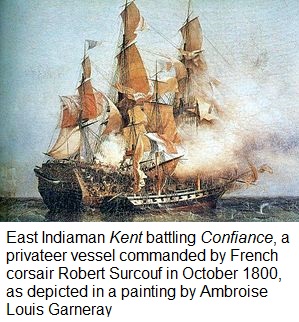
PCU Blog - Senate bill targets companies that move overseas - Photo 2rivateering [a] – This was the practice of private ships, authorized by governments or royal decree, to attack foreign vessels during wartime. While Privateering was a way of mobilizing armed ships and sailors without having to spend treasury resources or commit naval officers, this was a business operation, with the cost being borne by investors hoping to profit from prize money earned from captured cargo and vessels. The proceeds would be distributed among the privateer’s investors, officers, and crew.

CU Blog - Senate bill targets companies that move overseas - Photo 3Pirates of the Caribbean [b] – The distinction between a privateer and a pirate has always been vague beyond the licensing Letters of Marque. Without the letters, the parties were considered pirates; of which many frequented the Caribbean region. This industry employed many unemployed seafarers as a way to make ends meet, but became increasingly damaging to the region’s economic and commercial prospects.

CU Blog - Senate bill targets companies that move overseas - Photo 4Wrecking (Ships) [c] –  This was the practice of taking valuables (cargo) from a shipwreck which has floundered close to shore; this evolved into what is now known as “marine salvage”. While wrecking is no longer economically significant, this practice was in itself an industry as recently as the 19th century in some parts of the world, and a mainstay in many Caribbean economies. The Caribbean islands, waterways and ports have to contend with a lot of hidden water hazards, like reefs. So this industry thrived on the uncertainty of shipping,  (before better navigational tools and systems), but also created their own pro-wrecking incidents and threats, like false lighting and sabotage.

CU Blog - Senate bill targets companies that move overseas - Photo 5Rum-running/Bootlegging [d] – This refers to the illegal business of smuggling alcoholic beverages (over water) where such transportation is forbidden by law. Most prominently, this activity was done to circumvent the taxation and prohibition laws of the US in the early 20th Century (1920 to 1933). Due to its close proximity, many ships came from the island of Bimini in the western Bahamas to transport cheap Caribbean rum to Florida. But rum’s cheapness made it a low-profit item for the rum-runners, and they soon moved on to smuggling Canadian Whiskey, French Champagne, and English Gin to major cities like New York City and Boston, where prices ran high. (It was said that some ships carried $200,000 in contraband in a single run). Distilleries and breweries in the Caribbean flourished during this period as their products were either consumed by visiting Americans or smuggled into the US illegally. When the US government complained to the British that American law was being undermined by officials in Nassau, Bahamas, the head of the British Colonial Office refused to intervene. The British Caribbean attitude was echoed by UK Prime Minister Winston Churchill, who believed that Prohibition was “an affront to the whole history of mankind”.

CU Blog - Senate bill targets companies that move overseas - Photo 6Offshore Banking [e] – This refers to banks located outside the country of residence of the depositor, typically in a low tax jurisdiction (or tax haven) that provides financial and legal advantages- a mainstay in Antigua, Bahamas, Bermuda and Caymans. These advantages typically include: greater privacy, little or no taxation, easy access to deposits, and protection against local, political, or financial instability. These Offshore banks have often been associated with underground (informal) economies and organized crime, via tax evasion and money laundering. Legally, offshore activities do not prevent assets from being subject to personal income taxes on interest income, often times it is the privacy feature that skirts tax computation and collection.

CU Blog - Senate bill targets companies that move overseas - Photo 7Tax Evasion [f] – This activity is part of the business model of the Caribbean, though it is commonly associated with the informal economy. There are legal and illegal activities associated with the avoidance of taxes by individuals, corporations and trusts. Tax evasion often entails taxpayers deliberately misrepresenting the true state of their affairs to the tax authorities to reduce their tax liability and includes dishonest tax reporting, such as declaring less income, profits or gains than the amounts actually earned, or overstating deductions. Tax avoidance employ many tax havens or jurisdictions to facilitate lower tax bills. Caribbean member-states encourage many tax avoidance practices, campaigning to high net worth individuals to do business or establish their residence in the region.

CU Blog - Senate bill targets companies that move overseas - Photo 8Offshore Gambling – This category refers to more than just casinos operating at Caribbean resorts, but rather the practice of coordinating gambling/gaming operations worldwide that only have a legal footprint in the region. Caribbean jurisdictions have actually emerged as a favorite destination for legally licensing gaming institutions and companies, like sports books and online gambling. “In 1994 the Caribbean nation of Antigua and   Barbuda passed the Free Trade & Processing act, allowing licenses to be granted to organizations applying to open online casinos. The practice continues, even fighting and winning legal bouts at the WTO against the US. Many of the companies operating out of Antigua are publicly traded on various stock exchanges, specifically the London Stock Exchange. Antigua has met British regulatory standards and has been added to the UK’s “white list”, which allows licensed Antiguan companies to advertise in the UK. By 2001, the estimated number of people who had participated in online gambling rose to 8 million and the growth continued, despite legislation and lawsuit challenges to online gambling. By 2008, estimates for worldwide online gambling revenue were at $21 billion.”Go Lean…Caribbean; Page 213.

The book serves as a roadmap for the introduction and implementation of the Caribbean Union Trade Federation (CU), a technocratic federal government to administer and optimize the economic/security/governing engines of the region’s 30 member-states. The goal is to move business operations “out of the shadows” and “into the light”, mitigating against the threats represented in the historic review above. There are many legitimate business endeavors that the Caribbean can, and must, pursue in order to elevate its society. The Go Lean book details specifics for growing the regional economy to $800 Billion and creating 2.2 million new jobs – all using legitimate, in-the-light activities.

The Caribbean is the “best address in the world” and provides the best of certain products (see previous blog/commentary sample here: https://goleancaribbean.com/blog/?p=1847 – ‘Declared “Among the best in the world”’) and is the best at performing certain services. We can compete! There should not be the need to “run for the shadows”. The world should be soliciting us, not us begging for the “crumbs following from the table” of the world economy.

At the outset, the Go Lean roadmap recognizes the significance of best-of-breed industrial developments with these statements in the Declaration of Interdependence (Page 13 & 14):

xxiv.  Whereas a free market economy can be induced and spurred for continuous progress, the Federation must install the controls to better manage aspects of the economy: jobs, inflation, savings rate, investments and other economic principles. Thereby attracting direct foreign investment because of the stability and vibrancy of our economy.

xxvii. Whereas the region has endured a spectator status during the Industrial Revolution, we cannot stand on the sidelines of this new economy, the Information Revolution. Rather, the Federation must embrace all the tenets of Internet Communications Technology (ICT) to serve as an equalizing element in competition with the rest of the world. The Federation must bridge the digital divide and promote the community ethos that research/development is valuable and must be promoted and incentivized for adoption.

The change starts now; say goodbye to the shadows, say hello to the light. The Caribbean is hereby urged to lean-in to the following community ethos, strategies, tactics, implementations and advocacies to re-boot Caribbean industry and society; as detailed in the book Go Lean … Caribbean, sampled here:

Community Ethos – Deferred Gratification Page 21
Community Ethos – Economic Principles Page 21
Community Ethos – All Choices Involve Costs Page 21
Community Ethos – Job   Multiplier Page 22
Community Ethos – Light Up the Dark Places Page 23
Community Ethos – “Crap” Happens Page 23
Community Ethos – Lean Operations Page 24
Community Ethos – Return on Investments Page 24
Community Ethos – Ways to Impact the Future Page 26
Community Ethos – Ways to Help   Entrepreneurship Page 28
Community Ethos – Ways   to Promote Intellectual Property Page 29
Community Ethos – Ways to Impact Research   & Development Page 30
Community Ethos – Impact the Greater Good Page 37
Strategy – Vision – Confederating 30   Member-states in a Union Page 45
Strategy – Agents of Change – Technology Page 57
Strategy – Agents of Change – Globalization Page 57
Tactical – Fostering a Technocracy Page 64
Tactical – Growing Economy – New High   Multiplier Industries Page 68
Tactical – Separation of Powers – Commerce Department Page 78
Tactical – Separation of Powers – Self   Governing Entities Page 80
Implementation – Ways to Pay for Change Page 101
Implementation – Benefits from the Exclusive   Economic Zone Page 104
Implementation – Steps to Implement   Self-Governing Entities Page 105
Implementation – Ways to Deliver Page 109
Implementation – Ways to Benefit from   Globalization Page 119
Planning – 10 Big Ideas Page 127
Planning – Ways to Improve Trade Page 128
Planning – Ways to Make the Caribbean Better Page 131
Advocacy – Ways to Grow the Economy Page 151
Advocacy – Ways to Create Jobs Page 152
Advocacy – Ways to Mitigate Black Markets Page 165
Advocacy – Ways to Improve Homeland Security –   Naval Authorities Page 180
Advocacy – Ways to Foster Technology Page 197
Advocacy – Reforms for Banking Regulations Page 199
Advocacy – Ways to Impact Lotteries/Gambling Page 213
Advocacy – Ways to Help the Middle Class Page 223
Advocacy – Ways to Impact the One Percent – Tax Avoidance Options Page 223

The foregoing news article addresses an important move the US should make to counteract the effects of globalization on its core jobs. The Go Lean book stresses the importance of an empowered middle class. So the Caribbean has the same needs, but our success should not be dependent on breaking the laws of other countries. We can compete head on. This is a subject that impacts economics, security and governing engines. This is heavy-lifting!

The Go Lean roadmap maintains that change is coming to the Caribbean in general and industrial pursuits in particular, so that we may break from the past and have a vibrant future. The Caribbean will be a better place to live, work and play. 🙂

Download the free e-Book of Go Lean … Caribbean – now!

——————————————————————————————————————————–

Appendices:

a. Retrieved July 29, 2014 from: https://en.wikipedia.org/wiki/Privateering

b. Retrieved July 29, 2014 from: https://en.wikipedia.org/wiki/Pirate#Caribbean

c. Retrieved July 29, 2014 from: https://en.wikipedia.org/wiki/Wrecking_(shipwreck)

d. Retrieved July 29, 2014 from: https://en.wikipedia.org/wiki/Rum-running  and https://en.wikipedia.org/wiki/Prohibition_in_the_United_States

e. Retrieved July 29, 2014 from: http://en.wikipedia.org/wiki/Offshore_banking

f. Retrieved July 29, 2014 from: http://en.wikipedia.org/wiki/Tax_evasion and http://en.wikipedia.org/wiki/Tax_avoidance

Share this post:
, , ,
[Top]

Cuba mulls economy in Parliament session

Go Lean Commentary

Cuba is the largest population base in the Caribbean, with 11,236,444 people as of 2010. So any empowerment effort for the region cannot ignore this big landmass in the middle of the Caribbean and not this many people; (more than 26% of the region’s 42 million).

The book Go Lean…Caribbean does not ignore the island, but rather declares an interdependence with Cuba.

The book serves as a roadmap for the introduction and implementation of the Caribbean Union Trade Federation (CU), a technocratic federal government to administer and optimize the economic/security/ governing engines of the region’s 30 member-states – including Cuba. The premise for this inclusion is the pronouncement as reported here, in the foregoing article, of Cuba’s desire to be included in the international community:

Castro and other officials say they are not embracing capitalism but rather updating Cuba’s socialist model to survive in the 21st century global economy.

The entire article is listed as follows:

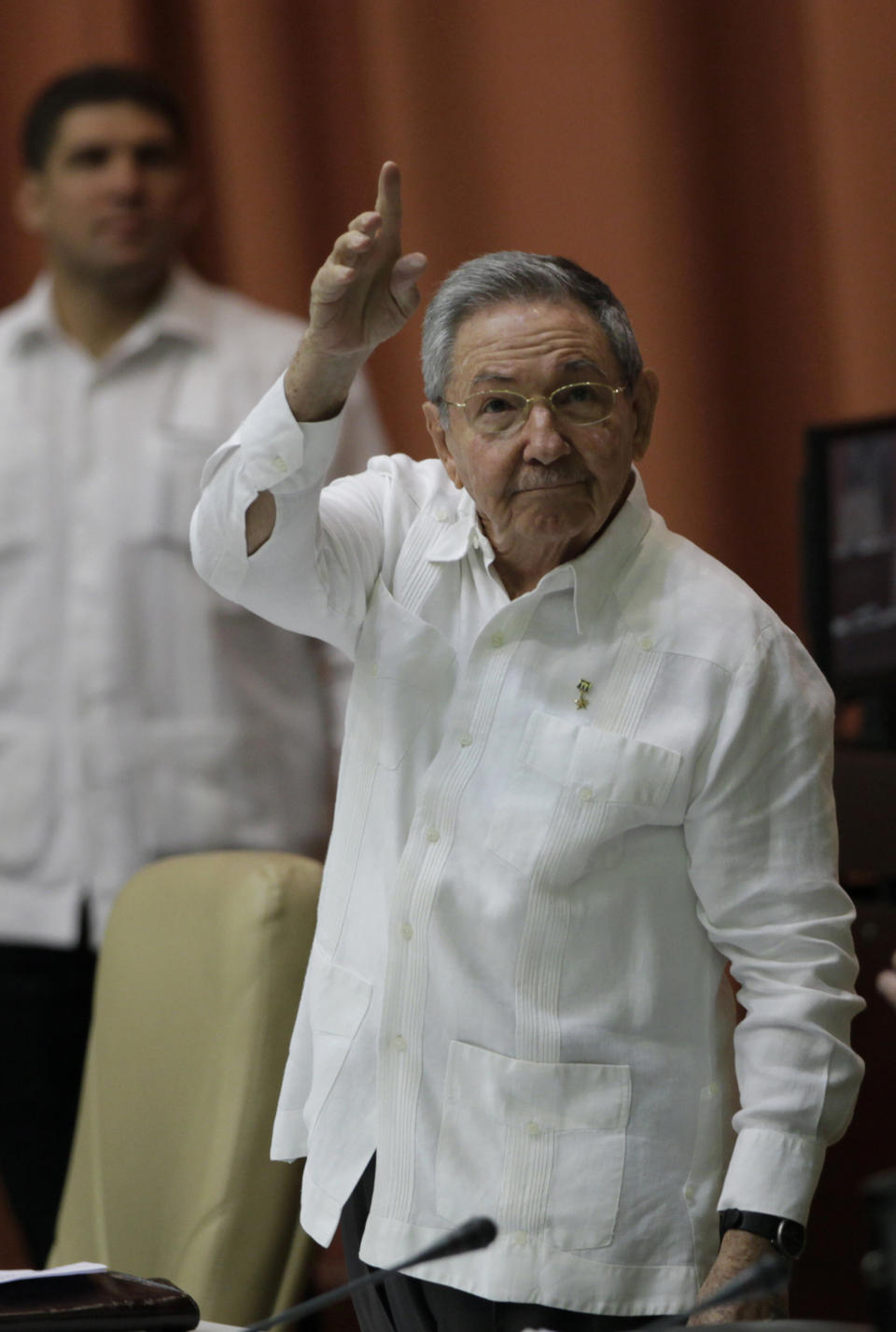
Cuba's President Raul Castro greets members of Parliament at the opening of the third regular session of the eighth legislature, at the National Assembly in Havana, Cuba, Saturday, July 5, 2014. (AP Photo/Ismael Francisco, Cubadebate)

Cuba’s President Raul Castro greets members of Parliament at the opening of the third regular session of the eighth legislature, at the National Assembly in Havana, Cuba, Saturday, July 5, 2014. (AP Photo/Ismael Francisco, Cubadebate)

HAVANA (AP)annual sessions, with the country’s limping economy and the 2014 budget foremost on the agenda.Government-run website Cubadebate published pictures of President Raul Castro presiding over the assembly with Vice President Miguel Diaz-Canel at his side.
Foreign journalists were not allowed access to the gathering at a convention center in western Havana.
Cuba recently downgraded its 2014 economic growth forecast to 1.4 percent, nearly a point lower than previous projections of 2.2 percent.
The government reported 2.7 GDP expansion the previous year.
Castro’s government is in the middle of a package of reforms that officials hope will improve economic performance.
Cuba has decentralized state-owned enterprises, legalized home and used car sales, and let hundreds of thousands of people open or work for small businesses in the private sector.
Castro and other officials say they are not embracing capitalism but rather updating Cuba’s socialist model to survive in the 21st century global economy.
Parliament was also expected to consider a report from the comptroller’s office on its attempts to root out corruption.
Lawmakers met earlier this week in committee to discuss matters including the biotechnology and agriculture.
Official media reported that Agriculture Minister Gustavo Rodriguez said Cuba’s food imports have reached $2 billion a year, but the country believes it could produce 60 percent of that domestically.
Associated Press Online News Source (Posted 07-05.2014) – http://news.yahoo.com/cuba-mulls-economy-graft-parliament-session-150935232.html

Go Lean…Caribbean is not a dream; it clearly recognizes the historicity of Cuba in the North American lexicon. There is a current trade embargo with the US and there are US$ 6 Billion of unsettled civil judgments against the Cuban government. The book posits that confederating with Cuba is a “Big Idea” for the Caribbean. This roadmap therefore, is a detailed, turn-by-turn plan for reconciling the 55 year-old rift in US-Cuban relations.

Cuban President Raul Castro has announced that he will retire in 2017 and now there is this declared intent above for Cuba to compete in the global economy, so now is the time to execute this Go Lean plan.

This commentary previously featured articles on the subjects of Cuba’s eventual integration into the Caribbean brotherhood, as sampled here:

https://goleancaribbean.com/blog/?p=789 America’s War on the Caribbean
https://goleancaribbean.com/blog/?p=554 Cuban cancer medication registered in 28 countries
https://goleancaribbean.com/blog/?p=436 Cuba Approves New “Law on Foreign Investment”

At the outset, the Go Lean roadmap recognizes the value of significance of Cuban reconciliation into any Caribbean integration with this statement in the Declaration of Interdependence (Page 12):

xiii. Whereas the legacy of dissensions in many member-states (for example: Haiti and Cuba) will require a concerted effort to integrate the exile community’s repatriation, the Federation must arrange for Reconciliation Commissions to satiate a demand for justice.

The Go Lean roadmap is not all “give” with no “take” for Cuba. There is heavy-lifting on their part in submitting to regional authority in matters of the CU scope: economic engines, security apparatus and governing support. This intent was also pronounced early in the same Declaration of Interdependence (Page 12):

xii. Whereas the legacy in recent times in individual states may be that of ineffectual governance with no redress to higher authority, the accedence of this Federation will ensure accountability and escalation of the human and civil rights of the people for good governance, justice assurances, due process and the rule of law. As such, any threats of a “failed state” status for any member state must enact emergency measures on behalf of the Federation to protect the human, civil and property rights of the citizens, residents, allies, trading partners, and visitors of the affected member state and the Federation as a whole.

It is commonly accepted that just the presence of anyone named “Castro” in administering Cuba would be a guaranteed deterrent for success in confederating Cuba with the rest of the Caribbean. But 2017 is not far away. So the planning must start now. The Caribbean is hereby urged to lean-in to the following community ethos, strategies, tactics, implementations and advocacies to re-boot Cuba; as detailed in the book Go Lean…Caribbean sampled here:

Community Ethos – Economic Systems Influence Individual Choices & Incentives Page 21
Community Ethos – Voluntary Trade Creates Wealth Page 21
Community Ethos – Lean Operations Page 24
Community Ethos – Return on Investments Page 24
Community Ethos – Ways to Manage Reconciliations Page 34
Community Ethos – Ways to Impact the Greater Good Page 37
Strategic – Vision – Integrating Region in to a Single Market Page 45
Strategic – Core Competence – Specialty Agriculture Page 58
Tactical – Fostering a Technocracy Page 64
Tactical – Separation of Powers – Office of Trade Negotiations Page 80
Tactical – Separation of Powers – Federal Courts – Truth & Reconciliation Commissions Page 90
Implementation – Assemble & Create Super-Regional Organs to represent all Caribbean Page 96
Implementation – Ways to Pay for Change Page 101
Implementation – Foreign Policy Initiatives at Start-up Page 102
Implementation – Ways to Deliver Page 109
Implementation – Ways to Benefit from Globalization Page 119
Planning – 10 Big Ideas for the Caribbean – Cuba Page 127
Advocacy – Ways to Grow the Economy Page 151
Advocacy – Ways to Re-boot Cuba Page 236

The foregoing article addresses the issue of economic expansion strategies, tactics and implementations, but the book focuses on much more than just money issues; it features the more important issue of societal elevation. The Go Lean roadmap addresses cultural issues such as music, sports, art, education, repatriation and heritage. The book declares how unfortunate that most of Cuba’s history has been neutralized due to the 1959 revolution, expansion of communism, trade embargo and 50 years of isolation.

But this is a new day! It’s time now for change; not just change for change sake, but the elevations that were identified, qualified and proposed in the book Go Lean…Caribbean.

Cuba será libre!

Cuba can … and must become a better place to live, work and play.

Download the free e-Book Go Lean … Caribbean – now!

Share this post:
, ,
[Top]

Status of Forces Agreement = Security Pact

  Go Lean Commentary

The following is typical of the kind of news headlines in the last few weeks:

Crisis In Iraq Escalates As Militants Seize Major Cities

Iraq again! Didn’t we just go through this in the last decade? Did we not settle this a few years ago, and now we’re here again? Deja Vu all over again. Not a repeat of the Iraqi drama, but rather a repeat of modern history in total. In a recent blog submission, the commentary (https://goleancaribbean.com/blog/?p=1531) cited the lessons learned from World War I; or better stated, the lack of learned-lessons, as the result was World War II. An actual news article on Iraq that parallels this lesson, is excerpted as follows:

By: Olivia Marshall

Media [outlets] have claimed that the current violence in Iraq is the result of the 2011 withdrawal of U.S. troops in Iraq and President Obama’s willful failure to secure a Status of Forces Agreement (SOFA) with Iraq’s Prime Minister Nouri al-Maliki. In reality, Iraq refused the terms of a SOFA with the U.S. despite Obama’s efforts to maintain a military presence there.

Time Magazine: Iraq’s Second Largest City Falls To Militants – Time reported on June 10 that Mosul, Iraq’s second largest city, fell to the Sunni militant group Islamic State in Iraq and al-Sham (ISIS):

The fall of Iraq’s second largest city to Islamist extremists Tuesday sends an alarming message about the deterioration of a country where the U.S. spent eight years, 4,500 lives and $1.7 trillion. Mosul, a city of 1.8 million located in the far north of the country, long cultivated a reputation as a military town. But Iraqi soldiers threw down their guns and stripped off their uniforms as the insurgents approached on Tuesday, according to officials stunned by the collapse of its defenses.
Media Matters (Posted June 16, 2014; retrieved 06/29/2014) –
http://mediamatters.org/research/2014/06/16/right-wing-media-ignore-iraqi-resistance-to-sta/199742

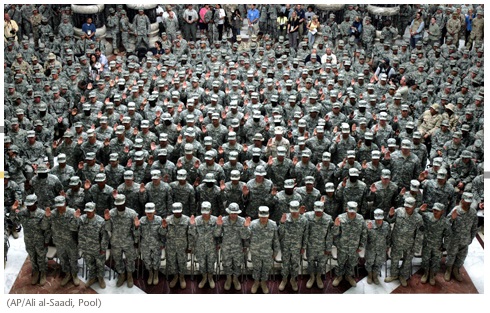
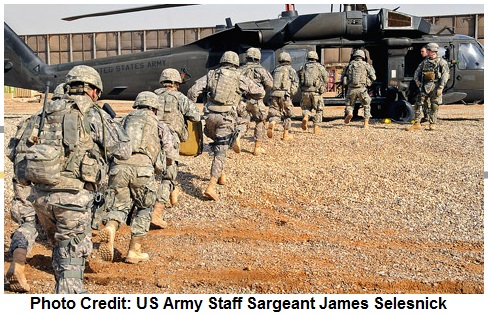
Iraq Surge - 2007Iraq Draw Down - 2011

The overriding theme of the foregoing news article is the Status of Forces Agreement [a]. Under international law, in order for a military presence to not be viewed as an occupation or ‘act of war”, there must be a SOFA of mutual consent between both the host and occupying powers. This lack of a SOFA is why the US is drawn back into Iraq.

This American experience is relevant for the Caribbean to consider; not only for the fact that two Caribbean member-states, Puerto Rico and the US Virgin Islands, had committed human capital to that Iraq War effort, and have thusly sacrificed “blood, sweat and tears” there, but also because there is a parallel need for a SOFA in the Caribbean region.

The book Go Lean…Caribbean posits that the region must prepare its own security apparatus for its own security needs. So the request is that all Caribbean member-states welcome a visiting security force to execute a limited scope on their sovereign territories. That visiting force: themselves!

Yes, the goal is to confederate under a unified entity made up of the Caribbean to provide homeland security to the Caribbean. But Homeland Security for the Caribbean has a different meaning than for our American counterparts. Though we must be on defense against military intrusions like terrorism & piracy, we mostly have to contend with threats that may imperil the region’s economic engines, like tourism. This includes natural and man-made concerns like hurricanes, earthquakes, oil/chemical spills, pandemic, enterprise corruption and narco-terrorism. The CU security goal is for public safety! This goal is detailed in the book as it serves as a roadmap for the introduction of the technocratic Caribbean Union Trade Federation (CU). So while the CU is set to optimize Caribbean society through economic empowerment, the truth of the matter is that the security dynamics of the region are inextricably linked to this same endeavor. Therefore the Go Lean roadmap has 3 prime directives:

  • Optimization of the economic engines in order to grow the regional economy to $800 Billion & create 2.2 million new jobs.
  • Establishment of a security apparatus to protect the resultant economic engines.
  • Improve Caribbean governance to support these engines.

The book contends that bad actors will emerge just as a result of economic successes in the region. This point is pronounced early in the book with the Declaration of Interdependence (Page 12) that claims:

x.   Whereas we are surrounded and allied to nations of larger proportions in land mass, populations, and treasuries, elements in their societies may have ill-intent in their pursuits, at the expense of the safety and security of our citizens. We must therefore appoint “new guards” to ensure our public safety and threats against our society, both domestic and foreign. The Federation must employ the latest advances and best practices … to assuage continuous threats against public safety.

xvi. Whereas security of our homeland is inextricably linked to prosperity of the homeland, the economic and security interest of the region needs to be aligned under the same governance. Since economic crimes, including piracy and other forms of terrorism, can imperil the functioning of the wheels of commerce for all the citizenry, the accedence of this Federation must equip the security apparatus with the tools and techniques for predictive and proactive interdictions.

The Caribbean appointing “new guards”, or a security pact to ensure public safety is not so new an endeavor. There are prior instances of this type of engagement in the region. There is currently a security pact; shared by 5 Eastern Caribbean member-states that was first consummated in 1982 – this was discussed in full depth in a previous commentary regarding the Regional Security System (https://goleancaribbean.com/blog/?p=1076). The Go Lean roadmap however calls for a permanent professional force with naval and ground (Marine) forces, plus an Intelligence agency. This security pact would be sanctioned by all 30 CU member-states, not just the current 5; (there is even a plan for the eventual inclusion of Cuba). The CU Trade Federation will lead, fund and facilitate the security force, encapsulating (full-time or part-time) all the existing armed forces in the region. This CU Homeland Security Force would get its legal authorization from a Status of Forces Agreement signed with the CU treaty enhancements.

This SOFA is “Step One, Day One” in the Go Lean roadmap, covering the approach for adequate funding, accountability and control. In step with the foregoing news article, there is the absolute need for the CU SOFA to be ratified as soon as possible.

The Go Lean book details a series of community ethos, strategies, tactics, implementations and advocacies to provide increased public safety & security in the Caribbean region:

Economic Principle – Consequences of Choices Lie in Future Page 21
Community Ethos – Privacy –vs- Public Protection Page 23
Community Ethos – “Crap” Happens Page 23
Community Ethos – Cooperatives Page 25
Community Ethos – Ways to Improve Sharing Page 35
Community Ethos – Ways to Impact the Greater Good Page 37
Tactical – Confederating a non-sovereign union Page 63
Tactical – Separation of Powers – Homeland Security Page 75
Implementation – Ways to Pay for Change Page 101
Implementation – Start-up Foreign Policy Initiatives Page 102
Implementation – Start-up Security Initiatives Page 103
Planning – Ways to Make the Caribbean Better Page 131
Planning – Ways to Improve Failed-State Indices Page 134
Advocacy – Ways to Grow the Economy Page 151
Advocacy – Ways to Improve Governance Page 168
Advocacy – Ways to Better Manage the Social Contract Page 170
Advocacy – Ways   to Impact Justice Page 177
Advocacy – Ways   to Reduce Crime Page 178
Advocacy – Ways to Improve Homeland Security Page 180
Advocacy – Ways to Mitigate Terrorism Page 181
Advocacy – Ways to Improve Intelligence Gathering/Analysis Page 182
Advocacy – Ways to Improve for Natural Disasters Page 184
Advocacy – Ways to Protect Human Rights Page 220
Advocacy – Ways to Re-boot Cuba Page 236

Other subjects related to security and governing empowerments for the region have been blogged in other Go Lean…Caribbean commentary, as sampled here:

https://goleancaribbean.com/blog/?p=1531 A Lesson in History: 100   Years Ago – World War I
https://goleancaribbean.com/blog/?p=1076 Trinidad Muslims travel to   Venezuela for jihadist training
https://goleancaribbean.com/blog/?p=960 NSA records all phone   calls in Bahamas, according to Snowden
https://goleancaribbean.com/blog/?p=789 America’s War on the Caribbean
https://goleancaribbean.com/blog/?p=546 Book Review:   ‘The Divide’ – … Injustice in the Age of the Wealth Gap
https://goleancaribbean.com/blog/?p=535 Remembering and learning   from Boston
https://goleancaribbean.com/blog/?p=392 Jamaica to receive World Bank funds to help in crime fight
https://goleancaribbean.com/blog/?p=341 US slams Caribbean human   rights practices
https://goleancaribbean.com/blog/?p=87 6.5M Earthquake Shakes   Eastern Caribbean

Underlying to the prime directive of elevating the economics, security and governing engines of the Caribbean, is the desire to make the Caribbean homeland, a better place to live, work and play. We do not want a few “bad actors” disrupting the peace of all Caribbean residents (42 million people), or the 10 million Diaspora as they frequent their tropical homeland or even the 80 million tourists that visit the region annually. The Go Lean roadmap states it most succinctly with the quotation: “the needs of the many outweigh the needs of the few” (Page 37).

All of the Caribbean are hereby urged to lean-in to this roadmap.

Download the book Go Lean … Caribbean – now!

——

Appendix: a – Status of Forces Agreement

A Status of Forces Agreement (SOFA) is an agreement between a host country and a foreign nation stationing military forces in that country. SOFAs are often included, along with other types of military agreements, as part of a comprehensive security arrangement. A SOFA does not constitute a security arrangement; it establishes the rights and privileges of foreign personnel present in a host country in support of the larger security arrangement. [1] Under international law a status of forces agreement differs from military occupation.

Agreements

SOFA - Photo 1While the United States military has the largest foreign presence and therefore accounts for most SOFAs, the United Kingdom, France, Australia, Germany, Italy, Russia, South Korea, and many other nations also station military forces abroad and negotiate SOFAs with their host countries. NATO (North Atlantic Treaty Organization) is a SOFA. In the past, the Soviet Union had SOFAs with most of its satellite states (See Go Lean…Caribbean Page 139). While most of the United States’ SOFAs are public, some remain classified. [2]

Terms of operation – The SOFA is intended to clarify the terms under which the foreign military is allowed to operate. Typically, purely military operational issues such as the locations of bases and access to facilities are covered by separate agreements. The SOFA is more concerned with the legal issues associated with military individuals and property. This may include issues like entry and exit into the country, tax liabilities, postal services, or employment terms for host-country nationals, but the most contentious issues are civil and criminal jurisdiction over bases and personnel. For civil matters, SOFAs provide for how civil damages caused by the forces will be determined and paid. Criminal issues vary, but the typical provision in U.S. SOFAs is that U.S. courts will have jurisdiction over crimes committed either by a service-member against another service-member or by a service-member as part of his or her military duty, but the host nation retains jurisdiction over other crimes.[3]

Host nation concerns – In many host nations, especially those with a large foreign presence such as South Korea and Japan, the SOFA can become a major political issue following crimes allegedly committed by service-members. This is especially true when the incidents involve crimes such as robbery, murder, manslaughter or sex crimes, especially when the charge is defined differently in the two nations. For example, in 2002 in South Korea, a U.S. military AVLB bridge-laying vehicle on the way to the base camp after a training exercise accidentally killed two girls. Under the SOFA, A U.S. military court martial panel tried the soldiers involved, The panel found the act to be an accident and acquitted the service members of negligent homicide, citing no criminal intent or negligence. The U.S. military accepted responsibility for the incident and paid civil damages. This resulted in widespread outrage in South Korea, demands that the soldiers be retried in a South Korean court, the airing of a wide variety of conspiracy theories, and a backlash against the local expatriate community.[4] As of 2011 American military authorities are allowing South Korea to charge and prosecute American soldiers in South Korean courts.[5][6]

(Retrieved 06/29/2014 from: http://en.wikipedia.org/wiki/Status_of_forces_agreement)

 Sources References:

1.  R. Chuck Mason (March 15, 2012). “Status of Forces Agreement (SOFA): What Is It, and How Might One Be Utilized In Iraq?” Congressional Research Service. Retrieved from: http://www.fas.org/sgp/crs/natsec/RL34531.pdf

2.  Bruno, Greg (October 2, 2008), U.S. Security Agreements and Iraq, Council on Foreign Relations. Retrieved from: http://www.cfr.org/publication/16448/us_security_agreements_and_iraq.html

3.  Pike, John (2005). “Status of Forces Agreement”. GlobalSecurity.org, 2005. Retrieved from: http://www.globalsecurity.org/military/facility/sofa.htm

4.  Ibiblio.org (2002). News articles on South Korean teenagers run over US military vehicle. Posted 22 August 2008; retrieved from http://www.ibiblio.org/ahkitj/wscfap/arms1974/HRS/2002/Stop%20US%20Military%20dossier/4.htm

5.  Stars and Stripes Newspaper (2011). “US soldier confesses during trial to rape of South Korean girl”. Retrieved http://www.stripes.com/u-s-soldier-confesses-during-trial-to-rape-of-south-korean-girl-1.161419

6.  Stars and Stripes Newspaper (2012). “Korea-based US soldier get 3 years in prison for rape conviction”. Posted 12 February 2012; retrieved from: http://www.stripes.com/news/pacific/korea/korea-based-u-s-soldier-gets-3-years-in-prison-for-rape-conviction-1.168182


Share this post:
, , , , ,
[Top]

A Lesson in History – 100 Years Ago Today – World War I

 Go Lean Commentary

The dominoes began to fall 100 years ago today.

Going backwards: The Caribbean is at the precipice of dysfunction due to a global financial crisis; the crisis is a by-product of an inter-connected world; the global unified economic systems (Bretton-Woods Accords [b]) and disbanding of the colonies of the Great Powers emerged for the rebuilding after World War II. Consequently, Word War II was a direct response to the unsatisfactory settlements from World War I and economic dysfunctions during the period between the World Wars. The first domino was therefore June 28, 1914.

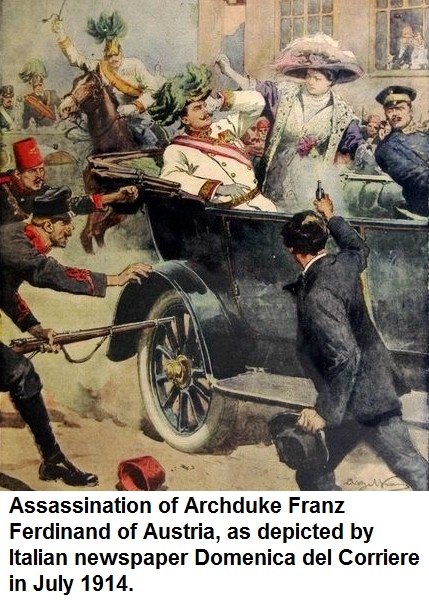
1914 Photo 1On this date 100 years ago, Archduke Franz Ferdinand of Austria, heir presumptive to the Austro-Hungarian throne, and his wife, Sophie, Duchess of Hohenberg, were shot dead in Sarajevo by Serbian assassins. The political objective of the assassination was to break off Austria-Hungary’s south-Slav provinces so they could be combined into a Yugoslavia. The assassination led directly to the First World War when Austria-Hungary subsequently issued an ultimatum against Serbia, which was partially rejected. Austria-Hungary then declared war, marking the outbreak of the war. [a]

Multilateral military alliances abounded in that day among the Great Powers: Austria-Hungary with Germany (Triple Alliance of 1882) and Serbia with Russia and France (Triple Entente of 1907) and Britain. When war ensued later in August 1914, these were the sides. Many other military treaties were triggered thereby engaging empires/countries like Ottoman-Turks, Portugal, Japan and Italy, (The United States joined in 1917 allied with Britain). The resulting conflict was dubbed the Great War until subsequently rebranded World War I.

The review of the historic events of this day 100 years ago is more than just an academic discussion, the book Go Lean…Caribbean aspires to economic principles that dictate that “consequences of choices lie in the future”. The book serves as a roadmap for the introduction and implementation of the technocratic Caribbean Union Trade Federation (CU). This confederation effort aligns many former colonies of the same Great Powers that waged WW I; like Great Britain or the United Kingdom (UK) for example. The British Dominion experienced dire consequences and suffered greatly as a result of this war. In 1914 The British Dominion controlled over 25% of the world’s population; today the UK wields little political, military or economic power, including that of the Caribbean.

The people of the Caribbean understand societal decline and dysfunction all too well.

What have we learned in the 100 years since the events of June 28, 1914? How will these lessons help us today?

  • Minority Equalization – Bullying and terrorism must be mitigated at the earliest possible opportunity – the foregoing photo depicts the oppression the minority Balkan communities perceived in the Austria-Hungarian Empire. As a minority group they felt bullied in their own country; their Slavic culture and language set them apart, and their religious adherence led to even more dissension (Austria-Hungary: Catholic/Lutheran; Serbia: Eastern Orthodox and Bosnia- Herzegovina: Muslim) There were terrorist activities for decades before in the quest for independence. In the past 100 years, this same modus operandi has been repeated in countless locales around the world. The CU security pact must defend against regional threats, including domestic terrorism. This includes gangs and their junior counterparts, bullies. The CU plans for community messaging in the campaign to  mitigate bullying.

1914 Photo 2

  • Reconciliation of issues are not optional, more conflict will emerge otherwise – The issues that wedged the people of the Balkans were not resolved in World War I. More dissensions continued leading to World War II, and continued during the Cold War while most of the Balkans were under Soviets control. When the Soviet Union collapsed in 1991, civil war and ethnic cleansings proceeded in the Balkans. Their issues/differences had not been reconciled. A common practice after WW I & WW II was the prosecution of war crimes. But in South Africa an alternative justice approach was adopted, that of Truth & Reconciliation Commissions (TRC). These have become more successful as the emphasis is less on revenge and more on justice normalization. Many other countries have instituted similar TRC models. The CU plans for the TRC model for dealing with a lot of latent issues in the last Caribbean century (i.e. Cuba, Haiti, Dominican Republic, etc).
  • Self-determination of local currencies – in planning for postwar reconstruction, U.S. representatives with their British counterparts studied what had been lacking between the two world wars: a system of international payments that would allow trade to be conducted without fear of sudden currency depreciation or wild fluctuations in exchange rates—ailments that had nearly paralyzed world capitalism during the Great Depression. There is a multiplier associated with the currency in the money supply. Therefore the communities of the Caribbean must embrace its own currency, the Caribbean Dollar (managed by a technocratic Caribbean Central Bank), thereby bringing local benefits from local multipliers.
  • Security assurances must be enabled to complement economics objectives – A lot of dissension has resulted when economic engines become imperiled due to security conflicts. The instability then causes more economic dysfunction, which results in even more security threats – a downward spiral. The CU/Go Lean posits that security apparatus must be aligned with all economic empowerments. This is weaved throughout the roadmap.
  • Negotiate as partners not competitors – The end of World War I immediately set-up ripe conditions for WW II, because of the harsh terms in the Peace Treaties. The CU maintains that, negotiation is an art and a science. More can be accomplished by treating a negotiating counterpart as a partner, rather than not an adversary. (See VIDEO below).
  • Cooperatives and sharing schemes lighten burdens among neighbors – The Balkan conflict of 1914 resulted in a World War because of cooperative treaties with aligning nations. Despite this bad outcome, the practice of cooperatives and sharing still has more upside than downside. The CU will employ cooperatives and sharing schemes for limited scopes within the prime directives of optimizing the economic, security and governing engines.
  • Promote opportunities for the Pursuit of Happiness – A lot of terrorist activities are executed by “suicide” agents (i.e. suicide bombers). The Go Lean roadmap posits the when the following three fundamentals are in place, the risks of suicide is minimal: 1. something to do, 2. someone to love, 3. something to hope for. These are the things a man (or woman) needs to be happy.
  • Consider the Greater Good – Complying with this principle would have prevented a lot of conflict in the past century. The philosophy is directly quoted as: “It is the greatest good to the greatest number of people which is the measure of right and wrong”. The CU/Go Lean roadmap calls for a number of measures that strike directly at the Greater Good mandate: accountable justice institutions, economic empowerment for rich and poor, strategic education initiatives, proactive health/wellness, etc.

The related subjects of economic, security and governing dysfunction have been a frequent topic for blogging by the Go Lean promoters, as sampled here:

https://goleancaribbean.com/blog/?p=1433 Caribbean loses over 70% of tertiary educated citizens to the brain drain
https://goleancaribbean.com/blog/?p=1309 5 Steps of a Bubble
https://goleancaribbean.com/blog/?p=1014 All is not well in the sunny Caribbean
https://goleancaribbean.com/blog/?p=816 The Future of Caribbean Integration and CariCom
https://goleancaribbean.com/blog/?p=789 America’s War on the Caribbean
https://goleancaribbean.com/blog/?p=782 Open the Time Capsule: The Great Recession of 2008
https://goleancaribbean.com/blog/?p=623 Only at the precipice, do they change
https://goleancaribbean.com/blog/?p=599 Ailing Puerto Rico open to radical economic fixes
https://goleancaribbean.com/blog/?p=467 Barbados Central Bank records $3.7m loss in 2013
https://goleancaribbean.com/blog/?p=451 CariCom Chairman to deliver address on slavery/colonization reparations
https://goleancaribbean.com/blog/?p=353 Book Review: ‘Wrong – Nine Economic Policy Disasters and What We Can Learn…’

The purpose of the Go Lean roadmap is to turn-around the downward trends in the Caribbean today, to reverse course and elevate Caribbean society. The CU, applying lessons from the last 100 years, has prime directives proclaimed as follows:

  • Optimization of the economic engines in order to grow the regional economy to $800 Billion & create 2.2 million new jobs.
  • Establishment of a security apparatus to protect the resultant economic engines.
  • Improve Caribbean governance to support these engines.

The Go Lean book details a series of assessments, community ethos, strategies, tactics, implementations and advocacies to empower all the factions in the Caribbean region:

Community Ethos – Economic Systems Influence Choices & Incentives Page 21
Community Ethos – Consequences of Choices Lie in the Future Page 21
Community Ethos – Money Multiplier – Control of Local/Regional   Currency Page 22
Community Ethos – Anti-Bullying and Mitigation Page 23
Community Ethos – Intelligence Gathering Page 23
Community Ethos – “Crap” Happens Page 23
Community Ethos – Minority Equalization Page 24
Community Ethos – Ways to Impact the Future Page 26
Community Ethos – Ways to Improve Negotiations Page 32
Community Ethos – Ways to Manage Reconciliations Page 34
Community Ethos – Ways to Improve Sharing Page 35
Community Ethos – Ways to Promote Happiness Page 36
Community Ethos – Ways to Impact the Greater Good Page 37
Strategy – Vision –  Integrate Region into a Single Market Economy Page 45
Strategy – Agents of Change – Globalization Page 57
Tactical – Separation of Powers – Department of Homeland   Security Page 75
Tactical – Separation of Powers – Department of   Justice Page 77
Implementation – Assemble Existing Super-national Institutions Page 96
Implementation – Caribbean Central Bank (CCB) Cooperative Page 96
Implementation – Ways to Pay for Change Page 101
Implementation – Foreign Policy Initiatives   at Start-up Page 102
Implementation – Security Initiatives at   Start-up Page 103
Implementation – Ways to Deliver Page 109
Implementation – Ways to Promote Independence Page 120
Planning – Ways to Ways to Model the EU Page 130
Planning – Ways to Make the Caribbean Better Page 131
Planning – Ways to Improve Failed-State Indices Page 134
Planning – Lessons from East Germany Page 139
Advocacy – Ways to Grow the Economy Page 151
Advocacy – Ways to Create Jobs Page 152
Advocacy – Ways to Better Manage the Social Contract Page 170
Advocacy – Ways to Foster Cooperatives Page 176
Advocacy – Ways to Impact Justice Page 177
Advocacy – Ways to Improve Homeland Security Page 180
Advocacy – Ways to Mitigate Terrorism Page 181
Advocacy – Ways to Improve Intelligence Page 182
Advocacy – Banking Reforms – Caribbean Dollar Page 199
Advocacy – Ways to Protect Human Rights Page 220
Advocacy – Battles in the War on Poverty Page 222
Advocacy – Ways to Impact British Territories Page 245

The year 1914 is identified as a watershed year in the history of mankind. (There are even religious teachings that identify this year as the beginning of the Bible’s prophesied Last Days). No doubt there was a crisis, and it was wasted, even after losing 19 million people in the ensuing military conflict. The result was a 2nd World War that slaughtered 60 million more. Still all the divisions and animosities created during those conflicts forged even more conflicts (think: Middle East, Korea and Vietnam). In total, about 100 million people died in wars of the 20th Century.

See Comedian Bill Maher Commentary in the following VIDEO:

VIDEO – Real Time With Bill Maher: Sunni and Share (HBO) – 
https://youtu.be/Jz0YWIfBLa4


Real Time with Bill Maher
Published on Jul 1, 2014 – Bill Maher delivers his “New Rules” editorial on June 27, 2014.

  • Category: Entertainment

Now is the time for all of the Caribbean to learn the lessons from the last 100 years, and not waste our current crises. The book Go Lean … Caribbean posits that the Caribbean is in a serious crisis, but asserts that this crisis would be a terrible thing to waste. The people and governing institutions of the region are hereby urged to lean-in for the empowerments described in the book Go Lean … Caribbean.

This is a big deal for the region, the same way 1914 was a big year for our planet. While the planet is out-of-scope for this roadmap, a Caribbean neighborhood optimization is realistic and plausible. We can all work to make our homeland a better place to live, work, and play.

Download the free e-Book of Go Lean … Caribbean – now!

—————–

Referenced Sources:
a.     http://en.wikipedia.org/wiki/Assassination_of_Archduke_Franz_Ferdinand_of_Austria; retrieved June 28, 2014

b.     http://en.wikipedia.org/wiki/Bretton_Woods_system; retrieved June 28, 2014

Share this post:
, ,
[Top]

Marijuana in Jamaica – Puff Peace

Go Lean Commentary

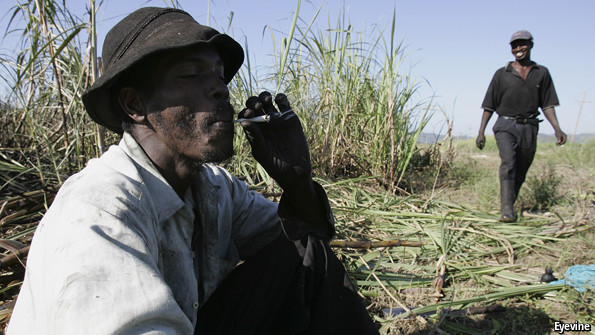
Weed 1Come to Jamaica and feel alright! – Advertising tag line sampling Bob Marley’s song: One Love.

Marijuana decriminalization is not a Jamaican issue… alone. Other countries have already addressed this debate; like Latin America[a] and Europe; legal in The Netherlands & Portugal, and decriminalized in Norway. In the US, Colorado is about to be joined by the State of Washington in allowing recreational use of the cannabis plant.

While medical marijuana originated in Jamaica (1970’s), many jurisdictions now allow marijuana to be legally distributed by medical professionals, with a prescription. Life imitates art, art imitates life. Hollywood has lampooned this practice many times in movies, TV shows and commentary. In the State of California, it is common-place to get a prescription for marijuana for “dubious” ailments like insomnia, appetite abatement, non-clinical depression, even sneezing. Without a doubt in California, the whole process is a farce! (See Comedian Bill Maher’s tongue-in-cheek commentary in Referenced VIDEO below[c]).

The world has changed; the acceptance of marijuana is changing.

The following news article addresses the issue of Marijuana decriminalization, (more so than legalization):

Port of Spain, Trinidad & Tobago – It would have seemed a lot more revolutionary just two years ago but for Jamaica, it is still a welcome whiff of sense. The island’s energy minister, Philip Paulwell, who also leads government business in parliament, has said he will find time this year to decriminalise possession of small amounts of marijuana. At a stroke, the move will cut the number of illicit smokes by as many as a million a week. It will also make a Jamaican break somewhat less nervy for ganja-puffing tourists.

Reform proposals have been knocking around for some time: a National Commission on Ganja recommended decriminalisation in 2001. But helped by moves towards legalisation in Uruguay and decriminalisation in the United States, momentum has been growing. A Cannabis Future Growers and Producers Association was launched last month, and a commercial company to support medical marijuana in December.

Selling for less than five dollars an ounce, ganja has a long history in Jamaica, going all the way back to 19th-century Indian immigrants. Cultivation and import have been illegal since 1913, but everyone’s granny remembers when the herb was quite openly on sale as a cure-all. Some of the early work on medicinal uses for marijuana was done in Jamaica in the 1970s and 1980s.

In practice, most small-time ganja users are not arrested or prosecuted. But for those who are, the consequences can be dire. A criminal record makes it hard to get a coveted American visa or to land jobs in Jamaica itself. For that reason alone, reform looks like a surefire vote-winner.

Decriminalisation will also unclog the courts and free up police time. But it won’t change the big picture. It will remain illegal to grow and trade marijuana in large quantities, something that suits the big players just fine. Full legalisation would knock the bottom out of the market, hurting the island’s powerful criminal gangs. It would also curtail the potential for extortion; seven police officers appeared in court this month to face allegations that they took a $2,750 bribe from a businessman in return for overlooking a ganja find on his premises.

Jamaicans are prone to waves of moral panic, but the proposal to decriminalise ganja has caused barely any waves. The foreign minister AJ Nicholson and the opposition leader, Andrew Holness, have expressed mild reservations; the vocal church lobby has been silent. Says a well-educated and dreadlocked Jamaican: “Most of them accept that there are people who do this, just like there are people who drink.” Such tolerant sentiments only go so far, however. The “abominable crime of buggery” carries a prison sentence of up to ten years, and the government has no plans to right that injustice.
The Economist Magazine; posted 06/13/2014; retrieved 06/18/2014 from: http://www.economist.com/blogs/americasview/2014/06/marijuana-jamaica?spc=scode&spv=xm&ah=9d7f7ab945510a56fa6d37c30b6f1709

Marijuana tourism or “ganja-puffing tourists” …
…these words jump off the page of this foregoing news article.

The book Go Lean…Caribbean anticipates the compelling issues associated with economic engines. The book serves as a roadmap for the introduction and implementation of the technocratic Caribbean Union Trade Federation (CU). This effort calls for the focus of the following 3 prime directives related to Trade:

  • Optimization of the economic engines in order to grow the regional economy to $800 Billion and create 2.2 million jobs.
  • Establishment of a security apparatus (including law enforcement enhancements) to protect the resultant economic engines.
  • Improve Caribbean governance to support these engines.

Weed 2But the subject of marijuana is bigger than Trade. There are moral, religious, legal and psychological (treatment) issues associated with this topic; and there is history – good and bad. Any jurisdiction decriminalizing the use of marijuana has to contend with the previous messaging to the community of: “Just say no to drugs”.

The book asserts that before the strategies, tactics, implementations and advocacies of a roadmap to elevate a society can be deployed, the affected society must first embrace a progressive community ethos. The book defines this “community ethos” as the fundamental character or spirit of a culture; the underlying sentiment that informs the beliefs, customs, or practices of society; dominant assumptions of a people or period. Think of the derivative term: “work ethic”.

Marijuana is a mood-altering drug; it has negative effects, one being preponderance for apathy, to tune out of any active engagement. In the US, even in the states where marijuana is legal, most firms/governments still screen staffers (new hires and veterans) and ban consumption of the drug. The reason is simple: Apathy does not make for industriousness. So this issue/drug presents a conundrum for the CU. The mission to grow the economy, promote industriousness, foster new jobs and new industries is pronounced early in the roadmap, detailed in the Declaration of Interdependence (Page 14) with this statement:

 xxvi.   Whereas the Caribbean region must have new jobs to empower the engines of the economy and create the income sources for prosperity, and encourage the next generation to forge their dreams right at home, the Federation must therefore foster the development of new industries … In addition, the Federation must invigorate the enterprises related to existing industries … impacting the region with more jobs.

According to the foregoing article, reconciling the history of marijuana/ganja will be a “tall order”:

ganja has a long history in Jamaica, going all the way back to 19th-century Indian immigrants.

The history of marijuana/ganja in the Caribbean in general and Jamaica in particular has generated a lot of proponents and opponents. Despite outlawing “the weed” for over 100 years, there is a vibrant black market economy associated with the drug. This reality challenges the security apparatus of the Caribbean’s legitimate governing entities. The Go Lean roadmap therefore features the necessary homeland security/law enforcement mitigations. This need was pronounced at the outset of the book (Page 12), recognizing that the problem of drug enforcement/interdiction may be too big for any one member-state alone:

xvi.   Whereas security of our homeland is inextricably linked to prosperity of the homeland, the economic and security interest of the region needs to be aligned under the same governance. Since economic crimes … can imperil the functioning of the wheels of commerce for all the citizenry, the accedence of this Federation must equip the security apparatus with the tools and techniques for predictive and proactive interdictions.

This issue of decriminalizing marijuana must now reconcile with the long history of criminal prosecutions, prison terms and probation/parole eco-system. Management of these attendant functions of criminology has been a consistent theme of the Go Lean roadmap, commencing with this statement in the same Declaration of Interdependence (Page 12):

x.   Whereas we are surrounded and allied to nations of larger proportions in land mass, populations, and treasuries, elements in their societies may have ill-intent in their pursuits, at the expense of the safety and security of our citizens. We must therefore appoint “new guards” to ensure our public safety and threats against our society, both domestic and foreign. The Federation must employ the latest advances and best practices of criminology and penology to assuage continuous threats against public safety. The Federation must allow for facilitations of detention for convicted felons of federal crimes, and should over-build prisons to house trustees from other jurisdictions.

The Go Lean book envisions the CU as a confederation of the 30 member-states of the Caribbean to do the heavy-lifting of empowering and elevating the Caribbean society by creating a “single market” for the region. Among the many benefits of this roadmap is the economies-of-scale for leveraging regional security solutions, like the upheavals of marijuana decriminalization.

Despite the many economic benefits researched for decriminalizing drugs, as measured in the mature market of the US [b], this roadmap and supporting blogs are NOT proposing this measure for the Caribbean … per se. This is presented here as a political issue; the CU strives to maintain an apolitical stance.

There is security risk on both sides of this issue. The book details the community ethos, strategies, tactics, implementations and advocacies to monitor, manage and mitigate the security risks to Caribbean society. The following is a sample list:

Community Ethos – Deferred Gratification Page 21
Community Ethos – Job Multiplier Page 22
Community Ethos – Privacy versus Public Protection Page 23
Community Ethos – Light Up the Dark Places Page 23
Community Ethos – Ways to Impact Research & Development Page 30
Community Ethos – Ways to Impact the Greater Good Page 37
Strategy – Vision – Integration of Single Market Economy Page 45
Strategy – Agents of Change – Globalization Page 57
Tactical – Fostering a Technocracy Page 64
Tactical – Separation of Powers – Homeland Security Page 75
Tactical – Separation of Powers – Justice Department Page 77
Implementation – Security Initiatives at Start-up Page 103
Advocacy – Ways to Grow the Economy Page 151
Advocacy – Ways to Ways to Mitigate Black Markets Page 165
Advocacy – Ways to Improve Governance Page 168
Advocacy – Ways to Better Manage the Social Contract Page 170
Advocacy – Ways to Impact Justice Page 177
Advocacy – Ways to Remediate and Mitigate Crime Page 178
Advocacy – Ways to Improve Homeland Security Page 180
Advocacy – Ways to Impact the Prison Industrial Complex Page 211

Now is the time for all of the Caribbean, the people and governing institutions, to lean-in for the empowerments described in the book Go Lean … Caribbean. For us to send the invitation to the wide-world to ”come to Caribbean and feel alright”, but we must first put “our house” in order.

The world’s acceptance of marijuana has changed. While this is true, this change has created opportunities and also challenges. There is plenty of work yet to be done; heavy-lifting.

Download the book Go Lean … Caribbean – now!

————————-

Referenced Citations:

a.  Marijuana is legal to some degree in 8 Latin America countries (Argentina, Brazil, Columbia, Costa Rica, Ecuador, Honduras, Mexico and Uruguay).

b.  A Harvard economist, Jeffery Miron, estimated that ending the war on drugs would inject 76.8 billion dollars into the US economy in 2010 alone.[1] He estimates that the government would save $41.3 billion for law enforcement and the government would gain up to $46.7 billion in tax revenue.[2] Since President Nixon began the war on drugs, the federal drug-fighting budget has increased from $100 million in 1970 to $15.1 billion in 2010, with a total cost estimated near 1 trillion dollars over 40 years.[3] In the same time period an estimated 37 million nonviolent drug offenders have been incarcerated. $121 billion was spent to arrest these offenders and $450 billion to incarcerate them.[3]

1.       Debusmann, Bernd (12/03/2008). “Einstein, Insanity and the War on Drugs”. Reuter. Retrieved 04/01/2012 from: http://blogs.reuters.com/great-debate/2008/12/03/einstein-insanity-and-the-war-on-drugs/.

2.       Miron, Jeffrey A.; Katherine Waldock. “The Budgetary Impact of Ending Drug Prohibition”. The Cato Institute.  Retrieved 05/03/2010 from: http://www.cato.org/publications/white-paper/budgetary-impact-ending-drug-prohibition

3.       The Associated Press (05/13/2010). “After 40 years, $1 trillion, US War on Drugs Has Failed to Meet Any of its Goals”. The Associated Press. Retrieved 04/01/2012 from: http://www.foxnews.com/world/2010/05/13/ap-impact-years-trillion-war-drugs-failed-meet-goals/.

c.  Referenced VIDEO:


On Friday night’s episode of “Real Time,” Bill Maher offered some advice to viewers and to the state of Colorado about how to use marijuana safely and effectively, which we need to do, he said, because “after all, we’re pretending it’s medicine…


Share this post:
, , , , , , ,
[Top]

Health-care fraud in America; criminals take $272 billion a year

Go Lean Commentary

Healthcare2Wherever there is vibrant economic activity, bad actors will emerge.

This is the claim of the book Go Lean…Caribbean, that the result of successful regional integration would be an elevated Caribbean economy, which consequently could result in increased felonious activities.

There is a lot of economic activity around health-care. According to a US News and World Report story, the US lacks health efficiencies, spending 20, 30, even 100 times as much on medical products and devices as what it would cost, at a typical big-box retailer like Wal-Mart. In a sample year (2012), the country spent over $2.8 trillion on health care, more than twice as much on a per-capita basis as other high-income countries such as England and France. [a]

The Caribbean wants to be a high-income country/region, but not in the model of the United States. We must be better; we must be lean!

The book, Go Lean … Caribbean, serves as a roadmap for the introduction and implementation of the Caribbean Union Trade Federation (CU), the next generation of integration for the region. This roadmap posits the eventual economic success will be quickly followed with the emergence of bad actors seeking to exploit the successes. So security/crime deterrents will not be an after-thought; no, rather the full crime-and-punishment eco-system (investigation, persecution, penology) is in scope for the CU as this technocratic agency will assume responsibility for economic crimes in the region. In effect, this roadmap has the prime directives to elevate the Caribbean’s:

(1) economy,

(2) security apparatus, and

(3) governing engines.

The Economist Magazine (Posted & Retrieved 05/31/2014) –
MEDICAL science is hazy about many things, but doctors agree that if a patient is losing pints of blood all over the carpet, it is a good idea to stanch his wounds. The same is true of a health-care system. If crooks are bleeding it of vast quantities of cash, it is time to tighten the safeguards.

In America the scale of medical embezzlement is extraordinary. According to Donald Berwick, the ex-boss of Medicare and Medicaid (the public health schemes for the old and poor), America lost between $82 billion and $272 billion in 2011 to medical fraud and abuse (see article). The higher figure is 10% of medical spending and a whopping 1.7% of GDP – as if robbers had made off with the entire output of Tennessee or nearly twice the budget of Britain’s National Health Service (NHS).

Crooks love American health care for two reasons. First, as Willie Sutton said of banks, it’s where the money is – no other country spends nearly as much on pills and procedures. Second, unlike a bank, it is barely guarded.

Some scams are simple. Patients claim benefits to which they are not entitled; suppliers charge Medicaid for non-existent services. One doctor was recently accused of fraudulently billing for 1,000 powered wheelchairs, for example. Fancier schemes involve syndicates of health workers and patients. Scammers scour nursing homes for old people willing, for a few hundred dollars, to let pharmacists supply their pills but bill Medicare for much costlier ones. Criminal gangs are switching from cocaine to prescription drugs – the rewards are as juicy, but with less risk of being shot or arrested. One clinic in New York allegedly wrote bogus prescriptions for more than 5m painkillers, which were then sold on the street for $30-90 each. Identity thieves have realised that medical records are more valuable than credit-card numbers. Steal a credit card and the victim quickly notices; photocopy a Medicare card and you can bill Uncle Sam for ages, undetected.

Healthcare1It is hard to make such a vast system secure: Medicare’s contractors process 4.5 [million] claims a day. But pointless complexity makes it even harder. Does Medicare really need 140,000 billing codes, as it will have next year, including ten for injuries that take place in mobile homes and nine for attacks by turtles? A toxic mix of incompetence and political gridlock has made matters worse. Medicare does not check new suppliers for links to firms that have previously been caught embezzling (though a new bill aims to fix this). Fraud experts have long begged the government to remove Social Security numbers from Medicare cards to deter identity thieves – to no avail.

Start by closing the safe door
One piece of the solution is obvious: crack down on the criminals. Obamacare, for all its flaws, includes some useful measures. Suppliers are better screened. And when Medicaid blackballs a dodgy provider, it now shares that information with Medicare – which previously it did not. For every dollar spent on probing health-care fraud, taxpayers recover eight. So the sleuths’ budgets should be boosted, not squeezed, as now.

But the broader point is that American health care needs to be simplified. Whatever its defects, Britain’s single-payer National Health Service is much simpler, much cheaper and relatively difficult to defraud. Doctors are paid to keep people well, not for every extra thing they do, so they don’t make more money by recommending unnecessary tests and operations – let alone billing for non-existent ones.

Too socialist for America? Then simplify what is left, scale back the health tax-perks for the rich and give people health accounts so they watch the dollars that are spent on their treatment. After all, Dr. Berwick’s study found that administrative complexity and unnecessary treatment waste even more health dollars than fraud does. Perhaps that is the real crime.
http://www.economist.com/news/leaders/21603026-how-hand-over-272-billion-year-criminals-thats-where-money?fsrc=nlw%7Chig%7C30-05-2014%7C53552127899249e1cc9ea210%7CNA

The Go Lean … Caribbean roadmap commences with the statement that the Caribbean is in crisis, and that this “crisis is a terrible thing to waste”. Later generations of Caribbean parents have had fewer children than their predecessors, 2.1 children per household, as opposed to the previous average of 5 – 6 children. Now, that older generation is aging, and the numbers do not lie, there are fewer children to care for their aging parents. What’s worse, many of the Caribbean labor pool had fled the region and emigrated to the US, Canada and Europe. Actuarially, we have a financial tsunami building and targeting the region. This crisis is identified early in the book, in the opening Declaration of Interdependence (Page 12), with this pronouncement:

ix.  Whereas the realities of healthcare and an aging population cannot be ignored and cannot be afforded without some advanced mitigation, the Federation must arrange for health plans to consolidate premiums of both healthy and sickly people across the wider base of the entire Caribbean population. The mitigation should extend further to disease management, wellness, obesity and smoking cessation programs. The Federation must proactively anticipate the demand and supply of organ transplantation as developing countries are often exploited by richer neighbors for illicit organ trade.

Creating the solution to mitigate health-care fraud (and other economic crimes) is “Step One, Day One” in the Go Lean roadmap. Implementing the appropriate regulatory framework, to marshal against the scenarios depicted in the foregoing news article, will allow for a “value exchange” for the vital investments the CU must make in the delivery of health-care solutions.

Health-care solutions also entail the astute application of information technology (IT). Agile IT systems, mobile and web applications can foster good value to health-care institutions and government payers. The book considers the Healthways model.

The Go Lean roadmap maintains that efficiency in health services delivery is not automatic, but rather must be forged and bred from experience, expertise, attitudes, training, and the quality application of delivery arts and sciences. The book details a series of community ethos, strategies, tactics, implementations and advocacies to foster the proper controls for health-care efficiency in the Caribbean region:

Community   Ethos – Economic Choices Involve Costs Page 21
Community   Ethos – Whistleblower Protection Page 23
Community   Ethos – Intelligence Gathering Page 23
Community   Ethos – Lean Operations Page 24
Community   Ethos – Impacting   Research & Development Page 30
Community   Ethos – Pursue the Greater Good Page 37
Strategic   – Agents of Change – Aging Diaspora Page 57
Tactical –   Fostering a Technocracy Page 64
Tactical –   Repatriation to Grow to a $800 Billion GDP Page 70
Tactical –   Separation of Powers – Medicare Admin. Page 86
Tactical –   Separation of Powers – Licensing/Standards Page 86
Anecdote – “Lean” in Government – Improve Process Page 93
Implementation – Ways to Pay for Change Page 101
Implementation – Security Initiatives at Start-up Page 103
Implementation – Ways to Deliver Page 109
Implementation – Reasons to Repatriate Page 118
Advocacy – Ways to Grow the Economy Page 151
Advocacy – Ways to Improve Healthcare Page 156
Advocacy –   Ways to Impact Entitlements Page 158
Advocacy –   Better Manage the Social Contract Page 170
Advocacy –   Ways to Remediate and Mitigate Crime Page 178
Advocacy –   Ways to Improve Emergency Management Page 196
Advocacy –   Ways to Foster Technology Page 197
Appendix –   Disease Management – Healthways   Model Page 300
Appendix –   Controlling Inflation – Healthcare Realities Page 320
Appendix –   TraumaCenter Realities Page 336

Change has come to the Caribbean. Costs dynamics are unavoidable with this impending change.

Now is the time for all of the Caribbean, the people and governing institutions, to lean-in for the changes described in the book Go Lean … Caribbean. The benefits are too alluring, a better place to live, work, heal and play.

Download the free e-Book of Go Lean … Caribbean – now!

Source Reference:

a. US News & World Report. “The High Cost of Staying Well – the U.S. gets poor bang for its medical buck”. Retrieved May 31, 2014 from: http://www.usnews.com/opinion/mzuckerman/articles/2013/10/22/why-health-care-costs-so-much-and-how-to-fix-it

Share this post:
, ,
[Top]

Zuckerberg’s $100 Million for Newark’s Schools was a waste

Go Lean Commentary

Throwing money at a problem does not, in itself, solve it!

Mark Z 2The foregoing article helps us appreciate this point more succinctly. It was 2010. There was Newark’s Mayor Cory Booker (now New Jersey Senator), Facebook founder and philanthropist Mark Zuckerberg and the Governor of the State of New Jersey (and possible 2016 Presidential candidate) Chris Christie – all men of goodwill. Their goal: fix a failing school system in the City of Newark. On paper, the plan seemed credible, they had the power, they had the money – $100 million dollars. The result? After four years – “a waste”.

The issues of education reform, best practices, and funding options are stressed in the book Go Lean…Caribbean, even though these are not the primary focus of the book. Rather this book serves as a roadmap for the introduction and implementation of the Caribbean Union Trade Federation (CU), with the focus being on these following 3 prime directives:

  • Optimization of the economic engines in order to grow the regional economy to $800 Billion & create 2.2 million new jobs.
  • Establishment of a security apparatus to protect the resultant economic engines.
  • Improve Caribbean governance to support these engines.

Yet, the book posits that education is a vital consideration for economic empowerment; so too are non-government organizations, like Zuckerberg’s foundation. The book specifically highlights an important role that foundations execute in the sphere of foreign aid, sometimes even better than national governments (Page 219):

One major argument against federally funded foreign aid is that the money is often lost to governmental corruption in the countries it was supposed to help. In 2003, a top university in Bangladesh claimed that at least 75% of all foreign aid given to that government was lost because of corruption. Since faith-based foreign aid focuses on churches or organizations operating independently of the government, funding has a better chance of being used effectively.

The below news article though, highlights an onshore example, in the US, with multi-level governmental support, plenty of money, and yet still: failure!

Title: Mark Zuckerberg Gave New Jersey $100 Million To Fix Newark’s Schools, And It Looks Like It Was A Waste
By: Caroline Moss
In the fall of 2010, Mark Zuckerberg announced on Oprah that he’d be making a generous gift to Newark, New Jersey.

 As Oprah said in her Oprah way, “one … hundred … million … dollars” would be given to Newark Mayor Cory Booker and New Jersey Gov. Chris Christie as the three began the Startup:Education foundation.

The plan was to turn Newark into what Zuckerberg called “a symbol of educational excellence for the whole nation,” spent on retaining the best teachers, and creating environments that would produce successful students and, one day, graduates.

Newark is a city wrought with crime. Its graduation rate is about 67%. It needed the help, and Booker’s vision sounded promising.

Between 2010 and 2012, The New Yorker reports that “more than twenty million dollars of Zuckerberg’s gift and matching donations went to consulting firms with various specialties: public relations, human resources, communications, data analysis, [and] teacher evaluation.” Many of the consultants were being paid upwards of $1,000 a day.

“Everybody’s getting paid but Raheem still can’t read,” Vivian Cox Fraser, president of the Urban League of Essex County, was quoted saying.

Today, the money is pretty much gone, and Newark has hardly become that symbol of excellence.

The New Yorker has the full 12-page story today, and we’ve dug into it to find some of the main timeline points you need to know.

In 2010, Mayor Booker found a loophole in getting money to help fund Newark’s educational reform. It came in the form of philanthropic donations, which, unlike government funding, required no public review of priorities or spending. Gov. Christie approved the plan, and Booker’s job was to find the donors.

Meanwhile, in Silicon Valley, Zuckerberg (like many other tech billionaires) had pledged to donate half of his fortune, but as The New Yorker reports, he knew very little about urban education or philanthropy.

Booker and Zuckerberg met to discuss a vision for Newark’s future. Booker wanted to significantly reward Newark teachers who improved student performance rather than focus on seniority and tenure. Teachers would be challenged and rewarded to do their jobs well, and students would benefit.

 Zuckerberg was confident Newark and Booker were the right recipients for this huge gift (given over five years), and agreed to gift $100 million dollars with a few stipulations:

  • Booker would also have to raise $100 million dollars. Zuckerberg’s money would be released to Newark as matching dollars rolled in.
  • Booker would have to replace the current superintendent with a “transformational leader.

”The reform ended up looking like this: taking low-performing public schools and closing them, turning them into charter schools and “themed” high schools. But there was no easy way to expand charters without destabilizing traditional public schools.

In the months following the gift announcement, Booker and Christie still had no superstar superintendent and no reform plan.

 Zuckerberg was concerned and urged Booker to find the superintendent, even sending Booker a poster widely seen around the Facebook campus that read, “Done is better than perfect.”

Mark ZImmediately, Booker appointed Cami Anderson for the job. She implemented ways to help students and improve schools (all which The New Yorker detailed), but there were roadblocks along the way, like how the students brought the issues going on in their homes with them to the classroom.

 Anderson wanted to give schools more support to help students on emotional and social levels, but Newark had already been spending more money per student than most districts in the entire country, none of which was reaching the children it existed to help.

 New contracts were being created, money was being hemorrhaged, and the district was going broke. But interviews — like this one in Forbes — regarding the money and the future of Newark’s schools were always positive, highlighting, of course, only the good aspects of the huge monetary donation.

Then, in January of this year, The Washington Post reported on “dozens of emails between the Zuckerberg camp (including Zuckerberg himself) and the Booker camp (including Booker himself),” which ended up revealing that state education officials were going above and beyond to get money from big private donors to remake public schools in the way they want to.

Anderson came up with another plan called One Newark, which sounded like it could work. Families would choose which charter or public schools they would want to send their children to. Children from the lowest-income families would get first pick. So would kids with special needs.

It all sounded great until parents and teachers realized it was only on paper. Solutions hadn’t been figured out fully. Programs hadn’t been developed. Issues like transportation had not yet been tackled. Things that were promised didn’t come to fruition.

 According to The New Yorker, Anderson, Booker, Zuckerberg, and Christie, “despite millions of dollars spent on community engagement—have yet to hold tough, open conversations with the people of Newark about exactly how much money the district has, where it is going, and what students aren’t getting as a result.”
Business Insider Vertical e-Zine (Posted 05/13/2014; retrieved 05/30/2014) –
http://www.businessinsider.com/mark-zuckerbergs-newark-grant-2014-5#ixzz33DsBvaIw

The people and institutions of the Caribbean understand this plight of Newark, New Jersey all too well. There is a long record of failure with the Caribbean education initiatives. Then where there is success, the quality students have a propensity to abandon the region and emigrate to the US, Canada or Europe. So with the best of the Caribbean’s talents gone, we find that we’ve “fatten frog for snake”; then with the rest, we muddle along as best we can; hoping to nation-build with the remnants of a broken educational system.

It’s time for a change!

The proposed change is detailed in the Go Lean roadmap. It provides turn-by-turn directions on how to reform the Caribbean education systems, governance and Caribbean society in general. This roadmap commences with the assessment that the Caribbean is in crisis, and that this “crisis would be a terrible thing to waste”. As a planning tool, the roadmap commences with a Declaration of Interdependence, pronouncing the approach of regional integration (Page 12) as a viable solution to elevate the region’s educational opportunities. The statement is included as follows:

xxi. Whereas the preparation of our labor force can foster opportunities and dictate economic progress for current and future generations, the Federation must ensure that educational and job training opportunities are fully optimized for all residents of all member-states, with no partiality towards any gender or ethnic group. The Federation must recognize and facilitate excellence in many different fields of endeavor, including sciences, languages, arts, music and sports. This responsibility should be executed without incurring the risks of further human flight, as has been the past history.

The strategy is to confederate all the 30 member-states of the Caribbean, despite their language and legacy, into an integrated “single market”. Tactically, this will allow a separation-of-powers between the member-states governments (including their education proxies) and federal agencies, allowing an open role for benevolent foundations to fulfill their charters on the region. The roadmap recognizes the need to lead, or to follow best-practices, as formulated by other entities. This then becomes a process of leading-by-following. The CU will facilitate the eco-systems, metering and measuring the effect of so many educational options. Think Champion-Challenger; allowing for alternate methodologies to be explored for effectiveness, and then measuring the success criteria.

The Go Lean book details series of community ethos, strategies, tactics, implementations and advocacies to foster good educational progress, and the agile methodologies to adjust/adapt dynamically:

Anecdote – Lean On Me – New Jersey School Lesson Page 5
Community Ethos – Lean Operations Page 24
Community Ethos – Cooperatives Page 25
Community Ethos – Non-Government Organizations Page 25
Community Ethos – Ways to Foster Genius Page 27
Tactical – Separation of Powers – Education Dept. Page 85
Implementation – Ways to Pay for Change Page 101
Implementation – Ways to Deliver Page 109
Advocacy – Ways to Grow the Economy Page 151
Advocacy – Ways to Create Jobs Page 152
Advocacy – Ways to Improve Education Page 159
Advocacy – Ways to Improve Governance Page 169
Advocacy – Ways to Foster Cooperatives Page 176
Advocacy – Ways to Improve Libraries Page 187
Advocacy – Ways to Impact Foundations Page 219
Advocacy – Ways to Impact the One Percent Page 224
Appendix – The Giving Pledge Signatories Page 292

Now is the time for all of the Caribbean, the people and governing institutions, to lean-in for the changes described in the book Go Lean … Caribbean. We welcome the “Mark Zuckerberg”’s of the world … and their money. We entreat them to help us to make the Caribbean a better place to live, work, learn and play.

Download the free e-Book of Go Lean … Caribbean – now!

Share this post:
, , , ,
[Top]

Aereo’s Founder on the future of TV

Go Lean Commentary

“Aereo is…not infringing on their copyrights” – Founder and CEO Chet Kanojia.

This subject is pivotal in the roadmap for elevation of the Caribbean economy, which maintains that internet/electronic commerce business models are critical in creating jobs and growing the region’s GDP. The publisher of the book Go Lean… Caribbean projects that 2.2 million new jobs hang in the balance. These new jobs will result from entrepreneurial endeavors and opportunities from the many new industries spun from different expressions of internet & communications technologies (ICT).

Also important in the foregoing article is the respect for intellectual property. The Go Lean roadmap campaigns that the creators of intellectual property are entitled to due compensation; this ethos is at the bedrock of the economic empowerment quest for the region.

According to the foregoing article and VIDEO, there are major issues associated with this technology development, to the point that the US Supreme Court is called upon to set legal precedence.

CU Blog - Aereo Founder and CEO Chet Kanojia on the future of TV - Photo 1Change has come to the world of television. According to Futurists [a], the television industry is the next industry to become obsolete due to the ubiquity of the internet; (think travel agents, record & book stores, video rental, etc.).

This book Go Lean… Caribbean, serves as a roadmap for the introduction and implementation of the Caribbean Union Trade Federation (CU). The CU/Go Lean roadmap has 3 prime directives:

  • Optimization of the economic engines in order to grow the regional economy.
  • Establishment of a security apparatus to protect the resultant economic engines and marshal against economic crimes.
  • Improve Caribbean governance to support these engines.

Early in the book, the benefits of technology empowerment is pronounced in the Declaration of Interdependence (Page 14), with these opening statements:

 xxvi. Whereas the Caribbean region must have new jobs to empower the engines of the economy and create the income sources for prosperity, and encourage the next generation to forge their dreams right at home, the Federation must therefore foster the development of new industries… In addition, the Federation must invigorate the enterprises related to existing industries … impacting the region with more jobs.

xxvii. Whereas the region has endured a spectator status during the Industrial Revolution, we cannot stand on the sidelines of this new economy, the Information Revolution. Rather, the Federation must embrace all the tenets of Internet Communications Technology (ICT) to serve as an equalizing element in competition with the rest of the world. The Federation must bridge the digital divide and promote the community ethos that research/development is valuable and must be promoted and incentivized for adoption.

xxviii. Whereas intellectual property can easily traverse national borders, the rights and privileges of intellectual property must be respected at home and abroad. The Federation must install protections to ensure that no abuse of these rights go with impunity, and to ensure that foreign authorities enforce the rights of the intellectual property registered in our region.

The Caribbean has the eco-system of free broadcast television, and the infrastructure for internet streaming. So the issues raised in the US Supreme Court will have bearing in the execution of this roadmap.

By: Katie Couric

As the Supreme Court hears oral arguments in the case that will determine the fate of his streaming video service, Aereo founder and CEO Chet Kanojia sat down for a wide-ranging interview with Yahoo Global News Anchor Katie Couric.

The New York-based startup — backed by billionaire investor Barry Diller, among others — is at the center of a legal battle that has been raging since the company’s inception in 2012. Aereo currently operates in 13 cities.

The heart of the case involves Aereo’s practice of assigning subscribers mini remote antennas so that they can stream over-the-air broadcast signals directly to their tablets and other mobile devices. The antennas function in the same manner as old-fashioned “bunny ears.” Aereo also uses cloud technology, which lets subscribers watch the programming live or store it for a later time.
Yahoo’s Global News Anchor Katie Couric (Posted and retrieved 05-29-2014) –
https://news.yahoo.com/katie-couric-aereo-tv-supreme-court-212342689.html


Abbreviation of Interview – 3 minutes:

Full Interview – 20 minutes:

The book details the community ethos to adapt to the changed media landscape, plus the executions of the following strategies, tactics, implementations and advocacies:

Community Ethos – Economic Principle – People Respond to Incentives Page 21
Community Ethos – Job Multiplier Page 22
Community Ethos – Lean Operations Page 24
Community Ethos – Return on Investments (ROI) Page 24
Community Ethos – Ways to Impact the Future Page 26
Community Ethos – Ways to Help Entrepreneurship Page 28
Community Ethos – Promote Intellectual Property Page 29
Community Ethos – Impact Research & Development Page 30
Community Ethos – Bridge the Digital Divide Page 31
Strategy – Integrate Region in a Single Market Page 45
Tactical – Fostering a Technocracy Page 64
Tactical – New High Multiplier Industries Page 70
Tactical – Trade and Globalization Page 70
Separation of Powers – Film Promotion and Administration Page 78
Separation of Powers – Patent, Standards, and Copyrights Office Page 78
Separation of Powers – Communications and Media Authority Page 79
Separation of Powers – Federal Supreme Court Page 90
Implementation – Assemble existing regional organizations Page 96
Implementation – Ways to Deliver Page 109
Implementation – Ways to Impact Social Media Page 111
Implementation – Ways to Benefit from Globalization Page 119
Advocacy – Ways to Grow the Economy Page 151
Advocacy – Ways to Create Jobs Page 152
Advocacy – Ways to Improve Communications Page 186
Advocacy – Ways to Foster Technology Page 197
Advocacy – Ways to Foster e-Commerce Page 198
Advocacy – Ways to Impact Hollywood Page 203
Advocacy – Ways to Impact the Diaspora Page 217

The CU will oversee the radio spectrum used for radio, television and satellite communications. The radio spectrum must be regulated on a regional level; the CU coordination will be as managing a common pool resource, as the spectrum is limited. This oversight will also extend to internet broadband (wireless & wire-line) governance.

This is a direct parallel to the US debate.

———

Citation source:
a-1. Retrieved 05-29-2013 from: http://corp.iprodoos.com/2014/01/18/television-2-0-the-2-2-trillion-war-for-your-living-room-begins-now/
a-2. Photo Credit: Motley Fool Investment Advisors
 

Share this post:
, , ,
[Top]

Bahamas rejects US trade demand

Go Lean Commentary

Q: Where does an 800-pound gorilla sleep? A: Anywhere it wants to.

Trade 1There is no doubt the United States is the 800 pound gorilla for trade in the Caribbean region. From a sheer negotiation tactic, there is no basis for respect and consideration for the needs and aspirations of the small Bahamas island nation. A lion share of trade in the Bahamas comes from the US. Also, a lion share of the Bahamas Government revenue comes from Customs duties. So in any stretch of the imagination, eliminating Customs duties from American imports would devastate the Bahamas Government’s treasuries.

Is this an over-simplification of the logical argument in the foregoing news article? No!

Rather, this is a consistent theme in the book Go Lean…Caribbean. The book posits that the objectives of American foreign, trade and security policy may not align with the priorities of the Caribbean. Even more, no Caribbean member-state has voting powers in the US Capitol where those policies might be codified. It is what it is!

The Bahamas is so small compared to the US that the ranting from Nassau would be inconsequential to the decision makers in Washington. The Bahamas and the US are not “brothers”; at best, the Bahamas can expect a “good neighbor” relationship with the US. But since “blood is thicker than water”, it is only to be expected that the US would prioritize the needs of its people ahead of Bahamians.

By: Alison Lowe, Nassau Guardian Business Editor

NASSAU, Bahamas — The United States has called for The Bahamas to immediately drop all of its duties on US products coming into this country on “day one” of The Bahamas’ accession to the World Trade Organization (WTO) – a request which the government has rejected on the basis that it could wipe out the domestic economy, according to the [Bahamas] Minister of Financial Services.

Disclosing some of the background to The Bahamas’ bilateral negotiations over the terms of its bid to join the WTO, [Minister] Ryan Pinder said that the US government has not been “amenable” to The Bahamas’ phasing in tariff reductions on US goods. “Phasing in” refers to the ability to reduce the duty rate levels over a number of years.

However, he suggested that the government has struck back on the issue, suggesting that a phased-in reduction of tariffs on US goods – the vast majority of all imported goods coming into The Bahamas – would be more appropriate.

He was speaking at a meeting on Wednesday between members of the Bahamas Chamber of Commerce and Employers Confederation and David Shark, deputy director general of the WTO, who is in the country to engage with stakeholders over The Bahamas’ accession process.

Among the requirements of joining the WTO is that The Bahamas lowers its duty rates on goods imported into the country. It is this requirement that contributes in part to the decision by the government to push ahead with introducing a new form of revenue collection in the form of value added tax (VAT), although the WTO deputy director said the WTO itself has no preference about what form of tax the government chooses to replace former duty taxes with.

In a question and answer session, Pinder said that how quickly and how low The Bahamas would have to reduce its duties is not a decision of the WTO, but one which is determined in bilateral negotiations with other WTO members.

Pinder said, “The EPA (Economic Partnership Agreement trade deal with Europe) is phased, and they phase to zero, so at some point in time there will be no duty paid on items sourced out of the EU, but it’s not a huge deal because I think there’s $8 million of revenue a year to the government on EU products.

“Now the US: day one that’s what they want. Imagine if they said let’s phase it to zero like the EPA, because that’s what they’ll use as a precedent: You negotiated the EPA, you phased, you phased to zero. So imagine if we phase to zero (on goods coming from the US – you would not have a domestic economy because you would not have 35 percent on readymade items anymore, you’d have zero. So you have to be careful what you push for at times.”

Trade 2He added: “Right now the US is taking the posture that they want on-day-one reductions. They’ve taken the posture they want cuts straight across the board. We’ve taken the position we’re not going to negotiate on that basis but we will negotiate trying to protect domestic industry.

“I think they got the point but there’ll be further negotiations on that. So they haven’t been too amenable to phasing. We anticipate that in some time in the future we will have to re-negotiate the Caribbean Basin Initiative on a bilateral basis which is a whole other issue with respect to the US and their trading regime,” said Pinder.

In terms of how the government would make up the lost revenue, the government has a plan of sorts in place in the form of the implementation of value added tax (VAT), or – if the private sector has its way — some other form of alternative taxation.

However, replacing the revenue lost to the government when duties are reduced under WTO accession does not address the challenge of how the reduction in duties would impact local manufacturers, who rely on the fact that the goods they produce have high rates of duty applied when they cross the border.

In this regard, seven months on from when he announced that the government would be undertaking a study to examine the “vulnerabilities and opportunities” that would arise for Bahamian businesses from joining the WTO, Pinder said on Wednesday that the government is now moving to shortlist who will conduct this study so the government will have a clearer picture of the impact on industry of acceding to the WTO.

At present, Pinder has stated a goal of December 2014 for The Bahamas to complete its lengthy accession process, but has also indicated that the process could well continue into 2015.

In an interview with Guardian Business on Wednesday, Shark touted the benefits of WTO accession. He said that WTO members have been seen to have recovered more quickly following the global economic downturn, as a result of having a more certain environment for investment.

“The Bahamas is already heavily integrated into the international trading system, so for a country that’s as deeply enmeshed in international trade as the Bahamas the better question is ‘Why not (join)?’

“As a member of the WTO, you get to level the playing field with some of your neighbours. You’re the only CARICOM member who’s not a member of the WTO, and when companies are trying to decide where to invest, being a member of the WTO provides assurances to investors of the conditions of their investment… and all of that matters a lot in terms of being a part of global supply chains.

“The rules of international trade, whether you are a member of the WTO or not, affect you, so why wouldn’t you want to be at the table in negotiating those rules?

“It’s protection against protectionism; if someone does something that causes you harm you can challenge them whether you are a large or small country, under the WTO system,” he added.

Caribbean News Now / Nassau Guardian (Posted 04-11-2014; retrieved 05-22-2014) –http://www.caribbeannewsnow.com/topstory-Bahamas-rejects-US-trade-demand-20677.html

Trade 3How to counteract and mitigate this undesirable negotiating quagmire? The answer is to join a bigger family! This requires lowering the volume on the cries of independence and then lean-in for interdependence: regional and WTO solutions. The book Go Lean… Caribbean, serves as a roadmap for the introduction and implementation of the Caribbean Union Trade Federation (CU). This represents a confederation, a brotherhood, of the 30 member-states of the Caribbean region, including Puerto Rico and the US Virgin Islands.  This CU/Go Lean roadmap extolls these 3 prime directives:

  • Optimize the economic engines of the Caribbean to grow the regional economy.
  • Establish a security apparatus to protect the resultant economic engines.
  • Improve Caribbean governance to support these engines.

Imagine the force of a single market of 42 million people as opposed to the minimal 320,000. Imagine too … the purchasing power of an $800 Billion economy as opposed to $9.2 Billion (2010). The roadmap immediately calls for the consolidation of trade negotiation of the Bahamas with the rest of the Caribbean. This point is echoed early, and often, in the Go Lean book, commencing with these opening pronouncements in the Declaration of Interdependence (Page 11/12), as follows:

 viii.   Whereas the population size is too small to foster good negotiations for products and commodities from international vendors, the Federation must allow the unification of the region as one purchasing agent, thereby garnering better terms and discounts.

 x.         Whereas we are surrounded and allied to nations of larger proportions in land mass, populations, and treasuries, elements in their societies may have ill-intent in their pursuits, at the expense of … our citizens. We must therefore appoint “new guards” to ensure … our society, both domestic and foreign.

The roadmap recognizes that this request to forge a confederated technocracy is atypical in Caribbean pursuits. Despite previous integration efforts, the most that has been accomplished is the recognition of the benefits of consolidation, but no real manifestation of an integrated society.

Go Lean … Caribbean therefore constitutes a change for the Caribbean. This is a roadmap to consolidate 30 member-states of 4 different languages and 5 colonial legacies (American, British, Dutch, French, Spanish) into a Trade Federation with the tools/techniques (but without sovereignty) to bring immediate change to the region to benefit one and all member-states. While this is an integration of region’s economic interest, there is no expectation of re-distributing existing wealth among the member-states.

Just how is this accomplished?

The book details that there must first be adoption of community ethos to forge such a change; plus the executions of the following strategies, tactics, implementations and advocacies to impact the regions prospects in negotiations and fulfilling the needs of Caribbean stakeholders:

Community Ethos – Deferred Gratification Page 21
Community Ethos – Minority Equalization Page 24
Community Ethos – Lean Operations Page 24
Community Ethos – Return on Investments Page 24
Community Ethos – Cooperatives Page 24
Community Ethos – Ways to Improve Negotiations Page 30
Community Ethos – Impact the Greater Good Page 37
Strategy – Unified Region in a Single Market Economy Page 45
Strategy – Customers – Foreign Direct Investors Page 48
Strategy – Agents of Change – Globalization Page 57
Tactical – Confederating a Permanent Union Page 63
Tactical – Fostering a Technocracy Page 64
Tactical – Growth Approach – Trade and Globalization Page 70
Separation of Powers – Interstate Commerce Admin Page 79
Separation of Powers – Office of Trade Negotiations Page 80
Implementation – Ways to Pay for Change Page 101
Implementation – Foreign Policy Initiatives at Start-up Page 102
Implementation – Ways to Deliver Page 109
Implementation – Trade Mission Office Objectives Page 116
Implementation – Ways to Benefit from Globalization Page 119
Planning – Ways to Improve Trade Page 128
Planning – Ways to Improve Interstate Commerce Page 129
Planning – Ways to Model the EU Page 130
Planning – Lessons from the West Indies Federation Page 135
Advocacy – Ways to Grow the Economy Page 151
Advocacy – Ways to Improve Governance Page 168
Advocacy – Ways to Better Manage the Social Contract Page 170
Advocacy – Ways to Improve Government Revenue Page 172
Advocacy – Ways to Foster Cooperatives Page 176
Advocacy – Ways to Impact Main Street Page 201

The foregoing news article uses language like “day one”, in that it reports that there are expectations for the immediate adjustments in the US-Bahamas trade dynamics with the inauguration of the WTO regime. This type of development is impractical and destructive for Bahamian society. The Go Lean roadmap therefore proposes an alternative implementation, with accelerations of progressive changes over a methodical 5 year period. This is thusly proposed to minimize the disruption to government revenue schemes.

The WTO has a Trade First mantra. While this is an advantageous goal, this book posits that trade must not be implemented at the expense of the societal safety nets that bind Bahamian society together. Go Lean … Caribbean is therefore a detailed turn-by-turn roadmap for how-when-why-where to apply the best-practices of trade-economic-security-government delivery options.

The Go Lean roadmap is therefore a complete solution for Caribbean elevation, considering the needs of all stakeholders: residents, trading partners, Diaspora and visitors. The region is hereby urged to lean-in to this roadmap, to fulfill the vision of making the Caribbean region a better place to live, work and play.

Download the Book- Go Lean…Caribbean Now!!!

Share this post:
, , , ,
[Top]