Tag: Banks

‘Lean Is’ as ‘Lean Does’ – Good Project Management

Go Lean Commentary

Lean Is as Lean Does

This is a take on that expression “Stupid Is as Stupid Does”. But lean is better than stupid.

Lean’ is the focus of the book Go Lean…Caribbean – available to download for free. The book identifies the word as a noun, a verb, an adjective and an adverb.

It is good to be lean.

But lean does not just happen, it takes real effort to be lean.

This is the awakening, right now at the Wall Street Big Bank CitiGroup. They are making an all-out effort to “do more with less” and they are thusly investing in “process and people” or “people and process” to be lean. They have launched an all-encompassing program branded CitiLean – a continuous improvement program with tangible and measurable benefits to Citi and its customers. This features “process and people” in every sphere of Citi’s operations: employees, contractors, suppliers and vendors. In fact, they even present an annual Lean Partner Award to recognize the supplier that most embodies the spirit of CitiLean. See this story below in Appendix A announcing the 2017 Award Winner.

This program is working for Citi; they are getting the returns on their investment. They have the results to show; see Appendix B with an internal Memo from the bank’s Global Head of Operations & Technology, and the Appendix C VIDEO below.

The Go Lean book serves as a roadmap for the introduction and implementation of the technocratic Caribbean Union Trade Federation (CU), for the elevation of Caribbean society – for all member-states. The book asserts that this Caribbean super-national governance must be a lean operation, embracing the best-practices of the Art & Science of lean methodologies. The book opens with this introduction of lean (Page 4):

The CU will also be lean (adjective), in that it will not feature a “fat” bureaucracy. To the contrary, the institutions of the CU Trade Federation will embrace lean, agile, efficient organization structures – more virtual, less physical, more systems, less payroll. This will result in less of a tax burden for the people of the Caribbean.

The Go Lean  book explains that with this CU/Go Lean roadmap, we can do more with less; these statements feature the prime directives as such:

  • Optimization of the economic engines in order to grow the regional economy to $800 Billion and create 2.2 million new jobs.
  • Establishment of a security apparatus to ensure public safety and protect the resultant economic engines.
  • Improve Caribbean governance to support these engines, including a separation-of-powers between the member-states and CU federal agencies. All CU agencies will be trained and coach in lean methodologies.

The book stresses that reforming and transforming the Caribbean societal engines must be a regional pursuit. This was an early motivation for the roadmap, as pronounced in the opening Declaration of Interdependence (Pages 12):

xi. Whereas all men are entitled to the benefits of good governance in a free society, “new guards” must be enacted to dissuade the emergence of incompetence, corruption, nepotism and cronyism at the peril of the people’s best interest. The Federation must guarantee the executions of a social contract between government and the governed.

xii. Whereas the legacy in recent times in individual states may be that of ineffectual governance with no redress to higher authority, the accedence of this Federation will ensure accountability and escalation of the human and civil rights of the people for good governance, justice assurances, due process and the rule of law. As such, any threats of a “failed state” status for any member state must enact emergency measures on behalf of the Federation to protect the human, civil and property rights of the citizens, residents, allies, trading partners, and visitors of the affected member state and the Federation as a whole.

While this commentary examines CitiGroup as a hallmark of lean ambition, the Go Lean book identified Toyota Motor Company as a role model. That automaker has provided a great track record of deploying agile/lean methodologies in delivering quality in their design, supply and fabrication processes. Since quality delivery is also a mission of the Go Lean movement, we would want to pay more than the usual attention to Toyota’s and CitiGroup’s examples.  There is the need to employ agile/lean methodologies to ensure that a small organizational footprint – the federal government will be optimized with only 30,000 staffers in all CU agencies – can provide the facilitations to enhance the region’s economic, security and governing engines.

30,000 people administering for 42 million citizens? Yes, we can … with the support of lean/agile systems and methodologies.

This is doing more with less. The Go Lean book explains how

The Go Lean book provides 370-pages of turn-by-turn instructions on “how” to adopt new community ethos, plus the strategies, tactics, implementations and advocacies to execute so as to reboot, reform and transform the societal engines of Caribbean society … to be more lean. One advocacy that relates to community ethos involves embracing the art and science of Project Management (PM); consider the specific PM plans, excerpts and headlines from the book on Page 109 entitled:

10 Ways to Deliver

1 Lean-in for the Caribbean Single Market
This treaty allows for the unification of the region into one market, expanding to an economy of 30 member-states of 42 million people, with an economic impact of $800 Billion. The CU is a reboot of the economic engines and security apparatus of the region. There are many projects that must be delivered on time, within budget and with a measurable satisfaction. These include Public Works, Information Technologies, Industrialization and others. Embracing a technocratic ethos means that these projects cannot be left to chance and hope for the best. They must be delivered.The CU envisions strict project management disciplines in the planning and executions of these regional endeavors.
2 Agile – Lean

Agile project management is an iterative and incremental method of managing the design-and-build activities for engineering, information technology, and new product or service development projects in a highly flexible and interactive manner. Agile, linked to lean techniques, (delivering more value with less waste) is best used in small-scale projects.

3 PMI/Six Sigma/Kanban Trained Project Managers

The CU will actively recruit Project Managers that are trained in established methodologies, like PMI, CMM (Capabilities-Maturity Model), Six Sigma and Kandan (a scheduling system for lean and just-in-time production).

The CU’s own Project Management Office will establish local standards.

4 Quality Assurance (QA)

QA refers to the engineering activities implemented in a quality system so that requirements for a product or service will be fulfilled. It is a systematic measurement, comparison against standards, monitoring of processes and a structured feedback loop to confer error prevention.

For IT, QA includes phases like integrated system testing, regression testing and stress testing.

5 Outsourcing needs Project Management
6 In-sourcing
7 Service Continuity – ITIL
8 Financial Guarantees
9 Big Data Analysis

The CU’s embrace of e-Government and e-Delivery models allows for a lot of data to be collected and analyzed so as to measure many aspects of Caribbean life, including: trade, economic, consumption, societal values and macro-performance, and media consumption. This way, “course adjustments” can be made to strategic and tactical pursuits..

10 Legislative Oversight

The subject of project management methodology and deliveries is not new for this Go Lean roadmap; there have been a number of previous blog-commentaries by the Go Lean movement that referenced these concepts. See a sample list here:

https://goleancaribbean.com/blog/?p=14316 Forging Change with Soft Power, Methodology and Persuasion
https://goleancaribbean.com/blog/?p=11184 JPMorganChase spent $10 billion on ‘Fintech’ for 1 year
https://goleancaribbean.com/blog/?p=8306 Women Get Ready for New Lean-In Campaign
https://goleancaribbean.com/blog/?p=7769 Being Lean: Asking the Question ‘Why’ 5 Times
https://goleancaribbean.com/blog/?p=7646 Methodology for going from ‘Good to Great
https://goleancaribbean.com/blog/?p=3956 Art and Science of Collaboration
https://goleancaribbean.com/blog/?p=3152 The formal process of Making a Great Place to Work®

Yes, we can make our homeland a better place by being lean. This is how the stewards of this new Caribbean can fulfill the Go Lean vision: a better region to live, work and play. 🙂

Download the free e-Book of Go Lean … Caribbean – now!

Sign the petition to lean-in for this roadmap for the Caribbean Union Trade Federation.

——————

Appendix A – SHI Wins Citi Lean Partner Award
Sub-title: Award recognizes SHI as a valued partner that helped accelerate Citi’s software license deployment

SOMERSET, N.J.–(BUSINESS WIRE)–SHI International, one of North America’s top 10 largest IT solutions providers, has been granted the Citi Lean Partner Award by Citigroup, Inc., in recognition of SHI’s high levels of service, performance, and collaboration with Citi. The award was announced at the Citi Supplier Awards event held Sept. 25 in New York.

The Lean Partner Award recognizes the supplier that has most embodied the spirit of CitiLean, a continuous improvement program with tangible and measurable benefits to Citi and its customers. It honors speed to purpose (rapid and consistent turnaround time for services delivered), quality, efficiency, controls, and overall customer experience, allowing Citi to pursue growth and economic progress.

SHI partnered with Citi to re-design and implement software solution processes, resulting in a more streamlined environment.

“SHI’s years of software licensing and IT asset management expertise made possible a process that significantly reduced the time and resources it takes for Citi to make its employees productive, allowing Citi to improve its own level of service to its customers,” said Thai Lee, President and CEO of SHI. “Our work with Citi shows what SHI does best: understand our customers’ IT and business needs and create a solution that exceeds their expectations. This award recognizes a true partnership, one founded on shared values of quality, customer service, and continuous improvement.”

For more information on SHI, please visit www.shi.com and blog.shi.com.

ABOUT SHI

Founded in 1989, SHI International Corp. is a $7.5 billion+ global provider of technology products and services. Driven by the industry’s most experienced and stable sales force and backed by software volume licensing experts, hardware procurement specialists, and certified IT services professionals, SHI delivers custom IT solutions to Corporate, Enterprise, Public Sector, and Academic customers. With over 3,500 employees worldwide, SHI is the largest Minority and Woman Owned Business Enterprise (MWBE) in the U.S. and is ranked 9th among CRN’s Solution Provider 500 list of North American IT solution providers. For more information, visit https://www.SHI.com.

Press Resources

SHI Corporate Website: https://www.SHI.com
SHI Blog: https://blog.SHI.com
SHI Twitter Handle: @SHI_Intl

Contacts: 
For SHI International:
Gregory FCA
Mike Lizun, 610-642-1435
Mike@GregoryFCA.com

Source: Posted October 12, 2018; retrieved August 9, 2018 from: https://www.businesswire.com/news/home/20171012006506/en/SHI-Wins-Citi-Lean-Partner-Award

——————

Appendix B – Citi Internal Message From Don Callahan, Global Head of Operations & Technology

May 18, 2018 – I am very pleased to announce more than 80,000 employees have been trained through the CitiLean Digital Training Academy. It was only last March when we celebrated our 50,000 mark!  

This is an outstanding accomplishment. More than one-third of the entire organization – and over 90 percent of the EO&T workforce – has an understanding of how to identify and drive end-to-end process change.

To my CitiLean Colleagues, I thank and applaud you for your diligence and dedication to the program. CitiLean is more than just a way to standardize and optimize processes. It’s a way to facilitate remarkable client experiences or, in other words, a way to Be the Best for our Clients.

I urge you to continue to grow, hone, and practice your CitiLean skills. The CitiLean Team has designed and revamped a number of programs to encourage knowledge sharing and application of CitiLean methodologies into projects and daily routines. With the online training modules providing a foundation, you can apply what you’ve learned by completing these new, interactive CitiLean in Action exercises to improve your own personal productivity, receive GLMS credit hours, and earn Collaborate badges.

For our 25,000+ Apprentices, I encourage you to practice and apply your CitiLean skills in the “CitiLean Apprentice Challenge”. This friendly contest encourages you to identify a process to improve using CitiLean and complete a full case study with estimated impacts of the solution ideas. Similar to last year, the winners of the Challenge – which runs through the month of July – will have the opportunity to present their case studies to Citi’s Senior Leaders.

CitiLean, the change it drives and mindset it facilitates, is central to the continued growth and well-being of Citi. There are many programs throughout my time with Citi that I’ve been passionate about, and CitiLean is certainly one of them.

Thank you again for your continued participation, commitment, and enthusiasm for CitiLean.

– Don

SOURCE: Non-confidential Internal Memo

——————

Appendix C VIDEO – Rewiring Citi for the digital age – https://youtu.be/7UN1q4wdDLE

Published on Dec 8, 2016 – Citigroup’s Head of Operations and Technology describes the bank’s efforts to accelerate its digital transition, as well as the importance of having the right talent and agility to pull it off. Learn more: http://www.mckinsey.com/business-func…
Share this post:
, ,

Leading with Money Matters – Almighty Dollar

Go Lean Commentary

If you cannot beat them, join them … then beat them – New Twist on Old Adage

The plan to optimize the Caribbean societal engines entails confederating all of the 30 member-states in the region. This includes the American territories of Puerto Rico and the US Virgin Islands. The confederation plan also entails consolidating all the currencies into the one Caribbean Dollar (C$).
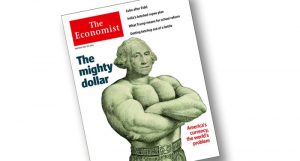
Wait, what?!

Do we think we can wrestle The Almighty US Dollars from these US Territories and make them use C$?

Who are we kidding?! What are we smoking?! The Almighty Dollar is the World’s reserve currency!

Yes, there is the cultural concept of The Almighty Dollar from which so many artistic developments have emerged; (source: Wikipedia). The concept refers the idiom often used to satirize obsession with material wealth, or with capitalism in general. The phrase implies that money is a kind of deity. The following is a sample of artistic outputs with that exact title:

Are “we” planning to supplant The Almighty Dollar from usage by Caribbean people? The answer is No! There is no plan to deviating from the US$. Rather the plan is for the Caribbean Union Trade Federation (CU) and the Caribbean Central Bank (CCB) to join the US dollar, or rather for the US dollar to join us. This plan is eloquently featured in the book Go Lean…Caribbean with this concise quotation (Page 32):

CCB – Mixed Basket – Monetary Strength
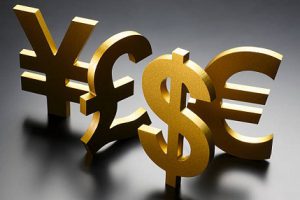
An obscure Murphy’s Law states “when people claim that it’s the principle, and not the money, chances are, it’s the money”. There are more important things in life than money, but somehow all these things can be bought/sold … for money. The CU strategy is to consolidate monetary reserves for the region into one currency, the Caribbean Dollar, managed by the technocratic Caribbean Central Bank. The C$ will be based on a mixed-basket of foreign reserves (US dollars, Euros, British pounds & [Japanese] Yens). This strategy allows the CU to negotiate with sufficient economic strengths.

So the Go Lean book depicts more than just a plan, it serves as a roadmap for the establishment of the technocratic CU, and the allied CCB to manage the monetary-currency affairs of this region. The book describes the breath-and-width of the CCB and the Caribbean Dollar as a Single Currency. With the US$ as a subset of the currency basket, we need all the dollars we can get to strengthen the foundation of the C$ currency.

The C$ manifest as an electronic currency, more so than coins or notes.

This manifestation requires further explanation. In a previous blog-commentary, the analogy of casino money was presented. Consider this excerpt:

[Casino] tokens, chips and e-Cards … become a nominal or fiat currency themselves; their value is set by the issuer to be any denomination they want – they may choose to make $100 chips Blue, $1000 chips Green and $10,000 chips Red or any combination. The only thing that matters is the cash-out process: when the gamers wants to receive real world currency value for any chips in hand.

Money is not just currency and currency is not just money. Currency relates to a national designation (US dollar, British pounds, Chinese Yuan, etc.) or a regional designation like the Euro or the Eastern Caribbean/EC dollar. Money, on the other hand is a matter of four (4) functions:

  • A Medium …
  • A Measure …
  • A Standard …
  • A Store …

Casino currencies (tokens, chips and e-Cards) perform all these 4 functions; and more …

Desisting from economic fallacies, there is a dose of reality in the Go Lean roadmap: the US will not allow its territories to wean off the US dollar as the currency base. But there is no controversy if the Caribbean dollar is an electronic currency for PR and USVI.

This is the plan!

This commentary is the 3rd of a 5-part series from the movement behind the book Go Lean … Caribbean in consideration of Money Matters for leading the Caribbean down a different path from their status quo. This commentary asserts that there is a place for The Almighty US Dollar in the Caribbean plan because the C$ will be transacted mostly as an electronic currency or e-Money. The other commentaries in the series are cataloged as follows:

  1. Leading with Money Matters: Follow the Jobs
  2. Leading with Money Matters: Competing for New Industries
  3. Leading with Money Matters: Almighty Dollar
  4. Leading with Money Matters: As Goes Housing, Goes the Market
  5. Leading with Money Matters: Lottery Hopes and Dreams

All of these commentaries relate to “how” the stewards for a new Caribbean can more easily persuade the region stakeholders to follow this empowerment roadmap. Consolidating the currency qualifies as “low hanging fruit”, new capital will result, just as a by-product of M1 Money Multiplier.  This was explained in a prior Go Lean commentary as follows:

Benefits outside of the payment transaction; the scheme increases M1, which increases available bank capital for community investments. (M1 is the measurement of currency/money in circulation – M0 – plus overnight bank deposits. As M1 values increase, there is a dynamic to create money “from thin-air”, called the money multiplier. The more money in the system, the more liquidity for investment and industrial expansion.)

Low hanging fruit, yes, but it is heavy-lifting to deliver. There is the need to optimize the technology and tactics for e-Money deployment. This is the role-responsibility for the lean, technocratic CCB to feature the agility to keep pace of technology and market changes. With such an efficient and effective delivery, it is only logical to conclude that people will “follow the money”. Then when even more money is created, people will conform, comply and capitulate even further. This is why this Go Lean/CU/CCB roadmap depicts e-Money as a hallmark of technocratic efficiency. The New York City MetroCard is an example of e-Money.
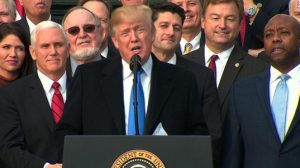
So for the Caribbean region, if we want to reform and transform our economic engines, to be better places to live, work and play, we have to dangle The Almighty Dollar” in front of our regional stakeholders. Surely, then will we get everyone’s attention.

This CU/CCB/Go Lean roadmap therefore urges the Caribbean Dollar as a Single Currency for the full Caribbean region. In effect this make the region a Single Market. These are the 3 prime directives for the Single Market:

  • Optimization of the economic-banking engines in order to grow the regional economy and create 2.2 million new jobs.
  • Establishment of a security apparatus to ensure public safety and protect the resultant economic engines.
  • Improvement of Caribbean governance to support these engines, including a separation-of-powers between the member-states and CU federal agencies.

As related in that previous commentary, a Single Currency in the Caribbean – for the Caribbean – is a BIG idea for reforming and transforming the economic engines of the 42 million people among our 30 member-states (including Puerto Rico and the US Virgin Islands); The Go Lean book stresses that our effort must likewise be a regional pursuit, and it must also optimize our currency landscape. This was an early motivation for the roadmap, as pronounced in the opening Declaration of Interdependence (Pages 12 – 13):

xi. Whereas all men are entitled to the benefits of good governance in a free society, “new guards” must be enacted to dissuade the emergence of incompetence, corruption, nepotism and cronyism at the peril of the people’s best interest. The Federation must guarantee the executions of a social contract between government and the governed.

xxiv. Whereas a free market economy can be induced and spurred for continuous progress, the Federation must install the controls to better manage aspects of the economy: jobs, inflation, savings rate, investments and other economic principles. Thereby attracting direct foreign investment because of the stability and vibrancy of our economy.

The Go Lean book provides 370-pages of turn-by-turn instructions on “how” to adopt new community ethos, plus the strategies, tactics, implementations and advocacies to execute so as to reboot, reform and transform the societal engines of Caribbean society. There is a lot of consideration in the book for establishing the CCB and a Single Currency in the region. There have also been a lot of previous blog-commentaries; consider this sample:

https://goleancaribbean.com/blog/?p=13744 Failure to Launch – Economics: The Quest for a ‘Single Currency’
https://goleancaribbean.com/blog/?p=13365 Model of the West Africa Single Currency ECOWAS
https://goleancaribbean.com/blog/?p=10513 Transforming Money Countrywide in India
https://goleancaribbean.com/blog/?p=8381 Case Study on Central Banking for Puerto Rico
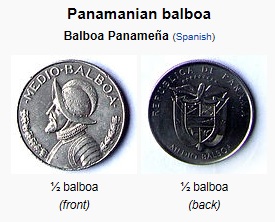
https://goleancaribbean.com/blog/?p=4166 A Lesson from Panama: The Balboa Currency
https://goleancaribbean.com/blog/?p=3858 Lesson from the ECB Model: Unveiling 1 trillion Euro stimulus program
https://goleancaribbean.com/blog/?p=360 Central Banks Can Create Money from ‘Thin Air’ – Here’s How
https://goleancaribbean.com/blog/?p=833 Profile of the Euro: One Currency, Diverse Economies

If the planners for a new Caribbean want to reform and transform the region, then we must take the lead with regional currencies. Past currency management in the region has been dysfunctional:

Go Lean book Page 316 Appendix ZB Lessons Learned: 20 years later – Trinidad & Tobago – April 1993

TT Central Bank Floating of the TT dollar

https://goleancaribbean.com/blog/?p=467 Barbados Central Bank records $3.7m loss in 2013

So in order to introduce a new economic leadership regime to the region, we must introduce a new currency regime, too.

This is why the Go Lean/CU/CCB effort must …

Lead with Money Matters.

In summary, shepherding the economy is no simple task, the regional economy, even harder still – described as heavy-lifting. But technocratic shepherding of regional currencies is conceivable, believable and achievable.

We urge all Caribbean stakeholders – government officials, bankers and ordinary citizens – to lean-in for the currency innovations  and empowerments detailed in this Go Lean roadmap. This is how we will make our homeland a better place to live, work and play. 🙂

Download the free e-Book of Go Lean … Caribbean – now!

Sign the petition to lean-in for this roadmap for the Caribbean Union Trade Federation.

———–

Appendix VIDEO – For The Love of Money- The O’Jays – https://youtu.be/kjuRhETwbI0

Published on Feb 5, 2010 – Classic from the great O’Jays


Share this post:
, ,
[Top]

Taking from the Poor to Give to the Rich – ENCORE

The US Congress and White House have done it, they have successfully passed their Tax Reform bill that effectively “takes from the poor and gives to the rich”. See full story here:

Washington (CNN) – Republican lawmakers joined President Donald Trump [today] on Wednesday afternoon to celebrate their largest legislative achievement of 2017, in a public ceremony spotlighting the most sweeping overhaul of the US tax system in more than 30 years.

“It’s always a lot of fun when you win,” Trump said at the ceremony on the White House lawn, after thanking congressional leaders including Senate Majority Leader Mitch McConnell and House Speaker Paul Ryan.

Hailing passage of the GOP’s tax plan and surrounded by dozens of prominent Republicans in Congress, Trump said the package would fulfill his core campaign promise. … 
Source: CNN retrieved December 20, 2017 from: http://www.cnn.com/2017/12/20/politics/house-senate-trump-tax-bill/index.html

This is Payback!

The Tax Reform strategy here double-downs on the concept of Supply-side economics. The hope is that corporate entities and wealthy people will receive tax breaks and then use the “wind fall” to re-invest in the community, thereafter creating jobs and economic growth. The Republicans in Washington (Congress and the White House) are betting on the success of this strategy even though there has been utter failures with this approach; for example just recently in the US State of Kansas.

Whether that re-investment occurs or not is the unknown. What is known is that the Rich will undoubtedly get the tax breaks. The Rich will win, at the expense of the Poor. This is why that foregoing article also relates:

While Republicans [leaders] cheer the bill’s passage, however, 55% of Americans oppose the plan, according to a new CNN poll. Just 33% say they favor the GOP’s proposals to reform the nation’s tax code.

This is a great opportunity to Encore a previous blog-commentary from December 16, 2014 when the same group – Washington Republicans – maneuvered to pass a law to repeal many post-2008 restrictions to guarantee higher profits for the nation’s banks. While this is an American drama, this is an opportunity for the Caribbean to learn lessons on managing governance for the Greater Good; which this foregoing law violates. See that Encore here:

——————–

Go Lean Commentary – A Christmas Present for the Banks from the Omnibus Bill

What do you get for $5.3 Billion? There must be some return on that investment.

The book Go Lean … Caribbean asserts that the US Federal Election-Campaign system is not the model that the Caribbean should want to emulate.  This book relates that $5.3 Billion was spent for the 2008 Federal Elections (Page 116), a lot of it contributed by corporations, resulting in a lot of influence peddling. This drama was vividly demonstrated this Saturday evening when the “lame-duck” Congress (the Senate in particular), delayed the required Omnibus Spending Bill – just in time – to extort favorable legislation that would roll back some of the federal regulations enacted after the Great Recession of 2008 to protect against banking systemic risks.

Senate Minority Leader Mitch McConnell speaks to reporters on upcoming budget battle in Washington

The Shadow Influences spearheading these changes are known to adhere to the principle that “a crisis is a terrible thing to waste” – a quotation credited to famed American Economist Paul Romer. While others will think that this drama was just politics as usual, the following article depicts the more strategic nature of the new legislation, to foster the environment and industry for financial derivative trading – this is too specific for any life-long politician (the US Senate) to advocate on the sly. No, this has the fingerprints of Wall Street Shadow Influences all over it. (See Appendix below for encyclopedic references on derivatives and swaps). See the news article here:

Title: A Christmas Present For The Banks From The Omnibus Bill
Forbes Magazine Investing Online Blog (Posted 12/13/2014; retrieved 12/15/2014) –
http://www.forbes.com/sites/robertlenzner/2014/12/13/wall-street-reverses-ban-on-trading-derivatives-backed-by-uncle-sam/
By: Robert Lenzner, Contributor

Wall Street banks like Citigroup and JP Morgan Chase have flexed the power of their influence to pressure Congress and the White House into a key change in the law that will allow the trading of risky financial derivatives in bank operations that are insured by the Federal Deposit Insurance Corp. This means the nation’s largest banks used the deadline for passing the Omnibus spending bill as pressure to reverse a key section of the Dodd-Frank bill of 2010 that was meant to prohibit a federal government bailout of swaps entities.

It was the existence of over $500 billion of Credit Default Swaps on the balance sheet of AIG in 2008 that threatened to bankrupt the largest insurance company in the world. So, in effect, six years later, the same Wall Street banks that were bailed out by federal largesse, are being given a legislative gift that will enable them to freely trade the securities that brought Lehman Bros down in 2008 — and obtain access to the benefit of insurance and loans from the federal government.

Behind the scenes, unbenownst to the media or the public, the nation’s Too Big To Fail banks used the Omnibus spending bill that is necessary to finance federal spending in 2015 to undo this little-known Dodd Frank provision that might have restricted the volume of trading in financial derivatives that have been a major source of profits as well as controversy since the 2008 financial crisis. Most financial derivatives will be able to be traded in entities holding deposits guaranteed by the Federal Deposit Insurance Corp. and subject to borrowing at the Federal Reserve’s discount window. This is a key advantage for the banks that will enable them to increase their activity in these securities.

Former Rep. Barney Frank, who was a key sponsor of the Wall Street reform legislation, attacked the change in Dodd-Frank as “a road map for further attacks on our protection against financial instability.” Frank was incensed that the last-minute procedure was “inserted with no hearings, no chance for further modification, and no chance for debate into a mammoth bill in the last days of a lame-duck Congress.”

If President Obama signs the Omnibus spending bill, he will have effectively rewarded Wall Street by reversing a provision that prohibits any federal assistance from being provided to “swaps entities,” including registered swaps dealers, security-based swap dealers, major swap participants and major security-based swap participants, according to information obtained by Forbes. This measure required banks to remove their swaps dealing from the bank itself and do its trading in non-bank affiliates not eligible for deposit insurance. Access to the Fed’s discount window would also be denied in case of a financial crisis in the markets.

The net effect of the changes in the Omnibus spending bill would be to expand permissible swaps activities within a bank and to only exclude swaps based on asset-backed securities that are unregulated and not of a credit quality.

All very technical, but the net result is to allow Citigroup, JP Morgan Chase and others to use the Fed’s discount window to borrow money in case of a crisis that roiled the derivative market for credit swaps again as took place in September 2008. In effect, it means the major banks need not limit their trading of financial derivatives to non-bank operations that the market will never be fooled into thinking some future risk of danger has just been avoided. It is a complex holiday present for Wall Street. And it is a warning sign that other sections of the Dodd-Frank Wall Street reform may also be vulnerable to political rollback.

An additionally relevant blog by Robert Lenzer: http://www.forbes.com/sites/robertlenzner/2014/12/08/the-ten-reasons-why-there-will-be-another-systemic-financial-crisis/

The crisis of the 2008 Great Recession was the lynchpin for the Go Lean movement, (book and blogs). This book, serving as a roadmap for the introduction and implementation of the Caribbean Union Trade Federation (CU), posits that the effects of the 2008 Great Recession continue to linger in the Caribbean. Therefore the book advocates learning lessons from 2008 and to turn-around, reform, and reboot the region’s economic, security and governing engines to ensure that “never again” will our society be so vulnerable to the financial misgivings of our American neighbors; or the “plutocratic” elements there-in.

The field of economics is not always solutions-oriented; sometimes, they have been responsible for the problem. Consider this VIDEO snippet here:

Documentary Film “Inside Job” – http://youtu.be/CaXNqGgIc-g

Published on Apr 19, 2012 – Since the repeal of Glass-Steagall in 1999, the total notional value of derivatives has grown by over 700% for holdings companies and 674% for commercial banks. Even more alarming, since the third quarter of 2008 when the cracks in the financial system were clearly evident, derivatives at the commercial banks have grown from $175 TRILLION to $234 TRILLION ” a $59 TRILLION increase. To put this in perspective, the cumulative Gross Domestic Product in the United States over that same time frame (Q3 2008 through Q3 2010) was approximately $32 TRILLION.

Despite our region’s small size (42 million people in 30 member-states), we do have some control over our own destiny. We want to be a protégé, not a parasite.

The CU’s prime directives, elevating the Caribbean’s economic-security-governing engines, recognize that the changes the region needs must start first with the adoption of new community ethos and controls. Early in the book, the need for this shift is pronounced (Declaration of Interdependence – Page 13) with these statements:

xxiv.      Whereas a free market economy can be induced and spurred for continuous progress, the Federation must install the controls to better manage aspects of the economy: jobs, inflation, savings rate, investments and other economic principles. Thereby attracting direct foreign investment because of the stability and vibrancy of our economy.

xxv.      Whereas the legacy of international democracies had been imperiled due to a global financial crisis, the structure of the Federation must allow for financial stability and assurance of the Federation’s institutions. To mandate the economic vibrancy of the region, monetary and fiscal controls and policies must be incorporated as proactive and reactive measures. These measures must address threats against the financial integrity of the Federation and of the member-states.

The Go Lean book, and previous blog/commentaries, stressed the key community ethos, strategies, tactics, implementation and advocacies necessary to effect change in the region ourselves, to improve the stewardship over the economy. They are detailed as follows:

Who We Are – 2008 Internal Experiences Page 8
Community Ethos – Economic Principles Page 21
Community Ethos – Security Principles – Private Interest –vs- Public Protection Page 23
Community Ethos – Security Principles – “Light Up Dark Place” Page 23
Community Ethos – Governing Principles – Lean Operations Page 24
Community Ethos – Ways to Impact the Future Page 26
Community Ethos – Impact Research and Development Page 30
Community Ethos – Ways to Improve Negotiations Page 32
Community Ethos – Ways to Impact Turn-around – 2008 Crisis Page 33
Community Ethos – Ways to Impact the Greater Good Page 37
Strategy – Mission – Fortify   the Stability of the Securities Markets Page 47
Strategy – CU Stakeholders to Protect – Banks & Depositors Page 47
Tactical – Growing the Economy – Minimizing Bubbles Page 69
Tactical – Separation-of-Powers – Depository Insurance & Regulatory Agency Page 73
Anecdote – Turning Around CARICOM – Effects of 2008 Financial Crisis Page 92
Implementation – Assemble Caribbean Central Bank as Cooperative Page 96
Implementation – Assemble Constitutional Convention Page 97
Implementation – Ways to Better Manage Debt – Optimizing Wall Street Role Page 114
Implementation – Ways to Impact Elections Page 116
Planning – 10 Big Ideas – Single Market / Currency Union Page 127
Planning – Lessons Learned from 2008 Page 136
Planning – Ways to Measure Progress Page 147
Advocacy – Ways to Grow the Economy – Case Study of $5.3 Billion Influence Page 151
Advocacy – Ways to Improve Credit Ratings – 2008 Lessons Page 155
Advocacy – Ways to Improve Housing – 2008 Mortgage Crisis Lessons Page 161
Advocacy – Ways to Impact Labor Unions – 2008 Effects on Main Street Jobs Page 164
Anecdote – Caribbean Industrialist – Growing without Shadow Influence Page 189
Advocacy – Reforms for Banking Regulations Page 199
Advocacy – Ways to Impact Wall Street Page 200
Appendix – Whitepaper: The 2008 Financial Crisis and Its Aftermath Page 276
Appendix – Currency Capital Controls Page 325

The points of effective, technocratic regional stewardship, especially in response to the 2008 Great Recession / Financial Crisis, were further elaborated upon in these previous blog/commentaries:

https://goleancaribbean.com/blog/?p=3311 Detroit to exit historic bankruptcy – Finally recovering from 2008
https://goleancaribbean.com/blog/?p=3164 Michigan Unemployment – Then (2008/2009) and Now
https://goleancaribbean.com/blog/?p=3090 Lessons Learned – Europe Sovereign Debt Crisis of 2009
https://goleancaribbean.com/blog/?p=3028 Why India is doing better than most emerging markets since the crisis
https://goleancaribbean.com/blog/?p=2930 ‘Too Big To Fail’ – Caribbean Version
https://goleancaribbean.com/blog/?p=2448 ‘Consumer Reports’ Survey Finds the American Consumer is Back
https://goleancaribbean.com/blog/?p=2435 Korea’s Protégé Model – A Dream for Latin America / Caribbean
https://goleancaribbean.com/blog/?p=2338 Lesson Learned – How Best to Welcome the Dreaded ‘Plutocracy’
https://goleancaribbean.com/blog/?p=2259 The Criminalization of American Business – Big Banks Let Loose
https://goleancaribbean.com/blog/?p=2105 Recessions and Public Health – Lessons from the 2008 Crisis
https://goleancaribbean.com/blog/?p=2090 The Depth & Breadth of Remediating 2008
https://goleancaribbean.com/blog/?p=1896 The Crisis in Black Homeownership since 2008
https://goleancaribbean.com/blog/?p=1309 5 Steps of a Bubble
https://goleancaribbean.com/blog/?p=841 Post 2008 – Having Less Babies is Bad for the Economy?
https://goleancaribbean.com/blog/?p=782 Open/Review the Time Capsule: The Great Recession of 2008
https://goleancaribbean.com/blog/?p=709 Post 2008 – Student debt holds back home buyers
https://goleancaribbean.com/blog/?p=522 Financial Crisis Jokes – Reflecting the cultural impact on society
https://goleancaribbean.com/blog/?p=518 Post 2008 – What Banks learn about financial risks
https://goleancaribbean.com/blog/?p=378 Fed Releases Transcripts from 2008 Meetings
https://goleancaribbean.com/blog/?p=242 Post 2008 – The Erosion of the Middle Class

The 2008 Great Recession brought major upheaval to American and Caribbean societies, plus the rest of the world. Much of the world is interconnected; this is even more acute in our region. Our economy is structured as parasites on the US economy. According to the foregoing news article, our parasitic host is not worthy of our devotion. What qualifies the Go Lean promoters to make these assessments? Principals of this publishing foundation were also there in 2008, engaged with major stakeholders of the Global Financial crisis: Lehman Brothers, JPMorganChase, Citigroup, etc. They were on the inside looking out, not the outside looking in. They were equipped to discern the Shadow Influence.

The Go Lean movement advocates the role of protégé, not parasite. We must diversify our economy and additionally cater to other markets, other countries and other industries. This is the purpose of the Go Lean roadmap, to provide a turn-by-turn direction to accomplish this diversification.

If we want to make our homeland a better place to live, work and play then we cannot depend on the stewards of the US economy to shepherd the Caribbean. Look! Despite the cruel and harsh lessons from 2008, it appears – from the foregoing article and the Appendix below – that the Wall Street Shadow Influence wants to repeat the “Bubble” that lead up to 2008. When they succeed, they profit; but when they fail, the “low man” on Main Street – and parasite economies like the Caribbean – has to endure the pain, not Wall Street.

The Go Lean roadmap does not seek to change America, (though we lobby against these arbitrary “Derivative” rule changes in the Omnibus Budget Bill); only teach the lessons to the Caribbean. We can do so much better.

Download the free e-Book of Go Lean … Caribbean – now!

——————–

Appendix – Derivatives:
(Source: http://en.wikipedia.org/wiki/Derivative_(finance) )

In finance, a derivative is a contract that derives its value from the performance of an underlying entity. This underlying entity can be an asset, index, or interest rate, and is often called the “underlying”.[1][2] Derivatives can be used for a number of purposes – including insuring against price movements (hedging), increasing exposure to price movements for speculation or getting access to otherwise hard to trade assets or markets.[3]

Some of the more common derivatives include forwards, futures, options, swaps, and variations of these such as collateralized debt obligations, credit default swaps, and mortgage backed securities. Most derivatives are traded over-the-counter (off-exchange) or on an exchange such as the Chicago Mercantile Exchange, while most insurance contracts have developed into a separate industry. Derivatives are one of the three main categories of financial instruments, the other two being equities (i.e. stocks or shares) and debt (i.e. bonds and mortgages).

Speculation
Derivatives can be used to acquire risk, rather than to hedge against risk. Thus, some individuals and institutions will enter into a derivative contract to speculate on the value of the underlying asset, betting that the party seeking insurance will be wrong about the future value of the underlying asset. Speculators look to buy an asset in the future at a low price according to a derivative contract when the future market price is high, or to sell an asset in the future at a high price according to a derivative contract when the future market price is less.

Risks
The use of derivatives can result in large losses because of the use of leverage, or borrowing; (see VIDEO below). Derivatives allow investors to earn large returns from small movements in the underlying asset’s price. However, investors could lose large amounts if the price of the underlying moves against them significantly. There have been several instances of massive losses in derivative markets, such as the following:

  • American International Group (AIG) lost more than US$18 billion through a subsidiary over the preceding three quarters on credit default swaps (CDSs).[42] The United States Federal Reserve Bank announced the creation of a secured credit facility of up to US$85 billion, to prevent the company’s collapse by enabling AIG to meet its obligations to deliver additional collateral to its credit default swap trading partners.[43]
  • The loss of US$7.2 Billion by Société Générale in January 2008 through mis-use of futures contracts.
  • The loss of US$6.4 billion in the failed fund Amaranth Advisors, which was long natural gas in September 2006 when the price plummeted.
  • The loss of US$4.6 billion in the failed fund Long-Term Capital Management in 1998.
  • The loss of US$1.3 billion equivalent in oil derivatives in 1993 and 1994 by Metallgesellschaft AG.[44]
  • The loss of US$1.2 billion equivalent in equity derivatives in 1995 by Barings Bank.[45]
  • UBS AG, Switzerland’s biggest bank, suffered a $2 billion loss through unauthorized trading discovered in September 2011.[46]

This comes to a staggering $39.5 billion; the majority in the last decade after the Commodity Futures Modernization Act of 2000 was passed.

Financial Reform and Government Regulation
Under US law and the laws of most other developed countries, derivatives have special legal exemptions that make them a particularly attractive legal form to extend credit.[47] The strong creditor protections afforded to derivatives counterparties, in combination with their complexity and lack of transparency however, can cause capital markets to underprice credit risk. This can contribute to credit booms, and increase systemic risks.[47] Indeed, the use of derivatives to conceal credit risk from third parties while protecting derivative counterparties contributed to the financial crisis of 2008 in the United States.[47][48]

CU Blog - A Christmas Present for The Banks From The Omnibus Bill - Photo 2

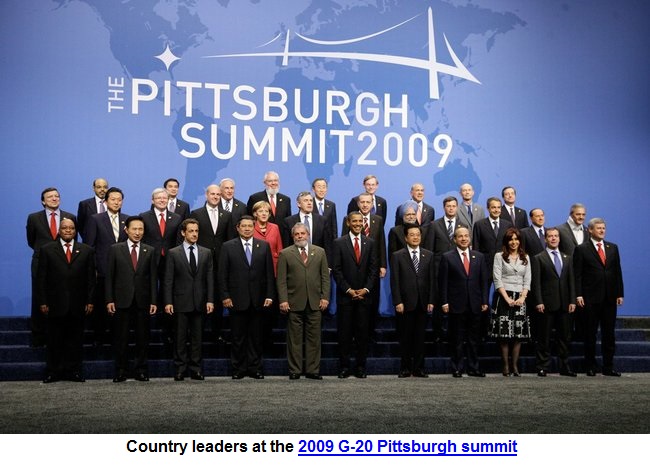
In November 2012, the SEC and regulators from Australia, Brazil, the European Union, Hong Kong, Japan, Ontario, Quebec, Singapore, and Switzerland met to discuss reforming the OTC derivatives market, as had been agreed by leaders at the 2009 G-20 Pittsburgh summit (see Photo) in September 2009.[54] In December 2012, they released a joint statement to the effect that they recognized that the market is a global one and “firmly support the adoption and enforcement of robust and consistent standards in and across jurisdictions”, with the goals of mitigating risk, improving transparency, protecting against market abuse, preventing regulatory gaps, reducing the potential for arbitrage opportunities, and fostering a level playing field for market participants.[54] They also agreed on the need to reduce regulatory uncertainty and provide market participants with sufficient clarity on laws and regulations by avoiding, to the extent possible, the application of conflicting rules to the same entities and transactions, and minimizing the application of inconsistent and duplicative rules.[54] At the same time, they noted that “complete harmonization – perfect alignment of rules across jurisdictions” would be difficult, because of jurisdictions’ differences in law, policy, markets, implementation timing, and legislative and regulatory processes.[54]

VIDEO: Leverage Explained – http://youtu.be/6YEnkkznGTg
When things turn out good, big risk means big return; but if it turns out bad, you lose everything and left with a debt.

Source References:
1.       Derivatives (Report). Office of the Comptroller of the Currency, U.S. Department of Treasury. http://www.occ.gov/topics/capital-markets/financial-markets/trading/derivatives/index-derivatives.html. Retrieved February 2013. “A derivative is a financial contract whose value is derived from the performance of some underlying market factors, such as interest rates, currency exchange rates, and commodity, credit, or equity prices. Derivative transactions include an assortment of financial contracts, including structured debt obligations and deposits, swaps, futures, options, caps, floors, collars, forwards, and various combinations thereof.”
2.       Derivative Definition Investopedia
3.       Koehler, Christian. “The Relationship between the Complexity of Financial Derivatives and Systemic Risk”. Working Paper: 10–11.
——
42.   Kelleher, James B. (September 18, 2008). “”Buffett’s Time Bomb Goes Off on Wall Street” by James B. Kelleher of Reuters”. Reuters.com. Retrieved August 29, 2010.
43.   “Fed’s $85 billion Loan Rescues Insurer”
44.   Edwards, Franklin (1995). “Derivatives Can Be Hazardous To Your Health: The Case of Metallgesellschaft”. Derivatives Quarterly (Spring 1995): 8–17
45.   Whaley, Robert (2006). Derivatives: markets, valuation, and risk management. John Wiley and Sons. p. 506. ISBN 0-471-78632-2.
46.   “UBS Loss Shows Banks Fail to Learn From Kerviel, Leeson”. Businessweek. September 15, 2011. Retrieved March 5, 2013.
47.   “Michael Simkovic, Secret Liens and the Financial Crisis of 2008.”. American Bankruptcy Law Journal, Vol. 83, p. 253. 2009. Retrieved March 5, 2013.
48.   Michael Simkovic (January 11, 2011). “Bankruptcy Immunities, Transparency, and Capital Structure, Presentation at the World Bank”. Ssrn.com. doi:10.2139/ssrn.1738539. Retrieved March 5, 2013.
——
54.   “Joint Press Statement of Leaders on Operating Principles and Areas of Exploration in the Regulation of the Cross-Border OTC Derivatives Market; 2012-251”. Sec.gov. December 4, 2012. Retrieved March 5, 2013.

Share this post:
, ,
[Top]

Failure to Launch – Economics: The Quest for a ‘Single Currency’

Go Lean Commentary

Money is more important in society than people are willing to accept. Though some critics say that love, family, faith, country and other principles are more important. But an obscure Murphy’s Law states (and is quoted in the book Go Lean…Caribbean at Page 32) this ironic truth:
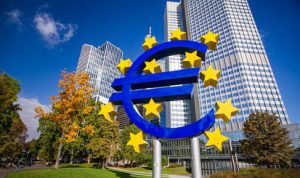
“When people claim that it’s the principle, and not the money, chances are, it’s the money”.

There are indeed more important things in life than money, but somehow all these things can be bought/sold … for money. The strategy in this Go Lean book is to optimize money issues: consolidate monetary reserves for the region into a Single Currency, the Caribbean Dollar (C$), managed by the technocratic Caribbean Central Bank (CCB). The C$ will be based on a mixed-basket of foreign reserves (US dollars, Euros, British pounds & Yens).

This is a simple but effective plan – a best practice: introduce the Caribbean Central Bank (CCB) and Caribbean Dollar as a Single Currency for the region’s 30 member-states.

Huge benefits abound! And so this economic initiative is important for Caribbean elevation. The rationale is that this strategy “enables economies to be more resilient to exogenous shocks”.

exogenous shocks – In economics, a shock is an unexpected or unpredictable event that affects an economy, either positively or negatively. Technically, it refers to an unpredictable change in exogenous factors — that is, factors unexplained by economics — which may influence endogenous economic variables. – Wikipedia.

This benefit is so obvious that others have thought of this before …

Yet there has consistently been a Failure to Launch this economic initiative; or to do so successfully. Consider the historicity of the CariCom Multilateral Clearing Facility (CMCF) in Appendix A below – a normal functionality of regional Central Banks.

Currently, the Caribbean has no regional Central Bank, so safety-net, no shock absorption, and no integration. This is the quest of the book Go Lean…Caribbean; it urges the introduction and implementation of the Caribbean Union Trade Federation (CU) and the Caribbean Central Bank (CCB). The book serves as a roadmap for this goal, with turn-by-turn directions to integrate the 30 member-states of the region and forge an $800 Billion economy.

We have the great models of the United States and Europe to consider how a Single Currency can positively impact a consolidated regional economy; see VIDEOs in the Appendices below. We do not have to invent innovative solutions on our own; we can simply model the best-practices of these other communities. This is the familiar advocacy for the movement behind the book Go Lean…Caribbean. In a previous blog-commentary from May 10, 2014 the merits of Single Market and Single Currency economic integrations were related as follows:

Europe has the safety net of the economies-of-scale of 508 million people and a GDP of $15 Trillion in 28 member-states in the EU; (the Eurozone subset is 18 states, 333 million people and $13.1 Trillion GDP). The US has 50 states and 320 million people. Shocks and dips can therefore be absorbed and leveraged across the entire region .The EU is still the #1 economy in the world; the US is #2. – [See related VIDEO here: https://youtu.be/vRzFAvgBhU0.]

The Go Lean roadmap signals change for the region. It introduces new measures, new opportunities and new recoveries. Exogenous shocks are a reality. Economies will rise and fall; the recovery is key. Prices will inflate and deflate; there are very effective measures – at the regional level – for managing all these indices. The Go Lean book serves as a roadmap for the establishment of the Caribbean Union Trade Federation (CU), and the allied Caribbean Central Bank (CCB) to manage the monetary-currency affairs of this region. The book describes the breath-and-width of the CCB and the Caribbean Dollar Single Currency.

The book Go Lean…Caribbean also detailed previous (inadequate) attempts to integrate Caribbean currencies …

… this commentary is the 2nd of 4 parts in a series on the Caribbean’s Failure to Launch solutions to elevate the region’s societal engines. The full series is catalogued as follows:

  1. Failure to Launch Past Failures for Integration
  2. Failure to Launch – Economics: Caribbean Central Banks and the Quest for a Single Currency
  3. Failure to Launch Security: Caribbean Basin Security Dreams
  4. Failure to Launch Governance: Assembling the Regional Alphabet Organizations

In the previous submission – Part 1 of 4 – the history of the failed West Indies Federation was detailed. This effort only related to the Anglophone countries but among its many initiatives was the plan to introduce a consolidated currency. This excerpt is derived from the Go Lean book’s Anecdote on Caribbean currencies relating English-speaking and other language groups:

Anecdote # 16 – Caribbean Currencies (Page 149)

Anglophone

In 1946, a West Indian Currency Conference saw Barbados, British Guiana, the Leeward Islands, Trinidad & Tobago and the Windward Islands agree to establish a unified decimal currency system based on a new West Indian dollar to replace the current arrangement of having three different Boards of Commissioners of Currency (for Barbados, British Guiana and Trinidad) manage monetary issues in the Eastern Caribbean. In 1949, the British government formalized the dollar system of accounts in British Guiana and the Eastern Caribbean territories by introducing the British West Indies dollar (BWI$) at the already existing conversion rate of $4.80 per pound sterling (or $1 = 4 shillings 2 pence). It was one of the many experimental political and economic ventures tested by the British government to form a uniform system within their British West Indies territories. The symbol “BWI$” was frequently used and the currency was known verbally as the “Beewee” (slang for British West Indies) dollar. Shortly thereafter in 1950, the British Caribbean Currency Board (BCCB) was set up in Trinidad with the sole right to issue notes and coins of the new unified currency and given the mandate of keeping full foreign exchange cover to ensure convertibility at $4.80 per pound sterling. In 1951, the British Virgin Islands joined the arrangement, but this led to discontent because that territory was more naturally drawn to the currency of the neighboring US Virgin Islands. In 1961, the British Virgin Islands withdrew from the arrangement and adopted the US dollar.

Until 1955, the BWI$ existed only as banknotes in conjunction with sterling fractional coinage. Decimal coins replaced the sterling coins in 1955. These decimal coins were denominated in cents, with each cent being worth one halfpenny in sterling.

In 1958, the West Indies Federation was established and the BWI$ was its currency. However, although Jamaica (including the Cayman Islands and the Turks and Caicos Islands) was part of the West Indies Federation, it retained the Jamaican pound, despite adopting the BWI$ as legal tender from 1954. Jamaica, the Cayman Islands, and the Turks and Caicos Islands were already long established users of the sterling accounts system of pounds, shillings, and pence.

In 1964 Jamaica ended their legal tender status of the BWI$ and Trinidad & Tobago withdrew from the currency union (adopting “dollars” representing their national currency: Jamaican and T&T Dollar – see Appendix ZB [on Page 316]). This forced the movement of the headquarters of the BCCB to Barbados and soon the “BWI$” dollar lost its regional support.

In 1965, the BWI dollar of the now defunct West Indies Federation was replaced at par by the East Caribbean dollar and the BCCB was replaced by the Eastern Caribbean Currency Authority or ECCA. Guyana withdrew from the currency union in 1966. Grenada rejoined the common currency arrangement in 1968 having utilized the Trinidad & Tobago dollar from 1964. Barbados withdrew from the currency union in 1972, following which the ECCA headquarters were moved to St. Kitts.

Between 1965 and 1983, the Eastern Caribbean Currency Authority issued the EC$, with banknotes from 1965 and coins from 1981. The EC$ is now issued by the Eastern Caribbean Central Bank, (Basseterre, Saint Kitts), established July 1983.

The exchange rate of $4.80 = £1 sterling (equivalent to the old $1 = 4s 2d) continued right into up until July 7, 1976 for the new Eastern Caribbean dollar, until it was pegged to the US dollar, at the exchange rate of US$1 = EC$2.70.

Today, the East Caribbean dollar (EC$) is the currency for eight of nine members of the Organization of Eastern Caribbean States (OECS), the one exception being the British Virgin Islands, which uses the United States dollar exclusively; so too does non-OECS member-state Turks and Caicos Islands.

Francophone

The French franc was the former currency of France until the Euro was adopted in 1999 (by law, 2002 de facto). The name is said to derive from the Latin inscription francorum rex (“King of the Franks”) on early French coins, or from the French franc, meaning “free” (and “frank”). The franc was also used within the French Empire’s colonies, including the French West Indies or French Antilles, referring to the territories currently under French sovereignty in the Antilles islands of the Caribbean:

    Guadeloupe, Martinique, Saint Martin, Saint Barthélemy; plus in islands of strong French heritage such as Dominica & Saint Lucia. Haiti, though, because of its early independence (1793) employs the Gourde currency, initially pegged to the Franc.

Dutch / Netherlands

The Dutch guilder was the national currency of the Netherlands until it was replaced by the Euro on 1 January 2002. The Netherlands Antillean guilder is currently the only guilder in use, which after the dissolution of the Netherlands Antilles remained the currency of the new countries Curaçao and Sint Maarten and (until 1 January 2011) the Caribbean Netherlands.

The Caribbean guilder is the proposed currency of the Caribbean islands of Curaçao and Sint Maarten, which formed after the dissolution of the Netherlands Antilles in October 2010. The Netherlands Antillean guilder (NAg) is expected to continue to circulate until 2013 as the currency was not finalized in time for the islands’ separate autonomous status. The currency will be abbreviated CMg (for Curacao, Sint Maarten guilder) and will be pegged to the US dollar at the same exchange rate as the Netherlands Antillean Guilder (1 USD = 1.79 NAg = 1.79 CMg). Since, the islands of Bonaire, Sint Eustatius and Saba adopted the US dollar directly on 1 January 2011, the introduction of the CMg will mean the end of the circulation of NAg.

The diverse colonial Caribbean also had Spanish (Cuba, Dominican Republic and Puerto Rico) islands and Danish territories, as in today’s US Virgin Islands.

There would be many benefits if multiple countries come together and finally form a Single Market-Single Currency economy. This is the quest for the CU/Go Lean roadmap: to form a Single Market-Single Currency of the Caribbean Dollar (C$).

This CU/CCB/C$/Go Lean roadmap therefore urges this Single Market / Single Currency effort with these 3 prime directives:

  • Optimization of the economic-banking engines in order to grow the regional economy and create 2.2 million new jobs.
  • Establishment of a security apparatus to ensure public safety and protect the resultant economic engines.
  • Improvement of Caribbean governance to support these engines, including a separation-of-powers between the member-states and CU federal agencies.

Central Banks are required to …

  1. facilitate monetary and currency policies,
  2. oversee bank regulations, and
  3. execute inter-bank financial transactions (like payment settlements described in the Appendix A below regarding the previous CMCF).

Presently, the Caribbean region has no integrated Central Bank, nor have we ever had one in the past. There has always been a Failure to Launch this needed solution. Even the Anglo-Caribbean’s previous offering of the CMCF only addressed one of these 3 central banking functionalities: payments. Unfortunately, we need them all! We need to launch a fitting solution to assuage all Caribbean’s monetary-currency deficiencies.

(Puerto Rico and the US Virgin Islands monetary needs are managed as a subset of the Federal Reserve Bank of New York; 2600 miles away from their territorial markets).

A Single Currency in the Caribbean – for the Caribbean – is a BIG idea for reforming and transforming the economic engines of the 42 million people among the 30 member-states (including Puerto Rico and the US Virgin Islands). The Go Lean book stresses that our effort must be a regional pursuit, and it must also optimize our currency landscape. This was an early motivation for the roadmap, as pronounced in the opening Declaration of Interdependence (Pages 12 – 13):

xi. Whereas all men are entitled to the benefits of good governance in a free society, “new guards” must be enacted to dissuade the emergence of incompetence, corruption, nepotism and cronyism at the peril of the people’s best interest. The Federation must guarantee the executions of a social contract between government and the governed.

xxiv. Whereas a free market economy can be induced and spurred for continuous progress, the Federation must install the controls to better manage aspects of the economy: jobs, inflation, savings rate, investments and other economic principles. Thereby attracting direct foreign investment because of the stability and vibrancy of our economy.

The Go Lean book provides 370-pages of turn-by-turn instructions on “how” to adopt new community ethos, plus the strategies, tactics, implementations and advocacies to execute so as to reboot, reform and transform the societal engines of Caribbean society. There is a lot of consideration in the book for establishing the CCB and the Single Currency in the region. The Caribbean’s Failure to Launch this in the past is … inexcusable.

There have been a number of previous blog-commentaries by the Go Lean movement that have highlighted the eco-system of monetary, central banking and currency best practices. See a sample list here:

https://goleancaribbean.com/blog/?p=13365 Case Study from West Africa: Single Currency for 8 Diverse Countries
https://goleancaribbean.com/blog/?p=10513 Case Study from India: Transforming Money Countrywide
https://goleancaribbean.com/blog/?p=8381 Case Study on Central Banking for Puerto Rico
https://goleancaribbean.com/blog/?p=7140 Case Study from Azerbaijan: Setting its currency on free float
https://goleancaribbean.com/blog/?p=6800 Case Study from Venezuela: Suing Black Market currency website
https://goleancaribbean.com/blog/?p=4166 Case Study from Panama: History of the Balboa Currency
https://goleancaribbean.com/blog/?p=3858 Case Study from ECB: Unveiling 1 trillion Euro stimulus program
https://goleancaribbean.com/blog/?p=3814 Case Study from Switzerland: Unpegging the franc
https://goleancaribbean.com/blog/?p=360 Case Study on Central Banks: Creating Money from ‘Thin Air’
https://goleancaribbean.com/blog/?p=833 Case Study from the Euro: One Currency, Diverse Economies

In summary, shepherding the economy is no simple task; the regional economy, even harder still – described as heavy-lifting. It requires the best practices of skilled technocrats. But the benefits of the heavy-lifting are too alluring to ignore: growing the monetary supply, expanding the availability of investment capital and leveraging across a larger base to absorb the shocks naturally associated with a Free Market Economy.

We are past the time of needing this Caribbean Dollar Single Currency reform. We needed it 60 years ago, and even more now. We must not fail to launch

We urge all Caribbean stakeholders – government officials, bankers and ordinary citizens – to lean-in for the innovations  and empowerments detailed in this CU/CCB/Go Lean roadmap. It is so obvious; these are among the best practices of America and Europe! The successful delivery of this banking-economic-currency solution can make our homeland a better place to live, work and play. 🙂

Download the free e-book of Go Lean … Caribbean – now!

Sign the petition to lean-in for this roadmap for the Caribbean Union Trade Federation.

————

Appendix A – Caricom Multilateral Clearing Facility: A Brief Note

Payments clearing and settlement in the Caribbean has historically been a battleground of discontent. There have been many attempts since the Colonial period to structure the payments landscape but none of these efforts have been successful. This blog will briefly outline one such effort — the Caricom Multilateral Clearing Facility.

The Caricom [Caribbean Community]Multilateral Clearing Facility (1977–1983) introduced a centralized accounting system for all eligible payments institutions within the region. The original agreement establishing the CMCF was signed by the Central Bank of Barbados, the Monetary Authority of Belize, the East Caribbean Currency Authority, the Bank of Guyana, the Bank of Jamaica, and the Central Bank of Trinidad and Tobago.
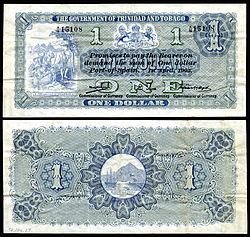
The Central Bank of Trinidad and Tobago (CBTT) acted as the agent bank for the CMCF. That is, the CBTT carried out the secretariat functions as well as being responsible for the accounting records and distribution of cash settlements.
The main objectives of the CMCF were to:

  1. facilitate settlement on a multilateral basis of eligible transactions between participating countries;
  2. promote the use of currencies of members in settling eligible transactions between the individual countries, thereby economizing on the use of foreign exchange; and,
  3. promote monetary co-operation among the participants, thereby contributing to the expansion of trade and economic activity within Caricom.

Advantages of multilateral clearing to regional banks:

  1. reduction of correspondent deposits in foreign exchange
  2. longer time for investment of deposits where drawn cheques are in circulation within the region

Disadvantages of multilateral clearing to regional banks:

  1. legal implications arising from fact that the CMCF was not established as a separate legal entity
  2. lack of formal enforcement mechanism in the event of debtor default
  3. need for an independent regulatory body
  4. technical and administrative complexities

The failure of the CMCF was caused by its abusive usage by some member countries. Instead of being used for its primary purpose of simply minimizing the foreign exchange requirement for intra-regional trade, some members saw it as a balance of payments support facility to allow them to continue purchasing goods which they otherwise would not have been able to. Thus the closing of the CMCF was only inevitable because of the overuse of its informal credit facility.

After the closing of the CMCF the region regressed to a costly nexus of bilateral agreements which offer far less efficiency than multilateral systems.

The demise of the CMCF was unfortunate because it was a clever device for effecting small but significant economies in the use of foreign exchange. In fact, the CMCF might have formed an institutional base for a federal system of Caricom central banks.

Source: CMCF and Caricom Trade. Ginne Lea Miller, 1993

Source: Retrieved December 11, 2017 from https://medium.com/@RJGriffith/caricom-multilateral-clearing-facility-a-brief-note-ab5085a9c8d1

————

Appendix B VIDEO – The U.S. Federal Reserve Bank – How it Works, and What it Does – Money, Dollars, & Currency – https://youtu.be/y1OJlJ9COg0


Bright Enlightenment

Published on Dec 25, 2012 – The U.S. Federal Reserve Bank – How it Works & What it Does – Money, Currency, & the Dollar
– SUBSCRIBE to Bright Enlightenment: http://www.youtube.com/BrightEnlighte…
– LIKE our page on Facebook: http://www.Facebook.com/BrightEnlight…
– TWITTER: http://www.twitter.com/BrightEnlight
– WEBSITE: http://www.BrightEnlightenment.com/

  • Category: Education 
  • License: Standard YouTube License

————

Appendix C VIDEO – ECB and the Eurosystem explained in 3 min. – https://youtu.be/TAlcFwGIQBg


European Central Bank

Published on Sep 26, 2013 – Who takes care of the “euro”? What is inflation ? Why is price stability important for you? Find the answers to these questions and more in this three-minute introduction to the ECB and the Eurosystem’s role and tasks. To discover more about the ECB, please visit http://www.ecb.europa.eu/ecb

Share this post:
,
[Top]

West African Case Study: ECOWAS to Launch ‘Single Currency’

Go Lean Commentary

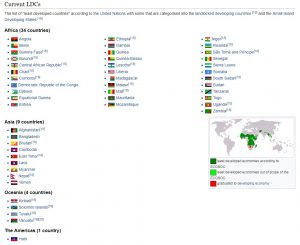
The Caribbean has the poorest country in the Western Hemisphere: Haiti. But even that is not the poorest (least developed) country in the world; that distinction belongs to 34 countries in Africa; see the full list in the Appendix below.

Yet still, there are lessons that some countries in Africa can teach us here in the Caribbean. One such lesson – Case Study – is the Economic Community of West African States (ECOWAS); see the full news article here of the endeavor for a Single Currency:

Title: ECOWAS leaders agree on single currency by 2020
The 4th meeting of the Presidential Taskforce on a common currency for the West African Monetary Zone (WAMZ) has taken place in Niamey, the capital of Niger, with the firm commitment towards the acceleration of the processes leading to the use of the single currency by 2020.

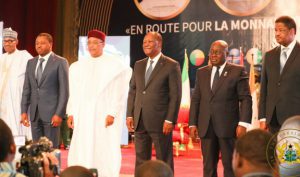
The meeting was attended by the members of the Presidential Taskforce, namely the President of Ghana, Nana Addo Dankwa Akufo-Addo; the President of the Federal Republic of Nigeria, Muhammadu Buhari; the President of Cote d’Ivoire, Alassane Ouattara; and the host, Mahamadou Issoufou, President of Niger.
Chairperson of the Economic Community of West African States (ECOWAS), Faure Essozimna Gnassingbé, President of the Togolese Republic, was also present, and took part in the proceedings.

In a communiqué issued at the end of the 1-day meeting, on Tuesday, 24th October, 2017, the members of the Taskforce took note of the report of the Ministerial Committee meeting held earlier, and acknowledged the quality of the conclusions as well as the relevance of the recommendations made, whose substantive parts relate to the measures for the acceleration of the ECOWAS single currency programme.

The Taskforce appreciated the progress made by all ECOWAS institutions involved in the conduct of ECOWAS Single Currency Roadmap activities, and reaffirmed its commitment to the pursuit and the acceleration of the economic, financial and monetary integration agenda of ECOWAS.

In endorsing the main recommendations of the Ministerial Committee, the Taskforce urged Member States to pursue the structural reforms of their respective economies, to help them deal with fluctuations in the prices of raw materials, and enable their economies to be more resilient to exogenous shocks.

Additionally, the Taskforce urged Member States to take the necessary measures, including the attainment of the convergence criteria, necessary for the creation of the ECOWAS single currency by 2020.

The Communiqué noted that the Taskforce has “instructed the Ministerial committee to meet within three months to propose a new roadmap to accelerate the creation of the single currency by 2020. In this framework, a gradual approach can be undertaken, where a few countries, which are ready, can start the monetary union, whilst the other countries join later.”

The Presidential Task Force will hold their next meeting in Accra, in February 2018.

Background
It will be recalled that at the Extraordinary Summit of Heads of State and Government on 25th October, 2013, the Presidents of Ghana and Niger were appointed to oversee the creation of the single currency in a timely manner.

The two Presidents constituted a Task Force, whose membership included representatives of the President of Ghana and Niger; Ministers of Finance of Ghana and Niger; Governors of the eight Central Banks of ECOWAS member States; ECOWAS and UEMOA Commissions; West African Monetary Agency (WAMA) and the West African Monetary Institute, to advise them periodically on the monetary integration programme.

The membership of the taskforce was reviewed in 2015 to include the Presidents of Cote d’Ivoire and Nigeria, as well as the Ministers of Finance of the two countries.

The inaugural meeting of the Presidential Taskforce was held on 20th and 21st February, 2014 in Niamey. Subsequently, two other meetings were held in Accra on 7th and 8th July, 2014, with the last meeting held in Niamey from 4th to 6th February, 2015.

The main objectives of the third meeting were to examine the revised roadmap on the realisation of the ECOWAS single currency by 2020; a proposal from the ECOWAS Commission on the creation of an ECOWAS monetary Institute by 2018; and the concern raised by the WAMZ Convergence Council on the revised macroeconomic criteria adopted by the 45th Ordinary Summit of the Heads of State and Government held in Accra on 10th July, 2014.

After the third meeting, it was agreed, amongst others, that the Central Bank financing criterion be reclassified as a primary criterion because of its strategic importance to monetary and price stability. The revised roadmap on the realisation of the ECOWAS single currency by 2020 was to be costed, and sources of funding identified.
Source: Posted & retrieved on October 24, 2017 from: http://3news.com/ecowas-leaders-agree-single-currency-2020/

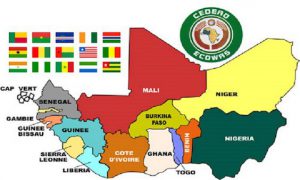
While ECOWAS has 15 member states, eight of these are French-speaking, five are English-speaking and two Portuguese-speaking – as of February 2017, not all are participating in this Single Currency endeavor … yet. (See Appendix VIDEO below on ECOWAS). The member-states that have pledged to launch this Single Currency in time for 2020 are as follows:

  • Ghana
  • Nigeria
  • Cote d’Ivoire
  • Togo

Why is this endeavor important and how can it guide the Caribbean? The foregoing article cited the rationale with this one quotation:

“enable their economies to be more resilient to exogenous shocks”.

This is a familiar advocacy for the movement behind the book Go Lean…Caribbean. In a previous blog-commentary from May 9, 2014 the merits of Single Market economic integration were related as follows:

Europe has the safety net of the economies-of-scale of 508 million people and a GDP of $15 Trillion in 28 member-states in the EU; (the Eurozone subset is 18 states, 333 million people and $13.1 Trillion GDP). The US has 50 states and 320 million people. Shocks and dips can therefore be absorbed and leveraged across the entire region .The EU is still the #1 economy in the world; the US is #2.

The Caribbean has no safety-net, no shock absorption, and no integration. This is the quest of the book Go Lean…Caribbean; it urges the introduction and implementation of the Caribbean Union Trade Federation (CU). The book serves as a roadmap for this goal, with turn-by-turn directions to integrate the 30 member-states of the region and forge an $800 Billion economy.

The Go Lean roadmap signals change for the region. It introduces new measures, new opportunities and new recoveries. Economies will rise and fall; the recovery is key. Prices will inflate and deflate; as depicted in the foregoing article, there are curative measures to manage these indices. The roadmap calls for the establishment of the allied Caribbean Central Bank (CCB) to manage the monetary affairs of this region. The book describes the breath-and-width of the CCB.

There are many benefits when multiple countries come together and form a Single Market economy. This is also the quest for the CU/Go Lean roadmap: to form a Single Market and make the Caribbean’s member-states “Pluralistic Democracies”. Pluralism – recognition and affirmation of diversity within a political body – applies in this West African Community as well; as these countries have a diverse mix of tribal affiliation, colonial legacy and language prioritization. These African developments are therefore fitting for a Case Study for the Caribbean to consider.

This CU/Go Lean roadmap therefore urges the same Single Market effort with these 3 prime directives:

  • Optimization of the economic engines in order to grow the regional economy and create 2.2 million new jobs.
  • Establishment of a security apparatus to ensure public safety and protect the resultant economic engines.
  • Improvement of Caribbean governance to support these engines, including a separation-of-powers between the member-states and CU federal agencies.

A Single Currency in West Africa – eventually: Eco – is not so unfamiliar. There are two current currencies that fit the mold:

The West Africa Monetary Zone – identified in the foregoing news article – attempts to establish a strong stable currency to rival the CFA franc, whose exchange rate is tied to that of the Euro and is guaranteed by the French Treasury. The eventual goal is for the CFA franc and “Eco” to merge, giving all of West and Central Africa a single, stable currency. The launch of the new currency – with a target date of 2020 – is being developed by the West African Monetary Institute based in Accra, Ghana.

Wow, for the BIG ideas… to elevate the economic engines for 155 million people in West Africa.

The Go Lean book also presents a BIG idea for reforming and transforming the economic engines of the 42 million people in our 30 Caribbean member-states; the book stresses that our effort must likewise be a regional pursuit, and it must also optimize our currency landscape. This was an early motivation for the roadmap, as pronounced in the opening Declaration of Interdependence (Pages 12 – 13):

xi. Whereas all men are entitled to the benefits of good governance in a free society, “new guards” must be enacted to dissuade the emergence of incompetence, corruption, nepotism and cronyism at the peril of the people’s best interest. The Federation must guarantee the executions of a social contract between government and the governed.

xvi. Whereas security of our homeland is inextricably linked to prosperity of the homeland, the economic and security interest of the region needs to be aligned under the same governance. Since economic crimes … can imperil the functioning of the wheels of commerce for all the citizenry, the accedence of this Federation must equip the security apparatus with the tools and techniques for predictive and proactive interdictions.

xxiv. Whereas a free market economy can be induced and spurred for continuous progress, the Federation must install the controls to better manage aspects of the economy: jobs, inflation, savings rate, investments and other economic principles. Thereby attracting direct foreign investment because of the stability and vibrancy of our economy.

The Go Lean book provides 370-pages of turn-by-turn instructions on “how” to adopt new community ethos, plus the strategies, tactics, implementations and advocacies to execute so as to reboot, reform and transform the societal engines of Caribbean society. There is a lot of consideration in the book for optimizing the currency and monetary eco-systems. Consider this excerpt detailing the Money Multiplier concept; from Page 22:

b-1. Money Multiplier

In monetary macroeconomics and banking, the money multiplier measures how much the money supply increases in response to a change in the monetary base. The multiplier may vary across countries, and will also vary depending on what measures of money are considered. For example, consider M1 as a measure of the U.S. money supply, and M0 as a measure of the U.S. monetary base. If a $1 increase in M0 by the Federal Reserve causes M1 to increase by $10, then the money multiplier is 10.

A money multiplier is one of various closely related ratios of commercial bank money to central bank money under a fractional-reserve banking system. Most often, it measures the maximum amount of commercial bank money that can be created by a given unit of central bank money. That is, in a fractional-reserve banking system, the total amount of loans that commercial banks are allowed to extend (the commercial bank money that they can legally create) is a multiple of reserves; this multiple is the reciprocal of the reserve ratio, and it is an economic multiplier.

Banks are allowed to lend out the monies on deposit up to some regulated maximum. If banks lend out close to that maximum allowed by their reserves, then the inequality becomes an approximate equality, and commercial bank money is central bank money times the multiplier. If banks instead lend less than the maximum, accumulating excess reserves, then commercial bank money will be less than central bank money times the theoretical multiplier.

As a formula and legal quantity, the money multiplier is neither complicated nor controversial – it is simply the maximum that commercial banks are allowed to lend out. However, there are various theories/tools/techniques concerning the mechanism of money creation in a fractional-reserve banking system, and they all have implications on monetary policy. As such this sphere of concern is normally managed by the professionals, classically-trained technocrats.

The conclusion of this consideration is straight forward – there is a multiplier associated with the currency in the money supply. Therefore it goes without saying that if the Caribbean member-states trade in US dollars, then the multiplier effect is extended to the United States of America. By contrast, if the Caribbean member-states trade in Euros, then the multiplier effect goes to the stakeholders of the European Central Bank – no Caribbean state. Therefore the communities of the Caribbean must embrace, as an ethos, its own currency, the Caribbean Dollar (managed by a technocratic Caribbean Central Bank), thereby bringing local benefits from local multipliers.

There have been a number of previous blog-commentaries by the Go Lean movement that have highlighted Case Studies on monetary and currency best practices. See a sample list here:

https://goleancaribbean.com/blog/?p=10513 Case Study from India: Transforming Money Countrywide
https://goleancaribbean.com/blog/?p=7140 Case Study from Azerbaijan: Setting its currency on free float
https://goleancaribbean.com/blog/?p=6800 Case Study from Venezuela: Suing Black Market currency website
https://goleancaribbean.com/blog/?p=4166 Case Study from Panama: History of the Balboa Currency
https://goleancaribbean.com/blog/?p=3858 Case Study from ECB: Unveiling 1 trillion Euro stimulus program
https://goleancaribbean.com/blog/?p=3814 Case Study from Switzerland: Unpegging the franc
https://goleancaribbean.com/blog/?p=360 Case Study on Central Banks: Creating Money from ‘Thin Air’
https://goleancaribbean.com/blog/?p=833 Case Study from the Euro: One Currency, Diverse Economies

In summary, shepherding the economy is no simple task. It requires the best practices of skilled technocrats. Hopefully these West African States will thrive with this new Single Currency effort as they embrace monetary best-practices.

We will be watching!

Hopefully too, the Single Currency efforts in our region – Caribbean Dollar – will manifest before 2020. The benefits are too alluring to ignore: growing the monetary supply, expanding the availability of investment capital and leveraging across a larger base to absorb the shocks naturally associated with a Free Market Economy. Wow; let’s get started.

We are past the time of needing Central Banking reform. We now need to Catch-Up and transform our own society to derive some of these benefits and innovations.

We urge all Caribbean stakeholders – government officials, bankers and ordinary citizens – to lean-in for the empowerments detailed in this Go Lean roadmap. These are best practices! These can make our homeland a better place to live, work and play. 🙂

Download the free e-book of Go Lean … Caribbean – now!

Sign the petition to lean-in for this roadmap for the Caribbean Union Trade Federation.

———–

Appendix – Current Least Developed Countries

Click on Photo to Enlarge

Source: Retrieved Wikipedia Online Encyclopedia October 25, 2017 from: https://en.wikipedia.org/wiki/Least_Developed_Countries#Africa_.2834_countries.29  

———–

Appendix VIDEO – About ECOWAS – https://youtu.be/f2m2UCuEYAs

Published on Jan 29, 2016 – MULTI-MEDIA ECOWAS.COMMUNICATION

  • Category: Comedy
  • License: Standard YouTube License
Share this post:
, , ,
[Top]

R.I.P. Noriega – Lessons Learned from Panama – ENCORE

Noriega RIP - Photo 1The world is acknowledging the passing of Manuel Noriega (1934-2017), the General and former Military Dictator of Panama (1983–1989), the Central American country with a Caribbean coastline. His life experience is one of highs and lows, ascending to great heights and depressing depths. There is so much for the planners of the new Caribbean to learn considering the historicity of Noriega.

… and the historicity of Panama.

One lesson – from Panama – was presented before in a previous Go Lean blog-commentary from February 10, 2015, encored here.

This previous blog-commentary, and the life of Noriega, portrays the duplicity and complexity of operating in the shadows of/for the United States of America. The theme is consistent:

American interest is not always Caribbean interest.

“From the 1950s until shortly before the [1989] U.S. invasion, Noriega worked closely with the U.S. Central Intelligence Agency. Noriega was one of the CIA’s most valued intelligence sources, as well as one of the primary conduits for illicit weapons, military equipment and cash destined for U.S.-backed counter-insurgency forces throughout Central and South America. Noriega was also a major cocaine trafficker, something which his U.S. intelligence handlers were aware of for years, but allowed because of his usefulness for their covert military operations in Latin America.”[4][5][6][7]

See the full blog-commentary regarding the Panamanian currency – Balboa – here:

————-

Go Lean Commentary – A Lesson in History – Panamanian Balboa

America has surely changed over the past century!

The people, institutions and governance of the US are now more tolerant of minorities and their communities. As such, there are no more American complexities in overthrowing Latin American & Caribbean governments.

Wink-wink

This hypothesis is validated with the lesson in history from 1941 in the Republic of Panama. This Central American country is a young nation; they were formed in 1903 after seceding from the Republic of Colombia, with US backing. The new country immediately signed a treaty with the US to allow the construction of the Panama Canal, by the US Army Corps of Engineers, and a perpetual lease* for its operations. The country’s separation from Colombia also included changing from the Colombian Peso currency. So in 1904 the Panamanian Balboa currency was launched, but as coins only; the country used the US Dollar as banknotes.

A basic tenant of macro-economics is that countries should issue their own currency and banknotes so as to better influence the economic engines in their communities. By manipulating the banknote quantity and the “Discount Rate” in a Fractional Central Banking System, monetary supply can be regulated, interest rates controlled; credit markets tamed; and yes, money can be created from “thin air”. Panama had none of this control, due to its lack of banknotes.

In 1941, the then-President Dr. Arnulfo Arias pushed the government to create the Central Bank and to issue paper currency. [2] The bank was authorized, constitutionally, to issue up to 6 million Balboas worth of paper notes, but only 2.7 million Balboas were issued on 2 October 1941. Seven days later, Arias was deposed in a military coup – supported by the United States – and replaced by Dr. Ricardo Adolfo de la Guardia Arango as President. The new government immediately closed the bank, withdrew the issued notes, and burned all unissued money stock. In the 74 years since then, the country has never re-attempted to issue its own paper money currency; they continue to use US Dollars, even today.

A bit extreme?

This lesson in history is presented in a consideration of the book Go Lean…Caribbean; it serves as a roadmap for the introduction and implementation of the technocratic Caribbean Union Trade Federation (CU) and Caribbean Central Bank (CCB) to provide better stewardship in ensuring that the currency and economic failures of the past, in the Caribbean and other regions, do not re-occur here in the homeland. The book posits that we must NOT fashion ourselves as an American parasite economy, but rather pursue a status as a protégé.

The full details of the Panamanian Balboa history is provided here:

Title: Panamanian Balboa
(Source: Wikipedia Online Encyclopedia (Retrieved 02/09/2015) – http://en.wikipedia.org/wiki/Panamanian_balboa)

The Balboa (sign: B/.; ISO 4217: PAB) is, along with the United States dollar, one of the official currencies of Panama. It is named in honor of the Spanish explorer / conquistador Vasco Núñez de Balboa. The Balboa is subdivided into 100 centésimos.

The history of the Panamanian Balboa

The Balboa replaced the Colombian Peso in 1904 following the country’s independence. The Balboa has been tied to the United States dollar (which is legal tender in Panama) at an exchange rate of 1:1 since its introduction and has always circulated alongside dollars.

Coins

In 1904, silver coins in denominations of 2½, 5, 10, 25, and 50 centésimos were introduced. These coins were weight-related to the 25 gram 50 centésimos, making the 2½ centésimos coin 1¼ grams. Its small size led to it being known as the “Panama pill” or the “Panama pearl”. In 1907, copper-nickel ½ and 2½ centésimos coins were introduced, followed by copper-nickel 5 centésimos in 1929. In 1930, coins for 110, ¼, and ½ Balboa were introduced, followed by 1 balboa in 1931, which were identical in size and composition to the corresponding U.S. coins. In 1935, bronze 1 centésimo coins were introduced, with 1¼ centésimo pieces minted in 1940.

CU Blog - A Lesson in History - Panamanian Balboa - Photo 1

In 1966, Panama followed the U.S. in changing the composition of their silver coins, with copper-nickel clad 110 and ¼ Balboa, and .400 fineness ½ Balboa. 1 balboa coins, at .900 fineness silver, were issued that year for the first time since 1947. In 1973, copper-nickel clad ½ Balboa coins were introduced. 1973 also saw the revival of the 2½ centésimos coin, which had a size similar to that of the U.S. half dime, but these were discontinued two years later due to lack of popular demand. In 1983, 1 centésimo coins followed their U.S. counterpart by switching from copper to copper plated zinc. Further issues of the 1 Balboa coins have been made since 1982 in copper-nickel without reducing the size.

Modern 1 and 5 centésimos and 110, ¼, and ½ balboa coins are the same weight, dimensions, and composition as the U.S. cent, nickel, dime, quarter, and half-dollar, respectively. In 2011, new 1 and 2 balboa bi-metal coins were issued.[1]

In addition to the circulating issues, commemorative coins with denominations of 5, 10, 20, 50, 75, 100, 150, 200, and 500 Balboas have been issued.

Banknotes

In 1941, President Dr. Arnulfo Arias pushed the government to enact Article 156 to the constitution, authorizing official and private banks to issue paper money. As a result, on 30 September 1941, El Banco Central de Emission de la Republica de Panama was established.[2]

CU Blog - A Lesson in History - Panamanian Balboa - Photo 2

The bank was authorized to issue up to 6,000,000 Balboas worth of paper notes, but only 2,700,000 balboas were issued on 2 October 1941. A week later, Dr. Ricardo Adolfo de la Guardia Arango replaced Arias as president in a coup supported by the United States. The new government immediately closed the bank, withdrew the issued notes, and burned all unissued stocks of same. Very few of these so-called “Arias Seven Day” notes escaped incineration.

Reference Notes:
1. http://worldcoinnews.blogspot.com/search/label/panama
2. Linzmayer, Owen (2012). “Panama”. The Banknote Book. San Francisco, CA: www.BanknoteNews.com.

Panama is out-of-scope of this Go Lean empowerment roadmap. They are not a member-state that caucuses with the Caribbean Community (CariCom), and they do not even have an “Observer” representation/status within the trade bloc. But since a part of their territory-coastline is on the Caribbean Sea, their dealings should generate review and monitoring from Caribbean planners. There are many issues for the Caribbean to consider  – from an academic point-of-view – about this history of Panama: an obvious failed-state as recent as the 1980’s.

Is the American manipulations in Panama’s past reflective of the same America today? The assumption is No! The US no longer draws such “hard lines” in their interactions with peoples of different ethnicity. The country has endured deep soul-searching and reconciliation of its racial past, (Civil Rights Movement, Affirmative Action, etc.), and now even the President of the United States is a Black Man. On the surface today, America is a color-blind society.

On the surface!

Behind the scenes, under the covers, there is another reality. The current American experience is that Black-and-Brown is still institutionally disadvantaged and Wall Street, and by extension “Big American Business”, wields uncanny power over the socio-economic-political affairs of the country. For this and other reasons, the Go Lean movement advocates for Caribbean people and institutions to take their own lead for their own determination. We want to be a protégé of the US, not a parasite.

The roadmap calls for a cooperative entity of the existing regional Central Banks to foster interdependence for the regional Greater Good. We must issue Caribbean banknotes, branded Caribbean Dollars (C$). The totality of the regional market, 42 million people in 30 member-states, is large enough to allow for streamlining of the marketplace, creating the right climate for viable currency/financial/securities markets. While there might be some reticence for liberal currency operations, considering that so many Caribbean member-states had to learn hard lessons on currency over the decades – painful devaluations – the CU is to be structured as a technocracy, with the right mix of skilled talent, gifted genius and independent oversight to allow regional C$ currency markets to soar.

The strategy is not a pro-American stance, no pegging to the US Dollar, therefore no losses will be experienced when the US dollar drops value compared to other international currencies, a far too frequent an occurrence in the last 50 years. The US Dollar planners (Federal Reserve) do not have the Caribbean best-interest in mind for their technocratic decisions regarding their currency management; they have American self-interest in mind. Therefore the Caribbean region must overcome any “fear of math” because the C$ may become stronger, (see VIDEO below), in comparison to the US$. This is why e-Commerce and e-Payments schemes are strongly urged within the CU/Go Lean roadmap.

In general, the CU will employ strategies, tactics and implementations to impact its prime directives; identified with the following 3 statements:

  • Optimization of the economic engines in order to grow the regional economy to $800 Billion & create 2.2 million new jobs.
  • Establishment of a security apparatus to protect the resultant economic engines and mitigate internal and external threats.
  • Improve Caribbean governance to support these engines.

Early in the Go Lean book, this need for careful technocratic stewardship of the regional Caribbean economy was pronounced (Declaration of Interdependence – Page 12 – 13) with these acknowledgements and statements:

xi.   Whereas all men are entitled to the benefits of good governance in a free society, “new guards” must be enacted to dissuade the emergence of incompetence, corruption, nepotism and cronyism at the peril of the people’s best interest. The Federation must guarantee the executions of a social contract between government and the governed.

xii.   Whereas the legacy in recent times in individual states may be that of ineffectual governance with no redress to higher authority, the accedence of this Federation will ensure accountability and escalation of the human and civil rights of the people for good governance, justice assurances, due process and the rule of law. As such, any threats of a “failed state” status for any member state must enact emergency measures on behalf of the Federation to protect the human, civil and property rights of the citizens, residents, allies, trading partners, and visitors of the affected member state and the Federation as a whole.

xxiv.   Whereas a free market economy can be induced and spurred for continuous progress, the Federation must install the controls to better manage aspects of the economy: jobs, inflation, savings rate, investments and other economic principles. Thereby attracting direct foreign investment because of the stability and vibrancy of our economy.

xxv.   Whereas the legacy of international democracies had been imperiled due to a global financial crisis, the structure of the Federation must allow for financial stability and assurance of the Federation’s institutions. To mandate the economic vibrancy of the region, monetary and fiscal controls and policies must be incorporated as proactive and reactive measures. These measures must address threats against the financial integrity of the Federation and of the member-states.

The Go Lean book, and previous blog/commentaries, stressed the key community ethos, strategies, tactics, implementations and advocacies necessary to regulate and manage the regional financial eco-system for the Caribbean currency. These points are detailed in the book as follows:

Community Ethos – Economic Principles – Economic Systems Influence Individual Choices Page 21
Community Ethos – Economic Principles – Consequences of Choices Lie in the Future Page 21
Community Ethos – Economic Principles – Money Multiplier Page 23
Community Ethos – Governing Principles – Lean Operations Page 24
Community Ethos – Ways to Impact the Future Page 26
Community Ethos – Ways to Impact the Greater Good Page 37
Strategy – Mission – Fortify the Stability of the Banking Institutions Page 45
Strategy – Provide Proper Oversight and Support for the Depository Institutions Page 46
Tactical – Ways to Foster a Technocracy Page 64
Tactical – Growing the Economy – Minimizing Bubbles Page 69
Tactical – Separation-of-Powers – Caribbean Central Bank Page 73
Tactical – Separation-of-Powers – Depository Institutions Regulatory Agency Page 73
Anecdote – Turning Around CARICOM – Effects of 2008 Financial Crisis Page 92
Implementation – Assemble Caribbean Central Bank as a Cooperative Page 96
Implementation – Ways to Better Manage Debt Page 114
Planning –10 Big Ideas – Single Market / Currency Union Page 127
Planning – Ways to Improve Failed-State Indices Page 134
Planning – Lessons Learned from 2008 Page 136
Planning – Ways to Measure Progress Page 147
Anecdote – Caribbean Currencies Page 149
Advocacy – Ways to Grow the Economy Page 151
Advocacy – Ways to Control Inflation Page 153
Advocacy – Reforms for Banking Regulations Page 199
Advocacy – Ways to Impact Wall Street Page 200
Advocacy – Ways to Impact Main Street Page 201
Appendix – Controlling Inflation – Technical Details Page 318
Appendix – Jamaica’s International Perception – “High inflation and currency dysfunction” Page 297

The points of effective, technocratic banking/economic stewardship of regional currencies, were further elaborated upon in these previous blog/commentaries:

https://goleancaribbean.com/blog/?p=3889 RBC EZPay – Ready for Change
https://goleancaribbean.com/blog/?p=3858 ECB unveils 1 trillion Euro stimulus program
https://goleancaribbean.com/blog/?p=3814 Lessons from the Swiss unpegging the franc
https://goleancaribbean.com/blog/?p=3743 Trinidad cuts 2015 budget as oil prices tumble
https://goleancaribbean.com/blog/?p=3582 For Canadian Banks: Caribbean is a ‘Bad Bet’
https://goleancaribbean.com/blog/?p=3090 Lessons Learned – Europe Sovereign Debt Crisis of 2009
https://goleancaribbean.com/blog/?p=2930 ‘Too Big To Fail’ – Caribbean Version
https://goleancaribbean.com/blog/?p=949 Inflation Matters
https://goleancaribbean.com/blog/?p=833 One currency, divergent economies
https://goleancaribbean.com/blog/?p=518 Analyzing the Data – What Banks learn about financial risks
https://goleancaribbean.com/blog/?p=378 US Federal Reserve Releases Transcripts from 2008 Meetings/Stimulus
https://goleancaribbean.com/blog/?p=273 10 Things We Don’t Want from the US – #3: Quantitative Easing

Similar to Panama, there are a number of Caribbean member-states that use the US dollar as their sole paper currency:

  • British Virgin Island
  • Turks & Caicos Islands
  • Dutch Caribbean Territories: Bonaire, Sint Eustatius and Saba
  • US Territories of Puerto Rico & US Virgin Islands

The Go Lean book reports that previous Caribbean administrations have failed miserably in managing regional currencies. Consider Jamaica for example, despite being pegged 1-to-1 with the US dollar in 1960’s, the J$ was trading at 87-to-1 with the US$ at press time for the book (November 2013). Other countries (like Trinidad, Dominican Republic, and the Eastern Caribbean Currency Union states) experienced similar turmoil, though at lesser rates of devaluation. The book opens with the declaration that the Caribbean is in crisis because of episodes like these currency failings. In every case, the direct after-effect was increased societal abandonment, and now the reported brain-drain rate is estimated at 70%, with some countries even reporting up to 81%. This disposition is symptomatic of a Failed-State status.

Currency management includes details of more than just the paper-money people carry in their wallets. The book describes the 4 basic functions of money:

  • a medium of exchange
  • a unit of account
  • a store of value
  • a standard of deferred payment

These dynamics have an effect on inflation/deflation and trade facilitation with other countries. So Central Banks must strenuously manage currency issues to ensure economic progress and avoid financial dysfunction. This point is conveyed in the following VIDEO, as regards the Central Bank management of the Chinese Yuan.

VIDEO: Pegging the Yuan – http://youtu.be/S-9iY1OgbDE

Uploaded on Oct 25, 2010 – How the Chinese Central Bank could peg the Yuan to the dollar by printing Yuan and buying dollars (building up a dollar reserve). This lesson in macro-economics can be applied to any Central Bank, any other currency.

There are so many currency issues that have to be coordinated that the Go Lean book describes the effort as heavy-lifting. The roadmap (Page 5) declares that change has come to the Caribbean, and that new technocrats are ready to assume oversight of regional currency issues:

Please swallow your pride
If I have things you need to borrow
For no one can fill those of your needs
That you won’t let show
You just call on me brother, when you need a hand

(Chorus)
We all need somebody to lean on
I just might have a problem that you’d understand
We all need somebody to lean on

(Lyrics of song: Lean On Me, by Singer/Songwriter: Bill Withers)

This is not the same world as 1941 Panama, but still there are many lessons to learn and apply in the Caribbean. The goal is simple, to move the region to a new destination: a better homeland to live, work and play. Now is the time for all of the Caribbean, the people, banking establishments and the governing institutions, to lean-in for the changes described in the book Go Lean … Caribbean.

🙂

Download the free e-Book of Go Lean … Caribbean – now!

———

* Appendix Footnote: Subsequent treaties added an expiration date for 1999; the Canal is now fully Panamanian.

Share this post:
, , , , ,
[Top]

Righting a Wrong: The 2008 Housing Crisis

Go Lean Commentary

Have you ever made a mistake?

“Let him that is without sin, cast the first stone” – Jesus Christ (The Bible @ John 8:7)

Since everyone makes mistakes, a good measure of a good character is how we “Right the Wrongs” that we may have caused to others. This could be the measurement of a good man (or woman), a good company and a good community. People want to be associated with goodness. They will travel great lengths and at great cost to associate with good people, affiliate with good companies and live in a good community.

CU Blog - Righting a Wrong - 2008 Housing Crisis - Photo 1

There are lessons to be learned when people, companies and communities make mistakes and then make concerted efforts to “Right the Wrongs”. These are lessons that can be applied right here in the Caribbean so as to supplement our efforts to elevate our society, to make the Caribbean homeland a better place to live, work and play.

This is more than just an academic discussion for the Caribbean; we are known to have our defects – we repeatedly make mistakes, we endanger people, oppress them, suppress their rights and then carry on unrepentant – this all results in “pushing” people away, causing societal abandonment. We must recognize these defects and repent, reconcile, reform and “Right the Wrongs” of our society.

This is the purpose of the book Go Lean…Caribbean, to help reform and transform the societal engines in the 30 member-states of the Caribbean region. The book serves as a roadmap for the introduction and implementation of the Caribbean Union Trade Federation (CU). The Go Lean/CU roadmap applies best-practices for community empowerment and features these 3 prime directives, proclaimed as follows:

  • Optimization of the economic engines to grow the regional economy to $800 Billion & create 2.2 million new jobs.
  • Establishment of a security apparatus to protect public safety and ensure the economic engines of the region.
  • Improvement of Caribbean governance to support these engines.

What “Wrongs” exactly can we consider to glean lessons-learned for our community empowerment? This commentary is 1 of 4 in a series considering how to “Right a Wrong”. The full series is as follows:

  1. Righting a Wrong: 2008 Housing Crisis
  2. Righting a Wrong: Puerto Rico’s Bankruptcy
  3. Righting a Wrong: Volkswagen Emissions Crisis
  4. Righting a Wrong: Takata Air-Bags

These “Wrongs” relate to bad actions and inaction by different actors. The image and reputations of stakeholders “take a hit” while the issue is fresh. But eventually the recovery – Righting the Wrong – can override and became the lasting legacy. This first wrong – 2008 Housing Crisis – was one of the episodes of the recent Great Recession. The Go Lean book sought to catalog the cause-and-effect of many 2008 developments from an inside perspective. The book identifies its authority to comment on these developments. See this “Who We Are” quotation (Page 8) and the VIDEO in the Appendix below:

This book is published by the SFE Foundation, a community development foundation chartered for the purpose of empowering and re-booting economic engines. …

2008 – The peak day of the recent global financial crisis was September 15, 2008. On this day, Wall Street giant Lehman Brothers filed for bankruptcy protection, and eventual dissolution, after succumbing to the weight of over-leverage in mortgage-backed securities. There is an old observation/expression that states that “there are 3 kinds of people in the world, those who make things happen, those who watch things happen and those who wonder ‘what happened?’“
Principals of the SFE Foundation were there in 2008 … engaged with Lehman Brothers; on the inside looking out, not the outside looking in. Understanding the anatomy of the modern macro economy, allows the dissection of the processes and the creation of viable solutions.

Omaha – The book was initially composed in Omaha, Nebraska, the home of one of the world’s richest men, Warren Buffet – the “Oracle of Omaha” – CEO of corporate giant Berkshire Hathaway. While the United States experienced boom and bust during the Great Recession, Omaha remained a stable, consistent model of prosperity (in March 2008 the unemployment rate in Omaha was 3.9 percent). This was no accident. This community embraces a certain ethos that is fundamental for stability and vibrancy: good corporate citizenship. Omaha is home to other corporate movers-shakers in addition to Berkshire Hathaway; (see Appendix A [on Page 254]). This community example is purported as a model for assimilation by the Caribbean region.

The Go Lean book, though composed in 2013, set the pattern for the Caribbean region to look-listen-learn from models, samples and examples like these. This allows for the regional stewards and administrators to structure policies and procedures so as to apply the lessons learned in their jurisdictions. This was an original intent. As a planning tool, the Go Lean book commenced with a Declaration of Interdependence, pronouncing the need for regional integration so as to improve our society based on lessons learned from other societies. See a stanza here (Page 14):

xxxiii. Whereas lessons can be learned and applied from the study of the recent history of other societies, the Federation must formalize statutes and organizational dimensions to avoid the pitfalls of communities like East Germany, Detroit, Indian (Native American) Reservations, Egypt and the previous West Indies Federation. On the other hand, the Federation must also implement the good examples learned from developments/communities like New York City, [Omaha,] Germany, Japan, Canada, the old American West and tenants of the US Constitution.

So here is the Wrong … and here is the “Righting of the Wrong” associated with the 2008 Housing Crisis:

The Wrong:
In 2008 a perfect storm of economic disasters hit the US and indeed the entire world. The most serious began with the collapse of housing bubbles in California and Florida, and the collapse of housing prices and the construction industries. Millions of mortgages (averaging about $200,000 each) had been bundled into securities called collateralized debt obligations that were re-sold worldwide. Many banks and hedge funds had borrowed hundreds of billions of dollars to buy these securities, which were now “toxic” because unknown values and no buying markets.

A series of the largest banks in the US and Europe collapsed; some went bankrupt, such as Lehman Brothers with $690 billion in assets; others such as Citigroup, the leading insurance company AIG, and the two largest mortgage companies (Fannie Mae, Freddie Mac) were bailed out by the US government. Congress voted $700 billion in bailout money, and the Treasury and Federal Reserve committed trillions of dollars to shoring up the financial system. But the measures did not reverse the declines – banks drastically tightened their lending policies, despite infusions of federal money. The government, for the first time, took major ownership positions in some banks. The stock market plunged 40%, wiping out tens of trillions of dollars in wealth (estimates tallying $11 Trillion); housing prices fell 20% nationwide wiping out trillions more. By late 2008 distress was spreading beyond the financial and housing sectors, especially as the “Big Three” of the automobile industry (General Motors, Ford and Chrysler) were on the verge of bankruptcy, and the retail sector showed major weaknesses. Critics of the $700 billion Troubled Assets Relief Program (TARP) expressed anger that much of the TARP money that had been distributed to banks was seemingly unaccounted for, with banks being secretive on the issue.[45] [See this portrayal in these photos or the VIDEO at https://youtu.be/N9YLta5Tr2A.]

CU Blog - Righting a Wrong - 2008 Housing Crisis - Photo 2

CU Blog - Righting a Wrong - 2008 Housing Crisis - Photo 3

CU Blog - Righting a Wrong - 2008 Housing Crisis - Photo 4

CU Blog - Righting a Wrong - 2008 Housing Crisis - Photo 5

Righting the Wrong:
In February 2009, [the newly inaugurated] President Barack Obama signed the American Recovery and Reinvestment Act; the bill provided $787 billion in stimulus through a combination of spending and tax cuts. The plan was largely based on the Keynesian theory that government spending should offset the fall in private spending during an economic downturn; otherwise the fall in private spending would perpetuate itself and productive resources, such as the labor hours of the unemployed, will be wasted.[46] Critics at the time claimed that government spending cannot offset a fall in private spending because government must borrow money from the private sector in order to add money to it. However, most economists do not think such “crowding out” is an issue when interest rates are near zero and the economy is stagnant.

The recession period officially expended only 6 quarters (Q4-2007 to Q1-2009), but the effects were longer lasting. This was deemed the Great Recession because of the fundamental shifts the economy made. For example, in the US, jobs paying between $14 and $21 per hour made up about 60% those lost during the recession, but such mid-wage jobs have comprised only about 27% of jobs gained during the recovery through mid-2012. In contrast, lower-paying jobs constituted about 58% of the jobs regained.

As of December 2012, the US Federal Reserve Bank reported that the net worth of US households recovered by $1.7 trillion to $65 trillion during Q3-2012. It was still below the record high of $67 trillion during Q3-2007, but up $13.5 trillion since its recent cyclical low during Q1-2009.[47]

Source: Book Go Lean…Caribbean Page 69 – 70

None of the Boom-and-Bust homes in this drama were in the Caribbean; (though Puerto Rico and US Virgin Islands are American territories and did have crises, their home pricing were only mildly affected, going up or going down only a little).

While this was a crisis for continental America, due to inaction on the part of Caribbean regional stewards, this 2008 crisis brought devastation to our region. In some cases, we are still reeling from it; they are near Failed-State status as a result.

There were bad actors in this crisis. They had their Day of Reckoning as well. See these previous blog-commentaries that detailed the aftershocks of the 2008 economic crisis:

https://goleancaribbean.com/blog/?p=10187 Day of Reckoning for NINJA Loans
https://goleancaribbean.com/blog/?p=8379 Economic Fallacy: Self-regulation of the Centers of Economic Activity
https://goleancaribbean.com/blog/?p=6531 A Lesson in History – Book Review of the ‘Exigency of 2008’
https://goleancaribbean.com/blog/?p=1896 The Crisis in Black Homeownership
https://goleancaribbean.com/blog/?p=1309 5 Steps of a Bubble
https://goleancaribbean.com/blog/?p=353 Book: Wrong Economic Policy Disasters and What We Can Learn

One mission of this Go Lean roadmap is to apply the lessons from this American Drama in the stewardship of our Caribbean homeland. Since we also had financial upheavals in our region, many things these were due to contagions of the American crisis. So we needed remediation of our financial institutions as well. This point was detailed in this previous blog-commentary from November 14, 2014:

‘Too Big To Fail’ – Caribbean Version

There were [financial] crises on 2 levels: the Global Financial Crisis of 2007 – 2009 and regional financial banking dysfunctions. See here:

Global – The banks labeled “Too Big To Fail” impacted the world’s economy during the Global Financial Crisis. Though the epi-center was on Wall Street, the Caribbean was not spared; it was deeply impacted with onslaughts to every aspect of Caribbean life (think: Tourism decline). In many ways, the crisis has still not passed.

Regional – The Caribbean region has not been front-and-center to many financial crises in the past, compared to the 465 US bank failures between 2008 and 2012. But over the past few decades, there have been some failures among local commercial banks and affiliated insurance companies where the institutions could not meet demands from depositors for withdrawal. Consider these examples from Jamaica and Trinidad:

  • There was a banking crisis in Jamaica in the 1990s. In January 1997, the decision was made to establish the Financial Sector Adjustment Company (FINSAC) with a mandate to take control and restructure the financial sector. FINSAC took control of 5 of the 9 commercial banks, 10 merchant banks, 21 insurance companies, 34 securities firms and 15 hotels. It was also involved in the re-capitalization and restructuring of 2 life insurance companies, with the requirement that they relinquish their shares in 2 commercial banks.[48]
  • For Trinidad, the notable failure was the holding company CL Financial, with subsidiaries Colonial Life Insurance Company and the CLICO Investment Bank (CIB). In mid-January 2009, this group approached the Central Bank of Trinidad and Tobago requesting financial assistance due to persistent liquidity problems. The global financial events of 2008 combined with other factors placed tremendous strain on the group’s Balance Sheet. The CL Financial lines of business ranged from the areas of finance and energy to manufacturing and real estate services. The group’s assets were estimated at US$16 billion at year-end 2007, and it had a presence in at least thirty countries worldwide, including Barbados. Most significantly, the company held investments in real estate in Trinidad and the United States of America, and in the world’s largest methanol plant prior to its difficulties.

Going forward, there needs to be a solution to mitigate systemic threats that may plague the Caribbean region.

This is the quest of the Go Lean roadmap. The book first presents the community ethos that the region needs to adopt; then it presents detailed strategies, tactics, implementations and advocacies for the economic stewards to deploy. These constitute Big Ideas for the Caribbean region.

For one, there is the plan for a Caribbean Central Bank!

Among the Big Ideas of the Caribbean Union Trade Federation is the introduction and assimilation of the Caribbean Central Bank (CCB) and the Caribbean Dollar. The CCB is actually a cooperative among the region’s Central Banks. All the existing Central Banks, at the time of ascension, will cede their monetary powers to the CCB and continue their participation using well-established cooperative principles. – Go Lean…Caribbean book Page 73

Secondly, there is the tactic of a separation-of-powers between the CU/CCB entities and the member-states in the region. This directive allows for the transfer of oversight and administration of certain state functions to the CU federal authorities. This is modeled after the European Union and the European Central Bank.

This is how the Go Lean roadmap proposes to “Right the Wrongs” of the recent financial crises: to incorporate the organizational structure with the mandate to administer and shepherd the region’s monetary and banking eco-system. This intent was pronounced at the outset, in the opening Declaration of Interdependence, enshrining the need for regional integration on monetary matters for Caribbean society. See the related stanzas here (Pages 12, 13):

xi. Whereas all men are entitled to the benefits of good governance in a free society, “new guards” must be enacted to dissuade the emergence of incompetence, corruption, nepotism and cronyism at the peril of the people’s best interest. The Federation must guarantee the executions of a social contract between government and the governed.

xxiv. Whereas a free market economy can be induced and spurred for continuous progress, the Federation must install the controls to better manage aspects of the economy: jobs, inflation, savings rate, investments and other economic principles. Thereby attracting direct foreign investment because of the stability and vibrancy of our economy.

xxv. Whereas the legacy of international democracies had been imperiled due to a global financial crisis, the structure of the Federation must allow for financial stability and assurance of the Federation’s institutions. To mandate the economic vibrancy of the region, monetary and fiscal controls and policies must be incorporated as proactive and reactive measures. These measures must address threats against the financial integrity of the Federation and of the member-states.

Now is the time for the Caribbean to embrace change. From an economic perspective, we have done wrong … in the past – at a minimum, we are guilty of inaction. We now need to “right those wrongs” or especially to develop the defenses to ensure no future damage to our economy by dysfunctional administration of the region’s monetary and economic engines. It is time for new stewards of the Caribbean economy, security and governing engines. It’s time for the CU/CCB. We must prove that we have learned from our past and that of our trading partners. We must do better and be better.

A lot is at stake: the hopes and dreams of our people, young and old. They all want; we all want a better Caribbean; better places to live, work and play. 🙂

Download the free e-Book of Go Lean … Caribbean – now!

Sign the petition to lean-in for the roadmap for the Caribbean Union Trade Federation.

————

Footnote References

45 – Holt, Jeff. “A Summary of the Primary Causes of the Housing Bubble and the Resulting Credit Crisis: A Non-Technical Paper”. 2009, 8, 1, 120-129. The Journal of Business Inquiry. Retrieved 15 February 2013.

46 – Congressional Budget Office – “Estimated Impact of the American Recovery and Reinvestment Act on Employment and Economic Output from October 2011 Through December 2011”. February 2012; retrieved June 2013.

47 – American Enterprise Institute – Retrieved December 2012 from: www.aei-ideas.org/…/u-s-net-worth-hasrecovered-13-5-trillion-but-still- below-2007-peak/

48 – Retrieved November 14, 2014 from: http://www.centralbank.org.bb/WEBCBB.nsf/WorkingPapers/DB0CF759B9E97FB9042579D70047F645/$FILE/Exploring%20Liquidity%20Linkages%20among%20CARICOM%20Banking%20Systems.pdf

————

Appendix VIDEOThe 2008 Financial Crisis: Crash Course Economicshttps://youtu.be/GPOv72Awo68

Published on Oct 21, 2015 – Today on Crash Course Economics, Adriene and Jacob talk about the 2008 financial crisis and the US Goverment’s response to the troubles. So, all this starts with home mortgages, and the use of mortgages as an investment instrument. For years, it seemed like the US housing market would go up and up. Like a bubble or something. It turns out it was a bubble. But not the good kind. And the government response was…interesting. Anyway, why are you reading this? Watch the video!
More Financial Crisis Resources:
Financial Crisis Inquiry Report: http://www.gpo.gov/fdsys/pkg/GPO-FCIC…
TAL: Giant Pool of Money: http://www.thisamericanlife.org/radio…
Timeline of the crisis: https://www.stlouisfed.org/financial-…
http://www.economist.com/news/schools…


Share this post:
, ,
[Top]

Plea to Philanthropists: Give us your Time, Talent and Treasuries

Go Lean Commentary 

Who is Sandy Weill? And why is his name important … to our cause for reforming and transforming the Caribbean?

The question relates not just to Mr. Sanford Weill, but to his wife – Joan – as well. So the question is “Who are Sandy and Joan Weill?

CU Blog - Philanthropist - Give us your Time, Talent and Treasuries - Photo 1

Accordingly, the publishers of the book, Go Lean…Caribbean know of them … well.  They are featured in the book; they are listed on Page 292 on the list of Billionaire Philanthropists. (That’s Billionaire with a ‘B’). These ones – 113 Billionaires as of July 2013 – had signed the “Giving Pledge”; they have committed to giving more than half of their wealth to charitable causes. See this explanation from the book (and the list) here:

The Bottom Line on Philanthropy
The “Occupy Wall Street” movement emerged in 2011 and proclaimed the slogan “We are the 99%”, referring to income inequality and wealth distribution in the US between the wealthiest One Percent and the rest of the population. But there is more than what “meets the eye” about this One Percent.

As governments around the world pull back, due to austerity and sequestration (US version in 2013), the philanthropic sector will be a critical force in meeting global needs. In what is called the “Giving Pledge” 113 billionaires have committed to give more than half of their wealth to charitable organizations. This level of philanthropy, over $37 billion by Warren Buffett alone, is historically unprecedented. Warren Buffett most lasting contribution will not be his money; rather that he has successfully leveraged his social network and the media to inspire other billionaires to give extraordinary wealth for charitable good. He is reshaping the way the rich think about money and giving, [and the way the rest of the world thinks about the rich]. Some notable names to sign the pledge: Microsoft founder Bill Gates, Richard Branson, Home Depot cofounder Arthur Blank and Hedge Fund mogul Bill Ackman, (see Appendix N [on Page 292]) – Forbes.com.

 CU Blog - Philanthropist - Give us your Time, Talent and Treasuries - Photo 2

(Click to Enlarge)

Some of these billionaires have pledged to go even further than just giving of their treasuries (money), but also pledge to give their time and talents. This is the familiarity with Sandy and Joan Weill. See the article here from the CNBC TV network. This Opinion-Editorial was written directly by them. See here:

Title: Philanthropy isn’t just about money
By: Joan and Sandy Weill
We both hail from Brooklyn and when we got married 58 years ago our goal in life was very simple. We wanted to do well enough to be able to afford a deep fryer. This is the honest truth. Sandy worked as a runner on Wall Street making $150 a month, while Joan earned more than Sandy working only two days a week as a teacher.

As a result of compound interest over the years, Joan is adamant that Sandy still owes her money from these early days!

Through much hard work and determination, we were able to buy that deep fryer and, as they say, the rest is history. We have been blessed beyond our wildest imaginations, and we plan to spend the years we have left doing what we have been passionate about for almost four decades now, giving back to a world that has been very good to us.

For us, philanthropy is much more than just writing a check. It’s donating your time, energy, experience, and intellect to the causes and organizations you are passionate about. In the early days, we used to say that Joan took care of the streets and Sandy took care of culture. We look at a nonprofit the same way we look at a company—investing in a nonprofit is like buying stock in that organization and we are always looking for the greatest return on our investment.

Education and partnership are at the heart of everything we do philanthropically, and we make long term commitments to the organizations we lead: Sandy is the founder and chairman of the National Academy Foundation (since 1982); chairman of Carnegie Hall (since 1991); chairman of Weill Cornell Medical College (since 1995); chairman of the Green Music Center at Sonoma State University (since 2011); and active with the Lang Lang International Music Foundation; Hospital for Special Surgery; University of California, San Francisco Medical Center; Committee Encouraging Corporate Philanthropy; Sidra Medical and Research Center in Qatar; and Rambam Hospital in Israel.

Joan is chair of Alvin Ailey American Dance Theater (since 2000); co-chair of the New York Presbyterian/Weill Cornell Medical Center Women’s Health Symposium (since 2000); remains chair emeritus of Paul Smith’s College in the Adirondacks; and is active with Citymeals-On-Wheels, Carnegie Hall, National Academy Foundation, Green Music Center at Sonoma State University and the Lang Lang International Music Foundation. Joan really has a passion for making a difference in people’s lives one at a time.

Given the various hats we wear with different nonprofit organizations that span the entire United States, we see a new paradigm emerging. It is no secret that federal, state and local budgets are shrinking because of today’s challenging economic environment. As a result, the public sector does not have the capital to support education, health care, music and the arts at the level it has been able to do for the last 100 years. The new paradigm we see is the importance of public-private partnerships. The public sector needs the money, and the private sector is going to demand results that will create new, higher standards to benefit everyone. This translates to the need for more philanthropy, and our private sector must answer the call by getting its employees involved and contributing not just financially, but with their time, enthusiasm and experience.

The National Academy Foundation is an example of a public-private partnership model that works. Sandy founded the organization back in 1982 in partnership with the New York City Board of Education, the teachers union and the private sector. The first Academy of Finance opened its doors at John Dewey High School in Brooklyn. Today, the National Academy Foundation has over 500 academies of finance; hospitality and tourism; information technology; engineering; and health sciences that educate more than 60,000 high school students across the country at a very low cost of less than $500 per student. The program has a 97-percent graduation rate with 84 percent of these graduates going on to college, often the first in their family to do so. Employees of more than 2,500 companies volunteer in classrooms, act as mentors, engage National Academy Foundation students in paid internships and serve on local advisory boards.

From our own experiences in philanthropy over the last almost four decades, we have found the following lessons very useful:

  1. Don’t be afraid to make mistakes.
  2. Don’t be afraid to hire people smarter than you.
  3. The busiest people can always do more.
  4. You can run a better private business if you help run philanthropic enterprises.
  5. Whatever you do, be passionate about it.
  6. Keep it focused, you can’t do everything.
  7. If you don’t understand something, don’t do it.
  8. Teams win.
  9. Be a pragmatic dreamer.
  10. Maintain a good sense of humor and never take yourself too seriously.

Philanthropy has been a large part of our lives for many years and is something we are deeply passionate about and enjoy doing together. We would encourage you to set goals, and as you come close to achieving those goals, push them out a little further. You will be really amazed at what you can achieve. After all, we began our journey just trying to get our hands on a deep fryer!
—By Sandy and Joan Weill for CNBC.
Source: CNBC – Consumer and Business News Channel – Posted 09/09/2013; retrieved 05/02/2017 from: http://www.cnbc.com/id/101019341

Related Articles:

Consuming this information, we learn an important factoid about Sandy and Joan Weill – more on Sandy the “Banker” in the Appendix below – and all private philanthropists for that matter:

“the private [funding] sector [(all philanthropists)] is going to demand results that will create new, higher standards to benefit everyone.”

In the Caribbean, we now welcome these higher standards, as we welcome the contributions from these philanthropists.

This message we now send to these 113 Billionaires on the Giving Pledge List – and all other philanthropists for that matter:

Give us your time, talent, treasuries and whatever higher standards. We will equally pledge to you, to ‘give and take’. We will take your contributions and give to you the needed accountability and corporate governance.

This is a familiar topic for this movement behind the book Go Lean … Caribbean. We have frequently observed-and-reported on the efforts of philanthropists and NGO’s in their efforts to reform and transform society. We have seen their successes … and failures. Consider the highlights of this previous effort by another “Giving Pledge Billionaire”, Facebook’s Mark Zuckerberg; where he struggled with trying to remediate the inner city school system in Newark, New Jersey (USA):

The issues of education reform, best practices, and funding options are stressed in the book Go Lean…Caribbean, even though these are not the primary focus of the book. Rather this book serves as a roadmap for the introduction and implementation of the Caribbean Union Trade Federation (CU), with the focus being on these following 3 prime directives:

  • Optimization of the economic engines in order to grow the regional economy to $800 Billion & create 2.2 million new jobs.
  • Establishment of a security apparatus to protect the resultant economic engines.
  • Improve Caribbean governance to support these engines.

Yet, the book posits that education is a vital consideration for economic empowerment; so too are non-government organizations, like Zuckerberg’s foundation. The book specifically highlights an important role that foundations execute in the sphere of foreign aid, sometimes even better than national governments (Page 219):

    One major argument against federally funded foreign aid is that the money is often lost to governmental corruption in the countries it was supposed to help. In 2003, a top university in Bangladesh claimed that at least 75% of all foreign aid given to that government was lost because of corruption. Since faith-based foreign aid focuses on churches or organizations operating independently of the government, funding has a better chance of being used effectively.

The [featured] news article though, highlights an onshore example, in the US, with multi-level governmental support, plenty of money, and yet still: failure! [So the solution for a lot of social problems is not just money alone].

So reforming and transforming the Caribbean takes more than just money; we need wisdom (best-practices and know-how) as well. The Go Lean roadmap provides the step-by-step plan to invite and engage philanthropists in the cause to elevate Caribbean society, to actually get them to give of their time and talent. It does not matter that these philanthropists (members of the One Percent class) may not be Caribbean-based. While many may be physically in the US, Canada and/or Europe, we know that they use the Caribbean as their playground. They are therefore identified as stakeholders of this regional empowerment plan.

The Go Lean roadmap is designed to cater to this One Percent group. See the headlines of this advocacy from the book here:

10 Ways to Impact the One PercentPage 224

1 Lean-in for the Caribbean Single Market This will allow for the unification of the region into one market, thereby expanding to an economy of 30 countries, 42million people and a GDP of over $800 Billion (c. 2010). The CU will foster the development for the entire region to aspire for a better life, filled with opportunities for greater prosperity. Those already across the prosperity thresholds, the One Percent, are also included in the “dream” for a more integrated society. So the CU will not penalize the rich for being rich; on the contrary, the region wants to respond to any invitation from rich philanthropists to engage. The CU will therefore invite more participation from this population, by soliciting direct foreign investments, incentivizing industrial initiatives and promoting activities appealing to the upper classes, like art, music, sports and culture.
2 Oversight for Non-for-Profit Foundations Many of the members of the One Percent facilitate charitable contributions by means of their personal or otherwise aligned foundations. The CU will therefore facilitate the eco-system for not-for-profit foundations.The CU Department of State will facilitate incorporations, administration and oversight. The CU will mandate accountability, transparency, financial integrity, and quality/risk management. In fact these foundations will qualify to utilize a lot of the CU’s e-Delivery methods, systems and resources.
3 Solicit Charitable Contributions Many of the CU advocacies align with the not-for-profit foundations of the billionaires and millionaires included in the One Percent. The CU will establish Special [Liaison] Groups with the organization structure to cater to this “crowd”. The goal will be to solicit their charitable contributions ($ Billions pledged) to CU regional targets. The CU member-states are all considered Third World countries that “need” a helping hand. The CU Special [Liaison] Group will promote the required image, proposals and supportive services.
4 Job Creators Inducements
5 Simplified Tax Code
6 Security Pact – Law Enforcement Provisions
7 Intelligence Gathering and Analysis – Special Victims
8 Maritime Emergency Management
9 Paparazzi Protections
10 High-end Tourism

The points of effective, technocratic stewardship of Non-Government Organizations (NGO’s), social & civic agencies and not-for-profits have been elaborated upon in previous blog/commentaries. Consider this sample:

https://goleancaribbean.com/blog/?p=10449 Mike Ilitch: Profile of a good Rich Man in his Community
https://goleancaribbean.com/blog/?p=9038 Plan to Improve Charity Management
https://goleancaribbean.com/blog/?p=8243 Zuckerberg’s Philanthropy Project Makes First Major Investment
https://goleancaribbean.com/blog/?p=7822 Sean Parker – Doing More for Cancer
https://goleancaribbean.com/blog/?p=6422 Microsoft’s Corporate Philanthropy for Kids in Computer Science
https://goleancaribbean.com/blog/?p=5462 Bad Charity Model: Red Cross’ $500 Million In Haiti Relief
https://goleancaribbean.com/blog/?p=4037 How to Better Manage Rich Foreign Direct Investors
https://goleancaribbean.com/blog/?p=3760 Concerns about ‘Citizenship By Investment Programs’
https://goleancaribbean.com/blog/?p=3432 Balanced Attitude about Begging (Soliciting Aid)
https://goleancaribbean.com/blog/?p=1763 Gates Foundation: Changing the World with Time, Talent & Treasuries

Overall, the Go Lean book stresses the community ethos, strategies, tactics, implementations and advocacies to reform and transform the economic, security and governing engines of Caribbean society. This effort will be egalitarian towards all men (and women), but we understand that some people – the One Percent – are better equipped to help our transformation goals. We must not fail to extend the needed hospitality to this group.

But there is a need for caution! We do not want the customary corruption that can come from Crony-Capitalists and Plutocrats. This warning was urged in the beginning of the Go Lean book, opening with these pronouncements in the Declaration of Interdependence (Page 12):

x. Whereas we are surrounded and allied to nations of larger proportions in land mass, populations, and treasuries, elements in their societies may have ill-intent in their pursuits, at the expense of the safety and security of our citizens. We must therefore appoint “new guards” to ensure our public safety and threats against our society, both domestic and foreign. …

xi. Whereas all men are entitled to the benefits of good governance in a free society, “new guards” must be enacted to dissuade the emergence of incompetence, corruption, nepotism and cronyism at the peril of the people’s best interest.  The Federation must guarantee the executions of a social contract between government and the governed.

Now is the time for all stakeholders – Rich Man, Poor Man, Beggar Man … – in the Caribbean to lean-in for the empowerments described here-in and in the book Go Lean … Caribbean. We must engage all parties willing to help. If rich people (the One Percent) want to give away half of their wealth, then it will be foolish not to join the queue to receive it.

The Go Lean book urges this wise course for the Caribbean region. We should welcome the resources of the One Percent, their time, talents and treasuries, to help make our homeland a better place to live, work and play. 🙂

Download the free e-book of Go Lean … Caribbean – now!

Sign the petition to lean-in for the roadmap for the Caribbean Union Trade Federation.

————

Note: In the interest of full disclosure, this blog-writer is a “Citi” alumnus.

————

Appendix – Sanford I. Weill’s Corporate Biography Summary

Born March 16, 1933, Sanford (Sandy) Weill is an American banker, financier and philanthropist.[2][3][4][5][6][7][8][9][10] He is a former chief executive and chairman of Citigroup. He served in those positions from 1998 until October 1, 2003, and April 18, 2006, respectively.

Early life

Weill was born in the Bensonhurst section of Brooklyn, New York, to Polish Jewish immigrants, Etta Kalika and Max Weill.[11][12] He attended P.S. 200 in Bensonhurst. He also attended Peekskill Military Academy in Peekskill, New York, then enrolled at Cornell University where he was active in the Air Force ROTC and the “Alpha Epsilon Pi” Fraternity. Weill received a Bachelor of Arts degree in government from Cornell in 1955.[11]

Weill married Joan Mosher on June 20, 1955. The couple lives in Greenwich, Connecticut. They have two adult children….

Business career

Weill, shortly after graduating from Cornell University, got his first job on Wall Street in 1955 – as a runner for Bear Stearns. In 1956, Weill became a licensed broker at Bear Stearns.[14] Rather than making phone calls or personal visits to solicit clients, Weill found he was far more comfortable sitting at his desk, poring through companies’ financial statements and disclosures made to the U.S. Securities and Exchange Commission. [His other career positions].

Building Shearson (1960–1981)

Founder of different entities that evolved to Shearson Loeb Rhoades.

American Express (1981–1985)

In 1981, Weill sold Shearson Loeb Rhoades to American Express for about $930 million in stock. Weill began serving as president of American Express Co. in 1983 and as chairman and CEO of American Express’s insurance subsidiary, Fireman’s Fund Insurance Company.

Before Citigroup (1986–1998)

Weill resigned from American Express in August 1985 at age 52. After an attempt to become the CEO of BankAmerica Corp. (and “take over” Merrill Lynch, according to a Jamie Dimon interview in 2002), he persuaded Minneapolis-based Control Data Corporation to spin off a troubled subsidiary, Commercial Credit, a consumer finance company. In 1986, with $7 million of his own money invested in the company, Weill took over as CEO of Commercial Credit. After a period of layoffs and reorganization, the company completed a successful IPO.

In 1987, he acquired Gulf Insurance. The next year, he paid $1.5 billion for Primerica, the parent company of Smith Barney and the A. L. Williams insurance company. In 1989 he acquired Drexel Burnham Lambert‘s retail brokerage outlets. In 1992, he paid $722 million to buy a 27 percent share of Travelers Insurance, which had gotten into trouble because of bad real estate investments.

Post-Citigroup

In 2002, the company was hit by the wave of Wall Street managerial restructuring that followed the stock market downturn of 2002Charles Prince replaced Weill as the CEO of Citigroup on October 1, 2003.

Advocate for bank break-up

On July 25, 2012, Weill apparently reversed course on the financial supermarket and stated “What we should probably do is go and split up investment banking from banking, have banks be deposit takers, have banks make commercial loans and real estate loans, have banks do something that’s not going to risk the taxpayer dollars, that’s not too big to fail,” Weill said on CNBC. “If they want to hedge what they’re doing with their investments, let them do it in a way that’s going to be mark-to-market so they’re never going to be hit.”[18][19][20]

Source: Retrieved May 2, 2017 from Wikipedia at: https://en.wikipedia.org/wiki/Sanford_I._Weill

————

Appendix VIDEO – Big banks don’t need to be split up: Sandy Weillhttp://video.cnbc.com/gallery/?video=3000197127

Posted Sep 10, 2013 – The big banks don’t have to be split if the “right regulation” is in place, Sandy Weill, former chairman and CEO at Citigroup, told CNBC on Tuesday, a year after he shocked the financial world by calling for the breakup of the investment banking and commercial banking operations.


Share this post:
, ,
[Top]

JPMorganChase spent $10 billion on ‘Fintech’ for 1 year

Go Lean Commentary

Looking for a job? Where are the jobs to be created for the 21 Century?

JPMorgan - Photo 2Try banking! Financial/Banking technology to be exact. This sub-industry sector is referred to as ‘Fintech’; see the definition in the Appendix below.

So rather than the individual, if a community wants to foster job creation, ‘Fintech’ offers attractive options.

What’s more, according to this news article, one New York-based bank, JPMorganChase, spent almost $10 Billion on Fintech … last year alone. The CEO, Jaime Dimon, announced that there will be even more investment in this vital area. See the full story here:

Title: Jamie Dimon – JPMorgan spent nearly $10 billion on tech last year
By: Ari Levy

JPMorgan CEO Jamie Dimon said the bank spent $9.5 billion on technology in 2016 and has plans this year to introduce products for digital banking, online investment advice and electronic trading.

JPMorgan - Photo 1In his annual letter to shareholders on Tuesday, Dimon said the bank is also “collaborating with some excellent fintech companies to dramatically improve our digital and other customer offerings.”

Among the leading bank executives, Dimon has established himself as the biggest presence in San Francisco and Silicon Valley, making regular trips West to meet with tech executives and venture capitalists. He made headlines in his shareholder letter two years ago, warning investors that “Silicon Valley is coming.”

Rather than view potential banking disruption as a threat to JPMorgan, Dimon has embraced new technologies. About $3 billion, or almost one-third, of last year’s investment went to “new initiatives,” including $600 million on fintech solutions and projects.

Dimon highlighted partnerships with emerging tech companies like Zelle for consumer payments, Roostify for online mortgages, TrueCar for auto finance and On Deck Capital, which provides loans to small businesses.

The JPMorgan CEO also took a swipe at the U.S. immigration system and how it hurts this country’s ability to compete globally. Dimon said that about 40 percent of people receiving advanced degrees in science, technology engineering and math at American universities are from other countries. Yet they have no legal way to stay when they’re finished with school.

“We are forcing great talent overseas by not allowing these young people to build their dreams here,” Dimon wrote.

Source: CNBC – Business & Finance TV Channel; posted 04/04/2017; retrieved 04/05/2017) from: http://www.cnbc.com/2017/04/04/jamie-dimon-letter-jpmorgan-spent-9-5b-on-tech-last-year.html

So where are the jobs to be found? According to the foregoing, this industry – Fintech – is one of the options.

In general, this has been a frequent question for the movement behind the book Go Lean … Caribbean. The book presents the Caribbean region a roadmap to elevate its societal engines, starting first with economics (jobs, industrial development and entrepreneurial opportunities). In fact, the prime directives of the roadmap includes the following 3 statements:

  • Optimization of the economic engines in order to grow the regional economy to $800 Billion & create 2.2 million new jobs.
  • Establishment of a security apparatus to protect the resultant economic.
  • Improve Caribbean governance to support these engines.

The Go Lean book introduces the Caribbean Union Trade Federation (CU) as a federal government for 30 regional member-states, plus the Caribbean Central Bank (CCB) as a cooperative for the existing Central Banks. Together, these new entities will provide stewardship for the region’s banks.

Banking is very familiar to the Caribbean. This industry has proven to be the secondary industrial driver for many Caribbean communities, trailing only tourism. The Go Lean book explains (Page 58):

Core Competence – What are we best at doing?
There are features of Caribbean life that work very well now. We are currently the “best address” in the world. If one has the resources, there is no better place to call home – imagine a lottery winner relocating to a Caribbean paradise. Further, if someone has the resources for only a short time-frame, there is no better place to vacation. And thus, as a regional community, the Caribbean is best at servicing:

  • Tourism
  • Cruise Operations
  • Offshore Banking – The Caribbean colonial heritage created the ideal climate for offshore banking. Many of the European expatriates administering the colonies didn’t want to burden themselves with aggressive tax policies or strenuous financial compliance, and so inadvertently created a climate for tax sheltering and avoidance. Though the industry is professionally managed today, with best-of-class oversight and compliance requirements, the reputations and image is still deep-rooted based on this history. Consider Bermuda, Cayman Islands and Nassau’s proliferation with hundreds of offshore banks. When a celebrity in North America or Europe is labeled with “deposits in the Caymans or Bermuda”, there is an immediate public’s reaction. This was the case for US Presidential Candidate Mitt Romney in the 2012 Presidential election.
  • Specialty Agriculture.

Overall, the Go Lean book stresses the community ethos, strategies, tactics, implementations and advocacies to reboot, reform and transform the economic engines of Caribbean society.

How many jobs are to be impacted?

In general the roadmap projects 2.2 million new jobs across the 30 Caribbean member states. But for the Financial/Banking industry, the plan calls for:

Banking – New jobs from Banking reform, and adoption of e-payments, & card products  –  6,000

The Caribbean technology industry projects even more new jobs to be created in the region; the count was published at:

Technology – Direct:    Products and services for IT architecture, application and administration  –  20,000

Technology – Indirect: Service jobs for technology support and logistics  –  44,000

In total, the projection is for 70,000 new jobs.

Considering the experience of JPMorganChase Bank in the foregoing article – spending $10 Billion – and the projections in the Go Lean roadmap, it must be concluded that Fintech is one area “where the jobs are”.

The Go Lean book asserts that to thrive in the new global marketplace there must be an agile technocratic administration for the region’s banking; it will affect all aspects of Caribbean life. This comprehensive view – economics, security and governance – is the charge of the Go Lean roadmap, opening with these pronouncements in the Declaration of Interdependence (Page 13 and 14):

xxiv. Whereas a free market economy can be induced and spurred for continuous progress, the Federation must install the controls to better manage aspects of the economy: jobs, inflation, savings rate, investments and other economic principles. Thereby attracting direct foreign investment because of the stability and vibrancy of our economy.

xxvii. Whereas the region has endured a spectator status during the Industrial Revolution, we cannot stand on the sidelines of this new economy, the Information Revolution. Rather, the Federation must embrace all the tenets of Internet Communications Technology (ICT) to serve as an equalizing element in competition with the rest of the world. The Federation must bridge the digital divide and promote the community ethos that research/development is valuable and must be promoted and incentivized for adoption.

The points of effective, technocratic banking stewardship were further elaborated upon in previous blog/commentaries. Consider this sample:

https://goleancaribbean.com/blog/?p=10585 Two Pies: Economic Plan for a New Caribbean
https://goleancaribbean.com/blog/?p=10513 Transforming ‘Money’ Countrywide – Model of India
https://goleancaribbean.com/blog/?p=7140 Central Bank of Azerbaijan sets its currency on free float
https://goleancaribbean.com/blog/?p=7034 The Future of Money
https://goleancaribbean.com/blog/?p=6800 Venezuela sues black market currency website in US
https://goleancaribbean.com/blog/?p=6635 New Security Chip in Credit Cards Unveiled
https://goleancaribbean.com/blog/?p=5668 Move over Mastercard/Visa – Time for Local Banking Cards
https://goleancaribbean.com/blog/?p=4425 Cash, Credit or iPhone …
https://goleancaribbean.com/blog/?p=3889 Royal Bank of Canada’s EZPay – Ready for Change
https://goleancaribbean.com/blog/?p=3881 The Need for Regional Cooperation for Cyber-Security & e-Security
https://goleancaribbean.com/blog/?p=3858 Model of Central Banking Technocracy: ECB 1 trillion Euro stimulus
https://goleancaribbean.com/blog/?p=3582 For Canadian Banks: Caribbean is a ‘Bad Bet’
https://goleancaribbean.com/blog/?p=1350 PayPal’s Fintech model: Expand payment services to 10 markets
https://goleancaribbean.com/blog/?p=906 Bitcoin virtual currency needs regulatory framework to change image
https://goleancaribbean.com/blog/?p=528 Facebook plans to provide Fintech – Mobile payment services
https://goleancaribbean.com/blog/?p=467 Barbados Central Bank records $3.7m loss in 2013

In a previous blog-commentary, the question was asked:

Who will win the [Fintech] “space race” between all the big Information Technology companies (like Facebook, Google, Apple, Paypal, etc.)? It is not known yet! But for the Caribbean, we must not be spectators only in this “space race”. Not this time!

————-

VIDEO – What is a ‘Robo-Advisor’ – http://www.investopedia.com/terms/r/roboadvisor-roboadviser.asp

playbutton-300x300

Now is the time for all stakeholders of Caribbean banking to lean-in for the empowerments described here-in and in the book Go Lean … Caribbean. This is where the jobs are, today and tomorrow. We can elevate our communities and our banking eco-systems. We can be a better place to live, work and play. 🙂

Sign the petition to lean-in for the roadmap for the Caribbean Union Trade Federation.

Download the free e-book of Go Lean … Caribbean – now!

———

Appendix – What is ‘Fintech’

CU Blog - Transforming Money Countrywide - Photo 2Fintech is a portmanteau – a word derived from a blending of two or more distinct forms as smog from smoke and fog) – of financial technology that describes an emerging financial services sector in the 21st century. Originally, the term applied to technology applied to the back-end of established consumer and trade financial institutions. Since the end of the first decade of the 21st century, the term has expanded to include any technological innovation in the financial sector, including innovations in financial literacy and education, retail banking, investment and even crypto-currencies like bitcoin.

BREAKING DOWN ‘Fintech’
The term financial technology can apply to any innovation in how people transact business, from the invention of money to double-entry bookkeeping. Since the internet revolution and the mobile internet revolution, however, financial technology has grown explosively, and fintech, which originally referred to computer technology applied to the back office of banks or trading firms, now describes a broad variety of technological interventions into personal and commercial finance.

Fintech’s Expanding Horizons
Already technological innovation has up-ended 20th century ways of trading and banking. The mobile-only stock trading app Robinhood charges no fees for trades, and peer-to-peer lending sites like Prosper and Lending Club promise to reduce rates by opening up competition for loans to broad market forces. Technologies being designed that should reach fruition by 2020 include mobile banking, mobile trading on commodities exchanges, digital wallets (like Apple (AAPL) and Google’s (GOOG) developing mobile wallet systems), financial advisory and robo-advisor sites like LearnVest and Betterment, and all-in-one money management tools like Mint and Level.

New Tech in Fintech
In the olden days, individuals and institutions used the invisible hand of the market – represented by the signaling function of price – to make financial decisions. New technologies, like machine learning, predictive behavioral analytics and data-driven marketing, will take the guess work and hocus pocus out of financial decisions. “Learning” apps will not only learn the habits of users, often hidden to themselves, but will engage users in learning games to make their automatic, unconscious spending and saving decisions better. On the back end, improved data analytics will help institutional clients further refine their investment decisions and open new opportunities for financial innovation.

Fintech Users
Who uses fintech? There are four broad categories: 1) B2B for banks and 2) their business clients; and 3) B2C for small businesses and 4) consumers. Trends toward mobile banking, increased information, data and more accurate analytics and decentralization of access will create opportunities for all four groups to interact in heretofore unprecedented ways.

Source: Retrieved 04-05-2017 from: http://www.investopedia.com/terms/f/fintech.asp

————-

VIDEO – What is ‘FinTech’ – http://www.investopedia.com/terms/f/fintech.asp

playbutton-300x300

Share this post:
, , ,
[Top]

Two Pies: Economic Plan for a New Caribbean

Go Lean Commentary

“Get your hands out of my pocket!” – Term used by another man in the room to cause a disturbance and distraction during the killing of Malcolm X in New York on February 21, 1965 – 52 years ago this week. See VIDEO in the Appendix below.
CU Blog - Two Pies - Economic Plan for a New Caribbean - Photo 4

The words above that were shouted to cause a disturbance are riot-inducing and can cause alarm for many communities. No one wants to think that someone unauthorized and unworthy may be pilfering hard-earned funds from innocent victims.

No one wants to be that victim!

CU Blog - Two Pies - Economic Plan for a New Caribbean - Photo 2This was a point of consideration in the conception of the book Go Lean…Caribbean. There was the inspiration to conceive an economic empowerment plan for all the Caribbean that would NOT take money out of one person’s pockets and give to another … unauthorized and unworthy. The solution?

Two pockets … or two pies.

… pie as in a pie-chart; this is the graphical representation of the distribution of a budget. Pie-charts are very effective in expressing one amount in comparison to another amount. So when there are two pie-charts, it undoubtedly expresses that there are two different funds, no intermingling. That is the economic plan for the new Caribbean:

Two Pies.

CU Blog - Two Pies - Economic Plan for a New Caribbean - Photo 3b

This means that there are two different funds. The Go Lean book serves as a roadmap for the introduction and implementation of the technocratic Caribbean Union Trade Federation (CU). This is a regional integration effort to benefit the 30 member-states of the Caribbean. There are a lot of money issues to contend with – but no one person’s hands are in another person’s pockets. So all the money issues for CU are exclusive to the CU. This is true of money-economics and other facets of Caribbean life: security and governance. In total, these 3 prime directives explore the full dimensions of the roadmap:

  • Optimization of the economic engines in order to grow the regional economy to $800 Billion & create 2.2 million new jobs.
  • Establishment of a security apparatus to ensure justice institutions and protect the resultant economic engines.
  • Improve Caribbean governance including a separation-of-powers between the member-states and CU federal agencies to support the economic and security engines.

In order to reboot the societal engines there must be these Two Pies. The CU Trade Federation is designed to lead, fund and facilitate regional empowerment plans. But the plan is NOT for the individual member-states to write checks to the CU so as to share one state’s treasuries with another state. Rather, the CU Trade Federation creates its own funding – from regionalized services – and then encumbers the funds for each member-state to deliver the economic, security and governing  mandates. This is analogized as Two Pies:

  • One ‘pie‘ to represent the existing budgets of the member-states and how they distribute their government funding between government services (education, healthcare, etc.), security measures (Police, Coast Guards)
  • One ‘pie‘ to represent the CU funding from exclusive activities (Spectrum Auctions, Lottery, Exploration Rights, Licenses, Foreign-Aid, etc.).

All in all, the book, and accompanying blogs, declare that the proposed CU Trade Federation is a new governmental layer, and thusly creates a new government budget. This is a confederation; designed to enhance the governmental deliveries for the 30 member-states. This necessity is expressed as a pronouncement in the opening Declaration of Interdependence, (Pages 10 – 11) with the following statement:

Preamble: While our rights to exercise good governance and promote a more perfect society are the natural assumptions among the powers of the earth, no one other than ourselves can be held accountable for our failure to succeed if we do not try to promote the opportunities that a democratic society fosters.

xi. Whereas all men are entitled to the benefits of good governance in a free society, “new guards” must be enacted to dissuade the emergence of incompetence, corruption, nepotism and cronyism at the peril of the people’s best interest. The Federation must guarantee the executions of a social contract between government and the governed.

CU Blog - Two Pies - Economic Plan for a New Caribbean - Photo 1The vision of a confederation is an integrated Single Market for the 30 member-states of the Caribbean; this means the Dutch, English, French and Spanish speaking territories. This also includes the US territories of Puerto Rico and the US Virgin Islands. Tactically, the CU allows for a separation-of-powers between the member-state governments and the new federal agencies.

Currently the Caribbean member-states pockets are bare – these are all Third World destinations – even the US Territories of Puerto Rico and the Virgin Islands. Consider this First World comparison; consider Apple Corporation – the firm behind the iPhone, iPad, iTunes, etc. – due to their success in technology and business, they have a lot of money (cash on hand); a lot more than many Caribbean member-states … combined.

We need this CU roadmap to impact a turn-around for this region; we need the new “Pie” of the CU Single Market. The member-state’s economic engines – their “Pies” – are in crisis, but since a crisis would be a terrible thing to waste, we need to transform these economic engines for a new Caribbean by introducing the CU “Pie”, as follows:

  • Regional Capital Markets with a regional currency – Caribbean Dollar – would increase liquidity and lower the cost of capital. Rather than international debt, member-state governments and corporate institutions can avail themselves of lower financing costs, sometimes as low as 2% interest rates.
    Notice a glimpse of this vision in this previous blog-commentary:
    https://goleancaribbean.com/blog/?p=372 |  Dominica raises EC$20 million on regional securities market
  • Municipal financing – Debt by any governmental entity does not only reflect on the past, but impacts the future as well. Excessive debt can be so bad that at times the providers … and collectors of debt may be derisively called “vultures”. The CU pledges to re-purchase existing municipal debt and convert them to Caribbean Dollar instruments.
    Notice this portrayal in this previous blog-commentary:
    https://goleancaribbean.com/blog/?p=7601 |  Beware of Vulture Capitalists Commercial banking enhancements
  • Individual finance: Student Loans – Many Caribbean students obtained loans from their home countries, matriculated abroad and then never returned home. There was no return on investment and many times, no loan repayment. The CU pledges to buy outstanding loans (new, active and default) and enforce cross-border collections.
    Notice the details of this student loan crisis in this previous blog-commentary:
    https://goleancaribbean.com/blog/?p=8373 |  A Lesson in Economic Fallacies – Student Loans As Investments
  • Individual finance: Mortgages – Housing can be a great stimuli on the economy, but it is difficult for banks to recycle the capital that is tied up for 30 years without a Secondary Market. The CU pledges to deploy a Mortgage Secondary Market across the entire region (Go Lean book Page 83 and 199). This strategy will re-enforce banking within the region.
    Notice the issues associated with a dysfunctional mortgage eco-system in this previous blog-commentary:
    https://goleancaribbean.com/blog/?p=10187 |  Day of Reckoning for NINJA Loans
  • Individual finance: Retirement – Growing old in the Caribbean has become strained due to the high abandonment rate. National Pension plans depend on a macro structure where young people pay into the fund while the elderly withdraws from the fund. With so much emigration, the actuarial tables are distorted.
    Consider this previous blog-commentary that depicts a failing pension system in one member-state:
    https://goleancaribbean.com/blog/?p=2830 |  Jamaica’s Public Pension Under-funded
    … and one blog-commentary that describes how best to prosper:
    https://goleancaribbean.com/blog/?p=4222 |  Getting Rich Slowly in the Caribbean
  • Self-Governing Entities (SGE) – The Go Lean/CU roadmap features the installation of SGE’s as job-creating engines in many communities; these sites are ideal for technology laboratories, medical campuses, corporate parks, industrial sites, educational facilities and other forms of establishments situated inside bordered facilitates. They allow for an efficient process to launch and manage industrial efforts in the region. These types of installations will thrive under the strategies and tactics of the Go Lean roadmap. SGE’s do require governmental concurrence and maybe even public approvals – referendums – but only at the initiation. Beyond that, they are not a concern, or an expense, for local governments – they bring their own economic “Pie“.
    Consider this previous blog-commentary that details the dynamics of SGE’s:
    https://goleancaribbean.com/blog/?p=5921 |  Socio-Economic Change: Impact Analysis of SGE’s
  • Exclusive Economic Zones (EEZ) – The Go Lean/CU roadmap calls for the strategy of petitioning the United Nations Convention on the Law of the Sea (UNCLOS) for expanded territory in the Caribbean Sea for the CU to develop, explore, protect and exploit for the benefit to the Caribbean en-masse only. This means the CUPie” for revenues-and-expenses and not individual member-states.
    Consider this previous blog-commentary that details the dynamics of the EEZ:
    https://goleancaribbean.com/blog/?p=8819 |  Lessons from China – South China Seas: Exclusive Economic Zones

The Go Lean book details the series of community ethos, strategies, tactics, implementations and advocacies designed to create a federal “Pie” in the Caribbean region; see here:

Anecdote – Caribbean Single Market & Economy Page 15
Community Ethos – Money Multiplier Page 22
Community Ethos – Job Multiplier Page 22
Community Ethos – Lean Operations Page 24
Community Ethos – Ways to Impact the Future Page 26
Community Ethos – Ways to Impact the Greater Good Page 37
Strategic – Vision – Integrated Region in a Single Market Page 45
Strategic – Vision – Agents of Change Page 57
Tactical – Confederating a Non-sovereign Union Page 63
Tactical – Fostering a Technocracy Page 64
Tactical – Growing to $800 Billion Regional Economy Page 67
Tactical – Separation-of-Powers Page 71
Anecdote – “Lean” in Government – Optimizing Societal Engines Page 93
Implementation – Ways to Pay for Change Page 101
Implementation – Start-up Benefits from the Exclusive Economic Zone Page 104
Implementation – Steps to Implement Self-Governing Entities Page 105
Implementation – Ways to Better Manage Debt Page 114
Planning – Big Ideas for the Caribbean Region Page 127
Planning – Ways to Model the EU Page 130
Advocacy – Ways to Grow the Economy Page 151
Advocacy – Ways to Improve Governance Page 168
Advocacy – Ways to Better Manage the Social Contract Page 170
Advocacy – Reforms for Banking Regulations Page 199
Advocacy – Ways to Impact Wall Street Page 199

While the Caribbean needs its people, these people need a better Caribbean society – more prosperous. The region status quo is that “they got it bad”! Due to the many failures in the region, many people have fled to find refuge in foreign countries, resulting in a debilitating brain drain in the Caribbean, and thusly less people-less potential-less profits; so even more failure on top of failure.

The Go Lean roadmap for the CU stresses the need for this new “Pie“, the economics of a Caribbean Single Market. This theme was previously blogged on in so many previous Go Lean blog-commentaries; see sample here:

https://goleancaribbean.com/blog/?p=10043 Integration Plan for Greater Caribbean Prosperity
https://goleancaribbean.com/blog/?p=9595 Vision and Values for a ‘New’ Caribbean
https://goleancaribbean.com/blog/?p=8813 Lessons from China – Size Does Matter
https://goleancaribbean.com/blog/?p=841 Having Less Babies is Bad for the Economy
https://goleancaribbean.com/blog/?p=833 European Integration Currency Model: One Currency
https://goleancaribbean.com/blog/?p=599 Ailing Puerto Rico open to radical economic fixes
https://goleancaribbean.com/blog/?p=364 Time Value of Money
https://goleancaribbean.com/blog/?p=360 How to Create Money from Thin Air

Now is the time for all of the Caribbean – the people and governing institutions – to lean-in for the Caribbean integration re-boot, this Caribbean Union Trade Federation. We need the “Two Pies“. We need better engines to make our region more prosperous, to make it a better homeland to live, work and play. 🙂

Download the book Go Lean … Caribbean – now!

———

Appendix VIDEO – Malcolm X: Get your hand out my pocket – https://youtu.be/zHM8lAIFoU4

Uploaded on Jan 26, 2011 – Classic scene from a classic movie.


Share this post:
, ,
[Top]