Tag: Disaster

Pandemic Playbook – Caribbean Inadequacies: Missing the Bubble Opportunities

Go Lean Commentary

Welcome to the … Bubble.

This is the only business model – in the leisure industry – that can find success right now.

For the record, we are addressing the concept of a travel bubble (think isolation bubble):

What is a “travel bubble?”
Travel bubbles, also called travel bridges or corona corridors, do away with that waiting period for a select group of travelers from certain countries where the coronavirus has been contained. “In a ‘travel bubble’ a set of countries agree to open their borders to each other, but keep borders to all other countries closed. So people can move freely within the bubble, but cannot enter from the outside,” says Per Block, an Oxford University researcher in social mobility and methodology. “The idea is to allow people additional freedom without causing additional harm.” Travel bubbles are an extension of one of Block’s research specialties —social bubbles, where people expand their quarantine zones to include more people they consider safe. Block is one of the authors of an Oxford study that suggests social bubbles could be an effective strategy to alleviating coronavirus isolation, although the findings have not yet been peer-reviewed. – Source: https://www.smithsonianmag.com/travel/five-things-know-about-travel-bubbles-180974983/

The foregoing says “the findings have not yet been peer-reviewed”. Well, the review is in; according to the National Basketball Association (NBA) in the US, the “Bubble” works. See the experiences here:

2020 NBA Bubble
The 2020 NBA Bubble, also referred to as the Disney Bubble[1][2] or Orlando Bubble,[3][4] is the isolation zone at Walt Disney World in Bay Lake, Florida, near Orlando, that was created by the National Basketball Association (NBA) to protect its players from the COVID-19 pandemic during the final eight games of the 2019–20 regular season and throughout the 2020 NBA playoffs. Twenty-two out of the 30 NBA teams were invited to participate, with games being held behind closed doors at the ESPN Wide World of Sports Complex and the teams staying at Disney World hotels.[5]

The bubble is a $170 million investment by the NBA to protect its 2019–20 season, which was initially suspended by the pandemic on March 11, 2020.[6] On June 4, the NBA approved the plan to resume the season at Disney World, inviting the 22 teams that were within six games of a playoff spot when the season was suspended. Although initially receiving a mixed reaction from players and coaches,[7] the teams worked together to use the bubble as a platform for the Black Lives Matter movement.[8]

After playing three exhibition scrimmages inside the bubble from July 22 to 28, the invited teams each began playing the eight additional regular season games to determine playoff seeding on July 30.[9][10] The 2020 NBA playoffs then began on August 17, and the 2020 NBA Finals is scheduled to begin on September 30. – Source: Retrieved August 26, 2020 from: https://en.wikipedia.org/wiki/2020_NBA_Bubble

—————

VIDEO – The NBA and Tyler Perry provide Bubble Models https://youtu.be/WGnP4SfHpZo

Posted August 16, 2020 – Story – With pro basketball teams and staff living in isolation, actors and crew quarantining at Tyler Perry’s Atlanta studios, and families forming self-isolating “pods” for the sake of their children during the coronavirus pandemic, many are working hard to keep protective social bubbles from bursting. Lee Cowan reports.

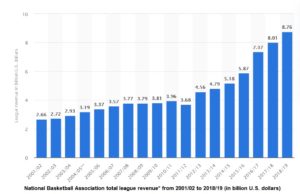
Despite the threats of the Coronavirus COVID-19 pandemic, the Bubble is working! The economic engine of the NBA is restored-protected; that means the preservation of a $8.76 Billion business enterprise; see the related chart here:
The COVID-19 pandemic is also wreaking havoc on the economy for the Caribbean – where our primary economic driver is leisure travel; no people are consuming vacations nor cruises. We have no Bubble to mitigate this pandemic.

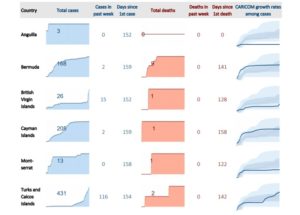
There is an over-arching need for mitigation. See the outstanding COVID-19 cases in the Caribbean (CariCom member-states) as of today:
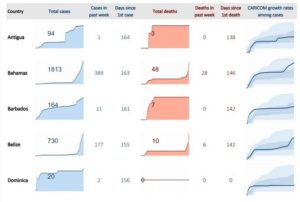
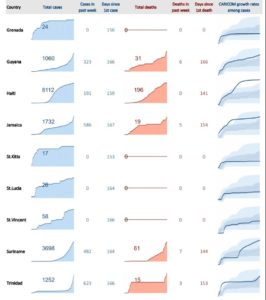
Source: https://moodle.caribdata.org/lms/pluginfile.php/4951/mod_resource/content/0/26Aug2020%20Regional%20Briefing%20.pdf

We need to look-listen-and-learn from this Bubble strategy; we are missing out!

This commentary is the continuation of the Teaching Series for the month of August 2020 on the subject of Pandemic Playbooks. This is entry 2-of-6 from the movement behind the 2013 book  Go LeanCaribbean. There is the need for Travel Bubbles in our Playbook. According to the foregoing VIDEO, it works for the NBA, for Tyler Perry Studios and it can work for the 30 member-states of the Caribbean.

“It is possible to beat COVID at it’s own game”.

Yes, we can! The other commentaries in the series are cataloged as follows:

  1. Pandemic Playbook: Worldwide Leadership – Plan ==> Actual
  2. Pandemic Playbook: Caribbean Inadequacies – Missing the Bubble Opportunities
  3. Pandemic PlaybookBahamas Example – ‘Too Little Too Late’
  4. Pandemic PlaybookOnly at the Precipice – ENCORE
  5. Pandemic PlaybookTo Be or Not To Be – COVID Vaccine
  6. Pandemic Playbook: Success – Looks like New Zealand

This is our objective. Yes, we can!!! With a Pandemic Playbook, it is conceivable, believable and achievable to restore our society and economic engines.

In order to accomplish our objectives, there is the need for this Pandemic Playbook for the Caribbean as a whole and for the individual member-states. The playbook must include Bubbles. Imagine this vision:

An all-inclusive hotel resort with controlled entry-exit. Imagine too, all staff on the property being tested regularly and limited to the property for a few weeks contiguously; lastly, the visitors (tourists) only enter the Bubble after qualified testing.

Wait?! Controlled Access and guaranteed testing?! This is exactly what the CruiseLlines intend to do to restart their economic engine. Remember, these cruise ships cost $Billion; this investment is wasted if they are not transporting passengers and providing leisure. They are crying out for a Bubble strategy.

See their Cruise Bubble plans as portrayed in the Appendix below.

How about land-based resorts?

We strongly urge Caribbean hotels and resorts to copy the NBA model. In fact, while Orlando has privilege of facilitating the NBA end-of-season and playoffs, other communities can (and should) propose solutions for other leagues.

Imagine NCAA Basketball (National Collegiate Athletic Association) …

… there is the annual Battle for Atlantis (Nassau/Paradise Island) tournament; see more here:

The Battle 4 Atlantis is an early-season college basketball tournament that takes place in late November of each year, at Atlantis Paradise Island on Paradise Island in Nassau, Bahamas, on the week of the US holiday of Thanksgiving. The games are played in the Imperial Arena, a grand ballroom which is turned into a basketball venue.[1] The tournament is known for being the richest Division I men’s early-season college basketball tournament. Schools are awarded $2 million in exchange for their participation in the men’s event.[2]

In 2020, a women’s tournament will be added, also featuring eight teams. It will immediately precede the men’s tournament.[3]

The tournament is promoted by Bad Boy Mowers, and is televised by ESPNESPN2 and ESPNU.[4]
Source: Retrieved August 26, 2020 from: https://en.wikipedia.org/wiki/Battle_4_Atlantis

Can “we” continue this for 2020, but this time in a Bubble, with these modification:

  • Every player, coach and support staffer must be continuously tested negative to participate.
  • Increase field from 4 teams to 32; modelling the World Cup by FIFA.
  • 8 Groups of 4 teams each; during Group Play, each team plays each other in the group; guaranteeing 3 games.
  • Elimination Rounds continue with the 16 top Teams, then 8, then 4, then 2, then Champion.
  • Facilitate e-Learning for all College Students in the Bubble – they are student athletes.
  • Allow fans, family and media to participate if they comply with the protocols.
  • Perfect the model and repeat through the Caribbean with more 32 Team combinations.

There you have “it”: Caribbean deficiencies averted; economic opportunities exploited.

The Go Lean book and roadmap provides a glimpse of a new Caribbean that is ready to explore all the opportunities in the Sports eco-system. This plan was published as a Playbook … 7 years ago, far before there was a COVID-19 virus.

Luck is the intersection of preparation and opportunity.

The CU/Go Lean roadmap presented a new Caribbean preparedness that is ready, willing and able to deliver economic optimization and Good Governance.

The CU structure allows for a Sports Management functionality – Sports & Culture Administration – within the Cabinet-level agency, the Department of State  (Page 81). The Go Lean book provides 370-pages of turn-by-turn instructions on “how” to adopt the needed community ethos, plus the strategies, tactics, implementations and advocacies to execute so as to reboot, reform and transform the societal engines of Caribbean society. We need these types of efficiencies in our Pandemic Playbook. Consider the specific plans, excerpts and headlines from the book on Page 229 entitled:

10 Ways to Improve Sports

1 Lean-in for the Caribbean Single Market
Embrace the advent of the Caribbean Single Market & Economy initiative of the Caribbean Union Trade Federation. This will allow for the unification of the region of 30 member-states into a single market of 42 million people and a GDP exceeding $800 Billion (per 2010). This market size and multi-lingual realities allows for broadcasting rights with SAP-style language options for English, Spanish, French and Dutch. This makes the region attractive for media contracts for broadcast rights, spectrum auctions and sports marketing. The Olympics have demonstrated that sports can be profitable “big business”, and a great source of jobs and economic activity. The CU will copy the Olympic model, and harness the potential in many other sporting endeavors, so as to make the region a better place to live, work and play.
2 CU Games
3 Fairgrounds as Sport Venues
4 Regulate Amateur, Professional & Academically-Aligned Leagues
5 Establish Sports Academies
6 “Super” Amateur Sport Association
Promote All-Star tournaments (pre-season and post-season) for Amateur (School and Junior) Athletics Associations winners. This includes team sports (soccer, basketball), school sports (track/field) and individual sports (tennis, golf, etc.).
7 Regulator/Registrar of Scholar-Athletes – Assuage Abandonment
8 Sports Tourism
The CU will promote tournaments and clinics to encourage advancement in certain sports. These tournaments are aimed at the foreign markets (US, Canada, Europe, Central and South America) so as to generate sports-tourism traffic.
9 Professional Agents and Player Management Oversight (a la Bar/Lawyer Associations)
10 Impanel the CU Anti-Doping Agency

This Go Lean book presents that the organizational structure to deliver a Pandemic Playbook must be in place first – embedded at the onset of the CU Trade Federation – Day One / Step One. Then we will be ready to get “lucky” and avail ourselves of all the profits that Sports eco-system can deliver. We have detailed that profit-potential before; consider this sample of previous blog-commentaries that focused on this industry-opportunity:

https://goleancaribbean.com/blog/?p=18392 Refuse to Lose – A Lesson from Sports
https://goleancaribbean.com/blog/?p=14527 March Madness 2018 – The Business Model of NCAA Basketball
https://goleancaribbean.com/blog/?p=14160 The Business Model of Watching the SuperBowl … and Commercials
https://goleancaribbean.com/blog/?p=12259 The Business Model of the College World Series
https://goleancaribbean.com/blog/?p=11939 Bad Models: Rio Olympics & Athens Olympics; Same Failure
https://goleancaribbean.com/blog/?p=11287 Creating a Sports Business Legacy in the Pro-Surfing Eco-system
https://goleancaribbean.com/blog/?p=10820 Miami Sports Eco-System: Dominican’s ‘Home Away from Home’
https://goleancaribbean.com/blog/?p=8272 Lebronomy Fulfilled – Economic Impact of the Return of the NBA Great
https://goleancaribbean.com/blog/?p=6464 Sports Business Role Model – ‘WWE Network’
https://goleancaribbean.com/blog/?p=3244 Sports Business Role Model – espnW
https://goleancaribbean.com/blog/?p=2171 Sports Business Role Model – Turn On the SEC Network
https://goleancaribbean.com/blog/?p=1943 The Future of Golf; Vital for Tourism
https://goleancaribbean.com/blog/?p=1446 Caribbean Players and Impact in the 2014 FIFA World Cup
https://goleancaribbean.com/blog/?p=1214 Smart Business Model: The Art & Science of Temporary Stadiums
https://goleancaribbean.com/blog/?p=1148 Franchise values in NBA Basketball? A “Bubble” or Real? Appears Real!
https://goleancaribbean.com/blog/?p=318 Collegiate Sports in the Caribbean
https://goleancaribbean.com/blog/?p=273 Among the 10 Things We Want from the US: Sports Professionalism
https://goleancaribbean.com/blog/?p=60 Caribbean’s Olympics: A Dream or A Nightmare?

We want sports! We want profit; We want Good Governance. Most assuredly, we want a Pandemic Playbook so that we can cope with all changes: good, bad and ugly.

Welcome to the ugly of COVID-19.

It’s not too late, we can still reform and transform our Caribbean societal engines (economic, security and governance) to better respond-rebuild-recover from emergencies like this pandemic. This is how we can make our Caribbean homeland a better place to live, work and play. 🙂

About the Book
The book Go Lean…Caribbean serves as a roadmap for the introduction and implementation of the technocratic Caribbean Union Trade Federation (CU), for the elevation of Caribbean society – for all member-states. This CU/Go Lean roadmap has these 3 prime directives:

  • Optimization of the economic engines in order to grow the regional economy to $800 Billion & create 2.2 million new jobs.
  • Establishment of a security apparatus to ensure public safety and protect the resultant economic engines.
  • Improve Caribbean governance to support these engines, including a separation-of-powers between the member-states and CU federal agencies.

The Go Lean book provides 370-pages of turn-by-turn instructions on “how” to adopt new community ethos, plus the strategies, tactics, implementations and advocacies to execute so as to reboot, reform and transform the societal engines of Caribbean society.

Download the free e-Book of Go Lean … Caribbean – now!

Who We Are
The movement behind the Go Lean book – a non-partisan, apolitical, religiously-neutral Community Development Foundation chartered for the purpose of empowering and re-booting economic engines – stresses that reforming and transforming the Caribbean societal engines must be a regional pursuit. This was an early motivation for the roadmap, as pronounced in the opening Declaration of Interdependence (Pages 12 – 14):

x. Whereas we are surrounded and allied to nations of larger proportions in land mass, populations, and treasuries, elements in their societies may have ill-intent in their pursuits, at the expense of the safety and security of our citizens. We must therefore appoint “new guards” to ensure our public safety and threats against our society, both domestic and foreign. …

xi. Whereas all men are entitled to the benefits of good governance in a free society, “new guards” must be enacted to dissuade the emergence of incompetence, corruption, nepotism and cronyism at the peril of the people’s best interest. The Federation must guarantee the executions of a social contract between government and the governed.

xvi. Whereas security of our homeland is inextricably linked to prosperity of the homeland, the economic and security interest of the region needs to be aligned under the same governance. Since economic crimes … can imperil the functioning of the wheels of commerce for all the citizenry, the accidence of this Federation must equip the security apparatus with the tools and techniques for predictive and proactive interdictions.

xxi. Whereas the preparation of our labor force can foster opportunities and dictate economic progress for current and future generations, the Federation must ensure that educational and job training opportunities are fully optimized for all residents of all member-states, with no partiality towards any gender or ethnic group. The Federation must recognize and facilitate excellence in many different fields of endeavor, including sciences, languages, arts, music and sports. This responsibility should be executed without incurring the risks of further human flight, as has been the past history.

xxxi. Whereas sports have been a source of great pride for the Caribbean region, the economic returns from these ventures have not been evenly distributed as in other societies. The Federation must therefore facilitate the eco-systems and vertical industries of sports as a business, recreation, national pastime and even sports tourism – modeling the Olympics.

Sign the petition to lean-in for this roadmap for the Caribbean Union Trade Federation.

——————-

Appendix – COVID-19 testing ‘very likely’ when Royal Caribbean returns to cruising, executive says
By:
Curtis Tate

Royal Caribbean is considering coronavirus testing as part of its plan to resume sailing, a company executive said during a quarterly earnings presentation Monday.

The company has paused its cruise operations since March and hopes to resume them in November, if the Centers for Disease Control and Prevention lifts its no-sail order, which is set to expire at the end of September. The U.S. cruise industry has voluntarily extended its sailing suspension through Oct. 31. Though company executives gave no firm date for the resumption of cruises, one said testing would be key.

“It’s very likely that testing will occur,” said Michael Bayley, CEO of Royal Caribbean International.He offered no additional details, including whether testing would be for crew members and passengers or to which cruise lines testing would apply.

Royal Caribbean Group owns four cruise brands: Royal Caribbean International, Celebrity Cruises, Silversea and Azamara.

Royal Caribbean canceled 1,545 sailings since March 13, including all of its sailings in the second quarter. The company posted a $1.3 billion loss for the quarter and expects to post a loss for the third quarter and for the year.

One tangible impact: Royal Caribbean Group was supposed to receive five new ships by the end of 2021 but now will take delivery of only three: Silver Moon in October, Odyssey of the Seas, in early 2021 and Silver Dawn late in 2021.

COVID-19 impacts: Cruise lines are shedding ships from their fleets. Here’s what it means for cruisers

Royal Caribbean’s Wonder of the Seas was supposed to make its debut next year as the world’s largest cruise ship, but its arrival is on hold indefinitely because of the pandemic.

The ship will be able to carry 6,000 passengers and 2,200 crew members.

Royal Caribbean Group’s fleet includes 62 ships, with another 16 on order.

Jason Liberty, the company’s chief financial officer, said it was looking at selling older ships in the fleet.

“We are evaluating opportunities to sell ships,” he said, while not specifying which ones.

The company reported bookings for 2021 comparable with years past, in a sign that demand for cruising could return. Bayley noted that younger people and loyalty customers were driving sales.

“I’m hopeful we’re going to see a lot of pent-up demand,” he said. “People certainly want to have a vacation next year.”

In the near term, Liberty said, the joint Healthy Sail Panel of Royal Caribbean Group and Norwegian Cruise Line Holdings is looking at every facet of safety, from whether ultraviolet lights can effectively kill the virus to how to improve meal service.

Some of the proposed changes might prove costly, such as whether to modify ships to promote social distancing. And such recommendations could smack into the evolving nature of how to best fight the coronavirus, including how soon a vaccine might be on the way.

The company could resume sailings in China and Australia before November, but executives made no commitments in the quarterly earnings presentation Monday.

Ultimately, the prevalence of the virus would determine when sailings can resume, Liberty said.

“It’s a real puzzle,” he said. “There are so many variables to consider.”

Contributing: Morgan Hines, USA TODAY

Source: USA Today – Posted August 10, 2020; retrieved August 26, 2020 from: https://www.fayobserver.com/story/travel/cruises/2020/08/10/royal-caribbean-cruises-likely-have-covid-19-testing-upon-return/3302471001/
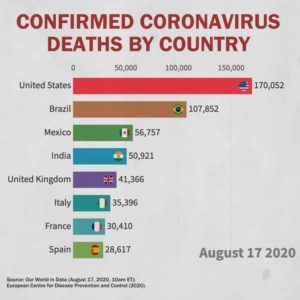
Share this post:
, , ,

Pandemic Playbook – Worldwide Leadership: Plan ==> Actual

Go Lean Commentary

“If the blind leads the blind, both will fall into a pit” – The Bible; Matthew 15:14

This is such graphic language – a word picture – that it is obvious what it means. Even still, the encyclopedic reference is as follows:

“The blind leading the blind” is an idiom and a metaphor in the form of a parallel phrase; it is used to describe a situation where a person who knows nothing is getting advice and help from another person who knows almost nothing. Wikipedia

The world is embattled with the Coronavirus COVID-19 pandemic. There is the need for good leadership in contending with this crisis.  (Yet still, the US President is symbolic of a “Blind Guide” leading the world into ruin. See this bad American example as portrayed in the Appendix D VIDEO below).

The leadership being lamented here is only the political leadership. Yes, good political leadership is definitely lacking.

But alas, this is a Public Health crisis. So how is the Public Health leadership in this crisis?

Answer: Good enough! The problem is the blind political leadership driving the Public Health officials.

On the surface, the world’s Public Health leadership appears to be technocratic (and “Spot On”). See more on the motives and momentum of the primary Public Health and infectious disease agency, the World Health Organization, in the Appendix A below. That’s on the global front; for a Caribbean focus, we have dictates from these two regional organizations:

  • The US’s Centers of Disease Control (CDC) – see details in Appendix B below
  • Pan American Health Organization (PAHO) – see details in Appendix C below.

Now more than ever, we need to understand these foregoing organizations – WHO, CDC and PAHO. These entities are responsible for any plan that “we” may have for pandemic protections. Yes, these players present their playbooks. In fact, these organizations have been addressed in previous blog-commentaries from the movement behind the 2013 book Go Lean … Caribbean; as in this one from May 23, 2014:

Painful and rapid spread of new virus – Chikungunya – in Caribbean
[The book] Go Lean … Caribbean therefore constitutes a change for the Caribbean. This is a roadmap to consolidate 30 member-states of 4 different languages and 5 colonial legacies (American, British, Dutch, French, Spanish) into a the [Caribbean Union] Trade Federation [(CU)] with the tools/techniques to bring immediate change to the region to benefit one and all member-states. This includes the monitoring/tracking/studying the origins of common and emerging viruses. This empowered CU agency will liaison with foreign entities with the same scope, like the Pan American Health Organization, US’s Center for Disease Control (CDC) and the World Health Organization (WHO).

There is the plan and there is the actual.

The Coronavirus COVID-19 pandemic is creating havoc in many countries around the world: killings hundreds of thousands and disrupting economic engines. But there appears to only be ONE problem with this Crisis Management: Political Leadership stemming out of the US. In particular, the political leadership of the federal government under Donald Trump; and other countries following Trump’s lead, i.e. Brazil.

But some have refused to follow that blind guide; see this related story here that shows how the State of California opposed the political-directed policies issued by the politically-directed CDC when they recommended looser Coronavirus testing and travel protocols. See here:

Title: California officials oppose CDC over looser coronavirus testing and travel protocols
By: COLLEEN SHALBYPHIL WILLON
New guidance on coronavirus testing and travel issued by the Centers for Disease Control and Prevention drew strong pushback from California officials Wednesday.

The CDC is no longer recommending a 14-day quarantine for travelers. After the government issued a mandatory quarantine for travelers arriving in the U.S. from Wuhan, China, in February, the guidance that travelers isolate for two weeks was adopted by several states and encouraged by local officials as a key tool in mitigating the spread of the novel coronavirus — especially among people who may be asymptomatic.

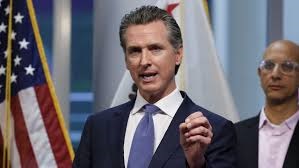
Gov. Gavin Newsom on Wednesday said he disagrees with the CDC’s new guidance and insisted that it will not impact California.

“I don’t agree with the new CDC guidance. Period. Full stop,” he said. “We will not be influenced by that change.”

Los Angeles County Public Health Director Barbara Ferrer said those traveling to places with high transmission rates should be mindful of the potential to contract the virus and expose others to it. She also reminded residents that L.A. County is a COVID-19 hot spot and traveling from the community could present a risk to outsiders.

“My message really is: Whether you’re flying or staying home, you need to be mindful that we have to reduce our transmission,” she said. “The way we do that is by reducing exposure to other people.”

The CDC also is no longer advising those without symptoms to be tested, even if they have been in contact with an infected person. Ferrer, however, said the county’s recommendation still stands: Anyone who has been exposed to someone with the virus should get tested and self-quarantine.

“This is particularly important if a public health official or doctor tells you to get tested,” she said.

Newsom said Wednesday that California had signed a contract with an East Coast medical diagnostics company to more than double the number of coronavirus tests that can be processed in the state, eventually expanding capacity to roughly a quarter of a million tests a day.

Under the $1.4-billion agreement, a new Santa Clarita lab will be able to provide testing results within two days, far quicker than the average five- to seven-day processing times offered by other labs.

The expanded testing capacity and quicker results will increase the ability of health officials to quickly isolate people who test positive for the virus and to track down and test those who came in contact with them, Newsom said, steps that are crucial to slowing the spread of COVID-19.

The new lab is expected to begin processing coronavirus tests in November. When the lab is at full capacity in March and processing as many as 150,000 tests per day, the cost per test is expected to be a little more than $30, Newsom said. Medicare and Medi-Cal pay about $100 per test, and the average overall cost varies from $150 to $200 per test, state officials said.

Reducing testing costs not only will save money for workers and their employers but also lower costs for Medi-Cal, the federally subsidized insurance program for low-income Californians, the governor said.

“This is exactly what the federal government should be doing,” Newsom said. “Had the federal government done this some time ago, you wouldn’t see average costs [per] test at $150 to $200 — costing the taxpayers, quite literally, tens of billions of dollars, costing employers billions and billions of dollars, costing the health plans billions of dollars as well.”

The news comes as California fights to keep its case count and hospitalization numbers down. The state’s 14-day average for positive tests is at 6.1%, and hospitalizations over that same period have decreased by 17%, Newsom said Wednesday.

In L.A. County, officials reported 58 additional COVID-19 deaths Wednesday and 1,642 additional cases. Those numbers are lower than what was reported just a month ago, but higher than Tuesday’s daily case count, which dipped below 1,000 for the first time since early June.

The drop in infections was reported the same day that the California Department of Public Health reported the county’s 14-day average case rate had dropped below 200 per 100,000 residents. That threshold would allow elementary schools to apply for waivers to hold in-person classes, but on Wednesday, Ferrer said the county is not ready to make that move.

Officials also reported that 1,200 pregnant women and girls between the ages of 14 and 52 have tested positive for the virus and two have died from complications. Of the 193 babies who were tested at birth, eight were positive. This marks the first time the county has reported positive infections among newborn babies.

The number of cases in L.A. County, which totals more than 233,000, surged in June after the county rapidly reopened various sectors of the economy following several months of closures. Activity related to Memorial Day weekend and informal gatherings also contributed to an increase in cases throughout the state.

In addition, mass protests over the death of George Floyd erupted during that time, although officials have said that those outdoor demonstrations did not contribute to the massive surge in new coronavirus infections. Still, it is impossible for officials to trace cases that originate in public spaces.

The statewide surge in cases continued after the July 4 weekend, followed by a reporting backlog error that sent daily infections into record territory.

Those numbers have just begun to decline in recent weeks, as has the number of hospitalizations in California.

The state’s seven-day average for positive coronavirus test results is 5.7%. That is below the country’s overall average, which according to Johns Hopkins University is 6.1%.

But maintaining that progress is not guaranteed if social distancing practices are relaxed, officials warn. In an effort to continue slowing the spread of the virus, some counties are offering to pay workers to stay home and isolate if they contract the virus.

Sacramento County health officials are working on a proposal to offer a stipend of about $12.50 per hour to workers who contract the virus but cannot work from home. The payout amounts to about $1,000 for two weeks.

Los Angeles County, which accounts for the bulk of the state’s more than 682,000 infections and nearly 12,500 deaths, has not introduced any wage-replacement plans similar to those in the Bay Area. But the county is offering residents who complete an interview with a contact tracer a $25 gift certificate.

Source: Posted and retrieved August 26, 2020 from: https://www.latimes.com/california/story/2020-08-26/l-a-county-daily-covid-19-cases-dip-below-1-000-for-first-time-since-early-june

Related: How a rush to reopen drove Los Angeles County into a health crisis

This subject matter relates to Good Governance and the delivery of the implied Social Contract; which is defined as when …

“Citizens surrender some of their freedoms and submit to the authority of the State in exchange for protection of remaining natural and legal rights”.

This commentary starts a Teaching Series for the month of August 2020 on the subject of Pandemic Playbooks – the need for them and the deficiency there of here in the Caribbean. This is entry 1-of-6 from the movement behind the Go Lean book. The other commentaries in the series are cataloged as follows:

  1. Pandemic Playbook: Worldwide Leadership – Plan ==> Actual
  2. Pandemic PlaybookCaribbean Inadequacies – Missing the Bubble Opportunities
  3. Pandemic PlaybookBahamas Example – ‘Too Little Too Late’
  4. Pandemic PlaybookOnly at the Precipice – ENCORE
  5. Pandemic PlaybookTo Be or Not To Be – COVID Vaccine
  6. Pandemic Playbook: Success – Looks like New Zealand

This need for a Pandemic Playbook is implied in this Go Lean roadmap to elevate Caribbean life. There is the need to reboot, reform and transform all societal engines including: economics, security and governance. The actuality of a pandemic and related health care deliveries impact all three of these societal engines. This is what is meant by the term New Guards.

The Go Lean book and roadmap provides a glimpse of a new Caribbean that is ready with these New Guards. These are not foreigners. These are fellow Caribbean brothers and sisters, representing the 30 member-states in the region. They are ready, willing and able to help deliver Good Governance.

The CU structure allows for an Emergency Management functionality within the Homeland Security Department. This CU version is modeled on the Federal Emergency Management Agency (FEMA) in the US. See this sample as related in a previous blog-commentary

Good Governance: Stepping Up in an Emergency
… that agency’s emergency response is based on small, decentralized teams trained in such areas as the National Disaster Medical System (NDMS), Urban Search and Rescue (USAR), Disaster Mortuary Operational Response Team (DMORT), Disaster Medical Assistance Team (DMAT), and Mobile Emergency Response Support (MERS).

The Go Lean book provides 370-pages of turn-by-turn instructions on “how” to adopt new community ethos, plus the strategies, tactics, implementations and advocacies to execute so as to reboot, reform and transform the societal engines of Caribbean society. We need an efficient Pandemic Playbook to contend with this kind of emergency in every community. In addition to all the directions for optimizing the societal engines, there is one advocacy in the book for fostering a better Emergency Management eco-system. This includes Disaster Planning, Response & Recovery. Consider the specific plans, excerpts and headlines from the book on Page 196 entitled:

10 Ways to Improve Emergency Management

1 Lean-in for the Caribbean Single Market
This treaty allows for the unification of the region into one market, thereby expanding to an economy of 30 countries, 42 million people and a GDP of over $800 Billion (according to 2010 metrics). This treaty calls for a collective security agreement for the Caribbean member-states so as to prepare-respond to natural disasters, emergency incidents and assuage against systemic threats against the homeland. The CU employs the professional arts and sciences of Emergency Management to spread the costs, risks and premium base across the entire region and refers to more  than  just medical scenarios, but rather any field of discipline that can impact the continuity of a community or an individual. The CU also has the direct responsibility for emergencies in the Exclusive Economic Zone and Self Governing Entities.
2 Trauma Centers
The CU envisions 6 strategically placed Level-1 trauma centers, and a series or lower level centers, placed throughout the region to service the entire population. The goal will be to ensure that every citizen is within a 1 hour transport from the closest trauma center. The trauma center may be physically located within a hospital campus, or stand-alone, but will be governed (and funded) by the CU and not the member-state’s public health system. (See Appendix ZM on Page 336).
3 Airlift / Sealift – Getting there by Helicopters, Airplanes and Boats
4 Mobile Surgical Centers and Tele-Medicine

The CU will deploy specialized trailers that function as surgical operating theaters, recovery rooms and diagnostic laboratories. The mobile hospitals will include attendant functions for pharmaceuticals, power, and communications. The communications allow for tele-medicine tactics to engage specialized clinicians that may be remote. These trailers can be positioned at sites of emergency events to better respond after disasters or when normal infrastructure is compromised.

5 Epidemiology – Viral & Bacterial Rapid Response

Due to the systemic threat, epidemic response and disease control will be coordinated at the CU Cabinet level, by the Department of Health. In the event of an outbreak, the CU will assume jurisdiction of the emergency “event” with the authority to commandeer local resources, quarantine populations and blockade transport to/from the affected area.

6 Mobile Command Centers
7 Intelligence Gathering & Analysis
8 Casualty Insurance Plans – Reinsurance “Sidecars”
9 Volunteer Fire – Rescue Brigades
10 ITIL – Information Technology Infrastructure Library

This Go Lean book presents that the organizational structure to deliver on a Pandemic Playbook must be embedded in the Emergency Management apparatus of the CU Trade Federation on Day One / Step One of the ascension of this Go Lean roadmap. This is part of the Homeland Security mandate; this is Good Governance. Many more details have been presented in other previous blog-commentaries; consider this sample:

https://goleancaribbean.com/blog/?p=20052 Natural Disasters: The Price of Paradise
https://goleancaribbean.com/blog/?p=19409 Coronavirus: ‘Clear and Present’ Threat to Economic Security
https://goleancaribbean.com/blog/?p=17500 Continuity of Business: Learning from Systems’ failures
https://goleancaribbean.com/blog/?p=15310 Industrial Reboot with Trauma Centers
https://goleancaribbean.com/blog/?p=13746 Failure to Launch – Security: Caribbean Basin Security Dreams
https://goleancaribbean.com/blog/?p=12949 Charity Management: Grow Up Already!
https://goleancaribbean.com/blog/?p=10771 Logical Addresses – ‘Life or Death’ Consequences
https://goleancaribbean.com/blog/?p=10566 Funding the Caribbean Security Pact
https://goleancaribbean.com/blog/?p=8943 Zika’s Drug Breakthrough – End-Game of an Playbook
https://goleancaribbean.com/blog/?p=7896 The Logistics of Disaster Relief
https://goleancaribbean.com/blog/?p=7449 ‘Crap Happens’ – So What Now?
https://goleancaribbean.com/blog/?p=7327 Zika, the Virus – A 4-Letter Word
https://goleancaribbean.com/blog/?p=4720 Lesson Learned – Mitigating SARS in Hong  Kong
https://goleancaribbean.com/blog/?p=4308 911 – Emergency Response: System in Crisis
https://goleancaribbean.com/blog/?p=2397 Lesson Learned – Monitoring and Mitigating Ebola

We want Good Governance and we want a Pandemic Playbook so that we can “break glass in case of an emergency”.

It IS an emergency now!

So we must reform and transform our Caribbean governing engines and Homeland Security apparatus. We must be able to better respond-rebuild-recover from emergencies like natural disasters and pandemics.

This commitment would fulfill the delivery of the Social Contract. This is how we can make the Caribbean a better homeland to live, work, heal and play. The people and institutions of the region are hereby urged to lean-in to this Go Lean roadmap; this plan is conceivable, believable and achievable. 🙂

About the Book
The book Go Lean…Caribbean serves as a roadmap for the introduction and implementation of the technocratic Caribbean Union Trade Federation (CU), for the elevation of Caribbean society – for all member-states. This CU/Go Lean roadmap has these 3 prime directives:

  • Optimization of the economic engines in order to grow the regional economy to $800 Billion & create 2.2 million new jobs.
  • Establishment of a security apparatus to ensure public safety and protect the resultant economic engines.
  • Improve Caribbean governance to support these engines, including a separation-of-powers between the member-states and CU federal agencies.

The Go Lean book provides 370-pages of turn-by-turn instructions on “how” to adopt new community ethos, plus the strategies, tactics, implementations and advocacies to execute so as to reboot, reform and transform the societal engines of Caribbean society.

Download the free e-Book of Go Lean … Caribbean – now!

Who We Are
The movement behind the Go Lean book – a non-partisan, apolitical, religiously-neutral Community Development Foundation chartered for the purpose of empowering and re-booting economic engines – stresses that reforming and transforming the Caribbean societal engines must be a regional pursuit. This was an early motivation for the roadmap, as pronounced in the opening Declaration of Interdependence (Pages 12 – 13):

x. Whereas we are surrounded and allied to nations of larger proportions in land mass, populations, and treasuries, elements in their societies may have ill-intent in their pursuits, at the expense of the safety and security of our citizens. We must therefore appoint “new guards” to ensure our public safety and threats against our society, both domestic and foreign. …

xi. Whereas all men are entitled to the benefits of good governance in a free society, “new guards” must be enacted to dissuade the emergence of incompetence, corruption, nepotism and cronyism at the peril of the people’s best interest. The Federation must guarantee the executions of a social contract between government and the governed.

xii. Whereas the legacy in recent times in individual states may be that of ineffectual governance with no redress to higher authority, the accedence of this Federation will ensure accountability and escalation of the human and civil rights of the people for good governance, justice assurances, due process and the rule of law. As such, any threats of a “failed state” status for any member state must enact emergency measures on behalf of the Federation to protect the human, civil and property rights of the citizens, residents, allies, trading partners, and visitors of the affected member state and the Federation as a whole.

xvi. Whereas security of our homeland is inextricably linked to prosperity of the homeland, the economic and security interest of the region needs to be aligned under the same governance. Since economic crimes … can imperil the functioning of the wheels of commerce for all the citizenry, the accedence of this Federation must equip the security apparatus with the tools and techniques for predictive and proactive interdictions.

Sign the petition to lean-in for this roadmap for the Caribbean Union Trade Federation. 

—————–

Appendix A – World Health Organization (WHO)

The World Health Organization (WHO) is a specialized agency of the United Nations responsible for international public health.[1] The WHO Constitution, which establishes the agency’s governing structure and principles, states its main objective as “the attainment by all peoples of the highest possible level of health.”[2] It is headquartered in GenevaSwitzerland, with six semi-autonomous regional offices and 150 field offices worldwide.

The WHO was established by constitution on 7 April 1948,[3]

The WHO’s broad mandate includes advocating for universal healthcare, monitoring public health risks, coordinating responses to health emergencies, and promoting human health and well being.[7] It provides technical assistance to countries, sets international health standards and guidelines, and collects data on global health issues through the World Health Survey. Its flagship publication, the World Health Report, provides expert assessments of global health topics and health statistics on all nations.[8] The WHO also serves as a forum for summits and discussions on health issues.[1]

The WHO has played a leading role in several public health achievements, most notably the eradication of smallpox, the near-eradication of polio, and the development of an Ebola vaccine. Its current priorities include communicable diseases, particularly HIV/AIDSEbolamalaria and tuberculosisnon-communicable diseases such as heart disease and cancer; healthy diet, nutrition, and food securityoccupational health; and substance abuse.
2019–20 COVID-19 pandemic
The WHO faced criticism from the United States’ Trump administration while “guid[ing] the world in how to tackle the deadly” COVID-19 pandemic.[199] The WHO created an Incident Management Support Team on 1 January 2020, one day after Chinese health authorities notified the organization of a cluster of pneumonia cases of unknown etiology.[199][200][201] On 5 January the WHO notified all member states of the outbreak,[202] and in subsequent days provided guidance to all countries on how to respond,[202] and confirmed the first infection outside China.[203] The organization warned of limited human-to-human transmission on 14 January, and confirmed human-to-human transmission one week later.[204][205][206] On 30 January the WHO declared a Public Health Emergency of International Concern,[207][208] considered a “call to action” and “last resort” measure for the international community.[209] The WHO’s recommendations were followed by many countries including Germany, Singapore and South Korea, but not by the United States.[199] The WHO subsequently established a program to deliver testing, protective, and medical supplies to low-income countries to help them manage the crisis.[199]

While organizing the global response to the COVID-19 pandemic and overseeing “more than 35 emergency operations” for cholera, measles and other epidemics internationally,[199] the WHO has been criticized for praising China’s public health response to the crisis while seeking to maintain a “diplomatic balancing act” between China and the United States.[201][210][211][212] Commentators including John Mackenzie of the WHO’s emergency committee and Anne Schuchat of the US CDC have stated that China’s official tally of cases and deaths may be an underestimation. David Heymann, professor of infectious disease epidemiology at the London School of Hygiene and Tropical Medicine, said in response that “China has been very transparent and open in sharing its data… and they opened up all of their files with the WHO.”[213]

Opposition from the Trump Administration
On 14 April 2020, United States President Donald Trump pledged to halt United States funding to the WHO while reviewing its role in “severely mismanaging and covering up the spread of the coronavirus.”[214] The United States had paid half of its annual assessed fees to the WHO as of 31 March 2020; it would ordinarily pay its remaining fees in September 2020.[215] World leaders and health experts largely condemned President Trump’s announcement, which came amid criticism of his response to the outbreak in the United States.[216] WHO called the announcement “regrettable” and defended its actions in alerting the world to the emergence of COVID-19.[217] Trump critics also said that such a suspension would be illegal, though legal experts speaking to Politifact said its legality could depend on the particular way in which the suspension was executed.[215] On 8 May 2020, the United States blocked a vote on a U.N. Security Council resolution aimed at promoting nonviolent international cooperation during the pandemic, and mentioning the WHO.[218] On 18 May 2020, Trump threatened to permanently terminate all American funding of WHO and consider ending U.S. membership.[219] On 29 May 2020, President Trump announced plans to withdraw the U.S. from the WHO,[220] though it was unclear whether he had the authority to do so.[221] On 7 July 2020, President Trump formally notified the UN of his intent to withdraw the United States from the WHO.[222]

Source: Retrieved August 25, 2020 from: https://en.wikipedia.org/wiki/World_Health_Organization

—————–

Appendix B – Centers for Disease Control and Prevention (CDC)

The Centers for Disease Control and Prevention (CDC) is a national public health institute in the United States. It is a United States federal agency, under the Department of Health and Human Services,[2] and is headquartered in AtlantaGeorgia.[3]
Its main goal is to protect public health and safety through the control and prevention of disease, injury, and disability in the US and internationally.[4] The CDC focuses national attention on developing and applying disease control and prevention. It especially focuses its attention on infectious diseasefood borne pathogensenvironmental healthoccupational safety and healthhealth promotioninjury prevention and educational activities designed to improve the health of United States citizens. The CDC also conducts research and provides information on non-infectious diseases, such as obesity and diabetes, and is a founding member of the International Association of National Public Health Institutes.[5]

COVID-19
The first confirmed case of COVID-19 was discovered in the U.S. on January 20, 2020.[84] But widespread COVID-19 testing in the United States was effectively stalled until February 28, when federal officials revised a faulty CDC test, and days afterward, when the Food and Drug Administration began loosening rules that had restricted other labs from developing tests.[85] In February 2020, as the CDC’s early coronavirus test malfunctioned nationwide,[86] CDC Director Robert R. Redfield reassured fellow officials on the White House Coronavirus Task Force that the problem would be quickly solved, according to White House officials. It took about three weeks to sort out the failed test kits, which may have been contaminated during their processing in a CDC lab. Later investigations by the FDA and the Department of Health and Human Services found that the CDC had violated its own protocols in developing its tests.[86][87]

In May 2020, The Atlantic reported that the CDC was conflating the results of two different types of coronavirus tests — tests that diagnose current coronavirus infections, and tests that measure whether someone has ever had the virus. The magazine said this distorted several important metrics, provided the country with an inaccurate picture of the state of the pandemic, and overstated the country’s testing ability.[88]

In July 2020, the Trump administration ordered hospitals to bypass the CDC and instead send all COVID-19 patient information to a database at the Department of Health and Human Services. Some health experts opposed the order and warned that the data might become politicized or withheld from the public.[89] On July 15, the CDC alarmed health care groups by temporarily removing COVID-19 dashboards from its website. It restored the data a day later.[90][91][92]

Source: Retrieved August 25, 2020 from: https://en.wikipedia.org/wiki/Centers_for_Disease_Control_and_Prevention

—————–

Appendix C – Pan American Health Organization

The Pan American Health Organization (PAHO) is an international public health agency working to improve health and living standards of the people of the Americas. It is part of the United Nations system, serving as the Regional Office for the Americas of the World Health Organization and as the health organization of the Inter-American System. It is known in Latin America as the OPS or OPAS (SpanishOrganización Panamericana de la SaludPortugueseOrganização Pan-Americana da Saúde).

Description
PAHO has scientific and technical expertise at its headquarters, in its 27 country offices, and its three Pan American centers, all working with the countries of the Americas in dealing with priority health issues. The health authorities of PAHO’s Member States set PAHO’s technical and administrative policies through its Governing Bodies. PAHO Member States include all 35 countries in the Americas; Puerto Rico is an Associate Member. France, the Kingdom of the Netherlands, and the United Kingdom of Great Britain and Northern Ireland are Participating States, and Portugal and Spain are Observer States.
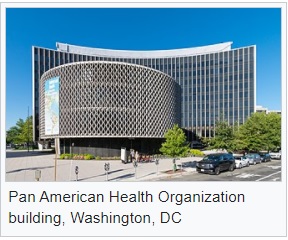
The Organization’s essential mission is to strengthen national and local health systems and improve the health of the peoples of the Americas, in collaboration with Ministries of Health, other government and international agencies, nongovernmental organizations, universities, social security agencies, community groups, and many others.

PAHO promotes universal health coverage and universal access to health and strengthening of health systems based on primary health care strategies. It assists countries in fighting infectious diseases such as malariacholeradengueHIV and tuberculosis as well as the region’s growing epidemic of noncommunicable diseases such as cardiovascular disease, cancer and diabetes. PAHO engages in technical cooperation with ministries of health and facilitates coordination with other sectors to promote health in all policies.

History
The organization was founded in December 1902. It was originally called the Pan-American Sanitary Bureau.[3]:125 In 1949, PAHO and WHO signed an agreement making PAHO the American Regional Office (AMRO) of WHO. Today the usual phrasing is “Regional Office for the Americas”.

Source: https://en.wikipedia.org/wiki/Pan_American_Health_Organization

—————–

APPENDIX D VIDEO – COVID-19: How Did The US Get It So Wrong? – https://youtu.be/ltJV3IMP-Dg

CNA Insider
America has the highest number of #COVID19 infections and deaths in the world. Why was its response to the global pandemic too late and too little? From President Donald Trump’s re-election bid, to the US Centre For Disease Control & Prevention’s failure to roll out testing earlier, and the lack of PPE (Personal Protection Equipment) for healthcare workers, the programme #Insight looks at the issues.

The full episode: https://youtu.be/ZK3PYcnHZBQ

For more, SUBSCRIBE to CNA INSIDER! https://www.youtube.com/cnainsider

Follow CNA INSIDER on:
Instagram: https://www.instagram.com/cnainsider/

Facebook: https://www.facebook.com/cnainsider/

Website: https://cna.asia/cnainsider

Share this post:
, ,
[Top]

Rise from the Ashes – War: “What is it good for?”

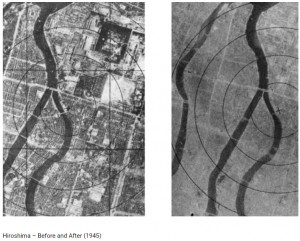
If only you could see what this city looked like before it was bombed in the war; and then compare it to now, the end product of restoring and rebuilding. Which city? It could be:

  • London
  • Berlin
  • Tokyo
  • Hiroshima
  • Saigon ==> Ho Chi Minh City
  • Sarajevo

The list could be extended to include one bombed-out city after another. Fortunately, that list will not include any Caribbean cities. This is fortunate for “no lost of life”, but unfortunate for no post-war restoration-rebuilding. Yes, the imagery of the mythical Phoenix Bird is best applied to a city that was bombed-out and then rebuilt after the war.

Nonetheless, we need that Phoenix Bird here in the Caribbean. We need to restore, rebuild and “rise from the ashes”.

Question: War – what is it good for?

Answer: Rebuilding after the war.

Consider this example of Dresden, Germany.

This is the continuation of the June 2020 Teaching Series from the movement behind the 2013 book Go Lean…Caribbean; this is entry 5 of 6. This movement presents a Teaching Series every month on a subject that is germane to Caribbean life. There is the accepted fact that it is OK to make changes – reform and transform – in response to any crisis; in fact there is the popular expression “a crisis is a terrible thing to waste”. Our focus this month is related to the current crisis – think Coronavirus COVID-19. We are looking at how-when to Rise from the Ashes from this and other crises. For this entry, we lament the absence of perhaps one of the greatest motivators for change, War.

The full catalog for this month’s series is listed as follows:

  1. Rising from the Ashes – The Phoenix rises from the Pandemic
  2. Rising from the Ashes – One person – Dead or Alive – can make a difference
  3. Rising from the AshesNatural Disasters – The Price of Paradise
  4. Rising from the Ashes – Political Revolutions – Calling ‘Balls and Strikes’
  5. Rising from the Ashes – War – “What is it good for?” – ENCORE
  6. Rising from the Ashes – Wrong Ethos could also rise – Cautionary tale of patriotic German Jews

There are other Agents of Change that we have had to contend with here in the Caribbean. The Go Lean book identified these 4 agents: Technology, Climate Change, Globalization and the Aging Diaspora. These crises – though not as impactful as a war – also allow us to make changes. We have presented this thesis in many other blog-commentaries; consider this sample:

https://goleancaribbean.com/blog/?p=19694 Technology Assimilation: E-Learning Eco-system is finally mature
https://goleancaribbean.com/blog/?p=19669 Technology Assimilation: Work From Home options bring opportunities
https://goleancaribbean.com/blog/?p=19568 BHAG – Need ‘Big Brother’ for Global Pandemics
https://goleancaribbean.com/blog/?p=19351 Preparing Alternate Energy to abate Climate Change
https://goleancaribbean.com/blog/?p=18817 Deficiencies in Food Security have created a Plan for our ‘Bread Basket’
https://goleancaribbean.com/blog/?p=18243 After Hurricane Dorian, Regionalism is no longer optional
https://goleancaribbean.com/blog/?p=17878 Profiting from the Migration Crisis
https://goleancaribbean.com/blog/?p=16368 Aging Diaspora – Finding Home … anywhere.
https://goleancaribbean.com/blog/?p=15935 Learning from the Master: “A crisis is a terrible thing to waste”

The crisis of an active war in the region would be earth-shattering here in the Caribbean; there would be good, bad and ugly consequences. The theme of lamenting the absence of war in the Caribbean had been published in a previous Go Lean blog-commentary. It is only apropos to Encore that submission – from July 21, 2019 – here and now:

—————-

Go Lean Commentary – What Went Wrong? ‘We’ never had our war!

War … what is it good for?
Absolutely nothing! – Song: Edwin Starr – Motown 1969; see Appendix below.

Well, not so fast.

This started just as a “catch phrase”, but now it has emerged as a fact in Economic History:

A crisis is a terrible thing to waste.

So what is war good for? Providing a crisis that can be exploited to reform and transform society.

That’s it; wrap it up; we can now summarize so many changes in world history as they manifested as a result of war. Consider these examples:

War Conflict Take-a-way
Napoleonic Wars | 1803 – 1815
Spanish New World assumed independence from Spain. This was true in North America (Mexico), Central America and South America. But the Caribbean territories did not abdicate from “Mama Espana” at that time.
Latin America Independence
American Civil War | 1860 – 1865
The New World was premised on Slavery, exploiting the African race as a free labor source in all the Americas. This abhorrent institution would have definitely ended, one way or another. “The arc of history leans towards justice”. After the US Civil War – 625,000 dead White Men – no other wars were necessary in the New World; all Euro-influenced governments whittled slavery into extinction, one way or another.
Abolition & Emancipation
Great War / World War I 1914 – 1919
This war addressed the boiling point of class-ism in Europe – the Haves versus the Have-Nots – the Nobility System (Dukes, Counts, Bourgeoisie, etc.) did not survive the reconciliation that led to the cessation of conflicts. Communism emerged as a manifestation of the demand for equality.
Gender Equality; Worker Rights; Egalitarianism
World War II / Cold War | 1939 – 1955
This war was a sequel to WW I; whatever remaining issues that were deferred in the WW I reconciliations were pushed forward for reckoning; think: Colonialism (in Africa, Asia and the Americas), Racial Supremacy, Human Rights assurances.
Human Rights; Decolonization; Majority Rule / Universal Suffrage
End of Cold War | 1991 – 2016
The return to Nationalism in Europe did not provide governing solutions or the needed multi-racial reconciliations. That bill came due, as demonstrated with the Balkans Conflict (Bosnia, Serbia, etc.). A Migrant Crisis emerged for all States that refused to transform: think Middle East Islamic Fundamentalism, Sovereign Debt Crisis (Greece, etc.), and Brexit.
Economic Liberalization; Free Trade; Free Movement

In no shape or form are we rationalizing, justifying or excusing war. But, it is what it is!

Where there is conflict – blood on the streets – people tend to finally be motivated to remediate and mitigate the risks and threats for the conflict to ever rekindle. So this premise is true:

It is only at the precipice that people change.

This is why we can declare with such confidence that one of the things that went wrong in the Caribbean, is “we never had our war“. From the foregoing examples, all the reform and transformation that took place from these crises, did NOT benefit the Caribbean as we had “No War” here. (The Cuban Revolution ushered in Communism, but all the stewards of the Cuban people – culture, politics and commerce – simply fled; they left the island to the rebels, so the needed reform on societal values never took place – Cuba is still in “Freeze-Frame” from 1959).

This commentary continues the July series from the movement behind the book Go Lean…Caribbean. This submission, 2-of-6 on the theme “What Went Wrong?” focuses on Caribbean history and why we still have many of the same defects that other societies – think North America and Europe yes, but even India and China – have already remediated. The full catalog:

  1. What Went Wrong? Asking ‘Why’ is Important
  2. What Went Wrong? ‘We’ never had our war!
  3. What Went Wrong? ‘7 to 1’ – Caribbean ‘Less Than’
  4. What Went Wrong? ‘Be our Guest’ – The Rules of Hospitality
  5. What Went Wrong? Failing the Lessons from Infrastructure 101
  6. What Went Wrong? Losing the Best; Nation-building with the Rest

In this series, reference is made to the need for a comprehensive roadmap for elevating the societal engines of the Caribbean member-states. We do not want war! But we want to make the progress that is possible when society reforms and transforms. And we want to do this without a war. The movement behind the Go Lean book asserts that this progress is possible. See how this theme was developed in many previous Go Lean commentaries; see a sample list here:

https://goleancaribbean.com/blog/?p=16477 Transforming Hindus versus Women – What it means for us?
https://goleancaribbean.com/blog/?p=15580 The Cause of Caribbean Disunity: Religion’s Role – False Friend
https://goleancaribbean.com/blog/?p=14633 Despite Embedded ‘Bad Nature’, Women Have Nurtured Change
https://goleancaribbean.com/blog/?p=14378 Legislating Morality – Yes, We Can
https://goleancaribbean.com/blog/?p=13063 Gender Equity without a ‘Battle of the Sexes’
https://goleancaribbean.com/blog/?p=13882 Managing ‘Change’ in California – Calm and Smooth Evolutions
https://goleancaribbean.com/blog/?p=5695 Repenting, Forgiving and Reconciling the Past
https://goleancaribbean.com/blog/?p=3090 Learning from Modern Europe – Evolution without Revolution

Most of the Caribbean profess the religious affiliation with Christianity. The Founder of the Church, Jesus Christ, taught his followers an important lesson about manifestation versus faith. See here relating the story of Doubting Thomas:

doubting Thomas is a skeptic who refuses to believe without direct personal experience—a reference to the Apostle Thomas, who refused to believe that the resurrected Jesus had appeared to the ten other apostles, until he could see and feel the wounds received by Jesus on the torture stake.

The Holy Scriptures relates, from the Gospel account of John 20: 24 – 29 NWT:

24  But Thomas,+ one of the Twelve, who was called the Twin, was not with them when Jesus came. 25  So the other disciples were telling him: “We have seen the Lord!” But he said to them: “Unless I see in his hands the print* of the nails and stick my finger into the print of the nails and stick my hand into his side,+ I will never believe it.”
26  Well, eight days later his disciples were again indoors, and [this time] Thomas was with them. Jesus came, although the doors were locked, and he stood in their midst and said: “May you have peace.”+ 27  Next he said to Thomas: “Put your finger here, and see my hands, and take your hand and stick it into my side, and stop doubting* but believe.” 28  In answer Thomas said to him: “My Lord and my God!” 29  Jesus said to him: “Because you have seen me, have you believed? Happy are those who have not seen and yet believe.”

Happy are those who have not seen and yet believe. While it is only at the precipice that people change, how much better it would be for Caribbean society to change (reform and transform) without being at the precipice, without enduring the pangs of war. It is the assertion here that despite the heavy-lifting, “we” can succeed in optimizing Caribbean society … without war.

Is this possible? Can we reboot our society? Can we ‘weed out’ the bad ethos – i.e. rent-seeking and domestic violence – in our communities and adopt new more positive ethos? Can we implement the strategies and tactics we need to optimize our society, without first going to the brink of self-destruction?

Yes, we can!

This is the urging of the book Go Lean…Caribbean and the resultant roadmap. We hereby urge all Caribbean stakeholders to lean-in to this roadmap. Let’s get busy and go to work. This roadmap is conceivable, believe and achievable. We can make our homeland a better place to live, work and play. 🙂

About the Book
The book Go Lean…Caribbean serves as a roadmap for the introduction and implementation of the technocratic Caribbean Union Trade Federation (CU), for the elevation of Caribbean society – for all member-states. This CU/Go Lean roadmap has these 3 prime directives:

  • Optimization of the economic engines in order to grow the regional economy to $800 Billion and create 2.2 million new jobs.
  • Establishment of a security apparatus to ensure public safety and protect the resultant economic engines.
  • Improve Caribbean governance to support these engines, including a separation-of-powers between the member-states and CU federal agencies.

The Go Lean book provides 370-pages of turn-by-turn instructions on “how” to adopt new community ethos, plus the strategies, tactics, implementations and advocacies to execute so as to reboot, reform and transform the societal engines of Caribbean society.

Download the free e-Book of Go Lean … Caribbean – now!

Who We Are
The movement behind the Go Lean book – a non-partisan, apolitical, religiously-neutral Community Development Foundation chartered for the purpose of empowering and re-booting economic engines – stresses that reforming and transforming the Caribbean societal engines must be a regional pursuit. This was an early motivation for the roadmap, as pronounced in the opening Declaration of Interdependence (Pages 12 – 13):

xi. Whereas all men are entitled to the benefits of good governance in a free society, “new guards” must be enacted to dissuade the emergence of incompetence, corruption, nepotism and cronyism at the peril of the people’s best interest. The Federation must guarantee the executions of a social contract between government and the governed.

xvi. Whereas security of our homeland is inextricably linked to prosperity of the homeland, the economic and security interest of the region needs to be aligned under the same governance. Since economic crimes … can imperil the functioning of the wheels of commerce for all the citizenry, the accedence of this Federation must equip the security apparatus with the tools and techniques for predictive and proactive interdictions.

xxiv. Whereas a free market economy can be induced and spurred for continuous progress, the Federation must install the controls to better manage aspects of the economy: jobs, inflation, savings rate, investments and other economic principles. Thereby attracting direct foreign investment because of the stability and vibrancy of our economy.

Sign the petition to lean-in for this roadmap for the Caribbean Union Trade Federation.

————-

Appendix VIDEO – Edwin Starr – War (What is it good for) – https://youtu.be/ztZI2aLQ9Sw

Matze 1987
Published on Aug 4, 2011 – Edwin Star – War

Lyrics:
War…huh…yeah
What is it good for?
Absolutely nothing
Uh ha haa ha
War…huh…yeah
What is it good for?
Absolutley nothing…say it again y’all
War..huh…look out…
What is it good for?
Absolutely nothing…listen to me ohhhhh

WAR! I despise, ‘cos it means destruction of innocent lives,
War means tears to thousands of mother’s eyes,
When their sons gone to fight and lose their lives.

I said WAR!…huh…good God y’all,
What is it good for?
Absolutely nothing…say it again
War! Huh…What is it good for
Absolutely nothing…listen to me

WAR! It ain’t nothing but a heartbreaker,
War. Friend only to the undertaker. Ohhh!
War is an enemy to all mankind,
The thought of war blows my mind.
War has caused unrest within the younger generation
Induction then destruction…who wants to die? Ohhh

WAR! good God y’all huh
What is it good for?
Absolutely nothing…say it say it SAY IT!
WAR!…uh huh yeah huh
What is it good for?
Absolutely nothing…listen to me

WAR! It ain’t nothing but a heartbreaker,
War! It’s got one friend that’s the undertaker.
Ohhhh! War has shattered many a young man’s dream,
Made him disabled, bitter and mean,
Life is much too short and precious to spend fighting wars these days.
War can’t give life, it can only take it away!

Ohhh WAR! huh…good God y’all What is it good for?
Absolutely nothing…say it again War!…huh…woh oh oh Lord
What is it good for? Absolutely nothing…listen to me

War! It ain’t nothing but a heartbreaker,
War. Friend only to the undertaker…woo
Peace lovin’ understand then tell me,
Is there no place for them today?
They say we must fight to keep our freedom,
But Lord knows there’s got to be a better way.

Ohhhhhhh WAR! huh…good God y’all…
What is it good for?…you tell me!
Say it say it say it saaaay it!
War! good God now…huh
What is it good for?
Stand up and shout it…NOTHING

Music in this video – Listen ad-free with YouTube Premium

  • Song: War
  • Artist: Edwin Starr
  • Album: Can You Dig It? The 70’s Soul Experience
  • Licensed to YouTube by: UMG (on behalf of Rhino); UMPI, AMRA, CMRRA, Sony ATV Publishing, UNIAO BRASILEIRA DE EDITORAS DE MUSICA – UBEM, SOLAR Music Rights Management, LatinAutor – SonyATV, LatinAutor, EMI Music Publishing, UMPG Publishing, Kobalt Music Publishing, and 13 Music Rights Societies
Share this post:
, , ,
[Top]

Rise from the Ashes – Natural Disasters: The Price of Paradise – Encore

Living in California for 10 years, there was a lamentable joke:
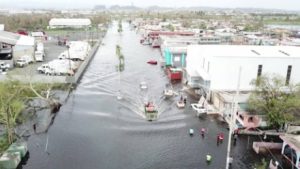
“Shake-and-Bake” – There is a Karma Tax for living in that beautiful locale: Earthquakes, Forest Fires and Mud-Slides.

This reality is magnified, not just in California but in the Caribbean too. Here we have the best address on the planet and so the Karma Tax is even more expensive. We have to pay this high price of tropical living … with the actuality of these natural disasters:

“Land of the Free; Home of the Brave”. Rather than for the US, this should be the regional branding for our 30 Caribbean member-states. Imagine enduring all these natural disasters …

… constant beauty; constant threats.

This is not just a problem today. No, for hundreds of years, the Caribbean region has had to contend with this Karma Price. But there was compensation and allowances, like a life of leisure in the slavery eco-system. But alas, as soon as the ease/leisure of Caribbean life lessened, then it was better to leave from here. Consider this historicity in our region, starting with the quick tendency for European colonizing citizens to leave these territories – it was never their home:

1804 Independence of Haiti – French citizens fled back to France, as prosperity and property in the island were taken away.

1833 Abolish of Slavery – British citizens fled back to Britain, as prosperity lessened and property (slaves) were bought out.

1848 Abolish of Slavery – French & Dutch citizens fled back to Europe, as prosperity lessened and property lost value.

1898 Spanish-American War – Spanish citizens fled back to Spain, as Empire (Cuba & Puerto Rico) ceased in the region.

1917 World War I, Denmark withdrawal from Caribbean; Danish citizens fled back to Denmark.

1948 World War II, UNHRC – End of War, start of decolonization; Whites lose power, returned to Europe.

1948 Societal Abandonment Began – Caribbean citizens now fled the homeland for less threatening life in Europe.

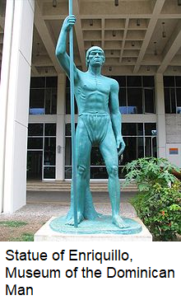
This thesis was presented in a previous blog-commentary by the movement behind the 2013 book Go Lean…Caribbean. That commentary asserted that the Enriquillo Faultline in the Greater Antilles makes it hard to ignore what some declare as a Curse in the region. This dictates a constant cycle of death and rebirth or destruction and re-building.

What a cycle?!

This is so similar to the mythical imagery of the Phoenix Bird – which depicts that – rather than trying to repair – at times we just need to let it burn … and then re-build from the ashes. This Phoenix mythology is no fiction; this is our reality because of the prevalence of hurricanes, earthquakes and believe it or not, volcanoes in our region.

It is what it is.

This is the continuation of the June 2020 Teaching Series from the movement behind the 2013 book Go Lean…Caribbean; this is entry 3 of 6. This movement presents a Teaching Series every month on a subject that is germane to Caribbean life. Our focus this month is on Rising from the Ashes. The constant threat of destruction and re-birth is our reality. We need to have the eco-systems for turn-arounds and reboots ready at all times.

The full catalog for this month’s series is listed as follows:

  1. Rising from the Ashes – The Phoenix rises from the Pandemic
  2. Rising from the Ashes – One person – Dead or Alive – can make a difference
  3. Rising from the Ashes – Natural Disasters – The Price of Paradise – ENCORE
  4. Rising from the Ashes – Political Revolutions – Calling Balls and Strikes
  5. Rising from the Ashes – War – “What is it good for?”
  6. Rising from the Ashes – Wrong Ethos could also rise – Cautionary tale of patriotic German Jews

The theme of the constant threat to our society have been published in many previous Go Lean blog-commentaries; in fact that prior commentary related this title: the Curse of the Enriquillo Faultline. It is only apropos to Encore that one, from January 29, here and now:

—————-

Go Lean Commentary – Cursed in Paradise – ‘Enriquillo’ Fault-line

The Caribbean is the “greatest address on the planet … “

We have said this repeatedly; the Creator has blessed this region with such beauty.

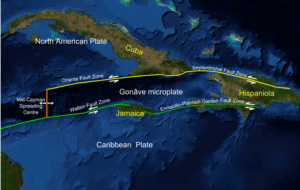
Yet, we must confess, considering a religious argument: “The Gods must be crazy” … putting such a beautiful place in the middle of a dangerous Earthquake Fault-line. This refers to the Enriquillo Fault-line across the Greater Antilles in the Caribbean archipelago – see Photo here:

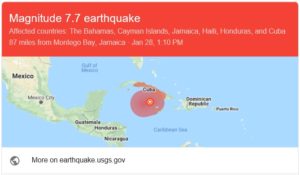
This is not just a theory; this is actuality. We have this news headline now: “7.7 Earthquake north of Jamaica”. So, crediting Godly devotion again, maybe the earthquake activity is some kind of Divine Retribution?

Retribution of what?

Well, just like the Curse of Montezuma or Curse of the Bambino, there were some egregious atrocities that maybe had to be prosecuted-reconciled-remediated for justice from some higher authority (God). Therefore, the thesis is that there is a “curse on this landmass for retribution against the ‘powers that be’ for the inflictions against the indigenous people and their leader Enriquillo”. See those details here on the Enriquillo namesake and the encyclopedic reference of the Fault-line in the Appendix below:

Reference: Enriquillo
Good relations between Christopher Columbus and the indigenous Taíno of the large island Columbus called Hispaniola did not last more than a few days. The Taínos were forced into terrible conditions as laborers in gold mining operations, badly housed in the mountains, poorly fed, extremely overworked, and forced to live in close quarters with the Spaniards.[5] Additionally, due to taking men away from the villages, the cycle of food production was disrupted, causing widespread malnutrition.[5] This malnutrition further aided the Taínos’ vulnerability to deadly new types of diseases introduced by the foreigners.[5] After Columbus tortured and killed many in his quest for gold, he turned to slavery and sugar cane plantations as a way to profit from his voyages.

Several revolts followed in the first half of the 16th century, the most famous began in 1519. Enriquillo, one of the few remaining caciques, or indigenous chiefs, started the revolt with a large number of Taínos from the mountain range of Bahoruco. The Tainos were able to continue the rebellion because of their better knowledge of the region.[6] As the Spaniards were not able to control the rebellion, a treaty was signed granting to the Native population among others the right of Freedom and of Possession. It had little consequences, however, as by this time the Native population was rapidly declining due to European diseases.

Enriquillo, also known as “Enrique” by the Spaniards, was a Taíno cacique [(Tribal Chief)] who rebelled against the Spaniards between 1519 and 1533. Enriquillo’s rebellion is the best known rebellion of the early Caribbean period. He is also considered a hero in the modern day Dominican Republic and Haiti for his resistance in favor of the indigenous peoples.[1] Dominican friar Bartolome de Las Casas, who documented and rallied against Spanish abuse of the indigenous, wrote sympathetically of Enriquillo.[2]

His father, his aunt Anacaona, and eighty other regional chieftains were killed by Nicolás de Ovando while attending supposed “peace talks” with the Spanish in Jaragua. During the talks, Spanish soldiers ambushed the chieftains, also known as caciques, set the meeting house on fire, and then proceeded to kill anyone who fled the flames (causing his father’s death). Enriquillo, an orphan, was later raised in a Santo Domingo monastery and given the name of “Enrico” [3]. One of his mentors was Bartolomé de Las Casas. De Las Casas was a Spanish Roman Catholic Priest focused on the rights of Native Americans. [4]

Enriquillo also had a wife, called Mencía, later with the noble title Doña due to Enriquillo’s high standing and relations with the Spaniards. She was raped by a Spaniard named Valenzuela. When Enriquillo tried to take the issue to the Spanish courts, nothing could be done, since it was Doña Mencia’s word against the Spaniard’s word. This, according to some writers, was the tipping point for Enriquillo which led to his revolt in the Bahoruco mountains.
Source: Retrieved January 29, 2020 from: https://en.wikipedia.org/wiki/Enriquillo

Theory, thesis, religious inference – Yada Yada!

It is what it is – these earthquakes are real! We must simply prepare. This is quest of the movement behind the 2013 book Go Lean…Caribbean; the book stated (Page 23):

c-7. “Crap” Happens
Economic security is tied to the community quest to reboot the Caribbean region to ensure a better place to live, work and play. To ensure economic security, the economic engines must be protected to ensure their continuous operations despite natural or man-made deterrents. Bad things do happen to good people, so we cannot be caught unprepared. We must institute the process and provisions to respond, react, restore and recover. Any and everyone may need to dial “911”.

The Caribbean community ethos is to consider the facts and realities:

  1. climate change cannot be dismissed – tropical storms are now more common and more ferocious;
  2. there are two geologic fault-lines that run through the Caribbean region;
  3. there is an active volcano on Montserrat.

It is not a matter of “if” but “when” emergencies will strike. The security principle therefore is to be prepared for all incidents, big and small, that involve all aspects of society: islands, institutions, companies, families and individuals.

As related in the foregoing headline – 7.7 Earthquake north of Jamaica – this is of serious concern. This seismic activity had its epicenter in the middle of the Caribbean Sea, away from land, but spurring the threat of a tsunami in one place after another. Everyone is On Alert. See this actuality depicted in this news story here:

Title: Mag 7.7 quake hits between Cuba and Jamaica, but no injuries
Sub-title:
A powerful magnitude 7.7 earthquake has struck in the Caribbean Sea between Jamaica and eastern Cuba
By: Michael Weissenstein, Associated Press
HAVANA – A powerful magnitude 7.7 earthquake struck in the Caribbean Sea between Jamaica and eastern Cuba on Tuesday, shaking a vast area from Mexico to Florida and beyond, but there were no reports of casualties or heavy damage.

The quake was centered 139 kilometers (86 miles) northwest of Montego Bay, Jamaica, and 140 kilometers (87 miles) west-southwest of Niquero, Cuba, according to the U.S. Geological Survey. It hit at 2:10 p.m. (1910 GMT) and the epicenter was a relatively shallow 10 kilometers (6 miles) beneath the surface.

Dr. Enrique Arango Arias, head of Cuba’s National Seismological Service, told state media that there had been no serious damage or injuries reported.

Gov. Carlos Joaquín González of Mexico’s Quintana Roo, which is home to Cancun, Tulum and other popular beach resorts, said the earthquake was felt in multiple parts of the low-lying Caribbean state but there were no early reports of damage or injuries.

The Pacific Tsunami Warning Center initially warned that the quake could generate waves 1 to 3 feet above normal in Cuba, Jamaica, the Cayman Islands, Honduras, Mexico and Belize, but issued a later message saying the danger had passed.

The initial tremor was followed by a series of strong aftershocks, including one measured at magnitude 6.1.

The quake was felt strongly in Santiago, the largest city in eastern Cuba, said Belkis Guerrero, who works in a Roman Catholic cultural center in the center of Santiago

“We were all sitting and we felt the chairs move,” she said. “We heard the noise of everything moving around.”

She said there was no apparent damage in the heart of the colonial city.

“It felt very strong but it doesn’t look like anything happened,’’ she told The Associated Press.

It was also felt a little farther east at the U.S. Navy base at Guantanamo Bay, Cuba, on the southeastern coast of the island. There were no immediate reports of injuries or damages, said J. Overton, a spokesman for the installation, which has a total population of about 6,000 people.

Several South Florida buildings were evacuated as a precaution, according to city of Miami and Miami-Dade County officials. No injuries or road closures were reported. No shaking was felt at the Hard Rock stadium in Miami Gardens, which will host the Super Bowl on Sunday.

The quake also hit the Cayman Islands, leaving cracked roads and what appeared to be sewage spilling from cracked mains. There were no immediate reports of deaths, injuries or more severe damage, said Kevin Morales, editor-in-chief of the Cayman Compass newspaper.

The islands experience so few earthquakes that newsroom staff were puzzled when it hit, he said.

“It was just like a big dump truck was rolling past,” Morales said. “Then it continued and got more intense.”

Dr. Stenette Davis, a psychiatrist at a Cayman Islands hospital, said she saw manhole covers blown off by the force of the quake, and sewage exploding into the street, but no more serious damage.

Claude Diedrick, 71, who owns a fencing business in Montego Bay, said he was sitting in his vehicle reading when the earth began to sway.

“It felt to me like I was on a bridge and like there were two or three heavy trucks and the bridge was rocking but there were no trucks,” he said.

He said he had seen no damage around his home in northern Jamaica.

Mexico’s National Seismological Service reported that the quake was felt in five states including as far away as Veracruz, on the country’s Gulf Coast.

————— Associated Press writer Kate Chappell in Kingston, Jamaica, contributed to this report.

Source: Posted & Retrieved January 28, 2020 from: https://abcnews.go.com/International/wireStory/powerful-earthquake-hits-cuba-jamaica-68592066

Considering the geological science of earthquakes, we know there are main shocks and after-shocks. Some geologists also credit pre-shocks, where minor seismic activities come as a prelude to main shocks. See more on the “Science of Earthquakes” in this VIDEO here:

VIDEOWhat is an earthquake? https://abcn.ws/2M4FtKM

An earthquake is caused when two blocks of earth slip past each other on a fault plane, according to the US Geological Survey.

The Richter Scale is exponential between the numbers 3 and 8, so 7.7 is very strong … and dangerous.

There truly have been pre-shocks leading up to this “7.7 Earthquake north of Jamaica”; consider this related story:

2020 Puerto Rico Earthquakes
At the end of December 2019 and in early January 2020, the southwestern part of the island of Puerto Rico was struck by an earthquake swarm,[1] including six that were of magnitude 5 or greater.[2] The largest and most damaging of this sequence occurred on January 7 at 04:24 AST (08:24 UTC) and had a magnitude of 6.4 Mw and a maximum felt intensity of VII (Very strong) on the Modified Mercalli intensity scale.[3] At least one person was killed and several others were injured.[4][5]

A 5.8 Mw  earthquake the previous day caused the destruction of a natural arch, a tourist attraction at Punta Ventana in Guayanilla.[6] A 5.9 Mw  aftershock on Saturday, January 11, damaged many structures, including several historical buildings as well as modern high-rises in the city of Ponce.[7]

Power was lost Island-wide immediately after the quake, and was increasingly restored over a period of a week. Damage to homes was extensive and, by 14 January, more than 8,000 people were homeless and camping outdoors in various types of shelters, with 40,000 others camping outside their homes, just in the city of Ponce alone.[8]

Needless to say, the Enriquillo Fault-line has been very active in these recent days. To all Caribbean stakeholders, we urge:

Be afraid; be very afraid.

This is the same fault-line that devastated Haiti in January 2010 – almost 10 years exactly – plus many other times in the past. The Go Lean movement and organization originated in response to that unmitigated disaster. See this salient reference to it in the Go Lean book (Page 115):

The Bottom Line on the Haiti’s Earthquakes

As of 2010, the following major earthquakes have been recorded in Haiti, along the Enriquillo or Septentrional-Oriente faults:

  • 1564: Quake destroyed Concepción de la Vega and Santiago de los Caballeros.
  • 1701: On November 9, severe destruction occurred and “part of the area along the north shore of the Tiburon Peninsula from Logane to Petit Goave sank into the sea”.
  • 1751 Port-au-Prince earthquake (18 October): According to French historian Moreau de Saint-Méry, “only one masonry building had not collapsed” in Port-au-Prince, Haiti’s capital city.
  • 1770 Port-au-Prince earthquake (3 June): The city was leveled in this magnitude 7.5 quake, killing over 200 people.
  • 1783: A strong quake partially destroyed the church in Santiago.
  • 1842 Cap-Haitien earthquake (7 May): An earthquake destroyed the city of Cap-Haïtien and other towns in the north of Haiti and the Dominican Republic; this earthquake also destroyed the Sans-Souci Palace. 10,000 people were killed. It has been estimated that its magnitude was 8.1.
  • 1946 Dominican Republic earthquake (4 August): This 8.0-magnitude quake in Samaná also shook Haiti horrifically, producing a tsunami that killed 1,600 people.
  • 2010 Haiti earthquake (12 January):. The epicenter of this magnitude 7.0 Mw earthquake was near Léogâne, approximately 16 miles west of Port-au-Prince at a depth of 8.1 miles. The United States Geological Survey recorded a series of at least 33 aftershocks, 14 of which were between magnitudes 5.0 and 5.9. The International Red Cross estimated that about three million people were affected by the quake; the Haitian Government reports that over 316,000 people had been identified as dead, an estimated 300,000 injured, and an estimated 1,000,000 homeless.

Based on this observation, one can hypothesize the theory of: “An accursed land, indeed”!

Yet still, the Go Lean promoters assert – in a previous blog-commentary – that we do not want our people abandoning home, seeking refuge elsewhere. We can reform and transform the homeland to better prepare for the eventualities of Mother Nature. See that message here:

The movement behind the book Go Lean…Caribbean is standing up, stepping up and speaking up:

  • “… Here I am, send me” – The Bible; Isaiah 6:8 (New International Version: Then I heard the voice of the Lord saying, “Whom shall I send? And who will go for us?” And I said, “Here am I. Send me!”)

The basic premise of the economic analysis in the Go Lean book is that we need our population to stay, remain and return to the Caribbean; the more people we have in the market the better.

What is it that we can do to reform and transform for earthquakes? The Go Lean book relates (Page 76), in introducing the Caribbean Union Trade Federation (CU) as a technocracy to plan and respond to natural disasters. See this excerpt here:

B4 – Emergency Management
This area is perhaps one of the most important functions of the CU. The Emergency Management Department will coordinate the planning, response, rebuilding and recovery before, during and after natural disasters and other emergency events. This is the risk management arm of the CU Trade Federation. As such, the scope of Emergency Management will also include education, mentoring, monitoring, mitigation, licensing and coordination of all volunteer activities.

The scope of this department also includes a number of proactive initiatives: (1). establishing and administering volunteer fire/rescue departments for sparsely populated areas; and (2). installing/maintaining emergency notification systems. In ancient cultures there is the practice of ringing a bell, a church bell or one at the town square, to alert the community of an imminent threat. A lot of western democracies embrace the same tactic with more modern technologies, such as audible alarms/sirens.

The imminent threat includes tornado landfall warning, tsunami, mudslide, volcano eruption, etc. The CU will extend this practice further by installing a standard audible siren system for any/all emergency events. A great lesson learned from the US Midwestern city of Omaha-Nebraska is the schedule for siren testing, the first Wednesday every month at 11:00am.
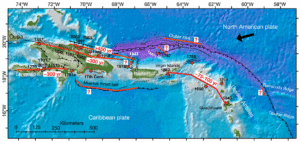
A best practice for Emergency Management is electronic notification. This includes an Emergency Broadcasting/Alert system for TV and radio. Plus now the latest advance is the use of telephone/internet and contact center technologies, allowing features like Reverse 911 – automated/robo calls to every active phone in a location – and text message blasting to every cell phone. With the embrace of www.myCaribbean.gov, the CU can target an alert message to any & every email address, social media screen names, or provide Pop-up Screens for internet browsing sessions for all IP addresses in the strike area.

As such, the scope of natural emergencies covered by this agency will cover more than hurricanes. As such, earthquakes, tsunamis, volcanoes, flooding, forest fires, and droughts will also be monitored, managed and responded to. (These have all been experienced recently in the Caribbean).

Emergencies also include the man-made variety as in industrial (oil spills, factory accidents, chemical spills), explosions, terroristic attacks and prison riots. The purpose of the Trade Federation is to enhance the economic engines of the region. While the #1 economic driver in the region is tourism, any poorly managed episode of “man-made” emergencies will have devastating effects on tourist bookings. Therefore, the CU must respond quickly, forcefully and professionally to contain the physical and image damage that can occur from these incidents.

Though not exclusive, this agency will coordinate its specialized services, skill-sets and occupations like Paramedic, EMT, Search-and-Rescue, Canine (K-9) with other governing (law enforcement) entities. Regional training will therefore be coordinated, licensed, and certified by this CU Emergency Management Department.

This Emergency Management agency will also coordinate the training and management of animal responders, in conjunction with the other federal agencies of Justice, Agriculture, Interior (Parks). The animals will include bomb sniffing dogs, cadaver dogs, drug dogs and mounted police horses.

There is also an economic/financial scope for this department. As the effort for a comprehensive property-casualty fund to cover the entire Caribbean region will also be coordinated by this agency. The classic solution is a large pool of premium payers and claims filed by the affected area. Beyond this model, there are also advanced products like re-issuance side-cars for market assimilation. The public can then invest and profit from the threat/realization of regional risks. This derivative product is a bet, a gamble, but in the end, the result is an insurance fund of last resort, much like the Joint Underwriters Agency (JUA) in Florida.

The Go Lean movement has addressed the subject of Earthquakes and Emergency Management on many occasions. See this sample of the many previous blog-commentaries here:

https://goleancaribbean.com/blog/?p=18182 Disaster Relief: Helping, Not Hurting
https://goleancaribbean.com/blog/?p=17373 A Marshall Plan for Haiti – Finally
https://goleancaribbean.com/blog/?p=15996 Good Governance: Stepping Up in an Emergency
https://goleancaribbean.com/blog/?p=15267 Industrial Reboot – Prefab (Earthquake Tolerant) Housing 101
https://goleancaribbean.com/blog/?p=13974 The Spoken and Unspoken on Haiti
https://goleancaribbean.com/blog/?p=2614 Modeling the ‘Great ShakeOut’ Earthquake Drill
https://goleancaribbean.com/blog/?p=87 6.5M Earthquake Shakes Eastern Caribbean

“Here I am send me”? That sounds similar to the mantra “To Change the World, Start With Me”!

While not subscribing to any religious dogma, “it is what it is”, the End of Days Prophecies in the Bible seem to have validity – Matthew 24: 3, 7:

3 What will be the sign … of the Last Days?
7 Nation will rise against nation, and kingdom against kingdom. There will be famines and earthquakes in various places.

So we must simply be more resilient and responsive to earthquakes – and tsunamis. There is no reason to expect any less activity.

So let’s get busy …  let’s prepare our homes, families, communities, nations and region for the eventuality of this Enriquillo Fault-line (and other geologic weak-points that are undeniable in our homeland).

Most importantly, let’s lean-in to this Go Lean roadmap – this is the Way Forward for Caribbean Disaster Preparation and Response – and finally make our region, each of the 30 Caribbean member-states, a better place to live, work and play. 🙂

About the Book
The book Go Lean…Caribbean serves as a roadmap for the introduction and implementation of the technocratic Caribbean Union Trade Federation (CU), for the elevation of Caribbean society – for all member-states. This CU/Go Lean roadmap has these 3 prime directives:

  • Optimization of the economic engines in order to grow the regional economy to $800 Billion & create 2.2 million new jobs.
  • Establishment of a security apparatus to ensure public safety and protect the resultant economic engines.
  • Improve Caribbean governance to support these engines, including a separation-of-powers between the member-states and CU federal agencies.

The Go Lean book provides 370-pages of turn-by-turn instructions on “how” to adopt new community ethos, plus the strategies, tactics, implementations and advocacies to execute so as to reboot, reform and transform the societal engines of Caribbean society.

Download the free e-Book of Go Lean … Caribbean – now!

Who We Are
The movement behind the Go Lean book – a non-partisan, apolitical, religiously-neutral Community Development Foundation chartered for the purpose of empowering and re-booting economic engines – stresses that reforming and transforming the Caribbean societal engines must be a regional pursuit. This was an early motivation for the roadmap, as pronounced in the opening Declaration of Interdependence (Pages 11 – 13):

ii. Whereas the natural formation of the landmass for our lands constitutes some extreme seismic activity, it is our responsibility and ours alone to provide, protect and promote our society to coexist, prepare and recover from the realities of nature’s occurrences.

xi. Whereas all men are entitled to the benefits of good governance in a free society, “new guards” must be enacted to dissuade the emergence of incompetence, corruption, nepotism and cronyism at the peril of the people’s best interest. The Federation must guarantee the executions of a social contract between government and the governed.

xvi. Whereas security of our homeland is inextricably linked to prosperity of the homeland, the economic and security interest of the region needs to be aligned under the same governance. Since economic crimes … can imperil the functioning of the wheels of commerce for all the citizenry, the ccidence of this Federation must equip the security apparatus with the tools and techniques for predictive and proactive interdictions.

xix. Whereas our legacy in recent times is one of societal abandonment, it is imperative that incentives and encouragement be put in place to first dissuade the human flight, and then entice and welcome the return of our Diaspora back to our shores. This repatriation should be effected with the appropriate guards so as not to imperil the lives and securities of the repatriated citizens or the communities they inhabit. …

xxiv. Whereas a free market economy can be induced and spurred for continuous progress, the Federation must install the controls to better manage aspects of the economy: jobs, inflation, savings rate, investments and other economic principles. Thereby attracting direct foreign investment because of the stability and vibrancy of our economy.

Sign the petition to lean-in for this roadmap for the Caribbean Union Trade Federation. 

——————

Appendix – Enriquillo–Plantain Garden Fault Zone

The Enriquillo–Plantain Garden fault zone (EPGFZ or EPGZ) is a system of active coaxial left lateral-moving strike slip faults which runs along the southern side of the island of Hispaniola, where Haiti and the Dominican Republic are located.[1] The EPGFZ is named for Lake Enriquillo in the Dominican Republic where the fault zone emerges, and extends across the southern portion of Hispaniola through the Caribbean to the region of the Plantain Garden River in Jamaica.

Geology
The EPGFZ shares approximately half of the relative motion between the North American and Caribbean tectonic plates with the Septentrional-Oriente fault zone which runs along the northern side of Hispaniola. Both faults merge into the Cayman Trench to the west. The fault accommodates about 20.6±1.66 millimeters of lateral motion per year (mm/yr).[2] Additionally, a component of compression is present as the North American Plate pushes toward the southwest. This results in vertical deformation manifest in the mountainous terrain of Hispaniola. Some researchers believe that the EPGFZ and the Septentrional-Orient fault zone bound a microplate, dubbed the Gonâve Microplate, a 190,000 km2 (73,000 sq mi) area of the northern Caribbean Plate that is in the process of shearing off the Caribbean Plate and accreting to the North America Plate.[3]

[Prominent] Earthquakes

Other historical large earthquakes in 1860, 1761, 1684, 1673, and 1618 are also likely attributed to the EPGFZ, though none of these have been confirmed in the field as associated with this fault.[7]

Source: Retrieved January 29, 2020 from: https://en.wikipedia.org/wiki/Enriquillo%E2%80%93Plantain_Garden_fault_zone

Share this post:
, ,
[Top]

Rise from the Ashes – Phoenix Mythology

Go Lean Commentary

Creating a new society on the ashes of the old.

It is that simple …

… this is what “we” are trying to do.

This reminds us of the Phoenix mythology; which many ancient cultures depicted – Egyptian, Greek, Roman, Oriental, etc.:

Reference Title:  Phoenix (mythology)
In Ancient Greek folklore, a phoenix is a long-lived bird that cyclically regenerates or is otherwise born again. Associated with the sun, a phoenix obtains new life by arising from the ashes of its predecessor. Some legends say it dies in a show of flames and combustion, others that it simply dies and decomposes before being born again.[1] Most accounts say that it lived for 500 years before rebirth.[2] HerodotusLucanPliny the ElderPope Clement ILactantiusOvid, and Isidore of Seville are among those who have contributed to the retelling and transmission of the phoenix motif. The phoenix symbolized renewal in general, as well as entities and concepts such as the Sun, time, the Roman EmpireChristMary, and virginity.[3]

Analogues
Scholars have observed analogues to the phoenix in a variety of cultures. These analogues include the Hindu garuda and bherunda, the Russian firebird, the Persian simorgh, the Georgian paskunji, the Arabian anqa, the Turkic Konrul, also called Zümrüdü Anka (“emerald anqa”), the Tibetan Me byi karmo, the Chinese Fenghuang and zhu que, and the Japanese hō-ō.[23]

Source: Retrieved June 21, 2020 from: https://en.wikipedia.org/wiki/Phoenix_(mythology)

Rather than trying to repair, sometimes we just need to just let it burn … and then re-build from the ashes.

Art Imitating Life # 1 – Song: “The roof, the roof, the roof is on fire; we don’t need no water, let the mo****-fu**** burn”.

Art Imitating Life # 2 – TV Series: “Little Fires Everywhere” – See Appendix VIDEO below for a summary.

Though the word Phoenix is not used in the 2013 book Go Lean…Caribbean – a roadmap to introduce and implement the technocratic Caribbean Union Trade Federation (CU) – the descriptive concept is definitely presented. Early on, the book urges Caribbean stakeholders to … “do away with the Old and start anew”. See this excerpt from Page 10:

… whenever any form of government becomes destructive to these ends, it is the right of the people to alter or to abolish it, and to institute new government, laying its foundation on such principles and organizing its powers in such form, as to them shall seem most likely to effect their safety and happiness. … When a long train of abuses and usurpations, pursuing invariably the same object evinces a design to reduce them under absolute despotism, it is their right, it is their duty, to throw off such government, and to provide new guards for their future security.

There is demand and there is supply. Just because a market does a poor job of delivering the supply does not mean that the demand has altered. No, for the 30 member-states of the political Caribbean, we still have the same demand:

A more perfect bond of union. We need a better fulfillment of the implied Social Contract. That is where …
… citizens surrender some of their freedoms and submit to the authority of the State in exchange for protection of remaining natural and legal rights.

The Caribbean has a demand for a better eco-system for all the societal engines: economics, security and governance. We need to “rise up from the ashes” of the failed-and-failing eco-systems and build a new system from scratch.

This is not just theoretical! Consider how the world is enduring the Coronavirus COVID-19 crisis right now; people are dying and economies are being wrecked. The expectation is that global travel will re-emerge only slowly; so our tourist-based economies will soon suffer dire consequences. Thus, the clarion call to “rise from the ashes” is hard to ignore.

There is a lot of the Caribbean status quo that needs to “die” or “burn down”, to allow for a re-birth, re-generation and re-creation of a better version. These are the “ashes” … as related in this example from the Go Lean book (Page 33):

The economics of housing can be impacted with the over-supply of abandoned buildings, as it brings the value down for other properties, and sends out the false vision, like Detroit’s abandoned structures, that just a “little rehab” and their new manifestations will be readily available. Learning from Detroit, it is more beneficial to raze abandoned buildings and build anew – turn-around, rather than considering restoration or preservation.

Here too, is another example of the “ashes” in our societal economic engine:

The vision of the CU entails re-booting the economic engines of the region and the member-states; this cannot be accomplished without addressing the monetary issues, and the history of inflation and currency devaluation of the past. Many times a country’s failing currency moves it closer to Failed State status. A prime directive of the CU roadmap is to facilitate repatriation of the far-flung Diaspora. Many times the Currency crisis of the past directly contributed to major exodus of the country’s professional and middle classes. This was the case for Jamaica, Dominican Republic, Guyana, Trinidad and others. – Go Lean book Page 73.

The Go Lean book invited the stakeholders in the Caribbean to (1) reboot and (2) turn-around; positing that it is essential now if there is to be any hope for a future for our society. The book asserted that the CU must elevate the priority on these two important action-verbs; doing so this many times:

  • Reboot – 90 times
  • Turn-around – 17 times

These urgings need to be heeded for our region to “rise from the ashes”.

Every month, the Go Lean movement presents a Teaching Series on a subject germane to Caribbean life. For this June 2020, our focus is on Rising from the Ashes. This is timely, as the whole world have been on Shutdown these past months due to the Coronavirus-COVID-19 pandemic and only now starting to re-open – Ashes abound. This is entry 1 of 6 for this series, which details the path and process of a Phoenix concept – rebooting and turning-around – so as to foster a new society.

The full catalog for this month’s series is listed as follows:

  1. Rising from the Ashes – The Phoenix rises from the Pandemic
  2. Rising from the Ashes – One person can make a difference – Dead or Alive
  3. Rising from the AshesNatural Disasters – The Price of Paradise
  4. Rising from the Ashes – Political Revolutions – Calling Balls and Strikes
  5. Rising from the Ashes – War – “What is it good for?”
  6. Rising from the Ashes – Wrong Ethos could also rise – Cautionary tale of patriotic German Jews

There are no Ands, Ifs or Buts; we need to turn-around and reboot to mitigate this COVID-19 pandemic. Nearly a half-a-million lives have died; so this is not just an academic discussion.

The Go Lean book presents an actual advocacy that addresses the Art, the Science of formal Turn-arounds. See here some of the specific plans, excerpts and headlines from Page 33, entitled:

10 Ways to Impact Turn-Arounds

1 Lean-in for the Caribbean Union Trade Federation (CU).
The CU treaty facilitates a reboot of the region’s economic engines, security apparatus and emergency management (preparation/response) for the 30 member-states, 42 million people and $800 Billion GDP. The treaty allows for the establishment of Self Governing Entities where the CU will be the municipal administrator – this allows for civic planning, zoning, demolitions and imminent domain decision-making separate from the member-states. While too, dispositions of abandoned buildings in the member-states still relate to CU missions, as in the protection of image (“psychological trauma” is inflicted daily on neighbors of abandoned structures) and the quest for beauty. While beauty, aesthetics and preservation may be paramount for communities, these should only be a concern after basic needs are satisfied – housing is a basic need. The economics of housing can be impacted with the over-supply of abandoned buildings, as it brings the value down for other properties, and sends out the false vision, like Detroit’s abandoned structures, that just a “little rehab” and their new manifestations will be readily available. Learning from Detroit, it is more beneficial to raze abandoned buildings and build anew – turn-around, rather than considering restoration or preservation.
2 Bankruptcy Processing
3 Homeland Security Concerns
4 Property Tax Revenue and Services
5 Clean Slate / Blank Canvas
By razing abandoned buildings, the community can truly engage a turn-around strategy. The property now becomes a clean slate / blank canvas, ready for any new development or a return to a natural disposition of Caribbean flora/fauna.
6 Explosives Use – Art & Science
7 Demolition Jobs
It takes real talent and skill to raze abandoned buildings – that translates into jobs, demolition jobs. So the CU mission to create regional jobs can be enhanced with this community ethos to turn-around the property of abandoned buildings.
8 Recycling Materials
9 Community Gardens and Fruit Trees – by Non-Government Organizations (NGO)
10 Common Grazing Rights
Intercity agriculture has emerged as a community advocacy to reclaim abandoned properties – a handful of grazing goats or cattle can easily co-exist in a community without featuring a full agricultural atmosphere – no odors.

The points of fostering the best-practices in Turn-arounds and Reboots have been elaborated upon in many other previous blog-commentaries; consider this sample:

https://goleancaribbean.com/blog/?p=19741 Rebooting from the Mono-Industrial Economic Landscape in the Region
https://goleancaribbean.com/blog/?p=19725 Rebooting to be ‘Basic’ about providing Basic Needs
https://goleancaribbean.com/blog/?p=19669 Rebooting the Eco-System to ‘Work From Home’
https://goleancaribbean.com/blog/?p=19452 Rebooting the Regional Currencies for a Single Market
https://goleancaribbean.com/blog/?p=18566 Lessons Learned – JPMorganChase Rebooting to make ‘Change’ happen
https://goleancaribbean.com/blog/?p=18475 Way Forward for Direct Foreign Investors ‘Wind-Downs’ (Bankruptcies)
https://goleancaribbean.com/blog/?p=18243 After Dorian, Regionalism – Need to Reboot Regionalism
https://goleancaribbean.com/blog/?p=17515 Turn-around: Changing the Culture & Currency of Commerce
https://goleancaribbean.com/blog/?p=17358 Marshall Plan – A Lesson in History for Turn-Arounds
https://goleancaribbean.com/blog/?p=17337 Industrial Reboots – Amusement Parks & 17 other industries

It is past time now for a Caribbean Phoenix.

But we do not need a mythical bird – this is not fantasy nor fiction – we need the heavy-lifting to actually reboot our communities. The Caribbean region is the best address on the planet, so we have a lot already to work with. We must simply lead, or follow (others who are trying to reboot) or lead-by-following – to make other people’s plans successful.

Yes, we can …

We can also learn much by studying other societies; those that have managed the crisis poorly and those who have rebooted and “turned it around” well. Take France for example …

They were also on a COVID-19 shutdown; their economy came to a halt; their bustling cultural center, Paris – which enjoys 25 million annual visitors – was locked down. They now have to rise from those ashes. Their plan is to do the heavy-lifting needed to thrive in a COVID-19 changed world. They plan to employ all the best-practices for Public Health management:

  • Test
  • Trace
  • Isolate

See this portrayed in the following news article:

Title: France rolls out tracing app, further eases anti-virus restrictions
Paris — France has rolled out its “StopCovid” contact tracing app as it continues easing restrictions on normal life aimed at curtailing the coronavirus disease in the country. Within a few hours of its release on Tuesday, the new app had been downloaded to smartphones more than 600,000 times, according to official figures.
The controversial app relies on Bluetooth to identify and build a list of other users that one comes in contact with. If any of them have identified themselves as having tested positive, the app will alert others that they may have been exposed to a risk, without ever identifying users to each other.

After initial privacy concerns, the government has stressed that using the app is entirely voluntary; data can be deleted from the server by the user at any point; and it can also be de-activated by the user.

“It’s simple, it’s easy, it complies with GDPR (European data protection law) etc., and you activate it only after you’ve gone through all the setup,” said Wendy Ann Smith, a psychologist in Paris who had COVID-19 symptoms in March but never got tested. She said she was comfortable using the app: “I have no worries, and I know this isn’t about me personally — it helps society as a whole.”

Fewer restrictions, with caveats
The tracing app was released the same day that another layer of restrictions was lifted across France. Restaurants and cafés across most of the country can now serve diners at well-spaced tables.

In the Paris region, where the virus is still circulating, tables are only allowed outdoors. To facilitate outdoor dining, the city has given blanket permission to bars and eateries to set up tables on sidewalks and public squares, as long as they don’t block pedestrian traffic. Many restaurants continue to offer takeout.

All elementary schools across the country are now open, but classroom sizes are limited and attendance is still voluntary.

Schools spent weeks leading up to Tuesday re-organizing desks, putting tape markers along hallways and planning how to combine online with in-class learning. All school cafeterias remain closed, and students’ lockers are off limits so children have to bring lunches and snacks in with them, and their schoolbooks home every day.

Middle schools are open across most of the country, but only partially in the Paris region. High schools have re-opened in two safer “green zones,” where there are fewer infections. Paris is still labelled orange, with some risk, so only vocational schools have been allowed to re-open in and around the capital.

Tuesday also saw museums and monuments permitted to re-open across the country, but many, including the Louvre museum, have opted to wait while they work out how to incorporate social distancing. Some tourist accommodation outside the Paris region has also been allowed to re-open.

Source: Posted June 3, 2020; retrieved June 21, 2020 from: https://www.cbsnews.com/news/france-coronavirus-restrictions-ease-restaurants-schools-covid-19-contract-tracing-app-rolled-out/?fbclid=IwAR3pl8xZ7VPh-EGNvRVYPasn9UiABqaqYBnU901jz078YkZKo1XQ3Zx8nb4

In summary, our Caribbean region needs to reboot and turn-around. We do not need to just put the fires out; no, we need to let it burn and start all over again with new (better) community ethos, strategies, tactics, implementations and advocacies. Some 7 years ago, the Go Lean book identified these 4 Caribbean communities that need to completely reboot their societies:

  • 10 Ways to Reboot Freeport – Page 112
  • 10 Ways to Reboot Cuba – Page 236
  • 10 Ways to Reboot Haiti – Page 238
  • 10 Ways to Reboot Jamaica – Page 239

This was before this Coronavirus-COVID-19 crisis; that need to reboot is even more acute now.

We hereby urge all Caribbean stakeholders – government, citizens and trading partners – to lean-in to this Go Lean roadmap to reboot and turn-around the Caribbean homeland. We must simply ‘burn it down”, get rid of the old-bad, and then “rise up from the ashes” by starting anew: better, stronger, richer, healthier and wiser.

This is heavy-lifting, yes, but worth the effort. This is how we will make our homeland a better place to live, work and play. 🙂

About the Book
The book Go Lean…Caribbean serves as a roadmap for the introduction and implementation of the technocratic Caribbean Union Trade Federation (CU), for the elevation of Caribbean society – for all member-states. This CU/Go Lean roadmap has these 3 prime directives:

  • Optimization of the economic engines in order to grow the regional economy to $800 Billion & create 2.2 million new jobs.
  • Establishment of a security apparatus to ensure public safety and protect the resultant economic engines.
  • Improve Caribbean governance to support these engines, including a separation-of-powers between the member-states and CU federal agencies.

The Go Lean book provides 370-pages of turn-by-turn instructions on “how” to adopt new community ethos, plus the strategies, tactics, implementations and advocacies to execute so as to reboot, reform and transform the societal engines of Caribbean society.

Download the free e-Book of Go Lean … Caribbean – now!

Who We Are
The movement behind the Go Lean book – a non-partisan, apolitical, religiously-neutral Community Development Foundation chartered for the purpose of empowering and re-booting economic engines – stresses that reforming and transforming the Caribbean societal engines must be a regional pursuit. This was an early motivation for the roadmap, as pronounced in the opening Declaration of Interdependence (Pages 11 – 13):

xi. Whereas all men are entitled to the benefits of good governance in a free society, “new guards” must be enacted to dissuade the emergence of incompetence, corruption, nepotism and cronyism at the peril of the people’s best interest. The Federation must guarantee the executions of a social contract between government and the governed.

xvi. Whereas security of our homeland is inextricably linked to prosperity of the homeland, the economic and security interest of the region needs to be aligned under the same governance. Since economic crimes … can imperil the functioning of the wheels of commerce for all the citizenry, the accedence of this Federation must equip the security apparatus with the tools and techniques for predictive and proactive interdictions.

xxiv.  Whereas a free market economy can be induced and spurred for continuous progress, the Federation must install the controls to better manage aspects of the economy: jobs, inflation, savings rate, investments and other economic principles. Thereby attracting direct foreign investment because of the stability and vibrancy of our economy.

Sign the petition to lean-in for this roadmap for the Caribbean Union Trade Federation.

——————

Appendix VIDEO Little Fires Everywhere – Trailer (Official) • A Hulu Original – https://youtu.be/JWGkX8ClhBI

Hulu
One spark is all it takes. 🔥 #LittleFiresEverywhere is now streaming, only on Hulu.

ABOUT LITTLE FIRES EVERYWHERE: Based on Celeste Ng’s 2017 bestseller, Little Fires Everywhere follows the intertwined fates of the picture-perfect Richardson family and an enigmatic mother and daughter who upend their lives. The story explores the weight of secrets, the nature of art and identity, the ferocious pull of motherhood – and the danger in believing that following the rules can avert disaster.

SUBSCRIBE TO HULU’S YOUTUBE CHANNEL

Click the link to subscribe to our channel for the latest shows & updates: http://www.youtube.com/hulu?sub_confi

START YOUR FREE TRIAL http://hulu.com/start

FOLLOW US ON SOCIAL

Instagram: https://www.instagram.com/hulu/

Hulu on Twitter: https://twitter.com/hulu

Facebook: https://www.facebook.com/hulu

#Trailer


Share this post:
, ,
[Top]

Labor Realities: Essential or Sacrificial – Encore

So you love your community, but does the community love you back?!
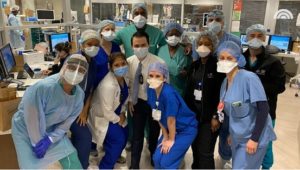
This is the description of everyday life for nurses at local hospitals. The Coronavirus-COVID-19 is devastating communities; there is an urgent need for good First Responders. Doctors and Nurses are among those First Responders, and yet nurses seems to be under-appreciated.

Put your money where your mouth is. This has been their continued experience:

Low wages
Deficient supply of Personal Protection Equipment (PPE)

Are these First Responders “Essential or Sacrificial”?

I am NOT a nurse; I am only able to report what the nurses themselves are advocating. Here is that reporting & a related VIDEO production:

Title: Why some nurses have quit during the coronavirus pandemic
By:
Safia Samee Ali, NBC News

For weeks, Kelly Stanton wasn’t sleeping. She lay in bed gripped with the anxiety of having to go to work at a Washington, D.C.-area hospital not knowing whether she might bring home the coronavirus to her husband and their three children.
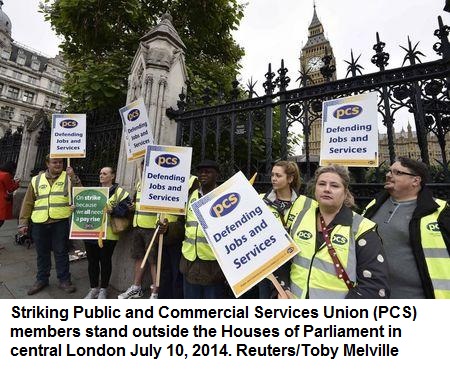
It was inevitable, she thought. She wasn’t protected.

Stanton, a nurse for 28 years, had seen federal safety protocols for health care workers begin to crumble amid the pandemic by early March.

Guidelines from the Centers for Disease Control and Prevention regarding personal protective equipment, or PPE, changed consistently. At Stanton’s hospital, nurses were told that they would have limited access to an already low stockpile of protective equipment and were being asked to reuse single-use masks multiple times, she said.

“Never in my time as a nurse have I seen this,” she said. “It was a position I could never have imagined I’d be in, even in my wildest dreams.”

Each time a safety regulation changed, she said, she began to feel more like “a sheep sent to slaughter” than a front-line nurse, and she started agonizing between her job and her family.

By late March, the risks weighed too heavily, and Stanton submitted her resignation.

“It was an extremely difficult decision, but as a mother and wife, the health of my family will always come first,” she said. “In the end, I could not accept that I could be responsible for causing one of my family members to become severely ill or possibly die.”

As COVID-19 has infected more than 1 million Americans, nurses working on the front lines with little protective support have made the gut-wrenching decision to step away from their jobs, saying that they were ill-equipped and unable to fight the disease and that they feared for not only their own safety but also that of their families.

Many of these nurses, who have faced backlash for quitting, said new CDC protocols have made them feel expendable and have not kept their safety in mind, leaving them no choice but to walk away from a job they loved.

‘We’re not cannon fodder. We’re human beings.’

As the nation took stock of its dwindling medical supplies in the early days of the pandemic, CDC guidance regarding personal protective equipment quickly took a back seat.

Supplies of N95 masks, which had previously been the acceptable standard of protective care for both patients and medical personnel, were depleting, so commercial grade masks, surgical masks and, in the most extreme cases, homemade masks, such as scarves and bandannas, were all sanctioned by the CDC — which didn’t return a request for comment — to counter the lack of resources.

Nurses, among other health care workers, were expected to pivot and adapt with no evidence to the view that new guidelines would provide any significant protection from a novel and contagious disease.

“Things they were telling us we had to now do, you would’ve been fired if we did that three weeks before,” Stanton said. “How is this suddenly OK?”

There had been warning that a pandemic was coming, she said. “Hospital administrators, states and the federal government should have stockpiled PPEs. All three failed.”

COVID-19 patients had only slowly started trickling in, but Stanton could see where things would head. It was almost guaranteed that nurses would be at risk under those conditions, she said.

“We’re not cannon fodder. We’re human beings,” she said.

In many respects, nurses who have had to treat COVID-19 patients with little or no protection, especially in the early days of the pandemic, have become collateral damage.

Nearly 10,000 health care workers on the front lines, including nurses, have tested positive, according to a preliminary survey the CDC conducted from February to April.

Because data collection has been slow and not comprehensive and many people with COVID-19 have been asymptomatic, actual numbers are likely much higher.

At least 79 nurses have died from the coronavirus, the American Nurses Association, which has been independently tracking reports, said Thursday.

“There are huge ethical dilemmas that nurses are now facing,” said Liz Stokes, director of the American Nurses Association Center for Ethics and Human Rights.

“Just imagine having to make decisions every day on whether you’re going to fulfill your professional obligation to care for patients versus sacrificing your personal safety or even that of your family because you’re in a situation where you don’t have adequate resources.”

Nurses have a duty to their patients, but they also have a duty to themselves under the nursing code of ethics, Stokes said. Those are equal obligations, and if you feel morally torn, you have to make the decision that’s right for you, she said.

Stokes added that it’s also important to be thankful for the nurses who have decided to step away because they recognized that they weren’t in the best situation physically or mentally to provide care.

‘No, we didn’t sign up for this’

For Rebecca, a nurse in the Albuquerque, New Mexico, area who didn’t want her full name used for fear that she won’t be rehired, the writing was on the wall when she saw a member of her hospital management collect all N95 masks from her floor and lock them in a cabinet in early March, before the country went into full-blown crisis.

“It’s really demoralizing to see someone lock them up in front of you knowing that you might need one of those,” she said. “The whole scene was very symbolic of how all this was going to go down. And it was a bad sign for what’s to come.”

Rebecca, who has been a nurse for four years, said that communication and infrastructure began to break down fairly quickly and that nurses were expected to make terrible compromises.

Masks were rationed to one per week and sometimes shared. Only nurses who dealt with patients who tested positive for COVID-19 were given an extra N95 mask, even if the patient showed symptoms.

During one 16-hour shift, Rebecca was repeatedly in close contact with a patient who later tested positive — and she wasn’t wearing a mask.

“I knew it was something I could no longer handle,” she said. “I know my limitations.”

Rebecca quit in mid-April, one week after she tested negative for COVID-19 after exposure to the patient.

Since quitting, she has been sensitive to the criticism many nurses like her have faced for stepping away during a pandemic. That’s why many of them have kept their decisions private, she said.

It’s especially hurtful when she reads comments on social media that nurses shouldn’t raise complaints because they “signed up for this.”

“We didn’t sign up to be sacrificial lambs. We didn’t sign up to fight a deadly disease without adequate resources,” she said. “We’re told we’re soldiers. Well, you don’t send soldiers to war without a gun and expect them to do their job, but you are doing that to us.”

The sentiments have been shared by thousands of other nurses who feel they are also being put in dangerous environments.

Last month, the New York State Nurses Association, representing more than 3,000 nurses, filed three lawsuits against the New York State Health Department and two hospitals over the health and safety of nurses treating COVID-19 patients.

Among other things, the lawsuits call out the state for not providing appropriate protective equipment for nurses, not properly training nurses deployed from hospital units and not providing safe enough working conditions for high-risk employees.

While the Health Department declined to comment directly on the lawsuit, it did say it was “deeply grateful for the ongoing efforts of New York’s health care workers to reduce the spread of COVID-19 by testing people who may be infected and treating those who are most in need.”

Quitting has been on the minds of many nurses, said Cara Lunsford, a nurse who founded Holliblu, an online community for nurses.

According to a survey conducted by Holliblu, 62 percent of over 1,000 respondents said they are planning to quit either their jobs or the profession altogether.

“They didn’t sign up to go into work and be unprotected from an invisible enemy, and the pressure is really starting to mount for a lot of nurses,” Lunsford said.

This is an unprecedented time, and nurses weren’t trained to be soldiers or handle biological threats with little protection and resources, she said. And if they leave for their sanity or safety, they shouldn’t be treated as defectors.

Constantly being anointed a “hero” by the public also hasn’t helped the added pressure, Rebecca said. While it’s a nice gesture, it gives the connotation that you should be risking yourself without help and that if you don’t you’re a “coward.”

She added that several colleagues reached out to her about wanting to quit after she left but that many just don’t have the option.

“I’ve realized that I’m very fortunate that I had a choice,” she said. “A lot of nurses have student loans, car loans, and they are single parents. They can’t quit, and that bothers me, because they are being taken advantage of right now.”

‘It was one of the most difficult decisions of my life’

Kate, who didn’t want her full name used for privacy, quit her job at a Virginia hospital in April after she was pulled from her floor as a post-anesthesia care unit nurse and reassigned to critical care after only four hours of training.

Throughout her hospital, protective equipment was siphoned for COVID-19-positive patients, but with testing not fully widespread, she never knew whether someone was infected, and worse she, didn’t know whether she was bringing it home.

Kate would go directly to the attic and quarantine away from her husband and children after getting home from work. But the emotional toll was high, and she could no longer be away from her 1- and 3-year-old children.

She knew she had to walk away from her job.

While putting her family first has got her through the painful decision, she still feels tremendous guilt for leaving.

“It’s not just a job, it’s a calling, and to walk away from it is extremely difficult and painful.” she said. “I wish I could have stayed with my patients. It’s not like I didn’t want to be there.”

Had masks been available and pre-pandemic precautions preserved, “without a doubt I’d still be working,” Kate said.

Stokes, of the American Nurses Association, said: “One of the issues that we are trying to emphasize is that nurses must be supported in whatever decision they make, whether they take the risk or choose not to take the risk to protect families.

“It’s a heart-wrenching decision, and many nurses have expressed that they feel sadness and sorrow that they are leaving their colleagues and patients. It’s a difficult decision, and that in itself can be emotionally traumatic.”

Stokes believes the psychological consequences of putting nurses in these dilemmas will be profound and long-lasting. She predicts high levels of post-traumatic stress disorder and secondary trauma syndrome trailing the pandemic.

“Nurses were already burned out before, and this pandemic might push many of them completely out,” she said.

The mental health toll on medical workers was put into sobering perspective after New York City emergency room doctor Lorna Breen died by suicide. A hotline created by physicians to help doctors deal with the anxiety of combating the crisis said it averages up to 20 calls a day. Another hotline, For The Frontlines, has also been set up as a 24-hour resource for other health care and essential workers.

“I would anticipate increased apprehension possibly extending into anxiety or mood problems,” said Dr. Sheetal Marri, a psychiatrist, referring not only to nurses who continued to work but also to those who stepped back. “These effects will impact the way nurses and other health care professionals will deal with workplace health hazards even after this pandemic is over.”

Stanton said she would like to return to nursing but only once guidelines are restored and she can feel safe going to work again. While she is taking this time to focus on her family, she still misses her job.

“I loved being a nurse. You do it because you care, you want to help people,” she said. ” But right now, nurses don’t feel like heroes. We feel expendable.”

If you or someone you know is in crisis, call the National Suicide Prevention Lifeline at 800-273-8255, text HOME to 741741 or visit SpeakingOfSuicide.com/resources for additional resources.

Source: Posted and retrieved May 10, 2020 from: https://news.yahoo.com/why-nurses-quit-during-coronavirus-104910947.html?.tsrc=notification-brknews

————–

VIDEO – Doctors and Nurses Reveal the Devastating Reality of COVID-19 – https://youtu.be/OVp2U2p4lmE

The Atlantic
Posted April 4, 2020 – Chaos. Fear. Dwindling stockpiles of equipment. Impossible choices. Patients dying alone. These are some of the things that health-care professionals describe facing while fighting the COVID-19 pandemic. Over the past week, we spoke with doctors, nurses, and physician assistants at some of the hardest-hit hospitals in the nation. In a new documentary from The Atlantic, they bring us into their devastating new reality.

Subscribe to The Atlantic on YouTube: http://bit.ly/subAtlanticYT

Don’t get it twisted, First Responders are dying, some have even committed suicide in this crisis.

This old adage seem apropos at this time:

Never kill yourself for people who would rather watch you die.

This commentary is manifesting a harsh reality: there are Crony-Capitalistic forces at play! Though only indirectly related, the designs of Big Pharma should not be ignored; this was conveyed in a previous commentary by the movement behind the 2013 book Go Lean…Caribbean:

Big Pharma or the Pharmaceutical industry, dictates standards of care in the field of medicine, more so than may be a best-practice. There is [the visual] of a familiar scene where pharmaceutical salesmen slip in the backdoor to visit doctors to showcase latest product lines … there are commission kick-backs [tied] in these arrangements.

As a result, treatments like Chemo-therapy cost $20,000+/month; and the War against Cancer is imperiled due to industry profit insistence.

So there are “Big Profits” in the medical industry, right?! Enough to go around so that everyone benefits, right? Nope; not at all; it becomes obvious very quickly that underlying to Crony-Capitalism is greed – more for them; less for you. In a previous Go Lean commentary, this attribute of Big Pharma was exposed:

Book Review – ‘Thimerosal: Let The Science Speak’
The King of Pop, Michael Jackson, released a song with the title: “They don’t really care about us”; he very well could have been talking about Big Pharma. In a previous blog/commentary, the pharmaceutical industry was assailed over one cancer drug, Gleevec. The commentary clearly depicted the perils of Crony-Capitalism.

Crony-Capitalism is not for the Greater Good. It is not good economics, good security nor good governance. These activities must be monitored and mitigated. [See the Michael  Jackson VIDEO of the song “They don’t care about us” in the link here.]

Accepting the truism of Crony-Capitalism in the medical industry, is there any doubt that nurses consider themselves undervalued by their employers and the overall community?

They have been treated as sacrificial, more so than essential.

This sends a Cautionary Warning to all those medical professionals in the Caribbean that may want to emigrate to the United States.

Stay home – “they do not really care about us”.

For those already in the US, lamenting the sad state of affairs, we urge:

Time to Go! We can readily reform and transform the Caribbean homeland with the lesser Crony-Capitalistic influences.

This was the consideration summary in many previous blog-commentaries:

Consider this sample:

https://goleancaribbean.com/blog/?p=14114 School Shootings ‘R’ Us – 11 in 23 Days
https://goleancaribbean.com/blog/?p=14087 Opioids and the FDA – ‘Fox guarding the Henhouse’
https://goleancaribbean.com/blog/?p=12949 US Charities too easily exploit Caribbean Disasters
https://goleancaribbean.com/blog/?p=11269 Managing the ‘Strong versus the Weak’ – An American Sickness
https://goleancaribbean.com/blog/?p=11057 Managing the ‘Strong versus the Weak’ – Selling-Out American Workers
https://goleancaribbean.com/blog/?p=6819 Perils of the deficient American food standards – Easy to Do Better

Essential or sacrificial … is a serious consideration for emigrant (overseas ) workers.

If a country shows little – or no – regards for their own people, imagine how much less they would show towards you, the alien-foreigner-worker?!

(There is the documented “bad” track record of American Cruise Lines treating their alien-foreign-workers with little regard – “modern-day-slavery”).

This “inconvenient truth” is related to a strong point conveyed in another previous Go Lean commentary about the immigrant workers who went to England – after World War II – only to find an unwelcoming society and unappreciated employers – their paychecks were likened to poverty wages. It is only apropos to Encore that original July 10, 2014 blog-commentary here-now:

—————

Go Lean Commentary – British public sector workers strike over ‘poverty pay’

The grass is not greener on the other side.
Go from being a big fish in a small pond, to a small fish in a big pond.

These expressions are relevant in considering the fate of so many Caribbean Diaspora that had fled their Caribbean homelands over the past decades to take residence in Great Britain. Many of them sought refuge as career civil servants; (one reason [a] was the acute racism and intolerance encountered in private enterprises). These ones are faced with the harsh reality that pay scales in the public sector have not kept pace with inflation; they are now at poverty level. See the news article here:

By: Tess Little (Editing by Stephen Addison)

British strike 1LONDON (Reuters) – Hundreds of thousands of public sector workers including teachers, council workers and firefighters staged a 24-hour pay strike on Thursday in a stoppage that has prompted Prime Minister David Cameron to pledge a crackdown on union powers.

Protesters marched through the streets of many of Britain’s main cities in one of the biggest co-ordinated labour stoppages for three years.

Denouncing what they called “poverty pay,” they demanded an end to restrictions on wage rises that have been imposed by the government over the past four years in an effort to help reduce Britain’s huge budget deficit.

In London, demonstrators marched towards Trafalgar Square at midday, chanting “Low pay, no way, no slave labour” to the beat of a drum. A giant pair of inflatable scissors, carried by members of the National Union of Teachers (NUT), read “Education cuts never heal.”

Firefighter Simon Amos, 47, marched wearing his uniform behind a flashing fire engine parading members of the Fire Brigades Union (FBU). “The government [is] making us pay more for our pension for it to be worth the same, and making us work longer,” he said.

British strike 2The biggest public sector union involved, Unison, said early reports showed the strike had led to 3,225 school closures with more than 1,000 others partially closed.

Refuse collectors, school support staff, cleaners, street sweepers, care workers, nursery assistants and social workers were joining the strike, it added.

Hot spots, it said, included the North East, Wales and East Midlands where most council offices had closed, while more than 60 picket lines have closed most services in Newcastle.

“It is a massive decision by local government and school support workers to sacrifice a day’s pay by going on strike, but today they are saying enough is enough,” said Unison General Secretary, Dave Prentis in a statement.

Britain’s coalition government has enforced a policy of pay restraint for public sector workers since coming to power in 2010, imposing a pay freeze until 2012 and then a one percent pay rise cap, resulting in a fall in income in real terms [compared to inflation].

The Cabinet Office played down the impact of the strike, saying that most schools in England and Wales were open and that fire services were operating throughout the country.

British strike 3On Wednesday, Cameron told parliament he planned to limit unions’ powers to call strikes.

“How can it possibly be right for our children’s education to be disrupted by trade unions acting in this way” he said.

Tough new laws would be proposed in the Conservative manifesto for next year’s general election, he added.

These would include the introduction of a minimum threshold in the number of union members who need to take part in a strike ballot for it to be legal.

The manifesto could also back the introduction of a time limit on how long a vote in favour of industrial action would remain valid.

The NUT mandate for Thursday’s strike, for example, came from a 2012 strike ballot based on a turnout of just 27 percent, Cameron said.

The issue of minimum voting thresholds last arose three months ago when a strike by London Underground train drivers caused huge disruption in the capital, prompting Mayor Boris Johnson to demand that at least half of a union’s members should vote in favour for a strike to go ahead.
Source: Reuters News Service; retrieved 07/10/2014 from: http://news.yahoo.com/public-sector-workers-strike-over-poverty-pay-105040672.html

Frankly, the Caribbean Diaspora employed in the British public sector can now do better at home … in the Caribbean.

This is the assertion of the book Go Lean…Caribbean. That once the proposed empowerments are put in place, the Caribbean Diaspora should consider repatriating to their ancestral homelands.

Unfortunately for the Caribbean, this societal abandonment has continued, since the early days of the “Windrush Generation”[a] right up to now. In a recent blog post, this commentary related analysis by the Inter-American Development Bank that the Caribbean endures a brain drain of 70% among the college educated population; (https://goleancaribbean.com/blog/?p=1433).

Change has now come to the Caribbean.

The book Go Lean…Caribbean serves as a roadmap for the introduction and implementation of the technocratic Caribbean Union Trade Federation (CU). This roadmap will spearhead the elevation of Caribbean society. The prime directives of the CU are presented as the following 3 statements:

  • Optimization of the economic engines in order to grow the regional economy & create 2.2 million new jobs at home.
  • Establishment of a security apparatus to protect the resultant economic engines.
  • Improve Caribbean governance to support these engines.

The book posits that the improved conditions projected over the 5 years of the roadmap will neutralize the impetus for Caribbean citizens to flee, identified as “push and pull” factors. This point is stressed early in the book (Page 13) in the following pronouncements in the opening Declaration of Interdependence:

xix.   Whereas our legacy in recent times is one of societal abandonment, it is imperative that incentives and encouragement be put in place to first dissuade the human flight, and then entice and welcome the return of our Diaspora back to our shores. This repatriation should be effected with the appropriate guards so as not to imperil the lives and securities of the repatriated citizens or the communities they inhabit. The right of repatriation is to be extended to any natural born citizens despite any previous naturalization to foreign sovereignties.

xx.   Whereas the results of our decades of migration created a vibrant Diaspora in foreign lands, the Federation must organize interactions with this population into structured markets. Thus allowing foreign consumption of domestic products, services and media, which is a positive trade impact. These economic activities must not be exploited by others’ profiteering but rather harnessed by Federation resources for efficient repatriations.

This foregoing article highlights other issues that have been prominently addressed in the Go Lean book, namely that of the Civil Service and Labor Relations. There is the need for a professional staff in the Federal Civil Service. They require marketable benefits and compensation. There is also a role for Labor Unions to play in the elevation of Caribbean society. The Go Lean roadmap envisions an inclusionary attitude towards unions. The Go Lean community ethos is that of being partners with unions, not competitors. The book features specific tools and techniques that can enhance management-labor relationships.

These issues constitute heavy-lifting for the regional administration of the Caribbean:

  • fostering best practices for federal civil service and labor unions,
  • minimizing the brain drain, and
  • facilitating repatriation to the homeland.

These issues cannot be glossed over or handled lightly; this is why the Go Lean book contains 370 pages of finite details for managing change in the region. The book contains the following sample of community ethos, strategies, tactics, implementations and advocacies to impact the Caribbean homeland:

Community Ethos – Economic Systems Influence Choices & Incentives Page 21
Community Ethos – The Consequences of Choices Lie in the Future Page 21
Community Ethos – Job Multiplier Page 22
Community Ethos – Lean Operations Page 24
Community Ethos – Return on Investments Page 24
Community Ethos – Ways to Impact the Future Page 26
Community Ethos – Ways to Improve Negotiations Page 32
Strategy – Competition – Remain home   –vs- Emigrate Page 49
Strategy – Agents of Change – Aging Diaspora Page 57
Tactical – Separation of Powers – Versus Member-States Governments Page 71
Implementation – Year 1 / Assemble Phase – Establish Civil Service Page 96
Implementation – Ways to Deliver Page 109
Implementation – Trade Mission Objectives Page 116
Implementation – Reasons to Repatriate Page 118
Anecdote – Experiences of a Repatriated Resident Page 126
Planning  – 10 Big Ideas for the Caribbean Region Page 127
Advocacy – Ways to Create Jobs Page 152
Advocacy – Ways to Impact Labor Unions Page 164
Advocacy – Ways to Manage Federal Civil Service Page 173
Anecdote – Experiences of Diaspora Member Living Abroad Page 216
Advocacy – Ways to Impact the Diaspora Page 217

The Go Lean roadmap has simple motives: fix the problems in the homeland to make the Caribbean a better place to live, work, learn and play. There should be no need to go abroad and try to foster an existence in a foreign land. So for those of Caribbean heritage working in the British Civil Service, we hear your pleas. Our response: Come home; come in from the cold.

Now is the time for all of the Caribbean, the people residing in the homeland and those of the Diaspora, to lean-in for the empowerments described in the book Go Lean … Caribbean. This Big Idea for the region is a dramatic change; one that is overdue. The policies & practices of the past have failed Caribbean society. Too many people left, yet have little to show for it.

Caribbean music icon Bob Marley advocated this same charter for the Caribbean Diaspora. He sang to “come in from the cold” in the opening song of his last album Uprisings in 1980. How “spot-on’ were his words in the following music/video:

Download the free e-Book of Go Lean … Caribbean – now!

———————

Appendix – Cited Reference
a: “There was plenty of work in post-war Britain and industries such as British Rail, the National Health Service and public transport recruited almost exclusively from Jamaica and Barbados”. Retrieved July 10, 2014 from: http://en.wikipedia.org/wiki/British_African-Caribbean_people#The_.22Windrush_generation.22

Share this post:
, , , ,
[Top]

Good Leadership: Example – Mitigating Crime

Go Lean Commentary

Why is leadership so important?

Think of society as a vessel or a vehicle; only one person “steers the ship” or drives the bus. The direction and speed of the vessel-vehicle is determined by the leadership; so too its safety. This is the actuality of the “Ship of State”. Yes, we put a lot of responsibilities and privileges in the hands of our societal leaders, so we had better choose well. We had better select those with Good Leadership skills, practices and intentions as our lives may depend on it.

In fact, this is the origins of civilization and society. City-States built walls to protect their occupants; kings were the warriors or commanders-in-chief protecting their people. Security was the only consideration for Good Leadership at that time; economic stewardship and efficient governance are all more-modern evolutions.

As related in a previous blog-commentary, the emergence of the implied Social Contract codified the expectations of all parties involved in society. Despite the forms of government or versions of constitutions, the principles are all similar in the expectation of citizens versus their governments. That Social Contract is summarized as follows:

Citizens surrender some of their freedoms and submit to the authority of the State in exchange for protection of remaining natural and legal rights.

This is a matter of public safety and security. Good Leadership ensures that the mutual deliveries of the Social Contract are fulfilled. Good Leadership, therefore, should mitigate crime in the jurisdictions of their homeland. (See the feature article from the Caribbean member-state of the Turks and Caicos Islands in the Appendix below). While citizens may love their homeland, there must be the assurance that the homeland loves (and protects) their citizens back.

“Love their citizens back …”

This has long been a problem in many countries. There is blatant discrimination and unequal justice in many communities that have yet to reconcile their dysfunctional racial realities – think the United States of America. The primary responsibility for delivering public safety – for mitigating crime – is the local police, but for many American communities, the police do not “serve and protect”; they are the threat to peace and security. This commentary have long reported on “Cop on Black” atrocities in America; but this is also a problem in other countries like Canada, UK, France and the Netherlands.

Do you see that pattern?

Those countries are the exact destinations for many of the Caribbean Diaspora. The Black-and-Brown of the Caribbean had fled their homeland in search of refuge but instead have found a more threatening climate in their new homes. See the VIDEO in the Appendix below where the Black populations – and those that love them – are protesting. If only, these ones were able to prosper where planted in their ancestral homelands and did not have to leave in the first place.
This is the quest of the new Caribbean governance as presented in the 2013 book Go Lean…Caribbean; the book posits that an embrace of Good Leadership can allow for these communities to reform and transform, allowing more success in the mitigation and remediation of crime.

This is the completion of the Teaching Series on Good Leadership from the movement behind the Go Lean book; this is entry 6 of 6 for the month of May 2020. This submission asserts that Good Leadership in the administration of a Caribbean regional security force and police force can have immediate effect on public safety and justice institutions – we can mitigate crime. The full catalog for this month’s series is listed as follows:

  1. Good Leadership – Inaction could be deadly
  2. Good Leadership – Caring builds trust; trust builds caring
  3. Good Leadership Agile: Next Generation of leadership and project delivery
  4. Good Leadership – Hypocrisy cancels out Law-and-Order
  5. Good Leadership – Example – “Leader of the Free World”
  6. Good Leadership – Example – For Mitigating Crime

The 30 member-states of the Caribbean need to reform and transform the Homeland Security deliveries in the region to better fulfill the Social Contract. We do not want our good citizens forced to leave to find refuge abroad. That refuge is elusive there in those foreign abodes, so the “best bet” is to do the work here to elevate society. What exactly can be done to mitigate crime in the Caribbean region?

Plenty!

There are many strategies, tactics and implementations. In fact, we have exhausted this topic … in the Go Lean book and in previous blog-commentaries. See this sample here:

https://goleancaribbean.com/blog/?p=14424 Title: Repairing the Breach: Crime – Need, Greed, Justice & Honor
“Black men and boys” in the US amount to 6.5 percent of the total US population but 40.2 percent of the prison population. Surely, there are some special issues associated with this special interest group, but “Yes, we can” reduce crime among this special sub-population. While this is an American drama, 29 of the 30 Caribbean member-states feature a majority Black-and-Brown demographic, so there is relevance for us.
https://goleancaribbean.com/blog/?p=13476 Title: Future Focused – Policing the Police
People flee their Caribbean homelands for many different reasons, including deficiencies in security measures. There is the need to Police the Police. This will mean giving help and support to policing authorities, but also accountability too. There must be “good” checks-and-balances.
https://goleancaribbean.com/blog/?p=7485 Title: A Lesson in the History of Interpersonal Violence – Street Crimes
To elevate Caribbean society there must be a focus on the region’s security and governing engines to provide justice assurances. Street violence stems from 3 considerations: 1. Need, 2. Greed, and 3. Justice. The Go Lean roadmap addresses jobs, to lower the “need” factor. Plus, the emergence of new economic drivers will bring “bad actors” who would seek to exploit the opportunities for greed, so there is an intense focus on White Collar crime mitigations. Lastly, the last factor “justice” addresses street riots, civil unrest and other outbursts against perceived injustices. So the “Justice Institutions” – in the new Caribbean – must be optimized to ensure accountability, fairness, equality, law-and-order for all.
https://goleancaribbean.com/blog/?p=7179 Title: Crime Specialist Urging: ‘Change Leaders in Crime Fight’
Remediating and mitigating crime is both an “Art” and a “Science” so we have to rely on professionals and Subject Matter Experts – the Police – to do this job efficiently and effectively. These ones need to learn and abide by best-practices. The chain-of-command is essential for law enforcement, so change the head – leaders – and the body will follow.
https://goleancaribbean.com/blog/?p=6693 Title: Ten Puerto Rico Police Accused of Criminal Network
An exposed case of corruption by police officials in PR have demonstrated that this community is not so elevated in their societal engines, an expectation due to their US territorial status. American territories (PR & USVI) need this Go Lean roadmap just like the rest of the Caribbean region.
https://goleancaribbean.com/blog/?p=5307 Title: 8th Violent Crime Warning to Bahamas Tourists
The stewards of the new Caribbean economic eco-systems, need to pay more than the usual attention to Travel Alerts about crime in the region. We must be On Guard to mitigate and remediate threats with anti-crime initiatives, even “policing the Police”.
https://goleancaribbean.com/blog/?p=392 Title: Jamaica to receive World Bank funds to help in crime fight
Crime has proceeded to cast such a “dark cloud” on Jamaica that the country is near the assessment of a “Failed-State”. The World Bank funded grants to help Jamaica in 3 ways: 1. Improved services, 2. Basic infrastructure and 3. Targeted crime & violence interventions.

The focus is for Homeland Security, not just for mitigating crime. All threats (foreign and domestic) against Caribbean society must be addressed. This includes elevating the effectiveness and efficiency of First Responders for all of these Bad Actors:

That last one – pandemics – is all the rage right now. There are no Ands, Ifs or Buts, with the current Coronavirus-COVID-19 crisis, Good Leadership would do a better job of managing such a crisis. We also have to contend with policing the Police.
Also notice too that the Go Lean roadmap calls for the mitigating the eventual ‘Abuse of Power’. Since “power corrupts and absolute power corrupts absolutely”, there is the need to monitor, mitigate and manage the risks of bad behavior among law enforcement, security personnel and elected leaders – this is the cause for complaint in the US right now (Appendix below).

This is an important consideration for us in the Caribbean considering our prior history with the Pirates of the Caribbean. That was an example of a prevalence of a lawless society and a blatant abuse of power. This was detailed in the previous entry of this series – 4 of 6 – for May 2020 – Good Leadership #4: Hypocrisy cancels out Law-and-Order – it stressed how important optimizing justice institutions to ensure law-and-order for all. See this excerpt here:

For Good Leadership, those at the top must avoid hypocrisy, or hypocritical standards.

This is right, no one should be “above the law”; when there is the manifestation of Bad Actors that operate “above the law” or “without law”, then chaos ensues in society. This is an issue of justice, fairness, mercy and law-and-order. This is the historicity of our regional homeland; remember the Pirates of the Caribbean.

No doubt, the Caribbean region needs Good Leadership to mitigate crime in the homeland. We must appoint leaders to “serve and protect” our residents and trading partners – think tourists and Direct Foreign Investors. We need to do better at this. We need to dissuade our own people from fleeing to find refuge and we need to invite others to come from afar to enjoy our hospitality. This will make our homeland a better place to live, work and play. We hereby urge all Caribbean stakeholders to lean-in to this Go Lean roadmap to forge and benefit from Good Leadership.  🙂

About the Book
The book Go Lean…Caribbean serves as a roadmap for the introduction and implementation of the technocratic Caribbean Union Trade Federation (CU), for the elevation of Caribbean society – for all member-states. This CU/Go Lean roadmap has these 3 prime directives:

  • Optimization of the economic engines in order to grow the regional economy to $800 Billion & create 2.2 million new jobs.
  • Establishment of a security apparatus to ensure public safety and protect the resultant economic engines.
  • Improve Caribbean governance to support these engines, including a separation-of-powers between the member-states and CU federal agencies.

The Go Lean book provides 370-pages of turn-by-turn instructions on “how” to adopt new community ethos, plus the strategies, tactics, implementations and advocacies to execute so as to reboot, reform and transform the societal engines of Caribbean society.

Download the free e-Book of Go Lean … Caribbean – now!

Who We Are
The movement behind the Go Lean book – a non-partisan, apolitical, religiously-neutral Community Development Foundation chartered for the purpose of empowering and re-booting economic engines – stresses that reforming and transforming the Caribbean societal engines must be a regional pursuit. This was an early motivation for the roadmap, as pronounced in the opening Declaration of Interdependence (Pages 11 – 13):

x. Whereas we are surrounded and allied to nations of larger proportions in land mass, populations, and treasuries, elements in their societies may have ill-intent in their pursuits, at the expense of the safety and security of our citizens. We must therefore appoint “new guards” to ensure our public safety and threats against our society, both domestic and foreign. The Federation must employ the latest advances and best practices of criminology and penology to assuage continuous threats against public safety. ….

xi. Whereas all men are entitled to the benefits of good governance in a free society, “new guards” must be enacted to dissuade the emergence of incompetence, corruption, nepotism and cronyism at the peril of the people’s best interest. The Federation must guarantee the executions of a social contract between government and the governed.

xvi. Whereas security of our homeland is inextricably linked to prosperity of the homeland, the economic and security interest of the region needs to be aligned under the same governance. Since economic crimes … can imperil the functioning of the wheels of commerce for all the citizenry, the accedence of this Federation must equip the security apparatus with the tools and techniques for predictive and proactive interdictions.

xxiv.  Whereas a free market economy can be induced and spurred for continuous progress, the Federation must install the controls to better manage aspects of the economy: jobs, inflation, savings rate, investments and other economic principles. Thereby attracting direct foreign investment because of the stability and vibrancy of our economy.

Sign the petition to lean-in for this roadmap for the Caribbean Union Trade Federation.

———————

Appendix – Title: Governor’s statement on addressing crime in Turks and Caicos
Sub-title:
Governor’s statement on addressing crime in Turks & Caicos Islands delivered during 10 September joint press conference.

Let me start, as the Governor, by welcoming you. For those listening to us on the radio we are in the Premier’s Office and I’m joined by the Premier and the recently appointed Commissioner of Police. We also have with us the Deputy Governor, Deputy Premier, and the Executive Leadership team of the Police Force.
We are here to describe and take questions about the recent spike in the murder rate on the islands.

Let me first start with the most important group we want to acknowledge; the victims. Their lives taken, their futures stolen. Their families, their friends hurt beyond imagination. Those who were their parents, their partners, their sweethearts, their brothers, their sisters, their children. Those who were once at their school or who shared a work place or who just thoroughly enjoyed their company or their humour. Those that loved them intensely in life and those who had no idea how much they thought of them until they were gone.

I’m very aware that a life taken away – suddenly, unexpectedly and violently – is a blow very hard to deal with. There’s an immediate overwhelming heart-stopping shock to be replaced over time by a feeling of sadness that remains and returns when least expected. No opportunity for a final goodbye, no opportunity to perhaps put something right or say something that needed to be said.

The cold statistic of 10 murders doesn’t start to explain the impact this has on those very close to the person who has lost their life, but also on a community. And on an island, which is one extended community, a violent attack on one member feels like an attack on us all. I speak therefore for all of us when I say we want to bring those who did this, to your loved ones, and to our community, to justice.

Beyond gaining justice for those we have lost, you quite rightly want to know what we are going to do about this to prevent further loss, and that’s the purpose of this press conference.

I promised when I was sworn in that I was going to be clear, and in being ‘clear’ I was going to be ‘straight’. So what we are not going to do is down-play the seriousness nor are we going to offer you the illusion of a quick fix.

Anyone suggesting there is one, hasn’t looked at a whole range of comparative scenarios from around the region or from around the world as to how serious crime has to be tackled across government and society.

I said when appointing the new local Deputy Commissioner, last month, that when we come to talking about ‘the police and crime’ we have reached the end of a conversation rather than having a much needed conversation about its causes. It’s going to take time, and it’s going to take far more than just ‘the police’ to develop a society that’s at ease with itself and where serious crime is a genuine aberration.

The important march on Sunday, led by our church leaders, supported by the Honourable Premier and Honourable Leader of the Opposition, which placed an emphasis on society and community, was an excellent example that these leaders, religious and secular, understand that.
In being clear and in being straight we are also not going to engage in hyperbole or stoke emotions. What our collective intention is, in a leadership role, is to inform you with facts. What’s the issue? What’s being done?

I’m first going to say something about the leadership, not only of this issue, but our general approach to leading the country at times such as this, and then something about what the facts are telling us. The Commissioner is then going to talk about the immediate policing response that he and his Executive Team have led. Most importantly the Premier is going to talk to the wider societal issues and her government´s continued support to the police as we move forward. We will then take questions.

Let’s start at the top. The most important thing we, as a national leadership team can do, at this time, is lead. The symbolism of the three of us presenting together should not be lost on you, nor on the criminals. We have been working on this, in the background, as part of the National Security Strategy since I arrived and we had expected to explain this change of approach, when we rolled that out. But today we have the opportunity to give you a glimpse of how we are going to lead national and internal security going forward.

The world is now too complex for there to be institutional stovepipes and we intend to lead in a joined up way in the expectation that others will match our behaviours and work across institutional boundaries to deliver results.

Beyond that simple thought: those on the front line delivering operational impact; those paying for it; those who are held responsible to the electorate; those who can propose policy and deliver legislation, and; those who hold the Constitutional lead, including in extremis the power to call on emergency powers, or on international support, have to be working in sympathy.

Being blunt, if we can’t get it together at the top, what hope below. Some have called this a crisis (given what I’ve seen in my life this isn’t, I assure you, a crisis). But if it is, it’s also an opportunity to make this three way relationship meaningful. The three of us have seized that opportunity. It’s now the new normal. Key point: every resource and power available to us can, as we wish, now be focused rapidly when and where we want it to be because we are joined up.

So what’s the problem we are seeking to solve? I’ve already described 10 murders. That’s 10 too many; justice needs to be done and will be done. Beyond that, what else are the facts telling us.

The first is, is that the emotions the public are feeling, are grounded in truth. I’m going to give you the facts as to why we should as a society be concerned and focused. What we should not be, as a society is panicked or afraid. In this regard what is not helpful are misleading accounts on social media of phantom shootings and non-existent attacks that distract police from dealing with issues where there is genuinely life at risk.

If you are spreading a story on social media about an attack that’s supposedly occurring but that you’ve not witnessed, please pause and think. Are you helping make society better and safer. Gossip and rumour are toxic at the best of times but when they promote unnecessary fear, when what we need is strength and resilience, they become part of the problem. Please be part of the solution. Please deal in known facts.

I want to first of all explain one fact that I know you are less interested in but one that is none-the-less accurate and important. Year-on-year the overall (and I stress the word here overall) crime statistics have been falling. Over five years overall crime is down 30%. I’ve been with our police more since my arrival than I have been with my own team. We have an increasingly good force. The statistics tell us that away from the most serious crime where there are really deep non-policing factors at play, our police have been getting better at doing their job and part of this is down to investments made in them.

But I also know that, at this moment, this is not the figure that you are interested in. What you are interested in are the levels of serious crime. On this issue the figures tell us an interesting story. Over the last five years they initially rose to peak in 2016/17 at 426 serious crimes that year to then fall back, in line with other falls in crime rate, to 314 last year.

So what’s happened this year. If we look at the April to August figures and compare them to last year, there is a sharp increase in serious crime. If you break this down further it’s not ‘murder’ (the very visible and appalling tip of the ice-burg) that shows a significant increase but instead that which is less easy for the press or public to see: ‘firearms offences’.

Murder, itself, shows a relatively small rise but the more general firearms offences have increased from 26 last year to 62 this year. That’s very significant.

Some of these firearms offences are linked to robbery, it’s those that we know are causing widespread public concern, but a significant number are indeed ‘retaliation’, not so much linked to gangs or turf, but to perceived arguments and disrespect amongst groups. It’s an uncomfortable truth, but it’s a truth the three of us need to share with you, that much of this problem is not imported, it’s home grown. Its not ‘the other’, it’s ‘us’.

It’s also worth saying that we believe we are dealing with a very small number of criminals – who are increasingly becoming known to us – and when arrested and charged – because there is evidence that can be put before the court – will reduce, possibly seriously reduce, the problem we have right now.

Having explained the local picture I now want to say something about how this impacts on our tourist industry as it’s not just local but international commentators that are following this. The way murder rates are calculated globally is by death per 100,000. In a country as small as ours just one murder starts to impact on this ratio. Just one bad individual can start to change the way our Islands are presented globally.

The facts are that in 5 years we have lost only two tourists to murder. One at a resort, one in a private residence. That is two too many. Everything I said at the start of this conference about the devastating shock to family and friends I want to reemphasize, again. The shock is exacerbated because these were our guests in our country, away from their family and their friends and they came because they knew they were coming to a world class, amazingly relaxed and tranquil destination, that have people returning year-on-year, who in many cases see it as their second spiritual home, because they love these islands and her people. It is, and it remains, one of the most perfect destinations in the world.

The facts regarding tourist safety are we have 1.8 million tourists arriving with us by air or sea every year. A tourist is statistically extraordinarily safe; almost certainly safer than in their home country. It’s important, as we face down the problem we have, we don’t unintentionally signal that this island is anything other than amazingly safe for our visitors and what a superb job our tourist industry do in ensuring their guests have an extraordinary time with them and with us.

Finally TCI: we are bigger, we are better and we are stronger than allowing a small number of bad men, to bring fear into our amazing country. The stoicism we show in times of natural disaster is admirable; let’s show it now. As you hear the Commissioner and Premier speak let’s all of us assume ‘agency’, not just in observing the problem, but being a part of the wider societal solution.
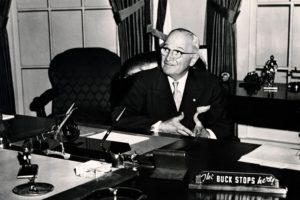
As I hand over to our Commissioner, I end where I began, we are determined to bring those who are working so hard to undermine our society to justice. Our thoughts – indeed our motivation – come from us understanding the deep hurt that these men did to the victims and those close to their victims – and if this ever was to your mind a crisis, it’s now become a realised opportunity. You have an unshakable national team that intends to impose itself on this and any future national security problem. This is therefore an important moment for the country in more than one sense. Commissioner, over to you.

Published 18 September 2019

Source: Posted September 18, 2019; retrieved May 31, 2020 from: https://www.gov.uk/government/speeches/governors-statement-on-addressing-crime-in-turks-and-caicos

———————

Appendix VIDEO – Protests over George Floyd’s death spread across the United States … and the World – (Redfish)

 – https://youtu.be/QK6zJo3o8l8

Fábio Duarte Persiani
Posted May 31, 2020 –

Share this post:
, , ,
[Top]

Good Leadership: Example – “Leader of the Free World”?

Go Lean Commentary

Is this standard still valid (as reported in a previous commentary)?

The United States of America presents itself as the “City on the Hill“, the richest, most powerful model democracy in the history of the world. But this country has some societal defects – i.e. Institutional Racism & Crony-Capitalism – that are so acute that they distort the American reality as a Great Society. …

In addition to the country presenting itself as a model democracy, the Chief Government official in the US, the President of the United States (POTUS) is considered the “Leader of the Free World” – this has been the association ever since the start of the Cold War (early 1950’s)..
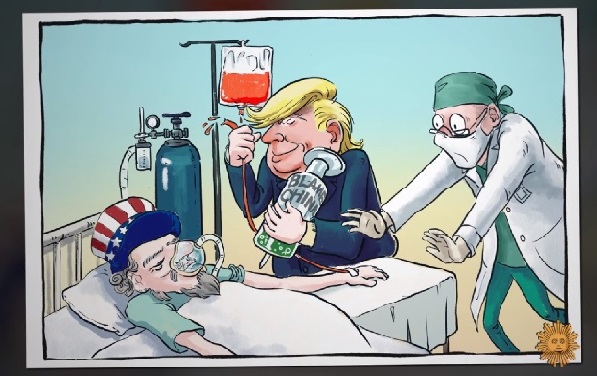
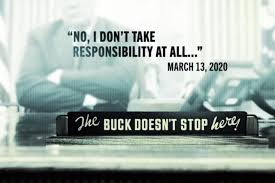
This is a commentary about Leadership; and the urgent need for it during this Coronavirus-COVID-19 crisis. So can we look to American entities as good examples of Good Leadership?

Yes and No … and Yes.

Yes

The good example of America is its “kinetics in evolution”, not the snapshot it presents to the world. The country is always trying to get better, always evolving. This used to be the defined characteristic of America:

  • White
  • Rich
  • Straight and able-bodied.

… but now today, so many other definitions of Americans have emerged and have been empowered. Think: minorities, women, LGBT, disability-challenged, etc..

No

The current POTUS – Donald Trump – is not to be credited as the “Leader of the Free World”. He has not provided a good example of Good Leadership. He is not ready, willing nor able. This is not our opinion alone; see this portrayal here:

Title: COVID-19 further confirms: The position of ‘Leader of the Free World’ is vacant

On Aug. 8, 1990, President George H.W. Bush gave a rare Oval Office address announcing America’s response to Iraq’s invasion of Kuwait just days earlier. In the days leading up to the speech, Bush had worked tirelessly with his national security team to build a coalition of nearly 40 leading nations to condemn Iraq’s illegal invasion and to build support behind the critical UN Security Council Resolutions that fall.

In the speech, President Bush made special mention of his administration’s work to rally the world, “We are working around the clock to deter Iraqi aggression and to enforce U.N. sanctions. I’m continuing my conversations with world leaders. Secretary of Defense Cheney has just returned from valuable consultations with President Mubarak of Egypt and King Hassan of Morocco. Secretary of State Baker has consulted with his counterparts in many nations, including the Soviet Union, and today he heads for Europe to consult with President Ozal of Turkey, a staunch friend of the United States.”

Nearly 40 countries would contribute troops, weapons, and resources to the effort that would become Operation Desert Storm. In one of the shortest wars of the 20th Century, coalition forces overwhelmed Iraq’s military, and — just one hundred hours after the ground campaign started — President Bush declared a ceasefire to active hostilities.

This is a global crisis that will have generational ramifications.

Unlike his predecessors, who united the countries of the world against a common enemy, President Donald Trump has taken an inward, nativist approach in his speeches and actions. Writing in Foreign Affairs, former Under Secretary of State Nicholas Burns noted Trump’s lack of international outreach. “Beyond individual phone calls with world leaders, he has made just one attempt to organize countries to band together — a single conference call with European, Canadian, and Japanese leaders in the G-7 forum he currently chairs.”

Whether President Trump likes it — or even comprehends our role in the world — the United States is the last and only indispensable nation when it comes to a global response to a global problem.

Before the COVID-19 pandemic, China was on a course for rising economic parity with the United States on the world stage, but not now — at least in the short term. We have no idea how this pandemic will reshape the international economic order in the coming months and years, but China’s rise will likely continue. Right now, however, the United States enjoys a singular, unique and leading role in international affairs, and Trump is actively redefining and expanding the notion of “leading from behind.”

Perhaps the clearest recent example of a similar global economic calamity occurred during the 2008/2009 financial crisis, bridging both the end of the Bush Presidency and the start of the Obama Presidency. Both leaders and administrations recognized the need for American leadership on the world’s stage to reassure international markets and stem financial loses. As former Under Secretary Burns noted, “Both Bush and Obama understood that the United States, with all its power and immense credibility, had to lead if the world was going to prevent the Great Recession from becoming a Great Depression.”

During this COVID-19 pandemic, America’s credibility is being tested as never before. In direct contradiction to the very tone and message of President Bush’s speech 30 years ago addressing the invasion of Kuwait, President Trump spoke from the same Oval Office on March 11. Rather than speaking as the leader of the world’s only indispensable nation, Trump’s nativist tone called the European Union’s response to the pandemic a “failure” and sought to boast about America having “the greatest economy anywhere in the world by far.”

Historians differ on the origins of the phrase “Leader of the Free World,” but it is widely accepted that its use as a colloquialism for the president first started during the early years of the Cold War. Since the end of the Second World War, presidents of both parties have assumed the tremendous domestic and international mantle of leadership, with varying degrees of success, but always united in the primacy of the United States on the world’s stage.

The “free world” is desperate for American leadership during this global pandemic, but unfortunately for them — and us — that position is vacant.

Kevin Walling (@kevinpwalling) is a Democratic strategist, Vice President at HGCreative, co-founder of Celtic Strategies, and a regular guest on Fox News and Fox Business and Bloomberg TV and Radio. 

Source: The Hill; posted March 30, 2020; retrieved May 30, 2020 from: https://thehill.com/opinion/white-house/490313-covid-19-has-further-confirmed-the-position-of-leader-of-the-free-world

Yes

A previous POTUS – Jimmie Carter – was/is a great example for “Leader of the Free World”. Consider this portrayal here:

Title: Former President Jimmy Carter Just Made a Solar Farm to Power Half His City
Sub-title:
This is one action taken by one man…and it’s powering half a town.
By: Christianna Reedy

Steady Solar Supporter
In 1979, in the throes of the U.S. energy crisis, then President Jimmy Carter addressed the nation as he installed 32 solar panels designed to use the Sun’s energy to heat water. He told the country, “A generation from now, this solar heater can either be a curiosity, a museum piece, an example of a road not taken, or it can be just a small part of one of the greatest and most exciting adventures ever undertaken by the American people.”

Former President Carter’s vision for clean, renewable energy proved to be far ahead of his time.
While his successor, former President Ronald Reagan, had the panels removed, Carter and his family have continued their work toward ensuring that those 32 panels became a part of a much bigger story.

Carter leased 10 acres of land in his hometown of Plains, Georgia, to be used as a solar farm. This February, the solar development firm SolAmerica finally completed the project, which will have the capacity to meet more than half of the town’s energy needs.

This is, in essence, one action taken by one man…and it is powering half a town.

Then, in June of this year, the Carter family had 324 solar panels installed on the Jimmy Carter Presidential Library, which will provide about seven percent of the library’s power.

The Power Of People
“Distributed, clean energy generation is critical to meeting growing energy needs around the world while fighting the effects of climate change,” Carter said in a SolAmerica press release. “I am encouraged by the tremendous progress that solar and other clean energy solutions have made in recent years and expect those trends to continue.”

Carter’s continued activism in support of renewables showcases the importance of local and individual efforts to reduce humanity’s reliance on fossil fuels, even in the absence of strong national initiatives.
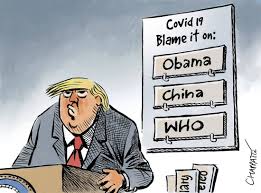
We, the people, have power.

The solar farm in Plains is expected to generate 1.3 MW of power per year, which is equal to burning about 3,600 tons of coal. Over time, that will prevent a sizable amount of greenhouse gases from being emitted into our atmosphere.

Many individuals, communities, and even states are joining with Carter in working toward shifting to clean energy sources. Elon Musk, CEO of Tesla, has invested in developing technology and products that are making solar energy cheaper than ever before. The U.S. states of New York, California, and Washington have banded together to form the “United States Climate Alliance” after President Donald Trump announced the country would pull out of the Paris Climate Accord.

These are just a few examples of people and communities who are working towards a sustainable future. And their work is bearing fruit — the construction of coal power plants is declining worldwide, and a new report projects that the U.S. will exceed its Paris Accord goals despite the recent withdraw. Regardless of the opposition, people around the world are choosing to embark on exciting adventure to a bright, renewable (and clean) tomorrow.

The future is looking bright.

Source: Posted July 11, 2017; retrieved May 26, 2020 from  https://futurism.com/former-president-jimmy-carter-just-made-a-solar-farm-to-power-half-his-city


VIDEO – Jimmy Carter’s Hometown Turns to Sun for Power – https://youtu.be/5-7SJ7Uz6xs  

Associated Press
Posted February 9, 2017 – Plains, Georgia, the hometown of President Jimmy Carter, is turning to the sun for power. Solar panels installed on Carter’s farmland are generating enough power to supply half of energy used in Plains. (Feb. 9)

Subscribe for more Breaking News: http://smarturl.it/AssociatedPress Get updates and more Breaking News here: http://smarturl.it/APBreakingNews

The Associated Press is the essential global news network, delivering fast, unbiased news from every corner of the world to all media platforms and formats. AP’s commitment to independent, comprehensive journalism has deep roots. Founded in 1846, AP has covered all the major news events of the past 165 years, providing high-quality, informed reporting of everything from wars and elections to championship games and royal weddings. AP is the largest and most trusted source of independent news and information.

Today, AP employs the latest technology to collect and distribute content – we have daily uploads covering the latest and breaking news in the world of politics, sport and entertainment. Join us in a conversation about world events, the newsgathering process or whatever aspect of the news universe you find interesting or important.

Subscribe: http://smarturl.it/AssociatedPress http://www.ap.org/

https://plus.google.com/+AP/

https://www.facebook.com/APNews

https://twitter.com/AP

This is the continuation of a Teaching Series on Good Leadership from the movement behind the 2013 book Go Lean…Caribbean; this is entry 5 of 6, which portrays samples and examples of Good Leadership. This entry specifically considers the President of the United States. The full catalog for this month’s series is listed as follows:

  1. Good Leadership – Inaction could be deadly
  2. Good Leadership – Caring builds trust; trust builds caring
  3. Good Leadership Agile: Next Generation of leadership and project delivery
  4. Good Leadership – Hypocrisy cancels out Law-and-Order
  5. Good Leadership – Example – “Leader of the Free World”?
  6. Good Leadership – Example – For mitigating crime

For the 30 member-states of the Caribbean, we have no voice nor vote for the Office of the American Presidency; this disposition is even true for Puerto Rico and the US Virgin Islands. Too bad, as we really need a selection of Good Leadership to emanate from that Office. There are no Ands, Ifs or Buts, with the current Coronavirus-COVID-19 crisis, Good Leadership would do a better job of managing such a crisis. We saw it before – GW Bush with SARS in 2003, GW Bush & Barack Obama with H1N1 in 2008/2009 and Obama with Ebola in 2014.

The historicity of this crisis is that Donald Trump came along, threw out the Pandemic Playbook (that was developed by Bush & Obama) and then didn’t have a plan at all. As related in the first entry in this 6-part series, his inaction caused thousands of deaths.

Sad!

Also, consider this sample of previous commentaries relating the inadequacies of the American hegemony on the Caribbean actuality. These show that we are both powerless and parasitic – poor us! See the sample list here:

https://goleancaribbean.com/blog/?p=18770 Christian Journal Urges: ‘Remove Trump; he is not a Good Leader’
https://goleancaribbean.com/blog/?p=18438 Refuse to Lose – Despite American Expansionism
https://goleancaribbean.com/blog/?p=13746 American Mirage for a Caribbean Basin Security
https://goleancaribbean.com/blog/?p=17135 Way Forward – Puerto Rico: Learns its true status with America
https://goleancaribbean.com/blog/?p=12468 State of the Union: Self-Interest of ‘Americana’
https://goleancaribbean.com/blog/?p=12380 A Lesson in History – ‘4th of July’ and Slavery
https://goleancaribbean.com/blog/?p=10895 Trump’s Vision of the Caribbean: Yawn – He doesn’t care
https://goleancaribbean.com/blog/?p=8099 Caribbean Image to America: ‘Less Than’?
https://goleancaribbean.com/blog/?p=5353 POTUS and the Internet and the Caribbean
https://goleancaribbean.com/blog/?p=4551 US Territories – Between a ‘rock and a hard place’

In a previous entry of this series – 2 of 6 – for May 2020 – Good Leadership #2: Caring builds trust; trust builds caring – it was stressed how important “Trust” is:

Trust is very important for forging Good Leadership. Subjects must feel that they can trust their leaders, that the leaders care and would only have their best interest at heart. So actions of caring and trust are inter-related.

So the actual subjects and citizens of American leadership feel dismay emanating from the Office of the POTUS; they cannot Trust the current occupant – how much more for us in the Caribbean. Surely, you accept that “blood is thicker than water”.

This sad reality was actualized in April 2020 when this POTUS blocked the shipment of necessary PPE (Personal Protection Equipment) to Caribbean nations that had been bought and paid for them, to ensure all domestic needs were fulfilled before accommodating foreign requests – as a candidate in 2015/2016, Donald Trump did advocate for “America First”.

A previous POTUS – Harry Truman (1945 to 1957) – lived by the rule that the “buck stops here”.

Buck passing, or passing the buck, or sometimes the blame game, is the act of attributing to another person or group one’s own responsibility. It is often used to refer to a strategy in power politics whereby a state tries to get another state to deter or fight an aggressor state while it remains on the sidelines. Wikipedia

The Antipathy of Trump.

Truman recognized, acknowledged and accepted that the responsibility to protect the American people – and other allied nations – rests with him. How we miss that kind of Good Leadership!

No doubt, our Caribbean region needs our own Good Leadership. We cannot trust any POTUS, benevolent or malevolent, to look after us – we must Grow-up already!

In summary, Good Leadership is an Art and a Science. At a bare minimum, we must pursue the associated best practices ourselves rather than looking for someone else to pursue our best interest for us. Freedom is not free! We must pay the price ourselves to live, work and play in this “Free World”.

We want to be a protégé, not a parasite of the United States of America. The “buck stops here” – Grow Up Already!

We hereby urge all Caribbean stakeholders – even the ones in the Caribbean American territories – to lean-in to this Go Lean roadmap. We must make the efforts ourselves to make our homeland a better place to live, work and play.  🙂

About the Book
The book Go Lean…Caribbean serves as a roadmap for the introduction and implementation of the technocratic Caribbean Union Trade Federation (CU), for the elevation of Caribbean society – for all member-states. This CU/Go Lean roadmap has these 3 prime directives:

  • Optimization of the economic engines in order to grow the regional economy to $800 Billion & create 2.2 million new jobs.
  • Establishment of a security apparatus to ensure public safety and protect the resultant economic engines.
  • Improve Caribbean governance to support these engines, including a separation-of-powers between the member-states and CU federal agencies.

The Go Lean book provides 370-pages of turn-by-turn instructions on “how” to adopt new community ethos, plus the strategies, tactics, implementations and advocacies to execute so as to reboot, reform and transform the societal engines of Caribbean society.

Download the free e-Book of Go Lean … Caribbean – now!

Who We Are
The movement behind the Go Lean book – a non-partisan, apolitical, religiously-neutral Community Development Foundation chartered for the purpose of empowering and re-booting economic engines – stresses that reforming and transforming the Caribbean societal engines must be a regional pursuit. This was an early motivation for the roadmap, as pronounced in the opening Declaration of Interdependence (Pages 11 – 13):

xi. Whereas all men are entitled to the benefits of good governance in a free society, “new guards” must be enacted to dissuade the emergence of incompetence, corruption, nepotism and cronyism at the peril of the people’s best interest. The Federation must guarantee the executions of a social contract between government and the governed.

xvi. Whereas security of our homeland is inextricably linked to prosperity of the homeland, the economic and security interest of the region needs to be aligned under the same governance. Since economic crimes … can imperil the functioning of the wheels of commerce for all the citizenry, the accedence of this Federation must equip the security apparatus with the tools and techniques for predictive and proactive interdictions.

xxiv.  Whereas a free market economy can be induced and spurred for continuous progress, the Federation must install the controls to better manage aspects of the economy: jobs, inflation, savings rate, investments and other economic principles. Thereby attracting direct foreign investment because of the stability and vibrancy of our economy.

Sign the petition to lean-in for this roadmap for the Caribbean Union Trade Federation.


Share this post:
, , , ,
[Top]

Keep the Change: Being ‘Basic’ about Basic Needs

Go Lean Commentary

The strong urging to the Caribbean today is to:

Be more Basic.

What exactly does this mean?

Sometimes the reference is good, sometimes bad, and sometimes ugly.

What does Basic Mean? – www.dictionary.com
In slang, basic characterizes someone or something as unoriginal, unexceptional, and mainstream. A basic girl—or basic bitch as she is often insulted—is said to like pumpkin spice lattes, UGG boots, and taking lots of selfies, for instance.

WHERE DOES BASIC COME FROM?

According to Green’s Dictionary of Slang, basic emerges as slang for someone or something as being “unexciting, unexceptional, or uneventful” in the 1970s. This is an outgrowth of the negative sense of basic as “plain and simple”.

The slang especially stuck to women. In their 1984 song “Meeting in the Ladies Room,” the R&B girl group Klymaxx call a woman basic for making moves on another’s boyfriend. [(See Appendix A below)].

The 2000s saw the rise of the term basic bitch, or a woman who is uninteresting and mainstream in her tastes, interests, style, or personality. Comedian Lil Duval had a 2009 video about the Basic Bitch. [(See Appendix B below)]. The 2011 song “Gucci Gucci” by Kreayshawn features the hook: “And we stunting like / Gucci Gucci, Louis Louis, Fendi Fendi, Prada / Basic bitches wear that shit so I don’t even bother.”

Basic has since become associated with unlikeable, predictable, and ordinary things, especially associated with young white women.

WHO USES BASIC?

While basic can describe anyone or anything considered disagreeably mainstream, it especially insults, as noted, young white women. As basic and basic bitch spread in popular culture, some women aren’t oblivious to their supposed basic-ness but ironically embrace it. But men, be very careful about calling a woman basic, let alone basic bitch. We don’t recommend it.

NOTE:
This is not meant to be a formal definition of basic like most terms we define on Dictionary.com, but is rather an informal word summary that hopefully touches upon the key aspects of the meaning and usage of basic that will help our users expand their word mastery.

The take-away from this foregoing “ugly” definition is that “basic is ‘plain and simple’”.

The plain and simple requirement is that the 30 member-states of the political Caribbean need to do a better job of fulfilling its basic needs: food, clothing, shelter and energy. Globalization has failed us – we must do the Basic ourselves. We do not necessarily need – though we might want – all the fancy solutions.

  • Hungry? Go Fish … or go outside and pluck from a family garden or a family farm. How about plucking eggs or tree-ripen selections from fruit trees (think tomatoes) or a fattened bull for slaughter?
  • Naked? Pull out the sewing machine and make a garment; sweatshops in low-wage countries are the breeding grounds for this virus. How about Personal Protection Equipment (PPE) garments; i.e. mask, gowns, tunics, jackets?
  • Homeless? Gather the building materials and construct a house. Zoning and HOA rules must be agile and flexible. How about allowing family gardens and/or community gardens in urban areas? Barn-houses in rural areas?
  • Stranded? Use the wind to move a turbine and/or move a vehicle (boat) from Point A to Point B. How about generating electricity from alternative sources (wind, sun, thermal and tidal), then powering electric cars?

Thanks to the Coronavirus – COVID-19 crisis, the world is re-thinking the fulfillment of these basic needs. Believe it or not, in every jurisdiction Food Service workers are now regarded as Essential Workers. This is a fundamental change – a shift in values – for jobs that had previously been valued as inconsequential or unworthy for most, except the lowest in society; think  the new immigrants (Migrant Workers) toiling in the fields and the packing houses.
Are these ones now “essential” or sacrificial?

Or are they now … simply Basic?

It’s time to acknowledge the change … and Keep the Change to our value systems. It is time to acknowledge that fulfilling our basic needs is a basic requirement for survival as a people and a collective society.

So often, the basic needs for Caribbean survival were just delegated to others, only fulfilled through imports. But now that it is April 2020 and the world is locked-down, sheltering-in-place, the majority of people have had to avoid gathering for all but essential interactions in order to “flatten the curve”. Those who gather and distribute our food are now more valued and more expensive.

Have you noticed the increase in prices for our necessities? We can no longer be “cute”, only desiring the fancy brands. No, we now have to be basic. We need to Keep this Change.

The 2013 book Go Lean…Caribbean had originally asserted that doubling-down on Basic Needs was the key to reforming and transforming the societal engines in our Caribbean homeland. The book stated that the best way to reboot the economy and recover from the Global Crisis – that time it was the Great Recession of 2007 to 2009 – was to double-down on the Basics. There is an actual advocacy of this purpose in the Go Lean book; see here some of the specific plans, excerpts and headlines from Page 152, entitled:

10 Ways to Create Jobs … in the Caribbean Region

1 Lean-in for the Caribbean Single Market Confederation Treaty: Caribbean Union Trade Federation (CU)
The CU will allow for the unification of the region into one market, thereby creating a single economy of 30 member- states, 42 million people and a GDP of over $800 Billion. The CU’s mission is to create high-paying jobs for the region, beyond the minimum wage (defined below). Many high-wage industries would be promoted, incentivized and regulated at the federal level, even new industries created. Jobs come from trade; the CU goal is to improve trade. The CU will thus institute Enterprise Zones and Empowerment Zones – SGE’s – with tax benefits: rebates, abatements – as job creation pockets. The CU will capture data, micro and macro economic metrics, to measure the success/failure of these initiatives.
2 Feed Ourselves
The industries of agri-business allow structured commercial systems to grow, harvest and trade in food supplies. Many of the Caribbean member states (Lesser Antilles) acquire all their food in trade, the agricultural footprint is very small, though some countries (Greater Antilles, Belize, Guyana & Suriname) have a low opportunity cost for producing food. But with the Trade Federation in force, intra-region trade will be the first priority. When the demand is qualified, quantified and assured, the supply and quality there in, will catch up.
3 Clothe Ourselves
With textiles manufacturing; fashion merchandising and logistical industries, jobs can be created in the supply of apparel, shoes and accessories. Today, 90 – 99% of the supply is foreign trade. But once the CU regional demand is qualified, quantified and assured, the local supply will catch up further. 4
4 House Ourselves
In the US, it’s a truism of the National Association of Realtors® that “housing creates jobs” [239]. With the repatriation of the Caribbean Diaspora, local building supplies and new “housing starts” will emerge in the Caribbean. Plus, the CU will facilitate mortgage secondary market and pre-fabulous construction thereby fostering new housing sub-industries.
5 Update Our Own Infrastructure and the Industries They Spun
6 Help Regional Businesses Find Foreign Markets
7 Steer More People to S.T.E.M. Education and Careers
8 Welcome Home Emigrants [ or Repatriates]
9 Welcome “Empowering” Immigrants
10 Draw More Tourists

Every month, the movement behind the 2013 book Go Lean…Caribbean present a Teaching Series on a subject germane to Caribbean life. For this April 2020, our focus is on the impact of the Coronavirus on the Globe, region, each member-state (national), community and each family. There is the need to re-focus on the changes this crisis has ushered in and to Keep the Changes that were always needed for implementation. This is entry 4 of 5 for this series, which details that there is the need to double-down on Basic Needs (food, clothing, shelter and energy.

The full catalog for this month’s series is listed as follows:

  1. Keep the Change – Lower Carbon Consumption abating Climate Change
  2. Keep the Change – Working From Home & the Call Center Model
  3. Keep the Change Schools – Primary to Tertiary – making e-Learning work
  4. Keep the Change – Basic Needs: Cannot just consume; we must produce as well
  5. Keep the Change – Mono-Industrial Economy: ‘All eggs in 1 basket’

Don’t get it twisted, this Coronavirus-COVID-19 threat means death and devastation for many people and it has devastated the economic engines of most countries – our Caribbean homelands included. There are no Ands, Ifs or Buts; changes are afoot. Some good, some bad and some ugly.

Yes, we can … Keep the Change for the good benefits. We have always needed to do a better job for Food Security. In fact this was the subject of a whole series in December 2019 where we identified these issues, challenges and solutions:

  1. Food Security – Bread Baskets on Land and Sea
  2. Food Security – Temperate Foods in the Tropics
  3. Food Security – Opportunity: 1 County in Iowa raises all the Beef for a Caribbean Cruise Line
  4. Food Security – FTAA: A Lesson in History for servicing Local Foods
  5. Food Security – Big Chicken – Low-hanging fruit for all Poultry needs

The points of reforming and transforming the Caribbean eco-systems for other basic needs – think clothing, housing and energy – were also elaborated upon in many previous blog-commentaries; consider this sample:

https://goleancaribbean.com/blog/?p=19327 ‘Missing Solar’ – Inadequacies Exposed to the World
https://goleancaribbean.com/blog/?p=18287 The Housing Industry can save us – in Good Times and Bad
 https://goleancaribbean.com/blog/?p=17280 Way Forward – For Energy: ‘Trade’ Winds
https://goleancaribbean.com/blog/?p=13985 EU Assists Barbados in Renewable Energy Self-Sufficiency
https://goleancaribbean.com/blog/?p=14250 Leading with Money Matters – As Goes Housing, Goes the Market
https://goleancaribbean.com/blog/?p=11737 Robots Building Houses – More than Fiction
https://goleancaribbean.com/blog/?p=10373 Science of Sustenance: CLT Housing
https://goleancaribbean.com/blog/?p=10371 Science of Sustenance: e-Clothing
https://goleancaribbean.com/blog/? p=10367 Science of Sustenance: Energy
https://goleancaribbean.com/blog/?p=5155 Tesla unveils super-battery to enable Alternative Energy for homes
https://goleancaribbean.com/blog/?p=2726 Caribbean People have thrived in Fashion industry – Oscar De La Renta
https://goleancaribbean.com/blog/?p=665 Real Estate Investment Trusts – Solution for financing Housing industry

Call us Basic … I dare you.

Rather than an insult, we need to be proud to be more technocratic in the fulfillment of our basic needs. “Plain and simple”, we need to:
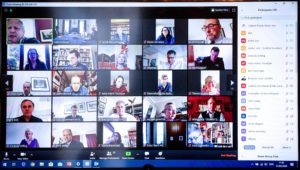
  • Feed Ourselves
  • Clothe Ourselves
  • House Ourselves

We should be insulted that we are NOT Basic.

This is why we must Keep the Change.

Coronavirus COVID-19 is not a good happenstance – people are dying.

However, if we can use this crisis to forge change in our society, force changes to our “community ethos” (the Will to Change) and to the societal engines for economics, security and governance, then those sacrifices would not have been in vain.

A crisis is a terrible thing to waste!

We hereby urge all Caribbean stakeholders to work to reform and transform our homeland. How? The strategies, tactics and implementations are all identified, qualified and proposed in the pages of the Go Lean book. It’s a full roadmap for change. A complete roadmap to make our homelands better places to live, work and play. 🙂

About the Book

The book Go Lean…Caribbean serves as a roadmap for the introduction and implementation of the technocratic Caribbean Union Trade Federation (CU), for the elevation of Caribbean society – for all member-states. This CU/Go Lean roadmap has these 3 prime directives:

  • Optimization of the economic engines in order to grow the regional economy to $800 Billion & create 2.2 million new jobs.
  • Establishment of a security apparatus to ensure public safety and protect the resultant economic engines.
  • Improve Caribbean governance to support these engines, including a separation-of-powers between the member-states and CU federal agencies.

The Go Lean book provides 370-pages of turn-by-turn instructions on “how” to adopt new community ethos, plus the strategies, tactics, implementations and advocacies to execute so as to reboot, reform and transform the societal engines of Caribbean society.

Download the free e-Book of Go Lean … Caribbean – now!

Who We Are

The movement behind the Go Lean book – a non-partisan, apolitical, religiously-neutral Community Development Foundation chartered for the purpose of empowering and re-booting economic engines – stresses that reforming and transforming the Caribbean societal engines must be a regional pursuit. This was an early motivation for the roadmap, as pronounced in the opening Declaration of Interdependence (Pages 11 – 14):

xi. Whereas all men are entitled to the benefits of good governance in a free society, “new guards” must be enacted to dissuade the emergence of incompetence, corruption, nepotism and cronyism at the peril of the people’s best interest. The Federation must guarantee the executions of a social contract between government and the governed.

xvi. Whereas security of our homeland is inextricably linked to prosperity of the homeland, the economic and security interest of the region needs to be aligned under the same governance. Since economic crimes … can imperil the functioning of the wheels of commerce for all the citizenry, the accedence of this Federation must equip the security apparatus with the tools and techniques for predictive and proactive interdictions.

xxiv.  Whereas a free market economy can be induced and spurred for continuous progress, the Federation must install the controls to better manage aspects of the economy: jobs, inflation, savings rate, investments and other economic principles. Thereby attracting direct foreign investment because of the stability and vibrancy of our economy.

xxx. Whereas the effects of globalization can be felt in every aspect of Caribbean life, from the acquisition of food and clothing, to the ubiquity of ICT, the region cannot only consume, it is imperative that our lands also produce and add to the international community, even if doing so requires some sacrifice and subsidy.

Sign the petition to lean-in for this roadmap for the Caribbean Union Trade Federation.

——————

Appendix A VIDEO – Klymaxx – Meeting In The Ladies Room (Official Video)  – https://youtu.be/_odTlZaoLCA

Klymaxx

Posted Dec 25, 2009 – Best of Klymaxx: https://goo.gl/QEYkmT

Subscribe here: https://goo.gl/2vDd9j

Music video by Klymaxx performing Meeting In The Ladies Room. (C) 1985 Geffen Records

#Klymaxx #MeetingInTheLadiesRoom #Vevo

Music in this video

Learn more

Listen ad-free with YouTube Premium

  • Song: Meeting In The Ladies Room (Radio Edit)
  • Artist: Klymaxx 
  • Licensed to YouTube by: UMG (on behalf of Geffen*); ARESA, UNIAO BRASILEIRA DE EDITORAS DE MUSICA – UBEM, BMG Rights Management (US), LLC, Sony ATV Publishing, CMRRA, Abramus Digital, EMI Music Publishing, LatinAutor – PeerMusic, LatinAutor, Audiam (Publishing), LatinAutor – SonyATV, BMI – Broadcast Music Inc., SOLAR Music Rights Management, and 4 Music Rights Societies

——————

Appendix B VIDEO – @LilDuval BASIC BITCH! – https://youtu.be/PUXt7N_TmdI

[This content of this VIDEO is profane, misogynistic and racist; highly inappropriate, but still considered art.]

Posted Aug 3, 2009

LILDUVAL TV SPOKENREASONS BASIC BITCH CALLING A WOMAN A BITCH YOUR A BITCH NO OFFENSE DRAMA FOR YO MAMA FUNNY COMEDY TWITTER LIL DUVAL NECOLE BITCHIE SKYPE BRAVE JB DA POET FUNNIEST BOY ALIVE FUNNIEST MAN ALIVE FUNNIEST YOUTUBER ALIVE STAND UP COMEDY DEF POETRY JAM BEST POET ALIVE TWITTER ME I LOVE TWITTER

Music in this video

Learn more

Listen ad-free with YouTube Premium


Share this post:
, , ,
[Top]

Keep the Change: Making e-Learning Work

 Go Lean Commentary

Here’s how to make money in the Stock Market:

Buy low and sell high.

Here’s a stock tip:

Any company that develops-deploys computer software for e-Learning:

These companies are all the rage now, as they provide software-systems to facilitate online education for Tertiary (college) students down to Primary students. Welcome to the …

… no wait, we have been here all the while … waiting for “you” to arrive. See the priority-focus from Page 127 of the 2013 book Go Lean…Caribbean:

10 Big Ideas … in the Caribbean Region  # 9: e-Learning – Versus – Studying Abroad
The Caribbean has tried the Study Abroad model, the result: a “brain drain” where our best students leave and may never return for residence, employment or investments, (only family visits). The new approach is to keep the talent here in the Caribbean, educate them here and notice the positive efforts on societal institutions.

In the Caribbean, this was always our BHAG – Big Hairy Audacious Goal – that we would terminate the strategy of sending our children off to college to only then watch them “never come back”.  🙁

Imagine depositing money in the bank, for a rainy day fund; when it rains we go to take the money and the expected interest.

But, there is no bank …

… the investment did pay-off; interest revenue did accrue, but not for us.

This is the sad reality … for the Caribbean … and many other Failing-States around the world.

Thanks to the Coronavirus – COVID-19 crisis, the world is coming to the e-Learning party. It is April 2020 and the world is locked-down, sheltering-in-place. The majority of people in society have avoided gathering and all but essential contact for people – other than their immediate household – in order to “flatten the curve”. Schools are not essential: not primary, not secondary and not tertiary schools.

Students out side a closed college

Education is essential; school (building, library, administration, etc.) is not.

We can only say that now … that e-Learning options (above) are real and viable.

COVID-19 is here today in April 2020; how about for Fall 2020?

We do not know … what we do not know? See the Appendix below.

But we can “hedge our bets”, mitigate the risks, by doubling-down on e-Learning. This changed environment has been forced on us – uninvited – by the invisible enemy of the Coronavirus; but we can Keep the Change and invite these new tools and techniques. This is not just our opinion alone. See this portrayal in the news articles and VIDEO’s here:

Title: Students are weary of online classes, but colleges can’t say whether they’ll open in Fall 2020
By: Chris Quintana, USA Today

College students threatened to revolt if universities put another semester of classes online to avoid spreading the coronavirus – but that’s increasingly what campus leaders are considering doing.

For Ryan Sessoms, a marketing student at the University of North Florida, the transition to online classes has been rocky. The thought of paying the same amount of tuition for another semester of lackluster classes is a nonstarter. It’s harder to find the motivation to complete his assignments, he said, when not surrounded by his peers.

“Fall is my last semester as well,” said Sessoms, 24. “All my hard work I have put in, I’d prefer to walk across the stage and wrap up some last-minute connections on campus as well.

“If it’s going to be online at the same tuition price, then I’ll just wait for the spring semester.”

Grayce Marquis, 20, a student at the University of Pittsburgh, told USA TODAY she was joking when she tweeted about skipping the fall semester after the college’s chancellor raised the possibility of putting fall classes online. Still, she said, another semester of online learning would be heartbreaking for her.

The college experience, she said, had been fantastic, thanks to her friends, professors, sports and extracurricular activities on campus. Going online stripped that away, she said, and her days are now defined by her individual effort.

“Perhaps I am still learning and fulfilling my areas of study,” she said. “But every part of what I love about college has been taken away.”

She said the university could make life easier on students by discounting tuition or increasing scholarships.

The problem: Many colleges are in financial crisis. They need students, with their tuition and housing payments, as much as students need them.

The reality is no one knows what the fall semester will look like, said Terry Hartle, a senior vice president for the American Council on Education, a national trade group of universities.

“The coronavirus will determine when colleges and universities can reopen,” he said. “All colleges and universities want to open normally, but no college knows if it can.”

That’s bad news for universities. As the economic impact of the coronavirus continues mostly unabated, many have canceled their summer classes and other activities, such as alumni gatherings or camps that generate revenue.

They’re scrambling to make up for lost money. The University of Cincinnati ended its men’s soccer program, and St. Edwards University in Austin, Texas, announced last week it was cutting men’s and women’s golf and tennis, along with men’s soccer.

Friday, the University of Arizona announced it would furlough employees and may lay some off. The chancellor of the Vermont State Colleges System recommended the closure of three campuses.

The financial trouble started when colleges started issuing refunds for housing costs after sending students home and buying licenses and equipment to put courses online.  Some students demand refunds for tuition.

If social distancing requires colleges to keep students at home for another semester, the fallout could remake America’s higher education system, upending everything from students’ degree attainment to the economies of college towns.

What does fall hold? No one can know
News of universities suggesting another online semester spread rapidly and, at times, incorrectly. Boston University was one of the first institutions to announce that in the “unlikely event” its students couldn’t return to campus, in-person instruction would resume in 2021. Many interpreted that as a declaration that the fall semester would not happen. (The university added a note to clarify its statement.)

Universities around the country are having the same conversation, including Harvard, the University of Arizona, the University of South Carolina, the University of Pittsburgh and the University of California-San Diego, to name a few. The truth is few colleges have definitive plans.

In a survey of college officials, a little more than half of 210 respondents said their colleges are talking about the possibility of putting the fall semester entirely online, according to the American Association of Collegiate Registrars and Admissions Officers.  A slimmer 5% of colleges have committed to online classes for the fall semester.

The fall semester may seem far out, but for higher education, it’s basically here, said Wendy Kilgore, director of research at the association. In many cases, the fall class schedule has been built, and universities are opening class registration.

“They have to have the plans in place for course delivery,” she said. “That’s why these deliberations are happening right now.”

Even if colleges don’t go completely online, they could choose a solution that embraces more online learning. In the survey, two-thirds of colleges considered offering more online courses compared with the previous fall semester, and 57% talked about reducing the number of in-person courses for the same time frame.

A handful of colleges considered delaying the start of the fall semester or shortening it.

Utah State University’s president told students and employees classes might be smaller, and she expects “people will come back on campus but not in large, free-moving ways that we used to have,” according to The Herald Journal

Changes are already in place at Beloit College in Wisconsin. The semester will start later than normal, and students will not take a traditional four-course semester, said Eric Boynton, provost and dean of the college.

Instead, the semester will be split in half: Students will take two more intensive courses in the first seven weeks and two more after that.

The goal, Boynton said, is to minimize disruption should the college need to pivot to online learning again suddenly. The threat of the virus might make in-person classes impossible for the first set of courses that start in September, but by late October, the start of the second session, the safety concerns might have abated. If the college has to pivot to online learning, only two of a student’s classes would be affected at any given time, rather than four.

“What we wanted was some kind of decisive step,” Boynton said. “What we wanted was some kind of ability to call something certain in the midst of this uncertainty.”

The altered semester is just one part of Beloit’s plan. The college is locking the price of tuition for current students, lowering the cost of tuition for students from Illinois, Indiana, Iowa, Michigan, Minnesota and Wisconsin and starting a two-year-long mentoring program for new students.

Not all colleges will be able to follow Beloit’s model. It’s a smaller institution that can move more quickly than larger institutions.

Even with hybrid solutions, some colleges may have to fight to survive, said Hartle, the vice president with the American Council for Education.

The most at-risk: those that were struggling financially before the disruptions of the coronavirus. Some private liberal arts colleges and regional universities that had declining enrollment and budget shortfalls may experience especially steep challenges. In some parts of the country, the population of traditional college-age students is declining.

Higher education has received some help from the federal government. As part of the CARES Act stimulus, colleges received $14 billion. Roughly $6.3 billion must go to students, but Hartle said he hopes Congress will consider providing more aid to higher education. After all, he said, the field employs 4 million people.

Another wild card: During a recession, colleges often see an increase in enrollment. In the fall of 2009, college enrollment climbed by 1 million students, Hartle said. It’s unclear if that would be the case if colleges can’t operate as they normally have. Will families be nervous about students attending universities far from home? Or will some students take a gap year while waiting for the threat of the virus to wither?

“There’s simply no precedent for this,” Hartle said.

Some students try to find a bright side to online classes. Hannah Druss, 19, at Binghamton University said she is eating healthier and sleeping more.

It’s nice, she said, being able to complete her coursework while staying indoors. Reaching professors can be challenging, as is coordinating group work, given that everyone is juggling different life circumstances.

What gives her the most anxiety is the lack of clarity for what the fall semester will bring. Online or in person, she just wants answers.

“I would rather be told sooner rather than later,” she said. “I would prefer it to be in person, but only if it’s safe to do so, which is highly unlikely.”

Contributing: Ethan Bakuli of The Burlington Free Press in Vermont, Steve Berkowitz of USA TODAY, Rachel Leingang of The Arizona Republic, Dave Clark of The Cincinnati Enquirer and Kirk Bohls of the Austin American-Statesman. 

Education coverage at USA TODAY is made possible in part by a grant from the Bill and Melinda Gates Foundation. The Gates Foundation does not provide editorial input.

Related:

Source: Posted April 19, 2020; retrieved April 24, 2020 from: https://www.usatoday.com/story/news/education/2020/04/19/coronavirus-college-universities-canceling-fall-semester/5157756002/

————–

VIDEO 1 – College students face challenges with online classes  – https://www.usatoday.com/videos/news/2020/03/30/college-students-face-challenges-online-learning/2937218001/

College teachers and students discuss some of the challenges they face as their classes move online for the foreseeable future. – Jasper Colt, USA Today.

————–

VIDEO 2 – Coronavirus puts small colleges in a tough spot – https://www.usatoday.com/videos/news/2020/03/19/coronavirus-puts-small-colleges-tough-spot/2878000001/


College presidents discuss the financial challenges they will face during the COVID-19 pandemic. Jasper Colt, USA Today.

In case you missed it in the foregoing article, this is not a discussion about Public Health or Public Safety. No, this is a discussion about economics and Caribbean students are a commodity. Consider these highlights:

The thought of paying the same amount of tuition for another semester of lackluster classes is a nonstarter.

… the university could make life easier on students by discounting tuition or increasing scholarships. The problem: Many colleges are in financial crisis. They need students, with their tuition and housing payments, as much as students need them.

… That’s bad news for universities. As the economic impact of the coronavirus continues mostly unabated, many have canceled their summer classes and other activities, such as alumni gatherings or camps that generate revenue.

… the University of Arizona announced it would furlough employees and may lay some off. The chancellor of the Vermont State Colleges System recommended the closure of three campuses. The financial trouble started when colleges started issuing refunds for housing costs after sending students home and buying licenses and equipment to put courses online.  Some students demand refunds for tuition.

Reggae Music Icon Bob Marley died in 1981 with no fore-knowledge of the Coronavirus-COVID-19, but the lyrics to his song ”Pimpers Paradise” speaks truth for Caribbean tertiary students, past and present:

You’re just a stock on the shelf.

The Go Lean book had originally asserted that e-Learning may be the answer for all the ills in the Caribbean education landscape. The book further states (Page 127) that “electronic commerce industries – Internet Communications Technology (ICT) – can be a great equalizer in economic battles of global trade [179]”. This is how and why we Keep the Change!

This is the continuation of the theme for this April 2020 Teaching Series from the movement behind the 2013 book Go Lean…Caribbean. Every month, we present a collection of blog-commentaries on a consistent subject germane to Caribbean life; this month we considered the actuality of this Coronavirus crisis. There have been changes in society, in our environment, in the workplace and in the educational institution; some changes that are good, some bad and some really ugly. This is entry 3-of-5 for this Keep the Change series. The full catalog for this month’s series is listed as follows:

  1. Keep the Change – Lower Carbon Consumption abating Climate Change
  2. Keep the Change – Working From Home & the Call Center Model
  3. Keep the Change – Schools – Primary to Tertiary – making e-Learning work
  4. Keep the Change – Basic Needs: Cannot just consume; we must produce as well
  5. Keep the Change – Mono-Industrial Economy: ‘All eggs in 1 basket’

Don’t get it twisted, this Coronavirus-COVID-19 threat means death and devastation for many: seniors, active-adults, and the young; even the economic engines have faltered. There are no Ands, Ifs or Buts, we cannot just ‘bury our heads in the sands”, change has come; we must change in response. Many of the changes that we have always wanted to make to reform and transform the Caribbean can now be engaged.

Yes, we can … Keep the Change and limit our college matriculation to local or remote options.

This is not a new discussion for the Go Lean movement. We had long contemplated the challenges-opportunities of tertiary education for Caribbean stakeholders. In fact, the movement identified these related issues:

  • Exploring Medical School Opportunities … as Economic Engines
    The reality is that Medical Schools average over $300,000 in tuition for a 4-year education; ($60,000/yr). Imagine 3,000 students. That’s a lot of economic opportunity; that’s $180 million annually added to a community’s GDP just based on tuition. Imagine too, room-and-board, extra-curricular activities and spending by visitors to the campus and students.
    Economics = supply and demand dynamics; fulfilling the outstanding demand for some financial remuneration.

    Since 29 of the 30 member-states of the Caribbean boast a majority Black population, it should be a natural assimilation to invite Black American students to Caribbean campuses.
    By the way, this is being done already! There are medical colleges and universities operating in Caribbean communities right now that do a good job of providing the needed educational training and experience (internships). … Some schools have an impressive track record of success with testing and examinations on medical boards. Many alumni get residency in the US as International Medical Graduates.
  • Future Focused – College, Caribbean Style
    College is good!
    College is bad!
    This has been the conclusion of the movement behind the book Go Lean…Caribbean from the beginning of our campaign to elevate Caribbean society. According to the book (Page 258), this bitter-sweet assessment is due to the fact that tertiary education in the Caribbean is:
    Good for the individual (micro) – every additional year of schooling they increase their earnings by about 10%.
    Good for the community (macro) – evidence of higher GDP growth in countries where the population has completed more years of schooling.
    Bad for Brain Drain – if a person emigrates, all the micro and macro benefits transfer to the new country.

    Can tertiary education be delivered better for the Caribbean without the travel/relocation?
    Absolutely! We can study in the region, lowering the risks of abandoning the homeland.

    A focus on the future for college education must also consider “cyber reality” and/or the Internet. This consideration is embedded in the Go Lean roadmap. In fact, the book presents the good stewardship so that Internet & Communications Technologies (ICT) can be a great equalizing element for leveling the playing field in competition with the rest of the world.
    Can tertiary education be delivered over the internet?
    Absolutely! We can study here, without leaving; the future is now!
    There are many offerings and options.
  • Managing the ‘Strong versus the Weak’ – Lower Ed.
    Who is more abominable? The fool who loses out on his new found fortune or the shrewd person that schemes to take advantage of that fool? (It should be noted in this case that the fortune is only rights and credits; every American citizen qualify for a need-based Student Loan from the federal government – that loan is non-dischargeable).

    So imagine that one who exploits the “fool”! Imagine, if instead of an individual, it is a “system”, a government program, that does the exploiting. This is the actuality of Student Loan financing for Private, For-Profit Schools and Colleges in the US.
    This is truly abominable; and yet this is the United States of America.

    Who really is the fool in these scenarios? The person being abused by the American eco-system or the ones abandoning home to join that society. The premise in the Go Lean book and subsequent blog-commentaries is that the people of the Caribbean can more easily “proper where planted” in their homeland than to emigrate to the American foreign shores for relief. It is foolish to think that America cares about “us”, when they undoubtedly do not care about the “weak” in their own society.
    We need more education in our region; because we need economic growth. Economists have established the relationship between economic growth and education:

      “For individuals this means that for every additional year of schooling they increase their earnings by about 10%.

    A lot of Caribbean students do matriculate in American colleges and universities. But this commentary is hereby declaring that we must assuredly look beyond the American model to fulfill our educational needs. According to the book [Lower Ed – The Troubling Rise of For-Profit Colleges in the New Economy by Dr. Tressie McMillan-Cottom and the related AUDIO Podcast], only a fool would invest in American For-Profit private educational institutions.

The points of reforming and transforming the Caribbean eco-systems for tertiary education have been further elaborated upon in many other previous blog-commentaries; consider this sample:

https://goleancaribbean.com/blog/?p=15543 Caribbean Unity? Ross University Saga
https://goleancaribbean.com/blog/?p=13272 Model of a University Facilitating Economic Opportunity
https://goleancaribbean.com/blog/?p=13466 Future for Educating Our Youth: “Cyber reality” and the Internet
https://goleancaribbean.com/blog/?p=9724 Bahamas Welcomes the New University
https://goleancaribbean.com/blog/?p=8966 For-Profit Education – Plenty of Profit; Little Education
https://goleancaribbean.com/blog/?p=8373 A Lesson in Economic Fallacies – Student Loans As Investments
https://goleancaribbean.com/blog/?p=1433 Caribbean loses more than 70 percent of tertiary educated to brain drain
https://goleancaribbean.com/blog/?p=1256 Is a Traditional 4-year Degree a Terrible Investment? Yes for Caribbean.

Going to college … in the US this Fall/Autumn?

What will that experience be like?

( See Appendix below for an announcement on the plans for one sample college, the University of Oklahoma in Norman, Oklahoma. Frankly, this could be the expectation for any university in North America and/or Europe).

Will the on-campus experience be worth the expense and the hassle this year? Will you get the comradery, atmosphere or direct side-by-side instruction-coaching-teambuilding while the restrictions of Social Distancing remain in place. Perhaps it will be better to just continue the e-Learning exercises for now … or the foresee-able future.

Keep the Change; save the aggravation; save the excessive costs.

A crisis is a terrible thing to waste!

Let’s not lose out on this opportunity to reform and transform tertiary educational practices in the Caribbean. Let’s encourage all stakeholders to pursue these strategies, tactics and implementation.

Education and Economics go hand-in-hand. This is how we will make our homeland a better place to live, work, learn and play. We urge all Caribbean people – students and their sponsoring parents –  to lean-in to this Go Lean roadmap.  🙂

About the Book
The book Go Lean…Caribbean serves as a roadmap for the introduction and implementation of the technocratic Caribbean Union Trade Federation (CU), for the elevation of Caribbean society – for all member-states. This CU/Go Lean roadmap has these 3 prime directives:

  • Optimization of the economic engines in order to grow the regional economy to $800 Billion & create 2.2 million new jobs.
  • Establishment of a security apparatus to ensure public safety and protect the resultant economic engines.
  • Improve Caribbean governance to support these engines, including a separation-of-powers between the member-states and CU federal agencies.

The Go Lean book provides 370-pages of turn-by-turn instructions on “how” to adopt new community ethos, plus the strategies, tactics, implementations and advocacies to execute so as to reboot, reform and transform the societal engines of Caribbean society.

Download the free e-Book of Go Lean … Caribbean – now!

Who We Are
The movement behind the Go Lean book – a non-partisan, apolitical, religiously-neutral Community Development Foundation chartered for the purpose of empowering and re-booting economic engines – stresses that reforming and transforming the Caribbean societal engines must be a regional pursuit. This was an early motivation for the roadmap, as pronounced in the opening Declaration of Interdependence (Pages 11 – 13):

xi. Whereas all men are entitled to the benefits of good governance in a free society, “new guards” must be enacted to dissuade the emergence of incompetence, corruption, nepotism and cronyism at the peril of the people’s best interest. The Federation must guarantee the executions of a social contract between government and the governed.

xvi. Whereas security of our homeland is inextricably linked to prosperity of the homeland, the economic and security interest of the region needs to be aligned under the same governance. Since economic crimes … can imperil the functioning of the wheels of commerce for all the citizenry, the accedence of this Federation must equip the security apparatus with the tools and techniques for predictive and proactive interdictions.

xxi. Whereas the preparation of our labor force can foster opportunities and dictate economic progress for current and future generations, the Federation must ensure that educational and job training opportunities are fully optimized for all residents of all member-states, with no partiality towards any gender or ethnic group. The Federation must recognize and facilitate excellence in many different fields of endeavor, including sciences, languages, arts, music and sports. This responsibility should be executed without incurring the risks of further human flight, as has been the past history.

xxiv.  Whereas a free market economy can be induced and spurred for continuous progress, the Federation must install the controls to better manage aspects of the economy: jobs, inflation, savings rate, investments and other economic principles. Thereby attracting direct foreign investment because of the stability and vibrancy of our economy.

Sign the petition to lean-in for this roadmap for the Caribbean Union Trade Federation.

———————–

Appendix – University Of Oklahoma To Reopen All Campuses This Fall

The interim president of the University of Oklahoma said students will return to campus by the fall semester of 2020.

Interim President Joseph Harroz Jr. said students can return to “in-person educational operations on all three campuses by this fall.” He also said that will include “traditional instruction and residential life.”

The following [excerpt] is [from] the full statement from OU:

After careful deliberation, our intention is to return to in-person educational operations on all three campuses by this fall, offering traditional instruction and residential life. We are doing everything we can to make that realistic and safe. We are acutely aware of the certain challenges COVID-19 will present as we pursue this goal and are planning to address the issues proactively and creatively. We are prepared to adapt instructional and housing models as appropriate to protect our community and still offer the life-changing in-person OU experience. Flexibility will be a guiding principle as we navigate the coming months, and we will ensure that our students, faculty, and staff are presented with appropriate options to return to our campuses, keeping their safety top of mind.

Source: Posted-retrieved April 24, 2020 from: https://www.news9.com/story/5ea39432d795682ab682e66a/university-of-oklahoma-to-reopen-all-campuses-this-fall

Share this post:
, ,
[Top]