Tag: PR

‘Like a Good Neighbor’ – Being there for Puerto Rico

Go Lean Commentary

‘Just like a Good Neighbor, State Farm is there’ – Advertising tagline

What a nice thought: having a neighbor that is there for you in your times of need. State Farm is an insurance company that underwrites the risks of casualties (mishaps, disasters, man-made and acts of God). The people of the Caribbean needs Good Neighbors. We have many incidences and disasters to contend with, some times natural, some times man-made… some times, even economic.

The need for a Good Neighbor got special recognition in the book Go Lean … Caribbean. It opens with a quotation of the song lyrics “Lean On Me” by recording artist Bill Withers, with these words:

If there is a load you have to bear
That you can’t carry
I’m right up the road
I’ll share your load
If you just call me
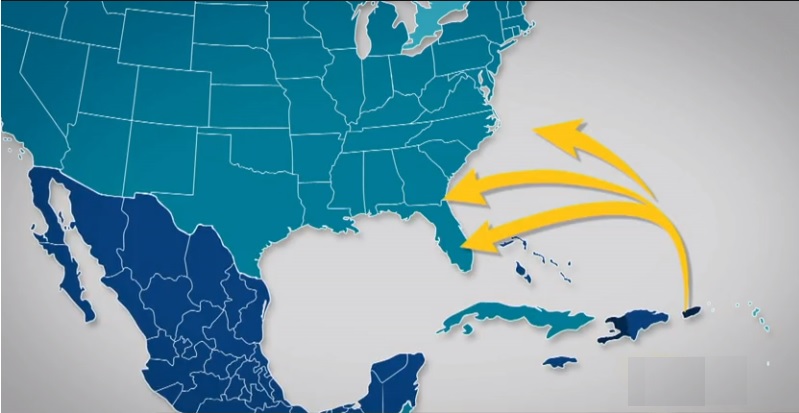
- Being there - Photo 1

The US Territory of Puerto Rico needs a Good Neighbor right now. They do not need State Farm; they need the US Government – see Appendix – to change the laws to allow them to re-structure their heavy debt “load”. In effect, this community is in crisis, facing disaster and needs a helping hand. See the story in these VIDEOs here:

VIDEO 1: Hamilton star Lin-Manuel Miranda on his mission to help Puerto Rico – http://www.today.com/video/-hamilton-star-lin-manuel-miranda-on-his-mission-to-help-puerto-rico-680630339894 

NBC News – The Today Show – Posted May 6, 2016; retrieved May 8, 2016

——————

VIDEO 2: Last Week Tonight with John Oliver: Puerto Rico (HBO) – https://youtu.be/Tt-mpuR_QHQ

Published on Apr 24, 2016 – Puerto Rico is suffering a massive debt crisis. Lin-Manuel Miranda joins John Oliver to call for relief.
Pardon the Adult Language

This is serious…

The book Go Lean … Caribbean identified the grave disposition of Puerto Rico, calling them the “Greece of the Caribbean” (Page 18), a tongue-in-check swipe to this advertising tagline used for many islands in the region: “the Gem of the Caribbean“. The book’s motive is to elevate the entire Caribbean, by focusing on the societal engines of economics, security and governance. All of these facets are in peril in Puerto Rico today, even though the current disaster is an economic one. It would be a nice thought if Puerto Rico’s neighbors could come to it’s aid. This is the quest of the Go Lean movement: to consolidate, integrate and streamline Caribbean member-states so as to be prepared for disasters in the region, including the economic ones. The book declares that Puerto Rico – and all of the Caribbean – is in crisis, but that a “crisis is a terrible thing to waste”.

Puerto Rico’s crisis is $70 Billion in municipal debt! Holy Crap, the vultures are now circling!

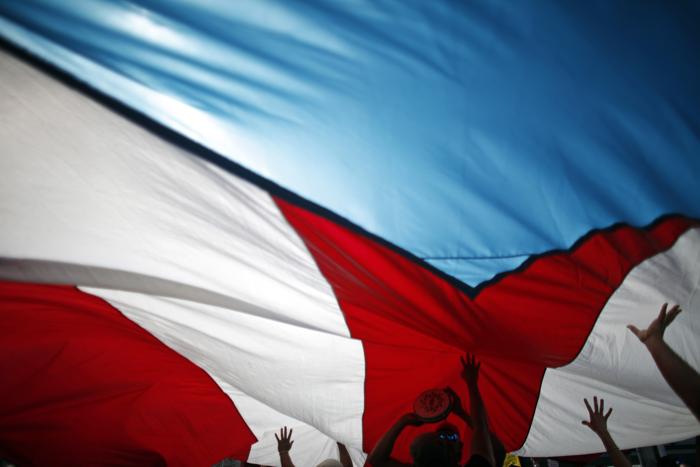
This episode is an example of the incidents prepared for in the Go Lean book, especially within the subtitle, “Crap Happens”. The book was referring to situations where a ‘Clear and Present Danger’ can imperil everyday life for the everyday man. This is the case in the US Territory of Puerto Rico. Despite the economic nature of the $70 Billion debt-load, this crisis is affecting security and government deliveries. According to the foregoing VIDEOs, the communities on the island of Puerto Rico cannot deliver on their Social Contract obligations because they have inadequate resources and their legal first priority must be debt-servicing. The end result: people’s needs – in the Social Contract – are not met and so they … flee – see photo above.

Puerto Rico needs an intervention; a bail-out of some sort. They are specifically asking for provisions of the US Bankruptcy laws (Chapter 9) to apply to the Territory. (Normally Chapter 9 only refers to American municipal governments and not State governments nor Territories). There are proponents of this quest – like Lin-Manuel Miranda in the foregoing – and opponents, like the active creditors. The movement behind the Go Lean movement wants a resolution, but focuses more on the underlying societal foundation; like the flaws that have made this community a parasite of the US mainland, rather than a protégé.

This assertion in the Go Lean book is that bad things (and bad actors) will always emerge to disrupt the peace and harmony in communities. All Caribbean member-states, like US Territories Puerto Rico and the US Virgin Islands, need to be on guard and prepared for this possibility. The book (Page 23) prepares for many modes of “bad things/actors”. It defines them as industrial mishaps, natural disasters, “acts of God”, and yes, economic distress. The book relates that these happenings are historical facts – considering the 2008 Global Recession and the constant threats of hurricanes – that are bound to be repeated, again and again. The book’s goal is to prepare the region for the eventuality of bad things happening to the good people, so as to minimize the constant human flight and brain drain.

The Go Lean book posits that the Caribbean region is the “greatest address on the planet”, that people should be “beating down the doors” to get in, rather than the status quo of people “beating down the doors” to get out.

We must plan for all disasters, natural and man-made. “When we fail to plan, we plan to fail”. We need Good Neighbors, literally and figuratively. The book contends that the 30 member-states in the Caribbean region should prepare themselves as neighbors to aid themselves, primarily. This point is pronounced early in the book with these Declaration of Interdependence (Page 12):

i.     Whereas the earth’s climate has undeniably changed resulting in more severe tropical weather storms, it is necessary to prepare to insure the safety and security of life, property and systems of commerce in our geographical region. As nature recognizes no borders in the target of its destruction, we also must set aside border considerations in the preparation and response to these weather challenges.

ii.    Whereas the natural formation of the landmass for our lands constitutes some extreme seismic activity, it is our responsibility and ours alone to provide, protect and promote our society to coexist, prepare and recover from the realities of nature’s occurrences.

x.   Whereas we are surrounded and allied to nations of larger proportions in land mass, populations, and treasuries, elements in their societies may have ill-intent in their pursuits, at the expense of the safety and security of our citizens. We must therefore appoint “new guards” to ensure our public safety and threats against our society, both domestic and foreign. The Federation must employ the latest advances and best practices … to assuage continuous threats against public safety.

xii. Whereas the legacy in recent times in individual states may be that of ineffectual governance with no redress to higher authority, the accedence of this Federation will ensure accountability and escalation of the human and civil rights of the people for good governance, justice assurances, due process and the rule of law. As such, any threats of a “failed state” status for any member state must enact emergency measures on behalf of the Federation to protect the human, civil and property rights of the citizens, residents, allies, trading partners, and visitors of the affected member state and the Federation as a whole.

xvi. Whereas security of our homeland is inextricably linked to prosperity of the homeland, the economic and security interest of the region needs to be aligned under the same governance. Since economic crimes, including piracy and other forms of terrorism, can imperil the functioning of the wheels of commerce for all the citizenry, the accedence of this Federation must equip the security apparatus with the tools and techniques for predictive and proactive interdictions.

xxiii. Whereas many countries in our region are dependent OverseasTerritory of imperial powers, the systems of governance can be instituted on a regional and local basis, rather than requiring oversight or accountability from distant masters far removed from their subjects of administration. The Federation must facilitate success in autonomous rule by sharing tools, systems and teamwork within the geographical region.

xxv. Whereas the legacy of international democracies had been imperiled due to a global financial crisis, the structure of the Federation must allow for financial stability and assurance of the Federation’s institutions. To mandate the economic vibrancy of the region, monetary and fiscal controls and policies must be incorporated as proactive and reactive measures. These measures must address threats against the financial integrity of the Federation and of the member-states.

So the Go Lean book relates that the Caribbean must appoint “new guards” to ensure public safety and to include many strategies, tactics and implementations considered “best-practices” for economic stewardship and Emergency Management (Preparation and Response). We must be on a constant vigil against all “bad actors”, man-made or natural. This indicates being pro-active in monitoring, mitigating and managing risks. Then when “crap” does happen, as it always will, the region’s “new guards” must be prepared for any “Clear and Present” danger.

The Go Lean book serves as a roadmap for the introduction and implementation of the technocratic Caribbean Union Trade Federation (CU). The CU would structure the appropriate governmental and non-governmental agencies in the region into one initiative, providing a Unified Command and Control for Emergency operations to share, leverage and collaborate their practice across the whole region. The roadmap has a focus of optimizing Caribbean society through economics, homeland security and governance; as stated within the prime directives (3):

  • Optimization of the economic engines in order to grow the regional economy to $800 Billion & create 2.2 million new jobs.
  • Establishment of a security apparatus to protect the resultant economic engines and the Caribbean homeland.
  • Improvement of Caribbean governance to support these engines, including Bankruptcy processing at the regional level.

The Caribbean is the “greatest address on the planet”, but there are risks associated with living deep in this tropical zone. With the reality of natural disasters (perhaps even more due to Climate Change), we must not be caught unprepared if we do not want our citizens to continue to flee their homeland; we want them to prosper here, where they may be planted. So as a community, we must provide assurances that we can count on our Good Neighbors to provide aid for any of the region’s stakeholders.

The Go Lean book details the series of community ethos, strategies, tactics, implementations and advocacies to provide the proactive and reactive protections in the Caribbean region:

Community Ethos – Economic Systems Influence Individual Choices Page 21
Community Ethos – Consequences of Choices Lie in Future Page 21
Community Ethos – “Crap” Happens Page 23
Community Ethos – Cooperatives Page 25
Community Ethos – Ways to Impact the Future Page 26
Community Ethos – Ways to Impact the Greater Good Page 37
Strategy – Vision – Confederating to form a Single Market Economy Page 45
Strategy – Agents of Change – Globalization Page 57
Strategy – Agents of Change – Climate Change Page 57
Tactical – Fostering a Technocracy Page 64
Tactical – How to Grow the Economy – Economic Bubbles Recovery Page 69
Tactical – How to Grow the Economy – Recover from Disasters Page 70
Tactical – Separation of Powers – Securities Exchange Regulatory Agency Page 74
Tactical – Separation of Powers – Homeland Security Department Page 75
Tactical – Separation of Powers – Emergency Management Agency Page 76
Tactical – Separation of Powers – Meteorological and Geological Service Page 79
Tactical – Separation of Powers – Exclusive Federal Bankruptcy Courts Page 90
Implementation – Ways to Pay for Change Page 101
Implementation – Start-up Homeland Security Initiatives Page 103
Implementation – Ways to Better Manage Debt Page 114
Implementation – Ways to Foster International Aid Page 115
Planning – 10 Big Ideas – #3: Consolidated Homeland Security Pact Page 130
Planning – Ways to Make the Caribbean Better Page 131
Planning – Ways to Improve Failed-State Indices – Puerto Rico’s near Status Page 134
Advocacy – Ways to Grow the Economy – Disaster Recoveries Page 151
Advocacy – Ways to Create Jobs Page 152
Advocacy – Ways to Improve Governance Page 168
Advocacy – Ways to Better Manage the Social Contract Page 170
Advocacy – Ways to Improve Homeland Security Page 180
Advocacy – Ways to Improve for Natural Disasters Page 184
Advocacy – Ways to Improve for Emergency Management Page 196
Advocacy – Ways to Impact Wall Street – Optimize Security Markets Page 200
Advocacy – Ways to Impact US Territories – Puerto Rico and the Virgin Islands Page 244

Other subjects related to Good Neighbor responses to crises (Economic Disruptions, Emergency Management, and Homeland Security) in the region and the required governmental responses have been blogged in other Go Lean…Caribbean commentaries, as sampled here:

https://goleancaribbean.com/blog/?p=7327 Zika – An Epidemiology Crisis – Facing the Caribbean region
https://goleancaribbean.com/blog/?p=7235 Flint, Michigan – A Cautionary Tale
https://goleancaribbean.com/blog/?p=6893 A Meteorologist’s View On Climate Change
https://goleancaribbean.com/blog/?p=6563 Lessons from Iceland – Model of Recovery
https://goleancaribbean.com/blog/?p=6531 Economic Crisis: Learning from the Exigency of 2008
https://goleancaribbean.com/blog/?p=6189 A Lesson in History – Hurricane ‘Katrina’ is helping today’s crises
https://goleancaribbean.com/blog/?p=6103 Sum of All Fears – ‘On Guard’ Against Deadly Threats
https://goleancaribbean.com/blog/?p=5002 Managing a ‘Clear and Present Danger’
https://goleancaribbean.com/blog/?p=4741 Vanuatu and Tuvalu Cyclone – Inadequate response to human suffering
https://goleancaribbean.com/blog/?p=4360 Dreading the ‘Caribbean Basin Security Initiative’
https://goleancaribbean.com/blog/?p=2614 The ‘Great ShakeOut’ Earthquake Drill / Planning / Preparations
https://goleancaribbean.com/blog/?p=1817 Caribbean grapples with intense new cycles of flooding & drought

The island territory of Puerto Rico, and the Caribbean as a whole, has found itself on the losing side of the changes impacting the global economy; the Go Lean book identified one of the Agents of Change as globalization. According to the foregoing VIDEOs, they have been contending with a recession for nearly a decade. This has meant life-and-death for the community; death in terms of people abandoning the island. This commentary has frequently addressed these challenges – and solutions – for Puerto Rico; see sample list here:

https://goleancaribbean.com/blog/?p=6693 Ten Puerto Rico Police Accused of Criminal Network
https://goleancaribbean.com/blog/?p=6531 Economic Disaster: Learning from the Exigency of 2008
https://goleancaribbean.com/blog/?p=6260 Puerto Rico Bondholders Coalition Launches Ad Campaign
https://goleancaribbean.com/blog/?p=4551 US Territories – Between a ‘rock and a hard place’
https://goleancaribbean.com/blog/?p=1325 Puerto Rico Governor Signs Bill on SME’s
https://goleancaribbean.com/blog/?p=599 Ailing Puerto Rico open to radical economic fixes

These previous commentaries reflect the enduring crisis for the Caribbean; every member-state (island & mainland states) experience societal abandonment. The book Go Lean…Caribbean posits that this “Agent of Change” is too big for just any one member-state, like Puerto Rico, to tackle alone, that there must be a regional solution; and presents this roadmap as the salve.

The people and institutions of the region are hereby urged to lean-in to this Go Lean roadmap; this plan is conceivable, believable and achievable. We can make Puerto Rico, and the Caribbean as a whole, a better place to live, work and play.:-)

Download Go Lean … Caribbean – now!

————

Appendix – America’s Good Neighbor policy

The Good Neighbor policy was the foreign policy of the administration of United States President Franklin Roosevelt towards Latin America. Although the policy was implemented by the Roosevelt administration, 19th-century politician Henry Clay paved the way for it and coined the term “Good Neighbor”.

The policy’s main principle was that of non-intervention and non-interference in the domestic affairs of Latin America. It also reinforced the idea that the United States would be a “good neighbor” and engage in reciprocal exchanges with Latin American countries.[1] Overall, the Roosevelt administration expected that this new policy would create new economic opportunities in the form of reciprocal trade agreements and reassert the influence of the United States in Latin America; however, many Latin American governments were not convinced.[2]

- Being there - Photo 2

Carmen Miranda became the muse of the Good Neighbor policy.

Impact
The Good Neighbor Policy terminated the U.S. Marines occupation of Nicaragua in 1933 and occupation of Haiti in 1934, led to the annulment of the Platt Amendment by the Treaty of Relations with Cuba in 1934, and the negotiation of compensation for Mexico’s nationalization of foreign-owned oil assets in 1938.

Legacy
The era of the Good Neighbor Policy ended with the ramp-up of the Cold War in 1945, as the United States felt there was a greater need to protect the western hemisphere from Soviet influence. These changes conflicted with the Good Neighbor Policy’s fundamental principle of non-intervention and led to a new wave of US involvement in Latin American affairs.[2] Until the end of the Cold War the United States directly or indirectly attacked all suspected socialist or nationalist movements in the hope of ending the spread of Soviet influence. U.S. interventions in this era included the CIA overthrow of Guatemala’s President Jacobo Árbenz in 1954, the unsuccessful CIA-backed Bay of Pigs Invasion in Cuba in 1961, CIA subversion of Chilean President Salvador Allende in 1970–73, and CIA subversion of Nicaragua’s Sandinista government from about 1981 to 1990.[2]

After World War II, the US began to shift its focus to aid and rebuilding efforts in Europe and Japan. These U.S. efforts largely neglected the Latin American countries, though U.S. investors and business men did have some stake in the nations to the South.

See the entire encyclopedic reference here (retrieved May 9, 2016): https://en.wikipedia.org/wiki/Good_Neighbor_policy.
Share this post:
, , ,

Ten Puerto Rico Police Accused of Criminal Network

Go Lean Commentary

“Indeed, everyone to whom much was given, much will be demanded of him” – The Bible (Luke 12:48 – New World Translation)

When it comes to police officers, we (the community) do give them a lot (guns, authority to detain and punish), and we demand much in return (“serve and protect”). When that formula gets distorted, it is bad for the community and difficult to make progress.

The book Go Lean … Caribbean asserts that to elevate Caribbean society – to make progress – there must be a focus on the region’s economic, security and governing engines. While the book primarily targets strategies, tactics and implementations for economic empowerment (jobs, investments, education, entrepreneurship, etc.), it posits that security remediation must be front-and-center along with these other empowerment efforts.

The book directly relates (Page 23) that with the emergence of new economic drivers that “bad actors” – even within law enforcement – will also emerge thereafter to exploit the opportunities, with good, bad and evil intent. This is a historical fact, and is bound to repeat again and again. The below news article and VIDEO concurs this point.

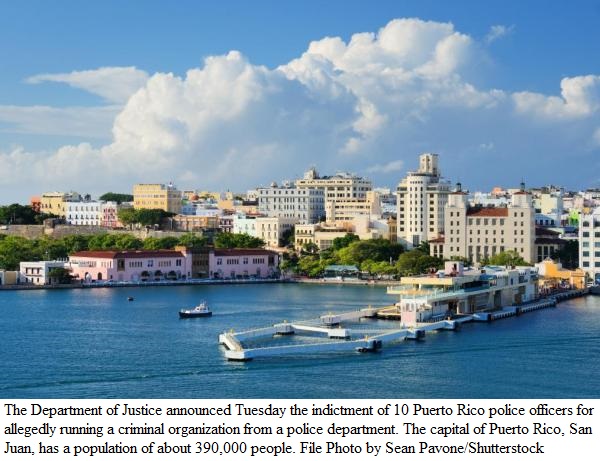
The following news article reports on corruption by police officials that have undermined Puerto Rico’s justice institutions; a surprising discovery as Puerto Rico is expected to already be an elevated society due to their US territorial status. This is far from the reality, as the stories here relate:

CU Blog - Ten Puerto Rico Police Accused of Criminal Network - Photo 2

Title: Ten Puerto Rico police accused of criminal network activity
Retrieved October 13, 2015 from: http://news.yahoo.com/ten-puerto-rico-police-accused-criminal-network-activity-193240325.html

Miami (AFP) September 29, 2015 – Ten Puerto Rico officers have been charged with belonging to a criminal network within the police force, abusing their power to commit a long list of crimes, authorities said Tuesday.

The police used “their affiliation with law enforcement to make money through robbery, extortion, manipulating court records and selling illegal narcotics,” Rosa Emilia Rodriguez-Velez, a US attorney for the American territory, said in a statement.

CU Blog - Ten Puerto Rico Police Accused of Criminal Network - Photo 1The agents collaborated to conduct traffic stops and enter the homes of suspected criminals to steal money, property and drugs, according to the statement.

The officers also allegedly planted evidence and extorted weapons and drugs from individuals in exchange for their release.

In addition, they are accused of having manipulated court records and selling drugs outright.

“The criminal action today dismantles a network of officers who, we allege, used their badges and their guns not to uphold the law, but to break it,” said Rodriguez-Velez.

———-

This story represents a perennial threat in Puerto Rico. This has happened before, again and again; see here:

VIDEO1,700 Cops arrested in Puerto Rico!https://youtu.be/aOVF8oy9PZ0

Published on Jul 11, 2012 – Read the New York Times article in the link below. Be sure to pay extra attention to paragraphs 3, 4 and 5. I urge all police officers to ask yourselves if you really believe Raymond Kelly and Michael Bloomberg are going to defend you when the FBI comes to arrest you for Constitutional rights violations and discrimination.

This Puerto Rico experience is not an exception to American historicity, but rather this is “par for the course”. There have always been threats to US law-and-order (homeland security) from foreign and domestic “actors”; think the Old West. This is the reality in the United States mainland and in the Caribbean territories (Puerto Rico and US Virgin Islands). These threats are also expected to materialize more in the Caribbean, as a direct product of success in elevating the region’s societal engines.

The book Go Lean…Caribbean serves as a roadmap for the introduction and implementation of the technocratic Caribbean Union Trade Federation (CU) to elevate the region’s economic, securing and governing engines. The roadmap expects to raise the region to a $800 Billion Single Market economy after a 5 year period; (from $278 Billion according to 2010 assessments). This roadmap fully expects the eventual corruption activities from those in power. The roadmap thusly embeds checks-and-balances from the outset of the plan.

This point is pronounced early in the book with the Declaration of Interdependence (Page 12) that claims:

x.   Whereas we are surrounded and allied to nations of larger proportions in land mass, populations, and treasuries, elements in their societies may have ill-intent in their pursuits, at the expense of the safety and security of our citizens. We must therefore appoint “new guards” to ensure our public safety and threats against our society, both domestic and foreign. The Federation must employ the latest advances and best practices … to assuage continuous threats against public safety.

xii.  Whereas the legacy in recent times in individual states may be that of ineffectual governance with no redress to higher authority, the accedence of this Federation will ensure accountability and escalation of the human and civil rights of the people for good governance, justice assurances, due process and the rule of law. As such, any threats of a “failed state” status for any member state must enact emergency measures on behalf of the Federation to protect the human, civil and property rights of the citizens, residents, allies, trading partners, and visitors of the affected member state and the Federation as a whole.

xvi. Whereas security of our homeland is inextricably linked to prosperity of the homeland, the economic and security interest of the region needs to be aligned under the same governance. Since economic crimes, including piracy and other forms of terrorism, can imperil the functioning of the wheels of commerce for all the citizenry, the accedence of this Federation must equip the security apparatus with the tools and techniques for predictive and proactive interdictions.

Why is the report of police corruption in Puerto Rico such a concern for the CU/Go Lean planners? The book asserts that with the close proximity of the islands, a security threat in any one island will be a threat to all islands.

But the US is the most powerful and richest Single Market economy in the world, surely they have the means by which to mitigate these threats on their own? This is true! And yet, the US does cooperate with other multilateral law enforcement agencies; think Interpol.

Despite the access to American justice institutions, this Go Lean book posits that Puerto Rico and the Caribbean region must prepare its own security apparatus for its own security needs. So the request is that all Caribbean member-states form and empower a security force and related justice institutions – CariPol – to execute a limited scope on these sovereign territories. Under US law, this arrangement will be instituted with an Interstate Compact, enacted in Congress. These compacts require an administering agency. This allows for the employment of the CU Trade Federation with  scope for Puerto Rico (and the US Virgin Islands).

Puerto Rico needs a societal turn-around. They are even open to radical economic fixes.

The goal of the CU/Go Lean roadmap is to confederate all of the Caribbean – all 30 member-states – under a unified entity to provide homeland security to the local region. But Homeland Security for the Caribbean has a different meaning than for our American counterparts. Yes, we must be on defense against military intrusions like terrorism and piracy, we mostly have to contend with threats that may imperil the region’s economic engines, and crime remediation and mitigation; this includes organized crime. The CU security goal is for public safety! The goal of the CU is set to optimize Caribbean society through economic empowerment, and also the security dynamics of the region, since these are inextricably linked to this same endeavor. Therefore the Go Lean roadmap has 3 prime directives:

  • Optimization of the economic engines in order to grow the regional economy to $800 Billion & create 2.2 million new jobs.
  • Establishment of a Security Apparatus to protect the resultant economic engines from economic crimes and cross-border threats.
  • Improvement of Caribbean governance to support these engines, including a separation-of-powers with member-states to mitigate regional threats and allowing for anti-corruption measures.

The Caribbean appointing “new guards”, or a security pact to ensure justice and public safety will include many strategies, tactics and implementations deemed “best-practice” over the years, including an advanced Intelligence Gathering & Analysis effort to draw out and interdict corruption that might emerge in the region. This Security Apparatus is “Step One, Day One” in the Go Lean roadmap, covering the approach for adequate funding, accountability and control. The Go Lean book details the series of community ethos, strategies, tactics, implementations and advocacies to provide increased public safety & security in the Caribbean region:

Assessment – Puerto Rico – The Greece of the Caribbean Page 18
Community Ethos – Economic Systems Influence Individual Choices Page 21
Community Ethos – Consequences of Choices Lie in Future Page 21
Community Ethos – Privacy –vs- Public Protection Page 23
Community Ethos – Intelligence Gathering Page 23
Community Ethos – “Crap” Happens Page 23
Community Ethos – Minority Equalization Page 24
Community Ethos – Cooperatives Page 25
Community Ethos – Ways to Manage Reconciliations Page 34
Community Ethos – Ways to Improve Sharing Page 35
Community Ethos – Ways to Impact the Greater Good Page 37
Tactical – Vision – Forge a Single Market   economy Page 45
Tactical – Confederating a non-sovereign union Page 63
Tactical – Fostering a Technocracy Page 64
Tactical – Separation of Powers – Homeland Security Page 75
Tactical – Separation of Powers – CariPol: Marshals & Investigations Page 77
Implementation – Ways to Pay for Change Page 101
Implementation – Start-up Foreign Policy Initiatives – With   the US Page 102
Implementation – Start-up Security Initiatives Page 103
Implementation – Ways to Foster International Aid Page 115
Implementation – Reasons to Repatriate Page 118
Planning – Ways to Make the Caribbean Better Page 131
Planning – Ways to Improve Failed-State Indices – Mitigate Organized Crime Page 134
Planning – Lessons from the American West – Law & Order Page 142
Planning – Lessons from Egypt – Lackluster Law & Order affects   Economy Page 143
Advocacy – Ways to Grow the Economy Page 151
Advocacy – Ways to Improve Governance Page 168
Advocacy – Ways to Better Manage the Social Contract Page 170
Advocacy – Ways to Improve Leadership Page 171
Advocacy – Ways to Impact Justice – Military Police Role Page 177
Advocacy – Ways to Reduce Crime – Case Study on Organized Crime Page 178
Advocacy – Ways to Improve for Gun Control Page 179
Advocacy – Ways to Improve Homeland Security Page 180
Advocacy – Ways to Mitigate Terrorism Page 181
Advocacy – Ways to Improve Intelligence Gathering and Analysis Page 182
Advocacy – Ways to Protect Human Rights Page 220
Appendix – Trade SHIELD – E = Enforcement: Modeling Interpol Page 264
Appendix – Interstate Compacts Page 278

Other subjects related to justice and security empowerments for the region have been blogged in other Go Lean…Caribbean commentaries, as sampled here:

https://goleancaribbean.com/blog/?p=6103 Sum of All Fears – ‘On Guard’ Against Regional Deadly Threats
https://goleancaribbean.com/blog/?p=5307 8th Violent Crime Warning to Bahamas Tourists – A concern for the whole region
https://goleancaribbean.com/blog/?p=5304 Mitigating the Eventual ‘Abuse of Power’
https://goleancaribbean.com/blog/?p=4863 A Picture is worth a thousand words; a video … a million to expose corruption
https://goleancaribbean.com/blog/?p=4809 Americans arrested for aiding ISIS
https://goleancaribbean.com/blog/?p=4447 Probe of Ferguson-Missouri finds bias and corruption from cops, courts
https://goleancaribbean.com/blog/?p=4360 Dreading the ‘Caribbean Basin Security Initiative’
https://goleancaribbean.com/blog/?p=2994 Justice Strategy: Special Prosecutors and Commissions of Inquiry
https://goleancaribbean.com/blog/?p=2684 Role Model for Justice, Anti-Crime & Security: The ancient Pinkertons
https://goleancaribbean.com/blog/?p=1143 White Collar fraud in America; criminals take $272 billion a year in healthcare
https://goleancaribbean.com/blog/?p=960 NSA records all phone calls in Bahamas, according to Snowden
https://goleancaribbean.com/blog/?p=392 Jamaica to receive World Bank funds to help in crime fight
https://goleancaribbean.com/blog/?p=341 US slams Caribbean human rights practices
https://goleancaribbean.com/blog/?p=273 10 Things We Don’t Want from the US – #6: Criminal Organizations

The vision of the Go Lean roadmap is to make the Caribbean homeland, a better place to live, work and play. One of many missions, is to lower the “push” factors (from “push-and-pull” reference) so that our citizens are not led to flee their homeland for foreign (North American and European) shores. Among the many reasons people emigrate, are fear of corruption from police and political authority figures; these ones may be able to abuse power with impunity. There may be no sense of justice; “No Justice”, so “No Peace”.

Puerto Rico is an American tragedy, as it is near-Failed State status.

We must provide a roadmap to do better!

We know that “bad actors” will emerge, from internal and external origins. We must be prepared and on-guard to defend our homeland against all threats, foreign and domestic. Yet we must maintain transparency, accountability, and constant commitment to due-process and the rule-of-law.

Everyone in the Caribbean, the people and institutions, are hereby urged to lean-in to this Go Lean roadmap for elevation of Caribbean society. The roadmap calls for the heavy-lifting so that the justice institutions of the CU can execute their role in a just manner, thus impacting the Greater Good. This produces the output of a technocratic system bent on efficiency and effectiveness. In practice, this would mean accountability, transparency, and checks-and-balances in the execution of the rule-of-law.

This roadmap allows us to truly do better. 🙂

Download the book Go Lean … Caribbean – now!

Share this post:
, ,
[Top]

Puerto Rico Bondholders Coalition Launches Ad Campaign

Go Lean Commentary

The book Go Lean … Caribbean was spot on! It reported in 2013 when published, that the assessment of Puerto Rico was dire:

The Greece of the Caribbean.

CU Blog - Puerto Rico Bondholders Coalition Launches Ad Campaign - Photo 1Then again in previous blogs, this commentary detailed the desperate solutions being sought by the ailing Puerto Rico (April 2014). The island is between ‘a rock and a hard place’ (March 2015)!

Now this new article reports how the governmental administrations of this territory are willing to short-change investors and renege on financial promises that were made to previous bondholders. This is bad for the island’s credit rating and country risk assessments. This gross disregard for the “Full Faith and Credit” is egregious; rather the credit image of any state government should be jealously protected. This story – see here – fully describes the urgent need to reboot the economic, security and governing engines of this island:

Title: Puerto Rico bondholders coalition launches ad campaign

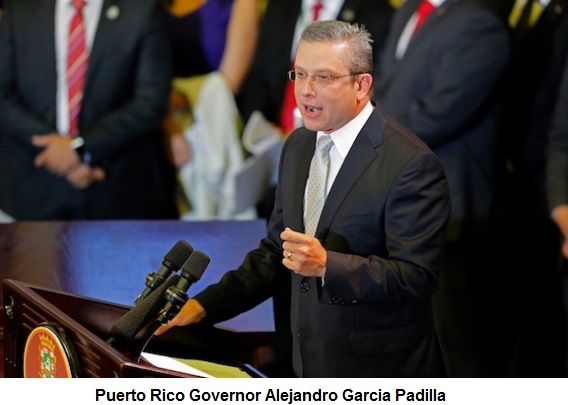
WASHINGTON, DC — Main Street Bondholders Coalition, a project of the 60 Plus Association, America’s largest center-right seniors organization representing more than 7.2 million older Americans, has launched a paid advertising campaign in Washington and Puerto Rico to highlight what it describes as Governor Alejandro Garcia Padilla’s plan to violate Puerto Rico’s constitution at the expense of small bondholders.

“Governor Garcia Padilla’s plan – to declare debts un-payable and then attack bondholders by calling them ‘vultures’ – is both unjust and unconstitutional. Our coalition includes Puerto Rican residents and mainland seniors living on fixed incomes, who staked their retirement in bonds backed by Puerto Rico’s full faith and credit. Congress must oppose the governor and his team’s reckless plan that disregards the rule of law and devastates the lives of these small investors,” said Matthew Kandrach, vice-president for 60 Plus.

PR SME - Photo 1

Padilla’s plan is so radical and unprecedented that members of his own political party are speaking out against it:

  • Nadal Power, chairman of Puerto Rican Senate Committee on Treasury and Public Finance: “We have to respect what the Constitution says and to do otherwise would take away a lot of credibility, not only the word of Puerto Rico, but compliance with the supreme law.”
  • Eduardo Bhatia, president of the Senate of Puerto Rico: “Puerto Rico has not been disciplined. We must restore confidence. We have to reduce government spending.”

Added Kandrach, “Puerto Rico can fix its financial problems, but any solution must be built on the cornerstone of genuine fiscal reform, not empty rhetoric and punishing investors. The governor and his circle of advisors, who are the same bunch representing deadbeat sovereigns like Argentina, have chosen to manufacture a crisis in order to get Washington’s help in their plan to stiff creditors. Congress must not allow that to happen.

“Puerto Rico would benefit from a fiscal control board, just like the District of Columbia had in the 1990s when it faced financial crisis. Congress must also oppose the governor’s plan to restructure Puerto Rico’s constitutional bonds. Allowing him to do so would set a terrible precedent, and open a Pandora’s Box of other state defaults. No retirement account in America would be safe.”

Main Street Bondholders Coalition is a project of the 60 Plus Association that is made up of small bondholders from across America who are committed to a policy process that returns Puerto Rico to sound financial management, respects the rule of law, and protects their retirement savings.
Source: Caribbean News Now – Regional Online News Source  – Retrieved 09-09-2015 http://www.caribbeannewsnow.com/topstory-Puerto-Rico-bondholders-coalition-launches-ad-campaign-27533.html

The summary of this news article is that it looks like Puerto Rico is “cruising for a bruising”, flirting with Bankruptcy. They resemble a Failed-State in some Banana Republic, rather than an American sovereign territory in the southern shadows of its bigger-richer mainland. This reflects a broken eco-system.

The Go Lean book serves as a roadmap to re-boot the island’s economic engines. The focus of the roadmap is the introduction and implementation of the region-wide professionally-managed, deputized technocracy of the Caribbean Union Trade Federation (CU). This roadmap asserts that the problems of Puerto Rico (by extension, the entire Caribbean) are too big for any one member-state to solve alone. There is the need to leverage the problems and solutions across the remaining of the Caribbean region; all 30 member-states.

The CU roadmap is a request for Puerto Rico to confederate with the rest of the Caribbean, their English-speaking, Dutch-speaking, French-speaking Caribbean neighbors; despite their political status. Puerto Rico needs the strategies, tactics, implementations and advocacies that would emerge from such integration. As reported in the previous April 2014 blog:

Puerto Rico needs the CU!
The CU needs Puerto Rico!

For the roadmap to be successful there is interdependence among these Caribbean member-states, since they are all too small. There is an overbearing need for leverage and economies-of-scale. This point was declared early in the book, in the opening Declaration of Interdependence (Page 11 – 14), with these statements:

viii. Whereas the population size is too small to foster good negotiations for products and commodities from international vendors, the Federation must allow the unification of the region as one purchasing agent, thereby garnering better terms and discounts.

xi. Whereas all men are entitled to the benefits of good governance in a free society, “new guards” must be enacted to dissuade the emergence of incompetence, corruption, nepotism and cronyism at the peril of the people’s best interest. The Federation must guarantee the executions of a social contract between government and the governed.

xii. Whereas the legacy in recent times in individual states may be that of ineffectual governance with no redress to higher authority, the accedence of this Federation will ensure accountability and escalation of the human and civil rights of the people for good governance, justice assurances, due process and the rule of law. As such, any threats of a “failed state” status for any member state must enact emergency measures on behalf of the Federation to protect the human, civil and property rights of the citizens, residents, allies, trading partners, and visitors of the affected member state and the Federation as a whole.

xxiii. Whereas many countries in our region are dependent Overseas Territory of imperial powers, the systems of governance can be instituted on a regional and local basis, rather than requiring oversight or accountability from distant masters far removed from their subjects of administration. The Federation must facilitate success in autonomous rule by sharing tools, systems and teamwork within the geographical region.

xxv. Whereas the legacy of international democracies had been imperiled due to a global financial crisis, the structure of the Federation must allow for financial stability and assurance of the Federation’s institutions. To mandate the economic vibrancy of the region, monetary and fiscal controls and policies must be incorporated as proactive and reactive measures. These measures must address threats against the financial integrity of the Federation and of the member-states.

xxix. Whereas all Caribbean democracies depend of the free flow of capital for municipal, public and private financing, the institutions of capital markets can be better organized around a regional monetary union. The Federation must institute the controls to insure transparency, accounting integrity and analysis independence of the securities markets, thereby shifting the primary source of capital away from foreign lenders to domestic investors, comprising institutions and individuals.

The CU requires the full participation of all 30 member-states in the region. A careful assessment of government finances, performed for the Go Lean book, shows that the finances for all Caribbean member-state governments are curtailed – the region is in crisis. One state after another feature deficits or excessive high Debt-to-GDP rates. (The World Bank, International Monetary Fund and the Inter-American Development Bank have monitors permanently stationed in the region). For many states, the 2008 Global Financial Crisis still lingers.

To assuage the economic crisis for Puerto Rico and the other Caribbean member-states, the Go Lean roadmap focuses on both increasing revenues, lowering operational expenses, and refinancing previous high-interest debt instruments (bonds). The roadmap is a complete re-boot! Imagine new revenue streams and a separation-of-powers to off-load some of the operational burdens to the CU Trade Federation. These are the prime directives of the Go Lean roadmap, pronounced as these 3 statements:

  • Optimization of the economic engines in order to grow the regional economy to $800 Billion and create 2.2 million new jobs.
  • Establishment of a security apparatus to protect the resultant economic engines.
  • Improvement of Caribbean governance to support these engines.

The book Go Lean … Caribbean introduces the CU so as to assume much of the Caribbean economic, security and governing functionality. The roadmap makes Puerto Rico, and the rest of the Caribbean, a better place to live, work and play. How? By the adoption of a series of community ethos, plus the execution of the following strategies, tactics, implementations and advocacies to elevate the societal engines of the region and to stop any downward spiral into Failed-State status. See the lists here:

Assessment – Caribbean Single Market & Economy Page 15
Assessment – Dutch Caribbean – Integration & Secessions Page 16
Assessment – French Caribbean – Organization & Discord Page 17
Assessment – Puerto Rico – The Greece of the Caribbean Page 18
Community Ethos – Economic Principles – Economic Systems Influence   Individual Choices Page 21
Community Ethos – Economic Principles – Consequences of Choices Lie in   the Future Page 21
Community Ethos – Governing Principles – Lean Operations Page 24
Community Ethos – Ways to Impact the Future Page 26
Community Ethos – Ways to Promote Happiness Page 36
Community Ethos – Ways to Impact the Greater Good Page 37
Strategy – Vision – Confederate all 30 member-states/ 4 languages into a Single   Market Page 45
Strategy – Mission – Build and foster local economic engines Page 45
Tactical – Ways to Foster a Technocracy Page 64
Tactical – Growing the Economy to $800 Billion GDP Page 68
Tactical – Separation-of-Powers – CU Federal Government versus Member-State Governance Page 71
Implementation – Assemble All Regionally-focus Organizations of All Caribbean Communities Page 96
Implementation – Ways to Pay for Change Page 101
Implementation – Ways to Better Manage Debt Page 114
Implementation – Ways to Foster International Aid Page 115
Planning – 10 Big Ideas – Forging the Single Market for the whole region Page 127
Planning – Ways to Improve Trade Page 128
Planning – Ways to Improve Interstate Commerce Page 129
Planning – Ways to Make the Caribbean Better Page 131
Planning – Lessons Learned from 2008 Page 136
Planning – Lessons Learned from Egypt – Dysfunction in a Tourism Mecca Page 143
Advocacy – Ways to Grow the Economy Page 151
Advocacy – Ways to Create Jobs Page 152
Advocacy – Ways to Improve Credit Ratings Page 152
Advocacy – Ways to Improve Governance Page 168
Advocacy – Ways to Better Manage the Social Contract Page 170
Advocacy – Ways to Impact Justice Page 177
Advocacy – Ways to Improve Homeland Security Page 180
Advocacy – Ways to Impact Wall Street Page 200
Advocacy – Ways to Impact US Territories Page 244

The Go Lean roadmap alerts the Caribbean – the 42 million people, 10 million Diaspora and 80 million visitors – that the effort to elevate the societal engines is heavy-lifting. This is no easy task, serious-minded leadership is necessary. There can be no reneging of commitments and repayments of previous bond obligations, as related in the foregoing news article and this VIDEO here:

VIDEOPuerto Rico on brink of debt defaulthttps://youtu.be/BBwtxF52OrE

Published on Aug 3, 2015 – Envision Capital Management CEO Marilyn Cohen explains how Puerto Rico got into poor fiscal shape.
Category: News & Politics
License: Standard YouTube License

There must be new solutions that considers the pasts, accepts the present and fosters the future.

Change has come to the Caribbean. Puerto Rico and all neighboring member-states are admonished to lean-in to the empowerments and elevation described in the book Go Lean … Caribbean. The benefits of this roadmap are needed urgently now! We need the emergence of a $800 Billion regional economy, 2.2 million new jobs. We need the Caribbean homelands to become better places to live, work and play. 🙂

Download the book Go Lean … Caribbean – now!

Share this post:
, , , , ,
[Top]

US Territories – Between a ‘rock and a hard place’

Go Lean Commentary

The recipe seems so perfect for success. The US is the world’s largest Single Market economy, has the largest military establishment, and you are its sovereign territory. What could go wrong?!

Everything…

Starting first with the foundation. The premise for the acceptance of US Territories is that the people are “alien and inferior”; 98.4% are racial and ethnic minorities. With that defective reasoning how can anything turn out well?!

And thus…the US Territories find themselves between a “rock and a hard place”.

The below VIDEO/TV show is a production by Comedian-Commentator John Oliver for the HBO show Last Week Tonight. He usually comments on a lot of news events in a satirical manner. But in that satire there is a lot of truth.

VIDEO: Last Week Tonight with John Oliver (HBO): U.S. Territories – https://youtu.be/CesHr99ezWE

Published on Mar 8, 2015 – A set of Supreme Court decisions made over 100 years ago has left U.S. territories without meaningful representation. That’s weird, right?
Content warning: Some profanity!

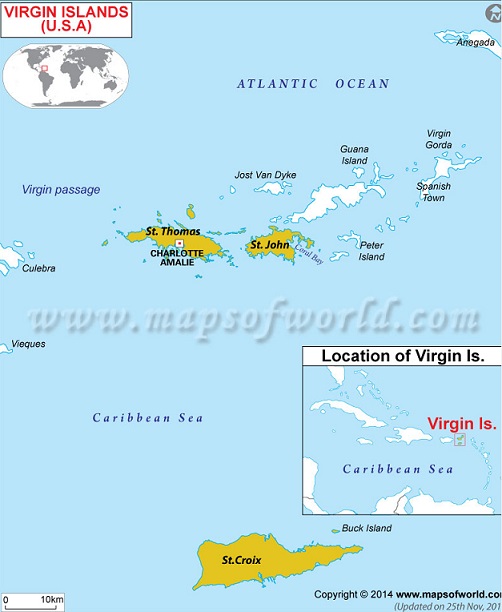
- Photo 1This VIDEO relates to the discussions in the book Go Lean…Caribbean and accompanying blog/commentaries primarily because there are 2 US Territories (Puerto Rico and the US Virgin Islands) in the center of the Caribbean. These cannot be ignored in the movement to unite and elevate the entire Caribbean region.

As depicted in the VIDEO, these territories are in crisis.

This is the purpose of the Go Lean book, as quoted from Economist Paul Romer (Page 8): “a crisis is a terrible thing to waste”. The truth is that American society stages all of the Caribbean in a “parasite” role; to serve as a playground for their leisure, consumers of their products and staffing for their Armed Forces. There is no advantage to being American, except to leave; and this is what people do, time and again. (Emigration is one of the major causes for the crisis in the Caribbean US Territories).

- Photo 2On the other hand, the goal of the Go Lean book is to serve as a roadmap for the introduction and implementation of the technocratic Caribbean Union Trade Federation (CU). So the CU would be set to optimize Caribbean society, starting with economic empowerment. In fact, the Go Lean roadmap has 3 prime directives:

  • Optimization of the economic engines in order to grow the regional economy to $800 Billion & create 2.2 million new jobs.
  • Establishment of a security apparatus to protect the resultant economic engines.
  • Improvement of Caribbean governance to support these engines.

The Go Lean movement asserts that the Caribbean region can do better; we must do better; we must not allow the US to take the lead for our own nation-building, for American self-interest (racism and capitalism) tend to hijack policies intended for the Greater Good. America thought their territories were populated with aliens, who could not be viewed as equals. Despite the 100 year old expiration of these prejudices, the policy remains. The mitigation and remediation to make territorial life successful must therefore come from another source. This is the siren call of the Go Lean movement.

(The scope of the Go Lean roadmap is limited to just the Caribbean territories, not the Pacific ones of Guam, Northern Marianas, and Samoa. Further, this commentary nor the Go Lean book advocates any political change of legal status of the territories to Statehood or Independence; rather this CU confederation alone is being promoted.)

There are more issues in consideration of this book. A compelling mission of the Go Lean book is to lower the “push and pull” factors that lead many to abandon the Caribbean homeland for American shores. The book posits that the region must create jobs so that its citizens do not have to leave to become aliens in a foreign land looking for a better life. The better life can be obtained right at home; Caribbean citizens can prosper where they are planted.

There are many Go Lean blog commentaries that have echoed this point. Here are a sample of related commentaries:

https://goleancaribbean.com/blog/?p=4531 Big Defense: Exploiting US Territories to fill the Armed Forces for their profit.
https://goleancaribbean.com/blog/?p=4360 Dreading the ‘Caribbean Basin Security Initiative’ as inadequate for PR/VI
https://goleancaribbean.com/blog/?p=2887 Caribbean must work together to address rum subsidies and promote this vital industry
https://goleancaribbean.com/blog/?p=2809 A Lesson in History: Economics of East Berlin; Failed-states can go from bad to worse.
https://goleancaribbean.com/blog/?p=2251 What’s In A Name? Latin & Caribbean people in the US still disenfranchised in American society.
https://goleancaribbean.com/blog/?p=2025 Caribbean Jobs – Attitudes & Images of the Diaspora
https://goleancaribbean.com/blog/?p=1433 Caribbean loses more than 70 percent of tertiary educated to brain drain
https://goleancaribbean.com/blog/?p=1325 Puerto Rico Governor Signs Bill on Small-Medium-Enterprises, attempts to re-boot commerce as 95% of businesses have 50 employees or less.
https://goleancaribbean.com/blog/?p=841 Having less babies (and people) is bad for the Caribbean economy
https://goleancaribbean.com/blog/?p=599 Ailing Puerto Rico open to radical economic fixes
https://goleancaribbean.com/blog/?p=286 Puerto Rico’s Comprehensive Cancer Center project breaks ground; model for future empowerment efforts.
https://goleancaribbean.com/blog/?p=273 10 Things We Don’t Want from the US – Discrimination of Immigrations

The foregoing VIDEO conveys that there is little respect in Washington, DC for the needs of the Territories. The islands having a voice, but no vote, really mean no voice at all, as they are inconsequential to all other legislators and power-brokers in Congress. Since the effort to elevate and empower the total Caribbean region cannot be pursued without these US Territories, there must be some engagement there. This effort is Day One/Step One in the Go Lean roadmap (Page 96). This approach is detailed under the American legal concept of an “Interstate Compact”; which allows the US Territories to confederate with their “foreign” Caribbean neighbors in this non-sovereign endeavor; thereby making these two island groups separate member-states of the CU.

Puerto Rico and the US Virgin Islands would have full benefits and voting privileges in the CU Trade Federation; the same for all British, Dutch and French “Overseas” Caribbean territories.

This vision is vital. The book Go Lean…Caribbean clearly hypothesizes that many problems of the region are too big for any one member-state to solve alone; that there is the need for the technocracy of the Caribbean Union Trade Federation. The Go Lean roadmap therefore calls for this strategy of confederation with a tactic of separation-of-powers between CU federal agencies and member-states’ governments. This allows for a lot of autonomy from Washington, DC for Puerto Rico and the USVI.

This change is essential for progress and growth. Despite all the advantages of American affiliation, these US Territories suffer from monumental dysfunction. As a result, these “American citizens” there are on the move, abandoning their homeland and forging near-Failed-States in their wake.

The Go Lean book posits that we need more than jokes and satire to arrest the downward spiral for PR/VI and the rest of the Caribbean; we need action too. We need this roadmap.

We do not want to be the “laughing stock” of the developed world. We want to be recognized as protégés, not parasites! This point is pronounced early in the book with the Declaration of Interdependence (Pages 12 & 14) with many statements that demonstrate the need to remediate Caribbean communities – including PR & VI – and make the homelands better places to live, work and play:

xix.    Whereas our legacy in recent times is one of societal abandonment, it is imperative that incentives and encouragement be put in place to first dissuade the human flight, and then entice and welcome the return of our Diaspora back to our shores. This repatriation should be effected with the appropriate guards so as not to imperil the lives and securities of the repatriated citizens or the communities they inhabit. The right of repatriation is to be extended to any natural born citizens despite any previous naturalization to foreign sovereignties.

xx.  Whereas the preparation of our labor force can foster opportunities and dictate economic progress for current and future generations, the Federation must ensure that educational and job training opportunities are fully optimized for all residents of all member-states, with no partiality towards any gender or ethnic group. The Federation must recognize and facilitate excellence in many different fields of endeavor, including sciences, languages, arts, music and sports. This responsibility should be executed without incurring the risks of further human flight, as has been the past history.

xxiii.  Whereas many countries in our region are dependent Overseas Territory of imperial powers, the systems of governance can be instituted on a regional and local basis, rather than requiring oversight or accountability from distant masters far removed from their subjects of administration. The Federation must facilitate success in autonomous rule by sharing tools, systems and teamwork within the geographical region.

xxiv.  Whereas a free market economy can be induced and spurred for continuous progress, the Federation must install the controls to better manage aspects of the economy: jobs, inflation, savings rate, investments and other economic principles. Thereby attracting direct foreign investment because of the stability and vibrancy of our economy.

xxv.  Whereas the Caribbean region must have new jobs to empower the engines of the economy and create the income sources for prosperity, and encourage the next generation to forge their dreams right at home, the Federation must therefore foster the development of new industries, like that of ship-building, automobile manufacturing, pre-fabricated housing, frozen foods, pipelines, call centers, and the prison industrial complex. In addition, the Federation must invigorate the enterprises related to existing industries like tourism, fisheries and lotteries – impacting the region with more jobs.

The Go Lean book also details a series of community ethos, strategies, tactics, implementations and advocacies to impact the full region, and US Territories. The following samples are excepted from the book: economic prospects:

Community Ethos – Economic Principle – Economic Systems Influence Choices   & Incentives Page 21
Community Ethos – Economic Principle – Consequences of Choices Lie in   the Future Page 21
Community Ethos – Job Multiplier Page 22
Community Ethos – Lean Operations Page 24
Community Ethos – Ways to Promote Happiness Page 36
Community Ethos – Ways to Impact the Greater Good Page 37
Strategy – Vision – Confederating a Non-Sovereign Union Page 45
Strategy – Mission – Keep the next generation at home Page 46
Tactical – Fostering a Technocracy Page 64
Tactical – Tactics to Forge an $800 Billion Economy Page 67
Tactical – Separation of Powers Page 71
Implementation – Ways to Pay for Change Page 101
Implementation – Ways to Deliver Page 109
Implementation – Trade Mission Office – Washington, DC Page 117
Implementation – Reasons to Repatriate to the Caribbean Page 118
Implementation – Ways to Promote Independence – Interdependence Page 120
Planning – 10 Big Ideas – A Single Market in the G-20 Page 127
Planning – Ways to Make the Caribbean Better Page 131
Planning – Ways to Better Manage Image – Not Inferior Aliens Page 133
Advocacy – Ways to Grow the Economy Page 151
Advocacy – Ways to Create Jobs Page 152
Advocacy – Ways to Improve Governance Page 168
Advocacy – Ways to Enhance Tourism – The world should enjoy our hospitality Page 190
Advocacy – Ways to Impact the Diaspora Page 217
Advocacy – Ways to Impact the US Territories Page 244
Appendix – Interstate Compacts Page 278
Appendix – Puerto Rican Migration to New York Page 303
Appendix – Puerto Rican Population in the US – Census 2010 Page 304
Appendix – US Virgin Islands: Economy Past, Present & Future Page 305
Appendix – Electronic Benefits Transfers – e-Government & e-Payments for PR & VI too Page 353

The Go Lean book posits (Page 3) that the Caribbean islands, including the American Territories of Puerto Rico and the US Virgin Islands, are among the greatest addresses in the world. But instead of the world “beating a path” to these doors, the people of the Caribbean have “beat down their doors” to get out; responding to “push and pull” factors. This abandonment must stop now!

While we want the rest of the world – the people of North America, Europe and beyond – enjoying our hospitality, culture, music, cuisine and produce, we most especially want to enjoy these for ourselves. We do not want to admire them from afar. We instead want to be planted and to prosper here in the Caribbean.

Considering the foregoing VIDEO, our birthright should be a privilege and the envy of the world, not the joke for the rest of the world. We want the world laughing with us, not at us!

A better future. This is our simple quest. This is easy to say, but hard to do. The heavy-lifting tasks must come from us in the Caribbean. This is the charge of the CU. We cannot expect solutions from Washington. They have no respect for any territories.

The people and governing institutions of all the Caribbean are hereby urged to lean-in to this Go Lean roadmap for Caribbean empowerment. With the successful execution of this roadmap, we can make all of the Caribbean homeland, a better place to live, work and play. 🙂

Download the book Go Lean … Caribbean – now!

Share this post:
, , , , ,
[Top]

Puerto Rico Governor Signs Bill on SME’s

PR SME - Photo 1Go Lean Commentary

This sentence in the news article below about small & medium-sized enterprises (SME’s) speaks volumes for Puerto Rico’s economy and all the Caribbean:

According to government data, 95 percent of companies in Puerto Rico are SMEs with 50 or fewer employees, and they employ around 25 percent of the jobs on the island.

So if there is a plan to grow jobs in Puerto Rico and the Caribbean, that plan must look to impact small businesses or SME’s.

By: The Caribbean Journal staff

Puerto Rico Governor Alejandro Garcia Padilla has signed a bill aiming to boost small and medium-sized enterprises on the island.

The new law has several provisions: it reserves part of government purchases for local businesses, encourages the integration of professional and new entrepreneurs and gives priority to SMEs “in discretionary public funds to subsidize payroll for new jobs or existing ones,” Garcia Padilla’s office said in a statement.

The bill, called the “Support for Microenterprise, Small and Medium Merchant Act” amends the island’s Procurement Reserve Act to 20 percent, and establishes a reserve of 60 percent for SMEs when granting subsidies under the Law of Security in Employment.

“This bill is for SMEs what the Law of Incentives for Economic Development and previous industrial incentive laws were for manufacturing in Puerto Rico. That’s how important it is,” the Governor said in a statement. “The country is undergoing the biggest transformation in its recent history.”

According to government data, 95 percent of companies in Puerto Rico are SMEs with 50 or fewer employees, and they employ around 25 percent of the jobs on the island.

“The path to sustainable economic development will necessarily have to include SMEs,” he said. “Encouraging SMEs is to boost local production and wealth creation that circulates and remains in the country.”

The government said the law also creates a board to support small retailers, among other aspects, and amends the country’s permitting act to grant permits for conditional or temporary activities that “pose no risk to health, the environment or security and conforms to the zoning requirements.”
Caribbean Journal– Caribbean Online News Source (Retrieved 06/13/2014) –
http://www.caribjournal.com/2014/06/12/puerto-rico-governor-signs-bill-on-small-medium-sized-enterprises/

The book Go Lean … Caribbean fulfills that requirement. The book serves as a roadmap to implement the Caribbean Union Trade Federation (CU), and with this effort, create 2.2 million new jobs over a 5 year period. Major consideration is given to entrepreneurship, small businesses (Main Street) and even optimizing existing industries. But Go Lean differs from government efforts, such as Puerto Rico’s as described in the foregoing article, in that it looks to provide complete incubation for SME’s. This includes fund development, technical assistance, coaching, management training and introductions to new global markets; a true public-private partnership.

This directive is embedded in the opening Declaration of Interdependence at the start of the book (Page 13/14), with these statements:

xxi.  Whereas the preparation of our labor force can foster opportunities and dictate economic progress for current and future generations, the Federation must ensure that educational and job training opportunities are fully optimized for all residents of all member-states, with no partiality towards any gender or ethnic group. The Federation must recognize and facilitate excellence in many different fields of endeavor, including sciences, languages, arts, music and sports. This responsibility should be executed without incurring the risks of further human flight, as has been the past history.

xxiv.   Whereas a free market economy can be induced and spurred for continuous progress, the Federation must install the controls to better manage aspects of the economy: jobs, inflation, savings rate, investments and other economic principles. Thereby attracting direct foreign investment because of the stability and vibrancy of our economy.

Whereas the Caribbean region must have new jobs to empower the engines of the economy and create the income sources for prosperity, and encourage the next generation to forge their dreams right at home, the Federation must therefore foster the development of new industries… In addition, the Federation must invigorate the enterprises related to existing industries … – impacting the region with more jobs.

This subject of entrepreneurship has been previously covered in these Go Lean blogs, highlighted here in the following samples:

a.   https://goleancaribbean.com/blog/?p=486 – Incubator firm backs Southeast Asia cab booking app

b.   https://goleancaribbean.com/blog/?p=398 – Self-employment on the rise in the Caribbean – World Bank

c.   https://goleancaribbean.com/blog/?p=214  – LCD versus an Entrepreneurial Ethos

As also depicted in the foregoing article, governments have employed strategies to promote small businesses like set-aside programs. While this is a good start, more is needed for true success. Go Lean relates that progress in entrepreneurship requires a new community ethos, an acceptance that intellectual property is just as essential as any real property requiring protection by government authorities and respect by the general public. This is key, as the book posits that new information-centric economy activities can be equally exploited from an address in the Caribbean or any address in North America or Europe. ICT (Internet & Communication Technologies) has emerged as the great equalizer!

PR SME - Photo 2The vision of the CU is a confederation of the 30 member-states of the Caribbean, including all 4 language groups, into an integrated “single market”, thereby fostering economic growth to raise the regional economy to $800 Billion GDP (from the 2010 base of $378 Billion). This growth would be the cause-and-effect of 2.2 million new jobs projected in the Go Lean roadmap. The following list details the series of community ethos, strategies, tactics, implementations and advocacies necessary to effectuate the change in the region to foster the small business environment:

Community Ethos – Job Multiplier Page 22
Community Ethos – Lean Operations Page 24
Community Ethos – Return on Investments Page 24
Community Ethos – Ways to Impact the Future Page 26
Community Ethos – Ways to Help Entrepreneurship Page 28
Community Ethos – Ways to Promote Intellectual Property Page 29
Strategic – Vision – Integrated Region in a   Single Market Page 45
Strategic – Vision – Agents of Change – Globalization Page 57
Tactical – Fostering a Technocracy Page 64
Tactical – Growing to $800 Billion Regional Economy Page 67
Tactical – Separation of Powers – Homeland Security Page 75
Tactical – Separation of Powers – Interstate Commerce Page 79
Tactical – Separation of Powers – Department of Labor Page 89
Implementation – Ways to Pay for Change Page 101
Implementation – Steps for Self-Governing   Entities Page 105
Implementation – Ways to Deliver Page 109
Implementation – Ways to Benefit from   Globalization Page 119
Planning – Big Ideas for the Caribbean Region Page 127
Planning – Ways to Improve Trade Page 128
Planning – Ways to Improve Interstate Commerce Page 129
Advocacy – Ways to Grow the Economy Page 151
Advocacy – Ways to Create Jobs Page 152
Advocacy – Ways to Foster Technology Page 197
Advocacy – Ways to Impact Main Street Page 201
Appendix – Job Multipliers Page 259

While the Go Lean roadmap is focused on small and medium-sized businesses, it also stresses the importance of protecting the economic engines against crime and emergency scenarios. The roadmap asserts that the economy of the region must be aligned with the security of the region; otherwise “bad actors” will emerge. The CU/Go Lean roadmap calls for “new guards for their future security”, so as to ensure that the regions hard-fought investments are not easily undermined. We must have return on our investments; we must have forward progress.

We do not want “to sow and have someone else reap” – The Bible.

All in all, the Go Lean … Caribbean roadmap posits that the problems of the Caribbean homeland are too big for any one member-state to solve, empowerments in Puerto Rico alone is too-little-too-late, but rather a regional solution is needed. The street-wise expression is so valid at this time: “You don’t bring a knife to a gun fight”. The Caribbean Union Trade Federation is a regional answer – the scope is bigger than just entrepreneurship, small businesses or jobs. While the effort will be fully exerted to promote and optimize SME’s, create jobs and forge every opportunity for success at home, a lot more is riding on these efforts. In addition to economic progress, we also have the whole future “hanging in the balance”, that of the Caribbean youth and their presence in the Caribbean. For this reason, the roadmap considers even more, that of making the Caribbean a better place to live, work and play.

Download the book Go Lean…Caribbean – now!

Share this post:
, , ,
[Top]

Ailing Puerto Rico open to radical economic fixes

Go Lean Commentary

The Caribbean is in crisis!

Puerto Rican FlagPuerto Rico is in crisis! According to this quote, they have lots of issues, all stemming primarily from economic dysfunctions:

Puerto Rico, in dire straits following eight years of recession, has remained receptive as it debates hundreds of ideas: ‘‘We are studying all alternatives and all possibilities.

The publishers of the book Go Lean … Caribbean humbly submit this publication as a complete roadmap to re-boot the island’s economy, security and governing engines. This roadmap differs from all the other 369 suggestions submitted to the territorial government’s committee highlighted in the foregoing news article, in that it presents a regional option, rather than just a territorial solution. The book asserts that the problems of Puerto Rico (by extension, the entire Caribbean) are too big for any one member-state to solve alone. Rather, the focus of the roadmap is the region-wide professionally-managed, deputized technocracy of the Caribbean Union Trade Federation (CU).

Puerto Rico needs the strategies, tactics, implementations and advocacies of the CU.

The CU needs Puerto Rico!

The CU requires the full participation of all 30 member-states in the region, including all 4 language group (Dutch, English, French and Spanish). With this approach, the CU benefits from the economies-of-scale of 42 million people.

The CU expects NO MONEY from Puerto Rico. This is good as the island is running a $820 million deficit. To cure a deficit a government needs more revenues and/or fewer expenses. The Go Lean roadmap features both. The roadmap is a complete re-boot: new revenue streams and a separation-of-powers, thereby delegating governing overhead to the CU.

Go Lean … Caribbean introduces the CU to take oversight of’ much of the Caribbean economic, security and governing functionality. In summary, this plan’s execution makes Puerto Rico, and the Caribbean, a better place to live, work and play.

This Go Lean roadmap first assesses the Puerto Rican human flight/brain drain crisis, where more than half of the island’s populations have fled to American shores. This plight makes the task of building a functioning society difficult, as often the brightest and best talents are the ones that leave; plus entitlement programs simply need populace retention.

By DANICA COTO – Associated Press

SAN JUAN, Puerto Rico (AP) — Slash the number of public holidays by two-thirds. Eliminate dozens of government agencies. Legalize marijuana and prostitution.

From the intriguing to the impossible, there is no shortage of ideas for fixing Puerto Rico’s ailing economy as the government tries to dig out from a whopping $70 billion in public debt and bring back economic growth.

The ideas have come from legislators, entrepreneurs and even members of the public, who have submitted ideas via a government-sponsored website. Of the 369 ideas sent in by the public, 156 have been accepted by a government committee for consideration, including the suggestions to legalize marijuana and prostitution, and to limit how long people can live in subsidized housing.

But all the ideas require further government approval, either with a legislative vote, or an administrative nod from the governor, agency or department. More dramatic ideas, such as legalization of marijuana or prostitution, would require public hearings, legislative approval and the governor’s signature.

And prospects for approval of the various suggestions are decidedly mixed.

The governor, for example, is expected to sign a bill approved by lawmakers to release certain elderly prisoners, but not a suggestion floated by a member of the public to charge inmates for their room and board.

Puerto Rico, in dire straits following eight years of recession, has remained receptive as it debates hundreds of ideas: ‘‘We are studying all alternatives and all possibilities,’’ said Sen. Maria Teresa Gonzalez, a member of the governor’s party who has come under fire for submitting a bill that would reduce the number of holidays for public employees to six.

Puerto Rico FlagThe island currently celebrates 20 holidays a year, double those observed in the U.S. Many people have bristled at the proposal to scrap some of the additional extra days off, some of which commemorate various historic Puerto Rican leaders. But Gonzalez said the excessive number of holidays costs the government about $500 million a year in lost productivity and interruptions in service, among other things.

‘‘Change always brings about inconveniences,’’ she said. ‘‘I’m convinced that before we talk about something as dramatic and disastrous as layoffs, we have to consider other ideas.’’

Many suggestions have come as Gov. Alejandro Garcia Padilla prepares to submit the first balanced budget in decades, having promised U.S. investors and credit agencies that he will eliminate an $820 million deficit. The governor has not detailed his cutbacks, prompting fears of layoffs, tax increases and cuts to public service.

Opposition legislator Rep. Ricardo Llerandi Cruz has proposed eliminating 41 government agencies, saying it would save $160 million alone in administrative costs. He said the government has many agencies performing the same functions, noting that there’s a Department of Natural Resources, which protects, develops and manages the island’s environmental resources, and an Administration of Natural Resources, a division within the department with responsibilities that include overseeing projects such as cleanup efforts.

‘‘Puerto Rico is facing the worst fiscal crisis in all of its history,’’ Cruz said. ‘‘We need to refocus or revisit governmental priorities to face these problems.’’

A bill in the legislature also would cap the salaries of mayors, but legislators have been debating the issue for a year as mayors continue to give themselves raises. The full-time mayor of the western town of Maricao, for example, oversees the island’s second-least populated municipality with some 6,200 people and currently earns $78,000 a year, nearly double of what he earned the previous year. If the bill is approved, the mayor would earn a base salary of roughly $54,000 a year.

Manuel Lugo, an attorney who lives in the coastal town of Aguadilla, is among those who submitted the highest number of ideas on the government’s website. But despite having nine of 17 ideas approved, he doesn’t believe the government will take action on any of them.

‘‘It is very difficult to change the inertia of this island,’’ said Lugo, 43, who recently closed his office because of economic problems and is contemplating a move to Texas. ‘‘There has been no economic plan for decades. What they do here is repair and patch holes. That’s not how you run a country.’’

Yanira Hernandez, a governor spokeswoman, said Garcia will detail how he plans to balance the budget in a special televised address in late April. The budget must be approved before June 30.

While many are concerned about what cuts will be made to balance the budget, economist Gustavo Velez said extreme measures won’t be necessary if the government increases revenues and consolidates state agencies. Puerto Rico could generate $300 million more a year if it increases its capture rate on tax revenues from 56 to 75 percent, he said. The government also could suspend salary increases, Velez added.

‘‘Puerto Rico cannot keep operating on recurring deficits,’’ he said, noting it is unconstitutional. ‘‘We have to return to balanced budgets as the norm. Politicians have to embrace that reality.’’

The government also has considered tapping into the island’s underground economy, estimated by some experts at $20 billion a year, representing roughly 40 percent of overall consumption.

Puerto Ricans are increasingly seeking new ways to generate money, with some opening food trucks or hunting caimans to sell the meat as shish kebabs or fried snacks.

But an estimated 450,000 people have moved to the U.S. mainland in search of new jobs and a more affordable cost of living in the past decade.

Brunilda Cintron, 56, left the island in 2001 and now lives in Kissimmee, Florida. But her daughter and mother still live in Puerto Rico, and she worries about their future.

‘‘The government has to make some drastic decisions that will adversely affect people,’’ Cintron said, adding that she thinks her family will soon join her in the U.S. mainland. ‘‘I don’t think they’re going to have a choice.’’

Boston Globe – AP Newswire – Retrieved 04-11 2014 http://www.boston.com/news/world/caribbean/2014/04/10/ailing-puerto-rico-open-radical-economic-fixes/siVW5wfiml78bERu5MuJlM/story.html

The CU will fix Puerto Rico! Look here at the solutions; (sorted by Economic/Security/Governance). The book Go Lean … Caribbean details these specific curative measures (advocacies, strategies, tactics, and implementations):

Economic:

Community Ethos – Money Multiplier Page 22
Help Entrepreneurship Page 28
Impact Turn-Around Strategies/Tactics Page 33
Tactics to Forge an $800 Billion Economy Page 67
New Ways to Pay for Change Page 101
Start-up Benefits from an EEZ Page 104
Develop/Expand a Pipeline Industry Page 107
Improve Energy Usage Page 113
Better Manage Debt Page 114
Foster International Aid Page 115
Improve Trade Page 128
Improve Interstate Commerce Page 129
New Ways to Grow the Economy Page 151
Create Jobs Page 152
Control Inflation Page 153
Improve Credit Ratings Page 155
Mitigate Black Markets Page 165
Enhance Tourism Page 190
Impact Wall Street Page 200

Security:

Separation of Powers – Homeland Security Page 75
Security Initiatives [stemming from the Start-up] Page 103
Impact Justice Page 177
Mitigate & Reduce Crime Page 178
Improve Intelligence [Gathering & Analysis] Page 182
Impact the Prison-Industrial Complex Page 211

Governance:

Community Ethos – Deferred Gratification Page 21
Improve Negotiations Page 32
Impact the Greater Good Page 37
Tactics to Foster a Technocracy Page 64
Implement Self-Governing Entities Page 105
Improve Mail Service Page 108
Strong Reasons to Repatriate Page 118
Promote Independence Page 120
Improve Healthcare Page 156
Impact Entitlements Page 158
Improve Education Page 159
New [Governmental] Revenue Sources Page 172
Impact Public Works Page 175
Better Manage Natural Resources Page 183
Improve for Natural Disasters Page 184
Improve Emergency Management Page 196
Impact Urban Living Page 234
Impact US Territories Page 244

The roadmap alerts the Caribbean stakeholders of the obstacles that this plan will encounter, and then provides guidance, turn-by-turn directions, so as to reach the destination … promptly.

Change has come to the Caribbean. The people, institutions and governance of Puerto Rico are all urged to lean-in.”

In fact, now is the time for the whole Caribbean region to lean-in for this change, described in the book Go Lean … Caribbean. The benefits of this roadmap are too alluring to ignore: emergence of an $800 Billion regional economy, 2.2 million new jobs and an end to the dysfunction. This will result in Puerto Ricans repatriating from the US, not fleeing there.

Download the free e-Book of Go Lean … Caribbean – now!

Share this post:
, , , , ,
[Top]

PR’s Comprehensive Cancer Center Project Breaks Ground

Go Lean Commentary

imgresThe forgoing article touches on a critical mission and motivation of the Caribbean Union Trade Federation (CU): to impact the battle against cancer. The roadmap for the implementation of the CU, Go Lean … Caribbean highlights that 1 in every 3 Americans are at risk of cancer, so surely the Caribbean rate of affliction cannot be far behind. Therefore the Caribbean region must prepare. Cancer treatments are expensive! Some treatments can cost $20,000 – $30,000 each month for 4 – 6 month stretches. Our population, like many other societies, continues to age, get sick and battle cancer, so we cannot be ill-prepared. Lives are at stake!

The CU mission is to prepare in advance for cancer: to install the mechanisms to garner as much cost-savings as possible while delivering the highest quality of care and health-related services for our people. And while we are making efforts to save lives of Caribbean citizens, Diaspora and visitors, we also want to exploit any economic opportunities.

By: The Caribbean Journal staff

A major new hospital project has broken ground in Puerto Rico, Governor Alejandro Garcia Padilla announced.

The new Comprehensive Cancer Center Hospital project is being built with an investment of $196 million. The 12-floor facility will include eight operating rooms and 72 beds.

Construction on the project, which is located in Rio Piedras, is projected to last around 30 months, with a completion date set for April 2016.

The government said the project could create more than 1,300 direct and indirect jobs during construction and 750 once the hospital is up and running.

“These types of centers are characterized by scientific excellence and the capacity to integrate a diversity of research approaches to investigating the problem,” Garcia Padilla said in a statement. “They have a key role in advancing the cause of reducing deaths from cancer.”

The Governor said the hospital is aiming to be a “primary source for discoveries about the nature of cancer and the development of new approaches to prevention, diagnosis and therapy.”

Construction of the hospital had initially been slated to begin in 2010.

“The ultimate recovery of Puerto Rico depends on economic development and the jobs we create,” the Governor said.

Source: http://www.caribjournal.com/2014/02/19/puerto-rico-comprehensive-cancer-center-project-breaks-ground/

The Go Lean roadmap takes a strategic approach. There is the need for cancer and medical research, so the CU promotes and invites the establishment of medical research parks, laboratories and campuses as Self-Governing Entities (SGE). These bordered facilitates, similar to the PR project depicted above in the artist rendition, would only submit to CU jurisdiction and authorities – no FDA regulations! This freedom allows for more latitude and creativity in the pursuit of cancer cures and treatments.

Without a doubt, this strategy of SGE’s fulfills many CU objectives. In addition to the life-saving potential of local cancer research, the CU seeks to improve the environment for academic and occupational endeavors for STEM (Science, Technology, Engineering & Medical) professionals. The region would now offer an alternative to the debilitating brain drain. In fact, the opposite would occur: the region invites empowering immigrants to help facilitate this vision. The Go Lean … Caribbean roadmap describes that the Diaspora and their legacies (foreign-born children), would see a Welcome Mat to “come in from the cold” – welcome home – to a better place to live, work, learn, heal and play.

Download the Book- Go Lean…Caribbean Now!!!

Share this post:
, , ,
[Top]