Tag: Model

Managing ‘Change’ in California

Go Lean Commentary

This is a Big Deal

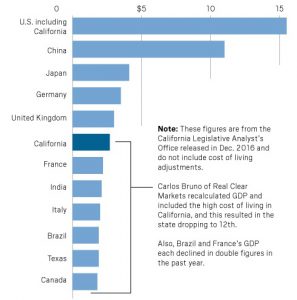
California, the biggest state in the Union (USA) – #6 GDP if ranked as an independent country – has enacted legislation to legitimize recreational marijuana use. Wow, what a ‘change’ to manage! That’s 37 million people, millions of cars and billions of dollars. The implementation of this New Order will surely be heavy-lifting.

For the Caribbean, let’s pay more than the usual attention for lessons learned for our own Big Deal implementation. See the VIDEO on California’s challenge here:

VIDEO – California residents line up to buy recreational marijuana – https://www.today.com/video/california-residents-line-up-to-buy-recreational-marijuana-1127548995762


Posted January 2, 2018 – Vendors in The Golden State began selling recreational marijuana legally on Monday, a milestone moment in the push to legalize marijuana across the country. NBC’s Jacob Soboroff has the report for TODAY from Los Angeles.

Again, California is managing the ‘change’ of implementing the legalization of recreational marijuana use, while the Caribbean needs to implement a roadmap to forge change in its societal engines (economics, security and governance) for the 30 member-states of our region.

The book Go Lean…Caribbean – available to download for free – serves as a roadmap for the introduction and implementation of the technocratic Caribbean Union Trade Federation (CU), for the elevation of Caribbean society – for all member-states. This CU/Go Lean roadmap has these 3 prime directives:

  • Optimization of the economic engines in order to grow the regional economy to $800 Billion and create 2.2 million new jobs.
  • Establishment of a security apparatus to ensure public safety and protect the resultant economic engines.
  • Improve Caribbean governance to support these engines, including a separation-of-powers between the member-states and CU federal agencies.

The State of California is taking on the heavy-lifting of this marijuana legalization while the US federal government continues to consider the drug as illegal. But California is NOT the first state; that distinction belongs to Colorado. The movement behind the Go Lean book has explored Colorado and observed-and-reported on the societal developments there. Notice these main points from a previous blog-commentary entitled – Lessons from Colorado: Legalized Marijuana: Heavy-lifting! – from August 17, 2017:

… in 2017, the phrase “Rocky Mountain High” has a total different meaning, because the State of Colorado has since legalized recreational use of marijuana.

This is not an easy topic; this is heavy …

There are so many lessons we can learn from the debate, legalization, implementation and regulation of this product in this State. All in all, it is heavy-lifting. This is the theme of this series of commentaries of lessons that have been learned by Caribbean stakeholders visiting, observing and reporting on the US State of Colorado.

We have so much in common and so much in contrast. One commonality to consider is how Colorado is now associated with marijuana consumption. …

“Welcome to our club”! This has always been the image of Caribbean people and culture – think: Rasta Man smoking Ganja.

California … Colorado … other states to follow, according to another previous blog-commentary after the last American General Election on November 8, 2016. That submission was entitled – Time to Go: American Vices; Don’t Follow and quoted:

Marijuana legalization is now the norm for 40 percent of the American population. …
Voter measures [passed] in Massachusetts and Nevada. Maine’s referendum was still being counted early Wednesday morning, and Arizona’s was poised to lose. Three other states passed medical marijuana reforms, and a fourth appeared likely to do so. This means that in eight states (plus Washington, D.C.) weed will be legal for recreational purposes, and in sum, 28 will have some kind of legalization on the books.

There will be a lot of security and governing dynamics that these states – like California – will now have to manage, since the process will decriminalize marijuana use, after a long history of criminalization. This is a BIG DEAL considering that many people may be in a penal status – active or parole – for marijuana use or trafficking. Wow, indeed; this is a BIG transformation!

This point too, was addressed in a previous blog-commentary entitled – Marijuana in Jamaica – ‘Puff Peace’:

There are moral, religious, legal and psychological (treatment) issues associated with this topic; and there is history – good and bad. Any jurisdiction decriminalizing the use of marijuana has to contend with the previous messaging to the community of: “Just say no to drugs”.

The [Go Lean] book asserts that before the strategies, tactics, implementations and advocacies of a roadmap to elevate a society can be deployed, the affected society must first embrace a progressive community ethos. The book defines this “community ethos” as the fundamental character or spirit of a culture; the underlying sentiment that informs the beliefs, customs, or practices of society; dominant assumptions of a people or period. Think of the derivative term: “work ethic”.

Marijuana is a mood-altering drug; it has negative effects, one being preponderance for apathy, to tune out of any active engagement. In the US, even in the states where marijuana is legal, most firms/governments still screen staffers (new hires and veterans) and ban consumption of the drug. The reason is simple: Apathy does not make for industriousness.

The Go Lean book provides 370-pages of turn-by-turn instructions on “how” to adopt new community ethos, plus the strategies, tactics, implementations and advocacies to execute so as to transform the societal engines of Caribbean society, regarding the whole drug eco-system. The Go Lean book asserts that every community has bad actors, and with a more liberal-progressive attitude towards a once-illegal drug, community attitudes must be paramount. There must be “new guards” to assuage any threats from this practice on society. This point is pronounced early in the book with the Declaration of Interdependence (Pages 12 – 13) that claims:

x. Whereas we are surrounded and allied to nations of larger proportions in land mass, populations, and treasuries, elements in their societies may have ill-intent in their pursuits, at the expense of the safety and security of our citizens. We must therefore appoint new guards to ensure our public safety and threats against our society, both domestic and foreign. The Federation must employ the latest advances and best practices of criminology and penology to assuage continuous threats against public safety. The Federation must allow for facilitations of detention for [domestic and foreign] convicted felons of federal crimes, and should over-build prisons to house trustees from other jurisdictions.

xi. Whereas all men are entitled to the benefits of good governance in a free society, “new guards” must be enacted to dissuade the emergence of incompetence, corruption, nepotism and cronyism at the peril of the people’s best interest. The Federation must guarantee the executions of a social contract between government and the governed.

xvi. Whereas security of our homeland is inextricably linked to prosperity of the homeland, the economic and security interest of the region needs to be aligned under the same governance. Since economic crimes, including piracy and other forms of terrorism, can imperil the functioning of the wheels of commerce for all the citizenry, the accedence of this Federation must equip the security apparatus with the tools and techniques for predictive and proactive interdictions.

So legalizing marijuana in the BIG market of California will be about more than just managing change, it will also be about managing risks. The Go Lean book relates that managing risk is more than just “One Act”, there is lengthy, engaged process (Page 76):

  • Education
  • Mentoring
  • Monitoring
  • Mitigation
  • Licensing
  • Coordination

Let’s see how this process goes for California. While this state’s independent streak has made it a “maverick” among the other American states – see Independence Movement detailed in this previous blog – this effort with marijuana may be “biting off more than they can chew”. This is truly a BIG DEAL!

We need to pay attention, as there are parallels for California compared to the full Caribbean:

This writer, having lived in California for 10 years, can conclude that California wants the same thing that the Caribbean wants (or should want): to be an elevated society; to be a better homeland, a better place to live, work and play. 🙂

Let’s observe-and-report on these California’s developments and manifestations, their successes and failures.

Download the free e-Book of Go Lean … Caribbean – now!

Sign the petition to lean-in for this roadmap for the Caribbean Union Trade Federation.

Share this post:
, ,

Baha Mar: Doubling-down on Failure

Go Lean Commentary

“We told you it wouldn’t work.” – Previous Go Lean commentary.

Update: It hasn’t worked!

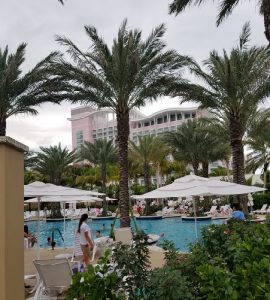
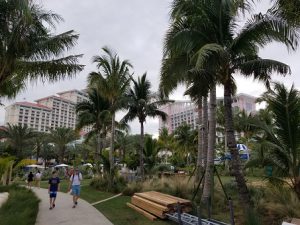
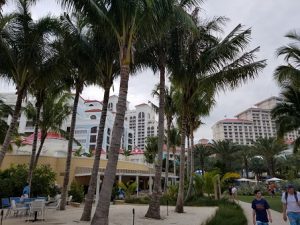
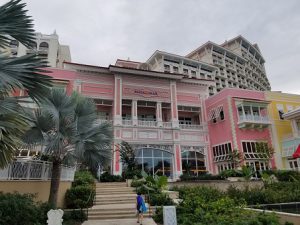
The Baha Mar Resort, Casino and Convention Center in Cable Beach, Nassau, Bahamas is now fully open – see Appendix VIDEO – and frankly empty! (See Photos below). This is the peak winter tourism season. This weather reality creates a seasonal demand for tropical resorts. Plus the excitement of a new property always generates a “buzz” … normally.

And yet, Baha Marthus far has been underwhelming! (There is hope for a better disposition in the future).

The Baha Mar project has been a source of contention for many years; one drama after another: dispute during construction, missed opening, bankruptcy filing, official wine-down, changed ownership, eventual opening, litigation among the originators.

See the latest breaking news in this Baha Mar drama in the news article here:


Title:
Bahamas Developer Claims Huge Chinese Fraud at $3.9 Billion Resort
By: Bob Van Voris

China Construction America Inc. was accused in a lawsuit of ripping off the original developer of the long-delayed $3.9 billion Baha Mar resort in the Bahamas by submitting fraudulent bills and collecting undeserved fees.

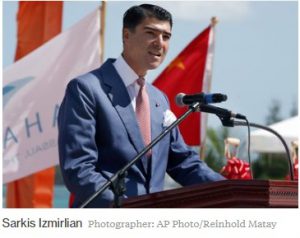
BML Properties Ltd., led by wealthy Bahamas businessman Sarkis Izmirlian, sued CCA Tuesday claiming the state-owned Chinese contractor pulled off a “massive fraud” to enrich itself at BML’s expense, leading to the collapse of the project in 2015. Delays in the construction of the biggest and most expensive resort to be built in the Caribbean have been a drag on the Bahamian economy in recent years.

BML claims that CCA submitted hundreds of millions of dollars in fake bills, understaffed the project and used it as a training ground for inexperienced workers. CCA knew it wouldn’t be able to meet the planned December 2014 deadline to open the resort but created the appearance that it would, in order to remain on the project and collect undeserved fees, BML claims. BML is seeking at least $2.25 billion in damages.

CCA didn’t respond to phone messages and an email seeking comment on the suit.

BML filed for Chapter 11 bankruptcy protection in Delaware in 2015. A U.S. bankruptcy judge dismissed the case in favor of a Bahamian court.

Baha Mar, which opened in April, is now owned by Hong Kong-based, Chow Tai Fook Enterprises Ltd. The development features more than 2,300 rooms, 40 restaurants and lounges, a convention center, a Jack Nicklaus-designed golf course, shopping and the biggest casino in the Caribbean, according to Baha Mar’s website.

BML outlined its claims in a 259-page complaint filed in state court in Manhattan.

The case is BML Properties Ltd. v. China Construction America Inc., 657550/2017, New York State Supreme Court, New York County (Manhattan).

Source: Bloomberg Business News Source – Posted December 26, 2017; retrieved December 30, 2017 from: https://www.bloomberg.com/news/articles/2017-12-26/baha-mar-developer-claims-to-be-victim-of-massive-china-fraud

All of this drama for a business model designed for … failure.

The Baha Mar Resort on Cable Beach features casino gambling and golf, two amenities that are failing more and more.

Casino
In a previous commentary, the business disposition of casino gambling was explored:

Increasingly in the casino/gaming industries, the money is not there. …

Despite the fact that the “house” always wins, the number of gamblers have declined! It is what it is!

  • 87% of Baby-Boomers gamble when visiting Las Vegas
  • 78% of Generation X-ers gamble when visiting Las Vegas
  • 63% of Millenials gamble when visiting Las Vegas

Golf
In a previous commentary, the business disposition of the sport of golf was explored:

“The games people play” … have relevance for our consideration. Golf is one of those games. But golf is more than just a game, it is an eco-system; but this eco-system is in peril.

    “The financial bubble burst and the Tiger bubble burst as well”.
    “Even as the economy recovered, golf is still in a nose dive”.
    “Your house is on fire”.

These (above) are among the key phrases from the narration of … [an] HBO Real Sports documentary story

This topic of the Baha Mar Resort is very important in the consideration of Caribbean economics, as casino gambling and golf has often been associated with Caribbean tourism.

The foregoing news article about Baha Mar aligns with the book Go Lean…Caribbean, which calls for the elevation of Caribbean economics. This book serves as a roadmap for the introduction and implementation of the technocratic Caribbean Union Trade Federation (CU) to better manage economic opportunities in the full Caribbean region. This is a Big Deal for the Go Lean roadmap to foster the diversification of the regional economy. Frankly, a $3.9 Billion investment should be able to generate better returns (job creation) than the Baha Mar fiasco has demonstrated. This hope for better tourism and economic diversification was identified early in the Go Lean book (Pages 11 – 14) in the following pronouncements in the Declaration of Interdependence:

iv. Whereas the natural formation of the landmass is in a tropical region, the flora and fauna allows for an inherent beauty that is enviable to peoples near and far, the structures must be strenuously guarded to protect and promote sustainable systems of commerce paramount to this reality.

vi. Whereas the finite nature of the landmass of our lands limits the populations and markets of commerce, by extending the bonds of brotherhood to our geographic neighbors allows for extended opportunities and better execution of the kinetics of our economies through trade. This regional focus must foster and promote diverse economic stimuli.

xxiv. Whereas a free market economy can be induced and spurred for continuous progress, the Federation must install the controls to better manage aspects of the economy: jobs, inflation, savings rate, investments and other economic principles. Thereby attracting direct foreign investment because of the stability and vibrancy of our economy.

xxvi. Whereas the Caribbean region must have new jobs to empower the engines of the economy and create the income sources for prosperity, and encourage the next generation to forge their dreams right at home, the Federation must therefore foster the development of new industries, like that of ship-building, automobile manufacturing, prefabricated housing, frozen foods, pipelines, call centers, and the prison industrial complex. In addition, the Federation must invigorate the enterprises related to existing industries like tourism, fisheries and lotteries – impacting the region with more jobs.

The Go Lean book posits that there is a need to re-boot and optimize the engines of commerce so as to make the Caribbean a better place to live, work and play. The tourism product, the mainstay of Caribbean economy, used to depend on certain amenities (i.e. Casinos and Golf) that have now come under attack by the social and demographic changes. It so appears that the future for Caribbean economics cannot lazily depend on factors like “sun, sand, surf and smiles”, no, there must be intelligent business models.

This is a changed world and changed marketplace. Likewise, our economic engines must change to keep pace … and get ahead!

The Go Lean book presents a Way Forward.

Way Forward
The Go Lean/CU roadmap seeks to elevate all of Caribbean society to remain competitive and consequential in the future. This is the heavy-lifting of shepherding a progressive region of 42 million people, 10 million Diaspora, 80 million tourists, and 4 language groups across 30 member-states. The CU’s charter is to effectuate progress in this region with these 3 prime directives:

  • Optimization of the economic engines in order to grow the regional economy to $800 Billion and create 2.2 million new jobs.
  • Establishment of a security apparatus to protect the resultant economic engines and marshal against economic crimes.
  • Improvement of Caribbean governance to support these above engines, including a separation-of-powers between CU federal administrations and local member-states.

The Way Forward / Go Lean roadmap includes the quest to create the jobs for the near-future. There is the plan to monitor, manage, and plan for new jobs. The roadmap provides 370-pages of turn-by-turn instructions on “how” to adopt new community ethos, plus strategies, tactics, implementations and advocacies to execute so as to reboot, reform and transform the societal engines of Caribbean society.

As a region, we have failed to keep pace of change. As related in that previous blog-commentary

… our society is now in desperate need of reform and to reboot to insulate from many demographic changes. On the one hand, we must diversify our economy and avail other high job-multiplier industries, away from tourism, but on the other hand, we must double-down in the tourism product, as the economic principles of “supply and demand” just cannot be ignored. (During the winter months, our Caribbean destinations are the “best addresses on the planet”.)

The Go Lean/CU roadmap calls for fostering industrial developments to aid economic diversification and to aid tourism. This includes incorporating best practices and quality assurances to deliver the “best experience in the world” for our visitors and trading partners.

This commentary has previously related details of the changing macro-economic factors in the world and how despite the dynamic conditions, jobs can be created. The following are samples of previous Go Lean blog-commentaries:

https://goleancaribbean.com/blog/?p=13700 Increasing Tourism Market Share
https://goleancaribbean.com/blog/?p=13420 A Lesson in Whaling History – Expeditions for Shipyard Jobs
https://goleancaribbean.com/blog/?p=13184 A Series on Industrial Reboots
https://goleancaribbean.com/blog/?p=12668 Common Sense of Eco-Tourism
https://goleancaribbean.com/blog/?p=8590 Build It and They Will Come – Politics of Infrastructure
https://goleancaribbean.com/blog/?p=7977 Transformations: Perfecting Our Core Competence – i.e. Tourism
https://goleancaribbean.com/blog/?p=6341 Doing Better with Tourism Stewardship
https://goleancaribbean.com/blog/?p=6089 Need Better Jobs Than ‘Minimum Wage’
https://goleancaribbean.com/blog/?p=4037 How to Train Your ‘Dragons’ or Direct Foreign Investors
https://goleancaribbean.com/blog/?p=2857 Where the Jobs Are – Example: Entrepreneurism in Junk
https://goleancaribbean.com/blog/?p=2126 Where the Jobs Are – Computers Reshaping Global Job Market
https://goleancaribbean.com/blog/?p=2003 Where the Jobs Are – One Scenario (Ship-breaking)

So this commentary advocates not doubling-down on bad trends that just “soak up” investments and produce very little return. We must be better and do better. We need to double-down on improving our tourism products and diversifying our economy away from tourism.

Yes, we can! We can do the heavy-lifting (hard-work and smart-work) to make our homeland a better place to live, work and play. 🙂

Download the free e-book of Go Lean … Caribbean – now!

Sign the petition to lean-in for this roadmap for the Caribbean Union Trade Federation.

———–

Appendix VIDEO – Baha Mar: The Las Vegas of the Caribbean – https://youtu.be/T7lGljlr01M

Caribbean Journal

Published on Aug 6, 2017 – The long-awaited Baha Mar resort project is finally here, and Caribbean Journal got an exclusive first look. So what’s it like? Well, it’s a unique, impressive project: a Las Vegas in the heart of the Caribbean.

Music: “Consortium of Cold Cool” by Craig Riley Listen ad-free with YouTube Red

Share this post:
, , ,
[Top]

2017 Review – Mr. Trump shows the ‘Wrong Way’

Go Lean Commentary

The year 2017 is coming to a close. This was the first year of the federal administration of the 45th President of the United States, the non-politician, billionaire real estate developer Donald J. Trump. In retrospect, it has been a “year of Biblical proportions”, one to lament. While we thought 2016 was bad, and it was, its “wow oh wow” for 2017 …

… if the summary of 2017 was named after one of the 66 books of the Bible, it would not be Revelations, nor Exodus. No, it would be:

Lamentations
The Bible book of Lamentations reveals how God viewed the ancient City of Jerusalem and the land of Judah after their enemy, the Kingdom of Babylon under Nebuchadnezzar, burned the city and laid the land desolate in the year 607 BC. The expressions of acknowledgment of sin recorded therein make it clear that from God’s standpoint, the reason for the calamity was the error of the people. – Source.

We can now look back and lament the happenings of 2017.

While this year 2017 has been a cliffhanger, it has been perfect for the stewards of a new Caribbean. The new President – Donald Trump – proved the “perfect example of what NOT to do” to elevate society – economics, security and governing engines. Yet, this is the country that so many Caribbean people have fled to. We can learn a lot from America’s accomplishments, and even more from their failures. See the satirical recaps in these VIDEO’s, here and the Appendix. 🙂

We can now look back, lament and laugh at the happenings of 2017, see here:

VIDEO – Stephen’s Greetings: 2017 Late Show Year In Review – https://youtu.be/E9VkweYGTwU


The Late Show with Stephen Colbert

Published on Dec 4, 2017 – 2017 was rough for a lot of people, but here’s proof that it wasn’t a total wash. See some of Stephen Colbert’s best moments from The Late Show this year.

Subscribe To “The Late Show” Channel HERE: http://bit.ly/ColbertYouTube

For more content from “The Late Show with Stephen Colbert”, click HERE: http://bit.ly/1AKISnR 

This commentary is presented by the movement behind the book Go Lean…Caribbean. The movement – book and accompanying blog-commentaries – relates that the United States of America should be lamented and not considered a refuge for the people of the Caribbean – the “grass is not greener on the other side”. The book laments the fact that despite residing in the best address on the planet, many of our people “beat down their doors” to get out (Page 3), and emigrate to the US and other countries.

Why do people leave such an idyllic place? The book identifies a series of reasons, classified as “push and pull” factors:

“Pull”, on the one hand refers to the lure of a more prosperous life abroad; many times our people are emigrating for economics solely.

“Push” refers to people who feel compelled to leave, to seek refuge in a foreign land. “Refuge” is an appropriate word; because of societal defects, many from the Caribbean must leave as refugees – think LGBTDisabilityDomestic-abuseMedically-challenged – for their life, liberty and pursuit of happiness.

Surely, fleeing to the US must be likened to “jumping out of the frying pan into the fire”. Remember, this country was not built for the Caribbean’s Black-and-Brown. They continue to experience racial discriminations, despite a recent Black President.

Here are some snippets from this 2017 Caribbean Yearbook against the backdrop of Trump’s exhortations; (this is just a sample in chronological order – from January 2017 to today):

Religious Intolerance – Trump banned travel from 6 Muslim countries

Fostering Discord – California wants out!  They have started a petition to secede from Tump’s America

Collaboration Flaws – Disinterest in Others  (Non-Americans) – Trumps yawns at the Caribbean’s priorities

Disparaging Messaging to Tourists/Visitors – Arrivals and Revenues down from some countries

Rejection of Evidence – Climate Change Denial – Paris Accords Withdrawal

Climate of Hate fostered by Trump – White Supremacists / Disdain of Immigrants

America First – Prioritization as World Leader downplayed – Other countries lose respect

Supply-side Economics Failures manifested in Kansas

Selective Law-and-Order Enforcement – Under Trump, Civil Rights cases downplayed

Claim to Ignorance on Natural Disasters – Who Knew?

Disdain of Female Empowerment – Female dissidents “diss-ed” by Trump; think Hillary, Pocahontas, etc.

Hurricane Response and Competence – Puerto Rico versus Texas – Black-and-Brown gets less

Societal Defects of Gun Culture – Trumps calls Black-and-Brown Shooters Terrorist, but silent on Whites

Aversion to Trade Agreements – Trump undermined TPP, NAFTA and others

Trump’s Compassion Exhaustion – Ending ‘Temporary Protection Status’ to Haitian Refugees

Sexual Harassment Complicity – Trump’s accusers re-emerged

Take from the Poor; Give to the Rich – Trump’s Tax Reform law

Surely, it is the conclusion of most people that 2017 has proven that America is not working for Caribbean priorities …

… they are not even working for their own priorities, as the country under Trump seems more and more divided with the President only supported by 33 percent of the people, the other 67% are outraged – see VIDEO in the Appendix below – i.e. the majority of the population are middle class, yet yesterday’s passage of the Tax Reform bill only benefits the rich.

Proudly, we say that for our societal elevation efforts, the quest of the Go Lean … Caribbean movement: we do not want to be America, we want to be better.

The Go Lean book – available for free download – does not only complain or lament America, but also prescribes a Way Forward for the Caribbean:

Way Forward – an action, plan etc. that seems a good idea because it is likely to lead to success; i.e.:

  • A way forward lies in developing more economic links.
  • This treatment may be the way forward for many inherited disorders.

Source: Retrieved December 22, 2016 from: http://www.ldoceonline.com/dictionary/a-the-way-forward

The Go Lean book serves as a roadmap for the introduction and implementation of the technocratic Caribbean Union Trade Federation (CU), for the elevation of Caribbean society. This CU/Go Lean roadmap has these 3 prime directives:

This Go Lean movement (book and accompanying blogs) does not look to President Donald Trump to lead for the Caribbean; we look to lead ourselves. To our chagrin, so many of our citizens have previously fled the homeland for American shores. But now …

we want them back!

The Go Lean book does not ignore these “push and pull” factors that cause our Caribbean people to leave in the first place. No, the book stresses (early at Page 13) the need to be on-guard for “push” factors in these Declaration of Interdependence statements:

xix. Whereas our legacy in recent times is one of societal abandonment, it is imperative that incentives and encouragement be put in place to first dissuade the human flight, and then entice and welcome the return of our Diaspora back to our shores. This repatriation should be effected with the appropriate guards so as not to imperil the lives and securities of the repatriated citizens or the communities they inhabit. The right of repatriation is to be extended to any natural born citizens despite any previous naturalization to foreign sovereignties.

xxi. Whereas the preparation of our labor force can foster opportunities and dictate economic progress for current and future generations, the Federation must ensure that educational and job training opportunities are fully optimized for all residents of all member-states, with no partiality towards any gender or ethnic group. The Federation must recognize and facilitate excellence in many different fields of endeavor, including sciences, languages, arts, music and sports. This responsibility should be executed without incurring the risks of further human flight, as has been the past history.

xxvi. Whereas the Caribbean region must have new jobs to empower the engines of the economy and create the income sources for prosperity, and encourage the next generation to forge their dreams right at home, the Federation must therefore foster the development of new industries, like that of ship-building, automobile manufacturing, prefabricated housing, frozen foods, pipelines, call centers, and the prison industrial complex. In addition, the Federation must invigorate the enterprises related to existing industries like tourism, fisheries and lotteries – impacting the region with more jobs.

For the Caribbean, we must succeed in our Way Forward / Go Lean roadmap, so as to dissuade our own people from giving up and abandoning their native homelands. While no society is perfect nor fully-optimized, some countries have been better than others; notwithstanding the US under Donald Trump. Many countries in North America and Western Europe have become lands of refuge for our Caribbean Diaspora.

Surely, we can do better in lowering the Push and Pull factors now. We should be able to dissuade Caribbean people from the lamentable decision of going to Trump’s America.

Yes, we can …

… if we do the heavy-lifting to convince all Caribbean stakeholders to lean-in to this Go Lean roadmap, then truly we can make our region better places to live, work and play. 🙂

Download the book Go Lean … Caribbean – now!

Sign the petition to lean-in for this roadmap for the Caribbean Union Trade Federation.

—————

Appendix VIDEO – The Politics of Branding, Meeting Obama & Trump’s First Year: The Daily Show – https://youtu.be/bjKr2ltVKII

The Daily Show with Trevor Noah

Published on Dec 18, 2017

Trevor Noah explains why Republicans are better than Democrats at political branding, talks about meeting Barack Obama and reflects on the first year of the Trump administration.

Watch full episodes of The Daily Show for free: http://www.cc.com/shows/the-daily-sho…

The Daily Show with Trevor Noah airs weeknights at 11/10c on Comedy Central.

  • Category: Comedy 
  • License: Standard YouTube License


Share this post:
, , ,
[Top]

Taking from the Poor to Give to the Rich – ENCORE

The US Congress and White House have done it, they have successfully passed their Tax Reform bill that effectively “takes from the poor and gives to the rich”. See full story here:
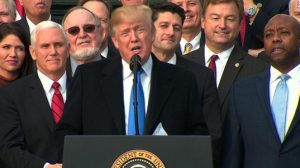
Washington (CNN) – Republican lawmakers joined President Donald Trump [today] on Wednesday afternoon to celebrate their largest legislative achievement of 2017, in a public ceremony spotlighting the most sweeping overhaul of the US tax system in more than 30 years.

“It’s always a lot of fun when you win,” Trump said at the ceremony on the White House lawn, after thanking congressional leaders including Senate Majority Leader Mitch McConnell and House Speaker Paul Ryan.

Hailing passage of the GOP’s tax plan and surrounded by dozens of prominent Republicans in Congress, Trump said the package would fulfill his core campaign promise. … 
Source: CNN retrieved December 20, 2017 from: http://www.cnn.com/2017/12/20/politics/house-senate-trump-tax-bill/index.html

This is Payback!

The Tax Reform strategy here double-downs on the concept of Supply-side economics. The hope is that corporate entities and wealthy people will receive tax breaks and then use the “wind fall” to re-invest in the community, thereafter creating jobs and economic growth. The Republicans in Washington (Congress and the White House) are betting on the success of this strategy even though there has been utter failures with this approach; for example just recently in the US State of Kansas.

Whether that re-investment occurs or not is the unknown. What is known is that the Rich will undoubtedly get the tax breaks. The Rich will win, at the expense of the Poor. This is why that foregoing article also relates:

While Republicans [leaders] cheer the bill’s passage, however, 55% of Americans oppose the plan, according to a new CNN poll. Just 33% say they favor the GOP’s proposals to reform the nation’s tax code.

This is a great opportunity to Encore a previous blog-commentary from December 16, 2014 when the same group – Washington Republicans – maneuvered to pass a law to repeal many post-2008 restrictions to guarantee higher profits for the nation’s banks. While this is an American drama, this is an opportunity for the Caribbean to learn lessons on managing governance for the Greater Good; which this foregoing law violates. See that Encore here:

——————–

Go Lean Commentary – A Christmas Present for the Banks from the Omnibus Bill

What do you get for $5.3 Billion? There must be some return on that investment.

The book Go Lean … Caribbean asserts that the US Federal Election-Campaign system is not the model that the Caribbean should want to emulate.  This book relates that $5.3 Billion was spent for the 2008 Federal Elections (Page 116), a lot of it contributed by corporations, resulting in a lot of influence peddling. This drama was vividly demonstrated this Saturday evening when the “lame-duck” Congress (the Senate in particular), delayed the required Omnibus Spending Bill – just in time – to extort favorable legislation that would roll back some of the federal regulations enacted after the Great Recession of 2008 to protect against banking systemic risks.

Senate Minority Leader Mitch McConnell speaks to reporters on upcoming budget battle in Washington

The Shadow Influences spearheading these changes are known to adhere to the principle that “a crisis is a terrible thing to waste” – a quotation credited to famed American Economist Paul Romer. While others will think that this drama was just politics as usual, the following article depicts the more strategic nature of the new legislation, to foster the environment and industry for financial derivative trading – this is too specific for any life-long politician (the US Senate) to advocate on the sly. No, this has the fingerprints of Wall Street Shadow Influences all over it. (See Appendix below for encyclopedic references on derivatives and swaps). See the news article here:

Title: A Christmas Present For The Banks From The Omnibus Bill
Forbes Magazine Investing Online Blog (Posted 12/13/2014; retrieved 12/15/2014) –
http://www.forbes.com/sites/robertlenzner/2014/12/13/wall-street-reverses-ban-on-trading-derivatives-backed-by-uncle-sam/
By: Robert Lenzner, Contributor

Wall Street banks like Citigroup and JP Morgan Chase have flexed the power of their influence to pressure Congress and the White House into a key change in the law that will allow the trading of risky financial derivatives in bank operations that are insured by the Federal Deposit Insurance Corp. This means the nation’s largest banks used the deadline for passing the Omnibus spending bill as pressure to reverse a key section of the Dodd-Frank bill of 2010 that was meant to prohibit a federal government bailout of swaps entities.

It was the existence of over $500 billion of Credit Default Swaps on the balance sheet of AIG in 2008 that threatened to bankrupt the largest insurance company in the world. So, in effect, six years later, the same Wall Street banks that were bailed out by federal largesse, are being given a legislative gift that will enable them to freely trade the securities that brought Lehman Bros down in 2008 — and obtain access to the benefit of insurance and loans from the federal government.

Behind the scenes, unbenownst to the media or the public, the nation’s Too Big To Fail banks used the Omnibus spending bill that is necessary to finance federal spending in 2015 to undo this little-known Dodd Frank provision that might have restricted the volume of trading in financial derivatives that have been a major source of profits as well as controversy since the 2008 financial crisis. Most financial derivatives will be able to be traded in entities holding deposits guaranteed by the Federal Deposit Insurance Corp. and subject to borrowing at the Federal Reserve’s discount window. This is a key advantage for the banks that will enable them to increase their activity in these securities.

Former Rep. Barney Frank, who was a key sponsor of the Wall Street reform legislation, attacked the change in Dodd-Frank as “a road map for further attacks on our protection against financial instability.” Frank was incensed that the last-minute procedure was “inserted with no hearings, no chance for further modification, and no chance for debate into a mammoth bill in the last days of a lame-duck Congress.”

If President Obama signs the Omnibus spending bill, he will have effectively rewarded Wall Street by reversing a provision that prohibits any federal assistance from being provided to “swaps entities,” including registered swaps dealers, security-based swap dealers, major swap participants and major security-based swap participants, according to information obtained by Forbes. This measure required banks to remove their swaps dealing from the bank itself and do its trading in non-bank affiliates not eligible for deposit insurance. Access to the Fed’s discount window would also be denied in case of a financial crisis in the markets.

The net effect of the changes in the Omnibus spending bill would be to expand permissible swaps activities within a bank and to only exclude swaps based on asset-backed securities that are unregulated and not of a credit quality.

All very technical, but the net result is to allow Citigroup, JP Morgan Chase and others to use the Fed’s discount window to borrow money in case of a crisis that roiled the derivative market for credit swaps again as took place in September 2008. In effect, it means the major banks need not limit their trading of financial derivatives to non-bank operations that the market will never be fooled into thinking some future risk of danger has just been avoided. It is a complex holiday present for Wall Street. And it is a warning sign that other sections of the Dodd-Frank Wall Street reform may also be vulnerable to political rollback.

An additionally relevant blog by Robert Lenzer: http://www.forbes.com/sites/robertlenzner/2014/12/08/the-ten-reasons-why-there-will-be-another-systemic-financial-crisis/

The crisis of the 2008 Great Recession was the lynchpin for the Go Lean movement, (book and blogs). This book, serving as a roadmap for the introduction and implementation of the Caribbean Union Trade Federation (CU), posits that the effects of the 2008 Great Recession continue to linger in the Caribbean. Therefore the book advocates learning lessons from 2008 and to turn-around, reform, and reboot the region’s economic, security and governing engines to ensure that “never again” will our society be so vulnerable to the financial misgivings of our American neighbors; or the “plutocratic” elements there-in.

The field of economics is not always solutions-oriented; sometimes, they have been responsible for the problem. Consider this VIDEO snippet here:

Documentary Film “Inside Job” – http://youtu.be/CaXNqGgIc-g

Published on Apr 19, 2012 – Since the repeal of Glass-Steagall in 1999, the total notional value of derivatives has grown by over 700% for holdings companies and 674% for commercial banks. Even more alarming, since the third quarter of 2008 when the cracks in the financial system were clearly evident, derivatives at the commercial banks have grown from $175 TRILLION to $234 TRILLION ” a $59 TRILLION increase. To put this in perspective, the cumulative Gross Domestic Product in the United States over that same time frame (Q3 2008 through Q3 2010) was approximately $32 TRILLION.

Despite our region’s small size (42 million people in 30 member-states), we do have some control over our own destiny. We want to be a protégé, not a parasite.

The CU’s prime directives, elevating the Caribbean’s economic-security-governing engines, recognize that the changes the region needs must start first with the adoption of new community ethos and controls. Early in the book, the need for this shift is pronounced (Declaration of Interdependence – Page 13) with these statements:

xxiv.      Whereas a free market economy can be induced and spurred for continuous progress, the Federation must install the controls to better manage aspects of the economy: jobs, inflation, savings rate, investments and other economic principles. Thereby attracting direct foreign investment because of the stability and vibrancy of our economy.

xxv.      Whereas the legacy of international democracies had been imperiled due to a global financial crisis, the structure of the Federation must allow for financial stability and assurance of the Federation’s institutions. To mandate the economic vibrancy of the region, monetary and fiscal controls and policies must be incorporated as proactive and reactive measures. These measures must address threats against the financial integrity of the Federation and of the member-states.

The Go Lean book, and previous blog/commentaries, stressed the key community ethos, strategies, tactics, implementation and advocacies necessary to effect change in the region ourselves, to improve the stewardship over the economy. They are detailed as follows:

Who We Are – 2008 Internal Experiences Page 8
Community Ethos – Economic Principles Page 21
Community Ethos – Security Principles – Private Interest –vs- Public Protection Page 23
Community Ethos – Security Principles – “Light Up Dark Place” Page 23
Community Ethos – Governing Principles – Lean Operations Page 24
Community Ethos – Ways to Impact the Future Page 26
Community Ethos – Impact Research and Development Page 30
Community Ethos – Ways to Improve Negotiations Page 32
Community Ethos – Ways to Impact Turn-around – 2008 Crisis Page 33
Community Ethos – Ways to Impact the Greater Good Page 37
Strategy – Mission – Fortify   the Stability of the Securities Markets Page 47
Strategy – CU Stakeholders to Protect – Banks & Depositors Page 47
Tactical – Growing the Economy – Minimizing Bubbles Page 69
Tactical – Separation-of-Powers – Depository Insurance & Regulatory Agency Page 73
Anecdote – Turning Around CARICOM – Effects of 2008 Financial Crisis Page 92
Implementation – Assemble Caribbean Central Bank as Cooperative Page 96
Implementation – Assemble Constitutional Convention Page 97
Implementation – Ways to Better Manage Debt – Optimizing Wall Street Role Page 114
Implementation – Ways to Impact Elections Page 116
Planning – 10 Big Ideas – Single Market / Currency Union Page 127
Planning – Lessons Learned from 2008 Page 136
Planning – Ways to Measure Progress Page 147
Advocacy – Ways to Grow the Economy – Case Study of $5.3 Billion Influence Page 151
Advocacy – Ways to Improve Credit Ratings – 2008 Lessons Page 155
Advocacy – Ways to Improve Housing – 2008 Mortgage Crisis Lessons Page 161
Advocacy – Ways to Impact Labor Unions – 2008 Effects on Main Street Jobs Page 164
Anecdote – Caribbean Industrialist – Growing without Shadow Influence Page 189
Advocacy – Reforms for Banking Regulations Page 199
Advocacy – Ways to Impact Wall Street Page 200
Appendix – Whitepaper: The 2008 Financial Crisis and Its Aftermath Page 276
Appendix – Currency Capital Controls Page 325

The points of effective, technocratic regional stewardship, especially in response to the 2008 Great Recession / Financial Crisis, were further elaborated upon in these previous blog/commentaries:

https://goleancaribbean.com/blog/?p=3311 Detroit to exit historic bankruptcy – Finally recovering from 2008
https://goleancaribbean.com/blog/?p=3164 Michigan Unemployment – Then (2008/2009) and Now
https://goleancaribbean.com/blog/?p=3090 Lessons Learned – Europe Sovereign Debt Crisis of 2009
https://goleancaribbean.com/blog/?p=3028 Why India is doing better than most emerging markets since the crisis
https://goleancaribbean.com/blog/?p=2930 ‘Too Big To Fail’ – Caribbean Version
https://goleancaribbean.com/blog/?p=2448 ‘Consumer Reports’ Survey Finds the American Consumer is Back
https://goleancaribbean.com/blog/?p=2435 Korea’s Protégé Model – A Dream for Latin America / Caribbean
https://goleancaribbean.com/blog/?p=2338 Lesson Learned – How Best to Welcome the Dreaded ‘Plutocracy’
https://goleancaribbean.com/blog/?p=2259 The Criminalization of American Business – Big Banks Let Loose
https://goleancaribbean.com/blog/?p=2105 Recessions and Public Health – Lessons from the 2008 Crisis
https://goleancaribbean.com/blog/?p=2090 The Depth & Breadth of Remediating 2008
https://goleancaribbean.com/blog/?p=1896 The Crisis in Black Homeownership since 2008
https://goleancaribbean.com/blog/?p=1309 5 Steps of a Bubble
https://goleancaribbean.com/blog/?p=841 Post 2008 – Having Less Babies is Bad for the Economy?
https://goleancaribbean.com/blog/?p=782 Open/Review the Time Capsule: The Great Recession of 2008
https://goleancaribbean.com/blog/?p=709 Post 2008 – Student debt holds back home buyers
https://goleancaribbean.com/blog/?p=522 Financial Crisis Jokes – Reflecting the cultural impact on society
https://goleancaribbean.com/blog/?p=518 Post 2008 – What Banks learn about financial risks
https://goleancaribbean.com/blog/?p=378 Fed Releases Transcripts from 2008 Meetings
https://goleancaribbean.com/blog/?p=242 Post 2008 – The Erosion of the Middle Class

The 2008 Great Recession brought major upheaval to American and Caribbean societies, plus the rest of the world. Much of the world is interconnected; this is even more acute in our region. Our economy is structured as parasites on the US economy. According to the foregoing news article, our parasitic host is not worthy of our devotion. What qualifies the Go Lean promoters to make these assessments? Principals of this publishing foundation were also there in 2008, engaged with major stakeholders of the Global Financial crisis: Lehman Brothers, JPMorganChase, Citigroup, etc. They were on the inside looking out, not the outside looking in. They were equipped to discern the Shadow Influence.

The Go Lean movement advocates the role of protégé, not parasite. We must diversify our economy and additionally cater to other markets, other countries and other industries. This is the purpose of the Go Lean roadmap, to provide a turn-by-turn direction to accomplish this diversification.

If we want to make our homeland a better place to live, work and play then we cannot depend on the stewards of the US economy to shepherd the Caribbean. Look! Despite the cruel and harsh lessons from 2008, it appears – from the foregoing article and the Appendix below – that the Wall Street Shadow Influence wants to repeat the “Bubble” that lead up to 2008. When they succeed, they profit; but when they fail, the “low man” on Main Street – and parasite economies like the Caribbean – has to endure the pain, not Wall Street.

The Go Lean roadmap does not seek to change America, (though we lobby against these arbitrary “Derivative” rule changes in the Omnibus Budget Bill); only teach the lessons to the Caribbean. We can do so much better.

Download the free e-Book of Go Lean … Caribbean – now!

——————–

Appendix – Derivatives:
(Source: http://en.wikipedia.org/wiki/Derivative_(finance) )

In finance, a derivative is a contract that derives its value from the performance of an underlying entity. This underlying entity can be an asset, index, or interest rate, and is often called the “underlying”.[1][2] Derivatives can be used for a number of purposes – including insuring against price movements (hedging), increasing exposure to price movements for speculation or getting access to otherwise hard to trade assets or markets.[3]

Some of the more common derivatives include forwards, futures, options, swaps, and variations of these such as collateralized debt obligations, credit default swaps, and mortgage backed securities. Most derivatives are traded over-the-counter (off-exchange) or on an exchange such as the Chicago Mercantile Exchange, while most insurance contracts have developed into a separate industry. Derivatives are one of the three main categories of financial instruments, the other two being equities (i.e. stocks or shares) and debt (i.e. bonds and mortgages).

Speculation
Derivatives can be used to acquire risk, rather than to hedge against risk. Thus, some individuals and institutions will enter into a derivative contract to speculate on the value of the underlying asset, betting that the party seeking insurance will be wrong about the future value of the underlying asset. Speculators look to buy an asset in the future at a low price according to a derivative contract when the future market price is high, or to sell an asset in the future at a high price according to a derivative contract when the future market price is less.

Risks
The use of derivatives can result in large losses because of the use of leverage, or borrowing; (see VIDEO below). Derivatives allow investors to earn large returns from small movements in the underlying asset’s price. However, investors could lose large amounts if the price of the underlying moves against them significantly. There have been several instances of massive losses in derivative markets, such as the following:

  • American International Group (AIG) lost more than US$18 billion through a subsidiary over the preceding three quarters on credit default swaps (CDSs).[42] The United States Federal Reserve Bank announced the creation of a secured credit facility of up to US$85 billion, to prevent the company’s collapse by enabling AIG to meet its obligations to deliver additional collateral to its credit default swap trading partners.[43]
  • The loss of US$7.2 Billion by Société Générale in January 2008 through mis-use of futures contracts.
  • The loss of US$6.4 billion in the failed fund Amaranth Advisors, which was long natural gas in September 2006 when the price plummeted.
  • The loss of US$4.6 billion in the failed fund Long-Term Capital Management in 1998.
  • The loss of US$1.3 billion equivalent in oil derivatives in 1993 and 1994 by Metallgesellschaft AG.[44]
  • The loss of US$1.2 billion equivalent in equity derivatives in 1995 by Barings Bank.[45]
  • UBS AG, Switzerland’s biggest bank, suffered a $2 billion loss through unauthorized trading discovered in September 2011.[46]

This comes to a staggering $39.5 billion; the majority in the last decade after the Commodity Futures Modernization Act of 2000 was passed.

Financial Reform and Government Regulation
Under US law and the laws of most other developed countries, derivatives have special legal exemptions that make them a particularly attractive legal form to extend credit.[47] The strong creditor protections afforded to derivatives counterparties, in combination with their complexity and lack of transparency however, can cause capital markets to underprice credit risk. This can contribute to credit booms, and increase systemic risks.[47] Indeed, the use of derivatives to conceal credit risk from third parties while protecting derivative counterparties contributed to the financial crisis of 2008 in the United States.[47][48]

CU Blog - A Christmas Present for The Banks From The Omnibus Bill - Photo 2

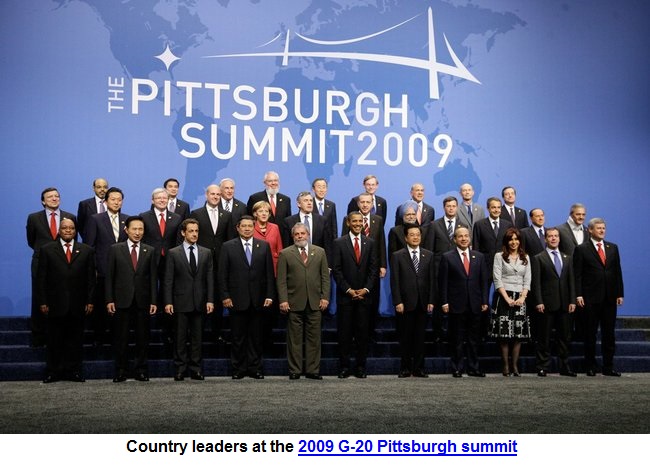
In November 2012, the SEC and regulators from Australia, Brazil, the European Union, Hong Kong, Japan, Ontario, Quebec, Singapore, and Switzerland met to discuss reforming the OTC derivatives market, as had been agreed by leaders at the 2009 G-20 Pittsburgh summit (see Photo) in September 2009.[54] In December 2012, they released a joint statement to the effect that they recognized that the market is a global one and “firmly support the adoption and enforcement of robust and consistent standards in and across jurisdictions”, with the goals of mitigating risk, improving transparency, protecting against market abuse, preventing regulatory gaps, reducing the potential for arbitrage opportunities, and fostering a level playing field for market participants.[54] They also agreed on the need to reduce regulatory uncertainty and provide market participants with sufficient clarity on laws and regulations by avoiding, to the extent possible, the application of conflicting rules to the same entities and transactions, and minimizing the application of inconsistent and duplicative rules.[54] At the same time, they noted that “complete harmonization – perfect alignment of rules across jurisdictions” would be difficult, because of jurisdictions’ differences in law, policy, markets, implementation timing, and legislative and regulatory processes.[54]

VIDEO: Leverage Explained – http://youtu.be/6YEnkkznGTg
When things turn out good, big risk means big return; but if it turns out bad, you lose everything and left with a debt.

Source References:
1.       Derivatives (Report). Office of the Comptroller of the Currency, U.S. Department of Treasury. http://www.occ.gov/topics/capital-markets/financial-markets/trading/derivatives/index-derivatives.html. Retrieved February 2013. “A derivative is a financial contract whose value is derived from the performance of some underlying market factors, such as interest rates, currency exchange rates, and commodity, credit, or equity prices. Derivative transactions include an assortment of financial contracts, including structured debt obligations and deposits, swaps, futures, options, caps, floors, collars, forwards, and various combinations thereof.”
2.       Derivative Definition Investopedia
3.       Koehler, Christian. “The Relationship between the Complexity of Financial Derivatives and Systemic Risk”. Working Paper: 10–11.
——
42.   Kelleher, James B. (September 18, 2008). “”Buffett’s Time Bomb Goes Off on Wall Street” by James B. Kelleher of Reuters”. Reuters.com. Retrieved August 29, 2010.
43.   “Fed’s $85 billion Loan Rescues Insurer”
44.   Edwards, Franklin (1995). “Derivatives Can Be Hazardous To Your Health: The Case of Metallgesellschaft”. Derivatives Quarterly (Spring 1995): 8–17
45.   Whaley, Robert (2006). Derivatives: markets, valuation, and risk management. John Wiley and Sons. p. 506. ISBN 0-471-78632-2.
46.   “UBS Loss Shows Banks Fail to Learn From Kerviel, Leeson”. Businessweek. September 15, 2011. Retrieved March 5, 2013.
47.   “Michael Simkovic, Secret Liens and the Financial Crisis of 2008.”. American Bankruptcy Law Journal, Vol. 83, p. 253. 2009. Retrieved March 5, 2013.
48.   Michael Simkovic (January 11, 2011). “Bankruptcy Immunities, Transparency, and Capital Structure, Presentation at the World Bank”. Ssrn.com. doi:10.2139/ssrn.1738539. Retrieved March 5, 2013.
——
54.   “Joint Press Statement of Leaders on Operating Principles and Areas of Exploration in the Regulation of the Cross-Border OTC Derivatives Market; 2012-251”. Sec.gov. December 4, 2012. Retrieved March 5, 2013.

Share this post:
, ,
[Top]

A Lesson from Star Wars Movie: ‘We Need Heroes’ – ENCORE

This is the BIG news for the weekend of December 15, 2017:

Star Wars: The Last Jedi” was a box office force this weekend.

“The Last Jedi,” the eighth installment in the “Star Wars” saga, premiered this [past] weekend to the second-biggest opening ever in North America. It brought in an estimated $220 million, according to Disney. – CNN posted December 18, 2017 from: http://money.cnn.com/2017/12/17/media/star-wars-last-jedi-opening-weekend-box-office/index.html 

The lure of Star Wars was also embraced by the movement behind the book Go Lean … Caribbean. In a previous blog-commentary from December 22, 2015 when the movie Star Wars Episode 7 “The Force Awakens” was released, a parallel was shown between the standard Hero’s Journey dramatic path and what the Caribbean region needs:

Our heroes to return … to the homeland.

Here is an ENCORE of that previous Episode 7 blog-commentary on this occasion of Episode 8.

————-

Go Lean CommentaryThe Caribbean is Looking For Heroes … to Return

In the Caribbean, we need a hero, we need lots of heroes …

… need a hero
I’m holding out for a hero ’til the end of the night
He’s gotta be strong
And he’s gotta be fast
And he’s gotta be fresh from the fight
I need a hero
I’m holding out for a hero ’til the morning light
He’s gotta be sure
And it’s gotta be soon
And he’s gotta be larger than life
(Song by Bonnie Tyler 1984; see VIDEO & Lyrics at https://youtu.be/OBwS66EBUcY; see Appendix)

We must reform and transform our Caribbean society. We know that one person – a hero – can make a difference, and we need to encourage those contributions.

Heroes are not born, they are forged. According to noted Mythologist Joseph Campbell, hero candidates go through a consistent pattern of a journey to become bona-fide heroes.

CU Blog - The Caribbean is Looking for Heroes to Return - Photo 1Who is Joseph Campbell and why does his opinion matter? He is the inspiration behind the big hit movie franchise Star Wars. All things Star Wars are en vogue right now. According to IMDB.com, this movie which opened just days ago – Star Wars Episode 7 “The Force Awakens”; (see Appendix) – had the biggest US box office opening of any movie … ever. See the box office results here in the photo, retrieved December 22, 2015.

This is an amazing feat, considering that Joseph Campbell has been dead since 1987. But Star Wars creator, George Lucas drew his story-line from Joseph Campbell’s inspirations in the cataloging of the “Hero’s Journey” in his writings. See article here:

Title: Role Model Joseph Campbell
In 1949 Joseph Campbell (1904-1987) made a big splash in the field of mythology with his book The Hero With a Thousand Faces. This book built on the pioneering work of German anthropologist Adolph Bastian (1826-1905), who first proposed the idea that myths from all over the world seem to be built from the same “elementary ideas.” Swiss psychiatrist Carl Jung (1875-1961) named these elementary ideas “archetypes,” which he believed to be the building blocks not only of the unconscious mind, but of a collective unconscious. In other words, Jung believed that everyone in the world is born with the same basic subconscious model of what a “hero” is, or a “mentor” or a “quest,” and that’s why people who don’t even speak the same language can enjoy the same stories.

Jung developed his idea of archetypes mostly as a way of finding meaning within the dreams and visions of the mentally ill: if a person believes they are being followed by a giant apple pie, it’s difficult to make sense of how to help them. But if the giant apple pie can be understood to represent that person’s shadow, the embodiment of all their fears, then the psychotherapist can help guide them through that fear, just as Yoda guided Luke on Dagoba. If you think of a person as a computer and our bodies as “hardware,” language and culture seem to be the “software.” Deeper still, and apparently common to all homo sapians, is a sort of built-in “operating system” which interprets the world by sorting people, places, things and experiences into archetypes.

CU Blog - The Caribbean is Looking for Heroes to Return - Photo 2Campbell’s contribution was to take this idea of archetypes and use it to map out the common underlying structure behind religion and myth. He proposed this idea in The Hero With a Thousand Faces, which provides examples from cultures throughout history and all over the world. Campbell eloquently demonstrates that all stories are expressions of the same story-pattern, which he named the “Hero’s Journey,” or the “monomyth.” This sounds like a simple idea, but it suggests an incredible ramification, which Campbell summed up with his adage “All religions are true, but none are literal.” That is, he concluded that all religions are really containers for the same essential truth, and the trick is to avoid mistaking the wrappings for the diamond.

[Star Wars Creator George] Lucas had already written two drafts of Star Wars when he rediscovered Joseph Campbell’s The Hero With a Thousand Faces in 1975 (having read it years before in college). This blueprint for “The Hero’s Journey” gave Lucas the focus he needed to draw his sprawling imaginary universe into a single story.

Note that the Wachowski Brothers’ wonderful film The Matrix is carefully built on the same blueprint:

Campbell

Star Wars

The Matrix

I: Departure
The call to adventure Princess Leia’s message “Follow the white rabbit”
Refusal of the call Must help with the harvest Neo won’t climb out window
Supernatural aid Obi-wan rescues Luke from sandpeople Trinity extracts the “bug” from Neo
Crossing the first threshold Escaping Tatooine Neo is taken out of the Matrix for the first time
The belly of the whale Trash compactor Torture room
II: Initiation
The road of trials Lightsaber practice Sparring with Morpheus
The meeting with the goddess Princess Leia (wears white, in earlier     scripts was a “sister” of a mystic order) The Oracle
Temptation away from the true path1 Luke is tempted by the Dark Side Cypher (the failed messiah) is tempted by the world of comfortable illusions
Atonement with the Father Darth and Luke reconcile Neo rescues and comes to agree (that he’s The One) with his father-figure, Morpheus
Apotheosis (becoming god-like) Luke becomes a Jedi Neo becomes The One
The ultimate boon Death Star destroyed Humanity’s salvation now within reach
III: Return
Refusal of the return “Luke, come on!” Luke wants to     stay to avenge Obi-Wan Neo fights agent instead of running
The magic flight Millennium Falcon “Jacking in”
Rescue from without Han saves Luke from Darth Trinity saves Neo from agents
Crossing the return threshold Millennium Falcon destroys pursuing TIE fighters Neo fights Agent Smith
Master of the two worlds Victory ceremony Neo’s declares victory over machines in final phone call
Freedom to live Rebellion is victorious over Empire Humans are victorious over machines

Source: Fan Site for Obscure Star Wars Inspirations; retrieved December 20, 2015 from: http://www.moongadget.com/origins/myth.html

But one can argue, these are just movies, “make believe”; these are not real people nor real life. That would be a true statement of facts (there is no “Luke Skywalker” nor “Neo” as historical characters), but the principles of a “Hero’s Journey” is real, and present in real life. This is just another example of “life imitating art”. In a previous blog-commentary regarding Caribbean Diaspora member and Hollywood great, Sidney Poitier, it was declared that …

“Movies are an amazing business model. People give money to spend a couple of hours watching someone else’s creation and then leave the theater with nothing to show for the investment; except perhaps a different perspective”.

 CU Blog - The Caribbean is Looking for Heroes to Return - Photo 3
 CU Blog - The Caribbean is Looking for Heroes to Return - Photo 4

These movies do bring a different perspective. According to the foregoing, there are Three Acts to the “Hero’s Journey”:

I.   Departure
II.  Initiation
III. Return

The publishers of the book Go Lean…Caribbean recognize the one person can make positive, heroic contributions to his community; and that this role must be forged in society. The book serves as a roadmap for the introduction and implementation of the Caribbean Union Trade Federation (CU). The CU seeks to foster the genius qualifiers in Caribbean citizens. Not everyone can be heroes, but society must be structured to allow heroes to soar. Because …

… one man (or woman) can make a difference! Such a person can impact their community, country … and the whole world.

“The only thing necessary for the triumph of evil is for good men to do nothing” – Edmund Burke; 1729 – 1797; an Irish statesman, member of British Parliament and supporter of the American Revolution.

The Caribbean has fostered the hero process, but according to the Three Acts established by Joseph Campbell, our heroes stopped at Act II, they do not “Return”.

CU Blog - The Caribbean is Looking for Heroes to Return - Photo 5

They make their heroic contributions to other communities and not their homeland. The Caribbean, thusly “fattens frogs for snakes”. Consider the bad consequences of this reality, as in our brain drain among the college-educated population, which is up to a 70% rate within the entire region.

A quest of the Go Lean/CU roadmap is to lower the “Push and Pull” factors that causes so many Caribbean citizens to flee their beloved homeland. In addition, another quest is to incentivize the far-flung Diaspora to return to the Caribbean. Success in these quests will take a “Hero’s Journey”.

The villain in this real-life story is the poor performing Caribbean economy. So the prime directive of the Go Lean book is to elevate Caribbean society, and its societal engines … defined in these declarative statements, as follows:

  • Optimization of the economic engines in order to grow the regional economy and create 2.2 million new jobs.
  • Establishment of a security apparatus to protect the resultant societal engines again foreign and domestic threats.
  • Improvement Caribbean governance to support these engines.

The Go Lean book posits that one person, despite their field of endeavor, can make a difference in the Caribbean, and its impact on the world; that there are many opportunities where one advocate, one champion, one “hero” can elevate society. In this light, the book features 144 different advocacies, so there is inspiration for the “next hero” to emerge and excel right here at home in the Caribbean.

The roadmap specifically encourages the region to lean-in, to foster heroes and champions with these specific community ethos, strategies, tactics, implementations and advocacies:

Community Ethos – Forging Change Page 20
Community Ethos – People Respond to Incentives in Predictable Ways Page 21
Community Ethos – Economic Systems Influence Individual Choices Page 21
Community Ethos – Whistleblower Protection Page 23
Community Ethos – Anti-Bullying and Mitigation Page 23
Community Ethos – Minority Equalization Page 24
Community Ethos – Ways to Foster Genius Page 27
Community Ethos – Ways to Impact the Greater Good Page 37
Strategy – Mission – Dissuade Societal Abandonment Page 45
Strategy – Mission – Incentivize Repatriation Page 45
Strategy – Mission – Protect Repatriates with heightened   Public Safety Page 45
Anatomy of Advocacies – Examples of Individuals Who Made Impact Page 122
Planning – Ways to Make the Caribbean Better Page 131
Advocacy – Ways to Improve Governance Page 168
Advocacy – Ways to Better Manage the Social Contract Page 170
Advocacy – Ways to Improve Leadership Page 171
Advocacy – Ways to Impact Justice Page 177
Advocacy – Ways to Remediate and Mitigate Crime Page 178
Advocacy – Ways to Impact Hollywood – Global Box Office – Imitating Life Page 203
Advocacy – Ways to Preserve Caribbean Heritage Page 218
Advocacy – Ways to Improve the Arts Page 230

The Caribbean region wants a more optimized society.

This book posits that “bad actors” – even villains: the “Dark Side of the Force” – will emerge to exploit inefficient economic, security and governing models.  Early in the book, the pressing need to streamline protections – for citizens and institutions – was pronounced in the Declaration of Interdependence (Page 12), with these opening statements:

x. Whereas we are surrounded and allied to nations of larger proportions in land mass, populations, and treasuries, elements in their societies may have ill-intent in their pursuits, at the expense of the safety and security of our citizens. We must therefore appoint “new guards” to ensure our public safety and threats against our society, both domestic and foreign.

xi. Whereas all men are entitled to the benefits of good governance in a free society, “new guards” must be enacted to dissuade the emergence of incompetence, corruption, nepotism and cronyism at the peril of the people’s best interest. The Federation must guarantee the executions of a social contract between government and the governed.

xii. Whereas the legacy in recent times in individual states may be that of ineffectual governance with no redress to higher authority, the accedence of this Federation will ensure accountability and escalation of the human and civil rights of the people for good governance, justice assurances, due process and the rule of law. As such, any threats of a “failed state” status for any member state must enact emergency measures on behalf of the Federation to protect the human, civil and property rights of the citizens, residents, allies, trading partners, and visitors of the affected member state and the Federation as a whole.

xvi. Whereas security of our homeland is inextricably linked to prosperity of the homeland, the economic and security interest of the region needs to be aligned under the same governance. Since economic crimes, including … forms of terrorism, can imperil the functioning of the wheels of commerce for all the citizenry, the accedence of this Federation must equip the security apparatus with the tools and techniques for predictive and proactive interdictions.

The Go Lean book explicitly acknowledges that optimizing society is not easy; it requires strenuous, heroic efforts; heavy-lifting. That is the quest of the CU/Go Lean roadmap. Other subjects related to heroic efforts of role models have been blogged in other Go Lean…Caribbean commentaries, as sampled here:

https://goleancaribbean.com/blog/?p=5964 Movie Review: ‘Tomorrowland’ – ‘Feed the right wolf’ in Society
https://goleancaribbean.com/blog/?p=5648 Music Role Model Taylor Swift withholds Album from Apple Music
https://goleancaribbean.com/blog/?p=5506 Role Model: Edward Snowden – One Person Making a Difference
https://goleancaribbean.com/blog/?p=3490 How One Entrepreneur Can Rally a Whole Community
https://goleancaribbean.com/blog/?p=2726 Caribbean Role Model – Oscar De La Renta – RIP
https://goleancaribbean.com/blog/?p=1731 Role Model Warren Buffet – An Ode to Omaha
https://goleancaribbean.com/blog/?p=1596 Book Review: ‘Prosper Where You Are Planted’
https://goleancaribbean.com/blog/?p=866 Role Model Bob Marley: The Legend Lives On!
https://goleancaribbean.com/blog/?p=209 Role Model: Advocate Kevin Connolly

The Go Lean roadmap posits that the CU should foster the genius potential in Caribbean citizens and incubate their potential to maximum production. We should let “heroes be heroes” in their fields of endeavor here at home, no matter how diverse. Many Caribbean Diaspora has done this exactly, abroad in benefiting other communities, while their homelands languish.

They have departed – Act I.
They have initiated as heroes – Act II.
But, they have NOT returned – no Act III.

Enough already!

The roadmap pronounces that we need the participation of many advocates on many different paths for progress. By facilitating, fostering and furthering these initiative, we can have our heroes return to be heroic at home. Only then, will the Caribbean truly become a better place to live, work and play. 🙂

Download the free e-Book of Go Lean … Caribbean – now!

Sign the petition to lean-in for the roadmap for the Caribbean Union Trade Federation.

————

Appendix VIDEO – Bonnie Tyler – I Need a Hero (Lyrics) – https://youtu.be/OBwS66EBUcY

————

Appendix VIDEO – Star Wars: The Force Awakens Trailer (Official) – https://youtu.be/sGbxmsDFVnE

Published on Oct 19, 2015 – Watch the official trailer for Star Wars: The Force Awakens, [opened] in theaters December 18, 2015.

Share this post:
, ,
[Top]

Economics of ‘South Beach’

Go Lean Commentary

The US has an economy; the 30 Caribbean member-states have economies. The US does it better!

For example, the entire Caribbean region enjoys 80 million visitors a year; (though this figure includes 12 million cruise passengers visiting multiple Caribbean destinations on one cruise); just the US city of Orlando has one destination – Walt Disney World – that enjoys 57 million visitors-a-year alone. Further down the list of high traffic resort cities is the destination of Miami Beach, Florida; each year Miami Beach hotels host over 35% of the ten (10) million tourists who visit Greater Miami.
Yes, the US cities do tourism better than our Caribbean counterparts; and their economies are more diversified.

If only we, in the Caribbean, could be more like … the American city of Miami (Beach).

It is a fitting comparison:

  • Global City in the tropical zone – a snowbird haven-refuge from cold northern cities.
  • Home away from home for many Caribbean people.
  • Primary economic engine of tourism (leisure and medical), travel (air and cruises), financial services and trade. See Miami’s largest employers in the Appendix below.

The movement behind the book Go Lean … Caribbean seeks to reboot the economic engines of the Caribbean member-states – so we can perform better. The book studies models and lessons from other communities (cities and countries): i.e. New York City (Page 137), Detroit (Page 140) and Omaha (Page 138). In fact, this movement had previously detailed how the Greater Miami metropolitan area has become so successful a community mainly because of the failures of Caribbean communities. Rather than the entire metropolitan area of Greater Miami, we are hereby exploring just the economic landscape of Miami Beach, and more exactly the neighborhood of South Beach. This commentary, however, relates that there are lessons from ‘South Beach’ and all of Greater Miami that we can apply in the Caribbean.

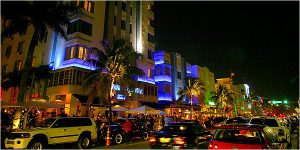
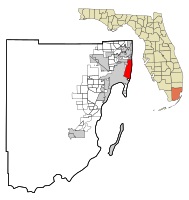
Miami Beach is a coastal resort city in Miami-Dade County…. It was incorporated on March 26, 1915.[7] The municipality is located on natural and man-made barrier islands between the Atlantic Ocean and Biscayne Bay, the latter of which separates “the Beach” from the City of Miami. The neighborhood of South Beach, comprising the southernmost 2.5 square miles of Miami Beach, along with downtown Miami and the Port of Miami, collectively form the commercial center of South Florida[8] [(Miami-Fort Lauderdale-West Palm Beach metropolitan statistical area)]. As of the [latest] 2010 census, Miami Beach had a total population of 87,779.[9] It has been one of America’s pre-eminent beach resorts since the early 20th century. – Wikipedia.
 

South Beach is a classic beach resort town – see the Wikipedia definition here – except that there are two de facto seasons: good (Summer and Early Autumn) and great (Late Autumn, Winter and Spring):

resort town, often called a resort city or resort destination, is an urban area where tourism or vacationing is the primary component of the local culture and economy. A typical resort town has one or more actual resorts in the surrounding area. Sometimes the term resort town is used simply for a locale popular among tourists. The term can also refer to either an incorporated or unincorporated contiguous area where the ratio of transient rooms, measured in bed units, is greater than 60% of the permanent population.[1]

Generally, tourism is the main export in a resort town economy, with most residents of the area working in the tourism or resort industry. Shops and luxury boutiques selling locally themed souvenirs, motels, and unique restaurants often proliferate the downtown areas of a resort town.

Resort Town Economy
If the resorts or tourist attractions are seasonal in nature, resort towns typically experience an on-season where the town is bustling with tourists and workers, and an off-season where the town is populated only by a small amount of local year-round residents.

In addition, resort towns are often popular with wealthy retirees and people wishing to purchase vacation homes, which typically drives up property values and the cost of living in the region. Sometimes, resort towns can become boomtowns due to the quick development of retirement and vacation-based residences.[3]

However, most of the employment available in resort towns is typically low paying and it can be difficult for workers to afford to live the area in which they are employed.[4] Many resort towns have spawned nearby bedroom communities where the majority of the resort workforce lives.

Resorts towns sometimes struggle with problems regarding sustainable growth, due to the seasonal nature of the economy, the dependence on a single industry, and the difficulties in retaining a stable workforce.[5]

Economic impact of tourism
Local residents are generally receptive of the economic impacts of tourism. Resort towns tend to enjoy lower unemployment rates, improved infrastructure, more advanced telecommunication and transportation capabilities, and higher standards of living and greater income in relation to those who live outside this area.[6] Increased economic activity in resort towns can also have positive effects on the country’s overall economic growth and development. In addition, business generated by resort towns have been credited with supporting the local economy through times of national market failure and depression, as in the case of San Marcos, California during the cotton market bust in the early 1920s and Great Depression of 1929.[2]

Click Photo to Expand – Lots of communities charge supplemental taxes for community revenues

Tourism, more exactly Resort Tourism, is the Number One economic driver in the Caribbean. Yet, our region has so many societal defects. We must do a better job at our primary job. What can we learn from Greater Miami, Miami Beach and South Beach?

This small peninsula of South Beach is Hot, Hot, Hot … as a party and tourist destination, thereby creating a scarcity of real estate. The dining, night-clubbing, shopping and entertainment options in this District are in high demand, all year long. Not all patrons to this District stay at area hotels, as many are locals in addition to the constant flow of visitors. Most night clubs, and even some restaurant-bars, apply a Cover Charge, typically $20 per person. These patrons should also expect to pay $40 just for valet parking, and similarly above-average prices for self-parking. Hotel rates are consistently above average, even during the off-season (consider $300 per night). During the peak-season, rates are traditionally in excess of $500. Hotel guests with rental cars face the same $40 per night parking charges.
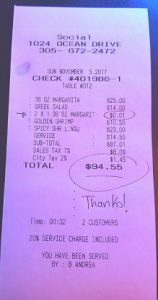

The party continues every night until 5am; (one of the latest alcohol-serving policies in the nation).  Just like any other community, Miami Beach has to contend with Agents of Change. There is a conservative movement to dampen the hot nightlife in South Beach. These proponents raised the issue as a public referendum on November 7, 2017 with a measure, to limit liquor sales to 2am. This direct democratic action failed at a 64% to 35% ratio. The economic forces of South Beach won again!

These economic realities transcend many dimensions of Miami Beach life; consider governance. The City collects an add-on to the state’s usual Sales Tax revenues. What add-ons?

Transient Lodging Rental Taxes for Short Term Rentals Summary Chart
3% Convention Development Tax 2% Tourist Development Tax 1% Sports Franchise Tax
Food & Beverage Tax Summary Chart
2% Tourist Development Surtax 1% Homeless and Spouse Abuse Tax

Source: Retrieved December 5, 2017 from: http://www.miamidade.gov/taxcollector/tourist-taxes.asp

See this sample/example here of a typical night out at a local South Beach restaurant recently:

This movement, behind the Go Lean book, seeks to reform and transform the economic engines of Caribbean society by being technocratic in applying best practices from the field of Economics. South Beach and Miami Beach offers a lot of lessons: good, bad and ugly.

One bad lesson is the practice of guaranteed gratuity. In a previous blog-commentary, this policy was ridiculed as unbecoming as a community ethos; it fosters a spirit of entitlement. In fact, the practice is well-chronicled in the field of Economics as “rent-seeking”; consider this sample:

This is distinguished in economic theory as separate from profit-seeking, in which entities seek to extract value by engaging in mutually beneficial transactions.[6] While profit-seeking fosters the creation of wealth, rent-seeking is the use of social institutions such as the power of government to redistribute wealth among different groups without creating any new wealth.[7]

Note: For the restaurant receipt in the above-photo, the credit card bill, still contained a line item for additional tip, even though 20-percent was already added as a gratuity-service charge.

There it is: rent-seeking.

(Rent-seeking practices are quite common in the Caribbean; even codified as law in some places).

The Go Lean book serves as a roadmap for the introduction and implementation of the Caribbean Union Trade Federation (CU). The CU is designed to be a technocratic intergovernmental entity that shepherds economic growth for the Caribbean region. The goal is to reboot and optimize the region’s economic, security and governing engines. The Go Lean/CU roadmap employs wise strategies, like the “Separation-of-Powers between CU federal agencies and Caribbean member-state governments”; so the limitations of national laws in a member-state would not override the CU. The CU‘s technocratic practices would directly apply to the installation of Exclusive Economic Zones (EEZ) and Self-Governing Entities (SGE); these operate in controlled bordered territories like campuses, industrial parks, research labs, industrial plants and Entertainment Zones.

Notice the presence here of one such zone, already existing in Jamaica.

Title: Jamaica’s first entertainment zone named

Jamaica’s Entertainment Minister Olivia “Babsy” Grange, has named Fort Rocky in Port Royal as Jamaica’s first entertainment zone.

The minister made the announcement at the recent launch of Carnival in Jamaica 2018.

Drives cultural and economic value
Minister Grange said the new entertainment zone has been endorsed by the National Environment and Planning Agency (NEPA), along with the Town and Country Planning Authority.

“We are working with (NEPA) and the Ministry’s agencies, including the National Heritage Trust, to ensure that our cultural sites are preserved and utilized in a manner that drives cultural and economic value to us as a nation,” she noted.

Historical value
Entertainment zones like Fort Rocky are areas in which any legal entertainment and sports activity can be staged any time of day or night unhindered, as long as the organizers are mindful of the historical value of such sites.

While fueling the entertainment industry, these entertainment zones are expected to neutralize the problem of noise nuisance.

The Entertainment and Culture Minister has also called on private business operators to take advantage of the opportunity to use these zones. She provided information that two other entertainment zones will be declared outside of the Corporate Area in the near future.

Source: Retrieved December 6, 2017 from: https://www.caribbeannationalweekly.com/news/caribbean-news/jamaica-entertainment-zone/

The Go Lean/CU roadmap will optimize this strategy for deployment of Self-Governing Entities throughout the region.

Imagine restaurant-bars-nightclubs open until 5am.

This is the Economics of ‘South Beach’ … and a good learned-lesson.

Miami’s South Beach is a hot night-spot right now. What emboldens its success is the embrace of Caribbean culture. Think:

The concept of Miami Sound … is Caribbean musical fusion.

The name Miami Sound Machine also refers to the Grammy Award winning musical group led by Cuban-Americans Gloria and Emelio Estefan. They are also proprietors of one of the biggest night clubs on South Beach: Mango’s. See the VIDEO here:

VIDEO – Mangos Tropical Cafe in South Beach, Miami [4K] – https://youtu.be/D1TcBkaRyL4

Published on Nov 30, 2016 – A glimpse inside Mango’s Tropical Café in South Beach, Miami. Watch in 4K resolution.

Miami is Hot, Hot, Hot ordinarily.

Then in the winter peak-season, it is Hotter still …

… and then for Art Basel – the annual Arts in Miami pageant peaking this year December 6 to 11 – it is the Hottest destination in the country. See more here:

Title: It’s not only rich people who should care about Art Basel. Here’s why.

When flocks of serious — and seriously loaded — art gatherers descend on South Florida for the annual Art Basel in Miami Beach pageant, they’re coming to snag some of the best contemporary work money can buy from the 268 galleries from across the globe conveniently gathered at the city’s convention center.

But that’s not the sole reason they make their way to Miami Beach and Miami.

Many also come to see art they cannot buy — the increasingly rich side feast served up by the cities’ expanding range of museums and private art collections that are open to all.

Yes, there’s the warm weather, the nice hotels and restaurants (staffed by local workers) — not to mention the two dozen satellite fairs and myriad events that make up the annual December frenzy known as Miami Art Week. …

See the full story here:  http://www.miamiherald.com/news/local/community/miami-dade/article187161868.html

Source: Miami Herald posted December 2, 2017; retrieved December 6, 2017.

Caribbean people have done it in Miami; we can also do it in the Caribbean. This is the vision of a new Caribbean; a better place to live, work and play right here at home, without having to flee the region.

In total, the Go Lean/CU roadmap will employ strategies, tactics and implementations to impact its prime directives; identified with the following 3 statements:

  • Optimization of the economic engines in order to grow the regional economy to $800 Billion & create 2.2 million new jobs.
  • Establishment of a security apparatus to ensure public safety assurances and protect the region’s economic engines.
  • Improvement of Caribbean governance to support these engines.

The Go Lean book presents a 370-page roadmap on how to optimize the economic engines … and how to avoid bad practices, like rent-seeking. The book stresses key community ethos, strategies, tactics, implementations and advocacies necessary to transform and turn-around the eco-systems of Caribbean society. These points are detailed in the book as follows:

Community Ethos – Deferred Gratification Page 21
Community Ethos – Return on Investments Page 24
Community Ethos – Ways to Impact the Future Page 26
Community Ethos – Ways to Impact the Greater Good Page 37
Strategy – Vision – Confederate all 30 member-states/ 4 languages into a Single Market Page 45
Tactical – Separation-of-Powers – CU Federal Government versus Member-State Governance Page 71
Implementation – Ways to Pay for Change – Award exploratory rights in exclusive territories Page 101
Implementation – Start-up Benefits from the Exclusive Economic Zone (EEZ) Page 104
Implementation – Steps to Implement Self-Governing Entities (SGE) Page 105
Planning – 10 Big Ideas – #3: Proactive Anti-crime Measures Page 127
Planning – Ways to Improve Trade Page 128
Advocacy – Ways to Grow the Economy – Protect Property Rights Page 151
Advocacy – Ways to Create Jobs Page 152
Advocacy – Ways to Improve Governance Page 168
Advocacy – Ways to Better Manage the Social Contract Page 170
Advocacy – Ways to Enhance Tourism Page 190
Advocacy – Ways to Impact Events Page 191
Advocacy – Ways to Promote Fairgrounds Page 192
Advocacy – Ways to Impact Main Street Page 201

To accomplish this goal of elevating Caribbean society, we must learn lessons from far-away places and nearby lands (like Miami), foster good economic habits … and abandon bad ones. This is how to grow the economy: create jobs; create businesses; retain people; foster new opportunities, learn from past mistakes and accomplishments.

All Caribbean stakeholders – residents, Diaspora and visitors – are urged to lean-in to this Go Lean roadmap for change … and empowerment. This plan, though a Big Idea, is conceivable, believable and achievable. 🙂

Download the book Go Lean … Caribbean – now!

Sign the petition to lean-in for this roadmap for the Caribbean Union Trade Federation.

—————–

Appendix – Miami Top Employers

According to Miami’s Beacon Council – the local Economic Development agency – the top private employers in 2014 in Miami-Dade were:[64]

# Employer # of employees
1 University of Miami and Health System 12,818
2 Baptist Health South Florida 11,353
3 American Airlines 11,031
4 Carnival Cruise Lines 3,500
5 Miami Children’s Hospital 3,500
6 Mount Sinai Medical Center 3,321
7 Florida Power and Light Co. 3,011
8 Royal Caribbean International 2,989
9 Wells Fargo 2,050
10 Bank of America 2,000

According to Miami’s Beacon Council, the top Government employers in 2014 in Miami-Dade were:[64]

# Employer # of employees
1 Miami-Dade County Public Schools 33,477
2 Miami-Dade County 25,502
3 Federal Government 19,200
4 Florida State Government 17,100
5 Jackson Health System 9,800

Source: Retrieved December 5, 2017 from: https://en.wikipedia.org/wiki/Miami-Dade_County,_Florida#Economy

Share this post:
, , , ,
[Top]

Africa: Past, Present and Future of Caribbean Relations

Go Lean Commentary

“How good and how pleasant it would be before God and man,
To see the unification of all Africans”
– Bob Marley’s Song Africa Unite; see Appendix VIDEO below.

These rhyming words of this song are shaping up to be more than just platitudes. There is an actual movement to forge an integrated, united Africa … at least economically. This is the movement for a Free Trade area for the whole continent of Africa. (A previous commentary detailed a continental security apparatus for Africa that the Caribbean should model).

Wow! That would be a start to fulfilling the dream of people like Bob Marley … and others (think: Marcus Garvey).

What is amazing is that these two late-great role models where movers-and-shakers for Africa, though they were natives, citizens and residents of the Caribbean.

This is because there is a historic Africa-Caribbean relationship that transcends time; there is a Past, Present and Future to Africa-Caribbean Relations, and it is more than just song-and-dance.

Past
The link between the Caribbean and Africa has always been one of interconnection. Yes, there is the ugly history of the African Slave Trade, but after that East-West human-capital flow ended (1807) the flow had since shifted to West-East between the two regions. (Think: Freetown, Sierra Leone and Liberia).

Following the Slave Trade, there was the legacy of colonialism and White Supremacy (think: South Africa’s Apartheid) until finally the post-colonial period arrived after World War II. This allowed for independence movements and nationalism, but not the integration and unity that Marley sang of.

Caribbean stakeholders where not just the singers and dreamers; no, they were fighters and soldiers as well. There is the one example of the southern Africa country of Angola. During their post-colonial independence drive, there were dissenting movements: one for a minority rule Apartheid-style system and one for majority rule democratic socialism. The Cuban Army helped to defeat the Apartheid-style regime.

This was the Caribbean reaching back and helping Africa.

Present
Today, the southern African region is at peace, liberated and striving for the best way to advance their societies on the world’s stage. Though still trailing, they have made some progress.

Congratulations to Demi-Leigh Nel-Peters of South Africa who was crowned Miss Universe 2018 on November 26, 2017 in Las Vegas, Nevada, USA.[12] (Miss Jamaica finished 3rd). This is the fourth time a contestant from the African continent has been crowned with this honor; the others include: 2011 Miss Angola, 1999 Miss Botswana and 1978 Miss South Africa (Apartheid-era).

Africa has “come a long way, Baby”.

That “Dark Continent” may be the cradle of mankind and the Motherland for many people in the Caribbean, but “she” is playing catch-up in a lot of areas of modernity. For this reason, all embedded countries are considered “developing”. With 1.2 billion[1] people as of 2016, it accounts for about 16% of the world’s human population. (The continent includes Madagascar and various archipelagos). It contains 54 fully recognized sovereign states (countries), nine territories and two de facto independent states with limited or no recognition[3] (Western Sahara and Somaliland); a potential of 65 member-states.

Future
There is the proposal for all countries on the African continent to convene and confederate and form a Single Market among the member-states. This would be transformative. See the full news article here:

Title: Op-Ed: How Africa can create a Continental Free Trade Area
By: Aboubaker Omar Hadi, Chairman of Djibouti Ports and Free Zone Authority

Ours is a continent rich in resources. From the coffee beans and cotton to mineral ores and oil wells, Africa is world-renowned for its raw materials.
However, exporting raw materials alone will not allow Africa to reach its potential. Indeed, the recent slump in global commodity prices has served as a harsh reminder that our traditional reliance on raw materials needs to evolve. It is only by transforming our commodities into value added goods that Africa will reap the full benefits of our natural strengths. Transforming our resources will create larger profit margins, growth and jobs. This transformation will, however, require a big industrialisation drive across the continent to foster trade and growth.

In the wake of Africa Industrialisation Day, which this year reflected on how to accelerate Africa’s progress towards the creation of a Continental Free Trade Area, we must also consider the supporting infrastructure required to make this pre-eminent objective a reality. All economies – on the global scale, but also on the regional and local level – demand a high level of circulation, which is only possible through the development of the necessary infrastructure.

In Africa, the lack of infrastructure is one of the greatest inhibitions preventing transformative growth. Ours is the only continent in the world without a transcontinental railway; in a continent where 16 out of 54 countries are landlocked, this is a real issue. Our infrastructure development therefore needs to be multimodal, ensuring that our coastlines are connected to our railways, airways and highways so that in-land countries and coastal countries are sharing in each others’ successes.

Beyond our transport links and trade zones, we also need to develop one further key aspect in our infrastructure framework: energy production. Around 600 million Africans still live without power on a daily basis. Not only is this unsustainable for our own populations but it is untenable if we are to attract foreign investors. To truly be players on the global stage, Africa needs to make sure that it has the capacity to support the industrial needs of the best of business from around the world.

As the Chairman of the Djibouti Ports and Free Zone Authority, I’ve made this industrial transformation, of both my country and the surrounding region, a priority. In the last year, we have completed and opened three state-of-the-art port facilities which have the capacity to welcome over 30,000 ships every year. As Djibouti sits on two of the world’s busiest maritime trade routes, our country has a key role to play in regional development, by ensuring our neighbours also benefit from this strategic location. Thus, the recently launched Addis Ababa-Djibouti railway will allow the continent’s fastest growing economy,

Ethiopia, to profit from our maritime façade. Already, over 90% of Ethiopia’s trade passes through Djibouti and infrastructure development is vital in ensuring that these trade routes are as efficient as possible.

In terms of our energy infrastructure, Djibouti has developed strong partnerships to strengthen investment in vital gas projects. Only last week, a memorandum of understanding was signed between Djibouti and the Chinese company Poly CGL. This MoU is the start of an important process which will see investment in a gas pipeline, a liquefaction plant and an export terminal in the south of the country, in Damerjog.

Industrial transformation is a long term effort. We will only achieve it with methodical determination and cooperation, as we enter a turning point for the continent. Africa is the second most populated continent in the world with over 1.2 billion inhabitants. By 2050, it is estimated that around a quarter of the world’s population will be living on the African continent. Several African countries are among the fastest growing in the world in terms of economic growth. Out of the 10 fastest growing economies in the world, 3 of them are located in East Africa: Ethiopia, Djibouti and Tanzania. Now is the moment at which we must work hard to keep pace with the rate at which our continent is transforming.

Source: CNBC Africa; posted November 24, 2017; retrieved November 29, 2017 from: https://www.cnbcafrica.com/insights/2017/11/24/africa-potential/

——–

The Caribbean will “pay more than the usual attention” to these developments of 65 member-states for Africa. We have our own roadmap for integration, convention and confederation here in the Caribbean region. This quest is projected in the book Go Lean … Caribbean as it serves as a roadmap for the introduction and implementation for the Caribbean Union Trade Federation (CU). This would be the administrator – a federal government – of a regional Single Market of the Caribbean’s 30 member-states.

With the same goal, the same heavy-lifting is necessary. This is true for Africa and the Caribbean; there would be the need to forge “Pluralistic Democracies” in each region. Imagine the diverse languages, religions, tribes, ethnicities and colonial heritage.  This is the epitome of pluralism, the recognition and affirmation of diversity within a political body. Success or failure with the African pluralism efforts can provide a lot of lessons for the Caribbean effort.

This CU/Go Lean roadmap does more than just forge a Single Market; it has a charter to elevate all the societal engines. As there is the need to assuage the societal defects and deficiencies in the region – there are many. The following are the 3 prime directives designed to elevate society and assuage deficiencies:

  • Optimization of the economic engines in order to grow the regional economy to $800 Billion and create 2.2 million new jobs.
  • Establishment of a security apparatus to ensure public safety and protect the resultant economic engines.
  • Improvement of Caribbean governance to support these engines, including a separation-of-powers between the member-states and CU federal agencies.

Wow, for the BIG ideas of fostering a Single Market … to elevate the economic engines for 1.2 billion people in Africa and 42 million people in the Caribbean.

The Go Lean book has a scope of the Caribbean only. Though we will pay attention to Africa, there is no effort to impact that region with strategies, tactics or implementations. We must sing the song, but have our own twist:

Africa Unite!

‘Cause the children wanna come home.
Not to fight your wars, but to love your shores.

Our limited scope is to “observe and report” on Africa and the rest of the world, while we “serve and protect” the Caribbean. The Go Lean book presented BIG ideas for reforming and transforming the economic-security-governing engines for the 42 million people in our 30 Caribbean member-states. The book stresses that our Caribbean effort must be a regional pursuit. This was an early motivation for the roadmap, as pronounced in the opening Declaration of Interdependence (Pages 12 – 13):

xi. Whereas all men are entitled to the benefits of good governance in a free society, “new guards” must be enacted to dissuade the emergence of incompetence, corruption, nepotism and cronyism at the peril of the people’s best interest. The Federation must guarantee the executions of a social contract between government and the governed.

xvi. Whereas security of our homeland is inextricably linked to prosperity of the homeland, the economic and security interest of the region needs to be aligned under the same governance. Since economic crimes … can imperil the functioning of the wheels of commerce for all the citizenry, the accedence of this Federation must equip the security apparatus with the tools and techniques for predictive and proactive interdictions.

xxiv. Whereas a free market economy can be induced and spurred for continuous progress, the Federation must install the controls to better manage aspects of the economy: jobs, inflation, savings rate, investments and other economic principles. Thereby attracting direct foreign investment because of the stability and vibrancy of our economy.

The Go Lean book provides 370-pages of turn-by-turn instructions on “how” to adopt new community ethos, plus the strategies, tactics, implementations and advocacies to execute so as to reboot, reform and transform the societal engines of Caribbean society.

There have been a number of previous blog-commentaries by the Go Lean movement that have highlighted lessons-learned from Africa. Consider this sample here:

https://goleancaribbean.com/blog/?p=13365 West African Case Study: ECOWAS to Launch ‘Single Currency’
https://goleancaribbean.com/blog/?p=8262 UberEverything in Africa
https://goleancaribbean.com/blog/?p=7119 Role Model: African Standby Force
https://goleancaribbean.com/blog/?p=5123 A Lesson in History – Royal Charter: Zimbabwe -vs- South Africa
https://goleancaribbean.com/blog/?p=4971 A Lesson in History – Royal Charters: Truth & Consequence
https://goleancaribbean.com/blog/?p=4145 The African Renaissance Monument

In summary, shepherding the continental region of Africa is no simple task. It requires the best practices of skilled technocrats. Hopefully the African member-states will thrive with this effort.

We will be watching!

Hopefully too, the Single Market efforts in our region – Caribbean Single Market & Economy – will proceed. This subject was detailed in the Go Lean book (Page 15); consider this sample:

What is the CSME? The initials refer to the Caribbean Single Market & Economy, the attempted integrated development strategy envisioned at the 10th Meeting of the Conference of Heads of Government of the Caribbean Community which took place in July 1989 in Grand Anse, Grenada. The Grand Anse Declaration had three key features:

1. Deepening economic integration by advancing beyond a common market towards a Single Market and Economy.

2. Widening the membership and thereby expanding the economic mass of the Caribbean Community (e.g. Suriname and Haiti were admitted as full members in 1995 and 2002 respectively).

3. Progressive insertion of the region into the global trading and economic system by strengthening trading links with non-traditional partners.

What was the hope for CSME? Whereas CariCom started as a Common Market and Customs Union, to facilitate more intra-region trade, the CSME was intended to effect more integration of the economies of the member states. But this turned out to be mere talk, fanciful murmurings of politicians during their bi-annual Heads of Government meetings. No deployment plans ever emerged, even though up to 15 member-states signed on to the accord; (and 10 more as “Observers” only).

The benefits of a Single Market are too alluring to ignore: larger market, expanded trade, leveraging economic shocks across a larger base naturally associated with a Free Market economy.

Let’s do this … more earnestly in the Caribbean region.

We need to follow through on the words of Bob Marley – “African Unite” – and apply them here at home:

Caribbean Unite: ‘Cause the children wanna come home.

We urge all Caribbean stakeholders – government officials, residents and Diaspora – to lean-in for the empowerments detailed in this Go Lean roadmap. Yes, we can!  We can make our homeland a better place to live, work and play. 🙂

How good and how pleasant it would …

Sign the petition to lean-in for this roadmap for the Caribbean Union Trade Federation.

Download the free e-book of Go Lean … Caribbean – now!

———–

Appendix VIDEO – Africa Unite – https://youtu.be/QMS5vKarzO0

Published on Jun 24, 2009 – Lyrics

Africa, Unite
‘Cause we’re moving right out of Babylon,
And we’re going to our Father’s land, yea-ea.

How good and how pleasant it would be before God and man, yea-eah! –
To see the unification of all Africans, yeah! –
As it’s been said a’ready, let it be done, yeah!
We are the children of the Rastaman;
We are the children of the Iyaman.

So-o, Africa unite:
‘Cause the children (Africa unite) wanna come home.
Africa unite:
‘Cause we’re moving right out of Babylon, yea,
And we’re grooving to our Father’s land, yea-ea.

How good and how pleasant it would be before God and man
To see the unification of all Rastaman, yeah.
As it’s been said a’ready, let it be done!
I tell you who we are under the sun:
We are the children of the Rastaman;
We are the children of the Iyaman.

So-o: Africa unite,
Afri – Africa unite, yeah!
Unite for the benefit (Africa unite) for the benefit of your people!
Unite for it’s later (Africa unite) than you think!
Unite for the benefit (Africa unite) of my children!
Unite for it’s later (Africa uniting) than you think!
Africa awaits (Africa unite) its creators!
Africa awaiting (Africa uniting) its Creator!
Africa, you’re my (Africa unite) forefather cornerstone!
Unite for the Africans (Africa uniting) abroad
Unite for the Africans (Africa unite) a yard! [fadeout]

  • Category: Music 
  • License: Standard YouTube License


Share this post:
, , , , ,
[Top]

Amazon: Then and Now

Go Lean Commentary

Time flies when you are …

Time just flies … PERIOD!

18 years can go by real fast.

It was only 18 years ago (1999) that Amazon was this small budding company in Seattle, Washington USA. Now today, they are huge … and transforming how America shops … for Christmas and beyond!

Notice the graphic here:

In a previous blog-commentary by the movement behind the book Go Lean … Caribbean, it was asserted that the retail industry – the greatest benefactor of the Christmas holiday shopping tradition with the estimate $107.4 Billion for 2017 – is being threatened by the Retail Apocalypse of e-Commerce in general and the internet-based mover-shaker company of Amazon in particular.

See the story here on Cyber Monday 2017 in the related VIDEO here:

Title Cyber Monday: Who won online shopping’s biggest day?

VIDEO – CNET Surveys Holiday Shopping Trends – https://www.cbsnews.com/videos/cnet-surveys-holiday-shopping-trends/


Published November 28, 2017 – Monday [(November 27)] broke shopping records, becoming America’s largest-ever online shopping day. Some $6.6 billion in sales were generated, according to Adobe Analytics, which tracks 80 percent of online shopping activity. By 10 a.m. Monday, $840 million had already been spent online, Adobe said — a jump of 17 percent from the year before.

Spending on Cyber Monday typically peaks in the evening, between 8 and 11 p.m., and shopping activity during that time on Monday exceeded that of a typical 24-hour day, according to Adobe Analytics.

So where are we spending all that money? In a word: Amazon (AMZN). The e-commerce giant accounts for somewhere between 45 percent and 50 percent of all sales by volume, according to separate estimates from SunTrust Robinson Humphrey and GBH Insights.
….
See the rest of the news article in the Appendix below.

How did they – Amazon – get here … so quickly?

Amazon: Then and Now

See here the width-and-breath of Amazon.com in 1999 in this 60 minutes Interview/Story:

VIDEO – What they said in 1999 about Amazon.com – https://youtu.be/6cTjhzSgdwE

Startup Cat

Published on Nov 20, 2017 – Interview look the year when the internet dotcom bubble burst dramatically. What they were saying about Amazon.com and Jeff Bezos?

Now see the width-and-breath of Amazon today … with this CNBC Feature/Story:

VIDEO – Inside Amazon Empire Documentary 2017 – https://youtu.be/_JnRzt8_YQc

Interesting Facts

Published on Sep 28, 2017 – Inside Amazon Empire Documentary 2017

———-

The Go Lean movement pays more than the usual attention to this “Amazon” business enterprise. We want to copy their good examples … and avoid their bad examples.

This company is a model for the Caribbean’s own venture into e-Commerce. The Go Lean book describes the design for the Caribbean Postal Union and the www.myCaribbean.gov web-portal so as to perform a lot of the same functionality that Amazon does in the USA.

The book Go Lean…Caribbean serves as a roadmap for the introduction and implementation of the technocratic Caribbean Union Trade Federation (CU) and the Caribbean Postal Union (CPU). These entities are designed to address the “Agents of Change“ in modern society, but for a Caribbean scope only.  The “Agents of Change” at play in the foregoing news sources, according to the book (Page 57), are defined as follows:

  • Technology
  • Globalization

Amazon and its CEO Jeff Bezos are role models that we can copy in the Caribbean. It is our assessment that one person can make a difference in society. Look at the impact of this one man – Jeff Bezos – in the fast-time of 18 years, since 1999. These above Agents-of-Change have disrupted Caribbean life in the past; now we need to be our own Change Agents. We need to forge our own change in our society so that we can survive as a culture on the world stage.
The future is not assured if we do not take a hold of our societal engines. We must reboot our industrial landscape to foster new opportunities (jobs, entrepreneurism and industrial development). This is the charter of the CU. In fact, the following 3 statements are identified as the prime directives of this CU charter:

  • Optimization of the economic engines in order to grow the regional economy to $800 Billion & create 2.2 million new jobs.
  • Establishment of a security apparatus to protect the resultant economic engines.
  • Improve Caribbean governance – as e-Commerce alters sales & border taxes – to support these engines.

What Amazon did and does, is the epitome of what the Caribbean Union Trade Federation needs to do to reboot Caribbean society. Amazon disrupted the status quo in so many industries – think: book retailers & movie rentals – and transformed markets to exploit opportunities and derive profits. This is the “Sum of All Caribbean Dreams“.

This reference to Caribbean Dreams is presented early in the Go Lean book with these opening pronouncements in the Declaration of Interdependence (Page 12 – 14):

xv. Whereas the business of the Federation and the commercial interest in the region cannot prosper without an efficient facilitation of postal services, the Caribbean Union must allow for the integration of the existing mail operations of the governments of the member-states into a consolidated Caribbean Postal Union, allowing for the adoption of best practices and technical advances to deliver foreign/domestic mail in the region.

xxiv. Whereas a free market economy can be induced and spurred for continuous progress, the Federation must install the controls to better manage aspects of the economy: jobs, inflation, savings rate, investments and other economic principles. Thereby attracting direct foreign investment because of the stability and vibrancy of our economy.

xxvii. Whereas the region has endured a spectator status during the Industrial Revolution, we cannot stand on the sidelines of this new economy, the Information Revolution. Rather, the Federation must embrace all the tenets of Internet Communications Technology (ICT) to serve as an equalizing element in competition with the rest of the world. The Federation must bridge the digital divide and promote the community ethos that research/development is valuable and must be promoted and incentivized for adoption.

The business models of Amazon have been further elaborated upon in previous blog-commentaries, as follows:

https://goleancaribbean.com/blog/?p=13091 Amazon Opens Search for HQ2
Amazon is accepting bids for a 2nd headquarters in North America. The city that lands HQ2 will have a lot to celebrate, as this enterprise can create many high-paying direct jobs – 50,000 – and have an indirect stimulus on the rest of the economy. This is a feature of Amazon that “we” want to model in the Caribbean.
https://goleancaribbean.com/blog/?p=12291 Big Tech’s Amazon – The Retailers’ Enemy
Big Tech companies like Amazon have the treasuries, talent and temperament (culture, values and commitment) to change the world, for good and for bad. The Amazon threat had been “all things internet”, but now they are attempting to dominate the physical retail space as well, with their acquisition of Whole Foods grocery stores.
https://goleancaribbean.com/blog/?p=11358 Retail Apocalypse – Preparing for the Inevitable
There is feast and famine “in the cards” for the retail eco-system. On one end of the spectrum , there will be prosperity for electronic commerce stakeholders, but on the other end, for brick-and-mortar establishments, there will be a Retail Apocalypse. This is not just a future problem as the, the threat has already manifested!
https://goleancaribbean.com/blog/?p=9839 Amazon and Alibaba’s Cloud allows for global reach
This model, with cutting-edge data centers, is the new colonialism. Amazon and Alibaba are people-intensive companies – lots of employment – but Information Technology (I.T.) companies too.
https://goleancaribbean.com/blog/?p=7297 Death of the ‘Department Store’: Exaggerated or Eventual
Modern technology and electronic commerce has transformed many aspects of society; much has been added and much taken away. Just consider: cameras, watches, pagers, maps, calculators, calendars, payphones, books, music and more. The related industries have also been affected: travel agencies, music retailers, book retailers, newspapers, travel agencies and Big Box retailers. Amazon is to blame for many of the transformations.
https://goleancaribbean.com/blog/?p=7023 Thanksgiving & American Commerce – Past, Present and Amazon
To better understand American commerce, one must understand Cyber Monday and its dominant player Amazon. This company demonstrates how to be lean and technocratic as it employs cutting-edge automation  and robotics. They are a great model for a new Caribbean.
https://goleancaribbean.com/blog/?p=1416 Model of an E-Commerce Fulfillment Company: Amazon
Amazon is the model for the Caribbean Postal Union (CPU): our means for delivering the mail. Considering the US, one might think that the American model would be the US Postal Service (USPS). No, the Go Lean book relates how the USPS is a failing enterprise, while Amazon flourishes with growth, capital and profits.

Understanding the Amazon business model is very important for the Caribbean’s effort to reform and transform the region. Creating the CPU and the Caribbean Cloud is “Step One, Day One” in the Go Lean roadmap. This will be a direct result of assembling and integrating the governmental agencies for postal mail for all 30 Caribbean member-states. The strategy calls for a separation-of-powers between the CU entities, like the CPU and the entities of the Caribbean member-states.

This is a win-win approach. Imagine the jobs! (See the indirect jobs production in the Appendix VIDEO below).

These postal agencies, under the current models, are inefficient, ineffective and unprofitable. But following the Amazon model can be transformative. We can do this; we can impact our communities and retail eco-systems in such positive ways.

We urge everyone in the Caribbean – citizens, businesses and governments – to lean-in to the empowerments in the CU/Go Lean roadmap. We can make our region better places to live, work and play. 🙂

Download the free e-book of Go Lean … Caribbean – now!

Sign the petition to lean-in for the roadmap for the Caribbean Union Trade Federation.

———-

AppendixCyber Monday: Who won online shopping’s biggest day? – Cont’d

By: Irina Ivanova, MoneyWatch

Amazon’s revenue take is somewhat smaller, thanks to the large number of third-party sellers on its platform. Amazon will have about 24 percent of the online shopping share this holiday season, STRH estimated, up from 20 percent last year.

eBay (EBAY), the online auction site, is the second-largest online shopping site, but its share of sales is in the “high single digits,” said Youssef Squali, managing director and senior analyst at STRH. Walmart (WMT) is No. 3.

Other factors feed into making this an exceptionally strong season for Amazon, not least of which is the availability of the Echo speaker and other “smart home” devices, which funnel shopping through the giant cybermerchant.

“Given a record breaking Prime Day in 2Q, continued momentum in 3Q, and the fact that this is just the second holiday season offering monthly Prime memberships (a service we view as most compelling during the holidays), we expect a record breaking holiday season for the company,” STRH analysts wrote in a note. Amazon’s market share typically peaks in the fourth quarter, they added.

The breakneck pace of Cyber Monday shopping comes on the heels of a strong retail showing over Thanksgiving day and Black Friday, the latter of which set an online sales record. Macy’s (M), JCPenney (JCP) and Kohl’s (KSS) each reported strong or record-setting sales over the weekend. Foot traffic in stores on Black Friday fell only about 1 percent from last year, according to ShopperTrak — less than many had feared.

Shoppers are bolstered by record stock market highs and soaring home values, analysts said.

“The economy is doing well, and when consumers feel confident, they’re going to spend,” said Aaron Shapiro, CEO of Huge, a digital marketing company.

“So far it’s been a really strong holiday season. The biggest winner has been the internet,” said Shapiro. “Combined with the fact that people tend to shop at the last minute, that portends a really strong holiday shopping season.”

Big as it may get, Cyber Monday is no match for the world’s largest shopping holiday. That would be China’s Singles’ Day, on Nov. 11, which this year generated a whopping $25 billion in sales (not to mention some 300,000 tons of carbon dioxide). Not bad for a holiday that’s less than a decade old.

Source: © 2017 CBS Interactive Inc. – Posted November 28; retrieved November 28, 2017 from: https://www.cbsnews.com/news/cyber-monday-who-won-the-biggest-day-in-online-shopping/

———-

Appendix VIDEO – Amazon Last Mile – https://www.cbsnews.com/videos/amazon-program-hires-self-employed-couriers/

Amazon’s FLEX, a little-known program to get your package to your doorstep.

Share this post:
, , , ,
[Top]

Colonialism’s Bloody History Revisited – ‘Thor’ Movie

Go Lean Commentary

How much of our past make up who we are and what we will become?

  • Are all children of alcoholics condemned to alcoholism themselves?
  • Children from homes with domestic violence; will they become abusers themselves?

These questions about individuals can also be extended to whole communities:

  • Will the bloody history of European colonialism be revisited in modern times and the future?

This has to do with societal defects – orthodoxy. There is so much we need to learn, and so many corrections we need to make. This is the quest of the movement behind the book Go Lean … Caribbean, to reform and transform the Caribbean member-states from our dysfunctional past so as to have a prosperous future. There are lots of lessons for us to consider; some from unusual places; consider the art world: comic books, world of film.

The edict of “life imitating art and art imitating life” provides a lot of teaching moments for the world in general and the Caribbean in particular. There is a lot we can learn from the art form of film and this newest blockbuster movie Thor: Ragnarok. (The film has grossed $212.1 million in US box office receipts after the first 2 weekends).

This is a film about comic book hero Thor, the God of Thunder, which is based on Norse mythology; the ancient culture of Nordic Vikings. There are other characters from that mythical homeland of Asgard: Odin, Loki, Hela and Valkyrie. This is all art and fiction, but it does imitate the real life history of colonialism; see here:

The film’s central revelation – that the legend of a benevolent Odin and Asgard ruling realms joined in peace is a lie, and that those realms were conquered by force – reflects British colonialism so perfectly it virtually had to come from a person of colour in the Commonwealth, [New Zealand-born Director Taika Waititi]. Though New Zealand today is markedly fairer in its treatment of its indigenous people than the rest of Britain’s English-speaking colonies, its history is still pockmarked with subjugation, violence, and deception, and it’s hard not to see the difference between the mythical and “true” Asgards as a representation of that.
Source: Retrieved November 15, 2017 from: http://birthmoviesdeath.com/2017/11/05/thor-ragnarok-taika-waititi-very-kiwi-comedy

Shockingly, this is also a Caribbean debate: the historicity of colonialism and British orthodoxy – good or bad?

This debate, considering the foregoing, is bigger than just a consideration of British colonialism; it allows parallels with the Dutch, French, Portuguese and Spanish conquests in the New World; and truthfully, this also applies to the American empire building with the territories of Puerto Rico and the Virgin Islands.

See this news article here that presents this hypothesis; and also see the VIDEO in the Appendix below:

Title: Asgard’s bloody history refuses to stay buried in ‘Thor: Ragnarok’
By: Angie Han

Asgard is a realm removed from Midgard (or as we know it, Earth), but make no mistake: Thor: Ragnarok is as much about us as it is about them.

Specifically, it’s about the bloody history of colonialism, and that history’s refusal to stay buried, no matter how eager we are to whitewash our sins.

In Thor: Ragnarok, we learn exactly how Asgard came to be the wealthy and powerful kingdom it is today. The answer isn’t pretty. Before Odin was known as a wise and benevolent ruler, he was known as a bloodthirsty conquerer, tearing through nations with his daughter, Hela, at his side.

But, Hela explains, her appetite for destruction eventually outmatched his. Odin turned on her, locking her away and essentially writing her out of the history books. He has her literally painted over in the palace mural, replaced by prettier pictures of peace and prosperity. As Hela bitterly remarks, Odin is proud of his power and riches, but ashamed of how he got them.

Centuries later, younger Asgardians like Thor seem to have only the faintest idea of their land’s ugly past. Thor is aware that his father was once a fearsome warrior (it’s explicitly mentioned and demonstrated in his earlier movies), but apparently hasn’t spent much time thinking about whom his father was fighting, or why.

As for Hela, he doesn’t even realize that she exists.

Not that it matters. By burying Hela instead of properly reckoning with her, Odin has ensured that she will, someday, be someone else’s problem – and that that someone else will be woefully unprepared to deal with her when that day comes.

Sound familiar? The story of Asgard has echoes all around our own world: the “free world” built on the subjugation and slaughter of others; the sanitization of our past and current misdeeds; the younger generation raised on patriotic half-truths. Hela serves as a terrifying reminder that the past has a way of catching up to the present, no matter how desperately you’d like to erase old sins.

In Thor: Ragnarok, Thor is the one who rises to the occasion of facing down Asgard’s ugly past. He doesn’t have to – Hela’s already thrown him off-planet, and the simplest and safest thing for him to do would be to stay out of her path – but he feels a duty to protect his people from his sister. Emphasis on “his people”: Thor takes to heart that Asgard is a people, not a place or a thing.

His priority throughout the final battle is Asgard’s population, not its land or its gold or its reputation. In other words, he prioritizes people over patriotism.

By the end, Thor has abandoned the physical realm of Asgard entirely, leaving Hela and Surtur to tear it apart. He and the other surviving Asgardians are huddled together on a spaceship, refugees hoping to make a new home on Midgard.

Thor’s not the only one who has some key decisions to make in Ragnarok. Hela’s right-hand man is Skurge, who goes along with her rule not out of some great passion for her cause, but because it just seems like the easy thing to do. When it becomes clear that the tides are turning, he boards the refugee ship with the other Asgardians.

Then, at the last minute, he does something genuinely heroic: He sacrifices himself to ensure that the ship can get to safety, laying waste to Hela’s forces with two machine guns he picked up on a lark in Texas. (They’re named Des and Troy, because when he puts them together, they destroy. Thor: Ragnarok may have weighty thoughts on its mind, but it’s never one to pass up a good joke.)

With Skurge, Ragnarok shows us that great evil can be enabled by ordinary indifference, that “hero” and “villain” are not fixed states, that it’s never too late to do the right thing, and that even nobodies must decide how to wield whatever power they have. He’s the rare Marvel character who isn’t easily categorized as “good” or “bad.” He’s the undecided voter of Asgard, and he finally steps up.

Meanwhile, back on Sakaar, the Grandmaster has his own problems to deal with. Thor and Hulk’s escape has sparked a rebellion led by Korg (with an assist from the Revengers). Whereas Hela is overtly destructive and dominant, the Grandmaster is a more ingratiating figure.

He’s introduced via a video that reassures his contenders they’ve been found by someone who loves them. Never mind that the Grandmaster holding people captive and forcing them to fight to the death – he fancies himself a benevolent caretaker. In a jab at the modern prison system, the Grandmaster shudders at the word “slaves” and prefers the euphemism “prisoners with jobs.” The message is clear: he’s the same old oppressive bullshit, repackaged to look brighter and gentler.

Key to all of Thor: Ragnarok‘s themes are who’s telling this story. Taika Waititi is the franchise’s first non-white director, and one of its few non-American directors. That unusual-for-Marvel perspective may have something to do with his decision to turn this superhero smash-’em-up into a reflection on the horrors of colonialism. Others more qualified than I am to discuss it have taken also note of Ragnarok‘s uniquely Kiwi and uniquely Maori sensibility.

While Thor: Ragnarok still centers around a white guy, it’s got a meatier role than ever before for Heimdall, leader of the Asgardian resistance and protector of its people in Thor’s absence during Hela’s reign. The film introduces Valkyrie as a former hero of Asgard who steps up again in its time of need, hinting at the trauma she endured in between. Plus, of course, there’s Korg, voiced and mo-capped by Waititi himself in a distinct New Zealand accent. This is a story about oppression that actually makes room for non-white people, unlike so many of the others that hit our theaters.

And, yes, Thor: Ragnarok does all this while delivering jokes about Shake Weights and Hulk dick and introducing something called the Devil’s Anus to the Marvel Cinematic Universe. It’s fizzy and funny and fun in a way that Thor’s earlier movies haven’t been. But don’t mistake its silliness for lack of depth.

Just as there’s more to Thor than his Point Break persona, there’s a lot more to Ragnarok than its gags.
Source: Posted November 8, 2017; retrieved November 15, 2017 from: http://mashable.com/2017/11/08/thor-ragnarok-themes-colonialism/#CZO2PDgfMZqP

There are so many points of consideration from this movie. In a previous blog/commentary regarding Caribbean Diaspora member and Hollywood great, Sidney Poitier, it was declared that …

“Movies are an amazing business model. People give money to spend a couple of hours watching someone else’s creation and then leave the theater with nothing to show for the investment; except perhaps a different perspective”.

Wow, this ‘Thor’ movie does present some different perspectives. The “art” of this movie does imitate the real life of the Caribbean colonial history. It was not benevolence that led to the European conquest; it was malevolence! The subjugation of the indigenous people, the introduction of slave economy, and continued mercantilism, until … just recently.

Some other/different perspectives gleaned from this movie are summarized here; (consider the links to previous blog-commentaries):

It is the commonly accepted history that colonialism was bad – even bloody, and yet so many Caribbean citizens “break down the doors to get out” to go to where the colonizers came from – Brain Drain reported at 70 percent  – and then live among these former colonizers.

This atrocious societal abandonment rate is so unbelievable … and unacceptable!

The book Go Lean … Caribbean discusses this history of European colonialism and the legacy left behind. Consider this excerpt from Page 241 regarding the Caribbean mainland states of the Guianas (Guyana and Suriname):

The Bottom Line on European Colonialism
The European colonial period was the era from the 1500s to the mid-1900s when several European powers (Spain, Britain, the Netherlands, France and Portugal) established colonies in the Americas, in a Space Race to dominate the New World. The Northern Coast of South America became a typical New World battleground for conflict and pushing between these powers, and many military campaigns and diplomatic initiatives (treaties) ensued. Through the contact period following the 1498 discovery by Christopher Columbus, the term “Guiana” was used to refer to all this area, between the Orinoco, the Rio Negro, and the Amazon rivers; it was seen as a unified, isolated entity that it was often referred to as the “Island of Guiana”. The real interest in the exploration and colonization of the Guianas did not begin until the end of the sixteenth century when the other European powers developed interest in the Guianas. This is depicted in the Timeline in Appendix TE (Page 307). When did this European Colonial “push-shove-match” end? Not until almost 500 years later, after World War II, after the effects of that war left all these European powers drained – of finances and the will to continue.

In the Thor: Ragnarok movie, the hero completed a journey that led him to finally place a higher priority on the people of his homeland rather than the actual land. This is enlightening, but this relevance is questioned for the Caribbean’s priority. In the movie, there was an all encompassing war – Ragnarok refers to the Norse concept of Armageddon – while the Caribbean is experiencing no war at all – we are deemed the greatest address on the planet. It is reasonable to expect that we can place priority on our people and our homeland.

The quest of the Go Lean roadmap is to elevate the societal engines so that Caribbean people can prosper where planted here in the Caribbean. There should be no priority to relocate Caribbean culture as refugees to a foreign land.

Like in the movie where Thor had an interdependence with other heroes – like Hulk, Valkyrie, and Heimdall, (leader of the Asgardian resistance and protector of its people while Thor was absent) – there is the need for our own heroes to work together to help us accomplish our goals as well. The Go Lean movement seeks to engage Caribbean heroes; the book serves as a roadmap to introduce the technocratic Caribbean Union Trade Federation (CU) to elevate the region’s societal engines – economics, homeland security and governance – of the 30 Caribbean member-states. In fact, the prime directives of the roadmap includes the following 3 statements:

  • Optimize the economic engines in order to grow the regional economy to $800 Billion & create 2.2 million new jobs.
  • Establish a security apparatus to ensure public safety and protect the resultant economic.
  • Improve Caribbean governance to support these engines, including a separation-of-powers between the member-states and CU federal agencies.

The Go Lean book makes the point of the need for heroic actions early in a Declaration of Interdependence (Pages 12 & 13) that claims:

x. Whereas we are surrounded and allied to nations of larger proportions in land mass, populations, and treasuries, elements in their societies may have ill-intent in their pursuits, at the expense of the safety and security of our citizens. We must therefore appoint “new guards” to ensure our public safety and threats against our society, both domestic and foreign. The Federation must employ the latest advances and best practices … to assuage continuous threats against public safety.

xi. Whereas all men are entitled to the benefits of good governance in a free society, “new guards” must be enacted to dissuade the emergence of incompetence, corruption, nepotism and cronyism at the peril of the people’s best interest. The Federation must guarantee the executions of a social contract between government and the governed.

xii. Whereas the legacy in recent times in individual states may be that of ineffectual governance with no redress to higher authority, the accedence of this Federation will ensure accountability and escalation of the human and civil rights of the people for good governance, justice assurances, due process and the rule of law. As such, any threats of a “failed state” status for any member state must enact emergency measures on behalf of the Federation to protect the human, civil and property rights of the citizens … of the affected member state and the Federation as a whole.

xvi. Whereas security of our homeland is inextricably linked to prosperity of the homeland, the economic and security interest of the region needs to be aligned under the same governance. Since economic crimes, including piracy and other forms of terrorism, can imperil the functioning of the wheels of commerce for all the citizenry, the accedence of this Federation must equip the security apparatus with the tools and techniques for predictive and proactive interdictions.

The Go Lean book describes the need for the Caribbean to appoint “new guards” to effect the necessary empowerments in the Caribbean. Those “old guards” would refer to the tenets of colonialism that the European masters left behind. Those are inadequate and deficient. We need the “new guards” or a regional security pact to engage to better protect our homeland from threats and risks, foreign and domestic. So the published strategies, tactics and implementations of this security pact is to ensure public safety as a comprehensive endeavor, encapsulating the needs of all Caribbean stakeholders: heroes and ordinary citizens alike.

Applying the edict of “life imitating art and art imitating life”, let’s lean-in for our own heroic instincts. Yes, we can … collectively if not individually, be heroes. We can lean-in for the empowerments described here in the book Go Lean…Caribbean. We can make the Caribbean a better place to live, work and play. 🙂

Download the free e-Book of Go Lean … Caribbean – now!

Sign the petition to lean-in for the roadmap for the Caribbean Union Trade Federation.
———–
Appendix VIDEOThor: Ragnarok – The Best Reviewed Super Hero Movie – http://mashable.com/2017/11/08/thor-ragnarok-themes-colonialism/#CZO2PDgfMZqP

Share this post:
, , ,
[Top]

Future Focused – e-Government Portal 101

Go Lean Commentary

It is really important to transform the Caribbean for the future. It will require rebooting all societal engines: economics, security and governance.

In the course of this series of blog-commentaries on the Caribbean Future, we have addressed the economic issues, particularly related to education; we have addressed homeland security and we have addressed media (radio). This final submission is Part 5 of 5 in this series and it contemplates a preview of the future of government engagement. The full series is catalogued as follows:
  1. Future FocusedPersonal Development and the Internet
  2. Future FocusedCollege, Caribbean Style
  3. Future FocusedRadio is Dead
  4. Future FocusedPolicing the Police
  5. Future Focused – e-Government Portal 101

The Caribbean status quo is dire. But our future can be so much better. This is the power of hope!

The subject of hope has been a consistent subject for this movement behind the book Go Lean…Caribbean – available to download for free. In a previous commentary, it was related that “Hope and Change” is vital to engage the young people in society. Without change, young people will demand it! This is because a vital ingredient of youth is hope, if they see no hope, then they will just disengage and abandon their community. That blog included  this excerpt:

There are some protest movements – around the world  – in recent times where young people have engaged to get attention, to foment their prospects for Hope and Change:

  • Arab Spring – Young people in one Arab & North African country after another stood-up in protest of their status quo.
  • Occupy Wall Street – Young people in the US complained in enduring street protests outside Wall Street.

The book Go Lean…Caribbean … chronicled the rise of these protest movements. It showed how people at the grass-roots level are able to effect change on the policies and priorities of their country. This is the bottoms-up strategy for forging change; there is also the top-down strategy: getting the political leaders to propose new legislation. Both approaches could be effective in the quest to elevate the 30 member-states in the Caribbean region. The State of our Caribbean Union is that we are in need; we must reform and transform our region; it is not optional; it must be done in order to offer “Hope and Change” to the young people of the Caribbean. [Otherwise,] the book states in the opening (Page 3):

    Our youth, the next generation, may not be inspired to participate in the future workings of their country; they may measure success only by their exodus from their Caribbean homeland.

So without hope, we have no children – they will leave; without children, we have no future!

This is an important discussion. We must forge change in Caribbean society to dissuade our young people from leaving. This is what the Go Lean book presents, a workable roadmap to effect change in all societal engines. In fact, the roadmap features these 3 Future Focused prime directives:

  • Optimization of the economic engines in order to grow the regional economy to $800 Billion & create 2.2 million new jobs.
  • Establishment of a security apparatus to ensure public safety and protect the resultant economic engines.
  • Improve Caribbean governance to support these engines, including a separation-of-powers between the member-states and CU federal agencies.

In each Caribbean member-state, the government is the largest employer! So we must engage governing processes in order to foster change. How can we improve Caribbean governance so as to bring change to our society?

Among the strategies, tactics and implementations in the Go Lean roadmap, is the deployment of e-Government services, systems and solutions. The Go Lean book explains how this implementation can streamline operations – lean, no heavy bureaucracy – for every level of government: municipal, state and the CU federal level. A type of computing implementation can leverage productivity against a very small level of staffing. See how a lean structure is portrayed in the book (Page 51):

A lot of office automation and data processing can be provided in-house by [for] member-state governments by [the CU] simply installing / supporting computer mainframe/midrange systems, servers, and client workstations; plus supplementing infrastructural needs like power and mobile communications. The CU’s delivery of ICT [(Internet & Communications Technologies)] systems, e-Government, contact center and in-source services (i.e. property tax systems [and www.myCaribbean.gov]) can put the burden on systems continuity at the federal level and not the member-states. (This is the model of Canada with the federal delivery of provincial systems and services – some Provincial / Territorial presence / governance is completely “virtual”).

The Go Lean book presents the plan to deploy many e-Government provisions so as to deliver on the ICT promise. This is what it means to be Lean – maximize value while minimizing waste. The book references the roles and responsibilities of these e-Government models in many iterations; this shows the Future Focus of the Go Lean roadmap; see a sample here:

  • 10 Ways to Close the Digital Divide (Page 31)
    #9 – Smart Phones & Mobile Apps
    There are business drivers for the further development of mobile applications. With the proliferation of smart-phones, consumers have a computer in their pocket that is more powerful than mainframe computers from the 1970’s. Mobile applications allow for the coordination of “time and place” to convert internet browsing to real-time purchasing. The CU will capitalize on this growth and even deploy mobile apps of our own (i.e. appointments processing, bar codes) for myCaribbean.gov portal and e-government deliveries.
  • 10 Ways to Improve Sharing (Page 35)
    #2 – Data / Social Network
    The CU will deploy a MyCaribbean.gov web portal (including mobile) to allow every citizen access to e-Delivery of government services. The CU … will thereafter spearhead the effort to capture as much raw data as possible from the portal and other e-Government data repositories throughout the region. This will allow the sharing of economic, census, trade, consumption, macro performance and sociological data.
  • Separation of Powers (Page 74)
    A3 – Treasury Department: Union Revenue Administration
    The CU deployment of e-Government services for federal and member-state government functionality will allow economies of scale for all stakeholders. This is envisioned for property records-tax assessment-collections, income taxes, auto registrations, vital records, human resources-payroll, back-office (accounting), and regulatory-compliance-audit functionality. In addition, a lot of government services will be delivered electronically: email, cash disbursements on a card-based benefits card, ACH and electronic funds transfer measure for expenditures and revenue collections.
  • 10 Ways to Improve Mail Service (Page 108)
    #10 – Post Office Buildings with e-Government Kiosks
    Post Office (PO) facilities will have kiosks and access booths so that citizens can interact with different CU and State governmental agencies. (Similar to processing passports at US Post Offices). Time slots will have to be reserved or rationed. All CU e-Government interactions can be delivered via the web (e-Delivery) or at PO …
  • 10 Ways to Deliver (Page 109)
    #9 – Big Data Analysis
    The CU’s embrace of e-Government and e-Delivery models allows for a lot of data to be collected and analyzed so as to measure many aspects of Caribbean life, including: trade, economic, consumption, societal values and macro-performance, and media consumption. This way, “course adjustments” can be made to strategic and tactical pursuits.
  • 10 Ways to Impact Social Media (Page 111)
    #6 – Contact Center for e-Government Services
    The CU will deliver government services with the embrace of Internet & Communication Technologies (ICT). Caribbean stakeholders can interact with CU government (plus CU-enabled member-states) via web, social media and phone portals. When in-personal attention is needed, video conferencing options (Skype, Google+) will be a supplemental tool.
  • 10 Ways to Impact Elections (Page 116)
    #6 – e-Government – Registration
    The CU will allow for economies-of-scale with local government by deploying e-Government services. This is envisioned for voter registration and vital records system processing. While the CU does not have responsibility for local elections, the member-states can in-source the processing to the CU to enjoy the cost savings, & service optimizations.
  • 10 Big Ideas (Page 127)
    #8 – Cyber Caribbean
    Forge electronic commerce industries so that the internet communications technology (ICT) can be a great equalizer in economic battles of global trade. This includes e-Government (outsourcing and in-sourcing for member-states systems) and e-Delivery, Postal Electronic Last Leg mail, e-Learning and wireline/wireless/satellite initiatives.
  • 10 Ways to Measure Progress (Page 146)
    #7 – myCaribbean.gov Portal
    The www.myCaribbean.gov web/mobile portal will allow every citizen access to e-Delivery of government services. The Commerce Department will thereafter spearhead the effort to capture as much raw data as possible from the portal and other e-Government data repositories throughout the region. This allows for more consumption and sociological data.

The future – with the deployments of electronic government systems – is now! See the sample example of the US State of Florida here; most interactions with that government can be consumed via their http://www.myflorida.com/ portal:

< Click to Enlarge >

The technology is ready and the need is acute, so Caribbean people must get ready and deploy e-Government now.

It is easier than one may think – see a sample VIDEO demonstration here; instead of software, imagine this Perceptive Customer Portal for Government Services:

VIDEO – A Guide to Using the New Perceptive Software Customer Portal – https://youtu.be/40WDRhoQ6fY

Lexmark Enterprise Software

Published on Feb 16, 2015 – The new Perceptive Software Customer Portal is a single sign-on, one-stop shop for the Community, Cases, Knowledgebase, Product Documentation, Technical Overviews and more. This handy demo demonstrates how to navigate the new portal and its features to maximize your Perceptive experience and investment.

There would be no need to engage advanced computer programmers to launch the www.myCaribbean.gov portal. Complete software packages can be bought “off the shelf”; see an article on software package options in the Appendix below.

e-Government had been discussed in previous blog-commentaries, depicting the Future Focus of the CU/Go Lean roadmap:

https://goleancaribbean.com/blog/?p=13321 ICT Model: Making a Pluralistic Democracy and Multilingual Society
https://goleancaribbean.com/blog/?p=7991 Transformations: Caribbean Postal Union – Delivering the Future
https://goleancaribbean.com/blog/?p=888 How to Re-invent Government in a Digital Image – Book Review

Let’s do this; this e-Governmental transformation! Let’s do all of these Future Focused activities detailed in this 5-part series:

  1. Future FocusedPersonal Development and the Internet
  2. Future FocusedCollege, Caribbean Style
  3. Future FocusedRadio is Dead
  4. Future FocusedPolicing the Police
  5. Future Focused – e-Government Portal 101

This is the kind of Future Focused efforts that are needed to reform and transform Caribbean governments and society in general. We must transform our governments, and create the new CU Trade Federation – a federal government – now. We urge all stakeholders to lean-in to this CU/Go Lean roadmap to make the Caribbean a better place to live, work and play. 🙂

Download the free e-Book of Go Lean … Caribbean – now!

Sign the petition to lean-in for this roadmap for the Caribbean Union Trade Federation.

————-

Appendix – What is Portal Software?
By: Cathy Reisenwitz in IT Management

Y’all know what a portal looks like.

A portal provides selective access to information and people. It features, at a minimum, built-in content management functionality including document management and search.

Here are some things you might want to put behind your portal:

  • E-mail
  • Customer relationship management (CRM) tools
  • Company/organization information/news
  • Workgroups
  • Electronic bulletin boards
  • Group chat
  • Calendars

Here is an overview of what portal software is, what it does, where it’s going, and what to ask your vendors.

Portal software vs alternative kinds of software
Some people use intranet software for portal functionality. But portal software often offers more options, automation functionality, organization help, and interactivity, according to SearchCIO.

Many IT departments are looking accomplish their portal goals without using traditional portal software.  Similarly, vendors are abandoning the “portal” terminology. “The term ‘portal’ is outdated and holds negative associations for the many organizations where the portal initiatives have failed, or grown old or stale,” according to Gartner researchers Jim Murphy and Gene Phifer, writing in Elevate Your Horizontal Portal to a Digital Experience Platform.

“In addition, ‘portal’ lacks any appeal to an increasingly business- (versus IT-)savvy audience.” In Build an Enduring Portal Strategy for a Wave of Change on the Web Murphy points out that a “portal” doesn’t offer any inherent business value itself. Plus, many vendors don’t want to compete with established portal players.

More and more portal software vendors are using qualitative terms such as “experience” and “engagement” to describe their products, according to Murphy and Phifer.

Some organizations use web content management systems (WCMs), social platforms, and e-commerce platforms to create portals. “A WCM product is often a better choice as the anchor technology for an enterprise portal,” Murphy and Phifer write. Others use and extend other software, including ERP or CRM. The rest build their portal platforms using a multiple open-source tools and components. Murphy and Phifer recommend a digital experience platform.

Gartner no longer includes portal software in its Hype Cycles. The Hype Cycle for Human-Machine Interface, 2016 includes digital experience platform (DXP) frameworks, which evolved from portals and WCM. The change from portal to DXP began in 2009, when software vendors began to offer platforms for creating the digital experience because “traditional approaches for creating web, portal and mobile assets were not meeting end-user or IT needs.”

Whatever you want to call it, there’s still demand for an easy, reliable, authoritative, and accessible way to store and access relevant information to support decisions and activities.

Who’s buying portal software?
Many “digital experience” and “engagement” vendors are reaching out to chief marketing officers, heavily promoting the marketing use case because digital marketing is making the investments in digital experience.

The two types of portal software
Gartner categorizes portal software into “lean” and “robust.”

Murphy and Phifer contrast lean portals with comprehensive, robust suites. Lean portals can often pay for themselves with increased efficiencies faster than portal products from larger, more-established vendors. “While organizations adopting traditional, heavyweight portals or emerging UXPs may take years to avail themselves of even 20% of the full range of capabilities, organizations adopting lean portals employ 80% of the functionality they need within months,” Murphy and Phifer write.

However, if you’ve got complex, legacy systems in place that must integrate with your portal, you may not be able to go lean.

Popular portal software vendors

According to SearchCIO, Corechange, Epicentric, Hummingbird, and Plumtree are leading portal softwares.

The Hype Cycle for Human-Machine Interface, 2016 lists Adobe, Backbase, IBM, Liferay, Microsoft, Oracle, Oxcyon, Salesforce, SAP, and Sitecore as sample vendors in the DXP space.

Source: Posted December 14, 2016; retrieved November 14, 2017 from: https://blog.capterra.com/what-is-portal-software/

Share this post:
, , ,
[Top]