Tag: Banks

Transforming ‘Money’ Countrywide

Go Lean Commentary

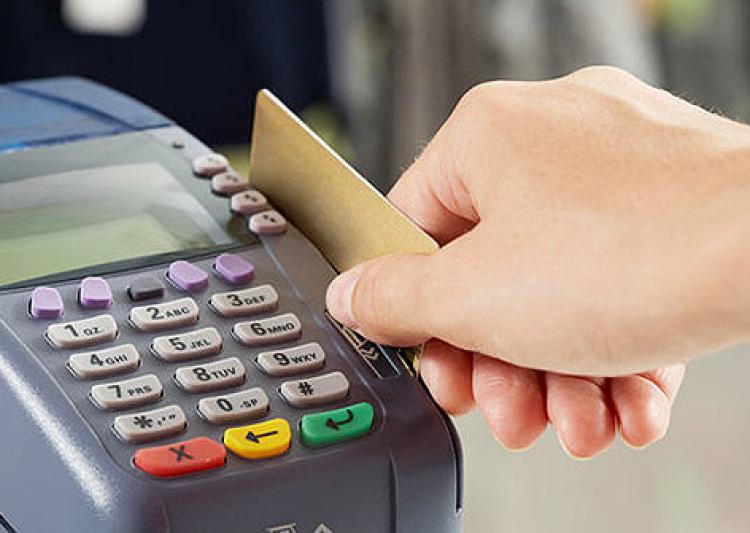
CU Blog - Transforming Money Countrywide - Photo 2Big changes are coming with electronic money (e-Money). The countrywide deployments will be transformative!

There are so many benefits:

  • Security – Smartchips and PIN options can ensure against unauthorized use.
  • Risk-aversive – The informal economy and Black Markets are mitigated, thereby fostering tax revenues.
  • Portability – e-Money can be used in Cyberspace and in the real world (merchant POS, ATMs).
  • Functional – Payroll and Government Benefits can be easily loaded; credit programs can also be added.
  • Far-reaching – Benefits outside of the payment transaction; the scheme increases M1, which increases available bank capital for community investments. (M1 is the measurement of currency/money in circulation – M0 – plus overnight bank deposits. As M1 values increase, there is a dynamic to create money “from thin-air”, called the money multiplier. The more money in the system, the more liquidity for investment and industrial expansion.)

The actuality of e-Money is not just academic, it is ubiquitous in the role-model country of India, and their “rupee” currency. This emerging economy of 1.2 billion people forcibly transformed the money supply in their market this past year (November 8), with good, bad and ugly results. See the full story of the designs and developments here:

Title: What the U.S. can learn from India’s move toward a cashless society
By: Vivek Wadhwa, Distinguished Fellow at Carnegie Mellon University

CU Blog - Transforming Money Countrywide - Photo 1

Silicon Valley fancies itself the global leader in innovation. Its leaders hype technologies such as bitcoin and blockchain, which some claim are the greatest inventions since the Internet. They are so complex that only a few mathematicians can understand them, and they require massive computing resources to operate — yet billions of dollars are invested in them.

India may have leapfrogged the U.S. technology industry with simple and practical innovations and massive grunt work. It has built a digital infrastructure that will soon process billions more transactions than bitcoin ever has. With this, India will skip two generations of financial technologies and build something as monumental as China’s Great Wall and America’s interstate highways.

A decade ago, India had a massive problem: nearly half its people did not have any form of identification. When you are born in a village without hospitals or government services, you don’t get a birth certificate. If you can’t prove who you are, you can’t open a bank account or get a loan or insurance; you are doomed to be part of the informal economy — whose members live in the shadows and don’t pay taxes.

In 2009, the government launched a massive project, called Aadhar, to solve this problem by providing a digital identity to everyone based on an individual’s fingerprints and retina scans. As of 2016, the program had issued 12-digit identification numbers to 1.1 billion people. This was the largest and most successful I.T. project in the world and created the foundation for a digital economy.

India’s next challenge was to provide everyone with a bank account. Its government sanctioned the opening of 11 institutions called payment banks, which can hold money but don’t do lending. To motivate people to open accounts, it offered free life insurance with them and made them a channel for social-welfare benefits. Within three years, more than 270 million bank accounts were opened, with $10 billion in deposits.

And then India launched its Unified Payment Interface (UPI), a way for banks to transfer money directly to one another based on a single identifier, such as the Aadhar number.

Take the way that credit-card payments are processed: When you present your card to a store, the cashier verifies your signature and transmits your credit-card information to a billing processor such as Visa, American Express or MasterCard — which works with the sending and receiving banks. The billing processors act as a custodian and clearing house. In return for this service, they charge the merchants a fee of 2 to 3 percent of the transaction. This is a tax that is indirectly passed on to the customer.

With a system such as UPI, the billing processor is eliminated, and transaction costs are close to zero. The mobile phone and a personal identification number take the place of the credit card as the authentication factor. All you do is to download a free app and enter your identification number and bank PIN, and you can instantly transfer money to anyone — regardless of which bank he or she uses.

There is no technology barrier to prevent a UPI from working in the United States. Transfers would happen within seconds, even faster than the 10 minutes that a bitcoin transaction takes.

India has just introduced another innovation called India Stack. This is a series of secured and connected systems that allow people to store and share personal data such as addresses, bank statements, medical records, employment records and tax filings, and it enables the digital signing of documents. The user controls what information is shared and with whom, and electronic signature occurs through biometric authentication.

Take the example of opening a mobile-phone account. It is cumbersome everywhere, because the telecom carriers need to verify the user’s identity and credit history. In India, it often took days to produce all the documents that the government required. With the new “know-your-customer” procedures that are part of India Stack, all that is needed is a thumb print or retina scan, and an account can be opened within minutes. The same can be done for medical records. Imagine being able to share these with doctors and clinics as and when necessary. This is surely possible for us in the United States, but we aren’t doing it because no trusted central authority has stepped up to the task.

India Stack will also transform how lending is done. The typical villager currently has no chance of getting a small-business loan, because he or she lacks a credit history and verifiable credentials. Now people can share information from their digital lockers, such as bank statements, utility bill payments and life insurance policies, and loans can be approved almost instantaneously on the basis of verified data. This is a more open system than the credit0scoring services that U.S. businesses use.

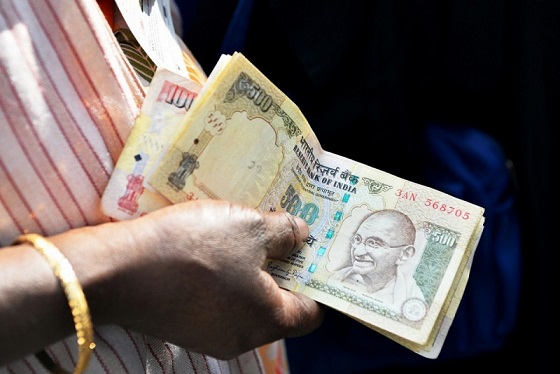
In November, in a move to curb corruption and eliminate counterfeit bills, Indian Prime Minister Narendra Modi shocked the country by announcing the discontinuation of all 500- and 1,000-rupee (about $7 and $14) notes — which account for roughly 86 percent of all money in circulation. The move disrupted the entire economy, caused pain and suffering, and was widely criticized. Yet it was a bold move that will surely produce long-term benefit, because it will accelerate the push to digital currency and the modernization of the Indian economy.

Nobel Prize-winning economist Joseph Stiglitz said at the World Economic Forum meeting in Davos, Switzerland, that the United States should follow Modi’s lead in phasing out currency and moving toward a digital economy, because it would have “benefits that outweigh the cost.” Speaking of the inequity and corruption that is becoming an issue in the United States and all over the world, he said: “I believe very strongly that countries like the United States could and should move to a digital currency so that you would have the ability to trace this kind of corruption. There are important issues of privacy, cybersecurity, but it would certainly have big advantages.”

We are not ready to become a cashless society, but there are many lessons that Silicon Valley and the United States can learn from the developing world.
Source: Linked-in Business Social Media – Posted February 14; retrieved February 16, 2017 from:  https://www.linkedin.com/pulse/what-us-can-learn-from-indias-move-toward-cashless-society-wadhwa?trk=eml-email_feed_ecosystem_digest_01-hero-0-null&midToken=AQEaD9txxg6Yyw&fromEmail=fromEmail&ut=2MfxBMnV48eDE1
CU Blog - Transforming Money Countrywide - Photo 4Studying the lessons from other societies and deploying cutting-edge payment systems are missions of the movement behind the book Go Lean … Caribbean; it serves as a roadmap for the introduction and implementation of the Caribbean Union Trade Federation (CU) and the aligning Caribbean Central Bank (CCB). This Go Lean/CU/CCB roadmap depicts e-Money as a hallmark of technocratic efficiency, with agility to keep pace of technology and market changes.

To be ubiquitous – the capacity of being everywhere, especially at the same time – requires coordination of all engines of society. This is the quest of the Go Lean roadmap, to optimize these engines, as stated with these 3 prime directives:

  • Optimization of the economic engines in order to grow the regional economy to $800 Billion & create 2.2 million new jobs.
  • Establishment of a security apparatus to protect the resultant economic engines.
  • Improvement of Caribbean governance to support these engines.

The Go Lean/CU/CCB roadmap anticipated an e-Money scheme, one for cruise lines using smartchips payment-identity cards. This is part-and-parcel of the plan for a regional currency for the Caribbean Single Market, the Caribbean Dollar (C$), to be used primarily as an electronic currency. (A regional currency model exists with the Euro currency for 19 European states and 337 million people). These cashless schemes will impact the growth of the regional economy in both the domestic and tourist markets. Consider this one CU scheme to incentivize more spending among cruise line passengers:

The cruise industry needs the Caribbean more than the Caribbean needs the industry. But the cruise lines have embedded rules/regulations designed to maximize their revenues at the expense of the port-side establishments. The CU solution is to deploy a scheme for smartcards (or smart-phone applications) that function on the ships and at the port cities. This scheme will also employ NFC technology – (Near Field Communications; defined fully at Page 193 – so as to glean the additional security benefits of shielding private financial data of the guest and passengers.

This is an example of an electronic money scheme facilitating more commerce (e-Commerce). So the CCB will settle all C$ electronic transactions – cashless or accounting currency – in a credit card-style interchange / clearinghouse system.

There are a lot of details to “sweat out” – this is heavy-lifting. So the same as the U.S. can learn many lessons from India’s cashless moves in the foregoing article, the Caribbean can benefit too. A cashless society is the prize that mature economies want. It would be a win-win. See the portrayal of this Indian model in this Appendix VIDEO below.

The Go Lean book asserts that the Caribbean should keep their “eyes on the same prize” of a cashless society. If India can, then so can we; this Third World country is now considered an “emerging” economy for elevating more of their citizens to middle class status. The book posits that to thrive in the new global marketplace there must be an agile technocratic administration for the region’s currencies. This is the charge – economics, security and governance – of the Go Lean roadmap, opening with these pronouncements; Declaration of Interdependence (Page 13 and 14):

xxiv. Whereas a free market economy can be induced and spurred for continuous progress, the Federation must install the controls to better manage aspects of the economy: jobs, inflation, savings rate, investments and other economic principles. Thereby attracting direct foreign investment because of the stability and vibrancy of our economy.

xxv. Whereas the legacy of international democracies had been imperiled due to a global financial crisis, the structure of the Federation must allow for financial stability and assurance of the Federation’s institutions. To mandate the economic vibrancy of the region, monetary and fiscal controls and policies must be incorporated as proactive and reactive measures. These measures must address threats against the financial integrity of the Federation and of the member-states.

xxvii. Whereas the region has endured a spectator status during the Industrial Revolution, we cannot stand on the sidelines of this new economy, the Information Revolution. Rather, the Federation must embrace all the tenets of Internet Communications Technology (ICT) to serve as an equalizing element in competition with the rest of the world. The Federation must bridge the digital divide and promote the community ethos that research/development is valuable and must be promoted and incentivized for adoption.

The Go Lean book details a series of community ethos, strategies, tactics, implementations and advocacies to foster the proper controls for electronic/mobile payments in the Caribbean region:

Community Ethos – Economic Principles Page 21
Community Ethos – Money Multiplier Principle Page 22
Community Ethos – Security Principles Page 23
Community Ethos – Governing Principles – Lean Operations Page 24
Community Ethos – Governing Principles – Cooperatives Page 25
Community Ethos – Ways to Bridge the Digital Divide Page 31
Strategy – Mission – Fortify the monetary needs through a Currency Union Page 45
Tactical – Separation of Powers – Central Banking Page 73
Implementation – Assemble Central Bank Cooperative Page 96
Implementation – Ways to Deliver Page 109
Planning – 10 Big Ideas – #2: Currency Union / Single Currency Page 127
Anecdote – Caribbean Currencies Page 149
Advocacy – Ways to Grow the Economy Page 151
Advocacy – Ways to Create Jobs Page 152
Advocacy – Ways to Mitigate Black Markets Page 165
Advocacy – Ways to Foster Cooperatives Page 176
Advocacy – Ways to Impact Cruise Tourism – Smartcard scheme Page 193
Advocacy – Ways to Foster Technology Page 197
Advocacy – Ways to Foster e-Commerce Page 198
Advocacy – Reforms for Banking Regulations – Central Banking Efficiencies Page 199
Advocacy – Ways to Impact Main Street Page 201

The points of effective, technocratic currency stewardship were further elaborated upon in previous blog/commentaries. Consider this sample:

https://goleancaribbean.com/blog/?p=8381 A Lesson in Economic Fallacies – Casino Currency – US Dollars?
https://goleancaribbean.com/blog/?p=7140 Central Bank of Azerbaijan sets its currency on free float
https://goleancaribbean.com/blog/?p=7034 The Future of Money
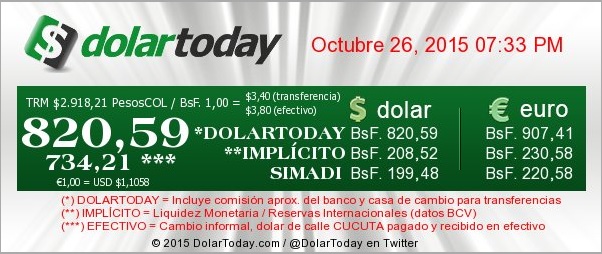
https://goleancaribbean.com/blog/?p=6800 Venezuela sues black market currency website in US
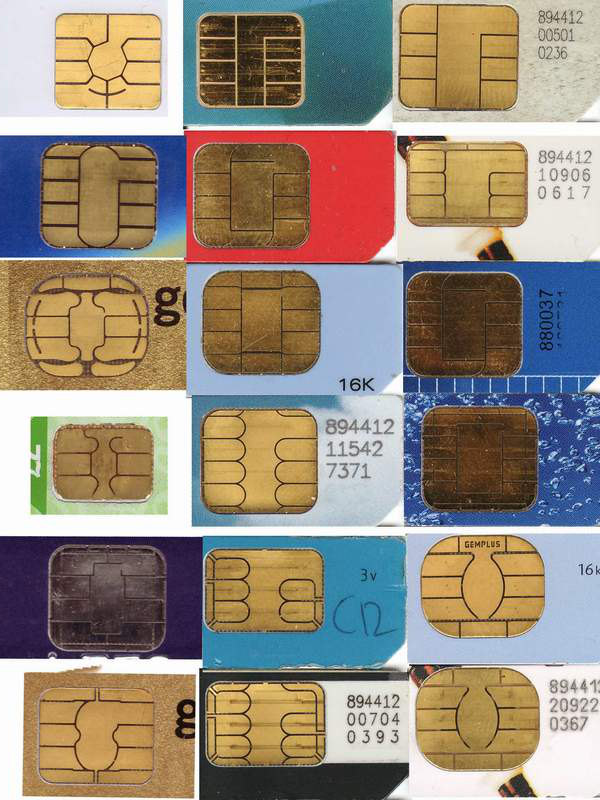
https://goleancaribbean.com/blog/?p=6635 New Security Chip in Credit Cards Unveiled
https://goleancaribbean.com/blog/?p=5668 Move over Mastercard/Visa
https://goleancaribbean.com/blog/?p=4425 Cash, Credit or iPhone …
https://goleancaribbean.com/blog/?p=3889 RBC EZPay – Ready for Change
https://goleancaribbean.com/blog/?p=3881 The Need for Regional Cooperation to Up Cyber-Security
https://goleancaribbean.com/blog/?p=2074 MetroCard – Model for the Caribbean Dollar
https://goleancaribbean.com/blog/?p=1350 PayPal expands payment services to 10 markets
https://goleancaribbean.com/blog/?p=906 Bitcoin virtual currency needs regulatory framework to change image
https://goleancaribbean.com/blog/?p=833 One currency, divergent economies

There are things that we in the Caribbean want from India … and things we do not want.

We want their lessons learned so that we can get more impact in our society, like:

  • more cruise tourism spending
  • foster more e-Commerce
  • increase M1 money supply in our region
  • mitigate the informal economy and Black Markets,
  • steer oversight for technology engagements
  • grow the economy
  • create jobs
  • enhance security
  • optimize governance

India has to feed 1.2 billion people. We do not want that population! India has a large Diaspora scattered throughout the world. We do not want that either. We simply want our people to prosper where they are planted in our Caribbean homeland. This means we have to better compete, adjust and adapt to this ever-changing world.

Now is the time for all stakeholders of the Caribbean to lean-in for the empowerments described in the book Go Lean … Caribbean. This change can help to make the Caribbean a better place to live, work and play. 🙂

Download the book Go Lean … Caribbean – now!

—————

Appendix VIDEO – Digital payment providers cash in on India’s currency crunch – https://youtu.be/BvnL7ZjBfkk

Published on Dec 2, 2016 – Paytm and other digital payment providers in India are mobilising an army of workers to enrol small merchants and customers to permanently change their historic reliance on cash as they reap the benefits of the severe currency crunch affecting the country.

CU Blog - Transforming Money Countrywide - Photo 3Paytm and other digital payment providers in India are on an intensive campaign to woo small merchants and customers to permanently change their historic reliance on cash as they reap the benefits of the government’s currency clampdown.

From front page ads in national dailies to quirky social media posts, digital players including Paytm and MobiKwik have left no stones unturned to sign up people for mobile payments since Indian Prime Minister Narendra Modi’s announcement to ditch high value bank notes.

However getting shops and customers to go digital and shun their dependence on hard cash still remains a herculean task.

“The problem we face is that we are not educated enough to operate it (digital payment apps). We don’t have that smart phone that is why there are some problems,” said Lal Singh, a betel shop owner in one of New Delhi’s bustling markets, who uses a feature phone.

Around 65 percent of the mobile phones in India are feature phones which are used only for simpler calling and texting purposes.

Sales of cheap smartphones have boomed in recent years, but internet networks remain patchy, especially in rural India.

Credit Suisse estimates more than 90 percent of consumer purchases are made in cash, as millions still do not have bank accounts. Those who do have bank cards mainly use them to withdraw from cash machines. Financial literacy and technology usage also remains low, and many fear getting duped.

Modi’s push against black money has given digital payment providers an once-in-a-lifetime opportunity to expand their user base and the results have been promising so far, sparking widespread optimism.

MobiKwik, whose backers include U.S. venture capital firm Sequoia Capital and American Express, has added 150,000 merchants since the curb for a total of 250,000, and co-founder Upasana Taku said there has been a sea change in the modes of payment since the November 8 announcement.

“We look at it as a tectonic shift in user behaviour where people are now willing to adopt digital payments because the government has incentivised them. In many ways, this is the best marketing campaign any mobile wallet company could have ever wanted,” said Taku.

She is expecting a user base of around 150 million by next year.

Meanwhile, Paytm, India’s largest mobile payment and commerce platform and backed by Chinese Internet giant Alibaba Group Holding Ltd, has deployed a 10,000-strong sales force, and nearly doubled the number of small merchants signed up to its services to 1.5 million.

“So we were targeting 500 million users by 2020. Now, we are targeting them by 2018. So, we have fast forwarded that plan by two years and similarly, one lakh crore (1,000 billion) that’s the volume of dollar transaction volume that we were talking about, if we were targeting it in 2020, we are targeting it in 2018,” said Chief executive of Paytm, Vijay Shekhar Sharma.

There were concerns as well that once the cash crunch subsides, merchants and customers will go back to business as usual, using notes to pay for transactions but Sharma said the convenience value provided by the online payments will prevail over it.
Paytm now has 158 million clients, 8 million more since the note ban.

One of the factors which have prompted mom and pop stores and people to turn to Paytm and other e-wallet companies is that the new 2,000 rupee introduced by the government has turned out to be a blessing in disguise for the common man.

The hype regarding the new 2,000 rupee note was short lived as people were unable to use it to buy products for domestic purposes due to the non-availability of small money in the hands of shopkeepers and vendors at large.

The lack of 500 and 100 rupee bills in the market paved the way for e-wallet companies to become the way out for such vendors.
“This will give us a lot of relief. Exchange of change is a big issue. Some people have notes of higher denomination like 2,000 rupee notes, then how will we give the change for it,” said a roadside restaurant owner in Gurgaon, Bhuvan Kumar.

The move to demonetise the large bills is designed to bring billions of dollars’ worth of cash in unaccounted wealth into the mainstream economy, as well as dent the finances of Islamist militants who target India and are suspected of using fake 500 rupee notes to fund operations.
Share this post:
, , , ,

A Lesson in History: Haiti’s Reasonable Doubt

Go Lean Commentary

There are important lessons to learn from history … regarding the ongoing theme of America’s War on the Caribbean.

Consider Haiti … again. America has a long and abusive history with Haiti, its oldest and poorest neighbor.

In 1915, more than a century after having eradicated slavery from their country, the people of Haiti suddenly find themselves the victims of a brutal American occupation, reigniting an all too familiar past for the proud, independent nation. – Documentary Synopsis

CU Blog - A Lesson in History - Haiti's Reasonable Doubt - Photo 1

There is a very important point of consideration: Haiti and the Haitian people have a legitimate case of reasonable doubt for expecting regional leadership from the US. This commentary is also within the consistent theme for the movement behind the book Go Lean…Caribbean, whose goal and aspiration is for Caribbean people to take their own lead for Caribbean elevation. This applies doubly for Haiti.

Consider the full article here:

Title: The Forgotten Occupation
The Forgotten Occupation recounts the 19-year period during which the United States of America subjugated Haiti to a brutal occupation. From 1915 to 1934, the Haitian people found themselves under the rule of a system that was in large part influenced and pushed for by the National City Bank of New York (now Citibank), and that initially found support amongst many Haitians in the country.

The Forgotten Occupation is about Jim Crow, which was imported to Haiti by way of the American marines, whose perceptions of the Haitians they were occupying were rooted in the racist consciousness of the United States South from which most of them came. It is that consciousness that made it easy for the occupiers to kidnap innumerable men, take them away from their homes, and constrain them to forced labor. This process eventually ignited a mass rebellion.

The Forgotten Occupation is about those who resisted and paid for that resistance with their lives. It is about Charlemagne Peralte, the leader of the Cacos (the rebel group formed mainly of Haitian peasants) who, despite being outgunned, outmanned, and having little to no chance of a significant retaliation against the unstoppable force who now claimed their land, fought on as best as they could.

The Forgotten Occupation is about those who were displaced from their land, which was forcibly seized and handed over to corporations, including the Haitian-American Sugar Company and Dole: the American Pineapple Company.

The Forgotten Occupation is also about the rebirth of Haiti. For, due to the rabid racism it suffered under the US presence, Haiti was forced to reevaluate its identity as an extension of French culture and began to develop a deep appreciation for its African roots.

There are a large number of people, including many Haitians, who know nothing of these 19 years. The Forgotten Occupation seeks to shed a light on this significant chapter of Haiti’s history, which has long since faded from the collective mind, but still affects the country to this day.
Source: Retrieved February 4, 2017 from: http://www.theforgottenoccupation.com/

———-

VIDEO – The Forgotten Occupation (Trailer) https://youtu.be/n7HjC8n_PsM

Published on Jun 18, 2015 – In 1915, more than a century after having eradicated slavery from their country, the people of Haiti suddenly find themselves the victims of a brutal American occupation, reigniting an all too familiar past for the proud, independent nation.

  • Category: Film & Animation
  • License: Standard YouTube License

The reasonable doubt the Haitian people may have toward America is not just 100 years old. It was also relevant 100 days ago; just a few months ago, during the Presidential Election in the US, in the race between Republican Donald Trump and Democrat Hillary Clinton. Universally in the US, the African-American population supported Hillary Clinton, but there was exception with the Haitian Intelligentsia … and the Haitian right-wing wealthy elite.

Yes, there is a Haitian Intelligentsia!

They have a low regard for Bill and Hillary Clinton … after their Clinton Foundation development initiatives. This regard was shared – make that exploited – by Donald Trump and his camp during the campaign. See here:

CU Blog - A Lesson in History - Haiti's Reasonable Doubt - Photo 2Trump’s team glommed onto the possibility that Haitian Americans—generally black, generally Democratic-leaning voters who make up roughly 2 percent of the population of Florida, where Trump and Hillary Clinton are separated by less than a point—might be persuaded to vote against the former Secretary of State (Hillary). The irony of a nativist pandering to thousands of immigrants and refugees aside, there was a logic to this. Many people rightly identify Clinton with failures of humanitarianism and development in Haiti. The Trump team has folded that perception into a half-true narrative in which Haiti—like Whitewater and Benghazi before it—becomes a synecdoche for all the ills, real and imagined, of the Clintons themselves.

There are good reasons the world’s first black Republic has been an island-sized headache for Clinton as she seeks the presidency. Haiti is a place where some of the darkest suppositions that lurk on the left and right about her and her husband take form. Here is an island country of 10 million people where America’s ultimate power couple invested considerable time and reputation. Here is a fragile state where each took turns implementing destructive policies whose highlights include overthrowing a presidential election. Bill Clinton in particular mixed personal relationships, business, and unaccountable power in ways that, if never exactly criminal, arouse the kind of suspicion that erodes public trust. No two individuals, including Haiti’s own leaders, enjoyed more power and influence than the Clintons in the morass of the failed reconstruction following the deadly Jan. 12, 2010, earthquake, when a troubled country managed to go from catastrophe to worse.

The reality is a lot more complicated (and interesting) than that, [the conspiracy theory that the Clinton stole billions of dollars from Haiti’s post-earthquake relief funds]. The United States and Haiti were the first two independent republics in the Americas, and our often blood-soaked relationship goes back a lot further than the meeting of a silky Arkansan and an ambitious Illinoisan at YaleLawSchool.

… wealthy Haitians openly loathe Bill Clinton, who ordered the U.S. invasion that put down the [right-wing military] junta and restored Aristide to power [in the 1990’s].

Source: Posted September 22, 2016; retrieved February 4, 2017 from: http://www.slate.com/articles/news_and_politics/politics/2016/09/the_truth_about_the_clintons_and_haiti.html

Haiti has had to endure American dysfunction for a long time. The Go Lean movement has previously detailed the American societal defects – institutional racism and Crony-Capitalism – and how Caribbean communities have been impacted. There is cause-and-effect of these American dysfunctions in the Caribbean region in general and Haiti in particular. Reflect back on the 1915 Occupation:

“The reason it’s critical to understand the US Occupation is because many of the problems that Haiti has today, are actually of much more recent origin, they’re 20th century problems” – Laurent Dubois

See  Appendix B below for more on Citibank – the instigator for American action – and their abusive behavior towards Haiti.

The review of these historic events are more than just an academic discussion, the book Go Lean…Caribbean aspires to economic principles that dictate that “consequences of choices lie in the future”. The book serves as a roadmap for the introduction and implementation of the technocratic Caribbean Union Trade Federation (CU). Haiti – the poorest country in the Western Hemisphere – is one of the 30 member-states for this Caribbean confederacy. This poor status is a direct result of American and European (French) dysfunction over 300 years. Yet, the book asserts that we should not leave it up to these colonial masters to assuage our problems. We need our own expression of governance.

The Go Lean roadmap seeks to optimize the Caribbean governance. This vision is defined early in the book (Pages 10 – 12) in the following pronouncements in the Declaration of Interdependence:

Preamble: As the history of our region and the oppression, suppression and repression of its indigenous people is duly documented, there is no one alive who can be held accountable for the prior actions, and so we must put aside the shackles of systems of repression to instead formulate efficient and effective systems to steer our own destiny.

xi. Whereas all men are entitled to the benefits of good governance in a free society, “new guards” must be enacted to dissuade the emergence of incompetence, corruption, nepotism and cronyism at the peril of the people’s best interest.  The Federation must guarantee the executions of a social contract between government and the governed.

xii. Whereas the legacy in recent times in individual states may be that of ineffectual governance with no redress to higher authority, the accedence of this Federation will ensure accountability and escalation of the human and civil rights of the people for good governance, justice assurances, due process and the rule of law. As such, any threats of a “failed state” status for any member state must enact emergency measures on behalf of the Federation to protect the human, civil and property rights of the citizens, residents, allies, trading partners, and visitors of the affected member state and the Federation as a whole.

The purpose of the Go Lean roadmap is to turn-around the downward trends for the Caribbean in general – Haiti included – to reverse course and finally elevate Caribbean society. The CU, applying lessons from the last 100 years, has prime directives proclaimed as follows:

  • Optimization of the economic engines in order to grow the regional economy to $800 Billion & create 2.2 million new jobs.
  • Establishment of a security apparatus to ensure public safety and protect the resultant economic engines.
  • Improve Caribbean governance to support these engines.

All of the focus on Haiti is not just history, there is currency as well; consider these developments that are en vogue right now:

CU Blog - A Lesson in History - Haiti's Reasonable Doubt - Photo 3

The Go Lean/CU book and accompanying blog-commentaries all present a new vision and new values for Haiti’s future.

The Go Lean book details a series of assessments, community ethos, strategies, tactics, implementations and advocacies to optimize the societal engines for Haiti … and other locales in the Caribbean region:

Community Ethos – Deferred Gratification Page 21
Community Ethos – Economic Systems Influence Choices & Incentives Page 21
Community Ethos – Consequences of Choices Lie in the Future Page 21
Community Ethos – “Crap” Happens Page 23
Community Ethos – Minority Equalization Page 24
Community Ethos – Ways to Impact the Future Page 26
Community Ethos – Ways to Manage Reconciliations Page 34
Community Ethos – Ways to Improve Sharing Page 35
Community Ethos – Ways to Impact the Greater Good Page 37
Strategy – Vision –  Integrate region for Economics & Security Page 45
Tactical – Separation of Powers – Department of Homeland Security Page 75
Tactical – Separation of Powers – Department of Justice Page 77
Implementation – Assemble Existing Super-national Institutions Page 96
Implementation – Ways to Pay for Change Page 101
Implementation – Foreign Policy Initiatives at Start-up Page 102
Implementation – Security Initiatives at Start-up Page 103
Implementation – Ways to Deliver Page 109
Implementation – Ways to Foster International Aid – Case Study: Haiti’s Earthquakes Page 115
Implementation – Ways to Impact [Regional] Elections Page 116
Implementation – Ways to Promote Independence Page 120
Planning – Ways to Make the Caribbean Better Page 131
Planning – Ways to Improve Failed-State Indices Page 134
Advocacy – Ways to Grow the Economy Page 151
Advocacy – Ways to Create Jobs Page 152
Advocacy – Ways to Improve Governance Page 168
Advocacy – Ways to Better Manage the Social Contract Page 170
Advocacy – Ways to Impact Justice Page 177
Advocacy – Ways to Improve Homeland Security Page 180
Advocacy – Battles in the War on Poverty Page 222
Advocacy – Ways to Re-boot Haiti Page 238

There have been a number of blog-commentaries by the Go Lean promoters that have developed related topics of lessons from history of race relations. See a sample list here:

https://goleancaribbean.com/blog/?p=8767 A Lesson in History – Haiti 1804
https://goleancaribbean.com/blog/?p=7738 A Lesson in History – Buffalo Soldiers
https://goleancaribbean.com/blog/?p=5183 A Lesson in History – France and Mexico’s Dysfunctional Past
https://goleancaribbean.com/blog/?p=5695 A Lesson in History – Repenting, Forgiving and Reconciling the Past
https://goleancaribbean.com/blog/?p=5123 A Lesson in History – Royal Charters: Zimbabwe -vs- South Africa
https://goleancaribbean.com/blog/?p=4971 A Lesson in History – Royal Charters: Truth & Consequence
https://goleancaribbean.com/blog/?p=451 CariCom position on Slavery/Colonization Reparations

Let’s learn from this history of Haiti’s past; and from the repercussions and consequences from those events. See a full related documentary in the Appendix A below. In many ways, Haiti has not moved. Also, America has not moved.

Our goal is to reform and transform Haiti and the Caribbean, not America. We hereby urge everyone in the Caribbean – people, institutions and governments – to lean-in to this Go Lean roadmap. It is time now to reboot Haiti. We must do the heavy-lifting ourselves, and not leave it up to any American elites – like the Clintons. We have reason for reasonable doubt for their aid and others’ aid.

This is what we all want: Caribbean facilitating a new Caribbean that is a better homeland to live, work and play. 🙂

Download the book Go Lean … Caribbean – now!

———

Appendix A – Documenting the U.S. Occupation of Haitihttps://youtu.be/nhPNU8aR2Co

Published on Feb 22, 2016 – A discussion with historian and archivist J. Michael Miller about the rich sources housed in the Marine Corps Library at Quantico surrounding the U.S. Occupation of Haiti from 1915-1934. Miller recently made possible the donation of a remarkable and rare text, the Monograph of Haiti, to Duke Libraries, and speaks about this and other sources he has found through his research.

More info: https://fsp.trinity.duke.edu/projects/documenting-us-occupation-haiti

Category: Education

License: Standard YouTube License

———-

Appendix B – Where Does Haiti Fit in Citigroup’s Corporate History?

Citigroup’s history in Haiti is remembered as both among the most spectacular episodes of U.S. dollar diplomacy in the Caribbean and as an egregious example of officials in Washington working at the behest of Wall Street. It’s also a story marked by military intervention, violations of national sovereignty and the deaths of thousands.

In the early 20th century, the National City Bank of New York, as Citigroup was then called, embarked on an ambitious and pioneering era of overseas expansion. Haiti emerged as one of National City’s first international projects. …

Source: Posted June 12, 2012; retrieved February 4, 2017 from: https://www.bloomberg.com/view/articles/2012-06-13/on-citigroup-s-anniversary-don-t-forget-its-brutal-past


Share this post:
, , , ,
[Top]

Day of Reckoning for NINJA Loans

Go Lean Commentary

Be not deceived … whatsoever a man soweth, that shall he also reap. – King James Version – The Bible

It is time for the Day of Reckoning for one of the players in the recent housing bubble and financial crisis, referred to as the Great Recession of 2008. Industry stakeholders had been “skimming of the public coffers for mortgage guarantees and giving unwise mortgages to people who had what was considered NINJA qualification:

  • No Income
  • No Job & Assets

LB 1Such activities in the retail mortgage industry, plus bad practices in the wholesale lending, credit ratings and mortgage-back securities industries had congealed to form a “perfect storm” for disaster in the financial markets (Wall Street, et al) in the US and around the world.

Many innocent people lost fortune and faith in the American eco-system. There had to be an accounting of the “sins and sinister plots”; there had to be a Day of Reckoning. That day came for one Michigan-based (Detroit area) company, United Shore Financial Services. See the full story here:

Title: United Shore Agrees to $48M Settlement with DOJ
By: Jacob Passy

CU Blog - Day of Reckoning for NINJA Loans - Photo 1United Shore Financial Services, a Troy, Mich.-based lender, has agreed to pay $48 million to settle allegations that it violated the False Claims Act.

The Department of Justice alleged that USFS did not comply with certain origination, underwriting and quality control requirements while participating in the Federal Housing Administration’s direct endorsement lender program. Consequently, the Department of Housing and Urban Development insured hundreds of loans that UnitedShore approved that should not have been eligible for FHA coverage, subsequently taking losses due to claims on those loans.

“USFS acknowledged that it failed to comply with FHA underwriting and quality control requirements, resulting in improperly originated mortgages,” John Vaudreuil, a U.S. attorney for the Western District of Wisconsin said in a news release. “While USFS deserves credit for acknowledging and resolving its conduct, that conduct not only resulted in substantial losses of public funds, but also put Wisconsin homeowners at risk of losing their homes or ruining their credit.”

United Shore, which is both a retail lender and the parent of United Wholesale Mortgage, did not immediately respond to a request for comment.

In particular, the DOJ said that UnitedShore admitted to pressuring underwriters to approve FHA mortgages under a compensation plan that tied pay to the percentage of loans approved. United Shore also falsely certified that direct endorsement underwriters reviewed appraisal reports prior to mortgages being approved for FHA insurance; under the DEL program, the FHA does not review that lenders are complying with the agency’s requirements.

The DOJ also identified other issues with UnitedShore’s compliance practices. The lender allegedly did not provide senior management with “meaningful information” regarding quality control findings. Additionally, UnitedShore did not meet HUD’s self-reporting requirements, only self-reporting three loans to the department despite quality control reviews finding hundreds of FHA-insured loans that were materially deficient at issuance.

The alleged activities occurred between from 2006 through 2011. The DOJ also said that United Shore “made certain discretionary distributions to a shareholder in the company” after the federal government began investigating the company in January 2014.
Source: National Mortgage News – Industry Trade Journal; posted 12/28/2016; retrieved 01/18/2017 from: http://www.nationalmortgagenews.com/news/compliance-regulation/united-shore-agrees-to-48m-settlement-with-doj-1093769-1.html

This story aligns with the book Go Lean…Caribbean; it serves as a roadmap to introduce and implement the technocratic Caribbean Union Trade Federation (CU) and Caribbean Central Bank (CCB) for better stewardship of the Caribbean banking eco-system, to ensure the economic failures of the past do not re-occur in the Caribbean. The book was inspired by the events of 2008, by people engaged in the mortgage-housing-investments industries. These ones engaged in the post-mortem analysis – dissection of the crisis – of all the bad community ethos, strategies, tactics and implementations leading up to 2008 and saw the need for this Day of Reckoning.

The goal of this roadmap is to apply the lessons-learned from 2008 in the stewardship of the economic engines in the Caribbean region. It turns out that we were affected by 2008 as well; we were devastated by the elasticity in the global markets.

Welcome to the Caribbean’s Day of Reckoning!

The Caribbean economy is a parasite of the US and so when the American market “catches a cold, we sneeze”. (This is referred to as “financial contagions”). We can – we must – do better and guide our own economy away from American dependence to a regional interdependence.

We are on the way…

With the proposal for the CARICOM Single Market & Economy (CSME), a more integrated region is expected to emerge with greater linkages among the member-states of the economic union. Issues of financial contagions will now have to be a constant concern for a regional sentinel. The Go Lean roadmap calls for the deployment of the Caribbean Central Bank as that sentinel, to proactively and reactively shepherd the financial institutional processes (wholesale and retail). We do not want to “get caught with our pants down” in our region. We do not want government loan guarantees for mortgagors that have NINJA qualifiers. (That money would be better placed in more substantial investments in Caribbean people and processes). The lesson from 2008 is to follow the money and discern those who profited from this bad behavior; see the VIDEO in the Appendix below.

Mortgages with a government-guarantee stamp of approval are readily sold in the secondary markets. Bad actors are able to glean quick profits from loan origination fees and then “wash their hands” of any inherent risk from deficient payment collection. (See the VIDEO in the Appendix below). This was the direct charge against United Shore Financial Services in the forgoing article: “[funding] hundreds of FHA-insured loans that were materially deficient at issuance”.

Bad actors … profiting from existing supplies of capital!?!?

This is so familiar! The Go Lean book details (Page 23):

… history teaches that with the emergence of new economic engines, “bad actors” will also emerge thereafter to exploit the opportunities, with good, bad and evil intent. A Bible verse declares: “What has been will be again, what has been done will be done again; there is nothing new under the sun” – Ecclesiastes 1:9 New International Version.

This roadmap for Caribbean integration declares that peace, security and public safety is tantamount to economic prosperity. This is why an advocacy for the Greater Good must be championed as a community ethos. A prime precept is that it is “better to know than to not know” – this implies that privacy is secondary to security. A secondary precept is that bad things will happen to good people and so the community needs to be prepared to contend with the risks that can imperil the homeland.

The prime directive of the Go Lean/CU/CCB roadmap is to optimize economic, security and governing engines to impact the Caribbean’s Greater Good, for all stakeholders: residents, visitors, bank depositors and mortgage-holders. This need was pronounced early in the Go Lean book, in the Declaration of Interdependence – (Page 13):

xxv.  Whereas the legacy of international democracies had been imperiled due to a global financial crisis, the structure of the Federation must allow for financial stability and assurance of the Federation’s institutions. To mandate the economic vibrancy of the region, monetary and fiscal controls and policies must be incorporated as proactive and reactive measures. These measures must address threats against the financial integrity of the CU and of the member-states.

The foregoing news article shows the type of functions executed by technocratic financial regulators: monitoring risks, policing the industry stakeholders, and reckoning bad practices. The “bad actor” in the article – United Shore Financial Services – had their Day of Reckoning.

The related subjects of banking oversight and optimizing financial governance have been a frequent topic for blogging by the Go Lean promoters, as sampled here:

For Canadian Banks: Caribbean is a ‘Bad Bet’
Christmas presents (2015) for American Banks
Bad Actors profiting from a supply of capital in private education
Too Big To Fail – Caribbean Version
5 Steps of a Bubble – Learning to make a resilient economy
Canadian Imperial Bank of Commerce failing investment in FirstCaribbean Bank
Bitcoin needs regulatory framework to change ‘risky’ image
Open the Time Capsule: The Great Recession of 2008
What Usain Bolt can teach banks about financial risk
Barbados Central Bank records $3.7m loss in 2013
US Federal Reserve Releases Transcripts from 2008 Meetings
Dominica raises EC$20 million on regional securities market
Fractional Banking System – How to Create Money from Thin Air
Book Review: ‘Wrong – Nine Economic Policy Disasters and What We Can Learn…’
10 Things We Want from the US – # 2: American Capital
The Erosion of the Middle Class

All the Caribbean has experienced economic dysfunction due to the 2008 Global Financial Crisis. In line with the foregoing news article, the Go Lean roadmap seeks to mitigate bad behavior from bad actors like United Shore Financial Services in our local region. The book details the many infrastructural enhancements/advocacies to the region’s financial eco-system; to facilitate efficient management of the economy, and policing of this important financial/banking industry-sector:

Ethos-Strategy-Tactics-Implementation-Advocacy

Page

Anecdote – Caribbean Single Market & Economy

15

Anecdote – Puerto Rico – “The Greece of the Caribbean”

18

Confederating Non-Sovereignty Inter-Governmental Entity

45

Facilitate Currency Union/Co-op of Caribbean Dollar

45

Fostering a Technocracy

64

Caribbean Central Bank

73

Deposit Insurance Regulations

73

Securities Regulatory Authority

74

Modeling the European Union / Central Bank

130

Lessons from 2008

136

Anecdote – Caribbean Currencies

149

Growing the Economy

151

Better Manage Foreign Exchange

154

Improve Credit Ratings

155

Improve Housing – Mortgage Standards Enforcement

161

Foster Cooperatives

176

Banking Reforms

199

Wall Street – Capital/Securities Market

200

Impact the Diaspora

219

Impact Retirement – Need for Savings

221

Help the Middle Class

223

Appendix – Credit Reporting and Ratings Good Governance

276

There is no doubt that there has been previous corruption of the American financial eco-system. They have “made themselves sick; given themselves colds”, and yet we, in the Caribbean, “have had to sneeze”. We hope that the new oversight methodology in the US is more effective for managing their stakeholders. But management of the US is out-of-scope for the movement behind the Go Lean book; our focus is limited strictly to the Caribbean economy. So now is the time for change to a new regulatory regime here in our region; now is the time for new stewards of the Caribbean economy, security and governing engines. It’s time for the CU/CCB. We must prove that we have learned from the bad American past. A lot is at stake: our financial security; our future.

We urge all stakeholders – residents, mortgage-holders, mortgage lenders, banks – to lean-in to this Go Lean roadmap to elevate Caribbean society. The destination is common and desired for all Caribbean men, women and children: a better place to live, work and play. 🙂

Download the book Go Lean … Caribbean – now!

———

Appendix VIDEO – NINJA Loans: The Big Shorthttps://youtu.be/os1Etuv_gDE

Published on Apr 27, 2016 – Clip from Academy Award Winning Best Picture “The Big Short”.

  • Category: People & Blogs
  • License: Standard YouTube License


Share this post:
, , ,
[Top]

ENCORE: Lesson from MetroCard

They got me … too!

This is not a warning; this is an applause!

Even after describing the MetroCard program’s propensity for retaining unused balances – in the ENCORE below – this writer ends up stuck with 2 active MetroCards with outstanding balances.

Rather than feeling suckered, I feel impressed. (It means “free” cash from the idle balances).

See the story from August 20, 2014 again here, how the MetroCard program always ends up divesting leftover balances. (Note: The all-electronic payment scheme does allow for refunds, using an Old World, snail-mail process with self-addressed-pre-stamped envelopes). Also see the VIDEO in the new Appendix below on how to purchase a MetroCard.

================

Go Lean Commentary: MetroCard – Model for the Caribbean Dollar

CU Blog - MetroCard - Model for CCB - Photo 1The MetroCard, the New York City Metropolitan Transportation Authority’s (MTA) payment system is the subject of the referenced source appendix below. But this subject is about more than just simple bus/subway tokens, instead this subject refers to a whole eco-system that constitutes an electronic payment scheme. This system generates $4 billion (2012) and services the transit needs of 15.1 million people. The MTA drives the NYC regional economy, the largest in the US, facilitating the connection for many to traverse from home to work; then after work, the MTA network enables the NYC metropolitan area (New York, New Jersey, and Connecticut) to get to a host of leisure activities: music, theater, cultural events, sports, and shopping. MetroCard is therefore a de facto currency for this region to live, work and play.

MetroCard is a digital currency and not “hard money”, so there are not paper stock or coinage issues to be managed with this approach. (MetroCard replaced the previous ubiquitous tokens in 2003). This attribute relates to the effort to re-boot and optimize the Caribbean regional economy and society. The book Go Lean…Caribbean points to NYC as a model and source of many lessons that the Caribbean can learn and apply, especially related to the adoption of the regional currency, the Caribbean Dollar (C$).

The book Go Lean…Caribbean serves as a roadmap for the introduction and implementation of the Caribbean Union Trade Federation (CU) and the Caribbean Central Bank (CCB). This Go Lean roadmap has 3 prime directives:

  • Optimization of the economic engines in order to grow the regional economy to $800 Billion & create 2.2 million new jobs.
  • Establishment of a security apparatus to protect the resultant economic engines.
  • Improve Caribbean governance to support these engines.

The Caribbean Central Bank has the role of heavy-lifting in the facilitation of the electronic payments modes of the Caribbean Dollar. While the traditional central banking role of currency/coinage distribution do not come into play, with the e-Payment schemes, there are still many responsibilities and benefits for central bank command-and-control. This refers to the subject of M1 monetary supply. M1 refers to the measurement of the total of currency/money in circulation (M0) plus overnight bank deposits (like demand deposits, travelers’ checks & other checkable deposits). So when digit currencies, as MetroCard, are factored in, there is no M0, but an increase in M1. As M1 values increase, there is a dynamic in the regional banking system that creates money “from thin-air”; this is referred to as the money multiplier. The more M1 money in the system, the more liquidity for investment and development opportunities.

The Caribbean needs this increase in development capital/liquidity.

This subject of electronic payment systems has been previously covered in Go Lean blogs, highlighted here in the following samples:

https://goleancaribbean.com/blog/?p=1350 PayPal expands payment services to 10 markets
https://goleancaribbean.com/blog/?p=906 Bitcoin needs regulatory framework to change ‘risky’ image
https://goleancaribbean.com/blog/?p=528 Facebook plans to provide mobile payment services
https://goleancaribbean.com/blog/?p=360 How to Create Money from Thin Air

This Go Lean/CU/CCB roadmap looks to employ electronic payments / virtual money schemes to impact the growth of the regional economy. There are two CU schemes that relate to this MetroCard structure:

  • Cruise Passenger Smartcards – The Go Lean roadmap posits that the cruise industry needs the Caribbean more than the Caribbean needs the industry. But the cruise lines have embedded rules/regulations designed to maximize their revenues at the expense of the port-side establishments. The CU solution is to deploy a scheme for smartcards that function on the ships and at the port cities (Page 193).
  • e-Commerce Facilitation – The Go Lean roadmap defines that the Caribbean Dollar (C$) will be mostly cashless, an accounting currency. So the Caribbean Central Bank (CCB) will settle all C$ electronic transactions (MasterCard-Visa style or ACH style) and charge interchange/clearance fees (Page 198). This scheme allows for the emergence of full-throttle e-Commerce activities.

Overall, stewardship of the single market economy and single regional currency was envisioned and pronounced early in the Go Lean roadmap with this Verse XXIV (Page 13) of the Declaration of Interdependence, with these words:

Whereas a free market economy can be induced and spurred for continuous progress, the Federation must install the controls to better manage aspects of the economy: jobs, inflation, savings rate, investments and other economic principles…

New York City is a great model for this Caribbean empowerment effort to look, listen, and learn. The same as tourism is the primary economic driver in the Caribbean (80 million visitors), NYC also plays host to 25 million visitors annually. Many NYC tourists ride the MTA public transportation modes and have to acquire a MetroCard – many times, they leave unspent balances  to just sit there. What becomes of those monies? See this news article here:

Unspent MetroCard Money Means Millions for M.T.A.

(http://www.nyctransitforums.com/forums/topic/43954-unspent-metrocard-money-means-millions-for-mta/)

Think of it as New York’s biggest sock drawer, except that instead of nickels, dimes and quarters, what is squirreled away in its dark recesses are millions of lapsed yellow-and-blue MetroCards with digital loose change still dangling from their magnetic strips.

In the decade ending in 2010, nearly $500 million worth of unspent balances on expired bus and subway MetroCards accumulated, and that money can no longer be redeemed.

Cards that are bought, never used but still valid are counted for bookkeeping purposes as a liability, because they might eventually be used. Outdated cards with pending balances become an asset after they expire, about two years from the date of sale. The balances are listed as revenue under the category of “fare media liability.”

Tens of millions of dollars a year may not seem like much out of $4 billion in annual MetroCard revenue for New York City Transit, but there is no stream of cash that the agency scoffs at.

Kevin Ortiz, a spokesman for the Metropolitan Transportation Authority, which includes the transit agency, said: “Expired card value does benefit the M.T.A. It gets counted as fare box revenue.”

The peak year for replenishing New York City Transit’s fare media liability account was 2012, when $95 million was credited. That followed a surge in purchases in 2010, before a fare increase. Those cards, many presumably with outstanding balances, have expired.

Considering the governance for the MetroCard, the MTA has been described with some adjectives of efficiency and effectiveness. Their website described their charter as follows:

While nearly 85 percent of the nation’s workers need automobiles to get to their jobs, four of every five rush-hour commuters to New York City’s central business districts avoid traffic congestion by taking transit service – most of it operated by the MTA. MTA customers travel on America’s largest bus fleet and on more subway and rail cars than all the rest of the country’s subways and commuter railroads combined.

This mobility helps ensure New York’s place as a world center of finance, commerce, culture, and entertainment, and New York ranks near the top among the nation’s best cities for business, Fortune magazine has written, because it has “what every city desires. A workable mass transit system.”

MTA mass transit helps New Yorkers avoid about 17 million metric tons of pollutants while emitting only 2 million metric tons, making it perhaps the single biggest source of greenhouse gas (GHG) avoidance in the United   States. The people living in our service area lead carbon-efficient lives, making New   York the most carbon-efficient state in the nation.

Over the past two decades, the MTA has committed some $72 billion to restore and improve the network so that today it runs at unprecedented levels of efficiency. Our employees at all of our agencies work diligently to maintain high service and safety standards.

(Source: Retrieved August 19, 2014 from: http://web.mta.info//mta/network.htm)

The governance for the MetroCard may be in good hands, a technocratic reflection. Creating a technocratic CU/CCB governance is “Step One, Day One” in the Go Lean roadmap. Implementing this allows for rock-solid monetary integrity for local financial systems, providing the foundation so the regional society can be elevated, economically and governmentally. In this vein, we examine specific lessons & applications in consideration of the MetroCard business model in the Appendix below:

MetroCard Facts Go Lean book considerations/reflections (actual Page Numbers)
MetroCard History Roadmap with Project Delivery Obligations (Page 109); Fostering a Technocracy (Page 64)
Multiple Jurisdictions Confederation of 30 Member-States (Page 45); Fostering Interstate Commerce (Page 129)
Pricing/Cost Increases Unified Command & Control on Inflation (Page 153)
Technology Foster Technology (Page 197); e-Commerce (Page 198); Bridging Digital Divide (Page 31)
Transfers People respond to economic incentives (Page 21)
Card type consideration –   Pay-Per-Ride cards Improve M1 by encouraging stored balances (Page 198)
Card type consideration – Student cards Facilitation Education (Page 159) and Transportation (Page 205)
Card type consideration –   Disabled/Senior Citizens Improve Elder-Care (Page 225) and Impact Persons with Disabilities (Page 228)
Purchase Options – Subway Station   Booths Manage Federal Civil Servants (Page 173)
Purchase Options – Vending   Machines Foster Technology (Page 197); e-Commerce (Page 198); Bridging Digital Divide (Page 31)
Purchase Options – Neighborhood   Merchants Help Entrepreneurship (Page 28); Impact Main Street (Page 201);
Future Impact the Future (Page 26)
Bad Actors: Fraud/Scams Bad Actors Emerge – Reduce Crime (Page 178); Impact the Greater Good (Page 37)

The Go Lean book details additional community ethos, strategies, tactics, implementations and advocacies to foster electronic payment systems, and the unified command & control necessary for its success:

Community Ethos – Money Multiplier Principle Page 22
Community Ethos – Lean Operations Page 24
Community Ethos – Cooperatives Page 25
Tactical – Separation of Powers – Central Banking Page 73
Implementation – Assemble Central Bank Cooperative Page 96
Planning – Lessons Learned from New York City Page 137
Anecdote – Caribbean Currencies Page 149
Advocacy – Ways to Mitigate Black Markets Page 165
Advocacy – Ways to Impact Public Works Page 175
Advocacy – Ways to Foster Cooperatives Page 176
Advocacy – Reforms for Banking Regulations Page 199
Advocacy – Ways to Impact Urban Living Page 234
Appendix – New York City Economy Details Page 277

Now is the time for all of the Caribbean, the people and governing institutions, to lean-in for the empowerments described in the book Go Lean … Caribbean. We can all benefit by studying and modeling the successes of New York City!

Any visitor to the city quickly realizes how unique this jurisdiction is compared to other urban areas in the US, or the world for that matter. Millions of people (31,483,000 according to 2010 census) live in a limited congested area that is the Greater Tri-State area, yet there is a recognizable level of efficiency – some technocratic deliveries. For example, NYC does not have the proliferation of yellow school buses that dot the landscape of most American communities. Most students in the city rely on the MTA, funded by their MetroCard, to get back and forth for school. So in effect, MetroCard services the full community needs to live, work, learn and play.

MetroCard is truly a model for the Caribbean … Dollar.

Download the book Go Lean … Caribbean – now!

——————————————-

Appendix – Reference Source:

MetroCard – New York Metropolitan Transportation Authority’s Payment System

The MetroCard is the payment method for the New York City Subway rapid transit system; New York City Transit buses, including routes operated by Atlantic Express under contract to the Metropolitan Transportation Authority (MTA); MTA Bus, and Nassau Inter-County Express systems; the PATH subway system (an entity of the Port Authority of New York & New Jersey); the Roosevelt Island Tram; AirTrain JFK; and Westchester County’s Bee-Line Bus System.

The MetroCard is a thin, plastic card on which the customer electronically loads fares. It was introduced to enhance the technology of the transit system and eliminate the burden of carrying and collecting tokens. The MTA discontinued the use of tokens in the subway on May 3, 2003, and on buses on December 31, 2003. The MetroCard is managed by a division of the MTA known as MetroCard Operations and manufactured by Cubic Transportation Systems, Inc.

History

01Jun1993 MTA distributes 3,000 MetroCards in the first major test of the technology for the entire subway system and the entire bus system.
06Jan1994 MetroCard live testing with compatible turnstiles at select lines and stations.
15May1997 The last MetroCard turnstiles were installed by this date, and the entire bus and subway system accepted MetroCards
04Jul1997 First free transfers available between bus and subway at any location with MetroCard.
01Jan1998 Bonus free rides (10% of the purchase amount) were given for purchases of $15 or more.
04Jul1998 Unlimited Ride MetroCards introduced, at $17 for 7 days, $63 for 30 days, Express Bus Plus for $120.
01Jan1999 1-Day Fun Pass was introduced: unlimited use for one day for $4.
25Jan1999 The first MetroCard Vending Machines installed.
13Apr2003 Tokens/coins no longer sold.
04May2003 Tokens only accepted as a $1.50 credit towards the $2 MetroCard ride.
02Mar2008 A new 14-day unlimited-ride was introduced for $47
30Dec2010 1-Day Fun Pass and the 14-Day Unlimited Ride MetroCards discontinued.
20Feb2013 Cards can now be refilled with both time and value.
03Mar2013 A $1 fee is imposed on new card purchases in-system

Pricing/Cost increases – since the complete cut-over in 2003

Date

Daily

Weekly

Monthly

04May2003

$2

$21

$70

27Feb2005

$2

$24

$76

02Mar2008

$2

$25

$81

28Jun2009

$2.25

$27

$89

30Dec2010

$2.25

$29

$104

19Dec2012

$2.50

$30

$104

Technology

During a swipe, the MetroCard is read, re-written to, then check-read to verify correct encoding.

Each MetroCard stored value card is assigned a unique, permanent ten-digit serial number when it is manufactured. The value is stored magnetically on the card itself, while the card’s transaction history is held centrally in the Automated Fare Collection (AFC) Database.

When a card is purchased and fares are loaded onto it, the MetroCard Vending Machine or station agent’s computer stores the amount of the purchase onto the card and updates the database, identifying the card by its serial number. Whenever the card is swiped at a turnstile, the value of the card is read, the new value is written, the customer is let through, and then the central database is updated with the new transaction as soon as possible. Cards are not validated in real time against the database when swiped to pay the fare. The AFC Database is necessary to maintain transaction records to track a card if needed. It has actually been used to acquit criminal suspects by placing them away from the scene of a crime. The database also stores a list of MetroCards that have been invalidated for various reasons (such as lost or stolen student or unlimited monthly cards), and it distributes the list to turnstiles in order to deny access to a revoked card.

MetroCard keeps track of the number of swipes at a location in order to allow those same number of people to transfer at a subsequent location, if applicable. The MetroCard system was designed to ensure backward compatibility, which allowed a smooth transition from the old (blue) format to the (gold) format.

Cubic later on used the proprietary MetroCard platform to create the Chicago Card, which is physically identical to the MetroCard except for the labeling.

Transfers

MetroCards allows for transfers (within two hours of initial entry) among the many transportation modes – incentivizing a preferred behavior. (Pricing rules are built into the system for upgrades like Express Buses, PATH, and JFK Airport AirTrain).

One free transfer from:

  • subway to local bus
  • bus to subway
  • bus to local bus
  • express bus to express bus
  • bus or subway to Staten Island Railway
  • subway to subway

Card type – consideration – Pay-Per-Ride MetroCards

  • $5 – $80 initial value in any increment (though vending machines only  sell values in multiples of 5 cents).
  • Card purchases or refills equal to or greater than $5 receive a 5% bonus (ex. $50 buys 21 rides).
  • Cards can be refilled up to $80 in one transaction and up to a total value of $100.
  • Though cards expire, the balance may be transferred to a new cards.

Card type – consideration – Student MetroCards: NYC does not have the propensity of yellow school business as other communities, therefore a partnership is forged between school districts and MTA.

  • MetroCards are issued to some New York City public and private school students allowing discounted access to the NYC Transit buses and trains, depending on the distance traveled between their school and their home. The card program is managed by the NYC-DOE Office of Pupil Transportation.
  • In Nassau County, Student MetroCards are issued by individual schools which have pre-paid for the cards.

Card type – consideration – Disabled/Senior Citizen Reduced-Fare MetroCards

  • Given to senior citizens and the disabled as a combination photo ID and MetroCard.
  • Allows half-fare within the MTA system. (Express Bus during off-peak hours only)
  • Half fare is also available on the 7-day and 30-day Unlimited MetroCards.
  • Card back is color-coded to match gender of card holder.
  • Card face is marked as “Photo ID Pass”

Purchase options

All new MetroCard purchases are charged a $1 fee, except reduced fare customers and those exchanging damaged / expired cards.

Subway Station Booths

Booths are located in all subway stations and are staffed by station agents. Every type of MetroCard can be purchased at a booth with the exception of the SingleRide ticket, and MetroCards specific to other transit systems (PATH, JFK Airtrain). All transactions must be in cash.

MetroCard Vending Machines

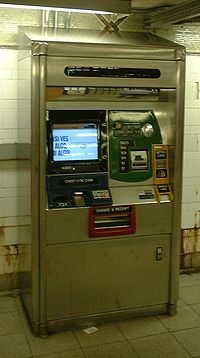
CU Blog - MetroCard - Model for CCB - Photo 2MetroCard Vending Machines (MVMs) are machines located in all subway stations and transit centers. They debuted on January 25, 1999 and are now found in two models. Standard MVMs are large vending machines that accept cash, credit cards, and debit cards and are in every subway station. Cash transactions are required for purchases of less than $1, and they can return up to $8 in coin change. There are also smaller versions of these machines that only accept credit and ATM/debit cards. Both machines allow a customer to purchase any type of MetroCard through a touch screen. The MVM can also refill to previously issued cards. PATH fare vending machines can also dispense MetroCards.

The machines are compliant with the Americans with Disabilities Act of 1990 through use of braille and a headset jack.

Neighborhood MetroCard Merchants

MetroCards can be sold by retail merchants not affiliated with MTA. Vendors can apply to sell MTA fare media at their businesses. Only presealed, prevalued cards are available, and no fee is charged.

Future

In 2006 the MTA and Port Authority of NY/NJ announced plans to replace the magnetic strip with smart cards.

On July 1, 2006, MTA launched a six-month pilot program to test the new “contact-less” smart card fare collection system, initially ending on December 31, 2006 but extended until May 31, 2007. This program was tested at all stations on the IRT Lexington Avenue Line and at four stations in the Bronx, Brooklyn and Queens. The testing system utilized Citibank MasterCard’s PayPass keytags. This smart card system is intended to ease congestion near the fare control area by reducing time spent at paying for fare. MTA and other transportation authorities in the region say they will eventually implement system-wide.

Beginning October 7, 2012, MetroCard vending machines scattered throughout Manhattan dispensed something other than the classic blue and gold MetroCard. The MTA has begun to sell advertisement space on the front and back of the card to raise additional revenue. The 2012 ad appearing on the cards was purchased by The Gap [retail stores] and reads: “Be Bright NYC” with multicolored letters on a navy blue background. It encourages New Yorkers to visit Gap’s newly remodeled flagship store at 34th   Street and Broadway starting October 10, 2012. Customers who present the MetroCard at any Gap store were entitled to a 20% discount on merchandise purchases through November 18, 2012. The MTA has been running advertisements on the back of MetroCards since its inception, earning advertiser fees along with expired card value (accruing when purchased fares wind up not being used on a card deemed a collectible by fans). Deals were arranged as early as 1997. However, this Gap deal is the first time the front of the cards have changed in over 10 years. Approximately 10% of the MetroCards sold throughout the system in a typical month will carry the Gap advertising. Future MetroCard advertising campaigns will include the word “MetroCard” on the back of the card, flush right in the white space above the zone available for advertising.

Bad Actors: Fraud and Scams

The MetroCard system is susceptible to various types of frauds, perpetrated by con artists. Usually these frauds involve the con artist preventing or dissuading the commuter from using his or her own MetroCard, and then charging the commuter for entry to the system (entry is gained by a method that costs the con artist nothing).

Also, MetroCard Vending Machines are programmed to disable the bill or coin acceptor after a series of rejected bills or coins, which can result in a row of MVMs all saying “No Bills” or “No Coins”.

CU Blog - MetroCard - Model for CCB - Photo 3If a con artist is not using a stolen or broken card, he or she can use an array of unlimited cards. Multiple cards are needed because of the 18-minute delay between each swipe at the same station. Using unlimited cards, a con artist is able to sell rides for $1 instead of $2.

A report from New York State Senator Martin J. Golden claims this scam is costing the MTA $260,000 a year, and some con artists are making up to $800 a day executing it. All aspects of this scam have been recently prohibited by MTA policy and a New York State law.

The introduction of MetroCards did eliminate one class of criminals. When the NYC subway still used tokens, token suckers would steal tokens by jamming turnstile coin slots, waiting for unsuspecting passengers to deposit tokens (only to discover that the turnstile did not work), then returning to suck out the token. The retirement of tokens in 2003 put the token suckers out of commission.

The MetroCard does have a magnetic stripe, but both the track offsets and the encoding differ from standard Magstripe cards. It is a proprietary format developed by the contractor Cubic. Off-the-shelf reader/writers for the standard cards are useless, and even hypothetically could work only with both physical and software modification. Some have had partial success decoding it using audio tape recorder heads, laptop sound cards, and custom Linux software.
Source: Wikipedia Online – encyclopedic source; retrieved 08/18/2014 from: http://en.wikipedia.org/wiki/MetroCard_(New_York_City)

——————————————-

Appendix VIDEO – Which New York City Subway MetroCard to Buy – https://youtu.be/dB05rRU0qVE

Published on Jan 23, 2015 – Should you buy a pay-per-ride or an unlimited New York City Subway MetroCard? Watch this video for tips on which to buy and how to buy them at the vending machines. Check out the full article on Free Tours by Foot’s website at http://www.freetoursbyfoot.com/how-to…


Share this post:
, , ,
[Top]

A Lesson in Economic Fallacies – Casino Currency – US Dollars?

Go Lean Commentary

CU Blog - Casino Currency - US Dollars Not The Only Option - Photo 1If you go to a casino and win in their games of chance, what do you win?

If you go to a casino and lose in their games of chance, what do you lose?

In both cases the answer is money.

This is still true even though the gamer may cash-in the common currency of a country at the start of the session for tokens, chips or e-Cards. The tokens or chips become a nominal or fiat currency themselves; their value is set by the issuer to be any denomination they want – they may choose to make $100 chips Blue, $1000 chips Green and $10,000 chips Red or any combination. The only thing that matters is the cash-out process: when the gamers wants to receive real world currency value for any chips in hand.

Yes, this is the business model of casinos, but it is based on the principles of economics. The quest to reform and transform Caribbean economy could be based on this model; this is the case with the book Go Lean … Caribbean. The book details the mission to elevate the Caribbean societal engines starting with economics, or more simply: money. This brings so many questions to the fore:

What is money and how do we define it? Why must we define it? Aren’t we all familiar with the dynamics of the money or currency in our wallets and purses? How does the common currency fit into this discussion?

First the definition is important so as to dispel the concern about currency as opposed to money; money is not just currency and currency is not just money. Currency relates to a national designation (US dollar, British pounds, Chinese Yuan) or a regional designation like the Euro or the Eastern Caribbean/EC dollar. Money, on the other hand is a matter of four (4) functions [22]:

A Medium – When money is used to intermediate the exchange of goods and services, it is performing a function as a medium of exchange. Money’s most important usage is as a method for comparing the values of dissimilar objects.

A Measure – A unit of account is a standard numerical monetary unit of measurement of the market value of goods, services, and other transactions. Also known as a “measure” or “standard” of relative worth and deferred payment, a unit of account is a necessary prerequisite for the formulation of commercial agreements that involve debt. Money acts as a standard measure and common denomination of trade. It is thus a basis for quoting and bargaining of prices.

A Standard – A “standard of deferred payment” is an accepted way to settle a debt – a unit in which debts are denominated, and the status of money as legal tender, that may function for the discharge of debts. When debts are denominated in money, the real value of debts may change due to inflation and deflation.

A Store – Money acts as a store of value; it must be able to be reliably saved, stored, and retrieved – and be predictably usable as a medium of exchange when it is retrieved. The value of the money must also remain stable over time. Some have argued that inflation, by reducing the value of money, diminishes the ability of money to function as a store of value.
Source: Retrieved July 10 from: https://en.wikipedia.org/wiki/Money#Functions

CU Blog - Casino Currency - US Dollars Not The Only Option - Photo 1bCasino currencies (tokens, chips and e-Cards) perform all these 4 functions; and more – see the Appendix VIDEO below. The common currency for casino operations can be any currency the operators designate; so why do Caribbean operators always designate US dollars?

This question exposes an Economic Fallacy in the Caribbean region, that significant financial transactions must be in US dollars ($), even in Caribbean casinos. While this must be addressed and remediated, obviously the issues at hand are bigger than just Casino gaming. No, the issues in this commentary address technocratic management for currencies in general.

This commentary is the 6 of 6 from the Go Lean movement on the subject of Economic Fallacies. As related in the previous submissions in this series, the situation in the Caribbean region is likened to the imagery of an animal foraging for food, but then gets distracted and “chases a squirrel up a tree”. The squirrel in the tree will never be a meal; it is just a waste of time and energy for the animal. This analogy conveys the waste of time associated with a frivolous and fallacious pursuit. The other commentaries detailed in this series are as follows:

  1. Independence – Hype of Hope
  2. Austerity – Book Review: Mark Blyth’s “History of a Dangerous Idea”
  3. Education & Student Loans – Not a good Return on Investment
  4. Phillips Curve – Fallacy of Minimum Wage
  5. Self-regulation of the Centers of Economic Activity
  6. Casino Currency – US Dollars?

All of these commentaries are economic in nature. They refer to rules for managing the valuable resources of time, talents and treasuries. There are rules for winning and common mistakes that results in losing. Normally these fallacies are easily discernible after the fact, more so than before hand. So history and good-bad lessons on currency management can be extremely helpful to our Caribbean quest. This is a mission of the Go Lean book, to fortify a strong monetary foundation to ensure forward progress in currency matters in the region.

This book Go Lean…Caribbean serves as a roadmap to introduce and implement the technocratic Caribbean Union Trade Federation (CU) and the Caribbean Central Bank or CCB (a cooperative of central banks), to serve as a regional/super-national entity to shepherd the economic, security and governing engines of the 30 Caribbean member-states. Being technocratic includes studying and applying best-practices, while avoiding fallacies in government oversight. This mission was pronounced in the Go Lean book with this quotation (Page 45):

Fortify the stability of our mediums of exchange, by facilitating our monetary needs through a Currency Union, the Caribbean Dollar (C$), and establishing a Caribbean Central Bank.

There are economic challenges facing the Caribbean, including within the banking community. There is the need for some comprehensive solutions for all of the 30 member-states in the Caribbean. Many of the countries are independent states (16); the remainder are overseas territories of major powers: 6 British, 3 Dutch/Netherlands, 3 French and the 2 American: US Virgin Islands (USVI) and Puerto Rico (PR).

According to the Go Lean book (Page 150), many non-American Caribbean territories – British overseas Territory of the Turks & Caicos Islands, plus the Dutch territories of Bonaire, Sint Eustatius, Saba – use the US dollar as their primary currency.

The historicity of central banking in Puerto Rico helps us to understand how the concepts of fiat currencies can be structured to elevate the regional economy. See the encyclopedic reference here regarding this subject:

Title: Puerto Rico and Central Banking
Central Banking was established in Puerto Rico during its Spanish colonial days. The island began producing banknotes in 1766,  becoming the first colony in the Spanish Empire to print 8-real banknotes with the Spanish government’s approval. After the dissolution of Spain’s New World Empire with the independence of the mainland countries (Mexico, Central and South America, etc), the colonial government in Puerto Rico ordered the issue of provincial banknotes, creating the Puerto Rican peso. However, printing of these banknotes ceased after 1815. During the following decades, foreign coins became the widespread currency. In the 1860s and 1870s, banknotes re-emerged. On February 1, 1890, the Spanish Bank of Puerto Rico (Banco Español de Puerto Rico) was inaugurated and began issuing banknotes, followed 5 year later with peso coins.

On August 13, 1898, the Spanish–American War ended with Spain ceding Puerto Rico to the United States. The Banco Español de Puerto Rico was renamed Bank of Porto Rico and issued bills equivalent to the United States dollar, creating the Puerto Rican dollar. In 1902, the First National Bank of Porto Rico issued banknotes in a parallel manner. Two more series were issued until 1913. After Puerto Rico’s economy and monetary system was fully integrated into the United States’ economic and monetary system, the Puerto Rican dollars were redeemed for those issued by the United States Treasury.

Today, Central Banking in the Commonwealth of Puerto Rico is expressed through 2 governmental entities, one local and one at the US Federal level. The local entity is the Government Development Bank (GDB) of Puerto Rico. The GDB, established in 1942, is the government bond issuer, intragovernmental bankfiscal agent, and financial advisor of the government of Puerto Rico.[1][2] The bank, along with its subsidiaries and affiliates, serves as the principal entity through which Puerto Rico channels its issuance of bonds. As an overview from Wikipedia.com, the different executive agencies of the government of Puerto Rico and its government-owned corporations either issue bonds with the bank as a proxy, or owe debt to the bank itself (as the bank is a government-owned corporation as well).

CU Blog - Casino Currency - US Dollars Not The Only Option - Photo 2On the US federal basis, Puerto Rico is part of the Second District, Federal Reserve Bank of New York (popularly known as the New York Fed), in its representation before the US Federal Reserve System.

The Federal Reserve Bank of New York is one of the 12 Federal Reserve Banks of the United States. It is located at 33 Liberty Street, New York, NY. It is responsible for the Second District of the Federal Reserve System, which encompasses New York State, the 12 northern counties of New Jersey, Fairfield County in Connecticut, Puerto Rico, and the U.S. Virgin Islands. Working within the Federal Reserve System, the New York Federal Reserve Bank implements monetary policy, supervises and regulates financial institutions[1] and helps maintain the nation’s payment systems.[2] See Appendix below for more details on the “New York Fed”.
Source: Retrieved July 10, 2016 from: https://en.wikipedia.org/wiki/Currencies_of_Puerto_Rico

Puerto Rico is indicative of the dysfunction in the Caribbean region – this Commonwealth is in crisis – despite almost 4 million people on the island, monetary decisions are made in New York City. The Go Lean movement (book and blogs) has consistently maintained that Caribbean problems need Caribbean solutions. The monetary policies for Puerto Rico are being made by the same stakeholders making monetary decisions for the United States. The New York Fed handles 65% of the total Federal Reserve Fedwire transactions; neither PR nor USVI register high on their priorities.

As previously related, the US Territories may have a voice in Washington, but they have no vote. Considering the downward spiral of PR’s economy  in recent years, they should not look to others for their long-term solutions. It is a fallacy to think that Caribbean people will be prioritized by foreign masters, thousands of miles away.

Caribbean people – all 30 member-states – need to come to our own aid. The Go Lean book quotes the lyrics from this song:

If there is a load you have to bear
That you can’t carry
I’m right up the road
I’ll share your load
If you just call me
—- Song: Lean On Me; Songwriters: Bill Withers

With the Go Lean roadmap, change will come to the island of Puerto Rico and all the Caribbean. The changes will include a single currency for a Caribbean Single Market, the Caribbean Dollar (C$). There are economic benefits galore. One such benefit is the money multiplier; the Go Lean book (Page 22) defines it as:

In monetary macroeconomics and banking, the money multiplier measures how much the money supply increases in response to a change in the monetary base…. there is a multiplier associated with the currency in the money supply. Therefore it goes without saying that if the Caribbean member-states trade in US dollars, then the multiplier effect is extended to the United States of America. By contrast, if the Caribbean member-states trade in Euros, then the multiplier effect goes to the stakeholders of the European Central Bank – no Caribbean state. Therefore the communities of the Caribbean must embrace, as an ethos, its own currency, the Caribbean Dollar (managed by a technocratic Caribbean Central Bank), thereby bringing local benefits from local multipliers.

Desisting from economic fallacies, there is a dose of reality in the Go Lean roadmap: the US will not allow its territories to wean off the US dollar as the currency base. But there is no controversy if the Caribbean dollar is an electronic currency for PR and USVI.

This is the plan!

The CCB, a cooperative of the existing central banks, will consolidate all reserves for the member central banks. The reserves will be a basket of currencies from the world’s most impactful currencies. Yes, that includes the US, but other currencies too. The roadmap calls for the following basket currencies to constitute Caribbean reserves:

  • US dollar
  • British pounds
  • Euros
  • Japanese Yen or Chinese Yuans

CU Blog - Casino Currency - US Dollars Not The Only Option - Photo 4There is the opportunity for the C$ deployed by the CCB to be an all electronic card/payment system; see photo here. Just like in the foregoing casino scenario, there is only the need to deliver the reserve currency, at cash-out time when an individual or company has to remit the funds in any basket currency outside the Caribbean region.

An all-electronic card would mean local transactions conducted electronically. With the onset of credit cards, debit cards and payment cards in the region as the preferred payment method, this scheme becomes more viable. Electronic settlements also allow for the easy calculation and collection of State Sale Taxes and VAT. Other benefits include:

  • Free Foreign Exchange to convert back to basket currencies – then cardholders will be more inclined to leave stored value balance on the card.
  • Free Foreign North-South Remittances: Free for these basket currencies transactions, so as to accumulate balances in the CCB “our” account.

Since casino operations can transact in any fiat currency, the Go Lean roadmap calls for modeling casinos and launching the C$ as a fiat, accounting-value-only currency at first and then eventually to graduate to banknotes and coins. This is the exact model of the Euro currency during its launch.  The EU/Euro case study provide lessons – foreign currency, inflation, sovereign defaults – that must be applied in the technocratic administration of the CU/CCB/C$. Since the Go Lean roadmap calls for the CCB to be a cooperative entity of the existing central banks in the region, this will foster interdependence among the Caribbean neighboring member-states. This need for regional stewardship of Caribbean currencies was pronounced early in the book, in the opening Declaration of Interdependence (Page 13) with these statements:

xxiv. Whereas a free market economy can be induced and spurred for continuous progress, the Federation must install the controls to better manage aspects of the economy: jobs, inflation, savings rate, investments and other economic principles. Thereby attracting direct foreign investment because of the stability and vibrancy of our economy.

xxv. Whereas the legacy of international democracies had been imperiled due to a global financial crisis, the structure of the Federation must allow for financial stability and assurance of the Federation’s institutions. To mandate the economic vibrancy of the region, monetary and fiscal controls and policies must be incorporated as proactive and reactive measures. These measures must address threats against the financial integrity of the Federation and member-states.

The planners of this new Caribbean monetary regime has documented hard-learned lessons on the issue of currency in the Caribbean region and elsewhere; (many CU member-states endured painful currency fluctuations over the past decades – on more than one occasion). So we accept that any attempt to reboot the Caribbean economic landscape must first start with a strenuous oversight of the proposed regional C$ currency.

The Go Lean book, and previous blog/commentaries, stressed the key community ethos, strategies, tactics, implementations and advocacies necessary to establish a strong Caribbean financial eco-systems and a strong currency. These points are detailed in the book; see this sample from the book as follows:

Community Ethos – Economic Principles – Economic Systems Influence Individual Choices Page 21
Community Ethos – Economic Principles – Voluntary Trade Creates Wealth Page 21
Community Ethos – Economic Principles – Consequences of Choices Lie in the Future Page 21
Community Ethos – Economic Principles – Money Multiplier Page 22
Community Ethos – Governing Principles – Lean Operations Page 24
Community Ethos – Governing Principles – Return on Investments Page 24
Community Ethos – Ways to Impact the Future – Count on the Greedy to be Greedy Page 26
Community Ethos – Ways to Impact the Greater Good Page 37
Strategy – Mission – Fortify the Stability of the Securities Markets Page 45
Strategy – Provide Proper Oversight and Support for the Depository Institutions Page 46
Strategy – e-Payments and Card-based Transactions Page 49
Tactical – Growing the Economy – Minimizing Bubbles Page 69
Tactical – Separation-of-Powers – Depository Insurance & Regulatory Agency Page 73
Anecdote – Turning Around CARICOM – Effects of 2008 Financial Crisis Page 92
Implementation – Assemble Caribbean Central Bank as a Cooperative Page 96
Implementation – Ways to Better Manage Debt – Optimizing Wall Street Role Page 114
Planning – 10 Big Ideas – Single Market / Currency Union Page 127
Planning – Lessons Learned from 2008 – Managing Economic Crises Page 136
Planning – Lessons Learned from New York City – Metro Card Payment Regime Page 137
Planning – Ways to Measure Progress Page 147
Anecdote – Caribbean Currencies Page 149
Advocacy – Ways to Grow the Economy Page 151
Advocacy – Ways to Control Inflation Page 153
Advocacy – Ways to Better Manage Foreign Exchange (fx) Page 154
Advocacy – Reforms for Banking Regulations Page 199
Advocacy – Ways to Impact Wall Street Page 200
Appendix – New York City Economy Details Page 277
Appendix – Tool-kits for Capital Controls Page 315
Appendix – Lessons Learned from Floating the Trinidad & Tobago Dollar Page 316
Appendix – Controlling Inflation – Technical Details Page 318
Appendix – e-Government and e-Payments Example: EBT Page 353

The points of effective, technocratic currency/monetary stewardship, were further elaborated upon in these previous blog/commentaries:

https://goleancaribbean.com/blog/?p=7140 Azerbaijan sets its currency on free float
https://goleancaribbean.com/blog/?p=7034 The Future of Money
https://goleancaribbean.com/blog/?p=6800 Venezuela sues black market currency website in US
https://goleancaribbean.com/blog/?p=5668 Move over Mastercard/Visa
https://goleancaribbean.com/blog/?p=4166 A Lesson in History – Panamanian Balboa
https://goleancaribbean.com/blog/?p=3858 European Central Banks unveils 1 trillion stimulus program
https://goleancaribbean.com/blog/?p=3814 Lessons from the Swiss unpegging the franc
https://goleancaribbean.com/blog/?p=2074 MetroCard – Model for the Caribbean Dollar
https://goleancaribbean.com/blog/?p=833 One currency, divergent economies
https://goleancaribbean.com/blog/?p=518 Analyzing the Data – What Banks learn about financial risks
https://goleancaribbean.com/blog/?p=360 How to Create Money from Thin Air

The quest of the Go Lean roadmap is to elevate Caribbean society and economic engines from the dysfunctional past. Reliance on the US dollar is a fallacy if we want to grow our economy; transacting in their currency will only expand their economy. We want to be a protégé of the technocratic New York Fed (see the Appendix) – for efficient monetary management – not a parasite! We want to master the process of currency management … and maximize our money supply and available credit. This is heavy-lifting, but “Yes, we can!” We can conceive, believe and achieve workable solutions.

This is the end of the series on Economic Fallacies; this case study of casino currencies is only the latest submission. There have been so many lessons to glean wisdom from in the previous submissions: independence hype, austerity, student loans, minimum wage, centers of economic activities. Let’s pay more than the usual attention to debunking these fallacies in this study of “Advanced Economics”.

All the stakeholders in the Caribbean – people, governments and institutions – are urged to lean-in to this Go Lean roadmap for the CU, CCB and the C$. The roadmap serves as turn-by-turn directions to move the region to its new destination: a better homeland to live, work and play. 🙂

Download the book Go Lean … Caribbean – now!

———–

Appendix – Federal Reserve Bank of New York

Since the founding of the Federal Reserve banking system [in 1913], the Federal Reserve Bank of New York in Manhattan’s Financial District has been the place where monetary policy in the United States is implemented, although policy is decided in Washington, D.C. by the Federal Reserve Board of Governors. The New York Fed is the largest in terms of assets of the twelve regional banks. Operating in the financial capital of the U.S., the New York Fed is responsible for conducting open market operations, the buying and selling of outstanding U.S. Treasury securities.

CU Blog - Casino Currency - US Dollars Not The Only Option - Photo 3

The Trading Desk is the office at the Federal Reserve Bank of New York that manages the FOMC Directive to sell or buy bonds.[6] Note that the responsibility for issuing new U.S. Treasury securities lies with the Bureau of the Public Debt. In 2003, Fedwire, the Federal Reserve’s system for transferring balances between it and other banks, transferred $1.8 trillion a day in funds, of which about $1.1 trillion originated in the Second District. It transferred an additional $1.3 trillion a day in securities, of which $1.2 trillion originated in the Second District. The New York Fed is also responsible for carrying out exchange rate policy by buying and selling dollars at the discretion of the United States Treasury Department. The New York Federal Reserve is the only regional bank with a permanent vote on the Federal Open Market Committee and its president is traditionally selected as the Committee’s vice chairman.

Source: Retrieved July 10, 2016 from: https://en.wikipedia.org/wiki/Federal_Reserve_Bank_of_New_York.

———–

Appendix VIDEO – The Grid from Ladbrokes – https://youtu.be/tCQ0fWV4gpg

Published on Apr 14, 2015

Australian Online Gaming Payment Card

Category – Entertainment


Share this post:
, , , ,
[Top]

Azerbaijan sets its currency on free float

Go Lean Commentary

Imagine one day you have $100 in your wallet. You put the wallet down at night, and then pick it up the next morning and now that money is only worth $70.

Depressing, isn’t it?!

CU Blog - Azerbaijan sets its currency on free float - Photo 4This is not just “make believe”. This is real! This has happened a number of times in the Caribbean past, and just happened today in an Eastern European/Western Asian country, and former Soviet Republic of Azerbaijan; with their manat currency; see Appendix. This is not “Economics 101”, but rather “Economics 901”.

This is a commentary on the frailties of the modern banking system, and the need for mastery in this field of endeavor. The banking community, in the Caribbean and elsewhere, have to master the agents-of-change in this troubling world. Factors such as: Globalization, Technology, and Climate Change. But, we will see that it’s not just banks, but consumers – the man on Main Street – as well that needs to better understand and manage these dynamics.

This introduction vividly demonstrates how banking fortunes, and misfortunes, easily affect people, all around the world. This point aligns with the book Go Lean…Caribbean; and the underlying movement by the publishers SFE Foundation; these were launched as a direct result of the banking crisis referred to as the Great Recession of 2008. One purpose of the book was to apply lessons learned from the 2008 experience in the quest to empower and optimize Caribbean life and society. In addition to the banking dysfunctions that year, global petroleum prices also wreaked havoc on the world’s economy. (The demand for crude oil is now a “wild card” with the new thrust to adapt Green Energy solutions to arrest Climate Change).

There is now a new set of challenges facing the international (central) banking community. This time with currency valuations, as in this case of Azerbaijan; see the news article here and the Appendix below for detailed definitions:

Title: Azerbaijan sets its currency on free float

Azerbaijan Floating Rate

BAKU, Azerbaijan (AP) — Oil-rich Azerbaijan has let its currency float freely, leading to its sharp depreciation as global oil prices hit new lows.

Azerbaijan’s Central Bank said Monday’s move to let the manat fluctuate was made to “preserve hard currency reserves … and ensure the national economy’s competitiveness on the international arena.”

Following the move, the manat fell by 32 percent. One manat, which was worth around $0.95 Friday, was now trading at $0.65.

The ex-Soviet nation has spent more than half of its hard currency reserves so far this year in an attempt to shore up the embattled currency.

Financial analyst Oqtay Akhverdiyev said the decision to let the manta float was “a necessary measure … what we’re now seeing is the real value of the manta.”

———-

AUDIO-VIDEO – Azerbaijan unpegs currency from dollar devalues 30% – https://youtu.be/dr1yLn_lBvI

Published on Dec 21, 2015
SUBSCRIBE TO “EYES OPEN MEDIA” https://www.youtube.com/channel/UCnLq…
SUBSCRIBE, SHARE, LIKE, AND SUPPORT. THANKS FOR ALL THE LOVE…..:)

While this foregoing article relates to international currencies and central banking, this is more than just a Wall Street issue; this is a Main Street issue. This relates fully to the laws of Supply-and-Demand. A central bank must constantly buy-and-sell foreign currencies to regulate the supply in the general market so as to stabilize the “home” currency. As economic drivers for foreign currency become challenged – such as the decline in crude oil prices for Azerbaijan – it’s takes more and more foreign “cash” reserves to regulate the international prices for “home” currencies.

This foregoing article is in consideration of the Go Lean book; it serves as a roadmap for the introduction and implementation of the technocratic Caribbean Union Trade Federation (CU) and Caribbean Central Bank (CCB) to provide better stewardship, to ensure that the economic/currency failures of the past, in the Caribbean and other regions (like Azerbaijan), do not re-occur here … again in the homeland. This all relates to foreign currency exchange (fx), an advanced subject in the field of Economics.

Economics 901 also asserts that there is now interconnectivity of the financial systems; bank/currency troubles in foreign countries easily become trouble for the Caribbean region. The assumption embedded in the Go Lean roadmap is that while there could be elasticity from these foreign financial contagions, the Caribbean is big enough (42 million people in 30 member-states, as opposed to 9.6 million in Azerbaijan alone) so as to streamline its own viable currency/financial/securities market.

There are lessons to apply from the foregoing news story. In a previous blog-commentary, these fx technical points were detailed:

Capital Controls – This is a necessary responsibility of Central Banks. The Go Lean book dives deeply into the discussion for Capital Controls; consider this direct quotation from Page 315 of the book:

Capital controls are residency-based measures such as transaction taxes, other limits, or outright prohibitions that a nation’s government can use to regulate flows from capital markets into and out of the country’s capital account. Types of capital control include exchange controls that prevent or limit the buying and selling of a national currency at the market rate, caps on the allowed volume for the international sale or purchase of various financial assets, transaction taxes, minimum stay requirements, requirements for mandatory approval, or even limits on the amount of money a private citizen is allowed to remove from the country.

Currency Manipulations – The Central Bank of Azerbaijan has the heavy-lifting tasks of manipulating the supply-and-demand equations to try and keep their currency fixed, against an international standard, like the US dollar. Most Central Banks must undertake this strategy to prevent other parties, “bad actors”, from manipulating the currency themselves. Currency manipulators can inflict harm on a country’s resources for their own personal financial gain.

Human & Capital Flight – When a country’s currency is in distress, there is the threat that citizens may flee with their capital so as to secure the value of their savings and investments. This normally means a loss of future economic activity for the educated and productive segments of society; this results in negatives on the national economy in the short-term and in the long-term. The Caribbean has been plagued with this occurrence again and again. Even now, the region has an alarming 70% brain drain rate among the college education populations of Caribbean heritage.

These lessons must be applied in the technocratic administration of the Caribbean Union Trade Federation, and the Caribbean Central Bank’s (CCB) oversight of the Caribbean Dollar (C$). The Go Lean roadmap calls for the CCB to be a cooperative entity of the existing Central Banks in the region; this will foster interdependence from the political entities allowing the motivation of the regional Greater Good. This need for regional stewardship of Caribbean currencies was pronounced early in the book, in the opening Declaration of Interdependence (Page 13) with these statements:

xxiv. Whereas a free market economy can be induced and spurred for continuous progress, the Federation must install the controls to better manage aspects of the economy: jobs, inflation, savings rate, investments and other economic principles. Thereby attracting direct foreign investment because of the stability and vibrancy of our economy.

xxv.  Whereas the legacy of international democracies had been imperiled due to a global financial crisis, the structure of the Federation must allow for financial stability and assurance of the Federation’s institutions. To mandate the economic vibrancy of the region, monetary and fiscal controls and policies must be incorporated as proactive and reactive measures. These measures must address threats against the financial integrity of the Federation and member-states.

So the planners of the new Caribbean sympathizes with the Central Bank of Azerbaijan. We have learned hard lessons on the issue of currency, as many CU member-states have had to endure painful currency fluctuations over the past decades – on more than one occasion. So we now understand that any attempt to reboot the Caribbean economic landscape must first start with a strenuous oversight of the proposed regional C$ currency.

The Go Lean book, and previous blog/commentaries, stressed the key community ethos, strategies, tactics, implementations and advocacies necessary to establish a strong Caribbean financial eco-systems and strong currency. These points are detailed in the book as follows:

Community Ethos – Economic Principles – Economic Systems Influence Individual Choices Page 21
Community Ethos – Economic Principles – Voluntary Trade Creates Wealth Page 21
Community Ethos – Economic Principles – Consequences of Choices Lie in the Future Page 21
Community Ethos – Economic Principles – Money Multiplier Page 23
Community Ethos – Governing Principles – Lean Operations Page 24
Community Ethos – Governing Principles – Return on Investments Page 24
Community Ethos – Ways to Impact the Future – Count on the Greedy to be Greedy Page 26
Community Ethos – Ways to Impact the Greater Good Page 37
Strategy – Mission – Fortify the Stability of the Securities Markets Page 45
Strategy – Provide Proper Oversight and Support for the Depository Institutions Page 46
Strategy – e-Payments and Card-based Transactions Page 49
Tactical – Growing the Economy – Minimizing Bubbles Page 69
Tactical – Separation-of-Powers – Depository Insurance & Regulatory Agency Page 73
Anecdote – Turning Around CARICOM – Effects of 2008 Financial Crisis Page 92
Implementation – Assemble Caribbean Central Bank as a Cooperative Page 96
Implementation – Ways to Better Manage Debt – Optimizing Wall Street Role Page 114
Planning – 10 Big Ideas – Single Market / Currency Union Page 127
Planning – Lessons Learned from 2008 Page 136
Planning – Lessons Learned from New York City – Wall Street Page 137
Planning – Ways to Measure Progress Page 147
Anecdote – Caribbean Currencies Page 149
Advocacy – Ways to Grow the Economy Page 151
Advocacy – Ways to Control Inflation Page 153
Advocacy – Ways to Better Manage Foreign Exchange (fx) Page 154
Advocacy – Reforms for Banking Regulations Page 199
Advocacy – Ways to Impact Wall Street Page 200
Advocacy – Ways to Impact Main Street Page 201
Appendix – Tool-kits for Capital Controls Page 315
Appendix – Lessons Learned from Floating the Trinidad & Tobago Dollar Page 316
Appendix – Controlling Inflation – Technical Details Page 318
Appendix – e-Government and e-Payments Example: EBT Page 353

As related in previous blog commentaries, there is an ebb-and-flow associated with national/regional economic stewardship. This stewardship constitutes the prime directives of the CU/Go Lean roadmap:

  • Optimization of the economic engines – “Economics 901” – in order to grow the economy and create 2.2 million jobs.
  • Establishment of a security apparatus to protect the resultant regional economic engines.
  • Improvement of Caribbean governance/administration/oversight to support these engines.

The best practice for effective stewardship of an economy’s ebb-and-flow is agile management, the ability to “plan, do and review”, adjust course, then “plan, do and review” again. The points of effective, technocratic banking/economic stewardship, were further elaborated upon in these previous blog/commentaries:

https://goleancaribbean.com/blog/?p=6800 Venezuela sues black market currency website in US
https://goleancaribbean.com/blog/?p=6563 Lessons from Iceland – Model of Recovery
https://goleancaribbean.com/blog/?p=4166 A Lesson in History – Panamanian Balboa
https://goleancaribbean.com/blog/?p=3858 European Central Banks unveils 1 trillion stimulus program
https://goleancaribbean.com/blog/?p=3814 Lessons from the Swiss unpegging the franc
https://goleancaribbean.com/blog/?p=3743 Trinidad cuts 2015 budget as oil prices tumble
https://goleancaribbean.com/blog/?p=3213 Understanding Global Crude Oil Prices – Why Gas Prices Drop Below $2
https://goleancaribbean.com/blog/?p=3028 Why India is doing better than most emerging markets
https://goleancaribbean.com/blog/?p=2930 ‘Too Big To Fail’ – Caribbean Version
https://goleancaribbean.com/blog/?p=2090 The Depth & Breadth of Remediating 2008
https://goleancaribbean.com/blog/?p=833 One currency, divergent economies
https://goleancaribbean.com/blog/?p=518 Analyzing the Data – What Banks learn about financial risks

The Go Lean quest is to elevate our society and economy from the parasite role we have assumed in the world trading cycles. We want to be a protégé not a parasite! This mastery of “Economics 901” is not easy; it is heavy-lifting. Yet still, success is conceivable, believable and achievable.

We have so many lessons to learn from this case study in Azerbaijan. Let’s pay more than the usual attention to this, and other case studies in “Economics 901”.

The Caribbean’s 30 member-states are urged to lean-in to this Go Lean roadmap for the CU, CCB and C$. This roadmap applies the best-of-the-best in terms of best-practices. It serves as turn-by-turn directions to move the region to its new destination: a better homeland to live, work and play.   🙂

Download the book Go Lean … Caribbean – now!

————–

Appendix – Azerbaijani manat

The manat (code: AZN) is the currency of Azerbaijan. It is subdivided into 100 qəpik. The word manat is borrowed from the Russian word “moneta” (coin) which is pronounced as “maneta”. Manat was also the designation of the Soviet ruble in both the Azerbaijani and Turkmen languages.

The Azerbaijani manat symbol,                         , was assigned to Unicode U+20BC in 2013. A lowercase m. or man. can be used as a substitute for the manat symbol.

History

The Azerbaijan Democratic Republic and its successor the Azerbaijani Soviet Socialist Republic issued their own currency between 1919 and 1923. The manat replaced the first Transcaucasian ruble at par and was replaced by the second Transcaucasian ruble after Azerbaijan became part of the Transcaucasian Soviet Federal Socialist Republic.

The second manat was introduced on 15 August 1992[1], following the dissolution of the Soviet Union, it had the ISO 4217 code AZM and replaced the Soviet ruble at a rate of 10 rubles to 1 manat.

From early 2002 to early 2005, the exchange rate was fairly stable (varying within a band of 4770–4990 manat per US dollar). Starting in the spring of 2005 there was a slight but steady increase in the value of the manat against the US dollar; the reason most likely being the increased flow of petrodollars (US dollars earned through exports of petroleum crude oil) into the country, together with the generally high price of oil on the world market. At the end of 2005, one dollar was worth 4591 manat. Banknotes below 100 manat had effectively disappeared by 2005, as had the qəpik coins.

On 1 January 2006, a new manat (ISO 4217 code AZN, also called the “manat (national currency)”) was introduced at a value of 5,000 old manat. [Thus the .95 US Dollar exchange rate as of late].

CU Blog - Azerbaijan sets its currency on free float - Photo 1

CU Blog - Azerbaijan sets its currency on free float - Photo 2

Source: https://en.wikipedia.org/wiki/Azerbaijani_manat retrieved December 21, 2015.

Share this post:
,
[Top]

The Future of Money

Go Lean Commentary

CU Blog - The Future of Money - Photo 3Surely the Caribbean can offer more than the African country of Kenya does. Surely?!

… and yet Kenya is providing a role model for the Caribbean to emulate, that of mobile money payment systems.

Let’s play catch-up.

Benefits await the Caribbean, more so than just playing catch-up. We can empower and elevate our economy and society. Notice here how this elevation benefits Kenya – an iconic and typical Third World country – in these news VIDEOs here:

VIDEO 1 – CBS 60 Minutes Story: The Future of Money – http://www.cbsnews.com/videos/the-future-of-money

  • … requires CBS All Access Subscription…

VIDEO 2 – Financial Times: Mobile money keeps Kenya economy moving – https://youtu.be/ayo-rgayDJE

Published on Mar 11, 2013 – Kenya has led Africa’s innovative and revolutionary embrace of mobile telephones, and the country’s technology sector has grown faster than all others in east Africa’s regional economic hub. Bob Collymore, chief executive of Safaricom, parent company of the mobile payment system M-Pesa, talks to Katrina Manson, east Africa correspondent.

This is a familiar advocacy for these Go Lean commentaries. The full width and breadth of electronic payments schemes have been examined, dissected and debated. The benefits are undeniable:

  • Instant access
  • Safer transactions
  • Expanded networks
  • Mitigating fees
  • Expanded money supply
  • Availing credit

CU Blog - The Future of Money - Photo 1
CU Blog - The Future of Money - Photo 4-newB
CU Blog - The Future of Money - Photo 5
CU Blog - The Future of Money - Photo 6-new

Previous blog-commentaries have promoted the following as advocacies integrating technology and money:

https://goleancaribbean.com/blog/?p=6635 New Security Chip in Credit Cards Unveiled
https://goleancaribbean.com/blog/?p=5668 Move over Mastercard/Visa… here comes a Caribbean Solution
https://goleancaribbean.com/blog/?p=4425 Cash, Credit or iPhone …
https://goleancaribbean.com/blog/?p=3889 Caribbean regional banks are ready to accept electronic payments transactions
https://goleancaribbean.com/blog/?p=2074 MetroCard – Model for the Caribbean Dollar
https://goleancaribbean.com/blog/?p=1350 PayPal expands payment services to 10 markets
https://goleancaribbean.com/blog/?p=906 Bitcoin needs regulatory framework to change ‘risky’ image of payments
https://goleancaribbean.com/blog/?p=528 Facebook plans to provide mobile payment services

CU Blog - The Future of Money - Photo 2-newThe world is moving forward with electronic payment systems; the standard of cash registers with cash drawers have passed. Many times, establishments do not even want to accept “cash”. They want the money, but only want it electronically. Consider this photo here, it demonstrates how United Airlines – the 3rd largest airline in the world – will not even accept “cash” for travelling passengers to pay for baggage when they check-in for their flights. They want electronic money only (credit and debit cards). This photo depicts a cash-accepting kiosk to load the cash onto a pre-paid credit card … on the spot at the terminal … at the Metropolitan Detroit International Airport (DTW) in November 2015.

Those involved in tourism commerce must now adapt or perish.

What’s more, even the standard of magnetic stripe credit cards and debit cards have passed. As depicted in the foregoing VIDEO and previously Go Lean blog-commentaries, those involved in retail commerce – in general – must now adapt (or perish) to credit and debit cards … without the card!

This means you, Caribbean merchants (hotels, restaurants, tour operators, retailers, and business establishments). The environment must now change for tourism commerce and ordinary domestic commerce. The stewardship of Caribbean economics must improve to adapt to this changing world. This is a consistent advocacy of these Go Lean blogs: to “lean-in” to better economic stewardship as detailed in the book Go Lean … Caribbean.

The book serves as a roadmap for the introduction and implementation of the Caribbean Union Trade Federation (CU) and the Caribbean Central Bank (CCB). This Go Lean roadmap depicts that these entities will drive change in payment systems, to includes options depicted in the foregoing VIDEO and beyond. Their role will include facilitating and settling transactions for new payment systems: new cards and telephony apps. The Go Lean roadmap calls for a regional currency for the Caribbean Single Market, the Caribbean Dollar (C$), to be used primarily as an electronic currency. These schemes will impact the growth of the regional economy in both the domestic and tourist markets. Consider the real scenario of Cruise Ship passenger-commerce; the solutions must be delivered here and now.

The CU/CCB roadmap anticipates these electronic payment systems from the outset of the Go Lean book; covering more than commerce, but the security and governing issues as well. In fact, the Go Lean roadmap has these 3 prime directives:

  • Optimization of the economic engines in order to grow the regional economy to $800 Billion & create 2.2 million new jobs.
  • Establishment of a security apparatus to protect the resultant economic engines.
  • Improvement of Caribbean governance to support these engines.

As depicted in the foregoing VIDEO, there abound many security benefits with electronic payment schemes, mobile money in this case. In the field of Economics, the “cash currency” is referred to as M0. No doubt, changes for electronic payment system will reduce M0. The greatest benefit though of deploying these electronic payment scheme is the acceleration of M1 in the regional economy. While M0 refers to “cash: paper & coins”, M1 refers to the measurement of “cash” in circulation (the M0) plus overnight bank deposits. As depicted in the Go Lean book, and subsequent blog-commentaries, M1 increases allow central banks – in this case, the CCB – to create money “from thin-air”; referring to the money multiplier principle.

A final feature of M1 is that it normally does not include any Black Market activities. But with electronic payment systems, M0 reduces and M1 increases, thusly nullifying the Black Markets.

The Go Lean book posits that to adapt and thrive in the new global marketplace there must be more strenuous management and technocratic oversight of the region’s currencies. This is the quest of the Go Lean roadmap; it opened with these pronouncements in the Declaration of Interdependence (Page 13 and 14):

xxiv.   Whereas a free market economy can be induced and spurred for continuous progress, the Federation must install the controls to better manage aspects of the economy: jobs, inflation, savings rate, investments and other economic principles. Thereby attracting direct foreign investment because of the stability and vibrancy of our economy.

xxv.    Whereas the legacy of international democracies had been imperiled due to a global financial crisis, the structure of the Federation must allow for financial stability and assurance of the Federation’s institutions. To mandate the economic vibrancy of the region, monetary and fiscal controls and policies must be incorporated as proactive and reactive measures. These measures must address threats against the financial integrity of the Federation and of the member-states.

xxvii. Whereas the region has endured a spectator status during the Industrial Revolution, we cannot stand on the sidelines of this new economy, the Information Revolution. Rather, the Federation must embrace all the tenets of Internet Communications Technology (ICT) to serve as an equalizing element in competition with the rest of the world. The Federation must bridge the digital divide and promote the community ethos that research/development is valuable and must be promoted and incentivized for adoption.

The Go Lean book details a series of community ethos, strategies, tactics, implementations and advocacies to foster the proper controls for electronic/mobile payments in the Caribbean region:

Community Ethos – Economic Principles Page 21
Community Ethos – Money Multiplier Principle Page 22
Community Ethos – Security Principles – Privacy versus Public Protection Page 23
Community Ethos – Governing Principles – Lean Operations Page 24
Community Ethos – Governing Principles – Cooperatives Page 25
Community Ethos – Promote Intellectual Property Page 29
Community Ethos – Ways to Bridge the Digital Divide Page 31
Community Ethos – Ways to Improve Sharing Page 35
Community Ethos – Ways to Impact the Greater Good Page 37
Strategy – Mission – Fortify the monetary needs through a Currency Union Page 45
Tactical – Separation of Powers – Central Banking Page 73
Implementation – Assemble Central Bank Cooperative Page 96
Implementation – Assemble Caribbean Regional Organs Page 96
Implementation – Ways to Deliver Page 109
Planning – 10 Big Ideas – #2: Currency Union / Single Currency Page 127
Anecdote – Caribbean Currencies Page 149
Advocacy – Ways to Grow the Economy Page 151
Advocacy – Ways to Create Jobs Page 152
Advocacy – Ways to Mitigate Black Markets Page 165
Advocacy – Ways to Foster Cooperatives Page 176
Advocacy – Ways to Impact Cruise Tourism – Smartcard scheme Page 193
Advocacy – Ways to Foster Technology Page 197
Advocacy – Ways to Foster e-Commerce Page 198
Advocacy – Reforms for Banking Regulations – Central Banking Efficiencies Page 199
Advocacy – Ways to Impact Main Street – Downtown Wi-Fi – Time and Place Page 201
Appendix – Assembling the Caribbean Telecommunications Union Page 256

The world of electronic payment systems now includes smart cards, mobile payments (like “M-Pesa” in the foregoing VIDEO and apps on Google’s Android and Apple’s iPhone devices). To those in the Caribbean, we admonish you:

Try and keep up!

The benefits of this new “regime” are too enticing to ignore: fostering more e-Commerce, increasing regional M1, mitigation of Black Markets, more cruise tourism spending, growing the economy, creating jobs, enhancing security and optimizing governance.

Now is the time for all stakeholders of the Caribbean, (residents, visitors, merchants, vendors, bankers, and governing institutions), to lean-in for the empowerments described in the book Go Lean … Caribbean. These empowerments can help to make the Caribbean a better place to live, work and play.  🙂

Download the free e-Book for Go Lean … Caribbean – now!

Share this post:
, , , , ,
[Top]

Venezuela sues black market currency website in US

Go Lean Commentary

Circa 1983*, American banks came to grips with the new reality: the old days of 3-6-9 were over, it was now a 24-7-365 world.

3-6-9 refers to the only numbers bankers were required to know: Borrow at 3%; lend at 6%; open the doors at 9am; close the doors at 3pm.

These banks were then faced with these new agents-of-change: Technology, Competition and Deregulation.

Thus started the perilous slide of banking down the path of instability. Two crisis would present themselves in the next 25 years: Savings & Loans Crisis of 1980s/1990s and the Great Recession of 2008. The world is still reeling from these events; this applies to American and International markets; Wall Street and Main Street.

(* In Winter 1983, this writer was an MBA-Commercial Bank Administration student studying the unfurling of these events).

The book Go Lean…Caribbean,  and the underlying movement by the publishers SFE Foundation, was forged as a direct result of the 2008 crisis. The purpose was to apply lessons learned from this American experience in the quest to empower the Caribbean. The book identified additional agents-of-change (i.e. Globalization, Climate Change, Aging Diaspora, etc.) and the battle plan to contend with them all.

Now comes a crisis for Venezuela, but the opportunity is still the same: apply the lessons learned.

The Central Bank of Venezuela has filed a lawsuit in US courts against Miami-based entity DolarToday, alleging that this website undermines the Venezuelan bank, currency and economy by falsifying the country’s exchange rates.

CU Blog - Venezuela sues black market currency website in US - Photo 2

This is a serious issue! See the news article here and the Appendices below for detailed definitions:

Title: Venezuela sues black market currency website in United States
By: Andrew Cawthorne

CARACAS (Reuters) – Venezuela’s Central Bank filed a lawsuit on Friday with allegations of “cyber-terrorism” against a U.S.-based website that tracks the OPEC member’s currency black market.

The DolarToday site has enraged President Nicolas Maduro’s government by publishing a rate in Venezuelan bolivars for the greenback far higher than the three official levels under Venezuela’s 12-year-long currency controls.

The rate has become an unofficial marker in the crisis-ridden economy, with some Venezuelans using it in private transactions or to fix prices of imported goods.

The lawsuit, in the U.S. District Court for the District of Delaware, named three Venezuelans in the United States as being behind the site: Gustavo Diaz, Ivan Lozada and Jose Altuve.

A representative of DolarToday could not immediately be reached by email or telephone for comment.

The Central Bank requested both an injunction and damages, accusing the three of fanning inflation in Venezuela, the world’s highest, and enriching themselves by illegal trading.

“Defendants conspired to use a form of cyber-terrorism to wreak, and in fact they have wreaked, economic and reputational harm on the Central Bank by impeding its ability to manage the Republic’s economy and foreign exchange system,” the lawsuit said.

DolarToday, which takes an aggressively anti-Maduro stance in its publications and says it calculates its rate based on trades on the Venezuela-Colombia border, quoted the dollar at 820 bolivars on Friday.

That is 130 times the strongest official rate of 6.3 bolivars and four times the government’s weakest rate of 200.

Maduro, a former bus driver and foreign minister who won election to replace Hugo Chavez in 2013, frequently lambastes DolarToday as part of an international capitalist conspiracy to sabotage the economy and undermine socialism in Venezuela.

“Arbitrarily manufacturing currency exchange rates creates further turmoil in a country that is working to overcome the obstacles it already faces,” said Adam Fox, a lawyer for U.S. law firm Squire Patton Boggs, which represents the bank.

Critics say Venezuela’s economic mess, with Gross Domestic Product shrinking and shortages widespread, is the result of hardline state policies such as currency controls.

The Central Bank estimated a million people visit the DolarToday site daily. Its Twitter account has 1.93 million followers. “Defendants have been playing ‘a cyber cat-and-mouse game’,” to circumvent government blocks, it said.

Central Bank officials in Caracas had no immediate comment.

(Additional reporting by Corina Pons in Caracas and Diane Bartz in Washington; editing by Grant McCool)
Source: Reuters News Wire – (Posted 10/23/2015; retrieved 10/26/2015) – http://news.yahoo.com/venezuela-sues-black-market-currency-website-united-states-215856233–business.html

This article is in consideration of the book Go Lean…Caribbean; it serves as a roadmap for the introduction and implementation of the technocratic Caribbean Union Trade Federation (CU) and Caribbean Central Bank (CCB) to provide better stewardship, to ensure that the economic and currency failures of the past, in the Caribbean and other regions (like Venezuela), do not re-occur here … again in the homeland.

There is now interconnectivity of the financial systems; see VIDEO in the Appendix below. Troubles for any bank or any currency in foreign countries easily become trouble for the Caribbean region. Plus, Venezuela is a trading partner with most of the Caribbean with the PetroCaribe initiative. The assumption embedded in the Go Lean roadmap is that there could be elasticity from foreign financial structures, but that the Caribbean is big enough – when integrated into a Single Market of 42 million people in the 30 member-states – and can thusly streamline its own viable currency/financial/securities market.

There are many issues (and lessons) in play with the foregoing news story:

o   Cyber-terrorism – from distant corners of the world, a “bad actor” can wreak havoc on a society’s economic engines with the aid of Information & Internet Communication Technologies (ICT). This is a serious allegation the officials of Venezuela is leveling against this website; they have used the term cyber-terrorism, so as to avail themselves of prosecutorial resources in the US and other countries who are conducting a “War on Terrorism”.

o   Capital Controls – the Go Lean book dives deeply into the discussion for Capital Controls; consider this direct quotation from Page 315 of the book:

    Capital controls are residency-based measures such as transaction taxes, other limits, or outright prohibitions that a nation’s government can use to regulate flows from capital markets into and out of the country’s capital account. Types of capital control include exchange controls that prevent or limit the buying and selling of a national currency at the market rate, caps on the allowed volume for the international sale or purchase of various financial assets, transaction taxes, minimum stay requirements, requirements for mandatory approval, or even limits on the amount of money a private citizen is allowed to remove from the country.

o   Currency Manipulations – bad actors emerges in many different scenarios. While not assigning blame nor casting judgement on the case in the foregoing article, it is fully acknowledged that currency manipulators can inflict harm on a country’s resources and perceived brand or image … for their own financial gain.

o   Black Markets – the quest for economic command-and-control runs counter to Black Markets. But electronic payment systems are effective at mitigating these Black Markets.

o   Human & Capital Flight – when a country’s currency is in distress, there is the threat that citizens may flee with their capital so as to secure the value of their savings and investments. The Caribbean has been plagued with this occurrence again and again. Even now, the region has an alarming 70% brain drain rate among the college-educated populations of Caribbean heritage.

The lessons from this consideration must be applied in the technocratic administration of the Caribbean Union Trade Federation, and the Caribbean Central Bank’s (CCB) oversight of the Caribbean Dollar (C$). The Go Lean roadmap calls for a cooperative entity of the existing Central Banks in the region; this will foster interdependence from the political entities allowing only the motivation of the regional Greater Good.

The planners of the new Caribbean sympathizes with the Central Bank of Venezuela. We have learned hard lessons on the issue of currency, as many CU member-states have had to endure painful devaluations over the past decades – on more than one occasion. So we understand that any attempt to reboot the Caribbean economic landscape must first start with a strenuous oversight of the proposed C$ currency – as a mostly electronic currency. Early in the book, this need for regional stewardship of Caribbean currencies was pronounced (Declaration of Interdependence – Page 13) with these statements:

xxiv. Whereas a free market economy can be induced and spurred for continuous progress, the Federation must install the controls to better manage aspects of the economy: jobs, inflation, savings rate, investments and other economic principles. Thereby attracting direct foreign investment because of the stability and vibrancy of our economy.

xxv.  Whereas the legacy of international democracies had been imperiled due to a global financial crisis, the structure of the Federation must allow for financial stability and assurance of the Federation’s institutions. To mandate the economic vibrancy of the region, monetary and fiscal controls and policies must be incorporated as proactive and reactive measures. These measures must address threats against the financial integrity of the Federation and of the member-states.

The Go Lean book, and previous blog/commentaries, stressed the key community ethos, strategies, tactics, implementations and advocacies necessary to establish a strong Caribbean financial eco-system and strong currency; plus mitigate Black Markets. These points are detailed in the book as follows:

Community Ethos – Economic Principles – Economic Systems Influence Individual Choices Page 21
Community Ethos – Economic Principles – Voluntary Trade Creates Wealth Page 21
Community Ethos – Economic Principles – Consequences of Choices Lie in the Future Page 21
Community Ethos – Economic Principles – Money Multiplier Page 23
Community Ethos – Governing Principles – Lean Operations Page 24
Community Ethos – Governing Principles – Return on Investments Page 24
Community Ethos – Ways to Impact the Future – Count on the Greedy to be Greedy Page 26
Community Ethos – Ways to Impact the Greater Good Page 37
Strategy – Mission – Fortify the Stability of the Currency and Securities markets Page 45
Strategy – Provide Proper Oversight and Support for the Depository Institutions Page 46
Strategy – e-Payments and Card-based Transactions Page 49
Tactical – Summary of Confederation Models Page 63
Tactical – Growing the Economy – Minimizing Bubbles Page 69
Tactical – Separation-of-Powers – Depository Insurance & Regulatory Agency Page 73
Anecdote – Turning Around CARICOM – Effects of 2008 Financial Crisis Page 92
Implementation – Assemble Caribbean Central Bank as a Cooperative Page 96
Implementation – Ways to Better Manage Debt – Optimizing Wall Street Role Page 114
Planning – 10 Big Ideas – Single Market / Currency Union Page 127
Planning – Lessons Learned from 2008 Page 136
Planning – Lessons Learned from New York City – Wall Street Page 137
Planning – Ways to Measure Progress Page 147
Anecdote – Caribbean Currencies Page 149
Advocacy – Ways to Grow the Economy Page 151
Advocacy – Ways to Control Inflation Page 153
Advocacy – Ways to Better Manage Foreign Exchange Page 154
Advocacy – Ways to Mitigate Black Markets Page 165
Advocacy – Ways to Foster Electronic Commerce Page 198
Advocacy – Reforms for Banking Regulations Page 199
Advocacy – Ways to Impact Wall Street Page 200
Advocacy – Ways to Impact Main Street Page 201
Appendix – Tool-kits for Capital Controls Page 315
Appendix – Lessons Learned from Floating the Trinidad & Tobago Dollar Page 316
Appendix – Controlling Inflation – Technical Details Page 318
Appendix – e-Government and e-Payments Example: EBT mitigates Black Markets Page 353

A careful study of national economies – a task of the Go Lean book – relates that there is an ebb-and-flow associated with economic stewardship. This stewardship constitutes the prime directives of the CU:

  • Optimization of the economic engines in order to grow the regional economy and create 2.2 million new jobs.
  • Establishment of a security apparatus to protect the resultant economic engines.
  • Improvement of Caribbean governance/administration/oversight to support these engines.

The best practice for effective stewardship of an economy’s ebb-and-flow is the recovery; managing the ability to “bounce back” quickly. The points of effective, technocratic banking/economic stewardship, were further elaborated upon in these previous blog/commentaries:

https://goleancaribbean.com/blog/?p=6635 New Security Chip in Credit Cards Unveiled to Mitigate Fraud/Abuse
https://goleancaribbean.com/blog/?p=6563 Lessons from Iceland – Model of Recovery
https://goleancaribbean.com/blog/?p=4166 A Lesson in History – Panamanian Balboa
https://goleancaribbean.com/blog/?p=3858 European Central Banks unveils 1 trillion stimulus program
https://goleancaribbean.com/blog/?p=3814 Lessons from the Swiss unpegging the franc
https://goleancaribbean.com/blog/?p=3582 For Canadian Banks: Caribbean is a ‘Bad Bet’
https://goleancaribbean.com/blog/?p=3397 A Christmas Present for the Banks from the Omnibus Bill
https://goleancaribbean.com/blog/?p=3028 Why India is doing better than most emerging markets
https://goleancaribbean.com/blog/?p=2930 ‘Too Big To Fail’ – Caribbean Version
https://goleancaribbean.com/blog/?p=2090 The Depth & Breadth of Remediating 2008
https://goleancaribbean.com/blog/?p=1014 Canadian View: All is not well in the sunny Caribbean
https://goleancaribbean.com/blog/?p=833 One currency, divergent economies
https://goleancaribbean.com/blog/?p=518 Analyzing the Data – What Banks learn about financial risks

The Go Lean quest is the coveted role of protégé to our North American, South American and European trading partners, not the parasite role we have thus far assumed. Though this is heavy-lifting, this is conceivable, believable and achievable.

We have so many lessons to learn from the Venezuelan Central Bank crisis. Let’s pay more than the usual attention to this bank’s effort to harness command-and-control of their currency and economic success. Let’s see how this lawsuit develops.

Class is now in session!

The Caribbean’s 30 member-states are urged to lean-in to this Go Lean roadmap for the CU, CCB and C$. This is the turn-by-turn directions, the heavy-lifting, to move the region to its new destination: a better homeland to live, work and play. 🙂

Download the book Go Lean … Caribbean – now!

————

Appendix A – VIDEO – Currency Exchange Rates and You – https://youtu.be/IYdt-16FoC4


Published on Apr 16, 2015 – You might not be an international banker, but you have more involvement in foreign currency exchange than you might realize. Kristen Fanarakis from the Center for Financial Policy at the University of Maryland’s Robert H. Smith School of Business explains how.

————

Appendix B – Venezuelan bolívar

The bolívar fuerte (sign: Bs.F.[3] or Bs.;[4] plural: bolívares fuertes; ISO 4217 code: VEF) has been the currency of Venezuela since 1 January 2008. It is subdivided into 100 céntimos[5] and replaced the original bolívar (sign: Bs.;[3] plural: bolívares; ISO 4217 code: VEB) at the rate of Bs.F. 1 = Bs. 1,000 because of inflation.

History
CU Blog - Venezuela sues black market currency website in US - Photo 1The bolívar was adopted by the monetary law of 1879, replacing the short-lived venezolano at a rate of five bolívares to one venezolano. Initially, the bolívar was defined on the silver standard, equal to 4.5g fine silver, following the principles of the Latin Monetary Union. The monetary law of 1887 made the gold bolívar unlimited legal tender, and the gold standard came into full operation in 1910. Venezuela went off gold in 1930, and in 1934 the bolívar exchange rate was fixed in terms of the U.S. dollar at a rate of 3.914 bolívares = 1 U.S. dollar, revalued to 3.18 bolívares = 1 U.S. dollar in 1937, a rate which lasted until 1941. Until 18 February 1983 (now called Black Friday (Viernes Negro) by many Venezuelans [6]), the bolívar had been the region’s most stable and internationally accepted currency. It then fell prey to high devaluation. Exchange controls were imposed on February 5, 2003 to limit capital flight.[7] The rate was pegged to the U.S. dollar at a fixed exchange rate of 1600 VEB to the dollar.

Bolívar fuerte
The government announced on 7 March 2007 that the bolívar would be revalued at a ratio of 1 to 1000 on 1 January 2008 and renamed the bolívar fuerte in an effort to facilitate the ease of transaction and accounting.[8] The new name is literally translated as “strong bolívar”,[9][10] but also references an old coin called the Peso fuerte worth 10 Spanish reales.[11]. (Fuerte = Spanish Strong)

The name “bolívar fuerte” was only used temporarily to distinguish it from the older currency that was being used along with the bolívar fuerte.[12]

The Central Bank of Venezuela promoted the new currency with an ad campaign and the slogan: “Una economía fuerte, un bolívar fuerte, un país fuerte” (lit. “a strong economy, a strong bolívar, a strong country”).

Some estimations suggest that the government spent more than US$320 million to introduce the new currency.

On 8 January 2010, the value was changed by the government from the fixed exchange rate of 2.15 bolívares fuertes to 2.60 bolívares for some imports (certain foods and healthcare goods) and 4.30 bolívares for other imports like cars, petrochemicals, and electronics.[13]

On 4 January 2011, the fixed exchange rate became 4.30 bolívares for 1.00 USD for both sides of the economy.

It should be noted that the official exchange rate is restricted to individuals by National Center for Foreign Commerce (CADIVI), which imposes an annual limit on the amount available for travel (up to $3000 annually depending on the location and duration of travel) and $400 for electronic purchases.

Since the government of Hugo Chavez established strict currency controls in 2003, there have been a series of five currency devaluations, disrupting the economy.[14] The last devaluation was on 13 February 2013 (to 6.30 bolivars per dollar), in an attempt to counter budget deficits.[15]

Currency black market
The black market value of the bolívar fuerte has been significantly lower than the fixed exchange rate. In November 2013, it was almost 10 times lower than the official fixed exchange rate of 6.3 bolívares per U.S. dollar.[16] In September 2014, the currency black market rate for the Bolivar Fuerte reached 100 VEF/USD;[17] on 25 February 2015, it went over 200 VEF/USD.[18] on 07 May, 2015, it was over 275 VEF/USD and on 22 September, 2015, it was over 730 VEF/USD.[19] Venezuela still had the highest inflation rate in the world, As of July 2015[update].[20]

It is illegal to publish the “parallel exchange rate” in Venezuela.[2] One company that publishes parallel exchange rates is DolarToday, which has also been critical of the Maduro government.[21]

Source: https://en.wikipedia.org/wiki/Venezuelan_bol%C3%ADvar retrieved October 26, 2015.

————

Appendix C – DolarToday

DolarToday is an American website that focuses on Latin American politics and finance. The company is more known for being an exchange rate reference to the Venezuelan bolívar, a currency which is not freely convertible;[2] it also known for the company’s focus in monitoring the Venezuelan economy.[3]

Background
DolarToday was founded on May 18, 2010. It is headquartered in Miami, Florida, United States. Prior to the election of Nicolás Maduro in 2013, DolarToday was the second most popular exchange rate reference in Venezuela, behind of Lechuga Verde. However, when a scandal had caused the demise of the Lechuga Verde,[4] DolarToday became the most popular exchange rate reference.[2]

According to BBC Mundo, DolarToday was founded as “a form of protest against a dictatorship increasingly committed to silence and intimidate the media in Venezuela.”[5] Up until today, the company’s website publishes criticisms about the Maduro administration which the founder states “are selected by the site’s writers based in Venezuela”.[2][1]

Exchange rates
Since its inception, DolarToday has provided black market exchange rates that are updated daily for Venezuelans who cannot exchange currencies with the Venezuelan government for the dwindling supply of the US dollar.[1] The company based its computed exchange rates of the Venezuelan bolívar to the United States dollar from the fees on trades in Cúcuta, Colombia, a city near the border of Venezuela.[6] Currently, with no other reliable source other than the black market exchange rates, these rates are used by Reuters, CNBC, and several media news agencies and networks.[7][8] The Economist states that the rates calculated by DolarToday are “erratic”, but that they are “more realistic than the three official rates” released by the Venezuelan government.[9] The website maintains that the rates are not manipulated in order to undercut the Venezuelan government.[2]

Today the exchange rate of Venezuelan currency, monitored and governed by the Central Bank of Venezuela, is prohibited by the Venezuelan government from being accessed by its citizens. Thus, the exchange rates posted by DolarToday are only accessible outside Venezuela.[10]

Censorship
According to DolarToday, the Venezuelan government had been attempting to censor the website since November 2013.[1] In March 2015, in a televised appearance, Maduro told the nation that he will ask United States [President] Barack Obama for the capture of the owners of the company.[13] In a press statement published in the government’s website, Maduro’s government said that it will exert all legal means against the company in response for defaming the Venezuelan economy.[14] That month, the Venezuelan government attempted to censor the website and brought down websites Amazon, Snapchat, and Pinterest in the process.[15]

Since President Maduro made such comments, DolarToday began to face blockages of their website almost every hour in Venezuela.[1] DolarToday then began using mirror sites on content distribution networks, placing cryptic links on their social media pages to such sites since foreign social media sites are difficult for the Venezuelan government to censor.[1] Each time a mirror site is blocked by the Venezuelan government, DolarToday begins to use a new one, with website engineers finding “ways to automatically create a new mirror site every 20 minutes”. [1]

Source: https://en.wikipedia.org/wiki/DolarToday retrieved October 26, 2015.

Share this post:
, , , , ,
[Top]

New Security Chip in Credit Cards Unveiled

Go Lean Commentary

CU Blog - New Security Chip in Credit Cards Unveiled - Photo 1Big changes are coming to credit cards, as of today, Thursday, October 1, 2015.

The credit card industry is advancing, moving forward. The Caribbean should likewise be advancing, moving forward.

A previous blog-commentary demonstrated that the region’s banks are ready to accept electronic payment transactions, that their deployment of credit card terminals allow the introduction of the Caribbean Dollar (C$) as a regional currency. Well now, those terminals need to be upgraded …

… or the merchants will suffer the resultant risks.

CU Blog - New Security Chip in Credit Cards Unveiled - Photo 2The world has already moved forward from the standard of magnetic stripe cards. The present is now smart cards…or no card at all; (payment apps on Google’s Android and Apple’s iPhone devices proliferate). The future of the credit, debit and payment card is more than a card, it’s a “computer science laboratory” in a pocket or purse!

Yes, payment systems in the Caribbean region must be ready for this new world of electronic commerce.

Getting the region ready was the mission of the book Go Lean … Caribbean, a roadmap for the introduction and implementation of the Caribbean Union Trade Federation (CU) and the Caribbean Central Bank (CCB). This Go Lean roadmap depicts these entities as hallmarks of technocratic efficiency; agile to not just keep pace of technology and market changes but also to drive change as well. This ability is necessary for new payment systems, new cards and new settlement schemes. The Go Lean roadmap calls for a regional currency for the Caribbean Single Market, the Caribbean Dollar (C$), to be used primarily as an electronic currency. These schemes will impact the growth of the regional economy in both the domestic and tourist markets. Consider this one CU scheme to incentivize more spending among cruise line passengers:

CU Blog - New Security Chip in Credit Cards Unveiled - Photo 3The cruise industry needs the Caribbean more than the Caribbean needs the industry. But the cruise lines have embedded rules/regulations designed to maximize their revenues at the expense of the port-side establishments. The CU solution is to deploy a scheme for smartcards (or smart-phone applications) that function on the ships and at the port cities. This scheme will also employ NFC technology – (Near Field Communications; defined fully at Page 192 – so as to glean the additional security benefits of shielding private financial data of the guest and passengers.

This is an example of an electronic payment system facilitating more commerce (e-Commerce). So the CCB will settle all C$ electronic transactions – cashless or accounting currency – in a MasterCard-Visa-style interchange / clearinghouse system.

As of October 1, 2015 bankcards must possess a smartchip, or assume the risk of fraud transactions; see VIDEO below. The CU/CCB roadmap anticipated smartchips from the outset of the Go Lean book, as this covers more than just commerce, but addresses security as well. Commerce, security and (bank) governance – these are all societal engines that must be optimized for societal progress. In  fact, the Go Lean roadmap has these 3 prime directives:

  • Optimization of the economic engines in order to grow the regional economy to $800 Billion & create 2.2 million new jobs.
  • Establishment of a security apparatus to protect the resultant economic engines.
  • Improvement of Caribbean governance to support these engines.

So the electronic payments schemes being considered by the rest of the world in the following article, are already envisioned for deployment in the Caribbean region:

VIDEO – New Security Chip in Credit Cards Unveiled – http://abcnews.go.com/WNT/video/security-chip-credit-cards-unveiled-34114798

Posted September 28, 2015 – New law required each card to be outfitted with a credit card chip that makes it harder to steal personal information.

The benefits of these technologies, as related in the foregoing VIDEO, cannot be ignored for their security features. Previously this commentary explored the issues associate with cyber-security and data breaches. With tourism as the primary economic driver, the Caribbean region cannot invite millions of visitors to our homeland and then ignore their need for protection; the kind of protection that has become standard in this new world of heightened information security.

The Go Lean roadmap calls for the CU to regulate the region’s Communications and Media affairs – federal Department of Commerce – under a separation-of-power mandate with the member-states. This authority must be super-national and have purview for cross-border environments.

With the CCB taking the lead for this deployment, the effort is not meant to be technical, but rather economic. The greatest benefit of deploying these electronic payment scheme is the acceleration of M1 in the regional economy; this is the measurement of currency/money in circulation (M0) plus overnight bank deposits. As depicted in the Go Lean book, and subsequent blog-commentaries, M1 increases allow central banks to create money “from thin-air”; referring to the money multiplier.

The Caribbean region needs this benefit. The more money in the system, the more liquidity for investment and industrial expansion opportunities. Plus, the nullifying effects on Black Market spurns more benefits.

The Go Lean book posits that to adapt and thrive in the new global marketplace there must be more strenuous management and technocratic oversight of the region’s currencies, guests-tourists-ship-passenger payment cards and cyber security. This is the charge – economics, security and governance – of the Go Lean roadmap, opening with these pronouncements; Declaration of Interdependence (Page 13 and 14):

xxiv. Whereas a free market economy can be induced and spurred for continuous progress, the Federation must install the controls to better manage aspects of the economy: jobs, inflation, savings rate, investments and other economic principles. Thereby attracting direct foreign investment because of the stability and vibrancy of our economy.

xxv.  Whereas the legacy of international democracies had been imperiled due to a global financial crisis, the structure of the Federation must allow for financial stability and assurance of the Federation’s institutions. To mandate the economic vibrancy of the region, monetary and fiscal controls and policies must be incorporated as proactive and reactive measures. These measures must address threats against the financial integrity of the Federation and of the member-states.

xxvii. Whereas the region has endured a spectator status during the Industrial Revolution, we cannot stand on the sidelines of this new economy, the Information Revolution. Rather, the Federation must embrace all the tenets of Internet Communications Technology (ICT) to serve as an equalizing element in competition with the rest of the world. The Federation must bridge the digital divide and promote the community ethos that research/development is valuable and must be promoted and incentivized for adoption.

The Go Lean book details a series of community ethos, strategies, tactics, implementations and advocacies to foster the proper controls for electronic/mobile payments in the Caribbean region:

Community Ethos – Economic Principles Page 21
Community Ethos – Money Multiplier Principle Page 22
Community Ethos – Security Principles – Privacy versus Public Protection Page 23
Community Ethos – Governing Principles – Lean Operations Page 24
Community Ethos – Governing Principles – Cooperatives Page 25
Community Ethos – Promote Intellectual Property Page 29
Community Ethos – Ways to Bridge the Digital Divide Page 31
Community Ethos – Ways to Improve Sharing Page 25
Strategy – Mission – Fortify the monetary needs through a Currency Union Page 45
Tactical – Separation of Powers – Central Banking Page 73
Tactical – Separation of Powers – Department of Commerce – Communications and Media Authority Page 79
Implementation – Assemble Central Bank Cooperative Page 96
Implementation – Assemble Caribbean Regional Regulatory Organs – like CTU Page 96
Implementation – Ways to Deliver Page 109
Planning – 10 Big Ideas – #2: Currency Union / Single Currency Page 127
Anecdote – Caribbean Currencies Page 149
Advocacy – Ways to Grow the Economy Page 151
Advocacy – Ways to Create Jobs Page 152
Advocacy – Ways to Mitigate Black Markets Page 165
Advocacy – Ways to Foster Cooperatives Page 176
Advocacy – Ways to Enhance Tourism Page 190
Advocacy – Ways to Impact Cruise Tourism – Smartcard scheme Page 193
Advocacy – Ways to Foster Technology Page 197
Advocacy – Ways to Foster e-Commerce Page 198
Advocacy – Reforms for Banking Regulations – Central Banking Efficiencies Page 199
Advocacy – Ways   to Impact Main Street – Facilitating e-Commerce Page 201
Appendix – Assembling the Caribbean Telecommunications Union (CTU) Page 256

The points of effective, technocratic banking/currency stewardship and dynamic change in the mobile communications space were further elaborated upon in these previous blog/commentaries:

https://goleancaribbean.com/blog/?p=5668 Move over Mastercard/Visa
https://goleancaribbean.com/blog/?p=4425 Cash, Credit or iPhone …
https://goleancaribbean.com/blog/?p=3889 RBC EZPay – Ready for Change
https://goleancaribbean.com/blog/?p=3881 The Need for Regional Cooperation to Up Cyber-Security
https://goleancaribbean.com/blog/?p=3617 Bahamas roll-out of VAT leading more to Black Markets
https://goleancaribbean.com/blog/?p=2074 MetroCard – Model for the Caribbean Dollar
https://goleancaribbean.com/blog/?p=1350 PayPal expands payment services to 10 markets
https://goleancaribbean.com/blog/?p=906 Bitcoin virtual currency needs regulatory framework to change image
https://goleancaribbean.com/blog/?p=476 CARICOM urged on ICT, e-Commerce and e-Payments

CU Blog - New Security Chip in Credit Cards Unveiled - Photo 4The Caribbean need to not play catch-up with this new smartchip/smartcard requirement. We need to adjust and adapt to the changing world.

This is no longer the future. This is here and now.

This is good! The benefits of this new requirements are too enticing to resist this change: incentivizing more cruise-tourism spending, fostering more e-Commerce, enhancing security, increasing regional M1, mitigating Black Markets, regional oversight of this technology, growing the economy, creating jobs and optimizing governance.

Now is the time for all stakeholders of the Caribbean, (residents, visitors, merchants, vendors, bankers, and governing institutions), to lean-in for the empowerments described in the book Go Lean … Caribbean. This change can help to make the Caribbean a better place to live, work and play. 🙂

Download the book Go Lean … Caribbean – now!

Share this post:
, , , , ,
[Top]

Lessons from Iceland – Model of Recovery

Go Lean Commentary

There are so many lessons the Caribbean region can learn from the island Republic of Iceland.

CU Blog - Lessons from Iceland - Model of Recovery - Photo 1First, it’s an island, Duh!!!

Just like with the Caribbean, logistics of trade is more difficult as it must be based on naval and aeronautical solutions.

They have natural disasters … volcanoes as opposed to hurricanes or earthquakes.

The population is 320,000 … the range of many Caribbean countries; (i.e. Bahamas, Barbados, Belize, Guadeloupe (Fr.), Martinique (Fr.) and Suriname). Yet, it is not grouped with the formal Small Island Developing States (SIDS) as is all the sovereign Caribbean territories. The following defines the common traits:

Small Island Developing States are low-lying coastal [sovereign] countries that tend to share similar sustainable development challenges, including small but growing populations, limited resources, remoteness, susceptibility to natural disasters, vulnerability to external shocks, excessive dependence on international trade, and fragile environments. Their growth and development is also held back by high communication, energy and transportation costs, irregular international transport volumes, disproportionately expensive public administration and infrastructure due to their small size, and little to no opportunity to create economies-of-scale. – Source: https://en.wikipedia.org/wiki/Small_Island_Developing_States

Iceland has done many things well so that everyone in the Caribbean, all SIDS countries for that matter, need to take notice.

During the bad days of the Great Recession – at the precipice of disaster – the country deviated from other troubled regions …

Iceland let its banks fail in 2008 because they proved too big to save.

How does it relate to the Caribbean? The Caribbean is at the precipice … now; many of the member-states are near Failed-State status, while others are still hoping to recover from the devastating Great Recession of 2008. Turn-around should not take this long – 7 years. Strategies, tactics and implementations of best-practices to effect a turn-around must be pursued now.

Iceland has now recovered, and complaining about a 2% unemployment rate. What did they do that was so radically different than other locations? For one, they changed course regarding economics, security and governing policies. An ultra-capitalist movement had taken hold of the country and business communities; they pursued an aggressive “boom-or-bust” strategy, that ultimately “busted”, rather than continue on that road, the country – all aspects of society – altered course and returned to a path of sound fundamentals.

They rebooted and turned-around! Iceland embraced all aspects of turn-around strategies, mandating bankruptcies and “wind-downs” so that the economy – and society in general – could start anew.

This article is in consideration of the book Go Lean…Caribbean; it serves as a roadmap for the introduction and implementation of the technocratic Caribbean Union Trade Federation (CU) and Caribbean Central Bank (CCB) to provide better stewardship, to ensure that the economic/currency failures of the past, in the Caribbean and other regions, do not re-occur here in the homeland.

We can learn so much from this episode in Icelandic history, the good, the bad and the ugly. See the encyclopedic details here:

Reference Title: Iceland’s Economy and Recovery
CU Blog - Lessons from Iceland - Model of Recovery - Photo 2In 2007, Iceland was the seventh most productive country in the world per capita (US$54,858), and the fifth most productive by GDP at purchasing power parity ($40,112). About 85 percent of total primary energy supply in Iceland is derived from domestically produced renewable energy sources.[93] Utilization of abundant hydroelectric and geothermal power has made Iceland the world’s largest electricity producer per capita.[94] … Historically, Iceland’s economy depended heavily on fishing, which still provides 40% of export earnings and employs 7% of the work force.[49] The economy is vulnerable to declining fish stocks and drops in world prices for its main material exports: fish and fish products, aluminum, and ferrosilicon.

Iceland had been hit especially hard by the Great Recession that began in December 2007, because of the failure of its banking system and a subsequent economic crisis. Before the crash of the country’s three largest banks, Glitnir, Landsbanki and Kaupthing, their combined debt exceeded approximately six times the nation’s gross domestic product of €14 billion ($19 billion).[116][117] In October 2008, the Icelandic parliament passed emergency legislation to minimize the impact of the Financial crisis. The Financial Supervisory Authority of Iceland used permission granted by the emergency legislation to take over the domestic operations of the three largest banks.[118] Icelandic officials, including central bank governor Davíð Oddsson, stated that the state did not intend to take over any of the banks’ foreign debts or assets. Instead, new banks were established to take on the domestic operations of the banks, and the old banks will be run into bankruptcy.

On 28 October 2008, the Icelandic government raised interest rates to 18% (as of August 2010, it was 7%), a move which was forced in part by the terms of acquiring a loan from International Monetary Fund (IMF). After the rate hike, trading on the Icelandic króna finally resumed on the open market, with valuation at around 250 ISK per Euro, less than one-third the value of the 1:70 exchange rate during most of 2008, and a significant drop from the 1:150 exchange ratio of the week before.

CU Blog - Lessons from Iceland - Model of Recovery - Photo 3On 20 November 2008, in an effort to stabilize the situation, the Icelandic government stated that all domestic deposits in Icelandic banks would be guaranteed, imposed strict capital controls to stabilize the value of the Icelandic króna, and secured a US$5.1bn sovereign debt package from the IMF and the Nordic countries – Denmark, Finland, Norway, and Sweden agreed to lend $2.5 billion. [119] – in order to finance a budget deficit and the restoration of the banking system. (The international bailout support program led by IMF officially ended on August 31, 2011, while the capital controls which were imposed in November 2008 are still in place only recently ended in the last few weeks).

On 26 January 2009, the coalition government collapsed due to the public dissent over the handling of the financial crisis. A new left-wing government was formed a week later and immediately set about removing Central Bank governor Davíð Oddsson and his aides from the bank through changes in law. Davíð was removed on 26 February 2009 in the wake of protests outside the Central Bank.[120]

The financial crisis had a serious negative impact on the Icelandic economy. The national currency fell sharply in value, foreign currency transactions were virtually suspended for weeks, and the market capitalization of the Icelandic stock exchange fell by more than 90%. As a result of the crisis, Iceland underwent a severe economic depression; the country’s gross domestic product dropped by 10% in real terms between the third quarter of 2007 and the third quarter of 2010.[6] A new era with positive GDP growth started in 2011, and has helped foster a gradually declining trend for the unemployment rate. The government budget deficit has declined from 9.7% of GDP in 2009 and 2010 to 0.2% of GDP in 2014;[7] the central government gross debt-to-GDP ratio is expected to decline to less than 60% in 2018 from a maximum of 85% in 2011.[8]

[A post-mortem analysis helped to put the blame for Iceland’s crisis on a bad community ethos that had encapsulated the whole country related to debt]:

[Disregarding their] small domestic market, Iceland’s banks had financed their expansion with loans on the interbank lending market and, more recently, by deposits from outside Iceland (which are also a form of external debt). Households also took on a large amount of debt, equivalent to 213% of disposable income, which led to inflation.[117] This inflation was exacerbated by the practice of the Central Bank of Iceland issuing liquidity loans to banks on the basis of newly issued, uncovered bonds[118] – effectively, printing money on demand.

[Then the turn-around took hold …]

By mid-2012 Iceland was regarded as one of Europe’s recovery success stories. It has had two years of economic growth. Unemployment was down to 6.3% and Iceland was attracting immigrants to fill jobs. Currency devaluation effectively reduced wages by 50% making exports more competitive and imports more expensive. Ten-year government bonds were issued below 6%, lower than some of the PIIGS nations in the EU (Portugal, Italy, Ireland, Greece, and Spain). Tryggvi Thor Herbertsson, a member of parliament, noted that adjustments via currency devaluations are less painful than government labor policies and negotiations.

By June 2012, Landsbanki managed to repay about half of the Icesave debt.[124]

According to Bloomberg, Iceland was on the trajectory of 2% unemployment as a result of crisis-management decisions made back in 2008, including allowing the banks to fail.[125]. [Here are the highlighted bullets of this story posted January 27, 2014:]

    Iceland let its banks fail in 2008 because they proved too big to save.
    Now, the island is finding crisis-management decisions made half a decade ago have put it on a trajectory that’s turned 2 percent unemployment into a realistic goal.
    While the Euro area grapples with record joblessness, led by more than 25 percent in Greece and Spain …

[Iceland is NOT a member of the EU], nevertheless, while EU fervor has cooled [due to the crisis] the government continues to pursue membership.[246]
Source: Wikipedia Online Encyclopedia – Retrieved 09/23/2015 from: https://en.wikipedia.org/wiki/2008%E2%80%9311_Icelandic_financial_crisis

—–

VIDEO – What Can Greece (and the Caribbean) Learn From Iceland? – http://www.bloomberg.com/news/videos/2015-08-28/what-can-greece-learn-from-iceland-

Published on Aug 28, 2015 – Central Bank of Iceland Governor Mar Gudmundsson talks with Brendan Greeley about Iceland’s capital controls and what Greece can learn from Iceland in handling its credit crisis. He speaks on “Bloomberg Markets.”

The lessons from Iceland really magnify in reflection of the Caribbean considering the community ethos or attitudes regarding “debt”. The book described community ethos as:

“the fundamental character or spirit of a culture; the underlying sentiment that informs the beliefs, customs, or practices of a group or society; dominant assumptions of a people or period; practices of a group or society; dominant assumptions of a people or period” – Go Lean…Caribbean Page 20.

While Iceland featured a negative community ethos in this case, their model demonstrates that the spirit-beliefs-customs-practices of a community can be altered.

Yes, Iceland fixed their heart … first; then the recovery of the community’s economic, security and governing engines took root. It is very important that the Caribbean learn this lesson and apply the corrections to our community ethos, and then to our systems of commerce and governance. The Go Lean book opened with this pronouncement (Page 10), gleaning insight from the US Declaration of Independence:

We hold these truths to be self-evident, that all men are created equal, that they are endowed by their Creator with certain unalienable rights, that among these are life, liberty and the pursuit of happiness; that to secure these rights, governments are instituted among men, deriving their just powers from the consent of the governed. That whenever any form of government becomes destructive to these ends, it is the right of the people to alter or to abolish it, and to institute new government, laying its foundation on such principles and organizing its powers in such form, as to them shall seem most likely to effect their safety and happiness.

The Go Lean roadmap calls for instituting the CU Trade Federation and the Caribbean Central Bank (CCB) to take the lead in forging the needed changes to the region’s economic and financial eco-systems. Firstly, there is the need to foster the best practices in the region regarding debt. The roadmap calls for a cooperative among Central Banks to form the CCB to foster interdependence, sharing, economies-of-scale and collaboration across the region despite the divergent politics, culture and languages. The premise is simple: while we are all different, we are all “in the same boat”. So the underlying principle of this motivation is the regional Greater Good.

The realities of the Great Recession, and Iceland’s troubles in the foregoing reference source, prove the interconnectivity of the financial systems; bank/currency troubles in one country easily become trouble for another country. A larger Single Market (42 million people in 30 member-states) for the Caribbean would provide less elasticity and more shock-absorption here from eruptions in the global financial markets. The Caribbean is never spared; in fact we are directly affected as tourism – our primary economic driver – depends on the disposable income from our trading partners, mostly North American and Western European countries. This is why our region was so devastated with the events, repercussions and consequences of 2008.

Considering the past, the Caribbean has had to learn hard lessons on economic booms … and busts. Any attempt to reboot Caribbean economic landscape must first start with a strenuous oversight of regional currencies. Thusly, the strategy is to integrate to the single currency, the Caribbean Dollar (C$). The tactical approach is to provide technocratic oversight with the CCB pursuing only the Greater Good, and no special group’s special interest.

Also in the opening of the Go Lean book, this need for regional stewardship of Caribbean currencies was pronounced in the Declaration of Interdependence (Page 12 & 13) with these statements:

xi.    Whereas all men are entitled to the benefits of good governance in a free society, “new guards” must be enacted to dissuade the emergence of incompetence, corruption, nepotism and cronyism at the peril of the people’s best interest. The Federation must guarantee the executions of a social contract between government and the governed.

xii.   Whereas the legacy in recent times in individual states may be that of ineffectual governance with no redress to higher authority, the accedence of this Federation will ensure accountability and escalation of the human and civil rights of the people for good governance, justice assurances, due process and the rule of law. As such, any threats of a “failed state” status for any member state must enact emergency measures on behalf of the Federation to protect the human, civil and property rights of the citizens, residents, allies, trading partners, and visitors of the affected member state and the Federation as a whole.

xxiv.    Whereas a free market economy can be induced and spurred for continuous progress, the Federation must install the controls to better manage aspects of the economy: jobs, inflation, savings rate, investments and other economic principles. Thereby attracting direct foreign investment because of the stability and vibrancy of our economy.

xxv.    Whereas the legacy of international democracies had been imperiled due to a global financial crisis, the structure of the Federation must allow for financial stability and assurance of the Federation’s institutions. To mandate the economic vibrancy of the region, monetary and fiscal controls and policies must be incorporated as proactive and reactive measures. These measures must address threats against the financial integrity of the Federation and of the member-states.

The Go Lean book, and previous blog/commentaries, stressed the key community ethos, strategies, tactics, implementations and advocacies necessary to appoint new stewards for the regional financial eco-system. These points are detailed in the book as follows:

Community Assessment – Puerto – The Greece of the Caribbean Page 18
Community Ethos – Economic Principles – All Choices Involve Costs Page 21
Community Ethos – Economic Principles – Economic Systems Influence Individual Choices Page 21
Community Ethos – Economic Principles – Consequences of Choices Lie in the Future Page 21
Community Ethos – Economic Principles – Money Multiplier Page 23
Community Ethos – Governing Principles – Lean Operations Page 24
Community Ethos – Governing Principles – Return on Investments Page 24
Community Ethos – Governing Principles – Cooperatives Page 25
Community Ethos – Ways to Impact the Future – Count on the Greedy to be Greedy Page 26
Community Ethos – Ways to Impact Turn-Arounds – Bankruptcy Processing Page 33
Community Ethos – Ways to Improve Sharing Page 35
Community Ethos – Ways to Impact the Greater Good Page 37
Strategy – Vision – Confederate the region into a Single Market Page 45
Strategy – Mission – Fortify the Stability of the Securities Markets Page 45
Strategy – Provide Proper Oversight and Support for the Depository Institutions Page 46
Strategy – e-Payments and Card-based Transactions Page 49
Tactical – Confederating a Permanent Union Page 63
Tactical – Growing the Economy – Minimizing Bubbles Page 69
Tactical – Separation-of-Powers – Depository Insurance & Regulatory Agency Page 73
Anecdote – Turning Around CARICOM – Effects of 2008 Financial Crisis Page 92
Implementation – Assemble Caribbean Central Bank as a Cooperative Page 96
Implementation – Ways to Better Manage Debt Page 114
Planning – 10 Big Ideas – Single Market / Currency Union Page 127
Planning – Lessons Learned from 2008 Page 136
Planning – Lessons Learned from New York City – Wall Street Page 137
Planning – Ways to Measure Progress Page 147
Anecdote – Caribbean Currencies Page 149
Advocacy – Ways to Grow the Economy Page 151
Advocacy – Ways to Control Inflation Page 153
Advocacy – Ways to Better Manage Foreign Exchange Page 154
Advocacy – Ways to Improve Governance Page 168
Advocacy – Ways to Better Manage the Social Contract Page 170
Advocacy – Ways to Foster Cooperatives Page 176
Advocacy – Ways to Foster Electronic Commerce Page 198
Advocacy – Reforms for Banking Regulations Page 199
Advocacy – Ways to Impact Wall Street Page 200
Advocacy – Ways to Impact Main Street Page 201
Appendix – Tool-kits for Capital Controls Page 315

There is a lot to learn from the analysis of economic stewardship of other communities. The successes and failures of banking/economic stewardship were further elaborated upon in these previous blog-commentaries:

https://goleancaribbean.com/blog/?p=6531 A Lesson in History – Book Review of the ‘Exigency of 2008’
https://goleancaribbean.com/blog/?p=5818 Greece: From Bad to Worse
https://goleancaribbean.com/blog/?p=4166 A Lesson in History – Panamanian Balboa
https://goleancaribbean.com/blog/?p=3858 ECB unveils 1 trillion Euro stimulus program
https://goleancaribbean.com/blog/?p=3814 Lessons from the Swiss unpegging the franc
https://goleancaribbean.com/blog/?p=3582 For Canadian Banks: Caribbean is a ‘Bad Bet’
https://goleancaribbean.com/blog/?p=3397 A Christmas Present for the Banks from the Omnibus Bill
https://goleancaribbean.com/blog/?p=3090 Lessons Learned – Europe Sovereign Debt Crisis of 2009
https://goleancaribbean.com/blog/?p=3028 Why India is doing better than most emerging markets
https://goleancaribbean.com/blog/?p=2930 ‘Too Big To Fail’ – Caribbean Version
https://goleancaribbean.com/blog/?p=2090 The Depth & Breadth of Remediating 2008
https://goleancaribbean.com/blog/?p=1014 Canadian View: All is not well in the sunny Caribbean
https://goleancaribbean.com/blog/?p=833 One currency, divergent economies
https://goleancaribbean.com/blog/?p=518 Analyzing the Data – What Banks learn about financial risks

According to the foregoing article, and VIDEO, the origin of Iceland’s crisis was greed; the banks assuming more risk, to garner more profit, and consumers borrowing more credit so as to … consume more.

Greed – it is what it is.

The Go Lean book declares to “count on greedy people to be greedy” (Page 26). This situation is manifested time and again, all over the world. The Go Lean book provides the roadmap to anticipate greed, monitor and mitigate it. The book declares (Page 23):

… “bad actors” will also emerge thereafter to exploit the opportunities, with good, bad and evil intent. A Bible verse declares: “What has been will be again, what has been done will be done again; there is nothing new under the sun” – Ecclesiastes 1:9 New International Version.

We have so many lessons to learn from the Great Recession, and the disposition of Iceland.

Only at the precipice do they change!

Lesson learned!

The Caribbean is hereby urged to lean-in to this Go Lean confederation roadmap. Everyone – people, businesses, banks and governments – can benefit from the consideration of this roadmap. As this roadmap is the “turn-by-turn directions”, the heavy-lifting, to move the region to its new destination: a better homeland to live, work and play.  🙂

Download the book Go Lean … Caribbean – now!

Share this post:
, , , , , , ,
[Top]