Tag: Tourism

ENCORE: Creating a Legacy in Pro-Surfing

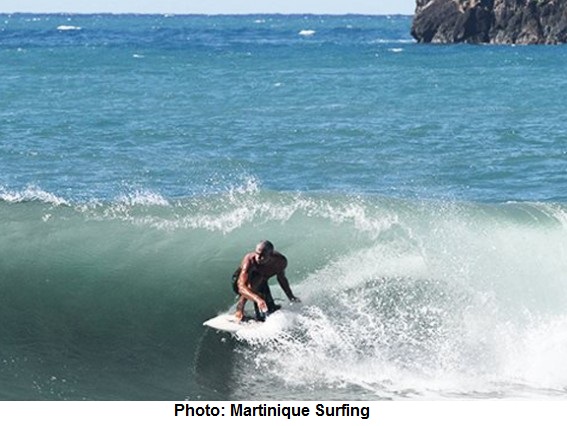
CU Blog - Surfing Legacy - Photo 1Time marches on, while the legacy of pro-surfing in the French Caribbean continues to grow.

Welcome to Martinique, and some of the best surfing on the planet.

This original Go Lean blog-commentary from April 14, 2015 is re-distributed on this occasion of the Third Annual Martinique Surf Pro, which just transpired April 1 through April 8, 2017. And the winner is:

Title: Ricardo Christie conquered the 2017 Martinique Surf Pro, at Basse-Pointe, in Martinique.

Christie proved he’s ready to return to the Dream Tour by putting out a competent performance at the righthand pointbreak. And he needed six rides to clinch the tasty trophy.

“When the waves are like that you can forget everything and just go out there and surf. I feel like I’ve improved a lot,” explained Ricardo Christie, who failed to requalify at the end of his rookie season on the Championship Tour.

“I’ve just been working really hard, and I learned a lot when I was on tour. It doesn’t feel like it’s over; it’s just the beginning of the year, so I just have to keep doing my thing.”

With this victory in Martinique, Ricardo Christie jumped 91 places to number 10 on the QS rankings.

Source: Posted April 10, 2017; retrieved April 12, 2017 from: http://www.surfertoday.com/surfing/13558-ricardo-christie-wins-the-2017-martinique-surf-pro

Consider the VIDEO highlights from this year’s event.

This event – part sports; part culture; is all tourism. It is building momentum! We need more events like this. See the Encore below describing how the movement behind the book Go Lean…Caribbean will strategize for sports tourism; this means more and more events … in different sports.

————–

Go Lean Commentary – Title: Is Martinique the Next Caribbean Surfing Capital?


Sports could be big business; culture is big business. Every now-and-then there is the opportunity to merge sports and culture into a single economic activity. One such expression is the sports/culture of surfing. This focus is a priority for the movement to elevate the Caribbean society, stemming from the book Go Lean…Caribbean.

The book serves as a roadmap for the introduction and implementation of the technocratic Caribbean Union Trade Federation (CU). While the CU is not intended as a sports promotion entity, it does promote the important role of sports in the quest to make the Caribbean a better place to live, work and play.

Though surfing activities originated with Polynesian culture (see Appendix below), the sport has assimilated well in other societies – the Caribbean included.

In terms of cultural expressions of surfing in the United States, the most iconic portrayal is the Rock-n-Roll group the Beach Boys; see VIDEO in the Appendix below of a milestone performance in Tokyo, Japan.

Yes surfing is global in its participation and appreciation.

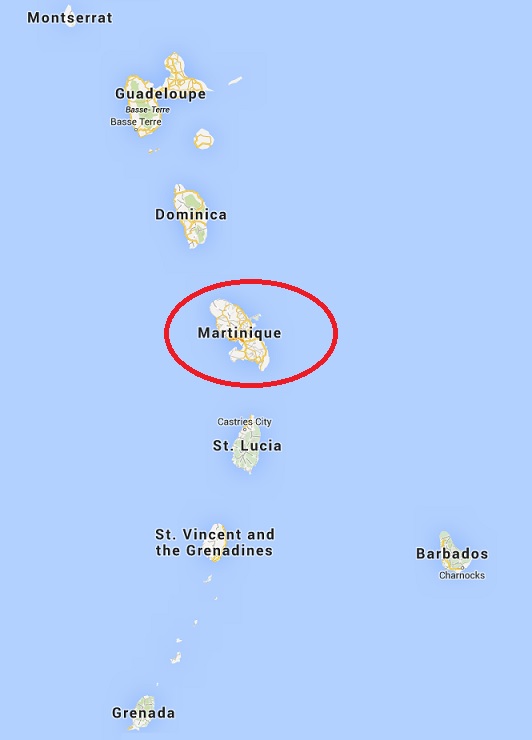
Now a Caribbean community, the French-domain of Martinique is exploring the surfing sub-culture for sport, tourism and sports-tourism.

Cowabonga* Dude!

By: The Caribbean Journal staff

Long an under-the-radar surfing spot, the French Caribbean island will get its place in the spotlight when the surfing world gathers on the island later this month for the first-ever Martinique Surf Pro.

From April 21-26, the Caribbean’s only World Surf League Qualification Series event this year will take place along the shores of Basse-Pointe in Martinique.

The event, which is being organized by Martinique Surfing in partnership with the World Surf League, will bring together 100 world-class surfers from the United States, Japan, Europe, Brazil and the Caribbean.

“Martinique has been among the best-kept secrets in Caribbean surfing for some time now,” said Muriel Wiltord, director of the Americas for the Martinique Promotion Bureau. “Such a high-profile event as this cements the island’s position as a prime surfing destination. As one the top watersports competitions being held in the Caribbean in 2015, Martinique Surf Pro also shines a spotlight on the wide range of additional watersports options that Martinique has to offer.”

Martinique’s surfing season typically lasts between November and May along its northern and northeastern Atlantic coasts.

Source retrieved April 13, 2015: http://www.caribjournal.com/2015/04/13/is-martinique-the-next-caribbean-surfing-capital/
CU Blog - Is Martinique the next big Caribbean surfing capital - Photo 2

CU Blog - Is Martinique the next big Caribbean surfing capital - Photo 3

CU Blog - Is Martinique the next big Caribbean surfing capital - Photo 1

Not every coastline is ideal for surfing; thusly many Caribbean residents do not surf; it is not an indigenous activity to this region. But the past-time – and culture for that matter – is adaptable. Why is this? While the Caribbean has been blessed with many natural gifts, the physical conditions for surfing are not everywhere; (based on factual information retrieved from Wikipedia).

There must be a consistent swell. A swell is generated when wind blows consistently over a large area of open water, called the wind’s fetch. The size of a swell is determined by the strength of the wind and the length of its fetch and duration. Because of this, surf tends to be larger and more prevalent on coastlines exposed to large expanses of ocean traversed by intense low pressure systems.

Local wind conditions affect wave quality, since the surface of a wave can become choppy in blustery conditions. Ideal conditions include a light to moderate “offshore” wind, because it blows into the front of the wave, making it a “barrel” or “tube” wave. Waves are Left handed and Right Handed depending upon the breaking formation of the wave.

Waves are generally recognized by the surfaces over which they break.[7] For example, there are Beach breaks, Reef breaks and Point breaks.

The most important influence on wave shape is the topography of the seabed directly behind and immediately beneath the breaking wave. The contours of the reef or bar front becomes stretched by diffraction. Each break is different, since each location’s underwater topography is unique. At beach breaks, sandbanks change shape from week to week. Surf forecasting is aided by advances in information technology. Mathematical modeling graphically depicts the size and direction of swells around the globe.

So mastering the sport of surfing is now an art and a science.

Despite the fun and joy of surfing, there are a lot of dangers with this activity:

This activity is not for the faint of heart.

Not every market, especially in the Caribbean, can support the demands of surfing as a sport and as a cultural event. As depicted in the foregoing article, Martinique uniquely qualifies. This year’s professional tournament is the inaugural event. This Caribbean island makes a very short-list of all locations where this activity is practical. The following is a sample of the competitive/major surfing locations (Surf Cities) around the globe:

1. In Australia

2. In Asia

3. In the South Pacific

4. In South Africa

5. In North America

6. In Central America

7. In South America

8. In the USA

9. In Europe

The Martinique effort and initiative to satiate the thirst … and fascination of surfing aligns with the objects of the CU/Go Lean roadmap; especially the mission “to forge industries and economic drivers around the individual and group activities of sports and culture” (Page 81).

The Go Lean vision is a confederation of the 30 member-states of the Caribbean forming the CU as a proxy organization to do the heavy-lighting of building, funding, maintaining and promoting sports venues. The strategy is for the CU to be the landlord, and super-regional regulatory agency, for sports leagues, federations and associations (amateur, collegiate, and professional). The embrace and promotion of the sport and culture of surfing can contribute to the Greater Good for the Caribbean. This aligns with the prime directives of the CU/Go Lean roadmap; summarized in the book with these 3 statements:

  • Optimization of the economic engines in order to grow the regional economy to $800 Billion & create 2.2 million new jobs.
  • Establishment of a security apparatus to protect the resultant economic engines and the participants in activities like surfing.
  • Improvement of Caribbean governance to support these engines.

This roadmap commences with the recognition that genius qualifiers can be found in many fields of endeavor, including sports. The roadmap pronounces the need for the region to confederate in order to invest in elevation of the Caribbean eco-systems in which such athletic geniuses can soar. These pronouncements are made in the opening Declaration of Interdependence, (Pages 13 & 14) as follows:

xxi. Whereas the preparation of our labor force can foster opportunities and dictate economic progress for current and future generations, the Federation must ensure that educational and job training opportunities are fully optimized for all residents of all member-states, with no partiality towards any gender or ethnic group. The Federation must recognize and facilitate excellence in many different fields of endeavor, including sciences, languages, arts, music and sports. This responsibility should be executed without incurring the risks of further human flight, as has been the past history.

xxii. Whereas sports have been a source of great pride for the Caribbean region, the economic returns from these ventures have not been evenly distributed as in other societies. The Federation must therefore facilitate the eco-systems and vertical industries of sports as a business, recreation, national pastime and even sports tourism – modeling the Olympics.

The Go Lean book and accompanying blogs declare that the Caribbean needs to learn lessons from Surf City communities and other sporting venues/administrations. So thusly this subject of the “business of sports” is a familiar topic for Go Lean blogs. This cause was detailed in these previous blogs:

https://goleancaribbean.com/blog/?p=6464 NEW: WWE Network – Model for Caribbean
https://goleancaribbean.com/blog/?p=4019 Melding of Sports & Technology; the Business of the Super Bowl
https://goleancaribbean.com/blog/?p=3414 Levi’s® Stadium: A Team Effort
https://goleancaribbean.com/blog/?p=3244 Sports Role Model – espnW
https://goleancaribbean.com/blog/?p=2222 Sports Role Model – Playing For Pride … And More
https://goleancaribbean.com/blog/?p=2171 Sports Role Model – Turn On the SEC Network
https://goleancaribbean.com/blog/?p=2152 Sports Role Model – US versus the World
https://goleancaribbean.com/blog/?p=1715 Lebronomy – Economic Impact of the Return of the NBA Great
https://goleancaribbean.com/blog/?p=1446 Caribbean Players in the 2014 World Cup
https://goleancaribbean.com/blog/?p=1341 College World Series Time – Lessons from Omaha
https://goleancaribbean.com/blog/?p=1214 Landlord of Temporary Stadiums
https://goleancaribbean.com/blog/?p=1148 Sports Bubble – Franchise values in basketball
https://goleancaribbean.com/blog/?p=1020 Sports Revolutionary: Advocate Jeffrey Webb
https://goleancaribbean.com/blog/?p=498 Book Review: ‘The Sports Gene’
https://goleancaribbean.com/blog/?p=318 Collegiate Sports in the Caribbean
https://goleancaribbean.com/blog/?p=60 Could the Caribbean Host the Olympic Games?

This Go Lean roadmap is committed to availing the economic opportunities of all the Caribbean sports eco-system to respond to the world’s thirst for surfing. The book details the series of community ethos, strategies, tactics, implementations and advocacies to deliver the regional solutions to better harness economic benefits from sports and sports-tourism activities:

Community Ethos – People Respond to Incentives in Predictable Ways Page 21
Community Ethos – Consequences of Choices Lie in the Future Page 21
Community Ethos – Lean Operations Page 24
Community Ethos – Return on Investments Page 25
Community Ethos – Ways to Foster Genius Page 27
Community Ethos – Ways to Impact the Greater Good Page 37
Strategic – Staffing – Sporting Events at Fairgrounds Page 55
Tactical – Fostering a Technocracy Page 64
Tactical – Separation of Powers – Sports & Culture Administration Page 81
Tactical – Separation of Powers – Fairgrounds Administration Page 83
Implementation – Steps to Implement Self-Governing Entities Page 105
Implementation – Ways to Deliver Page 109
Planning – Ways to Make the Caribbean Better Page 131
Advocacy – Ways to Grow the Economy Page 151
Advocacy – Ways to Create Jobs Page 152
Advocacy – Ways to Improve Local Government – Parks & Recreation Page 169
Advocacy – Ways to Impact Public Works Page 175
Advocacy – Ways to Impact Events Page 191
Advocacy – Ways to Promote Fairgrounds as Sporting Venues Page 192
Advocacy – Ways to Preserve Caribbean Heritage Page 218
Advocacy – Ways to Improve Sports Page 229
Advocacy – Ways to Impact Urban Living – Sports Leagues Page 234

What could be the end result for the Go Lean roadmap’s venture into the sport of surfing and the business of sports? Economic growth and “jobs”. The Go Lean roadmap anticipates 21,000 direct jobs at sports enterprises throughout the region.

But surfing is also a leisure amenity, a “play” activity within the Go Lean roadmap. Many participate in this activity with no competitive motives. So the promotion of surfing in the Caribbean region can appeal to many enthusiasts far-and-wide to come visit and enjoy our Caribbean hospitality. This subject therefore relates back to the primary regional economic activity of tourism. This fits into the appeal of the Caribbean sun, sand and surf.

Overall, with these executions, the Caribbean region can be a better place to live, work and play. There is a lot of economic activity in the “play” aspects of society. Everyone, surfers, athletes and spectators alike, are hereby urged to lean-in to this Go Lean roadmap.

Cowabonga Dudes!

Download the free e-book of Go Lean … Caribbean – now!

Sign the petition to lean-in for the roadmap for the Caribbean Union Trade Federation.

———-

Appendix – *Cowabunga: (slang) an expression of surprise or amazement, often followed by “dude”. Popular among California surfers.

———-

Appendix – Encyclopedia of Surfing:

For centuries, surfing was a central part of ancient Polynesian culture. This activity was first observed by Europeans at Tahiti in 1767 by Samuel Wallis and the crew members of the Dolphin; they were the first Europeans to visit the island in June of that year.

Surfing is a surface water sport in which the wave rider, referred to as a surfer, rides on the forward or deep face of a moving wave, which is usually carrying the surfer toward the shore. Waves suitable for surfing are primarily found in the ocean, but can also be found in lakes or in rivers in the form of a standing wave or tidal bore. However, surfers can also utilize artificial waves such as those from boat wakes and the waves created in artificial wave pools.

The term surfing refers to the act of riding a wave, regardless of whether the wave is ridden with a board or without a board, and regardless of the stance used. The native peoples of the Pacific, for instance, surfed waves on alaia, paipo, and other such craft, and did so on their belly and knees. The modern-day definition of surfing, however, most often refers to a surfer riding a wave standing up on a surfboard; this is also referred to as stand-up surfing.

George Freeth (8 November 1883 – 7 April 1919) is often credited as being the “Father of Modern Surfing”.

In 1907, the eclectic interests of the land baron Henry Huntington (of whom the City of Huntington Beach is named after) brought the ancient art of surfing to the California coast. While on vacation, Huntington had seen Hawaiian boys surfing the island waves. Looking for a way to entice visitors to the area of Redondo Beach, where he had heavily invested in real estate, he hired the young Hawaiian George Freeth to come to California and ride surfboards to the delight of visitors; Mr. Freeth exhibited his surfing skills twice a day in front of the Hotel Redondo.

In 1975, professional contests started.[6]

Today, the Surfing Hall of Fame is located in the city of Huntington Beach, California. The city brands itself as Surf City USA.

(Source retrieved April 14 from: http://en.wikipedia.org/wiki/Surfing)

———-

AppendixVIDEO – The Beach Boys: Surfin’ Safari~Surf City~Surfin’ U.S.A – https://youtu.be/qpSwdQMn8xs

Uploaded on Jul 29, 2011 – Live at Budokan in Japan November 2, 1991
Share this post:
, , , , ,

‘Loose Lips Sink Ships’ – Leaders Undermine Tourism

Go Lean Commentary 

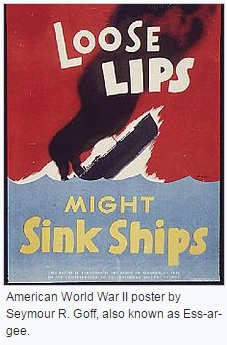
Loose Lips - Photo 2Loose lips sink ships …

… this is an American-English idiom meaning “beware of unguarded talk”. The phrase originated on propaganda posters during World War II.[4]  There are similar expressions in other cultures:

The British equivalent used “Careless Talk Costs Lives“, and variations on the phrase “Keep mum“,[5] while in neutral Sweden the State Information Board promoted the wordplay “en svensk tiger” (the Swedish word “tiger” means both “tiger” and “keeping silent”), and Germany used “Schäm Dich, Schwätzer!” (English: “Shame on you, blabbermouth!”).[6]
Source: Retrieved 04-07-2017 from: https://en.wikipedia.org/wiki/Loose_lips_sink_ships

Despite the land or the language, the thought is the same: Inappropriate talk can undermine societal engines.

Today, there is no war in the Caribbean, but we do have battles. We have trade wars and economic struggles to try and maintain our way of life and to improve it. For so many of our countries, tourism is the primary economic driver – our regional ship – we have to be on guard and aware of any kind of disparaging talk that can undermine the appeal of our destinations.

The United States is suffering the dire consequence of “loose lips sinking ships” right now. The new President – Donald Trump – has made disparaging remarks about certain foreign groups, and then introduced policies that reinforce his disdain for these foreigners.

As a result, more and more foreigners are refusing to come to the US for leisure travel. See the full article here:

Loose Lips - Photo 1

Title: NYC Expects fewer tourists, blames Trump

NYC & Company, New York’s tourism marketing organization, revised its 2017 travel forecast, stating that it expects 300,000 fewer international visitors than last year “in light of the recent travel ban and related rhetoric.”

“These updated figures take into account changing attitudes about travel and access to the U.S. since the previous forecast was announced in October 2016, prior to the new administration,” NYC & Company said in a statement issued on Tuesday. “This is the first drop in visitation since the start of the recession in 2008.”

The city anticipates that domestic visitation will remain strong, projected to increase to 49.3 million visitors this year, which would actually result in an overall visitor increase, from 60.7 million to 61.7 million.

“But, it’s important to note that it takes the spending power of four domestic visitors to equal what a single international visitor spends,” NYC & Company stated.

With the updated forecast, NYC & Company announced a new international communications and marketing campaign titled “New York City — Welcoming the World.” Beginning in March, the campaign will feature outdoor media valued at nearly $3 million targeting international source markets the United Kingdom, Mexico, Germany, and Spain, with more markets pending. International partners, including tour operators and airlines, are expected to help further the effort through their own channels and assets.

“The goal of the campaign is to reassure international travelers who may feel deterred about traveling to the U.S. and ensure them that New York City’s experiences and values remain the same and all are welcome,” the destination marketing organization stated.

The revised 2017 travel forecast was produced by the organization’s longtime data provider, Tourism Economics, an Oxford Economics Company.

USA
Interest in travel to the US has “fallen off a cliff” since Donald Trump’s election, according to travel companies who have reported a significant drop in flight searches and bookings since his inauguration and controversial travel ban.

Data released this week by travel search engine Kayak reported a 58% decline in searches for flights to Tampa and Orlando from the UK, and a 52% decline in searches for Miami. Searches for San Diego were also down 43%, Las Vegas by 36% and Los Angeles 32%.

Though flight prices are holding firm (they usually take weeks rather than days to adjust to consumer trends), Kayak has identified a knock-on effect on average hotel prices. It found prices in Las Vegas are down by 39% and New York City by 32%.
Source: Travel Trade Outbound Scandinavia; posted 03/05/2017; retrieved 04/07/2017 from: http://www.ttoscandinavia.com/expects-fewer-tourists-blames-trump/

————

See the related VIDEO in the Appendix below.

Nobody wants to spend their money in a place where they are not welcomed.

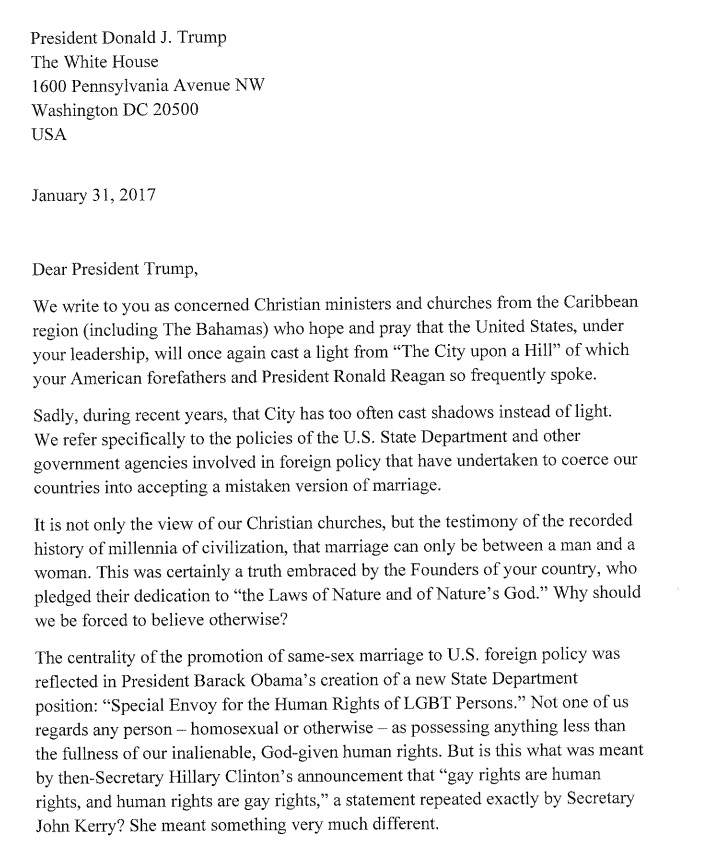
This lesson must be learned in the Caribbean. We have the same threats afoot. Unlike the US, who has the leverage and surety of “richest Single Market economy in the world” to absorb the fall, the Caribbean member-states are mostly Third World and failing. This movement has previous detailed how societal deficiency has resulted in a Brain Drain among the educated classes in the Caribbean homeland – all due to “push and pull” reasons. Yet, some leaders – Christian pastors in this case – have proclaimed, in a signed petition to this new American President, a heightened level of disdain for certain American tourists. They are protesting the US Human Rights agenda to seek relief for Caribbean populations with affinity for persons ascribing to the Lesbian, Gay, Bisexual and Trans-Gender (LGBT) lifestyles.

Rather than love and leisure … in the Caribbean, these community leaders are projecting “a climate of hate”.

So sad!

See the details on the signed petition in the Appendix below; advocating against liberal LGBT policies.

In general, neutralizing the anti-LGBT attitudes has been an ongoing theme for the movement behind the book Go Lean … Caribbean. The book presents the Caribbean region a roadmap to elevate all societal engines, including economics, homeland security and governance. In fact, the prime directives of the roadmap includes the following 3 statements:

  • Optimization of the economic engines in order to grow the regional economy to $800 Billion & create 2.2 million new jobs.
  • Establishment of a security apparatus to ensure public safety for all and protect the resultant economic engines.
  • Improve Caribbean governance for all people, even minority groups, to support these economic and security engines.

The Go Lean book introduces the Caribbean Union Trade Federation (CU) as an intergovernmental agency for 30 regional member-states, to provide a better – technocratic – stewardship for the regional economy.

But we need all community stakeholders to “not sink ships” with their unbridled hatred and disdain for people who may look, act and speak differently than them.

This is the hallmark of hospitality! See the full definition of “hospitality” here:

Etymology
Derives from the Latin hospes,[5] meaning “host”, “guest”, or “stranger”. Hospes is formed from hostis, which means “stranger” or “enemy” (the latter being where terms like “hostile” derive). By metonymy the Latin word ‘Hospital’ means a guest-chamber, guest’s lodging, an inn.[6] Hospes is thus the root for the English words “host” (where the p was dropped for convenience of pronunciation), hospitality, hospice, hostel and hotel.

Historical practice
In ancient cultures hospitality involved welcoming the stranger and offering him food, shelter, and safety.[7]
Source: Retrieved April 7, 2017 from https://en.wikipedia.org/wiki/Hospitality.

The Art and Science of Tourism – especially for American visitors – is very important to Caribbean communities. The related industrial activities bind all societal engines together. The Go Lean book explains (Page 190) that many enhancements are to be implemented under this roadmap:

10 Ways to Improve Tourism – Page 190

1 Lean-in for the CU to leverage a regional footprint for tourism promotion and infrastructure. The full scale of 30 member-states and 42 million people allows for expanded trade treaties with other countries and regional blocs to target markets and languages.
2 Special Festival Events
3 Fairgrounds/Amusement Parks Empowerment Zones
4 Dynamic Sea-lifts / Air lifts
5 Excess Inventory Auction
6 Medical Tourism
7 Eco-Tourism Promotions Board
8 Sports Tourism
9 Cruise Line Passenger Smart Card Currency
10 Tourist Hate Crime Sentence ExtenderAny crime against a tourist gets a “hate” crime designation that results in extended sentences. These types of crimes (petty misdemeanors to felonies like kidnapping) come under the category of economic crimes that are marshaled by the CU. (The 2005 Aruba case of Natalee Holloway shows the need for heightened attention. The investigation escalated to the Dutch National Police and the US FBI, but only after devastating effects on tourism bookings, for subsequent years).

Overall, the Go Lean book stresses the community ethos, strategies, tactics, implementations and advocacies to reboot, reform and transform the economic engines of Caribbean society.

There are a lot of new jobs that are at stake with the successful implementation of this Go Lean/CU roadmap. How many are projected?

In general the roadmap projects 2.2 million new jobs across the 30 Caribbean member states. But for the Tourism-related industries, the plan calls for:

Tourism – New markets, opening new opportunities and new traffic; sharing  –  30,000

Cruise Tourism – Jobs from increased functionality of e-Payments of cruise passengers  –  800

Events Tourism – Festivals and other event staff at CU Fairgrounds – 9,000

Fairgrounds – Direct & in-direct maintenance/support jobs at CU Fairgrounds – 10,000

World Heritage Sites/Eco-Tourism – Direct and indirect jobs for managing, promoting UNESCO sites   – 1,000

In total, the projection is for 50,800 new tourism-related jobs. This constitutes the “ship” that community leaders can “sink” with their “loose lips”.

The Go Lean book asserts that to thrive in the new global marketplace there must be an agile technocratic administration for the region’s tourism eco-systems; it will affect all aspects of Caribbean life. This comprehensive view – economics, security and governance – is the charge of the Go Lean roadmap, opening with these pronouncements in the Declaration of Interdependence (Page 11 – 13):

iv. Whereas the natural formation of the landmass is in a tropical region, the flora and fauna allows for an inherent beauty that is enviable to peoples near and far. The structures must be strenuously guarded to protect and promote sustainable systems of commerce paramount to this reality.

xii. Whereas the legacy in recent times in individual states may be that of ineffectual governance with no redress to higher authority, the accedence of this Federation will ensure accountability and escalation of the human and civil rights of the people for good governance, justice assurances, due process and the rule of law. As such, any threats of a “failed state” status for any member state must enact emergency measures on behalf of the Federation to protect the human, civil and property rights of the citizens, residents, allies, trading partners, and visitors of the affected member state and the Federation as a whole.

xxiv. Whereas a free market economy can be induced and spurred for continuous progress, the Federation must install the controls to better manage aspects of the economy: jobs, inflation, savings rate, investments and other economic principles. Thereby attracting direct foreign investment because of the stability and vibrancy of our economy.

The points of effective, technocratic stewardship of tourism were further elaborated upon in previous blog/commentaries. Consider this sample:

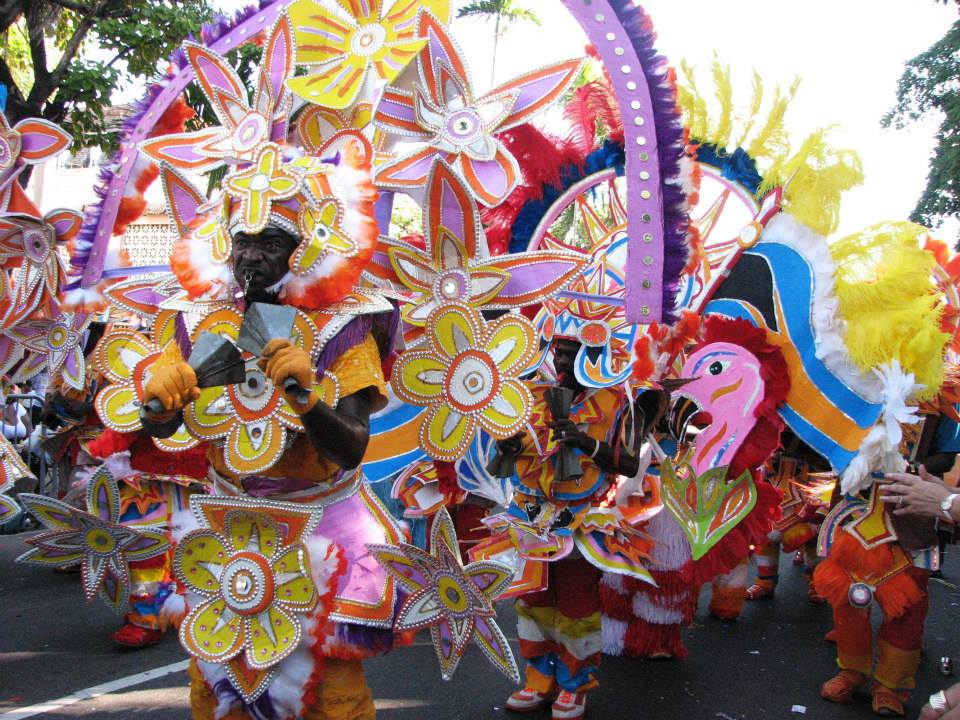
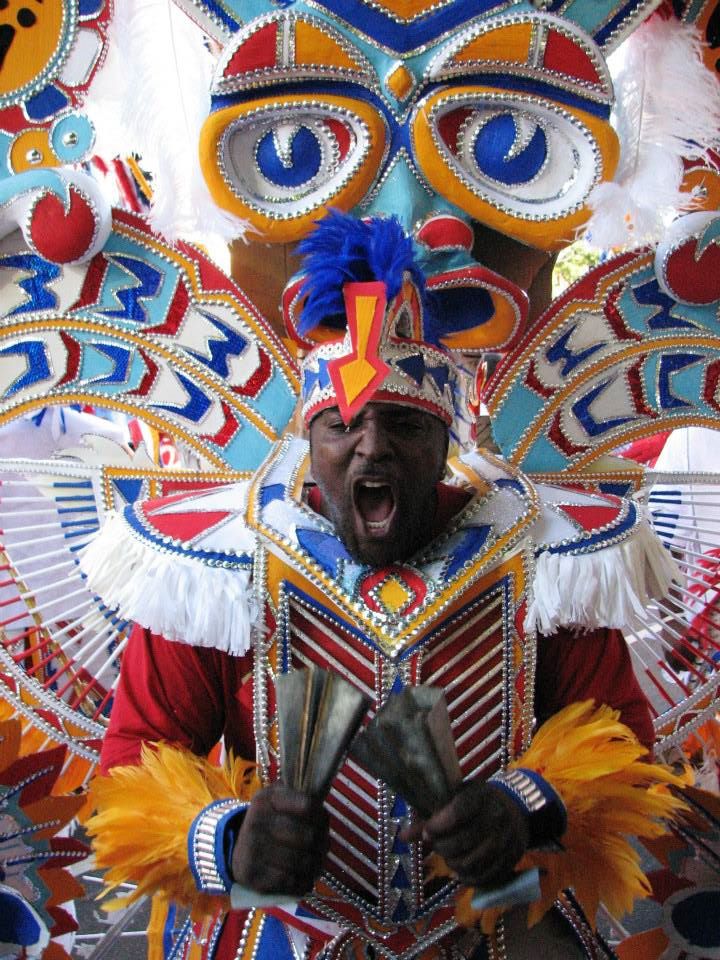
https://goleancaribbean.com/blog/?p=11208 Bahamas flawed model for Event Tourism – Junkanoo Carnival
https://goleancaribbean.com/blog/?p=11033 Dominican Republic’s flawed model for Medical Tourism
https://goleancaribbean.com/blog/?p=10585 Two Pies: Economic Plan for a New Caribbean
https://goleancaribbean.com/blog/?p=7977 Transformations: Perfecting Our Core Competence
https://goleancaribbean.com/blog/?p=7834 Martinique: Model for Sports Tourism
https://goleancaribbean.com/blog/?p=7628 ‘Make happy those who are near, and those who are far will come’
https://goleancaribbean.com/blog/?p=7327 Zika – A 4-Letter Word for Caribbean Tourism
https://goleancaribbean.com/blog/?p=7082 The Art and Science of ‘Play’
https://goleancaribbean.com/blog/?p=7034 The Future of Money for Tourism Commerce
https://goleancaribbean.com/blog/?p=6385 Wi-Fi Hot Spots Run By Hackers Are Targeting Tourists
https://goleancaribbean.com/blog/?p=6341 Tourism Commerce Administration and Coordination
https://goleancaribbean.com/blog/?p=5307 Crime Warnings for a Tourists to a Caribbean Member-State
https://goleancaribbean.com/blog/?p=5210 Cruise Ship Commerce – Getting Ready for Change
https://goleancaribbean.com/blog/?p=4145 Model of Monument and Eco-Tourism
https://goleancaribbean.com/blog/?p=4058 Bad Image in New York Times Hurts Caribbean Tourism
https://goleancaribbean.com/blog/?p=3225 Caribbean less competitive due to increasing aviation taxes
https://goleancaribbean.com/blog/?p=1984 Casinos Changing/Failing Business Model
https://goleancaribbean.com/blog/?p=235 Tourism’s changing profile

In a previous blog-commentary, the dynamic of Christian leadership in the Caribbean was fully explored:

Religious orthodoxy is responsible for a lot of harm in the world, and in the Caribbean. The Go Lean movement (book and blogs) have identified the foregoing defects, many bad values, attitudes and community ethos. The Caribbean region needs to desist and make amends of these practices. We need to pursue an alternative ethos, the Greater Good. The book defines this (Page 37) as follows:

    “It is the greatest good to the greatest number of people which is the measure of right and wrong”. –  Jeremy Bentham (1748-1832)

The Go Lean book (Page 20) and movement advocates the community ethos of the Greater Good for all of the Caribbean. The movement wants to help reform and transform the Caribbean. We see the defects; we recognize that status quo, including the root causes and orthodoxy of many of our influences; we perceive the harmful effects. Still, we don’t want to ban religion; we simply want a clear ‘Separation of Church and State’, because … we must not favor any one religion.

A “Separation of Church and State” is the standard in the advanced democracies; this is now embedded in the implied Social Contract. The Go Lean book defines (Page 170) the Social Contract as follows:

    “Citizens surrender some of their freedoms and submit to the authority of the State in exchange for protection of remaining natural and legal rights”.

The movement behind the Go Lean book hereby makes this urging to the Caribbean Pastors who signed the below petition to President Trump:

We urge you to follow the mandates of your founder and leader, Jesus Christ, when he urged the Apostle Simon-Peter:

  • Jesus asked a second time, “Simon son of John, do you love Me?” “Yes, Lord,” he answered, “You know I love You.” Jesus told him, “Shepherd My sheep”. – June 21:16 Berean Study Bible 

You are hereby admonished to support your flock that is in your care … and leave Foreign Policy alone. Your “going beyond the things that are written” actually hurts your flock by undermining their economic interests. Please, please “stay in your lane”.

Learn lessons from the  bad example of Donald Trump and American tourism … in the foregoing.

Now is the time for all of the Caribbean – the people and leaders – to lean-in for the empowerments described here-in and in the book Go Lean … Caribbean. This is about jobs and community welfare today and more so tomorrow; we need better engines to make our region more prosperous. We can elevate our communities and our tourism!

It is conceivable, believable and achievable to make the Caribbean a better place to live, work and play. 🙂

Sign the petition to lean-in for the roadmap for the Caribbean Union Trade Federation.

Download the free e-book of Go Lean … Caribbean – now!

———–

Appendix – Petition Letter to President Trump

Loose Lips - Photo 3

Click on the Photo to Enlarge

The full letter and petition signatures can be viewed here:

https://world.wng.org/sites/default/files/assets/Caribbean%20church%20leaders%20letter%20to%20President%20Trump.pdf

———–

Appendix VIDEO – Tourists Avoiding USA Because Of Donald Trump, Costing Us Billions – https://youtu.be/kHD73jSM5Rs

Published on Apr 3, 2017 – Experts had predicted that Trump’s Muslim Ban would cost the United States tons of money in declining tourism, but what they didn’t count on were the number of people who refuse to travel to the U.S. just because Trump is the new president.  As it turns out, nobody wants to visit a country that is ruled by a hatemonger, and analysts are now referring to the decline in travel to the U.S. as the “Trump Slump.” Ring of Fire’s Farron Cousins discusses this.

Link – https://www.salon.com/2017/03/31/trum…

Spread the word! LIKE and SHARE this video or leave a comment to help direct attention to the stories that matter. And SUBSCRIBE to stay connected with Ring of Fire’s video content!

Watch America’s Lawyer featuring Mike Papantonio on RT: https://www.rt.com/shows/americas-law…

Order Mike Papantonio’s novel Law and Disorder today: https://www.amazon.com/Law-Disorder-M…

Follow more of our stories at http://www.TROFIRE.com

Subscribe to our podcast: http://www.ROFPodcast.com

Support Ring of Fire by subscribing to our YouTube channel: https://www.youtube.com/user/golefttv…

Be sociable! Follow us on:
Facebook: http://www.facebook.com/RingofFireRadio
Twitter: http://www.twitter.com/RingofFireRadio
Google+: http://plus.google.com/11841583157319…
Instagram: https://www.instagram.com/ringoffiren…

Share this post:
, ,
[Top]

ENCORE: PM Christie and Bahamas Junkanoo Carnival

Update – Go Lean Commentary

Talk is cheap! Results, on the other hand, are hard-fought and expensive.

This is the post-analysis of the plans for Junkanoo Carnival in the Bahamas, after 3-years of planning and execution. The results have indeed been hard-fought, expensive and … “not so successful”.

Told you so…

This was the declaration from this previous blog-commentary from the movement behind the book Go Lean…Caribbean. The assessment was that the Carnival product appeared to be lucrative, but there was so much heavy-lifting involved with an implementation, that unless there was a whole soul commitment by the full community, it would be very hard to find success.

Now there are new developments…

Article Title: ‘Blindsided’ By Carnival Delay
By: Ava Turnquest, Tribune Chief Reporter

CU Blog - UPDATE - PM Christie and Bahamas Junkanoo Carnival - Photo 1LESS than a week after officials announced the event’s line-up, Prime Minister Perry Christie confirmed yesterday that the 2017 Bahamas Junkanoo Carnival has been postponed until after the general election.

The news has “blindsided” key stakeholders and vendors, who decried the confusion, likely damage to brand and reputation and potential financial losses resulting from the date change.

The Tribune understands the event has been pushed back from May 4-6 to May 18-20 in Nassau. The new date was also circulated in a flyer by Bahamas Junkanoo Carnival’s Instagram account last night.

It is unclear whether the Grand Bahama-leg of the festival, slated for April 28 and 29, has also been pushed back.

Mr Christie was asked about the postponement on the sidelines of a ceremony to rename thoroughfares at the University of the Bahamas, after a report published in The Nassau Guardian indicated that the government had decided to delay the event.

Mr Christie said: “I’m advised that the Carnival Commission has met and agreed that because of the impending possibilities, to suspend or extend the date of (Junkanoo) Carnival. I don’t know the dates they had chosen but it is my understanding that that has been done.”

Up to press time, the Bahamas National Festival Commission (BNFC) had not released a new date for the event, or an official statement on the postponement.

When The Tribune contacted BNFC Chairman Paul Major, he said: “What we know is that we’re not going to conflict with the final say of Cabinet – once an official election date is set, then our dates are subject to change.”

Last Thursday, the BNFC announced Trinidadian singing stars Machel Montano and Bunji Garlin as event headliners. It was also confirmed that the event will be streamlined compared to past years because of financial constraints.

The government will reduce its subsidy to the festival by as much as 50 per cent over last year, when taxpayers contributed about $8 million, officials said. The 2016 event brought in $578,342 in revenue, costing more than $9.8m overall.

In 2015, the government spent $11.3m on the inaugural festival, going over its initial budget of $9m, with the rest covered by sponsors. The first Junkanoo Carnival cost $12.9m overall.

Mr Major and BNFC CEO Roscoe Dames declined further questions, and advised that the commission would release further information today.

The Office of the Prime Minister, in a press statement on Sunday, announced that Parliament will be dissolved on April 11.

According to the Parliamentary Elections Act, an election must be held 21 to 30 days after election writs are issued, meaning the next vote will likely be held in early May.

The last election was held on May 7, 2012.

In 2015, the inaugural festival took place on May 7-9 in New Providence, and the 2016 Junkanoo Carnival kicked off on April 15-16 in Grand Bahama and on May 5-7 in New Providence.

In February, Free National Movement (FNM) Deputy Leader K Peter Turnquest called for the government to postpone or delay the festival until after the general election, warning that the event could only be perceived as “vote buying” if staged during the election cycle.

The Tribune reached out to Bahamas Carnival Band Owners Association (BCBOA) President Dario Tirelli for comment on the matter; however, Mr Tirelli declined comment until an official government statement was released.

Mr Tirelli told The Tribune that the news had “blindsided” his association.

Stephan Rolle, owner of Bluemonkey Bahamas, told reporters that any date change would negatively impact his business, the Bahamas Carnival Cruise, which has booked more than 100 carnival-goers on an all-inclusive weekend cruise from Miami to Nassau.

He challenged Mr Christie to give the festival the same level of respect as the annual Junkanoo parades.

Source: The Tribune Daily Newspaper (Posted 04/04/2017; retrieved 04/05/2017) – http://www.tribune242.com/news/2017/apr/04/blindsided-carnival-delay/

The Prime Minister bet his administration on the prospect of Carnival and now, its election time. He declared that the Parliament will dissolve on April 11, 2017. Under the Westminster structure of Parliamentary government, elections of a new Parliament must take place within a month after that date. So now the expectation is that elections will be conducted “smack in the middle” of the 2017 Carnival activities.

The solution? The PM postpones Carnival!

From a strictly Carnival perspective, this is a Big Mistake! See here the reaction of the festival stakeholders:

VIDEO – Unhappy over Carnival situation – http://youtu.be/f5zoG6yiS9E

Uploaded on Apr 4, 2017 – One of many online videos featuring complaints about the postponement of Carnival.

In this previous Go Lean blog-commentary – being ENCORED below – the prospect of Junkanoo Carnival was analyzed … before-hand, then subsequent blogs also examined the results after the 1st-year and 2nd-year events, as follows:

The appeal was made in all of these commentaries for the strategies, tactics and implementations of the Go Lean roadmap for the Caribbean Union Trade Federation (CU). This involved the heavy-lifting to marshal the entire community to ensure for Event Tourism, and profit from it. See the original blog-commentary here below.

Also, see a related story from April 4, 2017 detailing the challenges of a new schedule-date: Festival To Be May 18-20 As PM Confirms Move (The Tribune Daily Newspaper; retrieved 04/05/2017)

————–

Blog Title: PM Christie responds to critics of Bahamian ‘Carnival’

Carnival 1Head –> Heart –> Hands.

This is the physiological process to forge change, described in the book Go Lean … Caribbean (Page 20). As experienced on a daily basis by people attempting to “quit smoking”, change is near impossible without engaging those three body parts. The book, serving as a roadmap for the introduction and implementation of the Caribbean Union Trade Federation (CU) describes the linked application of those three symbolic body parts, as follows:

  • Head – Plans, Models and Strategies
  • Heart – Community Ethos
  • Hands – Actions, Implementations, Advocacies

According to the below news article, the Prime Minister of the Bahamas wants to forge change in his homeland. He wants to incorporate a new festival, based on the model of Carnival and Madri Gras, so as to glean some of the massive economic harvests around those events in the Caribbean and other Western Hemisphere destinations.

Since initiating this plan in Spring 2013, cyber-space and public commentary have been awash with feedback: some in favor; most opposed.

Albeit he is inspired by good motives, the publishers declare that something is missing in the Prime Minister’s plans: Best practices.

Excerpts from original source article: PM Christie responds to critics of Bahamian ‘Carnival’
Date: April 25, 2014
By: Erica Wells, Managing Editor

Prime Minister Perry Christie has assured critics of the Government’s plan to create a Bahamian Carnival or Mardi Gras that the festival will be “essentially” Bahamian and that a special committee will be appointed to prepare the country and the world for the initiative.

The government, Christie says, sees the festival as both a major economic intervention and a cultural expansion.

“It will be essentially Bahamian but also include thousands of visitors who will be attracted by what will be an absolutely fabulous affair,” said Christie.

Anthropologist and author Dr. Nicolette Bethel, who is also a former director of culture, has been one of the biggest critics of the proposed festival.

Prime Minister Christie said for the groups to be licensed, they would have to form themselves into a company and operate as a business.

“This is a massive undertaking which will receive very careful consideration of the government,” he said.

“This is very necessary as the corporate groups will be advertising abroad and inviting persons to purchase costumes online as well as from store fronts in a cultural village or elsewhere.”

The prime minister said carnival is part of a worldwide masquerade industry.

He said the industry has been successful in attracting costume makers, wire benders, painters, designers and performers at some of the largest festivals in the world.

“It has an export dimension. We know of major festivals in Trinidad, Brazil, Toronto, Barbados, New York, Miami and London. Carnival in the diaspora generates hundreds of millions of dollars and creates many jobs and entrepreneurial opportunities.

“It is big business and it requires business planning, management, marketing of products and organizational structure,” said Christie.

Prime Minister Christie said costumes from carnival inspired designers show up in New York, Toronto, Notting Hill, London, Miami and many other centers in the U.S.

Source: The Nassau Guardian Online. Posted 06/22/2013; retrieved 04/24/2014 from: http://www.thenassauguardian.com/index.phpoption=com_content&view=article&id=40021&Itemid=59

The Go Lean roadmap is different! It employs best practices for assessing, strategizing and implementing change. The book commences with the practice to assess current landscapes; this is what strategists call “Understand the market / Plan the business”. Page 44 presents these questions:

• Who are our customers and what exactly do they want?

• Who are our competitors; how do we stack up against them?

The book then proceeds to answer these and other strategy queries, accordingly.

carnival 2Events/festivals are paramount in the Go Lean roadmap: the optimization of existing events and the introduction of new events. This advocacy is detailed on Page 191 as being supplemental to the goal of enhancing tourism (Page 190).

What are the prospects for this new Bahamas Carnival/Lenten festival?

On the surface, it seems far-fetched, as the Bahamas does not have a Lenten ethos. All the competitive destinations (Rio De Janeiro, New Orleans and Trinidad) have elevated lent habits (Ash Wednesday to Good Friday), so that Mardi Gras/Fat Tuesday actually has significance in preparation of this hallowed Lenten season. Without this ethos, it is hard, though not impossible, to forge a new tradition, festival or business model. But the mediocre financial investment, announced in the foregoing article – $1 million as opposed to $3 million, makes the success of initiating and promoting a new event an insurmountable obstacle.

The publishers of the Go Lean roadmap wish the Prime Minister good fortune with his plans, but this execution does not appear to be lean, within “best practices”. More is needed; much more! There should be more focus on “Head, Heart & Hands” principles. As a contrast, notice the detailed strategies, tactics, actions and advocacies for new events in the Go Lean roadmap:

Community Ethos – Lean Operations Page 24
Community Ethos – Return on Investments Page 24
Community Ethos – Cooperatives Page 25
Community Ethos – Non Government Org’s. Page 25
Impact the Future Page 26
Foster Genius – Performance Excellence Page 27
Ways to Improve Sharing Page 35
Ways to Promote Happiness Page 36
Ways to Impact the Greater Good Page 37
Strategy – Customers – Business Community Page 47
Strategy – Customers – Visitors / Tourists Page 47
Strategy – Competitors – Event Patrons Page 55
Separation of Powers – Emergency Mgmt. Page 76
Separation of Powers – Tourism Promotion Page 78
Separation of Powers – Sports & Culture Page 81
Separation of Powers – Fairgrounds Admin. Page 83
Separation of Powers – Turnpike Operations Page 84
Steps to Implement Self-Governing Entities Page 105
Ways to Foster Cooperatives Page 176
Ways to Improve Intelligence Gathering Page 182
Ways to Improve [Service] Animal Husbandry Page 185
Ways to Enhance Tourism Page 190
Ways to Impact Events Page 191
Ways to Promote Fairgrounds Page 192
Ways to Improve Emergency Management Page 196
Ways to Impact Hollywood [& Media Industry] Page 203
Ways to Preserve Caribbean Heritage Page 218
Ways to Improve the Arts Page 230
Ways to Promote Music Page 231

In summary, festivals/events are important, so they require lean administration and executions. They empower economics and fortify cultural pride. In all, they make the Bahamas, by extension the entire Caribbean, a better place to live, work, and play.

Download the book Go Lean … Caribbean – now!

Share this post:
, , , ,
[Top]

ENCORE: US Warnings on Low-cost Dominican Surgeries

UPDATE – Go Lean Commentary

The warning was sounded 3 years ago, today. What is the status now? Have the warnings been heeded?

Surely, we have paid attention and we have put in the risk mitigations so as to preserve life-and-limb in the activities of cosmetic surgeries in the Dominican Republic.

Sad to report, but the answer is “No”.

The risks continue; the disfigurements continue; the deaths continue.

Say it ain’t so!

See the news article in the Appendix relating the details of a fresh warning from the US Center for Disease Control and Prevention (CDC).

In this previous Go Lean blog-commentary – being ENCORED below – the prospects of Medical Tourism were heralded, with the caution for proper regulatory control. The appeal was made for the new Caribbean Union Trade Federation (CU) to serve as that regulator, under the guise of a Self-Governing Entity. That appeal is echoed again here-now. There is too much …

… money at stake.

… jobs at stake.

… lives at stake.

But while this original blog-commentary below published on April 1, 2014 related the death of Beverly Brignoni (28), there have been other deaths; as with these women:

See the related October 3, 2016 story: Pretty Hurts – Dishing on the dangers of Plastic Surgery 

CU Blog - US Warnings on Low-cost Dominican Surgeries - Photo 2
———–

ENCORE Title: Low-cost Dominican surgeries spark warnings by US

CU Blog - Low-cost Dominican surgeries spark warnings by US - PhotoTo the family of Beverly Brignoni, according to the foregoing news article, the publishers of the book Go Lean … Caribbean, SFE Foundation, extend condolences for the loss of their dearly departed loved one. This article – as follows – shows the down-side of medical tourism, an accidental death from an apparent lax oversight in a cosmetic surgery clinic.

By: Ben Fox and Ezequiel Abiu Lopez
Beverly Brignoni was a young New Yorker seeking a less expensive way to enhance her appearance and she did what many other people are now doing: travel to the Dominican Republic for cosmetic surgery; (see undated “selfie” photo posted to her Instagram account, courtesy of the Brignoni family).

It went horribly wrong. The 28-year-old died Feb. 20 from what the doctor told her family was a massive pulmonary embolism while getting a tummy tuck and liposuction at a clinic in the Dominican capital recommended by friends. Family members want local authorities to investigate.

“We want to know exactly what happened,” said Bernadette Lamboy, Brignoni’s godmother. “We want to know if there was negligence.”

The district attorney’s office for Santo Domingo says it has not yet begun an investigation because it has not received a formal complaint from Brignoni’s relatives. Family members say they plan to make one.

Shortly after Brignoni’s death, the Health Ministry inspected the Vista del Jardin Medical Center where she was treated and ordered the operating room temporarily closed, citing the presence of bacteria and violations of bio-sanitary regulations. The doctor who performed the procedure and the clinic have not responded to requests for comment.

Brignoni’s death is unusual, but it is not isolated. Concerns about the booming cosmetic surgery business in the Dominican Republic are enough of an issue that the State Department has posted a warning on its page for travel to that country, noting that in several cases U.S. citizens have suffered serious complications or died.

The U.S. Centers for Disease Control issued an alert March 7 after health authorities in the United States reported that at least 19 women in five states had developed serious mycobacterial wound infections over the previous 12 months following cosmetic procedures in the Dominican Republic such as liposuction, tummy tucks and breast implants.

There were no reported deaths in those cases, but treatment for these types of infections, which have been caused in the past by contaminated medical equipment, tend to involve long courses of antibiotics and can require new surgery to remove infected tissue and drain fluid, said Dr. Douglas Esposito, a CDC medical officer.

“Some of these patients end up going through one or more surgeries and various travels through the medical system,” Esposito said. “They take a long time typically to get better.”

The Dominican Republic, like countries such as Mexico, Costa Rica and Thailand, has promoted itself as a destination for medical tourism, so-called because people will often tack on a few days at a resort after undergoing surgery. The main allure is much lower costs along with the promise that conditions will be on par with what a patient

would encounter at home.

In 2013, there were more than 1,000 cosmetic procedures performed in the Dominican Republic, 60 percent of them on foreigners, according to the country’s Plastic Surgery Society.

The Internet is flooded with advertisements and testimonials from people who say they have had successful procedures in the Dominican Republic, and an industry of “recovery houses” has sprung up to serve clients, along with promoters who canvass for clients in the United States. The price is often about a third of the cost in the United States.

Dr. Braun Graham, a plastic surgeon in Sarasota, Florida, says he done corrective surgery on people for what he says were inferior procedures abroad. He warns that even if a foreign doctor is talented, nurses and support staff may lack adequate training.

“Clearly, the cost savings is certainly not worth the increased risk of a fatal complication,” said Graham, past president for Florida Society of Plastic Surgeons.

Brignoni was referred to the Vista del Jardin Medical Center by several acquaintances in the New York borough of the Bronx where she lived, said Lamboy and Lenny Ulloa, the father of the 4-year-old daughter she left behind.

“Supposedly, it was a high-end clinic, one of the best in the city,” Ulloa said.

The doctor who performed Brignoni’s procedure, Guillermo Lorenzo, is certified by the Plastic Surgery Society, but there

are at least 300 surgeons performing cosmetic procedures who are not, said Dr. Severo Mercedes, the organization’s director. He said the government knows about the problem but has not taken any action. “We complain but we can’t go after anyone because we’re not law enforcement,” Mercedes said.

The number of people pursuing treatment in the Dominican Republic doesn’t seem to have been affected by negative reports, including a previous CDC warning about a cluster of 12 infections in 2003-04.

In one recent case, the Dominican government in February closed a widely advertised clinic known as “Efecto Brush,” for operating without a license. Prosecutors opened a criminal case after at least six women accused the clinic of fraud and negligence. The director, Franklin Polanco, is free while awaiting trial. He denies wrongdoing.

There was also the case of Dr. Hector Cabral. New York prosecutors accused him of conducting examinations of women in health spas and beauty parlors in that state in 2006-09 without a license, then operating on them in the Dominican Republic, leaving some disfigured. Cabral pleaded guilty to one count of unauthorized practice of medicine in October 2011 and returned to the Dominican Republic, where he still practices.

In 2009, Dominican authorities charged Dr. Johan Tapia Bueno with illegally practicing plastic surgery at his apartment after several women, including a local television personality, accused him of malpractice that left them with infections. Awaiting trial, he has pleaded innocent to charges that include fraud.

Juan Linares, a lawyer hired by Brignoni’s boyfriend, said he is still awaiting an autopsy report.

Because she arrived in the country late at night on a delayed flight and was on the operating table early the next morning, a main concern is whether she received an adequate medical evaluation before the procedure. Graham, the Florida surgeon, said sitting on a plane for several hours can cause blood to stagnate in the legs and increase the risk of an embolism.

Brignoni paid the Dominican clinic $6,300 for a combination of liposuction, tummy tuck and breast surgery. Lamboy said she had decided not to have the work done on her breasts and was expecting a partial refund. The woman, who worked as a property manager, had lost about 80 pounds about a year earlier after gastric bypass surgery.

Brignoni was clearly excited about the procedure. Her final post on Facebook was a photo she took of her hands holding her passport and boarding pass for the flight from New York to Santo Domingo.

“She wanted it so bad,” her godmother said. “It felt like she was going to have a better outlook on life, getting this done.”

Associated Press writer Ben Fox reported this story from Miami and Ezequiel Abiu Lopez reported in Santo Domingo.

Source: Associated Press (AP); retrieved 03/31/2014 from: http://news.yahoo.com/low-cost-dominican-surgeries-spark-warnings-us-042418398.html

This is a very important issue for the planning and execution of the new inter-governmental agency: Caribbean Union Trade Federation (CU). First of all, someone died – life is too precious to skim over this issue with indifference. The Go Lean book serves as a roadmap to introduce and implement the CU, so as to re-boot the region’s economic engines, including avenues of medical tourism.

There are also peripheral issues associated with this news story, many of which are examined, as missions, in great details in the Go Lean book. The issues/missions are:

  • Image: Confidence in the competence of service providers is sometimes based on reputation and branding. This is para-mount in medical fields. While the Caribbean is home to many excellent medical schools, facilities and practitioners, there is no regional “sentinel” role-player. The CU mandate is to zealously protect and promote the image and branding for industrial developments. So now when the media portrays “negative” depiction of Caribbean life, culture and people, there is no formal response mechanism. But with the CU’s implementation, there will be an entity to effectuate an anti-defamation response and better manage the region’s image.
  • Health Administration: The Go Lean roadmap recognizes healthcare as a basic need for the people of the Caribbean. As such, there is the acknowledgement that health delivery systems generate excessive costs and risks for a community. As a planning tool, the roadmap commences with a Declaration of Interdependence, pronouncing regional integration (Page 11) as the strategy for optimized benefits:
      IX.   Whereas the realities of healthcare and an aging population cannot be ignored and cannot be afforded without some advanced mitigation, the Federation must arrange for health plans to consolidate premiums of both healthy and sickly people across the wider base of the entire Caribbean population. The mitigation should extend further to disease management, wellness, obesity and smoking cessation programs. The Federation must proactively anticipate the demand and supply of organ transplantation as developing countries are often exploited by richer neighbors for illicit organ trade.
  • Self-Government Entities: The foregoing news story involves a clinic regulated by a Caribbean member-state, the Dominican Republic. The Go Lean roadmap institutes an arrangement for medical/research campuses as SGE’s (Self-Governing Entities) that are only regulated by the CU federal authorities. Had this tragedy occurred on such a facility, the response would have been immediate and comprehensive, employing best-practices of trauma medicine arts and sciences, thusly requiring a post-mortem lessons-learned process that would be fully transparent and accountable.
  • Lean Government: The Go Lean roadmap also extends optimizations to the member-states governments, requiring a separation-of-powers dictum to transfer oversight and administration of certain state functions to federal authorities. This includes standards, licensing and administration of healthcare facilities. The application of best-practices would most assuredly minimize the risk of medical negligence.
  • US Exceptionalism: The Go Lean roadmap maintains that other countries have their own version of the American Dream. The quest for life, liberty and the pursuit of happiness is not exclusively American. Whereas there are millions of negligent deaths in the US hospitals/clinics every year, one American dying in a Caribbean facility does not constitute an exceptional event; bad things do happen to good people … everywhere, in the US, in the Caribbean and in the Dominican Republic. Having a tourism-based regional economy means we always want to extend hospitality to our American guests, but embarking on medical tourism, also means assuming some degree of risks, for the facilities, the doctors and most importantly the patients.

The foregoing article crystalizes the need for the CU Trade Federation, a super-national administration to regulate, protect, promote and foster quality delivery of the most vital public services. The publishers of the Go Lean roadmap will hereby “sit back”, observe-and-report on the manifestations of this case, hoping for the quest for justice and accountability to be fulfilled. And remembering the unconscionable loss of the beautiful 28-year-old woman, Beverly Brignoni; RIP.

Download the book Go Lean … Caribbean – now!

Sign the petition to lean-in for the roadmap for the Caribbean Union Trade Federation.

———–

Appendix – CDC warns of dangers of plastic surgery in Dominican Republic

(HealthDay) — U.S. health officials are warning about the dangers of “medical tourism” after at least 18 women from the East Coast became infected with a disfiguring bacteria following plastic surgery procedures they had in the Dominican Republic.

The infections, caused by a type of germ called mycobacteria, can be difficult to treat. At least several of the women had to be hospitalized, undergo surgery to treat the infection and take antibiotics for months, according to the report from the U.S. Centers for Disease Control and Prevention.

One expert said the effects can be devastating.

“It’s a very mutilating infection. They’re going for cosmetic surgery, and they will be scarred. It’s a terrible scenario for people to go down there, get surgery and come back worse than they imagined they could be,” said Dr. Charles Daley. He is a Denver infectious disease physician whose clinic has seen patients infected after undergoing these kinds of procedures in the Dominican Republic.

According to the CDC, 21 women from six Northeast and Mid-Atlantic states appear to have been affected by mycobacterial infections after visiting five plastic surgery clinics in the Dominican Republic, a nation in the Caribbean. (Eighteen of the cases are confirmed, and three are considered probable.)

Mycobacteria, which are found worldwide in the environment, “usually infect the skin or lungs, and are responsible for chronic and recurrent infections that are notoriously resistant to antibiotics and difficult to treat,” said report co-author Dr. Douglas Esposito. He is a medical officer and epidemiologist with the CDC’s Travelers’ Health Branch.

More than 80 percent of the infected women reported swelling, pain and scarring. Daley, who works at the National Jewish Health respiratory hospital in Denver, said infected people often need to undergo reconstructive surgery.

It’s not clear how the women were infected, although Daley said it’s possible the bacteria entered their plastic surgery wounds through tap water or instruments used in surgery. Most underwent liposuction and at least one other surgery, such as procedures to expand the size of the breasts and buttocks, or breast reduction.

Daley said his clinic has seen two patients infected after plastic surgery and consulted on a third case. It’s not clear how many, if any, are among those in the CDC report.

The risk of this kind of infection is higher in countries like the Dominican Republic and Brazil, he noted, but patients have become infected in the United States, too. “We are definitely seeing more of these postoperative infections, particularly ones that are related to cosmetic surgery,” Daley said.

The CDC report warns about the risks of medical tourism, a term that describes leaving the United States for medical procedures to save money. According to the report, many of the women—most of whom were born in the Dominican Republic—said they went to the country for plastic surgery to save money.

People who have undergone plastic surgery in the Dominican Republic should talk to their doctor about getting tested, Daley suggested. And, people who plan to go there for a procedure should ask the clinic whether they’ve had infections, he added.

“I would never go to one of those places,” he said. “I know too many stories about what’s happened to people. It has ruined people’s lives.”

The study was published online July 13 in Emerging Infectious Diseases.

Reporting by: Randy Dotinga, Healthday Reporter

Source: Posted July 14, 2016; retrieved March 30, 2017 from: https://medicalxpress.com/news/2016-07-cdc-dangers-plastic-surgery-dominican.html#jCp

Share this post:
, , , ,
[Top]

More ‘Bad News’ for Freeport

Go Lean Commentary

Change has come to tropical resorts – hotels with casinos. They do not seem to work anymore. It is a failing business model. This is Bad News for some communities.

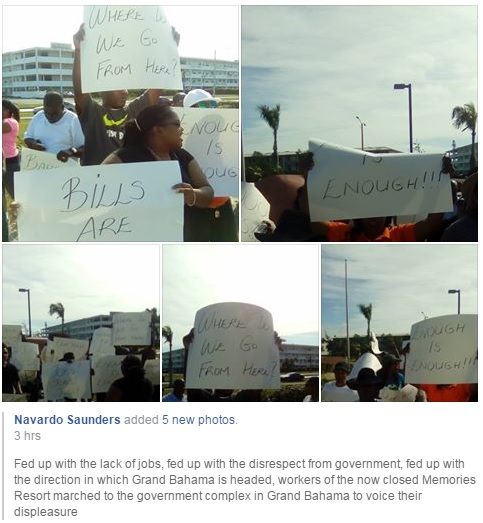
CU Blog - Sunwing vacates Memories Grand Bahama - Photo 4

CU Blog - Sunwing vacates Memories Grand Bahama - Photo 5

Casinos are especially failing. Why so?  Well, for the many resort guests that come from North America (US & Canada), they now have abundant access to gambling – lotteries, casinos and pari-mutuel betting (horse racing, greyhound racing and Jai Alai). These establishments, especially casinos as of late, have popped up in many cities all over the region, plus on many Native American reservations. Plus there is the eco-system of Casino Riverboats and Cruise Ships leaving major US ports; many of them heading to the Caribbean.

Lastly, the ubiquity of the internet has furnished endless online gambling options.

The previous casino hot spots of Las Vegas and Atlantic City have thusly had to reform and transform their product offering.

Somehow, the Caribbean region “has not gotten the memo”.

This is sad, as one community after another in the Caribbean are having to endure the “bumps and bruises” of a failing economic engine in their neighborhood.

“It’s a beautiful day in the neighborhood …” NOT!

See this reality – Bad News for one city – in this Press Release statement here:

Corporate Statement: Sunwing vacates Memories Grand Bahama 

CU Blog - Sunwing vacates Memories Grand Bahama - Photo 1

February 1, 2017 – In 2013, the Sunwing Travel Group forged a partnership with the Government of The Bahamas and in 2014 began to operate the Memories Grand Bahama Beach & Casino Resort on Grand Bahama Island. Concurrently with Sunwing’s opening of the Memories Resort, Sunwing began weekly flight service from eight cities in Canada and daily flights from a variety of U.S. cities in the ensuing summer. The opening of the 492-room Resort coupled with Sunwing’s tour operator and airlift support, led to the revitalization of the Grand Bahama tourist economy, over 100,000 incremental tourists annually arriving on new flying programs from Canada and the Eastern United States, the creation of over 1500 jobs on the Island, and an annual economic contribution exceeding US $140 Million.

On October 6th of 2016, Hurricane Matthew caused significant damage to the Memories Resort and forced its closure. Despite an immediate response from Sunwing Travel Group and the Government of The Bahamas to secure alternative accommodations, protect flying, and expedite the necessary repairs, the Hotel’s owner, Hong Kong-based Hutchison Whampoa, did not agree to requests to restore the Memories.

Since this event, the Sunwing Travel Group has taken on the significant financial burden of compensating and re-protecting customers as well as running an air program with limited accommodation options as a demonstration of goodwill and commitment to the people of Grand Bahama Island.

In January, it was reported in the Bahamian press that the Government and Sunwing had agreed to co-invest sums to restore the Memories and secure its earliest reopening. Sunwing sought the hotel Owner’s consent for such restoration but regrettably, the Owner attempted to impose exorbitant conditions that were totally unacceptable to Sunwing and would be to any other potential tenant.

The Sunwing Travel Group is very proud of the partnership it has forged with the Government and the people of Grand Bahama and very saddened to report that we were required to vacate the Memories Resort premises on January 29, 2017. Accordingly, we are making arrangements to pay out applicable redundancy pay for our employees and will be reaching out to our employees in the coming days.

Sunwing intends to continue supporting Grand Bahama Island and its tourism economy, including its hotels, through its tour operators, Sunwing Vacations and US-based Vacation Express as well as by continuing its airlift programs from Canada and from the United States in the summer, subject to conditions we are discussing with Government.

We are also pleased to advise that as part of our ongoing commitment to Grand Bahama and its people, we are already developing plans in concert with the Government to return to Grand Bahama Island as a hotel operator and are optimistic that we will be in a position to announce details shortly.

We are very appreciative for the support we’ve received from the Government and the wonderful people of Grand Bahama. Thank you for your continued support and understanding,

Sunwing Travel Group.

————-

Source: The “Bahamas Weekly” News Source; posted Feb 3, 2017; retrieved Feb 8, 2017 from: http://www.thebahamasweekly.com/publish/grand-bahama-bahamas/Sunwing_vacates_Memories_Grand_Bahama52338.shtml

CU Blog - Sunwing vacates Memories Grand Bahama - Photo 2

CU Blog - Sunwing vacates Memories Grand Bahama - Photo 3

————-

VIDEO – Memories Grand Bahama Beach & Casino Resort – Grand Bahama, The Bahamas | Sunwing.ca – https://youtu.be/qLo3puqnIis

Published on Apr 15, 2014 – Memories Grand Bahama Beach and Casino Resort offers the perfect vacation escape for all types of travelers. Guests can indulge in a variety of first-class amenities, gourmet dining, unlimited beverages, onsite golf and non-stop activities.

The foregoing press release – about Freeport, the 2nd city in the Bahamas – aligns with the book Go Lean…Caribbean, which calls for the elevation of Caribbean economics. This quest means first accepting the reality of the current assessments; then forging the necessary change.

What is the assessment? The region is in crisis!

Alas, the Go Lean book declares “a crisis is a terrible thing to waste”. It serves as a roadmap for the introduction and implementation of the technocratic Caribbean Union Trade Federation (CU) with the charter to effectuate change in the region with these 3 prime directives:

  • Optimization of the economic engines in order to grow the regional economy to $800 Billion and create 2.2 million new jobs.
  • Establishment of a security apparatus to protect the resultant economic engines and marshal against economic crimes.
  • Improve Caribbean governance to support these engines.

Looking at the foregoing news story, Freeport has a crisis. There is a need to re-focus, re-boot, and optimize the engines of commerce so as to make Freeport, Grand Bahama, the whole Bahamas and the entire Caribbean, better places to live, work and play. This news story relates that the tourism product in Freeport, the mainstay of Caribbean economy, is in turmoil. The Go Lean book asserts that this is where the region must start in the effort for turn-around: the region can no longer afford to be a “one-trick pony”. The opening page of the book states:

The Caribbean has tried, strenuously, over the decades, to diversify their economy away from the mono-industrial trappings of tourism, and yet tourism is still the primary driver of the economy. Prudence dictates that the Caribbean nations expand and optimize their tourism products, but also look for other opportunities for economic expansion. The requisite investment of the resources (time, talent, treasuries) for this goal may be too big for any one Caribbean member-state. Rather, shifting the responsibility to a region-wide, professionally-managed, deputized technocracy will result in greater production and greater accountability. This deputized agency is the … CU.

The CU Trade Federation is a technocracy, empowered to reboot the economic engines of the member-states, by fostering new industries (new “purse”) across the entire region and deploying solutions to better exploit the opportunities of the global trade market. Thus generating all new revenues; with no need to re-distribute any existing “purse” among the member-states.

There is an apropos proverb: “if you fail to plan, you plan to fail”. Starting here and now, the Caribbean starts its planning for success; to snatch “victory out of the jaws of defeat”. Failure is just too familiar. Already we have member-states … on the verge of a Failed-State status… These states are not contending with the challenges of modern life: changing weather patterns, ever-pervasive technology, and the “flat world” of globalization. To reverse the fortunes of these failing states, and guide others in the opposite direction to a destination of prosperity, the Caribbean must re-boot the regional economy and systems of commerce.

Early in this book, the responsibility to monitor, manage, and mitigate the risks and threats of job killing developments, (such as the reporting in the foregoing press release), was identified as an important function for the CU with this pronouncement in the Declaration of Interdependence (Pages 13):

xxvi.  Whereas the Caribbean region must have new jobs to empower the engines of the economy and create the income sources for prosperity, and encourage the next generation to forge their dreams right at home, the Federation must therefore foster the development of new industries… In addition, the Federation must invigorate the enterprises related to existing industries like tourism… – impacting the region with more jobs.

So what is next for Freeport?

CU Blog - Sunwing vacates Memories Grand Bahama - Photo 6

The urging to this community is to “be afraid; be very afraid of maintaining the status quo”. It is past time to reboot Freeport. (See the foregoing VIDEO advertising the Memories Grand Bahama Resort).

This commentary previously related details of the status quo for Freeport and the strong recommendations to forge change. Consider this list of previous blogs:

https://goleancaribbean.com/blog/?p=10309 Time to consider “Secession”
https://goleancaribbean.com/blog/?p=10140 Lessons Learned from Detroit: Demolish abandoned structures!
https://goleancaribbean.com/blog/?p=7528 A Vision of Freeport as a Self-Governing Entity
https://goleancaribbean.com/blog/?p=7449 ‘Crap Happens’ – So What Now?
https://goleancaribbean.com/blog/?p=5542 Freeport’s Bad Ethos of Rent-Seeking
https://goleancaribbean.com/blog/?p=4185 Freeport: A Ghost Town Happening
https://goleancaribbean.com/blog/?p=4037 How to Train Your ‘Dragon’ – Freeport Version
https://goleancaribbean.com/blog/?p=3641 Freeport’s Musical Roots: A City ‘Built on Rock-n-Roll’
https://goleancaribbean.com/blog/?p=2585 Parallel of Freeport’s History: Concorde Supersonic Transport
https://goleancaribbean.com/blog/?p=300 Freeport’s Failing Status: ’10,000 Bahamians Living in Darkness’

The problems in Freeport are indicative of many other failing Caribbean communities, especially those overly dependent on tourism. Tourism can be a great economic engine, if managed properly … and diversified to hedge risk.

But, the executions have been faulty. Many communities have been plagued with “economic sores” for inadequate management of their tourism products. The issue of declining growth or failing business models is an important discussion for this roadmap. This commentary previously related details of these dysfunctions in these earlier Go Lean blogs:

https://goleancaribbean.com/blog/?p=8381 A Lesson in Economic Fallacies – Casino Currencies
https://goleancaribbean.com/blog/?p=7082 The Art and Science of ‘Play’
https://goleancaribbean.com/blog/?p=6680 Vegas Casinos Place Bets on Video Games
https://goleancaribbean.com/blog/?p=6341 Tourism Dysfunctional Stewardship — What’s Next?
https://goleancaribbean.com/blog/?p=4145 A Better Model for ‘Art’ Tourism
https://goleancaribbean.com/blog/?p=3225 Caribbean tourism less competitive due to increasing aviation taxes
https://goleancaribbean.com/blog/?p=2571 Sharing Economy: There is a winning model for Caribbean Tourism
https://goleancaribbean.com/blog/?p=2207 Hotels are making billions from Resort Fees; Bad Model for Caribbean
https://goleancaribbean.com/blog/?p=1984 Casinos Failing Business Model
https://goleancaribbean.com/blog/?p=1943 The Fading Future of Golf; Vital for Tourism?
https://goleancaribbean.com/blog/?p=798 Lessons Learned from the American Airlines Delivery Arts & Sciences
https://goleancaribbean.com/blog/?p=235 Tourism’s changing profile

According to the foregoing press release, the closing of this one property, Memories Grand Bahama, will directly impact over 600 jobs. In economics, there is the study of in-direct jobs that are facilitated by an economic engine. The Go Lean book details (Page 260) the principle of job multipliers, how certain industries are better than others for generating multiple indirect jobs down the line for each direct job on a company’s payroll. (Tourism’s job multiplier may be in the 2.0 to 3.0 range, while other industries, like automotive manufacturing, have a job-multiplier rate of 11.0)

The closing of this one property is more dire for Freeport; it’s an island with only few other non-tourism economic options. This city should be desperate to reform/reboot. Their economy needs to diversify … to industries with high job-multiplier ratios. (The Go Lean book suggest an automotive manufacturing business model for some communities in the Caribbean region; and a shipbuilding focus for Freeport). In order to “dream such a dream”, there must first be the adoption of specific community ethos to diversify the economy. (This is defined as the underlying spirit-attitude-sentiment that informs the beliefs, customs, or practices of society).

Is Freeport ready to start the journey for a new destiny with the adoption of the new community ethos? How about the rest of the Caribbean?

The book details the community ethos, plus the strategies, tactics, implementations and advocacies to foster a diversified economy:

Community Ethos – Deferred Gratification Page 21
Community Ethos – Economic Principle – People Respond to Incentives Page 21
Community Ethos – Economic Principle – Economic Systems Influence Individual Choices Page 21
Community Ethos – Economic Principle – Voluntary Trade Creates Wealth Page 21
Community Ethos – Economic Principle – Consequences of Choices Lie in the Future Page 21
Community Ethos – Job Multiplier Page 22
Community Ethos – “Crap” Happens – Anticipate Natural Disasters Page 23
Community Ethos – Lean Operations Page 24
Community Ethos – Return on Investments (ROI) Page 24
Community Ethos – Ways to Impact the Future Page 26
Community Ethos – Ways to Foster Genius Page 27
Community Ethos – Ways to Help Entrepreneurship Page 28
Community Ethos – Ways to Impact Research & Development Page 30
Community Ethos – Ways to Improve Sharing Page 35
Community Ethos – Ways to Impact the Greater Good Page 37
Strategy – Integrate Region in a Single Market Page 45
Tactical – Fostering a Technocracy Page 64
Tactical – Tactics to Forge an $800 Billion Economy Page 67
Tactical – Separation of Powers – Regional Tourism Promotion Page 78
Implementation – Ways to Deliver Page 109
Implementation – Ways to Reboot Freeport – Only City identified in Roadmap Page 112
Planning – Ways to Make the Caribbean Better – Better Job Options Page 131
Planning – Lessons Learned from Detroit – Example of a Failing City Page 140
Advocacy – Ways to Grow the Economy Page 151
Advocacy – Ways to Create Jobs Page 152
Advocacy – Ways to Improve Governance Page 169
Advocacy – Ways to Better Manage the Social Contract Page 170
Advocacy – Ways to Enhance Tourism Page 190
Advocacy – Ways to Help the Middle Class Page 223
Advocacy – Ways to Impact Urban Living Page 234

The Go Lean/CU roadmap is designed to foster industrial developments to diversify communities from tourism. We do not want to “abandon” tourism, just diversify it.

“Abandon” is a good word, because abandonment is what is happening in these failing Caribbean communities that have not diversified nor grown their economies. The disposition is so bad that the region sports a 70 percent abandonment rate among the educated classes.

This is truly a crisis; but one not to be wasted. All Caribbean stakeholders in the region – residents, institutions, businesses, Diaspora and trading partners – are urged to lean-in to this Go Lean roadmap. This plan is conceivable, believable and achievable.

Yes, we can … make the Caribbean a better place to live, work and play. 🙂

Download the book Go Lean … Caribbean – now!


Share this post:
, , , , ,
[Top]

Art Walk – Its a ‘Real Thing’ in Wynwood

Go Lean Commentary

Forget the theory, this is real …

… the arts are empowering the economy in the Miami District of Wynwood. This can be measured … by “boots on the ground” and in dollars and cents.

Though we have been reporting that “the community rallies around the arts creating a unique energy; and art ‘dynamises’ the community, in a very unique way”, this was hard to visualize in practice. And then … we made a visit to Wynwood during Art Basel Art Week 2016 and wow! We felt the energy; see here in the following VIDEO:

VIDEO – CU Blog – Art Walk – It’s a Real Thing in Wynwood – https://youtu.be/iwuMUUFuXvs

Published on Dec 4, 2016 – Art Week 2016: “The community rallies around the arts creating a unique energy; and art ‘dynamises’ the community, in a very unique way”.

This commentary completes the 3-part series on the power of the visual arts. The series depicts how the arts can forge change in a community, where it can be an effective messaging tool to convey many important points. In the Caribbean, we need the type of transformation that can come from this power. The full entries in the series are as follows:

  1.  Forging Change: Arts & Artists
  2.  ENCORE: Art Basel 2016 – A Testament to the Business of the Arts
  3.  Art Walk – Its a Real Thing in Wynwood

This commentary goes further, conveying that there is also a good business model in the arts. This blog considers the model of a Miami-based company, branded WynwoodArtWalk.com. They promote the arts in this one district, and transact in the aligning tourism trade:

Website Title: Wynwood Art Walk
About WynwoodArtWalk.com

cu-blog-art-walk-its-a-real-thing-in-wynwood-photo-1“Wynwood Art Walk” is a tour company providing art tours in the Wynwood Art District. We advertise tours for groups but also provide customized private tours per request. Furthermore, we seek to support the Wynwood art community through our art directory and through banner advertisement space, our blog, and our community page.

WynwoodArtWalk.com has also an online directory showcasing art institutions operating within Wynwood. Wynwood is a section of Miami just north of Downtown, south of the Design District, east of I-95, and west of Biscayne Boulevard. There are currently over 60 art galleries, art complexes and art collection in Wynwood. Wynwood Art Guide provides advertising to institutions that exhibit/promote contemporary visual art (paintings, sculptures, installations, photography, multimedia, ceramics, etc.) in Wynwood. Advertising is available through the use of banners. Companies servicing the arts (eg. art dealers, framing companies, art supply sellers, etc.) are welcome to advertise through the use of banners exclusively.
———-
General Area

The main area of the Wynwood Art Walk is between 20 St & 36 St and from NW 2nd Ave to NE 2nd Ave. Prime hours are between 7pm and 11pm. Parking is best before 7pm.

The food trucks are located in a field on the corner of NW 23 St & NW 2nd Ave. Great food and drinks!
———-
History
Wynwood – originally spelled Wyndwood – is an old inner city neighborhood of Miami surrounded by Edgewater, Overtown, Liberty City… Wynwood was built as a working class residential neighborhood, connected to the Garment District just south of it. It attracted manufacturers from New York and elsewhere and retained some jobs, fueled by immigrant labor, but struggled against competition from cheap labor overseas. According to a different source, in the fifties, it was a white neighborhood of professionals, but a remembrance on History Miami’s website indicates that Cuban immigrants were moving into the neighborhood in the early sixties.
Source: Tour Company Website – Retrieved 12-03-2016 from: http://wynwoodartwalk.com/wynwood-art/

This commentary – from the publishers of the book Go Lean … Caribbean – is trying to forge change in the Caribbean region and advocate that the arts can be a great tool-tactic for societal elevation. As previously related “…there’s a transformative power to the arts”.

This commentary is urging Caribbean stakeholders to explore the production of artists and the effect their art can have on society. Considering that tourism is the primary industry in the entire Caribbean, there are a lot of benefits to examining the business model of the Wynwood Art District. Imagine an array of murals in Caribbean port cities – for our Cruise tourism. Imagine too, the “Walking Tours”, Art Galleries and Art Sales. Notice the manifestation of this plan in the photos here from the Art Walk (Tour) in Wynwood:

cu-blog-art-walk-its-a-real-thing-in-wynwood-photo-2  cu-blog-art-walk-its-a-real-thing-in-wynwood-photo-3

cu-blog-art-walk-its-a-real-thing-in-wynwood-photo-4  cu-blog-art-walk-its-a-real-thing-in-wynwood-photo-5

cu-blog-art-walk-its-a-real-thing-in-wynwood-photo-6

cu-blog-art-walk-its-a-real-thing-in-wynwood-photo-7

cu-blog-art-walk-its-a-real-thing-in-wynwood-photo-8


cu-blog-art-walk-its-a-real-thing-in-wynwood-photo-9

Feel the energy! Excitement enough?

Local media has often reported on the huge economic impact of Art Basel and Wynwood; see the links here to full stories:

http://www.miamiherald.com/news/business/biz-monday/article45702225.htmlArt Basel has been great for Miami, CEOs agree (Miami Herald Newspaper; November 20, 2015).

http://www.bizjournals.com/southflorida/news/2015/06/22/tristar-capital-turns-huge-profit-on-13m-sale.htmlTriStar Capital turns huge profit on $13M sale in Miami’s Wynwood (South Florida Business Journal; Jun 22, 2015).

https://theculturetrip.com/north-america/usa/florida/articles/miami-culture-guide-wynwood-s-10-must-visit-art-galleries/ – Culture Trip Web Portal (Retrieved Dec 4, 2016).

Count the profits! Commerce enough?

This commentary confirms that there is energy and money in the visual arts, whether it is murals or graffiti, (commissioned street art). While the messaging of the visual arts can be impactful, visual expressions can depict imagery and tales – fact or fiction; artists often “use fiction to tell the truth” – the business elements of the arts can be even more impactful. The Go Lean book serves as a roadmap for the introduction and implementation of the technocratic Caribbean Union Trade Federation (CU). The CU is set to elevate Caribbean society through empowerments for the economic, security and governing engines in society. Therefore the Go Lean roadmap has these 3 prime directives:

  • Optimization of the economic engines in order to grow the regional economy to $800 Billion & create 2.2 million new jobs.
  • Establishment of a security apparatus to ensure public safety and protect the economic engines.
  • Improve Caribbean governance to support these engines.

The Go Lean book posits that the genius qualifier to excel in the arts should be identified early in Caribbean youth and then their development should be fostered up to adulthood. The book thereafter details the mechanics of incubating a business climate for this and all areas of culture. This quest is detailed as an advocacy in the book (Page 230) as:

10 Ways to Improve the Arts

1. Emergence of the Caribbean Union Embrace the advent of the CariCom Single Market Initiative and the Caribbean Union Trade Federation. This will allow for the unification of the region into a single market of 42 million people. This size supports the proliferation of ‘art’ (visual/fine, music, performance & film) as an industry. The CU will promote the art exhibition eco-system – allowing marketplaces for artists to congregate and monetize their talents. Structures will also be deployed for media companies to monetize film & performance art. The CU will facilitate the marketing of travelling exhibitions, and touring companies of stage productions. For the region, art can be a business enabler, and expressions for civic pride and national identity.
2. CU Administered Museums Modeled after the Smithsonian, the CU “mother” (first-tier) museums will be placed in the Capital District. There will also be “child” museums scattered through out the regions with touring exhibitions.
3. Art, Music & Film Festival Tourism CU promoted events, utilizing the CU-owned fairgrounds, to encourage the development and advancement in artistic expressions. These events will be aimed at the foreign markets (US, Canada, Europe, Central and South America) so as to generate tourism traffic. The artists may be domestic but also foreign and world class performers. (Event examples include New Orleans Jazz & Heritage Festival, Art Deco in Miami, Cannes Film Festival, and Taos, New Mexico).
4. Fairgrounds as Arena and Theater Districts The CU Fairgrounds will fund, build and maintain civic arenas and theaters in local market Enterprise Zones. The designated areas fomented under the CU will qualify for tax (sales, property and income tax rebates) and economic incentives (low interest loans and grants) and stimuli (advertising and event promotions), empowering event tourism.
5. Electronic Payment Models The CU Central Bank will arrange for settlement of electronic payments transactions allowing electronic commerce to flourish in the region. Then music, film and other media can be paid for and downloaded legally from the internet.
6. Respect for Intellectual Property Any institutional disregard for the intellectual property of books, music, films and media will be severely prosecuted. The CU will also recognized and enforce the copyrights of other countries and work to have international markets respects the intellectual property rights of Caribbean artists. (This is a feature the of the Trade SHIELD principles defined in Appendix D (Page 264)). This effort requires close collaboration with criminal (Interpol) and civic enforcement agencies (ASCAP/BMI, MPAA). The end result would be that local/regional artists can make a “living” from their recorded works.
7. Art in Public Places The CU will spur initiatives to incentivize and directly commission artist to exhibit their creations (paintings, murals, sculptures, etc.) in public edifices. This will encourage national-state public-private deployments of themed sculptures like Bahamian Conch Shells, Barbados Flying Fish and Puerto Rico Tree Frogs. These can be modeled after US city examples, like “Painted” Bulls in Chicago, Mustangs in Denver, and Guitars in Nashville.
8. Performing & Fine Arts Schools A hybrid “Charter” school concept promotes the development and advancement in specific performing and fine arts while not forsaking the basic educational requirements. Similar to the secondary school (NYC Performing Arts) featured in the movie “Fame”. On the tertiary level, the CU will provide scholarships and endowments for programs in the Arts.
9. Agency for Public Broadcasting and National Touring Companies These public-private agencies will be chartered to produce and promote world class artistic companies (adult and youth) for Opera, Ballet, Modern Dance, Symphonic and Philharmonic Orchestras, despite whether they are popular or highly rated. The Arts must always be promoted as a necessary expression of a civilized society, despite profit or public acceptance. Likewise, a CU agency for Public Broadcasting will manage the region’s media efforts to bring world class art to the people, (with SAP-style options for all four languages) without considering popularity.
10. Professional Agents and Artists Management Oversight The CU will regulate, at the Cabinet level, and license the industry of Artists Agents/Managers, even though the artists can elect their own Agents & Managers. This management oversight is to be modeled after State Bars for lawyers. (This model is used for Sports Agents also).

While the Go Lean book relates (Page 291) the historicity of the pro-artist community in Taos, New Mexico, we now see a similar local model in Miami’s Wynwood District – a location with more Caribbean infusion. This Wynwood experience in particular and Art Basel Art Week in general is reinforcing that “art can drive” the economics, security and governance of a community.

While not everyone will be gifted artists, everyone can benefit from the accentuation of the arts and artists. So we should all work to make our homeland a better place to live, work and play by fostering the genius ability in Caribbean citizens. This is presented in the book as a “community ethos”:

“the fundamental character or spirit of a culture; the underlying sentiment that informs the beliefs, customs, or practices of a society; dominant assumptions of a people”. – (Page 20)

The Go Lean book presented the roadmap to imbrue the Caribbean region with new community ethos, plus new strategies, tactics, implementation and advocacies to foster the business climate for the arts. The following is a sample of these specific details from the book:

Community Ethos – Deferred Gratification Page 21
Community Ethos – Economic Principles – People Choose Page 21
Community Ethos – Economic Principles – People Respond to Incentives in Predictable Ways Page 21
Community Ethos – Economic Principles – Economic Systems Influence Individual Choices Page 21
Community Ethos – Economic Principles – The Consequences of Choices Lie in the Future Page 21
Community Ethos – Governing Principles – Minority Equalization Page 23
Community Ethos – Governing Principles – Lean Operations Page 24
Community Ethos – Governing Principles – Cooperatives Page 25
Community Ethos – Ways to Foster Genius Page 27
Community Ethos – Ways to Help Entrepreneurship Page 28
Community Ethos – Ways to Promote Intellectual Property Page 29
Community Ethos – Ways to Impact Turn-Arounds – Covering Urban Decay with Art Page 33
Community Ethos – Ways to Promote Happiness Page 36
Community Ethos – Ways to Impact the Greater Good Page 37
Strategy – Vision – Confederate 30 Member-States Page 45
Strategy – Mission – Celebrate the Music, Sports, Art and Culture of the Caribbean Page 46
Tactical – Confederating a Permanent Union Page 63
Tactical – Fostering a Technocracy Page 64
Tactical – Separation-of-Powers – CU Federal Agencies versus Member-State Governments Page 71
Implementation – Ways to Pay for Change Page 101
Implementation – Ways to Deliver Page 109
Implementation – National/Federal Museum in the Capital District Page 110
Planning – 10 Big Ideas for the Caribbean Region Page 127
Planning – Ways to Make the Caribbean Better Page 131
Advocacy – Ways to Grow the Economy Page 151
Advocacy – Ways to Create Jobs Page 152
Advocacy – Ways to Enhance Tourism Page 190
Advocacy – Ways to Impact Events Page 191
Advocacy – Ways to Impact Cruise Tourism Page 193
Advocacy – Ways to Preserve Caribbean Heritage – The business of fostering local culture Page 218
Advocacy – Ways to Improve the Arts Page 230
Advocacy – Ways to Promote Music Page 231
Appendix D – Trade SHIELD Principles Page 264
Appendix M – Taos Art Colony – New Mexico‘s Landmark Page 291
Appendix W – Mediating as French Culture and Economics Collide Page 311

The empowerments in the Go Lean book calls for the elevation of the arts as a permanent change. We want our youth to put their hopes and dreams in a Caribbean future, especially our youth who prove to be gifted in the arts. From the outset, the book recognized the significance of successfully fostering the arts with these statements in the opening Declaration of Interdependence (Page 12 & 14):

xxi.  Whereas the preparation of our labor force can foster opportunities and dictate economic progress for current and future generations, the Federation must ensure that educational and job training opportunities are fully optimized for all residents of all member-states, with no partiality towards any gender or ethnic group. The Federation must recognize and facilitate excellence in many different fields of endeavor, including sciences, languages, arts, music and sports. This responsibility should be executed without incurring the risks of further human flight, as has been the past history.

xxxii. Whereas the cultural arts and music of the region are germane to the quality of Caribbean life, and the international appreciation of Caribbean life, the Federation must implement the support systems to teach, encourage, incentivize, monetize and promote the related industries for arts and music in domestic and foreign markets. These endeavors will make the Caribbean a better place to live, work and play.

The Go Lean roadmap seeks to foster the eco-system for the business of the arts. This quest has been addressed in many previous Go Lean commentaries; see sample here:

https://goleancaribbean.com/blog/?p=9151 The New Smithsonian African-American Museum
https://goleancaribbean.com/blog/?p=4145 The African Renaissance Monument in Dakar, Senegal, Africa
https://goleancaribbean.com/blog/?p=3292 Art Basel Miami – a Testament to the Spread of Art & Culture
https://goleancaribbean.com/blog/?p=2415 How ‘The Lion King’ roared into Show-Business history

We can do our own “Wynwood” in the Caribbean. We have the artists and the talent waiting to be fostered. Let’s develop the business environment locally to fully explore the opportunities from the arts – the region should commission artists to paint murals.

We can do this; we can forge change here at home. This Go Lean roadmap is conceivable, believable and achievable. We can make the Caribbean a better place to live, work and play. 🙂

Download the book Go Lean … Caribbean – now!

Share this post:
, , , , ,
[Top]

ENCORE: Art Basel 2016 – A Testament to the Business of the Arts

Go Lean Commentary

Dateline: Miami Beach – Its Art Basel time again. The events for 2016 are being conducted during the dates of December 1 – 4. This is the biggest event on the calendar for Miami’s art scene and it demonstrates the power of the arts and its ability to transform societies. So this commentary from December 9, 2014 is being encored here, but with these new photos:

cu-blog-art-basel-2016-photo-1

cu-blog-art-basel-2016-photo-5

cu-blog-art-basel-2016-photo-4

cu-blog-art-basel-2016-photo-3

cu-blog-art-basel-2016-photo-2

This Encore is Part 2 of 3 in a series on the ‘power of the visual arts’. The series depicts how the arts can forge change in a community, where it can be an effective messaging tool to convey many important points. The full entries in the series are as follows:

  1.  Forging Change: Arts & Artists
  2.  ENCORE: Art Basel 2016 – A Testament to the Business of the Arts
  3.  Art Walk – Its a Real Thing in Wynwood

This original commentary is as follows:

———

Art Basel Miami – A Testament to the Spread of Culture

There’s no business like ‘show business’. – Age Old Adage.

There is money in the ‘Arts’. – Go Lean…Caribbean precept.

And now, the subsequent news article posits: “the community rallies around art creating a unique energy. And art ‘dynamises’ the community, in a very unique way”.

The book Go Lean…Caribbean has a simple purpose: enable the Caribbean to be a better place to live, work and play. The book recognizes that the ‘genius qualifier’ is shown in different fields of endeavor, including the arts (fine, visual, performing, music, etc.). While the Go Lean roadmap has a focus on STEM [1] fields, it is accepted that not everyone possesses STEM skills, and yet many others can still contribute to society. Then when these other skills/talents are “gifted” beyond the extraordinary, they can truly impact their community, and maybe even the world.

The book relates that the arts can have a positive influence on the Caribbean. And that one man, or woman, can make a difference in this quest. We want to foster the next generation of “stars” in the arts and other fields of endeavor.

According to the following news article, the arts can truly ‘dynamise’ the community. The article relates to Art Basel, the movement to stage art shows for Modern and Contemporary works, sited annually in Basel (Switzerland), Hong Kong and Miami Beach. The focus of this article is Miami Beach:

Title: 13th Art Basel Miami Beach (December 4 – 7, 2014), a testament to the spread of culture
By:
Jane Wooldridge, and contributed Ricardo Mor

CU Blog - Art Basel Miami - a Testament to the Spread of Culture - Photo 1If “more” equals better, the 13th edition of Art Basel Miami Beach and the surrounding art week events may go down as the best ever. More new art fairs and just-to-see shows. More record-breaking sales at Art Basel Miami Beach. More CEOs — from watchmakers Hublot and Omega, luggage brand Rimowa, hotel companies Starwood and Marriott — opening luxury properties. And if not more — who can keep track? — then certainly plenty of celebrities, including actors Leonardo DiCaprio, James Marden and Owen Wilson; musicians Usher, Miley Cyrus, Russell Simmons and Joe Jonas; supermodel Heidi Klum and the world’s fastest man, Usain Bolt.

There was another kind of “more” as well — more spillovers, touch points and art for all manner of South Floridians, from entrepreneurs to pre-teen fashion designers, stretching from Pinecrest to Coconut Grove, Overtown to Fort Lauderdale.

If the aim is “to make art general,” as Knight Foundation President Alberto Ibargüen told attendees Monday at the foundation’s annual announcement of Knight Art Challenge awards, this year’s art week put South Florida well on its way. Proclaimed National Endowment for the Arts chairman Jane Chu on a whiplash art tour to downtown, Miami Beach and Opa-locka, “Art is entwined in Miami’s DNA.”

Even as the Pérez Art Museum Miami celebrated its first year anniversary, a new permanent museum building for the Institute for Contemporary Art Miami was announced for the Design District.

Overtown [historical Black neighborhood] hosted its first Art Africa fair of works created by artists from the African Diaspora. Joining it on the list of first-year events are an impressive exhibition of monumental works in the vast Mana-Miami Wynwood space on NW 23rd Street and Pinta, a fair focusing on Latin American art that moved from New York to Midtown.

The festivities reach far, far beyond the traditional art crowd. On the Mana campus, the Savannah College of Art and Design is presenting “i feel ya,” an exhibition that includes jumpsuits designed by André 3000 for Outkast’s reunion tour. The nearby ArtHaus tent is surrounded by food trucks and a sound program where Beethoven is definitely not on the playlist.

This year, more than a half-dozen student exhibits are on the art agenda. At FusionMIA, student photographs hang near works by masters Rashid Johnson and Al Loving; all were curated by Miami’s N’Namdi Contemporary gallery. A few blocks north, at Wynwood’s House of Art, a dozen students ages 5 to 15 from the DesignLab program showed off their creations at a Friday night “vernissage.”

Among them was 13-year-old Yael Bloom, wearing a flounced party dress she made from shrink wrap. No matter that the first-time event was a little-known spinoff. “Art Basel is pretty hard for adults to get into,” Bloom said. “For kids to get into it is very cool.”

As in years past, free events abound, from performances by Chinese artist Shen Wei at Miami-Dade College and artist Theo Jansen’s Strandbeest demonstrations on the sand to official Art Basel events, including films on the New World Center Wallcast and the Art Public sculptures in Collins Park. New is free Art Week shuttle service between Midtown and Miami Beach — a government cooperative effort — that dovetails with trolley service to art venues on both sides of Biscayne Bay.

In institutional quarters, Art Basel Miami Beach global sponsor UBS announced the creation of a $5 million loan fund for existing Florida small business owners. Sponsor BMW USA announced it would fund an “art journey” open to emerging artists exhibiting at Art Basel Miami Beach. And the City of Miami Beach and Miami-Dade County put out a call to artists, encouraging them to propose projects for the $4.33 million public art program associated with the Miami Beach Convention Center renovation. South Floridians are eligible to apply for all three initiatives.

Clearly, art week isn’t just about aesthetics, personal enrichment and community building. It is also about enterprise — which explains all those luxury CEOs, the ground-breaking of the Zaha Hadid-designed One Thousand Museum, and the announcement at Miami Ironside that designer Ron Arad will create the interiors for the revamped Watergate Hotel in Washington. (And no, there’s no real connection to Miami.)

Said Michael Spring, Miami-Dade’s cultural affairs director, “There’s a certain deepening, a realization not just that the Art Basel event but arts in general have a phenomenal effect on the image and economy of our entire region. We’ve talked about it before, but there seems to be more focus this year. It’s not an interesting footnote anymore; it’s the theme.”

That, says Miami Commissioner Keon Hardemon, was the thinking behind the city’s $50,000 grant supporting the Art Africa fair. “We need to encourage people to come now to Overtown. The cultural aspect helps them realize they can safely come here now. And then maybe they’ll come back later and spend money in the community, in our restaurants and stores,” he said.

In Miami, with commerce inevitably comes glamor, which is proving as glossy as ever. Hennessey V.S.O.P., Dom Perignon, Paper Magazine, Interview and B.E.T. have staged events all around town, at private “locations,” hotels, restaurants, the 1111 Lincoln Road garage and the ICA temporary space in the Moore Building. Developer Alan Faena threw a breezy beachside asado. Jeffrey Deitch, Tommy Hilfiger and V Magazine hosted a glitzy bash at the Raleigh featuring a performance by Miley Cyrus.

In the Design District, developer Craig Robins hosted a dinner honoring architect Peter Marino at a single, 142-yard candlelit table for 380 guests on a closed-off street amid the district’s luxury brand storefronts. Sculptor Jaume Plensa was the guest of honor at another long candlelit table — this one for 60 — in the Coconut Grove sales offices of Park Grove, which recently installed a series of his works along South Bayshore Drive.

Alas, once again, manners were not de rigueur among the glossy set. At some parties, guests of guests turned up with entirely uninvited guests. For other tony soirees, publicists emailed out “disinvitations” to previously invited guests, obliquely sending the message that someone more glamorous would be taking those seats.

Decorous or not, during art week, the energy all emanates from the week’s namesake fair, said Dennis Scholl, VP/Arts at the Knight Foundation. “The most important thing to remember is why this week exists, and that’s Art Basel in the Convention Center. If that wasn’t the core of what’s going on — if it weren’t a world-class event — nobody else would be interested in being involved. It continues to be the raison d’être of this week.”

In the Convention Center, at what Scholl called “the core of the nuclear reactor,” many gallerists were quite happy, thank you very much.

Veteran Art Basel Miami Beach gallerist Sean Kelly said Wednesday was his best first day ever at the fair. Newcomer Michael Jon Gallery also sold almost all of its available work — by rising stars like Sayre Gomez and JPW3 — on the first day.

For most dealers, sales remained lively, day after day. At Galerie Gmurzynska, co-CEO Mathias Rastorfer proclaimed it “successful indeed … . In terms of reception, it was an overwhelmingly enthusiastic response from collectors and colleagues alike. In terms of sales, we did several over $1 million sales and many within the $100,000 to $500,000 range, with a Picasso’s Venus and Love selling at near the asking price of $1.2 million.

Said Art Basel Director Marc Spiegler on Saturday, “I’ve gotten nothing but positive response from galleries,” not only because of strong sales, but also because new hours for VIPs gave gallerists more time to meet new collectors. “A lot of people were here and buying for the first time. Many galleries said they had their best fair ever.”

But like this week’s weather, the upbeat atmosphere suffered from uncharacteristic clouds. In Wynwood, a police car hit and critically injured a street artist. An $87,000 silver plate crafted by Pablo Picasso was reported stolen from the Art Miami satellite fair in Midtown. A partygoer at PAMM’s first anniversary fête on Thursday accidentally damaged an artwork installed on the floor. And Friday night, would-be art goers were stymied by traffic shutdowns into art-centric areas of Wynwood, Midtown and Miami Beach by protests against nationwide police-involved killings.

Though unfortunate and sometimes tragic, Spring said, the unrelated events were “a product of the incredible level of activity.” At Saturday’s annual brunch at the art-rich Sagamore Hotel in Miami Beach, the theft and damaged artwork uniformly were brushed off as inconsequential. Said one art insider, “s–t happens.”

Miami Art Week’s merry-go-round nature is surely born from Miami’s appreciation of a good time. And increasingly, perhaps from something deeper.

Said Miami gallerist Jumaane N’Namdi, “Art Basel has put art on everyone’s mind. Everyone wants to be involved somehow.”

And that’s not just about the parties, said N’Namdi, who had galleries in Chicago, New York and Detroit before opening in Miami. “I don’t think you could find a city that enjoys really looking at the art the way this city does. I came through the airport, and even the TSA guys were talking about it, asking each other if they got their Art Basel posters. Every level of art you want is here.”

Outsiders agree. “Miami is very special for its link between art and the community,” said Axelle de Buffévent, style director at champagne house Martell Mumm Perrier-Jouët. “It goes both ways. The community rallies around art creating a unique energy. And art dynamises the community, in a very unique way.”
Miami Herald – Daily Newspaper – (Posted December 6, 2014) –
http://www.miamiherald.com/entertainment/visual-arts/art-basel/article4313255.html

VIDEO: Art Basel Miami Beach 2014 – http://youtu.be/StkzLiBtDis

Published on Dec 4, 2014
The international art fair Art Basel returns to Miami Beach for its 13th edition, taking place at the Miami Beach Convention Center from December 4 to December 7, 2014. Art Basel Miami Beach 2014 features 267 leading international galleries from 31 countries across North and South America, Europe, Asia and Africa, which present artworks ranging from Modern masters to the latest contemporary art pieces. With this edition, the fair debuts Survey, a new sector dedicated to art-historical projects. In this video, we attend the Private View of Art Basel Miami Beach 2014 at the Miami Beach Convention Center on December 3.

This story aligns with the book Go Lean…Caribbean in stressing the economic impact of artistic endeavors. The book pledges that Caribbean society will be elevated by improving the eco-system to live, work and play; and that “play” covers vast areas of culture.

“Culture” has emerged as a central concept in anthropology, encompassing the range of human phenomena that cannot be directly attributed to genetic inheritance. Specifically, the term “culture” in North American anthropology has two meanings:

  1. the evolved human capacity to classify and represent experiences with symbols, and to act imaginatively and creatively; and
  2. the distinct ways that people, who live differently, classified and represented their experiences, and acted creatively.[2]

Anthropologist Adamson Hoebel best describes culture as an integrated system of learned behavior patterns which are characteristic of the members of a society and which are not a result of biological inheritance.[3]

The Go Lean book stresses economic benefits from classic cultural expressions and popular cultural productions, including Caribbean music, paintings/art, sketches, sculptures, books, fashion and food. All the “skilled phenomena” that makes Caribbean life unique and appealing.

The book Go Lean…Caribbean serves as a roadmap for the introduction and implementation of the technocratic Caribbean Union Trade Federation (CU). There is a lot involved in this vision; the prime directives are stated as follows:

  • Optimization of the economic engines in order to grow the regional economy to $800 Billion & create 2.2 million new jobs.
  • Establishment of a security apparatus to protect the resultant economic engines.
  • Improve Caribbean governance to support these engines.

CU Blog - Art Basel Miami - a Testament to the Spread of Culture - Photo 2The foregoing article relates the economic impact that the Greater Miami area is enjoying for hosting the Art Basel event, for the 13th year now. At this point the benefits have spread throughout the community, (Art Fairs, museums, scholarships, foundations, etc.) not just one venue on Miami Beach. The spin-off benefit of art is a strong point of the Go Lean book, highlighting benefits as long as we keep the talent at home working in/for the community. This point is pronounced early in the following statements in the book’s opening Declaration of Interdependence (Page 14):

xxi. Whereas the preparation of our labor force can foster opportunities and dictate economic progress for current and future generations, the Federation must ensure that educational and job training opportunities are fully optimized for all residents of all member-states, with no partiality towards any gender or ethnic group. The Federation must recognize and facilitate excellence in many different fields of endeavor, including sciences, languages, arts, music and sports. This responsibility should be executed without incurring the risks of further human flight, as has been the past history.

xxxii. Whereas the cultural arts and music of the region are germane to the quality of Caribbean life, and the international appreciation of Caribbean life, the Federation must implement the support systems to teach, encourage, incentivize, monetize and promote the related industries for arts and music in domestic and foreign markets. These endeavors will make the Caribbean a better place to live, work and play.

The economic, cultural and image considerations for “show business” on a society have been well-detailed in these previous Go Lean blogs:

Caribbean Role Model – Oscar De La Renta – RIP
How ‘The Lion King’ roared into history
Forging Change – The Fun Theory
Role Model Berry Gordy – No Town Like Motown
Book Review: ‘Chasing Youth Culture and Getting It Right’
The Music, Art, Culture and Legend of Bob Marley lives on!

The Go Lean roadmap posits that change will come to the Caribbean “show business” (Visual and Performing Arts, Music, Film). This is due mostly to the convergence of a Single Market for the Caribbean region. If “size matters”, then the integration of 42 million people (plus the 10 million Diaspora and 80 million visitors) for the 30 member-states will create the consumer markets to promote and foster Caribbean artistic creations for their full appreciation. The first requirement in this goal is the community ethos of valuing intellectual property; to recognize that other people’s creations are valuable. (Then we can enforce on others to value and appreciate our creations).

This would truly be new for the Caribbean.

The CU is designed to do the heavy-lifting of organizing Caribbean society for the new world of art appreciation and “consumerization”. The following list details the ethos, strategies, tactics, implementations and advocacies to foster regional artists and showcase their wares to the world stage:

Community Ethos – Forging Change Page 20
Community Ethos – Lean Operations Page 24
Community Ethos – Return on Investments Page 24
Community Ethos – Ways to Foster Genius Page 27
Community Ethos – Help Entrepreneurship Page 28
Community Ethos – Promote Intellectual Property Page 29
Strategy – Caribbean Vision: Single Market Page 45
Separation of Powers – Central Bank – Electronic Payment Deployments Page 73
Tactical – Separation of Powers – Patents – Copyrights Page 78
Separation of Powers – Culture Administration Page 81
Planning – Ways to Make the Caribbean Better Page 131
Planning – Lessons Learned from New York City Page 137
Advocacy – Ways to Grow the Economy Page 151
Advocacy – Ways to Create Jobs Page 152
Advocacy – Education – Performing Arts Schools Page 159
Advocacy – Ways to Impact Hollywood Page 203
Advocacy – Ways to Improve the Arts Page 230
Advocacy – Ways to Promote Music Page 231
Advocacy – Impact Urban Living – Art & Theaters Page 234
Appendix – New York / Arts / Theater Jobs Page 277
Appendix – Taos New Mexico Art Colony Page 291
Appendix – Caribbean Music Genres Page 347
Appendix – Protecting Music Copyrights Page 351

There is BIG money in show business and in the world of the Arts. For the 10th edition of Art Basel in Miami in 2011, there was a record number of fifty thousand collectors, artists, dealers, curators, critics and art enthusiasts – including 150 museum and institutions from across the globe – participating in the show.[4]

This event requires a lot of community investments. Every year, Miami’s leading private collections – among them the Rubell Family Collection, Cisneros Fontanals Art Foundation, the De la Cruz Collection Contemporary Art Space, World Class Boxing, the Margulies Collection and the Dacra Collection – open their homes and warehouses to guests of Art Basel. Additionally, the museums of South Florida organize exhibitions including shows at the Miami Art Museum, Bass Museum of Art, Norton Museum, Wolfsonian-FIU and MOCA North Miami.

The community investment has been there for Miami, and so has the returns [5].For 2014, the attendance figures were 75,000, with an increase in hotel occupancy of 30,000 rooms on the days the Art Fair is in progress. The conservative estimates are that the Art Fair brings close to $13 million a year in economic impact to the region. (This figure does not include the purchases of artworks, some of which fetch millions of dollars).

The subject of the Miami Metropolitan area is very relevant for a Caribbean empowerment discussion. A previous blog asserted that Miami’s success, in many regards, is attributable to Caribbean’s failures. Many of our populations (including artists) have fled their homelands and have taken refuge in the Miami area. Where at first this disposition was begrudged, eventually it transformed to tolerance, but now it is even celebrated.

CU Blog - Art Basel Miami - a Testament to the Spread of Culture - Photo 3

Miami has been greatly impacted by both the Caribbean Diaspora and its assimilation of the “Arts”. Whole neighborhoods have been elevated due to this strategy of catering to the arts; (see photo here). This is a great role model for the Caribbean to emulate; our whole society can be elevated.

The Go Lean/CU roadmap represents the empowerment for the Caribbean communities to elevate – we now want to keep our artists at home. The people, institutions and governance of the region are therefore urged to “lean-in” to this roadmap for change. 🙂

Download the book Go Lean … Caribbean – now!

——-

Appendix – Source References:

1. STEM = Science, Technology, Engineering and Mathematics.

2. “What is culture?”. Bodylanguagecards.com. Retreived 2013-03-29.

3. Hoebel, Adamson (1966). Anthropology: Study of Man. McGraw-Hill.

4. http://www.nytimes.com/2011/12/03/arts/design/art-basel-miami-beach-review.html?_r=1&pagewanted=all

5. http://www.nytimes.com/2014/12/04/arts/international/art-fair-energizes-economy-of-region.html?_r=0


Share this post:
, , , , ,
[Top]

ENCORE: First Day of Autumn – Time to Head South

cu-blog-securing-the-homeland-from-the-seas-photo-5

Go Lean Commentary

Imagine a world – the new Caribbean – where every year at this time, the first day of Autumn, the efforts begin to move “snowbirds” down south, to the Caribbean to pass the winter months.

We welcome this!

This is the business model envisioned in the book Go Lean … Caribbean. It asserts that with the right guidance, investments and the adoption of best practices that the Caribbean region can give refuge to northern snowbirds for the winter, and profit our communities at the same time. One required investment would be a complete network of Island-hopping ferries, as depicted here.

Imagine the scenario – in the VIDEO here – but a ferry of cars and RV’s (Recreation Vehicles) arriving in one Caribbean port after another:

VIDEO – RVing on the Gulf Coast Ferry System – https://youtu.be/XlTYa83EoTM
Published on Mar 6, 2013 –  … On a recent trip from New Orleans, LA to Galveston Island, TX, both Google Maps and our GPS suggested that we drive inland, along interstate 10. Since we prefer to stay on more scenic local roads whenever possible (and we were also eager to take the RV on the ferry ride to Galveston Island) we stayed along the coast instead. As a bonus, we drove through peaceful and scenic marshland and got some views of the Gulf of Mexico as well.
While researching our route, we discovered that there would be an additional water crossing required, on the Cameron-Holly Beach ferry. We weren’t sure if a large motorhome would be able to make the crossing. Were large vehicles allowed? Was there a problem with low tide causing steep approach or departure angles? A little online research showed that it wouldn’t be a problem, although we’d recommend that anyone planning to follow this route check for any updates or changes to ferry policies or conditions. The Cameron-Holly Beach ferry trip is laughably short… only 1/4 mile and about 3 1/2 minutes. …
When we arrived in Port Bolivar, TX to catch the ferry to Galveston Island, we were pleased to find that the trip was free for all ages! During the crossing we saw dolphins riding in our bow wave and were lucky enough to catch one of them on video, as you can see. Next time you’re RVing along the Gulf Coast, get off the Interstate and head out onto the water. It’s a great way to travel by RV!

Consider the original blog-commentary here from April 11, 2014. It is being ENCORED for this first day of Autumn 2016:

============

Title: Florida’s Snowbirds Chilly Welcome

Florida's Snowbird Chilly Welcome - PhotoTo the Canadian Snowbirds, looking for warm climates and a warm welcome, we say:

“Be our guest”.

To the Caribbean Diaspora, living in Canada and other northern countries, we say:

“Come in from the cold”.

The book Go Lean…Caribbean aligns with the news story in the foregoing article. While the US may be retracting the Welcome Mats from Canadian snowbirds, after 180 days, the islands of the Caribbean extend the invitation for them to pass the wintry months here. They are invited to bring their time, talent and treasuries; (according to the foregoing article: billions of dollars).

  • Need an extra month? No problem.
  • Need access to cutting-edge medical treatment? Got it.
  • Need protection from crime and harassment? Got you covered.
  • Need video communications to interact with Embassy and government officials? Sure thing.
  • Need access to your Canadian dollar bank accounts? No problem.

The source news article is embedded here as follows:

Title: “Congress protects America from Canadian pensioners”
Gulfport, Florida – A chore combining carpentry with diplomacy awaits Gordon Bennett, a retired Canadian soldier, after his move to a larger mobile home near Florida’s Gulf coast. As commander of an overseas post of the Royal Canadian Legion, he likes to fly his national flag from a handy palm tree. But as a respectful guest—one of about half a million Canadian “snowbirds” who own winter homes in Florida, using special visas good for a total of 180 days in any 12-month period—he knows to follow strict protocol when mounting his flags, or face complaints from American neighbours. His Canadian flag cannot be flown on its own but must be paired with the Stars and Stripes (though never on the same pole). The American flag may not be smaller or fly lower, and must be flown in the position of honour (the right, as you emerge from a doorway).

Mr. Bennett, a genial octogenarian, does not resent the fussing. In his winter home of Pinellas County—an unflashy region of mobile home parks, “senior living” complexes, golf courses and strip malls—the welcome is mostly warm for Canadian snowbirds, who pump billions of dollars into Florida’s economy each year. His post shares premises with the American Legion, and has introduced local veterans to Moose Milk, a lethal Canuck eggnog-variant involving maple syrup. He routinely brings 50 or 60 Canadians to ex-servicemen’s parades, picnics or dinner-dances.

But once issues of sovereignty are raised, America’s welcome can chill. Visa rules force Canadian pensioners to count each day after they cross the border, typically in late October. They are enforced ferociously: overstayers may be barred from re-entry for five years. Some members of Congress have been trying to ease the rules for Canadian pensioners since the late 1990s. A law allowing Canadians over 55 to spend up to eight months in America each year, as long as they can show leases for property down south and do not work, passed the Senate in 2013 as part of a comprehensive immigration bill, but like the bigger bill, it has now stalled. In the House of Representatives an extension for Canadian snowbirds has been tucked into the JOLT Act, a tourism-promotion law introduced by Joe Heck, a Nevada Republican.

Canadian pensioners are not an obviously threatening group—few Americans report being mugged by elderly Ottawans armed with ice-hockey sticks. They pay property and sales taxes in America. They must cover their own health-care costs while down south, through the Canadian public health-care system and private top-up policies. If allowed to stay for eight months, most would stay only seven, predicts Dann Oliver, president of the Canadian Club of the Gulf Coast (staying longer would complicate their health cover and their tax status). They just want a few more weeks in the sun.

Yet even something this easy is proving hard. Mr. Heck is willing to tweak his bill to focus on two reforms: the Canadian extension and visa interviews by video-conference for Chinese, Brazilian and Indian would-be visitors, who currently face long journeys to American consulates. But many members of the House “are reluctant to do anything with the word immigration in it,” says Mr. Heck. Optimists hope the bill might come up for a vote this year. For Mr. Bennett and his wife, Evelyn, Canadians whose “bones ache” in their homeland’s cold, it can’t come too soon.
Source: The Economist (Retrieved 03/08/2014) –http://www.economist.com/news/united-states/21598680-congress-protects-america-canadian-pensioners-chilly-welcome

Florida's Snowbird Chilly Welcome - Photo 2The book, Go Lean…Caribbean, serves as a roadmap for the implementation of the Caribbean Union Trade Federation (CU) over a 5 year period. The book posits that tourism products can be further extended to attract, accommodate and harvest the market of Snowbirds. These ones bring more than they take, and therefore should be viewed as low-hanging fruit for tourism’s economic harvest. While some CU member-states may target a High-Net-Worth clientele, there is room too for the hordes of retirees who may seek more modest accommodations. In the end, billions of dollars of economic output from the Snowbird market are still … billions of dollars.

From the outset, the book defined that the purpose of the CU is to optimize economic, security and governing engines to impact Caribbean society, for residents and visitors. This was pronounced in Verse IV (Page 11) of the opening Declaration of Interdependence:

Whereas the natural formation of the landmass is in a tropical region, the flora and fauna allows for an inherent beauty that is enviable to peoples near and far. The structures must be strenuously guarded to protect and promote sustainable systems of commerce paramount to this reality.

In line with the foregoing article, the Go Lean book details some applicable infrastructure enhancements and advocacies to facilitate more Snowbird traffic:

  • Ferries – Union Atlantic Turnpike (Page 205)
  • Self-Governing Entities/Fairgrounds (Pages 105, 192)
  • Optimized Medical Deliveries (Page 156)
  • Marshalling Economic Crimes (Page 178)
  • Improve Elder-Care (Page 239)

The purpose of this roadmap is to make the Caribbean, a better place to live, work and play; for snowbirds too! This way we can benefit from their presence.

Download the book Go Lean … Caribbean – now!

Share this post:
, , , ,
[Top]

UberEverything in Africa

Go Lean Commentary

UPDATED August 29, 2020 – Uber Technologies Inc. continues to change the Old World [economy] to a new world [economy]. This car-sharing service has already rankled taxi-limo companies and cabbies across the world, and now they are setting their sights on other industries.

They have dubbed this advance into diverse businesses as UberEverything. See the detailed news story / product announcement here of this launch in Africa, published by Quartz Africa – see Appendix:

Title: Uber Africa will diversify beyond car rides this year with its ‘Everything’ service
By: Yomi Kazeem

Having nearly perfected the business of moving people around on the continent, Uber is set to diversify the core of its business in sub Saharan Africa with the introduction of UberEverything, a division of the company with ambitious plans to plug its existing drivers network into the on-demand economy and provide services such as product and food delivery and courier services.

CU Blog - UberEverything in Africa - Photo 1

“The first market will probably be South Africa and we are pushing to make that happen before the end of the year,” said Alon Lits, Uber’s general manager for sub-Saharan Africa.

‘Everything’ is Uber’s strategy to build on its logistics infrastructure in the cities it operates. Once the company is at scale in a city with ride passengers it can develop other services such as UberRush, a personal courier service or food delivery with UberEats,(available in San Francisco, Los Angeles, Chicago and New York) . “Everything we’re building is on top of a platform that already exists,” Jason Droege, head of the UberEverything division, told the Los Angeles Times last month.

With the rising popularity and adoption of e-commerce shopping and on-demand services among a growing African middle-class who live on-the-go and increasingly value convenience, UberEverything could be a hit.

Logistics have been a big challenge for e-commerce companies in African larger cities, some of which have poor road networks and other infrastructure challenges. Major local players like Konga in Nigeria and African Internet Group’s Jumia and sister company Hellofood have had to invest heavily in developing their own logistics platform to get round the weak local infrastructure.

“If things go well in South Africa, there’s no reason why we won’t bring UberEverything to more markets.” One of such markets will likely be Lagos, which Lits says Uber remains “bullish” about despite Nigeria’s struggling economy. Home to 20 million people, Lagos’ infamous traffic jams and haphazard address system make it difficult—and expensive—for delivery services to operate but could represent a big opportunity for UberEverything’s goal of providing efficient logistics using its existing drivers network.

Aided by its recent $3.5 billion funding—its single biggest investment ever— from Saudi Arabia’s Public Investment Fund, Uber expanded to Kampala and Accra in the last week and Lits says a launch in Dar es Salaam is imminent. This follows plans to spend $250 million on growing its market across North Africa and the Middle East.

But Uber’s operations in Africa have not been without hitches. In Cairo and Nairobi, Uber drivers have been targets of protests and, in some cases, violent attacks. In South Africa, the company was forced to provide drivers with emergency numbers and also partner with a local private security firm.

Source: Quartz Africa Weekly Brief – Posted 06/13/2016; retrieved 06/18/2016 from: http://qz.com/703087/uber-africa-is-will-diversify-beyond-car-rides-this-year-with-its-everything-service/

In a previous blog on Uber, the Go Lean commentary identified how evolutionary changes in technology and modernization affects Old World taxi businesses. Now we see how evolution is changing all businesses … everywhere.

The challenge with technology, for the taxi cab industry and many other areas of life, is one-step forward-two steps-backwards. This point aligns with the book Go Lean…Caribbean which anticipates the compelling issues associated with Internet & Communications Technologies (ICT) and their effect on traditional commerce. The book prepares the Caribbean region to move to the intersection of opportunity and preparation. The book serves as a roadmap for the introduction and implementation of the technocratic Caribbean Union Trade Federation (CU). This roadmap accepts the tenets of ICT, that it can serve as an equalizer between big countries and small countries, or big companies and small companies. So opportunities will come to the Caribbean region as a result of the advances in technology. How will the region prepare?

First, the book asserts that before the strategies, tactics and implementations of the Go Lean roadmap can be deployed, the affected communities must first embrace a progressive community ethos. The book defines this “community ethos” as the fundamental character or spirit of a culture; the underlying sentiment that informs the beliefs, customs, or practices of society; dominant assumptions of a people or period.

The Go Lean book stresses that the current community ethos must change and the best way to motivate people to adapt their values and priorities is in response to a crisis. The roadmap recognizes this fact with the pronouncement that the Caribbean is in crisis, and that “a crisis is a terrible thing to waste”. This ethos corresponds with the UberEverything motives. In a lot of urban communities around the world, Caribbean included, traffic is crisis-worthy. According to the foregoing article, this reality is creating business opportunities around the logistics of Uber.

Uber 2The Go Lean roadmap avails these opportunities, by strategizing logistics with a regional focus. The roadmap for Caribbean logistics is also our means for delivering the mail; this is the vision for the Caribbean Postal Union (CPU). The focus of the CPU is not just postal mail, but rather all the lean technocratic activities that make up logistics. Mail requires logistics, but logistics means so much more than just mail. So we would want to model successful enterprises in this industry space, like Uber. (The Go Lean book considers the postal operation of the US Postal Service – Page 99 – and rules it null-and-void for transforming e-Commerce). Other successful enterprises that provide good examples of lean technocratic efficiency include Amazon and Alibaba.

Modeling UberEverything, the Go Lean/CU roadmap will directly employ technologically innovative products and services to impact its own prime directives, identified with the following 3 statements:

  • Optimization of the economic engines in order to grow the regional economy to $800 Billion & create 2.2 million new jobs.
  • Establishment of a security apparatus to protect the resultant economic engines.
  • Improve Caribbean governance to support these engines.

The Uber model helps the CPU impact the economic, security and governing engines, like job creation. In the previous 2014 blog relating Uber, it was disclosed that Uber is responsible for 20,000 new jobs per month. The median income for drivers using the UberX platform, Uber’s low-cost service, is $90,000 per year in New York and more than $74,000 in San Francisco, the company said. How is this possible to make so much more money than traditional driving professionals? Uber is a sophisticated business model; one thing is Uber fully applies the laws of economics – supply and demand. Note the explanation in the VIDEO here:

VIDEOMake More $ During Times of High Demand – https://youtu.be/cHfWwnJwyOU

Professor Wolters
Published on Nov 20, 2019 – Ever wonder how Uber and other ride sharing firms calculate their prices? Or maybe how prices are made for airlines? Well to understand the pricing you need to understand what is called Dynamic Pricing, which is constantly moving prices.

Filmed in Watkinsville, GA. Copyright Mark Wolters 2019
#marketing #pricing #principlesofmarketing

Topic 4: Digital Marketing
Topic 13: Dynamic Pricing

Learn more at http://uber.com

This model is a good starting point for elevating the Caribbean. But this is heavy-lifting; notice in the foregoing article regarding the complex issues associated with Uber in terms of security and taxi-limo licensing (governance). The Go Lean roadmap conveys that heavy-lifting of logistical details are more of an investment. The community will enjoy the returns, with the optimized commerce deliveries.

The Go Lean roadmap seeks to change the entire eco-system of Caribbean logistics and resulting commerce – the interaction with postal operations. This vision is defined early in the book (Page 12 & 14) in the following pronouncements in the opening Declaration of Interdependence:

xv. Whereas the business of the Federation and the commercial interest in the region cannot prosper without an efficient facilitation of postal services, the Caribbean Union must allow for the integration of the existing mail operations of the governments of the member-states into a consolidated Caribbean Postal Union, allowing for the adoption of best practices and technical advances to deliver foreign/domestic mail in the region.

xxvii. Whereas the region has endured a spectator status during the Industrial Revolution, we cannot stand on the sidelines of this new economy, the Information Revolution. Rather, the Federation must embrace all the tenets of Internet Communications Technology (ICT) to serve as an equalizing element in competition with the rest of the world. The Federation must bridge the digital divide and promote the community ethos that research/development is valuable and must be promoted and incentivized for adoption.

The Go Lean book details a series of community ethos, strategies, tactics, implementations and advocacies to foster the best practices for the logistics of the CPU and trade marketplaces in the Caribbean region:

Community Ethos – Deferred Gratification Page 21
Community Ethos – Economic Principles – All Choices Involve Costs Page 21
Community Ethos – Economic Principles – People Respond to Incentives Page 21
Community Ethos – Economic Principles – Economic Systems Influence Choices Page 21
Community Ethos – Economic Principles – Voluntary Trade Creates Wealth Page 21
Community Ethos – Economic Principles – The Consequence of Choice Lie in Future Page 21
Community Ethos – Job Multiplier Page 22
Community Ethos – Lean Operations Page 24
Community Ethos – Return on Investments – ROI Page 24
Community Ethos – Cooperatives Page 25
Community Ethos – Ways to Impact the Future Page 26
Community Ethos – Ways to Help Entrepreneurship Page 28
Community Ethos – Promote Intellectual Property Page 29
Community Ethos – Ways to Bridge the Digital Divide Page 31
Strategy – Customers – Citizens and Member-states Governmental Page 47
Tactical – Fostering a Technocracy Page 64
Tactical – How to Grow the Economy to $800 Billion – Trade and Globalization Page 70
Tactical – Separation of Powers – Postal Services Page 78
Tactical – Separation of Powers – Interstate Commerce Administration Page 79
Implementation – Year 1 / Assemble Phase – Establish CPU Page 96
Implementation – Anecdote – Mail Services – USPS Dilemma Page 99
Implementation – Ways to Pay for Change – Group Purchase Organizations (GPO) Page 101
Implementation – Ways to Optimize Mail Service & myCaribbean.gov Marketplace Page 108
Implementation – Ways to Deliver Page 109
Implementation – Ways to Impact Social Media Page 111
Implementation – Ways to Benefit from Globalization Page 119
Planning – 10 Big Ideas for the Caribbean – # 8 Cyber-Caribbean Page 127
Planning – Ways to Improve Trade – GPO’s Page 128
Planning – Ways to Improve Interstate Commerce Page 129
Advocacy – Ways to Grow the Economy Page 151
Advocacy – Ways to Create Jobs Page 152
Advocacy – Ways to Mitigate Black Markets Page 165
Advocacy – Ways to Manage the Federal Civil Service Page 173
Advocacy – Ways to Foster Cooperatives Page 176
Advocacy – Ways to Foster Technology Page 197
Advocacy – Ways to Foster e-Commerce Page 198
Advocacy – Reforms for Banking Regulations Page 199
Advocacy – Ways to Impact Main Street Page 201
Advocacy – Ways to Improve Transportation – Union Atlantic Turnpike Page 205
Appendix – Network of Ferries – Model of Marine Highway System Page 280

Issues related to the CPU business model have previously been detailed in these Go Lean commentaries, listed here:

Transformations: Caribbean Postal Union – Delivering the Future
The Future of Money
How to address high consumer prices
Truth in Commerce – Learning from Yelp
Net Neutrality: It matters here … in the Caribbean
Robots help Amazon tackle Cyber Monday
Role Model Jack Ma brings Alibaba to America
Where the Jobs Are – Computers Reshaping Global Job Market
Amazon’s new FIRE Smartphone
Grenada PM Urges CARICOM on ICT

The foregoing article describes Uber’s activities in Africa. The Caribbean is now ready, willing and able …

The Go Lean roadmap posits that the CU will incubate the e-Commerce industry, forge entrepreneurial incentives and facilitate the regional logistics so that innovations can thrive. As related in the foregoing article about impact in other regions, these efforts can elevate the economy, security and governing engines of a community.

The world is continuing to change; and ‘change’ is bringing great new opportunities.

We need to be prepared. This is the intersection – change and opportunity – that we need to position ourselves at. Then, only then will success is within reach. We can make the Caribbean, a better place to live, work and play. 🙂

Download the book Go Lean … Caribbean – now!

—————-

Appendix – About Quartz

Quartz is a digitally native news outlet, born in 2012, for business people in the new global economy. We publish bracingly creative and intelligent journalism with a broad worldview

Quartz is owned by Atlantic Media Co., the publisher of The Atlantic, National Journal, and Government Executive.


Share this post:
, , , , , ,
[Top]

Transformations: Perfecting Our Core Competence

Go Lean Commentary

What is required for the world to believe that the Caribbean is the greatest address on the planet?

Terrain and Weather Check
Culture and Hospitality Check
Food and Spirits Check
Music and Festivals Check
Economy and Jobs Danger! Fail!

This point aligns with the book Go Lean…Caribbean, which asserts that the societal engines in the Caribbean (economy, security, and governance) are deficient and defective; in some cases we even feature Failed-States (think: Haiti, Cuba, Puerto Rico and others). But alas, we can improve and make our homeland a better place to live, work and play.

How?

The Go Lean book details the quest to make the Caribbean better; it features a how-to guide, a roadmap for elevating the region’s societal engines of economics, security and governance. Despite the 370 pages, it boils down to doing a few things and doing them well!

This is commentary 1 of 4 on the subject of transformations: how to move our region from this status quo to the undisputed title of “greatest address on the planet”. All these commentaries detail these issues, starting with:

  1. Core Competence
  2. Money Matters – “Getting Over” with “free money”
  3. Caribbean Postal Union (CPU) – Delivering the Future
  4. Civil Disobedience – Still Effective

CU Blog - Transformations - Perfecting Our Core Competence - Photo 1

What are the focus activities that we do, as a region, that by improving we would pronounce to the world that we are truly the greatest address on the planet?

The Go Lean book identifies 144 advocacies to improve life in the region. But we cannot “master all trades”; we must do better than anywhere else in the world in a few activities; these ones here are deemed our core competence:

Economic Tourism / Events / Cruises
Specialty Agriculture
Energy
Security Public Safety
Governance Senior Health Care

The assertion is that the Caribbean region must at least do the above activities better than anywhere else in the world. Why?

Because we are competing with the world … and losing.

But if we do better, perfect our core competence – see VIDEO here of Transformations and Core Competence in the corporate setting – then our hard work will be recognized and rewarded by others wanting to share in our passions and profits. Or maybe even just to retain our citizens here at home. A previous blog stated this eloquently by quoting a Chinese proverb: “Make happy those who are near, and those who are far will come”.

VIDEO:An Introduction to Prahalad & Hamel’s Core Competence of the Corporation – A Macat Business Videohttps://youtu.be/KSUbSEvJ1Cs

Published on Nov 16, 2015 – Success in business comes from combining technological ability with organizational skills to gain a competitive edge. It is called “core competence.” Watch Macat’s short video for a great introduction to C. K. Prahalad and Gary Hamel’s “The Core Competence of the Corporation,” one of the most important business articles ever written. 

CU Blog - Transformations - Perfecting Our Core Competence - Photo 2

The book Go Lean … Caribbean sets to optimize the societal engines (economics, security and governance) in the Caribbean. The book serves as a roadmap for the introduction and implementation for the technocratic Caribbean Union Trade Federation (CU). As a federation or federal government representing all 30 member-states, the prime directives of this roadmap is to elevate society by addressing these 3 focus areas:

  • Optimization of the economic engines in order to grow the regional economy to $800 Billion & create 2.2 million new jobs.
  • Establishment of a security apparatus to protect the resultant economic engines.
  • Improve Caribbean governance to support these engines.

The benefits of core competence feature a “snowball” effect. The better we optimize one functional area, the better the rest of the environment becomes. For example, the 2.2 million jobs that the roadmap sets to create. There is no need to actuate the economic processes for each job. No, we focus on our core competence, and the job multiplier effect processes the remaining new jobs. To reach the required transformations, this commentary identifies these core competencies for our economic engines:

Tourism / Events / Cruises

CU Blog - Transformations - Perfecting Our Core Competence - Photo 3This activity is the Number 1 economic driver in the Caribbean region. But each member-state can only do “so much more” so as to generate marginal increases in their output. An old adage states that “one cannot get blood from a stone”; this is so true for the region: there are only so many beaches and coastal areas to explore for touristic opportunities. The Go Lean roadmap (Page 190) therefore takes a different, more elevated, approach to increase tourism: regionalism.

The book – and previous blogs – features empowerments that are not possible for any member-state alone, leveraging the full force of a bigger Single Market of 42 million people, across the 30 member states. The following are some regional highlights:

Specialty Agriculture

There are farming expressions, like “bread basket” of America, or Europe. But, these no not apply to the Caribbean, as we are not known for our agricultural productions … except for cigar and rum. Yes, these specialty agricultural products are deemed the “best in the world”. Following the strategies, tactics and implementations from the Go Lean book (Page 88), we can continue the greatness and exploit the reputation for even more profit; (jobs and entrepreneurial opportunities).

Cuba, the source of much of the heightened reputation for Caribbean cigars, has suffered with a 55-year trade embargo. Efforts are now being made to normalize trade with Cuba and the rest of the western world. There is therefore a lot of upside and growth for improved trade and production for this world-renown product. There will undoubtedly be a return on any investment in this core competence.

Energy

The Caribbean is the best-in-the world in certain pursuits; energy is not one of them, but it needs to be. At this juncture, the region is reported as having one of the highest energy costs on the planet. So we need to apply best-practices – detailed in the Go Lean book (Page 113) – to optimize our energy eco-system to go from the worst to the first – energy needs to become a core competence. Considering the successful models we have to emulate, we have all the resources we need to succeed ourselves:

We simply need better stewardship and administration of the region’s energy policies to optimize the supply-and-demand metrics. The Go Lean book specifically states (Page 46) the mission as follows:

Harness the power of the sun, the winds, and the tides to power our home and the institutions of our industry and government. This embrace of alternative energy can supplement our traditional power sources and usher in energy independence. Independence in general means that we are finally ready to stand-up and be counted worldwide.

Security – Public Safety

To reach the required transformations, this commentary also identifies one core competence for our security engine: Public Safety.

The art and science of Homeland Security covers vast areas, including warfare, community policing, terrorism, domestic violence, penology & criminology, organized crime, trans-national drug and human trafficking and other activities. While progress in all of these areas in the Caribbean would be nice, these are not prerequisites for the societal transformation sought in this commentary – we are not at war. No, we simply need to optimize our Public Safety apparatus. We need to be able to assure safe conditions for our stakeholders:

If we are able to raise the delivery level of protections to these groups, then our society will be recognized world-wide as a great place to live, work and play. This does not mean that we ignore the safety of the general citizenry; no, we simply accept that there will always be crime – bad actors – in every society, everywhere. So our remediation and mitigations for crime – need, greed and honor – must be omnipresent.

The following sample from the Go Lean book details the strategies, tactics, implementation and advocacies of the Go Lean roadmap related to the core competence of Public Safety:

Community Ethos – Economic Principles – Economic Systems Influence Individual Choices Page 21
Community Ethos – Security Principles Page 22
Community Ethos – Governing Principles – Lean Operations Page 24
Community Ethos – Ways to Impact the Greater Good Page 37
Strategy – Mission – Protect our stakeholders with anti-crime and law enforcement measures Page 45
Tactical – Confederating a Permanent Union Page 63
Tactical –  Separation of Powers – Homeland Security Page 75
Tactical –  Separation of Powers – CariPol Page 77
Implementation – Reasons to Repatriate to the Caribbean Page 118
Advocacy – Ways to Better Manage the Social Contract Page 170
Advocacy – Ways to Improve Leadership Page 171
Advocacy – Ways to Impact Justice Page 177
Advocacy – Ways to Remediate and Mitigate Crime Page 178
Advocacy – Ways to Improve Gun Control Page 179
Advocacy – Ways to Improve Homeland Security Page 180
Advocacy – Ways to Mitigate Terrorism Page 181
Advocacy – Ways to Improve Intelligence Gathering & Analysis Page 182
Advocacy – Ways to Improve for Natural Disasters Page 183
Advocacy – Ways to Protect Human Rights Page 220
Advocacy – Ways to Improve Elder-Care Page 225
Advocacy – Ways to Empower Women Page 226
Advocacy – Ways to Impact Youth Page 227
Advocacy – Ways to Impact Persons with Disabilities Page 228

Governance – Senior Healthcare

To reach the required transformations, this commentary lastly identifies one core competence for our regional governance: Senior / Elder Healthcare.

Most Caribbean member-states feature Democratic Socialism as the official form of government; (Cuba practices Communism, and the US Territories feature the American brand of Capitalism, though the majority of the population receive some government assistance). This means that the 30 member-states have a government entitlement program for healthcare, and it is self-evident that senior citizens in every society consume more healthcare services than any other population group.

The Go Lean movement (book and blogs) details how the governing engines in the region can elevate their healthcare deliveries, and how the elderly populations can benefit. The successful executions of the strategies, tactics, implementation and advocacies of the Go Lean roadmap, (see the following sample of these specific details from the book related to the core competence of senior healthcare), would allow the world to see how great a society the Caribbean would be. This lingering affects will reverberate in other aspects of society, like the repatriation of our aging Diaspora, medical tourists and other economic spin-offs – the book details 70,000 direct jobs created in the region as a result of these empowerments.

Community Ethos – Economic Principles – Economic Systems Influence Individual Choices Page 21
Community Ethos – Economic Principles – The Consequences of Choices Lie in the Future Page 21
Community Ethos – Governing Principles – Lean Operations Page 24
Community Ethos – Ways to Help Entrepreneurship – STEM Incubators Page 28
Community Ethos – Ways to Impact Research & Development – Including Medical Research Page 30
Community Ethos – Ways to Impact the Greater Good Page 37
Strategy – Mission – Reform our Health Care industries for the reality of our needs Page 46
Tactical –  Separation of Powers: Department of Health – Self-Governing Entities Page 80
Tactical –  Separation of Powers: Department of Health – MediCare Administration Page 86
Implementation – Reasons to Repatriate to the Caribbean Page 118
Planning – Ways to Make the Caribbean Better – Support/Social Services Page 131
Advocacy – Ways to Improve Healthcare Page 156
Advocacy – Ways to Impact Cancer Page 157
Advocacy – Ways to Impact Entitlements Page 158
Advocacy – Ways to Better Manage the Social Contract Page 170
Advocacy – Ways to Improve Elder-Care Page 225
Advocacy – Ways to Empower Women Page 226
Advocacy – Ways to Impact Persons with Disabilities Page 228
Appendix – Growing 2.2 Million Jobs in 5 years – Medical R&D, Gerontology & Healthcare Page 257

The Caribbean can truly be a great place to live, work, heal and play.

Previously, Go Lean blogs commented on transformations, showing the success of aspirations to be better and do better. Consider this sample:

Being Lean: Asking the Question ‘Why’ 5 Times
Going from ‘Good to Great’
‘A Change Is Gonna Come’
Forging Change: ‘Something to Lose’
Movie Lessons from the movie: ‘Tomorrowland’ – ‘Feed the right wolf’ in Society
Better than America? Yes, We Can!
‘Change the way you see the world; you change the world you see’
Making a Great Place to Work®
Book Review: ‘Citizenville – Take the Town Square Digital and Reinvent Government’

The effort to elevate the Caribbean is defined as heavy-lifting, a lot of strenuous actions that are very complicated. But despite the complexity, a successful completion of some of the basic or core functionality can aid the region – these limited actions are considered “core competencies”. The successful execution of these core competencies would start the “snowball” and transform the Caribbean … to a better homeland.

Any transformation for the Caribbean must be permanent! The Go Lean book declares that for permanent change to take place, there must first be an adoption of new community ethos, the national spirit that drives the character and identity of its people. The roadmap was constructed with the primary community ethos in mind, the Greater Good. This is a big deal; notice it is not a profit motive, nor a nationalistic motive, but rather a commitment to the “greatest good for the greatest number of people”.

Now is the time for all Caribbean stakeholders to lean-in to this regional solution – the Go Lean roadmap – for the Caribbean to transform to a better society, a better place to live, work and play. 🙂

Download the book Go Lean … Caribbean – now!

Share this post:
, , , ,
[Top]