Tag: Model

Build It and They Will Come – Streetcars Model – ENCORE

Go Lean Commentary

“Build it and they will come” – Movie quotation from A Field of Dreams – See VIDEO Appendix below.

This phrase has been echoed many times … especially in the effort to justify big capital infrastructure projects. Think sports stadia, highways, shopping malls, airports (i.e. the new Denver International). This is tied to the “Law of Attraction”; see details here:

If You Build it, Will They Come?

What is the relationship between intent and outcome? Does the Field of Dreams quote, “if you build it, they will come” have truth to it? Not exactly, but it does allude to an important and true concept (which is likely why we still quote, and mis-quote, it today).

The truth is: If you build it, you increase the odds of them coming. In other words, if you put thought and energy you put into a project you increase the likelihood of success.

Field of Dreams as a Metaphor for the Law of Attraction

Metaphorically speaking, attention plants a seed, while effort, time, and action give the seed the best opportunity to grow and thrive. However, there is no certainty the seed will grow, what the plant will look like, or whether it will produce fruit (that’s all up to nature and luck). Planting the seed and tending to it increases the odds that it’ll grow something, but it doesn’t ensure it.

The inverse, however, has more certainty. If you pay no attention to an idea and make no effort to manifest it, you decrease the odds of it materializing. If it does materialize it will almost certainly come from someone else who dedicated attention and effort over time. The more time, attention, effort, and thought you apply to an idea the more likely it is that something will come of it. If we build a baseball diamond and never go there again there is less chance of people coming. If we put effort into tending to the field and we are more likely to attract an audience.
Source: Retrieved August 9, 2016 from: http://factmyth.com/factoids/if-you-build-it-they-will-come/

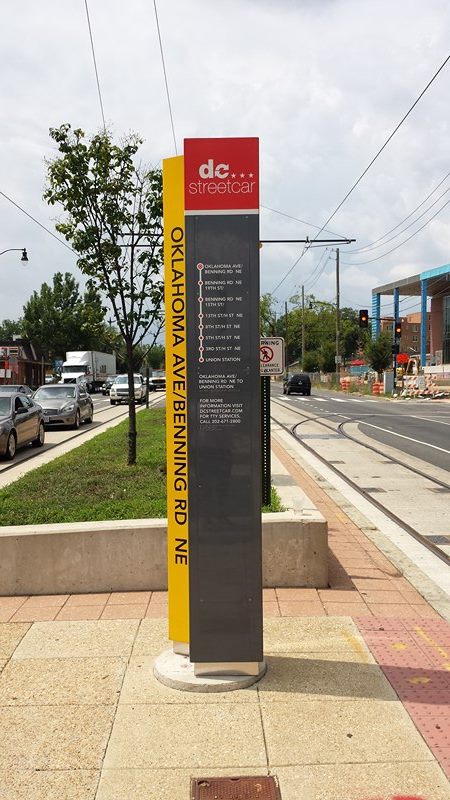
CU Blog - Build It and They Will Come - Streetcars Model - Photo 7Previously, this commentary identified the streetcar project in the US capital city of Washington D.C.. The effort was designed to be an anchor for re-development of a blighted urban area.

How did it turn out? See photos in the Appendix below.

The project is now live for the 2.4 mile stretch of H Street.

There is a lot of construction ongoing, and more planned.

People, business activity and hope is coming!

This commentary is the 1 of 3 from the Go Lean movement on the subject of Infrastructure Policy. All of these commentaries are economic in nature; the other blogs detailed in this series are as follows:

  1. Before & After – Washington DC’s Streetcars Model
  2. Clinton vs Trump Campaigns – Politics of Infrastructure
  3. India’s Model – $90 billion infrastructure projects

The original blog-commentary from November 1, 2014 on the Washington, DC Streetcar is ENCORED here; followed by new, yet related Appendices:

—————-

Go Lean Commentary

CU Blog - DC Streetcars - Model For Caribbean Re-development - Photo 1

The US capital city of Washington D.C. is now embarking on the deployment of a streetcar system … again. Between 1862 and 1962, streetcars in Washington, D.C., were a common mode of transportation, but the system was dismantled in the early 1960s as part of a switch to bus service.

One step forward, two steps backwards!

The District now embarks on a re-deployment, pivotal to a re-development of blighted urban areas. See story here:

August 4, 2014 – The Washington D.C. Department of Transportation will begin training streetcar operators in traffic for the first time this week along H Street and Benning Road in Northeast Washington. [The full system implementation is planned for late 2014].

The DC Streetcar is a surface light rail and streetcar network under construction in Washington, D.C. The streetcars will be the first to run in the District of   Columbia since the dismantling of the previous streetcar system in 1962. The District   of Columbia began laying track in 2009 for two lines whose locations in Anacostia and Benning were chosen to revitalize blighted commercial corridors. Initially, the system will be funded and owned by the District’s Department of Transportation (DDOT).

The D.C. government owns three Czech-built Inekon streetcars (destined for the Anacostia Line) that will serve the system; as of December 2009, they were in storage at Metro’s Greenbelt Rail Yard; [but now fully engaged in test runs]. Each car is eight ft (2.438 meters) wide and 66 feet (20.12 m) long, and each train consists of three car connected sections.

The City’s hope is that now with all the new bars and restaurants opening on H Street, this streetcar line will encourage people (residents, business commuters and tourists) to visit here. Mayor Vincent Gray states “what we’re trying to do is encourage people as a part of our sustainability plan to find other ways of moving around. Eventually, this will be a 37-mile system that will get people to every ward in the District of Columbia.”
WJLA Local ABC 7 TV News
http://www.wjla.com/articles/2014/08/d-c-streetcar-operator-training-begins-this-week-105726.html
Wikipedia
Online Encyclopedia  (Retrieved November 3, 2014) –
http://en.wikipedia.org/wiki/DC_Streetcar

WJLA TV News Video: http://youtu.be/EY0d8E3304M

Why is there a need to re-start the streetcar system? Why did the streetcars end? Conspiracy theories abound. The following VIDEO portrays the story, and admittedly, there is a ring of truth:

In this excerpt from Stephen Talbot’s “Heartbeat of America” (1993), Christopher Snell explains how GM conspired with oil & tire companies to kill streetcars in cities all across America in order to create an inferior bus system that would guarantee the sale of tires, gas, and bus parts for an eternity.
VIDEO – Who Killed The Electric Street Car? – http://youtu.be/wFhsrbtQObI

The fact that Washington DC, and other cities (see VIDEO below of Portland’s effort), are re-deploying streetcars is proof-positive of the economic and logistical benefits of streetcars. Instead of gasoline or diesel vehicles, streetcars use energy-efficient electrified lines to power the vehicle up-and-down city streets. This is a win-win for all stakeholders!

Are streetcars being considered for Caribbean deployment, especially as these member-states report very high fuel costs and feature old-narrow streets?

Absolutely, yes! The book Go Lean … Caribbean asserts transportation solutions that include streetcars, light-rail, natural-gas powered vehicles and toll roads to empower the region through mass transit (Page 205).

Why not autonomous (driver-less) streetcars? This vision is one of intensive remote monitoring, plus unified command-and-control to mitigate security/safety concerns. (Think Disney World’s Mono-Rail). This is the future that is being planned, developed and tested now. The experience of the last 100 years is that those doing the planning, developing and testing for futuristic technologies are the ones that profit most from the economic gains.

The book, Go Lean … Caribbean, therefore extols the principle that R&D (research and development) activities are necessary to profit from advantages in technology. We want to do R&D here in the Caribbean. This is a mandate for the Caribbean Union Trade Federation (CU). This book serves as a roadmap for the introduction and implementation of the CU. This technocracy will assume oversight to optimize the region in the areas of:

(1) economics
(2) security
(3) lean government

This vision of an autonomous streetcar aligns with the scope of Self-Governing Entities (SGEs) throughout the Caribbean region. On these bordered grounds (technology bases, industrial parks, research campuses, theater districts, medical centers, etc), only CU federal regulation and jurisdiction apply. This allows for the nimble environment to develop, test and deploy autonomous vehicles. This is the benefit of lean governmental coordination, so that a launch of these initiatives becomes possible and probable.

Though not written with this particular initiative in mind, the Go Lean roadmap anticipates such opportunities, as pronounced in the Declaration of Interdependence, (Pages 12 & 14):

xvi.    Whereas security of our homeland is inextricably linked to prosperity of the homeland, the economic and security interest of the region needs to be aligned under the same governance. Since economic crimes … can imperil the functioning of the wheels of commerce for all the citizenry, the accedence of this Federation must equip the security apparatus with the tools and techniques for predictive and proactive interdictions.

xxvii. Whereas the region has endured a spectator status during the Industrial Revolution, we cannot stand on the sidelines of this new economy, the Information Revolution. Rather, the Federation must embrace all the tenets of Internet Communications Technology (ICT) to serve as an equalizing element in competition with the rest of the world. The Federation must bridge the digital divide and promote the community ethos that research/development is valuable and must be promoted and incentivized for adoption.

xxx.   Whereas the effects of globalization can be felt in every aspect of Caribbean life, from the acquisition of food and clothing, to the ubiquity of ICT, the region cannot only consume, it is imperative that our lands also produce and add to the international community, even if doing so requires some sacrifice and subsidy.

The CU mission is to implement the complete eco-system to deliver on market opportunities of streetcars, autonomous or driver- operated as sampled in the foregoing article. There are many strategies, tactics, implementations and advocacies that will facilitate this readiness; a sample is detailed here:

Economic Principles – Economic Systems Influence Individual Choices Page 21
Economic Principles – People Choose because Resources are Limited Page 21
Economic Principles – All Choices Involve Costs Page 21
Economic Principles – People Respond to Incentives Page 21
Economic Principles – Economic Systems Influence Individual Choices Page 21
Community Ethos – Money Multiplier Page 22
Community Ethos – Job Multiplier Page 22
Community Ethos – Lean Operations Page 24
Community Ethos – Return on Investments Page 24
Community Ethos – Ways to Impact the Future Page 26
Community Ethos – Ways to Help Entrepreneurship Page 28
Community Ethos – Ways to Promote Intellectual Property Page 29
Community Ethos – Ways to Impact Research and Development Page 30
Community Ethos – Ways to Ways to Improve Negotiations Page 32
Tactical – Separation of Powers – Emergency Management Page 76
Tactical – Separation of Powers – Department of State – SGE’s Page 80
Implementation – Security Initiatives at Start-up – Command-and-Control Page 103
Implementation – Start-up Benefits from the EEZ Page 104
Implementation – Steps to Implement Self-Governing Entities Page 105
Implementation – Ways to Improve Energy Usage – Electrified Buses/Trains Page 113
Implementation – Ways to Benefit from Globalization Page 119
Advocacy – Ways to Improve Trade Page 128
Advocacy – Ways to Create Jobs Page 152
Advocacy – Ways to Improve Governance Page 168
Advocacy – Ways to Foster Cooperatives Page 176
Advocacy – Ways to Improve Homeland Security Page 180
Advocacy – Ways to Improve Intelligence Gathering & Analysis Page 182
Advocacy – Ways to Better Manage Natural Resources Page 183
Advocacy – Ways to Foster Technology Page 197
Advocacy – Ways to Improve Transportation Page 205
Advocacy – Ways to Develop the Auto Industry Page 206
Advocacy – Ways to Impact Urban Living – Transit Options Page 234

The world is preparing for the change for more efficient mass transit options and also to deploy more autonomous systems to do the heavy-lifting of industrial engagements. A new ethos to prepare for this change has now come to the Caribbean.

This blog/commentary touches on many related issues and subjects that affect planning for Caribbean empowerment in this transportation industry-space. Many of these issues were also elaborated upon in these previous blog/commentaries:

https://goleancaribbean.com/blog/?p=2750 Walt Disney World’s example of an SGE – Their Florida Resort features autonomous “monorails”
https://goleancaribbean.com/blog/?p=2338 Mitigating the Dreaded ‘Plutocracy’, as GM practiced in the US in the past to quash the thriving Streetcar enterprises throughout the country
https://goleancaribbean.com/blog/?p=2259 The Criminalization/Abuses of American Business – Applying the many Lessons Learned
https://goleancaribbean.com/blog/?p=2126 Where the Jobs Are – Computers Reshaping the Global Job Market
https://goleancaribbean.com/blog/?p=1487 Here come the Autonomous Aircrafts/Drones … and the Concerns
https://goleancaribbean.com/blog/?p=1277 Google Self-Driving cars to mitigate highway safety concerns
https://goleancaribbean.com/blog/?p=1214 Fairgrounds as SGEs and the CU as Landlord for Sports Leagues – Great need to move masses (thousands) to stadia/arenas in short time
https://goleancaribbean.com/blog/?p=915 Go Green Caribbean – Streetcars are electric, less carbon footprint
https://goleancaribbean.com/blog/?p=829 Trains and Trucks play well together
https://goleancaribbean.com/blog/?p=673 Ghost ships – Autonomous cargo vessels without a crew

Re-deploy, re-develop, and re-boot…

All of these verbs are germane for this Go Lean roadmap. The Caribbean needs help…with transportation solutions, jobs, growing the economy, and motivating our youth to impact their future here at home… in the Caribbean.

Therefore the people of the region are urged to “lean-in” for the changes/empowerments as described in the book Go Lean … Caribbean. The benefits of this roadmap are too alluring to miss out: emergence of an $800 Billion single market economy, 2.2 million new jobs and relevance on the world scene for R&D. 🙂

Let’s all Go Lean!

Download the e-Book of Go Lean … Caribbean – free … now!

———–

VIDEO – Portland’s Streetcar revival – Federal aid has helped spur the construction of modern U.S. streetcars for the first time in 58 years. http://youtu.be/BIcVlCB0er0

—————-

 Appendix – Family Photo Album – Caribbean Visitor to the DC Streetcar – Summer 2016
CU Blog - Build It and They Will Come - Streetcars Model - Photo 1

CU Blog - Build It and They Will Come - Streetcars Model - Photo 5

CU Blog - Build It and They Will Come - Streetcars Model - Photo 3

CU Blog - Build It and They Will Come - Streetcars Model - Photo 2

CU Blog - Build It and They Will Come - Streetcars Model - Photo 4

—————-

Appendix VIDEO – If You Build It, He Will Come – Field of Dreams (1989) – https://youtu.be/5Ay5GqJwHF8

Uploaded on May 30, 2011 –
Field of Dreams movie clips: http://j.mp/1Ja20Lz
BUY THE MOVIE: http://amzn.to/rPcyVp

Share this post:
, ,

ENCORE: Tim Duncan Retires

CU Blog - Tim Duncan Retires - Photo 1The Champ is calling it quits…

… after 19 years in the NBA, contributing solidly to his team and league, while maintaining a low-key presence, Tim Duncan rides into the sunset on a career that has taken his team to the playoffs every year, won 2 League MVPs, 5 NBA championships, 3 NBA Finals MVP, 15 All Stars appearances and the 1997-98 Rookie of the Year Award.

Is he one of the greatest players of all time? … the greatest “Power Forward” perhaps?

In typical fashion, he downplays any talk of his greatness. This is consistent with his humble demeanor ever since he was the No. 1 overall pick out of Wake Forest in 1997. He said he never pays attention to comparisons between himself and other all-time greats:

“I don’t really care where the rankings go,” he said. ”I’m in the conversation. I’m OK with that. That’s above and beyond anything I ever thought I’d ever be. That in itself is an honor.”

VIDEO – Tim Duncan: Career High Performance (53 points)https://youtu.be/P9wOz1fBtmg


Uploaded on Jul 31, 2011 – 19-28 FG, 15-15 FT, 11 rebounds

As follows is the 2014 Go Lean Commentary when he decided to re-sign for the final 2 years of his career, entitled:

St Croix’s Tim Duncan to Return to Spurs For Another Season

Congratulations Tim Duncan. You deserve your champion’s accolades.

Tim Duncan Photo

This commentary has previously sided with Mr. Duncan’s opponent in the recent NBA Finals. Here below are the previous blogs citing a hope for the Miami Heat’s dominance in the NBA Playoff tournament.

https://goleancaribbean.com/blog/?p=1148 Sports Bubble – Franchise values in basketball
https://goleancaribbean.com/blog/?p=689 eMerge conference aims to jump-start Miami tech hub

But talent recognizes talent!

It is also good news, according to this foregoing news article, that Mr. Duncan will be returning for at least one more season.

By: The Caribbean Journal Staff

Tim Duncan isn’t going anywhere.

The St Croix native, who recently won his fifth NBA championship, will be returning to the San Antonio Spurs for his 18th NBA season.

The team announced Monday that the 38-year-old Duncan had exercised his player option for the 2014-2015 season, putting to rest any notion that he would be retiring.

Duncan helped the Spurs to a dominant 4-1 series win over the Miami Heat in this month’s NBA Finals.

The Christiansted native is one of five players in the history of the NBA to win five championships and five MVPs (either NBA Finals or regular season), along with Michael Jordan, Magic Johnson, Bill Russell and Kareem Abdul-Jabbar.

Duncan leads all active players in career wins, with 898.
Caribbean Journal Online News Source  (Posted 06-23-2014; retrieved 06-26-2014) –
http://www.caribjournal.com/2014/06/23/st-croixs-tim-duncan-to-return-to-spurs-for-another-season/

There is something bigger than sports alone at play here. As the foregoing news article depicts, Mr. Duncan is a member of the Caribbean Diaspora. He is recognized as one of the best in his field of endeavor; perhaps one of the best of all time. This is a claim of the book Go Lean … Caribbean, that sports require a genius qualifier and that genius  ability can be found in abundance in the Caribbean. Mr. Duncan makes us all proud: Christiansted, St. Croix, the US Virgin Islands and all of the Caribbean.

The Go Lean book serves as a roadmap for the introduction and implementation of the Caribbean Union Trade Federation (CU), a technocratic federal government to administer and optimize the economic/security/ governing engines of the region’s 30 member-states. At the outset, the roadmap recognizes the value of sports with these statements in the Declaration of Interdependence (Page 13 & 14):

xxvi.     Whereas the preparation of our labor force can foster opportunities and dictate economic progress for current and future generations, the Federation must ensure that educational and job training opportunities are fully optimized for all residents of all member-states, with no partiality towards any gender or ethnic group. The Federation must recognize and facilitate excellence in many different fields of endeavor, including sciences, languages, arts, music and sports. This responsibility should be executed without incurring the risks of further human flight, as has been the past history.

xxxi.     Whereas sports have been a source of great pride for the Caribbean region, the economic returns from these ventures have not been evenly distributed as in other societies. The Federation must therefore facilitate the eco-systems and vertical industries of sports as a business, recreation, national pastime and even sports tourism – modeling the Olympics.

The Go Lean roadmap calls for the market organizations to better explore the economic opportunities for sports. Sports can be big business! But even when money is not involved, other benefits abound. As such the CU will enhance the engines to elevate sports at all levels: amateur, intercollegiate and professional.

The other issue related to Tim Duncan is that of “image”. Mr. Duncan could be a proud ambassador of Caribbean character. Personally, he does not advocate any political or economic agenda, so others must do that for him. As a public figure, his story is free to relate to the listening world of how impactful a Caribbean heritage can be.

The subjects of sports and Caribbean image have been related in many previous Go Lean blogs; highlighted here in the following samples:

a. https://goleancaribbean.com/blog/?p=1446 Caribbean   Players in the 2014 World Cup
b. https://goleancaribbean.com/blog/?p=1341 College   World Series Time
c. https://goleancaribbean.com/blog/?p=1214 The Art &   Science of Temporary   Stadiums – No White Elephants
d. https://goleancaribbean.com/blog/?p=1148 Sports Bubble –   Franchise values in   basketball
e. https://goleancaribbean.com/blog/?p=1020 Sports Revolutionary: Advocate Jeffrey Webb
f. https://goleancaribbean.com/blog/?p=857 Caribbean Image: Dreadlocks
g. https://goleancaribbean.com/blog/?p=498 Book Review: ‘The Sports Gene’
h. https://goleancaribbean.com/blog/?p=334 Bahamians Make Presence Felt In Libyan   League
i. https://goleancaribbean.com/blog/?p=318 Collegiate Sports in the Caribbean
j. https://goleancaribbean.com/blog/?p=60 Could the Caribbean Host the Olympic Games?

The book Go Lean…Caribbean has an economic empowerment agenda, but there are still huge benefits for the region related to sports. The strategy is to consolidate the region’s 30 member-states / 4 languages into a Single Market of 42 million people – leverage for a viable sports landscape. The CU facilitation of applicable venues (stadia, arenas, fields, temporary structures) on CU-owned fairgrounds plus the negotiations for broadcast/streaming rights/licenses will elevate the art, science and genius of sports as an enterprise in the region.

Now is the time for all of the Caribbean to lean-in to the following community ethos, strategies, tactics, implementations and advocacies detailed in the book Go Lean … Caribbean to re-boot the delivery of the regional solutions to elevate the Caribbean region through sports:

Community Ethos – People Respond to Incentives in Predictable Ways Page 21
Community Ethos – Return on Investments Page 24
Community Ethos – Ways to Foster Genius Page 27
Community Ethos – Ways to Improve Negotiations Page 32
Community Ethos – Ways to Promote Happiness Page 36
Strategic – Vision – Integrating Region in to a Single Market Page 45
Strategic – Staffing – Sporting Events at Fairgrounds Page 55
Tactical – Fostering a Technocracy Page 64
Tactical – Separation of Powers – Sports & Culture Administration Page 81
Tactical – Separation of Powers – Fairgrounds Administration Page 83
Implementation – Steps to Implement Self-Governing Entities (Fairgrounds) Page 105
Implementation – Ways to Deliver Page 109
Planning – Ways to Make the Caribbean Better Page 131
Advocacy – Ways to Grow the Economy Page 151
Advocacy – Ways to Improve Local Government – Parks & Recreation Page 169
Advocacy – Ways to Impact Events Page 191
Advocacy – Ways to Promote Fairgrounds Page 192
Advocacy – Ways to Foster Technology Expositions Page 197
Advocacy – Ways to Improve Sports Page 229
Advocacy – Ways to Impact Urban Living – Sports Leagues Page 234

The foregoing article celebrates a Caribbean Champion. But there is more to celebrate with Caribbean life, culture and the homeland. With the Go Lean executions, we can all be champions, by making the Caribbean a better place to live, work and play.

Download the book Go Lean … Caribbean – now!


Share this post:
, , , ,
[Top]

A Lesson in Economic Fallacies – Casino Currency – US Dollars?

Go Lean Commentary

CU Blog - Casino Currency - US Dollars Not The Only Option - Photo 1If you go to a casino and win in their games of chance, what do you win?

If you go to a casino and lose in their games of chance, what do you lose?

In both cases the answer is money.

This is still true even though the gamer may cash-in the common currency of a country at the start of the session for tokens, chips or e-Cards. The tokens or chips become a nominal or fiat currency themselves; their value is set by the issuer to be any denomination they want – they may choose to make $100 chips Blue, $1000 chips Green and $10,000 chips Red or any combination. The only thing that matters is the cash-out process: when the gamers wants to receive real world currency value for any chips in hand.

Yes, this is the business model of casinos, but it is based on the principles of economics. The quest to reform and transform Caribbean economy could be based on this model; this is the case with the book Go Lean … Caribbean. The book details the mission to elevate the Caribbean societal engines starting with economics, or more simply: money. This brings so many questions to the fore:

What is money and how do we define it? Why must we define it? Aren’t we all familiar with the dynamics of the money or currency in our wallets and purses? How does the common currency fit into this discussion?

First the definition is important so as to dispel the concern about currency as opposed to money; money is not just currency and currency is not just money. Currency relates to a national designation (US dollar, British pounds, Chinese Yuan) or a regional designation like the Euro or the Eastern Caribbean/EC dollar. Money, on the other hand is a matter of four (4) functions [22]:

A Medium – When money is used to intermediate the exchange of goods and services, it is performing a function as a medium of exchange. Money’s most important usage is as a method for comparing the values of dissimilar objects.

A Measure – A unit of account is a standard numerical monetary unit of measurement of the market value of goods, services, and other transactions. Also known as a “measure” or “standard” of relative worth and deferred payment, a unit of account is a necessary prerequisite for the formulation of commercial agreements that involve debt. Money acts as a standard measure and common denomination of trade. It is thus a basis for quoting and bargaining of prices.

A Standard – A “standard of deferred payment” is an accepted way to settle a debt – a unit in which debts are denominated, and the status of money as legal tender, that may function for the discharge of debts. When debts are denominated in money, the real value of debts may change due to inflation and deflation.

A Store – Money acts as a store of value; it must be able to be reliably saved, stored, and retrieved – and be predictably usable as a medium of exchange when it is retrieved. The value of the money must also remain stable over time. Some have argued that inflation, by reducing the value of money, diminishes the ability of money to function as a store of value.
Source: Retrieved July 10 from: https://en.wikipedia.org/wiki/Money#Functions

CU Blog - Casino Currency - US Dollars Not The Only Option - Photo 1bCasino currencies (tokens, chips and e-Cards) perform all these 4 functions; and more – see the Appendix VIDEO below. The common currency for casino operations can be any currency the operators designate; so why do Caribbean operators always designate US dollars?

This question exposes an Economic Fallacy in the Caribbean region, that significant financial transactions must be in US dollars ($), even in Caribbean casinos. While this must be addressed and remediated, obviously the issues at hand are bigger than just Casino gaming. No, the issues in this commentary address technocratic management for currencies in general.

This commentary is the 6 of 6 from the Go Lean movement on the subject of Economic Fallacies. As related in the previous submissions in this series, the situation in the Caribbean region is likened to the imagery of an animal foraging for food, but then gets distracted and “chases a squirrel up a tree”. The squirrel in the tree will never be a meal; it is just a waste of time and energy for the animal. This analogy conveys the waste of time associated with a frivolous and fallacious pursuit. The other commentaries detailed in this series are as follows:

  1. Independence – Hype of Hope
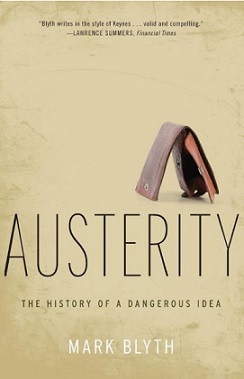
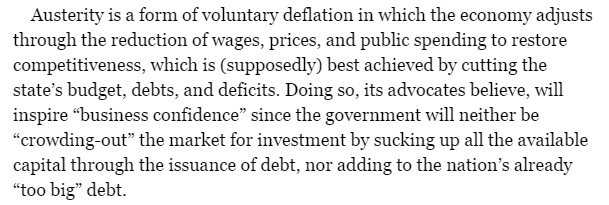
  2. Austerity – Book Review: Mark Blyth’s “History of a Dangerous Idea”
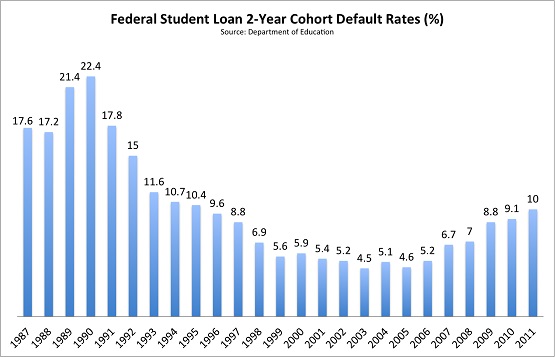
  3. Education & Student Loans – Not a good Return on Investment
  4. Phillips Curve – Fallacy of Minimum Wage
  5. Self-regulation of the Centers of Economic Activity
  6. Casino Currency – US Dollars?

All of these commentaries are economic in nature. They refer to rules for managing the valuable resources of time, talents and treasuries. There are rules for winning and common mistakes that results in losing. Normally these fallacies are easily discernible after the fact, more so than before hand. So history and good-bad lessons on currency management can be extremely helpful to our Caribbean quest. This is a mission of the Go Lean book, to fortify a strong monetary foundation to ensure forward progress in currency matters in the region.

This book Go Lean…Caribbean serves as a roadmap to introduce and implement the technocratic Caribbean Union Trade Federation (CU) and the Caribbean Central Bank or CCB (a cooperative of central banks), to serve as a regional/super-national entity to shepherd the economic, security and governing engines of the 30 Caribbean member-states. Being technocratic includes studying and applying best-practices, while avoiding fallacies in government oversight. This mission was pronounced in the Go Lean book with this quotation (Page 45):

Fortify the stability of our mediums of exchange, by facilitating our monetary needs through a Currency Union, the Caribbean Dollar (C$), and establishing a Caribbean Central Bank.

There are economic challenges facing the Caribbean, including within the banking community. There is the need for some comprehensive solutions for all of the 30 member-states in the Caribbean. Many of the countries are independent states (16); the remainder are overseas territories of major powers: 6 British, 3 Dutch/Netherlands, 3 French and the 2 American: US Virgin Islands (USVI) and Puerto Rico (PR).

According to the Go Lean book (Page 150), many non-American Caribbean territories – British overseas Territory of the Turks & Caicos Islands, plus the Dutch territories of Bonaire, Sint Eustatius, Saba – use the US dollar as their primary currency.

The historicity of central banking in Puerto Rico helps us to understand how the concepts of fiat currencies can be structured to elevate the regional economy. See the encyclopedic reference here regarding this subject:

Title: Puerto Rico and Central Banking
Central Banking was established in Puerto Rico during its Spanish colonial days. The island began producing banknotes in 1766,  becoming the first colony in the Spanish Empire to print 8-real banknotes with the Spanish government’s approval. After the dissolution of Spain’s New World Empire with the independence of the mainland countries (Mexico, Central and South America, etc), the colonial government in Puerto Rico ordered the issue of provincial banknotes, creating the Puerto Rican peso. However, printing of these banknotes ceased after 1815. During the following decades, foreign coins became the widespread currency. In the 1860s and 1870s, banknotes re-emerged. On February 1, 1890, the Spanish Bank of Puerto Rico (Banco Español de Puerto Rico) was inaugurated and began issuing banknotes, followed 5 year later with peso coins.

On August 13, 1898, the Spanish–American War ended with Spain ceding Puerto Rico to the United States. The Banco Español de Puerto Rico was renamed Bank of Porto Rico and issued bills equivalent to the United States dollar, creating the Puerto Rican dollar. In 1902, the First National Bank of Porto Rico issued banknotes in a parallel manner. Two more series were issued until 1913. After Puerto Rico’s economy and monetary system was fully integrated into the United States’ economic and monetary system, the Puerto Rican dollars were redeemed for those issued by the United States Treasury.

Today, Central Banking in the Commonwealth of Puerto Rico is expressed through 2 governmental entities, one local and one at the US Federal level. The local entity is the Government Development Bank (GDB) of Puerto Rico. The GDB, established in 1942, is the government bond issuer, intragovernmental bankfiscal agent, and financial advisor of the government of Puerto Rico.[1][2] The bank, along with its subsidiaries and affiliates, serves as the principal entity through which Puerto Rico channels its issuance of bonds. As an overview from Wikipedia.com, the different executive agencies of the government of Puerto Rico and its government-owned corporations either issue bonds with the bank as a proxy, or owe debt to the bank itself (as the bank is a government-owned corporation as well).

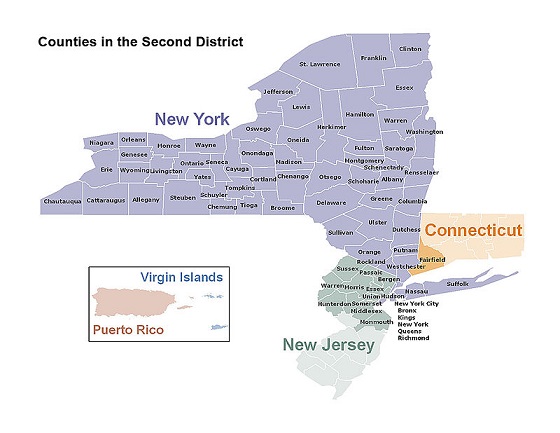
CU Blog - Casino Currency - US Dollars Not The Only Option - Photo 2On the US federal basis, Puerto Rico is part of the Second District, Federal Reserve Bank of New York (popularly known as the New York Fed), in its representation before the US Federal Reserve System.

The Federal Reserve Bank of New York is one of the 12 Federal Reserve Banks of the United States. It is located at 33 Liberty Street, New York, NY. It is responsible for the Second District of the Federal Reserve System, which encompasses New York State, the 12 northern counties of New Jersey, Fairfield County in Connecticut, Puerto Rico, and the U.S. Virgin Islands. Working within the Federal Reserve System, the New York Federal Reserve Bank implements monetary policy, supervises and regulates financial institutions[1] and helps maintain the nation’s payment systems.[2] See Appendix below for more details on the “New York Fed”.
Source: Retrieved July 10, 2016 from: https://en.wikipedia.org/wiki/Currencies_of_Puerto_Rico

Puerto Rico is indicative of the dysfunction in the Caribbean region – this Commonwealth is in crisis – despite almost 4 million people on the island, monetary decisions are made in New York City. The Go Lean movement (book and blogs) has consistently maintained that Caribbean problems need Caribbean solutions. The monetary policies for Puerto Rico are being made by the same stakeholders making monetary decisions for the United States. The New York Fed handles 65% of the total Federal Reserve Fedwire transactions; neither PR nor USVI register high on their priorities.

As previously related, the US Territories may have a voice in Washington, but they have no vote. Considering the downward spiral of PR’s economy  in recent years, they should not look to others for their long-term solutions. It is a fallacy to think that Caribbean people will be prioritized by foreign masters, thousands of miles away.

Caribbean people – all 30 member-states – need to come to our own aid. The Go Lean book quotes the lyrics from this song:

If there is a load you have to bear
That you can’t carry
I’m right up the road
I’ll share your load
If you just call me
—- Song: Lean On Me; Songwriters: Bill Withers

With the Go Lean roadmap, change will come to the island of Puerto Rico and all the Caribbean. The changes will include a single currency for a Caribbean Single Market, the Caribbean Dollar (C$). There are economic benefits galore. One such benefit is the money multiplier; the Go Lean book (Page 22) defines it as:

In monetary macroeconomics and banking, the money multiplier measures how much the money supply increases in response to a change in the monetary base…. there is a multiplier associated with the currency in the money supply. Therefore it goes without saying that if the Caribbean member-states trade in US dollars, then the multiplier effect is extended to the United States of America. By contrast, if the Caribbean member-states trade in Euros, then the multiplier effect goes to the stakeholders of the European Central Bank – no Caribbean state. Therefore the communities of the Caribbean must embrace, as an ethos, its own currency, the Caribbean Dollar (managed by a technocratic Caribbean Central Bank), thereby bringing local benefits from local multipliers.

Desisting from economic fallacies, there is a dose of reality in the Go Lean roadmap: the US will not allow its territories to wean off the US dollar as the currency base. But there is no controversy if the Caribbean dollar is an electronic currency for PR and USVI.

This is the plan!

The CCB, a cooperative of the existing central banks, will consolidate all reserves for the member central banks. The reserves will be a basket of currencies from the world’s most impactful currencies. Yes, that includes the US, but other currencies too. The roadmap calls for the following basket currencies to constitute Caribbean reserves:

  • US dollar
  • British pounds
  • Euros
  • Japanese Yen or Chinese Yuans

CU Blog - Casino Currency - US Dollars Not The Only Option - Photo 4There is the opportunity for the C$ deployed by the CCB to be an all electronic card/payment system; see photo here. Just like in the foregoing casino scenario, there is only the need to deliver the reserve currency, at cash-out time when an individual or company has to remit the funds in any basket currency outside the Caribbean region.

An all-electronic card would mean local transactions conducted electronically. With the onset of credit cards, debit cards and payment cards in the region as the preferred payment method, this scheme becomes more viable. Electronic settlements also allow for the easy calculation and collection of State Sale Taxes and VAT. Other benefits include:

  • Free Foreign Exchange to convert back to basket currencies – then cardholders will be more inclined to leave stored value balance on the card.
  • Free Foreign North-South Remittances: Free for these basket currencies transactions, so as to accumulate balances in the CCB “our” account.

Since casino operations can transact in any fiat currency, the Go Lean roadmap calls for modeling casinos and launching the C$ as a fiat, accounting-value-only currency at first and then eventually to graduate to banknotes and coins. This is the exact model of the Euro currency during its launch.  The EU/Euro case study provide lessons – foreign currency, inflation, sovereign defaults – that must be applied in the technocratic administration of the CU/CCB/C$. Since the Go Lean roadmap calls for the CCB to be a cooperative entity of the existing central banks in the region, this will foster interdependence among the Caribbean neighboring member-states. This need for regional stewardship of Caribbean currencies was pronounced early in the book, in the opening Declaration of Interdependence (Page 13) with these statements:

xxiv. Whereas a free market economy can be induced and spurred for continuous progress, the Federation must install the controls to better manage aspects of the economy: jobs, inflation, savings rate, investments and other economic principles. Thereby attracting direct foreign investment because of the stability and vibrancy of our economy.

xxv. Whereas the legacy of international democracies had been imperiled due to a global financial crisis, the structure of the Federation must allow for financial stability and assurance of the Federation’s institutions. To mandate the economic vibrancy of the region, monetary and fiscal controls and policies must be incorporated as proactive and reactive measures. These measures must address threats against the financial integrity of the Federation and member-states.

The planners of this new Caribbean monetary regime has documented hard-learned lessons on the issue of currency in the Caribbean region and elsewhere; (many CU member-states endured painful currency fluctuations over the past decades – on more than one occasion). So we accept that any attempt to reboot the Caribbean economic landscape must first start with a strenuous oversight of the proposed regional C$ currency.

The Go Lean book, and previous blog/commentaries, stressed the key community ethos, strategies, tactics, implementations and advocacies necessary to establish a strong Caribbean financial eco-systems and a strong currency. These points are detailed in the book; see this sample from the book as follows:

Community Ethos – Economic Principles – Economic Systems Influence Individual Choices Page 21
Community Ethos – Economic Principles – Voluntary Trade Creates Wealth Page 21
Community Ethos – Economic Principles – Consequences of Choices Lie in the Future Page 21
Community Ethos – Economic Principles – Money Multiplier Page 22
Community Ethos – Governing Principles – Lean Operations Page 24
Community Ethos – Governing Principles – Return on Investments Page 24
Community Ethos – Ways to Impact the Future – Count on the Greedy to be Greedy Page 26
Community Ethos – Ways to Impact the Greater Good Page 37
Strategy – Mission – Fortify the Stability of the Securities Markets Page 45
Strategy – Provide Proper Oversight and Support for the Depository Institutions Page 46
Strategy – e-Payments and Card-based Transactions Page 49
Tactical – Growing the Economy – Minimizing Bubbles Page 69
Tactical – Separation-of-Powers – Depository Insurance & Regulatory Agency Page 73
Anecdote – Turning Around CARICOM – Effects of 2008 Financial Crisis Page 92
Implementation – Assemble Caribbean Central Bank as a Cooperative Page 96
Implementation – Ways to Better Manage Debt – Optimizing Wall Street Role Page 114
Planning – 10 Big Ideas – Single Market / Currency Union Page 127
Planning – Lessons Learned from 2008 – Managing Economic Crises Page 136
Planning – Lessons Learned from New York City – Metro Card Payment Regime Page 137
Planning – Ways to Measure Progress Page 147
Anecdote – Caribbean Currencies Page 149
Advocacy – Ways to Grow the Economy Page 151
Advocacy – Ways to Control Inflation Page 153
Advocacy – Ways to Better Manage Foreign Exchange (fx) Page 154
Advocacy – Reforms for Banking Regulations Page 199
Advocacy – Ways to Impact Wall Street Page 200
Appendix – New York City Economy Details Page 277
Appendix – Tool-kits for Capital Controls Page 315
Appendix – Lessons Learned from Floating the Trinidad & Tobago Dollar Page 316
Appendix – Controlling Inflation – Technical Details Page 318
Appendix – e-Government and e-Payments Example: EBT Page 353

The points of effective, technocratic currency/monetary stewardship, were further elaborated upon in these previous blog/commentaries:

https://goleancaribbean.com/blog/?p=7140 Azerbaijan sets its currency on free float
https://goleancaribbean.com/blog/?p=7034 The Future of Money
https://goleancaribbean.com/blog/?p=6800 Venezuela sues black market currency website in US
https://goleancaribbean.com/blog/?p=5668 Move over Mastercard/Visa
https://goleancaribbean.com/blog/?p=4166 A Lesson in History – Panamanian Balboa
https://goleancaribbean.com/blog/?p=3858 European Central Banks unveils 1 trillion stimulus program
https://goleancaribbean.com/blog/?p=3814 Lessons from the Swiss unpegging the franc
https://goleancaribbean.com/blog/?p=2074 MetroCard – Model for the Caribbean Dollar
https://goleancaribbean.com/blog/?p=833 One currency, divergent economies
https://goleancaribbean.com/blog/?p=518 Analyzing the Data – What Banks learn about financial risks
https://goleancaribbean.com/blog/?p=360 How to Create Money from Thin Air

The quest of the Go Lean roadmap is to elevate Caribbean society and economic engines from the dysfunctional past. Reliance on the US dollar is a fallacy if we want to grow our economy; transacting in their currency will only expand their economy. We want to be a protégé of the technocratic New York Fed (see the Appendix) – for efficient monetary management – not a parasite! We want to master the process of currency management … and maximize our money supply and available credit. This is heavy-lifting, but “Yes, we can!” We can conceive, believe and achieve workable solutions.

This is the end of the series on Economic Fallacies; this case study of casino currencies is only the latest submission. There have been so many lessons to glean wisdom from in the previous submissions: independence hype, austerity, student loans, minimum wage, centers of economic activities. Let’s pay more than the usual attention to debunking these fallacies in this study of “Advanced Economics”.

All the stakeholders in the Caribbean – people, governments and institutions – are urged to lean-in to this Go Lean roadmap for the CU, CCB and the C$. The roadmap serves as turn-by-turn directions to move the region to its new destination: a better homeland to live, work and play. 🙂

Download the book Go Lean … Caribbean – now!

———–

Appendix – Federal Reserve Bank of New York

Since the founding of the Federal Reserve banking system [in 1913], the Federal Reserve Bank of New York in Manhattan’s Financial District has been the place where monetary policy in the United States is implemented, although policy is decided in Washington, D.C. by the Federal Reserve Board of Governors. The New York Fed is the largest in terms of assets of the twelve regional banks. Operating in the financial capital of the U.S., the New York Fed is responsible for conducting open market operations, the buying and selling of outstanding U.S. Treasury securities.

CU Blog - Casino Currency - US Dollars Not The Only Option - Photo 3

The Trading Desk is the office at the Federal Reserve Bank of New York that manages the FOMC Directive to sell or buy bonds.[6] Note that the responsibility for issuing new U.S. Treasury securities lies with the Bureau of the Public Debt. In 2003, Fedwire, the Federal Reserve’s system for transferring balances between it and other banks, transferred $1.8 trillion a day in funds, of which about $1.1 trillion originated in the Second District. It transferred an additional $1.3 trillion a day in securities, of which $1.2 trillion originated in the Second District. The New York Fed is also responsible for carrying out exchange rate policy by buying and selling dollars at the discretion of the United States Treasury Department. The New York Federal Reserve is the only regional bank with a permanent vote on the Federal Open Market Committee and its president is traditionally selected as the Committee’s vice chairman.

Source: Retrieved July 10, 2016 from: https://en.wikipedia.org/wiki/Federal_Reserve_Bank_of_New_York.

———–

Appendix VIDEO – The Grid from Ladbrokes – https://youtu.be/tCQ0fWV4gpg

Published on Apr 14, 2015

Australian Online Gaming Payment Card

Category – Entertainment


Share this post:
, , , ,
[Top]

A Lesson in Economic Fallacies – Self-regulation of the Centers of Economic Activity

Go Lean Commentary

A lot of communities have one spot – a center of economic activity – that must be protected, promoted and regulated. Though they could, these centers do not normally refer to “downtown”. They refer to alternate destinations, like an industrial site (factory, quarry, mine, harbor, etc.), designated district, education campus, medical establishment (hospital or clinic), corporate park and most common in countries with tourism-based economies, a hotel resort property.

That one geographic spot would be the economic engine for the community.

CU Blog - Self-regulation of the Centers of Economic Activity - Photo 2This is an ancient model, dating to times of city walls to protect the inherent commerce. In the modern world, this reality can apply in either urban or rural settings; some small towns are designated “Company Towns” – see the model of Hershey, Pennsylvania in the VIDEO in Appendix A – where the entire community revolves around the one center of economic activity. (For Hershey, first the Chocolate Factory and then the Amusement Park). These centers of economic activities must be protected; but rather than the walls of ancient cities, today the protections are regulations.

A series of fallacies have emerged in regards to protecting economic engines.

We have all heard these one-liners:

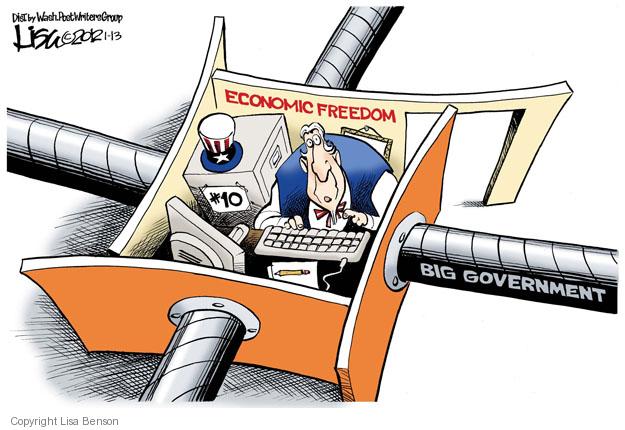
1. “I’m from the Federal Government and I’m here to help” – Ronald Reagan tongue-in-cheek Campaign Attack against excessive government regulation; 1980.

CU Blog - Self-regulation of the Centers of Economic Activity - Photo 5

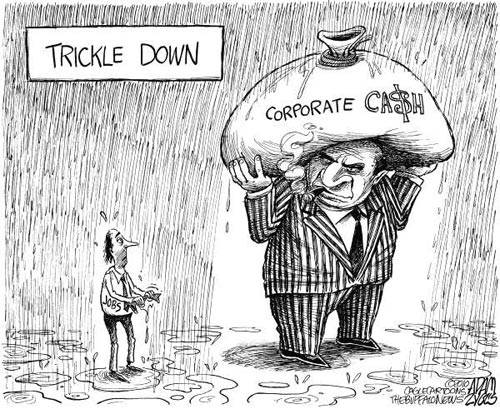
2. “Cut taxes on the rich and they will always do the right thing” – Mantra for Trickle Down Economics.

CU Blog - Self-regulation of the Centers of Economic Activity - Photo 6

Both of these ‘ultra free market’ principles have been adequately debunked by the actuality of market performance. They are among the economic fallacies that we must now acknowledge … along with this most notable mantra:

3. Industry stakeholders will always observe best-practices and desist from bad practices because damage to their industry will only damage their own bottom-line.

CU Blog - Self-regulation of the Centers of Economic Activity - Photo 4

But we all know the truth, the historicity of the events leading up to the 2008 Housing Bubble and Great Recession; these same stakeholders could not resist the temptation for easy profits from the securitization trend.

No doubt, self-regulation is one of the biggest fallacies.

CU Blog - Self-regulation of the Centers of Economic Activity - Photo 1

We are able to accurately conclude that self-regulation does not work in banking … because of the way the governments underwrite risk in the banking system. Leading up to 2008, when the Wall Street banks took risks, they gained (profit) from the upside but the taxpayers were the ones left with the costs of bail-outs when things went wrong – Too Big to Fail.

The purpose of the book Go Lean … Caribbean is the elevation of the economic engines in the region. The book serves as a 5 year roadmap to foster new developments and empowerments in the region. To be successful in the execution, there must be some degree of oversight and shepherding. The book refers to an agile regulatory framework structured with technocratic efficiency and effectiveness; and then dubs the strenuous effort as heavy-lifting.

This commentary is the 5 of 6 from the Go Lean movement on the subject of Economic Fallacies. As related in the first submission on this series, the situation in the Caribbean region is likened to the imagery of an animal foraging for food, but then gets distracted and “chases a squirrel up a tree”. The squirrel in the tree will never be a meal; it is just a waste of time and energy for the animal. This analogy conveys the waste of time associated with a frivolous and fallacious pursuit. The other commentaries detailed in this series are as follows:

  1. Independence – Hype of Hope
  2. Austerity – Book Review: Mark Blyth’s “History of a Dangerous Idea”
  3. Education & Student Loans – Not a good Return on Investment
  4. Phillips Curve – Fallacy of Minimum Wage
  5. Self-regulation of the Centers of Economic Activity
  6. Casino Currency – US Dollars?

All of these commentaries are economic in nature.

They refer to rules for managing the valuable resources of time, talents and treasuries. There are rules for winning and rules for losing. Normally these fallacies are discernible after the fact, not before hand. So examining the experience of other communities can be extremely helpful to our Caribbean quest. This is a mission of the Go Lean book, to teach lessons from how other communities have handled economic crises and apply the best-practices in the Caribbean.

This book Go Lean…Caribbean serves as a roadmap to introduce and implement the technocratic Caribbean Union Trade Federation (CU) and Caribbean Central Bank or CCB (a cooperative of central banks), to serve as a regional super-national entity to shepherd the economic, security and governing engines of the 30 member Caribbean states. Being technocratic includes studying and applying best-practices, while avoiding fallacies in governing oversight. There is a lot to learn from the study of self-regulation in the banking industry, especially before, during and after the catastrophic events of 2008 . Now is a good time for this review of crisis as the economy has recovered in some places, though it still lingers in the Caribbean.

CU Blog - Self-regulation of the Centers of Economic Activity - Photo 3Wisdom comes from experience. Experience comes from making mistakes. There was a lot of mistakes leading up to 2008 – especially in the banking and financial sectors – so there is a lot of wisdom to glean. Among the flawed practices, was the fallacy that the banking industry would self-regulate.

It seems so laughable now. This is why it is important to apply lessons learned from this experience. So in the Go Lean roadmap, self-regulation is replaced with CU/CCB oversight of banking and these controlled centers of economic activity.

In additional to regional banking, the roadmap calls for the installation of centers of economic activity or Self-Governing Entities (SGE) as job-creating engines in many communities; these sites are ideal for technology laboratories, medical campuses, corporate parks, industrial sites, educational facilities and other forms of establishments situated inside bordered facilitates. These types of installations will thrive under the strategies and tactics of the Go Lean roadmap. They allow for an efficient process to launch and manage projects and physical installations in the region, but the SGE concept does require governmental concurrence and maybe even public approvals – referendums – at the launch of these initiatives.

There is a lot of jurisprudence for the management of these centers of economic activity. For example, in the US, company-towns, though private, are still required to fulfill constitutional obligations. The legal concept is termed “state actors”. See the encyclopedic reference on state actors here:

Reference Title: State Actor

In United States law, a state actor is a person [or company] who is acting on behalf of a governmental body, and is therefore subject to regulation under the United States Bill of Rights, including the FirstFifth and Fourteenth Amendments, which prohibit the federal and state governments from violating certain rights and freedoms.

Although at first blush the term would seem to include only persons who are directly employed by the state, the United States Supreme Court has interpreted these amendments and laws passed pursuant to them to cover many persons who have only an indirect relationship with the government. Controversies have arisen, for example, over whether private companies that run towns (the “company-town”) and prisons (traditionally a state function) can be held liable as state actors when they violate fundamental civil rights. This question remains unresolved, but the Supreme Court has held private citizens to be liable as state actors when they conspire with government officials to deprive people of their rights.

Conversely, in National Collegiate Athletic Association v. Smith, the Supreme Court has found that the National Collegiate Athletic Association is not a state actor for the purposes of 28 U.S.C. 1983 because it was national, rather than acting on behalf of one state actor. For the purposes of a Bivens action, however, it might still be a state actor.[1]

The 1989 case of DeShaney v. Winnebago County was decided on the basis of the state action doctrine. Social workers separated a young son Joshua from his abusive father Randy, but concluded there was not enough evidence for a permanent separation, and later reunited son with father; later, the father beat his son into a persistent vegetative state. The Supreme Court ruled that despite involvement by state social workers, the state of Wisconsin was not a state actor and was therefore not responsible. Accordingly, theFourteenth Amendment protections did not apply, according to constitutional scholar John E. Finn.[1]

Unlike state actors, private actors are generally not required to afford individuals the constitutional rights mentioned above. In nearly all U.S. states, private shopping center owners can eject protesters from their land for trespassing, and private associations can eject members or deny admission to applicants, with no warning and for no reason. But in a handful of states, notably California, state constitutional protections and certain common law rights have been extended to limit private actors. California allows the peaceful exercise of free speech in private shopping centers (see Pruneyard Shopping Center v. Robins (1980)) and requires certain types of private actors to afford current or potential members a rudimentary version of procedural due process called fair procedure.

There are a number of situations where the United States Supreme Court has recognized the conduct of individuals or private organizations to be “state action,” and therefore subject to provisions of the Constitution such as Equal Protection, Due Process, or the First Amendment. The Supreme Court has held the following:

1. Merely opening up a business to the public is not state action, but the performance of a “public function” (a function that has been traditionally and exclusively performed by the state) is state action (Marsh v. Alabama, 326 U.S. 501 (1946));

2. If an individual or organization merely enters into a contract or asserts a contractual right outside of court it is not state action, but if an individual or organization sues to judicially enforce a contractual right it is state action (Shelley v. Kraemer, 334 U.S. 1 (1948));

3. If the government merely acquiesces in the performance of an act by a private individual or organization it is not state action, but if the government coerces, influences, or encourages the performance of the act, it is state action (Rendell-Baker v. Kohn, 457 U.S. 830 (1982));

4. If the government merely enters into a contract with an individual or organization for the goods or services, the actions of the private party are not state action, but if the government and the private party enter into a “joint enterprise” or a “symbiotic relationship” with each other it is state action (Burton v. Wilmington Parking Authority, 365 U.S. 715 (1961));

5. If government agencies are simply members of a private organization, the actions of the organization are not state action, but if the government is “pervasively entwined” with the leadership of the private organization, the acts of the organization are state action (Brentwood Academy v. Tennessee Secondary School Athletic Association, 535 U.S. 971 (2002)).
Source: Wikipedia Online Encyclopedia. Retrieved 07-10-2016 from: https://en.wikipedia.org/wiki/State_actor

Self-Governing Entities are part-and parcel of the prime directives of the Go Lean roadmap, defined by these 3 statements:

  • Optimization of the economic engines – including SGE’s – in order to grow the regional economy to $800 Billion in GDP and create 2.2 million new jobs.
  • Establishment of a security apparatus – with regulations and oversight – to protect the resultant economic engines.
  • Improvement of Caribbean governance to support these engines and centers of economic activity; this reflects the separation-of-powers between CU agencies and member-state governments.

The issue of banking/financial regulation is important for this roadmap. Overseeing the financial elements SGE’s or “centers of economic activity” is also apropos for this Go Lean roadmap.

There is the need to protect SGE’s.

There is the need for (member-state) hands-off oversight for SGE.

How to reconcile these polar opposite positions? See the model here of the European Central Bank response to the dilemma of self-regulation in the Appendix below.

The Go Lean roadmap embraces the practice of technocratic oversight for the region’s economic engines, especially within the borders of SGE’s. As a planning tool, the roadmap commences with a Declaration of Interdependence, pronouncing the need for regional integration (Page 11 & 14) to foster the foundation to forge a better future. The declarative statements are as follows:

xi.  Whereas all men are entitled to the benefits of good governance in a free society, “new guards” must be enacted to dissuade the emergence of incompetence, corruption, nepotism and cronyism at the peril of the people’s best interest. The Federation must guarantee the executions of a social contract between government and the governed.

xxi. Whereas the preparation of our labor force can foster opportunities and dictate economic progress for current and future generations, the Federation must ensure that educational and job training opportunities are fully optimized for all residents of all member-states, with no partiality towards any gender or ethnic group. The Federation must recognize and facilitate excellence in many different fields of endeavor, including sciences, languages, arts, music and sports. This responsibility should be executed without incurring the risks of further human flight, as has been the past history.

xxvi.  Whereas the Caribbean region must have new jobs to empower the engines of the economy and create the income sources for prosperity, and encourage the next generation to forge their dreams right at home, the Federation must therefore foster the development of new industries… In addition, the Federation must invigorate the enterprises related to existing industries … – impacting the region with more jobs.

The new banking regime has also been detailed in the Go Lean book. The same Declaration of Interdependence, pronounced the need for the consolidated oversight with these statements (Page 13):

xxiv.  Whereas a free market economy can be induced and spurred for continuous progress, the Federation must install the controls to better manage aspects of the economy: jobs, inflation, savings rate, investments and other economic principles. Thereby attracting direct foreign investment because of the stability and vibrancy of our economy.

xxv.   Whereas the legacy of international democracies had been imperiled due to a global financial crisis, the structure of the Federation must allow for financial stability and assurance of the Federation’s institutions. To mandate the economic vibrancy of the region, monetary and fiscal controls and policies must be incorporated as proactive and reactive measures. These measures must address threats against the financial integrity of the Federation and of the member-states.

Change has now come to the Caribbean. The driver of this change is technology and globalization. As a region, the Caribbean cannot only consume the tradable products of the world’s markets; we must innovate and develop some products too. The structure of SGE’s are perfectly designed for this endeavor, where innovators and developers can maintain their “own world” so as to foster the best practices for Research & Development (R&D) with no intrusion from municipal or member-state authorities.

These SGE’s will be centers of economic activities for the region. This subject of the promotion of SGE’s has been directly addressed and further elaborated upon in these previous blog/commentaries:

https://goleancaribbean.com/blog/?p=7822 The Model for SGE’s for Medical R&D
https://goleancaribbean.com/blog/?p=5921 Socio-Economic Change: Impact Analysis of SGE’s
https://goleancaribbean.com/blog/?p=4037 How to Train Your ‘Dragon’ – Case Study for Foreign Investments
https://goleancaribbean.com/blog/?p=3473 SGE Model: Haiti’s Caracol Industrial Park
https://goleancaribbean.com/blog/?p=3276 A Role Model – Ideal for SGE’s – Shaking Up the World of Cancer
https://goleancaribbean.com/blog/?p=2750 Disney World – Role Model for Self Governing Entities
https://goleancaribbean.com/blog/?p=2338 SGE Lessons how to mitigate any plutocratic abuses
https://goleancaribbean.com/blog/?p=2003 Where the Jobs Are – Ship-breaking under SGE Structure
https://goleancaribbean.com/blog/?p=1214 Fairgrounds as SGE and Landlords for Sports Leagues
https://goleancaribbean.com/blog/?p=286 SGE Model: Puerto Rico’s Comprehensive CancerCenter

The Go Lean book envisions the CU/CCB – a confederation of the 30 governments and central banks of the Caribbean member-states – as a charter to do the heavy-lifting of empowering and elevating the Caribbean economy – as the regulator – administrator – overseer of many centers of economic activity within the SGE design.
 The book details the economic principles and community ethos to adopt, plus the executions of strategies, tactics, implementations and advocacies to streamline bank regulations and to forge Self-Governing Entities in the Caribbean:

Economic Principles – Deferred Gratification Page 21
Economic Principles – People Respond to Incentives in Predictable Ways Page 21
Economic Principles – Consequences of Choices Lie in the Future Page 21
Economic Principles – Job Multiplier Page 22
Community Ethos – Lean Operations Page 24
Community Ethos – Return on Investments (ROI) Page 24
Community Ethos – Ways to Impact the Future Page 26
Community Ethos – Ways to Foster Genius Page 27
Community Ethos – Ways to Impact Research & Development Page 30
Community Ethos – Ways to Impact the Greater Good Page 37
Strategy – Agents of Change – Technology Page 48
Strategic – Staffing – Sporting Events at Fairgrounds Page 55
Tactical – Confederating a Non-Sovereign Union Page 63
Tactical – Fostering a Technocracy Page 64
Tactical – Growing Economy – New High Multiplier Industries Page 68
Tactical – Separation of Powers – CCB: Bank Regulatory & Supervision Page 73
Tactical – Separation of Powers – Self-Governing Entities – Example of a Space Agency Page 80
Tactical – Separation of Powers – Fairgrounds Administration – SGE for Sports Page 83
Implementation – Annexation of French Guiana – Embed the Space Agency as an SGE Page 98
Implementation – Steps to Implement Self-Governing Entities Page 105
Implementation – Ways to Deliver – Embrace of Project Management Arts & Sciences Page 109
Implementation – Ways to Better Manage Debt Page 114
Planning – 10 Big Ideas – # 6: Self-Governing Entities Page 127
Advocacy – Ways to Grow the Economy Page 151
Advocacy – Ways to Create Jobs Page 152
Advocacy – Ways to Improve Government Page 168
Advocacy – Ways to Impact Public Works Page 169
Advocacy – Ways to Promote Fairgrounds Page 192
Advocacy – Ways to Foster Technology Page 197
Advocacy – Reforms for Banking Regulations Page 199
Advocacy – Ways to Impact “Wall Street” – And the Regional Capital Markets Page 200

The Go Lean book and accompanying blogs declare that the Caribbean needs to learn lessons from other communities, especially when it comes to common sense regulations. See the Bank Supervision model portrayed in Appendix B – VIDEO.

In retrospect of 2008, the conclusion is that the fallacious self-regulation practice during the build-up of the housing crisis was not common sense. But self-regulation can work in a controlled environment. Now we see that for banking, the controlled environment is assured by keeping the focus on making sure banks bear the costs of the risks they underwrite. This corresponds with the quest of many intra-industry Self-Regulation Organizations.

These Self-regulation Organizations (SROs) can be highly effective enforcers and complement the role of governments, especially in environments where traditional regulators are underfunded; (this is the case with the current Caribbean member-state governments). However, the experts argue, this is only true if the following conditions are met:

  • The SROs are well-funded;
  • They are technologically advanced;
  • There is government oversight of the SRO and the end company;
  • They are held accountable;
  • They act within their authority; and
  • They are structured to avoid conflicts of interest.

As a result of globalization, the tools being used today to coordinate global financial markets regulation are very different than what most professionals learned about in school. In addition, there are ad hoc, informal agreements, rulemaking and codes of ethics that are more commonly being relied upon as opposed to arduously negotiated international treaties. This is why the oversight of the region’s banks is designated for the CCB and the regulation of SGE’s are designed for the lean technocratic CU Trade Federation. These moves will assuredly bring the benefits of SGE’s (jobs) to the Caribbean.

Now is the time for all of the Caribbean, the people, institutions and governments to lean-in for the empowerments described in the book Go Lean … Caribbean. We need to dissuade the economic fallacies, and engage the best-practices throughout the region. These executions will make the Caribbean region a better place to live, work and play. 🙂

Download the book Go Lean … Caribbean – now!

—————-

Appendix A – VIDEO – Company Town: Hershey, Pa. – https://youtu.be/K-YRevHegL8

Uploaded on Aug 31, 2007 – Company towns have often been depicted as locations of worker exploitation. The 1950s song, Sixteen Tons, popularized by Tennessee Ernie Ford (and easily found on the web) reinforces that idea. Hershey, Pennsylvania had a different reputation, however. But it did not escape the labor unrest that swept the U.S. in the 1930s.

—————-

Appendix B – VIDEO – The Fed Explains Bank Supervision and Regulation – https://youtu.be/psahnlcr-C0

Published on Jan 8, 2015 – Healthy banks and healthy economies go hand in hand. The latest in the Atlanta Fed’s animated video series explains how the Federal Reserve ensures banks are doing business safely and providing fair and equitable services to their communities.

—————-

Appendix C – Monitoring, regulation and self-regulation in the European banking sector

Speech by Sabine Lautenschläger, Member of the Executive Board of the ECB and Vice-Chair of the Supervisory Board of the Single Supervisory Mechanism, at the evening reception at the Deutsche Aktieninstitut in Frankfurt am Main, 21 April 2015; retrieved July 10, 2016 from: https://www.ecb.europa.eu/press/key/date/2015/html/sp150421.en.html

Do we need to do more to make sure that we never have to experience another financial market and banking crisis like that in 2008-09, or have we done too much and thus prevented the European banking industry from being able to offer financial services to the real economy?

After a long phase of deregulation, a comprehensive re-regulation has been in vogue since 2009. At the global, European and national level, we have tackled almost everything that can limit, reduce or prevent risks to and risks caused by banks. The general public, politicians, academics, supervisors and even bankers – simply everyone – called for comprehensive and tough rules for banks and for their close supervision. But the mood seems to have changed over the past year. In Germany and Europe, more and more people are complaining of overregulation. In the rest of Europe, a connection is being made between the words “credit crunch” and “regulation”.

Many people yearn for a pause in regulation, would perhaps rather leave the market to regulate itself – rely on self-regulation.

Conclusions

I don’t think that you were much surprised by my saying that I don’t think much of lax regulation. Given the obvious tendency towards exaggeration and erroneous developments in financial markets, and the potential damage for the economy and society, good regulations are an indispensable prerequisite for ensuring that the financial sector is able to function properly in the long term. … 


Share this post:
, , ,
[Top]

A Lesson in Economic Fallacies – Phillips Curve: Fallacy of Minimum Wage

Go Lean Commentary

Ring the bell: School’s in!

There are lessons that the Caribbean need to learn about minimum wages:

In the long run, it makes no difference in buying power.

If wages are increased – as in an universal minimum wage increase – then inflationary forces would kick in and consumer prices will also adjust upwards. So as a government policy, raising the minimum wage is an economic fallacy.

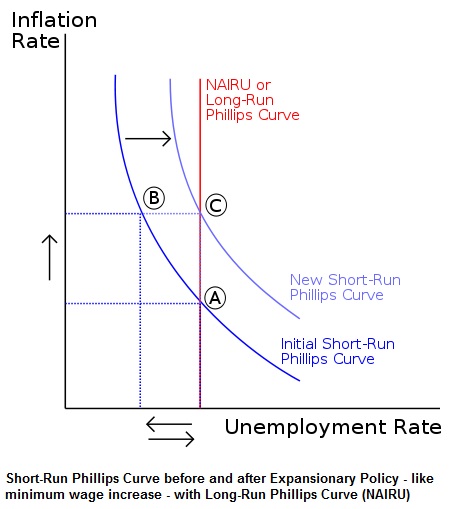
This relates to the topic in the field of Economics related to the Phillips Curve. This empirical model establishes that there is a ‘short run’ trade-off between unemployment and inflation but this is not been observed in the long run. The textbook definition of the Phillips Curve is as follows:

Reference Title: Phillips Curve

Source: Retrieved July 9, 2016 from https://en.wikipedia.org/wiki/Phillips_curve

The Phillips curve is a single-equation empirical model, named after A. W. Phillips, describing a historical inverse relationship between rates of unemployment and corresponding rates of inflation that result within an economy. Stated simply, decreased unemployment, (i.e., increased levels of employment) in an economy will correlate with higher rates of inflation.

While there is a short run trade-off between unemployment and inflation, it has not been observed in the long run.[1] In 1968, Milton Friedman asserted that the Phillips curve was only applicable in the short-run and that in the long-run, inflationary policies will not decrease unemployment.[2][3] Friedman then correctly predicted that, in the 1973–75 recession, both inflation and unemployment would increase.[3] The long-run Phillips Curve is now seen as a vertical line at the natural rate of unemployment, where the rate of inflation has no effect on unemployment.[4] Accordingly, the Phillips curve is now seen as too simplistic, with the unemployment rate supplanted by more accurate predictors of inflation based on velocity of money supply measures such as the MZM (“money zero maturity”) velocity,[5] which is affected by unemployment in the short but not the long term.[6]

CU Blog - Phillips Curve - Fallacy of Minimum Wage - Photo 2

Key: NAIRU = Non-Accelerating Inflation Rate of Unemployment

This subject matter synchronizes with the book Go Lean…Caribbean, which calls for the elevation of Caribbean economics. The book asserts that the Caribbean has to pursue a quest for job creation, but to set the sights on a higher target, high-paying jobs, because minimum wage jobs are no elevation at all; it is only a fallacy. As conveyed in a previous blog-commentary, the Go Lean book examined the anatomy of minimum wages (Page 152) and its effect on a community’s eco-system. It defined minimum wage as:

the lowest hourly, daily or monthly remuneration that employers may legally pay to workers

The minimum wage is generally acknowledged to increase the standard of living of workers, reduces poverty, reduces inequality, boosts morale and forces businesses to be more efficient. Critics of the minimum wage, predominantly followers of neo-classical economic theory, contend that a minimum wage increases unemployment, particularly among workers with very low productivity due to inexperience or handicap, thereby harming less skilled workers and possibly excluding some groups from the labor market

This fallacy of minimum wage is commentary 4 of 6 in this series on Economic Fallacies from the movement behind the Go Lean book. As related in the first submission on this series, the situation in the Caribbean region is likened to the imagery of an animal foraging for food, but then gets distracted and “chases a squirrel up a tree”. The squirrel in the tree will never be a meal; it is just a waste of time and energy for the animal. This analogy conveys the waste of time associated with a frivolous and fallacious pursuit. The other commentaries detailed in this series are as follows:

  1. Independence – Hype of Hope
  2. Austerity – Book Review: Mark Blyth’s “History of a Dangerous Idea”
  3. Education & Student Loans – Not a good Return on Investment
  4. Phillips Curve – Fallacy of Minimum Wage
  5. Self-regulation of the Centers of Economic Activity
  6. Casino Currency – US Dollars?

All of the commentaries in this series are economic in nature. They refer to rules for managing the valuable resources of time, talents and treasuries. The creation of jobs require a measure of all three of these resources. A mission of the Go Lean roadmap is to create jobs in the region. The roadmap – for a total of 370 pages – presents a comprehensive plan to create 2.2 million new jobs, with a heavy focus on high paying jobs, exhausting the Science, Technology, Engineering and Mathematics / Medical (STEM) fields.

This subject is no childs-play; this is heavy-lifting. There are supplemental teaching points that align with this subject.This is gleaned from a Khan Academy’s online/e-Learning teaching course:

CU Blog - Phillips Curve - Fallacy of Minimum Wage - Photo 1What is the relationship between the aggregate demand curve and the Phillips curve?

At first, unemployment will go down, shifting aggregate demand (AD) from AD1 to AD2, which increases Y (output) by Y2 – Y1. This increase in demand means more workers are needed, and then AD will be shifted from AD2 to AD3. However, this time, much less is produced than in the previous shift, but the price level has risen from P2 to P3, which is a much higher increase in price than in the previous shift. The increase in price is called inflation. – Khan Academy Lesson

Question: As much as the increase in demand would affect inflation wouldn’t another and maybe more obvious explanation be that as wages raise the costs of producing increase (since labor most often is a very important production factor) and thus forcing companies to increase prices as to offset the increase in wages?

Answer: Increase in price won’t always lead to increase in profit, because it entails decrease in demand in a highly competitive market. It will do so when there is so much money in the economy that demand becomes insensitive to price, or when profit is marginal. The former factor takes place first, the later – second.

VIDEO – Phillips curve – Inflation – measuring the cost of living – Macroeconomics – Khan Academy – https://youtu.be/v7ZWTZ9NgU4

Uploaded on Feb 15, 2012 – The observation that inflation and unemployment tend to be inversely correlated.

The book Go Lean … Caribbean calls for the elevation of Caribbean economics using sound economic principles and best-practices, not the pursuits of economic fallacies. The book serves as a roadmap for the introduction and implementation of the technocratic Caribbean Union Trade Federation (CU) with the charter to facilitate jobs in the region. The book posits that STEM industries and careers can be a great equalizer for the Caribbean to better compete with the rest of the world. These jobs are not location dependent. There is only the need for the “community will”. This job-creation mantra is among these 3 prime directives of the CU/Go Lean roadmap:

  • Optimization of economic engines in order to grow the regional economy to a GDP of $800 Billion.
  • Establishment of a security apparatus to protect the resultant economic.
  • Improvement of Caribbean governance to support these engines.

Early in the Go Lean book, the responsibility to create jobs was identified as an important function for the CU with these pronouncements in the Declaration of Interdependence (Pages 14):

xxvi.     Whereas the Caribbean region must have new jobs to empower the engines of the economy and create the income sources for prosperity, and encourage the next generation to forge their dreams right at home, the Federation must therefore foster the development of new industries, like that of ship-building, automobile manufacturing, prefabricated housing, frozen foods, pipelines, call centers, and the prison industrial complex. In addition, the Federation must invigorate the enterprises related to existing industries tourism, fisheries and lotteries – impacting the region with more jobs.

xxvii.    Whereas the region has endured a spectator status during the Industrial Revolution, we cannot stand on the sidelines of this new economy, the Information Revolution. Rather, the Federation must embrace all the tenets of Internet Communications Technology (ICT) to serve as an equalizing element in competition with the rest of the world. The Federation must bridge the digital divide and promote the community ethos that research/development is valuable and must be promoted and incentivized for adoption.

xxviii.   Whereas intellectual property can easily traverse national borders, the rights and privileges of intellectual property must be respected at home and abroad. The Federation must install protections to ensure that no abuse of these rights go with impunity, and to ensure that foreign authorities enforce the rights of the intellectual property registered in our region.

Job creation has been a frequent topic for blog/commentaries. Consider this sample list:

https://goleancaribbean.com/blog/?p=8262 Where the Jobs Are – One Company’s Model: Uber
https://goleancaribbean.com/blog/?p=8045 Where the Jobs Are – How Small Businesses Can Help
https://goleancaribbean.com/blog/?p=6089 Where the Jobs Are – Futility of Minimum Wage
https://goleancaribbean.com/blog/?p=5034 Where the Jobs Are – Patents: The Start of Innovative Jobs
https://goleancaribbean.com/blog/?p=4240 Where the Jobs Are – The Effects of Immigration Policy
https://goleancaribbean.com/blog/?p=2857 Where the Jobs Are – Entrepreneur-ism in Junk
https://goleancaribbean.com/blog/?p=2750 Where the Jobs Are – Role Model for Jobs by Self-Governing Entities
https://goleancaribbean.com/blog/?p=2025 Where the Jobs Are – Attitudes & Images of the Diaspora
https://goleancaribbean.com/blog/?p=2003 Where the Jobs Are – One Scenario: Ship-breaking
https://goleancaribbean.com/blog/?p=1698 Where the Jobs Are – STEM Jobs Are Filling Slowly

The book Go Lean…Caribbean details the creation of 2.2 million new jobs for the Caribbean region, many embracing STEM skill-sets. How? By adoption of certain community ethos – that “community will” – plus the executions of key strategies, tactics, implementations and advocacies. The following is a sample from the book:

Community Ethos – Deferred Gratification Page 21
Community Ethos – Economic Principle – Economic Systems Influence Choices & Incentives Page 21
Community Ethos – Consequences of Choices Lie in the Future Page 21
Community Ethos – Job Multiplier Page 22
Community Ethos – Lean Operations Page 24
Community Ethos – Return on Investments Page 24
Community Ethos – Ways to Impact the Future Page 26
Community Ethos – Ways to Help Entrepreneurship Page 28
Community Ethos – Ways to Promote Intellectual Property Page 29
Community Ethos – Ways to Impact Research & Development Page 30
Community Ethos – Ways to Bridge the Digital Divide Page 31
Strategy – Mission – Education Without Further Brain Drain Page 46
Tactical – Fostering a Technocracy Page 64
Tactical – Tactics to Forge an $800 Billion Economy – High Multiplier Industries Page 70
Tactical – Separation of Powers – Commerce Department – Patents & Copyrights Page 78
Implementation – Ways to Pay for Change Page 101
Implementation – Ways to Deliver Page 109
Implementation – Ways to Impact ICT and Social Media Page 111
Planning – Ways to Improve Trade Page 128
Advocacy – Ways to Create Jobs Page 152
Advocacy – Ways to Improve Education Page 159
Advocacy – Ways to Impact Labor Markets and Unions Page 164
Advocacy – Ways to Foster Technology Page 197
Advocacy – Ways to Impact Main Street Page 201
Advocacy – Ways to Battle Poverty – Third World Realities Page 222
Advocacy – Ways to Help the Middle Class Page 223
Appendix – Growing 2.2 Million Jobs in 5 Years Page 257
Appendix – Job Multipliers Page 259

The CU will foster job-creating developments for above minimum-wage jobs, by incentivizing many “innovation sector” jobs: high-tech start-ups, incubating viable companies, and implementing Self-Governing Entities. The primary ingredient for CU success will be Caribbean people, so we must foster and incite participation of many young people into innovation sectors or STEM fields. This quest is the opposite of the minimum wage fallacious pursuit observed in many Caribbean countries who prioritize tourism and tourism-related service jobs.

Of the 2.2 million new jobs in the Go Lean roadmap, there is no expectation that all jobs will be in the innovation sector and above the minimum wage. No, service industries will always persists, and these frequently feature a minimum wage scale. But these jobs will not be the focus nor the target of the Go Lean heavy-lifting. They will simply be the derivatives of the innovation sector jobs. This derivative enjoys a job multiplier effect; for every direct job, additional ones are fostered “down stream”. The Go Lean book details this dynamic; consider this sample from Page 259:

With only a fraction of the jobs, the innovation sector generates a disproportionate number of additional local jobs and therefore profoundly shapes the local economy. A healthy traded sector benefits the local economy directly, as it generates well-paid jobs, and indirectly as it creates additional jobs in the non-traded sector. What is truly remarkable is that this indirect effect to the local economy is much larger than the direct effect. My research, based on an analysis of 11 million American workers in 320 metropolitan areas, shows that for each new high-tech job in a metropolitan area, five additional local jobs are created outside of high tech in the long run. – Enrico Moretti’s.

The roadmap anticipates only a 3.75 job multiplier factor in the estimation of the 2.2 million new jobs.

Everyone is hereby urged to lean-in to this Go Lean roadmap, so that we can create the high-paying, community-impacting jobs, and not consume ourselves with a focus on minimum-wage jobs. How to accomplish this heavy-lifting tasks? This roadmap provides the turn-by-turn directions. This is an action plan to not just improve the Caribbean workplace, but the entire homeland. To make this, our homeland, a better place to live, work and play. 🙂

Download the book Go Lean … Caribbean – now!


Share this post:
, ,
[Top]

A Lesson in Economic Fallacies – Student Loans As Investments

Go Lean Commentary

“Give me my money!”

This is not so unfamiliar a phrase in pop culture. It refers to the everyday scenario of repaying a debt. People want to be re-paid what is owed them. Many times, the motivation for street crimes is the defaulting of a debt – legitimate or illicit. Even more so, countries have gone to war over debt defaults; consider the experience of the Mexican – French Drama, better known as “Cinco De Mayo”. (The book Go Lean … Caribbean also relates the bad experiences of the Egyptian Default in the 1870’s – Page 143).

There are standards of quality that we all accept when it comes to debt collection; it is like a yardstick of success. That figure is 10 percent. Any lending institution with a default rate higher than 10% is automatically considered a failure. Many times, the institution – like banks – would come under external supervision for sporting such a default rate.

For the American student loans eco-system, the default rate has remained consistently below 10 percent, (now after the implementation of collections best practices in the 1990’s), even during dire economic conditions. Though there have been complaints of upward creeping, that argument is all relative; see chart here:

Student Loans 3

According to the following news article, the Caribbean experience is “bad” for gleaning returns from their student loans, even as a straight banking product: principal & interest dynamics. How bad? 10 percent? That would be a dream; the experience in one country, the Bahamas is 75 percent for student loans. See the news article to this effect here:

Title: Bahamas government warns student loan defaulters of legal action

Posted: March 1, 2016; retrieved July 8, 2016 from http://www.caribbean360.com/news/bahamas-government-warns-student-loan-defaulters-of-legal-action

Student Loans 1NASSAU, The Bahamas – Minister of Education, Science and Technology Jerome Fitzgerald has put recipients of the Education Loan Programme (ELP) on notice that if they fail to repay their loans they will face court action.

Despite the many “success” stories coming out of the ELP, he maintained that there were also a number of failings which have “derailed” the programme.

Since passage of the Act in 2002, a total of 4,733 people have benefited from the programme. But the initiative was suspended in August 2009 because of a 75 per cent delinquency rate in loan repayments.

“This was and is clearly unsustainable. The people of the Bahamas financed this programme to assist with the education of persons pursuing tertiary education. The loan portfolio is intended to be a revolving fund; and as the borrower pays, the monies are repaid to assist other qualified students,” Fitzgerald said at a press conference yesterday.

“I must emphasize that many loan recipients have satisfied and are satisfying their commitments. There are many more, however, for a plurality of reasons, who have not. We are aware that many persons who received loans have returned home and are not working. We are also equally aware that there is a possibility that a number of persons who received funds between 2000 and 2002 may not have ever attended school. However, we are cognizant of our fiduciary responsibility to the country and that we had to formulate a plan that would sensibly facilitate our pursuit to collect delinquent funds, one way or the other.”

Fitzgerald explained that, with a view of jumpstarting the programme, the ELA was mandated to review the suspended it with the intention of making recommendations to restarting to give an opportunity to qualified persons interested in pursuing tertiary education.

He said that after three years of reviewing and reconciling records, the Education Loan Authority now has a formula to address and correct the deficiencies of the ELP.

“I can assure that the Directors and Management of the Education Loan Authority (ELA) were instructed to work fastidiously, to come up with a solution to . . . not only restore the programme, but to restore the programme with the necessary control provisions to ensure its ongoing sustainability and viability,” the minister said.

Fitzgerald re-emphasized government’s position that “one of the prerequisites for successfully delivering our commitment to the creation of an effective transition path from high school into higher education had to be the restoration of the Scholarship Loan Programme.”

On October 21, 2015 the Education Loan (Amendment) Act 2015 came into force. In addition to collecting funds, the new Act addresses delinquencies, rewards borrowers who are paying and/or genuinely want to honour their obligations, and empowers the ELA to collect funds.

In summary, the Bahamas Education Loan Authority (ELA) is owed over $155 million in outstanding loan payments for its student loan scheme, with a default rate of 75 percent.

This Caribbean community should now be saying: “Give me my money!”

However, this commentary extends the criticism further: The money being demanded is the principal and maybe even some interest amounts due. But student loans are supposed to be investments in the young people of the community. This commentary trumpets the reality of Caribbean student loans as a fallacy: Where is the return on these investments?

This commentary asserts that those who advocate to remediate Caribbean economics needs to avoid a series of Economic Fallacies. This is commentary 3 of 6 from the movement behind the Go Lean book on the subject of Economic Fallacies. As related in the first submission on this series, the situation in the Caribbean region is likened to the imagery of an animal foraging for food, but then gets distracted and “chases a squirrel up a tree”. The squirrel in the tree will never be a meal; it is just a waste of time and energy for the animal. This analogy conveys the waste of time associated with a frivolous and fallacious pursuit. The other commentaries detailed in this series are as follows:

  1. Independence – Hype of Hope
  2. Austerity – Book Review: Mark Blyth’s “History of a Dangerous Idea”
  3. Education & Student Loans – Not a good Return on Investment
  4. Phillips Curve – Fallacy of Minimum Wage
  5. Self-regulation of the Centers of Economic Activity
  6. Casino Currency – US Dollars?

All of the commentaries in this series are economic in nature. They refer to rules for managing the valuable resources of time, talents and treasuries. Student loan investments are extending all three of these resources. Despite the direct reference to this one Caribbean member-states – the Bahamas – the experience is similar through out the entire region: Student loans have been a bad investment; lose-lose for the community. A mission of the roadmap gleaned from the Go Lean book, is to remediate the economic chaos in the region.

Back to the Bahamas, in addition to a terrible loan default rate where they report only 16 percent of borrowers are up to date on their loan payments; the problem is exacerbated by an atrocious brain drain rate. Some studies present that 70 percent of college educated ones in the Caribbean in general have fled the region for residency abroad. (The Bahamas rate was 61 percent in that report). Surely investments in student loans as a nation-building policy is an economic fallacy … for  the Bahamas in particular and the Caribbean region in general.

The problem is not just a Caribbean one. Other communities also experience dysfunction in their student loan eco-system. For example, in the US, the average student loan debt for recent college graduates is close to $30,000; any loans guaranteed by the US Federal government is non-dischargeable, so even after death or bankruptcy, the indebtedness remains. This type of debt impedes the individual from making methodical progress, and the experience on community economics have been imperiled. In a previous blog-commentary, it was reported how the student loan crisis has impacted the home-buying practice.

So the best practice for students, who have partaken in a loan program, is to strategize a repayment; see related article in the Appendix. There are economic consequences for the individual and the community.

Education is good!

Student loans are bad!

The entire college education eco-system has had mixed results for the Caribbean.

Part of the Caribbean’s dismal record with college education is tied to the reality of college graduates abandoning the homeland, or never returning after their matriculation. This consideration aligns with the book Go Lean…Caribbean, a roadmap to elevate the economic, security and governing engines of the Caribbean. The Caribbean wants to model many of the good examples of the United States, and learn from the many bad cautionary tales. Education is a good model; (every additional year of schooling – in the aggregate – raises a community’s economic output by 3% to 6%). On the other hand, the eco-system for student loans is one bad American model we do not want to emulate. The Go Lean book detailed the new debt crisis America is contending with because of the excessive debt loads, young ones are being burden with (Page 114). Here is an excerpt:

The Bottom line on a New Student Loan Scandal
Matt Taibbi, the Rolling Stone magazine contributing editor, had previously exposed the 2008 Wall Street Crisis in his critically acclaimed book Too Big To Fail. Now he exposes as scandalous how American colleges exploit young students with outrageous tuition increases (3 X the inflation rate), since all are approved for federal student loans. Where there is demand, a supply system steps in to deliver … and profit. But this industry creates its own demand with slick marketing campaigns. See Appendix IH of Go Lean … Caribbean – Page 286.

Already too, the Caribbean has its own bad experiences within its own student loan eco-system. The Caribbean experience has been more negative than positive. Too many of our students have left … to study abroad; then refused to return home, taking with them the return on community investments and repayment of their student loans. We must do better! A Go Lean/CU mission is to dissuade our citizens from emigrating to foreign shores.

This Go Lean book serves as a roadmap for the introduction and implementation of the technocratic Caribbean Union Trade Federation (CU). The CU has a complete education agenda, applying lessons learned from the consideration of other communities, like the US. This roadmap presents the following 3 prime directives:

  • Optimization of the economic engines in order to grow the regional economy to $800 Billion & create 2.2 million new jobs..
  • Establishment of a security apparatus to protect the resultant economic engines.
  • Improvement of Caribbean governance to support these engines.

Again, education is good. So the Go Lean roadmap provides turn-by-turn directions on how to reform the Caribbean tertiary education systems, economy, governance and Caribbean society as a whole. There is a plan for a regional student loan pool, where we mitigate the dangers that are so evident in the American eco-system.

As for the primary threat of constant societal abandonment – of crisis proportions – the Go Lean roadmap has missions to remediate this crisis. So as a planning tool, the roadmap commences with a Declaration of Interdependence, pronouncing the dread of threats and Caribbean brain drain (Page 12):

xvi.    Whereas security of our homeland is inextricably linked to prosperity of the homeland, the economic and security interest of the region needs to be aligned under the same governance. Since economic crimes … can imperil the functioning of the wheels of commerce for all the citizenry, the accedence of this Federation must equip the security apparatus with the tools and techniques for predictive and proactive interdictions.

xix. Whereas our legacy in recent times is one of societal abandonment, it is imperative that incentives and encouragement be put in place to first dissuade the human flight, and then entice and welcome the return of our Diaspora back to our shores

xxi. Whereas the preparation of our labor force can foster opportunities and dictate economic progress for current and future generations, the Federation must ensure that educational and job training opportunities are fully optimized for all residents of all member-states, with no partiality towards any gender or ethnic group This responsibility should be executed without incurring the risks of further human flight, as has been the past history.

So a tertiary education plan, without addressing the preponderance of brain drain is another economic fallacy. We, as a community, would be spending good money, but getting bad returns.

Make no mistake, the Go Lean movement (book and accompanying blog-commentaries) posits that education is a vital consideration for Caribbean economic empowerment. Imagine better regional institutions with conditional loans with cross-border enforcement and collections. The vision of the CU is a confederation of the 30 member-states of the Caribbean to do this type of heavy-lifting to champion better educational policies for our region.

The book details the policies; the community ethos to adopt, plus the executions of the following strategies, tactics, implementations and advocacies to impact the tertiary education in the region:

Community Ethos – Deferred Gratification Page 21
Community Ethos – Economic Systems Influence Choice Page 21
Community Ethos – Job Multiplier Page 22
Community Ethos – Lean Operations Page 24
Community Ethos – Return on Investments (ROI) Page 24
Community Ethos – Ways to Impact the Future Page 26
Community Ethos – Ways to Foster Genius Page 27
Community Ethos – Ways to Help Entrepreneurship – Training & Mentoring Page 28
Community Ethos – Ways to Impact Research and Development – STEM Education Page 30
Strategy – Competition Analysis – Study: At home –vs- Abroad Page 50
Tactical – Separation of Powers – Education Department Page 85
Tactical – Separation of Powers – Labor Department – On-the-Job-Training Regulator Page 89
Implementation – Ways to Better Manage Debt Page 114
Planning – Lessons Learned from Egypt Page 151
Advocacy – Ways to Grow the Economy Page 151
Advocacy – Ways to Create Jobs Page 152
Advocacy – Ways to Improve Education Page 159
Advocacy – Ways to Impact Student Loans – How to Reboot Page 160
Advocacy – Ways to Improve Governance Page 169
Appendix – Education and Economic Growth Page 258
Appendix – New American Student Loan Debt Crisis – Now Over $ 1 Trillion in Debt Page 286

The American Tertiary Education Student Loan eco-system is a broken model. This constitutes a fallacy for the Caribbean to emulate it. This point, and other fallacies related to education, have been repeatedly addressed and further elaborated upon by this Go Lean movement, as in these previous blog/commentaries:

https://goleancaribbean.com/blog/?p=7806 Skipping School to become Tech Giants
https://goleancaribbean.com/blog/?p=6269 Education & Economics: Welcome Mr. President
https://goleancaribbean.com/blog/?p=5482 For-Profit Education: Plenty of Profit; Little Education
https://goleancaribbean.com/blog/?p=4487 FAMU – Finally, A Model for Facilitating Economic Opportunity
https://goleancaribbean.com/blog/?p=1470 College of the Bahamas Deficient Master Plan for 2025
https://goleancaribbean.com/blog/?p=1256 Is a Traditional 4-year Degree a Terrible Investment?

Let’s do better here in the Caribbean. Better than our American model – see the VIDEO in the Appendix – and better than our own status quo. Let’s own up to the hurtful fact that tertiary education – and the student loans to finance them – has been an economic fallacy! We have been chasing “the squirrel up the tree and then waiting with futility for it to come down”. The Caribbean expression is so apropos here:

Fattening frog for snake.

There is a better way!

The people, educational and governing institutions in the region are urged to lean-in for the empowerments described in the book Go Lean … Caribbean. Education reform – weeding out the fallacies – can succeed in elevating Caribbean society; we can make the homeland better places to live, work, learn and play. 🙂

Download the book Go Lean … Caribbean – now!

================

Appendix VIDEO – 5 Reasons Student Loans are Bulls**t | Decoded | MTV News – https://youtu.be/q0j0xnwEQug

Published on Oct 28, 2015 – Student Loans! Whether you hate them or hate them, you’re probably going to have to deal with them in one way or another. Why? Because over 40 Million young(ish) Americans owe over 1.2 Trillion dollars in student loan debt and millions of others have this spectre of debt loom over crucial life decisions. And while there are no easy answers about what to do about it, there are a lot of good questions like: Why has tuition across the United States skyrocketed over the past 30 years? What are your student loans really paying for? Is there anything you can do? And perhaps most importantly, is this all just a bunch of Bullshit? 

Franchesca Ramsey: https://twitter.com/chescaleigh
Brought to you with love by: http://mtvother.com
Produced by: http://www.kornhaberbrown.com

With Special Guest:
Ben O’Keefe (@benjaminokeefe)

Watch Ben’s Show: The O’Keefe Brief
http://front.moveon.org/tag/the-okeef…

To learn more, visit: http://studentdebtcrisis.org/

—————————–

Appendix – Tips for repaying student loans

By: Andrew Housser
Source: Retrieved July 8, 2016 from: http://www.newson6.com/story/25551775/tips-for-repaying-student-loans

Student Loans 2The average student loan debt for recent college graduates is close to $30,000. During the first five years after college, four out of 10 borrowers become delinquent in repaying their student loans. This can lead to extra fees and interest costs, as well as a major hit to one’s credit rating. If you are a college graduate who is struggling to keep up with payments, these tips can help.

Understand the terms of your loan(s). Chances are, you have more than one loan with different lenders. As a result, your options for loan repayment will vary. The U.S. Department of Education’s National Student Loan Data Systemprovides loan amounts, lender information and repayment status for all government-funded federal student loans. Private student loans are financed through a bank, credit union or other nongovernmental lender. Private lenders set their own interest rates, loan limits and other conditions. You will need to contact your private lender directly to obtain full details on the terms of your loan.

Consider consolidation. It is challenging to keep track of multiple loan payments. Consolidating your student loans will create a more convenient single monthly payment. Consolidation does increase the term of the loan and the amount of interest paid over the life of the loan. However, by extending the repayment term, it can reduce your monthly payments by almost half.
Figure out your repayment plan. Some loans have a grace period of six to nine months before the first payment is due. Depending on the loan type, interest may or may not accrue during this period. Having a little bit of breathing room after graduation can be helpful as you find and start a job. However, it also makes it easy to forget that a payment is due. Up to a third of borrowers miss their first student loan payment. Your credit rating can take a hit with just one missed payment. Automatic payments set up through your bank checking account can ensure you meet your financial obligation each month. Some lenders offer discounts for these automatic debits, too.

Do not default. Should you find yourself unable to make loan payments due to a job loss or other circumstances, it is always better to work with your lender to find a repayment solution than to default. Penalties for defaulting on student loans can be severe. They can include garnished wages and Social Security benefits, and government retention of tax refunds. In addition, you may incur late fees and collection charges. Instead of defaulting, consider these other options:

Deferment. If you qualify, you can temporarily halt payments on the loan principal by applying for a loan deferment with your lender. During this time, the federal government will pay the interest on subsidized federal student loans, but not unsubsidized loans.

Forbearance. A forbearance allows you to temporarily modify your loan terms by stopping or reducing monthly payments, or extending the repayment time period. Depending on your situation, you may or may not have to pay interest on the loan during a period of forbearance.

Forgiveness. Loan forgiveness programs eliminate loan balances (and payments) for people who meet certain criteria. These include working in eligible public service positions, such as in law enforcement or public health; military service; volunteer work; and teaching or practicing medicine in a low-income, rural area.

Cancellation. In extreme cases, such as disability, you may be able to get your loans discharged.

If you are still in school, make sure you complete an exit counseling session with a financial aid officer at your school before your graduate. This representative will review the terms and conditions of your loans, including repayment options and your rights and responsibilities. This is the time to ask questions and map out a plan for repayment. Then you can focus on the really important tasks like landing that dream job and starting your bright future.

About the Author
Andrew Housser is a co-founder and CEO of Bills.com, a free one-stop online portal where consumers can educate themselves about personal finance issues and compare financial products and services. He also is co-CEO of Freedom Financial Network, LLC providing comprehensive consumer credit advocacy and debt relief services. Housser holds a Master of Business Administration degree from Stanford University and Bachelor of Arts degree from Dartmouth College.

Share this post:
, ,
[Top]

A Lesson in Economic Fallacies – Austerity: Dangerous Idea?

Go Lean Commentary

Austerity - Photo 1The economic status in the Caribbean – all 30 member-states despite the colonial legacy – can be summed up with one word:

Crisis!

Alas, the book Go Lean…Caribbean declares that a crisis is a terrible thing to waste.

This commentary relates the below Book Review of the publication by Economist and Political Scientist Mark Blyth entitled: Austerity – The History of a Dangerous Idea. This commentary asserts that those who advocate to remediate Caribbean economics needs to avoid a series of Economic Fallacies.

This is commentary 2 of 6 from the Go Lean movement on the subject of Economic Fallacies. As related in the previous submissions on this series, the situation in the Caribbean region is likened to the imagery of an animal foraging for food, but then gets distracted and “chases a squirrel up a tree”. The squirrel in the tree will never be a meal; it is just a waste of time and energy for the animal. This analogy conveys the waste of time associated with a frivolous and fallacious pursuit. The other commentaries detailed in this series are as follows:

  1. Independence – Hype of Hope
  2. Austerity – Book Review: Mark Blyth’s “History of a Dangerous Idea”
  3. Education & Student Loans – Not a good Return on Investment
  4. Phillips Curve – Fallacy of Minimum Wage
  5. Self-regulation of the Centers of Economic Activity
  6. Casino Currency – US Dollars?

All of these commentaries are economic in nature. They refer to rules for managing the valuable resources of time, talents and treasuries. There are rules for winning and rules for losing. Normally these are discovered after the fact, not before hand. So examining the experience of other communities, the winners and losers, can be extremely helpful to our Caribbean cause. This is a mission of the Go Lean roadmap, to learn lessons from how other communities have handled economic crises.

One common remediation for economic crisis has been Austerity. What is Austerity? And is this a good thing or bad thing? First, the dictionary definition is: “reduced availability of luxuries and consumer goods, as brought about by government policy”. Second, consider Mark Blyth’s own definition, here:

Austerity - Photo 2

The Book Review and VIDEO on Mark Blyth’s Austerity book is as follows:

Book Review: Austerity – The History of a Dangerous Idea
By: Mark Blyth

Selected as a Financial Times Best Book of 2013
Governments today in both Europe and the United States have succeeded in casting government spending as reckless wastefulness that has made the economy worse. In contrast, they have advanced a policy of draconian budget cuts–austerity–to solve the financial crisis. We are told that we have all lived beyond our means and now need to tighten our belts. This view conveniently forgets where all that debt came from. Not from an orgy of government spending, but as the direct result of bailing out, recapitalizing, and adding liquidity to the broken banking system. Through these actions private debt was rechristened as government debt while those responsible for generating it walked away scot free, placing the blame on the state, and the burden on the taxpayer.

That burden now takes the form of a global turn to austerity, the policy of reducing domestic wages and prices to restore competitiveness and balance the budget. The problem, according to political economist Mark Blyth, is that austerity is a very dangerous idea. First of all, it doesn’t work. As the past four years and countless historical examples from the last 100 years show, while it makes sense for any one state to try and cut its way to growth, it simply cannot work when all states try it simultaneously: all we do is shrink the economy. In the worst case, austerity policies worsened the Great Depression and created the conditions for seizures of power by the forces responsible for the Second World War: the Nazis and the Japanese military establishment. As Blyth amply demonstrates, the arguments for austerity are tenuous and the evidence thin. Rather than expanding growth and opportunity, the repeated revival of this dead economic idea has almost always led to low growth along with increases in wealth and income inequality. Austerity demolishes the conventional wisdom, marshaling an army of facts to demand that we austerity for what it is, and what it costs us.

About the Author

Mark Blyth is associate professor of political science at the JohnsHopkinsUniversity and the author of Great Transformations: Economic Ideas and Institutional Change in the Twentieth Century.

===================

Editorial Reviews

“Austerity is an economic policy strategy, but is also an ideology and an approach to economic management freighted with politics. In this book Mark Blyth uncovers these successive strata. In doing so he wields his spade in a way that shows no patience for fools and foolishness.”
— Barry Eichengreen, George C. Pardee and Helen N. Pardee Professor of Economics and Political Science University of California, Berkeley

——-
“Of all the zombie ideas that have been reanimated in the wake of the global financial crisis, austerity is the most dangerous. Mark Blyth shows how austerity created the disasters of the 1930s, and contributed to the descent of the world into global war. He shows how European austerity policies have prevented any recovery from the crisis of 2009, while rescuing and protecting the banks and financial institutions that created the crisis. An essential guide for anyone who wants to understand the current depression.”
— John Quiggin, author of author of Zombie Economics

——-
“Most fascinating is the author’s discussion of the historical underpinnings of austerity, first formulated by Enlightenment thinkers Locke, Hume and Adam Smith, around the (good) idea of parsimony and the (bad) idea of debt. Ultimately, writes Blyth, austerity is a ‘zombie economic idea because it has been disproven time and again, but it just keeps coming.’ A clear explanation of a complicated, and severely flawed, idea.” — KIRKUS REVIEW

——-

‘One of the especially good things in Mark Blyth’s Austerity: The History of a Dangerous Idea is the way he traces the rise and fall of the idea of “expansionary austerity,” the proposition that cutting spending would actually lead to higher output. EL As Blyth documents, this idea spread like wildfire.’ — Paul Krugman, The New York Review of Books

——-

“Among all the calamities spawned by the global financial crisis, none was as easily avoidable as the idea that austerity policies were the only way out. In this feisty book, noted political scientist Mark Blyth covers new territory by recounting the intellectual history of this failed idea and how it came to exert a hold on the imagination of economists and politicians. It is an indication of the sorry state of macroeconomics that it takes a political scientist to expose so thoroughly one of the economics profession’s most dangerous delusions.”
— Dani Rodrik, Rafiq Hariri Professor of International Political Economy, The John F. Kennedy School of Government, Harvard University

Product Details

  • ISBN-13: 978 019938 9445
  • Print Length: 304 pages
  • Publisher: OxfordUniversity Press
  • Publication Date: March 27, 2013

Source: Financial Times – Book Review – Retrieved July 6, 2016 from: https://www.amazon.com/dp/B00BJK4Y7U/ref=dp-kindle-redirect?_encoding=UTF8&btkr=1

VIDEO: Mark Blyth: Is Austerity a Dangerous Idea? – https://youtu.be/2v8m-J8sgik


Published on Mar 27, 2013 – Governments the world over are looking at austerity measures to help battle the financial crisis. Author and Ivy League professor Mark Blyth tells Steve Paikin why he thinks this is a bad idea.

The Go Lean book details the economic crisis stemming from the 2008 Great Recession. But the book prepares societal engines of the Caribbean so as to not waste this crisis; it calls for the establishment of a regional administration to monitor, mitigate and manage the economic dynamics of the region. The book serves as a roadmap for the introduction and implementation of the technocratic Caribbean Union Trade Federation (CU). The prime directives of this federal entity are described as:

  • Optimize the economic engines of the Caribbean to elevate the regional economy to grow to $800 Billion and create 2.2 million new jobs.
  • Establish a security apparatus to protect the resultant economic engines.
  • Improve Caribbean governance and industrial policies to support these engines.

So the Go Lean roadmap calls for the CU to serve as the regional administration to optimize banking and sovereign debt in the region. Part of the CU roadmap is the accompanying Caribbean Central Bank. (CCB). The premise of the book is simple: that the problems of the region are too big for any one member-state to resolve alone. This point was pronounced in the opening Declaration of Interdependence in the Go Lean book (Pages 12 – 13) with these statements:

xi. Whereas all men are entitled to the benefits of good governance in a free society, “new guards” must be enacted to dissuade the emergence of incompetence, corruption, nepotism and cronyism at the peril of the people’s best interest. The Federation must guarantee the executions of a social contract between government and the governed.

xii. Whereas the legacy in recent times in individual states may be that of ineffectual governance with no redress to higher authority, the accedence of this Federation will ensure accountability and escalation of the human and civil rights of the people for good governance, justice assurances, due process and the rule of law. As such, any threats of a “failed state” status for any member state must enact emergency measures on behalf of the Federation to protect the human, civil and property rights of the citizens, residents, allies, trading partners, and visitors of the affected member state and the Federation as a whole.

xxiv. Whereas a free market economy can be induced and spurred for continuous progress, the Federation must install the controls to better manage aspects of the economy: jobs, inflation, savings rate, investments and other economic principles. Thereby attracting direct foreign investment because of the stability and vibrancy of our economy.

xxv. Whereas the legacy of international democracies had been imperiled due to a global financial crisis, the structure of the Federation must allow for financial stability and assurance of the Federation’s institutions. To mandate the economic vibrancy of the region, monetary and fiscal controls and policies must be incorporated as proactive and reactive measures. These measures must address threats against the financial integrity of the Federation and of the member-states.

The Go Lean/CU/CCB roadmap is designed to deliver many empowerment activities to elevate Caribbean society. These activities will carefully balance the obligations of the past (debt) and the needs of the Caribbean future: we need growth and jobs … now. Debt is really just other people’s money; which always come with strings attached, as in repayment in a foreign currency … with interest.

What exactly is the Go Lean plan to counter the economic fallacy of austerity?

Economic growth …

… as in creating jobs through industrial and entrepreneurial endeavors – for a grand total of 2.2 million new jobs.

How is this different from previous administrations?

Technocratic administration for an economy of $800 Billion GDP; just consider these two strategies: Exclusive Economic Zones and Self Governing Entities.

  • Exclusive Economic Zones will facilitate both economic empowerment (like Fisheries management) and security assurances for the territories between the islands and the outer reaches of the Caribbean Sea. – Go Lean book (Page 104).
  • SGE’s are necessary features of the CU roadmap, allowing for industrial parks, technology labs, medical campuses, agricultural ventures, airport cities and even the Capital District. All aspects of their administration are managed by the CU, including monetary issues managed by the Caribbean Central Bank. – Go Lean book (Page 105).

The cautionary tales of austerity-like measures have been repeatedly addressed and further elaborated upon in these previous blog/commentaries:

https://goleancaribbean.com/blog/?p=8132 Venezuela Example: Watching a ‘Train Wreck in Slow Motion’
https://goleancaribbean.com/blog/?p=7963 Austerity for Puerto Rico
https://goleancaribbean.com/blog/?p=7601 Beware of Vulture Capitalists
https://goleancaribbean.com/blog/?p=7268 Austerity Downsides: Detroit Public Schools Failing Grades
https://goleancaribbean.com/blog/?p=7235 Austerity Downsides: The Cautionary Tale of Flint, Michigan
https://goleancaribbean.com/blog/?p=6563 Lessons from Iceland – Model of Recovery
https://goleancaribbean.com/blog/?p=6531 Economic Crisis: Learning from the Exigency of 2008
https://goleancaribbean.com/blog/?p=5818 Greece: From Bad to Worse
https://goleancaribbean.com/blog/?p=3743 Trinidad Austerity Budget Cuts as oil prices tumble
https://goleancaribbean.com/blog/?p=623 Reform at the brink of disaster, only at the precipice

The CU is designed to do the heavy-lifting of organizing Caribbean society to benefit from the lessons from austerity measures and the underlying sovereign and municipal personal debt crises of other communities. Since the purpose of austerity is to impact economic turn-around, it is important to fully dissect the anatomy of austerity programs. This was the goal and successful execution of the book in the foregoing Book Review; austerity is an economic fallacy. This goal is also a mission of the Go Lean book as it details the community ethos to adopt, plus the executions of the following strategies, tactics, implementations and advocacies to impact the economic turn-around of Caribbean communities:

Community Ethos – Economic Principles – Economic Systems Influence Individual Choices Page 21
Community Ethos – Economic Principles – Voluntary Trade Creates Wealth Page 21
Community Ethos – Economic Principles – Consequences of Choices Lie in the Future Page 21
Community Ethos – Economic Principles – Money Multiplier Page 23
Community Ethos – Governing Principles – Lean Operations Page 24
Community Ethos – Governing Principles – Return on Investments Page 24
Community Ethos – Ways to Impact the Future – Count on the Greedy to be Greedy Page 26
Community Ethos – Ways to Impact the Greater Good Page 37
Strategy – Mission – Fortify the Stability of the Securities Markets Page 45
Strategy – Provide Proper Oversight and Support for the Depository Institutions Page 46
Tactical – Growing the Economy – Minimizing Bubbles Page 69
Tactical – Separation-of-Powers – Depository Insurance & Regulatory Agency Page 73
Implementation – Assemble Caribbean Central Bank as a Cooperative Page 96
Implementation – Start-up Benefits from Exclusive Economic Zones Page 104
Implementation – Steps to Implement Self-Governing Entities Page 105
Implementation – Ways to Better Manage Debt – Not Relying on Other People’s Money Page 114
Implementation – Ways to Foster International Aid – Technical Assistance Page 115
Planning – 10 Big Ideas – Single Market / Currency Union Page 127
Planning – Lessons Learned from 2008 Page 136
Planning – Lessons Learned from New York City – Wall Street Page 137
Planning – Lessons Learned from Detroit – A Cautionary Tale Page 140
Planning – Ways to Measure Progress – Allow strategy of Plan, Do & Review Page 147
Anecdote – Caribbean Currencies Page 149
Advocacy – Ways to Grow the Economy Page 151
Advocacy – Ways to Create Jobs Page 152
Advocacy – Ways to Control Inflation Page 153
Advocacy – Ways to Better Manage Foreign Exchange (fx) – Strong regional currency Page 154
Advocacy – Reforms for Banking Regulations Page 199
Advocacy – Ways to Impact Wall Street Page 200
Advocacy – Ways to Impact Main Street Page 201
Appendix – Airport Cities – Models for Self Governing Entities Page 287
Appendix – Tool-kits for Capital Controls Page 315

The Go Lean roadmap posits that change is coming to the Caribbean; we do not want to be over-dependent on other people’s money – that means answering to other people’s demands. As the title of Mark Blyth’s book concludes: its a dangerous idea. This has been the campaign of the Go Lean movement, to pursue economic growth, not debt. The movement (book and blog-commentaries) have even trumpeted a solution for the current public debt – no austerity, rather robust capital markets using a single Caribbean currency. Change is afoot!

The summary of the book in the foregoing Book Review is that austerity as a turn-around strategy is a dangerous idea, an economic fallacy. It is not a best-practice. The best way to correct economic stagnation and recession is simply growth! Period!

Aggressive debt repayment should only be pursued during periods of growth.

With the Go Lean roadmap, change has come to our region. But there is the need for a permanent union to provide efficient stewardship for Caribbean economy, security and governing engines. There must be the constant balancing act between past debt obligations and future growth. The Go Lean…Caribbean book posits that this challenge is a direct result of agents of change facing the modern world, as in globalization. This challenge is too big for just any one member-state to tackle alone, so there must be a regional solution. This is the quest of the multi-state technocratic administration of the CU.

The people and institutions of the region are hereby urged to lean-in to this Go Lean roadmap, to embrace the economic turn-around and avoid austerity. Only then, can we make the Caribbean a better homeland to live, work and play. 🙂

Download the book Go Lean … Caribbean – now!

Share this post:
, ,
[Top]

A Lesson in Economic Fallacies – Independence: Hype or Hope

Go Lean Commentary

Brexit Photo 4Now after the Fourth of July – American Independence Holiday – we focus on the many Caribbean member-states that are celebrating their independence in the next weeks and months. See list of Independence Dates in the Appendix below.

For a long time, independence was ‘all the rage’; but was it hope or just hype? With a world-wide emphasis on globalization, this commentary posits that the ‘rage’ needs to be interdependence. That African proverb rings so loudly:

If you want to go fast, go alone. If you want to go far, go together.

So, it is the assessment of this commentary that Independence is so overrated; rather than independence, the call is for interdependence. A model of this desired interdependence is the inter-state cooperation in the European Union (EU). But even that modeled structure is now in jeopardy

Brexit Photo 3 as a referendum in Britain (actually all of the United Kingdom) on exiting the EU passed the ballot test. A proponent for this Brexit or Leave campaign, UK Independence Party Leader Nigel Farage, declared that the balloting day – June 23 – would be Britain’s Independence Day. The assumption here is that the UK had lost its autonomy for too many governing matters and has therefore become occupied by the EU.

The detailed results of the balloting is explained in this article here:

Quick facts about the Brexit

• On June 23, 2016, the United Kingdom voted to exit the European Union by a 52 percent to 48 percent margin. There is no legal precedent for an EU member state to exit the Union, and a prolonged period of political and economic uncertainty is expected.

• Following the vote in the U.K., Prime Minister David Cameron announced he would resign, setting off a power struggle for his successor.

• Cameron said there would be no immediate change in the free movement of people, goods and services, both in and out of the U.K.

• The Bank of England stated it will enable British lenders to provide credit to businesses and households throughout the period of uncertainty. The BoE said it is also prepared to provide an additional £250 billion in liquidity to banks, in sterling and foreign currency, if required.

• Companies must continue to abide by regulations based on EU legislation until the exit is complete, which is expected to take up to two years.

What are some of the political implications?
Bernie McKay, Chief Public Policy Officer of publically-traded Silicon Valley-based company Intuit, Inc. said: “There are uncertain downstream implications about Britain’s future political leadership, which will take months to settle. But the governmental implications extend much further, including uncertainty about the future unity of the United Kingdom itself – watch for the revival of calls for Scottish independence, and for a referendum about the future of Northern Ireland. There is also the risk of exit ‘contagion’ in the EU – watch for movements in other member countries for EU exits.”

“There will be lots of speculation and rumors about Brexit implications for businesses, but it is again premature to reliably predict the real world outcomes, which will emerge gradually over the next several years as the dust settles. We will continue to engage and closely follow developments and implications.”

Source: Posted June 29, 2016; retrieved July 1, 2016 from: https://insight.intuit.com/IntuitNews/Lists/Posts/Post.aspx?List=874bdd47%2D5d8f%2D4fcd%2Dbd9c%2De4d70b533740&ID=4213&Web=d3d40795%2D7bb5%2D4e3d%2Db930%2Db6e2cf3191eb

There is a lot of uncertainty from this Brexit action – the subject of independence is turning out to be more hype than hope; see the VIDEO in the Appendix below.

This subject is presented in conjunction with the book Go Lean … Caribbean and its accompanying movement. The book serves as a roadmap for the introduction and implementation of the Caribbean Union Trade Federation (CU), a technocratic federal government – modeled after the EU – to administer and optimize the economic, security, and governing engines of the 30 member Caribbean states. The book and previous blogs are reflections of a regional interdependence movement. This is more hope, than hype!

A philosophical attack on the EU is therefore an attack on the Caribbean’s future. We must be aware … and on guard.

In truth, the EU has prospered; it has been a win-win for all of its members. It has endured hardships (consider for example, the sovereign debt crisis in Greece) that under previous European regime’s would have resulted in wars; on two occasions, World Wars. Now so much of the rest of the world – especially Africa and the MiddleEast – wants what the EU has. This is why one of the greatest challenges for the EU as a whole and for each individual member-state is immigration or refugee migration. A basic requirement of the economic integration of the EU is the free movement of labor. So anytime, a refugee finds his/her way inside EU borders, they can travel to any member-state. The only way to prevent this free movement is to exit the EU. This is the British decision!

The UK does not want economic stagnation; they way progress. But they have wrongly accepted the fallacy of economic independence.

Things in Britain will get worse before it gets worse.

Brexit Photo 1True, the EU is not perfect. They have some defects to fix. But the winning formula for fixing the governance is not shouting instructions from outside the trading group, but rather reforming and transforming it from the inside. But with Britain’s exit, they will have not further influence on the group, or the EU’s policies and procedures.

Make no mistake, EU member-states are Britain’s largest trading partners. Like any kind of collaborative relationship, there must be some “give-and-take”. The masses who voted to “Leave“, seem to want to take and not contribute as freely to the giving part. See the related chart in the photo here.

Considering the EU as a model for the CU, a big lesson for us from this drama is that without a “give-and-take” ethos, no economic integration would succeed. This has always been a problem for the UK since the start of the European “Integration Project”. Time and again, they opted-out out of so many regional regulations/proceedings. For example, the EU needed a constitution, but some countries, the UK most prominently, balked at the idea, so the rest of the trading pact opted for modified treaties as opposed to an enforceable constitution. Britain wanted their “cake and to eat it too”. So hopefully now, with a true Brexit, the constitution effort can re-emerge.

Brexit Photo 2Then there is the issue of unity; the Brexit vote shows that some elements in the United Kingdom are not so “united”. Just two years ago, a referendum in Scotland to secede from the United Kingdom – and join the EU as a full member including the Eurozone Monetary Union – was narrowly defeated. No doubt, this Brexit vote will renew the call for Scottish Independence, and maybe even spur a similar campaign for Northern Ireland.

But the complaints of the British masses who voted to “leave” must be acknowledged. They are angry, dissatisfied and protesting the status quo. The Go Lean roadmap posits that globalization is less than perfect; it creates a lot of winners, at the expense of a lot of losers. Those who cling to their nationalistic orthodoxy tend to be among the losing classes. Change is afoot; there is the need to move from the status quo and position a community at the corner of preparation and opportunity.

The recent 2008 global financial crisis taught the important lesson that without preparation and planning the people suffer. The events of that year proved to be a crisis, one that still lingers even to this day. But the Go Lean book trumpets that “a crisis is a terrible thing to waste”. In the Caribbean, we want our homeland to be a better place to live, work and play, so we must avail ourselves to the crisis in the UK, EU and the rest of the world and apply the lessons learned here at home.

For 16 of the 30 Caribbean member-states – see chart in the Appendix of 5 actual British Overseas Territories – the United Kingdom is their colonial legacy. The sins of the parents – much of the UK’s “Leave” supporters were motivated by hate – should not fall to the children. While ‘Mother England’ balks at the EU confederacy, we in the Caribbean should embrace the confederacy of the CU, even though it is a model of the EU. Only then can real solutions be forged for the Caribbean region, like creating 2.2 million jobs across the integrated market of 42 million people and growing the regional economy to $800 Billion of GDP.

There are a lot of lessons in this Brexit drama for the Caribbean. Many of these lessons were codified in the pages of the Go Lean book; though the book was written in 2013, it anticipated opposition to any confederation effort. The book presents “sharing” or give-and-take as a community ethos – the fundamental spirit of a culture that drives the practices of society – that needs to be adopted. The book also details other ethos to adopt, plus the executions of the following strategies, tactics, implementations and advocacies to forge collaborations in Caribbean communities:

Community Ethos – Ways to Impact the Future Page 26
Community Ethos – Ways to Help Entrepreneurship Page 28
Community Ethos – Promote Intellectual Property Page 29
Community Ethos – Ways to Bridge the Digital Divide Page 31
Community Ethos – Ways to Improve Sharing Page 35
Community Ethos – Ways to Impact the Greater Good Page 37
Strategy – Confederate 30 Caribbean Member-States into a Single Market Page 45
Strategy – Customers – Member-state Governments Page 47
Strategy – Agents of Change – Globalization Page 57
Tactical – Separation of Powers – Member-state Governments -vs- CU Federal Agencies Page 71
Implementation – Year 1 / Assemble Phase – Integrate Regional Organs Page 96
Implementation – Ways to Deliver Page 109
Implementation – Ways to Impact Elections – For Federal Offices and a Constitution Page 116
Implementation – Ways to Benefit from Globalization Page 119
Implementation – Ways to Promote Independence Page 120
Planning – Ways to Improve Trade Page 128
Planning – Ways to Model the EU Page 130
Planning – Lessons Learned from the West Indies Federation – Previous Integration Effort Page 135
Advocacy – Ways to Grow the Economy Page 151
Advocacy – Ways to Create Jobs Page 152
Advocacy – Ways to Improve Governance Page 168
Advocacy – Ways to Better Manage the Social Contract Page 170
Advocacy – Ways to Improve Homeland Security Page 180
Advocacy – Ways to Improve Communications Page 186
Advocacy – Ways to ImpactBritishTerritories Page 245

The underlying spirit behind this Brexit protest is a quest to “appoint new guards” to make the homeland a better place to live, work and play. The Caribbean’s quest for societal elevation is similar; but instead of a call for independence, it is a quest for interdependence; so pronounced in this Declaration of Interdependence at the outset of the Go Lean book (Page 12):

xi. Whereas all men are entitled to the benefits of good governance in a free society, “new guards” must be enacted to dissuade the emergence of incompetence, corruption, nepotism and cronyism at the peril of the people’s best interest. The Federation must guarantee the executions of a social contract between government and the governed.

The need for “new guards” have been frequently detailed in previous Go Lean blog-commentaries. Consider this sample:

https://goleancaribbean.com/blog/?p=8306 New Guards – Women Get Ready for New Lean-In Campaign
https://goleancaribbean.com/blog/?p=7896 New Guards for Disaster Relief
https://goleancaribbean.com/blog/?p=7789 New Guards for Global Trade
https://goleancaribbean.com/blog/?p=7749 New Guards for Regional Elections
https://goleancaribbean.com/blog/?p=7601 New Guards for Caribbean Sovereign Debt
https://goleancaribbean.com/blog/?p=7327 New Guards for Disease Control
https://goleancaribbean.com/blog/?p=6341 New Guards for Tourism Stewardship
https://goleancaribbean.com/blog/?p=6103 New Guards Against Deadly Threats
https://goleancaribbean.com/blog/?p=5183 A Lesson in History – Cinco De Mayo and Mexico’s Security Lapses
https://goleancaribbean.com/blog/?p=1531 A Lesson in European Dysfunction: 100 Years Ago – World War I
https://goleancaribbean.com/blog/?p=1193 EU willing to fund study on cost of not having CARICOM
https://goleancaribbean.com/blog/?p=833 European Model: One currency, divergent economies

The events in the UK and EU are important for us to consider … and learn. Truth be told, the Caribbean is in competition with this European world, and losing. We lose a lot of our citizens to these very same countries.

The quest to change the Caribbean will require convincing people to not act to their own detriment, as it appears the UK has done with this Brexit vote. Independence is not the answer; interdependence should be embraced more. This message must be trumpeted throughout Caribbean society – loud and clear. This is a mission of the Go Lean roadmap. This is a heavy-lifting task, but worth all the effort.

This is commentary 1 of 6 from the Go Lean movement on the subject of Economic Fallacies. This series presents the imagery of an animal – a dog perhaps – foraging for food, but then gets distracted and “chases a squirrel up a tree”. The squirrel in the tree will never be a meal; it is just a waste of time and energy for the animal. This analogy conveys the waste of time associated with frivolous and fallacious pursuits. The other commentaries are detailed as follows:

  1. Independence – Hype of Hope
  2. Austerity – Book Review: Mark Blyth’s “History of a Dangerous Idea”
  3. Education & Student Loans – Not a good Return on Investment
  4. Phillips Curve – Fallacy of Minimum Wage
  5. Self-regulation of the Centers of Economic Activity
  6. Casino Currency – US Dollars?

All of these commentaries are economic in nature. They refer to rules for managing the valuable resources of time, talents and treasuries. There are best-practices for winning and cautionary tales from losing. Normally these are discovered after the fact, not before hand. So examining the experiences of other communities, the winners and losers, can be extremely helpful to our Caribbean cause. This too, is a mission of the Go Lean roadmap.

Everyone in the Caribbean – citizens, institutions and member-state governments – are hereby urged to lean-in to this Go Lean roadmap. The end-result, once successful, is a better homeland to live, work and play. 🙂

Download the book Go Lean … Caribbean – now!

———–

Appendix – Caribbean Independence Dates

Member-State

Independence Day

Anguilla British Overseas Territory = BOT
Antigua and Barbuda November 1, 1981
Aruba Netherlands Constituent
Bahamas July 10, 1973
Barbados November 30, 1966
Belize September 21, 1981
Bermuda BOT
British Virgin Islands BOT
Cayman Islands BOT
Cuba May 20, 1902; Revolution July 26, 1953
Dominica November 3, 1978
Dominican Republic July 12, 192
Grenada February 7, 1974
Guadeloupe French Department
Guyana May 26, 1966
Haiti January 1, 1804
Jamaica August 6, 1962
Martinique French Department
Montserrat BOT
Netherlands Antilles Netherlands Constituent
Bonaire Netherlands Constituent
Curaçao Netherlands Constituent
Saba Netherlands Constituent
Sint Eustatius Netherlands Constituent
Sint Maarten Netherlands Constituent
Puerto Rico July 4th, 1776
Saint Barthélemy French Department
Saint Kitts and Nevis September 19, 1983
Saint Lucia February 22, 1979
Saint Martin French Department
Saint Vincent & the Grenadines October 27, 1979
Suriname November 25, 1975
Trinidad and Tobago August 31, 1962
Turks and Caicos Islands BOT
US Virgin Islands July 4th, 1776

Source: https://en.wikipedia.org/wiki/History_of_the_Caribbean#Independence

——————-

Appendix VIDEO – Brexit Update: Last Week Tonight With John Oliver (HBO)  – https://youtu.be/aGL5sDg7b8Y


Published on Jun 27, 2016
The United Kingdom voted to leave the European Union, and it looks like it may not be an especially smooth transition.
EXCUSE THE PROFANITY!

Share this post:
, ,
[Top]

YouTube Millionaire: ‘Tipsy Bartender’

Go Lean Commentary

“Out with the old; in with the new” …

… media that is.

The transformation to new media has taken hold. More and more people are consuming electronic media; so much so that it is becoming the mainstay for communications and entertainment.

This reference to electronic media conveys visual images; that means television, yes  …

CU Blog - YouTube Millionaires - TipsyBartender - Photo 2… but today, there is also the ubiquity of the internet, with its many video streaming services. The “new” in new media refers more to this medium than it does TV.

This is the change that has come to the world … and the Caribbean.

The book Go Lean … Caribbean advocates for the Caribbean region to better prepare to exploit the agents of change affecting the world. The book specifically identified technology and globalization among those agents (Page 57). It then declares that the region needs to move to the corner of preparation and opportunity.

Here – this commentary – is an example of the full manifestation of this “corner”. Identifying how – and why – networks can emerge without the need for investment into network infrastructure. The old adage is “where there’s a will, there’s a way”; but now there is only the need for the “will”, as the “way” is already in place, ubiquitous and fully accepted.

The Go Lean book relates how we are now able to have a network without the “network”. Many models abound on the world-wide-web. Previously, this commentary identified the World Wrestling Entertainment (WWE) and ESPN-W; now the focus is the platform of YouTube, and the millionaires that have emerged. The YouTube network is delivered via the internet-streaming only.

This platform allows for nimble individuals and enterprises, the “fast and the furious”, to exploit the tenets of Internet Communications Technologies (ICT). So this platform – or even a homegrown duplicate as in the www.myCaribbean.gov portal defined in the Go Lean book – demonstrates how we in the Caribbean can elevate our eco-systems of ICT, entertainment, television, and economics.

This commentary presents the profile of one member of the Caribbean Diaspora – Bahamas – who serves as a role model for his exploitation of YouTube videos: Skyy John.

CU Blog - YouTube Millionaires - TipsyBartender - Photo 1

DATE OF BIRTH: January 2, 1978

BIRTHPLACE: Nassau, Bahamas

AGE: 38 years old

ABOUT
Host and creator of the YouTube channel Tipsy Bartender, the number one bartending show in the world. On the show, he makes crazy, colorful drinks.

BEFORE FAME
Before moving to America, he was a bank teller by day, a Dominos pizza delivery guy by night, and a fisherman on weekends. He is also a former member of the Bahamian military (Defence Force).

TRIVIA
He has acted in co-starring roles on television series, including The New Adventures of Old Christine, Cold Case, The Shield, The Young & Restless. He has also appeared in movies: Dorm Daze 2 (2006), Street Eyes (2015) and Whitey Goes to Compton (2011).
Source: Retrieved June 29, 2016 from http://www.famousbirthdays.com/people/skyy-john.html

See a full interview from Tubefilter in the following article. Tubefilter is a curator of online videos from industry news, web series reviews, events, and an Awards Show. They published a web series on YouTube Millionaires. See the full article here:

Title: YouTube Millionaires: TipsyBartender Is “Here To Have Fun And Make Cocktails”
By: Sam Gutelle

Welcome to YouTube Millionaires, where we profile channels that have recently crossed the one million subscriber mark. There are channels crossing this threshold every week, and each has a story to tell about YouTube success. Read previous installments of YouTube Millionaires here.

Skyy John has successfully brought the party to YouTube. The 37-year-old Bahamian has found online success thanks to TipsyBartender, a channel on which he teaches viewers how to craft a variety of mixed drinks. John’s videos tend to have several elements in common: They feature colorful beverages, feature attractive women as John’s assistants, and convey a fun-loving atmosphere. This formula has proven to be a hit with the online audience. TipsyBartender, which is partnered with the Tastemade network, now has more than 1.4 million subscribers. Here’s what John had to say about that:

Tubefilter: How does it feel to have one million subscribers? What do you have to say to your fans?

Skyy John: It feels amazing, humbling and empowering when you think of that many people supporting what you do.

I would like to tell each one of them that I love you, and you’re all very special to me. To celebrate hitting one million subscribers, I set up a meet and greet at a local bar. I bought everyone drinks and shots all night because it’s the least I could do to show my appreciation.

TF: How did you get started on YouTube?

SJ: In the early days of YouTube I had an idea for a talk show – I shot a really low budget pilot of it and posted it online. The response was good, so I kept making videos where I’d go around and interview people. As a means of diversifying my content, since I was a bartender, I’d show people how to make one or two cocktails. A friend of mine, Monroe, said “Hey, why don’t you start a bartending channel?” I said, “That’s a good idea,” and TipsyBartender was born.

TF: What made you decide to include women in all your videos?

SJ: When you come to the TipsyBartender channel and you watch an episode, yes I always have an attractive female cohost, and to the new viewer who thinks they’re there for looks, it’s much deeper than that. Behind the scenes, the show has been primarily powered by women, in terms of working out the format, designing the style of thumbnails, choosing the drinks that we make – it’s all been women. Without that very important female touch, the TipsyBartender show that you see today would not exist. I’d like to give a special thanks to Marjane and Emma, the two that really helped me create what you see today. TipsyBartender will always be home to women from all over the world who don’t get a chance in any other medium.

TF: When you create your videos, how do you balance entertaining your audience with conveying your recipes?

SJ: We maintain a very delicate balance between entertainment and education. We keep our recipes simple, which allows us to focus on the entertainment more. Our goal is to learn and have fun while doing it. We are, after all, a party channel.

TF: What in your mind is the most important component of a good cocktail?

SJ: The most important component of a good cocktail is you – the person that I’m serving. You have to like what I’m giving you. The easiest way to accomplish that is to build a cocktail using some ingredients that you already enjoy. You like Kool Aid? I’ll build around that. If you like ice cream, I’ll build around ice cream. You like Gatorade? I’ll build around that. Whatever you like, I’ll use – and that mentality is what makes me a pariah in the world of mixology because most mixologists feel that they know better than you what you should be drinking. They’ll give you a cocktail with aged whiskey, organic basil, handcrafted bitters, ice from the Alps, and tell you that “Hey, this is the most perfect best greatest drink ever!” What if that person you’re serving it to doesn’t like any of that s**t? Only you know what you like. You’re drinking the drink, I’m just working with you – i’m not a mixologist. I’m here to have fun and make cocktails. Drinking is supposed to be enjoyable, not feel like a damn chemistry exam.

TF: There don’t seem to be a ton of drinks channels on YouTube. Why do you think it’s not a more common category?

SJ: Because it’s very difficult to do. Drink-making is not that exciting because it’s very difficult to present it in an interesting format. Luckily, we’ve been able to get it right and to keep people interested, and every day we strive to continue doing what we’re doing and make our audience grow.

TF: What is your favorite cocktail you’ve made on your channel?

SJ: There are too many to list. Some of the favorite drinks I made were the rainbow shots, because that was difficult to learn how to do. Definitely some of the jungle juices because they’re pretty crazy, and believe it or not it requires a lot of math and planning to make the appropriate amounts in large quantities. Some of the jello shots we’ve made for sure. My favorites would probably have to be ice cream drinks or drinks based around rum, especially coconut rum.

TF: When you’re out bartending, do you ever get recognized as “that guy from the Internet”?

SJ: All the time – but I don’t bartend in a bar anymore. I actually got fired because of TipsyBartender. I was spending so much time on the show, so much time editing that I needed to get my shifts covered. Working in L.A. you got people covering shifts all the time, so it wasn’t really a problem at first. I was called into work for a meeting and they said I hadn’t been there in a few months – I said “I’ll get back to work, don’t worry I got you,” –  but I didn’t realize that they were monitoring me. They discovered that in four months following our meeting, I only worked once. So I got the call saying “Go mix drinks man, we’ll handle the bar.”

TF: What’s next for your channel? Any fun plans?

SJ: TipsyBartender morphed into a truly global brand where we have tons of fans all over the world, primarily because we focused on Facebook, where videos are very easily shared. We’re now approaching 7 million fans that are highly engaged in what we do. Our Facebook engagement is higher than that of all the biggest liquor brands around the world combined! Our next step for us is to take our cocktails and products around the world. We’re also in the developing stages of creating a Kickstarter to fund our first bar in L.A.
Source: Tube Filter Online Magazine – Posted February 5, 2015; retrieved June 28, 2016 from: http://www.tubefilter.com/2015/02/05/tipsy-bartender-skyy-john-drinks-youtube-millionaires/

—————–

Alternative Interview: http://affairstoday.co.uk/interview-tipsy-bartender/

—————–

VIDEO – How to make Rainbow Shots! – Tipsy Bartender – http://youtu.be/MoVZoCmkdjY

Published on Nov 17, 2011 – Subscribe to Tipsy Bartender: http://bit.ly/1krKA4R
The prettiest shots ever…RAINBOW SHOTS! These are the best looking rainbow shots ever!
OUR VLOG CHANNEL: http://www.youtube.com/TipsyVlogs

Is YouTube a successful business model for Skyy John? Yes indeed. See here as to the estimate of how much money he was making in 2011, long before he crossed the million-subscriber threshold; (1.4 million as of February 2015):

“How much money does Tipsy Bartender make?”
Skyy John is the Bahamian guy who runs the YouTube channel called Tipsy Bartender. He has an estimated net worth of $500,000. …

See the full article here: https://naibuzz.com/much-money-tipsy-bartender-makes-youtube/

The actuality of YouTube and the role model of Skyy John is a lesson for the Caribbean; there is heavy-lifting required to transform society. The book Go Lean…Caribbean serves as a roadmap for the introduction and implementation of the Caribbean Union Trade Federation (CU), a technocratic federal government to administer and optimize the economic/security/governing engines of the region’s 30 member-states. In addition, there is the vision for the Caribbean Postal Union (CPU), the focus of which is to coordinate regional mail plus the www.myCaribbean.gov portal to offer email and social media functionality for all Caribbean stakeholders: 42 million residents, 10 million in the Diaspora and even the 80 million tourists-visitors.

The Go Lean roadmap accepts the precept that one person can make a difference in society. What’s more, that one person does not have to be a genius – in the way society measures genius – they only need to be committed and disciplined. That is the example of Skyy John, committed and disciplined in the occupation of bartending, not exactly a STEM field (Science, Technology, Engineering and Mathematics), but impactful nonetheless.

Bartending is more art than science.

This Go Lean economic empowerment roadmap strategizes to create a Single Media Market to leverage the population of the entire region, an audience of 42 million people across 30 member-states and 4 languages consuming cutting-edge ICT offerings. YouTube provides a great role model for the CU‘s executions; making the regional implementation of social media and internet streaming, www.myCaribbean.gov, economically viable. This means jobs and entrepreneurial opportunities.

At the outset, the roadmap recognizes the need for ICT development and job creation with these statements in the opening Declaration of Interdependence (Page 13 & 14):

xxi. Whereas the preparation of our labor force can foster opportunities and dictate economic progress for current and future generations, the Federation must ensure that educational and job training opportunities are fully optimized for all residents of all member-states, with no partiality towards any gender or ethnic group. The Federation must recognize and facilitate excellence in many different fields of endeavor, including sciences, languages, arts, music and sports. This responsibility should be executed without incurring the risks of further human flight, as has been the past history.

xxvi. Whereas the Caribbean region must have new jobs to empower the engines of the economy and create the income sources for prosperity, and encourage the next generation to forge their dreams right at home, the Federation must therefore foster the development of new industries… . In addition, the Federation must invigorate the enterprises related to existing industries like tourism, fisheries and lotteries – impacting the region with more jobs.

xxvii. Whereas the region has endured a spectator status during the Industrial Revolution, we cannot stand on the sidelines of this new economy, the Information Revolution. Rather, the Federation must embrace all the tenets of Internet Communications Technology (ICT) to serve as an equalizing element in competition with the rest of the world. The Federation must bridge the digital divide and promote the community ethos that research/development is valuable and must be promoted and incentivized for adoption.

xxviii. Whereas intellectual property can easily traverse national borders, the rights and privileges of intellectual property must be respected at home and abroad. The Federation must install protections to ensure that no abuse of these rights go with impunity, and to ensure that foreign authorities enforce the rights of the intellectual property registered in our region.

In the Go Lean book and previous blogs, the Go Lean movement asserted that the market organizations and community investments to garner economic benefits of ICT are within reach, with the proper technocracy. The eco-system for streaming videos is inclusive of the roadmap’s quest to make the Caribbean region a better place to live, work and play.

Now is the time for all of the Caribbean to lean-in to the following community ethos, strategies, tactics, implementations and advocacies detailed in the book Go Lean…Caribbean to deliver the solutions to elevate the Caribbean region through ICT:

Community Ethos – Deferred Gratification Page 21
Community Ethos – Economic Principles – All Choices Involve Costs Page 21
Community Ethos – Economic Principles – People Respond to Incentives Page 21
Community Ethos – Economic Principles – Economic Systems Influence Choices Page 21
Community Ethos – Economic Principles – Voluntary Trade Creates Wealth Page 21
Community Ethos – Economic Principles – The Consequence of Choice Lie in Future Page 21
Community Ethos – Job Multiplier Page 22
Community Ethos – Lean Operations Page 24
Community Ethos – Return on Investments – ROI Page 24
Community Ethos – Cooperatives Page 25
Community Ethos – Ways to Impact the Future Page 26
Community Ethos – Ways to Foster Genius Page 27
Community Ethos – Ways to Help Entrepreneurship Page 28
Community Ethos – Promote Intellectual Property Page 29
Community Ethos – Ways to Bridge the Digital Divide Page 31
Community Ethos – Ways to Impact the Greater Good Page 37
Strategy – Agents of Change – Technology Page 57
Strategy – Agents of Change – Globalization Page 57
Tactical – Fostering a Technocracy Page 64
Tactical – How to Grow the Economy to $800 Billion – Trade and Globalization Page 70
Tactical – Separation of Powers – Postal Services Page 78
Tactical – Separation of Powers – Interstate Commerce Administration Page 79
Implementation – Year 1 / Assemble Phase – Establish CPU Page 96
Implementation – Ways to Pay for Change – Group Purchase Organizations (GPO) Page 101
Implementation – Ways to Optimize Mail Service & the myCaribbean.gov Marketplace Page 108
Implementation – Ways to Deliver Page 109
Implementation – Ways to Impact Social Media Page 111
Implementation – Ways to Benefit from Globalization Page 119
Planning – 10 Big Ideas for the Caribbean – # 8 Cyber-Caribbean Page 127
Advocacy – Ways to Grow the Economy Page 151
Advocacy – Ways to Create Jobs Page 152
Advocacy – Ways to Foster Technology Page 197
Advocacy – Ways to Foster e-Commerce Page 198
Advocacy – Ways to Impact Main Street Page 201
Advocacy – Ways to Impact Hollywood Page 203
Advocacy – Ways to Preserve Caribbean Heritage Page 218

The Go Lean book asserts that the region can be a better place to live, work and play; that the economy can be grown methodically by embracing progressive strategies in ICT and video streaming. This point was further detailed in these previous blogs:

UberEverything in Africa – Model for ICT and Logistics
Zuckerberg’s Philanthropy Project Makes Investment for ICT Education
Transformations: Caribbean Postal Union – Delivering the Future
The Future of Money
How to address high consumer prices
Truth in Commerce – Learning from Yelp
Net Neutrality: It matters here … in the Caribbean
Role Model Jack Ma brings Alibaba Social Media Portal to America
Where the Jobs Are – Computers Reshaping Global Job Market
Amazon’s new FIRE Smartphone
Grenada PM Urges CARICOM on ICT

This Go Lean roadmap is committed to availing the economic opportunities of ICT but the roadmap is bigger than just videos; its a concerted effort to elevate all of Caribbean society. The CU is the vehicle for this goal, this is detailed by the following 3 prime directives:

  • Optimization of the economic engines in order to grow the regional economy to $800 Billion & create 2.2 million new jobs.
  • Establishment of a security apparatus to protect the resultant economic engines.
  • Improve Caribbean governance to support these engines.

This Go Lean roadmap looks for the opportunities to foster interest that may exists in specific endeavors, and then explore the business opportunities around servicing that demand. This is the example that the ‘Tipsy Bartender’ (Skyy John) provides for his Caribbean neighbors – though he now lives in Los Angeles, California. Oh, how much better to foster these passions right here at home in the Caribbean region.

This quest is conceivable, believable and achievable, but it is not easy; it is heavy-lifting. This is the quest of Go Lean/CU roadmap, to do the heavy-lifting to make the Caribbean a better place to live, work and play. 🙂

Download the book Go Lean … Caribbean – now!

Share this post:
, , ,
[Top]

‘Olli’ – The Self-Driving Public Transit Vehicle

Go Lean Commentary

Freedom can be dangerous.

  • Having the freedom of speech, one can say inappropriate, even hateful things.
  • Having the freedom of choice, one can choose wrong.
  • Having a car that can drive anywhere, one can cause an accident or even a fatality.

A bit extreme? Yes, but also true.

The ideal would be to have freedom but also constraints to force us to use our freedom only for good.

- The Self-Driving Public Transit Vehicle - Photo 1

While this is intelligent, we must all accept, that this is not human; this is describing an algorithm; something mechanical and artificial. Yes, we are hereby writing a bid request for Artificial Intelligence.

This is the theme of the introduction for an autonomous/self-driving vehicle Olli; see VIDEO and Press Release here:

VIDEO – Olli: Local Motors’ First Self-Driving Vehicle – https://youtu.be/Ymz4SYVr_EE

Published on Jun 15, 2016 – Olli is a self-driving vehicle from Local Motors that holds up to 12 people and uses the latest technology to offer riders a pleasant experience. Olli was designed by Local Motors’ community member, Edgar Sarmiento, and is proudly built by Local Motors. Coming soon to a neighborhood near you. #MeetOlli

——————-

Title: Local Motors debuts “Olli”, the first self-driving vehicle to tap the power of IBM Watson
By: Adam Kress

Local Motors transforms the passenger experience with IBM Watson Internet of Things technology; On roads now in Washington, DC and soon in Miami-Dade County and Las Vegas

National Harbor, Md., June 16, 2016 – Local Motors, the leading vehicle technology integrator and creator of the world’s first 3D-printed cars, today introduced the first self-driving vehicle to integrate the advanced cognitive computing capabilities of IBM Watson.

- The Self-Driving Public Transit Vehicle - Photo 2The vehicle, dubbed ‘Olli,’ was unveiled during the Grand Opening of a new Local Motors facility in National Harbor, MD this morning, and transported Local Motors CEO and co-founder John B. Rogers, Jr. along with vehicle designer Edgar Sarmiento from the Local Motors co-creation community into the new facility. The electric vehicle, which can carry up to 12 people, is equipped with some of the world’s most advanced vehicle technology, including IBM Watson Internet of Things (IoT) for Automotive, to improve the passenger experience and allow natural interaction with the vehicle.

Starting today, Olli will be used on public roads locally in DC, and late in 2016 in Miami-Dade County and Las Vegas.

“Olli offers a smart, safe and sustainable transportation solution that is long overdue,” Rogers said. “Olli with Watson acts as our entry into the world of self-driving vehicles, something we’ve been quietly working on with our co-creative community for the past year. We are now ready to accelerate the adoption of this technology and apply it to nearly every vehicle in our current portfolio and those in the very near future. I’m thrilled to see what our open community will do with the latest in advanced vehicle technology.”

Olli is the first vehicle to utilize the cloud-based cognitive computing capability of IBM Watson Internet of Things (IoT) to analyze and learn from high volumes of transportation data, produced by more than 30 sensors embedded throughout the vehicle. Using the Local Motors open vehicle development process, sensors will be added and adjusted continuously as passenger needs and local preferences are identified. Furthermore, the platform leverages four Watson developer APIs — Speech to Text, Natural Language Classifier, Entity Extraction and Text to Speech — to enable seamless interactions between the vehicle and passengers.

Passengers will be able to interact conversationally with Olli while traveling from point A to point B, discussing topics about how the vehicle works, where they are going, and why Olli is making specific driving decisions. Watson empowers Olli to understand and respond to passengers’ questions as they enter the vehicle, including about destinations (“Olli, can you take me downtown?”) or specific vehicle functions (“how does this feature work?” or even “are we there yet?”). Passengers can also ask for recommendations on local destinations such as popular restaurants or historical sites based on analysis of personal preferences. These interactions with Olli are designed to create more pleasant, comfortable, intuitive and interactive experiences for riders as they journey in autonomous vehicles.

“Cognitive computing provides incredible opportunities to create unparalleled, customized experiences for customers, taking advantage of the massive amounts of streaming data from all devices connected to the Internet of Things, including an automobile’s myriad sensors and systems,” said Harriet Green, General Manager, IBM Watson Internet of Things, Commerce & Education. “IBM is excited to work with Local Motors to infuse IBM Watson IoT cognitive computing capabilities into Olli, exploring the art of what’s possible in a world of self-driving vehicles and providing a unique, personalized experience for every passenger while helping to revolutionize the future of transportation for years to come.”

Though officially introduced today, there is already immediate interest in putting Olli to use on public roads. Miami-DadeCounty is exploring a pilot program in which several autonomous vehicles would be used to transport people around Miami.

“Improving the sustainability of local transportation networks as part of a wider goal to create more vibrant, livable, sustainable cities within Miami-Dade County, and improve the quality of life for residents is our top priority,” said Miami-Dade County Mayor Carlos Gimenez. “We must do more to improve transit and mobility in our community and the deployment of autonomous vehicles is a big step in the right direction.”

As part of Olli’s debut, Local Motors officially opened its new NationalHarbor facility in Maryland today to serve as a public place where co-creation can flourish and vehicle technologies can rapidly advance. The company’s 3D-printed cars are on display, along with a large-scale 3D printer and an interactive co-creative experience that showcases what the future of the nation’s capital might look like. STEM-centered programming is also being developed for the facility so that the public can learn more about 3D printing, sustainability, autonomous technology and get involved with Local Motors engineers and the company’s co-creation community.

“NationalHarbor has a history of attracting unique and experiential shopping, dining and entertainment destinations, so we are an ideal launch pad for Local Motors,” said Jon Peterson, Principal of Peterson Companies, the developer of NationalHarbor. “We are excited to welcome Local Motors and play a part in the revolution of the transportation industry.”

The very first Olli will remain in NationalHarbor this summer, and the public will be able to interact with it during select times over the next several months. The development of the cognitive rider experience in Olli is a collaboration between Local Motors and IBM Watson IoT’s AutoLAB, an industry-specific incubation engine for co-creation of cognitive mobility applications. Production of additional Ollies is taking place at Local Motors headquarters near Phoenix.

To learn more about Olli and the new NationalHarbor facility, click here.

About Local Motors

Local Motors is a technology company that designs, builds and sells vehicles. The Local Motors platform combines global co-creation with local micro-manufacturing to bring hardware innovations, like the world’s first 3D-printed cars, to market at unprecedented speeds. To learn more, visit, www.localmotors.com.

About IBM

For more information about IBM Watson IoT, please visit www.ibm.com/iot or follow @IBMIoT on Twitter.

These self-driving vehicles are now here in Washington, DC – and coming to test cities, like Miami by year-end 2016. They are “ready for their close-up”.

Close-up? A movie reference? This is life imitating art; remember the scenes with the Johnny Cab in the 1990 movie Total Recall – see Appendix.

That was science fiction; this is real. Real life and real problems. It will take a technocratic administration to shepherd this advance through society. As for the Caribbean’s deployment, the plan is promoted by the movement behind the book Go Lean … Caribbean. This book serves as a roadmap for the introduction and implementation of the Caribbean Union Trade Federation (CU). This book Go Lean…Caribbean identifies that the region needs its own innovations, to spun economic activity, i.e. jobs. This book purports that a new industrial revolution is emerging and the Caribbean people and society must engage. This is pronounced in the opening Declaration of Interdependence (Pages 13 & 14), with these statements:

xxi.  Whereas the preparation of our labor force can foster opportunities and dictate economic progress for current and future generations, the Federation must ensure that educational and job training opportunities are fully optimized for all residents of all member-states, with no partiality towards any gender or ethnic group. The Federation must recognize and facilitate excellence in many different fields of endeavor, including sciences, languages, arts, music and sports. This responsibility should be executed without incurring the risks of further human flight, as has been the past history.

xxvii. Whereas the region has endured a spectator status during the Industrial Revolution, we cannot stand on the sidelines of this new economy, the Information Revolution. Rather, the Federation must embrace all the tenets of Internet Communications Technology (ICT) to serve as an equalizing element in competition with the rest of the world. The Federation must bridge the digital divide and promote the community ethos that research/development is valuable and must be promoted and incentivized for adoption.

This Go Lean/CU roadmap will marshal the region to avail the opportunities associated with technology and automobiles, as there is an advocacy to foster a local automotive industry. In fact the CU/Go Lean roadmap has these 3 prime directives:

  • Optimization of the economic engines in order to grow the regional economy and create jobs.
  • Establishment of a security apparatus to protect the resultant economic engines.
  • Improve Caribbean governance to support these engines.

A previous blog identified the imminence of self-driving cars as a mandate to optimize highway safety in the US. The goal then was to provide automation to do more of the driving and neutralize dangerous “humans”: drunk drivers, texting-&-driving, drowsy driving and distracted driving. Too many lives have been lost!

This innovation in the foregoing article features an additional benefit: public transport of tourists and stakeholders on college campuses and other Self-Governing Entities.

Since tourism is the largest economic driver in the Caribbean, we need to pay more than the usual attention to these developments: direct and indirect jobs are at stake. This is why the Go Lean book presents Research-and-Development (R&D) as a community ethos – the fundamental spirit of a culture that drives the practices of society – that needs to be adopted. There is the need for similar solutions in the Caribbean. The book also details other ethos to adopt, plus the executions of the following strategies, tactics, implementations and advocacies to forge research-and-development in Caribbean communities:

Community Ethos – Deferred Gratification Page 21
Community Ethos – People Respond to Incentives Page 21
Community Ethos – Job Multiplier Page 22
Community Ethos – “Crap” Happens Page 23
Community Ethos – Lean Operations Page 24
Community Ethos – Return on Investments Page 24
Community Ethos – Ways to Impact the Future Page 26
Community Ethos – Ways to Help Entrepreneurship Page 28
Community Ethos – Ways to Impact R&D Page 30
Community Ethos – Impact the Greater Good Page 37
Strategy – Agents of Change – Technology Page 48
Tactical – Fostering a Technocracy Page 64
Tactical – Growing Economy – High Multiplier Industries Page 68
Separation of Powers – Public Works & Infrastructure Page 82
Separation of Powers – Department of Transportation Page 84
Implementation – Ways to Pay for Change Page 101
Implementation – Steps to Implement Self-Governing Entities Page 105
Implementation – Ways to Deliver Page 109
Planning – 10 Big Ideas Page 127
Planning – Lessons from Detroit Page 140
Advocacy – Ways to Grow the Economy Page 151
Advocacy – Ways to Create Jobs Page 152
Advocacy – Ways to Foster Technology Page 197
Advocacy – Ways to Foster e-Commerce Page 198
Advocacy – Ways to Improve Transportation Page 205
Advocacy – Ways to Develop the Auto Industry Page 206

Issues related to autonomous (self-drive) vehicles have been detailed in these Go Lean commentaries, listed here:

Drones to be used for Insurance Damage Claims
Pleas to Detroit on Technology in Cars
Here come the Drones … and the Concerns
The need for Google’s highway safety innovations
Autonomous Ghost Ships

This subject of autonomous vehicles will impact jobs and also security measures. Notice the references to live monitoring operators in the foregoing article. Autonomous vehicles can easily become a serious local government concern. So a Caribbean deployment of “Olli” will require the type of technocratic coordination that the CU is designed for.

The foregoing article and VIDEO describe Olli’s deployment in the US. The Caribbean must be ready, willing and able to embrace these types of innovations. This will mean one-step-forward-two-steps-backwards. Imagine the impact on taxi cabs! Already this population will have to contend with ride-sharing services like Uber.

The world is continuing to change; and ‘change’ is bringing great new opportunities … if we are prepared.

Managing change for the region is something the CU will spearhead.

What was science fiction is now reality. The future is now! Autonomous vehicles, elevating the experience and safety of public transit is for the Greater Good. It’s win-win for the people and the community. We must engage, empower and equip the people of the Caribbean if we want to make our homeland a better place to live, work and play. 🙂

Download the book Go Lean … Caribbean – now!

——————–

Appendix VIDEO – Total Recall’s Johnny Cab – https://youtu.be/IjRXyWFLkEY

Uploaded on Oct 29, 2006 – Johnny cab clips from the movie Total Recall (1990).

Share this post:
, , , ,
[Top]