Tag: Model

ENCORE: LeBron – ‘Cleveland, this is for you’

This blog from July 15, 2014 – Lebronomy – Economic Impact of the Return of the NBA Great – is hereby re-distributed in honor of … the Championship; Cleveland Cavaliers won over Golden State Warriors 93 to 89 in the decisive Game 7 of the 2016 NBA Finals. See here:

It took 52 years and enough heartbreak to fill an encyclopedia, and Finals MVP LeBron James has given his hometown a championship with the most improbable comeback in NBA Finals history. – ESPN’s SportsCenter – June 19, 2016
- Photo 1

Go Lean Commentary

The commentaries of the Go Lean…Caribbean blogs have often addressed sports issues. But mostly from the point-of-view as the business of sports, and its impact on the communities’ economic engines.

This commentary continues that pattern, plus it couples one more assignment: Mea Culpa.

CU Blog - Lebronomy - Economic Impact of the Return of the NBA GreatWe were wrong! The publishers of the Go Lean book (dated November 2013) included an anecdote on the Miami Heat (Page 42), stressing the “Not one, not two, not three, not four…” quotation from superstar free agent LeBron James when he joined the team in 2010. The Mea Culpa, (Latin verbiage for “My Bad”), obviously applies in that, there would only be 2 championships. Everything else of that anecdote applies, but a technocratic approach, different than previous Caribbean administrations, requires that we learn lessons from successes and failures. Already this commentary has congratulated the 2014 winner of the NBA Finals, San Antonio Spurs, who went on to beat the Miami Heat; as follows:

https://goleancaribbean.com/blog/?p=1508 St   Croix’s Tim Duncan to Return to Spurs For Another Season

What are the lessons that we learn from our failure to prognosticate the winning basketball team? Number one: Don’t bet!

The Bible words are correct: “Time and unforeseen occurrences befall us all” (Ecclesiastes 9:11). That’s what we got wrong, but what we got right is so much more impactful, the economic impact of sports on the local community:

By: ABC News

Title: Lebronomy: Economic Impact of the Return of NBA Great LeBron James

A ticket to the Cleveland Cavalier’s season opener used to go for $40, now goes for as much as $600.

Yahoo Video Sharing Site (Retrieved 07/14/2014) –
http://news.yahoo.com/video/lebronomy-economic-impact-return-nba-030818278.html

This discussion of sports and the basketball team in Cleveland is not just academic. Community pride, jobs, and the growth of the regional economy is involved; the foregoing VIDEO summarized that LeBron James’ absence was worth $50 million a season for this metropolitan area. This point aligns with the objections of the book Go Lean…Caribbean. This book serves as a roadmap for the introduction and implementation of the technocratic Caribbean Union Trade Federation (CU). This effort harnessed the individual abilities so as to elevate the athletes (micro) and also economic impact for their related communities (macros). Modern sports cannot be analyzed without considering the impact on “dollars and cents” for the community. In his essay to the people of Cleveland, announcing his return, after taking his talents to South Beach, this was the exact point LeBron James made:

“My relationship with Northeast Ohio is bigger than basketball. I didn’t realize that four years ago. I do now.”

“Before anyone ever cared where I would play basketball, I was a kid from Northeast Ohio. It’s where I walked,” James told SI (Sports Illustrated). “It’s where I ran. It’s where I cried. It’s where I bled. It holds a special place in my heart. People there have seen me grow up. I sometimes feel like I’m their son. Their passion can be overwhelming. But it drives me.

“I want to give them hope when I can. I want to inspire them when I can.”
(http://www.journalgazette.net/article/20140711/SPORTS20/140719891/-1/sports12)

These words in this eloquently written essay could have been concurred by so many of the Caribbean Diaspora that had taken their talents to “South Beach, South Toronto or South London”. The economic impact of their absence has been duly noted in research and analysis and the conclusion is bad:

https://goleancaribbean.com/blog/?p=1433 Caribbean loses over 70% of tertiary educated citizens to the   brain drain

The Go Lean roadmap attempts to impact change in the region, by elevating Caribbean society. The CU, using all the economic benefit that can be derived from sports in the region, will pursue a charter that is bigger than basketball, football, baseball or any other sport. Rather the CU will employ strategies, tactics and implementations to impact its prime directives; identified with the following 3 statements:

  • Optimization of the economic engines in order to grow the regional economy to $800 Billion & create 2.2 million new jobs.
  • Establishment of a security apparatus to protect the resultant economic engines.
  • Improve Caribbean governance to support these engines.

The Go Lean book identified this vision early in the book (Page 13 & 14) in the following pronouncements in the Declaration of Interdependence:

xix.   Whereas our legacy in recent times is one of societal abandonment, it is imperative that incentives and encouragement be put in place to first dissuade the human flight, and then entice and welcome the return of our Diaspora back to our shores…

xxi.   Whereas the preparation of our labor force can foster opportunities and dictate economic progress for current and future generations, the Federation must ensure that educational and job training opportunities are fully optimized for all residents of all member-states, with no partiality towards any gender or ethnic group. The Federation must recognize and facilitate excellence in many different fields of endeavor, including sciences, languages, arts, music and sports. This responsibility should be executed without incurring the risks of further human flight, as has been the past history.

xxxi.   Whereas sports have been a source of great pride for the Caribbean region, the economic returns from these ventures have not been evenly distributed as in other societies. The Federation must therefore facilitate the eco-systems and vertical industries of sports as a business, recreation, national pastime and even sports tourism – modeling the Olympics.

Now is the time for all of the Caribbean to lean-in to the following community ethos, strategies, tactics, implementations and advocacies detailed in the book Go Lean … Caribbean to foster the elevation and industrialization of sports in the Caribbean region:

Community   Ethos – People Respond to Incentives in Predictable Ways Page 21
Community   Ethos – Return on Investments Page 24
Community   Ethos – Ways to Foster Genius Page 27
Community   Ethos – Ways to Promote Happiness Page 36
Community   Ethos – Ways to Impact the Greater Good Page 37
Strategic   – Vision – Integrating Region in to a Single Market Page 45
Strategic   – Staffing – Sporting Events at Fairgrounds Page 55
Tactical   – Fostering a Technocracy Page 64
Tactical   – Separation of Powers – Sports & Culture Administration Page 81
Tactical   – Separation of Powers – Fairgrounds Administration Page 83
Implementation   – Steps to Implement Self-Governing Entities (Fairgrounds) Page 105
Implementation   – Ways to Deliver Page 109
Planning   – 10 Big Ideas for the Caribbean Region Page 127
Planning   – Ways to Make the Caribbean Better Page 131
Advocacy   – Ways to Grow the Economy Page 151
Advocacy   – Ways to Create Jobs Page 152
Advocacy   – Ways to Improve Local Government – Parks & Recreation Page 169
Advocacy   – Ways to Impact Events Page 191
Advocacy   – Ways to Promote Fairgrounds Page 192
Advocacy   – Ways to Foster Technology Expositions Page 197
Advocacy   – Ways to Improve Sports Page 229
Advocacy   – Ways to Impact Urban Living – Sports Leagues Page 234

Now is the time for all of the Caribbean, the people and governing institutions, to lean-in for the empowerments described in the book Go Lean…Caribbean. This is a big deal for regional sports. This book provides the turn-by-turn directions for how to get from Point A, where we can only hope and dream about foreign sports stars, to Point B, where we can finally celebrate our own sports stars.

Download the book Go Lean … Caribbean – now!

Share this post:
, , , ,

UberEverything in Africa

Go Lean Commentary

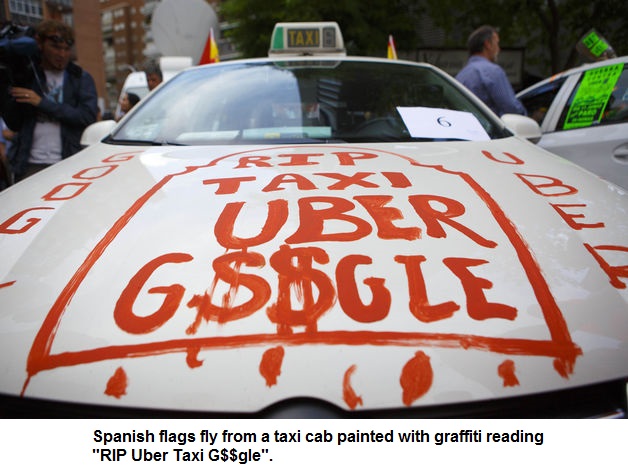
UPDATED August 29, 2020 – Uber Technologies Inc. continues to change the Old World [economy] to a new world [economy]. This car-sharing service has already rankled taxi-limo companies and cabbies across the world, and now they are setting their sights on other industries.

They have dubbed this advance into diverse businesses as UberEverything. See the detailed news story / product announcement here of this launch in Africa, published by Quartz Africa – see Appendix:

Title: Uber Africa will diversify beyond car rides this year with its ‘Everything’ service
By: Yomi Kazeem

Having nearly perfected the business of moving people around on the continent, Uber is set to diversify the core of its business in sub Saharan Africa with the introduction of UberEverything, a division of the company with ambitious plans to plug its existing drivers network into the on-demand economy and provide services such as product and food delivery and courier services.

CU Blog - UberEverything in Africa - Photo 1

“The first market will probably be South Africa and we are pushing to make that happen before the end of the year,” said Alon Lits, Uber’s general manager for sub-Saharan Africa.

‘Everything’ is Uber’s strategy to build on its logistics infrastructure in the cities it operates. Once the company is at scale in a city with ride passengers it can develop other services such as UberRush, a personal courier service or food delivery with UberEats,(available in San Francisco, Los Angeles, Chicago and New York) . “Everything we’re building is on top of a platform that already exists,” Jason Droege, head of the UberEverything division, told the Los Angeles Times last month.

With the rising popularity and adoption of e-commerce shopping and on-demand services among a growing African middle-class who live on-the-go and increasingly value convenience, UberEverything could be a hit.

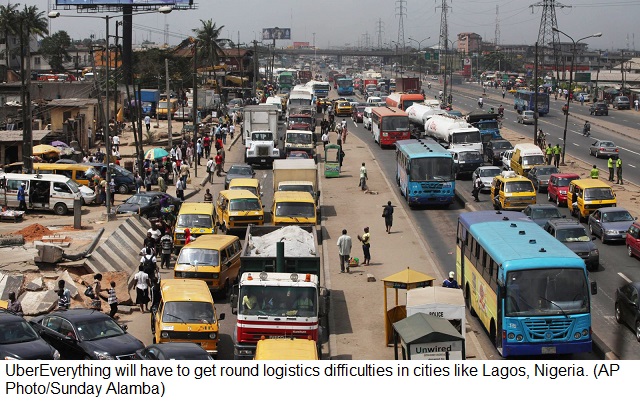
Logistics have been a big challenge for e-commerce companies in African larger cities, some of which have poor road networks and other infrastructure challenges. Major local players like Konga in Nigeria and African Internet Group’s Jumia and sister company Hellofood have had to invest heavily in developing their own logistics platform to get round the weak local infrastructure.

“If things go well in South Africa, there’s no reason why we won’t bring UberEverything to more markets.” One of such markets will likely be Lagos, which Lits says Uber remains “bullish” about despite Nigeria’s struggling economy. Home to 20 million people, Lagos’ infamous traffic jams and haphazard address system make it difficult—and expensive—for delivery services to operate but could represent a big opportunity for UberEverything’s goal of providing efficient logistics using its existing drivers network.

Aided by its recent $3.5 billion funding—its single biggest investment ever— from Saudi Arabia’s Public Investment Fund, Uber expanded to Kampala and Accra in the last week and Lits says a launch in Dar es Salaam is imminent. This follows plans to spend $250 million on growing its market across North Africa and the Middle East.

But Uber’s operations in Africa have not been without hitches. In Cairo and Nairobi, Uber drivers have been targets of protests and, in some cases, violent attacks. In South Africa, the company was forced to provide drivers with emergency numbers and also partner with a local private security firm.

Source: Quartz Africa Weekly Brief – Posted 06/13/2016; retrieved 06/18/2016 from: http://qz.com/703087/uber-africa-is-will-diversify-beyond-car-rides-this-year-with-its-everything-service/

In a previous blog on Uber, the Go Lean commentary identified how evolutionary changes in technology and modernization affects Old World taxi businesses. Now we see how evolution is changing all businesses … everywhere.

The challenge with technology, for the taxi cab industry and many other areas of life, is one-step forward-two steps-backwards. This point aligns with the book Go Lean…Caribbean which anticipates the compelling issues associated with Internet & Communications Technologies (ICT) and their effect on traditional commerce. The book prepares the Caribbean region to move to the intersection of opportunity and preparation. The book serves as a roadmap for the introduction and implementation of the technocratic Caribbean Union Trade Federation (CU). This roadmap accepts the tenets of ICT, that it can serve as an equalizer between big countries and small countries, or big companies and small companies. So opportunities will come to the Caribbean region as a result of the advances in technology. How will the region prepare?

First, the book asserts that before the strategies, tactics and implementations of the Go Lean roadmap can be deployed, the affected communities must first embrace a progressive community ethos. The book defines this “community ethos” as the fundamental character or spirit of a culture; the underlying sentiment that informs the beliefs, customs, or practices of society; dominant assumptions of a people or period.

The Go Lean book stresses that the current community ethos must change and the best way to motivate people to adapt their values and priorities is in response to a crisis. The roadmap recognizes this fact with the pronouncement that the Caribbean is in crisis, and that “a crisis is a terrible thing to waste”. This ethos corresponds with the UberEverything motives. In a lot of urban communities around the world, Caribbean included, traffic is crisis-worthy. According to the foregoing article, this reality is creating business opportunities around the logistics of Uber.

Uber 2The Go Lean roadmap avails these opportunities, by strategizing logistics with a regional focus. The roadmap for Caribbean logistics is also our means for delivering the mail; this is the vision for the Caribbean Postal Union (CPU). The focus of the CPU is not just postal mail, but rather all the lean technocratic activities that make up logistics. Mail requires logistics, but logistics means so much more than just mail. So we would want to model successful enterprises in this industry space, like Uber. (The Go Lean book considers the postal operation of the US Postal Service – Page 99 – and rules it null-and-void for transforming e-Commerce). Other successful enterprises that provide good examples of lean technocratic efficiency include Amazon and Alibaba.

Modeling UberEverything, the Go Lean/CU roadmap will directly employ technologically innovative products and services to impact its own prime directives, identified with the following 3 statements:

  • Optimization of the economic engines in order to grow the regional economy to $800 Billion & create 2.2 million new jobs.
  • Establishment of a security apparatus to protect the resultant economic engines.
  • Improve Caribbean governance to support these engines.

The Uber model helps the CPU impact the economic, security and governing engines, like job creation. In the previous 2014 blog relating Uber, it was disclosed that Uber is responsible for 20,000 new jobs per month. The median income for drivers using the UberX platform, Uber’s low-cost service, is $90,000 per year in New York and more than $74,000 in San Francisco, the company said. How is this possible to make so much more money than traditional driving professionals? Uber is a sophisticated business model; one thing is Uber fully applies the laws of economics – supply and demand. Note the explanation in the VIDEO here:

VIDEOMake More $ During Times of High Demand – https://youtu.be/cHfWwnJwyOU

Professor Wolters
Published on Nov 20, 2019 – Ever wonder how Uber and other ride sharing firms calculate their prices? Or maybe how prices are made for airlines? Well to understand the pricing you need to understand what is called Dynamic Pricing, which is constantly moving prices.

Filmed in Watkinsville, GA. Copyright Mark Wolters 2019
#marketing #pricing #principlesofmarketing

Topic 4: Digital Marketing
Topic 13: Dynamic Pricing

Learn more at http://uber.com

This model is a good starting point for elevating the Caribbean. But this is heavy-lifting; notice in the foregoing article regarding the complex issues associated with Uber in terms of security and taxi-limo licensing (governance). The Go Lean roadmap conveys that heavy-lifting of logistical details are more of an investment. The community will enjoy the returns, with the optimized commerce deliveries.

The Go Lean roadmap seeks to change the entire eco-system of Caribbean logistics and resulting commerce – the interaction with postal operations. This vision is defined early in the book (Page 12 & 14) in the following pronouncements in the opening Declaration of Interdependence:

xv. Whereas the business of the Federation and the commercial interest in the region cannot prosper without an efficient facilitation of postal services, the Caribbean Union must allow for the integration of the existing mail operations of the governments of the member-states into a consolidated Caribbean Postal Union, allowing for the adoption of best practices and technical advances to deliver foreign/domestic mail in the region.

xxvii. Whereas the region has endured a spectator status during the Industrial Revolution, we cannot stand on the sidelines of this new economy, the Information Revolution. Rather, the Federation must embrace all the tenets of Internet Communications Technology (ICT) to serve as an equalizing element in competition with the rest of the world. The Federation must bridge the digital divide and promote the community ethos that research/development is valuable and must be promoted and incentivized for adoption.

The Go Lean book details a series of community ethos, strategies, tactics, implementations and advocacies to foster the best practices for the logistics of the CPU and trade marketplaces in the Caribbean region:

Community Ethos – Deferred Gratification Page 21
Community Ethos – Economic Principles – All Choices Involve Costs Page 21
Community Ethos – Economic Principles – People Respond to Incentives Page 21
Community Ethos – Economic Principles – Economic Systems Influence Choices Page 21
Community Ethos – Economic Principles – Voluntary Trade Creates Wealth Page 21
Community Ethos – Economic Principles – The Consequence of Choice Lie in Future Page 21
Community Ethos – Job Multiplier Page 22
Community Ethos – Lean Operations Page 24
Community Ethos – Return on Investments – ROI Page 24
Community Ethos – Cooperatives Page 25
Community Ethos – Ways to Impact the Future Page 26
Community Ethos – Ways to Help Entrepreneurship Page 28
Community Ethos – Promote Intellectual Property Page 29
Community Ethos – Ways to Bridge the Digital Divide Page 31
Strategy – Customers – Citizens and Member-states Governmental Page 47
Tactical – Fostering a Technocracy Page 64
Tactical – How to Grow the Economy to $800 Billion – Trade and Globalization Page 70
Tactical – Separation of Powers – Postal Services Page 78
Tactical – Separation of Powers – Interstate Commerce Administration Page 79
Implementation – Year 1 / Assemble Phase – Establish CPU Page 96
Implementation – Anecdote – Mail Services – USPS Dilemma Page 99
Implementation – Ways to Pay for Change – Group Purchase Organizations (GPO) Page 101
Implementation – Ways to Optimize Mail Service & myCaribbean.gov Marketplace Page 108
Implementation – Ways to Deliver Page 109
Implementation – Ways to Impact Social Media Page 111
Implementation – Ways to Benefit from Globalization Page 119
Planning – 10 Big Ideas for the Caribbean – # 8 Cyber-Caribbean Page 127
Planning – Ways to Improve Trade – GPO’s Page 128
Planning – Ways to Improve Interstate Commerce Page 129
Advocacy – Ways to Grow the Economy Page 151
Advocacy – Ways to Create Jobs Page 152
Advocacy – Ways to Mitigate Black Markets Page 165
Advocacy – Ways to Manage the Federal Civil Service Page 173
Advocacy – Ways to Foster Cooperatives Page 176
Advocacy – Ways to Foster Technology Page 197
Advocacy – Ways to Foster e-Commerce Page 198
Advocacy – Reforms for Banking Regulations Page 199
Advocacy – Ways to Impact Main Street Page 201
Advocacy – Ways to Improve Transportation – Union Atlantic Turnpike Page 205
Appendix – Network of Ferries – Model of Marine Highway System Page 280

Issues related to the CPU business model have previously been detailed in these Go Lean commentaries, listed here:

Transformations: Caribbean Postal Union – Delivering the Future
The Future of Money
How to address high consumer prices
Truth in Commerce – Learning from Yelp
Net Neutrality: It matters here … in the Caribbean
Robots help Amazon tackle Cyber Monday
Role Model Jack Ma brings Alibaba to America
Where the Jobs Are – Computers Reshaping Global Job Market
Amazon’s new FIRE Smartphone
Grenada PM Urges CARICOM on ICT

The foregoing article describes Uber’s activities in Africa. The Caribbean is now ready, willing and able …

The Go Lean roadmap posits that the CU will incubate the e-Commerce industry, forge entrepreneurial incentives and facilitate the regional logistics so that innovations can thrive. As related in the foregoing article about impact in other regions, these efforts can elevate the economy, security and governing engines of a community.

The world is continuing to change; and ‘change’ is bringing great new opportunities.

We need to be prepared. This is the intersection – change and opportunity – that we need to position ourselves at. Then, only then will success is within reach. We can make the Caribbean, a better place to live, work and play. 🙂

Download the book Go Lean … Caribbean – now!

—————-

Appendix – About Quartz

Quartz is a digitally native news outlet, born in 2012, for business people in the new global economy. We publish bracingly creative and intelligent journalism with a broad worldview

Quartz is owned by Atlantic Media Co., the publisher of The Atlantic, National Journal, and Government Executive.


Share this post:
, , , , , ,
[Top]

Zuckerberg’s Philanthropy Project Makes First Major Investment

Go Lean Commentary

We hereby submit to be Number 2!

Facebook’s founder and CEO Mark Zuckerberg – see VIDEO below – has identified and invested in his FIRST philanthropic project … in the region of Africa … with a heavy focus on Information & Communications Technology (ICT). That is Number 1; “we”, the Caribbean region would like to request to be Number 2, or 3 or 4 … anywhere. We do not care about which nominal order we receive the investment, only that he invests, along with other philanthropists of his ilk, in our Caribbean youth to help us forge technology careers in our region. See the news article here:

Title: Zuckerberg’s philanthropy project makes first major investment
s philanthropy project makes first major investment - Photo 1

(Reuters) – Facebook Inc founder Mark Zuckerberg’s philanthropy venture has made its first major investment, leading a funding round in a startup that trains and recruits software developers in Africa.

The Chan Zuckerberg Initiative LLC, created by Zuckerberg and his wife Priscilla Chan, led a $24 million Series B funding in Andela, the startup said on Thursday.

Alphabet Inc’s GV, previously known as Google Ventures, was also part of the funding round.

Andela selects the top 1 percent of tech talent from Africa, trains them and places them in engineering organizations.

The startup, which has nearly 200 engineers currently employed by its Nigeria and Kenya offices, will use the funds to expand to a third African country by the end of 2016.

“We live in a world where talent is evenly distributed, but opportunity is not. Andela’s mission is to close that gap,” Zuckerberg said in a statement.

When the philanthropy initiative was launched in late 2015, Zuckerberg said he would put in 99 percent of his Facebook shares.

The initiative is structured as a limited liability company. This means, unlike a traditional charitable or philanthropic foundation, the venture can make political donations, lobby lawmakers, invest in businesses and recoup any profits from those investments.

Zuckerberg has also signed the Giving Pledge, which invites the world’s wealthiest individuals and families to commit to giving more than half of their wealth to philanthropy or charitable causes over their lifetime or in their will.

(Reporting by Anya George Tharakan in Bengaluru; Editing by Sriraj Kalluvila)

Source: Reuters News Source – Posted June 16, 2016; retrieved June 17, 2016 from: http://sports.yahoo.com/news/zuckerbergs-philanthropy-project-makes-first-major-investment-123251464–sector.html

———–

VIDEO – Mark Zuckerberg Biography Computer Programmer, Philanthropist (1984–) –  http://www.biography.com/people/mark-zuckerberg-507402/videos/mark-zuckerberg-mini-biography-36891527

Mark Zuckerberg is co-founder and CEO of the social-networking website Facebook, as well as one of the world’s youngest billionaires.

The Caribbean has a lot of expectations for technology in the region, so  as to aid and assist with our goal to elevate our regional society. This campaign is detailed in the book Go Lean…Caribbean, serving as a roadmap for the introduction and implementation of the technocratic Caribbean Union Trade Federation (CU) to elevate Caribbean society. This movement calls for investments of time, talent and treasury to effect change in this region. The book posits that all Caribbean stakeholders (governments, residents, institutions, students, Diaspora) would be willing to devote a measure of these three ingredients if they had them, but these resources are deficient here. So these stakeholders need to lean-in to the plans of others, like philanthropist Mark Zuckerberg.

The Go Lean book strategizes a roadmap for economic/security/governing empowerment; but it also clearly relates that many social aspects of Caribbean life will be un-addressed. This is a void that NGO’s (Non-Government Organizations) can fill. Many times, these organizations offer free money, that requires no repayment!

The Go Lean roadmap invites NGO’s to impact the Caribbean according to their charters. Though forging change in the region is the responsibility of the region, we must be open to ask for help, to accept the help, and respond to the help being offered. (And then to give an account of the helping resources extended).

This is why we hereby submit to be Number 2 for Mr. Zuckerberg!

The Go Lean/CU movement champions the cause of building and optimizing the Caribbean eco-system. According to the foregoing article, it is important to identify, qualify and foster those with genius potential in Internet & Communications Technology fields and to do so as soon as possible.  There is the expectation that fostering such skills and industries can contribute to the fulfillment of the Go Lean prime directives, defined as follows:

  • Optimization of the economic engines in order to grow the regional economy to $800 Billion & create 2.2 million new jobs.
  • Establishment of a security apparatus to protect the resultant economic engines.
  • Improve Caribbean governance to support these engines.

The Caribbean does not only want to be on the consuming end of technological developments, we want to create, produce and contribute to the world of technological innovations. So the CU/Go Lean roadmap explicitly asserts that the love and curiosity for technology must be ingrained in our youth as early as possible. So the plan is to foster genius qualifiers in our Caribbean youth for careers and occupations – at home – that involve Science, Technology, Engineering and Mathematics (STEM).

These points – of ICT and STEM – were pronounced at the outset of the Go Lean book with this opening Foreword (Page 3) and the subsequent Declaration of Interdependence (Page 12 & 14) with these statements:

Foreword:  Our youth, the next generation, may not be inspired to participate in the future workings of their country; they may measure success only by their exodus from their Caribbean homeland.

xiii.  Whereas the preparation of our labor force can foster opportunities and dictate economic progress for current and future generations, the Federation must ensure that educational and job training opportunities are fully optimized for all residents of all member-states, with no partiality towards any gender or ethnic group. The Federation must recognize and facilitate excellence in many different fields of endeavor, including sciences, languages, arts, music and sports. This responsibility should be executed without incurring the risks of further human flight, as has been the past history.

xxvi. Whereas the Caribbean region must have new jobs to empower the engines of the economy and create the income sources for prosperity, and encourage the next generation to forge their dreams right at home, the Federation must therefore foster the development of new industries, like that of ship-building, automobile manufacturing, prefabricated housing, frozen foods, pipelines, call centers, and the prison industrial complex. In addition, the Federation must invigorate the enterprises related to existing industries like tourism, fisheries and lotteries – impacting the region with more jobs.

xxvii. Whereas the region has endured a spectator status during the Industrial Revolution, we cannot stand on the sidelines of this new economy, the Information Revolution. Rather, the Federation must embrace all the tenets of Internet Communications Technology (ICT) to serve as an equalizing element in competition with the rest of the world. The Federation must bridge the digital divide and promote the community ethos that research/development is valuable and must be promoted and incentivized for adoption.

xxx.  Whereas the effects of globalization can be felt in every aspect of Caribbean life, from the acquisition of food and clothing, to the ubiquity of ICT, the region cannot only consume, it is imperative that our lands also produce and add to the international community, even if doing so requires some sacrifice and subsidy.

This is a mission of the CU, to create an eco-system for technology education, appreciation and manifestation of industrial initiatives. The goal is to create 64,000 new direct and indirect technology/software jobs in the Caribbean Single Market. So it will be a good start – even if we are Number 2 – to use the grants and support (time, talent and treasuries) of Facebook’s Mark Zuckerberg – and other philanthropists and NGO’s – to foster this campaign.

Under the Go Lean roadmap, the structure is put in place to include contributions of time-talent-treasuries of NGOs/foundations. One feature of the Go Lean roadmap involves Self-Governing Entities (SGE’s); these may be structured as NGO’s at times. This structure will provide the needed regulatory oversight and accountability. The following list details other community ethos, strategies, tactics, implementations and advocacies to optimize the region’s public/private cooperation and endeavors:

Community Ethos – Deferred Gratification Page 21
Community Ethos – People Respond to Incentives in Predictable Ways Page 21
Community Ethos – “Crap” Happens – So solicit NGO’s Aid Page 23
Community Ethos – Return on Investments Page 24
Community Ethos – Cooperatives Page 25
Community Ethos – Non-Government Organizations Page 25
Community Ethos – Ways to Bridge the Digital Divide Page 31
Community Ethos – Ways to Impact the Greater Good Page 37
Strategy – Vision – Confederate all 30 member-states into a Single Market Page 45
Strategy – Customers – Non-Government Organizations are Stakeholders Page 48
Strategy – Competition – Attention to Caribbean as Opposed to Other 3rd World Page 56
Separation of Powers – State Department – Regulator and Liaison for NGO’s Page 80
Implementation – Ways to Pay for Change Page 101
Implementation – Ways to Implement Self-Government Entities Page 105
Implementation – Ways to Deliver Page 109
Implementation – Ways to Impact Social Media Page 111
Implementation – Ways to Foster International Aid Page 115
Advocacy – Ways to Create Jobs Page 152
Advocacy – Ways to Improve Education Page 159
Advocacy – Ways to Better Manage the Social Contract Page 170
Advocacy – Ways to Foster Cooperatives Page 176
Advocacy – Ways to Improve Libraries – Portals for Technology Education Page 187
Advocacy – Ways to Foster Technology Page 197
Advocacy – Ways to Foster e-Commerce Page 198
Advocacy – Ways to Impact Foundations Page 219
Advocacy – Ways to Impact Youth Page 227
Appendix – Billionaires on the list of The Giving Pledge Page 292

The details of such philanthropic projects have been detailed in previous Go Lean blog-commentaries; see sample list here:

https://goleancaribbean.com/blog/?p=7989 Transformations: Getting over’ with ‘free money
https://goleancaribbean.com/blog/?p=7963 Being a ‘Good Neighbor’ – Like Puerto Rico needs right now
https://goleancaribbean.com/blog/?p=7896 The Logistics of Disaster Relief
https://goleancaribbean.com/blog/?p=7822 Doing more against Cancer – Facebook co-founder Sean Parker
https://goleancaribbean.com/blog/?p=6422 Microsoft Pledges $75 million in Philanthropy for Kids in ICT
https://goleancaribbean.com/blog/?p=5462 NGO Accountability – The Case of The Red Cross’ $500 Million Haiti Fund
https://goleancaribbean.com/blog/?p=3432 International Aid “drying up” for Caribbean countries
https://goleancaribbean.com/blog/?p=2126 Where the Jobs Are – Computers Reshaping Global Job Market
https://goleancaribbean.com/blog/?p=1698 STEM Jobs Are Filling Slowly
https://goleancaribbean.com/blog/?p=1193 EU willing to fund study on cost of not having CARICOM
https://goleancaribbean.com/blog/?p=1112 Zuckerberg’s $100 Million Investment in Newark’s Schools Declared a Waste
https://goleancaribbean.com/blog/?p=816 The Future of CariCom – Too dependent on Foreign Aid
https://goleancaribbean.com/blog/?p=476 CARICOM Urged on ICT
https://goleancaribbean.com/blog/?p=451 CARICOM deliver address on reparations – Looking for Free Money
https://goleancaribbean.com/blog/?p=308 CARCIP Urges Greater Innovation

There is the old adage: “Charity begins at home”.

This is true, and preferable, if the resources are available “at home” in the first place. For the Caribbean, our “cupboards are bare”.

The Go Lean book describes how to empower and elevate Caribbean societal engines. The book clearly depicts that Not-For-Profit charities, foundations and NGO’s are stakeholders for the effort to make the Caribbean better. We need their access to alternate capital. Many members of the “One Percent” – see list of billionaires on Page 292 – want to help “change the world”; they want to give of their time, talent and treasuries. (But in turn, want accountability). The CU will help facilitate their vision. This is win-win!

Welcome to the Caribbean Mr. Zuckerberg. And bring your friends along.

We must accept all genuine help to make the Caribbean a better place to live, work and play. 🙂

Download the book Go Lean … Caribbean – now!


Share this post:
, , , ,
[Top]

Respect for Minorities: Reconstruction then Redemption

Go Lean Commentary

This subject of “Respect for Minorities” is dominant in the news right now. This commentary is 3 of 3 in this series on lamentations for defective social values. The complete series is as follows:

  1. Respect for Minorities: ‘All For One’
  2. Respect for Minorities: Climate of Hate – ‘It Gets Worse Before It Gets Worse’
  3. Respect for Minorities: Reconstruction then Redemption – A Lesson in History

There are these familiar proverbs:

1. What has been will be again, what has been done will be done again; there is nothing new under the sun. – The Bible; Ecclesiastes 1: 9

2. The more things change, the more they remain the same.

CU Blog - Respect for Minorities - Reconstruction, Then Redemption - Photo 4There is a lot of history in the United States regarding “Respect for Minorities”; and the lessons from that history apply for the Caribbean. In this case, there is the history of the 2nd Reconstruction and 2nd Redemption that applies directly to Caribbean people living in the US. Life in the US for our Diaspora has been a familiar theme for the publishers of the book Go Lean…Caribbean; this theme has been exhausted in the book (Page 118 – Reasons to Repatriate to the Caribbean) and in countless blog/commentaries (see list below), within the quest to dissuade Caribbean people from emigrating to the US and to encourage many of the existing Diaspora to return to their homelands, to repatriate.

Why is this so important? The Go Lean movement (book and blogs) have been consistent: it is easier for the people of the Caribbean – a majority Black and Brown demographic – to prosper where planted in their homelands than to endure as alien residents in foreign countries. This commentary asserts the key ingredient for reforming and transforming societies with diverse demographics: “Respect for Minorities”.  This commentary seeks to learn this lesson based on  life (and history) in the US; though the principles here can easily apply to Canada and the many western European countries that receive our citizens. Consider this analogy:

Do you want to go a party – that you hear is a lot of fun – uninvited? What if you hear the host really wants you at the party, and then when you get there you discovered that they want you to serve and work and cater to the other preferred guests; you are just there as support staff?
Want to go home yet?

This is the experience for so many Caribbean Diaspora when they ‘come to America’. Just take a quick tour at so many tourist/travel facilities at America’s principal cities. So many of the “serving” staff are of Caribbean heritage. One would talk to taxi drivers, hotel maids, waiters and retail store clerks and you discover that these ones descend from the Caribbean.

You think: They came here for “this”? They are minorities among a majority that has little respect for them.

There is this above scenario, and then … there is “prosper where you’re planted”:

Just like a tree planted by the rivers of water
That bring forth fruit in due season
Source: The BiblePsalms Chapter 1 verse 3 – King James Bible

CU Blog - Respect for Minorities - Reconstruction, Then Redemption - Photo 3This was the strong point made by one of the key figures in African-American history, Booker T Washington. He asserted that the African-American community must work to prosper in its own hometown, that they must seek reconciliation with their White neighbors and find a way to co-exist. This was a good plan for Black America, the minorities; but White America, the majority population didn’t always cooperate. The effort to reconcile was attempted before, immediately following the Civil War, during the period of Reconstruction; 1865 – 1877. This period of time actually featured some real progress in liberating and promoting the previous enslaved minority population – an enfranchisement of all freedmen. But then, at the end of the formal Reconstruction period, there was redemption…

… redemption: a return to American original values, that is “White supremacy” and the repression of the African-American race.

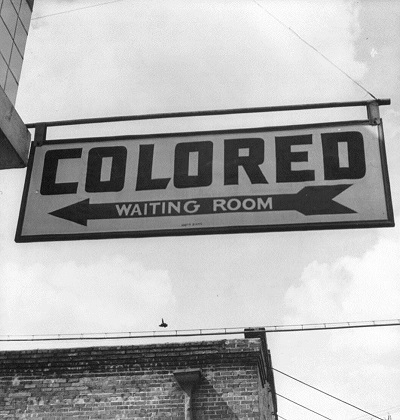
During this Redemption period: Jim Crow laws – segregation in public places – were implemented, as the follow details depict:

The end of Reconstruction … was followed by a period that White Southerners labeled Redemption, during which White-dominated state legislatures enacted Jim Crow laws and, beginning in 1890, disenfranchised most Blacks and many poor Whites through a combination of constitutional amendments and electoral laws. The White Democrat Southerners’ memory of Reconstruction played a major role in imposing the system of white supremacy and second-class citizenship for Blacks. – Sourced from Wikipedia.

CU Blog - Respect for Minorities - Reconstruction, Then Redemption - Photo 1

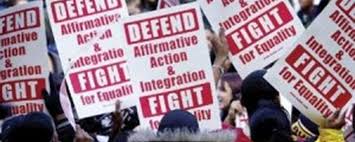
That was then, 130 years ago; how about now? The notion of an Encore/”Second Take” seems unthinkable; and yet this is the historicity of events and experiences after this 2nd Reconstruction – the Civil Rights movement of the 20th Century: think Rosa Parks, Martin Luther King, Civil Rights Act, Voting Rights Act, Affirmative Action, Minority Set-Asides, etc.. See the encyclopedic reference here:

Reference Title: Second Reconstruction
Second Reconstruction is a term that refers to the American Civil Rights Movement. In many respects, the mass movement against segregation and discrimination that erupted following World War II, shared many similarities with the period of Reconstruction which followed the American Civil War. The period of Second Reconstruction featured active participation on the part of African-Americans to regain their rights that they had lost during the period of Redemption and Jim Crow segregation in the latter part of the nineteenth century.

During Second Reconstruction, African-Americans once again began holding various political offices, and reasserting and reclaiming their civil and political rights as American citizens. Unlike Reconstruction, however, most African-Americans abandoned the Republican Party for the Democratic Party. A noteworthy feature of Second Reconstruction was the political realignment that occurred in 1965, which transformed the nature and composition of both the Republican and Democratic Party’s, eroding the Democratic Solid South.

In the same way, however, that Reconstruction was followed by Redemption, some have also claimed that period following Second Reconstruction could be termed a Second Redemption characterized by more conservatism on the part of the federal government, and several Supreme Court decisions that weakened the scope of civil rights reforms, especially in the Northern States

The years between 1954-1972 have often been called the Second Reconstruction, since it has noteworthy similarities with the First Black Reconstruction (1865-1877), which began with the abolition of slavery by the enactment of the Thirteenth Amendment. Both periods saw African Americans making tremendous gains in the fields of politics and civil rights. Three major Supreme Court decisions (the Brown decision on school desegregation (1954), desegregation of public transportation (1956); bussing to achieve school desegregation (April 1971), two legislative enactments (the Civil Rights Act, 1964, and the Voting Rights Act, 1965) and the March on Washington, D.C. (April 28, 1963), many demonstrations and riots, resulted in major alterations in race relations. There was “change within change,” and America would never be the same.

While the Second Reconstruction destroyed the legal foundations of the segregationist system, it also highlighted the further and more difficult challenge of translating legal victories into real change. Moreover, the 1968 assassination of Martin Luther King, Jr., removed a key symbol and source of unity in the nonviolent freedom struggle. According to one activist, King was “the one man of our race that this country’s older generations, the militants, and the revolutionaries and the masses of black people would still listen to.” As the limitations of the Civil Rights movement became more apparent, growing numbers of young African Americans advocated Black Power as an alternative to nonviolent direct-action strategies. Partly because revolutionary black organizations like the Black Panther party (formed in 1966) emphasized the mass mobilization of poor and working-class blacks, armed struggle, and opposition to the Vietnam War, they came under the combined assault of federal, state, and local authorities. Under the weight of official and unofficial white resistance, the Black Power movement fragmented and gradually dissipated by the early 1970s.

Late Twentieth Century Developments. As the civil rights and Black Power movements weakened, white resistance to the gains of the Second Reconstruction intensified. Opposition to affirmative-action policies in employment and education were closely related to the deindustrialization of the nation’s economy. The loss of jobs to mechanization and low-wage overseas factories affected all industrial workers, black and white, but the persistence of overt and covert discriminatory employment practices rooted in white kin and friendship networks made black workers and their communities especially vulnerable to economic down swings. African-American unemployment rates persisted at well over the white rate, especially among young black males. At the same time, the beneficiaries of existing affirmative-action programs–the middle class and better-educated members of the black working class–experienced a degree of upward mobility and moved into outlying urban and suburban neighborhoods. They left working-class and poor blacks, disproportionately single women with children, concentrated in the central cities, where violence, drug addiction, and class-stratified social spaces intensified, causing acute tensions in day-to-day intraracial as well as interracial relations.

Perhaps even more than in the industrial era, the post- industrial age challenged African Americans to develop new strategies for coping with social change and the persistence of inequality. Some of their emerging responses built upon earlier struggles. Institution-building, marches, participation in electoral politics, and migration in search of better opportunities all continued to express black activism and resistance to social injustice. Yet, much had changed in the nation and in African American life, and such time-tested strategies took on different meanings in the 1980s and 1990s. Rising numbers of southern- born blacks returned to the South during the 1970s. After declining for more than a century, the proportion of blacks living in the South increased by 1980. Other African Americans rallied behind the Rainbow Coalition and supported the Reverend Jesse Jackson’s bid for the Democratic party’s presidential nomination in 1984 and 1988. Still others endorsed Nation of Islam minister Louis Farrakhan’s Million Man March (MMM) in 1994. Calling the march a “day of atonement” for black men, leaders of the MMM encouraged black men to earn and reclaim a position of authority in their families and communities. Four years later, many black women responded to the MMM’s gender bias with their own Million Woman March, which emphasized the centrality of women in the ongoing black freedom struggle. Through these various actions and many more, African Americans continued to resist shifting forms of inequality and gave direction to their own lives as a new century began.

These same years saw the emergence of a new generation of African-American academics, musicians, performers, sports figures, and writers. Such diverse men and women as the scholars and public intellectuals Henry Louis Gates, Cornel West, and Stephen L. Carter; basketball superstar Michael Jordan and track-and-field athlete Jackie Joyner-Kersee; film actors Eddie Murphy and Denzel Washington; jazz musicians Joshua Redman, Herbie Hancock, and Wynton and Bradford Marsalis; television celebrity Oprah Winfrey; and an array of novelists and writers including Maya Angelou, Alice Walker, and Toni Morrison enriched American life and gave voice to the black experience.

By the 1990s, the nation’s more than 30 million African Americans, representing about 12 percent of the total population, had transformed themselves from a predominantly rural people into an overwhelmingly urban people; from a southern regional group to a national population living in every part of the nation; and, perhaps most importantly, from a group confined to southern agriculture, domestic service, and general labor to a work force with representation in every sector of the nation’s economy.
Source:  Wikipedia Online Encyclopedia – Retrieved May 26, 2016 from: https://en.wikipedia.org/wiki/Second_Reconstruction

——————

VIDEO 1Henry Louis Gates assesses the black community todayhttps://youtu.be/g8XcWodA47g

Uploaded on Oct 28, 2011 – www.twaintrip.com

——————

VIDEO 2 – Powell Comments On Gates Arrest, Admits Being Profiled “Many Times”https://youtu.be/sVelDpz5ZT0

Uploaded on Jul 28, 2009 – Gen. Colin Powell talks about the Henry Louis Gates arrest with Larry King. He said the story “went viral” when President Obama commented on the story. Also, Powell thinks that America “isn’t quite post-racial” at this time. “These problems still exist in post-racial America.” However, he suggested that Gates should not have argued with the policeman arresting him. “You don’t argue with a police officer,” he says.

Powell also called the arresting cop, Sergeant James Crowley, “an outstanding police officer.”

Also, at 5:10, Powell admits he’s been profiled “many times” [even] as the National Security Advisor.

CU Blog - Respect for Minorities - Reconstruction, Then Redemption - Photo 2This conclusion of a 2nd Redemption is not so far-fetched!

Just consider the current campaign of Republican Presidential candidate Donald Trump: “Make America Great Again“. It bears to mind the question: “just when was America great before”? Answer: After the first Redemption.

It should be hard to justify migrating to this American climate/eco-system, rather than the quest to prosper where planted in the homeland. The societal defects in the Caribbean – that “pushes” many to flee – must be that acute!

The book Go Lean…Caribbean declares that the “Caribbean is in crisis”; but asserts that this crisis is a terrible thing to waste. The book serves as a roadmap for the introduction and implementation of the technocratic Caribbean Union Trade Federation (CU); an initiative to bring change, empowerment, to the Caribbean region; to make the region a better place to live, work and play. This Go Lean roadmap has these 3 prime directives:

  • Optimization of the economic engines in order to grow the regional economy to $800 Billion & create 2.2 million new jobs.
  • Establishment of a security apparatus to protect the resultant economic engines.
  • Improve Caribbean governance to support these engines.

The book describes the CU as a technocratic administration with 144 different missions to elevate the Caribbean homeland. This underlying goal is stated early in the book with this pronouncement in the opening Declaration of Interdependence (Page 12):

xii. Whereas the legacy in recent times in individual states may be that of ineffectual governance with no redress to higher authority, the accedence of this Federation will ensure accountability and escalation of the human and civil rights of the people for good governance, justice assurances, due process and the rule of law…

CU Blog - Respect for Minorities - Reconstruction, Then Redemption - Photo 1Change has come to the Caribbean. The Go Lean book declares that for permanent change to take place, there must first be an adoption of new community ethos of the Greater Good; this term community ethos refers to the national spirit that drives the character and identity of its people. This Greater Good ethos, with genuine concern and respect for minority groups, is what was missing in previous American generations … and current Caribbean population. This point of “Respect for Minorities” is therefore our biggest lesson from this consideration in history – the foregoing encyclopedic reference.

The Go Lean roadmap was constructed with this and other community ethos in mind, plus the execution of strategies, tactics, implementation and advocacies to forge the identified permanent change in the region. The following is a sample of these specific details from the book:

Community Ethos – Deferred Gratification – Historic Motivation of Black America Page 21
Community Ethos – Economic Principles – People Choose Page 21
Community Ethos – Economic Principles – All Choices Involve Costs Page 21
Community Ethos – Economic Principles – People Respond to Incentives in Predictable Ways Page 21
Community Ethos – Economic Principles – Economic Systems Influence Individual Choices Page 21
Community Ethos – Economic Principles – The Consequences of Choices Lie in the Future Page 21
Community Ethos – Security Principles – Anti-Bullying and Mitigation Page 23
Community Ethos – Governing Principles – Minority Equalization Page 24
Community Ethos – Governing Principles – Lean Operations Page 24
Community Ethos – Ways to Impact the Future Page 26
Community Ethos – Ways to Foster Genius Page 27
Community Ethos – Ways to Help Entrepreneurship Page 28
Community Ethos – Ways to Promote Intellectual Property Page 29
Community Ethos – Ways to Impact Research & Development Page 30
Community Ethos – Ways to Manage Reconciliations Page 34
Community Ethos – Ways to Improve Sharing Page 35
Community Ethos – Ways to Promote Happiness Page 36
Community Ethos – Ways to Impact the Greater Good Page 37
Anecdote – LCD versus an Entrepreneurial Ethos Page 39
Strategy – Vision – Confederation of the 30 Caribbean Member-States into a Single Market Page 45
Strategy – Mission – Celebrate the Music, Sports, Art, People and Culture of the Caribbean Page 46
Tactical – Confederating a Permanent Union Page 63
Tactical – Fostering a Technocracy Page 64
Tactical –  Separation of Powers: Federal Administration versus Member-States Governance Page 71
Implementation – Ways to Pay for Change Page 101
Implementation – Foreign Policy Initiatives at Start-up Page 102
Implementation – Ways to Deliver Page 109
Implementation – Reasons to Repatriate to the Caribbean Page 118
Planning – 10 Big Ideas for the Caribbean Region Page 127
Planning – Ways to Make the Caribbean Better Page 131
Planning – Ways to Better Manage Image Page 133
Advocacy – Ways to Grow the Economy Page 151
Advocacy – Ways to Create Jobs Page 152
Advocacy – Ways to Improve Governance in the Caribbean Region Page 168
Advocacy – Ways to Better Manage the Social Contract Page 170
Advocacy – Ways to Mitigate Terrorism – Anti-Bullying Mitigations Page 181
Advocacy – Ways to Improve Communications Page 186
Advocacy – Ways Impact the Diaspora Page 217
Advocacy – Ways to Preserve Caribbean Heritage Page 218
Advocacy – Ways to Improve the Arts Page 230
Advocacy – Ways to Promote Music Page 231

Previous Go Lean blog/commentaries stressed issues relating to respect for minority rights and full societal inclusion. The following sample applies:

https://goleancaribbean.com/blog/?p=8099 Caribbean Image: ‘Less Than’?
https://goleancaribbean.com/blog/?p=7221 Street naming for Martin Luther King unveils the real America
https://goleancaribbean.com/blog/?p=7204 ‘The Covenant with Black America’ – Ten Years Later
https://goleancaribbean.com/blog/?p=6722 A Lesson in History – After the Civil War: Birthright Mandates
https://goleancaribbean.com/blog/?p=6434 ‘Good Hair’ and the Strong Black Woman
https://goleancaribbean.com/blog/?p=5784 Buggery in Jamaica – ‘Say It Ain’t So’!
https://goleancaribbean.com/blog/?p=5733 Better than America? Yes, We Can!
https://goleancaribbean.com/blog/?p=5527 American Defects: Racism – Is It Over?
https://goleancaribbean.com/blog/?p=5333 Racial Legacies: Cause and Effect
https://goleancaribbean.com/blog/?p=4935 A Lesson in History – the ‘Grand Old Party’
https://goleancaribbean.com/blog/?p=2222 Sports Role Model – Playing For Pride … And More
https://goleancaribbean.com/blog/?p=1918 Philadelphia Freedom – Some Restrictions Apply
https://goleancaribbean.com/blog/?p=1896 The Crisis in Black Homeownership
https://goleancaribbean.com/blog/?p=1596 Book Review: ‘Prosper Where You Are Planted’
https://goleancaribbean.com/blog/?p=1020 Lack of Respect in European Sports – A Lesson; A Role Model
https://goleancaribbean.com/blog/?p=789 America’s War on the Caribbean
https://goleancaribbean.com/blog/?p=546 Book Review: ‘The Divide in American Injustice’
https://goleancaribbean.com/blog/?p=341 Hypocritical US slams Caribbean human rights practices

The purpose of the Go Lean movement (book and blogs) is not to fix America; it is to fix the Caribbean. We want to learn important lessons from this advanced democracy who have endured a bitter history but has now emerged as the richest, strongest and most-prosperous nation in world history. The US is now a “frienemy” of the Caribbean. As we lose so many of our Caribbean citizens to life in the Diaspora in the US.

Some reports are that the Diaspora and their heirs amount to over 20 million American residents. America’s population and economy grows while our region is in crisis.

Our people leave our homelands due to “push and pull” reasons; “push” as in societal defects that cause many to seek refuge abroad, and “pull” in the presumption that American life is now optimized for the Black-and-Brown people. But a consideration of this commentary helps us to understand the “DNA” of American society, that while “Respect for Minorities” is improved, it is far from optimized.

The recommendation from this commentary and the Go Lean book in general is:

  • “stay home” in the Caribbean and work toward improving the Caribbean homeland.
  • And for those who have left, please consider repatriating home and bring us your “time, talent and treasuries”; help us reform and transform our society.

The US should not be considered the panacea of Caribbean hopes and dreams”. With the adoption of the appropriate community ethos, strategies, tactics and implementations of the Go Lean roadmap, we can make all Caribbean member-states better places to live, work and play. 🙂

Download the book Go Lean … Caribbean – now!


Share this post:
, , ,
[Top]

Respect for Minorities: Climate of Hate

Go Lean Commentary

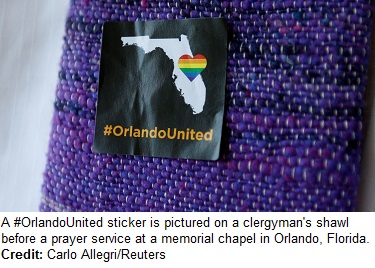
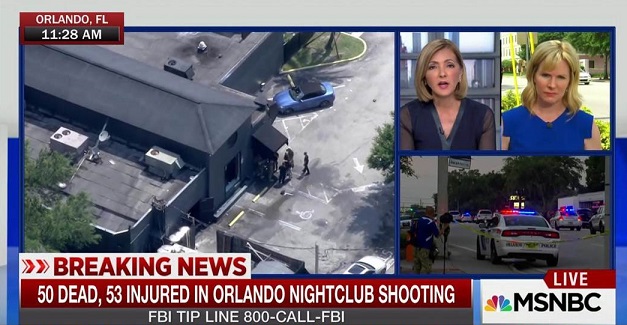
CU Blog - Climate of Hate - It Gets Worse Before It Gets Worse - Photo 6This subject of “Respect for Minorities” is dominant in the news right now: there was a terrorism attack in the US city of Orlando, Florida. The assailant targeted a night club (The Pulse) frequented by the LGBT community. On Saturday night/Sunday morning June 11/12, 2016, one man killed 49 patrons and injured another 53 in a hate-filled rampage.

This commentary is 2 of 3 in this series on lamentations for defective social values. This commentary applies to this terrorist attack/hate crime in America and also to other practices of “institutional hate” around the world, like in the Caribbean. The complete series is as follows:

  1. Respect for Minorities: ‘All For One’
  2. Respect for Minorities: Climate of Hate – ‘It Gets Worse Before It Gets Worse’
  3. Respect for Minorities: Reconstruction then Redemption

The actions of this one “bad actor” is a direct consequence of a “climate of hate”. The assailant pledged his allegiance to the fringed fundamentalist Islamic terrorist group ISIS; a group that has expressed their hatred time and again to targets like gays, non-Muslims and symbols of Western civilization. This hatred has manifested in their home territory of Iraq and Syria in the MiddleEast, and “on the road”, in places like Paris-France, Germany, England and San Bernardino-California.

When there is a “climate of hate”, the situation on the ground “gets worse before it gets worse”.

The US has confronted the issue of hate before; they have manifested a laboratory – the Civil War – for a comprehensive lesson to a watching world. The country had such a bad legacy of hate with the issue of racial supremacy and racism. The African American community suffered, along with the rest of the country where over 600,000 deaths –  mostly Whites- were tallied. So first, there was slavery, and the “climate of hate” that propagated it; then there was the Civil War for the abolition of slavery, while still “hot” in a “climate of hate”. Yet, despite these lessons, the “climate of hate” continued for over 100 years with the systematic oppression, suppression and oppression of the African-American/Black population.

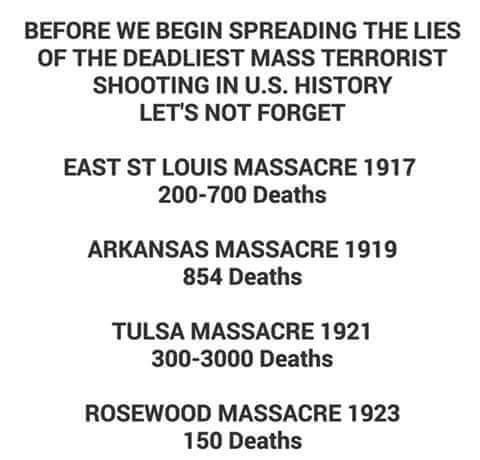
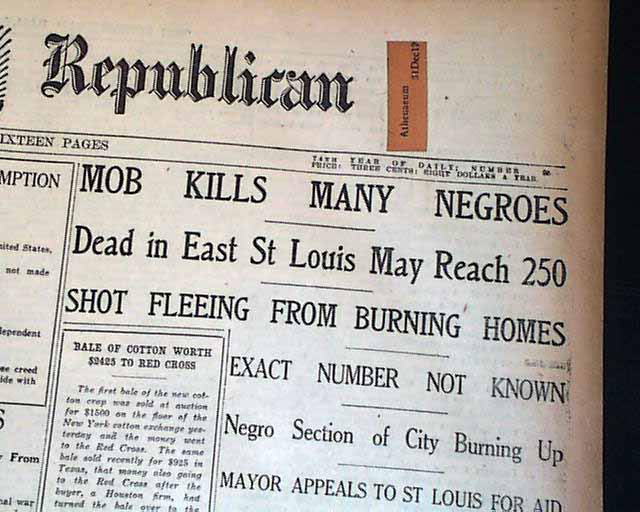
In many respect, the climate continues. This incident in Orlando is being hailed as “the worst massacre in US history”, though this is far from the truth. Remember:

CU Blog - Climate of Hate - It Gets Worse Before It Gets Worse - Photo 2

CU Blog - Climate of Hate - It Gets Worse Before It Gets Worse - Photo 1

Is the nullification of these events, a fault in memory or lack of respect for the affected minority group – Blacks?

Without a doubt, the American experience with a “climate of hate” should be a cautionary tale for the rest of the world.

Planners for a new Caribbean, the movement behind the book Go Lean … Caribbean, see fitting applications from these American events, from this “climate of hate”, for the Caribbean.

Our Caribbean society, far too often, promotes a “climate of hate”. Consider these three examples:

  • Haitian Immigrants – Many Caribbean countries express vitriol towards Haitian migrants.
  • LGBT – Still clinging to the archaic “Buggery” laws, many countries persecute gays in their society as degenerates.
  • Equality-seeking Women – Just last week, a referendum failed in the Bahamas 3 to 1.

The Caribbean member-states, collectively and individually, need to curb its “climate of hate” and to pay more than the usual attention to the lessons from Orlando. See details here:

Title: What do we call the attack in Orlando? ‘Hate crime’ or ‘terrorism?’
Source: (Posted 06/13/2016; retrieved 06/14/2016) retrieved from: http://www.pri.org/stories/2016-06-13/what-do-we-call-attack-orlando-hate-crime-or-terrorism

President Barack Obama has called the attack on the Pulse nightclub in Orlando both a hate crime and terrorism. But experts can’t agree about whether there’s a connection to Islam.

“I have to say,” says GeorgiaStateUniversity professor Mia Bloom, “I think that the president was very on point as far as saying that it doesn’t have to be one thing at the exclusion of others. It was definitely a hate crime, and it was an act of terrorism.”

Bloom has devoted her 27-year career to the study of terrorism and is the author of several books on the subject.

“The extent to which it might have either been directed or inspired by ISIS remains part of the mystery that is unfolding,” she says.

Forty-nine people died and 53 were wounded by the time police took down the single suspected perpetrator, 29-year-old Omar Mateen, around 5 a.m. on Sunday. The nightmare at the popular gay club began around three hours earlier, just as the bartenders were taking last orders.

Mateen was a US citizen, born in the US to an Afghan family. He attended a mosque, but it’s not clear whether he was especially devout. It wasn’t until he was in the midst of the massacre in Orlando that Mateen dialed 911 and pledged allegiance to ISIS.

ISIS has claimed him as one of their own, although there is no evidence yet of any prior connection. An FBI investigation in 2014 found no substantial link.

What is becoming clear — from his ex-wife, and from past and present co-workers at G4S, the security firm where Mateen worked — is that he had a history of violence, homophobia, anti-Semitism, racism, and he was accused of mental instability.

Citing a report in the Daily Beast that Mateen was friends with at least one drag queen and had been comfortable hanging out with gay people in his teens, Bloom says, “I don’t know if part of the homophobia is an extreme interpretation of his own sexual repressedness. This is not someone who grew in Pakistan or Saudi Arabia. This is someone who grew up in the United States, watching TV, being exposed to things like ‘Will and Grace.’ This is not someone who’s never seen two gay people kiss before, especially if he’s hanging out at clubs with people who are cross-dressing.”

Bloom also notes that Mateen started casing gay clubs at least two weeks ago, when he tried to get on the VIP list at another club.

“So he’s basically had two weeks to make his pledge of allegiance [to ISIS] and he didn’t,” she says. “This attack looks to me a lot more like San Bernardino, where you have an individual who has pre-existing issues, and then the veneer of the ISIS affiliation provides either a seriousness or a street-cred, or even — in their perverse way of understanding it — a legitimacy to their actions.”

Presumptive GOP presidential nominee Donald Trump has said that President Obama needs to be more blunt in his characterization of the Orlando attack as an act of “radical Islamic terrorism.” But Daveed Gartenstein-Ross says using this phrase is not particularly important.

“I do think it’s important that one not disguise the motivation that the attacker had in this case, or to deny its connections to other strands of theological thought,” Gartenstein-Ross says, adding that Trump has gone too far with this rhetoric.

“The fact is that this is not an attack that represents the American Muslim community,” he says. “The American Muslim community has a right to grieve with all of the rest of us and shouldn’t be singled out as being different.”

At the same time, Gartenstein-Ross says the suspect “may be many other things as well, but he claimed this attack on behalf of ISIS. And he went after a set of victims that groups like ISIS and al-Qaeda have been known to target.”

“Factually, you cannot get around the notion that [Mateen] is a radical Islamist,” he says.

It seems irrelevant, however, for policy makers to be arguing about phrases like “radical Islamic terrorism” so soon after the Orlando massacre, says Shadi Hamid of the Brookings Institution.

Hamid says Trump’s rhetoric “is actually a stand-in for something darker.”

“This is a way of essentially castigating Muslims without explicitly doing it,” says Hamid, the author of a new book called “Islamic Exceptionalism: How Islam is Shaping the World,” which argues that US policy makers are not very good at talking about religion, especially in the Muslim world.

“Someone like President Obama, [a] self-styled technocrat who doesn’t like to be aroused by the passions of politics, he has, I think, a lot of trouble taking these motivations seriously,” Hamid says. “The way he’s traditionally talked about ISIS … is problematic, where he dismisses them oftentimes as a bunch of thugs and fanatics, as if he can’t even bring himself to take them seriously as a global force.”

For her part, presumptive Democratic presidential nominee Hillary Clinton appeared to shift her rhetoric on Monday. Clinton said she would not hesitate to describe the attack in Orlando as “radical Islamism,” something she has been reluctant to do in her recent rhetoric.

Clinton went on to say that she will not, “demonize and demagogue,” like Donald Trump, because “it’s plain dangerous.”

————-

AUDIOOrlando: ‘Hate crime’ or ‘Terrorism’?http://www.pri.org/node/89888/popout

Listen to the Story from PRI or Public Radio International, a not-for-profit aggregator and distributor of Public Broadcasting content.

The tragedy in Orlando provides a number of lessons for the Caribbean. This is an issue of economics, security, governance and overall spirit in society. These are all important subjects for the book Go Lean…Caribbean. The book serves as a roadmap for elevating Caribbean society – for its 42 million residents and 80 million visitors, across the 30 member-states – by introducing and implementing the technocratic Caribbean Union Trade Federation (CU).

The quest of the Go Lean roadmap, to make the Caribbean homeland a better place to live, work and play. The CU, applying best-practices for community empowerment has these 3 prime directives, proclaimed as follows:

  • Optimization of the economic engines in order to grow the regional economy to $800 Billion & create 2.2 million new jobs.
  • Establishment of a security apparatus to protect the resultant economic engines and ensure the respect of human rights and public safety.
  • Improve Caribbean governance to support these engines.

Despite any leanings on the question of homosexuality, a massacre against 100 people in one incident is first and foremost a tragedy. Consider these direct lessons from this tragedy:

  • This attack in Orlando will surely affect the city’s tourism through put. In a previous blog-commentary, it was detailed that the Disney World attraction enjoys 53 million visitors, alone.
    CU Blog - Climate of Hate - It Gets Worse Before It Gets Worse - Photo 5
  • This is a terrorism case study. The Go Lean roadmap is designed to mitigate the threats of terrorism. Consider too, the issue of gun controls; the need for reform may be too big to resist … this time.
    CU Blog - Climate of Hate - It Gets Worse Before It Gets Worse - Photo 3
  • The governing officials – city, county, State of Florida and the US President – see/listen to the AUDIO) – are campaigning against the ‘climate of hate’ that propelled this assailant and others in society that may have refused to tolerate and integrate with their LGBT neighbors. This ‘climate of hate’ is being discouraged towards any minority group.
    CU Blog - Climate of Hate - It Gets Worse Before It Gets Worse - Photo 4

How exactly can the Go Lean/CU roadmap impact the community spirit, so as to dissuade a ‘climate of hate’?

This relates to community ethos. The Go Lean book (Page 20) defines community ethos as the national spirit that drives the character and identity of its people. It is revealed that changing community ethos is hard, heavy-lifting, but there are effective strategies-tactics for accomplishing this.

We have a ‘climate of hate’ in the Caribbean, the Go Lean book therefore details a series of community ethos to adopt, plus the strategies, tactics, implementations and advocacies to execute to forge permanent change in the homeland:

Community Ethos – Economic Systems Influence Choices & Incentives Page 21
Community Ethos – Consequences of Choices Lie in the Future Page 21
Community Ethos – Anti-Bullying and Mitigation Page 23
Community Ethos – Minority Equalization Page 24
Community Ethos – Ways to Impact the Future Page 26
Community Ethos – Ways to Manage Reconciliations Page 34
Community Ethos – Ways to Impact the Greater Good Page 37
Strategy – Vision –  Integrate region into a Single Market Economy Page 45
Strategy – Agents of Change – Globalization Page 57
Tactical – Separation of Powers – Department of Homeland Security Page 75
Implementation – Ways to Foster International Aid Page 115
Planning – 10 Big Ideas … in the Caribbean Region – Haiti & Cuba Page 127
Planning – Ways to Improve Failed-State Indices Page 134
Planning – Lessons from East Germany – European Post-War Rebuilding – Attitudes Page 139
Planning – Lessons from the US Constitution – Progressive &  Evolutionary Page 145
Advocacy – Ways to Grow the Economy Page 151
Advocacy – Ways to Create Jobs Page 152
Advocacy – Ways to Foster Empowering Immigration – Case Study of Indian Migrants Page 174
Advocacy – Ways to Impact Justice Page 177
Advocacy – Ways to Remediate and Mitigate Crime Page 178
Advocacy – Ways to Improve Gun Control Page 179
Advocacy – Ways to Improve Homeland Security Page 180
Advocacy – Ways to Mitigate Terrorism Page 181
Advocacy – Ways to Improve Intelligence Gathering & Analysis Page 182
Advocacy – Ways to Protect Human Rights Page 220
Advocacy – Ways to Help Women – Mitigate Gender-based Violence Page 226
Advocacy – Ways to Impact Youth – Message new Community Ethos – Inclusion Page 227
Advocacy – Ways to Impact the Dominican Republic – Climate of Hate against Haiti Page 237
Advocacy – Ways to Re-boot Haiti – Regional Climate of Hate against Haiti Page 238
Advocacy – Ways to Impact Trinidad & Tobago – Indo versus Afro Climate Page 240
Advocacy – Ways to Impact Guyana – Indo versus Afro Climate Page 241
Advocacy – Ways to Impact Belize – Cross Border Climate with Guatemala Page 242
Advocacy – Ways to Impact US Territories – Interracial Climate Page 244

The related subjects of human rights and civil rights dysfunction in the Caribbean and other communities around the world have been a frequent topic for blogging by the Go Lean promoters, as sampled here:

https://goleancaribbean.com/blog/?p=8099 Caribbean Image: ‘Less Than’?
https://goleancaribbean.com/blog/?p=7682 A Lesson in History – Frederick Douglass Single Cause: Respect!
https://goleancaribbean.com/blog/?p=7345 Caribbean “Climate of Hate” Inviting to ISIS
https://goleancaribbean.com/blog/?p=7221 Street naming for Martin Luther King unveils a “Climate of Hate”
https://goleancaribbean.com/blog/?p=7204 ‘The Covenant with Black America’ – Ten Years Later
https://goleancaribbean.com/blog/?p=6937 Women in Politics – The Fight for Gender Equality
https://goleancaribbean.com/blog/?p=6722 A Lesson in History – After the Civil War: “Climate of Hate” Continues
https://goleancaribbean.com/blog/?p=6720 A Lesson in History – During the Civil War: Principle over Principal
https://goleancaribbean.com/blog/?p=6718 A Lesson in History – Before the Civil War: Human Rights Compromise
https://goleancaribbean.com/blog/?p=6189 A Lesson in History – Hurricane ‘Katrina’ exposed a “Climate of Hate”
https://goleancaribbean.com/blog/?p=5784 Buggery in Jamaica – Blatant LGBT Bias in the Caribbean
https://goleancaribbean.com/blog/?p=5527 American Defects: Racism – Is It Over?
https://goleancaribbean.com/blog/?p=5333 Racial Legacies: Cause and Effect
https://goleancaribbean.com/blog/?p=5123 A Lesson in History – Royal Charter: Zimbabwe -vs- South Africa
https://goleancaribbean.com/blog/?p=4971 A Lesson in History – Royal Charter: Truth & Consequence
https://goleancaribbean.com/blog/?p=4935 A Lesson in History: the ‘Grand Old Party’ of American Politics
https://goleancaribbean.com/blog/?p=2297 A Lesson in History: Booker T versus Du Bois
https://goleancaribbean.com/blog/?p=1531 A Lesson in History: 100 Years Ago Today – World War I
https://goleancaribbean.com/blog/?p=789 A Lesson in History: America’s War on the Caribbean

All of the Caribbean needs to learn from the experiences of our American neighbors, like in Orlando. The Go Lean book asserts that a “crisis is a terrible thing to waste” (Page 8).

Notice how the Orlando community is coming together! This is a crisis! It is not being wasted!

This is not the first time the LGBT community has been targeted for violence; they have frequently been bullied – this is Terrorism 101. Their demographic is a minority group that needs more respect.

When is enough, enough?

Fixing the American eco-system is out-of-scope for the Go Lean roadmap. Our focus is fixing the Caribbean. Considering the acute and pronounced “climate of hate” in our region, we have a lot of work to do to garner more respect for our minorities.

The Go Lean/CU roadmap specifies best practices to effect change in society, the attitudes and actions. Success in these efforts will reform and transform our climate, and assure public safety and justice for all. This quest is worth all our efforts.

When is the right time to start these efforts? Now…

Now … is the time for all of the Caribbean to lean-in to this roadmap and learn the lessons from history or other communities – successful, plus unsuccessful. The Go Lean book posits that the Caribbean is in a serious crisis, but asserts that this crisis would be a terrible thing to waste. The people and governing institutions of the Caribbean region are hereby urged to assimilate this Big Deal for the Caribbean region; this is a real solution to change the climate. 🙂

Download the book Go Lean … Caribbean – now!

Share this post:
, ,
[Top]

Respect for Minorities: ‘All For One’

Go Lean Commentary

This subject of “Respect for Minorities” is dominant in the news right now. This commentary is 1 of 3 in this series on lamentations for defective Caribbean social values. The complete series is as follows:

  1. Respect for Minorities: ‘All For One’
  2. Respect for Minorities: Climate of Hate – ‘It Gets Worse Before It Gets Worse’
  3. Respect for Minorities: Reconstruction then Redemption

There is this impactful quotation from the Bible:

“What do you think? If a man owns a hundred sheep, and one of them wanders away, will he not leave the ninety-nine on the hills and go to look for the one that wandered off? – The Bible; Matthew 18:12 – New International Version.

But someone might argue: “the needs of the many out-weight the needs of the few”. This is the principle of the Greater Good. Yes, this is true! This principle is very familiar to the publishers of the book Go Lean … Caribbean; the principle is foremost in the book (Page 37) as a community ethos, the underlying sentiment that informs the beliefs, customs, or practices of a society. The region needs to adopt this ethos to forge change in the Caribbean. But it turns out that the Greater Good is not just a priority on the majority, it is very much reflective of minorities.

All For One … and … One For All!
- Photo 4

This expression is from literature, the book: The Three Musketeers, by the nineteenth-century French author Alexandre Dumas – it represents “art imitating life” in it’s meaning:

All the members of a group support each of the individual members, and the individual members pledge to support the group. Note: “All for one and one for all” is best known as the motto of the title characters in the book. Source: http://www.dictionary.com/browse/all-for-one-and-one-for-all

Since everyone is unique, we may all be minorities in some respects. Consider (these previous blogs):

There is the need for the majority to protect the basic rights of minority groups; this is in effect protecting the rights for life, liberty and pursuit of happiness … for all.

What’s more, the minorities should not have to beg the majority for these rights; the rights should be an automatic entitlement.

Let’s consider the example here of the “peanut“.

It’s a great little snack; a lot of people enjoy them. But, for some – a small but growing minority in any society; see VIDEO below – the peanut is deadly, due to their allergic reactions. Should a majority of people be inconvenient due to allergies of just a few people, or sometimes, just one. Consider this model here:

Title: Customers with Disabilities – Peanut Dust Allergies
Source: Southwest Airlines Website – Customer Service Policy; retrieved 06/09/2016 from: https://www.southwest.com/html/customer-service/unique-travel-needs/customers-with-disabilities-pol.html

- Photo 3Because it is nearly impossible for persons who have an allergy to peanut dust to avoid triggering a reaction if peanut dust is in the air, Southwest Airlines is unable to guarantee a peanut-free or allergen-free flight. We have procedures in place to assist our Customers with severe allergies to peanut dust and will make every attempt not to serve packaged peanuts on the aircraft when our Customers alert us of their allergy to peanut dust.

We ask Customers with peanut dust allergies making reservations over the phone to advise our Customer Representatives of the allergy at the time the reservation is made. If the reservation is made via a travel agent, the Customer should telephone 1-800-I-FLY-SWA (1-800-435-9792) afterward to speak with a Customer Representative. If the reservation is made via southwest.com, the Customer may advise us of the allergy on the “Southwest Airlines Payment and Passenger Information” screen by clicking on the link to “Add/Edit Disability Assistance Options.”

We suggest that Customers with peanut dust allergies book travel on early morning flights as our aircraft undergo a thorough cleaning only at the end of the day.

We ask the Customer with the allergy (or someone speaking on the Customer’s behalf) to check in at the departure gate one hour prior to departure and speak with the Customer Service Agent (CSA) regarding the Customer’s allergy. Please allow enough time to park, check luggage and/or receive your boarding pass, and to pass through the security checkpoint. Our CSA will provide the Customer with a Peanut Dust Allergy Document and ask him/her to present the document to the Flight Attendant upon boarding. If the Customer has a connection, the CSA will provide the Customer with two documents, one of which should be retained to present to the Flight Attendant on the connecting flight.

Our CSA will advise the Operations (Boarding) Agent so that service of packaged peanuts can be suspended for that flight. Our Operations Agent will notify the Provisioning and/or Ramp Supervisor to stock the aircraft with a sufficient supply of pretzels or alternate snacks. The Operations Agent will also notify the Flight Attendants of the Customer’s final destination and advise them that we cannot serve packaged peanuts until the Customer deplanes.

As some of our other snack items may contain peanut particles, peanut oil, or have been packaged in a peanut facility, Customers who have allergic reactions to eating/ingesting peanuts should read the ingredients on any packaged snack before consumption. Of course, all Customers are welcome to bring their own snacks with them.

Southwest cannot prevent other Customers from bringing peanuts or products containing peanuts onboard our flights. In addition, Southwest cannot give assurances that remnants of peanuts and/or peanut dust/oil will not remain on the aircraft floor, seats, or tray tables from the flights earlier in the aircraft’s routing.

In addition, Southwest Airlines cannot guarantee that a flight will be free of other allergens such as perfumes, lotions, cleaning solutions, etc.

The publishers of the book Go Lean…Caribbean wants to forge change in the Caribbean; we want to change the attitudes for an entire community, country and region. As depicted in the foregoing article, but on a larger scale, we want to ensure that one peanut allergy sufferer can be assured of best efforts to not deprive them of life and health. But this quest is more than just peanuts; it is the attitudes of the people. We need majority populations to sacrifice, however small or large, to allow minority populations every opportunity to participate fully in society.

Besides, how much of a sacrifice is it truly to forego peanuts … for a short period. There are other alternative snacks. This is the full definition of a reasonable accommodation.

The “peanut” is this case is truly a metaphor. The seriousness of the allergy – life-and-death – is representative of the seriousness for the rights of minorities in a community. But at the same time, peanut allergies have increased in western societies. Why? See VIDEO in the Appendix below.  So for peanuts and other aspects of societal life, what may only be an inconvenience for the majority may actually be “life-and-death” for the affected minority. This is why the requirements for someone’s quality of life, should never be subject to a popularity contest. This is the Greater Good.

So the community ethos of the Greater Good must be tempered with the ethos of National Sacrifice. The Go Lean movement (book and blog-commentaries) posits that these new community ethos must be adopted by the Caribbean; they are undoubtedly missing. This is evidenced by the fact that every Caribbean member-state suffers from alarming rates of societal abandonment: on average 70% of college educated ones in the population have fled in a brain drain, while the US territories have lost more than 50% of their general populations). Why do people flee?

“Push and pull” reasons! “Push”, as in people fleeing to find refuge from abuses tied to their minority status, and “pull”, as in the perception (though many times false) that life is better on foreign shores.

The term National Sacrifice is defined here as the willingness to sacrifice for a greater cause; think “patriotism or love of country”. This spirit is currently missing, in that many in the community refuse to extend some reasonable accommodations so that others who may be minorities or differently-abled can participate in the out-workings of their community. As it turns out, “All For One and One For All” is also a recipe for forging successful communities.

The book Go Lean…Caribbean serves as a roadmap for the introduction and implementation of the Caribbean Union Trade Federation (CU); a confederation of the 30 member-states to bring change, empowerment, to the Caribbean region; to make the region a better place to live, work and play for all stakeholders (residents, tourists, visiting Diaspora and trading partners). This Go Lean roadmap also has initiatives (strategies) to foster solutions for the Caribbean youth. Any attempts to change Caribbean society’s community ethos (Greater Good and National Sacrifice) must start with the youth in order for the changes to be permanent. We are embarking on the effort to fix our Caribbean culture:

What is it that young people want in their society, so as to map a future for themselves at home: opportunity!

More specifically, equal access to opportunities – despite any minority status – to pursue their passions in life; whichever fields of endeavor they might pursue. This includes the strategies of education, jobs, entrepreneurial options, sports, and aspects of culture (art and music). Young people who cry, sweat, and bleed for their communities – embedding a desire to sacrifice for the Greater Good – are less inclined to flee. While these strategies are important, there is something else even more vital: a culture of inclusiveness; as follows:

Our community’s values, how we treat each other, our citizens, and stakeholders, and a healthy inclusive culture are more important than the elevation strategies executed.
- Photo 1

Yes, when we make reasonable accommodations to be a more inclusive society, we invite “more people to the party” and elevate our society.

An African proverb brings a lot of solace to this discussion:

“If you want to go fast, go alone. If you want to go far, go together.”
- Photo 2

This also corresponds with the next verse in the above Bible scripture:

“And if he finds it [the one errand sheep], truly I tell you, he rejoices more over that one sheep than over the ninety-nine that did not go astray.” – Matthew 18:12 – New International Version.

The purpose of the Go Lean book/roadmap is more than just the embedding of these new community ethos, but rather the elevation of Caribbean society. In total, the Caribbean elevation roadmap has these 3 prime directives:

  • Optimization of the economic engines in order to grow the regional economy to $800 Billion & create 2.2 million new jobs.
  • Establishment of a security apparatus to ensure protection to the economic engines, public safety and justice for all.
  • Improve Caribbean governance to support these societal engines.

The roadmap details the following community ethos, plus the execution of these strategies, tactics, implementation and advocacies to expand inclusiveness – to go together – and forge permanent change in Caribbean society:

Community Ethos – Deferred Gratification Page 21
Community Ethos – Economic Principles – People Choose Page 21
Community Ethos – Economic Principles – People Respond to Incentives in Predictable Ways Page 21
Community Ethos – Economic Principles – The Consequences of Choices Lie in the Future Page 21
Community Ethos – Governing Principles – Lean Operations Page 24
Community Ethos – Governing Principles – Cooperatives Page 25
Community Ethos – Ways to Impact the Future Page 26
Community Ethos – Ways to Impact a Turn-Around Page 33
Community Ethos – Ways to Improve Sharing Page 35
Community Ethos – Ways to Promote Happiness Page 36
Community Ethos – Ways to Impact the Greater Good Page 37
Strategy – Vision – Confederate 30 Member-States Page 45
Strategy – Mission – Enact a Defense Pact to Defend the Homeland Page 45
Strategy – Mission – Keep the next generation at home Page 46
Tactical – Confederating a Permanent Union Page 63
Tactical – Fostering a Technocracy Page 64
Implementation – Assemble – Incorporating all the existing regional organizations Page 96
Implementation – Ways to Pay for Change Page 101
Implementation – Foreign Policy at Start-up Page 102
Implementation – Ways to Deliver Page 109
Planning – 10 Big Ideas for the Caribbean – Confederation Without Sovereignty Page 127
Planning – Ways to Make the Caribbean Better Page 131
Advocacy – Ways to Grow the Economy Page 151
Advocacy – Ways to Create Jobs Page 152
Advocacy – Ways to Better Manage the Social Contract Page 170
Advocacy – Ways to Improve Homeland Security Page 181
Advocacy – Ways to Improve Communications Page 186
Advocacy – Ways to Preserve Caribbean Heritage Page 218
Advocacy – Ways to Impact Youth Page 227
Advocacy – Ways to Impact Persons with Disabilities – With Reasonable Accommodations Page 228

All in all, there are certain successful traits (community ethos) associated with populations that have endured change, like the Greater Good and National Sacrifice. These are focused more on deferred gratification; on the future more so than immediate impact.

No sacrifice; no victory.

Now is the time for all stakeholders – majority and minority – to lean-in to this roadmap for Caribbean elevation, as depicted in the book Go Lean…Caribbean. “We need all hands on deck” to make our homelands better places to live, work and play. 🙂

Download the free e-Book of Go Lean … Caribbean – now!

——————

Appendix VIDEO – Why Are Peanut Allergies Becoming So Common? – https://youtu.be/Mjr9h_QmdeM

Published on Oct 3, 2014 – Peanut allergies are becoming more and more common, and researchers are trying to find the cause. Trace is here to discuss this unique allergy, and how we might have finally found a cure.

Share this post:
, ,
[Top]

ENCORE: Role Model Muhammad Ali’s Greatest Fight – RIP

s Greatest Battle - RIP - Photo 3

“Service to others is the rent you pay for your room here on earth.” – Muhammad Ali.

The world now mourns the passing of this great role model; boxing legend Muhammad Ali is dead!

s Greatest Battle - RIP - Photo 1We all knew it would happen; he was frail, gaunt and semi-immobile; all of this combined with his muted speech – due to his end-stage Parkinson’s Disease. But the manifestation of the inevitable is still painful, grievous and depressing.

What a loss for the modern world! This is not just this writers view, but an opinion shared by many in the world. See sample tributes/quotes and a news VIDEO in the Appendices below.

The full measure of the man Muhammad Ali is now gone – he would go on to become known as “The Greatest,” and at his peak in the 1970s was among the most recognizable faces on Earth – but his undeniable impact on society continues. This legacy includes more than just the boxing ring or sports world, as his greatest fight was not in the ring, but rather the social injustice in the United States and in the US Supreme Court. The commitment, sacrifice and success of that fight make him a role model for advocates around the world, including those in the Caribbean, or wanting to elevate the Caribbean.

This most impactful “battle/fight” for Ali was detailed in a previous blog-commentary from March 21, 2014; it is being re-distributed here in the aftermath of Ali’s death on June 3, 2016. This blog highlighted another “actor” in the Ali-Supreme Court drama, someone behind the scenes but still able to make a huge impact on the case and this legacy, Kevin Connolly, a Clerk for one of the Supreme Court Judges.

s Greatest Battle - RIP - Photo 2

The blog ENCORE follows:

————————–

Go Lean Commentary

This story-line is retrieved from the movie “Muhammad Ali’s Greatest Fight” (2013). See the summary here:

muhammad-ali-jpgIn 1964, world champion boxer Muhammad Ali requested exemption from the military draft based on his religious beliefs. His request was denied and when he subsequently refused induction into the army, he was convicted and sentenced to 5 years imprisonment. His case eventually works itself up the Supreme Court. In their first conference after the case is presented, the justices decide by majority vote (5 to 3) to uphold the conviction and Justice John Harlan is tasked with preparing the majority opinion. He assigns one of his clerks, Kevin Connolly, to prepare a first draft but try as he might [Mr. Connolly] believes that the decision is wrong. His draft argues for overturning the conviction… eventually Justice Harlan agrees with him. The Justice must now find a way to convince his colleagues.
Source: IMDB – http://www.imdb.com/title/tt2061756/?ref_=nv_sr_2

The review of this movie –  The Atlantic Magazine – adds great insight and perspective. Consider here:

In 1960 Cassius Clay burst onto the scene – and burst is about the only word to describe it – he was an 18-year-old amateur boxer who lit up the Summer Olympics in Rome with his brashness and youthful exuberance, to say nothing of his breathtaking ability. (He easily captured the light heavyweight gold medal.) Clay turned pro a few months after the Olympics, and within two years, he became more of a media star than the reigning heavyweight champion, Floyd Patterson, or Patterson’s successor, Sonny Liston. From the beginning he transcended boxing, making bold predictions – usually correct – about what round he would stop his opponents in; his hilarious doggerel poetry was recited by school kids who had never seen a boxing match. He cut a record (a cover of Ben E. King’s “Stand By Me”), appeared in a movie (as a heavyweight contender who knocks out Anthony Quinn in the opening moments of Requiem for a Heavyweight) and, in February of 1964, shocked everyone but himself by whipping the fearsome Sonny Liston, a 7-1 favorite for the heavyweight title. Within days of his victory, though, he created an even bigger shock when he announced that he had become a Black Muslim and changed his name to Muhammad Ali. And that was just the beginning.

In 1965, he failed a mental aptitude test for the draft. But early in 1966 the war in Vietnam was escalating and resistance to it was gathering momentum, so the standards for induction were lowered and Ali was classified as eligible for the draft. His lawyer presented a letter to the draft board requesting deferment as a conscientious objector. Three days later, the request was denied, and in 1967 he was arrested, convicted of draft evasion, and stripped of his heavyweight title by New York and other powerful state athletic commissions. In 1971, his appeal was heard by the U.S. Supreme Court. Opinion polls at the time (1971) indicated that the vast majority of older whites believed Ali should have been sent to jail, while an overwhelming number of blacks and younger white college students, many of whom had gone to see Ali on one of his campus appearances, vehemently supported his anti-war stance. Public sentiment about Ali pretty much followed the same lines as public opinion on the war in Vietnam, and as more people turned against the war, more supporters flocked to Ali’s corner.

The Justices reviewing this matter included Thurgood Marshall, as the only black justice on the court at the time. But Justice Marshall recused himself from the case, having been the Solicitor General on Ali’s earlier conviction. [(The Solicitor General is required to argue in front of the court on behalf of “The People”)]. Justice Harlan, the responsible party for communicating the majority decision, delegated this task to Kevin Connolly, his chief clerk; [(the Justices are allowed up to 4 Clerks to do the heavy-lifting of researching and composing opinions on before of their legal “masters”)]. Mr. Connolly was convincingly idealistic in this case; his dogged pursuit of justice helped turn the Court’s decision around.

At the time Justice Harlan, who was dying of cancer and would resign from the Court later that year, became finally convinced of the sincerity of Ali’s religious and anti-war beliefs and, against the wishes of his close friend Chief Justice Burger, shifted his vote to even the balance at 4 to 4. [(There was no further testimony from Ali or supporters, just the ruminated logic of the clerk Connolly and the appeal of a better nature)]. He eventually made such a convincing argument to the other conservatives on the court that the decision became unanimous (8 to 0, with an abstaining Justice Marshall).
Source: Extractions from Allen Barra, The Atlantic Magazine. Posted October 4, 2013; retrieved February 14, 2014 from: http://www.theatlantic.com/entertainment/archive/2013/10/muhammad-alis-most-formidable-opponent-was-the-us-supreme-court/280280/

The advocate in this drama is Kevin Connolly, the chief clerk for Supreme Court Justice John Harland. His steadfast commitment to justice prevailed, in the end. He saw the miscarriage of justice in the un-balanced application of the law for religious/conscientious objections for White ministers as opposed to Black Muslim adherents of faith. He wielded his influence on his boss, Justice Harland, who then influenced the remaining court – one man made a difference on this court, and eventually the world.

The book Go Lean … Caribbean serves as a roadmap for the introduction and implementation of the Caribbean Union Trade Federation (CU). The book posits that one person can make a difference in the Caribbean; that there are many opportunities where one champion can elevate society. In fact the book is a collection of 144 different advocacies, so there is inspiration for the Kevin Connolly’s and Muhammad Ali’s of the region to make their mark in many different fields of endeavor. The roadmap specifically encourages the region to foster the genius potential (Page 27) in their communities, forge leadership skills (Page 171) and pursue the Greater Good (Page 37). With the participation of many advocates on many different paths for progress, the Caribbean can truly become a better place to live, work and play.

Download the free e-Book of Go Lean … Caribbean – now!

——————

Appendix A – Quotes from around the world about the death of three-time heavyweight champion Muhammad Ali
(Source: Retrieved June 4, 2016 from: https://www.yahoo.com/news/reaction-death-greatest-muhammad-ali-100712903.html?ref=gs)

“He’s the most transforming figure of my time, certainly. He did more to change race relations and the views of people than even Martin Luther King. It was a privilege and an honor for me to know him and associate with him.” — Bob Arum, who promoted 26 of Ali’s fights.

——-

Ali, Frazier & Foreman we were 1 guy. A part of me slipped away, “The greatest piece” — tweet by George Foreman, Ali’s opponent in the “Rumble in the Jungle”

——-

“Muhammad Ali is a legend and one of the world’s most celebrated athletes, the fighter who ushered in the golden era of boxing and put the sport on the map. He paved the way for professional fighters, including myself, elevating boxing to become a sport watched in millions of households around the world” — Boxer Oscar De La Hoya, who won titles at six different weight classes.

——-

“We lost a giant today. Boxing benefited from Muhammad Ali’s talents but not nearly as much as mankind benefited from his humanity. Our hearts and prayers go out to the Ali family. May God bless them.” — Boxer Manny Pacquiao, a champion in eight weight classes.

——-

“Passing the Olympic torch to Muhammad to light the cauldron at the Atlanta Games in 1996 was the defining moment of my career, and a memory I will treasure forever, as much as any of the medals I won. As Olympians, our role is to inspire others to achieve their dreams, and no person has ever lived that role more than Muhammad Ali.” — swimmer Janet Evans.

——-

“Without question his legacy is one that he defied the odds because he stood up for what he believed in and when he was put to the test he took personal harm rather than go against his beliefs and what he stood for.” — Don King, promoter of “Rumble in the Jungle” and “Thrilla in Manilla.”

——-

“We are proud to call Ali not only a member of Team USA, but an Olympic champion. With unparalleled grit and determination, he left a legacy that will continue to inspire generations of Americans for years to come.” — Scott Blackmun, CEO of the U.S. Olympic Committee.

——-

“Hillary and I are saddened by the passing of Muhammad Ali. From the day he claimed the Olympic gold medal in 1960, boxing fans across the world knew they were seeing a blend of beauty and grace, speed and strength that may never be matched again. We watched him grow from the brash self-confidence of youth and success into a manhood full of religious and political convictions that led him to make tough choices and live with the consequences. Along the way we saw him courageous in the ring, inspiring to the young, compassionate to those in need, and strong and good-humored in bearing the burden of his own health challenges. I was honored to award him the Presidential Citizens Medal at the White House, to watch him light the Olympic flame, and to forge a friendship with a man who, through triumph and trials, became even greater than his legend. Our hearts go out to Lonnie, his children, and his entire family.” — President Bill Clinton.

——-

“He was an athlete who touched the hearts of people across the globe, an athlete who was engaged beyond sport, an athlete who had the courage to give hope to so many suffering illness by lighting the Olympic cauldron and not hiding his own affliction. He was an athlete who fought for peace and tolerance – he was a true Olympian. Meeting him in person was an inspiration. He was a man who at the same time was so proud and yet so humble.” — IOC President Thomas Bach.

——-

“Muhammad Ali was not just a champion in the ring – he was a champion of civil rights, and a role model for so many people.” — tweet by British Prime Minister David Cameron.

——-

“Rip the greatest of all times in many different ways” — tweet by world heavyweight champion Tyson Fury.

——-

“He sacrificed the heart of his career and money and glory for his religious beliefs about a war he thought unnecessary and unjust. His memory and legacy lingers on until eternity. He scarified, the nation benefited. He was a champion in the ring, but, more than that, a hero beyond the ring. When champions win, people carry them off the field on their shoulders. When heroes win, people ride on their shoulders. We rode on Muhammad Ali’s shoulders.” — Rev. Jesse Jackson, founder and president of the Rainbow PUSH Coalition, and longtime friend of Ali.

——-

“HBO is honored to have known Muhammad Ali as a fighter of beauty and a man of principle. We experienced the joy of working with him in support of initiatives he passionately cared about including, most importantly, his never-ending desire to teach tolerance and understanding of others to all people.” — HBO Sports.

——-

“Muhammad Ali transcended sports with his outsized personality and dedication to civil rights and social justice. He was an inspirational presence at several major NBA events and was deeply admired by so many throughout the league. While we are deeply saddened by his loss, Muhammad Ali’s legacy lives on in every athlete who takes a stand for what he or she believes.” — NBA Commissioner Adam Silver.

——-

“Muhammad Ali has not only been a sports legend but also an outstanding man, whose values transcend his fantastic boxing career. We will always remember him also for his full commitment for the values of equity and brotherhood. We’re proud he started his unique sports career winning the Olympic gold medal in Rome 1960, a story that still emotions me very much. He’ll be forever ‘The Greatest’ to all of us.” — Rome 2024 bid President Luca di Montezemolo.

——-

“Ali was not afraid of anything. He made up his own rules inside the ring and out, and he told the world that is how he acted even (if) they didn’t like it … He was suspended for political reasons, he was arrested, he lost, he once boxed 12 rounds with a broken jaw, but he always came back. We learned from him that victory is the ability to stay on your feet after everyone else has raised their hands and given up.” Yair Lapid, head of Israel’s centrist Yesh Atid party and a former amateur boxer.

 ————–

Appendix B VIDEO Muhammad Ali Dead at 74https://youtu.be/G9JRWAkUn7E

Published on Jun 3, 2016 – Boxing legend Muhammad Ali has died. The 74-year-old had been increasingly frail after being hospitalized several times, most recently for respiratory issues.

Share this post:
, , , ,
[Top]

Venezuela: Watching a ‘Train Wreck in Slow Motion’

Go Lean Commentary

Watching Venezuela now is like watching a “train wreck … in slow motion”.

- Photo 1Didn’t we just see this recently … in a land far-far away – Greece? If the Venezuela parallel with Greece continues, we will be able to accurately predict that “things will get worse before it gets worse!”

This is not just an academic consideration for Caribbean stakeholders, as Venezuela boasts a vast coastline on the Caribbean Sea; they also share a border with one Caribbean member-state, Guyana, and supplies the region with a lot of its oil. And just recently with its PetroCaribe initiative, Venezuela was one hope to help eradicate poverty in the Caribbean. But now Venezuela is having a tough time protecting its own self from the pangs of poverty.

Many people are now waking up – inside and outside Venezuela – to the harsh realities that a Failed-State is emerging in our neighborhood, right in front of our eyes. Unfortunately, we – the Caribbean – are all too familiar. Consider here how Venezuela’s political institutions are crumbling:

  • The opposition parties refused to collaborate with the governing officials
  • Riots in the streets
  • Assassinations of government officials
  • Economy in shambles
  • Currency in disarray
  • Cupboards and store shelves are bare – see Photo above
  • Basic government services – social contract – are not being executed
  • External parties – UNASUR – are coming in to intercede

See the news article here conveying this harsh reality in Venezuela:

Title: Venezuelan officials, opposition meet mediators over standoff
By: Ernesto Tovar

- Photo 2Caracas (AFP) – Venezuelan officials and opposition foes have held separate secret meetings in the Dominican Republic with a group of ex-world leaders seeking a way out of political crisis, officials said, as an ex-military reserve leader was shot dead.

Representatives of both sides of Venezuela’s political standoff met former Spanish prime minister Jose Luis Rodriguez Zapatero, former Dominican president Leonel Fernandez and Panama’s ex-president Martin Torrijos “in recent days” under the auspices of the Union of South American Nations, UNASUR, to seek a “framework for a national dialogue,” the organization said in a statement.

The mediating former leaders found “a desire for dialogue on both sides,” for which new meetings were proposed to “agree on an agenda that meets the requirements of each party and a method for engaging in national dialogue,” the statement said.

The meetings were the initiative of President Nicolas Maduro, Venezuelan Foreign Minister Delcy Rodriguez tweeted, saying the effort “promotes peace, respect for the rule of law and the defense of sovereignty and territorial integrity.”

The main center-right opposition group Democratic Unity Roundtable (MUD) said in a statement that its conditions for the talks were the holding of a referendum over Maduro’s recall, freeing political prisoners, allowing exiles to return and “an end to prosecutions for political persecution.”

The opposition is also calling on the government to allow international relief supplies of food and medicine into the country and seek to end a crippling economic crisis “generated by official corruption and an economic model that is spreading misery.”

The three former leaders also held talks with Maduro and the opposition under UNASUR auspices in Caracas two weeks ago.

Publicly, the two sides could not be further apart.

MUD which blames Maduro for the economic crisis, accuses the electoral authorities of dragging their feet in processing their petition for a referendum on removing the socialist leader from office.

Although a survey last month showed 68 percent of Venezuelans want Maduro to leave office and to hold new elections, he has said the referendum drive has “very little support.”

Venezuela has the world’s largest oil reserves, but its economy is reeling from the collapse in global crude prices.

Venezuelans are experiencing severe food and medicine shortages compounded by the world’s highest inflation — almost 190 percent in 2015, which the International Monetary Fund predicts will balloon to 700 percent in 2016.
Source: Yahoo/AFP Online News – Retrieved May 29, 2016 from: https://www.yahoo.com/news/venezuelan-officials-opposition-meet-mediators-over-standoff-020940920.html?nhp=1

Yet still, there are a lot of lessons for the Caribbean to consider from this crisis – a “crisis is a terrible thing to waste” declares the book Go Lean … Caribbean (Page 8). As a region with past and present Failed-States, we must not fail to discern these lessons.

- Photo 6For starters, there is a super-national organization that Venezuelan stakeholders are able to escalate to for mediation, the Union of South American Nations – UNASUR according to the Spanish-language acronym. A super-national organization – for mediation and conflict resolution – is also the goal of the Caribbean Union Trade Federation (CU). In both cases, the goal is to model the European Union. See details and VIDEO of the UNASUR organization in the Appendices below:

The UNASUR organization, as described below, is part of the Latin American integration movement, combining the efforts of the Andean Community and the Southern Common Market (Mercosur). This should be the primary strategy for mitigating Failed-State status in South America. While Venezuela is a sovereign state, they can still be held accountable to their neighbors in UNASUR; this would be a product of peer pressure and the threat of sanctions. Too bad this integration movement is not complete in its construct, as this would have been most effective in stopping this “slow motion train wreck”.

In fact, in the 2004 South American Summit, representatives of these twelve South American nations participated:

1 These countries are also considered to be associate members of Mercosur.
2 These countries are also considered to be associate members of the Andean Community.
C Caribbean Community (CARICOM) member state
L Latin American Integration Association (ALADI) member state
M Accessing member to Mercosur
Source: Retrieved May 31, 2016 from: https://en.wikipedia.org/wiki/Union_of_South_American_Nations

The leaders of these countries announced the intention of modeling the new community in the mold of the European Union, including a unified passport, a parliament and, eventually, a single currency. The then Secretary General of the Andean Community – Allan Wagner – speculated at that time that the advanced union like the EU should be possible within the next fifteen years. Based on these experiences in Venezuela, this integration movement is a “day late and a dollar short”.

The actuality of Venezuela is more than just a cautionary tale for the Caribbean, it is also a Caribbean problem. In addition to the presence of Caribbean Community member-states of Guyana and Suriname, many aspects of Venezuelan life parallel those of the Caribbean in general and in specifics – see these previous blog-commentaries:

Mono-Industrial Economy

Majority of consumer goods imported and pricey

Close proximity with other countries, not suffering this failing status

Long legacy of bad community ethos regarding fiscal responsibilities

Validation of regional criticism

High societal abandonment rate

Large Diaspora abroad

Challenge of security / public safety

Incompetent governance

Being at the brink of disaster, at the precipice, is perhaps the only time communities are willing to reform and transform. This reality is what inspired the book Go Lean…Caribbean to serve as a roadmap for the introduction and implementation of the technocratic Caribbean Union Trade Federation (CU). The events of the 2008 Global Financial Crisis was the trigger for the composition of this book. Will Venezuela now use this crisis to forge change for its society?

Will the Caribbean forge change by just “observing and reporting” on Venezuela? There are many lessons to learn and the Caribbean community is urged not to ignore. The lessons learned, and codified in the pages of the Go Lean book can now be enhanced with the examination of the realities of Venezuela. This examination must consider the reality of the economic, security and governing aspects of Venezuelan society and the resultant consequences on their neighbors.

Like the UNASUR initiative, the Go Lean roadmap calls for a confederation of the 30 member-states of the Caribbean into a Single Market of 42 million people so as to leverage the governing burden across a separation-of-powers: a federal government and member-state government. This allows a new response to national crisis (economic, security and governance). This vision is at the root of the Go Lean roadmap, embedded in the opening Declaration of Interdependence (Page 12 – 13):

x. Whereas we are surrounded and allied to nations of larger proportions in land mass, populations, and treasuries, elements in their societies may have ill-intent in their pursuits, at the expense of the safety and security of our citizens. We must therefore appoint “new guards” to ensure our public safety and threats against our society, both domestic and foreign. The Federation must employ the latest advances and best practices … to assuage continuous threats against public safety.

xii. Whereas the legacy in recent times in individual states may be that of ineffectual governance with no redress to higher authority, the accedence of this Federation will ensure accountability and escalation of the human and civil rights of the people for good governance, justice assurances, due process and the rule of law. As such, any threats of a “failed state” status for any member state must enact emergency measures on behalf of the Federation to protect the human, civil and property rights of the citizens, residents, allies, trading partners, and visitors of the affected member state and the Federation as a whole.

xvi. Whereas security of our homeland is inextricably linked to prosperity of the homeland, the economic and security interest of the region needs to be aligned under the same governance. Since economic crimes, including piracy and other forms of terrorism, can imperil the functioning of the wheels of commerce for all the citizenry, the accedence of this Federation must equip the security apparatus with the tools and techniques for predictive and proactive interdictions.

xxiv. Whereas a free market economy can be induced and spurred for continuous progress, the Federation must install the controls to better manage aspects of the economy: jobs, inflation, savings rate, investments and other economic principles. Thereby attracting direct foreign investment because of the stability and vibrancy of our economy.

The following details from the book Go Lean … Caribbean are the community ethos, strategies, tactics, implementations and advocacies necessary to effect the turn-around of the Caribbean societal engines – to learn from failing communities (like Greece and Venezuela):

Community Ethos – Economic Systems Influence Individual Choices Page 21
Community Ethos – Economic Principles – Money Multiplier Page 21
Community Ethos – Governing Principles – Lean Operations Page 24
Community Ethos – Ways to Impact the Future Page 26
Community Ethos – Ways to Impact Turn-Arounds Page 33
Community Ethos – Ways to Impact the Greater Good Page 37
Strategy – Vision – Confederate all 30 Member-States into a Single Market Page 47
Strategy – Mission – Build and foster local economic engines Page 45
Strategy – Mission – Fortify the stability of our mediums of exchange Page 45
Strategy – Mission – Dissuade further Brain Drain Page 46
Tactical – Confederating a Permanent Union Page 63
Tactical – Fostering a Technocracy Page 64
Tactical – Separation of Powers – Federal Government versus Member-States Page 71
Implementation – Assemble all Member-States Page 96
Implementation – Ways to Pay for Change Page 101
Implementation – Foreign Policy Initiatives at Start-up – Relationship with Venezuela Page 102
Implementation – Ways to Foster International Aid Page 115
Planning – Ways to Model the European Union Page 130
Planning – Ways to Improve Failed-State Indices Page 134
Planning – Lessons Learned from 2008 – The Global Financial Crisis Page 136
Advocacy – Ways to Grow the Economy Page 151
Advocacy – Ways to Create Jobs Page 152
Advocacy – Better Manage the Social Contract Page 170
Advocacy – Ways to Preserve Caribbean Heritage Page 218
Advocacy – Ways to Protect Human Rights Page 218
Advocacy – Ways to Re-boot Cuba – Marshall Plan Tactic for Failed-States Page 236
Advocacy – Ways to Re-boot Haiti – Marshall Plan Tactic for Failed-States Page 238
Appendix – Caribbean Failed-State Indicators and Definitions Page 271

Unless mitigated, Venezuela will become a Failed-State. We hope that the country, and their South American neighbors can secure their society to assure peace and the protection of human rights.

We also have near Failed-States in the Caribbean: Think: Haiti, Puerto Rico and Cuba; plus a host of countries just slightly behind them. We have to foster our own turn-around strategies for our region.

Venezuela is out of scope for the Go Lean roadmap; our quest is to reform and transform the Caribbean. The roadmap declares that the responsibility for fixing the Caribbean though must fall first-and-foremost on the Caribbean, its people and institutions. The effort is not easy; the Go Lean book describes it as heavy-lifting. But the returns will be worth the investment. This is true for Venezuela … and the Caribbean.

This is the goal of the Go Lean roadmap: to make the Caribbean a better place to live, work and play. 🙂

Download the free e-Book of Go Lean … Caribbean – now!

Sign the petition to lean-in for this roadmap for the Caribbean Union Trade Federation.

———————-

Appendix – Union of South American Nations – UNASUR

- Photo 3The Union of South American Nations (USAN; Spanish: Unión de Naciones SuramericanasUNASUR; Portuguese: União de Nações Sul-Americanas,UNASUL; Dutch: Unie van Zuid-Amerikaanse NatiesUZAN) is an intergovernmental regional organization comprising 12 South American countries.

The UNASUR Constitutive Treaty was signed on 23 May 2008 – [legally completing the integration between the Andean Community and the Southern Common Market (Mercosur) nations] – at the Third Summit of Heads of State, held in Brasília, Brazil.[7] According to the Constitutive Treaty, the Union’s headquarters will be located in Quito, Ecuador.[2] On 1 December 2010, Uruguay became the ninth state to ratify the UNASUR treaty, thus giving the union full legality.[8][9] As the Constitutive Treaty entered into force on 11 March 2011, UNASUR became a legal entity during a meeting of Foreign Ministers in Mitad del Mundo, Ecuador, where they had laid the foundation stone for the Secretariat Headquarters.[10] The South American Parliament will be located in Cochabamba, Bolivia, while the headquarters of its bank, the Bank of the South are located in Caracas,Venezuela.[2]

On 4 May 2010, at a heads of state summit held in Campana, 47 miles north of Buenos Aires, former Argentine President Néstor Kirchner was unanimously elected the first Secretary General of UNASUR for a two-year term.

Structure

At the moment, the provisional structure of the UNASUR is as follows:

  • A permanent Secretariat is to be established in Quito, Ecuador. The Secretary General, with a two-year mandate, is to be elected on a consensual basis among the Heads of State of the member states. Former Argentine President Néstor Kirchner was designated the first Secretary General on 4 May 2010.[20]
  • The presidents of the member nations will have an annual meeting, which will have the superior political mandate. The first meeting was in Brasília (Brazil) on 29–30 September 2005. The second meeting was in Cochabamba (Bolivia) on 8–9 December 2006. The third meeting was held in Brasília on 23 May 2008.
  • - Photo 5The Presidency Pro Tempore, is exercised for a one-year period on a pro tempore basis by one of the heads of state of each UNASUR Member State, the succession following alphabetical order. The first leader to occupy this position was Chilean President Michelle Bachelet. According to Decisions Reached in the Political Dialogue[21] which was signed during the First South American Energy Summit.
  • The ministers of foreign affairs of each country will meet once every six months. They will formulate concrete proposals of action and of executive decision. The President of the Mercosur’s permanent representatives committee and the director of the Mercosur’s department, the Andean Community’s general secretary, the general secretary of the Latin American Integration Association (ALADI) and the permanent secretaries of any institution for regional cooperation and integration, Amazon Cooperation Treaty Organization among others, will also be present at these meetings.
  • Sectorial Ministers’ meeting will be called upon by the presidents. The meetings will be developed according to Mercosur’s and CAN’s mechanisms.
  • On 9 December 2005, a special commission was established in charge of advancing the process of South American Integration. It consists of 12 members, whose function is to elaborate proposals that will help the process of integration between the South American nations.

An Executive Commission, which was created by the II CSN meeting, was transformed in the Political Commission or Delegates Council, according to Decisions Reached in the Political Dialogue.[21]

- Photo 4
=============================

APPENDIX – VIDEO – UNASUR –  https://youtu.be/rNjkr7y8-Kc

Published on Apr 16, 2016 – The Union of South American Nations, or UNASUR, marks its ninth anniversary this Sunday, April 17 with a 12-kilometer race in Ecuador with the aim of “bringing the regional body closer to the people.” The UNASUR Secretary-General Ernesto Samper resumed in a few words what the bloc is all about: “To promote peace, democracy and respect of human rights, as well as a Latin American integration. http://multimedia.telesurtv.net/v/una…

Share this post:
, ,
[Top]

ENCORE: Memorial of ‘National Sacrifice’

Miami, Florida USA – This blog/commentary is an ENCORE of the original blog from January 15, 2015. This is being re-distributed on this Memorial Day 2016, a US holiday set aside to remember the more than one million men and women who gave their lives in service of their country, the United States of America. The memory of these ones is raised by the living, who resolve not to let their sacrifice be in vain, but to rise up in their stead and continue the fight for liberty and justice for all.

Fight or Flight  The original commentary below was not a glorification of war, but rather an acknowledgement of the National Sacrifice necessary to forge change in a society. Our Caribbean needs more of a National Sacrifice ethos, rather that the propensity to flee – the current attitude – at the earliest signs of distress. We must rather, fight for change!

—————————————–

Go Lean Commentary

CU Blog - National Sacrifice - The Missing Ingredient - Photo 3The term National Sacrifice is defined here as the willingness to die for a greater cause; think “King/Queen and Country”. This spirit is currently missing in the recipe for “community” in the Caribbean homeland.

To be willing to die for a cause means that one is willing to live for the cause. Admittedly, “dying” is a bit extreme. The concept of “sacrifice” in general is the focus of this commentary.

The publishers of the book Go Lean…Caribbean wants to forge change in the Caribbean, we want to change the attitudes for an entire community, country and region. We have the track record of this type of commitment being exemplified in other communities. (Think: The US during WW II). Now we want to bring a National Sacrifice attitude to the Caribbean, as it is undoubtedly missing. This is evidenced by the fact the every Caribbean member-state suffers from alarming rates of societal abandonment: 70% of college educated population in the English states have left in a brain drain, while the US territories have lost more than 50% of their populations).

The book Go Lean…Caribbean opens with the acknowledgement that despite having the “greatest address in the world… the people of the Caribbean have beat down their doors to get out”, (Page 5).

CU Blog - National Sacrifice - The Missing Ingredient - Photo 4The book Go Lean…Caribbean serves as a roadmap for the introduction and implementation of the Caribbean Union Trade Federation (CU); a confederation to bring change, empowerment, to the Caribbean region; to make the region a better place to live, work and play for all stakeholders (residents, visitors, businesses, organizations – NGO’s and governments). This Go Lean roadmap also has initiatives to foster solutions for the Caribbean youth. The Go Lean book posits that permanent change for Caribbean society will only take root as a result of adjustments to the community attitudes, the national spirit that drives the character and identity of its people. This is identified in the book as “community ethos”; and that one such character, National Sacrifice is sorely missing in this region.

Any attempts to change Caribbean society’s community ethos must start with the youth.

At no point should it be construed that this commentary is advocating sacrificing young men (and women) on the altar of the God of War. But rather, this commentary laments the missing ingredients of wholesale commitment to any national cause. Thusly, the recommendation is for conscription/draft (Appendix B) into a National Youth Service (NYS) program for the Caribbean. Take it one step further and make the Youth Service program regional in its scope rather than “national”; with applicable exemptions for:

  • military/police enrollments
  • student/research deferments (at regional institutions)
  • religious/missionary assignments
  • medical/disability exceptions

This quest relates a commitment so vital to a community that everyone should be willing to sacrifice and lean-in for the desired outcome. This Caribbean effort is not new to the world; it is currently being championed by a Washington-DC-based global Non-Government Organization (NGO) branded the Innovations in Civic Participation (ICP). Much can be learned from analyzing their successes … and failures. See details here:

Innovations in Civic Participation – NGO – Leaders for Youth Civic Engagement (Retrieved 01/15/2015):

Innovations in Civic Participation (ICP) is a global leader in the field of Youth Civic Engagement. ICP envisions a world where young people in every nation are actively engaged in improving their lives and their communities through civic participation. We believe that well-structured youth service programs can provide innovative solutions to social and environmental issues, while helping young people develop skills for future employment and active citizenship.

ICP carries out its mission through four main activities:

  1. Incubating innovative models for youth service programs;
  2. Creating and expanding global networks;
  3. Conducting research and publicizing information on youth civic engagement, especially national youth service and service-learning; and
  4. Serving as a financial intermediary to support program innovation and policy development.

In addition to these activities, ICP regularly consults with its extensive network of over 2,500 academics, policymakers, program entrepreneurs, and other leaders in the field on program and policy work.

Contact Information:

Innovations in Civic Participation
P.O. Box 39222
Washington, DC 20016
202-775-0290

http://www.icicp.org/about-us/

A quest for a National Youth Service has previously been advocated in Sub-Saharan Africa (see Appendix C). There, the NYS was designed to explore the potential to foster youth employability, entrepreneurship, and sustainable livelihoods. This effort stemmed from an existing tradition of NYS programs in Sub-Saharan Africa, which were originally designed to cultivate a sense of national identity and mobilize skills for development in post-independence nations; (see Appendix A). Today, NYS programs operate in the context of a deepening regional youth unemployment crisis, which averages over 20 percent, according to African Economic Outlook. NYS programs engage hundreds of thousands of young people each year and have the potential to equip them with strong civic skills and prepare them for employment and livelihood opportunities.

Despite its potential as an economic strategy, little is still known about how effective NYS programs are at increasing youth employability in Africa. But there is no doubt for the commitment to community that is forged from these efforts. Young people cry, sweat, and bleed for their community, embedding a desire to sacrifice for the Greater Good.

This corresponds with the Bible precept: “There is more happiness in giving than in receiving” – Acts 20:35

There are NYS programs already deployed or proposed for these Caribbean member-states, (though many have been snagged or stalled):

CU Blog - National Sacrifice - The Missing Ingredient - Photo 1

The purpose of the Go Lean book/roadmap is more than just the embedding of new community ethos, but rather the elevation/empowerment of Caribbean society. In total, the Caribbean empowerment roadmap has these 3 prime directives:

  • Optimization of the economic engines in order to grow the regional economy to $800 Billion & create 2.2 million new jobs.
  • Establishment of a security apparatus to protect the resultant economic engines.
  • Improve Caribbean governance and industrial policies to support these engines.

The roadmap details the following community ethos, plus the execution of these strategies, tactics, implementation and advocacies to forge permanent change in the region:

Community Ethos – Deferred Gratification Page 21
Community Ethos – Economic Principles – People Choose Page 21
Community Ethos – Economic Principles – People Respond to Incentives in Predictable Ways Page 21
Community Ethos – Economic Principles – The Consequences of Choices Lie in the Future Page 21
Community Ethos – Governing Principles – Lean Operations Page 24
Community Ethos – Governing Principles – Cooperatives Page 25
Community Ethos – Ways to Impact the Future Page 26
Community Ethos – Ways to Impact a Turn-Around Page 33
Community Ethos – Ways to Improve Sharing Page 35
Community Ethos – Ways to Promote Happiness Page 36
Community Ethos – Ways to Impact the Greater Good Page 37
Strategy – Vision – Confederate 30 Member-States Page 45
Strategy – Mission – Enact a Defense Pact to Defend the Homeland Page 45
Strategy – Mission – Keep the next generation at home Page 46
Tactical – Confederating a Permanent Union Page 63
Tactical – Fostering a Technocracy Page 64
Tactical – Separation-of-Powers Between CU & Member-States Governments Page 71
Implementation – Assemble – Incorporating all the existing regional organizations Page 96
Implementation – Ways to Pay for Change Page 101
Implementation – Security Initiatives at Start-up Page 103
Implementation – Ways to Deliver Page 109
Planning – 10 Big Ideas for the Caribbean – Confederation Without Sovereignty Page 127
Planning – Ways to Make the Caribbean Better Page 131
Planning – Lessons Learned from the West Indies Federation – Military Units Page 135
Advocacy – Ways to Grow the Economy Page 151
Advocacy – Ways to Create Jobs Page 152
Advocacy – Ways to Better Manage the Social Contract Page 170
Advocacy – Ways to Manage Federal Civil Service Page 173
Advocacy – Ways to Improve Homeland Security Page 181
Advocacy – Ways to Improve Communications Page 186
Advocacy – Ways to Preserve Caribbean Heritage Page 218
Advocacy – Ways to Impact Youth Page 227
Appendix – 30,000 Federal Employees Page 299
Appendix – Previous West Indies Integration – Caribbean Regiment Page 301

Previously Go Lean blog/commentaries have considered historic references and have also stressed fostering the proper and appropriate community ethos for the Caribbean to prosper; and reported on the repercussions and consequences of bad ethos. The following sample applies:

https://goleancaribbean.com/blog/?p=2830 Bad Ethos: Jamaica’s Public Pension Under-funded
https://goleancaribbean.com/blog/?p=2809 A Lesson in Bad Community Ethos : East Berlin/Germany
https://goleancaribbean.com/blog/?p=2480 A Lesson in History: Community Ethos of WW II
https://goleancaribbean.com/blog/?p=2297 A Lesson in History – Booker T versus Du Bois – to Change a Bad Community Ethos
https://goleancaribbean.com/blog/?p=1531 A Lesson in History: 100 Years Ago – World War I – Cause and Effect in Community Ethos
https://goleancaribbean.com/blog/?p=841 Having Less Babies is Bad for the Economy – Need People
https://goleancaribbean.com/blog/?p=623 Only at the Precipice, Do Communities Change
https://goleancaribbean.com/blog/?p=353 Book Review: ‘Wrong – Nine Economic Policy Disasters and What We Can Learn…’
https://goleancaribbean.com/blog/?p=228 Egalitarianism versus Anarchism – Community Ethos Debate

All in all, there is a certain community ethos associated with populations that have endured change. It is a National Sacrifice, a deferred gratification and focus on the future. Any losses of privileges are appreciated by the entire community, not just the affected individual or family member. This is the purpose of the US Memorial Day Holiday on the last Monday in May, honoring the military service of all our men and women in uniform, their families at home, and those who have made the ultimate sacrifice in dying for their country. A quest to unite the country in remembrance and appreciation of the fallen and to serve those who are grieving is a good way to forge a community ethos of National Sacrifice.

See VIDEO here of a community’s great honor to a slain soldier:

VIDEO: Sky Mote: Community Honors a Fallen Soldier from El Dorado County with a Hero’s Welcome –   http://youtu.be/MVQORRQvTpU

Published on Aug 17, 2012 – Starting with a Marine Honor Guard carrying the transfer case containing the body of Staff Sgt. Sky R. Mote of El Dorado, CA, upon arrival at Dover Air Force Base, Del. on Sunday Aug. 12, 2012. (AP Photo/Jose Luis Magana). Then continuing with the great Welcome Home the community gave. His family will never forget!

Though this Fallen Soldier is mourned and missed, his sacrifice is duly acknowledged, appreciated and honored in his hometown. This community spirit creates a value system for public service and National Sacrifice.

The US is not the only country that memorializes their war dead. Those countries that do, experience less societal abandonment. The British Commonwealth of Nations (representative of 18 Caribbean member-states) shows likewise homage to their Fallen Soldiers. The Commonwealth War Graves Commission (CWGC) is responsible for maintaining the war graves of 1.7 million service personnel that died in the First and Second World Wars fighting for Commonwealth member states. Founded in 1917 (as the Imperial War Graves Commission), the Commission has constructed 2,500 war cemeteries, and maintains individual graves at another 20,000 sites around the world.[107] The vast majority of the latter [however] are civilian cemeteries in Great Britain. (Source: http://en.wikipedia.org/wiki/Commonwealth_War_Graves_Commission).

The former British colonies did not adopt this National Sacrifice value system. As most Caribbean (notwithstanding the US Territories) member-states do not even have a (work-free) holiday to honor the sacrifices of those that fought, bled and/or died for their country.

No appreciation, no sacrifice; no sacrifice, no victory. It is that simple!

It is the recommendation of this blog/commentary that all Caribbean member-states should mandate a civilian conscription service for their citizens (1 year between ages 18 and 25); it is common for a confederation – the CU for the Caribbean – to marshal a multi-state, allied military force. Then the CU should facilitate a complete eco-system of engaging the conscripted NYS participants to serve and protect the people and resources of the Caribbean. After which, the communities should show proper appreciation and honor to those that make these sacrifices for “King/Queen and Country”, from all conscription services: military service, public and civilian.

(Many times school teachers and administrators are lowly paid; their service to their country is a great sacrifice).

Veteran-style benefits should thusly be considered for all these “national” servants. This commitment from the community would go far in forging deep loyalty within the citizenry, thus mitigating quick abandonment of the homeland.

There is a separation-of-powers between the CU federal agencies and Caribbean member-states, so the CU would have no authority on how member-states manage, appreciate or honor their civil servants; unless some CU grants/funding apply. But for CU personnel, the practice will be institutionalized to recognize the service of long-time civil servants (active or retired) and their sacrifices. So for any human resource that die in the line of duty, the funeral processions will be filled with pomp and circumstance, much like the foregoing VIDEO.

“The [servants] who perform well are to be considered worthy of double honor, especially those who work hard …” – Bible 1 Timothy 5:17

Now is the time to lean-in to this roadmap for Caribbean change, as depicted in the book Go Lean…Caribbean. All the mitigations and empowerments in this roadmap require people to remain in the homeland. No people, no hope! A community ethos, a spirit or attitude of sacrifice for the Greater Good is a great start to forge change; no sacrifice, no victory.

🙂

Download the book Go Lean … Caribbean – now!

——————-

Appendix A – ICP Studies and Results

Overview of the National Youth Service Landscape in Sub-Saharan Africa

National Youth Service Project on Employability, Entrepreneurship and Sustainable Livelihoods in Sub-Saharan Africa: Synthesis Report

——————

Appendix B – Conscription (or Drafting)
This is the compulsory enlistment of people in some sort of National Service, most often military service.[2] Conscription dates back to antiquity and continues in some countries to the present day under various names. The modern system of near-universal national conscription for young men dates to the French Revolution in the 1790s, where it became the basis of a very large and powerful military. Most European nations later copied the system in peacetime, so that men at a certain age would serve 1–8 years on active duty and then transfer to the reserve force.

CU Blog - National Sacrifice - The Missing Ingredient - Photo 2Conscription is controversial for a range of reasons, including conscientious objection to military engagements on religious or philosophical grounds; political objection, for example to service for a disliked government or unpopular war; and ideological objection, for example, to a perceived violation of individual rights. Those conscripted may evade service, sometimes by leaving the country.[4] Some selection systems accommodate these attitudes by providing alternative service outside combat-operations roles or even outside the military, such as civil service in Austria and Switzerland.

As of the early 21st century, many states no longer conscript soldiers, relying instead upon professional militaries with volunteers enlisted to meet the demand for troops. The ability to rely on such an arrangement, however, presupposes some degree of predictability with regard to both war-fighting requirements and the scope of hostilities. Many states that have abolished conscription therefore still reserve the power to resume it during wartime or times of crisis.[5] (Source: http://en.wikipedia.org/wiki/Conscription)

National Service is a common name for mandatory or volunteer government service programmes. The term became common British usage during and for some years following the Second World War. Many young people spent one or more years in such programmes. Compulsory military service typically requires all citizens, or all male citizens, to participate for a period of a year (or more in some countries) during their youth, usually at some point between the age of 18 and their late twenties. (Source: http://en.wikipedia.org/wiki/National_service)

——————

Appendix C  – National Youth Service Corps in Nigeria
The National Youth Service Corps (NYSC) is an organisation set up by the Nigerian government to involve the country’s graduates in the development of the country. There is no military conscription in Nigeria, but since 1973 graduates of universities and later polytechnics have been required to take part in the National Youth Service Corps (NYSC) program for one year.[1] This is known as national service year.

“Corp” members are posted to cities far from their city of origin. They are expected to mix with people of other tribes, social and family backgrounds, to learn the culture of the indigenes in the place they are posted to. This action is aimed to bring about unity in the country and to help youths appreciate other ethnic groups.

There is an “orientation” period of approximately three weeks spent in a camp away from family and friends. There is also a “passing out ceremony” at the end of the year and primary assignment followed by one month of vacation.

The program has also helped in creating entry-level jobs for many Nigerian youth. An NYSC forum dedicated to the NYSC members was built to bridge the gap amongst members serving across Nigeria and also an avenue for members to share job information and career resources as well as getting loans from the National Directorate Of Employment.

The program has been met with serious criticism by a large portion of the country. The NYSC members have complained of being underpaid, paid late or not paid at all.[2] Several youths carrying out the NYSC program have been killed in the regions they were sent to due to religious violence, ethnic violence or political violence.[3]

A series of bomb and other violent attacks, especially in the North, rocked the country’s stability in the period preceding the 2011 gubernatorial and presidential elections. Most common of these attacks was perpetuated by the Islamist extremist terrorist group called Boko Haram. “Boko Haram” means “Western education is a sin” in the local hausa dialect in Nigeria. The group “Boko Haram” is against western education and wants to establish an Islamic state in Nigeria’s northern region.

Worst hit were National Youth Service Corps members, some of whom lost their lives.
(Source: http://en.wikipedia.org/wiki/National_Youth_Service_Corps)
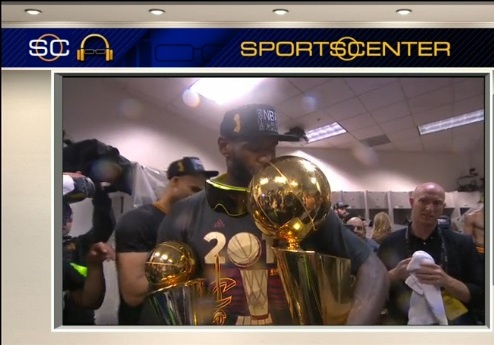
Share this post:
, , ,
[Top]

Transformations: Civil Disobedience … Still Effective

Go Lean Commentary

This commentary has previously identified African-American Abolitionist Frederick Douglass as a role model for the Caribbean, despite the fact that his advocacy was 150 years ago. His is quite the legacy:

“Those who profess to favor freedom, yet deprecate agitation, are men who want crops without plowing up the ground. They want rain without thunder and lightening. They want the ocean without the awful roar of its many waters. This struggle may be a moral one; or it may be a physical one; or it may be both moral and physical; but it must be a struggle. Power concedes nothing without a demand. It never did and it never will.” – Frederick Douglass

CU Blog - American Defects - Racism - Is It Over - Photo 1

The publishers of the book Go Lean…Caribbean recognize the contributions of role models who used civil disobedience to reform and transform their societies, Frederick Douglass included. The book specifically details (Page 122) these other advocates:

Mohandas Gandhi Indian Independence
Dr. Martin Luther King African-American Civil Rights Movement
Nelson Mandela South Africa’s Anti-Apartheid
Cesar Chavez Migrant Farm Workers in the US
Candice Lightner Mothers Against Drunk Driving (MADD)

The quest to transform society, as accomplished by these foregoing named advocates, is familiar to the movement behind the book Go Lean…Caribbean. This book asserts that the societal engines in the Caribbean (economy, security, and governance) are deficient and defective and need to be reformed and transformed to make our homeland a better place to live, work and play. This is commentary 4 of 4 from this movement on the subject of transformations: how to move our region from the deficient-defective status quo to the undisputed title of “greatest address on the planet”. All these commentaries detailed transformation issues, as follows:
  1. Perfecting our Core Competence
  2. Money Matters – “Getting over” with “free money”
  3. Caribbean Postal Union (CPU) – Delivering the Future
  4. Civil Disobedience … Still Effective

The Go Lean book details the quest to transform the Caribbean; it features a how-to guide, a roadmap for elevating the region’s societal engines using effective tactics like civil disobedience.

Civil disobedience has been effective in the past … see a related history here:

Title: History of Mass Nonviolent Action

Source: ACT UPAIDS Coalition To Unleash Power – Civil Disobedience Training – Retrieved 05-22-2016 from: http://www.actupny.org/documents/CDdocuments/HistoryNV.html

The use of nonviolence runs throughout history. There have been numerous instances of people courageously and nonviolently refusing cooperation with injustice. However, the fusion of organized mass struggle and nonviolence is relatively new. It originated largely with Mohandas Gandhi in 1906 at the onset of the South African campaign for Indian rights. Later, the Indian struggle for complete independence from the British Empire included a number of spectacular nonviolent campaigns. Perhaps the most notable was the year-long Salt campaign in which 100,000 Indians were jailed for deliberately violating the Salt Laws.

The refusal to counter the violence of the repressive social system with more violence is a tactic that has also been used by other movements. The militant campaign for women’s suffrage in Britain included a variety of nonviolent tactics such as boycotts, noncooperation, limited property destruction, civil disobedience, mass marches and demonstrations, filling the jails, and disruption of public ceremonies.

The Salvadoran people have used nonviolence as one powerful and necessary element of their struggle. Particularly during the 1960s and 70s, Christian based communities, labor unions, campesino organizations, and student groups held occupations and sit-ins at universities, government offices, and places of work such as factories and haciendas.

There is rich tradition of nonviolent protest in this country as well, including Harriet Tubman’s underground railroad during the civil war and Henry David Thoreau’s refusal to pay war taxes. Nonviolent civil disobedience was a critical factor in gaining women the right to vote in the United States, as well.

The U.S. labor movement has also used nonviolence with striking effectiveness in a number of instances, such as the Industrial Workers of the World (IWW) free speech confrontations, the Congress of Industrial Organizations (CIO) sitdown strikes from 1935-1937 in auto plants, and the UFW grape and lettuce boycotts.

Using mass nonviolent action, the civil rights movement changed the face of the South. The Congress of Racial Equality (CORE) initiated modern nonviolent action for civil rights with sit-ins and a freedom ride in the 1940s. The successful Montgomery bus boycott electrified the nation. Then, the early 1960s exploded with nonviolent actions: sit-ins at lunch counters and other facilities, organized by the Student Nonviolent Coordinating Committee (SNCC); Freedom Rides to the South organized by CORE; the nonviolent battles against segregation in Birmingham, Alabama, by the Southern Christian Leadership Conference (SCLC); and the 1963 March on Washington, which drew 250,000 participants.

Opponents of the Vietnam War employed the use of draft card burnings, draft file destruction, mass demonstrations (such as the 500,000 who turned out in 1969 in Washington, D.C.), sit-ins, blocking induction centers, draft and tax resistance, and the historic 1971 May Day traffic blocking in Washington, D.C. in which 13,000 people were arrested.

Since the mid-70s, we have seen increasing nonviolent activity against the nuclear arms race and nuclear power industry. Nonviolent civil disobedience actions have taken place at dozens of nuclear weapons research installations, storage areas, missile silos, test sites, military bases, corporate and government offices and nuclear power plants. In the late 1970s mass civil disobedience actions took place at nuclear power plants from Seabrook, New Hampshire to the DiabloCanyon reactor in California and most states in between in this country and in other countries around the world. In 1982, 1750 people were arrested at the U.N. missions of the five major nuclear powers. Mass actions took place at the Livermore Laboratories in California and SAC bases in the midwest. In the late 80s a series of actions took place at the Nevada test site. International disarmament actions changed world opinion about nuclear weapons.

In 1980 women who were concerned with the destruction of the Earth and who were interested in exploring the connections between feminism and nonviolence were coming together. In November of 1980 and 1981 the Women’s Pentagon Actions, where hundreds of women came together to challenge patriarchy and militarism, took place. A movement grew that found ways to use direct action to put pressure on the military establishment and to show positive examples of life-affirming ways to live together. This movement spawned women’s peace camps at military bases around the world from Greenham Common, England to Puget Sound Peace Camp in Washington state, with camps in Japan and Italy among others.

The anti-apartheid movement in the 80s has built upon the powerful and empowering use of civil disobedience by the civil rights movement in the 60s. In November of 1984, a campaign began that involved daily civil disobedience in front of the South African Embassy. People, including members of Congress, national labor and religious leaders, celebrities, students, community leaders, teachers, and others, risked arrest every weekday for over a year. In the end over 3,100 people were arrested protesting apartheid and U.S. corporate and government support. At the same time, support actions for this campaign were held in 26 major Cities, resulting in an additional 5,000 arrests.

We also saw civil disobedience being incorporated as a key tactic in the movement against intervention in Central America. Beginning in 1983, national actions at the White House and State Department as well as local actions began to spread. In November 1984, the Pledge of Resistance was formed. Since then, over 5,000 people have been arrested at military installations, congressional offices, federal buildings, and CIA offices. Many people have also broken the law by providing sanctuary for Central American refugees and through the Lenten Witness, major denomination representatives have participated in weekly nonviolent civil disobedience actions at the Capitol.

Student activists have incorporated civil disobedience in both their anti-apartheid and Central America work. Divestment became the campus slogan of the 80s. Students built shantytowns and staged sit-ins at Administrator’s offices. Hundreds have been arrested resulting in the divestment of over 130 campuses and the subsequent withdrawal of over $4 billion from the South African economy. Central America student activists have carried out campaigns to protest CIA recruitment on campuses. Again, hundreds of students across the country have been arrested in this effort.

Nonviolent direct action has been an integral part of the renewed activism in the lesbian and gay community since 1987, when ACT UP (AIDS Coalition to Unleash Power) was formed. ACT UP and other groups have organized hundreds of civil disobedience actions across the country, focusing not only on AIDS but on the increasing climate of homophobia and attacks on lesbians and gay men. On October 13, 1987, the Supreme Court was the site of the first national lesbian and gay civil disobedience action, where nearly 600 people were arrested protesting the decision in Hardwick vs. Bowers, which upheld sodomy laws. This was the largest mass arrest in D.C. since 1971.

Political Analysis
Power itself is not derived through violence, though in governmental form it is usually violent in nature. Governmental power is often maintained through oppression and the tacit compliance of the majority of the governed. Any significant withdrawal of that compliance will restrict or dissolve governmental control. Apathy in the face of injustice is a form of violence. Struggle and conflict are often necessary to correct injustice.

Our struggle is not easy, and we must not think of nonviolence as a “safe” way to fight oppression. The strength of nonviolence comes from our willingness to take personal risk without threatening other people.

It is essential that we separate the individual from the role she/he plays. The “enemy” is the system that casts people in oppressive roles.

Civil disobedience is still effective today!

The Go Lean book serves as a roadmap for the introduction and implementation of the Caribbean Union Trade Federation (CU) to empower societal elevation (economics, security and governing engines) for the Caribbean region. This roadmap focuses on the political transformations and the practical transformations to elevate the Caribbean region, individually and collectively. But as identified in the foregoing quotation from Frederick Douglass, power is never ceded … without demand. It takes agitation, plowing up the ground, “thunder & lightening” and struggle. Those in power in the status quo will do what all “men” in power try to do: keep it!

The required transformation for the Caribbean may very well take some acts of civil disobedience, challenging the dysfunctional economic status, perhaps even with economic boycotts, sit-ins, general strikes, picket lines, marches and messaging campaigns.

There are effective role models for this as well. Consider here the very recent experience of the University of Missouri Football team:

Amid escalating protests over complaints of racial bigotry at the University of Missouri, the school’s football team said it won’t play until the University President resigns or was replaced. These football players threatened to go on strike. At least 30 players with the support of their coach made the demand. They wanted University President Tim Wolfe to resign for allegedly failing to confront racial tensions at the school.
Commentary: Mizzou Football And The Power Of The Players

Posted November 18, 2015; retrieved May 22, 2016

CU Blog - Transformations - Civil Disobedience...Still Effective - Photo  1

Members of the University of Missouri Tigers football team – after threatening civil disobedience – returned to practice Nov. 10, 2015 at Memorial Stadium in Columbia, Mo. – Michael B. Thomas/Getty Images

AUDIO Podcast – Commentary heard on NPR’s Morning Edition – http://www.npr.org/2015/11/18/456360331/commentary-mizzou-football-and-the-power-of-the-players


It’s accepted that thePresident of the University of Missouri stepped down in a racial dispute only when the football team threatened not to play a game. The players showed us again — surprise, surprise — how powerful is football, and let’s throw in basketball, too, throughout our bastions of higher education.

It would have cost old Mizzou a million-dollar penalty had it forfeited. It would have cost the players next to nothing, because the NCAA rules they must be amateurs and risk serious injury for the love of the game. Ironically, for once, having nothing to gain actually strengthened the players’ hand.

The particular racially insensitive issues at Missouri and those that’ve produced protests at other colleges have nothing to do with sport, but, on the other hand, it’s worth noting well over half of the football players who bring in the big money in the big-time conferences are African-American. The percentage of minority basketball players is even higher.

The Go Lean book relates that the experience of Frederick Douglass and other advocates assert that one man or one woman can make a difference and impact his/her community, country and the whole world. Now we must add the student-athletes of the University of Missouri to that podium of role models for us to emulate.

The Go Lean/CU roadmap is designed to motivate the people, institutions and governmental leaders of the Caribbean, regional stakeholders, to make an impact – by the use of civil disobedience if necessary – on the region’s societal engines corresponding with these prime directives:

  • Optimization of the economic engines in order to grow the regional economy to $800 Billion & create 2.2 million new jobs.
  • Establishment of a security apparatus to protect the resultant economic engines.
  • Improve Caribbean governance to support these engines.

The focus of the previous commentary, Frederick Douglass’ legacy, is relevant for our life and times and the Go Lean prime directives. Notice the parallels: The institution of slavery was initiated for economic purposes; it took civil disobedience in the form of a civil war to assuage. In addition, there was no consideration to security principles for the enslaved population. But for the consideration of the Go Lean book, the subject of consideration is one of governance, the need for technocratic stewardship of the regional Caribbean society; how to reform and transform it. This point of governance against the backdrop of civil disobedience was pronounced early in the book, in the opening Declaration of Interdependence (Pages 10 – 14) with these declarations:

Preamble:  As the history of our region and the oppression, suppression and repression of its indigenous people is duly documented, there is no one alive who can be held accountable for the prior actions, and so we must put aside the shackles of systems of repression to instead formulate efficient and effective systems to steer our own destiny. … whenever any form of government becomes destructive to these ends, it is the right of the people to alter or to abolish it, and to institute new government, laying its foundation on such principles and organizing its powers in such form, as to them shall seem most likely to effect their safety and happiness.

xi. Whereas all men are entitled to the benefits of good governance in a free society, “new guards” must be enacted to dissuade the emergence of incompetence, corruption, nepotism and cronyism at the peril of the people’s best interest. The Federation must guarantee the executions of a social contract between government and the governed.

xii. Whereas the legacy in recent times in individual states may be that of ineffectual governance with no redress to higher authority, the accedence of this Federation will ensure accountability and escalation of the human and civil rights of the people for good governance, justice assurances, due process and the rule of law. As such, any threats of a “failed state” status for any member state must enact emergency measures on behalf of the Federation to protect the human, civil and property rights of the citizens, residents, allies, trading partners, and visitors of the affected member state and the Federation as a whole.

xxxiii. Whereas lessons can be learned and applied from the study of the recent history of other societies, the Federation must formalize statutes and organizational dimensions to avoid the pitfalls of [other] communities.

The Go Lean book stresses key community ethos, strategies, tactics, implementations and advocacies necessary to reform and transform the eco-systems of Caribbean society and apply the lessons learned from other advocates. The book details the following:

Community Ethos – Economic Principles – Economic Systems Influence Individual Choices Page 21
Community Ethos – Economic Principles – Consequences of Choices Lie in the Future Page 21
Community Ethos – Ways to Impact the Future Page 26
Community Ethos – Ways to Foster Genius – Developing genius in many endeavors, i.e. Sports Page 27
Community Ethos – Ways to Impact Turn-Arounds Page 33
Community Ethos – Ways to Manage Reconciliations Page 34
Community Ethos – Ways to Impact the Greater Good Page 37
Strategy – Vision – Confederate all 30 member-states / 4 languages into a Single Market Page 45
Strategy – Mission – Build and foster local economic engines Page 45
Tactical – Ways to Foster a Technocracy Page 64
Tactical – Separation-of-Powers – CU Federal Government versus Member-State Governance Page 71
Planning – 10 Big Ideas – Failed States Marshall Plan Page 127
Planning – Ways to Make the Caribbean Better Page 131
Planning – Ways to Improve Failed-State Indices – Advocate for Human Rights Page 134
Advocacy – Ways to Grow the Economy Page 151
Advocacy – Ways to Improve Governance Page 168
Advocacy – Ways to Better Manage the Social Contract Page 170
Advocacy – Ways to Impact Wall Street – Lessons Learned from Occupy Wall Street Protests Page 200
Advocacy – Ways to Preserve Caribbean Heritage Page 218
Advocacy – Ways to Protect Human Rights Page 220

Civil disobedience lead to political transformation and practical transformation. Protest movements, with civil disobedience activities, have effectively reformed and transformed societies in the past, present and no doubt, the future. Scattered through the pages of history, many times protest leaders have become political leaders. Consider Nelson Mandela of South Africa and Lech Walesa of Poland.

Previous Go Lean blogs presented other lessons for the Caribbean to learn from considering protest movements from history; the following previous blog/commentaries apply:

https://goleancaribbean.com/blog/?p=7682 Frederick Douglass: Role Model for a Single Cause
https://goleancaribbean.com/blog/?p=7221 ‘Street naming for Martin Luther King’ protests unveils the real America
https://goleancaribbean.com/blog/?p=7204 ‘The Covenant with Black America’ – Ten Years Later
https://goleancaribbean.com/blog/?p=7103 COP21 Protest – ‘Climate Change’ Acknowledged
https://goleancaribbean.com/blog/?p=6720 A Lesson in Protest History – Principle over Principal During War
https://goleancaribbean.com/blog/?p=2907 Local Miami Haitian leaders protest Bahamian immigration policy
https://goleancaribbean.com/blog/?p=2633 Book Review: ‘The Protest Psychosis’
https://goleancaribbean.com/blog/?p=1918 Philadelphia Freedom – Successful Protest and Fight for Change
https://goleancaribbean.com/blog/?p=1683 British public sector workers strike over ‘poverty pay’

The words of Frederick Douglass echo loudly through the ages (19th, 20th and 21st centuries). Reform and transformation only comes with a struggle. This is because “power concedes nothing without a demand. It never did and it never will.”

This reality applies doubly for the Caribbean!

The Caribbean region is in crisis – all 30 member-states! But this crisis would be a terrible thing to waste. We must use this crisis as a motivation to transform the region. Motivation alone will not bring change – the powerful ones in the status quo will not give up power willingly; they will not accept change willingly. There must be struggle, employing tactics like civil disobedience! As conveyed by Frederick Douglass, we “cannot get the rain without thunder and lightening”. The Go Lean movement – books and blogs – call for rain, and calls for “thunder and lightening”. The movement calls for forging change – transformations – through approaches like the Fun Theory, Sales Process, Power of Music, Food Therapy, and Risking Too Much to Lose.

Once we succeed in transforming the Caribbean societal engines, we must then ensure the changes are permanent! The Go Lean book declares that for permanent change to take place, there must first be an adoption of new community ethos, the national spirit that drives the character and identity of its people. The roadmap was constructed with the primary community ethos of the Greater Good, not a political nor profit motive; but rather a commitment for the “greatest good for the greatest number of people”.

Now is the time for all Caribbean stakeholders to lean-in to this Go Lean regional solution. With this roadmap, the Caribbean can transform to a better society; a better place to live, work and play. 🙂

Download the book Go Lean … Caribbean – now!


Share this post:
, , ,
[Top]