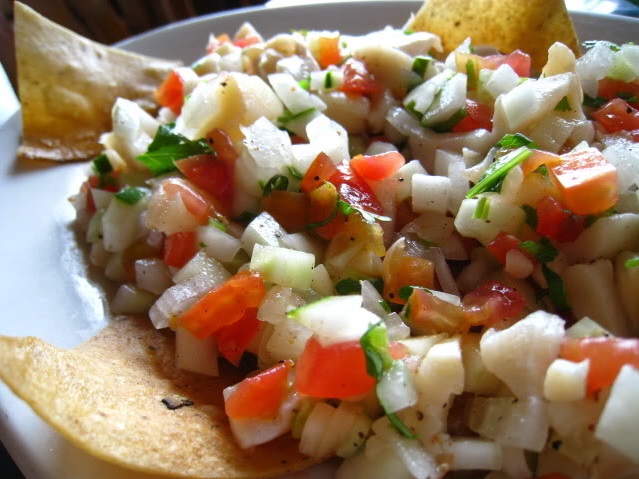
“The way to a man’s heart is through his stomach” – Old Adage.
Could it be that simple? Have we been laboring all the while, trying to forge change in the Caribbean region while missing out on the easiest driver: Food?
Seriously! We “gotta” eat!
While the publishers of the book Go Lean…Caribbean wants to forge change in the Caribbean, we recognize that it is a heavy-lifting task. There are so many societal defects in the region and we need effective strategies, tactics and implementation to effect turn-around. Despite all the advance research and academic exercises, we seem to have left off this simple yet effective model: Food.
As the foregoing VIDEO depicts, change can be forged in as soon as 2 weeks. That simple! This is impactful enough for us to all lean-in to this guidance.
Cancer – this is the underlying threat being mitigated in the foregoing VIDEO. While this is a complicated medical issue – where many people have lost their lives – it is not oversimplifying to say that our food choices can endanger our overall health. While everything is not known about cancer – there is no actual cure, only treatments – it is the accepted wisdom that diet and exercise minimize the risk of affliction.
The subject of cancer is a community health crisis. But if we can forge change in this threatening area by our food choices, then we need to pay heed.
The book Go Lean…Caribbean serves as a roadmap for the introduction and implementation of the Caribbean Union Trade Federation (CU), a confederation of all 30 member-states in the region. This effort is an initiative to bring change and empowerment to the Caribbean region, to make the region a better place to live, work, heal and play. From the outset, the book recognized the significance of our culture, how food and diet plays a significant role in the Caribbean eco-system with these statements in the opening Declaration of Interdependence (Page 14):
xxvi. Whereas the Caribbean region must have new jobs to empower the engines of the economy and create the income sources for prosperity, and encourage the next generation to forge their dreams right at home, the Federation must therefore foster the development of new industries, like that of … frozen foods … impacting the region with more jobs.
xxx. Whereas the effects of globalization can be felt in every aspect of Caribbean life, from the acquisition of food and clothing, to the ubiquity of ICT, the region cannot only consume, it is imperative that our lands also produce and add to the international community, even if doing so requires some sacrifice and subsidy.
xxxii. Whereas the cultural arts … of the region are germane to the quality of Caribbean life, and the international appreciation of Caribbean life, the Federation must implement the support systems to teach, encourage, incentivize, monetize and promote the related industries … These endeavors will make the Caribbean a better place to live, work and play.
The purpose of the Go Lean roadmap is societal change, not food; yet there is this acknowledgement that food can help forge change. This is against the backdrop that there are many threats to Caribbean life, liberty and the pursuit of happiness. Food choices affect these executions. Think: obesity, health care, cancer, poverty and jobs.
This Go Lean roadmap calls for the heavy-lifting in shepherding many important aspects of Caribbean life; these food-related issues included. This is not so simple anymore. For one, the book reports (Page 157) that in the United States “Cancer strikes nearly 1 in every 2 men and more than 1 in every 3 women” and then sounds the alarm that the Caribbean cannot be far behind. This may be considered a “Clear and Present Danger”. So there is the need for change in this important area.
The Go Lean book, as an empowerment roadmap, must therefore examine the reality and consequences of food, under the guise of this regional effort. This roadmap has 3 prime directives:
Optimization of the economic engines in order to grow the regional economy to $800 Billion GDP and create 2.2 million new jobs, many of which are projected for food-related and allied health industries (30,000 in direct agriculture; 20,000 in direct Health Care; 4000 in direct Fisheries; and 2000 related to Frozen Foods).
Establishment of a security apparatus to protect the resultant economic engines.
Improvement of Caribbean governance, including a separation-of-powers with the member-states, to support these engines.
The book is not a public health instruction manual. Nor is it is a book on science and nutrition. But it does describe the CU as a hallmark of a technocracy, a commitment to efficiency and effectiveness, but still with a commitment to concepts of culture, food, and fun – overall happiness. The Go Lean book declares that before any real change takes root in the Caribbean that we must reach the heart, that there must be an adoption of new community ethos, the national spirit that drives the character and identity of its people. We must therefore use effective and efficient drivers to touch the heart and forge this change. How? We know there is truth to the opening quotation: “through the stomach”.
The Go Lean roadmap was constructed with the community ethos in mind to forge change, plus the execution of related strategies, tactics, implementations and advocacies to make the change permanent. The following is a sample of these specific details from the book:
Community Ethos – Deferred Gratification
Page 21
Community Ethos – Economic Principles – People Choose
Page 21
Community Ethos – Economic Principles – People Respond to Incentives in Predictable Ways
Page 21
Community Ethos – Economic Principles – The Consequences of Choices Lie in the Future
Page 21
Community Ethos – Governing Principles – Lean Operations
Page 24
Community Ethos – Ways to Impact the Future
Page 26
Community Ethos – Ways to Impact Research & Development – Nouvelle Caribbean Cuisine
Page 30
Community Ethos – Ways to Impact Turn-Around
Page 33
Community Ethos – Ways to Promote Happiness – Promotion of Domestic Cultural Institutions
Page 36
Community Ethos – Ways to Impact the Greater Good
Page 37
Strategy – Mission – Build and foster local economic engines to satiate food needs
Page 45
Strategy – Mission – Celebrate the Culture and Cuisine of the Caribbean
Page 46
Strategy – Customers – Outreach to Caribbean Diaspora
Page 47
Strategy – Agents of Change – Globalization
Page 57
Tactical – Confederating a Permanent Union
Page 63
Tactical – Fostering a Technocracy
Page 64
Tactical – Creating $800 Billion Economy – New High Multiplier Industries – Frozen Foods
Page 70
Tactical – Separation of Powers – Department of State – Culture Administration
Page 81
Tactical – Separation of Powers – Food / Nutritional Administrations
Implementation – Ways to Benefit from Globalization – Dynamics of Food Supply
Page 119
Implementation – Ways to Promote Independence – Food Interdependence
Page 119
Planning – 10 Big Ideas for the Caribbean Region – 4 Languages & Culture in Unison
Page 127
Planning – Ways to Improve Trade – Diaspora Marketing
Page 128
Planning – Ways to Make the Caribbean Better
Page 136
Advocacy – Ways to Grow the Economy
Page 151
Advocacy – Ways to Create Jobs
Page 152
Advocacy – Ways to Impact Cancer – Promote Wellness – Better Diets
Page 157
Advocacy – Ways to Better Manage Food Consumption
Page 162
Advocacy – Ways to Improve Communications – Public Broadcasting of “Sound-bites”
Page 186
Advocacy – Ways to Impact Events – Food Festivals
Page 191
Advocacy – Ways to Develop Frozen Foods
Page 208
Advocacy – Ways to Improve Fisheries
Page 210
Advocacy – Ways to Preserve Caribbean Heritage – Promote Culture
Page 218
Advocacy – Ways to Improve the Arts
Page 230
Advocacy – Ways to Impact Urban Living – Promotion of Farmers Markets
Page 234
Advocacy – Ways to Impact Rural Living – Agricultural Co-existence Mandate
Page 235
This roadmap wants to change the Caribbean diet plan, branded Nouvelle Caribbean Cuisine: more fiber, less fats; more green vegetables, less processed food; no more S.A.D., meaning Standard AmericanDiet.
As depicted by the S.A.D. references, there is the expectation not to allow the American eco-system to lead in this sphere of influence. There was a time when much of the Caribbean food supply originated locally. That is not a difficult message to convey. Lesser developed countries, (think Africa), are more successful with local food production and consumption, the Caribbean can succeed. While this plan is optimistic, it is realistic too. People can and do change.
There is the acknowledgement that the business of food has changed in the light of modern dynamics, particularly due to globalization. To spur more local agricultural development, the economic engines of the food supply must be secured. This point was previously detailed in these Go Lean blog/commentaries:
In the Caribbean, we need better food consumption habits. According to the foregoing VIDEO, it does not take a lot to change habits in this regard. We must simply push hard (messaging) on the needed changes, and then labor to get the community ethos to take hold. All the earnest effort will be a waste unless people are moved to change. So we must use all effective tools to forge the required change; food or the “stomach” is one of the best ways … to reach people.
This is serious; this is life-and-death.
The quest to change the Caribbean is more complex than just feeding people. But their food options can signal their willingness to change and assimilate the empowerments being advocated for the region. This is the mandate of the Go Lean roadmap: making the Caribbean a better place to live, work, heal and play.
We “gotta” eat …
So everyone is encouraged to lean-in for this change and the full Go Lean roadmap. 🙂
A wave of immigration from the Caribbean, Africa and Latin America is reshaping the USA’s black population, new findings show, with no sign of ending soon. About one in 11 blacks in America are foreign-born. The figure is likely to rise to one in six by 2060.
The group is still fairly small compared with the numbers of Asian and Latin American immigrants who arrive each year, but it “has been a big part of the black immigrant story at least since 2000,” said Mark Hugo Lopez of the Pew Research Center, which released the findings Thursday.
Using U.S. Census Bureau data, Pew found that a record 3.8 million black immigrants live in the USA, more than four times as many as in 1980. Overall, there are about 42 million immigrants in the USA.
Taken as a group, black immigrants — the vast majority of them from the Caribbean and Africa — comprise nearly 9% of the nation’s black population, three times their share in 1980.
The group is likely to continue growing rapidly: According to Census projections, nearly 17% of U.S. blacks will be immigrants by 2060.
“That’s a big change, particularly when you take a look at Asian and Hispanic populations in the U.S.,” Lopez said. “Their foreign-born shares are actually declining.” For Africans in particular, their share of foreign-born population is likely to rise.
In a few places, black immigrant populations equal or exceed the 2060 projection [already], including:
15% of the black population in the Washington metro area.
28% in the New York metro area.
34% in Miami.
As a group, the study found, about one-fourth of black immigrants 25 and older have a bachelor’s degree or higher, slightly lower than the overall U.S. population. They’re about even with the rest of the population when it comes to advanced degrees. Source:USA Today – Online News – Posted April 9, 2015; Retrieved April 28, 2015 from: http://www.usatoday.com/story/news/2015/04/09/pew-african-immigrants/25521471/
This must stop. Period.
From a strictly economic point-of-view, this is a ‘Clear and Present Danger’. Our Caribbean community cannot survive, nor any other community for that matter, with the constant drain against the population and human capital. Ghost towns are a reality.
This is therefore a Declaration of [Economic] War!
This is a consistent theme in the book Go Lean…Caribbean. The book posits that the most serious threat to Caribbean prosperity is the high abandonment rate among its citizens, especially its highly educated, skilled-labor classes.
“A crisis is a terrible thing to waste” …
… so states the book quoting noted Economist Paul Romer. The opportunity therefore exists to forge change in the economic, security and governing engines of the Caribbean, in response to this crisis.
The foregoing news story shows that the USA is preparing to assimilate more Caribbean and African immigrants in the next 45 years. Declaring an economic war, complete with battle strategies and tactics, allows the region to organize the resources and investments to pursue victory in this fight. This is the advocacy of the Go Lean book, to position the region at the corner of preparation and opportunity, so as to benefit from impending change.
The issue from this article is more pressing for the Caribbean, as our economic growth has been stagnant or only “inched” along at a slow pace – our job creation engines have failed to keep pace with the population, therefore fewer and fewer jobs are at home. Thus this region has had a higher and higher emigration rate as the decades pass; and according to this foregoing news article, that rate will grow even further. This nightmare becomes a self-fulfilling prophecy! This point was crystalized in a previous blog/commentary with this quotation:
We tend to think economic growth comes from working harder and smarter. But economists attribute up to a third of it to more people joining the workforce each year than leaving it. The result is more producing, earning and spending.
The book Go Lean…Caribbean serves as a roadmap for the introduction and implementation of the Caribbean Union Trade Federation (CU), a technocratic regional (super-national) entity with federal powers to forge change in the Caribbean community. One goal is incentivizing the return of the far-flung Caribbean Diaspora. Another goal is to dissuade further human flight/brain drain. The numbers don’t lie: we need population growth here at home, not population contraction.
The Go Lean roadmap provides the details of the primary mission, defined as the prime directives, to:
Optimize the economic engines in order to grow the regional economy to $800 Billion and create 2.2 million new jobs.
Establish a security apparatus to protect the resultant economic engines and mitigate internal and external threats.
Improve Caribbean governance to support these engines.
The primary mission to lead in the job creation and economic growth is at the root of the Go Lean effort, embedded in the opening Declaration of Interdependence (Page 13):
xxiv. Whereas a free market economy can be induced and spurred for continuous progress, the Federation must install the controls to better manage aspects of the economy: jobs, inflation, savings rate, investments and other economic principles. Thereby attracting direct foreign investment because of the stability and vibrancy of our economy.
xxvi. Whereas the Caribbean region must have new jobs to empower the engines of the economy and create the income sources for prosperity, and encourage the next generation to forge their dreams right at home, the Federation must therefore foster the development of new industries … In addition, the Federation must invigorate the enterprises related to existing industries … impacting the region with more jobs.
The following details from the book Go Lean … Caribbean are the community ethos, strategies, tactics, implementations and advocates prescribed to create jobs and elevate the Caribbean economy, society and life:
Tactical – Growing the Economy to $800 Billion GDP
Page 67
Implementation – Assemble all Member-States
Page 96
Implementation – Ways to Pay for Change
Page 101
Implementation – Reasons to Repatriate
Page 118
Planning – Ways to Make the Caribbean Better
Page 131
Advocacy – Ways to Grow the Economy
Page 151
Advocacy – Ways to Create Jobs
Page 152
Advocacy – Better Manage the Social Contract
Page 170
Advocacy – Improve Leadership – The Art of War
Page 171
Advocacy – Ways to Foster Empowering Immigration
Page 174
Advocacy – Impact the Diaspora
Page 217
Advocacy – Ways to Preserve Caribbean Heritage
Page 218
Advocacy – Ways to Help the Middle Class
Page 223
Advocacy – Ways to Re-boot Haiti
Page 238
The social science of Anthropology teaches that communities have two choices when confronted with endangering crises: Fight or Flight. The foregoing article, this commentary and the Go Lean book had asserted that Caribbean people have only chosen the option of flight.
The caption on the foregoing article relates a young Haitian-American immigrant as he completes his naturalization to American citizenship. Congratulations.
But, perhaps there will be less of these going forward as this Go Lean effort seeks to rekindle the revolutionary fight of the Haitian people; (and by extension, the fighting resolve for all the Caribbean). This spirit was admired – from afar – by many people for a long time. The history even became legend, worthy of song …
The “Haitian Fight Song” was composed by Jazz musician Charles Mingus in the mid-1950s, during the burgeoning Civil Rights Movement. Just as significant social change was sweeping across the United States, Mingus said he wrote this song while thinking about the injustices in the world, and because of the success of the Haitian Revolution in ending slavery and French colonialism. Haiti was used as a symbol of resistance to racism, colonialism, and every kind of injustice one could think of. (Source: http://ryfigueroa.blogspot.com/2011/08/tracing-evolution-of-haitian-fight-song.html)
That is the fighting spirit …
… It is not all lost!
(The Go Lean book declares – Page 8 – that this is not a call for a revolt against the governments, agencies or institutions of the Caribbean region, but rather a petition for a peaceful transition and optimization of the economic, security and governing engines in the region).
New York Ska Jazz Ensemble – Haitian Fight Song + Volare (Live @ CSOA Gabrio)
Published on Dec 29, 2013 – New York Ska Jazz Ensemble play live a “cover” of Volare & the Haitian Fight Song live @ CSOA Gabrio – Via Revello 3 – Zona San Paolo Antirazzista – Torino Gabrio.noblogs.org
In Spanish and Italian, Volare translates to “Fly or Soar”
The Go Lean roadmap is a product of the Diaspora – residing in the USA – looking at Caribbean residents and longing to go home. These promoters realize that the grass is “not greener on the other side”. But they rightfully know that the quest for economic opportunities is the driving force for all the recent immigrants. There is no greater motivator than a crying stomach … or a crying baby. It is what it is! From this fallout, this roadmap was inspired. But subsequently the promoters have been joined with other resources and Subject Matter Experts in economics, security and governance and those experienced with forging change in other societies.
Now, to do this at home!
How to create jobs at home? The execution of this goal has been detailed in previous blog/commentaries; the following is a sample:
Self-employment on the rise in the Caribbean – World Bank
This book reports that this roadmap – this hope for change – is now also conceivable, believable and achievable. Yes, we can … make the Caribbean homeland a better place to live, work and play. Everyone in the Caribbean is hereby urged to lean-in to this Go Lean … Caribbean roadmap. 🙂
How do you eat an elephant? One bite at a time. – Source unknown
This familiar expression is not intended to give culinary instructions regarding “elephant” meat, but rather it relates a formula for taking on big goals. The answer is to attack the big goal with one small task at a time; taking one step after another in a journey towards a destination. The book Go Lean…Caribbean seeks to engage a big goal, that of elevating the Caribbean region through economic, security and governing empowerments.
This book declares this “elephant-size” goal is heavy-lifting; thusly the above advice applies. The book serves as a roadmap for the introduction and implementation of the technocratic Caribbean Union Trade Federation (CU) to provide better stewardship for the Caribbean homeland. The book posits that we can do this. We can look internally for solutions, rather than expecting some external “actor” to come in and provide answers. No, we must not fashion ourselves as parasites, but rather protégés of those communities that have already completed these heavy-lifting tasks.
Here is where we benefit from the lessons in history from other communities, families and individuals that have demonstrated unity-of-purpose. We are taught that “bite-size morsels” of the regional “elephant” can be well-handled by strong families; therefore the need exists to strengthen and empower families to optimize their societal contributions.
This strategy of family empowerment is very critical, and has a successful track record. In a previous blog/commentary, the issue of the origin of powerful families was detailed at full length. A direct quote relates:
From the origins of slavery, the region traversed the historic curves of social revolution and evolution. In the 1500, the Protestant movement took hold. As other European powers deviated from Catholicism, Papal Bulls [- which awarded territories in this New World -] carried no significance to them and compliance was ignored. England and Holland established their own Protestant Churches with their own monarchs as head of Church and State; Papal decrees were replaced with Royal Decrees and Charters. The intent and end-result was still the same: territories and lands awarded (colonized) with the stroke of a pen by one European power after another. The Royal Decrees and Charters were then reinforced with a strong military presence and many battles…
[The resultant] “oligarchy” … power effectively rested with a small number of people. These people could be distinguished by royalty, wealth, family ties, education, corporate, religious or military affiliation.
In this discussion of oligarchy, focus is given to powerful families. There are encyclopedic references that relate that oligarchy structures are often controlled by a few prominent families, who typically pass their influence/wealth from one generation to the next, even though inheritance alone is not a necessary condition for oligarchies to prevail.
The islands of the Caribbean fit the story-line in the [Caribbean-Calypso] song lyrics: “Islands in the sun; willed to me by my father’s hand”.
This is the challenge that belies Caribbean society. Most of the property and indigenous wealth of the Caribbean region is concentrated amongst the rich, powerful and yet small elite; an oligarchy. Many times these families received their property, corporate rights and/or monopolies by Royal Charter from the European monarchs of ancient times. These charters thus lingered in legacy from one generation to another … until …
The Go Lean book pushes further and deeper on this subject of family empowerment, stressing that success can still be derived in the Caribbean, even without the legacy of 500 years of entitlement. The book therefore stresses certain best-practices to apply to the regional strategies, tactics and implementations.
The lesson of best practices comes from another community, of which we can be a protégé. This is the City of Detroit, Michigan USA. This community is notorious for its urban failures, even filing Bankruptcy in 2013. But from these ashes we have the following example of the pivotal and empowering Ilitch Family. Their Ilitch Holdings, Inc. operates as a holding company for restaurants, sports clubs, real estate, and entertainment businesses. With 17,000 direct employees and annual revenues of $1.8 billion (estimated in 2007; privately held companies are not required to disclose), this family enterprise truly impacts and empowers its community. (Detroit is voted #1 Sports City in the USA). The family operates and franchises the Little Caesars Pizza global chain plus this entertainment company branded Olympia Entertainment:
In 1982, Michael and Marian Ilitch purchased the Olympia Stadium Corporation, the management company for Olympia Stadium and renamed it Olympia Arenas, Inc. (In 1927, the Olympia Sports Arena was built in downtown Detroit to accommodate Detroit’s NHL franchise, and serve as the premier venue for a variety of entertainment). The newly purchased business was responsible for managing events at Joe Louis Arena (which had been completed in 1979 as the home of the Detroit Red Wings), Cobo Arena and the Glens FallsCivicCenter. That same year, Mr. and Mrs. Ilitch purchased the Detroit Red Wings.
In 1987, the Ilitches purchased Detroit’s iconic Fox Theatre (built in 1928) and renovated the 4,800+ seat venue, saving 80% of the original surfaces. In 1988, the Ilitches re-opened the Fox as the hub of the Foxtown Entertainment District and the building now houses the offices of Olympia Entertainment and Little Caesars Pizza. In 1989, the National Parks Service designated the Fox Theatre as a National Landmark.
The Olympia Stadium Corporation was renamed Olympia Entertainment in 1996 to reflect the management company’s expanded operations and venues.
In April 2000, Comerica Park, the new home of the Detroit Tigers hosted Opening Day and ushered in a new era of MLB baseball in Detroit. The 41,000+ seat ballpark is owned by the Detroit-Wayne County Stadium Authority, and Olympia Entertainment operates Comerica Park.
(Source: http://www.olympiaentertainment.com/about-olympia-entertainment/company-history)
Why consider the Ilitch Family as a model? They are impactful in business, sports, entertainment and philanthropy. This applies to the patriarch (Michael, Sr.) and the next generation; thus forging a family legacy. The family enterprises plus the Olympic Entertainment are detailed in the Appendix below. This is truly a family endeavor; in addition to parents Michael and Marian Ilitch, they have seven children: Christopher Ilitch (current CEO and President of Ilitch Holdings, Inc.); daughter Denise Ilitch, an attorney; Ron; Michael, Jr.; Lisa Ilitch Murray; Atanas; and Carole (Ilitch) Trepeck.
Needless to say, the City of Detroit had/has to engage, cooperate and collaborate with this family to induce their investment in the community. This is an example of impacting the Greater Good.
The Go Lean roadmap calls for engaging families in the Caribbean that are committed to elevating the Caribbean. There are truly Ilitch-like families here as well. Just consider this simple list of the most influential families in just one Caribbean member-state, Jamaica; as published by the highly regarded regional online publication, Pan-American World:
1. Joseph M. Matalon Matalon is among the foremost leaders in Jamaica business, part of a family with a legacy of successful business practices for decades. He is the chairman of the ICD Group, a Jamaican investment holding company. For more than 20 years, his knowledge and expertise have been utilized in the areas of transactional finance, investments and banking in various institutions. He is the chairman of British Caribbean Insurance Co., the Development Bank of Jamaica and president of the Private Sector Organization of Jamaica (PSOJ). He also is a director of the Gleaner Co. and Commodity Service Co. and a former director of the Bank of Nova Scotia (Jamaica Limited). In addition, he has been involved with a number of special committees to advise the government on financial and economic matters.
2. Michael Lee-Chin He is a self-made billionaire who started his career as a road engineer for the Jamaican government and gradually built his way up to chairman and founder of Portland Holdings, a thriving, privately held investment company in Jamaica. Additionally, Lee-Chin is executive chairman of AIC Limited and National Commercial Bank. Born in Port Antonio in the Portland Parish, the Jamaican-Canadian Lee-Chin also owns stakes in National Commercial Bank Jamaica and Total Finance in Trinidad and Tobago. His personal real estate portfolio includes 250 acres of beachfront property in Ocho Rios, Jamaica, and homes in Canada and Florida, according to Forbes. He has been off the magazine’s billionaire list for the last four years, topping out at a net worth of $2.5 billion in 2005.
3. Chris Blackwell He belongs to an affluent family that acquired its wealth through sugar and Appleton Rum. He established himself as a music mogul more than 50 years ago. His rise included introducing the world to reggae. He produced music for artists like Ike and Tina Turner, Bob Marley and the Wailers, Burning Spear and Black Uhuru, among others. He is also the founder of Palm Pictures and creator of the Golden Eye Film Festival that honors Jamaicans who excel in the arts and music. He was awarded the Order of Jamaica for his exemplary work in the entertainment industry in 2004. The Blackwell family name has been the inspiration for “Blackwell Fine Jamaican Rum.” Blackwell currently runs Island Outpost, which is a conglomerate set up to run a group of resorts in Jamaica and the Bahamas. He has an estimated net worth of $180 million, according to celebritynetworth.com.
4. Paula Kerr-Jarrett She is an attorney, philanthropist and influential presence in the Jamaican society circle. She and her husband, Mark, are working to bolster Montego Bay tourism. They announced two months ago a multibillion-dollar partnership project to construct 1,200 homes, a 48-acre tech park with enormous space for information technology that would bring 30,000 jobs and a new University of the West Indies that would accommodate up to 10,000 students. They estimate the investment value of this project to be $500 million. Her great-grandmother, Marion Louise Reece Bovell, was the first woman in Jamaica to run in the general elections of 1944 as an independent candidate. Kerr-Jarrett is connected by marriage to the prominent Jarrett family.
5. Dr. Blossom O’Meally-Nelson O’Meally-Nelson is Jamaica’s first female postmaster general. She is the former pro-chancellor and chairman of Council for the University of Technology (UTECH). Against the background of her outstanding achievements in public service, O’Meally-Nelson is making inroads in the private sector with a family-owned logistics company, Aeromar Group.
6. Joseph John Issa Known mostly as Joe Issa, he is the founder of Cool Group, a multibillion-dollar entity that is made up of more than 50 companies; the chairman of the SuperClubs all-inclusive resort chain, and vice chairman of the Gleaner Co. Issa is credited with introducing the all-inclusive concept into Jamaica more than 30 years ago. He introduced the concept during the tourism slump in the 1970s when many hotels were struggling to break even. It was and remains a booming success. He also maintains a commitment to helping the community, especially children from underprivileged areas in education. He said, ”Born into a rich family, I cannot imagine what it would be like going to school without lunch or books.”
7. Gordon ‘Butch’ Stewart Stewart reigns as the chairman of Sandals Resorts International, The Jamaica Observer and more than 20 other companies that fall under the Appliance Traders empire, one of the largest private-sector conglomerates in the Caribbean. He has a net worth of $1 billion. His working life began at the age of 12, when he borrowed his father’s fishing boat and began selling his catch of the day and ferrying the rich and famous between their anchored yachts and the harbor front. It was during those times he said he learned the elements of success.
8. Wayne Chen Wayne Chen, the chief executive officer of Super Plus Food Stores, is also the man behind a massive expansion in the local supermarket business in Jamaica. Super Plus is a large supermarket chain with at least 30 stores across the island. He wears other hats, too: chairman of NCB Insurance Co. Limited and West Indies Trust Co. Limited. He is also a director of NCB (Cayman) Limited, AIC (Barbados) Limited and the Christiana Town Centre Limited. He is also a younger brother of billionaire Michael Lee-Chin.
So the consideration of the Go Lean book, as related to this subject is one of governance and economic empowerment. The book posits that empowerment does not only need to emanate from government, but rather individuals and empowering families can have a positive impact. These points were pronounced in the opening Declaration of Interdependence (Page 12) with these acknowledgements and statements:
xi. Whereas all men are entitled to the benefits of good governance in a free society, “new guards” must be enacted to dissuade the emergence of incompetence, corruption, nepotism and cronyism at the peril of the people’s best interest. The Federation must guarantee the executions of a social contract between government and the governed.
xii. Whereas the legacy in recent times in individual states may be that of ineffectual governance with no redress to higher authority, the accedence of this Federation will ensure accountability and escalation of the human and civil rights of the people for good governance, justice assurances, due process and the rule of law. As such, any threats of a “failed state” status for any member state must enact emergency measures on behalf of the Federation to protect the human, civil and property rights of the citizens, residents, allies, trading partners, and visitors of the affected member state and the Federation as a whole.
xxiv. Whereas a free market economy can be induced and spurred for continuous progress, the Federation must install the controls to better manage aspects of the economy: jobs, inflation, savings rate, investments and other economic principles. Thereby attracting direct foreign investment because of the stability and vibrancy of our economy.
xxxiii. Whereas lessons can be learned and applied from the study of the recent history of other societies, the Federation must formalize statutes and organizational dimensions to avoid the pitfalls of communities like … Detroit…
The same as empowering families ruled in colonial times, based on special favor granted to their forebears by Royal Decree, the family dynamic can help the region again; this time for the Greater Good. While collaboration is so much harder on a societal level – there is the need for buy-in, compromise and consensus – families are already attuned to instinctively trust each other, work together and foster unity-of-purpose. Lastly, families often invest with a deferred gratification ethos, expecting many times that only the next generation will reap the returns on these investment. This eco-system is the microcosm of societal progress.
This Go Lean roadmap calls for incentivizing and engaging many empowering families; and to do so on a regional basis.
In general, the CU/Go Lean roadmap will employ strategies, tactics and implementations to impact its prime directives; identified with the following 3 statements:
Optimization of the economic engines in order to grow the regional economy to $800 Billion & create 2.2 million new jobs.
Establishment of a security apparatus to protect the resultant economic engines and mitigate internal and external threats.
Improve Caribbean governance to support these engines.
In much the same way the Ilitch Family seeks to transform Detroit, the Go Lean book stresses key community ethos, strategies, tactics, implementations and advocacies necessary to transform and turn-around the eco-systems of Caribbean society. These points are detailed in the book; the following is a sample:
Community Ethos – Economic Principles – Deferred Gratification
Page 21
Community Ethos – Economic Principles – People Choose
Page 21
Community Ethos – Economic Principles – Choices Involve Costs
Page 21
Community Ethos – Economic Principles – Economic Systems Influence Individual Choices
Page 21
Community Ethos – Economic Principles – Consequences of Choices Lie in the Future
Page 21
Community Ethos – Governing Principles – Minority Equalization
Page 24
Community Ethos – Governing Principles – Return on Investments
Page 24
Community Ethos – Governing Principles – Cooperatives
Page 25
Community Ethos – Ways to Impact the Future
Page 26
Community Ethos – Ways to Help Entrepreneurship
Page 28
Community Ethos – Ways to Impact Turn-Arounds – Learning from Detroit
Page 33
Community Ethos – Ways to Impact the Greater Good
Page 37
Strategy – Vision – Confederate all 30 member-states/ 4 languages into a Single Market
Page 45
Strategy – Mission – Build and foster local & regional economic engines
Page 45
Tactical – Ways to Foster a Technocracy
Page 64
Tactical – Growing the Economy – Repatriate & Reunite Families
Page 70
Tactical – Separation-of-Powers – CU Federal Government versus Member-State Governance
Page 71
Implementation – Ways to Pay for Change
Page 101
Implementation – Reasons to Repatriate
Page 118
Planning – Anatomy of Advocacies – One person can make a difference
Page 122
Planning – Ways to Make the Caribbean Better
Page 131
Planning – Lessons Learned from Detroit – Turn-around from Failure
Page 140
Advocacy – Ways to Grow the Economy
Page 151
Advocacy – Ways to Create Jobs
Page 152
Advocacy – Ways to Improve Governance
Page 168
Advocacy – Ways to Better Manage the Social Contract
Page 170
Anecdote – Caribbean Industrialist – Butch Stewart
Page 189
Advocacy – Ways to Preserve Caribbean Heritage
Page 218
Advocacy – Ways to Impact Retirement
Page 221
Advocacy – Ways to Impact the One Percent
Page 224
Advocacy – Ways to Improve Elder-Care
Page 225
Advocacy – Ways to Empower Women – Focus on Families
Page 226
Advocacy – Ways to Impact Youth
Page 227
Advocacy – Ways to Re-boot Jamaica
Page 239
There are other lessons for the Caribbean to learn from considering the historicity of empowering families, those in the past, present and future. Whether these families prospered due to their own business acumen and hard work, or were entitled by some Royal Decree, we must all be judged on what we do with the gifts we are blessed with.
Our region has experienced a lot of abandonment over the decades; this status quo cannot persist. We have suffered the same as many other failing communities – like Detroit. But the families depicted in this commentary, in Detroit and in the Caribbean, prove that despite hardships, if there is some unity-of-purpose, success can still be fostered even in the most trial-some conditions. Looking and learning at these communities, we glean that we can confer, convene and collaborate with empowering families to positively impact our communities.
Let’s get started! Let’s make our Caribbean homeland – and our individual communities – better places to live, work and play. 🙂
Appendix – Ilitch Family Holdings and Olympia Entertainment Group
Fox Theatre
Opened: September 21, 1928 Re-opened: November 19, 1988 after Michael and Marian Ilitch bought and restored the theatre to its original splendor; saving 80 percent of the original surfaces.Features: The Fox Theatre was the crown jewel of Detroit’s theater district during the first quarter of the 20th Century playing host to some of the biggest names in show business and showing first-runs of some of the greatest films in history. The Fox Theatre has played host to some of the greatest names in entertainment including Louis Armstrong, Cab Calloway, Frank Sinatra, Sammy Davis Jr., Stevie Wonder and Diana Ross. Designated a National Landmark in 1989, the Fox is the second largest surviving theatre (over 4,800 seats) in the nation and has the second largest functioning Wurlitzer organ.
Joe Louis Arena
Opened: In December 1979. Joe Louis Arena (The Joe or JLA) became the home-ice of the Detroit Red Wings NHL hockey franchise, replacing Olympia Stadium, the former home of Detroit’s NHL team for 72 years.Features: The 20,058-seat arena is Detroit’s largest indoor venue and has hosted a wide variety of events in its 30-year existence including the NHL All-Star Game (February 5, 1980), the Republican National Convention (July 14-18, 1980) and six Stanley Cup Finals. The arena is named after boxing legend and long-time Detroit resident, Joe Louis.First event: December 23, 1979 — University of Detroit vs. University of Michigan basketball; First Red Wings Game: December 29, 1979
ComericaPark
Opened: April 11, 2000 Features: The 45,010 seat, open-air ballpark is home to the Detroit Tigers Major League Baseball franchise. The ballpark has hosted more than 850 ball games as well as concerts with more than 80,000 fans. Comerica Park has hosted Bon Jovi, Sheryl Crow, Bruce Springsteen, Aerosmith, KISS, Eminem, Jay-Z, The Rolling Stones and Kid Rock.First Event: Detroit Tigers vs. Seattle Mariners on April 11, 2000 First Concert: The Dave Matthews Band on July 5, 2000
City Theatre
Opened: September 15, 1993 as the Second City-Detroit Reopened: October 6, 2004 as renamed City Theatre. Features: An intimate, 472-seat theatre with the atmosphere of a Broadway house.
Affiliates
Little Caesars Pizza
Little Caesars Pizza founders Michael and Marian Ilitch opened their first restaurant in Garden City, Michigan, in 1959. Little Caesars, the fastest growing pizza chain, built more stores in the world in 2009 than any other pizza brand and today is the largest carry-out chain globally with restaurants on five continents. Little Caesars is growing in prime markets across the country, and is offering strong franchisee candidates an opportunity for independence with a proven system. For the third year in a row, Little Caesars was named “Best Value in America”* of all quick-serve restaurant chains. In addition, Little Caesars offers strong brand awareness with one of the most recognized and appealing characters in the country, Little Caesar.
“Highest-Rated Chain – Value for the Money” based on a nationwide survey of quick-service restaurant consumers conducted by Sandelman & Associates, 2009
Detroit Red Wings
One of the Original Six franchises in the National Hockey League, the Detroit Red Wings have won more Stanley Cup Championships than any other American franchise. Purchased in 1982 by Mike and Marian Ilitch, the Red Wings have stood as one of professional sports’ premier franchises with the most recent Cup victories in 1997, 1998, 2002 and 2008. The Red Wings play in front of sellout crowds of 20,000-plus fans at Joe Louis Arena in downtown Detroit. Visit us at http://www.detroitredwings.com.
Detroit Tigers
In 1992, Mike Ilitch purchased the Detroit Tigers, Detroit’s major league baseball team, which plays in Comerica Park. The ballpark is located directly across the street from the Fox Theatre. ComericaPark opened in 2000 to rave reviews. Sports Illustrated called Comerica Park a “brilliant ballpark”, among the top two or three in the country.
In 2005, the Detroit Tigers hosted the 76th All-Star game at Comerica Park. All-Star Week in Detroit produced the highest grossing revenue in the history of the All-Star Game. Comerica Park has also hosted numerous concerts and the 2006 World Series. Visit the Detroit Tigers website at www.detroittigers.com
Little Caesars Pizza Kits
Since its introduction in the Detroit area in 1997, Pizza Kits has become the “Hottest Fundraiser in America” for all types of nonprofit organizations. Pizza Kits contain all the ingredients to make delicious pizza at home. The Pizza Kit Program now offers a variety of family favorites: 9 Pizza Kits, 3 Breads, and 3 Specialty Items.
In Fall 2003, the Little Caesars Cookie Dough Program was launched with 8 great tasting varieties including: Chocolate Chip, White Chocolate Macadamia Nut, Peanut Butter and Oatmeal Raisin.
Today, Little Caesars Fundraising Programs proudly helps raise millions of dollars for thousands of schools, churches, sports teams and nonprofit organizations throughout the continental United States. Visit us at www.pizzakit.com or call us toll free at 1-888-4-LC-KITS.
Olympia Development
Olympia Development, L.L.C. was established by the Ilitch organization in 1996 to cultivate and attract development in downtown Detroit. The company was instrumental in negotiating the side-by-side Detroit Tigers and Detroit Lions stadiums. As a result, the 76th All-Star Game played at Comerica Park in 2005 and the XL Super Bowl that played at Ford Field in 2006. Olympia Development is dedicated to supporting further growth with the new Foxtown sports and entertainment district in downtown Detroit; see VIDEO below.
Uptown Entertainment
Uptown Entertainment includes two of Detroit’s finest movie theatres – the historic Birmingham 8 and Ren Cen 4. In addition to featuring first-run movies, Uptown Entertainment offers unparalleled event services in a variety of unique settings. Uptown is dedicated to faithfully providing our guests with the ultimate in theatre projection, sight, sound, and service. Special features of Uptown Entertainment theatres include stadium seating, digital surround sound, wall-to-wall curved screens and full bar service is available for any private theatre reservations.
In 2010, the Birmingham 8 theatre was one of the first in the area to offer Sony Digital Cinema 4K projection and RealD 3D, which provides the highest resolution projection available, 3D capability and a superior viewing experience for guests. The technology also allows for a variety of alternative content such as live concerts, sporting events, operas and more! Visit UptownEntertainment.com. The Destination for an Exceptional Entertainment Experience.
Hockeytown Cafe
Voted the No. 2 sports bar in the country week after week by ESPN2’s Cold Pizza, Hockeytown Cafe is the hottest place to take part in the action before, during and after both Red Wings and Tigers games with live bands, great food and drink and the best view of Comerica Park in the MotorCity! Visit us at www.hockeytowncafe.com.
Blue Line Foodservice Distribution
Blue Line Foodservice Distribution was established in 1971 in Farmington Hills, Michigan as a premier foodservice distribution company. With 14 distribution centers in North America and satellite locations within the U.S., the company distributes food and equipment to Little Caesars® stores as well as many other customers throughout the world. Through its West Coast centers, Blue Line provides exporting services to the Australia, New Zealand, the Pacific Rim and other territories; through its East Coast centers support is provided to the Caribbean, Europe, the Middle East and South America. Blue Line, with 700 employees, offers a single point of contact for product purchasing, replenishment, equipment, customer service and logistics. Learn more about Blue Line Foodservice Distribution at www.bluelinedist.com.
Champion Foods
Champion Foods is a premier manufacturer of top quality private label and branded food products. Its specialty products are high quality packaged retail pizzas and breadsticks, par-baked pizza crusts and premium cookie dough. Champion Foods services many customers including major grocery retailers, foodservice distributors, restaurant chains and industrial toppers. Its experienced and professional staff makes dozens of products, any of which can be customized to specific customer needs at their state-of-the-art manufacturing research center located in Metro Detroit. Champion Food offers an expansive distribution network to ship throughout North America. www.championfoods.com
The Little Caesars Amateur Hockey League
Little Caesars Amateur Hockey League (LCAHL) is the nation’s largest amateur youth hockey league, involving teams from all over America’s Midwest — Michigan, Ohio and Indiana including Nashville, Tennessee — with more than 700 Travel and House Teams and over 11,000 players in 45 affiliated Associations.
Little Caesars AAA Hockey
Little Caesars AAA Hockey is one of the most recognized and respected organizations in amateur travel hockey. A cornerstone of the Midwest Elite Hockey League since 1968, the program has captured numerous state championships and tournament titles over its 30-plus year history. Mike and Marian Ilitch, owners of the Little Caesars Pizza chain, have been sponsoring amateur hockey teams since 1968 and are a major reason for the club’s success. Visit us at www.littlecaesarshockey.com.
Little Foxes Fine Gifts
Little Foxes Fine Gifts, located in Downtown Detroit’s Fox Theatre Building, offers Metro Detroiters unique gifts for every occasion. You’ll find one-of-a-kind gifts from around the world including pottery, fine crystal, art, jewelry and home furnishings. Established by Marian Ilitch in 1992, Little Foxes is the premiere downtown location for all your gift giving needs! Free Parking is available. Visit us at www.littlefoxes.com.
MotorCity Casino Hotel
Motor City Casino Hotel has 400 rooms and suites. Dining options include Iridescence, Detroit’s only AAA Four Diamond Award-winning restaurant, Grand River Deli, and Assembly Line Buffet. With live entertainment nightly at Chromatics, Detroit’s only Radio Bar, Spectators sports bar to watch the game, and Amnesia, Detroit’s only ultra lounge, there’s something for everyone. For more information please visit www.motorcitycasino.com. Due to Sports league ownership rules, the casino is directly owned by Marian Ilitch.
As evident in the following quotation regarding patent offices, the book Go Lean…Caribbean focuses heavily on the promotion and protection of Intellectual Property:
“A patent office is a governmental or intergovernmental organization which controls the issue of patents & trademarks. Patent offices may grant a patent or reject the patent based on whether or not the application fulfils the requirements for patent-ability. The World Intellectual Property Organization (WIPO) is 1 of the 17 specialized agencies of the United Nations. WIPO was created in 1967 “to encourage creative activity, to promote the protection of Intellectual Property throughout the world.” [But international coordination did not only begin in 1967 as] the predecessor to WIPO was the United International Bureau for the Protection of Intellectual Property established in 1893 to administer the Berne Convention for the Protection of Literary & Artistic Works (1886). WIPO currently has 185 member states and administers 24 treaties..” – Go Lean…Caribbean (Page 29)
The book posits that this strategy of facilitating patent offices to promote Intellectual Property can help grow economies. Yet, the book relates that this strategy is not new. Looking back on history, the book asserts (Page 29) that this strategy was adopted as a pivotal right for citizens in the early days of the United States of America. Even still, patents pre-dated the birth of the US, as they were awarded as Royal charters and decrees before hand. While the American Revolution was a rejection of the monarchy, the principles of patents continued. So the legal basis for the US Patent system, was embedded in the US Constitution at the start – Article 1 Section 8 – back in 1789. That clause states that …
“the Congress shall have Power … to promote the Progress of Science and useful Arts, by securing for limited Times to Authors and Inventors the exclusive Right to their respective Writings and Discoveries.“
On 31 July 1790, the first patent was issued to inventor Samuel Hopkins and signed by then-President George Washington.
What a fine start!
But where did the road turn?
There are now organizations that go out and buy patents, then look for anyone that may consume the concepts similar to those patents. These Patent Trolling parties are not focused on future innovations, rather just litigation. The following is a VIDEO, using comedy and buffoonery, to highlight the abuse of this practice:
Published on Apr 19, 2015 – For inventors, patents are an essential protection against theft. But when Patent Trolls abuse the system by stockpiling patents and threatening lawsuits, businesses are forced to shell out tons of money. Content warning: Some profanity!
This issue is part-and-parcel of the recognition that American leadership may not always pursue the Greater Good. There are times, as reflected in this VIDEO, where Crony Capitalism may hi-jack good policies. This is an example of Big Legal where lawyers are quick to litigate a civil case just for a quick gain, as opposed to a pursuit of justice. See related news articles here:
There seems to be conflicting community ethos: the production of lawyers versus the production of engineers; (see Appendices below). In this case, it is the conclusion of this commentary that Patent Trolls stifle technical innovation through predatory litigation.
This issue of Patent Trolling aligns with the Go Lean book, in its mission to provide proper stewardship for the patent process in the Caribbean. The book posits that efficient management – technocratic – of this vital area is essential for the elevation of regional society by optimizing the economic, security and governing engines here in the Caribbean.
The book Go Lean…Caribbean champions the cause of building and optimizing the Caribbean eco-system. There is a lot of expectations for Intellectual Property (technology, music, film, art and literature) in the region, to aid and assist with all aspects of the Go Lean prime directives; defined as follows:
Optimization of the economic engines in order to grow the regional economy to $800 Billion & create 2.2 million new jobs.
Establishment of a security apparatus to protect the resultant economic engines.
Improve Caribbean governance to support these engines.
The book serves as a roadmap for the introduction and implementation of the technocratic Caribbean Union Trade Federation (CU), a federal government to administer and optimize the economic/security/governing engines in the homeland of the region’s 30 member-states. The book Go Lean…Caribbean clearly recognizes that promoting and protecting Intellectual Property will contribute to industrial and cultural development of any society. The Caribbean does not only want to be on the consumption end of Intellectual Property; we want to create, develop and contribute to innovation. This starts by fostering genius in Caribbean stakeholders who demonstrate competence in Science, Technology, Engineering and Mathematics (STEM). Since Intellectual Property apply to more than STEM endeavors, we need the proper oversight – not too lax, as in the current Caribbean, and not trolling, as in the foregoing VIDEO. We need the proper oversight for music, film, art and literary copyrights as well.
At the outset, the Go Lean roadmap recognizes the value of harnessing careers related to Intellectual Property (IP). This intent was pronounced early in the book with these statements in the Declaration of Interdependence (Page 12 & 14):
xiii. Whereas the preparation of our labor force can foster opportunities and dictate economic progress for current and future generations, the Federation must … recognize and facilitate excellence in many different fields of endeavor, including sciences, languages, arts, music and sports. This responsibility should be executed without incurring the risks of further human flight, as has been the past history.
xxvi. Whereas the Caribbean region must have new jobs to empower the engines of the economy and create the income sources for prosperity, and encourage the next generation to forge their dreams right at home, the Federation must therefore foster the development of new industries, like that of ship-building, automobile manufacturing, prefabricated housing, frozen foods, pipelines, call centers, and the prison industrial complex. In addition, the Federation must invigorate the enterprises related to existing industries like tourism, fisheries and lotteries – impacting the region with more jobs.
xxvii. Whereas the region has endured a spectator status during the Industrial Revolution, we cannot stand on the sidelines of this new economy, the Information Revolution. Rather, the Federation must embrace all the tenets of Internet Communications Technology (ICT) to serve as an equalizing element in competition with the rest of the world. The Federation must bridge the digital divide and promote the community ethos that research/development is valuable and must be promoted and incentivized for adoption.
xxviii. Whereas Intellectual Property can easily traverse national borders, the rights and privileges of Intellectual Property must be respected at home and abroad. The Federation must install protections to ensure that no abuse of these rights go with impunity, and to ensure that foreign authorities enforce the rights of the Intellectual Property registered in our region.
xxx. Whereas the effects of globalization can be felt in every aspect of Caribbean life, from the acquisition of food and clothing, to the ubiquity of ICT, the region cannot only consume, it is imperative that our lands also produce and add to the international community, even if doing so requires some sacrifice and subsidy.
xxxii. Whereas the cultural arts and music of the region are germane to the quality of Caribbean life, and the international appreciation of Caribbean life, the Federation must implement the support systems to teach, encourage, incentivize, monetize and promote the related industries for arts and music in domestic and foreign markets. These endeavors will make the Caribbean a better place to live, work and play.
The Go Lean book presents the promotion and protection of Intellectual Property as a community ethos, a fundamental character/spirit that the Caribbean must adopt. This spirit must reflect an underlying sentiment that would inform the beliefs, customs, or practices of the Caribbean people. Community ethos would therefore cover strategies, tactics and implementations. This roadmap was constructed with this and other community ethos in mind, plus the execution of related strategies, tactics, implementations and advocacies to impact our society. The following is a sample of these specific details from the book:
Community Ethos – Deferred Gratification
Page 21
Community Ethos – Economic Principles – People Respond to Incentives in Predictable Ways
Page 21
Community Ethos – Economic Principles – The Consequences of Choices Lie in the Future
Page 21
Community Ethos – Economic Principles – Job Multiplier
Page 22
Community Ethos – Security Principles – Anti-Bullying and Mitigation
Page 23
Community Ethos – Governing Principles – Lean Operations
Page 24
Community Ethos – Governing Principles – Return on Investments
Page 24
Community Ethos – Ways to Impact the Future
Page 26
Community Ethos – Ways to Foster Genius
Page 27
Community Ethos – Ways to Promote Intellectual Property
Page 29
Community Ethos – Ways to Impact Research & Development
Page 30
Community Ethos – Ways to Bridge the Digital Divide
Page 31
Community Ethos – Ways to Impact the Greater Good
Page 37
Strategy – Vision – Confederate 30 Member-States
Page 45
Strategy – Mission – Exploit the benefits and opportunities of Intellectual Property
Page 46
Tactical – Fostering a Technocracy
Page 64
Tactical – Separation of Powers – Patent, Standards, and Copyrights Office – One for entire Region
Page 78
Tactical – Separation of Powers – Communications and Media Regulatory Authority
Page 80
Implementation – Steps to Implement Self-Governing Entities
Page 105
Implementation – Ways to Deliver
Page 109
Implementation – Ways to Impact Social Media – Caribbean Cloud
Page 111
Implementation – Ways to Benefit from Globalization
Page 119
Planning – 10 Big Ideas for the Caribbean Region – Cyber-Caribbean
This Go Lean roadmap calls for the heavy-lifting to build-up Caribbean communities, to shepherd important aspects of Caribbean life, so as to better prepare for the future, dissuade skilled-labor emigration and encourage repatriation. Promotion of industries related to Intellectual Property (IP) is vital for this quest.
These goals were previously featured in blog/commentaries, as sampled here:
The Go Lean book focuses primarily on economic issues; it recognizes that engineered products, computer hardware, software and appliances (innovative hybrid products combining hardware and software) are the future direction for job growth. As conveyed in the foregoing VIDEO, these initiatives will require IP protections. This is where new jobs will be found. The foregoing VIDEO also conveys how IP rights can be easily abused, with too little enforcement or too much application; (too wide an interpretation).
The Go Lean roadmap describes the heavy-lifting for people, organizations and governments to forge innovations here at home in the Caribbean, and to protect the scientists, artists and the public.
We can do this; we must make the Caribbean region a better place to live, work and play. 🙂
Appendix – Newspaper Letter-to-Editor: Commentary on adding more Law Schools in Florida – August 11, 1999
Title: Lawyers Vs. Engineers
I get a real hoot out of our Florida schools of higher learning wanting to add law schools. Especially when you consider we have a lawyer for every 450 people in our country as opposed to Japan’s one lawyer per 30,000 people. Furthermore, Japan has half of our population but graduates twice as many engineers.
Japan may be leaving us in the dust as far as technology is concerned but if we ever get them in court, well make monkeys out of them.
Appendix – JOKE: Three lawyers and three engineers are traveling on a train…
Three lawyers and three engineers are traveling by train to a conference.
At the station, the three lawyers each buy tickets and watch as the three engineers buy only a single ticket.
“How are three people going to travel on only one ticket?” asks a lawyer.
“Watch and you’ll see,” answers an engineer.
They all board the train. The lawyers take their respective seats but all three engineers cram into a restroom and close the door behind them. Shortly after the train has departed, the conductor comes around collectingtickets. He knocks on the restroom door and says, “Ticket, please.” The door opens just a crack and a single arm emerges with a ticket in hand. The conductor takes it and moves on.
The lawyers see this and agree that it is quite a clever idea so, after the conference, they decide to copy the engineers on the return trip and save some money (recognizing the engineers’ superior intellect).
When they get to the station, they buy a single ticket for the return trip. To their astonishment, the engineers don’t buy a ticket at all.
“How are you going to travel without a ticket?” says one perplexed lawyer.
“Watch and you’ll see,” answers an engineer.
When they board the train the three lawyers cram into a restroom and the three engineers cram into another one nearby.
The train departs.
Shortly afterward, one of the engineers leaves his restroom and walks over to the restroom where the lawyers are hiding. He knocks on the door and says, “Ticket, please.”
There should be no question as to intent or consequence if the situation goes unimpeded.
The ‘Clear and Present Danger’ doctrine is a concept in jurisprudence, which has bearing on everyday life for everybody. It refers to not just a potential danger but one that will likely cause a catastrophe if not immediately obstructed or neutralized.
This phrase was suggested as a test of harmful speech by the US Supreme Court Justice Oliver Wendell Holmes in the 1919 case of Schenck v. United States. In delivering the court’s unanimous decision upholding the conviction of a Socialist Party Officer (who encouraged resistance to the World War 1 Draft) under the Espionage Act (which suppressed Free Speech), Justice Holmes noted that the “character of every act depends upon the circumstances in which it is done.” He went on to say that, “when a nation is at war many things that might be said in time of peace are such a hindrance to its effort that their utterance will not be endured so long as men fight and that no court could regard them as protected by any constitutional right.” (Source: http://www.businessdictionary.com/definition/clear-and-present-danger.html)
How would this concept in jurisprudence relate to the everyday life for the average person in the Caribbean?
This consideration is presented in conjunction to mitigations and remediation for protecting the Caribbean homeland. The assertion in the book Go Lean … Caribbean (Page 23) is that with the emergence of new economic engines, “bad actors” will also emerge thereafter to exploit the opportunities, with good, bad and evil intent. But the book warns against more than just bad people, rather “bad actors”; thusly referring to corporate entities, natural disasters (hurricanes are assigned people names) and other “random acts” (think “red tides”, pandemics, etc.). The book relates that this is a historical fact that is bound to be repeated … again and again.
This point is pronounced early in the book with the Declaration of Interdependence (Page 12) that claims:
i. Whereas the earth’s climate has undeniably changed resulting in more severe tropical weather storms, it is necessary to prepare to insure the safety and security of life, property and systems of commerce in our geographical region. As nature recognizes no borders in the target of its destruction, we also must set aside border considerations in the preparation and response to these weather challenges.
ii. Whereas the natural formation of the landmass for our lands constitutes some extreme seismic activity, it is our responsibility and ours alone to provide, protect and promote our society to coexist, prepare and recover from the realities of nature’s occurrences.
x. Whereas we are surrounded and allied to nations of larger proportions in land mass, populations, and treasuries, elements in their societies may have ill-intent in their pursuits, at the expense of the safety and security of our citizens. We must therefore appoint “new guards” to ensure our public safety and threats against our society, both domestic and foreign. The Federation must employ the latest advances and best practices … to assuage continuous threats against public safety.
xii. Whereas the legacy in recent times in individual states may be that of ineffectual governance with no redress to higher authority, the accedence of this Federation will ensure accountability and escalation of the human and civil rights of the people for good governance, justice assurances, due process and the rule of law. As such, any threats of a “failed state” status for any member state must enact emergency measures on behalf of the Federation to protect the human, civil and property rights of the citizens, residents, allies, trading partners, and visitors of the affected member state and the Federation as a whole.
xvi. Whereas security of our homeland is inextricably linked to prosperity of the homeland, the economic and security interest of the region needs to be aligned under the same governance. Since economic crimes, including piracy and other forms of terrorism, can imperil the functioning of the wheels of commerce for all the citizenry, the accedence of this Federation must equip the security apparatus with the tools and techniques for predictive and proactive interdictions.
The Caribbean appointing “new guards”, or a security pact to ensure public safety includes many strategies, tactics and implementations considered “best-practices”. We must be on a constant vigil against these “bad actors”, man-made or natural. This necessitates being pro-active in monitoring, mitigating and managing risks. Then when “crap” does happen, the “new guards” will be prepared for any “Clear and Present Danger“. The Go Lean book describes an organization structure with Emergency Management functionality, including Unified Command-and-Control for Caribbean Disaster Response, Anti-crime and Military Preparedness.
Wait! Wasn’t this done before? Didn’t the Caribbean region member-states come together – September 1, 2005 – and establish a security apparatus so as to assuage public safety risks and threats?
Yes, this is part of the CariCom (Caribbean Community) effort. The Go Lean book and these blogs commentaries have consistency railed against the ineffectiveness and inefficiency of CariCom and its regional organs.
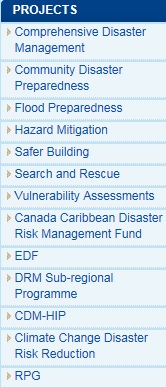
The Caribbean Disaster Emergency Management Agency (CDEMA)[1] is an inter-regional supportive network of independent emergency units throughout the Caribbean region; see Appendix below. Originally formed as the Caribbean Disaster Emergency Response Agency (CDERA) it under-went the name change to CDEMA in September 2009.
See Photo below for a listing of the CDEMA functionality:
The participating member states and agencies of the CDEMA include:
National Coordination Center For Disaster Relief (NCCR)
Trinidad and Tobago
Office of Disaster Preparedness and Management (ODPM)
Turks and Caicos Islands
Department of Disaster Management & Emergencies
What about regional defense?
There is a regional initiative branded the Regional Security System (RSS); it is an international agreement for the defense and security of the eastern Caribbean region. The Regional Security System was created out of a need for collective response to security threats, which were impacting on the stability of the region in the late 1970s and early 1980s. On 29 October 1982 four members of the Organisation of Eastern Caribbean States—namely, Antigua & Barbuda, Dominica, St. Lucia, and St. Vincent & the Grenadines—signed a memorandum of understanding (MOU) with Barbados to provide for “mutual assistance on request”. The signatories agreed to prepare contingency plans and assist one another, on request, in national emergencies, prevention of smuggling, search and rescue, immigration control, fishery protection, customs and excise control, maritime policing duties, protection of off-shore installations, pollution control, national and other disasters and threats to national security. Saint Kitts & Nevis joined following independence in 1983, and Grenada joined two years later.
These two initiatives CDEMA and RSS constitutes the regional security solutions for the Caribbean. “Our thimble runneth over!”
What is the problem with CDEMA, RSS and CariCom? For starters these regional efforts, the Caribbean Community, does not represent the full community of the Caribbean; not even half of the Caribbean. Consider here:
CU Member states not included or participating in CDEMA, RSS or CariCom:
Cuba
Dominican Republic
US Territories (Puerto Rico, US Virgin Islands)
Dutch Territories (ABC Islands: Aruba, Bonaire, Curacao; SSS Islands: Saba, Saint Marteen; Saint Eustatius)
French Territories (Guadeloupe, Martinique, St. Barthélemy, St. Martin)
Secondly, CariCom has extreme funding challenges; the regional construct depends on income derived almost exclusively from grants from the American federal government (US-AID), Canadian agencies and the EU’s Development Fund (EDF). After 40 years of CariCom, it can be concluded that the CariCom Secretariat and regional organs fail to meet the needs of the Caribbean people, even for the people in its participating member-states. They are a great “talking head”; nothing more. The Go Lean book quotes an internal report (Page 92) complaining of the severe weaknesses of the regional construct, stating their tendency to announce decisions over new initiatives as if full implementation were imminent, resulting in a so-called “implementation deficit”.
Obviously, the established security solution is not fully established and does not really solve any threats; therefore the region is not secured.
This reality is pronounced early in the Go Lean book (Page 8) with this declaration regarding the promoters of the Go Lean movement, that they are …
… not affiliated with the CariCom or any of its agencies or institutions. This movement is not an attempt to re-boot the CariCom, but rather a plan to re-boot the Caribbean… This movement was bred from the frustrations of the Diaspora, longing to go home, to lands of opportunities. But this is not a call for a revolt against the governments, agencies or institutions of the Caribbean region, but rather a petition for a peaceful transition and optimization of the economic, security and governing engines in the region.
The Go Lean book is a petition for change and optimization, serving as a roadmap for the introduction and implementation of the technocratic Caribbean Union Trade Federation (CU). The CU would roll the charters of CDEMA, RSS and CariCom into one consolidated, integrated and collaborated effort. The CU is set to optimize Caribbean society through economic empowerment, and also homeland security in the region, since these are inextricably linked to this same endeavor.
Therefore the Go Lean roadmap has 3 prime directives:
Optimization of the economic engines in order to grow the regional economy to $800 Billion & create 2.2 million new jobs.
Establishment of a security apparatus to protect the resultant economic engines and theCaribbean homeland.
Improvement of Caribbean governance to support these engines.
The CU Homeland Security forces have to always be “on guard”, on alert for real or perceived threats. The legal concept is one of being deputized by the sovereign authority for a role/responsibility in a member-state. So when “crap” happens these CU forces are expected to aid, assist, and support local resources in these member-states when called on. But, when a member-state is the problem, in terms of malfeasance, misfeasance or nonfeasance, the “Clear and Present Danger” mandate should be invoked. As a security apparatus, there should also be certain defined threats that would be designated as primarily assigned to the CU; this would apply in a Declaration of War against a known state-sponsored enemy.
But the world has now changed; there is the new threat of an unknown, non-state-sponsored enemy: the scourge of terrorism. Consider the situation in the United States, we all know of the World Trade Center attacks on September 11, 2001, but since then terrorist attacks have actually been a constant threat in the US. In a recent blog/commentary, it was reported that there were 17 terrorist attacks against the American homeland in this decade alone, since 2010. Surely the threat of terrorism is a “clear and present danger” in the US.
The CU treaty calls for the mitigation of terrorism to be a constant charter for the CU Homeland Security forces.
For most of the Caribbean, we are allied with the US; we even have two US Territories “smack-dab” in the middle of our archipelago. So the American terrorist-enemies are very much our enemies. Therefore the CU/Go Lean roadmap posits that the region must prepare an optimized security apparatus for its own security needs. This time for real!
The request is that all Caribbean member-states empower a security force to execute a limited scope on their sovereign territories. The legal basis for this empowerment is a Status of Forces Agreement (SOFA), embedded at the CU treaty initiation, thereby authorizing the CU Homeland Security Department for its role and responsibility for all the “crap” that could happen to the peace and prosperity of the Caribbean people. The CU Trade Federation would lead, fund and facilitate a security force, even encapsulating existing armed forces (full-time or part-time/reserves) as needed, at the discretion of the CU Commander-in-Chief.
The existing Caribbean Security initiatives have failed the region. Despite the existence of agencies like the CDEMA and RSS, the CariCom has not ascended to prominence in local communities. Most people do not even know these agencies exist. It is not seen, heard or felt. This is not the level of governance the Caribbean region needs; we need more; we need better. Previous Go Lean commentaries have meticulously detailed the overall failure of CariCom.
Perhaps the problem is economics (funding)? Or perhaps the security enablement (legal authorization to act)? Or perhaps, its the governance and administration? There are many questions; the only answer that matters is the solutions must address the Clear and Present Dangers.
Consider these monumental episodes and events in the Caribbean region that have occurred in the recent past; the expectation is that they would have invoked the “Clear and Present Danger” clause for engagement from the CDEMA entity. The following list is the Top 20 disasters in CDERA member states, according to the CDEMA published database and sorted by total losses:
Was there a noticeable Caribbean-Regional presence in response to these disastrous events?
There are also examples of Industrial Incidents – Chemical Spills – not on the CDEMA list; (the exclusion is inexcusably surprising). These would have gotten the attention of CU Emergency Management agencies, as these also pose a “Clear and Present Danger”. This sample list is just for Jamaica:
The presence of this regional construct has not been felt in most of the Caribbean member-states. They have emerged more as an after-the-fact data collector. The burden of direct remediation, beyond the direct member-state, is elusive in the Caribbean homeland. Consider this short-list of emphatic disasters that, to date, have remained unmanaged and unresolved, despite the “Clear and Present Dangers”:
January 2010 Earthquake – Long drawn-out inadequate response from local, national and foreign stakeholders.
There is a difference between effectiveness and efficiency. It is easy for an individual or small group to simply deliver on a plan; that is efficiency. Effectiveness would be to get the buy-in from all stakeholders, so as to complete the needed collaboration, consensus-building and compromise. That is heavy-lifting.
All in all, the failures of CariCom, CDEMA and RSS are attributable to this one premise: “Too little, too late”.
It is time for more and better. By contrast, the CU‘s requirement for the SOFAis “Step One, Day One” in the Go Lean roadmap. The CU organization must be empowered for proactive and reactive management of natural disasters, industrial accidents, bacterial & viral pandemics and terrorism-related events. The Go Lean book details the series of community ethos, strategies, tactics, implementations and advocacies to provide the proactive and reactive public safety/security in the Caribbean region:
Community Ethos – Economic Systems Influence Individual Choices
Page 21
Community Ethos – Consequences of Choices Lie in Future
Page 21
Community Ethos – Privacy –vs- Public Protection
Page 23
Community Ethos – Intelligence Gathering
Page 23
Community Ethos – Whistleblower Protection
Page 23
Community Ethos – “Crap” Happens
Page 23
Community Ethos – Cooperatives
Page 25
Community Ethos – Ways to Manage Reconciliations
Page 34
Community Ethos – Ways to Improve Sharing
Page 35
Community Ethos – Ways to Promote Happiness
Page 36
Community Ethos – Ways to Impact the Greater Good
Page 37
Strategy – Vision – Confederating a non-sovereign permanent union
Published on Jun 19, 2012 – This is the third film based on Tom Clancy’s high-tech espionage potboilers starring CIA deputy director Jack Ryan. Harrison Ford, returning to the Ryan role after his first go-round in 1992’s Patriot Games, is assigned to a delicate anti-drug investigation after a close friend of the President (a Reaganesque Donald Moffat) is murdered by a Colombian drug cartel. When Ryan discovers that the President’s wealthy friend was in league with the cartel, the President’s devious national security adviser (Harris Yulin) and an ambitious CIA deputy director (Henry Czerny) send a secret paramilitary force into Colombia to wipe out the drug lords. The force is captured and then abandoned by the President’s lackeys. It falls to Ryan to enter Colombia and rescue them, aided only by a renegade operative named Clark (Willem Dafoe), with both his life and career on the line.
The adoption of a “Clear and Present Danger” mandate is reflective of a technocratic work edict and community ethos. We can and must do better!
The advocacy to adopt the structure of a technocracy is reflective of this commitment to do better. The term technocracy is used to designate the application of the scientific method to solving social and economic problems. The CU must start as a technocracy, not grow into a technocracy – too much is at stake – lives are involved; see Appendix B below of Haiti’s Earthquake Photos.
All of the Caribbean is hereby urged to lean-in to this roadmap, to make the Caribbean safer and make the region a better destination to live, work and play.
Specific Roles and Responsibilities of the CDM Coordination and Harmonization Council:
Contribute to and provide recommendations for the development and implementation of a CDM monitoring and evaluation framework.
To consider reports on CDM implementation and provide guidance towards sustainability.
Identify and Provide recommendations for the integration of ongoing initiatives as well as planned initiatives that will support the achievement of the outcomes enshrined in the enhanced CDM Strategy
Discuss and address issues and opportunities to further good governance of the CDM
Nurture opportunities for synergies between development partners, participating states, representatives of the private sector, civil society and other relevant stakeholders responsible for the mainstreaming of the CDM strategy in development planning.
Provide policy guidance for the maintenance of the CDM database to ensure effective sharing of CDM knowledge.
Share annually with the CDM Programming Consultation meeting, progress on CDM implementation
Identify a technical committee to support the planning process for the CDM Conference
The CDM Coordination and Harmonization Council comprise development partner representatives, sector leaders, participating states and private sector. The group includes:
“This is my island in the sun, willed to me by my Father’s hand” – Iconic Calypso song: Island in the Sun
No one doubts the historicity of this expression. Even the Bible lays the premise for the granting of an inheritance by the Declaration of a Father; consider this verse: “A good person leaves an inheritance for their children’s children”. – Proverbs 13:22 – New International Version
So without a doubt a “Last Will & Testament” is a decree/charter that grants property to a beneficiary, just by words; no exchange of capital or valuables. This is perhaps the simplest form of a charter or decree.
They get more complex, like with Papal Bulls, Royal Charters and/or Royal Decrees. See Photo here.
Consider first the Papal Bull – “letters patent” or charter issued by a Pope, the Head of the Roman Catholic Church; see Appendix A below. The most iconic of all the Papal Bulls was the Inter caetera (Latin for “Among other [works]”) a Papal Bull by Pope Alexander VI on 4 May 1493, which set a demarcation between the New Lands to Portugal and Spain; this granted to Spain (the Crowns of Castile and Aragon) all lands to the “west and south” of a pole-to-pole line 100 leagues west and south of any of the islands of the Azores or the Cape Verde islands.[1] All new lands to the East of this pole remained assigned to Portugal.
Just before this world-changing decree, there was an earlier Papal Bull that sealed the fate and would prejudice the African Diaspora for 500 years. The African Slave Trade and institution of “Slavery” was legally predicated on a Papal Bull from Pope Innocent VIII (Giovanni Battista Cybo) in 1491; just months before Christopher Columbus’s historic first voyage. Consider this encyclopedic reference:
In his book “Black Africans in Renaissance Europe”, principal author N. H Minnich* described how the position of Renaissance popes towards slavery, a common institution in contemporary cultures, varied. The book states that those who allowed the slave trade did so in the hope of gaining converts to Christianity.[11] But in the case of Pope Innocent VIII, he permitted trade with Barbary # merchants, in which foodstuffs would be given in exchange for slaves who could then be converted to Christianity.[11]
This was the de jure authorization of the Slave Trade.
One early adopter of this new commerce was King Ferdinand of Aragon (co-sponsor along with Castile’s Queen Isabella of the initial voyage of Christopher Columbus); he gave Pope Innocent VIII 100 Moorish slaves who shared them out with favored Cardinals.[12]
From this origin, the foundation of the New World was established … with the stroke of a pen.
Any monarchy, democracy, aristocracy, stratocracy, timocracy or theocracy that emerged subsequently in the New World stemmed from this genesis of Papal or Royal Charters. All of these forms of rulership are analyzed in the book and accompanying blogs for Go Lean…Caribbean. This book provides an assessment of the Caribbean today, drawing reference to its historic past. From the origins of slavery, the region traversed the historic curves of social revolution and evolution. In the 1500, the Protestant movement took hold. As other European powers deviated from Catholicism, Papal Bulls carried no significance to them and compliance was ignored. England and Holland established their own Protestant Churches with their own monarchs as head of Church and State; Papal decrees were replaced with Royal Decrees and Charters; see Appendix B below. The intent and end-result was still the same: territories and lands awarded (colonized) with the stroke of a pen by one European power after another. The Royal Decrees and Charters were then reinforced with a strong military presence and many battles. This point was detailed in the Go Lean book on Page 241:
The Bottom Line on European Colonialism The European colonial period was the era from the 1500s to the mid-1900s when several European powers (Spain, Britain, the Netherlands, France and Portugal) established colonies in the Americas, in a Space Race to dominate the New World. The Northern Coast of South America became a typical New World battleground for conflict and pushing between these powers, and many military campaigns and diplomatic initiatives (treaties) ensued. Through the contact period following the 1498 discovery by Christopher Columbus, the term “Guiana” was used to refer to all this area, between the Orinoco, the Rio Negro, and the Amazon rivers; it was seen as a unified, isolated entity that it was often referred to as the “Island of Guiana”. The real interest in the exploration and colonization of the Guianas did not begin until the end of the sixteenth century when the other European powers developed interest in the Guianas. When did this European Colonial “push-shove-match” end? Not until almost 500 years later, after World War II, after the effects of that war left all these European powers drained – of finances and the will to continue.
Early in the Go Lean book, this need for careful review of the history of European domination on the Caribbean was acknowledged and then placed into perspective with this pronouncement (Declaration of Interdependence –Page 10):
As the history of our region and the oppression, suppression and repression of its indigenous people is duly documented, there is no one alive who can be held accountable for the prior actions, and so we must put aside the shackles of systems of repression to instead formulate efficient and effective systems to steer our own destiny.
As the colonial history of our region was initiated to create economic expansion opportunities for our previous imperial masters, the structures of government instituted in their wake have not fostered the best systems for prosperity of the indigenous people.
So the consideration of the Go Lean book, as related to this subject is one of governance, the need for technocratic stewardship of the regional Caribbean society. This point was also pronounced in the opening Declaration of Interdependence (Page 12) with these acknowledgements and statements:
xi. Whereas all men are entitled to the benefits of good governance in a free society, “new guards” must be enacted to dissuade the emergence of incompetence, corruption, nepotism and cronyism at the peril of the people’s best interest. The Federation must guarantee the executions of a social contract between government and the governed.
xii. Whereas the legacy in recent times in individual states may be that of ineffectual governance with no redress to higher authority, the accedence of this Federation will ensure accountability and escalation of the human and civil rights of the people for good governance, justice assurances, due process and the rule of law. As such, any threats of a “failed state” status for any member state must enact emergency measures on behalf of the Federation to protect the human, civil and property rights of the citizens, residents, allies, trading partners, and visitors of the affected member state and the Federation as a whole.
xiii. Whereas the legacy of dissensions in many member-states (for example: Haiti and Cuba) will require a concerted effort to integrate the exile community’s repatriation, the Federation must arrange for Reconciliation Commissions to satiate a demand for justice.
Let’s add one more option to the forms of rulership that prevailed in the Caribbean: Oligarchy!
The etymology of the word “oligarchy” (from Greek olígos, meaning “few”, and arkho, meaning “to rule or to command”)[1][2][3] is a form of power structure in a state where power effectively rests with a small number of people. These people could be distinguished by royalty, wealth, family ties, education, corporate, religious or military control.
In this discussion of oligarchy, focus is given to powerful families. There are encyclopedic references that relate that oligarchy structures are often controlled by a few prominent families, who typically pass their influence/wealth from one generation to the next, even though inheritance alone is not a necessary condition for oligarchies to prevail.
The islands of the Caribbean fit the story-line in the opening song lyrics: “Islands in the sun; willed to me by my father’s hand”.
This is the challenge that belies Caribbean society. Most of the property and indigenous wealth of the Caribbean region is concentrated amongst the rich, powerful and yet small elite; an oligarchy. Many times these families received their property, corporate rights and/or monopolies by Royal Charter from the European monarchs of ancient times. These charters thus lingered in legacy from one generation to another … until …
World War II.
According to the initial quotation above (Bottom Line on European Colonialism) from the Go Lean book, World War II was the “watershed event” that led to revolutionary change among the European powers. The “Decolonization” movement thusly proceeded to eradicate the “colonialism disease”. Most Caribbean member-states that now feature an independent status obtained this disposition during this time period since WW II; (i.e. Jamaica in 1962, Bahamas in 1973). The European direct rule was gone, but the oligarchs remained; many times negotiated in initial constitutions as a compromise for peace assurances.
The subject of oligarchs is very familiar on the African continent. This has been a real issue there. In many countries after colonialism, like Zimbabwe (1980), the cure for the oligarch disease was nationalization – forfeiting and seizing commercial farms and mines. This turned out disastrously for this country; the cure was worse than the disease. But, next door in South Africa, the strategy, tactics and implementation was different. This country did not ascend to majority rule until 1994; the first President there, Nelson Mandela saw the futility of this nationalization strategy amongst the precedent African nations that sought independence, so he pursued an alternate approach to assuage White Flight and keep the capital and skilled labor in the country. But the continuation of the oligarchs’ ill-gained, and public-perceived-stolen assets forged problems in the reality of economic/wealth inequality. Majority rule therefore brought no revolutionary change for the average man.
Considering these case studies, we see a lesson in this history, an obvious appreciation for best-practices … to apply in the Caribbean. We derive best-practices and prudence by applying these lessons from history, as reflected in the Go Lean book.
This is the quest of the Go Lean…Caribbean book; to serve as a roadmap for the introduction and implementation of the technocratic Caribbean Union Trade Federation (CU); to spearhead the elevation of Caribbean society. The book advocates learning lessons from many events and concepts in history, from as far back as the patriarchal Bible times, to as recent as the Great Recession of 2008. The roadmap simply seeks to reboot the region’s economic, security and governing engines, hypothesizing that the European colonial stewards did not have societal efficiency in mind when they structured administrations of the individual countries/island-states in this region; (they didn’t even apply the best practices that they employed in Europe).
In general, the CU will employ better strategies, tactics and implementations to impact its prime directives; identified with the following 3 statements:
Optimization of the economic engines in order to grow the regional economy to $800 Billion & create 2.2 million new jobs.
Establishment of a security apparatus to protect the resultant economic engines and mitigate internal and external threats.
Improve Caribbean governance to support these engines.
The Go Lean book stresses key community ethos, strategies, tactics, implementations and advocacies necessary to transform and turn-around the eco-systems of Caribbean society. These points are detailed in the book as follows:
Community Ethos – Economic Principles – Economic Systems Influence Individual Choices
Page 21
Community Ethos – Economic Principles – Consequences of Choices Lie in the Future
Page 21
Community Ethos – Governing Principles – Lean Operations
Page 24
Community Ethos – Ways to Impact the Future
Page 26
Community Ethos – Ways to Manage Reconciliations
Page 34
Community Ethos – Ways to Impact the Greater Good
Page 37
Strategy – Vision – Confederate all 30 member-states/ 4 languages into a Single Market
Page 45
Strategy – Mission – Build and foster local economic engines
Page 45
Tactical – Ways to Foster a Technocracy
Page 64
Tactical – Growing the Economy – Post WW II European Marshall Plan Model
Page 68
Tactical – Separation-of-Powers – CU Federal Government versus Member-State Governance
Page 71
Implementation – Assemble All Regionally-focus Organizations of All Caribbean Communities
Page 96
Implementation – Ways to Better Manage Debt
Page 114
Planning – 10 Big Ideas – Single Market / Currency Union
Page 127
Planning – Ways to Model the new European Union
Page 130
Planning – Ways to Make the Caribbean Better
Page 131
Planning – Ways to Improve Failed-State Indices – Minority and Human Rights
Page 134
Planning – Lessons Learned from the previous West Indies Federation
Page 135
Planning – Lessons Learned from 2008 – Optimizing Economic-Financial-Monetary Engines
Page 136
Planning – Lessons Learned New York City – Managing as a “Frienemy”
Page 137
Planning – Lessons Learned from Omaha – Human Flight Mitigations
Page 138
Planning – Lessons Learned from East Germany – Bad Examples for Trade & Security
Page 139
Planning – Lessons Learned from Detroit – Turn-around from Failure
Page 140
Planning – Lessons Learned from Indian Reservations – See Photo here
Page 141
Planning – Lessons Learned from the American West – How to Win the Peace
Page 142
Advocacy – Ways to Grow the Economy
Page 151
Advocacy – Ways to Create Jobs
Page 152
Advocacy – Ways to Improve Governance
Page 168
Advocacy – Ways to Better Manage the Social Contract
Page 170
Advocacy – Ways to Improve Homeland Security
Page 180
Advocacy – Ways to Better Manage Natural Resources
Page 183
Advocacy – Ways to Preserve Caribbean Heritage
Page 218
Appendix – Failed-State Index for Uneven Economic Development
Page 272
Appendix – European Shuffling in the Guianas – Historic Timeline
Page 307
There are other lessons for the Caribbean to learn from considering history; the following previous blog/commentaries apply:
Letters patent are a type of legal instrument in the form of a published written order issued by a monarch or president, generally granting an office, right, monopoly, title, or status to a person or corporation. They are so named from the Latin verb pateo, to lie open, exposed, accessible.[1] The originator’s seal was attached pendent from the document, so that it did not have to be broken in order for the document to be read.
They are called “letters” (plural) from their Latin name litterae patentes, used by medieval and later scribes when the documents were written in Latin, in the ancient sense of a collection of letters of the alphabet arranged to be read rather than in the modern sense of an “epistle” or item of correspondence: thus no singular form exists.[2]
Letters patent can be used for the creation of corporations or government offices, or for the granting of city status or a “coat of arms”. A particular form of letters patent has evolved into the modern patent (referred to as a utility patent or design patent in United States patent law) granting exclusive rights in an invention (or a design in the case of a design patent). Clearly in this case it is essential that the written grant should be in the form of a public document so other inventors can consult it to avoid infringement.
The Hudson’s Bay Company; founded by a Royal Charter issued in 1670 by King Charles II (administration of parts of Northern Ontario & Judicial connections with Upper Canada) [12]
Appendix * – Book Reference: “Black Africans in Renaissance Europe”, N. H Minnich, Thomas Foster Earle, K. J. P. Lowe, Cambridge University Press, 2005, ISBN 0-521-81582-7
———–
Appendix # – Reference: Barbary Pirates
These are the “pirates” referred to in the Bob Marley’s Redemption Song with these lyrics:
Old pirates, yes, they rob I;
Sold I to the merchant ships,
Minutes after they took I
From the bottomless pit.
But my hand was made strong
By the ‘and of the Almighty.
We forward in this generation
Triumphantly.
The Caribbean Community (CariCom) in general and Jamaica in particular had the great privilege of hosting the United States President Barack Obama. He is the first Black Man to hold that esteemed office. In his visit, he was hailed as a conquering hero for agreeing to attend a regional meeting on Caribbean soil, thereby facilitating consultation and collaboration on regional issues between Caribbean government officials and the Chief Executive of the American Republic. Though the Caribbean member-states have no vote in the US Capitol of Washington DC, including the US Territories of Puerto Rico and the Virgin Island, we do have a voice. The Jamaica meeting allowed more audiences for those voices.
The US is the world’s largest, and richest, single market economy – an economic and military Super Power – plus the largest trading partner for most Caribbean member-states. We are directly affected by the economic, security and governing policies emanating from the shores of America. This focus aligns with the book Go Lean…Caribbean which seeks to elevate the Caribbean economic, security and governing engines. Begrudgingly, the book admits that the Caribbean is only a parasite of the American eco-system but presents a roadmap to elevate the region to a better status: protégé instead of parasite.
Due to constitutionally mandated term limits, President Obama only has less than 2 years left in his administration. The focus now moves to his possible successor. The next presidential election in the US is set for November 2016. Despite being 18 months away, the jockeying has begun. Will the next president be a Democrat or a Republican? Will their policies be Pro-Caribbean, Anti-Caribbean or completely agnostic; indifferent to the Caribbean’s needs and issues? Agnosticism is not far-fetch as this is the observation given by President Obama. He concluded that 55 years of indifference towards Cuba was long-enough and he has “set the machinery in motion” to normalize relations with Cuba. Will this initiative continue with the new president? The world will have to wait-and-see.
As of this writing, 4 people have already officially declared and launched their campaigns, 1 Democrat (Hillary Clinton) and 3 Republicans (Ted Cruz, Rand Paul, and Marco Rubio). Most stakeholders in the Caribbean may think that the Democratic Party may be more conducive to Caribbean elevation. But still, the decision of American leadership is not ours to make nor influence. We must simply convene, consult and collaborate with whomever the elected official is, Democrat or Republican.
This commentary therefore asserts that we need to work to influence both sides of the American political divide; perhaps even more on the Republican side, since as of late, their policies are less empowering for African-American, and less empowering for the Caribbean. Therefore, there is the need for more mitigation and remediation for the Republican party … as of late.
As of late…
… because the Republican Party, commonly referred to as the GOP (abbreviation for Grand Old Party), was founded by anti-slavery activists in 1854. (The Caribbean and the United States share the same historic legacy of slavery and the slow drag throughout history to remediate the experiences and injustices for this Black-and-Brown population). The GOP dominated politics nationally and in most of the northern U.S. for most of the period between 1860 and 1932. There have been 18 Republican U.S. presidents, the first being Abraham Lincoln, who served from 1861 until his assassination in 1865, and the most recent being George W. Bush, who served two full four-year terms 2001 to 2009. The most recent Republican presidential nominee was former Massachusetts governor Mitt Romney who lost in 2012 to the incumbent president, Democrat Barack Obama. See the full 19th and 20th Century history of the GOP in the Appendix below.
Today, the party’s platform is generally based on American conservatism,[8][9][10] in contrast to the contemporary American liberalism of the rival Democratic Party. The Republican Party’s conservatism involves supporting free market capitalism, limited government, strong national defense, opposing regulation and labor unions, and supporting socially conservative policies.[2] Civil rights, or issues related to empowering minorities, are not identified with the Republican Party. What a change compared to the historic beginnings of this party.
In the current 114th U.S. Congress, the Republicans have their largest majority in the U.S. House of Representatives since the 1928 election; the GOP also holds a majority of seats in the Senate.[12] The party also holds a majority of governorships and state legislatures.[13]
It is what it is!
We must seek to engage Republicans. It is only the US Presidency that is missing in their echelon of American power.
There is expected to be a full corps of Republican presidential candidates for 2016. Some of the names that have expressed interest in running include the following, but these ones have not officially launched their federal campaigns … yet:
Jeb Bush – former 2-term Florida Governor
Mike Huckabee – former Arkansas Governor and 2008 presidential candidate
Chris Christie – Current Governor of New Jersey
Donald Trump – Popular Billionaire businessman and media personality
Ben Carson – Retired neurosurgeon and businessman; he happens to be an African-American; see article here:
Title: Will He Run? Ben Carson Set To Address Presidential Plans In May 4 Announcement
He may announce his bid to run for president in 2016. He may not.
But whatever Ben Carson’s political aspirations are, we’ll all know when he makes them public in a May 4 announcement in Detroit, his team tells [news outlet] CNN.
The announcement, set to take place at the Detroit Music Hall Center for Performing Arts, is expected to be the launch for his presidential bid. Details, including ticketing and the subject of the announcement, however, have “yet to be hammered out,” Carson spokeswoman Deana Bass said.
“He will make an announcement. But he’s still very much in the exploratory phase, so he hasn’t made a decision yet,” she said.
From CNN: The retired neurosurgeon has been traveling the nation over the past six months, giving paid speeches and meeting with supporters to gauge interest in a bid. He recently traveled to Iowa and New Hampshire, and spoke last weekend at the National Rifle Association’s meeting in Tennessee. Carson’s relative political inexperience, however, hasn’t turned him away from the campaign — if he runs, he’ll look to make it an asset, framing himself as a common-sense alternative to the broken policies of Washington politicians.
So far, the presidential race has gained three GOP senators — Rand Paul of Kentucky, Ted Cruz of Texas, and Marco Rubio of Florida — but Carson’s green political experience (and the already full pot of GOP candidates) doesn’t seem to be a deterrent. And according to the Real Clear Politics average of polls, he may have a real shot.
From CNN: Carson surveys right in the middle of the potential GOP field, ahead of more seasoned or better-known GOP contenders like former Arkansas Gov. Mike Huckabee or Rubio, and he took fifth place with 9% support in the last CNN/ORC survey, conducted in March.
Still, that’s a marked decline from late February, when he was polling in the top three of the pack, indicating he still has some work to do in proving his credibility with voters.
Is the United States ready for a second Black Man to assume the highest office in the land? Is Ben Carson ready? Is Black America ready for this Black Republican?
These are all appropriate questions. From the Caribbean perspective, we will observe-and-report on these developments.
The focus of the Go Lean book is not American politics, but rather the economic, security and governing engines of the Caribbean. Yet still, we need to have a productive relationship with the American federal government and whichever administration is in the White House. The book serves as a roadmap for the introduction and implementation of the Caribbean Union Trade Federation (CU); an initiative to bring “Hope and Change” to the Caribbean region; to make the region a better place to live, work and play. This Go Lean roadmap also has these 3 prime directives:
Optimization of the economic engines in order to grow the regional economy to $800 Billion & create 2.2 million new jobs.
Establishment of a security apparatus to protect the resultant economic engines.
Improvement of Caribbean governance to support these engines.
The book describes the CU as a technocratic administration with 144 different missions to elevate the Caribbean homeland. The underlying goal is stated early in the book with this pronouncement in the opening Declaration of Interdependence (Page 12):
xii. Whereas the legacy in recent times in individual states may be that of ineffectual governance with no redress to higher authority, the accedence of this Federation will ensure accountability and escalation of the human and civil rights of the people for good governance, justice assurances, due process and the rule of law…
The Go Lean roadmap represents “Hope and Change” for the Caribbean. In 2008, Barack Obama propelled forward into American conscience with that theme “Hope and Change“, now the effort is to propel an initiative for the Caribbean. We have some serious crises to contend with. We need hope and we need change…now.
This fact was enunciated by Obama in his visit to Jamaica. He explained how we have to better manage our interactions with Super Powers to ensure we are getting the sought-after benefits, and not being exploited for their self-interest. The President prescribed a formula for the Caribbean’s dealing with China … and also America itself.
VIDEO: President Barack Obama’s response on China’s involvement in Jamaica’s Development – https://youtu.be/rRaQjukEPOo
Published on
Apr 22, 2015 — We are a movement of Jamaicans both at Home and Abroad who are willing to fight for real and lasting change. This isn’t for everyone — we’re Changing Jamaica Through Leadership, and we’re proud of it. If you’re someone who’d rather get involved than sit back, if you refuse to be cynical about what we can get done together, then you should be part of this at www.ourjamaicavote.org
The Go Lean roadmap was constructed with the following community ethos in mind, plus the execution of strategies, tactics, implementation and advocacies to elevate the Caribbean eco-system. The following is a sample of these specific details from the book:
Assessment – Caribbean Community’s stalled Single Market Initiative
Page 15
Community Ethos – Economic Principles – People Choose
Page 21
Community Ethos – Economic Principles – All Choices Involve Costs
Page 21
Community Ethos – Economic Principles – People Respond to Incentives in Predictable Ways
Page 21
Community Ethos – Economic Principles – Economic Systems Influence Individual Choices
Page 21
Community Ethos – Economic Principles – The Consequences of Choices Lie in the Future
Page 21
Community Ethos – Security Principles – “Crap” Happens
Page 23
Community Ethos – Governing Principles – Minority Equalization
Page 24
Community Ethos – Governing Principles – Lean Operations
Page 24
Community Ethos – Ways to Impact the Future
Page 26
Community Ethos – Ways to Foster Genius – Leadership Skills/Development
Page 27
Community Ethos – Ways to Manage Reconciliations
Page 34
Community Ethos – Ways to Impact the Greater Good
Page 37
Strategy – Vision – Confederation of the 30 Caribbean Member-States into a Single Market
Page 45
Strategy – Mission – Celebrate the Music, Sports, Art, People and Culture of the Caribbean
Page 46
Tactical – Confederating a Permanent Union
Page 63
Tactical – Fostering a Technocracy
Page 64
Tactical – Separation of Powers: Federal Administration versus Member-States Governance
Page 71
Implementation – Ways to Pay for Change
Page 101
Implementation – Ways to Deliver
Page 109
Planning – 10 Big Ideas for the Caribbean Region
Page 127
Planning – Ways to Improve Trade
Page 128
Planning – Ways to Make the Caribbean Better
Page 131
Planning – Ways to Better Manage Image
Page 133
Planning – Lessons Learned from Detroit
Page 140
Advocacy – Ways to Grow the Economy
Page 151
Advocacy – Ways to Create Jobs
Page 152
Advocacy – Ways to Improve Governance in the Caribbean Region
Page 168
Advocacy – Ways to Better Manage the Social Contract
Page 170
Advocacy – Ways to Improve Leadership
Page 171
Advocacy – Ways to Improve Homeland Security
Page 180
Advocacy – Ways to Improve Communications
Page 186
Advocacy – Ways to Preserve Caribbean Heritage
Page 218
Advocacy – Ways to Reboot Cuba
Page 236
There is a consistency with this Go Lean commentary, applying lessons from a consideration of historic events and people. The premise is simple:
Those who refuse to learn from history are forced to repeat it.
A Lesson in History: America’s War on the Caribbean
The Go Lean roadmap seeks to empower and elevate Caribbean engines. It is out-of-scope to impact the US. That will be the campaign of the presidential candidates, perhaps also including Ben Carson. He would not be the first Black Republican presidential candidate; in fact in 2012 Herman Cain ran a substantial campaign for much of that “season” – a one-time front-runner. Further, in 2000, former ambassador Alan Keyes sought the Republican nomination for President.
Will “Ben Carson” campaign change the Republican party, making it more amiable to the Black Community? Did the previous candidates (Herman Cain & Alan Keyes) impact the party? It is only logical to conclude that each attempt by serious Black candidates will “crack the glass ceiling”; then eventually a substantial Black candidate will “break through”.
Will “Ben Carson” be that candidate? Let’s observe-and-report.
Founded in the Northern states in 1854 by anti-slavery activists, modernizers, ex-Whigs, and ex-Free Soilers, the Republican Party quickly became the principal opposition to the dominant Democratic Party and the briefly popular Know Nothing Party. The main cause was opposition to the Kansas–Nebraska Act, which repealed the Missouri Compromise by which slavery was kept out of Kansas. The Northern Republicans saw the expansion of slavery as a great evil. The first public meeting where the name “Republican” was suggested for a new anti-slavery party was held on March 20, 1854 in a schoolhouse in Ripon, Wisconsin.[14] The name was partly chosen to pay homage to Thomas Jefferson’s Republican Party.
The first official party convention was held on July 6, 1854, in Jackson, Michigan.[15] By 1858, the Republicans dominated nearly all Northern states. The Republican Party first came to power in 1860 with the election of Abraham Lincoln to the Presidency and Republicans in control of Congress and again, the Northern states. It oversaw the preserving of the union, the end of slavery, and the provision of equal rights to all men in the American Civil War and Reconstruction, 1861–1877.[16]
The Republicans’ initial base was in the Northeast and the upper Midwest [States].
Early Republican ideology was reflected in the 1856 slogan “free labor, free land, free men”, which had been coined by Salmon P. Chase, a Senator from Ohio (and future Secretary of the Treasury and Chief Justice of the United States).[17] “Free labor” referred to the Republican opposition to slave labor and belief in independent artisans and businessmen. “Free land” referred to Republican opposition to plantation system whereby slave-owners could buy up all the good farm land, leaving the yeoman independent farmers the leftovers. The Party strived to contain the expansion of slavery, which would cause the collapse of the slave power (“slaveocracy”) and the expansion of freedom.[18]
Lincoln, representing the fast-growing western states, won the Republican nomination in 1860 and subsequently won the presidency. The party took on the mission of preserving the Union and destroying slavery during the American Civil War and over Reconstruction. In the election of 1864, it united with War Democrats to nominate Lincoln on the National Union Party ticket.
The party’s success created factionalism within the party in the 1870s. Those who felt that Reconstruction had been accomplished and was continued mostly to promote the large-scale corruption tolerated by President Ulysses S. Grant ran Horace Greeley for the presidency. The Stalwarts defended Grant and the spoils system; the Half-Breeds pushed for reform of the civil service.
The GOP supported business generally, hard money (i.e., the gold standard), high tariffs to promote economic growth, high wages and high profits, generous pensions for Union veterans, and (after 1893) the annexation of Hawaii. The Republicans supported the pietistic Protestants who demanded Prohibition. As the northern post-bellum economy boomed with heavy and light industry, railroads, mines, fast-growing cities and prosperous agriculture, the Republicans took credit and promoted policies to sustain the fast growth.
Nevertheless, by 1890 the Republicans had agreed to the Sherman Antitrust Act and the Interstate Commerce Commission in response to complaints from owners of small businesses and farmers. The high McKinley Tariff of 1890 hurt the party and the Democrats swept to a landslide in the off-year elections, even defeating McKinley himself.
After the two terms of Democrat Grover Cleveland, the election of William McKinley in 1896 is widely seen as a resurgence of Republican dominance and is sometimes cited as a realigning election. McKinley promised that high tariffs would end the severe hardship caused by the [Economic] Panic of 1893, and that the GOP would guarantee a sort of pluralism in which all groups would benefit.
20th century
The 1896 realignment cemented the GOP as the party of big business, while Theodore Roosevelt added more small business support by his embrace of trust busting. He handpicked his successor William Howard Taft in 1908, but they became enemies on economic issues. Defeated by Taft for the 1912 nomination, Roosevelt bolted the party and led the third party ticket of the Progressive Party. The party returned to the White House throughout the 1920s, running on platforms of normalcy, business-oriented efficiency, and high tariffs. The national party avoided the prohibition issue after it became law in 1920.
The New Deal coalition of Democrat Franklin D. Roosevelt controlled American politics for most of the next three decades, excepting the two-term presidency of Republican Dwight D. Eisenhower. Blacks moved into the Democratic Party during the New Deal era; they could vote in the North but not in the South. After Roosevelt took office in 1933, New Deal legislation sailed through Congress and the economy moved sharply upward from the nadir in early 1933. However long-term unemployment remained a drag until 1940. In the 1934 midterm elections, 10 Republican senators went down to defeat, leaving them with only 25 against 71 Democrats. The House of Representatives likewise had overwhelming Democratic majorities.
The GOP split into a majority “Old Right” (based in the Midwest) and a liberal wing based in the Northeast that supported much of the New Deal. The Old Right sharply attacked the “Second New Deal” and said it represented class warfare and socialism. Roosevelt was reelected in a landslide in 1936 but everything went awry in his second term, as the economy plunged, strikes soared, and FDR failed to take control of the Supreme Court or to purge the Southern conservatives in the Democratic party. The GOP made a major comeback in the 1938 elections, and had new rising stars such as Robert A. Taft of Ohio on the right and Thomas E. Dewey of New York on the left.[19] Southern conservatives joined with most Republicans to form the conservative coalition, which dominated domestic issues in Congress until 1964. Both parties split on foreign policy issues, with the anti-war isolationists dominant in the GOP and the interventionists who wanted to stop Hitler dominant in the Democratic party. Roosevelt won a third and fourth term in 1940 and 1944. Conservatives abolished most of the New Deal during the war, but did not attempt to reverse Social Security or the agencies that regulated business.
Unlike the “moderate”, internationalist, largely eastern bloc of Republicans who accepted (or at least acquiesced in) some of the “Roosevelt Revolution” and the essential premises of President Truman’s foreign policy, the Republican Right at heart was counter-revolutionary, anti-collectivist, anti-Communist, anti-New Deal, passionately committed to limited government, free market economics, and congressional (as opposed to executive) prerogatives, the G.O.P. conservatives were obliged from the start to wage a constant two-front war: against liberal Democrats from without and “me-too” Republicans from within.[20]
The Democrats elected majorities to Congress almost continuously after 1932 (the GOP won only in 1946 and 1952), but the Conservative Coalition blocked practically all major liberal proposals in domestic policy. After 1945, the internationalist wing of the GOP cooperated with Harry Truman’s Cold War foreign policy, funded the Marshall Plan, and supported NATO, despite the continued isolationism of the Old Right.
The second half of the 20th century saw election or succession of Republican presidents Dwight D. Eisenhower, Richard Nixon, Gerald Ford, Ronald Reagan, George H. W. Bush and George W. Bush. Eisenhower had defeated conservative leader Senator Robert A. Taft for the 1952 nomination, but conservatives dominated the domestic policies of the Eisenhower Administration. Voters liked Ike much more than they liked the GOP, and he proved unable to shift the party to a more moderate position. After 1970, the liberal wing faded away.[21]
Ever since he left office in 1989, Reagan has been the iconic Republican; and Republican presidential candidates frequently claim to share his views and aim to establish themselves and their policies as the more appropriate heir to his legacy.[22] In 1994, the Party, led by House Minority Whip Newt Gingrich campaigning on the Contract with America, was elected to majorities to both houses of Congress in the Republican Revolution. However Gingrich was unable to deliver on most of its promises, and after the impeachment of President Bill Clinton in 1998 and subsequent Republican losses in the House, he resigned. Since Reagan’s day, presidential elections have been close. However, the Republican presidential candidate won a majority of the popular vote only in 2004, while coming in second in 1992, 1996, 2000, 2008 and 2012.
All of a sudden, the US wants to take the lead in providing energy solutions for the Caribbean. What happened?
Oh yeah, another suitor came calling on this beautiful “sweetheart” that the US had taken for granted. That suitor: Venezuela; (see Appendix).
Though this is a simplistic analogy, the appearance of romancing the Caribbean heart (and dollars) regarding energy fuel seems to follow the dramatic sequences of “teenage love”.
The book Go Lean… Caribbean relates (Page 100) how the Caribbean has among the most expensive energy costs in the world, despite having abundant alternative energy natural resources (solar, trade winds, tidal, geo-thermal). The societal administrations only focused on imported petroleum to provide energy options and as a result retail electricity rates in the Caribbean average US$0.35/kWh, when instead it could be down to US$0.088/kWh.
These are just the economic issues. There is also the matter of burning fossil fuels and contributing to global warming and climate change. For this teenage love scenario, that is too far-reaching for this original suitor; his only focus is the short-term. The Go Lean book posits that the embrace of this identified alternative energy generation source (Natural Gas) could be more impactful on the environment in addition to remediating the high energy costs.
The US is now the world largest energy producer. But Venezuela is the largest oil exporter in all of Latin America; they turned their attention – with their PetroCaribe program – to aid the Caribbean member-states with very attractive and enticing delivery and payment terms to consume more Venezuelan oil. Most of the independent Caribbean states acquiesced to these advances.
See the news article here from the NGI* entity about Liquefied Natural Gas (LNG):
Title: U.S. Backs Fuel Diversification, LNG Distribution Base in Jamaica By: Charlie Passut
The United States will help Jamaica with fuel diversification and embrace liquefied natural gas (LNG) for its energy needs, and will also back plans for the island nation to become a base for delivering LNG to the rest of the Caribbean region.
On Thursday [(April 9, 2015)], U.S. Department of Energy (DOE) Secretary Ernest Moniz signed an agreement with Jamaica’s energy minister, Phillip Paulwell, at the U.S.-CARICOM summit in Mona, Jamaica.
“We believe that Jamaica could be a part of [an LNG export] hub because of our geographic location, in proximity to places like Haiti and other areas in the western Caribbean,” Paulwell said, according to video of the summit provided by the government’s Jamaica Information Service (JIS). “After these meetings, we are hoping to zero in on some of the specificity.”
Moniz countered that DOE would help facilitate discussions between Jamaica and the Inter-American Development Bank, which provides financial and technical support to countries in Latin America and the Caribbean. He also suggested talks with the bank’s president, Luis Alberto Moreno.
“We are happy to [facilitate the discussions],” Moniz said on JIS. “We think it’s good for the Western Hemisphere and certainly good for the Caribbean in terms of energy security, environmental impact and economic development.”
Rick Smead, managing director of advisory services for RBN Energy LLC, said Jamaica had been expected to become a major trading center for LNG, with larger tankers coming in to offload onto smaller barges and tankers for shorter trips to the different islands.
“But until Secretary Moniz’s visit, I didn’t know how close we were to supporting that or doing anything to try to foster it,” Smead told NGI on Friday.
“One of the rapidly evolving dynamics of U.S. gas abundance, and especially our LNG export capability, is that in addition to the large volume [of international cargoes bound] for Europe and Asia, there should be a lot of opportunities for smaller cargoes to taxi all over the place in the Caribbean. The technology of both floating liquefaction and especially floating regasification along the lines of accelerates stuff, frees up the ability to go to a lot of these smaller markets without needing to build a giant regasification facility.
“There’s been a proliferation of smaller LNG transportation and regasification technologies all over the Caribbean, in large part in anticipation of there being a lot more supply available.”
Smead predicted that the U.S. will eventually become the world’s second or third largest exporter of LNG, with the Caribbean becoming a significant importer.
“The Caribbean [is] a very gas hungry market,” Smead said. “Being very close to the U.S. Gulf Coast, where four out of our five operational LNG export facilities that are close to getting done will be [located], it seems pretty obvious that there would be a lot of vitality to that market.”
Last month, American LNG Marketing LLC was granted DOE authorization to export up to 60,000 tonnes per annum of containerized LNG from Florida, mostly to free trade agreement (FTA) countries in the Caribbean and Central America (see Daily GPI, March 23).
In 2014, Carib Energy LLC, a subsidiary of Crowley Maritime Corp., won a multi-year contract to export containerized LNG produced in the U.S. to an undisclosed pharmaceutical company in Puerto Rico (see Daily GPI, Nov. 17, 2014). That followed DOE approval for Carib and Sempra Energy’s Cameron LNG project to export domestically-produced LNG. Both facilities are in Louisiana, on the Gulf Coast (see Daily GPI, Sept. 10, 2014
This foregoing news article highlights some important issues, most of which have been detailed in the Go Lean book. That publication coupled energy as a basic need with food, clothing and shelter; and then addressed ways to elevate Caribbean society by optimizing the delivery of these needs. The book serves asa roadmap for the introduction and implementation of the technocratic Caribbean Union Trade Federation (CU). This entity would serve as a regional confederation of all 30 Caribbean member-states to provide better leverage to source the energy resources for the region, including natural gas options that had previously been overlooked; (see Appendix-VIDEO below). Many benefits abound from this approach. This Go Lean roadmap identifies these benefits as prime directives, as detailed in these 3 declarative statements:
Optimization of the economic engines in order to grow the regional economy.
Establishment of a security apparatus to protect the resultant economic engines.
Improvement of governance to support these engines.
The motivation of the Go Lean…Caribbean book is love for this homeland and the quest to make it a better place to live, work and play. If the US now wants to show more leadership in this area, we welcome their positive contribution. But we stand cautioned in knowing that America is plagued with the history of prioritizing their self-interest above the needs of the Caribbean people. We now therefore dread an American leadership and instead look for a partnership. We want to be protégés and no longer parasites.
Early in the book, the need to better leverage our small Caribbean populations in trade negotiations with the US or Venezuela was pronounced in the Declaration of Interdependence (Page 11), with these statements:
viii. Whereas the population size is too small to foster good negotiations for products and commodities from international vendors, the Federation must allow the unification of the region as one purchasing agent, thereby garnering better terms and discounts.
xi. Whereas all men are entitled to the benefits of good governance in a free society, “new guards” must be enacted to dissuade the emergence of incompetence, corruption, nepotism and cronyism at the peril of the people’s best interest. The Federation must guarantee the executions of a social contract between government and the governed.
So we welcome America’s natural gas options; (see Appendix-VIDEO below) …
… and we add renewables and other energy alternatives into the mix for Caribbean energy. These would be more cost efficient and ecologically friendly for the planet, of which we share with our bigger neighbors in North and South America. This would truly be lean!
This concept of lean is very important for this roadmap to elevate Caribbean society. For the purpose of this effort, ‘lean’ is more than just a description, it’s a noun, a verb, an adjective and an adverb. It is also a commitment and a cause in which the entire Caribbean region is urged to embrace; or better stated: “lean in”.
Why were natural gas solutions not considered in the past?
It is an imported resource, just like petroleum; it requires the same logistical considerations as crude oil or refined products of gasoline and diesel. Except though natural gas (LNG) does not need to be refined, only converted from liquid form back to gas form: regasification. LNG is more stable for transport.
The Go Lean roadmap also anticipates the transport option of pipelines. The strategies, tactics and implementation (above ground, underground and undersea of this technology) have been fully detailed in the book. The roadmap thereby details the series of community ethos, strategies, tactics, implementations and advocacies to foster progress in the wide fields of energy generation and energy distribution. The following list applies:
Community Ethos – Lean Operations
Page 24
Community Ethos – Return on Investments
Page 24
Community Ethos – Cooperatives
Page 25
Community Ethos – Regional Taxi Commissions – To Adopt Natural Gas
Page 25
Community Ethos – Non-Government Organizations
Page 25
Community Ethos – Ways to Impact the Future
Page 26
Community Ethos – Ways to Improve Negotiations
Page 32
Anecdote – Pipeline Transport – Strategies, Tactics & Implementations
Page 43
Strategy – Harness the power of the sun/winds
Page 46
Tactical – Fostering a Technocracy
Page 82
Tactical – Separation of Powers – Energy Commission
Page 82
Anecdote – “Lean” in Government – Energy Permits
Page 93
Anecdote – Caribbean Energy Grid Implementation
Page 100
Implementation – Ways to Develop Pipeline Industry
Page 107
Implementation – Ways to Improve Energy Usage
Page 113
Advocacy – Ways to Foster Cooperatives
Page 176
Advocacy – Ways to Impact Monopolies
Page 202
The energy needs for the Caribbean are undeniable. The Caribbean region must take the lead in providing Caribbean energy needs. Though we welcome the US partnership, we should be cautious as to their motives and priorities. We accept that at this moment, the US may have altruistic motives, especially with declining oil prices possibly affecting Venezuela. But for far too often, American leadership has been motivated by crony-capitalistic intentions. The points of mitigating the risks of American Big Business (in this case Big Oil) were further elaborated upon in these previous blog/commentaries:
10 Things We Don’t Want from the US – #1: American Self-Interest
Fulfilling the Caribbean energy needs is a great target for lean, agile operations, perfect for the CU technocracy. This allows us to prove, to ourselves and to the world, that we can truly be protégés and not just parasites.
Now is the time for all of the Caribbean, the people, business, institutions and governments, to lean-in for the optimizations and opportunities described in the book Go Lean … Caribbean. 🙂
Download Go Lean … Caribbean – now!
———-
* Appendix – About …
NGI – Natural Gas Intelligence (NGI), is a leading provider of natural gas, shale news and market information for the deregulated North American natural gas industry. Since the first issue of Natural Gas Intelligence was published in 1981, NGI has provided key pricing and data relied upon daily by thousands of industry participants in the U.S, Canada and Mexico as well as Central and South America, Europe and Asia.
NGI Corporate – Natural Gas Intelligence (NGI), operating under the corporate entity of Intelligence Press, Inc., is the publisher of the NGI family of newsletters–a leading provider of news and physical market pricing information for the deregulated North American natural gas industry. Since the first issue of the Natural Gas Intelligence newsletter published in 1981, NGI has provided information and data relied upon daily by thousands of industry participants in the U.S, Canada and Mexico as well as Central and South America, Europe and Asia.
Published on Jan 23, 2015 – Advances in technology continue to make a wide range of energy supplies available to consumers. At the same time, the fuels that people and businesses choose to meet their needs continue to evolve. These choices are based not just on price, but also on attributes like convenience, performance and environmental effects. Natural gas is expected to be the fastest-growing major fuel through 2040.
“When a man longs for the town of his boyhood, it is not the town that he longs for, but rather his boyhood” – Old Adage.
There’s something about nostalgia; we always seem to only remember just the good times – the “Good Old Days”.
Grammy-award winning singer-songwriter Billy Joel asserted this truth in his song “Keeping the Faith” with this stanza:
You can get just so much
From a good thing
You can linger too long
In your dreams
Say goodbye to the
Oldies but goodies Cause the good ole days weren’t
Always good
And tomorrow ain’t as bad as it seems
(SeeVIDEO below in the Appendix)
The island-nation of Jamaica requested and was granted independence from the United Kingdom (UK) in 1962. According to the subsequent news article, the time before 1962, like the 1950’s, seems now to be nostalgic for many older Jamaicans. But this commentary posits that these ones are really just longing for a simpler time: with more economic prosperity, more jobs, more security (less crime), and more governing efficiency.
The book Go Lean … Caribbean aligns with the need for these same nostalgic benefits, to elevate the economic-security-governing engines of the Caribbean region, Jamaica included.
Like Billy Joel sang, the “good old days weren’t always good”. Colonialism was not all positive. The Jamaican masses were suppressed, oppressed and repressed. The majority Black population was marginalized in their own homeland, at the hand of a White minority. History teaches that this type of oppression only has one end-result: revolution. The UK had just participated in the Second World War – within the same generation – they had learned the bitter lessons of imperialism and could not – or would not – submit to the same failed course of action. Colonialism had failed … the planet, as evidenced by the two World Wars.
History is a great teacher; but failure, hunger, crime and despair are better teachers. There was a need for a better delivery of the implied Social Contract between Jamaica’s government and the governed; (where citizens surrender some of their freedoms and submit to the authority of the State in exchange for protection of remaining natural and legal rights). But as assessed by the polling responders in the following article: the new (50+ years) independent nation has simply failed … to deliver on the Social Contract obligations for their citizens:
Title: Bring back the British! Most Jamaicans say they would be better off ruled from London By:The Daily Mail – British Daily Newspaper; posted June 29, 2011; retrieved April 2, 2015 from: http://www.dailymail.co.uk/news/article-2009487/We-stayed-Britain-Shock-poll-reveals-60-Jamaicans-think-theyd-better-colony.html
Kingston– Most Jamaicans believe they would be better off if they were still ruled by Britain, a poll shows.
In a harsh indictment of nearly 50 years of independence, 60 per cent of those surveyed hanker for the days when the country was Britain’s biggest Caribbean colony.
Only 17 per cent said the crime-ridden, poverty-stricken nation would be worse off under British rule.
The depth of feeling is particularly astonishing as generations of Jamaican leaders have portrayed the British as oppressors who subjected the Caribbean to slavery.
The Queen is still Jamaica’s Head of State. Under the headline ‘Give Us The Queen!’, the Gleaner – Jamaica’s biggest newspaper – said its poll showed how much people had become ‘disillusioned’ with the violent and corrupt political gangs running the island
‘As painful, and some will claim insulting, as these statistics may be to Jamaican nationalists, they are quite understandable – and even logical,’ the paper said in an editorial. ‘The attitudes are formed by people’s existing realities and their expectations for the future.’
These realities, it added, include living in a country ‘where, for more than a generation, economic growth has averaged below 2 per cent per annum and its homicide rate is among the highest in the world’.
The newspaper also highlighted Jamaica’s ‘creaky’ justice system, ‘patchy’ law and order, ‘indifferent’ education system and the widespread public perception of ‘overwhelming’ corruption.
The survey of more than 1,000 Jamaicans is embarrassing for Prime Minister Bruce Golding. He wants to mark next year’s 50th anniversary of independence by removing the Queen as Head of State and making the island a Republic.
Among older Jamaicans, nostalgia for what the Gleaner called the ‘good old days’ under Britain may have been sharpened by the island’s disastrous experiment with socialism in the 1970s. Left-wing prime minister Michael Manley introduced economically disastrous policies while publicly courting Cuba and scaring off tourists.
In recent years, violence by drug gangs has made the island one of the most dangerous places in the world.
About 25,000 Britons live in Jamaica, including 23,275 pensioners. An estimated 1.3 million tourists visit the island each year, including about 185,000 Britons.
This foregoing article was composed and posted in 2011. What of the 4 years since?
The Go Lean book – published November 2013 – and subsequent blog-commentaries have concurred most emphatically: “Yes, Jamaica is in crisis; along with the rest of the Caribbean”. The Go Lean book posits that the entire English-speaking Caribbean is in crisis, along with the French and Dutch Caribbean; plus the US Territories of Puerto Rico and the Virgin Island suffer the same fate. But instead of campaigning for the “good old days”, the book (Page 8) asserts that this crisis is a terrible thing to waste”; that now is the time to finally employ best-practices in the structures of colonial society that the British (and other European powers) left behind.
This longing for the “good old days” is similarly being echoed in the Dutch Caribbean. According to the book (Page 16), outcries for change in the Netherland Antilles resulted in the Kingdom of the Netherlands (Holland) polling the general population to choose among four options: independence, closer ties with Amsterdam, autonomous status within the Kingdom of the Netherlands or the Confederation Status Quo among the Dutch Caribbean member-states (6 islands). After a series of Referendums (2000 – 2005), the Status Quo was abandoned for closer-Amsterdam options.
Also in the French Caribbean, the book relates (Page 17) how discord and dissension has resulted in governmental structure changes that led the French territories to demand more direct rule from Paris. The acute need for reform has been openly acknowledged and these islands are even considering more regional solidarity with their wider Caribbean neighbors.
The independent Caribbean member-states (consider Cuba, Haiti, the Dominican Republic and Suriname) are not spared from these crises as these countries have near-Failed State status and many of their populations have fled their homeland to a “Diasporic” life in some foreign location. Now it can be concluded that when these ones are called on to participate in “local democratic elections”, they are really voting: “None of the Above”.
On the other hand, the objective of the Go Lean movement is to reconcile the flawed economic-security-governing policies of the past and lean-in for the optimizations of the Caribbean future. The book serves as a roadmap for the regional integration of all the 42 million people and confederation of all 30 member-states of the Caribbean with the implementation of the Caribbean Union Trade Federation (CU). This roadmap advocates the elevation of Caribbean society, with the following prime directives:
Optimization of the economic engines in order to grow the regional economy from $378 Billion to $800 Billion & create 2.2 million new jobs.
Establishment of a security apparatus to protect the resultant economic engines and mitigate internal and external threats.
Improvement of Caribbean governance to support these engines.
The Go Lean roadmap commences with this ideal embedded in the opening Declaration of Interdependence, pronounced as follows; (Page 10):
As the colonial history of our region was initiated to create economic expansion opportunities for our previous imperial masters, the structures of government instituted in their wake have not fostered the best systems for prosperity of the indigenous people. Despite this past, we thrust our energies only to the future, in adapting the best practices and successes of the societies of these previous imperial masters and recognizing the positive spirit of their intent and vow to learn from their past accomplishments and mistakes so as to optimize the opportunities for our own citizenry to create a more perfect bond of union.
The structure of colonialism has always been defective for colonies. As practiced in the past, all natural resources were extracted and sent to the host country as raw materials. Then finished products were returned to the colonies. The added-value and profit margins of such a eco-system were never realized in the colonies; it was always a win-win for the host country. There is no need to go back to that! There is something better here; its time to Go Lean … Caribbean.
Even the European imperial masters have abandoned such a colonial eco-system. Yes, Europe has now grown up to be a more technocratic society. This is the model we – in the Caribbean – must follow. The CU is modeled from the EU – see Page 130 in the Go Lean book – so as to provide good stewardship and shepherding of the Caribbean economic, security and governing engines. This theme has been elaborated on in these previous blog/commentaries:
The issues involved in this commentary are bigger than just for Jamaica. The CU roadmap drives change among the economic, security and governing engines for all the Caribbean region. One perplexing problem for Jamaica is the management of their previous debt. The Go Lean book therefore provides solutions to assuage this dilemma, but the solutions are tuned to a regional approach. This is a lesson learned from the EU’s model for assuaging the sovereign debt crisis of member-states there, like Greece, Portugal, Italy and Ireland. This roadmap therefore envisions elevating Caribbean society by means of new community ethos, strategies, tactics, implementations and advocates; as sampled here in this list:
Community Assessment – English Countries: Failed Integration of CSME
Page 15
Community Assessment – Dutch Caribbean – Integration & Secessions
Page 16
Community Assessment – French Caribbean – Organization & Discord
Page 17
Community Assessment – Puerto Rico – The Greece of the Caribbean
Page 18
Community Ethos – Forging Change
Page 20
Community Ethos – Economic Principles
Page 21
Community Ethos – Security Principles
Page 22
Community Ethos – Governing Principles
Page 24
Community Ethos – Impact the Future
Page 26
Community Ethos – Impact the Greater Good
Page 37
Strategy – CU Vision – Integrate Caribbean member-states modeling the EU
Page 45
Strategy – Facilitate a Currency Union, the Caribbean Dollar (C$)
Page 48
Tactical – Fostering a Technocracy
Page 64
Tactical – $800 Billion Economy – How and When
Page 67
Tactical – Separation-of-Powers
Page 73
Implementation – Assemble Caribbean Central Bank
Page 96
Implementation – Ways to Better Manage Debt
Page 114
Implementation – Ways to Promote Independence
Page 120
Planning – Ways to Model the EU
Page 119
Anecdote – Caribbean Currencies
Page 149
Advocacy – Ways to Grow the Economy
Page 151
Advocacy – Ways to Create Jobs
Page 152
Advocacy – Ways to Better Manage the Social Contract
Page 170
Advocacy – Reforms for Banking Regulations
Page 199
Advocacy – Ways to Re-boot Cuba
Page 236
Advocacy – Ways to Impact the Dominican Republic
Page 237
Advocacy – Ways to Re-boot Haiti
Page 238
Advocacy – Ways to Impact US Territories
Page 244
Advocacy – Ways to Impact British Territories
Page 245
Advocacy – Ways to Impact Dutch Territories
Page 246
Advocacy – Ways to Impact French Territories
Page 247
The Go Lean roadmap posits that modeling European society does not mean subjecting anew to colonial status for them. No, that is a parasite disposition. The roadmap calls for the region to assume the stance of a protégé of our European (and North American) trading partners. Yes, we can prosper where we are planted … in the Caribbean.
The book declares that the Caribbean is the greatest address on the planet. So we have the potential to do more, go further and rise higher than our previous colonial masters. But this requires heavy-lifting!
While this is easy to say (and write), it is harder to do. But there are some best-practices that would optimize our endeavors. For starters, economic empowerment is easy; just show up with investments (money) and jobs and the Caribbean communities will acquiesce – they will form long lines to solicit those jobs. On the other hand, the attempts to introduce empowerments for security and/or governing engines are a lot more complicated, requiring a political process, with a lot of consensus-building, collaboration and compromise.
Who should do this heavy-lifting? London, Amsterdam, Paris, or Washington? No. This effort needs to be done by us, for us. This is what independence is all about, standing up and finding solutions to our own problems, not crying out to “Mama or Papa” as in London, Amsterdam, Paris…
“Cause the good ole days weren’t always good
And tomorrow ain’t as bad as it seems”.
Now, we must “step-up our game” all the more so and tackle our problems; we must forge viable solutions. How? When? Why? Who? Good questions. There are no quick answers; there is a roadmap instead. For example, the Go Lean roadmap details that the answer to the dilemma of “defects of independence” is interdependence … with our Caribbean neighbors. This is part-and-parcel of the remediation and mitigations in the 370-page turn-by-turn guide.
Yes, we can … all work together and be successful. “Many hands make a big job small”.
The catch-phrase “Think Global, Act Local” does not only apply to “green” conservational objectives, it also applies to trade promotion. Though not officially adopted as a mantra for the World Trade Organization (WTO), this catch-phrase is the ethos by which they administer their policies.
The words “World” and “Trade”, combined together should signal the spirit of doing commerce as global citizens, not reserving a market for some special interest group, even if the special qualifier is just citizenship.
World Trade coordination is a new creation, a product of 20th century post-WW II reconstruction. The prevailing ethos beforehand was that “all men were created equal, but some were more equal than others”. This status quo, with features like colonialism, was fraught with societal defects that would just continue to spurn uprisings. A better eco-system was needed. From this planning – Photo here – came the structure for the World Bank, International Monetary Fund (IMF) and the International Trade Organization (ITO). The ITO was proposed in 1948, but never fully ratified. In its place, a weaker framework was enacted branded GATT for General Agreement on Tariffs and Trade. The goal was to tear down all the inequities with inter-country interactions that caused so much dissension. (The planet could not risk another global war). GATT remained the standard for almost 50 years, until finally the formation of the newly-branded WTO, which ascended on January 1, 1995.
The goal of the ITO/WTO was to be a United Nations’ specialized agency that would address not only trade barriers but other issues indirectly related to trade, including employment, investment, restrictive business practices, and commodity agreements. But the original ITO treaty was not approved by the U.S. and a few other signatories and never went into effect.[17][18][19] The WTO has all of these countries’ full participation and all these attributes. It’s a New World Order.
The WTO is not mandatory; it’s a club and membership has its privileges…and responsibilities. The book Go Lean…Caribbean had always encouraged participation in this club (Page 119); urging joining and conforming to the international standards. Why? The region depends on the global market – imports of all commodities and exports of services like tourism. So we are already participating in these “club activities” whether we want to or not. We had better get the full benefits. For starters we would get voting rights par-for-par with the big trading countries like the US and Canada, and EU member-states. We would get a voice and a vote; something missing in our current US interaction, where foreign, trade and security policies often times do not align with the priorities of the Caribbean. Even more, no Caribbean member-states, even US Territories, have voting powers in the US Capitol where those policies are codified. It is what it is!
Click on photo to Enlarge
TheWorld Map Photo here depicts the Commonwealth of the Bahamas in a Red Circle, indicating that the WTO status is still pending. There are a number of provisos that must first be put in place. This article relates one such requirement:
Title: WTO To End Property Tax Advantages For Bahamians By: Neil Hartnell, Business Editor
NASSAU, Bahamas — The Bahamas will have to eliminate its nationality-based real property tax exemptions that discriminate in favour of locals before it becomes a full World Trade Organisation (WTO) member, a report warning the current system is “not in accordance with international practice”.
The ‘Conditions for improving real property tax in the Bahamas’ report, never before revealed to the Bahamian people, thus warns that the exemptions enjoyed by Bahamian ‘vacant land’ owners in New Providence, and in every Family Island [(Bahamas Out Islands)], will either have to be completely changed or abandoned.
The report’s authors, Dr Roy Kelly, Dr Graham Glenday and Wayne Forde, said: “Exempting property based on the nationality of the property tax owner is not in accordance with international practice.
“This nationality-based exemption will need to be changed when the Bahamas joins the WTO, since the Bahamas will not be allowed to differentially tax based on nationality.”
The Government, via the Ministry of Financial Services, has already given notice of its intention to continue with the WTO accession process, with new minister, Hope Strachan, effectively saying she has picked up where her predecessor, Ryan Pinder, left off.
Messrs Kelly, Glenday and Forde thus called for the Government to review all property tax exemptions extended to Bahamians only, reiterating that these would need to be eliminated upon WTO accession.
“This means that the current exemption on unimproved land owned by Bahamians on New Providence will need to be adjusted. In addition, the current exemptions given to Bahamians on all property on the Family Islands will need to be restructured,” they warned bluntly.
This provides further evidence of how the ‘rules of the game’ for the conduct of business in the Bahamas will change suddenly, and dramatically, once this nation accedes to full WTO membership.
It is unclear how many in the private sector, and wider Bahamian society, have been paying attention to this, given that Value-Added Tax (VAT) and possibly now National Health Insurance (NHI), have dominated the policy agenda.
The ‘Conditions for improving real property tax in the Bahamas’ report, meanwhile, went further in calling for the Government to review what it described as “several unique and generous tax exemptions and relief schemes” when it came to real property tax.
In particular, it called for the $250,000 ‘exemption threshold’ for owner-occupied real property tax to be reduced back to $100,000.
Explaining the rationale for this recommendation, it said: “First, the current owner-occupied exemption of $250,000 is substantially higher than those in the neighbouring United States.
“Second, the exemption is not means-tested, meaning that the exemption is given to rich and poor alike, perpetuating inequity. Third, the level of exemption was increased without a systematic updating of property tax roll values. Fourth, the exemption is difficult to administer to ensure that second homes are not also receiving a second exemption.”
Messrs Kelly, Glenday and Forde said the $250,000 Bahamian exemption was more than 2.5 times’ higher than the largest equivalent in the US, where exemptions ranged from $7,500 to $100,000.
“Increasing the exemption levels, while not systematically adjusting the property assessed values to be closer to market values, means that many properties drop off the property tax roll through reverse ‘bracket creep’,” the report said,
“It is reported that the increase in the exemption level from $100,000 to $250,000 reduced the number of taxpayers substantially, eliminating many properties from the tax roll. Due to the lack of an effective reassessment process, many of the owner-occupied houses have not been revalued in many years. “Thus, increasing the exemption by 150 per cent, while not reassessing the properties to keep up with real market value, meant that many houses fell below the valuation threshold.”
Messrs Kelly, Glenday and Forde also described the exemption Bahamians enjoy from paying real property tax on any Family Island as “overly generous”, because it made no distinction between rich and poor persons, plus high value and low value properties.
“Both rich and low income Bahamians are tax exempt from the property tax, thus not directly contributing to the payment for government services on the Family Islands,” the report said.
“There is no good reason why richer Bahamians (owning expensive properties) on the Family Islands should not be contributing to the payment for government services.”
And, significantly in the current context, Messrs Kelly, Glenday and Forde recommended that real property tax be imposed in Freeport from August 2015 onwards.
“As with the exemption granted to hotels, the Hawksbill Creek Agreement provisions on property taxation should also be reviewed, with property brought into the tax net upon expiration of the current agreement,” they argued.
Many Bahamas-based resorts are exempt from paying real property tax for up to 20 years under their Hotels Encouragement Act agreements, thus ensuring they enjoy a substantial concession, while the Government suffers “quite large” revenue losses.
“The property tax exemption for hotels, rental pooling, and time shares should be reviewed and reduced,” the report recommended.
“Although perhaps well intentioned, the generous property tax exemption on hotels and other tourist-related investments may be extravagant and unwarranted, potentially allowing hotel investments to be property tax exempt for up to 20 years.
“This exemption provides a major subsidy to the hotel investors, and to users of those hotels who receive government services without paying the property tax and the true costs of government-funded services.”
Calling for the Government to conduct cost/benefit analysis of all its tax exemptions, the report said: “Countries do provide a number of tax exemptions to stimulate economic development.
“These tax exemptions should be costed and monitored to evaluate the impact from the exemption, and to ensure that the property is brought on to the tax roll at the conclusion of the exemption. In accordance with international best practice, all property tax exemptions should be included in the property tax act to encourage greater transparency.”
Messrs Kelly, Glenday and Forde concluded: “To mobilise increased property taxes in an equitable and efficient manner, the Government must review existing tax base exemptions, potentially leading to a broadening of the tax base.
“As identified above, the tax base currently has very generous and perhaps unnecessarily generous exemptions, which dramatically reduces the potential property tax revenues and introduces possible, un-intentional impacts on the equity and efficiency of the tax system.”
No property tax advantage for Bahamians over foreigners?!?! That is a big change for the Bahamas. They have a Bahamian-ization policy that prioritizes citizens over foreigners in so many societal endeavors. See VIDEO in the Appendix below.
The whole policy is flawed. (Bahamian-ization calls for all Bahamian businesses to at least be owned 51% by a Bahamian citizen).
There are also similar complaints related to investments, property ownership, gambling, immigration-citizenship, education and other facets of society.
The book Go Lean… Caribbean posits that the Bahamas cannot succeed in a world of globalization leading with this Bahamian-ization policy. Foreign Direct Investors will be less inclined to “plant” in a country with little chance of prospering. They will be inviting a second class existence for themselves, spouses and children. That policy “acts locally” with no consideration for global ramifications. (Mostly, the only qualifying Bahamian for new business endeavors is the government). On the other hand, the book urges regional federalism, asserting that the best solution is a regional integration with all Caribbean member-states, despite the colonial or language legacies. The book therefore serves as a roadmap for the introduction and implementation of the Caribbean Union Trade Federation (CU). This represents a confederation, a brotherhood, of the 30 member-states of the Caribbean region, including the US Territories (2): Puerto Rico and the US Virgin Islands); the French Territories (5); 6 Dutch Territories constituted as 1 member; British Overseas Territories (5) and independent states and Republics (17).
This would mirror the European Union (EU) participation in the WTO where there is a dual membership. The Caribbean Union Trade Federation is modeled after the EU, with the regional focus on Trade for the Caribbean.
The words “Caribbean” and “Trade”, combined together should signal the spirit of doing commerce as regional citizens. This CU/Go Lean roadmap therefore extolls the priority of trade, not nationalism, in the execution of its prime directives; defined by these 3 statements:
Optimize the economic engines of the region to grow the GDP of the economy to $800 billion and create 2.2 million new jobs.
Establish a security apparatus to protect the resultant economic engines.
Improve Caribbean governance – including tax collection and Self-Governing Entities – to support these engines.
The Go Lean roadmap opens with the call for the consolidation of trade negotiation for the Bahamas, and the rest of the Caribbean – treating everyone as equals. This point is echoed early, and often, in the book, commencing with these opening pronouncements in the Declaration of Interdependence (Pages 11 – 14), as follows:
viii. Whereas the population size is too small to foster good negotiations for products and commodities from international vendors, the Federation must allow the unification of the region as one purchasing agent, thereby garnering better terms and discounts.
xi. Whereas all men are entitled to the benefits of good governance in a free society, “new guards” must be enacted to dissuade the emergence of incompetence, corruption, nepotism and cronyism at the peril of the people’s best interest. The Federation must guarantee the executions of a social contract between government and the governed.
xiv. Whereas government services cannot be delivered without the appropriate funding mechanisms, “new guards” must be incorporated to assess, accrue, calculate and collect revenues, fees and other income sources for the Federation and member-states. The Federation can spur government revenues directly through cross-border services and indirectly by fostering industries and economic activities not possible without this Union.
xxiv. Whereas a free market economy can be induced and spurred for continuous progress, the Federation must install the controls to better manage aspects of the economy: jobs, inflation, savings rate, investments and other economic principles. Thereby attracting direct foreign investment because of the stability and vibrancy of our economy.
xxx. Whereas the effects of globalization can be felt in every aspect of Caribbean life, from the acquisition of food and clothing, to the ubiquity of ICT, the region cannot only consume, it is imperative that our lands also produce and add to the international community, even if doing so requires some sacrifice and subsidy.
The Go Lean roadmap specifically details steps to optimize property taxes for the region’s member-states. The plan is to deploy advanced government systems for property assessments, registration and tax collections. The CU will deploy these systems and share the utilization with the member-states. This is classic e-Government in-sourcing and out sourcing. The financial eco-system will even provide predictive funding for the member-states based on these new efficiencies.
The Bahamas is currently operating only at 40 per cent of its tax capacity, according to a Government-engaged consultancy. They have warned the country, ranking this nation at near-bottom of a list of 98 countries… “The IMF has estimated that The Bahamas collects only 40 per cent of its maximum attainable tax-to-GDP ratio as determined by the economic structure of the country, a metric on which it ranks 92nd out of 98 nations,” [Consultancy] Compass Lexecon said. “In comparison, Sweden and Denmark collect 98 percent of their tax capacity.”
The Bahamas, and other Caribbean member-states for that matter, can do better.
For example, if the Bahamas Ministry of Finance should be collecting $160 million in property taxes for 1 year, then the CU (Union Revenue Administration) can issue a discounted check – or a warrant – for $140 million and engage the collections directly, to recoup $160 million. This is classic Agent-Principal servicing, with the exception of no profit motives for the agents. The CU is the agent! (This example relates only to property taxes, not the newly enacted VAT regime launched in country on January 1).
This is the hallmark of a technocracy.
Go Lean … Caribbean therefore constitutes a change for the Caribbean. This is roadmap provides the tools/techniques (but without sovereignty) to bring immediate elevation to the region to benefit one and all member-states.
How?
The book details the community ethos to forge such change; plus the executions of the following strategies, tactics, implementations and advocacies to empower the governing engines to better deliver on the Social Contract for Caribbean stakeholders:
Community Ethos – Deferred Gratification
Page 21
Community Ethos – Minority Equalization
Page 24
Community Ethos – Lean Operations
Page 24
Community Ethos – Return on Investments
Page 24
Community Ethos – Cooperatives
Page 24
Community Ethos – Ways to Improve Negotiations
Page 30
Community Ethos – Impact the Greater Good
Page 37
Strategy – Unified Region in a Single Market Economy
Page 45
Strategy – Customers – Foreign Direct Investors
Page 48
Strategy – Agents of Change – Globalization
Page 57
Tactical – Confederating a Permanent Union
Page 63
Tactical – Fostering a Technocracy
Page 64
Tactical – Growth Approach – Trade and Globalization
Page 70
Tactical – Separation of Powers – Union Revenue Admin
Page 74
Tactical – Separation of Powers – Securities Regulatory Agency
Page 74
Tactical – Separation of Powers – Interstate Commerce Admin
Page 79
Tactical – Separation of Powers – Office of Trade Negotiations
Page 80
Implementation – Ways to Pay for Change – Warrants
Page 101
Implementation – Foreign Policy Initiatives at Start-up
Page 102
Implementation – Steps for Implementing Self-Governing Entities
Page 104
Implementation – Ways to Deliver
Page 109
Implementation – Trade Mission Office Objectives
Page 116
Implementation – Ways to Benefit from Globalization
Page 119
Implementation – Ways to Promote Independence – Interdependence Preferred
Page 120
Planning – Ways to Improve Trade
Page 128
Planning – Ways to Improve Interstate Commerce
Page 129
Planning – Ways to Model the EU
Page 130
Advocacy – Ways to Grow the Economy
Page 151
Advocacy – Ways to Create Job
Page 152
Advocacy – Ways to Improve Housing – Government Property Registration
Page 161
Advocacy – Ways to Improve Governance
Page 168
Advocacy – Ways to Better Manage the Social Contract – Non-Profitable Endeavors
Page 170
Advocacy – Ways to Improve Government Revenue
Page 172
Advocacy – Ways to Foster Cooperatives
Page 176
Advocacy – Ways to Impact Main Street
Page 201
The issues in this commentary are important for the development of the Bahamas and the rest of the Caribbean. There is the need to fully participate in the WTO; it is the only way to fully compete in a globalized marketplace. This is the new regulatory regime for the free market. Free market dynamics are normally based on supply-and-demand. The Caribbean, with its small population and market-size cannot compete with the voluminous demand nor voluminous supply of some of the bigger countries (i.e. China, India, EU, the US, etc). With the one-man-one-vote (one-state-one-vote) structure of the WTO, we will truly be able to compete with the bigger states.
WTO calls for level playing fields. A member-state cannot give preferential treatment to one group within the population over another group within the population. For the WTO, “all men are treated equal, period!”
There is no place for Bahamian-ization; no place for nationalism from any Caribbean country. Say Goodbye to the past. Say Hello to the future, the new landscape for world trade.
The Go Lean bookis a detailed turn-by-turn step-by-step roadmap for how to lean-in for this new regime, and how to pay for it. We now urged everyone in the region, all stakeholders (citizens, Foreign Direct Investors, trading-partners, business establishments) to lean-in to this roadmap. Let’s fulfill this vision: let’s make the Caribbean region a better place to live, work and play. 🙂
Appendix – VIDEO: Bahamas Minister of State for Investments Khaalis Rolle on foreign direct investment in The Bahamas – https://youtu.be/THD7Yejp1fs
Published on Nov 8, 2013 – Khaalis Rolle, the Minister of State for Investments of The Bahamas, speaks with The Prospect Group about the government’s investment plans and priorities, attracting foreign direct investment, and where investments can be made today.