Tag: Model

‘The Covenant with Black America’ – Ten Years Later

Go Lean Commentary

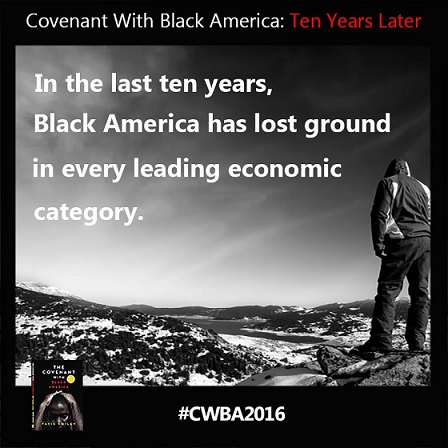
In 2006, [writer-commentator] Tavis Smiley — along with a team of esteemed contributors — laid out a national plan of action to address the ten most crucial issues facing African Americans. The Covenant, which became a #1 New York Times bestseller, ran the gamut from health care to criminal justice, affordable housing to education, voting rights to racial divides. But a decade later, Black men still fall to police bullets and brutality, Black women still die from preventable diseases, Black children still struggle to get a high quality education, the digital divide and environmental inequality persist, and American cities from Ferguson to Baltimore burn with frustration. In short, the last decade has seen the evaporation of Black wealth, with Black fellow citizens having lost ground in nearly every leading economic category.

And so in these pages Smiley calls for a renewal of The Covenant, presenting the original action plan alongside new data from the Indiana University School of Public & Environmental Affairs (SPEA) to underscore missed opportunities and the work that remains to be done. While life for far too many African Americans remains a struggle, the great freedom fighter Frederick Douglass was right: “If there is no struggle, there is no progress.”

Now is the time to finally convert the trials and tribulations of Black America into the progress that all of America yearns for.
The Covenant with Black America – Ten Years Later (Retrieved 01/14/2016) –
Hay House, Inc, January 5, 2016 – Social Science – 296 pages
https://books.google.com/books?id=VIk1CwAAQBAJ&source=gbs_similarbooks
- Photo 1

With descriptors like the foregoing, it would be understandable if Black people from other countries are dissuaded from emigrating to the United States. Yet, the opposite is happening! The book Go Lean … Caribbean relates that people in the Caribbean – mostly Black and Brown – are beating down the doors to get out of their Caribbean homelands, to seek refuge in places like the US; (a smaller faction emigrate to Canada and Western Europe). This really conveys the sad state of affairs for the Caribbean eco-system. While things are bad for Blacks in America, according to the foregoing, more Black people want to come in, instead of working to remediate the problems in their own homelands.

Black America has some work to do. Travis Smiley – the eloquent social-political commentator, and his band of experts – provided a blueprint-roadmap to effect change in their communities. See here:

Book Title: Covenant with Black America
By: Tavis Smiley
Third World Press, 2006 – Political Science – 254 pages

Six years’ worth of symposiums come together in this rich collection of essays that plot a course for African Americans, explaining how individuals and households can make changes that will immediately improve their circumstances in areas ranging from health and education to crime reduction and financial well-being. Addressing these pressing concerns are contributors Dr. David Satcher, former U.S. surgeon general; Wade Henderson, executive director of the Leadership Conference on Civil Rights; Angela Glover Blackwell, founder of the research think tank PolicyLink; and Cornell West, professor of Religion at PrincetonUniversity. Each chapter outlines one key issue and provides a list of resources, suggestions for action, and a checklist for what concerned citizens can do to keep their communities progressing socially, politically, and economically. Though the African American community faces devastating social disparities—in which more than 8 million people live in poverty—this celebration of possibility, hope, and strength will help leaders and citizens keep Black America moving forward.

What is the Covenant with Black America?

The Covenant with Black America is a national plan of action to address the primary concerns of African Americans today—from health to housing, from crime to criminal justice, from education to economic parity.

Why A Covenant and Why Now?

As we witnessed in the 2004 and 2008 presidential elections, Americans are deeply divided between race, class, gender, political ideology and moral values. A divide so extreme, that in order to bridge it, we must speak openly, freely, without judgment and work together. It is imperative that we take this opportunity to consider the issues of particular interest to African Americans and to establish a national plan of action to address them. No longer can we sit back and expect one political party, one segment of the population or one religious denomination to speak for us or to act on our behalf. It is our responsibility as an entire community to no longer be left behind politically, socially, or economically and to bridge the economic and social divides ourselves, by encouraging a conversation and a commitment that will inevitably benefit all Americans.

State of the Black Union: Defining the African American Agenda Part I & II

For the last ten years, the country’s visionaries, educators, public policy makers, religious leaders, opinion makers, and community organizers have come together to weigh in on the most challenging issues facing Black America. This symposium—The State of the Black Union—has always encouraged dialogue and the exchange of ideas about issues and factors that gauge the progress of America’s promise for African Americans; however, last year’s gathering marked a turning point.

On the heels of the 2004 presidential election, a sour economy, a rising death toll in Iraq, a growing prison population, and deepening disparities in healthcare and public education, collectively “we the people” decided that it was time to shift the conversation from talking about our “pain” to talking about our “plan”. It is a plan that moves our critique of America to a construction of America—a country that is as good as its promise. At the close of the 2005 State of the Black Union, the public was invited to share what they wanted from this plan. African Americans across the country let us know what their concerns were once we put out the call for them to do so at our website. In short, take control of their own destiny. We believe that The Covenant has the power to do this and more.

Less than one year later, that plan, roadmap, blueprint was published as the Covenant with Black America. On the recommendation of Rev. Dr. Joseph E. Lowery, co-founder with Dr. Martin Luther King, Jr. of the Southern Christian Leadership Conference, we decided to call this document a “covenant” and not a “contract” because it speaks to the spiritual dimension of the Black struggle for progress in America.

We are especially pleased with the thought-leaders and opinion-makers who have contributed introductory essays to each of the 10 covenant chapters in the book. Each is nationally recognized for contributions in their various fields of interest and each donated his/her time and expertise to make this project possible.

It was important for us to maintain the integrity of this project by guaranteeing that from conception to birth, this project would be imbued with the spirit and soul of Black people. We made the plea over the nationally-syndicated Tom Joyner Morning Show and Black folk everywhere responded. The name of each donor is listed in the text of the book. It’s a wonderful thing to peruse the list and to see the names of individual Black family members who supported this effort. It is even more empowering to know that these citizens are serious about their future and that of our country.

The rise of the Covenant with Black America to #1 on the New York Times best-seller list proved that there was tremendous interest in a plan of action that addressed the concerns of Black Americans. Tavis Smiley, the visionary responsible for creating and building the momentum around the book, embarked on a five-month, 20-city national tour, holding sessions in churches in cities such as Philadelphia, Atlanta, Memphis, New York, Baltimore, and Cleveland.

To build on the excitement and discussion around the book, Tavis Smiley invited people around the country to host Covenant Celebrations as part of the Covenant Conversation and Celebration Weekend. The first 1,000 party hosts who sent Smiley an invitation to their celebration received a special covenant gift pack. One lucky party hosted Smiley and PrincetonUniversity professor Cornel West as their guests, where they discussed issues in The Covenant.

- Photo 2Dr. Martin Luther King, Jr. once said that the nettlesome task of Black Americans is to bear the burden of redeeming the soul of America. Without question, Black folk have always been the conscience of the country. It is our hope that we can yet again help our beloved nation live up to the promise of her ideals. The political paradigm has shifted; it’s time to build a new construct, and the Covenant with Black America is the tool for the task.

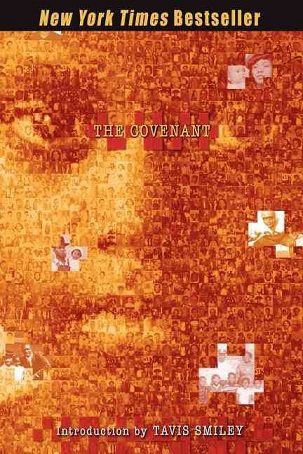
The Back Story of The Covenant Cover Photo

The background image on the cover of The Covenant book is an original photograph by world renowned photographer Chester Higgins, Jr. The photograph features eight year old Sojourner from New York.

In the face of this young girl, the cover of The Covenant represents our family histories. The image of the child’s face is composed of over three hundred smaller images of our ancestors submitted by African Americans across the country.

The Covenant is about the future. About the hope of Black youth yet unborn. About our past and the courage of our ancestors. About the present—right here and right now. The Covenant will reflect our independence, our interdependence and our interconnectedness.
Source: http://www.covenantwithblackamerica.com/background.htm; posted 2006; retrieved January 14, 2016
The Caribbean also has some work to do. The book Go Lean … Caribbean serves as a roadmap for effecting change in the Caribbean; it introduces the technocratic Caribbean Union Trade Federation (CU) as a vehicle to bring about desired change in the region’s economics, security and governing engines.

The Covenant with Black America addresses Income Inequality in the US, identifying the Black population versus the full general population. The book reveals that the Black Population is not just failing to keep pace with other communities, but also falling behind; going backwards, in the last 10 years.

This is bad! This corresponds with much of the time period for the focus of the Go Lean book. Go Lean was composed in the wake of the Great Recession of 2008 – a frequent topic for the Go Lean book and accompanying blogs. The desire to eliminate or reduce Income Inequality is a practical argument to enhance social cohesion and reduce social unrest. Social eruptions can weaken society and start the slide down the “slippery slope” to Failed-State status. It is important for Caribbean society to be “on guard” for encroachments in this regard.

This Go Lean/CU roadmap is designed to provide better economic stewardship (governance), to ensure that the economic failures of the past, in the Caribbean and other regions – like the US – do not re-occur here in the Caribbean homeland. The book posits that we must NOT fashion ourselves as parasites of the US, but rather pursue a status as a protégé, benefiting from their lessons-learned but molding a better society.

The Go Lean book cites the example of the American Dream and the failings to execute on that promise, as demonstrated with the Occupy Wall Street protests of 2011, with these quotations:

The Bottom Line on the American DreamPage 223
The American Dream is a national ethos of the United States, a set of ideals in which freedom includes the opportunity for prosperity and success, and an upward social mobility achieved through hard work. This idea of the American Dream is rooted in the US Declaration of Independence which proclaims that “all men are created equal… endowed by their Creator with certain inalienable rights” including “Life, Liberty and the pursuit of Happiness.” The meaning of the “American Dream” has changed over history, and includes components as home-ownership and upward mobility. A lot of people followed the American Dream to achieve a greater chance of becoming rich. For example, the discovery of gold in California in 1849 brought in 100,000 men looking for their fortune overnight—and a few did find it. Thus was born the California Dream of instant success. Historian H. W. Brands noted that in the years after the Gold Rush, the California Dream spread across the nation: “The old American Dream . . . was the dream of the Puritans, of Benjamin Franklin’s “Poor Richard” . . . of men and women content to accumulate their modest fortunes a little at a time, year by year by year. The new dream was the dream of instant wealth, won in a twinkling by audacity and good luck. [This] golden dream . . . became a prominent part of the American psyche”. Today, some posit that the ease of achieving this Dream changes with technological advances, available infrastructure, regulations, state of the economy, and the evolving cultural values of the US demographics.

Ways to Impact Wall Street – Learn from Occupy Wall Street Protest MovementPage 200
This protest movement began on September 17, 2011, in Zuccotti Park, located in New York City’s Wall Street financial district. The main issues raised by the protests were social and economic inequality, greed, corruption and the perceived undue influence of financial service firms on the Federal government. The slogan, “We are the 99%”, referred to Income Inequality and wealth distribution in the U.S. between the wealthiest 1% and the rest of the population. In hindsight and as a lesson for the CU, these underlying concerns were legitimate as the 2008 Great Recession had its root causes tied to the many issues of Wall Street abuses against Main Street.

The Go Lean book does not cast judgment on all of the American people. It is the position of this commentary that for the most part, the people of the United States are good-natured and mean well in their pursuits of the Greater Good. But this commentary frequently relates that the continued institutional racism in America sets a barrier for progress for  Black Americans, in terms of education and career opportunities. In addition, there is a Shadow Influence in the US financial eco-system that undermines a lot of policies for the Greater Good. Therefore the inequalities between Black society and general society are merely a reflection of the societal defects in the US in total. This land (America), despite the actuality, should not be so alluring to foreign Black people. See a related VIDEO here:

VIDEOhttps://youtu.be/qIc014b491YTavis Smiley: Obama Failed Black Americans as President

Published on Jan 11, 2016 – Radio show host Tavis Smiley tells Fox News’ Megyn Kelly that Barack Obama failed Black Americans as President.

The book Go Lean … Caribbean posits that America is plagued with institutional racism and Crony-Capitalism. It is therefore not the eco-system for the Caribbean to model. Rather the roadmap designs more empowerments for the Caribbean Middle Class – as in creating 2.2 million new jobs – and less to the Rich – One Percent. (Though there is no plan to penalize success and to forcibly redistribute any wealth).

In general, the CU will employ better strategies, tactics and implementations to impact its prime directives; identified with the following 3 statements:

  • Optimization of the economic engines in order to grow the regional economy to $800 Billion & create 2.2 million new jobs.
  • Establishment of a security apparatus to protect the resultant economic engines and mitigate internal and external threats.
  • Improvement of Caribbean governance to support these engines.

Early in the Go Lean book, this need for careful technocratic stewardship of the regional Caribbean economy was pronounced (Declaration of Interdependence – Page 12 – 13) with these acknowledgements and statements:

xi.   Whereas all men are entitled to the benefits of good governance in a free society, “new guards” must be enacted to dissuade the emergence of incompetence, corruption, nepotism and cronyism at the peril of the people’s best interest. The Federation must guarantee the executions of a social contract between government and the governed.

xii.   Whereas the legacy in recent times in individual states may be that of ineffectual governance with no redress to higher authority, the accedence of this Federation will ensure accountability and escalation of the human and civil rights of the people for good governance, justice assurances, due process and the rule of law. As such, any threats of a “failed state” status for any member state must enact emergency measures on behalf of the Federation to protect the human, civil and property rights of the citizens, residents, allies, trading partners, and visitors of the affected member state and the Federation as a whole.

xxiv. Whereas a free market economy can be induced and spurred for continuous progress, the Federation must install the controls to better manage aspects of the economy: jobs, inflation, savings rate, investments and other economic principles. Thereby attracting direct foreign investment because of the stability and vibrancy of our economy.

xxv.  Whereas the legacy of international democracies had been imperiled due to a global financial crisis, the structure of the Federation must allow for financial stability and assurance of the Federation’s institutions. To mandate the economic vibrancy of the region, monetary and fiscal controls and policies must be incorporated as proactive and reactive measures. These measures must address threats against the financial integrity of the Federation and of the member-states.

The Go Lean book stressed the key community ethos, strategies, tactics, implementations and advocacies necessary to regulate and manage the regional economy and mitigate Income Inequality in the Caribbean eco-system. These points are detailed in the book, as in this sample list:

Community Ethos – Economic Principles – Economic Systems Influence Individual Choices Page 21
Community Ethos – Economic Principles – Consequences of Choices Lie in the Future Page 21
Community Ethos – Economic Principles – Money Multiplier Page 23
Community Ethos – Governing Principles – Lean Operations Page 24
Community Ethos – Ways to Impact the Future Page 26
Community Ethos – Ways to Impact the Greater Good Page 37
Strategy – Mission – Fortify the Stability of the Banking Institutions Page 45
Strategy – Provide Proper Oversight and Support for the Depository Institutions Page 46
Tactical – Ways to Foster a Technocracy Page 64
Tactical – Growing the Economy – Minimizing Bubbles Page 69
Tactical – Separation-of-Powers – Caribbean Central Bank Page 73
Tactical – Separation-of-Powers – Depository Institutions Regulatory Agency Page 73
Anecdote – Turning Around CARICOM – Effects of 2008 Financial Crisis Page 92
Implementation – Assemble Caribbean Central Bank as a Cooperative Page 96
Implementation – Ways to Better Manage Debt Page 114
Planning – 10 Big Ideas – Single Market / Currency Union Page 127
Planning – Ways to Improve Failed-State Indices Page 134
Planning – Lessons Learned from 2008 Page 136
Advocacy – Ways to Grow the Economy Page 151
Advocacy – Ways to Control Inflation Page 153
Advocacy – Ways to Impact Wall Street – Lessons from the “Occupy Wall Street” Protests Page 200
Advocacy – Ways to Impact Main Street Page 201
Advocacy – Battles in the War on Poverty Page 222
Advocacy – Ways to Help the Middle Class Page 223
Advocacy – Ways to Impact the One Percent Page 224

The points of effective, technocratic economic stewardship of the Caribbean have been detailed in these previous blog/commentaries:

https://goleancaribbean.com/blog/?p=6563 Lessons from Iceland – Model of Recovery
https://goleancaribbean.com/blog/?p=6531 A Lesson in History – Book Review of the ‘Exigency of 2008’
https://goleancaribbean.com/blog/?p=6399 Book Review on ‘Mitigating Income Inequality’
https://goleancaribbean.com/blog/?p=6286 Managing the ‘Invisible Hand of the Market’
https://goleancaribbean.com/blog/?p=5733 Better than America? Yes, We Can!
https://goleancaribbean.com/blog/?p=5597 Economic Principle: Market Forces -vs- Collective Bargaining
https://goleancaribbean.com/blog/?p=3582 For Canadian Banks: Caribbean is a ‘Bad Bet’
https://goleancaribbean.com/blog/?p=3090 Introduction to Europe – All Grown Up
https://goleancaribbean.com/blog/?p=2930 ‘Too Big To Fail’ – Caribbean Version
https://goleancaribbean.com/blog/?p=1014 All is not well in the sunny Caribbean
https://goleancaribbean.com/blog/?p=782 Open the Time Capsule: The Great Recession of 2008
https://goleancaribbean.com/blog/?p=353 Book Review: ‘Wrong – 9 Economic Policy Disasters and What We Can Learn…’

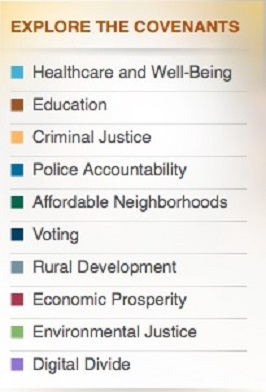
- Photo 3The Go Lean book reports that the Caribbean is in crisis. Too many people leave! The region is suffering a debilitating brain-drain estimated at 70% with some countries reporting up to 81%. This is due to “push-and-pull” factors. We must lower these factors. The “push” refers to the overbearing deficiencies in the homeland that people need refuge from; the “pull” refers to the lure from distant shores, as if the “grass is greener on the other side”. But look here at the 10 issues of concern for Black America. So while all is not well in the Caribbean, neither is all well in America.

The Go Lean roadmap declares that “enough is enough”. It is easier for the average person to remediate and mitigate defects in their Caribbean homeland than to try and fix America. It is akin to “jumping from the frying pan to the fire”.

This message must be enunciated, more stridently.

It is time for more empowerments in the Caribbean! It is time for us to build a better society. The strategies, tactics and implementations proposed in the book Go Lean…Caribbean are conceivable, believable and achievable. We can do these! We can be better; yes, we can!

Everyone in the Caribbean is hereby urged to lean-in for this Go Lean roadmap.  🙂

Download the book Go Lean … Caribbean Now!

Share this post:
, , , ,

ENCORE: Concussion – The Movie; The Cause

Nassau, Bahamas – This is a re-distribution of the blog-commentary published on August 31, 2015, now that the movie has been released on Christmas Day. The movie is in fact all that it purported to be.

Go Lean Commentary

“Are you ready for some football?” – Promotional song by Hank Williams, Jr. for Monday Night Football on ABC & ESPN networks for 22 years (1989 – 2011).

This iconic song (see Appendix) and catch-phrase is reflective of exactly how popular the National Football League (NFL) is in the US:

“They own an entire day of the week”.

- The Movie; The Cause - Photo 2So says the new movie ‘Concussions’, starring Will Smith, referring to the media domination of NFL Football on Sundays during the Autumn season. The movie’s script is along a line that resonates well in Hollywood’s Academy Award balloting: “David versus Goliath”; “a small man speaking truth to power”.

In the case of the NFL, it is not just about power, it is about money, prestige and protecting the status quo; the NFL is responsible for the livelihood of so many people. The book Go Lean … Caribbean recognized the importance of the NFL in the American lexicon of “live, work and play”; it featured a case study (Page 32) of the NFL and it’s collective bargaining successes (and failures) in 2011. An excerpt from the book is quoted as follows:

Football is big business in the US, $9 billion in revenue, and more than a business; emotions – civic pride, rivalries, and fanaticism – run high on both sides.

Previous Go Lean commentaries presents the socio-economic realities of much of the American football eco-system. Consider a sample here:

Socio-Economic Impact Analysis of [Football] Sports Stadiums
Watch the Super Bowl … Commercials
Levi’s® NFL Stadium: A Team Effort
Sports Role Model – College Football – Playing For Pride … And More
Sports Role Model – Turn On the SEC Network
Collegiate Sports in the Caribbean – Model of NCAA
10 Things We Want from the US: #10 – Sports Professionalism
10 Things We Don’t Want from the US: #10 – ‘Win At All Costs’ Ethos

While football plays a big role in American life, so do movies. Their role is more unique; they are able to change society. In a previous blog / commentary regarding Caribbean Diaspora member and Hollywood great, Sidney Poitier, it was declared that …

“Movies are an amazing business model. People give money to spend a couple of hours watching someone else’s creation and then leave the theater with nothing to show for the investment; except perhaps a different perspective”.

Yes, movies help us to glean a better view of ourselves … and our failings; and many times, show us a way-forward.

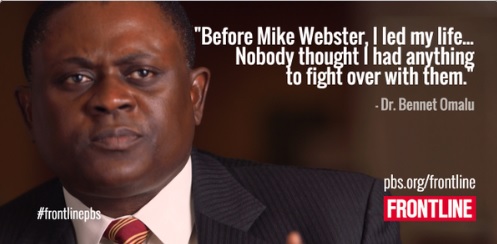
These descriptors actually describe the latest production from Hollywood icon Will Smith (the former Fresh Prince of Bel-Air). This movie, the film “Concussion”, in the following news article, relates the real life drama of one man, Dr. Bennet Omalu, a Nigerian-born medical doctor – a pathologist – who prepared autopsies of former players that suffered from football-related concussions. He did not buckle under the acute pressure to maintain the status quo, and now, he is celebrated for forging change in his adopted homeland. This one man made a difference. (The NFL is now credited for a Concussion awareness and prevention protocol so advanced that other levels of the sport – college, high schools and Youth – are being urged to emulate).

See news article here on the release of the movie:

Title: ‘Concussion’: 5 Take-a-ways From Will Smith’s New Film

Will Smith, 46, is definitely going to get a ton of Oscar buzz portraying Dr. Bennet Omalu in the new film “Concussion.” NFL columnist Peter King of Sports Illustrated got an exclusive first peek at the trailer and it has been widely shared on social media since. And it’s very chilling.

- The Movie; The Cause - Photo 1

Here are five take-aways and background you need to know before checking out the clip:

1 – It’s Based on a True Story

Omalu is the forensic pathologist and neuropathologist who discovered chronic traumatic encephalopathy in football players who got hit in the head over and over again, according to the Washington Post.

In the clip, he says repetitive “head trauma chokes the brain.”

Omalu was one of the founding members of the Brain Injury Research Institute in 2002. He conducted the autopsy of Pittsburgh Steelers center Mike Webster, played by David Morse in the film, which led to this discovery.

2 – Smith’s Version of Omalu’s Accent Is Spot On

Omalu is from Nigeria and Smith has been known to transform completely for a role. He was nominated for an Oscar for 2011’s “Ali,” playing the legendary Muhammad Ali.

For comparison, here’s Omalu’s PBS interview from 2013.

3 – Smith Is a Reluctant Hero

“If you don’t speak for them, who will,” Gugu Mbatha-Raw, who plays Prema Mutiso in the film, tells Smith’s character.

He admits he idolized America growing up and “was the wrong person to have discovered this.”

4 – Alec Baldwin and Luke Wilson

“Concussion” brought in some heavyweights for this movie. Baldwin plays Dr. Julian Bailes, who advises Omalu, and Wilson, who will reportedly play NFL Commissioner Roger Goodell, according to IMDB. There’s no official word on this. He’s seen at a podium in the trailer, but doesn’t speak.

5 – “Tell the Truth”

Smith captures Omalu’s passion to have the truth told about this injury and disease.

“I was afraid of letting Mike [Webster] down. I was afraid. I don’t know. I was afraid I was going to fail,” Omalu told PBS a couple years back.

———-

VIDEO Link: http://www.imdb.com/title/tt3322364/?ref_=nv_sr_1


Will Smith stars in the incredible true David vs. Goliath story of Dr. Bennet Omalu, the brilliant forensic neuropathologist who made the first discovery of CTE, a football-related brain trauma, in a pro player.

The subject of concussions is serious – life and death. Just a few weeks ago (August 8), an NFL Hall-of-Fame inductee was honored for his play on the field during his 20-year professional career, but his family, his daughter in particular, is the one that made his acceptance / induction speech. He had died, in 2012; he committed suicide after apparently suffering from a brain disorder – chronic traumatic encephalopathy (CTE), a type of chronic brain damage that has also been found in other deceased former NFL players[4] – sustained from his years of brutal head contacts in organized football in high school, college and in his NFL career. This player was Junior Seau.

- The Movie; The Cause - Photo 3a

- The Movie; The Cause - Photo 3b

Why would there be a need for “David versus Goliath”; “a small man speaking truth to power”? Is not the actuality of an acclaimed football player committing suicide in this manner – he shot himself in the chest so as to preserve his brain for research – telling enough to drive home the message for reform?

No. Hardly. As previously discussed, there is too much money at stake.

These stakes bring out the Crony-capitalism in American society.

The book Go Lean…Caribbean (and subsequent blog/commentaries) relates many examples of cronyism in the American eco-system. There is a lot of money at stake. Those who want to preserve the status quo or not invest in the required mitigations to remediate concussions will fight back against any Advocate promoting the Greater Good. The profit motive is powerful. There are doubters and those who want to spurn doubt. “Concussions in Football” is not the first issue these “actors” have promoted doubt on. The efforts to downplay concussion alarmists are from a familiar playbook, used previously by Climate Change deniers, Big Tobacco, Toxic Waste, Acid Rain, and other dangerous chemicals.

This Go Lean book serves as a roadmap for the introduction and implementation of the technocratic Caribbean Union Trade Federation (CU). Sports are integral to the Go Lean/CU roadmap. While sports can be good and promote positives in society, even economically, the safety issues must be addressed upfront. This is a matter of community security. Thusly, the prime directives of the CU are described as:

  • Optimize the economic engines of the Caribbean to elevate the regional economy to grow to $800 Billion and create 2.2 million new jobs, including sports-related industries with a projection of 21,000 direct jobs at Fairgrounds and sports enterprises.
  • Establish a security apparatus to protect the people and economic engines.
  • Improvement of Caribbean governance to support these economic and security engines.

The CU/Go Lean sports mission is to harness the individual abilities of athletes to not just elevate their performance, but also to harness the economic impact for their communities. So modern sports endeavors cannot be analyzed without considering the impact on “dollars and cents” for stakeholders. This is a fact and should never be ignored. There is therefore the need to carefully assess and be on guard for crony-capitalistic influences entering the decision-making of sports stakeholders. The Go Lean book posits that with the emergence of new economic engines, “bad actors” will also emerge thereafter to exploit the opportunities, with good, bad and evil intent”. These points were pronounced early in the opening Declaration of Interdependence (Page 12 &14):

x. Whereas we are surrounded and allied to nations of larger proportions in land mass, populations, and treasuries, elements in their societies may have ill-intent in their pursuits, at the expense of the safety and security of our citizens. We must therefore appoint “new guards” to ensure our public safety and threats against our society, both domestic and foreign. The Federation must employ the latest advances and best practices of criminology and penology to assuage continuous threats against public safety.

xi. Whereas all men are entitled to the benefits of good governance in a free society, “new guards” must be enacted to dissuade the emergence of incompetence, corruption, nepotism and cronyism at the peril of the people’s best interest. The Federation must guarantee the executions of a social contract between government and the governed.

xvi. Whereas security of our homeland is inextricably linked to prosperity of the homeland, the economic and security interests of the region needs to be aligned under the same governance. Since economic crimes … can imperil the functioning of the wheels of commerce for all the citizenry, the accedence of this Federation must equip the security apparatus with the tools and techniques for predictive and proactive interdictions.

xxxi. Whereas sports have been a source of great pride for the Caribbean region, the economic returns from these ventures have not been evenly distributed as in other societies. The Federation must therefore facilitate the eco-systems and vertical industries of sports as a business, recreation, national pastime and even sports tourism …

The Go Lean book envisions the CU – a confederation of the 30 member-states of the Caribbean chartered to do the heavy-lifting of empowering and elevating the Caribbean economy – as the landlord of many sports facilities (within the Self-Governing Entities design), and the regulator for inter-state sport federations. The book details the economic principles and community ethos to adopt, plus the executions of strategies, tactics, implementations and advocacies to optimize sports enterprises in the Caribbean:

Community Ethos – Deferred Gratification Page 21
Economic Principles – People Respond to Incentives in Predictable Ways Page 21
Economic Principles – Economic Systems Influence Individual Choices / Incentives Page 21
Economic Principles – The Consequences of Choices Lie in the Future Page 21
Economic Principles – Job Multiplier Page 22
Community Ethos – Security Principles – Whistleblower Protection Page 23
Community Ethos – Security Principles – Light-Up the Dark Places Page 23
Community Ethos – Security Principles – “Crap” Happens Page 23
Community Ethos – Governing Principles – Lean Operations Page 24
Community Ethos – Ways to Impact the Future Page 26
Community Ethos – Ways to Promote Happiness – Mitigate Suicide Threats Page 36
Community Ethos – Impact the Greater Good Page 37
Strategy – Vision – Confederating 30 Member-States into a Single Market Page 45
Strategy – Vision – Foster Local Economic Engines for Basic Needs Page 45
Strategy – Mission – Prepare for Natural Disasters Page 45
Strategic – Staffing – Sporting Events at Fairgrounds Page 55
Strategy – Agents of Change – Climate Change Page 57
Strategy – Agents of Change – Globalization Page 57
Tactical – Confederating a Permanent Union Page 63
Tactical – Fostering a Technocracy Page 64
Tactical – Separation of Powers – Sports & Culture Administration Page 81
Tactical – Separation of Powers – Fairgrounds Administration Page 83
Tactical – Separation of Powers – Health Department – Disease Management Page 86
Implementation – Assemble Regional Organs into a Single Market Economy Page 96
Implementation – Steps to Implement Self-Governing Entities – Sports Stadia Page 105
Implementation – Security Initiatives at Start-up – Unified Command & Control Page 103
Implementation – Industrial Policy for CU Self Governing Entities Page 103
Implementation – Ways to Deliver – Project Management/Accountabilities Page 109
Anatomy of Advocacies – Examples of Individuals Who Made Impact Page 122
Planning – Ways to Make the Caribbean Better Page 131
Advocacy – Ways to Grow the Economy Page 151
Advocacy – Ways to Create Jobs Page 152
Advocacy – Ways to Improve Governance Page 168
Advocacy – Ways to Better Manage the Social Contract Page 170
Advocacy – Ways to Promote Fairgrounds Page 192
Advocacy – Ways to Improve Emergency Management – Trauma Arts & Sciences Page 196
Advocacy – Ways to Improve Sports Page 229
Advocacy – Ways to Impact Urban Living – Sports Leagues Page 234

The Go Lean book and accompanying blogs declare that the Caribbean needs to learn lessons from other communities, especially when big money is involved in pursuits like sports. These activities should be beneficial to health, not detrimental. So the admonition is to be “on guard” against the “cronies”; they will always try to sacrifice public policy – the Greater Good – for private gain: profit.

Let’s do better. Yes, the Caribbean can be better than the American experiences.

The design of Self-Governing Entities allow for greater protections from Crony-Capitalistic abuses. While this roadmap is committed to availing the economic opportunities of sports and accompanying infrastructure, as demonstrated in the foregoing movie trailer, sport teams and owners can be plutocratic “animals” in their greed. We must learn to mitigate plutocratic abuses. While an optimized eco-system is good, there is always the need for an Advocate, one person to step up, blow the whistle and transform society. The Go Lean roadmap encourages these role models.

Bravo Dr. Bennet Omalu. Thank you for this example … and for being a role model for all of the Caribbean.

RIP Junior Seau.

Now is the time for all of the Caribbean, the people and governing institutions, to lean-in for the empowerments described in the book Go Lean … Caribbean. This roadmap will result in more positive socio-economic changes throughout the region; it will make the Caribbean a better place to live, work and play. 🙂

Download the free e-Book of Go Lean … Caribbean – now!

——-

Appendix VIDEO: Hank Williams Jr. – Are You Ready for Some Footballhttps://youtu.be/K8LLKO0-PAE

Uploaded on May 28, 2011 – Official Music Video


Share this post:
, , , , , ,
[Top]

The Caribbean is Looking for Heroes … ‘to Return’

Go Lean Commentary

In the Caribbean, we need a hero, we need lots of heroes …

… need a hero
I’m holding out for a hero ’til the end of the night
He’s gotta be strong
And he’s gotta be fast
And he’s gotta be fresh from the fight
I need a hero
I’m holding out for a hero ’til the morning light
He’s gotta be sure
And it’s gotta be soon
And he’s gotta be larger than life
(Song by Bonnie Tyler 1984; see VIDEO & Lyrics at https://youtu.be/OBwS66EBUcY; see Appendix)

We must reform and transform our Caribbean society. We know that one person – a hero – can make a difference, and we need to encourage those contributions.

Heroes are not born, they are forged. According to noted Mythologist Joseph Campbell, hero candidates go through a consistent pattern of a journey to become bona-fide heroes.

CU Blog - The Caribbean is Looking for Heroes to Return - Photo 1Who is Joseph Campbell and why does his opinion matter? He is the inspiration behind the big hit movie franchise Star Wars. All things Star Wars are en vogue right now. According to IMDB.com, this movie which opened just days ago – Star Wars Episode 7 “The Force Awakens”; (see Appendix) – had the biggest US box office opening of any movie … ever. See the box office results here in the photo, retrieved December 22, 2015.

This is an amazing feat, considering that Joseph Campbell has been dead since 1987. But Star Wars creator, George Lucas drew his story-line from Joseph Campbell’s inspirations in the cataloging of the “Hero’s Journey” in his writings. See article here:

Title: Role Model Joseph Campbell
In 1949 Joseph Campbell (1904-1987) made a big splash in the field of mythology with his book The Hero With a Thousand Faces. This book built on the pioneering work of German anthropologist Adolph Bastian (1826-1905), who first proposed the idea that myths from all over the world seem to be built from the same “elementary ideas.” Swiss psychiatrist Carl Jung (1875-1961) named these elementary ideas “archetypes,” which he believed to be the building blocks not only of the unconscious mind, but of a collective unconscious. In other words, Jung believed that everyone in the world is born with the same basic subconscious model of what a “hero” is, or a “mentor” or a “quest,” and that’s why people who don’t even speak the same language can enjoy the same stories.

Jung developed his idea of archetypes mostly as a way of finding meaning within the dreams and visions of the mentally ill: if a person believes they are being followed by a giant apple pie, it’s difficult to make sense of how to help them. But if the giant apple pie can be understood to represent that person’s shadow, the embodiment of all their fears, then the psychotherapist can help guide them through that fear, just as Yoda guided Luke on Dagoba. If you think of a person as a computer and our bodies as “hardware,” language and culture seem to be the “software.” Deeper still, and apparently common to all homo sapians, is a sort of built-in “operating system” which interprets the world by sorting people, places, things and experiences into archetypes.

CU Blog - The Caribbean is Looking for Heroes to Return - Photo 2Campbell’s contribution was to take this idea of archetypes and use it to map out the common underlying structure behind religion and myth. He proposed this idea in The Hero With a Thousand Faces, which provides examples from cultures throughout history and all over the world. Campbell eloquently demonstrates that all stories are expressions of the same story-pattern, which he named the “Hero’s Journey,” or the “monomyth.” This sounds like a simple idea, but it suggests an incredible ramification, which Campbell summed up with his adage “All religions are true, but none are literal.” That is, he concluded that all religions are really containers for the same essential truth, and the trick is to avoid mistaking the wrappings for the diamond.

[Star Wars Creator George] Lucas had already written two drafts of Star Wars when he rediscovered Joseph Campbell’s The Hero With a Thousand Faces in 1975 (having read it years before in college). This blueprint for “The Hero’s Journey” gave Lucas the focus he needed to draw his sprawling imaginary universe into a single story.

Note that the Wachowski Brothers’ wonderful film The Matrix is carefully built on the same blueprint:

Campbell

Star Wars

The Matrix

I: Departure
The call to adventure Princess Leia’s message “Follow the white rabbit”
Refusal of the call Must help with the harvest Neo won’t climb out window
Supernatural aid Obi-wan rescues Luke from sandpeople Trinity extracts the “bug” from Neo
Crossing the first threshold Escaping Tatooine Neo is taken out of the Matrix for the first time
The belly of the whale Trash compactor Torture room
II: Initiation
The road of trials Lightsaber practice Sparring with Morpheus
The meeting with the goddess Princess Leia (wears white, in earlier     scripts was a “sister” of a mystic order) The Oracle
Temptation away from the true path1 Luke is tempted by the Dark Side Cypher (the failed messiah) is tempted by the world of comfortable illusions
Atonement with the Father Darth and Luke reconcile Neo rescues and comes to agree (that he’s The One) with his father-figure, Morpheus
Apotheosis (becoming god-like) Luke becomes a Jedi Neo becomes The One
The ultimate boon Death Star destroyed Humanity’s salvation now within reach
III: Return
Refusal of the return “Luke, come on!” Luke wants to     stay to avenge Obi-Wan Neo fights agent instead of running
The magic flight Millennium Falcon “Jacking in”
Rescue from without Han saves Luke from Darth Trinity saves Neo from agents
Crossing the return threshold Millennium Falcon destroys pursuing TIE fighters Neo fights Agent Smith
Master of the two worlds Victory ceremony Neo’s declares victory over machines in final phone call
Freedom to live Rebellion is victorious over Empire Humans are victorious over machines

Source: Fan Site for Obscure Star Wars Inspirations; retrieved December 20, 2015 from: http://www.moongadget.com/origins/myth.html

But one can argue, these are just movies, “make believe”; these are not real people nor real life. That would be a true statement of facts (there is no “Luke Skywalker” nor “Neo” as historical characters), but the principles of a “Hero’s Journey” is real, and present in real life. This is just another example of “life imitating art”. In a previous blog-commentary regarding Caribbean Diaspora member and Hollywood great, Sidney Poitier, it was declared that …

“Movies are an amazing business model. People give money to spend a couple of hours watching someone else’s creation and then leave the theater with nothing to show for the investment; except perhaps a different perspective”.

 CU Blog - The Caribbean is Looking for Heroes to Return - Photo 3
 CU Blog - The Caribbean is Looking for Heroes to Return - Photo 4

These movies do bring a different perspective. According to the foregoing, there are Three Acts to the “Hero’s Journey”:

I.   Departure
II.  Initiation
III. Return

The publishers of the book Go Lean…Caribbean recognize the one person can make positive, heroic contributions to his community; and that this role must be forged in society. The book serves as a roadmap for the introduction and implementation of the Caribbean Union Trade Federation (CU). The CU seeks to foster the genius qualifiers in Caribbean citizens. Not everyone can be heroes, but society must be structured to allow heroes to soar. Because …

… one man (or woman) can make a difference! Such a person can impact their community, country … and the whole world.

“The only thing necessary for the triumph of evil is for good men to do nothing” – Edmund Burke; 1729 – 1797; an Irish statesman, member of British Parliament and supporter of the American Revolution.

The Caribbean has fostered the hero process, but according to the Three Acts established by Joseph Campbell, our heroes stopped at Act II, they do not “Return”.

CU Blog - The Caribbean is Looking for Heroes to Return - Photo 5

They make their heroic contributions to other communities and not their homeland. The Caribbean, thusly “fattens frogs for snakes”. Consider the bad consequences of this reality, as in our brain drain among the college-educated population, which is up to a 70% rate within the entire region.

A quest of the Go Lean/CU roadmap is to lower the “Push and Pull” factors that causes so many Caribbean citizens to flee their beloved homeland. In addition, another quest is to incentivize the far-flung Diaspora to return to the Caribbean. Success in these quests will take a “Hero’s Journey”.

The villain in this real-life story is the poor performing Caribbean economy. So the prime directive of the Go Lean book is to elevate Caribbean society, and its societal engines … defined in these declarative statements, as follows:

  • Optimization of the economic engines in order to grow the regional economy and create 2.2 million new jobs.
  • Establishment of a security apparatus to protect the resultant societal engines again foreign and domestic threats.
  • Improvement Caribbean governance to support these engines.

The Go Lean book posits that one person, despite their field of endeavor, can make a difference in the Caribbean, and its impact on the world; that there are many opportunities where one advocate, one champion, one “hero” can elevate society. In this light, the book features 144 different advocacies, so there is inspiration for the “next hero” to emerge and excel right here at home in the Caribbean.

The roadmap specifically encourages the region to lean-in, to foster heroes and champions with these specific community ethos, strategies, tactics, implementations and advocacies:

Community Ethos – Forging Change Page 20
Community Ethos – People Respond to Incentives in Predictable Ways Page 21
Community Ethos – Economic Systems Influence Individual Choices Page 21
Community Ethos – Whistleblower Protection Page 23
Community Ethos – Anti-Bullying and Mitigation Page 23
Community Ethos – Minority Equalization Page 24
Community Ethos – Ways to Foster Genius Page 27
Community Ethos – Ways to Impact the Greater Good Page 37
Strategy – Mission – Dissuade Societal Abandonment Page 45
Strategy – Mission – Incentivize Repatriation Page 45
Strategy – Mission – Protect Repatriates with heightened   Public Safety Page 45
Anatomy of Advocacies – Examples of Individuals Who Made Impact Page 122
Planning – Ways to Make the Caribbean Better Page 131
Advocacy – Ways to Improve Governance Page 168
Advocacy – Ways to Better Manage the Social Contract Page 170
Advocacy – Ways to Improve Leadership Page 171
Advocacy – Ways to Impact Justice Page 177
Advocacy – Ways to Remediate and Mitigate Crime Page 178
Advocacy – Ways to Impact Hollywood – Global Box Office – Imitating Life Page 203
Advocacy – Ways to Preserve Caribbean Heritage Page 218
Advocacy – Ways to Improve the Arts Page 230

The Caribbean region wants a more optimized society.

This book posits that “bad actors” – even villains: the “Dark Side of the Force” – will emerge to exploit inefficient economic, security and governing models.  Early in the book, the pressing need to streamline protections – for citizens and institutions – was pronounced in the Declaration of Interdependence (Page 12), with these opening statements:

x. Whereas we are surrounded and allied to nations of larger proportions in land mass, populations, and treasuries, elements in their societies may have ill-intent in their pursuits, at the expense of the safety and security of our citizens. We must therefore appoint “new guards” to ensure our public safety and threats against our society, both domestic and foreign.

xi. Whereas all men are entitled to the benefits of good governance in a free society, “new guards” must be enacted to dissuade the emergence of incompetence, corruption, nepotism and cronyism at the peril of the people’s best interest. The Federation must guarantee the executions of a social contract between government and the governed.

xii. Whereas the legacy in recent times in individual states may be that of ineffectual governance with no redress to higher authority, the accedence of this Federation will ensure accountability and escalation of the human and civil rights of the people for good governance, justice assurances, due process and the rule of law. As such, any threats of a “failed state” status for any member state must enact emergency measures on behalf of the Federation to protect the human, civil and property rights of the citizens, residents, allies, trading partners, and visitors of the affected member state and the Federation as a whole.

xvi. Whereas security of our homeland is inextricably linked to prosperity of the homeland, the economic and security interest of the region needs to be aligned under the same governance. Since economic crimes, including … forms of terrorism, can imperil the functioning of the wheels of commerce for all the citizenry, the accedence of this Federation must equip the security apparatus with the tools and techniques for predictive and proactive interdictions.

The Go Lean book explicitly acknowledges that optimizing society is not easy; it requires strenuous, heroic efforts; heavy-lifting. That is the quest of the CU/Go Lean roadmap. Other subjects related to heroic efforts of role models have been blogged in other Go Lean…Caribbean commentaries, as sampled here:

https://goleancaribbean.com/blog/?p=5964 Movie Review: ‘Tomorrowland’ – ‘Feed the right wolf’ in Society
https://goleancaribbean.com/blog/?p=5648 Music Role Model Taylor Swift withholds Album from Apple Music
https://goleancaribbean.com/blog/?p=5506 Role Model: Edward Snowden – One Person Making a Difference
https://goleancaribbean.com/blog/?p=3490 How One Entrepreneur Can Rally a Whole Community
https://goleancaribbean.com/blog/?p=2726 Caribbean Role Model – Oscar De La Renta – RIP
https://goleancaribbean.com/blog/?p=1731 Role Model Warren Buffet – An Ode to Omaha
https://goleancaribbean.com/blog/?p=1596 Book Review: ‘Prosper Where You Are Planted’
https://goleancaribbean.com/blog/?p=866 Role Model Bob Marley: The Legend Lives On!
https://goleancaribbean.com/blog/?p=209 Role Model: Advocate Kevin Connolly

The Go Lean roadmap posits that the CU should foster the genius potential in Caribbean citizens and incubate their potential to maximum production. We should let “heroes be heroes” in their fields of endeavor here at home, no matter how diverse. Many Caribbean Diaspora has done this exactly, abroad in benefiting other communities, while their homelands languish.

They have departed – Act I.
They have initiated as heroes – Act II.
But, they have NOT returned – no Act III.

Enough already!

The roadmap pronounces that we need the participation of many advocates on many different paths for progress. By facilitating, fostering and furthering these initiatives, we can have our heroes return to be heroic at home. Only then, will the Caribbean truly become a better place to live, work and play. 🙂

Download the free e-Book of Go Lean … Caribbean – now!

————

Appendix VIDEO – Bonnie Tyler – I Need a Hero (Lyrics) – https://youtu.be/OBwS66EBUcY

————

Appendix VIDEO – Star Wars: The Force Awakens Trailer (Official) – https://youtu.be/sGbxmsDFVnE

Published on Oct 19, 2015 – Watch the official trailer for Star Wars: The Force Awakens, [opened] in theaters December 18, 2015.

Share this post:
, ,
[Top]

Azerbaijan sets its currency on free float

Go Lean Commentary

Imagine one day you have $100 in your wallet. You put the wallet down at night, and then pick it up the next morning and now that money is only worth $70.

Depressing, isn’t it?!

CU Blog - Azerbaijan sets its currency on free float - Photo 4This is not just “make believe”. This is real! This has happened a number of times in the Caribbean past, and just happened today in an Eastern European/Western Asian country, and former Soviet Republic of Azerbaijan; with their manat currency; see Appendix. This is not “Economics 101”, but rather “Economics 901”.

This is a commentary on the frailties of the modern banking system, and the need for mastery in this field of endeavor. The banking community, in the Caribbean and elsewhere, have to master the agents-of-change in this troubling world. Factors such as: Globalization, Technology, and Climate Change. But, we will see that it’s not just banks, but consumers – the man on Main Street – as well that needs to better understand and manage these dynamics.

This introduction vividly demonstrates how banking fortunes, and misfortunes, easily affect people, all around the world. This point aligns with the book Go Lean…Caribbean; and the underlying movement by the publishers SFE Foundation; these were launched as a direct result of the banking crisis referred to as the Great Recession of 2008. One purpose of the book was to apply lessons learned from the 2008 experience in the quest to empower and optimize Caribbean life and society. In addition to the banking dysfunctions that year, global petroleum prices also wreaked havoc on the world’s economy. (The demand for crude oil is now a “wild card” with the new thrust to adapt Green Energy solutions to arrest Climate Change).

There is now a new set of challenges facing the international (central) banking community. This time with currency valuations, as in this case of Azerbaijan; see the news article here and the Appendix below for detailed definitions:

Title: Azerbaijan sets its currency on free float

Azerbaijan Floating Rate

BAKU, Azerbaijan (AP) — Oil-rich Azerbaijan has let its currency float freely, leading to its sharp depreciation as global oil prices hit new lows.

Azerbaijan’s Central Bank said Monday’s move to let the manat fluctuate was made to “preserve hard currency reserves … and ensure the national economy’s competitiveness on the international arena.”

Following the move, the manat fell by 32 percent. One manat, which was worth around $0.95 Friday, was now trading at $0.65.

The ex-Soviet nation has spent more than half of its hard currency reserves so far this year in an attempt to shore up the embattled currency.

Financial analyst Oqtay Akhverdiyev said the decision to let the manta float was “a necessary measure … what we’re now seeing is the real value of the manta.”

———-

AUDIO-VIDEO – Azerbaijan unpegs currency from dollar devalues 30% – https://youtu.be/dr1yLn_lBvI

Published on Dec 21, 2015
SUBSCRIBE TO “EYES OPEN MEDIA” https://www.youtube.com/channel/UCnLq…
SUBSCRIBE, SHARE, LIKE, AND SUPPORT. THANKS FOR ALL THE LOVE…..:)

While this foregoing article relates to international currencies and central banking, this is more than just a Wall Street issue; this is a Main Street issue. This relates fully to the laws of Supply-and-Demand. A central bank must constantly buy-and-sell foreign currencies to regulate the supply in the general market so as to stabilize the “home” currency. As economic drivers for foreign currency become challenged – such as the decline in crude oil prices for Azerbaijan – it’s takes more and more foreign “cash” reserves to regulate the international prices for “home” currencies.

This foregoing article is in consideration of the Go Lean book; it serves as a roadmap for the introduction and implementation of the technocratic Caribbean Union Trade Federation (CU) and Caribbean Central Bank (CCB) to provide better stewardship, to ensure that the economic/currency failures of the past, in the Caribbean and other regions (like Azerbaijan), do not re-occur here … again in the homeland. This all relates to foreign currency exchange (fx), an advanced subject in the field of Economics.

Economics 901 also asserts that there is now interconnectivity of the financial systems; bank/currency troubles in foreign countries easily become trouble for the Caribbean region. The assumption embedded in the Go Lean roadmap is that while there could be elasticity from these foreign financial contagions, the Caribbean is big enough (42 million people in 30 member-states, as opposed to 9.6 million in Azerbaijan alone) so as to streamline its own viable currency/financial/securities market.

There are lessons to apply from the foregoing news story. In a previous blog-commentary, these fx technical points were detailed:

Capital Controls – This is a necessary responsibility of Central Banks. The Go Lean book dives deeply into the discussion for Capital Controls; consider this direct quotation from Page 315 of the book:

Capital controls are residency-based measures such as transaction taxes, other limits, or outright prohibitions that a nation’s government can use to regulate flows from capital markets into and out of the country’s capital account. Types of capital control include exchange controls that prevent or limit the buying and selling of a national currency at the market rate, caps on the allowed volume for the international sale or purchase of various financial assets, transaction taxes, minimum stay requirements, requirements for mandatory approval, or even limits on the amount of money a private citizen is allowed to remove from the country.

Currency Manipulations – The Central Bank of Azerbaijan has the heavy-lifting tasks of manipulating the supply-and-demand equations to try and keep their currency fixed, against an international standard, like the US dollar. Most Central Banks must undertake this strategy to prevent other parties, “bad actors”, from manipulating the currency themselves. Currency manipulators can inflict harm on a country’s resources for their own personal financial gain.

Human & Capital Flight – When a country’s currency is in distress, there is the threat that citizens may flee with their capital so as to secure the value of their savings and investments. This normally means a loss of future economic activity for the educated and productive segments of society; this results in negatives on the national economy in the short-term and in the long-term. The Caribbean has been plagued with this occurrence again and again. Even now, the region has an alarming 70% brain drain rate among the college education populations of Caribbean heritage.

These lessons must be applied in the technocratic administration of the Caribbean Union Trade Federation, and the Caribbean Central Bank’s (CCB) oversight of the Caribbean Dollar (C$). The Go Lean roadmap calls for the CCB to be a cooperative entity of the existing Central Banks in the region; this will foster interdependence from the political entities allowing the motivation of the regional Greater Good. This need for regional stewardship of Caribbean currencies was pronounced early in the book, in the opening Declaration of Interdependence (Page 13) with these statements:

xxiv. Whereas a free market economy can be induced and spurred for continuous progress, the Federation must install the controls to better manage aspects of the economy: jobs, inflation, savings rate, investments and other economic principles. Thereby attracting direct foreign investment because of the stability and vibrancy of our economy.

xxv.  Whereas the legacy of international democracies had been imperiled due to a global financial crisis, the structure of the Federation must allow for financial stability and assurance of the Federation’s institutions. To mandate the economic vibrancy of the region, monetary and fiscal controls and policies must be incorporated as proactive and reactive measures. These measures must address threats against the financial integrity of the Federation and member-states.

So the planners of the new Caribbean sympathizes with the Central Bank of Azerbaijan. We have learned hard lessons on the issue of currency, as many CU member-states have had to endure painful currency fluctuations over the past decades – on more than one occasion. So we now understand that any attempt to reboot the Caribbean economic landscape must first start with a strenuous oversight of the proposed regional C$ currency.

The Go Lean book, and previous blog/commentaries, stressed the key community ethos, strategies, tactics, implementations and advocacies necessary to establish a strong Caribbean financial eco-systems and strong currency. These points are detailed in the book as follows:

Community Ethos – Economic Principles – Economic Systems Influence Individual Choices Page 21
Community Ethos – Economic Principles – Voluntary Trade Creates Wealth Page 21
Community Ethos – Economic Principles – Consequences of Choices Lie in the Future Page 21
Community Ethos – Economic Principles – Money Multiplier Page 23
Community Ethos – Governing Principles – Lean Operations Page 24
Community Ethos – Governing Principles – Return on Investments Page 24
Community Ethos – Ways to Impact the Future – Count on the Greedy to be Greedy Page 26
Community Ethos – Ways to Impact the Greater Good Page 37
Strategy – Mission – Fortify the Stability of the Securities Markets Page 45
Strategy – Provide Proper Oversight and Support for the Depository Institutions Page 46
Strategy – e-Payments and Card-based Transactions Page 49
Tactical – Growing the Economy – Minimizing Bubbles Page 69
Tactical – Separation-of-Powers – Depository Insurance & Regulatory Agency Page 73
Anecdote – Turning Around CARICOM – Effects of 2008 Financial Crisis Page 92
Implementation – Assemble Caribbean Central Bank as a Cooperative Page 96
Implementation – Ways to Better Manage Debt – Optimizing Wall Street Role Page 114
Planning – 10 Big Ideas – Single Market / Currency Union Page 127
Planning – Lessons Learned from 2008 Page 136
Planning – Lessons Learned from New York City – Wall Street Page 137
Planning – Ways to Measure Progress Page 147
Anecdote – Caribbean Currencies Page 149
Advocacy – Ways to Grow the Economy Page 151
Advocacy – Ways to Control Inflation Page 153
Advocacy – Ways to Better Manage Foreign Exchange (fx) Page 154
Advocacy – Reforms for Banking Regulations Page 199
Advocacy – Ways to Impact Wall Street Page 200
Advocacy – Ways to Impact Main Street Page 201
Appendix – Tool-kits for Capital Controls Page 315
Appendix – Lessons Learned from Floating the Trinidad & Tobago Dollar Page 316
Appendix – Controlling Inflation – Technical Details Page 318
Appendix – e-Government and e-Payments Example: EBT Page 353

As related in previous blog commentaries, there is an ebb-and-flow associated with national/regional economic stewardship. This stewardship constitutes the prime directives of the CU/Go Lean roadmap:

  • Optimization of the economic engines – “Economics 901” – in order to grow the economy and create 2.2 million jobs.
  • Establishment of a security apparatus to protect the resultant regional economic engines.
  • Improvement of Caribbean governance/administration/oversight to support these engines.

The best practice for effective stewardship of an economy’s ebb-and-flow is agile management, the ability to “plan, do and review”, adjust course, then “plan, do and review” again. The points of effective, technocratic banking/economic stewardship, were further elaborated upon in these previous blog/commentaries:

https://goleancaribbean.com/blog/?p=6800 Venezuela sues black market currency website in US
https://goleancaribbean.com/blog/?p=6563 Lessons from Iceland – Model of Recovery
https://goleancaribbean.com/blog/?p=4166 A Lesson in History – Panamanian Balboa
https://goleancaribbean.com/blog/?p=3858 European Central Banks unveils 1 trillion stimulus program
https://goleancaribbean.com/blog/?p=3814 Lessons from the Swiss unpegging the franc
https://goleancaribbean.com/blog/?p=3743 Trinidad cuts 2015 budget as oil prices tumble
https://goleancaribbean.com/blog/?p=3213 Understanding Global Crude Oil Prices – Why Gas Prices Drop Below $2
https://goleancaribbean.com/blog/?p=3028 Why India is doing better than most emerging markets
https://goleancaribbean.com/blog/?p=2930 ‘Too Big To Fail’ – Caribbean Version
https://goleancaribbean.com/blog/?p=2090 The Depth & Breadth of Remediating 2008
https://goleancaribbean.com/blog/?p=833 One currency, divergent economies
https://goleancaribbean.com/blog/?p=518 Analyzing the Data – What Banks learn about financial risks

The Go Lean quest is to elevate our society and economy from the parasite role we have assumed in the world trading cycles. We want to be a protégé not a parasite! This mastery of “Economics 901” is not easy; it is heavy-lifting. Yet still, success is conceivable, believable and achievable.

We have so many lessons to learn from this case study in Azerbaijan. Let’s pay more than the usual attention to this, and other case studies in “Economics 901”.

The Caribbean’s 30 member-states are urged to lean-in to this Go Lean roadmap for the CU, CCB and C$. This roadmap applies the best-of-the-best in terms of best-practices. It serves as turn-by-turn directions to move the region to its new destination: a better homeland to live, work and play.   🙂

Download the book Go Lean … Caribbean – now!

————–

Appendix – Azerbaijani manat

The manat (code: AZN) is the currency of Azerbaijan. It is subdivided into 100 qəpik. The word manat is borrowed from the Russian word “moneta” (coin) which is pronounced as “maneta”. Manat was also the designation of the Soviet ruble in both the Azerbaijani and Turkmen languages.

The Azerbaijani manat symbol,                         , was assigned to Unicode U+20BC in 2013. A lowercase m. or man. can be used as a substitute for the manat symbol.

History

The Azerbaijan Democratic Republic and its successor the Azerbaijani Soviet Socialist Republic issued their own currency between 1919 and 1923. The manat replaced the first Transcaucasian ruble at par and was replaced by the second Transcaucasian ruble after Azerbaijan became part of the Transcaucasian Soviet Federal Socialist Republic.

The second manat was introduced on 15 August 1992[1], following the dissolution of the Soviet Union, it had the ISO 4217 code AZM and replaced the Soviet ruble at a rate of 10 rubles to 1 manat.

From early 2002 to early 2005, the exchange rate was fairly stable (varying within a band of 4770–4990 manat per US dollar). Starting in the spring of 2005 there was a slight but steady increase in the value of the manat against the US dollar; the reason most likely being the increased flow of petrodollars (US dollars earned through exports of petroleum crude oil) into the country, together with the generally high price of oil on the world market. At the end of 2005, one dollar was worth 4591 manat. Banknotes below 100 manat had effectively disappeared by 2005, as had the qəpik coins.

On 1 January 2006, a new manat (ISO 4217 code AZN, also called the “manat (national currency)”) was introduced at a value of 5,000 old manat. [Thus the .95 US Dollar exchange rate as of late].

CU Blog - Azerbaijan sets its currency on free float - Photo 1

CU Blog - Azerbaijan sets its currency on free float - Photo 2

Source: https://en.wikipedia.org/wiki/Azerbaijani_manat retrieved December 21, 2015.

Share this post:
,
[Top]

Role Model: African Standby Force

Go Lean Commentary

Are “we” embarking on World War III?

According to Pope Francis, the Head of the Catholic Church and its 2 Billion members: “Yes, we are.”

CU Blog - Role Model - African Standby Force - Photo 5

He is not the only one with that subjective assessment. Consider:

Editorial Commentary: Wake up! It’s already World War III

By: Linda Stasi, Columnist, New York Daily News

What if they started WWIII and nobody noticed?

News flash: We’re in it and we all better start caring. No? Despite the fact that we have a worldwide terror alert, armed conflicts, religious wars that harken back to the Dark Ages, escalating international terrorism – only one world leader, Pope Francis, has dared to call it what it is: World War Three.

Don’t believe it? Believe this then: Globalsecurity.org estimates that right now in the world there are 30 ongoing wars and 22 conflicts. That’s 52 countries at war or in conflict. The U.S. alone has ground troops in 134 countries.

On Tuesday [November 24], Turkey downed a Russian warplane upping the ante of an official start to WWIII to: Very Scary. Yet what did Britain’s Secretary of State Philip Hammond call it? “Potentially serious.” Seriously?

Warsintheworld.com puts the number of wars being waged right now even higher. Factoring in militias, guerrillas, and terrorist organizations, they estimate the number of countries currently at war at 65. Meantime, only 61 countries were involved in WWII. That’s why Pope Francis calls our current state, the “piecemeal third world war.” And he’s right – with the “piecemeal” being the worst part of the evaluation.

Difference is that during the first two world wars we knew who the enemies were and what countries they called home. Now we don’t. How is that two of the world’s top three superpowers – the U.S. and Russia – whose incredible intelligence fueled the Cold War, have been surprise-attacked by terrorist groups whose threats they underestimated, didn’t understand and didn’t appreciate until it was too late?

The U.S.’s oxymoronic intelligence left our ineffectual president seemingly clueless about who the hell we’re even battling – or should be – from day-to-day. ISIS? Al Qaeda? Boko Haram? The Salafi-Jihadists? What about the homegrown terrorist next door? Russia? China? Iraq? Iran? Syria? Who?

What has the $635.9 billion we spent on intelligence since 2001 bought us? Oh right, 70% of it was spent on independent outside contractors who got rich even as terrorist attacks like Benghazi were being planned. Now like cockroaches, terrorist groups backed by oil money and rich sheiks who shake our hands while stabbing us in the back, are multiplying out of control. And like cockroaches, each time we think we can bomb the latest terrorist organization out of existence, they evolve and multiply into something bigger, different and more elusive, popping up where we don’t expect them with more weaponry at their disposal.

As Lawrence Kolb, VP of the Council on Foreign Relations and assistant Defense Secretary under Reagan recently told Frontline, the enemy of the U.S. and of the world is instability. The president still doesn’t get that.

Interesting factoid to think about as we enter the holidays – in the midst of all this war, who negotiated the release of 98 Assyrian hostages held by ISIS? No, not the ambassadors, but the head of the AssyrianChurch of the East in Syria.

HE’S POPE FRANK-NESS

The pope has declared that this year, Christmas is “all a charade. The world has not understood the way of peace. The whole world is at war.”

He should be known as Pope Francis the Truthful since he’s the first pope to say what’s on his mind instead of what’s on the mind of the Vatican establishment since the Medicis.

Francis also said that folks who sell guns and weapons are hypocrites if they call themselves Christians. What? He doesn’t like those happy Christmas ads for assault weapons? What next? Will he disapprove of kicking off the White Christmas season with Black Friday sales and riots? Positively un-Christian!

Read the full article at: http://www.nydailynews.com/news/national/stasi-wake-world-war-iii-article-1.2446054; published November 30, 2015; retrieved December 17, 2015

With this foregoing news commentary and these following events, there is no doubt that there is a global war on terror:

 CU Blog - Role Model - African Standby Force - Photo 1

CU Blog - Role Model - African Standby Force - Photo 2

Even if “one” concludes that it is not World War III, it is undisputed that there is a cause for alarm.

Despite not being directly in a theater of war, the Caribbean region is not spared. We have a lot at stake; we have risks and threats; we have to be on guard for the Sum of all our Fears.

What now? It’s time to get real!

From the Caribbean perspective, we have some scary propositions:

Undeniable threats … deniable response.

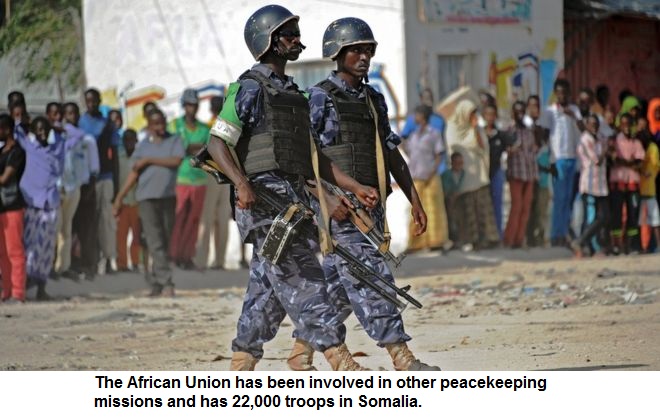
We are not the first region with this status, and will probably not be the last; samples, examples and role models abound. This commentary considers the role model of the African Standby Force (ASF); see their functions in the Appendix below. That region has a history of undeniable threats, and a shameful history of failing responses. Now, the continent attempts to reform and transform. There is a lot for the Caribbean to learn in considering this African role model:

News Title: Africa puts security hopes in foreign-funded, home-grown strike force
By: Wendell Roelf

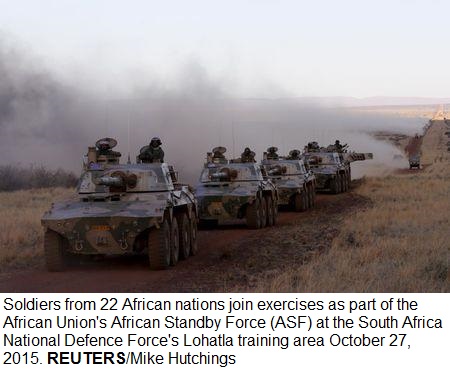
Soldiers from 22 African nations join exercises as part of the African Union's African Standby Force (ASF) at the South Africa National Defence Force's Lohatla training areaLOHATLA COMBAT TRAINING BASE, South Africa – Backed by tanks, armoured vehicles and plenty of EU cash, thousands of African soldiers took on an imaginary enemy in the arid heart of South Africa this week, the last joint exercises before a homegrown continental strike force goes live.

Standing on far-away hilltops, commanders peered through night vision goggles and issued orders through helmet-mounted radios to the 5,400 troops simulating a dawn assault on rebels in the fictitious city of Kalasi marked out in the bush.

The orderly manoeuvres and high-tech kit elicited purrs of approval from military chiefs who tout the rapid-reaction battalion – a key part of a long-awaited African Standby Force (ASF) – as the antidote to insurrections spiralling into civil war or even genocide.

“This is an important milestone in our endeavour to create a tool that will be at our disposal should we require to intervene to quell violence,” South African Defence Minister Nosiviwe Mapisa-Nqakula said at an opening parade.

But analysts say the ASF, which attains “full operational capability” in December, still faces two major challenges: funding, and forging the political agreement among 54 countries to send in troops – if need be without being invited.

“The big elephant in the room here is political will – the will to deploy without national consent, for instance,” said Thomas Mandrup, an expert in African security and governance at the RoyalDanishDefenceCollege.

CU Blog - Role Model - African Standby Force - Photo 4Under original African Union (AU) plans, each of the continent’s five regions – north, south, east, west and central – are meant to provide a brigade of 5,000 troops to the force.

But in a sign of potential divisions, North Africa sent only staff officers to this month’s exercises, not troops, a reflection of the domestic political turmoil in the region.

Without the likes of Egypt and Algeria, the ASF will lack much of the air-lift capability crucial to any rapid deployment.

Instead, ASF operations are likely to become a “coalition of the willing”, Mandrup said, much as South Africa, Tanzania and Kenya have done in United Nations-backed peacekeeping and intervention missions across Africa.

Recent security crises in Africa include coups in Guinea-Bissau, Mali and Burkina Faso, offensives by Islamist militant groups in Mali, Nigeria and Somalia, and conflict between rebels in eastern Congo and Central African Republic.

FOREIGN FUNDING
The polished nature of this week’s war games stood in contrast to decades of underinvestment that has left African armies poorly equipped and trained, blunting the AU’s ability to launch speedy responses to political or humanitarian crises.

Nowhere was this more evident than Mali in 2013 when former colonial power France, rather than the AU, rushed in troops and planes to block the advance of Islamist jihadists sweeping south from the Sahara.

Since 2004, the European Union has committed more than 1.3 billion euros to African peace operations, including 225 million euros in 2014 for missions to Somalia, the Central African Republic and Mali.

In all, more than 90 percent of AU peace and security efforts are funded by the likes of the EU and United States, although AU member states have pledged to provide a quarter of the funding for operations by 2020.

However, the concern remains that if Africa does control the purse-strings of the military force, it cannot control the outcomes.

Underlining the problem, the EU is even bankrolling this month’s exercises, casting a shadow over the “African solutions for African problems” mantra espoused by politicians in national capitals and the AU headquarters in Addis Ababa.

“The external support for defence spending in Africa is, in my view, a major foreign policy handicap,” said David Anderson, professor of African history at Britain’s University of Warwick.

“African states will truly own their defence and security when they pay for it themselves,” he added. “There is no greater marker of sovereignty and independence than security and defence.”

(Additional reporting by Aaron Maasho in Addis Ababa; Editing by Ed Cropley and Raissa Kasolowsky)
Reuters News Service – Posted October 29, 2015; retrieved December 17, 2015 http://news.yahoo.com/africa-puts-security-hopes-foreign-funded-home-grown-120214991.html

———

VIDEO – AU Africa Standby Force To Be Combat Ready In December – https://youtu.be/U2Wa5HDFwYA

In addition to Africa, there is also the need to reform and transform the Caribbean homeland, the security, governing and economic engines. The assertion in the book Go Lean … Caribbean (Page 23) is that with the emergence of new economic engines, “bad actors” will also emerge thereafter to exploit the opportunities, with good, bad and evil intent. This point is pronounced early in the book with the Declaration of Interdependence (Page 12) that claims:

x.   Whereas we are surrounded and allied to nations of larger proportions in land mass, populations, and treasuries, elements in their societies may have ill-intent in their pursuits, at the expense of the safety and security of our citizens. We must therefore appoint “new guards” to ensure our public safety and threats against our society, both domestic and foreign. The Federation must employ the latest advances and best practices … to assuage continuous threats against public safety.

xii. Whereas the legacy in recent times in individual states may be that of ineffectual governance with no redress to higher authority, the accedence of this Federation will ensure accountability and escalation of the human and civil rights of the people for good governance, justice assurances, due process and the rule of law. As such, any threats of a “failed state” status for any member state must enact emergency measures on behalf of the Federation to protect the human, civil and property rights of the citizens, residents, allies, trading partners, and visitors of the affected member state and the Federation as a whole.

xvi. Whereas security of our homeland is inextricably linked to prosperity of the homeland, the economic and security interest of the region needs to be aligned under the same governance. Since economic crimes, including piracy and other forms of terrorism, can imperil the functioning of the wheels of commerce for all the citizenry, the accedence of this Federation must equip the security apparatus with the tools and techniques for predictive and proactive interdictions.

The Go Lean book serves as a roadmap for the introduction and implementation of the technocratic Caribbean Union Trade Federation (CU). The CU would be established by treaty among the 30 member-states to empower the region, including a Defense Pact for the region’s security interest and more. In all, the Go Lean roadmap has these 3 prime directives:

  • Optimization of the economic engines in order to grow the regional economy and create new jobs.
  • Establishment of a security apparatus to protect the resultant economic engines and the Caribbean homeland.
  • Improvement of Caribbean governance to support these engines.

The Caribbean needs to appoint “new guards”, or a security pact to ensure public safety for the Caribbean region.  This will include many strategies, tactics and implementations considered “best-practices” around the world. According to the foregoing news article, these “best-practices” are obvious in the plan for the African Standby Force. This allows a constant vigil against “bad actors”, present and future. The term “constant vigil” connotes pro-activity in monitoring, mitigating and managing risks. Thusly, the Go Lean roadmap describes an organization structure with Intelligence Gathering and Analysis, a robust Emergency Management functionality, plus the Unified Command and Control for Disaster Response, anti-crime and military preparedness.

The model of the African Standby Force is instructive for the Caribbean effort. The ASF is an extension of the African Union (AU), the multilateral government pact consisting of 54 countries in Africa. The only African state that is not a member is Morocco, although Burkina Faso and the Central African Republic have had their memberships suspended due to the recent coup d’état and ongoing civil war respectively. The AU was established on 26 May 2001 with the Secretariat – the African Union Commission – based in Addis Ababa, Ethiopia. The ASF is enabled by a Constitutive Act in the AU treaty; this establishes the legal right to intervene in a member-state in grave circumstances, namely war crimes, genocide and crimes against humanity. As per Article 13 of the Protocol Relating to the Establishment of the Peace and Security Council of the African Union, the ASF is based on standby arrangements with Africa’s five sub-regions.  – (Source: http://www.peaceau.org/en/page/82-african-standby-force-asf-amani-africa-1#sthash.3ELbjdTQ.dpuf).

In parallel, the CU/Go Lean security organization structure is enabled with a Status of Forces Agreement (SOFA) embedded in the treaty to create the CU Trade Federation. This requirement for the SOFA is “Step One, Day One” in the Go Lean roadmap. The Go Lean book details the series of community ethos, strategies, tactics, implementations and advocacies to provide the proactive and reactive public safety/security in the Caribbean region:

Community Ethos – Economic Systems Influence Individual Choices Page 21
Community Ethos – Consequences of Choices Lie in Future Page 21
Community Ethos – Privacy –vs- Public Protection Page 23
Community Ethos – Intelligence Gathering Page 23
Community Ethos – Whistleblower Protection Page 23
Community Ethos – “Crap” Happens Page 23
Community Ethos – Cooperatives Page 25
Community Ethos – Ways to Manage Reconciliations Page 34
Community Ethos – Ways to Improve Sharing Page 35
Community Ethos – Ways to Promote Happiness Page 36
Community Ethos – Ways to Impact the Greater Good Page 37
Strategy – Vision – Confederating a non-sovereign permanent union Page 45
Tactical – Fostering a Technocracy Page 64
Tactical – Separation of Powers – Coast Guard & Naval Authorities Page 75
Tactical – Separation of Powers – Ground Militia Forces Page 75
Tactical – Separation of Powers – Emergency Management Agency Page 76
Tactical – Separation of Powers – CariPol: Marshals & Investigations Page 75
Implementation – Ways to Pay for Change Page 101
Implementation – Start-up Foreign Policy Initiatives Page 102
Implementation – Start-up Security Initiatives Page 103
Implementation – Ways to Foster International Aid Page 115
Planning – 10 Big Ideas – #3: Consolidated Homeland Security Pact Page 130
Planning – Ways to Make the Caribbean Better Page 131
Planning – Ways to Improve Failed-State Indices – Escalation Role Page 134
Planning – Lessons from the American West – Needed Law & Order Page 142
Planning – Lessons from Egypt – Law & Order for Tourism Page 143
Advocacy – Ways to Grow the Economy – Quick Disaster Recovery Page 151
Advocacy – Ways to Improve Governance Page 168
Advocacy – Ways to Better Manage the Social Contract Page 170
Advocacy – Ways to Impact Justice – Policing the Police Page 177
Advocacy – Ways to Reduce Crime – Regional Security Intelligence Page 178
Advocacy – Ways to Improve Homeland Security Page 180
Advocacy – Ways to Mitigate Terrorism Page 181
Advocacy – Ways to Improve Intelligence Gathering & Analysis Page 182
Advocacy – Ways to Improve for Emergency Management Page 196
Advocacy – Ways to Protect Human Rights – Watchful World Page 220

Other subjects related to security and governing empowerments for the region’s defense have been blogged in other Go Lean…Caribbean commentaries, as sampled here:

https://goleancaribbean.com/blog/?p=6720 A Lesson in History – During the Civil War: Principle over Principal
https://goleancaribbean.com/blog/?p=6103 Sum of All Fears – ‘On Guard’ Against Deadly Threats
https://goleancaribbean.com/blog/?p=5183 A Lesson in History – Cinco De Mayo and Mexico’s Security Lapses
https://goleancaribbean.com/blog/?p=5002 Managing a ‘Clear and Present Danger’
https://goleancaribbean.com/blog/?p=4809 Americans arrest 2 would-be terrorists – a Clear and Present Danger
https://goleancaribbean.com/blog/?p=4360 Dreading the ‘Caribbean  Basin Security Initiative’
https://goleancaribbean.com/blog/?p=3881 Intelligence Agencies to Up Cyber Security Cooperation
https://goleancaribbean.com/blog/?p=1965 America’s Navy – 100 Percent – Model for Caribbean
https://goleancaribbean.com/blog/?p=1554 Status of Forces Agreement = Security Pact
https://goleancaribbean.com/blog/?p=1531 A Lesson in History: 100 Years Ago – Root Causes of World War I
https://goleancaribbean.com/blog/?p=1076 Trinidad Muslims travel to Venezuela for Jihadist training
https://goleancaribbean.com/blog/?p=809 Muslim officials condemn abductions of Nigerian girls
https://goleancaribbean.com/blog/?p=535 Remembering and learning from Boston
https://goleancaribbean.com/blog/?p=273 10 Things We Want from the US – #4: Pax Americana

The continent of Africa is very exotic. The natural beauty and abundance of natural resources is legendary. So too is the lack of peace and security.

There is good, bad and ugly in Africa.

An effort to provide a better security solution should be welcomed there. But, Africa is out-of-scope for the promoters of Go Lean … Caribbean. Our focus is the Caribbean only, to make this homeland a better place to live, work and play.

The Caribbean is arguably the best address of the planet; there are few similar arguments towards Africa. There are also economic realities for the Caribbean: tourism is the primary source for the generation of foreign currency in the region. This is not true of the African region. So security here in our homeland must take on a different priority. Tourists do not visit “hot-spots” with civil war, genocides, active terrorism and rampant crime.

No one wants World War III, waged in their neighborhood; people want to keep the peace. A safe, secure homeland is important for how we live, how we work, and how we and others play here in the Caribbean. So addressing this issue – public safety and security threats – and modeling best practices for mitigation and remediation is a matter of serious concern; our “bread-and-butter” is at stake.

Everyone in the Caribbean – citizens, institutions and governments – are hereby urged to lean-in to this Go Lean roadmap to make the region a better, safer homeland to live, work and play.

🙂

Download the book Go Lean … Caribbean – now!

———–

Appendix – ASF Functions

The range of functions assigned to the ASF includes:

1. Observation and monitoring missions;
2. Other types of peace support operations;
3. Intervention in a member state in respect of grave circumstances or at the request of a member state to restore peace and security, in accordance with Article 4(h) and 4(J) of the AU Constitutive act;
4. Preventive deployment to prevent a dispute or a conflict from escalating, an ongoing violent conflict from spreading to neighboring areas or states and the resurgence of violence after parties to conflict have reached an agreement;
5. Peace building, including post conflict disarmament and demobilization;
6. Humanitarian assistance to alleviate the suffering of civilian population in conflict areas and support efforts to address major natural disasters;
7. Any further functions as may be mandated by the Peace and Security Council or the Assembly of Heads of State.

– See more at: http://www.peaceau.org/en/page/82-african-standby-force-asf-amani-africa-1#sthash.3ELbjdTQ.dpuf

Share this post:
,
[Top]

Electric Cars: ‘Necessity is the Mother of Invention’

Go Lean Commentary

Today, gas prices have remained consistently low in the US for the past year; even dropping below $2 per gallon in many places.

This was not always the case. Just recently, in 2008, many of these same places – like California – featured gas prices near $5 per gallon. How amazing? What a change! How did the prices drop so low and what effect did those prior high prices have on the American, or more specifically, the Californian psyche?

“A crisis is a terrible thing to waste” …

… so says the book Go Lean… Caribbean quoting noted Economist Paul Romer (Page 8). A crisis brings an opportunity to forge change in the economic, security and governing engines of communities. An industry did this in the US, in response to the 2008 crisis. This is the industry of Electric Cars (Vehicles) or EV.

EV = No Gas … at all.

Overall, gas prices dropped due to macro-economic factors in both supply and demand. But on the micro-level, the need to mitigate the acute rise in gas prices truly proved to be the ‘mother of invention’. This is well documented in the historicity of one company NRG Energy and their eVgo® electric car charging initiative – see here the encyclopedic information on this enterprise:

NRG Energy and eVgo®

CU Blog - Electric Cars - Necessity is the Mother of Invention - Photo 1

NRG Energy, Inc. is a large American energy company – focusing primarily on power generation. They are dually headquartered in West Windsor Township, New Jersey,[3][4] and Houston, Texas.[1][5][6] It was formerly the wholesale arm of Xcel Energy, and was spun off in bankruptcy in 2004.[7]

Beginning in 2009, NRG began a major initiative to become the leading green energy producer in the United States and started investing very large amounts of money in clean energy projects.[18][19] They include onshore and offshore wind power, solar thermal energy, photovoltaic, and distributed solar power facilities, and repowering of some of their traditional coal plants with biomass.[18]

In late 2010, NRG made news by launching the “eVgo” network, the first completely private public car charging station network for electric power vehicles.[20]Source: https://en.wikipedia.org/wiki/NRG_Energy

… and now in 2015 …

eVgo® leads America’s electric vehicle (EV) revolution.

eVgo® provides charging solutions and stations directly to electric car owners as well as businesses looking to serve the EV charging needs of their residents, tenants, employees, or customers.

Combining desired tier of service with home, multi-family, and workplace charging solutions in conjunction with the largest number of DC fast charging stations across the nation, EVgo provides EV drivers a truly unique level of freedom—and a whole new world of possible destinations.

The eVgo® network is the largest public DC fast charging network in the nation. From April 2014 to October 2015 their chargers provided enough kWh of electricity to power 12,323,090 EV miles. EVgo’s forward-looking infrastructure is invested across the country right now in more than 25 markets with a target of 40 by the end of 2016. EVgo drivers can access more than 1,000 fast charging locations, along with individual charging stations at homes, schools, offices, multi-family communities and hospitals across our growing network. – Source: https://www.nrgevgo.com/about/

NRG Energy and their eVgo® subsidiary is therefore a role model for the Caribbean to emulate. This enterprise has proven to be a technocratic organization that has championed the cause of providing the societal structures for EV’s. They do not manufacture the cars – that is the sphere of the giant car makers like General Motors, Ford, Nissan, BMW, Tesla, SMART and others – but they facilitate all the attendant functions to charge the vehicles and keep them powered. This structure aligns with the book Go Lean… Caribbean, a roadmap for the introduction and implementation of the Caribbean Union Trade Federation (CU). This calls for the confederation, collaboration and convention of 30 member-states into one intergovernmental organization. The same as NRG Energy/eVgo® facilitates EV’s in the US, the CU seeks to facilitate EV’s in the Caribbean region. This is part-and-parcel of the prime directives (3) of the CU/Go Lean roadmap:

  • Optimization of the economic engines – accepting that energy is as basic a need as food, clothing and shelter – in order to grow the regional economy to $800 Billion & create 2.2 million new jobs.
  • Establishment of a security apparatus, including energy security, to protect the resultant economic engines.
  • Improve Caribbean governance to support these engines.

This writer lived in California in 2008 … and paid $5 prices for gas. But now just visited the old residential neighborhoods of Tustin in Orange County – see Appendix B – and noticed something different:

CU Blog - Electric Cars - Necessity is the Mother of Invention - Photo 2

Wow, change, innovation, necessity = the ‘mother of invention’.

 CU Blog - Electric Cars - Necessity is the Mother of Invention - Photo 4

CU Blog - Electric Cars - Necessity is the Mother of Invention - Photo 5

CU Blog - Electric Cars - Necessity is the Mother of Invention - Photo 6

See Appendix A for Charging locations/options in Tustin California today.

The goal of the CU is to optimize Caribbean society in kind. We need to foster innovation at home as well. We need to change in response to our own crises and not waste them. In many Caribbean locales, gas is still priced near $5.00 per gallon.

See the VIDEO here relating the story of an Uber driver and glean the comment of the Jamaican visitor longing for this solution in his Caribbean homeland:

VIDEO:  EVs and Uber- Sasha’s Story of Charging and Driving his Electric Car –  https://youtu.be/dj6NyUv_WkQ

Published on Nov 12, 2015 – Category: Autos & Vehicles; License: Standard YouTube License

This is also a matter of competition. The Caribbean homeland must better compete globally and hopefully present more favorable options for our youth to want to stay here in the homeland, and not copy the model of their previous generations who sought refuge abroad. We are failing miserably at this now!

We are also failing to create innovative energy options. There is the need to optimize our energy policies – from top to bottom. The Go Lean book directs this energy policy directive: the Caribbean region must lower crude oil demands. Success in this area will result in lower fuel and retail gasoline prices. The economic principles are sound: lower the demand, as the supply increases and prices will drop.

Thusly the book proposes many solutions for the region to optimize energy generation, distribution and consumption. No “stone is left unturned”. Go Lean posits that the average costs of energy can be decreased from an average of US$0.35/kWh to US$0.088/kWh in the course of the 5-year term of this roadmap. (Page 100).

Primarily in this strategy in lowering the demand for crude oil is increasing options with alternative energy sources: natural gas, solar, wind and tidal. Thereby lowering the demand on crude oil. As for the supply, the roadmap advocates for Electric Vehicles (EV’s) – just like in Tustin California – and hybrids and other energy mixes like natural gas and hydrogen. In fact, the roadmap calls for the development of a homegrown Automotive Industry in the Caribbean (Page 206). The overriding need for cheaper energy options would be the ‘Mother of Invention’ for these solutions.

The Go Lean book details a series of community ethos, strategies, tactics, implementations and advocacies to foster the progress in the wide fields of energy generation, distribution, consumption and automobile efficiencies. The following list applies:

Community Ethos – Lean Operations Page 24
Community Ethos – Return on Investments Page 24
Community Ethos – Cooperatives Page 25
Community Ethos – Regional Taxi Commissions Page 25
Community Ethos – Non-Government Organizations Page 25
Community Ethos – Ways to Impact the Future Page 26
Community Ethos – Ways to Improve Negotiations Page 32
Anecdote – Pipeline Transport – Strategies, Tactics & Implementations Page 43
Strategy – Harness the power of the sun/winds Page 46
Tactical – Fostering a Technocracy Page 82
Tactical – Separation of Powers – Energy Commission Page 82
Anecdote – “Lean” in Government – Energy Permits Page 93
Anecdote – Caribbean Energy Grid Implementation Page 100
Implementation – Ways to Develop Pipeline   Industry Page 107
Implementation – Ways to Improve Energy Usage Page 113
Planning – Lessons Learned from 2008 Page 136
Advocacy – Ways to Impact Public Works Page 175
Advocacy – Ways to Foster Cooperatives Page 176
Advocacy – Ways to Impact Monopolies Page 202
Advocacy – Ways to Improve Transportation Page 205
Advocacy – Ways to Develop the Auto Industry Page 206

This commentary asserts that energy needs are undeniable. Options abound; the biggest ingredient is the “community will”. Here comes the “will”! If the old adage is true: “where there’s a will, there’s a way”, then the CU/Go Lean roadmap is the way. This is the “heavy-lifting” for the lean, agile operations of the CU technocracy.

There are many Go Lean blog commentaries that have echoed this point, addressing the need to mitigate high prices in energy and the overall cost-of-living in the Caribbean. See sample here:

https://goleancaribbean.com/blog/?p=6867 How to address high consumer prices
https://goleancaribbean.com/blog/?p=5396 ‘Significant’ oil deposit found offshore Guyana
https://goleancaribbean.com/blog/?p=5155 Tesla unveils super-battery to power homes
https://goleancaribbean.com/blog/?p=4587 Burlington, Vermont: First city to be powered 100% by renewables
https://goleancaribbean.com/blog/?p=3743 Trinidad cuts 2015 budget as oil prices tumble
https://goleancaribbean.com/blog/?p=3213 Gas Prices Drop Below $2; due to “Supply and Demand” Factors
https://goleancaribbean.com/blog/?p=915 Go Green Caribbean – Renewable energy pursuits in the region
https://goleancaribbean.com/blog/?p=273 10 Things We Want from the US – American Innovation

So the message to the people of the Caribbean region is straight-forward: Help is on the way!

Now is the time for all of the Caribbean, the people and governments, to lean-in for the optimizations and opportunities described in the book Go Lean … Caribbean.  🙂

Download the book Go Lean … Caribbean – now!

———

Appendix A – EV Charging Locations

The Ultimate Guide to Electric Car Charging Networks In Tustin California

Source: http://evcharging.xyz/free-electric-car-charging-stations-in-tustin-ca-looking-for-a-free-ev-charge-station-in-california.html

When it comes to refueling a car, drivers of gas- and diesel-powered vehicles have it easy. They roll up to any one of about 100,000-plus gas stations in CA, pump in liquid fuel in a matter of minutes, and pay either in cash or with a credit card. Unfortunately, it is a little more complicated with public charging for electric vehicles although remember that almost all EV charging takes place at home, which usually requires about 30 seconds to plug in each night.

For EV drivers who want to regularly charge in public, it is important to know about the handful of charging networks offering access to electric fuel on the go. Each network works a little differently. It is a good idea for EV owners to have a basic understanding of how they compare with one another. That is why we put together this basic guide on EV charging networks.

Cost Considerations

The three primary approaches are:

(1) pay-as-you-go,

(2) monthly subscriptions

(3) free.

Obviously, if given the opportunity, it makes sense to grab a free charge, even for a relatively short period of time. But the pay models, depending on the cost for a charge, need to be studied to determine which network makes the most sense for you; if it is best to collect a wallet-full of membership cards; or if proper planning will allow you to avoid public charging unless you are running very low on charge.

There are a few gotchas. Keep in mind that the amount of range you add per hour depends on the power capabilities of your cars onboard charger. As Marc Geller, a director at Plug In America, an EV advocacy organization, told me: If the car comes with a smaller charger, the cost is relatively higher than if you have a faster charger. It is a weird fact. Other oddities include credit card transactions and costs associated with leaving a car plugged in, even if the battery if fully charged and the electrons have stopped flowing.

Networks, such as eVgo, operated by NRG Energy, avoid some of these issues by using an all-encompassing all-you-can-charge subscription service. That brings clarity, but usually at a higher overall cost. As of July 2014, the majority of public chargers are still available for free (although not every system makes it absolutely clear how much EV drivers are paying to charge).

High-Level Recommendations

  • First, think about your regular routes and favorite destinations in Tustin CA. Then use PlugShare or another station finding tool to see which charging networks are along the way. Be prepared to use any of them.
  • ChargePoint is the biggest charging network, so it is a must for nearly all EV drivers.
  • If you live in Pacific Northwest, get a key fob from Aerovironment for its AV Subscription Network.
  • In Texas, it’s generally better to pay as you go with ChargePoint and Blink, rather than opting for multi-year expensive contracts with eVgo unless you want to splurge for the convenience of an all-you-can-charge plan and, at this time, the ability to access DC fast charging.
  • On the east coast, SemaConnect is the best backup to ChargePoint.
  • Who doesn’t like free? There are about 2,000 stations, mostly free, not associated with any of the networks listed below. Use PlugShare or other tools to find these stations.

One last caveat: The terminology of ”station” can be confusing and misleading. Some services call each individual charger a station, when the term station usually refers to a single public site with the capability to charge more than one car at a time.

List of Top EV Charging Networks In Tustin 92780

AEROVIRONMENT

Background: Aerovironment, known as AV, is a pioneer in the development of electric vehicle charging technologies. The company sells a range of Level 2 and Quick Charge equipment, but also operates its own network of chargers.

Approximate Number of Sites: 60

Coverage: AV chargers, many of which are DC Quick Chargers, are primarily located in Oregon, and to a lesser extent, in Washington State as part of the West Coast Electric Highway. AV also has a handful of charging locations in California.

Access: Unlimited monthly access is provided for $19.99 per month. Subscribing to the AV network starts with calling 888-833-2148 or filling out a form on the AV website. The company will send a key fob that activates the chargers. If you are a current subscriber there is no activation fee. If you are a new subscriber, there will be a one-time activation fee of $15.

Cost per charge: As an alternative to the flat monthly access fee, there is the option of paying per session: $7.50/session for DC Fast Charger; and $4.00/session for a Level 2 charging station.

Website: http://evsolutions.avinc.com/services/subscriber_network

——-

BLINK NETWORK

Background: The assets of Blink Network were purchased by CarCharging Group in October 2013. Ecotality had received a $114.8 million federal stimulus grant to oversee The EV Project. The goal of The EV Project is to deploy 8,300 private and public chargers. There have been several reported problems associated with Blink chargers, and the Blink Network, such as insufficient customer support, and incompatibility of the equipment with certain vehicles.

Approximate Number of Sites: 1,680

Coverage: Blink Network chargers are located in approximately 25 states, with the largest concentration in California, California, Arizona, Oregon, Texas, Tennessee and Washington.

Access: Start by registering a credit card with a Blink account. There are no required annual or monthly membership fees, or minimum credit card balance. Members who register will receive an InCard and can initiate a charge using the card. Guests can initiate a charge with Blinks mobile application.

Cost Per Charge: In the states that permit kilowatt-hour pricing, fees for Level 2 EV charging stations owned by Blink and operated on the Blink Network range from $0.39 to $0.79 per kWh, depending on the state and individuals membership status. Blink is a proponent of kWh pricing because it is usage-based and EV drivers pay fees based on the actual amount of power consumed during the charging session rather than the amount of time that the car is plugged into the station.Fees for DCFC chargers owned by Blink and operated on the Blink Network in kWh eligible state range from $0.49 to $0.69 per kWh, depending on the state and individuals membership status.

These states currently permit fees by the kilowatt-hour: California, Colorado, Florida, Hawaii, Illinois, Maryland, Minnesota, New York, Oregon, Utah, Virginia, and Washington, as well as the District of Columbia.

In states where pricing by kWh is not permitted, time-based charging fees for Level 2 charging stations owned by Blink and operated on the Blink Network range from $0.04 to $0.06 per minute, depending on membership status. Time-based charging fees are rounded up to the nearest 30-second interval. Fees for DCFC chargers owned by Blink and operated on the Blink Network in non-kWh eligible states will range from $6.99 – $9.99 per session, depending on membership status.

Website: http://www.blinknetwork.com .

——-

CHARGEPOINT

Background: Chargepoint, previously Coulomb Technologies, describes itself as the largest online network of independently owned EV charging stations operating in 14 countries. The company provides a turnkey EV charging solutions for property owners who can determine the terms for offering charging to EV drivers.

Approximate Number of Sites: 3,084

Coverage: While one-quarter of ChargePoint stations are in California, the network is the most widely distributed with at least one station in California.

Access: There is no cost to sign up and receive a ChargePoint card. After submitting your credit card information as part of the sign-up, you will be charged an initial deposit of $25 only when you first visit a charging station that requires a fee. (Many stations on the network are free.) Your account provides access to all public stations on ChargePoint. Charging stations are activated with the ChargePoint card, or a contactless credit card. The stations can also be activated by calling a toll-free customer service number on the ChargePoint station, or by using the associated mobile app. Account balances automatically replenish when the balance gets low. Cost Per Charge: Prices are determined by the property owner. Many ChargePoint stations are currently free.

Website: http://www.chargepoint.com.

——-

EVGO

Background: eVgo is subsidiary of NRG, a Fortune 300 and S&P 500 company. It Is one of the countrys largest power generation and retail electricity businesses, with power plants producing about 47,000 megawatts of generation capacity. eVgo is part of NRGs clean energy portfolio, which includes solar, thermal, and carbon capture technology.

Approximate Number of Stations: Approximately 150, each with Level 2 and DC quick charging options.

Coverage: Currently, eVgo operates stations in Tustin CA, Texas, in the Houston and Dallas-Fort Worth markets, as well as Tennessee, California and the greater Washington, DC area.

Access: NRG network is only available to its monthly subscribers using an eVgo card, but as its website states, the company will always take care of an EV driver in need of a charge.

Cost Per Charge: eVgo offers various plans based on the needs of an EV driver and the electric vehicle they have chosen. This is an overview of their three most popular all-you-can-charge plans. Starting at $30 a month, with a one-year service agreement, EV drivers have access to unlimited charging at the companys so-called Freedom Station sites, which includes Level 2 and DC fast charging. The $40 a month Home plan, with a three-year service agreement, adds installation of your own home charging equipment but not the cost of electricity that is separately metered. The Workplace plan is $30 a month. See the pricing structure, which is unique to each region.

Website: http://www.evgonetwork.com/

——-

GE WATTSTATIONS

Approximate Number of Sites: 270

Coverage: 32 states, California, DC and Puerto Rico.

Access: WattStations require an RFID card, even when non-networked and free.

Cost Per Charge: Prices vary, as established by owners.

——-

GREENLOTS

Background: Greenlots is not formally a network, but rather a provider of open standards-based technology solutions for various stations and other networks. Designed to answer the needs of site hosts offering workplace, utility and public charging applications, Greenlots SKY platform utilizes Open Charge Point Protocol (OCPP), the largest open standard for charger-to-network communications.

Access: Users have many access options, including: (1) Download the free Greenlots app from iTunes or Google Play. Next, enter your credit card information. Once your information is saved, select “Charge” from the menu and enter the Station ID or scan the QR code displayed on the front of the station; (2) Swipe your Greenlots RFID card; (3) Call the customer care number listed on the station to have the charge session started remotely; and (4) Some stations have a credit card swiper. Users can also create a driver account at www.charge.greenlots.com to track electricity usage, update information, or order an RFID card.

Coverage: No specific region. Charging stations in Midwest, Northeast, Northwest, South, and Southwest, as well as Hawaii, Canada and Singapore.

Cost Per Charge: Site hosts determine the fee for use. Greenlots does not charge a membership fee.

Website: http://greenlots.com/

——-

SEMACONNECT

Background: Maryland-based SemaConnect offers Level 2 commercial grade EV charging station equipment and management software called SemaCharge. Their focus is on making charging as easy as possible for EV drivers and station owners. The company says it is the fastest growing network on the east coast. SemaConnect is the third largest supplier of commercial grade Level 2 charging stations based on number of stations deployed.

Approximate Number of Sites: 450

Coverage: SemaConnect stations are located in about 20 states, with the greatest concentration in California, Maryland, Virginia, Washington, DC, Georgia, California and the Pacific Northwest. It also has a presence in Puerto Rico.

Access: To sign up, log on to the SemaConnect website, and open a new account with a $20 balance charged to a major credit card. You will receive a SemaCharge RFID card that can be used to initiate charging at any SemaConnect location. If the balance drops below $0.00, the associated credit card will add another $20 to your account. SemaConnect also offers mobile payments via its smartphone application, toll-free number, or via a QR code scan.

Cost per charge: The cost varies, as determined by the property owner.

Website: http://www.semaconnect.com

——-

SHOREPOWER CONNECT

Background: Shorepower Technologies manufactures, sells and operates equipment for truck stop electricity services, as well as electric vehicle charging equipment. Most of the truck stop sites have standard charging outlets (e.g., NEMA 5-20, NEMA 14-30 and NEMA TT-30), accessible to EV drivers with the appropriated adapter cords. Relatively few of the locations also have charging stations with standard J1772 connectors.

Approximate Number of Sites: Shorepower has about 425 locations, with more than 2,000 individual connection points.

Coverage: Charging locations, mostly at truck stops, are spread widely across the U.S. in approximately 30 states and can be found in Tustin CA.

Access: Use the toll-free hotline, kiosk or web browser to activate service via a credit card. There is a $1 activation fee. Cost per charge: For paid stations at Level and Level 2, the fee is $1 per hour. Locations with J1772 equipment, mostly on west coast, are free.

Website: www.shorepowerconnect.com

——-

TESLA SUPERCHARGERS

Background: In fall 2012, Tesla Motors, the makers of the Model S sedan, rolled out its first so-called Superchargers, in order to make road trips available for free to owners of its sporty luxury sedan.

Approximate Number of Sites: As of August 2015, there are 502 Supercharger stations with 2,832 Superchargers.

Coverage: Supercharger stations are situated throughout the United States and can be found in Tustin 92780.

Access: Tesla Superchargers do not require a card to initiate. Model S owners simply drive up and plug in. The chargers are available to owners of Model S models with the 85 kWh battery pack, or cars with the 60 kWh pack that have been configured to use Superchargers.

Cost Per Charge: Free. No sign up and no cost for electricity.

Website: http://www.teslamotors.com/supercharger

——-

Appendix B – Tustin Information

CU Blog - Electric Cars - Necessity is the Mother of Invention - Photo 7

Share this post:
, , , ,
[Top]

The Future of Money

Go Lean Commentary

CU Blog - The Future of Money - Photo 3Surely the Caribbean can offer more than the African country of Kenya does. Surely?!

… and yet Kenya is providing a role model for the Caribbean to emulate, that of mobile money payment systems.

Let’s play catch-up.

Benefits await the Caribbean, more so than just playing catch-up. We can empower and elevate our economy and society. Notice here how this elevation benefits Kenya – an iconic and typical Third World country – in these news VIDEOs here:

VIDEO 1 – CBS 60 Minutes Story: The Future of Money – http://www.cbsnews.com/videos/the-future-of-money

  • … requires CBS All Access Subscription…

VIDEO 2 – Financial Times: Mobile money keeps Kenya economy moving – https://youtu.be/ayo-rgayDJE

Published on Mar 11, 2013 – Kenya has led Africa’s innovative and revolutionary embrace of mobile telephones, and the country’s technology sector has grown faster than all others in east Africa’s regional economic hub. Bob Collymore, chief executive of Safaricom, parent company of the mobile payment system M-Pesa, talks to Katrina Manson, east Africa correspondent.

This is a familiar advocacy for these Go Lean commentaries. The full width and breadth of electronic payments schemes have been examined, dissected and debated. The benefits are undeniable:

  • Instant access
  • Safer transactions
  • Expanded networks
  • Mitigating fees
  • Expanded money supply
  • Availing credit

CU Blog - The Future of Money - Photo 1
CU Blog - The Future of Money - Photo 4-newB
CU Blog - The Future of Money - Photo 5
CU Blog - The Future of Money - Photo 6-new

Previous blog-commentaries have promoted the following as advocacies integrating technology and money:

https://goleancaribbean.com/blog/?p=6635 New Security Chip in Credit Cards Unveiled
https://goleancaribbean.com/blog/?p=5668 Move over Mastercard/Visa… here comes a Caribbean Solution
https://goleancaribbean.com/blog/?p=4425 Cash, Credit or iPhone …
https://goleancaribbean.com/blog/?p=3889 Caribbean regional banks are ready to accept electronic payments transactions
https://goleancaribbean.com/blog/?p=2074 MetroCard – Model for the Caribbean Dollar
https://goleancaribbean.com/blog/?p=1350 PayPal expands payment services to 10 markets
https://goleancaribbean.com/blog/?p=906 Bitcoin needs regulatory framework to change ‘risky’ image of payments
https://goleancaribbean.com/blog/?p=528 Facebook plans to provide mobile payment services

CU Blog - The Future of Money - Photo 2-newThe world is moving forward with electronic payment systems; the standard of cash registers with cash drawers have passed. Many times, establishments do not even want to accept “cash”. They want the money, but only want it electronically. Consider this photo here, it demonstrates how United Airlines – the 3rd largest airline in the world – will not even accept “cash” for travelling passengers to pay for baggage when they check-in for their flights. They want electronic money only (credit and debit cards). This photo depicts a cash-accepting kiosk to load the cash onto a pre-paid credit card … on the spot at the terminal … at the Metropolitan Detroit International Airport (DTW) in November 2015.

Those involved in tourism commerce must now adapt or perish.

What’s more, even the standard of magnetic stripe credit cards and debit cards have passed. As depicted in the foregoing VIDEO and previously Go Lean blog-commentaries, those involved in retail commerce – in general – must now adapt (or perish) to credit and debit cards … without the card!

This means you, Caribbean merchants (hotels, restaurants, tour operators, retailers, and business establishments). The environment must now change for tourism commerce and ordinary domestic commerce. The stewardship of Caribbean economics must improve to adapt to this changing world. This is a consistent advocacy of these Go Lean blogs: to “lean-in” to better economic stewardship as detailed in the book Go Lean … Caribbean.

The book serves as a roadmap for the introduction and implementation of the Caribbean Union Trade Federation (CU) and the Caribbean Central Bank (CCB). This Go Lean roadmap depicts that these entities will drive change in payment systems, to includes options depicted in the foregoing VIDEO and beyond. Their role will include facilitating and settling transactions for new payment systems: new cards and telephony apps. The Go Lean roadmap calls for a regional currency for the Caribbean Single Market, the Caribbean Dollar (C$), to be used primarily as an electronic currency. These schemes will impact the growth of the regional economy in both the domestic and tourist markets. Consider the real scenario of Cruise Ship passenger-commerce; the solutions must be delivered here and now.

The CU/CCB roadmap anticipates these electronic payment systems from the outset of the Go Lean book; covering more than commerce, but the security and governing issues as well. In fact, the Go Lean roadmap has these 3 prime directives:

  • Optimization of the economic engines in order to grow the regional economy to $800 Billion & create 2.2 million new jobs.
  • Establishment of a security apparatus to protect the resultant economic engines.
  • Improvement of Caribbean governance to support these engines.

As depicted in the foregoing VIDEO, there abound many security benefits with electronic payment schemes, mobile money in this case. In the field of Economics, the “cash currency” is referred to as M0. No doubt, changes for electronic payment system will reduce M0. The greatest benefit though of deploying these electronic payment scheme is the acceleration of M1 in the regional economy. While M0 refers to “cash: paper & coins”, M1 refers to the measurement of “cash” in circulation (the M0) plus overnight bank deposits. As depicted in the Go Lean book, and subsequent blog-commentaries, M1 increases allow central banks – in this case, the CCB – to create money “from thin-air”; referring to the money multiplier principle.

A final feature of M1 is that it normally does not include any Black Market activities. But with electronic payment systems, M0 reduces and M1 increases, thusly nullifying the Black Markets.

The Go Lean book posits that to adapt and thrive in the new global marketplace there must be more strenuous management and technocratic oversight of the region’s currencies. This is the quest of the Go Lean roadmap; it opened with these pronouncements in the Declaration of Interdependence (Page 13 and 14):

xxiv.   Whereas a free market economy can be induced and spurred for continuous progress, the Federation must install the controls to better manage aspects of the economy: jobs, inflation, savings rate, investments and other economic principles. Thereby attracting direct foreign investment because of the stability and vibrancy of our economy.

xxv.    Whereas the legacy of international democracies had been imperiled due to a global financial crisis, the structure of the Federation must allow for financial stability and assurance of the Federation’s institutions. To mandate the economic vibrancy of the region, monetary and fiscal controls and policies must be incorporated as proactive and reactive measures. These measures must address threats against the financial integrity of the Federation and of the member-states.

xxvii. Whereas the region has endured a spectator status during the Industrial Revolution, we cannot stand on the sidelines of this new economy, the Information Revolution. Rather, the Federation must embrace all the tenets of Internet Communications Technology (ICT) to serve as an equalizing element in competition with the rest of the world. The Federation must bridge the digital divide and promote the community ethos that research/development is valuable and must be promoted and incentivized for adoption.

The Go Lean book details a series of community ethos, strategies, tactics, implementations and advocacies to foster the proper controls for electronic/mobile payments in the Caribbean region:

Community Ethos – Economic Principles Page 21
Community Ethos – Money Multiplier Principle Page 22
Community Ethos – Security Principles – Privacy versus Public Protection Page 23
Community Ethos – Governing Principles – Lean Operations Page 24
Community Ethos – Governing Principles – Cooperatives Page 25
Community Ethos – Promote Intellectual Property Page 29
Community Ethos – Ways to Bridge the Digital Divide Page 31
Community Ethos – Ways to Improve Sharing Page 35
Community Ethos – Ways to Impact the Greater Good Page 37
Strategy – Mission – Fortify the monetary needs through a Currency Union Page 45
Tactical – Separation of Powers – Central Banking Page 73
Implementation – Assemble Central Bank Cooperative Page 96
Implementation – Assemble Caribbean Regional Organs Page 96
Implementation – Ways to Deliver Page 109
Planning – 10 Big Ideas – #2: Currency Union / Single Currency Page 127
Anecdote – Caribbean Currencies Page 149
Advocacy – Ways to Grow the Economy Page 151
Advocacy – Ways to Create Jobs Page 152
Advocacy – Ways to Mitigate Black Markets Page 165
Advocacy – Ways to Foster Cooperatives Page 176
Advocacy – Ways to Impact Cruise Tourism – Smartcard scheme Page 193
Advocacy – Ways to Foster Technology Page 197
Advocacy – Ways to Foster e-Commerce Page 198
Advocacy – Reforms for Banking Regulations – Central Banking Efficiencies Page 199
Advocacy – Ways to Impact Main Street – Downtown Wi-Fi – Time and Place Page 201
Appendix – Assembling the Caribbean Telecommunications Union Page 256

The world of electronic payment systems now includes smart cards, mobile payments (like “M-Pesa” in the foregoing VIDEO and apps on Google’s Android and Apple’s iPhone devices). To those in the Caribbean, we admonish you:

Try and keep up!

The benefits of this new “regime” are too enticing to ignore: fostering more e-Commerce, increasing regional M1, mitigation of Black Markets, more cruise tourism spending, growing the economy, creating jobs, enhancing security and optimizing governance.

Now is the time for all stakeholders of the Caribbean, (residents, visitors, merchants, vendors, bankers, and governing institutions), to lean-in for the empowerments described in the book Go Lean … Caribbean. These empowerments can help to make the Caribbean a better place to live, work and play.  🙂

Download the free e-Book for Go Lean … Caribbean – now!

Share this post:
, , , , ,
[Top]

ENCORE: Thanksgiving and American Commerce – Past, Present and Amazon

Go Lean Commentary

This commentary – from December 3, 2014 – was re-distributed on the occasion of the American Holiday Thanksgiving for 2015, as it is applicable for any Thanksgiving any year. Be thankful people; be festive and most important, be safe!

———

To understand American commerce, one must learn the BIG shopping “days of the week” – Friday, Saturday, Monday, Tuesday, as follows:

    • Black Friday – This is the Friday following the Thanksgiving Day holiday in the US (the fourth Thursday of November). Since the early 2000’s, it has been regarded as the beginning of the Christmas shopping season, and most major retailers open very early and offer promotional sales. Black Friday is not a public holiday, but some states observe “The Day After Thanksgiving” as a holiday for state government employees, sometimes in lieu of another federal holiday such as Columbus Day.[5] Many non-retail employees and schools have both Thanksgiving and the day after off, followed by a weekend, thereby increasing the number of potential shoppers. In 2014, $50.9 billion was spent during the 4-day Black Friday weekend. While approximately 133 million U.S. consumers shopped during the same period.[6]
    • Small Business Saturday – This refers to the Saturday after Thanksgiving during one of the busiest shopping periods of the year. First observed in 2010, it is a counterpart to Black Friday and Cyber Monday, which feature big box retail and e-commerce stores respectively. By contrast, Small Business Saturday encourages holiday shoppers to patronize brick-and-mortar businesses that are small and local. Small Business Saturday is a registered trademark of American Express Corporation. Small Business Saturday UK began in the UK in 2013 after the success of Small Business Saturday in America.[7]
    • Cyber Monday – This is a marketing term for the Monday after the Thanksgiving holiday. The term was created by marketing companies to persuade people to shop online. The term made its debut on November 28, 2005, in a Shop.org press release entitled “‘Cyber Monday Quickly Becoming One of the Biggest Online Shopping Days of the Year”.[2] According to the Shop.org/Bizrate Research 2005 eHoliday Mood Study, “77 percent of online retailers said that their sales increased substantially on the Monday after Thanksgiving, a trend that is driving serious online discounts and promotions on Cyber Monday this year (2005)”. In 2014, Cyber Monday online sales grew to a record $2.68 billion, compared with last year’s $2.29 billion. However, the average order value was $124, down slightly from 2013’s $128.[3] The deals on Cyber Monday are online-only and generally offered by smaller retailers that cannot compete with the big retailers. Black Friday generally offers better deals on technology; with nearly 85% more data storage deals than Cyber Monday. The past Black Fridays saw far more deals for small appliances, cutlery, and kitchen gadgets on average than Cyber Monday. Cyber Monday is larger for fashion retail. On the past two Cyber Mondays, there was an average of 45% more clothing deals than on Black Friday. There were also 50% more shoe deals on Cyber Monday than on Black Friday.[4] Cyber Monday has become an international marketing term used by online retailers in Argentina, Canada, Chile, China, Colombia, Denmark, Germany, Ireland, Uganda, Japan, Portugal, Sweden and the United Kingdom.
    • Giving Tuesday – refers to the Tuesday after Thanksgiving. It is a movement to create a national day of giving at the beginning of the Christmas and holiday season. Giving Tuesday was started in 2012 by the “92nd Street Y” (Young Men’s and Young Women’s Hebrew Association in New York, NY) and the United Nations Foundation as a response to commercialization and consumerism in the post-Thanksgiving season (Black Friday and Cyber Monday).[8][9] This occasion is often stylized as #GivingTuesday for purposes of hashtag activism.

That’s a lot of commerce … and philanthropy too!

This encyclopedic discussion is necessary for the Caribbean to model the best-practices of American commerce. The focus of this commentary is the role of one company in the pantheon of Cyber Monday, Amazon. This firm has previously been featured in a Go Lean blog, and is identified as a model for Caribbean logistics, our means for delivering the mail; this is the vision for the Caribbean Postal Union (CPU).

The focus of the book Go Lean…Caribbean and the CPU is not just postal mail, but rather logistics. Mail requires logistics, but logistics encompasses so much more than just mail. So we would want to model a successful enterprise in this industry space, like Amazon, not just another postal operation, like the US Postal Service (Page 99).

Amazon provides a good example of lean technocratic efficiency. So Amazon is a good model, not just for the CPU but the entire Caribbean Union Trade Federation (CU). The Go Lean book, serves as a roadmap for the introduction and implementation of the technocratic CU.

One reason why Amazon is modeled for their lean stature is their use of automation. This following VIDEO depicts the creative solution of using robots to facilitate logistics in a warehouse environment:

VIDEO: Robots help Amazon tackle Cyber Monday – http://www.cbsnews.com/videos/robots-help-amazon-tackle-cyber-monday/

December 1, 2014 – Cyber Monday is the biggest sales day of the year for online retail giant, Amazon. Last year, Amazon customers ordered 426 items every second on Cyber Monday, and this year that number is expected to grow. In addition to the 80-thousand seasonal workers they employ to fulfill orders, thousands of robots also crawl the warehouse floors. CNET.com’s KaraTsuboi takes us inside an Amazon fulfillment center to watch the robots in action. (VIDEO plays best in Internet Explorer).

Lean, automation, robotics, technocratic …

… welcome to the new Caribbean.

This is the mission of Go Lean roadmap, to elevate the economic engines of Caribbean society; industrial policy plays a key role in this roadmap. The region needs the jobs, so we need job creators: companies. These companies, or better stated, Direct Foreign Investors, need a pro-innovation environment to deploy their automated solutions. The Go Lean roadmap allows the structure of Self-Governing Entities (SGE) to incentivize industrial developments in the region. It is the expectation that robots and automated systems will flourish. The independence of the SGE structure neutralizes conflicts with “labor”.

Related issues have previously been detailed in these Go Lean commentaries listed here:

Disney World – Successful Role Model of a SGE
Using SGE’s to Welcome the Dreaded ‘Plutocracy’
Where the Jobs Are – Ship-breaking under SGE Structure
Fairgrounds as SGE and Landlords for Sports Leagues
Puerto Rico’s Comprehensive Cancer Center Project Breaks Ground – Model of Medical SGE

In addition to the roadmap encouraging robotic automation, the CU will directly employ such technologically innovative products and services to impact its own prime directives; the CPU is such a reflection; more automation and less labor. The CU’s prime directives are identified with the following 3 statements:

  • Optimization of the economic engines in order to grow the regional economy to $800 Billion & create 2.2 million new jobs.
  • Establishment of a security apparatus to protect the resultant economic engines.
  • Improve Caribbean governance to support these engines.

The CPU features economic, security and governing concerns.

The Go Lean roadmap seeks to change the entire eco-system of Caribbean logistics and resulting commerce – the interaction with postal operations. This vision is defined early in the book (Page 12 & 14) in the following pronouncements in the Declaration of Interdependence:

xv. Whereas the business of the Federation and the commercial interest in the region cannot prosper without an efficient facilitation of postal services, the Caribbean Union must allow for the integration of the existing mail operations of the governments of the member-states into a consolidated Caribbean Postal Union, allowing for the adoption of best practices and technical advances to deliver foreign/domestic mail in the region.

xxvii. Whereas the region has endured a spectator status during the Industrial Revolution, we cannot stand on the sidelines of this new economy, the Information Revolution. Rather, the Federation must embrace all the tenets of Internet Communications Technology (ICT) to serve as an equalizing element in competition with the rest of the world. The Federation must bridge the digital divide and promote the community ethos that research/development is valuable and must be promoted and incentivized for adoption.

Amazon is not our only example. A previous blog/commentary identified Chinese company Alibaba as a fitting role model for Caribbean consideration. There are so many best-practices around the world for the region to study and glean insights and wisdom from. The successful application of this roadmap will foster such best-practices for the delivery of the CPU logistics in the Caribbean. The wisdom the Go Lean book gleans are presented as a series of community ethos, strategies, tactics, implementations and advocacies; a detailed sample is listed as follows:

Community Ethos – Deferred Gratification Page 21
Community Ethos – People Respond to Incentives Page 21
Community Ethos – Job Multiplier Page 22
Community Ethos – Intelligence Gathering Page 23
Community Ethos – Lean Operations Page 24
Community Ethos – Ways to Impact the Future Page 26
Community Ethos – Ways to Foster Genius Page 27
Community Ethos – Ways to Help Entrepreneurship Page 28
Community Ethos – Promote Intellectual Property Page 29
Community Ethos – Ways to Bridge the Digital Divide Page 31
Community Ethos – Ways to Improve Sharing Page 35
Strategy – Customers – Citizens and Member-states Governmental Page 47
Tactical – Separation of Powers – Postal Services Page 78
Tactical – Separation of Powers – Interstate Commerce Administration Page 79
Implementation – Year 1 / Assemble Phase – Establish CPU Page 96
Anecdote – Implementation Plan – Mail Services – US Dilemma Page 99
Implementation – Steps to Implement Self-Governing Entities Page 105
Implementation – Improve Mail Services – Electronic Supplements Page 108
Implementation – Ways to Deliver Page 109
Planning – 10 Big Ideas for the Caribbean Region Page 127
Advocacy – Ways to Improve Interstate Commerce Page 129
Advocacy – Ways to Grow the Economy Page 151
Advocacy – Ways to Create Jobs Page 152
Advocacy –Ways to Improve Governance Page 168
Advocacy – Ways to Foster Technology Page 197
Advocacy – Ways to Foster e-Commerce Page 198
Advocacy – Ways to Promote Call Centers Page 212
Advocacy – Ways to Impact Urban Living Page 234

Following the Amazon’s example (and Alibaba’s example) will spur the Caribbean to embrace more robotic technologies. This field is new, fresh and ready for innovation. There is a level-playing-field for any innovator to earn market share. The underlying company in the foregoing VIDEO is Kiva Systems – a Massachusetts based company that manufactures mobile robotic fulfillment systems.[10][11] They rolled out a great product, then “Lo-and-behold”, they were acquired by a major e-Commerce company. Today, they are a subsidiary of Amazon, yet their material-handling systems are currently used by many other retailers including: The Gap, Walgreens, Staples, Gilt Groupe, Office Depot, Crate & Barrel, Saks 5th Avenue, and more.[12]

CU Blog - Robots help Amazon tackle Cyber Monday - Photo 3

CU Blog - Robots help Amazon tackle Cyber Monday - Photo 2

CU Blog - Robots help Amazon tackle Cyber Monday - Photo 1

CU Blog - Robots help Amazon tackle Cyber Monday - Photo 4

This commentary therefore features the subjects of commerce, logistics and entrepreneurship. The Caribbean can emulate this model from Amazon. The biggest ingredient missing in the region is the ‘will’. But the ‘will’ can be fostered anew in the Caribbean. This is the heavy-lifting for the CU, instituting such new community ethos.

Now is the time for all of the Caribbean, the people and governing institutions, to lean-in for the empowerments in the book Go Lean … Caribbean. This is a Big Idea for the region; that of a Cyber Caribbean, in which Cyber Mondays may become a big deal for our region – not only as consumers, but producers as well. Therefore, this roadmap is not just a plan for delivering the mail/packages, but rather a plan for delivering the future.

We must employ whatever tools and techniques, robotics included, to make the region a better homeland to live, work and play.

Does “play“include Robots? Yes, indeed. Consider this fun VIDEO here. 🙂

Supplemental VIDEO – The “Nutcracker” performed by Dancing Kiva Order Fulfillment Robots: http://youtu.be/Vdmtya8emMw

Download the book Go Lean … Caribbean – now!

————

AppendixSource References:

2. “‘Cyber Monday’ Quickly Becoming One of the Biggest Online Shopping Days of the Year”. Shop.org.
3. “Fundivo – Cyber Monday Statistics”. Fundivo.
4. “What’s the difference between Black Friday and Cyber Monday?”. Mirror.co.uk. Mirror.co.uk. Nov 28, 2013. Retrieved 2014-11-25.
5. “Pima County in Arizona Replaces Columbus Day with Black Friday”. BestBlackFriday.com. 2013-08-07.
6. “”Fundivo – Black Friday Statistics””. Fundivo.
7. Small Business Saturday Hailed as Success. The Telegraph. 8 December 2013″. Telegraph.co.uk. 8 December 2013. Retrieved 2 December 2014.
8. Fox, Zoe (October 23, 2012). “6 Inspiring Organizations Joining in #GivingTuesday”. Retrieved February 15, 2014.
9. “#GivingTuesday: About”. Giving Tuesday. Retrieved February 15, 2014.
10. http://www.kivasystems.com/about-us-the-kiva-approach/
11. http://www.boston.com/business/technology/innoeco/2012/03/amazon_buys_warehouse_robotics.html
12. http://www.kivasystems.com/about-us-the-kiva-approach/history/

Share this post:
, , , , , ,
[Top]

Forging Change: ‘Something to Lose’

Go Lean Commentary

“You cannot miss something you never had” – Wise expression.

Not only is this expression thought-provoking, but also prophetic. The motives of the movement behind the book Go Lean…Caribbean is to forge change in the Caribbean. Plain and simple! The people, policies and processes from the book wants to elevate Caribbean life to a level that the people may not now appreciate, because they cannot “miss something that they never had”.

The book presents a plan to …

  • reboot economic engines (create 2.2 million new jobs, improved healthcare, facilitate new educational and entrepreneurial opportunities, stabilize a regional currency),
  • optimize the security apparatus (anti-crime and public safety), and
  • facilitate accountable governance for all citizens (including minority factions).

CU Blog - Forging Change - Something to Lose - Photo 5

CU Blog - Forging Change - Something to Lose - Photo 4

CU Blog - Forging Change - Something to Lose - Photo 1

CU Blog - Forging Change - Something to Lose - Photo 2

The region has never had this before, not even in the days of colonialism. With this acknowledgement, it is understandable that many may not “buy-in” to these Go Lean empowerments – they may not know what they are missing. But they do know what a better life would look like. They get such a view from these sources:

  • There is the media penetration in the Caribbean, portraying life in optimized societies abroad.
  • There are students matriculating abroad, who then may NOT want to return to our shores after their studies.
  • There are the tourists/visitors who interact with our citizens and describe their lives in their homelands.
  • There is the Diaspora that have left, many times as the only hope for work, and then repatriate monies to support their family.

Caribbean residents may not have had certain features, like the advanced societies in the US, Canada and Western Europe, but they do know how other people thrive in those other lands. They want that for themselves. This constitutes the “pull” factors that contribute to the high abandonment rate (drawn from “push-and-pull” references): life abroad on foreign shores may appeal to them more so than their homeland.

The book serves as a roadmap for the introduction and implementation of the technocratic Caribbean Union Trade Federation (CU) as a vehicle to make the region a better place to live, work and play. The vision is that of a Single Market of the 30 member-states, 4 language groups and 42 million people; this scope and leverage from this integration is such as has never actuated in the Caribbean before – the people cannot miss this vision because they have never seen it here.

So just how do we get the required buy-in? How do we get the populations to embrace, accept, commit and engage this vision of an elevated society that they may not have ever seen in their homeland before? How do we forge this change?

One approach to forging this change is to give the people something to lose.

This point was vocalized dramatically in the movie The Fast and the Furious Part Five with this dialogue:

VIDEO – Fast Five Joaquim de Almeida Speech – https://youtu.be/OucccI1pcFw

Uploaded on Jan 15, 2012 – Joaquim de Almeida talks about the Portuguese discoveries in Brazil …
This is art imitating life and life imitating art.

There is nothing nefarious or malevolent about the Go Lean roadmap. The efforts to forge change in the region are not intended for any one person or organization to wrestle power or the elevation of any one leader. The roadmap features only one objective: the Greater Good. This is defined in the book (Page 37) by Jeremy Bentham (1748 – 1832) a British philosopher, jurist, and social reformer as …

… “the greatest good to the greatest number of people which is the measure of right and wrong”.

This vision sounds good! What is there to lose?

The fact is that this vision is only on paper. The reality in the region is far different; the member-states are in crisis. In addition to the constant lure of foreign “pulls”, there is the definitive societal “push”. So many deficiencies in the Caribbean are driving people to abandon their beloved homeland and live in the Diaspora; one report asserts 70% for the college-educated classes have already left. The opportunity costs of NOT engaging the Go Lean roadmap is too great!

If we leave well enough alone, we will not be well enough!

The book describes the CU as a hallmark of a technocracy. This relates to “doing the right things and getting things done”. The term technocracy was originally used to designate the application of the scientific method to solving social and economic problems. The CU will start as a technocratic confederation – a Trade Federation – rather than evolving to this eventuality.

CU Blog - Forging Change - Something to Lose - Photo 3The roadmap must bring benefits to the region … quickly: improved economics, improved healthcare, improved education, introduction of a stable currency, improved security, improved governance, etc.. This is a Big Deal. The book likens this quest to the American effort in the 1960’s to “put a man on the man” (Page 127). As explained by the then-President of the United States, John F. Kennedy:

“I believe that this nation should commit itself to achieving the goal, before this decade is out, of landing a man on the moon and returning him safely to the earth”. His justification for the Moon Race was both that it was vital to national security and that it would focus the nation’s energies in other scientific and social fields.

As depicted in the foregoing VIDEO, there must be something for the people of the Caribbean to lose; their hope must be on the continuation of the benefits flowing from the CU. The Go Lean book declares that before any permanent change can take root in the Caribbean that there must be an adoption of new community ethos, the national spirit that drives the character and identity of its people. We must therefore use effective and efficient drivers to forge this change.

The Go Lean book – published in November 2013 – presented a two-prong approach: Top-Down and Bottoms-Up. The Top-Down plan called for engaging the politicians and community leaders to capitulate to this roadmap; while the Bottoms-Up plan called for engaging the full universe of Caribbean people: residents (42 million), Diaspora (10 million), trading-partners and visitors (80 million) to demand the empowerments of the CU/Go Lean roadmap. The verb for all these stakeholders is to “lean-in”, that is to embrace the values, hopes and dreams of this optimization plan.

Over the years, the Go Lean blog-commentaries have previously identified a number of alternate strategies to effectively forge change in the region. These were presented as follows:

The book and accompanying blogs all accept that forging this change will be an up-hill battle. But this heavy-lifting will be worth it in the end, as the Caribbean empowerment roadmap has these 3 prime directives:

  • Optimization of the economic engines in order to grow the regional economy to $800 Billion & create 2.2 million new jobs.
  • Establishment of a security apparatus to protect the resultant economic engines and ensure better public safety for stakeholders of the Caribbean.
  • Improvement of Caribbean governance to support these engines.

The roadmap was constructed with these motivations in mind: the community ethos to foster, plus the execution of strategies, tactics, implementation and advocacies to forge the identified permanent change in the region. The following is a sample of these specific details from the book:

Community Ethos – Deferred Gratification Page 21
Community Ethos – Economic Principles – People Choose Page 21
Community Ethos – Economic Principles – People Respond to Incentives in Predictable Ways Page 21
Community Ethos – Economic Principles – Economic Systems Influence Individual Choices Page 21
Community Ethos – Economic Principles – The Consequences of Choices Lie in the Future Page 21
Community Ethos – Governing Principles – Minority Equalization Page 23
Community Ethos – Governing Principles – Lean Operations Page 24
Community Ethos – Governing Principles – Cooperatives Page 25
Community Ethos – Ways to Impact the Future Page 26
Community Ethos – Ways to Help Entrepreneurship Page 28
Community Ethos – Ways to Promote Intellectual Property Page 29
Community Ethos – Ways to Impact Research & Development Page 30
Community Ethos – Ways to Bridge the Digital Divide Page 31
Community Ethos – Ways to Impact Turn-Arounds Page 33
Community Ethos – Ways to Improve Sharing Page 35
Community Ethos – Ways to Promote Happiness Page 36
Community Ethos – Ways to Impact the Greater Good Page 37
Strategy – Vision – Confederate 30 Member-States Page 45
Strategy – Mission – Stabilize and Fortify the Currency of the Region Page 46
Tactical – Confederating a Permanent Union Page 63
Tactical – Fostering a Technocracy Page 64
Implementation – Ways to Pay for Change Page 101
Implementation – Ways to Deliver Page 109
Planning – 10 Big Ideas for the Caribbean Region Page 127
Planning – Ways to Make the Caribbean Better Page 136
Planning – Reasons Why the CU Will Succeed Page 137
Advocacy – Ways to Grow the Economy Page 151
Advocacy – Ways to Create Jobs Page 152
Advocacy – Ways to Improve Healthcare Page 156
Advocacy – Ways to Improve Education Page 159
Advocacy – Ways to Improve Governance Page 168
Advocacy – Ways to Remediate and Mitigate Crime Page 178
Advocacy – Improve Homeland Security Page 180
Advocacy – Ways to Improve Communications – Community Messaging Page 186
Advocacy – Ways to Preserve Caribbean Heritage Page 218

The quest to change the Caribbean will require convincing people; they must get the message: there is much to lose for not enacting this roadmap, and even more to lose to discontinuing, once started. The empowerments in this commentary and in the Go Lean book, must be permanent changes.

This is heavy-lifting, but worth all the effort. The end-result should be a better homeland to live, work and play. 🙂

We encourage all of the Caribbean to lean-in now, to Go Lean.   🙂

Download the book Go Lean … Caribbean – now!


Share this post:
, , , ,
[Top]

Secrecy, corruption and conflicts of interest pervade state governments

Go Lean Commentary

Economics, security and governance is presented in the book Go Lean … Caribbean as the “three-fold cord” for societal harmony; for any society anywhere. The Caribbean wants that societal harmony; we must therefore work to optimize all these three engines. But this is easier said than done. This heavy-lifting is described in the book as both an art and a science.

The focus in this commentary is on the societal engine of governance; previously, there was a series on economics and one on security lessons. This commentary focuses on assuaging the “abuse of power”. The Go Lean book posits that verily, bad actors will always emerge to exploit successful engines (in economics and governance). Therefore the checks-and-balances must be proactively embedded in any organizational structure so as to minimize the actuality of abuses by authority figures.

CU Blog - Secrecy, corruption and conflicts of interest pervade state governments - Photo 3The American experience is important for this consideration. There is a lesson in governance here in examining the US; more exactly, examining the output from the Center for Public Integrity (CPI); see Appendix A below. This Non-Governmental Organization specifically evaluates/measures government misbehavior, structures and systems of oversight. It is an American NGO with an American focus; but we now need to focus on the Caribbean, measuring “best-practices” with this same American yardstick.

Warning!!! This is a LONG commentary … with the Appendices. Considering the grave subject matter; this length is unavoidable.

The work of the CPI is relevant in our consideration of the Caribbean. For the 30 Caribbean member-states, two are American territories (Puerto Rico and the US Virgin Islands), and a few member-states use the US Dollar as their official currency (British Virgin Islands, the Turks & Caicos Islands and the Dutch Caribbean Territories of Bonaire, Sint Eustatius and Saba). This is one reason why this review is important; the other, and most important reason is that our Caribbean people deserve the best-of-the-best of governmental processes. Power corrupts … everyone … everywhere.

The book Go Lean…Caribbean serves as a roadmap for the introduction and implementation of the technocratic Caribbean Union Trade Federation (CU) to elevate the economic, security and governance engines of the region’s 30 member-states. The roadmap features these 3 prime directives:

  • Optimization of the economic engines in order to grow the regional economy to $800 Billion & create 2.2 million new jobs.
  • Establishment of a security apparatus – with oversight over economic crimes and prosecutorial power for public officials – to protect the resultant economic engines.
  • Improvement of Caribbean governance to support these engines, including ranking and ratings of the mechanics of oversight.

The roadmap covers a 5 year period in which the societal engines will be optimized. The region’s GDP should increase from $278 Billion to $800 Billion. With this success, there will be a lot of opportunities for government administrators to acquire and wield power. The roadmap fully expects these corrupting effects of power to emerge in the Caribbean, as they have emerged in the US, according to the featured news article below (Appendix D):

  • Secret Deal-making – (S)
  • Corruption – (C)
  • Conflicts of Interest – (I)

Thusly, the CU/Go Lean roadmap embeds the required checks-and-balances from the outset to assuage these threats. This commentary considers the in-depth  examination of the member-state governments in the US – by the Center for Public Integrity – and then proceeds with a rating/ranking of those 50 states using these 13 categories:

  • Public Access to Information (S)
  • Political Financing (I)
  • Electoral Oversight (C)
  • Executive Accountability (I)
  • Legislative Accountability (I)
  • Judicial Accountability (I)
  • State Budget Processes (S)
  • State Civil Service Management  (I)
  • Procurement (C)
  • Internal Auditing (S)
  • Lobbying Disclosure (I)
  • Ethics Enforcement Agencies (C)
  • State Pension Fund Management (C)

Consider here, the actual VIDEO and news article (in Appendix D below) as reported in the national daily newspaper USA Today, published on November 9, 2015:

VIDEO: How corrupt is your state? – http://bcove.me/l24cawrv

An investigation by the Center for Public Integrity and Global Integrity ranked all 50 states based on how ‘corrupt’ they were. The investigation looked at data in 13 different categories. USA TODAY

Well done, CPI. This assessment of the integrity status of the 50 American state governments is a great check-and-balance on those governmental powers.

See the overall rank of the 50 US states in Appendix B below and the separate ranking for each of the 13 criteria at this web address http://www.usatoday.com/story/news/2015/11/09/center-integrity-corruption-grades-interactive/75033060/. The grade of “C” is the highest grade – not good – but it is a benchmark; all the other states did even worse. The state that ranks the highest on the list is Alaska; in contrast, the state with the lowest score/rank is Michigan. (The principal city and economic engine in Michigan is Detroit. The publishers of the book Go Lean…Caribbean are here in Detroit to “observe and report” the turn-around and rebirth of the once-great-but-now-distressed City of Detroit and its metropolitan area).

The assertion of the Go Lean book is that the Caribbean region can benefit from this Good Governance objective in the Center for Public Integrity (CPI) mission. The Caribbean region can do the same as the CPI does for the US. The states are not accountable to the CPI; but they do have to answer to “the people”. Underlying to the CPI mission, is the tactic of “Freedom of Information” embedded in State and Federal laws. They are first and foremost a journalistic organization; they are an NGO, they do not possess any sovereignty or prosecutorial powers.

The model of the Caribbean Union Trade Federation (CU) is similar, in that the CU will not possess sovereignty over its member-states. (The CU treaty does vest prosecutorial and accountability powers to CU entities for corruption matters related to CU federal funds). In general, the CU is limited to the same “ratings and ranking” tools as the CPI. So we must proactively and reactively address public corruption. But doing so judiciously and with proper regard for personal sacrifice and volunteerism.

The Go Lean roadmap calls on citizens of the Caribbean member-states to lean-in to the empowerments of this elevation plan. This will require whole-souled commitments and sacrifice on the part of the people; a determination to pursue the needs of the public over the needs of just one person; many times at great sacrifice. This is good! To reach the goals of the community, or an entire nation, there must be a willingness to sacrifice – blood, sweat and tears. This is the community ethos – spirit that drives the people – that is necessary for the pursuit of the Greater Good as opposed to personal gains.

But … there is a need for balance here.

We want to invite public participation, but we do not want people to come to public service looking to profit themselves. On the one hand, we do not want to discourage volunteerism and National Sacrifice with excessive disclosures (see Bahamian satirical song in Appendix C lambasting the resistance when introducing a financial disclosure law), while on the other hand, we want to check and double-check the integrity in the governing process. We must ensure Good Governance.

That perfect balance is possible! The Center for Public Integrity provides its own roadmap for doing so in the US. For this, they are a role model for the Caribbean effort, the CU/Go Lean roadmap. This point was strongly urged in the Go Lean book, in the opening Declaration of Interdependence (Pages 10 & 12) with these pronouncements:

Preamble:  … While our rights to exercise good governance and promote a more perfect society are the natural assumptions among the powers of the earth, no one other than ourselves can be held accountable for our failure to succeed if we do not try to promote the opportunities that a democratic society fosters.
As the history of our region and the oppression, suppression and repression of its indigenous people is duly documented, there is no one alive who can be held accountable for the prior actions, and so we must put aside the shackles of systems of repression to instead formulate efficient and effective systems to steer our own destiny.

xi.  Whereas all men are entitled to the benefits of good governance in a free society, “new guards” must be enacted to dissuade the emergence of incompetence, corruption,
nepotism and cronyism at the peril of the people’s best interest. The Federation must guarantee the executions of a social contract between government and the governed.

xii. Whereas the legacy in recent times in individual states may be that of ineffectual governance with no redress to higher authority, the accedence of this Federation will ensure accountability and escalation of the human and civil rights of the people for good governance, justice assurances, due process and the rule of law. As such, any threats of a “failed state” status for any member state must enact emergency measures on behalf of the Federation to protect the human, civil and property rights of the citizens, residents, allies, trading partners, and visitors of the affected member state and the Federation as a whole.

The Go Lean book details all the community ethos to ensure the right attitudes and practices among those that submit to serve and protect Caribbean communities. Plus the book identifies the strategies, tactics, implementations and advocacies to ensure public integrity for the Caribbean region governing process:

Economic Principle – Economic Systems Influence Individual Choices Page 21
Community Ethos – Security Principle – Privacy –vs- Public Protection Page 23
Community Ethos – Security Principle – Whistleblower Protection Page 23
Community Ethos – Security Principle – Witness Security & Protection Page 23
Community Ethos – Security Principle – Intelligence Gathering Page 23
Community Ethos – Security Principle – Light Up the Dark Places – Openness Page 23
Community Ethos – Governing Principle – Minority Equalization Page 24
Community Ethos – Governing Principle – Cooperatives and NGO’s Page 25
Community Ethos – Ways to Manage Reconciliations – Case Study of South Africa’s Truth and Reconciliation Commission Page 34
Community Ethos – Ways to Improve Sharing – Intelligence Gathering Page 35
Community Ethos – Ways to Impact the Greater Good Page 37
Tactical – Confederating a Non-Sovereign Union Page 63
Tactical – Fostering a Technocracy Page 64
Tactical – Separation of Powers – Justice Department – District Attorneys with Jurisdiction for Public Integrity cases. Page 77
Tactical – Separation of Powers – Justice Department – CariPol – Policing the Police Page 77
Tactical – Separation of Powers – Federal Courts – Truth and Reconciliation Commissions Page 90
Implementation – Assemble “Organs” – including Regional Courts and Justice Institutions Page 96
Implementation – Start-up Security Initiatives Page 103
Planning – Ways to Make the Caribbean Better Page 131
Planning – Ways to Improve Failed-State Indices – Accountability of Governing Officials Page 134
Planning – Lessons from the US Constitution – Checks and Balances Page 145
Advocacy – Ways to Grow the Economy Page 151
Advocacy – Ways to Improve Governance – Right to Good Governance Page 168
Advocacy – Ways to Better Manage the Social Contract Page 170
Advocacy – Ways to Impact Justice – including White Collar & Government Integrity Page 177
Advocacy – Ways to Improve Intelligence Gathering/Analysis Page 182
Advocacy – Ways to Improve Communications – Long Form Journalism and Public Broadcasting Page 186
Advocacy – Ways to Impact Wall Street – Ensure Corporate Governance Page 200
Advocacy – Ways to Impact the Prison Industrial Complex – Learn from Past & Ensure Corporate Governance Page 211
Advocacy – Ways to Protect Human Rights – Justice Focus and Good Governance Page 220
Appendix – Lessons Learned in Open Government – Floating the Trinidad & Tobago Dollar (1993) Page 316

Other subjects related to public integrity in the region (or the perception of deficient integrity) have been blogged in other Go Lean…Caribbean commentaries, as sampled here:

https://goleancaribbean.com/blog/?p=6693 Ten Puerto Rico Police Accused of Corruption and Criminal Network
https://goleancaribbean.com/blog/?p=5529 American Defects: Inventory of Crony-Capitalism
https://goleancaribbean.com/blog/?p=5506 Whistleblower Edward Snowden – One Person Making a Difference
https://goleancaribbean.com/blog/?p=5462 In Search Of The Red Cross’ $500 Million In Haiti Relief
https://goleancaribbean.com/blog/?p=5304 Mitigating the Eventual ‘Abuse of Power’
https://goleancaribbean.com/blog/?p=4863 Corrupt Police: A Picture is worth a thousand words; a video, a million
https://goleancaribbean.com/blog/?p=4551 US Territories – Between a ‘rock and a hard place’
https://goleancaribbean.com/blog/?p=4447 Probe of Ferguson-Missouri finds bias from cops, courts
https://goleancaribbean.com/blog/?p=3760 Concerns about ‘Citizenship By Investment Programs’
https://goleancaribbean.com/blog/?p=3533 No Fear of Failure – Case Study: Bahamasair
https://goleancaribbean.com/blog/?p=2994 Justice Strategy: Special Prosecutors … et al
https://goleancaribbean.com/blog/?p=2818 Dominican Republic, Perception of Corruption
https://goleancaribbean.com/blog/?p=2338 Welcoming the Dreaded ‘Plutocracy’
https://goleancaribbean.com/blog/?p=1112 Zuckerberg’s $100 Million for Newark’s Schools was a waste
https://goleancaribbean.com/blog/?p=493 How Nigeria’s economy grew by 89% overnight
https://goleancaribbean.com/blog/?p=467 Barbados Central Bank records $3.7m loss in 2013
https://goleancaribbean.com/blog/?p=313 Why are Jamaica’s reforms failing?

The goal of the Go Lean roadmap is to make the Caribbean homeland, a better place to live, work and play. We must lower the “push” factors that cause our citizens to flee their homeland for foreign (North American and European) shores. Among the many reasons people emigrate is the ineffectiveness of their homeland’s local government. We must therefore improve the governing process.

We must do better!

We know that “bad actors” will emerge, even in government institutions, so we must be “on guard” against corruptive threats, from internal (i.e. audits) and external (i.e. lobbyists) origins. We must maintain transparency, accountability, and constant commitments to due-process and the rule-of-law.

The Go Lean roadmap calls for the engagement and participation of everyone, the people (citizens), institutions and government officials alike. We encouraged all with benevolent motives to lean-in to this roadmap, to get involved, get busy and get going. But we caution all with malevolent motives – we will be watching, listening, checking and double-checking.

Our Caribbean subjects deserve only the best … for a change.  🙂

Download the book Go Lean … Caribbean – now!

———-

Appendix ACenter for Public Integrity

The CPI is an American nonprofit investigative journalism organization whose stated mission is “to reveal abuses of power, corruption and dereliction of duty by powerful public and private institutions in order to cause them to operate with honesty, integrity, accountability and to put the public interest first.”[1] With over 50 staff members, CPI is one of the largest nonpartisan, nonprofit investigative centers in America.[2] It won the 2014 Pulitzer Prize for Investigative Reporting.[3]

CPI describes itself as an organization that is “nonpartisan and does no advocacy work.”[4] CPI has been characterized as “progressive”[5] “nonpartisan,”[6] “independent,”[7] and a “liberal group.”[8][9]

CPI releases its reports via its web site to media outlets throughout the U.S. and around the globe. In 2004, CPI’s The Buying of the President book was on the New York Times bestseller list for three months.[10]

Source: https://en.wikipedia.org/wiki/Center_for_Public_Integrity

———-

Appendix BGrades for all 50 states on corruption

http://www.usatoday.com/story/news/2015/11/09/center-integrity-corruption-grades-interactive/75033060/

In state after state, legislators and agency officials engage in [secrecy, corruption and] conflicts of interest.  Here is the list of overall scores in ranking Good-to-Bad-to-Worse-to-Detroit (Michigan):

State Score Rank
Alaska C

1

California C-

2

Connecticut C-

3

Hawaii D+

4

Rhode Island D+

5

Ohio D+

6

Alabama D+

7

Kentucky D+

8

Nebraska D+

9

Indiana D-

10

Iowa D+

10

Massachusetts D+

11

Washington D+

12

Colorado D+

13

Illinois D+

14

Tennessee D

15

Virginia D

16

West Virginia D

17

North Carolina D

18

New Jersey D

19

Wisconsin D

20

Montana D

21

Arizona D

22

Maryland D

23

Georgia D-

24

Utah D-

25

Idaho D-

26

Missouri D-

27

Minnesota D-

28

Florida D-

30

New York D-

31

Arkansas D-

32

Mississippi D-

33

New Hampshire D-

34

New Mexico D-

35

South Carolina D-

36

North Dakota D-

37

Texas D-

38

Vermont D-

39

Oklahoma F

40

Louisiana F

41

Kansas F

42

Maine F

43

Oregon F

44

Pennsylvania F

45

Nevada F

46

South Dakota F

47

Delaware F

48

Wyoming F

49

Michigan F

50

———-

Appendix C VIDEO-AUDIOEddie Minnis – Show and Tell – https://youtu.be/9ERov4w7l78

Uploaded on Jun 16, 2011 – Artist: Eddie Minnis Song: Show & Tell Album: Greatest Hits!

———-

Appendix D – News Article Title: Secrecy, corruption and conflicts of interest pervade state governments
(Source: http://www.usatoday.com/story/news/2015/11/09/center-integrity-corruption-grades-states/74823212/ retrieved November 11, 2015)
By: Special Contributor – Nicholas Kusnetz, Center for Public Integrity

CU Blog - Secrecy, corruption and conflicts of interest pervade state governments - Photo 1In November 2014, Arkansas voters approved a ballot measure that, among other changes, barred the state’s elected officials from accepting lobbyists’ gifts. That hasn’t stopped influence peddlers from continuing to provide meals to lawmakers at the luxurious Capital Hotel or in top Little Rock eateries  such as the Brave New Restaurant; the prohibition does not apply to “food or drink available at a planned activity to which a specific governmental body is invited,” so lobbyists can buy meals as long as they invite an entire legislative committee.

Such loopholes are a common part of statehouse culture nationwide, according to the 2015 State Integrity Investigation, a data-driven assessment of state government by the Center for Public Integrity and Global Integrity. The comprehensive probe found that in state after state, open records laws are laced with exemptions, and part-time legislators and agency officials engage in glaring conflicts of interests and cozy relationships with lobbyists while feckless, understaffed watchdogs struggle to enforce laws as porous as honeycombs.

Take the Missouri lawmaker who introduced a bill this year — which passed despite a veto by the governor — to prohibit cities from banning plastic bags at grocery stores. The state representative cited concern for shoppers, but he also happens to be state director of the Missouri Grocers Association and is one of several lawmakers in the state who pushed bills that synced with their private interests.

Or the lobbyist who, despite a $50 cap on gifts to Idaho state lawmakers, spent $2,250 in 2013 to host a state senator and his wife at the annual Governors Cup charity golf tournament in Sun Valley; the prohibition does not apply to such lobbying largess as long as the money is not spent “in return for action” on a particular bill.

In Delaware, the Public Integrity Commission, which oversees lobbying and ethics laws for the executive branch there, has just two full-time employees. A 2013 report by a special state prosecutor found that the agency was unable “to undertake any serious inquiry or investigation into potential wrongdoing.”

And in New Mexico, lawmakers passed a resolution in 2013 declaring that their emails are exempt from public records laws — a rule change that did not require the governor’s signature.

These are among the practices illuminated by the State Integrity Investigation, which measured hundreds of variables to compile transparency and accountability grades for all 50 states. The best grade in the nation, which went to Alaska, is just a C. Only two others earned better than a D+; 11 states received failing grades. The results may be deflating to the two-thirds of Americans who, according to a recent poll,  look to the states for policy solutions as gridlock and partisanship has overtaken Washington.

The top of the pack includes bastions of liberal government, including California (ranked 2nd with a C), and states notorious for corrupt pasts (Connecticut, 3rd with a C-, and Rhode Island, 5th with a D+). In those New England states, scandals led to significant changes and relatively robust ethics laws, even if dubious dealings linger in the halls of government. The bottom includes many Western states that champion limited government, such as Nevada, South Dakota and Wyoming, but also others, such as Maine, Delaware and dead-last Michigan, that have not adopted the types of ethics and open records laws common in many other states.

The results are “disappointing but not surprising,” said Paula A. Franzese, an expert in state and local government ethics at Seton Hall University School of Law and former chairwoman of the New Jersey State Ethics Commission. Franzese said that as many states struggle financially, ethics oversight is among the last issues to receive funding. “It’s not the sort of issue that commands voters,” she said.

Aside from a few exceptions, there has been little progress on these issues since the State Integrity Investigation was first carried out in 2012. In fact, most scores have dropped since then, though some of that is attributable to changes made to improve and update the project and its methodology.

Since State Integrity’s first go-round, at least 12 states have seen their legislative leaders or top Cabinet-level officials charged, convicted or resign as a result of ethics or corruption-related scandal. Five House or Assembly leaders have fallen. No state has outdone New York, where 14 lawmakers have left office since the beginning of 2012 because of ethical or criminal issues, according to a count by Citizens Union, an advocacy group. That does not include the former leaders of both the Assembly and the Senate, who were charged in unrelated corruption schemes this year but remain in office while they await trial.

New York is not remarkable, however, in at least one regard: Only one of those 14 lawmakers has been sanctioned by the state’s ethics commission.

GRADING THE STATES

When first conducted in 2011-2012, the State Integrity Investigation was an unprecedented look at the systems that state governments use to prevent corruption and expose it when it does occur. Unlike many other examinations of the issue, the project does not attempt to measure corruption itself. The 2015 grades are based on 245 questions that ask about key indicators of transparency and accountability, looking not only at what the laws say, but also how well they’re enforced or implemented. The “indicators” are divided into 13 categories: public access to information, political financing, electoral oversight, executive accountability, legislative accountability, judicial accountability, state budget processes, state civil service management, procurement, internal auditing, lobbying disclosure, state pension fund management and ethics enforcement agencies.

Experienced journalists in each state undertook exhaustive research and reporting to score each of the questions, which ask, for example, whether lawmakers are required to file financial interest disclosures and whether they are complete and detailed. The results are both intuitive — an F for New York’s “three men in a room” budget process — and surprising — Illinois earned the best grade in the nation for its procurement practices. Altogether, the project presents a comprehensive look at transparency, accountability and ethics in state government. It’s not a pretty picture.

DOWNWARD TREND, BLIPS OF DAYLIGHT

Overall, states scored notably worse in this second round. Some of that decline is because of changes to the project, such as the addition of questions asking about “open data” policies, which call on governments to publish information online in formats that are easy to download and analyze. The drop also reflects moves toward greater secrecy in some states.

“Across the board, accessing government has always been, but is increasingly, a barrier to people from every reform angle,” said Jenny Rose Flanagan, vice president for state operations at Common Cause, a national advocacy group with chapters in most states.

CU Blog - Secrecy, corruption and conflicts of interest pervade state governments - Photo 2No state saw its score fall further than New Jersey, which  earned a B+, the best score in the nation, in 2012 — shocking just about anyone familiar with the state’s politics — thanks to tough ethics and anti-corruption laws that had been passed over the previous decade in response to a series of scandals.

None of that has changed. But journalists, advocates and academics have accused the Christie administration of fighting and delaying potentially damaging public records requests and meddling in the affairs of the State Ethics Commission. That’s on top of Bridgegate, the sprawling scandal that began as a traffic jam on the George Washington Bridge but has led to the indictments  of one of the governor’s aides and two of his appointees — one of whom pleaded guilty to conspiracy charges — and even to the resignations of top executives at United Airlines.

Admittedly, it’s not all doom and gloom. Iowa created an independent board with authority to mediate disputes when agencies reject public records requests. Gov. Terry Branstad cited the state’s previous grade from the center when he signed the bill, and the move helped catapult Iowa to first in the nation in the category for access to information, with a C- grade (Iowa’s overall score actually dropped modestly).

In Georgia, good government groups latched on to the state’s worst-in-the-nation rank in 2012 to amplify their ongoing push for changes. The result was a modest law the following year that created a $75 cap on the value of lobbyists’ gifts to public officials. The change helped boost the state’s score in the category of legislative accountability to a C-, sixth-best in the nation.

Perhaps the most dramatic changes came in Virginia, where scandal engulfed the administration of outgoing Gov. Robert McDonnell in 2013 after it emerged that he and his family had accepted more than $170,000 in loans and gifts, much of it undisclosed, from a Virginia businessman. McDonnell and his wife were later convicted on federal corruption charges, but the case underscored the state’s woefully lax ethics laws and oversight regime; Virginia received an overall F grade in 2012. At the time, there was no limit on the value of gifts that public officials could accept, and they were not required to disclose gifts to their immediate family, a clause that McDonnell grasped at to argue that he had complied with state laws. (Appeals of the McDonnells’ convictions are pending.)

Over the next two years, newly elected Gov. Terry McAuliffe and lawmakers passed a series of executive actions and laws that led in 2015 to a $100 cap on gifts to public officials from lobbyists and people seeking state business. They  created an ethics council that will advise lawmakers but will not have the power to issue sanctions. Advocates for ethics reform have said the changes, though significant, fall far short of what’s needed, particularly the creation of an ethics commission with enforcement powers.

States continued to score relatively well in the categories for auditing practices — 29 earned B- or better — and for budget transparency — 16 got a B- or above. (The category measures whether the budget process is transparent, with sufficient checks and balances, not whether it’s well-managed).

In Idaho, for example, which earned an A and the second best score for its budget process, the public is free to watch the Legislature’s joint budget committee meetings. Those not able to make it to Boise can watch by streaming video. Citizens can provide input during hearings and can view the full budget bill online.

New York earned the top score for its auditing practices — a B+ — because of its robustly funded state comptroller’s office, which is headed by an elected official who is largely protected from interference by the governor or Legislature. The office issues an annual report, which is publicly available, and has shown little hesitation to go after state agencies, such as in a recent audit that identified $500 million in waste in the state’s Medicaid program.

Unfortunately, such bright spots are the exceptions.

ACCESS DENIED

In 2013, George LeVines submitted a request for records to the Massachusetts State Police, asking for controlled substance seizure reports at state prisons dating back seven years. LeVines, who at the time was assistant editor at Muckrock, a news website and records-request repository, soon received a response from the agency saying he could have copies of the reports, but they would cost him $130,000. Though LeVines is quick to admit that his request was extremely broad, the figure shocked him nonetheless.

“I wouldn’t have ever expected getting that just scot-free, that does cost money,” he said. But $130,000? “It’s insane.”

The cost was prohibitive, and LeVines withdrew his request. Massachusetts State Police have become a notorious steel trap of information — they’ve charged tens of thousands of dollars or even, in one case, $2.7 million to produce documents — and were awarded this year with the tongue-in-cheek Golden Padlock award by a national journalism organization, which each year “honors” an agency or public official for their “abiding commitment to secrecy and impressive skill in information suppression.”

Dave Procopio, a spokesman for the State Police, said in an email that the department is committed to transparency but that its records are laced with sensitive information that’s exempt from disclosure and that reviewing the material is time-consuming and expensive. “While we most certainly agree that the public has a right to information not legally exempt from disclosure,” he wrote, “we will not cut corners for the purpose of expediency or economy if doing so means that private personal, medi[c]al, or criminal history information is inappropriately released.”

It’s not just the police. Both the Legislature and the judicial branch are at least partly exempt from Massachusetts’ public records law. Governors have cited a state Supreme Court ruling to argue that they, too, are exempt, though chief executives often comply with requests anyway. A review by The Boston Globe found that the secretary of State’s office, the first line of appeal for rejected requests, had ruled in favor of those seeking records in only one in five cases. Massachusetts earned an F in the category for public access to information. So did 43 other states, making this the worst-performing category in the State Integrity Investigation.

Though every state in the nation has open records and meetings laws, they’re typically shot through with holes and exemptions and usually have essentially no enforcement mechanisms, beyond the court system, when agencies refuse to comply. In most states, at least one entire branch of government or agency claims exemptions from the laws. Many agencies routinely fail to explain why they they’ve denied requests. Public officials charge excessive fees to discourage requestors. In the vast majority of states, citizens are unable to quickly and affordably resolve appeals when their records are denied. Only one state — Missouri — received a perfect score on a question asking whether citizens actually receive responses to their requests swiftly and at reasonable cost.

“We’re seeing increased secrecy throughout the country at the state and federal level,” said David Cuillier, director of the University of Arizona’s School of Journalism and an expert on open records laws. He said substantial research shows that the nation’s open records laws have been poked and prodded to include a sprawling list of exemptions and impediments and that public officials increasingly use those statutes to deny access to records. “It’s getting worse every year,” he said.

After a series of shootings by police officers in New Mexico, the Santa Fe New Mexican published a report about controversial changes made to the state-run training academy. When a reporter requested copies of the new curriculum, the program’s director refused, saying, “I’ll burn them before you get them.”

In January, The Wichita Eagle reported that Kansas Gov. Sam Brownback’s budget director had used his private email address to send details of a proposed budget to the private email accounts of fellow staff members and to a pair of lobbyists. He later said he did so only because he and the rest of the staff were home for the holidays. In May, Brownback acknowledged that he, too, used a private email account to communicate with staff, meaning his correspondence was not subject to the state’s public records laws. A state council is studying how to close the loophole. Court cases in California are examining a similar question.

Cuillier said that in most states, courts or others have determined that discussions of public business are subject to disclosure, no matter whether the email or phone used was public or private. But the debate is indicative of a larger problem, and it reveals public records laws as the crazy old uncle of government statutes: toothless, antiquated appendages of a bygone era.

WEAK ETHICS OVERSIGHT

Governments write ethics laws for a reason, presumably. Public officials can’t always be trusted to do the right thing; we need laws to make sure they do. The trouble is, a law is only as good as its enforcement, and the entities responsible for overseeing ethics are often impotent and ineffective.

In many states, a complex mix of legislative committees, stand-alone commissions and law enforcement agencies police the ethics laws. More often than not, the State Integrity Investigation shows, those entities are underfunded, subject to political interference or are simply unable or unwilling to initiate investigations and issue sanctions when rules are broken. Or at least that’s as far as the public can tell: Many of these bodies operate largely in secret.

The Tennessee Ethics Commission, for example, rose in 2006 out of the ashes of an FBI bribery probe that had burned four state lawmakers. In its decade of operation, the commission has never issued a penalty as a result of an ethics complaint against a public official (it did issue one to a lobbyist). That may seem surprising, but the dearth of actions is impossible to assess because the complaints become public only if four of six commissioners decide they warrant investigation. Of 17 complaints received in 2013 and 2014, only two are public.

“There just haven’t been that many valid complaints alleging wrongdoing,” said Drew Rawlins, executive director of the Bureau of Ethics and Campaign Finance, which includes the commission.

In 2013, in a case that did become public, the commission decided against issuing a fine to a powerful lobbyist and former adviser to Gov. Bill Haslam who had failed to disclose that he’d lobbied on behalf of a mining company  seeking a state contract. The lobbyist maintained that his failure was simply an oversight, and only one commissioner voted to issue a penalty.

In Kansas, staff shortages mean the state’s Governmental Ethics Commission is unable to fully audit lawmakers’ financial disclosures, according to Executive Director Carol Williams. “We would love to be able to do more comprehensive audits,” Williams told the investigation’s Kansas reporter. Instead, she said, all her staff can do is make sure officials are filling out the forms. “Whether they are correct or not, we don’t know.” Only two states initiate comprehensive, independent audits of lawmakers’ asset disclosures on an annual basis.

The State Integrity Investigation found that in two-thirds of all states, ethics agencies or committees routinely fail to initiate investigations or impose sanctions when necessary, often because they’re unable to do so without first receiving a complaint.

“Many of these laws are out of date. They need to be revised,” said Robert Stern, who spent  decades as president of the Center for Governmental Studies, which worked with local and state governments to improve ethics, campaign-finance and lobbying laws until it shut in 2011. Stern, who is helping to write a ballot initiative that would update California’s ethics statutes, said that although he thinks the State Integrity Investigation grades are unrealistically harsh, they do reflect the fact that state lawmakers have neglected their responsibilities when it comes to ethics and transparency. “It’s very, very difficult for legislatures to focus on these things and improve them because they don’t want these laws, they don’t want to enforce them, and they don’t want to fund the people enforcing them.”

In three in five states, the project found, ethics entities are inadequately funded, causing staff to be overloaded with work and occasionally forcing them to delay investigations.

The Oklahoma Ethics Commission is charged with overseeing ethics laws for the executive and legislative branches, lobbying activity and campaign finance. This year, the commission operated on a budget of $1 million. In 2014, the non-profit news site Oklahoma Watch reported that the commission had collected only 40% of all the late-filing penalties it had assessed to candidates, committees and other groups since it was created in 1990. Part of that failure was the result of a challenge to the commission’s rules, but Executive Director Lee Slater said much of it was simply due to a lack of resources.

“Until about a month ago, we had five employees in this office,” Slater said. “We’ve now got six. Try to do it with six employees.” Slater said the commission this year began collecting all fees it is owed, thanks to the sixth employee — whose salary is financed with fees — and new rules that clarify its authority. He said the agency simply does not have enough money to do what it ought to. “I’m not going to sit here and tell you that we do everything we should,” he said. “But I will tell you that we do the best that we can, whatever that is.”

Slater said he’s been told to expect a cut of 5% to 20% to the commission’s appropriations next year ($775,000 of the commission’s budget comes from appropriations.)

Oklahoma is hardly an outlier. “They don’t have the resources,” Stern said, speaking of similar agencies across the country. “That’s the problem.”

NEW FRONTIER POINTS TO OLD PROBLEM

Not long ago, journalists and citizen watchdogs were thrilled to get access to any type of information online. Standards have changed quickly, and many have come to expect government to not just publish data online but to do so in “open data” formats that allow users to download and analyze the information.

“The great benefit you get from making data available digitally is that it can then be very easily reused,” said Emily Shaw, deputy policy director at the Sunlight Foundation, an advocacy group. (Global Integrity consulted with the Sunlight Foundation when writing the open data questions for this project.)

Shaw said local governments are moving more aggressively than states toward putting data online in malleable formats. Only nine states have adopted open data measures, according to the Sunlight Foundation, some of which do little more than create an advisory panel to study the issue.

The 2015 State Integrity Investigation included questions in each category asking whether governments are meeting open data principles. The answer was almost always no. More than anything, these scores were responsible for dragging down the grades since the first round of the project.

Though open data principles are relatively new, the poor performance on these questions is indicative of the project’s findings as a whole. “If we really wanted to do it right, we’d just scrap it all and start from scratch,” said Cuillier of the University of Arizona, speaking of the broken state of open records and accessibility laws. That clearly is not going to happen, he said, so “we’re going to continue to have laws that are archaic and tinkered with, and usually in the wrong direction.”

This article draws on reporting from State Integrity Investigation reporters in all 50 states.


Share this post:
, , , ,
[Top]