Tag: Civil Rights

UPDATE: The Most Powerful Woman in the World

Update – Go Lean Commentary

There are many female political leaders; think Prime Ministers, Presidents and of course Monarchs, i.e. Queen Elizabeth II.

Who, among them, wields the most power? Neither!

[Introducing] ”The most powerful woman in the world: Christine Lagarde” – 60 Minutes October 20, 2019 story.

The correct answer is Christine Lagarde, the former Minister of Finance (2007–2011) for France, who then led the International Monetary Fund for 8 years (2011–2019) and who now will assume the role of President of the European Central Bank (ECB) starting November 1, 2019. See this related news article here:

Title – What to expect from ECB’s new President Christine Lagarde?
By:
Giles Coghlan
On November the first Christine Lagarde will take over the Presidency of the European Central Bank. She inherits an ECB in 2019 in a very similar position to Mario Draghi had in 2011 which is a climate of global uncertainty and  political instability. Draghi started his time at the ECB vowing to do ‘whatever it takes’. His last hurrah  last month can be summarised as him being willing to stick the course for ‘as long as it takes’ in terms of using easier policy to support the economy. He also looked outside of the bank for Fiscal policy stimulus as a necessary future assistance.

So what will Lagarde do? Current expectations are that she will carry on where Draghi left off. Bloomberg reported that in terms of Governing Council politics she will have an ally with Germany’s nomination of Isabel Schnable. Schnable is an academic economist with a track record of defending monetary stimulus against attacks from fellow Germans. With her on the council Lagarde will have an ally making her job much easier in leading the ECB.

So, in a nutshell, expectations are for more of the same from Lagarde as we had from Draghi.

Source: Posted by Bloomberg.com October 25, 2019 from: https://www.forexlive.com/news/!/what-to-expect-from-ecbs-new-president-christina-lagarde-20191025

Christine Lagarde’s authority is not a vesting of political power; she has only been appointed to these roles, due to her core competence with monetary policies and controls, but yet she has exceeded the terms of all of those who appointed her.

Madame Lagarde wields economic power …

… this could be more impactful than anything political or military. The IMF holds a treasure chess of $1 Trillion and her new jobs as President of the ECB puts her in charge of the 2nd largest money supply in the world. See this depicted in the VIDEO here, based on the TV News Magazine 60 Minutes:

VIDEO – Christine Lagarde on the global economy: We are all in this together – https://cbsn.ws/35LGjmC

Published on October 20, 2019 – As she leaves her position as head of the International Monetary Fund to run the European Central Bank, Christine Lagarde tells John Dickerson about the possible signs of a global recession.

Christine Lagarde has been discussed before in a Go Lean commentary. See this previous blog-commentary from January 17, 2019:

… the overt favoritism of economic bailouts toward White Westerners was exposed and commiserated. This reflects the need for reconciliation. For the Caribbean, considering our European history, presence and future, we need to participate in this reconciliation. See this article here addressing the flawed favoritism of the International Monetary Fund (IMF), (the intergovernmental financial institution composed of 189 countries working to foster global monetary cooperation, secure financial stability, facilitate international trade, promote high employment and sustainable economic growth, and reduce poverty around the world”). It appears that the ‘International’ in the brand IMF has not been as global as they claimed.

… the lacerating verdict of the IMF’s top watchdog on the fund’s tangled political role in the eurozone debt crisis, the most damaging episode in the history of the Bretton Woods institutions.

It describes a “culture of complacency”, prone to “superficial and mechanistic” analysis, and traces a shocking breakdown in the governance of the IMF, leaving it unclear who is ultimately in charge of this extremely powerful organisation.

The report by the IMF’s Independent Evaluation Office (IEO) goes above the head of the managing director, Christine Lagarde. It answers solely to the board of executive directors, and those from Asia and Latin America are clearly incensed at the way European Union insiders used the fund to rescue their own rich currency union and banking system.

The European Central Bank has also been discussed in many Go Lean commentaries before. See this list of sample previous blog-commentaries:

https://goleancaribbean.com/blog/?p=13744 Failure to Launch – Economics: The Quest for a ‘Single Currency’
ECB and the Eurosystem to take care of the “Euro” currency; their roles and tasks to monitor-manage inflation and price stability.
https://goleancaribbean.com/blog/?p=3858 ECB unveils 1 trillion Euro stimulus program
This commentary reports on the Stimulus move by the European Central Bank (ECB) to mitigate falling aggregate demand in their regional economy. It explains that economic news from Europe is germane for Caribbean consideration as that region is our largest trading partner after North America; plus the Dutch and French Caribbean member-states are directly impacted. Lastly, the Go Lean roadmap is modeled after the structures of the EU and the ECB.
https://goleancaribbean.com/blog/?p=833 One currency, divergent economies
Europe has the safety net of the economies-of-scale of 508 million people and a GDP of $15 Trillion in 28 member-states in the EU; (the Eurozone subset is 18 states, 333 million people and $13.1 Trillion GDP). The US has 50 states and 320 million people. Shocks and dips can therefore be absorbed and leveraged across the entire region. The EU is still the #1 economy in the world; the US is #2.
The Go Lean roadmap calls for the establishment of the allied Caribbean Central Bank (CCB) to manage the monetary affairs of this region. The book describes the breath-and-width of the CCB, modeled in many ways after the ECB.
https://goleancaribbean.com/blog/?p=360 How to Create Money from Thin Air
The system of Central Bank Reserves and the commercial banks facilitating deposits and loans in a continuous cycle, allows money to be “created from thin air”. The Caribbean Central Bank is modeled after the European Union and the European Central Bank (ECB). The CCB leaders will be schooled in the arts and sciences of monetary affairs by the ECB.

A discussion of Christine Lagarde is more than just a discussion of monetary policy; no, it is also a consideration of “Women in Power”. As detailed in a previous blog-commentary by the movement behind the 2013 book Go Lean … Caribbean, “there is no doubt that more and more women need to be engaged in societal leadership” – men have often ruled with disregard for the needs of women – so there should be more female participation in economic policy-making and optimization. For this, Christine Lagarde is a role model. That previous blog-commentary stated:

The Go Lean movement advocates for more women in position of authority and decision-making in the new Caribbean. Why is this necessary?

Simple: With 50% of the population, there is the need for 50% of the representation; (this is the target). …
Among the crises that the region contends with is human flight, the brain drain or abandonment of the highly educated citizenry. Why do they leave? For “push-and-pull” reasons!

“Push” refers to deficient conditions at home that makes people want to flee. “Pull” refers to better conditions abroad that appeals to Caribbean residents. They want that better life.

We want that better life right here in the Caribbean. We want skilled, empowered professional women to feel welcome and to be invited to execute their core-competence right here in our homeland. That previous blog-commentary continues:

Consider the example of Rwanda. …  This country has endured a lot (Genocide in the 1990’s between Hutu and Tutsi tribes). Now, despite being a poorer African country, they have healed a lot of social issues. They now have many women in policy-making roles; and they have  transformed their society and now feature a great turn-around story.

Change has come to the Caribbean. As the Go Lean roadmap depicts, there is the need to foster more collaboration and optimization in the region’s economic and governing eco-system. This must include all ready, willing and able-minded stakeholders, men or women.

Let’s get started! Let get more able-minded people in economic, fiscal and monetary governance. Let’s lean-in to this Go Lean roadmap and make our Caribbean homeland a better place to live, work and play. 🙂

About the Book
The book Go Lean…Caribbean serves as a roadmap for the introduction and implementation of the technocratic Caribbean Union Trade Federation (CU) and the Caribbean Central Bank (CCB), for the elevation of Caribbean society – for all member-states. This CU/Go Lean roadmap has these 3 prime directives:

  • Optimization of the economic engines in order to grow the regional economy to $800 Billion and create 2.2 million new jobs.
  • Establishment of a security apparatus to ensure public safety and protect the resultant economic engines.
  • Improve Caribbean governance to support these engines, including a separation-of-powers between the member-states and CU federal agencies.

The Go Lean book provides 370-pages of turn-by-turn instructions on “how” to adopt new community ethos, plus the strategies, tactics, implementations and advocacies to execute so as to reboot, reform and transform the societal engines of Caribbean society.

Download the free e-Book of Go Lean … Caribbean – now!

Who We Are
The movement behind the Go Lean book – a non-partisan, apolitical, religiously-neutral Community Development Foundation chartered for the purpose of empowering and re-booting economic engines – stresses that reforming and transforming the Caribbean societal engines must be a regional pursuit. This was an early motivation for the roadmap, as pronounced in the opening Declaration of Interdependence (Pages 12 – 13):

xi. Whereas all men are entitled to the benefits of good governance in a free society, “new guards” must be enacted to dissuade the emergence of incompetence, corruption, nepotism and cronyism at the peril of the people’s best interest. The Federation must guarantee the executions of a social contract between government and the governed.

xvi. Whereas security of our homeland is inextricably linked to prosperity of the homeland, the economic and security interest of the region needs to be aligned under the same governance. Since economic crimes … can imperil the functioning of the wheels of commerce for all the citizenry, the accedence of this Federation must equip the security apparatus with the tools and techniques for predictive and proactive interdictions.

xxi. Whereas the preparation of our labor force can foster opportunities and dictate economic progress for current and future generations, the Federation must ensure that educational and job training opportunities are fully optimized for all residents of all member-states, with no partiality towards any gender or ethnic group. The Federation must recognize and facilitate excellence in many different fields of endeavor, including sciences, languages, arts, music and sports. This responsibility should be executed without incurring the risks of further human flight, as has been the past history.

xxiv. Whereas a free market economy can be induced and spurred for continuous progress, the Federation must install the controls to better manage aspects of the economy: jobs, inflation, savings rate, investments and other economic principles. Thereby attracting direct foreign investment because of the stability and vibrancy of our economy.

Sign the petition to lean-in for this roadmap for the Caribbean Union Trade Federation. 

Share this post:
, , ,

Refuse to Lose – Introducing Formal Reconciliations

Go Lean Commentary

So far this series on Refuse to Lose have established – (according to the previous blog-commentary):

“The practice of U.S. cities eschewing Columbus Day – because of the bad history associated with the Spanish Explorer’s atrocities – to celebrate Indigenous Peoples’ Day began in 1992 …”

See what we did there?

We warmed you up to the idea that “All Lives Matter, Yes, but oppressed groups need to be recognized and commiserated for the hurt that they have endured”.

And you bought it – “hook, line and sinker”.

We just accomplished an informal reconciliation. Now, it is time to pursue a formal reconciliation. (We have Indigenous People and oppressed people in the Caribbean too).

This is a mission of the roadmap embedded in the 2013 book Go Lean…Caribbean. The book introduces the strategy of impaneling Truth and Reconciliation Commissions (TRC) to address age-old (and modern) grievances.

This is part of the new attitude – community ethos – about winning-and-losing . The historicity of the Caribbean is that some demographics won – European Imperialists and loyalists – while others lost.

The human psyche is consistent; when we have been victimized, we want everyone to remember. But, when we have been the perpetrator – the bully – then we want everyone to forget. This applies to individuals and nations alike. – previous Go Lean commentary. 

To make progress in society, there must be a new attitude now. one is for the Greater Good; we want most people to win and few to lose. We want a …

Refusal to lose

That previous blog-commentary defined this community ethos as a commitment by a group or society to the values of quality, success and winning.

This commentary is a continuation of this series on the Refuse to Lose ethos; this is Part 3-of-6. The full series is cataloged as follows:

  1. Refuse to Lose: Lesson from Sports
  2. Refuse to Lose: Remediating ‘Columbus Day’
  3. Refuse to Lose: Introducing Formal Reconciliations
  4. Refuse to Lose: Despite American Expansionism
  5. Refuse to Lose: Canada’s Model of Ascent
  6. Refuse to Lose: Direct Foreign Investors Wind-Downs

This is not the first time this commentary have addressed ‘reconciliations’. These points have been detailed in many previous  Go Lean commentaries; see here:

European Reckoning – Christianity’s Indictment
The Church failed in its job to be the moral compass for the many European empires that have wielded absolute power on the planet. The bad result has been Slave Trade & Slavery, Colonialism and World Wars. These atrocities yielded millions and maybe even billions of victims. ‘White’ is NOT right. There is the need to reconcile that.
A Lesson in History: Jonestown, Guyana
40 years ago – 1978 – a religious atrocity transpired on Caribbean soil; this was the mass-murder/suicides in Jonestown, Guyana of almost 1000 people. Where were the societal stakeholders in this crisis, those charged with the duty to serve and protect. What have we learned? What reforms, if any, have we enacted?
Colonialism’s Bloody History Revisited
There has been a bloody history, tied to European and American colonialism. We must learn from this history; there must be a strenuous effort to dissuade societal defects and orthodoxy. Truth of the matter, colonialism is not dead with 18 Overseas Territories in Caribbean.
‘Loose Lips Sink Ships’ – Leaders Undermine Tourism
Political and religious leaders in Caribbean communities are projecting “a Climate of Hate” towards certain minority groups. This is so bad that it undermines the tourism products and community economics. Reconciling the pasts allows for better economics in the future.
Waging a Successful War on Orthodoxy
It takes a real battle to undo the standards and orthodoxy – many of them religious and colonial – introduced and implemented in society. Some good have come from these practices … and some bad. There needs to be a formal reconciliation of the Good, Bad and the Ugly.
Rwanda’s Catholic bishops apologize for genocide
The Church was not a force for moral good in modern society … in Africa or the Caribbean. The Bishops in Rwanda owned up and apologized for their complicity in their 1990’s genocide. This is an attempt to reconcile the failings of the past.
Repenting, Forgiving and Reconciling the Past
Christendom has a sullied past! For example, the historicity of the Spanish Inquisition is inexcusable. Yet there was a town in Spain that continued with the name “Castrillo Matajudios” — which means “Camp Kill Jews”, which they did. How was this community repent, forgive and reconcile from such a bad legacy? For one, change the name. The town has reverted back to its original name “Castrillo Mota de Judios” (“Jews’ Hill Camp”). This proves that reconciliation is more than just mental acknowledgement; many times heavy-lifting ust also be expended.
In Search Of The Red Cross’ $500 Million In Haiti Relief
The Red Cross is a Disaster Management organization; they abused their power by collecting $500 Million for Haiti’s Earthquake Relief/Recovery and misappropriating the funds. Where did the money go? Can we finally get an answer?

The Caribbean member-states need societal progress; so we must adopt new attitudes that shows that we recognize that old attitudes were bad. This is how we pursue the Greater Good. We want a Refusal to Lose, a Win-Win; we want most people to win and few to lose.
Whew! This is heavy, just thinking about it. How do we get started?

This Go Lean roadmap describes the Way Forward, the heavy-lifting for elevating Caribbean society in the future and to reconcile their past failings. Among the 370-pages of the Go Lean book are the turn-by-turn instructions on “how” to adopt the new community ethos of reconciliation. Consider the headlines, summaries and excerpts here on how the region can better Manage Reconciliations in the Caribbean eco-system, in the domestic homeland and in the Diaspora (Page 34):

10 Ways to Manage Reconciliations

1 Lean-in for the Caribbean Union Trade Federation (CU)
This treaty allows for the unification of the region into one market, expanding to an economy of 30 member-states of 42 million people. This accedence creates a “new” land of opportunity, so after so many decades of abandonment, the CU will “flash the signs” of “Welcome Home” to its far-flung Diaspora. But “old parties” returning can also open “old wounds” therefore it is a mission of the CU to facilitate reconciliations, much like the model in South Africa, so as to assuage these Failed-State indicators/threats: a). “Revenge seeking” groups and b). Group Grievances
2 TRC – Cuba
Cuba, the largest island in the Caribbean, had an armed revolution, conducted by leader Fidel Castro, that started in July 1953 and finally ended with the ouster of dictator Fulgencio Batista on 1 January 1959. Castro revolutionary government later reformed along communist lines, leading to a vast exodus in the subsequent years since. The Cuban Diaspora is estimated to amount to over 1.5 million people and $1.5 Billion in annual remittances to the island.

A goal of the CU is to invite many of the Cuban Diaspora and exiles back to the island. (Many of whom settled nearby in Miami and want to return). After the Castro Brothers, there will be the expectation of reparation and reconciliation. So the CU will convene a Truth & Reconciliation Commission to bring resolution to many issues from the revolution, socialist nationalization, previous coup attempts and the Batista dictatorship. There may be the expectation of reparations.

3 TRC Haiti and Neighbors
Haiti has the unique history of declaring independence since the 1790’s and ever since has had to contend with foreign invaders, internal dissension, domestic terrorism and conflict with its neighbor, the Dominican Republic ([see Page 306 for] Appendix TD). The memory and victimization of these contentions are long and has the potential for spontaneous conflict. Haiti has the highest indicators (#7 [see Page 271 for Appendix F]) on the Failed-State Index of any state in the entire region. In addition to the CU providing special status and protections for repatriates, the CU must convene a TRC to bring resolution to the grievances of the past.
4 International Tribunals – War Crimes – Human Rights Watchers
5 Caribbean Court of Justice
6 Government Debt Buybacks
The CU seeks to buyback (pay-off) many of the international debts incurred by the member states. This process, part of a financial reconciliation, will require a detailed forensic audit of the disbursements and accountabilities of monies.
7 International Grants / Loan Forgiveness
8 CU Foreign Policy/Trade Missions
9 International Court Judgments
Some foreign courts have ruled on cases involving Caribbean states, assessing judgments accordingly, (ie Cuba – $6 Billion in US courts). The CU will pursue negotiations for compromised settlements to clear the docket of these cases.
10 Repatriation After Abandonment

These aspirations are not just “pie in the sky”. This was done, successfully in South Africa. We have that model by which to follow. See the Appendix VIDEO below.

So it is conceivable, believable and achievable to think that we can reconcile our bad Caribbean historicity. Yes, while we cannot change the past, we can apply lessons-learned and change the future. We can move forward, upward, onward together …

… and we have some heavy-lifting to do; consider these examples (click on the links for the Way Forward for these issues):

So ‘Yes We Can’ …

Refusing to Lose is a necessary ethos for the Caribbean Way Forward to start winning, after so many centuries of losing. Let’s put the past behind and move forward.

Let’s all lean-in and foster reconciliations, so that we can all Refuse to Lose; this is the right community ethos to elevate our society to be a better homeland to live, work and play.  🙂

About the Book
The book Go Lean…Caribbean serves as a roadmap for the introduction and implementation of the technocratic Caribbean Union Trade Federation (CU), for the elevation of Caribbean society – for all member-states. This CU/Go Lean roadmap has these 3 prime directives:

  • Optimization of the economic engines in order to grow the regional economy to $800 Billion and create 2.2 million new jobs.
  • Establishment of a security apparatus to ensure public safety and protect the resultant economic engines.
  • Improve Caribbean governance to support these engines, including a separation-of-powers between the member-states and CU federal agencies.

The Go Lean book provides 370-pages of turn-by-turn instructions on “how” to adopt new community ethos, plus the strategies, tactics, implementations and advocacies to execute so as to reboot, reform and transform the societal engines of Caribbean society.

Download the free e-Book of Go Lean … Caribbean – now!

Who We Are
The movement behind the Go Lean book – a non-partisan, apolitical, religiously-neutral Community Development Foundation chartered for the purpose of empowering and re-booting economic engines – stresses that reforming and transforming the Caribbean societal engines must be a regional pursuit. This was an early motivation for the roadmap, as pronounced in the opening Declaration of Interdependence (Pages 12 – 13):

xi. Whereas all men are entitled to the benefits of good governance in a free society, “new guards” must be enacted to dissuade the emergence of incompetence, corruption, nepotism and cronyism at the peril of the people’s best interest. The Federation must guarantee the executions of a social contract between government and the governed.

xiii. Whereas the legacy of dissensions in many member-states (for example: Haiti and Cuba) will require a concerted effort to integrate the exile community’s repatriation, the Federation must arrange for Reconciliation Commissions to satiate a demand for justice.

xvi. Whereas security of our homeland is inextricably linked to prosperity of the homeland, the economic and security interest of the region needs to be aligned under the same governance. Since economic crimes … can imperil the functioning of the wheels of commerce for all the citizenry, the accedence of this Federation must equip the security apparatus with the tools and techniques for predictive and proactive interdictions.

xxiv.  Whereas a free market economy can be induced and spurred for continuous progress, the Federation must install the controls to better manage aspects of the economy: jobs, inflation, savings rate, investments and other economic principles. Thereby attracting direct foreign investment because of the stability and vibrancy of our economy.

Sign the petition to lean-in for this roadmap for the Caribbean Union Trade Federation.

—————–

Appendix VIDEO – Truth Justice Memory: South Africa’s Truth and Reconciliation Process [Introduction] – https://youtu.be/W3taLI3moaM

Justice Reconciliation
Posted Apr 4, 2014 – The TRC provided an opportunity for ordinary South Africans to take the centre stage, to share their stories of suffering and sacrifice. How can we, years later, use this legacy in the building of a generation of reconciling South Africans? This “first-of-its-kind” course aims to expose learners to the TRC event in a sensitive but forthright manner. Twelve DVD clips, each about 20 minutes in length, cover a series of important aspects of the TRC’s work. The accompanying teacher’s guide contains twelve corresponding chapters, complete with content summary, key questions, tasks for learners and teachers as well as additional sources.


Share this post:
, ,
[Top]

Refuse to Lose – Remediating ‘Columbus Day’

Go Lean Commentary

Today is the Monday closest to October 12 – Day of Discovery by Christopher Columbus – so it is a day set aside as a Holiday in many places. But alas, there have been many communities that have remediated their historical appreciation for Christopher Columbus.
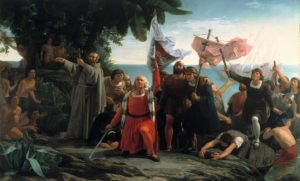
His impact was not all good!

This is part of the new attitude – community ethos – about losing. The actuality of Columbus is that while some people won – European Imperialists – many others lost. Those that lost, are stakeholders too in today’s Caribbean. The new attitude about winning-losing is actually a …

Refusal to lose

This community ethos is defined as a commitment by a group or society to the values of quality, success and winning. This corresponds to this formal definition of “community ethos” in the 2013 book Go Lean … Caribbean (Page 20):

… the fundamental character or spirit of a culture; the underlying sentiment that informs the beliefs, customs, or practices of a group or society; dominant assumptions of a people or period.

Celebrating Columbus Day is choosing the victories of some people over the losses of others. This is not winning; not win-win. Adapting the ethos to Refuse to Lose is supposed to be different, better; we want the Greater Good to win, not just a fraction of the population.

See, here, the encyclopedic reference on Columbus Day and the efforts to remediate its celebrations:

Reference: Columbus Day
Columbus Day is a national holiday in many countries of the Americas and elsewhere which officially celebrates the anniversary of Christopher Columbus‘s arrival in the Americas on October 12, 1492. Christopher Columbus was an Italian explorer who set sail across the Atlantic Ocean in search of a faster route to the Far East only to land at the New World. His first voyage to the New World on the Spanish ships Santa MaríaNiña, and La Pinta took approximately three months. Columbus and his crew’s arrival to the New World initiated the Columbian Exchange which introduced the transfer of plants, animals, culture, human populations, and technology (but also invasive species, including communicable diseases) between the new world and the old.

The landing is celebrated as “Columbus Day” in the United States but the name varies on the international spectrum. In some Latin American countries, October 12 is known as “Día de la Raza” or (Day of the Race). This is the case for Mexico, which inspired Jose Vasconcelos’s book celebrating the Day of the Iberoamerican Race. Some countries such as Spain refer the holiday as “Día de la Hispanidad” and “Fiesta Nacional de España” where it is also the religious festivity of la Virgen del Pilar. Peru celebrates since 2009 the “Day of the original peoples and intercultural dialogue”. Belize and Uruguay celebrate it as Día de las Américas (Day of the Americas). Since Argentina’s former president Cristina Fernández de Kirchner officially adopted “Día del Respeto a la Diversidad Cultural” (Day of Respect for Cultural Diversity) November 3, 2010. “Giornata Nazionale di Cristoforo Colombo or Festa Nazionale di Cristoforo Colombo” is the formal name of Italy‘s celebration as well as in Little Italys around the world.[1][2]

Non-observance
The celebration of Columbus Day in the United States began to decline at the end of the 20th century, although many Italian-Americans, and others, continue to champion it.[31][32] The states of Florida,[33] Hawaii,[34][35] Alaska,[36][37] Vermont,[38] South Dakota,[39] New Mexico,[40] Maine,[41]Wisconsin[42] and parts of California including, for example, Los Angeles County[43] do not recognize it and have each replaced it with celebrations of Indigenous People’s Day (in Hawaii, “Discoverers’ Day”, in South Dakota, “Native American Day”[32]). A lack of recognition or a reduced level of observance for Columbus Day is not always due to concerns about honoring Native Americans. For example, a community of predominantly Scandinavian descent may observe Leif Erikson Day instead.[44] In the state of Oregon, Columbus Day is not an official holiday.[45] Columbus Day is not an official holiday in the state of Washington [46]

Iowa and Nevada do not celebrate Columbus Day as an official holiday, but the states’ respective governors are “authorized and requested” by statute to proclaim the day each year.[47] Several states have removed the day as a paid holiday for state government workers, while still maintaining it—either as a day of recognition, or as a legal holiday for other purposes, including California and Texas.[48][49][50][51][52]

The practice of U.S. cities eschewing Columbus Day to celebrate Indigenous Peoples’ Day began in 1992 with Berkeley, California. The list of cities which have followed suit as of 2018 includes AustinBoiseCincinnatiDenverLos AngelesMankato, MinnesotaPortland, OregonSan FranciscoSanta Fe, New MexicoSeattleSt. Paul, MinnesotaPhoenixTacoma, and “dozens of others.”[31][53][54][55][49][56][57][58][59][60][61] Columbus, Ohio has chosen to honor veterans instead of Christopher Columbus, and removed Columbus Day as a city holiday. Various tribal governments in Oklahoma designate the day as Native American Day, or name it after their own tribe.[62]

Source: Retrieved October 12, 2019 from: https://en.wikipedia.org/wiki/Columbus_Day

This commentary is a continuation of this series on the Refuse to Lose ethos; this is Part 2-of-6. The full series is cataloged as follows:

  1. Refuse to Lose: Lesson from Sports
  2. Refuse to Lose: Remediating ‘Columbus Day’
  3. Refuse to Lose: Introducing Formal Reconciliations
  4. Refuse to Lose: Despite American Expansionism
  5. Refuse to Lose: Canada’s Model of Ascent
  6. Refuse to Lose: Direct Foreign Investors Wind-Downs

This is not the first time this commentary have addressed ‘Columbus Day’. As related in a previous Go Lean commentary, the orthodoxy of the ‘Columbus Day’ celebration is now frown on in many communities. See this quotation:

The human psyche is consistent; when we have been victimized, we want everyone to remember. But, when we have been the perpetrator – the bully – then we want everyone to forget. This applies to individuals and nations alike.

This experience relates to the history of the New World. Upon the discovery of the Americas by the European powers – Christopher Columbus et al – the focus had always been on pursuing economic interests, many times at the expense of innocent victims. (This is why the celebration of Columbus Day is now out of favor). First, there was the pursuit of gold, other precious metals (silver, copper, etc.) and precious stones (emeralds, turquoise, etc.).  Later came the exploitation of profitable agricultural opportunities (cotton, tobacco, sugar cane, etc.), though these business models required extensive labor. So the experience in the New World (the Caribbean and North, South & Central America) saw the exploitation of the native indigenous people, and then as many of them died off, their replacements came from the African Slave Trade.

See this comedic VIDEO here that portrays this history and the trending to remediate the holiday – “How is it still a thing?”:

VIDEO – Columbus Day – How Is This Still A Thing: Last Week Tonight with John Oliver (HBO) – https://youtu.be/eKEwL-10s7E

LastWeekTonight
Posted October 13, 2014 –
Christopher Columbus did a lot of stuff that was way more terrible than “sailing the ocean blue,” but we don’t learn about that.

Columbus Day: How is it still a thing?

Connect with Last Week Tonight online…
Subscribe to the Last Week Tonight YouTube channel for more almost news as it almost happens: http://www.youtube.com/user/LastWeekTonight

Find Last Week Tonight on Facebook like your mom would: http://Facebook.com/LastWeekTonight

Follow us on Twitter for news about jokes and jokes about news: http://Twitter.com/LastWeekTonight

Visit our official site for all that other stuff at once: http://www.hbo.com/lastweektonight

This foregoing VIDEO uses humor and punditry to convey a valid point:

Christopher Columbus should not be viewed as a hero of all the people. His legacy has blood stains on the annals of history.

The United States of America had been a majority White (European) country for its entire history. The minority populations finally won its battle for Civil Rights and equal treatment, appealing to the “Better Nature” of its founding principle:

We hold these truths to be self-evident, that all men are created equal, that they are endowed by their Creator with certain unalienable rights, that among these are life, liberty and the pursuit of happiness – Declaration of Independence for the United States of America, July 4, 1776.

The end product of the Civil Rights movement is the equal protection under the law for all ethnic groups – majority or minority. After nearly 400 years of European-dominated power-brokers in the US, finally in 2008, the first person of minority heritage was elected to the American presidency – Barack Obama.

Remediating ‘Columbus Day’ is an accomplishment and achievement for the Civil Rights struggle of minority ethnic groups in America. Now the Refuse to Lose mantra must include everyone and not exclude anyone.

The subject of the American Civil Rights movement and momentum – leveling out the inequities – over the history of the New World have been addressed in many previous commentaries; consider this sample list here:

https://goleancaribbean.com/blog/?p=18321 Unequal Justice of American Sheriffs and How to Remediate
https://goleancaribbean.com/blog/?p=18100 Nature or Nurture – Cop-on-Black Shootings in America’s DNA
https://goleancaribbean.com/blog/?p=17820 ‘Pride’ Movement – “Can we all just get along”
https://goleancaribbean.com/blog/?p=16944 Women Empowerment – Accepting Black Women ‘As Is’
https://goleancaribbean.com/blog/?p=16534 European Reckoning – Leveling Christianity’s Bad Influence
https://goleancaribbean.com/blog/?p=15123 Blacks get longer sentences from ‘Republican’ Judges
https://goleancaribbean.com/blog/?p=14633 Nature or Nurture: Women Have Nurtured Change to Level Society
https://goleancaribbean.com/blog/?p=14541 One Woman – Viola Desmond – Making a Difference for Canada
https://goleancaribbean.com/blog/?p=13063 Achieving Gender & Other Equity without the ‘Battle’
https://goleancaribbean.com/blog/?p=12722 How the West Was Won? Thru Pluralism and Ethnic Normalization
https://goleancaribbean.com/blog/?p=11870 The Journey From ‘Indian Termination Policy’ to Modern Pluralism
https://goleancaribbean.com/blog/?p=9974 Lessons Learned from Pearl Harbor and Civil Rights Remediated
https://goleancaribbean.com/blog/?p=8038 Transformations: Civil Disobedience … Very Effective
https://goleancaribbean.com/blog/?p=1020 The Advocacy to Rid Sports of Blatant Racism
https://goleancaribbean.com/blog/?p=546 ‘The Divide’ Book Review describing the unequal justice practice
https://goleancaribbean.com/blog/?p=209 The Case of Muhammad Ali – Equal Protection Under the Law

The Refuse to Lose mantra now includes everyone in America and should not exclude anyone. This is why ‘Columbus Day’ is “no longer a thing”.

(Most communities do not want to lose the paid-holiday on the books, so they have substituted ‘Columbus Day’ for some other worthy cause).

This is a good model …

May we apply this lesson throughout the Caribbean – this means you Puerto Rico; (they have 2 holidays: October 12 & November 19).

Using Puerto Rico as a microcosm of the rest of the New World, the demographic on that island is a vast majority of Black-and-Brown people. The Taino people and culture that Columbus discovered and encountered on the island is now gone and extinct. Columbus should not be viewed as a hero due to the course of events he set in motion.

The European people – remnant on the island – would elevate Columbus as a winner, while the indigenous people would have to be deemed the losers. This is not Win-Win!

We now need to Refuse to Lose – for every demographic in our society – not just one group at the expense of another.

This is the lesson learned from ‘Columbus Day’.

Let’s all lean-in and foster this Refuse to Lose attitude; this is the right community ethos to elevate our society to be a better homeland to live, work and play.  🙂

About the Book
The book Go Lean…Caribbean serves as a roadmap for the introduction and implementation of the technocratic Caribbean Union Trade Federation (CU), for the elevation of Caribbean society – for all member-states. This CU/Go Lean roadmap has these 3 prime directives:

  • Optimization of the economic engines in order to grow the regional economy to $800 Billion and create 2.2 million new jobs.
  • Establishment of a security apparatus to ensure public safety and protect the resultant economic engines.
  • Improve Caribbean governance to support these engines, including a separation-of-powers between the member-states and CU federal agencies.

The Go Lean book provides 370-pages of turn-by-turn instructions on “how” to adopt new community ethos, plus the strategies, tactics, implementations and advocacies to execute so as to reboot, reform and transform the societal engines of Caribbean society.

Download the free e-Book of Go Lean … Caribbean – now!

Who We Are
The movement behind the Go Lean book – a non-partisan, apolitical, religiously-neutral Community Development Foundation chartered for the purpose of empowering and re-booting economic engines – stresses that reforming and transforming the Caribbean societal engines must be a regional pursuit. This was an early motivation for the roadmap, as pronounced in the opening Declaration of Interdependence (Pages 12 – 14):

xi. Whereas all men are entitled to the benefits of good governance in a free society, “new guards” must be enacted to dissuade the emergence of incompetence, corruption, nepotism and cronyism at the peril of the people’s best interest. The Federation must guarantee the executions of a social contract between government and the governed.

xvi. Whereas security of our homeland is inextricably linked to prosperity of the homeland, the economic and security interest of the region needs to be aligned under the same governance. Since economic crimes … can imperil the functioning of the wheels of commerce for all the citizenry, the accedence of this Federation must equip the security apparatus with the tools and techniques for predictive and proactive interdictions.

xxiv.  Whereas a free market economy can be induced and spurred for continuous progress, the Federation must install the controls to better manage aspects of the economy: jobs, inflation, savings rate, investments and other economic principles. Thereby attracting direct foreign investment because of the stability and vibrancy of our economy.

xxxiii. Whereas lessons can be learned and applied from the study of the recent history of other societies, the Federation must formalize statutes and organizational dimensions to avoid the pitfalls of [negative] communities … . On the other hand, the Federation must also implement the good examples learned from [positive] developments/communities… .

Sign the petition to lean-in for this roadmap for the Caribbean Union Trade Federation.

Share this post:
, , ,
[Top]

Unequal Justice: Student Loans Could Dictate Justice

Go Lean Commentary

Education is all the rage for elevating individuals in society … to be more prosperous, to earn more and have a better life. This is why we send children to school starting at Age 5; and encourage them to work hard and do their homework …

… and why we invest in Student Loans so that they can get a college education.

But there is Unequal Justice in this eco-system.

Quick: Do you see the injustice in this situation?

You get a $30,000 Student Loan to go to college … for 2 years … for an Associates Degree. Afterwards, you have no job, a worthless degree and $30,000 in debt. – See the narrative in the Appendix VIDEO.

That is an economic injustice – welcome to the dispositions of Millennials in America in 2019; (actually the last 20 years). But America is not the only community experiencing dysfunction and economic injustice due to Student Loans. We have a lot of dysfunctions in the Caribbean too. See the details here, as this issue of Student Loans in the economic fabric of society have been deliberated in previous blog-commentaries; see here:

Title #1: Student debt holds back many would-be home buyers – April 30, 2014

“Of the many factors holding back young home buyers … none looms larger than the recent explosion of college debt”.
The book Go Lean … Caribbean serves as a roadmap for the introduction and implementation of the Caribbean Union Trade Federation (CU), for the economic optimization in the region. If the target of the book is the Caribbean, why does this article about American student loans weigh so heavy in a consideration of Caribbean economics?

There are lessons to be learned here! Not just for student loans, but also regarding education policy. This issue is pivotal to the economics of the Caribbean region.

Classic economic policy promotes that education has a direct effect on a community’s economy and the standard-of-living, quantified as each increased-grade-level, raises GDP by 3 percent (Appendix C2Page 258). But, the Go Lean roadmap posits that this rule is not true for the Caribbean, because of the debilitating emigration rate, the brain drain in which our educated population flees for foreign shores, or worse, students that do not return after matriculating – despite using funding from their Caribbean homeland. These are all investments with no return. In short, the economy of the Caribbean can be impacted by the activity of this recent-student population, when they repatriate; but when they emigrate, they hurt the economy.

… education funding policies adversely affect major areas of the economy, in this case home-buying. The cause-and-effect paradigm is direct, within 5 to 10 years after graduation; a former student should be planning to buy a house. Apparently the [American] macro economy is dependent on this relationship. According to the foregoing [an embedded] article, the National Association of Realtors (NAR) identified student debt as a key factor in soft demand for home-buying this spring (2014).

————

Title #2: A Lesson in Economic Fallacies – Student Loans As Investments – July 9, 2016

The Bahamas Education Loan Authority (ELA) is owed over $155 million in outstanding loan payments for its student loan scheme, with a default rate of 75 percent.

This Caribbean community should now be saying: “Give me my money!”
However, this commentary extends the criticism further: The money being demanded is the principal and maybe even some interest amounts due. But student loans are supposed to be investments in the young people of the community. This commentary trumpets the reality of Caribbean student loans as a fallacy: Where is the return on these investments?

This commentary asserts that those who advocate to remediate Caribbean economics needs to avoid a series of Economic Fallacies.

The movement behind the book Go Lean…Caribbean have addressed Income Inequality and the contribution of Student Loans to this plight. It is our position here that the eco-system of Student Loans can be a “weather vane” of justice in society; one that reflects the direction of society and can possibly effect the direction.

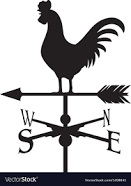
Weather vane
weather vanewind vane, or weathercock is an instrument used for showing the “direction of the wind“. It is typically used as an architectural ornament to the highest point of a building. The word “vane” comes from the Old English word “fana” meaning “flag”.

Although partly functional, weather vanes are generally decorative, often featuring the traditional cockerel design with letters indicating the points of the compass.

Student Loans can indicate the “direction of the winds” of society.

  • Loans are debt, paying for past activities for a government service that used to only be a marginal expense (and free in some countries). See this point from that previous Go Lean commentary:
    It’s not the cost of the loan ([interest)] that’s the problem; it’s the principal – the appallingly high tuition costs that have been soaring at two to three times the rate of inflation, an irrational upward trajectory eerily reminiscent of skyrocketing housing prices in the years before 2008. – Ripping Off Young America: The College – Loan Scandal By Matt Taibbi, Rolling Stones Magazine; August 15, 2013. (Appendix IH of Go Lean book – Page 286).
  • Student Loans are investments, preparing for the future. Those who pursue higher education always enjoy a higher pay-rate than without. The prospects of this Return on Investment motivates people and incentivizes them to follow prescribed courses of action;  social justice and development advocacies can be urged. The member-states of the Caribbean region are urged to follow the model of the US Federal Perkins Loans – defined here:
    .
    The Bottom Line on Perkins Loans
    A Federal Perkins Loan is a need-based student loan offered by the US Department of Education to assist American college students in funding their post-secondary education. Perkins Loans carry a fixed interest rate of 5% for the duration of the ten year repayment period. The Perkins Loan Program has a nine-month grace period, so that borrowers begin repayment in the tenth month upon graduating, falling below half-time status, or withdrawing from their college or university. Because the Perkins Loan is subsidized by the government, interest does not begin to accrue until the borrower begins to repay the loan.
    As of the 2009-2010 academic year, the loan limits for undergraduates are $5,500 per year with a lifetime maximum loan of $27,500. For graduate students, the limit is $8,000 per year with a lifetime limit of $60,000 (including undergraduate loans).
    Perkins Loans are eligible for Federal Loan Cancellation for teachers in designated low-income schools, as well as for teachers in designated teacher shortage areas such as math, science, and bilingual education. This cancellation also applies to Peace Corps Volunteers. Cancellation typically occurs on a graduating scale: 15% for year 1, 15% for year 2, 20% for year 3, 20% for year 4, 30% for year 5. These percentages are based on the original debt amount. Thus after 3 years of service, one would have 50% of their original debt cancelled.

Student Loans can also dictate justice, by the priority that society places on them and the incentives and mandates provisioned for participating students (deferments, cancellations and postponements). This is how Student Loans can dictate the “direction of the winds” of society.

This blog-commentary submission, entry 4-of-4, completes this series on Unequal Justice. The first 2 submissions traced bad history of tyrants here in our New World and how that tyranny imperiled whole populations. These last 2 submissions address matters of economics. The full series on Unequal Justice is cataloged here as follows:

  1. Unequal Justice: Soft Tyrannicide to Eliminate Bottlenecks
  2. Unequal Justice: Economic Crimes Against Tourists and Bullying
  3. Unequal Justice: Envy and the Seven Deadly Sins
  4. Unequal Justice: Student Loans Could Dictate Justice

In this series, reference is made to the fact that Bad Actors can always disrupt the peace and prosperity in society; sometimes the Bad Actor is a person, a group or an institution. So there is always the need to be On Guard to ensure justice is optimized in the region; for all people: young and old. Yes, the need for justice in the Caribbean societal engines transcends borders, politics, class and race. We need to make sure the “game is not rigged”, and we can abate and mitigate unequal economic structures.

The best counter-strategy for Income Inequality is a thriving Middle Class. The best way to get to the Middle Class is through educational empowerments; (see Appendix below). The subject of educational empowerments has been addressed in many previous Go Lean commentaries; see this sample list here:

https://goleancaribbean.com/blog/?p=17992 What Went Wrong? Losing the Best; Nation-building with the Rest
https://goleancaribbean.com/blog/?p=16882 Exploring Medical School Opportunities … as Economic Engines
https://goleancaribbean.com/blog/?p=13472 Future Focused – College, Caribbean Style
https://goleancaribbean.com/blog/?p=9751 Where the Jobs Are – Teaching for Animation and Game Design
https://goleancaribbean.com/blog/?p=8669 Detroit makes Community College free … as part of their Turn-around
https://goleancaribbean.com/blog/?p=6269 Education & Economics: Welcome Mr. President
https://goleancaribbean.com/blog/?p=5482 Bad Model: For-Profit Education: Plenty of Profit; Little Education

We must be On Guard and ever vigilant in our battle against inequality and unequal justice.

There will always be villainy – Bad Actors…

… sometimes the villainy is just one character, a tyrant or a bully, sometimes its an organized criminal organization and sometimes still, its a broken eco-system. We must be prepared to abate, mitigate and remediate all tyranny.

We urge all Caribbean stakeholders to lean-in for the empowerments described here-in and in the book Go Lean … Caribbean. Our quest is the full elevation of the economic, security and governing engines of our society. We can do better. It is conceivable, believable and achievable to elevate all 30 Caribbean communities – individually and collectively. We can succeed in making our homelands better places to live, work and play. 🙂

About the Book
The book Go Lean…Caribbean serves as a roadmap for the introduction and implementation of the technocratic Caribbean Union Trade Federation (CU), for the elevation of Caribbean society – for all member-states. This CU/Go Lean roadmap has these 3 prime directives:

  • Optimization of the economic engines in order to grow the regional economy to $800 Billion & create 2.2 million new jobs.
  • Establishment of a security apparatus to ensure public safety and protect the resultant economic engines.
  • Improve Caribbean governance to support these engines, including a separation-of-powers between the member-states and CU federal agencies.

The Go Lean book provides 370-pages of turn-by-turn instructions on “how” to adopt new community ethos, plus the strategies, tactics, implementations and advocacies to execute so as to reboot, reform and transform the societal engines of Caribbean society.

Download the free e-Book of Go Lean … Caribbean – now!

Who We Are
The movement behind the Go Lean book – a non-partisan, apolitical, religiously-neutral Community Development Foundation chartered for the purpose of empowering and re-booting economic engines – stresses that reforming and transforming the Caribbean societal engines must be a regional pursuit. This was an early motivation for the roadmap, as pronounced in the opening Declaration of Interdependence (Pages 12 – 13):

xi. Whereas all men are entitled to the benefits of good governance in a free society, “new guards” must be enacted to dissuade the emergence of incompetence, corruption, nepotism and cronyism at the peril of the people’s best interest. The Federation must guarantee the executions of a social contract between government and the governed.

xvi. Whereas security of our homeland is inextricably linked to prosperity of the homeland, the economic and security interest of the region needs to be aligned under the same governance. Since economic crimes … can imperil the functioning of the wheels of commerce for all the citizenry, the accedence of this Federation must equip the security apparatus with the tools and techniques for predictive and proactive interdictions.

xxiv. Whereas a free market economy can be induced and spurred for continuous progress, the Federation must install the controls to better manage aspects of the economy: jobs, inflation, savings rate, investments and other economic principles. Thereby attracting direct foreign investment because of the stability and vibrancy of our economy.

Sign the petition to lean-in for this roadmap for the Caribbean Union Trade Federation. 

—————

Appendix VIDEO – How college loans exploit students for profit | Sajay Samuel –  https://youtu.be/YXWKuK-Qsu4

TED
“Once upon a time in America,” says professor Sajay Samuel, “going to college did not mean graduating with debt.” Today, higher education has become a consumer product — costs have skyrocketed, saddling students with a combined debt of over $1 trillion, while universities and loan companies make massive profits. Samuel proposes a radical solution: link tuition costs to a degree’s expected earnings, so that students can make informed decisions about their future, restore their love of learning and contribute to the world in a meaningful way.

TEDTalks is a daily video podcast of the best talks and performances from the TED Conference, where the world’s leading thinkers and doers give the talk of their lives in 18 minutes (or less). Look for talks on Technology, Entertainment and Design — plus science, business, global issues, the arts and much more.

Find closed captions and translated subtitles in many languages at http://www.ted.com/translate

Follow TED news on Twitter: http://www.twitter.com/tednews

Like TED on Facebook: https://www.facebook.com/TED

Subscribe to our channel: http://www.youtube.com/user/TEDtalksD…

—————

Appendix – Education and Economic Growth

The relationship between economic growth and education has been one of the central threads of economic analysis. Both Adam Smith in the 18th century and Alfred Marshall in the 19th century, two important figures for the economics profession, addressed the question of how individual investments in “education” influence the wealth of nations. Throughout the 20th century, as Krueger and Lindahl (2001) point out in their survey of these issues, modern professional economists have been attempting to develop empirical estimates of the relationship between education and economic growth. Some of the most famous names in late 20th century economics made their reputations studying the question of individual returns to investment in education. Jacob Mincer (1974), Gary Becker (1964) and a long list of researchers inspired by their work have produced hundreds of books and papers.

Much of this literature is highly technical in the sense that it uses formal econometric models to test hypotheses using empirical data. The bottom line of this impressive work is that the economic evidence supports the view that both public and private returns to investment in education are positive—at both the individual and economy-wide levels. The vast technical literature on this subject can be subdivided into two general areas:

  1. The micro-economic literature looks at the relationship between different ways of measuring a person’s educational achievement and what they earn. Most studies show consistent results for what can be called the private or personal payoff from education. For individuals this means that for every additional year of schooling they increase their earnings by about 10%. This is a very impressive rate of return.
  2. The macro-economic literature examines the relationship between different measures of the aggregate level of educational attainment for a country as a whole and, in most cases, the standard measure of economic growth in terms of GDP. Once again, most studies find evidence of higher GDP growth in countries where the population has, on average, completed more years of schooling or attains higher scores on tests of cognitive achievement. However, as will be explained in somewhat greater detail below, given the diversity of national experiences, particularly over time, it is hard to settle on one figure for the rate of return at a social level.

(Based on established and historic Economic Theories – By Riel Miller, www.rielmiller.com; commissioned by Cisco Systems, Inc.)

Source: Go Lean…Caribbean Appendix C2 – Page 258

Share this post:
, , ,
[Top]

Unequal Justice: Envy and the Seven Deadly Sins

Go Lean Commentary

Unequal = Inequality; Inequality = Unequal …

All the talk of economic inequality – the rich getting richer; the poor getting poorer; the middle-class shrinking – is really a discussion on justice & injustice.

After thousands of years of human history, we have come to an indisputable conclusion:

Inequality is never tolerated for long. Eventually the “Have-Nots” demand what the “Have’s” have!

People do protest; revolutions do happen. People do get fed-up and demand change. Here in the Caribbean region, we have the well documented case of our American neighbors and their Revolutionary War Against the British (1776). These demands were embedded in their Declaration of Independence over Just Causes:

… when a long train of abuses and usurpations, pursuing invariably the same object evinces a design to reduce them under absolute despotism, it is their right, it is their duty, to throw off such government, and to provide new guards for their future security.

The Catholic Church warned about the long toleration of inequality as well. It described Envy – a feeling of discontent or resentful longing aroused by someone else’s possessions, qualities, or luck – as one of the 7 Deadly (Cardinal) Sins and prepared its followers that these practices will only lead to discord, disagreement and death. Here is one religious reference:

The Bible’s answer
The Bible does not specifically describe a set of “seven deadly sins.” However, it does teach that practicing serious sins will prevent a person from gaining salvation. For example, the Bible refers to such serious sins as sexual immorality, idolatry, spiritism, fits of anger, and drunkenness as “the works of the flesh.” It then states: “Those who practice such things will not inherit God’s Kingdom.”​—Galatians 5:​19-​21*

Where did the list of seven deadly sins come from?
The “seven deadly sins” were originally based on a list of eight principal vices. The list was developed in the fourth century C.E. by the mystic Evagrius Ponticus, whose work inspired the writings of monk and ascetic John Cassian. In the sixth century, Pope Gregory I changed Cassian’s list of eight vices into the list of seven deadly, or cardinal, sins of Roman Catholic theology: envy, pride, greed, lust, gluttony, anger, and sloth.

Source: Retrieved September 29, 2019 from: https://www.jw.org/en/bible-teachings/questions/seven-deadly-sins/

See-listen to the thesis – that Envy is unavoidable as an enemy of inequality – in the embedded AUDIO-Podcast and VIDEO here:

AUDIO-PODCast – The Seven Deadly Sins: Envyhttps://www.npr.org/templates/story/story.php?storyId=1420205

Heard on Talk of the Nation
Posted September 4, 2003 –
Joseph Epstein *Author, Envy, the first in a series of The Seven Deadly Sins (Oxford University Press) *Author, Snobbery: The American Version
———-
VIDEO – Beware, fellow plutocrats, the pitchforks are coming | Nick Hanauer – https://youtu.be/q2gO4DKVpa8

TED
Nick Hanauer is a rich guy, an unrepentant capitalist — and he has something to say to his fellow plutocrats: Wake up! Growing inequality is about to push our societies into conditions resembling pre-revolutionary France. Hear his argument about why a dramatic increase in minimum wage could grow the middle class, deliver economic prosperity … and prevent a revolution.

Watch more TED Talks on inequality: http://www.ted.com/topics/inequality

TED Talks is a daily podcast of talks and performances from TED events, where the world’s leading thinkers and doers give the talk of their lives in 18 minutes (or less). Look for talks on Technology, Entertainment and Design — plus science, business, global issues, the arts and much more.

Find closed captions and translated subtitles in many languages at http://www.ted.com/translate

Follow TED Talks on Twitter: http://www.twitter.com/tedtalks Like TED on Facebook: https://www.facebook.com/TED

So the Cardinal Sin of Envy forces the hand of the stakeholders in society to conform with programs that abate and mitigate income inequality.

The movement behind the book Go Lean…Caribbean have addressed Income Inequality on many occasions; the book introduced the roadmap for the implementation of the Caribbean Union Trade Federation (CU). This CU strives to reboot the economic engines in the region so as to create more opportunities (job-and-entrepreneurial) for everybody in the Caribbean region – men, woman, Black-Brown-and-White in all 30 member-states. This quest is designed to grow the Middle Class.

The Go Lean roadmap recognizes that a prerequisite for advancing society is a change in the Caribbean community ethos – “underlying sentiment that informed the beliefs, customs, or practices” – from Bad to Good. All of the 7 Deadly Sins actually reflect a “Bad Ethos”. Getting the Caribbean region to adopt Good Community Ethos is actually the practice that will promote justice and equality. Consider here, some of the Good Community Ethos that are promoted in the Go Lean book:

  • Deferred Gratification
  • Anti-Bullying and Mitigation
  • Minority Equalization
  • Return on Investment
  • Divergent Genius Designation
  • Research & Development
  • Negotiation … as Partners
  • Reconciliation
  • Sharing
  • Greater Good

This is entry 3-of-4 in this series on Unequal Justice. The previous submissions traced bad history of tyrants here in our New World and how that tyranny imperiled whole populations of people. The previous 2 submissions address matters of Public Safety, while this one focuses on economics. The full series on Unequal Justice is cataloged here as follows:

  1. Unequal Justice: Soft Tyrannicide to Eliminate Bottlenecks
  2. Unequal Justice: Economic Crimes Against Tourists and Bullying
  3. Unequal Justice: Envy and the Seven Deadly Sins
  4. Unequal Justice: Student Loans Could Dictate Justice

In this series, reference is made to the fact that the “arc of the moral universe is long but it bends towards justice“.  There have been times in the past where income inequality have been acute in society; almost always, the end result is revolution and/or violent upheavals – think France in the 1700’s. Inequality indices are among the metrics and drivers for Failed-States.

  • DP – Mounting Demographic Pressures
  • REF – Massive Movement of Refugees or IDPs
  • GG – Legacy of Vengeance-Seeking Group Grievance or Paranoia
  • HF – Chronic and Sustained Human Flight and Brain Drain
  • UED – Uneven Economic Development Along Group Lines

So there is always the need to ensure justice institutions are optimized in society and that the “game is not rigged” so that income opportunities do not only go to a top-select few. The opposite of unequal economic structure would be a thriving Middle Class. So the need for justice in the Caribbean transcends borders, politics, class and race.

The subject of Income Inequality has been addressed in many previous Go Lean commentaries; see this sample list here:

https://goleancaribbean.com/blog/?p=13826 Taking from the Poor to Give to the Rich
https://goleancaribbean.com/blog/?p=11057 Managing the ‘Strong versus the Weak’ – Book Review: Sold-Out!
https://goleancaribbean.com/blog/?p=6399 Book Review on ‘Mitigating Income Inequality’
https://goleancaribbean.com/blog/?p=6089 Where the Jobs Are – Futility of Minimum Wage
https://goleancaribbean.com/blog/?p=5597 Economic Principle: Market Forces -vs- Collective Bargaining
https://goleancaribbean.com/blog/?p=2338 Welcoming the Dreaded ‘Plutocracy’
https://goleancaribbean.com/blog/?p=242 The Erosion of the Middle Class

Overall, now is the time for all stakeholders – citizens, governments, businesses, employers and employees, etc. – in the Caribbean to lean-in for the empowerments described here-in and in the book Go Lean … Caribbean. Income Inequality is the Number One challenge for many societies; especially in the Western World. We must be technocratic in our mitigations and work to help those in our communities explore greater opportunities to make our homelands better places to live, work and play. 🙂

About the Book
The book Go Lean…Caribbean serves as a roadmap for the introduction and implementation of the technocratic Caribbean Union Trade Federation (CU), for the elevation of Caribbean society – for all member-states. This CU/Go Lean roadmap has these 3 prime directives:

  • Optimization of the economic engines in order to grow the regional economy to $800 Billion & create 2.2 million new jobs.
  • Establishment of a security apparatus to ensure public safety and protect the resultant economic engines.
  • Improve Caribbean governance to support these engines, including a separation-of-powers between the member-states and CU federal agencies.

The Go Lean book provides 370-pages of turn-by-turn instructions on “how” to adopt new community ethos, plus the strategies, tactics, implementations and advocacies to execute so as to reboot, reform and transform the societal engines of Caribbean society.

Download the free e-Book of Go Lean … Caribbean – now!

Who We Are
The movement behind the Go Lean book – a non-partisan, apolitical, religiously-neutral Community Development Foundation chartered for the purpose of empowering and re-booting economic engines – stresses that reforming and transforming the Caribbean societal engines must be a regional pursuit. This was an early motivation for the roadmap, as pronounced in the opening Declaration of Interdependence (Pages 12 – 13):

xi. Whereas all men are entitled to the benefits of good governance in a free society, “new guards” must be enacted to dissuade the emergence of incompetence, corruption, nepotism and cronyism at the peril of the people’s best interest. The Federation must guarantee the executions of a social contract between government and the governed.

xvi. Whereas security of our homeland is inextricably linked to prosperity of the homeland, the economic and security interest of the region needs to be aligned under the same governance. Since economic crimes … can imperil the functioning of the wheels of commerce for all the citizenry, the accedence of this Federation must equip the security apparatus with the tools and techniques for predictive and proactive interdictions.

xxiv. Whereas a free market economy can be induced and spurred for continuous progress, the Federation must install the controls to better manage aspects of the economy: jobs, inflation, savings rate, investments and other economic principles. Thereby attracting direct foreign investment because of the stability and vibrancy of our economy.

Sign the petition to lean-in for this roadmap for the Caribbean Union Trade Federation.

Share this post:
, , ,
[Top]

Unequal Justice: Bullying Magnified to Disrupt Commerce

Go Lean Commentary

“You had better get control of that boy or we will for you” – typical admonition of a Peace Officer to the parents of a young bully!

There is a certain reality that we all have had to contend with:

Bullies are inevitable!

We have all been to Grade/Elementary/Primary School; we have all played on the playground. We can simply look at our own lives, cite examples of bullying and glean this Truth and Consequence:

  • Slippery slope …
  • Snowballing …
  • From an acorn comes a Mighty Oak …

Analogies abound … as to why it is important to “nip bullying in the bud”. If we do nothing – or not enough – then conditions of Unequal Justice go from “bad to worse”. The bad actor can emerge from terrorizing a family, to a neighborhood, to a community, to a nation, to a region, to a hemisphere, to the whole world. Think: Nazi Germany, Imperial Japan, Soviet Russia, British Empire, Napoleonic France, Spanish Inquisition, and more …

Unchecked, bad actors in the community become tyrants – they can even affect the local economic engine. This is where the opening statement of a typical Police Officer to a “parent of a bully” become relevant. Either that parent mitigates that situation, or the legitimate authorities will have to get engaged. It is easier to remediate a local bully; beyond that, the bad actions can escalate to gang activity, organized crime and/or domestic terrorism. An escalated villainy would require an escalated response. There is a plan for regional mitigations of gangs, organized crime and/or terroristic activities..

This is the focus of this commentary. This is entry 2-of-4 in this series on Unequal Justice. The previous submission traced that bad history of the County Sheriff in the American South and how that person’s tyranny imperiled the entire Black American population. That previous blog-commentary related how the Sheriff served as a bottleneck in the execution of justice , and the only way to eliminate that tyranny was with legal “soft” tyrannicide.  The full series on Unequal Justice is cataloged here as follows:

  1. Unequal Justice: Soft Tyrannicide to Eliminate Bottlenecks
  2. Unequal Justice: Economic Crimes Against Tourists and Bullying
  3. Unequal Justice: Envy and the Seven Deadly Sins
  4. Unequal Justice: Student Loans Could Dictate Justice

In this series, reference is made to the fact that Tourism, as the Number 1 economic driver in the region, is vulnerable to Bad Actors disrupting peaceful hospitality trade – we must protect our societal engines from tyrants, bullies and terrorists. So there is always the need to ensure justice institutions are optimized in the region; visitors will refuse to come and enjoy our hospitality if there are active threats or perceived instabilities. (At the same time, residents flee to foreign shores in search of refuge). So the need for justice in the Caribbean tourism deliveries transcends borders, politics, class and race.

Consider this actuated consequence in the Dominican Republic, due to some recent incidents regarding public safety for  tourists; (there are some suspicions that Bad Actors persist):

VIDEO – Is travelling to the Dominican Republic dangerous – https://www.travelandleisure.com/travel-news/tourist-deaths-dominican-republic-safe

——–

Title: Tourism to the Dominican Republic Has Dropped 74 Percent, According to New Study

By: Stacey Leasca

In the past year, 10 American citizens have died in the Dominican Republic, some as tourists others as long-term visitors. While the deaths have been attributed to natural causes, would-be visitors are reconsidering their plans to visit the island.

Is traveling to the Dominican dangerous for Americans? Here’s what travelers need to know.

Many travelers are re-booking their flights to new destinations

According to a report by ForwardKeys, which analyses more than 17 million flight bookings a day, bookings for July and August from the United States to the Dominican Republic have fallen by 74.3 percent compared to the same period in 2018.

“My deepest sympathies go out to the families of the American tourists who have passed away. Their recent and tragic deaths appear to have had a dramatic impact on travel to the Dominican Republic,” Olivier Ponti, vice president of insights at ForwardKeys, said. “Our analysis of leisure travel shows a striking correlation.”

See the full article here: Travel and Leisure Magazine – posted June 27, 2019; retrieved September 28, 2019 from: https://www.travelandleisure.com/travel-news/tourist-deaths-dominican-republic-safe

Allowing bullies or tyrants (real or perceived) in the community to disrupt economic engines – crimes against tourists, etc. – is just plain wrong and a failure of the unwritten Social Contract. This refers to the arrangement where citizens (and visitors) surrender some of their freedoms and submit to the authority of the State in exchange for protection of remaining natural and legal rights. So unchecked bullying, street gangs and organized crime require an escalated response, [“soft”] tyrannicide.

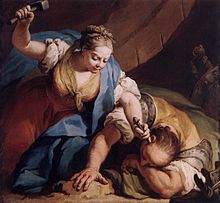
Tyrannicide is even presented in the Holy Bible with the drama of the woman “Jael” in the Book of Judges Chapter 4 & 5 where she killed the villainous Sisera in order to save the people in her village. That account relates:

The Canaanites were defeated [by Judge Barak] and [the Army Commander] Sisera fled the scene.[1]

Sisera arrived on foot at the tent of Heber on the plain of Zaanaim. Heber and his household were at peace with Jabin, the king of Canaan, who reigned in Hazor.[4] Jael, however, sympathized with the Israelites because of the twenty-year period of harsh oppression inflicted on them by Jabin, his commander Sisera, and his nine hundred iron chariots. Jael (whose tent would have been separate from Heber’s) [5] welcomed Sisera into her tent and covered him with a blanket. As he was thirsty, she gave him a jug of milk. Exhausted, Sisera lay down and soon fell asleep. While he was sleeping, Jael took a mallet and drove a tent peg into his temple, killing him instantly.[1]

This is an example of “hard” tyrannicide.

Tyrannicide – hard and soft – is a reality in the modern world. Just today September 28, 2019,  the former President of Zimbabwe was laid to rest, only in a private ceremony; no State Funeral. He was finally deposed 2 years ago by a military coup that ended his tyrannical rule of 37 years.

Also in the Bahamas in 2017, the parliamentary government in power was overwhelmingly defeated due to the people’s desire to just get rid of what they perceived as an ineffectual and “bottlenecking” Prime Minister. See this quotation from a previous blog-commentary from May 11, 2017:

Title: UPDATE: Understand the Market, Plan the …
“The Prime Minister bet his administration on the prospect of Carnival and now, its election time.”

It’s official, that bet has failed! The Prime Minister (PM) of the Bahamas and leader of the Progressive Liberal Party (PLP) – Perry G. Christie – has been defeated. …

This commentary has observed-and-reported on the Bahamas for the last 5 years and the “bet” that the PM made was related to more than just Carnival; he also bet on:

  • Music Festival-Event – The Fyre Festival event was a fiasco; it went up in flames on April 28, 2017 after getting government permissions and support beforehand. The mass population of Bahamian stakeholders – other than the government – knew nothing of this event until it was an international embarrassment – a “Black-eye”.
  • Value-Added Tax – New 7.5% Sales & Use tax implementation increased the tax burden on the poor more than the rich.
  • Baha Mar Resort & Casino – $2 Billion Resort & Casino stalled due to government meddling in the Developer-Banker conflict.
  • Grand Bahama (Freeport) – 2nd City economic progress stalled; decisions on extending Investment Tax Credits were inexplicably stalled and extended for 6-month intervals, until it was finally granted for a reasonable period.

So when the outgoing PM dissolved Parliament on April 11, 2017 and called elections for May 10, it was the only chance for the people to vocalize their displeasure. They shouted an almost unanimous veto of Christie’s policies and administration, giving the Opposition Party (Free National Movement) 35 of the 39 seats in the House of Assembly.

The near “unanimous veto” in the Bahamas in May 2017 was an example of a “soft” tyrannicide. (Many of the candidates for Parliament were political novices with no track record, experience or reputation; they were believed to be embraced by the voting public just because they represented a dissenting Party).

The need for economic justice can never be undermined, undervalued or questioned. This was related in many previous Go Lean commentaries; consider this sample here:
https://goleancaribbean.com/blog/?p=17267 Way Forward – For Justice: Special Prosecutors
https://goleancaribbean.com/blog/?p=16668 Justice and Economics – Both needed to forge change
https://goleancaribbean.com/blog/?p=16408 Bad Ethos on Home Violence – Spilled into Tourist Resorts
https://goleancaribbean.com/blog/?p=14424 Repairing the Breach: Crime – Need, Greed, Justice & Honor
https://goleancaribbean.com/blog/?p=14211 Urging to “Enjoy Carnival”, but Be Safe!
https://goleancaribbean.com/blog/?p=11054 Managing the ‘Strong versus the Weak’ – Bullying in Schools
https://goleancaribbean.com/blog/?p=5307 8th Violent Crime Warning to Bahamas Tourists – Bad Model
https://goleancaribbean.com/blog/?p=392 The World Bank gives Jamaica Economic Help to Mitigate Crime

For the foregoing, the situation in the Dominican Republic is a Cautionary Tale. There must be an adequate response and escalation when there is a threat to the public safety of tourists and trading partners. The subjects must be able to “Dial 911“.

The community institutions themselves must also be able to “Dial 911” and call for additional help:

  • We must protect the economic engines.
  • We must optimize our regional justice institutions.

Both of these missions are in parallel. This is the quest of the Go Lean movement.

We hereby urge all Caribbean stakeholders – governments, citizens, visitors and  trading partners alike – to lean-in to this comprehensive Go Lean roadmap to elevate Caribbean society. We must make our homeland a better place to live, work and play. 🙂

About the Book 

The book Go Lean…Caribbean serves as a roadmap for the introduction and implementation of the technocratic Caribbean Union Trade Federation (CU), for the elevation of Caribbean society – for all member-states. This CU/Go Lean roadmap has these 3 prime directives:

  • Optimization of the economic engines in order to grow the regional economy to $800 Billion & create 2.2 million new jobs.
  • Establishment of a security apparatus to ensure public safety and protect the resultant economic engines.
  • Improve Caribbean governance to support these engines, including a separation-of-powers between the member-states and CU federal agencies.

The Go Lean book provides 370-pages of turn-by-turn instructions on “how” to adopt new community ethos, plus the strategies, tactics, implementations and advocacies to execute so as to reboot, reform and transform the societal engines of Caribbean society.

Download the free e-Book of Go Lean … Caribbean – now!

Who We Are
The movement behind the Go Lean book – a non-partisan, apolitical, religiously-neutral Community Development Foundation chartered for the purpose of empowering and re-booting economic engines – stresses that reforming and transforming the Caribbean societal engines must be a regional pursuit. This was an early motivation for the roadmap, as pronounced in the opening Declaration of Interdependence (Pages 11 – 13):

iv. Whereas the natural formation of the landmass is in a tropical region, the flora and fauna allows for an inherent beauty that is enviable to peoples near and far. The structures must be strenuously guarded to protect and promote sustainable systems of commerce paramount to this reality.

xi. Whereas all men are entitled to the benefits of good governance in a free society, “new guards” must be enacted to dissuade the emergence of incompetence, corruption, nepotism and cronyism at the peril of the people’s best interest. The Federation must guarantee the executions of a social contract between government and the governed.

xvi. Whereas security of our homeland is inextricably linked to prosperity of the homeland, the economic and security interest of the region needs to be aligned under the same governance. Since economic crimes … can imperil the functioning of the wheels of commerce for all the citizenry, the accedence of this Federation must equip the security apparatus with the tools and techniques for predictive and proactive interdictions.

xxiv. Whereas a free market economy can be induced and spurred for continuous progress, the Federation must install the controls to better manage aspects of the economy: jobs, inflation, savings rate, investments and other economic principles. Thereby attracting direct foreign investment because of the stability and vibrancy of our economy.

Sign the petition to lean-in for this roadmap for the Caribbean Union Trade Federation. 

Share this post:
, , ,
[Top]

Unequal Justice: Sheriffs and the need for ‘soft’ Tyrannicide

Go Lean Commentary

The need for justice can never be undermined, undervalued or questioned.

People will abandon everything else – culture, family, home and comforts – in pursuit of justice, for themselves or their children.

This is a familiar cause in the Black community – African descended people – in the New World. The 2013 book Go Lean… Caribbean spoke of the mental disposition of the previous generations that transcended from slavery to full civil rights. The book quotes (Page 21) this as the “community ethos” or “underlying sentiment that informed the beliefs, customs, or practices”:

The African Diaspora experience in the New World [was] one of “future” gratification, as the generations that sought freedom from slavery knew that their children, not them, would be the beneficiaries of that liberty. This ethos continued with subsequent generations expecting that their “children” would be more successful in the future than the parents may have been.

The “success” that these ones sought were for justice first and prosperity later. Consider the example of the Great Northward Migration in the United States. This refers to:

… the movement of 6 million African Americans out of the rural Southern United States to the urban NortheastMidwest, and West that occurred between 1916 and 1970.[1] In every U.S. Census prior to 1910, more than 90% of the African-American population lived in the American South.[2] In 1900, only one-fifth of African Americans living in the South were living in urban areas.[3] By the end of the Great Migration, just over 50% of the African-American population remained in the South, while a little less than 50% lived in the North and West,[4] and the African-American population had become highly urbanized. By 1960, of those African Americans still living in the South, half now lived in urban areas,[3] and by 1970, more than 80% of African Americans nationwide lived in cities.[5]

The reality of southern rural life for African Americans was that justice was impeded by one institution, often one character: the County Sheriff. (See the academic journal in Appendix A below).

The Sheriff is a legal official with designated responsibility for a local jurisdiction in countries with historical ties to England. In the United States, the scope of the elected Sheriff is most often identified as the chief civil-law enforcement officer and administrator of County jails. [There were 3,081 Sheriff’s offices as of 2015.[4]]

The County Sheriff was often a Bottleneck for justice for the local Black community. This was well illustrated in the classic reggae song about Sheriff “John Brown” by Bob Marley  – see here; (and the lyrics in Appendix C below):

VIDEO – Bob Marley “I Shot The Sheriff” Live at the Rainbow – https://youtu.be/Xa0HOpQRpLM


OFF Productions

More videos on http://www.off.tv Like us on Facebook http://po.st/KKmN8j Follow us on Twitter http://po.st/AuU757

  • Category: Music
  • Song: I Shot The Sheriff (Rainbow, 1978)
  • Artist: Bob Marley
  • Licensed to YouTube by: Aviator Management GmbH (on behalf of Bob Marley)

(People sought refuge and succeeded in their quest for relief and justice by fleeing the jurisdiction of the Sheriff, that State and the whole oppressive racist region of the American South).

Bottlenecks
There is the concept of the Bottlenecks in production design …

… a bottleneck is one process in a chain of processes, such that its limited capacity reduces the capacity of the whole chain. The result of having a bottleneck are stalls in production, supply overstock, pressure from customers and low employee morale.[1] – Source: Wikipedia.

How do we eliminate bottlenecks? By eliminating non-value activities …

In removing all non-value activities, you reduce the amount of redundant tasks performed by the bottlenecked machine [process or person] and hence maximize efficiency.

So it is a quick and easy conclusion that in order to be efficient and effective, bottlenecks must be removed/streamlined from any process. This case-in-point about bottlenecks is a submission from the movement behind the Go Lean…Caribbean book. This book was not designed to address bottlenecks, but rather the Caribbean societal engines: economics, security and governance. It is no doubt that this subject of bottlenecks aligns to each one of these engines. This is because they relate to:

Justice!

There could be a bottleneck in the execution of justice – one person can hold it up, prevent it and subvert it. When this is the case, there is the need to eliminate the obstacle. This is called “tyrannicide“. In fact, the subject of tyrannicide opens this series on “Unequal Justice” from the movement behind the Go Lean book for September 2019. While the Latin root word “cide” refers to killing or slaughter – think: suicide and homocide – we are NOT advocating any kind of assassination of political leaders. No, we are not encouraging any form of violence; rather the advocacy here is for a “soft” tyrannicide – legally removing all persons that may be a stumbling block or bottleneck in the execution of justice in the societal engines – these persons, despite their claims of being “heroes”, are really “villains”.  The full series is cataloged as follows:

  1. Unequal Justice: Soft Tyrannicide to Eliminate Bottlenecks
  2. Unequal Justice: Economic Crimes Against Tourists and Bullying
  3. Unequal Justice: Envy and the Seven Deadly Sins
  4. Unequal Justice: Student Loans Could Dictate Justice

In this series, reference is made to the need for a comprehensive roadmap for elevating the societal engines of the 30 Caribbean member-states. We need to always ensure justice institutions are optimized in the region, otherwise people flee in search of refuge. The need for justice transcends borders, politics, class and race. People feel justified to pursue justice – as a religious devotion – if not for themselves, then for their children.

The need for justice can never be undermined, undervalued or questioned. This was related in many previous Go Lean commentaries; consider this sample here:

https://goleancaribbean.com/blog/?p=18100 Cop-on-Black Shootings in America’s DNA
https://goleancaribbean.com/blog/?p=17667 Is the US a ‘Just’ Society? Hardly!
https://goleancaribbean.com/blog/?p=14413 Repairing the Breach: ‘Hurt People Hurt People’
https://goleancaribbean.com/blog/?p=13476 Future Focused – Policing the Police
https://goleancaribbean.com/blog/?p=10222 Waging a Successful War on ‘Terrorism’ and Bullying
https://goleancaribbean.com/blog/?p=5238 Prisoners for Profit – Abuses in the Prison Industrial Complex
https://goleancaribbean.com/blog/?p=5304 Mitigating the Eventual ‘Abuse of Power’

For the foregoing, the American South, tyrannicide was achieved by removing the racist Sheriffs from office. This was accomplished by defeating them at the ballot box – see the example in Appendix B. The people that fled – in the Great Migration – did not defeat the Sheriffs,  the bottlenecks for justice. No, it was those that stayed; thusly, the reformation took very long.

This is also the advocacy of the Go Lean movement.

Many Caribbean people have fled their homeland and this region. They cannot bring the required  change if they are absent! It is our assertion that it is easier to reform and transform the Caribbean rather than trying to fix the societal life for Caribbean people abroad in a foreign land.

This theme – urging Caribbean people to Stay Home and Return Home – aligns with many previous Go Lean commentaries; see a sample list here:

https://goleancaribbean.com/blog/?p=11314 The Need to Stay Home: Forging a Home Addiction
https://goleancaribbean.com/blog/?p=10654 Stay Home! Immigration Realities in the US
https://goleancaribbean.com/blog/?p=15123 ‘Time to Go’ – Blacks get longer sentences from ‘Republican’ Judges
https://goleancaribbean.com/blog/?p=9216 Time to Go: No Respect for our Hair

Life in the Diaspora is not easy; and not always just. The Black-and-Brown of the Caribbean continue to encounter repression, oppression and suppression in the foreign communities of  North America and Europe. If justice is the goal – it should be – then it is easier to forge justice and mitigate institutional abuse here in the Caribbean homeland. It still takes heavy-lifting, but there is a better chance for success here.

We must learn the lessons of the history of the American South – it was those that remained that reformed and transformed their communities. Not those that left. (North Carolina now has 20 Black Sheriffs out of their 100 counties).

i.e. Dr. Martin Luther King Jr., was a Baptist Minister in Atlanta, Georgia, after starting his Civil Rights career in Montgomery, Alabama. His enunciated dream was for freedom to reign:

… from the Stone Mountains of Georgia,

… from Lookout Mountain in Tennessee,

… from every hill and molehill in Mississippi. From every mountainside, let freedom ring.

Let freedom … and justice reign in the Caribbean; in every member-state and for all the people. This is our Dream!

We hereby urge all Caribbean stakeholders – governments, residents and Diaspora – to lean-in to this comprehensive Go Lean roadmap to elevate Caribbean society. This is how we can make our homeland a better place to live, work and play. 🙂

About the Book
The book Go Lean…Caribbean serves as a roadmap for the introduction and implementation of the technocratic Caribbean Union Trade Federation (CU), for the elevation of Caribbean society – for all member-states. This CU/Go Lean roadmap has these 3 prime directives:

  • Optimization of the economic engines in order to grow the regional economy to $800 Billion & create 2.2 million new jobs.
  • Establishment of a security apparatus to ensure public safety and protect the resultant economic engines.
  • Improve Caribbean governance to support these engines, including a separation-of-powers between the member-states and CU federal agencies.

The Go Lean book provides 370-pages of turn-by-turn instructions on “how” to adopt new community ethos, plus the strategies, tactics, implementations and advocacies to execute so as to reboot, reform and transform the societal engines of Caribbean society.

Download the free e-Book of Go Lean … Caribbean – now!

Who We Are
The movement behind the Go Lean book – a non-partisan, apolitical, religiously-neutral Community Development Foundation chartered for the purpose of empowering and re-booting economic engines – stresses that reforming and transforming the Caribbean societal engines must be a regional pursuit. This was an early motivation for the roadmap, as pronounced in the opening Declaration of Interdependence (Pages 12 – 13):

xi. Whereas all men are entitled to the benefits of good governance in a free society, “new guards” must be enacted to dissuade the emergence of incompetence, corruption, nepotism and cronyism at the peril of the people’s best interest. The Federation must guarantee the executions of a social contract between government and the governed.

xvi. Whereas security of our homeland is inextricably linked to prosperity of the homeland, the economic and security interest of the region needs to be aligned under the same governance. Since economic crimes … can imperil the functioning of the wheels of commerce for all the citizenry, the accedence of this Federation must equip the security apparatus with the tools and techniques for predictive and proactive interdictions.

xxiv. Whereas a free market economy can be induced and spurred for continuous progress, the Federation must install the controls to better manage aspects of the economy: jobs, inflation, savings rate, investments and other economic principles. Thereby attracting direct foreign investment because of the stability and vibrancy of our economy.

Sign the petition to lean-in for this roadmap for the Caribbean Union Trade Federation.

————

Appendix A – JOURNAL ARTICLE: Race and the County Sheriff in the American South 


Because of their wide powers and multiple roles, sheriffs played a particularly notable role in the region’s racial history. Nearly all white and male, and overwhelmingly Democrat, southern sheriffs were linchpins in the maintenance of white supremacy and its class-base and race-based privileges. Exercising broad discretionary powers in the enforcement of the law, county sheriffs helped reproduce the complex set of social taboos and practices that made up Jim Crow society. Sheriffs were not only empowered to arrest and jail, but to fail to arrest and jail. By acceding to the wishes of white elites, sheriffs administered the racial paternalism that helped keep southern blacks beholden to their white patrons, securing their cheap labor for agrarian or industrial capitalists and suppressing their ability to resist the reproduction of white hegemony.

Sheriffs, through their authority over the local jails, were generally responsible for the custody of those arrested, and played a prominent role in the lynching incidents that were so important to subduing the black unrest.

See the full journal article … at this source:

Moore, T. (1997). Race and the County Sheriff in the American South. International Social Science Review, 72(1/2), 50-61. Retrieved September 27, 2019 from http://www.jstor.org/stable/41882228

————

Appendix B – First African American female sheriff is woman enough to fill big boots

For now, history will not be made in Washington with America’s first female president. But, here in Texas, we have quietly made history this month swearing in the state’s first African American female sheriff.

Jefferson County Sheriff Zena Stephens took her oath in front of a packed audience in Beaumont, where she promised to get back to the basics of law enforcement with greater transparency and community engagement. Stephens spoke of being humbled by all the support, describing her November win as a team effort. “Our community made history,” she said.

Stephens is now one of only two black women in America to hold the job of sheriff. Yet, she does not concern herself much with the record books or her admission into a very impressive brotherhood of peace officers. (That includes Walter Moses Burton, who, in 1869, was elected the first black sheriff in Texas by the voters of Fort Bend County.)

See the full article here: Dallas Morning News – Posted January 13, 2017; retrieved September 27, 2019 from: https://www.dallasnews.com/opinion/commentary/2017/01/13/first-african-american-female-sheriff-is-woman-enough-to-fill-big-boots/

————

Appendix C – I Shot the Sheriff – Lyrics by Bob Marley

Chorus:
(I shot the sheriff
But I didn’t shoot no deputy, oh no! Oh!
I shot the sheriff
But I didn’t shoot no deputy, ooh, ooh, oo-ooh.)

Yeah! All around in my home town,
They’re tryin’ to track me down;
They say they want to bring me in guilty
For the killing of a deputy,
For the life of a deputy.
But I say:

Oh, now, now. Oh!
(I shot the sheriff.) – the sheriff.
(But I swear it was in self-defence.)
Oh, no! (Ooh, ooh, oo-oh) Yeah!
I say: I shot the sheriff – Oh, Lord! –
(And they say it is a capital offence.)
Yeah! (Ooh, ooh, oo-oh) Yeah!

Sheriff John Brown always hated me,
For what, I don’t know:
Every time I plant a seed,
He said kill it before it grow –
He said kill them before they grow.
And so:

Read it in the news:
(I shot the sheriff.) Oh, Lord!
(But I swear it was in self-defence.)
Where was the deputy? (Oo-oo-oh)
I say: I shot the sheriff,
But I swear it was in selfdefence. (Oo-oh) Yeah!

Freedom came my way one day
And I started out of town, yeah!
All of a sudden I saw sheriff John Brown
Aiming to shoot me down,
So I shot – I shot – I shot him down and I say:
If I am guilty I will pay.

(I shot the sheriff,)
But I say (But I didn’t shoot no deputy),
I didn’t shoot no deputy (oh, no-oh), oh no!
(I shot the sheriff.) I did!
But I didn’t shoot no deputy. Oh! (Oo-oo-ooh)

Reflexes had got the better of me
And what is to be must be:
Every day the bucket a-go a well,
One day the bottom a-go drop out,
One day the bottom a-go drop out.
I say:

I – I – I – I shot the sheriff.
Lord, I didn’t shot the deputy. Yeah!
I – I (shot the sheriff) –
But I didn’t shoot no deputy, yeah! No, yeah!

Source: Retrieved September 27, 2019 from: https://www.azlyrics.com/lyrics/bobmarley/ishotthesheriff.html 

Share this post:
, , ,
[Top]

400 Years of Slavery – Sequel: Greatest Story Never Told

Go Lean Commentary

We just completed a special series of blog-commentaries for the month of August 2019, commemorating and commiserating the “400 Years of African Slavery” on the American mainland. Yes, slavery started in America in August 1619, and we are now at a pivotal anniversary; but this is not an occasion to be proud. This was NOT America’s finest moment.
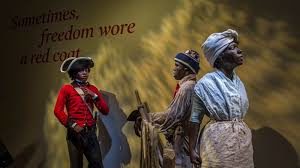
For the New World – discovered by Christopher Columbus in 1492 – African Slavery was not exclusive to the United States of America (then British North America). No, there was a race to the bottom and every European power wanted to get in on it:

  • British – North America (today’s USA & Canada), Central America (today’s Belize), South America (today’s Guyana) and many Caribbean islands
  • Denmark-Norway – today’s US Virgin Islands
  • Dutch/Netherlands –  Caribbean islands,
  • Sweden – Caribbean Island of St. Bartholomew
  • French – North America (think: Louisiana Purchase)
  • Portugal – Brazil
  • Spanish – Latin America

They all explored and settled colonies in the New World, instituting slavery in its wake.

Wait, wait?! No Germany, Italy or Belgium? These nations also engaged the race to exploit Africa and African people, but limited their involvement to the continent, rather than the New World. (The 1885 Berlin Conference gathered all these European powers to “divvy up” the continent for their own self-interest).

In between the initial New World exploration and the Berlin Conference, the Enlightenment Movement – “Age of Enlightenment” between 1650 to 1700 – took hold. It brought a new definition of Freedom, Egalitarianism and Liberalism. The orthodoxy of enslaving indigenous people (in the Americas or in Africa) came to be viewed as barbaric and uncivilized – thanks to a lot of Women in the Abolition Movement. By the 1770’s, there was momentum in the British Parliament to disenfranchise Slavery and the Slave Trade.

This history set the stage for the Greatest Story Never Told

The 13 original colonies that rebelled and Declared their Independence from Great Britain, were not inclined to abandon slavery – not just yet. The official tagline of the Revolutionary War or America’s War for Independence (1776) was “a conflict of the American Patriots versus the British Loyalists”. But in actuality, the War could have been considered a Slavery Rebellion-in-Reverse; a revolt to maintain the orthodoxy of slavery.

Through out the New World, Slave Rebellions abounded – see Appendix below. But the enslaved African people were always a minority in America, while in the Caribbean territories, they were the majority population, on average 4:1, but in some cases, 7-to-1 … Africans versus European. This reality, and the accompanying injustice of slavery, was a “powder keg waiting to explode”. No one group had a greater incentive to fight than the slaves themselves. Many such slaves – 20,000 actually; see VIDEO below – joined in formal conflicts during the American Revolutionary War, fighting on the side of the British. See the full story here:

Title: The Ex-Slaves Who Fought with the British
Subtitle: While the patriots battled for freedom from Great Britain, upwards of 20,000 runaway slaves declared their own personal independence and fought on the side of the British.
By: Christopher Klein

When American colonists took up arms in a battle for independence starting in 1775, that fight for freedom excluded an entire race of people—African-Americans. On November 12, 1775, General George Washington decreed in his orders that “neither negroes, boys unable to bear arms, nor old men” could enlist in the Continental Army.

Two days after the patriots’ military leader banned African-Americans from joining his ranks, however, black soldiers proved their mettle at the Battle of Kemp’s Landing along the Virginia coast. They captured an enemy commanding officer and proved pivotal in securing the victory—for the British.

After the battle, Lord Dunmore, the royal governor of Virginia who had been forced to flee the capital of Williamsburg and form a government in exile aboard the warship HMS Fowey, ordered the British standard raised before making a startling announcement. For the first time in public he formally read a proclamation that he had issued the previous week granting freedom to the slaves of rebels who escaped to British custody.

Dunmore’s Proclamation was “more an announcement of military strategy than a pronouncement of abolitionist principles,” according to author Gary B. Nash in “The Unknown American Revolution: The Unruly Birth of Democracy and the Struggle to Create America.” The document not only provided the British with an immediate source of manpower, it weakened Virginia’s patriots by depriving them of their main source of labor.

Much like Lincoln’s Emancipation Proclamation, however, Dunmore’s Proclamation was limited in scope. Careful not to alienate Britain’s white Loyalist allies, the measure applied only to slaves whose masters were in rebellion against the Crown. The British regularly returned slaves who fled from Loyalist masters.

Dunmore’s Proclamation inspired thousands of slaves to risk their lives in search of freedom. They swam, dog-paddled and rowed to Dunmore’s floating government-in-exile on Chesapeake Bay in order to find protection with the British forces. “By mid-1776, what had been a small stream of escaping slaves now turned into a torrent,” wrote Nash. “Over the next seven years, enslaved Africans mounted the greatest slave rebellion in American history.”

Among those slaves making a break for freedom were eight belonging to Peyton Randolph, speaker of the Virginia House of Burgesses, and several belonging to patriot orator Patrick Henry who apparently took his famous words—“Give me liberty, or give me death!”—to heart and fled to British custody. Another runaway who found sanctuary with Dunmore was Harry Washington, who escaped from Mount Vernon while his famous master led the Continental Army.

Dunmore placed these “Black Loyalists” in the newly formed Ethiopian Regiment and had the words “Liberty to Slaves” embroidered on their uniform sashes. Since the idea of escaped slaves armed with guns stirred terror even among white Loyalists, Dunmore placated the slaveholders by primarily using the runaways as laborers building forts, bridges and trenches and engaging in trades such as shoemaking, blacksmithing and carpentry. Women worked as nurses, cooks and seamstresses.

As manpower issues grew more dire as the war progressed, however, the British army became more amenable to arming runaway slaves and sending them into battle. General Henry Clinton organized an all-black regiment, the “Black Pioneers.” Among the hundreds of runaway slaves in its ranks was Harry Washington, who rose to the rank of corporal and participated in the siege of Charleston.

On June 30, 1779, Clinton expanded on Dunmore’s actions and issued the Philipsburg Proclamation, which promised protection and freedom to all slaves in the colonies who escaped from their patriot masters. Blacks captured fighting for the enemy, however, would be sold into bondage.

According to Maya Jasanoff in her book “Liberty’s Exiles: American Loyalists in the Revolutionary World,” approximately 20,000 black slaves joined the British during the American Revolution. In contrast, historians estimate that only about 5,000 black men served in the Continental Army.

As the American Revolution came to close with the British defeat at Yorktown in 1781, white Loyalists and thousands of their slaves evacuated Savannah and Charleston and resettled in Florida and on plantations in the Bahamas, Jamaica and other British territories throughout the Caribbean. The subsequent peace negotiations called for all slaves who escaped behind British lines before November 30, 1782, to be freed with restitution given to their owners. In order to determine which African-Americans were eligible for freedom and which weren’t, the British verified the names, ages and dates of escape for every runaway slave in their custody and recorded the information in what was called the “Book of Negroes.”

With their certificates of freedom in hand, 3,000 black men, women and children joined the Loyalist exodus from New York to Nova Scotia in 1783. There the Black Loyalists found freedom, but little else. After years of economic hardship and denial of the land and provisions they had been promised, nearly half of the Black Loyalists abandoned the Canadian province. Approximately 400 sailed to London, while in 1792 more than 1,200 brought their stories full circle and returned to Africa in a new settlement in [Freetown,] Sierra Leone. Among the newly relocated was the former slave of the newly elected president of the United States — Harry Washington — who returned to the land of his birth.

Source: Posted August 22, 2018; retrieved August 29, 2019 from: https://www.history.com/news/the-ex-slaves-who-fought-with-the-british

—————

VIDEO – History Stories – Slavery – https://www.history.com/news/the-ex-slaves-who-fought-with-the-british

The Greatest Story Never Told led to the origins of the City of Freetown, Sierra Leone in Africa. This tale features the full circle of those stakeholders, the Black Loyalists: enslaved in America; fought for the Royal Army; sought refuge in Canada, London and then repatriated to Africa.

Wow!

Among the nameless masses of 20,000 people, was the 1 named-hero: Harry Washington, the ex-slave of the First American President George Washington. See his story here:

Harry Washington (c. 1740–1800) was known as a slave of Virginia planter George Washington, later the first President of the United States. He served as a Black Loyalist in the American Revolutionary War and was granted his freedom by the British and evacuated to Nova Scotia. In 1792 he joined nearly 1200 freedmen for resettlement in Sierra Leone, where they set up a colony of free people of color.

Harry had been born in Gambia and sold into slavery as a war captive. He was purchased by George Washington, who had plantations in Virginia. During the American Revolutionary War, Harry Washington escaped from slavery in Virginia and served as a corporal in the Black Pioneers attached to a British artillery unit. After the war he was among Black Loyalists resettled by the British in Nova Scotia, where they were granted land. There Washington married Jenny, another freed American slave.

In 1792 the couple were among more than 1,000 freedmen chosen to migrate to Sierra Leone, West Africa, where the British had established a new colony of people of African descent.

Source: Retrieved August 29, 2019 from: https://en.wikipedia.org/wiki/Harry_Washington

“This” is the personification of the Greatest Story Never Told!

This is a sequel, a supplemental blog-commentary to the recently completed 5-part series from the movement behind the book Go Lean…Caribbean for August 2019. This series was composed to remember, reflect and reconcile the 400 Years of Slavery history in the American experience – 1619 until … today. The full series of these blogs-commentaries this month were cataloged as follows:

  1. 400 Years of Slavery: America, Not the first
  2. 400 Years of Slavery: International Day of Remembrance
  3. 400 Years of Slavery: Emancipation Day – Hardly ‘Free At Last’
  4. 400 Years of Slavery: Where is home?
  5. 400 Years of Slavery: Cop-on-Black Shootings in America’s DNA

This theme, discrediting the Moral High Ground in the history of American Patriotism, has been previously analyzed in numerous Go Lean commentaries; see a sample list here:

https://goleancaribbean.com/blog/?p=12380 ‘4th of July’ and Slavery – Should ‘We’ Be Celebrating?
https://goleancaribbean.com/blog/?p=11870 America’s First Official Victims: Indian Termination Policy
https://goleancaribbean.com/blog/?p=11048 The Missing Model of Hammurabi: No one is Managing the ‘Strong versus the Weak’
https://goleancaribbean.com/blog/?p=4971 A Lesson in History – Truth & Consequence of Royal Charters: Slavery

The Greatest Story Never Told is not very flattening of the United States of America. Nor does it extol honor on the British hierarchy – in the Peace Treaty to end the Revolutionary War, the British returned many runaway slaves to their previous masters. No, the heroes are the slaves who bravely fought for their chance of freedom for themselves and their children. The actuality of racial oppression, suppression and repression of being a Black Man in America was tragic. The biggest learned-lesson was:

Do not count on the White Man to bring you salvation.

This thought was embedded in the Go Lean book (Page 21), with this quotation:

The African Diaspora experience in the New World is one of “future” gratification, as the generations that sought freedom from slavery knew that their children, not them, would be the beneficiaries of that liberty. This ethos continued with subsequent generations expecting that their “children” would be more successful in the future than the parents may have been.

Reflecting on the history of 400 Years of Slavery in America, reminds us that we must do the heavy-lifting ourselves to reform and transform our society. We cannot count on the Americans nor the British, or any Europeans for that matter, to save us. We must save ourselves!

How?

This is the purpose of the Go Lean roadmap; it features the strategies, tactics, implementations and advocacies for us to make the Caribbean member-states a better place to live, work and play … on our own. We urge every Caribbean stakeholder to lean-in to this roadmap. Yes we can!  🙂

About the Book
The book Go Lean…Caribbean serves as a roadmap for the introduction and implementation of the technocratic Caribbean Union Trade Federation (CU), for the elevation of Caribbean society – for all member-states. This CU/Go Lean roadmap has these 3 prime directives:

  • Optimization of the economic engines in order to grow the regional economy to $800 Billion and create 2.2 million new jobs.
  • Establishment of a security apparatus to ensure public safety and protect the resultant economic engines.
  • Improve Caribbean governance to support these engines, including a separation-of-powers between the member-states and CU federal agencies.

The Go Lean book provides 370-pages of turn-by-turn instructions on “how” to adopt new community ethos, plus the strategies, tactics, implementations and advocacies to execute so as to reboot, reform and transform the societal engines of Caribbean society.

Download the free e-Book of Go Lean … Caribbean – now!

Who We Are
The movement behind the Go Lean book – a non-partisan, apolitical, religiously-neutral Community Development Foundation chartered for the purpose of empowering and re-booting economic engines – stresses that reforming and transforming the Caribbean societal engines must be a regional pursuit. This was an early motivation for the roadmap, as pronounced in the opening Declaration of Interdependence (Pages 12 – 13):

xi. Whereas all men are entitled to the benefits of good governance in a free society, “new guards” must be enacted to dissuade the emergence of incompetence, corruption, nepotism and cronyism at the peril of the people’s best interest. The Federation must guarantee the executions of a social contract between government and the governed.

xvi. Whereas security of our homeland is inextricably linked to prosperity of the homeland, the economic and security interest of the region needs to be aligned under the same governance. Since economic crimes … can imperil the functioning of the wheels of commerce for all the citizenry, the accedence of this Federation must equip the security apparatus with the tools and techniques for predictive and proactive interdictions.

xxiv. Whereas a free market economy can be induced and spurred for continuous progress, the Federation must install the controls to better manage aspects of the economy: jobs, inflation, savings rate, investments and other economic principles. Thereby attracting direct foreign investment because of the stability and vibrancy of our economy.

Sign the petition to lean-in for this roadmap for the Caribbean Union Trade Federation.

————–

Appendix – Revolts of the Caribbean Islands
Vincent Brown, a professor of History and of African and African-American Studies at Harvard, has made a study of the Transatlantic Slave Trade. In 2013, Brown teamed up with Axis Maps to create an interactive map of Jamaican slave uprisings in the 18th century called, “Slave Revolt in Jamaica, 1760-1761, A Cartographic Narrative.”[14] Brown’s efforts have shown that the slave insurrection in Jamaica in 1760-61 was a carefully planned affair and not a spontaneous, chaotic eruption, as was often argued (due in large part to the lack of written records produced by the insurgents).[15]

Later, in 1795, several slave rebellions broke out across the Caribbean, influenced by the Haitian Revolution:

Source: Retrieved August 29, 2019 from: https://en.wikipedia.org/wiki/Demerara_rebellion_of_1823

Share this post:
, , ,
[Top]

400 Years of Slavery – Cop-on-Black Shootings in America’s DNA – Encore

Slavery was clearly an oppression, suppression and repression of the African race on American soil. This was true in the Year 1619 … and unfortunately; there is still some truth to this assessment in 2019, 400 years later. See this case-in-point:

Title: What New Research Says About Race and Police Shootings
By: Brentin Mock

In the U.S., African Americans are 2.5 times more likely to be killed by police than white people. For black women, the rate is 1.4 times more likely.

That’s according to a new study conducted by Frank Edwards, of Rutgers University’s School of Criminal Justice, Hedwig Lee, of Washington University in St. Louis’s Department of Sociology, and Michael Esposito, of the University of Michigan’s Institute for Social Research. The researchers used verified data on police killings from 2013 to 2018 compiled by the website Fatal Encounters, created by Nevada-based journalist D. Brian Burghart. Under their models, they found that roughly 1-in-1,000 black boys and men will be killed by police in their lifetime. For white boys and men, the rate is 39 out of 100,000.

In fact, people of color in general were found more likely to be killed by police than their white counterparts.

Source: Posted August 6, 2019; retrieved August 29, 2019 from: https://www.citylab.com/equity/2019/08/police-officer-shootings-gun-violence-racial-bias-crime-data/595528/

This is the final submission in this series of blog-commentaries from the movement behind the book Go Lean…Caribbean for August 2019. This final entry, 5-of-5 in this series, focuses on the lingering effects of racial oppression-suppression-repression of the African race in America. Clearly, the American scales of justice are not balanced. This acknowledgement aligns and complements the entire series as it was composed to remember, reflect and reconcile the history of 400 Years of Slavery in the American experience – 1619 until … today. The full series of these blogs-commentaries this month is cataloged as follows:

  1. 400 Years of Slavery: America, Not the first
  2. 400 Years of Slavery: International Day of Remembrance
  3. 400 Years of Slavery: Emancipation Day – Hardly ‘Free At Last’
  4. 400 Years of Slavery: Where is home?
  5. 400 Years of Slavery: Cop-on-Black Shootings in America’s DNA

Assuredly, there is no slavery in America today; yet there is still some racial oppression-suppression-and-repression, especially evident in the dynamic of Cop-on-Black Shootings. This sober subject matter had been thoroughly dissected in a previous Go Lean commentary from April 9, 2018.

It is only apropos to Encore that previous blog-commentary here-now:

———————-

Go Lean Commentary – Nature or Nurture: Cop-on-Black Shootings – Embedded in America’s DNA

It happens so often, it rarely gets attention anymore; Police-on-Black shootings that is!

It seems to be a constant feature of American life. See the latest high profile one – Stephon Clark – in the Appendix below.

What’s worse, when it happens, the White people in America, just yawns. Sad, but true!

Is this phenomenon the Nature of the United States of America, or is it Nurture?

The answer is complicated; the answer is both!

This commentary continues the 4-part series on Nature or Nurture for community ethos. This entry is 2 of 4 in this series from the movement behind the book Go Lean … Caribbean in consideration of root causes of some societal defects – specific examples in the US and UK – and how to overcome them. The other commentaries in the series are cataloged as follows:

  1. Nature or Nurture: Black Marchers see gun violence differently
  2. Nature or Nurture: Cop-on-Black Shootings – Embedded in America’s DNA; Whites Yawn
  3. Nature or Nurture: UK City of Bristol still paying off Slavery Debt
  4. Nature or Nurture: Nurturing comes from women; “they” impacted the Abolition of Slavery

In the first submission to this series, the history of Psychology was introduced, which quoted:

One of the oldest arguments in the history of psychology is the Nature vs Nurture debate. Each of these sides have good points that it’s really hard to decide whether a person’s development is predisposed in his DNA, or a majority of it is influenced by this life experiences and his environment. – https://explorable.com/nature-vs-nurture-debate

All of these commentaries relate to “why” the New World – including the US and the Caribbean – has the societal defects that are so prominent – and so illogical – and  “how” the stewards for a new Caribbean can assuage these defects and the resultant failing dispositions among Caribbean society. Though the traits may be consistent in the hemisphere, our efforts to reform and transform is limited to the Caribbean.

The subject of Police-On-Black shootings is a familiar theme for this commentary, from the movement behind the book Go Lean…Caribbean – available to download for free. The book asserts that there is a consistent lack of respect for those in America fitting a “Poor Black” attribute. In fact these prior blog-commentaries doubled-down on this assertion:

https://goleancaribbean.com/blog/?p=13081 America’s Race Relations – Spot-on for Protest
https://goleancaribbean.com/blog/?p=8202 Lessons Learned from American Dysfunctional Minority Relations
https://goleancaribbean.com/blog/?p=8200 Climate of Hate for American Minorities
https://goleancaribbean.com/blog/?p=7221 Street naming for Martin Luther King unveils the real America
https://goleancaribbean.com/blog/?p=5527 American Defects: Racism – Is It Over?
https://goleancaribbean.com/blog/?p=4863 Video of Police Shooting: Worth a Million Words
https://goleancaribbean.com/blog/?p=546 Book Review – ‘The Divide’ – Injustice in the Age of the Wealth Gap
https://goleancaribbean.com/blog/?p=341 Hypocritical US slams Caribbean human rights practices

Say it ain’t so … it is a dangerous proposition to be Black in America. In fact one Caribbean member-states – The Bahamas, a majority Black population – had urged their young men traveling to the US to exercise extreme caution when dealing with police authorities. This advice is Spot-on!

The Nature of the US is that Black people – especially men and boys – have always had to contend with an unjust society in terms of justice and the security apparatus. Since the subject of Nature assumes that racism is predisposed in a society’s DNA, despite the fact that formal slavery ended 150 years ago, it is no surprise that Blacks in America have seen a continuous suppression, repression and oppression of any justice requirements.

After all, this is the population that suffered so much of the indignity of lynching.

Yes, we are going there …

Despite the fact that African slaves were taken to all New World territories, the country with this acute practice was only the United States of America. Surely, this had a lingering effect on the culture and society. This effect was not only on the victims, but on society in general, and the law enforcement establishment.

Imagine people gathering in their Sunday Best Clothes to watch the lynching (murder) of a Black man with no trial or due process. Imagine the effect that would instill on that community? Would that forge concern and consideration for the targeted population?

Now imagine that drama repeated again and again … 4733 times.

According to a previous Go Lean commentary, 4,733 people were documented as being lynched. That’s a huge number. To think there would be no impact on the Nature of a society is inconceivable. This theme was also conveyed in the TV news magazine 60 Minutes. See the full story here:

VIDEO – Inside the memorial to victims of lynching https://www.cbsnews.com/video/inside-the-memorial-to-victims-of-lynching/

Posted April 8, 2018 – Oprah Winfrey reports on the Alabama memorial dedicated to thousands of African-American men, women and children lynched over a 70-year period following the Civil War.

Surely this country – the America of Old – would have been no place for Caribbean people to seek refuge. The Nuturing of American society continued to develop a nonchalance to injustice for the Black people of the US. This is where the Nature has been supplanted by the Nurture. This is why stories like Stephon Clark continue to emerge and why White America “continue to yawn”. Surely this society – modern America – is no place for Black-and-Brown Caribbean people to seek refuge.

Yet, the region – all 30 member-states – continue to suffer from an abominable brain drain rate in which so many Caribbean citizens have emigrated to the US, and other countries. (One reported has rated the brain drain rate of 70 percent).

The book Go Lean…Caribbean asserts that it is easier for the Black-and-Brown populations in the Caribbean to prosper where planted in the Caribbean, rather than emigrating to foreign countries, like the United States. If only we can reform and transform our own society so as to dissuade our people from leaving to seek refuge in the US. This is the quest of the Go Lean book, to serve as a roadmap for the introduction and implementation of the technocratic Caribbean Union Trade Federation (CU). The book presents 370 pages of instructions for how to reform and transform our Caribbean member-states. It stresses the key community ethos that needs to be adopted, plus the strategies, tactics, implementations and advocacies necessary to optimize the societal engines in a community.

The CU/Go Lean roadmap has these 3 prime directives for optimizing our societal engines:

As related in this blog series on Nature or Nurture, the Caribbean has the same Nature as our American counterparts, but not the same Nurture. Our majority Black-and-Brown populations have forged different societies than the baseline US. And we are not wanting to be like America …

we want to be better.

This is not just a dream; this is a roadmap that is conceivable, believable and achievable. Yes, we can … reform and transform our society. We can make our homeland a better place to live, work and play. 🙂

Download the free e-Book of Go Lean … Caribbean – now!

Sign the petition to lean-in for this roadmap for the Caribbean Union Trade Federation.

————

Appendix – Shooting of Stephon Clark

Stephon Clark was shot and killed on the evening of March 18, 2018, by two officers of the Sacramento Police Department in SacramentoCalifornia, United States. The officers were looking for a suspect who was breaking windows in the Meadowview neighborhood, and confronted Clark, an unarmed 22-year-old African-American man whom they found in the yard of his grandmother’s house, where he resided. Clark ran from the police in an encounter that was filmed by police video cameras. The officers stated that they shot Clark, firing 20 rounds, believing that he had pointed a gun at them. After the shooting, police reported that he was carrying only a cell phone. According to an independent autopsy, Clark was shot eight times including six times in the back.

The shooting caused large protests in Sacramento, and Clark’s family members have rejected the initial police description of the events leading to Clark’s death. The Sacramento Police Department placed the officers on paid administrative leave and opened a use of force investigation. Police have stated they are confident that Clark was the person responsible for breaking windows in the area prior to the encounter.

Shooting

The Sacramento Police Department stated that on Sunday, March 18 at 9:18 p.m., two officers were responding to a call that someone was breaking car windows.[3] In a media release after the shooting, police stated that they had been looking for a suspect hiding in a backyard. They said the suspect was a thin black man, 6 feet 1 inch (185 cm) in height, wearing darkly colored pants and a black hooded sweatshirt.[3] A sheriff’s helicopter spotted a man at 9:25 p.m. in a nearby backyard and told officers on the ground that he had shattered a window using a tool bar, run to the front of that house, and then looked in an adjacent car.[3]

Officers on the ground entered the front yard of Clark’s grandmother’s home, and saw Clark next to the home.[10][3] Vance Chandler, the Sacramento Police Department spokesman, said that Clark was the same man who had been breaking windows, and was tracked by police in helicopters.[3] Chandler said that when Clark was confronted and ordered to stop and show his hands, Clark fled to the back of the property.[3]

Police body camera footage from both of the officers who shot Clark recorded the incident, though the footage is dark and shaky.[10][11] In the videos, officers spot Clark in his grandmother’s driveway and shout “Hey, show me your hands. Stop. Stop.”[10] The video shows that the officers chased Clark into the backyard and an officer yells, “Show me your hands! Gun!” About three seconds elapse and then the officer yells, “Show me your hands! Gun, gun, gun”, before shooting Clark.[10][11]

According to the police, before being shot Clark turned and held an object that he “extended in front of him” while he moved towards the officers.[3] The officers said they believed that Clark was pointing a gun at them.[6] The police stated that the officers feared for their safety, and at 9:26 p.m., fired 20 rounds, hitting Clark multiple times.[6][3] According to an independent autopsy, Clark was shot eight times, including six times in the back.[1] The report found that one of the bullets to strike Clark from the front was likely fired while he was already on the ground.[1]

Body-cam footage shows that after shooting him, the officers continued to yell at him as one shined a flashlight at him and they kept their guns aimed at him. One officer stated in one of the body-cam videos, “He had something in hands, looked like a gun from our perspective.” Three minutes after the shooting, a female officer called to him and said “We need to know if you’re OK. We need to get you medics, so we can’t go over and get you help until we know you don’t have a weapon.”[12] They waited five minutes after shooting Clark before approaching and then handcuffing him.[13] Clark was found to have a white iPhone, and was unarmed.[6][4] Clark’s girlfriend later said the phone belonged to her.[14]

After more officers arrived, one officer said “Hey, mute”, and audio recording from the body camera was turned off.[10]

The Police Department stated on March 19, one day after the shooting, that Clark had been seen with a “tool bar”. On the evening of that day, police revised their statement to say that Clark was carrying a cell phone, and not a tool bar, when he was shot.[3] Police added that Clark might have used either a concrete block or an aluminum gutter railing to break a sliding glass door at the house next door to where he was shot, and that they believed Clark had broken windows from at least three vehicles in the area.[3]

Responses

Elected officials and political activists

Sacramento Mayor Darrell Steinberg, initially said he would not second-guess decisions made by officers on the ground. After a backlash, he said the videos of Clark’s shooting made him feel “really sick” and that the shooting was “wrong” but declined to comment whether the officers should be charged.[30] House Minority Leader Nancy Pelosi stated that Clark “should be alive today”.[31] [Civil Rights Activist] Reverend Al Sharpton stated that he was alarmed by the story, which he said had not received enough media attention.[32]

On March 26, White House spokesman Raj Shah stated that he was unaware of any comments from President Donald Trump regarding the incident.[31] Two days later, White House Press Secretary Sarah Huckabee Sanders stated that Trump is “very supportive of law enforcement” and that the incident was a “local matter” that should be dealt with by the local authorities.[33]

Clark family

Civil rights attorney Benjamin Crump, who represents the Clark family, stated that the autopsy finding was inconsistent with the official narrative that Clark was charging toward the police officers when they fired.[1] Clark’s family expressed skepticism of the police version of events. Clark’s brother, Stevante Clark, said of police statements: “They said he had a gun. Then they said he had a crowbar. Then they said he had a toolbar … If you lie to me once, I know you’ll lie to me again.”[10] Clark’s aunt Saquoia Durham said that police gave Clark no time to respond to their commands before shooting him.[34] According to Crump the officers did not identify themselves as police when they encountered Clark.[22] The police have stated that the officers who confronted Clark were wearing their uniforms at that time.[35]

Policing experts

University of South Carolina criminology professor Geoffrey Alpert stated that it might be hard for officers to justify their conclusion that Clark was armed, since they had been told he was carrying a toolbar.[36] Peter Moskos, assistant professor of Law and Police Science at John Jay College, said that the officers appeared to think they had been fired upon following the shooting.[37] Alpert, Clark’s family, and protesters questioned officers’ decisions to mute their microphones.[10][38] Police Chief Daniel Hahn said he was unable to explain the muting. Cedric Alexander, former police chief in Rochester, New York, and former president of the National Organization of Black Law Enforcement Executives, said that the muting did not appear to violate any policy, but looks bad. He also stated that it is not unusual for police to mute their body cams and that attorneys advise the police to mute conversations to prevent recording any comments that could be used in administrative or criminal proceedings. Many body cams are made with a mute button on them.[38]

Source: Wikipedia; retrieved April 9, 2018 from: https://en.wikipedia.org/wiki/Shooting_of_Stephon_Clark


Share this post:
, ,
[Top]

400 Years of Slavery – Where is ‘Home’?

Go Lean Commentary

“Go back to Africa”

According to the Urban Dictionary, this phrase is just simply an insult:

  1. Phrase used when a black person is living in a white country; i.e. Here is England, here is not your land! Go back to Africa!
  2. An insult used against blacks living in a non-African country.
    What people forget when they use it, however, is that in order to “go back” to somewhere, you have to have been born in that place. Most likely, the black who you tried to insult was born in a Western country, and no Western country is located in the continent of Africa.

All in all, this insult is cruel, unkind and unwelcoming. But, for 1 minute, let’s look at this whole issue from an American perspective – African-American more specifically – see how/if/when an American Black person can truly … go “home” to Africa.

One man’s trash is another’s treasure.

The African country of Ghana is rolling out the Welcome Mat for African-Americans. They know that the ancestors of many of these African-Americans may have actually come through the doors of African Slave Trading posts located in today’s Ghana; see the details on Elmira Castle below.

This Welcome Mat is presented by the highest elected official in that land – the President. See the full story here:

Title: 2019: Year of return for African Diaspora
Subtitle: Ghana rolls out the red carpet to encourage resettlement in the motherland
By: Benjamin Tetteh

In the heart of Accra, Ghana’s capital, just a few meters from the United States embassy, lie the tombs of W. E. B. Du Bois, a great African-American civil rights leader, and his wife, Shirley. The founder of the US-based National Association for the Advancement of Colored People moved to Accra in 1961, settling in the city’s serene residential area of Labone and living there until his death in August 1963.

Mr. Du Bois’s journey to Ghana may have signaled the emergence of a profound desire among Africans in the diaspora to retrace their roots and return to the continent. Ghana was a major hub for the transatlantic slave trade from the 16th to the 19th centuries.

In Washington, D.C., in September 2018, Ghana’s President Nana Akufo-Addo declared and formally launched the “Year of Return, Ghana 2019” for Africans in the Diaspora, giving fresh impetus to the quest to unite Africans on the continent with their brothers and sisters in the diaspora.

At that event, President Akufo-Addo said, “We know of the extraordinary achievements and contributions they [Africans in the diaspora] made to the lives of the Americans, and it is important that this symbolic year—400 years later—we commemorate their existence and their sacrifices.”

US Congress members Gwen Moore of Wisconsin and Sheila Jackson Lee of Texas, diplomats and leading figures from the African-American community, attended the event. Representative Jackson Lee linked the Ghanaian government’s initiative with the passage in Congress in 2017 of the 400 Years of African-American History Commission Act. Provisions in the act include the setting up of a history commission to carry out and provide funding for activities marking the 400th anniversary of the “arrival of Africans in the English colonies at Point Comfort, Virginia, in 1619.”

Since independence in 1957, successive Ghanaian leaders have initiated policies to attract Africans abroad back to Ghana.

In his maiden independence address, then–Prime Minister Kwame Nkrumah sought to frame Africa’s liberation around the concept of Africans all over the world coming back to Africa.

“Nkrumah saw the American Negro as the vanguard of the African people,” said Henry Louis Gates Jr., Director of the Hutchins Center for African and African American Research at Harvard, who first traveled to Ghana when he was 20 and fresh out of Harvard, afire with Nkrumah’s spirit. “He wanted to be able to utilize the services and skills of African-Americans as Ghana made the transition from colonialism to independence.”

Ghana’s parliament passed a Citizenship Act in 2000 to make provision for dual citizenship, meaning that people of Ghanaian origin who have acquired citizenships abroad can take up Ghanaian citizenship if they so desire.

That same year the country enacted the Immigration Act, which provides for a “Right of Abode” for any “Person of African descent in the Diaspora” to travel to and from the country “without hindrance.”

The Joseph Project
In 2007, in its 50th year of independence, the government initiated the Joseph Project to commemorate 200 years since the abolition of slavery and to encourage Africans abroad to return.

Similar to Israel’s policy of reaching out to Jews across Europe and beyond following the Holocaust, the Joseph Project is named for the Biblical Joseph who was sold into slavery in Egypt but would later reunite with his family and rule Egypt.

The African-American community is excited about President Akufo-Addo’s latest initiative. In social media posts, many expressed interest in visiting Africa for the first time. Among them is Amber Walker, a media practitioner who says that 2019 is the time to visit her ancestral home.

“It is definitely comforting because that kind of red carpet has not been rolled out by our oppressors in the Western world,” she added.

In making the announcement President Akufo-Addo said: Together on both sides of the Atlantic, we’ll work to make sure that never again will we allow a handful of people with superior technology to walk into Africa, seize their people and sell them into slavery. That must be our resolution, that never again, never again!”

But Ms. Walker took issue with Mr. Akufo-Addo for appearing to downplay the actions of some Africans in the slave trade. “In the president’s [Akufo-Addo’s] statement, he sounds like the entire blame is placed on white people coming in with weapons and taking black people away, but that’s not necessarily the history. So I think that needs to be acknowledged,” she said.

She suggested a form of reconciliation such as took place in post-apartheid South Africa—a truth and reconciliation process that will satisfy the millions of Africans whose forefathers were sold into slavery.

In 2013 the United Nations declared 2015–2024 the International Decade for People of African Descent to “promote respect, protection and fulfilment of all human rights and fundamental freedoms of people of African descent.”

The theme for the ten-year celebration is “People of African descent: recognition, justice and development.”

The “Year of Return, Ghana 2019” will coincide with the biennial Pan African Historical Theatre Festival (Panafest), which is held in Cape Coast, home of Cape Coast Castle and neighbouring Elmina Castle—two notable edifices recognized by UNESCO (the United Nations Educational, Scientific and Cultural Organization) as World Heritage Sites of the slave era.

[See VIDEO of Elmira Castle here:]

Source: Posted Africa RenewalDecember 2018 – March 2019; retrieved August 27, 2019 from: https://www.un.org/africarenewal/magazine/december-2018-march-2019/2019-year-return-african-diaspora

———–

VIDEO – Elmina Castle shows horrors of slave trade – https://youtu.be/xWupcOOPUOE

Newsy
Published on Feb 8, 2017 – The horror stories from inside this Ghanaian slave castle easily rival the cruelty of the Middle Passage and life on an American plantation.
Learn more about this story at www.newsy.com/66923/
Find more videos like this at www.newsy.com
Follow Newsy on Facebook: www.facebook.com/newsyvideos
Follow Newsy on Twitter: www.twitter.com/newsyvideos

The truth of the matter, Black people are not all “homogenous” – the same. Many of them have ancestral homes that are actually outside of Africa. For many, that home is the Caribbean – accordingly, some studies project 10 to 25 million American residents may actually have Caribbean heritage. (Slave ships stopped in the Caribbean on the way to North America). The same as the President of Ghana has sent out the invitation, Caribbean stakeholders are making the same pledge; notice this featured in a previous commentary by the movement behind the book Go Lean…Caribbean:

We Want you back
“We tend to think economic growth comes from working harder and smarter, but economists attribute up to a third of it [growth] to more people joining the workforce each year than leaving it. The result is more producing, earning and spending.”

Many Caribbean natives love their homeland, but live abroad in the Diaspora – estimated at 10 to 25 million. Over the past decades, they had moved away looking for better opportunities or safe haven. The stakeholders of the Caribbean now need to declare to these people: I Want You Back! 

Unlike the harsh treatment encountered in America – racism still proliferates – the Caribbean and African countries are more natural in their invitation. This may be due to the fact that 29 of the 30 Caribbean member-states feature a majority population of Black-and-Brown people. While our communities are not perfect, this commentary has repeatedly asserted that it is easier to reform and transform these member-states than to try and change America, with all its societal defects.

This is a logical conclusion, considering that it has been a history of 400 Years of Slavery in this American homeland and Black people are still not welcome; still being urged to:

Go back to Africa!

This is the focus of this series of blog-commentaries from the movement behind the Go Lean book for August 2019. This entry is 4-of-5 in this series; it is composed to remember, reflect and reconcile the history of 400 Years of Slavery in the American experience – 1619 until … today. The full series of these blogs-commentaries this month is cataloged as follows:

  1. 400 Years of Slavery: America, Not the first
  2. 400 Years of Slavery: International Day of Remembrance
  3. 400 Years of Slavery: Emancipation Day – Hardly ‘Free At Last’
  4. 400 Years of Slavery: Where is home?
  5. 400 Years of Slavery: Cop-on-Black Shootings in America’s DNA

The invitation to repatriate to the Caribbean has been detailed in previous Go Lean commentaries; see a sample list here:

https://goleancaribbean.com/blog/?p=15126 ‘Time to Go’ – Caribbean member-states must have ‘population increases’
https://goleancaribbean.com/blog/?p=14746 Calls for Repatriation Strategy
https://goleancaribbean.com/blog/?p=13604 Caribbean to the Diaspora: ‘I Want You Back’
https://goleancaribbean.com/blog/?p=10654 Stay Home! Immigration Realities in the US
https://goleancaribbean.com/blog/?p=9219 ‘Time to Go’ – Logic of Senior Emigration
https://goleancaribbean.com/blog/?p=7151 The Caribbean is Looking for Heroes … ‘to Return’
https://goleancaribbean.com/blog/?p=4222 Message to Caribbean Retirees – “Come in from the cold”

There are many lessons for stakeholders of Caribbean society to learn in considering the history of 400 Years of Slavery in America. Despite the reality of the racial oppression, suppression and repression, many Caribbean people still emigrated there, to partake in the American experience. This depicts the sad reality of Caribbean life – the “frying pan was better than the fire”. As a result, many lessons-learned have been derived from these historic details:

  • Caribbean Life was too hard for slaveholders and plantation-owners without slave labor. Once the abolition occurred, there was a first round of White Flight. Then once de-colonization took effect, more White Flight was experienced. So the European Imperial presence in the Caribbean has been supplanted with majority Black-and-Brown people in residence (29 of 30 member-states) and holding positions of power.
  • The economics of mercantilism continued in the Caribbean, despite the dissolution of the colonial system. This meant, no manufacturing footprint in the regional markets; raw materials were exported to come back as finished goods. The end result: all Caribbean member-states boast only a service economy with consumption dynamics only.
  • The Caribbean is arguably the greatest address on the planet, geography-wise. But the societal engines – economics, security & governance – are defective and inadequate for the majority of the population. As a result, the abandonment rate is very high, averaging 70 percent of tertiary-educated citizens in the independent member-states; plus 50 percent for the general population for the dependent territories (Puerto Rico, Virgin Islands, Netherland Antilles, French Islands, etc.). So we Lose our Best and have to nation-build with the Rest. 🙁
  • Many American frontier cities – i.e. Miami – were built with the blood, sweat and tears of Caribbean people. These Black-and-Brown people will not leave – and they should not have to – despite how many outcries from racist and narrow-minded White People to “Go back to Africa”.
  • Retirement life may be the best opportunity for the Caribbean to entice their Diaspora to return “home”. Home is NOT Africa. This is the reality of repatriation – if you have never lived there – it was never really home. For this reason, while we want to see prosperity in the African Motherland, we – the Caribbean – really do not need to compete with that continent.

Going back to Africa is not a new declaration for America towards Black people. First there was a voluntary movement in the late-1800’s. See the encyclopedia details here:

The Back-to-Africa movement, in the nineteenth century called the colonization movement, encouraged Americans of African ancestry to return to Africa — not to their original homelands, which in most cases were unknown, but to the continent. In general the movement was an overwhelming failure; very few Blacks wanted to move to Africa, and the small number that did — some under duress — initially faced brutal conditions. As the failure became known in the United States in the 1820s, it spawned the abolitionist movement. In the twentieth century Marcus GarveyRastafarians, and some other African Americans espoused the concept, but few actually left the United States.


Source: Retrieved August 27, 2019 from: https://en.wikipedia.org/wiki/Back-to-Africa_movement

Reflecting on the History of 400 Years of Slavery in America, reminds us that this American mainland is not really our homeland. Though we helped to build this country to make America great; see Appendix VIDEO below, it was not intended for greatness for the Black-and-Brown populations- we can only ever be immigrants; we will never be considered among the settlers. It is our assertion that the Caribbean Diaspora can be more successful at home in the Caribbean. We can more easily elevate our standing in society and our standard of living.

Yes, we can!

This is the purpose of the Go Lean movement. We urge every Caribbean stakeholder to lean-in to our roadmap to bring change to this Caribbean region. Yes, we can make our Caribbean homeland a better place to live, work and play.  🙂

About the Book 
The book Go Lean…Caribbean serves as a roadmap for the introduction and implementation of the technocratic Caribbean Union Trade Federation (CU), for the elevation of Caribbean society – for all member-states. This CU/Go Lean roadmap has these 3 prime directives:

  • Optimization of the economic engines in order to grow the regional economy to $800 Billion and create 2.2 million new jobs.
  • Establishment of a security apparatus to ensure public safety and protect the resultant economic engines.
  • Improve Caribbean governance to support these engines, including a separation-of-powers between the member-states and CU federal agencies.

The Go Lean book provides 370-pages of turn-by-turn instructions on “how” to adopt new community ethos, plus the strategies, tactics, implementations and advocacies to execute so as to reboot, reform and transform the societal engines of Caribbean society.

Download the free e-Book of Go Lean … Caribbean – now!

Who We Are 
The movement behind the Go Lean book – a non-partisan, apolitical, religiously-neutral Community Development Foundation chartered for the purpose of empowering and re-booting economic engines – stresses that reforming and transforming the Caribbean societal engines must be a regional pursuit. This was an early motivation for the roadmap, as pronounced in the opening Declaration of Interdependence (Pages 12 – 13):

xi. Whereas all men are entitled to the benefits of good governance in a free society, “new guards” must be enacted to dissuade the emergence of incompetence, corruption, nepotism and cronyism at the peril of the people’s best interest. The Federation must guarantee the executions of a social contract between government and the governed.

xvi. Whereas security of our homeland is inextricably linked to prosperity of the homeland, the economic and security interest of the region needs to be aligned under the same governance. Since economic crimes … can imperil the functioning of the wheels of commerce for all the citizenry, the accedence of this Federation must equip the security apparatus with the tools and techniques for predictive and proactive interdictions.

xxiv. Whereas a free market economy can be induced and spurred for continuous progress, the Federation must install the controls to better manage aspects of the economy: jobs, inflation, savings rate, investments and other economic principles. Thereby attracting direct foreign investment because of the stability and vibrancy of our economy.

Sign the petition to lean-in for this roadmap for the Caribbean Union Trade Federation.

—————

Appendix VIDEO – “We Built This Country. Do Not Tell Us To Go Back Where We Came From.” – https://www.c-span.org/video/?c4814023/we-built-country-back-from

Posted August 24, 2019 – Virginia Lt. Governor Justin Fairfax at 400-Year Commemoration of 1619 Landing of Enslaved Africans in English North America.

Share this post:
, , ,
[Top]