Tag: Gender

The World as 100 People – Showing the Gaps

Go Lean Commentary

Blood, sweat and tears…

These are the triumvirate ingredients that forged many movements in the history of mankind.

Now comes the book Go Lean…Caribbean, serving as a roadmap for the introduction and implementation of the Caribbean Union Trade Federation (CU) to elevate Caribbean society. This movement calls for a new triumvirate: time, talent and treasury, to effect change in the Caribbean region. The book posits that all Caribbean stakeholders (residents, institutions, students, Diaspora) have to devote a measure of these three ingredients.

But not a full measure… this is not war; this is social change…and philanthropy.

The Go Lean book asserts a roadmap for economic/security/governing empowerment; but it also clearly relates that many social aspects of Caribbean life will be un-addressed by the CU. There will be voids and gaps that NGO’s (Non-Government Organizations) are called on to fill. This accompanying chart shows the “World as 100 People”, a picturesque presentation of the significant categories of factors present (and absent) in the world “as a whole”:

CU Blog - The World as 100 People - Photo 1

Click on Image to Enlarge.

This chart was published by the Bill & Melinda Gates Foundation, one of the NGO’s that the CU should solicit for Caribbean participation. This foundation was instituted by Information Technology Innovator and Microsoft founder Bill Gates. His foundation sets out to make a permanent impact on the world; guided by the belief that every life has equal value; this foundation works to help all people lead healthy, productive lives. The successful execution of this charter would fill the voids/gaps in the Caribbean social contract.

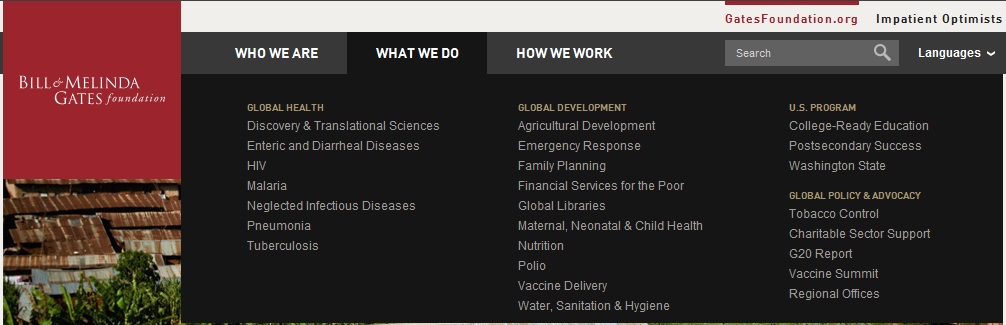
The Gates Foundation has a specific charter for education/libraries, health-advocacies, children, women, the elderly and the disabled. See the foundation Profile in the photo here. CU Blog - The World as 100 People - Photo 2

The Go Lean roadmap invites NGO’s, like the Gates Foundation, to impact the Caribbean according to their charters. While forging change in the Caribbean is the responsibility of the Caribbean, we must be open to ask for help, to accept the help, and respond to the help being offered. This is a mission of the CU.

Under the Go Lean roadmap, the structure is put in place to include the contributions of the time, talent, and treasuries of NGOs/foundations. One feature of the Go Lean roadmap involves Self-Governing Entities (SGE’s); some of which may be structured as NGO’s. The following list details other community ethos, strategies, tactics, implementations and advocacies to optimize the region’s public/private cooperation and endeavors:

Community Ethos – Deferred Gratification Page 21
Community Ethos – People Respond to Incentives in Predictable Ways Page 21
Community Ethos – “Crap” Happens Page 23
Community Ethos – Return on Investments Page 24
Community Ethos – Cooperatives Page 25
Community Ethos – Non-Government Organizations Page 25
Community Ethos – Ways to Bridge the Digital Divide Page 31
Community Ethos – Ways to Improve Sharing Page 35
Community Ethos – Ways to Promote Happiness Page 36
Community Ethos – Ways to Impact the Greater Good Page 37
Strategy – Customers – Non-Government Organizations are Stakeholders Page 48
Strategy – Competition – Attention to Caribbean as Opposed to Other 3rd World Page 56
Separation of Powers – State Department – Registrar/Liaison of NGO’s Page 80
Implementation – Ways to Pay for Change Page 101
Implementation – Ways to Implement Self-Government Entities Page 105
Implementation – Ways to Deliver Page 109
Implementation – Ways to Foster International Aid Page 115
Advocacy – Ways to Improve Education Page 159
Advocacy – Ways to Better Manage the Social Contract Page 170
Advocacy – Ways to Foster Cooperatives Page 176
Advocacy – Ways to Improve Libraries Page 187
Advocacy – Ways to Impact Foundations Page 219
Advocacy – Ways to Impact the One Percent Page 224
Advocacy – Ways to Improve Elder-Care Page 225
Advocacy – Ways to Impact Youth – Not-for-Profit Youth Fair Model Page 227
Advocacy – Ways to Impact Persons with Disabilities Page 228
Appendix – Giving Pledge Signatories – 113 Super Rich Benefactors Page 292

The Go Lean book clearly depicts that Not-For-Profit charities, foundations and NGO’s are also stakeholders for the effort to make the Caribbean better. Many members of the “One Percent” want to help “change the world”; they want to give of their time, talent and treasuries. The CU will help facilitate their vision. This is win-win!

Welcome to the Caribbean, Mr. Gates et al. The Bill (and Melinda) Gates Foundation is one; the Go Lean book identifies 112 more billionaires and their “war chests”.

We will accept all genuine help to make the Caribbean a better place to live, work, learn, heal and play.

Download the book Go Lean … Caribbean – now!

Share this post:
, , , ,

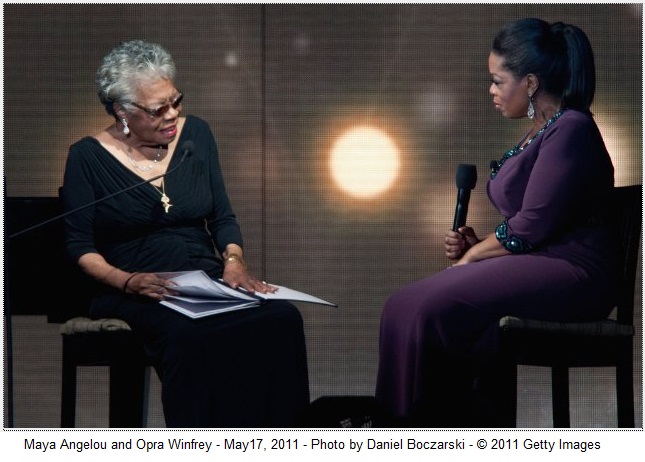
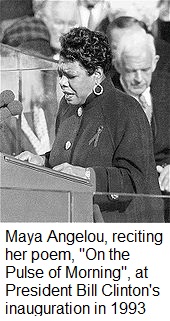
Humanities Advocate – Maya Angelou – R.I.P.

Go Lean Commentary

MA1“That a powerful play goes on, and you may contribute a verse” – poet Walt Whitman: “O Me! O Life!”

The world mourns the passing of Maya Angelou (1928 – 2014; age 86). She contributed more than a verse to the powerful play of modern life. She is known for her contribution to all of the humanities.

Humanities? That’s a different word; extraordinary in its use as a wide-angle view in the study of humankind. Extraordinary, “wide-angle view”, all fitting descriptors for the contributions of Maya Angelou – see the bibliography/filmography below. Here’s the text book definition of the word “humanities” (www.Dictionary.com):

noun, plural hu·man·i·ties.

1. all human beings collectively; the human race; humankind.

2. the quality or condition of being human; human nature.

3. the quality of being humane; kindness; benevolence.

4. the humanities.

a. the study of classical languages and classical literature.
b. the Latin and Greek classics as a field of study.
c. literature, [poetry], philosophy, art, etc., as distinguished from the natural sciences.
d. the study of literature, poetry, philosophy, art, etc.

Maya Angelou impacted the world of the humanities with her contributions. She was awarded over 30 honorary Doctor of Humanities degrees from diverse colleges and universities around the world. In addition to Dr. Angelou’s contribution to the humanities, she was also a strong proponent for empowerment. She spoke and wrote profound words/works on the need for people to empower themselves, to seek more out of life, to live more vibrant, fulfilled lives, to be critical thinkers and proactive doers in their journey for a more impactful life.

The publishers of the book Go Lean…Caribbean recognize the life contributions of Maya Angelou as an advocate, as many of her causes align with our quest for empowerment and elevation of Caribbean life and culture. The book serves as a roadmap for the introduction and implementation of the Caribbean Union Trade Federation (CU).

Maya 2The Go Lean/CU movement shares a linkage with this focus of Dr. Angelou. (She was due to appear at the Orpheum Theater in Omaha, Nebraska on June 9 – see photo – this writer was ticketed for attendance). The CU seeks to also empower the people of the Caribbean to lead more impactful lives in which they are better able to meet their needs and plan for a productive future. The Go Lean roadmap seeks to put Caribbean people in a place of better Command-and-Control of their circumstances, to develop the community ethos of assisting each other to advance in our own lives, in our individual communities and in the Caribbean as a whole. Like Dr. Angelou, we say with a collective voice “and still I rise” – (Published Random House 1978):

You may write me down in history
With your bitter, twisted lies,
You may tread me in the very dirt
But still, like dust, I’ll rise.

Does my sassiness upset you?
Why are you beset with gloom?
‘Cause I walk like I’ve got oil wells
Pumping in my living room.

Just like moons and like suns,
With the certainty of tides,
Just like hopes springing high,
Still I’ll rise.

Did you want to see me broken?
Bowed head and lowered eyes?
Shoulders falling down like teardrops.
Weakened by my soulful cries.

Does my haughtiness offend you?
Don’t you take it awful hard
‘Cause I laugh like I’ve got gold mines
Diggin’ in my own back yard.

You may shoot me with your words,
You may cut me with your eyes,
You may kill me with your hatefulness,
But still, like air, I’ll rise.

Does my sexiness upset you?
Does it come as a surprise
That I dance like I’ve got diamonds
At the meeting of my thighs?

Out of the huts of history’s shame
I rise
Up from a past that’s rooted in pain
I rise

I’m a black ocean, leaping and wide,
Welling and swelling I bear in the tide.
Leaving behind nights of terror and fear
I rise

Into a daybreak that’s wondrously clear
I rise
Bringing the gifts that my ancestors gave,
I am the dream and the hope of the slave.
I rise
I rise
I rise.

While the CU’s prime directive is the economics of the Caribbean region, there are peripheral areas of concern. While economics, security and governance are all important for the sustenance of Caribbean life, pursuits like poetry, art, and beauty are the reasons we want to live. Maya Angelou stood as a vanguard for many of these causes:

Minority rights, civil rights, women rights, quest for justice, art, music, film, and image.

The Go Lean book posits that one person can make a difference in the Caribbean, and its impact on the world; that there are many opportunities where one champion, one advocate, can elevate society. In fact the book is a collection of 144 different advocacies, so there is inspiration for the Maya Angelou’s of the region to make their mark in many different fields of endeavor.

The roadmap specifically encourages the region, to lean-in and foster the next generation of Maya Angelou’s with these specific community ethos, strategies, tactics, implementations and advocacies:

Community Ethos – Minority Equalization Page 24
Community Ethos – Ways to Foster Genius Page 27
Community Ethos – Ways to Promote Intellectual Property Page 31
Community Ethos – Ways to Promote Happiness Page 36
Community Ethos – Ways to Impact the Greater Good Page 37
Anatomy of Advocacies Page 122
Planning – Ways to Better Manage Image Page 129
Advocacy – Ways to Improve Education Page 159
Advocacy – Ways to Impact Justice Page 177
Advocacy – Ways to Impact Hollywood Page 203
Advocacy – Ways to Help Women Page 226
Advocacy – Ways to Improve the Arts Page 230
Advocacy – Ways to Promote Music Page 231

The Go Lean roadmap pronounces that with the participation of many advocates on many different paths for progress, the Caribbean can truly become a better place to live, work and play. We owe a debt to Dr. Angelou for leading us along this path.

The Bible book of Psalms Chapter 90 quotes:

10  In themselves the days of our years are 70 years.
And if because of special mightiness they are 80 years.
Yet their insistence is on trouble and hurtful things;
For it must quickly pass by, and away we fly.

12  Show us just how to count our days in such a way
That we may bring a heart of wisdom in.

Rest in Peace Maya Angelou. Thank you for showing us how to make our days count.

Download the free e-book of Go Lean … Caribbean – now!

—————————————————————————-

Appendix – Bibliography
Contributions Retrieved May 28, 2014 from: http://en.wikipedia.org/wiki/List_of_Maya_Angelou_works

Autobiographies

  • I Know Why the Caged Bird Sings (1969). New York: Random House. ISBN 978-0-375-50789-2
  • Gather Together in My Name (1974). New York: Random House. ISBN 978-0-394-48692-5
  • Singin’ and Swingin’ and Gettin’ Merry Like Christmas (1976). New York: Random House. ISBN 978-0-679-45777-0
  • The Heart of a Woman (1981). New York: Random House. ISBN 978-0-8129-8032-5
  • All God’s Children Need Traveling Shoes (1986). New York: Random House. ISBN 978-0-679-73404-8
  • A Song Flung Up to Heaven (2002). New York: Random House. ISBN 978-0-375-50747-2
  • I Know Why the Caged Bird Sings: The Collected Autobiographies of Maya Angelou (2004). New York: Modern Library. ISBN 978-0-679-64325-8
  • Mom & Me & Mom (2013). New York: Random House. ISBN 978-1-4000-6611-7

Maya 3Poetry

  • Just Give Me a Cool Drink of Water ‘fore I Diiie (1971). New York: Random House. ISBN 978-0-394-47142-6[14]
  • Oh Pray My Wings Are Gonna Fit Me Well (1975). New York: Random House. ISBN 0-679-45707-0
  • And Still I Rise (1978). New York: Random House. ISBN 978-0-394-50252-6[9]
  • Shaker, Why Don’t You Sing? (1983). New York: Random House. ISBN 0-394-52144-7[15][16]
  • Poems (1986). New York: Random House. ISBN 0-553-25576-2
  • Now Sheba Sings the Song (1987). New York: Plume Books. ISBN 0-452-27143-6
  • I Shall Not Be Moved (1990). New York: Bantam Books. ISBN 0-553-35458-2
  • “On the Pulse of Morning” (1993). New York: Random House. ISBN 0-679-74838-5[17]
  • The Complete Collected Poems of Maya Angelou (1994). New York: Random House. ISBN 0-679-42895-X
  • Phenomenal Woman: Four Poems Celebrating Women (1995). New York: Random House. ISBN 0-679-43924-2
  • A Brave and Startling Truth (1995). New York: Random House. ISBN 0-679-44904-3[18]
  • “From a Black Woman to a Black Man”, 1995
  • “Amazing Peace” (2005). New York: Random House. ISBN 1-4000-6558-5[16]
  • “Mother: A Cradle to Hold Me” (2006). New York: Random House. ISBN 1-4000-6601-8
  • “Celebrations, Rituals of Peace and Prayer” (2006). New York: Random House. ISBN 978-0-307-77792-8
  • Poetry for Young People (2007). Berkshire, U.K.: Sterling Books. ISBN 1-4027-2023-8
  • “We Had Him”, 2009
  • “His Day is Done”, 2012
  • Wouldn’t Take Nothing for My Journey Now (1993). New York: Random House. ISBN 0-553-56907-4
  • Even the Stars Look Lonesome (1997). New York: Random House. ISBN 0-375-50031-6
  • Letter to My Daughter (2008). New York: Random House. ISBN 1-4000-6612-3
  • Hallelujah! The Welcome Table: A Lifetime of Memories with Recipes (2004). New York: Random House. ISBN 1-4000-6289-6
  • Great Food, All Day Long: Cook Splendidly, Eat Smart (2010). New York: Random House. ISBN 1-4000-6844-4
  • Life Doesn’t Frighten Me (1993). New York: Stewart, Tabori, and Chang. ISBN 1-55670-288-4
  • My Painted House, My Friendly Chicken and Me (1994). New York: Knopf Books. ISBN 0-517-59667-9
  • Kofi and His Magic (1996). New York: Knopf Books. ISBN 0-517-59667-9
  • Maya’s World series (2004). New York: Random House:
    • Itak of Lapland, ISBN 0-375-92833-2
    • Angelina of Italy, ISBN 0-375-82832-X
    • Renée Marie of France ISBN 0-375-82834-6
    • Mikale of Hawaii ISBN 0-375-92835-9
  • Cabaret for Freedom (musical revue), with Godfrey Cambridge, 1960
  • The Least of These, 1966
  • The Best of These (drama), 1966
  • Gettin’ up Stayed on My Mind, 1967
  • Sophocles, Ajax (adaptation), 1974
  • And Still I Rise (writer/director), 1976

Personal essays

  • Wouldn’t Take Nothing for My Journey Now (1993). New York: Random House. ISBN 0-553-56907-4
  • Even the Stars Look Lonesome (1997). New York: Random House. ISBN 0-375-50031-6
  • Letter to My Daughter (2008). New York: Random House. ISBN 1-4000-6612-3

Cookbooks

  • Hallelujah! The Welcome Table: A Lifetime of Memories with Recipes (2004). New York: Random House. ISBN 1-4000-6289-6
  • Great Food, All Day Long: Cook Splendidly, Eat Smart (2010). New York: Random House. ISBN 1-4000-6844-4

Children’s books

  • Life Doesn’t Frighten Me (1993). New York: Stewart, Tabori, and Chang. ISBN 1-55670-288-4
  • My Painted House, My Friendly Chicken and Me (1994). New York: Knopf Books. ISBN 0-517-59667-9
  • Kofi and His Magic (1996). New York: Knopf Books. ISBN 0-517-59667-9
  • Maya’s World series (2004). New York: Random House:
    • Itak of Lapland, ISBN 0-375-92833-2
    • Angelina of Italy, ISBN 0-375-82832-X
    • Renée Marie of France ISBN 0-375-82834-6
    • Mikale of Hawaii ISBN 0-375-92835-9

Plays

  • Cabaret for Freedom (musical revue), with Godfrey Cambridge, 1960
  • The Least of These, 1966
  • The Best of These (drama), 1966
  • Gettin’ up Stayed on My Mind, 1967
  • Sophocles, Ajax (adaptation), 1974
  • And Still I Rise (writer/director), 1976

Filmography
Contributions – Retrieved May 28, 2014 from: http://www.imdb.com/name/nm0029723/?ref_=fn_al_nm_1

Actress (15 credits)

Year Movie/Show Character/Role
2006 Madea’s Family Reunion May
2001 Phenomenal Woman (Short) Phenomenal Woman
2000 The Runaway (TV Movie) Conjure Woman
2000 Happily Ever After: Fairy Tales for Every Child (TV Series) Fairy Godmother
2000 Rip Van Winkle (TV Series) Fairy Godmother (voice)
1997 Talking with David Frost (TV Series)
Colin Powell and Maya Angelou Narrator
1996 Elmo Saves Christmas (Video)
1995 Touched by an Angel (TV Series) Clarice Mitchell
Reunion (1995) Clarice Mitchell
1995 How to Make an American Quilt Anna
1995 The Journey of August King Narrator (voice)
1993 There Are No Children Here (TV Movie) Lelia Mae
1993 Poetic Justice Aunt June
1977 The Richard Pryor Special? (TV Movie) Willie’s Wife
1977 Roots (TV Mini-Series) Nyo Boto / Yaisa
Part II Nyo Boto
Part I Yaisa
1959  Porgy and Bess Dancer (uncredited)

Writer (7 credits)

Year Movie/Show
2008 The Black Candle (Documentary) (poetry written by)
1996 How Do You Spell God? (TV Movie)
1996 America‘s Dream (TV Movie) (story “The Reunion”)
1982 Sister, Sister (TV Movie)
1979  I Know Why the Caged Bird Sings (TV Movie) (book)
1977  The Richard Pryor Special? (TV Movie) (soliloquy)
1972 Georgia, Georgia

Soundtrack (4 credits)

Year Movie/Show
2010 Michael Feinstein’s American Songbook (TV Mini-Series documentary) (lyrics – 1 episode)
Best Band in the Land  (lyrics: “We Dreamed These Days”)
2001 The Mystic Masseur (performer: “Scandal in the Family”)
1968 For Love of Ivy (lyrics: “You Put It on Me”)
1957 Calypso Heat Wave (writer: “All That Happens in the Market Place”)

Director (2 credits)

Year Movie/Show
1998 Down in the Delta
1976 Visions (TV Series) (1 episode)
The Tapestry/Circles ()

Music department (1 credit)

Year Movie/Show
1972 Georgia, Georgia (composer: score)

Producer (1 credit)

Year Movie/Show
1982 Sister, Sister (TV Movie) (producer)

Miscellaneous Crew (1 credit)

Year Movie/Show
1993 Poetic Justice (poetry)
Share this post:
, , , , ,
[Top]

Muslim officials condemn abductions of Nigerian girls

Go Lean Commentary

Nigerian Girls

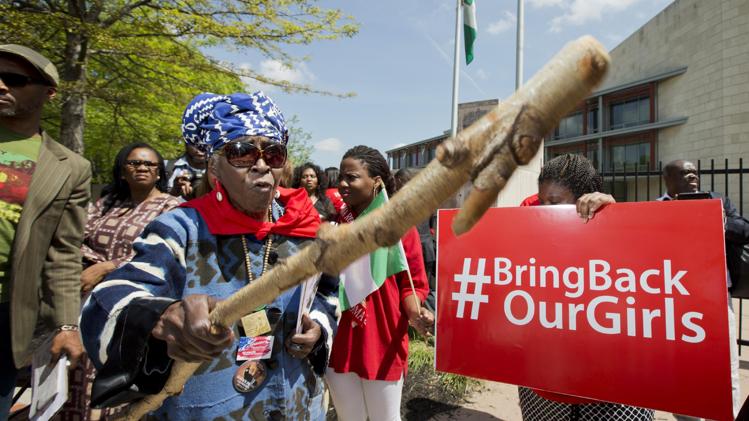
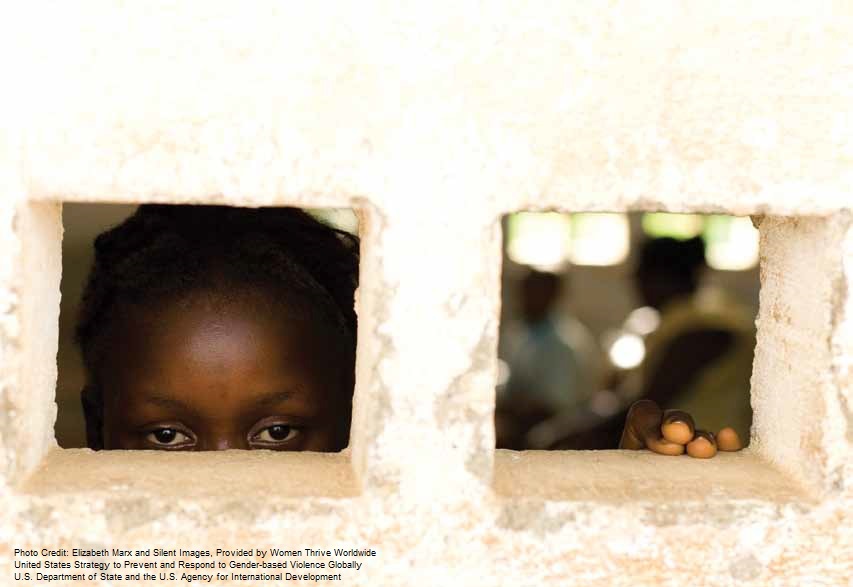
Abducting little girls from a boarding school in the middle of the night is just criminal! There is nothing religious or political about this action.

This is not just terrorism – in the classic sense – this is simply felonious behavior. This is evidenced further by the fact that the perpetrators have promised to sell the girls into slavery. The word “sell” has the connotation of obtaining money for this action. This is criminal and should therefore be condemned by every civilized society in the world.

Failure to marshal against these crimes is just failure – indicative of a Failed-State. Nigeria has a bad image of deceitful practices. So it is only appropriate to ask: is this truly a case of abduction, or could it all be one big Nigerian scam? Despite the obvious “cry wolf” reference, we must side with the innocent victims here. But, as is cited to in the foregoing news article, there are many people who feel that Nigeria hasn’t done enough for these girls. Only now that other countries have stepped up to assist/oversee has the government become more accountable.

Another group of victims in this drama are the peace-loving Islamic adherents. The actions of Boko Haram are casting dispersions on the whole religion. This terrorist group is not practicing the true teachings of Islam; in fact these actions are condemned as criminal even in the Muslim world.

AP*; Photo by: Manuel Balce Ceneta

The abduction three weeks ago of hundreds of schoolgirls in Nigeria by the Muslim extremist group Boko Haram is now generating worldwide attention and condemnation. Muslim leaders in various countries have criticized Boko Haram’s leader for using Islamic teachings as his justification for threatening to sell the girls into slavery. Others have focused on what they view as a slow response by Nigeria’s government to the crisis. The British and French governments announced Wednesday that they would send teams of experts to complement the U.S. team heading to Nigeria to help with the search for the girls, and Nigeria’s president said China has also offered assistance.

Some of the reactions to the crisis:

— EGYPT: Muslim religious officials strongly condemned Boko Haram. Religious Endowments Minister Mohammed Mohktar Gomaa said “the actions by Boko Haram are pure terrorism, with no relation to Islam, especially the kidnapping of the girls. These are criminal, terrorist acts.” According to the state news agency MENA, he said “these disasters come from cloaking political issues in the robes of religion and from peddling religion for secular interests, something we warn incessantly against.”

The sheik of the Cairo-based Al-Azhar, one of Sunni Islam’s most prestigious institutions, demanded the group release the girls, saying it “bears responsibility for any harm suffered by these girls.” The group’s actions “completely contradict Islam and its principles of tolerance,” Sheik Ahmed el-Tayeb said.

— PAKISTAN: Dawn, an English language newspaper in Pakistan, published an opinion piece that takes Nigeria to task for not moving against Boko Haram. “The popular upsurge in Nigeria in the wake of the latest unspeakable atrocity provides some scope for hoping that the state will finally act decisively to obliterate the growing menace,” wrote columnist Mahir Ali. “Naturally, the lives and welfare of the abducted girls must be an absolute priority. Looking back a few years hence, it would also provide a degree of satisfaction to be able to pinpoint the moment when Boko Haram sealed its own fate by going much too far.”

— INDONESIA: In the world’s most populous Muslim-majority country, the Jakarta Post published an editorial Wednesday condemning the Boko Haram leader for “wrongly” citing Islamic teaching as his excuse for selling the abducted girls into slavery. Recalling the Taliban’s shooting of 15-year-old Pakistani girl Malala Yousafzai in 2012 because of her outspokenness in defense of girls’ right to an education, the editorial said: “Malala’s message needs to be conveyed to all people who use their power to block children’s access to education. It is saddening that religion is misused to terrorize people and to kill the future leaders of the world.”

The newspaper also criticized Nigerian President Goodluck Jonathan, noting that “only after international condemnation and street demonstrations poured in did President Jonathan tell his nation that he would take all necessary actions to return the young women to their parents and schools, while also acknowledging that the whereabouts of the abductees remained unknown.”

— SWEDEN: In an editorial posted on the left-wing news website politism.se, blogger Nikita Feiz criticized the international community for its slow response and asked why the situation hadn’t triggered as loud a reaction as when Malala was shot in Pakistan. “Looking at the situation in Nigeria, Malala appears like a false promise from the West that it would stand up for girls’ rights to attend school without fear of being subjected to sexual exploitation and abuse,” she said. “It is difficult not to draw the conclusion that the West’s assurance to act for girls’ rights suddenly isn’t as natural when it comes to girls’ rights in a country in Africa.”

A Swedish women’s network called StreetGaris is planning a demonstration outside the Foreign Ministry on Friday to demand more action from the international community. Participants are encouraged to wear a head wrap or red clothes in solidarity with the girls and their relatives.

— UNITED STATES: The U.S. government is sending to Nigeria a team of technical experts, including American military and law enforcement personnel skilled in intelligence, investigations, hostage negotiating, information sharing and victim assistance, as well as officials with expertise in other areas — but not U.S. armed forces.

“In the short term our goal is obviously is to help the international community, and the Nigerian government, as a team to do everything we can to recover these young ladies,” President Barack Obama told NBC on Tuesday. “But we’re also going to have to deal with the broader problem of organizations like this that … can cause such havoc in people’s day-to-day lives.”

In an editorial, The New York Times faulted the Nigerian government for not aggressively responding to the abductions. “Mr. Jonathan, who leads a corrupt government that has little credibility, initially played down the group’s threat and claimed security forces were in control,” the newspaper said. “It wasn’t until Sunday, more than two weeks after the kidnappings, that he called a meeting of government officials, including the leader of the girls’ school, to discuss the incident.”

— BRITAIN: Prime Minister David Cameron’s office said Britain will send a small team of experts to complement the U.S. team being sent by Obama. The announcement was made Wednesday after Cameron spoke to the Nigerian president. The team will be sent as soon as possible and will include specialists from several departments. Experts have said special forces may be sent to the region. The issue has heated up in recent days with protests over the weekend outside the Nigerian Embassy in London and an increasing number of newspaper editorials calling for action to rescue the girls.

— FRANCE: Foreign Minister Laurent Fabius told lawmakers on Wednesday that France is ready to send a “specialized team … to help with the search and rescue” of the kidnapped girls. “In the face of such an appalling act, France, like other democratic nations, must react,” Fabius said. “This crime will not go unpunished.” Fabius gave no details of the team, except to say it’s among those already in the region. France has soldiers in Niger, Cameroon and Mali, where it is fighting Islamic insurgents, as well as in Central African Republic.

— CHINA: Chinese Premier Li Keqiang, arriving Wednesday in Nigeria for a state visit, did not specifically mention the abductions in a transcript of a joint press conference with Nigeria’s president, instead making only a general reference to the “need to work together to oppose and fight terrorism.” In his remarks, Jonathan said China “promised to assist Nigeria in our fight against terror especially in our commitment and effort to rescue the girls that were taken away from a secondary school.” He did not offer specifics.

— BRAZIL: The foreign ministry issued a statement Tuesday condemning the abductions. “In conveying the feelings of solidarity to the families of the victims and to the people and the Government of Nigeria, the Brazilian Government reiterates its strong condemnation of all acts of terrorism,” the statement said.

—-

* Associated Press correspondents Lee Keath in Cairo, Michelle Faul in Lagos, Nigeria, Gregory Katz in London, Malin Rising in Stockholm, Masha Macpherson in Paris and Stan Lehman in Sao Paulo, Brazil contributed to this report.

Associated Press – Online News – May 7, 2014 http://news.yahoo.com/muslim-officials-condemn-abductions-girls-160020053.html

This book Go Lean … Caribbean is a roadmap for the introduction and implementation of the Caribbean Union Trade Federation (CU), so as to elevate the delivery of economic and security solutions in the Caribbean. One specific mission is to manage against encroachments of the Failed-State index.

At the outset, the roadmap identified an urgent need to mitigate against organized crime & terrorism, and to ensure human rights protection. This is pronounced in this clause in the opening Declaration of Interdependence (Page 12)

xxi.   Whereas the legacy in recent times in individual states may be that of ineffectual governance with no redress to higher authority, the accedence of this Federation will ensure accountability and escalation of the human and civil rights of the people for good governance, justice assurances, due process and the rule of law. As such, any threats of a “failed state” status for any member state must enact emergency measures on behalf of the Federation to protect the human, civil and property rights of the citizens, residents, allies, trading partners, and visitors of the affected member state and the Federation as a whole.

The Go Lean roadmap projects that the CU will facilitate monitoring and accountability of regional law enforcement and homeland security institutions. This type of behavior will not be tolerated in the Caribbean. This CU effort will be coordinated in conjunction with and on behalf of the Caribbean member-states.

On that note, the Caribbean Union Trade Federation, if it was already in existence, would vociferously condemn the abduction of the Nigerian girls. Hence the CU would be added to the long list of condemnations in the foregoing article. But these would not be hollow words, but would be accompanied by the required actions to ensure that such a disposition could not thrive in the CU region. This commitment is detailed as these community ethos, strategies, tactics, implementations and advocates:

Community Ethos – Public Protection over Privacy Page 23
Community Ethos – Anti-Bullying and Mitigation Page 23
Community Ethos – Intelligence Gathering Page 23
Community Ethos – Minority Equalization Page 24
Community Ethos – Impact the Greater Good Page 37
Strategy – Placate & Pacify International Monitors Page 48
Separation of Powers – Homeland Security Page 75
Separation of Powers – Justice Department Page 77
Implementation –  Security Initiatives at Start-up Page 103
Planning – Ways to Improve Failed-State Indices Page 134
Advocacy – Manage the Social Contract Page 170
Advocacy – Ways to Impact Justice Page 177
Advocacy – Ways to Reduce Crime Page 178
Advocacy – Ways to Improve Homeland Security Page 180
Advocacy – Ways to Mitigate Terrorism Page 181
Advocacy –  Ways to Protect Human Rights Page 220
Advocacy –  Ways to Empower Women Page 226
Advocacy –  Ways to Impact Youth Page 227

In contrast with the events in Nigeria, local crimes against women, young or old will not be tolerated in the CU. Everyone, regardless of gender, will be guaranteed the right to life, liberty and the pursuit of happiness (and education for that matter). This will be standard, whether the world is watching or not.

However, we want the world to watch. We want to show how we feverishly protect our people, with assurance that the Caribbean is the world’s best address to live, work, learn and play.

Download the free e-Book of Go Lean … Caribbean – now!


Share this post:
, , ,
[Top]

Abused wives find help by going to ‘Dona Carmen’

Go Lean Commentary

AbuseThe issue in the below news article is related more to human rights, than to feminism. This story is being brought into focus in a consideration of the book Go Lean … Caribbean. The book serves as a roadmap for the introduction and implementation of the Caribbean Union Trade Federation (CU), for the economic optimization in the region.

How does this story relate?

The roadmap posits that the economy of the Caribbean is inextricably linked to the security of the Caribbean. While the security scope of the CU is mostly focused on the “bad actors” that might emerge to exploit the new Caribbean economic engines and successes, the book is not quiet on what may be considered traditional crime-and-punishment issues. While the subject of domestic violence falls on the member-state side of the separation-of-powers divide, the CU will entail a jurisdiction of monitoring and metering (ratings, rankings, service levels, etc) local governments and their delivery of the Social Contract. For this reason, there is a 3rd focus of the CU prime directive, to optimize the region’s governing engines.

An underlying mission of the CU is to dissuade further human flight and incentivize repatriation of the far-flung Diaspora. Many who had fled previously obtained refugee status due to the abuse and persecution from domestic perpetrators. These issues must be addressed and targeted for solutions and reconciliations.

In fact, the foregoing article refers to the new enforcements introduced in Brazil in a 2006 law. That’s was just 8 years ago. (A similar Domestic Violence law was enacted in the Bahamas in 2008). A survey of other Latin American countries unveils even more new laws recently enacted in the Caribbean, Central and South America. Change has finally come.

Change has come to the Caribbean, but as the roadmap depicts, the problem of domestic violence (a human rights abuse) had persisted long before, and is thusly rooted in a community ethos. An ethos that must be uprooted and replaced with a new, progressive spirit, even within the public service entities, whose job it is to “serve & protect”. This is the new lean Caribbean!

This is reflected in the foregoing article with the principal character Dona Carmen, which is not even her real name, but more of an elevated title for her respected role in the community.

Title: Abused wives find help by going to ‘Dona Carmen’
By: Dom Phillips

CAMPINAS, Brazil — With her husband out of earshot, Queze Vicente told the story of the night he came at her with two knives in his hand.

“He was drinking,” she said outside their one-room shack in a roadside slum near an airport here. “We fought. And I had to go to Dona Carmen.”

Everyone in their community knows who Dona Carmen is and her method for getting abusive husbands in line. They call it “the discipline,” and it includes a sex strike.

For 15 days, husbands who hit their wives are also banned from drinking in the local bar and playing soccer on the local field. And any man who helps an offender violate the rules is also subject to the sex strike.

Abused by her husband and saddened by the abuse all around her, Dona Carmen talked 12 local women into adopting the punishment routine. Two years later, the women and most of the men say it works.

“Everyone thinks it is good,” said Vicente’s husband, Renato. “There are no more fights.”

The abuse in this community, a corner of the slum called Menino Chorão, or Crybaby Boy, was not unlike what many Brazilian women experience. In a survey conducted by the Patrícia Galvão Institute, which works on women’s rights and communication issues, 54 percent of Brazilians said they knew a woman who had been attacked by a partner and 70 percent said they believed Brazilian women suffered more violence at home than in public spaces.

But change is slowly coming to this most macho of societies as activists such as Dona Carmen try to help women find new ways to combat domestic abuse.

“This is a theme that permeates the whole of society,” said Julio Neto, a professor at Campinas State University whose department recently sponsored a forum at which Dona Carmen spoke. “Every Brazilian knows cases of violence against women.”

Neto said the women in the group were forced to act because the state was not protecting them. “If they call the police, the police don’t go.” He said he did not condone cases in which some women had beaten up male offenders but that he supported “the discipline.”

“It is very original. I think in this sense, it is marvelous,” he said.

Dona Carmen, whose real name is Maria de Sousa, commands respect within her group: the fact that she is addressed as “Dona” — roughly equivalent to “madame” — is evidence of that.

Like most of her neighbors, she is from Brazil’s poorer, more traditional northeast. For 13 years, she was married to a man who beat her persistently. One attack when she was five months pregnant caused her to miscarry twins. “My whole body had purple bruises from the beating he gave me,” she said.

She arrived in the southeastern city of Campinas from her native Fortaleza eight years ago when a woman she had met tricked her with a promise of work and a place to live. As a result, she said, she spent 40 days in a brothel but escaped and did not have to work as a prostitute.

“I was desperate to get a job,” said de Sousa, who has four children and now works in a kitchen at an advertising agency.

‘Still a lot to do’

Before Brazil introduced a domestic violence law in 2006, some offenders were able to get off with fines or even by donating food baskets.

The law is named for Maria da Penha, a biochemist whose husband shot her while she was asleep in 1983, leaving her paraplegic, and then tried to electrocute her. After almost two decades of legal maneuvering, he was finally jailed in 2002 and served 16 months in closed prison and three more years in semi-open prison.

Da Penha fought hard for his imprisonment and campaigned for the law. “I was revolted with the sexism of the Brazilian judiciary,” she said, talking by phone from Fortaleza, where she runs an educational institute.

The law set up special courts and police departments to deal with crimes against women, and stricter punishments. A special hotline was also set up to deal with cases of domestic abuse.

Da Penha, 67, said there has been major progress, but that these resources are still lacking in smaller towns and cities.

“Women who are victims of violence are slowly losing the shame they had to talk about this,” she said. “Sexual equality is being conquered little by little, but there is still a lot to do.”

Despite the tougher punishments for offenders, rates of violence against women remain high. In the first six months of 2013 alone, the hotline received 306,201 calls, of which 12.3 percent were reports of violence

Between 2009 and 2011, 16,900 women were murdered in Brazil because of “gender conflict” — a rate of 5.8 per 100,000 women, according to government statistics. In the United States in 2011, that rate was 1.17 per 100,000, according to the Violence Policy Center, based in Washington.

Brazilian women suffer inequality in other areas as well. In the World Economic Forum’s 2013 Global Gender Gap report, Brazil placed 62nd in a list of 136 countries. In terms of wage equality, it came in 117th.

Lieli Loures, 35, an activist in São Paulo, said the Maria da Penha law was a watershed moment for Brazil, and that a grass-roots feminist movement is growing. “I perceive a change,” she said. “Feminism is only beginning to be known.”

Ongoing debate
In Crybaby Boy, the debate continued in the front yard of the small brick house where Maria Santos, 34 — one of women in Dona Carmen’s group — lives with her husband, Adelmo, 31.

“We joke that the women are in charge here,” she said.

“We have to respect the rights of women,” he said. “But in the same way, we have to respect the rights of men.”

Then he lowered his voice to a whisper: “The women here want to be the man. They can’t.”

But Geraldo da Cruz, 62, said most men back the scheme. “Everything organized is better, right? Important.”

Source: Washington Post – Online News Source – April 25, 2014 –http://www.washingtonpost.com/world/the_americas/in-the-corner-of-a-brazilian-slum-abused-wives-find-help-by-going-to-dona-carmen/2014/04/25/afbb7d1a-c68d-11e3-8b9a-8e0977a24aeb_story.html

The Go Lean roadmap posits that every woman has a right to a violence-free existence, in the family and in society; it is reprehensible that in so many Caribbean/Latin countries women are still viewed as lesser beings that can be abused at the whim of men, as was evident in the foregoing news article. This type of thinking is still prevalent; not just in Brazil; (notice this related Bahamas story)

What should be done to mitigate these bad practices? How does the Go Lean roadmap address this issue?

There are strategic, tactical and operational advocacies presented in the Go Lean roadmap so as to ensure victims are protected and perpetrators are held accountable for their actions:

• The CU will therefore work with governmental and non-governmental organizations (NGO’s) to fulfill their charters to aid victims and legislate for changes.

• The CU will also fund the full vertical eco-system so that law enforcement (and/or social work) agencies can institute Special Victims Units and counseling services. The roadmap posits that even one person, an advocate, can make a difference (Page 122) in forging change in society.

• Facilitate community messaging to instill/persuade an enlightened value system for men and women; helping men curb aggressive behavior (like anger management training) and empowering women to live successful lives and seek recourse against abusers if needed.

• Oversee the internal affairs/military justice of security agencies to ensure the integrity of the justice institutions. (Deficiency in this area is a Failed–State Indicator).

While the CU does not have sovereignty (a deputized agency only), it can still provide support services to ensure compliance. In addition to monitoring and metering, the CU can also provide ratings, funding, training, intelligence gathering, and cross border (fugitive) law enforcement.

The solutions to effect change in the region are detailed in this book Go Lean … Caribbean as community ethos, strategies, tactics, implementations and advocates; as follows:

Community Ethos – Privacy –vs- Public Protection Page 23
Community Ethos – Whistleblower Protection Page 23
Community Ethos – Witness Security Page 23
Community Ethos – Anti Bullying & Mitigations Page 23
Community Ethos – Light Up the Dark Places Page 23
Community Ethos – Minority Equalizations Page 24
Community Ethos – Reconciliations Page 34
Strategy – Rule of Law –vs- Vigilantism Page 49
Separation of Powers – CariPol Page 77
Implementation – Reason to Repatriate Page 118
Ways to Improve Failed-State Indices Page 134
Ways to Better Manage the Social Contract Page 170
Ways to Impact Justice Page 177
Ways to Remediate and Mitigate Crime Page 178
Ways to Improve Gun Control Page 179
Ways to Improve Intelligence Gathering Page 182
Ways to Improve Communications Page 186
Ways to Impact the Prison Industrial Complex Page 211
Ways to Impact Foundations Page 219
Ways to Protect Human Rights Page 220
Ways to Empower Women Page 226
Ways to Impact Youth Page 227
Ways to Impact Persons with Disabilities Page 228

The goal is to make the Caribbean a better place to live work and play; with justice for all, regardless of gender. This is not politics; not feminism versus traditional family values. This is just right!

Share this post:
, , ,
[Top]

US slams Caribbean human rights practices

Go Lean Commentary

shame-on-youThe below news article synchronizes with the book Go Lean … Caribbean in that it depicts the “hot topic” of human rights monitoring in the Caribbean region. The book declares that the people of the Caribbean have the right to good governance and the fulfillment of a presumed social contract to ensure due process, and the rule of law.

This book serves as a roadmap for the implementation of the Caribbean Union Trade Federation (CU), a technocratic federal government to administer and optimize the economic, security, and governing engines of the region’s 30 member-states. At the outset, the roadmap identified this urgent need for human rights protection, stating this clause in the Declaration of Interdependence (Page 12):

xxi. Whereas the legacy in recent times in individual states may be that of ineffectual governance with no redress to higher authority, the accedence of this Federation will ensure accountability and escalation of the human and civil rights of the people for good governance, justice assurances, due process and the rule of law. As such, any threats of a “failed state” status for any member state must enact emergency measures on behalf of the Federation to protect the human, civil and property rights of the citizens, residents, allies, trading partners, and visitors of the affected member state and the Federation as a whole.

The Go Lean roadmap projects that the CU will facilitate monitoring and accountability of the justice institutions to ensure compliance and mitigate abuses – all Police Internal Affairs and Military Justice institutions will have a federal up-line reporting – Pages 117 & 220. Consider this related article:

By: Nelson A. King
WASHINGTON DC, March 3, 2014 – While noting that governments that protect human rights and are accountable to their citizens are more secure, bolster international peace and security, and enjoy shared prosperity with stable democratic countries around the world, the United States continues to assail human rights practices in the Caribbean.

In its “Country Reports on Human Rights Practices for 2013,” released here earlier this week, Washington was particularly scathing in its criticism of Haiti, Jamaica, Guyana, Suriname, Trinidad and Tobago, and the Bahamas.

The US Department of State said the most serious impediments to human rights in Haiti involved weak democratic governance in the earthquake-ravaged, French-speaking Caribbean country; “insufficient respect for the rule of law, exacerbated by a deficient judicial system; and chronic corruption in all branches of government.”

It said basic human rights problems included “isolated allegations of arbitrary and unlawful killings by government officials; allegations of use of force against suspects and protesters; overcrowding and poor sanitation in prisons; prolonged pre-trial detention; an inefficient, unreliable, and inconsistent judiciary; rape, other violence, and societal discrimination against women; child abuse; allegations of social marginalization of vulnerable populations, including persons with disabilities and lesbian, gay, bisexual, and transgender (LGBT) persons; and trafficking in persons.”

The report also said that allegations “persisted of sexual exploitation and abuse by members of the UN Peacekeeping Force in Haiti (MINUSTAH).”

In addition, it said violence, crime and forced evictions within the remaining internally displaced persons (IDP) camps in Haiti, which contained about 172,000 IDPs as of November, “remained a problem.”

Although the Michel Martelly administration took some steps to prosecute or punish government and law enforcement officials accused of committing abuses, the State Department said “credible reports persisted of officials engaging in corrupt practices,” and that civil society groups allege that impunity was a problem.

The report said there were isolated allegations of police and other government officials’ involvement in arbitrary or unlawful killings, some of which resulted in arrests. However, none resulted in convictions, it said.

Washington said prisoners at times were subject to “degrading treatment, in large part due to overcrowded facilities”, adding that correction officers used physical punishment and psychological abuse to mistreat prisoners.

The State Department said prisons and detention centres throughout Haiti remained overcrowded, poorly maintained and unsanitary.

In Jamaica, the most serious human rights issues were alleged unlawful security force killings; cases involving the violation of rights that were not resolved in a timely way; and poor prison and jail conditions, including abuse of detainees and prisoners and severe overcrowding. The report said other human rights issues included an “overburdened, under resourced, and ineffective judicial system, and frequent lengthy delays in trials, violence against and sexual abuse of children, violence and discrimination against women, trafficking in persons, violence against persons based on their suspected sexual orientation or gender identity, and mob violence.

“The government took steps to investigate and punish members of the security forces who committed abuses, but in many instances a lack of witnesses and insufficient forensics equipment precluded arrests or prosecutions, thus providing the appearance of impunity for police who committed crimes.

“While the government or its agents did not commit politically motivated killings, there were numerous occurrences where citizens accused the government’s security forces or its agents of committing arbitrary or unlawful killings,” the State Department said.

The report said there were 211 killings involving Jamaican police through October, and that six police officers also were killed in the line of duty during that time.

It said human rights monitors indicated that some killings by police went unreported, with police allegedly meting out the justice they believed was unavailable through the judicial system.

The State Department said violent crime remained a “serious concern” in Jamaica, adding that, on many occasions, the Jamaica Constabulary Force (JCF) “employed lethal force in apprehending criminal suspects”.

Prisons and detention centres were also “severely overcrowded and presented serious threats to life and health,” the report said.

In Guyana, it said the most serious human rights abuses involved suspects and detainees’ complaints of mistreatment by security forces, unlawful killings by police, and poor prison and jail conditions.

Other human rights problems included lengthy pre-trial detention; allegations of government corruption, including among police officials; excessive government influence over the content of the national television network and continued restrictions on radio licensing; sexual and domestic violence against women; abuse of minors; and laws that discriminate against LGBT persons.

The report said there were no independent and transparent procedures for handling allegations of killings and other abuses by security force members.

“Prosecutions when pursued were extremely lengthy, and convictions were rare, leading to a widespread perception that security force members and government officials enjoyed impunity,” it said.

The State Department said there were alleged mistreatment of inmates by prison officials, as well as allegations of police abuse of suspects and detainees.

It said prison and jail conditions were “poor and deteriorating, particularly in police holding cells,” and that overcrowding was a “severe problem”.

The report said lengthy pre-trial detention, “due primarily to judicial inefficiency, staff shortages, and cumbersome legal procedures, remained a problem,” adding that “delays and inefficiencies undermined judicial due process.”

While the law provides for criminal penalties for corruption by officials, the State Department said the Guyana government did not implement the law effectively.

“There remained a widespread public perception of corruption involving officials at all levels, including the police and the judiciary,” it said, pointing to the World Bank’s Worldwide Governance Indicators that assessed that government corruption was “a serious problem”.

The most serious human rights problems in Suriname, according to the State Department, were “widespread government corruption, reports of press intimidation, and lengthy pre-trial detention”.

Other human rights problems, it said, included self-censorship by some media organizations and journalists; societal discrimination against women, Maroons, descendants of escaped slaves who fled to the interior of the country to avoid recapture, Amerindians, and other minorities; domestic violence against women; trafficking in persons; and child labour in the informal sector.

The report said while the government continued to take steps to prosecute abusers in the security forces, in certain cases, “there was a perception of impunity among the public”.

It said human rights groups, defence attorneys and the media continued to report various instances of mistreatment by police including unnecessary use of gun violence at time of arrest and beatings while in detention, as well as isolated incidents of abuse of prisoners by prison officials.The report said prisoners continued to express concern over conditions in Santo Boma Prison, where they complained of inadequate food provisions, mistreatment by prison guards, and limited ventilation?

The State Department identified police killings during apprehension or while in custody, and poor treatment of suspects, detainees and prisoners as the most serious human rights problems in Trinidad and Tobago.

It said other human rights problems involved inmate illnesses and injuries due to poor prison conditions, a slow judicial system, high-profile cases of alleged bribery, violence and discrimination against women, and inadequate services for vulnerable children.

The report noted that, while the Kamla Persad-Bissessar administration took some steps to punish security force members and other officials charged with killings or other abuse, “there continued to be a perception of impunity based on the open-ended nature of many investigations and the generally slow pace of criminal judicial proceedings”.

It said the People’s Partnership government or its agents did not commit any politically-motivated killings; but, according to official figures, police shot and killed 21 persons through November 1, compared with 21 in all of 2012.

The State Department said there were “credible reports” that police officers and prison guards mistreated individuals under arrest or in detention, stating that, from 2005 through 2012, “the government paid or was found liable to pay more than 10 million Trinidad and Tobago dollars (One TT dollar = US$0.16 cents) in compensation to prisoners on claims of excessive use of force by prison officers”.

The report said conditions in some of the prison system’s eight facilities continued to be harsh.

Police abuse, detainee abuse, compounded by problems in processing them, a poorly functioning judicial system leading to delays in trial, and witness intimidation, were the most serious human rights problems in the Bahamas, according to the report.

It said other human rights problems included poor detention conditions; corruption; violence and discrimination against women; sexual abuse of children; and discrimination based on ethnic descent, sexual orientation, or HIV status.

The State Department said prison and detention centre conditions “generally failed to meet international standards,” noting that conditions at the Fox Hill Prison, the country’s only prison, “remained harsh and unsanitary for many prisoners”.

The report said Bahamian authorities detained irregular immigrants, primarily Haitians, until arrangements could be made for them to leave the country or they obtained legal status.

It said the average length of detention varied significantly by nationality, willingness of governments to accept their nationals back in a timely manner, and availability of funds to pay for repatriation.

The report said authorities usually repatriated Haitians within one to two weeks, while they held Cubans for much longer periods.

It said the Bahamian government has “not effectively implemented laws and policies to provide certain habitual residents the opportunity to gain nationality in a timely manner and on a non-discriminatory basis,” adding that some commentators believed that these restrictions particularly targeted Haitians resident in the country.

In an immediate response, Nassau said that the report was now being reviewed by the Ministry of Foreign Affairs.

“From what has been seen so far, there is no need for any alarm or undue concern. In a free and open society like ours, anyone is free to comment and investigate the human rights record of our country and we do not fear such an examination,” the government said in a statement.

It said it would “take note of any errors or overreaches in the report and it will have to be determined to what extent we address those issues”.

In St Lucia, the State Department said the most serious human rights problems included long delays in investigating reports of unlawful police killings, abuse of suspects and prisoners by the police, and continued postponements of trials and sentencing.

Other human rights problems included violence against women, child abuse, and discrimination against persons based on their real or perceived sexual orientation or gender identity.

“Although the government took some steps to prosecute officials and employees who committed abuses, the procedure for investigating police officers was lengthy, cumbersome, and often inconclusive,” the State Department said.

“When the rare cases reached trial years later, juries often acquitted, leaving an appearance of de facto impunity,” it added.

The State Department said the Dean Barrow administration in Belize “failed at times to maintain effective control over the security forces,” stating that security forces allegedly committed human rights abuses.

It said the most important human rights abuses included the use of excessive force by security forces, lengthy pre-trial detention, and harassment and threats based on sexual orientation or gender identity.

Other human rights problems comprised domestic violence, discrimination against women, sexual abuse of children, trafficking in persons, and child labour.

In Antigua and Barbuda, the State Department said the most serious human rights problems involved poor prison conditions and violence against women.

Other human rights problems included trial delays resulting from court backlogs and reports of mental, physical, and sexual abuse of children. There were also laws that discriminate against LGBT persons.

The report said the Baldwin Spencer administration took steps to prosecute and punish those who committed human rights abuses, and that impunity was not a widespread problem.

Poor prison conditions, politicization of the police force, discrimination and violence against women, and child abuse topped the list for human rights abuses in St. Kitts and Nevis, according to the report.

Discrimination against the LGBT community was the other human rights problem, it claimed.

Occasional police use of excessive force and gender- based violence were the most serious human rights problems in St Vincent and the Grenadines, according to the State Department.

It said other human rights problems included official corruption, lack of government transparency, discrimination, and child abuse.

“The government took steps to punish officials who committed abuses, and there was not a widespread perception of impunity for security force members,” the report said.

The most serious human rights problems in Barbados were “unprofessional conduct” by police, violence against women, and discrimination against LGBT individuals, according to the report, adding that other human rights problems included child abuse.

The State Department said domestic violence against women and children were the most serious human rights problem in Dominica.

It said other human rights problems included adverse conditions experienced by the indigenous Kalinago (Carib) population and laws that discriminate against LGBT persons.

Human rights problems in Grenada included poor prison conditions, violence against women, instances of child abuse, and laws that discriminate against LGBT persons, the report said.
Source: Caribbean360.com – Caribbean Online Magazine (Retrieved 03/10/2014) – http://www.caribbean360.com/index.php/news/1107173.html#axzz2vZjwuO

The foregoing article highlights another example of the United States meddling/voicing opinions about issues in other countries, while they themselves have less than a stellar human rights record on this subject. Consider that the State Department’s report many times cited prison conditions in the Caribbean states. This is classic “pot calling kettle black” – the US has the highest incarceration rate in the world[a]. What’s worse is the fact that 60% of the US prison population is Black or Hispanic[b]; even though non-whites only committed 30.7% of the crimes[c]. Obviously justice in the US is dependent on the access to money. Where is the Human Rights outcries there?!

But it is what it is! Despite the hyprocrisy of the messenger, the message still has legitimacy; we do have issues in the Caribbean that need addressing. Basic Human Rights are being violated in the region, arbitrary and unlawful killings by government officials, poor sanitation in prisons and prolonged pre-trial detention. The Go Lean roadmap posits that any economic optimization effort must be accompanied by a strenuous security agenda, or “bad actors” will emerge. As such, the book presents the CU solution of marshaling economic crimes, and deploying a Prison Industrial complex to build over-sized facilities to house the region’s inmates and capitalize on opportunities to service shortcomings of foreign countries, like the US.

The CU solutions are designed to make the Caribbean a better place to live, work and play. Though the roadmap starts with an economic focus, it also facilitates the Human Rights protections for all members of our society: good or bad; as pilloried in the nursery rhyme: “rich man, poor man, beggar man, thief; doctor, lawyer, Indian Chief”.

Download the book Go Lean … Caribbean – now!

———-

Appendix – References:

a. International Centre for Prison Studies (18 Mar 2010). “Prison Brief – Highest to Lowest Rates”. World Prison Brief. London: King’s College London School of Law. Archived from (http://www.kcl.ac.uk/depsta/law/research/icps/worldbrief/wpb_stats.php?area=all&category=wb_poprate) on 25 March 2011. Retrieved 25 March 2011.

b. Office of Justice Programs – US Department of Justice – Prison Inmates at Midyear 2009 – Statistical Tables – Retrieved on March 11, 2013 from: http://www.bjs.gov/content/pub/pdf/pim09st.pdf

c. US Federal Bureau of Investigations – Crime in the United States, 2012 Arrests by Race”. Table 43– Retrieved on March 11, 2014 from: http://www.fbi.gov/about-us/cjis/ucr/crime-in-the-u.s/2012/crime-in-the-u.s.-2012/tables/43tabledatadecoverviewpdf

 

Share this post:
, , ,
[Top]

Egalitarianism versus Anarchism

imgres

Go Lean Commentary

This book Go Lean … Caribbean presents the two sides of the debate on “egalitarianism”: catering to the Least Common Denominator (LCD) or elevating the achievers. Let’s expand that discussion here. For the first argument, an essay by Gary Hull (Ayn Rand Institute) in Capitalism magazine which stipulates:

Egalitarianism claims only to want an “equality” in end results, hates the exceptional man who, through his own mental effort, achieves that which others cannot… In an attempt to “dumb down” all students to the lowest common denominator, today’s educators no longer promote excellence and students of superior ability… Imagine the following Academy Award ceremony. There are no awards for best picture or best actor. Instead, every picture gets a certificate and every actor receives a prize. That is not an awards ceremony, you say? So it isn’t. But it is an egalitarian’s dream — and an achiever’s torment. Talent and ability create inequality… To rectify this supposed injustice, we are told to sacrifice the able to the unable. Egalitarianism demands the punishment and envy of anyone who is better than someone else at anything. We must tear down the competent and the strong – raze them to the level of the incompetent and the weak… What would happen to a Thomas Edison today? If he survived school with his mind intact, he would be shackled by government regulators. His wealth would be confiscated by the IRS. He would be accused of ‘unfair competition’ for inventing so many more products than his competitors.[a]

On the other hand, Alexander Berkman argued the contrast:

…equality does not mean an equal amount but equal opportunity… Do not make the mistake of identifying equality in liberty with the forced equality of the convict camp. True anarchist equality implies freedom, not quantity. It does not mean that every one must eat, drink, or wear the same things, do the same work, or live in the same manner. Far from it: the very reverse in fact… Individual needs and tastes differ, as appetites differ. It is equal opportunity to satisfy them that constitutes true equality… Far from leveling, such equality opens the door for the greatest possible variety of activity and development. For human character is diverse.[b]

urlThe Go Lean book serves as a roadmap for the introduction and implementation of the Caribbean Union Trade Federation (CU). The book embraces both sides of this debate; on the one hand, as a federal entity, the CU will ensure equal access to regional opportunities to any petitioner; this is Egalitarian in nature. On the other hand, this Go Lean/CU roadmap posits the community ethos that one person can make a difference, and can impact the region for the Greater Good. The CU will foster the unique contributions of the achiever. This meritocracy leaning comes down on the Anarchist side of the debate.

In this vein, the following missions, aligned by Anarchist and Egalitarian, are elaborated in the Go Lean book:

Anarchist – leaning advocacies
Egalitarian – leaning advocacies
Fostering Genius
Bridge the Digital Divide
Help Entrepreneurship
Manage Reconciliations
Promote Intellectual Property
Improve Sharing
Fostering a Technocracy
Impact the Greater Good
Delivering More with Less
Impact Social Media
– Lean Project Management methodologies
Impact Entitlements
Improve Leadership
Battles against Poverty
Impact Beauty Pageants
Protect Human Rights
Impact Lotteries
Help the Middle Class
Impact Retirement
Improve Elder-Care
Impact the One Percent
Promoting Independence
Improve Sports
Improve Education
Improve the Arts
Empower Women
Promote Music
Impact Youth
Impact Persons with Disabilities

The Go Lean book is published by a movement seeking to make the Caribbean a better homeland to live, work and play. There can be no strict adherence to either egalitarianism or anarchism; the optimal society must reflect a perfect balance of both.

All in all, the Egalitarian versus Anarchist debate may now be considered anachronistic. This may have been a valid 1913 argument, but for 2013 (publication date of the Go Lean book)  it is “null-and-void”, irrelevant even. After 100 years of bad history – 2 World Wars and a Capitalism-versus-Communism schism – we must simply apply the lessons learned.  Today, we must consider all best practices, and embrace all tools, techniques and talents for success. The people of the Caribbean deserve the best of the best, despite whatever philosophical leanings.

Download the book Go Lean … Caribbean – now!

—————

Appendix – Citations

a. Egalitarianism: The New Torture Rack, by Gary Hull, Ayn Rand Institute, January 11, 2004

b. Alexander Berkman- Prison Memoirs of an Anarchist. Mother Earth Publishing 1912 – What is Anarchism? pp. 164-5


Share this post:
, ,
[Top]