Tag: Image

A Lesson in History – Royal Charters: Truth & Consequence

Go Lean Commentary

“This is my island in the sun, willed to me by my Father’s hand” – Iconic Calypso song: Island in the Sun

No one doubts the historicity of this expression. Even the Bible lays the premise for the granting of an inheritance by the Declaration of a Father; consider this verse: “A good person leaves an inheritance for their children’s children”. – Proverbs 13:22 – New International Version

So without a doubt a “Last Will & Testament” is a decree/charter that grants property to a beneficiary, just by words; no exchange of capital or valuables. This is perhaps the simplest form of a charter or decree.

CU Blog - A Lesson in History - Royal Charter - Truth and Consequence - Photo 2They get more complex, like with Papal Bulls, Royal Charters and/or Royal Decrees. See Photo here.

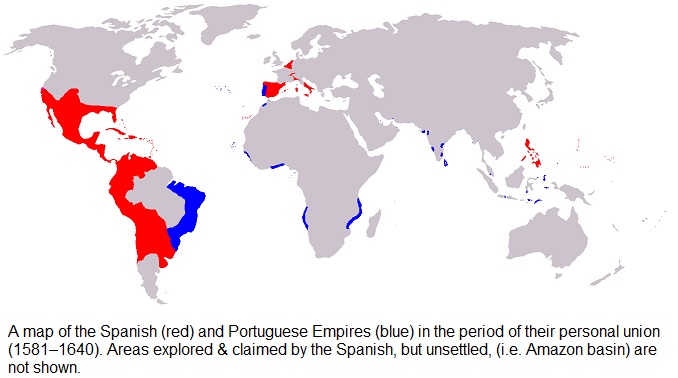
Consider first the Papal Bull – “letters patent” or charter issued by a Pope, the Head of the Roman Catholic Church; see Appendix A below. The most iconic of all the Papal Bulls was the Inter caetera (Latin for “Among other [works]”) a Papal Bull  by Pope Alexander VI on 4 May 1493, which set a demarcation between the New Lands to Portugal and Spain; this granted to Spain (the Crowns of Castile and Aragon) all lands to the “west and south” of a pole-to-pole line 100 leagues west and south of any of the islands of the Azores or the Cape Verde islands.[1] All new lands to the East of this pole remained assigned to Portugal. CU Blog - A Lesson in History - Royal Charter - Truth and Consequence - Photo 3
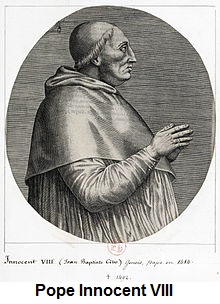
Just before this world-changing decree, there was an earlier Papal Bull that sealed the fate and would prejudice the African Diaspora for 500 years. The African Slave Trade and institution of “Slavery” was legally predicated on a Papal Bull from Pope Innocent VIII (Giovanni Battista Cybo) in 1491; just months before Christopher Columbus’s historic first voyage. Consider this encyclopedic reference:

In his book “Black Africans in Renaissance Europe”, principal author N. H Minnich* described how the position of Renaissance popes towards slavery, a common institution in contemporary cultures, varied. The book states that those who allowed the slave trade did so in the hope of gaining converts to Christianity.[11] But in the case of Pope Innocent VIII, he permitted trade with Barbary # merchants, in which foodstuffs would be given in exchange for slaves who could then be converted to Christianity.[11]
CU Blog - A Lesson in History - Royal Charter - Truth and Consequence - Photo 1

This was the de jure authorization of the Slave Trade.

One early adopter of this new commerce was King Ferdinand of Aragon (co-sponsor along with Castile’s Queen Isabella of the initial voyage of Christopher Columbus); he gave Pope Innocent VIII 100 Moorish slaves who shared them out with favored Cardinals.[12]

From this origin, the foundation of the New World was established … with the stroke of a pen.

Any monarchy, democracy, aristocracy, stratocracy, timocracy or theocracy that emerged subsequently in the New World stemmed from this genesis of Papal or Royal Charters. All of these forms of rulership are analyzed in the book and accompanying blogs for Go Lean…Caribbean. This book provides an assessment of the Caribbean today, drawing reference to its historic past. From the origins of slavery, the region traversed the historic curves of social revolution and evolution. In the 1500, the Protestant movement took hold. As other European powers deviated from Catholicism, Papal Bulls carried no significance to them and compliance was ignored. England and Holland established their own Protestant Churches with their own monarchs as head of Church and State; Papal decrees were replaced with Royal Decrees and Charters; see Appendix B below. The intent and end-result was still the same: territories and lands awarded (colonized) with the stroke of a pen by one European power after another. The Royal Decrees and Charters were then reinforced with a strong military presence and many battles. This point was detailed in the Go Lean book on Page 241:

The Bottom Line on European Colonialism
The European colonial period was the era from the 1500s to the mid-1900s when several European powers (Spain, Britain, the Netherlands, France and Portugal) established colonies in the Americas, in a Space Race to dominate the New World. The Northern Coast of South America became a typical New World battleground for conflict and pushing between these powers, and many military campaigns and diplomatic initiatives (treaties) ensued. Through the contact period following the 1498 discovery by Christopher Columbus, the term “Guiana” was used to refer to all this area, between the Orinoco, the Rio Negro, and the Amazon rivers; it was seen as a unified, isolated entity that it was often referred to as the “Island of Guiana”. The real interest in the exploration and colonization of the Guianas did not begin until the end of the sixteenth century when the other European powers developed interest in the Guianas. When did this European Colonial “push-shove-match” end? Not until almost 500 years later, after World War II, after the effects of that war left all these European powers drained – of finances and the will to continue.

Early in the Go Lean book, this need for careful review of the history of European domination on the Caribbean was acknowledged and then placed into perspective with this pronouncement (Declaration of Interdependence – Page 10):

As the history of our region and the oppression, suppression and repression of its indigenous people is duly documented, there is no one alive who can be held accountable for the prior actions, and so we must put aside the shackles of systems of repression to instead formulate efficient and effective systems to steer our own destiny.

As the colonial history of our region was initiated to create economic expansion opportunities for our previous imperial masters, the structures of government instituted in their wake have not fostered the best systems for prosperity of the indigenous people.

So the consideration of the Go Lean book, as related to this subject is one of governance, the need for technocratic stewardship of the regional Caribbean society. This point was also pronounced in the opening Declaration of Interdependence (Page 12) with these acknowledgements and statements:

xi.   Whereas all men are entitled to the benefits of good governance in a free society, “new guards” must be enacted to dissuade the emergence of incompetence, corruption, nepotism and cronyism at the peril of the people’s best interest. The Federation must guarantee the executions of a social contract between government and the governed.

xii. Whereas the legacy in recent times in individual states may be that of ineffectual governance with no redress to higher authority, the accedence of this Federation will ensure accountability and escalation of the human and civil rights of the people for good governance, justice assurances, due process and the rule of law. As such, any threats of a “failed state” status for any member state must enact emergency measures on behalf of the Federation to protect the human, civil and property rights of the citizens, residents, allies, trading partners, and visitors of the affected member state and the Federation as a whole.

xiii. Whereas the legacy of dissensions in many member-states (for example: Haiti and Cuba) will require a concerted effort to integrate the exile community’s repatriation, the Federation must arrange for Reconciliation Commissions to satiate a demand for justice.

Let’s add one more option to the forms of rulership that prevailed in the Caribbean: Oligarchy!

The use of the term oligarchy is a synonym for rule by the rich,[4] for which another term commonly used today is plutocracy. (This commentary had previously detailed the dynamics of plutocracies in the corporate arena).

The etymology of the word “oligarchy” (from Greek olígos, meaning “few”, and arkho, meaning “to rule or to command”)[1][2][3] is a form of power structure in a state where power effectively rests with a small number of people. These people could be distinguished by royalty, wealth, family ties, education, corporate, religious or military control.

In this discussion of oligarchy, focus is given to powerful families. There are encyclopedic references that relate that oligarchy structures are often controlled by a few prominent families, who typically pass their influence/wealth from one generation to the next, even though inheritance alone is not a necessary condition for oligarchies to prevail.

The islands of the Caribbean fit the story-line in the opening song lyrics: “Islands in the sun; willed to me by my father’s hand”.

This is the challenge that belies Caribbean society. Most of the property and indigenous wealth of the Caribbean region is concentrated amongst the rich, powerful and yet small elite; an oligarchy. Many times these families received their property, corporate rights and/or monopolies by Royal Charter from the European monarchs of ancient times. These charters thus lingered in legacy from one generation to another … until …

World War II.

According to the initial quotation above (Bottom Line on European Colonialism) from the Go Lean book, World War II was the “watershed event” that led to revolutionary change among the European powers. The “Decolonization” movement thusly proceeded to eradicate the “colonialism disease”. Most Caribbean member-states that now feature an independent status obtained this disposition during this time period since WW II; (i.e. Jamaica in 1962, Bahamas in 1973). The European direct rule was gone, but the oligarchs remained; many times negotiated in initial constitutions as a compromise for peace assurances.

The subject of oligarchs is very familiar on the African continent. This has been a real issue there. In many countries after colonialism, like Zimbabwe (1980), the cure for the oligarch disease was nationalization – forfeiting and seizing commercial farms and mines. This turned out disastrously for this country; the cure was worse than the disease. But, next door in South Africa, the strategy, tactics and implementation was different. This country did not ascend to majority rule until 1994; the first President there, Nelson Mandela saw the futility of this nationalization strategy amongst the precedent African nations that sought independence, so he pursued an alternate approach to assuage White Flight and keep the capital and skilled labor in the country. But the continuation of the oligarchs’ ill-gained, and public-perceived-stolen assets forged problems in the reality of economic/wealth inequality. Majority rule therefore brought no revolutionary change for the average man.

Considering these case studies, we see a lesson in this history, an obvious appreciation for best-practices … to apply in the Caribbean. We derive best-practices and prudence by applying these lessons from history, as reflected in the Go Lean book.

This is the quest of the Go Lean…Caribbean book; to serve as a roadmap for the introduction and implementation of the technocratic Caribbean Union Trade Federation (CU); to spearhead the elevation of Caribbean society. The book advocates learning lessons from many events and concepts in history, from as far back as the patriarchal Bible times, to as recent as the Great Recession of 2008. The roadmap simply seeks to reboot the region’s economic, security and governing engines, hypothesizing that the European colonial stewards did not have societal efficiency in mind when they structured administrations of the individual countries/island-states in this region; (they didn’t even apply the best practices that they employed in Europe).

In general, the CU will employ better strategies, tactics and implementations to impact its prime directives; identified with the following 3 statements:

  • Optimization of the economic engines in order to grow the regional economy to $800 Billion & create 2.2 million new jobs.
  • Establishment of a security apparatus to protect the resultant economic engines and mitigate internal and external threats.
  • Improve Caribbean governance to support these engines.

The Go Lean book stresses key community ethos, strategies, tactics, implementations and advocacies necessary to transform and turn-around the eco-systems of Caribbean society. These points are detailed in the book as follows:

Community Ethos – Economic Principles – Economic Systems Influence Individual Choices Page 21
Community Ethos – Economic Principles – Consequences of Choices Lie in the Future Page 21
Community Ethos – Governing Principles – Lean Operations Page 24
Community Ethos – Ways to Impact the Future Page 26
Community Ethos – Ways to Manage Reconciliations Page 34
Community Ethos – Ways to Impact the Greater Good Page 37
Strategy – Vision – Confederate all 30 member-states/ 4 languages into a Single Market Page 45
Strategy – Mission – Build and foster local economic engines Page 45
Tactical – Ways to Foster a Technocracy Page 64
Tactical – Growing the Economy – Post WW II European Marshall Plan Model Page 68
Tactical – Separation-of-Powers – CU Federal Government versus Member-State Governance Page 71
Implementation – Assemble All Regionally-focus Organizations of All Caribbean Communities Page 96
Implementation – Ways to Better Manage Debt Page 114
Planning – 10 Big Ideas – Single Market / Currency Union Page 127
Planning – Ways to Model the new European Union Page 130
Planning – Ways to Make the Caribbean Better Page 131
Planning – Ways to Improve Failed-State Indices – Minority and Human Rights Page 134
Planning – Lessons Learned from the previous West Indies Federation Page 135
Planning – Lessons Learned from 2008 – Optimizing Economic-Financial-Monetary Engines Page 136
Planning – Lessons Learned New York City – Managing as a “Frienemy” Page 137
Planning – Lessons Learned from Omaha – Human Flight Mitigations Page 138
Planning – Lessons Learned from East Germany – Bad Examples for Trade & Security Page 139
Planning – Lessons Learned from Detroit – Turn-around from Failure Page 140
Planning – Lessons Learned from Indian Reservations – See Photo here Page 141
Planning – Lessons Learned from the American West – How to Win the Peace Page 142
Advocacy – Ways to Grow the Economy Page 151
Advocacy – Ways to Create Jobs Page 152
Advocacy – Ways to Improve Governance Page 168
Advocacy – Ways to Better Manage the Social Contract Page 170
Advocacy – Ways to Improve Homeland Security Page 180
Advocacy – Ways to Better Manage Natural Resources Page 183
Advocacy – Ways to Preserve Caribbean Heritage Page 218
Appendix – Failed-State Index for Uneven Economic Development Page 272
Appendix – European Shuffling in the Guianas – Historic Timeline Page 307

Henry Ford Quote - Vanity of Government Entitlements

There are other lessons for the Caribbean to learn from considering history; the following previous blog/commentaries apply:

https://goleancaribbean.com/blog/?p=4935 A Lesson in History: the ‘Grand Old Party’ of American Politics
https://goleancaribbean.com/blog/?p=4720 A Lesson in History: SARS in Hong Kong
https://goleancaribbean.com/blog/?p=4166 A Lesson in History: Panamanian Balboa
https://goleancaribbean.com/blog/?p=2809 A Lesson in History: Economics of East Berlin
https://goleancaribbean.com/blog/?p=2670 A Lesson in History: Rockefeller’s Pipeline
https://goleancaribbean.com/blog/?p=2585 A Lesson in History: Concorde SST
https://goleancaribbean.com/blog/?p=2480 A Lesson in History: Community Ethos of WW II
https://goleancaribbean.com/blog/?p=2297 A Lesson in History: Booker T versus Du Bois
https://goleancaribbean.com/blog/?p=1531 A Lesson in History: 100 Years Ago Today – World War I
https://goleancaribbean.com/blog/?p=789 A Lesson in History: America’s War on the Caribbean

The Go Lean roadmap seeks to empower and elevate Caribbean societal engines. It is out-of-scope to impact Europe; our focus is only here at home. Besides, the former European colonial masters all realize the futility of the actions of their ancestors and predecessors. They are now battling to try and weed-out the last vestiges of racism and ethnic supremacy in their society. Though there is a movement to extract reparations from these former colonizers, that effort is not supported by the Go Lean movement.

Our quest is simple, a 21st century effort to make the Caribbean region a better place to live, work and play. 🙂

Download the e-Book of Go Lean … Caribbean – free … now!

———–

Appendix A – Letters Patent

Letters patent are a type of legal instrument in the form of a published written order issued by a monarch or president, generally granting an office, right, monopoly, title, or status to a person or corporation. They are so named from the Latin verb pateo, to lie open, exposed, accessible.[1] The originator’s seal was attached pendent from the document, so that it did not have to be broken in order for the document to be read.

They are called “letters” (plural) from their Latin name litterae patentes, used by medieval and later scribes when the documents were written in Latin, in the ancient sense of a collection of letters of the alphabet arranged to be read rather than in the modern sense of an “epistle” or item of correspondence: thus no singular form exists.[2]

Letters patent can be used for the creation of corporations or government offices, or for the granting of city status or a “coat of arms”. A particular form of letters patent has evolved into the modern patent (referred to as a utility patent or design patent in United States patent law) granting exclusive rights in an invention (or a design in the case of a design patent). Clearly in this case it is essential that the written grant should be in the form of a public document so other inventors can consult it to avoid infringement.

Source: http://en.wikipedia.org/wiki/Letters_patent

———–

Appendix B – Royal Charter

A royal charter is a formal document issued by a monarch as letters patent, granting a right or power to an individual or a corporate entity.

The British monarchy has issued over 980 royal charters.[1] Of these about 750 remain in existence.

The Royal Decree is the equivalent in Belgium of a Royal Charter.

Consider some examples:

Source: http://en.wikipedia.org/wiki/Royal_charter

———–

Appendix * – Book Reference: Black Africans in Renaissance Europe”, N. H Minnich, Thomas Foster Earle, K. J. P. Lowe, Cambridge University Press, 2005, ISBN 0-521-81582-7

———–

Appendix # – Reference: Barbary Pirates

These are the “pirates” referred to in the Bob Marley’s Redemption Song with these lyrics:

Old pirates, yes, they rob I;
Sold I to the merchant ships,
Minutes after they took I
From the bottomless pit.
But my hand was made strong
By the ‘and of the Almighty.
We forward in this generation
Triumphantly.
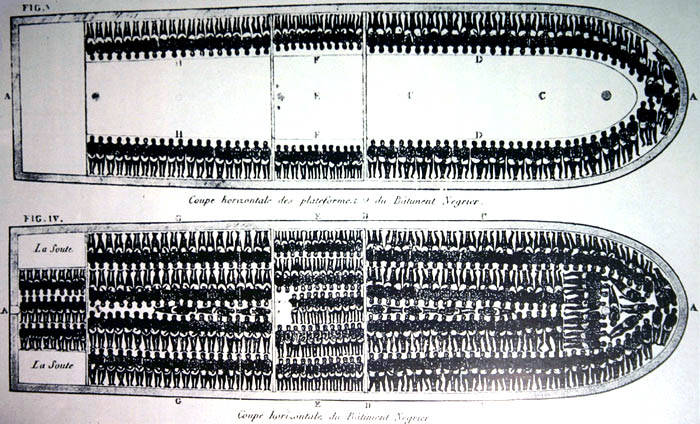
Slave Ship

Bob Marley - Uprising

VIDEO – Bob Marley – Redemption Song (from the Legend album, with lyrics) –  https://youtu.be/QrY9eHkXTa4

No copyright infringement intended; this is a “fan” video that assembled together public-domain photo-stills.

Music: “Redemption Song” by Bob Marley & The Wailers (Google Play • iTunes • AmazonMP3)
Share this post:
, , , ,

Is Martinique the Next Caribbean Surfing Capital?

Go Lean Commentary

Sports could be big business; culture is big business. Every now-and-then there is the opportunity to merge sports and culture into a single economic activity. One such expression is the sports/culture of surfing. This focus is a priority for the movement to elevate the Caribbean society, stemming from the book Go Lean…Caribbean.

The book serves as a roadmap for the introduction and implementation of the technocratic Caribbean Union Trade Federation (CU). While the CU is not intended as a sports promotion entity, it does promote the important role of sports in the quest to make the Caribbean a better place to live, work and play.

Though surfing activities originated with Polynesian culture (see Appendix below), the sport has assimilated well in other societies – the Caribbean included.

In terms of cultural expressions of surfing in the United States, the most iconic portrayal is the Rock-n-Roll group the Beach Boys; see VIDEO in the Appendix below of a milestone performance in Tokyo, Japan.

Yes surfing is global in its participation and appreciation.

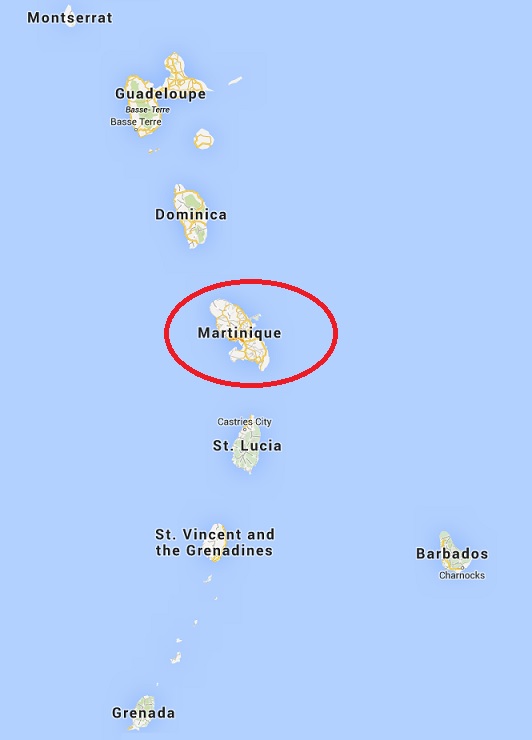
Now a Caribbean community, the French-domain of Martinique is exploring the surfing sub-culture for sport, tourism and sports-tourism.

Cowabonga* Dude!

By: The Caribbean Journal staff

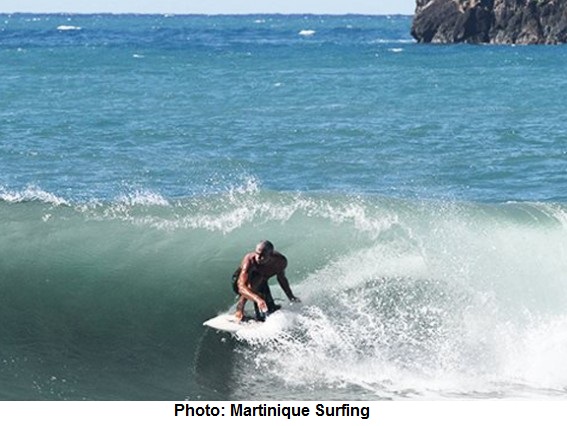
Long an under-the-radar surfing spot, the French Caribbean island will get its place in the spotlight when the surfing world gathers on the island later this month for the first-ever Martinique Surf Pro.

From April 21-26, the Caribbean’s only World Surf League Qualification Series event this year will take place along the shores of Basse-Pointe in Martinique.

The event, which is being organized by Martinique Surfing in partnership with the World Surf League, will bring together 100 world-class surfers from the United States, Japan, Europe, Brazil and the Caribbean.

“Martinique has been among the best-kept secrets in Caribbean surfing for some time now,” said Muriel Wiltord, director of the Americas for the Martinique Promotion Bureau. “Such a high-profile event as this cements the island’s position as a prime surfing destination. As one the top watersports competitions being held in the Caribbean in 2015, Martinique Surf Pro also shines a spotlight on the wide range of additional watersports options that Martinique has to offer.”

Martinique’s surfing season typically lasts between November and May along its northern and northeastern Atlantic coasts.

Source retrieved April 13, 2015: http://www.caribjournal.com/2015/04/13/is-martinique-the-next-caribbean-surfing-capital/

CU Blog - Is Martinique the next big Caribbean surfing capital - Photo 2

CU Blog - Is Martinique the next big Caribbean surfing capital - Photo 3

CU Blog - Is Martinique the next big Caribbean surfing capital - Photo 1

Not every coastline is ideal for surfing; thusly many Caribbean residents do not surf; it is not an indigenous activity to this region. But the past-time – and culture for that matter – is adaptable. Why is this? While the Caribbean has been blessed with many natural gifts, the physical conditions for surfing are not everywhere; (based on factual information retrieved from Wikipedia).

There must be a consistent swell. A swell is generated when wind blows consistently over a large area of open water, called the wind’s fetch. The size of a swell is determined by the strength of the wind and the length of its fetch and duration. Because of this, surf tends to be larger and more prevalent on coastlines exposed to large expanses of ocean traversed by intense low pressure systems.

Local wind conditions affect wave quality, since the surface of a wave can become choppy in blustery conditions. Ideal conditions include a light to moderate “offshore” wind, because it blows into the front of the wave, making it a “barrel” or “tube” wave. Waves are Left handed and Right Handed depending upon the breaking formation of the wave.

Waves are generally recognized by the surfaces over which they break.[7] For example, there are Beach breaks, Reef breaks and Point breaks.

The most important influence on wave shape is the topography of the seabed directly behind and immediately beneath the breaking wave. The contours of the reef or bar front becomes stretched by diffraction. Each break is different, since each location’s underwater topography is unique. At beach breaks, sandbanks change shape from week to week. Surf forecasting is aided by advances in information technology. Mathematical modeling graphically depicts the size and direction of swells around the globe.

So mastering the sport of surfing is now an art and a science.

Despite the fun and joy of surfing, there are a lot of dangers with this activity:

This activity is not for the faint of heart.

Not every market, especially in the Caribbean, can support the demands of surfing as a sport and as a cultural event. As depicted in the foregoing article, Martinique uniquely qualifies. This year’s professional tournament is the inaugural event. This Caribbean island makes a very short-list of all locations where this activity is practical. The following is a sample of the competitive/major surfing locations (Surf Cities) around the globe:

1. In Australia

2. In Asia

3. In the South Pacific

4. In South Africa

5. In North America

6. In Central America

7. In South America

8. In the USA

9. In Europe

The Martinique effort and initiative to satiate the thirst … and fascination of surfing aligns with the objects of the CU/Go Lean roadmap; especially the mission “to forge industries and economic drivers around the individual and group activities of sports and culture” (Page 81).

The Go Lean vision is a confederation of the 30 member-states of the Caribbean forming the CU as a proxy organization to do the heavy-lighting of building, funding, maintaining and promoting sports venues. The strategy is for the CU to be the landlord, and super-regional regulatory agency, for sports leagues, federations and associations (amateur, collegiate, and professional). The embrace and promotion of the sport and culture of surfing can contribute to the Greater Good for the Caribbean. This aligns with the prime directives of the CU/Go Lean roadmap; summarized in the book with these 3 statements:

  • Optimization of the economic engines in order to grow the regional economy to $800 Billion & create 2.2 million new jobs.
  • Establishment of a security apparatus to protect the resultant economic engines and the participants in activities like surfing.
  • Improvement of Caribbean governance to support these engines.

This roadmap commences with the recognition that genius qualifiers can be found in many fields of endeavor, including sports. The roadmap pronounces the need for the region to confederate in order to invest in elevation of the Caribbean eco-systems in which such athletic geniuses can soar. These pronouncements are made in the opening Declaration of Interdependence, (Pages 13 & 14) as follows:

xxi. Whereas the preparation of our labor force can foster opportunities and dictate economic progress for current and future generations, the Federation must ensure that educational and job training opportunities are fully optimized for all residents of all member-states, with no partiality towards any gender or ethnic group. The Federation must recognize and facilitate excellence in many different fields of endeavor, including sciences, languages, arts, music and sports. This responsibility should be executed without incurring the risks of further human flight, as has been the past history.

xxii. Whereas sports have been a source of great pride for the Caribbean region, the economic returns from these ventures have not been evenly distributed as in other societies. The Federation must therefore facilitate the eco-systems and vertical industries of sports as a business, recreation, national pastime and even sports tourism – modeling the Olympics.

The Go Lean book and accompanying blogs declare that the Caribbean needs to learn lessons from Surf City communities and other sporting venues/administrations. So thusly this subject of the “business of sports” is a familiar topic for Go Lean blogs. This cause was detailed in these previous blogs:

https://goleancaribbean.com/blog/?p=4019 Melding of Sports & Technology; the Business of the Super Bowl
https://goleancaribbean.com/blog/?p=3414 Levi’s® Stadium: A Team Effort
https://goleancaribbean.com/blog/?p=3244 Sports Role Model – espnW.
https://goleancaribbean.com/blog/?p=2222 Sports Role Model – Playing For Pride … And More
https://goleancaribbean.com/blog/?p=2171 Sports Role Model – Turn On the SEC Network
https://goleancaribbean.com/blog/?p=2152 Sports Role Model – US versus the World
https://goleancaribbean.com/blog/?p=1715 Lebronomy – Economic Impact of the Return of the NBA Great
https://goleancaribbean.com/blog/?p=1446 Caribbean Players in the 2014 World Cup
https://goleancaribbean.com/blog/?p=1341 College World Series Time – Lessons from Omaha
https://goleancaribbean.com/blog/?p=1214 Landlord of Temporary Stadiums
https://goleancaribbean.com/blog/?p=1148 Sports Bubble – Franchise values in basketball
https://goleancaribbean.com/blog/?p=1020 Sports Revolutionary: Advocate Jeffrey Webb
https://goleancaribbean.com/blog/?p=498 Book Review: ‘The Sports Gene’
https://goleancaribbean.com/blog/?p=318 Collegiate Sports in the Caribbean
https://goleancaribbean.com/blog/?p=60 Could the Caribbean Host the Olympic Games?

This Go Lean roadmap is committed to availing the economic opportunities of all the Caribbean sports eco-system to respond to the world’s thirst for surfing. The book details the series of community ethos, strategies, tactics, implementations and advocacies to deliver the regional solutions to better harness economic benefits from sports and sports-tourism activities:

Community Ethos – People Respond to Incentives in Predictable Ways Page 21
Community Ethos – Consequences of Choices Lie in the Future Page 21
Community Ethos – Lean Operations Page 24
Community Ethos – Return on Investments Page 25
Community Ethos – Ways to Foster Genius Page 27
Community Ethos – Ways to Impact the Greater Good Page 37
Strategic – Staffing – Sporting Events at Fairgrounds Page 55
Tactical – Fostering a Technocracy Page 64
Tactical – Separation of Powers – Sports & Culture Administration Page 81
Tactical – Separation of Powers – Fairgrounds Administration Page 83
Implementation – Steps to Implement Self-Governing Entities Page 105
Implementation – Ways to Deliver Page 109
Planning – Ways to Make the Caribbean Better Page 131
Advocacy – Ways to Grow the Economy Page 151
Advocacy – Ways to Create Jobs Page 152
Advocacy – Ways to Improve Local Government – Parks & Recreation Page 169
Advocacy – Ways to Impact Public Works Page 175
Advocacy – Ways to Impact Events Page 191
Advocacy – Ways to Promote Fairgrounds as Sporting Venues Page 192
Advocacy – Ways to Preserve Caribbean Heritage Page 218
Advocacy – Ways to Improve Sports Page 229
Advocacy – Ways to Impact Urban Living – Sports Leagues Page 234

What could be the end result for the Go Lean roadmap’s venture into the sport of surfing and the business of sports? Economic growth and “jobs”. The Go Lean roadmap anticipates 21,000 direct jobs at sports enterprises throughout the region.

But surfing is also a leisure amenity, a “play” activity within the Go Lean roadmap. Many participate in this activity with no competitive motives. So the promotion of surfing in the Caribbean region can appeal to many enthusiasts far-and-wide to come visit and enjoy our Caribbean hospitality. This subject therefore relates back to the primary regional economic activity of tourism. This fits into the appeal of the Caribbean sun, sand and surf.

Overall, with these executions, the Caribbean region can be a better place to live, work and play. There is a lot of economic activity in the “play” aspects of society. Everyone, surfers, athletes and spectators alike, are hereby urged to lean-in to this Go Lean roadmap.

Cowabonga Dude!

Download the book Go Lean … Caribbean – now!

———-

Appendix – *Cowabunga: (slang) an expression of surprise or amazement, often followed by “dude”. Popular among California surfers.

———-

Appendix – Encyclopedia of Surfing:

For centuries, surfing was a central part of ancient Polynesian culture. This activity was first observed by Europeans at Tahiti in 1767 by Samuel Wallis and the crew members of the Dolphin; they were the first Europeans to visit the island in June of that year.

Surfing is a surface water sport in which the wave rider, referred to as a surfer, rides on the forward or deep face of a moving wave, which is usually carrying the surfer toward the shore. Waves suitable for surfing are primarily found in the ocean, but can also be found in lakes or in rivers in the form of a standing wave or tidal bore. However, surfers can also utilize artificial waves such as those from boat wakes and the waves created in artificial wave pools.

The term surfing refers to the act of riding a wave, regardless of whether the wave is ridden with a board or without a board, and regardless of the stance used. The native peoples of the Pacific, for instance, surfed waves on alaia, paipo, and other such craft, and did so on their belly and knees. The modern-day definition of surfing, however, most often refers to a surfer riding a wave standing up on a surfboard; this is also referred to as stand-up surfing.

George Freeth (8 November 1883 – 7 April 1919) is often credited as being the “Father of Modern Surfing”.

In 1907, the eclectic interests of the land baron Henry Huntington (of whom the City of Huntington Beach is named after) brought the ancient art of surfing to the California coast. While on vacation, Huntington had seen Hawaiian boys surfing the island waves. Looking for a way to entice visitors to the area of Redondo Beach, where he had heavily invested in real estate, he hired the young Hawaiian George Freeth to come to California and ride surfboards to the delight of visitors; Mr. Freeth exhibited his surfing skills twice a day in front of the Hotel Redondo.

In 1975, professional contests started.[6]

Today, the Surfing Hall of Fame is located in the city of Huntington Beach, California. The city brands itself as Surf City USA.

(Source retrieved April 14 from: http://en.wikipedia.org/wiki/Surfing)

———-

AppendixVIDEO – The Beach Boys: Surfin’ Safari~Surf City~Surfin’ U.S.A – https://youtu.be/qpSwdQMn8xs

Uploaded on Jul 29, 2011 – Live at Budokan in Japan November 2, 1991

Share this post:
, , , , ,
[Top]

Truth in Commerce – Learning from Yelp

Go Lean Commentary

Small businesses are the backbone of Caribbean economies; same too in North America and Europe. Imagine then, small business owners doing everything just right, applying all best-practices and then boom, someone comes along with mis-truths and completely undermines their quality work. This is villainous!

This has happened, time and again; and now with the internet culture, the villains do not have to try too hard.

Consider this experience from the San Francisco Bay Area, with a Chinese-Hunan Restaurant in Millbrae, California named “Wonderful”:

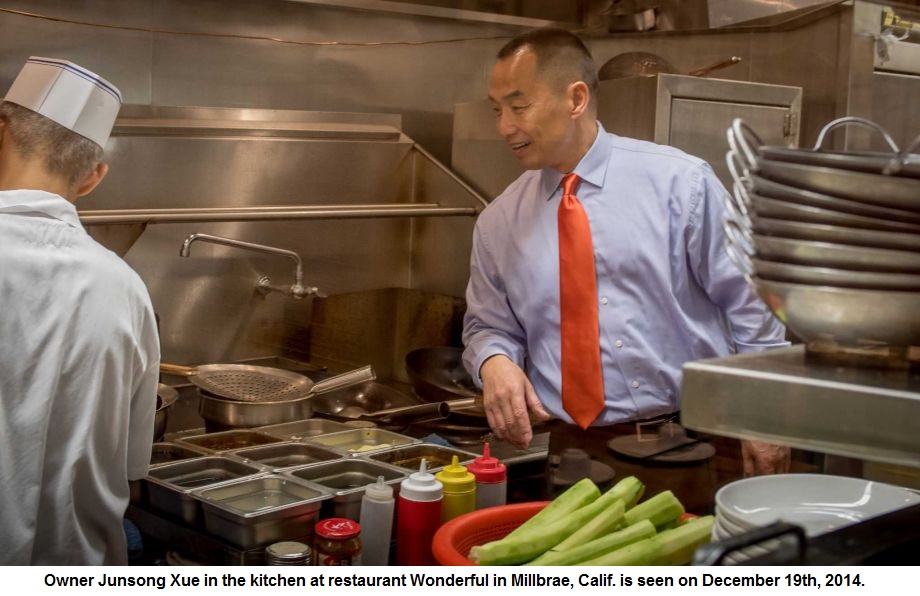
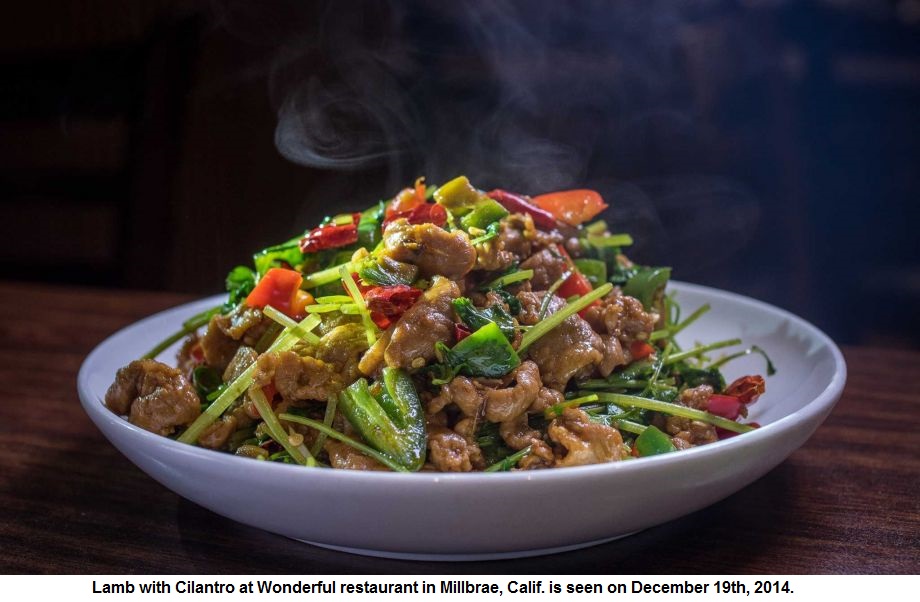
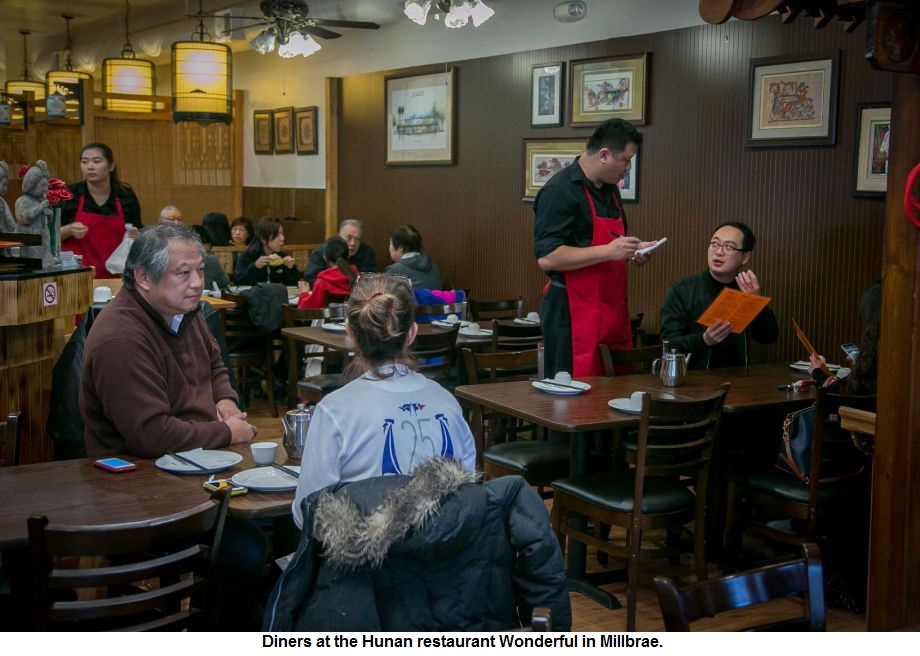
CU Blog - Truth in Commerce - Learning from Yelp - Photo 1At Wonderful, perhaps the best of the Bay Area’s new Hunan restaurants, dishes are riddled with pickled peppers and fermented black beans, and the menu is stocked with the steamed dishes, smoked meats and dry hot pots that define the regional cuisine to many Chinese eaters.

Owner Junsong Xue moved to the Bay Area from China 18 years ago to pursue a business master’s at Cal State Hayward. His twin brother stayed in Beijing, where he built a Hunan restaurant empire called Cai Xiang Gen.

After managing Mimi’s Cafe in San Mateo for 11 years, Junsong persuaded his twin to open a California branch of Cai Xiang Gen in Millbrae. It took the Xue family two years to build out the space, installing wood-framed booths, birdcage lights and a large television playing documentaries about Hunan cuisine. They opened the restaurant in April, with chefs from the chain’s Chinese branches circulating through the kitchen, training cooks and ensuring quality. – Restaurant Review posted January 19, 2015 by the San Francisco Chronicle’s online site “SF Gate”; retrieved April 1, 2015 from:

http://www.sfgate.com/restaurants/article/Hunan-s-second-heat-wave-introduces-classics-of-6019006.php#photo-7383515

CU Blog - Truth in Commerce - Learning from Yelp - Photo 2

CU Blog - Truth in Commerce - Learning from Yelp - Photo 3

This is best-practices personified…

… and then:

A Yelp* reviewer named Dan W. recently went to Wonderful in Millbrae and found the experience less than satisfactory. He gave the Hunan restaurant a “one star” and stated, “I was flying solo that night, after a particularly challenging day. The waiter came up and asked how many. I said one, I had planned to sit at the bar or get the food to go. She said “one? no, one?” and then ran off. I waited a minute at the door, and then left. They were busy and potentially understaffed. It’s not that classy of a place, but they refused to seat me.”

Basically, Dan W. claimed Wonderful wouldn’t seat a party of one, even though he was having a challenging day. The folks at Wonderful found Dan’s account of events challenging to believe, so they reviewed some surveillance footage. The restaurant figured out who Dan W. was and found him entering the restaurant, indeed solo (and after a challenging day.) Dan W. never spoke to anyone, took a look around, and promptly left. Wonderful responded with a dramatic and lengthy response to Dan with their video evidence.

Dan deleted his review, and their Yelp page is now [only] awash in 5-star reviews.

Here is Wonderful’s response to Dan W., complete with video evidence:

“Do Not Mess With Wonderful”. Claim the management, “Dan, we didn’t refuse to seat you. You refused to wait in line like everyone else. You thought you were special, so special that you don’t have to follow the rules. That’s not true, we caught you. You are prohibited from returning to Wonderful. If we catch you, you will be arrested for trespassing.” – Posted March 26, 2015 from: http://blog.sfgate.com/stew/2015/03/26/bay-area-restaurant-finds-video-proves-negative-yelp-review-a-lie/

VIDEO: Lying Yelp Reviewer Caught by Wonderful Chinese Restaurant – Side Camera  – https://youtu.be/i7XDtmu-MdI

Published on Mar 24, 2015 – Yelp Reviewer Dan W from San Bruno, Ca. left a review about a restaurant called Wonderful Chinese in Milbrae, Ca. and the restaurant exposed his lies.

What were the motives of the character Dan W.? It is not known here, but the cause-and-effect is villainous. Just a little comment could have ruined the reputation, brand and image of that restaurant and all the hard work/investment to build it up. On the one hand, Dan W. may simply claim “Freedom of Speech” but on the other hand, there must be some limits to speech. In truth, speech is not free! One cannot run into a crowded theater and erroneously shout “Fire, Fire” without consequences. The resultant stampede is prosecutable in most jurisdictions, as manslaughter or “depraved indifference”.

In addition to the Yelp incident, the American referral site Angie’s List has also “come under fire” for allowing non-credible reviews of businesses and service providers. This case seemed more benign, just a disagreement of levels of quality for a subjective service. Yet still, these incidences must be anticipated.

Based on the foregoing news articles, this issue is a hot topic right now.

The Empire Strikes Back…
Electronic Commerce is now all the rage. Many retail services are marketed, solicited and contracted online, so online reviews (like Yelp and Angie’s List) wield a lot of power; a bad review can truncate growth for a small business. Planners for economic empowerments must therefore consider governance of e-Commerce communications in its oversight. This is the assertion in the book Go Lean…Caribbean, that governance must be in place to ensure integrity of the region’s information super-highway (Page 79), across broadband and wireless deliveries. Too much is at stake. The book posits that some issues are too big for any one Caribbean member-state to manage alone – especially with close proximities where radio spectrum can bleed from one country to another. The book maintains that there are times when there must be a cross-border, multilateral coordination. This Go Lean book serves as a roadmap for the introduction and implementation of the technocratic Caribbean Union Trade Federation (CU) to facilitate the growth, promotion and regulatory oversight of this Internet Communications Technology (ICT) industry space in a regional Single Market.

The Asian country of India has provided a good model for communication governance in the era of internet communications.

In September 2013, a petition was made to an Indian Court which claimed, amongst other things, that several public officials were using private email services (like Gmail, Yahoo, Hotmail, etc.) for official communication. Legal Counsel for the petitioner had argued that this imperiled national security and violated sections of the country’s Public Records Act, 1993, which mandates that all public records be maintained by the government within Indian territory. The Court found a breach in information security best-practices and ordered remedies accordingly. In response and in pursuit of compliance the government submitted a set of guidelines to the Court to approve for implementation. The guidelines concern many matters of data security; the fairly wide ranging Court Order made foreign sites like Google and Facebook establish grievance officers to report integrity problems within the country.

This Indian model mirrors the proposed Go Lean solution. It demands a lean technocratic efficiency to ensure that there is accountability and transparency in the governance of the Information Technology Arts and Sciences. We need a Grievance Officer for the Caribbean Single Market.

This is among the missions of Go Lean roadmap, to elevate the economic engines and accompanying electronic commerce eco-system of the Caribbean region. The region needs jobs, so we need job creators: small businesses. The CU’s prime directives are identified with the following 3 statements:

  • Optimization of the economic engines in order to grow the regional economy to $800 Billion & create 2.2 million new jobs.
  • Establishment of a security apparatus to protect the resultant economic engines.
  • Improvement of Caribbean governance to support these engines.

The subject of electronic commerce integrity features economic, security and governing concerns. The Go Lean roadmap calls for the deployment of a custom Social Media / Electronic Commerce offering for all Caribbean member-states, branded www.myCaribbean.gov. This Caribbean Cloud initiative is projected in the Go Lean book as a subset of the integrated postal operations, the Caribbean Postal Union. Commerce, whether Main Street or “E-Street”, must be facilitated with technocratic efficiency, accountability and commercial “fair play”. The vision to elevate these aspects of Caribbean society was defined early in the book (Page 12 & 14) in the following pronouncements in the Declaration of Interdependence:

xv. Whereas the business of the Federation and the commercial interest in the region cannot prosper without an efficient facilitation of postal services, the Caribbean Union must allow for the integration of the existing mail operations of the governments of the member-states into a consolidated Caribbean Postal Union, allowing for the adoption of best practices and technical advances to deliver foreign/domestic mail in the region.

xxvii. Whereas the region has endured a spectator status during the Industrial Revolution, we cannot stand on the sidelines of this new economy, the Information Revolution. Rather, the Federation must embrace all the tenets of Internet Communications Technology (ICT) to serve as an equalizing element in competition with the rest of the world. The Federation must bridge the digital divide and promote the community ethos that research/development is valuable and must be promoted and incentivized for adoption.

The Caribbean biggest neighbor, the United States, is also struggling with the dynamics of this electronic commerce industry and the oversight of online reviews.

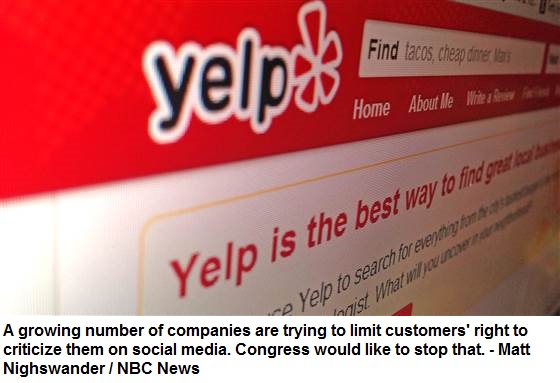
Some companies there had adopted new policies forbidding negative reviews on online sites. See excerpts of this September 14, 2014 news article here:

Title: Can a company stop you from writing a negative online review? Not if Congress passes this bill
By: Herb Weisbaum, NBC News Contributor

CU Blog - Truth in Commerce - Learning from Yelp - Photo 4You’re entitled to your opinion – just be prepared for possible legal consequences if you share it online.

A growing number of companies now have “non-disparagement clauses” in their contracts or terms of use. They limit a customer’s right to comment on social media sites such as Yelp about the product or service they purchased – even if that comment or review is truthful and accurate.

A non-disparagement clause might look something like this:

  • Any disputes between the parties remain confidential. Customers shall not make or encourage others to make any public statement that is intended to, or reasonably could be foreseen to, embarrass or criticize the company or its employees, without obtaining prior written approval from the company.

“Non-disparagement clauses have the potential to create a profound chilling effect,” said Andy Sellars with the Harvard Law School’s Cyberlaw Clinic. “Their mere existence may scare consumers from writing a review in the first place.”

The Consumer Review Freedom Act, introduced in Congress last week by two Democratic representatives from California, Rep. Eric Swalwell and Rep. Brad Sherman, would make it illegal for businesses to have non-disparagement clauses in their contacts that prohibit consumers from posting negative online reviews.

Read the full article: http://www.today.com/money/congress-wants-you-be-able-criticize-companies-2D80168557

There are so many best practices around the world for the Caribbean region to study for insights and wisdom. The successful application of this roadmap will foster such best practices for the delivery of home-grown electronic commerce and social media in the Caribbean. The wisdom the Go Lean book gleans from this global study is presented as a series of community ethos, strategies, tactics, implementations and advocacies; a detailed sample is listed as follows:

Community Ethos – Deferred Gratification Page 21
Community Ethos – People Choose Page 21
Community Ethos – People Respond to Incentives Page 21
Community Ethos – Economic Systems Influence Individual Choices Page 21
Community Ethos – Job Multiplier Page 22
Community Ethos – Privacy versus Public Protection Page 23
Community Ethos – Whistleblower Protection Page 23
Community Ethos – Lean Operations Page 24
Community Ethos – Ways to Help Entrepreneurship Page 28
Community Ethos – Promote Intellectual Property Page 29
Community Ethos – Ways to Bridge the Digital Divide Page 31
Community Ethos – Ways to Improve Sharing Page 35
Community Ethos – Ways to Impact the Greater Good Page 37
Strategy – Vision – Integrate a Single Market of entire region Page 45
Tactical – Fostering a Technocracy Page 64
Tactical – Separation of Powers – Postal Services Page 78
Tactical – Separation of Powers – Interstate Commerce Administration Page 79
Tactical – Separation of Powers – Communications and Media Authority Page 79
Implementation – Year 1 / Assemble Phase – Establish CPU Page 96
Anecdote – Implementation Plan – Mail Services – US Dilemma Page 99
Implementation – Improve Mail Services – Electronic Supplements Page 108
Implementation – Ways to Deliver Page 109
Planning – 10 Big Ideas for the Caribbean Region – Cyber Caribbean Page 127
Advocacy – Ways to Improve Interstate Commerce Page 129
Advocacy – Ways to Grow the Economy Page 151
Advocacy – Ways to Create Jobs Page 152
Advocacy –Ways to Improve Governance Page 168
Advocacy – Ways to Foster Technology Page 197
Advocacy – Ways to Foster e-Commerce Page 198
Advocacy – Ways to Impact Main Street – Wifi & Mobile Apps Page 201
Advocacy – Ways to Improve Monopolies – Utilities to Oversee ICT Page 202
Advocacy – Ways to Impact Urban Living Page 234

This commentary therefore features the subjects of commerce, electronic commerce and entrepreneurship. The Caribbean can learn from the Americans and emulate the Indian model.

The biggest consideration should be “technocracy”, the ability to assess market conditions and structure viable solutions; driven by the community ethos of the Greater Good. The book defines that the term technocracy was originally used to designate the application of the scientific method to solving social & economic problems, in counter distinction to the traditional political or philosophic approaches. The CU will start as a technocratic confederation – a Trade Federation – rather than evolving to this eventuality. So technology governance and postal consolidations are planned for Day One of the CU roadmap.

Now is the time for all of the Caribbean, the people, businesses and governing institutions, to lean-in for the empowerments in the book Go Lean … Caribbean. This Big Idea for the region, Cyber Caribbean, can truly impact the region. It can make the Caribbean a better place to live, work and play.  🙂

——-

AppendixSource Reference:
* Yelp, Yelp.com and the Yelp mobile app, publishes crowd-sourced reviews about local businesses.


Share this post:
, ,
[Top]

Colorism in Cuba … and Beyond

Go Lean Commentary

Image is a problem for Cuba. Most people in the Western Hemisphere may only know of one Cuban, perhaps Fidel Castro. What’s more, most people only knew of one Cuban before the Castro era, that was “Rickie Ricardo” of I Love Lucy fame. Unfortunately this demographic is not fully representative of Cuba’s population. Cuba has always had a large Black population; (though as a minority group during the Rickie Ricardo era). After the Cuban Communist Revolution, and the wholesale abandonment of most of the White community, today, Cuba is a majority Black nation … by far.

… and yet Majority Rule has eluded them.
… economic power has also eluded this population.

Change is now afoot!

This subject of managing change has been a familiar theme in the book Go Lean…Caribbean. Also the theme of preparing for and rebooting Cuba has been frequently detailed in previous blog commentaries. Now, the consideration is the unavoidable clashes regarding race that will surely take place in a post-Castro Cuba.

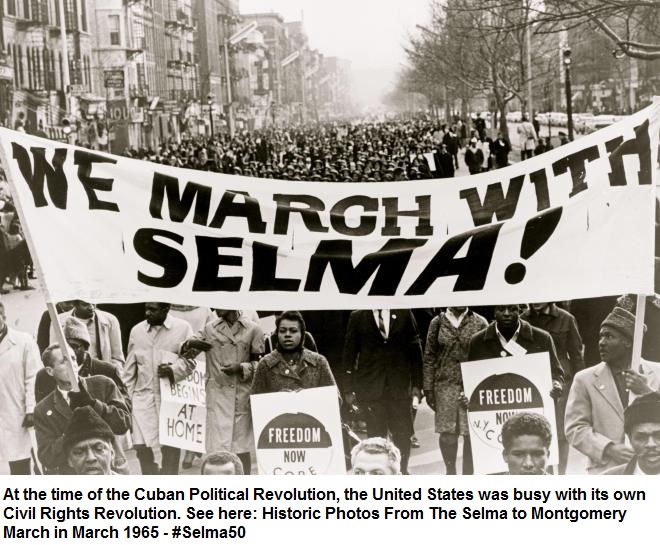
Many other societies have had these clashes. Whether violent or just political; change in the area of race has been hard-fought. Consider the upheavals for the US during the 1960’s. (See Photo below). Cuba did not benefit from this American civil rights movement; they did not sow, so they have not reaped. They were fresh into their own political revolution with the embrace of communism, alienation of American society and mass exodus of so many citizens.

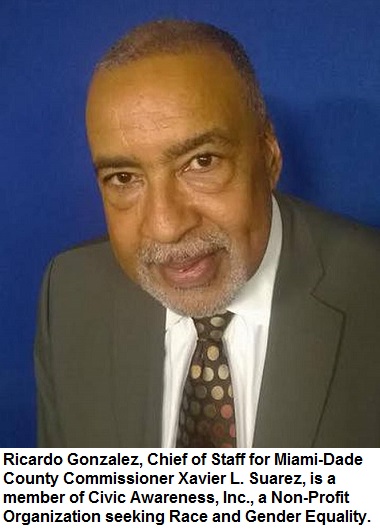
This is the assertion of a prominent Cuban-American politician in Miami, Florida – a strong-bed for the Cuban Diaspora and Cuban-American communities. See his editorial here:

Title: Blacks in Cuba are poised to make gains
By: Ricardo Gonzalez

CU Blog - Colorism in Cuba ... and Beyond - Photo 1For the first time in more than a century, black Cubans might have a real opportunity to gain the enfranchisement and equality for which our ancestors fought so hard — and were on the verge of winning — only to see their hopes and aspirations frustrated when a U.S. naval ship was blown to pieces in the port of Havana in 1898.

The blood and sweat of our forefathers in the overwhelmingly Black Mambi army was shed for naught as our nation and the 20th century were born. Since Cuba’s inception in 1902, its black citizens never truly gained equal footing in that troubled country. Despite their decisive role in the struggle for independence from colonialism, blacks were almost totally excluded from all levels of power and denied full participation in the everyday life in the fledgling nation.

Unhappy with their exclusion and seeking a better compact, black Cubans were once again prevented from gaining the equality they thought they had earned in the battlefield when their nascent racial movement seeking social justice was violently decapitated — literally, in some cases — a decade later. What followed was a long, hard procession of years of drudgery — sprinkled with a few, incremental gains — under the suffocating hardships of Cuba’s tropical version of Jim Crow.

In 1959, the Cuban Revolution artfully gained control of every aspect of Cuban life and promised to eradicate all vestiges of racial injustice in the island. Shortly thereafter, la Revolución, loudly, proudly and unilaterally, proclaimed victory in its self-declared fight against racism and promptly proceeded to label anyone who dared bring up the topic of racial inequality as a counter-revolutionary and applied “revolutionary” punishment and penalties to those who dared to transgress.

More than half a century later, however, whether by government intent or simply as a result of misguided policies, black Cuba is immersed in its most difficult juncture; at a disadvantage economically (reduced access to foreign currencies), politically (little to no representation in government) and sociologically (i.e., marginalized, racially profiled, disproportionally incarcerated, etc.).

Truth be told, throughout its history, Cuba has never been kind to its darker citizens, regardless of who has been in power or his political ideology. It is time for that elephant in the room to be both acknowledged and dealt with.

Now the catastrophic dynasty that has afflicted our nation for almost 60 years finally appears to be near its end — Father Time and biology proving to be our only true and reliable friends. Add the surprising announcement of an attempt to normalize relations between Cuba and United States, and Cubans — black, mulatto and white — might soon have the opportunity to “reboot,” to recreate a new, more inclusive nation; a nation “with all and for the wellbeing of all,” as dreamed by Jose Marti.

Skeptics will say that nothing will change, that the Castro clan will never relinquish power, or that the generals and/or other parasites will cling to their perquisites by any means necessary. But the fact is that in the not-too-distant future, we can envision both brothers leaving the scene, either in a pine box or to convalesce at a well-appointed home for retired dictators.

With those two out of the picture, and with whatever new relationship that evolves from the recent rapprochement with the United   States, there is little doubt that our nation is headed to a new dawn, a different way of doing business.

Black Cubans, who by all measurable accounts have borne the brunt of the damage wreaked by the regime, are well positioned to finally savor their rightful — and so far elusive — share. By essentially heaping misery and squalor on the entire population and thus somewhat “leveling the playing field,” the Cuban Revolution has given Cubans of color, for the first time, the ability to compete academically, culturally and socially with their white compatriots. It is not an accident that a good percentage of the most prominent dissidents in the island are people of color.

And let us not forget that, contrary to the Cuban government’s official numbers, Afro-Cubans are no longer the minority. Malcolm X once said: “The future belongs to those who prepare for it today.” I will simply follow the advice of an old wise man who once said to me; “Stick always with the optimists, because life is hard even if they are right.”
Miami Herald Editorial – South Florida Daily Newspaper – Posted 03/07/2015; retrieved 03/10/2015:
http://www.miamiherald.com/opinion/op-ed/article12875840.html

We march with Selma!The Cuban revolution occurred in 1959 and the political intrigue (Cold War, Missile Crisis, Bay of Pigs, Embargo, Pedro Pan Exodus, etc.) was heightened all during the 1960’s. While the US and many other Western countries confronted their racial past and effected change accordingly, Cuba was on the sidelines. So now that Cuba may soon be graduating from alienation to participation in the world’s economic order, a lot of the changes that their society would have to assimilate are really questions at this time:

  • Did Cuban society formally end their pre-revolution segregation policies voluntarily or were they forced into compliance by the Communists Military Might?
  • Will Cuba immediately accept the new human/civil rights standards for race and gender equality that is the best-practice in Western society (North America and Europe)?
  • Will the Cuban Diaspora still long for the days of a Cuba segregated by the races or has the transformation of Western society really taken root?
  • Will the still-present US practice of colorism (see below) in the Black community – very much prominent in the Latin world – be even more heightened in a new Cuba?

These are valid and appropriate questions. Everywhere else when Communism fell, sectarian divisions and violence erupted; many times fueled by the same prejudices that predated the Communist revolutions; (think ethnic cleansing in the former Yugoslavia: Slovenia, Serbia, Croatia, Kosovo, Bosnia-Herzegovina, and Macedonia). There will truly be a need for earnest reconciliation in Cuba.

CU Blog - Colorism in Cuba ... and Beyond - Photo 3

The issues of race reconciliation and Cuban reconciliation collide in this commentary. These have been frequently detailed in these Go Lean blogs. Consider these previous entries:

https://goleancaribbean.com/blog/?p=4487 Historical Black College most effective with Social Mobility
https://goleancaribbean.com/blog/?p=4447 Probe of Ferguson-Missouri finds bias from cops, courts
https://goleancaribbean.com/blog/?p=3662 Migrant flow into US from Caribbean (i.e. Cuba) spikes
https://goleancaribbean.com/blog/?p=3455 Restoration of Diplomatic Relations with Cuba
https://goleancaribbean.com/blog/?p=3354 CARICOM Chair calls for an end to US embargo on Cuba
https://goleancaribbean.com/blog/?p=2547 Miami’s Success versus Caribbean Failure
https://goleancaribbean.com/blog/?p=1609 Cuba mulls economy in Parliament session
https://goleancaribbean.com/blog/?p=2222 Sports Role Model – Playing For Racial Pride … And More
https://goleancaribbean.com/blog/?p=1918 Philadelphia Freedom – Community Model for Forging Change
https://goleancaribbean.com/blog/?p=1773 Miami’s Caribbean Marketplace Re-opens as a Welcome Mat
https://goleancaribbean.com/blog/?p=1531 A Lesson in History: 100 Years Ago Today – World War I
https://goleancaribbean.com/blog/?p=1020 Sports Revolutionary Issues Re: Racism against Black Athletes
https://goleancaribbean.com/blog/?p=789 America’s War on the Caribbean

The book Go Lean…Caribbean serves as a roadmap for the introduction and implementation of the Caribbean Union Trade Federation (CU); an initiative to bring change and empowerment to the Caribbean region, including Cuba. Since Cuba is the largest country – land-wide and population – in the Caribbean region, any changes there will have an impact on the rest of the region. The goal of this roadmap is to anticipate the change, forge the change and guide the changes in our society for positive outcomes. We want to make the Caribbean region a better homeland to live, work and play for every island, every language group; just everyone. There is some degree of urgency and imminence to this cause as Cuba’s current President, Raul Castro has announced that he will retire in 2017. At that point, there will be no more “Castros” at the helm of Cuba.

To accomplish this audacious goal, this Go Lean roadmap has the following 3 prime directives:

  • Optimization of the economic engines in order to grow the regional economy to $800 Billion & create 2.2 million new jobs.
  • Establishment of a security apparatus to protect the resultant economic engines.
  • Improve Caribbean governance to support these engines.

The book describes the CU as a technocratic administration with many missions to elevate the Caribbean homeland. The underlying goal is stated early in the book with this pronouncement in the opening Declaration of Interdependence (Page 12):

xii. Whereas the legacy in recent times in individual states may be that of ineffectual governance with no redress to higher authority, the accedence of this Federation will ensure accountability and escalation of the human and civil rights of the people for good governance, justice assurances, due process and the rule of law…

xiii.  Whereas the legacy of dissensions in many member-states (for example: Haiti and Cuba) will require a concerted effort to integrate the exile community’s repatriation, the Federation must arrange for Reconciliation Commissions to satiate a demand for justice.

Change has come to the Caribbean. But as depicted in the subsequent VIDEO, this same change came to the US, and yet strong feelings about skin color persist. The Go Lean book declares that permanent change is possible, but to foster success, a community must first adopt new ethos, the national spirit that drives the character and identity of its people. The community ethos of sharing, tolerance, equality and the Greater Good were missing from pre-revolution Cuba. It is a mission of the Go Lean movement to ensure these inclusions for the new Cuba. The Go Lean roadmap was constructed with these community ethos in mind, plus the execution of strategies, tactics, implementation and advocacies to forge the identified permanent change in the region. The following is a sample of these specific details from the book:

Community Ethos – Deferred Gratification Page 21
Community Ethos – Economic Principles – People Choose Page 21
Community Ethos – Economic Principles – All Choices Involve Costs Page 21
Community Ethos – Economic Principles – People Respond to Incentives in Predictable Ways Page 21
Community Ethos – Economic Principles – Economic Systems Influence Individual Choices Page 21
Community Ethos – Economic Principles – The Consequences of Choices Lie in the Future Page 21
Community Ethos – Security Principles – Anti-Bullying and Mitigation Page 23
Community Ethos – Governing   Principles – Minority Equalization Page 24
Community Ethos – Governing   Principles – Lean Operations Page 24
Community Ethos –   Ways to Impact the Future Page 26
Community Ethos – Ways to Manage Reconciliations Page 34
Community Ethos – Ways to Improve Sharing Page 35
Community Ethos – Ways to Promote Happiness Page 36
Community Ethos – Ways to Impact the Greater Good Page 37
Anecdote – LCD versus an Entrepreneurial Ethos Page 39
Strategy – Vision – Confederation of the 30 Caribbean   Member-States into a Single Market Page 45
Strategy – Mission – Celebrate the Music, Sports, Art, People and Culture of the Caribbean Page 46
Tactical –   Confederating a Permanent Union Page 63
Tactical – Fostering a Technocracy Page 64
Tactical –  Separation of Powers: Federal Administration versus Member-States Governance Page 71
Implementation – Ways to Pay for Change Page 101
Implementation – Ways to Deliver Page 109
Planning – 10 Big Ideas for the Caribbean Region Page 127
Planning – Ways to Make the Caribbean Better Page 131
Planning – Ways to Better Manage Image – On guard against defamations Page 133
Advocacy – Ways to Grow the Economy Page 151
Advocacy – Ways to Create Jobs Page 152
Advocacy – Ways to Improve Education Page 159
Advocacy – Ways to Improve Governance in the Caribbean Region Page 168
Advocacy – Ways to Better Manage the Social Contract Page 170
Advocacy – Ways to Mitigate Terrorism Page 181
Advocacy – Ways to Improve Communications – To message for change Page 186
Advocacy – Ways Impact the Diaspora Page 217
Advocacy – Ways to Preserve Caribbean Heritage Page 218
Advocacy – Ways to Re-boot Cuba Page 236

The lessons in race relations and colorism are not perfected in the rest of the Caribbean. In fact, there are many human rights and civil rights abuses in the region. There is not one regional sentinel to be on guard against bad developments in race relations and work towards mitigating the effects. This is the charge of the CU. Nor, can the Caribbean region expect the US to lead in words or action for this serious issue. This VIDEO demonstrates many negative traits that still exist in the American homeland, and by extension, the rest of the Western Hemisphere:

VIDEO: Colorism – https://youtu.be/xD2WYJTG8ig


BlkGrlOnline
December 11, 2011 – I know you all have heard of the whole “Light Skin vs. Dark Skin” debate. Tyra Banks has discussed this and associated topics on her talk show, The Tyra Show. What do you think about this subject? And more importantly, why is this still an issue TODAY?
Note: I do not own or claim rights to the featured material.

There is still clash-and-conflict in the African-American communities, dating back to the days of Booker T Washington versus the W.E.B. Du Bois. Some modern labeling may be “Old-School versus Nu School”, “Hip-Hop versus Bourgeois”, even “Thugs versus ‘Acting White'”; the underlying conflict often times is a reflection of colorism in the Black Community. While these are all informal divisions, the formal (legal) institutions in America also have hardened lines involving Black-White race relations. Despite the presence of the country’s first Black President, Barack Obama, there is hardened opposition of any efforts he tries to make; consider the reality of the Tea Party opposition to Obama’s initiatives (like his signature ObamaCare Universal Health Program) just because they are his originations. Many times, this opposition is willing to sacrifice the Greater Good with the Federal Budget and Foreign Policy just to be contrarian.

Many question whether in the deep trenches of their hearts if many Americans have not really matured from the racial mindsets of the America of 1908, or 1958 (the era before Cuba’s revolution). We have our own problems in the Caribbean to contend with, many which we are failing at. But our biggest crisis stem from the fact that so many of our citizens have fled their Caribbean homelands for foreign (including American) shores. Therefore the quest for change must come from us in the Caribbean, by us and for us. We are inconsequential to the American decision-makers, so the US should not be the panacea of Caribbean hopes and dreams.

The Go Lean movement seeks to be better than even our American counterparts. We must be vigilant. We have seen post-Communist evolution before. It’s a “familiar movie”, we know how it ends.

We welcome the imminent change in Cuba, but we are on guard for emergence of new negative community ethos … or a return to old ones. 🙂

Download the book Go Lean … Caribbean – now!

Share this post:
, , ,
[Top]

Caribbean Ghost Towns: It Could Happen…Again

Go Lean Commentary

The Caribbean is in crisis today; but even more so, if left unchecked, the crisis gets worst tomorrow (near future). We are at the point, and have been here for some time, where we are completely dysfunctional as a society; we are at the precipice. How else would one explain why citizens from the most beautiful addresses on the planet are “breaking down the doors” to get out, either through legal means or illegal ones?

“Things will always work themselves out” – Popular fallacy.

There is no guarantee of our survival. Communities and societies do fail; success is not assured; the work must be done, we must “sow if we want to reap”.

The reality of ghost towns, in the Caribbean and around the world, is a reminder to failing communities of where the road ends. Consider the definition of ghost towns here:

A ghost town is an abandoned village, town or city, usually one which contains substantial visible remains. A town often becomes a ghost town because the economic activity that supported it has failed, or due to natural or human-caused disasters such as floods, government actions, uncontrolled lawlessness, war, or nuclear disasters. The term can sometimes refer to cities, towns, and neighborhoods which are still populated, but significantly less so than in years past; for example those affected by high levels of unemployment and dereliction.[1]

CU Blog - Caribbean Ghost Towns - It Could Happen - Photo 1

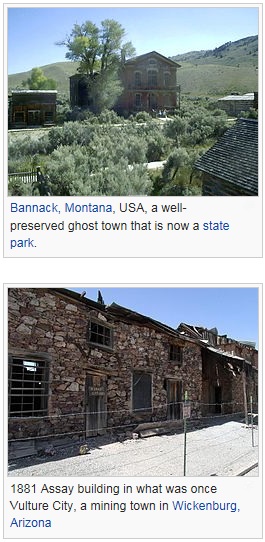
Some ghost towns, especially those that preserve period-specific architecture, have become tourist attractions. Some examples are Bannack, Montana; Calico, California; Centralia, Pennsylvania; and Oatman, Arizona in the United States; Barkerville, British Columbia in Canada; Craco in Italy; ElizabethBay and Kolmanskop in Namibia; and Pripyat in Ukraine. Visiting, writing about, and photographing ghost towns is a minor industry. A recent modern-day example is Ōkuma, Fukushima, which was abandoned due to the Fukushima Daiichi nuclear disaster in 2011. (Also see Battleship or Hashima Island in the Appendix-VIDEO below).

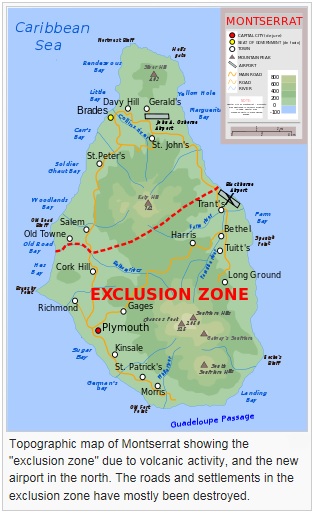
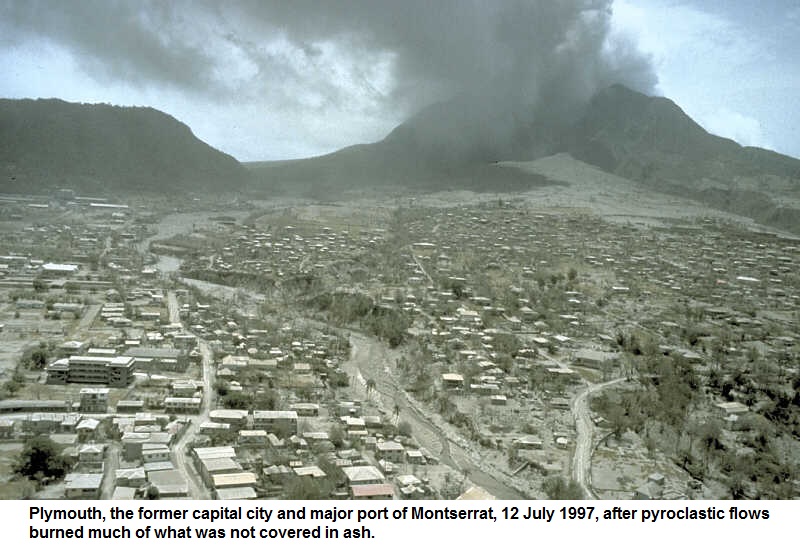
There is a ghost town that is an incumbent de jure capital: Plymouth in the Caribbean island of Montserrat*. This city was abandoned in 1997 due to volcanic eruptions and is now part of an Exclusion Zone.

CU Blog - Caribbean Ghost Towns - It Could Happen - Photo 2

CU Blog - Caribbean Ghost Towns - It Could Happen - Photo 6
(Source: http://en.wikipedia.org/wiki/Ghost_town retrieved February 11, 2015)

The book Go Lean … Caribbean stresses reboots, reorganizations and general turn-around of failing economic engines in favor of winning formulas. The book quotes a noted American Economist Paul Romer with this famous quotation:

“A crisis is a terrible thing to waste”.

The encyclopedic reference of ghost towns continues:

Ghost towns may result when the single activity or resource that created a boomtown (e.g., nearby mine, mill or resort) is depleted or the resource economy undergoes a “bust” (e.g., catastrophic resource price collapse). Boomtowns can often decrease in size as fast as they initially grew. Sometimes, all or nearly the entire population can desert the town, resulting in a ghost town.

The dismantling of a boomtown can often occur on a planned basis. Mining companies nowadays will create a temporary community to service a mine site, building all the accommodation shops and services, and then remove it as the resource is worked out. A gold rush would often bring intensive but short-lived economic activity to a remote village, only to leave a ghost town once the resource was depleted.

In some cases, multiple factors may remove the economic basis for a community; some former mining towns on U.S. Route 66 suffered both mine closures when the resources were depleted and loss of highway traffic as US 66 was diverted away from places like Oatman, Arizona onto a more direct path.

The Middle East has many ghost towns that were created when the shifting of politics or the fall of empires caused capital cities to be socially or economically non-viable, such as Ctesiphon, (a once great city of ancient Mesopotamia; today’s modern-day Iraq, Kuwait, and the northeastern section of Syria).

The Go Lean book posits that many Caribbean communities suffer from a mono-industrial complex (Page 3), therefore the risk is high for the same ghost town eventuality like so many other towns have experienced. Yes, ghost towns could happen in the Caribbean … again.

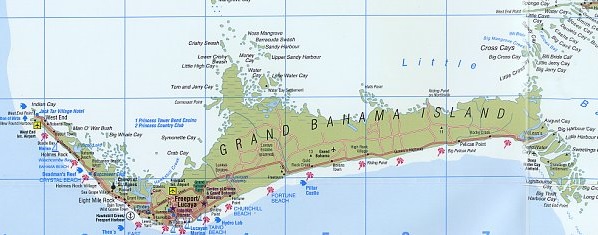
In fact, the 2nd city in the Bahamas, Freeport, on the island of Grand Bahama is experiencing a sharp decline in it’s economic output – where tourism is the primary industry – calculated at 66 percent decline from 2004 to 2013 for air arrivals. They are now near a failed-city status.

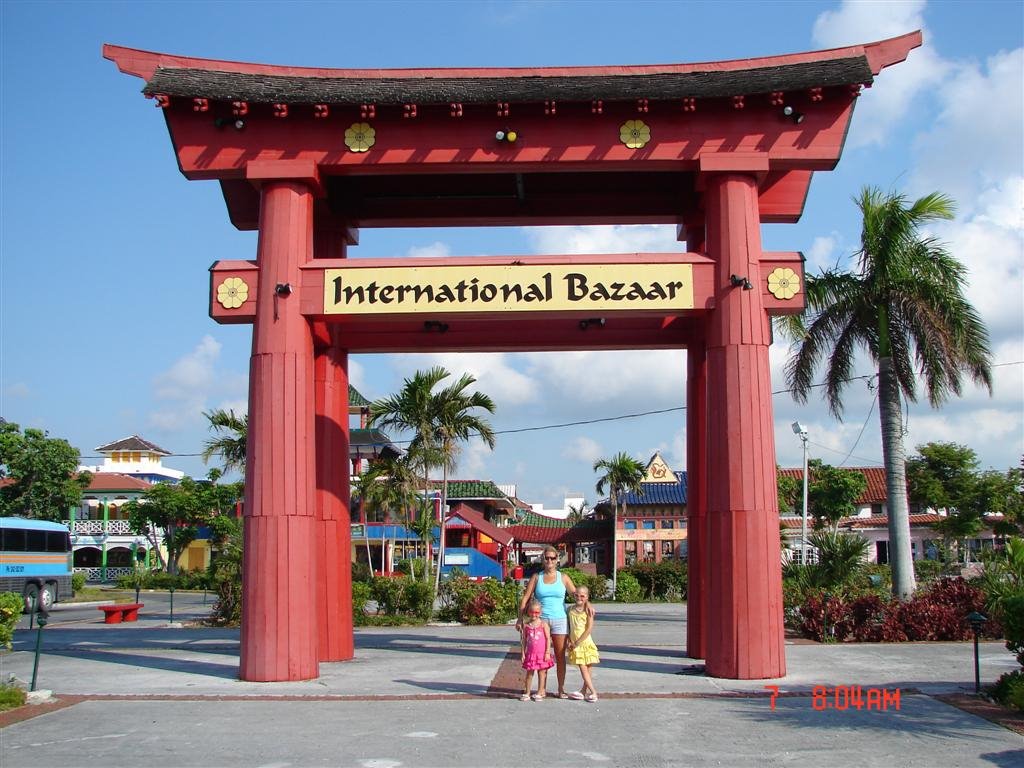
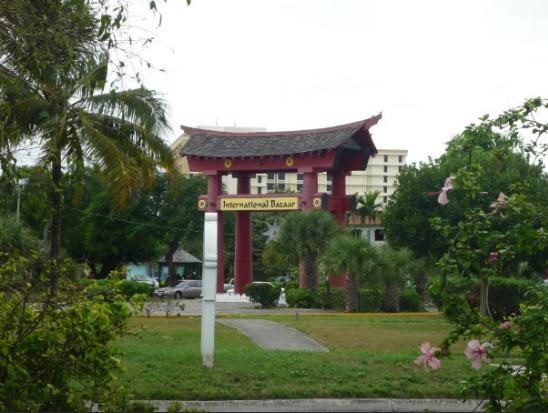
CU Blog - Caribbean Ghost Towns - It Could Happen - Photo 11Freeport’s tourism, which used to top over a million visitors a year – with air arrivals and cruise passengers – has considerably diminished since 2004, when two major hurricanes, Hurricane Frances and Hurricane Jeanne, hit the island; then the following year (2005), Hurricane Wilma reiterated more destruction to Freeport’s economic engines – many hotels shuttered their doors for good. Since then, several cruise ships also stopped their weekly visits to the island. Much of the remaining tourist industry is centered on the seaside suburb of Lucaya; in fact the city is often promoted as Freeport/Lucaya. Most remaining hotels on the island are located along the southern shore in Lucaya. The primary shopping venues for tourists used to be the popular International Bazaar near downtown Freeport, but now the focus has shifted to the Port Lucaya Marketplace, an outdoor mall-like complex near the beach-side hotel-resorts.

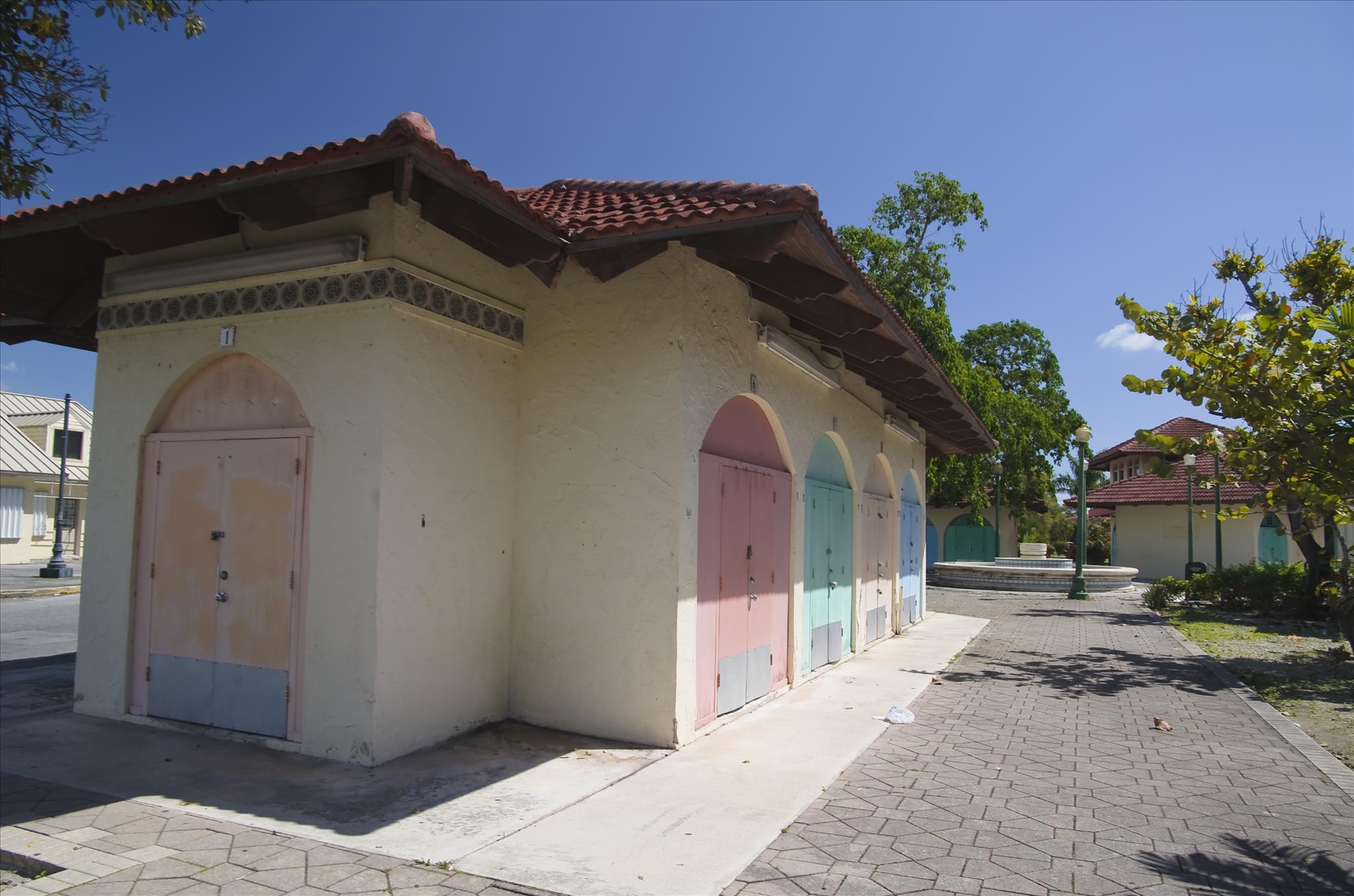
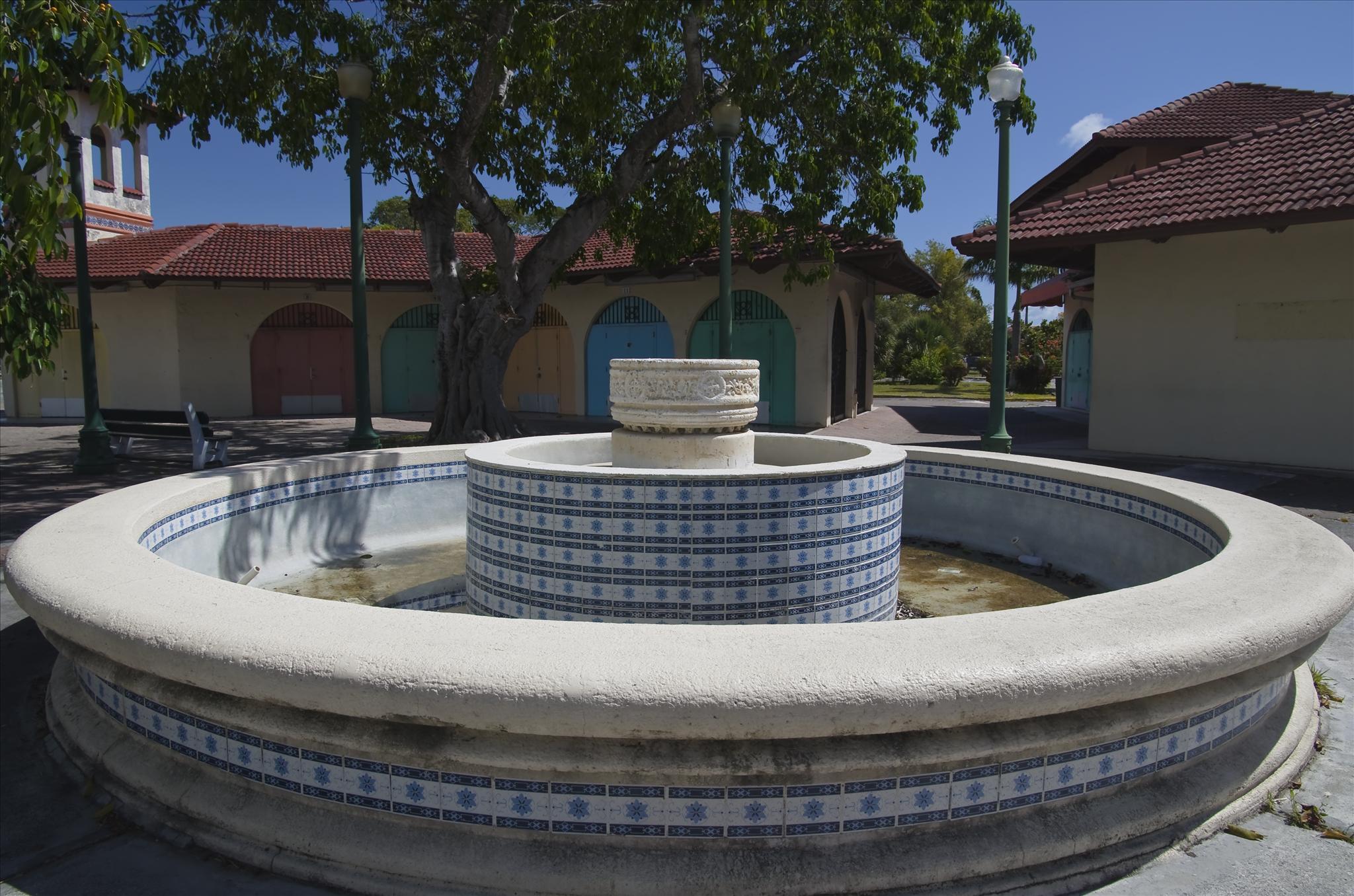
What of the current disposition of the International Bazaar in the downtown area? Unfortunately, the adjoining hotel-casino-resort, Royal Oasis, closed after the above hurricanes and never re-opened.  A local Bahamas photography magazine thusly dubbed the International Bazaar as a “ghost town”. (Retrieved February 11, 2015; article entitled: “The International Bazaar – The Lost Shopping Mecca”):

What happened to this marvelous structure? I do not know. What is its fate? I still do not know. What I do know: it is a sad day when one of the Bahamas’ greatest attractions has been reduced to a ghost town.  What I can tell you is that it seems as if the excitement has moved from the Bazaar to Port Lucaya. It is now the New Shopping Mecca of Grand Bahama.

Photo Caption: Freeport’s International Bazaar in it’s “Hey Day”

CU Blog - Caribbean Ghost Towns - It Could Happen - Photo 7

CU Blog - Caribbean Ghost Towns - It Could Happen - Photo 3

Photo Caption: Freeport’s International Bazaar Ghost Town Today

CU Blog - Caribbean Ghost Towns - It Could Happen - Photo 9

CU Blog - Caribbean Ghost Towns - It Could Happen - Photo 4

CU Blog - Caribbean Ghost Towns - It Could Happen - Photo 5

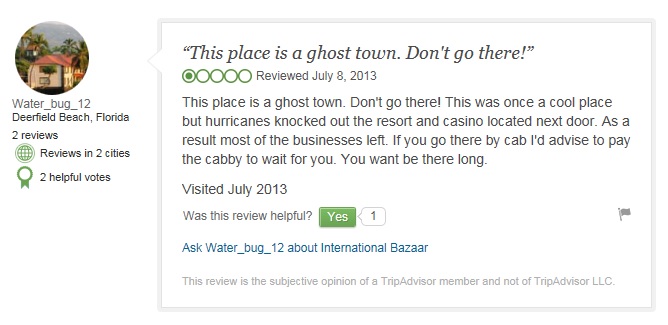
See TripAdvisor.com comments of disappointed visitors:

CU Blog - Caribbean Ghost Towns - It Could Happen - Photo 8

CU Blog - Caribbean Ghost Towns - It Could Happen - Photo 10

In fact, many more comments abound on the internet with “ghost town” comparisons for Freeport.

Freeport must now reboot, or face the eventuality: Ghost Town!

This sad reality of Montserrat and Freeport is an omen for the rest of the Caribbean.

The book Go Lean … Caribbean serves as a roadmap for the introduction and implementation of the technocratic Caribbean Union Trade Federation (CU). The CU is structured to turn-around failing Caribbean communities; it is proffered to provide economic, security and governance solutions for all 30 member Caribbean states, including Montserrat and Freeport. This mandate is detailed early on in the book’s Declaration of Interdependence, as follows (Page 12 & 13):

xii. Whereas the legacy in recent times in individual states may be that of ineffectual governance with no redress to higher authority, the accedence of this Federation will ensure accountability and escalation of the human and civil rights of the people for good governance, justice assurances, due process and the rule of law. As such, any threats of a “failed state” status for any member state must enact emergency measures on behalf of the Federation to protect the human, civil and property rights of the citizens, residents, allies, trading partners, and visitors of the affected member state and the Federation as a whole.

xix. Whereas our legacy in recent times is one of societal abandonment, it is imperative that incentives and encouragement be put in place to first dissuade the human flight, and then entice and welcome the return of our Diaspora back to our shores. This repatriation should be effected with the appropriate guards so as not to imperil the lives and securities of the repatriated citizens or the communities they inhabit…

The Go Lean book posits that failing Caribbean communities can be rescued, that if “we do what we have always done, we get what we have always got”. Therefore Caribbean communities must adopt different community ethos, plus the executions of key strategies, tactics, implementations and advocacies to bring about change, empowerment and turn-around . The following is a sample:

Community Ethos – Economic Principle – Economic Systems Influence Choices & Incentives Page 21
Community Ethos – Economic Principle – Voluntary Trade Creates Wealth Page 21
Community Ethos – Job Multiplier Page 22
Community Ethos – Lean Operations Page 24
Community Ethos – Ways to Impact the Future Page 26
Community Ethos – Ways to Help Entrepreneurship Page 28
Community Ethos – Ways to Impact Turn-Around – Recycling and Demolition Industries Page 33
Community Ethos – Ways to Impact the Greater Good Page 37
Strategy – Mission – Foster Local Economic Engines to Diversify the Economy Page 45
Tactical – Fostering a Technocracy Page 64
Tactical – Tactics to Forge an $800 Billion Economy – High Multiplier Industries Page 70
Tactical – Separation of Powers – Meteorological and Geological Service Page 79
Tactical – Separation of Powers – Self-Governing Entities Page 80
Implementation – Steps to Implement Self-Governing Entities Page 105
Implementation – Ways to Re-boot Freeport Page 112
Planning – Big Ideas – Virtual “Turnpike” Operations to Ensure Continued Relevance Page 127
Planning – Ways to Make the Caribbean Better Page 131
Planning – Ways to Improve Failed-State Indices Page 134
Planning – Lessons from East Germany Page 139
Planning – Lessons from Detroit – Model of City needing Turn-around Page 140
Advocacy – Ways to Grow the Economy Page 151
Advocacy – Ways to Create Jobs Page 152
Advocacy – Ways to Better Improve for Natural Disasters – Volcanoes and Hurricanes Page 184
Advocacy – Ways to Improve Emergency Management – Casualty Insurance to Rebuild Page 196
Advocacy – Ways to Impact Main Street Page 201
Appendix – Job Multipliers Page 259

Natural disasters are an inevitability in the Caribbean: earthquakes, volcanoes and hurricanes. We must insure and assure the business continuity of our communities’ economic engines. To recover, rebuild and reboot communities like Montserrat and Freeport after disasters, the burden or heavy-lifting should be spread across the full region, as leverage for all 30 member-states.

In order to avoid the pitfalls and eventuality of “ghost towns”, communities must diversify their economy. The Go Lean book also describes this heavy-lifting effort to facilitate this goal. The book describes the turn-by-turn directions for all the community stakeholders to follow to reach this goal, categorizing the effort as these 3 prime directives:

  • Optimization of economic engines in order to grow the regional economy to $800 Billion and create 2.2 million new jobs.
  • Establishment of a security apparatus to protect the resultant economic.
  • Improve Caribbean governance to support these engines.

In summary, ghost towns abound throughout the world, (see Appendix-VIDEO below), and can happen again here in the Caribbean region. A mono-industrial economy is bad; disaster  remediation and mitigations are good; diversity is good!

The CU will take the lead … for optimizing economic, security and governing engines. (Starting with a diversification from tourism). Everyone is hereby urged to lean-in to this CU/Go Lean roadmap to make the Caribbean a better place to live, work and play.  🙂

Download the book Go Lean … Caribbean – now!

———

Appendix*Plymouth, Montserrat

Montserrat is a British Overseas Territory located in the Caribbean. The island is located in the Leeward Islands chain of islands.[2] Montserrat is nicknamed The Emerald Isle of the Caribbean both for its resemblance to coastal Ireland and for the Irish ancestry of some of its inhabitants.[3]

Plymouth was the capital of the island of Montserrat. For centuries it had been the only port of entry to the island. On 18 July 1995, the previously dormant Soufrière Hills volcano, in the southern part of the island, became active.  Eruptions destroyed this Georgian era capital city and two-thirds of the island’s population was forced to flee.[6] The town was overwhelmed and was abandoned. The volcanic activity continues, even today, mostly affecting the vicinity of Plymouth, including its docking facilities, and the eastern side of the island around the former W.H. Bramble Airport, the remnants of which were buried by flows from volcanic activity on 11 February 2010.

An Exclusion Zone that extends from the south coast of the island north to parts of the BelhamValley was imposed because of the size of the existing volcanic dome and the resulting potential for pyroclastic activity. Visitors are generally not permitted entry into the exclusion zone, but an impressive view of the destruction of Plymouth can be seen from the top of Garibaldi Hill in IslesBay. Relatively quiet since early 2010, the volcano continues to be closely monitored by the Montserrat Volcano Observatory.

A new town and port is being developed at Little Bay, which is on the northwest coast of the island. While this construction proceeds, the centre of government and businesses rests new Village of Brades in the northen extremes of the island.

(Source: http://en.wikipedia.org/wiki/Montserrat retrieved February 11, 2015)

———

VIDEO: Battleship Island: Japan’s Ultimate Ghost Town – http://youtu.be/wHbQMhmsGPc

Uploaded on Dec 30, 2011 – This island – also known as Hashima Island is among the Japanese chain – sits 9 miles off the coast of Nagasaki. It was the administrative and residential base for undersea coal mines. As a ghost town it serves as a filming location for many projects, including serving as the inspiration for the external filming sets for the film Skyfall  – James Bond 007. For more stunning images of this Holy Grail of all industrial ruins, see: https://www.flickr.com/photos/picturenarrative/sets/72157628124548378/with/6388285131/


Share this post:
, , , , , ,
[Top]

The African Renaissance Monument

Go Lean Commentary

The commentaries of the Go Lean…Caribbean blogs have often addressed the Caribbean Diaspora. But for many people of Caribbean heritage, they are a member of a larger Diaspora, the African Diaspora. Every Caribbean member-state – except for the French Territory Saint Barthélemy and the new Indo-Guyanese immigrant reality – has a majority population of Black or African ethnicity. So most people of the region have been affected by events that took place in Western Africa during the Atlantic Slave Trade. Any symbolism or artistic expression commemorating this historic sacrifice of Africa to the Caribbean genome should be acknowledged, promoted and celebrated.

This prominent statue in Dakar, Senegal, the African Renaissance Monument, is the epitome of such a symbolism.

 CU Blog - The African Renaissance Monument - Photo 1

CU Blog - The African Renaissance Monument - Photo 2

CU Blog - The African Renaissance Monument - Photo 3

This monument should be a World Heritage Site.

This subject aligns with the book Go Lean…Caribbean which details a plan to promote World Heritage Sites (Page 248) in the Caribbean region. The book also asserts that there are good economic returns to be harnessed by communities investing in regional artists and the eco-systems surrounding the business of the arts.

This commentary continues that pattern, established in the book. The following encyclopedic details provides a role model for how the Caribbean can further develop this industry space:

Title: African Renaissance Monument – Source: Wikipedia Online Encyclopedia (Retrieved 02/08/2015 from: http://en.wikipedia.org/wiki/African_Renaissance_Monument)

The African Renaissance Monument is a 49m tall bronze statue located on top of one of the twin hills known as Collines des Mamelles, outside of Dakar, Senegal. Built overlooking the Atlantic Ocean in the Ouakam suburb, the statue was designed by the Senegalese architect Pierre Goudiaby after an idea presented by president Abdoulaye Wade (in office from year 2000 to 2012) and built by Mansudae Overseas Projects, a company from North Korea.[1] Site preparation on top of the 100-meter high hill began in 2006, and construction of the bronze statue began 3 April 2008.[2] Originally scheduled for completion in December 2009, delays stretched into early 2010, and the formal dedication occurred on 4 April 2010, Senegal’s “National Day”, commemorating the 50th anniversary of the country’s independence from France.[3] It is the tallest statue in Africa.

CU Blog - The African Renaissance Monument - Photo 4

CU Blog - The African Renaissance Monument - Photo 5

Construction

The monument is made of 3-centimetre thick metal sheets and depicts a family group emerging from a mountaintop: a full-length statue of a young woman, a man, and held aloft on the man’s raised left arm, a child resolutely pointing west towards the sea. Construction of the bronze statue group was carried out by the North Korean firm Mansudae Overseas Project Group of Companies.[4]

The project was launched by then Senegalese president Abdoulaye Wade who considered it part of Senegal’s prestige projects, aimed at providing monuments to herald a new era of African Renaissance.

Unveiling

On 3 April 2010, the African Renaissance Monument was unveiled in Dakar in front of 19 African heads of state, including President of Malawi and the African Union Bingu wa Mutharika, Jean Ping of the African Union Commission and the Presidents of Benin, Cape Verde, Republic of Congo, Ivory Coast, Gambia, Liberia, Mali, Mauritania and Zimbabwe, as well as representatives from North Korea, and Jesse Jackson and musician Akon, both from the United States.[3][5] Everyone was given a tour.[3][5]

President Wade said “It brings to life our common destiny. Africa has arrived in the 21st century standing tall and more ready than ever to take its destiny into its hands”.[6] President Bingu said “This monument does not belong to Senegal. It belongs to the African people wherever we are”.[7]

Criticism

Expense
Thousands of people protested against “all the failures of [President] Wade’s regime, the least of which is this horrible statue” on the city’s streets beforehand, with riot police deployed to maintain control.[3] Deputy leader of the opposition Ndeye Fatou Toure described the monument as an “economic monster and a financial scandal in the context of the current [economic] crisis”.

The colossal statue has been criticized for its cost at US$ 27 million (£16.6m).[1] The payment was made in kind, with 30 to 40 hectares of land that will be sponsored by a Senegalese businessman.[8]

Style
Senegalese opposition leaders have also questioned the style of the project, labelling it “Stalinist“, while art critics have pointed out that the body shapes are cartoon-like, with only vaguely African facial features.[1] It has also been suggested that the monument is a stark representation of the macho sexism of African authoritarian rulers.[9] The statue’s design has been derided internationally because of false claims of its Senegalese origin, actually having been designed by a Romanian architect and built by a North Korean sculpting company famous for various projects and large statues throughout Africa since the 1970s.[10] It was a poorly received piece by art critics around the world after its much-delayed unveiling in 2010, and has been compared by some to the infamous (and now-abandoned) Christopher Columbus statue project that was underway in Cataño, Puerto Rico in the late 1990s and early 2000s.[11] Local Imams (Islamic Spiritual Leaders) argue that a statue depicting a human figure is idolatrous, and object to the perceived immodesty of the semi-nude male and female figures.[12]

In December 2009, president Abdoulaye Wade apologised to Senegal’s Christian minority for comparing the statue to Jesus Christ.[1]

Revenue
The project has also attracted controversy due to Wade’s claim to the intellectual property rights of the statue, and insisting that he is entitled to 35 percent of the profits raised.[12] Opposition figures have sharply criticized Wade’s plan to claim intellectual property rights, insisting that the president cannot claim copyright over ideas conceived as a function of his public office.[13][1]

Local artists
Ousmane Sow, a world-renowned Senegalese sculptor, also objected to the use of North Korean builders, saying it was anything but a symbol of African Renaissance and nothing to do with art.[14]

The book Go Lean…Caribbean is a economic elevation roadmap for the Caribbean, not Africa. But there are many lessons for the Caribbean to glean from this African Renaissance Monument project: good, bad and ugly. Whereas, this monument project does not have the economic impact of the Statue of Liberty in New York Harbor, it has potential.

This discussion of “art in the public domain” is not just academic. Community pride, jobs, and the growth of the regional economy is involved. This point aligns with the objectives of the Go Lean book, in that it serves as a roadmap for the introduction and implementation of the technocratic Caribbean Union Trade Federation (CU). This effort will harness the individual genius abilities (micro) of artists so as to elevate the arts and the economic impact on their related communities (macros). To glean these economic benefits, the charter for the regional “art world” must be bigger than just sculpture; it must also include paintings, fashion, music, film and performing arts (dance & theater). The CU will employ strategies, tactics and implementations to impact its prime directives, defined with the following 3 statements:

  • Optimization of the economic engines in order to grow the regional economy to $800 Billion & create 2.2 million new jobs.
  • Establishment of a security apparatus to protect the resultant economic engines.
  • Improve Caribbean governance to support these engines.

The Go Lean book identified this vision early in the book (Page 13 & 14) in the following pronouncements in the Declaration of Interdependence:

Preamble: As the history of our region and the oppression, suppression and repression of its indigenous people is duly documented, there is no one alive who can be held accountable for the prior actions, and so we must put aside the shackles of systems of repression to instead formulate efficient and effective systems to steer our own destiny.
As the colonial history of our region was initiated to create economic expansion opportunities for our previous imperial masters, the structures of government instituted in their wake have not fostered the best systems for prosperity of the indigenous people.

xxi.      Whereas the preparation of our labor force can foster opportunities and dictate economic progress for current and future generations, the Federation must ensure that educational and job training opportunities are fully optimized for all residents of all member-states, with no partiality towards any gender or ethnic group. The Federation must recognize and facilitate excellence in many different fields of endeavor, including sciences, languages, arts, music and sports. This responsibility should be executed without incurring the risks of further human flight, as has been the past history.

xxxiii.      Whereas the cultural arts and music of the region are germane to the quality of Caribbean life, and the international appreciation of Caribbean life, the Federation must implement the support systems to teach, encourage, incentivize, monetize and promote the related industries for arts and music in domestic and foreign markets. These endeavors will make the Caribbean a better place to live, work and play.

The foregoing African Renaissance Monument is on the Eastern side of the Atlantic; there is also a monument effort on the Western side of the Atlantic: the “Vicissitudes” and other features in the Moilinere Bay Underwater Sculpture Park in the waters off the Caribbean island of Grenada. The voyage across the Atlantic was referred to as the Middle Passage, a segment in the Slave Trade Triangle. Many victims, African captives designated to be sold in slavery, did not survive the Middle Passage. The Vicissitudes are in honor of the African Ancestors who were thrown overboard during the voyage; (retrieved from: http://en.wikipedia.org/wiki/Molinere_Underwater_Sculpture_Park).

1. “Vicissitudes” – According to the primary professional Artist, British Sculptor Jason de Caires Taylor:

“Vicissitudes depicts a circle of figures, all linked through holding hands. These are life-size casts taken from a group of children of diverse ethnic background. Circular in structure … the work both withstands strong currents and replicates one of the primary geometric shapes, evoking ideas of unity and continuum. … The sculpture proposes growth, chance, and natural transformation. It shows how time and environment impact on and shape the physical body. Children by nature are adaptive to their surroundings. Their use within the work highlights the importance of creating a sustainable and well-managed environment, a space for future generations.”

2. Amateur Projects – Cast student faces in the side of a large underwater stone: Theophilus Albert Marryshow Community College

In March 2007, a project was initiated with Helen Hayward of T.A. Marryshow Community College (Grenada) to produce a series of works for the Molinere sculpture park. Workshops were planned with A-level Art and Design students; (senior exams – General Certificate of Education or GCE – from the University of London). Each student was required to produce a life cast of their face, to form an installation two meters deep around the shoreline of Molinere Bay.

The project aimed to encourage local artists to contribute further works to the site and provide a arena for communities to appreciate and highlight the marine processes evident in their local environment.

The students were taught a range of skills including life-casting, cement casting and sculpting. The final pieces were installed by Jason [de Caires Taylor] on 25th April 2007.

CU Blog - The African Renaissance Monument - Photo 6

CU Blog - The African Renaissance Monument - Photo 7

The following news article relates the coverage received at the project’s implementation:

Title: Underwater Sculpture Park off Grenada is stunning and unique
Sub-title: Jason de Caires Taylor is an internationally recognized sculptor with a difference.
(Source: http://www.telegraph.co.uk/news/earth/environment/3538787/Underwater-sculpture-park-off-Grenada-is-stunning-and-unique.html)

December 1, 2008 – Instead of bleak urban backdrops for his creations, [artist Jason de Caires Taylor] has crafted a stunning and unique underwater sculpture park in the shallow waters off the West Indies island of Grenada.

His desire to create striking and meaningful art forms and his love of the underwater world led him to explore the intricate relationships between art and the environment.

For Grenada, this has resulted in a series of beautiful marine seascapes that have formed a series of artificial reefs, drawing new life into areas which have been damaged by nature’s raw power and mans intervention.

Jason discusses his work in a video interview with Miranda Krestovnikoff, one of the UK faces of a new global web TV channel, The Underwater Channel.

Miranda, also a BBC One Show / Coast presenter, explores Jason’s motivations and shows footage of his installations demonstrating the beauty of the structures and the way they interact with their environment. In some zones, the shifting sands of the ocean floor can change the whole viewing experience from moment to moment.

The sculptures are sited in clear, shallow waters to allow easy access by divers, snorkellers and those in glass-bottomed boats. Jason is keen to engage local people, particularly children, in his work to build a direct relationship with and understanding of their own precious natural resource.

The physical nature of the underwater world is vastly different from that of dry land. Objects appear 25 per cent larger underwater, and as a consequence they also appear closer. Colours alter as light is absorbed and reflected at different rates, with the depth of the water affecting this further.

The large number of angles and perspectives from which the sculptures can be viewed increase the unique experience of encountering the works.

His first work, Grace Reef, was built in a bay where the coral growth and natural habitat had been decimated by Hurricane Ivan. It comprises 16 statues, each cast from a local Grenadian woman.

Located across an expansive underwater area the work draws marine life to a zone that has suffered substantial and sustained storm damage. The direction and strengths of currents mean that entire sections of the work become covered, hidden and lost. At other times figures emerge and are fully visible.

Another major work is Vicissitudes comprising the extraordinary visual impact of a circle of 26 life-size children of diverse ethnic background, all holding hands and facing outwards.

The cement finish and chemical composition of Vicissitudes actively promotes the colonisation of coral and marine life. This natural process echoes the changes experienced through growing up and shows how time and environment impact on and shape the physical body.

Children by nature are adaptive to their surroundings and their use within the work highlights the importance of creating a sustainable and well-managed environment, a space for future generations.

“This piece took six months to create and weighs about 15 tons” Jason tells Miranda. “Consequently I had to install it in sections and it attracted quite a lot of local attention as parts of it sat outside the front of my house!”.

Un-Still life is a beautiful depiction of the essence of growth and change in the marine environment which mirrors the composition of still life tableaux.

On a table is an arrangement of cement objects; a vase, bowl and fruit. In contrast to established ideas of stasis the work is constantly changing, remaining a work in progress as living coral builds layers onto its surface and marine creatures take up residence in its tiny nooks and crannies.

This colonization becomes a physical equivalent to the conventional development of drawing and painting.

Jason currently has 65 stunning installations in place. The majority of his work is in Grenada, but he also has additional projects in the UK and Europe. Contracts have been agreed for the first phase of a new underwater project in Mexico, placed within the National Marine Park of Cancun, Isla Mujeres and Nisuc. Jason works out of his studio in London.

VIDEO: Grenada Underwater Sculpture Park, Molinere Bay, Marine Protected Area, Grenada, West Indies – http://youtu.be/Zmy0o7Zk4wg

Published by Louis Kahn (c) on Apr 1, 2012 – Video shot while scuba diving in Grenada at the Underwater Sculpture
Park.

The African Renaissance Monument in Senegal should be a World Heritage Site.

The stunning and unique Underwater Sculpture Park in Grenada should be a World Heritage Site; and similar expressions should be duplicated throughout the Caribbean region.

Imagine eco-tourism tours, SCUBA divers, glass-bottom boats and sub-marines, to this site and other monuments erected in kind.

Previous Go Lean blog/commentaries related artistic endeavors in the region and how they have impacted the communities; consider this sample as follows:

https://goleancaribbean.com/blog/?p=3999 Sir Sidney Poitier – ‘Breaking New Ground’ in the Film Arts
https://goleancaribbean.com/blog/?p=3641 ‘We Built This City …’ on Music and Show-business
https://goleancaribbean.com/blog/?p=3568 Forging Change: Music Moves People
https://goleancaribbean.com/blog/?p=3292 Art Basel Miami – a Testament to the Spread of Art & Culture
https://goleancaribbean.com/blog/?p=2726 Caribbean Role Model for the Arts/Fashion – Oscar De La Renta: RIP
https://goleancaribbean.com/blog/?p=2415 How ‘The Lion King’ roared into history
https://goleancaribbean.com/blog/?p=1909 Music Role Model Berry Gordy – No Town Like Motown
https://goleancaribbean.com/blog/?p=1037 Humanities Advocate – Maya Angelou: RIP
https://goleancaribbean.com/blog/?p=866 Caribbean Music Man: Bob Marley – The legend lives on!

The Slave Trade and Middle Passage victimized millions of innocent people. The world must never forget the travesty and sacrifice of the African people. The Bible makes a related statement at Isaiah 56:5 (NET Bible): “I will set up within my temple and my walls a monument that will be better than sons and daughters. I will set up a permanent monument for them that will remain”.

Now is the time for all of the Caribbean to lean-in to the following community ethos, strategies, tactics, implementations and advocacies detailed in the book Go Lean … Caribbean to foster remembrances and memorials in the region:

Community Ethos – Deferred Gratification – African Diaspora Experience Page 21
Community Ethos – People Respond to Incentives in Predictable Ways Page 21
Community Ethos – Consequences of Choices Lie in the Future Page 21
Community Ethos – Return on Investments Page 24
Community Ethos – Ways to Foster Genius – High Art Intelligence Page 27
Community Ethos – Ways to Promote Happiness Page 36
Community Ethos – Ways to Impact the Greater Good Page 37
Strategic – Vision – Integrating Region in to a Single Market Page 45
Strategic – Mission – Preserve Caribbean Ecology Page 46
Tactical – Fostering a Technocracy Page 64
Tactical – Separation of Powers – Culture Administration Page 81
Tactical – Separation of Powers – Fairgrounds Administration Page 83
Implementation – Steps to Implement Self-Governing Entities (SGE’s) Page 105
Implementation – Ways to Deliver Page 109
Planning – 10 Big Ideas for the Caribbean Region Page 127
Planning – Ways to Make the Caribbean Better Page 131
Planning – Ways to Better Manage Caribbean Image Page 133
Advocacy – Ways to Grow the Economy Page 151
Advocacy – Ways to Create Jobs Page 152
Advocacy – Ways to Improve Governance Page 168
Advocacy – Ways to Improve Libraries – Creative Exhibits & Archives Page 187
Advocacy – Ways to Enhance Tourism – Eco-Tourism Page 190
Advocacy – Ways to Promote Fairgrounds – Art Colonies as SGE’s Page 192
Advocacy – Ways to Impact Public Works – Aesthetic & Practical Page 175
Advocacy – Ways to Better Manage Natural Resources – World Heritage Sites Page 183
Advocacy – Ways to Impact the Diaspora Page 217
Advocacy – Ways to Preserve Caribbean Heritage Page 218
Advocacy – Ways to Improve the Arts Page 230
Advocacy – Ways to Impact Urban Living – Access to the Arts and Culture Page 234
Advocacy – Ways to Promote World-Heritage-Sites – Petition UNESCO for more… Page 248
Appendix – Taos (New Mexico) Artist Colony Page 291
Appendix – List of 21 World Heritage Sites in the Caribbean region Page 330

Now is the time for all of the Caribbean, the people and governing institutions, to lean-in for the empowerments described in the book Go Lean…Caribbean. This is a big deal for regional artists and art institutions. This book provides the turn-by-turn directions for how to monetize the arts and foster genius potential. By pursuing the strategies, tactics, and implementations of this roadmap, we do not only impact the artists; we also impact the whole world.

“Artists have a unique power to change minds and attitudes” – President Obama urging to the Grammy’s audience (musical artists) on February 8, 2015.

The Caribbean needs change…and empowerments (jobs, economic growth and brand/image enhancement); plus we need to always remember the great sacrifices of the others that came before us, and those that did not survive.

🙂

Download the book Go Lean … Caribbean – now!

Share this post:
, , , ,
[Top]

New York Times Maledictions on The Bahamas

Go Lean Commentary

In this context, the word malediction simply means “bad” or “damning” words. It is not calling down a curse on a subject, but rather the reporting of an unbecoming characteristic. The Bahamas has done “bad” and the New York Times is telling the world.

But this is New York, not the Bahamas; why should this matter?

The New York Times is more than just the newspaper for the Tri-State metropolitan area surrounding New York City (35 million people); nicknamed for years as “The Gray Lady“, the New York Times is long regarded within the industry as a national “newspaper of record“.[6] The paper’s print version remains the largest metropolitan newspaper in the United States. Its motto is “All the News That’s Fit to Print”, which appears in the upper left-hand corner of the front page.CU Blog - NY Times Malecdiction on The Bahamas - Photo 7

If a student wants to do research on the 1892 American Recession for instance, (the paper has printed continuously since September 18, 1851), this one only has to retrieve the archives of the New York Times for that period.

Over its history, the New York Times has been awarded 114 different Pulitzer Prizes for Excellence in Journalism. Pulitzer Prizes have previously been awarded to journalists reporting on human trafficking and illegal migrations – See VIDEO below – it is an ignoble accomplishment to be put into this focus.

A front-page story, above the fold, about a small 320,000 populated nation in this paper is by all means an earth-shattering occurrence. Bahamas, you have done “bad” to garner this type of coverage, right in the middle of your #1 tourist market during the peak tourist season.

The article print date is Saturday January 31, only a few days after vicious Winter Storm Juno pelted the Northeast United States, (shutting down all of Manhattan), now to be followed by another (Artic Blast) storm currently lambasting the Mid-West (Chicago, Detroit, Cleveland, etc.) but heading eastward towards NYC. Drawing attention to a tropical resort destination like the Bahamas in the middle of such uninviting winter weather should be a bonus of free publicity. But alas, the New York Times article is a malediction!

This is also “on the heel” of a demand to “boycott Bahamas tourism” by certain fractions in Miami, Florida.

The purpose of this commentary is more than just newspapers and maledictions, but rather the acknowledgement that perhaps, the boycott-cause is gaining traction. Anyone from this Caribbean country, as is the case of this writer, may be timid with the characterization of supporting a cruel, inhumane – though legal – regime in his homeland. The constitution in the Bahamas do not award citizenship to babies born in the Bahamas to non-national parents. This is the standard – jus solis – in the US and in Canada. This standard obviously shades the American newspaper’s view of the Bahamas domestic policies.

There are so many issues with this New York Times story that aligns with the book Go Lean…Caribbean. The book serves as a roadmap for elevating Caribbean society and the economic, security and governing engines. The roadmap introduces the technocratic Caribbean Union Trade Federation (CU), asserting that the problems besetting the region are too big for any one Caribbean member-state to tackle alone. That rather, there is a need for a super-national solution. Considering the details of the following article, a number of countries have been struggling with this same issue: Bahamas, Turks & Caicos Island, Dominican Republic, etc. The actual New York Times story about Haitian immigrants is as follows:

Title 1: Immigration Rules in Bahamas Sweep Up Haitians
http://www.nytimes.com/2015/01/31/world/haitians-are-swept-up-as-bahamas-tightens-immigration-rules.html?mwrsm=Facebook&fb_ref=Default&_r=0
By: Frances Robles – January 30, 2015

NASSAU, BahamasKenson Timothee was walking down the street when a uniformed officer asked him a question that sends Bahamians of Haitian descent like him into a panic these days: Do you have a passport?

Mr. Timothee, who was born in the Bahamas to illegal Haitian immigrants, wound up jailed in immigration detention for six weeks. He is one of hundreds of people swept up in a fiercely debated new immigration policy in the Bahamas requiring everyone to hold a passport, a rule that human rights groups say unfairly targets people of Haitian descent.

CU Blog - NY Times Malecdiction on The Bahamas - Photo 2Mr. Timothee had proof that he was born in the Bahamas, but because he had trouble obtaining his absentee father’s birth certificate, his application for Bahamian citizenship was never completed.

“I showed them that I had applied for citizenship, but they said that wasn’t good enough; as far as they are concerned, you are not Bahamian, you are Haitian, and you need to get deported,” Mr. Timothee said. “I don’t know anything about Haiti.”

On Thursday, the Bahamian government announced that the new policy would go a step further: By next Fall, schools will be asked to ensure that every child has a student permit. The annual $125 permit and a passport with a residency stamp will be required even of children born in the Bahamas who do not hold Bahamian citizenship.

The tough new policy echoes similar stances around the region, where new citizenship policies and anti-immigration measures have overwhelmingly affected Haitians, who are fleeing the hemisphere’s poorest country and are the most likely group to migrate illegally in great numbers. The top court in the Dominican Republic ruled in 2013 that the children of illegal immigrants, even if they are born in the country, did not have the right to citizenship.

Facing an international backlash, the Dominican government came up with a plan to prevent tens of thousands of people from becoming stateless, but months later, few people had managed to complete the process. With few successes to tout, in October the Dominican government extended the application period for another three months.

In Turks and Caicos, a top immigration official vowed early in 2013 to hunt down and capture Haitians illegally in the country, promising to make their lives “unbearable.” The country had already changed its immigration policies in 2012, making it harder for children of immigrants to obtain residency. Last year, Turks and Caicos said it would deploy drones to stop Haitian migration.

In Brazil, politicians considered closing a border with Peru last year to stem the tide of Haitians, and last month, Canada announced that it would resume deporting Haitians.

Here in the Bahamas, Mr. Timothee’s arrest coincided with stepped-up immigration raids in predominantly Haitian shantytowns, where people who lacked passports or work permits were apprehended. When illegal immigrants ran from officers, the agents knocked down doors and took their children, and the photos of toddlers being carried away circulated widely on social media.

Since the policy took effect November 1, children born in the Bahamas have been deported with their parents, and others with Haitian-sounding names have been pulled from school classrooms, human rights observers said. The government acknowledges that even Bahamian citizens with French surnames are frequently arrested by mistake. In September alone, 241 Haitians were deported, according to government figures.

Though 85 percent of Bahamians support the new policy according to one poll, it has set off a round of international condemnation. A Florida legislator called for a tourism boycott of the Bahamas and organized a protest at the nation’s Miami consulate. Citing some of the more alarming cases, including that of a pregnant Haitian woman who gave birth on an immigration detention center floor aided only by other detainees, several international groups have asked the Inter-American Commission on Human Rights to intervene.

Immigration officials in the Bahamas say their policies do not target any particular group, provide a better sense of who is living in their country, and could deter thousands of Haitian migrants from taking to the high seas each year in boats that often sink.

“We had situations where 100 people were showing up every day; that’s unsustainable,” said Frederick A. Mitchell, the Bahamian foreign minister. “That situation had spiraled out of control.”

Annette M. Martínez Orabona, director of the Caribbean Institute for Human Rights, said she recently visited the Bahamas to investigate the new policy, arguing that it fit into a broad context of immigration crackdowns in the region.

“It’s all guided by discriminatory practices toward persons of Haitian origin,” she said.

Children like Mr. Timothee’s 5-year-old daughter are in a particularly precarious legal situation, she said. If nationality is passed down by blood and Mr. Timothee has no citizenship, then what passport would his daughter get?

“The third generation is in a black hole,” Ms. Martínez said.

In the Bahamas, the Constitution says that people born there to parents who were not citizens have the right to apply for citizenship between their 18th and 19th birthdays. In a country where one in 10 Bahamians is of Haitian descent, many people never apply, and others face years of administrative delays, leaving an untold number of people in the country without documentation.CU Blog - NY Times Malecdiction on The Bahamas - Photo 5

The new policy forces them to apply for a passport from their parents’ country of origin. Americans who have children in the Bahamas regularly get United States passports for them, and this is no different, Mr. Mitchell said.

“There’s nothing wrong with being Haitian,” Mr. Mitchell said.

But the people affected by the new policy are leery of obtaining citizenship from Haiti, a country most of them have never visited.

“It’s a trick,” said Fred R. Smith, a civil rights lawyer in the Bahamas who has become the policy’s most vocal critic. “Once you apply for a Haitian passport, you’re already a citizen of another country, and you no longer fit into a category where the Bahamas is under an obligation to give you citizenship. You are no longer stateless.”

He said the government had routinely descended on an area, apprehended a few hundred people, and “hauled off” anyone who could not produce papers on the spot. The majority of detainees are released when their relatives or employers come to the detention center with their paperwork.

CU Blog - NY Times Malecdiction on The Bahamas - Photo 3Some people have been deported even though they were born in the Bahamas. People like Mr. Timothee, whose citizenship status is pending, wind up in limbo. Others, like Rose St. Fleur, have been sent home with an admonishment to carry their paperwork.

Ms. St. Fleur, a 29-year-old Bahamian citizen, said she had been picked up twice since October. She was 32 weeks pregnant when neighbors watched agents drag her down the street onto a bus, she and her neighbors said.

“When they asked me my name and I told them, they said, ‘That’s a foreign last name,’ ” Ms. St. Fleur said. “I told them, ‘Yes, but I am a Bahamian citizen.’ ” She said they replied, “You still have to come with us.”

Many people have not been able to obtain documents because the paperwork required, including certified copies of both parents’ birth certificates, is difficult to obtain. The Haitian government, itself crippled by political infighting and a halting recovery from the earthquake five years ago, has been unable to speedily produce records for the hundreds of thousands of people in the Dominican Republic and the Bahamas who are suddenly in need of decades-old birth records.

Because of delays in obtaining Haitian passports, thousands of Bahamians are now at risk of having no nationality at all.

“The person who may have a delay in getting papers is not stateless,” Dwight L. Beneby, the Bahamas’ assistant director of immigration. “It’s not that we’re trying to get rid of people or trying to get out of giving them citizenship. If you are here, let’s know who you are.”

Francois Guillaume II, who was Haiti’s minister of Haitians living abroad when the policy was announced, said the new policy came without warning.

CU Blog - NY Times Malecdiction on The Bahamas - Photo 6“It’s troubling when we have cases of people who have never lived in Haiti and are sent to a country that is completely foreign to them,” said Mr. Guillaume, who lost his position in a recent ministerial shuffle. “It must be traumatizing for them.”

Most of the Bahamian-born deportees were children, but one was 18 years old, and it was unclear why she was not given the opportunity to seek legal residency, he said.

“I don’t think there is an anti-Haitian sentiment in the area; I believe there are countries experiencing social pressure and are trying to look for solutions,” Mr. Guillaume said. “Some solutions are rash. Sometimes they are politically motivated. Nonetheless, we hope the solutions respect international norms.”

Though the Bahamas immigration/nationality enforcement is “legal” per the country’s constitution, not everyone in the homeland approves of this policy. Note to the  New York Times: “The round-up of Bahamian-born Haitians is not universally concurred in the country”. This is a policy of the current government administration. There are non-government organizations (NGOs) and elected opposition officials that are vocal in their disagreements of this enforcement. (This Go Lean commentary remains apolitical). See a news article (snippet) here in that vein:

Title 2: Call To Bring Immigration Legislation to Parliament –
(Retrieved 01/30/2015 from: http://www.tribune242.com/news/2015/jan/30/call-bring-immigration-legislation/)

ST ANNE’S MP Hubert Chipman yesterday renewed calls for legislation to be brought to Parliament to support the government’s new immigration policy.

Mr. Chipman, shadow minister for foreign affairs and immigration, said the only person who had a clear understanding of the policy was Immigration Minister Fred Mitchell, and questioned how the new policy has affected the department’s backlog of citizenship applications.

He said officials have put the “cart before the horse” by targeting migrant communities before modernizing infrastructure to process individuals.

These articles reflect the heavy-lifting burdens that the Caribbean member-states must address regarding nationality and immigration. Underlying to this issue among all the affected Caribbean member-states is the failing disposition of Haiti. The Go Lean…Caribbean book presents a Marshall Plan to re-boot Haiti. The consequence: a better Haiti to live, work and play. Only then will the citizens of Haiti, and the Caribbean as a whole, be less inclined to flee the homeland.

The Go Lean roadmap provides perhaps the ultimate resolution to this perplexing nationality processing problem, that of a regional entity, the CU, to streamline application processing. This would be an extension of the current CariCom passport process.

A key problem with this nationality issue is the current sensitivities of Jus soli (Latin: right of the soil) versus Jus sanguinis (Latin: right of blood). These points were detailed in a previous blog.

In the middle of the winter, the New York Times should be inciting its readers to flee the bitter cold and enjoy the hospitality of the Bahamas, Turks & Caicos and the Dominican Republic, yet instead the front page article is exposing the human rights shortcomings of these states’ nationality policies.

The Go Lean book and blogs addresses ways to better protect human rights. While this subject is not tried-and-true economics – the usual focus of this roadmap –  there is a correlation of satisfactory human rights records and American trade. The roadmap seeks to elevate all the engines of Caribbean society for a better homeland for the 42 million residents and 80 million visitors, across the 30 member-states. The CU, applying best-practices for community empowerment and human rights, has the following 3 prime directives:

  • Optimization of the economic engines in order to grow the regional economy to $800 Billion & create 2.2 million new jobs.
  • Establishment of a security apparatus to protect the resultant economic engines.
  • Improve Caribbean governance, with consideration for minority equalization, to support these engines.

The Go Lean book details a series of community ethos, strategies, tactics, implementations and advocacies to optimize the region’s economic landscape:

Community Ethos – Economic Systems Influence Choices & Incentives Page 21
Community Ethos – Consequences of Choices Lie in the Future Page 21
Community Ethos – Anti-Bullying and Mitigation Page 23
Community Ethos – Minority Equalization Page 24
Community Ethos – Ways to Impact the Future Page 26
Community Ethos – Ways to Manage Reconciliations Page 34
Community Ethos – Ways to Impact the Greater Good Page 37
Strategy – Vision –  Integrate region into a Single Market Economy Page 45
Strategy – Agents of Change – Globalization Page 57
Tactical – Separation of Powers – Department of   Homeland Security Page 75
Implementation – Ways to Foster   International Aid Page 115
Planning – 10 Big Ideas … in the Caribbean Region – Haiti & Cuba Page 127
Planning – Ways to Ways to Model the EU – From Worst to First Page 130
Planning – Reasons Why the CU Will Succeed – Germany Reconciliation Model Page 132
Planning – Ways to Improve Failed-State Indices – Cuba & Haiti on the List Page 134
Planning – Lessons from East Germany – European post-war rebuilding Page 139
Planning – Lessons from the US Constitution Page 145
Planning – Lessons from Canada’s History Page 146
Advocacy – Ways to Grow the Economy Page 151
Advocacy – Ways to Create Jobs Page 152
Advocacy – Ways to Foster Empowering Immigration – Case Study of Indian Migrants Page 174
Advocacy – Ways to Impact Justice Page 178
Advocacy – Ways to Impact the Diaspora Page 217
Advocacy – Ways to Protect Human Rights Page 220
Advocacy – Ways to Re-boot Cuba Page 237
Advocacy – Ways to Impact the Dominican Republic Page 237
Advocacy – Ways to Re-boot Haiti Page 238

The message to the Caribbean leaders and planners is straight-forward: The US, New York Times and all American media, are watching and judging, based on their own standards. The goal of the Go Lean roadmap is to formulate the Caribbean region to be better American neighbors, a protégé status rather than the current parasite status. There is the need to re-focus on our populations in general – majority, minority, Black, White, French, English, etc.. Countries like the Bahamas, and Haiti for that matter, need “all hands on deck”, not less hands. Economic growth requires a growing population; (a previous report disclosed 70,000 Bahamians living illegally in the US).

We do not want to encourage migration nor facilitate it. Just the opposite, we simply want to encourage and facilitate citizens staying and contributing to their native homelands. We do not want to “fatten frogs for snake”, we want to elevate our own communities to be better places to live, work and play.

Now is the time for all the Caribbean to lean-in to this Go Lean roadmap for Caribbean economic, security and governance elevation. Now is the time for all of the Caribbean to learn the lessons from other communities, (think Apartheid in South Africa). It is guaranteed: once the human rights issues are resolved, your society/community will soar.

🙂

Download the book Go Lean … Caribbean – now!

———

APPENDIX – VIDEO: Pulitzer Prizes on Human Trafficking

Direct Link: http://www.nytimes.com/video/multimedia/100000002825879/reuters-journalist-jason-szep-celebrates-pulitzer-prize.html


Share this post:
, , ,
[Top]

State of the Caribbean Union

Go Lean Commentary

You are invited to watch the State of the Union address that President Barack Obama delivered to the US Congress on Tuesday night (January 20, 2015). You are urged to listen carefully and count the number of times the Caribbean is referred to. The answer:

Once!

The reference to the restoration of diplomatic relations with Cuba.

That’s it!

(The Guantanamo Bay Naval Base is a perpetual leased US territory; so it will not count as Caribbean-specific).

No reference to the US Territories (Puerto Rico and the Virgin Islands); no reference to the Dutch Caribbean; nor to the French Caribbean; and especially not to the English-speaking Caribbean member-states.

The truth of the matter is that the Caribbean is out-of-scope for Obama. It was the State of the Union of the United States of America. Not the State of the Caribbean Union. Even the US territories have to be concerned. They have a voice in the US Congress, but no vote. (A lesson in American Civics teaches that territories have Congressional representation that can vote in committees, but not vote in full Congress).

So all the President’s focus on job creation, energy independence, growing the economy, controlling healthcare costs, securing the homeland, and optimizing government was directed to his American constituency and not to the Caribbean member-states.

VIDEO Title: The State of the Union (SOTU) 2015 – http://youtu.be/cse5cCGuHmE
Watch President Obama’s 1-hour remarks during his 6th SOTU address and learn more below.

Published on Jan 20, 2015
President Barack Obama delivers his sixth State of the Union address, at the United States Capitol, January 20, 2015.

CU Blog - State of the Caribbean Union - Photo 1

CU Blog - State of the Caribbean Union - Photo 2

CU Blog - State of the Caribbean Union - Photo 3

CU Blog - State of the Caribbean Union - Photo 4

We, the Caribbean, are required to focus on the State of our own Union.

The people, the 320 million Americans, elect a President to pursue their best interest, not the world’s best interest. Though the US tries to be a Good Neighbor, there may be times when the priorities of the US conflict with the priorities of the Caribbean, or the rest of the world. In those scenarios, the President is under charge to pursue the American best option.

The 42 million people of the Caribbean homeland are not in his scope!

The foregoing VIDEO and this commentary is being brought into focus in a consideration of the book Go Lean … Caribbean. The book serves as a roadmap for the introduction and implementation of the technocratic Caribbean Union Trade Federation (CU), for the elevation of Caribbean society. This CU/Go Lean roadmap has these 3 prime directives:

  • Optimization of the economic engines in order to grow the regional economy to $800 Billion and create 2.2 million new jobs.
  • Establishment of a security apparatus to protect the resultant economic engines.
  • Improve Caribbean governance to support these engines.

The Go Lean book (Page 3) makes a simple assertion regarding the State of our Union: the Caribbean is in crisis. The book details that there is something wrong in the homeland, that while it is the greatest address in the world, instead of the world “beating a path” to these doors, the people of the Caribbean have “beat down their doors” to get out.
Why do people leave? The book identifies a number of reasons, classified as “push-and-pull”. There are economic (jobs and entrepreneurial opportunities), security and governance issues.

One mission of the Go Lean roadmap is to minimize these “push-and-pull” factors that contribute to this alarmingly high abandonment rate of Caribbean citizens – one report reflects a 70% brain drain rate.

Considering “pull” factors, the roadmap posits that the United States of America should not be viewed as the panacea for Caribbean ailments; that when the choice of any challenge is “fight or flight” that Caribbean society must now consider anew, the “fight” options. (No violence is implied, but rather a strenuous effort, heavy-lifting, to compete and win economic battles). One strong reason for cautioning Caribbean emigrants is that America is not so welcoming a society for the “Black and Brown” populations from the Caribbean. This was not addressed by Obama; he has to address the needs of all Americans – not just “Black and Brown” – racial discrimination have not been as high a priority among his initiatives, to the chagrin of many in the African-American communities, including the Caribbean Diaspora.

On the other hand, the Go Lean book does not ignore the “push” factors that cause many Caribbean people to flee. The book stresses (early at Pages 12 – 13) the need to be on-guard for “push” factors in these pronouncements in the Declaration of Interdependence:
xii.     Whereas the legacy in recent times in individual states may be that of ineffectual governance with no redress to higher authority, the accedence of this Federation will ensure accountability and escalation of the human and civil rights of the people for good governance, justice assurances, due process and the rule of law. As such, any threats of a “failed state” status for any member state must enact emergency measures on behalf of the Federation to protect the human, civil and property rights of the citizens, residents, allies, trading partners, and visitors of the affected member state and the Federation as a whole.

xix.    Whereas our legacy in recent times is one of societal abandonment, it is imperative that incentives and encouragement be put in place to first dissuade the human flight, and then entice and welcome the return of our Diaspora back to our shores. This repatriation should be effected with the appropriate guards so as not to imperil the lives and securities of the repatriated citizens or the communities they inhabit. The right of repatriation is to be extended to any natural born citizens despite any previous naturalization to foreign sovereignties.

xx.    Whereas the results of our decades of migration created a vibrant Diaspora in foreign lands, the Federation must organize interactions with this population into structured markets. Thus allowing foreign consumption of domestic products, services and media, which is a positive trade impact. These economic activities must not be exploited by others’ profiteering but rather harnessed by Federation resources for efficient repatriations.

xxi.    Whereas the preparation of our labor force can foster opportunities and dictate economic progress for current and future generations, the Federation must ensure that educational and job training opportunities are fully optimized for all residents of all member-states, with no partiality towards any gender or ethnic group. The Federation must recognize and facilitate excellence in many different fields of endeavor, including sciences, languages, arts, music and sports. This responsibility should be executed without incurring the risks of further human flight, as has been the past history.

xxvi.  Whereas the Caribbean region must have new jobs to empower the engines of the economy and create the income sources for prosperity, and encourage the next generation to forge their dreams right at home, the Federation must therefore foster the development of new industries, like that of ship-building, automobile manufacturing, prefabricated housing, frozen foods, pipelines, call centers, and the prison industrial complex. In addition, the Federation must invigorate the enterprises related to existing industries like tourism, fisheries and lotteries – impacting the region with more jobs.

This commentary previously related details of Caribbean emigration and their experiences (Diaspora), the “push-and-pull” factors in the US, and our region’s own job-creation efforts – State of Our Own Union. Here is a sample of earlier blogs:

https://goleancaribbean.com/blog/?p=3780 National Sacrifice: The Missing Ingredient – Caribbean people not willing to die or live in sacrifice to their homeland
https://goleancaribbean.com/blog/?p=3694 Jamaica-Canada employment program pumps millions into local economy
https://goleancaribbean.com/blog/?p=3662 Migrant flow into US from Caribbean spikes
https://goleancaribbean.com/blog/?p=3446 Forecast for higher unemployment in Caribbean in 2015
https://goleancaribbean.com/blog/?p=3050 Obama’s immigration tweaks – Bad for the Caribbean
https://goleancaribbean.com/blog/?p=2547 Miami’s Success versus Caribbean Failure
https://goleancaribbean.com/blog/?p=2251 What’s In A Name? Plight of “Black and Brown” in the US
https://goleancaribbean.com/blog/?p=1896 American “Pull” Factors – Crisis in Black Homeownership
https://goleancaribbean.com/blog/?p=1698 American “Pull” Factors – STEM Jobs Are Filling Slowly
https://goleancaribbean.com/blog/?p=1596 Book Review: ‘Prosper Where You Are Planted’
https://goleancaribbean.com/blog/?p=1433 Caribbean loses more than 70 percent of tertiary educated to Brain-Drain
https://goleancaribbean.com/blog/?p=1296 Remittances to Caribbean Increased By 3 Percent in 2013
https://goleancaribbean.com/blog/?p=1256 Traditional 4-year College Degree are Terrible Investments for the Caribbean Region Due to Brain-Drain

The Go Lean book and accompanying blogs posit that for the Caribbean Diaspora, fleeing from their homelands to reside in the US is akin to “jumping from the frying pan into the fire” in terms of effort to succeed and thrive in a community. The message of the Go Lean movement is that it takes less effort to remediate the Caribbean than to fix a new adopted homeland. While the Go Lean planners may not be able to change American society, we can – no, we must – impact our own society. This is the charge of the Go Lean…Caribbean roadmap, to do the heavy-lifting, to implement the organization dynamics to impact Caribbean society here and now. The following are the community ethos, strategies, tactics and operational advocacies to effectuate this goal:

Community Ethos – People Respond to Incentives Page 21
Community Ethos – Economic Systems Influences Choices & Incentives Page 21
Community Ethos – The Consequences of Choice Lie in the Future Page 21
Community Ethos – Job Multiplier Page 22
Community Ethos – Minority Equalization Page 24
Community Ethos – Lean Operations Page 24
Community Ethos – Ways to Foster Genius Page 27
Community Ethos – Ways to Improve Negotiations Page 32
Community Ethos – Ways to Impact the Greater Good Page 37
Strategy – Vision – Make the Caribbean the Best Address on Planet Page 45
Strategy – Mission – Repatriate Diaspora Page 46
Strategy – Mission – Dissuade Human Flight/“Brain Drain” Page 46
Tactical – Separation of Powers – Union versus Member-States Page 71
Implementation – Assemble CariCom, Dutch, French, Cuba and US Territories Page 95
Implementation – Enact Territorial Compacts for PR & the Virgin Islands Page 96
Implementation – Foreign Policy Initiatives at Start-up Page 102
Implementation – Ways to Deliver Page 109
Implementation – Reasons to Repatriate Page 118
Implementation – Ways to Benefit from Globalization Page 119
Implementation – Ways to Promote Independence Page 120
Planning – 10 Big Ideas for the Caribbean Page 127
Planning – Lessons from the US Constitution Page 145
Advocacy – Ways to Grow the Economy Page 151
Advocacy – Ways to Create Jobs Page 152
Advocacy – Ways to Improve Governance Page 168
Advocacy – Ways to Improve Homeland Security Page 180
Advocacy – Ways to Impact the Diaspora Page 217
Advocacy – Ways to Preserve Caribbean Heritage Page 218
Advocacy – Ways to Re-boot Cuba Page 236
Advocacy – Ways to Impact US Territories Page 244
Appendix – Interstate Compacts Page 278

This Go Lean book accepts that the current State of Our Own Union is not a permanent disposition. We can do better. This roadmap is a 5-year plan to effect change, to make our homeland a better place to live, work and play. From Day One/Step One, positive change emerges. The roadmap therefore serves as turn-by-turn directions for what-how-when-where-why to apply the needed remediation, mitigations and empowerments.

The scope of this roadmap is change for the Caribbean, not change for American society – though there is the need for some lobbying of American authorities for Interstate/Foreign Compacts (Page 278).

That’s lobbying, not begging

As for the Caribbean US territories – the great American Empire – having a voice, but no vote is disadvantageous. A Congressman from Nebraska would not negotiate with a Congressman from Puerto Rico because there is no vote to offer, compromise or “horse-trade”. American territories are therefore just traditional colonies, parasites and subjective to their imperial masters.

The Caribbean strives to be protégés, not parasites! We can be the world’s best address. How glorious the day when we can declare that as the State of the Caribbean Union!

Now is the time for all of the Caribbean, the people and governing institutions, to lean-in to this Go Lean … Caribbean roadmap. 🙂

Download the book Go Lean … Caribbean – now!

Share this post:
, , , , ,
[Top]

Lessons from the Swiss unpegging the franc

 Go Lean Commentary

The financial world is all abuzz regarding the move by the Switzerland National Bank to unpeg their currency from their default value tied to the Euro.

Change is afoot:

o CNBC – VIDEO: Swiss franc soars, stocks tank as euro peg scrapped

o Business Insider-UK: The Swiss Franc Is Out of Control

o Bloomberg: Swiss Franc Stages Historic Rally as SNB Move Shocks Market

o Wall Street Journal: Swiss Franc Remains at Sky-High Levels; Swiss Stocks Regain Some Stability

o Financial Times (London): Swiss franc fallout claims more casualties

o Business Insider Editorial: The Decision To Let The Swiss Franc Cause Market Chaos

There are winners and losers from this new move.

How does it relate to the Caribbean?

The Swiss franc is not one of our focused currencies; we get little tourism from that country in particular and we do little trade. Yet this move is HUGE for Caribbean consideration.

This article is in consideration of the book Go Lean…Caribbean; it serves as a roadmap for the introduction and implementation of the technocratic Caribbean Union Trade Federation (CU) and Caribbean Central Bank (CCB) to provide better stewardship, to ensure that the economic/currency failures of the past, in the Caribbean and other regions, do not re-occur here in the homeland.

This Economist article here explains more fundamental dynamics from this global-currency strategy-play:

Title: The Economist explains: Why the Swiss unpegged the franc
By: C.W.
CU Blog - Lessons from the Swiss unpegging the franc - Photo 1IN THE world of central banking, slow and predictable decisions are the aim. So on January 15th, when the Swiss National Bank (SNB) suddenly announced that it would no longer hold the Swiss franc at a fixed exchange rate with the Euro, there was panic. The franc soared. On Wednesday one Euro was worth 1.2 Swiss francs; at one point on Thursday its value had fallen to just 0.85 francs. A number of hedge funds across the world made big losses. The Swiss stock market collapsed. Why did the SNB provoke such chaos?

The SNB introduced the exchange-rate peg in 2011, while financial markets around the world were in turmoil. Investors consider the Swiss franc as a “safe haven” asset, along with American government bonds: buy them and you know your money will not be at risk. Investors like the franc because they think the Swiss government is a safe pair of hands: it runs a balanced budget, for instance. But as investors flocked to the franc, they dramatically pushed up its value. An expensive franc hurts Switzerland because the economy is heavily reliant on selling things abroad: exports of goods and services are worth over 70% of GDP. To bring down the franc’s value, the SNB created new francs and used them to buy Euros. Increasing the supply of francs relative to Euros on foreign-exchange markets caused the franc’s value to fall (thereby ensuring a Euro was worth 1.2 francs). Thanks to this policy, by 2014 the SNB had amassed about $480 billion-worth of foreign currency, a sum equal to about 70% of Swiss GDP.

The SNB suddenly dropped the cap last week for several reasons. First, many Swiss are angry that the SNB has built up such large foreign-exchange reserves. Printing all those francs, they say, will eventually lead to hyperinflation. Those fears are probably unfounded: Swiss inflation is too low, not too high. But it is a hot political issue. In November there was a referendum which, had it passed, would have made it difficult for the SNB to increase its reserves. Second, the SNB risked irritating its critics even more, thanks to something that is happening this Thursday: many expect the European Central Bank to introduce “quantitative easing”. This entails the creation of money to buy the government debt of Euro-Zone countries. That will push down the value of the Euro, which might have required the SNB to print lots more francs to maintain the cap. But there is also a third reason behind the SNB’s decision. During 2014 the Euro depreciated against other major currencies. As a result, the franc (being pegged to the Euro) has depreciated too: in 2014 it lost about 12% of its value against the dollar and 10% against the Rupee (though it appreciated against both currencies following the SNB’s decision). A cheaper franc boosts exports to America and India, which together make up about 20% of Swiss exports. If the Swiss franc is not so overvalued, the SNB argues, then it has no reason to continue trying to weaken it.

The big question now is how much the removal of the cap will hurt the Swiss economy. The stock market fell because Swiss companies will now find it more difficult to sell their wares to European customers (high-rolling Europeans are already complaining about the price of this year’s skiing holidays). UBS, a bank, downgraded its forecast for Swiss growth in 2015 from 1.8% to 0.5%. Switzerland will probably remain in deflation. But the SNB should not be lambasted for removing the cap. Rather, it should be criticized for adopting it in the first place. When central banks try to manipulate exchange rates, it almost always ends in tears.

Source: The Economist Magazine – Financial Weekly (Posted 01/18/2015) –
 http://www.economist.com/blogs/economist-explains/2015/01/economist-explains-13

CU Blog - Lessons from the Swiss unpegging the franc - Photo 2The Swiss National Bank is unlike other central banks because it is not owned by the Swiss government but is a listed company with shareholders that include Swiss administrative regions, known as cantons, as well other public bodies and private individuals. This arrangement provides a cool 1 billion francs ($1.15 billion) annually split between Switzerland’s 26 cantons in proportion to their populations and, most importantly, was considered a safe and reliable stream of income. In fact, according to the Swiss Central Bank, the dividend had been paid every year for over 100 years until a 2013 collapse in the price of gold hurt the bank’s gold asset holdings.

Here is where the lessons for the Caribbean magnify. The Swiss National Bank is a confederation, much like the Go Lean roadmap for the Caribbean Union, Caribbean Central Bank (CCB) and the Caribbean Dollar (C$). The roadmap calls for a cooperative entity of the existing Central Banks in the region; fostering interdependence for the regional Greater Good. There is now interconnectivity of the financial systems, bank/currency troubles in foreign countries easily become trouble for the Caribbean region. Though there is elasticity from these foreign financial centers, the Caribbean is big enough (42 million people in 30 member-states) to streamline its own viable currency/financial/securities market – just like the Swiss (a country of 8 million people but with a $680 Billion economy).

The Caribbean has had to learn hard lessons on currency, as many of the CU member-states have had to endure painful devaluations over the past decades – on more than one occasions. Any attempt to reboot Caribbean economic landscape must first start with a strenuous oversight of the C$ currency. Oversight would imply actions in offense and defense of our own currency. This is what the Swiss (SNB) has done in the foregoing articles. They were at the mercy of the Euro Zone, being pegged to the Euro, as the Euro moved up, the franc would move up; as the Euro moved down, the franc moved down. This parasitical elasticity undermined their independence and any discipline on their part was neutralized by the Euro Zone.

This is the exact position of the Caribbean today. Most Caribbean currencies are pegged to the US dollar. As the dollar rises and falls, so do Caribbean currencies. The US Dollar planners (Federal Reserve) do not have the Caribbean best-interest in mind; they have American self-interest in mind. Good for them; bad for us! Change has now come. A strong currency is a good thing! The Go Lean book strongly urges the region to overcome any “fear of math” because the C$ may become stronger in comparison to the US$. This is why e-Commerce and e-Payments schemes are strongly urged within the CU/Go Lean roadmap.

Early in the book, this need for regional stewardship of Caribbean currencies was pronounced (Declaration of Interdependence – Page 13) with these statements:

xxiv.    Whereas a free market economy can be induced and spurred for continuous progress, the Federation must install the controls to better manage aspects of the economy: jobs, inflation, savings rate, investments and other economic principles. Thereby attracting direct foreign investment because of the stability and vibrancy of our economy.

xxv.    Whereas the legacy of international democracies had been imperiled due to a global financial crisis, the structure of the Federation must allow for financial stability and assurance of the Federation’s institutions. To mandate the economic vibrancy of the region, monetary and fiscal controls and policies must be incorporated as proactive and reactive measures. These measures must address threats against the financial integrity of the Federation and of the member-states.

The Go Lean book, and previous blog/commentaries, stressed the key community ethos, strategies, tactics, implementations and advocacies necessary to establish the regional financial eco-systems for Caribbean self-determination. These points are detailed in the book as follows:

Community Ethos – Economic Principles – Economic Systems Influence   Individual Choices Page 21
Community Ethos – Economic Principles – Voluntary Trade Creates Wealth Page 21
Community Ethos – Economic Principles – Consequences of Choices Lie in   the Future Page 21
Community Ethos – Economic Principles – Money Multiplier Page 23
Community Ethos – Governing Principles – Lean Operations Page 24
Community Ethos – Governing Principles – Return on Investments Page 24
Community Ethos – Governing Principles – Cooperatives Page 25
Community Ethos – Ways to Impact the Future – Count on the Greedy to   be Greedy Page 26
Community Ethos – Ways to Impact the Greater Good Page 37
Strategy – Mission – Fortify the Stability of   the Securities Markets Page 45
Strategy – Provide Proper Oversight and Support for the Depository   Institutions Page 46
Strategy – e-Payments and Card-based Transactions Page 49
Tactical – Summary of Swiss Confederation and Other Models Page 63
Tactical – Growing the Economy – Minimizing Bubbles Page 69
Tactical – Separation-of-Powers – Depository Insurance &   Regulatory Agency Page 73
Anecdote – Turning Around CARICOM – Effects of 2008 Financial Crisis Page 92
Implementation – Assemble Caribbean Central Bank as a Cooperative Page 96
Implementation – Ways to Better Manage Debt – Optimizing Wall Street   Role Page 114
Planning – 10 Big Ideas – Single Market / Currency Union Page 127
Planning – Ways to Model the European Union Page 130
Planning – Lessons Learned from 2008 Page 136
Planning – Lessons Learned from New York City – Wall Street Page 137
Planning – Ways to Measure Progress Page 147
Anecdote – Caribbean Currencies Page 149
Advocacy – Ways to Grow the Economy Page 151
Advocacy – Ways to Control Inflation Page 153
Advocacy – Ways to Better Manage Foreign Exchange Page 154
Advocacy – Ways to Foster Cooperatives – Caribbean Central Bank Page 176
Advocacy – Ways to Foster Electronic Commerce Page 198
Advocacy – Reforms for Banking Regulations Page 199
Advocacy – Ways to Impact Wall Street Page 200
Appendix – Tool-kits for Capital Controls Page 315
Appendix – Lessons Learned from Floating the Trinidad & Tobago   Dollar Page 316
Appendix – Controlling Inflation – Technical Details Page 318
Appendix – e-Government and e-Payments Example: EBT Page 353

The points of effective, technocratic banking/economic stewardship, were further elaborated upon in these previous blog/commentaries:

https://goleancaribbean.com/blog/?p=3582 For Canadian Banks: Caribbean is a ‘Bad Bet’
https://goleancaribbean.com/blog/?p=3397 A Christmas Present for the Banks from the Omnibus Bill
https://goleancaribbean.com/blog/?p=3090 Lessons Learned – Europe Sovereign Debt Crisis of 2009
https://goleancaribbean.com/blog/?p=3028 Why India is doing better than most emerging markets
https://goleancaribbean.com/blog/?p=2930 ‘Too Big To Fail’ – Caribbean Version
https://goleancaribbean.com/blog/?p=2090 The Depth & Breadth of Remediating 2008 – Need for Command-and-Control
https://goleancaribbean.com/blog/?p=1014 Canadian View: All is not well in the sunny Caribbean
https://goleancaribbean.com/blog/?p=833 One currency, divergent economies
https://goleancaribbean.com/blog/?p=518 Analyzing the Data – What Banks learn about financial risks
https://goleancaribbean.com/blog/?p=378 US Federal Reserve Releases Transcripts from 2008 Meetings

The Caribbean dream is the coveted role of protégé to our North American and European trading partners, not the parasite role we have thus far assumed. But this is easier said than done, as the doing part requires heavy-lifting. But this plan is conceivable, believable and achievable. The Swiss, while not a member of the EU nor Euro Zone, provides such a great role model for the Caribbean:

Switzerland comprises four main linguistic and cultural regions: German, French, Italian and the Romansh unique dialect. Therefore the Swiss, although predominantly German-speaking, do not form a nation in the sense of a common ethnicity or language; rather, Switzerland’s strong sense of identity and community is founded on a common historical background, shared values such as federalism and direct democracy,[10] and Alpine symbolism.[11] 

Switzerland ranks high in several metrics of national performance, including government transparency, civil liberties, economic competitiveness, and human development. It has the highest nominal wealth per adult (financial and non-financial assets) in the world according to Credit Suisse and the eighth-highest per capita gross domestic product (GDP)  on the IMF list.[12][13] Swiss citizens have the second-highest life expectancy in the world. Zürich and Geneva each have been ranked among the top cities with the highest quality of life in the world; (Source: http://en.wikipedia.org/wiki/Switzerland).

All in all, the country is a great place to live, work and play.

On the other hand, the Go Lean book declares to “count on greedy people to be greedy” (Page 26). This situation is manifested here in the foregoing articles; investors will always exploit opportunities to maximize profits. Globalization affords options to move money from one financial “bucket” in one country to another “bucket” in another country. This exercise has affected many middle-wage jobs in developed lands. The end result, increased profits for the decision-makers, less jobs for the workers; thus a growing income inequality: so the “Rich” get richer, but the “Middle Class” get shrunk.

CU Blog - Lessons from the Swiss unpegging the franc - Photo 3We have so many lessons to learn from the Swiss in this mission to elevate Caribbean economic-security-governing engines. The Swiss Confederacy (circa 1300 – 1798) facilitated management of common interests and ensured peace on their important trade routes. The Swiss has demonstrated that a Permanent Union can facilitate the Greater Good for multiple states (26) in a geographical region. That’s the Old Lesson; based on the foregoing articles, there are now many new lessons; some good, some bad. Foreign currency (Fx) brokerage houses are suffering financial setbacks because of these sudden changes with the Swiss franc; with leverage and derivatives, the Fx industry has become one big gamble. This point impresses the lesson of how Fx speculators can manipulate a country’s currency – this plight previously afflicted individual Caribbean currencies (Page 149). But now we see the Swiss using their unified command-and-control to set their currency standards for their own best interest, not the profit motives of some external stakeholders. The Swiss are no parasites! They are protégés!

Switzerland has hereby demonstrated that having command-and-control is required for economic success. Lesson learned!

The Caribbean’s 30 member-states are urged to lean-in to this Go Lean confederation roadmap. This is the turn-by-turn directions, the heavy-lifting, to move the region to its new destination: a better homeland to live, work and play.  🙂

Download the book Go Lean … Caribbean – now!

Share this post:
, , , ,
[Top]

Concerns about ‘Citizenship By Investment Programs’

Go Lean Commentary

People come to the Caribbean for so many reasons. The book Go Lean…Caribbean cataloged 3 primary reasons: 1. Live, 2. Work, and 3. Play.

This last category is so vast that it covers the full scope of tourism: sun, sand, sea, surf, savor, salsa and smoke; (savor as in foods; salsa as in dance and smoke as in cigars). This is the region’s primary economic activity.  But now there are reports of a new attraction starting to emerge in certain Caribbean member-states:

Citizenship.

“Say it ain’t so?!?!”

There are reports that many newcomers are relocating to Caribbean member-states for other, sometimes nefarious, reasons: proximity (to other North American markets), legacy status (Overseas territory of European powers), favorable tax status, and lax governmental oversight. These occurrences have raised the ire of many developed nations (United States, Canada and the EU). There are concerns too for the planners of a new elevated Caribbean, the promoters of the book Go Lean … Caribbean. This book serves as a roadmap for the introduction and implementation of the technocratic Caribbean Union Trade Federation (CU); the purpose of which is to elevate Caribbean society, for all 30 member-states. The book does not ignore the subject of nationality and immigration, so reports of newcomers relocating to member-states just for citizenship purposes must be fully vetted.

Consider this article on this issue in St. Kitts & Nevis:

Title #1: US, Canada and EU monitoring St Kitts-Nevis citizenship programme, says opposition
By: Ken Richards, West Indies News Network; Posted: January 6 2015  – http://www.caribbeannewsnow.com/headline-US%2C-Canada-and-EU-monitoring-St-Kitts-Nevis-citizenship-programme%2C-says-opposition-24268.html

BASSETERRE, St Kitts (WINN) — There is fresh criticism of the St Kitts and Nevis citizenship by investment programme (CIP), following reports that the US Department of Treasury is closely monitoring the activities of a former Iranian national who now holds a St Kitts and Nevis passport.

According to the Treasury Department, 49-year-old Hossein Zeidi was responsible for converting foreign currency into US bank notes for delivery to the Iranian government.

Zeidi is reported to be among nine individuals and entities under surveillance pursuant to various Iran-related regulations.
They are accused by the US of supporting Iranian government sanctions evasion efforts.

The US Treasury Department says that Zeidi holds a St Kitts and Nevis passport, number RE0003553.

- Photo 1Team Unity leader Timothy Harris is reiterating the opposition group’s concern about such developments, and the impact they are having on the CIP.

He recalled that the Americans had issued an advisory last May against the federation’s citizenship programme.

“It is therefore reasonable that that department will continue to pursue the activities of the citizenship by investment programme and of the government officials in particular,” Harris told WINN FM.

“We know for sure that the US Treasury Department continues to be interested in the CIP programme, continues to be interested in the cavalier manner in which our passports are being sold like black pudding on a Saturday,” the MP who heads the opposition alliance said.

According to Harris, Canada and the European Union are also monitoring the St Kitts and Nevis programme.

The US Treasury Department gave no details as to how Zeidi had in his possession a St Kitts-Nevis passport, but the twin island Federation provides citizenship to foreigners who make significant investments in the country.

Treasury Department officials claim that the Iranian government contracted with Zeidi and Seyed Kamal Yasini to convert Iranian funds denominated in non-Iranian local currency into US dollars.

According to the Americans, these individuals and their network have to date effected the delivery of hundreds of millions of dollars in US dollar bank notes to the Iranian government in violation of existing sanctions.

Republished with permission of West Indies News Network

Consider too, this older article of this issue in the Turks & Caicos Islands:

Title #2: British government refutes Turks and Caicos economic citizenship claim
By: Caribbean News Now contributor Published on April 18, 2014; retrieved January 13, 2015 from: http://www.caribbeannewsnow.com/topstory-British-government-refutes-Turks-and-Caicos-economic-citizenship-claim-20771.html

- Photo 3PROVIDENCIALES, Turks and Caicos Islands — Britain’s Home Office has refuted a claim by promoters of a resort in the Turks and Caicos Islands (TCI) that investors are eligible to apply for a British Overseas Territory Citizen passport, thereby enabling the holder to reside in the UK.

In a press release on Monday entitled “Eligibility for British Overseas Territory Citizen passport … with Turks and Caicos resort project”, Asia Pacific Investment House claimed that “Investors in Caicos Beach Club Resort and Marina are eligible to apply for a permanent residency certificate and British Overseas Territory Citizen passport, enabling the holder to reside in the UK, making this a highly coveted investment opportunity.”

However, according to Tom Lawrence, at the Home Office Communications Directorate in London:

  • Eligibility for British Overseas Territory Citizenship ((BOTC) is governed by the British Nationality Act 1981. Citizenship is granted by the governor of the territory and OverseasTerritories are not able to grant BOTC status other than in accordance with that Act.
  • Residency and other requirements for BOTC status apply, so anyone who has not lived lawfully in the territory for a number of years is unlikely to qualify.
  • Criteria for the grant of BOT Citizenship include residence requirements, a good character requirement and an intention to make the principal home within the relevant territory.
  • Generally, the residency requirements are for a minimum of five years residence immediately preceding the application, during which total absences must not exceed 450 days with a maximum of 90 days absence in the last year. The applicant must not have been in breach of immigration rules at any time during those five years and the last year of residence must have been free of any immigration control.
  • BOTCs do not have the right of abode in the UK unless they later become British citizens.

“There is no direct route to BOTC and the investor will have to meet the eligibility requirements as noted,” Neil Smith, the TCI governor’s spokesman, confirmed.

Asia Pacific Investment House, which describes itself as “a leading venture capital company, registered in the offshore regime of the British Virgin Islands, with its operating HQ in Singapore’s financial district”, did not respond to requests for comment.

It is not known at this time if the British and/or TCI authorities will take action in relation to these apparently false claims targeting uninformed investors.

There is a consistent pattern here, in order to attract Foreign Direct Investments (FDI), Caribbean politicians, administrators or business/investment development specialists make promises related to easy citizenship. This is definitely a wrong community ethos!

There are other Caribbean member-states that have Citizenship by Investment Programs established (or proposed):

* The first persons to attain Antigua & Barbuda citizenship under the Citizenship by Investment Programme was George Georges and his family of four, Syrian nationals.

- Photo 2

“Other countries (Australia, Belgium, Portugal, Singapore, Spain the UK and the US) provide an alternate approach, temporary residence permits or “golden visas” to wealthy individuals in return for investment. Applicants can often receive permanent residency through such schemes by sustaining their investment through a period of two to five years, but the aforementioned Caribbean nations typically offer cheaper and almost immediate routes to full citizenship in exchange for a one-off investment. In St. Kitts & Nevis, for example, the entire process, including background checks, takes as little as 90 days”. (Source: Nearshores Americas). “Most countries withhold official data regarding the number of people who have become citizens through CIPs or the amount of FDI recouped, but Henley and Partners$  [(Professional Residency & Citizenship Advisors with offices in 25 countries)] estimate that such schemes generate US$2 billion a year worldwide. Unsurprisingly, cash-strapped Caribbean countries that are often overly reliant on tourism have been quick to take notice”.

When factoring in the recent publicity of the harsh treatments to boat-bound refugees, these lax CIPs give the impression that citizenship in the Caribbean is For Sale; that there is no concern for human rights for certain refugees (Haitian, Cubans, Jamaicans, etc.); but let someone show up with some money then the nationality doors are wide open. This too is wrong!

In a previous blog commentary, the increased migrant flow of Caribbean refugees were detailed.  Also, the current conflict in the Bahamas, with the accusations of human rights abuses from the Haitian-American Diaspora in Miami was also thoroughly addressed.

The One Percent versus the 99 Percent; the “Have’s versus the Have-Not’s”! So many Failed-State images# come to mind. The Go Lean book qualifies the characteristics of Failed-States (Page 272-273); these 2 attributes here are most prominent:

  • Uneven Economic Development Along Group Lines (UED)
  • Rise of Factionalized  Elites (FE)

The Go Lean roadmap seeks to elevate the Caribbean, in its entirety. The impressions of some “Banana Republic” – Failed-State – are unbecoming! It undermines legitimate investment in the region and the worthiness of natives from these Caribbean islands when they travel abroad. The occurrence of some “Citizenship for Hire” practice for some Caribbean state automatically draws scorn for other nearby states. Truthfully, the rest of the world does not know the difference of St. Kitts versus St. Vincent, or the Turks/Caicos Islands versus the Bahama Islands. All of these Caribbean member-states are in the “same boat”, and are judged by the same yardstick.

Change has now come to the Caribbean! This is the call for greater accountability/transparency on a regional basis.

Why should the CU be charged with responsibility in this area? Does this not relate to individual sovereignty? “Mind your own business” – may be a logical retort from member-states criticized for their citizenship/nationality practices.

The Go Lean book relates an opening declaration that the Caribbean is in crisis and that these geographic neighbors must band together – confederate – to mitigate these common problems with superlative solutions, on the regional basis. This need was pronounced early in the book in the Declaration of Interdependence (Page 10 – 14) with these statements:

Preamble: While the laws of nature and of nature’s God entitle us to form a society and a brotherhood to foster manifestations of our hopes and aspirations and to forge solutions to the challenges that imperil us, … our rights to exercise good governance and promote a more perfect society are the natural assumptions among the powers of the earth, no one other than ourselves can be held accountable for our failure to succeed if we do not try to promote the opportunities that a democratic society fosters.

xi.  Whereas all men are entitled to the benefits of good governance in a free society, “new guards” must be enacted to dissuade the emergence of incompetence, corruption, nepotism and cronyism at the peril of the people’s best interest. The Federation must guarantee the executions of a social contract between government and the governed.

xii. Whereas the legacy in recent times in individual states may be that of ineffectual governance with no redress to higher authority, the accedence of this Federation will ensure accountability and escalation of the human and civil rights of the people for good governance, justice assurances, due process and the rule of law. As such, any threats of a “failed state” status for any member state must enact emergency measures on behalf of the Federation to protect the human, civil and property rights of the citizens, residents, allies, trading partners, and visitors of the affected member state and the Federation as a whole.

xxiii.    Whereas many countries in our region are dependent Overseas Territory of imperial powers, the systems of governance can be instituted on a regional and local basis, rather than requiring oversight or accountability from distant masters far removed from their subjects of administration. The Federation must facilitate success in autonomous rule by sharing tools, systems and teamwork within the geographical region.

xxiv.    Whereas a free market economy can be induced and spurred for continuous progress, the Federation must install the controls to better manage aspects of the economy: jobs, inflation, savings rate, investments and other economic principles. Thereby attracting direct foreign investment because of the stability and vibrancy of our economy.

The Go Lean book and blogs posit that the problems of the Caribbean are too big for any one member-state to tackle alone; rather there is the need for a regional technocratic solution; thus the CU. Only then can all 30 Caribbean member-states in the homeland be a better place to live, work and play for all of its stakeholders: 42 million residents; 80 million visitors; 10 million Diaspora; countless Foreign Direct Investors.

The CU, applying best-practices for advanced governance and agile deliveries would facilitate these 3 prime directives:

  • Optimization of the economic engines in order to grow the regional economy to $800 Billion & create 2.2 million new jobs.
  • Establishment of a security apparatus to protect the resultant economic engines.
  • Improve Caribbean governance, with consideration for minority equalization, to support these engines.

How exactly can the CU impact the citizenship/nationality practices in the region?

The Go Lean book, and previous blog/commentaries, stressed key community ethos, strategies, tactics, implementation and advocacies necessary to effect change in the region, to improve the regional stewardship over Caribbean society. They are detailed as follows:

Community Ethos – Economic Systems Influence Choices & Incentives Page 21
Community Ethos – Consequences of Choices Lie in the Future Page 21
Community Ethos – Minority Equalization Page 24
Community Ethos – Ways to Impact the Future Page 26
Community Ethos – Ways to Foster Genius Page 27
Community Ethos – Ways to Help Entrepreneurship Page 28
Community Ethos – Ways to Impact Research & Development – Invited SGE’s Page 30
Community Ethos – Ways to Impact the Greater Good Page 37
Strategy – Vision –  Integrate region into a Single Market Economy Page 45
Strategy – Mission –  Invite empowering immigrants for economic benefits Page 46
Strategy – Customers – Foreign Direct Investors Page 48
Strategy – Agents of Change – Globalization Page 57
Tactical – Fostering a Technocracy Page 64
Tactical – Separation of Powers – Department of Justice Page 77
Tactical – Separation of Powers – Department of State – SGE’s & One Percent Liaison Page 80
Implementation – Steps to Implement Self-Governing Entities – Ideal for FDI Page 105
Implementation – Ways to Foster International Aid – CariCom versus CU Page 115
Planning – 10 Big Ideas … in the Caribbean Region – Confederation without Sovereignty Page 127
Planning – Ways to Better Manage Image Page 133
Planning – Ways to Improve Failed-State Indices – Guard against Encroachments Page 134
Planning – Ways to Measure Progress Page 147
Advocacy – Ways to Grow the Economy Page 151
Advocacy – Ways to Create Jobs Page 152
Advocacy – Ways to Better Manage the Social Contract – Failed-State Indices Movements Page 170
Advocacy – Ways to Foster Empowering Immigration – FDI Time, Talent & Treasuries Page 174
Advocacy – Ways to Impact Justice – Federal Accountability Page 178
Advocacy – Ways to Protect Human Rights Page 220
Advocacy – Ways to Impact the One Percent Page 224
Appendix – Failed State Indicators and Definitions for the CU Page 271

All of the Caribbean needs to deal with these domestic issues … now! But some issues, due to image, public relations or quest for justice, should be managed with special care.

In the legal arena – juris prudence – there is an arrangement referred to as a Special Prosecutor. This allows for a detached, objective view of issues of Justice. (In the US for many decades, Naturalization and Citizenship processing was managed by the federal Department of Justice).

The Go Lean/CU roadmap has a similar proposed solution: facilitating the Proxy and e-Government processing at the CU level on behalf of member-states – thereby removing the subjectivity and bias to the citizenship/nationality process. Each state sets their criteria and the CU technocracy simply provides the processing, with full accountability and transparency; no appearance of bribery, corruption and creating eligible voters just in time for elections.  Already there is an eco-system with the issuance of CariCom passports. Step One/Day One of the Go Lean roadmap is the assembly of CariCom organs into the CU Trade Federation. Any one passport issued by a CariCom country is automatically respected by other CariCom countries.  So “mind your own business” cannot be considered a valid response.

If Caribbean people want change, progress, empowerment, growth, jobs, justice, security and equality, then this move of deputizing “nationality process” to the federal level is simply the “price that must be paid”.

Now is the time for all of the Caribbean to lean-in for the empowerments described in the book Go Lean … Caribbean. This is Big Deal for the region as real solutions can finally be realized. Then we can present to the world that while the Caribbean homeland is Not For Sale, it is truly a better place to live, work, and play. 🙂

Download the free e-Book of Go Lean … Caribbean – now!

————

# Appendix: Failed-State Indicators & Definitions

a. UED – Uneven Economic Development Along Group Lines

When there are ethnic, religious, or regional disparities or inequalities, governments tend to be uneven in their commitment to the social contract. There may be group-based inequality, or perceived inequality, in areas like education and economic opportunities. Uneven economic empowerments are manifest in group-based impoverishments as measured by poverty levels, infant mortality rates, educational levels, etc. The end result may be the rise of communal nationalism, based on real or perceived group inequalities.

This indicator include pressures and measures related to:

Income Share of Highest 10%; Income Share of Lowest 10%; Urban-Rural Service Distribution; Slum Population

b. FE – Rise of Factionalized Elites

When local and national leaders engage in deadlock and brinksmanship for political gain, this undermines the social contract. The brinkmanship may be expressed with nationalistic political rhetoric by ruling elites, often in terms of communal irredentism (e.g., a “greater Serbia” to annex neighboring lands with Serbian ethnics) or of communal solidarity (e.g., “ethnic cleansing” or “defending the faith”). With the absence of legitimate leadership widely accepted as representing the entire citizenry, the result may be fragmentation of ruling elites and state institutions along ethnic, class, clan, racial or religious lines.

This indicator include pressures and measures related to:

Power Struggles; Defectors; Flawed Elections; Political Competition.

$ Appendix VIDEO: Henley & Partners – The Firm of Global Citizens – http://youtu.be/XoBcb4qLn1s

Published on May 7, 2014 – Henley & Partners is the global leader in residence and citizenship planning … The firm also runs an industry-leading government advisory practice.


Share this post:
, , ,
[Top]