Tag: STEM

Floods in Minnesota, Drought in California – Why Not Share?

 Go Lean Commentary

Millions across Minnesota are in the middle of a flooding disaster as a severe storm system moves over the central U.S.. See this VIDEO:

VIDEO – CBS News; posted June 23, 2014; retrieved June 27 from: http://www.cbsnews.com/videos/minnesota-communities-face-weeks-of-flooding/
Title: Minnesota communities face weeks of flooding

(VIDEO plays best in Internet Explorer).

At the same time, California continues to endure serious drought conditions. Many feel, though not supported by the facts, that this may be the worst drought in California history. See the aligning VIDEO here:

VIDEO – Win Rosenfeld, NBC News; posted June 2, 2014; retrieved June 27 from: https://www.youtube.com/watch?v=Gx7vFqU8iGY
Title: California’s Drought History | Debunker

So on the one hand, part of the United States is experiencing too much water and in other parts of the country, too little water. This is Climate Change 101. If only, there would be some equalizing between “the feast and the famine” with water.

This was the point/comment of one viewer of the CBS News Video:

Why are we not building a WATER PIPELINE from these flood prone areas to the parched West and South?!?!? If we can afford an OIL pipeline all the way to the southern gulf, we can definitely build a desperately needed pipeline for water! – By: uberengineer – June 24, 2014

This comment was spot on! According to the book Go Lean … Caribbean, pipelines can be strategic, tactical and operationally efficient. They can mitigate challenges of Mother Nature, create jobs and grow the economy at the same time.

The Go Lean book identifies that there are “agents-of-change” that our world have to now contend with. Proactively managing the cause-and-effect of these agents can yield great benefits and alleviate much suffering. The agents-of-change for the Caribbean are identified as follows:

Technology
Aging Diaspora
Climate Change
Globalization

If the suggestion of above commentator Uber Engineer is to be seriously considered in the US, this would fall under the scope of the US federal government as two states California and Minnesota are involved – neither state has jurisdiction over the other. Plus, the many states in between (Iowa, Nebraska, Colorado, Utah and Nevada) where a pipeline would traverse would also have to be factored into the equation. Under US law this approach is called an Interstate Compact. Uber Engineer is right! This pipeline strategy is already being deployed for oil in the US with the TransCanada Keystone [a] Pipeline project, running from southern Canada down to the Gulf of Mexico; (see route map in the photo).

The question is: who can contemplate such a solution for the Caribbean marketplace? The Go Lean book posits that Climate Change is wreaking havoc on Caribbean life as well and that Caribbean stakeholders must proactively consider the benefits of pipeline deployments in the region. This book purports that a new technology-enhanced industrial revolution is emerging, in which there is more efficiency gleaned from installing, monitoring and maintaining pipelines. Caribbean society must participate, not just spectate the developments in this revolution. This point is pronounced early in the book with this Declaration of Interdependence (Page 11 &14), with the opening and subsequent statements:

i.     Whereas the earth’s climate has undeniably changed resulting in more severe tropical weather storms, it is necessary to prepare to insure the safety and security of life, property and systems of commerce in our geographical region. As nature recognizes no borders in the target of its destruction, we also must set aside border considerations in the preparation and response to these weather challenges.

xxvi.       Whereas the Caribbean region must have new jobs to empower the engines of the economy and create the income sources for prosperity, and encourage the next generation to forge their dreams right at home, the Federation must therefore foster the development of new industries, like that of … pipelines …

xxvii.     Whereas the region has endured a spectator status during the Industrial Revolution, we cannot stand on the sidelines of this new economy, the Information Revolution. Rather, the Federation must embrace all the tenets of Internet Communications Technology (ICT) to serve as an equalizing element in competition with the rest of the world. The Federation must bridge the digital divide and promote the community ethos that research/development is valuable and must be promoted and incentivized for adoption.

This book Go Lean… Caribbean, serves as a roadmap for the introduction and implementation of the technocratic Caribbean Union Trade Federation (CU) to elevate society of the 30 Caribbean member-states. This agency will assume jurisdiction for the Caribbean Sea, the 1,063,000 square-mile international waters under the guise of an Exclusive Economic Zone. This approach allows for cooperation and equalization between the feast-and-famine conditions in the region. This is a real solution to real problems! In fact the CU/Go Lean roadmap has these 3 prime directives:

  • Optimization of the economic engines in order to grow the regional economy.
  • Establishment of a security apparatus to protect the resultant economic engines.
  • Improve Caribbean governance to support these engines.

The Go Lean book details the economic principles and community ethos to adopt, plus the executions of strategies, tactics, implementations and advocacies to forge Research & Development with pipelines and industrial growth in Caribbean communities:

Economic Principles – People Choose because Resources are Limited Page 21
Economic Principles – All Choices Involve Costs Page 21
Economic Principles – People Respond to Incentives Page 21
Economic Principles – Economic Systems Influence Individual Choices Page 21
Economic Principles – Voluntary Trade Creates Wealth Page 21
Economic Principles – Consequences of Choices Lie in the Future Page 21
Community Ethos – Job   Multiplier Page 22
Community Ethos – “Crap” Happens Page 23
Community Ethos – Lean Operations Page 24
Community Ethos – Return on Investments (ROI) Page 24
Community Ethos – Cooperatives Page 25
Community Ethos – Ways to Impact the Future Page 26
Community Ethos – Ways to Help Entrepreneurship Page 28
Community Ethos – Ways to Impact Research & Development Page 30
Community Ethos – Ways to Improve Negotiations Page 32
Community Ethos – Ways to Improve Sharing Page 35
Community Ethos – Impact the Greater Good Page 37
Anecdote – Pipeline Transport – Strategies, Tactics &   Implementations Page 43
Strategy – Vision – Confederating 30 Member-states in a Union Page 45
Strategy – Agents of Change – Technology Page 57
Strategy – Agents of Change – Aging Diaspora Page 57
Strategy – Agents of Change – Globalization Page 57
Strategy – Agents of Change – Climate Change Page 57
Tactical – Fostering a Technocracy Page 64
Tactical – Growing Economy – New High Multiplier Industries Page 68
Separation of Powers – Interstate   Commerce Administration Page 79
Separation of Powers – Interior Department – Exclusive Economic Zone Page 82
Implementation – Assemble – Pipeline as a Focused   Activity Page 96
Implementation – Ways to Pay for Change Page 101
Implementation – Benefits from the Exclusive Economic Zone Page 104
Implementation – Ways to Develop a Pipeline Industry Page 107
Implementation – Ways to Deliver Page 109
Planning – 10 Big Ideas – Pipeline Projects Page 127
Advocacy – Ways to Grow the Economy Page 151
Advocacy – Ways to Create Jobs Page 152
Advocacy – Ways to Better Manage the Social Contract – Infrastructure Page 170
Advocacy – Ways to Ways to Impact Public Works – Ideal for Pipelines Page 175
Advocacy – Ways to Foster Cooperatives Page 176
Advocacy – Ways to Better Manage Natural Resources – Water   Resources Page 183
Advocacy – Ways to Impact Extractions – Pipeline Strategy   Alignment Page 195
Advocacy – Ways to Improve Emergency Management Page 196
Advocacy – Ways to Foster Technology Page 197
Advocacy – Ways to Ways to Improve Monopolies – Foster   Cooperatives Page 202
Advocacy – Ways to Improve Transportation – Pipeline Options Page 205
Advocacy – Ways to Impact Rural Living – Minimize Irrigation   Downsides Page 235
Appendix – Interstate Compacts Page 278
Appendix – Pipeline Maintenance Robots Page 283
Appendix – North Dakota Example – Oil Drilling Economic-Societal   Effects Page 334

Historically, pipelines are cheaper than alternative modes of transport for liquid materials like oil, natural gas and water. Plus the cost of water in all aspects of modern society is no longer negligible. Just conduct an acid test at a friendly neighborhood Gas Station; while a gallon of gas may be high, the equivalent pricing for cool drinking water is within the same range.

Water is only free in our society when it is raining; for all other times, there are costs associated with storage and distribution.

Thusly, the economic principles of pipelines are sound.

CU Blog - Floods in Minnesota, Drought in California - Why Not Share - Photo 2

Pipelines can be above ground, underground and/or underwater. (See Trans-Alaska Pipeline photo). There is a role for many schemes of pipeline deployments in the vision for the reboot of the Caribbean homeland. The roadmap Go Lean … Caribbean identifies pipelines as strategic, tactical and operationally mandatory for any chance at success in making the Caribbean a better place to live, work and play.

Download the book Go Lean … Caribbean – now!

——–

Appendix – Referenced Source:

a.     Keystone Pipeline (Retrieved June 27, 2014 from: http://en.wikipedia.org/wiki/Keystone_Pipeline):

The Keystone Pipeline System is an oil pipeline system in Canada and the United States. It runs from the Western Canadian Sedimentary Basin in Alberta, Canada, to refineries in the United States in Steele City, Nebraska; Wood River and Patoka, Illinois; and the Gulf Coast of Texas. In addition to the synthetic crude oil (syncrude) and diluted bitumen (dilbit) from the oil sands of Canada, it also carries light crude oil from the Williston Basin (Bakken) region in Montana and North Dakota.

CU Blog - Floods in Minnesota, Drought in California - Why Not Share - Photo 1Three phases of the project are in operation, and the fourth is awaiting U.S. government approval. Upon completion, the Keystone Pipeline System would consist of the completed 2,151-mile (3,462 km) Keystone Pipeline (Phases I and II), Keystone Gulf Coast Expansion (Phase III), and the proposed Keystone XL Pipeline Project (Phase IV). Phase I, delivering oil from Hardisty, Alberta, to Steele City, Wood River, and Patoka, was completed in the summer of 2010. Phase II, the Keystone-Cushing extension, was completed in February 2011 with the pipeline from Steele City to storage and distribution facilities at Cushing, Oklahoma. These two phases have the capacity to deliver up to 590,000 barrels per day (94,000 m3/d) of oil into the Mid-West refineries. Phase III, the Gulf Coast Extension, which was opened in January 2014, has capacity up to 700,000 barrels per day (110,000 m3/d). The proposed Phase IV, would begin in Hardisty, Alberta, and extend to Steele City, essentially replacing the existing phase I pipeline.

The Keystone XL proposal faced criticism from environmentalists and some members of the United States Congress. In January 2012, President Barack Obama rejected the application amid protests about the pipeline’s impact on Nebraska’s environmentally sensitive Sand Hills region. TransCanada Corporation changed the original proposed route of Keystone XL to minimize “disturbance of land, water resources and special areas”; the new route was approved by Nebraska Governor Dave Heineman in January 2013. On April 18, 2014 the Obama administration announced that the review of the controversial Keystone XL oil pipeline has been extended indefinitely, until at least after the November 4, 2014 mid-term United States elections.

 

Share this post:
, , , ,

Here come the Drones … and the Concerns

Go Lean Commentary

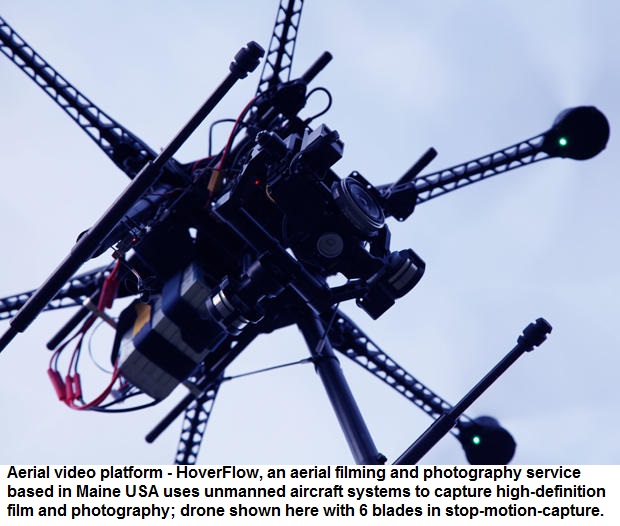
Drones - SurveillanceThe Gee-Whiz days are over … for drones.

The initial excitement and fascination period seems to have ended. Now people are trying to curb, protect and run from all-things-drone.

This point is evident from the two foregoing articles & VIDEOS. Here come the drones, and here come troubles.

Despite the foregoing articles, the old adage still applies: “The early bird gets the worm”.

Story 1 – By: CBS News & The Associated Press

http://www.cbsnews.com/news/government-moves-to-ban-drones-in-400-national-parks/

Title: Government moves to ban drones in 400 national parks

WASHINGTON — The National Park Service is taking steps to ban drones from 84 million acres of public lands and waterways, saying the unmanned aircraft annoy visitors, harass wildlife and threaten safety.

Jonathan Jarvis, the park service’s director, told The Associated Press he doesn’t want drones flushing birds from their nests, hovering over rock climbers as they cling to the sides of cliffs or buzzing across the face of Mount Rushmore.

Jarvis said he would sign a policy memorandum on Friday directing superintendents of the service’s 401 parks to write rules prohibiting the launching, landing or operation of unmanned aircraft in their parks.

Two large national parks, Grand Canyon in Arizona and Zion in Utah, have already changed their rules to ban drones. Some other parks have interpreted existing regulations to permit them to ban drone flights, but Jarvis said each park must change its “compendium” – a set of regulations unique to that park – if a ban is to be enforceable.

At Yosemite National Park in California, where officials announced last month they would adopt a policy prohibiting drone flights, hobbyists have been using unmanned aircraft to film the park’s famous waterfalls and capture close-up shots of climbers on its granite cliffs. Zion officials were spurred to take action after an incident in which an unmanned aircraft was seen harassing bighorn sheep and causing youngsters to become separated from their herd.

At Mount Rushmore in South Dakota, park rangers last September confiscated an unmanned aircraft after it flew above 1,500 visitors seated in an amphitheater and then over the heads of the four presidents carved into the mountain.

Drones - HoverFlowImagine you’re a big wall climber in Yosemite working on a four-day climb up El Capitan, and you’re hanging off a bolt ready to make a (difficult) move, and an unmanned aircraft flies up beside you and is hovering a few feet from your head with its GoPro camera running,” Jarvis said in an interview. “Think about what that does to your experience and your safety,”

Some drone operators have complained that a ban favors some park users over others. They also say many unmanned aircraft flights are made without incident and with respect for other park users and wildlife.

Unmanned aircraft range from no bigger than a hummingbird to the size of an airliner, and their capabilities are improving rapidly. Use is growing as their price tags decline. The park service wants to get out in front of that by putting rules in place now, Jarvis said.

“This is a different kind of aircraft, and it is being used in different ways than what we have seen from the (model aircraft) hobbyists,” he said. “We want to have some control over it now before it proliferates.”

The memorandum directs superintendents to continue to allow model aircraft hobbyists and clubs that already have approval to operate in some parks. Also, parks can continue to grant permits for drone flights for other purposes like research, search and rescue, and firefighting, he said. Commercial operators like moviemakers can also apply for a permit to operate a drone, he said.

“We would have to hear why they would necessarily need this type of equipment in order to accomplish their goals,” Jarvis said.

Brendan Schulman, a New York attorney representing several commercial drone operators, said the park service appears to be “overreaching its authority with respect to the existing regulations, which only address the use of passenger aircraft.”

“A penalty imposed on a personal drone operator could certainly be challenged on the basis that there does not appear to be a regulation addressing that activity,” he said.

While parks are changing their individual rules, the park service will be drafting its own rule to ban drone flights in parks nationwide, Jarvis said. He said he hopes to have a proposal ready in about 18 months.

The ban only affects what Jarvis described as “operations inside parks,” and not high altitude flights over parks.

The park service has been working closely with the Federal Aviation Administration, although the service’s action is separate from the FAA’s ban on commercial drone flights, he said.

The FAA ban is being challenged by drone operators represented by Schulman.

Two years ago, Congress directed the FAA to put regulations in place to provide for the safe integration of commercial drones into the national airspace. The regulations were supposed to be finished by September 2015, but the agency isn’t expected to make that deadline.

Last week, the FAA said it had granted the first permission for commercial drone flights over land.

Earlier this month, CBS News transportation correspondent Jeff Pegues reported that some Hollywood production companies are trying to win an exemption from the FAA to use drones in the U.S.

YouTube Video Sharing Site (Retrieved 06-25-2014) from: www.youtube.com/embed/kTZ94RujpEg

Story 2 – By: Miguel Almaguer, NBC News

Title: Police investigate claims of peeping drones

Seattle police responded to an apartment complex after a woman said a drone was spying on her. The complaint raises interesting questions about drones and privacy.

Even though owning and flying drones is legal, the police will respond to privacy violations and other concerns. This drone is owned by Skyris Imaging, which owns an entire fleet, to photograph property, farm land and real estate. No laws appear to have been broken.

Visit NBCNews.com for breaking news, world news, and news about the economy

http://www.today.com/video/today/55502613#55502613 (Retrieved 06-25-2014)

Unmanned aircrafts are just another area of autonomous vehicles that the book Go Lean … Caribbean and aligning blogs have highlighted as being a source of future growth and jobs; 2 examples are listed here:

https://goleancaribbean.com/blog/?p=1277 The need for highway safety innovations – here comes Google
https://goleancaribbean.com/blog/?p=673 Ghost ships – Autonomous cargo vessels without a crew

Autonomous vehicles are a subset of the field of robotics – this is science, not science fiction. This is the future direction for so many industrial endeavors. The Go Lean book identifies the returns on investment for communities that prepare and foster development in impending technology fields. The book asserts that there is a race to create solutions to ease the challenges associated with the agents of change (Technology, Aging Diaspora, Climate Change, Globalization). The question is: who will create the solutions for this marketplace? The book posits that Caribbean stakeholders cannot only consume, but must also create, produce, develop and help construct the “vehicles” to get its people to the future. This applies whether the vehicle is a physical or figurative application.

“Don’t be a ‘stock on the shelf’” – Caribbean music icon Bob Marley in the song: Pimpers’ Paradise (Uprising Album, 1980).

This book purports that a new industrial revolution is emerging and the Caribbean society must participate, not just spectate. This point is  pronounced early in the Declaration of Interdependence (Page 14), with these opening statements:

xxvi. Whereas the Caribbean region must have new jobs to empower the engines of the economy and create the income sources for prosperity, and encourage the next generation to forge their dreams right at home, the Federation must therefore foster the development of new industries… In addition, the Federation must invigorate the enterprises related to existing industries like tourism…– impacting the region with more jobs.

xxvii. Whereas the region has endured a spectator status during the Industrial Revolution, we cannot stand on the sidelines of this new economy, the Information Revolution. Rather, the Federation must embrace all the tenets of Internet Communications Technology (ICT) to serve as an equalizing element in competition with the rest of the world. The Federation must bridge the digital divide and promote the community ethos that research/development is valuable and must be promoted and incentivized for adoption.

The book Go Lean… Caribbean, serves as a roadmap for the introduction and implementation of the Caribbean Union Trade Federation (CU). This agency will assume jurisdiction for the Caribbean skies (airspace), much like the Federal Aviation Administration (FAA) performs for the US. This role is not intended as just a regulatory arm, but a promotional agency as well. We must be partners with the aviation industry; and we want to be on the cutting-edge of unmanned aviation. We cannot be just a “stock on the shelf”. The failure to advocate in the aviation industry has already devastated Caribbean commerce, as dysfunction in regional air carriers has negatively affected tourism and the transport of tourists to their island resorts. This is happening now; this is real!

These issues were highlighted in previous blogs as follows:

https://goleancaribbean.com/blog/?p=798 Lessons Learned from the American Airlines merger
https://goleancaribbean.com/blog/?p=254 Air Antilles Launches St. Maarten Service

So this blog, and the undergirding book, is pinning for more than just “Gee-Whiz” avionics; this is championing a bigger cause, that of empowering Caribbean society. In fact the CU/Go Lean roadmap has these 3 prime directives:

  • Optimization of the economic engines in order to grow the regional economy.
  • Establishment of a security apparatus to protect the resultant economic engines.
  • Improve Caribbean governance to support these engines.

There is a lot at stake for the Caribbean in considering this subject area. According to the foregoing articles and VIDEOS, research-and-development (R&D identified in Go Lean as a community ethos) has started to deploy economic and security solutions with drones as effective tools. While there are still many growing pains to work through, the early adopters have gotten benefits … and profits.

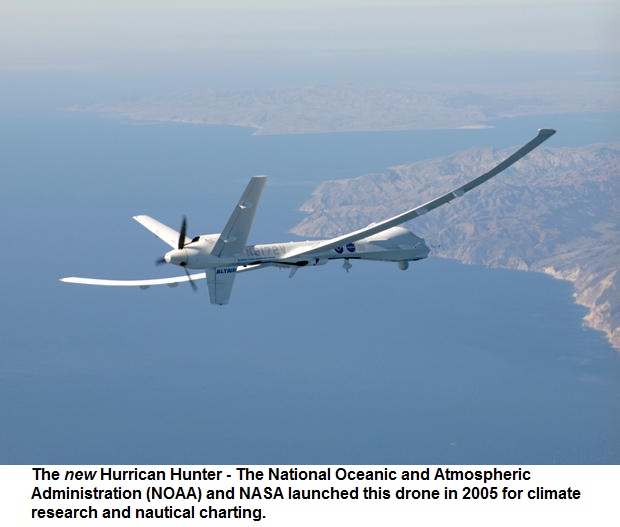
Drones - WeatherThere are proponents and opponents of unmanned aviation, as depicted in the foregoing articles and VIDEOS.  One thing for sure, those “sweating the details”, resolving the issues are sowing the field for the many harvest seasons due to come from this industry space. The Go Lean book and blogs are hereby urging the Caribbean region to lean-in to this discussion, development and industry. The “harvest is great, while the workers are few” – The Bible (Matthew 9:37).

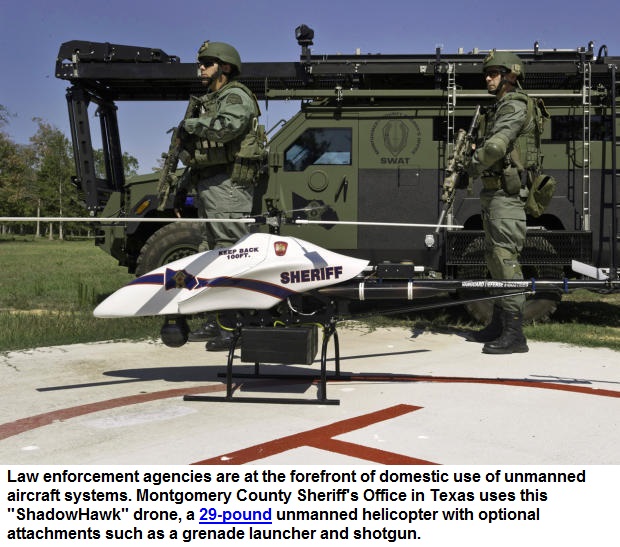
In the US, there is a 25-pound limit for “unmanned aerial systems”. This is regulated by the Federal Aviation Administration. The FAA has no jurisdiction in the Caribbean. Perhaps, the CU as the FAA counterpart can advocate a 30-pound limit, or some other rule changes that would be more industry-friendly. Also, testing-proving grounds abound in the Caribbean, with many remote islands and the 1,063,000 square-mile territory of the Caribbean Sea, which according to the roadmap would come under CU jurisdiction.

The Go Lean strategy is to confederate the 30 member-states of the Caribbean region to form the technocratic CU Trade Federation. The issues associated in this blog entry are too big for any one member-state, but a consolidated market of 42 million people allow for more economies-of-scale for generating returns on technological investments. Tactically, the Go Lean plan for a separation-of-powers allows the member-states to deputize authority of the Caribbean airspace to the one unified agency, with the mandate to promote, not just regulate. Operationally, there is no place with a greater need for unmanned aerial reconnaissance than the Caribbean. Every year, countless watercrafts become imperiled; the scanning & diagnostic capabilities on drones exceed human-eye capability for search-and-rescue. Other applications include pipelines, sea-bound wind farms, fairgrounds, isolated residents and Self-Governing Entities.

Drones - ShadowHawkIn general, there is the need for rules and public protection with evasive technologies like drones, but it is the assertion of the Go Lean book and subsequent blog entries that a protection mandate does not have to stifle technological innovation. A spirit of partnership in negotiations can foster a more productive business climate for R&D and a win-win for all stakeholders.

The book details community ethos to adopt, plus the executions of the following strategies, tactics, implementations and advocacies to forge R&D and industrial growth in Caribbean communities:

Community Ethos – Deferred Gratification Page 21
Community Ethos – All Choices Involve Costs Page 21
Community Ethos – Job   Multiplier Page 22
Community Ethos – Public Protection Over Privacy Concerns Page 23
Community Ethos – “Crap” Happens Page 23
Community Ethos – Lean Operations Page 24
Community Ethos – Return on Investments (ROI) Page 24
Community Ethos – Ways to Impact the Future Page 26
Community Ethos – Ways to Help Entrepreneurship Page 28
Community Ethos – Ways to Impact Research & Development Page 30
Community Ethos – Ways to Improve Negotiations Page 32
Community Ethos – Impact the Greater Good Page 37
Strategy – Vision – Confederating 30 Member-states in a Union Page 45
Strategy – Agents of Change – Technology Page 57
Strategy – Agents of Change – Aging Diaspora Page 57
Strategy – Agents of Change – Globalization Page 57
Strategy – Agents of Change – Climate Change Page 57
Tactical – Fostering a Technocracy Page 64
Tactical – Growing Economy – New High Multiplier Industries Page 68
Separation of Powers – Self Governing Entities Page 80
Separation of Powers – Interior Department Page 82
Separation of Powers – Regional Aviation Administration and Promotion Page 84
Implementation – Ways to Pay for Change Page 101
Implementation – Benefits from the Exclusive Economic Zone Page 104
Implementation – Steps to Implement Self-Governing Entities Page 105
Implementation – Ways to Deliver Page 109
Planning – 10 Big Ideas Page 127
Advocacy – Ways to Grow the Economy Page 151
Advocacy – Ways to Create Jobs Page 152
Advocacy – Ways to Improve Homeland Security Page 180
Advocacy – Ways to Improve Intelligence Gathering &   Analysis Page 182
Advocacy – Ways to Foster Technology Page 197
Advocacy – Ways to Improve Transportation Page 205
Advocacy – Ways to Improve Fisheries Page 210
Advocacy – Ways to Impact Urban Living Page 238
Advocacy – Ways to Impact Rural Living Page 239
Appendix – Industrial Sites at Sea-bound Wind Farms Page 335

Historically, forging change in the transportation sphere in the Caribbean has been burdensome – early adopters we are not. The region was very slow to adopt many provisions (seat belts, fast ferry, smoking on planes) that may be considered common sense by today’s standard. Managing change for the region must therefore be viewed as both an art and a science. The CU approach is different for spearheading this change of unmanned aviation – more technocracy, less democracy; (no need for consensus building).

The insights from the foregoing articles and embedded videos help us to appreciate that the future for unmanned aviation is now! We must therefore lean-in for the empowerments described in Go Lean … Caribbean. This roadmap allows us to build a better community and a better homeland to live, work and play. 🙂

Download the book Go Lean … Caribbean – now!

Share this post:
, , , , , ,
[Top]

Amazon’s new FIRE Smartphone

Go Lean Commentary

Amazon 1The American company Amazon is the model for the Caribbean Postal Union (CPU): our means for delivering the mail.

This is surprising! One would think the American model would be the US Postal Service (USPS). No, the book Go Lean…Caribbean posits that the USPS is a failing enterprise, as of late; they lose money every year, have excessively high overhead expense base and an under-funded pension (Page 99). Why would anyone want to model that?

The focus of the CPU is not postal mail, but rather logistics. So we would want to model a successful enterprise in this industry space, like Amazon, not just another postal operation.

But Amazon does so much more than just sell books online. They are the epitome of an electronic commerce company. They operate a number of business operations online and off-line; and they run these companies well. They provide a good example of lean technocratic efficiency. So Amazon is a good model, not just for the CPU but the entire Caribbean Union Trade Federation (CU). The book Go Lean…Caribbean, serves as a roadmap for the introduction and implementation of the technocratic CU.

This concept of “lean” is very prominent in the book, even adapting the title, Go Lean, for the quest for excellence in Caribbean economic empowerment and governing efforts. The label “lean” is indicative of this quest; the word is used as a noun, a verb and an adjective. This point is pronounced early in the book (Page 4) with these statements:

The CU will lean on, lean in, lean over backwards, and then lean towards…The CU will embrace lean, agile, efficient organization structures – more virtual, less physical, more systems, less payroll.

The foregoing news article and VIDEO demonstrate Amazon’s commitment to a lean business model with their deployment of a proprietary smartphone.

By: Keith Wagstaff, Technology Reporter
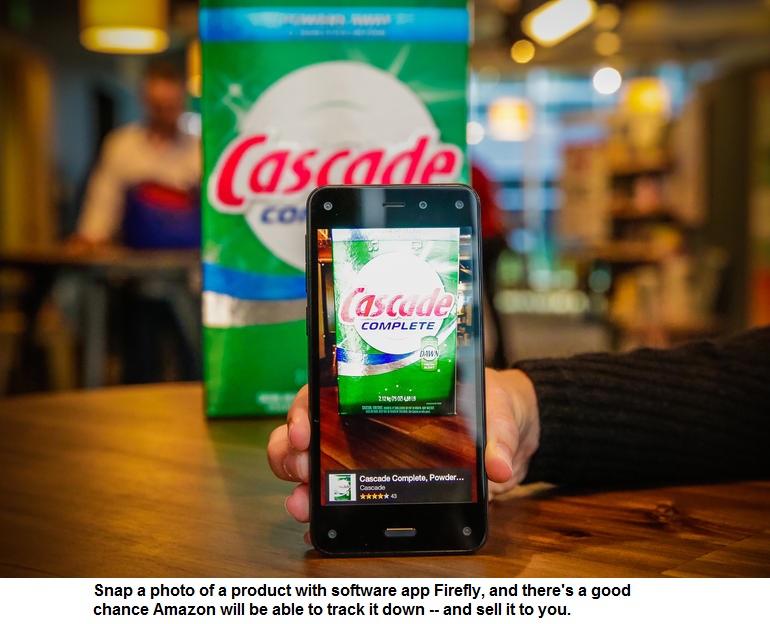
The long-rumored Amazon smartphone was officially unveiled Wednesday and, yes, it has a 3-D screen. Well, technically Amazon CEO Jeff Bezos called it “dynamic perspective,” but it gives the new Fire Phone the illusion of depth with no glasses required thanks to four face-tracking cameras built into the front of the phone. While it features a 4.7-inch Gorilla Glass screen, users don’t necessarily have to touch the screen, thanks to controls that let people scroll through pages by tilting the phone. It also unveiled a service called Firefly, which makes it easier to buy items on Amazon by scanning and recognizing more “100 million different items” including books, movies and other products. The Fire Phone (32 GB), which ships July 25, is available now for pre-order for $199 with a two-year AT&T contract.

NBC News / CNBC – Cable News Channel (Posted 06-18-2014; retrieved 06/19/2014) –http://www.nbcnews.com/tech/gadgets/amazon-unveils-new-3-d-fire-smartphone-n134561

Visit NBCNews.com for breaking news, world news, and news about the economy

From the first glance, a benefit of the Fire smartphone is obvious for Amazon’s core business [a]. A consumer can scan “more than 100 million different items” and process a direct purchase directly from the phone – any electronic media would be delivered instantly to the phone, while a chattel good would be delivered within days, using Amazon’s already matured logistics network. Evidently, the execution of this business model requires hardware (smartphone) and not just some software (app).

This is win-win.

This entire model demonstrates the advantage of leading with technological innovations, even for non-technical endeavors.

This synchronizes with the Go Lean roadmap for elevating Caribbean society. The CU will employ technologically innovative products and services to impact its prime directives; identified with the following 3 statements:

  • Optimization of the economic engines in order to grow the regional economy to $800 Billion & create 2.2 million new jobs.
  • Establishment of a security apparatus to protect the resultant economic engines.
  • Improve Caribbean governance to support these engines.

The book posits that the Caribbean is in crisis, but that this crisis can be a good thing because a “crisis is a terrible thing to waste”. Therefore the roadmap seeks to change the entire eco-system of Caribbean commerce and the interaction with postal operations. This vision is defined early in the book (Page 12 & 14) in the following pronouncements in the Declaration of Interdependence:

xv. Whereas the business of the Federation and the commercial interest in the region cannot prosper without an efficient facilitation of postal services, the Caribbean Union must allow for the integration of the existing mail operations of the governments of the member-states into a consolidated Caribbean Postal Union, allowing for the adoption of best practices and technical advances to deliver foreign/domestic mail in the region.

xxvii. Whereas the region has endured a spectator status during the Industrial Revolution, we cannot stand on the sidelines of this new economy, the Information Revolution. Rather, the Federation must embrace all the tenets of Internet Communications Technology (ICT) to serve as an equalizing element in competition with the rest of the world. The Federation must bridge the digital divide and promote the community ethos that research/development is valuable and must be promoted and incentivized for adoption.

This roadmap changes everything … in the Caribbean:

  • The CPU will be the owner/operator of the Caribbean Cloud web-site dubbed as myCaribbean.gov.
  • The CPU will operate a marketplace (like EBay or Amazon.com) to facilitate business transactions for Caribbean-based businesses and consumers (in the homeland or the Diaspora).
  • The CPU will provide mobile apps to facilitate contact & commerce within the region, modeling this Amazon FIRE feature.
  • The CPU will provide logistics to deliver products (“wet and dry”) to every Caribbean address.
  • The CPU will be the owner/operator of the cutting-edge network planned for pneumatic capsule pipelines in the region.
  • The CPU will own/operate refrigerated warehouses throughout the region, to distribute “wet” merchandise to destinations.
  • The CPU will be the Number One client for the Union Atlantic Turnpike, providing the cargo/parcels on the vessels (ferries, etc.) and thoroughways/tollways/railways built to inter-connect the islands of the homeland and the coastal states.

Creating the CPU and the Caribbean Cloud is “Step One, Day One” in the Go Lean roadmap. This is the by-product of assembling regional organs with multilateral cooperation and a separation-of-powers. The roadmap identifies Service Level Agreements (SLA) that the CPU will adhere to in fulfilling the obligations to its stakeholders: residents and member-state governments. There will be financial penalties for failures to deliver “absolutely, positive” at the agreed-upon schedule. This is how technocracies are structured. The guarantee forms the community ethos that success is not optional!

The Go Lean book details a series of community ethos, strategies, tactics, implementations and advocacies to foster the best practices for the delivery of CPU logistics in the Caribbean region:

Community Ethos – Deferred Gratification Page 21
Community Ethos – People Respond to Incentives Page 21
Community Ethos – Job Multiplier Page 22
Community Ethos – Intelligence Gathering Page 23
Community Ethos – Lean Operations Page 24
Community Ethos – Cooperatives Page 25
Community Ethos – Ways to Impact the Future Page 26
Community Ethos – Ways to Help Entrepreneurship Page 28
Community Ethos – Promote Intellectual Property Page 29
Community Ethos – Ways to Bridge the Digital Divide Page 31
Community Ethos – Ways to Improve Sharing Page 35
Strategy – Customers – Citizens and Member-states Governmental Page 47
Tactical – Separation of Powers – Postal Services Page 78
Tactical – Separation of Powers – Interstate Commerce Administration Page 79
Implementation – Year 1 / Assemble Phase – Establish CPU Page 96
Anecdote – Implementation Plan – Mail Services – US Dilemma Page 99
Implementation – Ways to Develop a Pipeline Industry Page 107
Implementation – Improve Mail Services – Electronic Supplements Page 108
Implementation – Ways to Deliver Page 109
Advocacy – Ways to Improve Interstate Commerce Page 129
Advocacy – Ways to Grow the Economy Page 151
Advocacy – Ways to Create Jobs Page 152
Advocacy – Ways to Foster Technology Page 197
Advocacy – Ways to Foster e-Commerce Page 198
Advocacy – Ways to Promote Call Centers Page 212
Advocacy – Ways to Impact the Diaspora Page 217
Advocacy – Ways to Impact Urban Living Page 234
Advocacy – Ways to Impact Rural Living Page 235
Appendix – Alternative Remittance Modes Page 270
Appendix – Interstate Compacts Page 278

Now is the time for all of the Caribbean, the people and governing institutions, to lean-in for the changes in the book Go Lean … Caribbean. This is a big deal for the region. This roadmap is not just a plan; it is also the delivery of the hopes and dreams of generations of Caribbean residents…and their Diaspora.

The region needs this delivery. Otherwise, we have no hope to incite and retain our young people. This roadmap therefore is more than just delivering the mail; it is about delivering the future: a better place to live, work and play.

Download the book Go Lean … Caribbean – now!

———–

a. Appendix – Amazon.com
Amazon.com, Inc. is an American international electronic commerce company with headquarters in Seattle, Washington, United States. It is the world’s largest online retailer. Amazon.com started as an online bookstore, but soon diversified, selling DVDs, VHSs, CDs, video and MP3 downloads/streaming, software, video games, electronics, apparel, furniture, food, toys, and jewelry. The company also produces consumer electronics—notably the Fire Phone, Amazon Kindle e-book reader and the Kindle Fire tablet computer—and is a major provider of cloud computing services.

Amazon 2Jeff Bezos, the founder and CEO, incorporated the company (as Cadabra) in July 1994 and the site went online as Amazon.com in 1995. Bezos changed the name cadabra.com to amazon.com because it sounded too much like cadaver. Additionally, a name beginning with “A” was preferential due to the probability it would occur at the top of any list that was alphabetized.
Amazon has separate retail websites for United States, United Kingdom, France, Canada, Germany, Italy, Spain, Sri Lanka, Australia, Brazil, Japan, China, India and Mexico soon coming soon, other South East Asian countries, with international shipping to certain other countries for some of its products. In 2011, it had professed an intention to launch its websites in Poland, Netherlands, and Sweden, as well. An Austrian website operates as part of the German website. As of June 2014, it still does not service Australia or New Zealand.
According to 2008 data, the domain amazon.com attracted at least 615 million visitors annually, twice the number of competitor Walmart. Amazon attracts approximately 65 million customers to its US website per month. The company has also invested heavily on a massive amount of server capacity for its website, especially to handle the excessive traffic during the December Christmas holiday season.
For 2013, Amazon posted revenues of US$ 74.45 Billion; profit of US$ 745 million (before taxes) and US$ 274.0 million after taxes. They have 117,300 employees, as of January 2014.
Multi-level sales strategy – Amazon employs a multi-level e-commerce strategy. Amazon started off by focusing on Business-to-Consumer relationships between itself and its customers, and Business-to-Business relationships between itself and its suppliers but it then moved to incorporate Customer-to-Business transactions as it realized the value of customer reviews as part of the product descriptions. It now also facilitates customer to customer with the provision of the Amazon marketplace which act as an intermediary to facilitate consumer to consumer transactions. The company lets almost anyone sell almost anything using its platform. In addition to affiliate program that lets anybody post Amazon links and earn a commission on click through sales, there is now a program which let those affiliates builds entire websites based on Amazon’s platform.
Some other large e-commerce sellers use Amazon to sell their products in addition to selling them through their own websites. The sales are processed through Amazon.com and end up at individual sellers for processing and order fulfillment and Amazon leases space for these retailers. Small sellers of used and new goods go to Amazon Marketplace to offer goods at a fixed price. Amazon also employs the use of drop shippers or meta sellers. These are members or entities that advertise goods on Amazon who order these goods direct from other competing websites but usually from other Amazon members. These meta sellers may have millions of products listed, have large transaction numbers and are grouped alongside other less prolific members giving them credibility as just someone who has been in business for a long time. Markup is anywhere from 50% to 100% and sometimes more. [A disadvantage is that] these sellers maintain that items are in stock when the opposite may be true. As Amazon has increased their dominance in the marketplace these drop shippers have become more and more commonplace in recent years. [There is a fear that this practice will result in] damage to a supply and demand marketplace, but this remains to be seen, as advertising contracts with large search engines have eliminated smaller websites from overall exposure. So these practices have not had a negative effect on the industry as a whole.
Revenue model – Over the last decade, Amazon has developed a customer base of around 30 million people. Amazon.com is primarily a retail site with a sales revenue model. Amazon makes its money by taking a small percentage of the sale price of each item that is sold through its website. Amazon also allows companies to advertise their products by paying to be listed as featured products.
(Source: Retrieved 06/19/2014 from: http://en.wikipedia.org/wiki/Amazon.com)
Share this post:
, , , , , , ,
[Top]

Facebook goes down across multiple countries

Go Lean Commentary

FB PicFacebook’s 31 minute failure is the subject of the foregoing news article and VIDEO.

By: Kim Hjelmgaard, USA TODAY Blogger

Access to Facebook’s website and apps went down just before 4 a.m. ET on Thursday, shutting out millions of users for a brief period.

For about half an hour, users who tried to access Facebook in the United States, United Kingdom, Ireland, Israel and India received the following message: “Sorry, something went wrong. We’re working on getting this fixed as soon as we can.”

Problems were also reported across multiple nations in Asia and the Middle East. Shortly after the outage, #Facebookdown started trending all over the world on Twitter.

Attempts by USA TODAY to reach the Menlo Park, Calif.,-based social networking company (at 9:00am) for a fuller explanation of the disruptions were not immediately successful.

In April, Facebook’s revenue rocketed 72% higher to $2.5 billion.

USA Today – Daily Newspaper (Retrieved 06/19/2014 @ 9:03am EDT) –

http://www.usatoday.com/story/tech/2014/06/19/facebook-down/10834461/

————

VIDEO – Facebook suffers worldwide outage – https://www.today.com/video/today/55451289

“No big deal – 31 minutes at 4am should not be a burden!”

The problem is that it breaks the promise of 24-7-365 continuous operations. This is a failure and there must be some accountability. This is the attitude, ethos, forged by adherents of lean principles. This is the basis for the book Go Lean…Caribbean, which serves as a roadmap for the introduction of the lean and technocratic Caribbean Union Trade Federation (CU).

Just the very label “lean” is indicative of this quest. This point is pronounced early in the book (Page 4):

For the CU, lean is a noun, a verb and an adjective. The institutions of the CU will lean on, lean in, lean over backwards, and then lean towards…

The CU will embrace lean, agile, efficient organization structures – more virtual, less physical, more systems, less payroll. A lean organization understands value and focuses its key processes to continuously increase it. The ultimate goal is to provide perfect value to the customer/constituent/beneficiary through a perfect value creation process that has zero waste…

Thusly, this Go Lean roadmap for the CU has 3 prime directives:

  • Optimization of the economic engines in order to grow the regional economy to $800 Billion & create 2.2 million new jobs.
  • Establishment of a security apparatus to protect the resultant economic engines.
  • Improve Caribbean governance to support these engines.

Facebook is big business; as the world’s premier social media site, with over a billion unique users, it is also the model of the Caribbean Cloud web-based network proposed by the Go Lean roadmap. This is dubbed as myCaribbean.gov.

These subjects of Facebook and social media/electronic storefront websites have been previously covered in these Go Lean blogs, highlighted here in the following samples:

a. https://goleancaribbean.com/blog/?p=1350 PayPal expands payment services to 10 markets
b. https://goleancaribbean.com/blog/?p=1112 FB’s Zuckerberg’s $100 Million for Newark’s Schools was a waste
c. https://goleancaribbean.com/blog/?p=528 Facebook plans to provide mobile payment services
d. https://goleancaribbean.com/blog/?p=486 Incubator firm backs Southeast Asia cab booking mobile app
e. https://goleancaribbean.com/blog/?p=476 Grenada PM Urges CARICOM on ICT
f. https://goleancaribbean.com/blog/?p=308 Caribbean Communications Infrastructure Program (CARCIP) Urges Greater Innovation

The people and institutions of the Caribbean understand this plight of system failures all too well, as reported in the foregoing news article regarding Facebook last night. There is little faith in utility monopolies in the Caribbean member-states; black-outs, brown-outs, spotty internet, unreliable telephone and cable TV service are the norm. The reputation is in tatters for the region as efficient destinations for business operations. The book posits that to adapt, there must be optimizations of best practices for technology. This is defined in Verse XXVII (Page 14) of the Declaration of Interdependence, with these words:

Whereas the region has endured a spectator status during the Industrial Revolution, we cannot stand on the sidelines of this new economy, the Information Revolution. Rather, the Federation must embrace all the tenets of Internet Communications Technology (ICT) to serve as an equalizing element in competition with the rest of the world. The Federation must bridge the digital divide and promote the community ethos that research/development is valuable and must be promoted and incentivized for adoption.

Creating the CU’s Caribbean Cloud is “Step One, Day One” in the Go Lean roadmap. Implementing the architectural, application and administrative platform is critical for success. The roadmap specifically identified Service Level Agreements (SLA) that the CU will present to its stakeholders: citizens and member-state governments.

If the Caribbean Cloud was down for 31 minutes at 4am on a Thursday morning, there would be financial consequences to pay!

The Go Lean book details a series of community ethos, strategies, tactics, implementations and advocacies to foster the best practices for deployments of Information Technologies in the Caribbean region:

Community Ethos – Economic Principles Can Influence Choices Page 21
Community Ethos – Light Up the Dark Places Page 23
Community Ethos – “Crap” Happens Page 23
Community Ethos – Lean Operations Page 24
Community Ethos – Return on Investments Page 24
Community Ethos – Ways to Impact the Future Page 26
Community Ethos – Ways to Foster Genius Page 27
Community Ethos – Promote Intellectual Property Page 29
Community Ethos – Ways to Bridge the Digital Divide Page 31
Strategy – Customers – Citizens and Member-states Governmental Page 47
Tactical – Separation of Powers – Revenue Administration Data Centers Page 74
Tactical – Separation of Powers – Energy Commission – Better Power Page 82
Implementation – Year 1 / Assemble Phase – Data Center Deployments Page 96
Implementation – Trends in Implementing Data Centers Page 106
Implementation – Improve Mail Services – Electronic Supplements Page 108
Implementation – Ways to Deliver Page 109
Implementation – Ways to Impact Social Media – Facebook Model Page 111
Implementation – Ways to Improve Energy Usage and Lower Costs Page 113
Advocacy – Ways to Grow the Economy Page 151
Advocacy – Ways to Improve Communications Page 186
Advocacy – Ways to Improve Emergency Management Page 196
Advocacy – Ways to Foster Technology Page 197
Advocacy – Ways to Foster e-Commerce Page 198
Advocacy – Reforms for Banking Regulations Page 199
Advocacy – Ways to Impact Monopolies Page 202
Advocacy – Ways to Promote Call Centers Page 212
Advocacy – Ways to Impact the Diaspora Page 217
Appendix – Alternative Remittance Modes Page 270
Appendix – Hydrogen Fuel Cells Data Centers Page 285
Appendix – ITIL Supplement – Service Continuity Management Page 338

Now is the time for all of the Caribbean, the people and governing institutions, to lean-in for the empowerment described in the book Go Lean … Caribbean. The benefits are richly rewarding: more uptime and less downtime.

The region needs technology; we must fully embrace Internet & Communications Technology – we need our technology up, all the time: 24-7-365. This embrace will allow us to better compete with the rest of the world, and make our Caribbean homeland, a better place to live, work and play.

Download the Book- Go Lean…Caribbean Now!!!

Share this post:
, , ,
[Top]

Uber Demonstrations Snarl Traffic from London to Berlin

Go Lean Commentary

Uber 1Old World [economy] meets New World [economy].

Taxi cabs go back to the days of horses and carriages; yet the industry has slowly adapted to all the evolutionary changes in technology and modernization. Today, in some jurisdictions, a taxi cab is a moving economic engine: a passenger sitting in the back gets access to streaming video, online browsing and advertising/booking options. While in the front, the driver gets access to advanced dispatch & logistical tools, security surveillance, credit card processing, traffic alerts, and more.

But the challenge with technology, for taxi cabs and many other areas of life, is one-step forward, two-steps backwards.

According to the below article, there is a new technological innovation that has rankled cabbies in the US, Europe and other global cities – 128 in total. This is the practice of car-sharing. The company featured in the foregoing article and VIDEO is Uber, but it could easily be any of the other entities in this emerging industry (ZipCar, Getaround, RelayRides, etc.):

By: Amy Thomson, Cornelius Rahn & Angelina Rascouet

Uber Technologies Inc., the car-sharing service that’s rankling cabbies across the U.S., is fighting its biggest protest from European drivers who say the smartphone application threatens their livelihoods.

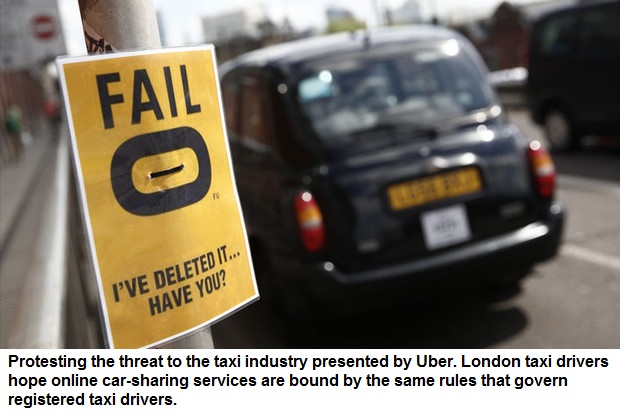
Traffic snarled in cities from London to Madrid and Berlin to Paris as strikes and gatherings by more than 30,000 taxi and limo drivers blocked tourist centers and shopping districts. They are asking regulators to apply tougher rules on San Francisco-based Uber, whose software allows customers to order a ride from drivers who don’t need licenses that can cost 200,000 euros ($270,000) apiece.

The biggest city-center protest was in London, where black-cab drivers were joined by private car services and trainees to protest what they saw as the government’s failure to hold Uber to the same standards as other car services and taxis. While similar demonstrations this year have led to smashed windshields and traffic chaos in Paris, a united front in Europe highlights the challenges for Uber’s expansion.

“A strike won’t work,” European Commission Vice President Neelie Kroes said in a statement today. “What we need is real dialogue where we talk about these disruptions caused by technology.”

A funding round last week values the company at $17 billion, almost five times the figure in an earlier round. Out of some 128 cities it serves, 20 are in Europe, including Manchester, Lyon and Zurich.

Tourist Hubs

In London, thousands of black cabs and private hire cars descended on the tourist hubs of Trafalgar Square and Parliament Square, blocking some of the city’s busiest streets. Scooter and motorbike riders studying for the cab-driver exam joined in, honking their horns as the police tried to regulate traffic.

London taxi drivers have said that the app’s fare calculator amounts to a meter, which aren’t allowed in hired cars that aren’t registered taxis. Last month, TFL asked the High Court to rule on whether the fare system was legal.

“We have to have a license to own a cab, we have to have a driver’s license, a cab driver’s license,” said Mark Haslam, a 58-year-old black-cab driver, who took part in the protest. “For some reason they seem to be outside the law.”

Another driver, John Maloney, 64, was standing on top of a black cab on the corner of Whitehall and Trafalgar Square with a sign saying “enforce the law.” He was dressed as a judge, wearing a white wig and black cape.

Arrest Warning

No major accidents or clashes were reported. The London police, saying organizers hadn’t asked for proper permission to assemble, had threatened to arrest protesters if they arrived before 2 p.m. and didn’t leave by 3 p.m.

London organizers had called on drivers to join the demonstrations with posters mimicking a World War I recruiting campaign, featuring military commander Horatio Kitchener and his characteristic handlebar mustache.

In Paris, drivers blocked the Charles de Gaulle and Orly airports this morning and prevented private-car services from picking up passengers, said Nadine Annet, vice president at the FNAT taxi association. Cabbies also slowed down traffic the A1 highway that circles Paris, leading to a 200-kilometer (120-mile) jam, local TV reported. The vast majority of France’s 55,000 professional taxis and Paris’s 15,000 cabs are on strike today, Annet said.

Kader Djielouli, a 44-year-old protester who’s been driving taxis in Paris for 15 years, said he’s lost 40 percent of his revenue since 2009 because of services like Uber.

Paris, Madrid

Private-car services “are taxis without being taxis,” he said at a cab stand near the Opera metro station in Paris. “We are against them. There need to be the same rules for all.”

In Madrid, thousands of drivers marched to block the Paseo de la Castellana, one of the city’s main avenues, as police escorted the demonstration by cars, a helicopter and officers on foot. Protesters chanted insults targeted at Uber and chased taxis that weren’t taking part in the rally.

In Berlin, more than 500 taxis lined up in columns of 20 in the plaza stretching out from the Olympic stadium. Four youth chanting “friends of Uber” were escorted away by security under shouts of a few enraged drivers.

Berlin cabs earlier packed airports and the upscale Kurfuerstendamm shopping district. At the Tegel airport, one of the three starting locations for the Berlin demonstration, taxi driver Kubilay Sarikaya said this morning he was skeptical about the protests. While he’d been working since 3 a.m., he said he’ll go along if his friends do.

“While we are demonstrating, the other guys are hauling people around,” said Sarikaya, 33. “There have to be other ways. Ultimately I think folks know that they can always count on the good old cab to get them where they need to be.”

Berlin, Milan

Uber 2In Milan, no taxi was to be seen after about 5,000 drivers this morning went on a strike that is set to last until 10 p.m.

Uber took the demonstrations as an opportunity to promote its service, saying in a statement its teams across Europe will keep the cities moving today.

“While the taxi protests may seek to bring Europe to a standstill, we’ll be on hand to get our riders from A to B.”

Uber also chose this morning to open its service in London to black-cab drivers, describing its 5 percent commission as the lowest of all booking systems in the city. Uber has thus far offered luxury cars and cheaper rides in London, while excluding licensed black cabs. Later in the day, Uber said signups in London to its service today were 850 percent higher than last Wednesday, declining to give the actual number.

Internet Backlash

The protests have a deeper significance beyond the taxi industry. They underscore the growing backlash against the likes of room-booking service Airbnb Inc. and video-streaming provider Aereo Inc. as they clash with traditional industries arguing the competitors should be subject to the same regulations.

“European cities have tended to regulate taxi drivers much more than the U.S.,” said Charles Lichfield, an analyst at Eurasia Group in London. “I do think the protests have a better chance of succeeding.”

In the U.S., local taxi groups have also lobbied against Uber and similar services in cities such as Seattle. In Europe, regulators and courts are struggling with the disconnect between the desire to protect a regulated industry and the need for more technological innovation.

“For years the government has slapped new fees onto taxis and imposed more constraints — everything from car colors to, now, GPS tracking,” FNAT’s Annet said. “The least we’re asking for is that our competitors get the same tough love.”

French Court

Following complaints by Paris cab drivers, France this year imposed a rule on private services, requiring a minimum 15-minute wait between the time a car is booked and the passenger is picked up. The decree was later struck down by the country’s constitutional court.

Hamburg’s economy ministry on June 6 issued an order preventing Wundercar, a German peer of Uber, from operating in the city, saying that transporting people for profit and without a license is against the law. Berlin administrators are probing a similar move against Uber, spokeswoman Petra Rohland said. A Berlin court banned the Uber Black chauffeur service in April, although the injunction hasn’t been enforced.

The Spanish region of Catalonia said yesterday it will ask Uber — which is available in Barcelona — to immediately stop its activities in the area. The regional government is also telling security forces to increase control and detection of illegal taxi services.

European Regulation

“Consumers want to have these services. I’ve personally never sat in a run-down Uber car, but I’ve definitely experienced a lot of run-down taxis,” said Arndt Ellinghorst, head of automotive research at ISI Group in London. “It is a bit scary how protectionist Europe can be.”

Uber raised $1.2 billion in new financing led by Fidelity Investments last week, valuing the company at about $17 billion, before added investments. The company had earlier raised $307.5 million from investors including Google Ventures, TPG Capital and Menlo Ventures.

The company’s assets may be worth just $5.9 billion, Aswath Damodaran, a finance professor at New York University, wrote on his blog this week. He said the figure was based on optimistic assumptions about the taxi industry’s growth and Uber’s market share and profitability.

Lower Prices

Chief Executive Officer Travis Kalanick — who started Uber in 2009 after he and partner Garrett Camp couldn’t find a cab in Paris — has pushed the company into 37 countries. He said the low prices and ease of use that their drivers can offer will lead to a base of support from consumers that regulators won’t be able to ignore.

Uber 3A typical journey from Finsbury Square, near London’s financial district, and Paddington Station takes between 20 and 30 minutes by car to travel approximately four miles. Uber estimates that that journey would cost between 14 pounds ($24) and 16 pounds. London’s transportation authority estimates that the trip could cost between 15 pounds and 22 pounds.

The German market for taxis and rental cars was 4.3 billion euros last year, said Michael Mueller, the president of the German Association of Taxis and Rental Cars. It would shrink by 1 billion euros at the price levels Uber advocates, he said.

Job Creation

Uber said in its blog it’s responsible for 20,000 new jobs per month. The median income for drivers using the UberX platform, Uber’s low-cost service, is $90,000 per year in New York and more than $74,000 in San Francisco, the company said.

Uber advertises itself to prospective drivers as a way to start your own business, drawing users who aren’t professional chauffeurs. That’s different from apps such as Hailo, which recruit from the industry. Uber customers can tap the app on their smartphone and see the locations of taxis in real time, pay via a stored credit card and rate their driver.

“Citizens of these cities are getting around the cities much more cheaply,” Kalanick told Bloomberg TV in an interview this week. “How does a regulator or city official take that away from the population? Say that inexpensive transportation that’s high quality, you shouldn’t have?”

Bloomberg Business News Service (Posted 06/11/2014; retrieved 06/17/2014) –http://www.bloomberg.com/news/2014-06-10/uber-protests-spread-across-europe-as-taxi-app-backlash-grows.html

The book Go Lean…Caribbean anticipates the compelling issues associated with taxi cabs in the emerging new economy. The book serves as a roadmap for the introduction and implementation of the technocratic Caribbean Union Trade Federation (CU). This effort calls for the elevation of the Taxi & Limousine Commission to the regional/CU level. The roadmap posits that many issues and challenges for this industry can only be managed with feasible economies-of-scale. The CU market size of 42 million will allow for the leverage to consolidate, collaborate and confederate the organizational dynamics to tackle these issues.

The book presents solutions, but asserts that before the new strategies, tactics and implementations can be deployed, the affected communities must first embrace a progressive community ethos. The book defines this “community ethos” as the fundamental character or spirit of a culture; the underlying sentiment that informs the beliefs, customs, or practices of society; dominant assumptions of a people or period.

Progress cannot be accomplished by simply picketing at the airport that a new technological advance is impacting the taxi industry. Technological change can be likened to a charging bull; if someone gets in the way, they can be run over!

The foregoing news article, about car-sharing company Uber provides a glimpse of the inner-workings of these “business models” for these two industries:

  • Regional Taxi Administration – The Go Lean roadmap defines that taxis are the frontline of Caribbean hospitality; there is the need to compel the stakeholders to adapt  innovative products & services that impact the passenger and driver experience alike, such as mobile apps (Page 25).
  • Mobile Applications – The Go Lean roadmap defines the mastery of time-&-space as strategic for succeeding in mobile apps development and deployment for the region (Page 35). If products like Uber master mobile apps, then competitors, including old-guard taxi-cabs should also be able to master this field. Already apps like GrabTaxi have excelled at providing taxi cabs with viable solutions

The Go Lean book stresses that the current community ethos must change and the best way to motivate people to adapt their values and priorities is in response to a crisis. The roadmap recognizes this fact with the pronouncement that the Caribbean is in crisis, and that “a crisis is a terrible thing to waste”. The region is devastated from external factors: global economic recession, globalization and rapid technological advances. The book then asserts that to adapt, there must be a new internal optimization of the region’s strengths. This is defined in Verse XXVII (Page 14) of the Declaration of Interdependence:

Whereas the region has endured a spectator status during the Industrial Revolution, we cannot stand on the sidelines of this new economy, the Information Revolution. Rather, the Federation must embrace all the tenets of Internet Communications Technology (ICT) to serve as an equalizing element in competition with the rest of the world. The Federation must bridge the digital divide and promote the community ethos that research/development is valuable and must be promoted and incentivized for adoption.

This subject of taxi cab administration and promotion has been previously covered in these Go Lean blogs, highlighted here in the following samples:

a.       https://goleancaribbean.com/blog/?p=486 – Incubator firm (Temasek) backs Southeast Asia cab booking app GrabTaxi
b.      https://goleancaribbean.com/blog/?p=214 – Entrepreneur battling Least Common Denominator (LCD) Ethos

In line with the foregoing article, the Go Lean book details some applicable community ethos, and provides a roadmap to better foster these qualities and their resulting benefits:

  • Help for Entrepreneurship (Page 28)
  • Promotion of Intellectual Property (Page 29)
  • Impacting Research & Developments (Page 30)
  • Bridging the Digital Divide (Page 31)
  • Improve Sharing (Page 35)

The roadmap posits that the CU will incubate a Mobile Apps industry, forge entrepreneurial incentives and facilitate the infrastructure upgrades so that innovations can thrive. As related in the foregoing article, these efforts can mitigate against competitive/alternative pressures.

The world has changed!

Yet, still, success is within reach. We can, and must, make the the Caribbean a better place to live, work and play.

Share this post:
, , , , ,
[Top]

Future Bahamian Astronaut – Not so improbable

Go Lean Commentary

The first response in looking at this photo is usually: ”Oh, so cute!”

Astro 1

But a more careful analysis of the future forecast from the book Go Lean…Caribbean, helps us to appreciate that having a true Bahamian astronaut is highly probable, in the not so distant future. The book Go Lean…Caribbean serves as a 5-year roadmap for the introduction and implementation of the Caribbean Union Trade Federation (CU). In Year 5, the roadmap calls for expansion/annexation; this will allow for the invitation/inclusion of French Guiana (neighbor of Suriname). This country is home to the European Space Agency (ESA). Under the Go Lean roadmap, this technology base would fit/continue under the plan for a Self-Governing Entity (SGE), ideal for this type of installation to thrive and foster regional impact. In truth, the roadmap features 3 prime directives, including:

  • Optimization of the economic engines in order to grow the regional economy.
  • Establishment of a security apparatus to protect the resultant economic engines.
  • Improve Caribbean governance to support these engines.

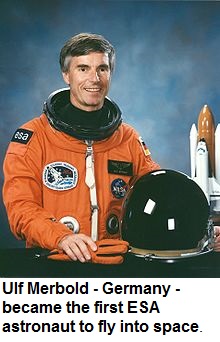
The Go Lean roadmap posits that occupations and education in science, technology, engineering and mathematics (STEM) fields are vital for the Caribbean to have economic empowerment – the US model was one of vigorous job creation during the Mercury/Apollo space programs of the 1960’s/70’s. With due progress in these STEM fields, no imagination is needed to envision a Bahamian/Caribbean astronaut jetting off into space. It would just be a matter of time, as the ESA already has an Astronaut corps, and have put men in space (see photo) – the assumption is that the CU would join the ESA, much like the EU has done.

Astro 2

The young astronaut photo, though, was an advertisement for a financial services company. Their contention is that financial/ economic fundamentals are essential for individual and societal progress. From the perspective of the Go Lean…Caribbean roadmap for the entire region, the publishers of this book/blog concurs with this exclamation: Ditto!

The Go Lean roadmap provides turn-by-turn directions on how to elevate the Caribbean economy and STEM education eco-systems. As a planning tool, the roadmap commences with a Declaration of Interdependence, pronouncing the need for regional integration (Page 13 & 14) to foster the foundation to forge a better future. The declarative statements are as follows:

xxi.      Whereas the preparation of our labor force can foster opportunities and dictate economic progress for current and future generations, the Federation must ensure that educational and job training opportunities are fully optimized for all residents of all member-states, with no partiality towards any gender or ethnic group. The Federation must recognize and facilitate excellence in many different fields of endeavor, including sciences, languages, arts, music and sports. This responsibility should be executed without incurring the risks of further human flight, as has been the past history.

xxvi.      Whereas the Caribbean region must have new jobs to empower the engines of the economy and create the income sources for prosperity, and encourage the next generation to forge their dreams right at home, the Federation must therefore foster the development of new industries… In addition, the Federation must invigorate the enterprises related to existing industries … – impacting the region with more jobs.

xxvii.      Whereas the region has endured a spectator status during the Industrial Revolution, we cannot stand on the sidelines of this new economy, the Information Revolution. Rather, the Federation must embrace all the tenets of Internet Communications Technology (ICT) to serve as an equalizing element in competition with the rest of the world. The Federation must bridge the digital divide and promote the community ethos that research/development is valuable and must be promoted and incentivized for adoption.

Change has now come to the Caribbean. The driver of this change is technology and globalization. The Caribbean region cannot just watch a man walk on the moon; we must put our men on the moon. This effort should not be pursued for some nationalistic pride, but rather the bottom-line motive should be the Greater Good.

The Go Lean book envisions the CU as a confederation of the 30 member-states of the Caribbean to do the heavy-lifting of empowering and elevating the Caribbean economy.

The book details the community ethos to adopt so that all the people would lean-in to this dream of our young men (and women) exploring space. The roadmap also details the executions of the following strategies, tactics, implementations and advocacies to forge this progress in the region:

Community Ethos – Deferred Gratification Page 21
Community Ethos – Consequences of Choices Lie in the Future Page 21
Community Ethos – Job Multiplier Page 22
Community Ethos – Lean Operations Page 24
Community Ethos – Return on Investments (ROI) Page 24
Community Ethos – Cooperatives Page 25
Community Ethos – Ways to Impact the Future Page 26
Community Ethos – Ways to Foster Genius Page 27
Community Ethos – Ways to Impact Research & Development Page 30
Community Ethos – Ways to Impact the Greater Good Page 37
Strategy – Agents of Change – Technology Page 48
Tactical – Confederating a Non-Sovereign Union Page 63
Tactical – Fostering a Technocracy Page 64
Tactical – Growing Economy – New High Multiplier Industries Page 68
Tactical – Separation of Powers – Self-Governing Entities – i.e. ESA Page 80
Tactical – Separation of Powers – Education Department Page 85
Implementation – Annexation of French Guiana Page 98
Implementation – Steps to Implement Self-Governing Entities Page 105
Planning – 10 Big Ideas Page 127
Advocacy – Ways to Grow the Economy Page 151
Advocacy – Ways to Create Jobs Page 152
Advocacy – Ways to Improve Education Page 159
Advocacy – Ways to Foster Technology Page 197

Now is the time for all of the Caribbean, the people and governing institutions, to lean-in for the changes described in the book Go Lean … Caribbean. To the young model in the foregoing photo, posing as a Bahamian Astronaut, and to all young Caribbean dreamers, the publishers of the book Go Lean…Caribbean entreat you: study hard, pursue your dreams. We will have the infrastructure in place for you in the not so distant future.

The Go Lean roadmap is a complete solution for Caribbean elevation – elevating right into space – thus helping the region to be better place to live, work, learn and play.

Blast-off! Let’s soar…

Astro 3

 
Download the free e-Book of Go Lean … Caribbean – now!

Share this post:
, , ,
[Top]

Zuckerberg’s $100 Million for Newark’s Schools was a waste

Go Lean Commentary

Throwing money at a problem does not, in itself, solve it!

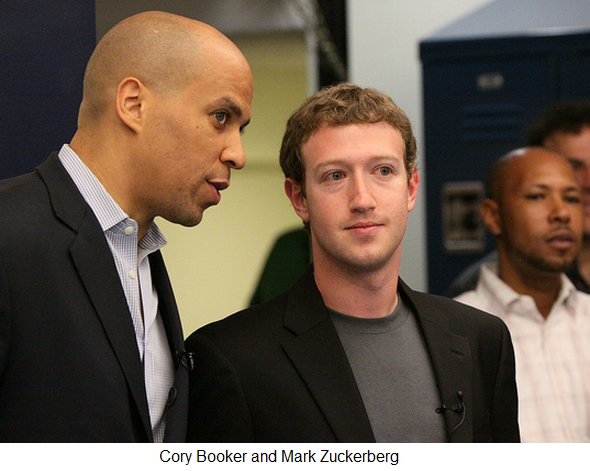
Mark Z 2The foregoing article helps us appreciate this point more succinctly. It was 2010. There was Newark’s Mayor Cory Booker (now New Jersey Senator), Facebook founder and philanthropist Mark Zuckerberg and the Governor of the State of New Jersey (and possible 2016 Presidential candidate) Chris Christie – all men of goodwill. Their goal: fix a failing school system in the City of Newark. On paper, the plan seemed credible, they had the power, they had the money – $100 million dollars. The result? After four years – “a waste”.

The issues of education reform, best practices, and funding options are stressed in the book Go Lean…Caribbean, even though these are not the primary focus of the book. Rather this book serves as a roadmap for the introduction and implementation of the Caribbean Union Trade Federation (CU), with the focus being on these following 3 prime directives:

  • Optimization of the economic engines in order to grow the regional economy to $800 Billion & create 2.2 million new jobs.
  • Establishment of a security apparatus to protect the resultant economic engines.
  • Improve Caribbean governance to support these engines.

Yet, the book posits that education is a vital consideration for economic empowerment; so too are non-government organizations, like Zuckerberg’s foundation. The book specifically highlights an important role that foundations execute in the sphere of foreign aid, sometimes even better than national governments (Page 219):

One major argument against federally funded foreign aid is that the money is often lost to governmental corruption in the countries it was supposed to help. In 2003, a top university in Bangladesh claimed that at least 75% of all foreign aid given to that government was lost because of corruption. Since faith-based foreign aid focuses on churches or organizations operating independently of the government, funding has a better chance of being used effectively.

The below news article though, highlights an onshore example, in the US, with multi-level governmental support, plenty of money, and yet still: failure!

Title: Mark Zuckerberg Gave New Jersey $100 Million To Fix Newark’s Schools, And It Looks Like It Was A Waste
By: Caroline Moss
In the fall of 2010, Mark Zuckerberg announced on Oprah that he’d be making a generous gift to Newark, New Jersey.

 As Oprah said in her Oprah way, “one … hundred … million … dollars” would be given to Newark Mayor Cory Booker and New Jersey Gov. Chris Christie as the three began the Startup:Education foundation.

The plan was to turn Newark into what Zuckerberg called “a symbol of educational excellence for the whole nation,” spent on retaining the best teachers, and creating environments that would produce successful students and, one day, graduates.

Newark is a city wrought with crime. Its graduation rate is about 67%. It needed the help, and Booker’s vision sounded promising.

Between 2010 and 2012, The New Yorker reports that “more than twenty million dollars of Zuckerberg’s gift and matching donations went to consulting firms with various specialties: public relations, human resources, communications, data analysis, [and] teacher evaluation.” Many of the consultants were being paid upwards of $1,000 a day.

“Everybody’s getting paid but Raheem still can’t read,” Vivian Cox Fraser, president of the Urban League of Essex County, was quoted saying.

Today, the money is pretty much gone, and Newark has hardly become that symbol of excellence.

The New Yorker has the full 12-page story today, and we’ve dug into it to find some of the main timeline points you need to know.

In 2010, Mayor Booker found a loophole in getting money to help fund Newark’s educational reform. It came in the form of philanthropic donations, which, unlike government funding, required no public review of priorities or spending. Gov. Christie approved the plan, and Booker’s job was to find the donors.

Meanwhile, in Silicon Valley, Zuckerberg (like many other tech billionaires) had pledged to donate half of his fortune, but as The New Yorker reports, he knew very little about urban education or philanthropy.

Booker and Zuckerberg met to discuss a vision for Newark’s future. Booker wanted to significantly reward Newark teachers who improved student performance rather than focus on seniority and tenure. Teachers would be challenged and rewarded to do their jobs well, and students would benefit.

 Zuckerberg was confident Newark and Booker were the right recipients for this huge gift (given over five years), and agreed to gift $100 million dollars with a few stipulations:

  • Booker would also have to raise $100 million dollars. Zuckerberg’s money would be released to Newark as matching dollars rolled in.
  • Booker would have to replace the current superintendent with a “transformational leader.

”The reform ended up looking like this: taking low-performing public schools and closing them, turning them into charter schools and “themed” high schools. But there was no easy way to expand charters without destabilizing traditional public schools.

In the months following the gift announcement, Booker and Christie still had no superstar superintendent and no reform plan.

 Zuckerberg was concerned and urged Booker to find the superintendent, even sending Booker a poster widely seen around the Facebook campus that read, “Done is better than perfect.”

Mark ZImmediately, Booker appointed Cami Anderson for the job. She implemented ways to help students and improve schools (all which The New Yorker detailed), but there were roadblocks along the way, like how the students brought the issues going on in their homes with them to the classroom.

 Anderson wanted to give schools more support to help students on emotional and social levels, but Newark had already been spending more money per student than most districts in the entire country, none of which was reaching the children it existed to help.

 New contracts were being created, money was being hemorrhaged, and the district was going broke. But interviews — like this one in Forbes — regarding the money and the future of Newark’s schools were always positive, highlighting, of course, only the good aspects of the huge monetary donation.

Then, in January of this year, The Washington Post reported on “dozens of emails between the Zuckerberg camp (including Zuckerberg himself) and the Booker camp (including Booker himself),” which ended up revealing that state education officials were going above and beyond to get money from big private donors to remake public schools in the way they want to.

Anderson came up with another plan called One Newark, which sounded like it could work. Families would choose which charter or public schools they would want to send their children to. Children from the lowest-income families would get first pick. So would kids with special needs.

It all sounded great until parents and teachers realized it was only on paper. Solutions hadn’t been figured out fully. Programs hadn’t been developed. Issues like transportation had not yet been tackled. Things that were promised didn’t come to fruition.

 According to The New Yorker, Anderson, Booker, Zuckerberg, and Christie, “despite millions of dollars spent on community engagement—have yet to hold tough, open conversations with the people of Newark about exactly how much money the district has, where it is going, and what students aren’t getting as a result.”
Business Insider Vertical e-Zine (Posted 05/13/2014; retrieved 05/30/2014) –
http://www.businessinsider.com/mark-zuckerbergs-newark-grant-2014-5#ixzz33DsBvaIw

The people and institutions of the Caribbean understand this plight of Newark, New Jersey all too well. There is a long record of failure with the Caribbean education initiatives. Then where there is success, the quality students have a propensity to abandon the region and emigrate to the US, Canada or Europe. So with the best of the Caribbean’s talents gone, we find that we’ve “fatten frog for snake”; then with the rest, we muddle along as best we can; hoping to nation-build with the remnants of a broken educational system.

It’s time for a change!

The proposed change is detailed in the Go Lean roadmap. It provides turn-by-turn directions on how to reform the Caribbean education systems, governance and Caribbean society in general. This roadmap commences with the assessment that the Caribbean is in crisis, and that this “crisis would be a terrible thing to waste”. As a planning tool, the roadmap commences with a Declaration of Interdependence, pronouncing the approach of regional integration (Page 12) as a viable solution to elevate the region’s educational opportunities. The statement is included as follows:

xxi. Whereas the preparation of our labor force can foster opportunities and dictate economic progress for current and future generations, the Federation must ensure that educational and job training opportunities are fully optimized for all residents of all member-states, with no partiality towards any gender or ethnic group. The Federation must recognize and facilitate excellence in many different fields of endeavor, including sciences, languages, arts, music and sports. This responsibility should be executed without incurring the risks of further human flight, as has been the past history.

The strategy is to confederate all the 30 member-states of the Caribbean, despite their language and legacy, into an integrated “single market”. Tactically, this will allow a separation-of-powers between the member-states governments (including their education proxies) and federal agencies, allowing an open role for benevolent foundations to fulfill their charters on the region. The roadmap recognizes the need to lead, or to follow best-practices, as formulated by other entities. This then becomes a process of leading-by-following. The CU will facilitate the eco-systems, metering and measuring the effect of so many educational options. Think Champion-Challenger; allowing for alternate methodologies to be explored for effectiveness, and then measuring the success criteria.

The Go Lean book details series of community ethos, strategies, tactics, implementations and advocacies to foster good educational progress, and the agile methodologies to adjust/adapt dynamically:

Anecdote – Lean On Me – New Jersey School Lesson Page 5
Community Ethos – Lean Operations Page 24
Community Ethos – Cooperatives Page 25
Community Ethos – Non-Government Organizations Page 25
Community Ethos – Ways to Foster Genius Page 27
Tactical – Separation of Powers – Education Dept. Page 85
Implementation – Ways to Pay for Change Page 101
Implementation – Ways to Deliver Page 109
Advocacy – Ways to Grow the Economy Page 151
Advocacy – Ways to Create Jobs Page 152
Advocacy – Ways to Improve Education Page 159
Advocacy – Ways to Improve Governance Page 169
Advocacy – Ways to Foster Cooperatives Page 176
Advocacy – Ways to Improve Libraries Page 187
Advocacy – Ways to Impact Foundations Page 219
Advocacy – Ways to Impact the One Percent Page 224
Appendix – The Giving Pledge Signatories Page 292

Now is the time for all of the Caribbean, the people and governing institutions, to lean-in for the changes described in the book Go Lean … Caribbean. We welcome the “Mark Zuckerberg”’s of the world … and their money. We entreat them to help us to make the Caribbean a better place to live, work, learn and play.

Download the free e-Book of Go Lean … Caribbean – now!

Share this post:
, , , ,
[Top]

eMerge conference aims to jump-start Miami tech hub

Go Lean Commentary

Master BrokersPositive Change!

It doesn’t just happen. It takes people forging it, guiding it and fostering it. The below news article speaks of the effort in South Florida (from Miami north to West Palm Beach) to establish an economic engine of a “tech hub”.

This is a noble, yet strategic undertaking. Success in this “industry space” would mean more jobs, investment capital, and more technology students remaining in South Florida after matriculating in the area’s colleges. These 3 objectives align this story with the advocacies of the book Go Lean … Caribbean.

The book serves as a roadmap for the introduction and implementation of the Caribbean Union Trade Federation (CU). The prime directive of this organization is to optimize the economic engines of the Caribbean region. We also want to increase jobs and investment capital, plus retain more of our young people aspiring for careers in high technology fields. But the CU wants to harvest these activities in the Caribbean, for the Caribbean and by the people of the Caribbean.

South Florida is germane to the Caribbean conscience. It is the Number One destination for the Caribbean Diaspora, featuring large populations of Cubans, Jamaicans, Dominicans (DR), Puerto Ricans, Bahamians, and Haitians. The book relates this association by declaring the NBA basketball team, Miami Heat, as the “home team” of the Caribbean; (Page 42).

Right time, right place!

The eMerge Americas Techweek is this week. Also, the Miami Heat has just started the playoffs in defense of their consecutive World Championships.

By: Marcia Heroux Pounds and Doreen Hemlock

A movement to make South Florida a technology hub for the Americas kicks off its first conference this week, aiming to draw more than 3,000 people from entrepreneurs to investors to students — from Broward and Palm Beach counties and from around the world.

Organizers want to build on South Florida’s success as a gateway to Latin America for trade, banking and services, extending that prowess into technology, entrepreneurship and capital for startups. They hope the event — eMerge Americas Techweek — can do for tech what the annual Art Basel event in Miami Beach has done for art: put South Florida on the world map.

It’s an exciting chance for entrepreneurs like Boca Raton’s Dan Cane, chief executive of Boca Raton-based Modernizing Medicine, which developed an iPad application for specialty physicians. He’s among influencers named to the event’s “Techweek100” — South Florida leaders who have had a significant impact on business and technology. He will speak at the conference.

“We jumped at the opportunity,” said Cane, whose 3-year-old company had $17.5 million in sales last year. “We hope to find contacts and connections and begin to develop the right ecosystem in the Latin American market” to export south starting next year.

The eMerge push doesn’t strive to make South Florida into Silicon Valley. It aims instead for a tech center specialized in multinationals looking south, Latin American companies moving north, local startup companies, as well as universities and investors.

That’s why Citi Latin America, the regional headquarters for financial giant Citi, is taking part in what is planned as an annual event. The division employs about 750 people in Miami-Dade and Broward counties and is sponsoring the event, sending speakers and bringing clients, said Jorge Ruiz, who heads digital banking.

“This event is a great example of the things we should do more of,” Ruiz said. It showcases the importance of technology to a range of industries, promotes what South Florida already offers and highlights South Florida’s ability to unite from across the Americas for tech business, he said.

“As people come together, they’re going to realize this is the space to invest in,” Ruiz said.

Universities that train talent for tech jobs are eager to participate too.

“We’re going to bring as many students as possible,” said Eric Ackerman, dean and associate professor of the Graduate School of Computer and Information Sciences at Nova Southeastern University, who also is on the Techweek100 list. Nova has more than 500 students studying information technology.

Ackerman said tech graduates often leave South Florida, figuring they will have better job opportunities in larger hubs known for innovation.

“That’s one of the things we are trying to change — to become an innovation zone for new technology, new products and new services,” Ackerman said. “An event like this says, ‘Look what’s here in our own back yard. Why should I go somewhere else?’ ”

Kimberly Gramm, assistant dean and director of FAU’s Adams Center for Entrepreneurship, is taking winners of FAU’s recent business plan competition to eMerge’s Startup Village.

Some of South Florida’s largest tech companies also will exhibit at eMerge. Those include Citrix Systems of Fort Lauderdale, C3 Cloud Computing Concepts of Delray Beach and TriNet Group of Boca Raton, said Lonnie Maier, president of the South Florida Technology Alliance, a group that promotes local tech.

Investors and consultants to startups also are heading to eMerge to network and build business.

New World Angels, a Boca Raton-based group of investors, will share a booth with the Miami Innovation Fund to offer entrepreneurs advice on launching or growing their ventures, said Rhys Williams, executive director of New World Angels and a Techweek 100 leader.

“Technology investing is a contact sport. There are few textbooks or classes of relevance, so this conference is a timely way to keep current on your knowledge base and pick up new knowledge, skills and contacts,” said Williams, who also is a judge in the eMerge Launch competition where more than 200 companies will compete for $150,000 in prizes.

Of course, South Florida faces hurdles in its quest, tech leaders said.

The area needs to overcome a long-time image based on sun and fun. And it needs to show critical mass in tech, especially success stories of entrepreneurs that grew startups to global players — much as conference organizer Manny Medina did, starting Miami-based Terremark and selling it for more than $1.4 billion to Verizon.

Enterprise Development Corp. President Rob Strandberg, whose group works with startups from Boca Raton to Miami, will be busy making introductions between entrepreneurs and potential investors at the conference. He’s also a judge in the Launch competition.

EDC executive director Linda Gove will participate with the Boca Raton incubator’s startup companies.

“Investors are taking notice of South Florida companies to a far greater extent than they were,” Strandberg said.

Joe Levy, CEO of Fort Lauderdale-based startup ClearCi and also named to the Techweek 100, said the perception of the area as a tech hub is changing.

“Folks used to ask me, ‘Why aren’t you in Silicon Valley?’ ” Levy said. “We don’t get that anymore.”

South Florida’s Sun Sentinel Daily Newspaper – April 27, 2014 – http://www.sun-sentinel.com/business/careers/fl-emerge-broward-palm-beach-20140427,0,1252077.story

The Go Lean roadmap calls for agencies within the CU to champion technological start-up endeavors, much like this week’s eMerge initiative.

There is much for the CU’s planners to glean by the observation of the planned events this week. The Go Lean/CU approach, in the absence of the actual establishment of the Trade Federation is simply to:

1. Look
2. Listen
3. Learn
4. Lend-a-hand
5. Lead

This approach is codified in the book, with details of community ethos, strategies, tactics, implementations and advocates; as follows:

Community Ethos – Impact the Future Page 26
Community Ethos – Foster Genius Page 27
Community Ethos – Help Entrepreneurship Page 28
Community Ethos – Promote Intellectual Property Page 29
Community Ethos – Impact R & D Page 30
Community Ethos – Bridge the Digital Divide Page 31
Strategy – Agents of Change: Technology Page 57
Separation of Powers – Patents & Copyrights Page 78
Implementation –  Self-Governing Entities Page 105
Implementation –  Impact Social Media Page 111
Ways to Better Manage Image Page 133
Industries – Ways to Foster Technology Page 197
Industries – Foster e-Commerce Page 198

We hope for success for eMerge Americas Techweek. We hope our Caribbean brothers living and working in South Florida participate, engage in and benefit from this initiative. Then we hope that they would repatriate some of this passion, knowledge, and experience back to their Caribbean homelands.

Lastly, we cheer for further basketball dominance. Go Heat!

Basketball shot

Download the book – Go Lean…Caribbean now!!!

Share this post:
, , , , , ,
[Top]

Ghost ships – Autonomous cargo vessels without a crew

Go Lean Commentary

Ghost ships - Autonomous cargo vessels without a crewLife imitates art! Art imitates life!

The forgoing article gives the impression of science fiction: The Matrix movie trilogy or The Terminator movie series. Imagine an industrial development with a heavy concentration of robotic installations. This is the future that is being planned, developed and tested now. The experience of the last 100 years is that those doing the planning, developing and testing for futuristic technologies are the ones that profit most from the economic gains. This has been true for both Japan and Silicon Valley.

The book, Go Lean … Caribbean, extolls this principle that R&D (research and development) activities are necessary to profit from advantages in technology. We want to do R&D here in the Caribbean. This is a mandate for the Caribbean Union Trade Federation (CU). This book serves as a roadmap for the introduction and implementation of the CU. This technocracy will assume oversight to optimize the region in the areas of:

(1) economics

(2) security

(3) lean government

This vision of an autonomous maritime eco-system, as depicted in the foregoing article, cannot be considered without a super-national infrastructure for these above 3 areas. The Go Lean roadmap presents the CU’s prime directives, which in total will provide comprehensive solutions for economic incentives, a security apparatus (Naval Authority and Intelligence Gathering), and lean governmental coordination to launch these initiatives.

*** Autonomous cargo vessels could set sail without a crew under the watchful eye of captains in shore-based simulators ***

Military drones already fly frequent missions and civilian operations using unmanned aircraft are coming. Driverless cars are clocking up thousands of test miles. So why not let remote-controlled ships set sail without a crew? Indeed, the maritime industry has started to think about what would be required to launch a latter-day Marie Céleste.

Ships, like aircraft and cars, are increasingly controlled by electronic systems, which makes automation easier. The bridges of some modern vessels are now more likely to contain computer screens and joysticks than engine telegraphs and a giant ship’s wheel. The latest supply ships serving the offshore oil and gas industry in the North Sea, for instance, use dynamic positioning systems which collect data from satellites, gyrocompasses, and wind and motion sensors to automatically hold their position when transferring cargo (also done by remote control) to and from platforms, even in the heaviest of swells.

However, as is also the case with pilotless aircraft and driverless cars, it is not so much a technological challenge that has to be overcome before autonomous ships can set sail, but regulatory and safety concerns. As in the air and on the road, robust control systems will be needed to conform to existing regulations.

The maritime industry is interested in crewless ships for two reasons. The first is safety. Most accidents at sea are the result of human error, just as they are in cars and planes. So, if human operators are replaced by sophisticated sensors and computer systems, autonomous vessels should, in theory, make shipping safer.

The second reason is, of course, cost. It is becoming increasingly difficult to sign up competent crew prepared to spend months away at sea. Moreover, some voyages are likely to get even longer for ships carrying non-urgent cargo. By some accounts, a 30% reduction in speed by a bulk carrier can save around 50% in fuel. This means slower steaming could provide big savings in fuel costs, but it would be at the expense of increased expenditure on crew for these longer voyages, both in wages and for the “hotel” facilities required on board. Removing the crew, though, also removes the need for their accommodation and its associated equipment, like heating and plumbing. And that provides room to carry more cargo.

Ahoy there!

The transition to unmanned ships could take place in steps, says Oskar Levander, head of engineering and technology for the marine division of Rolls-Royce. Crews would be reduced as some functions are moved onshore, such as monitoring machinery. (The engines on jet aircraft are already overseen by ground stations.) This could be followed by some watch-keeping and navigation duties. Experienced crew might be put on board when ships leave or enter port, just as pilots are to navigate. And a small maintenance crew could be kept for the voyage until remote-control systems prove themselves. A fleet of autonomous ships could also sail in convoy with a manned vessel in the lead (as illustrated above).

The onshore control rooms would keep an eye on ships thanks to live data transmitted from vessels, including video and infra-red images. Object-recognition software, combined with radar, would further automate the process. If an alarm was raised the skeleton crew on board could be alerted or the control room take charge, probably from a bridge in a simulator. Rolls-Royce already operates virtual ships’ bridges, with 360º views, for the training of officers and crew. These are realistic enough to make landlubbers feel seasick.

Using onshore control rooms and simulators a team of ten land-based captains could operate 100 or so ships, reckons Mr. Levander. The captains could commute from home for their shifts just as the pilots who fly military drones do. Passenger ships are likely to remain crewed, however. Trained personnel are needed to manage evacuation procedures, and in any case passengers are unlikely to want robots and vending machines attending to their needs.

The slower-sailing bulk carriers could be the first ships to be automated, according to the Maritime Unmanned Navigation through Intelligence in Networks (MUNIN) project, a European Union initiative backed by a number of industrial organisations. Like others, it says the ability of drone ships to detect other vessels and take avoiding action will be crucial, but possible with advanced technology and improved backup systems.

Rules of the sea

With a captain technically in command—even though he is based in an onshore control room—MUNIN thinks the legal and practical challenges of meeting maritime rules could be met. Radio messages from other ships, along with those from coastguards and port authorities, could be automatically routed to the shore captain. Something similar is being proposed for autonomous civil drones, with ground-based pilots responding to communications and air-traffic control instructions as if they were in the cockpit.

In many ways automating a ship should be a lot easier than automating aircraft, Mr. Levander believes. For a start, if something did go wrong, instead of falling out of the sky a drone ship could be set by default to cut its engines and drop anchor without harming anyone. As for piracy, with no crew to be taken hostage it would be much easier for the armed forces to intervene. Of course, more modern pirates might try to hack their way into the controls of an autonomous ship to take command. Which is why encrypted data communication is high on the maritime industry’s list of things to do before ghostly vessels ply the trade routes.

Firstly, the Caribbean Sea is 1,063,000 square miles. This landscape, except for forecasted tropical storms, allows for the perfect testing grounds. The geography of the CU’s 30 member-states thereby includes thousands of islands, (the Bahamas alone advertises 700 islands in their archipelago). The Go Lean roadmap calls for establishing an Exclusive Economic Zone (EEZ) for these seas.

Secondly, the CU has the human capital to engage this type of endeavor. There are many well-trained professionals in the maritime arts and sciences. Plus, this endeavor transmits the “siren call” to youthful aspirants, empowering immigrants and, skilled repatriates. This will grow the labor pool for this industry.

Thirdly, the CU already envisions a massive deployment of ship-building prowess with its incubation of shipyards and related industries (Page 209). Plus, with federally regulated ferry boats, part of the Union Atlantic Turnpike system, the required model (funding/investments/capital) and eco-system will be in place.

Though not written with this particular initiative in mind, the Go Lean roadmap anticipates such opportunities, as pronounced in the Declaration of Interdependence, (Pages 12 & 14):

xvi. Whereas security of our homeland is inextricably linked to prosperity of the homeland, the economic and security interest of the region needs to be aligned under the same governance. Since economic crimes, including piracy and other forms of terrorism, can imperil the functioning of the wheels of commerce for all the citizenry, the accedence of this Federation must equip the security apparatus with the tools and techniques for predictive and proactive interdictions.

xxvii. Whereas the region has endured a spectator status during the Industrial Revolution, we cannot stand on the sidelines of this new economy, the Information Revolution. Rather, the Federation must embrace all the tenets of Internet Communications Technology (ICT) to serve as an equalizing element in competition with the rest of the world. The Federation must bridge the digital divide and promote the community ethos that research/development is valuable and must be promoted and incentivized for adoption.

xxx. Whereas the effects of globalization can be felt in every aspect of Caribbean life, from the acquisition of food and clothing, to the ubiquity of ICT, the region cannot only consume, it is imperative that our lands also produce and add to the international community, even if doing so requires some sacrifice and subsidy.

The CU mission is to implement the complete eco-system to deliver on market opportunities as sampled in the foregoing article. There are many strategies, tactics, implementations and advocacies that will facilitate this readiness; detailed here:

Community Ethos – Money Multiplier Page 22
Community Ethos – Job Multiplier Page 22
Community Ethos – Lean Operations Page 24
Community Ethos – Return on Investments Page 24
Impact the Future Page 26
Help Entrepreneurship Page 28
Promote Intellectual Property Page 29
Impact Research and Development Page 30
Ways to Improve Negotiations Page 32
Separation of Powers – Naval Authority Page 75
Separation of Powers – Emergency Mgmt. Page 76
Security Initiatives at Start-up Page 103
Start-up Benefits from the EEZ Page 104
Steps to Implement Self-Governing Entities Page 105
Reasons to Repatriate to the Caribbean Page 118
Ways to Benefit from Globalization Page 119
Ways to Improve Trade Page 128
Ways to Create Jobs Page 152
Ways to Improve Governance Page 168
Foster Empowering Immigration Page 174
Foster Cooperatives Page 176
Improve Homeland Security Page 180
Ways to Mitigate Terrorism Page 181
Improve Intelligence Gathering & Analysis Page 182
Better Manage Natural Resources Page 183
Ways to Improve for Natural Disasters Page 184
Ways to Foster Technology Page 197
Ways to Improve Transportation Page 205
Ways to Develop Ship-Building Page 209

The world is preparing for the change of more autonomous systems to do the heavy-lifting of industrial engagements. A new ethos to prepare for change has now come to the Caribbean. The people of the region are urged to “lean-in” for this change. As described in the book Go Lean … Caribbean, the benefits of this roadmap are too alluring to miss out: emergence of an $800 Billion single market economy, 2.2 million new jobs and relevance on the world scene for R&D.

Download the Book- Go Lean…Caribbean Now!!!

Share this post:
, , , ,
[Top]

Facebook plans to provide mobile payment services

Facebook PicGo Lean Commentary

The jockeying for position has begun!

The foregoing article highlights the planning, development and deployment activities around the issue of mobile payments. This is germane for the Caribbean, as the World Bank reports that this region is #1 for homeland remittances from expatriated citizens.

This is a matter of supply and demand. The Caribbean Diaspora demands to send money; tools like Western Union, MoneyGram and these new solutions, identified here, supply the services.

But change is coming!

Reuters: Soham Chatterjee & Abhirup Roy (Bangalore)

Facebook Inc. is preparing to join the mobile-payments race with remittances and electronic-money services on the social network, the Financial Times reported on Sunday, citing several people involved in the process.

The company is close to obtaining approval from the Central Bank of Ireland to start a service that would allow users to store money on Facebook and use it to pay and exchange with others, the people told the FT. See: http://link.reuters.com/dag58v

The Irish Central Bank declined to comment.

Facebook was not immediately available for comment.

The company has also had partnership talks with at least three London start-ups — TransferWise, Moni Technologies and Azimo — that offer online and mobile international money transfer services, three people involved in the discussions told FT.

Telecom groups, retailers and banks are all trying to secure a [slice of the pie] of global mobile payments, which is predicted to grow rapidly in the next few years.

Vodafone brought its mobile money transfer service M-Pesa to Romania last month, following its success in Africa, and is likely to expand the service in eastern and central Europe.

Facebook’s rival Google Inc.’s head of payments recently reiterated commitment to the struggling Google Wallet and mobile payments service. The company had allowed users to send money last year as an email attachment.

Related Articles:

Google Wallet now lets you send money as an attachment in Gmail: http://link.reuters.com/wyf58v

Google exec reiterates commitment to mobile payments: http://link.reuters.com/xyf58v

Apple Chief Executive Tim Cook said in January the company’s interest in mobile payments was a reason for creating the Touch ID fingerprint sensor in its iPhone 5S smartphone – http://link.reuters.com/sag58v

Piggie Bank PicGlobal mobile transactions are expected to grow at an average 35 percent per year between 2012 and 2017, according to a report by research firm Gartner. The June 2013 report forecast a $721 billion market with more than 450 million users by 2017 – http://link.reuters.com/nyf58v.

Yahoo Online News Source (Retrieved 04/14/2014) –http://news.yahoo.com/facebook-plans-mobile-payment-services-ft-133451646–sector.html

The book, Go Lean…Caribbean, serving as a roadmap for the introduction and implementation of the Caribbean Union Trade Federation (CU), identified that new methods are needed to facilitate remittances. A lot of money is remitted back to the Caribbean (over $9 Billion dollars in 2010; sometimes 10% of GDP), and too many foreign entities are profiting on the backs of hard-working Caribbean people. The book lists a series of new alternatives that will be pursued in the Go Lean roadmap, some of which are identified in the foregoing news article.

This article also raises other issues, such as globalization, ICT, Social Media and Mobile Application development. All of these are covered in exhaustive details in the Go Lean book.

The premise is that the CU is chartered so that the Caribbean can have a hand in its own self-determination. There should be home-grown (Caribbean-based) solutions for Caribbean problems.

This point is pronounced early in the book, in the opening Declaration of Interdependence – (Page 14):

xxvii. Whereas the region has endured a spectator status during the Industrial Revolution, we cannot stand on the sidelines of this new economy, the Information Revolution. Rather, the Federation must embrace all the tenets of Internet Communications Technology (ICT) to serve as an equalizing element in competition with the rest of the world. The Federation must bridge the digital divide and promote the community ethos that research/development is valuable and must be promoted and incentivized for adoption.

In line with the foregoing article, the Go Lean book advocates some infrastructural enhancements so that the region can play a role in the development/deployment of this important industry. The book references are as follows:

• Research & Development (Page 30)

• Caribbean Central Bank (Page 73)

• Impact Social Media (Page 111)

• Benefit from Globalization (Page 119)

• Fostering e-Commerce (Page 198)

• Banking Reforms (Page 199)

• Impacting the Diaspora (Page 217)

• Alternative Remittance Modes (Page 270)

Who will win the “space race” between all the big Information Technology providers (Facebook, Google, Apple or Vodafone as depicted in the foregoing articles)? It is not known yet! But for the Caribbean, we must not be spectators only. Not this time!

With the CU / Go Lean roadmap in place, we can declare: Change has come to the Caribbean.

Download the book – Go Lean…Caribbean Now!!!


Share this post:
, , , ,
[Top]