Tag: Transform

Forging Change: The Fun Theory

Go Lean Commentary

The publishers of the book Go Lean…Caribbean wants to forge change in the Caribbean. How do we go about doing that?

The book identifies a number of best practices.

Here, now is another…

Consider this theory:

Video: The Fun Theory – Piano Staircase

The Fun Theory – an initiative of Volkswagen (VW). This is one of a series of experiments for a new brand campaign of VW. Have a look – the piano stairs are really funny. Fun can obviously change behavior for the better.
YouTube Video Sharing Site (Retrieved 09/08/2014) –
https://www.youtube.com/watch?v=SByymar3bds

The forgoing VIDEO depicts the challenge to people in a city to take the stairs more as opposed to riding the escalator. While this appears to be a small thing, the issue is bigger than initial appearances. Walking up a flight of stairs could be “just what the doctor ordered” for many people. It’s a great wellness initiative.

The book Go Lean…Caribbean serves as a roadmap for the introduction and implementation of the Caribbean Union Trade Federation (CU); an initiative to bring change, empowerment, to the Caribbean region; to make the region a better place to live, work and play. This Go Lean roadmap also has initiatives to improve wellness in the region, and more. In fact, the Caribbean empowerment roadmap has these 3 prime directives:

  • Optimization of the economic engines in order to grow the regional economy to $800 Billion & create 2.2 million new jobs.
  • Establishment of a security apparatus to protect the resultant economic engines.
  • Improve Caribbean governance to support these engines.

The book describes the CU as a hallmark of a technocracy, a commitment to efficiency and effectiveness; and a commitment to fun. Among the 144 different missions for the CU are many fun related activities, such as music, arts, sports, libraries, Hollywood (media related), heritage and overall happiness.

As depicted in the foregoing VIDEO, “fun” can be used to forge change. The Go Lean book declares that before any real change takes root in the Caribbean that there must be an adoption of new community ethos, the national spirit that drives the character and identity of its people. We must therefore use effective and efficient drivers to forge this change.

The roadmap was constructed with the following community ethos in mind, plus the execution of these strategies, tactics, implementation and advocacies to forge the identified permanent change in the region. The following is a sample of these specific details from the book:

Community Ethos – Deferred Gratification Page 21
Community Ethos – Economic Principles – People Choose Page 21
Community Ethos – Economic Principles – People Respond to Incentives in Predictable Ways Page 21
Community Ethos – Economic Principles – The Consequences of Choices Lie in the Future Page 21
Community Ethos – Governing Principles – Minority Equalization Page 23
Community Ethos – Governing Principles – Lean Operations Page 24
Community Ethos – Governing Principles – Cooperatives Page 25
Community Ethos – Ways to Impact the Future Page 26
Community Ethos – Ways to Help Entrepreneurship Page 28
Community Ethos – Ways to Promote Intellectual Property Page 29
Community Ethos – Ways to Impact Research & Development Page 30
Community Ethos – Ways to Bridge the Digital Divide Page 31
Community Ethos – Ways to Impact Turn-Arounds Page 33
Community Ethos – Ways to Improve Sharing Page 35
Community Ethos – Ways to Promote Happiness Page 36
Community Ethos – Ways to Impact the Greater Good Page 37
Strategy – Vision – Confederate 30 Member-States Page 45
Strategy – Mission – Celebrate the Music, Sports, Art, People and Culture of the Caribbean Page 46
Tactical – Confederating a Permanent   Union Page 63
Tactical – Fostering a Technocracy Page 64
Implementation – Ways to Pay for Change Page 101
Implementation – Ways to Deliver Page 109
Planning – 10 Big Ideas for the Caribbean Region Page 127
Planning – Ways to Make the Caribbean Better Page 136
Planning – Reasons Why the CU Will Succeed Page 137
Advocacy – Ways to Grow the Economy Page 151
Advocacy – Ways to Create Jobs Page 152
Advocacy – Ways to Improve Communications Page 186
Advocacy – Ways to Improve Libraries Page 187
Advocacy – Ways to Impact Hollywood Page 202
Advocacy – Ways to Impact Beauty Pageants Page 203
Advocacy – Ways to Preserve Caribbean Heritage Page 218
Advocacy – Ways to Improve Sports Page 229
Advocacy – Ways to Improve the Arts Page 230
Advocacy – Ways to Promote Music Page 231

Previously Go Lean blog/commentaries have stressed having fun and impacting the community through the “games people play”. The following sample applies:

https://goleancaribbean.com/blog/?p=2222 Sports Role Model – Playing For Pride … And More
https://goleancaribbean.com/blog/?p=2171 Sports Role Model – Turn On the SEC Network
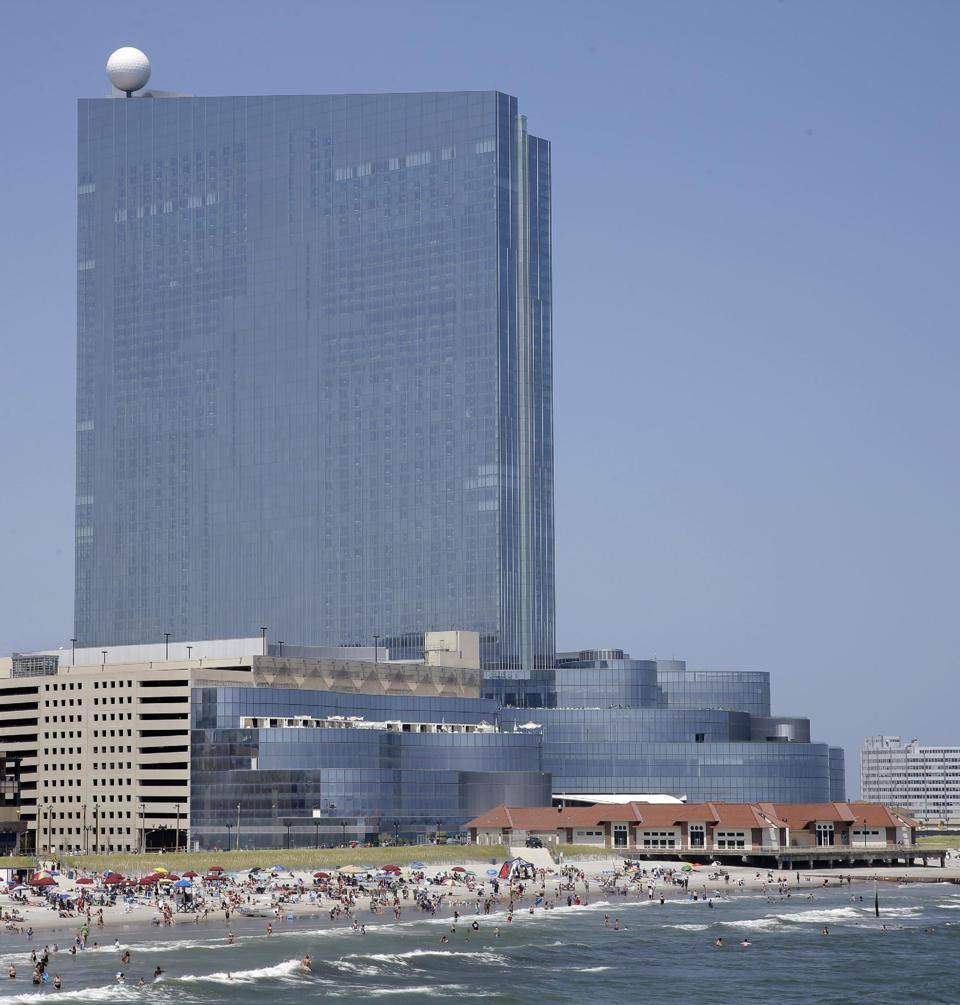
https://goleancaribbean.com/blog/?p=1943 The Future of Golf; Vital for Tourism
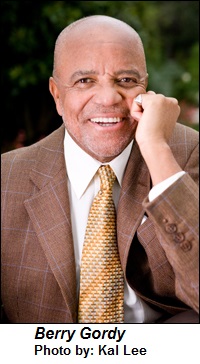
https://goleancaribbean.com/blog/?p=1909 Music Role Model Berry Gordy – No Town Like Motown
https://goleancaribbean.com/blog/?p=1596 Book Review: ‘Prosper Where You Are Planted’
https://goleancaribbean.com/blog/?p=522 Financial Crisis Jokes
https://goleancaribbean.com/blog/?p=318 Collegiate Sports in the Caribbean

CU Blog - Forging Change - The Fun Theory - Photo 1The quest to change the Caribbean is more complex than just doing some fun activities. This is serious, maybe even life-and-death. But who wants to live in a world that is all life-and-death all the time. No, let’s have some fun too.

People come to the Caribbean to have fun – we welcome them all. Let the good times roll!

We must use “fun” to reach our audience – our communities – then grab their attention to send a message of the need for change and to lean-in to this roadmap to elevate Caribbean society. The change being advocated includes having fun; it includes making the Caribbean a better place to live, work and play. 🙂

We encourage all of the Caribbean to lean-in to this roadmap.

Download the book Go Lean … Caribbean – now!

Share this post:
, , ,

Climate Change May Affect Food Supply Within a Decade

Go Lean Commentary

Don’t say you haven’t been warned! The apocalyptic effects of Climate Change may not be so far off, maybe even within the next decade. So says the foregoing article. For those of us on the front line, the Caribbean region, this is our warning siren for us to take immediate actions to “save life and limb”:

Title: Think Climate Change Is a Problem for the Future? Our Food System May Feel the Heat in a Decade
By: Steve Holt

CU Blog - Climate Change May Affect Food Within a Decade - Photo 2The new sci-fi thriller The Collapse of Western Civilization: A View From the Future depicts a world ravaged by climate change. Decades of ignoring signs of global warming have led “to soaring temperatures, rising sea levels, widespread drought,” and the collapse of the West Antarctic ice sheet, a catastrophic global disaster. It’s a terrifying fiction to consider—but one that, even in science fiction, seems far, far off. Collapse takes place in 2393, after all. Similarly, voters and politicians alike are prone to taking a far-off view when talking about climate change—it’s easy for some of us to procrastinate on acting because we believe any effects are 50 or more years away. The incremental changes happen so slowly, it seems: an extra powerful storm here or an inch of ice melt there.

But what if we felt the impact of our collective actions (and inactions) relating to climate change a lot sooner—like, by 2024?

Well, that far-off sci-fi tomorrow may indeed be here before we know it. Recently, a leading climate change observer made the scary prediction that climate change could disrupt the global food supply, endangering billions of humans, within the next decade.

“The challenges from waste to warming, spurred on by a growing population with a rising middle-class hunger for meat, are leading us down a dangerous path,” Rachel Kyte, World Bank Group vice president and special envoy for climate change, recently told the Crawford Fund 2014 annual conference in Canberra, Australia, according to the Sydney Morning Herald. “Unless we chart a new course, we will find ourselves staring volatility and disruption in the food system in the face, not in 2050, not in 2040, but potentially within the next decade.”

While we’re already talking about how climate change could take away our coffee [a] and our chocolate, there’s far more to this problem than higher prices for lattes and candy bars. Yields on staple crops could drop significantly, and meat prices are already on the rise thanks to the prolonged drought in the West. And our failure to stem the tide of human environmental destruction, experts say, will hit Americans hard in the pocketbook. Food shoppers here in the United States should expect a climate-induced rise in food prices as a result of more extreme weather events; crop failures due to weather warming that influences pests, diseases, and weeds; and related effects on fisheries and livestock. But while we’ll all feel the pain at the checkout, food price increases will disproportionately impact the nearly 15 percent of U.S. households that are food insecure [b], says Dr. Linda Berlin, director of the Center for Sustainable Agriculture at the University of Vermont.

“Americans who will be most negatively affected by these changes are those with the least disposable income, i.e., little ability to absorb the extra costs,” she says.

Kyte—who oversees work on climate change adaptation and mitigation and climate finance taking place across World Bank Group institutions—pointed to a number of factors that are exacerbating the oncoming food crisis, including a rising demand for meat worldwide, land clearing and increased greenhouse gas emissions from livestock, and threats to low-lying areas from rising sea levels. Air temperatures could increase 2 degrees by the mid-2030s, she says, which could cut cereal yields by 20 percent worldwide and 50 percent in Africa.

Kyte’s analysis coincides with the draft of an upcoming United Nations report [c], released in August, in which the international panel of scientists expresses 95 to 100 percent certainty that human activity is the primary cause of global warming. Additionally, according to the report, greenhouse gas emissions are increasing, despite far-reaching political efforts to reduce them. Between 2000 and 2010, emissions grew at 2.2 percent annually, up from growth of 1.3 percent yearly between 1970 and 2000.

Food shortages have led to riots in other countries, and that kind of hunger-related violence is always cast as an “over-there” sort of problem. But that’s partly because of our “giant safety net program—SNAP (food stamps)—which most countries don’t have,” as Stanford professor Rosamond Naylor told several hundred scientists and California Gov. Jerry Brown last December [d].

With $8.6 billion cut from the program in the 2014 farm bill [e], that safety net isn’t faring all that well.
—————————————————-
Cited References:
a. http://www.takepart.com/article/2014/05/19/federal-cash-coffee-rust
b. http://www.ers.usda.gov/publications/err-economic-research-report/err155.aspx#.VADQkmRdWa4 c.http://www.nytimes.com/2013/08/20/science/earth/extremely-likely-that-human-activity-is-driving-climate-change-panel-finds.html?pagewanted=all&_r=0
d. http://woods.stanford.edu/news-events/news/climate-change-threatens-food-security-stanford-professor-warns
e. http://www.takepart.com/article/2014/02/05/2014-farm-bill

Yahoo News / Takepart.com e-Zine (Posted 09-02-2014) –
http://news.yahoo.com/think-climate-change-problem-future-food-system-may-000721066.html;_ylt=AwrBEiTNFApULVYAgIbQtDMD

The foregoing article is asserting that Climate Change may not just be our grandchildren’s problem alone; it is an issue for us, and even our parents. The risks and threats associated with this agent-of-change must therefore be mitigated now! The book Go Lean…Caribbean identifies this impending crisis and then declares that “a crisis is a terrible thing to waste”, calling for the establishment of a regional sentinel to monitor, mitigate and manage the effects of Climate Change on the region’s economic, security and governing engines. According to the foregoing article, which considers near-term projections on the world’s food supply systems, this will be a global crisis; the rest of the world will have to contend with these same issues.

This Go Lean book serves as a roadmap for the introduction and implementation of the technocratic Caribbean Union Trade Federation (CU). The prime directives of this agency are described as:

  • Optimize the economic engines of the Caribbean to elevate the regional economy to grow to $800 Billion and create 2.2 million new jobs.
  • Establish a security apparatus to protect the resultant economic engines.
  • Improve Caribbean governance to support these engines.

The Go Lean roadmap calls for the establishment of an Emergency Management agency (subset of the CU’s Homeland Security Department) so as to adopt the professional arts and sciences of Public Safety & Emergency Management. The emergencies within this scope will include natural disasters like hurricanes, flooding, forest fires, and droughts, all which can affect the food supply systems, even fisheries. The Caribbean Emergency Management Agency would therefore need to coordinate and plan with other CU Departments and member-state agencies in a proactive manner to anticipate the needs of the Caribbean region; this will include the CU Departments of Health (Food & Nutrition Administrations), Agriculture & Fisheries.

A lot is at stake with this consideration – life and death – our ability to feed our populations.

CU Blog - Climate Change May Affect Food Within a Decade - Photo 1Not everyone accepts these precepts – vocal deniers of Climate Change abound! But, recent natural disasters have devastated the region and do not allow us the luxury of dissent in our planning. We can see, hear, touch, taste and feel the effects of Climate Change now in our region. It is an Inconvenient Truth.

The Go Lean book reports that Climate Change is wreaking havoc on Caribbean life now; (the Bahamas 2nd city, Freeport, never fully recovered from Category 4 Hurricane Wilma in 2004, even now). Today, this foregoing news article identifies even more serious risks, this time for the world’s food supply. Due to globalization and the status as Small Island Developing States, today’s story becomes an alarming issue for the Caribbean as our region disproportionally depends on imports for our food supply. These agents-of-change (Climate Change & Globalization) were pronounced early in the book in the Declaration of Interdependence (Page 11 & 14), with these statements:

i.     Whereas the earth’s climate has undeniably changed resulting in more severe tropical weather storms, it is necessary to prepare to insure the safety and security of life, property and systems of commerce in our geographical region. As nature recognizes no borders in the target of its destruction, we also must set aside border considerations in the preparation and response to these weather challenges.

xxx. Whereas the effects of globalization can be felt in every aspect of Caribbean life, from the acquisition of food and clothing, to the ubiquity of ICT, the region cannot only consume, it is imperative that our lands also produce and add to the international community, even if doing so requires some sacrifice and subsidy.

To counteract the changes in nature, the Go Lean book advocates the immediate confederation of the 30 member-states into a Trade Federation with the tools/techniques to bring immediate change to the region to benefit one and all member-states. This includes the monitoring of the dynamics of Climate Change. While the region’s total population is only 42 million, compared to the whole world’s 6 Billion, we can still have an impact. We must still feed ourselves; we can show the world how best to accomplish this as Small Island Developing States. As the world seeks answers, they will have our technocratic example to glean from.

We cannot not expect anyone but ourselves to take the lead for our solutions. Other countries, like the US, have Climate Change deniers-and-detractors in the highest levels of government – this is not a model for us to emulate. Previous Go Lean blogs have cited this trend, as cited in the following sample:

https://goleancaribbean.com/blog/?p=2119 Cooling Effect – Oceans and the Climate
https://goleancaribbean.com/blog/?p=1883 Climate Change May Bring More Kidney Stones
https://goleancaribbean.com/blog/?p=1817 Caribbean grapples with intense new cycles of flooding & drought
https://goleancaribbean.com/blog/?p=926 Conservative heavyweights have solar industry in their sights
https://goleancaribbean.com/blog/?p=915 Go ‘Green’ … Caribbean

The Caribbean does not have the luxury of a laissez-faire attitude – No Problem Mon – towards Climate Change as we are on the frontline of these dilemmas. Instead the Go Lean book declares that we must adopt a community ethos, the appropriate attitude/spirit, to forge change in our region; then details the executions of the following strategies, tactics, implementations and advocacies to better impact the region’s preparation for food resources, especially considering the consequences from Climate Change:

Community Ethos – Deferred Gratification Page 21
Community Ethos – Economic Systems Influence Individual Choices / Incentives Page 21
Community Ethos – The Consequences of Choices Lie in the Future Page 21
Community Ethos – Intelligence Gathering Page 23
Community Ethos – “Crap” Happens Page 23
Community Ethos – Lean Operations Page 24
Community Ethos – Cooperatives Page 24
Community Ethos – Non-Government Organizations Page 25
Community Ethos – Ways to Impact the Future Page 26
Community Ethos – Ways to Improve Sharing Page 35
Community Ethos – Impact the Greater Good Page 37
Strategy – Vision – Confederating 30 Member-States into a Single Market Page 45
Strategy – Vision – Foster Local Economic Engines Food, Clothing &   Shelter Page 45
Strategy – Mission – Prepare   for Natural Disasters Page 45
Strategy – Mission – Exploit   the Benefits and Opportunities of Globalization Page 46
Strategy – Agents of Change – Climate Change Page 57
Strategy – Agents of Change – Globalization Page 57
Tactical – Confederating a Permanent Union Page 63
Tactical – Fostering a Technocracy Page 64
Separation of Powers – Emergency Management Page 76
Separation of Powers – Meteorological & Geological Service Page 79
Separation of Powers – Food & Nutritional Administration Page 87
Separation of Powers – Agriculture and Fisheries Department Page 88
Implementation – Ways to Pay for Change Page 101
Implementation – Security Initiatives at Start-up – Unified Command & Control Page 103
Implementation – Ways to Deliver Page 109
Implementation – Ways to Foster International Aid Page 115
Implementation – Ways to Benefit from Globalization Page 119
Planning – Ways to Make the Caribbean Better Page 131
Advocacy – Ways to Grow the Economy Page 151
Advocacy – Ways to Better Manage Food Page 162
Advocacy – Ways to Improve Governance Page 168
Advocacy – Ways to Better Manage the Social Contract Page 170
Advocacy – Ways to Foster Cooperatives Page 176
Advocacy – Ways to Improve for Natural Disasters Page 184
Advocacy – Ways to Improve Emergency Management Page 196
Advocacy – Ways to Improve Fisheries Page 210
Appendix – History of Puerto Rican Migration to US & Effects of Hurricanes Page 303
Appendix – US Virgin Islands Economic Timeline with Hurricane Impacts Page 305

The foregoing news article discusses the threats of Climate Change on the world’s food supply…soon, within the next decade. We have no time to relax, no time to debate, we must get ready now.

Remember the Bible drama of Joseph interpreting Pharaoh’s dreams as warning of an impending great famine. The shrewd course of action for Joseph and Pharaoh was to plan/prepare the food supplies for the forthcoming lean years – Genesis Chapter 40 – 41.

From the Caribbean perspective, our only observation on this drama can be: Ditto!

Change has come to our region; more devastating change is imminent. There is the need for a permanent union – a sentinel – to provide efficient stewardship for Caribbean economy, security and governing engines. The Go Lean…Caribbean posits that the problems of this region are too big for just any one member-state to tackle, but rather this multi-state technocratic administration may be our best solution.

The people and institutions of the region are hereby urged to lean-in to this Go Lean roadmap, to embrace the mitigations for the impending world changes. Let’s make the Caribbean better; a better place to live-work-play today and even more so tomorrow.

Download the book Go Lean … Caribbean – now!

Share this post:
, ,
[Top]

Students developing nail polish to detect date rape drugs

Go Lean Commentary

CU Blog - Students developing nail polish to detect date rape drugs - Photo

It’s back to school time! For K-12 and colleges. At the tertiary level, it’s time again for all the good, bad and ugly of the college experience.

The issue in the foregoing news article/VIDEO relates more to the ugly side of the college experience, especially for young girls on and near college campuses – sexual violence. But this issue is bigger than just college, date-rape, and university mitigations, this is about human rights.

By: NBC News – The Today Show
A group of male students at North Carolina State University is taking on a problem on campus, developing a nail polish that changes color to indicate the presence of date-rape drugs. NBC’s Gabe Gutierrez reports, as follows:


NBC News – The Today Show – August 26, 2014 –
http://www.today.com/video/today/55935260#55935260

This story is being brought into focus in a consideration of the book Go Lean … Caribbean. The book serves as a roadmap for the introduction and implementation of the technocratic Caribbean Union Trade Federation (CU), for the economic optimization in the region. How does this story relate?

Education
College Campuses
Justice Systems – Bad Actors
Women Rights
The Greater Good

This CU/Go Lean roadmap has 3 prime directives:

  • Optimization of the economic engines in order to grow the regional economy.
  • Establishment of a security apparatus to protect the resultant economic engines.
  • Improve Caribbean governance to support these engines.

The roadmap posits that the economy of the Caribbean is inextricably linked to the security of the Caribbean. The security scope of the CU is mostly focused on the “bad actors” that might emerge to exploit the new Caribbean economic engines. The book also focuses on traditional crime-and-punishment issues. The subject of date rape and sexual violence falls on the member-state side of the separation-of-powers divide, the CU does retain jurisdiction on Self-Governing Entities (SGE’s). A growth strategy of the roadmap is to invite, foster and incubate academic institutions to the region under the SGE scheme. The CU will also feature a jurisdiction of monitoring and metering (ratings, rankings, service levels, etc) the delivery of local governments in their execution of the Social Contract. For these reason, 3-prong focus of the CU prime directive is apropos: economic, security and governing engines.

Change has come to the Caribbean, but as the roadmap depicts, the problem of sexual violence (a human rights abuse) had persisted long before, so there is the need to mitigate recidivism in the region. Who are those most at risk for this behavior, and their victims? What efforts can be implemented to mitigate and protect our citizens, especially young innocent girls, venturing into the brave new world to foster their education and impact their communites.

Remember Natalee Holloway? (See the consideration on Page 190 of the Go Lean book).

“Serve and protect”. This is the new lean Caribbean!

The Go Lean roadmap posits that every woman has a right to a violence-free existence, on campus, in the family and in society; it is reprehensible that in so many Caribbean/Latin countries women are still viewed as lesser beings that can be abused at the whim of men.

What should be done to mitigate these bad practices? How does the Go Lean roadmap address this issue?

The solution in the foregoing VIDEO is “a good start”.

We made this issue personal, and interviewed a College Counselor for Freshman Women in one tertiary school in the Bahamas. (See Appendix).

There needs to be more research and development of more solutions.

This is the charge of the Go Lean…Caribbean roadmap: embrace R&D as a community ethos so as not to accept the status quo – keep moving forward. There are more ethos, strategies, tactics and operational advocacies presented in the Go Lean roadmap as well, so as to ensure that those vulnerable are protected and perpetrators are held accountable for their actions. The following are samples (with page numbers) from the book:

Community Ethos – Privacy –vs- Public Protection Page 23
Community Ethos – Whistleblower Protection Page 23
Community Ethos – Intelligence Gathering Page 23
Community Ethos – Witness Security Page 23
Community Ethos – Anti Bullying & Mitigations Page 23
Community Ethos – Light Up the Dark Places Page 23
Community Ethos – Minority Equalizations Page 24
Community Ethos – Impacting the Greater   Good Page 34
Strategy – Rule of Law –vs- Vigilantism Page 49
Separation of Powers – CariPol Page 77
Implementation – Ways to Pay for Change Page 101
Implementation – Steps to Implement SGE’s Page 105
Ways to Improve Education Page 159
Ways to Better Manage the Social Contract Page 170
Ways to Impact Justice Page 177
Ways to Remediate and Mitigate Crime Page 178
Ways to Improve Gun Control Page 179
Ways to Improve Intelligence Gathering Page 182
Ways to Improve Communications Page 186
Ways to Enhance Tourism – Mitigate Economic Crimes Page 190
Ways to Impact the Prison Industrial Complex – Recidivism Page 211
Ways to Impact Foundations Page 219
Ways to Protect Human Rights Page 220
Ways to Empower Women Page 226
Ways to Impact Youth Page 227
Ways to Impact Persons with Disabilities Page 228

In addition, many related issues/points were elaborated in previous blogs, sampled here:

https://goleancaribbean.com/blog/?p=1634 Book Review: ‘Chasing Youth Culture and Getting It Right’
https://goleancaribbean.com/blog/?p=809 Muslim officials condemn abductions of Nigerian girls
https://goleancaribbean.com/blog/?p=695 Brazil’s abused wives find help by going to ‘Dona Carmen’
https://goleancaribbean.com/blog/?p=392 Jamaica to receive World Bank funds to help in crime fight

For the CU’s deployment of SGE’s, we are front-and center in monitoring, managing and mitigating the issues in this foregoing article/VIDEO. For the Caribbean member-states in general, while the CU does not have sovereignty (its a deputized agency only), it can still provide support services to ensure compliance, accountability and service-level assurances. Yes, in addition to monitoring and metering, the CU can also provide ratings, funding, training, intelligence gathering, and cross border (fugitive) law enforcement.

The goal is simply to make the Caribbean a better place to live work, learn and play; with justice for all, regardless of gender. Simple goal, but heavy-lifting in the execution.

To the Caribbean communities, we say: “Bring it!”

This is not politics or feminism; this is law-and-order. This is just right!

Download the book Go Lean … Caribbean – now!

——————————————————————

Appendix – Interview

Camille Russell-Smith (CRS) is employed at the College of the Bahamas as a Counselor in the Counseling and Health Services Department. She pays it forward. One task among her duties that grabbed our attention is the “Violence in Interpersonal Relationships” workshops she conducts each semester for incoming freshmen.

Here is the interview with the Go Lean…Caribbean publishers (GLC):

GLC: In this day and age, do you find that it is difficult to reach young men and young women on proper behavior with regards to date-acquaintance-rape threats and risks?

CRS: Definitely a challenge exists in getting young people to realize proper attitudes they must have towards each other in order to foster healthy relationships It is important to raise their awareness of how they can easily abuse the rights of others. Further it is important to remind all students, particularly women, of the need to be ever vigilant, not to assume that a friend-date-acquaintance will respect their rights and not take advantage of any vulnerabilities.

GLC: Is there an ongoing problem on your campus with date- acquaintance rape?

CRS: There have been some related incidents between students of the College, though not necessarily on campus. However, I continue to counsel young women on the fallout and consequences of what happens when they go out at night. What I worry about the most is the fact that so many women believe that the rape may be their fault, for example if they went to a bar, but told their family/friends that they were going somewhere benign, like the library. However, the penalty for lying is definitely not being raped.

GLC: How do you hope to mitigate these threats?

CRS: Education, awareness, advocacies. But it is hard. I am going against a “tidal wave” in the other direction. The music, videos, images in the media, makes many young men feel as if they have some sense of entitlement. Then many women feel as if they can only be accepted if they allow, tolerate sexually abusive behavior without “making waves”.

GLC: How do you feel about the innovations in this foregoing VIDEO?

CRS: This innovation of a chemical that can detect the presence of a date-rape drug is a good start. We need more such innovations. The special glass, as mentioned in the foregoing article, sounds like another good innovation. I can imagine that other such developments will come soon.

GLC: What hope do you see for the future in our communities regarding these kinds of attitudes that can lead to unhealthy relationships?

CRS: We need to get our communities to the point that it is commonly accepted that “no means no”. Also, that those prosecuted for sex crimes would not be cuddled or excused and most importantly that women that report crimes would not be shunned. We can be successful. The acceptance in the community has changed regarding domestic violence and I believe that acceptance of date-acquaintance-rape will change also.

GLC: Thank you for your insights. Any final words?

CRS: We must do this. We must try to change our country and the Caribbean region as a whole. There are far too many “old views, old habits, and old philosophies” in our communities where some men think they can ignore the rights of women. Let’s please fix this…once and for all.

Share this post:
, , , , ,
[Top]

Cooling Effect – Oceans and the Climate

Go Lean Commentary

Are you smarter than a 5th Grader?

The following is an analysis based on some basic elementary school science. For starters, salt (salinity) has an effect on the absorption of heat – it freezes at a colder temperature (28.4 degrees Fahrenheit) than the 32 degrees for water – salt is thusly the #1 tool for managing snow removal during the winter months in the colder climates. (This dynamic may be unfamiliar to many residents in the Caribbean). When salt is scattered/applied on sidewalks or roads, affected snow would melt … on its own.

Another principle in consideration of this discussion is that Climate Change is mostly associated with Global Warming, and yet, this year (this summer especially in the Northeast US) has been cooler than usual.

So do we have Global Warming or not? Is this a fluke that this summer is cooler than usual? Do we need to prepare for more devastating effects of Climate Change?

Yes, yes and yes!

The book Go Lean…Caribbean calls for the establishment of a regional sentinel to monitor, mitigate and manage the effects of Climate Change on the region’s economic, security and governing engines. This subject is more than just academic for the Caribbean, this affects our life and livelihood. When we get this stewardship wrong, and for 50 years this has been the assessment, we lose out. We have a long track record of losses associated with the perils of Climate Change; consider this sample: Hurricane Andrew (1992 – Bahamas), Hurricane Marilyn (1995 – Virgin Islands), Hurricane Wilma (2005 – Bahamas) and Hurricane Dean (2007 – Belize).

Caribbean losses have not only been property damage and the disruption of commerce. Inevitably, each storm episode created “push” factors for societal abandonment. Then as a community, we lost out on even more economic opportunities associated with the time, talent and treasuries of the Caribbean residents who left – we experienced a brain drain. Today, our “sorry state of affairs” find some regional member-states with an abandonment rate of more than 50% (Puerto Rico and US Virgin Islands) and the absence of more than 70% of college-educated citizens.

While 5th Grade Science is important for this empowerment effort, the book Go Lean … Caribbean is not a book of science; it gleans from scientific concepts in communicating the plan to elevate Caribbean society. The book focuses on economics, and relates that the resultant societal engines can be seriously impacted by climate change-led natural disasters: threats and actual impact. The book thusly serves as a roadmap for the introduction and implementation of the technocratic Caribbean Union Trade Federation (CU). The prime directives of this agency are described as:

  • Optimize the economic engines of the Caribbean to elevate the regional economy to grow to $800 Billion and create 2.2 million new jobs.
  • Establish a security apparatus to protect the resultant economic engines.
  • Improve Caribbean governance to support these engines.

The Go Lean roadmap immediately calls for the establishment of a Homeland Security Department, with an agency to practice the arts and sciences of Emergency Management. The emergencies include natural disasters like hurricanes, earthquakes, tsunamis, volcanoes, flooding, forest fires, and droughts – all now of more frequent occurrences. These types of emergencies should be impacted even further based on the dynamics described in the foregoing article. Emergency Management is not just reactive, it must be proactive as well. This direct correlation of warmer seas and cooling temperatures with the economy, thusly depicts the need for this CU charter and mission:

Title: Davy Jones’s heat locker
Subtitle: The mystery of the pause in global warming may have been solved. The answer seems to lie at the bottom of the sea

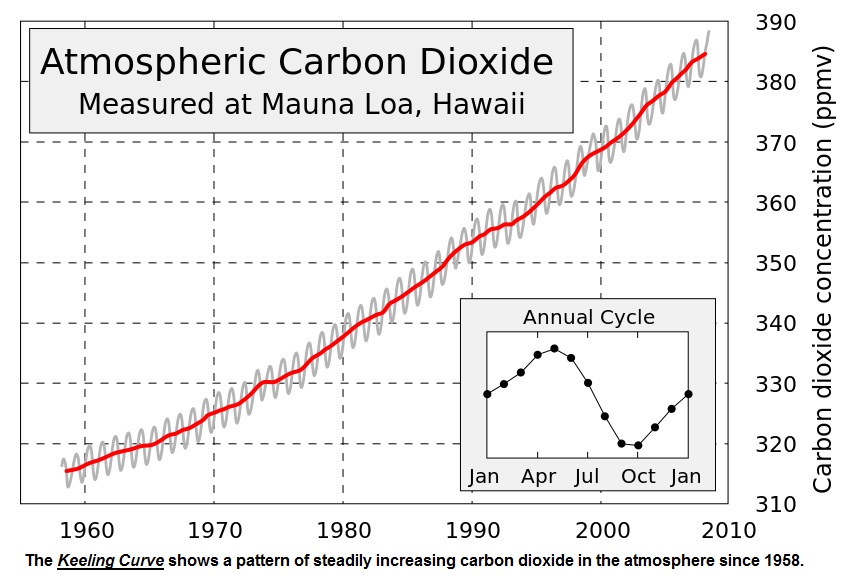
CU Blog - Cooling Effect - Oceans and the Climate - Photo 1Over the past few years one of the biggest questions in climate science has been why, since the turn of the century, average surface-air temperatures on Earth have not risen, even though the concentration in the atmosphere of heat-trapping carbon dioxide has continued to go up. This “pause” in global warming has been seized on by those skeptical that humanity needs to act to curb greenhouse-gas emissions or even (in the case of some extreme skeptics) who think that man-made global warming itself is a fantasy. People with a grasp of the law of conservation of energy are, however, skeptical in their turn of these positions and doubt that the pause is such good news. They would rather understand where the missing heat has gone, and why – and thus whether the pause can be expected to continue.

The most likely explanation is that it is hiding in the oceans, which store nine times as much of the sun’s heat as do the atmosphere and land combined. But until this week, descriptions of how the sea might do this have largely come from computer models. Now, thanks to a study published in Science by Chen Xianyao of the Ocean University of China, Qingdao, and Ka-Kit Tung of the University of Washington, Seattle, there are data.

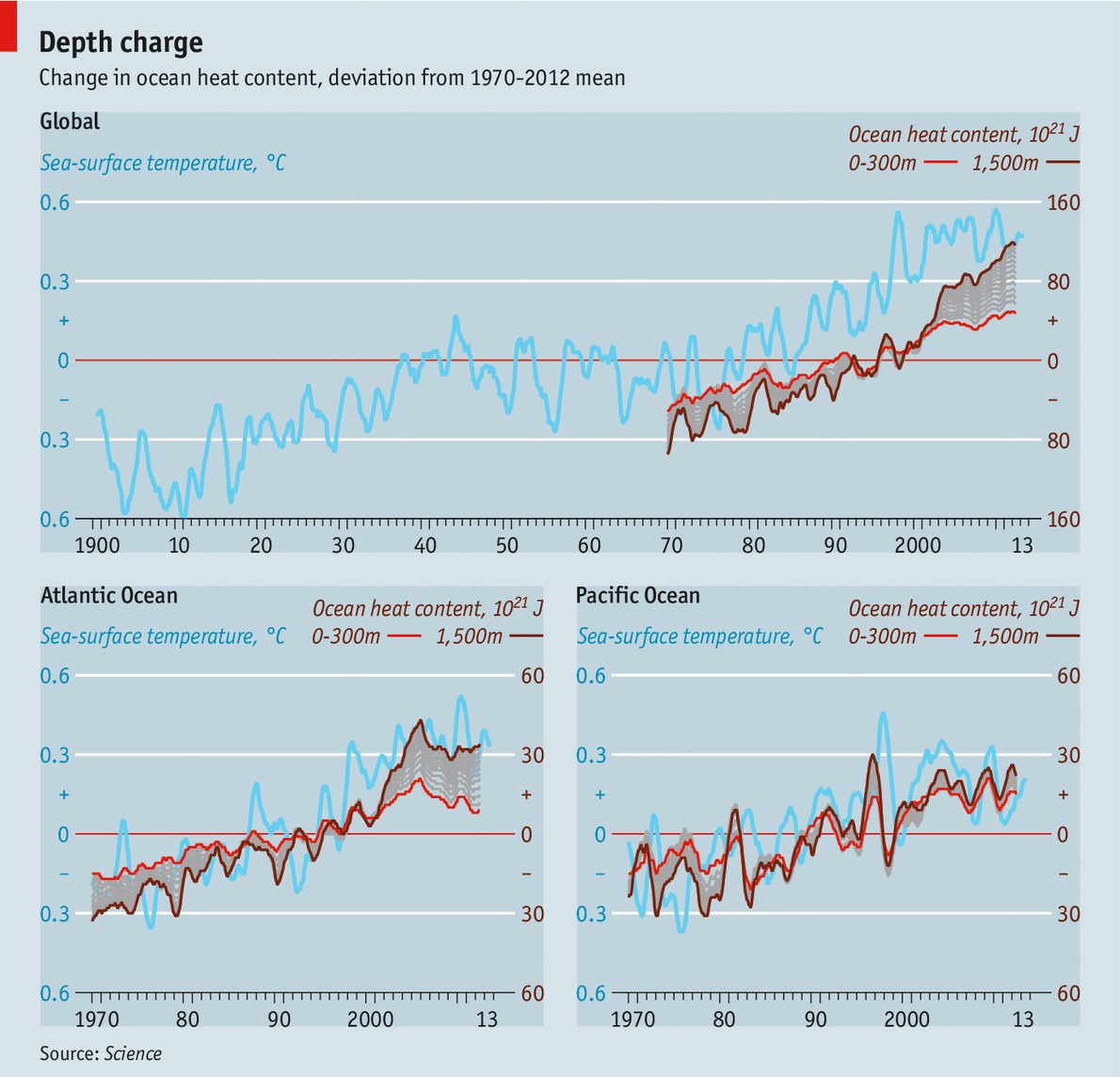
Dr Chen and Dr Tung have shown where exactly in the sea the missing heat is lurking. As the left-hand chart below shows, over the past decade and a bit the ocean depths have been warming faster than the surface. This period corresponds perfectly with the pause, and contrasts with the last two decades of the 20th century, when the surface was warming faster than the deep. The authors calculate that, between 1999 and 2012, 69 zettajoules of heat (that is, 69 x 1011 joules—a huge amount of energy) have been sequestered in the oceans between 300 metres and 1,500 metres down. If it had not been so sequestered, they think, there would have been no pause in warming at the surface.

Hidden depths
The two researchers draw this conclusion from observations collected by 3,000 floats launched by Argo, an international scientific collaboration. These measure the temperature and salinity of the top 2,000 metres of the world’s oceans. In general, their readings match the models’ predictions. But one of the specifics is weird.

Most workers in the field have assumed the Pacific Ocean would be the biggest heat sink, since it is the largest body of water. A study published in Nature in 2013 by Yu Kosaka and Shang-Ping Xie of the Scripps Institution of Oceanography, in San Diego, argued that cooling in the eastern Pacific explained most of the difference between actual temperatures and models of the climate that predict continuous warming. Dr Chen’s and Dr Tung’s research, though, suggests it is the Atlantic (see middle chart) and the Southern Ocean that are doing the sequestering. The Pacific (right-hand chart), and also the Indian Ocean, contribute nothing this way—for surface and deepwater temperatures in both have risen in parallel since 1999.

This has an intriguing implication. Because the Pacific has previously been thought of as the world’s main heat sink, fluctuations affecting it are considered among the most important influences upon the climate. During episodes called El Niño, for example, warm water from its west sloshes eastward over the cooler surface layer there, warming the atmosphere. Kevin Trenberth of America’s National Centre for Atmospheric Research has suggested that a strong Niño could produce a jump in surface-air temperatures and herald the end of the pause. Earlier this summer, a strong Niño was indeed forecast, though the chances of this happening seem to have receded recently.

But if Dr Chen and Dr Tung are right, then the fluctuations in the Atlantic may be more important. In this ocean, saltier tropical water tends to move towards the poles (surface water at the tropics is especially saline because of greater evaporation). As it travels it cools and sinks, carrying its heat into the depths—but not before melting polar ice, which makes the surface water less dense, fresh water being lighter than brine. This fresher water has the effect of slowing the poleward movement of tropical water, moderating heat sequestration. It is not clear precisely how this mechanism is changing so as to send heat farther into the depths. But changing it presumably is.

Understanding that variation is the next task. The process of sequestration must reverse itself at some point, since otherwise the ocean depths would end up hotter than the surface—an unsustainable outcome. And when it does, global warming will resume.

CU Blog - Cooling Effect - Oceans and the Climate - Photo 2

A lot is at stake with this consideration. Our economic drivers in the region – tourism and fisheries – depend on the strength of the Caribbean climate compared to other parts of the world. If change is coming to our climate, then we must be front-and-center in the planning of the mitigations and responses.

The Go Lean book posits that Climate Change is wreaking havoc on Caribbean life now, for the potential for even more harm in the future. This point is pronounced early in the book with this Declaration of Interdependence (Page 11), with this opening statement:

i.     Whereas the earth’s climate has undeniably changed resulting in more severe tropical weather storms, it is necessary to prepare to insure the safety and security of life, property and systems of commerce in our geographical region. As nature recognizes no borders in the target of its destruction, we also must set aside border considerations in the preparation and response to these weather challenges.

To counteract the changes in nature, the Go Lean book advocates the immediate confederation of the 30 member-states into a Trade Federation with the tools/techniques to bring immediate change to the region to benefit one and all member-states. This includes the monitoring/studying of the dynamics of Climate Change. The region’s total population is only 42 million, compared to the whole world’s 6 Billion. We may not be able to change the world’s habits and practices that may exacerbate Climate Change – we must still try – but we can better prepare our homeland for nature’s onslaughts. The empowered CU agencies must therefore liaise with non-governmental organizations (NGOs) and foreign entities with the similar scope to monitor, mitigate and manage the causes-and-effects of oceans warming/cooling trends.

The book details that we must first adopt a community ethos, the appropriate attitude/spirit, to forge change in our region. Go Lean details this and other ethos; plus the executions of the following strategies, tactics, implementations and advocacies to better impact the region’s response (& preparation) for Climate Change:

Community Ethos – Economic Systems Influence Individual Choices Page 21
Community Ethos – “Crap” Happens Page 23
Community Ethos – Lean Operations Page 24
Community Ethos – Cooperatives Page 24
Community Ethos – Non-Government Organizations Page 25
Community Ethos – Ways to Improve Sharing Page 35
Community Ethos – Impact the Greater Good Page 37
Strategy – Vision – Single Market & Economy Page 45
Strategy – Mission – Prepare for Natural Disasters Page 45
Strategy – Agents of Change – Climate Change Page 57
Tactical – Confederating a Permanent Union Page 63
Tactical – Fostering a Technocracy Page 64
Separation of Powers – Emergency Management Page 76
Separation of Powers – Meteorological & Geological Service Page 79
Implementation – Ways to Pay for Change Page 101
Implementation – Security Initiatives at Start-up Page 103
Implementation – Ways to Deliver Page 109
Implementation – Ways to Benefit from Globalization Page 119
Planning – Ways to Measure Progress Page 148
Advocacy – Ways to Grow the Economy Page 151
Advocacy – Ways to Create Jobs Page 152
Advocacy – Ways to Improve Governance Page 168
Advocacy – Ways to Better Manage the Social Contract Page 170
Advocacy – Ways to Foster Cooperatives Page 176
Advocacy – Ways to Improve for Natural Disasters Page 184
Advocacy – Ways to Ways to Enhance Tourism in the Region Page 190
Advocacy – Ways to Improve Emergency Management Page 196
Advocacy – Ways to Improve Fisheries Page 210
Appendix – History of Puerto Rican Migration to US Page 303
Appendix – US Virgin Islands Economic Timeline Page 305

Change has come to the Caribbean.

The foregoing news article discusses the threats of warming oceans and cooler temperatures. This is today’s issue. New issues will emerge tomorrow and the days after. This establishes that there is a need for a permanent union – a sentinel – to provide efficient stewardship for Caribbean economy, security and governing engines.

The Go Lean…Caribbean posits that the problems of the region are too big for just any one member-state to tackle, there is the need for a regional solution, a regional sentinel. The Caribbean Union Trade Federation submits for this job to be the Caribbean sentinel for the issues, conditions and threats of Climate Change. The people and institutions of the region are hereby urged to lean-in to this Go Lean roadmap, to embrace these changes to make the Caribbean a better place to live, work and play.

At the time of this writing, it is 76 degrees in the peak of a mid-summer day in Philadelphia. It should be 96 degrees. The weather forecast for parts of Montana is a winter weather advisory during the next 24 hours, usually it would be 90 degrees. Despite the detractors and naysayers to Climate Change, something is wrong! Even a 5th Grader can discern this.


Share this post:
, ,
[Top]

Where the Jobs Are – Computers Reshaping Global Job Market

Go Lean Commentary

The legend of John Henry [a] illustrated the struggle of man versus machine.

Man lost!

Was that story just an allegory or an anecdote of an actual person and actual events? While the setting of the story is true, the construction of the Chesapeake and Ohio Railway in the 1870s (shortly after the US Civil War), the rest of the account may be mere fiction and exaggeration. But the battle of man versus machine continues even today; and man continues to lose.

The below news article asserts that the next round of new jobs are to be found in the acceptance of that defeat, man conceding to the machine.

This point aligns with the book Go Lean…Caribbean which calls for the elevation of Caribbean economics. The book asserts that the Caribbean region has been losing the battle of globalization and technology. The consequences of our defeat is the sacrifice of our most precious treasure, our people. The assessment of all 30 Caribbean member-states is that every community has lost human capital to emigration. Some communities, like Puerto Rico and the US Virgin Islands have suffered with an abandonment rate of more than 50% and others have had no choice but to stand on the sideline and watch as more than 70% of college-educated citizens flee their homelands for foreign shores.

There are both “push and pull” factors as to why these ones leave. But the destination countries, North America and Western Europe, may not be such ideal alternatives. These communities have also been suffering from agents-of-change in the modern world and losing badly in the struggle of man-versus-machine, the industrial adoption of automation, and  the corporate assimilation of internet & communication technologies.

Everything has changed…everywhere! It is what it is! The poor is expanding, the middle class is shrinking, and the rich, the One Percent is growing in affluence, influence and power.

The Go Lean book therefore posits that there is a need to re-focus, re-boot, and optimize the engines of commerce so as to make the Caribbean a better place to live, work and play. Considering this article here, depicting that there is the opportunity to create jobs:

Title: Computers reshaping global job market, for better and worse
By: Ann Saphir (Editing by Lisa Shumaker)

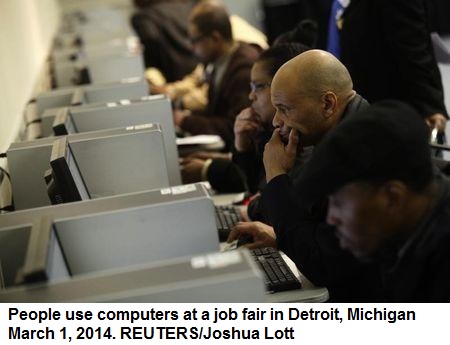
CU Blog - Where the Jobs Are - Computers reshaping global job martket - Photo 2(Reuters) – Automation and increasingly sophisticated computers have boosted demand for both highly educated and low-skilled workers around the globe, while eroding demand for middle-skilled jobs, according to research to be presented to global central bankers on Friday.

But only the highly educated workers are benefiting through higher wages, wrote MIT professor David Autor in the paper prepared for a central banking conference in Jackson Hole, Wyoming. Middle- and lower-skilled workers are seeing their wages decline.

That is in part because as middle-skilled jobs dry up, those workers are more likely to seek lower-skilled jobs, boosting the pool of available labor and putting downward pressure on wages.

“(W)hile computerization has strongly contributed to employment polarization, we would not generally expect these employment changes to culminate in wage polarization except in tight labor markets,” Autor wrote.

Any long-term strategy to take advantage of advances in computers should rely heavily on investments in human capital to produce “skills that are complemented rather than substituted by technology,” he said.

Recounting the long history of laborers vilifying technological advances, Autor argues that most such narratives underestimate the fact that computers often complement rather than replace the jobs of higher-skilled workers.

People with skills that are easily replaced by machines, such as 19th-century textile workers, do lose their jobs.

In recent years computer engineers have pushed computers farther into territory formerly considered to be human-only, like driving a car.

Still, computer-driven job polarization has a natural limit, Autor argues. For some jobs, such as plumbers or medical technicians who take blood samples, routine tasks are too intertwined with those requiring interpersonal and other human skills to be easily replaced.

“I expect that a significant stratum of middle skill, non-college jobs combining specific vocational skills with foundational middle skills – literacy, numeracy, adaptability, problem-solving and common sense – will persist in coming decades,” Autor wrote.

Autor, who has been studying technology and its impact on jobs since before the dot-com bubble burst, notes that some economists have pointed to the weak U.S. labor market since the 2000s as evidence of the adverse impact of computerization.

Such modern-day Luddites are mistaken, he suggested. U.S. investment in computers, which had been increasing strongly, dropped just as labor demand also fell, exactly the opposite of what ought to happen if technology is replacing labor.

More likely, he said, globalization is to blame, hurting demand for domestic labor and, like technology, helping to reshape the labor landscape. While in the long run both globalization and technology should in theory benefit the economy, he wrote, their effects are “frequently slow, costly, and disruptive.”

The book Go Lean… Caribbean, serves as a roadmap for the introduction and implementation of the technocratic Caribbean Union Trade Federation (CU) with the charter to facilitate jobs in the region. The book posits that ICT (Internet & Communications Technology) can be a great equalizer for the Caribbean to better compete with the rest of the world, relating the experiences of Japan – the #3 global economy – who have competed successfully with great strategies and technocratic execution despite being a small country of only 120+ million people. This modeling of Japan, and other successful communities, aligns with the CU charter; as defined by these 3 prime directives:

  • Optimization of economic engines in order to grow the regional economy to $800 Billion and create 2.2 million new jobs.
  • Establishment of a security apparatus to protect the resultant economic.
  • Improve Caribbean governance to support these engines.

Early in the Go Lean book, the responsibility to create jobs was identified as an important function for the CU with these pronouncements in the Declaration of Interdependence (Pages 14):

xxvi.  Whereas the Caribbean region must have new jobs to empower the engines of the economy and create the income sources for prosperity, and encourage the next generation to forge their dreams right at home, the Federation must therefore foster the development of new industries, like that of ship-building, automobile manufacturing, prefabricated housing, frozen foods, pipelines, call centers, and the prison industrial complex. In addition, the Federation must invigorate the enterprises related to existing industries tourism, fisheries and lotteries – impacting the region with more jobs.

xxvii. Whereas the region has endured a spectator status during the Industrial Revolution, we cannot stand on the sidelines of this new economy, the Information Revolution. Rather, the Federation must embrace all the tenets of Internet Communications Technology (ICT) to serve as an equalizing element in competition with the rest of the world. The Federation must bridge the digital divide and promote the community ethos that research/development is valuable and must be promoted and incentivized for adoption.

xxviii. Whereas intellectual property can easily traverse national borders, the rights and privileges of intellectual property must be respected at home and abroad. The Federation must install protections to ensure that no abuse of these rights go with impunity, and to ensure that foreign authorities enforce the rights of the intellectual property registered in our region.

xxx.  Whereas the effects of globalization can be felt in every aspect of Caribbean life, from the acquisition of food and clothing, to the ubiquity of ICT, the region cannot only consume, it is imperative that our lands also produce and add to the international community, even if doing so requires some sacrifice and subsidy.

According to the foregoing article, computers are reshaping the global job market, for better and worse. The Go Lean book, and previous blog/commentaries, detailed the principle of job multipliers, how certain industries are better than others for generating multiple indirect jobs down the line for each direct job on a company’s payroll. Industries relating to STEM (Science, Technology, Engineering and Mathematics/Medicine) fields have demonstrated high job-multiplier rates of 3.0 to 4.1 factors (Page 260).

The Go Lean… Caribbean book details the creation of 2.2 million new jobs for the Caribbean region, many embracing ICT skill-sets. How? By adoption of certain community ethos, plus the executions of key strategies, tactics, implementations and advocacies. The following is a sample from the book:

Assessment – Puerto Rico – The Greece of the Caribbean Page 18
Community Ethos – Deferred Gratification Page 21
Community Ethos – Economic Principle – Economic Systems Influence Choices & Incentives Page 21
Community Ethos – Economic Principle – Voluntary Trade Creates Wealth Page 21
Community Ethos – Consequences of Choices Lie in the Future Page 21
Community Ethos – Job Multiplier Page 22
Community Ethos – Anti-Bullying and Mitigation Page 23
Community Ethos – Lean Operations Page 24
Community Ethos – Return on Investments Page 24
Community Ethos – Ways to Impact the Future Page 26
Community Ethos – Ways to Foster Genius Page 27
Community Ethos – Ways to Help Entrepreneurship Page 28
Community Ethos – Ways to Promote Intellectual Property Page 29
Community Ethos – Ways to Impact Research & Development Page 30
Community Ethos – Ways to Bridge the Digital Divide Page 31
Strategy – Mission – Education Without Further Brain Drain Page 46
Strategy – Agents of Change – Technology Page 57
Strategy – Agents of Change – Globalization Page 57
Tactical – Fostering a Technocracy Page 64
Tactical – Tactics to Forge an $800 Billion Economy – Japanese Model Page 69
Tactical – Tactics to Forge an $800 Billion Economy – High Multiplier Industries Page 70
Tactical – Separation of Powers – Commerce Department – Patents & Copyrights Page 78
Implementation – Ways to Pay for Change Page 101
Implementation – Trends in Implementing Data Centers Page 106
Implementation – Ways to Deliver Page 109
Implementation – Ways to Impact ICT and Social Media Page 111
Planning – Ways to Improve Trade Page 128
Advocacy – Ways to Grow the Economy Page 151
Advocacy – Ways to Create Jobs Page 152
Advocacy – Ways to Improve Education Page 159
Advocacy – Ways to Impact Labor Markets and Unions Page 164
Advocacy – Ways to Foster Empowering Immigration – STEM Resources Page 174
Advocacy – Ways to Foster Technology Page 197
Advocacy – Ways to Foster e-Commerce Page 198
Advocacy – Lessons from America’s Peonage History – John Henry Historicity Page 211
Advocacy – Ways to Promote a Call Center Industry Page 212
Advocacy – Ways to Impact Youth Page 227
Appendix – Growing 2.2 Million Jobs in 5 Years Page 257
Appendix – Job Multipliers Page 259

The CU will foster job-creating developments, incentivizing many high-tech start-ups and incubating viable companies. The primary ingredient for CU success will be Caribbean people, so we must foster and incite participation of many young people into STEM fields, so as to impact their communities. A second ingredient will be the support of the community – the Go Lean roadmap recognizes the limitation that not everyone in the community will embrace the opportunity to lead in these endeavors. An apathetic disposition is fine-and-well, we simply must not allow that to be a hindrance to those wanting to progress. The community ethos or national spirit, must encourage and spur “achievers” into roles where “they can be all they can be”. The book posits that one person can make a difference.

The Caribbean is arguably the best address on the planet, but the missing pieces for many people are jobs. The Go Lean roadmap starts with the assessment of the true status of the region, then the development of the plan to remediate the status quo, and finally the turn-by-turn directions to get to a new destination: a better place to live, work and play.

This Go Lean roadmap describes that the Caribbean is in crisis, a war with many battlegrounds. Our effort is worth any sacrifice, but this time our battle is not man versus machine, but rather man with the machine.

Download the book Go Lean…Caribbean now!

—————————————————
Footnote – a: John Henry

John Henry is an American folk hero and tall tale. He worked as a “steel-driver”—a man tasked with hammering a steel drill into rock to make holes for explosives to blast the rock away. He died during the construction of a tunnel for a railroad. In the legend, John Henry’s prowess as a steel-driver was measured in a race against a [machine], steam powered hammer, which he won, only to die in victory with his hammer in his hand and heart giving out from stress. The story of John Henry has been the subject of numerous songs, stories, plays, books and novels.

Historicity
The historicity of many aspects of the John Henry legend is subject to debate. Until recently it was generally believed that the race between a man and a steam hammer described in the ballad occurred during the construction of the Chesapeake and Ohio (C&O) Railway in the 1870s.

In particular, the race was thought to have occurred during the boring of Big Bend tunnel near Talcott, West Virginia between 1869 and 1871. Talcott holds a yearly festival named for Henry and a statue and memorial plaque have been placed along a highway south of Talcott as it crosses over the Big Bend tunnel.

CU Blog - Where the Jobs Are - Computers reshaping global job market - Photo 1

In the 2006 book Steel Drivin’ Man: John Henry, the Untold Story of an American Legend, Scott Reynolds Nelson, an associate professor of history at the College of William and Mary, contends that the John Henry of the ballad was based on a real person, the 20-year-old New Jersey-born African-American freeman, John William Henry (prisoner #497 in the Virginia penitentiary). Nelson speculates that Henry, like many African Americans might have come to Virginia to work on the clean-up of the battlefields after the Civil War. Arrested and tried for burglary, he was among the many convicts released by the warden to work as leased labor on the C&O Railway.

According to Nelson, conditions at the Virginia prison were so terrible that the warden, an idealistic Quaker from Maine, believed the prisoners, many of whom had been arrested on trivial charges, would be better clothed and fed if they were released as laborers to private contractors (he subsequently changed his mind about this and became an opponent of the convict labor system). Nelson asserts that a steam drill race at the Big Bend Tunnel would have been impossible because railroad records do not indicate a steam drill being used there.

Instead, Nelson argues that the contest must have taken place 40 miles away at the Lewis Tunnel, between Talcott and Millboro,  Virginia, where records indicate that prisoners did indeed work beside steam drills night and day. Nelson also argues that the verses of the ballad about John Henry being buried near “the white house”, “in sand”, somewhere that locomotives roar, mean that Henry’s body was buried in the cemetery behind the main building of the Virginia penitentiary, which photos from that time indicate was painted white, and where numerous unmarked graves have been found.

Prison records for John William Henry stopped in 1873, suggesting that he was kept on the record books until it was clear that he was not coming back and had died. The evidence assembled by Nelson, though suggestive, is circumstantial; Nelson himself stresses that John Henry would have been representative of the many hundreds of convict laborers who were killed in unknown circumstances tunneling through the mountains or who died shortly afterwards of silicosis from dust created by the drills and blasting.
 Songs
The well-known narrative ballad of “John Henry” is usually sung in at an upbeat tempo. The hammer songs (or work songs) associated with the “John Henry” ballad, however, are not. Sung slowly and deliberately, these songs usually contain the lines “This old hammer killed John Henry / but it won’t kill me.” Nelson explains that:

…workers managed their labor by setting a “stint,” or pace, for it. Men who violated the stint were shunned … Here was a song that told you what happened to men who worked too fast: they died ugly deaths; their entrails fell on the ground. You sang the song slowly, you worked slowly, you guarded your life, or you died.

There is some controversy among scholars over which came first, the ballad or the hammer songs. Some scholars have suggested that the “John Henry” ballad grew out of the hammer songs, while others believe that the two were always entirely separate.

(Source: Retrieved August 22 from: http://en.wikipedia.org/wiki/John_Henry_(folklore))

Share this post:
, , , ,
[Top]

Where the Jobs Are – One Scenario: Ship-breaking

Go Lean Commentary

Here is how the human psyche is wired:

We yawn at creation, yet wow at destruction.

With that accepted fact, comes the realization that there is a business model in destruction. Jobs can be created in the art and science of destruction (demolition, recycling and turn-arounds).

This is where the next round of new jobs are to be found …

… so says the book Go Lean…Caribbean which calls for the elevation of Caribbean economics. The book assesses the challenges of the tourism product in the Caribbean region, especially since 2008, where the influx of American tourists has slowed, due to economic realities in their homeland: the middle class is shrinking, the poor is expanding, and the One Percent is growing in affluence, influence and power.

It is what it is! According to recent blog commentaries, certain amenities of the tourism product, the mainstay of Caribbean economy, have now come under attack by social change: Golf and Casino Gambling.

So with the regional tourism business models being based on American middle class prosperity, these harsh realities have now come to fruition. The book therefore posits that there is a need to re-focus, re-boot, and optimize the engines of commerce so as to make the Caribbean a better place to live, work and play. And thus, this new focus on “destruction”, and the accompanying jobs.

Consider these two news articles that describe a business model in which opportunities exist and fulfilling those needs create jobs:

Title #1: International Shipbreaking Limited Wins Contract for Dismantle Constellation – June 13, 2014

Shipbreaking - Photo 4The [US] Navy competitively awarded a contract to International Shipbreaking Limited [a] of Brownsville, Texas, for the towing, dismantling and recycling of conventionally powered aircraft carriers stricken from service, June 13, 2014. Under the contract, the company will be paid $3 million for the dismantling and recycling of the decommissioned aircraft carrier Constellation (CV 64). The price reflects the net price proposed by International Shipbreaking, which considered the estimated proceeds from the sale of the scrap metal to be generated from dismantling. The Navy continues to own the ship during the dismantling process. The contractor takes ownership of the scrap metal as it is produced and sells the scrap to offset its costs of operations.

This is the third of three contracts for conventional aircraft carrier dismantling. All Star Metals of Brownsville was awarded the first contract Oct. 22, 2013, which included the towing and dismantling of ex-USS Forrestal (AVT 59). ESCO Marine of Brownsville was awarded the second contract May 8, 2014, for the scrapping of ex-USS Saratoga (CV 60). After the initial award of one carrier to each successful offeror, the Navy has the capability of scrapping additional conventionally-powered aircraft carriers over a five-year period under delivery orders competed between the three contractors.

Shipbreaking - Photo 4 NEWInternational Shipbreaking will now develop its final tow plan for the Navy’s approval for the tow of Constellation from its current berth at Naval Base Kitsap, Washington, to the company’s facility in Brownsville. The ship is expected to depart Kitsap this summer. Navy civilian personnel will be on site full time to monitor the contractor’s performance during dismantling of the ship.

Constellation was the second Kitty Hawk-class aircraft carrier to be built. She was laid down Sept. 14, 1957, at New York Naval Shipyard in Brooklyn, New York, and was the last U. S. aircraft carrier to be built at a yard outside of Newport News Shipbuilding and Drydock Company. The ship was commissioned Oct. 27, 1961. After nearly 42 years of commissioned service, Constellation was decommissioned at the NavalAirStationNorthIsland in San Diego Aug. 6, 2003. In September 2003, she was towed to the inactive ship maintenance facility in Bremerton to await its eventual disposal.
**************
Title #2: Muddy Waters – Are U.S. shipping companies still sending their clunkers to the toxic scrap yards of South Asia?

By: Jacob Baynham – Cincinnati, Ohio-based writer

When the 30-year-old cargo ship MV Anders cruised out of Norfolk, Va., at 11 p.m. on Wednesday, Aug. 26, it may have been sailing through one of the largest loopholes in U.S. maritime regulations.

CU Blog - Where the Jobs Are - One Scenario - Photo 1Three weeks earlier, the Anders was a U.S.-flagged vessel called the MV Pfc. James Anderson Jr., named for a young Marine who saved his platoon members’ lives by falling on a Viet Cong grenade. It had hauled cargo for the U.S. Navy for more than two decades and was now retiring. The ship’s new owners, Star Maritime Corp., had renamed it the Anders, painted over the excess letters on the hull, and raised the flag of its new registry—the Caribbean nation of St. Kitts and Nevis. The Anders left Virginia empty.

Its 29-year-old sister ship, the MVBonny (formerly the MV 1st Lt. Alex Bonnyman), followed two days later under the same flag and ownership. The Coast Guard listed the ships’ next port of call as Santos, Brazil. But environmental groups, trade journals, and industry watchdogs claim the ultimate destination for these aging vessels will be the Dickensian scrap yards of Bangladesh.

The Anders and the Bonny served in the U.S. Navy’s Military Sealift Command for 24 years. Stationed at Diego Garcia in the Indian Ocean, they delivered military cargo during both Iraq wars, as well as Operation Restore Hope in Somalia. But the Navy never actually owned the ships. They chartered them from Wilmington Trust, which sold them to Star Maritime earlier this summer. When Star Maritime renamed the ships and submitted an application to reflag them under St. Kitts and Nevis registration, environmental groups recognized the telltale signs of vessels about to be scrapped and cried foul.

The Basel Action Network, a Seattle-based environmental group leading the campaign to stop the export of old ships for scrap, monitors old vessels in U.S. waters and alerts the EPA when their owners attempt to recycle them overseas. There are several reliable warning signs. First, a ship is sold to an obscure company (which U.S. ship-breakers call a “Last Voyage Inc.”), which is sometimes a subsidiary of a larger company active in the scrapping business. Then it is renamed and registered under another nation’s flag before sailing to South Asia.

“It’s outrageous that these ships were allowed to sail,” says Colby Self, director of BAN’s Green Ship Recycling campaign. “In a sense, they were government vessels.” But once the ships’ contracts had expired, all legal responsibilities lay with their owners.

Most of the world’s old ships are sent to die on the shores of India, Pakistan, and Bangladesh. Vessels are beached there at high tide and cut into pieces by teams of poorly paid migrant workers. Heavy equipment and cranes are inoperable on the sand, so workers dismantle the ships by removing large portions, which drop to the beach. They use fire torches to cut through steel hulls—even those of old oil tankers. Dozens of workers die each year from explosions, falling steel, and disease. As for the asbestos, polychlorinated biphenyls (PCBs), tributyltin (TBT), and other toxic materials onboard the old ships, much of it washes out to sea. (PCBs and TBT are persistent organic pollutants that work their way up the marine food chain and damage the nervous systems of large mammals.)

If the Anders and Bonny are headed to Bangladesh, they won’t be alone. South Asia’s ship-breaking yards are experiencing an ironic boom in the middle of the global recession. Ship owners faced with shrinking cargo volumes are culling their fleets by scrapping old vessels rather than paying for them to sit empty. South Asia’s yards, which take advantage of cheap labor, scant regulations, and high regional demand for steel, will buy a vessel for twice the price a U.S. ship-breaker could offer. In Bangladesh, ships like the Anders and Bonny (which are two-and-a-half football fields long and weigh more than 23,000 tons) are worth at least $7 million apiece.

In 1998, the Clinton administration slapped a moratorium on scrapping U.S.-flagged vessels overseas after the Baltimore Sun ran a Pulitzer Prize-winning string of stories about the conditions of the South Asian scrap yards. But ship owners have dozens of so-called “flags of convenience” at their disposal to circumvent the ban. Most of these flags belong to small, poor countries with little maritime oversight—places like St. Kitts and Nevis.

Ship owners submit their reflagging requests to the U.S. Maritime Administration (MARAD), which considers whether the ships would be needed for national security in the event of war. For old vessels, this is seldom the case. MARAD began alerting the EPA of old ships attempting to reflag after the SS Oceanic, a former Norwegian Cruise Liner, slipped out of San Francisco last year with almost 500 tons of asbestos and PCBs onboard.

The Toxic Substances Control Act of 1976 prohibits the export of PCBs, asbestos, and lead-based paint—materials often used in the paint, cabling, and gaskets of older ships because of their fire-retardant qualities. If the EPA suspects a vessel applying for reflagging contains hazardous materials, it can order that vessel to be tested. But because ships are not required to inventory these materials, and the EPA has limited time and resources to devote to every old ship, environmentalists contend that each year many vessels slip through the cracks.

In the case of the Bonny and Anders, EPA spokesman David Sternberg says, “Based on the available information, the EPA has no sufficient reason to contain these ships.” Sternberg adds that the EPA received a letter from the new owners insisting the vessels will be used in trade and will not be scrapped.

This seems unlikely to Kevin McCabe, founder of International Shipbreaking Ltd. in Texas. He says buying two cargo ships at the end of their life spans for their utilitarian purposes alone would “belie the economics of the market today.” McCabe is convinced that the Bonny and Anders will be scrapped in Asia. And he doesn’t think they’re clean, either. “I’ll bet you dollars to doughnuts that there are PCBs on those ships,” he says. “No question about it.” The EPA would be singing a different tune if the ships were to be dismantled at his Brownsville recycling facility, he adds. “When we scrap a ship, we must assume it has hazardous material onboard until we can prove otherwise.”

Colby Self of BAN says he’s disappointed that the Obama administration could so easily let these ships slip away. “[The EPA] made a calculated decision based on their low-risk assessment, and they let them go,” he says. Under the Bush administration, the EPA was very diligent in following up on BAN’s warnings, he says.

But Self isn’t giving up hope that the ships can be stopped before they wash up on South Asian shores. “We will be warning Bangladesh to bar the entry of these renegade vessels,” he says. “This story is far from over.”

The above two articles depict “two sides of the same coin”: what happens when ship-breaking is done right, and done wrong.

The book Go Lean… Caribbean, serves as a roadmap for the introduction and implementation of the technocratic Caribbean Union Trade Federation (CU) with the charter to facilitate jobs in the region. We want to explore all the strong benefits of the shipbuilding (including ship-breaking) industry, by doing it right – more safety precautions than Bangladesh and lower labor costs than Brownsville-Texas. This aligns with the CU charter; as defined by these 3 prime directives:

  • Optimization of economic engines in order to grow the regional economy to $800 Billion and create 2.2 million new jobs.
  • Establishment of a security apparatus to protect the resultant economic.
  • Improve Caribbean governance to support these engines.

Early in the Go Lean book, the responsibility to create jobs was identified as an important function for the CU with this pronouncement in the Declaration of Interdependence (Pages 14):

xxvi.  Whereas the Caribbean region must have new jobs to empower the engines of the economy and create the income sources for prosperity, and encourage the next generation to forge their dreams right at home, the Federation must therefore foster the development of new industries, like that of ship-building, automobile manufacturing, prefabricated housing, frozen foods, pipelines, call centers, and the prison industrial complex. In addition, the Federation must invigorate the enterprises related to existing industries tourism, fisheries and lotteries – impacting the region with more jobs.
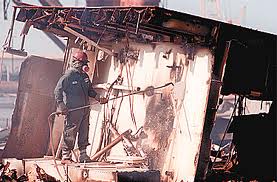
CU Blog - Where the Jobs Are - One Scenario - Photo 3According to the foregoing articles, ship-breaking activities in Third World countries, like Bangladesh, pose harm to the environment, workers and remaining systems of commerce. But when executed correctly, as in Brownsville-Texas, ship-breaking can be all positive. There are benefits in applying the appropriate best practices in handling hazardous materials. The tons of toxic waste (asbestos) can be properly managed and disposed of, with the proper eco-system surrounding the industry. The CU will facilitate the eco-system, especially with the Self-Governing Entities (SGE) concept for shipyards. This is covered in the Go Lean book under the auspices of “turn-around” industries, a federally regulated/promoted activity.

The Go Lean book also details the principle of job multipliers, how certain industries are better than others for generating multiple indirect jobs down the line for each direct job on a company’s payroll. The shipbuilding industry has a job-multiplier rate of 3.0. According to a report by the University of Strathclyde’s Fraser of Allander Institute in Scotland, a local reduction-in-force of 800 jobs at Govan & Scotstoun Shipyards will result in total job losses across Scotland of around 2,400 jobs, including those at the shipyards. (Source: http://www.scotsman.com/news/politics/top-stories/clyde-shipyard-cuts-may-lead-to-2-400-job-losses-1-3179593).

The Go Lean… Caribbean book details the creation of 15,000 direct jobs for the shipbuilding industry in the Caribbean region. Once the job multiplier is applied, the economic impact is that of 45,000 jobs.

How would the Caribbean advance from 0 to 45,000 jobs in the course of the 5-year roadmap? By adoption of empowering community ethos, plus the execution of key strategies, tactics, implementations and advocacies. The following is a sample:

Community Ethos – Deferred Gratification Page 21
Community Ethos – Economic Principle – Economic Systems Influence Choices & Incentives Page 21
Community Ethos – Economic Principle – Voluntary Trade Creates Wealth Page 21
Community Ethos – Job Multiplier Page 22
Community Ethos – Lean Operations Page 24
Community Ethos – Ways to Impact the Future Page 26
Community Ethos – Ways to Help Entrepreneurship Page 28
Community Ethos – Ways to Impact Research & Development Page 30
Community Ethos – Ways to Impact Turn-Around and Recycling and Demolition Industries Page 33
Community Ethos – Ways to Impact the Greater Good Page 37
Strategy – Mission – Facilitate a Shipbuilding Industry Page 46
Tactical – Fostering a Technocracy Page 64
Tactical – Tactics to Forge an $800 Billion Economy – High Multiplier Industries Page 70
Tactical – Separation of Powers – Self-Governing Entities Page 80
Implementation – Ways to Pay for Change Page 101
Implementation – Steps to Implement Self-Governing Entities Page 105
Implementation – Ways to Deliver Page 109
Planning – Ways to Make the Caribbean Better Page 131
Advocacy – Ways to Grow the Economy Page 151
Advocacy – Ways to Create Jobs Page 152
Advocacy – Ways to Improve Emergency Management Processes and Systems Page 196
Advocacy – Ways to Foster Technology Page 197
Advocacy – Ways to Develop/Grow a Ship-Building Industry Page 209
Appendix – Job Multipliers Page 259

The CU will foster industrial developments in support of tourism and as an alternative to tourism. Shipbuilding / ship-breaking is a prime-and-ready endeavor. The number one ingredient in the recipe for success in this industry is access to waterways, harbors and ports. The second most important ingredient is the willingness of the people to engage.

After the new pitfalls of tourism’s changing dynamics, the Caribbean people should now be ready for this industrial challenge of ship-breaking.

The Caribbean is arguable the best address on the planet, but a lot of infrastructure is missing; infrastructure like jobs. While this (Go Lean roadmap and accompanying blogs) is the start, the end of this roadmap is a clearly defined destination: a better place to live, work and play.

Download the book Go Lean … Caribbean – now!

—————————————————

Appendix a:

Company Overview: International Shipbreaking Limited LLC

International Shipbreaking Limited LLC provides dismantling and recycling services for maritime vessels and equipment. It offers various ferrous products, such as plate and structural steel, re-roll plate, cast iron, sheet metal, and scrap products; and non-ferrous products, including aluminum, brass, copper, cupro-nickel, lead, and non-ferrous scrap products. The company provides reusable equipment, such as propulsion systems, generators and engines, anchors, chains, and windlasses, as well as film projection machines, x-ray equipment, washing machines, kitchen galley tools, beds, lockers, gun racks, lighting fixtures, chairs, tables, and desks. It also offers artificial reefing.

Share this post:
, , ,
[Top]

Casinos Changing/Failing Business Model

Go Lean Commentary

Change has come to Atlantic City, New Jersey. Change has come to the world of casino gambling. For the US, there used to be a casino monopoly west of the Mississippi in Las Vegas, and another monopoly east of the Mississippi in Atlantic City.

No More!

Casinos have since popped up in many states (Pennsylvania, Florida, Connecticut, California, Louisiana, Mississippi, etc) all over the country, plus on many federally-legislated Indian Reservations. Additionally, there is the eco-system of casino riverboats and cruise ships leaving major US ports.

Now, the casino hot spots of Las Vegas and Atlantic City have to compete for their customers, and many times, they lose, as depicted in the foregoing news article, which reports that 2 casinos are closing in Atlantic City next month September.

“Who moved my cheese?”

Title: The Atlantic City’s Revel Casino to Close in September
Atlantic City, NJ – Aug 12, 2014, 3:42 PM ET
By: Wayne Parry, Associated Press

CU Blog - Atlantic City's Revel Casino to Close in September - Photo 1When it opened just over two years ago, many people hoped Revel would save Atlantic   City’s struggling casino industry, which has been bleeding money and jobs for years.

But now the $2.4 billion resort that was widely seen as the last, best chance for Atlantic City’s gambling market is shutting down, unable to find a buyer for even pennies on the dollar.

In addition to putting 3,100 people out of jobs and hurting state and local budgets, Revel’s demise shows just how cutthroat the East Coast casino market has become, and how difficult it is for even the newest and nicest gambling halls to survive in an oversaturated market.

Revel Entertainment said the casino and its 1,399 hotel rooms will close on Sept. 10, never having turned a profit.

“We regret the impact this decision has on our Revel employees who have worked so hard to maximize the potential of the property,” Revel said in a statement Tuesday. “We thank them for their professionalism and dedication; however we are faced with several unavoidable circumstances.

“Despite the effort to improve the financial performance of Revel, it has not proven to be enough to put the property on a stable financial footing,” the company wrote.

Revel’s most recent Chapter 11 filing listed assets of $486.9 million and liabilities of $476.1 million.

The company said its situation was compounded by a “considerable non-controllable expense structure” that financially burdened the property. It said it had no choice but “an orderly wind-down of the business at this time.”

Revel said it still hopes to find a buyer through the bankruptcy process. But it acknowledged that if that happened, it would be after the facility had already shut down.

Matthew Levinson, chairman of the New Jersey Casino Control Commission, called the closing “enormously disappointing,” but held out hope for a future sale.

“I sincerely hope that possibility materializes, especially for the employees who face the loss of their jobs,” he said.

Israel Posner, who runs a tourism and gambling study institute at RichardStocktonCollege, said he expects Revel to sell as a non-casino building.

“I still believe Revel will sell, for pennies on the dollar, to someone who will figure out that it is the most modern, beautiful structure that’s going to be built for generations to come,” he said.

The casino was due to be sold at a bankruptcy court auction last week, but that was postponed to allow casino officials to study bids that were received. After Revel’s board met on Monday, the decision was made to shutter the glittering glass-covered casino at the north end of the Boardwalk.

Revel opened in April 2012 as the first new casino in Atlantic City since the Borgata opened nine years earlier, and carried great hopes for many that it would be the catalyst to jolt what had been the nation’s second-largest gambling market back to life. Atlantic City has since slipped to third place behind Nevada and Pennsylvania, whose casinos touched off the New Jersey resort town’s revenue and employment plunge in 2007.

Since 2006, when the first Pennsylvania casino opened, Atlantic City’s casino revenue has fallen from $5.2 billion to $2.86 billion last year.

So far this year, the Atlantic Club closed in January, bought at a bankruptcy auction by the parent companies of Tropicana and Caesars and shuttered in the name of reducing competition. Caesars Entertainment will close the Showboat on Aug. 31, also to reduce the competition in Atlantic City, where it currently owns 4 of the 11 casinos. And TrumpPlaza is due to close Sept. 16.

CU Blog - Atlantic City's Revel Casino to Close in September - Photo 2Revel has ranked near the bottom of Atlantic City’s casinos in terms of the amount of money won from gamblers since the day it opened.

Its original owners envisioned it as a luxury resort that just happened to have a casino, and eschewed many staples of casino culture, including a buffet and bus trips for day-trippers. But that strategy — as well as the only overall smoking ban in Atlantic City — turned off customers, and Revel filed for bankruptcy in 2013, a little over a year after opening.

That led to new ownership and a “Gamblers Wanted” promotional campaign to emphasize the company’s new emphasis on its casino.

But despite some improvement, Revel’s finances never recovered enough, and it filed for bankruptcy a second time in June.
Associated Press News Source (Retrieved August 12, 2014) – http://abcnews.go.com/US/wireStory/atlantic-citys-revel-casino-close-september-24943242


CU Blog - Atlantic City's Revel Casino to Close in September - Photo 3

This article aligns with the book Go Lean…Caribbean, which calls for the elevation of Caribbean economics. The same challenges being experienced in Atlantic City are also affecting Caribbean casino resorts, especially since 2008. For example, the practice of Caribbean casino “junkets” is dead or dying [a].

The book posits that there is a need to re-focus, re-boot, and optimize the engines of commerce so as to make the Caribbean a better place to live, work and play. The tourism product, the mainstay of Caribbean economy, was accustomed to depending on certain amenities that have now come under attack by social change. Whereas golf was a popular day pastime for resort guests, and casino gambling was popular at night, both activities are experiencing decline and implosion in their individual industries. (See this previous blog commentary regarding the Future of Golf). The supply and demand of gambling/gaming options have equally encountered rapid evolutionary change, from lottery tickets, BINGO parlors, online poker,  area pari-mutuels (horse/dog racing, Jai-Alai) and Off-Track Betting.

If only there was an alternate roadmap to elevate Caribbean society without depending on the “games people play” to remain constant. Wait, there is! The book Go Lean… Caribbean, serves as a roadmap for the introduction and implementation of the technocratic Caribbean Union Trade Federation (CU) with the charter to effectuate change in the region with these 3 prime directives:

  • Optimization of the economic engines in order to grow the regional economy to $800 Billion and create 2.2 million new jobs.
  • Establishment of a security apparatus to protect the resultant economic engines and marshal against economic crimes.
  • Improve Caribbean governance to support these engines.

Early in the book, the responsibility to monitor, manage, and mitigate the risks and threats of job killing developments, (such as the reporting in the foregoing news article), were identified as an important function for the CU with this pronouncement in the Declaration of Interdependence (Pages 14):

xxvi.  Whereas the Caribbean region must have new jobs to empower the engines of the economy and create the income sources for prosperity, and encourage the next generation to forge their dreams right at home, the Federation must therefore foster the development of new industries… In addition, the Federation must invigorate the enterprises related to existing industries like tourism… – impacting the region with more jobs.

Many Caribbean tourism resort properties depend on casino gaming. The issue of declining growth or failing business models is an important discussion in the execution of this roadmap. This commentary previously related details of the changing macro-economic factors affecting the region’s economic engines. The following are samples of earlier Go Lean blogs:

https://goleancaribbean.com/blog/?p=1943 The Future of Golf; Vital for Tourism
https://goleancaribbean.com/blog/?p=841 Declining Economic Trends – Having Less Babies is Bad for the Economy
https://goleancaribbean.com/blog/?p=782 Open/Review the Time Capsule: The Great Recession of 2008
https://goleancaribbean.com/blog/?p=709 Econometric Analysis – Student debt holds back many would-be home buyers
https://goleancaribbean.com/blog/?p=356 Book Review: ‘How Numbers Rule the World’ – How Demographic Studies Dictate Policies
https://goleancaribbean.com/blog/?p=242 The Erosion of the Middle Class
https://goleancaribbean.com/blog/?p=235 Tourism’s changing profile

According to the foregoing article, the closing of this one property, the Revel, will directly impact 3,100 jobs. This article failed to mention however the effect on the local market with in-direct jobs. The Go Lean book details the principle of job multipliers, how certain industries are better than others for generating multiple indirect jobs down the line for each direct job on a company’s payroll. (The automotive manufacturing industry was a choice selection with a job-multiplier rate of 11.0 – Page 260)

The Caribbean must contend with many of these same issues as the city leaders of Atlantic City must now deal with. The State of New Jersey is one of the most prosperous in the US, so there’s the chance that many displaced workers can be absorbed into the regional economy. The Caribbean does not have this option – our situation is more dire, especially on self-contained islands. Our society is in desperate need of reform/reboot to insulate many of the macro-economic downward trends that are pending. On the one hand, we must double down on the tourism product. On the other hand, we must diversify our economy and avail other high job-multiplier industries, like automotive manufacturing. The Go Lean… Caribbean book details the community ethos to adopt to diversify our economy and proactively mitigate the dire effects of the changed demographic landscape, plus the executions of the following strategies, tactics, implementations and advocacies:

Community Ethos – Deferred Gratification Page 21
Community Ethos – Economic Principle – People Respond to Incentives Page 21
Community Ethos – Economic Principle – Consequences of Choices Lie in the Future Page 21
Community Ethos – Job Multiplier Page 22
Community Ethos – Lean Operations Page 24
Community Ethos   – Return on Investments (ROI) Page 24
Community Ethos – Ways to Impact the Future Page 26
Community Ethos – Ways to Foster Genius Page 27
Community Ethos – Ways to Help Entrepreneurship Page 28
Community Ethos – Ways to Promote Intellectual Property Page 29
Community Ethos – Ways to Impact Research & Development Page 30
Community Ethos – Ways to Bridge the Digital Divide Page 31
Community Ethos – Ways to Impact the Greater Good Page 37
Strategy – Integrate Region in a Single Market Page 45
Tactical – Fostering a Technocracy Page 64
Tactical – Tactics to Forge an $800 Billion Economy Page 67
Tactical – Separation of Powers Page 71
Implementation – Ways to Deliver Page 109
Planning – Ways to Make the Caribbean Better Page 131
Planning – Lessons Learned from 2008 Page 136
Advocacy – Ways to Grow the Economy Page 151
Advocacy – Ways to Create Jobs Page 152
Advocacy – Ways to Enhance Tourism Page 190
Advocacy – Ways to Impact Events Page 191
Advocacy – Ways to Foster Technology Page 197
Advocacy – Ways to Foster e-Commerce Page 198
Advocacy – Ways to Develop the Auto Industry Page 206
Advocacy – Ways to Help the Middle Class Page 223
Appendix – Job Multipliers Page 259

The CU will foster industrial developments to aid tourism, incorporate best practices and quality assurances to deliver the best hospitality in the world. But there is room for service improvement and enhancement of the regional tourism product.

This roadmap is not advocating the abandonment of casino gambling, though the practice is considered a vice. Rather, the community ethos being promoted is one of open competition and fostering world class deliveries in information technologies. The book posits that the tenets of Internet Communications Technology (ICT) is a great equalizer between large countries and smaller states. To reinforce this point, remember that Japan is far from being the largest population base in the world (only 126 million), yet they are the #3 economy worldwide. Size does not matter…as much, intelligent strategy and efficient delivery matters more.

This Japanese model is fully defined in the Go Lean roadmap, detailing their growth strategies (Page 69) and starting with this Declaration of Interdependence (Pages 14) statement, identified here:

xxxiii.  Whereas lessons can be learned and applied from the study of the recent history of other societies, the Federation must formalize statutes and organizational dimensions to avoid the pitfalls of [certain] communities… On the other hand, the Federation must also implement the good examples learned from developments/communities like … Japan.

The Caribbean can be a better place to live, work and play, perhaps even the best address on the planet.

Download the book Go Lean…Caribbean now!

————————————————————————————–

Appendix a:

Smart Gaming Magazine Article: INSIDE LOOK AT CASINO JUNKETS
By Henry Tamburin

Casino Junkets began in the mid-50’s as a way to entice players to Las Vegas to gamble. Junket programs in those days were pretty straightforward. Casino operators would hire junket reps to fill a plane with qualified gamblers. These players would get free airfare, free hotel accommodations, free meals, free shows (and just about anything else they wanted) in exchange for their commitment to gamble a specific number of hours per day at an explicit average bet size. The casinos of course were gambling that the players would lose more than their out of pocket expenses for bringing, housing and feeding them.

That was the past. To get a fresh look at how junkets operate in 2005 and what benefits they provide players, I interviewed junket rep Sandy Crammer, owner of S&S Casino Tours, and Jeffrey Hoss, Director of National Casino Marketing, for Harrah’s. What I learned about junkets might surprise you (it did me).

So let’s begin by defining what exactly does a Junket rep do?

Jeffrey Hoss: First off, in the Harrah’s organization we refer to our third party reps as Independent Agents rather than Junket Reps. Independent Agents send us customers (i.e. players) and in return they get a commission based on a player’s theoretical. We have about 185 Independent Agents representing 47 states and 5 international countries that have a specific territory that they can market and promote our properties to their customers. In total our Independent Agents have scheduled about 300,000 customer trips annually to Harrah’s properties.

Let me ask Sandy how she got started in this business.

Sandy Crammer: Before I started my own company, I ran a junket office as in-house employee for many years and I decided it was something I liked and wanted to try on my own. So my husband, Scott, and I started our own business and thankfully, Harrah’s decided to take a shot with us four years ago to represent them. We have three employees in our company and currently we are one of the top 5 Independent Agent producers for Harrah’s.
(Source: http://www.smartgaming.com/Articles/gambling_tips_inside_look_casino_junket.html)


Share this post:
, , , ,
[Top]

America’s Navy – 100 Percent – Model for Caribbean

Go Lean Commentary

“Can’t we all just get along”. – Rodney King 1993

If only life could be that simple. Unfortunately, we do not “just all get along”. There is often conflict in the world and if we do not do something positive to aid in this process, then chaos results.

This subsequent VIDEO harmonizes with the book Go Lean…Caribbean which posits that “bad actors” will always emerge in times of economic prosperity to exploit opportunities, with bad or evil intent (Page 23).

It is what it is!

VIDEO – Always defending, always on watch, protecting our freedoms whenever and wherever they are needed. America’s Navy – A Global Force For Good – https://youtu.be/TiQODFm3IFg

This commercial/VIDEO speaks of the “call to serve”; this is extremely important that someone “answers that call”; and be On Guard to protect the homeland and home seas. In an alternate commercial/VIDEO, it magnified how the US Navy also boasted these 4 percentage numbers:

70% – of the Earth covered by water
80% – of all people that live near the water
90% – of trade that travels by water
100% – percentage of time to be On The Watch and On Guard

(For the Caribbean, all of these above metrics are near 100%).

The US Navy does ensure the Greater Good in a lot of situations. For example, the Navy ensures secure passage of oil tankers through such threatening places as the Suez Canal and the Strait of Hormuz. The threat? For one, Iran has mined the Strait of Hormus (through which a majority of the world’s oil passes) and has threatened to blockade it, but its the US Navy preventing such action.

This US Navy consideration is relevant for the Caribbean to consider; not only for the fact that two Caribbean member-states, Puerto Rico and the US Virgin Islands, commits human capital to the American Armed Forces, but also because there is a parallel need for a powerful naval “force for good” in the region. The overriding theme of the foregoing VIDEO is that “freedom is not free” and that security forces must be put in place to ensure security. The security forces for the Caribbean must therefore be from … the Caribbean. We do not want to be parasites, but rather protégés of the US Navy, and those of other territorial powers: British, Dutch, France.

CU Blog - America's Navy - 100 Percent - Model for Caribbean - Photo 3

CU Blog - America's Navy - 100 Percent - Model for Caribbean - Photo 4

CU Blog - America's Navy - 100 Percent - Model for Caribbean - Photo 1

CU Blog - America's Navy - 100 Percent - Model for Caribbean - Photo 2

The book Go Lean…Caribbean posits that the region must prepare its own security apparatus for its own security needs. So the request is that all Caribbean member-states authorize a regional naval force to execute the security scope on the sovereign waters and territories in the region and for the Exclusive Economic Zone (EEZ) of the Caribbean Sea. This would be part and parcel of a Status of Forces Agreement (SOFA) signed with the 30 Caribbean member-states. The security goal is for public safety! This goal is detailed in the Go Lean book as it serves as a roadmap for the introduction and implementation of the technocratic Caribbean Union Trade Federation (CU). So the CU would be set to optimize Caribbean society through economic empowerment, and the aligning security dynamics. In fact, the Go Lean roadmap has these 3 prime directives:

  • Optimization of the economic engines in order to grow the regional economy to $800 Billion & create 2.2 million new jobs.
  • Establishment of a security apparatus to protect the resultant economic engines.
  • Improve Caribbean governance to support these engines.

Security/Defense policy for the Caribbean must be vastly different than that of the US Navy. There is no quest for world peace, or domination. Though we must be on guard against military intrusions like terrorism and piracy, we mostly have to contend with threats that may imperil the region’s economic engines, like tourism and fisheries. This includes man-made and natural concerns like narco-terrorism, enterprise corruption (human trafficking), oil/chemical spills, hurricanes, and earthquakes/tsunamis. For this purpose, the Go Lean roadmap calls for the establishment of the Caribbean Navy. While the US Coast Guard has a scope and agenda for all the US waterscapes/waterways, the CU Navy focus will only be the Caribbean, so the US Coast Guard will be able to shift its attention and resources else where.

So if there is the US Navy and the US Coast Guard already, why is their also a need for the Caribbean Navy? Simple! The US Navy and US Coast Guard report to American authorities. The CU Navy, on the other hand, will report to a Caribbean Commander-in-Chief and be held accountable to the Caribbean people. This point is pronounced early in the book with the Declaration of Interdependence (Page 12) that claims:

x.   Whereas we are surrounded and allied to nations of larger proportions in land mass, populations, and treasuries, elements in their societies may have ill-intent in their pursuits, at the expense of the safety and security of our citizens. We must therefore appoint “new guards” to ensure our public safety and threats against our society, both domestic and foreign. The Federation must employ the latest advances and best practices … to assuage continuous threats against public safety.

xvi. Whereas security of our homeland is inextricably linked to prosperity of the homeland, the economic and security interest of the region needs to be aligned under the same governance. Since economic crimes, including piracy and other forms of terrorism, can imperil the functioning of the wheels of commerce for all the citizenry, the accedence of this Federation must equip the security apparatus with the tools and techniques for predictive and proactive interdictions.

The Caribbean appointing “new guards”, or a security pact to ensure public safety is not so new an endeavor, as there are prior instances of this type of engagement in the region. There is an existing security pact, Regional Security System (RSS), for 5 Eastern Caribbean countries; but they have no ships – or any other naval/aviation resources for that matter. In effect, this RSS security pact would “bring a knife to a gun figh'”. The Go Lean roadmap however calls for a permanent professional Navy with the necessary Air Force, ground/Marine troops, intelligence gathering & analysis agency, and unified command-and-control for efficient coordination – even for all visiting allies. This CU Homeland Security Force would get its legal authorization from the Status of Forces Agreement instituted within the CU treaty enhancements.

Drones - Weather

CU Blog - America's Navy - 100 Percent - Model for Caribbean - Photo 5

CU Blog - America's Navy - 100 Percent - Model for Caribbean - Photo 7

CU Blog - America's Navy - 100 Percent - Model for Caribbean - Photo 6

This Status of Forces Agreement would be “Step One, Day One” in the Go Lean roadmap. The Go Lean book also details a series of community ethos, strategies, tactics, implementations and advocacies to provide increased public safety & security in the Caribbean region:

Economic Principle – Consequences of Choices Lie in Future Page 21
Community Ethos – Privacy –vs- Public Protection Page 23
Community Ethos – Intelligence Gathering Page 23
Community Ethos – “Crap” Happens Page 23
Community Ethos – Minority Equalization Page 24
Community Ethos – Cooperatives Page 25
Community Ethos – Ways to Manage Reconciliations Page 34
Community Ethos – Ways to Improve Sharing Page 35
Community Ethos – Ways to Impact the Greater Good Page 37
Tactical – Confederating a non-sovereign union Page 63
Tactical – Fostering a Technocracy Page 64
Tactical – Separation of Powers – Homeland Security Page 75
Implementation – Ways to Pay for Change Page 101
Implementation – Start-up Foreign Policy Initiatives Page 102
Implementation – Start-up Security Initiatives Page 103
Implementation – Start-up Benefits from the Exclusive Economic Zone (EEZ) Page 104
Implementation – Ways to Foster International Aid Page 115
Planning – Ways to Make the Caribbean Better Page 131
Planning – Ways to Improve Failed-State Indices Page 134
Planning – Lessons Learned from the West Indies (WI) Federation – WI Regiment Page 135
Planning – Lessons from East Germany Page 139
Advocacy – Ways to Grow the Economy Page 151
Advocacy – Ways to Improve Governance Page 168
Advocacy – Ways to Better Manage the Social Contract Page 170
Advocacy – Ways to Improve Leadership Page 171
Advocacy – Ways to Impact   Justice Page 177
Advocacy – Ways to Reduce Crime Page 178
Advocacy – Ways to Improve for Gun Control Page 179
Advocacy – Ways to Improve Homeland Security Page 180
Advocacy – Ways to Mitigate Terrorism Page 181
Advocacy – Ways to Improve Intelligence Gathering/Analysis Page 182
Advocacy – Ways to Improve for Natural Disasters Page 184
Advocacy – Ways to Impact Extractions Page 196
Advocacy – Ways to Improve Fisheries Page 210
Advocacy – Ways to Protect Human Rights Page 220
Appendix – Analysis/Chapters of the Book The Art of War Page 327

Other subjects related to security empowerments for the region have been blogged in other Go Lean…Caribbean commentary, as sampled here:

https://goleancaribbean.com/blog/?p=1554 Status of Forces Agreement = Security Pact
https://goleancaribbean.com/blog/?p=1531 A Lesson in History: 100 Years Ago – World War I
https://goleancaribbean.com/blog/?p=1487 Here come the Drones … and the Concerns
https://goleancaribbean.com/blog/?p=1076 Trinidad Muslims travel to Venezuela for jihadist training
https://goleancaribbean.com/blog/?p=960 NSA records all phone calls in Bahamas, according to Snowden
https://goleancaribbean.com/blog/?p=809 Muslim officials condemn abductions of Nigerian girls
https://goleancaribbean.com/blog/?p=789 America’s War on the Caribbean
https://goleancaribbean.com/blog/?p=392 Jamaica to receive World Bank funds to help in crime fight
https://goleancaribbean.com/blog/?p=341 US slams Caribbean human rights practices
https://goleancaribbean.com/blog/?p=273 10 Things We Want from the US and 10 Things We Don’t Want …

Bad actors will always emerge…

Accepting this premise means preparing the necessary counter-measures. The model of the American Navy gives the Caribbean a template of how, what, when and why. We must stand-up and be counted in the defense and security of our own homeland.

Protégés, not parasites!

This security is necessary to make the Caribbean homeland, a better place to live, work and play. The stakeholders of the region need these assurances. The stakeholders? 42 million residents, 10 million itinerant Diaspora, and 80 million tourists, (with 10 million on cruise ships). All of these stakeholders deserve someone, some force, watching and dedicated to the Caribbean … 100 percent.

Download the book Go Lean … Caribbean – now!

Share this post:
, , , , , ,
[Top]

Role Model Berry Gordy – No Town Like Motown

Go Lean Commentary

CU Blog - Role Model Berry Gordy - No Town Like Motown - PhotoThis is a memorable dialogue:

Berry Gordy: You went from singing love songs to now anti-war songs. I understand you want to reflect change in society…

Marvin Gaye (interrupting): I don’t want to reflect change, I want to effect change.

Thus the alignment of the Broadway play Motown, The Musical and the book Go Lean…Caribbean. It is an established fact that any difficult subject can be more easily communicated if backed-up by a catchy melody and rhyming words. An underlying theme of the above-cited play, based on the autobiographical story of Motown founder Berry Gordy, is that music effected change in America and forged integration and elevation of society.

By: Robert Simonson

Title: No Town Like Motown: Navigating the Life, Times and Tunes of Starmaker Berry Gordy

First-time Broadway director Charles Randolph-Wright is at the helm of one of the more pulse-quickening titles of the season, Motown: The Musical, about record producer Berry Gordy’s heyday.

In terms of backstage politics, Charles Randolph-Wright may have the trickiest job of any director working on Broadway this spring. He is staging Motown: The Musical, a musically overflowing new show about the life and career of recording mogul Berry Gordy.

One of his producers is Berry Gordy as well. Gordy completes his hat trick by having written the libretto for the piece.

“Sometimes I’ll forget the person I’m talking to is the same person that is depicted on stage,” said Randolph-Wright.

One imagines such waters are difficult to navigate. What if Producer Gordy tells the director not to interfere with Writer Gordy’s work? “It’s something we talked about from the beginning,” said Randolph-Wright. “He’s very open as to what the story is.”

The show, which is playing at the Lunt-Fontanne Theatre, is largely based on Gordy’s 1995 memoir “To Be Loved: The Music, the Magic, the Memories of Motown.”

“He wrote the book 20 years ago,” Randolph-Wright explained. “Now he has an even different perspective on that. You have to ask, ‘How do we tell the story of this big character, who is based on this real person, and yet that person is involved with the creation of the show, and is working on it?’ It’s a challenge, but the way we have worked is a very open process.”

Randolph-Wright recalled one particular moment when Gordy confided in him an episode from his past when he was at his most vulnerable. “We were walking around and he told me this story. I couldn’t believe it. I said, ‘You want that on stage?’ I thought it was very brave. But at this point at his life, what does he have to prove?”

Randolph-Wright added that Gordy, now 83, has no trouble juggling his many roles. After all, it is something he’s been doing for decades. “In most cases that would be a challenge,” he said. “But he spent his whole career wearing so many different hats. When I’m with the writer, that’s who I’m with. The producer is a different person. I am always with the person who’s doing all those things, but in each separate instance I’m with who Berry is at that moment.”

Charles Randolph-Wright was one of several directors who interviewed with Gordy. From the start, he thought he was right for the project. “This is in my DNA,” he said. He doesn’t mean that he grew up with Motown’s music (as many of us did) — though that is part of it. His connection to the material is more complex. “I’ve done every angle of this story. I’ve been in a music group. I’ve danced to the music. I’ve sung it. And I’ve lived in all those worlds he did, though not the same way he did.”

When the marquee was hung on the Lunt-Fontanne, Randolph-Wright glanced down the street and noticed he was only yards away from the Imperial Theatre. In the early 1980s he passed through the stage door of that theatre every night as a member of the original cast of Dreamgirls — the fictional account of the rise of The Supremes, a group Gordy helped found. “What’s happened in those years from that show to this show, it’s been an amazing journey,” he mused. “From the Broadway musical version of this story to the real story.”

Motown‘s greatest asset is the iconic song­book the Detroit-based record label produced; and they’ll get ample helpings of that hit parade, including songs made famous by Smokey Robinson and The Miracles (“Shop Around”), Diana Ross and The Supremes (“Stop! In the Name of Love”), Marvin Gaye (“What’s Going On”), Stevie Wonder, The Temptations, and Michael Jackson and The Jackson Five (“I Want You Back”).

Randolph-Wright said it was hard, given the rich catalogue, deciding which songs to keep in the show and which to leave out. “Every song you hear in this show, you want to hear,” he said. “But how do you put this journey into two and a half hours? There’s so much, so many people. They’re all part of this story. But we found out how to take the story and condense what could easily have been a miniseries.” He said he wouldn’t know the exact song count until opening night, but promised the show would contain more numbers than does your average musical.

To sing the classic pop hits, the director has assembled a large cast, including Valisia LeKae as Diana Ross and Charl Brown as Smokey Robinson — both particular Gordy favorites. Brandon Victor Dixon will play Gordy himself.

Randolph-Wright said he didn’t want note-by-note recreations of their numbers, “I want [the actors] to evoke these artists, not copy them, not be an impersonator. But it has to be the Motown sound. The actors have been tremendous in finding those things that make them seem real as those people.”

The tunes will be used in various ways. Some will be presented as straightforward performances; others will be used as narrative tissue, to further along the story. In addition, the score will include three or four new songs, written by Gordy expressly for the musical.

The director has found it a particular delight to see Gordy returning to his songwriting roots. “We forget that he wrote a lot of those early hits. Over the years, as Motown grew, he became less about being an artist, and more about being a businessman. It’s thrilling to see him become completely creative again.”

(This feature appears in the March 2013 issue of Playbill magazine.)
Play Bill Broadway Magazine/Web Site (Posted March 10, 2013; Retrieved 08-06-2014) – http://www.playbill.com/news/article/175778-No-Town-Like-Motown-Navigating-the-Life-Times-and-Tunes-of-Starmaker-Berry-Gordy

Like Berry Gordy, the prime directive of the Go Lean book is also to elevate society, but in the Caribbean, not in America, by integrating a confederated brotherhood. In fact, the declarative statements are as follows:

  • Optimization of the economic engines in order to grow the regional economy to $800 Billion & create 2.2 million new jobs.
  • Establishment of a security apparatus to protect the resultant economic engines.
  • Improve Caribbean governance to support these engines.

Berry Gordy accomplished his mission through music/song and entertainment. The book Go Lean…Caribbean strives to accomplish its mission with the introduction and implementation of the technocratic Caribbean Union Trade Federation (CU). Berry Gordy is hereby recognized as a role model that the Caribbean can emulate. He has provided a successful track record of forging change, overcoming incredible odds, managing crises to successful conclusions and rebooting failing institutions. The Go Lean book, serving as a roadmap, initiates with a “Prologue” that identifies community ethos that must be embraced for any chance of success and permanent change. This list of ethos from the book corresponds with the history of Berry Gordy, as portrayed in the Motown, The Musical Broadway play:

Go Lean…Caribbean Berry Gordy Role Modeling
Job Multipliers Economic Opportunities
Future Focus Crossover / Integration
Foster Genius Producing Artists
Help Entrepreneurship New Record Labels, Movies
Promote Intellectual Property Music Business Excellence
Research & Development New Artists Development
Bridge the Digital Divide Embrace of New Media
Improve Negotiations Hollywood Interactions
Impact Turn-Around Move from Detroit
Manage Reconciliations Motown Reunions
Improve Sharing Common Studios/Producers
Promote Happiness Music Essential to Life
Greater Good Impact Society

“No town like Motown” is the title of the foregoing article from the PlayBill magazine. But the Berry Gordon legacy is not the town of Detroit, but rather the musical contributions of his movement. It should be noted that Gordy moved the record company, Motown, out of the failed-city of Detroit, early in the 1970’s. So Gordy’s legacy is really how he grew in his management of change!

According to the opening dialogue, Berry Gordy was a reluctant advocate of change; he tried to be a businessman first. In the end, he conducted a lot of business, but he effected change as well. Thank you Marvin Gaye for that inspiration, for impacting Berry Gordy with the lesson that “one man, and his music” can make difference.

The Go Lean book accepts that the business of music can have a major impact on Caribbean society and the world. Already, this commentary has analyzed how a Caribbean music artist has made an impact on the world scene, with this post:

https://goleancaribbean.com/blog/?p=866 Bob Marley: The legend lives   on!

In the Go Lean roadmap to elevate the Caribbean, the eco-systems of music get due respect. This point is detailed in the  Declaration of Interdependence at the outset of the book, pronouncing this need for regional solutions (Page 14):

xxxii. Whereas the cultural arts and music of the region are germane to the quality of Caribbean life, and the international appreciation of Caribbean life, the Federation must implement the support systems to teach, encourage, incentivize, monetize and promote the related industries for arts and music in domestic and foreign markets. These endeavors will make the Caribbean a better place to live, work and play.

The Go Lean roadmap accepts that change has come to the music business. It is no longer the same world that was dominated by Berry Gordy, and his cast of musical geniuses. Now, there is the need for some technocratic facilitations. The book posits that this burden is too big for any one Caribbean member-state, and thus the collaboration efforts of the CU is necessary, as the strategy is to confederate all the 30 member-states of the Caribbean despite their language and legacy, into an integrated “single market”. This will allow for better leverage of the consumer market for the consumption of music. From this eco-system, should emerge our own generations of Berry Gordy’s in the Caribbean to impact the world with their art, music, and contributions.

Today, most music is consumed digitally with a lot of retailing via the world wide web. This changed landscape now requires new tools and protections, like electronic payment systems, digital rights management and Performance Rights Organizations. The Go Lean/CU roadmap details these solutions. With these efforts and investments, the returns will be undeniable. The CU is designed to do the heavy-lifting of organizing Caribbean society, and interacting with the wide-world to better reap the benefits of music and related eco-systems. The following list details the strategies, tactics, implementations and advocacies to foster the next Motown movement, Caribbean style:

Community   Ethos – Forging Change Page 20
Community Ethos – Lean Operations Page 24
Community   Ethos – Return on Investments Page 24
Strategy –   Strategy – Caribbean Vision Page 45
Strategy –   Agents of Change – Globalization Page 57
Tactical –   Growing the Caribbean Economy to $800   Billion Page 67
Separation   of Powers – Central Bank – Electronic Payment Deployments Page 73
Tactical –   Separation of Powers – Patents & Copyrights Page 78
Separation   of Powers – Culture Administration Page 81
Planning –   Ways to Make the Caribbean Better Page 131
Planning    – Lessons Learned from Detroit Page 140
Advocacy   – Ways to Grow the Economy Page 151
Advocacy   – Ways to Create Jobs Page 152
Advocacy –   Reforms for Banking Regulations Page 199
Advocacy –   Ways to Impact Hollywood Page 203
Advocacy –   Ways to Promote Music Page 231
Appendix –   Caribbean Music Genres Page 347
Appendix –   Protecting Music Copyrights Page 351

The Go Lean roadmap has simple motives: enable the Caribbean to be a better place to live, work and play. One man, or woman, can make a difference in this quest. We want to foster the next generation of “stars’ in music and other fields of endeavor.

According to his autobiography and the Broadway musical, Berry Gordy was inspired by other role models in his youth, i.e. Joe Louis. Now the world in general, the Caribbean is particular, is being inspired by Berry Gordy.

This is how to reflect and effect change in society. That opening dialogue with Marvin Gaye and Berry Gordy is captured for our inspiration. The end result:

Mother, mother
There’s too many of you crying
Brother, brother, brother
There’s far too many of you dying
You know we’ve got to find a way
To bring some lovin’ here today

Father, father
We don’t need to escalate
You see, war is not the answer
For only love can conquer hate
You know we’ve got to find a way
To bring some lovin’ here today

Download the book Go Lean … Caribbean – now!

Share this post:
, , , , ,
[Top]

Climate Change May Bring More Kidney Stones

Go Lean Commentary:

CU Blog - Climate Change May Bring More Kidney Stones - PhotoThe subject in the foregoing news article just cannot be ignored: Climate Change and personal health.

While this report was published by undisputed technocratic professionals, the Children’s Hospital of Philadelphia (CHOP), the publishers of the book Go Lean…Caribbean had engaged a similar analysis methodology: assessments based on hard evidence – number crunching (Big Data) and anecdotes – to reach their conclusions in the book that the Caribbean is in a state of crisis.

Both analyses are now aligned!

This subject of damaging health effects deriving from Climate Change aligns with Go Lean … Caribbean, as it posits that there are agents of change, including Climate Change, that the region is struggling to contend with, and that the negative consequences are already manifesting themselves in everyday Caribbean life, but the region as a whole and individual member-states, are not able, willing or equipped to mitigate the associated risks. The book portrays that the appropriate response requires heavy-lifting, and therefore proposes the Caribbean Union Trade Federation (CU) as a technocratic solution. The book serves as a roadmap for the introduction and implementation of the CU. This Go Lean roadmap describes the CU as the best solution for a concerted Caribbean response.

The CHOP research is published as follows:

CHOP-Led Research Finds Link between Hotter Days, Kidney Stones in U.S. Adults and Children
Contact: Ashley Moore, The Children’s Hospital of Philadelphia, 267-426-6071 or MooreA1@email.chop.edu

As daily temperatures increase, so does the number of patients seeking treatment for kidney stones. In a study that may both reflect and foretell a warming planet’s impact on human health, a research team found a link between hot days and kidney stones in 60,000 patients in several U.S. cities with varying climates.

“We found that as daily temperatures rise, there is a rapid increase in the probability of patients presenting over the next 20 days with kidney stones,” said study leader Gregory E. Tasian, MD, MSc, MSCE, a pediatric urologist and epidemiologist at The Children’s Hospital of Philadelphia (CHOP), who is on the staff of the Hospital’s Kidney Stone Crenter as well as the Hospital’s Center for Pediatric Clinical Effectiveness (CPCE).

Tasian, senior author Ron Keren, MD, MPH, also of CHOP and CPCE, and colleagues from other centers published their results today in Environmental Health Perspectives, the journal of the National Institute of Environmental Health Sciences. The Urologic Diseases in America Project, supported by the National Institute of Diabetes and Digestive and Kidney Diseases, sponsored the study.

The study team analyzed medical records of more than 60,000 adults and children with kidney stones between 2005 and 2011 in Atlanta, Chicago, Dallas, Los Angeles and Philadelphia, in connection with weather data. Tasian and colleagues described the risk of stone presentation for the full range of temperatures in each city. As mean daily temperatures rose above 50 F (10 C), the risk of kidney stone presentation increased in all the cities except Los Angeles. The delay between high daily temperatures and kidney stone presentation was short, peaking within three days of exposure to hot days.

Link between kidney stones and high temperatures
“These findings point to potential public health effects associated with global climate change,” said Tasian. “However,” cautions Tasian, “although 11 percent of the U.S. population has had kidney stones, most people have not. It is likely that higher temperatures increase the risk of kidney stones in those people predisposed to stone formation.” Higher temperatures contribute to dehydration, which leads to a higher concentration of calcium and other minerals in the urine that promote the growth of kidney stones.

A painful condition that brings half a million patients a year to U.S. emergency rooms, kidney stones have increased markedly over the world in the past three decades. While stones remain more common in adults, the numbers of children developing kidney stones have climbed at a dramatically high rate over the last 25 years. The factors causing the increase in kidney stones are currently unknown, but may be influenced by changes in diet and fluid intake. When stones do not pass on their own, surgery may be necessary.

The study team also found that very low outdoor temperatures increased the risk of kidney stones in three cities: Atlanta, Chicago and Philadelphia. The authors suggest that as frigid weather keeps people indoors more, higher indoor temperatures, changes in diet and decreased physical activity may raise their risk of kidney stones.

The researchers argue that the number of hot days in a given year may better predict kidney stone risk than the mean annual temperature. Atlanta and Los Angeles share the same annual temperature (63 F, or 17 C), but Atlanta has far more hot days than Los Angeles, along with nearly twice the prevalence of kidney stones.

Tasian added that while the five U.S. cities have climates representative of those found throughout the world, future studies should explore how generalizable the current findings are. Other studies should analyze how risk patterns vary in different populations, including among children, represented by a small sample size in the current study.

Global warming trend and kidney stone prevalence
The study’s broader context is in patterns of global warming. The authors note that other scientists have reported that overall global temperatures between 2000 and 2009 were higher than 82 percent of temperatures over the past 11,300 years. Furthermore, increases in greenhouse gas emissions are projected to raise earth’s average temperatures by 2 to 8 F (1 to 4.5 C) by 2100. “Kidney stone prevalence has already been on the rise over the last 30 years, and we can expect this trend to continue, both in greater numbers and over a broader geographic area, as daily temperatures increase,” concluded Tasian. “With some experts predicting that extreme temperatures will become the norm in 30 years, children will bear the brunt of climate change.”

More information:
Funds from the National Institutes of Health (grants HD060550 and DK70003), supported this study, along with a research fellowship from the Medical Research Council, U.K. In addition to their CHOP titles, Tasian and Keren are on the faculty of the Perelman School of Medicine at the University of Pennsylvania.

Co-authors of the study are Christopher Saigal, MD, MPH, of UCLA who is a co-principal investigator of the Urologic Diseases in America Project; Antonio Gasparrini, PhD, of the London School of Hygiene and Tropical Medicine; Benjamin Horton, PhD, of Rutgers University; Rodger Madison, MA, of the RAND Corporation; and Jose Pulido, MD, and J. Richard Landis, PhD, both of the University of Pennsylvania.

Taisan GE et al, “Daily Mean Temperature and Clinical Kidney Stone Presentation in Five U.S. Metropolitan Areas: A Time Series Analysis,” Environmental Health Perspectives, published July 10, 2014.
Children’s Hospital of Philadelphia Web Site – Retrieved 07-28-2014
http://www.chop.edu/news/climate-change-may-bring-more-kidney-stones.html

Considering the evidence published in the foregoing article, this is the immediate response that comes to mind:

It is what it is!

While there continues to be deniers and detractors of Climate Change, these first responders treating the ailments in hospitals do not have the luxury of “burying their head in the sand”, especially when a suffering patient (many times a child) is begging for relief. They must simply provide care and count the tally later. The foregoing article is that tally.

Debate over!

The same applies to the Caribbean. The region is arguably the best address on the planet, but there are constant climate-driven threats, especially during the annual hurricane seasons. After each storm’s landfall, there are repercussions and consequences in which commerce systems get disrupted and economic engines are curtailed. The end result, after consistent periods of “famine”, many residents seek to flee because of these challenging economic conditions.

Something is clearly wrong climate-wise and must be addressed. According to the foregoing article, patients (including children) in the United States are not spared from Climate Change. The Caribbean is not spared either. While the Caribbean itself cannot unilaterally fix the problems of Climate Change, we can better prepare for the negative consequences:

Respond
Rebuild
Recover

The Go Lean roadmap specifies where we are as a region (losing 70% brain drain among the college educated; no preparation for spikes in health crises like kidney stones), where we want to go (elevation of Caribbean society in the homeland for all citizens to dissuade migration and provide public health mitigations) and how we plan to get there – confederating as a Single Market entity. While the Go Lean book strategizes a roadmap for economic empowerment, it clearly relates that healthcare and disaster management are germane to the Caribbean quest for health, wealth and happiness. At the outset of the Go Lean book, in the Declaration of Interdependence (Page 11), these points are pronounced:

i.     Whereas the earth’s climate has undeniably changed resulting in more severe tropical weather storms, it is necessary to prepare to insure the safety and security of life, property and systems of commerce in our geographical region. As nature recognizes no borders in the target of its destruction, we also must set aside border considerations in the preparation and response to these weather challenges.

ix.      Whereas the realities of healthcare and an aging population cannot be ignored and cannot be afforded without some advanced mitigation, the Federation must arrange for health plans to consolidate premiums of both healthy and sickly people across the wider base of the entire Caribbean population. The mitigation should extend further to disease management, wellness, obesity and smoking cessation programs. The Federation must proactively anticipate the demand and supply of organ transplantation as developing countries are often exploited by richer neighbors for illicit organ trade.

The Caribbean Union Trade Federation has the prime directive of optimizing the economic, security and governing engines of the region. The foregoing article/VIDEO depicts the Big Data analysis that needs to be performed on behalf of Caribbean society. The roadmap specifies both a Commerce Department (Econometrics) and a Health Department in the Separation-of-Power dictum.

There is also the priority on Research & Development (R&D) placed in the foregoing article. The roadmap describes this focus as a community ethos. Then it goes on to stress that the CU must promote the community ethos that R&D is valuable and must be incentivized for adoption. The following list details additional ethos, strategies, tactics, implementations and advocacies to optimize the region’s health deliveries:

Community   Ethos – Economic Systems Influence Individual Choices Page 21
Community   Ethos – The Consequences of Choices Lie in the Future Page 21
Community   Ethos – “Crap” Happens Page 23
Community   Ethos – Cooperatives Page 25
Community   Ethos – Non-Government Organizations Page 25
Community   Ethos – Ways to Impact Research & Development (R&D) Page 30
Community   Ethos – 10 Ways to Promote Happiness Page 36
Community   Ethos – Ways to Impact the Greater Good Page 37
Strategy – Integrate   and unify region in a Single Market Page 45
Strategy – Agents of   Change – Climate Change Page 57
Tactical – Fostering a   Technocracy Page 64
Tactical – Separation   of Powers – Commerce Department – Econometrics Page 79
Tactical – Separation   of Powers – Health Department Page 86
Implementation   – Ways to Pay for Change Page 101
Implementation   – Ways to Implement   Self-Government Entities – R&D Page 105
Implementation   – Ways to Deliver Page 109
Planning –    Ways to Make the Caribbean Better Page 131
Advocacy –   Ways to Improve Healthcare Page 156
Advocacy –   Ways to Better Manage the Social Contract Page 170
Advocacy –   Ways Foster Cooperatives Page 176
Advocacy –   Ways to Improve for Natural Disasters Page 184
Advocacy –   Ways to Improve Emergency Management Page 196
Advocacy –   Ways to Impact Foundations Page 219
Advocacy –   Ways to Improve Elder-Care Page 225
Advocacy –   Ways to Impact Youth – Healthcare Page 227
Advocacy –   Ways to Impact Persons with Disabilities Page 228
Appendix – Emergency Management – Trauma Centers Page 336

In fact, the foregoing news/VIDEO story depicted analysis administered by the Children’s Hospital of Philadelphia (CHOP).  This institution has undisputed credentials and credibility, being ranked, by US News & World Report magazine, as the #1 Children’s Hospital in the country [a]. This recognition means that they, CHOP, must be doing things right!

This is a great model for Caribbean society – we too, must do things right.

Technocratic = doing things right!

The Go Lean roadmap posits that more analysis will emerge as a direct result of the CU prioritization on science, technology, engineering and medical (STEM) activities on Caribbean R&D campuses and educational institutions.

This is the heavy-lifting that the CU is designed to bear. Anyone can be afflicted with kidney stones – a painful disorder. Now, obviously, with indisputable Climate Change, these afflictions are becoming more commonplace; the CU, and all Caribbean institutions, must now do things right. This is the Greater Good.

Download the book Go Lean … Caribbean – now!

——————————————————————————————————————————–

Appendix a – Citation References:

Ranked #1 in the United   States – U.S. News & World Report

An important measure of the quality of children’s hospitals in the U.S. is the yearly rankings provided by a magazine called U.S. News & World Report. For the 2014-15 rankings, the magazine surveyed 183 pediatric centers for data about 10 specialties and asked 150 pediatric specialists in each specialty where they would send the sickest children.

The Children’s Hospital of Philadelphia (CHOP) shared the number one spot on the U.S. News Honor Roll, and ranked in the top four in the nation for every pediatric specialty evaluated.

CHOP was recognized for excellence in the following specialties:

Cancer
Cardiology and Heart Surgery
Diabetes and Endocrinology
Gastroenterology
Orthopedics
Neonatology
Nephrology and Kidney Diseases
Neurology and Neurosurgery
Pulmonology
Urology

Source: The Children’s Hospital of Philadelphia – About Us. Retrieved from http://www.chop.edu/service/international-medicine/international-patient-services/about-chop/home.html


Share this post:
, ,
[Top]