Tag: Trade

Robots help Amazon tackle Cyber Monday

Go Lean Commentary

To understand American commerce, one must learn the BIG shopping “days of the week” – Friday, Saturday, Monday, Tuesday, as follows:

    • Black Friday – This is the Friday following the Thanksgiving Day holiday in the US (the fourth Thursday of November). Since the early 2000’s, it has been regarded as the beginning of the Christmas shopping season, and most major retailers open very early and offer promotional sales. Black Friday is not a public holiday, but some states observe “The Day After Thanksgiving” as a holiday for state government employees, sometimes in lieu of another federal holiday such as Columbus Day.[5] Many non-retail employees and schools have both Thanksgiving and the day after off, followed by a weekend, thereby increasing the number of potential shoppers. In 2014, $50.9 billion was spent during the 4-day Black Friday weekend. While approximately 133 million U.S. consumers shopped during the same period.[6]
    • Small Business Saturday – This refers to the Saturday after Thanksgiving during one of the busiest shopping periods of the year. First observed in 2010, it is a counterpart to Black Friday and Cyber Monday, which feature big box retail and e-commerce stores respectively. By contrast, Small Business Saturday encourages holiday shoppers to patronize brick-and-mortar businesses that are small and local. Small Business Saturday is a registered trademark of American Express Corporation. Small Business Saturday UK began in the UK in 2013 after the success of Small Business Saturday in America.[7]
    • Cyber Monday – This is a marketing term for the Monday after the Thanksgiving holiday. The term was created by marketing companies to persuade people to shop online. The term made its debut on November 28, 2005, in a Shop.org press release entitled “‘Cyber Monday Quickly Becoming One of the Biggest Online Shopping Days of the Year”.[2] According to the Shop.org/Bizrate Research 2005 eHoliday Mood Study, “77 percent of online retailers said that their sales increased substantially on the Monday after Thanksgiving, a trend that is driving serious online discounts and promotions on Cyber Monday this year (2005)”. In 2014, Cyber Monday online sales grew to a record $2.68 billion, compared with last year’s $2.29 billion. However, the average order value was $124, down slightly from 2013’s $128.[3] The deals on Cyber Monday are online-only and generally offered by smaller retailers that cannot compete with the big retailers. Black Friday generally offers better deals on technology; with nearly 85% more data storage deals than Cyber Monday. The past Black Fridays saw far more deals for small appliances, cutlery, and kitchen gadgets on average than Cyber Monday. Cyber Monday is larger for fashion retail. On the past two Cyber Mondays, there was an average of 45% more clothing deals than on Black Friday. There were also 50% more shoe deals on Cyber Monday than on Black Friday.[4] Cyber Monday has become an international marketing term used by online retailers in Argentina, Canada, Chile, China, Colombia, Denmark, Germany, Ireland, Uganda, Japan, Portugal, Sweden and the United Kingdom.
    • Giving Tuesday – refers to the Tuesday after Thanksgiving. It is a movement to create a national day of giving at the beginning of the Christmas and holiday season. Giving Tuesday was started in 2012 by the “92nd Street Y” (Young Men’s and Young Women’s Hebrew Association in New York, NY) and the United Nations Foundation as a response to commercialization and consumerism in the post-Thanksgiving season (Black Friday and Cyber Monday).[8][9] This occasion is often stylized as #GivingTuesday for purposes of hashtag activism.

That’s a lot of commerce … and philanthropy too!

This encyclopedic discussion is necessary for the Caribbean to model the best-practices of American commerce. The focus of this commentary is the role of one company in the pantheon of Cyber Monday, Amazon. This firm has previously been featured in a Go Lean blog, and is identified as a model for Caribbean logistics, our means for delivering the mail; this is the vision for the Caribbean Postal Union (CPU).

The focus of the book Go Lean…Caribbean and the CPU is not just postal mail, but rather logistics. Mail requires logistics, but logistics encompasses so much more than just mail. So we would want to model a successful enterprise in this industry space, like Amazon, not just another postal operation, like the US Postal Service (Page 99).

Amazon provides a good example of lean technocratic efficiency. So Amazon is a good model, not just for the CPU but the entire Caribbean Union Trade Federation (CU). The Go Lean book, serves as a roadmap for the introduction and implementation of the technocratic CU.

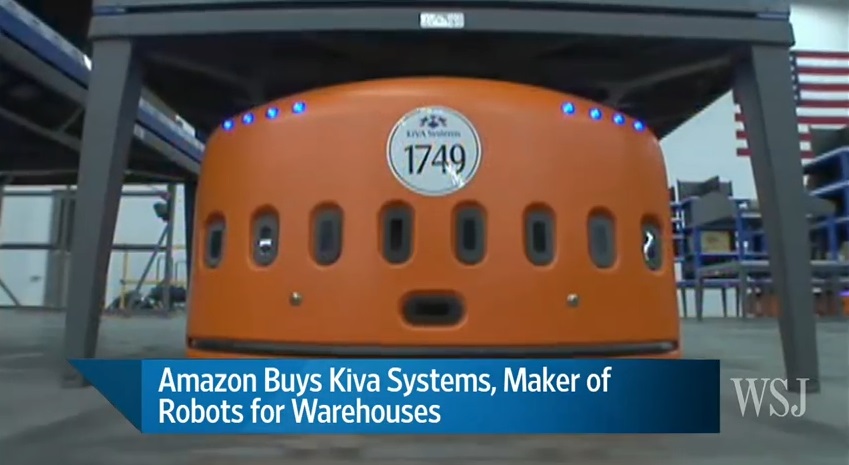
One reason why Amazon is modeled for their lean stature is their use of automation. This following VIDEO depicts the creative solution of using robots to facilitate logistics in a warehouse environment:

VIDEO: Robots help Amazon tackle Cyber Monday – http://www.cbsnews.com/videos/robots-help-amazon-tackle-cyber-monday/

December 1, 2014 – Cyber Monday is the biggest sales day of the year for online retail giant, Amazon. Last year, Amazon customers ordered 426 items every second on Cyber Monday, and this year that number is expected to grow. In addition to the 80-thousand seasonal workers they employ to fulfill orders, thousands of robots also crawl the warehouse floors. CNET.com’s KaraTsuboi takes us inside an Amazon fulfillment center to watch the robots in action. (VIDEO plays best in Internet Explorer).

Lean, automation, robotics, technocratic …

… welcome to the new Caribbean.

This is the mission of Go Lean roadmap, to elevate the economic engines of Caribbean society; industrial policy plays a key role in this roadmap. The region needs the jobs, so we need job creators: companies. These companies, or better stated, Direct Foreign Investors, need a pro-innovation environment to deploy their automated solutions. The Go Lean roadmap allows the structure of Self-Governing Entities (SGE) to incentivize industrial developments in the region. It is the expectation that robots and automated systems will flourish. The independence of the SGE structure neutralizes conflicts with “labor”.

Related issues have previously been detailed in these Go Lean commentaries listed here:

Disney World – Successful Role Model of a SGE
Using SGE’s to Welcome the Dreaded ‘Plutocracy’
Where the Jobs Are – Ship-breaking under SGE Structure
Fairgrounds as SGE and Landlords for Sports Leagues
Puerto Rico’s Comprehensive Cancer Center Project Breaks Ground – Model of Medical SGE

In addition to the roadmap encouraging robotic automation, the CU will directly employ such technologically innovative products and services to impact its own prime directives; the CPU is such a reflection; more automation and less labor. The CU’s prime directives are identified with the following 3 statements:

  • Optimization of the economic engines in order to grow the regional economy to $800 Billion & create 2.2 million new jobs.
  • Establishment of a security apparatus to protect the resultant economic engines.
  • Improve Caribbean governance to support these engines.

The CPU features economic, security and governing concerns.

The Go Lean roadmap seeks to change the entire eco-system of Caribbean logistics and resulting commerce  – the interaction with postal operations. This vision is defined early in the book (Page 12 & 14) in the following pronouncements in the Declaration of Interdependence:

xv. Whereas the business of the Federation and the commercial interest in the region cannot prosper without an efficient facilitation of postal services, the Caribbean Union must allow for the integration of the existing mail operations of the governments of the member-states into a consolidated Caribbean Postal Union, allowing for the adoption of best practices and technical advances to deliver foreign/domestic mail in the region.

xxvii. Whereas the region has endured a spectator status during the Industrial Revolution, we cannot stand on the sidelines of this new economy, the Information Revolution. Rather, the Federation must embrace all the tenets of Internet Communications Technology (ICT) to serve as an equalizing element in competition with the rest of the world. The Federation must bridge the digital divide and promote the community ethos that research/development is valuable and must be promoted and incentivized for adoption.

Amazon is not our only example. A previous blog/commentary identified Chinese company Alibaba as a fitting role model for Caribbean consideration. There are so many best-practices around the world for the region to study and glean insights and wisdom from. The successful application of this roadmap will foster such best-practices for the delivery of the CPU logistics in the Caribbean. The wisdom the Go Lean book gleans are presented as a series of community ethos, strategies, tactics, implementations and advocacies; a detailed sample is listed as follows:

Community Ethos – Deferred Gratification Page 21
Community Ethos – People Respond to Incentives Page 21
Community Ethos – Job Multiplier Page 22
Community Ethos – Intelligence Gathering Page 23
Community Ethos – Lean Operations Page 24
Community Ethos – Ways to Impact the Future Page 26
Community Ethos – Ways to Foster Genius Page 27
Community Ethos – Ways to Help Entrepreneurship Page 28
Community Ethos – Promote Intellectual Property Page 29
Community Ethos – Ways to Bridge the Digital Divide Page 31
Community Ethos – Ways to Improve Sharing Page 35
Strategy – Customers – Citizens and Member-states Governmental Page 47
Tactical – Separation of Powers – Postal Services Page 78
Tactical – Separation of Powers – Interstate Commerce Administration Page 79
Implementation – Year 1 / Assemble Phase – Establish   CPU Page 96
Anecdote – Implementation Plan – Mail Services – US Dilemma Page 99
Implementation – Steps to Implement   Self-Governing Entities Page 105
Implementation – Improve Mail Services – Electronic Supplements Page 108
Implementation – Ways to Deliver Page 109
Planning – 10 Big Ideas for the Caribbean Region Page 127
Advocacy – Ways to Improve Interstate Commerce Page 129
Advocacy – Ways to Grow the Economy Page 151
Advocacy – Ways to Create Jobs Page 152
Advocacy –Ways to Improve Governance Page 168
Advocacy – Ways to Foster Technology Page 197
Advocacy – Ways to Foster e-Commerce Page 198
Advocacy – Ways to Promote Call Centers Page 212
Advocacy – Ways to Impact Urban Living Page 234

Following the Amazon’s example (and Alibaba’s example) will spur the Caribbean to embrace more robotic technologies. This field is new, fresh and ready for innovation. There is a level-playing-field for any innovator to earn market share. The underlying company in the foregoing VIDEO is Kiva Systems – a Massachusetts based company that manufactures mobile robotic fulfillment systems.[10][11] They rolled out a great product, then “Lo-and-behold”, they were acquired by a major e-Commerce company. Today, they are a subsidiary of Amazon, yet their material-handling systems are currently used by many other retailers including: The Gap, Walgreens, Staples, Gilt Groupe, Office Depot, Crate & Barrel, Saks 5th Avenue, and more.[12]

CU Blog - Robots help Amazon tackle Cyber Monday - Photo 3

CU Blog - Robots help Amazon tackle Cyber Monday - Photo 2

CU Blog - Robots help Amazon tackle Cyber Monday - Photo 1

CU Blog - Robots help Amazon tackle Cyber Monday - Photo 4

This commentary therefore features the subjects of commerce, logistics and entrepreneurship. The Caribbean can emulate this model from Amazon. The biggest ingredient missing in the region is the ‘will’. But the ‘will’ can be fostered anew in the Caribbean. This is the heavy-lifting for the CU, instituting such new community ethos.

Now is the time for all of the Caribbean, the people and governing institutions, to lean-in for the empowerments in the book Go Lean … Caribbean. This is a Big Idea for the region; that of a Cyber Caribbean, in which Cyber Mondays may become a big deal for our region – not only as consumers, but producers as well. Therefore, this roadmap is not just a plan for delivering the mail/packages, but rather a plan for delivering the future.

We must employ whatever tools and techniques, robotics included, to make the region a better homeland to live, work and play.

Does “play“include Robots? Yes, indeed. Consider this fun VIDEO here.  🙂

Supplemental VIDEO – The Nutcracker performed by Dancing Kiva Order Fulfillment Robots: http://youtu.be/Vdmtya8emMw

Download the book Go Lean … Caribbean – now!

————–

AppendixSource References:

2.    “‘Cyber Monday’ Quickly Becoming One of the Biggest Online Shopping Days of the Year”. Shop.org.
3.    “Fundivo – Cyber Monday Statistics”. Fundivo.
4.    “What’s the difference between Black Friday and Cyber Monday?”. Mirror.co.uk. Mirror.co.uk. Nov 28, 2013. Retrieved 2014-11-25.
5.    “Pima County in Arizona Replaces Columbus Day with Black Friday”. BestBlackFriday.com. 2013-08-07.
6.    “”Fundivo – Black Friday Statistics””. Fundivo.
7.    Small Business Saturday Hailed as Success. The Telegraph. 8 December 2013″. Telegraph.co.uk. 8 December 2013. Retrieved 2 December 2014.
8.   Fox, Zoe (October 23, 2012). “6 Inspiring Organizations Joining in #GivingTuesday”. Retrieved February 15, 2014.
9.    “#GivingTuesday: About”. Giving Tuesday. Retrieved February 15, 2014.
10.  http://www.kivasystems.com/about-us-the-kiva-approach/
11.   http://www.boston.com/business/technology/innoeco/2012/03/amazon_buys_warehouse_robotics.html
12.  http://www.kivasystems.com/about-us-the-kiva-approach/history/

Share this post:
, , , , ,

Caribbean must work together to address rum subsidies

Go Lean Commentary

CU Blog - Caribbean must work together to address rum subsidies - Photo 1

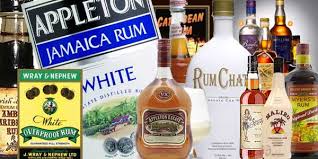
Caribbean Rum, a product from island sugar cane, is among the best in the world.

This is a familiar focus of the Go Lean…Caribbean, movement, the book and accompanying blogs feature this and another Caribbean specialty agriculture: the best cigars in the world. The book posits that specialty agriculture is a core competence of the region (Page 58). This is part-and-parcel of the introduction and implementation of the technocratic Caribbean Union Trade Federation (CU).

With that branding of “Trade Federation”, obviously there is an emphasis on Trade activities.

With that branding of “Union”, obviously there is an emphasis on collective bargaining.

Mastery of these activities is what the following news article calls for:

CU Blog - Caribbean must work together to address rum subsidies - Photo 2THERE has been yet another call for rum-producing nations in the Caribbean to come together and confront the issues of subsidies which are affecting rum exports from this region to the United States.

Douglas Henderson, Executive Manager, Regional Sales and Marketing for Angostura, a leading rum producer in Trinidad and Tobago, said there has to be a collaborative effort to deal with the situation.

“Therefore, the challenge that we have is that in a lot of cases the Caribbean producers are having difficulties coming together to fight,” he told The Barbados Advocate.

The official pointed out that he is aware that some efforts were made to have the matter dealt with at the World Trade Organisation (WTO), in addition to the fact that both Barbados and Trinidad and Tobago are both trying to make inroads in having the subsidies removed.

“But until that happens, no company can stand still and wait. So we have to look to develop our business and do what we can,” he remarked.

CU Blog - Caribbean must work together to address rum subsidies - Photo 3Henderson was recently in Barbados where he participated in the launch of a range of Angostura Rums to the Barbados market. The launch was a co-operative effort between Angostura and Massy Distribution.

The USA is providing the subsidies to multinational spirits companies operating in the United States Virgin Islands and in Puerto Rico. Caribbean governments and producers who are members of the West Indies Rum and Spirit Producers Association (WIRSPA) have dubbed the subsidies inconsistent with trade rules of the WTO.

Just recently, the Barbados Ambassador to the United States, John Beale, issued a similar call for Barbados and the Caribbean producers to mount a campaign against the subsidies. He said that as a result of them, Barbados’ rum exports to the USA had declined by more than 20 per cent so far in 2014. Rum accounted for over $80 million in foreign exchange inflows into Barbados last year.

“Every Caribbean rum producer is affected by the subsidy and it is going to place those countries – US territories – at an advantage over us,” Henderson said.

He explained, “The USA market remains a huge market for any Caribbean producer of rum. Rums are growing in the USA and again when you come into the market and your price point is at a level that the majority of the market would choose not to try it, what you have to invest in advertising is so significant.”

The Angostura official further noted that every rum producer in the world is happy to compete on a level playing field. However, according to him, “a subsidy does not provide a level playing field, that’s where the concern is”, he added.
The Barbados Advocate – Daily Newspaper Online Site – (Posted 8/20/2014; retrieved 11/10/2014) – http://www.barbadosadvocate.com/newsitem.asp?more=business&NewsID=38272

The Go Lean book explained that the proper management of trade can increase wealth. The book relates the following on Page 21:

Voluntary Trade Creates Wealth: People specialize in the production of certain goods and services because they expect to gain from it. People trade what they produce with other people when they think they can gain something from the exchange. Some benefits of voluntary trade include higher standards of living and broader choices of goods and services.

The foregoing article alludes that the Caribbean member-states can do better in managing their trade negotiations (with the US regarding subsidies) with more efficient collective bargaining. This commentary asserts that it is a preferred option for the member-states to delegate this negotiation responsibility to the CU rather than going at it alone. The Go Lean book serves as a roadmap to empower the region’s trade engines. This effort is dubbed Trade SHIELD and defined in great details in the book. The acronym refers to:

Strategic
Harvest
Interdiction
Enforcement
Logistics
Delivery

All in all, this roadmap calls for more than just negotiations (inclusive under the Strategic functionality). The Go Lean roadmap calls for confederating 30 member-states of the Caribbean (including the US territories of Puerto Rico and the Virgin Islands – also rum-producing economies – think Bacardi*), despite their language and legacy, into an integrated Single Market. The resulting entity will increase trade with the US and with the rest of the world, increasing the economy (GDP) from $378 Billion (2010) to $800 Billion. This growth is based on new jobs, industrial output and lean operational efficiency.

Size does matter! The traditional rum-producing countries (Barbados, Guyana, Jamaica, Martinique, Trinidad, etc.) are considered Small Island Developing States. The CU on the other hand represents the Single Market of 42 million people, in which “the whole is worth more than the sum of its parts“. In addition, the SHIELD principles specify Logistics and Delivery functions in facilitating the Trade objectives. This is a microcosm of how the CU roadmap will impact all of Caribbean society. The 3 prime directives of the CU are listed as:

  • Optimization of the economic engines so as to grow the regional economy to $800 Billion and create 2.2 million new jobs.
  • Establishment of a security apparatus (with persecutory powers for economic crimes) so as to mitigate the eventual emergence of “bad actors”.
  • Improve Caribbean governance.

CU Blog - Caribbean must work together to address rum subsidies - Photo 4The roadmap creates some new Delivery options for Caribbean specialty agriculture (i.e. rum and cigars), namely electronic commerce and social media. Imagine subscribers on the myCaribbean.gov Marketplace or Facebook easily ordering auto-fill monthly shipments of the best products the Caribbean have to offer. The CU intends to trade with the 80 million annual visitors and 10 million Diaspora.

This export trade allows for the preservation of Caribbean heritage.

Facilitating Caribbean trade is a strong theme for the Go Lean… Caribbean book and a frequent topic for these Go Lean blogs. These points of trade against the back-drop of Caribbean economy, security and governance were detailed in these previous blogs/commentaries:

https://goleancaribbean.com/blog/?p=2435 Korean Model – Latin America’s Trade dreams
https://goleancaribbean.com/blog/?p=1965 America’s Navy – Model for protecting Caribbean trade routes
https://goleancaribbean.com/blog/?p=1847 Cuban Cigars – Declared “Among the best in the world”
https://goleancaribbean.com/blog/?p=1869 US Senate bill targets companies that move overseas for unfair trade
https://goleancaribbean.com/blog/?p=1609 Cuba mulls economy and trade in Parliament session
https://goleancaribbean.com/blog/?p=1416 Amazon, a model of a Trade Marketplace, and its new FIRE Smartphone
https://goleancaribbean.com/blog/?p=833 CU Strategy: One currency, divergent economies
https://goleancaribbean.com/blog/?p=689 eMerge Conference Aims to Jump-start Miami Tech Hub in Exploiting Latin America Trade

The foregoing news article relates that the US is the culprit for the unlevel “playing field” for rum import-export trade activities in the region. The Go Lean movement posits that despite the reassuring words, the US is not assuming exemplary leadership for Caribbean empowerment – due to its own self-interest – that instead the region must “stand up” for its own self-determination.

This is not independence, this is interdependence! This point was echoed in the following blog commentaries:

https://goleancaribbean.com/blog/?p=2259 The Criminalization of American Business – Big Agra
https://goleancaribbean.com/blog/?p=789 America’s War on the Caribbean
https://goleancaribbean.com/blog/?p=353 Book Review: ‘Wrong – Nine Economic Policy Disasters and What We Can Learn…’
https://goleancaribbean.com/blog/?p=273 10 Things We Don’t Want from the US – American Self-Interest Policies

The CU roadmap works to drive the needed change among the economic, security and governing engines to guide the Caribbean member-states to the destination of elevated societies. This change is based on new community ethos, strategies, tactics, implementations and advocates; sampled as follows:

Declaration of Interdependence Page 10
Community Ethos – Deferred Gratification Page 21
Community Ethos – Economic Principles – Voluntary Trade Creates Wealth Page 21
Community Ethos – Job Multiplier Page 22
Community Ethos – Security Principles Page 22
Community Ethos – Governing Principles Page 24
Community Ethos – Lean Operations – GPO’s Page 24
Community Ethos – Cooperatives Page 25
Community Ethos – Ways to Improve Negotiations Page 32
Strategy – Vision – Integrating Region in to a Single Market Page 45
Strategy – Agents of Change – Globalization Page 57
Strategy – Core Competence – Specialty Agriculture Page 58
Tactical – Confederating a Permanent Union Page 63
Tactical – Fostering a Technocracy Page 64
Tactical – Growing the Economy to $800 Billion – Convergence of East Asian Tigers Page 67
Tactical – Separation of Powers – Agriculture Department – Licensing/ Inspections Page 88
Implementation – Assemble & Create Super-Regional Organs to represent commerce Page 96
Implementation – CPU: Consolidate / Integrate the Member-states Postal Services Page 96
Implementation – Ways to Pay for Change – GPO’s Page 101
Implementation – Foreign Policy Start-up Initiatives Page 102
Implementation – Security Initiatives at Start-up Page 103
Implementation – Ways to Optimize Mail Service & myCaribbean.gov Marketplace Page 108
Implementation – Ways to Impact Social Media Page 111
Implementation – Ways to Benefit from Globalization Page 119
Planning – Ways to Improve Trade – GPO’s Page 128
Planning – Ways to Improve Interstate Commerce Page 129
Advocacy – Ways to Grow the Economy Page 151
Advocacy – Ways to Create Jobs Page 152
Advocacy – Ways to Better Manage Foreign Exchange – Caribbean Dollar realities Page 154
Advocacy – Ways to Improve Governance Page 168
Advocacy – Ways to Foster Cooperatives Page 176
Advocacy – Ways to Foster e-Commerce Page 198
Advocacy – Ways to Preserve Caribbean Heritage Page 218
Advocacy – Ways to Impact US Territories Page 244
Appendix – Trade SHIELD Principles Page 264

Trade is very much critical to the strategies to grow the regional economy. Increased trade will undoubtedly mean increased job opportunities. The CU/Go Lean plan is to foster and incubate key industries, such as rum industry, for this goal. One of the biggest rum producers in the Caribbean, Bacardi, originated in Cuba but have since located distillery plants in Puerto Rico, Bahamas and Mexico. They have endured and persevered despite much opposition. They are proud of their survival, depicting it in TV advertisements; see the following:

*VIDEO: Bacardi – Untamable since 1862 – Procession TV Ad: https://youtu.be/lXQcbS-TH7g

Discover how the Bacardí family had the irrepressible spirit to overcome fire, earthquakes, prohibition, revolution and exile — none of which could defeat their spirit, because True Passion Can’t Be Tamed. Find out more about the Bacardí family story at www.bacardi.com

The rest of the Caribbean’s rum producers must also endure dire obstacles, and can now do so because there is help. This Go Lean roadmap proposes a new model, that of the Trade Federation, an entity to do the heavy-lifting of elevating the Caribbean economy, security and governing engines.

For the Caribbean, the status quo cannot continue – the region is already mature as a great place to “play”: tourism, carnivals/fiestas/parties, great rum and great cigars – “all play and no work”. But now, it is time for the region, the people and institutions, to lean-in to this roadmap for change, to make the Caribbean a better place to live, work and play.

Download the free e-Book of Go Lean … Caribbean – now!

Share this post:
, , , ,
[Top]

Where the Jobs Are – Entrepreneurism in Junk

Go Lean Commentary

The dominant employment engine for the Caribbean involves tourism, but the regional tourism business models are being strained. The primary target market, American middle class have suffered crises and now harsh realities have come to fruition. The book Go Lean…Caribbean posits that there is a need to re-focus, re-boot, and optimize the engines of commerce so as to make the Caribbean a better place to live, work and play for all.

Where are the jobs … that the Caribbean people need today and will need even more so in the future?

A key answer is in the quotation: “One man’s trash is another man’s treasure”.

This is the underlying principle of the recycling-scrap-metal industry. This industry is a “destruction services” business model, a subset of the “turn-around” community ethos. Jobs can be created in the art and science of destruction (demolition, recycling and junkyards). But this industry does not “play well with others”, it makes a bad neighbor. It is dirty, wet, Blue-Collar and noisy. But, if done right, this model could be successful, and can impact a “turn-around” for many stakeholders.

This new focus on the “turn-around” community ethos, and the accompanying jobs, appears on the surface to be a win-win for all involved, but a more careful examination highlights some serious economic, security and governing obstacles/issues.

The Go Lean book calls for the optimization of these economic, security and governing engines for the Caribbean region:

  • Economics – Jobs, business models, industrial neighborhoods constitute the economic dimensions of this industry. Overall the roadmap calls for the optimization of the economic engines in order to grow the regional economy to $800 Billion GDP and create 2.2 million new jobs. There is another economic element to this recycling-scrap-metal industry sphere of activity, that of an entrepreneurial hustle – Scrapping. A person can generate self-employment income by gathering scrap-metal, recycled commodities, re-manufactured raw materials and transport them to junkyards. While this may be an occasional chore for some people, for others, this can be a daily hustle, their source of steady income. See photo examples here and VIDEO below:
  • CU Blog - Where the Jobs Are - Entrepreneurism in Junk - Photo 1-3
  • Security – The above trash-versus-treasure quotation introduces the security dimension of the commentary. The entire eco-system of recycling assumes that the “trash” holder of a commodity surrenders possession. If/when the commodity changes hands prematurely, the events are often associated with a crime: burglary, robbery, theft, vandalism, house-stripping, etc. For this reason, the Go Lean roadmap commandeers jurisdiction of salvage/recycling/scrap-metal functions for federal regulation/promotion. This stipulates that activities within the “turn-around” sphere will be marshaled by regional police authorities, with the application of best-practices: Verified Identification, Closed Circuit Surveillance Camera, Serial Number registration/tracking, etc.
  • Governance – In line with the Go Lean roadmap, many junkyards are identified as ideal for the structure of Self-Governing Entities (SGE), the bordered/fenced controlled campuses/compounds. This approach allows for initiation, cooperation and coordination of SGE’s to effectuate change in the region.

The alignment of strained economic-security-governance engines against the recycling-scrap-metal “turn-around” community ethos have been successfully championed before, particularly in the US during World War II. There is much to learn from this example and lesson in history.

Consider a modern example of this Los Angeles company, and imagine similar installations throughout the Caribbean region:

C & M Metals is a provider of Scrap-Metal Recycling and Metal Trading Services

1709 E. 24th St., Los Angeles, CA90058  |  Phone: 323-234-4662  |  Fax: 323-234-5844  |  sales@cmmetals.net

C&M Metals Inc. is a corporation dedicated to the, “Green Movement.” We have showed this by being one of the pioneers in the recycling of secondary metals and scrap metal waste for over 50 years. Our experience comes second to none and our long history speaks for itself. Call us today to inquire about how we could be of service to you.

Industries Served:

Metal Fabricators Demolitions Electricians
Machine Shops Networking Contractors
Electronic Manufactures Auto Repair Centers   Auto Wrecking
Plumbers Contractors Yards
Maintenance Contractors Radiator Repair Shops
Medical Industries Wheel and Tire Centers
Installers Auto Dealerships

CU Blog - Where the Jobs Are - Entrepreneurism in Junk - Photo 2
C & M Metals, Inc. – Los Angeles Premier Salvage Services – Retrieved
11-09-2014 –
http://www.cmmetals.net/index.html

The book Go Lean… Caribbean, serves as a roadmap for the introduction and implementation of the technocratic Caribbean Union Trade Federation (CU) with the charter to facilitate jobs in the region. Early in the Go Lean book, the responsibility to create jobs was identified as an important function for the CU with this pronouncement in the Declaration of Interdependence (Pages 14):

xxvi.  Whereas the Caribbean region must have new jobs to empower the engines of the economy and create the income sources for prosperity, and encourage the next generation to forge their dreams right at home, the Federation must therefore foster the development of new industries… In addition, the Federation must invigorate the enterprises related to existing industries … impacting the region with more jobs.

The Go Lean book also details the principle of job multipliers, how certain industries are better than others for generating multiple indirect jobs down-the-line for each direct job on a company’s payroll. The recycling-scrap-metal “turn-around” industries have impressive indirect job multiplier rates, hereby estimated at 5.0. This is important, as the Go Lean… Caribbean book details the creation of 2.2 million direct/indirect jobs in the region during the 5-year roadmap, including income-generation from entrepreneurial hustles.

The subject of SGE’s has been directly addressed and further elaborated upon in these previous blog/commentaries:

https://goleancaribbean.com/blog/?p=2750 Disney World – Example of SGE
https://goleancaribbean.com/blog/?p=2338 Using SGE’s to Welcome the Dreaded ‘Plutocracy’
https://goleancaribbean.com/blog/?p=2003 Where the Jobs Are – Ship-breaking under SGE Structure
https://goleancaribbean.com/blog/?p=1214 Fairgrounds as SGE and Landlords for Sports Leagues
https://goleancaribbean.com/blog/?p=286 Puerto Rico’s Comprehensive Cancer Center Project Breaks Ground – Model of Medical SGE

In addition, the subjects of self-employment opportunities and entrepreneurial hustle have been explored in previous blog/commentaries:

https://goleancaribbean.com/blog/?p=1325 Puerto Rico Governor Signs Bill on Small-Medium-Enterprises
https://goleancaribbean.com/blog/?p=599 Ailing Puerto Rico open to radical economic fixes – with focus on Informal Economy
https://goleancaribbean.com/blog/?p=398 Self-employment on the rise in the Caribbean – World Bank
https://goleancaribbean.com/blog/?p=214 LCD versus an Entrepreneurial Ethos

The adoption of new community ethos, plus the executions of the following strategies, tactics, implementations and advocacies will foster the returns on the “turn-around” investments:

Community Ethos – Deferred Gratification Page 21
Economic Principles – People Choose because Resources are Limited Page 21
Economic Principles – All Choices Involve Costs Page 21
Economic Principles – People Respond to Incentives Page 21
Economic Principles – Economic Systems Influence Choices & Incentives Page 21
Economic Principles – Voluntary Trade Creates Wealth Page 21
Community Ethos – Job Multiplier Page 22
Community Ethos – Lean Operations Page 24
Community Ethos – Return on Investments (ROI) Page 24
Community Ethos – Cooperatives Page 25
Community Ethos – Ways to Impact the Future Page 26
Community Ethos – Ways to Help Entrepreneurship Page 28
Community Ethos – Ways to Impact Research & Development (R&D) Page 30
Community Ethos – Ways to Impact Turn-Around: Recycling and Demolition Industries Page 33
Community Ethos – Ways to Impact the Greater Good Page 37
Strategy – Mission – Foster Local Economic Engines. Page 45
Tactical – Fostering a Technocracy Page 64
Tactical – Tactics to Forge an $800 Billion Economy – High Multiplier Industries Page 70
Tactical – Separation of Powers – Self-Governing Entities Page 80
Implementation – Ways to Pay for Change – SGE Licenses Page 101
Implementation – Steps to Implement Self-Governing Entities Page 105
Implementation – Ways to Deliver Page 109
Planning – 10 Big Ideas – Self-Governing Entities Page 127
Planning – Ways to Improve Trade Page 128
Planning – Ways to Make the Caribbean Better Page 131
Advocacy – Ways to Grow the Economy Page 151
Advocacy – Ways to Create Jobs Page 152
Advocacy – Ways to Foster Cooperatives Page 176
Advocacy – Ways to Improve Emergency Management Processes and Systems Page 196
Advocacy – Ways to Impact Main Street Page 201
Appendix – Job Multipliers Page 259

The CU will foster industrial developments in support of turn-around industries. While these industrial developments may feature physical-grounds like high-tech R&D campuses, medical parks, and technology bases, they will also include low-tech scrap-metal junkyards. So the Go Lean roadmap covers clean-and-dirty, wet-and-dry activities.

While STEM (Science, Technology, Engineering and Mathematics) attributes maybe the target activity for future-focused genius qualifiers, not all Caribbean stakeholders will be included among this grouping. In fact, STEM candidates are projected to only be a small minority in any community. Not everyone can be in the “Geek Squad”, or White Collar classes for that matter. So the Blue Collar classes must be accommodated as well in the Go Lean roadmap. This entrepreneurial hustle is an example of that total inclusion. As such, community investments must be made to facilitate the needs of Blue Collar workers. See below for Appendix – Cooperatives in Salvage.

The Caribbean is arguably the best address on the planet, but there are a lot of missing ingredients so as to be the best address for everyone. Some of the missing ingredients are jobs. The plan identified in the Go Lean book and blog/ commentaries is a good start to create employment opportunities for the region. This, the Go Lean roadmap, is where the jobs are! There are other benefits too; in general, the end result of this roadmap is a clearly defined destination: a better place to live, work and play. 🙂

Download the book Go Lean … Caribbean – now!

———-

Appendix – VIDEO: How to make money scrapping – http://youtu.be/6eggQxy4Tdk

Mike the Scrapper Introduction to Scrapping: “We all have to live and make money so this is for my new fellow scrappers and the one’s that have been already scrapping”.

———-

Appendix – Cooperatives in Salvage:

The CU will structure cooperative endeavors to marshal the economic and homeland security interest of the region. As such, the creation of “Worker” cooperatives will be incentivized for enterprises to assist the population to find gainful employment, even through entrepreneurial “hustles”.

Recycling-Scrap-Metal Industries are ideal for Worker cooperatives. But to facilitate these endeavors, large investments are needed to be made for industrial equipment, sampled as follows (from http://grindercrusherscreen.com/):

CU Blog - Where the Jobs Are - Entrepreneurism in Junk - Photo 4-6

Share this post:
, , , ,
[Top]

Caribbean Role Model – Oscar De La Renta – RIP

Go Lean Commentary

The world mourns the passing of Oscar De La Renta (1932 – 2014; age 82), the Dominican American fashion designer that became internationally known in the 1960s as one of the couturiers who dressed First Lady Jacqueline Kennedy. He was an award-winning designer who worked for Paris fashion houses Lanvin and Balmain; but is better known for his eponymous fashion house as he continued to dress leading figures, from film stars and world leaders to royalty [19], right up to weeks before his death – he dressed Amal Alamuddin for her September 27th wedding to George Clooney.

De La Renta was born in the Dominican Republic’s capital city of Santo Domingo; he remained committed and impassioned to assist his homeland, despite his permanence in the New York metropolitan area. He was a stalwart of the NYC fashion scene.

The world’s media duly recognized his passing yesterday (Monday October 20) and the contribution of his life. The following productions feature a news story and a newscast of his passing and obituary of his legacy:

1. Title: Oscar De la Renta, legendary designer, dead at 82
CU Blog - Caribbean Role Model - Oscar De La Renta - RIP - Photo 1NEW YORK (AP) — At his Fashion Week runway show in September, Oscar De La Renta sat in his usual spot: in a chair right inside the wings, where he could carefully inspect each model just as she was about to emerge in one of his sumptuous, impeccably constructed designs.

At the end of the show, the legendary designer himself emerged, supported by two of his models. He didn’t walk on his own, and didn’t go far, but he was beaming from ear to ear. He gave each model a peck on the cheek, and then returned to the wings, where models and staff could be heard cheering him enthusiastically.

De La Renta, who dressed first ladies, socialites and Hollywood stars for more than four decades, died Monday evening at his Connecticut home at age 82, only six weeks after that runway show. But not before another high-profile honor was bestowed on him: The most famous bride in the world, Amal Alamuddin, wore a custom, off-the-shoulder De La Renta gown to wed George Clooney in Venice. Photos of the smiling designer perched on a table at the dress fitting appeared in Vogue.

De La Renta died surrounded by family, friends and “more than a few dogs,” according to a handwritten statement signed by his stepdaughter Eliza Reed Bolen and her husband, Alex Bolen. The statement did not specify a cause of death, but De La Renta had spoken in the past of having cancer.

“He died exactly as he lived: with tremendous grace, great dignity and very much on his own terms,” the statement said. “While our hearts are broken by the idea of life without Oscar, he is still very much with us. … All that we have done, and all that we will do, is informed by his values and his spirit.”

The late ’60s and early ’70s were a defining moment in U.S. fashion as New York-based designers carved out a look of their own that was finally taken seriously by Europeans. De La Renta and his peers, including the late Bill Blass, Halston and Geoffrey Beene, defined American style then and now.

De La Renta’s specialty was eveningwear, though he also was known for chic daytime suits favored by the women who would gather at the Four Seasons or Le Cirque at lunchtime. His signature looks were voluminous skirts, exquisite embroideries and rich colors.

Earlier this month, first lady Michelle Obama notably wore a De La Renta dress for the first time. De La Renta had criticized her several years earlier for not wearing an American label to a state dinner in 2011.

Among Obama’s predecessors favoring De La Renta were Laura Bush, who wore an icy blue gown by De La Renta to the 2005 inaugural ball, and Hillary Rodham Clinton, who wore a gold De La Renta in 1997.

“We will miss Oscar’s generous and warm personality, his charm, and his wonderful talents.” Bush said in a statement. ” We will always remember him as the man who made women look and feel beautiful.”

A statement from former President Bill Clinton, Hillary Clinton, and Chelsea Clinton and Marc Mezvinsky, said: “Oscar’s remarkable eye was matched only by his generous heart. His legacy of philanthropy extended from children in his home country who now have access to education and health care, to some of New   York’s finest artists whose creativity has been sustained through his support.”

De La Renta made just as big a name for himself on the Hollywood red carpet — with actresses of all ages. Penelope Cruz and Sandra Bullock were among the celebrities to don his feminine and opulent gowns. His clothes even were woven into episodes of “Sex and the City,” with its style icon, Carrie Bradshaw, comparing his designs to poetry.

One actress who wore a De La Renta gown to this year’s Oscars was Jennifer Garner.

“Mr. De La Renta loved women,” she said on Monday evening, wiping away tears. “And you saw it in every design that he did. He honored women’s features, he honored our bodies. He wasn’t afraid to pull back and let the woman be the star of the look.”

De La Renta was also deeply admired by his fellow designers. “He set the bar,” designer Dennis Basso said on Instagram Monday night. “But most of all he was a refined elegant gentleman.”

The designer’s path to New York’s Seventh Avenue took an unlikely route: He left his native Dominican Republic at 18 to study painting in Spain, but soon became sidetracked by fashion. The wife of the U.S. ambassador saw some of his sketches and asked him to make a dress for her daughter — a dress that landed on the cover of Life magazine.

That led to an apprenticeship with Cristobal Balenciaga, and then De La Renta moved to France to work for Lanvin. By 1963, he was working for Elizabeth Arden couture in New York, and in 1965 he launched his own label.

He told The Associated Press in 2004 that his Hispanic roots had worked their way into his designs.

“I like light, color, luminosity. I like things full of color and vibrant,” he said.

While De La Renta made Manhattan his primary home, he often visited the Dominican Republic and kept a home there. Vogue Editor-in-Chief Anna Wintour was a frequent visitor.

CU Blog - Caribbean Role Model - Oscar De La Renta - RIP - Photo 2“His designs reflected his extraordinary personality: optimistic, fun, sunny, romantic,” Wintour wrote in a remembrance on Tuesday. “He always said accept your friends for who they are, not for who you want them to be. Oscar was everything you could want a friend to be. ”

He also had a country home in Kent, Connecticut, where he died Monday. Gardening and dancing were among his favorite diversions from work. “I’m a very restless person. I’m always doing something. The creative process never stops,” he said.

As a designer, De La Renta catered to his socialite friends and neighbors — he and his wife, Annette, were fixtures on the black-tie charity circuit — but he did make occasional efforts to reach the masses, including launching a mid-priced line in 2004 and developing a dozen or so perfumes.

He was an avid patron of the arts, serving as a board member of The Metropolitan Opera and Carnegie Hall, among others, and he devoted considerable time to children’s charities, including New Yorkers for Children. He also helped fund schools and day-care centers in La Romana and Punta Cana in his native country.

The Dominican Republic honored de la Renta with the Order of Merit of Juan Pablo Duarte and the order of Cristobol Colon. In the United States, he received the Coty American Fashion Critics Award twice, was named womens-wear designer of the year by the Council of Fashion Designers of America in 2000 and also received a lifetime achievement award from the CFDA — an organization for which he served as president in the 1980s.

Besides his own label, De La Renta spearheaded the Pierre Balmain collection from 1993-2002, marking the first time an American designed for a French couture house, and he was awarded the French Legion of Honor with the rank of commander. He also received the Gold Medal Award from the King and Queen of Spain.

De La Renta gave up the title of chief executive of his company in 2004, handing over business duties to the Bolens, but he remained active and continued to show his collections during New York Fashion Week.

De La Renta also is survived by his son, Moises, a designer at the company.

De La Renta’s first wife, French Vogue editor Francoise de Langlade, died in 1983.

Associated Press Entertainment Writer Ryan Pearson in Los Angeles also contributed to this report.
AP News Source (Retrieved October 21, 2014) –
http://news.yahoo.com/oscar-la-renta-legendary-designer-dead-82-063208260.html

——-

2. Video: NBC News Video – http://www.nbcnews.com/video/nightly-news/56275679/#56275679:

Oscar De La Renta impacted the fashion world with his contributions. He was awarded numerous honors and awards from around the world. This man of Caribbean heritage impacted the whole world.

In 1977, De La Renta launched his fragrance, OSCAR,[20] followed by an accessories line in 2001[21] and a home-wares line in 2002.[22] The new business venture included 100 home furnishings for Century Furniture featuring dining tables, upholstered chairs, and couches. In 2004, he added a less expensive line of clothing called O Oscar. De la Renta said he wanted to attract new customers whom he could not reach before.[23]

In 2006, De La Renta designed Tortuga Bay, a boutique hotel at Punta Cana Resort and Club. Tortuga Bay is a Leading Small Hotel of the World.[24] and a member of Virtuoso.[25]

The publishers of the book Go Lean…Caribbean recognize the life contributions of Oscar De La Renta as an artist, entrepreneur, industrialist and advocate for many causes that align with our quest for empowerment and elevation of Caribbean life and culture. The book serves as a roadmap for the introduction and implementation of the Caribbean Union Trade Federation (CU). The CU seeks to also empower the people of the Caribbean to lead more impactful lives in which they are better able to meet their needs and plan for a productive future. The Go Lean roadmap seeks to put Caribbean people in a place of better command-and-control of their circumstances, to develop the community ethos of assisting each other to advance in our own lives, in our individual communities and in the Caribbean as a whole.

Like Oscar De La Renta, the prime directive of the Go Lean book is also to elevate society, but instead of impacting America, the roadmap focus is the Caribbean first. In fact, the declarative statements are as follows:

  • Optimization of the economic engines in order to grow the regional economy to $800 Billion & create 2.2 million new jobs.
  • Establishment of a security apparatus to protect the resultant economic engines.
  • Improve Caribbean governance to support these engines.

Oscar De La Renta is hereby recognized as a role model that the rest of the Caribbean can emulate. He has provided a successful track record of forging change, overcoming incredible odds, managing crises to successful conclusions and paying forward to benefit the next generation. The Go Lean book posits that while economics, security and governance are all important for the sustenance of Caribbean life, pursuits like fashion, poetry, art, and beauty are the reasons we want to live. Oscar De La Renta stood as a vanguard for many of these pursuits.

The book posits that one person, despite his/her field of endeavor, can make a difference in the Caribbean, and its impact on the world; that there are many opportunities where one champion, one advocate, can elevate society. In this light, the book features 144 different advocacies, so there is inspiration for the “next” Oscar De La Renta to emerge, establish and excel right here at home in the Caribbean.

The roadmap specifically encourages the region, to lean-in and foster this “next” generation of Oscar De La Renta’s with these specific community ethos, strategies, tactics, implementations and advocacies:

Community Ethos – Minority Equalization Page 24
Community Ethos – Ways to Foster Genius Page 27
Community Ethos – Ways to Promote Intellectual Property Page 31
Community Ethos – Ways to Promote Happiness – Cultural Promotion Page 36
Community Ethos – Ways to Impact the Greater Good Page 37
Anatomy of Advocacies Page 122
Planning – Ways to Improve Trade Page 128
Planning – Ways to Better Manage Caribbean Image Page 129
Planning – Lessons from New York City – Fashion Industry Impact Page 137
Advocacy – Ways to Better Provide Clothing Page 163
Advocacy – Ways to Impact Hollywood – Image Management Page 203
Advocacy – Ways to Impact Beauty Pageants – Fashion & Economic Output Page 204
Advocacy – Ways to Preserve Caribbean Heritage Page 218
Advocacy – Ways to Improve the Arts Page 230
Appendix – New York City Economy – Fashion Economic Impact/Jobs Page 277

Fashion and clothing are priorities in the Go Lean roadmap. While food, clothing, shelter and energy are vital essentials of life, finding efficient solutions for home-spun delivery of these needs is a basis for generating wealth. The change stemming from this roadmap constitute a commitment and facilitation to provide many of our basic needs ourselves. This vision creates a lot of opportunities for contributions from a lot of different people. This quest is pronounced early in the Declaration of Interdependence at the outset of the book, pronouncing this need for regional solutions (Pages 13 & 14) with these statements:

xxi. Whereas the preparation of our labor force can foster opportunities and dictate economic progress for current and future generations, the Federation must ensure that educational and job training opportunities are fully optimized for all residents of all member-states, with no partiality towards any gender or ethnic group. The Federation must recognize and facilitate excellence in many different fields of endeavor, including sciences, languages, arts, music and sports. This responsibility should be executed without incurring the risks of further human flight, as has been the past history.

xxx. Whereas the effects of globalization can be felt in every aspect of Caribbean life, from the acquisition of food and clothing, to the ubiquity of ICT, the region cannot only consume, it is imperative that our lands also produce and add to the international community, even if doing so requires some sacrifice and subsidy.

With the participation of many advocates on many different paths for progress, the Caribbean can truly become a better place to live, work and play.

Rest in Peace Oscar De La Renta. Thank you for making “us” look good.

Download the book Go Lean … Caribbean – now!

————

Referenced Sources:

19. Wikipedia Online Encyclopedia on Oscar De La Renta. Retrieved October 21, 2014 from: http://en.wikipedia.org/wiki/Oscar_de_la_Renta
20. “Óscar de la Renta 1977”. Retrieved 10 July 2012.
21. “Óscar de la Renta 2001”. Retrieved 10 July 2012.
22. “Óscar de la Renta 2002”. Retrieved 10 July 2012.
23. Biography.com Feature. Retrieved 26 Sep 2013.  from http://www.biography.com/people/oscar-de-la-renta-9270239
24. “Luxury Hotels of the World at The Leading Hotels of the World”. Lhw.com. 29 December 2010. Retrieved 13 August 2012.
25. “Specialists in the Art of Travel, Luxury Travel Advisors”. Virtuoso (Luxury Travel Advisory). Retrieved 13 August 2012.

Share this post:
, , , ,
[Top]

Cuban Cigars – Declared “Among the best in the world”

Go Lean Commentary

Cuban Cigars PhotoThis is something good to hear: “your product is considered among the best in the world”.

The product in this case is a cigar…Cuban cigars from local cultivation.

The book Go Lean…Caribbean recognizes and honors the core competence of the Caribbean, the “things that we do best in the world”.

The book serves as a roadmap for the introduction and implementation of the Caribbean Union Trade Federation (CU), a technocratic federal government to administer and optimize the economic/security/governing engines of the region’s 30 member-states – including Cuba.

Despite that Cuba has been largely ignored for the last 50 years, due to the 1959 Revolution, expansion of communism, US trade embargo and 50 years of isolation, the legacy of Cuban cigar quality has been preserved. That “best in the world” designation is contemporary. This is evidenced by the adoration being placed on the First Family of Cuban Tobacco as Hirochi Robaina makes his first US visit, as depicted in the foregoing news article. See this article here and the accompanying appendix and VIDEO below:

By: Caribbean News Now Contributor

Title: Cuban cigar legend visits US

OLDE NAPLES, USA — For the first time in history, Hirochi Robaina, head of the legendary Robaina family tobacco plantation, established in 1845 in Cuba, will visit the United States to meet with fellow cigar connoisseurs in Olde   Naples, Florida.

Hirochi, grandson of the late Alejandro Robaina[a], who was known as the most famous Cuban tobacco grower of all time, will be in Olde Naples on Friday and Saturday [July 25 & 26, 2014].

This momentous occasion will give Robaina fans the unique opportunity to spend time with Hirochi to discuss the finer side of cigars, the Robaina family traditions, and his vision for the future.
Caribbean News Now – Online Regional Source  (Posted 07-25.2014) –
http://www.caribbeannewsnow.com/topstory-Cuban-cigar-legend-visits-US-22141.html

See VIDEO here of interview with Hirochi Robaina on his early hit-and-miss with Cigar Critic James Suckling. (Source: https://www.youtube.com/watch?v=8MxI_2rgChc):

The Caribbean is the “best in the world” in a number of endeavors; (i.e. the current world record-holder for the 100 meter dash – Usain Bolt – is from Jamaica). Thanks to this Cuban (Robaina) family’s legacy, cigars are also recognized as one of those “best” contributions. The United Nations cultural institutions have even recognized the physical region around the Robaina’s plantation – Vinales Valley in Pinar del Río Province – as a World Heritage Site – one of the listed 21 for the Caribbean region.  These facts are not ignored in the Go Lean…Caribbean book. In fact, Cuba is not ignored at all. This island is the largest population base in the Caribbean, with 11,236,444 people (as of 2010). This Go Lean empowerment effort for the region contemplates all that Cuba has to offer. There are many positives.

There are negatives too.

Go Lean…Caribbean is not a dream; it does not “white-wash” the region with broad strokes. It acknowledges the historicity of Cuba; there is a current trade embargo with the US and there are US$ 6 Billion of unsettled civil judgments against the Cuban government. The book admits that confederating with Cuba into the rest of the region is a “Big Idea” for the Caribbean. This roadmap therefore does the heavy-lifting in a detailed, turn-by-turn plan for reconciling the 55 year-old rift in US-Cuban relations.

This commentary has previously highlighted topics and dimensions of an eventual Cuban integration into the Caribbean brotherhood, as sampled here:

https://goleancaribbean.com/blog/?p=1609 Cuba mulls economy in Parliament session
https://goleancaribbean.com/blog/?p=789 America’s War on the Caribbean
https://goleancaribbean.com/blog/?p=554 Cuban cancer medication registered in 28 countries
https://goleancaribbean.com/blog/?p=436 Cuba Approves New “Law on Foreign Investment”

At the outset, the Go Lean roadmap recognizes the significance of Cuban reconciliation into any Caribbean integration with this statement in the Declaration of Interdependence (Page 12):

xiii.   Whereas the legacy of dissensions in many member-states (for example: Haiti and Cuba) will require a concerted effort to integrate the exile community’s repatriation, the Federation must arrange for Reconciliation Commissions to satiate a demand for justice.

A lot of people (their time, talent and treasuries) fled Cuba over the decades because of their political and ideological differences with the Castro government there. But now, the Castro regime is coming to an end – Raul Castro, the current President, and brother of founding revolutionary Fidel Castro, has announced that he will relinquish power in the year 2017.

What will become of Cuba then?
What of its economy?
What of its production of the “world’s finest” cigars?

It is more than just hope to preserve and elevate Cuba’s agriculture production. This book presents a comprehensive roadmap for doing so. The roadmap encourages the fostering of “genius” in the region, as has been the legacy of the Robaina family. If they have survived these past decades despite the oppressive conditions of Cuba’s revolution and US trade sanctions, imagine how much more they will thrive under a new CU regime.

So the planning must start now. The Caribbean is hereby urged to lean-in to the following community ethos, strategies, tactics, implementations and advocacies to re-boot Cuba; as detailed in the book Go Lean … Caribbean sampled here:

Community   Ethos – Deferred Gratification Page 21
Communimty   Ethos – Economic Systems Influence Individual Choices & Incentives Page 21
Community   Ethos – Lean Operations Page 24
Community   Ethos – Ways to Impact the Future Page 26
Community   Ethos – Ways to Foster Genius Page 27
Community   Ethos – Ways to Manage Reconciliations Page 34
Community   Ethos – Ways to Impact the Greater Good Page 37
Strategic   – Vision – Integrating Region in to a   Single Market Page 45
Strategic   – Core Competence – Specialty Agriculture Page 58
Tactical –   Fostering a Technocracy Page 64
Tactical –   Separation of Powers – Federal Courts – Truth & Reconciliation   Commissions Page 90
Tactical –   Separation of Powers – Department of Agriculture – Licensing / Inspections Page 88
Implementation – Assemble & Create Super-Regional Organs to represent all Caribbean Page 96
Implementation – Ways to Pay for Change Page 101
Implementation – Foreign Policy Initiatives at Start-up Page 102
Implementation – Ways to Deliver Page 109
Implementation – Ways to Benefit from Globalization Page 119
Planning – 10 Big Ideas – Cuba Page 127
Advocacy – Ways to Grow the Economy Page 151
Advocacy – Ways to Preserve Caribbean Heritage Page 218
Advocacy – Ways to Re-boot Cuba Page 236
Advocacy – Ways to Promote World-Heritage-Sites Page 248
Appendix – World Heritage Sites – #21 Cuba’s Vinales Valley & Pinar del Río Province Page 332

The foregoing article addresses the issue of legacy preservation. This subject impacts economics, security and governance. The Go Lean book focuses heavy on these issues, but also on important non-financial issues – cultural identity and image. The Go Lean roadmap addresses the specific cultural issues such as music, sports, art, education, repatriation and heritage. It is unfortunate that most of Cuba’s history has been neutralized since 1959, because this island nation has so much to offer. They have a vibrant past. According to the foregoing article, they have preserved some of that past, right into the present.

The Go Lean roadmap maintains that change is coming to the Caribbean in general and Cuba in particular, so that they will also have a vibrant future.

Cuba será libre! Cuba can … and will become a better place to live, work and play.

Download the book Go Lean … Caribbean – now!

————————————————————————————————————————————

Appendix a: Alejandro Robaina (March 20, 1919 – April 17, 2010)

Robaina, was known as a Cuban tobacco grower; he was born in Alquízar in La Habana Province of Cuba but grew up and lived most of his life in the renowned tobacco-growing Vuelta Abajo district of Pinar del Río Province where his family had been growing tobacco since 1845. He became involved with his family’s tobacco growing business at the age of ten, having smoked his first cigar just shortly before then. He took over the operations of the plantation after the death of his father Maruto Robaina—also an acclaimed tobacco grower—in 1950 and remained an independent grower even after the 1959 Cuban Revolution when plantations were often absorbed into cooperative organizations. In a 2006 interview with Cigar Aficionado magazine, Robaina stated that he spoke with Castro and that he “told Fidel I did not like cooperatives or state farms and that the best way to grow tobacco was through family production. He wanted me to join a cooperative and I told him no.”

The tobacco leaves from Robaina’s plantations are often considered among the best in the world and have been used by high quality cigars brands such as Cohiba and Hoyo de Monterrey. Robaina himself has been dubbed the “Godfather of Cuban tobacco.”

During the 1990s, Robaina was recognized by the Cuban government as the country’s best tobacco grower. In 1997, Vegas Robaina cigar brand was created by the Cuban government-owned company Habanos S.A. to honour Robaina’s accomplishments in the industry, although cigar experts have had a hard time detecting Robaina’s tobacco in the cigar and Robaina himself never provided a definitive answer. Robaina is the only tobacco grower with a Cuban cigar named after himself and has spent several decades travelling the world as Cuba’s unofficial tobacco and cigar ambassador. His travelling subsided as he got older and he received visits at his home and plantation by thousands of cigar enthusiasts and tourists annually.

[Today, a box of 25 of the Vegas Robaina brand cigars can go for between $300 and nearly $500. Hirochi Robaina said his grandfather always said the most important element in growing top tobacco is not the seed or the climate, but the soil. “The land is everything,” he said].

Alejandro Robaina was diagnosed with cancer in 2009 and died on April 17, 2010 in his home on his tobacco plantation near San Luis, Pinar del Río. He handed over the majority of the day-to-day operations of the plantation to his grandson Hirochi several years before his death. – Source: Wikipedia Online Encyclopedia; retrieved July 24, 2014 from: http://en.wikipedia.org/wiki/Alejandro_Robaina

Share this post:
, , ,
[Top]

Miami’s Caribbean Marketplace Re-opens

Go Lean Commentary

Make no mistake: having a warm welcome in a City of Refuge is not as good as being safe and secure at home. Yet, when conditions mandate that one take flight, a warm welcome is greatly appreciated.

According to the foregoing article, the City of Miami now extends a warm welcome … to the Caribbean Diaspora. While Miami profits from this embrace, the benefits for the Caribbean are not so great.

This is the American Immigrant experience, one of eventual celebration, but only after a “long train of abuses”: rejection, anger, protest, bargaining, toleration and eventual acceptance. The experience in Miami today is one of celebration.

The book Go Lean…Caribbean champions the cause of retaining Caribbean citizens in the Caribbean, even inviting the Diaspora back to their homelands. So the idea of celebrating a cultural contribution at a center in a foreign land is a paradox. Yes, we want the positive image, but no, we do not want to encourage more assimilation in the foreign land.

However, the book declares: It is what it is!

The book serves as a roadmap for the introduction and implementation of the Caribbean Union Trade Federation (CU), a technocratic federal government to administer and optimize the economic/security/ governing engines in the homeland of the region’s 30 member-states. The CU strives to elevate Caribbean image at home and abroad. There are many empowerments in the roadmap for the far-flung Diaspora to improve the interaction with the Caribbean community. So the cultural center in the foregoing article is germane to the Go Lean discussion.

The entire article is listed as follows:

CU Blog - Miami's Caribbean Marketplace Re-opens - Photo 1 Sub-title: The Caribbean Marketplace has become a cultural icon in the Little Haiti community and re-opens with much fanfare….

By: Fabiola Fleuranvil | Noire Miami

The long awaited re-opening of the Caribbean Marketplace (CMP) is back as a cultural marker in the vibrant Little Haiti community. For years, the venue has been a strong figure along Little Haiti’s main corridor and has been easily identified by its bright colors and vibrant activity of vendors as well as Haitian and Caribbean culture. After undergoing a lengthy renovation to transform this cultural gem into a community staple for unique arts and crafts, Caribbean culture, special events, and community events, the highly anticipated reopening positions the Caribbean Marketplace as a vibrant addition to the Little Haiti Cultural Center next door and the burgeoning arts and culture spirit in Little Haiti.

The re-establishment of this Marketplace is a collaborative effort of the City of Miami in partnership with the Miami-Dade Department of Cultural Affairs, the Little Haiti Cultural Complex (LHCC), the Northeast Second Avenue Partnership (NE2P) and District 5 Commissioner Keon Hardemon.

The 9,500-square-foot space includes a refreshment and concession area, gift shops, arts and crafts, retail vendors and space available for private events. The renovations reflect the beautiful diversity of the Caribbean. Low rates, technical and marketing assistance will be provided to all vendors. It is anticipated that new businesses will be created in this cultural hub, resulting in employment opportunities for the local community.

Physical Address for the Caribbean Marketplace: 5925   NE 2nd Ave, Miami (Besides the Little Haiti Cultural Center) Hours: Thursday – Sunday, 11AM – 11PM
Miami Herald Daily Newspaper  (Retrieved 07-16-2014) –
http://www.miami.com/little-haiti039s-caribbean-marketplace-reopens-article

The Miami community is doing even more to embrace the exile populations in its metropolis, (including jurisdictions up to West Palm Beach). They have declared an entire month (June) for celebrating Caribbean communities; the term “month” is a loose definition, it starts in the Spring and forwards deep into the Summer. The following is a sample of events planned for this year (2014).

Caribbean-American Heritage “Month” events around South Florida:

CU Blog - Miami's Caribbean Marketplace Re-opens - Photo 2

3rd Annual Colors of the Caribbean

Saturday, June 14, 4PM – 11PM – Hollywood Arts Park – Hollywood Blvd & US1

What do you get when you blend the diverse, authentic ingredients of the Caribbean? You get a Caribbean inspired day of food, arts and culture, entertainment and irie vibes. Colors of the Caribbean features: Junkanoo procession, Moko Jumbies (Stilt walkers), Steelpan music, and live performances by Wayne Wonder (Jamaica), Midnite (Virgin Islands), Kevin Lyttle (St Vincent), Harmoniq (Haiti), music by DJ Majestic (DC/Trinidad & Tobago), and more.

AllSpice: Flavors of the Caribbean

Friday, June 20, 6PM – 10PM – Borland Center, 4885PGABlvd,Palm BeachGardens

The Caribbean Democratic Club of Palm Beach County presents a Taste of the Caribbean in celebration of Caribbean American Month.

Caribbean Style Week

June 23-29 – Westfield Mall Broward, 8000 West Broward Blvd, Plantation

The Caribbean American Heritage Foundation hosts a week-long showcase featuring both popular and upcoming Caribbean fashion designers and brands. Fashion pieces will be available for purchase during the fashion expo.

Caribbean Heritage Month Travel Experience/Travel Expo

June 28-29 – Westfield Mall Broward, 8000 West Broward Blvd, Plantation

The Caribbean Travel Expo celebrates and promotes each individual as a destination for your next vacation. The expo experience will also showcase live music, cultural performances, and special surprise giveaways over the weekend.

Caribbean: Crossroads of the World Exhibit

April 18 – Aug 17 – PerezArt MuseumMiami (PAMM), 1103 Biscayne Blvd, Miami

Highlighting over two centuries of rarely seen works — from paintings and sculptures to prints, photographs, installations, films, and videos — dating from the Haitian Revolution to the present, this exhibition advances our understanding of the Caribbean and its artistic heritage and contemporary practices.
http://www.miami.com/caribbean-american-heritage-month-events-around-south-florida-article)

The Go Lean…Caribbean clearly recognizes the historicity of Cuban and Afro-Caribbean (Haitian, Jamaican, Dominican, Bahamian, etc) exiles in Miami. They went through the “long train of abuses”. But today, their communities dominate the culture of South Florida, resulting in a distinctive character that has made Miami unique as a travel/tourist destination; see VIDEO below. The expression “take my talents to South Beach” now resonates in American society.

This commentary previously featured subjects related to the Caribbean Diaspora in South Florida. The following here is a sample:

https://goleancaribbean.com/blog/?p=1433 Caribbean loses more than 70 percent of tertiary educated to brain drain
https://goleancaribbean.com/blog/?p=1148 Sports Bubble – Franchise values in basketball
https://goleancaribbean.com/blog/?p=689 eMerge conference aims to jump-start Miami   tech hub
https://goleancaribbean.com/blog/?p=235 Tourism’s changing profile

At the outset, the Go Lean roadmap recognizes the value and significance of Cuban and Haitian exile communities in the pantheon of Caribbean life. Any serious push for Caribbean integration must consider Diaspora communities, like the Cuban/Haitian exiles in Miami. This intent was pronounced early in the book with these statements in the Declaration of Interdependence (Pages 12 & 13):

xiii.      Whereas the legacy of dissensions in many member-states (for example: Haiti and Cuba) will require a concerted effort to integrate the exile community’s repatriation, the Federation must arrange for Reconciliation Commissions to satiate a demand for justice.

xix.      Whereas our legacy in recent times is one of societal abandonment, it is imperative that incentives and encouragement be put in place to first dissuade the human flight, and then entice and welcome the return of our Diaspora back to our shores. This repatriation should be effected with the appropriate guards so as not to imperil the lives and securities of the repatriated citizens or the communities they inhabit. The right of repatriation is to be extended to any natural born citizens despite any previous naturalization to foreign sovereignties.

xx.      Whereas the results of our decades of migration created a vibrant Diaspora in foreign lands, the Federation must organize interactions with this population into structured markets. Thus allowing foreign consumption of domestic products, services and media, which is a positive trade impact. These economic activities must not be exploited by others’ profiteering but rather harnessed by Federation resources for efficient repatriations.

It was commonly accepted that Cuban exiles and other Caribbean Diaspora were sitting, waiting in Miami for change in their homelands; then they would return to claim their earned positions of respect. Along the way, the Survive-then-Thrive strategy was supplanted with a new Thrive-in-America strategy – credited to the next generation’s assimilation of the American Dream and the long duration of Caribbean dysfunctions, i.e. the Castros still reign after 55 years. Miami subsequently emerged as the trading post for the Caribbean and all of Latin America. The Caribbean is now hereby urged to lean-in to the community ethos, strategies, tactics, implementations and advocacies to finally re-boot Caribbean society; as detailed in the book Go Lean … Caribbean sampled here:

Community   Ethos – Economic Systems Influence Individual Choices & Incentives Page 21
Community   Ethos – Voluntary Trade Creates Wealth Page 21
Community   Ethos – Anti-Bullying and Mitigation Page 23
Community   Ethos – Minority Equalization Page 24
Community   Ethos – Lean Operations Page 24
Community   Ethos – Return on Investments Page 24
Community   Ethos – Ways to Impact Turn-Arounds Page 33
Community   Ethos – Ways to Manage Reconciliations Page 34
Community   Ethos – Ways to Impact the Greater Good Page 37
Strategic – Vision – Integrating Region in to a Single Market Page 45
Strategic – Agents of Change – Globalization Page 57
Tactical – Fostering a Technocrary Page 64
Tactical – Separation of Powers – State Department – Culture Administration Page 81
Tactical – Separation of Powers – Federal Courts – Truth & Reconciliation Commissions Page 90
Implementation – Ways to Pay for Change Page 101
Implementation – Foreign Policy Initiatives at Start-up Page 102
Implementation – Ways to Deliver Page 109
Implementation – Trade Mission Objectives Page 117
Implementation – Reasons to Repatriate Page 118
Implementation – Ways to Benefit from Globalization Page 119
Planning – 10 Big Ideas – Cuba/Haiti Page 127
Planning – Ways to Make the Caribbean Better Page 131
Advocacy – Ways to Grow the Economy Page 151
Advocacy – Ways to Impact the Diaspora Page 217
Advocacy – Ways to Preserve Caribbean Heritage Page 218
Advocacy – Ways to Improve the Arts Page 230
Advocacy – Ways to Promote Music Page 231
Advocacy – Ways to Re-boot Cuba Page 236
Advocacy – Ways to Re-boot Haiti Page 238

The foregoing article addresses the story of the Caribbean Marketplace facility to promote Caribbean culture in the South Florida market, and even provide some economic benefits (trade, job, import/export options). The Go Lean book focuses on these economic issues to the Nth degree, and also addresses the important issues regarding Caribbean societal elevation: music, sports, art, education, repatriation and heritage. This cultural center in the foregoing article aligns with the Go Lean roadmap.

Just like Miami grew, and prospered so much over the last 50 years, with help from our people, the Caribbean can also be a better place to live, work and play. This is a new day for the Caribbean!

It’s time now for change; not just change for change sake, but the elevations that were identified, qualified and proposed in the book Go Lean…Caribbean. It’s time to lean-in. Then we can move from celebrating the Diaspora in a foreign land to celebrating their return to the Caribbean, the best address in the world.

Download the book Go Lean…Caribbean now!

Share this post:
, , , , , , ,
[Top]

Obama’s Plans for $3.7 Billion Immigration Crisis Funds

Go Lean Commentary

If only we were ready now!

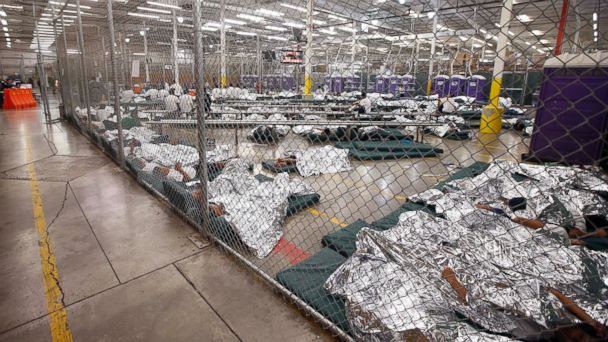
$3.7 Billion in new spending in communities that really do not want the activity.

This, according to the below article, is the ground situation regarding the current immigration crisis on the US-Mexico border with children from Guatemala, El Salvador and Honduras. The US government, Obama Administration, is requesting additional funding from Congress of $3.7 Billion to better interdict and respond during this crisis. The biggest part of the expense will be the detention functionality for the apprehended trustees.

This is a crisis … and this crisis is a terrible thing to waste!

By: Mary Bruce

Detainees sleep and watch television in a holding cell where hundreds of mostly Central American immigrant children are being processed and held at the U.S. Customs and Border Protection Nogales Placement Center on June 18, 2014, in Nogales, Arizona. Ross D. Franklin-Pool/Getty Images

Detainees sleep and watch television in a holding cell where hundreds of mostly Central American immigrant children are being processed and held at the U.S. Customs and Border Protection Nogales Placement Center on June 18, 2014, in Nogales, Arizona. Ross D. Franklin-Pool/Getty Images

President Obama today is requesting $3.7 billion to cope with the humanitarian crisis on the border and the spike in illegal crossings by unaccompanied minors from Central America.

Roughly half of the funding would go to the Department of Health and Human Services to provide care for the surge of children crossing the border, including additional beds.

The rest would be split between several departments to tackle the issue on both sides of the border, including $1.6 billion to the Departments of Homeland Security and Justice to boost law enforcement at the Southwest border and pay for additional immigration judge teams, among other things, and $300 million to the State Department to tackle the root causes of this crisis and to send a clear message to these countries not to send children illegally to the U.S.

Today’s funding request is separate from policy changes that the administration is also seeking to speed up the deportation of the children, most of whom are from Guatemala, El Salvador and Honduras. The White House sent a letter to Congressional leadership last week requesting the legal changes to make it easier to send them home.

According to a White House official, greater administrative authority as well as the additional resources will help make it more efficient and expeditious to process and return the children.

What remains unclear is how much faster this additional funding would make the process to send children back to their home countries. White House officials today declined to speculate on such timing, but the administration has said that most of the unaccompanied minors will likely be “sent home.”

“Based on what we know about these cases, it is unlikely that most of these kids will qualify for humanitarian relief. And what that means is it means that they will not have a legal basis for remaining in this country and will be returned,” White House Press Secretary Josh Earnest said Monday.

The White House has yet to say how many of the roughly 52,000 children that have been apprehended this year have been sent back to Central America. Today, officials offered only the total figure, including adults. So far this year, Immigration and Customs Enforcement has removed almost 233,000, that includes over 87,000 to Central American countries.

Here’s a detailed look at some of the ways the president wants to spend $3.7 billion to deal with the influx of unaccompanied minors, according to the White House.

$364 MILLION:

To pay for operational costs of responding to the significant rise in apprehensions of unaccompanied children and families, including overtime and temporary duty costs for Border Patrol agents, contract services and facility costs to care for children while in CBP custody, and medical and transportation service arrangement.

$39.4 MILLION:

To increase air surveillance capabilities that would support 16,526 additional flight hours for border surveillance and 16 additional crews for unmanned aerial systems to improve detection and interdiction of illegal activity.

$109 MILLION:

To provide for immigration and customs enforcement efforts, including expanding the Border Enforcement Security Task Force program, doubling the size of vetted units in El Salvador, Guatemala, and Honduras, and expanding investigatory activities by ICE Homeland Security Investigations.

$879 MILLION:

To pay for detention and removal of apprehended undocumented adults traveling with children, expansion of alternatives to detention programs for these individuals, and additional prosecution capacity for adults with children who cross the border unlawfully.

$45.4 MILLION:

To hire approximately 40 additional immigration judge teams, including those anticipated to be hired on a temporary basis. This funding would also expand courtroom capacity including additional video conferencing and other equipment in support of the additional immigration judge teams. These additional resources, when combined with the FY 2015 Budget request for 35 additional teams, would provide sufficient capacity to process an additional 55,000 to 75,000 cases annually.
ABC News Online News Video Source (Retrieved 07/08/2014) – http://abcnews.go.com/blogs/politics/2014/07/obamas-plans-for-3-7-billion-immigration-crisis-funds/

ABC News | ABC Sports News

The overriding theme of the foregoing news article is the need for professional detention capabilities. Within this crisis, the publishers of the book Go Lean…Caribbean see opportunities for commerce.

The book posits that the region must prepare its own security apparatus for its own security needs. But while we are building facilities (prisons, jails, detention centers, etc) for our own needs, we can employ the strategy of over-building and insourcing for other jurisdictions. Had we been ready now, with this Go Lean plan, we would have been able to embrace the opportunities presented by this Central American Children Crisis. This point is pronounced early in the book with the Declaration of Interdependence (Page 12) that claims:

x.   Whereas we are surrounded and allied to nations of larger proportions in land mass, populations, and treasuries, elements in their societies may have ill-intent in their pursuits, at the expense of the safety and security of our citizens. We must therefore appoint “new guards” to ensure our public safety and threats against our society, both domestic and foreign. The Federation must employ the latest advances and best practices of criminology and penology to assuage continuous threats against public safety. The Federation must allow for facilitations of detention for convicted felons of federal crimes, and should over-build prisons to house trustees from other jurisdictions.

xvi. Whereas security of our homeland is inextricably linked to prosperity of the homeland, the economic and security interest of the region needs to be aligned under the same governance. Since economic crimes … can imperil the functioning of the wheels of commerce for all the citizenry, the accedence of this Federation must equip the security apparatus with the tools and techniques for predictive and proactive interdictions.

The Go Lean roadmap facilitates the introduction and implementation of the technocratic Caribbean Union Trade Federation (CU). With 2 American territories in the Caribbean (Puerto Rico & the US Virgin Islands), it would be a simple proposal to Washington to offer to house these Central American Children in a Caribbean detention center, until some disposition is finalized regarding their individual cases. Then portions of that $3.7 Billion could be earned here, in the Caribbean.

The book asserts that the CU can copy the model of the small Pacific island country of Nauru (Page 290).  As of July 2013 the detention center there was holding 545 asylum seekers on behalf of Australia … for a fee, assuaging an immigration crisis for Australia.

In addition to government spending, there will be the bonus of private spending from the visitors and family members of the detainees.

Just like that: Commerce!

This is the goal of Go Lean…Caribbean, to confederate under a unified entity made up of all 30 Caribbean member-states. Then provide homeland security for “our neighborhood”, contending with man-made and natural threats. The CU security goal is for public safety! The CU is set to optimize Caribbean society through a number of missions. The Go Lean roadmap has 3 prime directives:

  • Optimization of the economic engines in order to grow the regional economy to $800 Billion & create 2.2 million new jobs.
  • Establishment of a security apparatus to protect the resultant economic engines.
  • Improve Caribbean governance to support these engines.

In recent blog submissions, this commentary highlighted the security provisions that must be enacted to improve homeland security, as soon as possible:

https://goleancaribbean.com/blog/?p=1554 Status of Forces Agreement = Security Pact
https://goleancaribbean.com/blog/?p=1076 References to the Caribbean Regional Security System

If only those provisions were in place already!

We console with the communities dealing with this crisis; already there have been protests from townspeople where the existing American detention facilities are located. We also console with the refugees fleeing the crime, violence and despair in their homeland; this Go Lean roadmap is the Caribbean’s aspiration to mitigate against a similar Failed-State status (Page 134).

Underlying to the prime directive of elevating the economics, security and governing engines of the Caribbean is the desire to make the Caribbean homeland, a better place to live, work and play (Page 131) and to impact the Greater Good (Page 37) because “the needs of the many should outweigh the needs of the few”.

Download the free e-Book of Go Lean … Caribbean – now!

Share this post:
, , , , ,
[Top]

Book Review: ‘Chasing Youth Culture and Getting It Right’

Go Lean Commentary

One mission of the book Go Lean…Caribbean is to sell the youth of the region on future prospects in the Caribbean.

The publishers of this book therefore must assume the role of Marketing Brand Managers.

Why is this important?

  • 65% of Caribbean population is under the age of 30[b][c]; 30% under the age of 15.[c]
  • 70% percent of Caribbean tertiary educated abandon their homeland and migrate to foreign shores.[d]

The job description for the publishers of the Go Lean book therefore become part-Marketer, part-Demographer, part-Drum Major; much like theCU Blog - Book Review - Chasing Youth Culture and Getting It Right - Photo 1 resource in this article here, Tina Wells, a writer, blogger and marketing firm founder:

By Alfred Edmond, Jr.

Black Enterprise Magazine – Book Review – April 19, 2011; Retrieved 07-06-2014 – http://www.blackenterprise.com/small-business/book-review-chasing-youth-culture-and-getting-it-right/

Subject: Buzz Marketing Group CEO Tina Wells urges you to market to teens, tweens and young adults not by age alone, but by tribe

In her new book Chasing Youth Culture and Getting It Right: How Your Business Can Profit by Tapping Today’s Most Powerful Trendsetters and Tastemakers, Buzz Marketing Group (Wiley, $16). Buzz Marketing CEO Tina Wells urges you to market to teens, tweens and young adults not by age alone, but by “tribe.” Citing her company’s research, as well as the success and failures of company’s marketing their goods and services to young consumers, Wells identifies four primary tribes:

  • The Wired Techie, driven by the need to be the first to discover, use and recommend new tech devices and gadgets.
  • The Conformist Yet Somewhat Paradoxical Preppy, traditional yet trendy buyers who are driven to want to fit in and belong.
  • The Always Mellow Alternative, who deviate from mainstream buying habits in order to pursue and support causes they believe in.
  • The Cutting Edge Independent, who deviate from the mainstream just for the sake of it.

While it’s difficult to accept that Wells’ tribes truly represent the totality of the thinking of tweens, teens and young adults, her book underscores an important reality of sales and marketing in the age of The Long Tail: Why The Future of Business is Selling Less of More ($10, Hyperion)–Chris Anderson’s must-read book about the changing nature of consumer choice and tastes in a largely digital marketplace: targeting consumers by age, race, gender and other traditional demographic markers alone is no longer enough for a business to be effective and, ultimately, profitable.

When it comes to marketing to youth, [Tina Wells] comes with unimpeachable bona fides. Already a 15-year veteran in the marketing business, she started Buzz Marketing as an 18-year-old, quickly carving out a niche and establishing a knack for understanding the trends, tastes and influences driving young consumers. Eventually graduating with honors with a B.A. in communication art from Hood College in 2002, and currently earning a marketing management degree at the Wharton School of Business, Wells creates marketing strategies for clients in the beauty, entertainment, fashion, financial and lifestyle sectors. Her clients have ranged from Sesame Street Workshop and PBS to American Eagle Outfitters and SonyBMG. Today, Wells, an expert contributor on entrepreneurship to BlackEnterprise.com, is well established as one of America’s most honored and celebrated young entrepreneurs.

So it’s no surprise that Wells brings and authoritative voice to Chasing Youth Culture and Getting It Right, confidently explaining the diverse world views of young consumers while smartly taking into account parents, as both their primary financial resource and the people with the most influence on their values. Wells also breezily illustrates, using vignettes of real young people who were subjects of her company’s survey, the impact of social media, globalization and the Great Recession on the “new millennials”. She also courageously weighs in on how young consumers feel about everything from environmentalism and corporate America to hypersexual content and America’s two-party political system.

In fact, sometimes Wells is over confident, making bold, sweeping overstatements about this or that aspect of the way young people think. For example, her description of “Global Mobiles” —young people who “live in a world without geographic or cultural boundaries” —is a stretch, conveniently overlooking the millions of young people, particularly low-income rural and urban Americans, who are hardly conscious of how people live on the other side of the tracks, much less the other side of the world. (Think Shawn Carter in the Brooklyn’s Marcy Projects before he became Jay-Z, the mogul and global citizen). While global mobiles absolutely exist, it’s too early to categorize them as a dominant factor in marketing.

The other major weakness of the book is [the] many examples of companies’ failed and/or successful efforts to market to youth culture; Wells ends up quickly glossing over most of them, causing them to lose some of their illustrative impact. I wish she’d used fewer examples, which would have allowed her to more effectively use those that remained as more enlightening and instructive case studies.

That said, if you’re a marketer or entrepreneur who wants to tap into the spending power of the generations of consumers who will drive the national and global economies over the next several decades (and come on, who doesn’t?), then you cannot afford to not read Chasing Youth Culture and Getting It Right. The book is both confirmation of Well’s formidable track record as an expert on the trends and tastes of young people, and powerful evidence of her prowess at using her immersion in her chosen area of expertise to peer around the corner into a future consumer marketplace, one that is evolving as unpredictably as it is quickly. Chasing Youth Culture and Getting It Right does solve all of the mysteries of marketing to young consumers, but it most certainly provides the most necessary, fascinating and useful clues.

——

Tina Wells is CEO of Buzz Marketing Group and is a columnist for BlackEnterprise.com [and Huffington Post]. Follow her on Twitter at @tinacwells and check out her new book, Chasing Youth Culture and Getting It Right, available now on amazon.com. (See Photo here).
CU Blog - Book Review - Chasing Youth Culture and Getting It Right - Photo 2
——

About the Review Author:

Alfred Edmond Jr. is SVP/Editor-at-large of BLACK ENTERPRISE. He is a content leader, brand representative and expert resource for all media platforms under the BLACK ENTERPRISE brand, including the magazine, television shows, web site, social media and live networking events. From 2008 through 2010, Edmond was SVP/Editor-in-chief of BlackEnterprise.com, helping to lead the transition of BLACK ENTERPRISE from single-magazine publisher to digital-first multimedia company. From 1995 through 2008, Edmond was chief editor of BLACK ENTERPRISE magazine. He also hosts The Urban Business Roundtable on WVON-AM in Chicago and Money Matters, a syndicated radio feature of American Urban Radio Networks.

Follow him on Twitter: alfrededmondjr; Facebook: http://facebook.com/alfrededmondjr; BE Insider: http://beinsider.ning.com/profile/Alfred

VIDEO: Inc. Magazine Entrepreneurial Reference Source  – http://videos.inc.com/index.php/kwidget/wid/1_5jek9891/uiconf_id/22577421

The book  Go Lean…Caribbean, parallels Chasing Youth Culture as it serves as a roadmap for the introduction and implementation of the Caribbean Union Trade Federation (CU) to elevate Caribbean society and culture. The idea of the CU must be marketed and sold to Caribbean stakeholders, young and old. The CU has 3 prime directives:

  • Optimization of the economic engines in order to grow the regional economy to $800 Billion and create 2.2 million new jobs.
  • Establishment of a security apparatus to protect the resultant economic engines.
  • Improve Caribbean governance to support these engines.

The Go Lean/CU effort is that of the legendary “Piped Piper”, in reverse to lead the children back home.

From the outset of the book, in the Introduction, the Go Lean roadmap (Page 10) posits that a target for the CU’s empowerments is Caribbean youth:

Our youth, the next generation, may not be inspired to participate in the future workings of their country; they may measure success only by their exodus from their Caribbean homelands.

Thusly, the CU must channel its inner “Tina Wells” to reach, engage, and sell to this youthful market.

There are other pronouncements that bear a direct reference to this foregoing article and source book, included here on Pages 11 & 13 of the Declaration of Interdependence:

vii. Whereas our landmass is finite and therefore limited as to population growth potential, it is imperative that prudent growth management be practiced so as to protect our legacy and still foster future opportunities for the hopes and fulfillment of a prosperous future for our children.

xix. Whereas our legacy in recent times is one of societal abandonment, it is imperative that incentives and encouragement be put in place to first dissuade the human flight, and then entice and welcome the return of our Diaspora back to our shores…

xxi. Whereas the preparation of our labor force can foster opportunities and dictate economic progress for current and future generations, the Federation must ensure that educational and job training opportunities are fully optimized for all residents of all member-states, with no partiality towards any gender or ethnic group. The Federation must recognize and facilitate excellence in many different fields of endeavor, including sciences, languages, arts, music and sports. This responsibility should be executed without incurring the risks of further human flight, as has been the past history.

The source book, Chasing Youth Culture and Getting It Right identifies the target demographic of millennials. This subset of youth population is identified as those born between the decades of the 1980’s and 2000’s[a]. Why so special? While every age group has always contended with a generation gap (Depression-era, Baby Boomers, Generation X), this current millennial generation is at the frontline of the current Caribbean battles, of which the region is sorely losing. The issues/crises dumbfounding Caribbean governance include: the impact of social media, globalization and the Great Recession.

Go Lean…Caribbean trumpets a call to the world of technology to impact Caribbean life. In addition to economic and security empowerments, this roadmap advocates the launch of a social media site – www.myCaribbean.gov – for all Caribbean stakeholders (residents, Diaspora, young students, business entities, and even visitors). This can create a universe of over 160 million unique profiles. The Go Lean roadmap is to deliver many government services via electronic modes, including public safety fulfillments, like Reverse 911 and Emergency Alert messaging.

The following lists details from the book Go Lean…Caribbean that parallels the advocacies of the source book Chasing Youth Culture and Getting It Right:

Community Ethos – Lean Operations Page 24
Community Ethos – Cooperatives Page 25
Community Ethos – Ways to Impact the Future Page 26
Community Ethos – Ways to Bridge the Digital Divide Page 31
Community Ethos – Impact the Greater Good Page 37
Strategy – Customers – Member-State Governments Page 51
Strategy – Agents of Change – Technology Page 57
Strategy – Agents of Change – Globalization Page 57
Strategy – Agents of Change – Aging Diaspora Page 57
Tactical – Fostering a Technocracy Page 64
Tactical – Separation of Powers – Postal Union Page 78
Anecdote – Turning Around the CARICOM governance Page 92
Anecdote – “Lean” in Government Page 93
Implementation – Ways to Pay for Change Page 101
Implementation – Ways to Deliver Page 109
Implementation – Ways to Impact Social   Media Page 111
Implementation – Reasons to Repatriate Page 118
Advocacy – Ways to Improve Governance Page 168
Advocacy – Ways to Better Manage the Social Contract Page 170
Advocacy – Ways to Foster Technology Page 197
Advocacy – Ways to Foster e-Commerce Page 198
Advocacy – Ways to Impact the Diaspora Page 217

The source book Chasing Youth Culture and Getting It Right is a great guidebook for developing participatory, agile institutions, enabled by advanced technology – a recipe for the CU. The Go Lean roadmap is also a great guidebook!

Now is the time for all of the Caribbean, the people (teenagers, adults & senior citizens) and governing institutions, to lean-in for the empowerments described in the book Go Lean…Caribbean. We cannot expect the youth to take their own lead; they must be led, but they will only respond to a certain style of leadership. Understanding that dynamic is the heavy-lifting involved in impacting change in the Caribbean region.

This is an art and a science!

There will be costs to incur for this advocacy, yes, but there are a lot of benefits too. The benefits are far too alluring to ignore: dawn of a new economy and new opportunities to preserve Caribbean culture for the Caribbean youth … and future generations.

🙂

Download the free e-Book of Go Lean … Caribbean – now!

———————

Appendix – Cited References:
a. Millennials (also known as the Millennial Generation or Generation Y) are the demographic cohort following Generation X. There are no precise dates when the generation starts and ends. Researchers and commentators use birth years ranging from the early 1980s to the early 2000s.
b. Example of Haiti; retrieved from http://populationaction.org/wp-content/uploads/2011/12/Haiti_Summary.pdf
c. Latin America & Caribbean Population 2005 retrieved from: http://www.eclac.cl/celade/noticias/documentosdetrabajo/6/48786/ Demographic_Trends_in_LAC_PAULO_SAAD_ED_12_7_09.pdf
d. Inter-American Bank report featured in CU Blog; retrieved from: https://goleancaribbean.com/blog/?p=1433


Share this post:
, , , , , ,
[Top]

Uber Demonstrations Snarl Traffic from London to Berlin

Go Lean Commentary

Uber 1Old World [economy] meets New World [economy].

Taxi cabs go back to the days of horses and carriages; yet the industry has slowly adapted to all the evolutionary changes in technology and modernization. Today, in some jurisdictions, a taxi cab is a moving economic engine: a passenger sitting in the back gets access to streaming video, online browsing and advertising/booking options. While in the front, the driver gets access to advanced dispatch & logistical tools, security surveillance, credit card processing, traffic alerts, and more.

But the challenge with technology, for taxi cabs and many other areas of life, is one-step forward, two-steps backwards.

According to the below article, there is a new technological innovation that has rankled cabbies in the US, Europe and other global cities – 128 in total. This is the practice of car-sharing. The company featured in the foregoing article and VIDEO is Uber, but it could easily be any of the other entities in this emerging industry (ZipCar, Getaround, RelayRides, etc.):

By: Amy Thomson, Cornelius Rahn & Angelina Rascouet

Uber Technologies Inc., the car-sharing service that’s rankling cabbies across the U.S., is fighting its biggest protest from European drivers who say the smartphone application threatens their livelihoods.

Traffic snarled in cities from London to Madrid and Berlin to Paris as strikes and gatherings by more than 30,000 taxi and limo drivers blocked tourist centers and shopping districts. They are asking regulators to apply tougher rules on San Francisco-based Uber, whose software allows customers to order a ride from drivers who don’t need licenses that can cost 200,000 euros ($270,000) apiece.

The biggest city-center protest was in London, where black-cab drivers were joined by private car services and trainees to protest what they saw as the government’s failure to hold Uber to the same standards as other car services and taxis. While similar demonstrations this year have led to smashed windshields and traffic chaos in Paris, a united front in Europe highlights the challenges for Uber’s expansion.

“A strike won’t work,” European Commission Vice President Neelie Kroes said in a statement today. “What we need is real dialogue where we talk about these disruptions caused by technology.”

A funding round last week values the company at $17 billion, almost five times the figure in an earlier round. Out of some 128 cities it serves, 20 are in Europe, including Manchester, Lyon and Zurich.

Tourist Hubs

In London, thousands of black cabs and private hire cars descended on the tourist hubs of Trafalgar Square and Parliament Square, blocking some of the city’s busiest streets. Scooter and motorbike riders studying for the cab-driver exam joined in, honking their horns as the police tried to regulate traffic.

London taxi drivers have said that the app’s fare calculator amounts to a meter, which aren’t allowed in hired cars that aren’t registered taxis. Last month, TFL asked the High Court to rule on whether the fare system was legal.

“We have to have a license to own a cab, we have to have a driver’s license, a cab driver’s license,” said Mark Haslam, a 58-year-old black-cab driver, who took part in the protest. “For some reason they seem to be outside the law.”

Another driver, John Maloney, 64, was standing on top of a black cab on the corner of Whitehall and Trafalgar Square with a sign saying “enforce the law.” He was dressed as a judge, wearing a white wig and black cape.

Arrest Warning

No major accidents or clashes were reported. The London police, saying organizers hadn’t asked for proper permission to assemble, had threatened to arrest protesters if they arrived before 2 p.m. and didn’t leave by 3 p.m.

London organizers had called on drivers to join the demonstrations with posters mimicking a World War I recruiting campaign, featuring military commander Horatio Kitchener and his characteristic handlebar mustache.

In Paris, drivers blocked the Charles de Gaulle and Orly airports this morning and prevented private-car services from picking up passengers, said Nadine Annet, vice president at the FNAT taxi association. Cabbies also slowed down traffic the A1 highway that circles Paris, leading to a 200-kilometer (120-mile) jam, local TV reported. The vast majority of France’s 55,000 professional taxis and Paris’s 15,000 cabs are on strike today, Annet said.

Kader Djielouli, a 44-year-old protester who’s been driving taxis in Paris for 15 years, said he’s lost 40 percent of his revenue since 2009 because of services like Uber.

Paris, Madrid

Private-car services “are taxis without being taxis,” he said at a cab stand near the Opera metro station in Paris. “We are against them. There need to be the same rules for all.”

In Madrid, thousands of drivers marched to block the Paseo de la Castellana, one of the city’s main avenues, as police escorted the demonstration by cars, a helicopter and officers on foot. Protesters chanted insults targeted at Uber and chased taxis that weren’t taking part in the rally.

In Berlin, more than 500 taxis lined up in columns of 20 in the plaza stretching out from the Olympic stadium. Four youth chanting “friends of Uber” were escorted away by security under shouts of a few enraged drivers.

Berlin cabs earlier packed airports and the upscale Kurfuerstendamm shopping district. At the Tegel airport, one of the three starting locations for the Berlin demonstration, taxi driver Kubilay Sarikaya said this morning he was skeptical about the protests. While he’d been working since 3 a.m., he said he’ll go along if his friends do.

“While we are demonstrating, the other guys are hauling people around,” said Sarikaya, 33. “There have to be other ways. Ultimately I think folks know that they can always count on the good old cab to get them where they need to be.”

Berlin, Milan

Uber 2In Milan, no taxi was to be seen after about 5,000 drivers this morning went on a strike that is set to last until 10 p.m.

Uber took the demonstrations as an opportunity to promote its service, saying in a statement its teams across Europe will keep the cities moving today.

“While the taxi protests may seek to bring Europe to a standstill, we’ll be on hand to get our riders from A to B.”

Uber also chose this morning to open its service in London to black-cab drivers, describing its 5 percent commission as the lowest of all booking systems in the city. Uber has thus far offered luxury cars and cheaper rides in London, while excluding licensed black cabs. Later in the day, Uber said signups in London to its service today were 850 percent higher than last Wednesday, declining to give the actual number.

Internet Backlash

The protests have a deeper significance beyond the taxi industry. They underscore the growing backlash against the likes of room-booking service Airbnb Inc. and video-streaming provider Aereo Inc. as they clash with traditional industries arguing the competitors should be subject to the same regulations.

“European cities have tended to regulate taxi drivers much more than the U.S.,” said Charles Lichfield, an analyst at Eurasia Group in London. “I do think the protests have a better chance of succeeding.”

In the U.S., local taxi groups have also lobbied against Uber and similar services in cities such as Seattle. In Europe, regulators and courts are struggling with the disconnect between the desire to protect a regulated industry and the need for more technological innovation.

“For years the government has slapped new fees onto taxis and imposed more constraints — everything from car colors to, now, GPS tracking,” FNAT’s Annet said. “The least we’re asking for is that our competitors get the same tough love.”

French Court

Following complaints by Paris cab drivers, France this year imposed a rule on private services, requiring a minimum 15-minute wait between the time a car is booked and the passenger is picked up. The decree was later struck down by the country’s constitutional court.

Hamburg’s economy ministry on June 6 issued an order preventing Wundercar, a German peer of Uber, from operating in the city, saying that transporting people for profit and without a license is against the law. Berlin administrators are probing a similar move against Uber, spokeswoman Petra Rohland said. A Berlin court banned the Uber Black chauffeur service in April, although the injunction hasn’t been enforced.

The Spanish region of Catalonia said yesterday it will ask Uber — which is available in Barcelona — to immediately stop its activities in the area. The regional government is also telling security forces to increase control and detection of illegal taxi services.

European Regulation

“Consumers want to have these services. I’ve personally never sat in a run-down Uber car, but I’ve definitely experienced a lot of run-down taxis,” said Arndt Ellinghorst, head of automotive research at ISI Group in London. “It is a bit scary how protectionist Europe can be.”

Uber raised $1.2 billion in new financing led by Fidelity Investments last week, valuing the company at about $17 billion, before added investments. The company had earlier raised $307.5 million from investors including Google Ventures, TPG Capital and Menlo Ventures.

The company’s assets may be worth just $5.9 billion, Aswath Damodaran, a finance professor at New York University, wrote on his blog this week. He said the figure was based on optimistic assumptions about the taxi industry’s growth and Uber’s market share and profitability.

Lower Prices

Chief Executive Officer Travis Kalanick — who started Uber in 2009 after he and partner Garrett Camp couldn’t find a cab in Paris — has pushed the company into 37 countries. He said the low prices and ease of use that their drivers can offer will lead to a base of support from consumers that regulators won’t be able to ignore.

Uber 3A typical journey from Finsbury Square, near London’s financial district, and Paddington Station takes between 20 and 30 minutes by car to travel approximately four miles. Uber estimates that that journey would cost between 14 pounds ($24) and 16 pounds. London’s transportation authority estimates that the trip could cost between 15 pounds and 22 pounds.

The German market for taxis and rental cars was 4.3 billion euros last year, said Michael Mueller, the president of the German Association of Taxis and Rental Cars. It would shrink by 1 billion euros at the price levels Uber advocates, he said.

Job Creation

Uber said in its blog it’s responsible for 20,000 new jobs per month. The median income for drivers using the UberX platform, Uber’s low-cost service, is $90,000 per year in New York and more than $74,000 in San Francisco, the company said.

Uber advertises itself to prospective drivers as a way to start your own business, drawing users who aren’t professional chauffeurs. That’s different from apps such as Hailo, which recruit from the industry. Uber customers can tap the app on their smartphone and see the locations of taxis in real time, pay via a stored credit card and rate their driver.

“Citizens of these cities are getting around the cities much more cheaply,” Kalanick told Bloomberg TV in an interview this week. “How does a regulator or city official take that away from the population? Say that inexpensive transportation that’s high quality, you shouldn’t have?”

Bloomberg Business News Service (Posted 06/11/2014; retrieved 06/17/2014) –http://www.bloomberg.com/news/2014-06-10/uber-protests-spread-across-europe-as-taxi-app-backlash-grows.html

The book Go Lean…Caribbean anticipates the compelling issues associated with taxi cabs in the emerging new economy. The book serves as a roadmap for the introduction and implementation of the technocratic Caribbean Union Trade Federation (CU). This effort calls for the elevation of the Taxi & Limousine Commission to the regional/CU level. The roadmap posits that many issues and challenges for this industry can only be managed with feasible economies-of-scale. The CU market size of 42 million will allow for the leverage to consolidate, collaborate and confederate the organizational dynamics to tackle these issues.

The book presents solutions, but asserts that before the new strategies, tactics and implementations can be deployed, the affected communities must first embrace a progressive community ethos. The book defines this “community ethos” as the fundamental character or spirit of a culture; the underlying sentiment that informs the beliefs, customs, or practices of society; dominant assumptions of a people or period.

Progress cannot be accomplished by simply picketing at the airport that a new technological advance is impacting the taxi industry. Technological change can be likened to a charging bull; if someone gets in the way, they can be run over!

The foregoing news article, about car-sharing company Uber provides a glimpse of the inner-workings of these “business models” for these two industries:

  • Regional Taxi Administration – The Go Lean roadmap defines that taxis are the frontline of Caribbean hospitality; there is the need to compel the stakeholders to adapt  innovative products & services that impact the passenger and driver experience alike, such as mobile apps (Page 25).
  • Mobile Applications – The Go Lean roadmap defines the mastery of time-&-space as strategic for succeeding in mobile apps development and deployment for the region (Page 35). If products like Uber master mobile apps, then competitors, including old-guard taxi-cabs should also be able to master this field. Already apps like GrabTaxi have excelled at providing taxi cabs with viable solutions

The Go Lean book stresses that the current community ethos must change and the best way to motivate people to adapt their values and priorities is in response to a crisis. The roadmap recognizes this fact with the pronouncement that the Caribbean is in crisis, and that “a crisis is a terrible thing to waste”. The region is devastated from external factors: global economic recession, globalization and rapid technological advances. The book then asserts that to adapt, there must be a new internal optimization of the region’s strengths. This is defined in Verse XXVII (Page 14) of the Declaration of Interdependence:

Whereas the region has endured a spectator status during the Industrial Revolution, we cannot stand on the sidelines of this new economy, the Information Revolution. Rather, the Federation must embrace all the tenets of Internet Communications Technology (ICT) to serve as an equalizing element in competition with the rest of the world. The Federation must bridge the digital divide and promote the community ethos that research/development is valuable and must be promoted and incentivized for adoption.

This subject of taxi cab administration and promotion has been previously covered in these Go Lean blogs, highlighted here in the following samples:

a.       https://goleancaribbean.com/blog/?p=486 – Incubator firm (Temasek) backs Southeast Asia cab booking app GrabTaxi
b.      https://goleancaribbean.com/blog/?p=214 – Entrepreneur battling Least Common Denominator (LCD) Ethos

In line with the foregoing article, the Go Lean book details some applicable community ethos, and provides a roadmap to better foster these qualities and their resulting benefits:

  • Help for Entrepreneurship (Page 28)
  • Promotion of Intellectual Property (Page 29)
  • Impacting Research & Developments (Page 30)
  • Bridging the Digital Divide (Page 31)
  • Improve Sharing (Page 35)

The roadmap posits that the CU will incubate a Mobile Apps industry, forge entrepreneurial incentives and facilitate the infrastructure upgrades so that innovations can thrive. As related in the foregoing article, these efforts can mitigate against competitive/alternative pressures.

The world has changed!

Yet, still, success is within reach. We can, and must, make the the Caribbean a better place to live, work and play.

Share this post:
, , , , ,
[Top]

Bahamas rejects US trade demand

Go Lean Commentary

Q: Where does an 800-pound gorilla sleep? A: Anywhere it wants to.

Trade 1There is no doubt the United States is the 800 pound gorilla for trade in the Caribbean region. From a sheer negotiation tactic, there is no basis for respect and consideration for the needs and aspirations of the small Bahamas island nation. A lion share of trade in the Bahamas comes from the US. Also, a lion share of the Bahamas Government revenue comes from Customs duties. So in any stretch of the imagination, eliminating Customs duties from American imports would devastate the Bahamas Government’s treasuries.

Is this an over-simplification of the logical argument in the foregoing news article? No!

Rather, this is a consistent theme in the book Go Lean…Caribbean. The book posits that the objectives of American foreign, trade and security policy may not align with the priorities of the Caribbean. Even more, no Caribbean member-state has voting powers in the US Capitol where those policies might be codified. It is what it is!

The Bahamas is so small compared to the US that the ranting from Nassau would be inconsequential to the decision makers in Washington. The Bahamas and the US are not “brothers”; at best, the Bahamas can expect a “good neighbor” relationship with the US. But since “blood is thicker than water”, it is only to be expected that the US would prioritize the needs of its people ahead of Bahamians.

By: Alison Lowe, Nassau Guardian Business Editor

NASSAU, Bahamas — The United States has called for The Bahamas to immediately drop all of its duties on US products coming into this country on “day one” of The Bahamas’ accession to the World Trade Organization (WTO) – a request which the government has rejected on the basis that it could wipe out the domestic economy, according to the [Bahamas] Minister of Financial Services.

Disclosing some of the background to The Bahamas’ bilateral negotiations over the terms of its bid to join the WTO, [Minister] Ryan Pinder said that the US government has not been “amenable” to The Bahamas’ phasing in tariff reductions on US goods. “Phasing in” refers to the ability to reduce the duty rate levels over a number of years.

However, he suggested that the government has struck back on the issue, suggesting that a phased-in reduction of tariffs on US goods – the vast majority of all imported goods coming into The Bahamas – would be more appropriate.

He was speaking at a meeting on Wednesday between members of the Bahamas Chamber of Commerce and Employers Confederation and David Shark, deputy director general of the WTO, who is in the country to engage with stakeholders over The Bahamas’ accession process.

Among the requirements of joining the WTO is that The Bahamas lowers its duty rates on goods imported into the country. It is this requirement that contributes in part to the decision by the government to push ahead with introducing a new form of revenue collection in the form of value added tax (VAT), although the WTO deputy director said the WTO itself has no preference about what form of tax the government chooses to replace former duty taxes with.

In a question and answer session, Pinder said that how quickly and how low The Bahamas would have to reduce its duties is not a decision of the WTO, but one which is determined in bilateral negotiations with other WTO members.

Pinder said, “The EPA (Economic Partnership Agreement trade deal with Europe) is phased, and they phase to zero, so at some point in time there will be no duty paid on items sourced out of the EU, but it’s not a huge deal because I think there’s $8 million of revenue a year to the government on EU products.

“Now the US: day one that’s what they want. Imagine if they said let’s phase it to zero like the EPA, because that’s what they’ll use as a precedent: You negotiated the EPA, you phased, you phased to zero. So imagine if we phase to zero (on goods coming from the US – you would not have a domestic economy because you would not have 35 percent on readymade items anymore, you’d have zero. So you have to be careful what you push for at times.”

Trade 2He added: “Right now the US is taking the posture that they want on-day-one reductions. They’ve taken the posture they want cuts straight across the board. We’ve taken the position we’re not going to negotiate on that basis but we will negotiate trying to protect domestic industry.

“I think they got the point but there’ll be further negotiations on that. So they haven’t been too amenable to phasing. We anticipate that in some time in the future we will have to re-negotiate the Caribbean Basin Initiative on a bilateral basis which is a whole other issue with respect to the US and their trading regime,” said Pinder.

In terms of how the government would make up the lost revenue, the government has a plan of sorts in place in the form of the implementation of value added tax (VAT), or – if the private sector has its way — some other form of alternative taxation.

However, replacing the revenue lost to the government when duties are reduced under WTO accession does not address the challenge of how the reduction in duties would impact local manufacturers, who rely on the fact that the goods they produce have high rates of duty applied when they cross the border.

In this regard, seven months on from when he announced that the government would be undertaking a study to examine the “vulnerabilities and opportunities” that would arise for Bahamian businesses from joining the WTO, Pinder said on Wednesday that the government is now moving to shortlist who will conduct this study so the government will have a clearer picture of the impact on industry of acceding to the WTO.

At present, Pinder has stated a goal of December 2014 for The Bahamas to complete its lengthy accession process, but has also indicated that the process could well continue into 2015.

In an interview with Guardian Business on Wednesday, Shark touted the benefits of WTO accession. He said that WTO members have been seen to have recovered more quickly following the global economic downturn, as a result of having a more certain environment for investment.

“The Bahamas is already heavily integrated into the international trading system, so for a country that’s as deeply enmeshed in international trade as the Bahamas the better question is ‘Why not (join)?’

“As a member of the WTO, you get to level the playing field with some of your neighbours. You’re the only CARICOM member who’s not a member of the WTO, and when companies are trying to decide where to invest, being a member of the WTO provides assurances to investors of the conditions of their investment… and all of that matters a lot in terms of being a part of global supply chains.

“The rules of international trade, whether you are a member of the WTO or not, affect you, so why wouldn’t you want to be at the table in negotiating those rules?

“It’s protection against protectionism; if someone does something that causes you harm you can challenge them whether you are a large or small country, under the WTO system,” he added.

Caribbean News Now / Nassau Guardian (Posted 04-11-2014; retrieved 05-22-2014) –http://www.caribbeannewsnow.com/topstory-Bahamas-rejects-US-trade-demand-20677.html

Trade 3How to counteract and mitigate this undesirable negotiating quagmire? The answer is to join a bigger family! This requires lowering the volume on the cries of independence and then lean-in for interdependence: regional and WTO solutions. The book Go Lean… Caribbean, serves as a roadmap for the introduction and implementation of the Caribbean Union Trade Federation (CU). This represents a confederation, a brotherhood, of the 30 member-states of the Caribbean region, including Puerto Rico and the US Virgin Islands.  This CU/Go Lean roadmap extolls these 3 prime directives:

  • Optimize the economic engines of the Caribbean to grow the regional economy.
  • Establish a security apparatus to protect the resultant economic engines.
  • Improve Caribbean governance to support these engines.

Imagine the force of a single market of 42 million people as opposed to the minimal 320,000. Imagine too … the purchasing power of an $800 Billion economy as opposed to $9.2 Billion (2010). The roadmap immediately calls for the consolidation of trade negotiation of the Bahamas with the rest of the Caribbean. This point is echoed early, and often, in the Go Lean book, commencing with these opening pronouncements in the Declaration of Interdependence (Page 11/12), as follows:

 viii.   Whereas the population size is too small to foster good negotiations for products and commodities from international vendors, the Federation must allow the unification of the region as one purchasing agent, thereby garnering better terms and discounts.

 x.         Whereas we are surrounded and allied to nations of larger proportions in land mass, populations, and treasuries, elements in their societies may have ill-intent in their pursuits, at the expense of … our citizens. We must therefore appoint “new guards” to ensure … our society, both domestic and foreign.

The roadmap recognizes that this request to forge a confederated technocracy is atypical in Caribbean pursuits. Despite previous integration efforts, the most that has been accomplished is the recognition of the benefits of consolidation, but no real manifestation of an integrated society.

Go Lean … Caribbean therefore constitutes a change for the Caribbean. This is a roadmap to consolidate 30 member-states of 4 different languages and 5 colonial legacies (American, British, Dutch, French, Spanish) into a Trade Federation with the tools/techniques (but without sovereignty) to bring immediate change to the region to benefit one and all member-states. While this is an integration of region’s economic interest, there is no expectation of re-distributing existing wealth among the member-states.

Just how is this accomplished?

The book details that there must first be adoption of community ethos to forge such a change; plus the executions of the following strategies, tactics, implementations and advocacies to impact the regions prospects in negotiations and fulfilling the needs of Caribbean stakeholders:

Community Ethos – Deferred Gratification Page 21
Community Ethos – Minority Equalization Page 24
Community Ethos – Lean Operations Page 24
Community Ethos – Return on Investments Page 24
Community Ethos – Cooperatives Page 24
Community Ethos – Ways to Improve Negotiations Page 30
Community Ethos – Impact the Greater Good Page 37
Strategy – Unified Region in a Single Market Economy Page 45
Strategy – Customers – Foreign Direct Investors Page 48
Strategy – Agents of Change – Globalization Page 57
Tactical – Confederating a Permanent Union Page 63
Tactical – Fostering a Technocracy Page 64
Tactical – Growth Approach – Trade and Globalization Page 70
Separation of Powers – Interstate Commerce Admin Page 79
Separation of Powers – Office of Trade Negotiations Page 80
Implementation – Ways to Pay for Change Page 101
Implementation – Foreign Policy Initiatives at Start-up Page 102
Implementation – Ways to Deliver Page 109
Implementation – Trade Mission Office Objectives Page 116
Implementation – Ways to Benefit from Globalization Page 119
Planning – Ways to Improve Trade Page 128
Planning – Ways to Improve Interstate Commerce Page 129
Planning – Ways to Model the EU Page 130
Planning – Lessons from the West Indies Federation Page 135
Advocacy – Ways to Grow the Economy Page 151
Advocacy – Ways to Improve Governance Page 168
Advocacy – Ways to Better Manage the Social Contract Page 170
Advocacy – Ways to Improve Government Revenue Page 172
Advocacy – Ways to Foster Cooperatives Page 176
Advocacy – Ways to Impact Main Street Page 201

The foregoing news article uses language like “day one”, in that it reports that there are expectations for the immediate adjustments in the US-Bahamas trade dynamics with the inauguration of the WTO regime. This type of development is impractical and destructive for Bahamian society. The Go Lean roadmap therefore proposes an alternative implementation, with accelerations of progressive changes over a methodical 5 year period. This is thusly proposed to minimize the disruption to government revenue schemes.

The WTO has a Trade First mantra. While this is an advantageous goal, this book posits that trade must not be implemented at the expense of the societal safety nets that bind Bahamian society together. Go Lean … Caribbean is therefore a detailed turn-by-turn roadmap for how-when-why-where to apply the best-practices of trade-economic-security-government delivery options.

The Go Lean roadmap is therefore a complete solution for Caribbean elevation, considering the needs of all stakeholders: residents, trading partners, Diaspora and visitors. The region is hereby urged to lean-in to this roadmap, to fulfill the vision of making the Caribbean region a better place to live, work and play.

Download the Book- Go Lean…Caribbean Now!!!

Share this post:
, , , ,
[Top]