Tag: Model

A Lesson in History – Booker T versus Du Bois

Go Lean Commentary

2008 was a big year …

… in the history of mankind, the United States of America and the lessons learned for application in the Caribbean. This has been a familiar theme for the publishers of the book Go Lean…Caribbean; this theme has been exhausted in the book (Page 136) and in countless blog/commentaries (see list below). 2008 was only 6 years ago; that is considered recent; how inspiring could the lessons be with just a 6-year look-back? In answering, there is the need to go back even further, not to 2008, but back to the America of 1908, even more exacting to 1901; (the year Booker T. Washington was invited to the White House).

This was the strong point made by one of the key players in American history for 2008: John McCain, the Republican Nominee for US President against the eventual winner Barack Obama. In his concession speech on November 4, 2008, he painted a (word) picture of a landscape of America transcending over the past 100 years.

See the VIDEO here, now:

Video: John McCain 2008 Concession Speech
https://www.youtube.com/watch?v=bss6lTP8BJ8


A comment on this VIDEO in February 2014 truly capsulated the significance of this speech:

“One the most gracious and powerful speeches ever made. It deserves to go into the pantheon of great orations made by the likes of Winston Churchill, Martin Luther King, Jawaharlal Nehru and others” – Ravi Rajagopalan.
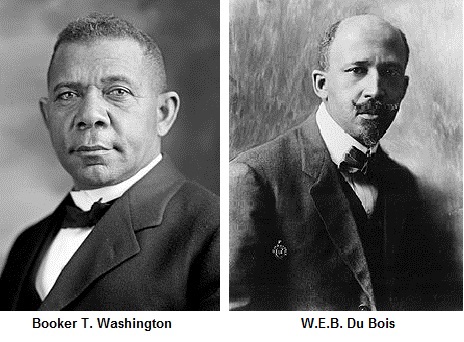
CU Blog - A Lesson in History - Booker T versus DuBois - Photo CombinedThe transcript from this video gives us the platform for the deep appreciation for our lesson in history: Booker T. Washington versus W.E.B. Du Bois. (See Appendix below).

Both men were very important in the history of civil rights for African-Americans. They both wanted the same elevation of their community in American society, but they both had different strategies, tactics and implementations.

Washington’s biggest legacy is the Tuskegee University (Tuskegee Institute in his day). Du Bois’s legacy stems from his co-founding the NAACP (National Association for the Advancement of Colored People).

The conclusion from the above VIDEO, as stated by John McCain is that the journey for full citizenship for African-Americans took 100 years from the time of the Washington / Du Bois chasm. No matter the detailed approach, 100 years is still 100 years.

From the point of view of the Caribbean and the publishers of Go Lean…Caribbean, we side with both civil rights leaders in aspirations, but lean towards Booker T. Washington in strategies. Underlying to Mr. Washington’s advocacy, was for the Black Man to remain in the South, find a way to reconcile with his White neighbors and to prosper where he was planted.

The Caribbean has the same conundrum! Rather than fleeing our southern homes for northern opportunities, we advocate reconciling our conflicts, and managing the crises in our region so as to work out an effective future for all Caribbean people today, and tomorrow for our youth. (We also advocate a reconciliation of the past).

The book Go Lean…Caribbean serves as a roadmap for the introduction and implementation of the Caribbean Union Trade Federation (CU); an initiative to bring change, empowerment, to the Caribbean region; to make the region a better place to live, work and play. This Go Lean roadmap also has these 3 prime directives:

  • Optimization of the economic engines in order to grow the regional economy to $800 Billion & create 2.2 million new jobs.
  • Establishment of a security apparatus to protect the resultant economic engines.
  • Improve Caribbean governance to support these engines.

The book describes the CU as a technocratic administration with 144 different missions to elevate the Caribbean homeland. The underlying goal is stated early in the book with this pronouncement in the opening Declaration of Interdependence (Page 12):

xii. Whereas the legacy in recent times in individual states may be that of ineffectual governance with no redress to higher authority, the accedence of this Federation will ensure accountability and escalation of the human and civil rights of the people for good governance, justice assurances, due process and the rule of law…

Change has come to the Caribbean. But as depicted in the foregoing VIDEO, we will not have to wait 100 years, we will effectuate this change now. The Go Lean book declares that for permanent change to take place, there must first be an adoption of new community ethos, the national spirit that drives the character and identity of its people. This is what was missing in 1908 Black America. This point of community ethos is therefore our biggest lesson in the consideration of this history.

The Go Lean roadmap was constructed with these additional community ethos in mind, plus the execution of strategies, tactics, implementation and advocacies to forge the identified permanent change in the region. The following is a sample of these specific details from the book:

Community Ethos – Deferred Gratification Page 21
Community Ethos – Economic Principles – People Choose Page 21
Community Ethos – Economic Principles – All Choices Involve Costs Page 21
Community Ethos – Economic Principles – People Respond to Incentives in Predictable Ways Page 21
Community Ethos – Economic Principles – Economic Systems Influence Individual Choices Page 21
Community Ethos – Economic Principles – The Consequences of Choices Lie in the Future Page 21
Community Ethos – Security Principles – Anti-Bullying and Mitigation Page 23
Community Ethos – Governing Principles – Minority Equalization Page 24
Community Ethos – Governing Principles – Lean Operations Page 24
Community Ethos – Ways to Impact the Future Page 26
Community Ethos – Ways to Foster Genius Page 27
Community Ethos – Ways to Help Entrepreneurship Page 28
Community Ethos – Ways to Promote Intellectual Property Page 29
Community Ethos – Ways to Impact Research & Development Page 30
Community Ethos – Ways to Manage Reconciliations Page 34
Community Ethos – Ways to Improve Sharing Page 35
Community Ethos – Ways to Promote Happiness Page 36
Community Ethos – Ways to Impact the Greater Good Page 37
Anecdote – LCD versus an Entrepreneurial Ethos Page 39
Strategy – Vision – Confederation   of the 30 Caribbean Member-States into a Single Market Page 45
Strategy – Mission – Celebrate the Music, Sports, Art, People and Culture of the Caribbean Page 46
Tactical – Confederating a Permanent Union Page 63
Tactical – Fostering a Technocracy Page 64
Tactical – Separation of Powers: Federal Administration versus Member-States Governance Page 71
Implementation – Ways to Pay for Change Page 101
Implementation – Ways to Deliver Page 109
Planning – 10 Big Ideas for the Caribbean Region Page 127
Planning – Ways to Make the Caribbean Better Page 131
Planning – Ways to Better Manage Image Page 133
Planning – Lessons Learned from 2008 Page 136
Advocacy – Ways to Grow the Economy Page 151
Advocacy – Ways to Create Jobs Page 152
Advocacy – Ways to Improve Education Page 159
Advocacy – Ways to Improve Governance in the Caribbean Region Page 168
Advocacy – Ways to Better Manage the Social Contract Page 170
Advocacy – Ways to Mitigate Terrorism Page 181
Advocacy – Ways to Improve Communications Page 186
Advocacy – Ways Impact the Diaspora Page 217
Advocacy – Ways to Preserve Caribbean Heritage Page 218
Advocacy – Ways to Improve the Arts Page 230
Advocacy – Ways to Promote Music Page 231

There are other lessons for the Caribbean to learn from this consideration. The “clash and conflict” of the Booker T. Washington camp versus the W.E.B. Du Bois camp caused enmity in Black America since 1908 and continues even today. While some modern labeling may be “Old-School versus Nu School”, “Hip-Hop versus Bourgeois” , “Black Nationalists versus Accommodationists”, even “Thugs versus ‘Acting White'”, the underlying conflict is a  “deep divide”, a consistent reflection of two different approaches competing for dominance in the Black community.

Whereas life imitates art and art imitates life, this conflict was artfully depicted in the 1984 film A Soldier Story, directed by Norman Jewison, based upon playwright Charles Fuller’s Pulitzer Prize-winning Off-Broadway production A Soldier’s Play (1981). The movie was nominated for three Academy Awards (Best Picture, Supporting Actor – Adolph Caesar, and Best Screenplay Adaptation – Charles Fuller). See the VIDEO excerpt here:

A Solider’s Story: “The Day Of The Geechie Is Gone”
https://www.youtube.com/watch?v=CMk_16hT8Tk

A previous Go Lean blog/commentary identified this same conflict as Egalitarianism versus Anarchism.

Other blog/commentaries stressed related issues, such as learning from 2008 and the history of America’s 20th Century race relations. The following sample applies:

https://goleancaribbean.com/blog/?p=2222 Sports Role Model – Playing For Pride … And More
https://goleancaribbean.com/blog/?p=1918 Philadelphia Freedom – Some Restrictions Apply
https://goleancaribbean.com/blog/?p=1596 Book Review: ‘Prosper Where You Are Planted’
https://goleancaribbean.com/blog/?p=1531 A Lesson in History: 100 Years Ago Today – World War I
https://goleancaribbean.com/blog/?p=1037 Humanities & Civil Rights Advocate Maya Angelou – R.I.P.
https://goleancaribbean.com/blog/?p=789 America’s War on the Caribbean
https://goleancaribbean.com/blog/?p=782 Open the Time Capsule: The Great Recession of 2008
https://goleancaribbean.com/blog/?p=378 Fed Releases Transcripts from 2008 Meetings
https://goleancaribbean.com/blog/?p=341 Hypocritical US slams Caribbean human rights practices

Are the issues in this commentary strictly a historic reference? Unfortunately not! The opening VIDEO saw a conciliatory John McCain congratulating the newly elected President Barack Obama. The audience continued to “boo” time and again. This response was indicative of an continuing uneasiness in America’s race relations. This point is effectively made by another commentator, (YouTube Screen Name “eddude08”, posted January 2014) to the above John McCain YouTube VIDEO:

The crowd at John McCain’s concession speech said it all. While the noble Arizona Senator was committed to ending his campaign with grace and dignity, few knew at the time that [his Vice-Presidential Nominee] Sarah Palin had the audacity to prepare her own concession speech that night. Every time the Senator from Arizona would mention the newly elected Black President, the crowd erupted with boos. While mass media portrayed a nation wrapped in joy and celebration, anger and fear was well felt in the Heartland. John McCain, one of the greatest Senators of a generation, would be the sole man responsible for bringing a radical and unstoppable element into American politics. Sarah Palin’s nomination set the stage for political domination by a minority that had long been shunned by the mainstream.

Within Obama’s first year of presidency, the number of anti-government militias quadrupled. Within his first term, the nation witnessed the greatest number of legislative filibusters by any congress in the history of the country. 5 years into his presidency, he presided over the most ineffective Congress in American history. even with the deaths of 20 children in a mass shooting [in Newtown, Connecticut], conspiracy theories flourished and the people became distorted, millions of armed citizens convinced their weapons were needed for an inevitable clash with their government. A grassroots movement called the Tea Party became hijacked, fused with an established political party, what was a movement to stop the emerging fascism in the United States became the main force of recruitment for it. The nations budget and credit standing became fair game to advance political ideologies. America’s politics so radicalized a woman named Christine O’Donnell became a Senate nominee [in Delaware in 2010]. Even victims of hurricanes, even [in] the great states of New York and New Jersey could not be spared in the new age of American politics. Glenn Beck [(Political Commentator on cable channel FOX News)] became a national figure, and corporations were declared citizens.

A truly new America was emerging, and nothing would be able to stop what had become inevitable.

Is it the same America of 1908? Perhaps! The point from a Caribbean perspective is “the more things change, the more they remain the same”. We have problems in the Caribbean to contend with, many of which we are failing miserably. But our biggest crisis stems from the fact that so many of our citizens have fled their Caribbean homelands for foreign (including American) shores.

The purpose of this commentary is not to fix America, it is to fix the Caribbean. But the push-and-pull factors are too strong coming from the US. We must lower the glimmering light, the “pull factors”, that so many Caribbean residents perceive of the “Welcome” sign hanging at American ports-of-entry. A consideration of this commentary helps us to understand the DNA of American society: un-reconciled race relations in which Black-and-Brown are still not respected.

The logical conclusion: stay home in the Caribbean and work toward improving the homeland. The US should not be the panacea of Caribbean hopes and dreams.

Booker T. Washington advocated this strategy: prosper where you’re planted.

After 100 years, and despite an African-American President, we must say to Mr. Booker T. Washington: We concur!

Download the book Go Lean … Caribbean – now!

————————————————–

Appendix – Black America in 1908 – The Way Forward

Conditions were not good for the 4 million Black population in the Southern US after the Civil War. The blatant racism brought oppression, suppression and repression. Mob violence and injustice, even lynchings, became commonplace upon this American population. As lynchings in the South reached a peak in 1895, Booker T. Washington gave a speech in Atlanta that made him nationally famous. The speech called for black progress through education and entrepreneurship. His message was that it was not the time to challenge Jim Crow segregation and the disfranchisement of black voters in the South. Washington mobilized a nationwide coalition of middle-class blacks, church leaders, and white philanthropists and politicians, with a long-term goal of building the community’s economic strength and pride by a focus on self-help and schooling.

Washington’s 1895 Atlanta Exposition address was viewed as a “revolutionary moment”[17] by both African Americans and Whites across the country. At the time W. E. B. Du Bois supported him, but they grew apart as Du Bois sought more action to remedy disfranchisement and improve educational opportunities for Blacks. After their falling out, Du Bois and his supporters referred to Washington’s speech as the “Atlanta Compromise” to express their criticism that Mr. Washington was too accommodating to white interests.

Washington advocated a “go slow” approach to avoid a harsh white backlash.[17] The effect was that many youths in the South had to accept sacrifices of potential political power, civil rights and higher education.[18] His belief was that African Americans should “concentrate all their energies on industrial education, and accumulation of wealth, and the conciliation of the South.”[19] Washington valued the “industrial” education, as it provided critical skills for the jobs then available to the majority of African Americans at the time, as most lived in the South, which was overwhelmingly rural and agricultural. He thought these skills would lay the foundation for the creation of stability that the African-American community required in order to move forward. He believed that in the long term, “blacks would eventually gain full participation in society by showing themselves to be responsible, reliable American citizens.” His approach advocated for an initial step toward equal rights, rather than full equality under the law, gaining economic power to back up black demands for political equality in the future.[20] he believed that such achievements would prove to the deeply prejudiced white America that African Americans were not “‘naturally’ stupid and incompetent.”[21]

Well-educated blacks in the North, [of which Du Bois was most iconic], advocated a different approach, in part due to the differences they perceived in opportunities. Du Bois wanted blacks to have the same “classical” liberal arts education as upscale whites did, along with voting rights and civic equality, the latter two elements granted since 1870 by constitutional amendments after the Civil War. He believed that an elite, which he called the Talented Tenth, would advance to lead the race to a wider variety of occupations.[22] Du Bois and Washington were divided in part by differences in treatment of African Americans in the North versus the South; although both groups suffered discrimination, the mass of blacks in the South were far more constrained by legal segregation and exclusion from the political process. Many in the North rejected to being ‘led’, and authoritatively spoken for, by a Southern accommodationist strategy which they considered to have been “imposed on them [Southern blacks] primarily by Southern whites.”[23] Historian Clarence E. Walker wrote that, for white Southerners:

“Free black people were ‘matter out of place’. Their emancipation was an affront to southern white freedom. Booker T. Washington did not understand that his program was perceived as subversive of a natural order in which black people were to remain forever subordinate or unfree.”[24]

Both Washington and Du Bois sought to define the best means to improve the conditions of the post-Civil War African-American community through education.

Blacks were solidly Republican in this period, having gained emancipation and suffrage with the President Lincoln and his party. Southern states disfranchised most blacks and many poor whites from 1890–1908 through constitutional amendments and statutes that created barriers to voter registration and voting, such as poll taxes and literacy tests. By the late nineteenth century, Southern white Democrats defeated some biracial Populist-Republican coalitions and regained power in the state legislatures of the former Confederacy; they passed laws establishing racial segregation and Jim Crow. In the border states and North, blacks continued to exercise the vote; the well-established Maryland African-American community defeated attempts there to disfranchise them.
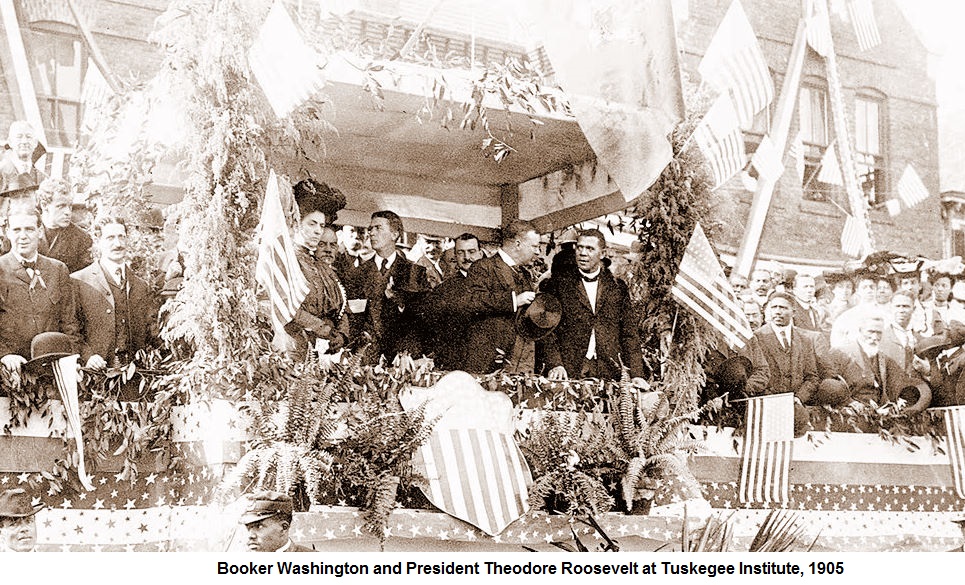
CU Blog - A Lesson in History - Booker T versus DuBois - Photo 3Washington worked and socialized with many national white politicians and industry leaders. He developed the ability to persuade wealthy whites, many of them self-made men, to donate money to black causes by appealing to values they had exercised in their rise to power. He argued that the surest way for blacks to gain equal social rights was to demonstrate “industry, thrift, intelligence and property.”[25] He believed these were key to improved conditions for African Americans in the United States. Because African Americans had only recently been emancipated and most lived in a hostile environment, Washington believed they could not expect too much at once. He said, “I have learned that success is to be measured not so much by the position that one has reached in life as by the obstacles which he has had to overcome while trying to succeed.”[15]

Along with Du Bois, Washington partly organized the “Negro exhibition” at the 1900 Exposition Universelle in Paris, where photos of Hampton Institute’s black students were displayed. These were taken by his friend Frances Benjamin Johnston.[26] The exhibition demonstrated African Americans’ positive contributions to United States’ society.[26]

Washington privately contributed substantial funds for legal challenges to segregation and disfranchisement, such as the case of Giles v. Harris, which was heard before the United States Supreme Court in 1903.[27] Even when such challenges were won at the Supreme Court, southern states quickly responded with new laws to accomplish the same ends, for instance, adding “grandfather clauses” that covered whites and not blacks.
Wikipedia Online Encyclopedia – Retrieved 09/09-2014 from:
http://en.wikipedia.org/wiki/Booker_T._Washington

Cited References:

15. Harlan, Louis R (1972), Booker T. Washington: volume 1: The Making of a Black Leader, 1856–1901 , the major scholarly biography
17.   Bauerlein, Mark (Winter 2004), The Journal of Blacks in Higher Education 46, JSTOR, p. 106.
18.   Pole, JR (Dec 1974), “Review: Of Mr. Booker T. Washington and Others; The Children of Pride”, The Historical Journal 17 (4) , p. 888.
19.   Du Bois, WEB (1903), The Souls of Black Folk, Bartleby ., pp. 41–59.
20.   Pole, JR (Dec 1974), “Review: Of Mr. Booker T. Washington and Others; The Children of Pride”, The Historical Journal 17 (4) , p. 107.
21.   Crouch, Stanley (2005).  The Artificial White Man: Essays on Authenticity, Basic Books, p. 96.
22.   Du Bois, WEB (1903), The Souls of Black Folk, Bartleby ., p. 189.
23.   Pole, JR (Dec 1974), “Review: Of Mr. Booker T. Washington and Others; The Children of Pride”, The Historical Journal 17 (4) , p. 980.
24.   Walker, Clarence E (1991), Deromanticising Black History, The University of Tennessee Press, p. 32 .
25.   Harlan, Louis R (1972), Booker T. Washington: volume 1: The Making of a Black Leader, 1856–1901 , the major scholarly biography, p. 68.
26.   Maxell, Anne (2002), “Montrer l’Autre: Franz Boas et les sœurs Gerhard”, in Bancel, Nicolas; Blanchard, Pascal; Boëtsch, Gilles; Deroo, Eric; Lemaire, Sandrine, Zoos humains. De la Vénus hottentote aux reality shows, La Découverte, pp. 331–39, in part. p. 338
27.   Harlan, Louis R (1971), “The Secret Life of Booker T. Washington”, Journal of Southern History 37 (2). Documents Booker T. Washington’s secret financing and directing of litigation against segregation and disfranchisement.

 

Share this post:
, , ,

Sports Role Model – Playing For Pride … And More

Go Lean Commentary

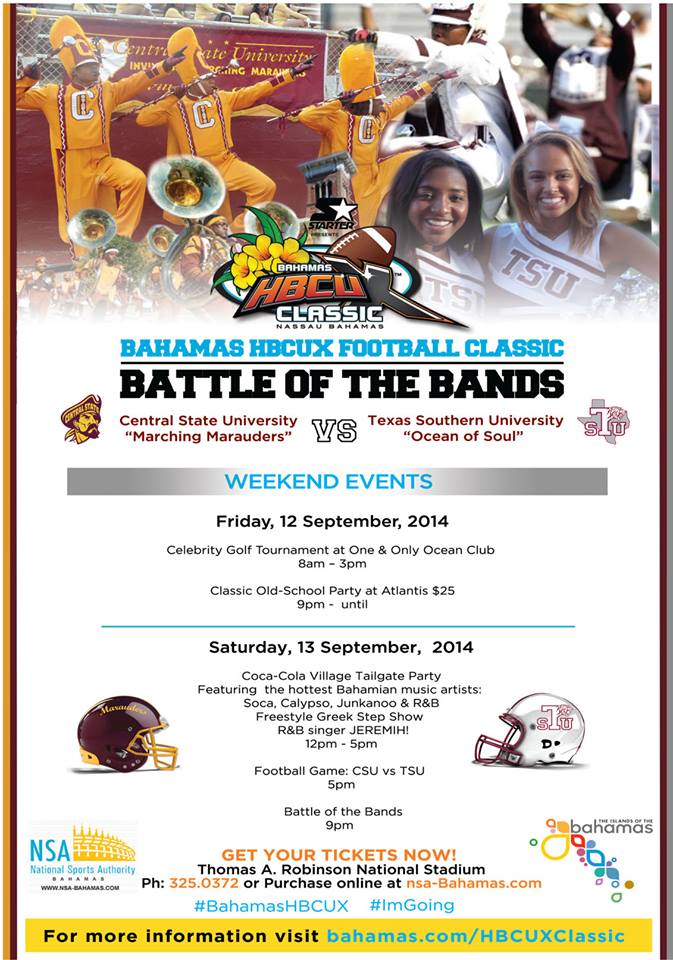
These blog/commentaries started in March 2014. But this source article was published on November 15, 2013. It never seemed appropriate to reach back and feature this article – until now. This marks the occasion of a Black College Football Game (Classic) being staged in Nassau, Bahamas on September 13, 2014 in the new Thomas A. Robinson National Stadium.

CU Blog - Playing For Pride - Photo 3

 CU Blog - Playing For Pride - Photo 2

The foregoing article was adapted from the book by Samuel G. Freedman, Breaking the Line: The Season in Black College Football That Transformed the Sport and Changed the Course of Civil Rights. (It is available at www.samuelfreedman.com and at bookstores nationwide).

Title: Playing for Pride
By: Samuel G. Freedman

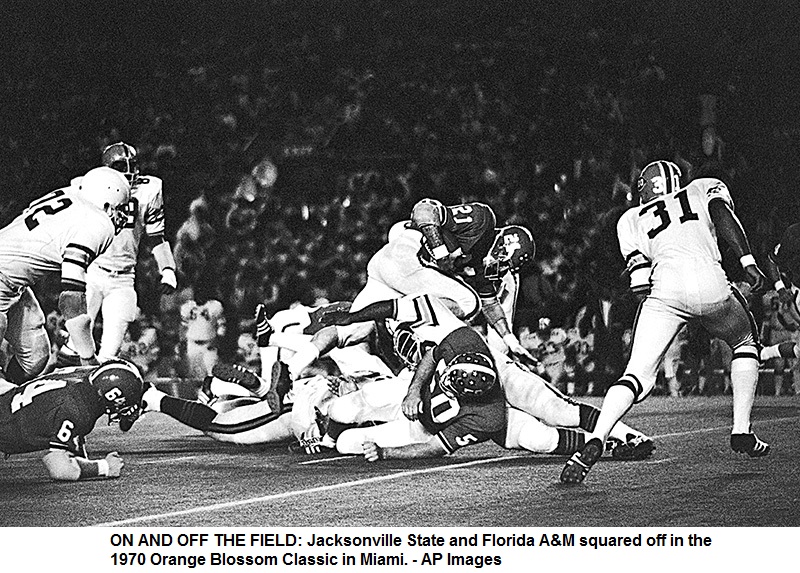
The yearly gridiron matchup known as the ORANGE BLOSSOM CLASSIC helped to even the playing field for black players, coaches and fans. But it was about so much more than football.

The calendar of Black America includes several specific holidays. Juneteenth, celebrated every June 19, honors the day the Union Army liberated slaves in Texas following the end of the Civil War. Kwanzaa, beginning on Dec. 26, is a seven-day festival of African heritage. On Dec. 31, which is called watch night, churches hold worship services to commemorate the way their forebears had stayed up all night awaiting the issuance of the ­Emancipation Proclamation on January 1, 1863.

And for a 30-year heyday beginning in the late 1940s, the Orange ­Blossom Classic football game and festival in Miami was the most important annual sporting event and the largest annual gathering of any kind for black Americans. For most of those years, more than 40,000 spectators attended the game in the Orange Bowl stadium, while tens of thousands more thronged to marching-band parades. Black tourists flocked to the hotels, restaurants and clubs of Miami’s Overtown and Liberty City neighborhoods. Pro-football scouts with binoculars, Ray-Bans and stingy-brim hats elbowed their way along the sidelines to scout prospects.

While the Orange Blossom Classic lives only in memory now — it served as the de facto black college championship until 1978 and was still played sporadically until 2004; it was ultimately the unexpected casualty of racial integration in sports and in society — its spirit persists in the dozens of “Classics” played between football teams from ­historically black colleges and universities (HBCUs). There are 37 on the schedule this season, and several of the most famous are coming up. Florida A&M University plays Bethune-Cookman University on Nov. 23 (2013) in the Florida Classic in Orlando, Fla., and Grambling State University faces Southern University and A&M College in the Bayou Classic on Nov. 30 (2013) in New Orleans. [2014 games are scheduled for the same corresponding weekends].

Football, though, is only part of a Classic. Marching bands, step shows, networking, gospel concerts and shopping excursions are all parts of the experience. These Classics continue to draw crowds as large as 70,000 for the on-field rivalry and a broader sense of affirmation.

“Historically speaking, there were not always so many opportunities for African-Americans to socialize in public,” says Todd Boyd, a University of Southern California professor who specializes in race and popular culture. “So the opportunities that did exist often took on added significance. Yet over time, the events became part of a larger tradition. I think the games now have a nostalgic feel. So it’s all about tradition and ritual once again.”

As sporting event and communal celebration, the Orange Blossom Classic rose as an answer to invisibility, the kind Ralph Ellison famously rendered in his novel, Invisible Man. In 1937, when Miami opened the Orange Bowl stadium, a public facility built with public funds, it excluded blacks from all but one section of the eastern end zone. No integrated football team was permitted onto the gridiron until the Nebraska Cornhuskers played Duke in the 1955 Orange Bowl. Blacks were barred from participating in any of the pageants and events related to the bowl game, much as they were barred from patronizing the resort hotels in Miami Beach. The black maids and janitors and cooks and bellhops who comprised the ­human infrastructure of those establishments had to obtain identification­ cards from the police. Even the black performers who drew the crowds — Sammy Davis Jr., Nat King Cole, Ella Fitzgerald — were forbidden from staying in the hotels where they entertained.

During the 1930s, Miami blacks began their own competitor to the Orange Bowl festivities, which they called the Coconut Festival. It had its own beauty queen, its own parade and its own football game, played in Dorsey Park, a segregated square block named for Miami’s first black millionaire. The Coconut Festival game, though, lacked much football pizzazz. That’s where J.R.E. Lee Jr., the son of Florida A&M University’s president, came in.

Even before Lee, black colleges had sought to create their own version of season-ending bowl games. In the 1920s, Lincoln University and Howard University began playing annually in the self-proclaimed Football Classic of the Year, and Tuskegee University met Wilberforce University yearly at Soldier Field in the Midwest Chicago Football Classic. Inspired by these ­examples, Lee conceived a “Black Rose Bowl,” naming it the Orange Blossom Classic. In the first game, in 1933, Florida A&M beat Howard by a score of 9-6 before 2,000 spectators at a blacks-only ballpark in Jacksonville, Fla. For the next 13 years, the contest migrated among the Florida cities of Jacksonville, Orlando and Tampa, becoming an itinerant attraction that gradually built its audience and reputation.

Then, in 1947, Lee linked the game’s fortunes to the Coconut Festival’s and settled it in Miami. Miami had the largest stadium in Florida. Miami also had the greatest concentration of media anywhere in the state. And Miami, as it entered the postwar boom, was beginning to shake off its rigid segregation, largely owing to the influx of Jews from the North, most of them either tacitly or actively supportive of civil rights.

The very first Classic game in Miami made racial history. For the first time, black fans were permitted to sit in the main stands of the Orange Bowl. And when a Florida A&M Rattler receiver named Nathaniel “Traz” Powell caught a 45-yard pass to break a 0-0 tie with Hampton Institute, he became the first black man to score a touchdown on the Orange Bowl’s previously whites-only gridiron. Powell had grown up in Miami as the son of a laundress and a laborer at the city’s incinerator. For years to come, blacks around the state would speak about his touchdown as if he’d been Rosa Parks refusing to surrender her seat.

The civil rights analogy was apt. Black colleges and their football teams operated in a kind of parallel universe during the segregation era. Even as they sent hundreds of players into the pros, the mainstream media rarely covered the schools. The proliferation of sports-focused talk radio and cable TV was decades away. So Jake Gaither, Florida A&M’s legendary coach, set about raising the Orange Blossom Classic to the status of a de facto black championship. Year in and year out, his Rattlers ranked near the top. And because Florida A&M hosted the Orange Blossom Classic, Gaither invited the strongest possible opponent.

As a result, the Orange Blossom Classic far outdrew the University of Miami’s football games and, later, those of the new National Football League (NFL) franchise, the Miami Dolphins. In Black America, it supplanted the Negro League All-Star game as the biggest single event. Florida A&M’s renowned “Marching 100” band pranced in two parades, one through the black neighborhoods and the other downtown, each drawing thousands upon thousands of spectators.

One year, comedian Nipsey Russell joined the Rattlers on their sideline; another time it was Sammy Davis Jr. All week long, the streets of Overtown and LibertyCity were “crowded like the state fair, music pouring out of doorways,” as one participant remembers. At the Zebra Lounge and the Hampton House, in the Harlem Square Club and the Rockland Palace and all along the stretch of Northwest Second Street called the Great Black Way, stars of jazz, soul and rhythm and blues headlined. Women spent a year’s savings on their Orange Blossom dresses, and beauty salons stayed open all night to handle the demand. When the parties ended near daybreak, people went their ways for breakfast before a sunrise snooze.

“The Classic was bigger than the Fourth of July,” says Marvin Dunn, author of the history book Black Miami in the Twentieth Century. “It was a black thing, and it was well done, and it added to the sense of pride. Even if you didn’t go to the game, you’d have all these people massed along the parade route. And the clothes — you had to get a new suit, a new dress for the Classic. There was not a seat to be had in a barber shop.”

No game brought more luster and historical significance than the 1967 matchup between Florida A&M and Grambling. They were the two greatest black college teams with the two greatest black college coaches (Jake Gaither and Eddie Robinson, respectively) and the two finest quarterbacks to play at each school (Ken Riley and James Harris, respectively). Robinson very deliberately was developing Harris to break the quarterback color line in the pros, to forever lay to rest the canard that no black man was smart enough to play that most intellectual of positions. As Leon Armbrister, the sports columnist of The Miami Times, the city’s weekly black newspaper, exalted, “The selection of Grambling adds Super Bowl status to the Classic.”

In many ways, the Orange Blossom Classic in 1967 also embodied the recent progress in race relations. The Grambling and Florida A&M teams both stayed in integrated hotels on Miami Beach. The P. Ballantine & Sons Brewing Company sponsored a tape-delayed broadcast of the game on television stations in Atlanta, Philadelphia, Washington, D.C., and New York. Buddy Young, the first black executive in the NFL’s front office, provided the on-air commentary. The local publicity for the game was handled by Julian Cole, a transplanted Jew who counted the ritziest Miami Beach hotels among his clients.

The Orange Blossom Classic’s souvenir program featured advertisements from major national companies, including Humble Oil, Prudential Insurance and RC Cola. Coca-Cola sponsored a float carrying the Grambling College queen and her court in the pregame parade. The celebrities in attendance included the first wave of black executives hired by corporations in search of black consumers. Pepsi-Cola, the leader in the field, dispatched its vice president for special markets, Charles Dryden, a bona fide war hero as one of the Tuskegee Airmen. Greyhound sent Joe Black, the former Brooklyn Dodgers pitcher, who recently had been ­appointed the bus company’s vice president of special markets. F.W. Woolworth, a company trying to repair a reputation damaged by its segregated lunch counters in Southern cities, dispatched Aubrey Lewis, a former Notre Dame football star and FBI agent it recently had hired as an executive recruiter.

The competitive tension built as the game approached. As Grambling ran through its practice session at a junior college, two busloads of Florida A&M players arrived. They jogged around the field, chanting, “It’s so hard to be a Rattler,” before haughtily driving off. Grambling’s Eddie Robinson, incensed, told his team, “The peace dove flies out the window tomorrow!” At a pregame banquet, he had to remind his players not to start jawing at the Florida A&M team, saying, “Take it out on the field.”

On the night of Dec. 2, 1967, before more than 40,000 spectators, Grambling and Florida A&M produced a classic for the Classic. The game went down to the final play, with the Tigers holding off a final drive by the Rattlers to win 28-25. Florida A&M compiled 396 yards of total offense, slightly more than Grambling’s 382. James Harris threw for 174 yards, and Ken Riley nearly matched him, with 110 yards passing and 62 more rushing.

CU Blog - Playing For Pride - Photo 1The scouts certainly noticed. Harris, then a junior, would be drafted by the NFL’s Buffalo Bills in January 1969. He went on to become the first black quarterback to regularly start in the NFL, leading the Los Angeles Rams to the conference title game twice in the mid-1970s. Every black quarterback to follow, from Doug Williams and Warren Moon to Russell Wilson and Robert Griffin III, came through the door that James Harris opened. As for Ken Riley, he was moved to cornerback in the NFL and had an illustrious 15-year career with the Cincinnati Bengals. Even now, 30 years after retiring, he ranks fifth in NFL history in career interceptions.

In the aftermath of the 1967 Orange Blossom Classic, Grambling was able to bring black college football to the nation as a whole. The following September, the Tigers played Morgan State before a sold-out crowd in Yankee Stadium in a fundraising game for the National Urban League, a prominent civil-rights organization. That example inspired the dozens of black-college classics being played today, keeping a precious thread of prideful history unbroken.
——
SAMUEL G. FREEDMAN is a professor at Columbia University’s Graduate School of Journalism and a New York Times columnist.

The foregoing article depicts reality for the Black American population for much of the 20th Century. Despite the differences in population, cultural heritage and language, much of the historical experiences were parallel in the Caribbean until majority rule and/or de-colonization came to fruition in these tropical homelands.

This foregoing article therefore relates to more than just sports, but history, culture and civil rights cause-and-effect. The foregoing therefore harmonizes with the book Go Lean…Caribbean which also stresses the need to Transform Sports and Change the Course of Civil Rights but this time for the Caribbean region. The Go Lean book studies the assessment of the 30 Caribbean member-states and posits that the region is in crisis, with the societal engines at the precipice due the an unsustainable rate of human flight. The African-American experience in the US has thusly improved over the last century, the current US President Barack Obama is of African-American descent; the dreaded co-existence (segregation) of Blacks along side Whites is no longer the status quo; their community is more color-blind. This creates strong motivation for Caribbean residents to consider an American migration. In fact 70% of the Caribbean college-educated population, some from American HBCU’s as depicted in the foregoing article, have abandoned their homeland and live abroad, mostly in the US.

The City of Miami, prominently featured in the foregoing article is largely comprised of the Caribbean Diaspora. (In the interest of full disclosure, this Go Lean blogger attended one of the schools prominently featured in this foregoing article, Florida A&M University, and separately lived in Miami for 17 years).

The underlying issue in this consideration is sports and the game of (American) football.  A compelling mission of the Go Lean book is to foster the eco-systems for sports enterprises in the region. The book posits that sports, collegiate sports included, can impact a community’s economics and surely its pride.

An important mission of this Go Lean message is to simply lower the “push and pull” factors that lead many to abandon their Caribbean homeland for American shores. The “pull” factors were miniscule in the mid-20th Century; Caribbean citizens of Black and Brown heritage may not have found the (southern) US so welcoming. But times have changed, and the minority experience in America is different; more enticing and appealing to Caribbean citizens seeking to relocate.

While the Caribbean may not have the sports business eco-system, we do have the underlying assets: athletes. The Caribbean supplies the world, including American colleges (NCAA), with the best-of-the-best in the sports genres of basketball, track-and-field, FIFA-soccer and a few football players (NCAA & NFL). The Go Lean book recognizes and fosters the genius qualifiers of many Caribbean athletes.

The Go Lean goal now is to foster the local eco-system in the homeland so that  those with talent would not have to flee the region to garner successful returns on their athletic investments.

The Go Lean book serves as a roadmap for the introduction and implementation of the Caribbean Union Trade Federation (CU), a technocratic federal government to administer and optimize the economic/security/ governing engines of the region’s 30 member-states. At the outset, the roadmap recognizes our crisis and the value of sports in the roadmap, with these statements in the Declaration of Interdependence (Page 13 & 14):

xix.    Whereas our legacy in recent times is one of societal abandonment, it is imperative that incentives and encouragement be put in place to first dissuade the human flight, and then entice and welcome the return of our Diaspora back to our shores. This repatriation should be effected with the appropriate guards so as not to imperil the lives and securities of the repatriated citizens or the communities they inhabit. The right of repatriation is to be extended to any natural born citizens despite any previous naturalization to foreign sovereignties.

xxvi. Whereas the preparation of our labor force can foster opportunities and dictate economic progress for current and future generations, the Federation must ensure that educational and job training opportunities are fully optimized for all residents of all member-states, with no partiality towards any gender or ethnic group. The Federation must recognize and facilitate excellence in many different fields of endeavor, including sciences, languages, arts, music and sports. This responsibility should be executed without incurring the risks of further human flight, as has been the past history.

xxxi. Whereas sports have been a source of great pride for the Caribbean region, the economic returns from these ventures have not been evenly distributed as in other societies. The Federation must therefore facilitate the eco-systems and vertical industries of sports as a business, recreation, national pastime and even sports tourism – modeling the Olympics.

The Go Lean roadmap calls for the market organizations to better garner the economic benefits of sports. One of the biggest contributions the CU will make is the facilitation of sports venues: arenas and stadia. Sports can be big business! But even when money is not involved, other benefits abound: educational scholarships, fitness/wellness, disciplined activities for the youth, image, and pride. No doubt an intangible yet important benefits is depicted in this Go Lean roadmap, that of less societal abandonment. A mission of the CU is to reduce the brain drain and incentivize repatriation of the Diaspora.

Another area of the Go Lean economic empowerment roadmap that relates to the foregoing article is the strategy is to create a Single (Media) Market to leverage the value of broadcast rights for the region, the resultant consolidated market would cover 30 member-states, 4 languages and 42 million people. The successful execution of this strategy will elevate the art, science and genius of sport enterprises in the region. Now is the time for all of the Caribbean to lean-in to the following community ethos, strategies, tactics, implementations and advocacies detailed in the book Go Lean … Caribbean to re-boot the delivery of the regional solutions to elevate the Caribbean region through sports:

Community Ethos – Deferred Gratification Page 21
Community Ethos – Economic Principle – Consequences of Choices Lie in the Future Page 21
Community Ethos – Return on Investments Page 24
Community Ethos – Ways to Impact the Future Page 26
Community Ethos – Ways to Foster Genius Page 27
Community Ethos – Ways to Impact the Greater Good Page 37
Strategy – Vision – Make Caribbean The Best Place to Live, Work and Play Page 46
Strategic – Staffing – Sporting Events at Fairgrounds Page 55
Tactical – Fostering a Technocracy Page 64
Tactical – Separation of Powers – Sports & Culture Administration Page 81
Tactical – Separation of Powers – Fairgrounds Administration Page 83
Implementation – Steps to Implement Self-Governing Entities (Fairgrounds) Page 105
Implementation – Ways to Deliver Page 109
Planning – Ways to Make the Caribbean Better Page 131
Planning – Ways to Better Manage Caribbean Image Page 133
Advocacy – Ways to Grow the Economy Page 151
Advocacy – Ways to Impact Hollywood Page 203
Advocacy – Ways to Impact the Diaspora Page 217
Advocacy – Ways to Improve Sports Page 229

With some measure of success, we should be able to reduce the “push and pull” factors that lead many to abandon the Caribbean region in the first place. We want our athletes to transform their sports and change our society, not some distant land.

Other subjects related to the sports world and it’s impact on society have been blogged in other Go Lean…Caribbean commentaries, as sampled here:

Date Published Blog Subject / Link
August 24 Sports Role Model – The SEC Network for College Sports Broadcasting
June 23 Caribbean Players Impact on the 2014 World Cup
June 22 Caribbean Crisis: More than 70 Percent of Tertiary- Educated Abandon Region
May 27 Sports Revolution for Advocate Jeffrey Webb
March 24 Collegiate Sports in the Caribbean
March 24 10 Things We Want from the US – #10 Sports Professionalism
March 21 Muhammad Ali and Advocate Kevin Connolly – Changing Society

The Caribbean has the capacity to be the best address on the planet, but there are certain missing features, such as intercollegiate athletics… and jobs. Why else would citizens choose to abandon their beloved homeland if not for the greater economic opportunities abroad. The foregoing article reminds us of the evolutionary nature of change, thereby aligning with this Go Lean…Caribbean roadmap. This effort is bigger than college sports; this is about Caribbean life; we must elevate our own society. The CU is the vehicle for this change, detailed here with the following 3 prime directives:

  • Optimization of the economic engines in order to grow the regional economy to $800 Billion & create 2.2 million new jobs.
  • Establishment of a security apparatus to protect the resultant economic engines.
  • Improve Caribbean governance to support these engines.

With the Go Lean roadmap, the people and institutions of the Caribbean can easily envision major sporting events like the Orange Blossom Classic of bygone days, having similar impact on society beyond the playing field. Sports can have that effect; we must therefore not ignore its significance and contributions.

The purpose of this roadmap is to make the Caribbean homeland, a better place to live, work and play. Sports falls under the “games people play” category. With the CU oversight on the economy, security and governing engines, our community can take time to play. As the Bible book of Ecclesiastes (Chapter 3 verses 1 – 8 of Young’s Literal Translation) relates, there is a right time, a season for “everything under the sun”:

  1. To everything — a season, and a time to every delight under the heavens:
  2. A time to bring forth, And a time to die. A time to plant, And a time to eradicate the planted.
  3. A time to slay, And a time to heal, A time to break down, And a time to build up.
  4. A time to weep, And a time to laugh. A time to mourn, And a time to skip [about].
  5. A time to cast away stones, And a time to heap up stones. A time to embrace, And a time to be far from embracing.
  6. A time to seek, And a time to destroy. A time to keep,  And a time to cast away.
  7. A time to rend, And a time to sew. A time to be silent, And a time to speak.
  8. A time to love, And a time to hate. A time of war, And a time of peace.

There was a time for the Orange Blossom Classic, for its impact on American society; there was also a time for the Classic to pass on, where it would no longer be required to showcase African-American athletic talent. The same applies for the Caribbean. Now is the time for all the Caribbean to lean-in for this roadmap to transform sports and changed the course of Caribbean society. Now is the season to Go Lean.

Download the free e-Book of Go Lean … Caribbean – now!

Share this post:
, , , , , ,
[Top]

Sports Role Model – Turn On the SEC Network

Go Lean Commentary

There is a new religion in the South (United States). It is SEC football. For many in the South, football is life, “everything else is details”. Now, (starting August 28) the SEC adherents can worship 7-24-365 on the SEC Network cable channel. This is a melding of sports, television, southern culture and economics – this is big business – and a religious-like devotion.

The SEC (South East Conference) is the Number 1 (American) football conference in the National Collegiate Athletic Association (NCAA). Their revenues, attendance, championships, NFL draft picks and TV ratings are the best-of-the-best of all other conferences. This last subject is the focus of this commentary: TV ratings and broadcast rights.

Title: Turn On the SEC
By: Jon Saraceno

CU Blog - Sports Role Model - Turn On the SEC - Photo 1In a melding of two powerful sports brands, cable-television behemoth ESPN and the football-crazed Southeastern Conference have joined forces to form the SEC Network, debuting August 14. ESPN Radio host Paul Finebaum, a veteran observer of all things SEC, believes ­audience response will be rabid. That view seems particularly valid given that college football is the unquestioned autumnal king of the South.

“SEC fans are an interesting bunch,” Finebaum observes. “They don’t like being subjected to other leagues [that have TV networks], like the Big Ten or the Pac-12. Now they can say, ‘Nothing else exists but us — the rest of the world can vaporize, for all we care.’ It is as irritating to non-SEC fans as it is pleasing to a son of the South.”

CU Blog - Sports Role Model - Turn On the SEC - Photo 3Finebaum understands the parochialism. The Memphis, Tenn., native worked for three decades in Birmingham, Ala., before relocating to Charlotte, N.C., as the SEC Network’s first on-air hire when ESPN announced the formation of the network last year. The network launches with a well-timed countdown to the start of the 2014 football season. Blastoff is Aug. 28, when Texas A&M travels to South Carolina. Brent Musburger, one of several marquee on-air hires, will call the game. But the SEC Network’s most popular personality might be former Florida Gators quarterback Tim Tebow.

Programming for the 24/7 multiplatform channel will be highlighted by 45 SEC football games. The network also will showcase men’s basketball (an estimated 100 games), women’s basketball (60 games) and baseball (75 games), along with select coverage from the league’s 21 sports. In all, more than 1,000 events will be aired across the network’s digital platform.

Following ESPN’s time-tested formula of bracketing programming and analysis around live events, the SEC Network will televise studio shows and live-event days such as spring football games and national signing day for college-football recruits.

Beyond content, the marriage between ESPN and the conference should be a match made in financial heaven. Disney-owned ESPN expects to reap untold hundreds of millions in advertising revenue during the 20-year deal. Increased exposure and lucrative media rights bode well for all 14 SEC schools.
American Way August 2014 – American Airlines Inflight Magazine –
http://hub.aa.com/en/aw/turn-on-the-sec

CU Blog - Sports Role Model - Turn On the SEC - Photo 2

The Caribbean does not currently have an eco-system for intercollegiate athletics. The book Go Lean…Caribbean, and aligning blog commentaries, asserts that the region can be a better place to live, work and play; that the economy can be grown methodically by embracing progressive strategies in sports at all levels: professional, amateur and intercollegiate.

While the Caribbean may not have the sports business eco-system, we do have the underlying assets: the athletes. The Caribbean supply the world, including the NCAA, with the best-of-the-best in the sports genres of basketball, track-and-field, soccer-FIFA-football and other endeavors. The Go Lean book recognizes and fosters the genius qualifiers of many Caribbean athletes.

The goal now is foster the local eco-system in the homeland so that  those with talent would not have to flee the region to garner the business returns on their athletic investments.

The Go Lean book serves as a roadmap for the introduction and implementation of the Caribbean Union Trade Federation (CU), a technocratic federal government to administer and optimize the economic/security/ governing engines of the region’s 30 member-states. At the outset, the roadmap recognizes the value of sports in the roadmap with these statements in the Declaration of Interdependence (Page 13 & 14):

xxvi. Whereas the preparation of our labor force can foster opportunities and dictate economic progress for current and future generations, the Federation must ensure that educational and job training opportunities are fully optimized for all residents of all member-states, with no partiality towards any gender or ethnic group. The Federation must recognize and facilitate excellence in many different fields of endeavor, including sciences, languages, arts, music and sports. This responsibility should be executed without incurring the risks of further human flight, as has been the past history.

xxxi. Whereas sports have been a source of great pride for the Caribbean region, the economic returns from these ventures have not been evenly distributed as in other societies. The Federation must therefore facilitate the eco-systems and vertical industries of sports as a business, recreation, national pastime and even sports tourism – modeling the Olympics.

The Go Lean roadmap calls for the market organizations to better garner the economic benefits of sports. One of the biggest contribution the CU will make is the facilitation of sports venues: arenas and stadia. Sports can be big business! But even when money is not involved, other benefits abound: educational scholarships, image, national pride, and something more, something non-tangible yet of utmost importance for the Go Lean roadmap: less societal abandonment. A mission of the CU is to reduce the brain drain and incentivize repatriation of the Diaspora.

Another area of the Go Lean economic empowerment roadmap that relates to the foregoing article is the strategy is to create a Single (Media) Market to leverage the value of broadcast rights for the region, the resultant consolidated market would cover 30 member-states, 4 languages and 42 million people. The successful execution of this strategy will elevate the art, science and genius of sport enterprises in the region. Now is the time for all of the Caribbean to lean-in to the following community ethos, strategies, tactics, implementations and advocacies detailed in the book Go Lean … Caribbean to re-boot the delivery of the regional solutions to elevate the Caribbean region through sports:

Community Ethos – People Respond to Incentives in Predictable Ways Page 21
Community Ethos – Return on Investments Page 24
Community Ethos – Ways to Foster Genius Page 27
Community Ethos – Ways to Improve Negotiations Page 32
Community Ethos – Ways to Promote Happiness Page 36
Strategic – Vision – Consolidating the Region in to a Single Market Page 45
Strategic – Staffing – Sporting Events at Fairgrounds Page 55
Tactical – Fostering a Technocracy Page 64
Tactical – Separation of Powers – Sports & Culture Administration Page 81
Tactical – Separation of Powers – Fairgrounds Administration Page 83
Implementation – Steps to Implement Self-Governing Entities (Fairgrounds) Page 105
Implementation – Ways to Deliver Page 109
Planning – Ways to Make the Caribbean Better Page 131
Advocacy – Ways to Grow the Economy Page 151
Advocacy – Ways to Create Jobs Page 152
Advocacy – Ways to Improve Education – Reduce Brain Drain Page 159
Advocacy – Ways to Improve Local Government – Parks & Recreation Page 169
Advocacy – Ways to Impact Events Page 191
Advocacy – Ways to Promote Fairgrounds Page 192
Advocacy – Ways to Foster Technology Expositions Page 197
Advocacy – Ways to Impact Youth Page 227
Advocacy – Ways to Improve Sports Page 229
Advocacy – Ways to Impact Urban Living – Sports Leagues Page 234

The Caribbean is the best-of-the-best address on the planet, but there are certain missing features, such as intercollegiate athletics… and jobs. The foregoing article aligns with this Go Lean…Caribbean roadmap to fill these voids. This effort is bigger than sports; this is about Caribbean life; we must elevate our own society. The CU is the vehicle for this goal, this is detailed by the following 3 prime directives:

  • Optimization of the economic engines in order to grow the regional economy to $800 Billion & create 2.2 million new jobs.
  • Establishment of a security apparatus to protect the resultant economic engines.
  • Improve Caribbean governance to support these engines.

The Go Lean roadmap anticipates 21,000 direct jobs at fairgrounds and sport venues throughout the region; plus 40,000 new jobs by re-optimizing the region’s educational engines, including colleges & universities.

Now is the time for all of the Caribbean, the people and governing institutions, to lean-in for the empowerments of the Caribbean Union Trade Federation. Now is the time to make this region a better place to live, work and play.

Download the book Go Lean…Caribbean now!

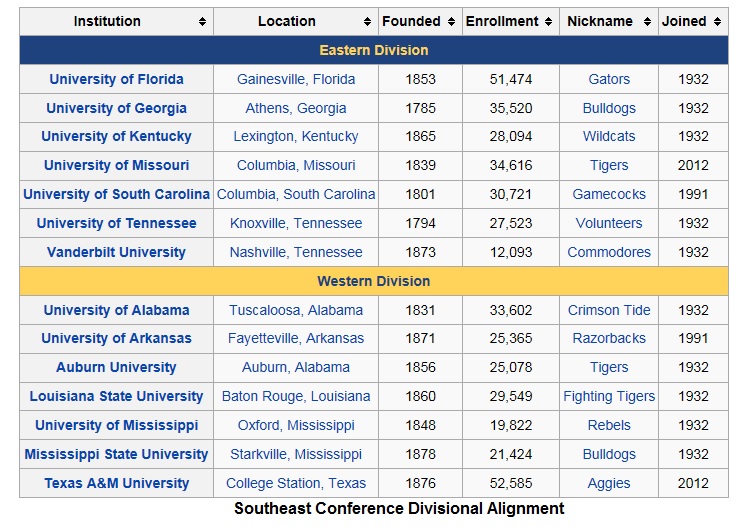
APPENDIX – SEC Conference Schools/Teams

CU Blog - Sports Role Model - Turn On the SEC - Photo 4

Share this post:
, , , , ,
[Top]

Sports Role Model – US versus the World

Go Lean Commentary

This is a big weekend in the world of sports, its the US versus the World … again. This time, its the Little League World Series, the baseball tournament in Williamsport, Pennsylvania. Even though baseball is played in many countries around the world, the expectation is that it takes an All-Star team from the rest of the world to compete against one American team.

This is the tournament’s Final Four teams, (see Appendix-Bracket below):

US: Chicago* -vs- Las Vegas
World: South Korea* -vs- Japan
* = Winner

The attitude of the US versus the World is the attitude in many other sports endeavors as well; sampled as follows:

  • The NCAA College Baseball Championship Tournament is called the College World Series.
  • The NBA Playoff Champion is referred to as World Champions.
  • Major League Baseball Championship Best-of-Seven Match-up is branded the World Series.
  • National Hockey League All-Star Game is a Match-up of North America (US and Canada) versus the World.

It is evident that the sports eco-system is bigger in the US, than anywhere else in the world. Needless to say, the Caribbean region pales in comparison in accentuating the business of sports. Deficient would not even be a fitting adjective, as there is NO arrangement for intercollegiate sports in the region, despite having 42 million people in 30 different countries. The Caribbean misses out on many opportunities associated with the games people play – especially economic ones: jobs, event bookings, media coverage.

This is the assertion of the book Go Lean…Caribbean, that the Caribbean can be a better place to live, work and play; that the economy can be grown methodically by embracing progressive strategies in recognizing and fostering the genius qualifiers of many Caribbean athletes. So many times, those with talent have had to flee the region to garner the business returns on their athletic investments.

It does not have to be.

The following news article indicates that even amateur Little League baseball is big business:

Title: Little League means big business as revenues soar
By: Josh Peter, USA Today

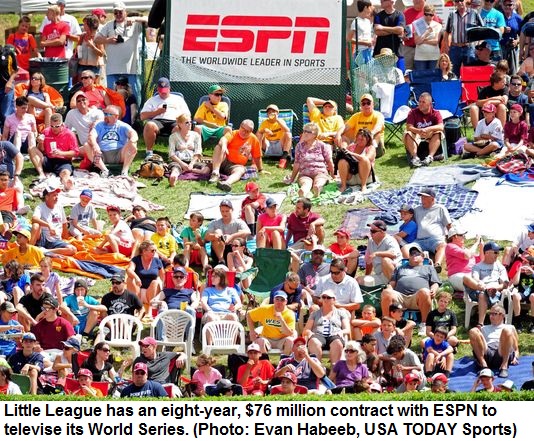
CU Blog - Sports Role Model - US versus the World - Photo 1The images remain quaint — kids sprinting around the base-paths, fans watching from grass hills, Norman Rockwell-like scenes abound at the Little League World Series in Williamsport, Pa., which culminates Sunday with the championship game. But make no mistake, Little League is big business.

Little League Inc. reported revenue of almost $25 million and assets of more than $85 million in 2012, according to the most recent publicly available tax return it must file to maintain tax-exempt status as a 501(c)(3) non-profit organization.

Over a five-year period, compensation for Little League Inc.’s CEO, Steve Keener, nearly doubled to $430,000 a year. And in 2012, the 100-person full-time staff made almost $7.5 million in salaries — a year before ESPN agreed to more than double broadcast fees as part of an eight-year, $76 million contract to televise the games during the two-week tournament.

“That’s a lot of money when all the grunt work is volunteer,” said Randy Stevens, president of the Little League in Nashville, Tenn., whose all-star team qualified for the World Series each of the past two years. “Now I’m wondering where it’s all going.”

Keener, elected as CEO in 1996, said revenue has grown at a steady pace and said new money is going back into the program.

“I’m not going to apologize for generating revenue to support the programming issues of this organization,” he told USA TODAY Sports. “But I would apologize if I felt we were not using it to the best of our ability in a prudent manner and getting the most out of the money to benefit this program.”

Keener said the majority of the organization’s costs stem from maintaining the national headquarters in Williamsport, five regional centers — in Connectcut, Georgia, Texas, California, Indiana — a full-time facility in Poland and offices in Hong Kong, Puerto Rico and Canada.

When Little League signed its contract with ESPN in 2007, Keener said, it lowered affiliation fees for the local leagues. He also said Little League pays for 125 criminal background checks for each local league and provides training program for coaches.

“Those are ways we try direct the funds right back to the local programs,” he said.

Little League also pays for travel, lodging and food costs for 16 teams, each of which include 13 players and three coaches. But Stevens, affiliated with the Nashville-based league, said families of the players should receive financial help for travel costs.

He estimated the parents of his players needed up to $35,000 to cover those expenses. A father with the team from Chicago said parents were unsure how they would pay for the trip until five Major League Baseball players offered to cover all travel expenses for the parents.

Keener said the idea of travel assistance is not under consideration.

“I’ve learned never to say never, but it’s unlikely at this point,” he said. “Our responsibility is to provide the travel, the accommodations and all the expenses related to participating in the World Series for the players and the coaches and the umpires who are here working the World Series.”

Keener said giving the players money that could be used for scholarships is not under consideration.

“Anything we would do for one group of kids, we would do for all of the kids. And it’s just not feasible to think that they’re all going to head off to college when they’re getting out of high school, particularly with the kids from the international region,” he said. “It’s just not something we feel is necessary for us to be thinking about when they’re 12 or 13 years old.”

Little League does not charge admission for games at the World Series, but officials do solicit donations while passing around cans during games.

“Whatever money they’re getting, they’re looking for more,” said Ellen Siegel, affiliated with the team from Philadelphia.

But Keener said the $25 million a year pales in comparison to organizations such as the Boys Scouts of America, which reported revenue of $240 million in 2012. He said Little League could not operate without the support of about 1,250,000 volunteers in 7,500 communities.

As far as his salary is concerned, he declined to comment other than to say his compensation is set by a committee of Little League Inc. board members.

Davie Jane Gilmour, Little League International Board of Directors Chairman, said Keener’s salary — and that of the other senior staff members, who in 2012 earned between $100,000 and $250,000 apiece — are in line with salaries at comparable non-profits.

“To be perfectly honest with you, there are many board members on that (compensation) committee who think that our senior staff, and in particular Steve, are underpaid at this point in time,” Gilmour said. “There’s a a pretty strong feeling on the compensation committee that they are highly marketable based on their success here in their work here at Little League.”

The claim of the book Go Lean … Caribbean is that excellence in sports requires a genius qualifier and that genius ability can be found in abundance in the Caribbean. Further that there is something bigger than sports alone at play here, that this is the full effect of globalization in which the Caribbean can export products and services to benefit the homeland.

This commentary has previously promoted the monetary benefits of the sports eco-systems and how Caribbean progeny participate on the world stage:

https://goleancaribbean.com/blog/?p=1508 St Croix’s Tim Duncan to Return to Spurs For Another Season
https://goleancaribbean.com/blog/?p=1446 Caribbean Players in the 2014 World Cup
https://goleancaribbean.com/blog/?p=1341 Sports Landlord Model of the College World Series Time
https://goleancaribbean.com/blog/?p=1148 Sports Bubble – Franchise values in basketball
https://goleancaribbean.com/blog/?p=1214 Sports Landlord Model – The Art & Science of Temporary Stadiums
https://goleancaribbean.com/blog/?p=1020 Caribbean Sports Revolutionary & Advocate: FIFA’s Jeffrey Webb
https://goleancaribbean.com/blog/?p=498 Sports Nature -vs- Nurture: Book Review of ‘The Sports Gene’
https://goleancaribbean.com/blog/?p=334 Bahamians Basketballers Make Presence Felt In Libyan League
https://goleancaribbean.com/blog/?p=318 The Need for Collegiate Sports Eco-System in the Caribbean
https://goleancaribbean.com/blog/?p=60 Could the Caribbean Host the Olympic Games?

The Go Lean book serves as a roadmap for the introduction and implementation of the Caribbean Union Trade Federation (CU), a technocratic federal government to administer and optimize the economic/security/ governing engines of the region’s 30 member-states. At the outset, the roadmap recognizes the value of sports in the roadmap with these statements in the Declaration of Interdependence (Page 13 & 14):

xxvi.      Whereas the preparation of our labor force can foster opportunities and dictate economic progress for current and future generations, the Federation must ensure that educational and job training opportunities are fully optimized for all residents of all member-states, with no partiality towards any gender or ethnic group. The Federation must recognize and facilitate excellence in many different fields of endeavor, including sciences, languages, arts, music and sports. This responsibility should be executed without incurring the risks of further human flight, as has been the past history.

xxxi.      Whereas sports have been a source of great pride for the Caribbean region, the economic returns from these ventures have not been evenly distributed as in other societies. The Federation must therefore facilitate the eco-systems and vertical industries of sports as a business, recreation, national pastime and even sports tourism – modeling the Olympics.

The Go Lean roadmap calls for the market organizations to better explore the economic opportunities for sports. Sports can be big business! But even when money is not involved, other benefits abound. As such the CU will enhance the engines to elevate sports at all levels: amateur, intercollegiate and professional.

The Go Lean book’s economic empowerment roadmap features huge benefits for the region related to sports. The strategy is create leverage for a viable sports landscape by consolidate the region’s 30 member-states / 4 languages into a Single Market of 42 million people. The CU facilitation of applicable venues (stadia, arenas, fields, temporary structures) on CU-owned fairgrounds plus the negotiations for broadcast/streaming rights/licenses will elevate the art, science and genius of sports as an enterprise in the region. As depicted in the foregoing article/VIDEO, even young children, Little League, will participate/benefit in the sports eco-system.

Now is the time for all of the Caribbean to lean-in to the following community ethos, strategies, tactics, implementations and advocacies detailed in the book Go Lean … Caribbean to re-boot the delivery of the regional solutions to elevate the Caribbean region through sports:

Community Ethos – People Respond to Incentives in Predictable Ways Page 21
Community Ethos – Return on Investments Page 24
Community Ethos – Ways to Foster Genius Page 27
Community Ethos – Ways to Improve Negotiations Page 32
Community Ethos – Ways to Promote Happiness Page 36
Strategic – Vision – Integrating Region in to a Single Market Page 45
Strategic – Staffing – Sporting Events at Fairgrounds Page 55
Tactical – Fostering a Technocracy Page 64
Tactical – Separation of Powers – Sports & Culture Administration Page 81
Tactical – Separation of Powers – Fairgrounds Administration Page 83
Implementation – Steps to Implement Self-Governing Entities (Fairgrounds) Page 105
Implementation – Ways to Deliver Page 109
Planning – Ways to Make the Caribbean Better Page 131
Advocacy – Ways to Grow the Economy Page 151
Advocacy – Ways to Improve Local Government – Parks & Recreation Page 169
Advocacy – Ways to Impact Events Page 191
Advocacy – Ways to Promote Fairgrounds Page 192
Advocacy – Ways to Foster Technology Expositions Page 197
Advocacy – Ways to Impact Youth Page 227
Advocacy – Ways to Improve Sports Page 229
Advocacy – Ways to Impact Urban Living – Sports Leagues Page 234

The foregoing VIDEO features many sub-stories associated with this year’s Little League World Series (LLWS) tournament, the compelling stories of the rise from the despair of the Chicago inner-city, and Philadelphia’s Mo’ne Davis, the only girl in the tournament. The drama of sports is a microcosm for the drama in life.

Despite the presence of a Caribbean team in this LLWS tournament, no compelling Caribbean stories have emerged. This is an American drama: the United States versus the World. This is not just an attitude in sports, but in many other endeavors as well. The drama and challenges in the Caribbean are of no consequence in the US, we are just a playground for their world.

We need our own tournament to foster Caribbean sports drama and economic benefits.

We need to lean-in to the Go Lean roadmap to build the sports eco-systems to make the Caribbean a better place to live, work and play. We must elevate our own society.

Download the free e-Book of Go Lean … Caribbean – now!

———–

APPENDIX – LLWS BRACKETS   (Double-Click for a legible Viewer)

CU Blog - Sports Role Model - US versus the World - Photo 2

Share this post:
, , , ,
[Top]

Breaking Up – The Port Authority – Is Hard To Do

Go Lean Commentary

The concept of a super-national / multi-state administration to foster development and growth in the Caribbean sounds so revolutionary.  Has such a concept ever been attempted or succeeded before?

Yes … and yes.

The book Go Lean…Caribbean identifies one such winning role model (Page 137): The Port Authority of New York and New Jersey (PANYNJ).

This entity was created in 1921 by an act of the US Congress, an interstate compact, to coordinate the common interest of the two states, even above and beyond the self-interest of each state. The focus is on common interest, not self interest. This charter facilitates trade and transportation. This is a very exacting model for a Caribbean focus, as the Go Lean book serves as a roadmap for the introduction and implementation of the Caribbean Union Trade Federation (CU). Facilitating trade is a parallel objective of both the CU and the PANYNJ. In fact, this Go Lean/CU roadmap has these 3 prime directives:

  • Optimization of the economic engines in order to grow the regional economy to $800 Billion & create 2.2 million new jobs.
  • Establishment of a security apparatus to protect the resultant economic engines.
  • Improve Caribbean governance to support these engines.

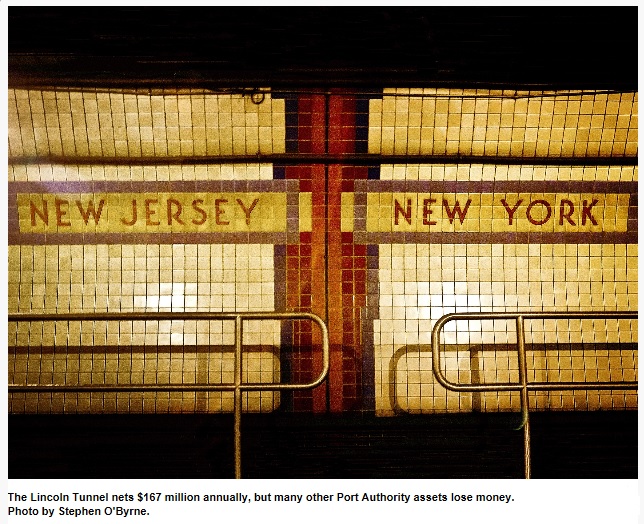
The Port Authority of New York and New Jersey operates much of the region’s key transportation infrastructure. But some assets are profitable while others are not; some hubs chew up a lot more cash than they generate. So says the following news article:

By: Aaron Elstein
Subtitle: Why the agency endures despite political interference, scandal and lots of red ink.

PANYNJ 1

It didn’t take long after the George Washington Bridge traffic caper erupted for people to start demanding dramatic change at the Port Authority of New York and New Jersey. By a unanimous vote, the New Jersey state Senate urged Congress to examine the “organizational structure” of the agency, which runs the region’s bridges, tunnels, airports and much else. Others called for more drastic measures.

“I’ve started hearing people say that it’s time to break the Port up,” said Carol Kellermann, president of the Citizens Budget Commission.

A breakup might sound like fair comeuppance for the Port Authority, a massive government body that’s now seen as a jobs bank for Gov. Chris Christie’s friends. Carving up the agency into its New York and New Jersey parts would certainly simplify the chain of command in an unwieldy organization that effectively has two chief executives and a board that reports to two governors, who each have veto power over decisions. Even a consulting firm hired by the authority described management two years ago as “dysfunctional.”

“It could be simpler and cleaner if you separated the different parts of the Port into individual agencies,” said Stephen Berger, a former Port Authority executive director. “It would also be insane.”

PANYNJ 3Dismantling the agency is not a new idea. The idea was first broached in the 1940s and most recently in 1996, when Mayor Rudolph Giuliani unveiled a plan to merge PATH into the Metropolitan Transportation Authority, sell the World Trade Center, fold the Port Authority police into the city’s Police Department and create a new agency called the New York Airport Authority that would have been in charge of rebuilding the city’s airports.

Mr. Giuliani, who didn’t return a call seeking comment, argued at the time that the Port Authority was riddled with inefficiencies and mismanagement. The idea went nowhere.

The agency endures for a simple reason: The economics of a breakup don’t work. Many of the authority’s operations lose substantial sums and couldn’t survive without hefty subsidies from other parts of the organization.

PATH, for instance, devoured $2.3 billion in cash between 2007 and 2011. The harbor ports and midtown bus terminal chewed up $755 million and $537 million, respectively, during the same period. Rebuilding the WorldTradeCenter has cost the agency about $8 billion in the past decade.

Cash Cows

Yet even amid these gushers of red ink, the Port Authority in 2012 managed to generate $1.1 billion in net income on $4 billion in revenue. That gain was all thanks to the huge toll and fee revenue coming from the region’s three major airports and the George Washington  Bridge. Those four hubs generated about $5 billion in operating cash between 2007 and 2011.”One of the most powerful things about the Port is how it moves revenues from one place to another,” Mr. Berger said.

PANYNJ 2The Port Authority’s diverse revenue streams also mean it can borrow more cheaply than the airports or bridges could on their own. That’s an important consideration because the agency has $20 billion in debt obligations and is expected to borrow another $8 billion over the next four years to pay for such projects as completing the World Trade Center, building a new central terminal at LaGuardia Airport and raising the Bayonne Bridge so larger ships going to and coming from the Panama Canal can dock here.

“The Port is different from just about any city or state in that they can go to the market and raise whatever capital they need whenever they want,” said Matt Fabian, a managing director at independent debt-research firm Municipal Market Advisors. “The management team is seen by investors as very sophisticated.”

“Sophisticated” might not be the word preferred by most people to describe the management team behind the Fort Lee traffic jam engineered by aides of Mr. Christie, but interference from elected leaders and their lackeys isn’t new at the agency.

Jameson Doig, a professor of government at DartmouthCollege, dates the first example to 1927, six years after the Port Authority’s creation. That’s when the governor of New Jersey demanded—and won—the right to veto agency decisions because he wanted to help a company get a contract installing wire cables on the GeorgeWashingtonBridge.

Political Interference

Mr. Doig said many of the Port Authority’s current problems stem from an agreement made in 1995, when Gov. George Pataki appointed an investment banker with no experience in transportation to the executive director job. After New Jersey Gov. Christine Todd Whitman objected, the leaders compromised by creating a new deputy executive director position to be filled by the New Jersey side. The executive director and the deputy share the same box on the authority’s organizational chart, and the deputy can’t be fired by the executive director.

At the time, the move was applauded as a sensible division of power, but “that’s when you started seeing the management problems that are blindingly obvious today,” said Mr. Doig, author of a book about the agency called Empire on the Hudson.

He added that Port Authority management suffered further when Mr. Christie rewarded up to 60 political backers with jobs for them or their family members after he was elected in 2010. In the past, governors have appointed no more than five supporters to Port Authority jobs.

“The first thing you change with the Port is eliminate those patronage appointees and put in people who are strong and independent,” Mr. Doig said. “And get rid of that deputy executive director job.”

At least for now, that job is vacant. Bill Baroni, one of the masterminds behind the Fort Lee traffic jam, resigned last month.

See Revenue/Profit Appendix below.

Crains New York Business News Online Site (Posted 01-19-2014; retrieved 08/18/2014) –http://www.crainsnewyork.com/article/20140119/POLITICS/301199988/breaking-up-the-port-authority-is-hard-to-do#

The foregoing article was a published news item; this generated feedback and commentary. As follows is a valid and relevant comment by a regular citizen identified as Roger. His comments are “spot on“, as follows:

Roger wrote on 01/19/14 at 6:44 AM:

Breaking up the Port brings the region back to the bad old days of NY-NJ rivalry and stalemate that necessitated the creation of the bi-state Authority in the first place in 1921.  The Port Authority for most of its history was an incredibly effective, highly professional and often visionary agency of development of the region’s essential trade and transportation infrastructure.  This it did reasonably free of political interference and cronyism, especially considering the political cultures of the two state parents.  Its great fault was a dearth of public accountability and transparency, in response to which the Governors have steadily sought greater oversight which morphed into outright control, ending in the current miasma of political patronage that now afflicts the Port Authority.  What is needed is a new regime of state oversight that provides broad policy direction but keeps hands-off to let the agency do what it once was permitted – as intended – to do so well.

This subject of regional administration is important in the consideration of Caribbean elevation. How do we learn from the successes and failures of PANYNJ and ensure that we do our multi-state compact right. (The CU is a confederation of 30 member-states). Some previous Go Lean blogs, highlighted here in the following samples, showed how the application of the Go Lean roadmap is designed to benefit the region, and glean insights, intelligence and wisdom from other models/examples:

https://goleancaribbean.com/blog/?p=888 Book Review: ‘Citizenville – Take the Town Square Digital and Reinvent Government’
https://goleancaribbean.com/blog/?p=829 Trucks and Trains Play Well Together
https://goleancaribbean.com/blog/?p=798 Lessons Learned from the American Airlines merger
https://goleancaribbean.com/blog/?p=353 Book   Review: ‘Wrong – Nine Economic Policy Disasters and What We Can Learn…’

The people and institutions of the Caribbean must lean-in to the initiatives spelled out in the book Go Lean…Caribbean. Similar to the PANYNJ, there is no need for CU member-states to fund the CU Trade Federation, just the opposite, the CU will generate revenues to remit back to each member-state. This commission involves duplicating a lot of the functions that PANYNJ conduct now, but we must do it better (efficiently and effectively). This point is clearly defined in (Page 12) of the Declaration of Interdependence, with these statements:

xi. Whereas all men are entitled to the benefits of good governance in a free society, “new guards” must be enacted to dissuade the emergence of incompetence, corruption, nepotism and cronyism at the peril of the people’s best interest. The Federation must guarantee the executions of a social contract between government and the governed.

xii. Whereas the legacy in recent times in individual states may be that of ineffectual governance with no redress to higher authority, the accedence of this Federation will ensure accountability and escalation of the human and civil rights of the people for good governance, justice assurances, due process and the rule of law. As such, any threats of a “failed state” status for any member state must enact emergency measures on behalf of the Federation to protect the human, civil and property rights of the citizens, residents, allies, trading partners, and visitors of the affected member state and the Federation as a whole.

xiv. Whereas government services cannot be delivered without the appropriate funding mechanisms, “new guards” must be incorporated to assess, accrue, calculate and collect revenues, fees and other income sources for the Federation and member-states. The Federation can spur government revenues directly through cross-border services and indirectly by fostering industries and economic activities not possible without this Union.

xvi. Whereas security of our homeland is inextricably linked to prosperity of the homeland, the economic and security interest of the region needs to be aligned under the same governance. Since economic crimes, including piracy and other forms of terrorism, can imperil the functioning of the wheels of commerce for all the citizenry, the accedence of this Federation must equip the security apparatus with the tools and techniques for predictive and proactive interdictions.

Enacting a multi-state compact, and the related governance, is “Step One, Day One” in the Go Lean roadmap. Implementing the CU with a heightened regulatory framework compared to PANYNJ as depicted in the foregoing news article, allows the transparency and checks-and-balances that stakeholders deserve, but not to undermine the fundamentals of a technocracy – we must be able to deliver first and foremost on our obligations, irrespective of political maneuvering. The CU emergence would therefore provide the foundation so that the regional society can be elevated, economically and governmentally.

The Go Lean book details samples in this series of community ethos, strategies, tactics, implementations and advocacies to foster progress in regional administration:

Community Ethos – Deferred Gratification Page 21
Community Ethos – Voluntary Trade Creates   Wealth Page 21
Community Ethos – Lean Operations Page 24
Community Ethos – Cooperatives Page 25
Community Ethos – Ways to Impact the Future Page 26
Community Ethos – Impact the Greater Good Page 37
Strategy – Vision – Confederating 30   Member-States Page 45
Strategy – Agents of Change – Globalization Page 57
Tactical – Fostering a Technocracy Page 64
Tactical – Growing the Region’s Economy to   $800 Billion Page 67
Tactical – Separation of Powers – Legislative   Oversight Page 72
Anecdote – “Lean” in Government Page 93
Implementation – Ways to Pay for Change Page 101
Implementation – Start-up Benefits from the   EEZ Page 104
Implementation – Ways to Deliver Page 109
Implementation – Ways   to Re-boot an Existing Port Authority Page 112
Planning – Ways to Improve Trade Page 128
Planning – Lessons from New York City Page 137
Advocacy – Ways to Grow the Economy Page 151
Advocacy – Ways to Improve Governance Page 168
Advocacy – Revenue Sources … for Regional Administration Page 172
Advocacy – Ways to Improve Transportation Page 205
Appendix – Enacting Interstate Compacts Page 278

The Port Authority of New York and New Jersey set out to manage the common waterways (and related trade) of the Hudson River as it empties into the Atlantic Ocean. That was the initiation; it has since over-reached, but still for the providential benefit of the people of States of New York and New Jersey. As a parallel, the Caribbean Union Trade Federation sets out to manage the common waterscapes of the Caribbean Sea, with the built-in “over-reach” mandate from the beginning – the focus is not just limited to port activities. In fact the Go Lean roadmap details 144 different mission/advocacies.

This, the CU, is not for political gain, or to accumulate power and wealth for a few. No, the purpose, planning and execution of the CU is for the Greater Good. In fact, a lot of the executions for the CU is neutral/agnostic of politics. While politicians may have influence on budgets and policies, as a technocracy the Federation is required to just deliver – think postal mail (“neither snow nor rain nor heat nor gloom of night stays these couriers from the swift completion of their appointed rounds”).

Now is the time for all of the Caribbean, the people and governing institutions, to lean-in for the elevations described in the book Go Lean … Caribbean. The benefits are too alluring, a better place to live, work and play.

Download the book Go Lean … Caribbean – now!

—————————————————————————–

APPENDIX – PANYNJ Revenues / Profits

TOTAL AVIATION: +$2.5 BILLION

Airport

Profit

JFK

+$990 million

LaGuardia

+$273 million

Newark

+$1.3 million

Teterboro, Stewart, heliports

-$65 million

TOTAL BRIDGE AND TUNNEL: -$537 MILLION*

Bridge/Tunnel

Profit

GW Bridge

+$1.3 billion

Lincoln Tunnel

+167 million

Holland Tunnel

+$141 million

Port Authority Bus Terminal

-$479 million

PATH

-$2.3 billion

TOTAL PORT COMMERCE: -$755 MILLION*

Port

Profit

Port Newark

-$317 million

Port Jersey

-$184 million

Howland Hook

-$160 million

Brooklyn Marine   Terminal

-$27 million

TOTAL WORLD TRADE CENTER: -$3.1 BILLION

GRAND TOTAL: -$2.5 BILLION

The total shows the authority doesn’t generate enough from tolls, fees and grants to cover its costs. It borrows to cover the shortfall.

*Total includes other entities not listed here.

Source: Phase II report to the special committee of Port Authority’s board, prepared by consulting firm Navigant in September 2012.

Share this post:
, ,
[Top]

MetroCard – Model for the Caribbean Dollar

Go Lean Commentary

CU Blog - MetroCard - Model for CCB - Photo 1The MetroCard, the New York City Metropolitan Transportation Authority’s (MTA) payment system is the subject of the referenced source appendix below. But this subject is about more than just simple bus/subway tokens, instead this subject refers to a whole eco-system that constitutes an electronic payment scheme. This system generates $4 billion (2012) and services the transit needs of 15.1 million people. The MTA drives the NYC regional economy, the largest in the US, facilitating the connection for many to traverse from home to work; then after work, the MTA network enables the NYC metropolitan area (New York, New Jersey, and Connecticut) to get to a host of leisure activities: music, theater, cultural events, sports, and shopping. MetroCard is therefore a de facto currency for this region to live, work and play.

MetroCard is a digital currency and not “hard money”, so there are not paper stock or coinage issues to be managed with this approach. (MetroCard replaced the previous ubiquitous tokens in 2003). This attribute relates to the effort to re-boot and optimize the Caribbean regional economy and society. The book Go Lean…Caribbean points to NYC as a model and source of many lessons that the Caribbean can learn and apply, especially related to the adoption of the regional currency, the Caribbean Dollar (C$).

The book Go Lean…Caribbean serves as a roadmap for the introduction and implementation of the Caribbean Union Trade Federation (CU) and the Caribbean Central Bank (CCB). This Go Lean roadmap has 3 prime directives:

  • Optimization of the economic engines in order to grow the regional economy to $800 Billion & create 2.2 million new jobs.
  • Establishment of a security apparatus to protect the resultant economic engines.
  • Improve Caribbean governance to support these engines.

The Caribbean Central Bank has the role of heavy-lifting in the facilitation of the electronic payments modes of the Caribbean Dollar. While the traditional central banking role of currency/coinage distribution do not come into play, with the e-Payment schemes, there are still many responsibilities and benefits for central bank command-and-control. This refers to the subject of M1 monetary supply. M1 refers to the measurement of the total of currency/money in circulation (M0) plus overnight bank deposits (like demand deposits, travelers’ checks & other checkable deposits). So when digit currencies, as MetroCard, are factored in, there is no M0, but an increase in M1. As M1 values increase, there is a dynamic in the regional banking system that creates money “from thin-air”; this is referred to as the money multiplier. The more M1 money in the system, the more liquidity for investment and development opportunities.

The Caribbean needs this increase in development capital/liquidity.

This subject of electronic payment systems has been previously covered in Go Lean blogs, highlighted here in the following samples:

https://goleancaribbean.com/blog/?p=1350 PayPal expands payment services to 10 markets
https://goleancaribbean.com/blog/?p=906 Bitcoin needs regulatory framework to change ‘risky’ image
https://goleancaribbean.com/blog/?p=528 Facebook plans to provide mobile payment services
https://goleancaribbean.com/blog/?p=360 How to Create Money from Thin Air

This Go Lean/CU/CCB roadmap looks to employ electronic payments / virtual money schemes to impact the growth of the regional economy. There are two CU schemes that relate to this MetroCard structure:

  • Cruise Passenger Smartcards – The Go Lean roadmap posits that the cruise industry needs the Caribbean more than the Caribbean needs the industry. But the cruise lines have embedded rules/regulations designed to maximize their revenues at the expense of the port-side establishments. The CU solution is to deploy a scheme for smartcards that function on the ships and at the port cities (Page 193).
  • e-Commerce Facilitation – The Go Lean roadmap defines that the Caribbean Dollar (C$) will be mostly cashless, an accounting currency. So the Caribbean Central Bank (CCB) will settle all C$ electronic transactions (MasterCard-Visa style or ACH style) and charge interchange/clearance fees (Page 198). This scheme allows for the emergence of full-throttle e-Commerce activities.

Overall, stewardship of the single market economy and single regional currency was envisioned and pronounced early in the Go Lean roadmap with this Verse XXIV (Page 13) of the Declaration of Interdependence, with these words:

Whereas a free market economy can be induced and spurred for continuous progress, the Federation must install the controls to better manage aspects of the economy: jobs, inflation, savings rate, investments and other economic principles…

New York City is a great model for this Caribbean empowerment effort to look, listen, and learn. The same as tourism is the primary economic driver in the Caribbean (80 million visitors), NYC also plays host to 25 million visitors annually. Many NYC tourists ride the MTA public transportation modes and have to acquire a MetroCard – many times, they leave unspent balances  to just sit there. What becomes of those monies? See this news article here:

Unspent MetroCard Money Means Millions for M.T.A.

(http://www.nyctransitforums.com/forums/topic/43954-unspent-metrocard-money-means-millions-for-mta/)

Think of it as New York’s biggest sock drawer, except that instead of nickels, dimes and quarters, what is squirreled away in its dark recesses are millions of lapsed yellow-and-blue MetroCards with digital loose change still dangling from their magnetic strips.

In the decade ending in 2010, nearly $500 million worth of unspent balances on expired bus and subway MetroCards accumulated, and that money can no longer be redeemed.

Cards that are bought, never used but still valid are counted for bookkeeping purposes as a liability, because they might eventually be used. Outdated cards with pending balances become an asset after they expire, about two years from the date of sale. The balances are listed as revenue under the category of “fare media liability.”

Tens of millions of dollars a year may not seem like much out of $4 billion in annual MetroCard revenue for New York City Transit, but there is no stream of cash that the agency scoffs at.

Kevin Ortiz, a spokesman for the Metropolitan Transportation Authority, which includes the transit agency, said: “Expired card value does benefit the M.T.A. It gets counted as fare box revenue.”

The peak year for replenishing New York City Transit’s fare media liability account was 2012, when $95 million was credited. That followed a surge in purchases in 2010, before a fare increase. Those cards, many presumably with outstanding balances, have expired.

Considering the governance for the MetroCard, the MTA has been described with some adjectives of efficiency and effectiveness. Their website described their charter as follows:

While nearly 85 percent of the nation’s workers need automobiles to get to their jobs, four of every five rush-hour commuters to New York City’s central business districts avoid traffic congestion by taking transit service – most of it operated by the MTA. MTA customers travel on America’s largest bus fleet and on more subway and rail cars than all the rest of the country’s subways and commuter railroads combined.

This mobility helps ensure New York’s place as a world center of finance, commerce, culture, and entertainment, and New York ranks near the top among the nation’s best cities for business, Fortune magazine has written, because it has “what every city desires. A workable mass transit system.”

MTA mass transit helps New Yorkers avoid about 17 million metric tons of pollutants while emitting only 2 million metric tons, making it perhaps the single biggest source of greenhouse gas (GHG) avoidance in the United   States. The people living in our service area lead carbon-efficient lives, making New   York the most carbon-efficient state in the nation.

Over the past two decades, the MTA has committed some $72 billion to restore and improve the network so that today it runs at unprecedented levels of efficiency. Our employees at all of our agencies work diligently to maintain high service and safety standards.

(Source: Retrieved August 19, 2014 from: http://web.mta.info//mta/network.htm)

The governance for the MetroCard may be in good hands, a technocratic reflection. Creating a technocratic CU/CCB governance is “Step One, Day One” in the Go Lean roadmap. Implementing this allows for rock-solid monetary integrity for local financial systems, providing the foundation so the regional society can be elevated, economically and governmentally. In this vein, we examine specific lessons & applications in consideration of the MetroCard business model in the Appendix below:

MetroCard Facts Go Lean book considerations/reflections (actual Page Numbers)
MetroCard History Roadmap with Project Delivery Obligations (Page 109); Fostering a Technocracy (Page 64)
Multiple Jurisdictions Confederation of 30 Member-States (Page 45); Fostering Interstate Commerce (Page 129)
Pricing/Cost Increases Unified Command & Control on Inflation (Page 153)
Technology Foster Technology (Page 197); e-Commerce (Page 198); Bridging Digital Divide (Page 31)
Transfers People respond to economic incentives (Page 21)
Card type consideration –   Pay-Per-Ride cards Improve M1 by encouraging stored balances (Page 198)
Card type consideration – Student cards Facilitation Education (Page 159) and Transportation (Page 205)
Card type consideration –   Disabled/Senior Citizens Improve Elder-Care (Page 225) and Impact Persons with Disabilities (Page 228)
Purchase Options – Subway Station   Booths Manage Federal Civil Servants (Page 173)
Purchase Options – Vending   Machines Foster Technology (Page 197); e-Commerce (Page 198); Bridging Digital Divide (Page 31)
Purchase Options – Neighborhood   Merchants Help Entrepreneurship (Page 28); Impact Main Street (Page 201);
Future Impact the Future (Page 26)
Bad Actors: Fraud/Scams Bad Actors Emerge – Reduce Crime (Page 178); Impact the Greater Good (Page 37)

The Go Lean book details additional community ethos, strategies, tactics, implementations and advocacies to foster electronic payment systems, and the unified command & control necessary for its success:

Community Ethos – Money Multiplier Principle Page 22
Community Ethos – Lean Operations Page 24
Community Ethos – Cooperatives Page 25
Tactical – Separation of Powers – Central Banking Page 73
Implementation – Assemble Central Bank Cooperative Page 96
Planning – Lessons Learned from New York City Page 137
Anecdote – Caribbean Currencies Page 149
Advocacy – Ways to Mitigate Black Markets Page 165
Advocacy – Ways to Impact Public Works Page 175
Advocacy – Ways to Foster Cooperatives Page 176
Advocacy – Reforms for Banking Regulations Page 199
Advocacy – Ways to Impact Urban Living Page 234
Appendix – New York City Economy Details Page 277

Now is the time for all of the Caribbean, the people and governing institutions, to lean-in for the empowerments described in the book Go Lean … Caribbean. We can all benefit by studying and modeling the successes of New York City!

Any visitor to the city quickly realizes how unique this jurisdiction is compared to other urban areas in the US, or the world for that matter. Millions of people (31,483,000 according to 2010 census) live in a limited congested area that is the Greater Tri-State area, yet there is a recognizable level of efficiency – some technocratic deliveries. For example, NYC does not have the proliferation of yellow school buses that dot the landscape of most American communities. Most students in the city rely on the MTA, funded by their MetroCard, to get back and forth for school. So in effect, MetroCard services the full community needs to live, work, learn and play.

MetroCard is truly a model for the Caribbean … Dollar.

Download the book Go Lean … Caribbean – now!

————————————————————————-

Appendix – Reference Source:

MetroCard – New   York Metropolitan Transportation Authority’s Payment System

The MetroCard is the payment method for the New York City Subway rapid transit system; New York City Transit buses, including routes operated by Atlantic Express under contract to the Metropolitan Transportation Authority (MTA); MTA Bus, and Nassau Inter-County Express systems; the PATH subway system (an entity of the Port Authority of New York & New Jersey); the Roosevelt Island Tram; AirTrain JFK; and Westchester County’s Bee-Line Bus System.

The MetroCard is a thin, plastic card on which the customer electronically loads fares. It was introduced to enhance the technology of the transit system and eliminate the burden of carrying and collecting tokens. The MTA discontinued the use of tokens in the subway on May 3, 2003, and on buses on December 31, 2003. The MetroCard is managed by a division of the MTA known as MetroCard Operations and manufactured by Cubic Transportation Systems, Inc.

History

01Jun1993 MTA distributes 3,000 MetroCards in the first major test of the technology for the entire subway system and the entire bus system.
06Jan1994 MetroCard live testing with compatible turnstiles at select lines and stations.
15May1997 The last MetroCard turnstiles were installed by this date, and the entire bus and subway system accepted MetroCards
04Jul1997 First free transfers available between bus and subway at any location with MetroCard.
01Jan1998 Bonus free rides (10% of the purchase amount) were given for purchases of $15 or more.
04Jul1998 Unlimited Ride MetroCards introduced, at $17 for 7 days, $63 for 30 days, Express Bus Plus for $120.
01Jan1999 1-Day Fun Pass was introduced: unlimited use for one day for $4.
25Jan1999 The first MetroCard Vending Machines installed.
13Apr2003 Tokens/coins no longer sold.
04May2003 Tokens only accepted as a $1.50 credit towards the $2 MetroCard ride.
02Mar2008 A new 14-day unlimited-ride was introduced for $47
30Dec2010 1-Day Fun Pass and the 14-Day Unlimited Ride MetroCards discontinued.
20Feb2013 Cards can now be refilled with both time and value.
03Mar2013 A $1 fee is imposed on new card purchases in-system

Pricing/Cost increases – since the complete cut-over in 2003

Date

Daily

Weekly

Monthly

04May2003

$2

$21

$70

27Feb2005

$2

$24

$76

02Mar2008

$2

$25

$81

28Jun2009

$2.25

$27

$89

30Dec2010

$2.25

$29

$104

19Dec2012

$2.50

$30

$104

Technology

During a swipe, the MetroCard is read, re-written to, then check-read to verify correct encoding.

Each MetroCard stored value card is assigned a unique, permanent ten-digit serial number when it is manufactured. The value is stored magnetically on the card itself, while the card’s transaction history is held centrally in the Automated Fare Collection (AFC) Database.

When a card is purchased and fares are loaded onto it, the MetroCard Vending Machine or station agent’s computer stores the amount of the purchase onto the card and updates the database, identifying the card by its serial number. Whenever the card is swiped at a turnstile, the value of the card is read, the new value is written, the customer is let through, and then the central database is updated with the new transaction as soon as possible. Cards are not validated in real time against the database when swiped to pay the fare. The AFC Database is necessary to maintain transaction records to track a card if needed. It has actually been used to acquit criminal suspects by placing them away from the scene of a crime. The database also stores a list of MetroCards that have been invalidated for various reasons (such as lost or stolen student or unlimited monthly cards), and it distributes the list to turnstiles in order to deny access to a revoked card.

MetroCard keeps track of the number of swipes at a location in order to allow those same number of people to transfer at a subsequent location, if applicable. The MetroCard system was designed to ensure backward compatibility, which allowed a smooth transition from the old (blue) format to the (gold) format.

Cubic later on used the proprietary MetroCard platform to create the Chicago Card, which is physically identical to the MetroCard except for the labeling.

Transfers

MetroCards allows for transfers (within two hours of initial entry) among the many transportation modes – incentivizing a preferred behavior. (Pricing rules are built into the system for upgrades like Express Buses, PATH, and JFK Airport AirTrain).

One free transfer from:

  • subway to local bus
  • bus to subway
  • bus to local bus
  • express bus to express bus
  • bus or subway to Staten Island Railway
  • subway to subway

Card type – consideration – Pay-Per-Ride MetroCards

  • $5 – $80 initial value in any increment (though vending machines only  sell values in multiples of 5 cents).
  • Card purchases or refills equal to or greater than $5 receive a 5% bonus (ex. $50 buys 21 rides).
  • Cards can be refilled up to $80 in one transaction and up to a total value of $100.
  • Though cards expire, the balance may be transferred to a new cards.

Card type – consideration – Student MetroCards: NYC does not have the propensity of yellow school business as other communities, therefore a partnership is forged between school districts and MTA.

  • MetroCards are issued to some New York City public and private school students allowing discounted access to the NYC Transit buses and trains, depending on the distance traveled between their school and their home. The card program is managed by the NYC-DOE Office of Pupil Transportation.
  • In Nassau County, Student MetroCards are issued by individual schools which have pre-paid for the cards.

Card type – consideration – Disabled/Senior Citizen Reduced-Fare MetroCards

  • Given to senior citizens and the disabled as a combination photo ID and MetroCard.
  • Allows half-fare within the MTA system. (Express Bus during off-peak hours only)
  • Half fare is also available on the 7-day and 30-day Unlimited MetroCards.
  • Card back is color-coded to match gender of card holder.
  • Card face is marked as “Photo ID Pass”

Purchase options

All new MetroCard purchases are charged a $1 fee, except reduced fare customers and those exchanging damaged / expired cards.

Subway Station Booths

Booths are located in all subway stations and are staffed by station agents. Every type of MetroCard can be purchased at a booth with the exception of the SingleRide ticket, and MetroCards specific to other transit systems (PATH, JFK Airtrain). All transactions must be in cash.

MetroCard Vending Machines

CU Blog - MetroCard - Model for CCB - Photo 2MetroCard Vending Machines (MVMs) are machines located in all subway stations and transit centers. They debuted on January 25, 1999 and are now found in two models. Standard MVMs are large vending machines that accept cash, credit cards, and debit cards and are in every subway station. Cash transactions are required for purchases of less than $1, and they can return up to $8 in coin change. There are also smaller versions of these machines that only accept credit and ATM/debit cards. Both machines allow a customer to purchase any type of MetroCard through a touch screen. The MVM can also refill to previously issued cards. PATH fare vending machines can also dispense MetroCards.

The machines are compliant with the Americans with Disabilities Act of 1990 through use of braille and a headset jack.

Neighborhood MetroCard Merchants

MetroCards can be sold by retail merchants not affiliated with MTA. Vendors can apply to sell MTA fare media at their businesses. Only presealed, prevalued cards are available, and no fee is charged.

Future

In 2006 the MTA and Port Authority of NY/NJ announced plans to replace the magnetic strip with smart cards.

On July 1, 2006, MTA launched a six-month pilot program to test the new “contact-less” smart card fare collection system, initially ending on December 31, 2006 but extended until May 31, 2007. This program was tested at all stations on the IRT Lexington Avenue Line and at four stations in the Bronx, Brooklyn and Queens. The testing system utilized Citibank MasterCard’s PayPass keytags. This smart card system is intended to ease congestion near the fare control area by reducing time spent at paying for fare. MTA and other transportation authorities in the region say they will eventually implement system-wide.

Beginning October 7, 2012, MetroCard vending machines scattered throughout Manhattan dispensed something other than the classic blue and gold MetroCard. The MTA has begun to sell advertisement space on the front and back of the card to raise additional revenue. The 2012 ad appearing on the cards was purchased by The Gap [retail stores] and reads: “Be Bright NYC” with multicolored letters on a navy blue background. It encourages New Yorkers to visit Gap’s newly remodeled flagship store at 34th   Street and Broadway starting October 10, 2012. Customers who present the MetroCard at any Gap store were entitled to a 20% discount on merchandise purchases through November 18, 2012. The MTA has been running advertisements on the back of MetroCards since its inception, earning advertiser fees along with expired card value (accruing when purchased fares wind up not being used on a card deemed a collectible by fans). Deals were arranged as early as 1997. However, this Gap deal is the first time the front of the cards have changed in over 10 years. Approximately 10% of the MetroCards sold throughout the system in a typical month will carry the Gap advertising. Future MetroCard advertising campaigns will include the word “MetroCard” on the back of the card, flush right in the white space above the zone available for advertising.

Bad Actors: Fraud and Scams

The MetroCard system is susceptible to various types of frauds, perpetrated by con artists. Usually these frauds involve the con artist preventing or dissuading the commuter from using his or her own MetroCard, and then charging the commuter for entry to the system (entry is gained by a method that costs the con artist nothing).

Also, MetroCard Vending Machines are programmed to disable the bill or coin acceptor after a series of rejected bills or coins, which can result in a row of MVMs all saying “No Bills” or “No Coins”.

If a con artist is not using a stolen or broken card, he or she can use an array of unlimited cards. Multiple cards are needed because of the 18-minute delay between each swipe at the same station. Using unlimited cards, a con artist is able to sell rides for $1 instead of $2.

A report from New York State Senator Martin J. Golden claims this scam is costing the MTA $260,000 a year, and some con artists are making up to $800 a day executing it. All aspects of this scam have been recently prohibited by MTA policy and a New York State law.

CU Blog - MetroCard - Model for CCB - Photo 3The introduction of MetroCards did eliminate one class of criminals. When the NYC subway still used tokens, token suckers would steal tokens by jamming turnstile coin slots, waiting for unsuspecting passengers to deposit tokens (only to discover that the turnstile did not work), then returning to suck out the token. The retirement of tokens in 2003 put the token suckers out of commission.

The MetroCard does have a magnetic stripe, but both the track offsets and the encoding differ from standard Magstripe cards. It is a proprietary format developed by the contractor Cubic. Off-the-shelf reader/writers for the standard cards are useless, and even hypothetically could work only with both physical and software modification. Some have had partial success decoding it using audio tape recorder heads, laptop sound cards, and custom Linux software.
Source: Wikipedia Online – encyclopedic source; retrieved 08/18/2014 from: http://en.wikipedia.org/wiki/MetroCard_(New_York_City)

Share this post:
, , ,
[Top]

Casinos Changing/Failing Business Model

Go Lean Commentary

Change has come to Atlantic City, New Jersey. Change has come to the world of casino gambling. For the US, there used to be a casino monopoly west of the Mississippi in Las Vegas, and another monopoly east of the Mississippi in Atlantic City.

No More!

Casinos have since popped up in many states (Pennsylvania, Florida, Connecticut, California, Louisiana, Mississippi, etc) all over the country, plus on many federally-legislated Indian Reservations. Additionally, there is the eco-system of casino riverboats and cruise ships leaving major US ports.

Now, the casino hot spots of Las Vegas and Atlantic City have to compete for their customers, and many times, they lose, as depicted in the foregoing news article, which reports that 2 casinos are closing in Atlantic City next month September.

“Who moved my cheese?”

Title: The Atlantic City’s Revel Casino to Close in September
Atlantic City, NJ – Aug 12, 2014, 3:42 PM ET
By: Wayne Parry, Associated Press

CU Blog - Atlantic City's Revel Casino to Close in September - Photo 1When it opened just over two years ago, many people hoped Revel would save Atlantic   City’s struggling casino industry, which has been bleeding money and jobs for years.

But now the $2.4 billion resort that was widely seen as the last, best chance for Atlantic City’s gambling market is shutting down, unable to find a buyer for even pennies on the dollar.

In addition to putting 3,100 people out of jobs and hurting state and local budgets, Revel’s demise shows just how cutthroat the East Coast casino market has become, and how difficult it is for even the newest and nicest gambling halls to survive in an oversaturated market.

Revel Entertainment said the casino and its 1,399 hotel rooms will close on Sept. 10, never having turned a profit.

“We regret the impact this decision has on our Revel employees who have worked so hard to maximize the potential of the property,” Revel said in a statement Tuesday. “We thank them for their professionalism and dedication; however we are faced with several unavoidable circumstances.

“Despite the effort to improve the financial performance of Revel, it has not proven to be enough to put the property on a stable financial footing,” the company wrote.

Revel’s most recent Chapter 11 filing listed assets of $486.9 million and liabilities of $476.1 million.

The company said its situation was compounded by a “considerable non-controllable expense structure” that financially burdened the property. It said it had no choice but “an orderly wind-down of the business at this time.”

Revel said it still hopes to find a buyer through the bankruptcy process. But it acknowledged that if that happened, it would be after the facility had already shut down.

Matthew Levinson, chairman of the New Jersey Casino Control Commission, called the closing “enormously disappointing,” but held out hope for a future sale.

“I sincerely hope that possibility materializes, especially for the employees who face the loss of their jobs,” he said.

Israel Posner, who runs a tourism and gambling study institute at RichardStocktonCollege, said he expects Revel to sell as a non-casino building.

“I still believe Revel will sell, for pennies on the dollar, to someone who will figure out that it is the most modern, beautiful structure that’s going to be built for generations to come,” he said.

The casino was due to be sold at a bankruptcy court auction last week, but that was postponed to allow casino officials to study bids that were received. After Revel’s board met on Monday, the decision was made to shutter the glittering glass-covered casino at the north end of the Boardwalk.

Revel opened in April 2012 as the first new casino in Atlantic City since the Borgata opened nine years earlier, and carried great hopes for many that it would be the catalyst to jolt what had been the nation’s second-largest gambling market back to life. Atlantic City has since slipped to third place behind Nevada and Pennsylvania, whose casinos touched off the New Jersey resort town’s revenue and employment plunge in 2007.

Since 2006, when the first Pennsylvania casino opened, Atlantic City’s casino revenue has fallen from $5.2 billion to $2.86 billion last year.

So far this year, the Atlantic Club closed in January, bought at a bankruptcy auction by the parent companies of Tropicana and Caesars and shuttered in the name of reducing competition. Caesars Entertainment will close the Showboat on Aug. 31, also to reduce the competition in Atlantic City, where it currently owns 4 of the 11 casinos. And TrumpPlaza is due to close Sept. 16.

CU Blog - Atlantic City's Revel Casino to Close in September - Photo 2Revel has ranked near the bottom of Atlantic City’s casinos in terms of the amount of money won from gamblers since the day it opened.

Its original owners envisioned it as a luxury resort that just happened to have a casino, and eschewed many staples of casino culture, including a buffet and bus trips for day-trippers. But that strategy — as well as the only overall smoking ban in Atlantic City — turned off customers, and Revel filed for bankruptcy in 2013, a little over a year after opening.

That led to new ownership and a “Gamblers Wanted” promotional campaign to emphasize the company’s new emphasis on its casino.

But despite some improvement, Revel’s finances never recovered enough, and it filed for bankruptcy a second time in June.
Associated Press News Source (Retrieved August 12, 2014) – http://abcnews.go.com/US/wireStory/atlantic-citys-revel-casino-close-september-24943242


CU Blog - Atlantic City's Revel Casino to Close in September - Photo 3

This article aligns with the book Go Lean…Caribbean, which calls for the elevation of Caribbean economics. The same challenges being experienced in Atlantic City are also affecting Caribbean casino resorts, especially since 2008. For example, the practice of Caribbean casino “junkets” is dead or dying [a].

The book posits that there is a need to re-focus, re-boot, and optimize the engines of commerce so as to make the Caribbean a better place to live, work and play. The tourism product, the mainstay of Caribbean economy, was accustomed to depending on certain amenities that have now come under attack by social change. Whereas golf was a popular day pastime for resort guests, and casino gambling was popular at night, both activities are experiencing decline and implosion in their individual industries. (See this previous blog commentary regarding the Future of Golf). The supply and demand of gambling/gaming options have equally encountered rapid evolutionary change, from lottery tickets, BINGO parlors, online poker,  area pari-mutuels (horse/dog racing, Jai-Alai) and Off-Track Betting.

If only there was an alternate roadmap to elevate Caribbean society without depending on the “games people play” to remain constant. Wait, there is! The book Go Lean… Caribbean, serves as a roadmap for the introduction and implementation of the technocratic Caribbean Union Trade Federation (CU) with the charter to effectuate change in the region with these 3 prime directives:

  • Optimization of the economic engines in order to grow the regional economy to $800 Billion and create 2.2 million new jobs.
  • Establishment of a security apparatus to protect the resultant economic engines and marshal against economic crimes.
  • Improve Caribbean governance to support these engines.

Early in the book, the responsibility to monitor, manage, and mitigate the risks and threats of job killing developments, (such as the reporting in the foregoing news article), were identified as an important function for the CU with this pronouncement in the Declaration of Interdependence (Pages 14):

xxvi.  Whereas the Caribbean region must have new jobs to empower the engines of the economy and create the income sources for prosperity, and encourage the next generation to forge their dreams right at home, the Federation must therefore foster the development of new industries… In addition, the Federation must invigorate the enterprises related to existing industries like tourism… – impacting the region with more jobs.

Many Caribbean tourism resort properties depend on casino gaming. The issue of declining growth or failing business models is an important discussion in the execution of this roadmap. This commentary previously related details of the changing macro-economic factors affecting the region’s economic engines. The following are samples of earlier Go Lean blogs:

https://goleancaribbean.com/blog/?p=1943 The Future of Golf; Vital for Tourism
https://goleancaribbean.com/blog/?p=841 Declining Economic Trends – Having Less Babies is Bad for the Economy
https://goleancaribbean.com/blog/?p=782 Open/Review the Time Capsule: The Great Recession of 2008
https://goleancaribbean.com/blog/?p=709 Econometric Analysis – Student debt holds back many would-be home buyers
https://goleancaribbean.com/blog/?p=356 Book Review: ‘How Numbers Rule the World’ – How Demographic Studies Dictate Policies
https://goleancaribbean.com/blog/?p=242 The Erosion of the Middle Class
https://goleancaribbean.com/blog/?p=235 Tourism’s changing profile

According to the foregoing article, the closing of this one property, the Revel, will directly impact 3,100 jobs. This article failed to mention however the effect on the local market with in-direct jobs. The Go Lean book details the principle of job multipliers, how certain industries are better than others for generating multiple indirect jobs down the line for each direct job on a company’s payroll. (The automotive manufacturing industry was a choice selection with a job-multiplier rate of 11.0 – Page 260)

The Caribbean must contend with many of these same issues as the city leaders of Atlantic City must now deal with. The State of New Jersey is one of the most prosperous in the US, so there’s the chance that many displaced workers can be absorbed into the regional economy. The Caribbean does not have this option – our situation is more dire, especially on self-contained islands. Our society is in desperate need of reform/reboot to insulate many of the macro-economic downward trends that are pending. On the one hand, we must double down on the tourism product. On the other hand, we must diversify our economy and avail other high job-multiplier industries, like automotive manufacturing. The Go Lean… Caribbean book details the community ethos to adopt to diversify our economy and proactively mitigate the dire effects of the changed demographic landscape, plus the executions of the following strategies, tactics, implementations and advocacies:

Community Ethos – Deferred Gratification Page 21
Community Ethos – Economic Principle – People Respond to Incentives Page 21
Community Ethos – Economic Principle – Consequences of Choices Lie in the Future Page 21
Community Ethos – Job Multiplier Page 22
Community Ethos – Lean Operations Page 24
Community Ethos   – Return on Investments (ROI) Page 24
Community Ethos – Ways to Impact the Future Page 26
Community Ethos – Ways to Foster Genius Page 27
Community Ethos – Ways to Help Entrepreneurship Page 28
Community Ethos – Ways to Promote Intellectual Property Page 29
Community Ethos – Ways to Impact Research & Development Page 30
Community Ethos – Ways to Bridge the Digital Divide Page 31
Community Ethos – Ways to Impact the Greater Good Page 37
Strategy – Integrate Region in a Single Market Page 45
Tactical – Fostering a Technocracy Page 64
Tactical – Tactics to Forge an $800 Billion Economy Page 67
Tactical – Separation of Powers Page 71
Implementation – Ways to Deliver Page 109
Planning – Ways to Make the Caribbean Better Page 131
Planning – Lessons Learned from 2008 Page 136
Advocacy – Ways to Grow the Economy Page 151
Advocacy – Ways to Create Jobs Page 152
Advocacy – Ways to Enhance Tourism Page 190
Advocacy – Ways to Impact Events Page 191
Advocacy – Ways to Foster Technology Page 197
Advocacy – Ways to Foster e-Commerce Page 198
Advocacy – Ways to Develop the Auto Industry Page 206
Advocacy – Ways to Help the Middle Class Page 223
Appendix – Job Multipliers Page 259

The CU will foster industrial developments to aid tourism, incorporate best practices and quality assurances to deliver the best hospitality in the world. But there is room for service improvement and enhancement of the regional tourism product.

This roadmap is not advocating the abandonment of casino gambling, though the practice is considered a vice. Rather, the community ethos being promoted is one of open competition and fostering world class deliveries in information technologies. The book posits that the tenets of Internet Communications Technology (ICT) is a great equalizer between large countries and smaller states. To reinforce this point, remember that Japan is far from being the largest population base in the world (only 126 million), yet they are the #3 economy worldwide. Size does not matter…as much, intelligent strategy and efficient delivery matters more.

This Japanese model is fully defined in the Go Lean roadmap, detailing their growth strategies (Page 69) and starting with this Declaration of Interdependence (Pages 14) statement, identified here:

xxxiii.  Whereas lessons can be learned and applied from the study of the recent history of other societies, the Federation must formalize statutes and organizational dimensions to avoid the pitfalls of [certain] communities… On the other hand, the Federation must also implement the good examples learned from developments/communities like … Japan.

The Caribbean can be a better place to live, work and play, perhaps even the best address on the planet.

Download the book Go Lean…Caribbean now!

————————————————————————————–

Appendix a:

Smart Gaming Magazine Article: INSIDE LOOK AT CASINO JUNKETS
By Henry Tamburin

Casino Junkets began in the mid-50’s as a way to entice players to Las Vegas to gamble. Junket programs in those days were pretty straightforward. Casino operators would hire junket reps to fill a plane with qualified gamblers. These players would get free airfare, free hotel accommodations, free meals, free shows (and just about anything else they wanted) in exchange for their commitment to gamble a specific number of hours per day at an explicit average bet size. The casinos of course were gambling that the players would lose more than their out of pocket expenses for bringing, housing and feeding them.

That was the past. To get a fresh look at how junkets operate in 2005 and what benefits they provide players, I interviewed junket rep Sandy Crammer, owner of S&S Casino Tours, and Jeffrey Hoss, Director of National Casino Marketing, for Harrah’s. What I learned about junkets might surprise you (it did me).

So let’s begin by defining what exactly does a Junket rep do?

Jeffrey Hoss: First off, in the Harrah’s organization we refer to our third party reps as Independent Agents rather than Junket Reps. Independent Agents send us customers (i.e. players) and in return they get a commission based on a player’s theoretical. We have about 185 Independent Agents representing 47 states and 5 international countries that have a specific territory that they can market and promote our properties to their customers. In total our Independent Agents have scheduled about 300,000 customer trips annually to Harrah’s properties.

Let me ask Sandy how she got started in this business.

Sandy Crammer: Before I started my own company, I ran a junket office as in-house employee for many years and I decided it was something I liked and wanted to try on my own. So my husband, Scott, and I started our own business and thankfully, Harrah’s decided to take a shot with us four years ago to represent them. We have three employees in our company and currently we are one of the top 5 Independent Agent producers for Harrah’s.
(Source: http://www.smartgaming.com/Articles/gambling_tips_inside_look_casino_junket.html)


Share this post:
, , , ,
[Top]

America’s Navy – 100 Percent – Model for Caribbean

Go Lean Commentary

“Can’t we all just get along”. – Rodney King 1993

If only life could be that simple. Unfortunately, we do not “just all get along”. There is often conflict in the world and if we do not do something positive to aid in this process, then chaos results.

This subsequent VIDEO harmonizes with the book Go Lean…Caribbean which posits that “bad actors” will always emerge in times of economic prosperity to exploit opportunities, with bad or evil intent (Page 23).

It is what it is!

VIDEO – Always defending, always on watch, protecting our freedoms whenever and wherever they are needed. America’s Navy – A Global Force For Good – https://youtu.be/TiQODFm3IFg

This commercial/VIDEO speaks of the “call to serve”; this is extremely important that someone “answers that call”; and be On Guard to protect the homeland and home seas. In an alternate commercial/VIDEO, it magnified how the US Navy also boasted these 4 percentage numbers:

70% – of the Earth covered by water
80% – of all people that live near the water
90% – of trade that travels by water
100% – percentage of time to be On The Watch and On Guard

(For the Caribbean, all of these above metrics are near 100%).

The US Navy does ensure the Greater Good in a lot of situations. For example, the Navy ensures secure passage of oil tankers through such threatening places as the Suez Canal and the Strait of Hormuz. The threat? For one, Iran has mined the Strait of Hormus (through which a majority of the world’s oil passes) and has threatened to blockade it, but its the US Navy preventing such action.

This US Navy consideration is relevant for the Caribbean to consider; not only for the fact that two Caribbean member-states, Puerto Rico and the US Virgin Islands, commits human capital to the American Armed Forces, but also because there is a parallel need for a powerful naval “force for good” in the region. The overriding theme of the foregoing VIDEO is that “freedom is not free” and that security forces must be put in place to ensure security. The security forces for the Caribbean must therefore be from … the Caribbean. We do not want to be parasites, but rather protégés of the US Navy, and those of other territorial powers: British, Dutch, France.

CU Blog - America's Navy - 100 Percent - Model for Caribbean - Photo 3

CU Blog - America's Navy - 100 Percent - Model for Caribbean - Photo 4

CU Blog - America's Navy - 100 Percent - Model for Caribbean - Photo 1

CU Blog - America's Navy - 100 Percent - Model for Caribbean - Photo 2

The book Go Lean…Caribbean posits that the region must prepare its own security apparatus for its own security needs. So the request is that all Caribbean member-states authorize a regional naval force to execute the security scope on the sovereign waters and territories in the region and for the Exclusive Economic Zone (EEZ) of the Caribbean Sea. This would be part and parcel of a Status of Forces Agreement (SOFA) signed with the 30 Caribbean member-states. The security goal is for public safety! This goal is detailed in the Go Lean book as it serves as a roadmap for the introduction and implementation of the technocratic Caribbean Union Trade Federation (CU). So the CU would be set to optimize Caribbean society through economic empowerment, and the aligning security dynamics. In fact, the Go Lean roadmap has these 3 prime directives:

  • Optimization of the economic engines in order to grow the regional economy to $800 Billion & create 2.2 million new jobs.
  • Establishment of a security apparatus to protect the resultant economic engines.
  • Improve Caribbean governance to support these engines.

Security/Defense policy for the Caribbean must be vastly different than that of the US Navy. There is no quest for world peace, or domination. Though we must be on guard against military intrusions like terrorism and piracy, we mostly have to contend with threats that may imperil the region’s economic engines, like tourism and fisheries. This includes man-made and natural concerns like narco-terrorism, enterprise corruption (human trafficking), oil/chemical spills, hurricanes, and earthquakes/tsunamis. For this purpose, the Go Lean roadmap calls for the establishment of the Caribbean Navy. While the US Coast Guard has a scope and agenda for all the US waterscapes/waterways, the CU Navy focus will only be the Caribbean, so the US Coast Guard will be able to shift its attention and resources else where.

So if there is the US Navy and the US Coast Guard already, why is their also a need for the Caribbean Navy? Simple! The US Navy and US Coast Guard report to American authorities. The CU Navy, on the other hand, will report to a Caribbean Commander-in-Chief and be held accountable to the Caribbean people. This point is pronounced early in the book with the Declaration of Interdependence (Page 12) that claims:

x.   Whereas we are surrounded and allied to nations of larger proportions in land mass, populations, and treasuries, elements in their societies may have ill-intent in their pursuits, at the expense of the safety and security of our citizens. We must therefore appoint “new guards” to ensure our public safety and threats against our society, both domestic and foreign. The Federation must employ the latest advances and best practices … to assuage continuous threats against public safety.

xvi. Whereas security of our homeland is inextricably linked to prosperity of the homeland, the economic and security interest of the region needs to be aligned under the same governance. Since economic crimes, including piracy and other forms of terrorism, can imperil the functioning of the wheels of commerce for all the citizenry, the accedence of this Federation must equip the security apparatus with the tools and techniques for predictive and proactive interdictions.

The Caribbean appointing “new guards”, or a security pact to ensure public safety is not so new an endeavor, as there are prior instances of this type of engagement in the region. There is an existing security pact, Regional Security System (RSS), for 5 Eastern Caribbean countries; but they have no ships – or any other naval/aviation resources for that matter. In effect, this RSS security pact would “bring a knife to a gun figh'”. The Go Lean roadmap however calls for a permanent professional Navy with the necessary Air Force, ground/Marine troops, intelligence gathering & analysis agency, and unified command-and-control for efficient coordination – even for all visiting allies. This CU Homeland Security Force would get its legal authorization from the Status of Forces Agreement instituted within the CU treaty enhancements.

Drones - Weather

CU Blog - America's Navy - 100 Percent - Model for Caribbean - Photo 5

CU Blog - America's Navy - 100 Percent - Model for Caribbean - Photo 7

CU Blog - America's Navy - 100 Percent - Model for Caribbean - Photo 6

This Status of Forces Agreement would be “Step One, Day One” in the Go Lean roadmap. The Go Lean book also details a series of community ethos, strategies, tactics, implementations and advocacies to provide increased public safety & security in the Caribbean region:

Economic Principle – Consequences of Choices Lie in Future Page 21
Community Ethos – Privacy –vs- Public Protection Page 23
Community Ethos – Intelligence Gathering Page 23
Community Ethos – “Crap” Happens Page 23
Community Ethos – Minority Equalization Page 24
Community Ethos – Cooperatives Page 25
Community Ethos – Ways to Manage Reconciliations Page 34
Community Ethos – Ways to Improve Sharing Page 35
Community Ethos – Ways to Impact the Greater Good Page 37
Tactical – Confederating a non-sovereign union Page 63
Tactical – Fostering a Technocracy Page 64
Tactical – Separation of Powers – Homeland Security Page 75
Implementation – Ways to Pay for Change Page 101
Implementation – Start-up Foreign Policy Initiatives Page 102
Implementation – Start-up Security Initiatives Page 103
Implementation – Start-up Benefits from the Exclusive Economic Zone (EEZ) Page 104
Implementation – Ways to Foster International Aid Page 115
Planning – Ways to Make the Caribbean Better Page 131
Planning – Ways to Improve Failed-State Indices Page 134
Planning – Lessons Learned from the West Indies (WI) Federation – WI Regiment Page 135
Planning – Lessons from East Germany Page 139
Advocacy – Ways to Grow the Economy Page 151
Advocacy – Ways to Improve Governance Page 168
Advocacy – Ways to Better Manage the Social Contract Page 170
Advocacy – Ways to Improve Leadership Page 171
Advocacy – Ways to Impact   Justice Page 177
Advocacy – Ways to Reduce Crime Page 178
Advocacy – Ways to Improve for Gun Control Page 179
Advocacy – Ways to Improve Homeland Security Page 180
Advocacy – Ways to Mitigate Terrorism Page 181
Advocacy – Ways to Improve Intelligence Gathering/Analysis Page 182
Advocacy – Ways to Improve for Natural Disasters Page 184
Advocacy – Ways to Impact Extractions Page 196
Advocacy – Ways to Improve Fisheries Page 210
Advocacy – Ways to Protect Human Rights Page 220
Appendix – Analysis/Chapters of the Book The Art of War Page 327

Other subjects related to security empowerments for the region have been blogged in other Go Lean…Caribbean commentary, as sampled here:

https://goleancaribbean.com/blog/?p=1554 Status of Forces Agreement = Security Pact
https://goleancaribbean.com/blog/?p=1531 A Lesson in History: 100 Years Ago – World War I
https://goleancaribbean.com/blog/?p=1487 Here come the Drones … and the Concerns
https://goleancaribbean.com/blog/?p=1076 Trinidad Muslims travel to Venezuela for jihadist training
https://goleancaribbean.com/blog/?p=960 NSA records all phone calls in Bahamas, according to Snowden
https://goleancaribbean.com/blog/?p=809 Muslim officials condemn abductions of Nigerian girls
https://goleancaribbean.com/blog/?p=789 America’s War on the Caribbean
https://goleancaribbean.com/blog/?p=392 Jamaica to receive World Bank funds to help in crime fight
https://goleancaribbean.com/blog/?p=341 US slams Caribbean human rights practices
https://goleancaribbean.com/blog/?p=273 10 Things We Want from the US and 10 Things We Don’t Want …

Bad actors will always emerge…

Accepting this premise means preparing the necessary counter-measures. The model of the American Navy gives the Caribbean a template of how, what, when and why. We must stand-up and be counted in the defense and security of our own homeland.

Protégés, not parasites!

This security is necessary to make the Caribbean homeland, a better place to live, work and play. The stakeholders of the region need these assurances. The stakeholders? 42 million residents, 10 million itinerant Diaspora, and 80 million tourists, (with 10 million on cruise ships). All of these stakeholders deserve someone, some force, watching and dedicated to the Caribbean … 100 percent.

Download the book Go Lean … Caribbean – now!

Share this post:
, , , , , ,
[Top]

Britain’s Neglected Diaspora

Go Lean Commentary

Oh, how the mighty has fallen!

It is not only the Third World that struggles with brain drain. According to the foregoing news article, Great Britain, one of the world’s richest economies, also has a problem keeping their highly skilled workers as home. Accordingly, the article reports that there are over 5 million British expatriates living abroad.

Title: Message to the British Diaspora: “… and don’t come back”

CU Blog - Britain's neglected diaspora - Photo 1

Sub-title: Some 5 million Britons live abroad. The country could do far more to exploit its high-flying expats

When British politicians talk about winning the “global economic race” (as they often do) they have athletes like Gregor Wilson in mind. Mr. Wilson taught himself to code as a child. He started and built his first company while at university and sold it on graduating. His second venture, a software firm, is booming and will soon be ready to take on more staff. He is also preparing to leave Britain for good.

In the popular imagination, British expats are leathery retirees in the Mediterranean. But from 2006 onwards the weak pound, the bursting of Spain’s property bubble and rising taxes in France made the costas less attractive. The number of old Britons emigrating annually has more than halved since then. Dean Blackburn, head of HSBC Expat, part of the high-street bank, says that a different breed of emigrant is now on the march: the ambitious graduate bound for North America or Asia.

CU Blog - Britain's neglected diaspora - Photo 2The sharpest rise has been among those moving to the glittering East (see chart). Mr Wilson will build his business in Hong Kong. The web, along with the reach of the English language and the cachet of a British degree, gives young people like him opportunities undreamed-of by their parents’ generation. They are also un-tethered for longer: on average, they buy a house and form a family later in life than did previous generations. Figures from the Office for National Statistics show that, since the eve of the economic crisis, emigration is down by 19% overall but up by 8% among 15- to 24-year-olds.

High housing costs help to drive young folk abroad. For the monthly rent on a rabbit hutch anywhere near central London, graduates live grandly elsewhere. “We can afford to travel around Australia, rent an apartment with a sea view and save some money,” explains Emma, a publisher and recent Oxford graduate who moved to Melbourne last year. Those with advanced degrees are especially likely to leave for countries where pay and research facilities are better.

This is regrettable. Britain’s productivity rate is puny; firms and factories badly need such skilled employees. But it is also an opportunity—which the country is squandering.

According to the World Bank, the British diaspora (at nearly 5m people, roughly the size of Scotland) is the largest of any rich country and the eighth biggest overall. Britain’s many expats could strengthen its trading links, channel investment into its economy and generally burnish the national brand. But Britain’s government seems to have “no coherent strategy” for engaging with them, says Alan Gamlen of the Oxford Diasporas Programme, a research unit at OxfordUniversity.

Of 193 UN member states, 110 have formal programmes to build links with citizens abroad. Britain is not one of them. The Foreign and Commonwealth Office’s database of Britons abroad is patchy. Of all the high-flying expats with British passports your correspondent asks, only one—Danny Sriskandarajah, a migration expert based in South Africa—has had any contact with local embassies or with UKTI, Britain’s trade-promotion body. And his Indian friend has received much more attention from his consulate.

Indeed, India is a trailblazer in this field. It has an entire ministry for its emigrants. Mr. Gamlen says it partly has this to thank for the success of its IT industry, built by Indians lured home from Silicon Valley and Europe. Other countries are similarly welcoming. Italy and France even reserve parliamentary seats for their diasporas.

The British government would probably have to work harder than most to sustain ties with the country’s expats. Britons are relatively good at melting into other countries without trace. They are a individualistic bunch, have Commonwealth links and a native language that often makes it easy to integrate.

Kiwi seeds
New Zealand offers a good model for Britain’s hands-off diplomats to emulate. Wellington has spent 30 years encouraging firms and philanthropists to root out Kiwis abroad. Its proudest achievement is the Kiwi Expat Association, a public-private partnership that supports and connects overseas New Zealanders through social media and networking events, and helps them return home if they so wish. Britain might also make it easier to bring spouses into the country. Expats who want to move back with their non-British partners often collide with their home country’s ever-tougher immigration regime.

If Britain does not want its talented globetrotters, others do. Germany actively recruits Britons to take apprenticeships there. Middle Eastern governments tour British universities doling out visas. Mr. Wilson was contacted out of the blue by the Chinese authorities, who invited him to relocate his firm and offered to pay for his flight. “America and China seem really keen to attract us,” he says. “Britain just doesn’t seem that interested.”
The Economist Magazine – (Posted 08/09/2014) –
http://www.economist.com/news/britain/21611102-some-5m-britons-live-abroad-country-could-do-far-more-exploit-its-high-flying-expats-and?fsrc=nlw

The analysis is straight forward, this is Globalization 101. In a global economy, the economic rules of supply and demand are magnified globally. Highly skilled individuals are a commodity that is in demand, customers for that commodity emerged from all corners of the earth.

For the Caribbean, the lessons are very pointed, the exacerbated brain drain, estimated at 70%, with one country Guyana registering a 81% ratio, will not go away on its own. There must be a concerted effort of mitigations and solutions to remediate the problem. The book Go Lean…Caribbean is the concerted mitigation effort on behalf of the Caribbean region. The book Go Lean…Caribbean serves as a roadmap for the introduction and implementation of the technocratic Caribbean Union Trade Federation (CU).

This roadmap is for the elevation of Caribbean society, including the Diaspora. There is no laissez-faire attitude toward this population, there are specific missions to impact the Diaspora into the effort to empower the Caribbean. In fact, the prime directives of the CU are presented as the following 3 statements:

  • Optimization of the economic engines in order to grow the regional economy to $800 Billion & create 2.2 million new jobs.
  • Establishment of a security apparatus to protect the resultant economic engines.
  • Improve Caribbean governance to support these engines.

The book posits that, just like Great Britain in the foregoing article, the Caribbean is in crisis with this brain drain problem. This point is stressed early in the book (Page 13) in the following pronouncements in the Declaration of Interdependence:

 xix.   Whereas our legacy in recent times is one of societal abandonment, it is imperative that incentives and encouragement be put in place to first dissuade the human flight, and then entice and welcome the return of our Diaspora back to our shores. This repatriation should be effected with the appropriate guards so as not to imperil the lives and securities of the repatriated citizens or the communities they inhabit. The right of repatriation is to be extended to any natural born citizens despite any previous naturalization to foreign sovereignties.

xx.   Whereas the results of our decades of migration created a vibrant Diaspora in foreign lands, the Federation must organize interactions with this population into structured markets. Thus allowing foreign consumption of domestic products, services and media, which is a positive trade impact. These economic activities must not be exploited by others’ profiteering but rather harnessed by Federation resources for efficient repatriations.

This commentary previously related details of the vibrant Caribbean Diaspora, such as the causes of emigration, efforts to reduce the “push-and-pull” factors and the region’s continuous interaction with the “exile community”, in these earlier Go Lean blogs:

https://goleancaribbean.com/blog/?p=1896 American “Pull” Factors – Crisis in Black Homeownership
https://goleancaribbean.com/blog/?p=1698 American “Pull” Factors – STEM Jobs Are Filling Slowly
https://goleancaribbean.com/blog/?p=1683 British public sector workers strike over ‘poverty pay’
https://goleancaribbean.com/blog/?p=1596 Book Review: ‘Prosper Where You Are Planted’
https://goleancaribbean.com/blog/?p=1433 Caribbean loses more than 70 percent of tertiary educated to brain drain
https://goleancaribbean.com/blog/?p=1350 PayPal expands payment services to 10 markets
https://goleancaribbean.com/blog/?p=1296 Remittances to Caribbean Increased By 3 Percent in 2013
https://goleancaribbean.com/blog/?p=1256 Traditional 4-year College Degree are Terrible Investments for the Caribbean Region
https://goleancaribbean.com/blog/?p=841 Having Less Babies is Bad for the   Economy
https://goleancaribbean.com/blog/?p=740 Trade/Foreign Mission Offices – Why not … a profit center?

Losing a portion of  any population is bad for any economy. But losing large portions of a skilled population, is worst still as it creates a debilitating brain drain.

So how do we, in the Caribbean, find success when even John Bull (metonym referring to England) has failed? The foregoing article identifies a best practice: Diaspora outreach. This plan requires capturing a database of all Caribbean Diaspora and their legacies, a natural feature of the myCaribbean.gov social media site.

The Go Lean roadmap spells out the full details of the plan to engage the Diaspora residing, working, and studying in foreign lands. (Many students study abroad and never return “home”). The goal is to expand trade and absolutely-positively encourage a repatriation to their Caribbean homelands.

The CU will surely not abandon their Caribbean expatriates, even though these ones may have abandoned the Caribbean.

In line with the foregoing article, the Go Lean book details a series of community ethos, strategies, tactics, implementations and advocacies to foster the best practices in Diaspora outreach, thus furthering interaction with far-flung Caribbean stakeholders:

Community Ethos – Deferred Gratification Page 21
Community Ethos – People Respond to Incentives Page 21
Community Ethos – Economic Systems Influences Choices & Incentives Page 21
Community Ethos – The Consequences of Choice Lie in the Future Page 21
Community Ethos – Job Multiplier Page 22
Community Ethos – Lean Operations Page 24
Community Ethos – Return on Investments Page 24
Community Ethos – Ways to Impact the Future Page 26
Community Ethos – Ways to Help Entrepreneurship Page 28
Community Ethos – Ways to Impact Research & Development Page 30
Community Ethos – Ways to Manage Reconciliations Page 34
Community Ethos – Ways to Impact the Greater Good Page 37
Strategy – Mission – Repatriate Diaspora Page 46
Strategy – Customers – Diaspora Page 47
Tactical – Separation of Powers – Department of State – Foreign Affairs Page 80
Implementation – Year 1 / Assemble Phase Page 96
Implementation – Year 4 / Repatriate Phase Page 98
Implementation – Improve Mail Services – e-Mail for Diaspora Page 108
Implementation – Ways to Deliver Page 109
Implementation – Ways to Impact Social Media Page 111
Implementation – Trade Mission   Objectives Page 117
Implementation – Reasons to Repatriate Page 118
Implementation – Ways to Benefit from Globalization Page 119
Planning – Ways to Improve Trade Page 128
Advocacy – Ways to Grow the Economy Page 151
Advocacy – Ways to Create Jobs Page 152
Advocacy – Ways to Improve Education Page 159
Advocacy – Ways to Foster Technology Page 197
Advocacy – Ways to Impact the Diaspora Page 217
Advocacy – Ways to Impact British Territories Page 245
Appendix – Analysis of Caribbean Diaspora by Country of Residence Page 267
Appendix – Analysis of Caribbean Remittances Page 268
Appendix – Analysis of Caribbean Emigration Page 269
Appendix – Alternative Remittance Modes Page 270
Appendix – Puerto Rican Diaspora Population in the US Page 304

This roadmap focuses on the Caribbean, arguably the world’s best address, not Great Britain, a less than tropical, less than paradisiacal land . Now is the time for all of the Caribbean, the people and governing institutions, to lean-in for the changes in this Go Lean … Caribbean roadmap.

This is a big deal for the region. This roadmap is not just a plan, its a prescription for what ails the region; it advocates for the CU to serve as a delivery vehicle to carry the hopes and dreams of generations of Caribbean residents…and Diaspora.

The region needs this delivery; the region needs this cure. The region needs this roadmap to be a better place to live, work and play.

Download the book Go Lean … Caribbean – now!


Share this post:
, , , ,
[Top]

Philadelphia Freedom – Some Restrictions Apply

Go Lean Commentary

“You have to know your place”

… this was a familiar edict in the US for minority populations. These were more than words; this was indicative of the repression, suppression and oppression of living in the US, and not being White, English-speaking, Protestant, Straight, Male and/or able-bodied.

Anyone with exception to this above list had to endure restrictions.

CU Blog - Philadelphia Freedom - Some Restrictions Apply - Photo 4Philadelphia proved different!

This city became synonymous with a love for freedom and had an infectious impact on the country, and the rest of the world for that matter.

All in all, there is a certain community ethos associated with Philadelphia that aligns with the book Go Lean…Caribbean. It is a focus on the future, a deferred gratification as investment for future returns. These attributes have been promoted by the Go Lean movement as necessary traits to forge change in the Caribbean region. We need our own Caribbean flavor of Philadelphia Freedom.

 “Philadelphia Freedom” is a song released by “The Elton John Band” as a single in 1975. The song was one of Elton John’s seven #1 US hits during the early and mid-1970s, which saw his recordings dominating the charts. In Canada, it was his eighth single to hit the top of the RPM (Records, Promotion, Music Magazine) national singles chart.

The song was written by Elton John and Bernie Taupin as a favour to John’s friend, tennis star Billie Jean King. King was part of the Philadelphia Freedoms professional tennis team. The song features an orchestral arrangement by Gene Page, including flutes, horns, and strings.

Background
Recorded in the summer of 1974, during breaks between sessions for Captain Fantastic and the Brown Dirt Cowboy (Elton John’s ninth studio album), the song was at the time the only song Elton John and Bernie Taupin ever consciously wrote as a single, as John told journalist Paul Gambaccini [in a subsequent interview]. John was looking to honour Billie Jean King, and so asked Taupin to write a song called “Philadelphia Freedom” as a homage to her tennis team.

In [the book] His Song: The Musical History of Elton John, [writer] Elizabeth Rosenthal recounts that Taupin said, “I can’t write a song about tennis,” and did not. Taupin maintains that the lyrics bear no relation to tennis, Philly Soul (a style of soul music characterized by funk influences), or even flag-waving patriotism. Nonetheless, the lyrics have been interpreted as patriotic and uplifting, and even though released in 1975, the song’s sentiment, intended or not, meshed perfectly with an American music audience gearing up for the country’s bicentennial celebration in July 1976. In the US, the song was certified Gold in 1975 and Platinum in 1995 by the Recording Industry Association of America.

The song was dedicated in part to the Philadelphia sound: the music of the Delfonics, producers Kenny Gamble and Leon Huff; and The Spinners, producer Thom Bell, with whom John would work two years later on The Thom Bell Sessions. This song plays in Philadelphia’s Franklin Institute IMAX Theater before every show as a tribute to the city’s love for freedom and its impact on the country. The lyrics are also printed on the walls of the Hard Rock Cafe in Philadelphia.

Song Lyrics
CU Blog - Philadelphia Freedom - Some Restrictions Apply - Photo 1I used to be a rolling stone
You know if the cause was right
I’d leave to find the answer on the road
I used to be a heart beating for someone
But the times have changed
The less I say the more my work gets done

`Cause I live and breathe this Philadelphia freedom
From the day that I was born I’ve waved the flag
Philadelphia freedom took me knee-high to a man
Yeah gave me peace of mind my daddy never had

Oh Philadelphia freedom shine on me, I love you
Shine a light through the eyes of the ones left behind
Shine a light shine a light
Shine a light won’t you shine a light
Philadelphia freedom I love you, yes I do

If you choose to you can live your life alone
Some people choose the city
Some others choose the good old family home
I like living easy without family ties
Till the whippoorwill of freedom zapped me
Right between the eyes


Wikipedia Online Encyclopedia Reference Source (Retrieved 08-07-2014) – http://en.wikipedia.org/wiki/Philadelphia_Freedom_(song)

“Knowing your place” was never accepted by citizens of this Philadelphia. This revolutionary attitude or ethos dates back to before Colonial America, the Revolution War, 1776 and beyond [a]:

  • Religious Tolerance – King Charles II of England granted William Penn a charter for the Pennsylvania colony. As a member of the religious sect the Quakers, Penn had experienced religious persecution and wanted his colony to be a place where anyone could worship freely. This tolerance, far more than by most other colonies, led to better relations with the local Native American tribes and fostered Philadelphia’s rapid growth into colonial America’s most important city.
  • CU Blog - Philadelphia Freedom - Some Restrictions Apply - Photo 2American Revolution – Philadelphia’s importance and central location in the colonies made it a natural center for America’s revolutionaries. The city hosted the First Continental Congress before the war; the Second Continental Congress, which signed the United States Declaration of Independence, during the war; and the Constitutional Convention (1787) after the war.
  • Abolition – Philadelphia was called the “Quaker City” and was recognized as an anti-slavery stronghold. This is where noted runaway-slave-turned-Abolitionist Frederick Douglas sought refuge on his way to New York and later gave one of his most famous speeches: “Speech at National Hall, Philadelphia July 6, 1863 for the Promotion of Colored Enlistments”. Another advocate was Thaddeus Stevens. He hailed from Adams County, a rural suburb of Philadelphia, as one of the leaders of the radical faction of the Republican Party during the 1860s. He was a fierce opponent of slavery and discrimination against African-Americans. As chairman of the House “Ways and Means” Committee during the Civil War, he played a major part in the war’s financing. He sought to secure emancipated slave’s rights during Reconstruction, even in opposition to the contrarian President, Andrew Johnson.
  • Civil Rights – Philadelphia emerged as a prime destination for African Americans during the Great Migration and the city surpassed two million occupants by 1950. This set the stage for the impending civil rights movement. One battle saw black activists in Philadelphia (and Harlem, New York) successfully integrating state construction projects in 1963. The city was also front-and-center to race riots in the summer of 1964.
  • Women’s Rights – Some of the early Abolitionists were interested in human rights not just for Blacks but for women as well. The Philadelphia-area Quakers, were known for their early leadership for women’s rights. One prominent example was Lucretia Coffin Mott (1793 – 1880), as a Quaker, she proved to be an effective leader, orator and advocate for women’s rights, abolition and social reform.
  • Gay Rights – The Elton John song Philadelphia Freedom was dedicated to tennis star Billie Jean King, noted gay rights activist, social reformer and advocate for sexual equality. The song, see VIDEO above, is recognized as a anthem for the gay (LGBT) community.
  • Animal Rights (Zoo) – Philadelphia is home to the United States’ first zoo, chartered by the Commonwealth of Pennsylvania on March 21, 1859, though its opening was delayed by the Civil War until July 1, 1874. The environmental and animal rights movement all stemmed from these origins.
  • Repatriation – After 400 years of development and progress, ebb-and-flow, Philadelphia must constantly redefine itself. Faced with “white flight” and the abandonment of its tax base, the City had to strategize a repatriation plan – gentrification (a shift toward wealthier residents/businesses and increasing property values in the urban community).  Gentrification of Philadelphia’s neighborhoods has emerged into the 21st century and the city has now reversed its decades-long trend of population loss.

The revolutionaries of Philadelphia (past and present) have strived for the same goal as this Caribbean empowerment movement:

Elevation of society.

The book Go Lean … Caribbean strives to accomplish this revolution with the introduction and implementation of the technocratic Caribbean Union Trade Federation (CU). In fact, the prime directives of the CU are pronounced in these declarative statements:

  • Optimization of the economic engines in order to grow the regional economy to $800 Billion & create 2.2 million new jobs.
  • Establishment of a security apparatus to protect the resultant economic engines.
  • Improve Caribbean governance to support these engines.

The Go Lean book, serving as a roadmap, initiates with a “Prologue” that identifies many community ethos that must be embraced for a chance of success and permanent change. It should be noted that until recently, Philadelphia was considered on the brink of  failure, much like Detroit. But like many revolutionaries, it is only “at the precipice” that they show their true mettle, their revolutionary spirit.

The Go Lean book accepts this premise, that only at a crisis that people act forthrightly to correct institutional wrongs. For this reason the book declares that a ‘crisis is a terrible thing to waste’. Already, this commentary has assessed the Caribbean failing eco-systems and conveyed the merits of this Go Lean movement, with these posts:

https://goleancaribbean.com/blog/?p=1596 Book Review: ‘Prosper
Where You Are Planted’
https://goleancaribbean.com/blog/?p=1014 All is not well in the sunny Caribbean
https://goleancaribbean.com/blog/?p=623 Only at the precipice, do they   change
https://goleancaribbean.com/blog/?p=599 Ailing Caribbean   island open to radical economic fixes
https://goleancaribbean.com/blog/?p=273 10 Things We Want from the US and 10 Things We Don’t Want from the US

In the roadmap for the CU, in order to change the Caribbean, the relativity of freedom is prominent in planning and considerations.  This point is detailed in the  Declaration of Interdependence at the outset of the book, modeling the US movement in Philadelphia in 1776 and pronouncing this need for a sober view of freedom (Page 10):

Therefore we hereby accept a model democracy for our guide. To that end, we recognize and esteem the same initiation as did the United States of America with this declaration that we ourselves cherish, revere and concur:

We hold these truths to be self-evident, that all men are created equal, that they are endowed by their Creator with certain unalienable rights, that among these are life, liberty and the pursuit of happiness; that to secure these rights, governments are instituted among men, deriving their just powers from the consent of the governed. That whenever any form of government becomes destructive to these ends, it is the right of the people to alter or to abolish it, and to institute new government, laying its foundation on such principles and organizing its powers in such form, as to them shall seem most likely to effect their safety and happiness

The Go Lean roadmap accepts that change has come to the Caribbean. There is the need for a Philadelphia-style revolution. There is also the need for technocratic facilitations to deliver the functionalities of this federal administration. The book posits that this burden is too big for any one Caribbean member-state, and thus the collaboration efforts of the CU is necessary, as the strategy is to confederate all the 30 member-states of the Caribbean into an integrated “single market”, into a United States of the Caribbean.

The tactical approach for the Go Lean roadmap is a Separation-of-Powers mandate between the CU federal government versus the Caribbean member-states. This model is perfected by the City of Philadelphia with the only consolidated city-county charter [b] in the State of Pennsylvania, sharing and dividing a lot of municipal services in the social contract fulfillment.

Change happens! The old adage is that “there is only one constant, change”. Change comes about either evolutionary or revolutionary. Philadelphia is associated, from history and today, with revolutionary change. For the Caribbean we need some revolutionary change. The following list details the community ethos, strategies, tactics, implementations and advocacies to foster the Philadelphia-style Caribbean revolution:

Community Ethos – Deferred Gratification Page 21
Community Ethos – “Crap” Happens Page 23
Community Ethos – Lean Operations Page 24
Community Ethos – Return on Investments Page 24
Community Ethos – Ways to Impact the Future Page 26
Community Ethos – Ways to Improve Negotiations Page 32
Community Ethos – Ways to Impact Turn-Arounds Page 33
Community Ethos – Ways to Impact the Greater Good Page 37
Strategy – Caribbean Vision – Confederate 30 Member-States Page 45
Strategy – Mission – Repatriate Caribbean Diaspora Page 46
Strategy – Agents of Change Page 57
Tactical – Growing the Caribbean Economy to $800   Billion Page 67
Tactical – Separation of Powers – Federal Departments versus Member-States Page 71
Implementation – Ways to Pay for Change Page 101
Implementation – Ways to Deliver Page 109
Implementation – Reasons to Repatriate Page 118
Implementation – Ways to Promote Independence Page 120
Anatomy of Advocacies – Role Model Frederick Douglas Page 122
Planning – Ways to Make the Caribbean Better Page 131
Planning – Lessons Learned from a Thriving City – New York Page 137
Planning – Lessons Learned from a Failed City – Detroit Page 140
Planning – Lessons Learned from the US Constitution Page 145
Advocacy – Ways to Grow the Economy Page 151
Advocacy – Ways to Create Jobs Page 152
Advocacy – Ways to Improve Governance Page 168
Advocacy – Ways to Better Manage the Social Contract Page 170
Advocacy – Ways to Impact Urban Living Page 234

The Go Lean roadmap has a simple motive, to facilitate revolutionary change in the Caribbean, with the end result being a better place to live, work and play. We can glean a powerful lesson from the historicity of Philadelphia in that freedom is not free. The stakeholders of society may prefer that advocates “know their place”, accept restrictions. While freedom may be dependent on others’ cooperation, their acquiescence may take a struggle, a revolution.

Elton John’s song conveys a great inspiration for the Caribbean: Philadelphia freedom shine on me … shine a light through the eyes of the ones left behind!

Download the free e-Book of Go Lean … Caribbean – now!

————

Appendices – Cited References:

a. Wikipedia keywords: William Penn, Philadelphia, Frederick Douglass, Thaddeus StevensCivil Rights Movement, Lucretia Coffin Mott, Billie Jean King, and Philadelphia Zoo.

b. a City-County Charter is simultaneously a city, a municipal corporation, and a county, an administrative division of the State. It has the powers and responsibilities of both types of entities.

Share this post:
, , ,
[Top]