Tag: Model

Zuckerberg’s $100 Million for Newark’s Schools was a waste

Go Lean Commentary

Throwing money at a problem does not, in itself, solve it!

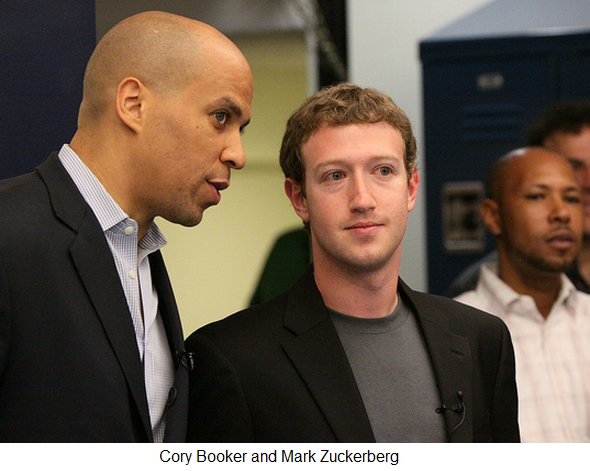
Mark Z 2The foregoing article helps us appreciate this point more succinctly. It was 2010. There was Newark’s Mayor Cory Booker (now New Jersey Senator), Facebook founder and philanthropist Mark Zuckerberg and the Governor of the State of New Jersey (and possible 2016 Presidential candidate) Chris Christie – all men of goodwill. Their goal: fix a failing school system in the City of Newark. On paper, the plan seemed credible, they had the power, they had the money – $100 million dollars. The result? After four years – “a waste”.

The issues of education reform, best practices, and funding options are stressed in the book Go Lean…Caribbean, even though these are not the primary focus of the book. Rather this book serves as a roadmap for the introduction and implementation of the Caribbean Union Trade Federation (CU), with the focus being on these following 3 prime directives:

  • Optimization of the economic engines in order to grow the regional economy to $800 Billion & create 2.2 million new jobs.
  • Establishment of a security apparatus to protect the resultant economic engines.
  • Improve Caribbean governance to support these engines.

Yet, the book posits that education is a vital consideration for economic empowerment; so too are non-government organizations, like Zuckerberg’s foundation. The book specifically highlights an important role that foundations execute in the sphere of foreign aid, sometimes even better than national governments (Page 219):

One major argument against federally funded foreign aid is that the money is often lost to governmental corruption in the countries it was supposed to help. In 2003, a top university in Bangladesh claimed that at least 75% of all foreign aid given to that government was lost because of corruption. Since faith-based foreign aid focuses on churches or organizations operating independently of the government, funding has a better chance of being used effectively.

The below news article though, highlights an onshore example, in the US, with multi-level governmental support, plenty of money, and yet still: failure!

Title: Mark Zuckerberg Gave New Jersey $100 Million To Fix Newark’s Schools, And It Looks Like It Was A Waste
By: Caroline Moss
In the fall of 2010, Mark Zuckerberg announced on Oprah that he’d be making a generous gift to Newark, New Jersey.

 As Oprah said in her Oprah way, “one … hundred … million … dollars” would be given to Newark Mayor Cory Booker and New Jersey Gov. Chris Christie as the three began the Startup:Education foundation.

The plan was to turn Newark into what Zuckerberg called “a symbol of educational excellence for the whole nation,” spent on retaining the best teachers, and creating environments that would produce successful students and, one day, graduates.

Newark is a city wrought with crime. Its graduation rate is about 67%. It needed the help, and Booker’s vision sounded promising.

Between 2010 and 2012, The New Yorker reports that “more than twenty million dollars of Zuckerberg’s gift and matching donations went to consulting firms with various specialties: public relations, human resources, communications, data analysis, [and] teacher evaluation.” Many of the consultants were being paid upwards of $1,000 a day.

“Everybody’s getting paid but Raheem still can’t read,” Vivian Cox Fraser, president of the Urban League of Essex County, was quoted saying.

Today, the money is pretty much gone, and Newark has hardly become that symbol of excellence.

The New Yorker has the full 12-page story today, and we’ve dug into it to find some of the main timeline points you need to know.

In 2010, Mayor Booker found a loophole in getting money to help fund Newark’s educational reform. It came in the form of philanthropic donations, which, unlike government funding, required no public review of priorities or spending. Gov. Christie approved the plan, and Booker’s job was to find the donors.

Meanwhile, in Silicon Valley, Zuckerberg (like many other tech billionaires) had pledged to donate half of his fortune, but as The New Yorker reports, he knew very little about urban education or philanthropy.

Booker and Zuckerberg met to discuss a vision for Newark’s future. Booker wanted to significantly reward Newark teachers who improved student performance rather than focus on seniority and tenure. Teachers would be challenged and rewarded to do their jobs well, and students would benefit.

 Zuckerberg was confident Newark and Booker were the right recipients for this huge gift (given over five years), and agreed to gift $100 million dollars with a few stipulations:

  • Booker would also have to raise $100 million dollars. Zuckerberg’s money would be released to Newark as matching dollars rolled in.
  • Booker would have to replace the current superintendent with a “transformational leader.

”The reform ended up looking like this: taking low-performing public schools and closing them, turning them into charter schools and “themed” high schools. But there was no easy way to expand charters without destabilizing traditional public schools.

In the months following the gift announcement, Booker and Christie still had no superstar superintendent and no reform plan.

 Zuckerberg was concerned and urged Booker to find the superintendent, even sending Booker a poster widely seen around the Facebook campus that read, “Done is better than perfect.”

Mark ZImmediately, Booker appointed Cami Anderson for the job. She implemented ways to help students and improve schools (all which The New Yorker detailed), but there were roadblocks along the way, like how the students brought the issues going on in their homes with them to the classroom.

 Anderson wanted to give schools more support to help students on emotional and social levels, but Newark had already been spending more money per student than most districts in the entire country, none of which was reaching the children it existed to help.

 New contracts were being created, money was being hemorrhaged, and the district was going broke. But interviews — like this one in Forbes — regarding the money and the future of Newark’s schools were always positive, highlighting, of course, only the good aspects of the huge monetary donation.

Then, in January of this year, The Washington Post reported on “dozens of emails between the Zuckerberg camp (including Zuckerberg himself) and the Booker camp (including Booker himself),” which ended up revealing that state education officials were going above and beyond to get money from big private donors to remake public schools in the way they want to.

Anderson came up with another plan called One Newark, which sounded like it could work. Families would choose which charter or public schools they would want to send their children to. Children from the lowest-income families would get first pick. So would kids with special needs.

It all sounded great until parents and teachers realized it was only on paper. Solutions hadn’t been figured out fully. Programs hadn’t been developed. Issues like transportation had not yet been tackled. Things that were promised didn’t come to fruition.

 According to The New Yorker, Anderson, Booker, Zuckerberg, and Christie, “despite millions of dollars spent on community engagement—have yet to hold tough, open conversations with the people of Newark about exactly how much money the district has, where it is going, and what students aren’t getting as a result.”
Business Insider Vertical e-Zine (Posted 05/13/2014; retrieved 05/30/2014) –
http://www.businessinsider.com/mark-zuckerbergs-newark-grant-2014-5#ixzz33DsBvaIw
The people and institutions of the Caribbean understand this plight of Newark, New Jersey all too well. There is a long record of failure with the Caribbean education initiatives. Then where there is success, the quality students have a propensity to abandon the region and emigrate to the US, Canada or Europe. So with the best of the Caribbean’s talents gone, we find that we’ve “fatten frog for snake”; then with the rest, we muddle along as best we can; hoping to nation-build with the remnants of a broken educational system.

It’s time for a change!

The proposed change is detailed in the Go Lean roadmap. It provides turn-by-turn directions on how to reform the Caribbean education systems, governance and Caribbean society in general. This roadmap commences with the assessment that the Caribbean is in crisis, and that this “crisis would be a terrible thing to waste”. As a planning tool, the roadmap commences with a Declaration of Interdependence, pronouncing the approach of regional integration (Page 12) as a viable solution to elevate the region’s educational opportunities. The statement is included as follows:

xxi. Whereas the preparation of our labor force can foster opportunities and dictate economic progress for current and future generations, the Federation must ensure that educational and job training opportunities are fully optimized for all residents of all member-states, with no partiality towards any gender or ethnic group. The Federation must recognize and facilitate excellence in many different fields of endeavor, including sciences, languages, arts, music and sports. This responsibility should be executed without incurring the risks of further human flight, as has been the past history.

The strategy is to confederate all the 30 member-states of the Caribbean, despite their language and legacy, into an integrated “single market”. Tactically, this will allow a separation-of-powers between the member-states governments (including their education proxies) and federal agencies, allowing an open role for benevolent foundations to fulfill their charters on the region. The roadmap recognizes the need to lead, or to follow best-practices, as formulated by other entities. This then becomes a process of leading-by-following. The CU will facilitate the eco-systems, metering and measuring the effect of so many educational options. Think Champion-Challenger; allowing for alternate methodologies to be explored for effectiveness, and then measuring the success criteria.

The Go Lean book details series of community ethos, strategies, tactics, implementations and advocacies to foster good educational progress, and the agile methodologies to adjust/adapt dynamically:

Anecdote – Lean On Me – New Jersey School Lesson Page 5
Community Ethos – Lean Operations Page 24
Community Ethos – Cooperatives Page 25
Community Ethos – Non-Government Organizations Page 25
Community Ethos – Ways to Foster Genius Page 27
Tactical – Separation of Powers – Education Dept. Page 85
Implementation – Ways to Pay for Change Page 101
Implementation – Ways to Deliver Page 109
Advocacy – Ways to Grow the Economy Page 151
Advocacy – Ways to Create Jobs Page 152
Advocacy – Ways to Improve Education Page 159
Advocacy – Ways to Improve Governance Page 169
Advocacy – Ways to Foster Cooperatives Page 176
Advocacy – Ways to Improve Libraries Page 187
Advocacy – Ways to Impact Foundations Page 219
Advocacy – Ways to Impact the One Percent Page 224
Appendix – The Giving Pledge Signatories Page 292

Now is the time for all of the Caribbean, the people and governing institutions, to lean-in for the changes described in the book Go Lean … Caribbean. We welcome the “Mark Zuckerberg”’s of the world … and their money. We entreat them to help us to make the Caribbean a better place to live, work, learn and play.

Download the free e-Book of Go Lean … Caribbean – now!

Share this post:
, , , ,

Humanities Advocate – Maya Angelou – R.I.P.

Go Lean Commentary

MA1“That a powerful play goes on, and you may contribute a verse” – poet Walt Whitman: “O Me! O Life!”

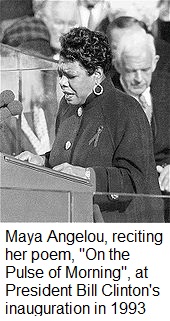
The world mourns the passing of Maya Angelou (1928 – 2014; age 86). She contributed more than a verse to the powerful play of modern life. She is known for her contribution to all of the humanities.

Humanities? That’s a different word; extraordinary in its use as a wide-angle view in the study of humankind. Extraordinary, “wide-angle view”, all fitting descriptors for the contributions of Maya Angelou – see the bibliography/filmography below. Here’s the text book definition of the word “humanities” (www.Dictionary.com):

noun, plural hu·man·i·ties.

1. all human beings collectively; the human race; humankind.

2. the quality or condition of being human; human nature.

3. the quality of being humane; kindness; benevolence.

4. the humanities.

a. the study of classical languages and classical literature.
b. the Latin and Greek classics as a field of study.
c. literature, [poetry], philosophy, art, etc., as distinguished from the natural sciences.
d. the study of literature, poetry, philosophy, art, etc.

Maya Angelou impacted the world of the humanities with her contributions. She was awarded over 30 honorary Doctor of Humanities degrees from diverse colleges and universities around the world. In addition to Dr. Angelou’s contribution to the humanities, she was also a strong proponent for empowerment. She spoke and wrote profound words/works on the need for people to empower themselves, to seek more out of life, to live more vibrant, fulfilled lives, to be critical thinkers and proactive doers in their journey for a more impactful life.

The publishers of the book Go Lean…Caribbean recognize the life contributions of Maya Angelou as an advocate, as many of her causes align with our quest for empowerment and elevation of Caribbean life and culture. The book serves as a roadmap for the introduction and implementation of the Caribbean Union Trade Federation (CU).

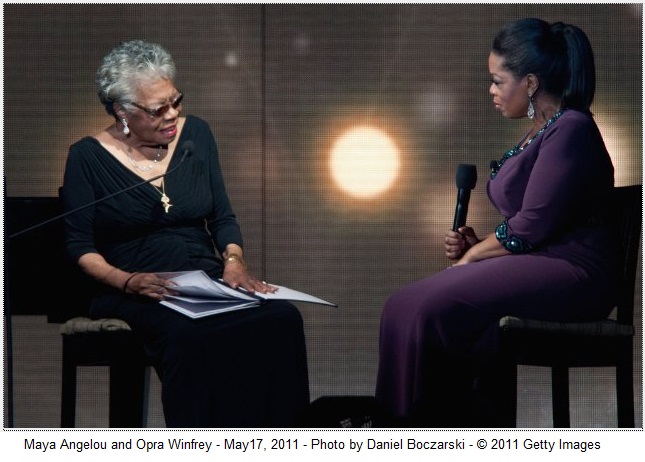
Maya 2The Go Lean/CU movement shares a linkage with this focus of Dr. Angelou. (She was due to appear at the Orpheum Theater in Omaha, Nebraska on June 9 – see photo – this writer was ticketed for attendance). The CU seeks to also empower the people of the Caribbean to lead more impactful lives in which they are better able to meet their needs and plan for a productive future. The Go Lean roadmap seeks to put Caribbean people in a place of better Command-and-Control of their circumstances, to develop the community ethos of assisting each other to advance in our own lives, in our individual communities and in the Caribbean as a whole. Like Dr. Angelou, we say with a collective voice “and still I rise” – (Published Random House 1978):

You may write me down in history
With your bitter, twisted lies,
You may tread me in the very dirt
But still, like dust, I’ll rise.

Does my sassiness upset you?
Why are you beset with gloom?
‘Cause I walk like I’ve got oil wells
Pumping in my living room.

Just like moons and like suns,
With the certainty of tides,
Just like hopes springing high,
Still I’ll rise.

Did you want to see me broken?
Bowed head and lowered eyes?
Shoulders falling down like teardrops.
Weakened by my soulful cries.

Does my haughtiness offend you?
Don’t you take it awful hard
‘Cause I laugh like I’ve got gold mines
Diggin’ in my own back yard.

You may shoot me with your words,
You may cut me with your eyes,
You may kill me with your hatefulness,
But still, like air, I’ll rise.

Does my sexiness upset you?
Does it come as a surprise
That I dance like I’ve got diamonds
At the meeting of my thighs?

Out of the huts of history’s shame
I rise
Up from a past that’s rooted in pain
I rise

I’m a black ocean, leaping and wide,
Welling and swelling I bear in the tide.
Leaving behind nights of terror and fear
I rise

Into a daybreak that’s wondrously clear
I rise
Bringing the gifts that my ancestors gave,
I am the dream and the hope of the slave.
I rise
I rise
I rise.

While the CU’s prime directive is the economics of the Caribbean region, there are peripheral areas of concern. While economics, security and governance are all important for the sustenance of Caribbean life, pursuits like poetry, art, and beauty are the reasons we want to live. Maya Angelou stood as a vanguard for many of these causes:

Minority rights, civil rights, women rights, quest for justice, art, music, film, and image.

The Go Lean book posits that one person can make a difference in the Caribbean, and its impact on the world; that there are many opportunities where one champion, one advocate, can elevate society. In fact the book is a collection of 144 different advocacies, so there is inspiration for the Maya Angelou’s of the region to make their mark in many different fields of endeavor.

The roadmap specifically encourages the region, to lean-in and foster the next generation of Maya Angelou’s with these specific community ethos, strategies, tactics, implementations and advocacies:

Community Ethos – Minority Equalization Page 24
Community Ethos – Ways to Foster Genius Page 27
Community Ethos – Ways to Promote Intellectual Property Page 31
Community Ethos – Ways to Promote Happiness Page 36
Community Ethos – Ways to Impact the Greater Good Page 37
Anatomy of Advocacies Page 122
Planning – Ways to Better Manage Image Page 129
Advocacy – Ways to Improve Education Page 159
Advocacy – Ways to Impact Justice Page 177
Advocacy – Ways to Impact Hollywood Page 203
Advocacy – Ways to Help Women Page 226
Advocacy – Ways to Improve the Arts Page 230
Advocacy – Ways to Promote Music Page 231

The Go Lean roadmap pronounces that with the participation of many advocates on many different paths for progress, the Caribbean can truly become a better place to live, work and play. We owe a debt to Dr. Angelou for leading us along this path.

The Bible book of Psalms Chapter 90 quotes:

10  In themselves the days of our years are 70 years.
And if because of special mightiness they are 80 years.
Yet their insistence is on trouble and hurtful things;
For it must quickly pass by, and away we fly.

12  Show us just how to count our days in such a way
That we may bring a heart of wisdom in.

Rest in Peace Maya Angelou. Thank you for showing us how to make our days count.

Download the free e-book of Go Lean … Caribbean – now!

—————————————————————————-

Appendix – Bibliography
Contributions Retrieved May 28, 2014 from: http://en.wikipedia.org/wiki/List_of_Maya_Angelou_works

Autobiographies

  • I Know Why the Caged Bird Sings (1969). New York: Random House. ISBN 978-0-375-50789-2
  • Gather Together in My Name (1974). New York: Random House. ISBN 978-0-394-48692-5
  • Singin’ and Swingin’ and Gettin’ Merry Like Christmas (1976). New York: Random House. ISBN 978-0-679-45777-0
  • The Heart of a Woman (1981). New York: Random House. ISBN 978-0-8129-8032-5
  • All God’s Children Need Traveling Shoes (1986). New York: Random House. ISBN 978-0-679-73404-8
  • A Song Flung Up to Heaven (2002). New York: Random House. ISBN 978-0-375-50747-2
  • I Know Why the Caged Bird Sings: The Collected Autobiographies of Maya Angelou (2004). New York: Modern Library. ISBN 978-0-679-64325-8
  • Mom & Me & Mom (2013). New York: Random House. ISBN 978-1-4000-6611-7

Maya 3Poetry

  • Just Give Me a Cool Drink of Water ‘fore I Diiie (1971). New York: Random House. ISBN 978-0-394-47142-6[14]
  • Oh Pray My Wings Are Gonna Fit Me Well (1975). New York: Random House. ISBN 0-679-45707-0
  • And Still I Rise (1978). New York: Random House. ISBN 978-0-394-50252-6[9]
  • Shaker, Why Don’t You Sing? (1983). New York: Random House. ISBN 0-394-52144-7[15][16]
  • Poems (1986). New York: Random House. ISBN 0-553-25576-2
  • Now Sheba Sings the Song (1987). New York: Plume Books. ISBN 0-452-27143-6
  • I Shall Not Be Moved (1990). New York: Bantam Books. ISBN 0-553-35458-2
  • “On the Pulse of Morning” (1993). New York: Random House. ISBN 0-679-74838-5[17]
  • The Complete Collected Poems of Maya Angelou (1994). New York: Random House. ISBN 0-679-42895-X
  • Phenomenal Woman: Four Poems Celebrating Women (1995). New York: Random House. ISBN 0-679-43924-2
  • A Brave and Startling Truth (1995). New York: Random House. ISBN 0-679-44904-3[18]
  • “From a Black Woman to a Black Man”, 1995
  • “Amazing Peace” (2005). New York: Random House. ISBN 1-4000-6558-5[16]
  • “Mother: A Cradle to Hold Me” (2006). New York: Random House. ISBN 1-4000-6601-8
  • “Celebrations, Rituals of Peace and Prayer” (2006). New York: Random House. ISBN 978-0-307-77792-8
  • Poetry for Young People (2007). Berkshire, U.K.: Sterling Books. ISBN 1-4027-2023-8
  • “We Had Him”, 2009
  • “His Day is Done”, 2012
  • Wouldn’t Take Nothing for My Journey Now (1993). New York: Random House. ISBN 0-553-56907-4
  • Even the Stars Look Lonesome (1997). New York: Random House. ISBN 0-375-50031-6
  • Letter to My Daughter (2008). New York: Random House. ISBN 1-4000-6612-3
  • Hallelujah! The Welcome Table: A Lifetime of Memories with Recipes (2004). New York: Random House. ISBN 1-4000-6289-6
  • Great Food, All Day Long: Cook Splendidly, Eat Smart (2010). New York: Random House. ISBN 1-4000-6844-4
  • Life Doesn’t Frighten Me (1993). New York: Stewart, Tabori, and Chang. ISBN 1-55670-288-4
  • My Painted House, My Friendly Chicken and Me (1994). New York: Knopf Books. ISBN 0-517-59667-9
  • Kofi and His Magic (1996). New York: Knopf Books. ISBN 0-517-59667-9
  • Maya’s World series (2004). New York: Random House:
    • Itak of Lapland, ISBN 0-375-92833-2
    • Angelina of Italy, ISBN 0-375-82832-X
    • Renée Marie of France ISBN 0-375-82834-6
    • Mikale of Hawaii ISBN 0-375-92835-9
  • Cabaret for Freedom (musical revue), with Godfrey Cambridge, 1960
  • The Least of These, 1966
  • The Best of These (drama), 1966
  • Gettin’ up Stayed on My Mind, 1967
  • Sophocles, Ajax (adaptation), 1974
  • And Still I Rise (writer/director), 1976

Personal essays

  • Wouldn’t Take Nothing for My Journey Now (1993). New York: Random House. ISBN 0-553-56907-4
  • Even the Stars Look Lonesome (1997). New York: Random House. ISBN 0-375-50031-6
  • Letter to My Daughter (2008). New York: Random House. ISBN 1-4000-6612-3

Cookbooks

  • Hallelujah! The Welcome Table: A Lifetime of Memories with Recipes (2004). New York: Random House. ISBN 1-4000-6289-6
  • Great Food, All Day Long: Cook Splendidly, Eat Smart (2010). New York: Random House. ISBN 1-4000-6844-4

Children’s books

  • Life Doesn’t Frighten Me (1993). New York: Stewart, Tabori, and Chang. ISBN 1-55670-288-4
  • My Painted House, My Friendly Chicken and Me (1994). New York: Knopf Books. ISBN 0-517-59667-9
  • Kofi and His Magic (1996). New York: Knopf Books. ISBN 0-517-59667-9
  • Maya’s World series (2004). New York: Random House:
    • Itak of Lapland, ISBN 0-375-92833-2
    • Angelina of Italy, ISBN 0-375-82832-X
    • Renée Marie of France ISBN 0-375-82834-6
    • Mikale of Hawaii ISBN 0-375-92835-9

Plays

  • Cabaret for Freedom (musical revue), with Godfrey Cambridge, 1960
  • The Least of These, 1966
  • The Best of These (drama), 1966
  • Gettin’ up Stayed on My Mind, 1967
  • Sophocles, Ajax (adaptation), 1974
  • And Still I Rise (writer/director), 1976

Filmography
Contributions – Retrieved May 28, 2014 from: http://www.imdb.com/name/nm0029723/?ref_=fn_al_nm_1

Actress (15 credits)

Year Movie/Show Character/Role
2006 Madea’s Family Reunion May
2001 Phenomenal Woman (Short) Phenomenal Woman
2000 The Runaway (TV Movie) Conjure Woman
2000 Happily Ever After: Fairy Tales for Every Child (TV Series) Fairy Godmother
2000 Rip Van Winkle (TV Series) Fairy Godmother (voice)
1997 Talking with David Frost (TV Series)
Colin Powell and Maya Angelou Narrator
1996 Elmo Saves Christmas (Video)
1995 Touched by an Angel (TV Series) Clarice Mitchell
Reunion (1995) Clarice Mitchell
1995 How to Make an American Quilt Anna
1995 The Journey of August King Narrator (voice)
1993 There Are No Children Here (TV Movie) Lelia Mae
1993 Poetic Justice Aunt June
1977 The Richard Pryor Special? (TV Movie) Willie’s Wife
1977 Roots (TV Mini-Series) Nyo Boto / Yaisa
Part II Nyo Boto
Part I Yaisa
1959  Porgy and Bess Dancer (uncredited)

Writer (7 credits)

Year Movie/Show
2008 The Black Candle (Documentary) (poetry written by)
1996 How Do You Spell God? (TV Movie)
1996 America‘s Dream (TV Movie) (story “The Reunion”)
1982 Sister, Sister (TV Movie)
1979  I Know Why the Caged Bird Sings (TV Movie) (book)
1977  The Richard Pryor Special? (TV Movie) (soliloquy)
1972 Georgia, Georgia

Soundtrack (4 credits)

Year Movie/Show
2010 Michael Feinstein’s American Songbook (TV Mini-Series documentary) (lyrics – 1 episode)
Best Band in the Land  (lyrics: “We Dreamed These Days”)
2001 The Mystic Masseur (performer: “Scandal in the Family”)
1968 For Love of Ivy (lyrics: “You Put It on Me”)
1957 Calypso Heat Wave (writer: “All That Happens in the Market Place”)

Director (2 credits)

Year Movie/Show
1998 Down in the Delta
1976 Visions (TV Series) (1 episode)
The Tapestry/Circles ()

Music department (1 credit)

Year Movie/Show
1972 Georgia, Georgia (composer: score)

Producer (1 credit)

Year Movie/Show
1982 Sister, Sister (TV Movie) (producer)

Miscellaneous Crew (1 credit)

Year Movie/Show
1993 Poetic Justice (poetry)
Share this post:
, , , , ,
[Top]

Sports Revolutionary: Advocate Jeffrey Webb

Go Lean Commentary

Sports Revolution 3The forgoing encyclopedia source focuses on the background person connected to an important issue in sports administration: blatant racism in European soccer.

Blatant racism is a scourge to the beautiful sport of football (soccer). Black players have to endure unspeakable acts of disrespect (cursing, spitting, monkey-chants, tossed bananas, etc). The international governing body for soccer/football, Fédération Internationale de Football Association (FIFA), wants to forge change among the game’s stakeholders. This issue relates to the Caribbean, in that the FIFA advocate in this cause is from the Cayman Islands.

This advocate, Jeffrey Webb, is featured in a current episode of a sports documentary television show in the US.

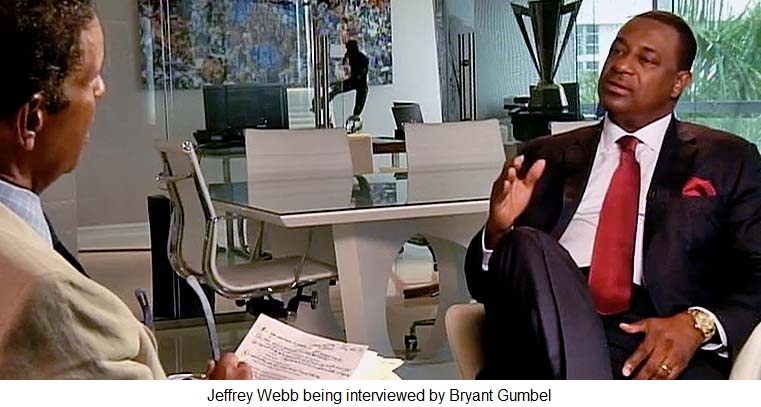
Sports Revolution 1MIAMI — CONCACAF President Jeffrey Webb, who is Chairman of FIFA¹s Anti-Racism and Discrimination Task Force, appeared Tuesday (May 20, 2014) on the acclaimed HBO program Real Sports with Bryant Gumbel, addressing FIFA’s strategy and efforts to eradicate racism from football.  He discussed the governing body’s responsibility in providing meaningful support for all players around the globe and implementing tougher sanctions to fortify the sport, so that focus can be placed on the game itself.

The Emmy-winning show also featured an interview with United States international striker Jozy Altidore, a member of FIFA’s anti-discrimination body.

HBO will re-air the episode between May 20 and June 21, 2014.

During the 63rd FIFA Congress last year in Mauritius, Member Associations approved the Anti-Racism and Discrimination resolutions proposed by the task force chaired by President Webb.  The application of these resolutions in every country where football is played will bring universality to the mechanisms that combat racism and discrimination.

(http://www.concacaf.com/article/president-webb-speaks-about-racism-on-real-sports-with-bryant-gumbel)

Many professional athletes participating in European soccer, are of Afro-Caribbean heritage. This should be a proud legacy, one to be protected and promoted. (This is also an issue in Brazil).

Jeffrey Webb (born 1964) [1], is the president of CONCACAF and the Cayman Islands Football Association (CIFA) and FIFA Vice President.

He was educated at HillsboroughCommunity College in the United States. His career in the football field spans almost three decades. He was appointed as President of the Cayman Islands Football Association in 1991.[2]

CIFA’s accomplishments under Webb’s administration and leadership were widely recognized and in 1994 he was co-opted as a member of the CFU Executive Committee, and member of FIFA’s Protocol Committee in 1995. Prior to his appointment to CIFA, Webb served as President of the local football club Strikers FC.

Moreover, within FIFA’s governing body, in 2002 Webb became Deputy Chairman of the FIFA Internal Audit Committee and subsequently Chairman in 2011. He is a former member of FIFA’s Transparency and Compliance Committee and, most recently, was appointed as member of FIFA’s Strategic, Finance, Organizing World Cup and Emergency Committees.

Sports Revolution 2Webb also took part of FIFA’s delegations to the World Cup including France (1998), U.S. Women’s World Cup (1999), Korea/Japan (2002), Germany (2006), and South Africa (2010).

Webb was a Business Development Manager at Fidelity Bank (Cayman) Limited, a subsidiary of Fidelity Bank & Trust International Limited, which is involved in retail banking, investment banking, corporate finance and asset management. Outside of banking, Webb co-owns a franchise of Burrell’s bakery chain “Captain’s Bakery” in the Cayman Islands.[3]

On May 23, 2012, in Budapest, Hungary, Webb was unanimously elected to lead the Confederation of North, Central America and the Caribbean Football Association (CONCACAF). He became the fourth President in the Confederation’s history and the youngest leader of any regional association within FIFA to reach this position. As CONCACAF President, his core focus is to restructure the Confederation by building solid foundations to manage, develop and promote the game with a resilient commitment to inclusiveness, accountability and transparency.

As President of CONCACAF, Webb also became FIFA Vice President and an official member of the governing body’s Executive Committee. Moreover, on March 2013 Webb was appointed by FIFA President Joseph Blatter as Chairman of the FIFA anti-discrimination task force, which will oversee all matters related to discrimination within global football.

At the time of his appointment, in 2012, Webb was President of the Cayman Islands Football Association (CIFA).

Webb appointed a new Miami-based General Secretary Enrique Sanz de Santamaría enabling the CONCACAF head office to relocate to Miami.[4]

Source References:

  1. “Jeffrey Webb profile”. FIFA.com. Retrieved 11 July 2013.
  2. “Jeff Webb profile”. Cayman Active. 6 January 2011. Retrieved 1 March 2012.
  3. Brown, Rudolph (9 February 2002). “Captain’s Bakery opens in Cayman”. Gleaner (Jamaica). Retrieved 1 March 2012.
  4. “CONCACAF appoints Enrique Sanz as General Secretary”. CONCACAF.com. 13 July 2012. Retrieved 14 July 2012.

Wikipedia Online Encyclopedia (Retrieved 05/25/2014)–http://en.wikipedia.org/wiki/Jeffrey_Webb

The book Go Lean … Caribbean recognizes that image is an important intangible factor that must be managed to optimize value of Caribbean contributions – more value should equal more pay – see Appendix A – Table. As such the book is submitted as a complete roadmap to advance the Caribbean economy/culture, at home, for Caribbean residents, and advance the Caribbean image throughout the world, to benefit residents and Diaspora alike – see Appendix B for book reference on Brazil footballers.

The book, Go Lean … Caribbean, serves as a roadmap for the introduction and implementation of the Caribbean Union Trade Federation (CU), as a sentinel for the Caribbean “image”. This subject of blatant racism in European soccer is in scope for the CU as this technocratic agency will assume oversight to optimize the region’s:

(1) economy,

(2) security apparatus, and

(3) governing engines.

The roadmap commences with a Declaration of Interdependence. In Verse XXXI (Page 14) it pronounces:

Whereas sports have been a source of great pride for the Caribbean region, the economic returns from these ventures have not been evenly distributed as in other societies. The Federation must therefore facilitate the eco-systems and vertical industries of sports as a business, recreation, national pastime and even sports tourism.

The book posits that one person can make a difference in the Caribbean, and its impact on the world; that there are many opportunities where one champion, one advocate, can elevate society. In fact the book is a collection of 144 different advocacies, so there is inspiration for the Jeffrey Webb’s of the region to make their mark in many different fields of endeavor.

The roadmap specifically encourages the region to foster the genius potential (Page 27) in their communities, forge leadership skills (Page 171), improve for sports (Page 229) and pursue the Greater Good (Page 37). With the participation of many advocates on many different paths for progress, the Caribbean can truly become a better place to live, work and play. We can, and must, promote positive images (Page 133).

Download the free e-Book of Go Lean … Caribbean – now!

————————-

Appendix A – Table: Lucky 18 – The World’s Highest Paid Black Athletes for 2011

Athlete Sport Heritage Contract $$$*
Tiger Woods Golf American $75 million
Kobe Bryant Basketball American $53 million
LeBron James Basketball American $48 million
Dwight Howard Basketball American $27.6 million
Dwayne Wade Basketball American $26.2 million
Carmelo Anthony Basketball American $25.1 million
Ronaldo de Assis Moreira aka “Ronaldinho” Football / Soccer Brazil $24.7 million
Amar’e Stoudemire Basketball American $24.5 million
Kevin Garnett Basketball American $23.8 million
CC Sabathia Baseball American $23.6 million
Vince Carter Basketball American $21.8 million
Tim Duncan Basketball US Virgin Islands $21.2 million
Chris Paul Basketball American $20.9 million
Ryan Howard Baseball American $20.8 million
Usain Bolt Track and Field Jamaican $20.3 million
Rashard Lewis Basketball American $20.1 million
Jahri Evans American Football American $19.1 million
Michael Redd Basketball American $18.8 million

Source: http://madamenoire.com/60523/lucky-17-the-worlds-highest-paid-black-athletes/; posted June 10, 2011; retrieved May 25, 2014.

* Salaries, bonuses, prize money, appearance fees, licensing & endorsement income in the 12 months ending May 1, 2011

————————————

Appendix B: Book Reference

The phrase ‘Brazilian soccer player’ is like the phrases ‘French chef’ or ‘Tibetan monk.’ The nationality expresses an authority, an innate vocation for the job – whatever the natural ability.

Original: Bellos, Alex (2003). Futebol: The Brazilian Way of Life: Bloomsbury Publishing Plc. Publication date: 5/02/2003 ISBN: 9780747561798

Revision: Bellos, Alex (2014). Futebol: The Brazilian Way of Life. Publisher: Bloomsbury USA. Publication date: 5/6/2014 ISBN: 9781620402443

Share this post:
, , , ,
[Top]

Book Review: ‘Citizenville – Take the Town Square Digital and Reinvent Government’

Go Lean Commentary

Cit- Photo 1“Government is functioning on the cutting edge of … 1973”.

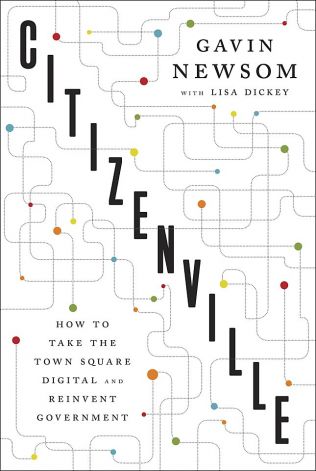
These words jump off the page in the new book by the California Lieutenant Governor (former Mayor of San Francisco) Gavin Newsom, Citizenville – How to Take the Town Square Digital and Reinvent Government. He asserts that government is not making optimal use of modern technology, and so he proposes some creative and engaging solutions.

These proposals are also valid in a consideration of Caribbean governance.

This subject matter aligns with the publication Go Lean … Caribbean, which serves as a roadmap for the introduction and implementation of the Caribbean Union Trade Federation (CU) to elevate Caribbean society and culture. The CU has 3 prime directives:

  • Optimization of the economic engines in order to grow the regional economy to $800 Billion and create 2.2 million new jobs.
  • Establishment of a security apparatus to protect the resultant economic engines.
  • Improve Caribbean governance to support these engines.

The same as the Citizenville book catalogs a list of private-sector technology platforms that could improve how the public sector works, the Go Lean roadmap lists a series of community ethos, strategies, tactics, implementations and advocacies to foster a technocracy for Caribbean administration. This technocracy is the super-national entity, the Caribbean Union Trade Federation. This federal government is described as a “lean” modus operandi.

The same as Citizenville assesses the US federal-state-county-city governmental structures as being deficient for the challenge of the newly connected American society, the Go Lean roadmap assesses that the Caribbean is deficient for its mandates under the assumed social contract (between government and citizens). This contract calls for the governments to be a proxy for public safety and economic opportunities. The Caribbean failings are so acute that many citizens have abandoned their homeland and migrated to North America and European locales. The loss of these citizens’ contributions (their time, talents and treasuries) make administering to the remainder of the population difficult – as many times the emigrated ones represent the professional classes – a brain drain. The Go Lean roadmap calls for a total reboot of Caribbean systems of commerce and governance. The book provides 380 pages as details for this roadmap.

Book Review: By Beth Simone Noveck

Subject: ‘Citizenville – How to Take the Town Square Digital and Reinvent Government’ By Gavin Newsom with Lisa Dickey (The Penguin Press; 249 pages)

When I started work in the White House in 2009, I had been brought in to help implement the Obama administration’s commitment to making government more transparent, participatory and collaborative. At the time, the federal government, like governments worldwide, was anything but open. The White House didn’t have a blog, Twitter accounts or a social media site. To make matters worse, we were running Windows 2000.

As a colleague described the situation: “We have a nearly obsolete infrastructure, so a lot of things have to be done ‘by hand.’ Don’t think Google server farm. Think gerbil on a wheel.”

Things have gotten better since those early days, but they’re not yet good enough. Approval rates for government are at an all-time low. We need more open, innovative government to connect with citizens and win their trust. But it can be hard to know how to talk about government innovation in a way that is exciting and inspiring. Through lively stories and engaging quotes from famous digerati and less-famous policy entrepreneurs, Gavin Newsom’s new book, “Citizenville: How to Take the Town Square Digital and Reinvent Government,” does just that.

Co-authored by Lisa Dickey, “Citizenville” focuses on the fact that government is not making optimal use of modern technology, and proposes some creative, engaging solutions. Dickey and California’s lieutenant governor declare that “government right now is functioning on the cutting edge – of 1973.”

Upgrading the operating system of our democracy and making town hall as easy to navigate as Twitter has real potential for improving people’s everyday lives. “Citizenville” offers both an impassioned plea for more tech-enabled government and a tour d’horizon of the ways some governments have begun using technology to good effect. Newsom and Dickey catalog an impressive list of private-sector tech platforms that could improve how we work in the public sector. The overall effect is breathless and dizzying (and often disconnected), but ultimately powerful.

First, there’s YouTube. We can use social media to broadcast and democratize town hall meetings and make government more interactive in how it communicates with citizens, changing the relationship between government and the governed.

Next come Google and other information-based platforms. When we open up the information government holds and make it available to the public, innovators of all kinds can create empowering applications. When the federal government released data on hospitals, big [data] companies like Google and Microsoft upgraded their search engines to provide potentially lifesaving information on patient satisfaction and infection rates through user search. And a small entrepreneur, Stamen Design, used local crime data to build the Crimespotting map that enables Oakland residents to understand (and hopefully reduce) crime in their neighborhoods.

Newsom and Dickey celebrate Salesforce, the cloud-computing giant that helped San Francisco track the impact of its homelessness programs and deliver better and cheaper services. Using up-to-the-minute data, San Francisco was able to find housing and shelter for many of its homeless. “The democratizing influence of the cloud,” the authors posit, “leads to a stronger, more stable commonwealth.”

Inspired by the Apple App Store, Newsom and Dickey suggest that government could reduce corrupt procurement practices, bring down costs and foster entrepreneurship by inviting those outside of government to develop tools and solutions instead of relying only on bureaucracy to procure goods and services.

For example, they write about Donors Choose, an organization that pairs classrooms and teachers with those willing to purchase much-needed school supplies. Much more than a Match.com for education, this kind of partnership website also gets people engaged in their communities.

The company at the center of the book is Zynga, creator of “FarmVille.” In the game, players work with their friends to tend farms and animals to advance to the next level. It’s addictive – much more engaging, Newsom and Dickey suggest, than participating in the dull life of our democracy. If more of government involved play and prizes, Citizenville would be just as engaging as “FarmVille.”

“We could combine the fun of a game with the social good of solving real problems,” write Newsom and Dickey. If people are willing to spend real money on virtual tractors, then why wouldn’t they clean up the local park if their efforts were recognized and rewarded using new technology?

But the authors of “Citizenville” don’t acknowledge that getting to this kind of decentralized, participatory, tech-enabled democracy is a long and uncertain path. In “FarmVille,” residents are motivated because they can decide how to spend their virtual dollars. But after you finish cleaning up the local park in Citizenville, what can you really do? Other than a brief aside on citizen-budgeting experiments, “Citizenville” does not explain how technology can empower people to make consequential decisions about how to solve our collective problems. It doesn’t address who will participate and why, and who will be left out.

A classic bureaucratic model won’t drive the new participatory technology: If Zynga were to create a department of agriculture for the purpose of fostering virtual agricultural productivity, everyone would quit! Whether in “FarmVille” or Wikipedia, people collaborate online to tackle challenges and for peer approval. In our

real-world communities, people often pitch in where government is absent. (Think barn-raising.) But in a world where real people pay real taxes, we don’t yet know why most people, when invited to spend time and effort to solve public problems, won’t just say, “That’s the government’s job, not mine.”

There are two different challenges to achieving greater self-governance. First, we have to create incentives for people to engage more. Second, we have to create incentives for government to let them do it. Zynga wants players to create their own farms because the company gets rich if they do. Newsom and Dickey suggest that if we make self-government fun, people will sign up. Maybe. But we also need to make enabling self-government a positive for the majority of politicians and civil servants who currently lack the incentive.

Although “Citizenville” is a fast-paced and engaging read, it’s telling that the book includes almost no voices and views of real people. We never hear from San Franciscans about whether the city is a better place to live since the adoption of tech-enabled innovation. We are left wanting but not knowing how to make Citizenville work in reality.

“Citizenville” might not give us the evidence that its proposed solutions will work. But it surely gives us the faith that open government – namely, more participatory, decentralized and agile institutions, enabled and supported by advances in technology – could lead to better solutions for citizens and more legitimate democracy. And, thankfully, if we are looking for a politician who claims he knows how to get out of the way and catalyze bottom-up democracy, we know where to find him.

Beth Simone Noveck led the White House Open Government Initiative and served as the nation’s first U.S. deputy chief technology officer. She is a visiting professor at NYU’s Robert F. Wagner Graduate School of Public Service and the MIT Media Lab and a professor of law at New York Law School. E-mail: books@sfchronicle.com

Website Sister-Site of the San Francisco Chronicle – Book Review – Posted 4, 2013; Retrieved 05-13-2014 –http://www.sfgate.com/books/article/Citizenville-by-Gavin-Newsom-4321331.php

The Go Lean roadmap first accepts this mission to re-structure facets of Caribbean governance with these pronouncements at the outset of book, in the Declaration of Interdependence, as follows (Page 12):

xi. Whereas all men are entitled to the benefits of good governance in a free society, “new guards” must be enacted to dissuade the emergence of incompetence, corruption, nepotism and cronyism at the peril of the people’s best interest. The Federation must guarantee the executions of a social contract between government and the governed.

xiv. Whereas government services cannot be delivered without the appropriate funding mechanisms, “new guards” must be incorporated to assess, accrue, calculate and collect revenues, fees and other income sources for the Federation and member-states. The Federation can spur government revenues directly through cross-border services and indirectly by fostering industries and economic activities not possible without this Union.

Cit 2For the source book, the name Citizenville stems from the online game Farmville, from San Francisco-area based software giant Zynga. This technology company’s strategies and tactics are considered for re-architecting the delivery of government services, or self-government as described in Citizenville. Other California-based technology firms are also chronicled, studied and modeled in this book: YouTube, Google, Microsoft, Apple, and SalesForce.com.

Go Lean…Caribbean also trumpets a call to the world of technology to impact Caribbean life. This roadmap advocates the launch of a social media site – www.myCaribbean.gov – for all Caribbean stakeholders (residents, Diaspora, students, business entities, and even visitors). This can create a universe of over 160 million unique profiles. The Go Lean roadmap is to deliver many government services via electronic modes, including public safety fulfillments. (Imagine Reverse 911 phone calls to alert all people in the path of an imminent hurricane).

The following lists other details from Go Lean…Caribbean that parallels the advocacies of the source book Citizenville:

Community Ethos – Lean Operations Page 24
Community Ethos – Cooperatives Page 25
Community Ethos – Ways to Impact the Future Page 26
Community Ethos – Ways to Bridge the Digital Divide Page 31
Community Ethos – Impact the Greater Good Page 37
Strategy – CU Customers – Member-State Governments Page 51
Strategy – Agents of Change – Technology Page 57
Tactical – Fostering a Technocracy Page 64
Tactical – Separation of Powers – Executive Branch Page 72
Anecdote – Turning Around the CARICOM construct Page 92
Anecdote – “Lean” in Government Page 93
Implementation – Ways to Pay for Change Page 101
Implementation – Ways to Deliver Page 109
Implementation – Ways to Impact Social Media Page 111
Implementation – Reasons to Repatriate Page 118
Advocacy – Ways to Improve Governance Page 168
Advocacy – Ways to Better Manage the Social Contract Page 170
Advocacy – Revenue Sources … for Administration Page 172
Advocacy – Ways to Manage Federal Civil Service Page 173
Advocacy – Ways to Foster Technology Page 197
Advocacy – Ways to Foster e-Commerce Page 198
Advocacy – Ways to Impact the Diaspora Page 217

Citizenville is a convincing argument that open government with participatory, agile institutions, enabled by advanced technology – can work. The Go Lean roadmap concurs!

Now is the time for all of the Caribbean, the people and governing institutions, to lean-in for the changes described in the book Go Lean … Caribbean. The benefits are too alluring to ignore: dawn of a new economy and new opportunities. Finally, a strong incentive for the Diaspora to consider repatriation, to preserve the Caribbean culture for the Caribbean youth … and future generations.

Download the book  Go Lean…Caribbean now!!!

Share this post:
, , ,
[Top]

Bob Marley: The legend lives on!

Go Lean Commentary

Bob Marley - The legend lives on“Let’s get together and feel alright” – Bob Marley’s Song: One Love

This song is identified in the below article as being designated Song of the Millennium by the BBC (British Broadcasting Corporation). Today, 11 May 2014, is the 33rd anniversary of Bob Marley’s death. (The number 33 is the “rev” speed for music-album playback).

The book Go Lean … Caribbean identifies 169 different musical/national combinations of genres throughout the Caribbean. Of them all, Reggae is by far the most impactful of a Caribbean sound; even more so than Calypso, Soca, Merengue or any of the many Afro-Cuban varieties (Conga, Mambo, Salsa, etc). One cannot speak of Reggae music though without recognizing the iconic role of Bob Marley. The Go Lean book speaks directly of Bob Marley in recognizing him, along with other advocates, in the way in which his contributions resonated in the world. As follows, an excerpt from that rendering (Page 133):

The majority of the Caribbean population descends from an African ancestry – a legacy of slavery from previous centuries. Despite the differences in nationality, culture and language, the image of the African Diaspora is all linked hand-in-hand. And thus, when Martin Luther King, Malcolm X, Nelson Mandela, Muhammad Ali and Bob Marley impacted the world with their contributions, the reverberations were felt globally, not just in their homelands. It is hard for one segment of the black world to advance when other segments have a negative global image. This is exemplified with the election of Barack Obama as US President; his election was viewed as an ascent for the entire Black race.*

The following article, from the Daily Independent Newspaper of Nigeria, posits that the legend and legacy of Bob Marley lives on, to this day and beyond.

“My music will go on forever. Maybe it’s a fool say that, but when me know facts me can say facts. My music will go on forever.” – Bob Marley

The above statement made by Bob Marley of his music, is a living testimony of his continued legacy and legend. Since his demise on May 11, 1981, the influence of his music on global culture has become unparalleled as evidenced by ever increasing list of accomplishments, honours and awards.

In June 1978, he was awarded the ‘Peace Medal of the Third World ’ from the United Nations. He was voted as one of the greatest lyricists of all time by a BBC poll. In 2006, a blue plaque was unveiled at his first UK residence in Ridgmount Gardens, London, dedicated to him by Nubian Jak community trust and supported by Her Majesty’s Foreign Office.

Bob Marley was posthumously inducted into the Rock and Roll Hall of Fame in 1994; in December 1999, his 1977 album “Exodus” was named Album of the Century by Time Magazine and his song “One Love” was designated Song of the Millennium by the BBC.

Since its release in 1984, Marley’s “Legend” compilation has annually sold over 250,000 copies, according to Nielsen Sound Scan, and it is only the 17th album to exceed sales of 10 million copies since SoundScan began its tabulations in 1991.

Bob Marley’s music was never recognised with a Grammy nomination, but in 2001 he was bestowed The Grammy Lifetime Achievement Award. That same year, a feature length documentary about Bob Marley’s life, ‘Rebel Music’, directed by Jeremy Marre, was nominated for a Grammy for ‘Best Long Form Music Video’ documentary. In 2001 Bob Marley was accorded the 2171st star on the Hollywood Walk of Fame by the Hollywood Historic Trust and the Hollywood Chamber of Commerce, in Hollywood, California. As a recipient of this distinction, Bob Marley joined musical legends, including Carlos Santana, Stevie Wonder and The Temptations.

In 2006, the State of New York renamed a portion of Church Avenue in the section of Brooklyn, “Bob Marley Boulevard “.

Recently, the popular TV show, Late Night with Jimmy Fallon, commemorated the 30th anniversary of Bob Marley’s passing with an entire week (May 9-13) devoted to his music, as performed by Bob’s eldest son, Ziggy, Jennifer Hudson, Lauryn Hill, Lenny Kravitz and the show’s house band, The Roots. These triumphs are all the more remarkable considering Bob Marley’s humble beginnings and numerous challenges he overcame attempting to gain a foothold in Jamaica ‘s chaotic music industry while skillfully navigating the politically partisan violence that abounded in Kingston throughout the 1970s.

In celebration of what would have been his 68th birthday, the 2013 Grammys featured an all-star Bob Marley tribute including some of music’s hottest stars.

One of the 20th century’s most charismatic and challenging performers, Bob Marley’s renown now transcends the role of reggae luminary: he is regarded as a cultural icon who implored his people to know their history “coming from the root of King David, through the line of Solomon,” as he sang on “Blackman Redemption”; Bob urged his listeners to check out the “Real Situation” and to rebel against the vampiric “Babylon System”. “Bob had a rebel type of approach, but his rebelliousness had a clearly defined purpose to it,” acknowledges Chris Blackwell, the founder of Island Records, who played a pivotal role in the Bob Marley biography by introducing Marley and the Wailers to an international audience.

Two influences of Marley’s music are his Rastafarian belief and his love for marijuana. The pan-African consciousness, progressive political ideologies and deep spiritual convictions heard in Bob Marley’s music were derived from his firmly rooted commitment to Rastafarian beliefs and its attendant lifestyle. Marley did not just enjoy weed as a recreational habit. He was instead a staunch supporter of the plant’s meditational, spiritual and healing abilities, and a fierce opponent to those who tried using marijuana as a vehicle for oppression, and to keep certain groups of people out of the societal mainstream.

In his early years, February 1962, Marley recorded four songs, Judge Not, One Cup of Coffee, Do You Still Love Me? And Terror. One Cup of Coffee was released under the pseudonym, Bobby Martell.

The following year, Bob Marley, Bunny Wailer, Peter Tosh,Junior Braithwaite, Beverly Kelso and Cherry Smith called The Teenagers, later changed the name to The Wailing Rudeboys, then to The Wailing Wailers and finally to The Wailers. In 1966, Smith, Kelso and Braithwaite left the Wailers leaving Bob Marley, Peter Tosh and Bunny Wailer. Marley, that same year married, Rita Anderson.

In an attempt to commercialise The Wailers sound, between 1968 and 1972, Bob and Rita Marley, Peter Tosh and Bunny Wailer re-cut some old tracks with JAD Records in Kingston and London.

After signing with CBS Records in London, Marley in 1972 embarked on a UK tour with American musician, Johnny Nash. The Wailers returned to Jamaica to release its first album, Catch a Fire. The eight track album was followed the same year by the album, Burnin, which included the song, I Shot the Sheriff. Eric Clapton was given the album by his guitarist, George Terry, for his enjoyment, but Clapton was so impressed that he recorded a cover version of, I Shot the Sheriff, which became his first US hit after [the song] Layla.

It is pertinent to note that during this period, Blackwell, Marley’s record company, gifted his Kingston residence and company headquarters to Marley. The property housing Tuff Gong studios, became not only his office, but also his home. Finally, The Wailers broke up in 1974 with each of the three members pursuing solo careers.

Though born a Catholic, Marley converted to Rastafari and began to grow dreadlocks. With new members in his solo career, Marley continued recording as ‘Bob Marley and The Wailers’ as the ‘I Threes’ comprising Marcia Griffiths, Judy Mowatt and Marley’s wife, Rita provided backing vocals.

Marley rose to fame internationally in 1975 with his first hit track, No Woman No Cry from the Natty Dread album. This was followed by Rastaman Vibration, his breakthrough album in the US.

Of significance was an assassination attempt by unknown gunmen on December 3, 1976, two days before, a free concert, tagged, ‘Smile Jamaica’, organised by the Jamaican Prime Minister, Michael Manley in an attempt to ease tension between two warring political factions. Marley, his wife and manager, Don Taylor were wounded in the assault. However, injured Marley performed after the attack. At the end of 1976, Marley left Jamaica and after a month of recovery and writing, he arrived [in] England, where he spent two years in self imposed exile. While in Queen Elizabeth’s country, he recorded the albums, Kaya and Exodus. For 56 consecutive weeks, Exodus stayed on the British album charts. It also included four UK hit singles – Exodus, Waiting in Vain, Jamming and One Love (a rendition of Curtis Mayfield’s hit, People get Ready).

In an effort to calm warring parties, when Marley returned to Jamaica in 1978, he performed at another political concert, the One Love Peace Concert which saw the two heads of the factions shook hands on stage.

A defiant and politically charged album, Survival, was released in 1979 with such tracks as, Zimbabwe, Africa Unite, Wake Up and Live and Survival reflected his struggle for Africans. Bob Marley’s final studio album, Uprising in 1980 is regarded as one of his most religious productions. It includes, Redemption Song and Forever Loving Jah.

Confrontation was released posthumously in 1983, contained unreleased songs recorded during Marley’s lifetime. It includes the hit song, Buffalo Soldier and new mixes of singles previously available only in Jamaica. 11 albums, four live albums and seven studio albums were achieved under the name Bob Marley and the Wailers.

In July 1977, Marley was found to have a type of malignant melanoma under the nail of a toe. Citing his religious beliefs, he turned down his doctors’ advice to have his toe amputated. Despite his illness, he continued touring.

His Redemption Song track is in particular considered to be about Marley’s coming to terms with his mortality. He appeared at the Stanley Theatre in Pittsburg, Pennsylvania on September 23 1980, unfortunately, it would be his last concert.

Shortly afterwards, his health deteriorated, the cancer had [spread] to his lungs and brains. Marley sought treatment at the Bavarian clinic of Josef Issels where he received an unusual therapy. After fighting the disease unsuccessfully for eight months, he boarded a plane for his home in Jamaica but he never made it. He landed in Miami, Florida, USA and was taken to Cedars of Lebanon, hospital for immediate medical attention.

On May 11, 1981, Robert Nesta Marley, born on February 6, 1945 on the farm of his maternal grandfather in Nine Mile, Saint Ann Parish, Jamaica to Norval Sinclair Marley and Cedella Booker gave up the ghost. He was aged 36.

After his death, he seems to loom larger than life as his legacy continues to grow. Marley received a state funeral in Jamaica on May 21, 1981 which combined elements of Ethiopian Orthodoxy and Rastafari tradition. On his religious life, Marley was a vegetarian who was affiliated with the Twelve Tribes Mansion. He was in the denomination of the Tribe of Joseph. Shortly before his death, Marley was baptised into Christianity by Archbishop Abuna Yesehaq of the Ethiopian Orthodox church in Kingston, Jamaica on November 4, 1980.

In April 1981 Bob Marley was awarded Jamaica’s third highest honor, the Order of Merit, for his outstanding contribution to his country’s culture.

Marley had a number of children: three with his wife Rita, two adopted from Rita’s previous relationships and several other others with different women.

Irrespective of race, colour, creed, the Bob Marley’s revolutionary yet unifying music, challenging colonialism, racism, and the rest has had profound effects even in country’s where English is not widely spoken.

In August 2008, two artists from Serbia and Croatia , unveiled a statue of Bob Marley during a rock music festival in Serbia; the monument’s inscription read “Bob Marley Fighter for Freedom Armed with A Guitar”.

A statue was inaugurated, next to the national stadium on Arthur Wint Drive in Kingston to commemorate him.

Internationally, Marley’s message also continues to reverberate among various indigenous communities.

The Daily Independent – Nigerian Daily Newspaper – Retrieved May 11, 2014 from: http://dailyindependentnig.com/2014/05/bob-marley-legend-lives/

The book Go Lean…Caribbean serves as a roadmap for the introduction and implementation of the Caribbean Union Trade Federation (CU). This CU strives to advance the Caribbean culture with these 3 prime directives:

  • Optimization of the economic engines in order to grow the regional economy to $800 Billion and create 2.2 million new jobs.
  • Establishment of a security apparatus to protect the resultant economic engines.
  • Improve Caribbean governance.

This roadmap recognizes that a prerequisite for advancing society is a change in the Caribbean community ethos. Early in the book, the contributions that music can make is pronounced as an ethos for the entire region to embrace, (Declaration of Interdependence – DOI – Pages 14) with these statements:

xxxii. Whereas the cultural arts and music of the region are germane to the quality of Caribbean life, and the international appreciation of Caribbean life, the Federation must implement the support systems to teach, encourage, incentivize, monetize and promote the related industries for arts and music in domestic and foreign markets. These endeavors will make the Caribbean a better place to live, work and play.

Bob Marley was the embodiment of all of these above values. He impacted the music, culture and economics of the region. He set a pathway for success for other generations of talented, inspirational and influential artists – musical geniuses – to follow. Other artists of Caribbean heritage are sure to emerge and “rock the world”; we are hereby “banking” on it, with these CU preparations (DOI – Page 13):

xxi. Whereas the preparation of our labor force can foster opportunities and dictate economic progress for current and future generations, the Federation must ensure that educational and job training opportunities are fully optimized for all residents of all member-states, with no partiality towards any gender or ethnic group. The Federation must recognize and facilitate excellence in many different fields of endeavor, including sciences, languages, arts, music and sports. This responsibility should be executed without incurring the risks of further human flight, as has been the past history.

Bob Marley - UprisingThe CU represents the change that has come to the Caribbean. The people, institutions and governance of the region are all urged to “lean-in” to this roadmap for change. We know there is a “new” Bob Marley somewhere in the Caribbean member-states, waiting to be fostered. We salute this one with the words of this Bob Marley composition Redemption Song, (from this writer’s favorite album “Uprising”):

But my hand was made strong
By the hand of the Almighty.
We forward in this generation
Triumphantly.

Won’t you help to sing
These songs of freedom?
‘Cause all I ever had,
Redemption songs,
Redemption songs.

Emancipate yourself from mental slavery,
None but our self can free our minds.
Have no fear for atomic energy,
‘Cause none of them can stop the time.
How long shall they kill our prophets,
While we stand aside and look?
Some say it’s just a part of it,
We’ve got to fulfill de book.

The following list details the community ethos, strategies, tactics, implementations and advocacies to foster the next Bob Marley:

Community Ethos – Ways to Foster Genius Page 27
Community Ethos –Promote Intellectual Property Page 29
Community Ethos – Ways to Promote Happiness Page 36
Community Ethos – Impact the Greater Good Page 37
Strategy – Caribbean Vision Page 45
Separation of Powers – Patents & Copyrights Page 78
Separation of Powers – Culture Administration Page 81
Implementation – Ways to Impact Social Media Page 111
Advocacy – Ways to Make the Caribbean Better Page 131
Advocacy – Ways to Impact Hollywood Page 203
Advocacy – Ways to Promote Music Page 231
Advocacy – Ways to Re-boot Jamaica Page 239

For this occasion, the reader is hereby admonished to put on your favorite Bob Marley album, sit back, and feel the love, the “One Love”.

Download the e-Book of Go Lean … Caribbean – free … now!

————–

Appendix Reference:

* Rampersad, Dr. Arnold (2008). “Race, History, and the Emergence of Obama”. Florida International University Dr. Eric E. Williams Memorial Lecture Series. BBC-Caribbean.com. Retrieved November 2013 from: http://www.bbc.co.uk/caribbean/news/story/2008/11/printable/081111_obama_rampersad.shtml


Share this post:
, , , , , , , , , , ,
[Top]

Caribbean Image: Dreadlocks

Go Lean Commentary

Dread Locks“You don’t get a second chance for a first impression” – Old Adage.

Think quick! A family member is involved in a traumatic accident and is rushed to emergency surgery. The surgeon comes out to greet you; he is wearing dreadlocks. How confident are you of his surgical skills? On a scale of 1-to-10, are you anywhere near a 10? Is it the dreadlocks? Without the surgeon speaking a word, what are the chances he is of Caribbean heritage?

This scenario depicts why image is so impactful in the management of Caribbean economic and cultural affairs.

Caribbean image is in crisis! Many people (not a majority) in the region, despite their occupation, wear dreadlocks. As stated in the encyclopedic reference below, these “locks” can be an expression of deep religious or spiritual convictions, ethnic pride, a political statement, or be simply a fashion preference.

Consider the above medical drama again, but now substitute a Sikh Indian turban, or a Jewish yarmulke (beanie hat), or an taqiyah (Muslim beanie cap). Look, there is little question of competence or defamation in these scenarios, despite their religious connotations. Consider this …

… Encyclopedia Definition:

Dreadlocks, also called locks, dreads, or Jata (Hindi), are matted coils of hair. Most dreadlocks are usually intentionally formed; because of the variety of different hair textures, various methods are used to encourage the formation of locks such as backcombing. Additionally, leaving long hair to its own devices by not brushing or cutting the hair will encourage it to tangle together as it grows, leading to twisted, matted ropes of hair known as dreadlocks. The latter method is typically referred to as the neglect, natural, organic, or freeform method. A common misconception is that those who have dreadlocks do not wash their hair, but this is usually not the case. Many dreadlock care regimens require the wearer to wash their hair up to twice a week.[1]

Dreadlocks are associated most closely with the Rastafari movement, but people from many ethnic groups have worn dreadlocks, including many ancient Hamitic people of North Africa and East Africa (notably the Oromo of Ethiopia, and the Maasai of northern Kenya); Semitic people of West Asia; Indo-European people of Europe and South Asia (notably the ancient Spartan warriors of Greece, and the Sadhus of India and Nepal); Turkic people of Anatolia and Central Asia; the Sufi Rafaees; and the Sufi malangs and fakirs of Pakistan. Some Neanderthals and Cro-Magnon were also known to have worn locks as described in paleolithic cave art in Europe, perhaps for spiritual reasons.

Dread locks #4

The book Go Lean … Caribbean recognizes that image is an important intangible factor that must be managed to optimize value of Caribbean contributions. As such the book is submitted as a complete roadmap to advance the Caribbean economy and culture with the introduction and implementation of the Caribbean Union Trade Federation (CU). This will be the sentinel for “Image”.

The CU strives to improve image & impressions that the world gets of Caribbean life/people. Sometimes, the “world” only needs the facts. There is no agenda to curb freedoms of speech or the press, but there are many opportunities to elevate the impressions that the wide-world gets of the Caribbean, including dreadlock hair styles.

Consider the experiences of an actor on Yahoo-Answers.com:

Q. Can actors with dreads get a lot of work in Hollywood?

My cousin has dreads that are at his neck and wants to become an movie or tv star, he is a very good actor and has even won a few local awards for his performances, but he does NOT wanna play a gang member or drug dealer or any role like that, just the normal roles, how likely is that?

A1. “Starry Eyed Fred” answered – 4 years ago
“[So] he does NOT wanna play a gang member or drug dealer or any role like that. Guess what? You/he have already pretty much answered the question… dudes with dreads are ‘typecast’ as mentioned above: his looks are going to be what gets him auditions for specific roles, such as “a gang member or drug dealer or any role like that”.

A2. “wickedjacob” answered – 4 years ago
Anyone who is serious about becoming an actor is going to have to be prepared to change their appearance to fit the role. So even though he might have dreads right now, there will come a time sooner or later where a job will require that they be cut off.

A3. “Me not you” answered – 4 years ago
He might get roles because of his talent, but they will probably make him cut his hair if its not appropriate for the part.

(Source: Retrieved May 10, 2014 from: https://answers.yahoo.com/question/index?qid= 20100617064412AARJkBh)

The Go Lean roadmap has a heavy focus on media. The plan calls for consolidating the 42 million residents of the region, despite the 4 languages, into a Single Market. This size allows for some leverage and economies-of-scale, fostering a professional media industry. This allows the CU to electronically send our culture to the world, 10 million-strong Diaspora first, controlling the image and impressions that the world gets of Caribbean life and people. Consider more of the encyclopedia definition here:

History 

Dread Locks #2The first known examples of dreadlocks date back to North Africa and the Horn of Africa. In ancient Egypt examples of Egyptians wearing locked hairstyles and wigs have appeared on bas-reliefs, statuary and other artifacts[2]. Mummified remains of ancient Egyptians with locks, as well as locked wigs, have also been recovered from archaeological sites.[3]

Maasai men found in the regions of northern Kenya claim that they have been wearing dreadlocks for as long as they have survived. According to their oral history, the Maasai originated from the lower Nile valley north of Lake Turkana (Northwest Kenya) and began migrating south around the 15th century, arriving in a long trunk of land stretching from what is now northern Kenya between the 17th and late 18th century. Even today, Maasai men can be found donning their dreadlocks, with a tint of red color from the soil.

The Hindu deity Shiva and his followers were described in the scriptures as wearing “Jataa”, meaning “twisted locks of hair”. The Greeks and several ascetic groups within various major religions have at times worn their hair in locks, including the monks of the Ethiopian Orthodox Tewahedo Church, the Nazirites of Judaism, Qalandari Sufi’s, the Sadhus of Hinduism, and the Dervishes of Islam, among others. The very earliest Christians also may have worn this hairstyle. Particularly noteworthy are descriptions of James the Just, first Bishop of Jerusalem, who is said to have worn them to his ankles.[4]

Pre-Columbian Aztec priests were described in Aztec codices (including the Durán Codex, the Codex Tudela and the Codex Mendoza) as wearing their hair untouched, allowing it to grow long and matted.[5]

In Senegal, the Baye Fall, followers of the Mouride movement, a Sufi movement of Islam founded in 1887 by Shaykh Aamadu Bàmba Mbàkke, are famous for growing locks and wearing multi-colored gowns.[6] Cheikh Ibra Fall, founder of the Baye Fall school of the Mouride Brotherhood, popularized the style by adding a mystic touch to it. It’s important to note that for centuries warriors among the Fulani, Wolof and Serer in Mauritania, and Mandinka in Mali and Niger were also known to have dreadlocks when old and cornrows when young.

Culture

There are many reasons among various cultures for wearing locks. Locks can be an expression of deep religious or spiritual convictions, ethnic pride, a political statement, or be simply a fashion preference. In response to the derogatory history of the term dreadlocks, an alternative name for the style is locks (sometimes spelled “locs”).

Africa and the Western World; Caribbean, North and South America

Members of various African ethnic groups wear locks and the styles and significance may change from one group to another.

Maasai warriors are famous for their long, thin, red locks. Many people dye their hair red with root extracts or red ochre. In various cultures what are known as shamans, spiritual men or women who serve and speak to spirits or deities, often wear locks. In Nigeria[7], some Yoruba children are born with naturally locked hair and are given a special name: “Dada”. Yoruba priests of Olokun, the Orisha of the deep ocean, wear locks. Another group is the Turkana people of Kenya.

Rastafarian’s locks are symbolic of the Lion of Judah which is sometimes centered on the Ethiopian flag. Rastafari hold that Haile Selassie is a direct descendant of King Solomon and the Queen of Sheba, through their son Menelik I.

Hinduism

Dread Locks #3Similarly, among some Sadhus and Sadhvis, Hindu holy men and women, locks are sacred, considered to be a religious practice, an expression of disregard for profane vanity. The public symbol of matted hair, known as jata, is re-created each time an individual goes through these unique experiences. In almost all myths about Shiva and his flowing locks, there is a continual interplay of extreme asceticism and virile potency, which link the elements of destruction and creation, whereas the full head of matted hair symbolizes the control of power. Gangadhara Shiva captures and controls the river Ganges with his locks, whose descent from the heavens would have deluged the world. The river is released through the locks of his hair, which

prevents the river from destroying earth. As the Lord of Dance, Nataraja, Shiva performs the tandava, which is the dance in which the universe is created, maintained, and resolved. Shiva’s long, matted tresses, usually piled up in a kind of pyramid, loosen during the dance and crash into the heavenly bodies, knocking them off course or destroying them utterly.

Locks in South Asia are reserved nearly exclusively for holy people. According to the ‘Hymn of the longhaired sage’ in the ancient Vedas, long jatas express a spiritual significance which implies the wearer has special relations with spirits, is an immortal traveler between two worlds and the master over fire:

The long-haired one endures fire, the long-haired one endures poison, the long-haired one endures both worlds. The long-haired one is said to gaze full on heaven, the long-haired one is said to be that light … Of us, you mortals, only our bodies do you behold. …For him has the Lord of life churned and pounded the unbendable, when the long-haired one, in Rudra’s company, drank from the poison cup (The Keshin Hymn, Rig-veda 10.136)

The Shaiva Nagas, ascetics of South Asia, wear their jatas in a twisted knot or bundle on top of the head and let them down only for special occasions and rituals. The strands are then rubbed with ashes and cow dung, considered both sacred and purifying, then scented and adorned with flowers.

Buddhism

Within Tibetan Buddhism and other more esoteric forms of Buddhism, dreadlocks have occasionally been substituted for the more traditional shaved head. The most recognizable of these groups are knowns as the Ngagpas of Tibet. For many practicing Buddhists, dreadlocks are a way to let go of material vanity and excessive attachments.[8]

Western Styles

When reggae music gained popularity and mainstream acceptance in the 1970s, the locks (often called “dreads”) became a notable fashion statement; they were worn by prominent authors, actors, athletes and rappers, and were even portrayed as part of gang culture in such movies as Marked for Death. Dreadlocks aren’t always worn for religious or cultural reasons. People may wear them just for “style” which is primarily popular among the youth.

With the Rasta style in vogue, the fashion and beauty industries capitalized on the trend. A completely new line of hair care products and services in salons catered to a White clientele, offering all sorts of dreadlocks hair care items such as wax (considered unnecessary and even harmful by many)[9], shampoo, and jewelry. Hairstylists created a wide variety of modified locks, including multi-colored synthetic lock hair extensions and “dread perms”, where chemicals are used to treat the hair.

Locked models appeared at fashion shows, and Rasta clothing with a Jamaican-style reggae look was sold. Even exclusive fashion brands like Christian Dior created whole Rasta-inspired collections worn by models with a variety of lock hairstyles.

In the West, dreadlocks have gained particular popularity among counterculture adherents such as hippies (from the 1990s onwards), crust punks, New Age travellers, goths and many members of the Rainbow Family. Many people from these cultures wear dreadlocks for similar reasons: symbolizing a rejection of government-controlled, mass-merchandising culture or to fit in with the people and crowd they want to be a part of. Members of the cybergoth subculture also often wear blatantly artificial synthetic dreads or “dreadfalls” made of synthetic hair, fabric or plastic tubing.

Since the rise of the popularity of dreadlocks, Blacks in the Americas have developed a large variety of ways to wear dreadlocked hair. Specific elements of these styles include the flat-twist, in which a section of locks are rolled together flat against the scalp to create an effect similar to the cornrows, and braided dreadlocks. Examples include flat-twisted half-back styles, flat-twisted mohawk styles, braided buns and braid-outs (or lock crinkles). Social networking websites, web forums, web-logs and especially online video-logs like YouTube have become popular methods for people with dreadlocks to transmit ideas, pictures and tutorials for innovative styles.

The book Go Lean … Caribbean introduces the CU to take oversight of’ much of the Caribbean economic, security and governing functionality. In summary, this roadmap promotes the Caribbean as a better place to live, work and play. We must therefore change the opinions of the world towards dreadlock-wearing Caribbean people. Jobs are at stake; jobs in the Caribbean homeland (and maybe jobs in foreign locales for the Diaspora). We need Foreign Direct Investors to be comfortable with industrial engagements in the region, knowing that the workforce is there, ready, willing and able to work, competently and confidently.

Change has come to the Caribbean. The people, institutions and governance of the region are all urged to “lean-in” to this roadmap for change. We need to educate and persuade people – everywhere -that there is excellence among Caribbean people; that a tropical accent or “locks” hairstyle does not automatically dictate sub-standard quality. The benefits of this roadmap, emergence of an $800 Billion regional economy and 2.2 million new jobs, become imperiled if business cannot proceed because domestic/foreign stakeholders have uncontested preconceived negative biases. This, image management, is among the community ethos the CU targets for elevation. The following list also details the strategies, tactics, implementations and advocacies to optimize the region’s image:

Community Ethos – Ways to Impact the Future Page 26
Community Ethos – Ways to Foster Genius Page 27
Community Ethos – Ways to Impact Turn-Arounds Page 33
Community Ethos – Impact the Greater Good Page 37
Strategy – Caribbean Core Competence Page 58
Separation of Powers – Tourism and Film Promotion Page 78
Separation of Powers – Communications and Media Page 79
Separation of Powers – Truth & Reconciliation Courts Page 90
Implementation – Ways to Impact Social Media Page 111
Implementation – Trade Mission Objectives Page 116
Implementation –  Ways to Benefit from Globalization Page 119
Advocacy – Ways to Better Manage Image Page 133
Advocacy – Improve Failed-State Indices Page 134
Advocacy – Ways to Grow the Economy Page 151
Advocacy – Ways to Improve Leadership Page 171
Advocacy – Ways to Enhance Tourism Page 190
Advocacy – Ways to Impact Hollywood Page 203
Advocacy – Ways to Preserve Caribbean Heritage Page 218

The foregoing encyclopedic source conveys that many cultures around the world practice the hair-grooming habits of locks, this should not just be a Caribbean image issue – but it is what it is. So change is needed on the world stage; not the change of hairstyles, but rather changes to the world’s impression of the hairstyle.

There is reason to believe that these empowerment efforts can be successful. The Go Lean roadmap conveys how single causes/advocacies have successfully been forged throughout the world (Page 122 – Anatomy of Advocacies). We, in the Caribbean, can do the same; we can succeed in our advocacy to improve the Caribbean image. 🙂

Download the e-Book of Go Lean … Caribbean – free … now!

————————–

Appendix – Citation References

In general: Wikipedia Online Encyclopedia – Retrieved 05-10-2014 http://en.wikipedia.org/wiki/Dreadlocks

1. “Making, growing, maintaining, and understanding dredlocks”; retrieved 16 July 2012 from http://www.dreadlocks.com/facts_rumors.html.

2. “Image of Egyptian with locks”. retrieved 9 May 2014 from http://www.freemaninstitute.com/Gallery/Egyp233_big_copy.jpg

3. Egyptian Museum -“Return of the Mummy. Toronto Life – 2002.” Retrieved 01-26-2007 from: http://www.egyptianmuseum.com/article16_torlife.html

4. Glazier, Stephen D., Encyclopedia of African and African-American Religions, Taylor & Francis, 2001, ISBN 0-415-92245-3, ISBN 978-0-415-92245-6, p. 279.

5. Berdán, Frances F. and Rieff Anawalt, Patricia (1997). The Essential Codex Mendoza. London, England: University of California Press. pp 149.

6. “Locs By Yannie – The History of Locs and Rastas”. Retrieved May 10, 2014 from http://www.locsbyyannie.com/

7. “Dada or dreds”. “…the word ‘dreads’ is of Jamaican origin and was used to refer to the Rasta men who people feared and ‘dreaded.’”. Retrieved May 10, 2014 from: http://neologisms.rice.edu/index.php?a=term&d=1&t=2896

8. The Dreadlocks Treatise: On Tantric Hairstyles in Tibetan Buddhism. Retrieved May 10, 2014 from http://www.jstor.org/stable/10.1086/596567

9. Beeswax Dreadlocks Controversy. Retrieved from http://fromgrandmaskitchen.com/Natural-Hair-Beauty/articles/3337/1/Beeswax-Extended/Page1.html

10. Photo Credit – Actor Uti Nwachukwu – http://laudomedia.com/2013/05/25/i-can-only-cut-my-dreadlocks-for-millions/

Share this post:
,
[Top]

One currency, divergent economies

Go Lean Commentary

CurrencyThe global financial crisis is not over. Some countries, like in Europe, are doing better while some places are not. This quotation from the foregoing article stands out in significance:

Whereas joblessness has fallen in Germany, from 10.1% to 5.1%, it has soared in Spain, from 11.1% to 25.3%.

The experiences have also been similar in the United States. In 2008, California’s unemployment rate exceeded 10%, while Nebraska enjoyed a 4% rate. Why do some member-states dive, some survive and others thrive? This is the scope of the social science of economics. But it is not a perfect science. A joke lampooning the folly of economists states that “an economist is an expert who will know tomorrow why the things he predicted yesterday didn’t happen today”.

By: Staff Reporting.

One thing that the European Central Bank (ECB) does not lack is advice on tackling low inflation. This week the OECD added its voice to that of the IMF in April in urging prompt action, calling for a cut in the bank’s main lending rate, from the already low 0.25% reached in November to zero. The ECB’s governing council, meeting on May 8th (after The Economist had gone to press), was not expected to respond to this plea any more than it did to the IMF’s.

The difficulty facing the 24-strong council is highlighted by the euro zone’s differing labour-market trajectories over the past decade (a period during which it expanded from 12 to 18 countries). Whereas joblessness has fallen in Germany, from 10.1% to 5.1%, it has soared in Spain, from 11.1% to 25.3%.

High unemployment has contributed to the onset of deflation in parts of southern Europe. But even in northern countries inflation is low, and though it has risen in the euro zone as a whole from 0.5% in March to 0.7% in April, that is still a long way off the ECB’s target of close to 2%. The main reasons why the council prefers to wait and see are that the recovery is strengthening and bond investors are falling over themselves to lend to southern Europe, even without any further policy stimulus.

The Economist Magazine – Online Edition – May 10th, 2014 http://www.economist.com/news/finance-and-economics/21601878-one- currency-divergent-economies

Europe’s and the US experience is different than that of the Caribbean. For us, it’s some countries are doing bad, others worse.

The best practice for effective stewards of an economy is the recovery, to bounce back quickly. In the US, the economy lost $11 Trillion in the 2008 Great Recession, but recovered $13.5 Trillion back a few years later, by December 2012 (Page 69).

Europe has the safety net of the economies-of-scale of 508 million people and a GDP of $15 Trillion in 28 member-states in the EU; (the Eurozone subset is 18 states, 333 million people and $13.1 Trillion GDP). The US has 50 states and 320 million people. Shocks and dips can therefore be absorbed and leveraged across the entire region .The EU is still the #1 economy in the world; the US is #2.

The Caribbean has no safety-net, no shock absorption, and no integration. This is the quest of the book Go Lean…Caribbean; it urges the introduction and implementation of the Caribbean Union Trade Federation. The book serves as a roadmap for this goal, with turn-by-turn directions to integrate the 30 member-states of the region and forge an $800 Billion economy.

This is a big idea for the small Caribbean!

At the outset, the roadmap identified an urgent need to contend with, since the Caribbean is still in the throes of the financial crisis (commenced in 2008). This is pronounced in this clause in the opening Declaration of Interdependence (Page 13):

xxv. Whereas the legacy of international democracies had been imperiled due to a global financial crisis, the structure of the Federation must allow for financial stability and assurance of the Federation’s institutions. To mandate the economic vibrancy of the region, monetary and fiscal controls and policies must be incorporated as proactive and reactive measures. These measures must address threats against the financial integrity of the Federation and of the member-states.

The Go Lean roadmap signals change for the region. It introduces new measures, new opportunities and new recoveries. Economies will rise and fall; the recovery is key. Prices will inflate and deflate; as depicted in the foregoing article, there are curative measures to manage these indices. The roadmap calls for the establishment of the allied Caribbean Central Bank (CCB) to manage the monetary affairs of this region. The book describes the breath-and-width of the CCB, modeled in many ways after the ECB.

The foregoing news article is short (3 paragraphs), but like most topics in economics, a quick phrase on the surface connotes a deep field of study underneath. This field of study in this article is inflation and deflation.

CU Blog - One curreny, divergent economies - Photo 2 (1)In economics, inflation is a sustained increase in the general price level of goods and services in an economy over a period of time. When the general price level rises, each unit of currency buys fewer goods and services. Consequently, inflation reflects a reduction in the purchasing power per unit of money – a loss of real value in the medium of exchange and unit of account within the economy. [a] Deflation is a decrease in the general price level of goods and services. Deflation occurs when the inflation rate falls below 0% (a negative inflation rate). [b]

Stewardship of the economy was envisioned and pronounced in the roadmap’s Declaration of Interdependence (Page 13):

xxiv. Whereas a free market economy can be induced and spurred for continuous progress, the Federation must install the controls to better manage aspects of the economy: jobs, inflation, savings rate, investments and other economic principles. Thereby attracting direct foreign investment because of the stability and vibrancy of our economy.

The role of central banking and commercial banking is pivotal to the CU roadmap. The Caribbean Central Bank will manage the monetary policy and reserves of the Caribbean Dollar single currency – shepherding inflation, deflation and foreign currency matters for the region. On the other hand, commercial banks operate with the simultaneous goal of providing credit/holding deposits for the public and maximizing shareholder value for their investors. A conflict of these two goals can endanger the macro-economy. The CU/CCB structure, a cooperative among existing member-state central banks, constitutes a new administration for the regional economy’s monetary and currency concerns.

If there is the need to spur or suppress inflation/deflation, the CCB will have the required tools. As depicted in the foregoing article, this can affect unemployment and the general performance of local economies.

We therefore need good stewards or shepherds.

The CU roadmap drives change among the economic, security and governing engines. These solutions are as new community ethos, strategies, tactics, implementations and advocacies; as follows:

Community Ethos – Money Multiplier Page 22
Community Ethos – Job Multiplier Page 22
Community Ethos – Cooperatives Page 25
Community Ethos – Impact the Greater Good Page 37
Strategy – CU Vision and Mission Page 45
Strategy – Recruiting Foreign Direct Investors Page 48
Tactical – Fostering a Technocracy Page 64
Tactical – $800 Billion Economy – How and When Page 67
Tactical – Recovering from Economic Bubbles Page 69
Tactical – Separation-of-Powers – Central Bank Page 73
Implementation – Assemble Caribbean Central Bank Page 96
Implementation – Ways to Better Manage Debt Page 114
Planning – Ways to Model the EU Page 119
Planning – Lessons Learned from 2008 Page 136
Anecdote – Caribbean Currencies Page 149
Advocacy – Ways to Grow the Economy Page 151
Advocacy – Ways to Create Jobs Page 152
Advocacy – Ways to Control Inflation Page 153
Advocacy – Ways to Better Manage Foreign Exchange Page 154
Advocacy – Reforms for Banking Regulations Page 199
Advocacy – Battles in the War on Poverty Page 222
Advocacy – Ways to Help the Middle Class Page 223
Appendix –  Optimizing Remittances Page 270

We must protect Caribbean value, monetarily and culturally, from past investments and for future prospects.

Shepherding the economy is no simple task. It requires the best practices of skilled technocrats…and a measure of luck. It’s time to get lucky! The CU roadmap equals preparation. That’s how luck is created, by preparation meeting opportunity.

References:

a. Paul H. Walgenbach, Norman E. Dittrich and Ernest I. Hanson, (1973), Financial Accounting, New York: Harcourt Brace Javonovich, Inc. Page 429.

b. Robert J. Barro and Vittorio Grilli (1994), European Macroeconomics, chap. 8, p. 142. ISBN 0-333-57764-7

 Download the Book- Go Lean…Caribbean Now!!!

Share this post:
, , ,
[Top]

Why not … a profit center?

Go Lean Commentary

Most Caribbean countries have embassies, consular offices and/or trade mission offices in world capitals. These are normally cost centers, where the governments have to maintain the cost burden for these facilities. But why do they have to be cost centers, why not profit centers?

Why not … a profit center? As in one integrated, consolidated center on behalf of all the Caribbean member-states – a classic “cooperative” model. This strategy meets a basic requirement of retail design: traffic. All the embassy, consular and trade mission activities would create impactful retail traffic demands.

This vision comes into focus as a result of the emergence of the Caribbean Union Trade Federation (CU), and the news article[c] below. The book Go Lean…Caribbean serves as a roadmap for the introduction and implementation of the CU. The roadmap fully anticipated integrating and consolidating Trade Mission Offices (Page 116) to advance the causes of the Caribbean people in foreign countries; eight (8) cities are specified in details.

The resultant facility, and accompanying eco-system, would fulfill a CU mandate, global outreach to expand Caribbean trade within the source country, city and regional area.

From the outset of the roadmap, the intent to leverage Trade Mission Offices was pronounced in the Declaration of Interdependence (Page 13), as follows:

xix. Whereas our legacy in recent times is one of societal abandonment, it is imperative that incentives and encouragement be put in place to first dissuade the human flight, and then entice and welcome the return of our Diaspora back to our shores. … The right of repatriation is to be extended to any natural born citizens despite any previous naturalization to foreign sovereignties.

xx. Whereas the results of our decades of migration created a vibrant Diaspora in foreign lands, the Federation must organize interactions with this population into structured markets. Thus allowing foreign consumption of domestic products, services and media, which is a positive trade impact. These economic activities must not be exploited by others’ profiteering but rather harnessed by Federation resources for efficient repatriations.

The roadmap also urges the urban design approach for mixed-use developments; (Page 234). This dictates a structure designed as retail (ground floor), mezzanine for offices, and higher levels/floors for residences (apartments, condominiums, and hotels). See a sample site in a US Midwestern city here – Photos & VIDEO:

Why Not ... a profit center - Photo 1 (2)

Why Not ... a profit center - Photo 2

Why Not ... a profit center - Photo SPECIAL

VIDEO Midtown Crossing Commercial – https://youtu.be/3Ua3FjWLfKk

A model of a successful mixed-use development is the Omaha-Nebraska Midtown Crossing[a].

Consider New York City; it is one of 8 mission cities envisioned. This  map below and the Appendix Table lists all the addresses of the Caribbean embassies, consulates, and outreach offices in New York City[b] – all within a 5 mile radius. Imagine if all those facilities were in one property – a mixed-use development.

Why Not ... a profit center - Photo 4 (3)

Imagine too, a climate-controlled atrium with Caribbean fauna & flora; a food court showcasing cuisines from all the participating Caribbean countries, (up to 30); art galleries, convention/banquet facilities, exhibit halls, night clubs, performing arts theaters and maybe even an indoor entertainment center (for instance, modeling the legacy of Caribbean Pirates). This vision would generate multiple streams of revenue – a profit center as opposed to 30 cost centers.

This vision would benefit a lot of Caribbean stakeholders with support and outreach services – those desiring to live, work, learn, heal and play in the Caribbean. These stakeholders include:

  • Visitors
  • Caribbean Citizens (travelling abroad)
  • Diaspora
  • Foreign Direct Investors
  • Students

There is the need for this manifestation right now in London, England (another designated Trade Mission Office – Page 116 ); as depicted in this referenced news story[c]:

LONDON, England (May 1, 2014) — Overseas Territory representatives from the British Virgin Islands, Bermuda, Montserrat, the Cayman Islands and Anguilla met with United Kingdom business networking specialists, CaribDirect International Business Network (CIBN) in London last week, as the first networking session focusing on trade and investment gathers momentum.

These discussions, held at the offices of the Bermuda representative, focused on introducing the CaribDirect International Business Network (CIBN) concept; outlining its broad scope; revealing the economic and political opportunities available for the Caribbean Overseas Territories (OTs); and examining practical ways to work together for the benefit of the dependent territories of the Caribbean.

CIBN is an agency designed to facilitate and connect entrepreneurs and business people in the UK with Caribbean government and business representatives for trade and investment.

Representatives attending the meeting were Cayman Islands’ deputy director Charles Parchment, Montserrat director Janice Panton, BVI London Office director Kedrick Malone, Bermuda director Kimberley Durrant, CaribDirect director of policy Ron Belgrave and CaribDirect multi-media CEO David Roberts.

If only this profit center concept existed now … in London … and in New York.

The CU roadmap is designed to bring change to the Caribbean region. This commentary demonstrates that a lean, nimble organization structure can also be “at the corner of preparation and opportunity” and that opportunity can be made in turning a cost center into a profit center. This structure can optimize the Caribbean’s economic, security and governing engines – no matter the location. If the Trade Mission Offices were constituted as profit centers, the following details from the book Go Lean…Caribbean would manifest, with impacted community ethos, strategies, tactics, implementations and advocates; listed as follows:

Community Ethos – Lean Operations Page 24
Community Ethos – Cooperatives Page 25
Community Ethos – Ways to Improve Sharing Page 37
Strategy – Repatriating Caribbean Diaspora Page 47
Strategy – Inviting Foreign Direct Investments Page 48
Tactical – Separation of Powers – State Department Page 80
Tactical – Design Requirements for the Capital District Page 110
Implementation – Trade Mission Objectives Page 116
Implementation – Reasons to Repatriate Page 118
Implementation – Ways to Benefit from Globalization Page 119
Advocacy – Ways to Improve Trade Page 128
Advocacy – Lessons from New York City Page 137
Advocacy – Ways to Enhance Tourism Page 190
Advocacy – Impact the Diaspora Page 217
Advocacy – Ways to Impact Urban Living Page 234

The Go Lean roadmap will make the outreach, and foreign support, for Caribbean stakeholders more efficient and effective. This plan would impact and change the Caribbean and the foreign world we reach out to.

All Caribbean stakeholders – citizens, businesses and governments alike – are urged to lean-in to this Go Lean roadmap.

Download the free e-Book of Go Lean … Caribbean – now!

———————

Appendix – References

a. http://www.midtowncrossing.com/about/default.aspx
b. http://michaelbenjamin2012.com/2012/06/21/caribbean-region-consulates-in-nyc/
c. http://www.caribbeannewsnow.com/topstory-Caribbean-overseas-territories-meet-with-UK-networking-specialists-20934.html

———————

Appendix – TABLE – Caribbean States Mission Offices – New York City

Member-State

Address

Anguilla 845 Third Avenue, New York, NY 10022  Phone: 212-745-0277
Antigua & Barbuda 610 Fifth Avenue, Ste 311, New York, NY 10020  Phone: 212-541-4117
Aruba 666 Third Avenue, 19th floor, New York, NY 10017 Phone 877-388-2443
Bahamas 231 East 46th Street, New York, NY 10017  Phone: 212-421-6420
Barbados 820 Second Avenue, 5th Fl, New York, NY 10017  Phone: 212-551-4325
Belize 675 Third Avenue, Ste 1911, New York, NY 10017  Phone: 212-593-0999
Bermuda 845 Third Avenue, New York, NY 10022 Phone: 212-745-8272
British Virgin Islands 845 Third Avenue, New York, NY 10022 Phone: 212-745-8272
Cayman Islands 845 Third Avenue, New York, NY 10022 Phone: 212-745-8272
Cuba 315 Lexington Ave 38th Street New York, NY 10016 Ph. 212-689-7215
Dominica 800 Second Ave, Ste 400H, New York, NY 10017 Phone: 212-949-0853
Dominican Republic 1500 Broadway, Ste 410, New York, NY 10036  Phone: 212-768-2480
Grenada 800 Second Ave, Ste 400K, New York, NY 10017 Phone 212-599-0301
Guadeloupe 45 W 34th Street, Suite 703, New York, NY 10001 Phone  877-203-2551
Guyana 370 Seventh Avenue, 4th Fl, New York, NY 10001  Phone: 212-947-5110
Haiti 271 Madison Avenue, 17th Fl, New York, NY 10016 Phone: 212-967-9767
Jamaica 767 Third Avenue, New York, NY 10017  Phone: 212-935-9000
Martinique 444 Madison Avenue, 16th Fl, New York, NY 10022 Phone: 212-838-6887
Monserrat 845 Third Avenue, New York, NY 10022  Phone: 212-745-0200
Netherland Antilles:Bonaire, Curaçao, Sint Eustatius, Saba 1 Rockefeller Plaza 11th Floor, New York, NY 10020 212-246-1429
Puerto Rico 666 5th Avenue # 15l, New York, NY, 10103-1599. Phone: 212-333-0300
St. Barthelemy 934 Fifth Ave, New York, NY 10021 Phone: 212-606-3601
St. Kitts & Nevis 414 East 75th Street, New York, NY 10103 – 212-535-5521
St. Lucia 800 Second Avenue, 9th Fl, New York, NY 10017 – 212-697-9360
St. Maarten 675 Third Avenue, Ste 1807, New York, NY 10017 – 800-786-2278
St. Vincent & The Grenadines 801 Second Avenue, 21st Fl, New York, NY – 212-687-4490
Suriname 1 UN Plaza, 26th Fl, New York, NY 10017 – 212-826-0660
Trinidad & Tobago 125 Maiden Lane, Unit 4A, 4th Fl, New York, NY 10038 Ph. 212-682-7272
Turks & Caicos Island 845 Third Avenue, New York, NY 10022 Phone: 212-745-8272
US Virgin Islands 45 W 34th Street, Suite 703, New York, NY 10001 Phone 877-203-2551
Share this post:
, , , , , , , , ,
[Top]

PM Christie responds to critics of Bahamian ‘Carnival’

Go Lean Commentary

Carnival 1Head –> Heart –> Hands.

This is the physiological process to forge change, described in the book Go Lean … Caribbean (Page 20). As experienced on a daily basis by people attempting to “quit smoking”, change is near impossible without engaging those three body parts. The book, serving as a roadmap for the introduction and implementation of the Caribbean Union Trade Federation (CU) describes the linked application of those three symbolic body parts, as follows:

  • Head – Plans, Models and Strategies
  • Heart – Community Ethos
  • Hands – Actions, Implementations, Advocacies

According to the below news article, the Prime Minister of the Bahamas wants to forge change in his homeland. He wants to incorporate a new festival, based on the model of Carnival and Madri Gras, so as to glean some of the massive economic harvests around those events in the Caribbean and other Western Hemisphere destinations.

Since initiating this plan in Spring 2013, cyber-space and public commentary have been awash with feedback: some in favor; most opposed.

Albeit he is inspired by good motives, the publishers declare that something is missing in the Prime Minister’s plans: Best practices.

By: Erica Wells, Managing Editor
Prime Minister Perry Christie has assured critics of the Government’s plan to create a Bahamian Carnival or Mardi Gras that the festival will be “essentially” Bahamian and that a special committee will be appointed to prepare the country and the world for the initiative.

Addressing the MP’s in his 2013/2014 budget wrap up, Christie said many people rushed to judgement after he made the announcement last month. The week-long festival is slated for a 2015 start-up and the government will spend $1 million to help with its development, which may incorporate a cultural village, public processions and song and costume competition. The $1 million will be allocated to the festival next year and will be a joint effort between the public and private sector, he said.

The government, Christie says, sees the festival as both a major economic intervention and a cultural expansion.

“It will be essentially Bahamian but also include thousands of visitors who will be attracted by what will be an absolutely fabulous affair,” said Christie.

Anthropologist and author Dr. Nicolette Bethel, who is also a former director of culture, has been one of the biggest critics of the proposed festival.

Bethel told Guardian Arts&Culture before Christie’s communication earlier this week that she did not have a problem with the idea per se, and that it was long overdue, but the timing and title were both “awful”.

“As a result I don’t think it’s feasible,” she said. “I have no idea what consultation, if any, was done with the relevant community. It falls during the Junkanoo downtime and I do not think that the practitioners will seriously be able to prepare for it, and in fact many of the most serious (Junkanooers) are out of the country attending the real carnivals that take place all around our region at that time — New Orleans, Rio de Janeiro, and of course Port-of-Spain.”

Bethel said she did not see that it would have any real effect on the current Junkanoo parades.

She also criticized the government’s $1 million allocation to the festival.

“One million dollars according to our data is nowhere near enough money to fund something of this kind,” said Bethel. “Annual Junkanoo parades take up to $3 million of the government’s money — $2 million at least. If that money were invested in creating a Junkanoo festival at the normal Junkanoo time it would go far further, but I do not see any way that we can hope to compete with the real carnivals by introducing something fake like this. It’s a total waste of a good idea.”

Christie noted that many critics questioned why The Bahamas should copy Trinidad or Brazil, and why the country would move away from Junkanoo, which is “spectacularly Bahamian”.

“Let me say at the outset that prior to making my announcement, I consulted with several icons in the world of Junkanoo and without exception they were fully supportive of the idea and immediately confirmed their willingness to work with the committee, which will be appointed to prepare The Bahamas and the world for this new festival,” said the prime minister.

The government will shortly appoint the committee, said Christie.

Paul Major, a former banker and Junkanoo participant, has been invited to chair the committee. Robert Sands and Ed Fields, and other major figures in the cultural field — in painting, music, drama all of which are a part of this new enterprise — will also be invited to sit on the committee, he said.

“I expect the committee to hold full consultations with all of the major personalities of Junkanoo, and associates. “I will, for my part, advise the committee that I do not wish them to interfere with Junkanoo.

This is a separate and different activity,” Christie explained. He noted that the major Junkanoo groups and their leaders will be advised that the government does not propose to licence those groups, unless there is overwhelming evidence of general acceptance by the rank and file.

Prime Minister Christie said for the groups to be licensed, they would have to form themselves into a company and operate as a business.

“This is a massive undertaking which will receive very careful consideration of the government,” he said.

“This is very necessary as the corporate groups will be advertising abroad and inviting persons to purchase costumes online as well as from store fronts in a cultural village or elsewhere.”

The Prime Minister said the committee would ultimately move recommendations to the government for its consideration.

Christie also noted that he has met with Sarkis Izmirlian of Baha Mar and advised him that the festival was one of the major promotions the government was putting in place in view of his introducing 2,200 new hotel rooms in December 2014.

“He liked the idea. The committee will recommend whether there should be a preferred resort destination or leave it to the choice of visitors,” said Christie.

Carnival worldwide industry

The prime minister said carnival is part of a worldwide masquerade industry.

He said the industry has been successful in attracting costume makers, wire benders, painters, designers and performers at some of the largest festivals in the world.

“It has an export dimension. We know of major festivals in Trinidad, Brazil, Toronto, Barbados, New York, Miami and London. Carnival in the diaspora generates hundreds of millions of dollars and creates many jobs and entrepreneurial opportunities.

“It is big business and it requires business planning, management, marketing of products and organizational structure,” said Christie.

Prime Minister Christie said costumes from carnival inspired designers show up in New York, Toronto, Notting Hill, London, Miami and many other centers in the U.S.

“The committee will be briefed and have the opportunity to visit carnival enterprises in Brazil, Trinidad and even Toronto, where carnival has become arguably the largest festival in the world,” he said.
Source: The Nassau Guardian Online. Posted 06/22/2013. (Retrieved 04/24/2014) –http://www.thenassauguardian.com/index.phpoption=com_content&view=article&id=40021&Itemid=59

The Go Lean roadmap is different! It employs best practices for assessing, strategizing and implementing change. The book commences with the practice to assess current landscapes; this is what strategists call “Understand the market / Plan the business”. Page 44 presents these questions:

• Who are our customers and what exactly do they want?

• Who are our competitors; how do we stack up against them?

The book then proceeds to answer these and other strategy queries, accordingly.

carnival 2Events/festivals are paramount in the Go Lean roadmap: the optimization of existing events and the introduction of new events. This advocacy is detailed on Page 191 as being supplemental to the goal of enhancing tourism (Page 190).

What are the prospects for this new Bahamas Carnival/Lenten festival?

On the surface, it seems far-fetched, as the Bahamas does not have a Lenten ethos. All the competitive destinations (Rio De Janeiro, New Orleans and Trinidad) have elevated lent habits (Ash Wednesday to Good Friday), so that Mardi Gras/Fat Tuesday actually has significance in preparation of this hallowed Lenten season. Without this ethos, it is hard, though not impossible, to forge a new tradition, festival or business model. But the mediocre financial investment, announced in the foregoing article – $1 million as opposed to $3 million, makes the success of initiating and promoting a new event an insurmountable obstacle.

The publishers of the Go Lean roadmap wish the Prime Minister good fortune with his plans, but this execution does not appear to be lean, within “best practices”. More is needed; much more! There should be more focus on “Head, Heart & Hands” principles. As a contrast, notice the detailed strategies, tactics, actions and advocacies for new events in the Go Lean roadmap:

Community Ethos – Lean Operations Page 24
Community Ethos – Return on Investments Page 24
Community Ethos – Cooperatives Page 25
Community Ethos – Non Government Org’s. Page 25
Impact the Future Page 26
Foster Genius – Performance Excellence Page 27
Ways to Improve Sharing Page 35
Ways to Promote Happiness Page 36
Ways to Impact the Greater Good Page 37
Strategy – Customers – Business Community Page 47
Strategy – Customers – Visitors / Tourists Page 47
Strategy – Competitors – Event Patrons Page 55
Separation of Powers – Emergency Mgmt. Page 76
Separation of Powers – Tourism Promotion Page 78
Separation of Powers – Sports & Culture Page 81
Separation of Powers – Fairgrounds Admin. Page 83
Separation of Powers – Turnpike Operations Page 84
Steps to Implement Self-Governing Entities Page 105
Ways to Foster Cooperatives Page 176
Ways to Improve Intelligence Gathering Page 182
Ways to Improve [Service] Animal Husbandry Page 185
Ways to Enhance Tourism Page 190
Ways to Impact Events Page 191
Ways to Promote Fairgrounds Page 192
Ways to Improve Emergency Management Page 196
Ways to Impact Hollywood [& Media Industry] Page 203
Ways to Preserve Caribbean Heritage Page 218
Ways to Improve the Arts Page 230
Ways to Promote Music Page 231

In summary, festivals/events are important, so they require lean administration and executions. They empower economics and fortify cultural pride. In all, they make the Bahamas, by extension the entire Caribbean, a better place to live, work, and play.

Download the book Go Lean … Caribbean – now!

Share this post:
, , , , , ,
[Top]

Ghost ships – Autonomous cargo vessels without a crew

Go Lean Commentary

Ghost ships - Autonomous cargo vessels without a crewLife imitates art! Art imitates life!

The forgoing article gives the impression of science fiction: The Matrix movie trilogy or The Terminator movie series. Imagine an industrial development with a heavy concentration of robotic installations. This is the future that is being planned, developed and tested now. The experience of the last 100 years is that those doing the planning, developing and testing for futuristic technologies are the ones that profit most from the economic gains. This has been true for both Japan and Silicon Valley.

The book, Go Lean … Caribbean, extolls this principle that R&D (research and development) activities are necessary to profit from advantages in technology. We want to do R&D here in the Caribbean. This is a mandate for the Caribbean Union Trade Federation (CU). This book serves as a roadmap for the introduction and implementation of the CU. This technocracy will assume oversight to optimize the region in the areas of:

(1) economics

(2) security

(3) lean government

This vision of an autonomous maritime eco-system, as depicted in the foregoing article, cannot be considered without a super-national infrastructure for these above 3 areas. The Go Lean roadmap presents the CU’s prime directives, which in total will provide comprehensive solutions for economic incentives, a security apparatus (Naval Authority and Intelligence Gathering), and lean governmental coordination to launch these initiatives.

*** Autonomous cargo vessels could set sail without a crew under the watchful eye of captains in shore-based simulators ***

Military drones already fly frequent missions and civilian operations using unmanned aircraft are coming. Driverless cars are clocking up thousands of test miles. So why not let remote-controlled ships set sail without a crew? Indeed, the maritime industry has started to think about what would be required to launch a latter-day Marie Céleste.

Ships, like aircraft and cars, are increasingly controlled by electronic systems, which makes automation easier. The bridges of some modern vessels are now more likely to contain computer screens and joysticks than engine telegraphs and a giant ship’s wheel. The latest supply ships serving the offshore oil and gas industry in the North Sea, for instance, use dynamic positioning systems which collect data from satellites, gyrocompasses, and wind and motion sensors to automatically hold their position when transferring cargo (also done by remote control) to and from platforms, even in the heaviest of swells.

However, as is also the case with pilotless aircraft and driverless cars, it is not so much a technological challenge that has to be overcome before autonomous ships can set sail, but regulatory and safety concerns. As in the air and on the road, robust control systems will be needed to conform to existing regulations.

The maritime industry is interested in crewless ships for two reasons. The first is safety. Most accidents at sea are the result of human error, just as they are in cars and planes. So, if human operators are replaced by sophisticated sensors and computer systems, autonomous vessels should, in theory, make shipping safer.

The second reason is, of course, cost. It is becoming increasingly difficult to sign up competent crew prepared to spend months away at sea. Moreover, some voyages are likely to get even longer for ships carrying non-urgent cargo. By some accounts, a 30% reduction in speed by a bulk carrier can save around 50% in fuel. This means slower steaming could provide big savings in fuel costs, but it would be at the expense of increased expenditure on crew for these longer voyages, both in wages and for the “hotel” facilities required on board. Removing the crew, though, also removes the need for their accommodation and its associated equipment, like heating and plumbing. And that provides room to carry more cargo.

Ahoy there!

The transition to unmanned ships could take place in steps, says Oskar Levander, head of engineering and technology for the marine division of Rolls-Royce. Crews would be reduced as some functions are moved onshore, such as monitoring machinery. (The engines on jet aircraft are already overseen by ground stations.) This could be followed by some watch-keeping and navigation duties. Experienced crew might be put on board when ships leave or enter port, just as pilots are to navigate. And a small maintenance crew could be kept for the voyage until remote-control systems prove themselves. A fleet of autonomous ships could also sail in convoy with a manned vessel in the lead (as illustrated above).

The onshore control rooms would keep an eye on ships thanks to live data transmitted from vessels, including video and infra-red images. Object-recognition software, combined with radar, would further automate the process. If an alarm was raised the skeleton crew on board could be alerted or the control room take charge, probably from a bridge in a simulator. Rolls-Royce already operates virtual ships’ bridges, with 360º views, for the training of officers and crew. These are realistic enough to make landlubbers feel seasick.

Using onshore control rooms and simulators a team of ten land-based captains could operate 100 or so ships, reckons Mr. Levander. The captains could commute from home for their shifts just as the pilots who fly military drones do. Passenger ships are likely to remain crewed, however. Trained personnel are needed to manage evacuation procedures, and in any case passengers are unlikely to want robots and vending machines attending to their needs.

The slower-sailing bulk carriers could be the first ships to be automated, according to the Maritime Unmanned Navigation through Intelligence in Networks (MUNIN) project, a European Union initiative backed by a number of industrial organisations. Like others, it says the ability of drone ships to detect other vessels and take avoiding action will be crucial, but possible with advanced technology and improved backup systems.

Rules of the sea

With a captain technically in command—even though he is based in an onshore control room—MUNIN thinks the legal and practical challenges of meeting maritime rules could be met. Radio messages from other ships, along with those from coastguards and port authorities, could be automatically routed to the shore captain. Something similar is being proposed for autonomous civil drones, with ground-based pilots responding to communications and air-traffic control instructions as if they were in the cockpit.

In many ways automating a ship should be a lot easier than automating aircraft, Mr. Levander believes. For a start, if something did go wrong, instead of falling out of the sky a drone ship could be set by default to cut its engines and drop anchor without harming anyone. As for piracy, with no crew to be taken hostage it would be much easier for the armed forces to intervene. Of course, more modern pirates might try to hack their way into the controls of an autonomous ship to take command. Which is why encrypted data communication is high on the maritime industry’s list of things to do before ghostly vessels ply the trade routes.

Firstly, the Caribbean Sea is 1,063,000 square miles. This landscape, except for forecasted tropical storms, allows for the perfect testing grounds. The geography of the CU’s 30 member-states thereby includes thousands of islands, (the Bahamas alone advertises 700 islands in their archipelago). The Go Lean roadmap calls for establishing an Exclusive Economic Zone (EEZ) for these seas.

Secondly, the CU has the human capital to engage this type of endeavor. There are many well-trained professionals in the maritime arts and sciences. Plus, this endeavor transmits the “siren call” to youthful aspirants, empowering immigrants and, skilled repatriates. This will grow the labor pool for this industry.

Thirdly, the CU already envisions a massive deployment of ship-building prowess with its incubation of shipyards and related industries (Page 209). Plus, with federally regulated ferry boats, part of the Union Atlantic Turnpike system, the required model (funding/investments/capital) and eco-system will be in place.

Though not written with this particular initiative in mind, the Go Lean roadmap anticipates such opportunities, as pronounced in the Declaration of Interdependence, (Pages 12 & 14):

xvi. Whereas security of our homeland is inextricably linked to prosperity of the homeland, the economic and security interest of the region needs to be aligned under the same governance. Since economic crimes, including piracy and other forms of terrorism, can imperil the functioning of the wheels of commerce for all the citizenry, the accedence of this Federation must equip the security apparatus with the tools and techniques for predictive and proactive interdictions.

xxvii. Whereas the region has endured a spectator status during the Industrial Revolution, we cannot stand on the sidelines of this new economy, the Information Revolution. Rather, the Federation must embrace all the tenets of Internet Communications Technology (ICT) to serve as an equalizing element in competition with the rest of the world. The Federation must bridge the digital divide and promote the community ethos that research/development is valuable and must be promoted and incentivized for adoption.

xxx. Whereas the effects of globalization can be felt in every aspect of Caribbean life, from the acquisition of food and clothing, to the ubiquity of ICT, the region cannot only consume, it is imperative that our lands also produce and add to the international community, even if doing so requires some sacrifice and subsidy.

The CU mission is to implement the complete eco-system to deliver on market opportunities as sampled in the foregoing article. There are many strategies, tactics, implementations and advocacies that will facilitate this readiness; detailed here:

Community Ethos – Money Multiplier Page 22
Community Ethos – Job Multiplier Page 22
Community Ethos – Lean Operations Page 24
Community Ethos – Return on Investments Page 24
Impact the Future Page 26
Help Entrepreneurship Page 28
Promote Intellectual Property Page 29
Impact Research and Development Page 30
Ways to Improve Negotiations Page 32
Separation of Powers – Naval Authority Page 75
Separation of Powers – Emergency Mgmt. Page 76
Security Initiatives at Start-up Page 103
Start-up Benefits from the EEZ Page 104
Steps to Implement Self-Governing Entities Page 105
Reasons to Repatriate to the Caribbean Page 118
Ways to Benefit from Globalization Page 119
Ways to Improve Trade Page 128
Ways to Create Jobs Page 152
Ways to Improve Governance Page 168
Foster Empowering Immigration Page 174
Foster Cooperatives Page 176
Improve Homeland Security Page 180
Ways to Mitigate Terrorism Page 181
Improve Intelligence Gathering & Analysis Page 182
Better Manage Natural Resources Page 183
Ways to Improve for Natural Disasters Page 184
Ways to Foster Technology Page 197
Ways to Improve Transportation Page 205
Ways to Develop Ship-Building Page 209

The world is preparing for the change of more autonomous systems to do the heavy-lifting of industrial engagements. A new ethos to prepare for change has now come to the Caribbean. The people of the region are urged to “lean-in” for this change. As described in the book Go Lean … Caribbean, the benefits of this roadmap are too alluring to miss out: emergence of an $800 Billion single market economy, 2.2 million new jobs and relevance on the world scene for R&D.

Download the Book- Go Lean…Caribbean Now!!!

Share this post:
, , , ,
[Top]