Tag: Jobs

Courting Caribbean Votes – Puerto Ricans

Go Lean Commentary

Dateline: Miami, Florida – Voting is a hallmark of democracy!

CU Blog - Lessons from Regional Elections - Photo 2Every Caribbean member-state is a democracy; (Even Cuba, but with only the one Communist Party).

So any quest to elevate the Caribbean’s societal engines – economics, security and governance – must consider the strategies of voting, and courting votes.

Right now, it is election season in the United States. There are many members of the Caribbean Diaspora living in the US – some figures project up to 22 million; many of them are eligible to vote on November 8, 2016.

  • Who will they vote for? Who should they vote for?
  • What if the criterion for the vote is benevolence to Caribbean causes?

This commentary is 1 of 3 of a series from the movement behind the book Go Lean … Caribbean, in consideration of Courting the Caribbean Votes for the American federal elections – President (Donald Trump -vs- Hillary Clinton), Vice-President and Congress (Senate & US House of Representatives). This and the other commentaries detail different ethnic communities within the Caribbean Diaspora and their voting trends; the series is as follows:

  1.       Courting the Caribbean Votes – Puerto Ricans
  2.       Courting the Caribbean Votes – ‘Jamericans’
  3.       Courting the Caribbean Votes – Cuban-Americans

All of these commentaries relate to governance, the election of the leaders of the American federal government. The Go Lean movement (book and blog-commentaries) asserts that Caribbean stakeholders need to take their own lead for their Caribbean destiny, but it does acknowledge that we have a dependency to the economic, security and governing eco-systems of the American SuperPower. This dependency is derisively called a parasite status, with the US as the host.
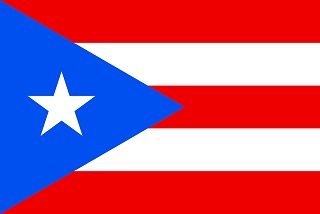
CU Blog - Puerto Rico Bondholders Coalition Launches Ad Campaign - Photo 1This accurately describes Puerto Rico.

Not only is the island of Puerto Rico a parasite of the US, but a near-Failed-State as well. While this has been a consistent theme of the Go Lean movement, it is no secret. Washington and Puerto Rico readily admit to this disposition. In fact this failing condition has driven many Puerto Ricans out of Puerto Rico. This has been within that consistent Go Lean theme, that “push-and-pull” factors drive Caribbean citizens away from their beloved homeland. Greater Orlando has become a new destination.

They are gone from Puerto Rico, but have not forgotten home. This year they are looking to impact their homeland with their vote. They seek to support candidates for federal offices that can help to reform and transform the island. See the  AUDIO Podcast here and related news article:

AUDIO – Puerto Ricans Could Sway Florida for Trump or Clinton – http://www.marketplace.org/2016/09/29/world/puerto-ricans-could-sway-florida-trump-or-clinton/

———————–

News Article Title: Puerto Ricans, in Florida, could be a political catch
By: Andy Uhler

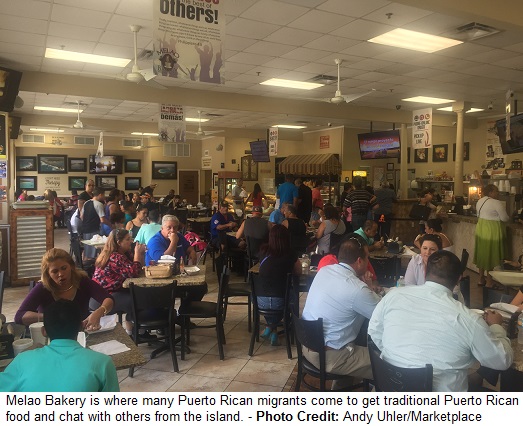
There’s a new, growing population of American citizens in Florida who might be able to vote for president for the first time – Puerto Ricans. And a lot of those leaving the island’s broken economy end up in Central Florida. Thousands of Puerto Ricans have settled over the past couple of decades in a town south of Orlando, near Disney World, called Kissimmee.

One of the main Puerto Rican hubs in the town is Melao Bakery. Wilfredo Ramirez stood outside most of the day asking people in Spanish if they’re registered to vote. It’s not normally the first thing a new acquaintance asks, but Wilfredo’s on a mission. He moved here from Puerto Rico a few months ago and has a job registering people. He said the electoral system on the mainland is tough for some new arrivals to figure out.

cu-blog-courting-caribbean-votes-puerto-ricans-photo-1

“It’s a bit confusing. Puerto Ricans are considered U.S. citizens, but it’s not the same as being born in the U.S.” mainland,  he said. “And that is the ultimate motive, for Puerto Ricans to register and give their vote.”

Puerto Ricans are U.S. citizens, but because of its territory status, those on the island can’t vote for president. Puerto Rico holds a presidential primary, but that’s where it ends. If they come to Florida and establish residency, though, Puerto Ricans can vote in November.

Wilfredo had been at the bakery for a couple of hours and had talked to more than 150 people. His contract will have him in Central Florida through November. The group he’s with, Hispanic Federation, isn’t affiliated with any party but has been vocal about Donald Trump’s immigration statements – calling them “misleading, demeaning and unfounded.”

But unlike in Florida, the island’s dominant parties aren’t Democrats and Republicans, and the main issue is whether Puerto Rico should stay a territory, become a state, or assert independence.

Carlos Vargas-Ramos is a researcher at the Center for Puerto Rican Studies at HunterCollege. He said the Puerto Rican migration to Florida wouldn’t affect the election if groups weren’t out there explaining what’s happening.

“In general, were it anywhere else, where there’s not a mobilization effort, those Puerto Ricans would be less likely to turn out to vote,” he said. “But because, precisely, they’re going to be targets, they will be in play.”

The presidential campaigns know that. Florida is a battleground state, and apart from spending on TV, the Clinton campaign has been focused on trying to get people registered to vote. What they’re finding is that recent migrants aren’t necessarily as Democratic as once assumed.

Mark Oxner, Republican chairman in OsceolaCounty, where 60 percent of the Hispanic population identify as Puerto Rican, said he’s pleasantly surprised that they’re seeing the same thing

“The big thing is, they’re not coming all Democrats, most of them come over and sign as no party affiliation,” he said. “So they’re not, specifically tied to the Democratic party.”

That could make it a little more difficult for Democrats and Republicans to directly identify supporters. Which means it’ll probably be more expensive to get those independent voters to pick a side.

But in this part of Central Florida the community’s biggest concerns are extremely local. Newly arrived Puerto Ricans need teachers in the schools who can help their children transition to living on the mainland. That means, teachers who are bilingual.

Pablo Caceres, director of the Puerto Rican Federal Affairs Administration, a Puerto Rican governmental arm with an office in Kissimmee, said that’s what he hears all the time.

“The issues that are most important for us, the Puerto Rican community, that we need to obviously start talking about is having good quality education for our kids,” he said. “And there are also other big issues like immigration.”

At the same time, a lot of Puerto Ricans left the island and came to Florida because things were so bad. Unemployment is twice that of the mainland, almost half the population is living under the poverty line, hospitals have to limit hours because they can’t pay for electricity and schools are closing because teachers aren’t getting paid.

Now some migrants feel like they might have an impact on what Washington does about their home’s crippling debt crisis.

Jose Rivera moved here from the island in 1994. He’s an engineer in favor of independence.

“It’s about time we own our own destiny,” he said. “We are the 32-year-old guy that still lives with mom and dad and we’re expecting mom and dad to fix all our broken plates.”

Independence would come with a complete financial break from the federal government and a complete rethinking of the economy of the island.
Source: http://www.marketplace.org/2016/09/29/world/puerto-ricans-could-sway-florida-trump-or-clinton Posted September 30, 2016; retrieved October 4, 2016
The experience in the US is that the politicians do not always represent the majority of the people, but rather the majority of the passionate ones in their constituency – those who turn out to vote. According to the foregoing story, it is obvious that passion for the Caribbean homeland is resulting in passion for the voting booth. Therefore, there is a jockeying to win these votes for the different parties this election year. The Puerto Rican numbers are so impactful that they can swing the vote in this swing state of Florida. (Legally, Puerto Ricans need only establish legal residence for 6 months in a US state – Florida in this case – and then they can vote).

The Go Lean book serves as a roadmap for the introduction and implementation of the technocratic Caribbean Union Trade Federation (CU). It advocates optimizing the societal engines of economics, security and governance in the Caribbean, not in Florida or any other jurisdiction in the US. But it is what it is. The Diaspora is here-now. We must succeed in this Caribbean reboot to dissuade further migration and hopefully to facilitate a subsequent repatriation.

We must do better than our past. We must be an American protégé, rather than just an American parasite. This is the quest of the Go Lean/CU roadmap, to elevate the Caribbean’s economic-security-governing engines. The roadmap recognizes that the changes the region needs must start first with convening, collaborating, confederating the regional neighborhood into a Single Market, no matter the ethnicity, language or colonial legacy of the member-states. This need was pronounced early in the book, in the opening Declaration of Interdependence (Pages 12 & 13) with these statements:

xi.  Whereas all men are entitled to the benefits of good governance in a free society, “new guards” must be enacted to dissuade the emergence of incompetence, corruption, nepotism and cronyism at the peril of the people’s best interest. The Federation must guarantee the executions of a social contract between government and the governed.

xii. Whereas the legacy in recent times in individual states may be that of ineffectual governance with no redress to higher authority, the accedence of this Federation will ensure accountability and escalation … for good governance, justice assurances, due process and the rule of law. As such, any threats of a “failed state” status for any member state must enact emergency measures on behalf of the Federation to protect the human, civil and property rights of the citizens, residents, allies, trading partners, and visitors of the affected member state and the Federation as a whole.

xxiii. Whereas many countries in our region are dependent OverseasTerritory of imperial powers, the systems of governance can be instituted on a regional and local basis, rather than requiring oversight or accountability from distant masters far removed from their subjects of administration. The Federation must facilitate success in autonomous rule by sharing tools, systems and teamwork within the geographical region.

The Go Lean book, and previous blog/commentaries, stressed the key community ethos, strategies, tactics, implementation and advocacies necessary to effect change in the region, to improve the oversight of the governing process. They are detailed as follows:

Community Ethos – Economic Principles – Economic Systems Influence Individual Choices Page 21
Community Ethos – Governing Principles – Minority Equalization Page 24
Community Ethos – Governing Principles – Lean Operations Page 24
Community Ethos – Security Principles – Cooperatives Page 25
Community Ethos – Ways to Impact the Future – Give the Youth a Voice & Vote Page 26
Community Ethos – Ways to Impact Turn-around Page 33
Community Ethos – Ways to Improve Sharing Page 35
Community Ethos – Ways to Impact the Greater Good Page 37
Strategy – Vision – Confederate all 30 Member-states into a Single Market Page 45
Strategy – CU Stakeholders to Protect – Diaspora Page 47
Tactical – Separation-of-Powers – CU Federal -vs- Member-state governments Page 71
Anecdote – Turning Around CARICOM – Regional oversight Page 92
Implementation – Assemble Caribbean Election Oversight as Cooperative Page 96
Implementation – Assemble Constitutional Convention – Start of federal elections Page 97
Implementation – Ways to Impact Elections Page 116
Implementation – Reasons to Repatriate to the Caribbean Page 118
Planning – 10 Big Ideas – Confederate a Single Market of 4 language groups Page 127
Planning – Ways to Improve Failed-State Indices – Election Outsourcing Page 134
Planning – Lessons Learned from US Constitution – Progress over generations Page 145
Advocacy – Ways to Grow the Economy Page 151
Advocacy – Ways to Preserve Caribbean Heritage Page 218
Advocacy – Ways to Impact US Territories Page 244
Appendix – Interstate Compacts for Puerto Rico & US Virgin Islands Page 278
Appendix – Nuyorican Movement Page 303
Appendix – Puerto Rican Population in the US (2010 Census) Page 304

The points of effective, technocratic oversight and stewardship for Puerto Rico were further elaborated upon in these previous blog/commentaries:

https://goleancaribbean.com/blog/?p=7963 ‘Like a Good Neighbor’ – Being there for Puerto Rico
https://goleancaribbean.com/blog/?p=6693 Ten Puerto Rico Police Accused of Criminal Network
https://goleancaribbean.com/blog/?p=6260 Puerto Rico Bondholders Coalition Launches Ad Campaign
https://goleancaribbean.com/blog/?p=4551 US Territories – Between a ‘rock and a hard place’
https://goleancaribbean.com/blog/?p=4185 Caribbean Ghost Towns: It Could Happen … in Puerto Rico
https://goleancaribbean.com/blog/?p=1325 Puerto Rico Governor Signs Bill on SME’s
https://goleancaribbean.com/blog/?p=599 Ailing Puerto Rico open to radical economic fixes

We want to make Puerto Rico and other places in our Caribbean homeland, better places to live, work and play. So we must engage the political process in Washington, DC as they are a major stakeholder for Puerto Rico. The island is bankrupt, it depends on federal bailouts just to execute even the basic functions in the Social Contract. Personally, many residents on the island depend on federal subsidies to survive: benefits like veterans, social security (disability & pension) and welfare. Many Puerto Ricans have understandably abandoned the island – this is both “push” and “pull”.

The Go Lean movement advocates being a protégé of America, not just a parasite. This is a turn-around from the status quo. We must now seek out solutions that encourage participation of Puerto Ricans in the nation-building process, as a territory, a new US State or an independent nation; (as alluded to in the foregoing story). If we want to stop the abandonment – a quest of the Go Lean roadmap – then we have no other choice; we must present the opportunities for citizens to prosper where planted in the Caribbean.

The choice for president should consider these needs.

We need Washington’s help. But the only way to impact Washington is through voting. This is why the Puerto Rican vote – for those in the Diaspora – is being courted. Which presidential candidate best extols the vision and values for a new Caribbean?

Hillary Clinton or Donald Trump.

This is the question being considered. These two camps are the ones courting Puerto Ricans in the Diaspora.

The purpose of the Go Lean roadmap is to provide the turn-by-turn directions to accomplish the needed turn-round. The Go Lean roadmap does not seek to change America; our only focus is to change the Caribbean, to make it better to live, work and play. 🙂


Download the book Go Lean … Caribbean – now!

Share this post:
, , , ,

‘Time to Go’ – No Respect for our Hair

Go Lean Commentary

“You cannot beg people to love you, if you are successful, it will not be love that you get, it will be pity; being pitied is pathetic” – Wise counsel.

Who wants to be pitied? Not so welcoming, is it?!

This commentary asserts that when you are being pitied, when that is how people tolerate you, then it is time to go home – where people love you.

This is a hot issue for the topic of hair: Black Hair, for men and women.

The truth about Black Hair is both “art and science”. Science-wise, it is different than the hair of other cultures. All these other cultures, feature natural texture that is straight; but for ethnicities descending from an African heritage, their natural texture is coarse-curly; derisively called nappy, peasy or kinky. The encyclopedic definition relates …

“Because many black people have hair that is thick with tighter and smaller curls than people of other races, unique hair styles have developed. In addition to this, many Black Hair styles have historical connections to African cultures.”

That is the science; all the rest of this discussion is the “art”; the options and choices on Black Hair, that some perceive to force assimilation and devalue culture. This is a heavy issue.

This commentary is 2 of 3 from the movement behind the book Go Lean … Caribbean, in consideration of the reasons to consider repatriation back to the Caribbean homeland. The other commentaries detailed in this series are as follows:

  1.  Time to Go: Spot-on for Protest
  2.  Time to Go: No respect for our Hair
  3.  Time to Go: Logic of Senior Emigration

cu-blog-time-to-go-no-respect-for-our-hair-photo-4All of these commentaries relate to the Caribbean image and disposition as a region with a majority Black population. The Go Lean book asserts that our demographics is what it is. There is no need to excuse, hide or assimilate to any other cultural influence. No racial supremacy is advocated – for this race or any other race – in the book or by this movement. We have a beautiful diversity, period. Despite any ethnic differences, the region has the same needs, to optimize the economic, security and economic engines in the Caribbean homeland.

The Go Lean book and movement serves as a roadmap for the introduction of the technocratic Caribbean Union Trade Federation (CU). The CU is set to optimize Caribbean society through economic elevation, security empowerment and governing engagements. Therefore the Go Lean roadmap has 3 prime directives:

  • Optimization of the economic engines in order to grow the regional economy to $800 Billion & create 2.2 million new jobs.
  • Establishment of a security apparatus to ensure public safety and protect the economic engines.
  • Improve Caribbean governance to support these engines.

The Go Lean book posits that investment and entrepreneurial opportunities can be created in the region, to the extent of creating 2.2 million new jobs. There will need to be an open, fair and level “playing field” for all these jobs. Assimilating to an alternate hairstyle, to placate some majority view will simply be irrelevant. Diversity will dominate in the business eco-system from the beginning; it will not have to be remediated or retrofitted.

This retrofit is challenging in the US right now. There have been legal challenges and court cases as to discrimination in the workplace regarding Black Hair styles. See a related news article here of a recent federal court ruling:

Title #1: Federal Court Rules It’s Legal Not to Hire Black Woman Applicant Because of Her Locs

Attractive Young Woman Sitting in a Park

Natural Black Hair styles are still seen as deviant and unprofessional in many settings,
and a recent court ruling might make it even harder to fight back against discrimination.

The 11th US Circuit Court of Appeals ruled last week that banning employees from wearing locs is not racial discrimination. In a 3-0 decision the Federal Appeals court dismissed a lawsuit brought by the Equal Employment Commission which argued that, “prohibition of dreadlocks in the workplace constitutes race discrimination because dreadlocks are a manner of wearing the hair that is physiologically and culturally associated with people of African descent.”

In 2010, Castastrophe Management Solutions, an insurance claims processing company in Mobile, Alabama offered Chastity Jones a job but told her that she would have to cut her locs before beginning work. When she refused, they withdrew the offer.

The HR managed claimed her locs violated the company’s grooming policy, which they say is race-neutral, and employees are required to keep their appearance “in a manner that projects a professional and businesslike image.” Jones was told locs “tend to get messy.”

Judge Adalberto Jordan expressed a hesitancy to expand the legal definition of racial discrimination via judicial action. He wrote in his opinion, “As far as we can tell, every court to have considered the issue has rejected the argument that Title VII protects hairstyles culturally associated with race,” he stated.”

Other related articles: http://www.theroot.com/articles/culture/2016/06/steve-perry-black-boys-hair-tweet/ posted June 15, 2016.
Summary: The notion that traditionally Black Hair styles are synonymous with being unsuccessful speaks directly to the pathologizing of blackness that this country is known to do — and our “leaders” are too often the ones elevated to do it.

So according to this foregoing news article, American companies do not have to remediate or retrofit to accept their diverse workforce; they are allowed to assimilate them, to force them to conform to a uniform vision that they conceive … or prefer.

cu-blog-time-to-go-no-respect-for-our-hair-photo-5

The Borg: Strength is irrelevant. Resistance is futile. We wish to improve ourselves. We will add your biological and technological distinctiveness to our own. Your culture will adapt to service ours. – Movie Quote: Star Trek – The Next Generation (TV Series).

When “they” force you into their mold, it is Time to Go.

The subject of Black Hair has been a frequent topic for this Go Lean movement. Previous submissions describes this topic as related to image and economics. Consider these summaries:

1. ‘Good Hair’ and the Strong Black Woman

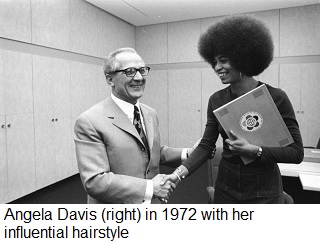
Berlin, Erich Honecker empfängt Angela DavisBlack kinky hair is considered worthless in the global marketplace. But the market for mitigating, treating (chemicals) and covering the hair (wigs & extensions) is worth $9 Billion annually. This seems like such a dichotomy for the Black community, especially among women. This ethnic group prides itself on a proud heritage of Strong Black Women, and yet there is this unspoken rejection of natural Black Hair. This is sad!

The Go Lean book presents strategies, tactics and implementations to elevate the Caribbean’s image and the region’s economic, security and governing engines. The end-goal is so that our people do not feel “Less Than” in their home countries. But if our Diaspora are among those spending the $9 Billion to treat/cover their Black Hair, then truly it is time to consider going home, back to people that love us just the way we are, rather than putting on “false airs”.

The CU will serve as a sentinel for Caribbean “image”. The US is the military and economic Super Power in this hemisphere. Their consumerism dictates the trends in the Caribbean as well; this is the North-South pressure. But the Caribbean has been successful in forging style-taste-trends in a South-North manner. Just consider the life work of these Caribbean role models:

o  Sidney Poitier
o  Bob Marley
o  Oscar De La Renta

2. Caribbean Image: Dreadlocks

Bob MarleyDreadlocks are tied to Caribbean image; many view those with this headwear as inferior or “Less Than“. Many people in the Caribbean, though not a majority in the region, wear dreadlocks, despite their occupation. These “locs” can be an expression of deep religious or spiritual convictions, ethnic pride, a political statement, or  simply be a fashion preference. Yet, their wear can be detrimental in job placement and advancement. This was “spot-on” for the issue in the foregoing federal court ruling.

Other ethnic groups also groom their headwear in a way germane to their culture and/or religion – Sikh Indian turban, Jewish yarmulke, or an taqiyah – but their wear is not associated with a “less than” disposition. This is a matter of image. The Go Lean/CU roadmap seeks to optimize the Caribbean economy, culture and image.

The ruling from the US federal court in the foregoing news article is another indicator that it is “Time to Go“. Trying to force acceptance of Caribbean hair traditions may be likened to begging people to love us. We may only get pity.

But the alternative is not easy. This means fixing the broken systems of commerce and the societal defects in the Caribbean. The Go Lean book describes this effort as heavy-lifting. This will address the “push and pull” reasons why people leave the Caribbean in the first place. Once we can fix the defects, there will be no excuse for our people, the Diaspora, to remain in an environment where they are forced to assimilate to a look and style more comfortable for their white neighbors and co-workers.

There is no freedom in this dreaded scenario.

Fixing the Caribbean eco-system has always been a mission of the Go Lean/CU roadmap, to dissuade the propensity for so many Caribbean people who flee from their Caribbean homelands to foreign destinations like the US. In addition, there is a mission to invite many Diaspora members to repatriate. The book contends that the Caribbean must prepare for the eventual return of these native sons and daughter back to our shores. This point is pronounced early in the book with the Declaration of Interdependence (Pages 12 & 13) that claims:

xi.   Whereas all men are entitled to the benefits of good governance in a free society, “new guards” must be enacted to dissuade the emergence of incompetence, corruption, nepotism and cronyism at the peril of the people’s best interest. The Federation must guarantee the executions of a social contract between government and the governed.

xii.  Whereas the legacy in recent times in individual states may be that of ineffectual governance with no redress to higher authority, the accedence of this Federation will ensure accountability and escalation of the human and civil rights of the people for good governance, justice assurances, due process and the rule of law.

xiii. Whereas the legacy of dissensions in many member-states … will require a concerted effort to integrate the exile community’s repatriation, the Federation must arrange for Reconciliation Commissions to satiate a demand for justice.

xx.  Whereas the results of our decades of migration created a vibrant Diaspora in foreign lands, the Federation must organize interactions with this population into structured markets. Thus allowing foreign consumption of domestic products, services and media, which is a positive trade impact. These economic activities must not be exploited by others’ profiteering but rather harnessed by Federation resources for efficient repatriations.

xxi. Whereas the preparation of our labor force can foster opportunities and dictate economic progress for current and future generations, the Federation must ensure that educational and job training opportunities are fully optimized for all residents of all member-states, with no partiality towards any gender or ethnic group.

Fixing the Caribbean defects do not only prepare the region for the return of the Diaspora, it also elevates the region to just simply be a better place to live, work and play. There truly is the need. Our region is not so settled on the issue of Black Hair. We still mandate a “white assimilation” on our people. Consider the story here in the following news article:

Title #2: Prep School in Jamaica Refuses Entry to Boy Because of His Hairstyle

cu-blog-time-to-go-no-respect-for-our-hair-photo-2

According to a story in the Jamaica Observer, Hopefield Preparatory School in St Andrew has refused entry to Zavier Assam, 3, because of the way his hair is groomed.

Zavier was registered at the school, but his mother Dr. Penelope Amritt, reported that the vice-principal there decided not to admit her son for classes because she refused to cut his hair. The Observer contacted the school about the matter but received no comment. Dr. Amritt said that she submitted an application in June 2016 for her three children to attend Hopefield and included a photo of the three-year-old boy. She was then told by the vice-principal that Zavier could not come to school unless his hair was cut. After thinking about it over the summer, Dr. Amritt decided that she should not be forced into something she didn’t want to do and felt that the school was discriminating against Zavier because of his gender. She said that her five-year-old daughter Zina and her son Zavier have almost the exact, same hair length, which is just below their ears.

According the Dr. Amritt, when the vice-principal saw Zavier she said that she wanted the boy’s hair cut because it was “untidy and dirty,” a description Dr. Amritt strongly denies. The vice-principal also said that Zina’s hair should be tied back. Dr. Amritt challenged the vice-principal about requiring boys to have short hair and was given a lecture about head lice in school. When she brought Zavier for orientation, she was confronted again about the length of his hair and said it was her right to choose how her child’s hair is groomed.

Discussions between Dr. Amritt and the vice-principal have grown increasingly contentious, and ultimately, the vice-principal returned the check she had written to the school for her son’s entry and said she would not admit Zavier regardless of whether his hair is cut or not. Zavier must remain at Fundaciones, his old school, and his mother is unsure if she will pursue legal action on the basis of discrimination. Additionally, Dr. Amritt noted that Zina is having problems with the other children because of her “puffy hair” and that she no longer wants the afro style she has had her whole life because no one will play with her with her hair like that. Dr. Amritt believes the vice-principal is treating her children differently than the Caucasian children at the school.

In response to those who wonder why she would want to send her children to a school with such attitudes, Dr. Amritt said “discrimination is wrong and someone has to stand up and talk about it.”
Source:
Posted September 6, 2016; retrieved September 26, 2016 from: http://jamaicans.com/prep-school-in-jamaica-refuses-entry-to-boy-because-of-his-hairstyle/

What are the motives of the school policies in this foregoing article? Perhaps to prepare the students for work and life abroad in the Diaspora. This is not the direction of the Go Lean roadmap: we want/need our citizens to be themselves, to be home, just the way they are:

Long hair? Short hair? Straighten/treated hair? Nappy/Kinky hair?

Its all good! See VIDEO in the Appendix below. These should all be promoted for the Caribbean image.

The art-and-science of image management is among the community ethos, strategy, implementations and advocacies the CU must master to elevate the Caribbean community. These individual roles-and-responsibilities are detailed in the book; see this sample listing here:

Community Ethos – Ways to Impact the Future Page 26
Community Ethos – Ways to Foster Genius Page 27
Community Ethos – Ways to Impact Turn-Arounds Page 33
Community Ethos – Ways to Manage Reconciliations Page 34
Community Ethos – Impact the Greater Good Page 37
Strategy – Caribbean Core Competence Page 58
Tactical – Forging an $800 Billion Economy – Good leverage for Trade and Globalization Page 70
Tactical – Separation of Powers – Tourism and Film Promotion Page 78
Tactical – Separation of Powers – Communications and Media Page 79
Tactical – Separation of Powers – Truth & Reconciliation Commissions Page 90
Implementation – Ways to Impact Social Media – Managing Image Online Page 111
Implementation – Trade Mission Objectives – World Outreach for Repatriation Dialogue Page 116
Implementation – Ways to Benefit from Globalization – Exporting Media Productions Page 119
Anatomy of Advocacies – Models of Individuals Making an Impact to their Community Page 122
Advocacy – Ways to Better Manage Image Page 133
Advocacy – Improve Failed-State Indices – Assuaging the Negatives Page 134
Advocacy – Ways to Grow the Economy Page 151
Advocacy – Ways to Improve Leadership Page 171
Advocacy – Ways to Improve Communications Page 186
Advocacy – Ways to Enhance Tourism – Creating a Demand, Not Dread of Caribbean Culture Page 190
Advocacy – Ways to Market Southern California – A Critical Market for Image Page 194
Advocacy – Ways to Impact Hollywood Page 203
Advocacy – Ways to Preserve Caribbean Heritage Page 218
Advocacy – Ways to Ways to Protect Human Rights – Weeding-out Prejudices Page 220
Advocacy – Ways to Improve the Arts – Humanities Affect the Heart Page 230

This subject of image management has been frequently blogged on in other Go Lean commentaries; as sampled here with these entries relating American “push and pull” factors:

https://goleancaribbean.com/blog/?p=9038 Caribbean Charity Management: Not Viewed as Grown Up
https://goleancaribbean.com/blog/?p=9017 Improve Global Image: Proclaim August 1st as the ‘International Caribbean Day’
https://goleancaribbean.com/blog/?p=8431 Bahamas Issued US Travel Advisory Citing Police Violence
https://goleancaribbean.com/blog/?p=8099 Caribbean Image: ‘Less Than’?
https://goleancaribbean.com/blog/?p=7221 Street naming for Martin Luther King unveils the real America
https://goleancaribbean.com/blog/?p=5527 American Defects: Racism – Is It Over?
https://goleancaribbean.com/blog/?p=5333 Racial Legacies: Cause and Effect
https://goleancaribbean.com/blog/?p=2025 Caribbean Jobs – Attitudes & Images of the Diaspora

Underlying to the Go Lean/CU prime directive of elevating the economics, security and governing engines of the Caribbean, is the desire to make the Caribbean homeland, a better place to live, work and play.

When we succeed on the vision and missions of this roadmap, we must manage the image and communicate to the world, our elevated disposition. The book details how this is to be pursued. See the quotation here from the Go Lean book (Page 133):

Lean in for the Caribbean Single Market & Economy (CSME) Initiative: Caribbean Union Trade Federation (CU).
This will allow for the unification of the region into one market of 42 million people across 30 member-states, with a GDP of $800 Billion (according to 2010 figures). In addition, the treaty calls for collective bargaining with foreign countries and industry representatives for causes of significance to the Caribbean community. There are many times when the media portray a “negative” depiction of Caribbean life, culture and people. The CU will have the scale to effectuate negotiations to better manage the region’s image, and the means by which to enforce the tenets.

This is all part-and-parcel of the underlying Go Lean community ethos: Greater Good for all peoples, all hairstyles. Equal opportunity, equal employment and equal empowerment.

Black-and-Brown hairstyles? Yes, indeed!

All Caribbean stakeholders are hereby urged to lean-in to this Go Lean/CU roadmap to elevate the Caribbean; to make our homeland a better place to live, work and play. 🙂

Download the book Go Lean … Caribbean – now!

———

Appendix VIDEO – 30 Beautiful Black Hairstyles for Natural Hair 2016 – https://youtu.be/wBSL71dU-OE

Published on Oct 29, 2015 – 30 Beautiful Black Hairstyles for Natural Hair 2016


Share this post:
, , ,
[Top]

Where the Jobs Are – Employers in the United States

Go Lean Commentary

There are a lot of lessons for the Caribbean to learn from the US regarding jobs. They do better at job creation than we do in our region. They have met their goal!

The goal of creating jobs in the US after the Great Recession led to the genesis of the book Go Lean … Caribbean. See the quotation here at Page 151:

How many jobs does the US economy have to generate to return to the unemployment rate of December 2007 (5.0) when the Great Financial Crisis started, by the end of President Obama’s second term in November 2016. This analysis for the number of jobs is assessed at 261,200 every month between October 2011 and 2016 to get to 16.2 million jobs.

This is the figure for the US. How about the Caribbean? How many jobs do we need to create to competitively present the Caribbean as a viable alternative to the US for our young people? To extrapolate based on the population, yields:

Population

Jobs/month

Jobs/year

Jobs in 5 years

US

310,000,000

261,200

3,134,400

16,194,400

Caribbean

42,000,000

35,388

424,661

2,194,080

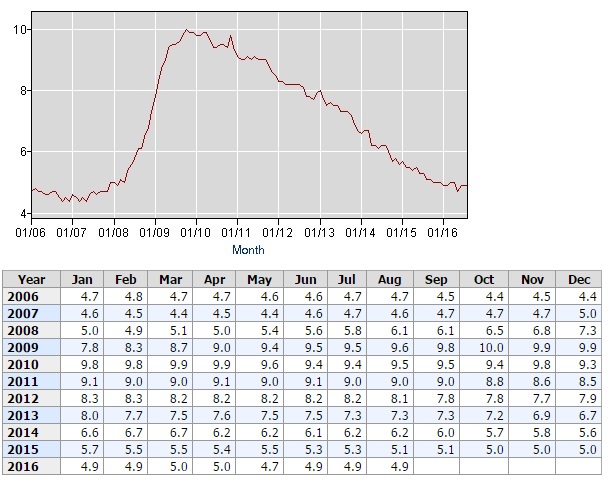
They did it; the unemployment rate in the US today is 4.9% – US Department of Labor; Bureau of Labor Statistics.

cu-blog-where-the-jobs-are-in-the-us-photo-1

Now the Caribbean needs to follow this model to create our needed jobs in our 30 member-states.

So where are the jobs in the US?

As the largest Single Market economy in the world, the US maintains a large number of jobs among the member-states. Who exactly – companies, institutions, etc. – contribute these jobs?

In almost every case in the US, a state’s government is its largest employer. However, government employment is spread across various organizations. In each state, there is one company or public institution that employs the most people. “24/7 Wall Street” reviewed data from a range of sources in order to identify the largest employers in each state. …

As the world’s largest retailer, Walmart has an outsized impact on state labor markets.

Walmart is the only company to claim the top employer spot in more than one state. In fact, the nation’s largest retailer employs the most people in 19 states.

Educational and medical institutions also frequently top a state’s list of employers. The most common largest employer across the 50 states, after Walmart, is the state’s university system. Educational services dominate statewide employment in 16 states. Organizations operating in the healthcare sector are often major employers as well. Several of these are also part of a university system.
Source: http://247wallst.com/special-report/2016/03/11/the-largest-employer-in-every-state/

The formula for creating jobs is a diverse array of companies, so as to maintain a stable and healthy labor market. Some companies, however, impact a state’s economy and labor market far more than others, as in Walmart in the foregoing. See the actual list here:

State Company Number of Employees
Alabama Walmart 37,537
Alaska Providence Health & Services 4,000
Arizona Walmart 33,838
Arkansas Walmart 51,680
California University of California 205,177
Colorado University of Colorado 30,000
Connecticut Yale New Haven Health System 20,396
Delaware Christiana Care Health System 11,100
Florida Walmart 104,228
Georgia Walmart 57,276
Hawaii University of Hawaii 10,167
Idaho St. Luke’s Health System 13,557
Illinois Walmart 51,900
Indiana IndianaUniversity Health 29,395
Iowa University of Iowa 22,827
Kansas University of Kansas 13,862
Kentucky Walmart 29,005
Louisiana Walmart 36,763
Maine Hannaford Supermarkets 10,000
Maryland University System of Maryland 38,595
Massachusetts Partners Healthcare 65,000
Michigan University of Michigan 45,397
Minnesota Mayo Clinic 64,033
Mississippi Walmart 24,741
Missouri Walmart 42,312
Montana Walmart 4,508
Nebraska University of Nebraska 13,000
Nevada MGM Grand Las Vegas 55,000
New Hampshire Dartmouth-HitchcockMedicalCenter 9,300
New Jersey Wakefern Food Corporation 36,000
New Mexico University of New Mexico 24,061
New York StateUniversity of New York 89,871
North Carolina University of North Carolina System 74,079
North Dakota Sanford Health 12,292
Ohio Walmart 46,611
Oklahoma Walmart 33,268
Oregon Intel 18,600
Pennsylvania University of PittsburghMedicalCenter 60,000
Rhode Island Lifespan system of hospitals 13,710
South Carolina Walmart 30,828
South Dakota Avera Health 13,000
Tennessee Walmart 40,398
Texas Walmart 166,131
Utah Intermountain Healthcare 20,000+
Vermont The University of VermontMedicalCenter 7,400
Virginia Walmart 42,915
Washington Boeing 77,947
West Virginia Walmart 12,454
Wisconsin University of Wisconsin 40,000+
Wyoming Walmart 4,647

Source: Retrieved 09-23-2016 from: http://247wallst.com/special-report/2016/03/11/the-largest-employer-in-every-state/2/

Examining this foregoing chart, allows us to glean certain intelligence:

  • Jobs come from disruptive systems of commerce – Big-Box retailer Walmart has undermined the business models of the previous delivery solutions for food, clothing and shelter (home goods). They are now the largest employer in 19 states.
  • The education eco-system is important for more than  just enrolled student bodies; whole communities are affected. Just consider the California example here, which is indicative of all the other states where a University System is the largest employer: The University of California system, which has campuses in Berkeley, Davis, Irvine, Los Angeles, Riverside, Merced, Santa Cruz, Santa Barbara, San Diego, and San Francisco, is the largest employer in the state. The university network also includes the UCLA Health System, which consists of five medical centers, and three national laboratories.

See the detailed depictions of these two business models in the related VIDEO here:

VIDEO – The Largest Employers In Top 10  Most Populous States – https://youtu.be/fcVHwjnmqCc


Published on Jan 11, 2016 – http://247wallst.com/

The foregoing analysis on this chart is very revealing for the Caribbean. We need to move to where the world is moving, not where the world is coming from. This analysis synchronizes with the book Go Lean…Caribbean which asserts that there are 4 ‘Agents of Change’ (Technology, Globalization, Aging Diaspora, Climate Change) that is forging great change in society.

  • Walmart is a product of a successful optimization of globalization – manufacturing many products aboard but featuring just-in-time delivery to the retail shelves.
  • The Universities and their medical school/service deliveries prove the merits of a STEM (Science, Technology, Engineering & Math/Medicine) focus and the reality of a aging-always-in-need-of medical-services marketplace.

The Go Lean book calls for the elevation of Caribbean economics, asserting that the Caribbean region has been losing the battle of globalization and technology. The consequence of our defeat is the sacrifice of our most precious treasures, our people, especially our youth. The assessment of all 30 Caribbean member-states is that every community has lost human capital to emigration. Some communities, suffering an abandonment rate of more than 50% of the general population, while others watched as more than 70% of college-educated citizens flee their homelands for foreign shores, including these US jobs – many Caribbean Diaspora work for Walmart.

The Go Lean book doesn’t just report the problem; it also proposes solutions. The book stresses that the world now boast a New Economy, and that we must re-focus, re-boot, and optimize the engines of commerce – fix the broken eco-systems – so as to make the Caribbean a better place to live, work and play. We need the jobs of this New Economy; the book presents a plan to create the 2.2 million stated above. How?

The Go Lean book serves as a roadmap for the introduction and implementation of the technocratic Caribbean Union Trade Federation (CU) with the charter to facilitate jobs in the region. The book posits that ICT (Internet & Communications Technology) can be a great catalyst for job-creation. This would refer to the education of ICT and the delivery of ICT. This job-creation focus is among these 3 prime directives of CU/Go Lean:

  • Optimization of economic engines in order to grow the regional economy to $800 Billion and create 2.2 million new jobs.
  • Establishment of a security apparatus to protect the resultant economic.
  • Improvement of Caribbean governance to support these engines.

Early in the Go Lean book, the responsibility to create jobs was identified as an important function for the CU with these pronouncements in the Declaration of Interdependence (Pages 14):

xxvi.     Whereas the Caribbean region must have new jobs to empower the engines of the economy and create the income sources for prosperity, and encourage the next generation to forge their dreams right at home, the Federation must therefore foster the development of new industries, like that of ship-building, automobile manufacturing, prefabricated housing, frozen foods, pipelines, call centers, and the prison industrial complex. In addition, the Federation must invigorate the enterprises related to existing industries tourism, fisheries and lotteries – impacting the region with more jobs.

xxvii.    Whereas the region has endured a spectator status during the Industrial Revolution, we cannot stand on the sidelines of this new economy, the Information Revolution. Rather, the Federation must embrace all the tenets of Internet Communications Technology (ICT) to serve as an equalizing element in competition with the rest of the world. The Federation must bridge the digital divide and promote the community ethos that research/development is valuable and must be promoted and incentivized for adoption.

xxviii.   Whereas intellectual property can easily traverse national borders, the rights and privileges of intellectual property must be respected at home and abroad. The Federation must install protections to ensure that no abuse of these rights go with impunity, and to ensure that foreign authorities enforce the rights of the intellectual property registered in our region.

The book Go Lean…Caribbean details the creation of 2.2 million new jobs for the Caribbean region, many embracing the ICT/STEM skill-sets. The book also describes what the Caribbean region have to do in order to have a change for these jobs. It details the new community ethos that need to be adopted, plus the executions of key strategies, tactics, implementations and advocacies. The following list is depicted in the book:

Community Ethos – Deferred Gratification Page 21
Community Ethos – Economic Principle – Economic Systems Influence Choices & Incentives Page 21
Community Ethos – Consequences of Choices Lie in the Future Page 21
Community Ethos – Job Multiplier Page 22
Community Ethos – Lean Operations Page 24
Community Ethos – Return on Investments Page 24
Community Ethos – Ways to Impact the Future Page 26
Community Ethos – Ways to Help Entrepreneurship Page 28
Community Ethos – Ways to Promote Intellectual Property Page 29
Community Ethos – Ways to Impact Research & Development Page 30
Community Ethos – Ways to Bridge the Digital Divide Page 31
Strategy – Mission – Education Without Further Brain Drain Page 46
Tactical – Fostering a Technocracy Page 64
Tactical – Tactics to Forge an $800 Billion Economy – High Multiplier Industries Page 70
Tactical – Separation of Powers – Commerce Department – Patents & Copyrights Page 78
Implementation – Ways to Pay for Change Page 101
Implementation – Ways to Deliver Page 109
Implementation – Ways to Impact ICT and Social Media Page 111
Planning – Ways to Improve Trade Page 128
Advocacy – Ways to Create Jobs Page 152
Advocacy – Ways to Improve Education Page 159
Advocacy – Ways to Improve Housing Page 161
Advocacy – Ways to Better Manage Food Consumption Page 162
Advocacy – Ways to Better Provide Clothing Page 163
Advocacy – Ways to Impact Labor Markets and Unions Page 164
Advocacy – Ways to Foster Technology Page 197
Advocacy – Ways to Foster e-Commerce Page 198
Advocacy – Ways to Battle Poverty – Third World Realities Page 222
Advocacy – Ways to Help the Middle Class Page 223
Advocacy – Ways to Impact Youth – Usual Candidates for Fast-Food Jobs Page 227
Appendix – Growing 2.2 Million Jobs in 5 Years Page 257
Appendix – Job Multipliers Page 259
Appendix – Nuyorican Movement Page 303

Previous blog/commentaries detailed exactly where the jobs are for this New Economy. Consider these submissions here:

https://goleancaribbean.com/blog/?p=8929 Where the Jobs Are – A reflection on Labor on Labor Day
https://goleancaribbean.com/blog/?p=8328 Where the Jobs Are – One Scenario: YouTube Millionaires
https://goleancaribbean.com/blog/?p=8262 Where the Jobs Are – One Scenario: Uber Model from Africa
https://goleancaribbean.com/blog/?p=6089 Where the Jobs Are – The futility of Minimum Wage
https://goleancaribbean.com/blog/?p=2857 Where the Jobs Are – Entrepreneurism in Junk
https://goleancaribbean.com/blog/?p=2025 Where the Jobs Are – Attitudes & Images of the Diaspora
https://goleancaribbean.com/blog/?p=2003 Where the Jobs Are – One Scenario: Shipbreaking
https://goleancaribbean.com/blog/?p=1698 Where the Jobs Are – STEM Jobs Are Filling Slowly

The Caribbean can be the best address on the planet, if only we had jobs …

… yet, we can create more.

We have successful models of other societies – like the US in the foregoing. But there are other examples too, think South Korea, Iceland, India, and China. All of these countries business models have also been detailed by the Go Lean movement.

Now is the time … everyone is hereby urged to lean-in to this Go Lean roadmap, so that we can start to create the new jobs our region badly needs. This is not easy; in fact the Go Lean book describes it as heavy-lifting. But it also describes that it is conceivable, believable and achievable.

Yes, we can … also … make the Caribbean a better place to live, work and play. 🙂
Download the free e-Book of Go Lean … Caribbean – now!

Share this post:
, ,
[Top]

GraceKennedy: Profile of a Caribbean Transnational Corporation

Go Lean Commentary

CU Blog - GraceKennedy - Caribbean Transnational Corporation - Photo 1A

The accusation is that the Caribbean – as a region, a people, and a culture – features a parasite status rather than the preferred protégé status. This would mean we only glean the economic activity left over from the other “host” countries; we would also consume the offerings and trends of these more advanced economy countries, rather than dictate our own trends.

This accusation … is mostly true!

But alas, there is a spark of hope in our Caribbean region. There are a number of corporate entities that do dictate trends in the region and throughout the world. The book Go Lean…Caribbean addressed this trend and identified one such company, Jamaica-based ATL Group, the owners of Sandals/Beaches Resorts, an Office Equipment business, Honda automobile dealerships and the media company behind The Jamaica Observer newspaper. But now, we consider another one, this time we focus on the transnational corporation, GraceKennedy Group of Companies who operate in the food and financial sectors.

But first, we must consider the definition of transnationalism:

Transnationalism as an economic process involves the global reorganization of the production process, in which various stages of the production of any product can occur in various countries, typically with the aim of minimizing costs. Economic transnationalism, commonly known as Globalization, was spurred in the latter half of the 20th century by the development of the internet and wireless communication, as well as the reduction in global transportation costs caused by containerization. Multinational corporations could be seen as a form of transnationalism, in that they seek to minimize costs, and hence maximize profits, by organizing their operations in the most efficient means possible irrespective of political boundaries.

multinational corporation is an organization that owns or controls production of goods or services in one or more countries other than their home country.[2]

What Drives Transnationalism?
Some argue that the main driver of transnationalism has been the development of technologies that have made transportation and communication more accessible and affordable, thus dramatically changing the relationship between people and places. It is now possible for immigrants to maintain closer and more frequent contact with their home societies than ever before. However, the integration of international migrations to the demographic future of many developed countries is another important driver for transnationalism. Beyond simply filling a demand for low-wage workers, migration also fills the demographic gaps created by declining natural populations in most industrialized countries. Today, migration accounts for 3/5 of population growth on western countries as a whole. And this trend shows no sign of slowing down. Moreover, global political transformations and new international legal regimes have weakened the state as the only legitimate source of rights. Decolonization, coupled with the fall of communism and the ascendance of human rights, have forced states to take account of persons qua persons, rather than persons qua citizens.

Immigrant Transnational Activities – When immigrants engage in transnational activities, they create “social fields” that link their original country with their new country or countries of residence. These social fields are the product of a series of interconnected and overlapping economic, political, and socio-cultural activities. As for economic transnational activities, these include business investments in home countries and monetary remittances from source countries. The Inter-American Development Bank (IDB) estimates that in 2006 immigrants living in developed countries sent home the equivalent of $300 billion in remittances, an amount more than double the level of international aid. This intense influx of resources may mean that for some nations development prospects become inextricably linked- if not dependent upon – the economic activities of their respective Diasporas.
Source: Retrieved September 5, 2016 from: https://en.wikipedia.org/wiki/Transnationalism

CU Blog - GraceKennedy - Caribbean Transnational Corporation - Photo 1

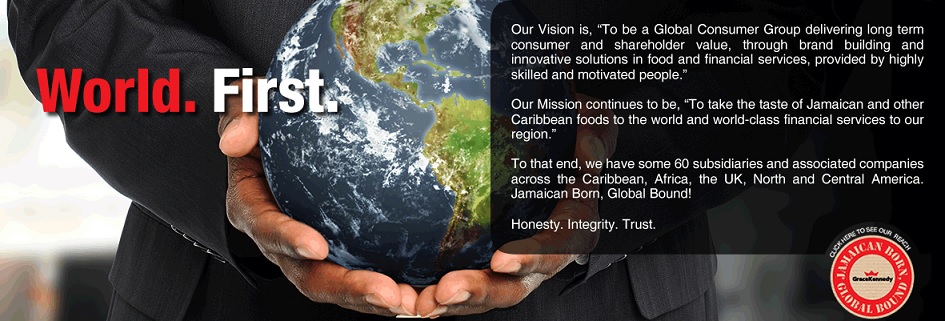
The GraceKennedy Group of Companies, started in 1922, is based in Kingston, Jamaica, but they are one of the Caribbean “largest and most dynamic corporate entities” in the region. Though they are based in Jamaica, they generate a lot of their global revenue – from food services and financial services – from the rest of the globe. They depend on globalization – economic transnationalism – in order to be an ongoing concern. Their marketing slogan is “Jamaican born; global bound”. They own 60 subsidiaries – see partial list in the Appendix below – and affiliated companies across the Caribbean, Africa, UK, North and Central America; they are a model of a transnational corporation. See VIDEO here:

VIDEO – GraceKennedy at 90 – https://youtu.be/okDBEAdC6LY

Published on Feb 10, 2012 – Jamaican conglomerate Grace Kennedy is celebrating 90 years of existence. The Gleaner recently toured its Harbour Street corporate office and learnt what drives the company’s success.

The history of this company traces a parallel arch of change in the Caribbean region for the 20th Century:

Regional Change Dynamics Year Company Dynamic Changes
European Colonialism 1922 Company formed to facilitate importation / local distribution
Decolonization 1952 Nation-building rather than mother-country dependence
Emigration from Homeland / Diaspora 1959 Export Caribbean home products to the world
Embrace of regionalism 1962 Incorporating in other Caribbean member-states
Shift to Service Economy 1990 Financial Services focus on Remittance

GraceKennedy has expanded and diversified over the years,[2] changing from a privately owned enterprise to a public company listed on the stock exchanges of Jamaica, Trinidad, Barbados and the Eastern Caribbean.

CU Blog - GraceKennedy - Caribbean Transnational Corporation - Photo 2

CU Blog - GraceKennedy - Caribbean Transnational Corporation - Photo 4

CU Blog - GraceKennedy - Caribbean Transnational Corporation - Photo 5

The company does not only appeal to the Jamaican community (domestic or Diaspora) or not only to the Anglo-speaking Caribbean; they also strategize for the Hispanic communities. In that vein, as reported in the foregoing VIDEO, in 2014 CU Blog - GraceKennedy - Caribbean Transnational Corporation - Photo 6GraceKennedy acquired La Fe Foods Inc., a top Hispanic consumer foods company – especially dominant in the frozen food category – in the US.

This transnational corporation aligns with the vision for societal elevation in the book Go Lean … Caribbean. These two visions actually parallel:

  • GraceKennedy – To be a Global Consumer Group delivering long term consumer and shareholder value, through brand building and innovative solutions in food and financial services, provided by highly skilled and motivated people.
  • Go Lean – To integrate and unify the Caribbean region into a Single Market Economy, enabling the homeland to be the best address on the planet, inviting our young people to participate in the effort to make our home the best place to live, work and play in the future. – Page 45.

The Go Lean book serves as a roadmap for the introduction and implementation of the technocratic Caribbean Union Trade Federation (CU). This is a call for confederating, collaborating and convening the 30 member-states of the region – despite the language or colonial legacy – into a Single Market; and for one federal governmental entity to optimize the economic, security and governing endeavors. This would also mean optimization of the food supply and financial services landscape. The Go Lean/CU roadmap creates the atmosphere for many more transnational corporations – homegrown and foreign – to emerge and thrive. This is part-and-parcel of the prime directives (3) of the CU/Go Lean roadmap:

  • Optimization of the economic engines – facilitating the growth in corporate citizens – in order to grow the regional economy to $800 Billion & create 2.2 million new jobs.
  • Establishment of a security apparatus to protect the resultant economic engines.
  • Improvement of Caribbean governance to support these economic engines, reflecting a separation-of-powers between CU agencies and member-state governments.

The CU seeks to facilitate better mastery of the advanced fields of economics by incentivizing, incubating and fostering entrepreneurial efforts, small-to-medium-businesses (SMB) and large multi-national corporations. This is how to create new jobs; jobs are not created by governments, but yet, the governmental administrations can implement the right climate to spur industrial and corporate growth. The job-creation solutions for the Caribbean, are not so much dependent on a specific government, but rather good corporate guidance.

A goal of the Go Lean/CU roadmap is to attract more transnational corporations, to establish a footprint in the Caribbean. How? Why? Why will they come to the Caribbean under the Go Lean/CU regime when they will not come now under the status quo? One answer is the structure of Self-Governing Entities (SGE), and Exclusive Economic Zones (EEZ). SGE refers to dedicated, bordered grounds that are ideal for corporate campuses, research laboratories, industrial bases (like shipyards, factory plants). The SGE structure will require a hybrid governance involving the CU federal agencies and local administrators influence– at the start-up.

The book Go Lean … Caribbean asserts that SGE’s and the EEZ can be strategic, tactical and operationally efficient for elevating Caribbean society – creating jobs. These points are pronounced early in the book with this Declaration of Interdependence (Pages 11 thru 14), with these statements:

v. Whereas the natural formation of our landmass and coastlines entail a large portion of waterscapes, the reality of management of our interior calls for extended oversight of the waterways between the islands. The internationally accepted 12-mile limits for national borders must be extended by International Tribunals to encompass the areas in between islands. The individual states must maintain their 12-mile borders while the sovereignty of this expanded area, the Exclusive Economic Zone, must be vested in the accedence of this Federation.

xxiv.  Whereas a free market economy can be induced and spurred for continuous progress, the Federation must install the controls to better manage aspects of the economy: jobs, inflation, savings rate, investments and other economic principles. Thereby attracting direct foreign investment because of the stability and vibrancy of our economy.

xxv.   Whereas the legacy of international democracies had been imperiled due to a global financial crisis, the structure of the Federation must allow for financial stability and assurance of the Federation’s institutions. To mandate the economic vibrancy of the region, monetary and fiscal controls and policies must be incorporated as proactive and reactive measures. These measures must address threats against the financial integrity of the Federation and of the member-states.

xxvi.  Whereas the Caribbean region must have new jobs to empower the engines of the economy and create the income sources for prosperity, and encourage the next generation to forge their dreams right at home, the Federation must therefore foster the development of new industries, like that of ship-building, automobile manufacturing, prefabricated housing, frozen foods, pipelines, call centers, and the prison industrial complex. In addition, the Federation must invigorate the enterprises related to existing industries tourism, fisheries and lotteries – impacting the region with more jobs.

xxx. Whereas the effects of globalization can be felt in every aspect of Caribbean life, from the acquisition of food and clothing, to the ubiquity of ICT, the region cannot only consume, it is imperative that our lands also produce and add to the international community, even if doing so requires some sacrifice and subsidy.

Though there is a need for more jobs, there is a legitimate fear to inviting more corporations. There are real-life experiences and stories of abuse in mono-industrial communities – Company Towns. Abuse by the “super-rich” is implied in the old adage: “golden rule is he who has the gold makes the rule”. But the Go Lean roadmap is designed to mitigate abuses of plutocracies. This is the advantage of the SGE structure; it allows for better promotion, oversight, and governance for transnational corporate expressions. These SGE’s would be regulated solely by the technocratic CU; there would be features like advanced monitoring (intelligence gathering) and embedded protections for whistleblowers.

CU Blog - GraceKennedy - Caribbean Transnational Corporation - Photo 3The Go Lean roadmap identifies 40,000 new direct jobs tied to SGE’s; plus more tied to industrial activities directly related to the business activities that aligns with GraceKennedy business model, such as 30,000 new direct jobs in the food supply industries and 2,000 direct jobs in the frozen foods industry. These job-creation empowerments will impact every aspect of Caribbean life throughout the Caribbean.

The Go Lean book details a series of community ethos, strategies, tactics, implementations and advocacies to foster industrial developments and SGE’s. The following list applies:

Community Ethos – Economic Principles – Economic Systems Influence Individual Choices Page 21
Community Ethos – Economic Principles – Voluntary Trade Creates Wealth Page 21
Community Ethos – Lean Operations Page 24
Community Ethos – Return on Investments Page 24
Community Ethos – Cooperatives Page 25
Community Ethos – Ways to Impact the Future Page 26
Community Ethos – Ways to Impact the Greater Good Page 32
Strategy – Vision – Confederate to form a Single Market Page 45
Strategy – Mission –  Build and foster local economic engines Page 45
Strategy – Mission –  Exploit the benefits and opportunities of globalization Page 46
Strategy – Mission –  Keep the next generation at home Page 46
Tactical – Fostering a Technocracy Page 64
Tactical – Separation of Powers – Commerce Department – Interstate Commerce Administration Page 79
Tactical – Separation of Powers – Department of Agriculture Page 88
Anecdote – “Lean” in Government Page 93
Implementation – Foreign Policy Initiatives at Start-up Page 102
Implementation – Start-up Benefits from the EEZ Page 104
Implementation – Steps to Implement Self-Governing Entities Page 105
Advocacy – 10 Big Ideas – Single Market Leverage Page 127
Advocacy – Ways to Improve Interstate Commerce Page 129
Advocacy – Ways to Better Manage Food Consumption – Export: Help Find Foreign Markets Page 156
Advocacy – Ways to Better Manage the Social Contract Page 170
Advocacy – Ways to Foster Cooperatives – Common for Agricultural Structures Page 176
Advocacy – Ways to Better Manage Natural Resources – Optimization of Pastoral Lands Page 183
Anecdote # 18 – Caribbean Industrialist: Sandals’ Butch Stewart Page 189
Advocacy – Reforms for Banking Regulations Page 199
Advocacy – Ways to Impact Wall Street – Expansion of local Securities markets Page 200
Advocacy – Ways to Impact Main Street Page 201
Advocacy – Ways to Develop a Frozen Foods Industry Page 208
Advocacy – Ways to Improve Fisheries – Canaries & Refrigerated Warehouse Cooperatives Page 210
Advocacy – Ways to Impact the Diaspora Page 217
Advocacy – Ways to Impact Rural Living – SGE Strategic Locations Page 235
Advocacy – Ways to Re-boot Jamaica Page 239

This commentary asserts that industrial development is hard-work. It is difficult now to get Direct Foreign Investors to consider individual Caribbean member-states, but with this new approach of a regional Single Market, a leveraged Caribbean – 42 million people – can be more attractive, appealing and inviting. Despite the appeal, executing this Go Lean/CU roadmap will still be hard; the book describes the effort as heavy-lifting.

Many of these heavy-lifting issues have been previously identified and detailed in prior Go Lean blog-commentaries. See this sample list:

https://goleancaribbean.com/blog/?p=8379 The Need for Technocratic Regulation of the SGE’s
https://goleancaribbean.com/blog/?p=5921 Socio-Economic Change: Impact Analysis of SGE’s
https://goleancaribbean.com/blog/?p=4037 How to Train Your ‘Dragon’ – Direct Foreign Investors
https://goleancaribbean.com/blog/?p=3473 Haiti’s Example of Success with an SGE: CaracolIndustrial Park
https://goleancaribbean.com/blog/?p=2750 Disney World – Role Model for Self-Governing Entities

This Go Lean movement, fostering a new Caribbean business climate, hereby applauds the corporate stakeholders at the GraceKennedy Group of Companies. We invite them to partner with us to make the Caribbean region a better place to live, work and play. But there is the need for a cautionary warning to them: the change that is coming has “plus & minus” ramifications for their business model.

There are aspects of the Go Lean roadmap that will not be good for some of GraceKennedy’s business model, remittances in particular. (While a GraceKennedy subsidiary is the regional partner representing Western Union in the Caribbean, the Go Lean book – Page 270 – introduces new electronic payment schemes that will lessen the need to pay for money transfers). It is clearly apparent in the Go Lean book, that change is not always good; sometimes it brings unintentional consequences. So if we know change is happening, it is best to get ahead of it. This point was stated poignantly at Page 252:

Opportunities abound; even if there is only little commerce to exploit now, there is opportunity enough in the preparation for the coming change. So act now! Get moving to that place, the “corner” of preparation and opportunity.

With the execution of this Go Lean roadmap, the Caribbean region sends a message to the business world: Change is afoot. There will be new partnerships and collaborations for corporate stakeholders. A message is sent to the Caribbean people as well: there are solutions to these complex problems befalling our society. Whereas the Caribbean may have been a parasite before, now we can function in the role of a protégé.

Like all parasites, their healthy disposition depends on a healthy disposition of the hosts. The Caribbean has been in crisis; therefore the parasitic people have fled – the Caribbean’s “brain drain” and Diaspora has grown as a result – not good. The successful execution of this roadmap will affect this disposition as well. We will and must do better! Optimizing the economic, security and governing engines in the region will lower the abandonment rate. This will also constitute change – good change – for the region.

The Caribbean homeland will then be a better place to compete globally and present more favorable options for our youth to stay home in the region.

Now is the time for all Caribbean stakeholders – corporate citizens included – to lean-in for the optimizations and empowerments described in the book Go Lean … Caribbean. This roadmap is conceivable, believable and achievable. 🙂

Download the free e-Book of Go Lean … Caribbean – now!

—————–

Appendix – List of Subsidiaries: GraceKennedy Group of Companies

  • Banking and Financial services
    • First Global Bank Limited
    • First Global Financial Services Limited
    • FG Funds Management (Cayman) Limited
    • First Global Trinidad & Tobago Limited (formerly One1 Financial Limited)
    • Signia Financial Group Incorporated
  • Remittances
    • GraceKennedy Remittance Services Limited
    • GraceKennedy Remittance Services (United States) Incorporated
    • GraceKennedy Remittance Services (Trinidad & Tobago) Limited
    • GraceKennedy Remittance Services (Guyana) Limited
  • Insurance Life and General
    • Allied Insurance Brokers Limited
    • EC Global Insurance Company Limited
    • First Global Insurance Brokers Limited
    • Jamaica International Insurance Company Limited
    • Trident Insurance Company Limited
  • Manufacturing, retail and distribution
    • Dairy Industries (Jamaica) Limited
    • Grace Foods and Services Company
    • GraceKennedy (Belize) Limited
    • Grace Food Processors Limited
    • Grace Food Processors (Canning) Limited
    • GraceKennedy (United States) Incorporated
    • Grace Foods International Limited
    • National Processors Division
    • World Brands Services Limited
    • Hi-Lo Food Stores (Jamaica) Limited
    • GK Foods (United Kingdom) Limited
    • GraceKennedy (Ontario) Incorporated
    • Hardware & Lumber Limited


Share this post:
, , ,
[Top]

ENCORE: A reflection on ‘Labor’ on Labor Day

In the US and Canada, it is the Labor Day holiday weekend.

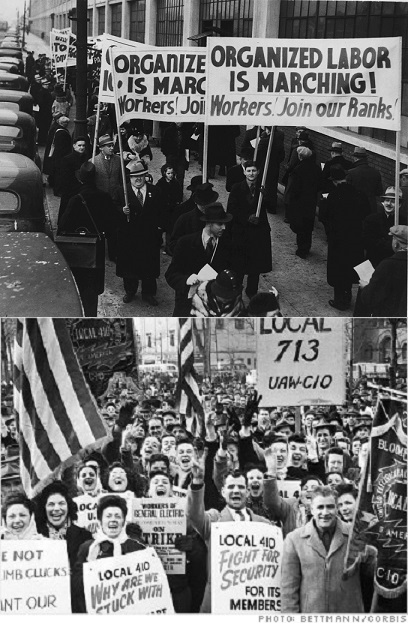
Many countries have an equivalent of Labor Day, a date set aside to honor and celebrate workers, or the movement to empower workers in society. Many of the historicity of these movements were tied to labor unions.

More than 80 countries celebrate International Workers’ Day on May 1 – the ancient European holiday of May Day.

Consider this Encore of the blog-commentary from June 18, 2015, discussing the trends in the labor markets, which depict a decline of collective bargaining:

==================

Title: Economic Principle: Wage-Seeking – Market Forces -vs- Collective Bargaining

Go Lean Commentary

The field of Economics is unique! We all practice it every day, no matter the level of skill or competence. There is even the subject area in basic education branded Home Economics, teaching the students the fundamentals of maintaining, supporting and optimizing a home environment. Most assuredly, economics is an art and a science, albeit a social science.

In a previous blog/commentary, Scotman’s Adam Smith was identified as the father of modern macro-economics. Though he lived from 1723 to 1790, his writings defined advanced economic concepts even in this 21st Century. His landmark book An Inquiry into the Nature and Causes of the Wealth of Nations qualified the divisions of income into these following categories: profit, wage, and rent.[4] We have previously explored profit-seeking (a positive ethos that needs to be fostered in the Caribbean region) and rent-seeking (a negative effort that proliferates in the Caribbean but needs to be mitigated), so now the focus of this commentary is on the activity of wage-seeking, and the concepts of governance and public choice theory to allow for maximum employment.

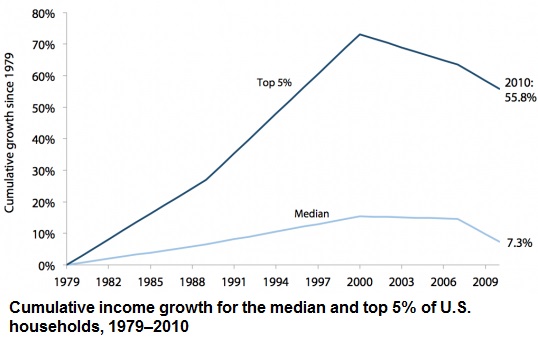
This is hard! Change has come to the world of wage-seekers – the middle classes are under attack; the labor-pool of most industrialized nations have endured decline, not in the numbers, but rather in prosperity. While wage-earners have not kept pace with inflation, top-earners (bonuses, commissions and business profits) have soared; (see Photo).

CU Blog - Economic Principles - Wage-Seeking - Market forces -vs- Collective Bargaining - Photo 2As a direct result, every Caribbean member-state struggles with employment issues in their homeland. In fact, this was an initial motivation for the book Go Lean…Caribbean, stemming from the fall-out of the 2008 Great Recession, this publication was presented as a roadmap for the introduction and implementation of the Caribbean Union Trade Federation (CU) to elevate the economic, security and governing engines of the Caribbean region to create 2.2 million new jobs, despite global challenges.

Needless to say, the global challenge is far more complex than Home Economics. The Go Lean book describes the effort as heavy-lifting; then proceeds to detail the turn-by-turn directions of a roadmap to remediate and mitigate wage-seeking.

The roadmap channels the Economic Principles and best-practices of technocrats like Adam Smith and 11 other named economists, many of them Nobel Laureates. A review of the work of these great men and woman constitute “Lessons in Economic Principles”. Why would these lessons matter in the oversight of Caribbean administration? Cause-and-effect!

Profit 4The root of the current challenge for wage-seekers is income equality; and this is bigger than just the Caribbean. It is tied to the global adoption of globalization and technology/ automation – a product of global Market Forces as opposed to previous Collective Bargaining factors. This relates back to the fundamental Economic Principle of “supply-and-demand”; but now the “supply” is global. This photo/”process flow” here depicts the ingredients of Market Forces. When there is the need for labor, the principle of comparative analysis is employed, and most times the conclusion is to “off-shore” the labor efforts, and then import the finished products. This is reversed of the colonialism that was advocated by Adam Smith; instead of the developed country providing factory labor for Third World consumption, the developed nation (i.e. United States) is now in the consumer-only role, with less and less production activities, for products fabricated in the Third World. This reality is not sustainable for providing prosperity to the middle classes, to the wage-seekers.

As a community, we may not like the laws of Economics, but we cannot ignore them. The Go Lean book explains the roles and significance of Economic Principles … with this excerpt (Page 21):

While money is not the most important factor in society, the lack of money and the struggle to acquire money creates challenges that cannot be ignored. The primary reason why the Caribbean has suffered so much human flight in the recent decades is the performance of the Caribbean economy. Though this book is not a study in economics, it recommends, applies and embraces these 6 core Economic Principles as sound and relevant to this roadmap:

  1. People Choose: We always want more than we can get and productive resources (human, natural, capital) are always limited. Therefore, because of this major economic problem of scarcity, we usually choose the alternative that provides the most benefits with the least cost.
  2. All Choices Involve Costs: The opportunity cost is the next best alternative you give up when you make a choice. When we choose one thing, we refuse something else at the same time.
  3. People Respond to Incentives in Predictable   Ways: Incentives are actions, awards, or rewards that determine the choices people make. Incentives can be positive or negative. When incentives change, people change their behaviors in predictable ways.
  4. Economic Systems Influence Individual Choices and Incentives: People cooperate and govern their actions through both written and unwritten rules that determine methods of allocating scarce resources. These rules determine what is produced, how it is produced, and for whom it is produced. As the rules change, so do individual choices, incentives, and behavior.
  5. Voluntary Trade Creates Wealth: People specialize in the production of certain goods and services because they expect to gain from it. People trade what they produce with other people when they think they can gain something from the exchange. Some benefits of voluntary trade include higher standards of living and broader choices of goods and services.
  6. The Consequences of Choices Lie in the Future: Economists believe that the cost and benefits of decision making appear in the future, since it is only the future that we can influence. Sometimes our choices can lead to unintended consequences.

Source: Handy Dandy Guide (HDC) by the National Council on Economic Education (2000)

The Go Lean book describes the end result of the application of best-practices in this field of economics over the course of a 5-year roadmap: the CU … as a hallmark of technocracy. But the purpose is not the edification of the region’s economists, rather to make the Caribbean homeland “better places to live, work and play” for its citizens. This branding therefore puts emphasis on the verb “work”; the nouns “jobs” and “wages” must thusly be a constant focus of the roadmap.

Brain Drain 70 percent ChartThis Go Lean book declares that the Caribbean eco-system for job-creation is in crisis … due to the same global dilemma. The roadmap describes the crisis as losing a war, the battle of globalization and technology. The consequence of the defeat is 2 undesirable conditions: income inequality and societal abandonment, citizens driven away to a life in the Diaspora. This assessment currently applies in all 30 Caribbean member-states, as every community has lost human capital to emigration. Some communities, like Puerto Rico and the US Virgin Islands have suffered with an abandonment rate of more than 50% and others have watched more than 70% of college-educated citizens flee their community for foreign shores. Even education is presented as failed investments as those educated in the region and leave to find work do not even return remittances in proportion to their costs of development. (See Table 4.1 in the Photo)

The Go Lean book therefore posits that there is a need to re-focus, re-boot, and optimize the labor/wage-seeking engines so as to create more jobs with livable wages. Alas, this is not just a Caribbean issue, but a global (i.e. American) one as well. See the following encyclopedic references for wage-seeking and Collective Bargaining to fully understand the complexities of these global issues:

Encyclopedia Reference #1: Wage-Seeking
(Source: https://en.wikipedia.org/wiki/Wage)

A wage is monetary compensation paid by an employer to an employee in exchange for work done. Payment may be calculated as a fixed amount for each task completed (a task wage or piece rate), or at an hourly or daily rate, or based on an easily measured quantity of work done.

Wages are an example of expenses that are involved in running a business.

Payment by wage contrasts with salaried work, in which the employer pays an arranged amount at steady intervals (such as a week or month) regardless of hours worked, with commission which conditions pay on individual performance, and with compensation based on the performance of the company as a whole. Waged employees may also receive tips or gratuity paid directly by clients and employee benefits which are non-monetary forms of compensation. Since wage labour is the predominant form of work, the term “wage” sometimes refers to all forms (or all monetary forms) of employee compensation.

Determinants of wage rates
Depending on the structure and traditions of different economies around the world, wage rates will be influenced by market forces (supply and demand), legislation, and tradition. Market forces are perhaps more dominant in the United States, while tradition, social structure and seniority, perhaps play a greater role in Japan.[6]

Wage Differences
Even in countries where market forces primarily set wage rates, studies show that there are still differences in remuneration for work based on sex and race. For example, according to the U.S. Bureau of Labor Statistics, in 2007 women of all races made approximately 80% of the median wage of their male counterparts. This is likely due to the supply and demand for women in the market because of family obligations. [7] Similarly, white men made about 84% the wage of Asian men, and black men 64%.[8] These are overall averages and are not adjusted for the type, amount, and quality of work done.

Real Wage
The term real wages refers to wages that have been adjusted for inflation, or, equivalently, wages in terms of the amount of goods and services that can be bought. This term is used in contrast to nominal wages or unadjusted wages. Because it has been adjusted to account for changes in the prices of goods and services, real wages provide a clearer representation of an individual’s wages in terms of what they can afford to buy with those wages – specifically, in terms of the amount of goods and services that can be bought.

See Table of European Model in the Appendix below. (The European Union is the model for the Caribbean Union).

———-

Encyclopedia Reference #2: Collective Bargaining
(Source: https://en.wikipedia.org/wiki/Collective_bargaining)

WPR: Marches & PicketsCollective Bargaining is a process of negotiation between employers and a group of employees aimed at reaching agreements to regulate working conditions. The interests of the employees are commonly presented by representatives of a trade union to which the employees belong. The collective agreements reached by these negotiations usually set out wage scales, working hours, training, health and safety, overtime, grievance mechanisms, and rights to participate in workplace or company affairs.[1]

The union may negotiate with a single employer (who is typically representing a company’s shareholders) or may negotiate with a group of businesses, depending on the country, to reach an industry wide agreement. A collective agreement functions as a labor contract between an employer and one or more unions.

The industrial revolution brought a swell of labor-organizing in [to many industrialized countries, like] the US. The American Federation of Labor (AFL) was formed in 1886, providing unprecedented bargaining powers for a variety of workers.[11] The Railway Labor Act (1926) required employers to bargain collectively with unions. While globally, International Labour Organization Conventions (ILO) were ratified in parallel to the United Nations efforts (i.e. Declaration of Human Rights, etc.). There were a total of eight ILO fundamental conventions [3] all ascending between 1930 and 1973, i.e. the Freedom of Association and Protection of the Right to Organise Convention (1949).

The Go Lean book presents a roadmap on how to benefit from the above Economic Principles – and how to empower communities anew – in the midst of tumultuous global challenges. This roadmap addresses more than economics, as there are other areas of societal concern. This is expressed in the CU charter; as defined by these 3 prime directives:

  • Optimization of economic engines in order to grow the regional economy to $800 Billion and create 2.2 million new jobs.
  • Establishment of a security apparatus to protect the resultant economic.
  • Improvement of Caribbean governance to support these engines.

Early in the Go Lean book, the responsibility to create jobs was identified as an important function for the CU with these pronouncements in the Declaration of Interdependence (Pages 14):

xix.  Whereas our legacy in recent times is one of societal abandonment, it is imperative that incentives and encouragement be put in place to first dissuade the human flight, and then entice and welcome the return of our Diaspora back to our shores.

xxi.  Whereas the preparation of our labor force can foster opportunities and dictate economic progress for current and future generations, the Federation must ensure that educational and job training opportunities are fully optimized for all residents of all member-states, with no partiality towards any gender or ethnic group. The Federation must recognize and facilitate excellence in many different fields of endeavor, including sciences, languages, arts, music and sports. This responsibility should be executed without incurring the risks of further human flight, as has been the past history.

xxiv. Whereas a free market economy can be induced and spurred for continuous progress, the Federation must install the controls to better manage aspects of the economy: jobs, inflation, savings rate, investments and other economic principles. Thereby attracting direct foreign investment because of the stability and vibrancy of our economy.

xxvi.  Whereas the Caribbean region must have new jobs to empower the engines of the economy and create the income sources for prosperity, and encourage the next generation to forge their dreams right at home, the Federation must therefore foster the development of new industries, like that of ship-building, automobile manufacturing, prefabricated housing, frozen foods, pipelines, call centers, and the prison industrial complex. In addition, the Federation must invigorate the enterprises related to existing industries tourism, fisheries and lotteries – impacting the region with more jobs.

According to an article from the Economic Policy Institute, entitled The Decline of Collective Bargaining and the Erosion of Middle-class Incomes in Michigan by Lawrence Mishel (September 25, 2012), the challenges to middle class income are indisputable, and the previous solution – Collective Bargaining – is no longer as effective as in the past. (The industrial landscape of Michigan had previously been identified as a model for the Caribbean to consider). See a summary of the article here (italics added) and VIDEO in the Appendix:

In Michigan between 1979 and 2007, the last year before the Great Recession, the state’s economy experienced substantial growth and incomes rose for high-income households. But middle-class incomes did not grow. The Michigan experience is slightly worse than but parallels that of the United States as a whole, where middle-class income gains were modest but still far less than the income gains at the top. What the experience of Michiganders and other Americans makes clear is that income inequality is rising, and it has prevented middle-class incomes from growing adequately in either Michigan or the nation.

The key dynamic driving this income disparity has been the divergence between the growth of productivity—the improvement in the output of goods and services produced per hour worked—and the growth of wages and benefits (compensation) for the typical worker. It has been amply documented that productivity and hourly compensation grew in tandem between the late 1940s and the late 1970s, but split apart radically after 1979. Nationwide, productivity grew by 69.1 percent between 1979 and 2011, but the hourly compensation of the median worker (who makes more than half the workforce but less than the other half) grew by just 9.6 percent (Mishel and Gee 2012; Mishel et al. 2012). In other words, since 1979 the typical worker has hardly benefited from improvements in the economy’s ability to raise living standards and, consequently, middle-class families’ living standards have barely budged since then. This phenomenon has occurred across the nation, including in Michigan.

This divergence between pay and productivity and the corresponding failure of middle-class incomes to grow is strongly related to the erosion of collective bargaining. And collective bargaining has eroded more in Michigan than in the rest of the nation, helping to explain Michigan’s more disappointing outcomes.

Research three decades ago by economist Richard Freeman (1980) showed that collective bargaining reduces wage inequality, and all the research since then (see Freeman 2005) has confirmed his finding. Collective bargaining reduces wage inequality for three reasons. The first is that wage setting in collective bargaining focuses on establishing “standard rates” for comparable work across business establishments and for particular occupations within establishments. The outcome is less differentiation of wages among workers and, correspondingly, less discrimination against women and minorities. A second reason is that wage gaps between occupations tend to be lower where there is collective bargaining, and so the wages in occupations that are typically low-paid tend to be higher under collective bargaining. A third reason is that collective bargaining has been most prevalent among middle-class workers, so it reduces the wage gaps between middle-class workers and high earners (who have tended not to benefit from collective bargaining).

Collective bargaining also reduces wage inequality in a less-direct way. Wage and benefit standards set by collective bargaining are often followed in workplaces not covered by collective bargaining, at least where there is extensive coverage by collective bargaining in particular occupations and industries. This spillover effect means that the impact of collective bargaining on the wages and benefits of middle-class workers extends far beyond those workers directly covered by an agreement.

Source: http://www.epi.org/publication/bp347-collective-bargaining/

The siren call went out 20 years ago, of the emergence of an “Apartheid” economy, a distinct separation between the classes: labor and management. Former US Secretary of Labor Robert Reich (1993 – 1997 during the Clinton Administration’s First Term) identified vividly, in this 1996 Harvard Business Review paper, that something was wrong with the U.S. economy then; (it is worst now):

CU Blog - Economic Principles - Wage-Seeking - Market forces -vs- Collective Bargaining - Photo 3That something is not the country’s productivity, technological leadership, or rate of economic growth, though there is room for improvement in all those areas. That something is an issue normally on the back burner in U.S. public discourse: the distribution of the fruits of economic progress. For many, the rise in AT&T’s stock after it announced plans [on January 3, 1996] to lay off 40,000 employees crystallized the picture of an economy gone haywire, with shareholders gaining and employees losing as a result of innovation and advances in productivity.

Has the distribution of the benefits of economic growth in the United States in fact gone awry? Is the nation heading toward an apartheid economy—one in which the wealthy and powerful prosper while the less well-off struggle? What are the facts? What do they mean? Are there real problems—and can they be solved?

Deploying solutions for the problem of income equality in the Caribbean is the quest of the Go Lean/CU roadmap. The book identified Agents of Change (Page 57) that is confronting the region, (America as well); they include: Globalization and Technology. A lot of the jobs that paid a “living wage” are now being shipped overseas to countries with lower wage levels, or neutralized by the advancement of technology. Yes, computers are reshaping the global job market, so even Collective Bargaining may fail to counter any eventual obsolescence of wage-earners, their valuation and appreciation; (see Encyclopedic Article # 2). The Go Lean book, and previous blog/commentaries, therefore detailed the campaign to not just consume technology, but to also innovate, produce and distribute the computer-enabled end-products. Therefore industries relating to STEM (Science, Technology, Engineering and Mathematics/Medicine) are critical in the roadmap. Not only do these careers yield good-paying direct jobs, but also factor in the indirect job market, and the job-multiplier rate (3.0 to 4.1) for down-the-line employment (Page 260) opportunities.

The Go Lean… Caribbean book details the creation of 2.2 million new jobs for the Caribbean region, many embracing ICT/STEM skill-sets. This is easier said than done, so how does Go Lean purpose to deliver on this quest? By the adoption of certain community ethos, plus the executions of key strategies, tactics, implementations and advocacies. The following is a sample from the book:

Assessment – Puerto Rico – Extreme Unemployment – The Greece of the Caribbean Page 18
Community Ethos – Deferred Gratification Page 21
Community Ethos – Job Multiplier Page 22
Community Ethos – Anti-Bullying and Mitigation Page 23
Community Ethos – Lean Operations Page 24
Community Ethos – Return on Investments Page 24
Community Ethos – Ways to Impact the Future Page 26
Community Ethos – Ways to Foster Genius Page 27
Community Ethos – Ways to Help Entrepreneurship Page 28
Community Ethos – Ways to Promote Intellectual Property – Key to ICT Careers Page 29
Community Ethos – Ways to Impact Research and Development – Germaine for STEM jobs Page 30
Community Ethos – Ways to Close the Digital Divide – Vital for fostering ICT careers Page 31
Strategy – Mission – Education Without Further Brain Drain Page 46
Strategy – Agents of Change – Technology Page 57
Strategy – Agents of Change – Globalization Page 57
Tactical – Fostering a Technocracy Page 64
Tactical – Tactics to Forge an $800 Billion Economy – East Asian Tigers Model Page 69
Tactical – Tactics to Forge an $800 Billion Economy – High Multiplier Industries Page 70
Tactical – Tactics to Forge an $800 Billion Economy – Trade and Globalization Page 70
Tactical – Separation of Powers – Commerce Department – Patents & Copyrights Page 78
Implementation – Steps to Implement Self-Governing Entities – As Job-creating Engines Page 105
Implementation – Ways to Benefit from Globalization – Technology: The Great Equalizer Page 119
Planning – Ways to Improve Trade Page 128
Planning – Ways to Model the EU Page 130
Planning – Lessons Learned from 2008 – Income Equality Now More Pronounced Page 136
Advocacy – Ways to Grow the Economy Page 151
Advocacy – Ways to Create Jobs Page 152
Advocacy – Ways to Improve Education – e-Learning Options Page 159
Advocacy – Ways to Impact Labor Markets and Unions – Collective Bargaining Best-Practices Page 164
Advocacy – Ways to Foster Empowering Immigration – STEM Resources Page 174
Advocacy – Ways to Foster Technology – Credits, Incentives and Investments Page 197
Advocacy – Ways to Foster e-Commerce – Optimize Remittance Methods Page 198
Advocacy – Ways to Help the Middle Class – Exploit Globalization Page 223
Appendix – Growing 2.2 Million Jobs in 5 Years Page 257
Appendix – Job Multipliers – Direct & Indirect Job Correlations Page 259
Appendix – Emigration Bad Example – Puerto Rican Population in the US Mainland Page 304

The CU will foster job-creating developments, incentivizing many high-tech start-ups and incubating viable companies. The primary ingredient for CU success will be Caribbean people, so we must foster and incite participation of many young people into fields currently sharing higher job demands, like ICT and STEM, so as to better impact their communities. A second ingredient will be the support of the community – the Go Lean movement recognizes the limitation that not everyone in the community can embrace the opportunity to lead in these endeavors. An apathetic disposition is fine-and-well; we simply must not allow that to be a hindrance to those wanting to progress – there are both direct jobs and indirect jobs connected with the embrace of ICT/STEM disciplines. The community ethos or national spirit, must encourage and spur “achievers” into roles where “they can be all they can be”. Go Lean asserts that one person can make a difference … to a community (Page 122).

Other subjects related to job empowerments for wage-seekers in the region have been blogged in other Go Lean…Caribbean commentaries, as sampled here:

https://goleancaribbean.com/blog/?p=4240 Immigration Policy Exacerbates Worker Productivity Crisis
https://goleancaribbean.com/blog/?p=3694 Jamaica-Canada employment programme pumps millions into local economy
https://goleancaribbean.com/blog/?p=3473 Haiti to Receive $70 Million Grant to Expand Caracol Industrial Park to Create Jobs and Benefit from Globalization
https://goleancaribbean.com/blog/?p=3446 Forecast for higher unemployment in Caribbean in 2015
https://goleancaribbean.com/blog/?p=3164 Michigan Unemployment Model – Then and Now
https://goleancaribbean.com/blog/?p=2857 Where the Jobs Are – Entrepreneurism in Junk
https://goleancaribbean.com/blog/?p=2800 The Geography of Joblessness
https://goleancaribbean.com/blog/?p=2750 Disney World’s example of Self Governing Entities and Economic Impacts of 70,000 jobs; 847,000+ Puerto Ricans now live in the vicinity.
https://goleancaribbean.com/blog/?p=2126 Where the Jobs Are – Computers Reshaping Global Job Market
https://goleancaribbean.com/blog/?p=2025 Where the Jobs Are – Attitudes & Images of the Caribbean Diaspora in US
https://goleancaribbean.com/blog/?p=2003 Where the Jobs Are – Ship-breaking under the SGE Structure
https://goleancaribbean.com/blog/?p=1698 Where the Jobs Are – STEM Jobs Are Filling Slowly
https://goleancaribbean.com/blog/?p=1683 Where the Jobs Were – British public sector now strike over ‘poverty pay’
https://goleancaribbean.com/blog/?p=1214 Where the Jobs Are – Fairgrounds as SGE & Landlords for Sports Leagues
https://goleancaribbean.com/blog/?p=273 10 Things We Don’t Want from the US – Job Discrimination of Immigrations

The Caribbean is arguably the best address on the planet, but “man cannot live on beauty alone”, there is the need for a livelihood as well. This is the challenge, considering the reality of unemployment in the region; the jobless rate among the youth is even higher.

The crisis of income inequality for the US is a direct result of free trade agreements, like NAFTA, and China’s Preferential Trading Status. Despite this status, we can benefit from the realities of globalization; jobs are being moved to conducive locations with lower labor costs.  We should invite these investors to look for cheaper labor options, here in the Caribbean region (Haiti, Dominican Republic, Jamaica, etc.). This is the same reality as in Europe with different wage levels for the different countries (see Appendix below); the Caribbean also has these wage differences.

The Go Lean roadmap seeks to foster higher-paying job options: Call Centers, Offshore Software Development Centers, R&D Medical campuses, light-manufacturing and assembly plants for “basic needs” products (food, clothing shelter, energy, and transportation) for Caribbean consumption. This is the successful model of Japan, China and the “East Asia Tigers” economies; these are manifestations of effective Economic Principles.

The Go Lean book therefore digs deeper, providing turn-by-turn directions to get to the desired Caribbean results: a better place to live, work and play. 🙂
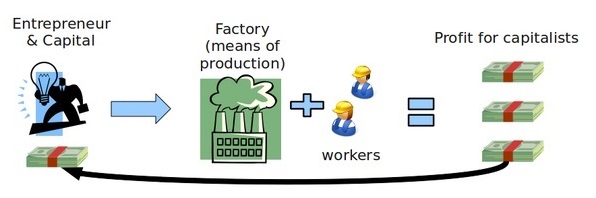
Download the free e-Book of Go Lean … Caribbean – now!

————-

Appendix – List of European countries by average wage (USA & Japan added for comparison)

(Source: https://en.wikipedia.org/wiki/List_of_European_countries_by_average_wage)

2014 Annual values (in national currency) for a family with two children with one average salary, including tax credits and allowances.[1] Net amount is computed after Taxes, Social Security and Family Allowances; the result is provided in both the National Currency and the Euro, if different. The table, sorted from highest Net amount to the lowest, is presented as follows:

State Gross Net (Natl. Curr) Net (Euro)
Switzerland 90,521.98 86,731.20 71,407.21
Luxembourg 54,560.39 52,041.36 52,041.36
Norway 542,385.96 415,557.87 49.,741.20
Denmark 397,483.78 289,292.48 38,806.20
Iceland 6,856,099.69 5,872.114.66 37,865.07
UNITED STATES 56,067 45,582 37,671
Sweden 407,974.45 335,501.45 36,874.37
Netherlands 48,855.70 36,648.71 36,648.71
United Kingdom 35,632.64 28,960.38 35,925.65
Belgium 46,464.41 35,810.55 35,810.55
Italy 41,462.67 24,539.93 35,539.93
Germany 45,952.05 36,269.23 35,269.23
France 38,427.35 30,776.75 34,776.75
Ireland 34,465.85 34,382.63 34,382.63
Austria 42,573.25 33,666.04 33,666.04
Finland 42,909.72 32,386.59 32,386.59
JAPAN 4,881,994.24 4,132.432.02 29,452.16
Spain 26,161.81 22,129.78 22,129.78
Greece 24,201.50 17,250.24 17,250.24
Slovenia 17,851.28 15,882.53 15,882.53
Portugal 17,435.71 15,140.25 15,140.25
Estonia 12,435.95 11,176.87 11,176.87
Czech Republic 312,083.83 306,153.76 11,118.31
Slovakia 10,342.10 9,778.16 9,778.16
Poland 42,360.01 34,638.77 8,278.27
Hungary 3,009,283.93 2,530.280.97 8,196.30
Turkey 28,370.00 21,072.12 7,250.00

————-

Appendix VideoCollective Bargaining and Shared Prosperity: Michigan, 1979 – 2009 http://youtu.be/PcT4jK89JmE

Published on September 27, 2012 – This VIDEO depicts the positive effects of Collective Bargaining on the quest for income equality in the US State of Michigan; and the sad consequence of the widening income inequality when Collective Bargaining is less pervasive.
This reflect the “Observe and Report” functionality of the Go Lean…Caribbean promoters in the Greater Detroit-Michigan area.

Share this post:
, , , ,
[Top]

Lessons from China – WeChat: Model for Caribbean Social Media

Go Lean Commentary

“In one country, 90 percent of adults use mobile money to conduct commercial transactions” – previous 60 Minutes report: “M-Pesa, the Future of Money”.

That country is Kenya on the African continent. That penetration rate – 90% – was believed to be one of the highest acceptance rate in any large country.

WeChat 2And now we are learning about the business model of WeChat … in China …

… it is a Social Media SuperApp, messaging and digital assistant with an electronic payment functionality similar to M-Pesa. This is the Smartphone answer to a basic phone’s utilitarianism.

See the story in the VIDEO here and the encyclopedic reference that follows:

VIDEOHow China Is Changing Your Internet – http://nyti.ms/2bhgH5s

Posted August 9, 2016 – What was once known as the land of cheap rip-offs may now offer a glimpse of the future — and American companies are taking notice. By JONAH M. KESSEL and PAUL MOZUR. Photo by Damir Sagolj/Reuters.
———

Reference Title: WeChat

WeChat (literal translation: “micro message”) is a cross-platform instant messaging service developed by Tencent in China, first released in January 2011.[10] It is one of the largest standalone messaging apps by monthly active users.[11][12]

The app is available on Android, iPhone, BlackBerry, Windows Phone and Symbian phones. Web-based OS X[13] and Windows[14] clients also exist; these however require the user to have the app installed on a supported mobile phone for authentication, and neither message roaming nor ‘Moments’ are provided.[15] As of May 2016, WeChat has over a billion created accounts, 700 million active users;[16] with more than 70 million outside of China (as of December 2015).[17][18]

WeChat provides text messaging, hold-to-talk voice messaging, broadcast (one-to-many) messaging, video conferencing, video games, sharing of photographs and videos, and location sharing.[19][20] It can exchange contacts with people nearby via Bluetooth, as well as providing various features for contacting people at random if desired (if these are open to it), next to integration with social networking services such as those run by Facebook and Tencent QQ.[21] Photographs may also be embellished with filters and captions, and a machine translation service is available.

For work purposes, companies and business communication, a special version of WeChat called Enterprise WeChat (or Qiye Weixin) was launched in April 2016. The app is meant to help employees separate work from private life.[22] Except the usual chat features, the program lets companies and their employees keep track of annual leave days and expenses that need to be reimbursed, employees can ask for time off or even clock in to show they are at work.[22][23] Security has been upgraded and companies must register before their employees can use the service.[24][25]

Security concerns
WeChat operates from China under Chinese law, which includes strong censorship provisions and interception protocols.[51] WeChat contains the ability to access the text messages and contact books of its users and users’ locations through the GPS feature.[51] Countries and regions such as India, the United States, China and Taiwan all fear that the app poses a threat to national or regional security for various reasons.[51][52][53] In Taiwan, legislators were concerned that the potential exposure of private communications was a threat to regional security.[51] In June 2013, the Indian Intelligence Bureau flagged WeChat for security concerns. India has debated whether or not they should ban WeChat for its possibility in collecting too much personal information and data from its users.[53][54][55]
Source: Wikipedia Online Encyclopedia – Retrieved August 30, 2016 from: https://en.wikipedia.org/wiki/WeChat

WeChat 1

This push for emergence of Internet & Communications Technologies is a familiar advocacy for the movement behind the book Go Lean…Caribbean. The book identifies a possible universe of 130 million active users; this is huge from a Caribbean perspective, but actually small compared to other source countries. The book detailed the full inventory of global Social Media sites around the words with greater than 100 million active users as of November 2013. See the list here:

Rank

Name

Registered users

Active user accounts

Date of stat

Date launched

Country of origin

1

Facebook 1+ billion 1 billion October 2012 February 2004 United States

2

Tencent QQ 784+ million 712 million September 2012 2003 China

3

Skype 663+ million 280 million January 2013 August 2003 Estonia

4

Google+ 500+ million 235 million December 2012 June 2011 United States

5

Twitter 500+ million 200+ million December 2012 March 2006 United States

6

LinkedIn 200+ million 160 million January 2013 May 2003 United States

7

Tencent Qzone 597 million 150 million September 2012 2005 China

8

Sina Weibo 400+ million 100+ million February 2013 August 2009 China

9

Dropbox 100+ million 100 million November 2012 September 2008 United States

10

Windows Live 100 million 100 million December 2012 November 2005 United States

11

Instagram 100+ million 100 million February 2013 October 2010 United States

Notice that 3 of these 11 sites are based in China. (WeChat is a product from China-based Tencent; see Appendix).

This commentary completes the series on China; this is commentary 6 of 6 in consideration of the good and bad lessons from China. The other commentaries detailed in this series are as follows:

  1. History of China Trade: Too Big to Ignore
  2. Why China will soon be Hollywood’s largest market
  3. Organ Transplantation: Facts and Fiction
  4. Mobile Game Apps: The new Playground
  5. South China Seas: Exclusive Economic Zones
  6. WeChat: Model for Caribbean Social Media – www.MyCaribbean.gov

All of these commentaries relate to nation-building, stressing the community investments required to facilitate the short-term, mid-term and long-term needs of our communities. This last commentary admires how the China-based WeChat online product is all-encompassing for all daily activities, facilitating value-added experiences for its users. It brings the benefits of the virtual world to the real world.

The WeChat experience in China is unique in that access is blocked from foreign access – no inputs nor outputs; this is referred to as the Great Firewall of China. (See more details here: http://www.nytimes.com/2016/08/10/technology/china-homegrown-internet-companies-rest-of-the-world.html?smid=fb-nytimes&smtyp=cur&_r=1).

So the lesson for the Caribbean is how to regulate technology in our society. With the Great Firewall and all the security threats, we do not want to invite WeChat to the Caribbean region. Rather we want to model WeChat for our own homegrown Social Media product, identified in the Go Lean book as www.myCaribbean.gov, (but without the Great Firewall features).

The Go Lean book serves as a roadmap for the introduction and implementation of the Caribbean Union Trade Federation (CU) and the Caribbean Central Bank (CCB) as regional stewards of Cyberspace and the economy, or better stated: electronic commerce. e-Commerce will drive change in payment systems, to include options depicted in the foregoing VIDEO.

The CU oversight is to be executed in conjunction with the Caribbean Postal Union (CPU), the administrator of the www.myCaribbean.gov Social Media site and network. The purpose of the CPU charter is the efficient and effective facilitation of postal mail and messaging. To be consequential in 2016, no postal initiative can launch without an online/email solution. This implementation is embedded in the Go Lean roadmap, as detailed here in the book on Page 108:

The CU will include e-delivery of government operations so as to integrate and consolidate services that are usually a cost center. The resultant economies-of-scale will result in Postal operations (CPU) emerging as a logistics Profit Center rather than Cost Center.

Cyber Mail Assistance (First Leg & Last Leg)
E-mail is a reality that should be embraced. The CPU will coordinate and collaborate with the www.myCaribbean.gov portal to offer email to all 42 million citizens, [10 million Diaspora and 80 million visitors]. The CPU will offer products, for a fee, like “last leg” postal mail for emails that need to be delivered on paper, or “first leg” postal for paper mail that can be scanned and delivered as email.

The CU, CPU and CCB are all organs of the new Caribbean elevation initiative. The CCB will facilitate transactions settlement for the new payment eco-system. The Go Lean roadmap calls for a regional currency for the Caribbean Single Market, the Caribbean Dollar (C$), to be used primarily as an electronic currency. This scheme will impact the growth of the regional economy in both the domestic and tourist markets. Economic growth is only one of the objectives of the Go Lean/CU roadmap; in fact, the Go Lean roadmap has these 3 prime directives:

  • Optimization of the economic engines in order to grow the regional economy to $800 Billion & create 2.2 million new jobs.
  • Establishment of a security apparatus to protect the resultant economic engines.
  • Improvement of Caribbean governance to support these engines.

To be counted on the world stage, the Caribbean region must conquer Cyberspace – for our own people – to elevate the interactions among the business and consumer virtual communities. When we say interactions, we mean payment transactions as well.

The benefits are undeniable: instant access, safer transactions, expanded networks, and an expanded money supply.

This last one, expanded money supply refers to the feature in Economics of M1. Electronic payment schemes causes a shift in the measurement of M1 and M0.  M0 refers to the “cash currency” (paper notes & coins); M1 refers to the measurement of overnight bank deposits plus the “cash” in circulation (the M0). The Go Lean book explains the money multiplier effect, how M1 increases allow central banks – in this case, the CCB – to create money “from thin-air”.

A mission of the Go Lean roadmap is to prepare the Caribbean region to adapt and thrive in the new global marketplace. This goal requires strenuous currency management and technocratic oversight of the region’s technological initiatives. This need was pronounced in the opening Declaration of Interdependence (Pages 12 – 14):

xv.  Whereas the business of the Federation and the commercial interest in the region cannot prosper without an efficient facilitation of postal services, the Caribbean Union must allow for the integration of the existing mail operations of the governments of the member-states into a consolidated Caribbean Postal Union, allowing for the adoption of best practices and technical advances to deliver foreign/domestic mail in the region.

xxiv. Whereas a free market economy can be induced and spurred for continuous progress, the Federation must install the controls to better manage aspects of the economy: jobs, inflation, savings rate, investments and other economic principles. Thereby attracting direct foreign investment because of the stability and vibrancy of our economy.

xxvii. Whereas the region has endured a spectator status during the Industrial Revolution, we cannot stand on the sidelines of this new economy, the Information Revolution. Rather, the Federation must embrace all the tenets of Internet Communications Technology (ICT) to serve as an equalizing element in competition with the rest of the world. The Federation must bridge the digital divide and promote the community ethos that research/development is valuable and must be promoted and incentivized for adoption.

The Go Lean book details a series of community ethos, strategies, tactics, implementations and advocacies to foster the proper guidance for the deployment of an advanced Social Media network (and accompanying e-Payments scheme) in the Caribbean region:

Community Ethos – Economic Principles Page 21
Community Ethos – Money Multiplier Principle Page 22
Community Ethos – Security Principles – Privacy versus Public Protection Page 23
Community Ethos – Governing Principles – Lean Operations Page 24
Community Ethos – Governing Principles – Cooperatives Page 25
Community Ethos – Promote Intellectual Property Page 29
Community Ethos – Ways to Bridge the Digital Divide Page 31
Community Ethos – Ways to Improve Sharing Page 35
Community Ethos – Ways to Impact the Greater Good Page 35
Strategy – Mission – Fortify the monetary needs through a Currency Union Page 45
Strategy – Mission – Facilitate modern communications with postal enhancements Page 46
Tactical – Separation of Powers – Central Banking Page 73
Tactical – Separation of Powers – Postal Operations: CPU Page 78
Implementation – Assemble Central Bank Cooperative Page 96
Implementation – Assemble Caribbean Regional Organs – like CTU Page 96
Implementation – Ways to Improve Mail Services – CPU Deployments Page 108
Implementation – Ways to Deliver Page 109
Planning – 10 Big Ideas – #2: Currency Union / Single Currency Page 127
Anecdote – Caribbean Currencies Page 149
Advocacy – Ways to Grow the Economy Page 151
Advocacy – Ways to Create Jobs Page 152
Advocacy – Ways to Mitigate Black Markets – Benefit of e-Payments Page 165
Advocacy – Ways to Foster Cooperatives Page 176
Advocacy – Ways to Impact Cruise Tourism – e-Payment scheme Page 193
Advocacy – Ways to Foster Technology Page 197
Advocacy – Ways to Foster e-Commerce Page 198
Advocacy – Reforms for Banking Regulations – Central Banking Efficiencies Page 199
Advocacy – Ways to Impact Main Street – Downtown Wi-Fi – Time and Place Page 201
Appendix – Assembling the Caribbean Telecommunications Union – As Regulator Page 256

As depicted in the foregoing VIDEO and these previously Go Lean blog-commentaries, those involved in retail commerce – in general – must now adapt to this new electronic commerce/payment world … or perish:

https://goleancaribbean.com/blog/?p=7991 Transformations: Caribbean Postal Union – Delivering the Future
https://goleancaribbean.com/blog/?p=7297 Death of the ‘Department Store’: Exaggerated or Eventual
https://goleancaribbean.com/blog/?p=7034 The Future of Money – M-Pesa Model
https://goleancaribbean.com/blog/?p=6635 New Security Chip in Credit Cards Unveiled
https://goleancaribbean.com/blog/?p=5668 Move over Mastercard/Visa… here comes a Caribbean Solution
https://goleancaribbean.com/blog/?p=4425 Cash, Credit or iPhone …
https://goleancaribbean.com/blog/?p=3889 Caribbean banks are ready to accept electronic payments transactions
https://goleancaribbean.com/blog/?p=2488 Chinese Role Model Jack Ma brings Alibaba to America
https://goleancaribbean.com/blog/?p=2074 MetroCard – Model for the Caribbean Dollar
https://goleancaribbean.com/blog/?p=1416 Amazon – Role Model for Caribbean e-Commerce & Logistics
https://goleancaribbean.com/blog/?p=1350 PayPal expands payment services to 10 markets
https://goleancaribbean.com/blog/?p=906 Bitcoin needs regulatory framework to change ‘risky’ image of payments
https://goleancaribbean.com/blog/?p=528 Facebook plans to provide mobile payment services

The world of Social Media networking and electronic payment systems is here. China has demonstrated a successful model for us in the Caribbean to emulate.

The lesson from China is that a low-technical population can assimilate high-tech solutions, provided that solutions are real. China has a population of 1.3 billion people; WeChat has 700 million active users. All those people cannot be “Geeks”. Many are just plain folks, the sort that comprise the 42 million in the Caribbean.

And then imagine the “Geeks”; imagine the opportunities: jobs and entrepreneurship. Imagine…

The lesson from China is that the business axiom is true:

Build a better mousetrap and the world will beat a path to your door.

This gives us confidence that the Caribbean Social Media network, www.myCaribbean.gov, can be fully accepted in the marketplace.

Yes, this Go Lean roadmap is conceivable, believable and achievable. The benefits are too enticing to ignore: fostering more e-Commerce, increasing M1, growing the economy, creating jobs, enhancing security and optimizing governance. Now is the time for all stakeholders – people and businesses – of the Caribbean to lean-in to this roadmap. 🙂

Download the free e-Book of Go Lean … Caribbean – now!

————–

Appendix VIDEO – Preview WeChat for Android – https://youtu.be/y2uRA9qji_I

Published on Apr 25, 2016 – WeChat is a free messaging & calling app used by 700 million people that allows you to easily connect with family & friends across countries. It’s the all-in-one communications app for free text (SMS/MMS), voice & video calls, Moments, photo sharing, and games.

Share this post:
, , , ,
[Top]

Now it’s Detroit’s turn to rescue Silicon Valley

Go Lean Commentary

“I see dead people.” – Movie quote from The Sixth Sense (1999); see Appendix VIDEO below.

This is what Detroit is saying to Silicon Valley: “they see dead people” along the road of development for the autonomous vehicle (AV). Automobile accidents are one of the leading causes of death in most countries, therefore developing cars that drive themselves and interact with real world conditions on real streets is bound to have some mishaps/fatalities along the way.

CU Blog - Now it's Detroit's turn to rescue Silicon Valley - Photo 2

CU Blog - Now it's Detroit's turn to rescue Silicon Valley - Photo 4

Detroit: “Been there, done that!”

This consideration is in line with the book Go Lean… Caribbean; it serves as a roadmap for the introduction and implementation of the Caribbean Union Trade Federation (CU). One of the features of the Go Lean/CU roadmap is the development of an automotive industry for the Caribbean region. Of course the reference here to Detroit is a metonym; so too the reference to Silicon Valley. Other metonym references were defined in a previous Go Lean blog-commentary, which detailed these ones in the book:

  • Detroit – Page 206 – American Automakers Planning/Design
  • Silicon Valley – Page 30 – AmericanHighTechCenter
  • Wall Street – Page 155 – Big Banks/Financial Center
  • Hollywood – Page 203 – US Movie/TV/Media Producers

The issue now is the risk associated with road traffic. Detroit has been there before. They were the Silicon Valley of the early 20th Century, as regards innovation for the automotive industry. Detroit has competence for this industry. Today, Silicon Valley wants inroads in the automotive industry. They need to tap Detroit’s legacy and insights. See the related article here:

Title: Now it’s Detroit’s turn to rescue Silicon Valley

CU Blog - Now it's Detroit's turn to rescue Silicon Valley - Photo 1
Five years ago, when the U.S. auto industry was just beginning to recover from the Great Recession, there was widespread speculation that the old model of the car business was broken, and that only the new economy could come to the rescue.

And with good reason. The U.S. auto market had cratered, plunging from a peak of over 17 million to a devastated 10 million in yearly sales.

Both General Motors and Chrysler had been bailed out by the federal government and gone bankrupt. Ford saw its stock price fall to less than $2 a share. Gas had spiked to over $4 a gallon in some parts of country. Credit, the lifeblood of the car business, had been wiped out.

Meanwhile, Apple was on a path to become the world’s most valuable company. Facebook was tasking over the media landscape. And Tesla, after suffering a brush with financial death in 2009, looked like the most innovative company of four wheels.

Silicon Valley and California in general was suddenly filled with new and futuristic ideas about transportation, from Google driverless cars to numerous electric-car startups. Detroit, by contrast, was lurching toward the largest municipal bankruptcy in U.S. history (it would come in 2013), and its great automakers looked to be crippled dinosaurs, completely out of step with the times.

The U.S. auto industry was a problem to be solved, and Silicon Valley specialized in solutions.

A doomed industry?
“The automobile industry is in the middle of a fundamental transformation,” wrote in 2009. “There is a lot of information available on how companies have dealt with major changes in their business environments, but little is known about the transformation of entire industries.”

“History shows that most companies do not deal well with transformation.” he continued. “One reason has to do with senior managers. They usually ‘don’t get it.’ They have a difficult time accepting that the future will be vastly different from the present because they rose to power in the old business environment. They excelled in the old environment and didn’t acquire skills necessary to operate in the new.”

Fast forward to 2016 and the senior mangers in Detroit that Grove worried about have deepened their engagement with Silicon Valley and the technology industry to an unprecedented degree. General Motors already had a venture-capital arm before it invested $500 million in Lyft and bought Cruise Automation for its innovative self-driving tech.

Ford had such a solid connection with Microsoft that outgoing CEO Alan Mulally was discussed as a successor to Steve Ballmer, earlier this year. Fiat Chrysler Automobiles has teamed up with Google to create driverless minivans. And all the automakers have a Silicon Valley presence, which enables them to scout emerging technologies and act on them quickly.

An auto sales boom in the U.S. that started in 2013 and set a record in 2016 with 17.5 million new cars and trucks delivered has fueled Detroit’s engagement, as has the broad realization among the car maker’s executive teams that this is their opportunity to disrupt themselves and profit from the experience. Cheap gas, an improving employment picture, and ample credit means that Detroit is selling pickups and SUVs and raking in cash. The game plan is to take some of those winnings and send them in search of rapid innovations that Motown can’t create on its own.

Not-so-smooth sailing
At the same time, Silicon Valley has started to encounter some investor turbulence. Startups with hefty valuations don’t see IPOs as a way to pay back their investors. That leaves getting acquired as an option, but a level of saturation with social networking and apps might have set in.

The Detroit automakers aren’t in the market for messaging apps, but they are looking for technologies that can future-proof them, or advance the process of making cars smarter. In conversations with people in the auto industry, there’s a sense that the tech sector has begun to figure out that Motown has money and wants to spend it.

The signals from the top are also strong. “We’re going to disrupt ourselves, and we are disrupting ourselves, so we’re not trying to preserve a model of yesterday,” . “And when you think of the assets the company has — the scale, the control of the vehicle platform, the ability with embedded connectivity, the knowledge we have of just every aspect of the vehicle and how we’re putting it together now — I think there’s a lot of plus signs, and we can lead.”

That attitude was echoed by Ford CEO Mark Fields, who BI also interviewed. “It’s a very exciting time at Ford, because we are transitioning from an auto company to an auto and a mobility company,” he said. “Mobility for us, at the very simplest level, is to allow people to live, play, and work where they want. How do we help enable them to get around to do that? And there’s a lot of talk around technology companies disrupting the auto industry. Our approach is very simple: We’re disrupting ourselves.”

Birds of a feather
So how did this reversal come about? Even if Detroit isn’t really in a position to rescue Silicon Valley — Silicon valley doesn’t really need to be rescued — then why is the dinosaur now so enthusiastic about participating in its own disruption?

Simple: Detroit was the Silicon Valley of the early 20th century, a hotbed of entrepreneurship, fascinated with the most high-tech contraption of the time — the automobile. True, over the decades the culture of the auto industry has become stratified and bureaucratic, but despite that, the car itself has been steadily improved. Detroit has never backed off from technology, and the engineers and executives who have chosen to work for Ford or GM are still excited about new stuff.

When they look at Silicon Valley, they see a place ruled by engineers, a contemporary version of Detroit’s own origin story.  And that’s why Silicon Valley and Detroit’s newfound mutual admiration could be the beginning of a long and beautiful friendship that stretches from the Bay Area to the banks of the Detroit River.
Source: Microsoft Network (MSN) Technology Column – Retrieved 08-14-2016 from: http://www.msn.com/en-us/money/companies/now-its-detroits-turn-to-rescue-silicon-valley/ar-BBvrK0K?li=BBnbfcN&ocid=1PRCMSE

VIDEO – Inside Silicon Valley’s secretive test track for self-driving cars – https://youtu.be/xILioJ7ZfQU

Published on Jun 2, 2016 – A former military weapons depot is now a track where companies can test their autonomous cars in private​. The media has never set foot in the guarded GoMentum Station, until now. The track is not only attracting the attention of automakers like Mercedes and Honda, but also tech companies like Google and Apple. CNET’s Brian Cooley shows us how Honda is testing its latest self-driving car there.

See a more detailed VIDEO on GoMentum Station and a competing Michigan site in this VIDEO here:
“Inside the self-driving car facilities of Silicon Valley and Detroit” – http://a.msn.com/00/en-us/BBvrK0K?ocid=se

For the Caribbean effort, it will be important to observe-and-report on the developments of the Detroit-SiliconValley synergy. Both industries are being transformed. What can we learn about cooperation, collaboration and coordination among aligning stakeholders? There are jobs, public safety and public administration at stake. This relates to the CU/Go Lean roadmap, which also has a focus on the same 3 areas. This is communicated as the prime directive of the roadmap, pronounced as follows:

  • Optimization of the economic engines in order to grow the regional economy, and create jobs (2.2 million new ones).
  • Establishment of a security apparatus to ensure public safety and protect the resultant economic engines.
  • Improve Caribbean governance to support these above engines, considering the separation-of-powers between Caribbean member states and the CU federal government.

The Go Lean roadmap recognizes the benefits of Research & Development (R&D). The book presents R&D as a community ethos, the fundamental spirit of a culture that drives the beliefs, customs and practices of a society.

Caribbean society must embrace the R&D of autonomous vehicles, automobile advances, safety innovation, and transformative technologies. We cannot ignore the formations of industrial advances. We must not just consume; we must produce as well. This is where the next generation of jobs are to be found.

The automotive industry have always been a source of high-paying jobs, that in previous generations, have transformed society. Today, Silicon Valley is a source of high-paying jobs. The transformations are continuing.

This aligns with the opening Declaration of Interdependence (Page 14) in the Go Lean book, as conveyed by these statements:

xxvii. Whereas the Caribbean region must have new jobs to empower the engines of the economy and create the income sources for prosperity, and encourage the next generation to forge their dreams right at home, the Federation must therefore foster the development of new industries, like … automobile manufacturing. In addition, the Federation must invigorate the enterprises related to existing industries … impacting the region with more jobs.

xxviii. Whereas the region has endured a spectator status during the Industrial Revolution, we cannot stand on the sidelines of this new economy, the Information Revolution. Rather, the Federation must embrace all the tenets of Internet Communications Technology (ICT) to serve as an equalizing element in competition with the rest of the world. The Federation must bridge the digital divide and promote the community ethos that research/development is valuable and must be promoted and incentivized for adoption.

Producing and not only consuming – especially related to autonomous vehicles and robotic technologies – has been a consistent theme in prior Go Lean blog/commentaries; see this sample here:

Building the Infrastructure for Streetcars
‘Olli’ – The Self-Driving Public Transit Vehicle
3D Printing: Here Comes Change
Drones to be used for Insurance Damage Claims
Robots help Amazon tackle Cyber Monday
Here come the Drones … and the Concerns
Where the Jobs Are – Computers Reshaping Global Job Market
Google conducting research for highway safety innovations
Ghost ships – Autonomous cargo vessels without a crew

The Go Lean book provides a roadmap for developing and fostering a domestic automotive industry, and for fostering R&D. The process starts with the spirit to want to improve the status quo, to innovate and make things better and safer. This spirit is described in the book as a community ethos for Research-and-Development. The book details other ethos to adopt, plus the executions of the following strategies, tactics, implementations and advocacies to forge innovation in Caribbean communities:

Community Ethos – Deferred Gratification Page 21
Community Ethos – Job Multiplier Page 22
Community Ethos – “Crap” Happens – Like Car Accidents Page 23
Community Ethos – Lean Operations Page 24
Community Ethos – Return on Investments (ROI) Page 24
Community Ethos – Ways to Impact the Future Page 26
Community Ethos – Ways to Help Entrepreneurship Page 28
Community Ethos – Ways to Impact Research & Development Page 30
Community Ethos – Impact the Greater Good Page 37
Strategy – Vision – Caribbean Integrated Single Market Page 45
Strategy – Agents of Change – Technology Page 48
Tactical – Fostering a Technocracy Page 64
Tactical – Growing Economy – New High Multiplier Industries Page 68
Separation of Powers – Public Works & Infrastructure Page 82
Separation of Powers – Department of Transportation Page 84
Implementation – Ways to Pay for Change Page 101
Implementation – Ways to Implement Self-Governing Entities Page 105
Planning – 10 Big Ideas – Cyber Caribbean Page 127
Planning – Lessons from Detroit Page 140
Advocacy – Ways to Create Jobs Page 152
Advocacy – Ways to Foster Technology Page 197
Advocacy – Ways to Improve Transportation Page 205
Advocacy – Ways to Develop the Auto Industry Page 206
Appendix – Job Multipliers – Detroit’s 11.0 Rate #1 of all industries Page 260

There is a business axiom:

Build a better mousetrap and the world will beat a path to your door.

This is the goal – autonomous vehicles not mousetraps – of so many stakeholders in the technology and automotive industry space, in Silicon Valley and in Detroit; see Appendix VIDEO 2. A self-driving car is not the future, it is now; well soon. (According to the foregoing VIDEO, one automaker projects an AV for the 2020 Model Year).

Mideast Dubai Driverless CarsThis is the type of innovation now being urged for the Caribbean. Yes, we can … make an impact in this industry. We do not have to be the inventor, but at least an “early adopter”. The controlled environment of a Self-Government Entity – campus or corridor – is ideal for AVs. Imagine a toll-road across a Caribbean member-state (island or mainland) that traverses 70 miles that encourages self-driving cars, buses and trucks.

This vision is being fostered … elsewhere. Why not here?

The Caribbean region has historically been slow at adopting technological innovation. This roadmap presents a change to the Caribbean status quo. We urge all stakeholders – governments, businesses, and drivers – to lean-in to the innovations detailed in the Go Lean book. With the proper planning, preparation and participation, yes we can, we make our homeland a better place to live, work and play.:-)

Download the book Go Lean … Caribbean – now!

————–

Appendix VIDEO 1: Next Big Thing – Self-driving cars: Why? – https://youtu.be/QUYKSWQmkrg

Published on Oct 9, 2013 – http://cnet.co/1bfQkWn – Why self-driving cars make a whole lot of sense, how gesture control will augment — but probably not replace — a lot of technology, and is there even a third seat left at the mobile platform table?

————–

Appendix VIDEO 2: The Sixth Sense ….. I See Dead People …scene – https://youtu.be/QUYKSWQmkrg

Published on Sep 9, 2012 – In Your Dreams ? ….No. While You’re Awake? …Yes. All The Time, They’re Everywhere.


Share this post:
, , , ,
[Top]

Build It and They Will Come – India’s $90 Billion Investment

Go Lean Commentary

Here are some interesting rankings about India:

World largest population: # 2 – 1.2 Billion people (Only behind China)

Ease of doing business? # 132 (2015; 130 for 2016; see Appendix B)

That gap, between 2 and 132, is a wide chasm for India to bridge.

What is this country to do? And what lessons can we learn from them, here in the Caribbean?

(Though our population is so small, our Ease of Doing Business rating is equally depressing; the best Caribbean option is Jamaica at 64).

The answer is investment!

Working for a Return on Investments is one of the driving forces of the book (and movement) Go Lean … Caribbean. The book asserts that in order to get the optimal return on any investment a community must adopt the appropriate “community ethos”, the fundamental spirit of a culture that drives the beliefs, customs and practices of its society. In this case, the identifying ethos is: Deferred Gratification.

CU Blog - Build It and They Will Come - India's $90 Billion Investment - Photo 1India is embarking on the Delhi-Mumbai Industrial Corridor. This is a ribbon of development along a route from Delhi to Mumbai, that traverses 6 (internal) states in India; see Appendix A. (India is a Federal Republic, with a President over the federal government, while states are led by governors). This plan so resembles the roadmap for the Caribbean Union Trade Federation (CU). The Go Lean book serves as a roadmap for the introduction and implementation of the CU.

This commentary is the 3 of 3 from the Go Lean movement on the subject of Infrastructure Policy. As related in previous submissions in this series, the assertion is that “if we build it, they will come”. This is a movie metaphor, yes, but it accurately depicts the surety of investing in capital infrastructure projects; or perhaps even more poignant, it conveys the surety of failure of not investing. The other commentaries detailed in this series are as follows:

  1. Before & After – Washington DC’s Streetcars Model
  2. Clinton vs Trump Campaigns – Politics of Infrastructure
  3. India’s Model – $90 billion infrastructure projects.

All of these commentaries are economic in nature, stressing the community investments required for nation-building. As depicted in this VIDEO here, India is playing catch-up in this regards with an aggressive plan – a “quantum leap”:

VIDEO – Amitabh Kant at TEDxDelhi on India’s Infrastructure Development – https://youtu.be/8BvMybtJ1-E

TEDx Talks
Published on Dec 17, 2012 –
 
Presently posted as CEO & MD of the Delhi Mumbai Industrial Corridor Development Corporation.Delhi-Mumbai Industrial Corridor is a mega infra-structure project of $90 billion covering an overall length of 1483 KMs between the political capital and the business capital of India.

A dynamic personality, Amitabh Kant has conceptualized and executed the positioning and branding of Kerala as “God’s Own Country” and later the “Incredible !ndia” campaign. Both these campaigns have won several International awards and embraced a host of activities — Infrastructure development, product enhancement, changes in organizational culture and promotional partnerships based on intensive market research. He has structured large infrastructure projects for diversification of India’s tourism product and sourced international funding through the Asian Development Bank (ADB), Japanese Bank for International Cooperation (JBIC) and UNDP.
During his tenure as Chairman and Managing Director, India Tourism Development Corporation (ITDC) he radically restructured the organization and turned it around into a highly profitable commercial enterprise. He also has wide ranging experience in innovative technical and financial structuring of Private — Public — Partnership in infrastructure projects and implemented the Calicut Airport project based on User’s fee, the BSES Kerala Power project and the Mattanchary Bridge project.

As demonstrated here in India, big infrastructure projects are necessary community investments – a “quantum leap” with a $90 Billion industrial corridor along 1500 kilometers. Is it possible for the Caribbean to consider such deployments?

Yes! The book Go Lean … Caribbean details exactly how the Big Infrastructure Projects for our region are to be conceived and achieved, (Page 127), with Self-Governing Entities and Exclusive Economic Zones. Most importantly, the roadmap details a plan to fund the projects.

The Go Lean/CU movement champions the cause of building and optimizing the overall Caribbean infrastructure. According to the foregoing VIDEO, it is important to identify and qualify funding sources for such ventures. There is the need for “new guards” for the Caribbean in this perspective. So there is the expectation that integrating and consolidating to a Single Market will contribute to the fulfillment of the Go Lean prime directives, defined here as follows:

  • Optimization of the economic engines in order to grow the regional economy to $800 Billion & create 2.2 million new jobs.
  • Establishment of a security apparatus to protect the resultant economic engines.
  • Improve Caribbean governance – including the funding of capital projects – to support these engines.

The Go Lean roadmap anticipates the opportunities of major infrastructure investments. However, the roadmap recognizes that many of the projects envisioned for the region may be too big for just one member-state alone; that it will take regional – super-national coordination. This point is highlighted in the opening Declaration of Interdependence, (Pages 12 & 14):

xiv.    Whereas government services cannot be delivered without the appropriate funding mechanisms, “new guards” must be incorporated to assess, accrue, calculate and collect revenues, fees and other income sources for the Federation and member-states. The Federation can spur government revenues directly through cross-border services and indirectly by fostering industries and economic activities not possible without this Union.

xxvi.  Whereas the Caribbean region must have new jobs to empower the engines of the economy and create the income sources for prosperity, and encourage the next generation to forge their dreams right at home, the Federation must therefore foster the development of new industries … impacting the region with more jobs.

xxix.  Whereas all Caribbean democracies depend of the free flow of capital for municipal, public and private financing, the institutions of capital markets can be better organized around a regional monetary union. The Federation must institute the controls to insure transparency, accounting integrity and analysis independence of the securities markets, thereby shifting the primary source of capital away from foreign lenders to domestic investors, comprising institutions and individuals.

The CU mission is to plan, fund, deploy and maintain infrastructure projects that are too big for any one member-state alone. Crossing borders will mean including member-states of various legalities: some independent member-states and some dependent overseas territories. This brings to the fore an array of issues, like legislative authority and currency. The Go Lean/CU regional roadmap undoubtedly calls for a common currency strategy; thusly, it calls for the establishment of the allied Caribbean Central Bank (CCB) to manage the monetary and currency affairs of each member-state in the region, independent or dependent territory. The Go Lean book describes the breath-and-width of the CCB as a technocratic institution with better stewardship, than in the recent past. From the outset, this stewardship was envisioned and pronounced in the same Declaration of Interdependence (Page 13):

xxiii. Whereas many countries in our region are dependent OverseasTerritory of imperial powers, the systems of governance can be instituted on a regional and local basis, rather than requiring oversight or accountability from distant masters far removed from their subjects of administration. The Federation must facilitate success in autonomous rule by sharing tools, systems and teamwork within the geographical region.

xxiv.  Whereas a free market economy can be induced and spurred for continuous progress, the Federation must install the controls to better manage aspects of the economy: jobs, inflation, savings rate, investments and other economic principles. Thereby attracting direct foreign investment because of the stability and vibrancy of our economy.

xxv.   Whereas the legacy of international democracies had been imperiled due to a global financial crisis, the structure of the Federation must allow for financial stability and assurance of the Federation’s institutions. To mandate the economic vibrancy of the region, monetary and fiscal controls and policies must be incorporated as proactive and reactive measures. These measures must address threats against the financial integrity of the Federation and of the member-states.

The CU roadmap drives change among the economic, security and governing engines. These solutions are as new community ethos, strategies, tactics, implementations and advocates; sampled as follows:

Community Ethos – Deferred Gratification Page 21
Community Ethos – Economic Principles: People Choose because Resources are Limited Page 21
Community Ethos – Economic Principles: All Choices Involve Costs Page 21
Community Ethos – Economic Principles: Voluntary Trade Creates Wealth Page 21
Community Ethos – Economic Principles: Consequences of Choices Lie in the Future Page 21
Community Ethos – Money Multiplier Page 22
Community Ethos – Job Multiplier Page 22
Community Ethos – Lean Operations Page 24
Community Ethos – Return on Investments Page 24
Community Ethos – Cooperatives Page 25
Community Ethos – Ways to Impact the Future Page 26
Community Ethos – Impact the Greater Good Page 37
Strategy – Vision – Integrate and Consolidate into a Single Market Page 45
Strategy – Mission – Facilitating Currency Union, Caribbean Dollar Page 45
Strategy – Mission – Collaborate for the Caribbean Central Bank Page 45
Anecdote – Caribbean Currencies Page 64
Tactical – Fostering a Technocracy Page 64
Tactical – $800 Billion Economy – How and When – Trade Page 67
Tactical – Recovering from Economic Bubbles Page 69
Tactical – Separation-of-Powers – Caribbean Central Bank Page 73
Implementation – Assemble Caribbean Central Bank Page 96
Implementation – Ways to Pay for Change Page 101
Implementation – Start-up Benefits from the EEZ Page 104
Implementation – Steps to Implement Self-Governing Entities Page 105
Implementation – Trade Mission Objectives Page 117
Implementation – Ways to Benefit Globalization Page 119
Planning – Ways to Improve Trade Page 128
Advocacy – Ways to Grow the Economy Page 151
Advocacy – Ways to Create Jobs Page 152
Advocacy – Ways to Improve Governance Page 168
Advocacy – Ways to Foster Cooperatives Page 176
Advocacy – Reforms for Banking Regulations Page 199
Advocacy – Ways to Impact Wall Street – Better Liquidity from Regional Capital Markets Page 200
Advocacy – Ways to Improve Transportation Page 205
Advocacy – Ways to Impact Urban Living – Optimize Transportation Options Page 234
Advocacy – Ways to Impact Rural Living – Optimize Transportation Options Page 235

The Caribbean region must learn this important lesson from the country of India: infrastructure is not optional. Put in the infrastructure in advance and it brings growth; it becomes an investment. But play catch-up afterwards and it bears a heavy cost burden.

Previous Go Lean commentaries highlighted other countries and communities that did the hard-work, the heavy-lifting, to facilitate their infrastructural needs so as to better compete in the world’s markets. This is the world that we in the Caribbean competes in – with trade and culture – so it is important to consider all lessons learned. Here is a sample of issues addressed and elaborated upon in previous blog/commentaries:

https://goleancaribbean.com/blog/?p=8549 Enhancing Sports Infrastructure for an Olympic dream – Some Day Maybe
https://goleancaribbean.com/blog/?p=7989 Transforming Infrastructure with ‘Free Money’
https://goleancaribbean.com/blog/?p=7384 Infrastructure for Oil Refineries – Strategy for Advanced Economics
https://goleancaribbean.com/blog/?p=6231 China’s Caribbean Playbook: Helping Transform the region
https://goleancaribbean.com/blog/?p=6016 The Need for Infrastructure to abate Climate Change’s excessive heat
https://goleancaribbean.com/blog/?p=5921 The Art & Science of Impact Analyses for Big infrastructure projects
https://goleancaribbean.com/blog/?p=3028 India is doing better than many Emerging Market countries. Why?
https://goleancaribbean.com/blog/?p=2953 Funding Caribbean Entrepreneurs – The ‘Crowdfunding’ Way
https://goleancaribbean.com/blog/?p=2750 Good Model: Disney World as a Self-Governing Entity
https://goleancaribbean.com/blog/?p=2670 A Lesson in History of Infrastructure Projects: Rockefeller’s Pipeline
https://goleancaribbean.com/blog/?p=2435 Latin America’s Dream and Trade Role-model: Korea
https://goleancaribbean.com/blog/?p=2090 Elaborating on the CU and CCB as Hallmarks of a Technocracy

The Caribbean is arguably the best address on the planet, but for modern life and conveniences, and to better compete with the rest of the world regarding trade and culture, we need to upgrade our infrastructure, and then keep pace with industrial best-practices. We need to make these investments. The returns on these investments are jobs and economic empowerments; (think entrepreneurship).

There is no choice to “opt-out”. If we do not invest, our people will “opt-out” instead, as has been the past experience, especially evident with our societal abandonment rate (brain drain) of 70%.

This past – our status quo – cannot continue as our future.

We must do better!

India did … so can we.

Ease of doing business is a real metric. We can “inch up” the chart and elevate our business eco-system accordingly; India increased from 132 to 130 in 2016.

The governments, institutions and businesses are hereby urged to “lean-in” for the deployments/empowerments as described in the book Go Lean … Caribbean. This is our “quantum leap”; the solutions herein are conceivable, believable & achievable. Yes, we can, “build it and they – progress – will come” to make the Caribbean a better place to live, work and play. 🙂

Download the book Go Lean … Caribbean – now!

———–

Appendix A – Delhi-Mumbai Industrial Corridor Project

The Delhi-Mumbai Industrial Corridor Project is a planned State-Sponsored Industrial Development Project of the Government of India. It is one of the world’s biggest infrastructure projects with an estimated investment of US$90 billion and is planned as a hi-tech industrial zone spread across seven states along the 1,500 km long Western Dedicated Freight Corridor which serves as its backbone.[1]

It includes 24 industrial regions, eight smart cities, two airports, five power projects, two mass rapid transit systems and two logistical hubs.[1] The eight investment regions proposed to be developed in Phase I of DMIC are Dadri-Noida-Ghaziabad (in UP); Manesar- Bawal (in Haryana); Khushkhera-Bhiwadi-Neemrana and Jodhpur- Pali-Marwar (in Rajasthan); Pithampur-Dhar-Mhow (in MP); Ahmedabad-Dholera Special Investment Region (SIR) in Gujarat; the Shendra-Bidkin Industrial Park and Dighi Port Industrial Area in Maharashtra.[1]

India needs to employ over 100 million people within the next decade and so this project assumes vital importance to develop manufacturing centres that could employ millions.

The ambitious Delhi Mumbai Industrial Corridor (DMIC) has received major boost with India and Japan inking an agreement to set up a project development fund. The initial size of the Fund will be ₹10 billion (US$148.6 million). Both the Japanese and Indian governments are likely to contribute equally. The work is already underway and progressing at a rapid pace, with the Dedicated Freight Corridor expected to be completed by 2017.[2]

Source: Retrieved August 10, 2016 from: https://en.wikipedia.org/wiki/Delhi_Mumbai_Industrial_Corridor_Project

———–

Appendix B – World Bank 2016 Ease of Doing Business Ranking

CU Blog - Build It and They Will Come - India's $90 Billion Investment - Photo 2

Share this post:
, , ,
[Top]

Build It and They Will Come – Politics of Infrastructure

Go Lean Commentary

How to grow the economy?

CU Blog - Build It and They Will Come - Politics of Infrastructure - Photo 1This was an original question that launched the book Go Lean … Caribbean. In August 2011 the US Chamber published a recommendation to American power brokers on how to recover from the Great Recession and create jobs in the US. They detailed a plan that included doubling down on infrastructure spending in the US. In response, the Go Lean publishers created its own roadmap for the Caribbean; assuredly, infrastructure activities was also prominent for the regional plan. The 10-point plan – as published in the Go Lean book on Page 152 – included:

  • Lean-in for the Caribbean Single Market & Economy
  • Feed Ourselves
  • Clothe Ourselves
  • House Ourselves
  • Update Our Own Infrastructure and the industries they spun
  • Steer More People to S.T.E.M. Education and Careers
  • Help Regional Businesses Find Foreign Markets
  • Welcome Home Emigrants
  • Welcome “Empowering” Immigrants
  • Draw More Tourists

This commentary is the 2 of 3 from the Go Lean movement on the subject of Infrastructure Policy. As related in the previous submission in this series, “if we build it, they will come”. This movie metaphor conveys the surety of investing in capital infrastructure projects; or worse yet, the surety of failure by not investing. The other commentaries detailed in this series are as follows:

  1. Before & After – Washington DC’s Streetcars Model
  2. Clinton vs Trump Campaigns – Politics of Infrastructure
  3. India’s Model – $90 billion in infrastructure projects

All of these commentaries are economic in nature, not political. As depicted in this news article, regardless of the candidate elected President of the United States in the impending November 2016 election, infrastructure activities must be pursued. See the article here:

Title: Clinton, Trump both would build infrastructure, likely pay for it the same way
By: Patti Domm, CNBC Executive News Editor

No matter who wins the White House, there is likely to be a big jump in infrastructure spending — and both Republican Donald Trump and Democrat Hillary Clinton may ultimately look to the same pot of gold to fund their spending, according to Strategas.

Trump made it clear when he unveiled his economic plan Monday that he’s going to be a big spender on the nation’s highways and bridges, though voters have heard him discuss it before. He also says he wants U.S. companies to repatriate their foreign cash, proposing a one-time tax holiday that would allow them to pay just 10 percent to bring their cash home. That money would be used to pay for infrastructure.

Democrat Hillary Clinton also proposes an infrastructure plan, and both candidates will have to get their proposals approved by Congress. The Democrats propose an infrastructure bank as part of their plan.

But both candidates could look to the repatriation tax holiday for the $2 trillion stashed overseas to cover some of the costs of their proposed infrastructure spending, according to Dan Clifton, head of policy research at Strategas.

Clifton said it’s likely the House of Representatives remains Republican, and House Republicans are going to challenge either candidate on spending.

“You could even say that she’ll be forced to do repatriation to get her infrastructure. She also wants to do renewable energy and broadband, and that’s all negotiable,” said Clifton.

Strategas put together a basket of infrastructure stocks, and that index is up 23 percent year to date. It includes 21 names such as Jacobs Engineering, KBR, Lennox International, Martin MariettaVulcan Materials, Granite Construction, Apogee Enterprises, Fluor Corp, Eagle Materials and Simpson Manufacturing.

Other names in the index are Dycom Industries,Gibraltor Industries,Masco CorpQuanex Building ProductsHeadwaters IncGriffon Corp,NCI Building SystemsUniversal Forest ProductsQuanta Services and EMCOR

Clifton said despite the fact that both candidates had been strong proponents of infrastructure spending, the stocks have been more correlated to Clinton. “There’s 92 percent correlation between their outperformance and her probability of winning,” he said.

But Trump has been pushing a tax holiday, and stocks that would benefit from that are also gaining.

Strategas used seven companies with the most aggregate cash overseas as a proxy for the possibility of a repatriation deal. Those companies have been rising since mid-July and they are all tech, a sector that started performing better during earnings season.

They include Alphabet, Apple, IBM, Microsoft, Qualcomm, Cisco and Oracle.

The repatriation idea is not new. A voluntary repatriation was approved by Congress in 2004, and $300 billion of $600 billion stashed overseas returned to the U.S., according to Strategas.

In 2005, the companies that repatriated the most cash had no outperformance when compared to the S&P 500. But those that repatriated the most as a percentage of market cap doubled the S&P 500, according to Strategas.
Source: CNBC Consumer & Business Channel – Market Insider –  Posted & Retrieved August 8, 2016 from: http://www.cnbc.com/2016/08/08/trump-clinton-tax-plans-may-need-same-pot-of-gold.html

CU Blog - Build It and They Will Come - Politics of Infrastructure - Photo 2


Source for charts: Strategas

CU Blog - Build It and They Will Come - Politics of Infrastructure - Photo 3

Rising above the politics, are big infrastructure projects being considered for Caribbean deployment?

Yes! The book Go Lean … Caribbean asserts that infrastructure investment is necessary to grow the regional economy and asserts a plan to fund them (Page 152). It conveys the same thought of doubling down on infrastructure spending.

The book extols the principle that infrastructure activities are necessary to leverage the region for future growth. This is a mandate for the technocratic Caribbean Union Trade Federation (CU). This book serves as a roadmap for the introduction and implementation of the CU. This technocracy must rise above the politics and oversee the regional optimization in these areas:

  • economics
  • security
  • lean government

The foregoing news article focuses on more than just politics, but considers the capital markets and related companies to invest in to profit from America’s imminent infrastructure Big Spend. Rather than just 1 company, the article is advocating investing in an “Index” (see Appendix) that tracks the performance of the infrastructure construction and maintenance industry as a whole.

Ditto for the Caribbean!

Any hope for success here will depend on adequate funding. The Go Lean book therefore advocates for Caribbean people (and Direct Foreign Investors) to take stock – invest their time, talents and treasuries – in Caribbean infrastructure projects and Caribbean capital markets.

What projects are considered for the Caribbean? The book identifies this sample lists:

Virtual “Turnpike” Operations – Page 127:
Ferries, Causeways/Bridges, Pipelines, Tunnels, Railways and limited access highways will function as “blood vessels to connect all the organs” within the region, thus allowing easier transport of goods and people among the islands and the mainland states (Belize, Guyana or Suriname) – See Appendix IC (Page 280) Alaska Marine Highway.

Capital Markets as Economic Engine  – Page 151:
A single market and currency union will allow for the emergence of viable capital markets for stocks and bonds (public and private), thereby creating the economic engine needed to fuel growth, expansion and development.

Update Our Own Infrastructure Operations – Page 152:
Roads, bridges, ports, ship-building dry-docks, utilities and media outlets create companies and jobs for implementation and maintenance. Many of the infrastructure projects will cover the transportation sector; with improvements here, the result will be more traffic (passenger & cargo). This opens new modes for travelers/visitors/tourists to come to their favorite resort destination. (Consider Fast Ferries boats and Spring Break).

The Go Lean/CU movement champions the cause of building and optimizing the overall Caribbean infrastructure. According to the foregoing article, it is important to identify and qualify funding sources for such ventures. There is the need for “new guards” for the Caribbean in this perspective. So there is the expectation that integrating and consolidating to a Single Market will contribute to the fulfillment of the Go Lean prime directives, defined here as follows:

  • Optimization of the economic engines in order to grow the regional economy to $800 Billion & create 2.2 million new jobs.
  • Establishment of a security apparatus to protect the resultant economic engines.
  • Improve Caribbean governance – including the funding of capital projects – to support these engines.

The Go Lean roadmap anticipates the opportunities of major infrastructure investments. However, the roadmap recognizes that many of the projects envisioned for the region may be too big for just one member-state alone; that it will take regional – super-national coordination. This point is highlighted in the opening Declaration of Interdependence, (Pages 12 & 14):

xiv. Whereas government services cannot be delivered without the appropriate funding mechanisms, “new guards” must be incorporated to assess, accrue, calculate and collect revenues, fees and other income sources for the Federation and member-states. The Federation can spur government revenues directly through cross-border services and indirectly by fostering industries and economic activities not possible without this Union.

xxiv. Whereas a free market economy can be induced and spurred for continuous progress, the Federation must install the controls to better manage aspects of the economy: jobs, inflation, savings rate, investments and other economic principles. Thereby attracting direct foreign investment because of the stability and vibrancy of our economy.

xxvi. Whereas the Caribbean region must have new jobs to empower the engines of the economy and create the income sources for prosperity, and encourage the next generation to forge their dreams right at home, the Federation must therefore foster the development of new industries … impacting the region with more jobs.

xxix. Whereas all Caribbean democracies depend of the free flow of capital for municipal, public and private financing, the institutions of capital markets can be better organized around a regional monetary union. The Federation must institute the controls to insure transparency, accounting integrity and analysis independence of the securities markets, thereby shifting the primary source of capital away from foreign lenders to domestic investors, comprising institutions and individuals.

The CU mission is to plan, fund, deploy and maintain many infrastructure projects that are too big for any one member-state alone. A regional eco-system will deliver on new market opportunities of improved infrastructure for the Caribbean, as depicted in the foregoing news article for the US. The Go Lean book therefore details many strategies, tactics, implementations and advocacies that will facilitate this readiness; a sample is detailed here:

Economic Principles – Economic Systems Influence Individual Choices Page 21
Economic Principles – People Choose because Resources are Limited Page 21
Economic Principles – All Choices Involve Costs Page 21
Economic Principles – People Respond to Incentives Page 21
Economic Principles – Economic Systems Influence Individual Choices Page 21
Community Ethos – Money Multiplier Page 22
Community Ethos – Job Multiplier Page 22
Community Ethos – Lean Operations Page 24
Community Ethos – Return on Investments Page 24
Community Ethos – Ways to Impact the Future Page 26
Community Ethos – Ways to Impact Research and Development Page 30
Tactical – Separation of Powers – Emergency Management – Response Page 76
Tactical – Separation of Powers – Department of State – Self Governing Entities Page 80
Implementation – Start-up Benefits from the EEZ Page 104
Implementation – Steps to Implement Self-Governing Entities Page 105
Implementation – Ways to Improve Energy Usage – Electrified Buses/Trains Page 113
Implementation – Ways to Benefit from Globalization Page 119
Advocacy – Ways to Improve Trade Page 128
Advocacy – Ways to Create Jobs Page 152
Advocacy – Ways to Improve Governance Page 168
Advocacy – Ways to Foster Cooperatives Page 176
Advocacy – Ways to Improve Homeland Security – Disaster Response Page 180
Advocacy – Ways to Better Manage Natural Resources Page 183
Advocacy – Ways to Impact Wall Street – Regional Capital Markets Page 200
Advocacy – Ways to Impact Main Street – Development Authorities Page 201
Advocacy – Ways to Improve Monopolies – Maximize Liquidity with Capital Markets Page 202
Advocacy – Ways to Improve Transportation Page 205
Advocacy – Ways to Develop the Auto Industry – Support New Infrastructure Page 206
Advocacy – Ways to Impact Urban Living – Transit Options Page 234

Previous blog-commentaries touched on many related issues and subjects that affect the politics and planning of Caribbean infrastructure projects. Consider this sample:

https://goleancaribbean.com/blog/?p=8549 Enhancing Sporting Infrastructure for an Olympic dream – One Day
https://goleancaribbean.com/blog/?p=7384 Infrastructure for Oil Refineries – Strategy for Advanced Economics
https://goleancaribbean.com/blog/?p=7268 Bad Model: Detroit’s lacking infrastructure for schools
https://goleancaribbean.com/blog/?p=7056 Infrastructure for Electric Cars: ‘Necessity is the Mother of Invention’
https://goleancaribbean.com/blog/?p=6231 China’s Caribbean Playbook: America’s Script for Infrastructure
https://goleancaribbean.com/blog/?p=6016 The Need for Infrastructure To Abate Excessive Summers
https://goleancaribbean.com/blog/?p=5921 The Art & Science of Impact Analyses of Big Infrastructure Projects
https://goleancaribbean.com/blog/?p=2670 A Lesson in History of Infrastructure Projects: Rockefeller’s Pipeline
https://goleancaribbean.com/blog/?p=2041 Good Model: The New York / New Jersey Port Authority
https://goleancaribbean.com/blog/?p=1214 Good Model: The Art & Science of Temporary Stadiums

The Caribbean needs help…with transportation, jobs, and overall economic activities. Infrastructure projects are a great place to start: bridges, tunnels, causeways, highways, government building, etc. These do not just bring construction jobs, but they also improve the eco-system for a better business climate. This is bigger than just politics; this is survival.

This is also how to grow our economy.

The people of the region are urged to “lean-in” for the deployments/empowerments as described in the book Go Lean … Caribbean. The benefits of this roadmap are too alluring to miss out: emergence of an $800 Billion single market economy, 2.2 million new jobs and a hopeful prospect for our Caribbean youth. 🙂

Download the book Go Lean … Caribbean – now!

———–

Appendix VIDEO – Common Sense Investing: Use index funds when possible – https://youtu.be/GF5vThMkF-U

Uploaded on Jun 27, 2011 – http://www.financinglife.org
What is an index fund? And why do they outperform in the long run? Plus, learn how to tell a good mutual fund from a bad one.

Share this post:
, ,
[Top]

Build It and They Will Come – Streetcars Model – ENCORE

Go Lean Commentary

“Build it and they will come” – Movie quotation from A Field of Dreams – See VIDEO Appendix below.

This phrase has been echoed many times … especially in the effort to justify big capital infrastructure projects. Think sports stadia, highways, shopping malls, airports (i.e. the new Denver International). This is tied to the “Law of Attraction”; see details here:

If You Build it, Will They Come?

What is the relationship between intent and outcome? Does the Field of Dreams quote, “if you build it, they will come” have truth to it? Not exactly, but it does allude to an important and true concept (which is likely why we still quote, and mis-quote, it today).

The truth is: If you build it, you increase the odds of them coming. In other words, if you put thought and energy you put into a project you increase the likelihood of success.

Field of Dreams as a Metaphor for the Law of Attraction

Metaphorically speaking, attention plants a seed, while effort, time, and action give the seed the best opportunity to grow and thrive. However, there is no certainty the seed will grow, what the plant will look like, or whether it will produce fruit (that’s all up to nature and luck). Planting the seed and tending to it increases the odds that it’ll grow something, but it doesn’t ensure it.

The inverse, however, has more certainty. If you pay no attention to an idea and make no effort to manifest it, you decrease the odds of it materializing. If it does materialize it will almost certainly come from someone else who dedicated attention and effort over time. The more time, attention, effort, and thought you apply to an idea the more likely it is that something will come of it. If we build a baseball diamond and never go there again there is less chance of people coming. If we put effort into tending to the field and we are more likely to attract an audience.
Source: Retrieved August 9, 2016 from: http://factmyth.com/factoids/if-you-build-it-they-will-come/

CU Blog - Build It and They Will Come - Streetcars Model - Photo 7Previously, this commentary identified the streetcar project in the US capital city of Washington D.C.. The effort was designed to be an anchor for re-development of a blighted urban area.

How did it turn out? See photos in the Appendix below.

The project is now live for the 2.4 mile stretch of H Street.

There is a lot of construction ongoing, and more planned.

People, business activity and hope is coming!

This commentary is the 1 of 3 from the Go Lean movement on the subject of Infrastructure Policy. All of these commentaries are economic in nature; the other blogs detailed in this series are as follows:

  1. Before & After – Washington DC’s Streetcars Model
  2. Clinton vs Trump Campaigns – Politics of Infrastructure
  3. India’s Model – $90 billion infrastructure projects

The original blog-commentary from November 1, 2014 on the Washington, DC Streetcar is ENCORED here; followed by new, yet related Appendices:

—————-

Go Lean Commentary

CU Blog - DC Streetcars - Model For Caribbean Re-development - Photo 1

The US capital city of Washington D.C. is now embarking on the deployment of a streetcar system … again. Between 1862 and 1962, streetcars in Washington, D.C., were a common mode of transportation, but the system was dismantled in the early 1960s as part of a switch to bus service.

One step forward, two steps backwards!

The District now embarks on a re-deployment, pivotal to a re-development of blighted urban areas. See story here:

August 4, 2014 – The Washington D.C. Department of Transportation will begin training streetcar operators in traffic for the first time this week along H Street and Benning Road in Northeast Washington. [The full system implementation is planned for late 2014].

The DC Streetcar is a surface light rail and streetcar network under construction in Washington, D.C. The streetcars will be the first to run in the District of   Columbia since the dismantling of the previous streetcar system in 1962. The District   of Columbia began laying track in 2009 for two lines whose locations in Anacostia and Benning were chosen to revitalize blighted commercial corridors. Initially, the system will be funded and owned by the District’s Department of Transportation (DDOT).

The D.C. government owns three Czech-built Inekon streetcars (destined for the Anacostia Line) that will serve the system; as of December 2009, they were in storage at Metro’s Greenbelt Rail Yard; [but now fully engaged in test runs]. Each car is eight ft (2.438 meters) wide and 66 feet (20.12 m) long, and each train consists of three car connected sections.

The City’s hope is that now with all the new bars and restaurants opening on H Street, this streetcar line will encourage people (residents, business commuters and tourists) to visit here. Mayor Vincent Gray states “what we’re trying to do is encourage people as a part of our sustainability plan to find other ways of moving around. Eventually, this will be a 37-mile system that will get people to every ward in the District of Columbia.”
WJLA Local ABC 7 TV News
http://www.wjla.com/articles/2014/08/d-c-streetcar-operator-training-begins-this-week-105726.html
Wikipedia
Online Encyclopedia  (Retrieved November 3, 2014) –
http://en.wikipedia.org/wiki/DC_Streetcar

WJLA TV News Video: http://youtu.be/EY0d8E3304M

Why is there a need to re-start the streetcar system? Why did the streetcars end? Conspiracy theories abound. The following VIDEO portrays the story, and admittedly, there is a ring of truth:

In this excerpt from Stephen Talbot’s “Heartbeat of America” (1993), Christopher Snell explains how GM conspired with oil & tire companies to kill streetcars in cities all across America in order to create an inferior bus system that would guarantee the sale of tires, gas, and bus parts for an eternity.
VIDEO – Who Killed The Electric Street Car? – http://youtu.be/wFhsrbtQObI

The fact that Washington DC, and other cities (see VIDEO below of Portland’s effort), are re-deploying streetcars is proof-positive of the economic and logistical benefits of streetcars. Instead of gasoline or diesel vehicles, streetcars use energy-efficient electrified lines to power the vehicle up-and-down city streets. This is a win-win for all stakeholders!

Are streetcars being considered for Caribbean deployment, especially as these member-states report very high fuel costs and feature old-narrow streets?

Absolutely, yes! The book Go Lean … Caribbean asserts transportation solutions that include streetcars, light-rail, natural-gas powered vehicles and toll roads to empower the region through mass transit (Page 205).

Why not autonomous (driver-less) streetcars? This vision is one of intensive remote monitoring, plus unified command-and-control to mitigate security/safety concerns. (Think Disney World’s Mono-Rail). This is the future that is being planned, developed and tested now. The experience of the last 100 years is that those doing the planning, developing and testing for futuristic technologies are the ones that profit most from the economic gains.

The book, Go Lean … Caribbean, therefore extols the principle that R&D (research and development) activities are necessary to profit from advantages in technology. We want to do R&D here in the Caribbean. This is a mandate for the Caribbean Union Trade Federation (CU). This book serves as a roadmap for the introduction and implementation of the CU. This technocracy will assume oversight to optimize the region in the areas of:

(1) economics
(2) security
(3) lean government

This vision of an autonomous streetcar aligns with the scope of Self-Governing Entities (SGEs) throughout the Caribbean region. On these bordered grounds (technology bases, industrial parks, research campuses, theater districts, medical centers, etc), only CU federal regulation and jurisdiction apply. This allows for the nimble environment to develop, test and deploy autonomous vehicles. This is the benefit of lean governmental coordination, so that a launch of these initiatives becomes possible and probable.

Though not written with this particular initiative in mind, the Go Lean roadmap anticipates such opportunities, as pronounced in the Declaration of Interdependence, (Pages 12 & 14):

xvi.    Whereas security of our homeland is inextricably linked to prosperity of the homeland, the economic and security interest of the region needs to be aligned under the same governance. Since economic crimes … can imperil the functioning of the wheels of commerce for all the citizenry, the accedence of this Federation must equip the security apparatus with the tools and techniques for predictive and proactive interdictions.

xxvii. Whereas the region has endured a spectator status during the Industrial Revolution, we cannot stand on the sidelines of this new economy, the Information Revolution. Rather, the Federation must embrace all the tenets of Internet Communications Technology (ICT) to serve as an equalizing element in competition with the rest of the world. The Federation must bridge the digital divide and promote the community ethos that research/development is valuable and must be promoted and incentivized for adoption.

xxx.   Whereas the effects of globalization can be felt in every aspect of Caribbean life, from the acquisition of food and clothing, to the ubiquity of ICT, the region cannot only consume, it is imperative that our lands also produce and add to the international community, even if doing so requires some sacrifice and subsidy.

The CU mission is to implement the complete eco-system to deliver on market opportunities of streetcars, autonomous or driver- operated as sampled in the foregoing article. There are many strategies, tactics, implementations and advocacies that will facilitate this readiness; a sample is detailed here:

Economic Principles – Economic Systems Influence Individual Choices Page 21
Economic Principles – People Choose because Resources are Limited Page 21
Economic Principles – All Choices Involve Costs Page 21
Economic Principles – People Respond to Incentives Page 21
Economic Principles – Economic Systems Influence Individual Choices Page 21
Community Ethos – Money Multiplier Page 22
Community Ethos – Job Multiplier Page 22
Community Ethos – Lean Operations Page 24
Community Ethos – Return on Investments Page 24
Community Ethos – Ways to Impact the Future Page 26
Community Ethos – Ways to Help Entrepreneurship Page 28
Community Ethos – Ways to Promote Intellectual Property Page 29
Community Ethos – Ways to Impact Research and Development Page 30
Community Ethos – Ways to Ways to Improve Negotiations Page 32
Tactical – Separation of Powers – Emergency Management Page 76
Tactical – Separation of Powers – Department of State – SGE’s Page 80
Implementation – Security Initiatives at Start-up – Command-and-Control Page 103
Implementation – Start-up Benefits from the EEZ Page 104
Implementation – Steps to Implement Self-Governing Entities Page 105
Implementation – Ways to Improve Energy Usage – Electrified Buses/Trains Page 113
Implementation – Ways to Benefit from Globalization Page 119
Advocacy – Ways to Improve Trade Page 128
Advocacy – Ways to Create Jobs Page 152
Advocacy – Ways to Improve Governance Page 168
Advocacy – Ways to Foster Cooperatives Page 176
Advocacy – Ways to Improve Homeland Security Page 180
Advocacy – Ways to Improve Intelligence Gathering & Analysis Page 182
Advocacy – Ways to Better Manage Natural Resources Page 183
Advocacy – Ways to Foster Technology Page 197
Advocacy – Ways to Improve Transportation Page 205
Advocacy – Ways to Develop the Auto Industry Page 206
Advocacy – Ways to Impact Urban Living – Transit Options Page 234

The world is preparing for the change for more efficient mass transit options and also to deploy more autonomous systems to do the heavy-lifting of industrial engagements. A new ethos to prepare for this change has now come to the Caribbean.

This blog/commentary touches on many related issues and subjects that affect planning for Caribbean empowerment in this transportation industry-space. Many of these issues were also elaborated upon in these previous blog/commentaries:

https://goleancaribbean.com/blog/?p=2750 Walt Disney World’s example of an SGE – Their Florida Resort features autonomous “monorails”
https://goleancaribbean.com/blog/?p=2338 Mitigating the Dreaded ‘Plutocracy’, as GM practiced in the US in the past to quash the thriving Streetcar enterprises throughout the country
https://goleancaribbean.com/blog/?p=2259 The Criminalization/Abuses of American Business – Applying the many Lessons Learned
https://goleancaribbean.com/blog/?p=2126 Where the Jobs Are – Computers Reshaping the Global Job Market
https://goleancaribbean.com/blog/?p=1487 Here come the Autonomous Aircrafts/Drones … and the Concerns
https://goleancaribbean.com/blog/?p=1277 Google Self-Driving cars to mitigate highway safety concerns
https://goleancaribbean.com/blog/?p=1214 Fairgrounds as SGEs and the CU as Landlord for Sports Leagues – Great need to move masses (thousands) to stadia/arenas in short time
https://goleancaribbean.com/blog/?p=915 Go Green Caribbean – Streetcars are electric, less carbon footprint
https://goleancaribbean.com/blog/?p=829 Trains and Trucks play well together
https://goleancaribbean.com/blog/?p=673 Ghost ships – Autonomous cargo vessels without a crew

Re-deploy, re-develop, and re-boot…

All of these verbs are germane for this Go Lean roadmap. The Caribbean needs help…with transportation solutions, jobs, growing the economy, and motivating our youth to impact their future here at home… in the Caribbean.

Therefore the people of the region are urged to “lean-in” for the changes/empowerments as described in the book Go Lean … Caribbean. The benefits of this roadmap are too alluring to miss out: emergence of an $800 Billion single market economy, 2.2 million new jobs and relevance on the world scene for R&D. 🙂

Let’s all Go Lean!

Download the e-Book of Go Lean … Caribbean – free … now!

———–

VIDEO – Portland’s Streetcar revival – Federal aid has helped spur the construction of modern U.S. streetcars for the first time in 58 years. http://youtu.be/BIcVlCB0er0

—————-

 Appendix – Family Photo Album – Caribbean Visitor to the DC Streetcar – Summer 2016

CU Blog - Build It and They Will Come - Streetcars Model - Photo 1

CU Blog - Build It and They Will Come - Streetcars Model - Photo 5

CU Blog - Build It and They Will Come - Streetcars Model - Photo 3

CU Blog - Build It and They Will Come - Streetcars Model - Photo 2

CU Blog - Build It and They Will Come - Streetcars Model - Photo 4

—————-

Appendix VIDEO – If You Build It, He Will Come – Field of Dreams (1989) – https://youtu.be/5Ay5GqJwHF8

Uploaded on May 30, 2011 –
Field of Dreams movie clips: http://j.mp/1Ja20Lz
BUY THE MOVIE: http://amzn.to/rPcyVp

Share this post:
, ,
[Top]