Tag: Power

European Reckoning – Christianity’s Indictment

Go Lean Commentary

So for many centuries, Europe and Europeans have wielded absolute power on the planet. And this has not always been good for the planet. 🙁

  • Slave Trade & Slavery
  • Colonialism
  • World Wars

Every one of these atrocities yielded millions and maybe even billions of victims.

If only there was a moral guide to lead European society on how they should behave and treat their fellow man.

Wait, wait … this was the job of the Church. So Christianity’s holds the greatest blame for the failures of Europe to be a Good Neighbor.

For her sins are piled as high as heaven, and God remembers her evil deeds. – Revelation 18:5 New Living Translation
(“Her” in this case refers to “Babylon the Great”, identified as the world’s Religious Order).

The book Go Lean…Caribbean highlights the history of European expansion that led to the Caribbean society of today; see Appendix below. This commentary from the movement behind the Go Lean book asserts that the conduct of the Church during the history of the New World (including the Caribbean) is an indictment against Christianity.

“I like your Christ, I do not like your Christians. Your Christians are so unlike your Christ.” – Mahatma Gandhi, Indian Independence Leader and renown Hindu cleric.

The Church felt justified with the Slave Trade, Slavery and Colonialism because of their distorted values to make new disciples at all costs. This was echoed in a previous Go Lean commentary:

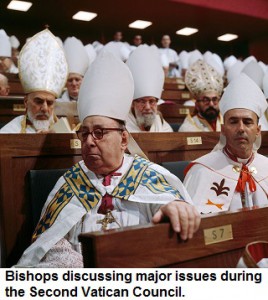
There was an earlier Papal Bull that sealed the fate and would prejudice the African Diaspora for 500 years. The African Slave Trade and institution of “Slavery” was legally predicated on a Papal Bull from Pope Innocent VIII (Giovanni Battista Cybo) in 1491; just months before Christopher Columbus’s historic first voyage. Consider this encyclopedic reference:

“In his book “Black Africans in Renaissance Europe”, principal author N. H Minnich*described how the position of Renaissance popes towards slavery, a common institution in contemporary cultures, varied. The book states that those who allowed the slave trade did so in the hope of gaining converts to Christianity.[11] But in the case of Pope Innocent VIII, he permitted trade with Barbary # merchants, in which foodstuffs would be given in exchange for slaves who could then be converted to Christianity.[11]
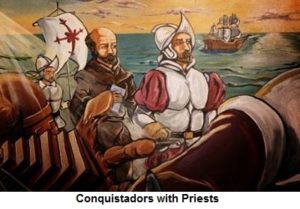
This commentary continues this 5-part series on European Reckoning. This entry is 4 of 5 in this series from the movement behind the Go Lean book in consideration of the past, present and future of White-Christian European interactions. While this series is on reconciling the European experience, previous submissions addressed European economic leadership. This submission however asserts that the conduct of the Christian-side of White-Christian-European history has been worthy of indictment and the European institutions need to be held to account. Even though the New World and the Caribbean were established by European military power – see Appendix below – the Church was aligned and complicit. The other commentaries in the series are cataloged as follows:

  1. European Reckoning: IMF Apologies
  2. European Reckoning: China seeks to de-Americanize the world’s economy
  3. European Reckoning: Settlers -vs- Immigrants
  4. European Reckoning: Christianity’s Indictment
  5. European Reckoning: Black “Greco-Roman” Wrestler victimized for his hair

The previous submissions in this series established that the US is an extension of the European New World experience. The European Great Powers are identified as the Western Alliance along with the North American countries of the US and Canada. While it is easy to accept the premise that the ancient European value system in the New World was flawed, surely today’s experiences are better, right?

Not so fast! (Notice the statements about White Christian Countries by Russian President Vladimir Putin in the Appendix VIDEO below).

The current governing administration in the US, under President Donald Trump, has revealed the continuation of White-Christian-European religious hypocrisy. If not the rest of the world, Caribbean society at least should reckon with this actuality. See this news-opinion article here:

Title – Opinion: Conservative Christians Were The Political Pawns Of 2018
By: Brandi Miller, Columnist

To mark the end of 2018, we asked writers to revisit some of the year’s most noteworthy (for good or evil) events, people and ideas. See the other entries here between now and the new year.

This year, many have found themselves playing the role of political pawns, manipulated to perpetuate political agendas. And President Donald Trump has been the chess master.

From using asylum-seekers in the migrant caravans to push forward violent immigration policy to gathering Black pastors and people like Kanye West to appear sympathetic toward and popular in communities of color, the Trump administration seems to see all people as movable pieces on a game board serviceable to his political agendas.

While most have been forced into being pawns through circumstance and systemic oppression, conservative Christians have voluntarily chosen the role of being the most manipulatable people in the game. These Christians have been politically duped by Trump, who promised movement on their issues of deepest concern without actually following through in significantly measurable ways.

“Some Christians will go to any length to gain and maintain political power, sacrificing Jesus’ values of inclusion and justice.”

If 2017, the first year of Trump’s term, was a year of hype and of creating the illusion of a Christian nation, 2018 has been the year that Trump used his pawns to do his bidding, even at the expense of real Christian values. During his campaign, he promised to defund Planned Parenthood, and in doing so, solidified a conservative Christian base. “Every life is sacred, and . . . every child is a precious gift from God,” Trump declared. “We know that every life has meaning and that every life is totally worth protecting.”

Yet Trump’s administration has made it painfully clear that he doesn’t care about life at all; he simply cares about maintaining a base. He has put children in cages at the border, disregarded the value of Black lives, desecrated Native land with the Keystone XL pipeline, oppressed trans people in the military and regularly dehumanized people through his petulant Twitter tirades.

When Trump needed people to support militarization at the border, he manipulated the traditional values of protecting your family, when he needed to exclude people from predominantly Muslim countries, he leveraged Christian fear about freedom of all other religions. Culminating in the Religious Liberty Task Force introduced by former Attorney General Jeff Sessions, the Trump administration has catered to its Christian constituency with a track record of either ignoring or demonizing other people of faith and simultaneously elevating and espousing (politicized) “Christian values.”

When he wanted to put Brett Kavanaugh on the Supreme Court despite the sexual assault allegations the judge faced, Trump leaned on pro-life values that would appeal to his Christian base. And when he continuously violates all morals and ethics in his personal life, character and communication, he is able to rely on the notion of forgiveness, grace, or Christians choosing to put up with his lesser evils as long as their political motivations are legitimized and backed.

“Trump will continue to be a chess master, moving Christians toward the death of their integrity and the increase of his own power.”

This administration floats on hollow promises and grandiose rhetoric. Trump is a political siren, singing and swaying Christians away from the values of Jesus with the promise of single-issue victories on abortion, religious freedom and a seat at the political table. They seem plenty happy to go along with Trump, to the death of their integrity and the witness they so claim to desire.

It has become more and more clear that some Christians will go to any length to gain and maintain political power, sacrificing Jesus’ values of inclusion and justice in exchange for a front-row seat at this administration’s circus of oppressive activity. The sad irony is that members of Trump’s evangelical Christian base are the least powerful pieces on this political chessboard, mere pawns used to spread Trump’s message of hate and oppression.

Jesus warned against gaining the world and losing your soul, but some Christians have sold out the real Jesus in exchange for American political prestige and acclaim. Until they believe that Jesus himself is worth more than their ideas about him, Trump will continue to be a chess master, moving Christians toward the death of their integrity and the increase of his own power.

——–

Brandi Miller is a campus minister and justice program director from the Pacific Northwest. 

Source: HuffingtonPost Online News – Posted December 29, 2018; retrieved January 20, 2018 from: https://www.huffingtonpost.com/entry/opinion-trump-conservative-christians_us_5c267b7de4b08aaf7a9044e4?%20fbclid=IwAR39fH9McWvQGWd0mGs7lly7F8sj3JFAvuS5GzjbAcPscj7rRAhAaLw-60w

The movement behind the Go Lean book has addressed this issue – religious hypocrisy – in previous blog-commentaries. Consider these prior submissions:

https://goleancaribbean.com/blog/?p=16477 Transforming Hindus versus Women – What it means for us?
Hinduism, Christianity, Islam and other religions have been guilty and failed to protect their congregants and adherents from the bad orthodoxies in their communities! The new Caribbean must do better.
https://goleancaribbean.com/blog/?p=16172 A Lesson in History: Jonestown, Guyana

40 years ago – 1978 – a religious atrocity transpired on Caribbean soil; this was the mass-murder/suicides of over 900 people in Jonestown, Guyana.

https://goleancaribbean.com/blog/?p=15998 Good Governance: The Kind of Society We Want
The kind of society we want to live in is even better than what was/is prescribed by Christian institutions; we want our vulnerable citizens to be protected from “Bad Actors” in our society. This must mean “Good Governance” at a standard beyond the status quo of what was provided by the nominal Christian standards left here by the Europeans.
https://goleancaribbean.com/blog/?p=15580 Caribbean Unity? Religion’s Role: False Friend
The Church has NOT been a uniting force … for good in the Caribbean region. All the European colonizers brought their own national religions that did not promote the Greater Good for the region.
https://goleancaribbean.com/blog/?p=14633 Nature or Nurture: Women Have Nurtured Change
Despite the religious orthodoxy and discouragement – “Natural Law” philosophy inherited from Imperial Europe – women have forged change in society; they have effectively applied pressure to all engines of society. The Caribbean needs to encourage and invite more women’s participation for change.
https://goleancaribbean.com/blog/?p=13579 Colonialism’s Bloody History Revisited
The bloody history of European (and American) colonialism have been revisited in modern times again and again. There must be a strenuous effort to dissuade societal defects and orthodoxies. (Colonialism is not dead with 18 Overseas Territories in the Caribbean region).
https://goleancaribbean.com/blog/?p=11224 ‘Loose Lips Sink Ships’ – Leaders Undermine Tourism
Christian leaders in Caribbean communities are projecting “a Climate of Hate” towards certain minority groups. This is so bad that it undermines the tourism products and community economics.
https://goleancaribbean.com/blog/?p=11048 Managing the ‘Strong versus the Weak’ – Model of Hammurabi
The old “Code of Hammurabi” – “that the strong should not harm the weak” was not considered in the New World because of the assumption of Christian principles. But it turns out that our region went backwards instead of forward. Time to return to a protect-the-weak stance.
https://goleancaribbean.com/blog/?p=10216 Waging a Successful War on Orthodoxy
It takes a real battle to undo bad standards and orthodoxies in society – many of them religious.
https://goleancaribbean.com/blog/?p=9766 Rwanda’s Catholic bishops apologize for genocide
The Church was not a force for moral good in modern society … in Africa nor the Caribbean. The Bishops in Rwanda owned up and apologized for their complicity in their 1990’s genocide.
https://goleancaribbean.com/blog/?p=9038 Charity Management: Grow Up Already!
The Caribbean is urged to mature and handle its own Charity Management rather than submitting to faith-based NGO’s with shady track records.
https://goleancaribbean.com/blog/?p=5462 In Search Of The Red Cross’ $500 Million In Haiti Relief
The Red Cross is a quasi-Christian organization; they abused their power by collecting $500 Million for Haiti’s Earthquake Relief/Recovery and misappropriating the funds.
https://goleancaribbean.com/blog/?p=809 Muslim officials condemn abductions of Nigerian girls
The Islamic religious orders also have a bad track record for protecting their vulnerable populations.

For the Caribbean and the rest of the world, European-based Christian churches have not been a model for good behavior and character development that we needed to elevate and empower our society. For the Way Forward, our ideals must be Greater. The Go Lean book specified the required “Separation of Church and State” mantra that is embedded in the implied Social Contract. The Go Lean book defines (Page 170) the Social Contract as follows:

“Citizens surrender some of their freedoms and submit to the authority of the State in exchange for protection of remaining natural and legal rights”.

The book Go Lean … Caribbean asserts that the Greater Good community ethos – underlying sentiment that informs the beliefs, customs, or practices – would be better to promote in the Caribbean region, rather than some hypocritical European religious creed. The formal Greater Good ethos can be pursued despite any religiosity. This book defines this Greater Good community ethos as follows (Page 37):

“It is the greatest good to the greatest number of people which is the measure of right and wrong”. – British Philosopher and Social Reformer Jeremy Bentham (1748-1832)

Reconciling and reckoning European history in the Caribbean leads us to the conclusion that there is the need to double-down in reforming and transforming the Caribbean homeland. Our efforts for the Way Forward must be better than the previous European models – based on Christian orthodoxy – and better than the American model – Donald Trump has revealed the true American priorities and it is not us. We must simply be better. The book Go Lean … Caribbean provides a full roadmap; one with empowerments, strategies and tactics to elevate the societal engines of the Caribbean homeland.

Yes, we can do better; we can make the Caribbean, our homeland, a better place to live, work and play. 🙂

About the Book
The book Go Lean…Caribbean serves as a roadmap for the introduction and implementation of the technocratic Caribbean Union Trade Federation (CU), for the elevation of Caribbean society – for all member-states. This CU/Go Lean roadmap has these 3 prime directives:

  • Optimization of the economic engines in order to grow the regional economy to $800 Billion and create 2.2 million new jobs.
  • Establishment of a security apparatus to ensure public safety and protect the resultant economic engines.
  • Improve Caribbean governance to support these engines, including a separation-of-powers between the member-states and CU federal agencies.

The Go Lean book provides 370-pages of turn-by-turn instructions on “how” to adopt new community ethos, plus the strategies, tactics, implementations and advocacies to execute so as to reboot, reform and transform the societal engines of Caribbean society.

Download the free e-Book of Go Lean … Caribbean – now!

Who We Are
The movement behind the Go Lean book – a non-partisan, apolitical, religiously-neutral Community Development Foundation chartered for the purpose of empowering and re-booting economic engines – stresses that reforming and transforming the Caribbean societal engines must be a regional pursuit. This was an early motivation for the roadmap, as pronounced in the opening Declaration of Interdependence (Page 12):

xi. Whereas all men are entitled to the benefits of good governance in a free society, “new guards” must be enacted to dissuade the emergence of incompetence, corruption, nepotism and cronyism at the peril of the people’s best interest. The Federation must guarantee the executions of a social contract between government and the governed.

xii. Whereas the legacy in recent times in individual states may be that of ineffectual governance with no redress to higher authority, the accedence of this Federation will ensure accountability and escalation of the human and civil rights of the people for good governance, justice assurances, due process and the rule of law. As such, any threats of a “failed state” status for any member state must enact emergency measures on behalf of the Federation to protect the human, civil and property rights of the citizens, residents, allies, trading partners, and visitors of the affected member state and the Federation as a whole.

Sign the petition to lean-in for this roadmap for the Caribbean Union Trade Federation.

—————

Appendix – The Guianas Historic Timeline  
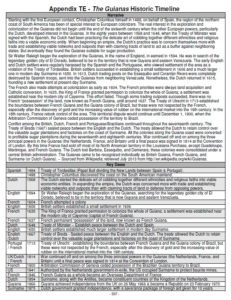
Source: Go Lean … Caribbean book – Page 307

—————

Appendix VIDEO – Putin: US Not A White Christian Country Anymore – We Europeans Need To Preserve Our Culture – https://youtu.be/h4YfPbvL9Gk

Russia Insight

Published on Oct 18, 2017

Subscribe to Russia Insight https://www.youtube.com/c/RussiaInsig…

Share this post:
, , ,

European Reckoning – Settlers -vs- Immigrants

Go Lean Commentary

I have an older brother …

… he was born in 1962 while I was born in 1963. He is actually 18 months ahead of me. But for much of my youth, those 6 months every year after my birthday and before his, I felt as if I was catching up with him – being only 1 year behind. Then his birthday comes, and I was reminded that I can never really catch him. (This was the mind of a 4-year old boy).

There are a lot of things in life that are like this: We can get close but never quite catch up. One realizes that this is the same with immigrating to the United States. Despite being a Nation of Immigrants (NOI), new ones can never catch up with the Settlers. Consider the historicity of this distinction in the Appendix article below; composed by a “conservative” lawyer and published by the American Conservative Organization. (Conservatives are in contrast to liberals; while all conservatives are not racists, all racists are conservatives).

Yes, under the law (de jure), there is no difference between a First Generation American citizen and a Third Generation (or more) American citizen, but in reality (de facto) American society never really considers “you” as an Immigrant to be a full American.

Listen up you Black-and-Brown people of the Caribbean, yearning to emigrate to the US. You will never be a settler. Accepting this reality may dampen the “Welcome Sign” to those who aspire for an American life.

The movement behind the book Go Lean…Caribbean highlights the “Push and Pull” reasons why Caribbean people leave their homeland:

Push” refers to people who feel compelled to leave, to seek refuge in a foreign land. “Refuge” is an appropriate word; because of societal defects, many from the Caribbean must leave as refugees – think LGBTDisabilityDomestic-abuseMedically-challenged – for their life, liberty and pursuit of happiness. For these people, they are “on fire” and need to stop-drop-and-roll.

Pull”, on the other hand refers to the lure of a more prosperous life abroad; many times our people are emigrating for economics solely.

This is a Hot Topic today as Immigration Policy is all the rage. The current President of the US, Donald Trump, wants to curtail immigration into his country for the Black-and-Brown from Latin America and the Caribbean (LAC). In fact, as of this date, there is a Federal Government Shutdown as Mr. Trump would not approve an appropriations bill (budget) unless there is funding for his “Wall” along the 2,000-mile southern border with Mexico. He has even vocally advocated for a different immigration policy that invites people from North-West Europe while discouraging African and LAC people, derisively calling these ones as coming from “shit-hole” countries.

In addition, consider this AUDIO-Podcast here, which details the complexities of this issue: Settlers or Immigrants – The Historicity of Immigration in the United States. Listen here:

AUDIO-Podcast – How The 1965 Immigration Act Made America A Nation Of Immigrants – https://www.npr.org/2019/01/16/685819397/how-the-1965-immigration-act-made-america-a-nation-of-immigrants

Heard on Fresh Air

Published on January 16, 2019 – For many years, U.S. immigration favored immigrants from northern Europe. NPR correspondent Tom Gjelten explains how a 1965 law changed things — and led to the current debate about border security.

This foregoing AUDIO-Podcast conveys a consistent point: America was settled by Europeans (British, Dutch, French and German) founders; everyone else are immigrants. The immigrant legacy will NEVER catch up to the settler legacy. (The same as catching up to an older brother’s age). America is an European enclave. The rest of the world must reckon with this.

This commentary continues a 5-part series on European Reckoning. This entry is 3 of 5 in this series from the movement behind the book Go Lean … Caribbean in consideration of the past, present and future of European interactions. While this series is on reconciling the European experience, this submission is on the White European history of the US. Even though the Caribbean was settled and organized by European powers, the same as the US, the lack of organizational efficiency in the Caribbean is a glaring concern. We have 30 member-states in the Caribbean region and yet, there is no coordinated regional stewardship of the economic, security and governing concerns of our communities. The other commentaries in the series are cataloged as follows:

  1. European Reckoning: IMF Apologies
  2. European Reckoning: China seeks to de-Americanize the world’s economy
  3. European Reckoning: Settlers -vs- Immigrants
  4. European Reckoning: Christianity’s Indictment
  5. European Reckoning: Black “Greco-Roman” Wrestler victimized for his hair

In the first two submissions in this series, the European Great Powers were also identified as the Western Alliance. The world economic eco-system is based on this White/Christian European and North American (US & Canada) legacy. Despite the larger population in the world, the goal of so many Asian, African or Latin American people is to get to these nations – sometimes at the risk of death – and to engage the societal engines there. Despite any success in places like Europe and the US, the reality is the same: Immigrants are not settlers; only a second-class citizenship status will ever be accorded to them.

For the Caribbean, the Go Lean book distinguishes that America or Western Europe is not home for them. If we must seek refuge there, go … but remember to return home at some point; the sooner the better. These foreign shores will welcome your labor, but may never consider you as equal brothers-sisters. In their minds and hearts you are “Less Than“.
Considering the “Push and Pull” factors above, the purpose of this commentary is to lower the “Pull” reasons. While we must work on the “Push” factors ourselves, it does improve our prospects if our citizenry do not feel like “the grass is greener on the other side”. If they know that if they emigrate they can never catch up with the settlers, they may not welcome the  immigrant status. They may be more inclined to try to prosper where planted in the Caribbean homeland.

The reality of our Caribbean Diaspora in these foreign lands – the US in particular – have been elaborated upon in many previous Go Lean commentaries; see a sample list here:

https://goleancaribbean.com/blog/?p=16395 The Caribbean – A People or A Place?
It is limited how much Caribbean culture can be exported away from the homeland.
https://goleancaribbean.com/blog/?p=15121 ‘Time to Go’ – America’s Racist History of Loitering
The blatant racists were defeated militarily (Civil War) so their spirit of racial superiority simply rose again. They took out their angst on the Black community, exploiting every appearance of loitering in Southern communities. Even today, the Cop-on-Black shootings are indicative of this bad community ethos.
https://goleancaribbean.com/blog/?p=14746 Calls for Repatriation Strategy
The Caribbean region has suffered from acute societal abandonment to the point that there is the need to reverse the trend and urge people to return, to repatriate.
https://goleancaribbean.com/blog/?p=14413 Repairing the Breach: ‘Hurt People Hurt People’

When the Black-and-Brown populations of the Caribbean emigrate to the foreign lands, they live among the Black-and-Brown native populations. After long periods of oppression and repression, these communities have higher crime rates, drug usage and other abusive behaviors.

https://goleancaribbean.com/blog/?p=14087 Opioids and the FDA – ‘Fox guarding the Henhouse’
Due to lax FDA’s oversight, pharmaceutical companies seem to have free reign with dispensing addictive drugs on their populations. Even Caribbean Diaspora members have been victimized.
https://goleancaribbean.com/blog/?p=11420 ‘Black British’ and ‘Less Than’
A Black person speaking with a British accent gets more respect than a Black person speaking with a Caribbean slang or a ‘Hip-hop’ /‘Jive’ dialect. But even in Great Britain, accent or none, Blacks are still treated as “Less Than“.
https://goleancaribbean.com/blog/?p=13213 ‘Pulled’ – Despite American Guns
The US is the richest, most powerful democracy in the history of the world, but this country has some societal defects: guns, in addition to “Institutional Racism” and Crony-Capitalism. Yet still, Caribbean people flee there.
https://goleancaribbean.com/blog/?p=10654 Stay Home! Immigration Realities in the US
There are many people in the US that are not so welcoming to new immigrants. They protest in words and deeds to sour the experience for our Diaspora living there.
https://goleancaribbean.com/blog/?p=10494 A Lesson In History – Ending the Military Draft
The end of the draft in the US started the bad trend for Caribbean emigration to America – no need to sacrifice sons to the “Altar of War”.
https://goleancaribbean.com/blog/?p=1773 Miami’s Caribbean Marketplace Re-opens
The American immigrant experience is one of eventual celebration, but only after a “long train of abuses”: rejection, anger, protest, bargaining, toleration and eventual acceptance. While the experience in Miami today is one of celebration, and Miami does profit from this Caribbean Diaspora, their social disposition will never exceed the immigrant status – never a “settler”.

Caribbean people have fled their homeland. Our abandonment rate is atrocious, with one report estimating that 70 percent of our professional classes have emigrated and now live abroad. It is time now to conduct a reckoning with our European (and American) destinations – they are not home. Quite simply, the reference to “European” is a de facto reference to White-Christian. So we can never be settlers; we can never catch up in Americanism, since it is based not just on timeline, but also race.

So the solution for Caribbean people to elevate their lives and societal disposition is to double-down in reforming and transforming our Caribbean homeland. Now is the time for the Caribbean region to lean-in to this roadmap for the Caribbean Union Trade Federation, as described in the book Go Lean … Caribbean. The roadmap includes the empowerments, strategies and tactics to elevate the societal engines of the Caribbean homeland.

Yes, we can … make the Caribbean, our homeland, a better place to live, work and play. 🙂

About the Book
The book Go Lean…Caribbean serves as a roadmap for the introduction and implementation of the technocratic Caribbean Union Trade Federation (CU), for the elevation of Caribbean society – for all member-states. This CU/Go Lean roadmap has these 3 prime directives:

  • Optimization of the economic engines in order to grow the regional economy to $800 Billion and create 2.2 million new jobs.
  • Establishment of a security apparatus to ensure public safety and protect the resultant economic engines.
  • Improve Caribbean governance to support these engines, including a separation-of-powers between the member-states and CU federal agencies.

The Go Lean book provides 370-pages of turn-by-turn instructions on “how” to adopt new community ethos, plus the strategies, tactics, implementations and advocacies to execute so as to reboot, reform and transform the societal engines of Caribbean society.

Download the free e-Book of Go Lean … Caribbean – now!

Who We Are
The movement behind the Go Lean book – a non-partisan, apolitical, religiously-neutral Community Development Foundation chartered for the purpose of empowering and re-booting economic engines – stresses that reforming and transforming the Caribbean societal engines must be a regional pursuit. This was an early motivation for the roadmap, as pronounced in the opening Declaration of Interdependence (Pages 12 – 13):

xi. Whereas all men are entitled to the benefits of good governance in a free society, “new guards” must be enacted to dissuade the emergence of incompetence, corruption, nepotism and cronyism at the peril of the people’s best interest. The Federation must guarantee the executions of a social contract between government and the governed.

xix. Whereas our legacy in recent times is one of societal abandonment, it is imperative that incentives and encouragement be put in place to first dissuade the human flight, and then entice and welcome the return of our Diaspora back to our shores. This repatriation should be effected with the appropriate guards so as not to imperil the lives and securities of the repatriated citizens or the communities they inhabit. The right of repatriation is to be extended to any natural born citizens despite any previous naturalization to foreign sovereignties.

xx. Whereas the results of our decades of migration created a vibrant Diaspora in foreign lands, the Federation must organize interactions with this population into structured markets. Thus allowing foreign consumption of domestic products, services and media, which is a positive trade impact. These economic activities must not be exploited by others’ profiteering but rather harnessed by Federation resources for efficient repatriations.

Sign the petition to lean-in for this roadmap for the Caribbean Union Trade Federation.

——————-

Appendix – Title: The Nation of Immigrants Myth
By: Howard Sutherland

“We are a nation of immigrants.”

It is every American politician’s incantation, usually prefatory to some shibboleth lauding “strength in our diversity.” The creed of America as nation-of-immigrants (hereafter the “NOI creed”) is now unquestioned by Americans and foreigners alike.

The NOI creed’s assertion of national rootlessness justifies official multiculturalism and mass immigration. American schoolchildren are taught that the Statue of Liberty is a monument to immigration and that e pluribus unum on our currency celebrates the melting pot. Deutsche Bank recently published an analyst’s report, by a Polish immigrant in New York, lamenting a perceived rise in anti-immigration sentiments in the United States and instructing us that here “actually everybody is an immigrant,” so restricting immigration “would be devastating and virtually unthinkable.”

The creed is a half-truth but useful to social engineers transforming this country in ways alien to our history and heritage. Immigrants in the millions have come to the United States, most in waves beginning in the 1840s. Many immigrants and their descendants have contributed mightily to America. Others have contributed to the crime statistics. Some tried America, then went home. Nevertheless, the NOI creed is literally false: Despite thirty-plus years of mass immigration set off by the Immigration Reform Act of 1965, the vast majority of Americans are still American-born children of American-born parents. It is also historically false: Scores of millions of Americans are neither immigrants nor descendants of immigrants.

As for the Statue of Liberty, it is a gift from France to honor the centennial of American independence. Emma Lazarus’ “Give me your tired…”—a cri-de-coeur against Russian pogroms—is a later add-on. E pluribus unum explicitly commemorates the union of thirteen British colonies into one nation. The statue and the motto do not celebrate immigration; they salute the achievement of the settlers who founded those colonies and, in time, won independence from their Mother Country. It was the settlers’ nation, not empty wilderness, that later gave immigrants a new home.

To test the truth of the NOI creed, ask what a true nation of immigrants would be. Absent a founding group or majority, it would be no nation at all, but a random gathering of people of assorted races, religions, and nationalities, united only by their presence in the same land. With no native culture to provide national unity, the population would tend to fragment on racial and ethnic lines, ensuring division and strife as groups pursue their interests at each other’s expense. That may be our multicultural future. It is not the American past.

American history is the story of a varied nation with a distinct founding culture, one that remained dominant while assimilating—and being subtly changed by—later arrivals. That American culture is British, largely English, in origin, traditions, and religion. This article’s language is one small example.

By 1776, British colonists—mostly English, but with strong Scottish, Welsh, and Irish contingents, along with New York’s Dutch colonials and later German arrivals—had created an American branch of British civilization. At the time of the Declaration of Independence, they were long-settled: almost 170 years in Virginia, over 150 in Massachusetts. At great effort—and at the expense of the Indians they uprooted and the African slaves they imported—colonial Americans formed a nation in their own image. The diversity of their settlements reflected the variety of their British origins. David Hackett Fischer’s magisterial Albion’s Seed traces four great British colonial migrations that leave their mark still: Puritans from East Anglia to New England, Cavaliers from the West Country to Virginia, Quakers from the Midlands to the Delaware, and northern Britons, including the Scots-Irish, to the American backcountry.

Revolutionary Americans, the United States’ founders, were fairly homogeneous: 80 percent of British origin (60 percent English, 20 percent Scottish and Scots-Irish), most of the rest Dutch and German—the great majority American-born. Overwhelmingly Christian, 98 percent were Protestants. (Not included in these percentages are American Indians, who had no part in the political life of the colonies, and African slaves and freemen, who were largely excluded from political and social life.) These descendants of colonial settlers were American natives, if by America we mean the United States.

Samuel Huntington makes a useful distinction between the settlers of a country and immigrants to it. It helps answer whether the United States is truly a nation of immigrants or an organic nation with an ethnic and cultural core: a nation of the settlers’ posterity augmented by immigrants and their posterity. In Huntington’s words:

Immigrants are people who leave one country, one society, and move to another society. But there has to be a recipient society to which the immigrants move. In our case, the recipient society was created by the settlers who came here in the 17th and 18th centuries. … They came in groups to create new societies up and down the Atlantic seaboard. They weren’t immigrating to some existing society; indeed, they often did whatever they could to destroy whatever existed here in the way of Indian society. … It was [the settlers’ Anglo-Protestant] society and culture that…attracted subsequent generations of immigrants to this country.

One demographic study concluded that, had there been no immigration after 1790, the settlers’ posterity alone—including African slaves’ and freemen’s descendants—would have grown by 1990 to approximately half the size of the actual population, which implies roughly half of Americans still have roots in the founding stock whose existence the NOI creed denies.

The federal structure the Founding Fathers erected for the United States is firmly grounded in their British heritage and American experience. No surprise: they were overwhelmingly of British descent, mostly English. Those who signed the Declaration and the Constitution knew of Locke and Enlightenment philosophes but knew their native law best: the English Common Law. Common Law remains the bedrock of every state’s law, with the unique exception of Louisiana. The rights of Englishmen were the animating spirit of the Bill of Rights, meant to secure them more effectively in America than they often were in England.

Despite the evidence of American history, the NOI creed is entrenched, as is its corollary: the idea that the United States is a “propositional nation” with no ethnic basis, defined entirely by allegiance to the Declaration’s propositions. It is worth asking why. Acknowledging that America is a nation like others, with a native stock and traditions, does not deny the contributions of millions of immigrants and their descendants. Nor does it imply that Americans of immigrant descent are somehow lesser citizens. American success is the work of settler and immigrant alike. The propositional nation idea, that America’s British origins are immaterial to our national character, is also a half-truth. One has only to look at Mexico or Brazil to see how differently Spanish and Portuguese settler nations developed. An America that abandons its heritage and founding culture will be a different, and poorer, place. As Russell Kirk put it: “So dominant has British culture been in America, north of the Rio Grande, from the seventeenth century to the present (1993), that if somehow the British elements could be eliminated from all the cultural patterns of the United States—why Americans would be left with no coherent culture in public or in private life.”

Why, then, such pressure to pretend that the United States is not really a country but an inhabited idea? One reason may be the attractiveness of the propositional nation idea to immigrant groups that do not want to feel second-class next to the natives. A benign motive but unnecessary: the United States accords no preference to settlers’ descendants. Another is that the NOI, dedicated to a democratic proposition, provides a pretext for foreign interventionism: is it not the highest calling of such a state to democratize, through conquest and occupation if necessary, the less-fortunate rest of the world whence its immigrant-citizens came?

America’s integrity is strained by multiculturalism, affirmative action, and mass immigration. The NOI creed is most convenient for those in government, ethnic pressure groups, and academia who want to cut America loose from her history and traditions to recast her as a multicultural mélange they can rule by distributing spoils to contending groups. In short, the creed has become a weapon for those who would dissolve America as it has evolved and replace it with something else. Those who would conserve this country need to know enough history to refute it.
__________________________________________

Howard Sutherland is an attorney in New York.

Source: The American Conservative – Posted November 18, 2002; retrieved January 18, 2019 from: https://www.theamericanconservative.com/articles/the-nation-of-immigrants-myth/

—————

About Us

The American Conservative exists to promote a “Main Street” conservatism that opposes unchecked power in government and business; promotes the flourishing of families and communities through vibrant markets and free people; and embraces realism and restraint in foreign affairs based on America’s vital national interests.

The American Conservative is a nonprofit, nonpartisan, 501(c)(3) organization that presents a measured, pertinent, principled conservatism for our time. We believe in constitutional government, fiscal prudence, sound monetary policy, clearly delineated borders, protection of civil liberties, authentically free markets, and restraint in foreign policy mixed with diplomatic acuity. We adhere closely to our institutional maxim: ideas over ideology; principles over party.

Source: Retrieved January 19, 2019 from: https://www.theamericanconservative.com/about-us/

Share this post:
, , , ,
[Top]

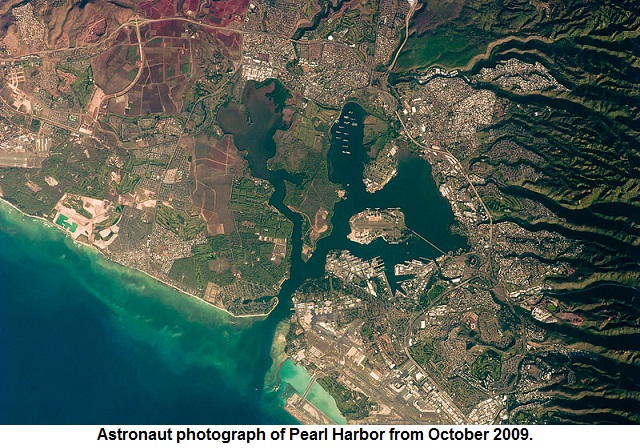
This Day in 1941: Pearl Harbor – ENCORE

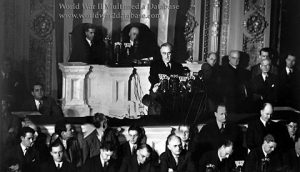
This day 77 years ago is a “day that will live in infamy”.
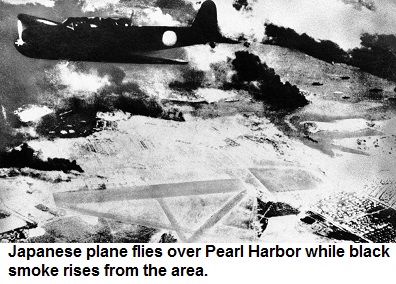
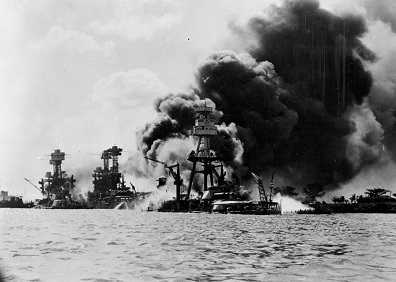
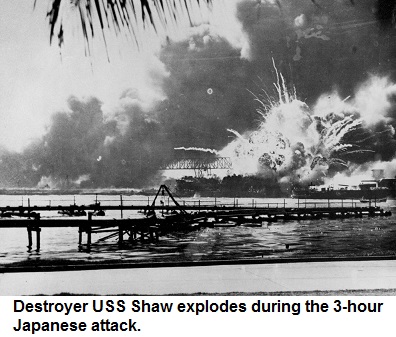
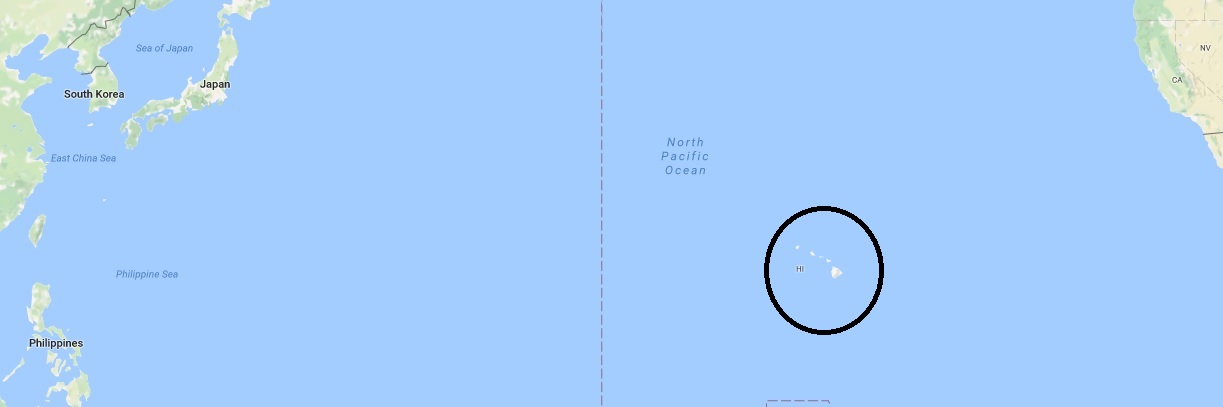
This is the anniversary of the Japanese attack on the United States Navy at Pearl Harbor, Hawaii. This event changed the world, as it ushered the US into World War II when they declared war against Japan the next day. Japan (Hirohito) was aligned with Germany (Hitler) and Italy (Mussolini), so by the US declaring war on Japan, the direct and immediate result was Germany and Italy declared war against the United States.

Germany, Italy, Japan, United States of America, …. these are just a sample of the countries involved in the conflict; it was a global war, the second one in 30 years.

There are a lot of lessons for the Caribbean in this history. This was the theme of this previous blog-commentary on December 7, 2016 during the 75th Anniversary commemoration. That entry is being Encored here-now, for the 2018 commemoration:

——————–

Go Lean Commentary – Lessons Learned from Pearl Harbor

What would you do if backed into a corner and there’s a threat on your life?

For many people their natural impulse is to come out fighting. They say that this is not aggression, rather just a survival instinct.

Believe it or not, this depiction describes one of the biggest attacks in American history: the Japanese Attack on Pearl Harbor. See VIDEO here:

VIDEO – World War II History: Attack on Pearl Harbor – http://www.history.com/topics/world-war-ii/world-war-ii-history/videos/attack-pearl-harbor

Retrieved December 7, 2016 from History.com – On December 7, 1941, Japan launches a surprise attack on American soil at Pearl Harbor.

cu-blog-lessons-learned-from-pearl-harbor-photo-2

cu-blog-lessons-learned-from-pearl-harbor-photo-3

cu-blog-lessons-learned-from-pearl-harbor-photo-4

This is the 75th Anniversary of that attack – a few days ago: December 7. That’s a lot of years and a lot of lessons. Still, 75 is a pretty round number, like 25, 50 and 100. This commentary has been reserved for now, a few days late on purpose because of the best-practice to “not speak ill of the dead” at a funeral or memorial service. But a “lessons learned analysis” is still an important exercise for benefiting from catastrophic efforts. After 75 years since the Pearl Harbor Attack on December 7, 1941, this post-mortem analysis is just as shocking as it was on this “day of infamy”.

Consider the details of this maligning article here (and the Appendices below); notice that it assumes a conspiracy:

Title: How U.S. Economic Warfare Provoked Japan’s Attack on Pearl Harbor
By: Robert Higgs

cu-blog-lessons-learned-from-pearl-harbor-photo-1Ask a typical American how the United States got into World War II, and he will almost certainly tell you that the Japanese attacked Pearl Harbor and the Americans fought back. Ask him why the Japanese attacked Pearl Harbor, and he will probably need some time to gather his thoughts. He might say that the Japanese were aggressive militarists who wanted to take over the world, or at least the Asia-Pacific part of it. Ask him what the United States did to provoke the Japanese, and he will probably say that the Americans did nothing: we were just minding our own business when the crazy Japanese, completely without justification, mounted a sneak attack on us, catching us totally by surprise in Hawaii on December 7, 1941.

You can’t blame him much. For more than 60 years such beliefs have constituted the generally accepted view among Americans, the one taught in schools and depicted in movies—what “every schoolboy knows.” Unfortunately, this orthodox view is a tissue of misconceptions. Don’t bother to ask the typical American what U.S. economic warfare had to do with provoking the Japanese to mount their attack, because he won’t know. Indeed, he will have no idea what you are talking about.

In the late nineteenth century, Japan’s economy began to grow and to industrialize rapidly. Because Japan has few natural resources, many of the burgeoning industries had to rely on imported raw materials, such as coal, iron ore or steel scrap, tin, copper, bauxite, rubber, and petroleum. Without access to such imports, many of which came from the United States or from European colonies in southeast Asia, Japan’s industrial economy would have ground to a halt. By engaging in international trade, however, the Japanese had built a moderately advanced industrial economy by 1941.

At the same time, they also built a military-industrial complex to support an increasingly powerful army and navy. These armed forces allowed Japan to project its power into various places in the Pacific and east Asia, including Korea and northern China, much as the United States used its growing industrial might to equip armed forces that projected U.S. power into the Caribbean and Latin America, and even as far away as the Philippine Islands.

When Franklin D. Roosevelt became president in 1933, the U.S. government fell under the control of a man who disliked the Japanese and harbored a romantic affection for the Chinese because, some writers have speculated, Roosevelt’s ancestors had made money in the China trade.[1] Roosevelt also disliked the Germans (and of course Adolf Hitler), and he tended to favor the British in his personal relations and in world affairs. He did not pay much attention to foreign policy, however, until his New Deal began to peter out in 1937. Afterward, he relied heavily on foreign policy to fulfill his political ambitions, including his desire for reelection to an unprecedented third term.

When Germany began to rearm and to seek Lebensraum aggressively in the late 1930s, the Roosevelt administration cooperated closely with the British and the French in measures to oppose German expansion. After World War II commenced in 1939, this U.S. assistance grew ever greater and included such measures as the so-called destroyer deal and the deceptively named Lend-Lease program. In anticipation of U.S. entry into the war, British and U.S. military staffs secretly formulated plans for joint operations. U.S. forces sought to create a war-justifying incident by cooperating with the British navy in attacks on German U-boats in the north Atlantic, but Hitler refused to take the bait, thus denying Roosevelt the pretext he craved for making the United States a full-fledged, declared belligerent—an end that the great majority of Americans opposed.

In June 1940, Henry L. Stimson, who had been secretary of war under Taft and secretary of state under Hoover, became secretary of war again. Stimson was a lion of the Anglophile, northeastern upper crust and no friend of the Japanese. In support of the so-called Open Door Policy for China, Stimson favored the use of economic sanctions to obstruct Japan’s advance in Asia. Treasury Secretary Henry Morgenthau and Interior Secretary Harold Ickes vigorously endorsed this policy. Roosevelt hoped that such sanctions would goad the Japanese into making a rash mistake by launching a war against the United States, which would bring in Germany because Japan and Germany were allied.

Accordingly, the Roosevelt administration, while curtly dismissing Japanese diplomatic overtures to harmonize relations, imposed a series of increasingly stringent economic sanctions on Japan. In 1939 the United States terminated the 1911 commercial treaty with Japan. “On July 2, 1940, Roosevelt signed the Export Control Act, authorizing the President to license or prohibit the export of essential defense materials.” Under this authority, “[o]n July 31, exports of aviation motor fuels and lubricants and No. 1 heavy melting iron and steel scrap were restricted.” Next, in a move aimed at Japan, Roosevelt slapped an embargo, effective October 16, “on all exports of scrap iron and steel to destinations other than Britain and the nations of the Western Hemisphere.” Finally, on July 26, 1941, Roosevelt “froze Japanese assets in the United States, thus bringing commercial relations between the nations to an effective end. One week later Roosevelt embargoed the export of such grades of oil as still were in commercial flow to Japan.”[2] The British and the Dutch followed suit, embargoing exports to Japan from their colonies in southeast Asia.

An Untenable Position
cu-blog-lessons-learned-from-pearl-harbor-photo-6
Roosevelt and his subordinates knew they were putting Japan in an untenable position and that the Japanese government might well try to escape the stranglehold by going to war. Having broken the Japanese diplomatic code, the Americans knew, among many other things, what Foreign Minister Teijiro Toyoda had communicated to Ambassador Kichisaburo Nomura on July 31: “Commercial and economic relations between Japan and third countries, led by England and the United States, are gradually becoming so horribly strained that we cannot endure it much longer. Consequently, our Empire, to save its very life, must take measures to secure the raw materials of the South Seas.”[3]

Because American cryptographers had also broken the Japanese naval code, the leaders in Washington knew as well that Japan’s “measures” would include an attack on Pearl Harbor.[4] Yet they withheld this critical information from the commanders in Hawaii, who might have headed off the attack or prepared themselves to defend against it. That Roosevelt and his chieftains did not ring the tocsin makes perfect sense: after all, the impending attack constituted precisely what they had been seeking for a long time. As Stimson confided to his diary after a meeting of the war cabinet on November 25, “The question was how we should maneuver them [the Japanese] into firing the first shot without allowing too much danger to ourselves.”[5] After the attack, Stimson confessed that “my first feeling was of relief … that a crisis had come in a way which would unite all our people.[6]

Source: The Independent Institute – Online Community – Posted: May 1, 2006; retrieved December 7, 2016 from: http://www.independent.org/newsroom/article.asp?id=1930
——–
See Appendices below for cited references and profiles of the Author and the Organization.

So this establishes why the Japanese may have been motivated to attack Pearl Harbor in the first place. The motivation seems more complicated than initially reported.

The Bible declares that:

“For there is nothing hidden that will not become manifest” – Luke 8:17

cu-blog-lessons-learned-from-pearl-harbor-photo-7

cu-blog-lessons-learned-from-pearl-harbor-photo-5

After 75 years, the before-during-after facts associated with the Pearl Harbor Attack should be available for full disclosure. What are the lessons here for the Caribbean and today’s effort to secure the Caribbean homeland while expanding the regional economy? We truly want to consider these main points, these lessons; (the hyperlinks refer to previous Go Lean commentaries):

Lessons

Territories have a status of disregard Hawaii (Pearl Harbor) and Philippines were attacked by the Japanese. These were both US Territories at the same. The levels of protection and preparedness for territories are sub-standard compared to the American mainland. As a result there was no meaningful plan for the air defense of Hawaii.
Colonialism is/was really bad Japan protested the sub-standard reality of the native Asians under the European colonial schemes. A people oppressed, suppressed and repressed would not remain docile forever; “that a downtrodden people would not stay down, that they would rise and revolt, that they would risk their lives and that of their children to pursue freedom.” – Go Lean book Page 251.
White Supremacy is/was a really bad construct The US Territories (Hawaii and Philippines) were not the first targets for Japan. They targeted all European colonies (British, French and Dutch) territories. Their campaign was to rail against White Supremacy.
Bullies only respond to a superior force Japan avail themselves of expansion opportunities in Far-East Asia as the European powers became distracted in the time period during and after World War I. (Manchuria in China was occupied by Japan starting in 1931). Only a superior force, the US, was able to assuage their aggression.
Economic Warfare can back a Government into a corner When the supply of basic needs (food, clothing, shelter and energy) are curtailed, a crisis ensues. When people are in crisis, they consider “fight or flight” options. Japan chose to fight; Caribbean people choose flight.
Societies can double-down on a bad Community Ethos Japan’s aggression was a direct result of their community ethos that honored Samurai warrior and battle culture. Men would walk the streets with their swords, ready for a challenge. On the other hand, the US (and Western Europe) community ethos of racism was so ingrained that the natural response in the US, post-Pearl Harbor, was to intern Japanese Americans in camps.
All of these bad community ethos were weeded out with post-WWII Human Rights reconciliations. – Go Lean book Page 220.
Double Standards are hard to ignore Japan felt justified in their Pacific aggression because of the US’s regional aggression in the Americas. Before Pearl Harbor, they withdrew from the League of Nations in protest of double standards.
Even after WWII, this double standard continues with countries with Veto power on the UN Security Council.
People have short memories There are movements to re-ignite many of the same developments that led to the devastation of WWII: right wing initiatives in Japan and Germany; Human Rights disregard for large minority groups (Muslims, etc.).
The more things change, the more they remain the same.

This discussion is analyzing the concept of “fight or flight”. According to Anthropologists, individuals and societies facing a crisis have to contend with these two options for survival. The very concept of refugees indicate that most people choose to flee; they choose internal displacement or refuge status in foreign countries. This point is consistent with the theme in the book Go Lean … Caribbean that this region is in crisis and as a result people have fled from their beloved homelands to foreign destinations in North America and Europe. How bad? According to one report, we have lost 70 percent of our tertiary-educated population.

Enough said! Our indictment is valid. Rather than flee, we now want the region to fight. This is not advocating a change to a militaristic state, but rather this commentary, and the underlying Go Lean book, advocates devoting “blood, sweat and tears” to empowering change in the Caribbean region. The book states this in its introduction (Page 3):

We cannot ignore the past, as it defines who we are, but we do not wish to be shackled to the past either, for then, we miss the future. So we must learn from the past, our experiences and that of other states in similar situations, mount our feet solidly to the ground and then lean-in, to reach for new heights; forward, upward and onward. This is what is advocated in this book: to Go Lean … Caribbean!

The Go Lean book serves as a roadmap for the introduction and implementation of the Caribbean Union Trade Federation (CU). One mission of this roadmap is to reduce the “push and pull” factors that contributes to the high emigration rates. For the most part the “push and pull” factors relate to the societal defects among the economic, security and governing engines. Another mission is to incentivize the far-flung Diaspora to consider a return to the region. Overall, the Go Lean roadmap asserts that the economy of the Caribbean is inextricably linked to the security of the Caribbean. The roadmap therefore proposes an accompanying Security Pact to accompany the CU treaty’s economic empowerment efforts. The plan is to cooperate, collaborate and confer with all regional counterparts so as to provide an optimized Caribbean defense, against all threats, foreign and domestic. This includes the American Caribbean territories (just like Pearl Harbor was on the American territory of Hawaii) of Puerto Rico and the US Virgin Islands. These American protectorates are included in this CU regional plan.

This CU/Go Lean regional plan strives to advance all of Caribbean society with these 3 prime directives:

  • Optimization of the economic engines in order to grow the regional economy to a $800 Billion Single Market by creating 2.2 million new jobs.
  • Establishment of a security apparatus to protect the resultant economic engines.
  • Improvement of Caribbean governance in support of these endeavors.

The Go Lean book stresses the effectiveness and efficiency of protecting life and property of all Caribbean stakeholders: residents, trading partners, visitors, etc.. This is why the book posits that some deployments are too big for any one member-state to manage alone – especially with such close proximities of one island nation to another – there are times when there must be a cross-border multi-lateral coordination – a regional partnership. This is the vision that is defined in the book (Pages 12 – 14), starting with these statements in the opening Declaration of Interdependence:

x. Whereas we are surrounded and allied to nations of larger proportions in land mass, populations, and treasuries, elements in their societies may have ill-intent in their pursuits, at the expense of the safety and security of our citizens. We must therefore appoint “new guards” to ensure our public safety and threats against our society, both domestic and foreign.

xii. Whereas the legacy in recent times in individual states may be that of ineffectual governance with no redress to higher authority, the accedence of this Federation will ensure accountability and escalation of the human and civil rights of the people for good governance, justice assurances, due process and the rule of law. As such, any threats of a “failed state” status for any member state must enact emergency measures on behalf of the Federation to protect the human, civil and property rights of the citizens, residents, allies, trading partners, and visitors of the affected member state and the Federation as a whole.

xvi. Whereas security of our homeland is inextricably linked to prosperity of the homeland, the economic and security interest of the region needs to be aligned under the same governance.

The Go Lean roadmap is not a call for a revolt against the governments, agencies or institutions of the Caribbean region, but rather a petition for a peaceful transition and optimization of the economic, security and governing engines in the region. To establish the security optimization, the Go Lean book presents a series of community ethos that must be adapted to forge this change. In addition, there are these specific strategies, tactics, implementation and advocacies to apply:

Community Ethos – new Economic Principles Page 21
Community Ethos – new Security Principles Page 22
Community Ethos – Minority Equalization Page 24
Community Ethos – Impacting the Greater Good Page 34
Strategy – Mission – Enact a Defense Pact to defend the homeland Page 45
Tactical – Fostering a Technocracy Page 64
Tactical – Homeland Security – Naval Operations Page 75
Tactical – Homeland Security – Militias Page 75
Implementation – Assemble – US Overseas Territory into CU Page 96
Implementation – Foreign Policy Initiatives at Start-up Page 102
Implementation – Security Initiatives at Start-up Page 103
Implementation – Ways to Promote Independence Page 120
Planning – Ways to Model the EU – Constructs after WW II Page 130
Advocacy – Ways to Better Manage the Social Contract Page 170
Advocacy – Ways to Improve Homeland Security Page 180
Advocacy – Ways to Mitigate Terrorism Page 181
Advocacy – Ways to Improve Intelligence Gathering Page 182
Advocacy – Ways to Enhance Tourism – Mitigate Risky Image Page 190
Advocacy – Ways to Improve Emergency Management Page 196
Advocacy – Ways to Preserve Caribbean Heritage Page 218
Advocacy – Ways to Impact US Territories Page 244

Now is the time to lean-in to this roadmap and “fight” for Caribbean change, as depicted in the book Go Lean…Caribbean. At this time, there are no State Actor adversaries – like Imperial Japan – seeking to cause harm to our homeland, but that status quo can change very quickly. Some Caribbean member-states are still de facto “colonies”, so enemies of our colonial masters – France, Netherlands, US, UK – can quickly “pop up”. We must be ready and on guard to any possible threats and security risks.

The movement behind the Go Lean … Caribbean book seeks to make this homeland a better place to live, work and play. Since the Caribbean is arguably the best address of the planet, tourism is a primary concern. So security here in our homeland must take on a different priority. Tourists do not visit war zones – civil wars, genocides, active terrorism, Failed-States and rampant crime. Already our societal defects (economics) have created such crises that our people have chosen to flee as opposed to “fight”. We do not need security threats as well; we do not need Failed-States. We are now preparing to “fight” (exert great efforts), not flee, to wage economic war to elevate our  communities.

This will not be easy; this is heavy-lifting, but success is possible. The strategies, tactics and implementations in the Go Lean roadmap are conceivable, believable and achievable. 🙂

Download the book Go Lean … Caribbean – now!

———–

Appendix A – Reference Notes:
1.  Harry Elmer Barnes, “Summary and Conclusions,” in Perpetual War for Perpetual Peace:A Critical Examination of the Foreign Policy of Franklin Delano Roosevelt and Its Aftermath (Caldwell, Id.: Caxton Printers, 1953), pp. 682–83.
2.  All quotations in this paragraph from George Morgenstern, “The Actual Road to Pearl Harbor,” in Perpetual War for Perpetual Peace, pp. 322–23, 327–28.
3.  Quoted ibid., p. 329.
4.  Robert B. Stinnett, Day of Deceit: The Truth about FDR and Pearl Harbor (NewYork: Free Press, 2000).
5.  Stimson quoted in Morgenstern, p. 343.
6.  Stimson quoted ibid., p. 384.

 ——-

Appendix B – About the Author:

Robert Higgs is a Senior Fellow in Political Economy at the Independent Institute and Editor at Large of the Institute’s quarterly journal The Independent Review. He received his Ph.D. in economics from JohnsHopkinsUniversity, and he has taught at the University of Washington, LafayetteCollege, SeattleUniversity, the University of Economics, Prague, and GeorgeMasonUniversity.

——-

Appendix C – About the Independent Institute:

The Independent Institute is a non-profit, non-partisan, scholarly research and educational organization that sponsors in-depth studies of critical social and economic issues.

The mission of the Independent Institute is to boldly advance peaceful, prosperous, and free societies grounded in a commitment to human worth and dignity.

Today, the influence of partisan interests is so pervasive that public-policy debate has become too politicized and is largely confined to a narrow reconsideration of existing policies. In order to fully understand the nature of public issues and possible solutions, the Institute’s program adheres to the highest standards of independent scholarly inquiry.
Source: http://www.independent.org/aboutus/

Share this post:
, , , ,
[Top]

In Defense of Trade – Currency Assassins: Real Threat

Go Lean Commentary

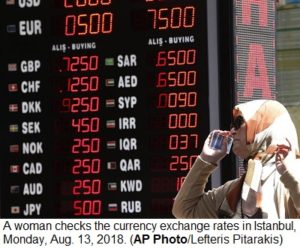
Want a good return on your investment? How about 45 percent? People have enjoyed these returns in the Foreign Currency Exchange (Fx) Markets.

Sounds appealing, right?!

This is why “they” do what “they” do. Currency Speculators & Vulture Capitalists that is! They can work their “Black Magic” and exploit vulnerable countries-currencies. Imagine the crime: “they” lend or borrow ill-advised monies requiring repayment in a foreign currency; then “they” manipulate supply and demand of the domestic currency against that foreign currency so as “to buy low and sell high”, at the expense of the foreign reserves maintained by a nation-state. Imagine hoarding the supply or artificially inflating the demand of the currency to manipulate a price increase. Boom! Instant profits.

This is the unrighteous work of Currency Assassins, Manipulators and/or Speculators. There are so many dangers of Speculative Attacks. Learn more here (in addition to the Appendix B VIDEO below):

In Economics, a speculative attack is a precipitous acquisition of some assets (currencies, gold, emission permits, remaining quotas) by previously inactive speculators. The first model of a speculative attack was contained in a 1975 discussion paper on the gold market by Stephen Salant and Dale Henderson at the Federal Reserve BoardPaul Krugman, who visited the Board as a graduate student intern, soon [1] adapted their mechanism[2] to explain speculative attacks in the foreign exchange market.[3]Source.

These ones, who practice these exploits are indeed Bad Actors.

The book Go Lean…Caribbean warns the region to be On Guard for Bad Actors … like these:

… history teaches that with the emergence of new economic engines, “bad actors” will also emerge thereafter to exploit the opportunities, with good, bad and evil intent. – Go Lean book Page 21.

This subject matter is not just academic; this happened for real, even to the large country of Great Britain/United Kingdom; this was the experience of the notorious Black Wednesday:

An example of this can be seen in the United Kingdom prior to the implementation of the Euro [currency] when European countries used a fixed exchange rate amongst the nations. The Bank of England had an interest rate that was too low while Germany had a relatively higher interest rate. Speculators increasingly borrowed money from the Bank of England and converted the money into the German mark at the fixed exchange rate. The demand for the British pound dropped so much that the exchange rate was no longer able to be maintained and the pound depreciated suddenly. Investors were then able to convert their German marks back into pounds at a significantly higher rate, allowing them to pay off their loans and keep large profits.

In a previous Go Lean Commentary, the dangers of currency speculation was identified and qualified:

Venezuela sues black market currency website in US
The Central Bank of Venezuela has filed a lawsuit in US courts against Miami-based entity DolarToday, alleging that this website undermines the Venezuelan bank, currency and economy by falsifying the country’s exchange rates.

Also, in another Go Lean Commentary, the dangers of Economic Assassins – Vulture Capitalists – were identified & qualified:

Beware of Vulture Capitalists
The term “vulture fund” is a metaphor, which can be considered a pejorative term, used to compare hedge funds to the behavior of vulture birds “preying” on debtors in financial distress by purchasing the now-cheap credit on a secondary market to make a large monetary gain, in many cases leaving the debtor in a worse state. …

This dire disposition of debt is … applies to many other communities, in North America, Europe (think Greece), Latin America and even in the Caribbean. …

The better the Credit Rating … the less of a chance to be limited to Vulture Capitalists.

Holy Cow! Economic Assassins; Vulture Capitalists; Currency Speculators; these are truly Bad Actors and a serious threat! Trade & economic stewardship is hard!
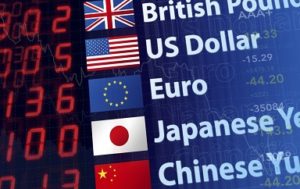
In truth, the book Go Lean…Caribbean calls this effort heavy-lifting, as it presents the strategies, tactics, implementations and advocacies to shepherd the Caribbean economy. The book serves as a roadmap for the introduction and implementation of the technocratic Caribbean Union Trade Federation (CU) and the aligning Caribbean Central Bank (CCB). Considering the branding, the emphasis is on trade . The CU/CCB will serve as integrated entities to shepherd the complexities for the region’s currency affairs.

This commentary is the final of a 5-part series (5 of 5) from the movement behind the Go Lean book in consideration of the subject “In Defense of Trade“. A discussion on currency is a discussion on trade. The focus is that for a new economic regime, Trade optimization must be coupled with optimization in monetary governance. The commentaries in the series are as follows:

  1. In Defense of Trade: China Realities
  2. In Defense of Trade: Macy’s Thanksgiving Parade Model – ENCORE
  3. In Defense of Trade: India BPO’s
  4. In Defense of Trade: Bilateral Tariffs – No one wins
  5. In Defense of Trade: Currency Assassins – Real Threat

No doubt, despite the identified dangers, there is the need to grow the Caribbean economy. We need the jobs, entrepreneurial opportunities, better educational and healthcare options that would arise because of the embrace of trade. So we must have “Guards at the Gate” to protect our homeland from all Bad Actors. This is the quest of the Go Lean movement. In fact, the books states this quest as prime directives. The prime directives are pronounced as the following statements:

  • Optimization of the economic engines in order to grow the regional economy to $800 Billion & create 2.2 million new jobs.
  • Establishment of a security apparatus to protect the resultant economic engines and mitigate challenges/threats to ensure public safety for the region’s stakeholders.
  • Improvement of Caribbean governance, including a separation-of-powers with member-states, to support these economic/security engines.

These prime directives reflect the best practice for managing Caribbean societal engines – economy, security and governance –  with an interdependent focus. This was pronounced at the outset of the book in the opening Declaration of Interdependence (Pages 10 – 13):

Preamble: … when a long train of abuses and usurpations, pursuing invariably the same object evinces a design to reduce them under absolute despotism, it is their right, it is their duty, to throw off such government, and to provide new guards for their future security.

x. Whereas we are surrounded and allied to nations of larger proportions in land mass, populations, and treasuries, elements in their societies may have ill-intent in their pursuits, at the expense of the safety and security of our citizens. We must therefore appoint “new guards” to ensure our public safety and threats against our society, both domestic and foreign. …

xvi. Whereas security of our homeland is inextricably linked to prosperity of the homeland, the economic and security interest of the region needs to be aligned under the same governance. Since economic crimes … can imperil the functioning of the wheels of commerce for all the citizenry, the accedence of this Federation must equip the security apparatus with the tools and techniques for predictive and proactive interdictions.

xxiv.   Whereas a free market economy can be induced and spurred for continuous progress, the Federation must install the controls to better manage aspects of the economy: jobs, inflation, savings rate, investments and other economic principles. Thereby attracting direct foreign investment because of the stability and vibrancy of our economy.

There must be New Guards to mitigate the Caribbean advance into trade. This is the charter of the CU Trade Federation. The vision is to provide the stewardship for the region’s economic engines, to optimize trade for intra-region and also extra-regional. This vision details some sound principles for adoption; consider this nugget from Page 129:

Caribbean Dollar
The Caribbean Dollar will be the medium of exchange for trade between CU member-states. There is no need to trade in any foreign currency (i.e. US$). In fact, the Caribbean Central Bank will control the monetary policies of the CU region. Any mis-management of US fiscal policies, often the case with Congress’ deficit spending, would not impede on the necessary trade of one Caribbean state to another.

The CCB will be empowered to intervene in the currency affairs of the region. This constitute the New Guards that will be watching the Caribbean regional marketplace. This is what Central Banks do – should do – and now there will be one for our region:

Currency intervention is a monetary policy operation which occurs when a government or central bank buys or sells foreign currency in exchange for their own domestic currency, generally with the intention of influencing the exchange rate and trade policy. Policymakers may have different reasons for currency manipulation, such as controlling inflation, maintaining international competitiveness, financial stability, etc. – Source

In the Caribbean we have a crisis that stems from our high societal abandonment rate. Every time we have had currency devaluation episodes, a consequence has been citizens fleeing away from their homelands. What is the cause of these episodes? Number 1 reason/answer: Currency Speculators … trying to exploit our vulnerabilities. See this evidence-sample:

  1. Barbados
    Like many small developing countries, Barbados’ capital markets are comparatively unsophisticated and protected by legislative and non-legislative barriers to capital flows. However, by imposing a simple Uncovered Interest Parity (UIP) condition, the counterfactual situation of free capital movements and efficient capital markets can be simulated. It is shown that in these conditions successful speculative attacks on the currency anchor would have occurred in times of macroeconomic disequilibrium. This paper is, therefore, supportive of those who, in the wake of the 1990s’ major financial, balance of payments and currency crises, have argued for a more cautious approach to financial and capital account liberalisation, particularly for those countries that have chosen to maintain a fixed currency arrangement.
    Source: Caribbean Development Bank Staff Working Paper May 2000; retrieved November 27, 2018 from: http://www.caribank.org/uploads/publications-reports/staff-papers/wkgppr_2_exchange_rates[1].pdf
  2. Jamaica
    This paper attempts to generate an empirical model aimed at predicting the timing and magnitude of currency depreciation forced by speculative attacks on Jamaica’s managed exchange rate system. The paper is grounded within a first generation approach (‘fundamentals approach’) to speculative attack modeling, which stresses the role played by weak economic fundamentals in inducing currency crises. –
    Source: Bank of Jamaica White Paper; “Estimation of Speculative Attach Models and the Implications for Macroeconomic Policy – 1990 to 2000“; published January 2001; retrieved November 27, 2018 from: http://www.boj.org.jm/uploads/pdf/papers_pamphlets/papers_pamphlets_Estimation_of_Speculative_Attack_Models_and_the_Implication_for_Macroeconomic_Policy.pdf
  3. Dominican Republic
    This paper examines the determinants of speculative attacks that occurred recently in the Dominican Republic, and proposes a series of indicators to serve as an early warning system for identifying vulnerable periods. The estimates were made using monthly data covering the period between January 1996 and June 2008. The results show that the proposed indicators have the ability to reasonably explain and predict the existence of a speculative attack.
    Source: Academic Paper – Pontificia Universidad Católica Madre y Maestra; “Pressure and speculative attacks on the foreign exchange market of the Dominican Republic“; published November 2008; retrieved November 27, 2018 from: https://www.researchgate.net/publication/254443014_Pressure_and_speculative_attacks_on_the_foreign_exchange_market_of_the_Dominican_Republic

Here in the Caribbean, we must learn …

Fool me once, shame on you; fool me twice same on me.

This Go Lean/CU roadmap is designed to address all of this societal engines: economic (monetary), security and governance. The Go Lean book – within its 370 pages – describes how a new Caribbean regime can be empowered to promote and protect trade. The solutions include adopting new community ethos; plus the execution of new strategies, tactics, and implementations to impact the regional economy.  Consider this one advocacy from the book, for optimizing Foreign Currency management. See the specific plans, excerpts and headlines on Page 154 under the title:

10 Ways to Better Manage Foreign Exchange

The Bottom Line on Foreign Exchange Markets

The foreign exchange market is the most liquid financial market in the world. [This is a recent history compared to international commerce in general, with most of the market structure being developed since World War II and after the abandonment of the gold standard. After WWII, the Bretton Woods Accord was signed allowing currencies to fluctuate within a range of 1% to the currencies par; then this structure was eclipsed in the 1970’s, ending fixed rates of exchange and bringing about eventually a free-floating currency system. After 40 years and more iterations, we now have the status quo].

Today, currency traders include large banks, central banks, institutional investors, currency speculators, corporations, governments, other financial institutions, and retail investors. The average daily turnover in the global foreign exchange and related markets is continuously growing. According to the 2010 Triennial Central Bank Survey, coordinated by the Bank for International Settlements, average daily turnover was US$3.98 trillion in April 2010 (vs $1.7 trillion in 1998). Of this $3.98 trillion, $1.5 trillion was spot transactions and $2.5 trillion was traded in outright forwards, swaps and other derivatives. Foreign exchange trading increased by 20% between April 2007 and April 2010 and has more than doubled since 2004.

A foreign exchange market is closest to the ideal of perfect competition, notwithstanding currency intervention (capital controls) by central banks. Totally free markets spurn the development of complex products like derivatives. The 2007 – 2009 Global Financial Crisis demonstrated that free-radical derivative markets do bring systemic threats. (Appendix ZA on Page 315).

1 Lean-in for the Caribbean Single Market & Economy

This treaty allows for the unification of the region into one market, thereby expanding to an economy of 30 countries, 42 million people and GDP of over $800 Billion (circa 2010). A mission of the CU is to empower the economic engines in the region. The Caribbean Central Bank (CCB) will manage the monetary policy and reserves, taking a long view to the region’s economic vibrancy. The Governors of the CCB will be appointed for 14-year terms, thus insulating them from political alignments. This strategy is necessary for the management of advanced exchange products affecting the region’s capital controls (derivatives will be managed in a controlled environment to assuage against systemic risk).

2 Mixed-Basket of Foreign Reserves

The Caribbean Central Bank will control the money supply of the region with new monetary tools (i.e. Open Market Operations not available before), and using a mixed-basket (modeled after the IMF) of foreign reserves assuage the risk tied to any one Super Power, (a la the US dollar). The tool-kits for capital controls (see Appendix ZA) expand under this management approach. The US decisions are made by and for Americans, the Caribbean gets no vote.

3 Overcome Fear of Math
4 E-Payments Neutralizations
5 Apply Lessons-Learned in Region
6 Currency Manipulators / Speculators

The Caribbean Central Bank will enforce monetary control for amounts exceeding a moderate limit, to assuage currency manipulators from “gaming” and abusing the system for illicit gains. This was a lesson-learned from Jamaica.

7 Realities of Dual Currencies

The CU Treaty does not nullify local currencies, rather the C$ is designed to replace the US Dollar default dominance in the region. As such all regional casinos (except in PR & USVI) will game in C$, not US$. This nullifies “black markets”.

8 Diaspora Realities
9 Euro Zone Model for CU and CCB
10 Add the British Pound Sterling to CCB Basket

Do you want to grow the economy?

Trade … more!

Do you want to trade more?

Be prepared to buy-and-sell foreign currency; and be prepared for foreigners to buy-and-sell your domestic currency.

They will be strangers; some will be nice; some will be Bad Actors – “Currency Assassins”.

This is the reality of global trade and foreign currency: Bad Actors will always merge … some with evil intent.

Currency Assassins … are real!

But we can be better and do better. We can trade with the globe and be On Guard for Bad Actors.

Yes, we can …

Mastering globalization, trade and foreign currency is how we must compete in today’s trade battles. This is the quest of the Go Lean roadmap.

Everyone in the Caribbean is urged to lean-in to this roadmap to make the Caribbean a better place to live, work and play. 🙂

Download the free e-Book of Go Lean … Caribbean – now!

Sign the petition to lean-in for this roadmap for the Caribbean Union Trade Federation.

——————-

Appendix A – Understanding the Foreign Exchange Market

Lesson summary

The foreign exchange market is like any other market insofar as something is being bought and sold. However, the foreign exchange market is unique in two ways:

  1. currencyis being bought and sold, rather than a good or service
  2. The currency being bought and sold is being bought with a different currency.

See remainder of lesson at source here:

Source- Khan Academy e-Learning retrieved November 26, 2018 from: https://www.khanacademy.org/economics-finance-domain/macroeconomics/forex-trade-topic/macro-the-foreign-exchange-market/a/the-foreign-exchange-market

——————-

Appendix B VIDEO – Speculative attack on a currency | Foreign exchange and trade | Macroeconomics | Khan Academy – https://youtu.be/P2IWGlR1SHs

Khan Academy
Published on May 8, 2012 – Macroeconomics on Khan Academy: Topics covered in a traditional college level introductory macroeconomics course.

About Khan Academy: Khan Academy offers practice exercises, instructional videos, and a personalized learning dashboard that empower learners to study at their own pace in and outside of the classroom. We tackle math, science, computer programming, history, art history, economics, and more. Our math missions guide learners from kindergarten to calculus using state-of-the-art, adaptive technology that identifies strengths and learning gaps. We’ve also partnered with institutions like NASA, The Museum of Modern Art, The California Academy of Sciences, and MIT to offer specialized content.

For free. For everyone. Forever. #YouCanLearnAnything
Subscribe to Khan Academy’s Macroeconomics channel: https://www.youtube.com/channel/UCByt…
Subscribe to Khan Academy: https://www.youtube.com/subscription_…

Original Source: https://www.khanacademy.org/economics-finance-domain/macroeconomics/forex-trade-topic/macro-the-foreign-exchange-market/v/speculative-attack-on-a-currency

Share this post:
, , ,
[Top]

In Defense of Trade – Bilateral Tariffs: No one wins

Go Lean Commentary

Trade giveth; trade taketh away …

This has now been established: trade can transform a society, elevating masses of people out of poverty to a middle-class life.

We have seen this formula succeed and repeated time and again – Great Britain, United States, Germany, Japan, Asian Tigers (Singapore, Hong Kong. South Korea and Taiwan). The formula also works in the reverse: stopping trade and people become more improvised.

We are seeing this actuality now as well.

This is the assessment in the US where the current American Federal government (under President Donald Trump) has a new penchant for tariffs. This is also en vogue with the experiences in the UK; London is negotiating a new trade deal with the European Union as they leave – Brexit – that Single Market. Both of these developments appear to be inviting doom for the perspective economies.

This commentary is the fourth submission of a 5-part series (4 of 5) from the movement behind the book Go Lean…Caribbean in consideration of the subject “In Defense of Trade“. The focus here is that Trade must be prioritized in the Caribbean region if we want a new economic regime. The other commentaries in the series are cataloged as follows:

  1. In Defense of Trade: China Realities
  2. In Defense of Trade: Macy’s Thanksgiving Parade Model – ENCORE
  3. In Defense of Trade: India BPO’s
  4. In Defense of Trade: Bilateral Tariffs – No one wins
  5. In Defense of Trade: Currency Assassins – Real Threat

No doubt, we want growth, so this means we must embrace the strategies, tactics and implementations related to trade. This is how we can succeed with the quest for jobs, entrepreneurial opportunities, better educational and healthcare options, a safer homeland and more efficient governmental services. We must pay more than the usual attention to these discussions, especially related to tariffs.

tariff is a tax on imports or exports between sovereign states. Trade deficits mean that consumers buy too much foreign goods and too few domestic products. According to Keynesian theory, trade deficits are harmful. Countries that import more than they export weaken their economies. As the trade deficit increases, unemployment or poverty increases and GDP slows down. And surplus countries are getting richer at the expense of deficit countries. Keynes thought that surplus countries should be taxed[1].The tariff is used to equalize the trade balance in order to protect domestic workers. It is a policy that taxes foreign products and encourages home industry. – Source: Wikipedia.

Right now the US is doubling-down on a tariff strategy so as to force their will on the international community – especially targeting China. But the experts are asserting that a tariff strategy is not the solution.

Experts? The Economists … and Wall Street Titans. See this one Wall Street Titan prognosticate the vision of trade realities in this November 2018 VIDEO:

VIDEO – Ray Dalio on U.S. – China Trade Tensions, Markets – https://youtu.be/ZTJkNDlHB3s

CNBC
Published on Nov 15, 2018 – Ray Dalio, hedge fund giant Bridgewater Associates, joins ‘Squawk Box’ to discuss markets, interest rates, the debt market and U.S.-China trade tensions.

The dispute between the U.S. and China over trade deficits and surpluses is rather trivial compared to the broader philosophical differences between the world’s two biggest economic superpowers, Bridgewater Associates founder Ray Dalio told CNBC on Thursday.

“The trade war, I think, can be worked out,” the billionaire investor Dalio said in a “Squawk Box” interview on CNBC. But he argued the conflict goes “way beyond the trade war.”

Dalio, co-CIO and co-chairman at Bridgewater, said the two nations’ polar opposite methods of governing is the broader, more difficult issue to reconcile. “It goes back to Confucius in 500 B.C.,” he said.

“It’s basically a top-down versus a bottom-up type of approach,” said Dalio, whose China unit of Bridgewater last month launched its first onshore Chinese investment fund.

“When you look at the 2025 plan in China, the government believes that they should have a plan for making China great” and will coordinate all aspects of public and private enterprise to achieve their goals, he said. “That type of activity is objectionable to the United States” in its free market economy.

The China 2025 plan is a state-backed industrial policy that’s provoked alarm in the West, and is core to Washington’s complaints about Beijing’s technological ambitions.

Dalio appeared on CNBC from the Greenwich Economic Forum in Connecticut where he later spoke to the elite gathering of “investment thought leaders“.

So Wall Street experts like Ray Dalio are urging caution for national governments implementing trade tariffs. In fact, an editorial by the iconic Wall Street Journal is strongly urging the trump administration to tread lightly with their new found affinity for tariff. The reason is simple:

No one wins a Trade War fought with the weapons of tariffs. It’s a fallacy and defective reasoning to think that tariff’s can be used to win a Trade War in this modern age of globalization.

This is the conclusion of the below Opinion Commentary in the Appendix: See the excerpt-summary here:

Mr. Trump has instead employed a unilateral tariff policy that lets him boast about being tough without a clear goal. The tariffs will hurt Chinese exporters, though many will move production to other countries. But tariffs also damage American producers and consumers, as does the $60 billion in new retaliatory tariffs that Beijing announced Tuesday.

The Caribbean needs to take note. We need effective strategies, tactics and implementation for trade. This is the quest of the book Go Lean…Caribbean.

The Go Lean book serves as a roadmap for the introduction and implementation of the technocratic Caribbean Union Trade Federation (CU). The CU seeks to optimize the region’s economic systems to better deliver on the prime directives of the Go Lean roadmap. The prime directives are pronounced as the following statements:

  • Optimization of the economic engines in order to grow the regional economy to $800 Billion & create 2.2 million new jobs.
  • Establishment of a security apparatus to protect the resultant economic engines and mitigate challenges/threats to ensure public safety for the region’s stakeholders.
  • Improvement of Caribbean governance, including a separation-of-powers between member-states and CU federal agencies.

So the CU Trade Federation vision is to provide the stewardship for the region’s economic engines, to optimize trade, so as to succeed in the goals of the roadmap.

The Go Lean/CU roadmap is designed to drive change among the economic, security and governing engines of the Caribbean member-states. The Go Lean book – within its 370 pages – describes how a new Caribbean regime can better exploit the benefits of trade – thereby avoiding the pitfalls of faulty trade reasoning. Among the new community ethos the book urges the region to adopt and the strategies, tactics and implementations the book urges the region to execute is this one advocacy to double-down on trade. Consider the specific plans, excerpts and headlines from this advocacy on Page 128 entitled:

10 Ways to Improve Trade

1 Lean-in for the Caribbean Single Market

This treaty allows for the unification of the region into one market, thereby creating a single economy of 30 member-states, 42 million people and a GDP of over $800 Billion. The CU will function as a proxy organization of the governments of all 30 member-states … . The similar exclusivity of roles and responsibilities will allow the CU to deploy and then empower the economic engines of this region. The profits from this new Trading Company, the CU, also go back to its stockholders; in this case, the member-states.

In addition, the treaty will call for a homeland security pact, with emergency management provisions, to assuage regional threats and risks. The CU gets to apply the lessons-learned from … experience to pursue the Greater Good, ensure that its powers are always authorized and deputized by the sovereign states, and proper governance, transparency and accountability accompany all activities.

2 Adopt Trade SHIELD

The CU will adopt the Trade SHIELD principles (see APPENDIX D on Page 264) to foster and optimize domestic and international trade.

3 Caribbean Dollar (C$) Currency Stabilization Derived from Learned Lessons
4 Electronic Commerce to Streamline a Bigger Better Domestic Trade Market
5 CU Citizens as Foreign Guest Workers
6 Diaspora Trade

The presence of a Caribbean Diaspora in North American and EU cities furnishes an export market to profit from trade. Since most often, the Diaspora live in “pockets” in their foreign lands, the logistics of exporting products (food supplies and intellectual property) has been efficient, but the CU envisions an even more optimized trade process with Free Trade provisions, collaborated customs processing, pre-approved inspections, and electronic commerce in C$ Dollars.

7 Intellectual Property – Media, Music
8 Tourism Enhancers
9 Strategic Priorities (Food, Fisheries)

One mission of the CU is to facilitate the food supply so that the region can feed itself, more from local production and less from trade; this includes yields from domestic agriculture and fisheries. Even if the opportunity cost is too high for domestic food production compared to foreign trade, the CU must supplement with subsidies. Food is non-negotiable!

10 Trade Missions

The CU will foster a stronger foreign policy by “speaking on one accord” for all the member-states. The CU will therefore open/staff foreign Trade Missions to not only perform diplomatic services, but economic ones as well. This will extend beyond the current Trade Negotiations (OTN), so as to add the functions of a Group Purchasing Organization (GPO).

Tariffs are bad by the country imposing them, but by any competing entity – you hurt yourself.

Imagine the absurdity of this analogy: A Bad Actor robs a bank and instead of targeting the innocent hostages in the bank, he threatens to harm himself – “Give me the money or I will shoot … myself”.

Now that the Great Recession (2008) is over in the US, the country is enjoying a full recovery. But as warned in the foregoing editorial, faulty trade reasoning can jeopardize this disposition:

Strong U.S. growth after tax reform and deregulation is so far dwarfing the overall economic harm from tariffs, as Tuesday’s market nonchalance indicates. But the tariffs are doing arbitrary harm to innocent Americans, and a policy of hurting yourself until the other guy changes his behavior is hard to sustain.

This Go Lean movement has addressed Good -vs- Bad Trade Policies in the past. This consideration has reviewed the business prospects of chattel items (raw materials and finished goods), intelligent property (music and media products) and services (tourism, medical, outsourcing, etc.). Consider this sample of previous blog-commentaries:

https://goleancaribbean.com/blog/?p=15346 Industrial Reboot – Shipbuilding 101
https://goleancaribbean.com/blog/?p=13184 Industrial Reboot – Frozen Foods 101
https://goleancaribbean.com/blog/?p=15310 Industrial Reboot with Trauma Centers
https://goleancaribbean.com/blog/?p=13138 Industrial Reboot – Prisons 101
https://goleancaribbean.com/blog/?p=12230 Commerce of the Seas – Extraction Realities
https://goleancaribbean.com/blog/?p=12126 Stupidity of the Jones Act on PR, USVI Trade
https://goleancaribbean.com/blog/?p=7789 An Ode to Detroit – Good Luck on Trade!
https://goleancaribbean.com/blog/?p=6867 How to address high consumer prices? Better Trade
https://goleancaribbean.com/blog/?p=5648 New Trade Regime for Music Industry
https://goleancaribbean.com/blog/?p=4767 Welcoming WTO? Say Goodbye to Nationalism
https://goleancaribbean.com/blog/?p=479 PetroCaribe approach to Regional Trade & Social Advocacy

The Caribbean can be a better homeland to live, work and play with a better execution of trade policies. Trade is more about “brains than it is about brawn”. We need to think smart and work smart to reform and transform our society.

Let’s do this!

This is the Go Lean quest.

We urge everyone in the Caribbean to lean-in to this roadmap. It is conceivable, believable and achievable. 🙂

Download the free e-Book of Go Lean … Caribbean – now!

Sign the petition to lean-in for this roadmap for the Caribbean Union Trade Federation.

—————-

Appendix – Title: The Missing China Trade Strategy
Sub-title: Trump imposes new tariffs but what he wants from Beijing isn’t clear.
By: WSJ Editorial Board

President Trump on Monday imposed a long-threatened 10% tariff on $200 billion of Chinese imports, effective next week, with the rate set to increase to 25% at the end of the year. More than half of Chinese imports now face punitive taxes, so it’s remarkable that the U.S. still hasn’t spelled out what it wants from Beijing. The lack of a strategy makes it hard to secure meaningful gains and resolve a trade war that is damaging both economies.

The Administration is on solid ground when it says China’s behavior threatens the global trading system. A study by the U.S. Trade Representative found “numerous unfair policies and practices relating to United States technology and intellectual property.” There is bipartisan U.S. support to address China’s violations of its promises to respect market forces.

But Mr. Trump also continues to rail against China for its large bilateral trade surplus with the U.S., and this is clearly motivating his escalation of tariffs. The surplus is driven largely by Chinese comparative advantage in low-end manufacturing and global capital flows to the U.S. Prioritizing a goal that flies in the face of market forces sends a mixed message to Beijing on what the U.S. wants, and it allows China to pose as the defender of free trade.
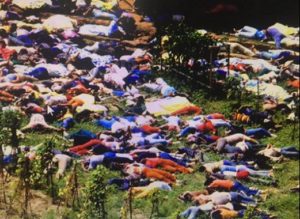
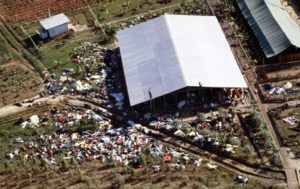
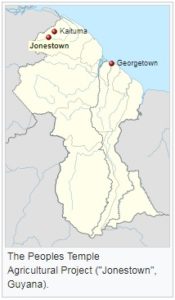
Cabinet members have tried to negotiate deals that would satisfy Mr. Trump’s obsession with the trade deficit, only to have him reject them as insufficient. Commerce Secretary Wilbur Ross struck a compromise last year on steel production that was discarded after he returned from Beijing. In May Treasury Secretary Steve Mnuchin reached a tentative deal to put tariffs on hold if the Chinese bought more soybeans and natural gas, but the White House resumed its tariff threats in June.

Mr. Trump is correct on many points, including his complaints that his predecessors failed to address changing Chinese behavior. China’s accession to the World Trade Organization in 2001 assumed the country was committed to what it then called “reform and opening” and would honor its promises to let foreign companies compete and protect intellectual property. The agreement largely treated China like other trading nations and relied on WTO arbitration to resolve disputes.

But China’s economic reforms stalled after its WTO entry. Beijing responded to the global financial crisis by directing credit to state-owned enterprises, which led officials to discriminate against foreign companies. After President Xi Jinping took power in 2012, he continued this trend and created the “Made in China 2025” plan requiring foreign companies to turn over intellectual property in return for access to China.

If China were a small country, the U.S. could afford to absorb surplus goods and let American consumers benefit. China’s effort to leapfrog into the ranks of developed economies by forcing companies to relocate their most valuable processes and pervert the law of comparative advantage will ultimately fail.

But when the world’s second-largest economy goes rogue, the collateral damage is huge and has undermined political support in the U.S. and the West for free trade. More ominously, China’s mercantilism is part of a larger Xi Jinping strategy to establish a new military and commercial hegemony in Asia.

The U.S. goal now should be to negotiate a deal with Beijing that sets new rules of the trading road. That agreement should seek to change Chinese practices, not reduce the trade deficit per se. This may require superseding current WTO rules, and that is best accomplished with a united front that includes the world’s other major trading powers.

Mr. Trump has instead employed a unilateral tariff policy that lets him boast about being tough without a clear goal. The tariffs will hurt Chinese exporters, though many will move production to other countries. But tariffs also damage American producers and consumers, as does the $60 billion in new retaliatory tariffs that Beijing announced Tuesday.

Strong U.S. growth after tax reform and deregulation is so far dwarfing the overall economic harm from tariffs, as Tuesday’s market nonchalance indicates. But the tariffs are doing arbitrary harm to innocent Americans, and a policy of hurting yourself until the other guy changes his behavior is hard to sustain. Mr. Trump’s political support will erode if he can’t deliver the new trade deals he promises.

If Mr. Trump wants to change Chinese behavior, he should first finish a new NAFTA, drop his blunderbuss steel tariffs on allies, forget new auto tariffs, negotiate a zero tariff deal with Europe, and re-enter the Trans-Pacific Partnership. Then lead a coalition to confront Xi Jinping from a position of strength with targeted trade enforcement rather than scattershot tariffs. The real worry is that Mr. Trump supports tariffs for their own sake, and he may not want a China deal. With Donald Trump and trade, you never know.

Source: Posted September 18, 2018; retrieved November 25, 2018 from: https://www.wsj.com/articles/the-missing-china-trade-strategy-1537313246

—————-

Related Media – Foreign Edition Podcast

Asia Avoids a Crisis; Britain Falls Into One – http://traffic.megaphone.fm/WSJ6726301554.mp3

Share this post:
, , ,
[Top]

A Lesson in History: Jonestown, Guyana

Go Lean Commentary

On this day, 40 years ago, the Caribbean member-state of Guyana was home to one of the worst abuses of religious freedoms in the history of the world. This was the Jonestown People’s Temple “Revolutionary Suicide” on November 18, 1978.

From a Caribbean perspective, we must admit and accept the culpability: “My Bad!”

We have bloodguilt on our hands for the 918 people who died on this day in Guyana 40 years ago; (one third of whom were minor children). See the encyclopedic details here:

Tile: Jonestown
The Peoples Temple Agricultural Project, better known by its informal name “Jonestown“, was a remote settlement established by the Peoples Temple, an American cult under the leadership of reverend Jim Jones, in north Guyana. It became internationally notorious when, on November 18, 1978, a total of 918[1][2] people died in the settlement, at the nearby airstrip in Port Kaituma, and at a Temple-run building in Georgetown, Guyana’s capital city. The name of the settlement became synonymous with the incidents at those locations.
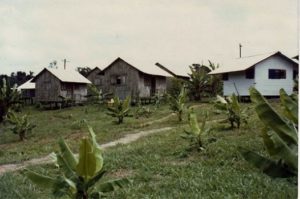
909 individuals died in Jonestown,[1] all but two from apparent cyanide poisoning, in an event termed “revolutionary suicide” by Jones and some members on an audio tape of the event and in prior discussions. The poisonings in Jonestown followed the murder of five others by Temple members at Port Kaituma, including United States Congressman Leo Ryan, an act that Jones ordered. Four other Temple members committed murder-suicide in Georgetown at Jones’ command.

While some refer to the events in Jonestown as mass suicide, many others, including Jonestown survivors, regard them as mass murder.[3][4] As many as 70 people may have been injected with poison, and a third of the victims (304) were minors.[5][6] It was the largest such event in modern history and resulted in the largest single loss of American civilian life in a deliberate act until September 11, 2001.[7]
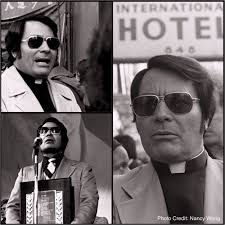
Selection and establishment of Guyanese land


The Temple chose Guyana, in part, because of its own socialist politics, which were moving further to the [political] left during the selection process.[18][19] Former Temple member Tim Carter stated that the reasons for choosing Guyana were the Temple’s view of a perceived dominance of racism and multinational corporations in the U.S. government.[20] According to Carter, the Temple concluded that Guyana, an English-speaking, socialist country with a predominantly indigenous population and with a government including prominent black leaders, would afford black Temple members a peaceful place to live.[20] Later, Guyanese Prime Minister Forbes Burnham stated that Jones may have “wanted to use cooperatives as the basis for the establishment of socialism, and maybe his idea of setting up a commune meshed with that”.[19] Jones also thought that Guyana was small, poor, and independent enough for him to easily obtain influence and official protection.[18]

See the remaining reference in the Source link here …

Source: Retrieved November 18, 2018 from: https://en.wikipedia.org/wiki/Jonestown

Surely this Jonestown drama is a manifestation of evil, despite the “Reverend” Jim Jones and the Christian affiliation of the People’s Temple.

This atrocity is on us!

Actually, after the events of the November 18, 1978 tragedy, there was a formal inquest – Commission of Inquiry – which concluded that Guyanese Prime Minister Forbes Burnham was responsible for the deaths at Jonestown. There is no way to misconstrue the culpability in this drama:

As a representative democracy, the leaders act on behalf of the people.

What kind of environment was the Caribbean country of Guyana to where a Bad Actor with evil Intents and Purposes could thrive in our neighborhood?

Surely, there were societal defects in place then; the Guyana orthodoxy was surely flawed. (Even though, on the surface, the solidarity of Guyana’s political leadership aligned with Jim Jones and the People’s Temple movement in their opposition to racial inequality and Crony-Capitalism. See the Appendix VIDEO below).

This is the lesson we learn from Jonestown 1978: When we tolerate Human Rights abuses, things go from bad to worse.

How about today?

Is Guyana reformed or transformed today, away from that old bad society to a more viable society today?

According to the movement behind the book Go Lean…Caribbean, the answer is:

No, actually!

The Go Lean book asserts that the Caribbean is in crisis. We have many societal defects that are so badly in need of reform. Guyana’s disposition is especially acute. Of all the societal abandonment transpiring in the region, Guyana is among the worst. One report related a 89% Brain Drain rate with their college educated populations. In addition, Guyana is still notoriously bad for mitigating and counteracting suicides. In a 2014 report, this country was ranked #1 for Suicides Per Capita.

Guyana needs a reboot!

The whole Caribbean region needs a reboot.

This is the “why” the Go Lean book presents a roadmap for the introduction and implementation of a super-national governing authority, the Caribbean Union Trade Federation (CU). This entity will be empowered to effect change in all 30 Caribbean member-states. This would be a new regime for the region; one that is apolitical (not left nor right-leaning) and religiously-neutral; (no blindspots in oversights to “Christian” religious groups).

Under this new regime, as described in the Go Lean book, religious institutions will be recognized, respected and defined as Non-Government Organizations (NGO), nothing more … nothing less. Caribbean integration is the priority and this priority would allow for a more efficient delivery of the Social Contract. (Social Contract is defined for when citizens surrender some of their freedoms and submit to the authority of the State in exchange for protection of remaining natural and legal rights).

It is universally accepted that the Government of Guyana failed those 918 people in 1978. The religious eco-system should not have been looked on for protection and security. No, Jonestown was a failing of the government. There is a variety of religious adherents in this country – Christians, Muslims, Hindus, Indigenous Animists – no one religious group should ever be put above or below another. Religious diversity must be a concern for all Caribbean member-states; the Social Contract for the Caribbean must reflect a Pluralistic Democracy.

40 years later, and the stewards for a new Caribbean have learned how to apply the lessons of Jonestown in this plan to forge a better society. The Go Lean/CU roadmap presents the strategies, tactics and implementations to impact Caribbean communities and all their societal engines. In fact, these statements are identified as the prime directives for this roadmap:

  • Optimize the economic engines in order to grow the regional economy to $800 Billion & create 2.2 million new jobs.
  • Establish a security apparatus to protect the resultant economic engines, plus ensure public safety and justice institutions. Security provisions should apply to the macro and the micro.
  • Improve Caribbean governance to support these engines, including a separation-of-powers between the member-states and CU federal agencies, plus even oversight for NGO’s.

These prime directives transcend religions and national borders. There is an expectation of Human Rights that is expected no matter the country, languages or culture. Protections of Human Rights should just be delivered. The approach is to move the Caribbean region to a Single Market. Guyana-based CariCom started this vision, but they have failed to deliver on it. We need a better integration – with a stronger foundation – that would ensure that a Jonestown can never happen again – NEVER AGAIN.

The book Go Lean…Caribbean – available to download for free – opened with the assessment that regional governance is dysfunctional and the challenges for the Caribbean are too Big for anyone one of these small islands or coastal states alone – there must be regional solutions. Thusly, the roadmap calls for a regional interdependence. This need was pronounced in the opening Declaration of Interdependence (Pages 10 – 12):

Preamble: That whenever any form of government becomes destructive to these ends, it is the right of the people to alter or to abolish it, and to institute new government … when a long train of abuses and usurpations, pursuing invariably the same object evinces a design to reduce them under absolute despotism, it is their right, it is their duty, to throw off such government, and to provide new guards for their future security.

vi. Whereas the finite nature of the landmass of our lands limits the populations and markets of commerce, by extending the bonds of brotherhood to our geographic neighbors allows for extended opportunities and better execution of the kinetics of our economies through trade. This regional focus must foster and promote diverse economic stimuli.

x. Whereas we are surrounded and allied to nations of larger proportions in land mass, populations, and treasuries, elements in their societies may have ill-intent in their pursuits, at the expense of the safety and security of our citizens. We must therefore appoint “new guards” to ensure our public safety and threats against our society, both domestic and foreign. The Federation must employ the latest advances and best practices of criminology and penology to assuage continuous threats against public safety. …

xi. Whereas all men are entitled to the benefits of good governance in a free society, “new guards” must be enacted to dissuade the emergence of incompetence, corruption, nepotism and cronyism at the peril of the people’s best interest. The Federation must guarantee the executions of a social contract between government and the governed.

The Go Lean book provides 370-pages of turn-by-turn instructions on “how” to adopt new community ethos, plus the strategies, tactics, implementations and advocacies to execute so as to transform the Caribbean region into a “better society”.  The book details a “better society” in terms of Human Rights in one specific Chapter on Page 220. See here, some of the excerpts and headlines from that Chapter:

10 Ways to Protect Human Rights

1 Lean-in for Caribbean Integration
This regional re-boot will allow for the unification of the region into one market, thereby creating a single economy of 30 member-states, 42 million people and a GDP of over $800 Billion. The CU will assume the primary coordination for the region’s economy and the requisite security to protect the resultant economic engines. While the CU is an economic initiative, there is a mission to monitor/mitigate Fail State Indices, and Human Rights violations constitute a Failed State Indicator.
2 Watchful World

A CU mission is to monitor the image of the Caribbean to the rest of the world. Not only will the world be watching the activities in the region, but the “story” being told will be directed to depict a positive behind-the-scenes view, that the region is the best place to live-work-play.

3 Caribbeans with Disabilities
4 Women & Youth

The CU will allow for empowerment and protections of women & children, orphans & widows, in compliance with Judeo-Christian precepts, Human Rights requirements, & natural instincts. These efforts will include the special needs for young girls, adult women and senior women.

5 LGBT Toleration
6 Reconciliations

There were many reasons why Caribbean citizens abandoned their homelands and fled to distant shores. In some cases, the expatriates were actually political/human rights refugees. The CU mission for formal Truth & Reconciliation Commissions will allow many past issues to be settled and set aside, not necessary as criminal prosecutions, as statutes of limitations may have been exceeded. Plus punishing the past, at times may short circuit the future.

7 Future Focus
8 Justice Focus

The people of the Caribbean have the right to good government and the fulfillment of the social contract. This would ensure law-and-order, due process, the rule of law, and some justice assurance. The CU will facilitate monitoring and accountability of the justice institutions to ensure compliance and mitigate abuse, compared to times in the past.

9 Tourist Omnipresence
Extending hospitability to guests is putting “the best foot forward”. The vertical industries of tourism are based on this premise. The CU will expand tourist offerings away from resort-life, including eco-tourism (i.e. rainforest & scuba-diving excursions, bird-watching). This brings more tourists into daily interaction with residents – always on our best behavior.
10 Long-Form Journalism
The CU will support and promote Public Broadcasting media outlets for TV/Radio. This has historically allowed for long-form journalistic productions, a great advantage for human rights foundations & agencies. This allows messaging to get deep and detailed, beyond the headline-only of compressed newscasts. These types of endeavors have forged many changes in American society, like exposing the ills of rural poverty and the atrocities of the old peonage system.

Our region has gotten a “Black-Eye” because of the atrocities of Jonestown, Guyana. We must do better, going forward. That “better society” is one that pursues this definition of the Greater Good:

“It is the greatest good to the greatest number of people which is the measure of right and wrong”. – Jeremy Bentham (1748-1832)

The Caribbean must foster a better homeland that protects its citizens and visitors; (the 918 people who died on November 18, 1978 were Americans – non-Guyanese citizens). Considering the lessons being learned from Jonestown, we must also hold religious organizations – and NGO’s – accountable for their actions and violations of Human Rights and modern justice requirements. This Go Lean movement has previously detailed many related issues and advocacies for Human Rights mandates in our region; consider this sample of previous blog-commentaries:

https://goleancaribbean.com/blog/?p=15580 Caribbean Unity? Religion’s Role: False Friend
https://goleancaribbean.com/blog/?p=14482 International Women’s Day – Protecting Rural Women
https://goleancaribbean.com/blog/?p=11224 ‘Loose Lips Sink Ships’ – Fanatical Theologians Undermine Tourism
https://goleancaribbean.com/blog/?p=10566 Funding the Caribbean Security Pact
https://goleancaribbean.com/blog/?p=10216 Waging a Successful War on Orthodoxy
https://goleancaribbean.com/blog/?p=9766 Rwanda’s Catholic bishops apologize for genocide
https://goleancaribbean.com/blog/?p=6718 A Lesson in History Before the Civil War: Compromising Human Rights
https://goleancaribbean.com/blog/?p=5695 Repenting, Forgiving and Reconciling the Past
https://goleancaribbean.com/blog/?p=5210 Cruise Ship Labor Abuses – Getting Ready for Change
https://goleancaribbean.com/blog/?p=4971 A Lesson in Church History – Royal Charters: Truth & Consequence
https://goleancaribbean.com/blog/?p=341 US slams Caribbean human rights practices

As a result of Jonestown 1978, the expression “drinking the Kool-Aid” has entered into the English-speaking lexicon. Yes, this 40 year old tragedy in Guyana has branded the Caribbean with a global brand as inadequate and Less Than when it comes to effective governance in public safety and Human Rights protection.

After all, one third of the 918 victims in Jonestown were minor children.

Surely we have learned lessons in the 40 years since. Surely, we have now learned how to protect our people … and our visitors.

Surely, our communities will embrace all strategies, tactics, implementations and advocacies to ensure such a tragedy will never happen again.

The Go Lean book is the lesson-learn.

Surely, this roadmap will be embraced and adopted as part of the regional pledge of NEVER AGAIN.

We urge all Caribbean stakeholders to lean-in to this roadmap to reboot the region, to bring change … and empowerment. We must make sure those 918 lives were not lost in vain; We must learn the lessons from Jonestown. We must make our communities better places to live, work and play. 🙂

Download the book Go Lean … Caribbean – now!

Sign the petition to lean-in for this roadmap for the Caribbean Union Trade Federation.

—————–

Appendix VIDEO – The Story of The Jonestown Massacre – https://youtu.be/GKqQ1CyneWw

FactFile
Published on Feb 5, 2018 – The Jonestown massacre was a horrendous event that led to the deaths of almost a thousand people. Today we tell the story that led up to that most horrendous of days.

Share this post:
, , ,
[Top]

100 Years of Armistice Day – ENCORE

Today is the 11th day of the 11th month, November. For the last 100 years, this date has been commemorated and celebrated for marking the end of the Great War, later to be called World War I. This day has a lot of different names:
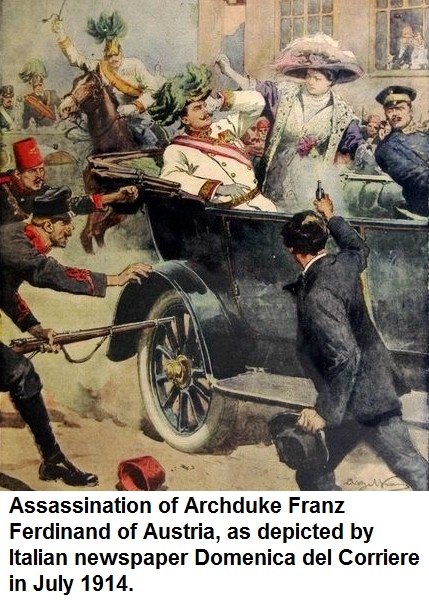
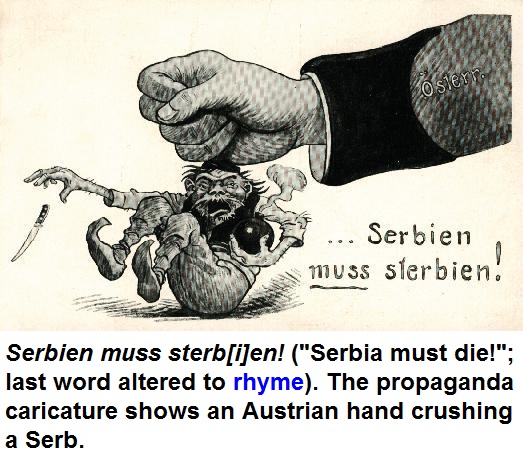

  • Armistice Day
  • Remembrance Day
  • Veterans Day (in the US)

This was one of the biggest moments in the entire 20th century. The cease-fire came into effect at 11am – the 11th hour. See the encyclopedic details here:

Title: Armistice of 11 November 1918
The Armistice of 11 November 1918 was the armistice that ended fighting on land, sea and air in World War I between the Allies and their opponent, Germany. Previous armistices had eliminated Bulgaria, the Ottoman Empire and the Austro-Hungarian Empire from the war. Also known as the Armistice of Compiègne from the place where it was signed, it came into force at 11 a.m. Paris time on 11 November 1918 (“the eleventh hour of the eleventh day of the eleventh month”) and marked a victory for the Allies and a defeat for Germany, although not formally a surrender.

The actual terms, largely written by the Allied Supreme Commander, Marshal Ferdinand Foch, included the cessation of hostilities, the withdrawal of German forces to behind the Rhine, Allied occupation of the Rhineland and bridgeheads further east, the preservation of infrastructure, the surrender of aircraft, warships, and military materiel, the release of Allied prisoners of war and interned civilians, eventual reparations, no release of German prisoners and no relaxation of the naval blockade of Germany.

See the remaining of the article here …
https://en.m.wikipedia.org/wiki/Armistice_of_11_November_1918 retrieved November 11, 2018.

This is more than just raw history. There is a lot of relevance for the Caribbean. At the time of this war (1914 – 1918) most of the 30 member-states of the political Caribbean were all under the domain of the following countries that participated in the World War:

  • Great Britain (owned 18 islands and coastal territories including today’s Belize & Guyana)
  • Denmark (owned the US Virgin Islands until 1917)
  • France (owned 4 islands)
  • Netherlands (owned 6 islands and Suriname)
  • United States of America (owned Puerto Rico and Protectorate of Cuba)
  • (Haiti and the Dominican Republic were independent and inconsequential to this war).

In fact, at the 100 year anniversary of the launch of the war, this commentary published a detail assessment on relevance to our modern life and lessons learned – 8 specific theses. Here is an Encore of that previous blog-commentary here-now:

===============================================

Go Lean Commentary – A Lesson in History: 100 Years Ago Today – World War I

The dominoes began to fall 100 years ago today.

Going backwards: The Caribbean is at the precipice of dysfunction due to a global financial crisis; the crisis is a by-product of an inter-connected world; the global unified economic systems (Bretton-Woods Accords [b]) and disbanding of the colonies of the Great Powers emerged for the rebuilding after World War II. Consequently, Word War II was a direct response to the unsatisfactory settlements from World War I and economic dysfunctions during the period between the World Wars. The first domino was therefore June 28, 1914.

1914 Photo 1On this date 100 years ago, Archduke Franz Ferdinand of Austria, heir presumptive to the Austro-Hungarian throne, and his wife, Sophie, Duchess of Hohenberg, were shot dead in Sarajevo by Serbian assassins. The political objective of the assassination was to break off Austria-Hungary’s south-Slav provinces so they could be combined into a Yugoslavia. The assassination led directly to the First World War when Austria-Hungary subsequently issued an ultimatum against Serbia, which was partially rejected. Austria-Hungary then declared war, marking the outbreak of the war. [a]

Multilateral military alliances abounded in that day among the Great Powers: Austria-Hungary with Germany (Triple Alliance of 1882) and Serbia with Russia and France (Triple Entente of 1907) and Britain. When war ensued later in August 1914, these were the sides. Many other military treaties were triggered thereby engaging empires/countries like Ottoman-Turks, Portugal, Japan and Italy, (The United States joined in 1917 allied with Britain). The resulting conflict was dubbed the Great War until subsequently rebranded World War I.

The review of the historic events of this day 100 years ago is more than just an academic discussion, the book Go Lean…Caribbean aspires to economic principles that dictate that “consequences of choices lie in the future”. The book serves as a roadmap for the introduction and implementation of the technocratic Caribbean Union Trade Federation (CU). This confederation effort aligns many former colonies of the same Great Powers that waged WW I; like Great Britain or the United Kingdom (UK) for example. The British Dominion experienced dire consequences and suffered greatly as a result of this war. In 1914 The British Dominion controlled over 25% of the world’s population; today the UK wields little political, military or economic power, including that of the Caribbean.

The people of the Caribbean understand societal decline and dysfunction all too well.

What have we learned in the 100 years since the events of June 28, 1914? How will these lessons help us today?

  • Minority Equalization – Bullying and terrorism must be mitigated at the earliest possible opportunity – the foregoing photo depicts the oppression the minority Balkan communities perceived in the Austria-Hungarian Empire. As a minority group they felt bullied in their own country; their Slavic culture and language set them apart, and their religious adherence led to even more dissension (Austria-Hungary: Catholic/Lutheran; Serbia: Eastern Orthodox and Bosnia- Herzegovina: Muslim) There were terrorist activities for decades before in the quest for independence. In the past 100 years, this same modus operandi has been repeated in countless locales around the world. The CU security pact must defend against regional threats, including domestic terrorism. This includes gangs and their junior counterparts, bullies. The CU plans for community messaging in the campaign to  mitigate bullying.

1914 Photo 2

  • Reconciliation of issues are not optional, more conflict will emerge otherwise – The issues that wedged the people of the Balkans were not resolved in World War I. More dissensions continued leading to World War II, and continued during the Cold War while most of the Balkans were under Soviets control. When the Soviet Union collapsed in 1991, civil war and ethnic cleansings proceeded in the Balkans. Their issues/differences had not been reconciled. A common practice after WW I & WW II was the prosecution of war crimes. But in South Africa an alternative justice approach was adopted, that of Truth & Reconciliation Commissions (TRC). These have become more successful as the emphasis is less on revenge and more on justice normalization. Many other countries have instituted similar TRC models. The CU plans for the TRC model for dealing with a lot of latent issues in the last Caribbean century (i.e. Cuba, Haiti, Dominican Republic, etc).
  • Self-determination of local currencies – in planning for postwar reconstruction, U.S. representatives with their British counterparts studied what had been lacking between the two world wars: a system of international payments that would allow trade to be conducted without fear of sudden currency depreciation or wild fluctuations in exchange rates—ailments that had nearly paralyzed world capitalism during the Great Depression. There is a multiplier associated with the currency in the money supply. Therefore the communities of the Caribbean must embrace its own currency, the Caribbean Dollar (managed by a technocratic Caribbean Central Bank), thereby bringing local benefits from local multipliers.
  • Security assurances must be enabled to complement economics objectives – A lot of dissension has resulted when economic engines become imperiled due to security conflicts. The instability then causes more economic dysfunction, which results in even more security threats – a downward spiral. The CU/Go Lean posits that security apparatus must be aligned with all economic empowerments. This is weaved throughout the roadmap.
  • Negotiate as partners not competitors – The end of World War I immediately set-up ripe conditions for WW II, because of the harsh terms in the Peace Treaties. The CU maintains that, negotiation is an art and a science. More can be accomplished by treating a negotiating counterpart as a partner, rather than not an adversary. (See VIDEO below).
  • Cooperatives and sharing schemes lighten burdens among neighbors – The Balkan conflict of 1914 resulted in a World War because of cooperative treaties with aligning nations. Despite this bad outcome, the practice of cooperatives and sharing still has more upside than downside. The CU will employ cooperatives and sharing schemes for limited scopes within the prime directives of optimizing the economic, security and governing engines.
  • Promote opportunities for the Pursuit of Happiness – A lot of terrorist activities are executed by “suicide” agents (i.e. suicide bombers). The Go Lean roadmap posits the when the following three fundamentals are in place, the risks of suicide is minimal: 1. something to do, 2. someone to love, 3. something to hope for. These are the things a man (or woman) needs to be happy.
  • Consider the Greater Good – Complying with this principle would have prevented a lot of conflict in the past century. The philosophy is directly quoted as: “It is the greatest good to the greatest number of people which is the measure of right and wrong”. The CU/Go Lean roadmap calls for a number of measures that strike directly at the Greater Good mandate: accountable justice institutions, economic empowerment for rich and poor, strategic education initiatives, proactive health/wellness, etc.

The related subjects of economic, security and governing dysfunction have been a frequent topic for blogging by the Go Lean promoters, as sampled here:

https://goleancaribbean.com/blog/?p=1433 Caribbean loses over 70% of tertiary educated citizens to the brain drain
https://goleancaribbean.com/blog/?p=1309 5 Steps of a Bubble
https://goleancaribbean.com/blog/?p=1014 All is not well in the sunny Caribbean
https://goleancaribbean.com/blog/?p=816 The Future of Caribbean Integration and CariCom
https://goleancaribbean.com/blog/?p=789 America’s War on the Caribbean
https://goleancaribbean.com/blog/?p=782 Open the Time Capsule: The Great Recession of 2008
https://goleancaribbean.com/blog/?p=623 Only at the precipice, do they change
https://goleancaribbean.com/blog/?p=599 Ailing Puerto Rico open to radical economic fixes
https://goleancaribbean.com/blog/?p=467 Barbados Central Bank records $3.7m loss in 2013
https://goleancaribbean.com/blog/?p=451 CariCom Chairman to deliver address on slavery/colonization reparations
https://goleancaribbean.com/blog/?p=353 Book Review: ‘Wrong – Nine Economic Policy Disasters and What We Can Learn…’

The purpose of the Go Lean roadmap is to turn-around the downward trends in the Caribbean today, to reverse course and elevate Caribbean society. The CU, applying lessons from the last 100 years, has prime directives proclaimed as follows:

  • Optimization of the economic engines in order to grow the regional economy to $800 Billion & create 2.2 million new jobs.
  • Establishment of a security apparatus to protect the resultant economic engines.
  • Improve Caribbean governance to support these engines.

The Go Lean book details a series of assessments, community ethos, strategies, tactics, implementations and advocacies to empower all the factions in the Caribbean region:

Community Ethos – Economic Systems Influence Choices & Incentives Page 21
Community Ethos – Consequences of Choices Lie in the Future Page 21
Community Ethos – Money Multiplier – Control of Local/Regional   Currency Page 22
Community Ethos – Anti-Bullying and Mitigation Page 23
Community Ethos – Intelligence Gathering Page 23
Community Ethos – “Crap” Happens Page 23
Community Ethos – Minority Equalization Page 24
Community Ethos – Ways to Impact the Future Page 26
Community Ethos – Ways to Improve Negotiations Page 32
Community Ethos – Ways to Manage Reconciliations Page 34
Community Ethos – Ways to Improve Sharing Page 35
Community Ethos – Ways to Promote Happiness Page 36
Community Ethos – Ways to Impact the Greater Good Page 37
Strategy – Vision –  Integrate Region into a Single Market Economy Page 45
Strategy – Agents of Change – Globalization Page 57
Tactical – Separation of Powers – Department of Homeland   Security Page 75
Tactical – Separation of Powers – Department of   Justice Page 77
Implementation – Assemble Existing Super-national Institutions Page 96
Implementation – Caribbean Central Bank (CCB) Cooperative Page 96
Implementation – Ways to Pay for Change Page 101
Implementation – Foreign Policy Initiatives   at Start-up Page 102
Implementation – Security Initiatives at   Start-up Page 103
Implementation – Ways to Deliver Page 109
Implementation – Ways to Promote Independence Page 120
Planning – Ways to Ways to Model the EU Page 130
Planning – Ways to Make the Caribbean Better Page 131
Planning – Ways to Improve Failed-State Indices Page 134
Planning – Lessons from East Germany Page 139
Advocacy – Ways to Grow the Economy Page 151
Advocacy – Ways to Create Jobs Page 152
Advocacy – Ways to Better Manage the Social Contract Page 170
Advocacy – Ways to Foster Cooperatives Page 176
Advocacy – Ways to Impact Justice Page 177
Advocacy – Ways to Improve Homeland Security Page 180
Advocacy – Ways to Mitigate Terrorism Page 181
Advocacy – Ways to Improve Intelligence Page 182
Advocacy – Banking Reforms – Caribbean Dollar Page 199
Advocacy – Ways to Protect Human Rights Page 220
Advocacy – Battles in the War on Poverty Page 222
Advocacy – Ways to Impact British Territories Page 245

The year 1914 is identified as a watershed year in the history of mankind. (There are even religious teachings that identify this year as the beginning of the Bible’s prophesied Last Days). No doubt there was a crisis, and it was wasted, even after losing 19 million people in the ensuing military conflict. The result was a 2nd World War that slaughtered 60 million more. Still all the divisions and animosities created during those conflicts forged even more conflicts (think: Middle East, Korea and Vietnam). In total, about 100 million people died in wars of the 20th Century.

See Comedian Bill Maher Commentary in the following VIDEO:

VIDEO – Real Time With Bill Maher: Sunni and Share (HBO) – 
https://youtu.be/Jz0YWIfBLa4


Real Time with Bill Maher
Published on Jul 1, 2014 – Bill Maher delivers his “New Rules” editorial on June 27, 2014.

  • Category: Entertainment

Now is the time for all of the Caribbean to learn the lessons from the last 100 years, and not waste our current crises. The book Go Lean … Caribbean posits that the Caribbean is in a serious crisis, but asserts that this crisis would be a terrible thing to waste. The people and governing institutions of the region are hereby urged to lean-in for the empowerments described in the book Go Lean … Caribbean.

This is a big deal for the region, the same way 1914 was a big year for our planet. While the planet is out-of-scope for this roadmap, a Caribbean neighborhood optimization is realistic and plausible. We can all work to make our homeland a better place to live, work, and play.

Download the free e-Book of Go Lean … Caribbean – now!

—————–

Referenced Sources:
a.     http://en.wikipedia.org/wiki/Assassination_of_Archduke_Franz_Ferdinand_of_Austria; retrieved June 28, 2014

b.     http://en.wikipedia.org/wiki/Bretton_Woods_system; retrieved June 28, 2014

Share this post:
, ,
[Top]

Good Governance: Good Corporate Compliance

Go Lean Commentary

(Photo by Chris Hondros/Getty Images)

Private business versus public government …

Business is to the East, while government is to the West. … East is East and West is West – never the twain shall meet.

Not quite!

Governments many times place restrictions and regulations on private businesses; think:

  • Workers Compensation
  • Child Labor Restrictions
  • Occupational Hazards
  • Social Security / National Security
  • Family Leave / Pregnancy Job Guarantees

So we accept that in a modern society, corporate entities may be required to comply with intrusive government mandates that go above and beyond basic consumer protections; and we call it Good Governance

… then in 2002, considering an American example, along came an even more intrusive government mandate on corporate enterprises (publicly-traded corporations) and the repercussion has been:

Crickets!

… no one complains; in fact, all the qualifying companies comply and buy into the notion that these sets of intrusive laws are good for the overall society. Whew! How did this happen?

This is the drama of the Sarbanes-Oxley law in the US. See the encyclopedic details here:

Title: Sarbanes–Oxley Act
The Sarbanes–Oxley Act of 2002, also known as the “Public Company Accounting Reform and Investor Protection Act” (in the Senate) and “Corporate and Auditing Accountability, Responsibility, and Transparency Act” (in the House) and more commonly called Sarbanes–Oxley, Sarbox or SOX, is a United States federal law that set new or expanded requirements for all U.S. public company boards, management and public accounting firms. A number of provisions of the Act also apply to privately held companies, such as the willful destruction of evidence to impede a federal investigation.

The bill, which contains eleven sections, was enacted as a reaction to a number of major corporate and accounting scandals, including Enron and WorldCom. The sections of the bill cover responsibilities of a public corporation’s board of directors, adds criminal penalties for certain misconduct, and requires the Securities and Exchange Commission to create regulations to define how public corporations are to comply with the law.

5.0 Implementation of key provisions

Source: Retrieved October 30, 2018 from: https://en.wikipedia.org/wiki/Sarbanes%E2%80%93Oxley_Act

—————-

VIDEO 1 – Enron Scandal Explained in One Minute: Corporate Recklessness, Lies and Bankruptcy – https://youtu.be/jrEf8uabe7E

One Minute Economics

Published on Aug 9, 2016 – Enron represents perhaps the most popular example of how a corporation can go from hero to zero or in their case, from a stock price of $90.75 and a market capitalization which made it the 7th largest US corporation to bankruptcy. Enron’s bankruptcy made it clear just how far corporate recklesness can go and represented a warning signal that should have been taken a lot more seriously, as the Great Recession has proven.

—————–

VIDEO 2 – WorldCom – What Went Wrong – https://youtu.be/7g_d-phoUrU

Published on Nov 28, 2008 – A brief documentary dealing with the largest corporate scandal in history. Created for a second year college accounting class.

The historicity of those events that spurred the Sarbanes-Oxley Act is most incredible. Those two companies – Enron and WorldCom – flouted the presumption of integrity in American business; even the external auditors – Arthur Anderson – was complicit in the wrong-doing. Reform became inevitable. Something had to be done to ensure Good Corporate Governance.

Sarbanes-Oxley became the Good Governance solution. It details roles and responsibilities for firms and auditors alike!

The book Go Lean…Caribbean – available to download for free – serves as a roadmap for the introduction and implementation of the Caribbean Union Trade Federation (CU), as a technocratic federal government among the 30 member-states in the region. The goal is for expressions of Good Governance in all of Caribbean life; two role models are presented for the Caribbean to emulate: Sarbanes-Oxley (SOX) for Corporate Compliance and the Information Technology Infrastructure Library (ITIL) for computer-based data processing. These assert Good Corporate Governance models. The Go Lean book specifically quotes these references “10 Ways to Grow the Economy” (Page 151) and “Appendix ZN – ITIL Supplement” (Page 338) respectively:

  1. Better Corporate Governance and Financial Markets Oversight
    Learning from the experiences of the US and Europe, provisions embedded in legislation like Sarbanes-Oxley Act and Dodd-Frank Act would be in place from the beginning. The CU will apply the lessons-learned proactively, rather than wait for the economies to implode before instituting reform, like common sense lending standards, transparency, full disclosure, “sunshine” laws. The CU will also implement controls on automated trading systems, ensuring the proper safety valves, monitoring and metering oversight. These measures equal security, a secondary mandate for the CU.
  2. Information Technology Infrastructure Library (ITIL)
    A set of practices for IT Service Management (ITSM) that focuses on aligning IT services with the needs of business. …
    History
    Responding to growing dependence on IT, the UK Government’s Central Computer and Telecommunications Agency (CCTA) in the 1980s developed a set of recommendations. It recognized that without standard practices, government agencies and private sector contracts had started independently creating their own IT management practices.
    The IT Infrastructure Library originated as a collection of books, each covering a specific practice within IT service management. ITIL was built around a process-model based view of controlling and managing operations. [From among the many, the Go Lean book details these 2 practices:]
    o  IT Service Continuity Management
    o  Availability Management

Good Governance is important in the government realms – member-states, federal and non-governmental organization (NGO’s) – but also in the private-corporate sector. Implementing these practices and compliance may be Too Big for Any One Caribbean country alone to introduce and implement; but together – with some interdependence – a leveraged roll-out is viable. Notice this theme, as pronounced in these statements in the opening Declaration of Interdependence (Pages 10 – 12):

Preamble: … while our rights to exercise good governance and promote a more perfect society are the natural assumptions among the powers of the earth, no one other than ourselves can be held accountable for our failure to succeed if we do not try to promote the opportunities that a democratic society fosters.

xi. Whereas all men are entitled to the benefits of good governance in a free society, “new guards” must be enacted to dissuade the emergence of incompetence, corruption, nepotism and cronyism at the peril of the people’s best interest. The Federation must guarantee the executions of a social contract between government and the governed.

xvi. Whereas security of our homeland is inextricably linked to prosperity of the homeland, the economic and security interest of the region needs to be aligned under the same governance. Since economic crimes … can imperil the functioning of the wheels of commerce for all the citizenry, the accedence of this Federation must equip the security apparatus with the tools and techniques for predictive and proactive interdictions.

xxv. Whereas the legacy of international democracies had been imperiled due to a global financial crisis, the structure of the Federation must allow for financial stability and assurance of the Federation’s institutions. To mandate the economic vibrancy of the region, monetary & fiscal controls and policies must be incorporated as proactive and reactive measures. These measures must address threats against the financial integrity of the Federation and of the member-states.

While the Sarbanes-Oxley Act is an American law, that is not the only country that needs to ensure Good Corporate Governance. As related in a recent blog-commentary, the Caribbean specifically, and the whole world in general, is still reeling from the dire effects of the Great Recession of 2008. This crisis was spurned by bad corporate governance: over-leveraged banks, mis-stated credit ratings, and NINJA home mortgage-holders.  We cannot afford a repeat of these mistakes … ever.

This commentary concludes a 5-part series from the movement behind the Go Lean book in consideration of the Good Governance needs for a new Caribbean regime. The other commentaries in the series are cataloged as follows:

  1. Good Governance: … Versus Partisan Politics
  2. Good Governance: Stepping Up in an Emergency
  3. Good Governance: The Kind of Society We Want
  4. Good Governance: Getting ‘Out of the Way’ of Local Economic Empowerment
  5. Good Governance: Good Corporate Compliance

The Go Lean book was written in the wake of the Great Recession of 2008, reflecting all of the lessons learned from the earlier 2002 crises of Enron and WorldCom referenced in the foregoing encyclopedic reference.

Fool me once, shame on you.
Fool me twice, shame on me.

The book featured Good Corporate Governance practices; this is best described in this one chapter entitled “10 Ways to Impact Wall Street“. The goal of this chapter was to look, listen and learn about best-practices by studying the American eco-system of Wall Street. We do not want to be America; we want to be better! See the specific plans, excerpts and headlines from the book on Page 200 entitled:

10 Ways to Impact Wall Street

1 Lean-in for the Caribbean Single Market
This treaty allows for the unification of the region into one market, thereby expanding to an economy of 30 countries, 42 million people and a GDP of over $800 Billion. The CU’s single market and currency union will allow for the emergence of viable capital markets for stocks, public/private bonds, and securities to create the economic engines needed to fuel growth, expansion and development. The CU will fill in the missing piece of the equation for successful international financial centers by providing the “whole institutional infrastructure of laws, regulations, contracts, trust and disclosure”.
2 Ensure Corporate Governance
The CU adoption of a “Good Governance” principle in its charter extends to its oversight of corporations and other publicly-held institutions. The CU regulatory agencies will oversee under a laissez-faire policy (minimum governmental interference in the economic affairs of individuals and society), yet be vigilant against systemic risks to the monetary and economic engines. So provisions like full disclosure, certifiable accounting integrity and risk-best-practices will maintain public confidence. The CU’s initiatives allows for more separating of duties versus the state regulators.
3 Protect Public Financing Vehicles
4 Adopt Advanced Products
5 Apply Common Sense – Derivatives – Lessons Learned

The use of derivatives helped cause the 2008 Financial Crisis in the US. Though these have the potential of being beneficial products, the compliance, leverage limits, and reserve requirements will not be abandoned as in the US.

6 Ensure Quality and Limits on Electronic Trading systems
These computer programs will have to be certified by CU Independent Auditors before coming online. The process for Quality Assurance (QA) will be assumed by the CU for maintenance of these systems. Before program changes can be implemented the CU will conduct the Test Plan to certify compliance and rollback strategies are in place.
7 Downplay Lawless Impressions – Offshore Banking
8 Protect Against Foreign Currency Manipulators
9 Protect Against Insider Trading and Securities Fraud

Economic crimes involving the securities industry can have far reaching consequences beyond normal felonies. As such, the CU will maintain jurisdiction and marshal the investigations, prosecutions and sentencing of these crimes.

10 Learn from Occupy Wall Street Protest Movement

This Go Lean book presents that the expansion of the 9 stock exchanges in the Caribbean region …

Bahamas (BISX), Barbados (BSE), Bermuda (BSX), Cayman Islands (CSX), Eastern Caribbean (ECSE), Guyana (GASCI), Haiti (HSE), Jamaica (JSE) and Trinidad (TTSE).

… will provide many opportunities to implement Good Corporate Governance standards and practices. But it is conceivable, believable and achievable that we can provide good stewardship to this financial eco-system, for the betterment of all Caribbean society.

The roll-out of these Financial-Watchdog duties for CU agencies will be Day One / Step One of the Go Lean/CU roadmap.

There have been many glimpses of economic governance for a new Caribbean in previous blog-commentaries; consider:

https://goleancaribbean.com/blog/?p=15923 Industrial Reboot – Payment Cards 101
https://goleancaribbean.com/blog/?p=15787 Lessons Learned from 2008: Too Big to Fail –vs- Too Small to Thrive
https://goleancaribbean.com/blog/?p=14834 Counter-culture: Monetizing the Change
https://goleancaribbean.com/blog/?p=14596 Change! Forging Change – Corporate Vigilantism
https://goleancaribbean.com/blog/?p=13677 Model: Economics of ‘South Beach’
https://goleancaribbean.com/blog/?p=11184 JPMorganChase spent $10 billion on ‘Fintech’ for 1 year
https://goleancaribbean.com/blog/?p=10585 Two Pies: Economic Plan for a New Caribbean
https://goleancaribbean.com/blog/?p=9839 Alibaba Cloud stretches global reach with four new Data Center facilities

It is the assertion of the Go Lean book and the many previous blog-commentaries that Good Governance is a requirement to reform and transform Caribbean society. Reforming and transforming the homeland is our quest, our prime directive. This intent has been proclaimed with the following statements:

  • Optimization of the economic engines in order to grow the regional economy to $800 Billion & create 2.2 million new jobs.
  • Establishment of a security apparatus to ensure public safety and protect the resultant economic engines.
  • Improvement of Caribbean governance to support these engines, including a separation-of-powers between the member-states and CU federal agencies.

This is the vision of a new regime for governments and corporate institutions. We want and need Good Governance. We must have this future. While it may be heavy-lifting, it is worth every effort. This is how we make our society a better place to live, work and play. 🙂

Download the free e-Book of Go Lean … Caribbean – now!

Sign the petition to lean-in for this roadmap for the Caribbean Union Trade Federation.

Share this post:
,
[Top]

Good Governance: The Kind of Society We Want

Go Lean Commentary

What kind of society do you want to live in?

This is important to consider. As a democracy – of the people, by the people, for the people – what is done by the government is done on the people’s behalf, in our name.

“This is on us”.

Frankly, I would not want to live in a society where the strong abuses the weak.

To the contrast, I would want to live in a society, where we protect the vulnerable ones among us. This is also a Biblical concept …

The form of worship* that is clean and undefiled from the standpoint of our God and Father is this: to look after orphans+ and widows+ in their tribulation,+ and to keep oneself without spot from the world.+James 1:27 NWT

This is a discussion about the modern plague of Human Trafficking.

Modern? Yes, there is “nothing new under the sun”. Human trafficking has always been a plight in the Caribbean; (see Appendix VIDEO below). Surely you recognize the parallels of this old practice of another name:

Slave Trade

Yes, Human Trafficking is the new brand for the old abominable practice of the slave trade. The Caribbean has a sad history with this practice – ancient and modern. Stories continue to emerge of contemporary occurrences. See this one here:

Title: Suspected Human Trafficking Victim Rescued In Castries

Crying young woman

A sixteen year old female, suspected to be a victim of human trafficking, was rescued Sunday in Castries and handed over to Saint Lucia Police, a senior law enforcement source has confirmed.

The teenager, originally from Venezuela but living in neighbouring Martinique for some time, ran to a complete stranger and begged for help, saying that she had been kidnapped and sexually abused, the source said.

According to the source, the young woman was partially naked and was complaining of intense pain.

“She said she was sedated by her captors and brought to Saint Lucia,” the source told St Lucia Times.

The stranger, a woman, to whom the teenager ran for help, took the girl to her home where she was given a meal and some clothing and later handed over to the Criminal Investigations Department of the Royal Saint Lucia Police Force (RSLPF), it was reported.

The law enforcement source told St Lucia Times that it appears that the teenager had been reported missing by officials in Martinique.

Investigations into the matter are continuing.

Source: Posted October 23, 2018; retrieved October 26, 2018 from https://stluciatimes.com/2018/10/23/suspected-human-trafficking-victim-rescued-in-castries/

As related here, this victim originated in Spanish-speaking Venezuela and has since been trafficked in the French Caribbean territory of Martinique and now the Anglophone country of St. Lucia.

This is more than just an academic discussion; this is a defining issue for the Caribbean and all of the New World territories in the Americas: What kind of society do we want to be?

My answer: one with Good Governance; one where we ensure that the strong do not abuse the weak and the vulnerable.

Human trafficking is a clear obvious violation of human rights of a weak subject; see the definition in the Appendix below.

In a previous Go Lean blog-commentary, the reference was made to a higher standard for governments and shepherds of society – the Code of Hammurabi – enacted within the ancient Babylonian Empire Super Power; it featured this statement:

“So that the strong should not harm the weak”

There is an obvious “ignorance or negligence of this [Old World] concept” in the New World. …

So the abuse of the “strong against the weak” is clearly an unabashed societal defect in the New World. History teaches that with the emergence of any new economic engines, “bad actors” will also emerge thereafter to exploit the opportunities – the weak – with good, bad and evil intent.

The New World needs to apply this lesson-learned from the “Old World of 1754 BC” to protect the “poor, sick and huddled masses yearning to be free”.

This lesson from history aligns with the book Go Lean…Caribbean, which seeks to reform and transform the 30 member-states of the Caribbean region; the book describes empowerments to target the economic, security and governing engines of society to ensure an adherence to the principle of the Greater Good. While we can observe-and-report on the other countries, we can only effect change here in our Caribbean homeland.

For the strong to protect the weak, the minimum expectation is an assumption of Good Governance. It is expected that someone-somewhere will step-in and step-up to police against human trafficking …

… failing this, we would have a Failed-State.

Unfortunately, according to the foregoing news article, this is the reality and actuality in the Caribbean. A Failed-State emerges when the governmental entities are not able to deliver on the Social Contract as defined here in a previous blog-commentary:

“Citizens surrender some of their freedoms and submit to the authority of the State in exchange for protection of remaining natural and legal rights”.

When a State fails on the delivery of the Social Contract; the most common consequence in society is human flight in search of refuge. This aligns with the societal abandonment reasons of “Push and Pull“:

  • Push – refers to the reasons people who feel compelled to leave, to seek refuge in a foreign land. “Refuge” is an appropriate word; because of societal defects – like the “strong abusing the weak” – many from the Caribbean must leave as refugees – think DisabilityDomestic-abuseMedically-challenged and LGBT – for their life, liberty and pursuit of happiness.
  • Pull – refers to the lure of a more safer life abroad; many times our people are emigrating to communities where there are protections for the “weak against the abusive strong”.

The kind of society we want is one where Human Traffickers do not find safe haven in our communities. We want Good Governance not Failed-States.

This commentary is the third of a 5-part series (3 of 5) from the movement behind the Go Lean book in consideration of the Good Governance needs for a new Caribbean regime. The other commentaries in the series are cataloged as follows:

  1. Good Governance: … Versus Partisan Politics
  2. Good GovernanceStepping Up in an Emergency
  3. Good Governance: The Kind of Society We Want
  4. Good GovernanceGetting ‘Out of the Way’ of Local Economic Empowerment
  5. Good GovernanceGood Corporate Compliance

This need for Good Governance and a Caribbean Regional Police – CariPol – is embedded in this plan to elevate Caribbean life, the Go Lean book serves as a roadmap for the introduction and implementation of the Caribbean Union Trade Federation (CU). The purpose of this roadmap is to transform the region’s societal engines, which includes economics, security and governance. This is stated as the prime directive of the CU/Go Lean roadmap, see here:

  • Optimization of the economic engines in order to grow the regional economy to $800 Billion & create 2.2 million new jobs.
  • Establishment of a regional security apparatus to ensure public safety and protect the resultant economic engines.
  • Improvement of Caribbean governance to support these engines, including a separation-of-powers between the member-states and CU federal agencies.

Good Governance, CariPol and Homeland Security are all part of the Go Lean book’s emphasis on New Guards. Notice these references in the opening Declaration of Interdependence (Pages 11 – 13):

x. Whereas we are surrounded and allied to nations of larger proportions in land mass, populations, and treasuries, elements in their societies may have ill-intent in their pursuits, at the expense of the safety and security of our citizens. We must therefore appoint “new guards” to ensure our public safety and threats against our society, both domestic and foreign. …

xi. Whereas all men are entitled to the benefits of good governance in a free society, “new guards” must be enacted to dissuade the emergence of incompetence, corruption, nepotism and cronyism at the peril of the people’s best interest. The Federation must guarantee the executions of a social contract between government and the governed.

xii. Whereas the legacy in recent times in individual states may be that of ineffectual governance with no redress to higher authority, the accedence of this Federation will ensure accountability and escalation of the human and civil rights of the people for good governance, justice assurances, due process and the rule of law. As such, any threats of a “failed state” status for any member state must enact emergency measures on behalf of the Federation to protect the human, civil and property rights of the citizens, residents, allies, trading partners, and visitors of the affected member state and the Federation as a whole.

xviii. Whereas all citizens in the Federation member-states may not have the same physical abilities, reasonable accommodations must be made so that individuals with physical and mental disabilities can still access public and governmental services so as to foster a satisfactory pursuit of life’s liberties and opportunities for happiness.

These  references to New Guards is a glimpse of a new Caribbean as envisioned in the Go Lean book. The Go Lean book provides 370-pages of turn-by-turn instructions on “how” to adopt new community ethos, plus the strategies, tactics, implementations and advocacies to execute so as to reboot, reform and transform the societal engines of Caribbean society. We need to avoid Failed-State statuses. In addition, there is one advocacy in the book for mitigating the downward trend to Failed-State status. This includes considerations for the delivery of the Social Contract. Notice the specific plans, excerpts and headlines from the book on Page 134 entitled:

10 Ways to Improve Failed-State Indices

1 Lean-in for the Caribbean Single Market
This will allow for the unification of the region into one market of 42 million people across 30 member-states, thereby creating an economic zone to protect the interest of the participant trading partner-member-states. The GDP of the region will amount to $800 Billion (circa 2010). In addition, the treaty calls for a collective security agreement of the member states so as to ensure homeland security and assuage against systemic threats. The CU will ensure that law-and-order persist during times of distress. When a member state declares a State of Emergency, due to natural disaster or civil unrest, this triggers an automatic CU response – this is equivalent to the governmental dialing 911.
2 Image and Defamation
3 Local Government and the Social Contract

The Social Contract is the concept that individuals have consented, either explicitly or tacitly, to surrender some of their freedoms and submit to the authority of the State in exchange for protection of their remaining rights (natural and legal). People therefore expect their government (national or municipal) to provide public safety, health, education and other services. The CU will facilitate overhead services for local governments and access to financial markets to fund capital infrastructure investments. The member-states will therefore have more accountability and reporting to CU institutions.

4 Law Enforcement Oversight

The CU will maintain jurisdiction for economic crimes and regional threats. Plus, the CU will collaborate and facilitate

local law enforcement with grants of equipment and training to better fulfill their roles. Lastly, the regional security treaty will grant the CU the audit and compliance responsibility for “use of force” investigations and internal affairs.

5 Military and Political Monitoring

The CU will carefully monitor the activities of the military units (Army, Navy and Coast Guard) – this accountability will be the by-product of increased CU funding. The CU will assume the Judge Advocate General role for military justice affairs. For cross border engagements, the National armed forces will be marshaled by the CU’s Commander-in-Chief.

6 Crime/Homeland Intelligence
The CU will install advanced systems, processes, and personnel for intelligence gathering and analysis to assist public safety institutions. This includes terrestrial and satellite surveillance systems, phone eavesdropping, data mining and predictive modeling. The findings will be used to mitigate risks and threats (gangs, anarchy, and organized crime).
7 Minority and Human Rights

The CU will protect the minority and human rights for the region’s population; this includes ethnic mixes of African, European, Amerindian, and Asian heritage; 4 languages, various religions, and 5 colonial legacies. The CU strategizes this diversity as an asset, rather than a source of contention, to be exploited as cultural exchanges in music, festivals, events, and food services. This will have a positive effect on tourism (foreign & domestic) and media initiatives.

8 Election Outsourcing
9 War Against Poverty
10 Big Data

This Go Lean book presents that the function and responsibility of assuaging Failed-State indices will be a priority on Day One / Step One of the Go Lean/CU roadmap. The point of Failed-State downward spirals has been elaborated on in previous blog-commentaries; consider this sample:

https://goleancaribbean.com/blog/?p=13391 After Maria, Failed-State Indicators: Destruction and Defection for PR
https://goleancaribbean.com/blog/?p=12996 After Irma, Failed-State Indicators: Destruction and Defection
https://goleancaribbean.com/blog/?p=12098 Inaction: A Recipe for ‘Failed-State’ Status in Venezuela
https://goleancaribbean.com/blog/?p=2547 Miami’s Success versus Caribbean Failure

We want the kind of society that looks after – protects – the vulnerable people in our community. This is what Good Governance should mean to us. So we must reform and transform our Caribbean governing engines to reach this goal. Let’s lean-in to this Go Lean roadmap to accomplish this.

A commitment for Good Governance is a commitment to fully deliver on the Social Contract. Succeeding, or trying to succeed is how to can make the Caribbean a better homeland to live, work and play. 🙂

Download the free e-Book of Go Lean … Caribbean – now!

Sign the petition to lean-in for this roadmap for the Caribbean Union Trade Federation.

—————-

Appendix – Human Trafficking

Human trafficking is the trade of humans for the purpose of forced laboursexual slavery, or commercial sexual exploitation for the trafficker or others.[1][2] This may encompass providing a spouse in the context of forced marriage,[3][4][5] or the extraction of organs or tissues,[6][7] including for surrogacy and ova removal.[8] Human trafficking can occur within a country or trans-nationally. Human trafficking is a crime against the person because of the violation of the victim’s rights of movement through coercion and because of their commercial exploitation.[9] Human trafficking is the trade in people, especially women and children, and does not necessarily involve the movement of the person from one place to another.[citation needed]

According to the International Labour Organization (ILO), forced labor alone (one component of human trafficking) generates an estimated $150 billion in profits per annum as of 2014.[10] In 2012, the ILO estimated that 21 million victims are trapped in modern-day slavery. Of these, 14.2 million (68%) were exploited for labor, 4.5 million (22%) were sexually exploited, and 2.2 million (10%) were exploited in state-imposed forced labor.[11]

Human trafficking is thought to be one of the fastest-growing activities of trans-national criminal organizations.[12]

Human trafficking is condemned as a violation of human rights by international conventions. In addition, human trafficking is subject to a directive in the European Union.[13] According to a report by the U.S. State Department, BelarusIranRussia, and Turkmenistan remain among the worst countries when it comes to providing protection against human trafficking and forced labor. [14]

Revenues

In 2014, the International Labour Organization estimated $150 billion in annual profit is generated from forced labor alone.[10]

The average cost of a human trafficking victim today is USD $90 whereas the average slave in 1800 America cost the equivalent of USD $40,000.[18]

(Human trafficking differs from people smuggling, which involves a person voluntarily requesting or hiring another individual to covertly transport them across an international border, usually because the smuggled person would be denied entry into a country by legal channels. )

Source: Retrieved from: https://en.wikipedia.org/wiki/Human_trafficking

—————–

Appendix VIDEO – Human Trafficking – Short Documentary in the Caribbean – https://youtu.be/Hy0uA-srXig

UK Foreign & Commonwealth Office
Published on Sep 24, 2013 – A short film to inform the public about human trafficking in the Caribbean and to raise awareness of this modern form of slavery.

Share this post:
, , ,
[Top]

Blog # 800 – An Inconvenient Truth – Caribbean Version

Go Lean Commentary

There was a film released in 2006 entitled An Inconvenient Truth. This capped the campaign by former US Vice-President Al Gore (1993-2001) to educate citizens about global warming; this was a comprehensive slide show that he estimated to have given more than a thousand times.  This film was part documentary and part prophecy. When asked of the need for a sequel, Co-Producer Laurie David responded:
“God, do we need one, everything in that movie has come to pass. At the time we did the movie, there was Hurricane Katrina; now we have extreme weather events every other week. The update has to be incredible and shocking.”[149]

Incredible and shocking is also our Inconvenient Truth for the Caribbean. The prophecy highlighted in that 2006 documentary manifested in the Caribbean in the years since. There was a sequel to that original film, the 2017 An Inconvenient Sequel: Truth to Power. The tagline for the movie was:

Fight like your world depends on it.

See a Trailer of the sequel in Appendix B below.

Here is where we are in the Caribbean – our world depends on our fighting to assuage the great threats to our society. These are defined in the book Go Lean…Caribbean – available to download for free. The book serves as a roadmap for the introduction and implementation of the technocratic Caribbean Union Trade Federation (CU), for the elevation and protection of Caribbean society – for all member-states.

In the book, the threats are described as Agents of Change (Page 57), none more challenging than Climate Change for us:

  • Climate Change – This issue is a major concern for the whole world, but particularly impactful on the Caribbean. There is some debate as to the causes of Climate Change, but no question as to its outcome: temperatures are rising, droughts prevail, and most devastating, hurricanes are more threatening. The CU roadmap must address the causes of Climate Change and most assuredly its consequences. The CU federal government must therefore advocate systems and schemes for a lower carbon footprint. Notwithstanding, the CU must implement recovery measures to respond, react and rebuild from the ever-more-devastating hurricanes.
  • Technology – Internet & Communications Technologies (ICT) is dynamically shifting the world. There are also industrial changes taking place, as in more efficient manufacturing methods, automation/robotics, and transportation options … in response to Climate Change, i.e. Green Energy options.
  • Aging Diaspora – Those that expatriated in the 1950’s and 1960’s now comprise an aging Diaspora – with the desire to return to the “town of their boyhood”. With inadequacies to prepare and respond to natural disasters, the repatriations may not happen.
  • Globalization – We are competing against a “flat” world. Any one country can provide a competitive delivery of the needs and wants of any other society, no matter where they are located physically.

*************

Inconvenient Truth 1

What is inconvenient is that we do not have a partner in the United States of America. We must raise the mantle ourselves and fight for our own cause. President Trump has wiped out all Global Climate Change initiatives by the US federal government. So this government is headed by someone that does not even believe the scientific certainty of Climate Change.

This actuality was boldly lamented in the book, in the opening Declaration of Interdependence (Page 11):

i. Whereas the earth’s climate has undeniably changed resulting in more severe tropical weather storms, it is necessary to prepare to insure the safety and security of life, property and systems of commerce in our geographical region. As nature recognizes no borders in the target of its destruction, we also must set aside border considerations in the preparation and response to these weather challenges.

Inconvenient Truth 2

Natural Disaster preparation and response is reflective of our priorities. Hurricane Maria exposed the deficiency among the American stakeholders. Puerto Rico got no love from Washington; even in death the misery was understated, under-valued and undercounted. Despite this bad report, President Trump continues to defend his administration actions, despite irrefutable evidence to the contrary; see article in Appendix A.

Our other colonial legacies were equally unprepared:

The Go Lean book asserts that the full region of 30 member-states must come together – ourselves – to optimize the societal engines of economics, security and governance. We have delivered a “day late and a dollar short” on so many mitigations – consider our Catastrophic Risk Insurance Funds.

Inconvenient Truth 3

Rising Sea Levels may cover the coral islands.

The geology of the Caribbean has resulted inn 2 kinds of islands: Volcanic versus Coral (Reef). The volcanic islands tend to be mountainous, while coral islands tend to be flat. Climate Change have a real devastating effects on coral islands. Already the Pacific island-nation of Kiribati is facing extinction from high sea-level rise. This same fate awaits many Caribbean member-states. This is why many Caribbean states are members of the formal SIDS (Small Islands Development States).

Inconvenient Truth 4

Seaweed is not so innocent. The beautiful beaches are no longer “so beautiful” without strenuous re-engineering, This is a direct result of Climate Changehttps://stluciatimes.com/2018/03/04/fisheries-department-supports-sargassum-cleanup/

Inconvenient Truth 5

Our Diaspora is not returning. The original implied contract was for Caribbean citizens to emigrate abroad then come back home for retirement. Due to societal defects, many of the Diaspora are not returning; even to support their elderly parents; rather, they have been bringing their elderly to the foreign destinations. There is also a Climate Change angle, winters in northern locations – think: Canada – is milder due to global warming.

Inconvenient Truth 6

We are doubling-down on economic failure.

The primary economic engine in the Caribbean region is based on tourism. There is the need to diversify; yet the member-states have been doubling-down on the failing business models in tourism rather than investing in better models. Consider the example of resort-casino gambling.

Inconvenient Truth 7

We are doubling-down on our societal defects and hate.

Our people leave their Caribbean homes for “Push” and “Pull” reasons. “Pull” refers to the lure that life is better abroad, but “push” refers to the societal defects that drive people away to seek refuge. The Caribbean region does not embrace the “live and let live” ethos, so minority groups have experienced a Climate of Hate.

This is inconvenient and sad!

***********

These Inconvenient Truths are consistent for the movement behind the Go Lean book. The original book, and subsequent blog-commentaries, detailed the assessment in current Caribbean society, and then advocated for a new Caribbean – with new community ethos, strategies, tactics and implementations.

This submission is a new milestone; this is blog-commentary # 800.

These prior entries posit that the Caribbean status quo is truly in crisis. Alas, this crisis is a terrible thing to waste. Let’s reform and transform now! Yes, we can!

This is the quest of the Go Lean movement, to forge a Single Market and a technocratic government for the 30 Caribbean member-states. But the Go Lean book asserts that this effort is too big a task for just for Caribbean member-state alone, so the book urges all 30 member-states to convene, confederate and collaborate in order to effect change. This CU/Go Lean roadmap has these 3 prime directives:

  • Optimization of the economic engines in order to grow the regional economy to $800 Billion and create 2.2 million new jobs. (The issue of jobs alone is paramount to any Hope and Change movement in the region).
  • Establishment of a security apparatus to ensure public safety and protect the resultant economic engines.
  • Improve Caribbean governance to support these engines, including a separation-of-powers between the member-states and CU federal agencies.

The book stresses that reforming and transforming Caribbean communities must be a regional pursuit. This was an early motivation for the roadmap, as pronounced in the opening Declaration of Interdependence (Pages 11 – 14):

xi. Whereas all men are entitled to the benefits of good governance in a free society, “new guards” must be enacted to dissuade the emergence of incompetence, corruption, nepotism and cronyism at the peril of the people’s best interest. The Federation must guarantee the executions of a social contract between government and the governed.

xii. Whereas the legacy in recent times in individual states may be that of ineffectual governance with no redress to higher authority, the accedence of this Federation will ensure accountability and escalation of the human and civil rights of the people for good governance, justice assurances, due process and the rule of law. As such, any threats of a “failed state” status for any member state must enact emergency measures on behalf of the Federation to protect the human, civil and property rights of the citizens, residents, allies, trading partners, and visitors of the affected member state and the Federation as a whole.

xvi. Whereas security of our homeland is inextricably linked to prosperity of the homeland, the economic and security interest of the region needs to be aligned under the same governance. Since economic crimes … can imperil the functioning of the wheels of commerce for all the citizenry, the accedence of this Federation must equip the security apparatus with the tools and techniques for predictive and proactive interdictions.

xxiv. Whereas a free market economy can be induced and spurred for continuous progress, the Federation must install the controls to better manage aspects of the economy: jobs, inflation, savings rate, investments and other economic principles. Thereby attracting direct foreign investment because of the stability and vibrancy of our economy.

The Go Lean book accepts that the Caribbean region – all 30 member-states – is currently at a Failing disposition. But we can do better and be better. First, we must acknowledged our Inconvenient Truths.

And then work or fight towards reforming and transforming our society. Our world depends on it!

This is hard, heavy-lifting, but this roadmap is conceivable, believable and achievable. Let’s get started. Let’s make our homeland a better place to live, work and play. 🙂

Download the free e-book of Go Lean … Caribbean – now!

Sign the petition to lean-in for this roadmap for the Caribbean Union Trade Federation.

—————–

Appendix A – Trump questions Puerto Rico death toll, prompting San Juan mayor to call him ‘delusional’ and ‘paranoid’

WASHINGTON – President Donald Trump on Thursday questioned a report putting the death toll from last year’s catastrophic hurricane in Puerto Rico at nearly 3,000. He also called the new estimate an effort by Democrats to discredit him.

San Juan’s mayor described the president’s claim as “delusional” and even prominent Republicans such as House Speaker Paul Ryan distanced themselves from Trump’s tweets about Puerto Rico.

“This was done by the Democrats in order to make me look as bad as possible when I was successfully raising Billions of Dollars to help rebuild Puerto Rico,” Trump wrote on Twitter. “If a person died for any reason, like old age, just add them onto the list. Bad politics. I love Puerto Rico!”

Trump’s comments, which come as his administration prepares for Hurricane Florence to hit the East Coast, led both Democratic and Republican lawmakers to weigh in countering his claim. When Hurricane Maria hit Puerto Rico last year, it devastated homes and infrastructure and left large swaths of the territory without power for months.

Ryan, pressed by reporters on Trump’s tweet, said he disagreed with the president but would not comment on whether he thought Trump should apologize.

Ryan said he had  “no reason to dispute” the findings of a study commissioned by Puerto Rico’s government that put its death toll at nearly 3,000 people.

“Those are just the facts of what happens when a horrible hurricane hits an isolated place like an island,” Ryan said when asked about Trump’s tweet.

Sen. Marco Rubio, a Florida Republican who has been outspoken on the government’s response to the storm, lamented in a tweet that the deaths had become political. He repeated the study’s findings that 3,000 more people died on the island after the hurricane than during comparable periods.

“Both Fed & local gov made mistakes,” Rubio wrote. “We all need to stop the blame game & focus on recovery, helping those still hurting & fixing the mistakes.”

Florida Gov. Rick Scott, a Republican and early Trump supporter, said he disagreed with the president.

“I’ve been to Puerto Rico 7 times & saw devastation firsthand,” Scott, now a candidate for Senate, posted on Twitter. “The loss of any life is tragic; the extent of lives lost as a result of Maria is heart wrenching. I’ll continue to help PR.”

Ron DeSantis, a former Republican congressman running for governor in Florida, also disputed Trump’s assertion. “He doesn’t believe any loss of life has been inflated,” spokesman Stephen Lawson said in an emailed statement.

As his team braces for Hurricane Florence, Trump has praised his administration’s responses to deadly storms – including in Puerto Rico.

San Juan mayor Cruz responded, …

“Simply put: delusional, paranoid, and unhinged from any sense of reality.”

“Trump is so vain he thinks this is about him. NO IT IS NOT,” Cruz wrote on Twitter.

Puerto Rico Gov. Ricardo Rosselló said he “strongly denounced” what he described as questioning the impact of the storm for political purposes.

“The victims and the people of Puerto Rico do not deserve to have their pain questioned,” he said in a statement. “It is not time to deny what happened, it is time to make sure that it does not happen again.”

Democrats on Capitol Hill blasted Trump.

“Only Donald Trump could see the tragedy in Puerto Rico and conclude that he is the victim,” said Sen. Ed Markey, D-Mass. “May God bless the souls of the nearly 3,000 Americans that died in Puerto Rico and may he take pity on your soul Mr. President.”

Without mentioning Trump by name, Rep. Sheila Jackson Lee, D-Texas, a member of the House Committee on Homeland Security, slammed the “cavalier” tweeting about the number of deaths in Puerto Rico.

“You have lost compassion for people who are diverse,” she said.

Trump’s Thursday morning tweets focused on a George Washington University study released last month that examined the toll from Hurricane Maria. From September 2017 to February 2018, 2,975 people died, according to that study, which was commissioned by Puerto Rico’s government.

Late Thursday, deputy press secretary Hogan Gidley pushed back on criticism of the Trump’s response to Maria in a statement, saying the administration provided “unprecedented support to Puerto Rico.” Gidley said Cruz and the “liberal media” have tried to “exploit the devastation by pushing out a constant stream of misinformation and false accusations.”

In addition to force of the hurricane itself, many people in Puerto Rico died because disease and infection due to the lack of electricity and drinkable water on the island. The storm destroyed homes and and crippled roads, bridges, and hospitals.

George Washington University said Thursday it stands by the methodology used in the report and said the work was conducted with “complete independence and freedom from any kind of interference.”

“We are confident that the number – 2,975 – is the most accurate and unbiased estimate of excess mortality to date,” the school said in a statement.

Trump also took heat after he visited Puerto Rico in the aftermath of the Sept. 20, 2017, storm. The president tossed paper towels to Puerto Rican residents at a local relief center, angering storm victims and others who saw his actions as insensitive.

After his tweets Thursday, Democrats accused Trump of minimizing the death toll for callous political reasons.

Andrew Gillum, the Democratic candidate for governor in Florida, slammed Trump’s tweet.

“No death is partisan and our brothers and sisters in Puerto Rico deserved better from @realDonaldTrump before, during, and after the hurricane.”

The House Democratic Caucus tweeted that Trump “won’t acknowledge the thousands of Americans who died on his watch,” and added, “Even worse, Republicans have no interest in holding this administration accountable and ensuring that Congress is prepared to respond to these disasters.”

A report released this summer by the Federal Emergency Management Agency identified deficiencies in the administration’s response, including that the agency was not adequately staffed heading into the hurricane season. In the months leading up to Maria’s approach, FEMA had 10,683 people on hand, about 86 percent of the agency’s target, the report found.

The report found that the island itself was not prepared for such a storm, which contributed to widespread loss of power and communications – hampering the response.

A Government Accountability Office report last week confirmed many of those findings, and also noted that 54 percent of the FEMA workers deployed last year were serving in a role they were not qualified to perform. Staffing shortfalls complicated many aspects of the response, including the effort to move people into temporary housing in the mainland, the GAO found.

“The 2017 hurricanes and wildfires highlighted some longstanding issues and revealed other emerging response and recovery challenges,” the report said.

Source: USA Today newspaper – Posted September 13, 2018; retrieved September 14, 2018 from: https://www.usatoday.com/story/news/politics/2018/09/13/donald-trump-without-evidence-questions-puerto-rico-death-toll/1288118002/

—————–

Appendix B VIDEO – An Inconvenient Sequel: Truth To Power (2017) – Official Trailer – https://youtu.be/huX1bmfdkyA

Published on Mar 28, 2017 – Watch the new trailer for An Inconvenient Sequel: Truth to Power, the sequel to An Inconvenient Truth. In theatres July 28, 2017. #BeInconvenient

Climate Changes, Truth Does Not.

A decade after AN INCONVENIENT TRUTH brought Climate Change into the heart of popular culture, comes the riveting and rousing follow-up that shows just how close we are to a real energy revolution. Vice President Al Gore continues his tireless fight traveling around the world training an army of climate champions and influencing international climate policy. Cameras follow him behind the scenes – in moments both private and public, funny and poignant — as he pursues the inspirational idea that while the stakes have never been higher, the perils of Climate Change can be overcome with human ingenuity and passion.

Official Movie Site: http://www.inconvenientsequel.com/

Facebook: https://www.facebook.com/AnInconvenie…

Twitter: https://twitter.com/aitruthfilm

Instagram: https://www.instagram.com/aninconveni…

Share this post:
, , ,
[Top]