Tag: Transform

‘Missing Solar’ – Go Green … finally – Encore

The sun-drenched tropical Bahamas has inadequate infrastructure to provide electricity efficiently and effectively. Then when storms come – they are in Hurricane Alley – the delivery challenges become even more overwhelming.

This is a familiar assertion for the movement behind the 2013 book Go Lean…Caribbean. On May 15, 2014, this commentary proclaimed to the region that it was time to ‘Go Green’. That previous blog made an economic appeal, as opposed to environmental. Needless to say, the Bahamas did not heed that sage advice. Well, they are listening now. This week, the US-based media-television-network CBS reported, in their titular news magazine show 60 Minutes, on the progress that this island-nation is making to deploy solar-panels-based Micro-Grids.

Better late than never …

Had these systems been in place since 2014, the restoration after 2019’s Category 5 Hurricane Dorian would have been less painful. See the VIDEO here of the 60 Minutes report:

VIDEO – Bahamas installing solar power after storms – https://www.cbsnews.com/video/bahamas-hurricanes-power-grid-solar-60-minutes-2020-03-01/

60 Minutes
Posted March 1, 2020 – A tiny country in “Hurricane Alley” is trying to be an example to the world after Category 5 storms demolished parts of its electrical grid. Bill Whitaker reports on the Bahamas’ adoption of solar energy.
Click on PLAY Button to watch; expect commercial advertising before and during.

Is it too little too late now? Let’s hope not.

There is one more Big Issue that the Bahamas Government will have to deal with, as reported in the VIDEO:

The Bahamian Government pays $400 million dollars on diesel fuel to keep its power plants operating and they pass that cost on to the consumers.

The Finance-Treasury-Revenue departments in this country will have to prepare for new revenue streams beyond Fuel Surcharges. But alas, since 2014, this country has implemented Value-Add Tax regime. So it is easier to tweak the revenue streams.

So … go on Bahamas, install your Solar Micro-Grids … at government establishments, commercial enterprises and even residential homes. Yes, we can.

This is an appropriate time to Encore that previous blog-commentary from May 15, 2014 – 6 years ago; (better late than never). Now that this is March 2020, there is the opportunity to “look back” at the Bahamas in the wake of the issues raised by the 60 Minutes story: the Go Green movement is not so new; this common-sense best-practice was not so common in the Bahamas specifically or the Caribbean as a whole. Now, we must not miss our chance to reform and transform.

This entry is 2-of-3 in that “Look Back“. The other entries are cataloged as follows:

  1. 60 Minutes StoryBahamas Self-Made Energy Crisis
  2. 60 Minutes Story – Go Green … finally
  3. 60 Minutes Story – Moral Authority to “Name, Blame & Shame” the Big Polluters

See the the May 2014 Encore here-now:

———————

Go Lean CommentaryGo Green … Caribbean

Go Green 1Go ‘Green’ …

Get it? A simple play on words; Green instead of Lean. The word Green is more than just a color; it is a concept, a commitment and a cause. This is the same with ‘Lean’; for the purpose of this effort, ‘lean’ is more than just a description, it’s a noun, a verb, an adjective and an adverb. It is also a concept, commitment and cause in which the entire Caribbean region is urged to embrace; or better stated: “lean in”.

What is the motivation behind the ‘Green’ movement? Love for the Planet; many proponents feel that man’s industrial footprint has damaged the planet and the atmosphere, causing climate change, due to the abundance of carbon dioxide in the atmosphere.

Early in the book, Go Lean…Caribbean, the pressing need to be aware of climate change is pronounced in the Declaration of Interdependence (Page 11), with these words, (the first of many “causes of complaints”):

Whereas the earth’s climate has undeniably changed resulting in more severe tropical weather storms, it is necessary to prepare to insure the safety and security of life, property and systems of commerce in our geographical region. As nature recognizes no borders in the target of its destruction, we also must set aside border considerations in the preparation and response to these weather challenges.

Stop yawning!

For many, an advocacy to save the planet is a bore. But if we are not mindful of these issues we could face serious consequences.

Now a new motivation has emerged: saving money. Since energy costs has skyrocketed beyond the rate of inflation, adapting to more clean/green energy options has proven to be more cost effective.

Power generation from the sun or wind (free & renewable sources) is far cheaper than generation based on fossil fuels. (Even the fossil fuel of natural gas is cheaper than oil or coal).

The motivation behind the Caribbean “Lean” movement is also love, love of the homeland. This point is detailed in the book Go Lean… Caribbean, a roadmap for the introduction and implementation of the Caribbean Union Trade Federation (CU). This Go Lean roadmap has 3 prime directives:

  • Optimization of the economic engines in order to grow the regional economy.
  • Establishment of a security apparatus to protect the resultant economic engines.
  • Improve Caribbean governance to support these engines.

The following two news stories relate to this effort to optimize “green” energy options in the region:

1. Op-Ed Title: Green Energy Solutions Could Save the Caribbean $200 Million

By: Jun Zhang, Op-Ed Contributor
(04/11/2014) HIGH ENERGY costs are the Achilles heel of the Caribbean.
More than 97 percent of this region’s electricity is generated from fossil fuels and many islands devote a hefty portion of their GDP to fuel imports.

On some Caribbean islands, electricity bills can soar up to six times higher than in the United States, which creates a burden for many local businesses. At the same time, these islands are vulnerable to the environmental impacts associated with fossil-fuels, including air pollution, rising sea levels, and coral bleaching.

Reducing the reliance on fossil fuels and supporting cleaner, more efficient energy production is critical to helping island economies grow sustainably. But many companies face hurdles in accessing credit to invest in clean energy.

That’s where the banking sector can play an important role.

The International Finance Corporation, a member of the World Bank Group and the largest global development institution focused exclusively on the private sector, is developing a regional programme to help local financial institutions provide the credit needed for companies to adopt more energy efficient practices and utilize cleaner energy sources.

This in turn can help reduce costs – and environmental footprints -for Caribbean hotels and other businesses.

At a recent seminar in Kingston, IFC presented a market analysis of sustainable energy finance opportunities in Barbados, Belize, Jamaica, Grenada, and St. Lucia.

It found that energy demands in the Caribbean are expected to double by 2027. Continued dependence on fossil fuels is likely to exacerbate pollution and other environmental impacts, while diverting significant resources from these economies. But there are upsides as well.

According to the analysis, incorporating energy efficiency measures across these five countries over the next few years could save approximately US$200 million. For example, solar water heaters offer a ready solution to water heating in the Caribbean. Barbados has already installed more than 50,000 solar water heaters, saving the country some US$6.5 million a year on oil imports.

Caribbean countries could also benefit from water efficiency measures. Right now, anywhere from 25 to 65 percent of clean water is lost in inefficient water distribution systems, which also results in lost energy due to unnecessary pumping.

Some entrepreneurs say the tide is beginning to turn, but the financial sector needs to catch up.

“Businesses are already starting to shift to more energy efficient technologies,” said Andre Escalante, founder of Energy Dynamics, a Trinidad based company that helps hotels and other businesses adopt new energy-saving technologies. “However, financial institutions in the region are still reluctant to provide credits to implement new technologies that they may not be familiar with.”

IFC intends to close this knowledge gap by advising local financial institutions to help them meet the financing needs of sustainable energy projects. IFC also plans to work with energy service companies and equipment vendors to help them understand how to best structure projects for financing.

In the Dominican Republic, IFC helped Banco BHD become the first financial institution in the country to offer a credit line to finance sustainable energy projects. Over two years, BHD provided US$24 million in financing for projects that are bringing more cost-efficient energy solutions to the Dominican Republic, from natural gas conversion to solar energy.

“We’ve seen first-hand how sustainability adds value, be it by helping hotels cut their energy costs or by financing solar energy solutions for businesses,” said Steven Puig, General Manager of Banco BHD. “In fact, BHD intends to implement energy efficiency measures and install solar panels on each of its 43 stand-alone bank branches. So far, with IFC’s support, four offices have done this, which resulted in US$43,000 in savings each year as well as reductions in greenhouse gas emissions.”

Sustainability presents challenges for businesses, but also wide-ranging, evolving opportunities — especially as the cost of renewable energy technologies goes down.  The private sector is well suited to innovate and leverage new technologies to turn challenges into opportunities.

(Jun Zhang is IFC’s Senior Manager for the Caribbean. IFC, a member of the World Bank Group, is the largest global development institution focused exclusively on the private sector).

————

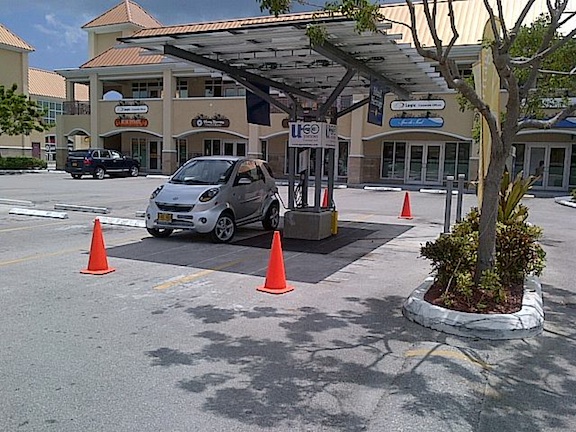
2. Title: Solar Car-Charging Station Opens in Grand Cayman

By: Alexander Britell
(05/05/2014) It may be the Caribbean’s most abundant resource, but in a region where energy costs are oppressive, solar energy isn’t used nearly enough.

That’s starting to change, though, and it got a significant boost last week with the opening of the Caribbean’s first-ever solar-powered car charging station.

The station is viewed to be one of the first standalone, public solar car-charging stations in the Caribbean, a place for electric-powered cars to come and top off their energy supplies.

“We started about a year ago and now it’s finally up and operational,” said John Felder, CEO of Cayman Automotive, which partnered with Philadelphia-based U-Go Stations on the project. “I don’t know of any solar panel charge stations for electric cars.”

While the stations won’t be used for complete charges, an hour spent charging at the station will provide about 20 percent of an electric car’s power supply.

Go Green 2Felder, who is the leading distributor of electric cars in the Caribbean, said the region’s electric car movement was already expanding.

“I’m now in the Bahamas, in Jamaica, in Bermuda,” he said. “The Aruban government called me last week and they want me to move to start doing electric cars there.”

Indeed, Aruba has been at the forefront of the regional green energy movement, with plans to have 100 percent renewable energy by the year 2020.

Barbados opened its first solar car-charging station in 2013 at the Wildey Business Park.

The new Cayman station, which is located at Governors Square, is one of six electric charging stations on the island.

“I can see in the next 10 years that 30 to 40 percent of the cars on the roads will be electric vehicles,” Felder said.

Something that could help that measure regional is the lowering of import duties on 100 percent electric cars, Felder said.

Cayman’s government lowered its duty from 42 percent to 10 percent, which is now the third-lowest in the region, although many islands lag behind in that regard.

“The government is promoting [electric] and that’s why they reduced the duty to 10 percent,” he said.

The electric movement on Cayman got an similarly big boost earlier this year when Grand Cayman’s Budget Rent-a-Car announced plans to offer 100 percent EV vehicles on the island.

Caribbean Journal News Source (Articles retrieved 05/14/2014)        a. http://www.caribjournal.com/2014/04/11/op-ed-green-energy-solutions-could-save-the-caribbean-200-million/  b. http://www.caribjournal.com/2014/05/05/solar-car-charging-station-opens-in-grand-cayman/ 

Photo Credits:
a. Jennifer Hicks, Forbes.com Technology Contributor: Field with six 850 kW turbines in Cuba’s Holguín Province
b. Cayman Automotive: The first ever public, commercial solar car charging station in Grand Cayman
This Go Lean/CU roadmap recognizes that modern life has expanded the definition of basic needs to now include food, clothing, shelter and energy. And thusly the book proposes many solutions for the region to optimize energy …

  • generation
  • distribution
  • consumption

No “stone is left unturned”. Go Lean posits that the average costs of energy can be decreased from an average of US$0.35/kWh to US$0.088/kWh in the course of the 5-year term of this roadmap; (Page 100). A 75% savings is not a yawn, this should keep you alert!

The two foregoing articles relate to new ‘green’ power generation initiatives in different Caribbean member-states.

These initiatives took some effort on the part of the community and governmental institutions. We commend and applaud their success and executions thus far. But there is more heavy-lifting to do. Help is on the way! The Go Lean roadmap details a series of community ethos, strategies, tactics, implementations and advocacies to foster the progress in the wide fields of energy generation, distribution and consumption. The following list applies:

Community Ethos – Lean Operations Page 24
Community Ethos – Return on Investments Page 24
Community Ethos – Cooperatives Page 25
Community Ethos – Regional Taxi Commissions Page 25
Community Ethos – Non-Government Organizations Page 25
Community Ethos – Ways to Impact the Future Page 26
Community Ethos – Ways to Improve Negotiations Page 32
Anecdote – Pipeline Transport – Strategies, Tactics & Implementations Page 43
Strategy – Harness the power of the sun/winds Page 46
Tactical – Fostering a Technocracy Page 82
Tactical – Separation of Powers – Energy Commission Page 82
Anecdote – “Lean” in Government – Energy Permits Page 93
Anecdote – Caribbean Energy Grid Implementation Page 100
Implementation – Ways to Develop Pipeline Industry Page 107
Implementation – Ways to Improve Energy Usage Page 113
Advocacy – Ways to Impact Public Works Page 175
Advocacy – Ways to Foster Cooperatives Page 176
Advocacy – Ways to Impact Monopolies Page 202

Energy needs are undeniable. The world is struggling with this issue.

Fulfilling those needs is easier said than done; and thus a great opportunity for the lean, agile operations envisioned for the CU technocracy. “It’s good to be green!”

Now is the time for all of the Caribbean, the people, business, institutions and governments, to lean-in for the optimizations and opportunities described in the book Go Lean … Caribbean.

Download the book Go Lean … Caribbean – now!

Share this post:
, ,

Brain Drain – Geeks and Freaks: Ultimate Revenge

Go Lean Commentary

Let’s talk about ostracism …

the act of being ostracized
noun:
exclusion, by general consent, from social acceptance, privileges, friendship, etc.

It’s no fun!

… especially for the recipient.

So many times, the victims face extreme resentful and uneasiness, hatred even …

The annals of American society is littered with tragedies of those who have been bullied or ostracized and have responded with violence, gun violence, school shooting, mass shootings, etc.

Just yesterday, a 51-year old gunman walked into his job in Milwaukee, Wisconsin; he killed 5 co-workers and then turn the gun on himself. – New York Times  🙁

Be afraid; be very afraid of the dire consequence of ostracism. But not all cases of ostracism is life-or-death, many times, it is just resentment and alienation – think Middle School clichés.

There is a social group that tends to be victimized the worst, at that level: Nerds, “Geeks and Freaks”.

So many times, the people that are the most accomplished academically, are characterized more as Nerds, “Geeks and Freaks”. Yet, these are the ones best suited for accomplishment and excellence.

The stone the builder rejected has become the cornerstone. – The Bible Matthew 21:42

Many times, the Nerds, “Geeks and Freaks” are anxious to grow-up and “go out” from their homeland, just as a payback for the years of ostracism and bullying – the ultimate “Revenge of the Nerds”. This scenario exacerbates the Brain Drain in the area. This is true, despite any yearning to family, homeland or culture – these ones just want to go. Once they leave, “Pandora’s Box” is opened and the repercussions and consequences are dire: things get worse, before it gets worst.

This disposition is 100% Push. (Considering the Brain Drain’s Push-Pull dynamics; where Push refers to the search for refuge and Pull refers to the lure of a different location). The actuality of this bad happenstance violates the mandate of this song:

I believe that children are the future, teach them well and let them lead the way. – Song: The Greatest Love – https://youtu.be/hRX4ip6PVoo

We have had 60 years of futility with our best-and-brightest leaving us, abandoning the Caribbean homeland. The “jury is in”:

This is bad; bad for the people and bad for the homeland. Our best-and-brightest can easily assimilate to another culture – in a foreign land – but the resultant effect of our Brain Drain is less skilled workers; less entrepreneurs; less law-abiding citizens; less capable public servants. We would lose our best and leave the communities with the rest; thusly creating even more of a crisis.

Let’s do better … we already have to contend with the “Pull” – there is little we can do, outside of truth in messaging to convey that life for the Caribbean’s Black-and-Brown in the Diaspora is actually limited to Less Than”. We do not need to further exacerbate our “Pull” imperilment with additional “Push” factors.

We must do the heavy-lifting to retain our people; we must protect the vulnerable, the weak and the innocent. We must be On Guard against bullying and other juvenile persecutions.

This was the quest of the 2013 book Go Lean … Caribbean, a roadmap for the introduction of the Caribbean Union Trade Federation (CU). It is designed to elevate the economic, security and governing engines of the 30 member-states of the Caribbean region. It focuses on the needs of all the 42 million people in the homeland, working to dissuade additional emigration. It identified the additional mitigation we have to implement to abate the Push of bullying. Consider these excerpts:

Page 24Security Principles – Anti-Bullying and Mitigation
The CU security pact must defend against regional threats, including domestic terrorism. This includes gangs and their junior counterparts, bullies. The community must accept that young ones will go astray, so Juvenile Justice programs should be centered on the goal to rehabilitate them into good citizens, before it’s too late. So community messaging (life-coaching and school-mentoring programs) must be part of the campaign for anti-bullying and mitigations.

Page 2710 Ways to Foster Genius
Anti-Bullying Campaign – “Revenge of the Nerds”
As is usually the case with young children, genius abilities usually stand-out from peer groups and can therefore render one child to ridicule from others. At times, this behavior leads to extreme bullying. The series of movies “Revenge of the Nerds” have become classic in depicting the adolescent struggles of this reality; (some researchers credit the first movie – 1984 – for a drop in US girls pursuing technical careers) [18]. The CU classifies “bullying” as domestic terrorism; while no adult-style interdiction is intended, the community ethos of “saying NO to bullies”, goes far in fostering future innovators.

Page 3610 Ways to Promote Happiness
Youth Programs
Youth suicides are not uncommon as societies increase up the economic ladder. Measures to monitor and mitigate for bullying and teen distress will allow the CU to “leave no child behind”. While no suicide is pleasant, the despair that results from a teen suicide wounds a community deeply, not only the immediate family, but also the extended family, school officials and other stakeholders.

Page 17910 Ways to Improve Gun Control
Public Relations / Anti-Bullying Campaign
The CU will implement a program similar to DARE (Drug-Alcohol-Resistance-Endeavors) in the US for drug, gang, violence anti-crime programs. The goal will be to minimize any lure young ones may see for dysfunctional gun behavior. Plus, Anti-Bullying campaigns will also be constant via media, internet, and life-coaching, school-mentoring programs.

Page 18110 Ways to Mitigate Terrorism
Consider Bullying as Junior Terrorism
The CU wants to “leave no child behind”. So bullying will be managed under a domestic terrorism and Juvenile Justice jurisdiction. The CU will conduct media campaigns for anti-bullying, life-coaching, and school-mentoring programs. The problem with teen distress is that violence can ensue from bullying perpetrators or in response to bullying.

Page 22010 Ways to Protect Human Rights
LGBT Toleration
It is no longer acceptable to deny natural rights or human rights to those with alternate sexual orientation. In fact, qualifications for current EU grants depend on compliance of this requirement, (not granting rights for same-sex  marriage), allowing this class to live free of discrimination, hazing, bullying and abuse. These rules are codified under Article 8 of the European Convention on Human Rights. This provides a right to respect for one’s “private and family life, his home and his correspondence”. The CU federal oversight is mandatory as these clauses clash with pro-Christian values.

Despite the emphasis here on Bullying, this is actually a commentary on the Brain Drain. This is the continuation, entry 3-of-5, of this February Teaching Series from the Go Lean movement; this entry asserts that we cannot afford to lose our Nerds, “Geeks and Freaks”. These ones usually become the most accomplished from among their cohort (class or peer group). We “need all hands on deck”. Other Brain Drain considerations are presented in this series; see the full catalog here:

  1. Brain Drain – Where the Brains Are
  2. Brain Drain – Brain Gain: Yes we can!
  3. Brain Drain – Geeks and Freaks: Ultimate Revenge
  4. Brain Drain – ‘Tiger Moms’ – Is that so bad?
  5. Brain Drain – Live and Let Live – Introducing ‘Localism’

There has been a number of references here to the title “Revenge of the Nerds”. This was a literary work and film production with a valid “moral of the story”. Truly, this is “Life Imitating Art” and “Art Imitating Life” …

Do you remember the 1984 Comedy movie? See the Trailer here:

VIDEO – Revenge of The Nerds | #TBT Trailer | 20th Century FOX – https://youtu.be/kIZH5TKnEeg

20th Century Studios
Posted January 8, 2015 – In this hilarious satire on college life, a group of misfits led by Robert Carradine and Anthony Edwards decides to start their own fraternity after being rejected by every house on campus. Chaos results, with a brains vs. brawn battle, as the football team jocks try to run the nerds off campus. But as the nerds carefully engineer their revenge, it begins to appear as if their day is at hand.

Own it on DVD: http://fox.co/RevengeOfTheNerds

SUBSCRIBE: http://bit.ly/FOXSubscribe

About 20th Century FOX: Official YouTube Channel for 20th Century Fox Movies. Home of Avatar, Aliens, X-Men, Die Hard, Deadpool, Ice Age, Alvin and the Chipmunks, Rio, Peanuts, Maze Runner, Planet of the Apes, Wolverine and many more.

Connect with 20th Century FOX Online: Visit the 20th Century FOX WEBSITE: http://bit.ly/FOXMovie Like 20th Century FOX on FACEBOOK: http://bit.ly/FOXFacebook Follow 20th Century FOX on TWITTER: http://bit.ly/TwitterFOX Revenge of The Nerds | #TBT Trailer | 20th Century FOX http://www.youtube.com/user/FoxMovies

Can you think of some famous or infamous Nerds who have gone on to success, whose very emergence has been a penultimate Revenge of the Nerds?

Think Jeff Bezos of Amazon fame …

Think Bill Gates of Microsoft fame …

Think Mark Zuckerberg of Facebook fame …

All of these “Original Nerds” have impacted society in shocking and disruptive ways (industries retreated, standards shifted, future projections altered and transformations forged). They have “gotten their revenge and have had the last laugh”. Consider this sample list of previous blog-commentaries highlighting these characters:

https://goleancaribbean.com/blog/?p=15875 Bezos: Amazon – ‘What I want to be when I grow up’
https://goleancaribbean.com/blog/?p=14316 Bezos: Forging Change: Soft Power – Clean-up or ‘Adios Amazon’
https://goleancaribbean.com/blog/?p=14224 Zuckerberg: Youth are only consuming media digitally, Duh!!!
https://goleancaribbean.com/blog/?p=13627 Bezos: Amazon Conquered the World in 20 Years
https://goleancaribbean.com/blog/?p=12291 Bezos: Big Tech’s Amazon – The Retailers’ Enemy
https://goleancaribbean.com/blog/?p=10869 Gates: Advocacy to ‘Tax the Robots’ to offset the Emergence of A.I.
https://goleancaribbean.com/blog/?p=8243 Zuckerberg: Philanthropy project makes First Investment: Newark
https://goleancaribbean.com/blog/?p=6422 Gates: Microsoft Pledges $75 million for Kids in Computer Science
https://goleancaribbean.com/blog/?p=1763 Gates: The World as 100 People – Showing the Gaps
https://goleancaribbean.com/blog/?p=1404 Zuckerberg: Facebook goes down, the world stands still
https://goleancaribbean.com/blog/?p=528 Zuckerberg: Facebook plans to provide mobile payment services

In addition, the Go Lean movement have frequently messaged on the perils of bullying and the resultant threat to the Brain Drain. Consider these previous Go Lean commentaries that have been published over the years – presented here in reverse chronological order:

https://goleancaribbean.com/blog/?p=18337 Unequal Justice: Bullying Magnified to Disrupt Commerce
https://goleancaribbean.com/blog/?p=17820 Reforming LGBT Policies – “Can’t we all just get along”
https://goleancaribbean.com/blog/?p=16408 Mitigating Home Violence
https://goleancaribbean.com/blog/?p=15998 Protecting the Vulnerable: The Kind of Society We Want
https://goleancaribbean.com/blog/?p=14482 Protecting Rural Women
https://goleancaribbean.com/blog/?p=13664 High Profile Sexual Harassment Accusers – Finally Believed?
https://goleancaribbean.com/blog/?p=11054 Managing the ‘Strong versus the Weak’ – Bullying in Schools
https://goleancaribbean.com/blog/?p=11048 Managing the ‘Strong versus the Weak’ – Model of Hammurabi

“Can’t we all just get along” – Rodney King, 1993

These must be more than just idle words; these must be the public safety mandate of society. This is reflected in the implied Social Contract that establishes modern society:

Citizens surrender some of their freedoms and submit to the authority of the State in exchange for protection of remaining natural and legal rights.

Once we fail in this delivery, the consequence is societal abandonment – the Brain Drain.

Let’s do better!

Everyone is hereby urged to lean-in to the empowerment here-in the Go Lean roadmap. This is how we can mitigate the  Brain Drain …and make our homeland a better place to live, work and play.  🙂

About the Book
The book Go Lean…Caribbean serves as a roadmap for the introduction and implementation of the technocratic Caribbean Union Trade Federation (CU), for the elevation of Caribbean society – for all member-states. This CU/Go Lean roadmap has these 3 prime directives:

  • Optimization of the economic engines in order to grow the regional economy to $800 Billion & create 2.2 million new jobs.
  • Establishment of a security apparatus to ensure public safety and protect the resultant economic engines.
  • Improve Caribbean governance to support these engines, including a separation-of-powers between the member-states and CU federal agencies.

The Go Lean book provides 370-pages of turn-by-turn instructions on “how” to adopt new community ethos, plus the strategies, tactics, implementations and advocacies to execute so as to reboot, reform and transform the societal engines of Caribbean society.

Download the free e-Book of Go Lean … Caribbean – now!

Who We Are
The movement behind the Go Lean book – a non-partisan, apolitical, religiously-neutral Community Development Foundation chartered for the purpose of empowering and re-booting economic engines – stresses that reforming and transforming the Caribbean societal engines must be a regional pursuit. This was an early motivation for the roadmap, as pronounced in the opening Declaration of Interdependence (Pages 12 – 13):

xi. Whereas all men are entitled to the benefits of good governance in a free society, “new guards” must be enacted to dissuade the emergence of incompetence, corruption, nepotism and cronyism at the peril of the people’s best interest. The Federation must guarantee the executions of a social contract between government and the governed.

xvi. Whereas security of our homeland is inextricably linked to prosperity of the homeland, the economic and security interest of the region needs to be aligned under the same governance. Since economic crimes … can imperil the functioning of the wheels of commerce for all the citizenry, the accedence of this Federation must equip the security apparatus with the tools and techniques for predictive and proactive interdictions.

xix. Whereas our legacy in recent times is one of societal abandonment, it is imperative that incentives and encouragement be put in place to first dissuade the human flight, and then entice and welcome the return of our Diaspora back to our shores. This repatriation should be effected with the appropriate guards so as not to imperil the lives and securities of the repatriated citizens or the communities they inhabit. The right of repatriation is to be extended to any natural born citizens despite any previous naturalization to foreign sovereignties.

xxi. Whereas the preparation of our labor force can foster opportunities and dictate economic progress for current and future generations, the Federation must ensure that educational and job training opportunities are fully optimized for all residents of all member-states, with no partiality towards any gender or ethnic group. The Federation must recognize and facilitate excellence in many different fields of endeavor, including sciences, languages, arts, music and sports. This responsibility should be executed without incurring the risks of further human flight, as has been the past history..

xxiv.  Whereas a free market economy can be induced and spurred for continuous progress, the Federation must install the controls to better manage aspects of the economy: jobs, inflation, savings rate, investments and other economic principles. Thereby attracting direct foreign investment because of the stability and vibrancy of our economy.

Sign the petition to lean-in for this roadmap for the Caribbean Union Trade Federation.

Share this post:
, , , , ,
[Top]

Brain Drain – Where the Brains Are

Go Lean Commentary

Caribbean people are being urged to Stay Home, to remain in their homelands, or at least ‘in the region’. There are dire consequences when our people leave. So if one loves their homeland, they should Stay.

Abandoning the homeland, on the other hand, is not love. It could even be viewed as a serious offense to the country. In fact, in some ancient cultures, though this is the extreme, it was considered a capital offense – traitorous – and the penalty was death. See here:

Title: Overseas Chinese – History
When China was under the imperial rule of the Qing Dynasty (1644 to 1911), subjects who left the Qing Empire without the Administrator’s consent were considered to be traitors and were executed. Their family members faced consequences as well. However, the establishment of the Lanfang Republic in West KalimantanIndonesia, as a tributary state of Qing China, attests that it was possible to attain permission. The republic lasted until 1884, when it fell under Dutch occupation as Qing influence waned.

Under the administration of the Republic of China from 1911 to 1949, these rules were abolished and many migrated outside the Republic of China …
Source: Retrieved February 24, 2020 from: https://en.wikipedia.org/wiki/Overseas_Chinese

Why would there have ever been the extreme consideration of death to migrants and punishment to their families? Because abandonment takes such a toll on the society left behind. This actuality is the painful truth – remember East Berlin. Plus, who are the first to leave? Never the least wanted in society; but rather, the ones to leave are really the ones society can least afford to lose: the smartest, strongest, most potential and most gifted citizens – a Brain Drain.

There is a lesson for us in this history: No doubt, migration – human flight or Brain Drain – is a serious problem; (a possible problem for the US too – see Appendix A below).

Don’t get it twisted, no one is asking Caribbean people to die for their country. Just the opposite … the quest is to live for it; and to “live in the country”. The dire consequence of the Brain Drain has been our disposition in the Caribbean and now it is a crisis. The 2013 book Go Lean…Caribbean identified the actuality of the Brain Drain or societal abandonment, with these opening words (Page 3):

There is something wrong in the Caribbean. It is the greatest address in the world for its 4 language groups, but instead of the world “beating a path” to these doors, the people of the Caribbean have “beat down their doors” to get out. For some Caribbean countries, their population has declined or been flat for the last 3 decades. This is only possible if despite new births and the absence of war, people are fleeing. This scenario, human flight, is a constant threat to prosperity for all the Caribbean despite their colonial legacies. Our youth, the next generation, may not be inspired to participate in the future workings of their country; they may measure success only by their exodus from their Caribbean homeland.

For us in the Caribbean, it is important for us to understand the full width-and-breadth of Brain Drains. Every month, the movement behind the Go Lean book present a Teaching Series on a subject germane to Caribbean life. For this February 2020, our focus is on the machinations that lead to Brain Drain. This is entry 1 of 5 for this series, which details that every community everywhere has people with brains – or those with genius qualifiers – it is just the opportunities that is missing in many communities. So there is the need to analyze the “Push and Pull“ factors that causes our genius-qualified-people to abandon this homeland and then identify the strategies, tactics and implementations that we must consider in order to abate this bad trend.

Firstly, the “Push and Pull” reasons are identified in the Go Lean book as follows:

Push” refers to people who feel compelled to leave, to seek refuge in a foreign land. “Refuge” is an appropriate word; because of societal defects, many from the Caribbean must leave as refugees – think LGBTDisabilityDomestic-abuseMedically-challenged – for their life, liberty and pursuit of happiness.

Pull”, on the other hand refers to the lure of a more prosperous life abroad; many times our people are emigrating based on a mirage of “greener pastures”; but many times, the “better prospect” is elusive for the first generation.

Other Brain Drain considerations are presented in this series; see the full catalog here:

  1. Brain Drain – Where the Brains Are
  2. Brain Drain – Brain Gain: Yes we can!
  3. Brain Drain – Geeks and Freaks: Ultimate Revenge
  4. Brain Drain – ‘Tiger Moms’ – Is that so bad?
  5. Brain Drain – Live and Let Live – Introducing ‘Localism’

As alluded above, there are brains everywhere – every community have some degree of genius qualifiers. These ones simply have to be in the right market to be fully actualized … and appreciated.

This sounds eerily familiar … with the issue of foreign accents. In a classic “art imitating life” scenario, this was depicted in a favorite movie from the 2003 film Love Actually; imagine an average guy in England who is only perceived as average in every respect; but “take his talents to South Beach” – a metonym for any US City – and he is a Superstar. See this in the following VIDEO excerpt:

VIDEO – Colin goes to Wisconsin – https://youtu.be/pHqhAnguYJ0

Posted Dec 20, 2011 – Funny if you ever have been there with a foreign accent.

Those with genius-qualifiers only need to go somewhere else, where their “genius” is better appreciated and in demand – thus our Caribbean Brain Drain. These ones are lulled to these alternate markets and we push them away; thusly the identified Push and Pull factors are at play. (Where are the destinations for the Caribbean Brain Drain? See the answers in Appendix C below).

Consider the contrast at the beginning of this commentary, where ancient cultures dissuaded their people to leave because they were needed at home. But now, our Caribbean people are “pushed and pulled” out of our homeland so they can avail themselves with better opportunities; (i.e Barbados has a long list of “stars” that have left and thrived in their foreign abodes).

It’s time for a change; to do better … right here at home, to better appreciate and better utilize these brains – yes, we can.

This was the original motivation of the Go Lean book: to reboot the 3 vital societal engines (economics, security, governance) so that our young geniuses could find opportunities right here. The book provides 370 pages of details on how to spur such a turnaround, a reboot. First, it identified that new community ethos (attitudes and values) have to be adopted; then we must execute new strategies, tactics and implementations to elevate the societal engines. In fact, there is an actual advocacy for this purpose in the Go Lean book; see here some of the specific plans, excerpts and headlines from Page 27, entitled:

10 Ways to Foster Genius

1 Lean-in for the Caribbean Single Market Confederation Treaty: Caribbean Union Trade Federation (CU)
The CU treaty allows for the unification of the region into one market, thereby creating a single economy of 30 member-states 42 million people and a GDP of over $800 Billion. The CU assumes a mission of working with educational and youth agencies to identify and foster “genius” in our society, as early as possible. Geniuses are different from everyone else, although they maybe fairly easy to spot, defining exactly what makes one person a genius is a little trickier. Some researchers & theorists argue that the concept of genius is too limiting and doesn’t really give a full view of intelligence; they feel that intelligence is a combination of many factors; thereby concluding that genius can be found in many different abilities and endeavors. The CU posits that any one person can make a difference and positively impact their society; so the community ethos of investment in this specially identified group, geniuses, would always be a worthwhile endeavor.
2 Starting Early – “HeadStart”

One researcher that tried to provide a more complete view of intelligence is Psychologist Howard Gardner; his theory of Multiple Intelligences (MI) [6], identified eight types of intelligence or abilities: musical – rhythmic, visual – spatial, verbal-linguistic, logical – mathematical, bodily – kinesthetic, interpersonal, intrapersonal and naturalistic. He later suggested that “existential or moral” intelligence may also be worthy of inclusion (not in this book). Many parents and educators feel that these categories more accurately express the strengths of different children, for which the CU will implement HeadStart-like programs (academies, camps, e-Learning schemes and mentorships) to foster the early development of participants.

3 Anti-Bullying Campaign – “Revenge of the Nerds”

As is usually the case with young children, genius abilities usually stand-out from peer groups and can therefore render one child to ridicule from others. At times, this behavior leads to extreme bullying. The series of movies “Revenge of the Nerds” have become classic in depicting the adolescent struggles of this reality; (some researchers credit the first movie – 1984 – for a drop in US girls pursuing technical careers) [18]. The CU classifies “bullying” as domestic terrorism; while no adult-style interdiction is intended, the community ethos of “saying NO to bullies”, goes far in fostering future innovators.

4 Genius Definition 1: Linguistic
5 Genius Definition 2: Logical-Mathematics
6 Genius Definition 3: Musical, Sound, Rhythm
7 Genius Definition 4: Bodily-Kinesthetic-Body Movement Control
8 Genius Definition 5: Spatial – Shapes/Figures Aptitude
9 Genius Definition 6: Interpersonal – Other People’s Feelings – Leadership
10 Genius Definition 7: Intrapersonal and Naturalistic – Self-Awareness

So where are the Brains? Unfortunately, not right here at home! Even though the Good Lord blessed these Caribbean lands – islands and coastal states – with equality in the proportion of genius people and passion – just like other lands.

There are simply not enough opportunities here. Alas, this is now a crisis and a “crisis is a terrible thing to waste” – so here comes change!

The points of effective, technocratic stewardship to foster geniuses and genius expressions in our communities have been further elaborated upon in these previous blog/commentaries:

https://goleancaribbean.com/blog/?p=19180 Katherine Johnson – RIP – Mathematics Genius & Role Model
https://goleancaribbean.com/blog/?p=17992 What Went Wrong? Losing the Best; Nation-building with the Rest
https://goleancaribbean.com/blog/?p=17561 Hip-Hop Genius – Grand Master Flash
https://goleancaribbean.com/blog/?p=16698 The Genius, Legend and Legacy of Bob Marley
https://goleancaribbean.com/blog/?p=11787 Caribbean Roots of Bruno Mars – Genius with the Power of Endurance
https://goleancaribbean.com/blog/?p=10609 The Caribbean Roots of the Cast of ‘The Fresh Prince of Bel-Air’
https://goleancaribbean.com/blog/?p=9948 The Caribbean Roots of a Classic Hollywood Star: Sammy Davis, Jr.

Take my talents to South Beach” – Famous exhortation from Basketball Great Lebron James in Summer 2010.

This declaration should not be necessary anymore. We must foster the proper environment right here to develop genius abilities – like in Sports – and to monetize it – thusly creating local/regional opportunities. Yes, we can …

Let’s get started! Let’s examine the full catalog of this series on Brain Drains and see what more we can do.

We must make this examination; we much take stock of what we have and who we have; we must make the effort to better develop our most valuable assets, our people. This is how we can make our homeland a better place to live, work and play.  🙂

About the Book
The book Go Lean…Caribbean serves as a roadmap for the introduction and implementation of the technocratic Caribbean Union Trade Federation (CU), for the elevation of Caribbean society – for all member-states. This CU/Go Lean roadmap has these 3 prime directives:

  • Optimization of the economic engines in order to grow the regional economy to $800 Billion & create 2.2 million new jobs.
  • Establishment of a security apparatus to ensure public safety and protect the resultant economic engines.
  • Improve Caribbean governance to support these engines, including a separation-of-powers between the member-states and CU federal agencies.

The Go Lean book provides 370-pages of turn-by-turn instructions on “how” to adopt new community ethos, plus the strategies, tactics, implementations and advocacies to execute so as to reboot, reform and transform the societal engines of Caribbean society.

Download the free e-Book of Go Lean … Caribbean – now!

Who We Are
The movement behind the Go Lean book – a non-partisan, apolitical, religiously-neutral Community Development Foundation chartered for the purpose of empowering and re-booting economic engines – stresses that reforming and transforming the Caribbean societal engines must be a regional pursuit. This was an early motivation for the roadmap, as pronounced in the opening Declaration of Interdependence (Pages 12 – 13):

xi. Whereas all men are entitled to the benefits of good governance in a free society, “new guards” must be enacted to dissuade the emergence of incompetence, corruption, nepotism and cronyism at the peril of the people’s best interest. The Federation must guarantee the executions of a social contract between government and the governed.

xvi. Whereas security of our homeland is inextricably linked to prosperity of the homeland, the economic and security interest of the region needs to be aligned under the same governance. Since economic crimes … can imperil the functioning of the wheels of commerce for all the citizenry, the accedence of this Federation must equip the security apparatus with the tools and techniques for predictive and proactive interdictions.

xix. Whereas our legacy in recent times is one of societal abandonment, it is imperative that incentives and encouragement be put in place to first dissuade the human flight, and then entice and welcome the return of our Diaspora back to our shores. This repatriation should be effected with the appropriate guards so as not to imperil the lives and securities of the repatriated citizens or the communities they inhabit. The right of repatriation is to be extended to any natural born citizens despite any previous naturalization to foreign sovereignties.

xxi. Whereas the preparation of our labor force can foster opportunities and dictate economic progress for current and future generations, the Federation must ensure that educational and job training opportunities are fully optimized for all residents of all member-states, with no partiality towards any gender or ethnic group. The Federation must recognize and facilitate excellence in many different fields of endeavor, including sciences, languages, arts, music and sports. This responsibility should be executed without incurring the risks of further human flight, as has been the past history..

xxiv.  Whereas a free market economy can be induced and spurred for continuous progress, the Federation must install the controls to better manage aspects of the economy: jobs, inflation, savings rate, investments and other economic principles. Thereby attracting direct foreign investment because of the stability and vibrancy of our economy.

Sign the petition to lean-in for this roadmap for the Caribbean Union Trade Federation.

—————-

Appendix A – Could a ‘brain drain’ hit the U.S.?

Sub-title: When a country’s educated or entrepreneurial citizens leave all at once, the phenomenon is called “human capital flight” or “brain drain”.

By: Scotty Hendricks

  • Brain drain is a terrible phenomenon with a long and ignoble history.
  • Recently, it has occurred in several countries that were doing well even a few years ago.
  • Can it happen here?

Many of us who have ever dared to complain about the place we live in have heard the juvenile rebuttal “If you don’t like it, why don’t you leave?” As it turns out, sometimes people take that advice. When a country’s educated, intelligent, or entrepreneurial citizens take the advice all at once, the phenomenon is called “human capital flight” or “brain drain”.
Brain drain is pretty bad, and governments will go to great lengths to prevent it. Despite this, it can happen for many reasons almost anywhere.

How does it start?
As with all cases of emigration, there are push factors causing people to want to leave their countries, such as instability, political oppression, or lack of economic opportunity, and pull factors drawing them towards another country, such as better job opportunities, freedom, or political stability.

Often, the idea that the promise of lower taxes elsewhere is pulling all the talent out of one country and into another is proposed as the cause of brain drain by political leaders. The jury is still out on whether this is a significant factor for most people who do leave one country for another. Some papers say it is an important issue; others argue it isn’t.

What effects does it have on an economy?
That question is surprisingly difficult. It stands to reason that losing all your skilled workers at once would be devastating to an economy and a there is evidence to support that idea. It has been shown, however, that not all the effects are negative and that some countries benefit from sending their skilled workers elsewhere then hoping for remittances.

In any case, nobody likes to read headlines about all the educated people leaving the country in a hurry, and most societies consider brain drain to be dangerous.

Where have brain drains happened?
Turkey is currently suffering a bout of human capital flight as the wealthy, talented, and educated rush for the exits. This has been caused by many factors, not the least of which is the increasing authoritarianism of President Erdogan and the mismanagement of the economy under his ever increasing control. This is particularly interesting because, until recently, the Turkish economy had been doing well. It shows how a country’s fortunes can turn around in a hurry given the right events.

Venezuela offers a similar case, with the well documented ‘Bolivarian diaspora’. This exodus, initially limited to the wealthy and well educated but now including members of the lower and middle classes, was at first driven by the revolutionary administration of Hugo Chavez and its heavy-handed, socialistic tendencies. After his death and the collapse of the Venezuelan economy, the number of people leaving skyrocketed as living conditions deteriorated.

Sometimes the causes and results of brain drain are even written into history. As right-wing political movements came to power in 1930s Europe, many famous intellectuals got out as fast as they could. Thinkers like Albert EinsteinEnrico Fermi, and Niles Bohr all took their brilliance to the United States where they could safely live and work. Later, East Berlin had such a bad brain drain problem that they built a wall to stop it. You might have heard of it.

What about America? Can it happen here?
Technically, America has brain drain already, but between different regions rather than to other countries.

Rural flight, the tendency for people living in rural areas to move to the cities, has been going on for a century now. The Great Plains region is particularly hit by this, with a long history of population declines and the exodus of young people.

Not to be outdone, the Rust Belt is also suffering from a loss of people and talent. This flight has been caused by many things including poor governance, a lack of economic opportunities, and the pull factor of other regions that are experiencing much faster growth.

However, on the national scale, the United States is still seeing a net influx of talented, well-educated individuals. There is a recognized problem in holding onto the students who come to the US for an education and then return to their home countries rather than stay and work here, but that is another issue. Some scientists and innovators have left the US as a result of recent policies, but these emigrants are still few in number.

However, as the examples of how quickly human capital flight can start show us, the risk is always there, and some problems could start driving the talented to greener pastures if they are aggravated. The American middle class is poorer than that of several other countries, including Canada and Australia. The poor in Europe are better off than the American poor. Our healthcare costs more and delivers less. Politically, well, things aren’t great when a third of the population thinks a civil war is imminent.
Is the U.S. at risk for a brain drain? Not right now, but the risk is always there. As the cases of Turkey, Germany, and Venezuela show us, it can take as little as a few difficult years to start the process. As the world becomes increasingly interconnected, and migration between different continents becomes ever more practical, the ability for anybody to pack up and move to greener pastures is enhanced. While things are going well right now, history shows us how quickly things can change.

See the related VIDEO below.

Source: Posted January 10, 2019; retrieved February 26, 2020 from: https://bigthink.com/politics-current-affairs/american-brain-drain

———-

Appendix B VIDEO – How immigrants and their children affect the US economy | Robert Kaplan – https://youtu.be/ZL7MOpMpjRQ

Big Think
Posted Jul 26, 2018 – Slowing workforce growth can affect American GDP growth unless we focus on skills training and immigration reform, says Robert Steven Kaplan, the President and CEO of the Federal Reserve Bank of Dallas. Without immigrants, our workforce would not expand, he argues, based on the fact that immigrants have made up more than half of the workforce growth in the United States in the last 20 years.

———————————————————————————-

New videos DAILY: https://bigth.ink Join Big Think Edge for exclusive video lessons from top thinkers and doers: https://bigth.ink/Edge

———————————————————————————-

Robert Steven Kaplan
Robert S. Kaplan is president and chief executive of the Federal Reserve Bank of Dallas. Previously, he was the Senior Associate Dean for External Relations and Martin Marshall Professor of Management Practice in Business Administration at Harvard Business School. He is also co-chairman of Draper Richards Kaplan Foundation, a global venture philanthropy firm, as well as chairman and a founding partner of Indaba Capital Management. Before joining Harvard in 2005, Kaplan was vice chairman of the Goldman Sachs Group with responsibilities for Global Investment Banking and Investment Management.

He has written several books on leadership and goal development, including ‘What You’re Really Meant To Do: A Road Map For Reaching Your Unique Potential’ published by Harvard Business Review Press. You can read his most recent essay here.

—————-

Appendix C – Where the Brains Are … literally

A large number of Caribbean people live abroad. They live in places like the US, Canada, the UK and Europe. We have previously published blog-commentaries that examined the destinations of the Caribbean Diaspora. The full series is as follows:

  1. 10 Things We Want from the US and 10 Things We Do Not Want
  2. 10 Things We Want from Canada and 10 Things We Do Not Want
  3. 10 Things We Want from the UK and 10 Things We Do Not Want
  4. 10 Things We Want from Europe and 10 Things We Do Not Want
Share this post:
, , , ,
[Top]

Coronavirus – Facts and Fictions

Go Lean Commentary

There is a serious threat in the world … one that is imperiling life and systems of commerce: Coronavirus; see this news story-highlights, and related VIDEO here:

Title: Coronavirus is deadlier than flu, study finds
The fatality rate of the new coronavirus is far higher than that of the seasonal flu, according to a new analysis from the Chinese Center for Disease Control and Prevention.

The study found a fatality rate of 2.3 percent in China as of last week, though later figures suggest the rate has increased. In the U.S., flu fatality rates hover around 0.1 percent. Here are the latest updates and maps of where the virus has spread.

Yesterday: Americans flown home from a contaminated cruise ship in Japan said they were unaware until late that some evacuees were infected. “I didn’t know until we were in the air,” said Carol Montgomery. “I saw an area of plastic sheeting and tape.”

Closer look: Cambodia’s decision to let hundreds of passengers leave another cruise ship on which a person was infected could dramatically complicate the effort to contain the virus.

Another angle: HSBC, one of Hong Kong’s most important banks, said today that it would cut 35,000 jobs over the next three years, in part because of disruptions caused by the outbreak. On Monday, Apple cut its quarterly sales expectations and warned that the virus threatened global supply chains.

Related: The Tokyo Marathon, which planned to accept about 38,000 runners, will be restricted to about 200 elite participants. The race is scheduled for March 1.

Source: New York Times – Retrieved February 18, 2020 from: https://www.nytimes.com/2020/02/18/briefing/coronavirus-michael-bloomberg-boy-scouts.html

———–

VIDEO – China Coronavirus Death Toll Rises to 2,118 –  https://youtu.be/a_WeUpwJNVA

Bloomberg Markets and Finance
Feb.19 — China is saying the death toll from the coronavirus has climbed to 2,118, with the total amount of cases reaching 74,576. Bloomberg’s Tom Mackenzie and Yvonne Man report on “Bloomberg Markets: Asia.”

As with many threats in society, there abounds a lot of misinformation, half-truths and outright lies. Consider:

  • This new Coronavirus started in Wuhan Province, China. But not all Chinese are affected. In fact with a population of 1.4 billion, the near 75,000 afflicted people worldwide is less than 1/10 of 1 percent.
  • There have been previous Coronavirus strains. (Older cans of Lysol spray declare that they kill “coronavirus”; see photo below).
  • The disease is not automatically fatal – only 2,118 people have died so far – mostly those advanced in age and/or with depressed immune systems. Many more die every year with the “normal” seasonal flu.
  • Not all Chinese people are from China – Sinophone people amount to 1.5 Billion. Few Chinese Diaspora have had any exposure to the ailment.
  • The disease does not live away from mammals. Chinese made products pose no threats.
  • Communist China does not allow people to freely leave China, even under normal circumstances, unless there is some special reason to do so. Hong Kong is a Special Administrative region, governed like a separate country. The freedoms of movement there are not equated on the mainland.
  • Flu Season has a limited shelf-life; it is expected to naturally end in the northern hemisphere by late Spring 2020.
  • No Caribbean area cruise ships or passengers have been affected – the potential risk is not abated.

This disease poses a danger; there is the need for remediation and mitigation. There is the need for a hero … we need a hero. This sounds so much like a song from my formative years.

I’m holding out for a hero ’til the end of the night
He’s gotta be strong
And he’s gotta be fast
And he’s gotta be fresh from the fight
I need a hero
I’m holding out for a hero ’til the morning light
He’s gotta be sure
And it’s gotta be soon
And he’s gotta be larger than life
(Song by Bonnie Tyler 1984; see VIDEO & Lyrics at 
https://youtu.be/OBwS66EBUcY; see Appendix)

Alas, there is no hero … for this peril. There is no Superman, no Wonder Woman, no Avengers nor Captain Marvel. The remediation and mitigation that we need will not be miraculous; it must simply come from … us. Yes, we can … do the heavy-lifting ourselves to protect our society.

This was the quest as related in the 2013 book Go Lean…Caribbean. The book surveyed the world scene and saw the need for the 30 member-states of the Caribbean region to confederate, collaborate, consolidate its efforts to be able to deal with an actuality like this Coronavirus Epidemic.

We need that vision now!

The book related that a roadmap must be put in place to introduce and implement a deputized agency, a federal technocracy to act on behalf of all these countries and to do the heavy-lifting of Homeland Security, to remediate and mitigate all threats, foreign and domestic; this would naturally include Disease Control and Management. That roadmap called for the Caribbean Union Trade Federation (CU), with a Cabinet-level Department of Health. The functionalities of this “Security Apparatus” is described as follows:

  • Strategies – Comparing Strategies – Healthcare –vs- Bush Medicine (Page 50)
    The CU plans calls for some health care reform, under the guise of homeland and economic security, emergency management and cross border initiatives (disease management and organ transplantation).
  • Tactical – Separation of Powers –  I2: Department of Health – Disease Control & Management (Page 86)
    Due to the systemic threat, epidemic response and disease control will be coordinated at the CU level. This agency will manage the detailed inventory needs of pharmaceuticals (vaccinations, etc.) so that the Group Purchasing Organization can negotiate for volume-wholesale pricing/discounts and delivery schedules on the regional level.
    The data associated with Flu Shots, Vaccinations, STDs should be mined and published by the CU.
    This agency will also sponsor Disease Management schemes to identify, educate, treat patients with chronic diseases like diabetes, asthma, heart, COPD, and other ailments that tend to have no cure, but the affected could prosper with proper management.
  • Advocacy – 10 Ways to Improve Healthcare – Public Health Extension (Page 156)
    Due to the systemic threat, epidemic response and disease control will be coordinated at the federal level. Also, the acquisition of public-bound pharmaceuticals (vaccinations, etc.) can be negotiated at the regional level, using the Group Purchasing Organizations (GPO) envisioned in this roadmap. This will lead to a better supply and pricing dynamics. …
  • Advocacy – 10 Ways to Impact Cancer – Public Health Administration (Page 157)
    Not all [disease] cancer is hereditary or tied to lifestyle (smoking, obesity, diet), sometimes there are environmental agents. The CU treaty grants jurisdiction for systemic threats, epidemic response and/or disease control. Despite the pro-business ethos, the CU will assuage any threat of new/existing industrial endeavors with thorough environmental impact studies.

We have been here before …

This is turning out to be a very dangerous disease outbreak – an epidemic. However, this is not the first one … for the world or even to originate from China. In fact, Coronavirus is being compared sharply to the 2003 crisis with the SARS epidemic that imperiled Hong Kong. See  this excerpt from a previous blog-commentary on SARS:

A Lesson in History – SARS in Hong Kong
Sadly, we report – though it is only a reminder – that there is no cure for the common cold; nor its more debilitating “Big Brother”, influenza or “the flu”.

Sometimes the flu is just the flu. Symptoms may include cough, sore throat, fever, myalgia (muscle pain), and lethargy (fatigue or drowsiness, or prolonged sleep patterns). Unfortunately this normal start for influenza may morph into more serious concerns. For example, consider the SARS epidemic of 2003; see Appendix A.  The same symptoms, above, were the applicable descriptors at the start of the SARS outbreak.

Why would anyone think of anything more than the common/annual flu? How can a community – the Caribbean region in this case – manage such an epidemiological crisis?

For this, we have a well-documented lesson from Hong Kong in 2003. There is much for us to learn from this lesson in history.

The people, institutions and governance of the Caribbean need to pay more than the usual attention to the lessons of SARS in Hong Kong, not just from the medical perspective (see Appendix B), but also from an economic viewpoint.

During the “heyday” of the SARS crisis, travel and transport to Hong Kong virtually came to a grinding halt! Hong Kong had previously enjoyed up to 14 million visitors annually; they were a gateway to the world. The SARS epidemic became a pandemic because of this status. Within weeks of the outbreak, SARS had spread from Hong Kong to infect individuals in 37 countries in early 2003.

Prior to this SARS outbreak, the WHO [(World Health Organization)] had developed a Pandemic War Plan, reserved for the worst situations; see this link here, [which was presented then as Appendix C].  This features strategies and tasks to identify, isolate and eradicate a major virus outbreak … at the start. But the War Plan presents a cautionary warning: should the disease ever escape the isolation attempts, the result could be socio-economic disaster, with millions dead.

The possibility of this warning is the motivation of this commentary and the Go Lean movement.

In general, the CU will employ its own “War Plan”; its strategies, tactics and implementations to impact its prime directives. …

The issue in this commentary relates to economics, security and economic security; in effect this is a governance issue. This is an issue of business continuity for the region. …

The Go Lean movement posits that wisdom, prudence and best practices can be adopted by careful study of complex matters. This is defined … as a hallmark of a technocracy.

The Coronavirus is a serious threat; this is not the first and may not be the last! This is why the Go Lean movement urges the Caribbean to prepare now, with the implementation of the technocratic CU Trade Federation and its related agencies. How? Well, the book Go Lean…Caribbean – available to download for free – provides 370 pages of step-by step directions.

The points of effective, technocratic medical stewardship, gleaned from facts in medical and economic history, were further elaborated upon in these previous blog/commentaries:

https://goleancaribbean.com/blog/?p=15310 Industrial Reboot – Trauma 101
https://goleancaribbean.com/blog/?p=8943 Zika’s Drug Breakthrough
https://goleancaribbean.com/blog/?p=7822 Doing More in the Fight Against Cancer
https://goleancaribbean.com/blog/?p=7430 Brazilian Shrunken Head Babies: Zika or Tdap?
https://goleancaribbean.com/blog/?p=7327 Zika – A 4-Letter Word
https://goleancaribbean.com/blog/?p=5002 Managing a ‘Clear and Present Danger’
https://goleancaribbean.com/blog/?p=2397 Stopping Ebola
https://goleancaribbean.com/blog/?p=1003 Painful and rapid spread of Chikungunya virus in the Caribbean

Let’s hope this new Coronavirus threat subsides … soon.

The Go Lean movement (book and subsequent blog-commentaries) stresses that reforming and transforming the Caribbean societal engines must be a regional pursuit; no one member-states has the prowess to tackle these potential pandemics – like Coronavirus – alone. Therefore, we must heed the warnings in advance and prepare our economic, security and governing eco-system.

Tongue-in-cheek reference to Caribbean Cruises amidst the Coronavirus Outbreak

We must learn from China.

“There but for the Grace of God go I” – Old Expression

The Caribbean is very dependent on tourism. Our way of life would not endure so well if we were at the epicenter of Coronavirus, or some similar pandemic; so we empathize and sympathize with China.

Heavy-lifting indeed …

This is why the Go Lean book (Page 10) advocates for the people and governing entities of the Caribbean member-states …

… “to provide new guards for their future security” …

… by deputizing the authority and responsibility to the CU Trade Federation to do the heavy-lifting of protecting the member-states during pandemics. As related in a previous blog-commentary:

If there is a load you have to bear
That you can’t carry
I’m right up the road
I’ll share your load
If you just call me

This is how we make our homeland a better place to live, work and play. 🙂

About the Book
The book Go Lean…Caribbean serves as a roadmap for the introduction and implementation of the technocratic Caribbean Union Trade Federation (CU), for the elevation of Caribbean society – for all member-states. This CU/Go Lean roadmap has these 3 prime directives:

  • Optimization of the economic engines in order to grow the regional economy to $800 Billion & create 2.2 million new jobs.
  • Establishment of a security apparatus to ensure public safety and protect the resultant economic engines.
  • Improve Caribbean governance to support these engines, including a separation-of-powers between the member-states and CU federal agencies.

The Go Lean book provides 370-pages of turn-by-turn instructions on “how” to adopt new community ethos, plus the strategies, tactics, implementations and advocacies to execute so as to reboot, reform and transform the societal engines of Caribbean society.

Download the free e-Book of Go Lean … Caribbean – now!

Who We Are
The movement behind the Go Lean book – a non-partisan, apolitical, religiously-neutral Community Development Foundation chartered for the purpose of empowering and re-booting economic engines – stresses that reforming and transforming the Caribbean societal engines must be a regional pursuit. This was an early motivation for the roadmap, as pronounced in the opening Declaration of Interdependence (Pages 11 – 13):

ix. Whereas the realities of healthcare and an aging population cannot be ignored and cannot be afforded without some advanced mitigation, the Federation must arrange for health plans to consolidate premiums of both healthy and sickly people across the wider base of the entire Caribbean population. The mitigation should extend further to disease management, wellness, mental health, obesity and smoking cessation programs. …

x. Whereas we are surrounded and allied to nations of larger proportions in land mass, populations, and treasuries, elements in their societies may have ill-intent in their pursuits, at the expense of the safety and security of our citizens. We must therefore appoint “new guards” to ensure our public safety and threats against our society, both domestic and foreign. The Federation must employ the latest advances and best practices of criminology and penology to assuage continuous threats against public safety. …

xi. Whereas all men are entitled to the benefits of good governance in a free society, “new guards” must be enacted to dissuade the emergence of incompetence, corruption, nepotism and cronyism at the peril of the people’s best interest. The Federation must guarantee the executions of a social contract between government and the governed.

xvi. Whereas security of our homeland is inextricably linked to prosperity of the homeland, the economic and security interest of the region needs to be aligned under the same governance. Since economic crimes … can imperil the functioning of the wheels of commerce for all the citizenry, the accedence of this Federation must equip the security apparatus with the tools and techniques for predictive and proactive interdictions.

xxiv.  Whereas a free market economy can be induced and spurred for continuous progress, the Federation must install the controls to better manage aspects of the economy: jobs, inflation, savings rate, investments and other economic principles. Thereby attracting direct foreign investment because of the stability and vibrancy of our economy.

Sign the petition to lean-in for this roadmap for the Caribbean Union Trade Federation.

Share this post:
, ,
[Top]

Guyana Diaspora – Not the Panacea

Go Lean Commentary

It is Election Time in Guyana … March 2, 2020.
What are the issues at stake?

  • Some say the economy;
  • For some, it is security-public safety issues.
  • All vested parties, conclude that better governance is a universal requirement; see the Appendix VIDEO for local insights.
  • Whatever the motivation, everyone is being urged to vote the issues, and not race (Afro-Guyanese –vs- Indo-Guyanese) nor political legacy.

There are many factors in Guyana that need addressing; this beautiful Caribbean country on the South American mainland is one of the worse for the societal abandonment problem. See this chart here – from a previous blog-commentary – which shows that 89% of the college-educated population has fled this homeland:

Guyana therefore has a large Diaspora … abroad.

Could the strategy for reforming and transforming Guyana simply be The Diaspora?

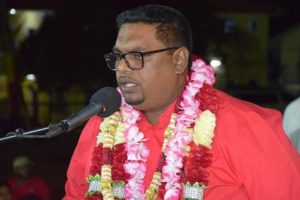
This is the assertion of one of the candidates for President of Guyana, Dr. Irfaan Ali; see this news story here about a recent political rally:

Title: Ali plans to get Diaspora involved in every aspect of national development
Sub-title: Speaking at his party’s rally on Sunday in Stewartville, Mr. Ali said the diaspora should not be ignored and he has no problem with those who have dual citizenship.

The Presidential Candidate for the People’s Progressive Party, Irfaan Ali, believes that members of the Diaspora could play a meaningful role in Guyana development and a government under his watch would include the diaspora in every aspect of decision making in Guyana.

Speaking at his party’s rally on Sunday in Stewartville, Mr. Ali said the diaspora should not be ignored and he has no problem with those who have dual citizenship.

“You are a born Guyanese and you have a right here and we love you and this is your home. We are going to aggressively involve the Diaspora in every aspect of national life and development, they must come back and work and be part of the future”, Ali told his supporters at the large rally.

Ali also released a menu of development plans for the Region 3 area that he intends to put in place if he wins the upcoming elections.

He said the West Demerara will see a superhighway and a new fixed bridge across the Demerara River with improved health and educational facilities under his leadership.

Mr. Ali also promised to do more to assist the farmers of Region 3.

The Region 3 residents were also told that revenues from the oil and gas sector will trickle down to them, with training and jobs being made available.

Ali who also lives in the West Demerara area believes the residents of the region must continue to support his party to ensure development of their communities.

Source: Posted & retrieved February 10, 2020 from: https://newssourcegy.com/news/ali-plans-to-get-diaspora-involved-in-every-aspect-of-national-development/

Don’t get it twisted, the Diaspora has not been, is not currently nor will they ever be the panacea for what ills Guyana. Plus the [majority of the] Diaspora is not even listening to this appeal from the home country. So calling out to them is a waste of Guyana’s time and the Diaspora’s time.

This is a constant message from the movement behind the 2013 book Go Lean…Caribbean. This was well communicated in a series of previous blogs on this same subject, for one Caribbean country after another:

The Diaspora – of all Caribbean countries – never listens to the appeals of their former homelands. Alas, Barbados [Guyana] is not the first to waste time, talent and treasuries to engage their Diaspora and urge them to come back and/or to invest in the homeland.

This quest has been pursued throughout the Caribbean world. Yet the failures has been loud.

Why? Because they – the Diaspora – are gone!

Yes, there is this preponderance for governments (and citizenry alike) in the region to pursue this same Diaspora strategy. [Since] the calendar year of 2017, we published a number of commentaries on this Caribbean pre-occupation, with these entries relating these homelands:

The Diaspora is not the panacea, or cure-all, for the Caribbean ills.

There is a rhyme-and-reason for why a strategy of depending on the Diaspora fails every time:

The troubling flaw for the Diaspora strategy is that the expectation is that these people who have left ‘here” will now turnaround and fix what is broken here. [But] this is a fallacy!

Rather than a strategy to “Invite the Diaspora to Remember Us”, there needs to be a Way Forward with strategies, tactics and implementations to elevate the societal engines of the Caribbean so that people do not have to leave in the first place.

Why do people leave?

The reasons have been identified as “Push and Pull”:

Push” refers to people who feel compelled to leave, to seek refuge in a foreign land. “Refuge” is an appropriate word; because of societal defects, many from the Caribbean must leave as refugees – think LGBTDisabilityDomestic-abuseMedically-challenged – for their life, liberty and pursuit of happiness.

Pull”, on the other hand refers to the lure of a more prosperous life abroad; many times our people are emigrating based on a mirage of “greener pastures”; many times, this is elusive for the first generations.

It is far better to mitigate these “Push and Pull” factors; this would dissuade our people from leaving in the first place.

These words here are different than what the political candidates are promising for the Guyana March 2, 2020 Poll. Why?

The approach is different!

Guyana’s political establishment is proud of their independence status – one of the first in the British West Indies to secure this status. The Go Lean book, on the other hand, serving as a roadmap for a Way Forward, declares that this country went down the wrong road, that the key to success for Guyana is not independence, but rather it must be interdependence. The problems in Guyana are “too big for Guyana alone” to assuage, they need confederated solutions with their regional neighbors, who are all “in the same boat”.

This Go Lean roadmap is the Way Forward for Guyana.

The Go Lean book, serving as a roadmap for the introduction of the Caribbean Union Trade Federation (CU), asserts that the panacea for Guyana is not the Diaspora, but rather the strategies, tactics and implementations of this regional construct. The quest of this CU charter is not CariCom or the “Caribbean Community”. No, we are advocating for something better. We are advocating for economic empowerments, a regional security apparatus to optimize public safety and justice standards for all stakeholders – citizens, visitors and trading partners – and a technocratic regional governance.

How do we go about elevating these 3 vital societal engines (economics, security, governance)? Throughout the 370 pages of the Go Lean book, the details are provided as turn-by-turn directions on how to adopt new community ethos (attitudes and values), execute new strategies, tactics and implementations. These will reboot Guyana … and the other CariCom member-state on the Guiana Platte (Suriname). In fact, this actual advocacy in the Go Lean book contains specific plans, excerpts and headlines here from Page 240, entitled:

10 Ways to Impact The Guianas

1 Lean-in for the Caribbean Single Market Confederation Treaty: Caribbean Union Trade Federation (CU)
The CU will allow for the unification of the region into one market, thereby creating a single economy of 30 member-states for 42 million, including the independent states of Guyana and Suriname. Other territories that made up The Guianas region include French Guiana, Spanish Guiana (today, the Guayana Region comprises three of the federal States of Venezuela: Amazonas, Bolívar, Delta Amacuro), and Portuguese Guiana (Brazil’s State of Amapa). On the CU roadmap, annexations will be explored in Year 5; French Guiana is ideal candidate, but not the Venezuelan and Brazilian regions. But there is the immediate need for foreign policy synchronizations with these other states for common pool resources and regional threats.
2 Trading Partners based on Nature not Politics
3 Homeland Security Pact – Assurance of Economic Engines
4 Disaster Planning, Preparation & Response
5 Caribbean Dollar and the Caribbean Central Bank

The CU Treaty allows the Caribbean Central Bank (CCB) to manage the monetary policy of the Caribbean Dollar, in place of the Guyanese Dollar or Suriname Dollar for global trade (supplanting US$). The independent-professional management will assuage devaluation risks while garnering the benefits of money multiplier. The C$ will be pegged to a basket of currencies, including the US dollar, Euro, British pound, so as to maximize value in the international markets.

6 Emigration Circuit Breaker

Some chronic problems related to economic progress has been the shortage of skilled labor and a deficient infrastructure. The CU seeks to offer an alternative to citizens abandoning the region for EU or US shores. A diverse, well-managed economy of 42 million people, rather than the minimal 700,000 of Guyana alone and 540,000 of Suriname, offer more options to assuage pressures for Guianian talent fleeing. The whole CU can provide solutions to contend with the scarcity of skilled labor, innovation deficits, and financial risks in social pension systems.

7 Extraction of Natural Resources
8 Tourism Collective Bargaining
9 Financial Receivership
10 Host Country Entitlements

Guyana has had some encroachments of Failed-State status in the recent past; (plus the dire straits of Venezuela next door). Their societal engines are so deficient that they now have one of the highest suicides rates in the world. This is not a proud legacy to boast, but rather an emphatic cry for help. Here comes help!

In fact, the dire status and issues of “Guiana Region” has been detailed in many previous blog-commentaries; consider this sample list here:

https://goleancaribbean.com/blog/?p=17691 ‘Free Market’ Versus … Socialism – Very Prevalent in the Caribbean
https://goleancaribbean.com/blog/?p=16172 A Lesson in History: Jonestown, Guyana
https://goleancaribbean.com/blog/?p=13299 Making a ‘Pluralistic Democracy’ – Respecting Diwali
https://goleancaribbean.com/blog/?p=12581 State of the Union – Annexation: French Guiana
https://goleancaribbean.com/blog/?p=12098 Inaction on Venezuela: A Recipe for ‘Failed-State’ Status
https://goleancaribbean.com/blog/?p=5396 ‘Significant’ oil deposit found offshore Guyana
https://goleancaribbean.com/blog/?p=2602 Guyana and Suriname Wrestle With High Rates of Suicides

So for the March 2, 2020 election, we urge the citizens of Guyana to vote early and often; just know that your Diaspora will probably have a small turn-out, (for those that are eligible from their foreign abodes). Do not waste time, talent and treasuries trying to engage this population. These one have left; support the ones who are still there and engaging their civil duty.

As related in a previous blog-commentary – A Change is Gonna Come – this Chinese proverb is apropos:

“Make happy those who are near, and those who are far will come”.

A change will come to Guyana. We urge the stakeholders there to hold-on and hold-out for the reformations and transformations that will come, either with the General Election on March 2, 2020 or soon thereafter with the Go Lean roadmap. We urge all Guyana stakeholders and Caribbean stakeholders alike to lean-in to this Go Lean roadmap … to do the heavy-lifting of elevating our regional society and making our homelands better places to live, work and play.  🙂

About the Book
The book Go Lean…Caribbean serves as a roadmap for the introduction and implementation of the technocratic Caribbean Union Trade Federation (CU), for the elevation of Caribbean society – for all member-states. This CU/Go Lean roadmap has these 3 prime directives:

  • Optimization of the economic engines in order to grow the regional economy to $800 Billion & create 2.2 million new jobs.
  • Establishment of a security apparatus to ensure public safety and protect the resultant economic engines.
  • Improve Caribbean governance to support these engines, including a separation-of-powers between the member-states and CU federal agencies.

The Go Lean book provides 370-pages of turn-by-turn instructions on “how” to adopt new community ethos, plus the strategies, tactics, implementations and advocacies to execute so as to reboot, reform and transform the societal engines of Caribbean society.

Download the free e-Book of Go Lean … Caribbean – now!

Who We Are
The movement behind the Go Lean book – a non-partisan, apolitical, religiously-neutral Community Development Foundation chartered for the purpose of empowering and re-booting economic engines – stresses that reforming and transforming the Caribbean societal engines must be a regional pursuit. This was an early motivation for the roadmap, as pronounced in the opening Declaration of Interdependence (Pages 12 – 13):

xi. Whereas all men are entitled to the benefits of good governance in a free society, “new guards” must be enacted to dissuade the emergence of incompetence, corruption, nepotism and cronyism at the peril of the people’s best interest. The Federation must guarantee the executions of a social contract between government and the governed.

xvi. Whereas security of our homeland is inextricably linked to prosperity of the homeland, the economic and security interest of the region needs to be aligned under the same governance. Since economic crimes … can imperil the functioning of the wheels of commerce for all the citizenry, the accedence of this Federation must equip the security apparatus with the tools and techniques for predictive and proactive interdictions.

xxiv. Whereas a free market economy can be induced and spurred for continuous progress, the Federation must install the controls to better manage aspects of the economy: jobs, inflation, savings rate, investments and other economic principles. Thereby attracting direct foreign investment because of the stability and vibrancy of our economy.

Sign the petition to lean-in for this roadmap for the Caribbean Union Trade Federation.

—————

APPENDIX VIDEO – This Week in 60 Minutes … – https://youtu.be/baIzuIIatx0

Peoples Progressive Party/Civic
Posted February 8, 2020

Share this post:
, ,
[Top]

Forging Change – Public-Private Partnerships

Go Lean Commentary

There is the Public … and there is Private Enterprise …
… sometimes these different entities, with different objectives actually have to work together.

Forging Change assumes there is a Status Quo that we will have to Change From in a quest to reach a goal or a destination. There is no doubt – if finances are not a hindrance – that it is easier to create something from nothing (scratch) – there is no demolition, discarding or displacing of the Status Quo. Alternatively, if the Status Quo must be replaced, then a “Fast Wipe” would be preferred, think of the reality after a bombing, tornado or hurricane.

These following expressions describe this truism in Forging Change, conveying  that it is easier to build up from nothing than to work with an existing structure (public or private) and then have to rebuild.

  • Burn, Build, Repeat
  • Will Build to Suit
  • “Genesis is life from lifelessness … destroy the existing in favor of its new matrix” – see this Movie Quote in the Appendix VIDEO.

Rebuilding – keeping the old – is perilous – See Appendix A below on the need for the strategy of Self-Governing Entities.

Creating something new from nothing would be so much better …

… but what if we cannot? What if we must engage the current infrastructure (buildings), people and processes? Then we must find a way to meld or blend the Old with the New, to merge the actuality of existing infrastructure with the need for the new development. How do we Forge Change in this reality?

One solution: Public-Private Partnerships (PPP).

What? How? Why? See this encyclopedic details here:

Reference: Public–private partnership
A public–private partnership (PPP, 3P, or P3) is a cooperative arrangement between two or more public and private sectors, typically of a long-term nature.[1][2] It involves an arrangement between a unit of government and a business that brings better services or improves the city’s capacity to operate effectively.[3] Public–private partnerships are primarily used for infrastructure provision, such as the building and equipping of schools, hospitals, transport systems, and water and sewerage systems.[4] PPPs have been highly controversial as funding tools, largely over concerns that public return on investment is lower than returns for the private funder. PPPs are closely related to concepts such as privatization and the contracting out of government services.[1][5] The lack of a shared understanding of what a PPP is makes the process of evaluating whether PPPs have been successful complex.[6] Evidence of PPP performance in terms of value for money and efficiency, for example, is mixed and often unavailable.[7] Common themes of PPPs are the sharing of risk and the development of innovation.[6] …
Origins
Governments have used such a mix of public and private endeavors throughout history.[12][13] Muhammad Ali of Egypt utilized “concessions” in the early 1800s to obtain public works for minimal cost while the concessionaires’ companies made most of the profits from projects such as railroads and dams.[14] Much of the early infrastructure of the United States was built by what can be considered public-private partnerships. This includes an early steamboat line between New York and New Jersey in 1808; many of the railroads, including the nation’s first railroad, chartered in New Jersey in 1815; and most of the modern electric grid. In Newfoundland, Robert Gillespie Reid contracted to operate the railways for fifty years from 1898, though originally they were to become his property at the end of the period. However, the late 20th and early 21st century saw a clear trend toward governments across the globe making greater use of various PPP arrangements.[2] This trend seems to have reversed since the global financial crisis of 2008.[6] …

Economic theory
In economic theory, public–private partnerships have been studied through the lens of contract theory. The first theoretical study on PPPs was conducted by Oliver Hart.[17] From an economic theory perspective, what distinguishes a PPP from traditional public procurement of infrastructure services is that in the case of PPPs, the building and operating stages are bundled. Hence, the private firm has strong incentives in the building stage to make investments with regard to the operating stage. These investments can be desirable but may also be undesirable (e.g., when the investments not only reduce operating costs but also reduce service quality). Hence, there is a trade-off, and it depends on the particular situation whether a PPP or traditional procurement is preferable. Hart’s model has been extended in several directions. For instance, authors have studied various externalities between the building and operating stages,[18] insurance when firms are risk-averse,[19] and implications of PPPs for incentives to innovate and gather information.[20][21]

Clarence N. Stone frames public–private partnerships as “governing coalitions”. In Regime Politics Governing Atlanta 1946–1988, he specifically analyzes the “crosscurrents in coalition mobilization”. Government coalitions are revealed as susceptible to a number of problems, primarily corruption and conflicts of interest. This slippery slope is generally created by a lack of sufficient oversight.[22] Corruption and conflicts of interest, in this case, lead to costs of opportunism; other costs related to P3s are production and bargaining costs.[23] …

Profit sharing
Some public–private partnerships, when the development of new technologies is involved, include profit-sharing agreements. This generally involves splitting revenues between the inventor and the public once a technology is commercialized. Profit-sharing agreements may stand over a fixed period of time or in perpetuity.[34] …


Source: Retrieved January 31, 2020 from: https://en.wikipedia.org/wiki/Public%E2%80%93private_partnership

So a PPP is a formal cooperative, just between public (government) entities and for-profit enterprises. These have proven effective in Forging Change among societal engines: economic, security and governance. Cooperative is the key word. (Consider the example of successful PPP deployments in India).

This commentary is the continuation of this January 2020 series from the movement behind the 2013 book Go Lean … Caribbean on the Art and Science of Forging Change in society. This entry is 3 of 4 for this series, promoting the Art and Science of Public-Private Partnerships. This is presented as an excellent strategy for melding the old infrastructure (government) with the new innovators (cutting-edge private enterprises) to make progress in Caribbean communities. We cannot ignore this obvious solution. Other Forging Change considerations are presented in this series; see the full series catalog here:

  1. Forging Change – By Building Momentum
  2. Forging Change – Opposition Research: Special Interest
  3. Forging Change – Public-Private Partnerships (PPP)
  4. Forging Change – Labor Movement Cautionary Tale – Backlash: Going too far

This is all about Forging Change. As related, this is not an easy assignment; it is both an Art and Science. But, the Art and Science gives insights on “how” the stewards of a new Caribbean can move the Old (people, process, establishments and institutions) to succeed in reaching New goals and accomplishments for their constituents and clients.

This thought of Forging Change has been a common theme for the movement behind the book Go Lean…Caribbean for more than 5 years. Before this 4-part series (this January 2020), there were 13 previous blog-commentaries that detailed approaches for forging change; see the full catalog here (in reverse chronological order):

  1. Forging Change – ‘That’s What Friends Are For’ (July 9, 2019)
  2. Forging Change – Corporate Vigilantism (March 29, 2018)
  3. Forging Change – Soft Power (February 21, 2018)
  4. Forging Change – Collective Bargaining (April 27, 2017)
  5. Forging Change – Addicted to Home (April 14, 2017)
  6. Forging Change – Arts & Artists (December 1, 2016)
  7. Forging Change – Panem et Circenses (November 15, 2016)
  8. Forging Change – Herd Mentality (October 11, 2016)
  9. Forging Change – ‘Something To Lose’ (November 18, 2015)
  10. Forging Change – ‘Food’ for Thought (April 29, 2015)
  11. Forging Change – Music Moves People (December 30, 2014)
  12. Forging Change – The Sales Process (December 22, 2014)
  13. Forging Change – The Fun Theory (September 9, 2014)

Forging Change is not easy; some strategies work in some communities, while they may not work in others. So we must “push all the buttons”. We must do anything and everything to get Caribbean stakeholders to accept the changes that must be forged in our region. Public-Private Partnerships are just another expression of the formal cooperative movement.

The cooperative (co-op) movement began in Europe in the 19th century, primarily in Britain and France, in response to the industrial revolution and increased mechanization threatening the livelihoods of so many tradesmen. In 1844, the Rochdale Society was formed as a cooperative for textile workers to open their own store selling food items they could not otherwise afford. They designed the now famous Rochdale Principles, the basis on which co-operatives around the world operate to this day. – Source: Book Go Lean Page 176 quoting from the “International Co-operative Alliance”.

Cooperatives are not unfamiliar to the Go Lean roadmap; in fact the within the 370 pages of the Go Lean book, many details are provided on how to reform and transform the economic, security and governing engines for the Caribbean region using formal cooperatives. The book features the new community ethos (attitudes and values) that must be adopted; plus the executions of new strategies, tactics, implementations and advocacies to succeed in getting different entities – in this case Public ones and Private ones – to work together to elevate the Caribbean homeland. In fact, this actual advocacy on Page 176, in the Go Lean book, contains specific plans, excerpts and headlines; it is hereby entitled:

10 Ways to Foster Cooperatives

1 Lean-in for the Caribbean Single Market initiative: Caribbean Union Trade Federation (CU).
The CU in effect represents a cooperative with the unification of the region into a Single Market of 42 million people across 30 member-states with a GDP of $800 Billion (2010 figures). Following the Rochdale principles, the CU will structure other cooperative endeavors to marshal the economic and homeland security interest of the region.
2 Consumer Cooperatives
3 Worker Cooperatives
4 Purchasing Cooperatives
5 Cooperative Banking

The Caribbean Central Bank (CCB) is a cooperative among the region’s Central Banks. The CCB will be the sole controlling agent of the monetary policies for the Caribbean Dollar and aggregate currency printing and coin pressing.

6 Housing Cooperatives
7 Agricultural Cooperatives.
8 Utility Cooperatives
9 Mutual Education
10 Mutual Insurance and Risk Management

This advocacy projects that there is hope that the Caribbean region can foster the needed Public-Private Partnerships to foster societal progress. Government are not known for innovative solutions – think Silicon Valley – but governments do bring access to markets (constituents) and capital (monopolies and taxes/fees on infrastructure utilization).

We urge all Caribbean stakeholders to lean-in to this Go Lean roadmap … to allow us to work with partners, both domestic and internationally. This is one more way to Forge Change and make our Caribbean a better place to live, work and play. 🙂

About the Book
The book Go Lean…Caribbean serves as a roadmap for the introduction and implementation of the technocratic Caribbean Union Trade Federation (CU), for the elevation of Caribbean society – for all member-states. This CU/Go Lean roadmap has these 3 prime directives:

  • Optimization of the economic engines in order to grow the regional economy to $800 Billion & create 2.2 million new jobs.
  • Establishment of a security apparatus to ensure public safety and protect the resultant economic engines.
  • Improve Caribbean governance to support these engines, including a separation-of-powers between the member-states and CU federal agencies.

The Go Lean book provides 370-pages of turn-by-turn instructions on “how” to adopt new community ethos, plus the strategies, tactics, implementations and advocacies to execute so as to reboot, reform and transform the societal engines of Caribbean society.

Download the free e-Book of Go Lean … Caribbean – now!

Who We Are
The movement behind the Go Lean book – a non-partisan, apolitical, religiously-neutral Community Development Foundation chartered for the purpose of empowering and re-booting economic engines – stresses that reforming and transforming the Caribbean societal engines must be a regional pursuit. This was an early motivation for the roadmap, as pronounced in the opening Declaration of Interdependence (Pages 12 – 13):

xi. Whereas all men are entitled to the benefits of good governance in a free society, “new guards” must be enacted to dissuade the emergence of incompetence, corruption, nepotism and cronyism at the peril of the people’s best interest. The Federation must guarantee the executions of a social contract between government and the governed.

xvi. Whereas security of our homeland is inextricably linked to prosperity of the homeland, the economic and security interest of the region needs to be aligned under the same governance. Since economic crimes … can imperil the functioning of the wheels of commerce for all the citizenry, the ccidence of this Federation must equip the security apparatus with the tools and techniques for predictive and proactive interdictions.

xxiv.  Whereas a free market economy can be induced and spurred for continuous progress, the Federation must install the controls to better manage aspects of the economy: jobs, inflation, savings rate, investments and other economic principles. Thereby attracting direct foreign investment because of the stability and vibrancy of our economy.

Sign the petition to lean-in for this roadmap for the Caribbean Union Trade Federation.

————-

Appendix A – Self Governing Entities – Building from Scratch

The dread of rebuilding is that the first effort must go towards clearing away the Old Space, before effort can be applied to the New Space. This is true for Public entities (buildings, Common Pool Resources, etc.) or for Private entities (corporations, families, and individuals). Remember this Old Wives Tale: “A stitch in time saves Nine”. This is true for Public/Private enterprises and for human development too:

The book Go Lean … Caribbean, presents a plan, as a roadmap, to reform and transform the 30 member-states of the Caribbean region. There is a lot of focus on building from scratch. In fact, the book introduces a novel concept of Self-Governing Entities (SGE), a strategy for facilitating the construction – building from scratch – and administration of independent landmasses specifically as economic engines. These SGE’s are necessary features of the Go Lean roadmap, allowing for industrial parks, technology labs, medical campuses, agricultural ventures, Research & Development facilities and other expressions. Remember these SGE models that previously been detailed:

https://goleancaribbean.com/blog/?p=13138 Industrial Reboot – Prisons 101
https://goleancaribbean.com/blog/?p=12146 Commerce of the Seas – Shipbuilding Model of Ingalls
https://goleancaribbean.com/blog/?p=2750 Disney World – Role Model for Self-Governing Entities
https://goleancaribbean.com/blog/?p=2003 Ship-breaking under SGE Structure
https://goleancaribbean.com/blog/?p=1214 Fairgrounds as SGE and Landlords for Sports Leagues
https://goleancaribbean.com/blog/?p=286 Puerto Rico’s Comprehensive Cancer Center Project – Medical SGE?

————-

Appendix B VIDEO – Star Trek II (1982) – Genesis Explained – https://youtu.be/GnziufszqSE

Admiral Titan Entertainment

Share this post:
, ,
[Top]

Forging Change – Opposition Research: Special Interest

Go Lean Commentary

The best offense is a good defense.

This is a winning strategy in football, yes (think NFL), but in nation-building as well. The actuality of the 30 Caribbean member-states is that we are losing … to the competition and opposition:

Who exactly are our competition or opposition?

What do we know of their motives or designs?

How can we overcome their hindrance?

These are important questions to consider – and answer – if we want to succeed in reforming and transforming the societal engines in our region. This activity is referred to as Opposition Research, where we study and gather intelligence on any adversarial opponent that may challenge us from reaching our goals. See the formal definition here:

In politics, opposition research (also called oppo research) is the practice of collecting information on a political opponent or other adversary that can be used to discredit or otherwise weaken them. The information can include biographical, legal, criminal, medical, educational, or financial history or activities, as well as prior media coverage, or the voting record of a politician. Opposition research can also entail using “trackers” to follow an individual and record their activities or political speeches.[1]

The research is usually conducted in the time period between announcement of intent to run and the actual election; however political parties maintain long-term databases that can cover several decades. The practice is both a tactical maneuver and a cost-saving measure.[2] The term is frequently used to refer not just to the collection of information but also how it is utilized, as a component of negative campaigning. – Source: Retrieved January 30, 2020 from https://en.wikipedia.org/wiki/Opposition_research

Politics, discrediting, negative campaigning … these sounds so ominous, so malevolent!

But for the movement behind the 2013 book Go Lean … Caribbean, there is no evil intent. On the contrary, this is part of our effort to lower the “Push and Pull” factors that lure our citizens away from the homeland to seek refuge in foreign destinations. (“Push” refers to societal defects that compel people to leave; “Pull” refers to the perception that life is better abroad). Like any political campaign, we simply want the people to vote – with their wallets and their feet – for us rather than the “other guy”, our opposition.

There is a name for our pain; there are named opponents that hinders us; one of them is the United States of America. This is NOT a Declaration of War; rather this is just an acknowledgement that many of the policies and practices of America works counter-productive to Caribbean hopes and dreams. We are frenemies; see the full definition here:

Frenemy” (also spelled “frienemy“) is an oxymoron and a portmanteau of “friend” and “enemy” that refers to “a person with whom one is friendly, despite a fundamental dislike or rivalry” or “a person who combines the characteristics of a friend and an enemy”.[1] The term is used to describe personal, geopolitical and commercial relationships both among individuals and groups or institutions. This term also describes a competitive friendship.

What do we know of the motives or designs … of our frienemy, the USA?

For one, they do NOT play fair. They do NOT play fair in the global sandbox; they want all the marbles and for you to have none! To them “Up is Down and Down is Up”; “Right is Wrong and Wrong is Right”. They have even distorted “common sense”. For example, remember this reality in modern times:

The Haves and the Have-Nots

Well for America, the principle that they advocate, promote and message is different … and deceptive; see VIDEO here depicting this messaging:

There are no “Have-Nots”; there is only “Haves” and the “Soon-To-Haves”

VIDEO – Rubio: “We Are A Nation Of Haves And Soon-To-Haves” – https://youtu.be/WiKrCUiP-fg

Senator Marco Rubio
Published Dec 16, 2011 – During a Senate floor speech this afternoon, U.S. Senator Marco Rubio (FL-R) offered his perspectives on his first year in office and the challenges that remain unsolved going into 2012. Below are excerpts from the speech. Rubio: “We have never been a nation of haves and have-nots. We are a nation of haves and soon-to-haves, of people who have made it and people who will make it. And that’s who we need to remain.”

Is this the American Dream?! Well, this is the problem right here. Common Sense dictates that there will always be winners and losers in any pursuit. Yet, with messaging like this, “hope springs eternal” that people will get to America and will someday be among the “Haves”.

This “Dream” is a fallacy! As a result, rather than empowerments to help the poor to elevate from poverty or programs to strengthen the middle class, there are only mandates that help the rich get richer – think tax cuts. So more Income Inequality is the end-result; see this actuality in the Appendix VIDEO below.

Who is the opposition? Needless to say, we are not talking about the common people on the street, rather we are referring to Crony-Capitalistic stakeholders in the country: Special Interest, Big Business, Corrupt Politicians. This is the Opposition.

The Late Great Comedian and Social Commentator George Carlin quipped that “you have to be asleep to believe the American Dream”. – follow this link to that VIDEO.

Reducing taxes on the rich while placing the tax burden on the middle class; this sounds like a good deal … for the rich.

The Opposition wants you Caribbean people to “beat down the doors” and get out of your beloved homeland and “Come to America” to join their workforce. The more people in the labor pool – the Supply – the more downward pressure on the wages for the available jobs – the Demand. This is Economics 101, when Supply exceed Demand, prices drop. This is how the rich get richer; alas, in this scenario, the middle class lose their bargaining power and wages become stagnate – in some cases people have lost their high-paying Union-backed jobs only to find near-minimum-wage service jobs.

How can we overcome the hindrance of the Opposition?

Answer: We overcome their hindrance by Forging Change in our society; we reform and transform the economic, security and governing engines despite the local opposition. We get the public to want the manifestation of this vision. We get the political leaders to lean-in this roadmap. This way we have Bottoms-Up and Top-Down pressure to make this roadmap succeed. Lastly, this dissuades our citizens from leaving the homeland as well; thereby sparing them from the American “nightmare” as the only available Dream – Caribbean people have dreams too!

This commentary is the continuation of this January 2020 series on the Art and Science of Forging Change in society. This entry is 2 of 4 for this series, unmasking the true Opposition to Caribbean progress. We must overcome these hindrance and obstacles to make progress on this roadmap. Other Forging Change considerations are presented in this series; see the full series catalog here:

  1. Forging Change – By Building Momentum
  2. Forging Change – Opposition Research: Special Interest
  3. Forging Change – Public-Private Partnerships (PPP)
  4. Forging Change – Labor Movement Cautionary Tale – Backlash: Going too far

This is all about Forging Change. This is not an easy assignment; it is both an Art and Science. But, the Art and Science gives insights on “how” the stewards of a new Caribbean can persuade people, establishments and institutions to forge change in their communities. We want change, but we do not want to be America; We Want To Be Better.

The previous entry in this series presented a YouTube VIDEO where advocates identified the corrupting “ring of influence” over elected leaders – in Congress et al. The goal for that advocacy group is to neutralize Special Interest Groups that were curtailing the needed progress … in the USA.

The research has now been done, we have the answers, we must move from the status quo to mitigate the designs of the opposition. One way or another, Change is Gonna Come. This thought of Forging Change has been a common theme for the movement behind the book Go Lean…Caribbean for more than 5 years. Before this series, there were 13 previous blog-commentaries that detailed approaches for forging change; see the full catalog here (in reverse chronological order):

  1. Forging Change – ‘That’s What Friends Are For’ (July 9, 2019)
  2. Forging Change – Corporate Vigilantism (March 29, 2018)
  3. Forging Change – Soft Power (February 21, 2018)
  4. Forging Change – Collective Bargaining (April 27, 2017)
  5. Forging Change – Addicted to Home (April 14, 2017)
  6. Forging Change – Arts & Artists (December 1, 2016)
  7. Forging Change – Panem et Circenses (November 15, 2016)
  8. Forging Change – Herd Mentality (October 11, 2016)
  9. Forging Change – ‘Something To Lose’ (November 18, 2015)
  10. Forging Change – ‘Food’ for Thought (April 29, 2015)
  11. Forging Change – Music Moves People (December 30, 2014)
  12. Forging Change – The Sales Process (December 22, 2014)
  13. Forging Change – The Fun Theory (September 9, 2014)

Forging Change is not easy; some strategies work with some people while others may be unmoved. This is why there is the need for so many different strategies, tactics and implementations. As evident by these foregoing 13 commentaries, the Go Lean movement presented a roadmap to “leave no stone unturned” for reforming and transforming the region. “Reforming and transforming” means making our Caribbean homeland a better place to live, work and play.

We hereby urge all stakeholders to lean into this Go Lean roadmap. 🙂

About the Book
The book Go Lean…Caribbean serves as a roadmap for the introduction and implementation of the technocratic Caribbean Union Trade Federation (CU), for the elevation of Caribbean society – for all member-states. This CU/Go Lean roadmap has these 3 prime directives:

  • Optimization of the economic engines in order to grow the regional economy to $800 Billion & create 2.2 million new jobs.
  • Establishment of a security apparatus to ensure public safety and protect the resultant economic engines.
  • Improve Caribbean governance to support these engines, including a separation-of-powers between the member-states and CU federal agencies.

The Go Lean book provides 370-pages of turn-by-turn instructions on “how” to adopt new community ethos, plus the strategies, tactics, implementations and advocacies to execute so as to reboot, reform and transform the societal engines of Caribbean society.

Download the free e-Book of Go Lean … Caribbean – now!

Who We Are
The movement behind the Go Lean book – a non-partisan, apolitical, religiously-neutral Community Development Foundation chartered for the purpose of empowering and re-booting economic engines – stresses that reforming and transforming the Caribbean societal engines must be a regional pursuit. This was an early motivation for the roadmap, as pronounced in the opening Declaration of Interdependence (Pages 12 – 13):

xi. Whereas all men are entitled to the benefits of good governance in a free society, “new guards” must be enacted to dissuade the emergence of incompetence, corruption, nepotism and cronyism at the peril of the people’s best interest. The Federation must guarantee the executions of a social contract between government and the governed.

xvi. Whereas security of our homeland is inextricably linked to prosperity of the homeland, the economic and security interest of the region needs to be aligned under the same governance. Since economic crimes … can imperil the functioning of the wheels of commerce for all the citizenry, the ccidence of this Federation must equip the security apparatus with the tools and techniques for predictive and proactive interdictions.

xxiv.  Whereas a free market economy can be induced and spurred for continuous progress, the Federation must install the controls to better manage aspects of the economy: jobs, inflation, savings rate, investments and other economic principles. Thereby attracting direct foreign investment because of the stability and vibrancy of our economy.

Sign the petition to lean-in for this roadmap for the Caribbean Union Trade Federation.

———————-

Appendix VIDEO – What does wealth inequality look like? – https://www.cbsnews.com/live/video/20200131132211-wealth-tax-floated-as-solution-to-americas-growing-wealth-inequality/

Posted January 31, 2020 – The growing gap between rich and poor Americans is one of the U.S.’s biggest challenges, with the top 1% controlling more wealth now than at any time in the last 50 years. A recent survey found that over half the country thinks it’s a problem, though most people might not know exactly what wealth inequality looks like. Tony Dokoupil speaks to Americans to see if they know what their “share of the pie” looks like.

https://www.cbs.com/shows/cbs_this_morning/video/7qsoOCpUsvJicQVaszWVcERqEwTgb72b/americans-know-wealth-inequality-is-a-problem-but-what-does-it-look-like-/

Share this post:
, ,
[Top]

Forging Change – By Building Momentum

Go Lean Commentary

There are two kinds of changes:

  • Revolutionary
  • Evolutionary

If the goal is to change society – to reform and transform the societal engines – which approach is better?

American Civil Rights icon Martin Luther King (MLK) asserted that the best time to correct an injustice is always NOW, thereby alluding to revolutionary change. In fact, when innocent people are oppressed, repressed or suppressed, there should be no gradual migration from “there to here”. The MLK quote is actually:

“I Have A Dream” speech, Washington, D.C., August 28, 1963
“We have also come to this hallowed spot to remind America of the fierce urgency of Now. This is no time to engage in the luxury of cooling off or to take the tranquilizing drug of gradualism. Now is the time to make real the promises of democracy.”

If only we can Forge Change immediately here in our Caribbean homeland, but our reality is different, where change is gradual, it builds to a momentum – some people here and some people there – until finally … boom! The change becomes legally manifested … and codified in law. So both evolutionary and revolutionary change is the reality.

This is the subject of this commentary by the movement behind the 2013 book Go Lean … Caribbean. Every month, we present a teaching series; for January 2020, the focus is on the Art and Science of Forging Change in society. This is entry 1 of 4 for this series, detailing the process of Building Momentum to get evolutionary change to become revolutionary.

While this is an American example, it does bear on the manifestations of change in the Caribbean – notice how all the social issues in this VIDEO – starting first with the corrupting influences of Big Money distorting campaigns and the will of the people; this also relates to Caribbean life:

VIDEO – Unbreaking America: Solving the Corruption Crisis – https://youtu.be/TfQij4aQq1k

RepresentUs
Published on February 27, 2019 –
Our government is broken, and we have to fix it. RepresentUs board member Jennifer Lawrence and Director of RepresentUs Josh Silver, walks through three lines that show what’s wrong with legal corruption in our government, how we fix it and what you can do about it. Find out how you can get involved at http://represent.us.
Sources for video: https://act.represent.us/sign/Unbreak…

Other Forging Change considerations – gleaned from this foregoing VIDEO – are presented in this January series; see the full catalog here:

  1. Forging Change – By Building Momentum
  2. Forging ChangeOpposition Research: Special Interest
  3. Forging ChangePublic-Private Partnerships (PPP)
  4. Forging Change – Labor Movement Cautionary Tale – Backlash: Going too far

The foregoing VIDEO relates how hard it is to apply changes to America’s fundamental laws – to amend the US Constitution. The gradual change must start at the local level, then State levels and only then, after building momentum, is federal action engaged.

The US Constitution does not apply to most Caribbean member-states, but the model of evolutionary change does relate to all societies. Everyone has had to contend with the Art and Science of Forging Change. This Art and Science give insights on “how” the stewards of a new Caribbean can persuade people, establishments and institutions to Forge Change in their communities.

This thought of Forging Change has been a common theme for the movement behind the book Go Lean book for almost 6 years. See the full catalog here of the previous 13 blog-commentaries that detailed approaches for Forging Change (in reverse chronological order):

  1. Forging Change – ‘That’s What Friends Are For’ (July 9, 2019)
  2. Forging Change – Corporate Vigilantism (March 29, 2018)
  3. Forging Change – Soft Power (February 21, 2018)
  4. Forging Change – Collective Bargaining (April 27, 2017)
  5. Forging Change – Addicted to Home (April 14, 2017)
  6. Forging Change – Arts & Artists (December 1, 2016)
  7. Forging Change – Panem et Circenses (November 15, 2016)
  8. Forging Change – Herd Mentality (October 11, 2016)
  9. Forging Change – ‘Something To Lose’ (November 18, 2015)
  10. Forging Change – ‘Food’ for Thought (April 29, 2015)
  11. Forging Change – Music Moves People (December 30, 2014)
  12. Forging Change – The Sales Process (December 22, 2014)
  13. Forging Change – The Fun Theory (September 9, 2014)

As related in these commentaries, Forging Change in the 3 societal engines of a community – economics, security and governance – is not easy; it is actually heavy-lifting.

We may not be able to manifest the changes we need, want and deserve in “one fell swoop”. (Even though injustices should be immediately remediated). This is why Forging Change is presented as an Art and a Science.

These past commentaries align with the Go Lean roadmap – a plan to leverage the 30 member-states of the political Caribbean region by creating a federal government, the Caribbean Union Trade Federation (CU) – described in the Go Lean book. This will allow for the economy-of-scale to fund and implement the solutions to make our Caribbean homeland a better place to live, work and play.

The foregoing VIDEO urges us to join us in the Momentum Building activities, starting on the local level, and then to continue to press hard as the messaging leads to a crescendo, at the CU federal level. Let us get going with this plan here in the Caribbean. We urge all stakeholders – citizens and leaders – to lean-in to this Go Lean roadmap to Forge Change … finally. This quest is conceivable, believable and achievable.

About the Book
The book Go Lean…Caribbean serves as a roadmap for the introduction and implementation of the technocratic Caribbean Union Trade Federation (CU), for the elevation of Caribbean society – for all member-states. This CU/Go Lean roadmap has these 3 prime directives:

  • Optimization of the economic engines in order to grow the regional economy to $800 Billion & create 2.2 million new jobs.
  • Establishment of a security apparatus to ensure public safety and protect the resultant economic engines.
  • Improve Caribbean governance to support these engines, including a separation-of-powers between the member-states and CU federal agencies.

The Go Lean book provides 370-pages of turn-by-turn instructions on “how” to adopt new community ethos, plus the strategies, tactics, implementations and advocacies to execute so as to reboot, reform and transform the societal engines of Caribbean society.

Download the free e-Book of Go Lean … Caribbean – now!

Who We Are
The movement behind the Go Lean book – a non-partisan, apolitical, religiously-neutral Community Development Foundation chartered for the purpose of empowering and re-booting economic engines – stresses that reforming and transforming the Caribbean societal engines must be a regional pursuit. This was an early motivation for the roadmap, as pronounced in the opening Declaration of Interdependence (Pages 12 – 13):

xi. Whereas all men are entitled to the benefits of good governance in a free society, “new guards” must be enacted to dissuade the emergence of incompetence, corruption, nepotism and cronyism at the peril of the people’s best interest. The Federation must guarantee the executions of a social contract between government and the governed.

xvi. Whereas security of our homeland is inextricably linked to prosperity of the homeland, the economic and security interest of the region needs to be aligned under the same governance. Since economic crimes … can imperil the functioning of the wheels of commerce for all the citizenry, the ccidence of this Federation must equip the security apparatus with the tools and techniques for predictive and proactive interdictions.

xxiv. Whereas a free market economy can be induced and spurred for continuous progress, the Federation must install the controls to better manage aspects of the economy: jobs, inflation, savings rate, investments and other economic principles. Thereby attracting direct foreign investment because of the stability and vibrancy of our economy.

Sign the petition to lean-in for this roadmap for the Caribbean Union Trade Federation.

Share this post:
, ,
[Top]

Cursed in Paradise – ‘Enriquillo’ Fault-line

Go Lean Commentary

The Caribbean is the “greatest address on the planet … “

We have said this repeatedly; the Creator has blessed this region with such beauty.

Yet, we must confess, considering a religious argument: “The Gods must be crazy” … putting such a beautiful place in the middle of a dangerous Earthquake Fault-line. This refers to the Enriquillo Fault-line across the Greater Antilles in the Caribbean archipelago – see Photo here:

This is not just a theory; this is actuality. We have this news headline now: “7.7 Earthquake north of Jamaica”. So, crediting Godly devotion again, maybe the earthquake activity is some kind of Divine Retribution?

Retribution of what?

Well, just like the Curse of Montezuma or Curse of the Bambino, there were some egregious atrocities that maybe had to be prosecuted-reconciled-remediated for justice from some higher authority (God). Therefore, the thesis is that there is a “curse on this landmass for retribution against the ‘powers that be’ for the inflictions against the indigenous people and their leader Enriquillo”. See those details here on the Enriquillo namesake and the encyclopedic reference of the Fault-line in the Appendix below:

Reference: Enriquillo
Good relations between Christopher Columbus and the indigenous Taíno of the large island Columbus called Hispaniola did not last more than a few days. The Taínos were forced into terrible conditions as laborers in gold mining operations, badly housed in the mountains, poorly fed, extremely overworked, and forced to live in close quarters with the Spaniards.[5] Additionally, due to taking men away from the villages, the cycle of food production was disrupted, causing widespread malnutrition.[5] This malnutrition further aided the Taínos’ vulnerability to deadly new types of diseases introduced by the foreigners.[5] After Columbus tortured and killed many in his quest for gold, he turned to slavery and sugar cane plantations as a way to profit from his voyages.

Several revolts followed in the first half of the 16th century, the most famous began in 1519. Enriquillo, one of the few remaining caciques, or indigenous chiefs, started the revolt with a large number of Taínos from the mountain range of Bahoruco. The Tainos were able to continue the rebellion because of their better knowledge of the region.[6] As the Spaniards were not able to control the rebellion, a treaty was signed granting to the Native population among others the right of Freedom and of Possession. It had little consequences, however, as by this time the Native population was rapidly declining due to European diseases.

Enriquillo, also known as “Enrique” by the Spaniards, was a Taíno cacique [(Tribal Chief)] who rebelled against the Spaniards between 1519 and 1533. Enriquillo’s rebellion is the best known rebellion of the early Caribbean period. He is also considered a hero in the modern day Dominican Republic and Haiti for his resistance in favor of the indigenous peoples.[1] Dominican friar Bartolome de Las Casas, who documented and rallied against Spanish abuse of the indigenous, wrote sympathetically of Enriquillo.[2]

His father, his aunt Anacaona, and eighty other regional chieftains were killed by Nicolás de Ovando while attending supposed “peace talks” with the Spanish in Jaragua. During the talks, Spanish soldiers ambushed the chieftains, also known as caciques, set the meeting house on fire, and then proceeded to kill anyone who fled the flames (causing his father’s death). Enriquillo, an orphan, was later raised in a Santo Domingo monastery and given the name of “Enrico” [3]. One of his mentors was Bartolomé de Las Casas. De Las Casas was a Spanish Roman Catholic Priest focused on the rights of Native Americans. [4]

Enriquillo also had a wife, called Mencía, later with the noble title Doña due to Enriquillo’s high standing and relations with the Spaniards. She was raped by a Spaniard named Valenzuela. When Enriquillo tried to take the issue to the Spanish courts, nothing could be done, since it was Doña Mencia’s word against the Spaniard’s word. This, according to some writers, was the tipping point for Enriquillo which led to his revolt in the Bahoruco mountains.
Source: Retrieved January 29, 2020 from: https://en.wikipedia.org/wiki/Enriquillo

Theory, thesis, religious inference – Yada Yada!

It is what it is – these earthquakes are real! We must simply prepare. This is quest of the movement behind the 2013 book Go Lean…Caribbean; the book stated (Page 23):

c-7. “Crap” Happens
Economic security is tied to the community quest to reboot the Caribbean region to ensure a better place to live, work and play. To ensure economic security, the economic engines must be protected to ensure their continuous operations despite natural or man-made deterrents. Bad things do happen to good people, so we cannot be caught unprepared. We must institute the process and provisions to respond, react, restore and recover. Any and everyone may need to dial “911”.

The Caribbean community ethos is to consider the facts and realities:

  1. climate change cannot be dismissed – tropical storms are now more common and more ferocious;
  2. there are two geologic fault-lines that run through the Caribbean region;
  3. there is an active volcano on Montserrat.

It is not a matter of “if” but “when” emergencies will strike. The security principle therefore is to be prepared for all incidents, big and small, that involve all aspects of society: islands, institutions, companies, families and individuals.

As related in the foregoing headline – 7.7 Earthquake north of Jamaica – this is of serious concern. This seismic activity had its epicenter in the middle of the Caribbean Sea, away from land, but spurring the threat of a tsunami in one place after another. Everyone is On Alert. See this actuality depicted in this news story here:

Title: Mag 7.7 quake hits between Cuba and Jamaica, but no injuries
Sub-title:
A powerful magnitude 7.7 earthquake has struck in the Caribbean Sea between Jamaica and eastern Cuba
By: Michael Weissenstein, Associated Press
HAVANA – A powerful magnitude 7.7 earthquake struck in the Caribbean Sea between Jamaica and eastern Cuba on Tuesday, shaking a vast area from Mexico to Florida and beyond, but there were no reports of casualties or heavy damage.

The quake was centered 139 kilometers (86 miles) northwest of Montego Bay, Jamaica, and 140 kilometers (87 miles) west-southwest of Niquero, Cuba, according to the U.S. Geological Survey. It hit at 2:10 p.m. (1910 GMT) and the epicenter was a relatively shallow 10 kilometers (6 miles) beneath the surface.

Dr. Enrique Arango Arias, head of Cuba’s National Seismological Service, told state media that there had been no serious damage or injuries reported.

Gov. Carlos Joaquín González of Mexico’s Quintana Roo, which is home to Cancun, Tulum and other popular beach resorts, said the earthquake was felt in multiple parts of the low-lying Caribbean state but there were no early reports of damage or injuries.

The Pacific Tsunami Warning Center initially warned that the quake could generate waves 1 to 3 feet above normal in Cuba, Jamaica, the Cayman Islands, Honduras, Mexico and Belize, but issued a later message saying the danger had passed.

The initial tremor was followed by a series of strong aftershocks, including one measured at magnitude 6.1.

The quake was felt strongly in Santiago, the largest city in eastern Cuba, said Belkis Guerrero, who works in a Roman Catholic cultural center in the center of Santiago

“We were all sitting and we felt the chairs move,” she said. “We heard the noise of everything moving around.”

She said there was no apparent damage in the heart of the colonial city.

“It felt very strong but it doesn’t look like anything happened,’’ she told The Associated Press.

It was also felt a little farther east at the U.S. Navy base at Guantanamo Bay, Cuba, on the southeastern coast of the island. There were no immediate reports of injuries or damages, said J. Overton, a spokesman for the installation, which has a total population of about 6,000 people.

Several South Florida buildings were evacuated as a precaution, according to city of Miami and Miami-Dade County officials. No injuries or road closures were reported. No shaking was felt at the Hard Rock stadium in Miami Gardens, which will host the Super Bowl on Sunday.

The quake also hit the Cayman Islands, leaving cracked roads and what appeared to be sewage spilling from cracked mains. There were no immediate reports of deaths, injuries or more severe damage, said Kevin Morales, editor-in-chief of the Cayman Compass newspaper.

The islands experience so few earthquakes that newsroom staff were puzzled when it hit, he said.

“It was just like a big dump truck was rolling past,” Morales said. “Then it continued and got more intense.”

Dr. Stenette Davis, a psychiatrist at a Cayman Islands hospital, said she saw manhole covers blown off by the force of the quake, and sewage exploding into the street, but no more serious damage.

Claude Diedrick, 71, who owns a fencing business in Montego Bay, said he was sitting in his vehicle reading when the earth began to sway.

“It felt to me like I was on a bridge and like there were two or three heavy trucks and the bridge was rocking but there were no trucks,” he said.

He said he had seen no damage around his home in northern Jamaica.

Mexico’s National Seismological Service reported that the quake was felt in five states including as far away as Veracruz, on the country’s Gulf Coast.

————— Associated Press writer Kate Chappell in Kingston, Jamaica, contributed to this report.

Source: Posted & Retrieved January 28, 2020 from: https://abcnews.go.com/International/wireStory/powerful-earthquake-hits-cuba-jamaica-68592066

Considering the geological science of earthquakes, we know there are main shocks and after-shocks. Some geologists also credit pre-shocks, where minor seismic activities come as a prelude to main shocks. See more on the “Science of Earthquakes” in this VIDEO here:

VIDEOWhat is an earthquake? https://abcn.ws/2M4FtKM

An earthquake is caused when two blocks of earth slip past each other on a fault plane, according to the US Geological Survey.

The Richter Scale is exponential between the numbers 3 and 8, so 7.7 is very strong … and dangerous.

There truly have been pre-shocks leading up to this “7.7 Earthquake north of Jamaica”; consider this related story:

2020 Puerto Rico Earthquakes
At the end of December 2019 and in early January 2020, the southwestern part of the island of Puerto Rico was struck by an earthquake swarm,[1] including six that were of magnitude 5 or greater.[2] The largest and most damaging of this sequence occurred on January 7 at 04:24 AST (08:24 UTC) and had a magnitude of 6.4 Mw and a maximum felt intensity of VII (Very strong) on the Modified Mercalli intensity scale.[3] At least one person was killed and several others were injured.[4][5]

A 5.8 Mw  earthquake the previous day caused the destruction of a natural arch, a tourist attraction at Punta Ventana in Guayanilla.[6] A 5.9 Mw  aftershock on Saturday, January 11, damaged many structures, including several historical buildings as well as modern high-rises in the city of Ponce.[7]

Power was lost Island-wide immediately after the quake, and was increasingly restored over a period of a week. Damage to homes was extensive and, by 14 January, more than 8,000 people were homeless and camping outdoors in various types of shelters, with 40,000 others camping outside their homes, just in the city of Ponce alone.[8]

Needless to say, the Enriquillo Fault-line has been very active in these recent days. To all Caribbean stakeholders, we urge:

Be afraid; be very afraid.

This is the same fault-line that devastated Haiti in January 2010 – almost 10 years exactly – plus many other times in the past. The Go Lean movement and organization originated in response to that unmitigated disaster. See this salient reference to it in the Go Lean book (Page 115):

The Bottom Line on the Haiti’s Earthquakes

As of 2010, the following major earthquakes have been recorded in Haiti, along the Enriquillo or Septentrional-Oriente faults:

  • 1564: Quake destroyed Concepción de la Vega and Santiago de los Caballeros.
  • 1701: On November 9, severe destruction occurred and “part of the area along the north shore of the Tiburon Peninsula from Logane to Petit Goave sank into the sea”.
  • 1751 Port-au-Prince earthquake (18 October): According to French historian Moreau de Saint-Méry, “only one masonry building had not collapsed” in Port-au-Prince, Haiti’s capital city.
  • 1770 Port-au-Prince earthquake (3 June): The city was leveled in this magnitude 7.5 quake, killing over 200 people.
  • 1783: A strong quake partially destroyed the church in Santiago.
  • 1842 Cap-Haitien earthquake (7 May): An earthquake destroyed the city of Cap-Haïtien and other towns in the north of Haiti and the Dominican Republic; this earthquake also destroyed the Sans-Souci Palace. 10,000 people were killed. It has been estimated that its magnitude was 8.1.
  • 1946 Dominican Republic earthquake (4 August): This 8.0-magnitude quake in Samaná also shook Haiti horrifically, producing a tsunami that killed 1,600 people.
  • 2010 Haiti earthquake (12 January):. The epicenter of this magnitude 7.0 Mw earthquake was near Léogâne, approximately 16 miles west of Port-au-Prince at a depth of 8.1 miles. The United States Geological Survey recorded a series of at least 33 aftershocks, 14 of which were between magnitudes 5.0 and 5.9. The International Red Cross estimated that about three million people were affected by the quake; the Haitian Government reports that over 316,000 people had been identified as dead, an estimated 300,000 injured, and an estimated 1,000,000 homeless.

Based on this observation, one can hypothesize the theory of: “An accursed land, indeed”!

Yet still, the Go Lean promoters assert – in a previous blog-commentary – that we do not want our people abandoning home, seeking refuge elsewhere. We can reform and transform the homeland to better prepare for the eventualities of Mother Nature. See that message here:

The movement behind the book Go Lean…Caribbean is standing up, stepping up and speaking up:

  • “… Here I am, send me” – The Bible; Isaiah 6:8 (New International Version: Then I heard the voice of the Lord saying, “Whom shall I send? And who will go for us?” And I said, “Here am I. Send me!”)

The basic premise of the economic analysis in the Go Lean book is that we need our population to stay, remain and return to the Caribbean; the more people we have in the market the better.

What is it that we can do to reform and transform for earthquakes? The Go Lean book relates (Page 76), in introducing the Caribbean Union Trade Federation (CU) as a technocracy to plan and respond to natural disasters. See this excerpt here:

B4 – Emergency Management
This area is perhaps one of the most important functions of the CU. The Emergency Management Department will coordinate the planning, response, rebuilding and recovery before, during and after natural disasters and other emergency events. This is the risk management arm of the CU Trade Federation. As such, the scope of Emergency Management will also include education, mentoring, monitoring, mitigation, licensing and coordination of all volunteer activities.

The scope of this department also includes a number of proactive initiatives: (1). establishing and administering volunteer fire/rescue departments for sparsely populated areas; and (2). installing/maintaining emergency notification systems. In ancient cultures there is the practice of ringing a bell, a church bell or one at the town square, to alert the community of an imminent threat. A lot of western democracies embrace the same tactic with more modern technologies, such as audible alarms/sirens.

The imminent threat includes tornado landfall warning, tsunami, mudslide, volcano eruption, etc. The CU will extend this practice further by installing a standard audible siren system for any/all emergency events. A great lesson learned from the US Midwestern city of Omaha-Nebraska is the schedule for siren testing, the first Wednesday every month at 11:00am.
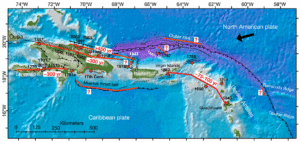
A best practice for Emergency Management is electronic notification. This includes an Emergency Broadcasting/Alert system for TV and radio. Plus now the latest advance is the use of telephone/internet and contact center technologies, allowing features like Reverse 911 – automated/robo calls to every active phone in a location – and text message blasting to every cell phone. With the embrace of www.myCaribbean.gov, the CU can target an alert message to any & every email address, social media screen names, or provide Pop-up Screens for internet browsing sessions for all IP addresses in the strike area.

As such, the scope of natural emergencies covered by this agency will cover more than hurricanes. As such, earthquakes, tsunamis, volcanoes, flooding, forest fires, and droughts will also be monitored, managed and responded to. (These have all been experienced recently in the Caribbean).

Emergencies also include the man-made variety as in industrial (oil spills, factory accidents, chemical spills), explosions, terroristic attacks and prison riots. The purpose of the Trade Federation is to enhance the economic engines of the region. While the #1 economic driver in the region is tourism, any poorly managed episode of “man-made” emergencies will have devastating effects on tourist bookings. Therefore, the CU must respond quickly, forcefully and professionally to contain the physical and image damage that can occur from these incidents.

Though not exclusive, this agency will coordinate its specialized services, skill-sets and occupations like Paramedic, EMT, Search-and-Rescue, Canine (K-9) with other governing (law enforcement) entities. Regional training will therefore be coordinated, licensed, and certified by this CU Emergency Management Department.

This Emergency Management agency will also coordinate the training and management of animal responders, in conjunction with the other federal agencies of Justice, Agriculture, Interior (Parks). The animals will include bomb sniffing dogs, cadaver dogs, drug dogs and mounted police horses.

There is also an economic/financial scope for this department. As the effort for a comprehensive property-casualty fund to cover the entire Caribbean region will also be coordinated by this agency. The classic solution is a large pool of premium payers and claims filed by the affected area. Beyond this model, there are also advanced products like re-issuance side-cars for market assimilation. The public can then invest and profit from the threat/realization of regional risks. This derivative product is a bet, a gamble, but in the end, the result is an insurance fund of last resort, much like the Joint Underwriters Agency (JUA) in Florida.

The Go Lean movement has addressed the subject of Earthquakes and Emergency Management on many occasions. See this sample of the many previous blog-commentaries here:

https://goleancaribbean.com/blog/?p=18182 Disaster Relief: Helping, Not Hurting
https://goleancaribbean.com/blog/?p=17373 A Marshall Plan for Haiti – Finally
https://goleancaribbean.com/blog/?p=15996 Good Governance: Stepping Up in an Emergency
https://goleancaribbean.com/blog/?p=15267 Industrial Reboot – Prefab (Earthquake Tolerant) Housing 101
https://goleancaribbean.com/blog/?p=13974 The Spoken and Unspoken on Haiti
https://goleancaribbean.com/blog/?p=2614 Modeling the ‘Great ShakeOut’ Earthquake Drill
https://goleancaribbean.com/blog/?p=87 6.5M Earthquake Shakes Eastern Caribbean

“Here I am send me”? That sounds similar to the mantra “To Change the World, Start With Me”!

While not subscribing to any religious dogma, “it is what it is”, the End of Days Prophecies in the Bible seem to have validity – Matthew 24: 3, 7:

3 What will be the sign … of the Last Days?
7 Nation will rise against nation, and kingdom against kingdom. There will be famines and earthquakes in various places.

So we must simply be more resilient and responsive to earthquakes – and tsunamis. There is no reason to expect any less activity.

So let’s get busy …  let’s prepare our homes, families, communities, nations and region for the eventuality of this Enriquillo Fault-line (and other geologic weak-points that are undeniable in our homeland).

Most importantly, let’s lean-in to this Go Lean roadmap – this is the Way Forward for Caribbean Disaster Preparation and Response – and finally make our region, each of the 30 Caribbean member-states, a better place to live, work and play. 🙂

About the Book
The book Go Lean…Caribbean serves as a roadmap for the introduction and implementation of the technocratic Caribbean Union Trade Federation (CU), for the elevation of Caribbean society – for all member-states. This CU/Go Lean roadmap has these 3 prime directives:

  • Optimization of the economic engines in order to grow the regional economy to $800 Billion & create 2.2 million new jobs.
  • Establishment of a security apparatus to ensure public safety and protect the resultant economic engines.
  • Improve Caribbean governance to support these engines, including a separation-of-powers between the member-states and CU federal agencies.

The Go Lean book provides 370-pages of turn-by-turn instructions on “how” to adopt new community ethos, plus the strategies, tactics, implementations and advocacies to execute so as to reboot, reform and transform the societal engines of Caribbean society.

Download the free e-Book of Go Lean … Caribbean – now!

Who We Are
The movement behind the Go Lean book – a non-partisan, apolitical, religiously-neutral Community Development Foundation chartered for the purpose of empowering and re-booting economic engines – stresses that reforming and transforming the Caribbean societal engines must be a regional pursuit. This was an early motivation for the roadmap, as pronounced in the opening Declaration of Interdependence (Pages 11 – 13):

ii. Whereas the natural formation of the landmass for our lands constitutes some extreme seismic activity, it is our responsibility and ours alone to provide, protect and promote our society to coexist, prepare and recover from the realities of nature’s occurrences.

xi. Whereas all men are entitled to the benefits of good governance in a free society, “new guards” must be enacted to dissuade the emergence of incompetence, corruption, nepotism and cronyism at the peril of the people’s best interest. The Federation must guarantee the executions of a social contract between government and the governed.

xvi. Whereas security of our homeland is inextricably linked to prosperity of the homeland, the economic and security interest of the region needs to be aligned under the same governance. Since economic crimes … can imperil the functioning of the wheels of commerce for all the citizenry, the ccidence of this Federation must equip the security apparatus with the tools and techniques for predictive and proactive interdictions.

xix. Whereas our legacy in recent times is one of societal abandonment, it is imperative that incentives and encouragement be put in place to first dissuade the human flight, and then entice and welcome the return of our Diaspora back to our shores. This repatriation should be effected with the appropriate guards so as not to imperil the lives and securities of the repatriated citizens or the communities they inhabit. …

xxiv. Whereas a free market economy can be induced and spurred for continuous progress, the Federation must install the controls to better manage aspects of the economy: jobs, inflation, savings rate, investments and other economic principles. Thereby attracting direct foreign investment because of the stability and vibrancy of our economy.

Sign the petition to lean-in for this roadmap for the Caribbean Union Trade Federation. 

——————

Appendix – Enriquillo–Plantain Garden Fault Zone

The Enriquillo–Plantain Garden fault zone (EPGFZ or EPGZ) is a system of active coaxial left lateral-moving strike slip faults which runs along the southern side of the island of Hispaniola, where Haiti and the Dominican Republic are located.[1] The EPGFZ is named for Lake Enriquillo in the Dominican Republic where the fault zone emerges, and extends across the southern portion of Hispaniola through the Caribbean to the region of the Plantain Garden River in Jamaica.

Geology
The EPGFZ shares approximately half of the relative motion between the North American and Caribbean tectonic plates with the Septentrional-Oriente fault zone which runs along the northern side of Hispaniola. Both faults merge into the Cayman Trench to the west. The fault accommodates about 20.6±1.66 millimeters of lateral motion per year (mm/yr).[2] Additionally, a component of compression is present as the North American Plate pushes toward the southwest. This results in vertical deformation manifest in the mountainous terrain of Hispaniola. Some researchers believe that the EPGFZ and the Septentrional-Orient fault zone bound a microplate, dubbed the Gonâve Microplate, a 190,000 km2 (73,000 sq mi) area of the northern Caribbean Plate that is in the process of shearing off the Caribbean Plate and accreting to the North America Plate.[3]

[Prominent] Earthquakes

Other historical large earthquakes in 1860, 1761, 1684, 1673, and 1618 are also likely attributed to the EPGFZ, though none of these have been confirmed in the field as associated with this fault.[7]

Source: Retrieved January 29, 2020 from: https://en.wikipedia.org/wiki/Enriquillo%E2%80%93Plantain_Garden_fault_zone

Share this post:
, , , ,
[Top]

Happy Chinese New Year

Go Lean Commentary

Happy New Year …

No, not the January 1st thing, but rather the January 25th thing – the Chinese New Year.

This is a Big Deal in China and among the Chinese Diaspora – Sinophone – throughout the world. There is great importance to this observation. See this VIDEO and encyclopedic reference here:

VIDEO – Everything you need to know about the Chinese New Year https://youtu.be/3I-R5S3czyw

TRT World
Posted January 24, 2020 – Here’s everything you need to know about the Chinese New Year – how it’s celebrated, it’s history, and what the animals represent.

#Chinese New Year #Spring Festival #metalrat

Subscribe: http://trt.world/subscribe
Livestream: http://trt.world/ytlive
Facebook: http://trt.world/facebook
Twitter: http://trt.world/twitter
Instagram: http://trt.world/instagram
Visit our website: http://trt.world

————————————

Title: Chinese New Year
Chinese New Year[a], also referred to as Lunar New Year, is the Chinese festival that celebrates the beginning of a new year on the traditional Chinese calendar. The festival is usually referred to as the Spring Festival in mainland China,[b] and is one of several Lunar New Years in Asia. Observances traditionally take place from the evening preceding the first day of the year to the Lantern Festival, held on the 15th day of the year. The first day of Chinese New Year begins on the new moon that appears between 21 January and 20 February.[2] In 2020, the first day of the Chinese New Year will be on Saturday, 25 January, initiating the Year of the Rat.

Chinese New Year is a major holiday in China, and has strongly influenced Lunar new year celebrations of China’s neighbouring cultures, including the Korean New Year (seol), the Tết of Vietnam, and the Losar of Tibet.[3] It is also celebrated worldwide in regions and countries with significant Overseas Chinese or Sinophone populations, including Singapore,[4]Indonesia, Malaysia, Myanmar,[5]Thailand, Cambodia, the Philippines,[6] and Mauritius,[7] as well as many in North America and Europe.[8][9][10]

Chinese New Year is associated with several myths and customs. The festival was traditionally a time to honour deities as well as ancestors.[11] Within China, regional customs and traditions concerning the celebration of the New Year vary widely,[12] and the evening preceding Chinese New Year’s Day is frequently regarded as an occasion for Chinese families to gather for the annual reunion dinner. It is also traditional for every family to thoroughly clean their house, in order to sweep away any ill-fortune and to make way for incoming good luck. Another custom is the decoration of windows and doors with red paper-cuts and couplets. Popular themes among these paper-cuts and couplets include that of good fortune or happiness, wealth, and longevity. Other activities include lighting firecrackers and giving money in red paper envelopes. For the northern regions of China, dumplings are featured prominently in meals celebrating the festival. It often serves as the first meal of the year either at midnight or as breakfast of the first day.

Festivities
New Year’s Eve
The biggest event of any Chinese New Year’s Eve is the annual reunion dinner. Dishes consisting of special meats are served at the tables, as a main course for the dinner and offering for the New Year. This meal is comparable to Thanksgiving dinner in the U.S. and remotely similar to Christmas dinner in other countries with a high percentage of Christians.

In northern China, it is customary to make jiaozi, or dumplings, after dinner to eat around midnight. Dumplings symbolize wealth because their shape resembles a Chinese sycee. In contrast, in the South, it is customary to make a glutinous new year cake (niangao) and send pieces of it as gifts to relatives and friends in the coming days. Niángāo [Pinyin] literally means “new year cake” with a homophonous meaning of “increasingly prosperous year in year out”.[44]

After dinner, some families go to local temples hours before the new year begins to pray for a prosperous new year by lighting the first incense of the year; however in modern practice, many households hold parties and even hold a countdown to the new year. Traditionally, firecrackers were lit to scare away evil spirits with the household doors sealed, not to be reopened until the new morning in a ritual called “opening the door of fortune” (开财门; 開財門; kāicáimén).[45]

Beginning in 1982, the CCTV New Year’s Gala is broadcast in China four hours before the start of the New Year and lasts until the succeeding early morning. Watching it has gradually become a tradition in China. A tradition of going to bed late on New Year’s Eve, or even keeping awake the whole night and morning, known as shousui (守岁), is still practised as it is thought to add on to one’s parents’ longevity.

First day
The first day is for the welcoming of the deities of the heavens and earth, officially beginning at midnight. It is a traditional practice to light fireworks, burn bamboo sticks and firecrackers and to make as much of a din as possible to chase off the evil spirits as encapsulated by nian of which the term Guo Nian was derived. Many Buddhists abstain from meat consumption on the first day because it is believed to ensure longevity for them. Some consider lighting fires and using knives to be bad luck on New Year’s Day, so all food to be consumed is cooked the days before. On this day, it is considered bad luck to use the broom, as good fortune is not to be “swept away” symbolically.

Most importantly, the first day of Chinese New Year is a time to honor one’s elders and families visit the oldest and most senior members of their extended families, usually their parents, grandparents and great-grandparents.

For Buddhists, the first day is also the designated holy day of MaitreyaBodhisattva (better known as the more familiar Budai Luohan), the Buddha-to-be. People also abstain from killing animals.

Some families may invite a lion dance troupe as a symbolic ritual to usher in the Chinese New Year as well as to evict bad spirits from the premises. Members of the family who are married also give red envelopes containing cash known as lai see (Cantonese dialect) or angpow (Hokkien, Chaozhou, and Fujian dialects), or hongbao (Mandarin), a form of blessings and to suppress the aging and challenges associated with the coming year, to junior members of the family, mostly children and teenagers. Business managers also give bonuses through red packets to employees for good luck, smooth-sailing, good health and wealth.

While fireworks and firecrackers are traditionally very popular, some regions have banned them due to concerns over fire hazards. For this reason, various city governments (e.g., Kowloon, Beijing, Shanghai for a number of years) issued bans over fireworks and firecrackers in certain precincts of the city. As a substitute, large-scale fireworks display have been launched by governments in such city-states as Hong Kong and Singapore. However, it is a tradition that the indigenous peoples of the walled villages of New Territories, Hong Kong are permitted to light firecrackers and launch fireworks in a limited scale.

Source: Retrieved January 25, 2020 from: https://en.wikipedia.org/wiki/Chinese_New_Year

What’s the Big Deal? Well, for starters, this relates to the 1.4 Billion people in China. That’s a market size that is bigger than North America and the European Union … combined. Consider the encyclopedic details in the Appendix below.

You see it, right? You do see why this is important; 1.5 Billion people (out of 7.7 Billion) in a world where Size Matters (as related in this previous blog-commentary from August 26, 2016):

For Hollywood – a metonym for the film-television-video industry – any access to large markets is a win-win.

Enter China…

… this country has 1.3 billion people. That’s a lot of “eye-balls”. This country, considering its history, used to be closed to western commerce and movie distributions. Now, its open … and advancing. Those 1.3 billion pairs of eye-balls are presenting a lot of opportunities and now starting to wield power.

For the Caribbean, this is a necessary discussion for the planners and stewards of a new Caribbean; this requires a consideration of the economic engines for our communities. This is the assertion of the movement behind the 2013 book Go Lean…Caribbean – that size matters when it comes to marketing your “Export Products & Services”. For us in the Caribbean, our primary export is tourism – we sell travel experiences to consumers around the world. – we must consider the 20-percent of the population that features Sinophone culture.

We must curry their favor!

So Happy New Year to our Sinophone friends and family.

Yes, we have Sinophone family members in the Caribbean. In a previous blog-commentary, it was detailed how Chinese immigrants were “recruited” to come and impact the Caribbean eco-system. Consider this excerpt:

10 Things We Want from China and 10 Things We Do Not Want
Like it or not, the Caribbean is in competition with the rest of the world – and we are losing! …

Now we must consider other countries … that compete with us and are doing MUCH BETTER jobs of contending in this competitive environment. We must consider China and India:

China … went from “zero to hero”, emerging as an economic Super Power in short order. We can look, listen and learn from the Chinese eco-system; their mainland (the Peoples Republic of China), the special territories of Hong Kong and Taiwan (the Republic of China). We can lend-a-hand in reforming and transforming our own Caribbean region – as China has had to do – and we can eventually lead a reboot and turn-around of Caribbean society; again as China has done. …

While Caribbean people are not fleeing their homeland to relocate to China. there is a Diaspora issue associated with Caribbean-China relations: Indentured Servitude. At the end of the era of Caribbean slavery (1830’s to 1840’s), the plantation system required a replacement labor source; many Chinese nationals were thusly “recruited” as Indentured Servants to the region – British, French and Spanish lands – see here:

  • There were two main waves of Chinese migration to the Caribbean region. The first wave of Chinese consisted of indentured labourers who were brought to the Caribbean predominantly Trinidad, British Guiana and Cuba, to work on sugar plantations during the post-Emancipation period. The second wave was comprised of free voluntary migrants, consisting of either small groups (usually relatives) to British Guiana, Jamaica and Trinidad from the 1890’s to the 1940’s. In fact the most modern Caribbean Chinese are descended from this second group. – Caribbean-Atlas.com

Derivatives of the 18,000-plus Chinese immigrants are still here in the Caribbean today. These descendants have grown in numbers and power (economic and political) in the region. They are part of the fabric of our society. They are home in the Caribbean; and we are at home with them

So we need to embrace the Sinophone world, here and abroad – we must “curry their favor”. The liberal view is to value what they value and honor what they honor, while the conservative view is to NOT disrespect this people-culture and allow them to co-exist, survive and thrive. Doing so extends hospitality to these people and incentivizes them to trade with us – come visit as tourists – and impact our economic prospects.

This is the same thing we said about India and the Indophone Diaspora, in a previous blog-commentary from October 2017:

Making a ‘Pluralistic Democracy’ – Respecting Diwali
A “Pluralistic Democracy” … means a society where the many different ethnic groups (and religions) have respect, equal rights, equal privileges and equal protections under the law; where there are no superior rights to any majority and no special deprivations to any minority. The expectation is for anyone person to be treated like everyone else. …

We fail so miserably in respecting non-standard traditions. The truth of the matter is that while religious toleration appears to be high in the Caribbean, this is really only true of European-styled Christian faiths. Other non-White religious traditions (let’s consider Hindu) are often ignored or even ridiculed in open Caribbean society, despite the large number of adherents. Of the 30 member-states to comprise the Caribbean Single Market, 3 of them have a large Indian-Hindu ethnicity. As a result, in these communities, though lowly promoted, one of the biggest annual celebrations for those communities is Diwali or Divali

… While Diwali is a religious celebration, many aspects of this culture spills-over to general society; see the detailed plans of a previous year (2009) in Appendix A below. This celebration, in many ways, is similar to Christmas spilling-over to non-Christian people in Christian countries. So the festivities carry a heavy civic-cultural “feel” as opposed to religious Hindu adherence. Plus, these values here are positive community ethos that any stewards in any society would want to promote: “the victory of light over darkness, good over evil, knowledge over ignorance, and hope over despair”.

What about the argument that this Chinese (and Indian) toleration – like celebrating the Chinese New Year – is not Christian?

Don’t get it twisted!

Christmas – the western equivalent to the Chinese New Year tradition – is not Christian either, consider – Four reasons Christmas is not Christian:

    1. Dec. 25 is the wrong day, and it’s celebrated for the wrong god. Dec. 25 is associated with many pagan birth myths—not Christ’s birth.
    2. Most Christmas traditions come from pagan religions, not the Bible.
    3. There is no Santa Claus. Parents shouldn’t lie to their children.
    4. Christians should keep the holy days that Jesus kept, not holidays that originated in paganism.

. Source:  January 25, 2020 from: https://lifehopeandtruth.com/god/blog/four-reasons-christmas-is-not-christian/

The movement behind the Go Lean book have always advocated this community ethos:

Live and let live.

Plus, we need to embrace China right now. They are one of the few groups of Direct Foreign Investors that have been showing interest in the Caribbean communities. We need all the help we can get to reform and transform our society. The heavy-lifting gets a little easier with a little help from our friends. Consider these previous blog-commentaries related to China’s investments in our region:

https://goleancaribbean.com/blog/?p=18301 After Hurricane Dorian, Rebuilding Partners: China Versus America
https://goleancaribbean.com/blog/?p=16192 In Defense of Trade – China Realities
https://goleancaribbean.com/blog/?p=8799 History of China Trade: Too Big to Ignore
https://goleancaribbean.com/blog/?p=8813 Why China will soon be Hollywood’s largest market
https://goleancaribbean.com/blog/?p=8815 China’s Organ Transplantation: Facts and Fiction
https://goleancaribbean.com/blog/?p=8817 Chinese Mobile Games Apps: The new Playground
https://goleancaribbean.com/blog/?p=8819 South China Seas: Exclusive Economic Zones??
https://goleancaribbean.com/blog/?p=8823 China’s WeChat: Model for Caribbean Social Media
https://goleancaribbean.com/blog/?p=6231 China’s Caribbean Playbook: America’s Script

What about the argument that China is a Communist state and advocates for communism?

We have addressed this issue before – June 20, 2019:

‘Free Market’ Versus … China – Two Systems at Play
China is on the verge of overtaking the US as the Number 1 Single Market economy in the world…

  • Wait, isn’t China a communist state?
  • Hasn’t communism failed to deliver on its promises to elevate societies that abide by its principles?

Yes, and yes …

But China demonstrates that there is a difference between principles and practices. China abides by communist principles, but their practice is more aligned with Free Market concepts, especially with their doubling-down in trade, World Trade.

Do we truly consider Hong Kong as a communist state? Far from it; yet it is China; it is part of the “One country, two systems” practice.

All in all, we have nothing to fear from China – not their culture, religion, politics nor their military power. We should simply embrace them for trade in a give-and-take relationship. We must export to China as well; we need Chinese tourism.

We have to make changes, on our end, to make this Chinese tourism viable. We have to work harder to “live and let live”:

“Make happy those who are near, and those who are far will come”.

- Photo 2

This is the charter of the Go Lean roadmap; we urge all stakeholders to lean-in to the strategies, tactics, implementations and advocacies to elevate our society. This is worth all the effort for us to do. This is how we make our Caribbean homeland a better place to live, work and play.  🙂

About the Book
The book Go Lean…Caribbean serves as a roadmap for the introduction and implementation of the technocratic Caribbean Union Trade Federation (CU), for the elevation of Caribbean society – for all member-states. This CU/Go Lean roadmap has these 3 prime directives:

  • Optimization of the economic engines in order to grow the regional economy to $800 Billion & create 2.2 million new jobs.
  • Establishment of a security apparatus to ensure public safety and protect the resultant economic engines.
  • Improve Caribbean governance to support these engines, including a separation-of-powers between the member-states and CU federal agencies.

The Go Lean book provides 370-pages of turn-by-turn instructions on “how” to adopt new community ethos, plus the strategies, tactics, implementations and advocacies to execute so as to reboot, reform and transform the societal engines of Caribbean society.

Download the free e-Book of Go Lean … Caribbean – now!

Who We Are
The movement behind the Go Lean book – a non-partisan, apolitical, religiously-neutral Community Development Foundation chartered for the purpose of empowering and re-booting economic engines – stresses that reforming and transforming the Caribbean societal engines must be a regional pursuit. This was an early motivation for the roadmap, as pronounced in the opening Declaration of Interdependence (Pages 12 – 13):

xi. Whereas all men are entitled to the benefits of good governance in a free society, “new guards” must be enacted to dissuade the emergence of incompetence, corruption, nepotism and cronyism at the peril of the people’s best interest. The Federation must guarantee the executions of a social contract between government and the governed.

xvi. Whereas security of our homeland is inextricably linked to prosperity of the homeland, the economic and security interest of the region needs to be aligned under the same governance. Since economic crimes … can imperil the functioning of the wheels of commerce for all the citizenry, the accedence of this Federation must equip the security apparatus with the tools and techniques for predictive and proactive interdictions.

xxiv. Whereas a free market economy can be induced and spurred for continuous progress, the Federation must install the controls to better manage aspects of the economy: jobs, inflation, savings rate, investments and other economic principles. Thereby attracting direct foreign investment because of the stability and vibrancy of our economy.

Sign the petition to lean-in for this roadmap for the Caribbean Union Trade Federation. 

—————

Appendix  – Reference: Sinophone

Chinese-speaking world or Sinophone or sinophone is a neologism that fundamentally means “Chinese-speaking”, typically referring to a person who speaks at least one variety of Chinese. Academic writers use Sinophone “Chinese-speaking regions” in two ambiguous meanings: either specifically “Chinese-speaking areas where it is a minority language, excluding China and Taiwan” or generally “Chinese-speaking areas, including where it is an official language”. Many authors use the collocation Sinophone world to mean the regions of Chinese diaspora outside of Greater China, and some for the entire Chinese-speaking world. Mandarin Chinese is the most commonly spoken language today, with over one billion people, approximately 20% of the world population, speaking it. …

Statistics (for populations outside of China and Taiwan)

Region Speakers Percentage Year Reference
 Anguilla 7 0.06% 2001 [1]
 Australia 877,654 3.8% 2016 [1][note 1]
 Austria 9,960 0.1% 2001 [1]
 Belize 2,600 0.8% 2010 [1]
 Cambodia 6,530 0.05% 2008 [1]
 Canada 1,290,095 3.7% 2016 [1]
 Cyprus 1,218 0.1% 2011 [1]
 Falkland Islands 1 0.03% 2006 [1]
 Finland 12,407 0.23% 2018 [1]
 Hong Kong 6,264,700 88.9% 2016 [1][note 2]
 Lithuania 64 0.002% 2011 [1]
 Macao 411,482 97.0% 2001 [1]
 Marshall Islands 79 0.2% 1999 [1]
 Mauritius 2,258 0.2% 2011 [1]
 Nepal 242 0.0009% 2011 [1]
 Northern Mariana Islands 14,862 23.4% 2000 [1]
 Palau 331 1.8% 2005 [1]
 Philippines 6,032 0.4% 2000 [1]
 Romania 2,039 0.01% 2011 [1]
 Russia 70,722 0.05% 2010 [1]
 Singapore 1,791,216 57.7% 2010 [1][note 3]
 South Africa 8,533 0.02% 1996 [1]
 Thailand 111,866 0.2% 2010 [1]
 Timor Leste 511 0.07% 2004 [1]
 United Kingdom 162,698 0.3% 2011 [1]
 United States 3,268,546 1.0% 2017 [2]

Source: Retrieved January 25, 2020 from: https://en.wikipedia.org/wiki/Sinophone

———————

In demographics, the world population is the total number of humans currently living, and was estimated to have reached 7.7 billion people as of April 2019.[2]

Source: Retrieved January 25, 2020 from: https://en.wikipedia.org/wiki/World_population

Share this post:
, , ,
[Top]