Tag: Disaster

State of the Union: Unstable ‘Volcano States’

Go Lean Commentary

Picture this …

… a duck swimming on a tranquil pond; calm and peaceful on the surface, but underneath the duck is paddling ferociously. Tranquility above; eruption below.

This visual also describes life in many Caribbean member-states – stable above; unstable below. Among the Lesser Antillean islands, the natural beauty is idyllic, while under the surface there are bubbling volcanoes, that periodically result in raging eruptions – see Appendix below.

CU Blog - State of the Union - Volcano States - Photo 1
These Lesser Antilles are the group of islands edging the Caribbean Sea. Most form a long, partly volcanic island arc between the Greater Antilles to the north-west and the continent of South America.[1] The islands form the eastern boundary of the Caribbean Sea with the Atlantic Ocean. Together, the Lesser Antilles and the Greater Antilles compose the Antilles (or the Caribbean in its narrowest definition). 
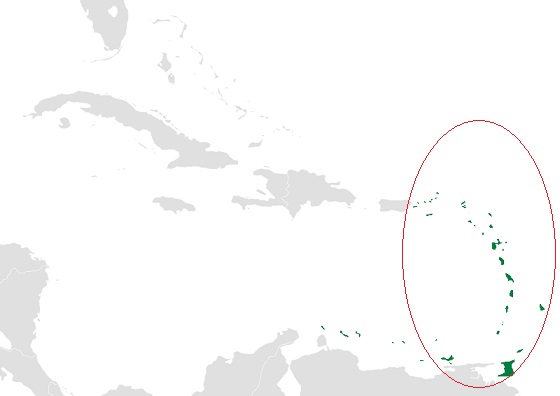
The Lesser Antilles region is a volcano zone – this is not just academic theory; this is a fact – most of the islands are of volcanic origins with extremely rich soil; this is the good history of the region’s volcanic past. There is bad history too; there have been devastating volcanic eruptions in the past – in modern times – and some volcanoes are active … now; think Montserrat where 2/3 of the island is now an Exclusion Zone.

There are volcanic activities on other islands as well; some are dormant; some are active, in particular on Martinique and St. Vincent. Will they erupt in the next few …?

The surety of an imminent volcano eruption is not known; but it is among the seismic threats – volcanoes, earthquakes and tsunamis – that must be accounted for. Economic engines can be disrupted with these seismic activities; even the threat of volcano can compromise economic security. This is the unstable reality; this is the State of the Union, for the following Caribbean islands; (click on any name for encyclopedic details of that island):

CU Blog - State of the Union - Volcano States - Photo 2

Dominica Guadeloupe Jamaica Martinique Montserrat Nevis
Providencia Saba St. Eustatius St. Kitts St. Lucia St. Vincent

This discussion aligns with the book Go Lean…Caribbean. The book presents a roadmap to optimize the region’s security apparatus in conjunction with economic and governmental empowerments. This assertion – that regional stakeholders must be ready for any emergency – is introduced in the Go Lean book as follows under the title of “Crap Happens” (Page 23):

Economic security is tied to the community quest to reboot the Caribbean region to ensure a better place to live, work and play. To ensure economic security, the economic engines must be protected to ensure their continuous operations despite natural or man-made deterrents. Bad things do happen to good people, so we cannot be caught unprepared. We must institute the process and provisions to respond, react, restore and recover. Any and everyone may need to dial “911”.

The Caribbean community ethos is to consider the facts and realities:

  1. climate change cannot be dismissed – tropical storms are now more common and more ferocious;
  2. there are two geologic fault-lines that run through the Caribbean region;
  3. there is an active volcano on Montserrat.

It is not a matter of “if” but “when” emergencies will strike. The security principle therefore is to be prepared for all incidents, big and small, that involve all aspects of society: islands, institutions, companies, families and individuals.

The subject of emergency management is analyzed in the Go Lean book; this is presented as a required function of a technocratic governmental administration. This book – available to download for free – serves as a roadmap for the introduction and implementation of the technocratic Caribbean Union Trade Federation (CU), for the elevation of Caribbean society – for all member-states. This CU/Go Lean roadmap endorses a system of better stewardship, with these 3 prime directives:

  • Optimization of economic engines in order to grow the regional economy to $800 Billion and create 2.2 million new jobs.
  • Establishment of a security-disaster apparatus to ensure public safety and protect the resultant economic engines.
  • Improve Caribbean governance to support these engines, including a true separation-of-powers between the member-states and CU federal agencies. This dictates a regional response for natural disaster emergencies.

The book stresses that reforming and transforming the Caribbean societal engines must be a regional pursuit. This was an early motivation for the roadmap, as pronounced in the opening Declaration of Interdependence (Pages 11 – 13):

ii. Whereas the natural formation of the landmass for our lands constitutes some extreme seismic activity, it is our responsibility and ours alone to provide, protect and promote our society to coexist, prepare and recover from the realities of nature’s occurrences.

xi. Whereas all men are entitled to the benefits of good governance in a free society, “new guards” must be enacted to dissuade the emergence of incompetence, corruption, nepotism and cronyism at the peril of the people’s best interest. The Federation must guarantee the executions of a social contract between government and the governed.

xvi. Whereas security of our homeland is inextricably linked to prosperity of the homeland, the economic and security interest of the region needs to be aligned under the same governance. Since economic crimes … can imperil the functioning of the wheels of commerce for all the citizenry, the accedence of this Federation must equip the security apparatus with the tools and techniques for predictive and proactive interdictions.

xxiv. Whereas a free market economy can be induced and spurred for continuous progress, the Federation must install the controls to better manage aspects of the economy: jobs, inflation, savings rate, investments and other economic principles. Thereby attracting direct foreign investment because of the stability and vibrancy of our economy.

This commentary is 4 of 5 in an occasional series on the State of the Caribbean Union. Surely, a volcano subduction zone throughout the Lesser Antilles must have a common sense of urgency. This threat has been assessed in the Go Lean book and the technocratic solutions provided there-in. The full entries of all the blog-commentaries in this series is as follows:

  1. State of the Caribbean Union – Lacking Hope and Change
  2. State of the Caribbean Union – Dysfunctional Spanish Caribbean
  3. State of the Caribbean Union – Deficient Westminster States
  4. State of the Caribbean Union – Unstable Volcano States
  5. State of the Caribbean Union – Self-Interest of Americana

As related in the first submission in this series, the young people in the region need the vision of “something better” or Hope and Change in order to be inspired to participate in the future of this homeland. We cannot have a future without these young people, so these solutions – strategies, tactics and implementations – are not optional.

Remember Montserrat? It is hard to have “hope for the future” if you live there; (2/3 of the island is now an Exclusion Zone). The reality of threatening conditions is a consistent theme from the Go Lean movement. Consider these previous blog-commentaries chronicling the pain and suffering of natural disasters in the region:

https://goleancaribbean.com/blog/?p=7449 ‘Crap Happens’ – So What Now?
https://goleancaribbean.com/blog/?p=6189 A Lesson in History – ‘Hurricane Katrina’ is helping today’s crises
https://goleancaribbean.com/blog/?p=5002 Managing a ‘Clear and Present Danger’
https://goleancaribbean.com/blog/?p=4360 Dreading the Inadequate ‘Caribbean Basin Security Initiative’
https://goleancaribbean.com/blog/?p=4185 Montserrat – A Post Volcano Ghost Town
https://goleancaribbean.com/blog/?p=2614 The ‘Great ShakeOut’ Earthquake Drill / Planning / Preparations
https://goleancaribbean.com/blog/?p=87 6.5M Earthquake Shakes Eastern Caribbean

The Go Lean book provides 370-pages of turn-by-turn instructions on “how” to adopt new community ethos, plus the strategies, tactics, implementations and advocacies to execute so as to reboot, reform and transform the societal engines of Caribbean society. For one, the recommendation is to reform and transform Caribbean governance, to better manage disaster-emergency situations – i.e. 10 Ways to Improve Emergency Management on Page 196 of the book.

Yes, there is the Caribbean Disaster Emergency Management Agency (CDEMA) already established in the region, and this organization represents a “good start” for a collaborative effort to monitor, mitigate and manage disaster situations. But CDEMA is undermanned, underfunded and under-appreciated. Embedding a security-disaster apparatus into a regional empowerment roadmap along with economic efforts allows the right people, right tools and right techniques for mitigating the threats of volcanoes … and earthquakes.

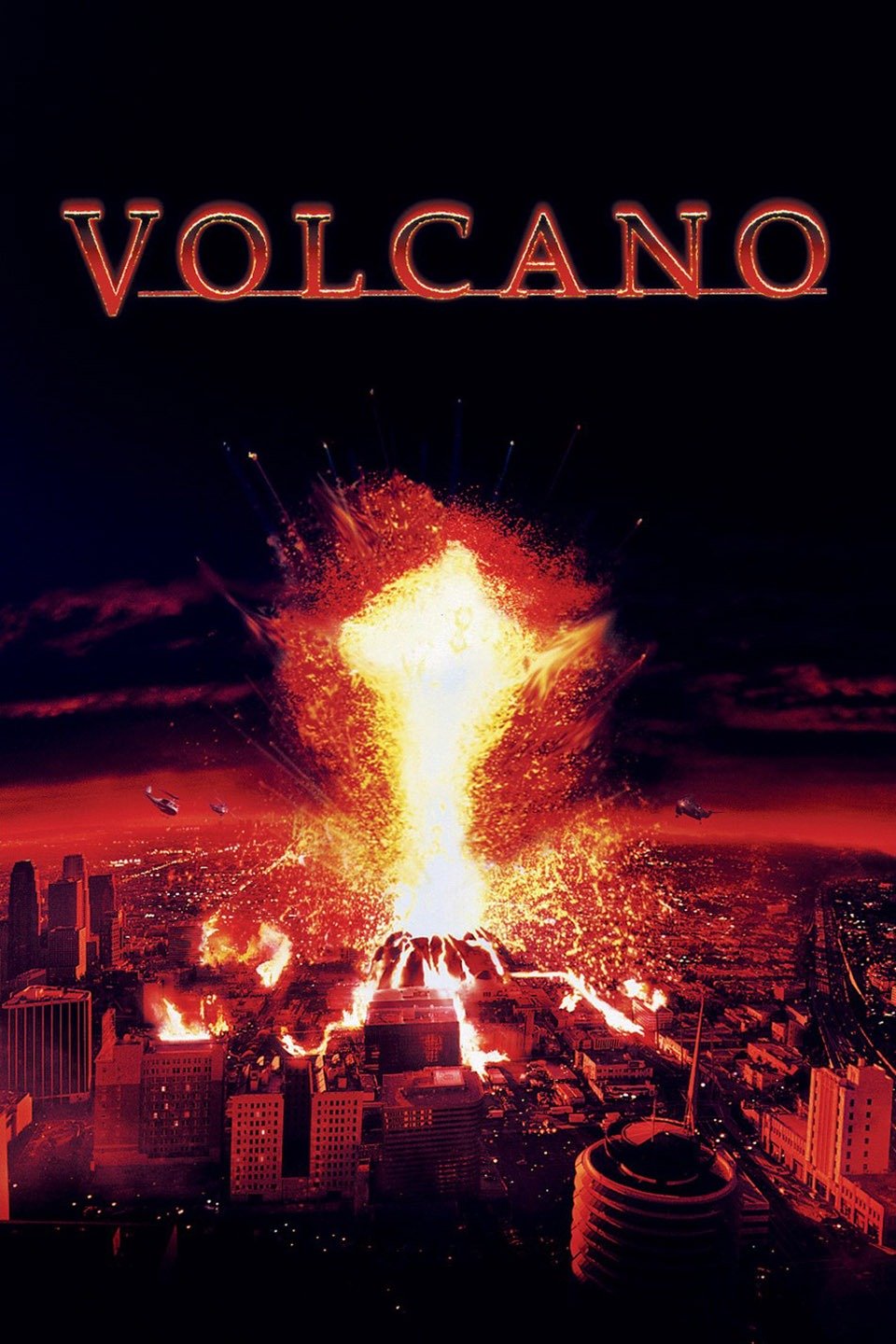
Many times, the same geological phenomena that fosters earthquakes – a constant threat in the Caribbean – also drives volcanoes. Considering  that “art imitates life”, see the fictionalized account of volcanoes and emergency management response in this Movie Trailer, in this related VIDEO:

VIDEO – Movie: Volcano – “The Coast is Toast” (1997) – https://youtu.be/QhS9X8H51A8  

CU Blog - State of the Union - Volcano States - Photo 3Published on Mar 8, 2008 – When a massive earthquake rocks the city of Los Angeles, Emergency Management department head Mike Roark (Tommy Lee Jones) returns from his vacation to help with the city’s response. After geologist Dr. Amy Barnes (Anne Heche) warns that a volcano may be forming in sewer tunnels, another severe earthquake unleashes the lava flowing underfoot, threatening to destroy the whole city. As the fiery molten rock runs through the streets, Roark and Barnes must figure out how to divert it.

Release dateApril 25, 1997 (USA)
DirectorMick Jackson
Budget90 million USD
Box office122.8 million USD

In the Appendix below, within the encyclopedia “scientific” data, it was asserted that …

“… typically the islanders [of these volcanic member-states] do not have access to scientific journals and international meetings. The data included here is of value to them in understanding their islands and the volcanic hazards present on them.”

This assertion is true … and sad! The Go Lean movement declares “Enough already!” No more immature administration of our homeland! It is time; actually it is past time to grow-up and optimize the stewardship of these unstable islands.

For the Caribbean’s future, we must do better! Our youth deserves every opportunity to live at home in a technocratic society, in communities where we monitor, mitigate and manage the risks of known threats. We encourage all regional stakeholders to lean-in to this Go Lean roadmap – the strategies, tactics and implementation – to make the Caribbean homeland, even the Volcano States, better places to live, work and play. 🙂

Download the free e-Book of Go Lean … Caribbean – now!

Sign the petition to lean-in for this roadmap for the Caribbean Union Trade Federation.

—————

Appendix – A [Scientific] Study of the Volcanoes of the Caribbean

Radar TopographyIn [the year] 2000 radar data was acquired by the space shuttle which enabled virtually complete mapping of the Earth’s topography to be achieved between latitudes 56 o S to 60 o N. A nominal 30 m grid was obtained at an absolute accuracy of 16m, although in flat non-vegetated areas the vertical accuracy may approach 3 m. While data at the full resolution is available in some regions, such as North America , elsewhere the Shuttle Radar Topography Mission (SRTM) data is only provided on an approximately 90m grid, obtained by averaging the 30 m grid data. The new data is a vast improvement in resolution and accuracy over previous global topographic models, such as ETOPO30, and provides a significant new amount of information of use in geological and other studies.

For the Caribbean islands the SRTM data which is available on a geographic grid at a nominal 90-m cell size was converted to a UTM grid in Zone 20, using the WGS84 spheroid. A grid interval of 50 m was used to retain as much detail as possible, and minor gaps in the data were filled in using special routines. The data were fenced using coastline data obtained from NOAA, and it should be noted that the coastline data set for each island was displaced by up to a kilometre from its location relative to the SRTM grid. This is a reflection on the accuracy of the original geographic information and resulting data sets rather than that of the SRTM data, which is extremely accurately located. Hence the coastline for each island was bulk shifted until it appeared to fit the SRTM data, and was then used to create the final outline shown in these plots. The positions of the coastlines are probably accurate to within about 100 m. The SRTM grids are shown as raster images, with artificial shading by illumination from the northeast, and both UTM and geographic coordinates are included. Non-linear colour scales are used for optimum colour stretch, where low values are purple and high values are red.

Green Volcanoes – Green tropical jungle-covered volcanoes standing out of warm blue seas in balmy Trade Winds, surrounded by palm-lined white coral sand beaches and reefs may be the ideal of the tourist trade and the eco-tourist seeking unspoiled tropical rain forest, but they can be a headache for the geologist looking for rocks. In a review of the geology and hazards of the Commonwealth of Dominica, in the center of the Lesser Antilles volcanic arc we encountered this problem. The two volcanoes that make up the northern end of the island – Morne aux Diables in the far north, and to its south Morne Diablotins (1421m the highest point on the island) – are both very green. Exposures in the sea cliffs and along the coastal roads show that both volcanoes are made up of older foundations (3.7 to 1.8 million years for Morne Diablotins and 2.0 to 1.7 million years for Morne aux Diables) that have been deeply dissected by erosion. Both are capped by very young deposits that were probably erupted in the past 100,000 years, which overlie the older deposits on the coasts. …

About Caribbean Volcanoes This website on Caribbean volcanoes represents the cooperative work of the two authors over thirty years, [John Roobol and Alan Smith, two geologists both from South Wales in the UK who following Ph.D. studies at the Universities of London and California met on Mt. Pelee, Martinique in 1971 and have since worked together on most Caribbean volcanoes]. The views expressed and almost all of the photographs are those of the authors and do not necessarily agree with the views of other scientists. The site is aimed foremost at the populations and administrations of the volcanic islands. Typically the islanders do not have access to scientific journals and international meetings. The data included here is of value to them in understanding their islands and the volcanic hazards present on them. …
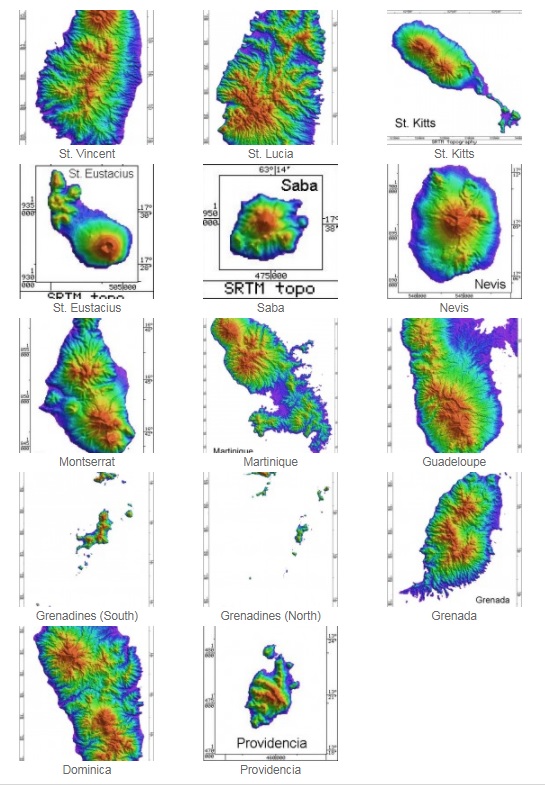
CU Blog - State of the Union - Volcano States - Photo 4

(Click to Enlarge)

Source: Retrieved July 18, 2017 from: http://caribbeanvolcanoes.com/

———

Additional Scientific VIDEO:

VIDEO – NatGeo Wild: A Volcanic Surprise | Caribbean’s Deadly Underworld  – https://youtu.be/5yuBSb7wPQE
 

Share this post:
, , , ,

Inaction: A Recipe for ‘Failed-State’ Status

Go Lean Commentary

Do you remember when …?

Why not? It was such an important event that you should never forget. And yet!

CU Blog - Inaction - A Recipe for 'Failed-State' Status - Photo 2This is the current situation today for a country that is a Caribbean neighbor: Venezuela. Atrocities are happening there and we, as observing-reporting neighbors have done nothing and now propose more of the same: 

Inaction.

This is the formula, the recipe, for creating a Failed-State:

 “The only thing necessary for the triumph of evil is for good men to do nothing” – Edmund Burke; 1729 – 1797; an Irish statesman and member of British Parliament.

How can we forget?!?!

The recipe of good people … doing nothing to prevent atrocities is what was prevalent in Nazi Germany, Rwanda, Bosnia and many other troubled spots – Failed-States – in modern times; (see Appendix D below). Despite all of our pledges of “Never Again“, we now see it happening again; this time in Venezuela; see VIDEO in Appendix C below.

In a previous blog-commentary by the movement behind the book Go Lean…Caribbean – available to download for free – it was related that …

… unless mitigated, Venezuela will become a Failed-State. We hope that the country, and their South American neighbors, can secure their society to assure peace and the protection of human rights.

In fact, the Go Lean commentary had observed-and-reported on a number of negative developments regarding Venezuela; see this sample list of previous blogs here:

Link Date Title
https://goleancaribbean.com/blog/?p=8132 05-31-2016 Venezuela: Watching a ‘Train Wreck in Slow Motion’
https://goleancaribbean.com/blog/?p=6800 10-26-2015 Venezuela sues black market currency website in US
https://goleancaribbean.com/blog/?p=1076 05-29-2014 Trinidad Muslims travel to Venezuela for jihadist training

The situation in Venezuela is dire –  see VIDEO in Appendix C below – action must be taken to abate the downward spiral of the societal engines there. There is something the Caribbean community can do to help mitigate the threats.

There are new Caribbean-Venezuela developments … happening now (last week actually):

Proposals for more of the same … inaction.

CU Blog - Inaction - A Recipe for 'Failed-State' Status - Photo 1See the news articles in the Appendices (A & B) below. The overall theme from the articles is that government leaders in the formal Caribbean Community (CariCom) want to not disturb Venezuela’s sovereignty and further these leaders oppose any entity – i.e. the Organization of American States or OAS – that may want to condemn the status quo and ruling class in Venezuela.

Say it ain’t so CariCom!

Venezuela is near-Failed-State status; lives are being lost; economic systems are dysfunctional and people are taking flight, seeking refuge in foreign countries; see VIDEO below. Despite these conditions, CariCom – who weld some power and influence through peer pressure – wants Inaction.

We object!

Down with CariCom …
Time for a change …
Time to reboot the Caribbean …

This is the declaration of the book Go Lean…Caribbean; this book serves as a roadmap for the introduction and implementation of the technocratic Caribbean Union Trade Federation (CU), for the elevation of Caribbean society – for all member-states. The book posits that CariCom is a failure (Page 3) and that the quest for regional integration in the Caribbean needs a new – and better – expression. The book therefore presents the Go Lean/CU roadmap with these 3 prime directives:

The book stresses that reforming and transforming the Caribbean societal engines must be a regional pursuit. This was an early motivation for the roadmap, as pronounced in the opening Declaration of Interdependence (Pages 12 – 13):

xi. Whereas all men are entitled to the benefits of good governance in a free society, “new guards” must be enacted to dissuade the emergence of incompetence, corruption, nepotism and cronyism at the peril of the people’s best interest. The Federation must guarantee the executions of a social contract between government and the governed.

xvi. Whereas security of our homeland is inextricably linked to prosperity of the homeland, the economic and security interest of the region needs to be aligned under the same governance. Since economic crimes … can imperil the functioning of the wheels of commerce for all the citizenry, the accedence of this Federation must equip the security apparatus with the tools and techniques for predictive and proactive interdictions.

xxiv. Whereas a free market economy can be induced and spurred for continuous progress, the Federation must install the controls to better manage aspects of the economy: jobs, inflation, savings rate, investments and other economic principles. Thereby attracting direct foreign investment because of the stability and vibrancy of our economy.

The Go Lean book provides 370-pages of turn-by-turn instructions and actions to adopt new community ethos, plus the strategies, tactics, implementations and advocacies to execute so as to reboot, reform and transform the societal engines of Caribbean society. To prevent atrocities, there must be actions, positive engagements, before and after; see Appendix D below.

To political leaders like Ralph Gonsalves, Prime Minister of St Vincent and the Grenadines, the Go Lean movement gives this salutation (Page 252):

[Step aside]. Thank you for your service. Change has come.

We must do this: change from the inaction of the current political leadership and lean-in to this roadmap to re-boot, reform and transform the Caribbean region.

Yes, we can act and help prevent atrocities in our region and make our own homeland better places to live, work and play. 🙂

Download the free e-Book of Go Lean … Caribbean – now!

Sign the petition to lean-in for this roadmap for the Caribbean Union Trade Federation. 

————-

Appendix A – Gonsalves warns CariCom of plot against Venezuela

KINGSTOWN, St. Vincent – Prime Minister Ralph Gonsalves of St Vincent and the Grenadines has cautioned the Caribbean Community (CariCom) to refrain from allowing a small group of powerful nations to dilute the collective strength of the 15-member regional grouping.

Gonsalves, in a three page letter to CariCom leaders, that was circulated to the media, warned that a wedge is being driven through CariCom over a plan for regime change in Venezuela and the group of powerful nations with the Organisation of America States (OAS) has an agenda of naked self-interest.

He said the group has strategically invited select CariCom countries to their meetings and ignored the others. In the result, they have succeeded in disuniting and weakening CariCom countries whose only strength lies in our solidarity. This worrying development has been particularly manifest in matters relating to Venezuela, said Gonsalves in a letter dated May 10.

There is clearly a calculated strategy in place by a group of nations to achieve regime change in Venezuela by using the OAS as a weapon of destruction, he added.

Gonsalves said while CARICOM countries may have concerns about the political, economic and social conditions in Venezuela, we are all sufficiently seasoned political leaders to know that toppling a government will not end those conditions, particularly when there is no viable, electable single alternative to replace it.

Resolving the conflict
He acknowledged that CariCom member states could have a role in promoting dialogue to help resolve the conflict in Venezuela he warned fellow regional leaders against allowing themselves to be ambushed into breaking our solidarity and aligning ourselves with fair-weather friends.

Meanwhile, representatives from 18 OAS member states have approved a meeting of foreign ministers scheduled for May 31 in Washington to discuss the Venezuelan crisis.

In recent weeks, there has been growing unrest across Venezuela, with several killed and others injured as they have called for elections, freedom for jailed activists, foreign humanitarian aid to offset the economic crisis, and autonomy for the opposition-controlled legislature.

Source: Posted May 17, 2017; retrieved June 7, 2017 from: https://www.iwnsvg.com/2017/05/17/gonsalves-warns-caricom-of-plot-against-venezuela/

————-

Appendix B – St Vincent PM praises CariCom on position taken on Venezuela
By: Peter Richards

BRIDGETOWN, Barbados (CMC) St. Vincent and the Grenadines Prime Minister, Ralph Gonsalves has praised Caribbean Community (CariCom) countries for acting “with independence, courage and concerted action” during the Permanent Council meeting of the Organisation of American States (OAS) called to discuss the situation in Venezuela earlier this week.

In a two-page letter sent to the Irwin La Rocque, secretary general of CariCom, Gonsalves said that the “CariCom stance is a tribute to our region’s commitment to the highest ideals of our Caribbean civilisation and of its institutional expression, politically, the independent and sovereign nation-state”.

He said that through its position at the OAS, CariCom countries have honoured the names of “our revered leaders of yesteryear” including Errol Barrow of Barbados, Forbes Burnham of Guyana, Michael Manley of Jamaica and Trinidad and Tobago’s Dr. Eric Williams “whose respective countries defied the edict of a hegemonic neighbour in their formal diplomatic recognition of revolutionary Cuba in 1972”.

In his letter, which was copied to heads of state and governments in CariCom and obtained by the Caribbean Media Corporation (CMC), Gonsalves said he was “humbled and proud of the majesty of CARICOM’s united stance in defence of the principle of non-interference in the internal affairs of states; the bedrock ideas of sovereignty and independence (and) the nobility of the fundamental precepts of representative democracy”.

During the OAS meeting, Jamaica, for example, called for dialogue among all parties in Venezuela, where opposition-led street demonstrations to force the Nicolas Maduro government out of office have resulted in more than 40 deaths and a split among members of the OAS.

Jamaica’s Foreign Affairs Minister, Kamina Johnson-Smith, addressing the 29th Meeting of Consultation of Ministers of Foreign Affairs at the OAS in Washington earlier this week, said the Andrew Holness government is “gravely concerned by the continued deterioration of the situation in Venezuela”.

She cited increased violence, loss of life, damage to infrastructure, severe economic hardships for the people, and “a hardening of deeply entrenched positions by both Government and opposition groups…

“Jamaica continues to highly favour meaningful dialogue and discourages the isolation of Venezuela. We, therefore, invite the Government of Venezuela to reconsider that decision,” Johnson Smith added.

On Wednesday, Trinidad and Tobago called for the removal of the OAS Secretary General Luis Almagro, over his non-neutral position on the political situation in Venezuela and warned the 15-member CariCom grouping of the possibility of destroying “itself as an honest broker with respect to any involvement in assistance to Venezuela and its internal problems…

“Trinidad and Tobago registered a strong objection to the behaviour of the OAS leadership. The public servants from the OAS took it upon themselves to engage the Government of Venezuela, the president in fact, in a very derogatory manner,” Prime Minister Keith Rowley told a news conference on his return from an official two-day visit to Chile.

Last month, CariCom foreign ministers called for non-interference in the internal affairs of Venezuela.

Gonsalves, who had last month had cautioned CARICOM to refrain from allowing a small group of powerful nations to dilute the “collective strength” of the 15 member regional grouping on the Venezuela issue, said in his letter to La Rocque that he was “heartened that CariCom member-states are alive to the maneuverings of those who would wish to deliver Venezuela and its oil on a platter to a handful of global enterprises, who are focused on their own greed, duplicity, and narrow self interest….

“We know the road very well. But CariCom has taken the road less travelled by, and that has made all the difference,” Gonsalves wrote, adding, “I do not underestimate the current travails of Venezuela and I am pleased that CariCom is prepared to play a facilitating role, along with other countries and leading personalities in fostering peace, dialogue and constitutionalism in Venezuela”.

But he acknowledged that “at the end of the day, this is a matter for Venezuelans themselves”.

Gonsalves said that he is “sure that the overwhelming majority of nation-states, globally, are pleased with CariCom’s stance at the OAS.

“We must now allow our unity and good sense to be put asunder. Now more than ever we must remain firm. The enemies at the gates of non-interference, sovereignty, and independence will not rest; indeed, they will redouble their efforts. They will raise aloft, hypocritically, any number of high-sounding phrases but beneath them are base motives. History has taught us all this, and more.

“I am confident of CariCom’s continuing embrace of independence, courage, and concerted action, remembering always that, of all time, only the future is ours to desecrate. Our Caribbean civilisation must never be engaged in the desecration of our future,” the St. Vincent and the Grenadines prime minister wrote.

Source: Posted June 3, 2017; retrieved June 7, 2017 from: https://www.iwnsvg.com/2017/06/03/st-vincent-pm-praises-caricom-on-position-taken-on-venezuela/

————-

Appendix C VIDEO – Exclusive Interview on Venezeula: “We’re Being Ruthlessly Killed by the Venezuelan Gov’t” – https://youtu.be/qwPZ75_rj0k

Published on Jun 7, 2017 – Venezuelan citizen Aura Garrillo joined MRCTV’s Nick Kangadis to talk about the atrocities happening in the “dictatorial” nation of Venezuela.

Garrillo speaks out about the hyper-inflation, crime-ridden neighborhoods, lack of affordable goods and bloodshed, courtesy of the Nicolas Maduro-led government.

Subscribe: www.youtube.com/mrctvdotorg

About: MRCTV is an online media platform designed to broadcast conservative values, culture, politics, liberal media bias, and entertainment to a new and diverse audience on a social media optimized site. Our goal is to break down the boundaries between traditional conservative media and mainstream culture.

Follow Us:
www.mrctv.org
facebook.com/MRCTV
twitter.com/mrctv
Nick Kangadis on Twitter: twitter.com/TruthOfChicago
Nick Kangadis on Facebook: https://www.facebook.com/UncommonSens…

MRCTV is brought to you by the Media Research Center. The mission of the MRC is to create a media culture in America where truth and liberty flourish. The MRC is a research and education organization operating under Section 501(c)(3) of the Internal Revenue Code.

————-

Appendix D – Preventing mass atrocities – An agenda for policymakers and citizens

    Introduction ………………………………………………………. 1
    Early warning ……….. ………………………………………….. 3
    Detecting risk and promoting action
    Diplomacy …………………………………………………………. 5
    The first line of prevention
    Development aid ………………………………………………… 7
    Building resilient societies to prevent atrocities
    Security assistance ……………………………………………… 9
    Helping countries protect their people
    International action ………………………………………………11
    Working together to prevent atrocities

CU Blog - Inaction - A Recipe for 'Failed-State' Status - Photo 3

See the full report here; retrieved June 7, 2017 from:

http://responsibilitytoprotect.org/Cit%20for%20glob%20sol-Preventing_mass_atrocities-highres-singlepages.pdf


Share this post:
, , , ,
[Top]

Hurricane Season 2017 and ‘Climate Change’ Abatement

CU Blog - Hurricane Season 2017 - Photo 1

Go Lean Commentary

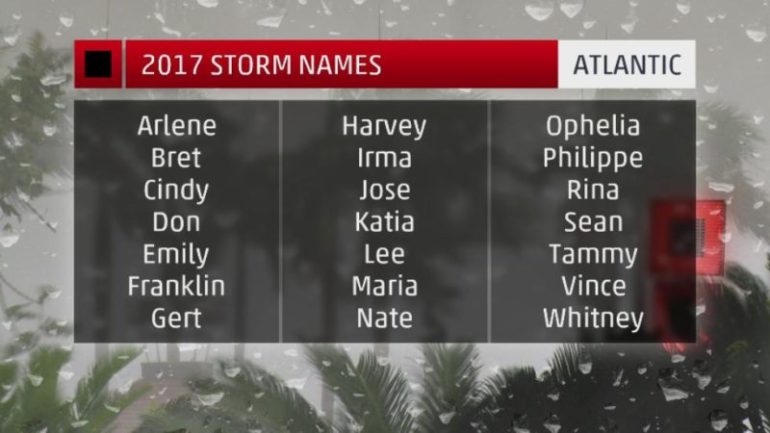
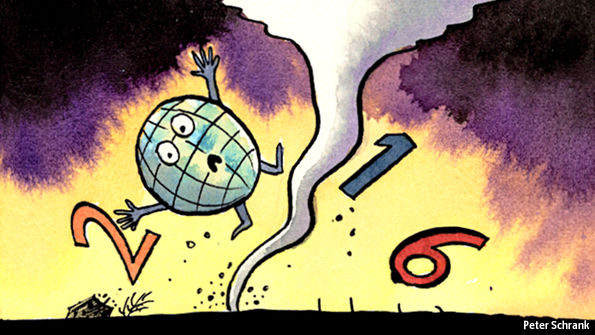
Its June 1st, the start of the Hurricane season. According to Weather Authorities, it is going to be a tumultuous season, maybe even more destructive than last year; see Appendix A below.

Thanks Climate Change.

What hope is there to abate the threats from Climate Change?

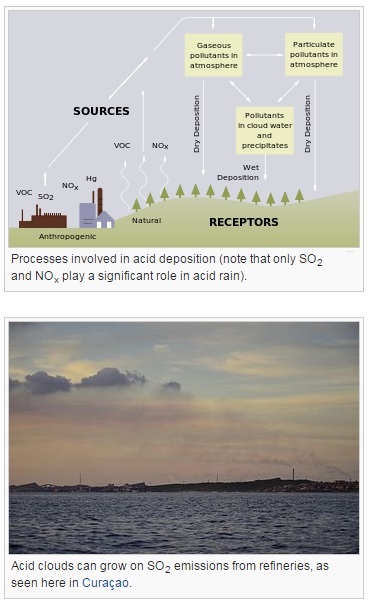
Thanks to the Paris Accord, there is now hope; (we remember the effectiveness of the accord to abate “Acid Rain”).

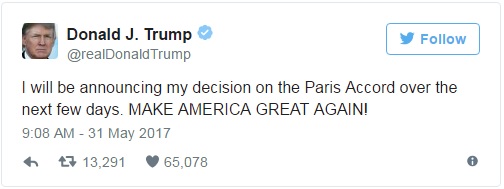
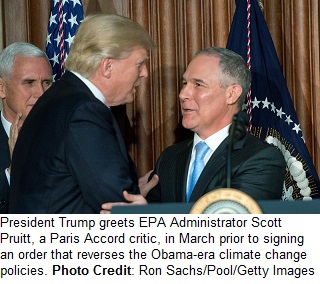
But wait! The American President – Donald Trump – announces that he is withdrawing the United States from the Paris Accord. (See the news article/link in Appendix B below).

CU Blog - Hurricane Season 2017 - Photo 3

W.T.H.?!?!

This is a matter of security; perhaps we should not look to the US to take the lead for our own fate. This is so familiar … and a Hot Topic today as European member-states are contemplating how much they can look to the US for leadership for their security needs; (see the VIDEO in the Appendix C below).

This is the assertion of the book Go Lean…Caribbean; available to download for free. It serves as a roadmap for the introduction and implementation of the technocratic Caribbean Union Trade Federation (CU), for the elevation of Caribbean society – for all member-states. The quest is that we take our own lead – collectively – for our own fate. This CU/Go Lean roadmap has these 3 prime directives:

The book stresses that reforming and transforming the Caribbean societal engines must be a regional pursuit; the issues at hand are too big for anyone member-state alone. This was an early motivation for the roadmap, as pronounced in the opening Declaration of Interdependence (Pages 12 – 13):

i. Whereas the earth’s climate has undeniably changed resulting in more severe tropical weather storms, it is necessary to prepare to insure the safety and security of life, property and systems of commerce in our geographical region. As nature recognizes no borders in the target of its destruction, we also must set aside border considerations in the preparation and response to these weather challenges.

xi. Whereas all men are entitled to the benefits of good governance in a free society, “new guards” must be enacted to dissuade the emergence of incompetence, corruption, nepotism and cronyism at the peril of the people’s best interest. The Federation must guarantee the executions of a social contract between government and the governed.

xvi. Whereas security of our homeland is inextricably linked to prosperity of the homeland, the economic and security interest of the region needs to be aligned under the same governance. Since economic crimes … can imperil the functioning of the wheels of commerce for all the citizenry, the accedence of this Federation must equip the security apparatus with the tools and techniques for predictive and proactive interdictions.

xxiv. Whereas a free market economy can be induced and spurred for continuous progress, the Federation must install the controls to better manage aspects of the economy: jobs, inflation, savings rate, investments and other economic principles. Thereby attracting direct foreign investment because of the stability and vibrancy of our economy.

The Go Lean book provides 370-pages of turn-by-turn instructions on “how” to adopt new community ethos, plus the strategies, tactics, implementations and advocacies to execute so as to reboot, reform and transform the societal engines of Caribbean society.

The issue of Hurricane Season 2017 is bigger than initial appearances – there are BIG  issues afoot. Many are issues that were addressed in previous Go Lean blog-commentaries; see a sample here:

https://goleancaribbean.com/blog/?p=11858 Welcome to Kiribati – Hello and Goodbye
https://goleancaribbean.com/blog/?p=11442 Caribbean Roots: Al Roker – ‘Climate Change’ Defender
https://goleancaribbean.com/blog/?p=9455 Fix ‘Climate Change’ – Yes, We Can
https://goleancaribbean.com/blog/?p=9334 Hurricane Categories – The Science
https://goleancaribbean.com/blog/?p=7449 Due to Climate Change, ‘Crap Happens’ – So What Now?
https://goleancaribbean.com/blog/?p=7103 COP21 – ‘Climate Change’ Acknowledged
https://goleancaribbean.com/blog/?p=6893 A Meteorologist’s View On Climate Change
https://goleancaribbean.com/blog/?p=6016 ‘Hotter than July’ – Reality in the Caribbean
https://goleancaribbean.com/blog/?p=4673 Climate Change‘ Merchants of Doubt … to Preserve Profits!!
https://goleancaribbean.com/blog/?p=2465 Book: ‘This Changes Everything: Capitalism vs. the Climate’
https://goleancaribbean.com/blog/?p=2276 Climate Change May Affect Food Supply Within a Decade
https://goleancaribbean.com/blog/?p=2119 Cooling Effect – Oceans and the Climate
https://goleancaribbean.com/blog/?p=1883 Climate Change May Bring More Kidney Stones
https://goleancaribbean.com/blog/?p=1817 Caribbean grapples with intense cycles of flooding & drought
https://goleancaribbean.com/blog/?p=926 Conservative heavyweights have solar industry in their sights
https://goleancaribbean.com/blog/?p=915 Go ‘Green’ … Caribbean

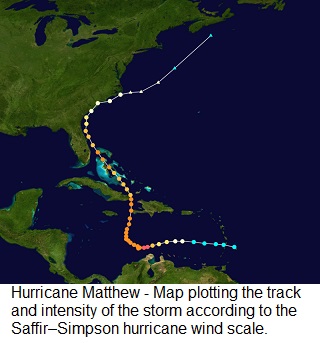
We endured a bitter Hurricane Season last year; Hurricane Matthew was devastating for a number of Caribbean islands in September/October; i.e. Haiti and the Bahamas. (In fact, the Bahamian city of Freeport was so severely impacted that one of its biggest Hotel-Casino resorts closed … permanently).

The Caribbean status quo is unsustainable under the real threats of Climate Change. The region must reboot, reform and transform. We must do the heavy-lifting ourselves; we cannot expect relief and refuge from others, like the American Super-Power. We must find and “sail” under our own power.

Hope and Change! Yes, we can …

… we can make our Caribbean homeland a better place to live, work and play. 🙂

Download the free e-Book of Go Lean … Caribbean – now!

Sign the petition to lean-in for this roadmap for the Caribbean Union Trade Federation.

————

Appendix A – Forecasters predict active 2017 hurricane season

With the start of the Atlantic hurricane season less than one week away, the National Oceanic and Atmospheric Administration, says it could be a busy one with five to nine hurricanes expected to form.

Overall, NOAA forecasts 11 to 17 named tropical storms will develop in the region, which includes the Atlantic, the Caribbean Sea and Gulf of Mexico, the agency announced Thursday.

The season officially begins June 1 and runs through Nov. 30.

Of the hurricanes, two to four could be major, with wind speeds of 111 mph or higher and rated as Category 3, 4 or 5 on the Saffir-Simpson Scale of Hurricane Intensity.

An average season typically produces 12 named tropical storms and six hurricanes and peaks in August and September.

A tropical storm contains wind speeds of 39 mph or higher and becomes a hurricane when winds reach 74 mph.

Factors contributing to the prediction include: A weak or non-existent El Nino, near- or above-average sea-surface temperatures, and average or weaker-than-average vertical wind shear, said Gerry Bell, Ph.D., lead seasonal hurricane forecaster with NOAA’s Climate Prediction Center.

Meteorologists at Colorado State University last month estimated 11 tropical storms will form, with four becoming hurricanes.

The late Colorado State University meteorologist William Gray was the first scientist to make seasonal hurricane forecasts back in the 1980s.

The Weather Channel predicts an average season, with 12 named storms, of which six will become hurricanes. AccuWeather forecasts 10 named storms, five of which are projected to become hurricanes.

Source: St. Lucia Times Daily Newspaper –  Posted May 25, 2017 retrieved June 1, 2017 from: https://stluciatimes.com/2017/05/26/forecasters-predict-active-2017-hurricane-season

————

Appendix B – Trump expected to withdraw from Paris Accord

Washington (CNN) President Donald Trump is expected to withdraw from the Paris climate agreement, two senior US officials familiar with his plans told CNN Wednesday, a major break from international partners that would isolate the United States in global efforts to curb global warming.

CU Blog - Hurricane Season 2017 - Photo 2

The decision would put the US at odds with nearly every other nation on earth. It would reflect a major reversal of the Obama administration’s efforts on climate change. And it could trigger further efforts to erode the landmark climate accord.

Source: Posted and retrieved May 31, 2017 from http://www.cnn.com/2017/05/31/politics/trump-paris-accord/

——

In actuality, President Trump officially announces  the exit and former President Obama barks. See story and VIDEO here: http://www.independent.co.uk/news/world/americas/us-politics/paris-agreement-trump-obama-response-rejecting-future-climate-change-deal-latest-news-updates-a7768171.html

————

Appendix C VIDEO – Thanks to Trump, Germany says it can’t rely on the United Stateshttp://wapo.st/2qsrQHd

Share this post:
, , ,
[Top]

Righting a Wrong: Puerto Rico’s Bankruptcy

Go Lean Commentary

How do you measure success … or failure?

In school, there is a simple measurement: there is the perfect “A”; everything else – B, C and D – was less desirable. But the actual grade “F” means you fail.

How can we measure success and failure for our community’s societal engines: economics, security and governance? There are so many approaches, but just like in school, there is a definitive “F” grade, a Failed-State status. In the case of a municipal entity, there is no doubt that a Bankruptcy filing is an “F”, a failure!

This is Puerto Rico today.

CU Blog - Righting a Wrong - Puerto Rico Bankruptcy - Photo 0

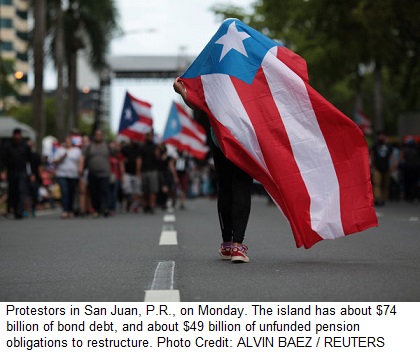
Their Governor, Ricky Rossellójust announced (May 3, 2017) that the US territory will invoke the bankruptcy-like powers that were extended to them by Congress last year. This was designed to bring an end to their intractable crisis, despite the assurances that they had given to investors that bankruptcy-style “haircuts” could not be considered. There are so many issues afoot with this move:

Can other American states/territories push lawmakers (Congress) for this same legal recourse – Chapter III of the Bankruptcy Code, the Promesa Provision – that has been ceded to Puerto Rico if they are ever at the end of their financial ropes?

(Chapter 9 Bankruptcies are allowed for municipalities, but not state governments).

This is a slippery slope!

“If Puerto Rico can achieve this level of debt relief through Promesa as the initial plan suggested, it will only make sense for Virgin Islands to attempt the same” – Wall Street Analyst

This commentary is 2 of 4 in a series considering how to “Right a Wrong”. Surely, reneging on a pledge to repay debts is a “Wrong”. This type of move could affect every other community seeking to raise funds on the capital markets (bonds). So there are lessons that we need to glean from the “Righting of these Wrongs”. The full series is as follows:

  1. Righting a Wrong: 2008 Housing Crisis
  2. Righting a Wrong: Puerto Rico’s Bankruptcy
  3. Righting a Wrong: Volkswagen Emissions Crisis
  4. Righting a Wrong: Takata Air-Bags

As related in the first submission in this series, these “Wrongs” relate to bad actions and inaction by different actors. The image and reputations of stakeholders “take a hit” while these issues are fresh. This is definitely the case for Puerto Rico right now. “Righting the Wrong” can override the bad image and the “comeback” or recovery could be the lasting legacy.

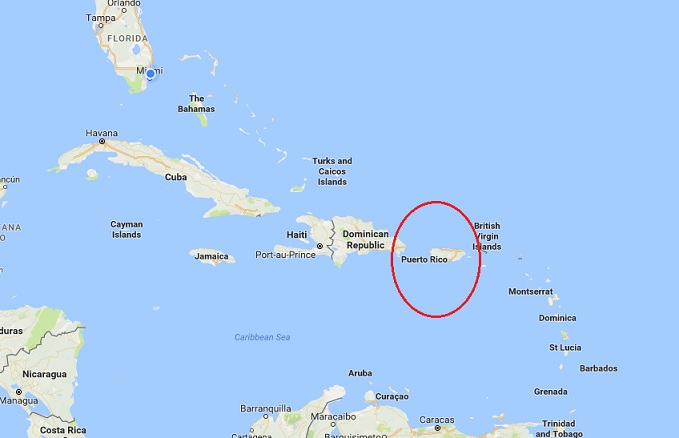
The book Go Lean…Caribbean addressed Puerto Rico from the beginning; starting with the opening assessment of the State of the Caribbean region. The book identified Puerto Rico on Page 18 as:

The Greece of the Caribbean
Puerto Rico’s population is declining. Faced with a deteriorating economy, increased poverty and a swelling crime rate, many citizens are fleeing the island for the U.S. mainland. …

Puerto Rico has been through austerity and made tough decisions: It has cut government jobs, privatized a couple of highways, and is in the process of privatizing the international airport. But unlike the case of Greece, the economic mess is on America’s hands. For U.S. citizens on the mainland who have a 401(k) account or pension for retirement, it’s possible that they have money invested in Puerto Rican bonds, which are now no longer worth much. So citizens in the states could feel the pain if Puerto Rico’s economy collapses.

This book was published in November 2013, projecting verbiage like “if Puerto Rico’s economy collapses”. According to the latest developments and this news article here (and VIDEO), that collapse is now a reality:

Title: Puerto Rico Declares a Form of Bankruptcy
By: Mary Williams Walsh

CU Blog - Righting a Wrong - Puerto Rico Bankruptcy - Photo 1

With its creditors at its heels and its coffers depleted, Puerto Rico sought what is essentially bankruptcy relief in federal court on Wednesday, the first time in history that an American state or territory had taken the extraordinary measure.

The action sent Puerto Rico, whose approximately $123 billion in debt and pension obligations far exceeds the $18 billion bankruptcy filed by Detroit in 2013, to uncharted ground.

While the court proceedings could eventually make the island solvent for the first time in decades, the more immediate repercussions will likely be grim: Government workers will forgo pension money, public health and infrastructure projects will go wanting, and the “brain drain” the island has been suffering as professionals move to the mainland could intensify.

Puerto Rico is “unable to provide its citizens effective services” because of the crushing weight of its debt, according to a filing on Wednesday by the federal board that has supervised the island’s financial affairs since last year.

The total includes about $74 billion in bond debt and $49 million in unfunded pension obligations.

While many of Puerto Rico’s circumstances are unique, its case is also a warning sign for many American states and municipalities — such as Illinois and Philadelphia — that are facing some of the same strains, including rising pension costs, crumbling infrastructure, departing taxpayers and credit downgrades that make it more expensive to raise money. Historically, Puerto Rico was barred from declaring bankruptcy. In the end, however, financial reality trumped the statutes, and Congress enacted a law last year allowing bankruptcy-like proceedings.

Puerto Rico has been in a painful recession since 2006, and previous governments dug it deeper into debt by borrowing to pay operating expenses, year after year. For the last two years, officials have been seeking assistance from Washington, testifying before stern congressional committees and even making fast-track oral arguments before the United States Supreme Court.

At the same time, Puerto Rico’s efforts to coax its creditors to agree to concessions have gone nowhere. Now the coming court proceedings will give Puerto Rico extraordinary powers to impose losses on holdout creditors unilaterally.

The island’s many creditors — whose lawsuits filed against Puerto Rico on Tuesday prompted the island’s request for court relief on Wednesday — are likely to receive far less of their money back than they want. Their predicament may turn out to be a cautionary tale for bond holders of other troubled states and cities. Puerto Rico’s case could show public workers and retirees that seemingly inviolate pension systems can be changed, too.

The next step is for the Supreme Court — specifically, Chief Justice John G. Roberts Jr. — to designate a bankruptcy judge to handle the case.

The island’s lawyers may view some bankruptcy courts as more likely to be favorable to them than others. Some creditors fear Puerto Rico will seek to have the case handled in the Southern District of New York.

Puerto Rico’s governor, Ricardo Rosselló, issued a statement Wednesday aiming to offer some reassurance, even as he sought the federal court’s protection. “We remain committed to holding good-faith negotiations to reach agreements with our creditors,” he said, adding that he hoped the court proceedings would “accelerate the process.” He appeared to be referring to the extraordinary power Puerto Rico will now have in court to unilaterally impose big losses on creditors.

Some of those creditors are furious.

“The Commonwealth’s proposal is not a credible starting point for negotiations,” Andrew Rosenberg of Paul, Weiss, Rifkind, Wharton and Garrison, an adviser to the Ad Hoc Group of Puerto Rico General Obligation Bondholders, said in a statement. He said that moving the proceedings to bankruptcy court would put the situation in “free-fall.”

The creditors got a shock this year when Mr. Rosselló issued a five-year fiscal plan that allowed only about $800 million a year to pay principal and interest on Puerto Rico’s bond debt, far less than the roughly $3.5 billion a year it would cost to make those payments on time. The prospect of losses on that scale prompted some creditors to argue that most of the $800 million was rightfully theirs.

“That things are starting out in such a highly adversarial way strongly suggests this will be a long and contentious journey for Puerto Rico,” said Matt Fabian, a partner at Municipal Market Analytics who closely tracks activity in the municipal bond market.

Puerto Rico’s case will be the first ever heard under a federal law for insolvent territories, called Promesa, which was enacted last summer; the Obama administration had warned that a “humanitarian crisis” would ensue if Puerto Rico were not given extraordinary powers to abrogate debt. There is no existing body of court precedent for Promesa, but the island’s creditors — who range from hedge fund managers to mom-and-pop investors — are bracing for a titanic battle.

Despite the depth of the island’s troubles, many Republicans in Congress have opposed debt relief, saying that the island has long received big federal subsidies for its health system, public housing and other works. They said Puerto Rico should explain what it had done with that money before it got any more help.

Last week President Trump suddenly added fuel to those fires, saying on Twitter that there should be no “bailout” for Puerto Rico.

On the island, Washington is not seen as a helper but as an unsympathetic colonial overlord. The step toward bankruptcy-like proceedings, under a federal judge, intensified complaints that Puerto Rico has lost all control of its own future.

But at the same time, some Puerto Ricans say quietly that if the court proceedings really do allow their government to cancel debt, their island may finally get the fresh start it needs.

The coming court proceedings will not be formally called a bankruptcy, since Puerto Rico remains legally barred from using Chapter 9, the bankruptcy route normally taken by insolvent local governments. Instead, Mr. Rosselló petitioned for relief under Title III of the Promesa law, which contains certain Chapter 9 bankruptcy provisions but also recognizes that, unlike the cities and counties that use Chapter 9, Puerto Rico is not part of any state and must in some ways be treated as a sovereign.

Bankruptcy lawyers and public finance experts are watching Puerto Rico’s case closely, to see if it shows a path that financially distressed states like Illinois might also one day take. States, like United States territories, currently cannot declare bankruptcy.

The only creditors who reached an agreement with Puerto Rico were the holders of a class of bonds, about $9 billion worth, that were sold to raise money for the island’s public power utility. Those creditors gave concessions that the governor pointed to Wednesday as a good example for other creditors to follow.

The governor’s fiscal plan also calls for shifting all current government workers from pensions into 401(k)-style retirement plans. Current retirees will continue to receive their traditional monthly pensions, but the amounts are to be reduced by about 10 percent on average.

The governor’s hand was forced by the expiration on Monday, at midnight, of a court stay that had been keeping Puerto Rico’s creditors from suing. On Tuesday, as soon as the stay expired, bondholder groups and at least one bond insurer sued. Wednesday’s actions by the governor and the federal supervisory board effectively blocked the lawsuits from proceeding.
Source: Posted May 3, 2017; retrieved May 4, 2017 from: https://mobile.nytimes.com/2017/05/03/business/dealbook/puerto-rico-debt.html

————-

VIDEOMiller Buckfire MD Says Title III Will Help Puerto Ricohttps://www.bloomberg.com/news/videos/2017-05-04/miller-buckfire-md-title-iii-will-help-puerto-rico-video


Published on May 3, 2017 – Puerto Rico made the decision to use a U.S. court to escape from its debts. This casts a few ripples in the state and local bond market. But this action — once inconceivable for a territory that didn’t have authority to file for bankruptcy — sets a precedent that could resonate with struggling states in the decades ahead. See the full article here: https://www.bloomberg.com/news/articles/2017-05-04/puerto-rico-collapse-shows-debts-seen-as-iron-clad-may-not-be-so

What will Puerto Rico do now?

The recommendation of the movement behind the Go Lean book is to pay the debt … eventually. (Though bankruptcy filings usually involve “haircuts” where creditors will get “pennies on the dollar”).

CU Blog - Righting a Wrong - Puerto Rico Bankruptcy - Photo 2

This is the purpose of the book Go Lean…Caribbean, to help reform and transform the societal engines in the 30 member-states of the Caribbean region. The book serves as a roadmap for the introduction and implementation of the Caribbean Union Trade Federation (CU) and the Caribbean Central Bank (CCB). The Go Lean/CU/CCB roadmap applies best-practices for community empowerment and features these 3 prime directives, proclaimed as follows:

  • Optimization of the economic engines to grow the regional economy to $800 Billion & create 2.2 million new jobs.
  • Establishment of a security apparatus to protect public safety and ensure the economic engines of the region.
  • Improvement of Caribbean governance to support these engines.

Had the CU/CCB been in force now, we would not look to Washington for answers!

The Go Lean movement asserts that Caribbean communities need to resolve their challenges together. One Go Lean mission describes the process of consolidating legacy debt and refinancing them to ease the burden on local governmental finances. Imagine a personal household that just incurred a BIG BILL for repair – think a new roof. The best strategy is to refinance and add it to the 30-year mortgage, therefore only enduring “bite-size” payments for now. The book relates this:

10 Ways to Better Manage Debt  – Page 114

1 Lean-in for the Caribbean Single Market, Caribbean Dollar & Caribbean Central Bank.
This treaty allows for the unification of the region into one market, thereby creating a single economy of 30 member-states, 42 million people and a GDP of over $800 Billion, according to 2010 figures. The CU will reboot the economic engines of the region with investments in infra-structure and business inducements.Many times these projects require up-front capital but the returns will be garnered slowly over time. These projects therefore require debt, from the capital or lending markets. The issue of debt not only concerns governments, but individuals as well. The CU will impact this dynamic by mastering credit ratings and offering to buy back foreign debt for local C$ financing and CCB controls. This tactic lets the CCB function as a local IMF, fostering a new regime for the economy.
2 M1 & The Interest Economy
The CU seeks to consolidate the currency of each member-state around the Caribbean Dollar (C$); then by inducing more electronic transactions as opposed to paper currency, there will be more lendable funds in the money supply (M1). Plus having viable capital markets will allow governments, institutions and businesses to get the capital they need, and investors/lenders can garner interest income for the use of their funds. Most Pension funds depend on this model.
3 Public Financing
Every independent country in the Caribbean is a member of the IMF, only the OverseasTerritories are not engaged in this arrangement. Why not? Their host countries (US, UK, France and the Netherlands) provide the capital access that the island territories need. The CU quest is to shift this dependency to a Caribbean source, not European or American.
4 Bonds & Add-on’s (Warrants)
Rather than international loans, the CU strategizes bond issues in C$ capital markets for government financing. There are a number of ways to make bonds more attractive to investors, like adding warrants as “sweeteners” (premiums on sale price, leverage, expirations and exercise restrictions). Warrants are often detachable and tradable in markets.
5 CU Federal Bankruptcies
6 Credit Reporting – Sharpening the Tool
7 Retail Credit Reboot and New Engines
8 Student Loans Sensible Dynamics
9 Mortgage Loan Sensible Dynamics
10 Crowd Sourcing – Community Capital Sharing Mitigates Debt

The points of effective, technocratic stewardship of Public Debt have been elaborated upon in previous blog/commentaries. Consider this sample:

https://goleancaribbean.com/blog/?p=7989 Transformations: Money Matters – ‘Getting over’ with ‘free money’
https://goleancaribbean.com/blog/?p=7601 Beware of Vulture Capitalists
https://goleancaribbean.com/blog/?p=7268 Detroit’s ‘debt reality’ giving schools their ‘Worst Shot’
https://goleancaribbean.com/blog/?p=7235 Flint, Michigan – A Cautionary Tale for bad debt management
https://goleancaribbean.com/blog/?p=6563 Lessons from Iceland – Model of Recovery
https://goleancaribbean.com/blog/?p=5818 Greece: From Bad to Worse
https://goleancaribbean.com/blog/?p=5759 Pressed by Debt Crisis, Doctors Leave Greece in Droves
https://goleancaribbean.com/blog/?p=3582 For Canadian Banks: Caribbean is a ‘Bad Bet’
https://goleancaribbean.com/blog/?p=3311 Detroit’s Municipal Bankruptcy – Lessons Learned

Overall, the Go Lean book stresses the community ethos, strategies, tactics, implementations and advocacies to reform and transform the economic, security and governing engines of Caribbean society. This effort will be technocratic! It will make “sure all ends meet”. We must properly administer the finances of our communities. This vision was anticipated from the beginning of the Go Lean book, opening with these pronouncements in the Declaration of Interdependence (Page 12):

xi. Whereas all men are entitled to the benefits of good governance in a free society, “new guards” must be enacted to dissuade the emergence of incompetence, corruption, nepotism and cronyism at the peril of the people’s best interest.  The Federation must guarantee the executions of a social contract between government and the governed.

xii. Whereas the legacy in recent times in individual states may be that of ineffectual governance with no redress to higher authority, the accedence of this Federation will ensure accountability and escalation of the human and civil rights of the people for good governance, justice assurances, due process and the rule of law. As such, any threats of a “failed state” status for any member state must enact emergency measures on behalf of the Federation to protect the human, civil and property rights of the citizens, residents, allies, trading partners, and visitors of the affected member state and the Federation as a whole.

xiv. Whereas government services cannot be delivered without the appropriate funding mechanisms, “new guards” must be incorporated to assess, accrue, calculate and collect revenues, fees and other income sources for the Federation and member-states. The Federation can spur government revenues directly through cross-border services and indirectly by fostering industries and economic activities not possible without this Union.

xix. Whereas our legacy in recent times is one of societal abandonment, it is imperative that incentives and encouragement be put in place to first dissuade the human flight, and then entice and welcome the return of our Diaspora back to our shores. This repatriation should be effected with the appropriate guards so as not to imperil the lives and securities of the repatriated citizens or the communities they inhabit. The right of repatriation is to be extended to any natural born citizens despite any previous naturalization to foreign sovereignties.

xxiv. Whereas a free market economy can be induced and spurred for continuous progress, the Federation must install the controls to better manage aspects of the economy: jobs, inflation, savings rate, investments and other economic principles. Thereby attracting direct foreign investment because of the stability and vibrancy of our economy.

xxv. Whereas the legacy of international democracies had been imperiled due to a global financial crisis, the structure of the Federation must allow for financial stability and assurance of the Federation’s institutions. To mandate the economic vibrancy of the region, monetary and fiscal controls and policies must be incorporated as proactive and reactive measures. These measures must address threats against the financial integrity of the Federation and of the member-states.

Yes, the purpose of this commentary is to project the better plan for reforming and transforming Caribbean municipal financing. But it is also about reforming and transforming Puerto Rico. An agenda for Puerto Rico has always been a priority for the Go Lean roadmap. This island is just sitting there in the middle of the Caribbean region. No effort to reboot the Caribbean neighborhood could reasonably ignore this island.

“But they are an American Territory, a subset of the richest, most powerful nation on the planet”.

And yet … they are a Failed-State!

In a previous blog-commentary from the Go Lean movement, it was declared that “Puerto Rico needs the strategies, tactics, implementations and advocacies of the CU. [And] the CU needs Puerto Rico!” This is true now more than ever!

Now is the time for all stakeholders – state and municipal governments and their citizens – in the Caribbean to lean-in for the empowerments described here-in and in the book Go Lean … Caribbean. We must do better with public finance than our predecessors. They tried to “go for it alone” – this is why Puerto Rico always failed – let try this different approach of “going for it together”. This is guaranteed to make Puerto Rico and all of the Caribbean a better place to live, work and play. 🙂

Download the free e-Book of Go Lean … Caribbean – now!

Sign the petition to lean-in for the roadmap for the Caribbean Union Trade Federation.

Share this post:
, , , ,
[Top]

Caribbean Roots: Al Roker – ‘Climate Change’ Defender

Go Lean Commentary

Al Roker - Photo 1Make us proud ‘My Brother’; go fight our battles.

This is the message the Caribbean needs to send to one of its own, Al Roker, the on-air meteorologist for NBC and co-host of the morning newscast The Today Show.

Al Roker has Caribbean roots, as a legacy of parents from the Bahamas (and Jamaica; see Appendix A). He, himself has spent a lot of time there and reflect a lot of its values. Right now, he is being a Champion for a cause that is dear to the Bahamas, and all Caribbean for that matter:

Climate Change.

See how this Caribbean Champion battled prominent Climate Change deniers in this TV broadcast here. What’s sad is the actual denier in this case is Scott Pruitt, the Head of the American federal government environmental Watch-Dog, the EPA (Environmental Protection Agency).

America may have the luxury of “sticking its head in the sand” and not deal with Climate Change, but for those of us in the Caribbean, we do not have that luxury – we have a Clear-and-Present Danger right now.

See the news article and VIDEO of this champion’s defense:

Title: Al Roker Debunks EPA Head Scott Pruitt’s Stunning Denial On Human-Caused Climate Change
Sub-title: Roker: “No Credible Science Or Scientist” Would Support Pruitt’s Assertion CO2 Is Not A Primary Contributor To Global Warming
By: Media Matters Staff

NBC weatherman Al Roker debunked EPA head Scott Pruitt’s false claim that carbon dioxide is not a primary contributor to global warming during an appearance on MSNBC Live, explaining that there is “no credible science or scientist” to support Pruitt’s statement.

During the March 10 segment, Roker addressed Pruitt’s comments on the March 9 edition CNBC’s Squawk Box in which Pruitt said “I would not agree” that CO2 is “a primary contributor to the global warming that we see” — a statement completely at odds with the consensus among climate scientists that human activity is the primary cause of climate change.

To rebut Pruitt’s statements, Roker referenced an interview he recently conducted with climate scientist Dr. Marshall Shepherd, who explained that “greenhouse gases are in fact the primary forcing function on a warming climate system. … their fingerprint is there on our naturally varying climate in the same way steroids were on the naturally varying cycle of home runs during the Major League Baseball era.”

Roker also stated “there is no credible science or scientist” that would back up Pruitt’s assertion. Indeed, a number of climate scientists have weighed in on Pruitt’s statement, stating Pruitt’s denial “demonstrated that he is unqualified to run the EPA or any agency” and suggesting that Pruitt “talk with his own scientists and read the National Climate Assessment.”

Notably, however, NBC did not address Pruitt’s climate denial on the widely viewed Today show the same day, nor NBC Nightly News air a segment on Pruitt’s climate denial on March 9 — even though Pruitt’s denial received widespread attention across mainstream media.

————-

See full transcript of the interview between Al Roker and the MSNBC Host Katy Tur in Appendix B below.

————-

VIDEO – From the March 10 edition of MSNBC Livehttps://mediamatters.org/embed/clips/2017/03/10/52688/msnbc-msnbclive-20170310-alrokerpruitt

This issue of monitoring, messaging and managing the stakeholders for Climate Change is an important mission for the movement behind the book Go Lean … Caribbean. The book presents the Caribbean region a roadmap to elevate its societal engines – economics, security and governance – and to be prepared for the Agents of Change impacting daily life in the Caribbean homeland. In total, the book identified these 4 Change Agents:

  • Technology
  • Globalization
  • Aging Diaspora
  • Climate Change

As a region, we are able to employ mitigations and remediation for all of these agents except for Climate Change. We are all small countries, nowhere on the list of “Big Polluters”, like the US (#2) and China (#1). We have neither a voice nor a vote in those countries, yet we need them to take the issue of Climate Change remediation seriously. Messaging is key! We need people like “Al Roker” – daily audience of 4 to 9 million people – speaking truth to power … on our behalf.

This advocacy – to proclaim impending danger to life and limb – is part of a new effort to elevate the societal engines of the Caribbean. This started with the Go Lean…Caribbean book and is being followed up by this and many other blog-commentaries. See here a sample of previous submissions heralding the need for the Caribbean region to be “on guard” for the imminent threats from Climate Change:

https://goleancaribbean.com/blog/?p=9455 Fix ‘Climate Change’ – Yes, We Can
https://goleancaribbean.com/blog/?p=7103 COP21 – ‘Climate Change’ Acknowledged
https://goleancaribbean.com/blog/?p=6893 A Meteorologist’s View On Climate Change
https://goleancaribbean.com/blog/?p=4673 Merchants of Doubts – Dynamics of Climate Change Deniers
https://goleancaribbean.com/blog/?p=2465 Book Review: ‘This Changes Everything: Capitalism vs. the Climate’
https://goleancaribbean.com/blog/?p=2276 Climate Change May Affect Food Supply Within a Decade
https://goleancaribbean.com/blog/?p=2119 Cooling Effect – Oceans and the Climate
https://goleancaribbean.com/blog/?p=1883 Climate Change May Bring More Kidney Stones

The Go Lean book serves as a roadmap for the introduction and implementation of the Caribbean Union Trade Federation (CU) as an inter-government agency for 30 regional member-states. This confederation will provide a technocratic stewardship for all the societal engines in the Caribbean. In fact, the prime directives of the roadmap includes the following 3 statements:

  • Optimization of the economic engines in order to grow the regional economy to $800 Billion & create 2.2 million new jobs.
  • Establishment of a security apparatus to ensure public safety and to protect the resultant economic engines  – including an Emergency Management functionality.
  • Improve Caribbean governance to support these engines, including a separation-of-powers mantra between the member-states and CU federal agencies.

Overall, the Go Lean book stresses the community ethos, strategies, tactics, implementations and advocacies to reboot, reform and transform the economic engines of Caribbean society.

What do we do now?

While we hope, pray and lobby the big polluting nations to do more, we have to prepare our Caribbean communities for the imminent onslaughts.

In previous blogs, this commentary cautioned the stakeholders in the Caribbean region, as follows:

  • Crap Happens! Prepare – The peril of a Climate Change-fueled hurricane is now a constant threat for Caribbean life, for all 30 member-states. It is assured that some Caribbean location will be impacted every year. While there is no guarantee for a strike “here or there”, there is a guarantee that there will be a strike somewhere.
  • Do Not be Hypocritical – Go ‘Green’ – If excessive carbon in the atmosphere by the Big Polluters is the culprit for infusing Greenhouse Gases, then we, as a region of small countries, need to do our share and set a good example of lowering our carbon footprint. Though our numbers are too small to make an impact, it does send the message that we are willing to “swallow the hard pill/take the medicine” ourselves that we are asking the Big Polluting nations to endure.

The global crisis of Climate Change is impacting all aspects of Caribbean life: economics, security (disaster preparation and response) and governance. A comprehensive view of the challenges befalling our region is the charge of the Go Lean roadmap, opening with these pronouncements in the Declaration of Interdependence (Page 11 and 12):

i.  Whereas the earth’s climate has undeniably changed resulting in more severe tropical weather storms, it is necessary to prepare to insure the safety and security of life, property and systems of commerce in our geographical region. As nature recognizes no borders in the target of its destruction, we also must set aside border considerations in the preparation and response to these weather challenges.

viii. Whereas the population size is too small to foster good negotiations for products and commodities from international vendors, the Federation must allow the unification of the region as one purchasing agent, thereby garnering better terms and discounts.

x. Whereas we are surrounded and allied to nations of larger proportions in land mass, populations, and treasuries, elements in their societies may have ill-intent in their pursuits, at the expense of the safety and security of our citizens. We must therefore appoint “new guards” to ensure our public safety and threats against our society, both domestic and foreign. …

Now is the time for all stakeholders – residents, governments, Diaspora, scientists, disaster planners, etc. – in the Caribbean to lean-in for the empowerments described here-in and in the book Go Lean … Caribbean. Climate Change is the Number One threat for our society; for the whole world actually, but we are on the frontlines. “We must protect this house”. We must be better and do better and help to make our homelands better places to live, work and play. 🙂

Download the free e-book of Go Lean … Caribbean – now!

Sign the petition to lean-in for the roadmap for the Caribbean Union Trade Federation.

———-

Appendix A – Al Roker’s Earliy Life

Al Roker was born in Queens, New York,[4] the son of Isabel, of Jamaican descent, and Albert Lincoln Roker, Sr.,[5] a bus driver of Bahamian descent.[6] Roker initially wanted to be a cartoonist.[5] He was raised Catholic[5] (in the faith of his mother) and graduated from Xavier High School in Manhattan.[7] He worked on several projects as a member of the school’s Cartooning & Illustration Club. He attended the State University of New York at Oswego where he received a B.A. in communications in 1976.

According to the July 2011 issue of Us Weekly in “25 Things You Did Not Know About Me”, Roker is the first cousin once removed of the late actress Roxie Roker, who was most notable for her role as Helen Willis on the sitcom The Jeffersons and the mother of popular rock musician Lenny Kravitz. That makes Kravitz Roker’s second cousin.[8]
Source: Retrieved April 21, 2017 from: https://en.wikipedia.org/wiki/Al_Roker#Early_life

———-

Appendix B – Transcript: Al Roker Interview by Host Katy Tur

KATY TUR (HOST): The head of the Environment Protection Agency stunned many when he denied carbon dioxide is a primary contributor to global warming.

[…]

TUR: Today show host and weatherman, a man who needs no introduction, Al Roker joins me now. “Stunned many” is a bit of an understatement, said most almost all, gosh, CO2 is not a factor when it comes to climate change. Was all of the schooling that I had as a child and into my adult life completely wrong, Al Roker?

AL ROKER: No, it wasn’t wrong and there is no credible science or scientist who will tell you the contrary. The fact is, carbon dioxide, the greenhouse gases is responsible for climate change.

TUR: No scientist will say this, but we’re having the EPA head say this?

ROKER: Well, look, this is America and you can make whatever statements you want to, but everybody will pretty much agree — in fact, just about an hour ago I interviewed one of the leading climate scientists in this country, Dr. Marshall Shepherd, and here’s what he had to say about it.

[BEGIN VIDEO CLIP]

MARSHALL SHEPHERD (DIRECTOR FOR UNIVERSITY OF GEORGIA’S PROGRAM IN ATMOSPHERIC SCIENCES): The basic physics of the atmosphere suggest that greenhouse gases are in fact the primary forcing function on a warming climate system. Greenhouse gases and the impacts post-industrial age or –– industrial revolution are certainly — their fingerprint is there on our naturally varying climate in the same way steroids were on the naturally varying cycle of home runs during the Major League Bbaseball era.

[END VIDEO CLIP]

ROKER: I think that pretty much sums it it up.

TUR: Yeah, so where — if the EPA head is saying there needs to be more research, but the EPA is losing money to do research, give me the consequences. How important is it and how significant is it to have the EPA head deny something like this?

ROKER: Well I think hopefully cooler heads will prevail upon him to say we need to continue to research this. We need to continue what we’ve been doing because if you look, we’ve got a graphic that basically right around the industrial revolution, we had — there’s been no time in this history of our planet where CO2, even naturally occurring or not, was above 290 parts per million. Alright, now you look at the temperature, we put the temperature on top of that, you can see from the 1880s into the 1940s, temperatures are below average, below the global average, but once we really start to see that red line go up, as the CO2 starts to increase, you can see those average global temperatures continue to rise, and they peaked last year, the warmest temperature ever on record for this planet. So as we continue to add those greenhouse gases — now, that’s not to say that — the greenhouse gases allow us to live on this planet. Without them completely, we would freeze to death. At night we would die. So there has to be some small amount of greenhouse gases. We’re just adding too much.
Source: Retrieved 04-21-2017 from: https://mediamatters.org/blog/2017/03/10/al-roker-debunks-epa-head-scott-pruitt-s-stunning-denial-human-caused-climate-change/215635


Share this post:
, , , ,
[Top]

More ‘Bad News’ for Freeport

Go Lean Commentary

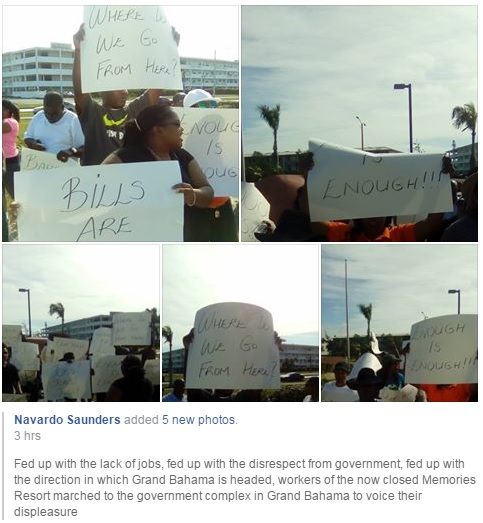
Change has come to tropical resorts – hotels with casinos. They do not seem to work anymore. It is a failing business model. This is Bad News for some communities.

CU Blog - Sunwing vacates Memories Grand Bahama - Photo 4

CU Blog - Sunwing vacates Memories Grand Bahama - Photo 5

Casinos are especially failing. Why so?  Well, for the many resort guests that come from North America (US & Canada), they now have abundant access to gambling – lotteries, casinos and pari-mutuel betting (horse racing, greyhound racing and Jai Alai). These establishments, especially casinos as of late, have popped up in many cities all over the region, plus on many Native American reservations. Plus there is the eco-system of Casino Riverboats and Cruise Ships leaving major US ports; many of them heading to the Caribbean.

Lastly, the ubiquity of the internet has furnished endless online gambling options.

The previous casino hot spots of Las Vegas and Atlantic City have thusly had to reform and transform their product offering.

Somehow, the Caribbean region “has not gotten the memo”.

This is sad, as one community after another in the Caribbean are having to endure the “bumps and bruises” of a failing economic engine in their neighborhood.

“It’s a beautiful day in the neighborhood …” NOT!

See this reality – Bad News for one city – in this Press Release statement here:

Corporate Statement: Sunwing vacates Memories Grand Bahama 

CU Blog - Sunwing vacates Memories Grand Bahama - Photo 1

February 1, 2017 – In 2013, the Sunwing Travel Group forged a partnership with the Government of The Bahamas and in 2014 began to operate the Memories Grand Bahama Beach & Casino Resort on Grand Bahama Island. Concurrently with Sunwing’s opening of the Memories Resort, Sunwing began weekly flight service from eight cities in Canada and daily flights from a variety of U.S. cities in the ensuing summer. The opening of the 492-room Resort coupled with Sunwing’s tour operator and airlift support, led to the revitalization of the Grand Bahama tourist economy, over 100,000 incremental tourists annually arriving on new flying programs from Canada and the Eastern United States, the creation of over 1500 jobs on the Island, and an annual economic contribution exceeding US $140 Million.

On October 6th of 2016, Hurricane Matthew caused significant damage to the Memories Resort and forced its closure. Despite an immediate response from Sunwing Travel Group and the Government of The Bahamas to secure alternative accommodations, protect flying, and expedite the necessary repairs, the Hotel’s owner, Hong Kong-based Hutchison Whampoa, did not agree to requests to restore the Memories.

Since this event, the Sunwing Travel Group has taken on the significant financial burden of compensating and re-protecting customers as well as running an air program with limited accommodation options as a demonstration of goodwill and commitment to the people of Grand Bahama Island.

In January, it was reported in the Bahamian press that the Government and Sunwing had agreed to co-invest sums to restore the Memories and secure its earliest reopening. Sunwing sought the hotel Owner’s consent for such restoration but regrettably, the Owner attempted to impose exorbitant conditions that were totally unacceptable to Sunwing and would be to any other potential tenant.

The Sunwing Travel Group is very proud of the partnership it has forged with the Government and the people of Grand Bahama and very saddened to report that we were required to vacate the Memories Resort premises on January 29, 2017. Accordingly, we are making arrangements to pay out applicable redundancy pay for our employees and will be reaching out to our employees in the coming days.

Sunwing intends to continue supporting Grand Bahama Island and its tourism economy, including its hotels, through its tour operators, Sunwing Vacations and US-based Vacation Express as well as by continuing its airlift programs from Canada and from the United States in the summer, subject to conditions we are discussing with Government.

We are also pleased to advise that as part of our ongoing commitment to Grand Bahama and its people, we are already developing plans in concert with the Government to return to Grand Bahama Island as a hotel operator and are optimistic that we will be in a position to announce details shortly.

We are very appreciative for the support we’ve received from the Government and the wonderful people of Grand Bahama. Thank you for your continued support and understanding,

Sunwing Travel Group.

————-

Source: The “Bahamas Weekly” News Source; posted Feb 3, 2017; retrieved Feb 8, 2017 from: http://www.thebahamasweekly.com/publish/grand-bahama-bahamas/Sunwing_vacates_Memories_Grand_Bahama52338.shtml

CU Blog - Sunwing vacates Memories Grand Bahama - Photo 2

CU Blog - Sunwing vacates Memories Grand Bahama - Photo 3

————-

VIDEO – Memories Grand Bahama Beach & Casino Resort – Grand Bahama, The Bahamas | Sunwing.ca – https://youtu.be/qLo3puqnIis

Published on Apr 15, 2014 – Memories Grand Bahama Beach and Casino Resort offers the perfect vacation escape for all types of travelers. Guests can indulge in a variety of first-class amenities, gourmet dining, unlimited beverages, onsite golf and non-stop activities.

The foregoing press release – about Freeport, the 2nd city in the Bahamas – aligns with the book Go Lean…Caribbean, which calls for the elevation of Caribbean economics. This quest means first accepting the reality of the current assessments; then forging the necessary change.

What is the assessment? The region is in crisis!

Alas, the Go Lean book declares “a crisis is a terrible thing to waste”. It serves as a roadmap for the introduction and implementation of the technocratic Caribbean Union Trade Federation (CU) with the charter to effectuate change in the region with these 3 prime directives:

  • Optimization of the economic engines in order to grow the regional economy to $800 Billion and create 2.2 million new jobs.
  • Establishment of a security apparatus to protect the resultant economic engines and marshal against economic crimes.
  • Improve Caribbean governance to support these engines.

Looking at the foregoing news story, Freeport has a crisis. There is a need to re-focus, re-boot, and optimize the engines of commerce so as to make Freeport, Grand Bahama, the whole Bahamas and the entire Caribbean, better places to live, work and play. This news story relates that the tourism product in Freeport, the mainstay of Caribbean economy, is in turmoil. The Go Lean book asserts that this is where the region must start in the effort for turn-around: the region can no longer afford to be a “one-trick pony”. The opening page of the book states:

The Caribbean has tried, strenuously, over the decades, to diversify their economy away from the mono-industrial trappings of tourism, and yet tourism is still the primary driver of the economy. Prudence dictates that the Caribbean nations expand and optimize their tourism products, but also look for other opportunities for economic expansion. The requisite investment of the resources (time, talent, treasuries) for this goal may be too big for any one Caribbean member-state. Rather, shifting the responsibility to a region-wide, professionally-managed, deputized technocracy will result in greater production and greater accountability. This deputized agency is the … CU.

The CU Trade Federation is a technocracy, empowered to reboot the economic engines of the member-states, by fostering new industries (new “purse”) across the entire region and deploying solutions to better exploit the opportunities of the global trade market. Thus generating all new revenues; with no need to re-distribute any existing “purse” among the member-states.

There is an apropos proverb: “if you fail to plan, you plan to fail”. Starting here and now, the Caribbean starts its planning for success; to snatch “victory out of the jaws of defeat”. Failure is just too familiar. Already we have member-states … on the verge of a Failed-State status… These states are not contending with the challenges of modern life: changing weather patterns, ever-pervasive technology, and the “flat world” of globalization. To reverse the fortunes of these failing states, and guide others in the opposite direction to a destination of prosperity, the Caribbean must re-boot the regional economy and systems of commerce.

Early in this book, the responsibility to monitor, manage, and mitigate the risks and threats of job killing developments, (such as the reporting in the foregoing press release), was identified as an important function for the CU with this pronouncement in the Declaration of Interdependence (Pages 13):

xxvi.  Whereas the Caribbean region must have new jobs to empower the engines of the economy and create the income sources for prosperity, and encourage the next generation to forge their dreams right at home, the Federation must therefore foster the development of new industries… In addition, the Federation must invigorate the enterprises related to existing industries like tourism… – impacting the region with more jobs.

So what is next for Freeport?

CU Blog - Sunwing vacates Memories Grand Bahama - Photo 6

The urging to this community is to “be afraid; be very afraid of maintaining the status quo”. It is past time to reboot Freeport. (See the foregoing VIDEO advertising the Memories Grand Bahama Resort).

This commentary previously related details of the status quo for Freeport and the strong recommendations to forge change. Consider this list of previous blogs:

https://goleancaribbean.com/blog/?p=10309 Time to consider “Secession”
https://goleancaribbean.com/blog/?p=10140 Lessons Learned from Detroit: Demolish abandoned structures!
https://goleancaribbean.com/blog/?p=7528 A Vision of Freeport as a Self-Governing Entity
https://goleancaribbean.com/blog/?p=7449 ‘Crap Happens’ – So What Now?
https://goleancaribbean.com/blog/?p=5542 Freeport’s Bad Ethos of Rent-Seeking
https://goleancaribbean.com/blog/?p=4185 Freeport: A Ghost Town Happening
https://goleancaribbean.com/blog/?p=4037 How to Train Your ‘Dragon’ – Freeport Version
https://goleancaribbean.com/blog/?p=3641 Freeport’s Musical Roots: A City ‘Built on Rock-n-Roll’
https://goleancaribbean.com/blog/?p=2585 Parallel of Freeport’s History: Concorde Supersonic Transport
https://goleancaribbean.com/blog/?p=300 Freeport’s Failing Status: ’10,000 Bahamians Living in Darkness’

The problems in Freeport are indicative of many other failing Caribbean communities, especially those overly dependent on tourism. Tourism can be a great economic engine, if managed properly … and diversified to hedge risk.

But, the executions have been faulty. Many communities have been plagued with “economic sores” for inadequate management of their tourism products. The issue of declining growth or failing business models is an important discussion for this roadmap. This commentary previously related details of these dysfunctions in these earlier Go Lean blogs:

https://goleancaribbean.com/blog/?p=8381 A Lesson in Economic Fallacies – Casino Currencies
https://goleancaribbean.com/blog/?p=7082 The Art and Science of ‘Play’
https://goleancaribbean.com/blog/?p=6680 Vegas Casinos Place Bets on Video Games
https://goleancaribbean.com/blog/?p=6341 Tourism Dysfunctional Stewardship — What’s Next?
https://goleancaribbean.com/blog/?p=4145 A Better Model for ‘Art’ Tourism
https://goleancaribbean.com/blog/?p=3225 Caribbean tourism less competitive due to increasing aviation taxes
https://goleancaribbean.com/blog/?p=2571 Sharing Economy: There is a winning model for Caribbean Tourism
https://goleancaribbean.com/blog/?p=2207 Hotels are making billions from Resort Fees; Bad Model for Caribbean
https://goleancaribbean.com/blog/?p=1984 Casinos Failing Business Model
https://goleancaribbean.com/blog/?p=1943 The Fading Future of Golf; Vital for Tourism?
https://goleancaribbean.com/blog/?p=798 Lessons Learned from the American Airlines Delivery Arts & Sciences
https://goleancaribbean.com/blog/?p=235 Tourism’s changing profile

According to the foregoing press release, the closing of this one property, Memories Grand Bahama, will directly impact over 600 jobs. In economics, there is the study of in-direct jobs that are facilitated by an economic engine. The Go Lean book details (Page 260) the principle of job multipliers, how certain industries are better than others for generating multiple indirect jobs down the line for each direct job on a company’s payroll. (Tourism’s job multiplier may be in the 2.0 to 3.0 range, while other industries, like automotive manufacturing, have a job-multiplier rate of 11.0)

The closing of this one property is more dire for Freeport; it’s an island with only few other non-tourism economic options. This city should be desperate to reform/reboot. Their economy needs to diversify … to industries with high job-multiplier ratios. (The Go Lean book suggest an automotive manufacturing business model for some communities in the Caribbean region; and a shipbuilding focus for Freeport). In order to “dream such a dream”, there must first be the adoption of specific community ethos to diversify the economy. (This is defined as the underlying spirit-attitude-sentiment that informs the beliefs, customs, or practices of society).

Is Freeport ready to start the journey for a new destiny with the adoption of the new community ethos? How about the rest of the Caribbean?

The book details the community ethos, plus the strategies, tactics, implementations and advocacies to foster a diversified economy:

Community Ethos – Deferred Gratification Page 21
Community Ethos – Economic Principle – People Respond to Incentives Page 21
Community Ethos – Economic Principle – Economic Systems Influence Individual Choices Page 21
Community Ethos – Economic Principle – Voluntary Trade Creates Wealth Page 21
Community Ethos – Economic Principle – Consequences of Choices Lie in the Future Page 21
Community Ethos – Job Multiplier Page 22
Community Ethos – “Crap” Happens – Anticipate Natural Disasters Page 23
Community Ethos – Lean Operations Page 24
Community Ethos – Return on Investments (ROI) Page 24
Community Ethos – Ways to Impact the Future Page 26
Community Ethos – Ways to Foster Genius Page 27
Community Ethos – Ways to Help Entrepreneurship Page 28
Community Ethos – Ways to Impact Research & Development Page 30
Community Ethos – Ways to Improve Sharing Page 35
Community Ethos – Ways to Impact the Greater Good Page 37
Strategy – Integrate Region in a Single Market Page 45
Tactical – Fostering a Technocracy Page 64
Tactical – Tactics to Forge an $800 Billion Economy Page 67
Tactical – Separation of Powers – Regional Tourism Promotion Page 78
Implementation – Ways to Deliver Page 109
Implementation – Ways to Reboot Freeport – Only City identified in Roadmap Page 112
Planning – Ways to Make the Caribbean Better – Better Job Options Page 131
Planning – Lessons Learned from Detroit – Example of a Failing City Page 140
Advocacy – Ways to Grow the Economy Page 151
Advocacy – Ways to Create Jobs Page 152
Advocacy – Ways to Improve Governance Page 169
Advocacy – Ways to Better Manage the Social Contract Page 170
Advocacy – Ways to Enhance Tourism Page 190
Advocacy – Ways to Help the Middle Class Page 223
Advocacy – Ways to Impact Urban Living Page 234

The Go Lean/CU roadmap is designed to foster industrial developments to diversify communities from tourism. We do not want to “abandon” tourism, just diversify it.

“Abandon” is a good word, because abandonment is what is happening in these failing Caribbean communities that have not diversified nor grown their economies. The disposition is so bad that the region sports a 70 percent abandonment rate among the educated classes.

This is truly a crisis; but one not to be wasted. All Caribbean stakeholders in the region – residents, institutions, businesses, Diaspora and trading partners – are urged to lean-in to this Go Lean roadmap. This plan is conceivable, believable and achievable.

Yes, we can … make the Caribbean a better place to live, work and play. 🙂

Download the book Go Lean … Caribbean – now!


Share this post:
, , , , ,
[Top]

How to make sense of 2016

Go Lean Commentary

The year 2016 is coming to a close. In retrospect, it has been a “year of living dangerously”.

So much of the institutional progress that have been made in past decades have come under “protest” this year – think alphabetical organizations that promote integration like the UN, EU, IMF, OECD, etc. – and think globalization / trade pacts (NAFTA, TPP, CBI, etc.).

It is that bad! All aspects of Caribbean life has become dysfunctional: economics, security and governance. Here are some snippets from this Caribbean Yearbook; (this is just a sample in chronological order):

Surely, it is the conclusion of most that 2016 has yielded a bitter harvest.

This assessment is presented by the publishers of the book Go Lean … Caribbean. This 370-page publication asserts that the Caribbean region is in crisis but alas, a “crisis is a terrible thing to waste”.

What does this mean? Here goes…

The conclusion is that from the “ashes of 2016”, the Phoenix – symbolic for the Caribbean community – can rise and create a Way Forward.

This is not just true in the Caribbean, but for most of the world as well. It is possible to make sense of this tumultuous year. See this point developed in this editorial-article in The Economist magazine, here:

Title: How to make sense of 2016
Sub-title: Liberals lost most of the arguments this year. They should not feel defeated so much as invigorated

cu-blog-how-to-make-sense-of-2016-photo-1For a certain kind of liberal, 2016 stands as a rebuke. If you believe, as The Economist does, in open economies and open societies, where the free exchange of goods, capital, people and ideas is encouraged and where universal freedoms are protected from state abuse by the rule of law, then this has been a year of setbacks. Not just over Brexit and the election of Donald Trump, but also the tragedy of Syria, abandoned to its suffering, and widespread support—in Hungary, Poland and beyond—for “illiberal democracy”. As globalisation has become a slur, nationalism, and even authoritarianism, have flourished. In Turkey relief at the failure of a coup was overtaken by savage (and popular) reprisals. In the Philippines voters chose a president who not only deployed death squads but bragged about pulling the trigger. All the while Russia, which hacked Western democracy, and China, which just last week set out to taunt America by seizing one of its maritime drones, insist liberalism is merely a cover for Western expansion.

Faced with this litany, many liberals (of the free-market sort) have lost their nerve. Some have written epitaphs for the liberal order and issued warnings about the threat to democracy. Others argue that, with a timid tweak to immigration law or an extra tariff, life will simply return to normal. That is not good enough. The bitter harvest of 2016 has not suddenly destroyed liberalism’s claim to be the best way to confer dignity and bring about prosperity and equity. Rather than ducking the struggle of ideas, liberals should relish it.

Mill wheels

In the past quarter-century liberalism has had it too easy. Its dominance following Soviet communism’s collapse decayed into laziness and complacency. Amid growing inequality, society’s winners told themselves that they lived in a meritocracy—and that their success was therefore deserved. The experts recruited to help run large parts of the economy marvelled at their own brilliance. But ordinary people often saw wealth as a cover for privilege and expertise as disguised self-interest.

After so long in charge, liberals, of all people, should have seen the backlash coming. As a set of beliefs that emerged at the start of the 19th century to oppose both the despotism of absolute monarchy and the terror of revolution, liberalism warns that uninterrupted power corrupts. Privilege becomes self-perpetuating. Consensus stifles creativity and initiative. In an ever-shifting world, dispute and argument are not just inevitable; they are welcome because they lead to renewal.

What is more, liberals have something to offer societies struggling with change. In the 19th century, as today, old ways were being upended by relentless technological, economic, social and political forces. People yearned for order. The illiberal solution was to install someone with sufficient power to dictate what was best—by slowing change if they were conservative, or smashing authority if they were revolutionary. You can hear echoes of that in calls to “take back control”, as well as in the mouths of autocrats who, summoning an angry nationalism, promise to hold back the cosmopolitan tide.

Liberals came up with a different answer. Rather than being concentrated, power should be dispersed, using the rule of law, political parties and competitive markets. Rather than putting citizens at the service of a mighty, protecting state, liberalism sees individuals as uniquely able to choose what is best for themselves. Rather than running the world through warfare and strife, countries should embrace trade and treaties.

Such ideas have imprinted themselves on the West—and, despite Mr Trump’s flirtation with protectionism, they will probably endure. But only if liberalism can deal with its other problem: the loss of faith in progress. Liberals believe that change is welcome because, on the whole, it is for the better. Sure enough, they can point to how global poverty, life expectancy, opportunity and peace are all improving, even allowing for strife in the Middle East. Indeed, for most people on Earth there has never been a better time to be alive.

Large parts of the West, however, do not see it that way. For them, progress happens mainly to other people. Wealth does not spread itself, new technologies destroy jobs that never come back, an underclass is beyond help or redemption, and other cultures pose a threat—sometimes a violent one.

If it is to thrive, liberalism must have an answer for the pessimists, too. Yet, during those decades in power, liberals’ solutions have been underwhelming. In the 19th century liberal reformers met change with universal education, a vast programme of public works and the first employment rights. Later, citizens got the vote, health care and a safety net. After the second world war, America built a global liberal order, using bodies such as the UN and the IMF to give form to its vision.

Nothing half so ambitious is coming from the West today. That must change. Liberals must explore the avenues that technology and social needs will open up. Power could be devolved from the state to cities, which act as laboratories for fresh policies. Politics might escape sterile partisanship using new forms of local democracy. The labyrinth of taxation and regulation could be rebuilt rationally. Society could transform education and work so that “college” is something you return to over several careers in brand new industries. The possibilities are as yet unimagined, but a liberal system, in which individual creativity, preferences and enterprise have full expression, is more likely to seize them than any other.

The dream of reason

After 2016, is that dream still possible? Some perspective is in order. This newspaper believes that Brexit and a Trump presidency are likely to prove costly and harmful. We are worried about today’s mix of nationalism, corporatism and popular discontent. However, 2016 also represented a demand for change. Never forget liberals’ capacity for reinvention. Do not underestimate the scope for people, including even a Trump administration and post-Brexit Britain, to think and innovate their way out of trouble. The task is to harness that restless urge, while defending the tolerance and open-mindedness that are the foundation stones of a decent, liberal world.

Source: Publish Date 12-24-2016; retrieved from: http://www.economist.com/news/leaders/21712128-liberals-lost-most-arguments-year-they-should-not-feel-defeated-so-much?cid1=cust/ednew/n/bl/n/20161220n/owned/n/n/nwl/n/n/NA/8415420/n

The foregoing article depicts that the magazine, The Economist, believes …

… “in open economies and open societies, where the free exchange of goods, capital, people and ideas is encouraged and where universal freedoms are protected from state abuse by the rule of law.”

Ditto for the movement behind Go Lean … Caribbean.

For the Caribbean, we now need a new way, a new year. We are looking forward to 2017.

The foregoing article is being brought into focus in a consideration of the Go Lean book; which serves as a roadmap for the introduction and implementation of the technocratic Caribbean Union Trade Federation (CU), for the elevation of Caribbean society. This CU/Go Lean roadmap has these 3 prime directives:

  • Optimization of economic engines in order to grow the regional economy to $800 Billion and create 2.2 million new jobs.
  • Establishment of a security apparatus to protect the resultant economic engines.
  • Improvement of Caribbean governance to support these engines.

The Go Lean book (Page 3), though written in 2013, makes the assertion that the Caribbean is in crisis. The book details that there is something wrong in the homeland, that while it is the greatest address in the world, instead of the world “beating a path” to these doors, the people of the Caribbean have “beat down their doors” to get out.

Why do people leave such an idyllic place? The book identifies a series of reasons, classified as “push and pull” factors. They are economic (jobs and entrepreneurial shortages), security deficiencies and governing misgivings.

The Go Lean book does not ignore these “push and pull” factors that cause our Caribbean people to flee. The book stresses (early at Page 13) the need to be on-guard for “push” factors in these Declaration of Interdependence statements:

xix. Whereas our legacy in recent times is one of societal abandonment, it is imperative that incentives and encouragement be put in place to first dissuade the human flight, and then entice and welcome the return of our Diaspora back to our shores. This repatriation should be effected with the appropriate guards so as not to imperil the lives and securities of the repatriated citizens or the communities they inhabit. The right of repatriation is to be extended to any natural born citizens despite any previous naturalization to foreign sovereignties.

xxi. Whereas the preparation of our labor force can foster opportunities and dictate economic progress for current and future generations, the Federation must ensure that educational and job training opportunities are fully optimized for all residents of all member-states, with no partiality towards any gender or ethnic group. The Federation must recognize and facilitate excellence in many different fields of endeavor, including sciences, languages, arts, music and sports. This responsibility should be executed without incurring the risks of further human flight, as has been the past history.

xxvi. Whereas the Caribbean region must have new jobs to empower the engines of the economy and create the income sources for prosperity, and encourage the next generation to forge their dreams right at home, the Federation must therefore foster the development of new industries, like that of ship-building, automobile manufacturing, prefabricated housing, frozen foods, pipelines, call centers, and the prison industrial complex. In addition, the Federation must invigorate the enterprises related to existing industries like tourism, fisheries and lotteries – impacting the region with more jobs.

This commentary previously related details of Caribbean dysfunction and how to effectuate a turn-around in the region’s societal engines. Here is a sample of such earlier blog-commentaries:

https://goleancaribbean.com/blog/?p=7179 How to Effectuate Change in Crime Fight? Change Leaders
https://goleancaribbean.com/blog/?p=7056 ‘Necessity is the Mother of Invention’
https://goleancaribbean.com/blog/?p=6563 Lessons from Iceland – Model of Recovery
https://goleancaribbean.com/blog/?p=5695 Repenting, Forgiving and Reconciling the Past
https://goleancaribbean.com/blog/?p=3929 Recipe for Successful Turn-arounds: Add Bacon to Eggs
https://goleancaribbean.com/blog/?p=3915 ‘Change the way you see the world; you change the world you see’
https://goleancaribbean.com/blog/?p=3662 Migrant flow into US from Caribbean spikes
https://goleancaribbean.com/blog/?p=2547 Miami’s Success versus Caribbean Failure
https://goleancaribbean.com/blog/?p=1596 Book Review: ‘Prosper Where You Are Planted’
https://goleancaribbean.com/blog/?p=841 Having Less Babies is Bad for the Economy
https://goleancaribbean.com/blog/?p=623 ‘Only at the precipice, do they change’

A turn-around of our failing societal engines is essential for the Way Forward.

Way Forward – an action, plan etc. that seems a good idea because it is likely to lead to success; i.e.:

  • A way forward lies in developing more economic links.
  • This treatment may be the way forward for many inherited disorders.

Source: Retrieved December 22, 2016 from: http://www.ldoceonline.com/dictionary/a-the-way-forward

An example of a Way Forward is the following VIDEO, highlighting the emergence of digital technologies as the lifeblood of today’s cities. They are applied widely in industry and society, from information and communications technology (ICT) to the Internet of Things (IoT), in which objects are connected to the Internet. As sensors turn any object into part of an intelligent urban network, and as computing power facilitates analysis of the data these sensors collect, elected officials and city administrators can gain an unparalleled understanding of the infrastructure and services of their city. However, to make the most of this intelligence, another ingredient is essential: citizen engagement. Thanks to digital technologies, citizens can provide a steady flow of feedback and ideas to city officials.

————————————— Start VIDEO Here —————————————————-

VIDEO Title: Economist Intelligence Unit (EIU) – http://link.brightcove.com/services/player/bcpid4855923448001?bckey=AQ~~,AAABDH-R__E~,dB4S9tmhdOoLUuQl3WENJQVceD9z2lER&bctid=5114134376001

See the highlights from the Empowering Cities research and hear how the City of Pittsburgh is using digital technology to put citizens in control in this short video, featuring EIU contributor Sarah Murray and Pittsburgh’s chief innovation and performance officer, Debra Lam.
find out how global businesses and citizens envision smart cities

Read the full report to find out how global businesses and citizens envision smart cities, with insights from 20 leading experts. Download the Whitepaper here.

—————————————- End VIDEO Here —————————————————-

This study by The Economist Intelligence Unit (EIU), investigates how citizens and businesses in 12 diverse cities around the world – Barcelona, Berlin, Buenos Aires, Chicago, London, Los Angeles, Mexico City, New York City, Rio de Janeiro, Shanghai, Singapore and Toronto – envision the benefits of smart cities.

For the Caribbean, we must succeed in our own action plan – Go Lean roadmap – for cities and communities so as to dissuade our own people from giving up and abandoning their native homelands. While no society is perfect, nor fully optimized, some countries have been better than others. Many countries in North America and Western Europe have become lands of refuge for our Caribbean Diaspora.

The Go Lean book and accompanying blogs posit that it will take less effort to remediate the Caribbean than to fix some other part of the planet. This is the charge of the Go Lean…Caribbean roadmap, to do the heavy-lifting, to implement the organization dynamics to impact Caribbean society here-now and make this region a better place to live, work and play. The following are the community ethos, strategies, tactics and operational advocacies to effectuate this goal:

Community Ethos – People Respond to Incentives Page 21
Community Ethos – Economic Systems Influences Choices & Incentives Page 21
Community Ethos – The Consequences of Choice Lie in the Future Page 21
Community Ethos – Job Multiplier Page 22
Community Ethos – Minority Equalization Page 24
Community Ethos – Lean Operations Page 24
Community Ethos – Ways to Impact the Greater Good Page 37
Strategy – Vision – Make the Caribbean the Best Address on the Planet Page 45
Strategy – Mission – Repatriate Diaspora Page 46
Strategy – Mission – Dissuade Human Flight/“Brain Drain” Page 46
Tactical – Separation of Powers – Union versus Member-States Page 71
Implementation – Assemble CariCom, Dutch, French, Cuba and US Territories Page 95
Implementation – Enact Territorial Compacts for PR & the Virgin Islands Page 96
Implementation – Ways to Pay for Change Page 101
Implementation – Steps for Self-Governing Entities – Laboratories for fresh policies Page 105
Implementation – Ways to Deliver Page 109
Implementation – Reasons to Repatriate Page 118
Implementation – Ways to Benefit from Globalization Page 119
Implementation – Ways to Promote Independence Page 120
Planning – 10 Big Ideas for the Caribbean Page 127
Planning – Lessons Learned from 2008 Page 136
Advocacy – Ways to Grow the Economy Page 151
Advocacy – Ways to Create Jobs Page 152
Advocacy – Ways to Improve Governance Page 168
Advocacy – Ways to Improve Homeland Security Page 180
Advocacy – Ways to Impact the Diaspora Page 217
Advocacy – Ways to Preserve Caribbean Heritage Page 218
Advocacy – Ways to Impact Urban Living Page 236
Advocacy – Ways to Impact US Territories Page 244
Appendix – Interstate Compacts for Puerto Rico and the USVirgin Islands Page 278

This Go Lean movement asserts that the current year (2016) was not so redeeming. We must do better… going forward, with our own Way Forward. From Day One/Step One, the roadmap calls for positive change; then it provides turn-by-turn directions for what-how-when-where-why to remediate, mitigate and empower our region forward.

Other communities will be making their own mitigation to make 2017 a better year (than 2016); our Caribbean will be in competition with them, in competition with rest of the world. Considering this competition as a race, we realize that we are behind, trailing our competitors. We have acute deficiencies in our societal engines: economics, security and governance. We must now fix these, so as to dissuade people from leaving their native homelands.

There are many empowerments that our Caribbean region needs to implement to mitigate bad years like 2016. But truth be told, 2016 was not as bad at 2008 – that year was so dire that it inspired the creation of this Go Lean roadmap. Many countries in North America and Western Europe have already applied their formal turn-around from 2008 and now enjoy productive economies; (i.e. Iceland is complaining about their 2% unemployment rate).

While the Caribbean have many problems to mitigate, our biggest crisis stem from the fact that so many of our citizens have fled their Caribbean homelands for foreign shores.

So the quest to fix the Caribbean, though noble, is easier said than done; but it is conceivable, believable and achievable! Now is the time for all of the Caribbean, the people and governing institutions, to lean-in to this Way Forward, the Go Lean … Caribbean roadmap. 🙂

Download the book Go Lean … Caribbean – now!

Share this post:
,
[Top]

Lessons Learned from Pearl Harbor

Go Lean Commentary

What would you do if backed into a corner and there’s a threat on your life?

For many people their natural impulse is to come out fighting. They say that this is not aggression, rather just a survival instinct.

Believe it or not, this depiction describes one of the biggest attacks in American history: the Japanese Attack on Pearl Harbor. See VIDEO here:

VIDEO – World War II History: Attack on Pearl Harbor – http://www.history.com/topics/world-war-ii/world-war-ii-history/videos/attack-pearl-harbor

Retrieved December 7, 2016 from History.com – On December 7, 1941, Japan launches a surprise attack on American soil at Pearl Harbor.

cu-blog-lessons-learned-from-pearl-harbor-photo-2

cu-blog-lessons-learned-from-pearl-harbor-photo-3

cu-blog-lessons-learned-from-pearl-harbor-photo-4

This is the 75th Anniversary of that attack – a few days ago: December 7. That’s a lot of years and a lot of lessons. Still, 75 is a pretty round number, like 25, 50 and 100. This commentary has been reserved for now, a few days late on purpose because of the best-practice to “not speak ill of the dead” at a funeral or memorial service. But a “lessons learned analysis” is still an important exercise for benefiting from catastrophic efforts. After 75 years since the Pearl Harbor Attack on December 7, 1941, this post-mortem analysis is just as shocking as it was on this “day of infamy”.

Consider the details of this maligning article here (and the Appendices below); notice that it assumes a conspiracy:

Title: How U.S. Economic Warfare Provoked Japan’s Attack on Pearl Harbor
By: Robert Higgs

cu-blog-lessons-learned-from-pearl-harbor-photo-1Ask a typical American how the United States got into World War II, and he will almost certainly tell you that the Japanese attacked Pearl Harbor and the Americans fought back. Ask him why the Japanese attacked Pearl Harbor, and he will probably need some time to gather his thoughts. He might say that the Japanese were aggressive militarists who wanted to take over the world, or at least the Asia-Pacific part of it. Ask him what the United States did to provoke the Japanese, and he will probably say that the Americans did nothing: we were just minding our own business when the crazy Japanese, completely without justification, mounted a sneak attack on us, catching us totally by surprise in Hawaii on December 7, 1941.

You can’t blame him much. For more than 60 years such beliefs have constituted the generally accepted view among Americans, the one taught in schools and depicted in movies—what “every schoolboy knows.” Unfortunately, this orthodox view is a tissue of misconceptions. Don’t bother to ask the typical American what U.S. economic warfare had to do with provoking the Japanese to mount their attack, because he won’t know. Indeed, he will have no idea what you are talking about.

In the late nineteenth century, Japan’s economy began to grow and to industrialize rapidly. Because Japan has few natural resources, many of the burgeoning industries had to rely on imported raw materials, such as coal, iron ore or steel scrap, tin, copper, bauxite, rubber, and petroleum. Without access to such imports, many of which came from the United States or from European colonies in southeast Asia, Japan’s industrial economy would have ground to a halt. By engaging in international trade, however, the Japanese had built a moderately advanced industrial economy by 1941.

At the same time, they also built a military-industrial complex to support an increasingly powerful army and navy. These armed forces allowed Japan to project its power into various places in the Pacific and east Asia, including Korea and northern China, much as the United States used its growing industrial might to equip armed forces that projected U.S. power into the Caribbean and Latin America, and even as far away as the Philippine Islands.

When Franklin D. Roosevelt became president in 1933, the U.S. government fell under the control of a man who disliked the Japanese and harbored a romantic affection for the Chinese because, some writers have speculated, Roosevelt’s ancestors had made money in the China trade.[1] Roosevelt also disliked the Germans (and of course Adolf Hitler), and he tended to favor the British in his personal relations and in world affairs. He did not pay much attention to foreign policy, however, until his New Deal began to peter out in 1937. Afterward, he relied heavily on foreign policy to fulfill his political ambitions, including his desire for reelection to an unprecedented third term.

When Germany began to rearm and to seek Lebensraum aggressively in the late 1930s, the Roosevelt administration cooperated closely with the British and the French in measures to oppose German expansion. After World War II commenced in 1939, this U.S. assistance grew ever greater and included such measures as the so-called destroyer deal and the deceptively named Lend-Lease program. In anticipation of U.S. entry into the war, British and U.S. military staffs secretly formulated plans for joint operations. U.S. forces sought to create a war-justifying incident by cooperating with the British navy in attacks on German U-boats in the north Atlantic, but Hitler refused to take the bait, thus denying Roosevelt the pretext he craved for making the United States a full-fledged, declared belligerent—an end that the great majority of Americans opposed.

In June 1940, Henry L. Stimson, who had been secretary of war under Taft and secretary of state under Hoover, became secretary of war again. Stimson was a lion of the Anglophile, northeastern upper crust and no friend of the Japanese. In support of the so-called Open Door Policy for China, Stimson favored the use of economic sanctions to obstruct Japan’s advance in Asia. Treasury Secretary Henry Morgenthau and Interior Secretary Harold Ickes vigorously endorsed this policy. Roosevelt hoped that such sanctions would goad the Japanese into making a rash mistake by launching a war against the United States, which would bring in Germany because Japan and Germany were allied.

Accordingly, the Roosevelt administration, while curtly dismissing Japanese diplomatic overtures to harmonize relations, imposed a series of increasingly stringent economic sanctions on Japan. In 1939 the United States terminated the 1911 commercial treaty with Japan. “On July 2, 1940, Roosevelt signed the Export Control Act, authorizing the President to license or prohibit the export of essential defense materials.” Under this authority, “[o]n July 31, exports of aviation motor fuels and lubricants and No. 1 heavy melting iron and steel scrap were restricted.” Next, in a move aimed at Japan, Roosevelt slapped an embargo, effective October 16, “on all exports of scrap iron and steel to destinations other than Britain and the nations of the Western Hemisphere.” Finally, on July 26, 1941, Roosevelt “froze Japanese assets in the United States, thus bringing commercial relations between the nations to an effective end. One week later Roosevelt embargoed the export of such grades of oil as still were in commercial flow to Japan.”[2] The British and the Dutch followed suit, embargoing exports to Japan from their colonies in southeast Asia.

An Untenable Position
cu-blog-lessons-learned-from-pearl-harbor-photo-6
Roosevelt and his subordinates knew they were putting Japan in an untenable position and that the Japanese government might well try to escape the stranglehold by going to war. Having broken the Japanese diplomatic code, the Americans knew, among many other things, what Foreign Minister Teijiro Toyoda had communicated to Ambassador Kichisaburo Nomura on July 31: “Commercial and economic relations between Japan and third countries, led by England and the United States, are gradually becoming so horribly strained that we cannot endure it much longer. Consequently, our Empire, to save its very life, must take measures to secure the raw materials of the South Seas.”[3]

Because American cryptographers had also broken the Japanese naval code, the leaders in Washington knew as well that Japan’s “measures” would include an attack on Pearl Harbor.[4] Yet they withheld this critical information from the commanders in Hawaii, who might have headed off the attack or prepared themselves to defend against it. That Roosevelt and his chieftains did not ring the tocsin makes perfect sense: after all, the impending attack constituted precisely what they had been seeking for a long time. As Stimson confided to his diary after a meeting of the war cabinet on November 25, “The question was how we should maneuver them [the Japanese] into firing the first shot without allowing too much danger to ourselves.”[5] After the attack, Stimson confessed that “my first feeling was of relief … that a crisis had come in a way which would unite all our people.[6]

Source: The Independent Institute – Online Community – Posted: May 1, 2006; retrieved December 7, 2016 from: http://www.independent.org/newsroom/article.asp?id=1930
——–
See Appendices below for cited references and profiles of the Author and the Organization.

So this establishes why the Japanese may have been motivated to attack Pearl Harbor in the first place. The motivation seems more complicated than initially reported.

The Bible declares that:

“For there is nothing hidden that will not become manifest” – Luke 8:17

cu-blog-lessons-learned-from-pearl-harbor-photo-7

cu-blog-lessons-learned-from-pearl-harbor-photo-5

After 75 years, the before-during-after facts associated with the Pearl Harbor Attack should be available for full disclosure. What are the lessons here for the Caribbean and today’s effort to secure the Caribbean homeland while expanding the regional economy? We truly want to consider these main points, these lessons; (the hyperlinks refer to previous Go Lean commentaries):

Lessons

Territories have a status of disregard Hawaii (Pearl Harbor) and Philippines were attacked by the Japanese. These were both US Territories at the same. The levels of protection and preparedness for territories are sub-standard compared to the American mainland. As a result there was no meaningful plan for the air defense of Hawaii.
Colonialism is/was really bad Japan protested the sub-standard reality of the native Asians under the European colonial schemes. A people oppressed, suppressed and repressed would not remain docile forever; “that a downtrodden people would not stay down, that they would rise and revolt, that they would risk their lives and that of their children to pursue freedom.” – Go Lean book Page 251.
White Supremacy is/was a really bad construct The US Territories (Hawaii and Philippines) were not the first targets for Japan. They targeted all European colonies (British, French and Dutch) territories. Their campaign was to rail against White Supremacy.
Bullies only respond to a superior force Japan avail themselves of expansion opportunities in Far-East Asia as the European powers became distracted in the time period during and after World War I. (Manchuria in China was occupied by Japan starting in 1931). Only a superior force, the US, was able to assuage their aggression.
Economic Warfare can back a Government into a corner When the supply of basic needs (food, clothing, shelter and energy) are curtailed, a crisis ensues. When people are in crisis, they consider “fight or flight” options. Japan chose to fight; Caribbean people choose flight.
Societies can double-down on a bad Community Ethos Japan’s aggression was a direct result of their community ethos that honored Samurai warrior and battle culture. Men would walk the streets with their swords, ready for a challenge. On the other hand, the US (and Western Europe) community ethos of racism was so ingrained that the natural response in the US, post-Pearl Harbor, was to intern Japanese Americans in camps.
All of these bad community ethos were weeded out with post-WWII Human Rights reconciliations. – Go Lean book Page 220.
Double Standards are hard to ignore Japan felt justified in their Pacific aggression because of the US’s regional aggression in the Americas. Before Pearl Harbor, they withdrew from the League of Nations in protest of double standards.
Even after WWII, this double standard continues with countries with Veto power on the UN Security Council.
People have short memories There are movements to re-ignite many of the same developments that led to the devastation of WWII: right wing initiatives in Japan and Germany; Human Rights disregard for large minority groups (Muslims, etc.).
The more things change, the more they remain the same.

This discussion is analyzing the concept of “fight or flight”. According to Anthropologists, individuals and societies facing a crisis have to contend with these two options for survival. The very concept of refugees indicate that most people choose to flee; they choose internal displacement or refuge status in foreign countries. This point is consistent with the theme in the book Go Lean … Caribbean that this region is in crisis and as a result people have fled from their beloved homelands to foreign destinations in North America and Europe. How bad? According to one report, we have lost 70 percent of our tertiary-educated population.

Enough said! Our indictment is valid. Rather than flee, we now want the region to fight. This is not advocating a change to a militaristic state, but rather this commentary, and the underlying Go Lean book, advocates devoting “blood, sweat and tears” to empowering change in the Caribbean region. The book states this in its introduction (Page 3):

We cannot ignore the past, as it defines who we are, but we do not wish to be shackled to the past either, for then, we miss the future. So we must learn from the past, our experiences and that of other states in similar situations, mount our feet solidly to the ground and then lean-in, to reach for new heights; forward, upward and onward. This is what is advocated in this book: to Go Lean … Caribbean!

The Go Lean book serves as a roadmap for the introduction and implementation of the Caribbean Union Trade Federation (CU). One mission of this roadmap is to reduce the “push and pull” factors that contributes to the high emigration rates. For the most part the “push and pull” factors relate to the societal defects among the economic, security and governing engines. Another mission is to incentivize the far-flung Diaspora to consider a return to the region. Overall, the Go Lean roadmap asserts that the economy of the Caribbean is inextricably linked to the security of the Caribbean. The roadmap therefore proposes an accompanying Security Pact to accompany the CU treaty’s economic empowerment efforts. The plan is to cooperate, collaborate and confer with all regional counterparts so as to provide an optimized Caribbean defense, against all threats, foreign and domestic. This includes the American Caribbean territories (just like Pearl Harbor was on the American territory of Hawaii) of Puerto Rico and the US Virgin Islands. These American protectorates are included in this CU regional plan.

This CU/Go Lean regional plan strives to advance all of Caribbean society with these 3 prime directives:

  • Optimization of the economic engines in order to grow the regional economy to a $800 Billion Single Market by creating 2.2 million new jobs.
  • Establishment of a security apparatus to protect the resultant economic engines.
  • Improvement of Caribbean governance in support of these endeavors.

The Go Lean book stresses the effectiveness and efficiency of protecting life and property of all Caribbean stakeholders: residents, trading partners, visitors, etc.. This is why the book posits that some deployments are too big for any one member-state to manage alone – especially with such close proximities of one island nation to another – there are times when there must be a cross-border multi-lateral coordination – a regional partnership. This is the vision that is defined in the book (Pages 12 – 14), starting with these statements in the opening Declaration of Interdependence:

x. Whereas we are surrounded and allied to nations of larger proportions in land mass, populations, and treasuries, elements in their societies may have ill-intent in their pursuits, at the expense of the safety and security of our citizens. We must therefore appoint “new guards” to ensure our public safety and threats against our society, both domestic and foreign.

xii. Whereas the legacy in recent times in individual states may be that of ineffectual governance with no redress to higher authority, the accedence of this Federation will ensure accountability and escalation of the human and civil rights of the people for good governance, justice assurances, due process and the rule of law. As such, any threats of a “failed state” status for any member state must enact emergency measures on behalf of the Federation to protect the human, civil and property rights of the citizens, residents, allies, trading partners, and visitors of the affected member state and the Federation as a whole.

xvi. Whereas security of our homeland is inextricably linked to prosperity of the homeland, the economic and security interest of the region needs to be aligned under the same governance.

The Go Lean roadmap is not a call for a revolt against the governments, agencies or institutions of the Caribbean region, but rather a petition for a peaceful transition and optimization of the economic, security and governing engines in the region. To establish the security optimization, the Go Lean book presents a series of community ethos that must be adapted to forge this change. In addition, there are these specific strategies, tactics, implementation and advocacies to apply:

Community Ethos – new Economic Principles Page 21
Community Ethos – new Security Principles Page 22
Community Ethos – Minority Equalization Page 24
Community Ethos – Impacting the Greater Good Page 34
Strategy – Mission – Enact a Defense Pact to defend the homeland Page 45
Tactical – Fostering a Technocracy Page 64
Tactical – Homeland Security – Naval Operations Page 75
Tactical – Homeland Security – Militias Page 75
Implementation – Assemble – US Overseas Territory into CU Page 96
Implementation – Foreign Policy Initiatives at Start-up Page 102
Implementation – Security Initiatives at Start-up Page 103
Implementation – Ways to Promote Independence Page 120
Planning – Ways to Model the EU – Constructs after WW II Page 130
Advocacy – Ways to Better Manage the Social Contract Page 170
Advocacy – Ways to Improve Homeland Security Page 180
Advocacy – Ways to Mitigate Terrorism Page 181
Advocacy – Ways to Improve Intelligence Gathering Page 182
Advocacy – Ways to Enhance Tourism – Mitigate Risky Image Page 190
Advocacy – Ways to Improve Emergency Management Page 196
Advocacy – Ways to Preserve Caribbean Heritage Page 218
Advocacy – Ways to Impact US Territories Page 244

Now is the time to lean-in to this roadmap and “fight” for Caribbean change, as depicted in the book Go Lean…Caribbean. At this time, there are no State Actor adversaries – like Imperial Japan – seeking to cause harm to our homeland, but that status quo can change very quickly. Some Caribbean member-states are still de facto “colonies”, so enemies of our colonial masters – France, Netherlands, US, UK – can quickly “pop up”. We must be ready and on guard to any possible threats and security risks.

The movement behind the Go Lean … Caribbean book seeks to make this homeland a better place to live, work and play. Since the Caribbean is arguably the best address of the planet, tourism is a primary concern. So security here in our homeland must take on a different priority. Tourists do not visit war zones – civil wars, genocides, active terrorism, Failed-States and rampant crime. Already our societal defects (economics) have created such crises that our people have chosen to flee as opposed to “fight”. We do not need security threats as well; we do not need Failed-States. We are now preparing to “fight” (exert great efforts), not flee, to wage economic war to elevate our  communities.

This will not be easy; this is heavy-lifting, but success is possible. The strategies, tactics and implementations in the Go Lean roadmap are conceivable, believable and achievable. 🙂

Download the book Go Lean … Caribbean – now!

———–

Appendix A – Reference Notes:
1.  Harry Elmer Barnes, “Summary and Conclusions,” in Perpetual War for Perpetual Peace:A Critical Examination of the Foreign Policy of Franklin Delano Roosevelt and Its Aftermath (Caldwell, Id.: Caxton Printers, 1953), pp. 682–83.
2.  All quotations in this paragraph from George Morgenstern, “The Actual Road to Pearl Harbor,” in Perpetual War for Perpetual Peace, pp. 322–23, 327–28.
3.  Quoted ibid., p. 329.
4.  Robert B. Stinnett, Day of Deceit: The Truth about FDR and Pearl Harbor (NewYork: Free Press, 2000).
5.  Stimson quoted in Morgenstern, p. 343.
6.  Stimson quoted ibid., p. 384.

 ——-

Appendix B – About the Author:

Robert Higgs is a Senior Fellow in Political Economy at the Independent Institute and Editor at Large of the Institute’s quarterly journal The Independent Review. He received his Ph.D. in economics from JohnsHopkinsUniversity, and he has taught at the University of Washington, LafayetteCollege, SeattleUniversity, the University of Economics, Prague, and GeorgeMasonUniversity.

——-

Appendix C – About the Independent Institute:

The Independent Institute is a non-profit, non-partisan, scholarly research and educational organization that sponsors in-depth studies of critical social and economic issues.

The mission of the Independent Institute is to boldly advance peaceful, prosperous, and free societies grounded in a commitment to human worth and dignity.

Today, the influence of partisan interests is so pervasive that public-policy debate has become too politicized and is largely confined to a narrow reconsideration of existing policies. In order to fully understand the nature of public issues and possible solutions, the Institute’s program adheres to the highest standards of independent scholarly inquiry.
Source: http://www.independent.org/aboutus/


Share this post:
, , , ,
[Top]

Fix ‘Climate Change’ – Yes, We Can

Go Lean Commentary

“Here I am, send me*“.

This is the declaration of Advocates wanting to abate the global problem of Climate Change. They have examined the science and are confident that they can make a difference. They are thereby further declaring that:

“We can fix Climate Change. Yes, we can…”

This is conceivable, believable and achievable.

cu-blog-fixing-climate-change-yes-we-can-photo-2Why is this so important? Climate Change is causing more and more severe hurricanes in the Caribbean region. We have just had to “batten down the hatches” and endure the passage of Hurricane Matthew.

Endure?

Not all survived! The death toll in Haiti in the wake of this tumultuous storm has counted 473 (with 75 people missing) .. so far.

The advocacy to arrest greenhouse gases (GHG) is therefore a matter of life-and-death; it has a successful track record to consider and provide encouragement and hope:

Remember Acid Rain?

That was a big deal in the 1970’s and 1980’s. It was a big environmental problem; the stakeholders came together – many kicking and screaming – to put in the remediation and mitigation and now the problem is greatly abated. See the encyclopedia details of the problem in the Appendix A below, where it is reported that Acid Rain levels have dropped 65% since 1976.

Climate Change is another area of atmospheric pollution that can also be abated with a lot of the same strategies, tactics and implementations as was employed to abate Acid Rain. But instead of the smoke stacks of factories and power plants, the problematic culprit this time is fossil fuels.

Fossil fuels and carbon emission = Climate Change!

Unlike Acid Rain, the “bad actors” for Climate Change are not just industrial installations; this time it is “almost everybody”. Cars are one of the biggest contributors. There is no denying this cause-effect any more. The problem is now globally acknowledged! There are new international agreements – Paris Conference of the Parties (COP) or COP21 – to curb fossil fuels / carbon dioxide emissions. 195 countries have signed on to these accords, including big polluters China (#1) and the US (#2).

The overall goal of these international accords is to achieve significant environmental benefits through reductions in emissions of greenhouse gases, the primary causes of Climate Change. The remediation and mitigations employ regulatory and market based approaches for controlling GHG elements. It should be noted that the COP21 accord is a non-binding agreement, but the biggest contribution is that the community will is now entrenched.

The book Go Lean … Caribbean uses an alternate technical term for “community will”; it identifies “community ethos”, as “the fundamental character or spirit of a culture; the underlying sentiment that informs the beliefs, customs, or practices of a society” (Page 20). So, in everyday practical terms, it will now be politically incorrect to pursue policies in denial of Climate Change.

The Go Lean book presents a 370-page roadmap for re-booting, re-organizing and restructuring the economic, security and governmental institutions of the 30 member-states in the Caribbean region, especially in light of the realities of Climate Change. Though this is a global battle, the Caribbean is on the front lines. As related in a previous blog-commentary, no Caribbean member-state appears high of the list of greenhouse gases emitters and yet we must still participate in the mitigations. We must “Go Green” to arrest our own carbon footprint, so that we may be less hypocritical – have moral authority – in calling for reform from the big polluting nations.

The Go Lean book serves as a roadmap for the introduction and implementation of the technocratic Caribbean Union Trade Federation (CU). The roadmap depicts how this CU federal government will take the lead in ensuring the Climate Change mitigation efforts are incentivized, executed and accounted for. There are economic (BIG dollar issues), security and governing implications to a lot of these measures. The CU/Go Lean roadmap allows for the leverage of a regional Single Market that would spread the burden across the 42 million people of the 30 member-states. Other Climate Change benefits were embedded in the motivation of the book, the opening Declaration of Interdependence stated these points (Pages 12-14):

xxvii. Whereas the region has endured a spectator status during the Industrial Revolution, we cannot stand on the sidelines of this new economy, the Information Revolution. Rather, the Federation must embrace all the tenets of Internet Communications Technology (ICT) to serve as an equalizing element in competition with the rest of the world. The Federation must bridge the digital divide and promote the community ethos that research/development is valuable and must be promoted and incentivized for adoption.

xxxiii. Whereas lessons can be learned and applied from the study of the recent history of other societies, the Federation must formalize statutes and organizational dimensions to avoid the pitfalls of communities like East Germany, Detroit, Indian (Native American) Reservations, Egypt and the previous West Indies Federation. On the other hand, the Federation must also implement the good examples learned from developments / communities like New York City, Germany, Japan, Canada, the old American West and tenants of the US Constitution.

The Go Lean book posits that the “whole is worth more than the sum of its parts”, that from this roadmap Caribbean economies will grow individually and even more collectively as a Single Market. The 3 CU prime directives of the roadmap include:

  • Optimization of the economic engines of the Caribbean to elevate the regional economy to grow to $800 Billion and create 2.2 million new jobs.
  • Establishment of a security apparatus to protect the resultant economic engines.
  • Improvement of Caribbean governance to support these engines.

The Go Lean roadmap calls for the CU to serve as the regional administration to optimize the societal engines for the Caribbean, especially in light of our Climate Change battleground frontline status. This is the first pronouncement (Page 11) of the same opening Declaration of Interdependence:

i. Whereas the earth’s climate has undeniably changed resulting in more severe tropical weather storms, it is necessary to prepare to insure the safety and security of life, property and systems of commerce in our geographical region. As nature recognizes no borders in the target of its destruction, we also must set aside border considerations in the preparation and response to these weather challenges.

The following details from the Go Lean…Caribbean book highlights the community ethos, strategies, tactics, implementation and advocacies necessary to elevate the regions stance in this global battle consequences on Climate Change:

Community Ethos – Deferred Gratification Page 21
Community Ethos – Economic Systems Influence Individual Choices / Incentives Page 21
Community Ethos – The Consequences of Choices Lie in the Future Page 21
Community Ethos – “Crap” Happens Page 23
Community Ethos – Lean Operations Page 24
Community Ethos – Cooperatives Page 24
Community Ethos – Non-Government Organizations Page 25
Community Ethos – Ways to Impact the Future Page 26
Community Ethos – Ways to Improve Sharing Page 35
Community Ethos – Impact the Greater Good Page 37
Strategy – Vision – Confederating 30 Member-States into a Single Market Page 45
Strategy – Vision – Foster Local Economic Engines for Basic Needs Page 45
Strategy – Mission – Prepare for Natural Disasters Page 45
Strategy – Agents of Change – Climate Change Page 57
Strategy – Agents of Change – Globalization Page 57
Tactical – Confederating a Permanent Union Page 63
Tactical – Fostering a Technocracy Page 64
Separation of Powers – Emergency Management Page 76
Separation of Powers – Interstate Commerce Administration Page 79
Separation of Powers – Meteorological & Geological Service Page 79
Separation of Powers – Fisheries Department – Regulator Page 88
Anecdote – “Lean” in Government Page 93
Implementation – Assemble Regional Organs into a Single Market Economy Page 96
Implementation – Ways to Pay for Change Page 101
Implementation – Security Initiatives at Start-up – Unified Command & Control Page 103
Implementation – Industrial Policy for CU Self Governing Entities Page 103
Implementation – Ways to Deliver Page 109
Implementation – Ways to Foster International Aid Page 115
Implementation – Ways to Benefit from Globalization Page 119
Planning – Big Ideas for the Caribbean Region Page 127
Planning – Ways to Make the Caribbean Better Page 131
Advocacy – Ways to Grow the Economy Page 151
Advocacy – Ways to Create Jobs Page 152
Advocacy – Ways to Improve Governance Page 168
Advocacy – Ways to Better Manage the Social Contract Page 170
Advocacy – Ways to Foster Cooperatives Page 176
Advocacy – Ways to Improve for Natural Disasters Page 184
Advocacy – Ways to Improve Emergency Management Page 196
Advocacy – Ways to Improve Transportation Page 205
Advocacy – Ways to Develop the Auto Industry Page 206

The quest to Go Green has frequently been detailed in previous blog-commentaries since the publication of the Go Lean book:

https://goleancaribbean.com/blog/?p=7449 Due to Climate Change, ‘Crap Happens’ – So What Now?
https://goleancaribbean.com/blog/?p=7103 COP21 – ‘Climate Change’ Acknowledged
https://goleancaribbean.com/blog/?p=7056 Electric Cars: ‘Necessity – Climate Change – is the Mother of Invention’
https://goleancaribbean.com/blog/?p=6893 A Meteorologist’s View On Climate Change
https://goleancaribbean.com/blog/?p=6016 ‘Hotter than July’ – Reality in the Caribbean
https://goleancaribbean.com/blog/?p=4673 Climate Change‘ Merchants of Doubt … to Preserve Profits!!
https://goleancaribbean.com/blog/?p=2465 Book Review: ‘This Changes Everything: Capitalism vs. the Climate’
https://goleancaribbean.com/blog/?p=2276 Climate Change May Affect Food Supply Within a Decade
https://goleancaribbean.com/blog/?p=2119 Cooling Effect – Oceans and the Climate
https://goleancaribbean.com/blog/?p=1883 Climate Change May Bring More Kidney Stones
https://goleancaribbean.com/blog/?p=1817 Caribbean grapples with intense new cycles of flooding & drought
https://goleancaribbean.com/blog/?p=1516 Floods in Minnesota, Drought in California – Why Not Share?
https://goleancaribbean.com/blog/?p=926 Conservative heavyweights have solar industry in their sights
https://goleancaribbean.com/blog/?p=915 Go ‘Green’ … Caribbean

The quest of the CU/Go Lean roadmap is to make the Caribbean region a more self-reliant society; to act more proactively and reactively for our own emergencies and natural disaster events; and to be more efficient in our governance. Hurricane Matthew was a natural disaster; a Climate Change-induced hurricane, that was a Category 5 at one point … for 6 hours. No technocracy can dissuade such an event.

Climate Change causes the temperature of the oceans to be a little warmer, even 1 or 2 degrees can intensify storms: from Category 1 to Category 2, or from Category 2 to Category 3, or Category 3 to Category 4, or Category 4 to Category 5.

The solution for Climate Change-induced storms is a “long game”. Lowering the GHG in the atmosphere will reverse the previous bad trend: increasing GHG has raised the ocean temperatures.

To fix Climate Change, we need to support the mandates of COP21 … and other accords; (see Appendix – VIDEO). We also need to use peer pressure to convince other nations to comply with the accords. We can get them to capitulate by appealing to their “better nature”.

If Climate Change is not arrested, then even more devastating storms will come – more Category 5 storms. There is the need for the Caribbean region to establish a permanent union to provide efficient stewardship for our economic, security and governing engines; and to champion the region’s participation and fulfillment of COP21 mandates.

Now is the time for all of the Caribbean, the people and governing institutions, to lean-in to the empowerments described in the book Go Lean … Caribbean. This is the course we must pursue, how we can fix Climate Change; and how we make the Caribbean homeland a better place to live, work and play. 🙂

Download the book Go Lean … Caribbean – now!

———

Appendix VIDEOCan We Fix Climate Change?https://youtu.be/sIpr0SwJncs

Published on Oct 29, 2015 – Bill Nye [the Science Guy] speaks on the ways in which we can mitigate Climate Change – National Geographic.
➡ Subscribe: http://bit.ly/NatGeoSubscribe
➡ Get More Explorer: http://bit.ly/MoreExplorer

———–

Appendix A – Reference Title: Acid Rain

cu-blog-fixing-climate-change-yes-we-can-photo-1Acid Rain is a rain or any other form of precipitation that is unusually acidic, meaning that it possesses elevated levels of hydrogen ions (low pH). It can have harmful effects on plants, aquatic animals and infrastructure. Acid rain is caused by emissions of sulfur dioxide and nitrogen oxide, which react with the water molecules in the atmosphere to produce acids. Some governments have made efforts since the 1970s to reduce the release of sulfur dioxide and nitrogen oxide into the atmosphere with positive results. Nitrogen oxides can also be produced naturally by lightning strikes, and sulfur dioxide is produced by volcanic eruptions. The chemicals in acid rain can cause paint to peel, corrosion of steel structures such as bridges, and weathering of stone buildings and statues.

Definition

Acid Rain is a popular term referring to the deposition of a mixture from wet (rain, snow, sleet, fog, cloudwater, and dew) and dry (acidifying particles and gases) acidic components. Distilled water, once carbon dioxide is removed, has a neutral pH of 7. Liquids with a pH less than 7 are acidic, and those with a pH greater than 7 are alkaline. “Clean” or unpolluted rain has an acidic pH, but usually no lower than 5.7, because carbon dioxide and water in the air react together to form the weak carbonic acid.

Carbonic acid then can ionize in water forming low concentrations of hydronium and carbonate ions.

[Water is H2O ; Acid Rain is represented as H2CO3.] Acid deposition as an environmental issue would include additional acids to H2CO3

Adverse effects

Acid rain has been shown to have adverse impacts on forests, freshwaters and soils, killing insect and aquatic life-forms as well as causing damage to buildings and having impacts on human health.

Other adverse effects
cu-blog-fixing-climate-change-yes-we-can-photo-3Acid rain can damage buildings, historic monuments, and statues, especially those made of rocks, such as limestone and marble, that contain large amounts of calcium carbonate. Acids in the rain react with the calcium compounds in the stones to create gypsum, which then flakes off.

History

Since the Industrial Revolution, emissions of sulfur dioxide and nitrogen oxides into the atmosphere have increased.[3][4] In 1852, Robert Angus Smith was the first to show the relationship between acid rain and atmospheric pollution in Manchester, England.[5]

Though acidic rain was discovered in 1853, it was not until the late 1960s that scientists began widely observing and studying the phenomenon.[6] The term “acid rain” was coined in 1872 by Robert Angus Smith.[7] Canadian Harold Harvey was among the first to research a “dead” lake. Public awareness of acid rain in the U.S increased in the 1970s after The New York Times published reports from the Hubbard Brook Experimental Forest in New Hampshire of the myriad deleterious environmental effects shown to result from it.[8][9]

Occasional pH readings in rain and fog water of well below 2.4 have been reported in industrialized areas.[3] Industrial acid rain is a substantial problem in China and Russia[10][11]and areas downwind from them. These areas all burn sulfur-containing coal to generate heat and electricity.[12]

The problem of acid rain has not only increased with population and industrial growth, but has become more widespread. The use of tall smokestacks to reduce local pollution has contributed to the spread of acid rain by releasing gases into regional atmospheric circulation.[13][14] Often deposition occurs a considerable distance downwind of the emissions, with mountainous regions tending to receive the greatest deposition (simply because of their higher rainfall). An example of this effect is the low pH of rain which falls in Scandinavia.

History of acid rain in the United States
In 1980, the U.S. Congress passed an Acid Deposition Act.[16] This Act established an 18-year assessment and research program under the direction of the National Acidic Precipitation Assessment Program (NAPAP). NAPAP looked at the entire problem from a scientific perspective. It enlarged a network of monitoring sites to determine how acidic the precipitation actually was, and to determine long-term trends, and established a network for dry deposition. It looked at the effects of acid rain and funded research on the effects of acid precipitation on freshwater and terrestrial ecosystems, historical buildings, monuments, and building materials. It also funded extensive studies on atmospheric processes and potential control programs.

From the start, policy advocates from all sides attempted to influence NAPAP activities to support their particular policy advocacy efforts, or to disparage those of their opponents.[16] For the U.S. Government’s scientific enterprise, a significant impact of NAPAP were lessons learned in the assessment process and in environmental research management to a relatively large group of scientists, program managers and the public.[17]

In 1991, DENR provided its first assessment of acid rain in the United States. It reported that 5% of New EnglandLakes were acidic, with sulfates being the most common problem. They noted that 2% of the lakes could no longer support Brook Trout, and 6% of the lakes were unsuitable for the survival of many species of minnow. Subsequent Reports to Congress have documented chemical changes in soil and freshwater ecosystems, nitrogen saturation, decreases in amounts of nutrients in soil, episodic acidification, regional haze, and damage to historical monuments.

Meanwhile, in 1989, the U.S. Congress passed a series of amendments to the Clean Air Act. Title IV of these amendments established the Acid Rain Program, a cap and trade system designed to control emissions of sulfur dioxide and nitrogen oxides. Title IV called for a total reduction of about 10 million tons of SO2 emissions from power plants. It was implemented in two phases. Phase I began in 1995, and limited sulfur dioxide emissions from 110 of the largest power plants to a combined total of 8.7 million tons of sulfur dioxide. One power plant in New England (Merrimack) was in Phase I. Four other plants (Newington, MountTom, Brayton Point, and SalemHarbor) were added under other provisions of the program. Phase II began in 2000, and affects most of the power plants in the country.

During the 1990s, research continued. On March 10, 2005, EPA issued the Clean Air Interstate Rule (CAIR). This rule provides states with a solution to the problem of power plant pollution that drifts from one state to another. CAIR will permanently cap emissions of SO2 and NOx in the eastern United States. When fully implemented, CAIR will reduce SO2 emissions in 28 eastern states and the District of Columbia by over 70% and NOx emissions by over 60% from 2003 levels.[18]

Overall, the program’s cap and trade program has been successful in achieving its goals. Since the 1990s, SO2 emissions have dropped 40%, and according to the Pacific Research Institute, Acid Rain levels have dropped 65% since 1976.[19][20] Conventional regulation was used in the European Union, which saw a decrease of over 70% in SO2emissions during the same time period.[21]

In 2007, total SO2 emissions were 8.9 million tons, achieving the program’s long-term goal ahead of the 2010 statutory deadline.[22]

Prevention methods
The overall goal of the Acid Rain [reduction] program is to achieve significant environmental and public health benefits through reductions in emissions of sulfur dioxide (SO2) and nitrogen oxides (NOx), the primary causes of acid rain[39]. To achieve this goal at the lowest cost to society, the program employs both regulatory and market based approaches for controlling air pollution.

Technical solutions

1. Many coal-firing power stations use flue-gas desulfurization (FGD) to remove sulfur-containing gases from their stack gases. For a typical coal-fired power station, FGD will remove 95% or more of the SO2 in the flue gases. An example of FGD is the wet scrubber which is commonly used. A wet scrubber is basically a reaction tower equipped with a fan that extracts hot smoke stack gases from a power plant into the tower. Lime or limestone in slurry form is also injected into the tower to mix with the stack gases and combine with the sulfur dioxide present. The calcium carbonate of the limestone produces pH-neutral calcium sulfate that is physically removed from the scrubber.

2. Fluidized bed combustion also reduces the amount of sulfur emitted by power production.

3. Vehicle emissions control reduces emissions of nitrogen oxides from motor vehicles.

International treaties

A number of international treaties on the long-range transport of atmospheric pollutants have been agreed for example, the 1985 Helsinki Protocol on the Reduction of Sulphur Emissions under the Convention on Long-Range Transboundary Air Pollution. Canada and the US signed the Air Quality Agreement in 1991. Most European countries and Canada have signed the treaties.

Emissions trading
This refers to a regulatory scheme where polluting facilities can purchase on an open market an emissions allowance for each unit of a designated pollutant it emits. Operators can then install pollution control equipment, and sell portions of their emissions allowances they no longer need for their own operations, thereby recovering some of the capital cost of their investment in such equipment. The intention is to give operators economic incentives to install pollution controls.

Source: Wikipedia.com Online Encyclopedia; retrieved October 12, 2016: https://en.wikipedia.org/wiki/Acid_rain

Share this post:
, ,
[Top]

Hurricane Categories – The Science

Go Lean Commentary

Category 5

… that term has become one of the most dreaded phases in modern times in the Western Hemisphere, and especially in the Caribbean.

A Category 5 Hurricane – with its maximum sustained winds in excess of 156 miles per hour – is the Sum of All of Our Fears and a Clear & Present Danger. (See the full list of their historicity in the Appendix below). The most powerful one on record featured 215 mph winds – Hurricane Patricia – was just recently in October 2015 off the coast of Mexico.

Hurricanes – tropical cyclones in the Atlantic Ocean and Eastern Pacific Ocean – are the exclusive brand for the Northern Hemisphere. Considering the rotation of the earth, the majority travel East to West, from Africa over to North America. That’s the majority; but the minority is nothing to ignore either.  These can start in the Caribbean Sea or the Gulf of Mexico and travel at will: north, south, east, or west.

Welcome to our Caribbean, the greatest address on the planet!

Hurricanes are our reality. A hurricane is a meteorological phenomena that cannot be ignored; its science is a marvel.

Hurricanes are scientifically measured by the Saffir–Simpson scale. This scale was developed in 1971 by civil engineer Herbert Saffir and meteorologist Robert Simpson, who at the time was director of the U.S. National Hurricane Center (NHC).[1] The scale was introduced to the general public in 1973,[2] and saw widespread use after a new Director Neil Frank replaced Mr. Simpson in 1974 at the helm of the NHC, as a tribute to Mr. Simpson.[3]

See full details on this hurricane scale here:

Title: Saffir–Simpson Scale
The Saffir–Simpson hurricane wind scale, formerly the Saffir–Simpson hurricane scale (SSHS), classifies hurricanes –Western Hemisphere tropical cyclones that exceed the intensities of tropical depressions, and tropical storms – into five categories distinguished by the intensities of their sustained winds. To be classified as a hurricane,  a tropical cyclone must have maximum sustained winds of:

  • 74–95 mph –  Category 1.

cu-blog-hurricane-categories-the-science-photo-1

  • 96–110 mph – Category 2.

cu-blog-hurricane-categories-the-science-photo-2

  • 111–129 mph – Category 3.

cu-blog-hurricane-categories-the-science-photo-3

  • 130–156 mph – Category 4.

cu-blog-hurricane-categories-the-science-photo-4

  • ≥ 157 mph – Category 5.

cu-blog-hurricane-categories-the-science-photo-5
So the highest classification in the scale, Category 5, is reserved for storms with winds exceeding 156 mph (70 m/s; 136 kn; 251 km/h). [There have been a number of these since 1924. See full list in the Appendix below].

The classifications can provide some indication of the potential damage and flooding a hurricane will cause upon landfall.

Officially, the Saffir–Simpson hurricane wind scale is used only to describe hurricanes forming in the Atlantic Ocean and northern Pacific Ocean east of the International Date Line. Other areas use different scales to label these storms, which are called “cyclones” or “typhoons“, depending on the area.

There is some criticism of the SSHS for not taking rain, storm surge, and other important factors into consideration, but SSHS defenders say that part of the goal of SSHS is to be straightforward and simple to understand.
Source: Wikipedia Online Reference – Retrieved October 7, 2016 from: https://en.wikipedia.org/wiki/Saffir%E2%80%93Simpson_scale

We are thankful to these two pioneering scientists, Mr. Saffir and Mr. Simpson; they lived full and impactful lives – R.I.P..

Mr. Simpson died on December 18, 2014 at age 102.

Mr. Saffir died on November 21, 2007 at age 90.

These scientists have given us the numbers 1 through 5 to indicate an extent of our misery. But misery is more than just a number. Misery is an experience; an unpleasant one. See here the VIDEO visually depicting damage along the Saffir-Simpson scale:

VIDEO – Why Hurricane Categories Make a Difference – https://youtu.be/lqfExHpvLRY

Published on Aug 8, 2013 – During a hurricane you usually hear meteorologists refer to its intensity by categories. If you don’t know the difference between a category 1 and a category 5 hurricane, The Weather Channel meteorologist Mark Elliot breaks it down for you.

Hurricanes are reminders that “Crap Happens“. They affect the everyday life for everyday people. This discussion is presented in conjunction with the book Go Lean … Caribbean. It addresses the challenges facing life in the Caribbean and then presents strategies, tactics and implementations for optimizing the regional community.

Hurricanes are a product of ‘Mother Nature’ – natural disasters – but communities can be more efficient and effective in mitigating the risks associated with these natural disasters (hurricanes, earthquakes, volcanoes, floods, forest fires, etc.). In addition, there are bacterial & viral pandemics. Lastly, there are industrial incidents (chemical & oil spills) and other man-made disasters: i.e. terrorism-related events.

The Go Lean book asserts that bad things (and bad actors), like hurricanes, will always emerge to disrupt the peace and harmony in communities. Crap Happens … therefore all Caribbean member-states need to be “on guard” and prepared for this possibility. The Go Lean book (Page 23) prepares the Caribbean for many modes of “bad things/actors” with proactive and reactive mitigations. This point is pronounced early in the book with the opening Declaration of Interdependence (Page 12) that claims:

i. Whereas the earth’s climate has undeniably changed resulting in more severe tropical weather storms, it is necessary to prepare to insure the safety and security of life, property and systems of commerce in our geographical region. As nature recognizes no borders in the target of its destruction, we also must set aside border considerations in the preparation and response to these weather challenges.

ii. Whereas the natural formation of the landmass for our lands constitutes some extreme seismic activity, it is our responsibility and ours alone to provide, protect and promote our society to coexist, prepare and recover from the realities of nature’s occurrences.

x. Whereas we are surrounded and allied to nations of larger proportions in land mass, populations, and treasuries, elements in their societies may have ill-intent in their pursuits, at the expense of the safety and security of our citizens. We must therefore appoint “new guards” to ensure our public safety and threats against our society, both domestic and foreign. The Federation must employ the latest advances and best practices … to assuage continuous threats against public safety.

xii. Whereas the legacy in recent times in individual states may be that of ineffectual governance with no redress to higher authority, the accedence of this Federation will ensure accountability and escalation of the human and civil rights of the people for good governance, justice assurances, due process and the rule of law. As such, any threats of a “failed state” status for any member state must enact emergency measures on behalf of the Federation to protect the human, civil and property rights of the citizens, residents, allies, trading partners, and visitors of the affected member state and the Federation as a whole.

xvi. Whereas security of our homeland is inextricably linked to prosperity of the homeland, the economic and security interest of the region needs to be aligned under the same governance. Since economic crimes, including piracy and other forms of terrorism, can imperil the functioning of the wheels of commerce for all the citizenry, the accedence of this Federation must equip the security apparatus with the tools and techniques for predictive and proactive interdictions.

So the Go Lean book relates that the Caribbean must appoint “new guards”, or a security apparatus, to ensure public safety and to include many strategies, tactics and implementations considered “best-practices” for Emergency Management (Preparation and Response). We must be on a constant vigil against these “bad actors”, man-made or natural. The Go Lean book serves as a roadmap for the introduction and implementation of the technocratic Caribbean Union Trade Federation (CU).

The Go Lean/CU roadmap has a focus of optimizing Caribbean society through economic empowerment, and homeland security. Emergency preparedness and response is paramount for this quest. In fact, the Go Lean roadmap has the following 3 prime directives:

  • Optimization of the economic engines in order to grow the regional economy to $800 Billion & create 2.2 million new jobs.
  • Establishment of a security apparatus – a new guard – to protect the resultant economic engines and the Caribbean homeland.
  • Improvement of Caribbean governance to support these engines.

The CU would serve as the “new guard“, a promoter and facilitator of all the Emergency Management agencies in the region. The strategy is to provide a Unified Command and Control for emergency operations to share, leverage and collaborate the “art and science” of this practice across the whole region.

The regional vision is that all Caribbean member-states empower a CU Homeland Security force to execute a limited scope on their sovereign territories. The legal basis for this empowerment is a Status of Forces Agreement (SOFA), embedded in the CU treaty from Step One/Day One. The CU Trade Federation would lead, fund and facilitate the Emergency Management functionality under the oversight of a regionally elected Commander-in-Chief for the CU.

As cited above, the Caribbean is the “greatest address on the planet”, but there is risk associated with living deep in a tropical zone. With the reality of Climate Change, we must not be caught unprepared.

In our immediate past, the Caribbean region has failed at the need for readiness and response. We have even failed to properly coordinate the “cry for help” and the collection of international-charitable support. We have suffered dire consequences as a result: loss of life, damage to property, disruption to economic systems, corruption … and abandonment. Many of our citizens have fled their Caribbean homeland, as a result, after each natural disaster. We have even created Ghost Towns.

We want something better, something more. We want our people to prosper where they are planted in the Caribbean. So as a community, we must provide assurances. No assurance that there will be no hurricanes, but rather the assurance that we can respond, recover, repair and rebuild:

“Yes, we can … “.

The Go Lean book details the series of community ethos, strategies, tactics, implementations and advocacies to provide the proactive and reactive public safety/security in the Caribbean region:

Community Ethos – Economic Systems Influence Individual Choices Page 21
Community Ethos – Consequences of Choices Lie in Future Page 21
Community Ethos – “Crap” Happens Page 23
Community Ethos – Cooperatives Page 25
Community Ethos – Ways to Impact the Future Page 26
Community Ethos – Ways to Improve Sharing Page 35
Community Ethos – Ways to Promote Happiness Page 36
Community Ethos – Ways to Impact the Greater Good Page 37
Strategy – Vision – Confederating a non-sovereign permanent union Page 45
Strategy – Agents of Change – Climate Change Page 57
Tactical – Fostering a Technocracy Page 64
Tactical – How to Grow the Economy – Recover from Disasters Page 70
Tactical – Separation of Powers – Homeland Security Department Page 75
Tactical – Separation of Powers – Emergency Management Agency Page 76
Tactical – Separation of Powers – Meteorological and Geological Service Page 79
Implementation – Ways to Pay for Change Page 101
Implementation – Start-up Homeland Security Initiatives Page 103
Implementation – Ways to Re-boot Freeport Page 112
Implementation – Ways to Foster International Aid Page 115
Planning – 10 Big Ideas – #3: Consolidated Homeland Security Pact Page 130
Planning – Ways to Make the Caribbean Better Page 131
Planning – Ways to Improve Failed-State Indices – Escalation Role Page 134
Advocacy – Ways to Grow the Economy – Quick Disaster Recovery Page 151
Advocacy – Ways to Improve Governance Page 168
Advocacy – Ways to Better Manage the Social Contract Page 170
Advocacy – Ways to Improve Homeland Security Page 180
Advocacy – Ways to Improve Intelligence Gathering & Analysis Page 182
Advocacy – Ways to Improve for Natural Disasters Page 184
Advocacy – Ways to Improve for Emergency Management Page 196
Advocacy – Ways to Impact Wall Street – Adopt Advanced Recovery Products Page 200

Other subjects related to Emergency Management, Homeland Security and governing empowerments for the region have been blogged in other Go Lean…Caribbean commentaries, as sampled here:

https://goleancaribbean.com/blog/?p=9070 Securing the Homeland – From the Seas
https://goleancaribbean.com/blog/?p=9038 Doing Better with Charity Management
https://goleancaribbean.com/blog/?p=7896 The Logistics of Disaster Relief
https://goleancaribbean.com/blog/?p=7449 The Art and Science of Emergency Management
https://goleancaribbean.com/blog/?p=7327 Zika – An Epidemiology Crisis – A 4-Letter Word
https://goleancaribbean.com/blog/?p=7235 Flint, Michigan – A Cautionary Tale
https://goleancaribbean.com/blog/?p=6893 A Meteorologist’s View On Climate Change
https://goleancaribbean.com/blog/?p=6563 Lessons from Iceland – Model of Recovery
https://goleancaribbean.com/blog/?p=6189 A Lesson in History – Hurricane ‘Katrina’ is helping today’s crises
https://goleancaribbean.com/blog/?p=4741 Vanuatu and Tuvalu Cyclone – Inadequate response to human suffering
https://goleancaribbean.com/blog/?p=2614 The ‘Great ShakeOut’ Earthquake Drill / Planning / Preparations
https://goleancaribbean.com/blog/?p=2397 Stopping a Clear and Present Danger: Ebola
https://goleancaribbean.com/blog/?p=1817 Caribbean grapples with intense new cycles of flooding & drought

The Caribbean is on the frontline of this battle: man versus Climate Change. While we are not the only ones, we have to be accountable and responsible for our own people and property. The book Go Lean…Caribbean posits that this “Agent of Change” is too big for just any one member-state to tackle alone, that there must be a regional solution; and presents this roadmap.

Climate Change has produced winners (consider northern cities with milder than normal winters) and losers. The Caribbean has found itself on the losing side. This means life-and-death for the people and the economic engines of the Caribbean communities.

While hurricanes are our reality, there is a science to these meteorological phenomena, and an art to our response. We can plan, monitor, alert, prepare and recover. We can do it better than in the recent past. We can provide assurances that “no stone” will be unturned in protecting people, property and systems of commerce. The watching world – our trading partners – needs this assurance!

The people and institutions of the region are therefore urged to lean-in to this Go Lean roadmap to make the Caribbean a better, safer, place to live, work and play. This plan is conceivable, believable and achievable. Yes, we can. 🙂

Download the book Go Lean … Caribbean – now!

————–

Appendix – List of Category 5 Atlantic Hurricanes

Storm
name

Season

Dates as a
Category 5

Time as a
Category 5 (hours)

Peak one-minute
sustained winds

Pressure

mph

km/h

hPa

inHg

Matthew 2016 September 30 – October 1 6 160 260

934

27.58

Felix 2007 September 3–4† 24 175 280

929

27.43

Dean 2007 August 18–21† 24 175 280

905

26.72

Wilma 2005 October 19 18 185 295

882

26.05

Rita 2005 September 21–22 24 180 285

895

26.43

Katrina 2005 August 28–29 18 175 280

902

26.64

Emily 2005 July 16 6 160 260

929

27.43

Ivan 2004 September 9–14† 60 165 270

910

26.87

Isabel 2003 September 11–14† 42 165 270

915

27.02

Mitch 1998 October 26–28 42 180 285

905

26.72

Andrew 1992 August 23–24† 16 175 280

922

27.23

Hugo 1989 September 15 6 160 260

918

27.11

Gilbert 1988 September 13–14 24 185 295

888

26.22

Allen 1980 August 5–9† 72 190 305

899

26.55

David 1979 August 30–31 42 175 280

924

27.29

Anita 1977 September 2 12 175 280

926

27.34

Edith 1971 September 9 6 160 260

943

27.85

Camille 1969 August 16–18† 30 175 280

900

26.58

Beulah 1967 September 20 18 160 260

923

27.26

Hattie 1961 October 30–31 18 160 260

920

27.17

Carla 1961 September 11 18 175 280

931

27.49

Janet 1955 September 27–28 18 175 280

914

27.0

Carol 1953 September 3 12 160 260

929

27.43

“New England” 1938 September 19–20 18 160 260

940

27.76

“Labor Day” 1935 September 3 18 185 295

892

26.34

“Tampico” 1933 September 21 12 160 260

929

27.43

“Cuba–Brownsville” 1933 August 30 12 160 260

930

27.46

“Cuba” 1932 November 5–8 78 175 280

915

27.02

“Bahamas” 1932 September 5–6 24 160 260

921

27.20

San Felipe II-“Okeechobee” 1928 September 13–14 12 160 260

929

27.43

“Cuba” 1924 October 19 12 165 270

910

26.87

Reference=[1] †= Attained Category 5 status more than once

Source: Retrieved October 7, 2016 from https://en.wikipedia.org/wiki/List_of_Category_5_Atlantic_hurricanes

Share this post:
, , , ,
[Top]