Tag: Jobs

Switching Allegiances: Jamaican sprinters move on to represent other countries

Go Lean Commentary

“I’m going to take my talents to South Beach”.

CU Blog - Lebronomy - Economic Impact of the Return of the NBA GreatThese words – The Decision – proved to be among the most dramatic quotations in American Sports for the new 21st Century. These words were spoken by basketball superstar LeBron James in July 2010. He had been frustrated with the team management inefficiency in his hometown of Cleveland, Ohio where he played for the NBA’s Cleveland Cavaliers from 2003 to 2010. At the time of this utterance, he had elected to “opt-out” of his contract with the Cavaliers and become a free agent. After being aggressively recruited by a number of teams – including the incumbent club in Cleveland – he decided to join the NBA franchise in South Florida (South Beach), the Miami Heat.

For the fans in Cleveland, this was a betrayal! They asserted that he switched allegiances in taking his talents to South Beach.

This perceived act of betrayal is considered a “stab in the heart” for a community that loves its local athletes. While this foregoing anecdote is an American drama, the Caribbean island of Jamaica can relate and empathize with Cleveland. Or better stated, the community of Cleveland can empathize with Jamaica as the same anecdotes are being related there, again and again with their World-Class Track-and-Field athletes.

Consider these related news articles of events transpiring in the last year:

Title: Switching Allegiances: One More Jamaican Sprinter Moves On To Represent Another Country
By: Blogger – StephanieK
CU Blog - Switching Allegiances - Jamaican Sprinters - Photo 1Winston Barnes – in focus in the photo here – a former sprinter from Jamaica College, will now be representing Turkey in athletic competitions. Barnes, who will be known as Emre Zafer Barnes, joined three other Jamaican sprinters who decided to switch their allegiance to compete for various Arab countries. Former Wolmer’s Boys’ sprinter Jacques Harvey made the switch to Turkey earlier and is now known as Jak Ali Harvey. Following Jamaica’s Olympic Games, Shericka Williams, silver medalist, Andrew Fisher and Kemarley Brown all asked to move on to Bahrain, planning to represent that country at the 2016 Olympics in Brazil.

According to Commonwealth Games 100-metre champion Kemar Bailey-Cole, Jamaica could lose even more of its top athletes to countries who are willing to provide the financial support lacking from the Jamaica Athletics Administrative Association (JAAA), corporate Jamaica, and the government.
Source:  Jamaicans.com – Online Community – Retrieved 04-25-2016 from: http://jamaicans.com/one-more-jamaican-sprinter-moves-on/

——————————-

Title: Three Jamaican Athletes Plan to Represent Bahrain
July 22, 2015 – Three of Jamaica’s top athletes will be switching their allegiance from the island to the country of Bahrain, announced Dr. Warren Blake, the president of the Jamaica Athletics Administrative Association (JAAA). Shericka “Wire” Williams, 2008 Olympic 400-meter silver medallist, and sprinters Kemarley Brown and Andrew Fisher, submitted applications to the JAAA with the intention of competing for Bahrain.

The athletes said it has become difficult to represent Jamaica and want the chance to represent Bahrain as they consider moving to that country and becoming citizens. Williams received a silver medal for Jamaica at the Berlin world Championships in 2009, while Fisher is the latest Jamaican to run under the 10-second barrier. Brown also clocked below that mark with a personal best on July 20 of 9.93 seconds.
Source: Retrieved 04-25-2016 from: http://jamaicans.com/top-7-jamaican-caribbean-news-stories-for-the-week-ending-july-24th-2015/#ixzz46n7Z3doE

The decisions of these Jamaican athletes relate to the drama of Cleveland-Miami in 2010. The book Go Lean … Caribbean reported on these 2010 events, as follows (Page 42):

The National Basketball Association (NBA) franchise: Miami Heat is the league champion for the last 2 consecutive seasons; (composed November 2013). This is their 3rd championship, having won, in 2006, 2012, and 2013, to date. It is felt that this team can win many more. In fact, brewing some controversy when the team was assembled by the General Manager in 2010, one of the superstar players, LeBron James, pronounced that this team was built for multiple championships; the actual number: “not one, not, two, not three, not four, not five …”

Those words incited disgust from everyone…other than Miami Heat fans. But the team has lived up to its bragging and boasting, by succeeding to reach the Championship series (NBA Finals) all three years [to date] since the group was assembled.

The recent history of this Miami Heat drama does relate to the Caribbean and this roadmap for economic integration. First, with its base in Miami, Florida, it possesses the largest pocket of Caribbean Diaspora. So in many ways, the Miami Heat is the “home team” of the Caribbean.

This foregoing news articles also align with the Go Lean book in that it serves as a roadmap for the introduction and implementation of the Caribbean Union Trade Federation (CU). The Go Lean roadmap only has one interest in this subject of sports, fostering the economic opportunities that can be forged by professionalizing a regional sports eco-system. Dysfunction in this regards is exactly the issue in Jamaica today and why these athletes are “taking their talents to …” foreign shores.

This Go Lean roadmap assesses that not just Jamaica, but all of the Caribbean is in crisis. This is why athletes with any ability must seek refuge and opportunities in foreign lands. So this roadmap provides solutions to optimize the region’s economic, security and governing engines. The roadmap provides the facilitation to grow a professional, collegiate and amateur sports eco-system. Many times, the missing ingredients for organized sports are the facilities: stadia, arenas and playing fields. A previous blog-commentary reported that the sports eco-system void maybe considered as bigger than just sports, it is “life and death”. But the roadmap posits that sports, even though it is just “extra-curricular”, does bring benefits. In fact, Go Lean book (Page 229) quotes the Bible scripture at 1 Timothy 4:8 “For bodily exercise is profitable for a little …”.

Caribbean people are identified with excellence in sports; maybe even defined as geniuses. See the VIDEO here of a talented 10-year-old Jamaican football (soccer) sensation; his aspiration is to play professionally … in Europe in the future.

VIDEO – 10 year-old Jamaican Prodigy Brian Burketthttps://youtu.be/YJChu-Rwez0

Published on December 30, 2014 – Brian Burkett is a self motivated boy who has a dream to play football at the highest level in the world. His talent is immaculate for his age along with his love for the game. Brian started playing at age 3 and have grown in passion and discipline to learn more about the game.

While Caribbean athletic talent is recognized around the world, there is not enough economic rewards at home for these ones with genius abilities. These ones must leave their beloved homelands to maximize their talents and earn a living from them. (This also applies to matriculating college student-athletes).

Previous blogs established that sports genius alone will never yield the sought-after result of World-Class excellence, there is the need for skilled training, coaching with best-practices and an internal drive. In so many ways, this parallels the current effort to reboot the Caribbean economic engines: nature (birth-right) is critical, but training, experience, coaching and the technocratic application of best-practices are also needed to forge change. The most important though is the internal drive; first and foremost, this is identified in the roadmap as “community ethos”.

The Go Lean roadmap recognizes many different kinds of athletics, team sports and individual event. The unique “genius” qualifier is highlighted at the outset of the Go Lean book, in the Declaration of Interdependence (Pages 12 & 14), as follows:

xxi. Whereas the preparation of our labor force can foster opportunities and dictate economic progress for current and future generations, the Federation must ensure that educational and job training opportunities are fully optimized for all residents of all member-states, with no partiality towards any gender or ethnic group. The Federation must recognize and facilitate excellence in many different fields of endeavor, including sciences, languages, arts, music and sports. This responsibility should be executed without incurring the risks of further human flight, as has been the past history.

xxxi. Whereas sports have been a source of great pride for the Caribbean region, the economic returns from these ventures have not been evenly distributed as in other societies. The Federation must therefore facilitate the eco-systems and vertical industries of sports as a business, recreation, national pastime and even sports tourism – modeling the Olympics.

The book Go Lean … Caribbean highlights the community ethos, plus the strategies, tactics, implementation and advocacies to optimize the sports eco-system in the region; it posits that success is to be found at the intersection between opportunity and preparation. The following list shows samples from the book that detailed these points:

Community Ethos – People Respond to Incentives in Predictable Ways Page 21
Community Ethos – Consequences of Choices Lie in the Future Page 21
Community Ethos – Lean Operations Page 24
Community Ethos – Return on Investments Page 25
Community Ethos – Ways to Foster Genius Page 27
Community Ethos – Ways to Impact the Greater Good Page 37
Strategic – Staffing – Sporting Events at Fairgrounds Page 55
Tactical – Fostering a Technocracy Page 64
Tactical – Separation of Powers – Sports & Culture Administration Page 81
Tactical – Separation of Powers – Fairgrounds Administration Page 83
Implementation – Steps to Implement Self-Governing Entities (SGE) Page 105
Implementation – Ways to Deliver Page 109
Planning – Ways to Make the Caribbean Better Page 131
Advocacy – Ways to Grow the Economy Page 151
Advocacy – Ways to Create Jobs Page 152
Advocacy – Ways to Improve Local Government – Parks & Recreation Page 169
Advocacy – Ways to Impact Public Works Page 175
Advocacy – Ways to Impact Events Page 191
Advocacy – Ways to Promote Fairgrounds as Sporting Venues Page 192
Advocacy – Ways to Preserve Caribbean Heritage Page 218
Advocacy – Ways to Improve Sports Page 229
Advocacy – Ways to Impact Urban Living – Sports Leagues Page 234

The Go Lean book and accompanying blogs declare that the Caribbean needs to learn lessons from these Track-and-Field athletes taking their talents to other markets … elsewhere. This commentary is about the business of sports; and this subject is a familiar topic for the Go Lean movement, as was detailed in these previous blogs:

https://goleancaribbean.com/blog/?p=6464 WWE Network – Model for Caribbean
https://goleancaribbean.com/blog/?p=6202 ‘Concussions’ – The Movie; The Cause
https://goleancaribbean.com/blog/?p=5921 Socio-Economic Change: Impact Analysis of SGE’s
https://goleancaribbean.com/blog/?p=4879 Martinique – The New Caribbean Surfing Capital
https://goleancaribbean.com/blog/?p=4019 Melding of Sports & Technology; the Business of the Super Bowl
https://goleancaribbean.com/blog/?p=3414 Levi’s® Stadium: A Team Effort
https://goleancaribbean.com/blog/?p=3244 Sports Role Model – espnW
https://goleancaribbean.com/blog/?p=2222 Sports Role Model – Playing For Pride … And More
https://goleancaribbean.com/blog/?p=2171 Sports Role Model – Turn On the SEC Network
https://goleancaribbean.com/blog/?p=2152 Sports Role Model – US versus the World
https://goleancaribbean.com/blog/?p=1715 Lebronomy – Economic Impact of the Return of the NBA Great
https://goleancaribbean.com/blog/?p=1446 Caribbean Players in the 2014 World Cup
https://goleancaribbean.com/blog/?p=1341 College World Series Time – Lessons from Omaha
https://goleancaribbean.com/blog/?p=1214 Landlord of Temporary Stadiums
https://goleancaribbean.com/blog/?p=1148 Sports Bubble – Franchise values in basketball
https://goleancaribbean.com/blog/?p=1020 Sports Revolutionary: Advocate Jeffrey Webb
https://goleancaribbean.com/blog/?p=498 Book Review: ‘The Sports Gene’
https://goleancaribbean.com/blog/?p=318 Collegiate Sports in the Caribbean
https://goleancaribbean.com/blog/?p=60 Could the Caribbean Host the Olympic Games?

The end result for the Go Lean roadmap’s venture into regional sport professionalization is economic growth and “jobs” here at home. The Go Lean roadmap anticipates 21,000 direct jobs at sports enterprises throughout the region, not including the athletes.

CU Blog - Switching Allegiances - Jamaican Sprinters - Photo 2The benefits of the Go Lean roadmap are too alluring to ignore: emergence of an $800 Billion economy, 2.2. million new regional jobs, new industries, services and finally opportunities for the sports-playing youth of the Caribbean . The roadmap even extends an invitation to the Diaspora (and their legacies) to repatriate from North American, European and Middle-Eastern/Arab countries. This will help to preserve Caribbean culture here … in the Caribbean.

As for the latest developments of the opening anecdote of LeBron James and the Cleveland-Miami drama: after 4 years in Miami and 2 championships, he repatriated to Cleveland; (see photo above) … with a new resolve to bring a championship to Cleveland. In this vein, his quest – now fulfilled – serves as a role model for Caribbean athletes: excelling at home is “so much sweeter” than on the road. This is the precept to prosper where planted. 🙂
Download the book Go Lean … Caribbean – now!

Share this post:
, , , , , ,

PC industry swoons …

Go Lean Commentary

“Live by the sword, die by the sword” – Matthew 26:52; The Bible CU Blog - Aereo Founder and CEO Chet Kanojia on the future of TV - Photo 1

The history of the Personal Computer (PC) industry is synonymous with change. The product and industry came along and force change everywhere on everything; not just on businesses, but for families and households as well. Just consider this photo here. All of these transformations happened because of the ubiquity of personal computers … and the internet.

The trend of upward mobility in the PC industry started 35 years ago. The IBM PC, running Microsoft’s MS-DOS operating system – was introduced in 1981. In fact, due to the impact of the PC, Time Magazine named the computer as Man of the Year in 1982.

CU Blog - PC industry swoons - Photo 2

Like most trends, this product has had an arc, a bell-curve per se; but now the curve is trending downward. The PC is being out-maneuvered in transforming society by alternate concepts transforming PC’s. The truth is, businesses and consumers want solutions, more so than technology. So whatever new function or application can perform better than the old function or application will get traction. This aligns with an old business adage:

Build a better mousetrap and the world will beat a path to your door.

This adage has been a “battle cry” since the Industrial Revolution; even more so now in the Information Revolution. The battle is …

  • Man versus machine: Man loses!
  • Old machine versus new machine: Old machine loses.
  • For the jobs of the men (and women) associated with the old machines and old technologies, they continue to lose.

This point also aligns with the book Go Lean…Caribbean which prepares the Caribbean economic, security and governing engines to better anticipate and respond to transformational changes in Internet & Communications Technologies (ICT). The book asserts that the Caribbean region has been losing the battle of globalization and technology. The consequences of our defeat is the abandonment of our people. The assessment of all 30 Caribbean member-states is that every community has lost human capital to emigration; people are moving to where the jobs are; many times the new jobs are tied to innovative companies in the technology industries. This is why so many of our region’s college-educated citizens (more than 70 percent) have fled their homelands for foreign shores.

The below news article asserts that change in the ICT industries goes both ways for the industry players: trends come and go; markets will be up and down. The PC, which has been a great trendsetter is now getting trumped by other trendsetters: mobile devices, tablets and cloud computing. See related stories here:

Title #1: Intel to cut up to 12,000 jobs as PC industry swoons
By: Narottam Medhora
CU Blog - PC industry swoons - Photo 1(Reuters) – Intel Corp said on Tuesday it would cut up to 12,000 jobs globally, or 11 percent of its workforce, as it refocuses its business towards making microchips that power data centers and Internet connected devices and away from the declining personal computer industry it helped found.

Tech companies including the former Hewlett Packard Co and Microsoft Corp have reorganized in the face of the PC industry decline. Many new tech users around the world turn to mobile phones for their computing needs, and corporations increasingly rely on big machines rather than desktop models to run their businesses. Global personal computer shipments fell 11.5 percent in the first quarter, tech research company IDC said on Monday.

Intel, the world’s largest chipmaker, lowered its revenue forecast for the year. It now expects revenue to rise in mid-single digits, down from its previous forecast of mid- to high-single digits.

Intel’s shares were down 2.2 percent at $30.90 in extended trading.

Most of Intel’s factories are in the United States, although it did not identify where cuts would be focused geographically. It said it would record a pretax restructuring charge of $1.2 billion in the second quarter and expected annual savings of $1.4 billion per year starting mid-2017. (http://bit.ly/1WDPfBm)

The company also said Chief Financial Officer Stacy Smith will move to a new role leading sales, manufacturing and operations. Intel said it would begin a formal search process for a new CFO.

Smith said that Intel now expects the PC market to decline by a percentage in the high single digits in 2016 versus a prior forecast of a mid single-digit decline. Declines in China and other emerging markets are also leading to greater than anticipated reductions in worldwide PC supply chain inventory, Intel Chief Executive Brian Krzanich said on a conference call.

“PC demand, at least in the eyes of Intel, is expected to be weaker than the industry originally anticipated,” said Angelo Zino, an equity analyst at S&P Capital Global Market Intelligence.

He added that although the industry has already seen some of the weakness experienced by Intel, the company’s comments dashed any hope of recovery.

The Santa Clara, California-based company has been focusing on its higher-margin data center business as it looks to reduce its dependence on the slowing PC market. Intel has also made inroads into the mobile devices market, although competitors Qualcomm Inc and Samsung Electronics Co dominate there.

Intel said in a statement the job cuts would be carried out by mid-2017 and the restructuring would “accelerate its evolution from a PC company to one that powers the cloud and billions of smart, connected computing devices.”

Sales of products for the data center and the Internet of things accounted for 40 percent of revenue and the majority of operating profit, it added.

Raymond James analyst Hans Mosesmann, who rates Intel “under perform” said the problems leading to the job cuts were likely more about Intel than the broader tech industry.

“The bigger issue is the restructuring and will it be enough for the company to properly adapt to a changing environment where cloud and IoT competitive dynamics are quite different,” Mosesmann added.

On a per share basis, the company earned 42 cents per share, in the first quarter, up from 41 cents a year earlier.

Net revenue rose to $13.70 billion from $12.78 billion.

Non-GAAP net revenue came in at $13.80 billion, compared with analysts’ average estimate of $13.83 billion, according to Thomson Reuters I/B/E/S. Adjusted earnings of 54 cents per share topped Wall Street forecasts of 48 cents.

Up to Tuesday’s close, Intel’s shares had fallen 8.4 percent this year, compared with a slight gain in the broader semiconductor index <.SOX>.

(Reporting by Narottam Medhora in Bengaluru and Peter Henderson in San Francisco; Editing by Sriraj Kalluvila and Diane Craft)
Source: Reuters News Service – Retrieved 04-19-2016 from: https://www.yahoo.com/news/intel-cut-12-000-jobs-pc-industry-swoons-001010341–finance.html

——————————

Title #2: Intel and Microsoft face different challenges in shifts to cloud
By: Sarah McBride
CU Blog - PC industry swoons - Photo 3SAN FRANCISCO (Reuters) – Financial results from Microsoft Corp and Intel Corp this week brought into sharp relief the challenges the onetime PC partners face as they shift more of their emphasis to cloud computing.

Microsoft has seen strong long-term growth in parts of its cloud business, a combination of services and software catering to corporations moving computing functions to remote data centers run by outside providers.

While revenue for its flagship cloud services business Azure more than doubled last quarter, the company said in Thursday’s earning report, the “intelligent cloud” division that includes it saw just 3 percent revenue growth in the period. And operating profits for the division dropped by 14 percent, in part reflecting non-cloud products included under its umbrella, such as traditional server software.

Chipmaker Intel has a less clear path to growth for its cloud operations, and investors have remained skeptical.

The company’s  share price is down about 1 percent over the last year, as software maker Microsoft’s stock rose about 30 percent. Microsoft’s market capitalization of around $440 billion is almost three times Intel’s at $151 billion, compared to about double five years ago.

“Wintel” computers running Windows on Intel chips dominated the personal-computing era, which is slowly ending as more people turn to mobile phones for computing needs and corporations deemphasize desktops. Both Intel and Microsoft, run by relatively new CEOs Brian Krzanich and Satya Nadella, are betting their businesses on the cloud.

Graphic on Intel and Microsoft market value: http://fingfx.thomsonreuters.com/gfx/rngs/1/1368/2143/e2jq021kfn46.htm

At Intel, in a quarter where the company announced plans to cut 12,000 jobs as it shifts away from the PC, data-center business revenue rose 9 percent to $4 billion. That segment includes the chips powering cloud data centers, where the company says it is doing well.

“There’s this perception that Microsoft is more on the cusp and benefiting from this (cloud) trend,” said Dan Morgan, a fund manager at Synovus Trust Co who holds both companies in his portfolio. “Intel is still more drowned out,” meaning not as high-profile.

Microsoft’s best-known play in the cloud is Azure, a set of services for computing and storage as well as tools for software developers.

Azure is gaining ground on Amazon’s AWS unit, the industry heavyweight in cloud computing services. Azure commands about 10 percent of the $23 billion market, estimates Synergy Research, compared with AWS’ 31 percent.

Intel has done well in its category, dominating the market for processor chips that are the brains of data center computers, but the business faces major pressures.

Much of the difference in the companies’ fortunes boils down to Microsoft’s fundamental business as a software company versus Intel’s as a hardware company, said Nick Sturiale, a venture capitalist at Ignition Partners.

Clients are spending an ever-larger part of their technology budget on software, according to research firm Gartner. And Intel’s customer base for data-center chips is consolidating into a few big companies, including Facebook, Google, Amazon and Microsoft itself, from a much wider group.

“The cloud vendors are brutal price negotiators and have more power over Intel,” said Sturiale. Average prices of data center chips fell 3 percent in the last quarter, although Intel said that reflected the fact that cheaper chips were gaining ground the fastest.

Intel could suffer as big data-center builders like Facebook increasingly design their own data-center hardware. So far, Intel has held its own, but one day its customers could extend their cost-cutting to chips.

In a call this week with analysts, Krzanich said Intel’s “top to bottom” understanding of the cloud-based data center and keen eye on competitors would help it stay ahead.

“Always paranoid about the competition, always driving,” he said.

“And you know that we live or die by the performance of our product.”

Intel makes other promising products, including chips for Internet-connected devices known as the Internet of Things. If a blockbuster consumer or business product in that market comes along, those chips could take off.

And Microsoft may be overemphasizing how far it has come. Much of its “intelligent cloud” business comprises software for traditional on-premises servers and other businesses with little to do with the cloud. A spokeswoman said the segment’s name “is to align to the ambition” of building the cloud.

Microsoft also is good at playing up its cloud business. In its January earnings call with investors, the term “cloud” came up 59 times. In Intel’s call this week, it came up 11 times.

(Reporting by Sarah McBride,; additional reporting by Noel Randewich; editing by Andrew Hay)
Source: Posted April 22, 2016 from: https://www.yahoo.com/news/intel-microsoft-face-different-challenges-shifts-cloud-010342392–finance.html?ref=gs

See VIDEO‘s of both Intel and Microsoft’s “Cloud” offering in the Appendices below.

Considering the trends in the foregoing articles – tablets, mobile and web-enabled virtual devices (cloud computing) – the Go Lean book posits that there is a need for the Caribbean to be agile or lean to optimize to benefits from the ever-changing technology industry-space. This requires the stakeholders in the region to re-focus and re-boot the regional engines of commerce so as to benefit from these innovations – keep pace – and to create jobs. These two assignments are among the missions of the Go Lean book, blogs and movement.

The book Go Lean… Caribbean, serves as a roadmap for the introduction and implementation of the technocratic Caribbean Union Trade Federation (CU) with the charter to facilitate jobs in the region. The book posits that ICT (Internet & Communications Technology) can be a great equalizer for the Caribbean to better compete with the rest of the world. The book thereafter details the prime directives (3) of the roadmap:

  • Optimization of economic engines in order to grow the regional economy to $800 Billion and create 2.2 million new jobs.
  • Establishment of a security apparatus to protect the resultant economic engines.
  • Improve Caribbean governance to support all these engines.

Early in the Go Lean book, the mission to create jobs and keep pace with technology was identified as important functions for the CU with these pronouncements in the Declaration of Interdependence (Pages 14):

xxvi.  Whereas the Caribbean region must have new jobs to empower the engines of the economy and create the income sources for prosperity, and encourage the next generation to forge their dreams right at home, the Federation must therefore foster the development of new industries, like that of ship-building, automobile manufacturing, prefabricated housing, frozen foods, pipelines, call centers, and the prison industrial complex. In addition, the Federation must invigorate the enterprises related to existing industries tourism, fisheries and lotteries – impacting the region with more jobs.

xxvii. Whereas the region has endured a spectator status during the Industrial Revolution, we cannot stand on the sidelines of this new economy, the Information Revolution. Rather, the Federation must embrace all the tenets of Internet Communications Technology (ICT) to serve as an equalizing element in competition with the rest of the world. The Federation must bridge the digital divide and promote the community ethos that research/development is valuable and must be promoted and incentivized for adoption.

xxviii. Whereas intellectual property can easily traverse national borders, the rights and privileges of intellectual property must be respected at home and abroad. The Federation must install protections to ensure that no abuse of these rights go with impunity, and to ensure that foreign authorities enforce the rights of the intellectual property registered in our region.

xxx.  Whereas the effects of globalization can be felt in every aspect of Caribbean life, from the acquisition of food and clothing, to the ubiquity of ICT, the region cannot only consume, it is imperative that our lands also produce and add to the international community, even if doing so requires some sacrifice and subsidy.

According to the foregoing articles, changes in computing trends are reshaping the global ICT industry; and the job market is being affected, for better and for worse. The Go Lean book identified that tablet devices must be part-and-parcel to any technology empowerment plan, it detailed the possibilities of deploying low-cost tablets ($35) throughout the Caribbean region.

CU Blog - PC industry swoons - Photo 4

The Aakash UbiSlate 7Ci is a super-cheap tablet that will attempt to connect every student in India to the Internet. Educators have long hoped that cheap computing devices could bridge the global information divide, but previous attempts have been dogged by disappointing performance, lack of Internet access, and financial barriers. The latest version of India’s $35 tablet comes equipped with WiFi and has an optional upgrade ($64) of a cellular Internet package of $2/month for 2 GB of data… – Go Lean … Caribbean (Page 296).

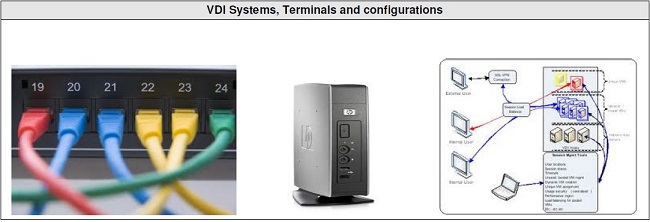
Likewise, the Go Lean book identified the emergence of cloud computing. The roadmap detailed a strategy of forging a Cyber Caribbean with many outsourcing/in-sourcing deployments, plus the assembly of the Caribbean Postal Union (CPU) to consolidate and integrate the region’s postal operations into a 21st Century model, including all the tenets of ICT: email, social media (www.myCaribbean.com), e-Government, etc.. The roadmap there-in describes the role of Virtual Desktop Infrastructure (VDI) as an alternative to expensive Personal Computer installations for corporate and institutional (government and NGO) applications. See a specific reference from the book here:

CU Blog - PC industry swoons - Photo 5
Virtual Desktop Infrastructure (VDI) is a desktop-centric service that hosts user desktop environments on remote servers and/or blade PCs, which are accessed over a network using a remote display protocol. A connection brokering service is used to connect users to their assigned desktop sessions. For users, this means they can access their desktop from any location, without being tied to a single client device. Since the resources are centralized, users moving between work locations can still access the same desktop environment with their applications and data. For IT administrators, this means a more centralized, efficient client environment that is easier to maintain and able to respond more quickly to the changing needs of the user and business
… – Go Lean … Caribbean (Page 295).

The Go Lean book details how jobs are to be created in this new world of cyclical technology trends and in the new Caribbean. The book asserts that certain industries are better than others for generating multiple indirect jobs down the line for each direct job on a company’s payroll. Industries relating to STEM (Science, Technology, Engineering and Mathematics) fields have demonstrated high job-multiplier rates of 3.0 to 4.1 factors (Page 260). In total, the book details the creation of 2.2 million new jobs for the Caribbean region, many embracing ICT skill-sets, by adopting certain community ethos, plus the executions of key strategies, tactics, implementations and advocacies. The following is a sample from the book:

Community Ethos – Deferred Gratification Page 21
Community Ethos – Economic Principle – Economic Systems Influence Choices & Incentives Page 21
Community Ethos – Economic Principle – Voluntary Trade Creates Wealth Page 21
Community Ethos – Consequences of Choices Lie in the Future Page 21
Community Ethos – Job Multiplier Page 22
Community Ethos – Lean Operations Page 24
Community Ethos – Ways to Impact the Future Page 26
Community Ethos – Ways to Foster Genius Page 27
Community Ethos – Ways to Help Entrepreneurship Page 28
Community Ethos – Ways to Promote Intellectual Property Page 29
Community Ethos – Ways to Impact Research & Development Page 30
Community Ethos – Ways to Bridge the Digital Divide Page 31
Strategy – Mission – Education Without Further Brain Drain Page 46
Tactical – Fostering a Technocracy Page 64
Tactical – Tactics to Forge an $800 Billion Economy – High Multiplier Industries Page 70
Tactical – Separation of Powers – Commerce Department – Postal Services/CPU Page 78
Implementation – Trends in Implementing Data Centers Page 106
Implementation – Ways to Improve Mail Service – Caribbean Postal Union Page 108
Implementation – Ways to Impact ICT and Social Media Page 111
Planning – Ways to Improve Trade – e-Commerce to Streamline a Bigger Regional Market Page 128
Advocacy – Ways to Grow the Economy Page 151
Advocacy – Ways to Create Jobs Page 152
Advocacy – Ways to Improve Education – e-Learning Options Page 159
Advocacy – Ways to Foster Technology Page 197
Advocacy – Ways to Foster e-Commerce Page 198
Appendix – Growing 2.2 Million Jobs in 5 Years Page 257
Appendix – Job Multipliers Page 259
Appendix – Virtual Desktop Infrastructure Page 295
Appendix – India’s $35 Tablet Page 296

As depicted in the foregoing news articles, the current trending with ICT innovation nullifies location. The innovations need not come from Silicon Valley – a region just south of San Francisco, California, they can easily come from any beach in the Caribbean.

The Caribbean is arguably the best address on the planet – definitely the best beaches – but jobs are missing. We can fill the void the same way other communities are jockeying to fill the void: innovations for ICT. The Go Lean roadmap posits that we can get the needed innovation from our own people, rather that watching our prospective innovators “take their talents to South Beach”, or South Toronto, or South London or South of San Francisco (Silicon Valley).

The Go Lean/CU roadmap is designed to foster job-creating developments in the Caribbean region. This requires a full-vertical strategy: identifying human resources, developing the skill-sets, incentivizing high-tech start-ups and incubating viable companies. These points have been detailed in many previous Go Lean blog-commentaries; consider this sample:

https://goleancaribbean.com/blog/?p=7806 Skipping School to become Tech Giants
https://goleancaribbean.com/blog/?p=6422 Microsoft Pledges $75 million for Kids in Computer Science
https://goleancaribbean.com/blog/?p=6341 The new Tourism Stewardship: e-Commerce
https://goleancaribbean.com/blog/?p=6151 3D Printing: Here Comes Change
https://goleancaribbean.com/blog/?p=5840 Security Concerns: Computer Glitches Disrupt Business As Usual
https://goleancaribbean.com/blog/?p=5435 China Internet Policing – Model for Caribbean
https://goleancaribbean.com/blog/?p=4793 Truth in Commerce – Learning from Yelp
https://goleancaribbean.com/blog/?p=4381 Net Neutrality: It Matters Here …in the Caribbean
https://goleancaribbean.com/blog/?p=3974 Google and Mobile Phones – Here comes Change
https://goleancaribbean.com/blog/?p=3915 Microsoft’s new Hologram systems – Changing the World View
https://goleancaribbean.com/blog/?p=3881 Intelligence Agencies to Up Cyber Security Cooperation
https://goleancaribbean.com/blog/?p=3187 Robots help Amazon tackle Cyber Monday
https://goleancaribbean.com/blog/?p=2126 Computers Reshaping Global Job Market
https://goleancaribbean.com/blog/?p=689 ‘eMerge’ Conference aims to jump-start Tech Hub
https://goleancaribbean.com/blog/?p=308 CARCIP – CariCom Initiative – Urges Greater Innovation

The primary ingredient for a Caribbean ICT strategy need only be Caribbean people, and the community “will” to engage. This is conceivable, believable and achievable. The Go Lean roadmap describes the need to reform and transform this community “will” as community ethos – national spirit – to spur achievement in this ICT industry space.

We can do this – here at home.

The roadmap goes further and provides the turn-by-turn directions to get “us” to the desired location: a better place to live, work and play. 🙂

Download the book Go Lean…Caribbean now!

————

Appendix VIDEO – Why Intel Cloud Technology – https://youtu.be/P5h1KMk-8Qo

Published on Jan 10, 2014 – Customers want to know what is inside their cloud. This animation provides an overview of the Intel Cloud Technology program, which provides users assurances that their cloud service provider is running on the latest Intel Xeon Processor-based servers, which means taking advantage of technologies including Intel Turbo Boost Technology, Intel TXT, Intel AVX, and Intel AES-NI. Intel Cloud Technology helps increase performance, reduce completion time, and enhance security. Learn more at http://intel.ly/1gpFL5PSubscribe now to Intel on YouTube: http://bit.ly/1BZDtpf
About Intel:
Intel, the world leader in silicon innovation, develops technologies, products and initiatives to continually advance how people work and live. Founded in 1968 to build semiconductor memory products, Intel introduced the world’s first microprocessor in 1971. This decade, our mission is to create and extend computing technology to connect and enrich the lives of every person on earth.
Connect with Intel:

Visit Intel WEBSITE: http://intel.ly/1WXmVMe

————

Appendix VIDEO – Microsoft Cloud: Empowering Businesshttps://youtu.be/HZChlynmtgc

Published on Jan 18, 2016 – See how The Microsoft Cloud is helping businesses around the world scale, connect, transform and reinvent.

Share this post:
, , ,
[Top]

Oil Refineries – Strategy for Advanced Economics

Go Lean Commentary

Energy is a basic need. We need it for a functional life in modern society.

Behavioral Scientist & Psychologist Abraham Maslow provided the world with his definitive Hierarchy of Needs[a]; he identified a pyramid, where at the bottom, or base level, are basic survival elements (food, water, shelter, etc.). Rise above that level, the next need relates to security and/or safety. Any consideration of energy (fuel and oil) need to address it as a basic need. Then once our survival has been facilitated, we then need to elevate and focus more on energy security. At this level, energy (fuel and oil) is not so basic or simple; it becomes a subject of Advanced Economics.

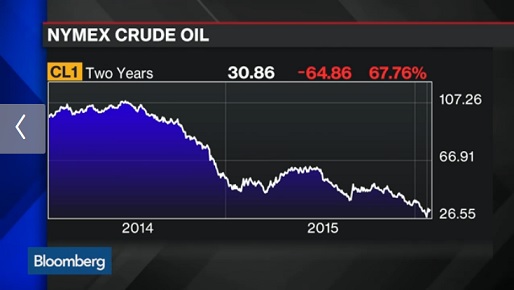
CU Blog - Oil Refineries - Strategic for Advanced Economics - Photo 3Today, gas prices have remained consistently low in the US for the past year and a half. The price per barrel had dipped as low as $30, (on the retail level prices have dropped below $2 per gallon), and now is hovering around $36.

This is good; this is bad. This is due to complexities within the Advanced Economics of crude oil supply-and-demand. Just recently, in 2008, retail gas prices where near $5 per gallon, while the wholesale price per barrel were straddling $130. This cyclical industry is amazingly complicated, and yet it so directly affects the everyday man, everyday. These “peaks and valleys” – “feasts and famine” – call for a more normalized system for oil producing/exporting countries. These cyclical extremes create crises and heighten the need for a more diversified economic system. See Appendix A regarding Saudi Arabia’s efforts to diversify. Now is the time too, for the Caribbean to plan for similar solutions.

The book Go Lean … Caribbean quotes noted Economist Paul Romer in his declaration that “a crisis is a terrible thing to waste”. We need to use the exigency of the current crisis to forge change in the Caribbean region. We can optimize the economic, security and governing engines of our Caribbean communities. There are a number of strategies for accomplishing this goal; one notable one is to apply lessons learned from other communities. We have such a role model in Saudi Arabia; they are known for their abundant oil wealth and yet the economic metrics are trending in the wrong direction:

Saudi Arabia’s reserves dropped to $611.9 billion at the end of 2015, the lowest level since 2011, down from $732 billion a year before, the Saudi Jadwa Investment said in an economic report.
Source: http://news.yahoo.com/saudi-fiscal-reserves-slide-4-low-weak-oil-104815796.html retrieved 02-02-2016.

Another strategy is maximizing the metrics of “supply-and-demand”. At its very heart, Economics is all about supply-and-demand. The more advanced the exercise in Economics, the more complex the dimensions of the supply-side and the demand-side of a commodity; in this case “oil”. There is BIG money in oil and assuredly too, BIG complications in the economic formulas. Yet still, there is more that the Caribbean community can do to optimize our demand and supply factors.

Previously, this commentary delved on the demand-side of the oil-for-energy eco-system; consider these blogs:

https://goleancaribbean.com/blog/?p=7056 Electric Cars: ‘Necessity is the Mother of Invention’
https://goleancaribbean.com/blog/?p=4587 Burlington, Vermont: First city to be powered 100% by renewables
https://goleancaribbean.com/blog/?p=915 Go Green Caribbean – Renewable energy pursuits in the region

Now we focus on the supply side. We can start first with bridging the gap between wholesale and retail prices. How? Oil refineries. There are a number of refineries in the region already. But obviously, not enough. See the list here:

Member-State

Plant

Legacy

Population Capacity – Barrels/day
Aruba

Aruba Refinery (Valero)

Dutch

106,000

275,000

Cuba

Nico López Refinery (Cupet or Cubapetroleo)

Spanish

11,236,444

122,000

Hermanos Díaz Refinery (Cupet)

102,500

Cienfuegos Refinery (Cupet)

76,000

Dominican Republic

Haina Refinery (REFIDOMSA)

Spanish

9,523,209

33,000

Jamaica

Kingston Refinery (PetroJam)

British

2,825,928

50,000

Martinique

Fort de France (SARA)

French

402,000

16,000

Netherlands Antilles

Dutch

231,834

Curaçao

Isla Refinery (PDVSA or Petróleos de Venezuela, S.A.)

320,000

Puerto Rico

Caribbean Petroleum Corporation oil refinery*

USA

3,994,259

0

Trinidad & Tobago

Pointe-à-Pierre Refinery (Petrotrin)

British

1,305,000

165,000

US Virgin Islands

St Croix Refinery (HOVENSA)

USA

108,848

494,000

TOTAL

42,198,874

979,000

* Shuttered in 2009 after a major fire-explosion; had a capacity of 48,000 barrels/day.
Source: Retrieved February 1, 2016 from https://en.wikipedia.org/wiki/List of oil refineries

The book Go Lean… Caribbean, a roadmap for the introduction and implementation of the Caribbean Union Trade Federation (CU), calls for confederating, collaborating and convening the 30 member-states of the region into a Single Market; and to one intergovernmental organization. The CU seeks to facilitate better strategies for Advanced Economics in the Caribbean region. This is part-and-parcel of the prime directives (3) of the CU/Go Lean roadmap:

  • Optimization of the economic engines – accepting that energy is as basic a need as food, clothing and shelter – in order to grow the regional economy to $800 Billion & create 2.2 million new jobs.
  • Establishment of a security apparatus, including energy security, to protect the resultant economic engines.
  • Improve Caribbean governance to support these engines.

By coordinating all the oil refineries in the region – a million barrels a day with the Puerto Rico option – in one concerted effort, there will be benefits for the wholesale and retail markets in the Caribbean. Why? Due to the realities of Advanced Economics.

In many Caribbean locales, gas is still priced near $5.00 per gallon, due to challenges in the supply-chain.

The initiatives addressed here will remediate challenges to the Caribbean energy supply. Then considering all the risk in the global markets, a closer, more technocratic delivery can also mitigate many risks. Consider a scenario of a retail price of $2 per gallon – highly probable as a result of this roadmap – and a wholesale crude price of $30 per barrel (1 barrel = 55 gallons), there is a definitive margin to still cover the cost of production (refinery) and distribution; ($110/barrel versus $30/barrel ). The more mature the eco-system for crude-to-gasoline production, the better the savings on the supply side. So when there are more local refinery capabilities, this leads to better cost dynamics (and profit) for fuel at the retail level.

The goal of the CU is to optimize Caribbean society in the dimensions of confederation, collaboration and consolidation. Consider these queries:

  • Can we deploy more oil refineries?
  • Can we provide more industrial financing for refinery expansion and upgrades?
  • Can we guarantee refineries the needed customers for their end-products?
  • Can we coordinate downtime among the array of refineries to allow for required maintenance windows?
  • Can we deploy pipelines to move crude or finished products from source location to destination?

The answers to all of these questions are “Yes, in the affirmative”. This is the power of the “collective” … for energy solutions. The Go Lean/CU roadmap calls for this type of cooperative effort, with the details of Purchasing Cooperatives and Utility Cooperatives, operating across national borders, within the region. The vision of a Single Market is a paradigm shift that forges benefits for all in the region: producers, wholesalers, retailers and consumers.

Pipelines will undoubtedly lower the cost of shipping fuel (crude or finished) among the island and coastal states.

Then too, consider the positive effects of developing a regional currency and capital market, as prescribed in the Go Lean roadmap. Trading in commodities, like crude oil, will be very viable for regional stakeholders. Local oil producers like Trinidad and Venezuela will be able to enter into commodities contracts to sell their crude oil, days, weeks, months and even years in advance. This too is the power of the “collective”, or Purchasing Cooperative, or Group Purchasing Organizations.

CU Blog - Oil Refineries - Strategic for Advanced Economics - Photo 4But there is a need for caution. The Go Lean/CU is not advocating “doubling down” on an oil-based economy. Rather, the strategy is just the opposite, to pursue the merits of diversification: energy diversity and economic diversity. There is too much pain associated with a mono-industrial economy. This is true for oil and true for tourism. There is always a need to “put the eggs in more than one basket”. But “it is what it is”. Oil is part of the energy solution today and this needs to be optimized. Oil dominated our past, and dominates our present, but hopefully there will be the need for less and less oil in the future. There is an urgency, in general, to wean-off from fossil fuels like oil to arrest Climate Change. The failure to do this has had dire consequences for our region – on the front-lines of global-warming-induced destructive hurricanes and rising sea levels.

The changes to lower the demand for oil needs to be planned and gradual. Sudden changes in the supply-chain creates economic shocks and devastating consequences to the economy. Just consider the impact on West Texas and North Dakota as depicted in this news VIDEO story here:

VIDEO:  The downsides of cheap oil – http://www.cbsnews.com/videos/is-cheap-gas-driving-the-oil-industry-broke

Posted January 31, 2015 – For people in the petroleum business, it’s a slippery slope: The plunge in oil prices that’s a boon for most of us [consumers] is a calamity for others. And it’s not just producers overseas taking the hit. Our Cover Story is reported here by Martha Teichner. (VIDEO plays best in Internet Explorer).

All of these empowerments on the macro-economy will surely make impact on the micro-economy: energy prices will decline and more jobs will emerge!

The Go Lean/CU roadmap proposes many solutions for the region to optimize energy generation, distribution and consumption. The book posits that the average costs of energy can be decreased from an average of US$0.35/kWh to US$0.088/kWh in the course of the 5-year term of this roadmap. This success will be a by-product of diversifying the energy eco-system with many alternative resources, like natural gas, solar, wind and tidal.

The Go Lean roadmap identifies 4,000 new jobs tied to cooperatives, 2,000 new jobs tied to Capital Markets and 2,000 new jobs tied to the Pipeline industry. In truth, these empowerments will impact every aspect of Caribbean life. The Caribbean homeland will then be better to compete globally and present more favorable options for our youth to stay home in the region. We fail miserably at this quest now!

The Go Lean book details a series of community ethos, strategies, tactics, implementations and advocacies to foster progress in the fields of energy generation, distribution, and consumption. The following list applies:

Community Ethos – Lean Operations – Group Purchasing Organizations (GPO) Page 24
Community Ethos – Return on Investments Page 24
Community Ethos – Cooperatives Page 25
Community Ethos – Regional Taxi Commissions – Ideal for Alternative Energy & GPO’s Page 25
Community Ethos – Non-Government Organizations Page 25
Community Ethos – Ways to Impact the Future Page 26
Community Ethos – Ways to Improve Negotiations Page 32
Anecdote – Pipeline Transport – Strategies, Tactics & Implementations Page 43
Strategy – Vision – Confederate to form a Single Market Page 45
Strategy – Mission –  Harness the power of the sun/winds Page 46
Tactical – Fostering a Technocracy Page 82
Tactical – Separation of Powers – Energy Commission Page 82
Anecdote – “Lean” in Government – Energy Permits Page 93
Anecdote – Caribbean Energy Grid Implementation Page 100
Implementation – Ways to Develop Pipeline   Industry Page 107
Implementation – Ways to Improve Energy Usage Page 113
Advocacy – Ways to Impact Public Works Page 175
Advocacy – Ways to Foster Cooperatives Page 176
Advocacy – Reforms for Banking – Create more working capital Page 199
Advocacy – Ways to Impact Wall   Street Page 200
Advocacy – Ways to Impact Monopolies – Utilities and State-owned Oil Companies Page 202
Advocacy – Ways to Improve Transportation Page 205
Advocacy – Ways to Develop the Auto Industry Page 206
Appendix – Sources of New Jobs Page 257

This commentary asserts that energy needs are undeniable. Options abound when the total Caribbean market is leveraged. This is the underlying strategy of the Caribbean Single Market. This point was pronounced from the outset of the Go Lean book in the opening Declaration of Interdependence (Page 11), with these statements as follows:

viii. Whereas the population size is too small to foster good negotiations for products and commodities from international vendors, the Federation must allow the unification of the region as one purchasing agent, thereby garnering better terms and discounts.

xxx. Whereas the effects of globalization can be felt in every aspect of Caribbean life, from the acquisition of food and clothing, to the ubiquity of ICT, the region cannot only consume, it is imperative that our lands also produce and add to the international community, even if doing so requires some sacrifice and subsidy.

The Go Lean/CU roadmap describes the execution of this roadmap as heavy-lifting.

So be it! Bring it on!

This “heavy-lifting” is the charter for the lean, agile operations of the CU technocracy.

Many of these heavy-lifting issues have been previously identified and detailed in prior Go Lean blog-commentaries. See here as some peripheral issues of energy supply-and-demand have been addressed:

https://goleancaribbean.com/blog/?p=6867 How to address high consumer prices – Fuel a BIG issue
https://goleancaribbean.com/blog/?p=6016 Hotter than July – The Need for Cooperative Refrigeration
https://goleancaribbean.com/blog/?p=5396 ‘Significant’ oil deposits found offshore Guyana
https://goleancaribbean.com/blog/?p=5155 Tesla unveils super-battery to power homes
https://goleancaribbean.com/blog/?p=4897 US Backs LNG Distribution Base in Jamaica
https://goleancaribbean.com/blog/?p=4587 Burlington, Vermont: First city to be powered 100% by renewables
https://goleancaribbean.com/blog/?p=926 Conservative heavyweights have solar industry in their sights in the US
https://goleancaribbean.com/blog/?p=915 Go Green Caribbean – Renewable energy pursuits in the region
https://goleancaribbean.com/blog/?p=273 10 Things We Want from the US – American Innovation

The message to the people of the Caribbean region is that there are solutions to these heady issues in the world energy markets. The Caribbean past is not to be the Caribbean future. Change is afoot!

Now is the time for all Caribbean stakeholders, to lean-in for the optimizations and empowerments described in the book Go Lean … Caribbean. Yes, we can make the region a better homeland to live, work and play.  🙂

Download the book Go Lean … Caribbean – now!

————-

Appendix A – Saudi Arabia to diversify economy away from oil

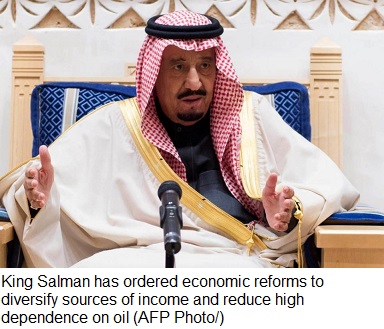
December 23, 2015 – Riyadh (AFP) – Saudi King Salman on Wednesday said he has ordered economic reforms to diversify sources of income and reduce high dependence on oil following a sharp drop in crude prices.

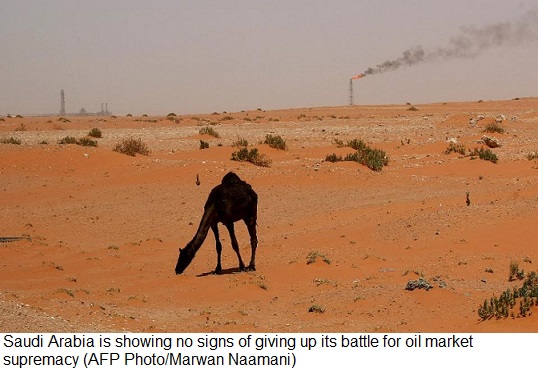
CU Blog - Oil Refineries - Strategic for Advanced Economics - Photo 1“Our vision for economic reform is to increase the efficiency of public spending, utilise economic resources and boost returns from state investment,” he said in an address to the Shura Council.

“I have directed the Council of Economic and Development Affairs to devise the necessary plans, policies and programmes to achieve that,” he told the consultative body, without elaborating.

Oil income accounts for more than 90 percent of public revenues in Saudi Arabia.

The world’s largest oil exporter, Saudi Arabia is facing an unprecedented budget crunch as the price of oil has dropped by more than 60 percent since mid-2014.

At midday Wednesday, benchmark Brent North Sea crude for delivery in February stood at $36.50 a barrel, hovering just above an 11-year low.

The king said Saudi Arabia carried out a large number of mega infrastructure projects and boosted its fiscal reserves in the past several years when oil prices were high.

The size of the fiscal buffers has enabled the kingdom to overcome the consequences from the sharp decline in oil revenues, said the king, adding that development projects have not been affected by the drop.

Saudi Arabia is projected to post a record budget deficit of around $130 billion for this year, the International Monetary Fund says.

CU Blog - Oil Refineries - Strategic for Advanced Economics - Photo 2The IMF has advised Riyadh to implement reforms, including expanding non-oil revenues, warning that failure to do so would deplete its foreign reserves.

The kingdom, which has been pumping around 10.4 million barrels a day, has withdrawn funds from its foreign reserves and also issued bonds to finance the budget deficit.

At the end of October, its reserves fell to $644 billion from $732 billion at the end of last year.

The finance ministry has issued bonds worth $20 billion for the domestic market.

In 2014, Saudi Arabia posted a budget deficit of $17.5 billion, only its second since 2002.

Source: http://news.yahoo.com/saudi-diversify-economy-away-oil-king-salman-151858656.html retrieved February 2, 2016.

————-

Appendix B – Citatation

a. Maslow, Abraham H. (1943). A Theory of Human Motivation. Psychological Review, 50(4), 370–96. Retrieved February 2, 2016.

Share this post:
, , , , ,
[Top]

ENCORE: Levi’s® Stadium – SuperBowl Host – ‘Coming Out’ to the World

This ENCORE is re-distributed on the occasion of SuperBowl 50. The match-up is now set: Carolina Panthers -vs- Denver Broncos on Sunday, February 7, 2016 at the new Levi Stadium in Santa Clara, California. (The original commentary was published on December 16, 2014).

Go Lean Commentary

Sports business is big business. But still, even small communities can play in this game.

This is the experience of small Santa Clara, California, the new landlord of the San Francisco Forty-Niners (49-ers) of the National Football League (NFL). The city itself is home to only 116,468 residents, located 45 miles southeast of San Francisco, and yet they are able to leverage the sports entertainment needs for a metropolitan area of 7.44 million people in the San Francisco Bay statistical area[1].

s Stadium - A Team Effort - Photo 2

Where does such a small community get the clout to build a $1.2 Billion stadium? Wall Street. Or better stated one of the biggest, most influential power-brokers on Wall Street: Goldman Sachs Investment Bank. See their promotion VIDEO here of the stadium project.

VIDEO – Levi’s® Stadium: A Team Effort – https://youtu.be/n7KcF5DEbvs

When the San Francisco 49ers wanted to build a new stadium in Santa Clara, California, Goldman Sachs helped structure an innovative financing plan to make it happen. Levi’s® Stadium, one of the country’s most technologically advanced stadiums, opened in August 2014 and is helping to bring further economic development to the local economy in Santa Clara.

Goldman Sachs, in many quarters, has been portrayed as an “evil empire”. They are reflective of the Big Banks and Wall Street plutocracy. They have even been credited for being one of the “bad actors” causing the 2008 Great Recession financial crisis. And yet, they persist! Good, bad or ugly, Goldman Sachs provides a necessary function in modern society; in the case of the foregoing VIDEO, they facilitate municipal financing. They can contribute to the Greater Good.

This commentary promotes the book Go Lean…Caribbean. This publication serves as a roadmap for the introduction and implementation of the technocratic Caribbean Union Trade Federation (CU). While the CU is NOT a sports promotion entity, it does promote the important role of sports in the vision to make the Caribbean a better place to live, work and play. As an expression of this vision, “a mission of the CU is to forge industries and economic drivers around the individual and group activities of sports and culture” (Page 81).

“Build it and they will come” – The Go Lean roadmap encourages solid business plans to develop permanent sports stadia and arenas at CU-owned fairgrounds. This aligns with the Levi’s Stadium in the foregoing VIDEO, where they are now due to host many other events, in addition to being the landlord of the NFL team. This was not automatic; this was a journey (a roadmap), one that started with a solid business plan and community buy-in. This “community ethos” from Santa Clara teaches us so much.

In 2011, Santa Clara voters approved a plan to build the 68,500 seat stadium for the nearby San Francisco 49ers. The groundbreaking for the stadium occurred on April 19, 2012.[2] The official ribbon cutting took place on Thursday July 17, 2014. The first professional sporting event hosted at the stadium was a Major League Soccer (MLS) match between the San Jose Earthquakes and the Seattle Sounders on August 2, 2014. The first professional football event hosted at the stadium was a pre-season game between the 49ers and the Denver Broncos, played on August 17, 2014.

s Stadium - A Team Effort - Photo 1

Now the stage is set. The following is a sample of other events (source: http://en.wikipedia.org/wiki/Levi_Stadium) that are scheduled to start the return on Santa Clara’s community investment:

Super Bowl 50
On October 16, 2012, it was announced that Levi’s Stadium was one of two finalists to host Super Bowl 50 on February 7, 2016 (the other stadium finalist being Sun Life Stadium in Miami Gardens, Florida). On May 21, 2013, it was announced that the San Francisco Bay Area had defeated South Florida in a vote of NFL owners in its bid to host Super Bowl L (50).

College Football Post Season Bowl Game
The stadium will host its first Foster Farms Bowl Game on December 30, 2014 featuring the nearby Stanford University Cardinals and the Maryland Terrapins from the Big Ten Conference.

WrestleMania XXXI
Levi’s Stadium will host WWE’s WrestleMania XXXI on March 29, 2015. This will mark the first time WrestleMania is hosted in Northern California. The area will also host activities throughout the region for the week-long celebration leading up to WrestleMania itself.

Hockey
Levi’s Stadium will host the 2015 NHL Stadium Series’ February 21 game between the Los Angeles Kings and San Jose Sharks.

Soccer
On July 31, 2014, the San Jose Earthquakes agreed to play one match per year for five years at Levi’s Stadium. On September 6, 2014, an international friendly between Mexico and Chile was held.

Concerts

  • On October 23, 2014, it was announced that international pop group “One Direction” would bring their 2015 “On The Road Again” tour to Levi’s Stadium on July 11, 2015.
  • On October 30, 2014 Kenny Chesney announced that he would bring his “The Big Revival Tour” to Levi’s Stadium on May 2, 2015 with Jason Aldean co-headlining with Chesney. Jake Owen and Cole Swindell will open for the duo. It’s the first concert announced at the new home of the 49ers.
  • Taylor Swift set to perform on her fourth upcoming tour, “The 1989 World Tour” in the Levi’s Stadium on 14 & 15 August 2015.

Not every market, especially in the Caribbean, can support these types of high profile events/bookings. So the Go Lean roadmap invites an alternative landlord approach for the occasional or one-time events, that of temporary stadiums; this point was detailed in a previous blog submission.

Whether permanent stadiums or temporary stadiums, the point is echoed that sports entertainment is big business and the Caribbean region must not miss out on the community-building opportunities. This is heavy-lifting; the communities need the technocratic support of a business-mined landlord and creative financing options. This is the role the CU will execute.

The Go Lean vision is a confederation of the 30 member-states of the Caribbean forming the CU as a proxy organization to do the heavy-lighting of building, funding and maintaining sports venues. The strategy is for the CU to be the landlord, and super-regional regulatory agency, for sports leagues, federations and associations (amateur, collegiate, and professional). The foregoing VIDEO depicts how this strategy relates to a community.

The prime directives of the CU/Go Lean roadmap are described with these 3 statements:

  • Optimization of the economic engines in order to grow the regional economy to $800 Billion & create 2.2 million new jobs.
  • Establishment of a security apparatus to protect the resultant economic engines.
  • Improve Caribbean governance to support these engines.

This roadmap commences with the recognition that genius qualifiers can be found in many fields of endeavor, including sports. The roadmap pronounces the need for the region to confederate in order to invest in the facilitations for the Caribbean sports genius to soar. These pronouncements are made in the opening Declaration of Interdependence, (Pages 13 & 14) as follows:

xxi. Whereas the preparation of our labor force can foster opportunities and dictate economic progress for current and future generations, the Federation must ensure that educational and job training opportunities are fully optimized for all residents of all member-states, with no partiality towards any gender or ethnic group. The Federation must recognize and facilitate excellence in many different fields of endeavor, including … sports. This responsibility should be executed without incurring the risks of further human flight, as has been the past history.

xxii. Whereas sports have been a source of great pride for the Caribbean region, the economic returns from these ventures have not been evenly distributed as in other societies. The Federation must therefore facilitate the eco-systems and vertical industries of sports as a business, recreation, national pastime and even sports tourism…

The Go Lean book and accompanying blogs declare that the Caribbean needs to learn lessons from communities like Santa Clara and other sporting venues/administrations. So thusly this subject of the “business of sports” is a familiar topic for Go Lean blogs. The previous blogs were detailed:

https://goleancaribbean.com/blog/?p=3244 Sports Role Model – espnW.
https://goleancaribbean.com/blog/?p=2222 Sports Role Model – Playing For Pride … And More
https://goleancaribbean.com/blog/?p=2171 Sports Role Model – Turn On the SEC Network
https://goleancaribbean.com/blog/?p=2152 Sports Role Model – US versus the World
https://goleancaribbean.com/blog/?p=1715 Lebronomy – Economic Impact of the Return of the NBA Great
https://goleancaribbean.com/blog/?p=1446 Caribbean Players in the 2014 World Cup
https://goleancaribbean.com/blog/?p=1341 College World Series Time – Lessons from Omaha
https://goleancaribbean.com/blog/?p=1148 Sports Bubble – Franchise values in basketball
https://goleancaribbean.com/blog/?p=1020 Sports Revolutionary: Advocate Jeffrey Webb
https://goleancaribbean.com/blog/?p=498 Book Review: ‘The Sports Gene’
https://goleancaribbean.com/blog/?p=334 Bahamians Make Presence Felt In Libyan League
https://goleancaribbean.com/blog/?p=318 Collegiate Sports in the Caribbean
https://goleancaribbean.com/blog/?p=60 Could the Caribbean Host the Olympic Games?

This Go Lean roadmap is committed to availing the economic opportunities of all the Caribbean athletic abilities and the world’s thirst for this entertainment. The book details these series of community ethos, strategies, tactics, implementations and advocacies designed to deliver regional solutions:

Community Ethos – People Respond to Incentives in Predictable Ways Page 21
Community Ethos – Consequences of Choices Lie in the Future Page 21
Community Ethos – Lean Operations Page 24
Community Ethos – Return on Investments Page 25
Community Ethos – Ways to Foster Genius Page 27
Community Ethos – Ways to Impact the Greater Good Page 37
Strategic – Staffing – Sporting Events at Fairgrounds Page 55
Tactical – Fostering a Technocracy Page 64
Tactical – Separation of Powers – Sports & Culture Administration Page 81
Tactical – Separation of Powers – Fairgrounds Administration Page 83
Implementation – Steps to Implement Self-Governing Entities Page 105
Implementation – Ways to Deliver Page 109
Planning – Ways to Make the Caribbean Better Page 131
Advocacy – Ways to Grow the Economy Page 151
Advocacy – Ways to Improve Local Government – Parks & Recreation Page 169
Advocacy – Ways to Impact Public Works Page 175
Advocacy – Ways to Impact Events Page 191
Advocacy – Ways to Promote Fairgrounds Page 192
Advocacy – Ways to Improve Sports Page 229
Advocacy – Ways to Impact Urban Living – Sports Leagues Page 234

What is the end result for the Go Lean roadmap’s venture into the business of sports? For one … “jobs”; the Go Lean roadmap anticipates 21,000 direct jobs at fairgrounds and sports enterprises throughout the region. In addition there are leisure activities, event marketing, community pride, promotion of Caribbean athletes and cultural activities.

Overall, with these executions, the Caribbean region can be a better place to live, work and play. There is a lot of economic activity in the “play” element. Everyone, the athletes, promoters and spectators, are hereby urged to lean-in to this Go Lean roadmap.

Download the book Go Lean … Caribbean – now!

———-

Appendix – Source References:

s Stadium - A Team Effort - Photo 31. Home to approximately 7.44 million people, the nine-county Bay Area – Alameda, Contra Costa, Marin, Napa, San Francisco, San Mateo, Santa Clara, Solano, and Sonoma – contains many cities, towns, airports, and associated regional, state, and national parks, connected by a network of roads, highways, railroads, bridges, tunnels and commuter rail. Retrieved 12-16-2014 from: http://en.wikipedia.org/wiki/Portal:San_Francisco_Bay_Area

2. Video: 49ers’ groundbreaking ceremony for Santa Clara stadium – San Jose Mercury News. Mercurynews.com. Retrieved on 2013-07-29.

Share this post:
, , ,
[Top]

ENCORE: State of the Caribbean Union

Miami, Florida – The below constitutes a re-distribution of the blog-commentary on the US President’s formal address to his Congress, the State of the Union for 2015. The occasion now is the State of the Union address for 2016. This time is monumental in that it is the final address for the current President, Barack Obama; due to term restrictions in the US Constitution, he can no longer serve as President after this year. The election for his successor is slated for November 2016.

============================================================

Go Lean Commentary

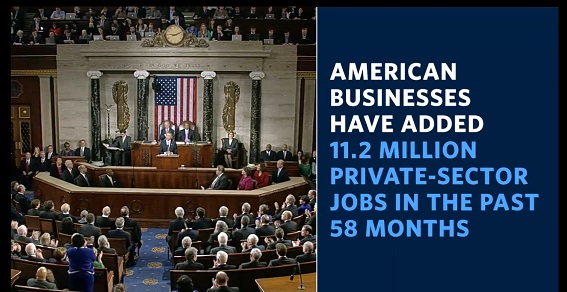
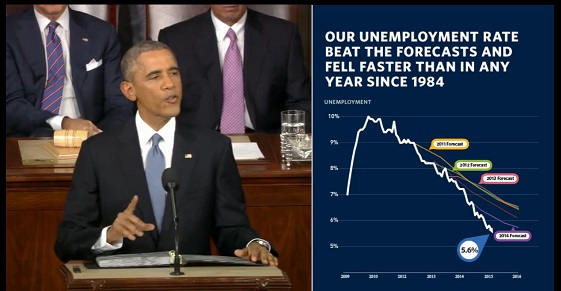
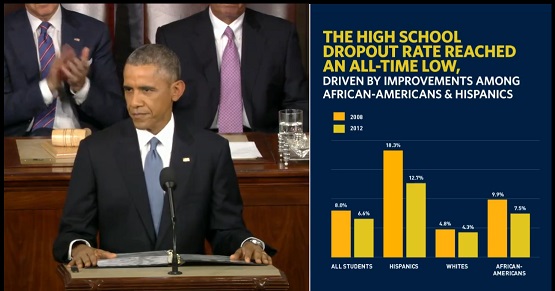
You are invited to watch the State of the Union address that President Barack Obama delivered to the US Congress on Tuesday night (January 20, 2015). You are urged to listen carefully and count the number of times the Caribbean is referred to. The answer:

Once!

The reference to the restoration of diplomatic relations with Cuba.

That’s it!

(The Guantanamo Bay Naval Base is a perpetual leased US territory; so it will not count as Caribbean-specific).

No reference to the US Territories (Puerto Rico and the Virgin Islands); no reference to the Dutch Caribbean; nor to the French Caribbean; and especially not to the English-speaking Caribbean member-states.

The truth of the matter is that the Caribbean is out-of-scope for Obama. It was the State of the Union of the United States of America. Not the State of the Caribbean Union. Even the US territories have to be concerned. They have a voice in the US Congress, but no vote. (A lesson in American Civics teaches that territories have Congressional representation that can vote in committees, but not vote in full Congress).

So all the President’s focus on job creation, energy independence, growing the economy, controlling healthcare costs, securing the homeland, and optimizing government was directed to his American constituency and not to the Caribbean member-states.

VIDEO Title: The State of the Union (SOTU) 2015 – http://youtu.be/cse5cCGuHmE
Watch President Obama’s 1-hour remarks during his 6th SOTU address and learn more below.

Published on Jan 20, 2015
President Barack Obama delivers his sixth State of the Union address, at the United States Capitol, January 20, 2015.

CU Blog - State of the Caribbean Union - Photo 1

CU Blog - State of the Caribbean Union - Photo 2

CU Blog - State of the Caribbean Union - Photo 3

CU Blog - State of the Caribbean Union - Photo 4

We, the Caribbean, are required to focus on the State of our own Union.

The people, the 320 million Americans, elect a President to pursue their best interest, not the world’s best interest. Though the US tries to be a Good Neighbor, there may be times when the priorities of the US conflict with the priorities of the Caribbean, or the rest of the world. In those scenarios, the President is under charge to pursue the American best option.

The 42 million people of the Caribbean homeland are not in his scope!

The foregoing VIDEO and this commentary is being brought into focus in a consideration of the book Go Lean … Caribbean. The book serves as a roadmap for the introduction and implementation of the technocratic Caribbean Union Trade Federation (CU), for the elevation of Caribbean society. This CU/Go Lean roadmap has these 3 prime directives:

  • Optimization of the economic engines in order to grow the regional economy to $800 Billion and create 2.2 million new jobs.
  • Establishment of a security apparatus to protect the resultant economic engines.
  • Improve Caribbean governance to support these engines.

The Go Lean book (Page 3) makes a simple assertion regarding the State of our Union: the Caribbean is in crisis. The book details that there is something wrong in the homeland, that while it is the greatest address in the world, instead of the world “beating a path” to these doors, the people of the Caribbean have “beat down their doors” to get out.

Why do people leave? The book identifies a numberof reasons, classified as “push-and-pull”. There are economic (jobs and entrepreneurial opportunities), security and governance issues.

One mission of the Go Lean roadmap is to minimize these “push-and-pull” factors that contribute to this alarmingly high abandonment rate of Caribbean citizens – one report reflects a 70% brain drain rate.

Considering “pull” factors, the roadmap posits that the United States of America should not be viewed as the panacea for Caribbean ailments; that when the choice of any challenge is “fight or flight” that Caribbean society must now consider anew, the “fight” options. (No violence is implied, but rather a strenuous effort, heavy-lifting, to compete and win economic battles). One strong reason for cautioning Caribbean emigrants is that America is not so welcoming a society for the “Black and Brown” populations from the Caribbean. This was not addressed by Obama; he has to address the needs of all Americans – not just “Black and Brown” – racial discrimination have not been as high a priority among his initiatives, to the chagrin of many in the African-American communities, including the Caribbean Diaspora.

On the other hand, the Go Lean book does not ignore the “push” factors that cause many Caribbean people to flee. The book stresses (early at Pages 12 – 13) the need to be on-guard for “push” factors in these pronouncements in the Declaration of Interdependence:

xii. Whereas the legacy in recent times in individual states may be that of ineffectual governance with no redress to higher authority, the accedence of this Federation will ensure accountability and escalation of the human and civil rights of the people for good governance, justice assurances, due process and the rule of law. As such, any threats of a “failed state” status for any member state must enact emergency measures on behalf of the Federation to protect the human, civil and property rights of the citizens, residents, allies, trading partners, and visitors of the affected member state and the Federation as a whole.

xix. Whereas our legacy in recent times is one of societal abandonment, it is imperative that incentives and encouragement be put in place to first dissuade the human flight, and then entice and welcome the return of our Diaspora back to our shores. This repatriation should be effected with the appropriate guards so as not to imperil the lives and securities of the repatriated citizens or the communities they inhabit. The right of repatriation is to be extended to any natural born citizens despite any previous naturalization to foreign sovereignties.

xx. Whereas the results of our decades of migration created a vibrant Diaspora in foreign lands, the Federation must organize interactions with this population into structured markets. Thus allowing foreign consumption of domestic products, services and media, which is a positive trade impact. These economic activities must not be exploited by others’ profiteering but rather harnessed by Federation resources for efficient repatriations.

xxi. Whereas the preparation of our labor force can foster opportunities and dictate economic progress for current and future generations, the Federation must ensure that educational and job training opportunities are fully optimized for all residents of all member-states, with no partiality towards any gender or ethnic group. The Federation must recognize and facilitate excellence in many different fields of endeavor, including sciences, languages, arts, music and sports. This responsibility should be executed without incurring the risks of further human flight, as has been the past history.

xxvi. Whereas the Caribbean region must have new jobs to empower the engines of the economy and create the income sources for prosperity, and encourage the next generation to forge their dreams right at home, the Federation must therefore foster the development of new industries, like that of ship-building, automobile manufacturing, prefabricated housing, frozen foods, pipelines, call centers, and the prison industrial complex. In addition, the Federation must invigorate the enterprises related to existing industries like tourism, fisheries and lotteries – impacting the region with more jobs.

This commentary previously related details of Caribbean emigration and their experiences (Diaspora), the “push-and-pull” factors in the US, and our region’s own job-creation efforts – State of Our Own Union. Here is a sample of earlier blogs:

https://goleancaribbean.com/blog/?p=3780 National Sacrifice: The Missing Ingredient – Caribbean people not willing to die or live in sacrifice to their homeland
https://goleancaribbean.com/blog/?p=3694 Jamaica-Canada employment program pumps millions into local economy
https://goleancaribbean.com/blog/?p=3662 Migrant flow into US from Caribbean spikes
https://goleancaribbean.com/blog/?p=3446 Forecast for higher unemployment in Caribbean in 2015
https://goleancaribbean.com/blog/?p=3050 Obama’s immigration tweaks – Bad for the Caribbean
https://goleancaribbean.com/blog/?p=2547 Miami’s Success versus Caribbean Failure
https://goleancaribbean.com/blog/?p=2251 What’s In A Name? Plight of “Black and Brown” in the US
https://goleancaribbean.com/blog/?p=1896 American “Pull” Factors – Crisis in Black Homeownership
https://goleancaribbean.com/blog/?p=1698 American “Pull” Factors – STEM Jobs Are Filling Slowly
https://goleancaribbean.com/blog/?p=1596 Book Review: ‘Prosper Where You Are Planted’
https://goleancaribbean.com/blog/?p=1433 Caribbean loses more than 70 percent of tertiary educated to Brain-Drain
https://goleancaribbean.com/blog/?p=1296 Remittances to Caribbean Increased By 3 Percent in 2013
https://goleancaribbean.com/blog/?p=1256 Traditional 4-year College Degree are Terrible Investments for the Caribbean Region Due to Brain-Drain

The Go Lean book and accompanying blogs posit that for the Caribbean Diaspora, fleeing from their homelands to reside in the US is akin to “jumping from the frying pan into the fire” in terms of effort to succeed and thrive in a community. The message of the Go Lean movement is that it takes less effort to remediate the Caribbean than to fix a new adopted homeland. While the Go Lean planners may not be able to change American society, we can – no, we must – impact our own society. This is the charge of the Go Lean…Caribbean roadmap, to do the heavy-lifting, to implement the organization dynamics to impact Caribbean society here and now. The following are the community ethos, strategies, tactics and operational advocacies to effectuate this goal:

Community Ethos – People Respond to Incentives Page 21
Community Ethos – Economic Systems Influences Choices & Incentives Page 21
Community Ethos – The Consequences of Choice Lie in the Future Page 21
Community Ethos – Job Multiplier Page 22
Community Ethos – Minority Equalization Page 24
Community Ethos – Lean Operations Page 24
Community Ethos – Ways to Foster Genius Page 27
Community Ethos – Ways to Improve Negotiations Page 32
Community Ethos – Ways to Impact the Greater Good Page 37
Strategy – Vision – Make the Caribbean the Best Address on Planet Page 45
Strategy – Mission – Repatriate Diaspora Page 46
Strategy – Mission – Dissuade Human Flight/“Brain Drain” Page 46
Tactical – Separation of Powers – Union versus Member-States Page 71
Implementation – Assemble CariCom, Dutch, French, Cuba and US Territories Page 95
Implementation – Enact Territorial Compacts for PR & the Virgin Islands Page 96
Implementation – Foreign Policy Initiatives at Start-up Page 102
Implementation – Ways to Deliver Page 109
Implementation – Reasons to Repatriate Page 118
Implementation – Ways to Benefit from Globalization Page 119
Implementation – Ways to Promote Independence Page 120
Planning – 10 Big Ideas for the Caribbean Page 127
Planning – Lessons from the US Constitution Page 145
Advocacy – Ways to Grow the Economy Page 151
Advocacy – Ways to Create Jobs Page 152
Advocacy – Ways to Improve Governance Page 168
Advocacy – Ways to Improve Homeland Security Page 180
Advocacy – Ways to Impact the Diaspora Page 217
Advocacy – Ways to Preserve Caribbean Heritage Page 218
Advocacy – Ways to Re-boot Cuba Page 236
Advocacy – Ways to Impact US Territories Page 244
Appendix – Interstate Compacts Page 278

This Go Lean book accepts that the current State of Our Own Union is not a permanent disposition. We can do better. This roadmap is a 5-year plan to effect change, to make our homeland a better place to live, work and play. From Day One/Step One, positive change emerges. The roadmap therefore serves as turn-by-turn directions for what-how-when-where-why to apply the needed remediation, mitigations and empowerments.

The scope of this roadmap is change for the Caribbean, not change for American society – though there is the need for some lobbying of American authorities for Interstate/Foreign Compacts (Page 278).

That’s lobbying, not begging

As for the Caribbean US territories – the great American Empire – having a voice, but no vote is disadvantageous. A Congressman from Nebraska would not negotiate with a Congressman from Puerto Rico because there is no vote to offer, compromise or “horse-trade”. American territories are therefore just traditional colonies, parasites and subjective to their imperial masters.

The Caribbean strives to be protégés, no parasites! We can be the world’s best address. How glorious the day when we can declare that as the State of the Caribbean Union!

Now is the time for all of the Caribbean, the people and governing institutions, to lean-in to this Go Lean … Caribbean roadmap. 🙂

Download the book Go Lean … Caribbean – now!

Share this post:
, , , , ,
[Top]

A Lesson in ‘Garbage’

Go Lean Commentary

“I’ve recently been placed in charge of garbage … so when you think of garbage, think of me”. – Dialogue from 1988 Movie “Coming to America“; see Appendix VIDEO below.

- Photo 4Garbage has often played a role in movements and revolutions for societal change. For example, Martin Luther King had gone to Memphis, Tennessee in support of African-American Garbage Workers protesting for higher wages and better working conditions when he was gunned down on April 4, 1968. That action transformed America and modern society throughout the world. See the story relating this here: http://www.atu900.org/memphis-sanitation-workers/.

Perhaps the business of ‘garbage’ can transform society … once again. This time in the Caribbean.

“One man’s trash is another man’s treasure”.

The book Go Lean…Caribbean posits that there is a need to re-focus, re-boot, and optimize the engines of commerce, security and governance so as to make the Caribbean a better place to live, work and play for all. The art-and-science of garbage (solid waste) collection affects all 3 areas.

The Go Lean book calls for the optimization of these 3 engines (economic, security and governing) for the Caribbean region:

  • Economics – Jobs, business models, industrial neighborhoods constitute the economic dimensions of this industry. Overall the roadmap calls for the optimization of the economic engines in order to grow the regional economy to $800 Billion GDP and create 2.2 million new jobs. The art-and-science of garbage collection have often involved a substantial labor force. Due to the undesirable nature of the work (outdoor, odor, unclean conditions), these jobs have often paid a premium compared to other manual labor jobs. Now there is the chance to employ more automation.
  • Security – Public Health issues are involved in the disposal of garbage in any community; there is the need for technocratic deliveries of this feature of the Social Contract. Historically the garbage collection industry have attracted organized crime figures; bullies abound. There is therefore the constant need to monitor and mitigate these risks and threats on the community and public safety.
  • Governance – Garbage collection is always in the sphere of government, even though many municipalities may outsource to service providers with contracts of different length and dimensions. Corruption (briberies, kickbacks, etc.) have often been associated with such contracts. There is therefore the need to optimize governmental engines in the execution of this required municipal service.

This commentary therefore recommends the adoption of more automated garbage collection systems in the Caribbean region. This does not refer to a complete robotic, cybernetic or cyborg system, but rather systematic tools to aid productivity for a minimal staff – do more with less. See the recommended “systems” here:

Encyclopedic Reference: Garbage trucks
Garbage truck or dustcart refers to a truck specially designed to collect municipal solid waste and haul the collected waste to a solid waste treatment facility such as a landfill. Other common names for this type of truck include trash truck in the United States, and rubbish truck, bin wagon, dustbin lorry, bin lorry or bin van elsewhere. Technical names include waste collection vehicle and refuse collection vehicle. These trucks are a common sight in most urban areas.

There are 3 primary types of waste collection vehicles:

Secondarily, these types of trucks are also deployed: Pneumatic collection, Grapple trucks, and Roll-offs. [Our focus is on the Side Loaders:]

Side loaders
Side loaders are loaded from the side, either manually, or with the assistance of a joystick-controlled robotic arm with a claw, used to automatically lift and tip wheeled bins into the truck’s hopper. Lift-equipped trucks are referred to as automated side loaders, or ASL’s. Similar to a front-end loader, the waste is compacted by an oscillating packer plate at the front of the loading hopper which forces the waste through an aperture into the main body and is therefore compacted towards the rear of the truck.[6] An Automated Side Loader only needs one operator, where a traditional rear load garbage truck may require two or three people,[7] and has the additional advantage of reducing on the job injuries due to repetitive heavy lifting. Due to these advantages, ASL’s have become more popular than traditional manual collection. Typically an Automated Side Loader uses standardized wheeled carts compatible with the truck’s automated lift.[8]

Source:Wikipedia Online Encyclopedia – Retrieved 10-22-2015 from: https://en.wikipedia.org/wiki/Garbage_truck#Side_loaders

[Automated garbage collection require that residents ([the public)] collaborate by lining up domestic garbage bins at the road side – on the correct day. Collaboration (sharing) is therefore a required community ethos.]

- Photo 1- Photo 2- Photo 3
<<< Sample-Example Photos from Miami-Dade County, Florida >>>>

This is such a big deal that the term “heavy-lifting” would even be appropriate.

This is a matter of community ethos, defined as the fundamental character or spirit of a culture; the underlying sentiment that informs the beliefs, customs, or practices; dominant assumptions of a people. The key community ethos in this case is the new [professional] practice of turn-around strategies. The Go Lean book (Page 33) defines “turn-around” as including recycling and demolitions. Recycling revenues can thus offset garbage collection costs; as metals (and other materials) can be salvaged as “scrap”; even rubber and plastic have prospects for recycling, resulting in minimal garbage/waste to be buried in landfills. (This business model of Automated Side Loading – or ASL – systems specifies a larger staff at solid waste processing/sorting centers).

With the current community ethos, and politics, there is no way that such systems, as depicted in the foregoing source, can be introduced in the Caribbean region. But if given a chance, these deployments can facilitate a big “turn-around” – identified as a new community ethos. This new focus on the “turn-around” community ethos appears on the surface to be a win-win for all involved, but a more careful examination highlights some serious economic, security and governing obstacles/issues; such as:

  1. Jobs will be loss – traditionally only one driver/operator is assigned to a truck.
  2. Residents may not cooperate – the garbage canisters have to be moved out to the street edge.
  3. Unorganized Addresses/routing – Trucks must work in routes; canisters must be labeled by address.

The book Go Lean…Caribbean, serves as a roadmap for the introduction and implementation of the technocratic Caribbean Union Trade Federation (CU) with the charter to facilitate jobs in the region and to optimize security and governing engines. Addressing these above 3 issues, the Go Lean/CU roadmap provides these solutions:

Jobs
Early in the Go Lean book, the responsibility to create jobs was identified as an important function for the CU with this pronouncement in the Declaration of Interdependence (Pages 14):

xxvi.  Whereas the Caribbean region must have new jobs to empower the engines of the economy and create the income sources for prosperity, and encourage the next generation to forge their dreams right at home, the Federation must therefore foster the development of new industries… In addition, the Federation must invigorate the enterprises related to existing industries … – impacting the region with more jobs.

The Go Lean book also details the principle of job multipliers, how certain industries are better than others for generating multiple indirect jobs down the line for each direct job on a company’s payroll. The Go Lean… Caribbean book details the creation of 2.2 million direct/indirect jobs in the region during the 5-year roadmap, including income from entrepreneurial hustles. (This business model from ASL systems specifies a larger staff at solid waste processing/sorting centers).

The subject of job creation – not an easy topic as governmental administrations always pursue this goal – has been directly addressed and further elaborated upon in these previous blog/commentaries:

https://goleancaribbean.com/blog/?p=6680 Vegas Casinos Create New Jobs By Betting on Video Games
https://goleancaribbean.com/blog/?p=6089 Where the Jobs Are – Futility of Minimum Wage
https://goleancaribbean.com/blog/?p=4240 Immigration Policy Exacerbates Worker Productivity Crisis
https://goleancaribbean.com/blog/?p=3694 Jamaica-Canada employment program pumps millions into local economy
https://goleancaribbean.com/blog/?p=3050 Obama’s immigration tweaks leave Big Tech wanting more
https://goleancaribbean.com/blog/?p=2857 Where the Jobs Are – Entrepreneurism in Junk
https://goleancaribbean.com/blog/?p=2800 The Geography of Joblessness
https://goleancaribbean.com/blog/?p=2126 Where the Jobs Are – Computers Reshaping Global Job Market
https://goleancaribbean.com/blog/?p=2003 Where the Jobs Are – One Scenario (Ship-breaking)
https://goleancaribbean.com/blog/?p=1698 Where the Jobs Are – STEM Jobs Are Filling Slowly
https://goleancaribbean.com/blog/?p=1596 Book Review: ‘Prosper Where You Are Planted’

Residential Assimilation
How to sell an idea to the whole population, to get them to assimilate new directives and mandates? This need was addressed even in the theme of this roadmap to elevate Caribbean society, with the word: “lean“. The word is presented as a noun, a verb and an adjective. For this commentary, we consider the definition as a verb. The people and institutions are urged to lean-in (incline in opinion, taste, or desire) and embrace the values, hopes and dreams of this roadmap, this integrated brotherhood of neighbors.

This urging is a methodical process. The CU will expand the Media Industrial Complex (broadcast, internet streaming, print, school/youth indoctrination, etc.) in the region so as to communicate, induce, influence and incentivize good behavior, preferred habits and best-practices. Consider for example, how mobile phones have easily been assimilated in the region. This is not just a product of good marketing and advertising, but the obvious appreciation of better products; better “mousetraps”.

The subject of forging change in the region has been directly addressed and further elaborated upon in these previous blog / commentaries:

https://goleancaribbean.com/blog/?p=5964 Forging Change: ‘Feed the right wolf’
https://goleancaribbean.com/blog/?p=5098 Forging Change: ‘Food’ for Thought
https://goleancaribbean.com/blog/?p=3974 Forging Change: Case Study of Google and Mobile Phones
https://goleancaribbean.com/blog/?p=3915 Forging Change: ‘Changing the way you see the world’
https://goleancaribbean.com/blog/?p=3568 Forging Change: Music Moves People
https://goleancaribbean.com/blog/?p=3512 Forging Change: The Sales Process
https://goleancaribbean.com/blog/?p=2291 Forging Change: The Fun Theory
https://goleancaribbean.com/blog/?p=623 Only at the precipice, do they change

Address Organization
As depicted in the foregoing photos, there is a basic infrastructure that must be in place for the societal change that is being advocated in this commentary, that of employing Automated Side Loading (ASL) garbage trucks/collection. The change is: street names and house numbers.

Despite how simple this might appear, this standard is not normal for all of the Caribbean. While Puerto Rico and the US Virgin Island utilize the US Postal Service (USPS) and their addressing standards (think Zip Codes), this is not the case for the other 28 Caribbean member-states.

The quest of the Go Lean is therefore simple in this regards: to re-boot mail operations for the region by introducing and implementing the Caribbean Postal Union (CPU). This agency will NOT be modeled after the USPS, but rather the CPU will embrace the better models in logistics (Amazon, Alibaba, etc.). Mail delivery and garbage collection all require optimized address organization and route logistics.

The subject of optimizing Caribbean logistics has been directly addressed and further elaborated upon in these previous blog / commentaries:

https://goleancaribbean.com/blog/?p=3187 Robots help Amazon tackle Cyber Monday
https://goleancaribbean.com/blog/?p=2488 Role Model Jack Ma brings Alibaba to America
https://goleancaribbean.com/blog/?p=1416 Amazon’s new FIRE Smartphone

While the book was not written with garbage collection in mind, the principles there in applies to most industries and domestic endeavors. As such, the adoption of these new community ethos, plus the executions of the following strategies, tactics, implementations and advocacies will foster the elevation of Caribbean society in general; and the “turn-around” industries specifically:

Community Ethos – Deferred Gratification Page 21
Economic Principles – People Choose because Resources are Limited Page 21
Economic Principles – All Choices Involve Costs Page 21
Economic Principles – People Respond to Incentives Page 21
Economic Principles – Economic Systems Influence Choices & Incentives Page 21
Economic Principles – Voluntary Trade Creates Wealth Page 21
Community Ethos – Job Multiplier Page 22
Community Ethos – Lean Operations Page 24
Community Ethos – Return on Investments (ROI) Page 24
Community Ethos – Cooperatives Page 25
Community Ethos – Ways to Impact   the Future Page 26
Community Ethos – Ways to Help Entrepreneurship Page 28
Community Ethos – Ways to Impact   Research & Development (R&D) Page 30
Community Ethos – Ways to Impact   Turn-Around: Recycling and Demolition Industries Page 33
Community Ethos – Ways to Improve Sharing Page 35
Community Ethos – Ways to Impact the Greater Good Page 37
Strategy – Mission – Foster Local Economic Engines. Page 45
Tactical – Fostering a Technocracy Page 64
Tactical – Tactics   to Forge an $800 Billion Economy – High Multiplier Industries Page 70
Tactical – Separation of Powers – Depart of Justice – CariPol Investigations Page 77
Tactical – Separation of Powers – Caribbean Postal Union Page 78
Tactical – Separation of Powers – Self-Governing Entities Page 80
Implementation – Ways to Pay for Change – SGE Licenses Page 101
Implementation – Steps to Implement Self-Governing Entities Page 105
Implementation – Ways to Deliver Page 109
Planning – 10 Big Ideas – Self-Governing Entities Page 127
Planning – Ways to Improve Trade Page 128
Planning – Ways to Make the Caribbean Better Page 131
Advocacy – Ways to Grow the Economy Page 151
Advocacy – Ways to Create Jobs Page 152
Advocacy – Ways to Improve Governance – More e-Government and e-Delivery Options Page 168
Advocacy – Ways to Improve Local   Government Page 169
Advocacy – Ways to Better Manage the Social Contract Page 170
Advocacy – Ways to Foster Cooperatives Page 176
Advocacy – Ways to Impact Main Street Page 201
Advocacy – Ways to Impact Urban Living – Ideal for City Grid-routes Page 234
Advocacy – Ways to Impact Rural Living – Ideal for Land-fills Page 235
Appendix – Job Multipliers Page 259

The CU will foster industrial developments in support of local economies. This is part of the art-and-science of “turn-around” industries. These efforts are ideal for the Go Lean roadmap’s plan for Self-Governing Entities, which are bordered grounds set aside from local municipal authorities and governed at the federal level only. While these industrial developments may more preferably feature sites like high-tech R&D campuses, medical parks, and technology bases, they can also include low-tech options like recycling facilities, scrap-metal junkyards and landfills. So the Go Lean roadmap covers high-tech jobs in the STEM (Science, Technology, Engineering and Mathematics) fields and also Blue Collar dirty jobs. There is room for all in the new Caribbean.

Everyone in the Caribbean is hereby urged to lean-in to this roadmap for change, residents and governments alike. The Go Lean/CU promoters will push hard (messaging) for the needed changes, employing both bottoms-up and top-down strategies. This commentary also advocates working to get the community ethos to take hold; all this earnest effort will be a waste unless people are moved to change … permanently. So we must use all effective tools – best-practices – to forge the required change.

This serious role of garbage collection is therefore an example of heavy-lifting for the Go Lean movement.

The quest to change the Caribbean is more complex than just picking up the trash. But our communities’ willingness to adapt to these changes, is indicative of the willingness to adapt to other societal changes. This is how to re-boot the Caribbean. This is the mandate of the Go Lean roadmap: to elevate the region, to make our homelands a better place to live, work and play. 🙂

Download the free e-Book of Go Lean … Caribbean – now!

———-

Appendix VIDEO: Coming To America Garbage  – https://youtu.be/RVVhvr_PXG4

Published on Sep 12, 2014 – Movie: Coming to America; Category: People & Blogs; License: Standard YouTube License. See trailer of the movie here: https://youtu.be/PWMJRzg8Smc

Share this post:
, , , ,
[Top]

Vegas Casinos Place Bets on Video Games

Go Lean Commentary

Numbers don’t lie!

Especially if those numbers are the balance statements of bank accounts. Either one has the money, or they don’t.

Increasingly in the casino/gaming industries, the money is not there.

Why?

Despite the fact that the “house” always wins, the number of gamblers have declined! It is what it is!

  • 87% of Baby-Boomers gamble when visiting Las Vegas
  • 78% of Generation X-ers gamble when visiting Las Vegas
  • 63% of Millenials gamble when visiting Las Vegas

The following news article/VIDEO depicts that change is afoot. There are less and less gamblers participating in “games of chance” at casinos. These establishments can complain or change along with the demographics. This VIDEO portrays an attempt for Las Vegas casinos to change, to adapt to the indisputable societal factors. See VIDEO here:

VIDEO Title: Vegas casinos place bets on video game gambling http://www.cbsnews.com/videos/vegas-casinos-place-bets-on-video-game-gambling/

October 7, 2015 – Casino revenue on the Las Vegas strip dropped nearly 5 percent in August [2015]. That’s the third straight month of declines. This comes as Sin City tries to lure the next generation of gamblers. While slot machines are still one of the world’s best moneymakers, casinos are having a tough time getting young people to sit down at them. Ben Tracy reports on what casinos have planned to appeal to millennials. (VIDEO plays best in Internet Explorer).

Vegas Casino 1

Vegas Casino 2This is a very important issue for Caribbean consideration, as casino gambling has often been associated with Caribbean resorts. Even now there are new casino projects under development. In a previous blog, this commentary posited that “doubling down” the bet on casinos was a flawed strategy for the region’s governments and business institutions.

Alas, there is the potential for a lot of money to still be made in the casino/gaming industries if only the product can evolve to keep pace with the changing demographics of the marketplace.

Enter “technology-based” games.

This article aligns with the book Go Lean…Caribbean, which calls for the elevation of Caribbean economics and an embrace of more technology. This book serves as a roadmap for the introduction and implementation of the technocratic Caribbean Union Trade Federation (CU) to better manage change and emerging technology in the Caribbean region. This is a big deal for the Caribbean, as technology (internet and communications technologies) is being pitched in the Go Lean roadmap as an equalizing element for the Caribbean region in competition with the rest of the world. This hope was identified early in the Go Lean book (Page14) in the following pronouncements in the Declaration of Interdependence:

xxvii. Whereas the region has endured a spectator status during the Industrial Revolution, we cannot stand on the sidelines of this new economy, the Information Revolution. Rather, the Federation must embrace all the tenets of Internet Communications Technology (ICT) to serve as an equalizing element in competition with the rest of the world. The Federation must bridge the digital divide and promote the community ethos that research/development is valuable and must be promoted and incentivized for adoption.

The Go Lean book posits that there is a need to re-boot and optimize the engines of commerce so as to make the Caribbean a better place to live, work and play. The tourism product, the mainstay of Caribbean economy, used to depend on certain amenities (i.e. Golf) that have now come under attack by the social and demographic changes depicted in the foregoing VIDEO. It so appears that the future for Caribbean commerce in the hospitality and gaming industries will not only depend on factors like “sun, sand, surf and smiles”, but now also on “systems”.

This is a changed world and changed marketplace. Likewise, our communities must change to keep pace … and get ahead!

The Go Lean book also addresses the realities of gambling, in that it advocates the adoption of a regional lottery for all 30 member-states of the Caribbean.

The Go Lean/CU roadmap seeks to elevate all of Caribbean society, including the “games people play” to remain competitive and consequential in the future. This is a matter of technology, education, marketing, planning, and econometrics. This is the heavy-lifting of shepherding a progressive region of 42 million people, 10 million Diaspora, 80 million tourists, and 4 language groups across 30 member-states. The CU’s charter is to effectuate progress in this region with these 3 prime directives:

  • Optimization of the economic engines in order to grow the regional economy to $800 Billion and create 2.2 million new jobs.
  • Establishment of a security apparatus to protect the resultant economic engines and marshal against economic crimes.
  • Improve Caribbean governance to support these engines.

The foregoing article-VIDEO helps us to appreciate that there will be sustained economic activity in the gambling-gaming industries; a tourism industry mainstay in the Caribbean. This means future jobs. The quest to create the jobs (and work force) for the near-future is paramount in the Go Lean roadmap. Early in the book, the responsibility to monitor, manage, and plan for new jobs were identified as an important function for the CU with this pronouncement in the same Declaration of Interdependence (Pages 13):

xxvi. Whereas the Caribbean region must have new jobs to empower the engines of the economy and create the income sources for prosperity, and encourage the next generation to forge their dreams right at home, the Federation must therefore foster the development of new industries… In addition, the Federation must invigorate the enterprises related to existing industries like tourism… – impacting the region with more jobs.

The Caribbean must contend with the challenges of demographic change. There are 3 kinds of people in the world:

  • Those who make things happen
  • Those who watch things happen
  • Those who wonder “what happened?”

Whereas, this latter description may have been our disposition in the past, we can no longer afford this status. Our situation is quite dire now, as we have lost vast numbers of our populations to societal abandonment because as a community, we have failed to keep pace of change. Our society is now in desperate need of reform and reboot to insulate from many demographic changes. On the one hand, we must diversify our economy and avail other high job-multiplier industries, away from tourism, but on the other hand, we must double down in the tourism product, as the economic principles of “supply and demand” just cannot be ignored. (During the winter months, our Caribbean destinations are the “best addresses on the planet”).

The Go Lean… Caribbean book details this quandary. It qualifies the community ethos to adopt to diversify our economy and proactively mitigate the dire effects of the changed demographic landscape; plus the executions of the following strategies, tactics, implementations and advocacies:

Community Ethos – Economic Principle – People Respond to Incentives Page 21
Community Ethos – Economic Principle – Consequences of Choices Lie in   the Future Page 21
Community Ethos – Job   Multiplier Page 22
Community Ethos – Lean Operations Page 24
Community Ethos – Return on Investments (ROI) Page 24
Community Ethos – Ways to Impact the Future Page 26
Community Ethos – Ways to Foster Genius – STEM Career Options Page 27
Community Ethos – Ways to Help Entrepreneurship – Incubators Role Page 28
Community Ethos – Ways to Promote Intellectual Property Page 29
Community Ethos – Ways to Impact Research & Development Page 30
Community Ethos – Ways to Bridge the   Digital Divide Page 31
Community Ethos – Ways to Impact the Greater Good Page 37
Strategy – Vision – Best Address on the Planet Page 45
Strategy – Vision – Integrate Region in a Single Market Page 45
Strategy – Mission – Embrace the Advances of Technology & Incentivize Participation Page 46
Tactical – Fostering a Technocracy Page 64
Tactical – Tactics to Forge an $800 Billion Economy Page 67
Tactical – Separation of Powers Page 71
Implementation – Ways to Deliver Page 109
Planning – Ways to Make the Caribbean Better Page 131
Planning – Lessons Learned from 2008 Page 136
Advocacy – Ways to Grow the Economy Page 151
Advocacy – Ways to Create Jobs Page 152
Advocacy – Ways to Enhance Tourism Page 190
Advocacy – Ways to Impact Events Page 191
Advocacy – Ways to Foster Technology Page 197
Advocacy – Ways to Foster e-Commerce Page 198
Advocacy – Ways to Impact the Lottery – Regional Caribbean Option Page 213

This commentary is not advocating betting on casino gambling, (this practice is considered a vice), but rather betting on technology.

The Go Lean/CU roadmap calls for fostering industrial developments to aid tourism, incorporating best practices and quality assurances to deliver the best experience in the world. This must also include creating technology products to make gaming more appealing for the millennial generations. The realities of technology is that these developments can be produced anywhere in the world. So why not here? We have a lot at stake already.

If we successfully incubate a gaming technology industry here at home, we would create jobs right here at home. If, on the other hand, if we incubate gaming technology and the world is not receptive to our creations, we would have still created a workforce with very marketable skills, looking for opportunities to ply their trade. This is win-win! The Caribbean “house” will only win.

This commentary has previously related details of the changing macro-economic factors that affect where and how jobs are created. The following are samples of earlier Go Lean blogs:

https://goleancaribbean.com/blog/?p=6089 Where the Jobs Are – Futility of Minimum Wage
https://goleancaribbean.com/blog/?p=4240 Immigration Policy Exacerbates Worker Productivity Crisis
https://goleancaribbean.com/blog/?p=3694 Jamaica-Canada employment program pumps millions into local economy
https://goleancaribbean.com/blog/?p=3050 Obama’s immigration tweaks leave Big Tech wanting more
https://goleancaribbean.com/blog/?p=2857 Where the Jobs Are – Entrepreneurism in Junk
https://goleancaribbean.com/blog/?p=2800 Where the Jobs Are Not – The Geography of Joblessness
https://goleancaribbean.com/blog/?p=2126 Where the Jobs Are – Computers Reshaping Global Job Market
https://goleancaribbean.com/blog/?p=2003 Where the Jobs Are – One Scenario (Shipbreaking)
https://goleancaribbean.com/blog/?p=1698 Where the Jobs Are – STEM Jobs Are Filling Slowly
https://goleancaribbean.com/blog/?p=1596 Book Review: ‘Prosper Where You Are Planted’

According to the foregoing VIDEO, there is new hope for casino gambling, based on technology. For a community, this is not a gamble; this is a sure bet; by embracing technology, the Caribbean region will surely win. This position is based on some reliable economic principles, the principles of money multipliers and job multipliers:

Casinos can create money “from thin air”, getting cash while giving nothing in return (Page 22). As for job multipliers, this principle explains how certain industries are better than others for generating multiple indirect jobs down the line for each direct job on a company’s payroll. (.i.e. The automotive manufacturing industry was a choice selection with a job-multiplier rate of 11 – Page 260).

So this advocacy to embrace gaming technology is more than a bet; it’s a sure formula for success. This is a “play” that the Caribbean must make and cannot lose. The “house” always wins.

The Caribbean can be the best destination on the planet, a better place to live, work and play. 🙂

Download the free e-book of Go Lean … Caribbean – now!

Share this post:
, , , ,
[Top]

Lessons from Iceland – Model of Recovery

Go Lean Commentary

There are so many lessons the Caribbean region can learn from the island Republic of Iceland.

CU Blog - Lessons from Iceland - Model of Recovery - Photo 1First, it’s an island, Duh!!!

Just like with the Caribbean, logistics of trade is more difficult as it must be based on naval and aeronautical solutions.

They have natural disasters … volcanoes as opposed to hurricanes or earthquakes.

The population is 320,000 … the range of many Caribbean countries; (i.e. Bahamas, Barbados, Belize, Guadeloupe (Fr.), Martinique (Fr.) and Suriname). Yet, it is not grouped with the formal Small Island Developing States (SIDS) as is all the sovereign Caribbean territories. The following defines the common traits:

Small Island Developing States are low-lying coastal [sovereign] countries that tend to share similar sustainable development challenges, including small but growing populations, limited resources, remoteness, susceptibility to natural disasters, vulnerability to external shocks, excessive dependence on international trade, and fragile environments. Their growth and development is also held back by high communication, energy and transportation costs, irregular international transport volumes, disproportionately expensive public administration and infrastructure due to their small size, and little to no opportunity to create economies-of-scale. – Source: https://en.wikipedia.org/wiki/Small_Island_Developing_States

Iceland has done many things well so that everyone in the Caribbean, all SIDS countries for that matter, need to take notice.

During the bad days of the Great Recession – at the precipice of disaster – the country deviated from other troubled regions …

Iceland let its banks fail in 2008 because they proved too big to save.

How does it relate to the Caribbean? The Caribbean is at the precipice … now; many of the member-states are near Failed-State status, while others are still hoping to recover from the devastating Great Recession of 2008. Turn-around should not take this long – 7 years. Strategies, tactics and implementations of best-practices to effect a turn-around must be pursued now.

Iceland has now recovered, and complaining about a 2% unemployment rate. What did they do that was so radically different than other locations? For one, they changed course regarding economics, security and governing policies. An ultra-capitalist movement had taken hold of the country and business communities; they pursued an aggressive “boom-or-bust” strategy, that ultimately “busted”, rather than continue on that road, the country – all aspects of society – altered course and returned to a path of sound fundamentals.

They rebooted and turned-around! Iceland embraced all aspects of turn-around strategies, mandating bankruptcies and “wind-downs” so that the economy – and society in general – could start anew.

This article is in consideration of the book Go Lean…Caribbean; it serves as a roadmap for the introduction and implementation of the technocratic Caribbean Union Trade Federation (CU) and Caribbean Central Bank (CCB) to provide better stewardship, to ensure that the economic/currency failures of the past, in the Caribbean and other regions, do not re-occur here in the homeland.

We can learn so much from this episode in Icelandic history, the good, the bad and the ugly. See the encyclopedic details here:

Reference Title: Iceland’s Economy and Recovery
CU Blog - Lessons from Iceland - Model of Recovery - Photo 2In 2007, Iceland was the seventh most productive country in the world per capita (US$54,858), and the fifth most productive by GDP at purchasing power parity ($40,112). About 85 percent of total primary energy supply in Iceland is derived from domestically produced renewable energy sources.[93] Utilization of abundant hydroelectric and geothermal power has made Iceland the world’s largest electricity producer per capita.[94] … Historically, Iceland’s economy depended heavily on fishing, which still provides 40% of export earnings and employs 7% of the work force.[49] The economy is vulnerable to declining fish stocks and drops in world prices for its main material exports: fish and fish products, aluminum, and ferrosilicon.

Iceland had been hit especially hard by the Great Recession that began in December 2007, because of the failure of its banking system and a subsequent economic crisis. Before the crash of the country’s three largest banks, Glitnir, Landsbanki and Kaupthing, their combined debt exceeded approximately six times the nation’s gross domestic product of €14 billion ($19 billion).[116][117] In October 2008, the Icelandic parliament passed emergency legislation to minimize the impact of the Financial crisis. The Financial Supervisory Authority of Iceland used permission granted by the emergency legislation to take over the domestic operations of the three largest banks.[118] Icelandic officials, including central bank governor Davíð Oddsson, stated that the state did not intend to take over any of the banks’ foreign debts or assets. Instead, new banks were established to take on the domestic operations of the banks, and the old banks will be run into bankruptcy.

On 28 October 2008, the Icelandic government raised interest rates to 18% (as of August 2010, it was 7%), a move which was forced in part by the terms of acquiring a loan from International Monetary Fund (IMF). After the rate hike, trading on the Icelandic króna finally resumed on the open market, with valuation at around 250 ISK per Euro, less than one-third the value of the 1:70 exchange rate during most of 2008, and a significant drop from the 1:150 exchange ratio of the week before.

CU Blog - Lessons from Iceland - Model of Recovery - Photo 3On 20 November 2008, in an effort to stabilize the situation, the Icelandic government stated that all domestic deposits in Icelandic banks would be guaranteed, imposed strict capital controls to stabilize the value of the Icelandic króna, and secured a US$5.1bn sovereign debt package from the IMF and the Nordic countries – Denmark, Finland, Norway, and Sweden agreed to lend $2.5 billion. [119] – in order to finance a budget deficit and the restoration of the banking system. (The international bailout support program led by IMF officially ended on August 31, 2011, while the capital controls which were imposed in November 2008 are still in place only recently ended in the last few weeks).

On 26 January 2009, the coalition government collapsed due to the public dissent over the handling of the financial crisis. A new left-wing government was formed a week later and immediately set about removing Central Bank governor Davíð Oddsson and his aides from the bank through changes in law. Davíð was removed on 26 February 2009 in the wake of protests outside the Central Bank.[120]

The financial crisis had a serious negative impact on the Icelandic economy. The national currency fell sharply in value, foreign currency transactions were virtually suspended for weeks, and the market capitalization of the Icelandic stock exchange fell by more than 90%. As a result of the crisis, Iceland underwent a severe economic depression; the country’s gross domestic product dropped by 10% in real terms between the third quarter of 2007 and the third quarter of 2010.[6] A new era with positive GDP growth started in 2011, and has helped foster a gradually declining trend for the unemployment rate. The government budget deficit has declined from 9.7% of GDP in 2009 and 2010 to 0.2% of GDP in 2014;[7] the central government gross debt-to-GDP ratio is expected to decline to less than 60% in 2018 from a maximum of 85% in 2011.[8]

[A post-mortem analysis helped to put the blame for Iceland’s crisis on a bad community ethos that had encapsulated the whole country related to debt]:

[Disregarding their] small domestic market, Iceland’s banks had financed their expansion with loans on the interbank lending market and, more recently, by deposits from outside Iceland (which are also a form of external debt). Households also took on a large amount of debt, equivalent to 213% of disposable income, which led to inflation.[117] This inflation was exacerbated by the practice of the Central Bank of Iceland issuing liquidity loans to banks on the basis of newly issued, uncovered bonds[118] – effectively, printing money on demand.

[Then the turn-around took hold …]

By mid-2012 Iceland was regarded as one of Europe’s recovery success stories. It has had two years of economic growth. Unemployment was down to 6.3% and Iceland was attracting immigrants to fill jobs. Currency devaluation effectively reduced wages by 50% making exports more competitive and imports more expensive. Ten-year government bonds were issued below 6%, lower than some of the PIIGS nations in the EU (Portugal, Italy, Ireland, Greece, and Spain). Tryggvi Thor Herbertsson, a member of parliament, noted that adjustments via currency devaluations are less painful than government labor policies and negotiations.

By June 2012, Landsbanki managed to repay about half of the Icesave debt.[124]

According to Bloomberg, Iceland was on the trajectory of 2% unemployment as a result of crisis-management decisions made back in 2008, including allowing the banks to fail.[125]. [Here are the highlighted bullets of this story posted January 27, 2014:]

    Iceland let its banks fail in 2008 because they proved too big to save.
    Now, the island is finding crisis-management decisions made half a decade ago have put it on a trajectory that’s turned 2 percent unemployment into a realistic goal.
    While the Euro area grapples with record joblessness, led by more than 25 percent in Greece and Spain …

[Iceland is NOT a member of the EU], nevertheless, while EU fervor has cooled [due to the crisis] the government continues to pursue membership.[246]
Source: Wikipedia Online Encyclopedia – Retrieved 09/23/2015 from: https://en.wikipedia.org/wiki/2008%E2%80%9311_Icelandic_financial_crisis

—–

VIDEO – What Can Greece (and the Caribbean) Learn From Iceland? – http://www.bloomberg.com/news/videos/2015-08-28/what-can-greece-learn-from-iceland-

Published on Aug 28, 2015 – Central Bank of Iceland Governor Mar Gudmundsson talks with Brendan Greeley about Iceland’s capital controls and what Greece can learn from Iceland in handling its credit crisis. He speaks on “Bloomberg Markets.”

The lessons from Iceland really magnify in reflection of the Caribbean considering the community ethos or attitudes regarding “debt”. The book described community ethos as:

“the fundamental character or spirit of a culture; the underlying sentiment that informs the beliefs, customs, or practices of a group or society; dominant assumptions of a people or period; practices of a group or society; dominant assumptions of a people or period” – Go Lean…Caribbean Page 20.

While Iceland featured a negative community ethos in this case, their model demonstrates that the spirit-beliefs-customs-practices of a community can be altered.

Yes, Iceland fixed their heart … first; then the recovery of the community’s economic, security and governing engines took root. It is very important that the Caribbean learn this lesson and apply the corrections to our community ethos, and then to our systems of commerce and governance. The Go Lean book opened with this pronouncement (Page 10), gleaning insight from the US Declaration of Independence:

We hold these truths to be self-evident, that all men are created equal, that they are endowed by their Creator with certain unalienable rights, that among these are life, liberty and the pursuit of happiness; that to secure these rights, governments are instituted among men, deriving their just powers from the consent of the governed. That whenever any form of government becomes destructive to these ends, it is the right of the people to alter or to abolish it, and to institute new government, laying its foundation on such principles and organizing its powers in such form, as to them shall seem most likely to effect their safety and happiness.

The Go Lean roadmap calls for instituting the CU Trade Federation and the Caribbean Central Bank (CCB) to take the lead in forging the needed changes to the region’s economic and financial eco-systems. Firstly, there is the need to foster the best practices in the region regarding debt. The roadmap calls for a cooperative among Central Banks to form the CCB to foster interdependence, sharing, economies-of-scale and collaboration across the region despite the divergent politics, culture and languages. The premise is simple: while we are all different, we are all “in the same boat”. So the underlying principle of this motivation is the regional Greater Good.

The realities of the Great Recession, and Iceland’s troubles in the foregoing reference source, prove the interconnectivity of the financial systems; bank/currency troubles in one country easily become trouble for another country. A larger Single Market (42 million people in 30 member-states) for the Caribbean would provide less elasticity and more shock-absorption here from eruptions in the global financial markets. The Caribbean is never spared; in fact we are directly affected as tourism – our primary economic driver – depends on the disposable income from our trading partners, mostly North American and Western European countries. This is why our region was so devastated with the events, repercussions and consequences of 2008.

Considering the past, the Caribbean has had to learn hard lessons on economic booms … and busts. Any attempt to reboot Caribbean economic landscape must first start with a strenuous oversight of regional currencies. Thusly, the strategy is to integrate to the single currency, the Caribbean Dollar (C$). The tactical approach is to provide technocratic oversight with the CCB pursuing only the Greater Good, and no special group’s special interest.

Also in the opening of the Go Lean book, this need for regional stewardship of Caribbean currencies was pronounced in the Declaration of Interdependence (Page 12 & 13) with these statements:

xi.    Whereas all men are entitled to the benefits of good governance in a free society, “new guards” must be enacted to dissuade the emergence of incompetence, corruption, nepotism and cronyism at the peril of the people’s best interest. The Federation must guarantee the executions of a social contract between government and the governed.

xii.   Whereas the legacy in recent times in individual states may be that of ineffectual governance with no redress to higher authority, the accedence of this Federation will ensure accountability and escalation of the human and civil rights of the people for good governance, justice assurances, due process and the rule of law. As such, any threats of a “failed state” status for any member state must enact emergency measures on behalf of the Federation to protect the human, civil and property rights of the citizens, residents, allies, trading partners, and visitors of the affected member state and the Federation as a whole.

xxiv.    Whereas a free market economy can be induced and spurred for continuous progress, the Federation must install the controls to better manage aspects of the economy: jobs, inflation, savings rate, investments and other economic principles. Thereby attracting direct foreign investment because of the stability and vibrancy of our economy.

xxv.    Whereas the legacy of international democracies had been imperiled due to a global financial crisis, the structure of the Federation must allow for financial stability and assurance of the Federation’s institutions. To mandate the economic vibrancy of the region, monetary and fiscal controls and policies must be incorporated as proactive and reactive measures. These measures must address threats against the financial integrity of the Federation and of the member-states.

The Go Lean book, and previous blog/commentaries, stressed the key community ethos, strategies, tactics, implementations and advocacies necessary to appoint new stewards for the regional financial eco-system. These points are detailed in the book as follows:

Community Assessment – Puerto – The Greece of the Caribbean Page 18
Community Ethos – Economic Principles – All Choices Involve Costs Page 21
Community Ethos – Economic Principles – Economic Systems Influence Individual Choices Page 21
Community Ethos – Economic Principles – Consequences of Choices Lie in the Future Page 21
Community Ethos – Economic Principles – Money Multiplier Page 23
Community Ethos – Governing Principles – Lean Operations Page 24
Community Ethos – Governing Principles – Return on Investments Page 24
Community Ethos – Governing Principles – Cooperatives Page 25
Community Ethos – Ways to Impact the Future – Count on the Greedy to be Greedy Page 26
Community Ethos – Ways to Impact Turn-Arounds – Bankruptcy Processing Page 33
Community Ethos – Ways to Improve Sharing Page 35
Community Ethos – Ways to Impact the Greater Good Page 37
Strategy – Vision – Confederate the region into a Single Market Page 45
Strategy – Mission – Fortify the Stability of the Securities Markets Page 45
Strategy – Provide Proper Oversight and Support for the Depository Institutions Page 46
Strategy – e-Payments and Card-based Transactions Page 49
Tactical – Confederating a Permanent Union Page 63
Tactical – Growing the Economy – Minimizing Bubbles Page 69
Tactical – Separation-of-Powers – Depository Insurance & Regulatory Agency Page 73
Anecdote – Turning Around CARICOM – Effects of 2008 Financial Crisis Page 92
Implementation – Assemble Caribbean Central Bank as a Cooperative Page 96
Implementation – Ways to Better Manage Debt Page 114
Planning – 10 Big Ideas – Single Market / Currency Union Page 127
Planning – Lessons Learned from 2008 Page 136
Planning – Lessons Learned from New York City – Wall Street Page 137
Planning – Ways to Measure Progress Page 147
Anecdote – Caribbean Currencies Page 149
Advocacy – Ways to Grow the Economy Page 151
Advocacy – Ways to Control Inflation Page 153
Advocacy – Ways to Better Manage Foreign Exchange Page 154
Advocacy – Ways to Improve Governance Page 168
Advocacy – Ways to Better Manage the Social Contract Page 170
Advocacy – Ways to Foster Cooperatives Page 176
Advocacy – Ways to Foster Electronic Commerce Page 198
Advocacy – Reforms for Banking Regulations Page 199
Advocacy – Ways to Impact Wall Street Page 200
Advocacy – Ways to Impact Main Street Page 201
Appendix – Tool-kits for Capital Controls Page 315

There is a lot to learn from the analysis of economic stewardship of other communities. The successes and failures of banking/economic stewardship were further elaborated upon in these previous blog-commentaries:

https://goleancaribbean.com/blog/?p=6531 A Lesson in History – Book Review of the ‘Exigency of 2008’
https://goleancaribbean.com/blog/?p=5818 Greece: From Bad to Worse
https://goleancaribbean.com/blog/?p=4166 A Lesson in History – Panamanian Balboa
https://goleancaribbean.com/blog/?p=3858 ECB unveils 1 trillion Euro stimulus program
https://goleancaribbean.com/blog/?p=3814 Lessons from the Swiss unpegging the franc
https://goleancaribbean.com/blog/?p=3582 For Canadian Banks: Caribbean is a ‘Bad Bet’
https://goleancaribbean.com/blog/?p=3397 A Christmas Present for the Banks from the Omnibus Bill
https://goleancaribbean.com/blog/?p=3090 Lessons Learned – Europe Sovereign Debt Crisis of 2009
https://goleancaribbean.com/blog/?p=3028 Why India is doing better than most emerging markets
https://goleancaribbean.com/blog/?p=2930 ‘Too Big To Fail’ – Caribbean Version
https://goleancaribbean.com/blog/?p=2090 The Depth & Breadth of Remediating 2008
https://goleancaribbean.com/blog/?p=1014 Canadian View: All is not well in the sunny Caribbean
https://goleancaribbean.com/blog/?p=833 One currency, divergent economies
https://goleancaribbean.com/blog/?p=518 Analyzing the Data – What Banks learn about financial risks

According to the foregoing article, and VIDEO, the origin of Iceland’s crisis was greed; the banks assuming more risk, to garner more profit, and consumers borrowing more credit so as to … consume more.

Greed – it is what it is.

The Go Lean book declares to “count on greedy people to be greedy” (Page 26). This situation is manifested time and again, all over the world. The Go Lean book provides the roadmap to anticipate greed, monitor and mitigate it. The book declares (Page 23):

… “bad actors” will also emerge thereafter to exploit the opportunities, with good, bad and evil intent. A Bible verse declares: “What has been will be again, what has been done will be done again; there is nothing new under the sun” – Ecclesiastes 1:9 New International Version.

We have so many lessons to learn from the Great Recession, and the disposition of Iceland.

Only at the precipice do they change!

Lesson learned!

The Caribbean is hereby urged to lean-in to this Go Lean confederation roadmap. Everyone – people, businesses, banks and governments – can benefit from the consideration of this roadmap. As this roadmap is the “turn-by-turn directions”, the heavy-lifting, to move the region to its new destination: a better homeland to live, work and play.  🙂

Download the book Go Lean … Caribbean – now!

Share this post:
, , , , , , ,
[Top]

Microsoft Pledges $75 million for Kids in Computer Science

Go Lean Commentary

CU Blog - Microsoft pledges $75 million for kids in computer science - Photo 2Microsoft pledges support to young children learning the science of computers … $75 million worth.

… on behalf of a grateful region, we accept.

While $75 million is not a lot for a global program, consider the source of the benefactor – Microsoft – and it is the spirit that counts. We will take it Microsoft; we want your time, talents and treasuries.

These three resources, are what the book Go Lean…Caribbean asks for from the philanthropic community in terms of gifts to the Caribbean. This is so important, that the book prepares a comprehensive plan for organizing the interactions with charitable foundations and gift-giving organizations. We need and want all the help we can garner!

The Go Lean book serves as a roadmap for the introduction and implementation of the Caribbean Union Trade Federation (CU) to elevate Caribbean society. This movement asserts that to effect change in the region, all Caribbean stakeholders (residents, institutions, students, Diaspora) have to devote a measure of time, talents and treasuries.

The Go Lean book strategizes a roadmap to elevate the economic, security, and governing engines. It clearly relates that these prime directives do not cover every social aspect of Caribbean life. We need the resultant void to be filled by Non-Government Organizations (NGO’s). The following news article/Press Release relates the community empowering and philanthropic efforts from one such entity, computer software giant Microsoft:

Title: Microsoft expands global YouthSpark initiative to focus on computer science
Sub-Title: Microsoft invests $75 million in community programs to increase access to computer science education for all youth and build greater diversity into the tech talent pipeline.

CU Blog - Microsoft pledges $75 million for kids in computer science - Photo 1

SAN FRANCISCO, Sept. 16, 2015 /PRNewswire/ — Microsoft Corp. announced on Wednesday a new commitment of $75 million in community investments over the next three years to increase access to computer science education for all youth, and especially for those from under-represented backgrounds. Through the company’s global YouthSpark initiative, scores of nonprofit organizations around the world will receive cash donations and other resources to provide computer science education to diverse populations of young people in their communities and prepare them with the computational-thinking and problem-solving skills necessary for success in an increasingly digital world.

“If we are going to solve tomorrow’s global challenges, we must come together today to inspire young people everywhere with the promise of technology,” said Microsoft CEO Satya Nadella. “We can’t leave anyone out. We’re proud to make this $75 million investment in computer science education to create new opportunities for students across the spectrum of diverse youth and help build a tech talent pipeline that will spark new innovations for the future.”

Over the next three years, Microsoft will deliver on this commitment through cash grants and nonprofit partnerships as well as unique program and content offerings to increase access to computer science education and build computational thinking skills for diverse populations of youth. One of the flagship programs is Technology Education and Literacy in Schools (TEALS), which pairs tech professionals from across the industry with classroom educators to team-teach computer science in U.S. high schools. TEALS aims to grow fivefold in the next three years, with the goal of working with 2,000 tech industry volunteers to reach 30,000 students in nearly 700 schools across 33 states. A key objective of TEALS is to support classroom educators as they learn the computer science coursework, preparing them to teach computer science independently after two years of team-teaching.

Nadella reinforced the company’s commitment to computer science education today during the annual Dreamforce conference hosted by Salesforce where he called upon thousands of tech professionals to serve as TEALS volunteers and help broaden the opportunity for students of all backgrounds to learn computer science in high school.

“Computer science is a foundational subject — like algebra, chemistry or physics — for learning how the world works, yet it’s offered in less than 25 percent of American high schools,” said Microsoft President Brad Smith. “We need to increase access to computer science and computational thinking for all students, especially those from diverse populations, by partnering across the industry and with teachers and schools to turn this situation around and change the paradigm for developing a more diverse tech talent pipeline.”

There are three additional key elements of Microsoft’s global commitment to increasing access for all youth to the full range of computing skills, from digital literacy to computer science.

  • Global philanthropic investments with nonprofits in 80 countries, including the Center for Digital Inclusion in Latin America, Silatech in the Middle East and Africa, CoderDojo Foundation in Europe, YCAB Foundation in Asia, and many others, will deliver a range of computing skills from digital literacy to computer science education to youth in local communities around the world.
  • Microsoft Imagine connects students with the tools, resources and experiences they need to turn their innovative ideas into reality. Whether it’s building a game or designing an app, Microsoft Imagine makes learning to code easy and accessible for students and educators, no matter their age or skill level and at no cost. Whether it’s free cloud services like Azure, online competitions via Imagine Cup that educators can incorporate into their curriculum, or fun self-serve learning tutorials, Microsoft Imagine helps bring a student’s technology passion to life through computer science.
  • YouthSpark Hub resources are designed to inspire youth about the full spectrum of computing skills, ranging from digital literacy to computer science engineering. In addition to providing access to the Microsoft Imagine tools, the YouthSpark Hub brings together opportunities to participate in activities such as DigiGirlz and YouthSpark Live, attend free YouthSpark Camps at the Microsoft Stores, and access training through nonprofit organizations supported by Microsoft around the world.

Since 2012, Microsoft YouthSpark has created new opportunities for more than 300 million youth around the world, offering technology skills training and connections to employment, entrepreneurship, and continued education or training.

More information about YouthSpark and access to tools and resources can be found at http://YouthSparkHub.com and http://imagine.microsoft.com.

Those wanting more information on the TEALS program and to learn more about how they can get involved should visit http://TEALSK12.org.

Microsoft (Nasdaq “MSFT” @microsoft) is the leading platform and productivity company for the mobile-first, cloud-first world, and its mission is to empower every person and every organization on the planet to achieve more.
Source: PR Newswire Service; retrieved September 17, 2015 from: http://www.prnewswire.com/news-releases/microsoft-expands-global-youthspark-initiative-to-focus-on-computer-science-300144592.html

——
VIDEO – Microsoft YouthSpark: Opportunity for Youth – https://youtu.be/ZRKYTQ6_UEs

Published by Microsoft – http://www.microsoft.eu
YOUTH INFOGRAPHIC: http://www.microsoft.eu/Portals/0/Doc

There’s $75,000,000 and then there’s $75,000,000 from Microsoft.

A $75,000,000 charitable gift from Microsoft is more than just money; it’s an invitation to explore the future: the future of Information Technology.

This is BIG! As it also builds a technology talent pipeline, especially for the under-represented female population; so future jobs are at stake.

Microsoft founder and largest shareholder, Bill Gates, is now retired from the CEO’s office. (Though he continues as non-executive Chairman of the Board of Directors). He is a certifiable billionaire – a member of the One Percent – in which his riches came from this company. He is a great role model for all the youth of the Caribbean.

A great role model for the adults, too!

This innovator’s latest effort is the Bill & Melinda Gates Foundation, which sets out to make a permanent impact on the world. According to a previous blog detailing this foundation’s efforts, his belief is that every life has equal value. So his Foundation works to help all people lead healthy, productive lives. Now we see his hallmark company following this lead so as to also promote hi-technology values among the more disadvantaged youth populations in the world.

We absolutely appreciate those leading and following in this path.

The book Go Lean…Caribbean champions the cause of building and optimizing the Caribbean eco-system. There are a lot of expectations for technology in the region, to aid and assist with all aspects of the Go Lean prime directives, defined as follows:

  • Optimization of the economic engines in order to grow the regional economy to $800 Billion & create 2.2 million new jobs.
  • Establishment of a security apparatus to protect the resultant economic engines.
  • Improve Caribbean governance to support these engines.

The CU/Go Lean roadmap clearly recognizes that the love and curiosity for technology must be ingrained as early as possible. Since the Caribbean does not only want to be on the consuming end of technological developments, we want to create, produce and contribute to the world of innovations. So we need to foster genius qualifiers in our Caribbean youth for careers and occupations – at home – involving Science, Technology, Engineering and Mathematics (STEM).

This point was pronounced at the outset of the Go Lean book with these opening Foreword (Page 3) and the subsequent Declaration of Interdependence (Page 12 & 14) with these statements:

Foreword:  Our youth, the next generation, may not be inspired to participate in the future workings of their country; they may measure success only by their exodus from their Caribbean homeland.

xiii.     Whereas the preparation of our labor force can foster opportunities and dictate economic progress for current and future generations, the Federation must ensure that educational and job training opportunities are fully optimized for all residents of all member-states, with no partiality towards any gender or ethnic group. The Federation must recognize and facilitate excellence in many different fields of endeavor, including sciences, languages, arts, music and sports. This responsibility should be executed without incurring the risks of further human flight, as has been the past history.

xxvi.   Whereas the Caribbean region must have new jobs to empower the engines of the economy and create the income sources for prosperity, and encourage the next generation to forge their dreams right at home, the Federation must therefore foster the development of new industries, like that of ship-building, automobile manufacturing, prefabricated housing, frozen foods, pipelines, call centers, and the prison industrial complex. In addition, the Federation must invigorate the enterprises related to existing industries like tourism, fisheries and lotteries – impacting the region with more jobs.

xxvii.  Whereas the region has endured a spectator status during the Industrial Revolution, we cannot stand on the sidelines of this new economy, the Information Revolution. Rather, the Federation must embrace all the tenets of Internet Communications Technology (ICT) to serve as an equalizing element in competition with the rest of the world. The Federation must bridge the digital divide and promote the community ethos that research/development is valuable and must be promoted and incentivized for adoption.

xxx.    Whereas the effects of globalization can be felt in every aspect of Caribbean life, from the acquisition of food and clothing, to the ubiquity of ICT, the region cannot only consume, it is imperative that our lands also produce and add to the international community, even if doing so requires some sacrifice and subsidy.

The Go Lean book seeks a quest to create 64,000 new direct and indirect technology/software jobs in the Caribbean marketplace. It will be a good start to use the grants and support of Microsoft, The Bill & Melinda Gates Foundation and other philanthropic groups and NGO’s to foster this campaign.

The Go Lean roadmap was constructed with the community ethos in mind to forge the needed change to adopt technology. Plus with the execution of these related strategies, tactics, implementations and advocacies it will help build up our communities. The following is a sample of these specific details from the book:

Community Ethos – Deferred Gratification Page   21
Community Ethos – Economic Principles – People Choose Page   21
Community Ethos – Economic Principles – People Respond to Incentives in Predictable Ways Page   21
Community Ethos – Economic Principles – The Consequences of Choices Lie in the   Future Page   21
Community Ethos – Economic Principles – Job Multiplier Page   22
Community Ethos – Governing Principles – Lean Operations Page   24
Community Ethos – Governing Principles – Cooperatives Page   25
Community Ethos – Governing Principles – Non-Government Organizations Page   25
Community Ethos – Ways to Impact the Future Page   26
Community Ethos – Ways to Foster Genius – Anti-Bullying Campaigns Page   27
Community Ethos – Ways to Promote Intellectual Property Page   29
Community Ethos – Ways to Impact Research & Development Page   30
Community Ethos – Ways to Bridge the Digital Divide Page   31
Community Ethos – Ways to Impact Turn-Around Page   33
Community Ethos – Ways to Promote Happiness Page   36
Community Ethos – Ways to Impact the Greater Good Page   37
Strategy – Vision – Confederate 30 Member-States Page   45
Strategy – Vision – Prepare the Youth with the skills to compete in the modern world Page   46
Strategy – Mission – Exploit the benefits and opportunities of globalization Page   46
Tactical – Confederating a Permanent Union Page   63
Tactical – Fostering a Technocracy Page   64
Tactical – Separation of Powers – State Department – Registrar/Liaison of NGO’s Page   80
Implementation – Ways to Pay for Change Page   101
Implementation – Trends in Implementing Data Centers – Creating the ‘Cloud’ Page   106
Implementation – Ways to Deliver Page   109
Implementation – Ways to Impact Social Media – Caribbean Cloud Page   111
Implementation – Ways to Foster International Aid Page   115
Planning – 10 Big Ideas for the Caribbean Region – Cyber-Caribbean Page   127
Planning – Ways to Make the Caribbean Better Page   136
Advocacy – Ways to Grow the Economy Page   151
Advocacy – Ways to Create Jobs Page   152
Advocacy – Ways to Improve Education – STEM Promotion Page   159
Advocacy – Ways to Improve Governance – e-Government & e-Delivery Page   168
Advocacy – Ways to Better Manage the Social Contract Page   170
Advocacy – Ways to Foster Cooperatives Page 176
Advocacy – Ways to Improve Communications Page   186
Advocacy – Ways to Improve Libraries Page 187
Advocacy – Ways to Enhance Tourism – Internet Marketing Page   190
Advocacy – Ways to Foster Technology Page   197
Advocacy – Ways to Foster e-Commerce Page   198
Advocacy – Ways to Impact Main Street Page   201
Advocacy – Ways to Impact Foundations Page 219
Advocacy – Ways to Impact the One-Percent Page   224
Advocacy – Ways to Impact Youth Page   227
Advocacy – Ways to Improve the Arts Page   230
Appendix – CU Job Creations Page   257
Appendix – Giving Pledge Signatories – 113 Super Rich – One Percent – Benefactors Page   292

This Go Lean roadmap calls for the heavy-lifting to build-up Caribbean communities, to shepherd important aspects of Caribbean life, so as to better prepare for the future, dissuade emigration and optimize the ICT eco-systems here at home.

These goals were previously featured in Go Lean blogs/commentaries, as sampled here:

https://goleancaribbean.com/blog/?p=6341 Tourism Digital Marketing & Stewardship — What’s Next?
https://goleancaribbean.com/blog/?p=6269 Education & Economics: Lessons from Detroit
https://goleancaribbean.com/blog/?p=6151 3D Printing: Here Comes Change
https://goleancaribbean.com/blog/?p=3974 Google and Mobile Phones – Here comes Change
https://goleancaribbean.com/blog/?p=3915 ‘Change the way you see the world; you change the world you see’
https://goleancaribbean.com/blog/?p=3490 How One Internet Entrepreneur Can Rally a Whole Community
https://goleancaribbean.com/blog/?p=2126 Where the Jobs Are – Computers Reshaping Global Job Market
https://goleancaribbean.com/blog/?p=1698 STEM Jobs Are Filling Slowly
https://goleancaribbean.com/blog/?p=1416 Amazon – A Role Model for Caribbean Logistics
https://goleancaribbean.com/blog/?p=1277 The need for highway safety innovations – here comes Google
https://goleancaribbean.com/blog/?p=476 CARICOM Urged on ICT
https://goleancaribbean.com/blog/?p=308 CARCIP Urges Greater Innovation

The Go Lean book focuses primarily on economic issues, and it recognizes that computer technology is the future direction for industrial developments. (See the foregoing VIDEO). This is where the jobs are to be found. The Go Lean roadmap describes the heavy-lifting for people, organizations and governments to forge these innovations here at home in the Caribbean. Clearly philanthropic organizations, Not-For-Profit charities, foundations and NGO’s are also stakeholders for the effort to make the Caribbean better.

So the Go Lean roadmap invites NGO’s to impact the Caribbean – to plant seeds – according to their charters. We are open to ask for their help. But we assure these benefactors that their help is really an investment. Our young people have the will, passion and integrity to grow the seeds into fine fruit.

We want more … such organizations. We will be pursuing other NGO’s … especially for the under-represented female population, such as:

Black Girls Code –  Their Vision: To increase the number of women of color in the digital space by empowering girls of color ages 7 to 17 to become innovators in STEM fields, leaders in their communities, and builders of their own futures through exposure to computer science and technology.

Women in Technology – A premier professional association for women in the technology industry, we understand the unique challenges you face. No matter where you are in your professional development, or what technology-related field you’re in, our community offers a broad range of support, programs and resources to advance women in technology from the classroom to the boardroom.

Women in STEM – The Office of Science and Technology Policy, in collaboration with the White House Council on Women and Girls, is dedicated to increasing the participation of women and girls — as well as other underrepresented groups — in the fields of science, technology, engineering, and mathematics by increasing the engagement of girls with STEM subjects in formal and informal environments, encouraging mentoring to support women throughout their academic and professional experiences, and supporting efforts to retain women in the STEM workforce.

This is an invitation to the world to help us help ourselves. It is not just a dream. This is a conceivable, believable and achievable business plan. With the right commitment of time, talent and treasuries from domestic and foreign sources, we can succeed in making the region a better place to live, work, learn and play.  🙂

Download the book Go Lean … Caribbean – now!

Share this post:
, , , , , , , ,
[Top]

Education & Economics: Welcome Mr. President

Go Lean Commentary

CU Blog - Education and Economics - Welcome Mr. President - Photo 4

There is a concept in the field of Econometrics and Statistics, that numbers can tell any lie. Proponents and opponents can look at the same numbers and draw different conclusions. Consider:

An 8-ouce glass with 4 ounces of water.
It is half full.
It is half empty.

So while numbers can be a source of great debate in the planning and forecasting process, there comes the time where the “rubber meets the road”, where there is no more planning or interpretation, it is just reality; it then becomes this scenario:

“It is what it is”.

This is the reality facing the Detroit Metro-area School District for Farmington, Michigan. This week was back-to-school, the start of a new academic school year, and the reality is:

There are not enough students and too many schools.

What’s a community to do?

See the VIDEO here:

VIDEO #1 Title: Farmington Hills school district weighs closures – http://www.clickondetroit.com/news/farmington-hills-school-district-weighs-closures/35186390


Detroit, MI – The Farmington Hills school district says it has too much space and too few students.

This news report aligns with the movement promoting the book Go Lean … Caribbean. The publication took an assessment of the Caribbean’s economic, security and governing engines and then declared … a crisis! The same as the Detroit-area is in crisis after decades of societal decline in their societal engines; to the point that there are now not enough students to fill the class rooms. The Caribbean is suffering a similar fate of dysfunction. The schools buildings in the Farmington District are still there; the teachers are still hired, (under labor contracts); the school buses still roam the city for pick-up and drop-off; food supplies still have to be delivered, prepared and served to the available students. But now there are less of them, and less monies accordingly. (The State of Michigan, like most US States, provides education grants to each school district based on the number of students).

This is the case in Metropolitan Detroit, Michigan USA. The publishers of the book Go Lean…Caribbean are here to “observe and report” the turn-around and rebirth of the once-great-but-now-distressed City of Detroit and its metropolitan area. The foregoing article/VIDEO relates to topics that are of serious concern, demographics of the community. The numbers cannot be ignored! Declining populations are a problem and the consequences are dire.

School closures are only one symptom.

This is a lesson for the Caribbean!

Problems like “brain drain”, “retiring baby-boomers”, “having less babies”, “education policy” are all very relevant for the societal concerns of the any community, including the Caribbean.

This latter point – education policy – is the focus of this commentary. (College education in particular).

This is a concern for Detroit and other American cities. To the extent that US President Barack Obama came to Detroit, yesterday (September 9, 2015) to advocate for a change in government policy for education. Mr. Obama recognizes that there is the need to re-boot the American tertiary education eco-system to better adapt to the changing workplace and job markets. Without the ability to supply the market with the labor force being demanded, communities will just continue to lose out on population growth and economic growth. The situation would go from good … to bad, to worse, to Detroit. 🙁

CU Blog - Education and Economics - Welcome Mr. President - Photo 1

CU Blog - Education and Economics - Welcome Mr. President - Photo 2CU Blog - Education and Economics - Welcome Mr. President - Photo 3

This is why the President was here (Metro Detroit) in January, and again yesterday. See the VIDEO here of his September 9th visit:

VIDEO  #2 Title: Obama touts retraining, reinvention in Warren speech – http://www.clickondetroit.com/news/obama-touts-retraining-reinvention-in-warren-speech/35186446

Detroit, MI – President Barack Obama touted retraining and reinvention in his speech at Macomb Community College.

We need to apply these lessons in the Caribbean. Education policy has been devastating for this region. Rather than the usual gains, we have experienced declines due to the implementation of education policy in the region. This point has been echoed in many previous Go Lean blog/commentaries. See sample here:

https://goleancaribbean.com/blog/?p=5482 For-Profit Education: Plenty of Profit; Little Education
https://goleancaribbean.com/blog/?p=5423 Extracurricular Music Programs Boost Students
https://goleancaribbean.com/blog/?p=4913 Ann Arbor: Model for ‘Start-up’ Cities
https://goleancaribbean.com/blog/?p=4572 Role Model: Innovative Educator Ron Clark
https://goleancaribbean.com/blog/?p=4487 FAMU is No. 3 for Facilitating Economic Opportunity
https://goleancaribbean.com/blog/?p=1256 Is a Traditional 4-year Degree a Terrible Investment?

This commentary is a big proponent for the Caribbean of the type of education reform being touted by President Obama. But this commentary is a big opponent of Caribbean stakeholders leaving their homeland to matriculate in these American schools. Our track record cannot be ignored, for far too often, our Caribbean students have not returned, contributing further to our brain drain and societal abandonment problem. We need this Obama-promoted education reform, but we need it in the Caribbean, for the Caribbean.

Change has now come. The driver of this change is technology and globalization. Under the tenants of globalization, the conflict is a Trade War. There are offensive and defensive battles. Caribbean institutions must be able to attract foreign students to study in the region, not just have local students study abroad. Otherwise, we can never compete in this education trade wars. It will be all “give” and no “take” for us.

How do we re-boot the region’s education eco-systems for this Trade War?

The Go Lean roadmap provides turn-by-turn directions on reforming the Caribbean tertiary education systems, economy, governance and Caribbean society as a whole. The roadmap commences with a Declaration of Interdependence, pronouncing the approach of regional integration (Page 12 & 14) as a viable solution to elevate the region’s educational opportunities:

xix.    Whereas our legacy in recent times is one of societal abandonment, it is imperative that incentives and encouragement be put in place to first dissuade the human flight, and then entice and welcome the return of our Diaspora back to our shores

xxi.    Whereas the preparation of our labor force can foster opportunities and dictate economic progress for current and future generations, the Federation must ensure that educational and job training opportunities are fully optimized for all residents of all member-states, with no partiality towards any gender or ethnic group. The Federation must recognize and facilitate excellence in many different fields of endeavor, including sciences, languages, arts, music and sports. This responsibility should be executed without incurring the risks of further human flight, as has been the past history.

xxvii.    Whereas the region has endured a spectator status during the Industrial Revolution, we cannot stand on the sidelines of this new economy, the Information Revolution. Rather, the Federation must embrace all the tenets of Internet Communications Technology (ICT) to serve as an equalizing element in competition with the rest of the world. The Federation must bridge the digital divide and promote the community ethos that research/development is valuable and must be promoted and incentivized for adoption.

This book Go Lean… Caribbean, serves as a roadmap for the introduction and implementation of the Caribbean Union Trade Federation (CU). This represents change for the region. The CU/Go Lean roadmap has 3 prime directives:

  • Optimization of the economic engines in order to grow the regional economy to $800 Billion and create 2.2 million new jobs.
  • Establishment of a security apparatus to protect the resultant economic engines.
  • Improvement of Caribbean governance to support these engines.

The Go Lean book details how education is a vital consideration for Caribbean economic empowerment, but with lessons-learned from all the flawed decision-making by the Caribbean in the past and from other communities like Detroit. The vision of the CU is a confederation of the 30 member-states of the Caribbean to do the heavy-lifting of championing better educational policies. The book details those policies (like online learning; forgive-able student loans), the community ethos to adopt, plus the executions of the following strategies, tactics, implementations and advocacies to succeed in the education reform quest in the region:

Community Ethos – Deferred Gratification Page 21
Community Ethos – People Respond to Incentives Page 21
Community Ethos – Job Multiplier Page 22
Community Ethos – Lean Operations Page 24
Community Ethos – Return on Investments (ROI) Page 24
Community Ethos – Ways to Impact the Future Page 26
Community Ethos – Ways to Foster Genius Page 27
Community Ethos – Ways to Help Entrepreneurship Page 28
Strategy – Mission – Facilitate Education without Risk of Abandonment Page 45
Strategy – Agents of Change – Technology Page 57
Strategy – Agents of Change – Globalization Page 57
Tactical – Separation of Powers – Education Department Page 85
Tactical – Separation of Powers – Labor Department – Job Training Page 89
Planning – Lessons Learned from 2008 Page 136
Planning – Lessons Learned from Detroit Page 140
Advocacy – Ways to Grow the Economy Page 151
Advocacy – Ways to Create Jobs Page 152
Advocacy – Ways to Improve Education – Online Options Page 159
Advocacy – Ways to Impact Student Loans – Forgive-able Options Page 160
Advocacy – Ways to Improve Governance Page 169
Advocacy – Ways to Better Managed the Social Contract – Education Optimizations Page 169
Advocacy – Ways to Improve Libraries Page 187
Appendix – Education and Economic Growth Page 258
Appendix – Measuring Education Page 266

The US is the world’s largest Single Market economy and yet they are failing in some communities, i.e. Detroit. Let’s learn from this… and do better.

We want to only model some of the American example. We want to foster a education climate to benefit the Greater Good of the Caribbean, and not repeat bad mistakes.

Those are the lessons from Detroit and the Caribbean past.

It is time now to graduate from this “school … of thought”. It is time to lean-in to the reform, re-boot and empowerments described in the book Go Lean … Caribbean. It is time to work to make the Caribbean homeland a better place to live, work, learn and play.  🙂

Download the free e-Book of Go Lean … Caribbean – now!

Share this post:
, , , , ,
[Top]