Science of Sustenance – Temperate Foods

Go Lean Commentary

The “bread basket” of _________ …
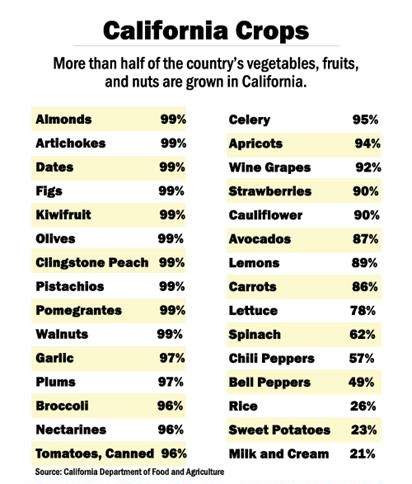
CU Blog - Science of Sustenance - Temperate Foods - Photo 0You can fill in the blanks with different regions around the world:

  • “Central Valley”, the bread basket of California
  • “Kansas”, the bread basket of America
  • “Alberta”, the bread basket of Canada
  • “Ukraine”, the bread basket of Eastern Europe

So who or where is the bread basket of the Caribbean?

Do we have an answer? Do we have a bread basket? Do we even have an organized region so as to collaborate on the responsibility of feeding our people?

No, No, and No!

This commentary is important for the Caribbean to contemplate. Every human in every land must arrange for the delivery of basic needs – “we gotta eat” and so food supply is paramount. Scientific developments have always been a major consideration for food supply, ever since the days of hunting-and gathering. Modern society is built on the premise that we would employ scientific best practices to harvest our food, or trade with people who employ these best practices.

The book Go Lean…Caribbean declares “enough already” with the trade; it is time to produce our own.

This was the original motivation for the publishing of this Go Lean book: to optimize the 30 Caribbean member-states into a Single Market so that we can be structured to do better in providing our basic needs. That structure would be the technocratic Caribbean Union Trade Federation (CU). The opening pages of the book feature this quotation (Page 3):

The CU should better provide for the region’s basic needs (food, clothing, energy and shelter), and then be in position to help supply the rest of the world. Previous Caribbean societies lived off the land and the sea; but today, the region depends extensively on imports, even acquiring large quantities of seafood, despite the 1,063,000 square miles of  the Caribbean Sea.

The CU Trade Federation is a technocracy, empowered to reboot the economic engines of the member-states, by fostering new industries (new “purse”) across the entire region and deploying solutions to better exploit the opportunities of the global trade market.

The Caribbean is in crisis for their dysfunctions in  delivering their own basic needs. This is the focus of this commentary; it is 2 of 4 in a series on the modern advances in science for delivering basic needs: energy, food, clothing and shelter. It is possible to deliver all these basic needs without science. But for our modern world, the advances of science make a positive impact on daily life. So the full series for our consideration follows this pattern:

  1.    Science of Sustenance: Energy
  2.    Science of Sustenance: Food
  3.    Science of Sustenance: Clothing
  4.    Science of Sustenance: Shelter

The book Go Lean…Caribbean asserts that “a crisis is a terrible thing to waste”. We must use our inadequate disposition to motivate stakeholders to forge change on our society; to implement the food supply solutions to do better at facilitating our own needs.

We are in the tropics…

… but science and technology allows us to deliver agricultural solutions for temperate produce (fruit and vegetables). Think:

  • Strawberries
  • Peaches
  • Apples
  • Spinach
  • Greens (Mustard, Collard, Kale, etc.)

Temperate produce need cooler temperatures to thrive. So the key is utilization of greenhouses, climate-controlled greenhouses. These allow for consistent temperatures of 20 to 30 degrees lower than the outside atmosphere. See a reference article on this subject here:

ARTICLE Grower 101: Using Evaporative Cooling, Part I
By John W. Bartok, Jr.
Find out what to use to keep your greenhouse ventilated and cool in the hot, humid summer.

On a bright, sunny summer day, a 30- x 100-foot greenhouse will gather about 32 million British Thermal Units (Btus) of heat. This is equivalent to burning 32 gallons of fuel oil or 320 therms of natural gas. If the greenhouse is full of plants, about one-half of this heat is used for transpiration and evaporation. The remainder of the cooling has to be conducted through ventilation. If the greenhouse is empty and closed, the temperature can exceed 150° F.

Understanding the basics
Shade on the outside of the greenhouse will keep some of the heat out. Shade on the inside, if it contains aluminum foil, will reflect some of the heat back out. Ventilation, either natural or fan, will remove a considerable amount of the heat that is collected. Still, on summer days, the temperature may exceed the desired level that promotes good plant growth by 10-20ºF. Excessive temperature results in delayed flowering and internode stretching. Evaporative cooling may be the best choice under these conditions.

Evaporative cooling, which uses the heat in the air to evaporate water from leaves and other wetted surfaces, can cool the greenhouse to 10-20° F below outside temperature. It takes one Btu of heat to raise the temperature of one pound of water 1° F, but it takes 1,060 Btus of heat to change the same amount of water to a vapor.

With an evaporated cooling system, humid air containing the heat that it picked up within the greenhouse is exhausted out through the vents or fans, and cooler, drier air is brought in. Evaporative cooling works best when the humidity of the outside air is low. For example, in Reno, Nev., the average summer dry bulb temperature is 96º F and the wet bulb is 61ºF. With an evaporative cooler having an efficiency of 80 percent, the temperature would be cooled to about 68° F. These conditions are most common in the dry Southwest, but even in the more humid sections of the United States, significant evaporative cooling can occur most days in the summer. In humid New Orleans, where the average summer dry bulb temperature is 93° F and the wet bulb is 78° F, the cooled air would be about 81° F, acceptable for the production of most plants.

Fan and pad system
Several evaporative cooling systems work well in commercial greenhouses. The most common is the fan and pad system. It contains a cellulose pad, overhead water supply pipe, gutter to collect excess water, a sump tank, pump, piping and control.

The 4- or 6-inch-thick pad is treated with anti-rot salts and stiffening and wetting agents. Pads are normally installed continuously along the side or end of the wall opposite the fans. The amount of pad area needed is calcuis the utillated by multiplying the floor area by 8 feet and dividing by 250 for a 4-inch pad or 400 for a 6-inch pad. For example, a 30- x 100-foot greenhouse with a 4-inch pad would require 96 sq. ft. of pads (30 x 100 x 8÷ 250 = 96 sq. ft.)

The overhead water supply pipe should distribute the water so the pad is wet uniformly. The minimum water flow rate is 0.5 gpm per sq. ft. for a 4-inch pad and 0.8 gpm per sq. ft. for a 6-inch pad.

Excess water is collected below the pad in a gutter and piped to a sump tank. Tank capacity needs to be 0.8 gallon per sq. ft. of pad for 4-inch pads and 1.0 gallon per sq. ft. for 6-inch pads. Water returning to the sump should be filtered to remove any debris. A make-up water supply and float valve keep the water level constant. In areas having water with a high mineral content, it is advisable to bleed 3-5 percent of the water to minimize salt buildup. Algae growth in the re-circulated water can be controlled with abiocide.

Modular pad systems of 5 and 6 feet are now available. These are self-contained and come completely assembled and ready to bolt to the wall. Installation time is reduced considerably. Only water and electrical connections have to be attached.

Next month, find out about swamp coolers, mist and fog systems and fan-generated fog and how they can work for you.

Source: Posted March 2003 from trade journal Greenhouse Product News; retrieved February 8, 2017 from: http://www.gpnmag.com/article/grower-101-using-evaporative-cooling-part-i/

CU Blog - Science of Sustenance - Temperate Foods - Photo 2

————-

VIDEO # 1 Best Thermal Cooled Greenhouse – https://youtu.be/HWXJ1ukEXa0

His Thermal Cooled Greenhouse in 1985 ran for 7 years, cooled itself day and night with 3 small Aquarium pumps, no fans or blowers; 14′ X 36′ ran on pennies a day – this worked!!! Now building a larger 24′ X 54′ Thermal Cooled Greenhouse. This works DAY OR NIGHT. Watch VIDEO !!!

  • Category – Science & Technology
  • License – Standard YouTube License

The science of greenhouses allows for temperate foods (fruit and vegetables) to be grown in a tropical zone – cold adds sweetness. This is what we want, what we need to fulfill our own basic needs. Other communities are doing this and we can as well. We have the role model of countries with colder climates supplying tropical fruit. Surely the reverse can be deployed as well, with strategic and tactical greenhouses.

Greenhouses allow for greater control over the growing environment of plants. Depending upon the technical specification of a greenhouse, key factors which may be controlled include temperature, levels of light and shade, irrigation, fertilizer application, and atmospheric humidity. Greenhouses may be used to overcome shortcomings in the growing qualities of a piece of land, such as a short growing season or poor light levels, and they can thereby improve food production in marginal environments. Greenhouses in hot, dry climates used specifically to provide shade are sometimes called “shadehouses”.[42][43]

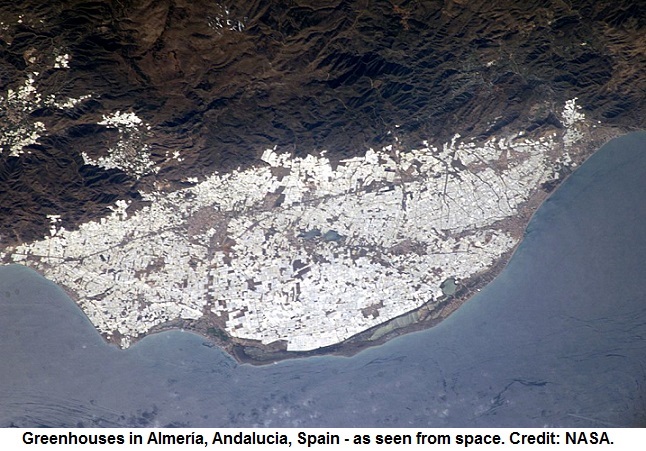
As they may enable certain crops to be grown throughout the year, greenhouses are increasingly important in the food supply of high-latitude countries. One of the largest complexes in the world is in Almería, Andalucía, Spain, where greenhouses cover almost 49,000 acres.
Source:
Retrieved February 8, 2017 from: https://en.wikipedia.org/wiki/Greenhouse
CU Blog - Science of Sustenance - Temperate Foods - Photo 3

The Caribbean is in crisis … we are not able to feed ourselves from the current food supply systems. We therefore have to expend foreign reserves to acquire food from foreign locations. This applies to food that, with the proper empowerments, can be grown locally in the Caribbean region.

This Go Lean book serves as a roadmap for the introduction and implementation of the technocratic Caribbean Union Trade Federation (CU). The goal is that the CU would adopt these food supply best practices to better delivery this basic need for the region. In fact, the prime directives of the CU are described as:

  • Optimize the economic engines – including food supply solutions – to elevate the regional economy to grow to $800 Billion and create 2.2 million new jobs.
  • Establish a security apparatus to protect the resultant economic engines.
  • Improve Caribbean governance to support these engines.

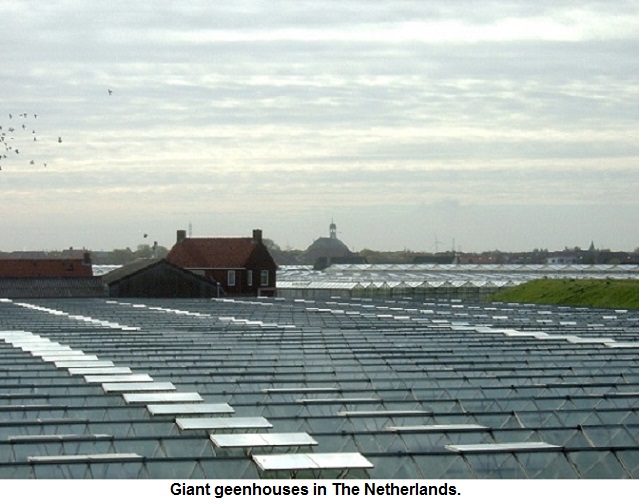
The Go Lean roadmap calls for the immediate adoption of best practices in food supply science (agriculture) and infrastructure. We do not have to re-invent the wheel in this quest; other communities are doing it already. Consider the photos here of giant greenhouses in The Netherlands:

CU Blog - Science of Sustenance - Temperate Foods - Photo 1

CU Blog - Science of Sustenance - Temperate Foods - Photo 1d

CU Blog - Science of Sustenance - Temperate Foods - Photo 1c

CU Blog - Science of Sustenance - Temperate Foods - Photo 1b

This vision of temperature controlled greenhouses in the Caribbean assumes a supply of energy for cooling and ventilation. See more here on ventilation:

Ventilation is one of the most important components in a successful greenhouse, specially in hot and humid tropical climate condition.[18] If there is no proper ventilation, greenhouses and their growing plants can become prone to problems. The main purposes of ventilation are to regulate the temperature, humidity and vapor pressure deficit [19] to the optimal level, and to ensure movement of air and thus prevent build-up of plant pathogens (such as Botrytis cinerea) that prefer still air conditions. Ventilation also ensures a supply of fresh air for photosynthesis and plant respiration, and may enable important pollinators to access the greenhouse crop.

Ventilation can be achieved via use of vents – often controlled automatically via a computer – and recirculation fans.
Source: Retrieved February 8, 2017 from: https://en.wikipedia.org/wiki/Greenhouse

All in all, the Go Lean book declares that “a crisis is a terrible thing to waste”. This siren call is for the establishment of a regional technocracy to facilitate the delivery of the region’s basic needs.  According to the foregoing articles/references, we can grow temperate foods in the tropical zone without exhausting foreign currency.

The vision here of climate-controlled greenhouses requires heavy-lifting on the part of Caribbean stakeholders (governments and business communities). We need this heavy-lifting. A lot is at stake: our ability to feed our populations. The Go Lean roadmap calls for a separation-of-powers between CU federal agencies and the member-state governments. The CU presents Cabinet departments for Agriculture, Fisheries and Health (Food/Nutrition). These departments will have to collaborate with parallel departments at the member-state level.

This was the original motivation of the Go Lean roadmap, an interdependence of the 30 member-states of the Caribbean to offset the effects of globalization. This was pronounced early in the book in the Declaration of Interdependence (Page 14), with this statement:

xxx. Whereas the effects of globalization can be felt in every aspect of Caribbean life, from the acquisition of food and clothing, to the ubiquity of ICT, the region cannot only consume, it is imperative that our lands also produce and add to the international community, even if doing so requires some sacrifice and subsidy.

The roadmap also calls for the installations of Exclusive Economic Zones (EEZ) and Self-Governing Entities (SGE) that operate in controlled bordered territories like campuses, industrial parks, research labs and industrial plants. These can be a target for the climate-controlled greenhouses.

The Go Lean book declares that we must adopt a community ethos, the appropriate attitude/spirit to forge change in our region; then details the executions of the following strategies, tactics, implementations and advocacies to better impact the region’s preparation for food resources. See this sample here:

Community Ethos – Deferred Gratification Page 21
Community Ethos – Economic Systems Influence Individual Choices / Incentives Page 21
Community Ethos – The Consequences of Choices Lie in the Future Page 21
Community Ethos – Lean Operations Page 24
Community Ethos – Cooperatives Page 24
Community Ethos – Non-Government Organizations Page 25
Community Ethos – Ways to Impact the Future Page 26
Community Ethos – Ways to Improve Sharing Page 35
Community Ethos – Impact the Greater Good Page 37
Strategy – Vision – Confederating 30 Member-States into a Single Market Page 45
Strategy – Vision – Foster Local Economic Engines Food, Clothing & Shelter Page 45
Strategy – Mission – Prepare for Natural Disasters Page 45
Strategy – Mission – Exploit the Benefits and Opportunities of Globalization Page 46
Strategy – Agents of Change – Climate Change Page 57
Strategy – Agents of Change – Globalization Page 57
Tactical – Confederating a Permanent Union Page 63
Tactical – Fostering a Technocracy Page 64
Separation of Powers – Food & Nutritional Administration Page 87
Separation of Powers – Agriculture and Fisheries Department Page 88
Implementation – Ways to Pay for Change Page 101
Implementation – Start-up Benefits from the EEZ Page 104
Implementation – Steps to Implement Self-Governing Entities Page 105
Implementation – Ways to Deliver Page 109
Implementation – Ways to Foster International Aid Page 115
Implementation – Ways to Benefit from Globalization Page 119
Planning – Ways to Make the Caribbean Better Page 131
Advocacy – Ways to Grow the Economy Page 151
Advocacy – Ways to Better Manage Food Page 162
Advocacy – Ways to Improve Governance Page 168
Advocacy – Ways to Better Manage the Social Contract Page 170
Advocacy – Ways to Foster Cooperatives Page 176
Advocacy – Ways to Improve for Natural Disasters Page 184
Advocacy – Ways to Improve Emergency Management Page 196
Advocacy – Ways to Improve Fisheries Page 210
Advocacy – Ways to Impact Rural Living – Agricultural eco-systems Page 235

There are a lot of models of agricultural and infrastructural delivery that the Caribbean can learn from foreign shores. Previous Go Lean blog-commentaries have cited these models, samples and examples:

https://goleancaribbean.com/blog/?p=8982 GraceKennedy: A Caribbean Transnational tackles Food Supply
https://goleancaribbean.com/blog/?p=6867 How to address high consumer prices
https://goleancaribbean.com/blog/?p=6819 Supplying Foods for ‘Western’ Diets – We can do better!
https://goleancaribbean.com/blog/?p=6016 Hotter than July – An Appeal for Cooperative Refrigeration
https://goleancaribbean.com/blog/?p=5098 Forging Change in Society Through Food
https://goleancaribbean.com/blog/?p=3594 Lessons Learned from Queen Conch – A Caribbean Food
https://goleancaribbean.com/blog/?p=2276 Climate Change May Affect Food Supply Within a Decade

Who or where will be the bread basket of the Caribbean? With the empowerments in this commentary, it could be all 30 member-states.

Change has come to the world of agricultural systems and sciences and change must come to the Caribbean region; we must be able to feed ourselves. We need to convene, collaborate and cooperate to satisfy our most basic needs. Yes, we can …

… come together to make the Caribbean a better homeland to live, work and play.

The people and institutions of the region are hereby urged to lean-in to this Go Lean roadmap, to embrace the empowerments to reboot and turn-around our region. 🙂

Download the book Go Lean … Caribbean – now!


Share this post:
,

Science of Sustenance – Green Batteries

Go Lean Commentary

Monkey see, monkey do …

CU Blog - Science of Sustenance - Green Batteries - Photo 0This is the expression; but this is science too: zoology, anthropology, animal husbandry. Monkeys are amazing creatures. They are in the same species as humans – primates. Monkeys are social creatures that live in family groups. Like many other animal species,  they adhere to an Alpha-Herd social order. Despite the fact that monkeys are generally considered to be intelligent, they tend to mimic the actions of their leaders more so than creating their own destinies. It is true, monkeys see, monkeys do.

If only the highest order of primates, us humans, worked the same way, then it would be easy to reform and transform society. To the contrary, the observation is that humans follow a different process:

Monkey see, monkey feel, monkey do. Sorry, make that “humans see, humans feel, humans do”.

As free moral agents, the human experience is that there must be a motivation to do something, like “change”, that we see others doing.

This point is developed more fully in the book Go Lean…Caribbean. It narrates the experience of smoking cessation. The book relates (Page 20):

Change is not easy …

Just ask anyone attempting to quit smoking. Not only are there physiological challenges, but psychological ones as well, to the extent that it can be stated with no uncertainty that “change begins in the head”. In psycho-therapy the approach to forge change for an individual is defined as “starting in the head (thoughts, visions), penetrating the heart (feelings, motivations) and then finally manifesting in the hands (actions).

There are a lot of things that Caribbean people and communities must change; there is the need to reform and transform. We must first develop the right attitudes and motivations for fostering our changes. We must penetrate the heart. The people of the Caribbean must change their feelings about elements of our society – elements that are in place and elements missing. The Go Lean book refers to this as “community ethos”, defined as:

the fundamental character or spirit of a culture; the underlying sentiment that informs the beliefs, customs, or practices of a group or society; dominant assumptions of a people or period.”

The Caribbean is in desperate straits. We have many societal dysfunctions and defects. We have challenges fulfilling even our basic needs. This is the focus of this commentary; it is 1 of 4 in a series on the modern advances in science for delivering basic needs. No one doubts that the inventory of basic needs include “food, clothing and shelter”. But modernity has forced us to add another entry: “energy”. In fact, the availability and affordability of energy can impact the deliveries of these order basic needs. The full series for our consideration will therefore follow this pattern:

  1.     Science of Sustenance: Energy
  2.     Science of Sustenance: Food
  3.     Science of Sustenance: Clothing
  4.     Science of Sustenance: Shelter

It is possible to deliver all basic needs without science. But for our modern world, the advances of science make a positive impact on daily life. In fact, one Anthropology study has concluded that the greatest scientific accomplishment for 20th Century society had been the invention, deployment and advances of the washing machine. Wow, remember the process to clean clothes before modern laundry equipment; it took all day. Women of the house had to be fulltime homemakers to satisfy this family need. This fact depicts the gravity of science in sustaining our modern life. Let’s consider all of the basic needs from this perspective.

Discussions about energy must consider a discussion on batteries. Battery = Stored Energy …

… despite all the scientific definitions, that is all it means, plain and simple. According to one source:

Batteries come in many shapes and sizes, from miniature cells used to power hearing aids and wristwatches to small, thin cells used in smartphones, to large lead acid batteries used in cars and trucks, and at the largest extreme, huge battery banks the size of rooms that provide standby or emergency power for telephone exchanges and computer data centers.

According to a 2005 estimate, the worldwide battery industry generates US$48 billion in sales each year,[5] with 6% annual growth. – Wikipedia.

Batteries traditionally store energy for later use. When we need it, we absolutely need it. Imagine a flashlight, when we “click” it on, we expect it to work. We spend a lot of money to ensure this functionality – according to the foregoing reference, $48 Billion/year.

But while batteries entail a lot of complicated chemicals – alkaline, lead-acid, lithium-ion, etc. – the underlying principle is to store the kinetic energy for future generation of electricity. There is a new recognition in this equation. The fact is that power grids create more power than they need at certain times; this creates the need for batteries; see here:

That’s the first reason we need batteries on the electrical grid: to even out the supply-and-demand, to time-shift the availability of power from nighttime to daytime.

But reason number two is even more important to our future: Power-plant batteries would eliminate the biggest problem with solar power and wind power, which is that they are both intermittent. “Clouds come over on a sunny day and, all of a sudden, it’s gone,” said Hopkins. “Wind stops blowing, all of a sudden, it’s gone. You need a way to store it.”

See full story in the VIDEO here:

Many experts in electricity are truly JUICED these days. They’re pursuing the “Search For The Super Battery” — the title of this Wednesday night’s [(February 1, 2017)] episode of “Nova” on PBS, hosted by our own David Pogue of Yahoo Tech.  Here is a preview:

VIDEO Making a better batteryhttp://www.cbsnews.com/videos/engineers-attempt-to-create-better-batteries

The science is progressing …

… green options are emerging; (green refers to natural, non-chemical solutions). According to the foregoing, green options  for storing energy include:

  • Gravity
  • Melting Ice
  • Magnetic Levitation

CU Blog - Science of Sustenance - Green Batteries - Photo 1

We need to consider these options in the Caribbean. In our region, energy costs are among the highest in the world. The book Go Lean… Caribbean relates (Page 100) how the Caribbean has among the most expensive energy costs in the world, despite having abundant alternative energy natural resources (solar, wind, tidal, geo-thermal). The Caribbean eco-system focuses on imported petroleum to provide energy options and as a result retail electricity rates in the Caribbean average US$0.35/kWh, when instead it could be down to US$0.088/kWh. A previous blog-commentary identified the societal defect that drives the regional governance for energy generation: rent-seeking. The local authorities depend on the fuel tax revenues to finance government operations. But alas, change is coming! The momentum for this change is big and getting bigger.

With such a 75% savings, we need the foregoing process: Monkey see, monkey feel, monkey do.

There is definitely the need to adapt some of the scientific best practices for energy generation and consumption. In a previous blog-commentary, it was confessed that one of the reasons why people flee the Caribbean region, is the discomforts during the summer months; (the Caribbean region has 8 – 10 warm months of the year) …

… hot weather, and the lack of infrastructure to mitigate and remediate the discomfort, is identified as one of the reasons for the brain drain/societal abandonment. (This previous blog-commentary appealed for cooperative refrigeration). If only we can turn on the air-conditioner – if we can afford the energy cost –  there would be the need to keep it running most of the time.

Many people find the current lack of energy options unbearable to live in their Caribbean ancestral homeland and thusly flee the region for North American and European destinations. The numbers are bad! We reported a 70 percent brain drain rate among the tertiary educated populations. (These are the ones who can best afford to leave; but the community can least afford to lose them).

Energy needs are undeniable 24-7-365; all the time. There is the need to deliver energy all of these times.

The delivery or fulfillment of these needs is a great target for lean, agile operations. Efficiency and technocratic executions will save a lot of money for the people and institutions of the Caribbean. But fossil fuels should not be the solution for the Caribbean.

  • First, with so many small islands, we do not have much natural resources.
  • Secondly, and most important, there is the matter of burning fossil fuels (oil, coal, wood pulp) and contributing to global warming and Climate Change.

The Go Lean book posits that the embrace of alternative energy generation sources to be more impactful on the quest to minimize the threats on the environment. Early in the book, the pressing need to be aware of Climate Change is pronounced in the Declaration of Interdependence (Page 11), with these words, (the first of many “causes of complaints”):

i. Whereas the earth’s climate has undeniably changed resulting in more severe tropical weather storms, it is necessary to prepare to insure the safety and security of life, property and systems of commerce in our geographical region. As nature recognizes no borders in the target of its destruction, we also must set aside border considerations in the preparation and response to these weather challenges.

With the innovative offering of Green Batteries, the quest to adapt to more clean/green energy options can be practical and more cost effective. Power generation from the sun or wind (free & renewable sources) is far cheaper that generation based on fossil fuels.

The book Go Lean… Caribbean serves as a roadmap for the introduction and implementation of the Caribbean Union Trade Federation (CU). This roadmap has 3 prime directives:

  • Optimization of the economic engines in order to grow the regional economy to $800 Billion GDP and create 2.2 million new jobs.
  • Establishment of a security apparatus to protect the resultant economic engines.
  • Improvement of Caribbean governance to support these engines.

This Go Lean/CU roadmap details a series of community ethos, strategies, tactics, implementations and advocacies to be early adopters of cutting-edge energy solutions, like Green Battery systems. The following list applies:

Community Ethos – Deferred Gratification Page 21
Community Ethos – Lean Operations Page 24
Community Ethos – Return on Investments Page 24
Community Ethos – Cooperatives Page 25
Community Ethos – Ways to Impact the Future Page 26
Community Ethos – Ways to Impact the Greater Good Page 37
Strategy – Harness the power of the sun/winds Page 46
Tactical – Fostering a Technocracy Page 82
Tactical – Separation of Powers – Energy Commission Page 82
Anecdote – “Lean” in Government – Energy Permits Page 93
Anecdote – Caribbean Energy Grid Implementation Page 100
Implementation – Ways to Develop Pipeline Industry Page 107
Implementation – Ways to Improve Energy Usage Page 113
Advocacy – Ways to Impact Public Works Page 175
Advocacy – Ways to Foster Cooperatives Page 176
Advocacy – Ways to Impact Monopolies Page 202

The Go Lean movement (book and blogs) asserts that we should fully embrace Green Energy solutions; its not a want, but a need for the region. This need had been further elaborated upon in these previous blog/commentaries:

https://goleancaribbean.com/blog/?p=7056 Electric Cars: ‘Necessity is the Mother of Invention’
https://goleancaribbean.com/blog/?p=6016 Hotter than July – A case for ‘Cooperative Refrigeration’
https://goleancaribbean.com/blog/?p=5155 Tesla unveils super-battery to power homes
https://goleancaribbean.com/blog/?p=4897 US Backs Natural Gas (LNG) Distribution Base in Jamaica
https://goleancaribbean.com/blog/?p=4294 Ambassadors to Caribbean discuss PetroCaribe-Energy, Security
https://goleancaribbean.com/blog/?p=2465 Book Review: ‘This Changes Everything: Capitalism vs. the Climate’
https://goleancaribbean.com/blog/?p=2338 Lessons: How Best to Welcome the Dreaded American ‘Plutocracy’
https://goleancaribbean.com/blog/?p=926 Conservative heavyweights have solar industry in their ‘kill’ sights
https://goleancaribbean.com/blog/?p=915 Go ‘Green’ … Caribbean

A focus of the Go Lean book is the economics of the Caribbean region. But the issues presented in this commentary – and the entire 4-part series – relate to Home Economics. Home Economics is an old field of study. At one point, this was a course in school systems for all levels, K through 12 and even in college curricula. The purpose of the formal “Home-Ec” education was to teach best practices in efficiency and effectiveness for  basic needs. Students learned more about food (cooking & nutrition), clothing (sewing & textiles) and housing (decorating, draperies and upholstery). Home-Ec lessons highlighted the technology of the day (before the 1980’s). Go back and re-visit those schools; the disposition will be that all those programs have been replaced with courses in Science, Technology, Engineering and Mathematics (STEM).

CU Blog - Science of Sustenance - Green Batteries - Photo 2

CU Blog - Science of Sustenance - Green Batteries - Photo 3

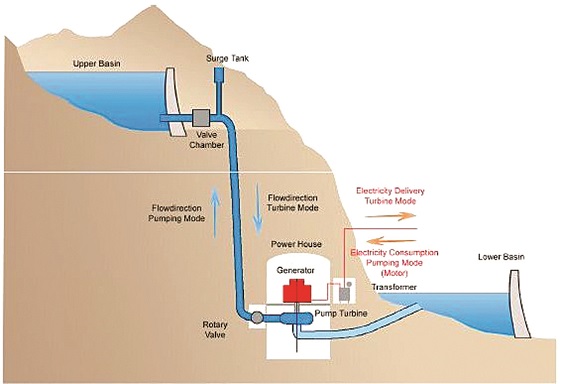
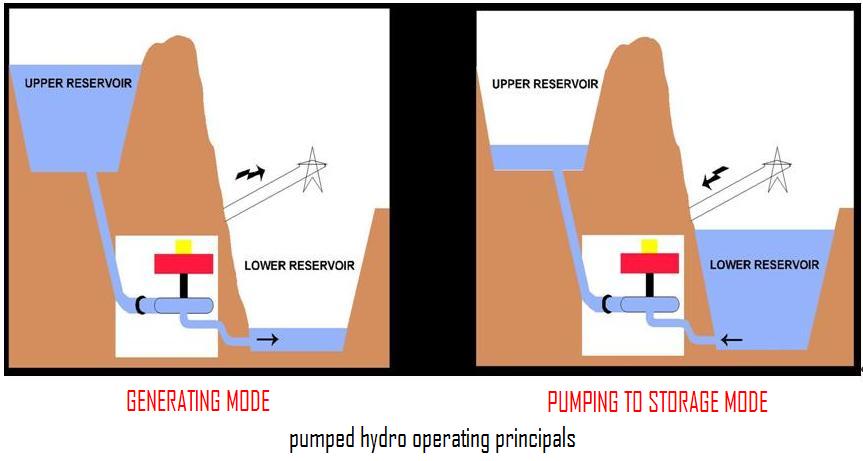
The Green Battery is an example of science guiding the future of the delivery of basic needs, in this case energy needs. Science is improving the delivery of all basic needs, all means of sustenance. There are many mountainous islands in the Caribbean; anyone of them can be a great candidate for the “pumped hydro” solution in the foregoing VIDEO. This will call for installing a dam and two reservoirs. During the periods when energy is abundant – mid day from solar panels – the water can be pumped uphill, then during the “off” times the water would flow downhill, using gravity to spin turbines and generate electricity.

CU Blog - Science of Sustenance - Green Batteries - Photo 8

CU Blog - Science of Sustenance - Green Batteries - Photo 5

CU Blog - Science of Sustenance - Green Batteries - Photo 4

CU Blog - Science of Sustenance - Green Batteries - Photo 7

Also consider that with the Caribbean hot-hot-hot summers, there is no doubt there is a need for air-conditioning. The energy hogging of the air-conditioning process is the compression to make refrigerated air. The approach in the foregoing VIDEO of making ice when energy is abundant – mid day from solar panels – then blowing the air from the “melting ice” is a technocratic solution – the simple science is depicted in these photos above. A solution based on this science – see sample product in photo below – can be deployed anywhere, everywhere.

CU Blog - Science of Sustenance - Green Batteries - Photo 6

These Green Battery deployments would be examples of the lean, agile operations, designed for the CU technocracy.

This and other innovations, once executed, would make the Caribbean a better place to live, work and play.

Now is the time for all of the Caribbean, the people, business, institutions and governments, to lean-in for the innovations and optimizations of the Go Lean roadmap. 🙂

Download the book Go Lean … Caribbean – now!
 

Share this post:
, , ,
[Top]

‘Culture Eats Strategy For Breakfast’

Go Lean Commentary

Congratulations to the New England Patriots of the National Football League. They won SuperBowl LI on Sunday February 5, 2017 – beating the Atlanta Falcons 34 to 28 in a dramatic comeback – in which they overcame a 28 to 3 deficit. Their victory proved the validity of the business axiom:

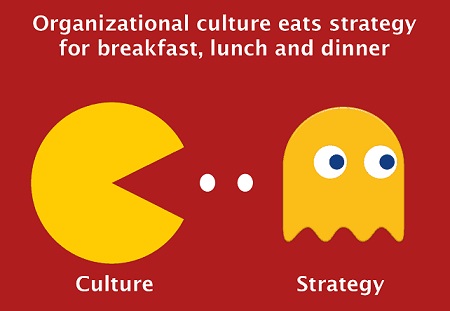
Culture eats strategy for breakfast, lunch and dinner.

CU Blog - 'Culture Eats Strategy For Breakfast' - Photo 2This phrase was articulated by distinguished management consultant Peter Drucker and made famous by Mark Fields, a former President of Ford Motor Corporation. This corporate best-practice – good for nation-building as well – is that this axiom is more than just theory, it is an absolute reality! Any company, or community for that matter, disconnecting the two (culture and strategy) are putting their success at risk.

This expression made a leapfrog to NFL football in 2014 when the Head Coach of another team, Philadelphia Eagles, referred to the concept in a passing comment. See the full origin story in this link:

How ‘Culture Beats Scheme’ Became Eagles’ Motto

The New England Patriots SuperBowl win is proof-positive of the culture-first ethos. Talent abounds in the league; all 32 teams have the same opportunities and yet, none can boast the Patriots’ history of success. Why? This team has focused heavy on its culture … and has the success to show for it:

The Patriots have appeared in the Super Bowl nine times in franchise history, the most of any team, seven of them since the arrival of head coach Bill Belichick and quarterback Tom Brady in 2000. The Patriots have since become one of the most successful teams in NFL history, winning 14 AFC East titles in 16 seasons since 2001, without a losing season in that period. The franchise has since set numerous notable records, including most wins in a ten-year period (126, in 2003–2012), an undefeated 16-game regular season in 2007, the longest winning streak consisting of regular season and playoff games in NFL history (a 21-game streak from October 2003 to October 2004), and the most consecutive division titles won by a team in NFL history (won eight straight division titles from 2009 to 2016). The team owns the record for most Super Bowls reached (seven) and won (five) by a head coach-quarterback tandem, as well as being the first tandem to win the Super Bowl 13 years after the first. – Source: Wikipedia.
CU Blog - Culture Eats Strategy For Breakfast - Photo 1

The purpose of this commentary is the focus on culture. This definition of culture refers to community ethos; this is defined in the book Go Lean … Caribbean as …

… the fundamental character or spirit of a culture [group or community], the underlying sentiment that informs the beliefs, customs, or practices of a group or society; the dominant assumptions of a people or period.

Culture allows “you” to overcome obstacles; endure the heavy-lifting of a turn-around; invest in future success based on promising talents; stay the course of a roadmap, rather than “giving up” and fleeing for the appearance of greener pastures elsewhere. Culture dictates devoting “blood, sweat and tears” to a community cause, to give a full measure of devotion. We can learn so much by examining organizations and communities of great accomplishments. The New England Patriots is one such model. See VIDEO here describing the culture of the New England Patriots:

VIDEO – Chris Long of New England Patriots on Team, Winning, Unselfish Culture – https://youtu.be/ne-YkmXMN4M

Published on Jan 3, 2017 – Chris Long discusses the New England Patriot’s TEAM Culture, Winning Attitude, & Unselfishness on the NFL Network’s Game Day Prime with former NFL Head Coach Steve Mariucci on 1/1/17.

The Go Lean book relates that there are good ethos and bad ethos – the good ethos can be considered “culture” while the bad ethos may be deemed “defects”. The Caribbean member-states are not known as great societies, despite having the greatest “address on the planet” in terms of terrain, fauna/flora, hospitality, festivities, food, rum and cigars; this is due to our deficient community ethos, our organizational culture. There are role models for us to consider:

“Culture eats strategy for breakfast,” is a famous quotation attributed to the late business management guru Peter Drucker, and I can’t think of a better example that proves this than Enterprise Rent-A-Car’s acquisition of National Car Rental and Alamo.

They have been recognized numerous times for their customer service by J.D. Power. Business Week recognized them as one of the top 25 customer service brands in the world. In addition to running a wildly successful business, they obviously know how to take care of their customers, which means their customers want to come back.

All that is impressive, but not nearly as impressive as how they proved these top customer service awards weren’t a fluke. All of the awards and accolades they continue to receive don’t happen by accident. They aren’t just lucky. Everything Enterprise does is very purposeful. It is their culture. – Forbes Magazine Columnist Shep Hyken’s Profile Story.

One mission of the Go Lean book is to foster good community ethos – good culture – for the Caribbean region. We have great talent in our region and yet still we do not win; our people “take their talents to South Beach / South New York / South Toronto / South London, etc.”. What is missing here? Culture.

The Caribbean has a lot of people who have excelled on the world stage in their chosen professions, only because they fled their Caribbean homes seeking better opportunities abroad. Consider:

The Go Lean book serves as a roadmap for the introduction and implementation of the Caribbean Union Trade Federation (CU) to elevate Caribbean society and culture. The CU has 3 prime directives:

  • Optimization of the economic engines in order to grow the regional economy to $800 Billion and create 2.2 million new jobs.
  • Establishment of a security apparatus to protect the resultant economic engines.
  • Improve Caribbean governance to support these engines.

From the outset of the book, in the opening Declaration of Interdependence, the Go Lean roadmap posits that a target for the CU’s empowerments should be the Caribbean youth. This is the best way to foster a new culture, focus on the next generation. Then the remainder of society will assimilate … the new values within a short time. See the focus on youth in the opening pages of the book (Page 3), with this sample quotation:

Our youth, the next generation, may not be inspired to participate in the future workings of their country; they may measure success only by their exodus from their Caribbean homeland.

Thusly, the Go Lean/CU roadmap dictates how to reach, engage, and solicit the youth market to foster the new required attitudes. These other pronouncements in the opening Declaration of Interdependence, bear a direct reference to this quest for changing culture; consider these on Pages 11 & 13:

xix. Whereas our legacy in recent times is one of societal abandonment, it is imperative that incentives and encouragement be put in place to first dissuade the human flight, and then entice and welcome the return of our Diaspora back to our shores…

xxi.  Whereas the preparation of our labor force can foster opportunities and dictate economic progress for current and future generations, the Federation must ensure that educational and job training opportunities are fully optimized for all residents of all member-states, with no partiality towards any gender or ethnic group. The Federation must recognize and facilitate excellence in many different fields of endeavor, including sciences, languages, arts, music and sports. This responsibility should be executed without incurring the risks of further human flight, as has been the past history.

The book provides some turn-by-turn instructions for soliciting the different generation groups (Baby Boomers, Generation X and the current Millennials) who are at the frontline of the current Caribbean battles, that of societal abandonment, of which the region is sorely losing; (see this portrayed in a previous blog-commentary). The Go Lean book asserts new community ethos, strategies, tactics, implementation and advocacies. The following list from the book applies:

Community Ethos – Economic Principle – Economic Systems Influence Choices & Incentives Page 21
Community Ethos – Economic Principle – Voluntary Trade Creates Wealth Page 21
Community Ethos – Economic Systems Influence Choices & Incentives Page 21
Community Ethos – People Respond to Incentives Page 21
Community Ethos – Consequences of Choices Lie in the Future Page 21
Community Ethos – Ways to Help Entrepreneurship Page 28
Community Ethos – Ways to Impact Turn-Around Page 33
Community Ethos – Ways to Manage Reconciliations Page 34
Community Ethos – Ways to Promote Happiness Page 36
Community Ethos – Ways to Impact the Greater Good Page 37
Community Ethos – Lean Operations Page 24
Community Ethos – Cooperatives Page 25
Community Ethos – Ways to Impact the Future Page 26
Community Ethos – Impact the Greater Good Page 37
Strategy – Strategy – Keep Young People At Home in the Region Page 51
Strategy – Agents of Change – Technology Page 57
Strategy – Agents of Change – Globalization Page 57
Tactical – Fostering a Technocracy Page 64
Tactical – Separation of Powers – Postal Union Page 78
Anecdote – Turning Around the CARICOM governance Page 92
Anecdote – “Lean” in Government Page 93
Implementation – Ways to Pay for Change Page 101
Implementation – Ways to Deliver Page 109
Implementation – Ways to Impact Social Media Page 111
Implementation – Reasons to Repatriate Page 118
Advocacy – Ways to Improve Governance Page 168
Advocacy – Ways to Better Manage the Social Contract Page 170
Advocacy – Ways to Impact Events Page 191
Advocacy – Ways to Promote Fairgrounds Page 192
Advocacy – Ways to Foster e-Commerce Page 198
Advocacy – Ways to Impact the Diaspora Page 217
Advocacy – Ways to Impact Youth Page 227
Advocacy – Ways to Impact Sports Page 229
Advocacy – Ways to Impact Urban Living – Sports Leagues Page 234

The Go Lean book is a great guidebook for developing agile institutions – a recipe for the CU technocracy.

The Caribbean can succeed in our efforts to improve our community ethos. Consider this sample of previous blog-commentaries that delve into aspects of forging a better “culture” in Caribbean communities:

https://goleancaribbean.com/blog/?p=10220 Waging a Successful War on the BAD ethos of Rent-seeking
https://goleancaribbean.com/blog/?p=10218 Waging a Successful War on the BAD ethos of Stupidity
https://goleancaribbean.com/blog/?p=10216 Waging a Successful War on the BAD ethos of Orthodoxy
https://goleancaribbean.com/blog/?p=9595 Vision and Values for a ‘New’ Caribbean
https://goleancaribbean.com/blog/?p=9428 Forging Change: Herd Mentality
https://goleancaribbean.com/blog/?p=8186 Respect for Minorities: ‘All for One’
https://goleancaribbean.com/blog/?p=7646 Going from ‘Good to Great’
https://goleancaribbean.com/blog/?p=7628 ‘A Change Is Gonna Come’
https://goleancaribbean.com/blog/?p=5695 Repenting, Forgiving and Reconciling the Past
https://goleancaribbean.com/blog/?p=3915 ‘Change the way you see the world; you change the world you see’
https://goleancaribbean.com/blog/?p=3780 Forging an Ethos of ‘Blood, Sweat and Tears’
https://goleancaribbean.com/blog/?p=623 ‘Only at the precipice, do they change’

The vision for a new Caribbean is one that has a culture that could “eat strategy – scheme or talent – for breakfast”.

While the focus of this commentary is on culture, a lot can be said for the Sports eco-system as well. The Go Lean/CU roadmap is NOT a sports promotion plan but it does present the important role for sports in the vision to make the Caribbean a better place to live, work and play. As an expression of this vision, the Go Lean book states (Page 81):

“… a mission of the CU is to forge industries and economic drivers around the individual and group activities of sports and culture”.

Now is the time for all of the Caribbean, the people and governing institutions, to lean-in for the empowerments described in the book Go Lean … Caribbean. The benefits are too alluring: dawn of a new economy and new opportunities to preserve Caribbean culture for future generations. 🙂

Download the book Go Lean … Caribbean – now!
 

Share this post:
,
[Top]

A Lesson in History: Haiti’s Reasonable Doubt

Go Lean Commentary

There are important lessons to learn from history … regarding the ongoing theme of America’s War on the Caribbean.

Consider Haiti … again. America has a long and abusive history with Haiti, its oldest and poorest neighbor.

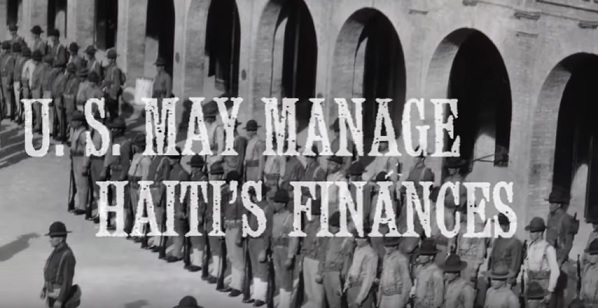
In 1915, more than a century after having eradicated slavery from their country, the people of Haiti suddenly find themselves the victims of a brutal American occupation, reigniting an all too familiar past for the proud, independent nation. – Documentary Synopsis

CU Blog - A Lesson in History - Haiti's Reasonable Doubt - Photo 1

There is a very important point of consideration: Haiti and the Haitian people have a legitimate case of reasonable doubt for expecting regional leadership from the US. This commentary is also within the consistent theme for the movement behind the book Go Lean…Caribbean, whose goal and aspiration is for Caribbean people to take their own lead for Caribbean elevation. This applies doubly for Haiti.

Consider the full article here:

Title: The Forgotten Occupation
The Forgotten Occupation recounts the 19-year period during which the United States of America subjugated Haiti to a brutal occupation. From 1915 to 1934, the Haitian people found themselves under the rule of a system that was in large part influenced and pushed for by the National City Bank of New York (now Citibank), and that initially found support amongst many Haitians in the country.

The Forgotten Occupation is about Jim Crow, which was imported to Haiti by way of the American marines, whose perceptions of the Haitians they were occupying were rooted in the racist consciousness of the United States South from which most of them came. It is that consciousness that made it easy for the occupiers to kidnap innumerable men, take them away from their homes, and constrain them to forced labor. This process eventually ignited a mass rebellion.

The Forgotten Occupation is about those who resisted and paid for that resistance with their lives. It is about Charlemagne Peralte, the leader of the Cacos (the rebel group formed mainly of Haitian peasants) who, despite being outgunned, outmanned, and having little to no chance of a significant retaliation against the unstoppable force who now claimed their land, fought on as best as they could.

The Forgotten Occupation is about those who were displaced from their land, which was forcibly seized and handed over to corporations, including the Haitian-American Sugar Company and Dole: the American Pineapple Company.

The Forgotten Occupation is also about the rebirth of Haiti. For, due to the rabid racism it suffered under the US presence, Haiti was forced to reevaluate its identity as an extension of French culture and began to develop a deep appreciation for its African roots.

There are a large number of people, including many Haitians, who know nothing of these 19 years. The Forgotten Occupation seeks to shed a light on this significant chapter of Haiti’s history, which has long since faded from the collective mind, but still affects the country to this day.
Source: Retrieved February 4, 2017 from: http://www.theforgottenoccupation.com/

———-

VIDEO – The Forgotten Occupation (Trailer) https://youtu.be/n7HjC8n_PsM

Published on Jun 18, 2015 – In 1915, more than a century after having eradicated slavery from their country, the people of Haiti suddenly find themselves the victims of a brutal American occupation, reigniting an all too familiar past for the proud, independent nation.

  • Category: Film & Animation
  • License: Standard YouTube License

The reasonable doubt the Haitian people may have toward America is not just 100 years old. It was also relevant 100 days ago; just a few months ago, during the Presidential Election in the US, in the race between Republican Donald Trump and Democrat Hillary Clinton. Universally in the US, the African-American population supported Hillary Clinton, but there was exception with the Haitian Intelligentsia … and the Haitian right-wing wealthy elite.

Yes, there is a Haitian Intelligentsia!

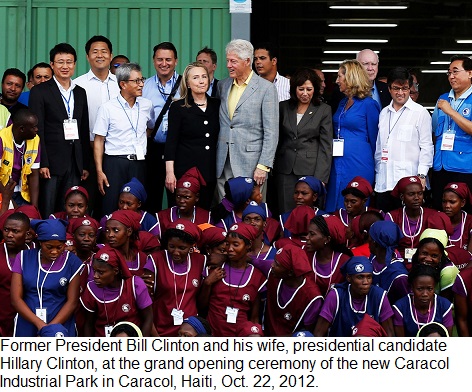
They have a low regard for Bill and Hillary Clinton … after their Clinton Foundation development initiatives. This regard was shared – make that exploited – by Donald Trump and his camp during the campaign. See here:

CU Blog - A Lesson in History - Haiti's Reasonable Doubt - Photo 2Trump’s team glommed onto the possibility that Haitian Americans—generally black, generally Democratic-leaning voters who make up roughly 2 percent of the population of Florida, where Trump and Hillary Clinton are separated by less than a point—might be persuaded to vote against the former Secretary of State (Hillary). The irony of a nativist pandering to thousands of immigrants and refugees aside, there was a logic to this. Many people rightly identify Clinton with failures of humanitarianism and development in Haiti. The Trump team has folded that perception into a half-true narrative in which Haiti—like Whitewater and Benghazi before it—becomes a synecdoche for all the ills, real and imagined, of the Clintons themselves.

There are good reasons the world’s first black Republic has been an island-sized headache for Clinton as she seeks the presidency. Haiti is a place where some of the darkest suppositions that lurk on the left and right about her and her husband take form. Here is an island country of 10 million people where America’s ultimate power couple invested considerable time and reputation. Here is a fragile state where each took turns implementing destructive policies whose highlights include overthrowing a presidential election. Bill Clinton in particular mixed personal relationships, business, and unaccountable power in ways that, if never exactly criminal, arouse the kind of suspicion that erodes public trust. No two individuals, including Haiti’s own leaders, enjoyed more power and influence than the Clintons in the morass of the failed reconstruction following the deadly Jan. 12, 2010, earthquake, when a troubled country managed to go from catastrophe to worse.

The reality is a lot more complicated (and interesting) than that, [the conspiracy theory that the Clinton stole billions of dollars from Haiti’s post-earthquake relief funds]. The United States and Haiti were the first two independent republics in the Americas, and our often blood-soaked relationship goes back a lot further than the meeting of a silky Arkansan and an ambitious Illinoisan at YaleLawSchool.

… wealthy Haitians openly loathe Bill Clinton, who ordered the U.S. invasion that put down the [right-wing military] junta and restored Aristide to power [in the 1990’s].

Source: Posted September 22, 2016; retrieved February 4, 2017 from: http://www.slate.com/articles/news_and_politics/politics/2016/09/the_truth_about_the_clintons_and_haiti.html

Haiti has had to endure American dysfunction for a long time. The Go Lean movement has previously detailed the American societal defects – institutional racism and Crony-Capitalism – and how Caribbean communities have been impacted. There is cause-and-effect of these American dysfunctions in the Caribbean region in general and Haiti in particular. Reflect back on the 1915 Occupation:

“The reason it’s critical to understand the US Occupation is because many of the problems that Haiti has today, are actually of much more recent origin, they’re 20th century problems” – Laurent Dubois

See  Appendix B below for more on Citibank – the instigator for American action – and their abusive behavior towards Haiti.

The review of these historic events are more than just an academic discussion, the book Go Lean…Caribbean aspires to economic principles that dictate that “consequences of choices lie in the future”. The book serves as a roadmap for the introduction and implementation of the technocratic Caribbean Union Trade Federation (CU). Haiti – the poorest country in the Western Hemisphere – is one of the 30 member-states for this Caribbean confederacy. This poor status is a direct result of American and European (French) dysfunction over 300 years. Yet, the book asserts that we should not leave it up to these colonial masters to assuage our problems. We need our own expression of governance.

The Go Lean roadmap seeks to optimize the Caribbean governance. This vision is defined early in the book (Pages 10 – 12) in the following pronouncements in the Declaration of Interdependence:

Preamble: As the history of our region and the oppression, suppression and repression of its indigenous people is duly documented, there is no one alive who can be held accountable for the prior actions, and so we must put aside the shackles of systems of repression to instead formulate efficient and effective systems to steer our own destiny.

xi. Whereas all men are entitled to the benefits of good governance in a free society, “new guards” must be enacted to dissuade the emergence of incompetence, corruption, nepotism and cronyism at the peril of the people’s best interest.  The Federation must guarantee the executions of a social contract between government and the governed.

xii. Whereas the legacy in recent times in individual states may be that of ineffectual governance with no redress to higher authority, the accedence of this Federation will ensure accountability and escalation of the human and civil rights of the people for good governance, justice assurances, due process and the rule of law. As such, any threats of a “failed state” status for any member state must enact emergency measures on behalf of the Federation to protect the human, civil and property rights of the citizens, residents, allies, trading partners, and visitors of the affected member state and the Federation as a whole.

The purpose of the Go Lean roadmap is to turn-around the downward trends for the Caribbean in general – Haiti included – to reverse course and finally elevate Caribbean society. The CU, applying lessons from the last 100 years, has prime directives proclaimed as follows:

  • Optimization of the economic engines in order to grow the regional economy to $800 Billion & create 2.2 million new jobs.
  • Establishment of a security apparatus to ensure public safety and protect the resultant economic engines.
  • Improve Caribbean governance to support these engines.

All of the focus on Haiti is not just history, there is currency as well; consider these developments that are en vogue right now:

CU Blog - A Lesson in History - Haiti's Reasonable Doubt - Photo 3

The Go Lean/CU book and accompanying blog-commentaries all present a new vision and new values for Haiti’s future.

The Go Lean book details a series of assessments, community ethos, strategies, tactics, implementations and advocacies to optimize the societal engines for Haiti … and other locales in the Caribbean region:

Community Ethos – Deferred Gratification Page 21
Community Ethos – Economic Systems Influence Choices & Incentives Page 21
Community Ethos – Consequences of Choices Lie in the Future Page 21
Community Ethos – “Crap” Happens Page 23
Community Ethos – Minority Equalization Page 24
Community Ethos – Ways to Impact the Future Page 26
Community Ethos – Ways to Manage Reconciliations Page 34
Community Ethos – Ways to Improve Sharing Page 35
Community Ethos – Ways to Impact the Greater Good Page 37
Strategy – Vision –  Integrate region for Economics & Security Page 45
Tactical – Separation of Powers – Department of Homeland Security Page 75
Tactical – Separation of Powers – Department of Justice Page 77
Implementation – Assemble Existing Super-national Institutions Page 96
Implementation – Ways to Pay for Change Page 101
Implementation – Foreign Policy Initiatives at Start-up Page 102
Implementation – Security Initiatives at Start-up Page 103
Implementation – Ways to Deliver Page 109
Implementation – Ways to Foster International Aid – Case Study: Haiti’s Earthquakes Page 115
Implementation – Ways to Impact [Regional] Elections Page 116
Implementation – Ways to Promote Independence Page 120
Planning – Ways to Make the Caribbean Better Page 131
Planning – Ways to Improve Failed-State Indices Page 134
Advocacy – Ways to Grow the Economy Page 151
Advocacy – Ways to Create Jobs Page 152
Advocacy – Ways to Improve Governance Page 168
Advocacy – Ways to Better Manage the Social Contract Page 170
Advocacy – Ways to Impact Justice Page 177
Advocacy – Ways to Improve Homeland Security Page 180
Advocacy – Battles in the War on Poverty Page 222
Advocacy – Ways to Re-boot Haiti Page 238

There have been a number of blog-commentaries by the Go Lean promoters that have developed related topics of lessons from history of race relations. See a sample list here:

https://goleancaribbean.com/blog/?p=8767 A Lesson in History – Haiti 1804
https://goleancaribbean.com/blog/?p=7738 A Lesson in History – Buffalo Soldiers
https://goleancaribbean.com/blog/?p=5183 A Lesson in History – France and Mexico’s Dysfunctional Past
https://goleancaribbean.com/blog/?p=5695 A Lesson in History – Repenting, Forgiving and Reconciling the Past
https://goleancaribbean.com/blog/?p=5123 A Lesson in History – Royal Charters: Zimbabwe -vs- South Africa
https://goleancaribbean.com/blog/?p=4971 A Lesson in History – Royal Charters: Truth & Consequence
https://goleancaribbean.com/blog/?p=451 CariCom position on Slavery/Colonization Reparations

Let’s learn from this history of Haiti’s past; and from the repercussions and consequences from those events. See a full related documentary in the Appendix A below. In many ways, Haiti has not moved. Also, America has not moved.

Our goal is to reform and transform Haiti and the Caribbean, not America. We hereby urge everyone in the Caribbean – people, institutions and governments – to lean-in to this Go Lean roadmap. It is time now to reboot Haiti. We must do the heavy-lifting ourselves, and not leave it up to any American elites – like the Clintons. We have reason for reasonable doubt for their aid and others’ aid.

This is what we all want: Caribbean facilitating a new Caribbean that is a better homeland to live, work and play. 🙂

Download the book Go Lean … Caribbean – now!

———

Appendix A – Documenting the U.S. Occupation of Haitihttps://youtu.be/nhPNU8aR2Co

Published on Feb 22, 2016 – A discussion with historian and archivist J. Michael Miller about the rich sources housed in the Marine Corps Library at Quantico surrounding the U.S. Occupation of Haiti from 1915-1934. Miller recently made possible the donation of a remarkable and rare text, the Monograph of Haiti, to Duke Libraries, and speaks about this and other sources he has found through his research.

More info: https://fsp.trinity.duke.edu/projects/documenting-us-occupation-haiti

Category: Education

License: Standard YouTube License

———-

Appendix B – Where Does Haiti Fit in Citigroup’s Corporate History?

Citigroup’s history in Haiti is remembered as both among the most spectacular episodes of U.S. dollar diplomacy in the Caribbean and as an egregious example of officials in Washington working at the behest of Wall Street. It’s also a story marked by military intervention, violations of national sovereignty and the deaths of thousands.

In the early 20th century, the National City Bank of New York, as Citigroup was then called, embarked on an ambitious and pioneering era of overseas expansion. Haiti emerged as one of National City’s first international projects. …

Source: Posted June 12, 2012; retrieved February 4, 2017 from: https://www.bloomberg.com/view/articles/2012-06-13/on-citigroup-s-anniversary-don-t-forget-its-brutal-past


Share this post:
, , , ,
[Top]

ENCORE: Time to Watch the SuperBowl Commercials … again

Go Lean Commentary

It’s SuperBowl time again. This year the BIG game is being played on February 5, 2017 in Houston, Texas between the New England Patriots and the Atlanta Falcons. Below is an ENCORE of the blog-commentary from January 29, 2015 detailing the economic impact of SuperBowl commercials. The business model is still the same, so we can expect that the TV spots will try even harder to solicit and entertain us this year … again.

————

CU Blog - Watch the SuperBowl ... Commercials - Photo 2The publishers of the book Go Lean…Caribbean encourages you to watch the Big Game on Sunday (February 1, 2015), Super Bowl XLIX from Phoenix –area, Arizona, between the New England Patriots and the Seattle Seahawks. Pull for your favorite team and enjoy the half-time show (Katy Perry). It’s all free! It’s being paid for by the advertisers.

So as to complete the full economic cycle, be sure to watch the commercials; because this is Big Money; Big Stakes and a Big Deal. The 2014 version, Super Bowl XLVIII on FOX Broadcast Network was the most watched television program in US history with 111.5 million viewers.[15][16] The Super Bowl half-time show featuring Bruno Mars was the most watched ever with 115.3 million viewers.[15][16] Now, it’s not just TV, but “second- screen” (computers, tablets & mobile devices) as well; this is now tweet-along-with-us programming; notice the #BestBuds Twitter identifier in the following Ad:

VIDEO http://youtu.be/EIUSkKTUftU  – 2015 Budweiser Clydesdale Beer Run

Published on Jan 23, 2015 – It’s time for your Super Bowl beer run. Don’t disappoint a Clydesdale. Choose Budweiser for you and your #BestBuds on epic Super Bowl weekend!

For $4.5 million per 30 second ad, an advertiser had better get the “maximum bang for the buck”; but 30 seconds is still only 30 seconds. Enter the “second-screen”; now advertisers can stretch the attention of their audience by directing them to internet websites, Twitter followings and even YouTube videos and Facebook videos.

See these related stories, (sourced mostly from Variety.com – Hollywood & Entertainment Business Magazine; (retrieved 01-29-2015):

1. WATCH: Super Bowl 2015 Commercials

Audiences no longer need to wait until the Big Game to watch Super Bowl commercials, with an increasing number of marketers opting to release their spots days before kickoff. This year is no different, with Budweiser, Budweiser, Bud Light, Kia, Mercedes-Benz USA, T-Mobile, Victoria’s Secret, BMW, even Paramount with “Hot Tub Time Machine 2,” among those having already posted their ads online [on sites like YouTube].

The reason? The high cost to play the Super Bowl promo blitz is one. At around $4.5 million per 30 second ad, buying time during the match up between the Seattle Seahawks and New England Patriots is at record levels. NBC is airing the game February 1.

2. Super Bowl Ads: NBC Turns to Tumblr to Post Spots After They Air on TV

NBC Sports has launched a new Super Bowl page on Yahoo’s [social media site] Tumblr that the programmer will use to feature Super Bowl XLIX’s TV ads immediately after they air on NBC on Sunday, February 1.

The new NBC Sports Tumblr page, accessible via NBCSports.com/Ads, will be populated with original content ahead of Super Bowl Sunday created by the NBC Sports’ marketing media team, as well as from re-blogging NFL-related Tumblr posts. On game day, the page will convert into a hub for Super Bowl TV ads.

3. NBCU Will Use Super Bowl XLIX Free Live-Stream to Promote Pay-TV Online Services

NBCUniversal will launch an 11-hour free digital video stream — centered around live coverage of this year’s Super Bowl — in a bid to get users to log in to its “TV Everywhere” (TVE) services across its broadcast and cable portfolio the rest of the year.

The Peacock’s “Super Stream Sunday” event will include NBC’s presentation of the Super Bowl, as well as the halftime show toplined by Katy Perry. The live-stream will kick off at 12 p.m. ET on Feb. 1 with NBC’s pregame coverage and concludes with an airing of a new episode of primetime drama “The Blacklist” at approximately 10 p.m. ET.

Ordinarily, access to the NBC Sports Live Extra and NBC.com content requires users to log in using credentials from participating [Pay] TV providers. The free promo is aimed at driving usage of TVE, to ensure those subscribers keep paying for television service.

“We are leveraging the massive digital reach of the Super Bowl to help raise overall awareness of TV Everywhere by allowing consumers to explore our vast TVE offering with this special one-day-only access,” said Alison Moore, GM and Exec VP of TV Everywhere for NBCU.

NBC does not have NFL live-streaming rights on smartphone devices, which the league has granted exclusively to Verizon Wireless. As such, the “Super Stream Sunday” content will be available on tablets and desktop computers.

4. Facebook may be the big winner of this year’s Super Bowl

For  retailer Freshpet, a new ad campaign video was released to both YouTube and Facebook this past December. It quickly went viral. That wasn’t that surprising. The surprising part was the disparity between views on YouTube compared to Facebook.  On YouTube, the video has racked up around 7.5 million views so far. On Facebook, the figure is 20 million. “It was fairly eye-opening,” he says. “Things are evolving really quickly.”

With stats like that, this might be the first year in which views of Super Bowl ads on Facebook eclipse those of YouTube.

No wonder then that many advertisers in the big game are looking to go Facebook native.

Show-business has changed. Sports has changed. TV has changed…

… there is now time-shifted viewing (DVR) and on-demand platforms offering an alphabetical menu of shows.

These changes are where this commentary relates to the Caribbean. The changing TV landscape affects the Caribbean region as well, or at least it should. This book Go Lean… Caribbean, serves as a roadmap for the introduction and implementation of the technocratic Caribbean Union Trade Federation (CU). The roadmap has 3 prime directives:

  • Optimization of economic engines in order to grow the regional economy to $800 Billion and create 2.2 million new jobs.
  • Establishment of a security apparatus to protect the resultant economic engines and marshal against economic crimes.
  • Improve Caribbean governance to support these engines.

CU Blog - Watch the SuperBowl ... Commercials - Photo 1The roadmap recognizes and fosters more sports business in the region. The genius qualifiers – athletic talent – of many Caribbean men and women are already heightened. The goal now is foster the local eco-system in the homeland so that those with talent would not have to flee the region to garner the business returns on their athletic investments. This Go Lean economic empowerment roadmap strategizes to create a Single Media Market to leverage the value of broadcast rights for the entire region, utilizing all the advantages of cutting edge ICT offerings. The result: an audience of 42 million people across 30 member-states and 4 languages, facilitating television, cable, satellite and internet streaming wherever economically viable.

Early in the book, the benefits of sports and technology empowerment is pronounced in the Declaration of Interdependence (Page 13 & 14), with these opening statements:

xiii.      Whereas the preparation of our labor force can foster opportunities and dictate economic progress for current and future generations, the Federation must ensure that educational and job training opportunities are fully optimized for all residents of all member-states, with no partiality towards any gender or ethnic group. The Federation must recognize and facilitate excellence in many different fields of endeavor, including sciences, languages, arts, music and sports. This responsibility should be executed without incurring the risks of further human flight, as has been the past history.

xiv.      Whereas the region has endured a spectator status during the Industrial Revolution, we cannot stand on the sidelines of this new economy, the Information Revolution. Rather, the Federation must embrace all the tenets of Internet Communications Technology (ICT) to serve as an equalizing element in competition with the rest of the world. The Federation must bridge the digital divide and promote the community ethos that research/development is valuable and must be promoted and incentivized for adoption.

xv.      Whereas intellectual property can easily traverse national borders, the rights and privileges of intellectual property must be respected at home and abroad. The Federation must install protections to ensure that no abuse of these rights go with impunity, and to ensure that foreign authorities enforce the rights of the intellectual property registered in our region.

xxxi.      Whereas sports have been a source of great pride for the Caribbean region, the economic returns from these ventures have not been evenly distributed as in other societies. The Federation must therefore facilitate the eco-systems and vertical industries of sports as a business, recreation, national pastime and even sports tourism – modeling the Olympics.

The region has the eco-system of free broadcast television, and the infrastructure for internet streaming. So the issues being tracked for this year’s Super Bowl have bearing in the execution of this roadmap.

The Go Lean roadmap was developed with the community ethos in mind to forge change and build up the communities around the sports world, plus the execution of related strategies, tactics, implementations and advocacies to make the change permanent. The following is a sample of these specific details from the book:

Community Ethos – People Respond to Incentives in Predictable Ways Page 21
Community Ethos – Return on Investments Page 24
Community Ethos – Ways to Foster Genius Page 27
Community Ethos – Promote Intellectual Property Page 29
Community Ethos – Ways to Promote Happiness Page 36
Community Ethos – Ways to Impact the Greater Good Page 37
Strategic – Vision – Consolidating the Region in to a   Single Market Page 45
Strategic – Staffing – Sporting Events at Fairgrounds Page 55
Tactical – Fostering a Technocracy Page 64
Tactical – Separation of Powers – Sports & Culture Administration Page 81
Tactical – Separation of Powers – Fairgrounds Administration Page 83
Implementation – Steps to Implement Self-Governing Entities – Fairgrounds Page 105
Implementation – Ways to Deliver Page 109
Planning – 10 Big Ideas – #5 Four Languages in Unison / #8 Cyber Caribbean Page 127
Planning – Ways to Make the Caribbean Better Page 131
Advocacy – Ways to Grow the Economy Page 151
Advocacy – Ways to Create Jobs Page 152
Advocacy – Ways to Improve Education – Sports Academies to Foster Talent Page 159
Advocacy – Ways to Improve Local Government – Parks & Recreation Page 169
Advocacy – Ways to Impact Events Page 191
Advocacy – Ways to Promote Fairgrounds Page 192
Advocacy – Ways to Foster Technology – Intellectual Property Protections Page 197
Advocacy – Ways to Empower Women Page 226
Advocacy – Ways to Impact Youth Page 227
Advocacy – Ways to Improve Sports Page 229
Advocacy – Ways to Impact Urban Living – Sports Leagues Page 234

This commentary previously featured subjects related to developing the eco-systems of the sports business, as sampled here:

https://goleancaribbean.com/blog/?p=3999 Breaking New Ground in the Changing Show-business Eco-System
https://goleancaribbean.com/blog/?p=3641 ‘We Built This City on ‘ …Show-business
https://goleancaribbean.com/blog/?p=3414 Levi’s® Stadium: A Team Effort for the Big Business of Sports
https://goleancaribbean.com/blog/?p=3244 Sports Role Model – Broadcasting / Internet Streaming: espnW.
https://goleancaribbean.com/blog/?p=2222 Sports Role Model – Playing For Pride … And More
https://goleancaribbean.com/blog/?p=2171 Sports Role Model – Turn On the SEC Network
https://goleancaribbean.com/blog/?p=2152 Sports Role Model – US versus the World
https://goleancaribbean.com/blog/?p=1446 Caribbean Players in the 2014 World Cup
https://goleancaribbean.com/blog/?p=1341 Sports Role Model – College World Series Time
https://goleancaribbean.com/blog/?p=1148 Sports Bubble – Franchise values in basketball
https://goleancaribbean.com/blog/?p=1092 Aereo – Model for the Future of TV Blending with the Internet
https://goleancaribbean.com/blog/?p=1020 Sports Revolutionary: Advocate Jeffrey Webb
https://goleancaribbean.com/blog/?p=318 Collegiate Sports in the Caribbean
https://goleancaribbean.com/blog/?p=273 10 Things We Want from the US – # 10: Sports Professionalism
https://goleancaribbean.com/blog/?p=60 Could the Caribbean Host the Olympic Games?

The Go Lean book focuses primarily on economic issues, but it recognizes that sports and its attendant functions can build up a community, nation and region. But the quest to re-build, re-boot and re-tool the Caribbean will be more than just kids-play, it must model the Super Bowl and act like a Big Business.

The Go Lean roadmap describes the heavy-lifting activities for the many people, organizations and governments to accomplish this goal. But the goal is conceivable, believable and achievable. We can make the region a better place to live, work and play.

🙂

Download the book Go Lean…Caribbean now!

Share this post:
, , , , ,
[Top]

California Secession? W.T.H.!!

Go Lean Commentary

What the Hell!?!? Are they for real?!

CU Blog - California Secession - W.T.H. - Photo 1

This is the disgust. The rule of the majority is not absolute. That would be Fascist! Pure majority rule declares that “we can win any vote, so we can do whatever we want”.

The contrast is a Constitutional Democracy. This is where constitutional protections (rights, privileges, entitlements, etc.) are guaranteed, despite majority or minority status. This is the governmental attribute of the United States and many countries in the Caribbean. So what is a minority to do if they are persecuted by the majority in the US?

  • Lawsuits – for court orders to enforce rights
  • Lobbying Legislatures – to enact statures that reflect constitutional rights
  • Protests – to demand rights

… and …

  • Secession

Secession? What the Hell (WTH)!?

That is a different option.

So is this real? Unfortunately, yes. See the full news article here:

Title: Backers of California Seceding From the U.S. Get a Go-Ahead
Sub-title: Group, energized by Donald Trump’s election, can start collecting signatures, but a ‘Calexit’ would require amending the nation’s Constitution

CU Blog - California Secession - W.T.H. - Photo 2

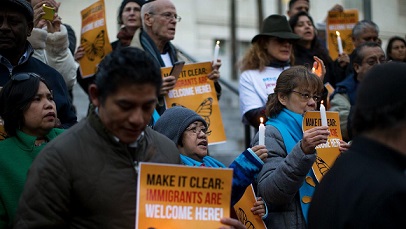
Demonstrators protest against President Donald Trump’s crackdown on ‘sanctuary cities’ outside the City Hall in Los Angeles on Jan. 25. Photo: Ringo Chiu/Zuma Press

By Alejandro Lazo

Jan. 28, 2017 12:58 p.m. ET

CU Blog - California Secession - W.T.H. - Photo 3SAN FRANCISCO—California secession dreamers can begin collecting signatures to place a  nationhood proposal on the November 2018 ballot, after language for the measure was approved this week by the state’s attorney general.

The notion of a “Calexit”—a highly improbable idea that would require an amendment to the U.S. Constitution—gained popularity on social media following President Donald Trump’s unexpected victory in November, mostly as a humorous expression of opposition to the new president, whose policies are at odds with the liberal state.

The measure would strike a line from the state Constitution describing California as “an inseparable part of the United States of America” and set up an election, on March 5, 2019, asking the question, “Should California become a free, sovereign and independent country?”

Proponents of the measure, a group called “Yes California“, have until July 25 to gather 585,407 signatures for the measure. Even if they manage that feat, which is usually accomplished by hiring an army of signature-gatherers, the effort faces larger hurdles.

A number of states have had individual secession movements in recent years, including Texas and Hawaii, but the Supreme Court has ruled the U.S. Constitution doesn’t have a process for states to exit from the union.

But that history hasn’t dissuaded some Californians from toying with the notion. The “Yes California” effort began in 2014 and the idea was discussed more widely on social media under the hashtag #Calexit following November’s election. The state voted overwhelmingly for Democrat Hillary Clinton against Mr. Trump.

“This idea was born a couple of years ago—it hasn’t been a response to Donald Trump, though we have found new support as a result of his election,” said “Yes California” cofounder Louis Marinelli, in a telephone interview from Yekaterinburg, Russia, where he lives and works teaching English as a second language. “We are really excited about the idea that this is starting to catch on.”

Mr. Marinelli was once a social conservative and activist with the anti-gay marriage group National Organization for Marriage, but said he had a change of heart, turning liberal. Mr. Marinelli said he voted for Mr. Trump in November because he felt a Trump victory would galvanize voters in the state and advance the cause for California independence.

Supporters such as Mr. Marinelli talk up the state’s large economy and independent political culture. The state has already set itself up as an adversary to Mr. Trump. State leaders have vowed to defend California’s policies on immigration, climate change and health care, often citing California’s powerful economy and status as the nation’s most populous state.

California had a gross domestic product of $2.5 trillion in 2015, which would make it the world’s sixth-largest economy if it were its own country, according to figures released last year by the California Department of Finance’s Economic Research Unit. Studies have found that California receives less in federal funding than it sends to the federal government in tax revenue, mostly because of its sizable population of high-income earners.

Even if Californians were to vote for independence, the effort would face enormous obstacles. Congress would have to approve a constitutional amendment, which requires a two-thirds vote by each chamber of Congress, or a vote by two-thirds of the states to call a constitutional convention, and then ratification by three-quarters of the states.

An analysis of the measure by California’s independent legislative analyst also found that the fiscal impact of the measure could be large. “Assuming that California actually became an independent nation, the state and its local governments would experience major, but unknown, budgetary impacts,” according to the analysis.

A separate California group that began in 2015 is seeking to register enough voters under the “California National Party” so that it can begin running candidates in local races who are supportive of a withdrawal. That group hopes to build support for secession over time, through elected leaders, and it isn’t supporting the ballot measure.

But leaders of both secession movements say their efforts are serious, and not simply a political statement. “It is a lot likelier than people think,” said Jay Rooney, a spokesman for the National party. “It’s certainly as likely as Donald Trump becoming president.”

Write to Alejandro Lazo at alejandro.lazo@wsj.com
Source: Wall Street Journal January 28, 2017 from: http://www.wsj.com/amp/articles/backers-of-california-seceding-from-the-u-s-get-a-go-ahead-1485626281

See the related story here:

Trump’s Threat to Take Federal Funding Away From Sanctuary Cities May Have Started Fight He Can’t Win
Posted January 27, 2017, By CNN WIRE
Source: http://ktla.com/2017/01/27/trumps-threat-to-take-federal-funding-away-from-sanctuary-cities-may-have-started-fight-he-cant-win/

Secession as a dissent strategy has not been deployed successfully since 1861, when the dissension over slavery was so polarizing that there was no hope for peaceful reconciliation.

The most significant and notable events related to secession of states, and the initiation of the American Civil War occurred between November 6, 1860 and April 15, 1861. On November 6, 1860, Abraham Lincoln wins the 1860 presidential election to become the 16th President on a platform that includes the prohibition of slavery in new states and territories.[233] Lincoln won all of the electoral votes in all of the free states (except in New Jersey where he won 4 votes and Stephen A. Douglas won 3). By the time Lincoln was inaugurated on March 4, 1861, 7 southern states had already seceded and the President of the Confederate States of America was already inaugurated. – Sourced from Wikipedia.

Can secession be used again to protest the mandates of the majority – California -vs- the full United States. If this is earnestly pursued in California, it will definitely get the attention of the rest of the country and also the world. (If constituted a separate country, California would be the 6th largest economy in the world – by GDP, just ahead of France).

All in all, it is apparent that the 45th President, Donald Trump, has to preside over a divided nation. The 16th President did not want a division in his day, so he  bargained, cajoled and proposed compromises to his opposition. Trump may have to ‘take a page out of that book’ from Lincoln.

This is perhaps what California is hoping for with the secession talk-action! See the VIDEO here debating the viability of this CalExit move:

VIDEO – Can California Actually Secede From The U.S.?https://youtu.be/gBWbfudLwtE

Published on Nov 18, 2016 – With the election of Donald Trump, calls for California to secede have grown strong. So how realistic is a Calexit?

Learn More:
CNN: What history says about ‘Calexit’
http://www.cnn.com/2016/11/11/opinion…

Yes California: The 2019 #Calexit Independence Referendum
http://www.yescalifornia.org/

New York Times: California Today: Secessionist Groups Seize the Moment
http://www.nytimes.com/2016/11/10/us/…

This is an American drama … worth watching in the next days, weeks, months and years. But reforming or transforming California or America is out of scope for the movement behind the book Go Lean…Caribbean; our focus is the Caribbean only.

The Go Lean book serves as a roadmap for the introduction and implementation of the Caribbean Union Trade Federation (CU), a technocratic federal government to administer and optimize the economic, security, and governing engines of the 30 Caribbean member-states. In fact the prime directives of the roadmap is identified with the following 3 statements:

  • Optimization of the economic engines in order to grow the regional economy to $800 Billion & create 2.2 million new jobs.
  • Establishment of a security apparatus to protect the resultant economic engines.
  • Improve Caribbean governance to support these engines.

The book asserts that many of the Caribbean member-states are dysfunctional and as a result many citizens have fled their homelands – this is a secession of sorts. Consider Puerto Rico, the island’s population as of 2010 was 3,725,789, while the Diaspora population across the US totaled 4,623,716. That an entire nation in absentia.

In general, the Caribbean population is 42 million, with a large Diaspora (estimated up to 25 million); many who have pledged not to return (for permanent residency) until their homeland breaks from the legacy of ineffectual governing systems, failing economic engines and inadequate security provisions.

These failing member-states is the focus of the Go Lean book, but there is mention of one city, Freeport/Lucaya, the 2nd City in the Bahamas. This town is the epitome of a dysfunctional community . They can benefit from a parallel secession strategy as that of California in the foregoing. This was the recommendation to Freeport in a previous blog-commentary, to consider a public referendum to weigh different secession options from the national government in Nassau. Freeport needs more autonomy for any chance of success.

The Go Lean recommendation is the secession option of incorporating a municipal city – with an autonomous parliament – and then become a Self-Governing Entity (SGE) of the CU.

By petitioning for autonomy, California in the US and Freeport in the Bahamas gets more audience for its grievances.

This is how a minority group can get a bigger-better addressing of issues in a country, “leave”, threaten to leave or negotiate to avert leaving. Sometimes, leaving involves secession.

This was also the experience for Scotland in the United Kingdom, as related in a previous blog-commentary.

There are a lot of lessons – from the worldwide struggle – to reform and transform communities. The underlying spirit behind a secession movement should be to make life better for a minority group who do not have the votes to effect change through the election process. This is one way to “appoint new guards” for governance. This was specified in the opening Declaration of Interdependence at the outset of the Go Lean book (Page 12):

xi. Whereas all men are entitled to the benefits of good governance in a free society, “new guards” must be enacted to dissuade the emergence of incompetence, corruption, nepotism and cronyism at the peril of the people’s best interest. The Federation must guarantee the executions of a social contract between government and the governed.

xxxiii. Whereas lessons can be learned and applied from the study of the recent history of other societies, the Federation must formalize statutes and organizational dimensions to avoid the pitfalls of [failing] communities … On the other hand, the Federation must also implement the good examples learned from [successful] developments/communities …

Thank you for the lesson California … and Scotland.

The Go Lean roadmap posits that the challenges in the US may yield a lot more lessons for our Caribbean region. We will be watching. We will “observe and report” on their strengths and weaknesses. Then apply the models effectively here at home. This is the quest of the Go Lean roadmap: to make our Caribbean homeland a better place to live, work and play. 🙂

Share this post:
, , ,
[Top]

Waging a Successful War on ‘Terrorism’

Go Lean Commentary

“The first casualty when war comes is truth” – US Senator Hiram Warren Johnson (1918).

In the United States, the War on ‘Terrorism’ was declared after the World Trade Center Attacks in September 2001. The war is still waging … some 16 years later. This is the third Commander-in-Chief (President) to lead the American effort; (George W. Bush, Barack Obama and Donald Trump). Now, the lines are starting to blur in terms of who are the enemies and who are the allies.

During the first week of the new Trump administration, the new President issued an Executive Order – fulfilling a campaign promise – banning all immigrants from certain Muslim-majority countries. This is purportedly in conjunction with the ongoing War on ‘Terror’. The problem is that the cited countries have not been the source of the terrorist activities that have attacked the US. The targeting seem arbitrary. We must consider the truth; see the news article and photo/map of this story here:

Title: These Countries with Business Links to Trump Aren’t Part of His Immigration Ban
By: Joseph Hincks

CU Blog - War on 'Terrorism' - Photo 1

A little over a year ago, then-Republican presidential candidate Donald Trump called for a “total and complete shutdown of Muslims entering the United States,” until the country’s leadership could “figure out what is going on.”

Along the campaign trail, he modified this blanket ban to a suspension of “immigration from terror-prone regions, where vetting cannot safely occur,” which he promised to enact during his first 100 days in office.

And now, a week into Trump’s presidency, he has tried to make good on that promise—or, at least, partly so. A draft proposal of an executive order obtained by Bloomberg News reportedly shows that Trump is poised to suspend all entry to the U.S. from seven Muslim-majority countries.

Notably missing from the blacklist, however, are several Muslim-majority countries where Trump has business dealings, according to Bloomberg.

The news organization has put together a map of the proposed suspensions, with the Muslim-majority countries where Trump has business interests—Egypt, Saudi Arabia, Turkey, and Azerbaijan—rendered in yellow.

While Muslim-majority countries such as Oman, Qatar, Kuwait, and others are not included on the list, the omission of Turkey and Egypt may be argued as being seen at odds with Trump’s definition. Both Turkey and Egypt endured high-profile terror attacks in 2016.

The President has positions in two companies that may be related to business in Egypt, and has previously praised the country’s autocratic leader, Abdel Fattah al-Sisi. In Turkey, Trump has a licensing deal to use his name on two luxury towers in Istanbul.

Source: Fortune Magazine Online Site; posted January 27, 2017; retrieved January 29, 2017 from: http://fortune.com/2017/01/27/donald-trump-muslim-immigration-ban-conflict/

Such a bold move – based on mis-truths – elicits response, feedback and uproar from opposition and pundits alike. In one such salvo on Saturday January 28th, a Security Analyst (with TV News Network MSNBC), Malcolm Nance, identified that terrorists are sourced in many countries around the world, not just the banned 7 and including places like the Caribbean.

Wait, what?!?! Such a scandalous accusation!

This brings to mind a previous blog-commentary by the promoters of the book Go Lean … Caribbean, describing the reality of the terrorism-threat in the Caribbean:

ISIS reaches the Caribbean Region

The Caribbean member-states are all atwitter about such associations. The region’s governments asserts that they are partners in the ‘War on Terror’ and not accessories to any Bad Actors. Consider the formal response from the Bahamas in the Appendix A below.

But truth be told, the US – and other advanced democracy countries – are very alarmed with their Caribbean partners; we have so many societal defects that exacerbate the global attempts to mitigate terrorism. Consider this list of security-based societal defects:

1.  Indiscriminant Citizenship By Investment Program – see the CBS 60 Minutes story about Passports for Sale even to Terror Suspects featured in this previous blog. Can terrorists hide their identity with a passport from a Caribbean member-state? Can we do better going forward?CU Blog - War on Rent - Photo 3
CU Blog - War on 'Terrorism' - Photo 22.  US PATRIOT Act – Managing ‘the Need and the Greed’ with this law. The measure allowed US authorities to have purview on foreign bank accounts in cooperative countries. This is where the Caribbean member-states were given the opportunity to demonstrate that they were willing to mitigate terrorism. Cooperation with these measures – see Appendix B below – jeopardized the Offshore Banking industry in the region. Can terrorists use our “banking in the shadows” to facilitate their malice? The historicity of the Offshore Banking Regulatory changes were detailed in the Go Lean book (Pages 321 – 326). Consider this sample from Page 321:

“In 2001 the development of standards in the fight against terrorism financing was added to the mission of the FATF [(Financial Action Task Force … on Money Laundering)]. In October 2001 the FATF issued the Eight Special Recommendations to deal with the issue of terrorism financing. The continued evolution of money laundering techniques led the FATF to revise the FATF standards comprehensively in June 2003. In October 2004 the FATF published a Ninth Special Recommendations, further strengthening the agreed international standards for combating money laundering and terrorism financing”.

3.  Aversion to Digital Dragnets – The cutting edge technologies to capture meta-data or actual cell phone contents have been frowned on in the Caribbean; in a 2011 WikiLeaks dissemination, whistleblower Edward Snowden revealed that the Bahamas cooperates with US official and records all cell phone calls. This disclosure was assailed as an Abuse of Power. But we must admit, this is an abuse of American power on the Caribbean homeland. Issues abound that need to be addressed and settled. The societal defect is that we are expecting others (the US in this case) to take the lead for our own security. Can we better prepare our own security apparatus for our own security needs? See VIDEO here relating the Privacy Concerns of dragnets.
VIDEO – USA Today: Digital Dragnet – Police Scoop Up Cell Phone Data – https://www.occupycorporatism.com/digital-dragnet-dhs-police-stingray-trackers/

Posted December 9, 2013 – Systems like the “Stingray” allow law enforcement entities to “tap into cellphone data in real time . . . capturing information about thousands of cellphone users at a time, whether they are targets of an investigation or not”.
4.  Monitoring for threats (Weapons of Mass Destruction) – like Nuclear weapons. In the Caribbean, the “Sum of our Greatest Fear” is a terrorist detonating a dirty (nuclear) bomb in an unsecured island community. This is not just something we can complain about, no, we must prepare. There is an international accord that affords a solution, through the US. This is addressed in the discussion of the NEST program (Nuclear Emergency Support Team) in Appendix C below. We can facilitate our own arrangement, with US cooperation. We can mount sensors and monitoring equipment; we can grant access and enable the NEST inspectors in our domain.
CU Blog - War on 'Terrorism' - Photo 3

How we receive, perceive and retrieve security mitigations indicates the impact of our societal defects. Without firing one shot, the Caribbean is able to help or hurt the War Against ‘Terrorism’ with our societal defects. This is commentary 4 of 4 from the movement behind the Go Lean book on the subject of Caribbean societal defects. So how do we move our communities from the deficient-defective status quo to our targeted destination: “a better (safer) place to live, work and play”? By waging war on our defects. All of these commentaries detail that effort, for the following defects:

  1. Waging a Successful War on Orthodoxy
  2. Waging a Successful War on Stupidity
  3. Waging a Successful War on Rent
  4. Waging a Successful War on ‘Terrorism’

These commentaries draw reference to the Go Lean book, as it details the quest to reform and transform the Caribbean; it features a how-to guide and roadmap for elevating the region’s societal engines for (1.) economics, (2.) security and (3.) governance. Strategies, tactics and implementations for the War Against Terrorism have relevance for all these three spheres of society.

The book Go Lean … Caribbean serves as a roadmap for the introduction and implementation of the Caribbean Union Trade Federation (CU) to elevate the region’s societal engines of economics, security and governance. With a brand name like Trade Federation, obviously the primary focus is on economics, but the book asserts (Page 23) that peace, security and public safety must be tantamount to economic prosperity; that bad things will happen to good people and so the community needs to be prepared to contend with the risks that can imperil the homeland. The Go Lean book therefore serves as a roadmap for full Caribbean integration, with the motivation for Greater Good. In all, the Go Lean roadmap has these 3 prime directives:

  • Optimization of the economic engines in order to grow the regional economy and create new jobs.
  • Establishment of a homeland security apparatus to ensure public safety and to protect the resultant economic engines of the Caribbean region.
  • Improvement of Caribbean governance to support these engines.

The priority on homeland security was pronounced early in the Go Lean book with the opening Declaration of Interdependence (Page 12) that claims:

x. Whereas we are surrounded and allied to nations of larger proportions in land mass, populations, and treasuries, elements in their societies may have ill-intent in their pursuits, at the expense of the safety and security of our citizens. We must therefore appoint “new guards” to ensure our public safety and threats against our society, both domestic and foreign. The Federation must employ the latest advances and best practices … to assuage continuous threats against public safety.

xi. Whereas all men are entitled to the benefits of good governance in a free society, “new guards” must be enacted to dissuade the emergence of incompetence, corruption, nepotism and cronyism at the peril of the people’s best interest. The Federation must guarantee the executions of a social contract between government and the governed.

xii. Whereas the legacy in recent times in individual states may be that of ineffectual governance with no redress to higher authority, the accedence of this Federation will ensure accountability and escalation of the human and civil rights of the people for good governance, justice assurances, due process and the rule of law. As such, any threats of a “failed state” status for any member state must enact emergency measures on behalf of the Federation to protect the human, civil and property rights of the citizens, residents, allies, trading partners, and visitors of the affected member state and the Federation as a whole.

xvi. Whereas security of our homeland is inextricably linked to prosperity of the homeland, the economic and security interest of the region needs to be aligned under the same governance. Since economic crimes, including … forms of terrorism, can imperil the functioning of the wheels of commerce for all the citizenry, the accedence of this Federation must equip the security apparatus with the tools and techniques for predictive and proactive interdictions.

The Caribbean appointing these “new guards” will include many strategies, tactics and implementations considered “best-practices” in the War Against Terror.

The CU would be established by the sovereign powers of the 30 Caribbean member-states to empower the region with economic, security and governing tools and techniques. This includes a Security / Defense Pact (Armed Forces) with a fully-empowered Naval Force and Expeditionary Marine (ground) Forces. The Security Pact is about action, not attitude; but the right societal attitude (weeding out societal defects) is important, critical even.

Societal defects are destructive and self-defeating for the interior of our communities. But in the case of security gaps, far-away communities can be imperiled as well. The War on Terrorism is fought by many stakeholders on many different ‘battlefields’.  Consider airport screening; once every passenger has been screened for weapons and explosives, the plane is considered “sanitized” and can then enter any airspace with a presumed label of “safe-and-secured”. Poor security executions in the Caribbean can therefore impact the public safety of far-away places. So our defects can result in bad cause-and-effect for other (innocent) people.

This is the attitude – community ethos – that we must adopt, that our battles in the War Against Terror can help/hurt the rest of the world. “Community Ethos” is defined here as:

“… the fundamental character or spirit of a culture; the underlying sentiment that informs the beliefs, customs, or practices of a group or society; dominant assumptions of a people or period practices of a group or society; dominant assumptions of a people or period”.

The Go Lean book details the series of community ethos, strategies, tactics, implementations and advocacies to wage a successful ‘War on Terrorism’; this includes proactive and reactive public safety/security measures in the Caribbean region:

Community Ethos – Economic Systems Influence Individual Choices Page 21
Community Ethos – Consequences of Choices Lie in Future Page 21
Community Ethos – Privacy –vs- Public Protection Page 23
Community Ethos – Intelligence Gathering Page 23
Community Ethos – Whistleblower Protection Page 23
Community Ethos – “Crap” Happens Page 23
Community Ethos – Cooperatives Page 25
Community Ethos – Ways to Manage Reconciliations Page 34
Community Ethos – Ways to Improve Sharing Page 35
Community Ethos – Ways to Promote Happiness Page 36
Community Ethos – Ways to Impact the Greater Good Page 37
Strategy – Vision – Confederating a non-sovereign permanent union Page 45
Tactical – Fostering a Technocracy Page 64
Tactical – Separation of Powers – Coast Guard & Naval Authorities Page 75
Tactical – Separation of Powers – Ground Militia Forces Page 75
Tactical – Separation of Powers – Emergency Management Agency Page 76
Tactical – Separation of Powers – CariPol: Marshals & Investigations Page 75
Implementation – Ways to Pay for Change Page 101
Implementation – Start-up Foreign Policy Initiatives Page 102
Implementation – Start-up Security Initiatives Page 103
Implementation – Ways to Foster International Aid Page 115
Planning – 10 Big Ideas – #3: Consolidated Homeland Security Pact Page 130
Planning – Ways to Make the Caribbean Better Page 131
Planning – Ways to Improve Failed-State Indices – Escalation Role Page 134
Planning – Lessons from the American West – Needed Law & Order Page 142
Planning – Lessons from Egypt – Law & Order for Tourism Page 143
Advocacy – Ways to Grow the Economy – Quick Disaster Recovery Page 151
Advocacy – Ways to Improve Governance Page 168
Advocacy – Ways to Better Manage the Social Contract Page 170
Advocacy – Ways to Impact Justice – Policing/Supporting the Police Page 177
Advocacy – Ways to Reduce Crime – Regional Security Intelligence Page 178
Advocacy – Ways to Improve Homeland Security Page 180
Advocacy – Ways to Mitigate Terrorism Page 181
Advocacy – Ways to Improve Intelligence Gathering & Analysis Page 182
Advocacy – Reforms for Banking Regulations – Offshore Banking Reforms Page 199
Advocacy – Ways to Impact Wall Street – Downplay Lawless Impressions Page 200
Advocacy – Ways to Impact Main Street Page 201
Advocacy – Ways to Protect Human Rights – Watchful World Page 220
Appendix ZD – Offshore Tax & Financial Services Industry Developments Page 321
Appendix ZE – Offshore Tax & Financial Services Industry – Bahamas Example Page 322

Other subjects related to security and governing empowerments for the region’s defense have been blogged in other Go Lean…Caribbean commentaries, as sampled here:

https://goleancaribbean.com/blog/?p=9974 Lessons Learned from Pearl Harbor
https://goleancaribbean.com/blog/?p=9072 Securing the Homeland – On the Ground
https://goleancaribbean.com/blog/?p=9070 Securing the Homeland – From the Seas
https://goleancaribbean.com/blog/?p=9068 Securing the Homeland – From the Air
https://goleancaribbean.com/blog/?p=7119 Security Role Model for the Caribbean: African Standby Force
https://goleancaribbean.com/blog/?p=6720 A Lesson in History – During the Civil War: Fighting for Our Own Cause
https://goleancaribbean.com/blog/?p=6103 Sum of All Fears – ‘On Guard’ Against Deadly Threats
https://goleancaribbean.com/blog/?p=5183 A Lesson in History – Cinco De Mayo and Mexico’s Security Lapses
https://goleancaribbean.com/blog/?p=5002 Managing a ‘Clear and Present Danger’
https://goleancaribbean.com/blog/?p=4809 Americans arrest 2 would-be terrorists – a Clear and Present Danger
https://goleancaribbean.com/blog/?p=4360 Dreading the ‘Caribbean  Basin Security Initiative’
https://goleancaribbean.com/blog/?p=3881 Intelligence Agencies to Up Cyber Security Cooperation
https://goleancaribbean.com/blog/?p=1965 America’s Navy – 100 Percent – Model for Caribbean
https://goleancaribbean.com/blog/?p=1554 Status of Forces Agreement = Security Pact
https://goleancaribbean.com/blog/?p=1076 Trinidad Muslims travel to Venezuela for Jihadist training
https://goleancaribbean.com/blog/?p=809 Muslim officials condemn abductions of Nigerian girls
https://goleancaribbean.com/blog/?p=535 Remembering and learning from Boston
https://goleancaribbean.com/blog/?p=273 10 Things We Want from the US – #4: Pax Americana

An effort to provide better security solutions in the Caribbean should be welcomed here.

The new Caribbean must foster good security habits … and ‘War against Bad Ones’ – societal defects. This is how to secure our homeland: monitor for threats, gather intelligence, investigate incidences, police communities, arm a defense apparatus and prepare for the worst.

This level of response is new … for our region; we normally sit back and let someone else do the heavy-lifting for security. But it is time now to grow up and secure our own communities and our economic engines.

All Caribbean stakeholders are therefore urged to lean-in to this roadmap, to this conceivable, believable and achievable plan to make the Caribbean a better place to live, work and play. 🙂

Download the book Go Lean … Caribbean – now!

———–

Appendix A – Statement By The Bahamas Ministry of Foreign Affairs

On Reported ‘Terrorism Threat From The Bahamas’

28 January 2017

For Immediate Release

Today on MSNBC Cable News, on a show hosted by Joy-Ann Reid, a guest Malcolm Nance, a reported expert in security and terrorism, made the following statement:

” We [ the United States] have not banned terrorists from Brazil. ISIS has dozens of members from Brazil or Trinidad or The Bahamas who have more terrorists members than any of those other countries.”

In today’s atmosphere, the video clip is being spread around at a clipped pace.

Upon hearing the report, the Minister of Foreign Affairs Fred Mitchell spoke with the Prime Minister, the National Security Minister, the Head of SIB in the Royal Bahamas Police Force. all of whom are responsible for the country’s national security and they have no knowledge of any such terrorists or group of terrorists or any individual terrorist that is related to ISIS or any other terrorist organization in The Bahamas.

In speaking with ZNS TV news this evening, the Minister said the report is rubbish.

He indicated that the U S Mission in the United States has been asked to reach out to US counterparts, to MSNBC and the Mr. Nance himself to find out what the source of the allegation is. The Mission has been asked to ask for a retraction forthwith.

Source: Retrieved January 29, 2017 from: http://www.thebahamasweekly.com/publish/bis-news-updates/Bahamas_Gov_t_responds_to_MSNBC_regarding_reported_terrorism_threat_from_The_Bahamas52287.shtml

———–

Appendix B – USA Patriot Act

The USA PATRIOT Act is an Act of Congress that was signed into law by President George W. Bush on October 26, 2001.[1] With its ten-letter abbreviation (USA PATRIOT) expanded, the full title is “Uniting and Strengthening America by Providing Appropriate Tools Required to Intercept and Obstruct Terrorism Act of 2001”.[2]

On May 26, 2011, President Barack Obama signed the PATRIOT Sunsets Extension Act of 2011, a four-year extension of three key provisions in the USA PATRIOT Act:[3] roving wiretapssearches of business records, and conducting surveillance of “lone wolves”—individuals suspected of terrorist-related activities not linked to terrorist groups.[4]

Following a lack of Congressional approval, parts of the Patriot Act expired on June 1, 2015.[5] With the passage of the USA Freedom Act on June 2, 2015, the expired parts were restored and renewed through 2019.[6] However, Section 215 of the law was amended to stop the National Security Agency (NSA) from continuing its mass phone data collection program.[6] Instead, phone companies will retain the data and the NSA can obtain information about targeted individuals with permission from a federal court.[6]

From broad concern felt among Americans from both the September 11 attacks and the 2001 anthrax attacks, Congress rushed to pass legislation to strengthen security controls.

Acts amended Electronic Communications Privacy Act
Computer Fraud and Abuse Act
Foreign Intelligence Surveillance Act
Family Educational Rights and Privacy Act
Money Laundering Control Act
Bank Secrecy Act
Right to Financial Privacy Act
Fair Credit Reporting Act
Immigration and Nationality Act of 1952
Victims of Crime Act of 1984
Telemarketing and Consumer Fraud and Abuse Prevention Act

Title III: Anti-money-laundering to prevent terrorism

Title III of the Act, titled “International Money Laundering Abatement and Financial Anti-Terrorism Act of 2001,” is intended to facilitate the prevention, detection and prosecution of international money laundering and the financing of terrorism. It primarily amends portions of the Money Laundering Control Act of 1986 (MLCA) and the Bank Secrecy Act of 1970 (BSA). It was divided into three subtitles, with the first dealing primarily with strengthening banking rules against money laundering, especially on the international stage. The second attempts to improve communication between law enforcement agencies and financial institutions, as well as expanding record keeping and reporting requirements. The third subtitle deals with currency smuggling and counterfeiting, including quadrupling the maximum penalty for counterfeiting foreign currency.

Restrictions were placed on accounts and foreign banks. It prohibited shell banks that are not an affiliate of a bank that has a physical presence in the U.S. or that are not subject to supervision by a banking authority in a non-U.S. country. It also prohibits or restricts the use of certain accounts held at financial institutions.[47] Financial institutions must now undertake steps to identify the owners of any privately owned bank outside the U.S. who have a correspondent account with them, along with the interests of each of the owners in the bank. It is expected that additional scrutiny will be applied by the U.S. institution to such banks to make sure they are not engaging in money laundering. Banks must identify all the nominal and beneficial owners of any private bank account opened and maintained in the U.S. by non-U.S. citizens. There is also an expectation that they must undertake enhanced scrutiny of the account if it is owned by, or is being maintained on behalf of, any senior political figure where there is reasonable suspicion of corruption.[48]Any deposits made from within the U.S. into foreign banks are now deemed to have been deposited into any interbank account the foreign bank may have in the U.S. Thus any restraining order, seizure warrant or arrest warrant may be made against the funds in the interbank account held at a U.S. financial institution, up to the amount deposited in the account at the foreign bank.[49]

Source: Retrieved January 29, 2017 from: https://en.wikipedia.org/wiki/Patriot_Act

———–

Appendix C – Nuclear Emergency Support Team

The Nuclear Emergency Support Team (NEST) (formerly known as the Nuclear Emergency Search Team) is a team of scientists, technicians, and engineers operating under the United States Department of Energy‘s National Nuclear Security Administration (NNSA). Their task is to be “prepared to respond immediately to any type of radiological accident or incident anywhere in the world”.[1]

History

Concerns over scenarios involving nuclear accidents or incidents on American soil are not recent. As early as the 1960s, officials were concerned that a nuclear weapon might be smuggled into the country, or that an airplane carrying a nuclear weapon might crash and contaminate surrounding areas.[2] In late 1974, President Gerald Ford was warned that the FBI received a communication from an extortionist wanting $200,000 (equivalent to $971,000 in 2016) after claiming that a nuclear weapon had been placed somewhere in Boston. A team of experts rushed in from the United States Atomic Energy Commission but their radiation detection gear arrived at a different airport. Federal officials then rented a fleet of vans to carry concealed radiation detectors around the city but forgot to bring the tools they needed to install the equipment. The incident was later found to be a hoax. However, the government’s response made clear the need for an agency capable of effectively responding to such threats in the future. Later that year, President Ford created the Nuclear Emergency Search Team (NEST), which under the Atomic Energy Act is tasked with investigating the “illegal use of nuclear materials within the United States, including terrorist threats involving the use of special nuclear materials”.[1]

One of its first responses was in Spokane, Washington on November 23, 1976. An unknown group called the “Days of Omega” had mailed an extortion threat claiming they would explode radioactive containers of water all over the city unless paid $500,000 (equivalent to $2,104,000 in 2016). Presumably, the radioactive containers had been stolen from the Hanford Site, less than 150 miles (240 km) to the southwest. Immediately, NEST flew in a support aircraft from Las Vegas and began searching for non-natural radiation, but found nothing. No one ever responded, despite the elaborate instructions given, or made any attempt to claim the (fake) money, which was kept under surveillance. Within days, the incident was deemed a hoax, though the case was never solved. To avoid panic, the public was not notified until a few years later.[3][4]

Today

According to the Bulletin of the Atomic Scientists, NEST has the ability to deploy as many as 600 people to the scene of a radiological incident, though deployments do not usually exceed 45 people.[5] NEST has a variety of equipment (weighing up to 150 tons) and has the support of a small fleet of aircraft which includes four helicopters and three airplanes, all outfitted with detection equipment.

When an airborne response to an incident is underway, the Federal Aviation Administration grants NEST flights a higher control priority within the United States National Airspace System, designated with the callsign “FLYNET”.

Since 1975, NEST has been warned of 125 nuclear terror threats and has responded to 30. All have been false alarms.

Source: Retrieved January 29, 2017 from: https://en.wikipedia.org/wiki/Nuclear_Emergency_Support_Team


Share this post:
, , ,
[Top]

Waging a Successful War on Rent

Go Lean Commentary

‘Rent’ is a 4-letter word …

… in the field of Economics.

This is not referring to the positive action of paying for the monthly expense for a house or an apartment, but rather the bad practice of extracting uncompensated value from others without making any contribution – getting something for nothing.

With such a simple definition, the assumption would be that ‘rent’ is unwelcomed and marginalized in society. And yet, for the Caribbean, this bad practice proliferates.

“Say it ain’t so…”

Unfortunately, there is plenty “rent-seeking” in the Caribbean. If we want to reform and transform our society – we do – there is a need to “Wage War” against this bad practice of rent-seeking.

CU Blog - War on Rent - Photo 1

The movement behind the book Go Lean … Caribbean describes rent-seeking as a societal defect … in the Caribbean, and most other societies. It is destructive and self-defeating. In a previous blog-commentary, this defective practice was fully dissected, detailed and dismissed as behavior we want to weed out of Caribbean society.

How?

First we start by recognizing that there is a problem:

“There is rent-seeking in our communities”.

Now we can arm ourselves for battle in this War Against Rent. This is an important first step in reforming and transforming our regional society. This is commentary 3 of 4 from the movement behind the Go Lean book on the subject of Caribbean societal defects. So how do we move our communities from the deficient-defective status quo to our targeted destination: “a better place to live, work and play”? By waging war on our defects. All of these commentaries detail that effort, for the following defects:

  1. Waging a Successful War on Orthodoxy
  2. Waging a Successful War on Stupidity
  3. Waging a Successful War on Rent
  4. Waging a Successful War on ‘Terrorism’

These commentaries draw reference to the Go Lean book, as it details the quest to transform the Caribbean; it features a how-to guide and roadmap for elevating the region’s societal engines for economics, security and governance. Rent-seeking can, and have, penetrated all these three spheres of society.

In the previous commentary on ‘Stupidity’, it was established that when stupid policies-practices persist in a society, it is usually because “someone is profiting” in the shadows. Rent-seeking on the other hand, tends to be “out in the open”, i.e. guaranteed gratuities at a restaurant/bar. Both stupidity and rent-seeking are therefore tied to Crony-Capitalism: the abuse of public funds for private gain.

Consider these details of rent-seeking in the economics, security and governing societal engines:

Economics
Gratuity              . 18 percent guaranteed
Sharing Economy AirBnB and Uber examples
Security
Bribery/Graff   . An obvious crime
Traffic Cameras Electronic surveillance used to auto-generate traffic tickets
Governance
Citizenship For Sale $100,000 fees for … doing nothing – See VIDEO in the Appendix.
Disclosures           . Follow the money‘; many politicians enter public service with modest incomes, but become wealthy while in office, despite only moderate government paychecks.
Fuel Taxes             . Dissuade Green Alternatives and e-Cars. “Invention, the Mother of Necessity” is discouraged because the government wants it’s guaranteed revenues.

The movement behind the Go Lean book seeks to reform and transform the economic engines of the Caribbean by being technocratic in applying best practices from the field of Economics. Rent-seeking is distinguished in economic theory from profit-seeking, in which entities seek to extract value by engaging in mutually beneficial transactions.[6] Profit-seeking in this sense is the creation of wealth, while rent-seeking is the use of social institutions such as the power of government to redistribute wealth among different groups without creating new wealth.[7] For the Caribbean elevation quest, we see the defects; we see the destructive rent-seeking practices; and we now know how to supplant them. This intent is declared at the outset of the book with this Declaration of Interdependence (Page 10) for the region to work in unison to remediate the broken systems of commerce:

Preamble: As the colonial history of our region was initiated to create economic expansion opportunities for our previous imperial masters, the structures of government instituted in their wake have not fostered the best systems for prosperity of the indigenous people. Despite this past, we thrust our energies only to the future, in adapting the best practices and successes of the societies of these previous imperial masters and recognizing the positive spirit of their intent and vow to learn from their past accomplishments and mistakes so as to optimize the opportunities for our own citizenry to create a more perfect bond of union.

So how exactly do we supplant rent-seeking practices in the Caribbean? Foster best practices for economics and governance.

There is an implied Social Contract in every expression of governance everywhere, where “citizens surrender some of their freedoms and submit to the authority of the State in exchange for protection of remaining rights” (Page 170). In modern societies, there is a role for governments and a role for commercial entities. This was the assertion of the father of modern economists, Adam Smith, that the “division of functions” between governments and commerce should be carefully regulated to keep free enterprise operating “freely”; governments should limit their deliveries in commerce. The Go Lean book relates this (Page 67) as follows:

CU Blog - War on Rent - Photo 2Adam Smith, the 18th century Scottish political economics pioneer, is best known for his classic work: An Inquiry into the Nature and Causes of the Wealth of Nations (1776), usually abbreviated as The Wealth of Nations. This book is considered the first modern work of economics, and he is thusly cited as the “father of modern economics”, even today, and among the most influential thinkers in the field of economics. Through reflection over the economics at the beginning of the Industrial Revolution the [Wealth of Nations] book touches upon broad topics as the division of labor, productivity and free markets.

Smith attacked most forms of government interference in the economic process, including tariffs, arguing that these create inefficiency and high prices in the long run. It is believed that this theory, laissez-faire economic philosophy, influenced government legislation in later years.

Smith advocated a government that was active in sectors other than the economy. He advocated public education for poor adults, a judiciary, and a standing army—institutional systems not directly profitable for private industries.

So according to a scholar in economics from 240 years ago, the cause of Caribbean rent-seeking is governmental interference and the solution is a governmental “pull back”.

This is how to wage war against ‘rent’.

Look back at the foregoing list of Caribbean rent-seeking activities; and consider here how we can mitigate:

  • How much tips/gratuity should waiters/waitresses receive when they serve tables? The experience is that they always receive more that government-mandated 18% when the service is good. The incentive to provide good service is lost when the gratuity is guaranteed by government policy.
  • In other markets, the “Sharing Economy” has spurred the economy in creative ways: 1. AirBnB has created opportunities for festivals to absorb bigger crowds than hotel capacity; 2. the presence of Uber has forced taxicabs to become more efficient with smartphone apps and have created prospects for any restaurant to now offer delivery.
  • Fuel tax dependency in the Caribbean keeps electricity costs high; the average is US$0.35/kWh, one of the highest in the world. Green Energy alternatives have been avoided, even discouraged, despite an abundance of sun and wind resources; with these mitigations, the cost for electricity can be lowered to US$0.088/kWh.
  • Traffic Light Cameras will be a new deployment in the region. When these are implemented, they must be regulated at the government level. The government should never be the service provider but rather the escalation authority. It would be rent-seeking to just sit back and collect traffic fines … uncontested. Everything at a traffic light is not always “black-and-white or red-and-green”; there are scenarios with breakdowns and pedestrians that must be accounted with allowances.
  • Passports For Sale – This is indefensible; to tarnish the Caribbean Image for “30 Pieces of Silver”, sorry, make that $100,000. See VIDEO in the Appendix below.
  • CU Blog - War on Rent - Photo 3

The Go Lean book serves as a roadmap for the introduction and implementation of the Caribbean Union Trade Federation (CU). The CU is designed to be a technocratic intergovernmental entity that shepherds the Caribbean region. The goal is to reboot and optimize the region’s economic, security and governing engines. Optimization would entail weeding out any rent-seeking practice.

As previously detailed:

“Rent-seeking can prove costly to economic growth; high rent-seeking activity makes more rent-seeking attractive because of the natural and growing returns that one sees as a result of rent-seeking. Thus organizations value rent-seeking over productivity. In this case there are very high levels of rent-seeking with very low levels of output. Rent-seeking may grow at the cost of economic growth because rent-seeking by the state can easily hurt innovation. Ultimately, public rent-seeking hurts the economy the most because innovation drives economic growth.”[19]

“Government agents may initiate rent-seeking – such agents soliciting bribes or other favors from the individuals or firms that stand to gain from having special economic privileges, which opens up the possibility of exploitation of the consumer.[20] It has been shown that rent-seeking by a bureaucracy can push up the cost of production of public goods.[21] It has also been shown that rent-seeking by tax officials may cause loss in revenue to the public [treasury].”[8]

The Go Lean/CU roadmap employs some counter-tactics; consider the “Separation-of-Powers between CU federal agencies and Caribbean member-state governments”; so the limitations of national laws in a member-state would not override the CU. The CU‘s technocratic practices would directly apply to the installation of Exclusive Economic Zones (EEZ) and Self-Governing Entities (SGE); these operate in controlled bordered territories like campuses, industrial parks, research labs and industrial plants. Lastly, there is the power of “peer pressure” to reform the member-states. When progress is made by one Caribbean state, this would incline the others to follow suit. In total, the Go Lean/CU roadmap will employ strategies, tactics and implementations to impact its prime directives; identified with the following 3 statements:

  • Optimization of the economic engines in order to grow the regional economy to $800 Billion & create 2.2 million new jobs.
  • Establishment of a security apparatus to ensure public safety assurances and protect the region’s economic engines.
  • Improvement of Caribbean governance to support these engines.

The Go Lean roadmap seeks to “Wage War against Rent” by optimizing the entire Caribbean economic eco-system with the adoption of best practices for commerce and governance. This vision is defined early in the book (Page 12) in the following pronouncements in the Declaration of Interdependence:

xi. Whereas all men are entitled to the benefits of good governance in a free society, “new guards” must be enacted to dissuade the emergence of incompetence, corruption, nepotism and cronyism at the peril of the people’s best interest. The Federation must guarantee the executions of a social contract between government and the governed.

xii. Whereas the legacy in recent times in individual states may be that of ineffectual governance with no redress to higher authority, the accedence of this Federation will ensure accountability and escalation of the human and civil rights of the people for good governance, justice assurances, due process and the rule of law. As such, any threats of a “failed state” status for any member state must enact emergency measures on behalf of the Federation to protect the human, civil and property rights of the citizens, residents, allies, trading partners, and visitors of the affected member state and the Federation as a whole.

In order to make the Caribbean a better place to live, work and play the people of the region must change their attitudes about elements of their society – elements that are in place and elements missing. This is referred to as “Community Ethos”, defined as:

“the fundamental character or spirit of a culture; the underlying sentiment that informs the beliefs, customs, or practices of a group or society; dominant assumptions of a people or period practices of a group or society; dominant assumptions of a people or period”.

Rent-seeking is one of the negative community ethos – societal defects – that must be weeded out of the Caribbean. This ethos stems from an attitude of entitlement; to get something … for almost nothing. The Caribbean was colonized originally with this type of community ethos; a previous blog/commentary related this:

Most of the property and indigenous wealth of the Caribbean region is concentrated amongst the rich, powerful and yet small elite; an oligarchy. Many times these families received their property, corporate rights and/or monopolies by Royal Charter from the European monarchs of ancient times. These charters thus lingered in legacy from one generation to another … until …

The Go Lean book presents a roadmap on how to optimize the economic engines without continuing rent-seeking practices. The book stresses key community ethos, strategies, tactics, implementations and advocacies necessary to transform and turn-around the eco-systems of Caribbean society. These points are detailed in the book as follows:

Community Ethos – Deferred Gratification Page 21
Community Ethos – Return on Investments Page 24
Community Ethos – Ways to Impact the Future Page 26
Community Ethos – Ways to Impact the Greater Good Page 37
Strategy – Vision – Confederate all 30 member-states/ 4 languages into a Single Market Page 45
Tactical – Separation-of-Powers – CU Federal Government versus Member-State Governance Page 71
Implementation – Ways to Pay for Change – Award exploratory rights in exclusive territories Page 101
Implementation – Start-up Benefits from the Exclusive Economic Zone (EEZ) Page 104
Planning – 10 Big Ideas – #3: Proactive Anti-crime Measures Page 127
Planning – Ways to Improve Trade Page 128
Advocacy – Ways to Grow the Economy – Protect Property Rights Page 151
Advocacy – Ways to Create Jobs Page 152
Advocacy – Ways to Improve Governance Page 168
Advocacy – Ways to Better Manage the Social Contract Page 170
Advocacy – Ways to Impact Main Street Page 201

In considering this economic history, the CU/Go Lean roadmap distinguishes rent-seeking from profit-seeking:

  • Profit is Good!
  • Rent is Bad!

The new Caribbean must foster good economic habits … and abandon bad ones. This is how to grow the economy: create jobs; create businesses; retain people; foster new opportunities, learn from past mistakes and accomplishments.

This is new …

All Caribbean stakeholders are urged to lean-in to this roadmap/plan for change … and empowerment. This plan is conceivable, believable and achievable. 🙂

Download the book Go Lean … Caribbean – now!
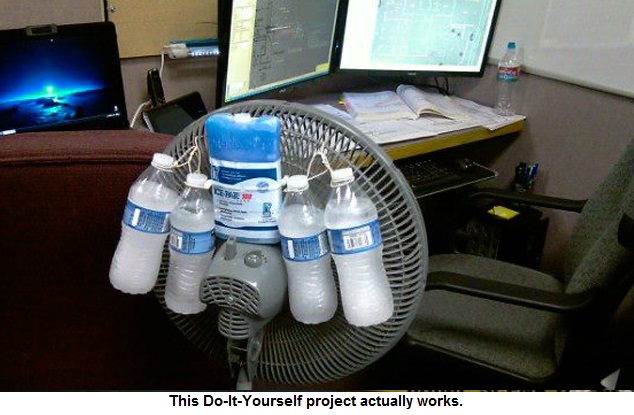
———–

Appendix VIDEO – CBS 60 Minutes: Passports For Sale – http://www.cbsnews.com/videos/passports-for-sale/

Posted January 1, 2017 – Steve Kroft reports on how cash-starved countries [in the Caribbean] offer citizenship for a price, creating ways to ease travel for foreigners, including those running from the law.

Share this post:
, ,
[Top]

Waging a Successful War on Stupidity

Go Lean Commentary

“Stupid is as stupid does…”

CU Blog - War on Stupidity - Photo 1

CU Blog - War on Stupidity - Photo 1b

Nobody likes to be called stupid!

It has a “stinging” feel to its indictment. It is different than being called “crazy” as insanity may be linked to a physical disability from brain chemistry. No, “stupid” is different. Stupid says that the person is perfectly sane and intentionally chooses an action that they know to yield an undesirable result – “… stupid does …”.

A person knowing they have a balance of $6.00 in their checking account, but newly writing a check for $7, knowing that their bank may charge them a $35 fee and the check recipient may charge another fee ($20 – $50 range). That one $7 transaction may cost up to $75 in fees.

Surely this is stupid! Yet this happens in society again … and again. In fact there is a whole industry based on this reality in the United States: Check Cashing / Pay-Day Loans. This entire industry has been weighed and measured and found to be  “wanting” or stupid.

So, knowing that there is some degree of intentionality associated with this question, why do people do the “stupid” things that they do?

Answer: It’s complicated!

Perhaps there’s more to “stupid” than what meets the eye. See/hear the AUDIO Podcast here of a related interview based on a new book:

CU Blog - War on Stupidity - Photo 2

AUDIO Podcast – What Is Driving The ‘Unbanking Of America’? – http://www.npr.org/2017/01/10/509126878/what-is-driving-the-unbanking-of-america

Published on January 10, 2017 – Author Lisa Servon says a growing number of Americans are giving up on traditional banks and relying instead on alternatives, including prepaid debit cards, check-cashing centers and payday lenders.
“… increasing numbers of working Americans are using those services and turning their backs on traditional banking because banks don’t meet their needs and whack them with fees and charges they aren’t expecting. In 2011, she notes, Americans paid $38 billion just in overdraft fees.”

There is no doubt that there is “stupidity” in society and there is a need to “Wage War” against it. We first need to understand the roots and origins; many times the “rhyme and reason” why stupid policies-practices persist, is because “someone is profiting”. So stupidity may be tied to Crony-Capitalism: the abuse of public funds for private gain.

The movement behind the book Go Lean … Caribbean describes this stupidity as a societal defect … in America … and the Caribbean. This previous blog-commentary has identified “Crony-Capitalism” as a serious societal defect in the US. The goal is for the Caribbean to do better!

How?

First we start by recognizing that there is a problem: “there is stupidity in our society”. Now we can arm ourselves for battle in this ‘War Against Stupidity’. This is an important first step in reforming and transforming our regional society. This is commentary 2 of 4 from the movement behind the Go Lean book on the subject of Caribbean societal defects. So how do we move our communities from the deficient-defective status quo to our targeted destination: “a better place to live, work and play”? By waging war on our defects. All of these commentaries detail that effort, for the following defects:

  1. Waging a Successful War on Orthodoxy
  2. Waging a Successful War on Stupidity
  3. Waging a Successful War on Rent
  4. Waging a Successful War on ‘Terrorism’

These commentaries draw reference to the Go Lean book, as it details the quest to transform the Caribbean; it features a how-to guide and roadmap for elevating the region’s societal engines for economics, security and governance. Stupidity can be found in all these three spheres of society. Consider these details:

Economics

The Go Lean book serves as a roadmap for the introduction and implementation of the Caribbean Union Trade Federation (CU). The CU is designed to be a technocratic – opposite of stupid – intergovernmental entity that shepherds the Caribbean region. The goal is to reboot and optimize the region’s economic, security and governing engines.  We have some stupidity that we need to weed out. Our economy currently serve as a parasite of other – more mature – economies, consider the US, Canada and Western Europe. We must not be parasites, we should be protégés. These role model countries have their own stupidity to weed out, consider the recent adventures with NINJA loans.

In a recent blog-commentary, the problem of these NINJA loans were fully dissected. Imagine giving a $100,000 mortgage to someone with No Income, No Job and no Assets. How about $200,000, or $300,000 or worse $400,000 to $600,000? The problem was that bad during the bad old days of the Great Recession of 2008. Many of the heightened financial controls – common sense mandates – that we implemented during the aftermath of the crisis, are now at risk of being dismantled with the new Donald Trump administration in the US.

This is stupidity; this is not the role model, we want to emulate in the Caribbean. But we, in the Caribbean, have our own stupid economic policies to contend with; consider this sample list:

Security

Stupidity can be found in other areas of society as well; take “crime and punishment” for example. Comedians (and other entertainers) often amuse us with stories about “Stupid Criminals” who commit atrocious acts, many times caught on camera. In fact, a proliferation of security and traffic cameras has proven to be a great investigation tool. See this phenomena portrayed in these sample VIDEOs:

VIDEO 1 – 10 Stupid Criminals You Won’t Believe – https://youtu.be/YOivkJxx2_0


Published on Nov 2, 2016 – Top 10 dumbest criminals in the world
Subscribe to our channel: http://goo.gl/9CwQhg
———–
VIDEO 2 – GEICO Commercial – Objection: Great Answer – https://youtu.be/zj_RHi1klRU


Published on Dec 4, 2016 – The savings you get from switching to GEICO make it a great answer for car insurance. But that leads some people to think that GEICO is a great answer to other tough questions. Watch this defendant use GEICO to defend his innocence. *** PARODY ***

CU Blog - War on Stupidity - Photo 3For the Caribbean to wage a successful war against stupidity, communities should make “Stupid Criminals” videos available to the media for full dissemination; these can be a great crime deterrence.

But videos from where? Consider:

Governance

There is a lot of stupidity in the governing arena.

Consider the US, the most advanced democracy on the planet. The assumption is “one man one vote” and yet in the 2016 general election, one candidate for President had 3 million more votes than the other opponent, and yet lost.  By some measures, the Electoral College is considered “stupid”.

In the Caribbean, we have a lot of stupid rules and stupid iterations in our governance; consider this sample list:

——–

The movement behind the Go Lean book wants to help reform and transform the Caribbean. We see the defects; we see the stupidity. We know how to overcome the stupidity. There is an implied Social Contract in every expression of governance everywhere. Technocratic efficiency is embedded in the implied CU Social Contract. The Go Lean book defines (Page 170) the Social Contract as follows:

“Citizens surrender some of their freedoms and submit to the authority of the State in exchange for protection of remaining natural and legal rights”.

The CU Social Contract, as specified in the Go Lean book, specifies that governments should serve the people as efficiently as possible. So then, how can we employ more efficiencies?

The Go Lean/CU roadmap seeks to deploy the technocratic efficiency by embracing the latest project management methodologies and best practices. In fact, the roadmap calls for the establishment of a Project Management Office in every Cabinet Office for the CU Trade Federation.

Further, the Go Lean/CU roadmap employs a tactic of a “Separation-of-Powers between CU federal agencies and Caribbean member-state governments”; so the limitations of national laws in a member-state does not have to override the CU. The CU constitution would apply to the installation of Exclusive Economic Zones (EEZ) and Self-Governing Entities (SGE) that operate in controlled bordered territories like campuses, industrial parks, research labs and industrial plants. Lastly, there is the power of “peer pressure” where progress by one CU member-state would incline others to follow suit. In total, the Go Lean/CU roadmap will employ strategies, tactics and implementations to impact its prime directives; identified with the following 3 statements:

  • Optimization of the economic engines in order to grow the regional economy to $800 Billion & create 2.2 million new jobs.
  • Establishment of a security apparatus to ensure public safety assurances and protect the region’s economic engines.
  • Improvement of Caribbean governance to support these engines.

The Go Lean roadmap seeks to “Wage War against Stupidity” by optimizing the entire Caribbean economic/security/governance eco-system with the adoption of best practices. This vision is defined early in the book (Page 12) in the following pronouncements in the Declaration of Interdependence:

xi. Whereas all men are entitled to the benefits of good governance in a free society, “new guards” must be enacted to dissuade the emergence of incompetence, corruption, nepotism and cronyism at the peril of the people’s best interest. The Federation must guarantee the executions of a social contract between government and the governed.

xii. Whereas the legacy in recent times in individual states may be that of ineffectual governance with no redress to higher authority, the accedence of this Federation will ensure accountability and escalation of the human and civil rights of the people for good governance, justice assurances, due process and the rule of law. As such, any threats of a “failed state” status for any member state must enact emergency measures on behalf of the Federation to protect the human, civil and property rights of the citizens, residents, allies, trading partners, and visitors of the affected member state and the Federation as a whole.

The Go Lean book posits that inefficient Caribbean communities can be reformed and transformed if they adopt the community ethos, strategies, tactics, implementations and advocacies as depicted in the Go Lean book; consider this sample:

Community Ethos – Economic Systems Influence Choices & Incentives Page 21
Community Ethos – People Respond to Incentives Page 21
Community Ethos – Lean Operations Page 24
Community Ethos – Ways to Impact Turn-Around Page 33
Strategy – Mission – Foster Local Economic Engines to Diversify the Economy Page 45
Tactical – Fostering a Technocracy Page 64
Tactical – Separation of Powers – Self-Governing Entities Page 80
Implementation – Steps to Implement Self-Governing Entities Page 105
Implementation – Ways to Deliver – Case Study on Project Management Offices (PMO) Page 109
Planning – Ways to Make the Caribbean Better Page 131
Advocacy – Ways to Measure Progress – Case Study on Six Sigma Methodology Page 147
Advocacy – Ways to Grow the Economy Page 151
Advocacy – Ways to Create Jobs Page 152
Advocacy – Ways to Better Manage the Social Contract Page 170
Advocacy – Ways to Improve Communications Page 186
Advocacy – Ways to Impact Urban Living Page 234
Advocacy – Ways to Impact Rural Living Page 235

The Caribbean can succeed in our efforts to improve our regional efficiencies. Consider this sample of previous blog-commentaries that delve into aspects of transformation in the Caribbean region:

https://goleancaribbean.com/blog/?p=10043 Integration Plan for Greater Caribbean Prosperity
https://goleancaribbean.com/blog/?p=9595 Vision and Values for a ‘New’ Caribbean
https://goleancaribbean.com/blog/?p=7989 Transformations: Money Matters – ‘Getting over’ with ‘free money’
https://goleancaribbean.com/blog/?p=7646 Going from ‘Good to Great’
https://goleancaribbean.com/blog/?p=7628 ‘A Change Is Gonna Come’
https://goleancaribbean.com/blog/?p=6993 Forging Change: ‘Something to Lose’
https://goleancaribbean.com/blog/?p=3915 ‘Change the way you see the world; you change the world you see’
https://goleancaribbean.com/blog/?p=1596 Transforming to where we can “Prosper where Planted”
https://goleancaribbean.com/blog/?p=623 ‘Only at the precipice, do they change’

The vision for a new Caribbean is one that has successfully ‘waged the war on stupidity’. This is easier said than done, but we have seen it (and done it) in other societies with measurable success, and we are ready, willing and able to succeed here at home.

Deploying a technocracy is how the Go Lean/CU roadmap wages a successful war on stupidity. Technocratic executions include the “arts and sciences” of project management and Quality Assurance (QA) deliveries. As related in the Go Lean book (Page 147):

… one QA methodology – Six Sigma follows a methodology, aimed at improving existing business processes – uses a set of quality management methods, including statistical methods, and creates a special infrastructure of people within the organization (Champions, Black Belts, Green Belts, Orange Belts, etc.) who are experts in these very complex methods. With Six Sigma the maturity of a delivery process can be described by a sigma rating indicating its yield or the percentage of defect-free deliveries it creates. A six sigma process is one in which 99.9999998% of products manufactured/services delivered are statistically expected to be free of defects (3.4 defects per million).

This is heavy-lifting, but ‘Yes, we can … do better‘.

We can work towards making our region a better homeland to live, work and play. We urge everyone in the Caribbean to lean-in to this roadmap for change and optimization. We do not have to do as stupid does. 🙂

Download the book Go Lean … Caribbean – now!

 

Share this post:
, ,
[Top]

Waging a Successful War on Orthodoxy

Go Lean Commentary

What is the formula for having/being a great society?

There is no doubt the societal engines of economics, security and governance must be optimized. But history has proven that these don’t just happen; there must be a concerted effort by stakeholders in society to make their community great. Yes, it takes “blood, sweat and tears”, but we find that there must be something else first, the right community attitude. The book Go Lean … Caribbean describes this attitude as community ethos …

… the fundamental character or spirit of a culture; the underlying sentiment that informs the beliefs, customs, or practices of a group or society; the dominant assumptions of a people or period.

There are good ethos and bad ethos (defects). The Caribbean member-states are not known as great societies, despite having the greatest “address on the planet” in terms of terrain, fauna/flora, hospitality, festivities, food, rum and cigars. This is because our community attitudes or ethos … suck!

We all know people that are beautiful on the outside, but ugly on the inside. See a sample in this VIDEO clip here from a recent movie.

VIDEO – Shallow Hal (1/5) Movie CLIP – Dancing With the Nasties (2001) – https://youtu.be/K4j25DUQLgE

Published on Sep 8, 2015 – Movie: Shallow Hal, a feature about “Inner Beauty”/”Inner Ugly”. See more movie clips: http://j.mp/1POlWqm
Following the advice of his dying father, Hal dates only women who are physically beautiful. One day, however, he runs into self-help guru Tony Robbins, who hypnotizes him into recognizing only the inner beauty of women. Hal thereafter meets Rosemary, a grossly obese woman whom only he can see as a vision of loveliness. But will their relationship survive when Hal’s equally shallow friend undoes the hypnosis? Written by “Anonymous”

The Caribbean has “outer beauty” and  “inner ugly”. See Photos here:

CU Blog - War on Orthodoxy - Photo 1CU Blog - War on Orthodoxy - Photo 1b

CU Blog - War on Orthodoxy - Photo 2CU Blog - War on Orthodoxy - Photo 2b

CU Blog - War on Orthodoxy - Photo 3CU Blog - War on Orthodoxy - Photo 3b

Identifying the Caribbean ugly – societal defects – is an important step in reforming and transforming the regional society. There are a number of defects to consider; this is commentary 1 of 4 from the movement behind the Go Lean book on the subject of Caribbean defects. So how do we move our region from the deficient-defective status quo to our targeted destination: the undisputed “greatest address on the planet”? By waging war on our defects. All of these commentaries detail that effort, for the following defects:

  1.   Waging a Successful War on Orthodoxy
  2.   Waging a Successful War on Stupidity
  3.   Waging a Successful War on Rent
  4.   Waging a Successful War on ‘Terrorism’

These  commentaries draw reference to the Go Lean book, as it details the quest to transform the Caribbean; it features a how-to guide and roadmap for elevating the region’s societal engines (economic, security and governance).

What is ‘Orthodoxy’ and why is it important to “War” against it?

The simple definition is: a belief or a way of thinking that is accepted as true or correct. The more formal definition is defined as follows:

or·tho·dox·y
(noun)

1. authorized or generally accepted theory, doctrine, or practice.

synonyms: doctrine, belief, conviction, creed, dogma, credo, theory, tenet, teaching
“Christian orthodoxies”

2. the whole community of Orthodox Jews or Orthodox Christians.

In everyday-speak, “do what you have always done; get what you always got”.

Is orthodoxy a force for good in modern society … in the Caribbean? Despite the above definitions relating to religion and doctrine, the unfortunate observation is:

“No, orthodoxy is not a force for moral good”.

The reference to Caribbean orthodoxy is not limited to religion; there are other defects as well; for example, there is the whole case study of colonialism:

Colonialism refers to the establishment of a colony in one territory by a political power from another territory; [particularly from Europe], and the subsequent maintenance, expansion, and exploitation of that colony. The term is also used to describe a set of unequal relationships between the European colonial power (British, Denmark, Dutch, French, Portugal and Spain) and the colony and often between the colonists and the indigenous peoples. The European colonies in the Caribbean also featured the practice of slavery of an imported African population.

The European colonial period was the era from the 16th century to the mid-20th century when several European powers established colonies in Asia, Africa, and the Americas. At first the countries followed a policy of mercantilism, designed to strengthen the home economy at the expense of rivals, so the colonies were usually allowed to trade only with the mother country. By the mid-19th century, however, many empires gave up mercantilism and trade restrictions and introduced the principle of free trade, with few restrictions or tariffs.

The book Go Lean…Caribbean details (Page 307) a lot of the history of the European colonial movement in the Caribbean. Some territories changed hands from one European power to another (again and again); consider the island of Trinidad got their independence from the British, but the Spanish name of “Trinidad” (English equivalent of Trinity), extols the Spanish legacy. (The US Virgin Islands have a city named Christiansted, reflecting its Danish legacy). In fact, the 30 different member-states in Caribbean region feature 5 different European colonial legacies and 4 different languages. (18 Caribbean member-states are part of the British Commonwealth).

The Go Lean book serves as a roadmap for the introduction and implementation of the Caribbean Union Trade Federation (CU). The CU is designed to be a technocratic intergovernmental entity that sheds the orthodoxy of European colonialism. The goal is to reboot and optimize the region’s economic, security and governing engines.

How much of this European orthodoxy remain?

Plenty…

… this despite the fact that many of the former European powers have discontinued much of their orthodox practices. Consider these following examples in the Caribbean region:

  • Patriarchy – Men “must” lead … at the peril of women; assigning more status and privileges to men; this effectuates repression of women and girls.
  • Homosexual Persecution – Regulating the private affairs against homosexuality – i.e. British Buggery – has now been defined as a human rights violation.
  • Domestic violence toleration
  • Racial Prejudice & Dissension – The justification of African Slave Trade in the New World was religious expansionism.
  • School uniforms for youth classification; girls must wear skits or dresses
  • Nurses in clinics/hospitals must wear formal dresses and stockings
  • Lawyers/Judges must wear wigs
  • Supreme Court (highest) authority remaining in Europe
  • Upper Chamber of Legislature a body of entitlement only
  • Titles – Right Honorable, Lord, Your Eminence…
  • Mercantilism –  all trade must go through colonial masters; services (i.e. postal mail) and telecommunications continue this routing.
  • Carnival festivities banned for Sundays

The results of this orthodoxy on our society is dire and desperate: we are near Failed-State status!

Too much?!?!  Too radical an assessment? Think again, we have such a high societal abandonment rate that it is plausible to assign any descriptor synonymous with “failing”.

A mission of the Go Lean/CU roadmap is to mitigate Failed-State indices, and reverse the propensity for “human flight”. The book accepts the premise that many people flee the Caribbean region in search of refuge from the region’s strict orthodoxy. The book explains that there are two reasons why people flee their beloved homelands: “Push” and “Pull” factors. These factors highlight reasons that people want to flee “home” and seek “refuge” in foreign countries. “Refuge” is an appropriate word; because of societal defects, or orthodoxy; many from the Caribbean must leave as refugees – think LGBTDisabilityDomestic-abuseMedically-challenged – for their life, liberty and pursuit of happiness. On the other hand, the lure of a more prosperous life in foreign countries, (US, Canada and Europe) drive the “pull” side of the equation; these ones “pulled” are to be considered economic refugees.

What alternative is there to orthodoxy?

Secularism!

This commentary is NOT an attack on Christianity. A Christian character is preferred for the individual; but a “Christian nation”, not so much. This harmonizes with the Bible’s decree itself. Jesus Christ said:

“My kingdom is no part of the world”. – John 18:36

To answer the earlier question: why is it important to “Wage War” against orthodoxy? Religious orthodoxy is responsible for a lot of harm in the world, and in the Caribbean. The Go Lean movement (book and blogs) have identified the foregoing defects, many bad values, attitudes and community ethos. The Caribbean region needs to desist and make amends of these practices. We need to pursue an alternative ethos, the Greater Good. The book defines this (Page 37) as follows:

“It is the greatest good to the greatest number of people which is the measure of right and wrong”. –  Jeremy Bentham (1748-1832)

The Go Lean book (Page 20) and movement advocates the community ethos of the Greater Good for all of the Caribbean. The movement wants to help reform and transform the Caribbean. We see the defects; we recognize that status quo, including the root causes and orthodoxy of many of our influences; we perceive the harmful effects. Still, we do not want to ban religion; we simply want a clear “Separation of Church and State”, because we have so many churches and so many States in the Caribbean. We must not favor one over another.

A “Separation of Church and State” is the standard in the advanced democracies; this is now embedded in the implied Social Contract. The Go Lean book defines (Page 170) the Social Contract as follows:

“Citizens surrender some of their freedoms and submit to the authority of the State in exchange for protection of remaining natural and legal rights”.

According to the foregoing orthodoxy list, this Social Contract is not the norm in the Caribbean. The Caribbean Social Contract should specify that governments must protect their citizens; that human rights are assumed and that there is a religious neutrality.

The Go Lean/CU roadmap employs a tactic of a “Separation-of-Powers between CU federal agencies and Caribbean member-state governments”; so the limitations of national laws in a member-state does not have to override the CU. The CU constitution would apply to the installations of Exclusive Economic Zones (EEZ) and Self-Governing Entities (SGE) that operate in controlled bordered territories like campuses, industrial parks, research labs and industrial plants. There is also the power of “peer pressure”; one Caribbean state making positive progress, inclines the others to follow suit.

This CU/Go Lean mission is to elevate society for Caribbean people in the Caribbean. There is the need to monitor the enforcement of human rights and stand “on guard” against movements towards Failed-State status. The Go Lean roadmap calls for the CU to assume that role. Using cutting edge delivery of best practices, the CU will employ strategies, tactics and implementations to impact its prime directives; identified with the following 3 statements:

  • Optimization of the economic engines in order to grow the regional economy to $800 Billion & create 2.2 million new jobs.
  • Establishment of a security apparatus to ensure public safety assurances and protect the region’s economic engines.
  • Improvement of Caribbean governance to support these engines.

The Go Lean roadmap seeks to optimize the entire Caribbean economic/security/governance eco-system. This vision is defined early in the book (Page 12) in the following pronouncements in the Declaration of Interdependence:

xi. Whereas all men are entitled to the benefits of good governance in a free society, “new guards” must be enacted to dissuade the emergence of incompetence, corruption, nepotism and cronyism at the peril of the people’s best interest. The Federation must guarantee the executions of a social contract between government and the governed.

xii. Whereas the legacy in recent times in individual states may be that of ineffectual governance with no redress to higher authority, the accedence of this Federation will ensure accountability and escalation of the human and civil rights of the people for good governance, justice assurances, due process and the rule of law. As such, any threats of a “failed state” status for any member state must enact emergency measures on behalf of the Federation to protect the human, civil and property rights of the citizens, residents, allies, trading partners, and visitors of the affected member state and the Federation as a whole.

The Go Lean book posits that failing Caribbean communities can be rescued, that if “we do what we have always done, we get what we have always got”. Therefore Caribbean communities must adopt different community ethos, plus the executions of key strategies, tactics, implementations and advocacies to bring about change, empowerment and turn-around . The following is a sample from the Go Lean book:

Community Ethos – Economic Principle – Economic Systems Influence Choices & Incentives Page 21
Community Ethos – Economic Principle – Voluntary Trade Creates Wealth Page 21
Community Ethos – Economic Systems Influence Choices & Incentives Page 21
Community Ethos – People Respond to Incentives Page 21
Community Ethos – Consequences of Choices Lie in the Future Page 21
Community Ethos – Ways to Help Entrepreneurship Page 28
Community Ethos – Ways to Impact Turn-Around Page 33
Community Ethos – Ways to Manage Reconciliations Page 34
Community Ethos – Ways to Promote Happiness Page 36
Community Ethos – Ways to Impact the Greater Good Page 37
Strategy – Mission – Foster Local Economic Engines to Diversify the Economy Page 45
Strategy – Mission – Keep the next generation at home; Repatriate Diaspora Page 46
Tactical – Fostering a Technocracy Page 64
Tactical – Tactics to Forge an $800 Billion Economy – High Multiplier Industries Page 70
Tactical – Separation of Powers – Meteorological and Geological Service Page 79
Tactical – Separation of Powers – Self-Governing Entities Page 80
Implementation – Start-up Benefits from the EEZ Page 104
Implementation – Steps to Implement Self-Governing Entities Page 105
Planning – Big Ideas – Virtual “Turnpike” Operations to Ensure Continued Relevance Page 127
Planning – Ways to Make the Caribbean Better Page 131
Planning – Ways to Improve Image Page 133
Planning – Ways to Improve Failed-State Indices Page 134
Advocacy – Ways to Grow the Economy Page 151
Advocacy – Ways to Create Jobs Page 152
Advocacy – Ways to Better Manage the Social Contract Page 170
Advocacy – Ways to Impact Justice Page 177
Advocacy – Ways to Improve Communications Page 186
Advocacy – Ways to Impact Hollywood – Convey Messaging Page 203
Advocacy – Ways to Preserve Caribbean Heritage Page 218
Appendix – Failed State Indicators & Definitions Page 271

The Caribbean can succeed in our efforts to improve our community ethos. Consider this sample of previous blog-commentaries that delve into aspects of forging change in the Caribbean community ethos:

https://goleancaribbean.com/blog/?p=10043 Integration Plan for Greater Caribbean Prosperity
https://goleancaribbean.com/blog/?p=9595 Vision and Values for a ‘New’ Caribbean
https://goleancaribbean.com/blog/?p=9428 Forging Change: Herd Mentality
https://goleancaribbean.com/blog/?p=8186 Respect for Minorities: ‘All for One’
https://goleancaribbean.com/blog/?p=7646 Going from ‘Good to Great’
https://goleancaribbean.com/blog/?p=7628 ‘A Change Is Gonna Come’
https://goleancaribbean.com/blog/?p=7056 ‘Necessity is the Mother of Invention’
https://goleancaribbean.com/blog/?p=5695 Repenting, Forgiving and Reconciling the Past
https://goleancaribbean.com/blog/?p=3915 ‘Change the way you see the world; you change the world you see’
https://goleancaribbean.com/blog/?p=3780 Forging an Ethos of ‘Blood, Sweat and Tears’
https://goleancaribbean.com/blog/?p=623 ‘Only at the precipice, do they change’

The vision for a new Caribbean is one that has successfully ‘waged the war on orthodoxy’. This means a religiously neutral society that respects and protects the human rights for all stakeholders. This is easy to say, hard to do, but we have seen it successfully deployed in other societies, as in the same European communities that once colonized our Caribbean region. We need to follow their lead … again. We need to adjust our community ethos to reflect 2017, not 1867.

Yes, we can … do this heavy-lifting. We can work towards making our region a better homeland to live, work and play. We urge everyone in the Caribbean to lean-in to this roadmap for change and optimization. We do not have to “always do what we have always done”. We can do … and be better. 🙂

Download the book Go Lean … Caribbean – now!

 

Share this post:
, ,
[Top]