Flint, Michigan – A Cautionary Tale

Go Lean Commentary

In a previous commentary ranking American State governing engines, the overall scores were listed from Good-to-Bad-to-Worse-to-Detroit (Michigan). The State of Michigan, in which Detroit is its principal city and economic center, was ranked “dead last” among the 50 states. This was not an assessment of city governments but rather of state governments. But is it fair to label the entire State of Michigan based on the dysfunction of just the one city of Detroit?

Enter Exhibit 2: Flint, Michigan.

Encyclopedic Reference: Flint, Michigan
Source: https://en.wikipedia.org/wiki/Flint,_Michigan

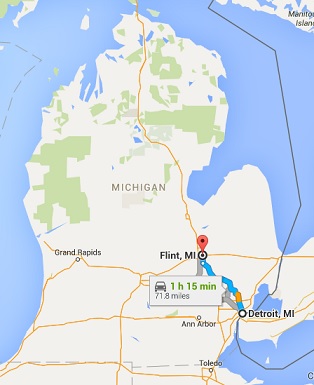
CU Blog - Flint, Michigan - A cautionary tale - Photo 1Flint is the seventh largest city in Michigan, while its Genesee County comprises the entirety of Flint’s metropolitan area and constitutes the fourth largest metropolitan area in Michigan with a population of 425,790 in 2010.[11]. Located along the Flint River, 66 miles (106 km) northwest of Detroit.

The community was founded as a village by fur traders in the early 1800’s and became a major lumbering area on the historic Saginaw Trail during the 19th century; it incorporated as a city in 1855. It later became a leading manufacturer of carriages and other vehicles earning it the nickname “Vehicle City”.

In 1908, William Crapo Durant formed General Motors in Flint. After World War II, Flint became an automobile manufacturing powerhouse for GM’s Buick and Chevrolet divisions, both of which were founded in Flint. However, by the late 1980s the city sank into a deep economic depression after GM closed and demolished several factories in the area, the effects of which remain today.

In the mid-2000s, it became known for its high crime rates.[12] Since this time, Flint has been ranked among the “Most Dangerous Cities in the United States”, with a per capita violent crime rate seven times higher than the national average.[13] The city was under a state of financial emergency from 2011 to 2015, the second in a decade.[14][15] It is currently in a public health state of emergency due to lead poisoning (and possibly Legionella) in the local water supply. [16]

On November 3, 2015, Flint residents elected Dr. Karen Weaver as their first female mayor.[17]

[This move is on the heels of the exit of the last State-appointed Emergency Manager].
CU Blog - Pressed by Debt Crisis, Doctors Leave Greece in Droves - Photo 1

Flint serves as a “cautionary tale” for other communities near “Failed City/Failed State” status. From this perspective, this community may be a valuable asset to the rest of the world and especially to the Caribbean.
CU Blog - Flint, Michigan - A cautionary tale - Photo 3The publishers of the book Go Lean…Caribbean are here in Detroit to “observe and report” the turn-around and rebirth of the once-great-but-now-distressed City of Detroit and its metropolitan areas, including Flint. (Previous commentaries featured the positive role model of the City of Ann Arbor).

What happened here?

According to the Timeline in the Appendix, Flint, MI suffered this fate as a chain reaction to its Failed-State status. Outside stakeholders – Emergency Managers – came into the equation to execute a recovery plan with focus only on the Bottom-Line. The consideration for people – the Greater Good – came second, if at all. They switched water sources, unwisely!

The assertion of the Go Lean book is that the Caribbean region can benefit from lessons learned from Good, Bad and Ugly governance. The book serves as a roadmap for the introduction and implementation of the technocratic Caribbean Union Trade Federation (CU). The Go Lean book and related commentaries call on citizens of the Caribbean member-states to lean-in to the empowerments described in the roadmap for elevation. This will require a constant vigil to ensure the Greater Good as opposed to personal gains.

The City of Flint is desperately in need of governing “best practice”. The Financial Emergency Status that just ended, 2011 to April 2015, was the 2nd one in a decade; (the first was from 2002 to 2005). Every time the city is penalized with the advent of a state-appointed Emergency Manager (EM), they lose out on a local stakeholder pursuing the city’s best-interest, rather the EM’s serve as a Receiver (without the formal Bankruptcy proceedings, which is a Federal not State action).

This is highlighted by the current Health Emergency due to the City’s switch of their water source to the Flint River – a contaminated source – and now endangering the health and wellness of many of its citizens; with the most damaging effects being on young children. That decision was made by the Emergency Manager to save money, as opposed to the community’s best interest. There is no checks-and-balances on the EM, other than the appointing Governor (and courts), as the EM has both Executive (Mayor) and legislative authority (City Council).

Absolute power …

… see example here:

Michigan Governor Rick Snyder appointed Michael Brown as the city’s Emergency Manager on November 29, effective December 1.[37] On December 2, Brown dismissed a number of top administrators including City Administrator Gregory Eason, Human Resources Director Donna Poplar, Citizen Services Director Rhoda Woods, Green City Coordinator Steve Montle and independent officials including Ombudswoman Brenda Purifoy and Civil Service Commission Director Ed Parker. Pay and benefits from Flint’s elected officials were automatically removed.[38] On December 8, the office of Obudsman and the Civil Service Commission were eliminated by Brown.[36] Brown resigned in September 2013 and was replaced by Darnell Earley, who served in that post until January 2015 – Retrieved January 18, 2016 from: https://en.wikipedia.org/wiki/Flint,_Michigan#First_financial_emergency:_2002.E2.80.932004

Now, the report is that this one EM role-player has effectively sacrificed the children of Flint on the altar of financial expedience. This is a bad example of absolute power exhibited abusively. See details here:

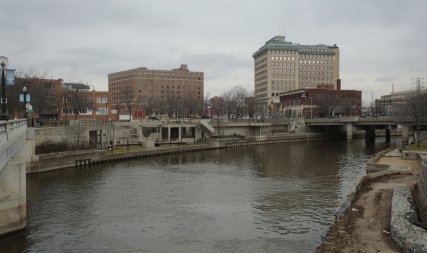
In April 2014, Flint switched its water supply from Lake Huron (via Detroit) to the Flint River. [51] After two independent studies, lead poisoning caused by the water was found in the area’s population. [52][53] This has lead to a federal lawsuit, the resignation of several officials, and a public health state of emergency for all of Genesee County. [54][55][56]
CU Blog - Flint, Michigan - A cautionary tale - Photo 2

See VIDEO here of the story in the national media and the Timeline in the Appendix below.

VIDEO – Citizens’ Anger Continues Over Toxic Water in Flint, Michigan – http://abcnews.go.com/WNT/video/citizens-anger-continues-toxic-water-flint-michigan-36348795

Surprise, surprise! Most city officials involved in this debacle had been dismissed or resigned. And there is national outcry for Governor Rick Snyder to resign. (At one point his stock in national politics was so highly rated that he was considered viable for the Vice-Presidency for the eventual 2016 Republican nominee for President).

This tragic story – cautionary tale of Flint – is an analysis of failure in the societal engines of economics, security and governance. These 3 facets are presented in the book Go Lean … Caribbean as the three-fold cord for societal harmony; for any society anywhere. The Caribbean wants societal harmony; we must therefore work to optimize all these three engines. As exhibited by Flint, this is easier said than done. This heavy-lifting is described in the book as both an art and a science.

The focus in this commentary is a continuation in the study of the societal engine of governance; previously, there was a series on economics and one on security. This commentary though, focuses on the bad eventually of Social Contract failures. The Social Contract refers to the unspoken expectations between citizens and the State. In many cases, State laws limit ownership of all mineral rights to the State; so citizens will be dependent on State systems to supply water. In the case of Flint, the City’s Water and Sewage Department has a monopoly; this supply is the only option for residents!

The Go Lean book describes “bad actors” wreaking havoc on the peace and security of the community. The book relates though that “bad actors” are not always human; they include bad events like natural disasters and industrial spills. Plus, actual “bad actors” may have started out with altruistic motives, good intentions. This is why the book and accompanying blogs design the organization structures for the new Caribbean with checks-and-balances, mandating a collaborative process, because sometimes even a well-intentioned individual may not have all the insight, hindsight and foresight necessary to pursue the Greater Good. This the defect of the Michigan Emergency Manager structure; it assigns too much power to just one person, bypassing the benefits of a collaborative process. This is one reason why this review is important: power corrupts…everyone … everywhere.

The Go Lean book asserts that Caribbean people deserve the best-of-the-best for governmental processes, and that Caribbean society – the 30 member-states – can be elevated with the prudent application of these best-practices for economics, security and governance. The roadmap features these 3 prime directives:

  • Optimization of the economic engines in order to grow the regional economy to $800 Billion & create 2.2 million new jobs.
  • Establishment of a security apparatus – with oversight over economic crimes – to protect the resultant economic engines.
  • Improvement of Caribbean governance to support these engines, including ranking and ratings of Social Contract effectiveness.

The City of Flint, Michigan is a cautionary tale for the Caribbean. We can glean lessons from their dysfunction and apply mitigations in our Caribbean effort, the CU/Go Lean roadmap. This point was strongly urged in the Go Lean book, in the opening Declaration of Interdependence (Pages 10 & 12) with these pronouncements:

Preamble: And while our rights to exercise good governance and promote a more perfect society are the natural assumptions among the powers of the earth, no one other than ourselves can be held accountable for our failure to succeed if we do not try to promote the opportunities that a democratic society fosters … and so we must put aside the shackles of systems of repression to instead formulate efficient and effective systems to steer our own destiny.

xii. Whereas the legacy in recent times in individual states may be that of ineffectual governance with no redress to higher authority, the accedence of this Federation will ensure accountability and escalation of the human and civil rights of the people for good governance, justice assurances, due process and the rule of law. As such, any threats of a “failed state” status for any member state must enact emergency measures on behalf of the Federation to protect the human, civil and property rights of the citizens, residents, allies, trading partners, and visitors of the affected member state and the Federation as a whole.

xxxiii. Whereas lessons can be learned and applied from the study of the recent history of other societies, the Federation must formalize statutes and organizational dimensions to avoid the pitfalls of communities like … Detroit …

The Go Lean book details all the community ethos to ensure the right attitudes and practices among the government stakeholders and leaders of the community. Plus the book identifies the strategies, tactics, implementations and advocacies to promote collaboration in the governing process:

Economic Principle – Economic Systems Influence Individual Choices Page 21
Economic Principle – Consequences of Choices Lie in Future Page 21
Community Ethos – Security Principle – Privacy –vs- Public Protection Page 23
Community Ethos – Security Principle – Whistleblower Protection Page 23
Community Ethos – Security Principle – Witness Security & Protection Page 23
Community Ethos – Security Principle – Anti-Bullying and Mitigation Page 23
Community Ethos – Security Principle – Intelligence Gathering Page 23
Community Ethos – Security Principle – Light Up the Dark Places – Openness Page 23
Community Ethos – Governing Principle – Minority Equalization Page 24
Community Ethos – Governing Principle – Cooperatives Among Member-States Page 25
Community Ethos – Ways to Foster Genius – Interpersonal; Leadership Page 27
Community Ethos – Ways to Manage Reconciliations Page 34
Community Ethos – Ways to Improve Sharing Page 35
Community Ethos – Ways to Impact the Greater Good Page 37
Tactical – Confederating a Non-Sovereign Union Page 63
Tactical – Fostering a Technocracy Page 64
Tactical – Separation of Powers – Justice Department – Jurisdiction for Public Integrity cases. Page 77
Tactical – Separation of Powers – Federal Courts – Truth and Reconciliation Commissions Page 90
Implementation – Assemble “Organs” – including Regional Courts and Justice Institutions Page 96
Implementation – Start-up Security Initiatives Page 103
Planning – Ways to Make the Caribbean Better Page 131
Planning – Ways to Improve Failed-State Indices – Accountability  of Governing Officials Page 134
Planning – Lessons from the US Constitution – Checks and Balances Page 145
Advocacy – Ways to Grow the Economy Page 151
Advocacy – Ways to Improve Governance Page 168
Advocacy – Ways to Better Manage the Social Contract Page 170
Advocacy – Ways to Improve Leadership Page 171
Appendix – Lessons Learned in Open/Collaborative Government – Floating the Trinidad Dollar Page 316

Other subjects related to collaboration, whistle-blowing and public integrity have been blogged in other Go Lean…Caribbean commentary, as sampled here:

https://goleancaribbean.com/blog/?p=6965 Secrecy, corruption and conflicts of interest pervade state governments
https://goleancaribbean.com/blog/?p=6937 Women in Politics – Yes, They Can!
https://goleancaribbean.com/blog/?p=5506 Whistleblower Edward Snowden – One Person Making a Difference
https://goleancaribbean.com/blog/?p=5304 Mitigating the Eventual ‘Abuse of Power’
https://goleancaribbean.com/blog/?p=5002 Managing a ‘Clear and Present Danger’
https://goleancaribbean.com/blog/?p=2994 Justice Strategy: Special Prosecutors … et al
https://goleancaribbean.com/blog/?p=2818 Dominican Republic, Perception of Corruption
https://goleancaribbean.com/blog/?p=2338 Welcoming the Dreaded ‘Plutocracy’

The goal of the Go Lean roadmap is to make the Caribbean homeland, a better place to live, work and play. Many of the Caribbean member-state governments feature the Westminster-style Parliamentary system with a Prime Minister. These structures lend to the tendency of autocratic leadership, as a Prime Minister leads his party, the Legislature, Executive branch and appoint the judges of the Judiciary. As demonstrated in Flint Michigan, this is not the best practice in leadership, as there are many subject matters that may be outside the core competence of an autocratic leader.

We must do better, than Flint! (Flint must do better; too many lives are involved).

We know that “bad actors and bad incidences” will always occur, even in government institutions, so we must be “on guard” against abusive influences and encroachments to Failed-State status. The Go Lean roadmap calls for engagement and participation from everyone, the people (citizens), institutions and government officials alike. We encouraged all with benevolent motives to lean-in to this roadmap, to get involved to effect a turnaround for the Caribbean Failed-States.

Our Caribbean stakeholders deserve the best … from their leaders.  🙂

Download the free e-Book of Go Lean … Caribbean – now!

———

Appendix – Timeline of the Water Crisis in Flint, Michigan
By: Associated Press – Jan 16, 2016, 3:18 PM ET

A look at some of the key events in the development of the Flint water crisis:

———

APRIL 2014: In an effort to save money, Flint begins drawing its water from the Flint River instead of relying on water from Detroit. The move is considered temporary while the city waits to connect to a new regional water system. Residents immediately complain about the smell, taste and appearance of the water. They also raise health concerns, reporting rashes, hair loss and other problems.

SUMMER 2014: Three boil-water advisories are issued in 22 days after positive tests for coliform bacteria.

OCTOBER 2014: A General Motors engine plant stops using Flint water, saying it rusts parts.

JANUARY 2015: Flint seeks an evaluation of its efforts to improve the water amid concerns that it contains potentially harmful levels of a disinfection byproduct. Detroit offers to reconnect Flint to its water system. Flint insists its water is safe.

JAN. 28: Flint residents snap up 200 cases of bottled water in 30 minutes in a giveaway program. More giveaways will follow in ensuing months.

FEB. 3: State officials pledge $2 million for Flint’s troubled water system.

FEBRUARY: A 40-member advisory committee is formed to address concerns over Flint’s water. Mayor Dayne Walling says the committee will ensure the community is involved in the issue.

MARCH 19: Flint promises to spend $2.24 million on immediate improvements to its water supply.

MARCH 27: Flint officials say the quality of its water has improved and that testing finds the water meets all state and federal standards for safety.

SEPT. 24: A group of doctors led by Dr. Mona Hanna-Attisha of HurleyMedicalCenter urges Flint to stop using the Flint River for water after finding high levels of lead in the blood of children. State regulators insist the water is safe.

SEPT. 29: Gov. Rick Snyder pledges to take action in response to the lead levels. It’s the first acknowledgment by the state that lead is a problem.

OCT. 2: Snyder announces that the state will spend $1 million to buy water filters and test water in Flint public schools.

OCT. 8: Snyder calls for Flint to go back to using water from Detroit’s system again.

OCT. 15: The Michigan Legislature and Snyder approve nearly $9.4 million in aid to Flint, including $6 million to help switch its drinking water back to Detroit. The legislation also includes money for water filters, inspections and lab testing.

NOV. 3: Voters elect newcomer Karen Weaver over incumbent Mayor Dayne Walling amid fallout over the drinking water.

DEC. 29: Snyder accepts the resignation of Department of Environmental Quality Director Dan Wyant and apologizes for what occurred in Flint.

JAN. 5: Snyder declares a state of emergency in Flint, the same day federal officials confirm that they are investigating.

JAN. 12: Snyder activates the Michigan National Guard to help distribute bottled water and filters in Flint and asks the federal government for help.

JAN. 13: Michigan health officials report an increase in Legionnaires’ disease cases during periods over the past two years in the county that includes Flint.

JAN. 14: Snyder asks the Obama administration for major disaster declaration and more federal aid.

JAN. 16: President Barack Obama signs emergency declaration and orders federal aid for Flint, authorizing the Federal Emergency Management Agency and the Department of Homeland Security to coordinate relief efforts.

Source: http://abcnews.go.com/Health/wireStory/timeline-water-crisis-flint-michigan-36331514; retrieved Jan 18, 2016

Share this post:
, , , ,

Street naming for Martin Luther King unveils the real America

Go Lean Commentary

We join the nation today to celebrate Dr. Martin Luther King Jr.’s birthday. This day is an opportunity to honor Dr. King and his legacy.CU Blog - Street naming for Martin Luther King unveils the real America - Photo 1

Born on January 15, 1929 in Atlanta, Georgia, Dr. King was a well-respected activist, scholar, pastor and humanitarian. Although his life was brief, Dr. King’s accomplishments in the civil rights movement and social justice are echoed throughout the world still today. Considered to be one of the greatest non-violent leaders in world history, Dr. King’s exceptional achievements used the power of legislation and social change.

As an advocate for freedom and non-violent resistance, Dr. King offered the power of words through public protests, grassroots organizing, and powerful sermons to achieve nearly insurmountable goals. He fought against racial segregation and poverty, advocated for international peace, and eliminated lasting barriers to voting for African-Americans.

In honor of his work, Dr. King received numerous awards during his lifetime including the Nobel Peace Prize in 1964. He continues to be remembered as one of the most lauded African-American leaders in history, often referenced by his 1963 speech, “I Have a Dream.” – Corporate Intranet Website for Credit Acceptance Corporation, Southfield (Detroit), Michigan; retrieved January 18, 2016.

Ditto”, for the promoters of the book Go Lean … Caribbean and accompanying blogs advocating for change in the Caribbean. Dr. Martin Luther King proved that “one man can make a difference” – a frequent theme of this Go Lean movement. He thusly serves as a role model for current and future Caribbean advocates, activists and humanitarians hoping to impact the Greater Good in their homeland.

Based on these accomplishments, one would think honoring Dr. King with a street-naming would be a simple task.

One would think!

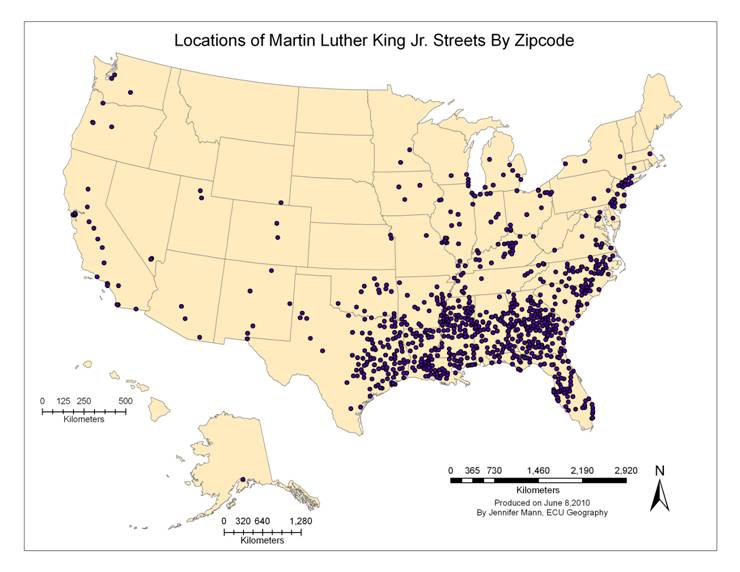
Let us see how far America has progressed regarding race relations, in the naming of streets after Martin Luther King, in one town after another!

Consider this encyclopedic source – a website:

Title: A street fit for a King?
Website: Politics of Naming Streets for Martin Luther King, Jr. – Retrieved January 18, 2016: http://mlkstreet.com/

Naming streets is one of the most widespread and contentious ways of commemorating Martin Luther King Jr.  Debates over whether to name a street for King and which specific street to identify with him have led to the boycott of businesses, protest marches, court actions, petition drives, the vandalizing of roads, and even activists chaining themselves to street signs.

Honoring King with a street name is often controversial when the road in question challenges long-standing racial and economic boundaries within communities.  While few scholars have studied the King street naming phenomena, the naming process is an important indicator of local political tensions as well as broader debates about race, memory, and place in America.

CU Blog - Street naming for Martin Luther King unveils the real America - Photo 2I have studied the politics of naming streets after King for the past several years, seeking to understand the obstacles that face street naming proponents and the various strategies that communities have pursued in finding a street fit for remembering King. In many instances (but not all), public opposition has led King’s name to be socially and geographically marginalized within cities, which has worked to stigmatize these streets and create public anxiety about renaming more prominent streets.  As a cultural geographer, my work stresses the importance that location–the street’s site, situation, and scale within the city’s larger social landscape–plays in shaping the meaning of King’s commemoration.    Believing that my research and perspectives can be of some help to the public, I have set up this web page as a resource for engaging and assisting the movement to remember the civil rights leader.

Below (Appendix A) are some research papers that I have written about naming streets for King as well as some questions that I frequently encounter in my discussions with journalists and street naming stakeholders (proponents and opponents).  If you have a question not listed here, email me and I will try to provide some feedback.

—-

Site established to spread information and commentary on the (re)naming of streets for slain civil rights leader Martin Luther King, Jr. with the hope of informing public debate.

If you use any information or statistics from this site, please cite the source (Appendix C) as: Derek Alderman, Professor of Geography, University of Tennessee, Knoxville TN.

To the uninitiated, one would think the year is 1956, rather than 2016; see the VIDEO (Appendix D) of the documentary “MLK Streets Project”. One would think that such a racially-charged society was only representative of the America of old; that now America has transformed, to the point that the President is of African-American descent. But it must be concluded that the more things change, the more they remain the same.

The issue in the foregoing encyclopedic source (and the below VIDEO) relates the true disposition of the America many Caribbean citizens emigrate to, or want to. There is a great lure for Black-and-Brown Caribbean immigrants to come to America. But these portrayals/depictions would be the atmosphere that the new arrivals would have to navigate. Perhaps the shining light of that Welcome Sign should be dulled a little.

This consideration is brought to focus by the book Go Lean … Caribbean. The book serves as a roadmap for the introduction and implementation of the technocratic Caribbean Union Trade Federation (CU), for the economic optimization in the region. One mission of the roadmap is to minimize the “push-and-pull” factors that contribute to the alarming high abandonment rate of Caribbean citizens – one report reflects a 70% brain drain rate.

The Go Lean book posits that when the economic engines are not sufficient that people will flee, abandon their homelands, despite the love of family, friends and culture and endure all obstacles to secure a better livelihood. This has been the reality for all of the Caribbean, even the American member-states (Puerto Rico & Virgin Islands). So is the “grass greener”, is life in the American urban communities better that the status quo in the Caribbean? Considering the actuality of Caribbean emigrants, and the fact that there is no migration in the opposite direction, the answer must be true.

Sad! If only, there would be a better option for the Caribbean?

The book and movement Go Lean…Caribbean present that option!

This CU/Go Lean roadmap provides the turn-by-turn directions with the following 3 prime directives:

  • Optimization of the economic engines in order to grow the regional economy to $800 Billion & create 2.2 million new jobs.
  • Establishment of a security apparatus to protect the resultant economic engines.
  • Improve Caribbean governance to support these engines.

The roadmap posits that the United States of America should not be viewed as the panacea for Caribbean ailments; that when the choices of a challenge is “fight or flight” that Caribbean society must now consider the “fight” options. (No violent conflict is being advocated, in emulation of Martin Luther King, but rather a strenuous effort, heavy-lifting, to compete and win economic battles).

Are there social issues in America that are more important than street naming?

CU Blog - Street naming for Martin Luther King unveils the real America - Photo 3Proponents for naming streets for King often encounter the argument that African Americans should concern themselves with civil rights issues “more important” than street naming.

No doubt, there are a large number of worthy social and economic issues in need of addressing. At the same time, it is worth thinking about how the naming of roads is not necessarily separate from the larger racial/social justice picture. Naming streets for King can signal something very important about the willingness (or unwillingness) of the larger community to invest in African Americans, thus providing (or failing to provide) a platform on which to bring about more “substantive” change and improvement. When that community refuses to do something as seemingly minor as naming street, what does that say about the degree to which the community is really ready or willing to take on the “tough” issues?

I have argued in my research that the street naming issue is about the struggle to be seen and heard within public space, an important civil right in and of itself and one arguably necessary for other rights to be realized. Plus, we can also think about how street naming can be coupled with other larger and “more important” social and economic campaigns on streets in America, such as community redevelopment.

The problem is NOT that street naming is inherently less important. Rather it is the limited ways in which we imagine street naming as a social and political tool.  The photo above, from a street naming struggle in Melbourne, Florida, captures the deep emotions that proponents and opponents attach to the street renaming issue.  Street naming proponents in Melbourne were especially vocal about how honoring King was part of a larger campaign against racism. – Professor Derek Alderman.

As related in the foregoing article/VIDEO, America is not so welcoming a society for the “Black and Brown” populations from the Caribbean – and yet they come, they are in the USA and their numbers cannot be ignored. Here is the need for the heavy-lifting, to effect change to dissuade further brain drain and in reverse to incentivize repatriation. While not ignoring the “push” reason that cause people to flee, the book stresses (early at Page 13) the need to be on-guard for this fight in the following pronouncements in the Declaration of Interdependence:

xix.    Whereas our legacy in recent times is one of societal abandonment, it is imperative that incentives and encouragement be put in place to first dissuade the human flight, and then entice and welcome the return of our Diaspora back to our shores. This repatriation should be effected with the appropriate guards so as not to imperil the lives and securities of the repatriated citizens or the communities they inhabit. The right of repatriation is to be extended to any natural born citizens despite any previous naturalization to foreign sovereignties.

xx.    Whereas the results of our decades of migration created a vibrant Diaspora in foreign lands, the Federation must organize interactions with this population into structured markets. Thus allowing foreign consumption of domestic products, services and media, which is a positive trade impact. These economic activities must not be exploited by others’ profiteering but rather harnessed by Federation resources for efficient repatriations.

xxi.    Whereas the preparation of our labor force can foster opportunities and dictate economic progress for current and future generations, the Federation must ensure that educational and job training opportunities are fully optimized for all residents of all member-states, with no partiality towards any gender or ethnic group. The Federation must recognize and facilitate excellence in many different fields of endeavor, including sciences, languages, arts, music and sports. This responsibility should be executed without incurring the risks of further human flight, as has been the past history.

xxvi.    Whereas the Caribbean region must have new jobs to empower the engines of the economy and create the income sources for prosperity, and encourage the next generation to forge their dreams right at home, the Federation must therefore foster the development of new industries, like that of ship-building, automobile manufacturing, prefabricated housing, frozen foods, pipelines, call centers, and the prison industrial complex. In addition, the Federation must invigorate the enterprises related to existing industries like tourism, fisheries and lotteries – impacting the region with more jobs.

This commentary previously related details of the Caribbean Diaspora experience, the “push-and-pull” factors in the US, and the American record on Civil Rights. Here is a sample from earlier Go Lean blogs:

https://goleancaribbean.com/blog/?p=7204 ‘The Covenant with Black America’ – Ten Years Later
https://goleancaribbean.com/blog/?p=6722 A Lesson in History – After the Civil War: Birthright Mandates
https://goleancaribbean.com/blog/?p=6434 ‘Good Hair’ and the Strong Black Woman
https://goleancaribbean.com/blog/?p=5527 American Defects: Racism – Is It Over?
https://goleancaribbean.com/blog/?p=5333 American Urban Segregation Legacies: Cause and Effect
https://goleancaribbean.com/blog/?p=2297 A Lesson in History – Booker T versus Du Bois
https://goleancaribbean.com/blog/?p=2222 Sports Role Model – Playing For Pride … And More
https://goleancaribbean.com/blog/?p=1896 American “Pull” Factors – Crisis in Black Homeownership
https://goleancaribbean.com/blog/?p=1596 Book Review: ‘Prosper Where You Are Planted’
https://goleancaribbean.com/blog/?p=1433 Caribbean loses more than 70 percent of tertiary educated to brain drain
https://goleancaribbean.com/blog/?p=546 Book Review: ‘The Divide’: American Injustice in the Age of the Wealth Gap
https://goleancaribbean.com/blog/?p=209 Muhammad Ali’s Greatest Fight

For the Caribbean Diaspora, fleeing from their homelands to reside in the US is akin to “jumping from the frying pan into the fire”. While we may not be able to change American society, we can – no, we must – impact our own society. How? What? When? Why? All of these questions are valid, because the answers are difficult. The Go Lean book details the heavy-lifting answers with a roadmap to implement new community ethos, strategies, tactics and operational advocacies to effectuate this goal:

Community Ethos – Deferred Gratification Page 21
Community Ethos – People Respond to Incentives Page 21
Community Ethos – Economic Systems Influences Choices & Incentives Page 21
Community Ethos – The Consequences of Choice Lie in the Future Page 21
Community Ethos – Job Multiplier Page 22
Community Ethos – Minority Equalization Page 24
Community Ethos – Lean Operations Page 24
Community Ethos – Ways to Foster Genius Page 27
Community Ethos – Ways to Impact the Greater Good Page 37
Strategy – Vision – Make the Caribbean the Best Address on Planet Page 45
Strategy – Mission – Repatriate Diaspora Page 46
Strategy – Mission – Dissuade Human Flight/“Brain Drain” Page 46
Tactical – Ways to Foster a Technocracy Page 64
Tactical – Separation of Powers – Federal Government versus Member-States Page 89
Implementation – Ways to Deliver Page 109
Implementation – Reasons to Repatriate Page 118
Planning – Lessons Learned from the Year 2008 Page 136
Planning – Lessons from the US Constitutional Laws and Processes Page 145
Advocacy – Ways to Grow the Economy Page 151
Advocacy – Ways to Create Jobs Page 152
Advocacy – Ways to Impact the Diaspora Page 217
Advocacy – Ways to Preserve Caribbean Heritage Page 218
Advocacy – Battles in the War on Poverty Page 222
Advocacy – Ways to Help the Middle Class Page 223
Advocacy – Ways to Impact US Territories Page 244
Appendix – Analysis of Caribbean Emigration Page 269
Appendix – Puerto Rican Population in the US Page 304

The scope of this roadmap is to focus on the changes we have to make in the Caribbean, not the changes for American society. The Caribbean can be the world’s best address. This success is conceivable, believable and achievable.  Now is the time for all of the Caribbean, the people and governing institutions, to lean-in to this Go Lean … Caribbean roadmap.

This is a big deal for the region. This roadmap is not just a plan, it’s a Dream. We want the same sense of possibility that was manifested by Dr. Martin Luther King. We too, have a dream that one day … [we would be] “free at last, free at last; thank God almighty we are free (and home) at last”. 🙂

Download the free e-Book of Go Lean … Caribbean – now!

———

Appendix A – Publications Related to MLK Place/Street Naming

Mitchell, Jerry and Derek H. Alderman. 2014. “A Street Named for a King: A Lesson in the Politics of Place-Naming.” Social Education 78(3): 137-142.

Alderman, Derek H. and Joshua F.J. Inwood. 2013. “Street Naming and the Politics of Belonging: Spatial Injustices in the Toponymic Commemoration of Martin Luther King, Jr.” Social & Cultural Geography 14(2): 211-233.

Dwyer, Owen J. and Derek H. Alderman. 2008. Civil Rights Memorials and the Geography of Memory.  Book from Center for American Places and University of Georgia Press.

Alderman, Derek H. 2008. “Martin Luther King, Jr. Streets in the South: A New Landscape of Memory.Southern Cultures 14(3): 88-105.

Alderman, Derek H., Steve Spina, and Preston Mitchell. 2008. “A Bumpy Road: the Challenges of Naming Streets for Martin Luther King, Jr.” Planning 74(1): 18-21. Contribution to American Planning Association magazine.

Alderman, Derek H. and Preston Mitchell. 2007. “A Sign of Changing Times: A Street Renaming Lesson from Chapel Hill, North Carolina.” Public Management  89(6): 37-38. Contribution to International City/County Management Association magazine as part of special feature entitled Street Naming: Not as Easy as You Might Think.

Mitchelson, Matthew, Derek H. Alderman, Jeff Popke. 2007. “Branded: The Economic Geographies of MLK Streets.” Social Science Quarterly 88(1): 120-145.

Alderman, Derek H. 2006. “Naming Streets after Martin Luther King, Jr.: No Easy Road.” In Landscape and Race in the United States, Routledge Press (edited by Richard Schein), pp. 213-236.

Alderman, Derek H. 2003. “Street names and the scaling of memory: The politics of commemorating Martin Luther King, Jr. within the African-American community.Area 35 (2): 163-173.

Alderman, Derek H. 2002. “Street Names as Memorial Arenas: The Reputational Politics of Commemorating Martin Luther King, Jr. in a Georgia County.”  Historical Geography 30: 99-120.

Alderman, Derek H. 2002. “School Names as Cultural Arenas: The Naming of U.S. Public Schools after Martin Luther King, Jr.Urban Geography 23(7): 601-626.

Alderman, Derek H. 2000.  “A Street fit for a King: Naming Places and Commemoration in the American South.”  Professional Geographer 52(4): 672-684.

Alderman, Derek H.  1996. “Creating a New Geography of Memory in the South: The (Re) Naming of Streets in Honor of Martin Luther King, Jr.”  Southeastern Geographer 36(1): 51-69.

———

Appendix B – MLK Street Naming Educational Pamphlet

Electronic copy (pdf) of community outreach pamphlet on MLK street naming (produced 2005). Note data is now old. Pamphlet distributed to various schools, activists groups, and civil rights; national meetings of the NAACP and SCLC; and MLK Historic Site in Atlanta, Georgia.

Outside cover of pamphlet

Inside content of pamphlet

———

Appendix C – About Professor Derek Alderman

Professor of Cultural and Historical Geography and Head of the Department of GeographyUniversity of Tennessee-Knoxville (formerly affiliated with East Carolina University)

CV/Resume

Homepage

Academia.edu Page 

Book on Civil Rights Memorials and Street Naming

Email at: dalderma@utk.edu

Follow on: @MLKStreet

———

Appendix D – Trailer MLK Street Projecthttps://youtu.be/dE73UMlqaIs


Uploaded on Sep 28, 2010 – Trailer for the documentary “The MLK Streets Project”. A film by One Common Unity and Straight No Chaser Productions

Share this post:
, , , ,
[Top]

‘The Covenant with Black America’ – Ten Years Later

Go Lean Commentary

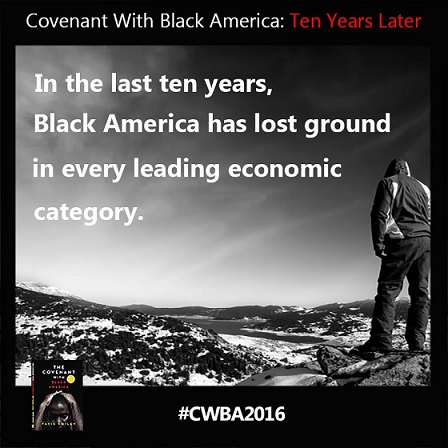
In 2006, [writer-commentator] Tavis Smiley — along with a team of esteemed contributors — laid out a national plan of action to address the ten most crucial issues facing African Americans. The Covenant, which became a #1 New York Times bestseller, ran the gamut from health care to criminal justice, affordable housing to education, voting rights to racial divides. But a decade later, Black men still fall to police bullets and brutality, Black women still die from preventable diseases, Black children still struggle to get a high quality education, the digital divide and environmental inequality persist, and American cities from Ferguson to Baltimore burn with frustration. In short, the last decade has seen the evaporation of Black wealth, with Black fellow citizens having lost ground in nearly every leading economic category.

And so in these pages Smiley calls for a renewal of The Covenant, presenting the original action plan alongside new data from the Indiana University School of Public & Environmental Affairs (SPEA) to underscore missed opportunities and the work that remains to be done. While life for far too many African Americans remains a struggle, the great freedom fighter Frederick Douglass was right: “If there is no struggle, there is no progress.”

Now is the time to finally convert the trials and tribulations of Black America into the progress that all of America yearns for.
The Covenant with Black America – Ten Years Later (Retrieved 01/14/2016) –
Hay House, Inc, January 5, 2016 – Social Science – 296 pages
https://books.google.com/books?id=VIk1CwAAQBAJ&source=gbs_similarbooks
- Photo 1

With descriptors like the foregoing, it would be understandable if Black people from other countries are dissuaded from emigrating to the United States. Yet, the opposite is happening! The book Go Lean … Caribbean relates that people in the Caribbean – mostly Black and Brown – are beating down the doors to get out of their Caribbean homelands, to seek refuge in places like the US; (a smaller faction emigrate to Canada and Western Europe). This really conveys the sad state of affairs for the Caribbean eco-system. While things are bad for Blacks in America, according to the foregoing, more Black people want to come in, instead of working to remediate the problems in their own homelands.

Black America has some work to do. Travis Smiley – the eloquent social-political commentator, and his band of experts – provided a blueprint-roadmap to effect change in their communities. See here:

Book Title: Covenant with Black America
By: Tavis Smiley
Third World Press, 2006 – Political Science – 254 pages

Six years’ worth of symposiums come together in this rich collection of essays that plot a course for African Americans, explaining how individuals and households can make changes that will immediately improve their circumstances in areas ranging from health and education to crime reduction and financial well-being. Addressing these pressing concerns are contributors Dr. David Satcher, former U.S. surgeon general; Wade Henderson, executive director of the Leadership Conference on Civil Rights; Angela Glover Blackwell, founder of the research think tank PolicyLink; and Cornell West, professor of Religion at PrincetonUniversity. Each chapter outlines one key issue and provides a list of resources, suggestions for action, and a checklist for what concerned citizens can do to keep their communities progressing socially, politically, and economically. Though the African American community faces devastating social disparities—in which more than 8 million people live in poverty—this celebration of possibility, hope, and strength will help leaders and citizens keep Black America moving forward.

What is the Covenant with Black America?

The Covenant with Black America is a national plan of action to address the primary concerns of African Americans today—from health to housing, from crime to criminal justice, from education to economic parity.

Why A Covenant and Why Now?

As we witnessed in the 2004 and 2008 presidential elections, Americans are deeply divided between race, class, gender, political ideology and moral values. A divide so extreme, that in order to bridge it, we must speak openly, freely, without judgment and work together. It is imperative that we take this opportunity to consider the issues of particular interest to African Americans and to establish a national plan of action to address them. No longer can we sit back and expect one political party, one segment of the population or one religious denomination to speak for us or to act on our behalf. It is our responsibility as an entire community to no longer be left behind politically, socially, or economically and to bridge the economic and social divides ourselves, by encouraging a conversation and a commitment that will inevitably benefit all Americans.

State of the Black Union: Defining the African American Agenda Part I & II

For the last ten years, the country’s visionaries, educators, public policy makers, religious leaders, opinion makers, and community organizers have come together to weigh in on the most challenging issues facing Black America. This symposium—The State of the Black Union—has always encouraged dialogue and the exchange of ideas about issues and factors that gauge the progress of America’s promise for African Americans; however, last year’s gathering marked a turning point.

On the heels of the 2004 presidential election, a sour economy, a rising death toll in Iraq, a growing prison population, and deepening disparities in healthcare and public education, collectively “we the people” decided that it was time to shift the conversation from talking about our “pain” to talking about our “plan”. It is a plan that moves our critique of America to a construction of America—a country that is as good as its promise. At the close of the 2005 State of the Black Union, the public was invited to share what they wanted from this plan. African Americans across the country let us know what their concerns were once we put out the call for them to do so at our website. In short, take control of their own destiny. We believe that The Covenant has the power to do this and more.

Less than one year later, that plan, roadmap, blueprint was published as the Covenant with Black America. On the recommendation of Rev. Dr. Joseph E. Lowery, co-founder with Dr. Martin Luther King, Jr. of the Southern Christian Leadership Conference, we decided to call this document a “covenant” and not a “contract” because it speaks to the spiritual dimension of the Black struggle for progress in America.

We are especially pleased with the thought-leaders and opinion-makers who have contributed introductory essays to each of the 10 covenant chapters in the book. Each is nationally recognized for contributions in their various fields of interest and each donated his/her time and expertise to make this project possible.

It was important for us to maintain the integrity of this project by guaranteeing that from conception to birth, this project would be imbued with the spirit and soul of Black people. We made the plea over the nationally-syndicated Tom Joyner Morning Show and Black folk everywhere responded. The name of each donor is listed in the text of the book. It’s a wonderful thing to peruse the list and to see the names of individual Black family members who supported this effort. It is even more empowering to know that these citizens are serious about their future and that of our country.

The rise of the Covenant with Black America to #1 on the New York Times best-seller list proved that there was tremendous interest in a plan of action that addressed the concerns of Black Americans. Tavis Smiley, the visionary responsible for creating and building the momentum around the book, embarked on a five-month, 20-city national tour, holding sessions in churches in cities such as Philadelphia, Atlanta, Memphis, New York, Baltimore, and Cleveland.

To build on the excitement and discussion around the book, Tavis Smiley invited people around the country to host Covenant Celebrations as part of the Covenant Conversation and Celebration Weekend. The first 1,000 party hosts who sent Smiley an invitation to their celebration received a special covenant gift pack. One lucky party hosted Smiley and PrincetonUniversity professor Cornel West as their guests, where they discussed issues in The Covenant.

- Photo 2Dr. Martin Luther King, Jr. once said that the nettlesome task of Black Americans is to bear the burden of redeeming the soul of America. Without question, Black folk have always been the conscience of the country. It is our hope that we can yet again help our beloved nation live up to the promise of her ideals. The political paradigm has shifted; it’s time to build a new construct, and the Covenant with Black America is the tool for the task.

The Back Story of The Covenant Cover Photo

The background image on the cover of The Covenant book is an original photograph by world renowned photographer Chester Higgins, Jr. The photograph features eight year old Sojourner from New York.

In the face of this young girl, the cover of The Covenant represents our family histories. The image of the child’s face is composed of over three hundred smaller images of our ancestors submitted by African Americans across the country.

The Covenant is about the future. About the hope of Black youth yet unborn. About our past and the courage of our ancestors. About the present—right here and right now. The Covenant will reflect our independence, our interdependence and our interconnectedness.
Source: http://www.covenantwithblackamerica.com/background.htm; posted 2006; retrieved January 14, 2016

The Caribbean also has some work to do. The book Go Lean … Caribbean serves as a roadmap for effecting change in the Caribbean; it introduces the technocratic Caribbean Union Trade Federation (CU) as a vehicle to bring about desired change in the region’s economics, security and governing engines.

The Covenant with Black America addresses Income Inequality in the US, identifying the Black population versus the full general population. The book reveals that the Black Population is not just failing to keep pace with other communities, but also falling behind; going backwards, in the last 10 years.

This is bad! This corresponds with much of the time period for the focus of the Go Lean book. Go Lean was composed in the wake of the Great Recession of 2008 – a frequent topic for the Go Lean book and accompanying blogs. The desire to eliminate or reduce Income Inequality is a practical argument to enhance social cohesion and reduce social unrest. Social eruptions can weaken society and start the slide down the “slippery slope” to Failed-State status. It is important for Caribbean society to be “on guard” for encroachments in this regard.

This Go Lean/CU roadmap is designed to provide better economic stewardship (governance), to ensure that the economic failures of the past, in the Caribbean and other regions – like the US – do not re-occur here in the Caribbean homeland. The book posits that we must NOT fashion ourselves as parasites of the US, but rather pursue a status as a protégé, benefiting from their lessons-learned but molding a better society.

The Go Lean book cites the example of the American Dream and the failings to execute on that promise, as demonstrated with the Occupy Wall Street protests of 2011, with these quotations:

The Bottom Line on the American DreamPage 223
The American Dream is a national ethos of the United States, a set of ideals in which freedom includes the opportunity for prosperity and success, and an upward social mobility achieved through hard work. This idea of the American Dream is rooted in the US Declaration of Independence which proclaims that “all men are created equal… endowed by their Creator with certain inalienable rights” including “Life, Liberty and the pursuit of Happiness.” The meaning of the “American Dream” has changed over history, and includes components as home-ownership and upward mobility. A lot of people followed the American Dream to achieve a greater chance of becoming rich. For example, the discovery of gold in California in 1849 brought in 100,000 men looking for their fortune overnight—and a few did find it. Thus was born the California Dream of instant success. Historian H. W. Brands noted that in the years after the Gold Rush, the California Dream spread across the nation: “The old American Dream . . . was the dream of the Puritans, of Benjamin Franklin’s “Poor Richard” . . . of men and women content to accumulate their modest fortunes a little at a time, year by year by year. The new dream was the dream of instant wealth, won in a twinkling by audacity and good luck. [This] golden dream . . . became a prominent part of the American psyche”. Today, some posit that the ease of achieving this Dream changes with technological advances, available infrastructure, regulations, state of the economy, and the evolving cultural values of the US demographics.

Ways to Impact Wall Street – Learn from Occupy Wall Street Protest MovementPage 200
This protest movement began on September 17, 2011, in Zuccotti Park, located in New York City’s Wall Street financial district. The main issues raised by the protests were social and economic inequality, greed, corruption and the perceived undue influence of financial service firms on the Federal government. The slogan, “We are the 99%”, referred to Income Inequality and wealth distribution in the U.S. between the wealthiest 1% and the rest of the population. In hindsight and as a lesson for the CU, these underlying concerns were legitimate as the 2008 Great Recession had its root causes tied to the many issues of Wall Street abuses against Main Street.

The Go Lean book does not cast judgment on all of the American people. It is the position of this commentary that for the most part, the people of the United States are good-natured and mean well in their pursuits of the Greater Good. But this commentary frequently relates that the continued institutional racism in America sets a barrier for progress for  Black Americans, in terms of education and career opportunities. In addition, there is a Shadow Influence in the US financial eco-system that undermines a lot of policies for the Greater Good. Therefore the inequalities between Black society and general society are merely a reflection of the societal defects in the US in total. This land (America), despite the actuality, should not be so alluring to foreign Black people. See a related VIDEO here:

VIDEOhttps://youtu.be/qIc014b491YTavis Smiley: Obama Failed Black Americans as President

Published on Jan 11, 2016 – Radio show host Tavis Smiley tells Fox News’ Megyn Kelly that Barack Obama failed Black Americans as President.

The book Go Lean … Caribbean posits that America is plagued with institutional racism and Crony-Capitalism. It is therefore not the eco-system for the Caribbean to model. Rather the roadmap designs more empowerments for the Caribbean Middle Class – as in creating 2.2 million new jobs – and less to the Rich – One Percent. (Though there is no plan to penalize success and to forcibly redistribute any wealth).

In general, the CU will employ better strategies, tactics and implementations to impact its prime directives; identified with the following 3 statements:

  • Optimization of the economic engines in order to grow the regional economy to $800 Billion & create 2.2 million new jobs.
  • Establishment of a security apparatus to protect the resultant economic engines and mitigate internal and external threats.
  • Improvement of Caribbean governance to support these engines.

Early in the Go Lean book, this need for careful technocratic stewardship of the regional Caribbean economy was pronounced (Declaration of Interdependence – Page 12 – 13) with these acknowledgements and statements:

xi.   Whereas all men are entitled to the benefits of good governance in a free society, “new guards” must be enacted to dissuade the emergence of incompetence, corruption, nepotism and cronyism at the peril of the people’s best interest. The Federation must guarantee the executions of a social contract between government and the governed.

xii.   Whereas the legacy in recent times in individual states may be that of ineffectual governance with no redress to higher authority, the accedence of this Federation will ensure accountability and escalation of the human and civil rights of the people for good governance, justice assurances, due process and the rule of law. As such, any threats of a “failed state” status for any member state must enact emergency measures on behalf of the Federation to protect the human, civil and property rights of the citizens, residents, allies, trading partners, and visitors of the affected member state and the Federation as a whole.

xxiv. Whereas a free market economy can be induced and spurred for continuous progress, the Federation must install the controls to better manage aspects of the economy: jobs, inflation, savings rate, investments and other economic principles. Thereby attracting direct foreign investment because of the stability and vibrancy of our economy.

xxv.  Whereas the legacy of international democracies had been imperiled due to a global financial crisis, the structure of the Federation must allow for financial stability and assurance of the Federation’s institutions. To mandate the economic vibrancy of the region, monetary and fiscal controls and policies must be incorporated as proactive and reactive measures. These measures must address threats against the financial integrity of the Federation and of the member-states.

The Go Lean book stressed the key community ethos, strategies, tactics, implementations and advocacies necessary to regulate and manage the regional economy and mitigate Income Inequality in the Caribbean eco-system. These points are detailed in the book, as in this sample list:

Community Ethos – Economic Principles – Economic Systems Influence Individual Choices Page 21
Community Ethos – Economic Principles – Consequences of Choices Lie in the Future Page 21
Community Ethos – Economic Principles – Money Multiplier Page 23
Community Ethos – Governing Principles – Lean Operations Page 24
Community Ethos – Ways to Impact the Future Page 26
Community Ethos – Ways to Impact the Greater Good Page 37
Strategy – Mission – Fortify the Stability of the Banking Institutions Page 45
Strategy – Provide Proper Oversight and Support for the Depository Institutions Page 46
Tactical – Ways to Foster a Technocracy Page 64
Tactical – Growing the Economy – Minimizing Bubbles Page 69
Tactical – Separation-of-Powers – Caribbean Central Bank Page 73
Tactical – Separation-of-Powers – Depository Institutions Regulatory Agency Page 73
Anecdote – Turning Around CARICOM – Effects of 2008 Financial Crisis Page 92
Implementation – Assemble Caribbean Central Bank as a Cooperative Page 96
Implementation – Ways to Better Manage Debt Page 114
Planning – 10 Big Ideas – Single Market / Currency Union Page 127
Planning – Ways to Improve Failed-State Indices Page 134
Planning – Lessons Learned from 2008 Page 136
Advocacy – Ways to Grow the Economy Page 151
Advocacy – Ways to Control Inflation Page 153
Advocacy – Ways to Impact Wall Street – Lessons from the “Occupy Wall Street” Protests Page 200
Advocacy – Ways to Impact Main Street Page 201
Advocacy – Battles in the War on Poverty Page 222
Advocacy – Ways to Help the Middle Class Page 223
Advocacy – Ways to Impact the One Percent Page 224

The points of effective, technocratic economic stewardship of the Caribbean have been detailed in these previous blog/commentaries:

https://goleancaribbean.com/blog/?p=6563 Lessons from Iceland – Model of Recovery
https://goleancaribbean.com/blog/?p=6531 A Lesson in History – Book Review of the ‘Exigency of 2008’
https://goleancaribbean.com/blog/?p=6399 Book Review on ‘Mitigating Income Inequality’
https://goleancaribbean.com/blog/?p=6286 Managing the ‘Invisible Hand of the Market’
https://goleancaribbean.com/blog/?p=5733 Better than America? Yes, We Can!
https://goleancaribbean.com/blog/?p=5597 Economic Principle: Market Forces -vs- Collective Bargaining
https://goleancaribbean.com/blog/?p=3582 For Canadian Banks: Caribbean is a ‘Bad Bet’
https://goleancaribbean.com/blog/?p=3090 Introduction to Europe – All Grown Up
https://goleancaribbean.com/blog/?p=2930 ‘Too Big To Fail’ – Caribbean Version
https://goleancaribbean.com/blog/?p=1014 All is not well in the sunny Caribbean
https://goleancaribbean.com/blog/?p=782 Open the Time Capsule: The Great Recession of 2008
https://goleancaribbean.com/blog/?p=353 Book Review: ‘Wrong – 9 Economic Policy Disasters and What We Can Learn…’

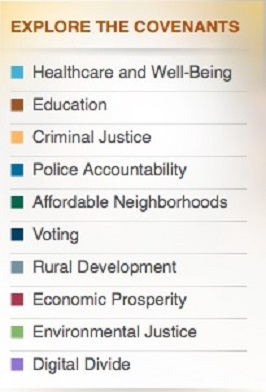
- Photo 3The Go Lean book reports that the Caribbean is in crisis. Too many people leave! The region is suffering a debilitating brain-drain estimated at 70% with some countries reporting up to 81%. This is due to “push-and-pull” factors. We must lower these factors. The “push” refers to the overbearing deficiencies in the homeland that people need refuge from; the “pull” refers to the lure from distant shores, as if the “grass is greener on the other side”. But look here at the 10 issues of concern for Black America. So while all is not well in the Caribbean, neither is all well in America.

The Go Lean roadmap declares that “enough is enough”. It is easier for the average person to remediate and mitigate defects in their Caribbean homeland than to try and fix America. It is akin to “jumping from the frying pan to the fire”.

This message must be enunciated, more stridently.

It is time for more empowerments in the Caribbean! It is time for us to build a better society. The strategies, tactics and implementations proposed in the book Go Lean…Caribbean are conceivable, believable and achievable. We can do these! We can be better; yes, we can!

Everyone in the Caribbean is hereby urged to lean-in for this Go Lean roadmap.  🙂

Download the book Go Lean … Caribbean Now!

Share this post:
, , , ,
[Top]

ENCORE: State of the Caribbean Union

Miami, Florida – The below constitutes a re-distribution of the blog-commentary on the US President’s formal address to his Congress, the State of the Union for 2015. The occasion now is the State of the Union address for 2016. This time is monumental in that it is the final address for the current President, Barack Obama; due to term restrictions in the US Constitution, he can no longer serve as President after this year. The election for his successor is slated for November 2016.

============================================================

Go Lean Commentary

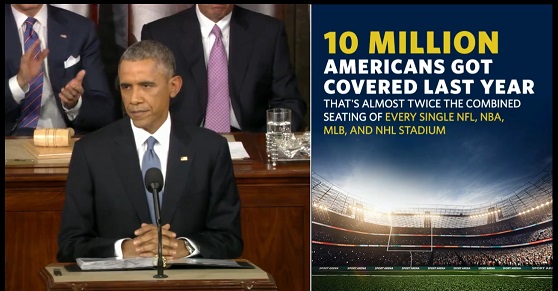
You are invited to watch the State of the Union address that President Barack Obama delivered to the US Congress on Tuesday night (January 20, 2015). You are urged to listen carefully and count the number of times the Caribbean is referred to. The answer:

Once!

The reference to the restoration of diplomatic relations with Cuba.

That’s it!

(The Guantanamo Bay Naval Base is a perpetual leased US territory; so it will not count as Caribbean-specific).

No reference to the US Territories (Puerto Rico and the Virgin Islands); no reference to the Dutch Caribbean; nor to the French Caribbean; and especially not to the English-speaking Caribbean member-states.

The truth of the matter is that the Caribbean is out-of-scope for Obama. It was the State of the Union of the United States of America. Not the State of the Caribbean Union. Even the US territories have to be concerned. They have a voice in the US Congress, but no vote. (A lesson in American Civics teaches that territories have Congressional representation that can vote in committees, but not vote in full Congress).

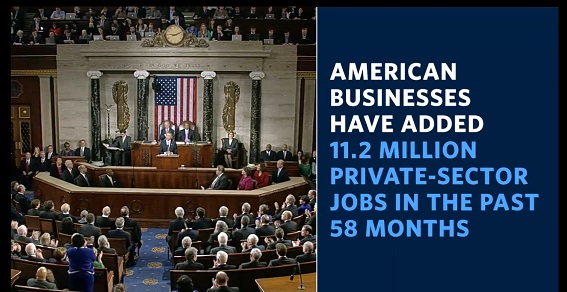
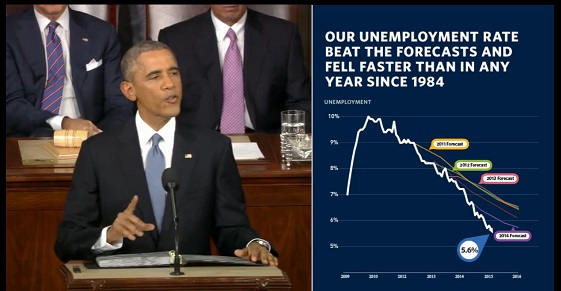
So all the President’s focus on job creation, energy independence, growing the economy, controlling healthcare costs, securing the homeland, and optimizing government was directed to his American constituency and not to the Caribbean member-states.

VIDEO Title: The State of the Union (SOTU) 2015 – http://youtu.be/cse5cCGuHmE
Watch President Obama’s 1-hour remarks during his 6th SOTU address and learn more below.

Published on Jan 20, 2015
President Barack Obama delivers his sixth State of the Union address, at the United States Capitol, January 20, 2015.

CU Blog - State of the Caribbean Union - Photo 1

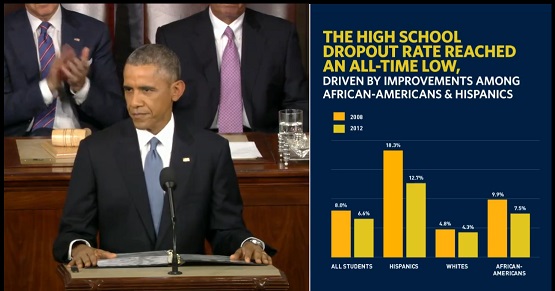
CU Blog - State of the Caribbean Union - Photo 2

CU Blog - State of the Caribbean Union - Photo 3

CU Blog - State of the Caribbean Union - Photo 4

We, the Caribbean, are required to focus on the State of our own Union.

The people, the 320 million Americans, elect a President to pursue their best interest, not the world’s best interest. Though the US tries to be a Good Neighbor, there may be times when the priorities of the US conflict with the priorities of the Caribbean, or the rest of the world. In those scenarios, the President is under charge to pursue the American best option.

The 42 million people of the Caribbean homeland are not in his scope!

The foregoing VIDEO and this commentary is being brought into focus in a consideration of the book Go Lean … Caribbean. The book serves as a roadmap for the introduction and implementation of the technocratic Caribbean Union Trade Federation (CU), for the elevation of Caribbean society. This CU/Go Lean roadmap has these 3 prime directives:

  • Optimization of the economic engines in order to grow the regional economy to $800 Billion and create 2.2 million new jobs.
  • Establishment of a security apparatus to protect the resultant economic engines.
  • Improve Caribbean governance to support these engines.

The Go Lean book (Page 3) makes a simple assertion regarding the State of our Union: the Caribbean is in crisis. The book details that there is something wrong in the homeland, that while it is the greatest address in the world, instead of the world “beating a path” to these doors, the people of the Caribbean have “beat down their doors” to get out.

Why do people leave? The book identifies a numberof reasons, classified as “push-and-pull”. There are economic (jobs and entrepreneurial opportunities), security and governance issues.

One mission of the Go Lean roadmap is to minimize these “push-and-pull” factors that contribute to this alarmingly high abandonment rate of Caribbean citizens – one report reflects a 70% brain drain rate.

Considering “pull” factors, the roadmap posits that the United States of America should not be viewed as the panacea for Caribbean ailments; that when the choice of any challenge is “fight or flight” that Caribbean society must now consider anew, the “fight” options. (No violence is implied, but rather a strenuous effort, heavy-lifting, to compete and win economic battles). One strong reason for cautioning Caribbean emigrants is that America is not so welcoming a society for the “Black and Brown” populations from the Caribbean. This was not addressed by Obama; he has to address the needs of all Americans – not just “Black and Brown” – racial discrimination have not been as high a priority among his initiatives, to the chagrin of many in the African-American communities, including the Caribbean Diaspora.

On the other hand, the Go Lean book does not ignore the “push” factors that cause many Caribbean people to flee. The book stresses (early at Pages 12 – 13) the need to be on-guard for “push” factors in these pronouncements in the Declaration of Interdependence:

xii. Whereas the legacy in recent times in individual states may be that of ineffectual governance with no redress to higher authority, the accedence of this Federation will ensure accountability and escalation of the human and civil rights of the people for good governance, justice assurances, due process and the rule of law. As such, any threats of a “failed state” status for any member state must enact emergency measures on behalf of the Federation to protect the human, civil and property rights of the citizens, residents, allies, trading partners, and visitors of the affected member state and the Federation as a whole.

xix. Whereas our legacy in recent times is one of societal abandonment, it is imperative that incentives and encouragement be put in place to first dissuade the human flight, and then entice and welcome the return of our Diaspora back to our shores. This repatriation should be effected with the appropriate guards so as not to imperil the lives and securities of the repatriated citizens or the communities they inhabit. The right of repatriation is to be extended to any natural born citizens despite any previous naturalization to foreign sovereignties.

xx. Whereas the results of our decades of migration created a vibrant Diaspora in foreign lands, the Federation must organize interactions with this population into structured markets. Thus allowing foreign consumption of domestic products, services and media, which is a positive trade impact. These economic activities must not be exploited by others’ profiteering but rather harnessed by Federation resources for efficient repatriations.

xxi. Whereas the preparation of our labor force can foster opportunities and dictate economic progress for current and future generations, the Federation must ensure that educational and job training opportunities are fully optimized for all residents of all member-states, with no partiality towards any gender or ethnic group. The Federation must recognize and facilitate excellence in many different fields of endeavor, including sciences, languages, arts, music and sports. This responsibility should be executed without incurring the risks of further human flight, as has been the past history.

xxvi. Whereas the Caribbean region must have new jobs to empower the engines of the economy and create the income sources for prosperity, and encourage the next generation to forge their dreams right at home, the Federation must therefore foster the development of new industries, like that of ship-building, automobile manufacturing, prefabricated housing, frozen foods, pipelines, call centers, and the prison industrial complex. In addition, the Federation must invigorate the enterprises related to existing industries like tourism, fisheries and lotteries – impacting the region with more jobs.

This commentary previously related details of Caribbean emigration and their experiences (Diaspora), the “push-and-pull” factors in the US, and our region’s own job-creation efforts – State of Our Own Union. Here is a sample of earlier blogs:

https://goleancaribbean.com/blog/?p=3780 National Sacrifice: The Missing Ingredient – Caribbean people not willing to die or live in sacrifice to their homeland
https://goleancaribbean.com/blog/?p=3694 Jamaica-Canada employment program pumps millions into local economy
https://goleancaribbean.com/blog/?p=3662 Migrant flow into US from Caribbean spikes
https://goleancaribbean.com/blog/?p=3446 Forecast for higher unemployment in Caribbean in 2015
https://goleancaribbean.com/blog/?p=3050 Obama’s immigration tweaks – Bad for the Caribbean
https://goleancaribbean.com/blog/?p=2547 Miami’s Success versus Caribbean Failure
https://goleancaribbean.com/blog/?p=2251 What’s In A Name? Plight of “Black and Brown” in the US
https://goleancaribbean.com/blog/?p=1896 American “Pull” Factors – Crisis in Black Homeownership
https://goleancaribbean.com/blog/?p=1698 American “Pull” Factors – STEM Jobs Are Filling Slowly
https://goleancaribbean.com/blog/?p=1596 Book Review: ‘Prosper Where You Are Planted’
https://goleancaribbean.com/blog/?p=1433 Caribbean loses more than 70 percent of tertiary educated to Brain-Drain
https://goleancaribbean.com/blog/?p=1296 Remittances to Caribbean Increased By 3 Percent in 2013
https://goleancaribbean.com/blog/?p=1256 Traditional 4-year College Degree are Terrible Investments for the Caribbean Region Due to Brain-Drain

The Go Lean book and accompanying blogs posit that for the Caribbean Diaspora, fleeing from their homelands to reside in the US is akin to “jumping from the frying pan into the fire” in terms of effort to succeed and thrive in a community. The message of the Go Lean movement is that it takes less effort to remediate the Caribbean than to fix a new adopted homeland. While the Go Lean planners may not be able to change American society, we can – no, we must – impact our own society. This is the charge of the Go Lean…Caribbean roadmap, to do the heavy-lifting, to implement the organization dynamics to impact Caribbean society here and now. The following are the community ethos, strategies, tactics and operational advocacies to effectuate this goal:

Community Ethos – People Respond to Incentives Page 21
Community Ethos – Economic Systems Influences Choices & Incentives Page 21
Community Ethos – The Consequences of Choice Lie in the Future Page 21
Community Ethos – Job Multiplier Page 22
Community Ethos – Minority Equalization Page 24
Community Ethos – Lean Operations Page 24
Community Ethos – Ways to Foster Genius Page 27
Community Ethos – Ways to Improve Negotiations Page 32
Community Ethos – Ways to Impact the Greater Good Page 37
Strategy – Vision – Make the Caribbean the Best Address on Planet Page 45
Strategy – Mission – Repatriate Diaspora Page 46
Strategy – Mission – Dissuade Human Flight/“Brain Drain” Page 46
Tactical – Separation of Powers – Union versus Member-States Page 71
Implementation – Assemble CariCom, Dutch, French, Cuba and US Territories Page 95
Implementation – Enact Territorial Compacts for PR & the Virgin Islands Page 96
Implementation – Foreign Policy Initiatives at Start-up Page 102
Implementation – Ways to Deliver Page 109
Implementation – Reasons to Repatriate Page 118
Implementation – Ways to Benefit from Globalization Page 119
Implementation – Ways to Promote Independence Page 120
Planning – 10 Big Ideas for the Caribbean Page 127
Planning – Lessons from the US Constitution Page 145
Advocacy – Ways to Grow the Economy Page 151
Advocacy – Ways to Create Jobs Page 152
Advocacy – Ways to Improve Governance Page 168
Advocacy – Ways to Improve Homeland Security Page 180
Advocacy – Ways to Impact the Diaspora Page 217
Advocacy – Ways to Preserve Caribbean Heritage Page 218
Advocacy – Ways to Re-boot Cuba Page 236
Advocacy – Ways to Impact US Territories Page 244
Appendix – Interstate Compacts Page 278

This Go Lean book accepts that the current State of Our Own Union is not a permanent disposition. We can do better. This roadmap is a 5-year plan to effect change, to make our homeland a better place to live, work and play. From Day One/Step One, positive change emerges. The roadmap therefore serves as turn-by-turn directions for what-how-when-where-why to apply the needed remediation, mitigations and empowerments.

The scope of this roadmap is change for the Caribbean, not change for American society – though there is the need for some lobbying of American authorities for Interstate/Foreign Compacts (Page 278).

That’s lobbying, not begging

As for the Caribbean US territories – the great American Empire – having a voice, but no vote is disadvantageous. A Congressman from Nebraska would not negotiate with a Congressman from Puerto Rico because there is no vote to offer, compromise or “horse-trade”. American territories are therefore just traditional colonies, parasites and subjective to their imperial masters.

The Caribbean strives to be protégés, no parasites! We can be the world’s best address. How glorious the day when we can declare that as the State of the Caribbean Union!

Now is the time for all of the Caribbean, the people and governing institutions, to lean-in to this Go Lean … Caribbean roadmap. 🙂

Download the book Go Lean … Caribbean – now!

Share this post:
, , , , ,
[Top]

Crime Specialist Urging: ‘Change Leaders in Crime Fight’

Go Lean Commentary

While we all want to live in a society free of crime, we all recognize that this goal is easier said than done!

Since remediating and mitigating crime is both an “Art” and a “Science”, we have to rely on professionals and Subject Matter Experts (SME) – Police – to do this job. And when these SME’s succeed in their “art and science”, we hardly notice; but when they fail we cannot ignore the failures, as we are all impacted.

Right now, there is no way to ignore what is going on in the Caribbean member-state of the Bahamas; they have an alarming crime problem, one that has the attention of local, regional and international stakeholders. According to the below news article, these numbers highlight the problem:

In 2010, there were 94 murders recorded in the country, a record at the time. The next year there were 127 murders and in 2012 there were 111. There were 120 murders in 2013, 123 in 2014 and a record 149 last year [2015].

For a country of 320,000 people, these numbers are alarmingly high. (This blogger is Bahamas-bred).

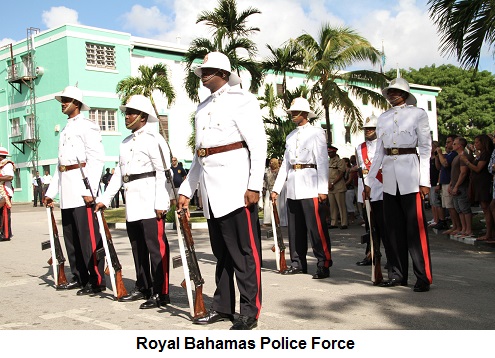
- Photo 1

The book Go Lean … Caribbean asserts that to elevate Caribbean society there must be a focus on elevating the region’s economic, security and governing engines. While the book primarily targets economic empowerments (jobs, investments, education, entrepreneurship, etc.), it posits that security concerns must be front-and-center along with these economic efforts.

The book directly relates (Page 23) that with the emergence of new economic drivers that “bad actors” will also emerge thereafter to exploit the opportunities, with good, bad and evil intent. This is a historical fact, and is bound to be repeated again and again. The following news article and related VIDEO convey this point:

Title: ‘Change leaders in crime fight’
Source: BahamasLocal.com – Local Online News Portal; retrieved January 6, 2016 from:
http://www.bahamaslocal.com/newsitem/142707/Change_leaders_in_crime_fight.html

January 04, 2016 – Former Deputy Commissioner of Police Quinn McCartney is renewing his call for a change in leadership in the crime fight following the setting of a new murder record in The Bahamas in 2015, and several serious crimes already recorded for 2016, including two murders and multiple shootings. While McCartney did not identify anyone in his post, his comments are widely viewed as a critique of Commissioner of Police Ellison Greenslade.

- Photo 2

“I promised not to say too much this year, but looks like 2016 is starting off much like 2015 ended, and therefore I feel compelled to say something brief right now,” McCartney wrote on his Facebook page on Sunday night.

“Obviously what we are doing right now is not working. There is, in my humble opinion, a need for drastic changes to be made. Perhaps we should take our cues from sports teams. I am not a sports fanatic, but I do know that when a team continues to lose, sooner or later there is a leadership change [and] the manager/coach is fired.

“Most of the team members stay but new leadership is brought in to hopefully chart a new course for what should be a talented team. With six successive years of unprecedented records, are we at the point where we need to honestly look at a change of the leadership for the team?”

McCartney’s call for new leadership comes exactly six years after Greenslade assumed command of the Royal Bahamas Police Force and one year after he, McCartney, retired as deputy.

In 2010, there were 94 murders recorded in the country, a record at the time. The next year there were 127 murders and in 2012 there were 111. There were 120 murders in 2013, 123 in 2014 and a record 149 last year.

McCartney’s post attracted widespread attention and in response to a comment under his post, McCartney promised to expand on his thoughts later in the week.

“We can only be manipulated to the extent that we allow persons to manipulate us,” he wrote. “The political directorate can only get us to do what they want if we allow them to. We need to de-politicize our institutions or at least the perception that they are politicized. Unfortunately we have allowed them in when it has been expedient for our professional success or advancement. We are to blame.”

Fresh off a record-setting year, a man was shot and killed outside a bar at the intersection of Kemp Road and Wulff Road early Saturday morning, police said. Hours later, Michael Deangelo Bethel, a well-known businessman, was shot and killed after he was ambushed at the traffic light near Montagu Beach early Sunday morning. His wife and two others were injured in the shooting, police said.

This is not first time McCartney has been critical of the leadership in the crime fight. Last November, he said if those charged with addressing the problem are failing to do their jobs, they should be removed.

McCartney left the force after more than 30 years of service. His relationship with the commissioner was reportedly strained in the time leading to his exit. McCartney holds a first degree in chemistry and a master’s degree in forensics from the University of Scotland. He has had extensive professional training since then.

As deputy commissioner, he was responsible for complaints and discipline, fire services and the force’s inspection and review branch, which was reportedly dismantled in 2012.

———-

VIDEO – MAN STABBED AND KILLED IN YELLOW ELDER – https://youtu.be/pRYNzSaGzSw


Published on Dec 29, 2015 – NB12 DECEMBER 29TH, NEWSCAST.
Pardon the opening Advertisement/Commercial.

The foregoing news resources relate the dire status quo in the Bahamas. A similar review in other Caribbean member-states shows similar challenges. So crime is a regional problem. The Go Lean book therefore presents a regional solution. The book features details of mitigations designed from world-class best-practices to remediate crime in the Caribbean region. All of which the current regimes of the 30 separate member-states would be unable to pursue on their own. As the commentator relates in the foregoing article, there is a need for a new regime, as the current structures are failing. The Go Lean book therefore relates “the new Sheriff in Town” – a regional one – with these strategies:

  • Caribbean Police (CariPol)
  • Regional Security Intelligence Bureau
  • Enhanced Witness Protection Solutions
  • Regionally-regulated Private/Commercial First Responders
  • Youth Crime Awareness and Prevention
  • Prison Industrial Complex

This last entry – Prison Industrial Complex – is the focus of this commentary. There is much to learn from the “art and science” of penology and criminology in implementing change in the new Caribbean.

The Go Lean book posits that the Caribbean is in dire straits – society-wise and crime-wise – due fundamentally to one factor: societal abandonment. Evidence is provided when the best-of-the-best flees a community, the consequence is more-and-more turmoil among the remnant.

Consider this: What happens in prisons where/when felons and “bad actors” are all warehoused together?

The fields of penology and criminology are all consistent in their conclusions: Criminals, felons and “bad actors” all learn to become better criminals, felons and “bad actors” in prison. This is why recidivism – the propensity to return to the bad practice – is so high.

Per Psychiatry: Recidivism = the chronic tendency toward repetition of criminal or antisocial behavior patterns.

This commentary – in support of the book Go Lean…Caribbean – has previously established that the societal abandonment rate among the educated classes of the Caribbean average 70%, with some communities experiencing even higher rates; (Jamaica at 85% and Guyana at 89%). This consideration details the “push and pull” reasons why Caribbean citizens flee.

The Go Lean book and this entire movement hereby asserts that the problem of crime in the Bahamas – as related in the foregoing news article, though not exclusive there – is a vicious cycle of cause-and effect that is common and tragic throughout the entire Caribbean region. Imagine this cycle:

  • The Caribbean Remnant – lower skilled and more prone to violence – learn more effective lawlessness
  • Innocent people leave the Caribbean region for refuge abroad
  • The Caribbean Remnant – lower skilled and more prone to violence – learn more effective lawlessness
  • Innocent people leave the Caribbean region for refuge abroad
  • pattern continues

This presumed pattern is based on the premise that foreign governments disallow immigrants with criminal records. So these ones – bad actors – are comprised in the remnant population left behind in the Caribbean. This means that every iteration of the above pattern changes the statistics of felons/non-felons in society; more and more felons, percentage-wise.

So then, what hope is there for the future?

“Do what you’ve always done, get what you’ve always got” – Old Adage.

The declaration of the policing SME in the foregoing article is to “change the leadership in the crime fight”. (Though the quoted article appears to be more political in its indictment).

This is the quest of the Go Lean movement, to change the leadership, stewardship and oversight of the Caribbean eco-system. (This commentary makes no judgments on the actual Commissioner of Police of the Royal Bahamas Police Force; this public servant seems to be an honorable man with only good intentions for his homeland). The Go Lean book serves as a roadmap for the introduction and implementation of the technocratic Caribbean Union Trade Federation (CU) to elevate the region’s economic, security and governing engines beyond their status quo. The roadmap has these 3 prime directives:

  • Optimization of the economic engines in order to grow the regional economy to $800 Billion & create 2.2 million new jobs.
  • Establishment of a security apparatus to provide public safety and protect the resultant economic engines from economic crimes and cross-border threats.
  • Improvement of Caribbean governance to support these engines.

The goal of this roadmap is to confederate all of the Caribbean – all 30 member-states – under a unified entity to provide these societal solutions for the region. But ‘Security’ for the Caribbean has a different meaning than for many of the countries the Caribbean Diaspora flee to, like North America and Europe. The CU security goal is for public safety! The goal of the CU is set to optimize Caribbean society through economic empowerment, and also the security dynamics of the region, since these are inextricably linked to this same endeavor.

The end result of the successful execution of the Go Lean/CU roadmap is improvement of Caribbean society, minimizing the “push-pull” factors that led to more emigration, and incentivizing the return of many Diaspora that have left over the years and decades.

The cause-and-effect of failing economics lead to increasing criminality. The cause-and-effect of improved economics lead to lesser criminal activities. The motivation of this Go Lean/CU roadmap is the basic economic principle, described in the Go Lean book (Page 21), that “Economic Systems Influence Individual Choices and Incentives”. So the advanced field of economics hereby posits that Economic Systems, more so than political systems influence people’s choices and incentives. So the Go Lean/CU seeks to optimize the region’s economic systems to better deliver on the prime directives of the Go Lean roadmap.

This roadmap fully envisions the integration of shepherding – leadership – for the Caribbean region’s economic and security initiatives under the same governance: The Caribbean Union Trade Federation. This point is pronounced early in the Go Lean book with the Declaration of Interdependence (Page 12) that claims:

x.   Whereas we are surrounded and allied to nations of larger proportions in land mass, populations, and treasuries, elements in their societies may have ill-intent in their pursuits, at the expense of the safety and security of our citizens. We must therefore appoint “new guards” to ensure our public safety and threats against our society, both domestic and foreign. The Federation must employ the latest advances and best practices … to assuage continuous threats against public safety.

xi.   Whereas all men are entitled to the benefits of good governance in a free society, “new guards” must be enacted to dissuade the emergence of incompetence, corruption, nepotism and cronyism at the peril of the people’s best interest. The Federation must guarantee the executions of a social contract between government and the governed.

xii.  Whereas the legacy in recent times in individual states may be that of ineffectual governance with no redress to higher authority, the accedence of this Federation will ensure accountability and escalation of the human and civil rights of the people for good governance, justice assurances, due process and the rule of law. As such, any threats of a “failed state” status for any member state must enact emergency measures on behalf of the Federation to protect the human, civil and property rights of the citizens, residents, allies, trading partners, and visitors of the affected member state and the Federation as a whole.

xvi. Whereas security of our homeland is inextricably linked to prosperity of the homeland, the economic and security interest of the region needs to be aligned under the same governance. Since economic crimes, including piracy and other forms of terrorism, can imperil the functioning of the wheels of commerce for all the citizenry, the accedence of this Federation must equip the security apparatus with the tools and techniques for predictive and proactive interdictions.

The Caribbean appointing “new guards”, or a security  apparatus to ensure justice and public safety will include many strategies, tactics and implementations deemed “best-practice” over the years, including an advanced Intelligence Gathering & Analysis effort to mitigate and remediate crime in the region, and also to optimize the “art and science” of crime, including prison reform; (see Page 211 of the Go Lean book). This represents “top-down” and “bottom up” optimization of the security process to better protect the homeland. This comprehensive Homeland Security focus is “Step One, Day One” in the Go Lean roadmap, covering the approach for adequate funding, accountability and control. The Go Lean book details the series of community ethos, strategies, tactics, implementations and advocacies to provide increased public safety & security in the Caribbean region:

Community Ethos – Economic Systems Influence Individual Choices Page 21
Community Ethos – Consequences of Choices Lie in Future Page 21
Community Ethos – Privacy –vs- Public Protection Page 23
Community Ethos – Intelligence Gathering Page 23
Community Ethos – “Crap” Happens Page 23
Community Ethos – Cooperatives Page 25
Community Ethos – Ways to Impact the Greater Good Page 37
Tactical – Vision – Forge a Single Market economy Page 45
Tactical – Confederating a non-sovereign union Page 63
Tactical – Fostering a Technocracy Page 64
Tactical – Separation of Powers – Homeland Security Page 75
Tactical – Separation of Powers – CariPol: Marshals & Investigations Page 75
Implementation – Ways to Pay for Change Page 101
Implementation – Start-up Security Initiatives Page 103
Implementation – Ways to Foster International Aid – Security Assistance Page 115
Implementation – Reasons to Repatriate Page 118
Planning – Ways to Make the Caribbean Better Page 131
Planning – Ways to Improve Failed-State Indices – Mitigate Organized Crime Page 134
Planning – Lessons from the American West – Law & Order Lessons Page 142
Planning – Lessons from Egypt – Lackluster Law & Order affects Economy Page 143
Advocacy – Ways to Grow the Economy Page 151
Advocacy – Ways to Improve Governance Page 168
Advocacy – Ways to Better Manage the Social Contract Page 170
Advocacy – Ways to Improve Leadership Page 171
Advocacy – Ways to Impact Justice Page 177
Advocacy – Ways to Reduce Crime Page 178
Advocacy – Ways to Improve for Gun Control Page 179
Advocacy – Ways to Improve Homeland Security Page 180
Advocacy – Ways to Mitigate Terrorism Page 181
Advocacy – Ways to Improve Intelligence Gathering and Analysis Page 182
Advocacy – Ways to Impact the Prison Industrial Complex Page 211
Advocacy – Ways to Protect Human Rights Page 220

Other subjects related to crime and security empowerments for the region have been blogged in other Go Lean…Caribbean commentaries, as sampled here:

https://goleancaribbean.com/blog/?p=6693 Ten Puerto Rico Police Accused of Criminal Network
https://goleancaribbean.com/blog/?p=6385 Wi-Fi Hot Spots Run By Hackers Are Targeting Tourists
https://goleancaribbean.com/blog/?p=5307 8th Violent Crime Warning to Bahamas Tourists
https://goleancaribbean.com/blog/?p=5435 China Internet Policing – Model for Caribbean
https://goleancaribbean.com/blog/?p=5304 Mitigating the Eventual ‘Abuse of Power’
https://goleancaribbean.com/blog/?p=5238 #ManifestJustice – Lessons for the Prison Eco-System
https://goleancaribbean.com/blog/?p=4863 A Picture is worth a thousand words; a video … a million to expose corruption
https://goleancaribbean.com/blog/?p=4360 Dreading the ‘CaribbeanBasin Security Initiative’
https://goleancaribbean.com/blog/?p=4308 911 – Emergency Response: System in Crisis
https://goleancaribbean.com/blog/?p=3881 Intelligence Agencies to Up Cyber Security Cooperation
https://goleancaribbean.com/blog/?p=2994 Justice Strategy: Special Prosecutors and Commissions of Inquiry
https://goleancaribbean.com/blog/?p=2684 Role Model for Justice, Anti-Crime & Security: The Pinkertons
https://goleancaribbean.com/blog/?p=1554 Status of Forces Agreement = Security Pact
https://goleancaribbean.com/blog/?p=1143 White Collar fraud in America; criminals take $272 billion a year in healthcare
https://goleancaribbean.com/blog/?p=960 NSA records all phone calls in Bahamas, according to Snowden
https://goleancaribbean.com/blog/?p=535 Remembering and learning from the Boston Marathon Terrorist Attacks
https://goleancaribbean.com/blog/?p=392 Jamaica to receive World Bank funds to help in crime fight
https://goleancaribbean.com/blog/?p=273 10 Things We Don’t Want from the US – #6: Criminal Organizations

The vision of the Go Lean roadmap is to make the Caribbean homeland, a better place to live, work and play. This means measurable reduction (mitigation and remediation) of crime in the region.

The premise is that “bad actors” will always emerge, from internal and external origins. We must be prepared and on-guard to defend our homeland against all threats, foreign and domestic, including crime. Plus, we must accomplish this goal with maximum transparency, accountability, and commitment to due-process and the rule-of-law.

An additional mission is to lower the “push” factors (from “push-and-pull” reference) so that our citizens are not led to flee their homeland for foreign (North American and European) shores. Among the many reasons people emigrate, is victimization or fear of crime. There is “good, bad and ugly” in every society. We must not allow all our “good” citizens to leave and the only remaining – the remnant – would be the “bad and the ugly”.

So all stakeholders in the Caribbean – people and institutions – are urged to lean-in to this Go Lean roadmap for the elevation of the Caribbean’s societal engine: economy, security and governance. The roadmap calls for the heavy-lifting so as to impact the Greater Good.   🙂

Download the book Go Lean … Caribbean – now!

Share this post:
, , ,
[Top]

ENCORE: Concussion – The Movie; The Cause

Nassau, Bahamas – This is a re-distribution of the blog-commentary published on August 31, 2015, now that the movie has been released on Christmas Day. The movie is in fact all that it purported to be.

Go Lean Commentary

“Are you ready for some football?” – Promotional song by Hank Williams, Jr. for Monday Night Football on ABC & ESPN networks for 22 years (1989 – 2011).

This iconic song (see Appendix) and catch-phrase is reflective of exactly how popular the National Football League (NFL) is in the US:

“They own an entire day of the week”.

- The Movie; The Cause - Photo 2So says the new movie ‘Concussions’, starring Will Smith, referring to the media domination of NFL Football on Sundays during the Autumn season. The movie’s script is along a line that resonates well in Hollywood’s Academy Award balloting: “David versus Goliath”; “a small man speaking truth to power”.

In the case of the NFL, it is not just about power, it is about money, prestige and protecting the status quo; the NFL is responsible for the livelihood of so many people. The book Go Lean … Caribbean recognized the importance of the NFL in the American lexicon of “live, work and play”; it featured a case study (Page 32) of the NFL and it’s collective bargaining successes (and failures) in 2011. An excerpt from the book is quoted as follows:

Football is big business in the US, $9 billion in revenue, and more than a business; emotions – civic pride, rivalries, and fanaticism – run high on both sides.

Previous Go Lean commentaries presents the socio-economic realities of much of the American football eco-system. Consider a sample here:

Socio-Economic Impact Analysis of [Football] Sports Stadiums
Watch the Super Bowl … Commercials
Levi’s® NFL Stadium: A Team Effort
Sports Role Model – College Football – Playing For Pride … And More
Sports Role Model – Turn On the SEC Network
Collegiate Sports in the Caribbean – Model of NCAA
10 Things We Want from the US: #10 – Sports Professionalism
10 Things We Don’t Want from the US: #10 – ‘Win At All Costs’ Ethos

While football plays a big role in American life, so do movies. Their role is more unique; they are able to change society. In a previous blog / commentary regarding Caribbean Diaspora member and Hollywood great, Sidney Poitier, it was declared that …

“Movies are an amazing business model. People give money to spend a couple of hours watching someone else’s creation and then leave the theater with nothing to show for the investment; except perhaps a different perspective”.

Yes, movies help us to glean a better view of ourselves … and our failings; and many times, show us a way-forward.

These descriptors actually describe the latest production from Hollywood icon Will Smith (the former Fresh Prince of Bel-Air). This movie, the film “Concussion”, in the following news article, relates the real life drama of one man, Dr. Bennet Omalu, a Nigerian-born medical doctor – a pathologist – who prepared autopsies of former players that suffered from football-related concussions. He did not buckle under the acute pressure to maintain the status quo, and now, he is celebrated for forging change in his adopted homeland. This one man made a difference. (The NFL is now credited for a Concussion awareness and prevention protocol so advanced that other levels of the sport – college, high schools and Youth – are being urged to emulate).

See news article here on the release of the movie:

Title: ‘Concussion’: 5 Take-a-ways From Will Smith’s New Film

Will Smith, 46, is definitely going to get a ton of Oscar buzz portraying Dr. Bennet Omalu in the new film “Concussion.” NFL columnist Peter King of Sports Illustrated got an exclusive first peek at the trailer and it has been widely shared on social media since. And it’s very chilling.

- The Movie; The Cause - Photo 1

Here are five take-aways and background you need to know before checking out the clip:

1 – It’s Based on a True Story

Omalu is the forensic pathologist and neuropathologist who discovered chronic traumatic encephalopathy in football players who got hit in the head over and over again, according to the Washington Post.

In the clip, he says repetitive “head trauma chokes the brain.”

Omalu was one of the founding members of the Brain Injury Research Institute in 2002. He conducted the autopsy of Pittsburgh Steelers center Mike Webster, played by David Morse in the film, which led to this discovery.

2 – Smith’s Version of Omalu’s Accent Is Spot On

Omalu is from Nigeria and Smith has been known to transform completely for a role. He was nominated for an Oscar for 2011’s “Ali,” playing the legendary Muhammad Ali.

For comparison, here’s Omalu’s PBS interview from 2013.

3 – Smith Is a Reluctant Hero

“If you don’t speak for them, who will,” Gugu Mbatha-Raw, who plays Prema Mutiso in the film, tells Smith’s character.

He admits he idolized America growing up and “was the wrong person to have discovered this.”

4 – Alec Baldwin and Luke Wilson

“Concussion” brought in some heavyweights for this movie. Baldwin plays Dr. Julian Bailes, who advises Omalu, and Wilson, who will reportedly play NFL Commissioner Roger Goodell, according to IMDB. There’s no official word on this. He’s seen at a podium in the trailer, but doesn’t speak.

5 – “Tell the Truth”

Smith captures Omalu’s passion to have the truth told about this injury and disease.

“I was afraid of letting Mike [Webster] down. I was afraid. I don’t know. I was afraid I was going to fail,” Omalu told PBS a couple years back.

———-

VIDEO Link: http://www.imdb.com/title/tt3322364/?ref_=nv_sr_1


Will Smith stars in the incredible true David vs. Goliath story of Dr. Bennet Omalu, the brilliant forensic neuropathologist who made the first discovery of CTE, a football-related brain trauma, in a pro player.

The subject of concussions is serious – life and death. Just a few weeks ago (August 8), an NFL Hall-of-Fame inductee was honored for his play on the field during his 20-year professional career, but his family, his daughter in particular, is the one that made his acceptance / induction speech. He had died, in 2012; he committed suicide after apparently suffering from a brain disorder – chronic traumatic encephalopathy (CTE), a type of chronic brain damage that has also been found in other deceased former NFL players[4] – sustained from his years of brutal head contacts in organized football in high school, college and in his NFL career. This player was Junior Seau.

- The Movie; The Cause - Photo 3a

- The Movie; The Cause - Photo 3b

Why would there be a need for “David versus Goliath”; “a small man speaking truth to power”? Is not the actuality of an acclaimed football player committing suicide in this manner – he shot himself in the chest so as to preserve his brain for research – telling enough to drive home the message for reform?

No. Hardly. As previously discussed, there is too much money at stake.

These stakes bring out the Crony-capitalism in American society.

The book Go Lean…Caribbean (and subsequent blog/commentaries) relates many examples of cronyism in the American eco-system. There is a lot of money at stake. Those who want to preserve the status quo or not invest in the required mitigations to remediate concussions will fight back against any Advocate promoting the Greater Good. The profit motive is powerful. There are doubters and those who want to spurn doubt. “Concussions in Football” is not the first issue these “actors” have promoted doubt on. The efforts to downplay concussion alarmists are from a familiar playbook, used previously by Climate Change deniers, Big Tobacco, Toxic Waste, Acid Rain, and other dangerous chemicals.

This Go Lean book serves as a roadmap for the introduction and implementation of the technocratic Caribbean Union Trade Federation (CU). Sports are integral to the Go Lean/CU roadmap. While sports can be good and promote positives in society, even economically, the safety issues must be addressed upfront. This is a matter of community security. Thusly, the prime directives of the CU are described as:

  • Optimize the economic engines of the Caribbean to elevate the regional economy to grow to $800 Billion and create 2.2 million new jobs, including sports-related industries with a projection of 21,000 direct jobs at Fairgrounds and sports enterprises.
  • Establish a security apparatus to protect the people and economic engines.
  • Improvement of Caribbean governance to support these economic and security engines.

The CU/Go Lean sports mission is to harness the individual abilities of athletes to not just elevate their performance, but also to harness the economic impact for their communities. So modern sports endeavors cannot be analyzed without considering the impact on “dollars and cents” for stakeholders. This is a fact and should never be ignored. There is therefore the need to carefully assess and be on guard for crony-capitalistic influences entering the decision-making of sports stakeholders. The Go Lean book posits that with the emergence of new economic engines, “bad actors” will also emerge thereafter to exploit the opportunities, with good, bad and evil intent”. These points were pronounced early in the opening Declaration of Interdependence (Page 12 &14):

x. Whereas we are surrounded and allied to nations of larger proportions in land mass, populations, and treasuries, elements in their societies may have ill-intent in their pursuits, at the expense of the safety and security of our citizens. We must therefore appoint “new guards” to ensure our public safety and threats against our society, both domestic and foreign. The Federation must employ the latest advances and best practices of criminology and penology to assuage continuous threats against public safety.

xi. Whereas all men are entitled to the benefits of good governance in a free society, “new guards” must be enacted to dissuade the emergence of incompetence, corruption, nepotism and cronyism at the peril of the people’s best interest. The Federation must guarantee the executions of a social contract between government and the governed.

xvi. Whereas security of our homeland is inextricably linked to prosperity of the homeland, the economic and security interests of the region needs to be aligned under the same governance. Since economic crimes … can imperil the functioning of the wheels of commerce for all the citizenry, the accedence of this Federation must equip the security apparatus with the tools and techniques for predictive and proactive interdictions.

xxxi. Whereas sports have been a source of great pride for the Caribbean region, the economic returns from these ventures have not been evenly distributed as in other societies. The Federation must therefore facilitate the eco-systems and vertical industries of sports as a business, recreation, national pastime and even sports tourism …

The Go Lean book envisions the CU – a confederation of the 30 member-states of the Caribbean chartered to do the heavy-lifting of empowering and elevating the Caribbean economy – as the landlord of many sports facilities (within the Self-Governing Entities design), and the regulator for inter-state sport federations. The book details the economic principles and community ethos to adopt, plus the executions of strategies, tactics, implementations and advocacies to optimize sports enterprises in the Caribbean:

Community Ethos – Deferred Gratification Page 21
Economic Principles – People Respond to Incentives in Predictable Ways Page 21
Economic Principles – Economic Systems Influence Individual Choices / Incentives Page 21
Economic Principles – The Consequences of Choices Lie in the Future Page 21
Economic Principles – Job Multiplier Page 22
Community Ethos – Security Principles – Whistleblower Protection Page 23
Community Ethos – Security Principles – Light-Up the Dark Places Page 23
Community Ethos – Security Principles – “Crap” Happens Page 23
Community Ethos – Governing Principles – Lean Operations Page 24
Community Ethos – Ways to Impact the Future Page 26
Community Ethos – Ways to Promote Happiness – Mitigate Suicide Threats Page 36
Community Ethos – Impact the Greater Good Page 37
Strategy – Vision – Confederating 30 Member-States into a Single Market Page 45
Strategy – Vision – Foster Local Economic Engines for Basic Needs Page 45
Strategy – Mission – Prepare for Natural Disasters Page 45
Strategic – Staffing – Sporting Events at Fairgrounds Page 55
Strategy – Agents of Change – Climate Change Page 57
Strategy – Agents of Change – Globalization Page 57
Tactical – Confederating a Permanent Union Page 63
Tactical – Fostering a Technocracy Page 64
Tactical – Separation of Powers – Sports & Culture Administration Page 81
Tactical – Separation of Powers – Fairgrounds Administration Page 83
Tactical – Separation of Powers – Health Department – Disease Management Page 86
Implementation – Assemble Regional Organs into a Single Market Economy Page 96
Implementation – Steps to Implement Self-Governing Entities – Sports Stadia Page 105
Implementation – Security Initiatives at Start-up – Unified Command & Control Page 103
Implementation – Industrial Policy for CU Self Governing Entities Page 103
Implementation – Ways to Deliver – Project Management/Accountabilities Page 109
Anatomy of Advocacies – Examples of Individuals Who Made Impact Page 122
Planning – Ways to Make the Caribbean Better Page 131
Advocacy – Ways to Grow the Economy Page 151
Advocacy – Ways to Create Jobs Page 152
Advocacy – Ways to Improve Governance Page 168
Advocacy – Ways to Better Manage the Social Contract Page 170
Advocacy – Ways to Promote Fairgrounds Page 192
Advocacy – Ways to Improve Emergency Management – Trauma Arts & Sciences Page 196
Advocacy – Ways to Improve Sports Page 229
Advocacy – Ways to Impact Urban Living – Sports Leagues Page 234

The Go Lean book and accompanying blogs declare that the Caribbean needs to learn lessons from other communities, especially when big money is involved in pursuits like sports. These activities should be beneficial to health, not detrimental. So the admonition is to be “on guard” against the “cronies”; they will always try to sacrifice public policy – the Greater Good – for private gain: profit.

Let’s do better. Yes, the Caribbean can be better than the American experiences.

The design of Self-Governing Entities allow for greater protections from Crony-Capitalistic abuses. While this roadmap is committed to availing the economic opportunities of sports and accompanying infrastructure, as demonstrated in the foregoing movie trailer, sport teams and owners can be plutocratic “animals” in their greed. We must learn to mitigate plutocratic abuses. While an optimized eco-system is good, there is always the need for an Advocate, one person to step up, blow the whistle and transform society. The Go Lean roadmap encourages these role models.

Bravo Dr. Bennet Omalu. Thank you for this example … and for being a role model for all of the Caribbean.

RIP Junior Seau.

Now is the time for all of the Caribbean, the people and governing institutions, to lean-in for the empowerments described in the book Go Lean … Caribbean. This roadmap will result in more positive socio-economic changes throughout the region; it will make the Caribbean a better place to live, work and play. 🙂

Download the free e-Book of Go Lean … Caribbean – now!

——-

Appendix VIDEO: Hank Williams Jr. – Are You Ready for Some Footballhttps://youtu.be/K8LLKO0-PAE

Uploaded on May 28, 2011 – Official Music Video


Share this post:
, , , , , ,
[Top]

The Caribbean is Looking for Heroes … ‘to Return’

Go Lean Commentary

In the Caribbean, we need a hero, we need lots of heroes …

… need a hero
I’m holding out for a hero ’til the end of the night
He’s gotta be strong
And he’s gotta be fast
And he’s gotta be fresh from the fight
I need a hero
I’m holding out for a hero ’til the morning light
He’s gotta be sure
And it’s gotta be soon
And he’s gotta be larger than life
(Song by Bonnie Tyler 1984; see VIDEO & Lyrics at https://youtu.be/OBwS66EBUcY; see Appendix)

We must reform and transform our Caribbean society. We know that one person – a hero – can make a difference, and we need to encourage those contributions.

Heroes are not born, they are forged. According to noted Mythologist Joseph Campbell, hero candidates go through a consistent pattern of a journey to become bona-fide heroes.

CU Blog - The Caribbean is Looking for Heroes to Return - Photo 1Who is Joseph Campbell and why does his opinion matter? He is the inspiration behind the big hit movie franchise Star Wars. All things Star Wars are en vogue right now. According to IMDB.com, this movie which opened just days ago – Star Wars Episode 7 “The Force Awakens”; (see Appendix) – had the biggest US box office opening of any movie … ever. See the box office results here in the photo, retrieved December 22, 2015.

This is an amazing feat, considering that Joseph Campbell has been dead since 1987. But Star Wars creator, George Lucas drew his story-line from Joseph Campbell’s inspirations in the cataloging of the “Hero’s Journey” in his writings. See article here:

Title: Role Model Joseph Campbell
In 1949 Joseph Campbell (1904-1987) made a big splash in the field of mythology with his book The Hero With a Thousand Faces. This book built on the pioneering work of German anthropologist Adolph Bastian (1826-1905), who first proposed the idea that myths from all over the world seem to be built from the same “elementary ideas.” Swiss psychiatrist Carl Jung (1875-1961) named these elementary ideas “archetypes,” which he believed to be the building blocks not only of the unconscious mind, but of a collective unconscious. In other words, Jung believed that everyone in the world is born with the same basic subconscious model of what a “hero” is, or a “mentor” or a “quest,” and that’s why people who don’t even speak the same language can enjoy the same stories.

Jung developed his idea of archetypes mostly as a way of finding meaning within the dreams and visions of the mentally ill: if a person believes they are being followed by a giant apple pie, it’s difficult to make sense of how to help them. But if the giant apple pie can be understood to represent that person’s shadow, the embodiment of all their fears, then the psychotherapist can help guide them through that fear, just as Yoda guided Luke on Dagoba. If you think of a person as a computer and our bodies as “hardware,” language and culture seem to be the “software.” Deeper still, and apparently common to all homo sapians, is a sort of built-in “operating system” which interprets the world by sorting people, places, things and experiences into archetypes.

CU Blog - The Caribbean is Looking for Heroes to Return - Photo 2Campbell’s contribution was to take this idea of archetypes and use it to map out the common underlying structure behind religion and myth. He proposed this idea in The Hero With a Thousand Faces, which provides examples from cultures throughout history and all over the world. Campbell eloquently demonstrates that all stories are expressions of the same story-pattern, which he named the “Hero’s Journey,” or the “monomyth.” This sounds like a simple idea, but it suggests an incredible ramification, which Campbell summed up with his adage “All religions are true, but none are literal.” That is, he concluded that all religions are really containers for the same essential truth, and the trick is to avoid mistaking the wrappings for the diamond.

[Star Wars Creator George] Lucas had already written two drafts of Star Wars when he rediscovered Joseph Campbell’s The Hero With a Thousand Faces in 1975 (having read it years before in college). This blueprint for “The Hero’s Journey” gave Lucas the focus he needed to draw his sprawling imaginary universe into a single story.

Note that the Wachowski Brothers’ wonderful film The Matrix is carefully built on the same blueprint:

Campbell

Star Wars

The Matrix

I: Departure
The call to adventure Princess Leia’s message “Follow the white rabbit”
Refusal of the call Must help with the harvest Neo won’t climb out window
Supernatural aid Obi-wan rescues Luke from sandpeople Trinity extracts the “bug” from Neo
Crossing the first threshold Escaping Tatooine Neo is taken out of the Matrix for the first time
The belly of the whale Trash compactor Torture room
II: Initiation
The road of trials Lightsaber practice Sparring with Morpheus
The meeting with the goddess Princess Leia (wears white, in earlier     scripts was a “sister” of a mystic order) The Oracle
Temptation away from the true path1 Luke is tempted by the Dark Side Cypher (the failed messiah) is tempted by the world of comfortable illusions
Atonement with the Father Darth and Luke reconcile Neo rescues and comes to agree (that he’s The One) with his father-figure, Morpheus
Apotheosis (becoming god-like) Luke becomes a Jedi Neo becomes The One
The ultimate boon Death Star destroyed Humanity’s salvation now within reach
III: Return
Refusal of the return “Luke, come on!” Luke wants to     stay to avenge Obi-Wan Neo fights agent instead of running
The magic flight Millennium Falcon “Jacking in”
Rescue from without Han saves Luke from Darth Trinity saves Neo from agents
Crossing the return threshold Millennium Falcon destroys pursuing TIE fighters Neo fights Agent Smith
Master of the two worlds Victory ceremony Neo’s declares victory over machines in final phone call
Freedom to live Rebellion is victorious over Empire Humans are victorious over machines

Source: Fan Site for Obscure Star Wars Inspirations; retrieved December 20, 2015 from: http://www.moongadget.com/origins/myth.html

But one can argue, these are just movies, “make believe”; these are not real people nor real life. That would be a true statement of facts (there is no “Luke Skywalker” nor “Neo” as historical characters), but the principles of a “Hero’s Journey” is real, and present in real life. This is just another example of “life imitating art”. In a previous blog-commentary regarding Caribbean Diaspora member and Hollywood great, Sidney Poitier, it was declared that …

“Movies are an amazing business model. People give money to spend a couple of hours watching someone else’s creation and then leave the theater with nothing to show for the investment; except perhaps a different perspective”.

 CU Blog - The Caribbean is Looking for Heroes to Return - Photo 3
 CU Blog - The Caribbean is Looking for Heroes to Return - Photo 4

These movies do bring a different perspective. According to the foregoing, there are Three Acts to the “Hero’s Journey”:

I.   Departure
II.  Initiation
III. Return

The publishers of the book Go Lean…Caribbean recognize the one person can make positive, heroic contributions to his community; and that this role must be forged in society. The book serves as a roadmap for the introduction and implementation of the Caribbean Union Trade Federation (CU). The CU seeks to foster the genius qualifiers in Caribbean citizens. Not everyone can be heroes, but society must be structured to allow heroes to soar. Because …

… one man (or woman) can make a difference! Such a person can impact their community, country … and the whole world.

“The only thing necessary for the triumph of evil is for good men to do nothing” – Edmund Burke; 1729 – 1797; an Irish statesman, member of British Parliament and supporter of the American Revolution.

The Caribbean has fostered the hero process, but according to the Three Acts established by Joseph Campbell, our heroes stopped at Act II, they do not “Return”.

CU Blog - The Caribbean is Looking for Heroes to Return - Photo 5

They make their heroic contributions to other communities and not their homeland. The Caribbean, thusly “fattens frogs for snakes”. Consider the bad consequences of this reality, as in our brain drain among the college-educated population, which is up to a 70% rate within the entire region.

A quest of the Go Lean/CU roadmap is to lower the “Push and Pull” factors that causes so many Caribbean citizens to flee their beloved homeland. In addition, another quest is to incentivize the far-flung Diaspora to return to the Caribbean. Success in these quests will take a “Hero’s Journey”.

The villain in this real-life story is the poor performing Caribbean economy. So the prime directive of the Go Lean book is to elevate Caribbean society, and its societal engines … defined in these declarative statements, as follows:

  • Optimization of the economic engines in order to grow the regional economy and create 2.2 million new jobs.
  • Establishment of a security apparatus to protect the resultant societal engines again foreign and domestic threats.
  • Improvement Caribbean governance to support these engines.

The Go Lean book posits that one person, despite their field of endeavor, can make a difference in the Caribbean, and its impact on the world; that there are many opportunities where one advocate, one champion, one “hero” can elevate society. In this light, the book features 144 different advocacies, so there is inspiration for the “next hero” to emerge and excel right here at home in the Caribbean.

The roadmap specifically encourages the region to lean-in, to foster heroes and champions with these specific community ethos, strategies, tactics, implementations and advocacies:

Community Ethos – Forging Change Page 20
Community Ethos – People Respond to Incentives in Predictable Ways Page 21
Community Ethos – Economic Systems Influence Individual Choices Page 21
Community Ethos – Whistleblower Protection Page 23
Community Ethos – Anti-Bullying and Mitigation Page 23
Community Ethos – Minority Equalization Page 24
Community Ethos – Ways to Foster Genius Page 27
Community Ethos – Ways to Impact the Greater Good Page 37
Strategy – Mission – Dissuade Societal Abandonment Page 45
Strategy – Mission – Incentivize Repatriation Page 45
Strategy – Mission – Protect Repatriates with heightened   Public Safety Page 45
Anatomy of Advocacies – Examples of Individuals Who Made Impact Page 122
Planning – Ways to Make the Caribbean Better Page 131
Advocacy – Ways to Improve Governance Page 168
Advocacy – Ways to Better Manage the Social Contract Page 170
Advocacy – Ways to Improve Leadership Page 171
Advocacy – Ways to Impact Justice Page 177
Advocacy – Ways to Remediate and Mitigate Crime Page 178
Advocacy – Ways to Impact Hollywood – Global Box Office – Imitating Life Page 203
Advocacy – Ways to Preserve Caribbean Heritage Page 218
Advocacy – Ways to Improve the Arts Page 230

The Caribbean region wants a more optimized society.

This book posits that “bad actors” – even villains: the “Dark Side of the Force” – will emerge to exploit inefficient economic, security and governing models.  Early in the book, the pressing need to streamline protections – for citizens and institutions – was pronounced in the Declaration of Interdependence (Page 12), with these opening statements:

x. Whereas we are surrounded and allied to nations of larger proportions in land mass, populations, and treasuries, elements in their societies may have ill-intent in their pursuits, at the expense of the safety and security of our citizens. We must therefore appoint “new guards” to ensure our public safety and threats against our society, both domestic and foreign.

xi. Whereas all men are entitled to the benefits of good governance in a free society, “new guards” must be enacted to dissuade the emergence of incompetence, corruption, nepotism and cronyism at the peril of the people’s best interest. The Federation must guarantee the executions of a social contract between government and the governed.

xii. Whereas the legacy in recent times in individual states may be that of ineffectual governance with no redress to higher authority, the accedence of this Federation will ensure accountability and escalation of the human and civil rights of the people for good governance, justice assurances, due process and the rule of law. As such, any threats of a “failed state” status for any member state must enact emergency measures on behalf of the Federation to protect the human, civil and property rights of the citizens, residents, allies, trading partners, and visitors of the affected member state and the Federation as a whole.

xvi. Whereas security of our homeland is inextricably linked to prosperity of the homeland, the economic and security interest of the region needs to be aligned under the same governance. Since economic crimes, including … forms of terrorism, can imperil the functioning of the wheels of commerce for all the citizenry, the accedence of this Federation must equip the security apparatus with the tools and techniques for predictive and proactive interdictions.

The Go Lean book explicitly acknowledges that optimizing society is not easy; it requires strenuous, heroic efforts; heavy-lifting. That is the quest of the CU/Go Lean roadmap. Other subjects related to heroic efforts of role models have been blogged in other Go Lean…Caribbean commentaries, as sampled here:

https://goleancaribbean.com/blog/?p=5964 Movie Review: ‘Tomorrowland’ – ‘Feed the right wolf’ in Society
https://goleancaribbean.com/blog/?p=5648 Music Role Model Taylor Swift withholds Album from Apple Music
https://goleancaribbean.com/blog/?p=5506 Role Model: Edward Snowden – One Person Making a Difference
https://goleancaribbean.com/blog/?p=3490 How One Entrepreneur Can Rally a Whole Community
https://goleancaribbean.com/blog/?p=2726 Caribbean Role Model – Oscar De La Renta – RIP
https://goleancaribbean.com/blog/?p=1731 Role Model Warren Buffet – An Ode to Omaha
https://goleancaribbean.com/blog/?p=1596 Book Review: ‘Prosper Where You Are Planted’
https://goleancaribbean.com/blog/?p=866 Role Model Bob Marley: The Legend Lives On!
https://goleancaribbean.com/blog/?p=209 Role Model: Advocate Kevin Connolly

The Go Lean roadmap posits that the CU should foster the genius potential in Caribbean citizens and incubate their potential to maximum production. We should let “heroes be heroes” in their fields of endeavor here at home, no matter how diverse. Many Caribbean Diaspora has done this exactly, abroad in benefiting other communities, while their homelands languish.

They have departed – Act I.
They have initiated as heroes – Act II.
But, they have NOT returned – no Act III.

Enough already!

The roadmap pronounces that we need the participation of many advocates on many different paths for progress. By facilitating, fostering and furthering these initiatives, we can have our heroes return to be heroic at home. Only then, will the Caribbean truly become a better place to live, work and play. 🙂

Download the free e-Book of Go Lean … Caribbean – now!

————

Appendix VIDEO – Bonnie Tyler – I Need a Hero (Lyrics) – https://youtu.be/OBwS66EBUcY

————

Appendix VIDEO – Star Wars: The Force Awakens Trailer (Official) – https://youtu.be/sGbxmsDFVnE

Published on Oct 19, 2015 – Watch the official trailer for Star Wars: The Force Awakens, [opened] in theaters December 18, 2015.

Share this post:
, ,
[Top]

Azerbaijan sets its currency on free float

Go Lean Commentary

Imagine one day you have $100 in your wallet. You put the wallet down at night, and then pick it up the next morning and now that money is only worth $70.

Depressing, isn’t it?!

CU Blog - Azerbaijan sets its currency on free float - Photo 4This is not just “make believe”. This is real! This has happened a number of times in the Caribbean past, and just happened today in an Eastern European/Western Asian country, and former Soviet Republic of Azerbaijan; with their manat currency; see Appendix. This is not “Economics 101”, but rather “Economics 901”.

This is a commentary on the frailties of the modern banking system, and the need for mastery in this field of endeavor. The banking community, in the Caribbean and elsewhere, have to master the agents-of-change in this troubling world. Factors such as: Globalization, Technology, and Climate Change. But, we will see that it’s not just banks, but consumers – the man on Main Street – as well that needs to better understand and manage these dynamics.

This introduction vividly demonstrates how banking fortunes, and misfortunes, easily affect people, all around the world. This point aligns with the book Go Lean…Caribbean; and the underlying movement by the publishers SFE Foundation; these were launched as a direct result of the banking crisis referred to as the Great Recession of 2008. One purpose of the book was to apply lessons learned from the 2008 experience in the quest to empower and optimize Caribbean life and society. In addition to the banking dysfunctions that year, global petroleum prices also wreaked havoc on the world’s economy. (The demand for crude oil is now a “wild card” with the new thrust to adapt Green Energy solutions to arrest Climate Change).

There is now a new set of challenges facing the international (central) banking community. This time with currency valuations, as in this case of Azerbaijan; see the news article here and the Appendix below for detailed definitions:

Title: Azerbaijan sets its currency on free float

Azerbaijan Floating Rate

BAKU, Azerbaijan (AP) — Oil-rich Azerbaijan has let its currency float freely, leading to its sharp depreciation as global oil prices hit new lows.

Azerbaijan’s Central Bank said Monday’s move to let the manat fluctuate was made to “preserve hard currency reserves … and ensure the national economy’s competitiveness on the international arena.”

Following the move, the manat fell by 32 percent. One manat, which was worth around $0.95 Friday, was now trading at $0.65.

The ex-Soviet nation has spent more than half of its hard currency reserves so far this year in an attempt to shore up the embattled currency.

Financial analyst Oqtay Akhverdiyev said the decision to let the manta float was “a necessary measure … what we’re now seeing is the real value of the manta.”

———-

AUDIO-VIDEO – Azerbaijan unpegs currency from dollar devalues 30% – https://youtu.be/dr1yLn_lBvI

Published on Dec 21, 2015
SUBSCRIBE TO “EYES OPEN MEDIA” https://www.youtube.com/channel/UCnLq…
SUBSCRIBE, SHARE, LIKE, AND SUPPORT. THANKS FOR ALL THE LOVE…..:)

While this foregoing article relates to international currencies and central banking, this is more than just a Wall Street issue; this is a Main Street issue. This relates fully to the laws of Supply-and-Demand. A central bank must constantly buy-and-sell foreign currencies to regulate the supply in the general market so as to stabilize the “home” currency. As economic drivers for foreign currency become challenged – such as the decline in crude oil prices for Azerbaijan – it’s takes more and more foreign “cash” reserves to regulate the international prices for “home” currencies.

This foregoing article is in consideration of the Go Lean book; it serves as a roadmap for the introduction and implementation of the technocratic Caribbean Union Trade Federation (CU) and Caribbean Central Bank (CCB) to provide better stewardship, to ensure that the economic/currency failures of the past, in the Caribbean and other regions (like Azerbaijan), do not re-occur here … again in the homeland. This all relates to foreign currency exchange (fx), an advanced subject in the field of Economics.

Economics 901 also asserts that there is now interconnectivity of the financial systems; bank/currency troubles in foreign countries easily become trouble for the Caribbean region. The assumption embedded in the Go Lean roadmap is that while there could be elasticity from these foreign financial contagions, the Caribbean is big enough (42 million people in 30 member-states, as opposed to 9.6 million in Azerbaijan alone) so as to streamline its own viable currency/financial/securities market.

There are lessons to apply from the foregoing news story. In a previous blog-commentary, these fx technical points were detailed:

Capital Controls – This is a necessary responsibility of Central Banks. The Go Lean book dives deeply into the discussion for Capital Controls; consider this direct quotation from Page 315 of the book:

Capital controls are residency-based measures such as transaction taxes, other limits, or outright prohibitions that a nation’s government can use to regulate flows from capital markets into and out of the country’s capital account. Types of capital control include exchange controls that prevent or limit the buying and selling of a national currency at the market rate, caps on the allowed volume for the international sale or purchase of various financial assets, transaction taxes, minimum stay requirements, requirements for mandatory approval, or even limits on the amount of money a private citizen is allowed to remove from the country.

Currency Manipulations – The Central Bank of Azerbaijan has the heavy-lifting tasks of manipulating the supply-and-demand equations to try and keep their currency fixed, against an international standard, like the US dollar. Most Central Banks must undertake this strategy to prevent other parties, “bad actors”, from manipulating the currency themselves. Currency manipulators can inflict harm on a country’s resources for their own personal financial gain.

Human & Capital Flight – When a country’s currency is in distress, there is the threat that citizens may flee with their capital so as to secure the value of their savings and investments. This normally means a loss of future economic activity for the educated and productive segments of society; this results in negatives on the national economy in the short-term and in the long-term. The Caribbean has been plagued with this occurrence again and again. Even now, the region has an alarming 70% brain drain rate among the college education populations of Caribbean heritage.

These lessons must be applied in the technocratic administration of the Caribbean Union Trade Federation, and the Caribbean Central Bank’s (CCB) oversight of the Caribbean Dollar (C$). The Go Lean roadmap calls for the CCB to be a cooperative entity of the existing Central Banks in the region; this will foster interdependence from the political entities allowing the motivation of the regional Greater Good. This need for regional stewardship of Caribbean currencies was pronounced early in the book, in the opening Declaration of Interdependence (Page 13) with these statements:

xxiv. Whereas a free market economy can be induced and spurred for continuous progress, the Federation must install the controls to better manage aspects of the economy: jobs, inflation, savings rate, investments and other economic principles. Thereby attracting direct foreign investment because of the stability and vibrancy of our economy.

xxv.  Whereas the legacy of international democracies had been imperiled due to a global financial crisis, the structure of the Federation must allow for financial stability and assurance of the Federation’s institutions. To mandate the economic vibrancy of the region, monetary and fiscal controls and policies must be incorporated as proactive and reactive measures. These measures must address threats against the financial integrity of the Federation and member-states.

So the planners of the new Caribbean sympathizes with the Central Bank of Azerbaijan. We have learned hard lessons on the issue of currency, as many CU member-states have had to endure painful currency fluctuations over the past decades – on more than one occasion. So we now understand that any attempt to reboot the Caribbean economic landscape must first start with a strenuous oversight of the proposed regional C$ currency.

The Go Lean book, and previous blog/commentaries, stressed the key community ethos, strategies, tactics, implementations and advocacies necessary to establish a strong Caribbean financial eco-systems and strong currency. These points are detailed in the book as follows:

Community Ethos – Economic Principles – Economic Systems Influence Individual Choices Page 21
Community Ethos – Economic Principles – Voluntary Trade Creates Wealth Page 21
Community Ethos – Economic Principles – Consequences of Choices Lie in the Future Page 21
Community Ethos – Economic Principles – Money Multiplier Page 23
Community Ethos – Governing Principles – Lean Operations Page 24
Community Ethos – Governing Principles – Return on Investments Page 24
Community Ethos – Ways to Impact the Future – Count on the Greedy to be Greedy Page 26
Community Ethos – Ways to Impact the Greater Good Page 37
Strategy – Mission – Fortify the Stability of the Securities Markets Page 45
Strategy – Provide Proper Oversight and Support for the Depository Institutions Page 46
Strategy – e-Payments and Card-based Transactions Page 49
Tactical – Growing the Economy – Minimizing Bubbles Page 69
Tactical – Separation-of-Powers – Depository Insurance & Regulatory Agency Page 73
Anecdote – Turning Around CARICOM – Effects of 2008 Financial Crisis Page 92
Implementation – Assemble Caribbean Central Bank as a Cooperative Page 96
Implementation – Ways to Better Manage Debt – Optimizing Wall Street Role Page 114
Planning – 10 Big Ideas – Single Market / Currency Union Page 127
Planning – Lessons Learned from 2008 Page 136
Planning – Lessons Learned from New York City – Wall Street Page 137
Planning – Ways to Measure Progress Page 147
Anecdote – Caribbean Currencies Page 149
Advocacy – Ways to Grow the Economy Page 151
Advocacy – Ways to Control Inflation Page 153
Advocacy – Ways to Better Manage Foreign Exchange (fx) Page 154
Advocacy – Reforms for Banking Regulations Page 199
Advocacy – Ways to Impact Wall Street Page 200
Advocacy – Ways to Impact Main Street Page 201
Appendix – Tool-kits for Capital Controls Page 315
Appendix – Lessons Learned from Floating the Trinidad & Tobago Dollar Page 316
Appendix – Controlling Inflation – Technical Details Page 318
Appendix – e-Government and e-Payments Example: EBT Page 353

As related in previous blog commentaries, there is an ebb-and-flow associated with national/regional economic stewardship. This stewardship constitutes the prime directives of the CU/Go Lean roadmap:

  • Optimization of the economic engines – “Economics 901” – in order to grow the economy and create 2.2 million jobs.
  • Establishment of a security apparatus to protect the resultant regional economic engines.
  • Improvement of Caribbean governance/administration/oversight to support these engines.

The best practice for effective stewardship of an economy’s ebb-and-flow is agile management, the ability to “plan, do and review”, adjust course, then “plan, do and review” again. The points of effective, technocratic banking/economic stewardship, were further elaborated upon in these previous blog/commentaries:

https://goleancaribbean.com/blog/?p=6800 Venezuela sues black market currency website in US
https://goleancaribbean.com/blog/?p=6563 Lessons from Iceland – Model of Recovery
https://goleancaribbean.com/blog/?p=4166 A Lesson in History – Panamanian Balboa
https://goleancaribbean.com/blog/?p=3858 European Central Banks unveils 1 trillion stimulus program
https://goleancaribbean.com/blog/?p=3814 Lessons from the Swiss unpegging the franc
https://goleancaribbean.com/blog/?p=3743 Trinidad cuts 2015 budget as oil prices tumble
https://goleancaribbean.com/blog/?p=3213 Understanding Global Crude Oil Prices – Why Gas Prices Drop Below $2
https://goleancaribbean.com/blog/?p=3028 Why India is doing better than most emerging markets
https://goleancaribbean.com/blog/?p=2930 ‘Too Big To Fail’ – Caribbean Version
https://goleancaribbean.com/blog/?p=2090 The Depth & Breadth of Remediating 2008
https://goleancaribbean.com/blog/?p=833 One currency, divergent economies
https://goleancaribbean.com/blog/?p=518 Analyzing the Data – What Banks learn about financial risks

The Go Lean quest is to elevate our society and economy from the parasite role we have assumed in the world trading cycles. We want to be a protégé not a parasite! This mastery of “Economics 901” is not easy; it is heavy-lifting. Yet still, success is conceivable, believable and achievable.

We have so many lessons to learn from this case study in Azerbaijan. Let’s pay more than the usual attention to this, and other case studies in “Economics 901”.

The Caribbean’s 30 member-states are urged to lean-in to this Go Lean roadmap for the CU, CCB and C$. This roadmap applies the best-of-the-best in terms of best-practices. It serves as turn-by-turn directions to move the region to its new destination: a better homeland to live, work and play.   🙂

Download the book Go Lean … Caribbean – now!

————–

Appendix – Azerbaijani manat

The manat (code: AZN) is the currency of Azerbaijan. It is subdivided into 100 qəpik. The word manat is borrowed from the Russian word “moneta” (coin) which is pronounced as “maneta”. Manat was also the designation of the Soviet ruble in both the Azerbaijani and Turkmen languages.

The Azerbaijani manat symbol,                         , was assigned to Unicode U+20BC in 2013. A lowercase m. or man. can be used as a substitute for the manat symbol.

History

The Azerbaijan Democratic Republic and its successor the Azerbaijani Soviet Socialist Republic issued their own currency between 1919 and 1923. The manat replaced the first Transcaucasian ruble at par and was replaced by the second Transcaucasian ruble after Azerbaijan became part of the Transcaucasian Soviet Federal Socialist Republic.

The second manat was introduced on 15 August 1992[1], following the dissolution of the Soviet Union, it had the ISO 4217 code AZM and replaced the Soviet ruble at a rate of 10 rubles to 1 manat.

From early 2002 to early 2005, the exchange rate was fairly stable (varying within a band of 4770–4990 manat per US dollar). Starting in the spring of 2005 there was a slight but steady increase in the value of the manat against the US dollar; the reason most likely being the increased flow of petrodollars (US dollars earned through exports of petroleum crude oil) into the country, together with the generally high price of oil on the world market. At the end of 2005, one dollar was worth 4591 manat. Banknotes below 100 manat had effectively disappeared by 2005, as had the qəpik coins.

On 1 January 2006, a new manat (ISO 4217 code AZN, also called the “manat (national currency)”) was introduced at a value of 5,000 old manat. [Thus the .95 US Dollar exchange rate as of late].

CU Blog - Azerbaijan sets its currency on free float - Photo 1

CU Blog - Azerbaijan sets its currency on free float - Photo 2

Source: https://en.wikipedia.org/wiki/Azerbaijani_manat retrieved December 21, 2015.

Share this post:
,
[Top]

Role Model: African Standby Force

Go Lean Commentary

Are “we” embarking on World War III?

According to Pope Francis, the Head of the Catholic Church and its 2 Billion members: “Yes, we are.”

CU Blog - Role Model - African Standby Force - Photo 5

He is not the only one with that subjective assessment. Consider:

Editorial Commentary: Wake up! It’s already World War III

By: Linda Stasi, Columnist, New York Daily News

What if they started WWIII and nobody noticed?

News flash: We’re in it and we all better start caring. No? Despite the fact that we have a worldwide terror alert, armed conflicts, religious wars that harken back to the Dark Ages, escalating international terrorism – only one world leader, Pope Francis, has dared to call it what it is: World War Three.

Don’t believe it? Believe this then: Globalsecurity.org estimates that right now in the world there are 30 ongoing wars and 22 conflicts. That’s 52 countries at war or in conflict. The U.S. alone has ground troops in 134 countries.

On Tuesday [November 24], Turkey downed a Russian warplane upping the ante of an official start to WWIII to: Very Scary. Yet what did Britain’s Secretary of State Philip Hammond call it? “Potentially serious.” Seriously?

Warsintheworld.com puts the number of wars being waged right now even higher. Factoring in militias, guerrillas, and terrorist organizations, they estimate the number of countries currently at war at 65. Meantime, only 61 countries were involved in WWII. That’s why Pope Francis calls our current state, the “piecemeal third world war.” And he’s right – with the “piecemeal” being the worst part of the evaluation.

Difference is that during the first two world wars we knew who the enemies were and what countries they called home. Now we don’t. How is that two of the world’s top three superpowers – the U.S. and Russia – whose incredible intelligence fueled the Cold War, have been surprise-attacked by terrorist groups whose threats they underestimated, didn’t understand and didn’t appreciate until it was too late?

The U.S.’s oxymoronic intelligence left our ineffectual president seemingly clueless about who the hell we’re even battling – or should be – from day-to-day. ISIS? Al Qaeda? Boko Haram? The Salafi-Jihadists? What about the homegrown terrorist next door? Russia? China? Iraq? Iran? Syria? Who?

What has the $635.9 billion we spent on intelligence since 2001 bought us? Oh right, 70% of it was spent on independent outside contractors who got rich even as terrorist attacks like Benghazi were being planned. Now like cockroaches, terrorist groups backed by oil money and rich sheiks who shake our hands while stabbing us in the back, are multiplying out of control. And like cockroaches, each time we think we can bomb the latest terrorist organization out of existence, they evolve and multiply into something bigger, different and more elusive, popping up where we don’t expect them with more weaponry at their disposal.

As Lawrence Kolb, VP of the Council on Foreign Relations and assistant Defense Secretary under Reagan recently told Frontline, the enemy of the U.S. and of the world is instability. The president still doesn’t get that.

Interesting factoid to think about as we enter the holidays – in the midst of all this war, who negotiated the release of 98 Assyrian hostages held by ISIS? No, not the ambassadors, but the head of the AssyrianChurch of the East in Syria.

HE’S POPE FRANK-NESS

The pope has declared that this year, Christmas is “all a charade. The world has not understood the way of peace. The whole world is at war.”

He should be known as Pope Francis the Truthful since he’s the first pope to say what’s on his mind instead of what’s on the mind of the Vatican establishment since the Medicis.

Francis also said that folks who sell guns and weapons are hypocrites if they call themselves Christians. What? He doesn’t like those happy Christmas ads for assault weapons? What next? Will he disapprove of kicking off the White Christmas season with Black Friday sales and riots? Positively un-Christian!

Read the full article at: http://www.nydailynews.com/news/national/stasi-wake-world-war-iii-article-1.2446054; published November 30, 2015; retrieved December 17, 2015

With this foregoing news commentary and these following events, there is no doubt that there is a global war on terror:

 CU Blog - Role Model - African Standby Force - Photo 1

CU Blog - Role Model - African Standby Force - Photo 2

Even if “one” concludes that it is not World War III, it is undisputed that there is a cause for alarm.

Despite not being directly in a theater of war, the Caribbean region is not spared. We have a lot at stake; we have risks and threats; we have to be on guard for the Sum of all our Fears.

What now? It’s time to get real!

From the Caribbean perspective, we have some scary propositions:

Undeniable threats … deniable response.

We are not the first region with this status, and will probably not be the last; samples, examples and role models abound. This commentary considers the role model of the African Standby Force (ASF); see their functions in the Appendix below. That region has a history of undeniable threats, and a shameful history of failing responses. Now, the continent attempts to reform and transform. There is a lot for the Caribbean to learn in considering this African role model:

News Title: Africa puts security hopes in foreign-funded, home-grown strike force
By: Wendell Roelf

Soldiers from 22 African nations join exercises as part of the African Union's African Standby Force (ASF) at the South Africa National Defence Force's Lohatla training areaLOHATLA COMBAT TRAINING BASE, South Africa – Backed by tanks, armoured vehicles and plenty of EU cash, thousands of African soldiers took on an imaginary enemy in the arid heart of South Africa this week, the last joint exercises before a homegrown continental strike force goes live.

Standing on far-away hilltops, commanders peered through night vision goggles and issued orders through helmet-mounted radios to the 5,400 troops simulating a dawn assault on rebels in the fictitious city of Kalasi marked out in the bush.

The orderly manoeuvres and high-tech kit elicited purrs of approval from military chiefs who tout the rapid-reaction battalion – a key part of a long-awaited African Standby Force (ASF) – as the antidote to insurrections spiralling into civil war or even genocide.

“This is an important milestone in our endeavour to create a tool that will be at our disposal should we require to intervene to quell violence,” South African Defence Minister Nosiviwe Mapisa-Nqakula said at an opening parade.

But analysts say the ASF, which attains “full operational capability” in December, still faces two major challenges: funding, and forging the political agreement among 54 countries to send in troops – if need be without being invited.

“The big elephant in the room here is political will – the will to deploy without national consent, for instance,” said Thomas Mandrup, an expert in African security and governance at the RoyalDanishDefenceCollege.

CU Blog - Role Model - African Standby Force - Photo 4Under original African Union (AU) plans, each of the continent’s five regions – north, south, east, west and central – are meant to provide a brigade of 5,000 troops to the force.

But in a sign of potential divisions, North Africa sent only staff officers to this month’s exercises, not troops, a reflection of the domestic political turmoil in the region.

Without the likes of Egypt and Algeria, the ASF will lack much of the air-lift capability crucial to any rapid deployment.

Instead, ASF operations are likely to become a “coalition of the willing”, Mandrup said, much as South Africa, Tanzania and Kenya have done in United Nations-backed peacekeeping and intervention missions across Africa.

Recent security crises in Africa include coups in Guinea-Bissau, Mali and Burkina Faso, offensives by Islamist militant groups in Mali, Nigeria and Somalia, and conflict between rebels in eastern Congo and Central African Republic.

FOREIGN FUNDING
The polished nature of this week’s war games stood in contrast to decades of underinvestment that has left African armies poorly equipped and trained, blunting the AU’s ability to launch speedy responses to political or humanitarian crises.

Nowhere was this more evident than Mali in 2013 when former colonial power France, rather than the AU, rushed in troops and planes to block the advance of Islamist jihadists sweeping south from the Sahara.

Since 2004, the European Union has committed more than 1.3 billion euros to African peace operations, including 225 million euros in 2014 for missions to Somalia, the Central African Republic and Mali.

In all, more than 90 percent of AU peace and security efforts are funded by the likes of the EU and United States, although AU member states have pledged to provide a quarter of the funding for operations by 2020.

However, the concern remains that if Africa does control the purse-strings of the military force, it cannot control the outcomes.

Underlining the problem, the EU is even bankrolling this month’s exercises, casting a shadow over the “African solutions for African problems” mantra espoused by politicians in national capitals and the AU headquarters in Addis Ababa.

“The external support for defence spending in Africa is, in my view, a major foreign policy handicap,” said David Anderson, professor of African history at Britain’s University of Warwick.

“African states will truly own their defence and security when they pay for it themselves,” he added. “There is no greater marker of sovereignty and independence than security and defence.”

(Additional reporting by Aaron Maasho in Addis Ababa; Editing by Ed Cropley and Raissa Kasolowsky)
Reuters News Service – Posted October 29, 2015; retrieved December 17, 2015 http://news.yahoo.com/africa-puts-security-hopes-foreign-funded-home-grown-120214991.html

———

VIDEO – AU Africa Standby Force To Be Combat Ready In December – https://youtu.be/U2Wa5HDFwYA

In addition to Africa, there is also the need to reform and transform the Caribbean homeland, the security, governing and economic engines. The assertion in the book Go Lean … Caribbean (Page 23) is that with the emergence of new economic engines, “bad actors” will also emerge thereafter to exploit the opportunities, with good, bad and evil intent. This point is pronounced early in the book with the Declaration of Interdependence (Page 12) that claims:

x.   Whereas we are surrounded and allied to nations of larger proportions in land mass, populations, and treasuries, elements in their societies may have ill-intent in their pursuits, at the expense of the safety and security of our citizens. We must therefore appoint “new guards” to ensure our public safety and threats against our society, both domestic and foreign. The Federation must employ the latest advances and best practices … to assuage continuous threats against public safety.

xii. Whereas the legacy in recent times in individual states may be that of ineffectual governance with no redress to higher authority, the accedence of this Federation will ensure accountability and escalation of the human and civil rights of the people for good governance, justice assurances, due process and the rule of law. As such, any threats of a “failed state” status for any member state must enact emergency measures on behalf of the Federation to protect the human, civil and property rights of the citizens, residents, allies, trading partners, and visitors of the affected member state and the Federation as a whole.

xvi. Whereas security of our homeland is inextricably linked to prosperity of the homeland, the economic and security interest of the region needs to be aligned under the same governance. Since economic crimes, including piracy and other forms of terrorism, can imperil the functioning of the wheels of commerce for all the citizenry, the accedence of this Federation must equip the security apparatus with the tools and techniques for predictive and proactive interdictions.

The Go Lean book serves as a roadmap for the introduction and implementation of the technocratic Caribbean Union Trade Federation (CU). The CU would be established by treaty among the 30 member-states to empower the region, including a Defense Pact for the region’s security interest and more. In all, the Go Lean roadmap has these 3 prime directives:

  • Optimization of the economic engines in order to grow the regional economy and create new jobs.
  • Establishment of a security apparatus to protect the resultant economic engines and the Caribbean homeland.
  • Improvement of Caribbean governance to support these engines.

The Caribbean needs to appoint “new guards”, or a security pact to ensure public safety for the Caribbean region.  This will include many strategies, tactics and implementations considered “best-practices” around the world. According to the foregoing news article, these “best-practices” are obvious in the plan for the African Standby Force. This allows a constant vigil against “bad actors”, present and future. The term “constant vigil” connotes pro-activity in monitoring, mitigating and managing risks. Thusly, the Go Lean roadmap describes an organization structure with Intelligence Gathering and Analysis, a robust Emergency Management functionality, plus the Unified Command and Control for Disaster Response, anti-crime and military preparedness.

The model of the African Standby Force is instructive for the Caribbean effort. The ASF is an extension of the African Union (AU), the multilateral government pact consisting of 54 countries in Africa. The only African state that is not a member is Morocco, although Burkina Faso and the Central African Republic have had their memberships suspended due to the recent coup d’état and ongoing civil war respectively. The AU was established on 26 May 2001 with the Secretariat – the African Union Commission – based in Addis Ababa, Ethiopia. The ASF is enabled by a Constitutive Act in the AU treaty; this establishes the legal right to intervene in a member-state in grave circumstances, namely war crimes, genocide and crimes against humanity. As per Article 13 of the Protocol Relating to the Establishment of the Peace and Security Council of the African Union, the ASF is based on standby arrangements with Africa’s five sub-regions.  – (Source: http://www.peaceau.org/en/page/82-african-standby-force-asf-amani-africa-1#sthash.3ELbjdTQ.dpuf).

In parallel, the CU/Go Lean security organization structure is enabled with a Status of Forces Agreement (SOFA) embedded in the treaty to create the CU Trade Federation. This requirement for the SOFA is “Step One, Day One” in the Go Lean roadmap. The Go Lean book details the series of community ethos, strategies, tactics, implementations and advocacies to provide the proactive and reactive public safety/security in the Caribbean region:

Community Ethos – Economic Systems Influence Individual Choices Page 21
Community Ethos – Consequences of Choices Lie in Future Page 21
Community Ethos – Privacy –vs- Public Protection Page 23
Community Ethos – Intelligence Gathering Page 23
Community Ethos – Whistleblower Protection Page 23
Community Ethos – “Crap” Happens Page 23
Community Ethos – Cooperatives Page 25
Community Ethos – Ways to Manage Reconciliations Page 34
Community Ethos – Ways to Improve Sharing Page 35
Community Ethos – Ways to Promote Happiness Page 36
Community Ethos – Ways to Impact the Greater Good Page 37
Strategy – Vision – Confederating a non-sovereign permanent union Page 45
Tactical – Fostering a Technocracy Page 64
Tactical – Separation of Powers – Coast Guard & Naval Authorities Page 75
Tactical – Separation of Powers – Ground Militia Forces Page 75
Tactical – Separation of Powers – Emergency Management Agency Page 76
Tactical – Separation of Powers – CariPol: Marshals & Investigations Page 75
Implementation – Ways to Pay for Change Page 101
Implementation – Start-up Foreign Policy Initiatives Page 102
Implementation – Start-up Security Initiatives Page 103
Implementation – Ways to Foster International Aid Page 115
Planning – 10 Big Ideas – #3: Consolidated Homeland Security Pact Page 130
Planning – Ways to Make the Caribbean Better Page 131
Planning – Ways to Improve Failed-State Indices – Escalation Role Page 134
Planning – Lessons from the American West – Needed Law & Order Page 142
Planning – Lessons from Egypt – Law & Order for Tourism Page 143
Advocacy – Ways to Grow the Economy – Quick Disaster Recovery Page 151
Advocacy – Ways to Improve Governance Page 168
Advocacy – Ways to Better Manage the Social Contract Page 170
Advocacy – Ways to Impact Justice – Policing the Police Page 177
Advocacy – Ways to Reduce Crime – Regional Security Intelligence Page 178
Advocacy – Ways to Improve Homeland Security Page 180
Advocacy – Ways to Mitigate Terrorism Page 181
Advocacy – Ways to Improve Intelligence Gathering & Analysis Page 182
Advocacy – Ways to Improve for Emergency Management Page 196
Advocacy – Ways to Protect Human Rights – Watchful World Page 220

Other subjects related to security and governing empowerments for the region’s defense have been blogged in other Go Lean…Caribbean commentaries, as sampled here:

https://goleancaribbean.com/blog/?p=6720 A Lesson in History – During the Civil War: Principle over Principal
https://goleancaribbean.com/blog/?p=6103 Sum of All Fears – ‘On Guard’ Against Deadly Threats
https://goleancaribbean.com/blog/?p=5183 A Lesson in History – Cinco De Mayo and Mexico’s Security Lapses
https://goleancaribbean.com/blog/?p=5002 Managing a ‘Clear and Present Danger’
https://goleancaribbean.com/blog/?p=4809 Americans arrest 2 would-be terrorists – a Clear and Present Danger
https://goleancaribbean.com/blog/?p=4360 Dreading the ‘Caribbean  Basin Security Initiative’
https://goleancaribbean.com/blog/?p=3881 Intelligence Agencies to Up Cyber Security Cooperation
https://goleancaribbean.com/blog/?p=1965 America’s Navy – 100 Percent – Model for Caribbean
https://goleancaribbean.com/blog/?p=1554 Status of Forces Agreement = Security Pact
https://goleancaribbean.com/blog/?p=1531 A Lesson in History: 100 Years Ago – Root Causes of World War I
https://goleancaribbean.com/blog/?p=1076 Trinidad Muslims travel to Venezuela for Jihadist training
https://goleancaribbean.com/blog/?p=809 Muslim officials condemn abductions of Nigerian girls
https://goleancaribbean.com/blog/?p=535 Remembering and learning from Boston
https://goleancaribbean.com/blog/?p=273 10 Things We Want from the US – #4: Pax Americana

The continent of Africa is very exotic. The natural beauty and abundance of natural resources is legendary. So too is the lack of peace and security.

There is good, bad and ugly in Africa.

An effort to provide a better security solution should be welcomed there. But, Africa is out-of-scope for the promoters of Go Lean … Caribbean. Our focus is the Caribbean only, to make this homeland a better place to live, work and play.

The Caribbean is arguably the best address of the planet; there are few similar arguments towards Africa. There are also economic realities for the Caribbean: tourism is the primary source for the generation of foreign currency in the region. This is not true of the African region. So security here in our homeland must take on a different priority. Tourists do not visit “hot-spots” with civil war, genocides, active terrorism and rampant crime.

No one wants World War III, waged in their neighborhood; people want to keep the peace. A safe, secure homeland is important for how we live, how we work, and how we and others play here in the Caribbean. So addressing this issue – public safety and security threats – and modeling best practices for mitigation and remediation is a matter of serious concern; our “bread-and-butter” is at stake.

Everyone in the Caribbean – citizens, institutions and governments – are hereby urged to lean-in to this Go Lean roadmap to make the region a better, safer homeland to live, work and play.

🙂

Download the book Go Lean … Caribbean – now!

———–

Appendix – ASF Functions

The range of functions assigned to the ASF includes:

1. Observation and monitoring missions;
2. Other types of peace support operations;
3. Intervention in a member state in respect of grave circumstances or at the request of a member state to restore peace and security, in accordance with Article 4(h) and 4(J) of the AU Constitutive act;
4. Preventive deployment to prevent a dispute or a conflict from escalating, an ongoing violent conflict from spreading to neighboring areas or states and the resurgence of violence after parties to conflict have reached an agreement;
5. Peace building, including post conflict disarmament and demobilization;
6. Humanitarian assistance to alleviate the suffering of civilian population in conflict areas and support efforts to address major natural disasters;
7. Any further functions as may be mandated by the Peace and Security Council or the Assembly of Heads of State.

– See more at: http://www.peaceau.org/en/page/82-african-standby-force-asf-amani-africa-1#sthash.3ELbjdTQ.dpuf

Share this post:
,
[Top]

COP21 – ‘Climate Change’ Acknowledged

Go Lean Commentary

“If at first you don’t succeed, try and try again” – Old Adage

Keep trying, maybe even up to 21 times.

This is the global experience for the advocacy to arrest greenhouse gases (GHG) in the environment. There have been many conventions and many accords – i.e. Kyoto in 1997 and Copenhagen in 2009 – but they never got the full participation of the world’s major stakeholders.

Now, only now at this 21st Conference of the Parties (COP) in Paris, has the accord come to fruition:

Acknowledged - Photo 2The Paris Agreement is an agreement within the framework of the United Nations Framework Convention on Climate Change (UNFCCC) governing carbon dioxide reduction measures from 2020. The Agreement was negotiated during the 21st Conference of the Parties of the UNFCCC in Paris and adopted by consensus on 12 December 2015, but has not entered into force.[1][2] Conference head Laurent Fabius, France’s foreign minister, said this “ambitious and balanced” plan was a “historic turning point” in the goal of reducing global warming.[3]

This conference had wide participation from rich nations – like big polluters China (#1) and the USA (#2) – and small nations alike; 195 in total. In fact, the requirements of the formal Small Islands Development States (SIDS) were front-and-center among the conference’s agenda. These islands are experiencing real problems from rising sea levels. This is not theory; this is fact! See Appendix relating the “canary in the coal mine” scenario with the Marshall Islands chain in the Pacific Ocean.

Fossil fuels and carbon emission = Climate Change! Acknowledged!

It looks now as if the international agreements to curb fossil fuels / carbon dioxide emissions will finally gain traction. It’s a non-binding agreement, but traction nonetheless. The fact that this agreement is non-binding may not even be an issue as now the “community ethos” has changed. This refers to …

… the fundamental character or spirit of a culture; the underlying sentiment that informs the beliefs, customs, or practices of a group or society; dominant assumptions of a people or period.

This is the technical definition of “community ethos”, as related in the book Go Lean … Caribbean (Page 20). In everyday practical terms, it will now be politically incorrect to pursue policies in denial of Climate Change.

The Go Lean book presents a 370-page roadmap for re-booting, re-organizing and restructuring the economic, security and governmental institutions of the 30 member-states in the Caribbean region, especially in light of the realities of Climate Change. This is a global battle, and we in the Caribbean are on the front lines. Though we may not be the primary culprits – no Caribbean member-state appear high of the list of Green House Gases Emitters; see photos/charts here – we still must participate in the mitigations.

Acknowledged - Photo 1

Acknowledged - Photo 3

The Caribbean cannot expect others to do all the battling; we must fight our battles for ourselves. This has frequently been a prominent subject in previous Go Lean blog/commentaries. The assertion is that we must do our share to “Go Green” to arrest our own carbon footprint, so that we may be less hypocritical and have moral authority to call for reform from the big polluting nations. This sample – as follows – depicts previous blog-commentaries over the short timeframe since the publication of the Go Lean book:

https://goleancaribbean.com/blog/?p=6893 A Meteorologist’s View On Climate Change
https://goleancaribbean.com/blog/?p=6016 ‘Hotter than July’ – Reality in the Caribbean
https://goleancaribbean.com/blog/?p=4673 Climate Change‘ Merchants of Doubt … to Preserve Profits!!
https://goleancaribbean.com/blog/?p=2465 Book Review: ‘This Changes Everything: Capitalism vs. the Climate’
https://goleancaribbean.com/blog/?p=2276 Climate Change May Affect Food Supply Within a Decade
https://goleancaribbean.com/blog/?p=2119 Cooling Effect – Oceans and the Climate
https://goleancaribbean.com/blog/?p=1883 Climate Change May Bring More Kidney Stones
https://goleancaribbean.com/blog/?p=1817 Caribbean grapples with intense new cycles of flooding & drought
https://goleancaribbean.com/blog/?p=1516 Floods in Minnesota, Drought in California – Why Not Share?
https://goleancaribbean.com/blog/?p=926 Conservative heavyweights have solar industry in their sights
https://goleancaribbean.com/blog/?p=915 Go ‘Green’ … Caribbean

In addition, there is the demand from the SIDS countries for financial remuneration from the big polluting countries. Its as if they are saying:

“You break it, you fix it”.

This seems to be the unspoken battle-cry / war-chant emanating from the Caribbean and other SIDS countries. See the news articles here relating these events:

News Title #1: With landmark climate accord, world marks turn from fossil fuels
By: Alister Doyle and Barbara Lewis

PARIS (Reuters) – The global climate summit in Paris forged a landmark agreement on Saturday, setting the course for a historic transformation of the world’s fossil fuel-driven economy within decades in a bid to arrest global warming.

After four years of fraught U.N. talks often pitting the interests of rich nations against poor, imperiled island states against rising economic powerhouses, French Foreign Minister Laurent Fabius declared the pact adopted, to the standing applause and whistles of delegates from almost 200 nations.

“With a small hammer you can achieve great things,” Fabius said as he gaveled the agreement, capping two weeks of tense negotiations at the summit on the outskirts of the French capital.

Hailed as the first truly global climate deal, committing both rich and poor nations to reining in rising emissions blamed for warming the planet, it sets out a sweeping, long-term goal of eliminating net manmade greenhouse gas output this century.

“It is a victory for all of the planet and for future generations,” said U.S. Secretary of State John Kerry, who led the U.S. negotiations in Paris.

“We have set a course here. The world has come together around an agreement that will empower us to chart a new path for our planet, a smart and responsible path, a sustainable path.”

It also creates a system to encourage nations to step up voluntary domestic efforts to curb emissions, and provides billions more dollars to help poor nations cope with the transition to a greener economy powered by renewable energy.

Calling it “ambitious and balanced”, Fabius said the accord would mark a “historic turning point” in efforts to avert the potentially disastrous consequences of an overheated planet.

For U.S. President Barack Obama, it is a legacy-defining accomplishment that, he said at the White House, represents “the best chance we have to save the one planet that we’ve got.”

The final agreement was essentially unchanged from a draft unveiled earlier in the day, including a more ambitious objective of restraining the rise in temperatures to “well below” 2 degrees Celsius (3.6 degrees Fahrenheit) above pre-industrial levels, a mark scientists fear could be a tipping point for the climate. Until now the line was drawn only at 2 degrees.

In some ways, its success was assured before the summit began: 187 nations have submitted detailed national plans for how they will contain the rise in greenhouse gas emissions, commitments that are the core of the Paris deal.

While leaving each country to pursue those measures on its own, the agreement finally sets a common vision and course of action after years of bickering over how to move forward.

Officials hope a unified stance will be a powerful symbol for world citizens and a potent signal to the executives and investors they are counting on to spend trillions of dollars to replace coal-fired power with solar panels and windmills.

“This agreement establishes a clear path to decarbonize the global economy within the lifetimes of many people alive today,” said Paul Polman, the CEO of consumer goods maker Unilever and a leading advocate for sustainable business practices. Polman said it will “drive real change in the real economy”.

TOO MUCH, OR NOT ENOUGH?
Protesters hold posters and banner as they demonstrate during rally held day before start of Paris Climate Change Summit in KievWhile some climate change activists and U.S. Republicans will likely find fault with the accord – either for failing to take sufficiently drastic action, or for overreacting to an uncertain threat – many of the estimated 30,000 officials, academics and campaigners who set up camp on the outskirts of Paris say they see it as a long-overdue turning point.

Six years after the previous climate summit in Copenhagen ended in failure and acrimony, the Paris pact appears to have rebuilt much of the trust required for a concerted global effort to combat climate change, delegates said.

“Whereas we left Copenhagen scared of what comes next, we’ll leave Paris inspired to keep fighting,” said David Turnbull of Oil Change International, a research and advocacy organization opposed to fossil fuel production.

Most climate activists reacted positively, encouraged by long-term targets that were more ambitious than they expected, while warning it was only the first step of many.

“Today we celebrate, tomorrow we have to work,” European Climate Commissioner Miguel Arias Canete said.

From the outset, some criticized the deal for setting too low a bar for success. Scientists warned that the envisaged national emissions cuts will not be enough to keep warming to less than 2 degrees Celsius.

Unlike the Kyoto Protocol, the last major climate deal reached in 1997, the Paris pact will also not be a fully legally binding treaty, something that would almost certainly fail to pass the U.S. Congress.

In the United States, many Republicans will see the pact as a dangerous endeavor that threatens to trade economic prosperity for an uncertain if greener future. Some officials fear U.S. progress could stall if a Republican is elected president next year, a concern Kerry brushed aside.

DESTINIES BOUND
After talks that extended into early morning, the draft text showed how officials had resolved the stickiest points.

In a win for vulnerable low-lying nations who had portrayed the summit as the last chance to avoid the existential threat of rising seas, nations would “pursue efforts” to limit the rise in temperatures to 1.5 degrees Celsius (2.7 degrees Fahrenheit), as they had hoped.

“Our head is above water,” said Olai Uludong, ambassador on climate change for the Pacific island state of Palau.

While scientists say pledges thus far could see global temperatures rise by as much as 3.7 degrees Celsius (6.7 degrees Fahrenheit), the agreement also lays out a roadmap for checking up on progress. The first “stocktake” would occur in 2023, with further reviews every five years to steadily increase or “ratchet up” those measures.

It softened that requirement for countries with longer-term plans extending to 2030, such as China, which had resisted revisiting its goal before then.

And for the first time, the world has agreed on a longer-term aspiration for reaching a peak in greenhouse emissions “as soon as possible” and achieving a balance between output of manmade greenhouse gases and absorption – by forests or the oceans – by the second half of this century.

It also requires rich nations to maintain a $100 billion a year funding pledge beyond 2020, and use that figure as a “floor” for further support agreed by 2025, providing greater financial security to developing nations as they wean themselves away from coal-fired power.

(Reporting By Emmanuel Jarry, Bate Felix, Lesley Wroughton, Nina Chestney, Richard Valdmanis, Valerie Volcovici, Bruce Wallace and David Stanway; Editing by Jonathan Leff and Clelia Oziel)

VIDEO – Reuters News on COP21 – http://news.yahoo.com/video/world-climate-accord-hailed-turning-150537864.html

———

News Article #2: CARICOM negotiators await penultimate Climate Change draft agreement

PARIS, France, Friday, December 11, 2015 – CARICOM negotiators at the UN Climate Change conference (COP 21) are awaiting the penultimate draft of the Paris outcome agreement to assess the extent to which their key issues and concerns are represented.

Conference organizers on Wednesday released a preliminary draft which formed the basis for all night deliberations. The region’s negotiators reviewed the draft text and strategized for the remaining negotiations, as they expressed concerns on several key issues.

At the top of the list is the long-term temperature rise issue, with CARICOM stressing that the goal should be to hold temperature rises to less than 1.5 degrees Celsius and insisting that some of the alternatives proposed in the draft text were not acceptable. The region rejected, in particular, the option to hold temperature increases at two degrees Celsius, stating that it has been established by the Structured Expert Dialogue that figure is too high.

The region also noted the lack of agreement on recognition of the special circumstances of SmallIsland and low-lying Developing States (SIDS). The team has said that the special circumstances are real, have been recognized by the international community and world leaders, and are non-negotiable.

The CARICOM team also wants the text to recognize and respond to the fact that the SIDS, which bear the brunt of the adverse effects of climate change, have specific challenges with accessing finance especially for climate change adaptation and technology, given their capacity and scale of needs.

The team is also pressing for agreement on outstanding differences on the loss and damage effects of climate change, so that it can be a major feature of the outcome document. The negotiators were also concerned that the provisions in the text for compliance were very weak.

However, the CARICOM team has welcomed the provision in the text for five-year global cycles, and is recommending that this is linked to the renewal of mitigation commitments.

Source: Caribbean360 Posted December 11, 2015: http://www.caribbean360.com/news/1128733

From these foregoing articles, we see the compelling need for a funding mechanism to mitigate Climate Change threats in the Caribbean and SIDS countries. But a degree of pragmatism is needed too. We cannot expect to get something for nothing from other people’s money. That is an unbecoming  attitude of entitlement!

The Go Lean book delves into innovative ideas for funding Caribbean member-states for their empowerment efforts. The book serves as a roadmap for the introduction and implementation of the technocratic Caribbean Union Trade Federation (CU). The roadmap depicts how this federal government will “give, not take” for the treasuries of the SIDS of this region. There are many new funding options – economic leverage – that will only be possible with the integration and ratification of a regional Single Market. This vision is embedded in the opening Declaration of Interdependence, pronouncing as follows, (Page 12):

viii. Whereas the population size is too small to foster good negotiations for products and commodities from international vendors, the Federation must allow the unification of the region as one purchasing agent, thereby garnering better terms and discounts.

xiv. Whereas government services cannot be delivered without the appropriate funding mechanisms, “new guards” must be incorporated to assess, accrue, calculate and collect revenues, fees and other income sources for the Federation and member-states. The Federation can spur government revenues directly through cross-border services and indirectly by fostering industries and economic activities not possible without this Union.

The Go Lean book posits that the “whole is worth more than the sum of its parts”; that from this roadmap, Caribbean economies will grow individually and even more collectively as a Single Market. This roadmap advocates the optimization of the economic, security and governing engines and projects so that the region’s economy will grow from $378 Billion (2010) to $800 Billion in a 5 year time span. The international community would therefore have more respect and accountability to a regional Caribbean entity, rather than many individual (30) Small Island Development States.

Unite and take your stand!

As related in the roadmap, the 3 CU prime directives are described as follows:

  • Optimize the economic engines of the Caribbean to elevate the regional economy to grow to $800 Billion and create 2.2 million new jobs.
  • Establish a security apparatus to protect the people and property of the resultant economic engines.
  • Improve Caribbean governance to support these engines.

The Go Lean roadmap calls for the CU to serve as the regional administration to optimize economy, homeland security and governance engines for the Caribbean, especially in flight of Climate Change battleground frontline status. This is the first pronouncement (Page 11) of the same opening Declaration of Interdependence:

i. Whereas the earth’s climate has undeniably changed resulting in more severe tropical weather storms, it is necessary to prepare to insure the safety and security of life, property and systems of commerce in our geographical region. As nature recognizes no borders in the target of its destruction, we also must set aside border considerations in the preparation and response to these weather challenges.

The following details from the Go Lean…Caribbean book highlights the community ethos, strategies, tactics, implementation and advocacies necessary to elevate the regions stance in this global battle consequences on Climate Change:

Community Ethos – Deferred Gratification Page 21
Community Ethos – Economic Systems Influence Individual Choices / Incentives Page 21
Community Ethos – The Consequences of Choices Lie in the Future Page 21
Community Ethos – “Crap” Happens Page 23
Community Ethos – Lean Operations Page 24
Community Ethos – Cooperatives Page 24
Community Ethos – Non-Government Organizations Page 25
Community Ethos – Ways to Impact the Future Page 26
Community Ethos – Ways to Improve Sharing Page 35
Community Ethos – Impact the Greater Good Page 37
Strategy – Vision – Confederating 30 Member-States into a Single Market Page 45
Strategy – Vision – Foster Local Economic Engines for Basic Needs Page 45
Strategy – Mission – Prepare   for Natural Disasters Page 45
Strategy – Agents of Change – Climate Change Page 57
Strategy – Agents of Change – Globalization Page 57
Tactical – Confederating a Permanent Union Page 63
Tactical – Fostering a Technocracy Page 64
Separation of Powers – Emergency Management Page 76
Separation of Powers – Interstate Commerce Administration Page 79
Separation of Powers – Meteorological & Geological Service Page 79
Separation of Powers – Fisheries and Agriculture Department Page 88
Anecdote – “Lean” in Government Page 93
Implementation – Assemble Regional Organs into a Single Market Economy Page 96
Implementation – Ways to Pay for Change Page 101
Implementation – Security Initiatives at Start-up – Unified Command & Control Page 103
Implementation – Industrial Policy for CU Self-Governing Entities Page 103
Implementation – Ways to Deliver Page 109
Implementation – Ways to Foster International Aid Page 115
Implementation – Ways to Benefit from Globalization Page 119
Planning – Big Ideas for the Caribbean Region Page 127
Planning – Ways to Make the Caribbean Better Page 131
Advocacy – Ways to Grow the Economy Page 151
Advocacy – Ways to Create Jobs Page 152
Advocacy – Ways to Improve Governance Page 168
Advocacy – Ways to Better Manage the Social Contract Page 170
Advocacy – Ways to Impact Public Works Page 175
Advocacy – Ways to Foster Cooperatives Page 176
Advocacy – Ways to Improve for Natural Disasters Page 184
Advocacy – Ways to Improve Emergency Management Page 196
Advocacy – Ways to Improve Fisheries Page 210

As detailed in a previous blog-commentary, there is a preponderance of SIDS countries looking to the international community for aid. The Go Lean book describes this dependent attitude as “parasite” and instead advocates for change: a more “protégé” approach.

We can …. no, we must hold the bigger, richer nations accountable for breaking/fixing the environment, in regards to greenhouse gases. But first, we must show some technocracy to arresting our own carbon footprint. We must Go Green in the Caribbean. Then and only then, can we, in good conscience, appeal to the Big Polluters for financial remunerations to fix what they have broken.

This is heavy-lifting.

Yet, this is the quest of the CU/Go Lean roadmap; to make the Caribbean region more self-reliant collectively; to act more proactively and reactively for our own emergencies and natural disaster events; and to be more efficient in our governance.

Change has come to the Caribbean region. If Climate Change is not arrested, then even more devastating consequences will emerge. There is the need for the region to establish a permanent union to provide efficient stewardship for our economic, security and governing engines. According to Paris-COP21, now is the time …

… now is the time for all of the Caribbean, the people and governing institutions, to lean-in to the empowerments described in the book Go Lean … Caribbean. This is the course we must pursue. The future of the islands – for our children – depend on it. We must not allow the region to continue on the existing path to doom and abandonment, but rather pursue this new course to a better destination: a better homeland to live, work and play.  🙂

Download the book Go Lean … Caribbean – now!

———

Appendix – Marshall Islands – A case in point of a Small Island Development State coping/failing with the effects of Climate Change – posted September 17, 2014.

VIDEO – http://america.aljazeera.com/articles/2014/9/17/un-climate-change.html

PHOTOS – 2015 Update – http://america.aljazeera.com/watch/shows/compass/articles/2015/7/7/in-photos-on-the-front-lines-of-climate-change.html


Share this post:
, ,
[Top]