Obama’s immigration tweaks leave Big Tech wanting more

Go Lean Commentary

Caribbean stakeholders hereby comment on US President Barack Obama’s planned unilateral immigration reforms, and it’s not what you might naturally think:

We are hereby opposed!

Wait, wouldn’t a more liberal policy for Caribbean immigrants help our cause to improve the condition of many Caribbean families? “Yes” for the micro (individual), but “No” for the macro (community/country/region)!

Liberal US immigration practices are bad; they accentuate the “brain drain” for the Caribbean.

The focus in this discussion is on the STEM (Science, Technology, Engineering, and Mathematics) labor force. There is a demand for more workers with these qualifications; this demand is in the US and in the Caribbean. The US economy, and society, is more mature than all Caribbean countries; this makes it hard for Caribbean member-states to compete. And now…

… President Obama wants to extend invitations to STEM college students in the US to stay on in the US and NOT return to their home countries.

Say it ain’t so!

The publishers of the book Go Lean…Caribbean, which serves as a roadmap for elevating all 30 member-states of Caribbean society, calls for the need to fight the policy change that is depicted in this news article:

By: Noel Randewich and Roberta Rampton

s immigration tweaks leave Big Tech wanting more - Photo 1SAN FRANCISCO/WASHINGTON (Reuters) – President Barack Obama plans to make life a little easier for some foreign tech workers, but Silicon Valley representatives are disappointed his immigration rule changes will not satisfy longstanding demands for more visas and faster green cards.

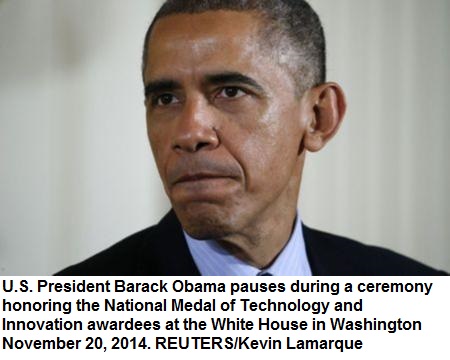
In a speech on Thursday, Obama outlined plans to use executive authority to help millions of undocumented people. He also announced minor adjustments to cut red tape for visa holders and their families, including letting spouses of certain H-1B visa holders get work permits.

“I will make it easier and faster for high-skilled immigrants, graduates and entrepreneurs to stay and contribute to our economy, as so many business leaders have proposed,” Obama said.

The president’s moves will make it easier for entrepreneurs to work in the United States and extend a program letting foreign students who graduate with advanced degrees from U.S. universities to work temporarily in the United States.

But tech industry insiders said the changes, while positive, were limited.

“This holiday season, the undocumented advocacy community got the equivalent of a new car, and the business community got a wine and cheese basket,” complained one lobbyist, speaking on condition of anonymity.

Instead of more temporary H-1B visas, which allow non-U.S. citizens with advanced skills and degrees in “specialty occupations” to work in the country for up to six years, the 200,000-member U.S. chapter of the Institute of Electrical and Electronics Engineers (see VIDEO below) was hoping for measures to reduce the backlog of H-1B holders awaiting green cards.

“If this is all there is, then the president has missed a real opportunity,” said Russ Harrison, a senior legislative representative at the IEEE. “He could have taken steps to make it easier for skilled immigrants to become Americans through the green card system, protecting foreign workers and Americans in the process.”

For instance, IEEE and technology companies want spouses and children to be excluded from employment-based green-card allotments, thereby increasing availability for other foreign tech workers seeking green cards.

Tech companies from Microsoft Corp to Intel have complained about being unable to find enough highly skilled employees and want Washington to increase the availability of visas for programmers, engineers and other specialized foreign professionals.

“Our focus really is on H-1B visas and trying to expand the number of talented technical professionals that can come to the U.S.,” Qualcomm CFO George Davis said ahead of Obama’s announcement. “The way the regulations are drafted today there’s a lot of room for improvement.”

Major changes would require Congressional action, however, and tech industry executives are worried that partisan rancor over Obama’s unilateral action could set back chances for legislation.

“I don’t view this as a long-term solution, and I hope it doesn’t get in the way of a long-term solution,” said Dave Goldberg, chief executive of SurveyMonkey, a Palo Alto based company.

The AFL-CIO said in a statement it would seek to ensure visa workers are afforded rights and protections.

“We are concerned by the President’s concession to corporate demands for even greater access to temporary visas that will allow the continued suppression of wages in the tech sector,” the labor giant said.

While limited, Obama’s policy changes, such as letting more spouses work, will help some tech workers and their families.

Gayathri Kumar, 29, moved a year ago from India to Phoenix, Arizona, where her husband works at Intel. She has a masters degree in communications and wants to work in television, but Kumar spends much of her day at home, chatting with friends over social media.

“I really want to work. I came here with a passion to work, not to sit at home,” Kumar said. “I’m bored, I’m becoming depressed.”

(Reporting by Noel Randewich in San Francisco and Roberta Rampton in Washington. Additional reporting by Sarah McBride in San Francisco.; Editing by Eric Effron, Tom Brown and Ken Wills)

Reuters News Wire Online Source – Posted: November 21, 2014 –
http://news.yahoo.com/obamas-immigration-tweaks-leave-big-tech-wanting-more-002544241–finance.html
For this issue, “the enemy of my enemy is my friend”.

Caribbean stakeholders need to align with the opposition of Obama’s immigration policy, the Republicans. (The publishers of the Go Lean book, SFE Foundation, represent an apolitical, religiously-neutral, economic-focused movement, initiated at the grass-root
level to bring permanent change back to the Caribbean homeland – no one Caribbean member-state is favored over another). We need to pursue our own self-interest.

The book Go Lean…Caribbean posits that the Caribbean brain drain is already acute, (reported at exceeding 70%), due to “push and pull” factors. Many Caribbean STEM students matriculate in American universities, so allowing more liberal recruiting of our students to remain in the US would increase the “pull” factor. We cannot compete against this added pressure.

Why would the students want to concede to this pressure? Unfortunately, we have a variety of “push” conditions working against the Caribbean counter-defense; we have deficiencies. We have economic, security and governing deficiencies that “push” the native Caribbean student/worker to consider expatriating to the US, or to Canada and many EU countries.

But the Caribbean has its own needs for the STEM work force, and our needs cannot be ignored. This is war; (a Trade War).

The Caribbean is losing … every battle. We must not help our enemy. The book Go Lean…Caribbean serves as a roadmap for the introduction and implementation of the technocratic Caribbean Union Trade Federation (CU). The roadmap contains our battle plans, strategies and tactics for this Trade War. The roadmap’s states the prime directives of the CU as the following 3 statements:

  • Optimization of the economic engines in order to grow the regional economy to $800 Billion & create 2.2 million new jobs.
  • Establishment of a security apparatus to protect the resultant economic engines.
  • Improve Caribbean governance to support these engines.

The book posits that all of the Caribbean is in crisis with this brain drain problem, and so there is an urgent need to retain our existing STEM talent, and recruit even more. This point is stressed early in the book (Page 13) in the following pronouncements in the Declaration of Interdependence:

xix.   Whereas our legacy in recent times is one of societal abandonment, it is imperative that incentives and encouragement be put in place to first dissuade the human flight, and then entice and welcome the return of our Diaspora back to our shores. This repatriation should be effected with the appropriate guards so as not to imperil the lives and securities of the repatriated citizens or the communities they inhabit. The right of repatriation is to be extended to any natural born citizens despite any previous naturalization to foreign sovereignties.

xxi.   Whereas the preparation of our labor force can foster opportunities and dictate economic progress for current and future generations, the Federation must ensure that educational and job training opportunities are fully optimized for all residents of all member-states, with no partiality towards any gender or ethnic group. The Federation must recognize and facilitate excellence in many different fields of endeavor, including sciences, languages, arts, music and sports. This responsibility should be executed without incurring the risks of further human flight, as has been the past history.

This subject of mitigating the brain drain and adopting empowering immigration policies have been frequent topics for these Go Lean blogs, highlighted here in the following sample:

https://goleancaribbean.com/blog/?p=2907 Local Miami Haitian leaders protest Bahamian immigration policy
https://goleancaribbean.com/blog/?p=2809 A Lesson in History: Economics and Immigration Policy of East Berlin
https://goleancaribbean.com/blog/?p=1674 Obama’s Plans for $3.7 Billion Immigration Crisis Funds, stressing the need for reform in the US.
https://goleancaribbean.com/blog/?p=1596 Book Review: ‘Prosper Where You Are Planted’ – the Antithesis of Emigration
https://goleancaribbean.com/blog/?p=1470 College Of the Bahamas Master Plan 2025 – Lacking Response for Brain Drain
https://goleancaribbean.com/blog/?p=1296 Remittances from Diaspora to Caribbean Increased By 3 Percent in 2013 – Not a Good Economic Plan
https://goleancaribbean.com/blog/?p=1256 Is a Traditional 4-year College Degree a Terrible Investment? Yes, for Caribbean Communities Sending their Students Abroad.
https://goleancaribbean.com/blog/?p=1014 All is not well in the sunny Caribbean – Economic Deficiencies
https://goleancaribbean.com/blog/?p=599 Ailing Puerto Rico open to radical economic fixes – Need for Retention

As a counter-defense to the losing dispositions in the Caribbean Trade War with the US, the Go Lean book details a series of community ethos, strategies, tactics, implementations and advocacies to foster the best practices to incentivize STEM careers and mitigate further brain drain for the Caribbean region:

Community Ethos – Deferred Gratification Page 21
Community Ethos – Economic Systems Influence Choices & Incentives Page 21
Community Ethos – Job Multiplier Page 22
Community Ethos – Anti-Bullying and Mitigation – neutralizing STEM as Nerds Page 23
Community Ethos – Minority Equalization Page 24
Community Ethos – Return on Investments Page 24
Community Ethos – Ways to Impact the Future Page 27
Community Ethos – Ways to Foster Genius Page 26
Community Ethos – Ways to Help Entrepreneurship Page 28
Community Ethos – Promote Intellectual Property Page 29
Community Ethos – Ways to Impact Research & Development Page 30
Community Ethos – Ways to Close the Digital Divide Page 31
Community Ethos – Ways to Impact the Greater Good Page 37
Anecdote – Valedictorian and Caribbean Diaspora Member Page 38
Strategy – Customers – Citizens, Business Community & Diaspora Page 47
Strategy – Meeting Region’s Needs Today, Preparing For Future Page 58
Tactical – Separation of Powers – Patent, Standards, & Copyrights Page 78
Tactical – Separation of Powers – Education Department Page 85
Implementation – Assemble all Super-Regional Governing Entities Page 96
Implementation – Trends in Implementing Data Centers Page 106
Implementation – Ways to Deliver Page 109
Implementation – Better Manage Debt – Better Student Loans Dynamics Page 114
Planning – Ways to Improve Trade Page 128
Planning – Ways to Make the Caribbean Better Page 131
Advocacy – Ways to Grow the Economy Page 151
Advocacy – Ways to Create Jobs Page 152
Advocacy – Ways to Improve Education Page 159
Advocacy – Ways to Impact Student Loans – Forgivable Provisions Page 160
Advocacy – Ways to Foster Empowering Immigration – STEM Professionals Page 174
Advocacy – Ways to Foster Technology Page 197
Advocacy – Ways to Impact the Diaspora Page 217
Appendix – Alternative Remittance Modes Page 270

Now is the time for all of the Caribbean, the people and institutions, to lean-in for the elevations described in the book Go Lean … Caribbean. This means heavy-lifting to enhance the economic-security-governing engines to attract and retain our STEM graduates. We especially call on the Caribbean/Latin American chapters of the IEEE organization – depicted in the foregoing article and the VIDEO below – to join-in this empowerment effort. A CU mission aligns with this organization’s charter to promote STEM careers and developments in their members’ home regions. The Caribbean needs the regional delivery of this charter, and their lobbying efforts.

We must try and stop Obama’s unilateral policy reform; a liberal US immigration policy would accentuate the Caribbean brain drain.

The region needs the deliveries, described in the Go Lean roadmap. Otherwise, we have no hope to incite and retain our young people, especially those with STEM skill-sets. As a region, we would simply be condemned to a worsened future, simply “fattening frogs for snakes”. This Go Lean roadmap therefore is vital in the quest to make the Caribbean a better place to live, work and play. 🙂

Download the book Go Lean … Caribbean – now!

———–

Appendix VIDEO: What is IEEE? – http://youtu.be/fcmCpEpg0lQ
This is a short video presenting the overall organization of IEEE. This video was developed and published during the celebrations of IEEE Day 2012.


Share this post:
, , ,

Why India is doing better than most emerging markets

Go Lean Commentary

BRICS = Brazil, Russia, India, China, South Africa …

There are no “push-pull” factors luring Caribbean citizens to emigrate to these countries, (though Caribbean member-states Trinidad and Guyana have a majority population of Indian descent), but still it is very important for the stewards of the Caribbean economy to study the BRICS countries. We need to learn from their lessons, good-bad-and-ugly, and try hard to keep pace.

This global assessment is part of the technocratic activities needed in comparative analysis, essential and strategic in the effort to ensure the region remains competitive. This effort is inclusive of the publishers of the book Go Lean…Caribbean; it urges the introduction and implementation of the technocratic Caribbean Union Trade Federation (CU). The book serves as a roadmap for the elevation of the region’s economy-security-governing engines; providing turn-by-turn directions to integrate the 30 member-states of the region and forge an $800 Billion economy.

A likely analogy would be navigating a vessel across a tumultuous ocean. As a humorous depiction, subject matter experts joke that “an economist is an expert who will know tomorrow why the things he predicted yesterday didn’t happen today”.

All joking aside, the incremental progress of one BRICS country, India, is not to be lambasted or readily dismissed. See this recent news article:

By: JO’s

CU Blog - Why India is doing better than most emerging markets - Photo 1MUMBAI – Investors have fallen out of love with emerging markets. Since the start of last year emerging-market stocks has trailed their rich-world peers. Currencies are falling. Worst-hit is the Russian Rouble, which has fallen by 30% against the Dollar this year. The currencies of other biggish emerging markets, such as Brazil, Turkey and South Africa, have also weakened. For such economies growth is harder to come by. The IMF recently cut its forecasts for emerging markets by more than for rich countries. But India is a notable exception to the general pessimism. Its stock market has touched new highs. The Rupee [currency] is stable. And the IMF nudged up its 2014 growth forecast for India to 5.8%. That figure is still quite low: growth rates of 8-9% have been more typical. But in comparison with others it is almost a boom. Why is India doing better than most emerging markets?

In part optimism about India owes to its newish government. In May Narendra Modi’s Baratiya Janata Party (BJP) won a thumping victory in elections on a pro-growth platform. Since then the BJP has strengthened its position in some key states. So far reform has been piecemeal. Procedures for government approvals have been streamlined. The powers of labour inspectors have been curbed. Civil servants now work harder. That has been enough to sustain hopes of further and bigger reforms. Yet much of the continued enthusiasm about India is down to luck. The currents that sway the global economy presently—the dollar’s strength; slowdown in China; aggressive money-printing in Japan; stagnation in the Euro Zone and falling oil prices—are less harmful to India than to most emerging markets.

Start with the dollar, which has been buoyed by a resilient American economy and the prospect of interest-rate increases by the Federal Reserve. Past episodes of rising interest rates and dollar strength (for instance in the early 1980s or mid-1990s) have not been kind to emerging markets. Bond yields rise and currencies fall as capital is drawn back to America. India has a bit less to fear from such a rush to the exits; its bond markets are tricky for foreigners to enter in the first place. India is less harmed by slowdown in China, as only around 5% of its exports go there. It is not part of the China’s supply-chain that takes in much of Southeast Asia. Nor is it a big exporter of industrial commodities, like Brazil. Equally a weaker yen in response to quantitative easing by the Bank of Japan hurts Asia’s manufacturing exporters more than service-intensive India. The misery in the Euro Zone is of greater concern to its local trading partners in Turkey and Russia than to faraway India. And the fall in the crude prices that hurts oil exporters, such as Russia and Nigeria, is a boon to a big oil importer like India. Indeed the deflation that is stalking large parts of the world is helpful to India, which has suffered from high inflation.

India is not impervious to bad news. Some of its recent economic data have looked a little soggy. Exports slumped in October. Car sales have fallen for two consecutive months and there is little sign yet of a meaningful recovery in business investment. This is in part why there have been growing calls (including from the finance minister) for the central bank to cut interest rates soon in response to a drop in consumer-price inflation. The troubles in other emerging markets ought to counsel caution. Any sign that policymakers might be ditching discipline in favour of quick fixes might see India crossed off the love list.
The Economist Magazine – Online Edition – November 18, 2014 –
http://www.economist.com/blogs/economist-explains/2014/11/economist-explains-11

Other BRICS countries are struggling with growth, at this moment; see story here:

As emerging economies hit hard times, Brazil and Russia look particularly weak.

CU Blog - Why India is doing better than most emerging markets - Photo 2

Considering the realities of the emerging economies, the BRICS countries, it is obvious that there is an ebb-and-flow associated with economic stewardship. This stewardship constitutes the prime directives of the CU:

  • Optimization of the economic engines in order to grow the regional economy and create 2.2 million new jobs.
  • Establishment of a security apparatus to protect the resultant economic engines.
  • Improve Caribbean governance/administration/oversight to support these engines.

The best practice for effective stewardship of an economy’s ebb-and-flow is the recovery; managing the ability to “bounce back” quickly. This fact is related in the Go Lean book (Page 69), chronicling the experiences in the US when the economy lost $11 Trillion in the 2008 Great Recession, but recovered $13.5 Trillion back a few years later, by December 2012. The US has 50 member-states and 320 million people. Shocks and dips can therefore be absorbed and leveraged across the entire region .The Go Lean roadmap is to integrate the Caribbean in such a structure with 30 member-states and 42 million people.

At the outset, the roadmap identified an urgent need to contend with, since the Caribbean is still in the throes of the financial crisis (commenced in 2008).  This is pronounced in this clause in the opening Declaration of Interdependence (Page 13):

xxv.   Whereas the legacy of international democracies had been imperiled due to a global financial crisis, the structure of the Federation must allow for financial stability and assurance of the Federation’s institutions. To mandate the economic vibrancy of the region, monetary and fiscal controls and policies must be incorporated as proactive and reactive measures. These measures must address threats against the financial integrity of the Federation and of the member-states.

The Go Lean roadmap signals change for the region. It introduces new measures, new opportunities and new recoveries. Economies will rise and fall, ebb-and-flow; the recovery is key. Currencies and inflation issues also factor in the economic stewardship. The foregoing article relates:

“the dollar … has been buoyed by a resilient American economy and the prospect of interest-rate increases by the Federal Reserve. Past episodes of rising interest rates and dollar strength … have not been kind to emerging (BRICS) markets”.

So the CU strategy also calls for the establishment of the allied Caribbean Central Bank (CCB) to manage the regional monetary and currency affairs. The Go Lean book describes the breath-and-width of the CCB. This stewardship of monetary-currency was envisioned and pronounced in the roadmap’s Declaration of Interdependence (Page 13):

xxiv.   Whereas a free market economy can be induced and spurred for continuous progress, the Federation must install the controls to better manage aspects of the economy: jobs, inflation, savings rate, investments and other economic principles. Thereby attracting direct foreign investment because of the stability and vibrancy of our economy.

The CU roadmap drives change among the economic, security and governing engines. These solutions are as new community ethos, strategies, tactics, implementations and advocates; sampled as follows:

Who We Are – Veterans of 2008 “Wars” & Financial Crisis Page 8
Community Ethos – Voluntary Trade Creates Wealth Page 21
Community Ethos – Consequences of Choices Lie in the Future Page 21
Community Ethos – Money Multiplier Page 22
Community Ethos – Job Multiplier Page 22
Community Ethos – Cooperatives Page 25
Community Ethos – Impact the Greater Good Page 37
Strategy – CU Vision and Mission Page 45
Strategy – Facilitating Currency Union, Caribbean   Dollar Page 45
Strategy – Collaborate for the Caribbean Central Bank Page 45
Anecdote – Caribbean Currencies Page 64
Tactical – Fostering a Technocracy Page 64
Tactical – $800 Billion Economy – How and When – Trade Page 67
Tactical – Recovering from Economic Bubbles Page 69
Tactical – Separation-of-Powers – Caribbean Central Bank Page 73
Implementation – Assemble Caribbean Central Bank Page 96
Implementation – Ways to Pay for Change Page 101
Implementation – Trade Mission Objectives Page 117
Implementation – Ways to Benefit Globalization Page 119
Planning – Ways to Improve Trade Page 128
Planning – Lessons Learned from 2008 Page 136
Advocacy – Ways to Grow the Economy Page 151
Advocacy – Ways to Create Jobs Page 152
Advocacy – Ways to Control Inflation Page 153
Advocacy – Ways to Better Manage Foreign Exchange Page 154
Advocacy – Foster Empowering Immigration – Indentured Indians Page 174
Advocacy – Reforms for Banking Regulations Page 199
Advocacy – Ways to Preserve Caribbean Heritage Page 218
Advocacy – Ways to Impact Trinidad & Tobago Page 240

The Caribbean region needs to learn from the lessons of the BRICS countries, (see VIDEO below). and do the work, the heavy-lifting, to compete with them, and the rest of the world in trade and culture. The subject of trade empowerment has been directly addressed and further elaborated upon in these previous blog/commentaries:

https://goleancaribbean.com/blog/?p=2887 Caribbean must work together to address rum subsidies
https://goleancaribbean.com/blog/?p=2488 Role Model Jack Ma brings Trade Marketplace Alibaba to America
https://goleancaribbean.com/blog/?p=2435 Latin America’s Dream and Trade Role-model: Korea
https://goleancaribbean.com/blog/?p=2090 Elaborating on the CU and CCB as Hallmarks of a Technocracy
https://goleancaribbean.com/blog/?p=1869 US Senate Bill Targets Companies for Dishonorable Trade Practices
https://goleancaribbean.com/blog/?p=1847 Caribbean Cigar Trade – Declared “Among the best in the World”
https://goleancaribbean.com/blog/?p=1416 Amazon – Role Model for Trade Marketplace, Introduces New Tablet
https://goleancaribbean.com/blog/?p=994 Bahamas Rejects US Trade Demand
https://goleancaribbean.com/blog/?p=273 10 Things We Don’t Want from the US – #3: De-Americanize World Money for Currency in Trade

The Caribbean is arguably the best address on the planet, but there are many deficiencies, as in jobs and economic empowerments. We have suffered as a result of these deficiencies, as a region losing a large share of human capital, one estimate of 70%, to the brain-drain.

No More! Change has now come to the Caribbean.

Shepherding the Caribbean economy is the job for technocrats, trained and accomplished from the battles of globalization and trade wars. This is the Go Lean roadmap. Everyone, the people and institutions are hereby urged to lean-in to this roadmap to make the Caribbean a better place to live, work and play. 🙂

Download the book Go Lean … Caribbean – now!

————

VIDEO: BRICS to change world economy – http://youtu.be/wmS11HnNbk0

Published on Mar 28, 2012 – The BRICS countries’ leaders were preparing for their annual meeting in 2012. These countries make up 42 percent of the world’s population and a quarter of its landmass. They are also responsible for 20 percent of the Global GDP and own a whopping 75 percent of the foreign reserve worldwide. In these tough times for world economics these countries are trying to find a solution for the situation. RT America’s Correspondent Priya Sridhar (the US based arm of Russia Today, a 24-hour English-language international broadcast news network based in Miscow) gave a sneak peak of the summit from India.

Share this post:
, , ,
[Top]

Justice Strategy: Special Prosecutors … et al

Go Lean Commentary

The quest to elevate Caribbean society is a three-prong approach: economics, security and governance.

Economic optimizations are easiest to introduce; show up with investments (money) and jobs and almost any community will acquiesce. But to introduce empowerments for security and/or governing engines is more complicated, as changes in these categories normally require a political process; implying consensus-building and compromise. (Think: Iraq – “A military solution to a political problem?”; see Footnote 1)

This is what the book Go Lean…Caribbean calls “heavy-lifting”.

This Go Lean book posits that “bad actors” will always emerge in times of economic optimizations to exploit opportunities, with bad or evil intent. In support of this argument, the book relates a number of law-and-order episodes from world history: Pirates of the Caribbean (Page 181) and the Old American West (Page 142). In addition to the direct book references, there are a number previously published blogs/commentaries that covered subjects and dimensions for Caribbean justice institutions:

Role Model for Justice – The Pinkertons
Economic Crime Enforcement – The Criminalization of American Business
America’s Navy – 100 Percent – Model for Caribbean
A Lesson in History: 100 Years Ago – World War I
Here come the Drones … and the Concerns
Caribbean “Terrorists” travel to Venezuela for jihadist training
Jamaica to receive World Bank funds to help in crime fight
US slams Caribbean human rights practices
10 Things We Want from the US and 10 Things We Don’t Want: Pax Americana

It is evident that justice is very important to this roadmap for societal elevation. We do not want to only react (after the fact) to episodes undermining public security or the integrity of law-and-order in the homeland. We want to have a constant sentinel. This will be accomplished with two regional agencies (defined later): Justice Department and Homeland Security Department.

The Caribbean governance structures were developed under the tutelage of 4 European legacies (British, Dutch, French, Spanish) and the United States of America (territories of Puerto Rico & US Virgin Islands and the dominant cultural influence in the region). We now have fitting role models of their societies for the management of justice institutions. This commentary urges their best-practices.

The Go Lean book serves as a roadmap for the introduction and implementation of the technocratic Caribbean Union Trade Federation (CU). Normally, when there are questions of integrity in the due-process in executive, legislative or judicial branches of government, the curative measure is a Special Prosecutor (American) or a Commission of Inquiry (European and United Nations).

As defined in the following encyclopedia source reference, these measures are normally reactive, but for the CU, the strategy is proactive…from Day One:

1. UNITED STATES

A Special Prosecutor generally is a lawyer from outside the government appointed by an Attorney General or, in the United States, by Congress to investigate a government official for misconduct while in office. A reasoning for such an appointment is that the governmental branch or agency may have political connections to those it might be asked to investigate. Inherently, this creates a conflict of interest and a solution is to have someone from outside the department lead the investigation. The term “Special Prosecutor” may have a variety of meanings from one country to the next, from one government branch to the next within the same country, and within different agencies within each government branch. Critics of the use of Special Prosecutors argue that these investigators act as a “fourth branch” to the government because they are not subject to limitations in spending or have deadlines to meet.

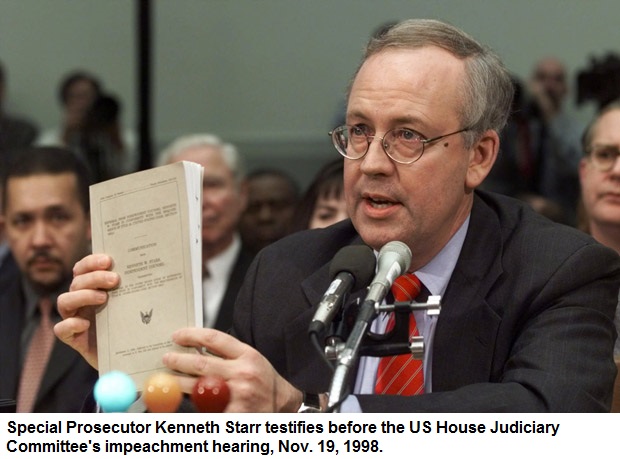
STARR

Federal government
Attorneys in the United States may be appointed/hired particularly or employed generally by different branches of the government to investigate. When appointed/hired particularly by the judicial branch to investigate and, if justified, seek indictments in a particular judicial branch case, the attorney is called Special Prosecutor. When appointed/hired particularly by a governmental branch or agency to investigate alleged misconduct within that branch or agency, the attorney is called Independent Counsel.

State government
Special Prosecutors may also be used in a state prosecution case when the prosecutor for the local jurisdiction has a conflict of interest in a case or otherwise may desire another attorney handle a case.
Source: Wikipedia Online Encyclopedia (Retrieved November 17, 2014) – http://en.wikipedia.org/wiki/Special_prosecutor

2. BRITISH DOMINION

A Royal Commission is a major ad-hoc formal public inquiry into a defined issue in some monarchies. They have been held in the United Kingdom, Australia, Canada, New Zealand, Bahrain, Malaysia, Hong Kong and Saudi Arabia. A Royal Commission is similar in function to a Commission of Enquiry (or Inquiry) found in other countries such as Ireland, South Africa, and Hong Kong; (all examples here are from the British Dominion).

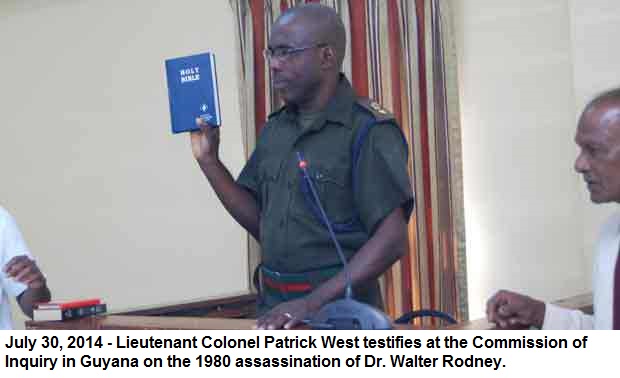
CU Blog - Justice Strategy - Special Prosecutors - Photo 1

A Royal Commissioner has considerable powers, generally greater even than those of a judge but restricted to the Terms of Reference of the Commission. The Commission is created by the Head of State (the Sovereign, or his/her representative in the form of a Governor-General or Governor) on the advice of the Government and formally appointed by Letters Patent. In practice—unlike lesser forms of inquiry—once a Commission has started the government cannot stop it. Consequently governments are usually very careful about framing the Terms of Reference and generally include in them a date by which the commission must finish.

Royal Commissions are called to look into matters of great importance and usually controversy. These can be matters such as government structure, the treatment of minorities, events of considerable public concern or economic questions.

Many Royal Commissions last many years and, often, a different government is left to respond to the findings. In Australia—and particularly New South Wales—Royal Commissions have been investigations into police and government corruption and organised crime using the very broad coercive powers of the Royal Commissioner to defeat the protective systems that powerful, but corrupt, public officials had used to shield themselves from conventional investigation.

Royal Commissions usually involve research into an issue, consultations with experts both within and outside of government and public consultations as well. The Warrant may grant immense investigatory powers, including summoning witnesses under oath, offering of indemnities, seizing of documents and other evidence (sometimes including those normally protected, such as classified information), holding hearings in camera if necessary and—in a few cases—compelling all government officials to aid in the execution of the Commission.

The results of Royal Commissions are published in reports, often massive, of findings containing policy recommendations. These reports are often quite influential, with the government enacting some or all recommendations into law.
Source: Wikipedia Online Encyclopedia (Retrieved November 17, 2014) –
http://en.wikipedia.org/wiki/Royal_Commission

3. NETHERLANDS

Though never a member of British Dominion, the Kingdom of the Netherlands has a similar process. An example of a Commission of Inquiry in the Netherlands include this case study:

  • From mid-2010 to December 2011 the Commission of Inquiry carried out an independent study of the sexual abuse of minors in the Roman Catholic Church from 1945 to 2010.

Source: Investigation of Roman Catholic Church Online Site (Retrieved Nov. 17, 2014) –
http://www.onderzoekrk.nl/english-summery.html

4. UNITED NATIONS

a. Commissions and Investigative Bodies

The UN Security Council has established a wide-variety of Commissions to handle a variety of tasks related to the maintenance of international peace and security. Commissions have been created with different structures and a wide variety of mandates including investigation, mediation, or administering compensation. Below is a list of all commissions established by the Security Council, with a short description prepared on the basis of the Repertoire, as well as links to the sections covering them in the Repertoire (Public Relations Publication). They are organized by region, and then under relevant areas or sub-regions, placed chronologically starting with those established most recently:

1946-1951 1952-1955 1956-1958 1959-1963 1964-1965 1966-1968 1969-1971 1972-1974 1975-1980 1981-1984 1985-1988 1989-1992 1993-1995 1996-1999 2000-2003 2004-2007 2008-2009 2010-2011

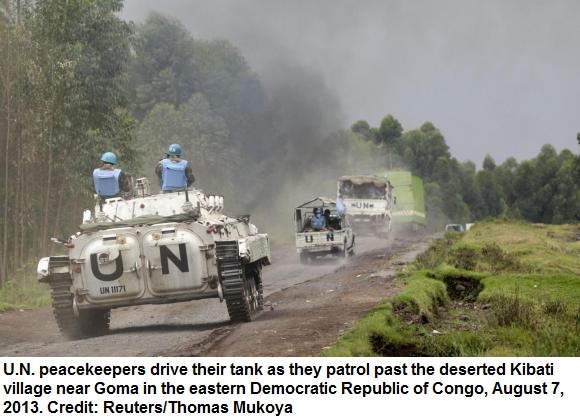
U.N. peacekeepers drive tank as they patrol past deserted Kibati village

For more information on the investigative and fact-finding powers of the Security Council, see this section on Article 34:

  • Article 34 – Investigation of disputes & fact-finding.
    Article 34 of the UN Charter empowers the Security Council to investigate any dispute, or any situation that is likely to endanger international peace and security. The provision covers investigations and fact-finding missions mandated by the Security Council or by the Secretary-General to which the Council expressed its support or of which it took note. Furthermore, this section has also looked at instances in which Member-States demanded or suggested to the Council that an investigation be carried out or a fact-finding mission be dispatched.

b. UN Commission for Conventional Armaments

The Commission for Conventional Armaments was established on 13 February 1947 to formulate proposals for carrying out General Assembly resolution 41 (I) of 14 December 1946 concerning the general regulation and reduction of armaments. This was a standing Commission, but it was formally dissolved on 30 January 1952.

Source: United Nations Online Archive – Retrieved Nov. 17, 2014 – http://www.un.org/en/sc/repertoire/subsidiary_organs/commissions_and_investigations.shtml

Normally a Special Prosecutor assignment has a limited time expiration. Also a Commission of Inquiry refers to individuals employed, during conciliation (Footnote 2), to investigate the facts of a particular dispute and to submit a report stating the facts and proposing terms for the resolution of the differences. Such a commission is one of many bodies available to governments to inquire/investigate into various issues. The commissions may report findings, give advice and make recommendations; and while their findings may not be legally binding, they can be highly influential.

The declared assignment documents for Special Prosecutors and/or Commissions of Inquiries are called “Warrants”.

The foregoing encyclopedic source explains that “Warrants” may grant immense investigatory powers, including summoning witnesses under oath, offering of indemnities, seizing of documents and other evidence, holding hearings, and compelling aid from government officials. This description provides the role-model for the CU‘s effort in justice and security. The Trade Federation will feature a federal Justice Department, with a separation-of-powers, a ‘Divide’, with the regional member-states. On the CU side of the ‘Divide’ is the jurisdiction for economic crimes, systemic threats, regional escalations and marshaling of any offenses on the federally-regulated grounds, Self-Governing Entities.

This separation-of-powers mandate also dictates that the CU‘s Homeland Security apparatus is the local manifestation of the United Nations Security (Peacekeeping) Forces , except for a regional scope only. This specific federal department will handle a variety of tasks related to the maintenance of regional peace and security.

The book Go Lean…Caribbean posits that the region must prepare its own security apparatus for its own security needs. So the vision is that all Caribbean member-states will authorize the CU as Special Prosecutors and Commissions of Inquiries. These warrants would legally authorize the regional “Justice Institutions”, covering law enforcement and regional defense, all encompassed in the book’s Homeland Security roadmap.

The CU would thusly be set to optimize Caribbean society through economic empowerment, and the aligning security dynamics. In fact, the Go Lean roadmap has 3 prime directives:

  • Optimization of the economic engines in order to grow the regional economy to $800 Billion & create 2.2 million new jobs.
  • Establishment of a security apparatus to protect the resultant economic engines.
  • Improve Caribbean governance to support these engines.

There is the need to ensure the economic engines in all 30 Caribbean member-states; plus extractions (mining, drilling) in the Exclusive Economic Zone (EEZ) of the Caribbean Sea. This point is pronounced early in the book with the Declaration of Interdependence (Page 12) that claims:

x.   Whereas we are surrounded and allied to nations of larger proportions in land mass, populations, and treasuries, elements in their societies may have ill-intent in their pursuits, at the expense of the safety and security of our citizens. We must therefore appoint “new guards” to ensure our public safety and threats against our society, both domestic and foreign. The Federation must employ the latest advances and best practices … to assuage continuous threats against public safety.

xi.  Whereas all men are entitled to the benefits of good governance in a free society, “new guards” must be enacted to dissuade the emergence of incompetence, corruption, nepotism and cronyism at the peril of the people’s best interest. The Federation must guarantee the executions of a social contract between government and the governed.

xii. Whereas the legacy in recent times in individual states may be that of ineffectual governance with no redress to higher authority, the accedence of this Federation will ensure accountability and escalation of the human and civil rights of the people for good governance, justice assurances, due process and the rule of law. As such, any threats of a “failed state” status for any member-state must enact emergency measures on behalf of the Federation to protect the human, civil and property rights of the citizens, residents, allies, trading partners, and visitors of the affected member-state and the Federation as a whole.

xvi. Whereas security of our homeland is inextricably linked to prosperity of the homeland, the economic and security interest of the region needs to be aligned under the same governance. Since economic crimes, including piracy and other forms of terrorism, can imperil the functioning of the wheels of commerce for all the citizenry, the accedence of this Federation must equip the security apparatus with the tools and techniques for predictive and proactive interdictions.

The treaty to establish the “new guards”, the Homeland Security Force and Federal Justice Department within the Caribbean Union Trade Federation gets legal authorization from the provisions of Special Prosecutors and Commissions of Inquiries, therefore enacting a Status of Forces Agreement with the initiation of the confederation. This elaborate process would be “Step One, Day One” in the Go Lean roadmap. The Go Lean book also details a series of community ethos, strategies, tactics, implementations and advocacies to provide increased public accountability and security in the Caribbean region:

Community Ethos – Economic Principle – Consequences of Choices Lie in Future Page 21
Community Ethos – Security Principle – Privacy –vs- Public Protection Page 23
Community Ethos – Security Principle – Whistleblower Protection Page 23
Community Ethos – Security Principle – Witness Security & Protection Page 23
Community Ethos – Security Principle – Anti-Bullying and Mitigation Page 23
Community Ethos – Security Principle – Intelligence Gathering Page 23
Community Ethos – Governing Principle – Minority Equalization Page 24
Community Ethos – Governing Principle – Lean Operations Page 24
Community Ethos – Governing Principle – Cooperatives Page 25
Community Ethos – Ways to Manage Reconciliations Page 34
Community Ethos – Ways to Improve Sharing Page 35
Community Ethos – Ways to Impact the Greater Good Page 37
Strategy – Vision – Trade Federation with Proxy Powers of a Confederacy Page 45
Strategy – Mission – Defense Pact to Defend against Systemic Threats Page 45
Strategy – Mission – Protect Stakeholders   with Vigorous Law-and-Order measures Page 45
Tactical – Confederating a Non-Sovereign Union Page 63
Tactical – Fostering a Technocracy Page 64
Tactical – Separation of Powers – Homeland Security Page 75
Tactical – Separation of Powers – Justice Department – District Attorneys as Special Prosecutors Page 77
Tactical – Separation of Powers – Justice Department – CariPol: Marshals & Investigations Page 77
Tactical – Separation of Powers – Justice Department – Witness Protection Page 77
Tactical – Separation of Powers – Trade Anti-Trust Regulatory Commission Page 77
Implementation – Foreign Policy Initiatives at Start-up Page 102
Implementation – Start-up Security Initiatives Page 103
Implementation – Start-up Benefits from the EEZ – Security – Interdictions & Piracy Page 104
Implementation – Steps to Implement Self-Governing Entities – Security and Justice Page 105
Implementation – Ways to Foster International Aid – Military Aid Page 115
Planning – Ways to Make the Caribbean Better – Safety Measures for the Rich and Poor Page 131
Planning – Ways to Improve Failed-State Indices – Law Enforcement Oversight Page 134
Planning – Lessons Learned from the West Indies (WI)   Federation – Regiment on the Ready Page 135
Planning – Lessons from the American West – Law & Order Needed Enforcements Page 142
Advocacy – Ways to Grow the Economy Page 151
Advocacy – Ways to Create Jobs Page 152
Advocacy – Ways to Improve Governance Page 168
Advocacy – Ways to Better Manage the Social Contract Page 170
Advocacy – Ways to Improve Leadership Page 171
Advocacy – Ways to Impact   Justice Page 177
Advocacy – Ways to Reduce Crime Page 178
Advocacy – Ways to Improve Homeland Security Page 180
Advocacy – Ways to Mitigate Terrorism Page 181
Advocacy – Ways to Improve Intelligence Gathering & Analysis Page 182
Advocacy – Ways to Protect Human Rights Page 220
Appendix – Art of War Chapters – Chapter 7 – Engaging The Security Force Page 327

Everyone in the Caribbean, the people and institutions, are hereby urged to lean-in to this Go Lean roadmap for elevation of Caribbean society. The roadmap calls for the heavy-lifting so that the justice institutions (permanent Special Prosecutors/Commissions of Inquiries) of the CU can execute their role in a just manner, thus impacting the Greater Good; see VIDEO below of South Africa’s example. This produces the output of a technocratic system bent on efficiency and effectiveness. In practice, this would mean accountability, transparency, and checks-and-balances in the execution of the rule-of-law.

This is the change for the Caribbean: elevated Public Safety, Law Enforcement and Homeland Security, all necessary to make the Caribbean a better place to live, work and play.

Download the free e-Book of Go Lean … Caribbean – now!

————–

Footnote:
1 – Iraq: A military solution to a political problem?

2 – Conciliation: The process of adjusting or settling disputes in a friendly manner through extra judicial means.

————–

Video: Marikana Commission of Inquiry has concluded its hearings – http://youtu.be/k0XAfRzjSXc


The Marikana Commission of Inquiry in South Africa has concluded its hearings after two years of attempting to establish what happened during the violent Wage Strike at Lonmin Platinum Mine in August 2012. 34 people were shot and killed in a confrontation with the police. 10 others including 2 police officers and 2 Mine Guards were also killed in the days preceding the August 16th tragedy.


Share this post:
, ,
[Top]

Funding Caribbean Entrepreneurs – The ‘Crowdfunding’ Way

Go Lean Commentary

The Washington, DC-based World Bank believes that Caribbean entrepreneurs can be funded by networking with the Caribbean Diaspora. This objective aligns with the book Go Lean… Caribbean which serves as a roadmap for the introduction and implementation of the technocratic Caribbean Union Trade Federation (CU) with the charter to facilitate entrepreneurship and job-creation in the region.

Early in the Go Lean book, the responsibility to attract investors and create jobs was identified as an important function for the CU with these pronouncements in the opening Declaration of Interdependence (Pages 13, 14):

xxiv.  Whereas a free market economy can be induced and spurred for continuous progress, the Federation must install the controls to better manage aspects of the economy: jobs, inflation, savings rate, investments and other economic principles. Thereby attracting direct foreign investment because of the stability and vibrancy of our economy.

xxvi.  Whereas the Caribbean region must have new jobs to empower the engines of the economy and create the income sources for prosperity, and encourage the next generation to forge their dreams right at home, the Federation must therefore foster the development of new industries… In addition, the Federation must invigorate the enterprises related to existing industries … – impacting the region with more jobs.

Before stating an opinion on the plausibility of the World Bank’s proposal, first consider the article, as follows:

Title: Caribbean entrepreneurs need to look to Diaspora for funding – World Bank Group Exec

CU Blog - Funding Caribbean EntrepreneursBRIDGETOWN, Barbados — Caribbean entrepreneurs who are looking for funding to develop new or existing businesses are being encouraged to look to their own nationals living abroad.

“Diaspora financing should be explored as a source of funding for entrepreneurs”, said Aun Rahman, head of the infoDev Access to Finance Programme, at the World Bank Group.

Rahman was speaking on the topic “Access to Finance: Examining Non-Traditional Platforms for Funding”, during the final day of the Caribbean Exporters’ Colloquium 2014 in BridgetownBarbados today.

About 85 per cent of Caribbean people in the Diaspora have said they would “be interested in investing in business back home,” Rahman said adding that they are not only interested in their own countries – but those across the region.

But despite the high interest, Rahman said only a “very few” — about 13 per cent — have actually invested in the Caribbean. The Diaspora investors need a “trusted local partner,” he said.

Project co-ordinator for the Jamaica Venture Capital Programme at the Development Bank of Jamaica, Audrey Richards, also spoke on non-traditional investment sources.

“If we want to attract non-traditional finance, we need to start thinking in a non-traditional way,” she said.

Other participants in the session included Nelson Gray, special project director at LINC Scotland, Shadel Nyack Compton, managing director of Belmont Estate Group of Companies and Judith Mark, managing director and enterprise development consultant at CME Consulting Ltd.
Jamaica Observer Daily Newspaper – Online Site – Retrieved 11-14-2014
http://www.jamaicaobserver.com/business/Caribbean-entrepreneurs-need-to-look-to-Diaspora-for-funding—-World-Bank-Group-exec

“Say it ain’t so”. This assertion seems so out-of-touch. This plays into the fallacy that life is so much better outside the Caribbean, so that when a Caribbean resident emigrates and now lives in the US, Canada, or Europe that they thrive financially to the point that they have disposable income (beyond funding their own basic food-clothing-housing needs, plus support for their families left-behind) so as to be able to invest in entrepreneurs back in their ancestral homelands.

This is a distorted “view” from afar … as in Washington. This is not the true experience “on the ground”. (While a picture is worth a thousand words, it is no substitute to actually being “there”. A picture only describes the visual sense; there is so much more, there are the sounds, smells, touch and taste. All of that experience cannot be easily captured in words or pictures).

The book Go Lean…Caribbean, authored by Diaspora members, posits that while the Caribbean region is the greatest address in the world, (the tropical flora-fauna, islands landscapes-waterscapes, and Caribbean culture cannot be topped any where else on the planet), life “at home” is much harder than picturesque postcards depict. This is why residents leave in the first place,  “push and pull factors”, and join the Diaspora.

The Caribbean does need help from the Diaspora to fulfill the Go Lean vision; we need their Time, Talent and Treasuries. But in truth, the Caribbean Diaspora does not thrive financially in their foreign abodes; not with the first generation. Economic studies indicate that only at the 2nd generation, do the immigrant’s legacies (next generation) start to prosper financially[a]. At that point, these are no longer Diaspora (Nationals of the Caribbean member-states); and may not feel any attachment to their ancestral homelands. This is not just a Caribbean issue; it has been proven with other Diaspora groups: Irish, Italian, Chinese, etc. Added to the reality is the fact that Diaspora/legacy members can easily participate in Wall Street; with such an investment/economic engine, local Caribbean options cannot compete. The foregoing article concedes as much:

“only a ‘very few’ – about 13 per cent — have actually invested in the Caribbean”

The Go Lean roadmap is therefore realistic! We are not expecting the Diaspora to be some panacea of Caribbean societal ills. Rather, as a region, we must do the heavy-lifting ourselves. This roadmap proffers a unified, consolidated Caribbean effort, engaging all stakeholders: residents, Diaspora, Direct Foreign Investors, passive investors, NGOs and even governmental agencies, domestic and foreign. “All hands on deck”!

The foregoing article also states that “if we want to attract non-traditional finance, we need to start thinking in a non-traditional way”. This is the siren call of the Go Lean book, to effectuate change in the region, allowing for the following 3 prime directives:

  • Optimization of the economic engines in order to grow the regional economy to $800 Billion GDP and create 2.2 million new jobs.
  • Establishment of a security apparatus to protect the resultant economic engines.
  • Improve Caribbean governance/administration/oversight to support these engines.

The Go Lean book/roadmap reflects the recommended “non-traditional thinking” to attract non-traditional funding for Caribbean empowerment and entrepreneurial endeavors:

  • The book advocates for incubators… helping/coaching entrepreneurs to put together proper business plans and structures…
  • The book advocates for cooperatives…
  • The book advocates for the full exploration and exploitation of social media, identifying www.myCarribbean.gov  …

All these strategies allow for non-traditional funding methods such as crowdfunding[b] (already essentially practiced in the region as no-tech offerings: Asue, Partner, Asociacion); this is the practice of funding a project or venture by raising monetary contributions from a large number of people, typically via the internet.[1] One early-stage equity expert described crowdfunding as “the practice of raising funds from two or more people over the internet towards a common Service, Project, Product, Investment, Cause, and Experience or SPPICE.”[2]

(See crowdfunding definition/explanation in the below VIDEO in the Appendix).

The crowdfunding model is fueled by three types of actors:

  • the project initiator who proposes the idea and/or project to be funded;
  • individuals or groups who support the idea (inclusive of the Diaspora);
  • and a moderating organization (the “platform”, envisioned for the CU‘s www.myCarribbean.gov) that brings the parties together to launch the idea.[3]

This strategy has proven successful for many other endeavors. In 2013, the crowdfunding industry grew to over $5.1 billion worldwide;[4] (see Kickstarter Appendix below):

There are three primary types of crowdfunding:

  • Reward-based crowdfunding – entrepreneurs pre-sell a product or service to launch a business concept without incurring debt or sacrificing equity/shares. Reward-based crowdfunding has been used for a wide range of purposes, including motion picture promotion,[16] free software development, inventions development, scientific research,[17] and civic projects.[18] For a joint study between Toronto, Canada’s York University and Universite Lille Nord de France, in Lille, France, published on June 2, 2014, two types of reward-based crowdfunding were identified: “‘Keep-it-All’ (KIA) where the entrepreneurial firm sets a fundraising goal and keeps the entire amount raised regardless of whether or not they meet their goal, and ‘All-or-Nothing’ (AON) where the entrepreneurial firm sets a fundraising goal and keeps nothing unless the goal is achieved.”[19] The study’s researchers analyzed 22,875 crowdfunding campaigns, with targets of between US$5,000 and US$200,000, and concluded: “Overall, [all-or-nothing] fundraising campaigns involved substantially larger capital goals, and were much more likely to be successful at achieving their goals.” In its review of the study outcomes, the Inc.com publication explained that potential investors are more inclined to support “all-or-nothing strategy” initiatives, whereby a substandard product will not be released if the funding goal is not achieved. The Inc.com review concluded that “AON” campaign typically provide more detailed information on the campaign.[20]
  • Equity-based crowdfunding – the backer receives unlisted shares of a company, usually in its early stages, in exchange for the money pledged. The company’s success is determined by how successfully it can demonstrate its viability.[15] Equity-based crowdfunding is the collective effort of individuals to support efforts initiated by other people or organizations through the provision of finance in the form of equity.[21][22] In the United States, legislation that is mentioned in the 2012 JOBS Act will allow for a wider pool of small investors with fewer restrictions following the implementation of the act.[22]
  • Credit-based crowdfunding – In the U.S., credit-based crowdfunding from non-banks became more prominent as a form of crowdfunding in 2012, with the launch of the Lending Club, which had advanced more than US$500 million in loans via its website by April 2012. Prospective borrowers of  the Lending Club first submit their requirements, and are then matched with pools of investors who are willing to accept the credit terms. Platforms such as the Lending Club gained popularity, as banks increased interest rates or reduced their level of lending activity. Another credit-based platform, Prosper.com, was established in 2006 and had funded nearly US$325 million in personal loans by April 2012.[23]

There are many dynamics of this nascent industry that must be considered and mastered if the Caribbean is to benefit from crowdfunding. Consider the following:

  • Crowdfunding applications – Crowdfunding is being experimented with as a funding mechanism for creative work such as blogging and journalism,[51] music, independent film,[52][53] (See KickStarter Appendix below) and for funding startup companies.[54][55][56][57] Community music labels are usually for-profit organizations where “fans assume the traditional financier role of a record label for artists they believe in by funding the recording process”.[58] A Financialist article published in mid-September 2013 stated that “the niche for crowdfunding exists in financing films with budgets in the [US]$1 to $10 million range” and crowdfunding campaigns are “much more likely to be successful if they tap into a significant pre-existing fan base and fulfill an existing gap in the market.”[60]
  • Philanthropy and civic projects – A variety of crowdfunding platforms have emerged to allow ordinary web users to support specific philanthropic projects without the need for large amounts of money.[18]
  • Real estate crowdfunding (and REITs) – Real estate crowdfunding is the online pooling of capital from investors to fund mortgages secured by real estate, such as “fix and flip” redevelopment of distressed or abandoned properties, and equity for commercial and residential projects, acquisition of pools of distressed mortgages, home buyer down payments and similar real estate related outlets. Investment, via specialized online platforms, is generally completed under Title II of the JOBS Act and is limited to accredited investors. The platforms offer low minimum investments, often $100 – $10,000.[63][64]
  • Intellectual property exposure – One of the challenges of posting new ideas on crowdfunding sites is there may be little or no intellectual property (IP) protection provided by the sites themselves. Once an idea is posted, it can be copied. As Slava Rubin, founder of IndieGoGo said: “We get asked that all the time, ‘How do you protect me from someone stealing my idea?’ We’re not liable for any of that stuff.”[65] Inventor advocates, such as Simon Brown, founder of the UK-based United Innovation Association, counsel that ideas can be protected on crowdfunding sites through early filing of patent applications, use of copyright and trademark protection as well as a new form of idea protection supported by the World Intellectual Property Organization called Creative Barcode.[66]
  • Innovative new platforms, such as RocketHub, have emerged that combine traditional funding for creative work with branded crowdsourcing – helping artists and entrepreneurs unite with brands “without the need for a middle man.”[61]
  • Global Giving allows individuals to browse through a selection of small projects proposed by nonprofit organizations worldwide, donating funds to projects of their choice.
  • Microcredit crowdfunding platforms such as Kiva (organization) and Wokai facilitate crowdfunding of loans managed by microcredit organizations in developing countries.
  • The US-based nonprofit Zidisha offers a new twist on these themes, applying a direct person-to-person lending model to microcredit lending for low-income small business owners in developing countries. Zidisha borrowers who pass a background check may post microloan applications directly on the Zidisha website, specifying proposed credit terms and interest rates. Individual web users in the US and Europe can lend as little as one US dollar, and Zidisha’s crowdfunding platform allows lenders and borrowers to engage in direct dialogue. Repaid principal and interest is returned to the lenders, who may withdraw the cash or use it to fund new loans.[62]
  • DonorsChoose.org, founded in 2000, allows public school teachers in the United States to request materials for their classrooms. Individuals can lend money to teacher-proposed projects, and the organization fulfills and delivers supplies to schools.
  • There are also a number of own-branded university crowdfunding websites, which enable students and staff to create projects and receive funding from alumni of the university or the general public. Several dedicated civic crowdfunding platforms have emerged in the US and the UK, some of which have led to the first direct involvement of governments in crowdfunding.

The Go Lean…Caribbean roadmap asserts that the adoption of new community ethos, plus the executions of the following strategies, tactics, implementations and advocacies will foster the “crowdfunding”/investment industry in the region:

Community Ethos – Deferred Gratification Page 21
Economic Principles – People Choose because Resources are Limited Page 21
Economic Principles – People Respond to Incentives Page 21
Economic Principles – Economic Systems Influence Choices & Incentives Page 21
Economic Principles – Consequences of Choices Lie in the Future Page 21
Community Ethos – Job Multiplier Page 22
Community Ethos – Lean Operations Page 24
Community Ethos – Return on Investments   (ROI) Page 24
Community Ethos – Cooperatives Page 25
Community Ethos – Ways to Impact the Future Page 26
Community Ethos – Ways to Help Entrepreneurship Page 28
Community Ethos – Ways to Promote Intellectual Property Page 29
Community Ethos – Ways to Impact Research & Development (R&D) Page 30
Community Ethos – Ways to Bridge the Digital Divide Page 31
Community Ethos – Ways to Improve Sharing Page 35
Community Ethos – Ways to Impact the Greater Good Page 37
Strategy – Mission – Foster Local Economic Engines. Page 45
Strategy – Customers of the CU – Diaspora – Incentivize Investments Page 47
Tactical – Fostering a Technocracy Page 64
Tactical – Tactics to Forge an $800 Billion Economy – High Multiplier Industries Page 70
Tactical – Separation of Powers – Self-Governing Entities Page 80
Implementation – Ways to Pay for Change – SGE Licenses Page 101
Implementation – Steps to Implement Self-Governing Entities Page 105
Implementation – Ways to Deliver Page 109
Implementation – Ways to Impact Social Media Page 111
Planning – 10 Big Ideas – Self-Governing Entities / Cyber Caribbean Page 127
Planning – Ways to Improve Trade Page 128
Planning – Ways to Make the Caribbean Better Page 131
Advocacy – Ways to Grow the Economy Page 151
Advocacy – Ways to Create Jobs Page 152
Advocacy – Ways to Foster Cooperatives Page 176
Advocacy – Ways to Impact Wall Street – Adopt Advanced Products like REITs Page 200
Advocacy – Ways to Impact Main Street Page 201
Advocacy – Ways to Impact the Diaspora Page 217
Appendix – Job Multipliers Page 259

Under the Go Lean roadmap, there will be plenty of opportunities for entrepreneurial funding. The CU will solicit investors and foster entrepreneurism by featuring the structures of Self-Governing Entities (SGE); these are bordered grounds like high-tech R&D campuses, medical parks, and technology bases; but they will also include low-tech blue-collar activities like salvage yards and ship-breaking. The subjects of SGE’s, self-employment opportunities and entrepreneurial hustle has been directly addressed and further elaborated upon in these previous blog/commentaries:

https://goleancaribbean.com/blog/?p=2857 Where the Jobs Are – Entrepreneurism in Junk
https://goleancaribbean.com/blog/?p=2338 Using SGE’s to Welcome the Dreaded ‘Plutocracy’
https://goleancaribbean.com/blog/?p=2126 Where the Jobs Are – Computers Reshaping Global Job Market
https://goleancaribbean.com/blog/?p=2025 Where the Jobs Are – Attitudes & Images of the Caribbean Diaspora in US
https://goleancaribbean.com/blog/?p=2003 Where the Jobs Are – Ship-breaking under SGE Structure
https://goleancaribbean.com/blog/?p=1698 Where the Jobs Are – STEM Jobs Are Filling Slowly
https://goleancaribbean.com/blog/?p=1683 Where the Jobs Were – British public sector now strike over ‘poverty pay’
https://goleancaribbean.com/blog/?p=1596 Book Review: ‘Prosper Where You Are Planted’
https://goleancaribbean.com/blog/?p=1325 Puerto Rico Governor Signs Bill on Small-Medium-Enterprises
https://goleancaribbean.com/blog/?p=1214 Where the Jobs Are – Fairgrounds under SGE Structure as Landlords for Sports Leagues
https://goleancaribbean.com/blog/?p=599 Ailing Puerto Rico open to radical economic fixes – with focus on Informal Economy
https://goleancaribbean.com/blog/?p=398 Self-employment on the rise in the Caribbean – World Bank
https://goleancaribbean.com/blog/?p=273 10 Things We Don’t Want from the US – Job Discrimination of Immigrations
https://goleancaribbean.com/blog/?p=214 LCD versus an Entrepreneurial Ethos

The Caribbean is arguably the best address on the planet, but there are a lot of missing ingredients so as to be the best address for everyone. Due to this deficiency, the region has lost a large share of its human capital, one estimate of 70%, to the brain-drain. Some of the missing ingredients, “push” factors, have been jobs and opportunities for entrepreneurship.

No More! Change has come to the Caribbean. Starting first with the CU leadership – “thinking in a non-traditional way”.

The roadmap anticipates 150 million unique subscribers on www.myCarribbean.gov. This technocratic approach is more viable, more engaging than simply throwing our hopes over some wall to the far-flung Diaspora.

We must stop the floodgates of the debilitating brain-drain now and encourage our youth to seek a future in their homeland. While, we are at it, we must also encourage the far-flung Diaspora to repatriate back to the Caribbean.

This plan identified in the Go Lean book and blog/commentaries is a good start to create the missing opportunities for the region. The end result of this roadmap is a clearly defined destination: a better place to live, work and play. 🙂

Download the book Go Lean … Caribbean – now!

———-

Appendix A – Video – Crowdfunding:  http://youtu.be/8b5-iEnW70k

What is Crowdfunding? Crowdfunding planning? What, How, Why and When? One platform’s view:

Appendix B – Kickstarter Campaigns

On April 17, 2014, the UK-based Guardian media outlet published a list of “20 of the most significant projects” launched on the Kickstarter platform prior to the date of publication:

  • Musician Amanda Palmer raised US$1.2 million from 24,883 backers in June 2012 to make a new album and art book.[40]
  • American Hans Fex raised US$1,226,811 from 5,030 backers in March 2014 for his “MiniMuseum” project that he describes on his Kickstarter page: “For the past 35 years I have collected amazing specimens … I then carefully break those specimens down into smaller pieces, embed them in acrylic … Each mini museum is a handcrafted, individually numbered limited edition … The majority of these specimens were acquired directly from contacting specialists recommended to me by museum curators, research scientists and university historians”.[41]
  • Writer Rob Thomas raised $5.7 million from 91,585 backers in April 2013 to create a feature film version of the defunct television series Veronica Mars. The nine award levels were initially available to backers in 21 countries, including Brazil, Canada, Finland and Germany. Lead actress Kristen Bell explained on the launch date of the project: “I promise if we hit our goal, we will make the sleuthiest, snarkiest, it’s-all-fun-and-games-‘til-one-of-you-gets-my-foot-up-your-ass movie we possibly can.”[42]
  • Actor, writer and director Zach Braff raised US$3.1 million from 46,520 backers in May 2013 to create the feature film Wish I Was Here, which premiered at the Sundance Film Festival. Braff’s campaign was financially complemented by Worldview Entertainment.
  • Filmmaker Spike Lee raised US$1.4 million from 6,421 backers in August 2013 to make a feature film that, as of April 2014, is not titled. The film will feature actors Stephen Tyrone Williams, Zaraah Abrahams and Michael K. Williams.
  • YouTube celebrity Freddie Wong, who owns the company RocketJump, raised US$808,000 to produce the second series of the Web-based series Video Game High School. In February 2013, 10,613 backers committed funds to the project following the      series’ first season, which was also funded on Kickstarter.
  • Performance artist Marina Abramovic raised US$661,000 from 4,765 backers in August 2013 after paying US$950,000 to buy a building that would house the “Marina Abramovic Institute”. The building, as well as a corresponding organization, was foremost to the campaign, as Abramovic seeks to feature and maintain “long durational work, including that of performance art, dance, theatre, film, music, opera, and other forms that may develop in the future”.
  • The Kano technology company raised US$1.5 million from 13,387 backers in December 2013 to create a “computer and coding kit for all ages.” In June 2014, Kano will ship a case, a keyboard, a  speaker, a wireless server, and software that encourages children to learn the “Kano Blocks” coding language, a set of computer programming skills.
  • The Flint and Tinder company raised US$1.1 million from 9,226 backers in April 2013 for its “10-Year Hoodie” hooded sweatshirt that consists of 100%cotton and is made in the U.S. The company explains on its website: “Companies have systematically lowered your expectations to the point where it’s hard to know what to expect anymore. But while they’re busy off-shoring, out-sourcing and generally making things as cheaply and quickly as possible. It ends here.” According to Flint and Tinder, one million units of the product have been sold.[43][44]

———–

Appendix C – Source References:

a. http://www.urbandictionary.com/define.php?term=jamerican / http://www.nytimes.com/2013/04/21/sunday-review/hispanics-the-new-italians.html?pagewanted=all&_r=0
b.
http://en.wikipedia.org/wiki/Crowdfunding

Share this post:
, ,
[Top]

‘Too Big To Fail’ – Caribbean Version

Go Lean Commentary

The book Go Lean…Caribbean serves as a roadmap to implement the technocratic Caribbean Union Trade Federation (CU) and Caribbean Central Bank (CCB) to provide better stewardship, to ensure that the economic failures of the past do not re-occur.

What economic failures?

There were crises on 2 levels: the Global Financial Crisis of 2007 – 2009 and regional financial banking dysfunctions.

Global – The banks labeled “Too Big To Fail” impacted the world’s economy during the Global Financial Crisis. (See the VIDEO below on the anatomy and consequence of the Credit Crisis). Though the epi-center was on Wall Street, the Caribbean was not spared; it was deeply impacted with onslaughts to every aspect of Caribbean life (think: Tourism decline). In many ways, the crisis has still not passed.

Regional – The Caribbean region has not been front-and-center to many financial crises in the past, compared to the 465 US bank failures between 2008 and 2012.[a] But over the past few decades, there have been some failures among local commercial banks and affiliated insurance companies where the institutions could not meet demands from depositors for withdrawal. Consider these examples from Jamaica and Trinidad:

  • There was a  banking crisis in Jamaica in the 1990s. In January 1997, the decision was made to establish the Financial Sector Adjustment Company (FINSAC) with a mandate to take control and restructure the financial sector. FINSAC took control of 5 of the 9 commercial banks, 10 merchant banks, 21 insurance companies, 34 securities firms and 15 hotels. It was also involved in the re-capitalization and restructuring of 2 life insurance companies, with the requirement that they relinquish their shares in 2 commercial banks.[b]
  • For Trinidad, the notable failure was the holding company CL Financial, with subsidiaries Colonial Life Insurance Company and the CLICO Investment Bank (CIB). In mid-January 2009, this group approached the Central Bank of Trinidad and   Tobago requesting financial assistance due to persistent liquidity problems. The global financial events of 2008 combined with other factors placed tremendous strain on the group’s Balance Sheet. The CL Financial lines of business ranged from the areas of finance and energy to manufacturing and real estate services. The group’s assets were estimated at US$16 billion at year-end 2007, and it had a presence in at least thirty countries worldwide, including Barbados. Most significantly, the company held investments in real estate in Trinidad and the United States of America, and in the world’s largest methanol plant prior to its difficulties.

Welcome to the new Caribbean economy.

With the advent of the CARICOM Single Market & Economy (CSME), a more integrated region is expected to lead to greater linkages among the member-states of this existing economic union. The Go Lean roadmap calls for the deployment of the Caribbean Central Bank. So the issue of financial contagions will now have to be a constant concern for this regional sentinel.

The biggest threat of global financial contagions for this region has been dilution of net worth for the citizens of the US, Canada and Western Europe, the primary source of Caribbean tourists.

The prime directive of the CU is to optimize economic, security and governing engines to impact the Caribbean’s Greater Good, for all stakeholders: residents, visitors, bank depositors and mortgage-holders. This need was pronounced early in the Go Lean book, in the Declaration of Interdependence – (Page 13):

xxv.      Whereas the legacy of international democracies had been imperiled due to a global financial crisis, the structure of the Federation must allow for financial stability and assurance of the Federation’s institutions. To mandate the economic vibrancy of the region, monetary and fiscal controls and policies must be incorporated as proactive and reactive measures. These measures must address threats against the financial integrity of the CU and of the member-states.

The foregoing news articles shows the type of functions executed by technocracies: monitoring risks, assessing risk factors, managing leverage and regulating industry performances. This first article considers and welcomes new stewardship for the global “too big to fail” banks:

Title #1: New bank rules proposed to end ‘too big to fail’
By: Joshua Franklin and Huw Jones

CU Blog - Too Big To Fail - Caribbean Version - Photo 1BASEL, Switzerland/LONDON (Reuters) – Banks may have to scrap dividends and rein in bonuses if they breach new rules designed to ensure that creditors rather than taxpayers pick up the bill when big lenders collapse.

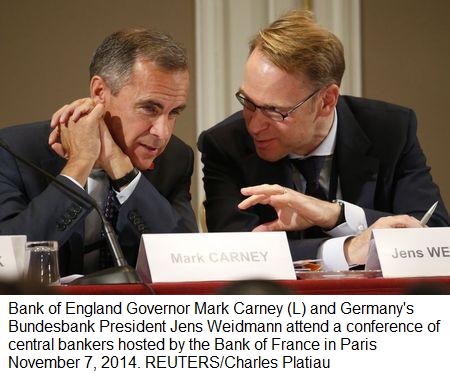
Mark Carney, chairman of the Financial Stability Board and Bank of England governor, said the rules, proposed on Monday, marked a watershed in putting an end to taxpayer bailouts of banks considered too big to fail.

“Once implemented, these agreements will play important roles in enabling globally systemic banks to be resolved (wound down) without recourse to public subsidy and without disruption to the wider financial system,” Carney said in a statement.

After the financial crisis in 2007-2009, governments had to spend billions of dollars of taxpayer money to rescue banks that ran into trouble and could have threatened the global financial system if allowed to go under.

Since then, regulators from the Group of 20 economies have been trying to find ways to prevent this happening again.

The plans envisage that global banks like Goldman Sachs and HSBC should have a buffer of bonds or equity equivalent to at least 16 to 20 percent of their risk-weighted assets, such as loans, from January 2019.

These bonds would be converted to equity to help shore up a stricken bank. The banks’ total buffer would include the minimum mandatory core capital requirements banks must already hold to bolster their defences against future crises.

The new rule will apply to 30 banks the regulators have deemed to be globally “systemically important,” though initially three from China on that list of 30 would be exempt.

G2O leaders are expected to back the proposal later this week in Australia. It is being put out to public consultation until Feb. 2, 2015.

David Ereira, a partner at law firm Linklaters, said that on its own the new rule as proposed would not end “too big to fail” banks and that politically tricky details still had to be settled.

BASELTOWER

Carney was confident the new rule would be applied as central banks and governments had a hand in drafting them.

“This isn’t something that we cooked up in Basel tower and are just presenting to everybody,” he told a news conference, referring to the FSB’s headquarters in Switzerland.

Most of the banks would need to sell more bonds to comply with the new rules, the FSB said. Some bonds, known as “senior debt” that banks have already sold to investors, would need restructuring.

Senior debt was largely protected during the financial crisis, which meant investors did not lose their money. But Carney said it in future these bonds might have to bear losses if allowed under national rules and if investors were warned in advance.

The new buffer, formally known as total loss absorbing capacity or TLAC, must be at least twice a bank’s leverage ratio, a separate measure of capital to total assets regardless of the level of risk.

Globally, the leverage ratio has been set provisionally at 3 percent but it could be higher when finalised in 2015.

Some of the buffer must be held at major overseas subsidiaries to reassure regulators outside a bank’s home country. Banks may have to hold more than the minimum because of “add-ons” due to specific business models, Carney said.

Elke Koenig, president of German regulator Bafin, said supervisors should orient themselves more toward the upper end of the 16-20 percent range, though banks may be given more time to comply.

Fitch ratings agency said banks might end up with a buffer equivalent to as much as a quarter of their risk-weighted assets once other capital requirements were included. Analysts have estimated this could run to billions of dollars.

Analysts at Citi estimated the new rule could cost European banks up to 3 percent of profits in 2016.

Citi said European banks would be required to issue the biggest chunk of new bonds, including BNP Paribas , Deutsche Bank , BBVA and UniCredit , with Swiss and British banks the least affected in Europe.

(Additional reporting by Alexander Huebner in Bonn, Editing by Keiron Henderson and Jane Merriman)
Reuters Newswire Service – Online Site (Posted 11/10/2014; retrieved 11/13/2014) –
http://news.yahoo.com/g20-proposes-buffer-end-too-big-fail-banks-061252790–sector.html

Within the region, this second article considers the stewardship of one Caribbean financial institution in Jamaica and their lending practices:

Title #2: VMBS sees dramatic fall in foreclosures

CU Blog - Too Big To Fail - Caribbean Version - Photo 2VICTORIA Mutual Building Society (VMBS) recorded a three-quarters drop in property foreclosures last year.

It signals greater resilience by homeowners during an austere economy affected by heavy currency depreciation.

“The building society also enabled more members who were facing financial difficulties to retain ownership of their homes,” said VMBS in a statement about its year ended December 31, 2013. “Foreclosures on properties totalled 10 last year, compared to 37 the year before.”

Its non-performing loans, or loans unserviced for over 90 days, moved from 6.9 per cent at the beginning of the year to 5.6 per cent at the end.

“This improvement was the result of the continued drive to engage members who were having difficulty meeting their monthly mortgage payments, and working with them collaboratively, with the aim of helping them to bring their accounts current and retain ownership of their homes,” said Michael McMorris, chairman of Victoria Mutual, in his report for the group’s 135th annual general meeting held last month.

Greater focus was also placed on sales and services with mortgage disbursements up 133 per cent to $3.3 billion last year, the company indicated.

The Victoria Mutual Group, an amalgam of various financial, mortgage and insurance entities, made less after-tax surplus at $965.8 million for 2013 compared with $1 billion a year earlier.

The group’s pre-tax surplus actually increased year on year but its after-tax surplus dipped 4.2 per cent to $965.8 million as it was “adversely affected by the imposition of an asset tax on regulated financial institutions, which applied to both VMBS and VM Wealth Management,” stated the company.

The VM Group said that it aims to keep mortgage rates low by reducing administration costs, which augurs well for prospective homeowners.

Stated McMorris: “Internally, the year 2014 will see a continuation of a number of projects and initiatives geared towards improving efficiency and service delivery throughout the group.”

VM Group will seek to improve its financial advisory and brokerage services by growing the assets it manages on behalf of clients.

“To do this, Victoria Mutual Wealth Management Limited (VMWM) is working on new products to allow clients to customise their investment portfolios,” stated McMorris.

VMBS Money Transfer Services Limited (VMTS) plans to expand its services, both locally and overseas. The remittance company became profitable two years ago, and saw earnings grow by 61 per cent last year, due largely to an increase in fees, the company stated. VMTS also benefited from a 28 per cent increase in foreign exchange trading gains.

“Better gains on foreign exchange in part reflected a more challenging business environment last year, when depreciation of the Jamaican dollar was higher than 12 per cent,” stated the company.

VMBS allows its debit card holders free withdrawals at any of its teller machine or point-of-sale terminals.
Jamaica Observer Daily Newspaper – Online Site (Posted 08/20/2014; retrieved 11/13/2014) – http://www.jamaicaobserver.com/business/VMBS-sees-dramatic-fall-in-foreclosures_17381839

The related subjects of banking oversight and optimizing  financial governance have been a frequent topic for blogging by the Go Lean promoters, as sampled here:

5 Steps of a Bubble – Learning to make a resilient economy
Canadian Imperial Bank of Commerce failing investment in FirstCaribbean Bank
Bitcoin needs regulatory framework to change ‘risky’ image
Open the Time Capsule: The Great Recession of 2008
What Usain Bolt can teach banks about financial risk
Barbados Central Bank records $3.7m loss in 2013
US Federal Reserve Releases Transcripts from 2008 Meetings
Dominica raises EC$20 million on regional securities market
Fractional Banking System – How to Create Money from Thin Air
Book Review: ‘Wrong – Nine Economic Policy Disasters and What We Can Learn…’
10 Things We Want from the US – # 2: American Capital
The Erosion of the Middle Class

All Caribbean countries have experienced economic dysfunction: English, Dutch, French and Spanish territories. In line with the foregoing articles, the Go Lean book details many infrastructural enhancements/advocacies to the region’s financial eco-system; to facilitate efficient management of the economy … going forward:

Ethos-Strategy-Tactics-Implementation-Advocacy

Page

Anecdote – Caribbean Single Market & Economy

15

Anecdote – Puerto Rico – The Caribbean’s Greece

18

Economic Systems Influence Individual Choices

21

Improve Sharing

35

Confederating Non-Sovereignty

45

Facilitate Currency Union/Co-op of Caribbean Dollar

45

Fostering a Technocracy

64

Caribbean Central Bank

73

Deposit Insurance Regulations

73

Securities Regulatory Authority

74

Modeling the European Union / Central Bank

130

Lessons from 2008

136

Anecdote – Caribbean Currencies

149

Growing the Economy

151

Creating Jobs

152

Better Manage Foreign Exchange

154

Improve Credit Ratings

155

Foster Cooperatives

176

Banking Reforms

199

Wall Street – Capital/Securities Market

200

Impact the Diaspora

219

Impact Retirement – Need for Savings

221

Help the Middle Class

223

Re-boot Jamaica

239

Appendix – Alternative Remittance Modes

270

There is no doubt that there has been mis-management of the Caribbean economy in the past. Consider the example of Jamaica; their currency has suffered from many de-valuations and depreciations; an average amount of $2.50 a year since the 1970’s; trading at 87-to-1 US Dollar; (at the time that Go Lean was composed – November 2013). Social Anthropologist posit that when societies come under duress, the communities have 2 choices: ‘Fight” or “Flight”. How have the countries responded that are cited in this commentary? They have chosen “flight”. A previous blog reported an average of 70 percent brain-drain rate across the region; with Jamaica at 85% and Trinidad at 79%.

Now is the time for change; time for new stewards of the Caribbean economy, security and governing engines. It’s time for the CU/CCB. We must prove that we have learned from the past. See the VIDEO below on the anatomy and consequence of the Credit Crisis.

The purpose of this roadmap is to provide that new stewardship. A lot is at stake: the destination for the hopes and dreams of the Caribbean youth. No more flight! We must act now and make the Caribbean, a better place to live, work and play. 🙂

———-

Appendix Video: – The Short and Simple Story of the Credit Crisis – http://youtu.be/bx_LWm6_6tA

Source References:

[a]. https://news.yahoo.com/facts-numbers-us-bank-failures-183852568.html

[b]. http://www.centralbank.org.bb/WEBCBB.nsf/WorkingPapers/DB0CF759B9E97FB9042579D70047F645/$FILE/Exploring%20Liquidity%20Linkages%20among%20CARICOM%20Banking%20Systems.pdf

Share this post:
, , , , ,
[Top]

Local Miami Haitian leaders protest Bahamian immigration policy

Go Lean Commentary

“Why’s everybody always pickin’ on me?” – The Coasters – Charlie Brown Song; (see Appendix A).

It would seem that Haitians all around the world can sing the chorus to this above song. The history of Haiti is frequented with hardships in their own country and they have understandingly pursued a better life abroad. However, the Haitian Diaspora have also experienced oppression, discrimination and exclusionary treatment abroad and have had to endure a “hard welcome” in most foreign countries.

The book Go Lean…Caribbean serves as a roadmap for elevating Caribbean society, for all 30 member-states, including Haiti. As such there are direct references in the book regarding Haiti’s historicity; (Pages 238 & 306).

In addition to history, Haiti also has a different geography compared to most Caribbean nations. They share the same island with the Dominican Republic. The oppression, discrimination and exclusionary treatment of Haitians started on that island. Over the years, the governmental administrations of the Dominican Republic have favored “white” immigrant refugees over other races; Dominican troops often forcibly expelled illegal Haitians. Most notably, the 1937 Parsley Massacre of Haitian immigrants, a government-sponsored genocide in October 1937, at the direct order of then President Rafael Trujillo. He ordered the execution of the Haitian population living in the borderlands. The violence resulted in the killing of 20,000 ethnic Haitian civilians during approximately five days. (See Appendix B for additional historic references and inferences).

The US and other countries in the Caribbean neighborhood have also been harsh in their treatment of Haitian refugees. Consider this story of a conflict with the Bahamas, and the protests from the Haitian Diaspora in Miami:

1. News Article Title: Local Miami Haitian leaders protest Bahamian immigration policy
http://www.wsvn.com/story/27344225/local-haitian-leaders-protest-bahamian-immigration-policy – Posted: November 10, 2014

Miami Haitian Protesters 1

MIAMI (WSVN) — Local leaders are stepping up to stop a deportation dilemma regarding an immigration policy.

The policy forces families of Haitian descent out of the Bahamas.

Florida State Representative Daphne Campbell spoke out on the issue at a press conference in Little Haiti Monday morning. “I’m asking all, all cruises and all tourists, to make sure every industry boycotts the Bahamas to end discrimination against Haitian children,” Campbell stated. “Boycott Bahamas! Boycott Bahamas! Boycott Bahamas!”

Activists are now asking for the public’s support in helping to protect the future of Haitian families.
————

Video: WSVN Newscast – http://www.wsvn.com/story/27344225/local-haitian-leaders-protest-bahamian-immigration-policy?autoStart=true&topVideoCatNo=default&clipId=10832494

Though the leader of the accusing team has her detractors/problems, (South Florida state Rep. Daphne Campbell faces IRS investigation and she is already facing a Florida Medicaid fraud probe), the subject of her accusation may still have merit. What are the facts of the case regarding Haitian children in the Bahamas?

The Bahamas does not automatically grant citizenship to people born of foreign parentage in its homeland. There are special provisos even if one parent is a Bahamian citizen; many details of which are gender-biased. (There were attempts to correct these provisos in Parliament this past year, but this legislative reform was stalled).

This citizenship criteria is not standard … compared to the US, Canada, and most western European countries. Ironic as these countries are also the source of most tourists visiting the Bahamas, the #1 economic driver for the country. So any traction in this Boycott Bahamas campaign can potentially have a negative impact – remember “Boycott Apartheid in South Africa”.

What’s worse, the Universal Declaration of Human Rights or UDHR (as related in Go Lean book Page 220) have specific prohibitions against national governments enforcing laws that effectuate discrimination against minority groups.

(The UDHR was adopted by the United Nations General Assembly in 1948, partly in response to the atrocities of World War II, composed by a committee led by former American First Lady Eleanor Roosevelt. Although the UDHR was a non-binding resolution, it is now considered by some to have acquired the force of international customary law which may be invoked in appropriate circumstances by national and other judiciaries. The UDHR urges member nations to promote a number of human, civil, economic and social rights, asserting these rights as part of the “foundation of freedom, justice and peace in the world”).

This means you Bahamas! Are you ready to receive the onslaught of darts from the international community? Economic sanctions, formal or informal, are debilitating!

This is not just a Haitian -versus- Bahamian issue. The same immigration-border-encroaching issues are trending with the US, Dominican Republic and Puerto Rico. This following news article relates this controversy:

2. Title: Haitian Illegal Immigration Through Puerto Rico Is Skyrocketing Too  – http://news.yahoo.com/haitian-illegal-immigration-puerto-rico-skyrocketing-too-021611125.html;_ylt=AwrBJR6DB9dTyzoAHyzQtDMD – Posted: July 26, 2014

Haitians to PRWhile U.S. immigration agencies grapple with a recent surge of tens of thousands of illegal immigrants at the Mexican border, the number of Haitians trying to enter the U.S. illegally through Puerto Rico has skyrocketed as well.

In 2011, only 12 Haitians made the trek through the Dominican Republic to Puerto Rico, a U.S. territory in the Caribbean Sea. That number had ballooned to 1,760 as of last year, according to U.S. Coast Guard statistics, CBS News reports.

“That’s new, and that’s something we’re trying to target,” Capt. Mark Fedor, the Coast Guard’s chief of response for the Southeast and Caribbean, told CBS.

“Organized smugglers in the Dominican Republic are advertising their services to Haitians and saying, ‘We’ll smuggle you through the Dominican Republic, put you on a boat to Puerto Rico or to one of the islands in the Mona Pass – a much shorter journey and we can get you to the United States that way.’ And I think people are responding to that,” he said.

The Dominican smugglers often drop their Haitian charges off at Mona Island, an uninhabited Puerto Rican island 40 miles off of the Dominican coast in the Mona Pass.

“As soon as you’re in Puerto Rico, it’s like you’re in the United States,” Lolo Sterne, coordinator for Haiti’s Office of Migration, told the Associated Press last year.

Once in Puerto Rico, the illegal Haitian immigrants are able to fly to destinations in the U.S. without having to show a passport. All they need is a driver’s license, according to the Associated Press.

The new route through the Mona Pass is seen as more desirable as the U.S. Coast Guard has increased patrols of normal routes taken by immigrants from Haiti and the Dominican Republic. As the AP points out, it has become more difficult to travel directly to the U.S. mainland or through Miami, which has historically served as the choice destination for illegal immigrants from the Caribbean.

Haiti and its 9+ million residents need change. In fact, all of the Caribbean’s 42 million people need change/empowerment.

The purpose of the Go Lean roadmap is to turn-around the downward trends in the Caribbean today, to reverse course and elevate society in the Caribbean as a whole and Haiti in particular. The CU, applying best-practices for community empowerment has these 3 prime directives, pronounced as follows:

  • Optimization of the economic engines in order to grow the regional economy to $800 Billion & create 2.2 million new jobs.
  • Establishment of a security apparatus to protect the resultant economic engines.
  • Improve Caribbean governance, with consideration for minority equalization, to support these engines.

How exactly can the CU impact Haiti to reboot that failing state? The answer can be found in the history of post-war Europe, where the Marshall Plan was instrumental in rebooting that continent. The book Go Lean…Caribbean details a Marshall Plan-like roadmap for Haiti, and all other failing Caribbean institutions.

The related subjects of economic, security and governing dysfunction among European and Caribbean member-states have been a frequent topic for blogging by the Go Lean promoters, as sampled here:

https://goleancaribbean.com/blog/?p=2809 A Lesson in History: Economics of East Berlin
https://goleancaribbean.com/blog/?p=2480 A Lesson in History: Community Ethos of WW II
https://goleancaribbean.com/blog/?p=2330 ‘Raul Castro reforms not enough’, Cuba’s bishops say
https://goleancaribbean.com/blog/?p=1531 A Lesson in History: 100 Years Ago Today – World War I
https://goleancaribbean.com/blog/?p=1433 Caribbean loses over 70% of tertiary educated citizens to the brain drain
https://goleancaribbean.com/blog/?p=1014 All is not well in the sunny Caribbean
https://goleancaribbean.com/blog/?p=623 Only at the precipice, do they change
https://goleancaribbean.com/blog/?p=599 Ailing Puerto Rico open to radical economic fixes
https://goleancaribbean.com/blog/?p=451 CariCom Chairman to deliver address on slavery/colonization reparations

The goal of the Go Lean roadmap is simple: to make Haiti (and by extension the rest of the Caribbean) a better place to live, work and play so that citizens would not feel compelled to risk life-and-limb to flee for foreign shores. The goal extends further in the mission to reverse course and encourage the repatriation of the Haitian/Caribbean Diaspora. To accomplish these goals, the book details a series of community ethos, strategies, tactics, implementations and advocacies to empower all the factions of Haitian life in the Caribbean region and in the Diaspora:

Community Ethos – Economic Systems Influence Choices & Incentives Page 21
Community Ethos – Consequences of Choices Lie in the Future Page 21
Community Ethos – Anti-Bullying and Mitigation Page 23
Community Ethos – Minority Equalization Page 24
Community Ethos – Ways to Impact the Future Page 26
Community Ethos – Ways to Manage Reconciliations Page 34
Community Ethos – Ways to Impact the Greater Good Page 37
Strategy – Vision –  Integrate region into a Single Market Economy Page 45
Strategy – Agents of Change – Globalization Page 57
Tactical – Separation of Powers – Department of Homeland Security Page 75
Implementation – Ways to Foster International Aid Page 115
Planning – 10 Big Ideas … for the Caribbean Region – Haiti & Cuba Page 127
Planning – Ways to Ways to Model the EU Page 130
Planning – Reasons Why the CU Will Succeed – Germany Reconciliation Model Page 132
Planning – Ways to Improve Failed-State Indices – Haiti – first on the region list Page 134
Planning – Lessons from East Germany – European post-war rebuilding Page 139
Planning – Lessons from Canada’s History Page 146
Advocacy – Ways to Grow the Economy Page 151
Advocacy – Ways to Create Jobs Page 152
Advocacy – Ways to Foster Empowering Immigration Page 174
Advocacy – Ways to Impact Justice Page 178
Advocacy – Ways to Enhance Tourism Page 187
Advocacy – Ways to Impact the Diaspora – Haitians in Miami Page 217
Advocacy – Ways to Protect Human Rights Page 220
Advocacy – Ways to Help Women Page 226
Advocacy – Ways to Impact Youth Page 227
Advocacy – Ways to Impact the Dominican Republic Page 237
Advocacy – Ways to Re-boot Haiti Page 238
Advocacy – Ways to Impact US Territories Page 244
Appendix – Dominican Republic – Rafael Trujillo Regime Page 306

The conclusion of the Go Lean book relates the experiences and motivations of the US Supreme Court for the 1954 landmark decision Brown versus Board of Education. The unanimous wisdom of the 9 Justices on the Court should not be ignored, it was strewn from the experiences of modern society waging two world wars; they saw the rampage, devastation of 60 million deaths around the world and appreciated the wisdom that a downtrodden people would not stay down, that they would rise and revolt, that they would risk their lives and that of their children to pursue freedom.

How impactful is the Haitian Diaspora in the Bahamas? With a total national population of 320,000 and one estimate (July 2013) of 50,000 Haitian and/or Haitian-Bahamians, there is an imminent wave of dissent for the Bahamas to contend with. Don’t wait Bahamas, deal with your domestic issues now! Learn from the experiences of your neighbors, as depicted in the Go Lean book:

US: Lessons from the US Constitution (Page 145)
Canada: Reconciliation with First Nations (Page 146)
Guyana: Indo-Guyanese versus Afro-Guyanese (Page 174)
Trinidad: Indo-Trinidadians versus Afro-Trinidadians (Page 240)

Now is the time for all of the Caribbean to learn the lessons from [economic] history of other successful (US & Canada) and unsuccessful societies. The Go Lean book posits that the Caribbean is in a serious crisis, but asserts that this crisis would be a terrible thing to waste. The people and governing institutions of the Bahamas, Haiti and the region as a whole are hereby urged to lean-in for the empowerments described in the book Go Lean … Caribbean. This is a big deal for the region, we can all strive to make our Caribbean homeland a better place to live, work, and play.

Download the free e-book of Go Lean … Caribbean – now!

———–

Appendix A – The song: Charlie Brown by The Coasters – http://youtu.be/_UnPzp2lmNk

———–

Appendix B – Homework for additional credit: better understand the history of Haiti and its consequential impact on the world.

Video Title: Black In Latin America (Episode 1): Haiti and The Dominican Republic- The Roots of Division

This scholarly work was produced and narrated by noted Professor Henry Louis Gates. This was part of a series developed for the Public Broadcasting System (PBS) , a network of public TV stations in the US. The other features in the series, include:

Black In Latin America (Episode 2): Cuba: The Next Revolution
Black In Latin America (Episode 3): Brazil: A Racial Paradise?
Black In Latin America (Episode 4): Mexico & Peru: The Black Grandma in the Closet


Share this post:
, , , ,
[Top]

Caribbean must work together to address rum subsidies

Go Lean Commentary

CU Blog - Caribbean must work together to address rum subsidies - Photo 1

Caribbean Rum, a product from island sugar cane, is among the best in the world.

This is a familiar focus of the Go Lean…Caribbean, movement, the book and accompanying blogs feature this and another Caribbean specialty agriculture: the best cigars in the world. The book posits that specialty agriculture is a core competence of the region (Page 58). This is part-and-parcel of the introduction and implementation of the technocratic Caribbean Union Trade Federation (CU).

With that branding of “Trade Federation”, obviously there is an emphasis on Trade activities.

With that branding of “Union”, obviously there is an emphasis on collective bargaining.

Mastery of these activities is what the following news article calls for:

CU Blog - Caribbean must work together to address rum subsidies - Photo 2THERE has been yet another call for rum-producing nations in the Caribbean to come together and confront the issues of subsidies which are affecting rum exports from this region to the United States.

Douglas Henderson, Executive Manager, Regional Sales and Marketing for Angostura, a leading rum producer in Trinidad and Tobago, said there has to be a collaborative effort to deal with the situation.

“Therefore, the challenge that we have is that in a lot of cases the Caribbean producers are having difficulties coming together to fight,” he told The Barbados Advocate.

The official pointed out that he is aware that some efforts were made to have the matter dealt with at the World Trade Organisation (WTO), in addition to the fact that both Barbados and Trinidad and Tobago are both trying to make inroads in having the subsidies removed.

“But until that happens, no company can stand still and wait. So we have to look to develop our business and do what we can,” he remarked.

CU Blog - Caribbean must work together to address rum subsidies - Photo 3Henderson was recently in Barbados where he participated in the launch of a range of Angostura Rums to the Barbados market. The launch was a co-operative effort between Angostura and Massy Distribution.

The USA is providing the subsidies to multinational spirits companies operating in the United States Virgin Islands and in Puerto Rico. Caribbean governments and producers who are members of the West Indies Rum and Spirit Producers Association (WIRSPA) have dubbed the subsidies inconsistent with trade rules of the WTO.

Just recently, the Barbados Ambassador to the United States, John Beale, issued a similar call for Barbados and the Caribbean producers to mount a campaign against the subsidies. He said that as a result of them, Barbados’ rum exports to the USA had declined by more than 20 per cent so far in 2014. Rum accounted for over $80 million in foreign exchange inflows into Barbados last year.

“Every Caribbean rum producer is affected by the subsidy and it is going to place those countries – US territories – at an advantage over us,” Henderson said.

He explained, “The USA market remains a huge market for any Caribbean producer of rum. Rums are growing in the USA and again when you come into the market and your price point is at a level that the majority of the market would choose not to try it, what you have to invest in advertising is so significant.”

The Angostura official further noted that every rum producer in the world is happy to compete on a level playing field. However, according to him, “a subsidy does not provide a level playing field, that’s where the concern is”, he added.
The Barbados Advocate – Daily Newspaper Online Site – (Posted 8/20/2014; retrieved 11/10/2014) – http://www.barbadosadvocate.com/newsitem.asp?more=business&NewsID=38272

The Go Lean book explained that the proper management of trade can increase wealth. The book relates the following on Page 21:

Voluntary Trade Creates Wealth: People specialize in the production of certain goods and services because they expect to gain from it. People trade what they produce with other people when they think they can gain something from the exchange. Some benefits of voluntary trade include higher standards of living and broader choices of goods and services.

The foregoing article alludes that the Caribbean member-states can do better in managing their trade negotiations (with the US regarding subsidies) with more efficient collective bargaining. This commentary asserts that it is a preferred option for the member-states to delegate this negotiation responsibility to the CU rather than going at it alone. The Go Lean book serves as a roadmap to empower the region’s trade engines. This effort is dubbed Trade SHIELD and defined in great details in the book. The acronym refers to:

Strategic
Harvest
Interdiction
Enforcement
Logistics
Delivery

All in all, this roadmap calls for more than just negotiations (inclusive under the Strategic functionality). The Go Lean roadmap calls for confederating 30 member-states of the Caribbean (including the US territories of Puerto Rico and the Virgin Islands – also rum-producing economies – think Bacardi*), despite their language and legacy, into an integrated Single Market. The resulting entity will increase trade with the US and with the rest of the world, increasing the economy (GDP) from $378 Billion (2010) to $800 Billion. This growth is based on new jobs, industrial output and lean operational efficiency.

Size does matter! The traditional rum-producing countries (Barbados, Guyana, Jamaica, Martinique, Trinidad, etc.) are considered Small Island Developing States. The CU on the other hand represents the Single Market of 42 million people, in which “the whole is worth more than the sum of its parts“. In addition, the SHIELD principles specify Logistics and Delivery functions in facilitating the Trade objectives. This is a microcosm of how the CU roadmap will impact all of Caribbean society. The 3 prime directives of the CU are listed as:

  • Optimization of the economic engines so as to grow the regional economy to $800 Billion and create 2.2 million new jobs.
  • Establishment of a security apparatus (with persecutory powers for economic crimes) so as to mitigate the eventual emergence of “bad actors”.
  • Improve Caribbean governance.

CU Blog - Caribbean must work together to address rum subsidies - Photo 4The roadmap creates some new Delivery options for Caribbean specialty agriculture (i.e. rum and cigars), namely electronic commerce and social media. Imagine subscribers on the myCaribbean.gov Marketplace or Facebook easily ordering auto-fill monthly shipments of the best products the Caribbean have to offer. The CU intends to trade with the 80 million annual visitors and 10 million Diaspora.

This export trade allows for the preservation of Caribbean heritage.

Facilitating Caribbean trade is a strong theme for the Go Lean… Caribbean book and a frequent topic for these Go Lean blogs. These points of trade against the back-drop of Caribbean economy, security and governance were detailed in these previous blogs/commentaries:

https://goleancaribbean.com/blog/?p=2435 Korean Model – Latin America’s Trade dreams
https://goleancaribbean.com/blog/?p=1965 America’s Navy – Model for protecting Caribbean trade routes
https://goleancaribbean.com/blog/?p=1847 Cuban Cigars – Declared “Among the best in the world”
https://goleancaribbean.com/blog/?p=1869 US Senate bill targets companies that move overseas for unfair trade
https://goleancaribbean.com/blog/?p=1609 Cuba mulls economy and trade in Parliament session
https://goleancaribbean.com/blog/?p=1416 Amazon, a model of a Trade Marketplace, and its new FIRE Smartphone
https://goleancaribbean.com/blog/?p=833 CU Strategy: One currency, divergent economies
https://goleancaribbean.com/blog/?p=689 eMerge Conference Aims to Jump-start Miami Tech Hub in Exploiting Latin America Trade

The foregoing news article relates that the US is the culprit for the unlevel “playing field” for rum import-export trade activities in the region. The Go Lean movement posits that despite the reassuring words, the US is not assuming exemplary leadership for Caribbean empowerment – due to its own self-interest – that instead the region must “stand up” for its own self-determination.

This is not independence, this is interdependence! This point was echoed in the following blog commentaries:

https://goleancaribbean.com/blog/?p=2259 The Criminalization of American Business – Big Agra
https://goleancaribbean.com/blog/?p=789 America’s War on the Caribbean
https://goleancaribbean.com/blog/?p=353 Book Review: ‘Wrong – Nine Economic Policy Disasters and What We Can Learn…’
https://goleancaribbean.com/blog/?p=273 10 Things We Don’t Want from the US – American Self-Interest Policies

The CU roadmap works to drive the needed change among the economic, security and governing engines to guide the Caribbean member-states to the destination of elevated societies. This change is based on new community ethos, strategies, tactics, implementations and advocates; sampled as follows:

Declaration of Interdependence Page 10
Community Ethos – Deferred Gratification Page 21
Community Ethos – Economic Principles – Voluntary Trade Creates Wealth Page 21
Community Ethos – Job Multiplier Page 22
Community Ethos – Security Principles Page 22
Community Ethos – Governing Principles Page 24
Community Ethos – Lean Operations – GPO’s Page 24
Community Ethos – Cooperatives Page 25
Community Ethos – Ways to Improve Negotiations Page 32
Strategy – Vision – Integrating Region in to a Single Market Page 45
Strategy – Agents of Change – Globalization Page 57
Strategy – Core Competence – Specialty Agriculture Page 58
Tactical – Confederating a Permanent Union Page 63
Tactical – Fostering a Technocracy Page 64
Tactical – Growing the Economy to $800 Billion – Convergence of East Asian Tigers Page 67
Tactical – Separation of Powers – Agriculture Department – Licensing/ Inspections Page 88
Implementation – Assemble & Create Super-Regional Organs to represent commerce Page 96
Implementation – CPU: Consolidate / Integrate the Member-states Postal Services Page 96
Implementation – Ways to Pay for Change – GPO’s Page 101
Implementation – Foreign Policy Start-up Initiatives Page 102
Implementation – Security Initiatives at Start-up Page 103
Implementation – Ways to Optimize Mail Service & myCaribbean.gov Marketplace Page 108
Implementation – Ways to Impact Social Media Page 111
Implementation – Ways to Benefit from Globalization Page 119
Planning – Ways to Improve Trade – GPO’s Page 128
Planning – Ways to Improve Interstate Commerce Page 129
Advocacy – Ways to Grow the Economy Page 151
Advocacy – Ways to Create Jobs Page 152
Advocacy – Ways to Better Manage Foreign Exchange – Caribbean Dollar realities Page 154
Advocacy – Ways to Improve Governance Page 168
Advocacy – Ways to Foster Cooperatives Page 176
Advocacy – Ways to Foster e-Commerce Page 198
Advocacy – Ways to Preserve Caribbean Heritage Page 218
Advocacy – Ways to Impact US Territories Page 244
Appendix – Trade SHIELD Principles Page 264

Trade is very much critical to the strategies to grow the regional economy. Increased trade will undoubtedly mean increased job opportunities. The CU/Go Lean plan is to foster and incubate key industries, such as rum industry, for this goal. One of the biggest rum producers in the Caribbean, Bacardi, originated in Cuba but have since located distillery plants in Puerto Rico, Bahamas and Mexico. They have endured and persevered despite much opposition. They are proud of their survival, depicting it in TV advertisements; see the following:

*VIDEO: Bacardi – Untamable since 1862 – Procession TV Ad: https://youtu.be/lXQcbS-TH7g

Discover how the Bacardí family had the irrepressible spirit to overcome fire, earthquakes, prohibition, revolution and exile — none of which could defeat their spirit, because True Passion Can’t Be Tamed. Find out more about the Bacardí family story at www.bacardi.com

The rest of the Caribbean’s rum producers must also endure dire obstacles, and can now do so because there is help. This Go Lean roadmap proposes a new model, that of the Trade Federation, an entity to do the heavy-lifting of elevating the Caribbean economy, security and governing engines.

For the Caribbean, the status quo cannot continue – the region is already mature as a great place to “play”: tourism, carnivals/fiestas/parties, great rum and great cigars – “all play and no work”. But now, it is time for the region, the people and institutions, to lean-in to this roadmap for change, to make the Caribbean a better place to live, work and play.

Download the free e-Book of Go Lean … Caribbean – now!

Share this post:
, , , ,
[Top]

Where the Jobs Are – Entrepreneurism in Junk

Go Lean Commentary

The dominant employment engine for the Caribbean involves tourism, but the regional tourism business models are being strained. The primary target market, American middle class have suffered crises and now harsh realities have come to fruition. The book Go Lean…Caribbean posits that there is a need to re-focus, re-boot, and optimize the engines of commerce so as to make the Caribbean a better place to live, work and play for all.

Where are the jobs … that the Caribbean people need today and will need even more so in the future?

A key answer is in the quotation: “One man’s trash is another man’s treasure”.

This is the underlying principle of the recycling-scrap-metal industry. This industry is a “destruction services” business model, a subset of the “turn-around” community ethos. Jobs can be created in the art and science of destruction (demolition, recycling and junkyards). But this industry does not “play well with others”, it makes a bad neighbor. It is dirty, wet, Blue-Collar and noisy. But, if done right, this model could be successful, and can impact a “turn-around” for many stakeholders.

This new focus on the “turn-around” community ethos, and the accompanying jobs, appears on the surface to be a win-win for all involved, but a more careful examination highlights some serious economic, security and governing obstacles/issues.

The Go Lean book calls for the optimization of these economic, security and governing engines for the Caribbean region:

  • Economics – Jobs, business models, industrial neighborhoods constitute the economic dimensions of this industry. Overall the roadmap calls for the optimization of the economic engines in order to grow the regional economy to $800 Billion GDP and create 2.2 million new jobs. There is another economic element to this recycling-scrap-metal industry sphere of activity, that of an entrepreneurial hustle – Scrapping. A person can generate self-employment income by gathering scrap-metal, recycled commodities, re-manufactured raw materials and transport them to junkyards. While this may be an occasional chore for some people, for others, this can be a daily hustle, their source of steady income. See photo examples here and VIDEO below:
  • CU Blog - Where the Jobs Are - Entrepreneurism in Junk - Photo 1-3
  • Security – The above trash-versus-treasure quotation introduces the security dimension of the commentary. The entire eco-system of recycling assumes that the “trash” holder of a commodity surrenders possession. If/when the commodity changes hands prematurely, the events are often associated with a crime: burglary, robbery, theft, vandalism, house-stripping, etc. For this reason, the Go Lean roadmap commandeers jurisdiction of salvage/recycling/scrap-metal functions for federal regulation/promotion. This stipulates that activities within the “turn-around” sphere will be marshaled by regional police authorities, with the application of best-practices: Verified Identification, Closed Circuit Surveillance Camera, Serial Number registration/tracking, etc.
  • Governance – In line with the Go Lean roadmap, many junkyards are identified as ideal for the structure of Self-Governing Entities (SGE), the bordered/fenced controlled campuses/compounds. This approach allows for initiation, cooperation and coordination of SGE’s to effectuate change in the region.

The alignment of strained economic-security-governance engines against the recycling-scrap-metal “turn-around” community ethos have been successfully championed before, particularly in the US during World War II. There is much to learn from this example and lesson in history.

Consider a modern example of this Los Angeles company, and imagine similar installations throughout the Caribbean region:

C & M Metals is a provider of Scrap-Metal Recycling and Metal Trading Services

1709 E. 24th St., Los Angeles, CA90058  |  Phone: 323-234-4662  |  Fax: 323-234-5844  |  sales@cmmetals.net

C&M Metals Inc. is a corporation dedicated to the, “Green Movement.” We have showed this by being one of the pioneers in the recycling of secondary metals and scrap metal waste for over 50 years. Our experience comes second to none and our long history speaks for itself. Call us today to inquire about how we could be of service to you.

Industries Served:

Metal Fabricators Demolitions Electricians
Machine Shops Networking Contractors
Electronic Manufactures Auto Repair Centers   Auto Wrecking
Plumbers Contractors Yards
Maintenance Contractors Radiator Repair Shops
Medical Industries Wheel and Tire Centers
Installers Auto Dealerships

CU Blog - Where the Jobs Are - Entrepreneurism in Junk - Photo 2
C & M Metals, Inc. – Los Angeles Premier Salvage Services – Retrieved
11-09-2014 –
http://www.cmmetals.net/index.html

The book Go Lean… Caribbean, serves as a roadmap for the introduction and implementation of the technocratic Caribbean Union Trade Federation (CU) with the charter to facilitate jobs in the region. Early in the Go Lean book, the responsibility to create jobs was identified as an important function for the CU with this pronouncement in the Declaration of Interdependence (Pages 14):

xxvi.  Whereas the Caribbean region must have new jobs to empower the engines of the economy and create the income sources for prosperity, and encourage the next generation to forge their dreams right at home, the Federation must therefore foster the development of new industries… In addition, the Federation must invigorate the enterprises related to existing industries … impacting the region with more jobs.

The Go Lean book also details the principle of job multipliers, how certain industries are better than others for generating multiple indirect jobs down-the-line for each direct job on a company’s payroll. The recycling-scrap-metal “turn-around” industries have impressive indirect job multiplier rates, hereby estimated at 5.0. This is important, as the Go Lean… Caribbean book details the creation of 2.2 million direct/indirect jobs in the region during the 5-year roadmap, including income-generation from entrepreneurial hustles.

The subject of SGE’s has been directly addressed and further elaborated upon in these previous blog/commentaries:

https://goleancaribbean.com/blog/?p=2750 Disney World – Example of SGE
https://goleancaribbean.com/blog/?p=2338 Using SGE’s to Welcome the Dreaded ‘Plutocracy’
https://goleancaribbean.com/blog/?p=2003 Where the Jobs Are – Ship-breaking under SGE Structure
https://goleancaribbean.com/blog/?p=1214 Fairgrounds as SGE and Landlords for Sports Leagues
https://goleancaribbean.com/blog/?p=286 Puerto Rico’s Comprehensive Cancer Center Project Breaks Ground – Model of Medical SGE

In addition, the subjects of self-employment opportunities and entrepreneurial hustle have been explored in previous blog/commentaries:

https://goleancaribbean.com/blog/?p=1325 Puerto Rico Governor Signs Bill on Small-Medium-Enterprises
https://goleancaribbean.com/blog/?p=599 Ailing Puerto Rico open to radical economic fixes – with focus on Informal Economy
https://goleancaribbean.com/blog/?p=398 Self-employment on the rise in the Caribbean – World Bank
https://goleancaribbean.com/blog/?p=214 LCD versus an Entrepreneurial Ethos

The adoption of new community ethos, plus the executions of the following strategies, tactics, implementations and advocacies will foster the returns on the “turn-around” investments:

Community Ethos – Deferred Gratification Page 21
Economic Principles – People Choose because Resources are Limited Page 21
Economic Principles – All Choices Involve Costs Page 21
Economic Principles – People Respond to Incentives Page 21
Economic Principles – Economic Systems Influence Choices & Incentives Page 21
Economic Principles – Voluntary Trade Creates Wealth Page 21
Community Ethos – Job Multiplier Page 22
Community Ethos – Lean Operations Page 24
Community Ethos – Return on Investments (ROI) Page 24
Community Ethos – Cooperatives Page 25
Community Ethos – Ways to Impact the Future Page 26
Community Ethos – Ways to Help Entrepreneurship Page 28
Community Ethos – Ways to Impact Research & Development (R&D) Page 30
Community Ethos – Ways to Impact Turn-Around: Recycling and Demolition Industries Page 33
Community Ethos – Ways to Impact the Greater Good Page 37
Strategy – Mission – Foster Local Economic Engines. Page 45
Tactical – Fostering a Technocracy Page 64
Tactical – Tactics to Forge an $800 Billion Economy – High Multiplier Industries Page 70
Tactical – Separation of Powers – Self-Governing Entities Page 80
Implementation – Ways to Pay for Change – SGE Licenses Page 101
Implementation – Steps to Implement Self-Governing Entities Page 105
Implementation – Ways to Deliver Page 109
Planning – 10 Big Ideas – Self-Governing Entities Page 127
Planning – Ways to Improve Trade Page 128
Planning – Ways to Make the Caribbean Better Page 131
Advocacy – Ways to Grow the Economy Page 151
Advocacy – Ways to Create Jobs Page 152
Advocacy – Ways to Foster Cooperatives Page 176
Advocacy – Ways to Improve Emergency Management Processes and Systems Page 196
Advocacy – Ways to Impact Main Street Page 201
Appendix – Job Multipliers Page 259

The CU will foster industrial developments in support of turn-around industries. While these industrial developments may feature physical-grounds like high-tech R&D campuses, medical parks, and technology bases, they will also include low-tech scrap-metal junkyards. So the Go Lean roadmap covers clean-and-dirty, wet-and-dry activities.

While STEM (Science, Technology, Engineering and Mathematics) attributes maybe the target activity for future-focused genius qualifiers, not all Caribbean stakeholders will be included among this grouping. In fact, STEM candidates are projected to only be a small minority in any community. Not everyone can be in the “Geek Squad”, or White Collar classes for that matter. So the Blue Collar classes must be accommodated as well in the Go Lean roadmap. This entrepreneurial hustle is an example of that total inclusion. As such, community investments must be made to facilitate the needs of Blue Collar workers. See below for Appendix – Cooperatives in Salvage.

The Caribbean is arguably the best address on the planet, but there are a lot of missing ingredients so as to be the best address for everyone. Some of the missing ingredients are jobs. The plan identified in the Go Lean book and blog/ commentaries is a good start to create employment opportunities for the region. This, the Go Lean roadmap, is where the jobs are! There are other benefits too; in general, the end result of this roadmap is a clearly defined destination: a better place to live, work and play. 🙂

Download the book Go Lean … Caribbean – now!

———-

Appendix – VIDEO: How to make money scrapping – http://youtu.be/6eggQxy4Tdk

Mike the Scrapper Introduction to Scrapping: “We all have to live and make money so this is for my new fellow scrappers and the one’s that have been already scrapping”.

———-

Appendix – Cooperatives in Salvage:

The CU will structure cooperative endeavors to marshal the economic and homeland security interest of the region. As such, the creation of “Worker” cooperatives will be incentivized for enterprises to assist the population to find gainful employment, even through entrepreneurial “hustles”.

Recycling-Scrap-Metal Industries are ideal for Worker cooperatives. But to facilitate these endeavors, large investments are needed to be made for industrial equipment, sampled as follows (from http://grindercrusherscreen.com/):

CU Blog - Where the Jobs Are - Entrepreneurism in Junk - Photo 4-6

Share this post:
, , , ,
[Top]

Jamaica’s Public Pension Under-funded

Go Lean Commentary

“Stealing from Peter to pay Paul” – Old Adage.

This above statement does not need to be explained; every reader fully understands and appreciates the meaning of this expression. It reflects a practice in financial management when revenue resources are out-paced by financial obligations. This is when reorganization becomes necessary. In fact, the publishers of the book Go Lean … Caribbean, SFE Foundation, is well suited to comment on these practices, as their charter is portfolio reorganizations for individuals, families and institutions.

On Page 8 of the book, the detailed profile of the foundation features influences from a noted American Economist Paul Romer by listing two of his famous quotations:

1. “A crisis is a terrible thing to waste”
2. “Economic growth occurs whenever people take resources and re-arrange them in ways that are more valuable

The foregoing article relates a need in Jamaica to reorganize the pension program for retired civil servants. The system is broken! This subject of retirement is therefore important for retired people (old) and active workers (young), as every civil servant is either retired or want to be … someday:

Title: Public pension reform programme won’t work – Unfunded obligations at J$680B and growing
Sub-Title: Public-sector employees now enjoy very generous pension benefits that Government pays from current revenue.
By: A.C. Countz, Guest Columnist

s Public Pension Under-funded - Photo 2The Jamaican Government does not put aside the necessary funds to finance pension obligations as they are incurred, as would be done in a private-sector scheme. It has a planned ‘reform’ that will further increase the pension fund deficit. This is irresponsible.

If past pension benefits were funded, as in most private-sector firms, that is, in a special segregated fund with an adequate balance to pay for the pension obligations relating to past service, then the Government (taxpayers) would have to find, right now, about J$680 billion to put into this fund.

Additionally, Government would have to put in 5.0 percent of pensionable annual salary for the public service in years going forward.

Currently, there are many members of the public sector, those of pensionable age, who receive pensions totaling J$23 billion per annum, while employee contributions amount to J$4.4 billion per annum.

In other words, Government is paying out annually almost J$19 billion more in pensions than incoming employee contributions.

Government now plans to reform the pension plan by April Fool’s Day 2016.

CURRENT PROPOSALS
The reform hopes to achieve:

1. Unification of all the different legislations that deal with these pensions and, as far as possible, standardise pensions terms across the whole public sector;

2. A defined benefit scheme would continue, though moderated;

3. An increase in retirement age to 65, gradually for existing employees – apparently lower retirement age for soldiers, policemen and maybe national and local politicians;

4. Calculate pensions based on average last five year’s service (calculation now based on final salary);

5. Calculate pensions based on 1.8 percent of average last five year’s service for every year served. There would be transitional arrangements whereby persons over 54 years old at the start of reform would get a higher percentage of between 2.0 per cent and 2.2 percent.

6. Pensions would not be indexed although the Government might increase pensions if a ‘surplus’ in the scheme is produced – as there is no segregated fund, one cannot imagine how this surplus is to be calculated; and

7. A lump sum of 25 percent of pension benefits payable on retirement and ongoing pension reduced – presumably the reduction will be actuarially calculated.

The Government proposals in the White Paper are faulty and, if implemented, will not make the public-sector pension plan affordable in the future. It is a Band-Aid when strong reform is needed.

The finances of the country are in a disastrous, although possibly better managed, condition.

RIGHT WAY FOR REFORM
Here are some suggestions for pension reform that are more appropriate than those in the White Paper:

1. Terminate the existing defined benefit scheme. Honour past service with existing benefits;

2. Commence a defined contribution scheme at once for ALL public servants, including statutory bodies and executive agencies. All future service for existing employees and all new employees to go into the defined contribution scheme. All employees to start paying a basic contribution of 5.0 per cent of pensionable salaries – these should be defined to exclude non-salary benefits. Employees should be encouraged to make further voluntary contributions to become entitled to a larger pension on retirement. Government to seek a waiver from IMF to allow them to fund the employer’s contribution of 5.0 per cent per annum from now;

3. Defined Contribution (DC) scheme to be operated in a properly managed and transparent segregated fund;

4. Government should face the issue squarely and acknowledge that they have debts, not accounted for in the national debt, of say J$700 billion representing the present day value of unfunded obligations. This amount should be properly accounted for in the national debt and arrangements made to fund it;

5. It is irresponsible for Government to reform the public sector pension scheme in a way that is certain to continue to increase the size of its unfunded obligations. Proper reform will be difficult to deal with, especially coinciding with the end of the pay freeze, but to do otherwise is once again not to face reality.

The basis of any reform must be to halt the growth of the unfunded obligation of the scheme in respect of past service and to fund on a current basis future service obligations.

Jamaica is badly served if EPOC, civil society and private sector organisations – to say nothing about the IMF – allow this pusillanimous approach to be followed.

Government reform must at a minimum stop the growth in the unfunded obligations of the scheme and include a plan to fund what is due for past service over a committed period of time.

A defined contribution scheme should be introduced for all future service.

This will be impossible for government to do unless there is public pressure on them to counterbalance the civil service lobby.

This column reviews the audited and in-house accounts and reports of companies and entities owned or influenced by Government.
Jamaica Gleaner Newspaper Online Site (Posted 08/20/2014; retrieved 03/06/2014) –
http://jamaica-gleaner.com/gleaner/20140820/business/business6.html

s Public Pension Under-funded - Photo 1

The book Go Lean … Caribbean serves as a roadmap for the introduction and implementation of the Caribbean Union Trade Federation (CU). The technocratic CU is proffered to provide economic, security and economic security solutions for the 30 Caribbean member-states, including Jamaica. This mandate is important for retirement planning for current and future generations. This is detailed early on in the book’s Declaration of Interdependence, as follows on Page 13:

xxiv. Whereas a free market economy can be induced and spurred for continuous progress, the Federation must install the controls to better manage aspects of the economy: jobs, inflation, savings rate, investments and other economic principles. Thereby attracting direct foreign investment because of the stability and vibrancy of our economy.

The roadmap posits that retirement is a community issue, and that the mandate for the CU to manage economic security issues must encompass retirement planning as well. Applying lessons from the US and other western democracies, the key to technocratic retirement planning is the time-value-of-money; the ability to invest small amounts when young so that compounded returns can grow exponentially to benefit the saver when they are old; this is depicted in the VIDEO below. This is based on one assumption, that there is a capital/security market to facilitate the investment. This is where the Caribbean status quo is most lacking.

Without question, the role model for Caribbean capital/security markets would be New York City’s Wall Street. This ‘metonym’ refers to more than just the ‘street’, but rather the entire eco-system for financial investing in the US. While, the Caribbean region cannot rival Wall Street (for liquidity), we can reorganize and optimize the existing financial markets  – the current 9 Stock Exchanges – with the introduction of the Caribbean Dollar, managed by a technocratic Caribbean Central Bank.

Liquidity refers to the availability of money, therefore the Go Lean roadmap portrays the need for public messaging to encourage more savings/investments. This messaging pronounces the need for Caribbean stakeholders to “steal from Peter to pay Paul”, where “Paul” is their future selves; see VIDEO below. The book describes this “deferred gratification” as a community ethos that is required to forge permanent change; this is advantageous for the entire Caribbean, and individual member-states like Jamaica.

There are some realities for Jamaica that must not be ignored. This country has experienced numerous currency devaluations and hyper-inflation episodes that has undermined the good habit of savings. These realities were detailed in the Go Lean book (Pages 239 & 297), depicting the “misery index” that Jamaicans had to endure. No wonder the societal abandonment rate in Jamaica is among the highest in the region. A previous Go Lean blog/commentary listed an abandonment rate of 85% among the college educated population.

The Go Lean roadmap addresses pension reorganization by first rebooting the region’s currency, economic and governing engines.

Related subjects on currency, economic, and governing dysfunction in the region that may affect the management of pensions have been previously blogged by the Go Lean promoters, as sampled here:

Inflation Matters – A factor in ‘Pensions’
Canadian Retirees – Florida’s Snowbirds Chilly Welcome
US Federal Reserve releases transcripts from 2008 meetings regarding mitigations of the financial crisis
Dominica demonstrates Caribbean liquidity by raising EC$20 million on regional securities market
Time Value of Money – basis for retirement planning
Book Review: ‘Wrong – Nine Economic Policy Disasters and What We Can Learn…’
What’s Holding Back Jamaica’s Reforms

The purpose of the Go Lean roadmap is to turn-around the downward trends in the Caribbean today, to reverse course and elevate Caribbean society. The Go Lean roadmap, applying lessons from the currency, economic and governing dysfunction of past years, has envisioned the CU with the following prime directives:

  • Optimization of the economic engines in order to grow the regional economy to $800 Billion & create 2.2 million new jobs.
  • Establishment of a security apparatus to protect the resultant economic engines.
  • Improve Caribbean governance to support these engines with Executive branch facilitations & legislative oversight.

The Go Lean book details a series of assessments, community ethos, strategies, tactics, implementations and advocacies to optimize financial/retirement planning and performance:

Assessment – Caribbean Single Market & Economy – need for integration Page 15
Assessment – The Greece of the Caribbean – dysfunctional debt policies Page 18
Community Ethos – Deferred Gratification Page 21
Community Ethos – Consequences of Choices Lie in the Future Page 21
Community Ethos – Money Multiplier – Control of Local/Regional Currency Page 22
Community Ethos – Return on Investments Page 24
Community Ethos – Ways to Impact the Future Page 26
Community Ethos – Ways to Impact the Greater Good Page 37
Implementation – Ways to Better Manage Debt Page 114
Implementation – Reasons to Repatriate Page 118
Planning – Lessons from 2008 Page 136
Advocacy – Ways to Control Inflation Page 153
Advocacy – Ways to Better Manage Foreign Exchange Page 154
Advocacy – Ways to Manage Federal Civil Service – Pension -vs- 401K Page 173
Advocacy – Reforms for Banking Regulations Page 199
Advocacy – Ways to Impact Wall Street Page 200
Advocacy – Ways to Improve Elder-Care Page 225
Advocacy – Ways to Impact Retirement Page 231
Advocacy – Ways to Re-boot Jamaica Page 239
Appendix – Jamaica’s International Perception Page 297
Appendix – Lessons Learned – Floating a Currency Page 316
Appendix – Controlling Inflation – Technical Details Page 318

In most Caribbean countries, the largest employer is the government. Therefore public-sector employees are the largest group of workers. The foregoing news article was written as an audit-analysis to an audience of two, the Responsible Government Ministers for the Jamaican public-sector employees’ pension. The article specifically identified them as:

Dr. Peter Phillips – Ministry of Finance and Planning
Derrick Kellier – Ministry of Labour and Social Security

The Go Lean roadmap, on the other hand, was written for a different audience, all Caribbean stakeholders: citizens, Diaspora, government officials, civil servants, retirees and the youth. This is an empowerment plan for most aspects of Caribbean life, in fact there are 144 different advocacies in the Go Lean book. This is heavy-lifting; an investment in the people of the Caribbean for the elevation of the Caribbean.

The requisite investment of the resources (time, talent, treasuries) for this goal to elevate society may be too big for any one Caribbean member-state alone. Rather, shifting the responsibility to a region-wide, professionally-managed, deputized technocracy will result in “greater” production and greater accountability. Retirement planning and pensions are not optional, they need “greater” production and “greater” accountability; they need a “greater” return on investment – see VIDEO below on the slow-but-steady basics of “compound” investing.

Retirement planning for the Caribbean needs to “Go Lean“.

All Caribbean stakeholders are hereby urged to lean-in to this roadmap to make our Caribbean homeland a better place to live, work, and play.

Download the book Go Lean … Caribbean – now!

———

Video: Retirement Basics: The Power of Compounding – http://youtu.be/immQX0RKFY0

Share this post:
, , , , ,
[Top]

A Lesson in History – Economics of East Berlin

Go Lean Commentary

The book Go Lean…Caribbean serves as a roadmap for elevating Caribbean society; the book posits that the history of East Germany is a tutorial to the Caribbean effort. As such there are direct references in the book of the failed Communist State (Pages 132 & 139).

On this date 25 years ago, the “walls came tumbling down”, quickening the reunification of the nations of West Germany and East Germany. That is the headline, but beneath the surface, the German Democratic Republic (GDR or East Germany) was also rife with some other ugly truths.

In summary, the City of “East” Berlin was a maximum security prison in the heart of Europe. (This refers to City of East Berlin, not the whole country of East Germany).

Title: 25 Years Ago – The Berlin Wall Crumbled

CU Blog - A Lesson in History - Economics of East Berlin - Photo 1On the night of November 9, 1989, the Berlin Wall came down. East German authorities opened the border between East and West Berlin and the door to the fall of tyranny.

The wall went up in the early morning darkness of August 13, 1961, to keep millions of people from fleeing communist East Germany after World War II. It fell as suddenly as it had been built. For 28 years, Germany was a country divided not only by ideology but by stone, barbed wire and deadly force. The Berlin Wall — die Mauer — stood as a testament to the eternal struggle between open and closed societies. For all its might, the wall could not stop the free flow of news into East Berlin.

The West side of the wall became a stage for politicians and a canvas for artists. The East side grew grimmer, as social and economic problems worsened. In the end, people rose in protest. When the wall finally crumbled, there was dancing and celebration. But the wall’s toll could not be forgotten: Nearly 200 people died trying to escape; more than 30,000 political prisoners were jailed.

Today, the fallen wall is a memorial to their sacrifice, one of the world’s great symbols of the victory of freedom over oppression. The eight, 12-foot-high segments of the Berlin Wall in the Newseum’s Berlin Wall Gallery weigh 2.5 tons each and came from throughout Berlin. The Newseum acquired the pieces in 1993, along with the three-story East German guard tower that stood near Checkpoint Charlie.

Newseum Institute – Archives and Exhibit of News Artifacts
http://www.newseum.org/2014/11/06/25-years-ago-the-berlin-wall-crumbled/

CU Blog - A Lesson in History - Economics of East Berlin - Photo 2This is more than just dry history. No, this is a lesson plan for the Caribbean empowerment effort. That effort is part-and-parcel of the Go Lean…Caribbean movement, this refers to the book and accompanying blog/commentaries. The book posits that the experiences of East Germany and the reunification with the Federal Republic of Germany (FRG or West Germany) provide a fitting example for the Caribbean people and institutions. What most people in the Caribbean may not realize, due to the far distance of a continent away, is that the national border for West and East Germany did not traverse through the City of Berlin, but rather 100 miles to the west of Berlin; (see map here). So the City of Berlin stood as an “island” within the country of East Germany, with that island itself split into West and East territories. (This is so similar to many Caribbean locales). The Western portion of Berlin belonged to West Germany; the residents had travel access via “air bridge” to other ports in the Federal Republic of Germany, while East Berliners were restricted – imprisoned in their own country, despite committing no offenses. This is classic human rights violation.

East Berlin, and by extension East Germany was a definitive Failed-State.

This audio-podcast here relates a practice of East Germany selling prisoners to the West for hard currency, so as to remediate the government’s economic deficiencies:

Video: Public Radio International East Germany Prisoner Ransom … http://youtu.be/FjozYlAlMew

The narratives described in this audio-podcast constitutes state-sponsored human trafficking.

This is abominable!

The German Reunification was not a merger, rather it was a repossession. East Germany was at the precipice of a Failed-State. The Caribbean today is at a similar precipice of dysfunction. This status is not due to the failure of communism (though one Caribbean member-state – Cuba – does feature a failed communist society), but rather the global financial crisis. Cuba also parallels East Germany with a human trafficking crisis; many citizens are desperate to leave the island and families pay huge “ransoms” to extract them.

The review of the historic events of this day regarding the Berlin Wall 25 years ago is more than just an academic discussion, the book Go Lean…Caribbean aspires to economic principles that dictate that “consequences of choices lie in the future”. The book serves as a roadmap for the introduction and implementation of the technocratic Caribbean Union Trade Federation (CU). The people of the Caribbean may not know the intimate details of East Germany, but we do understand societal decline and dysfunction all too well.

What have we learned from the East/West Germany experiences? How will those lessons help us today?

  • Brain Drain is unrecoverable – East Germany learned quickly that they had to keep their talented citizens by any means necessary, and thus the wall. The CU/Go Lean roadmap places priority on the atmosphere for the Caribbean talent to want to stay in the homeland and for the Diaspora to repatriate..
  • Most valuable resource – East German sold their human resources to the West; (over 300,000 people according to the above audio-podcast/VIDEO). This was their best marketable resource. The Go Lean roadmap posits that one person can make a difference and impact the economic engines in the fields of endeavor. Rather than one, the CU/Go Lean effort strives to foster the masses for their collective and individual contributions.
  • Promote opportunities for the Pursuit of Happiness – People in the West were NOT trying to sneak into the East. Basic needs were not fully satisfied there, so higher level needs were rarely pursued. The Go Lean roadmap posits that when the basic needs are in place, only then can the pursuit of happiness be tackled.
  • Consider the Greater Good – Complying with this Greater Good principle would have prevented a lot of the conflict during the 28-year East-West segregation. This philosophy is directly quoted in the book as: “it is the greatest good to the greatest number of people which is the measure of right and wrong”. The CU/Go Lean roadmap calls for a number of measures that strike directly at the Greater Good mandate: accountable justice institutions, economic empowerment for rich and poor, strategic education initiatives, proactive health/wellness, etc.
  • Quit on “failed” policies  – With the Soviet Union and Eastern European trading partners collapsing, the East German currency, the Mark, had become worthless outside of the GDR, creating the acute need to merge the two German economies. The GDR did not try to prop up the failing currency beyond 1989, instead they transferred its financial & monetary policy to the stewards of the stronger West Germany currency. The Go Lean roadmap will employ a technocratic Caribbean Central Bank and Caribbean Dollar so as to shore up the currency and economic engines in the region.
  • Negotiating as partners not competitors – Considering the German reunification models, consolidating millions of people with divergent politics and cultures into one Federation requires toleration and adjustments by all stakeholders. Success is possible only when all sides are willing to negotiate as partners not competitors. The CU requires negotiations and treaty considerations for economics, security and governing solutions. So the Go Lean roadmap adopts negotiations as a community ethos.
  • Reconciliation of issues is not optional, more conflict will emerge otherwise – There was loss of life and many human rights abuses in the history of the East-West schism, and there must be accountability. The CU plans for Truth & Reconciliation Commissions for dealing with a lot of latent issues in the last Caribbean century (i.e. Cuba, Haiti, Dominican Republic, etc).

The related subjects of economic, security and governing dysfunction have been a frequent topic for blogging by the Go Lean promoters, as sampled here:

https://goleancaribbean.com/blog/?p=2585 A Lesson in History: Concorde SST
https://goleancaribbean.com/blog/?p=2480 A Lesson in History: Community Ethos of WW II
https://goleancaribbean.com/blog/?p=2359 CariCom calls for innovative ideas to finance SIDS development
https://goleancaribbean.com/blog/?p=2330 ‘Raul Castro reforms not enough’, Cuba’s bishops say
https://goleancaribbean.com/blog/?p=2297 A Lesson in History: Booker T versus Du Bois
https://goleancaribbean.com/blog/?p=1531 A Lesson in History: 100 Years Ago Today – World War I
https://goleancaribbean.com/blog/?p=1433 Caribbean loses over 70% of tertiary educated citizens to the brain drain
https://goleancaribbean.com/blog/?p=1309 5 Steps of a Bubble – Learning from the past and mitigating negatives
https://goleancaribbean.com/blog/?p=1014 All is not well in the sunny Caribbean
https://goleancaribbean.com/blog/?p=816 The Future of Caribbean Integration and CariCom
https://goleancaribbean.com/blog/?p=782 Open the Time Capsule: The Great Recession of 2008
https://goleancaribbean.com/blog/?p=623 Only at the precipice, do they change
https://goleancaribbean.com/blog/?p=599 Ailing Puerto Rico open to radical economic fixes
https://goleancaribbean.com/blog/?p=451 CariCom Chairman to deliver address on slavery/colonization reparations
https://goleancaribbean.com/blog/?p=353 Book Review: ‘Wrong – Nine Economic Policy Disasters and What We Can Learn…’

The purpose of the Go Lean roadmap is to turn-around the downward trends in the Caribbean today, to reverse course and elevate Caribbean society. This CU/Go Lean roadmap, applying lessons from the last 25 years of German history, has developed these prime directives, pronounced as follows:

  • Optimization of the economic engines in order to grow the regional economy to $800 Billion & create 2.2 million new jobs.
  • Establishment of a security apparatus to protect the resultant economic engines.
  • Improve Caribbean governance to support these engines.

The Go Lean book details a series of assessments, community ethos, strategies, tactics, implementations and advocacies to empower all the factions in the Caribbean region:

Community Ethos – Economic Systems Influence Choices & Incentives Page 21
Community Ethos – Consequences of Choices Lie in the Future Page 21
Community Ethos – Money Multiplier – Control of Local/Regional Currency Page 22
Community Ethos – Anti-Bullying and Mitigation Page 23
Community Ethos – Intelligence Gathering Page 23
Community Ethos – “Crap” Happens Page 23
Community Ethos – Minority Equalization Page 24
Community Ethos – Ways to Impact the Future Page 26
Community Ethos – Ways to Improve Negotiations Page 32
Community Ethos – Ways to Manage Reconciliations Page 34
Community Ethos – Ways to Improve Sharing Page 35
Community Ethos – Ways to Promote Happiness Page 36
Community Ethos – Ways to Impact the Greater Good Page 37
Strategy – Vision –  Integrate Region into a Single Market Economy Page 45
Strategy – Agents of Change – Globalization Page 57
Tactical – Separation of Powers – Department of Homeland Security Page 75
Implementation – Assemble Existing Super-national Institutions Page 96
Implementation – Ways to Pay for Change Page 101
Implementation – Foreign Policy Initiatives at Start-up Page 102
Implementation – Security Initiatives at Start-up Page 103
Implementation – Ways to Deliver Page 109
Planning – Ways to Ways to Model the EU Page 130
Planning – Ways to Make the Caribbean Better Page 131
Planning – Reasons Why the CU Will Succeed – Germany Reunification Model Page 132
Planning – Ways to Improve Failed-State Indices Page 134
Planning – Lessons from East Germany Page 139
Advocacy – Ways to Grow the Economy Page 151
Advocacy – Ways to Create Jobs Page 152
Advocacy – Ways to Better Manage the Social Contract Page 170
Advocacy – Ways to Foster Cooperatives Page 176
Advocacy – Ways to Impact Justice Page 177
Advocacy – Ways to Improve Homeland Security Page 180
Advocacy – Ways to Improve Intelligence Gathering and Analysis Page 182
Advocacy – Ways to Protect Human Rights Page 220

1989 was pivotal in the history of modern Germany. Today the unified country is the Number One Economy in Europe and a role model for the Caribbean.

Now is the time for all of the Caribbean to learn the lessons from East Germany’s failed economy. The book Go Lean … Caribbean posits that the Caribbean is in a serious crisis, but asserts that this crisis would be a terrible thing to waste. The people and governing institutions of the region are hereby urged to lean-in for the empowerments described in the book Go Lean … Caribbean. This is a big deal for the region, the same way 1989 was a big year for Germany. While “impacting Germany” is out-of-scope for this CU roadmap, applying effective turn-around strategies (as in emerging from communism in Cuba) and elevating the Caribbean neighborhood is realistic and plausible. We can make our Caribbean homeland a better place to live, work, and play. 🙂

Download the book Go Lean … Caribbean – now!

Share this post:
, , , ,
[Top]