DR President Medina on the economy: ‘God will provide’

Go Lean Commentary

The Caribbean is in crisis!

For many, “success is measured by the successful exodus from their Caribbean homeland”. So declares the foreword of the book Go Lean … Caribbean (Page 3).

The Dominican Republic is in crisis! According to the foregoing news article, the island nation have lots of issues, stemming primarily from economic dysfunctions, and the solution, according to the President of the Republic is only “Faith, Hope and Prayer”:

President Medina PhotoSanto Domingo – President Danilo Medina says that the Dominican state has a very high level of debt, because it is dragging a vital execution deficit with the income it receives and has to spend, which has prevented the economy from recovery over the past few years.

“When a country does not receive enough resources to fund its spending, the only way of financing it is to use state money. In all these years the country’s average fiscal deficit since 2000 to date has been 4.5% of the annual Gross Domestic Product,” said Medina

He said that the state will have to pay US$11 billion in debt between 2013 and 2015, and for the deficit to be reduced an effort must be made to reduce its essence, in order to take it to 2.8% of GDP.

The President warned that this reduction is behind the importance of building coal-fired plants to supply the country with energy, and that he does not understand why “there is a conspiracy against these plants that should be defended by the whole country, if we want sustainability in public finances.” He said that these plants, which will come into operation in 2017, would mean the state would save 1.7% of the GDP, by paying the Dominican Corporation of State Electricity Companies (CDEEE) debt, thus putting the national economy on a good path within a few years.

When he was asked where he would obtain the resources for governing over the next years, Medina answered, “God will provide.” He said that the budgetary spending restructuring meant the government was investing where people needed it and that this was being reflected in economic development.
Dominican Today – Online Community – Posted 08-20-2014; Retrieved 11-08-2014:
http://www.dominicantoday.com/dr/economy/2014/8/20/52502/President-Medina-on-the-economy-God-will-provide

The publishers of the Go Lean book recognize and respect religious faith and devotion. In fact, the book examines the Bible’s record on economic empowerment, listing 10 Lessons from the Bible (Page 144). For the consideration of this commentary and the President’s “easy” secession in the foregoing article, a fitting lesson is derived from the Bible Book of James Chapter 2:14 – 26; (see Appendix*):

James 2:26 – “Faith without works is dead”.

The required “works” is described in the Go Lean book as heavy-lifting.

The publishers of the Go Lean book humbly submit a plan for heavy-lifting, one so comprehensive that it is considered a roadmap, turn-by-turn directions to move the Dominican Republic from Point A (status quo), to Point B (destination of societal elevation). This roadmap is set to re-boot the island’s economy, security and governing engines, highlighting 144 different advocacies designed to impact society. The book asserts that the problems of the Dominican Republic (and by extension, the entire Caribbean) are too big for any one member-state to solve alone. Rather, the focus of the roadmap is the region-wide professionally-managed, deputized technocracy of the Caribbean Union Trade Federation (CU).

The Dominican Republic needs the strategies, tactics, implementations and advocacies of the CU.

The CU needs the Dominican Republic!

The CU requires the full participation of all 30 member-states in the region, including all 4 language groups (Dutch, English, French and Spanish). With this approach, the CU benefits from the economies-of-scale of 42 million people.

The CU expects NO MONEY from the Dominican Republic. This is good as the country’s treasuries are strained, maintaining the national debt of US$11 billion, plus a budget deficit reflecting 4.5% of GDP. To cure a deficit a government needs combinations of two things: more revenues and/or fewer expenses.

The Go Lean roadmap features both. The roadmap is a complete re-boot: new revenue streams and a separation-of-powers, thereby delegating some governance to CU agencies.

The Go Lean … Caribbean book introduces the CU to take oversight of’ much of the Caribbean economic, security and governing functionality. In summary, this plan’s execution makes the Dominican Republic, and the Caribbean, a better place to live, work and play.

This Go Lean roadmap assesses the Dominican Republic human flight/brain drain crisis, where large percentages of the island’s populations have fled to American shores, with estimates of up to 1.3 million in the Diaspora as of 2006 (Page 237 & 306). This plight makes the task of building a functioning society difficult, as often the brightest and best talents are the ones that flee; plus entitlement programs simply need populace retention.

The CU will fix the Dominican Republic! Look here at the solutions; (sorted by Economic/Security/Governance). The book Go Lean … Caribbean details these specific curative measures (advocacies, strategies, tactics, and implementations):

Economic:

Community Ethos – Money Multiplier Page 22
Help Entrepreneurship Page 28
Impact Turn-Around Strategies/Tactics Page 33
Tactics to Forge an $800 Billion Economy Page 67
New Ways to Pay for Change Page 101
Improve Energy Usage Page 113
Better Manage Debt Page 114
Foster International Aid Page 115
Improve Trade Page 128
Improve Interstate Commerce Page 129
New Ways to Grow the Economy Page 151
Create Jobs Page 152
Control Inflation Page 153
Improve Credit Ratings Page 155
Improve Education Page 159
Mitigate Black Markets Page 165
Enhance Tourism Page 190
Impact Wall Street Page 200

Security:

Separation of Powers – Homeland Security Page 75
Security Initiatives [stemming from the Start-up] Page 103
Impact Justice Page 177
Mitigate & Reduce Crime Page 178
Improve Intelligence [Gathering & Analysis] Page 182
Impact the Prison-Industrial Complex Page 211

Governance:

Community Ethos – Deferred Gratification Page 21
Improve Negotiations Page 32
Impact the Greater Good Page 37
Tactics to Foster a Technocracy Page 64
Implement Self-Governing Entities Page 105
Strong Reasons to Repatriate Page 118
Promote Independence Page 120
Improve Healthcare Page 156
Impact Entitlements Page 158
New [Governmental] Revenue Sources Page 172
Impact Public Works Page 175
Better Manage Natural Resources Page 183
Improve for Natural Disasters Page 184
Improve Emergency Management Page 196

The people of the Dominican Republic are calling for change, for help, for some mitigations. They need prayer, yes, but they need workable solutions too. See the VIDEO below, produced by young students in line with a “poverty” theme; this assessment is “from the mouth of babes” – Bible Quote (Matthew 21:16).

With the Go Lean roadmap, change has come to the Caribbean. The people and institutions of the Dominican Republic are all urged to “lean-in” to this roadmap.

In fact, now is the time for the whole Caribbean region to lean-in for this change, described in the book Go Lean … Caribbean. The benefits of this roadmap are too alluring to ignore: emergence of an $800 Billion regional economy, 2.2 million new jobs and an end to the economic dysfunction. This will result in Dominicans repatriating from the US, not fleeing to the US. 🙂

Download the book Go Lean … Caribbean – now!

————-

Appendix – Bible Reading – James Chapter 2:14 – 26 (New International Version)

*Faith and Deeds

14 What good is it, my brothers and sisters, if someone claims to have faith but has no deeds? Can such faith save them? 15 Suppose a brother or a sister is without clothes and daily food. 16 If one of you says to them, “Go in peace; keep warm and well fed,” but does nothing about their physical needs, what good is it? 17 In the same way, faith by itself, if it is not accompanied by action, is dead.
18 But someone will say, “You have faith; I have deeds.”
Show me your faith without deeds, and I will show you my faith by my deeds. 19 You believe that there is one God. Good! Even the demons believe that—and shudder.
20 You foolish person, do you want evidence that faith without deeds is useless ? 21 Was not our father Abraham considered righteous for what he did when he offered his son Isaac on the altar? 22 You see that his faith and his actions were working together, and his faith was made complete by what he did. 23 And the scripture was fulfilled that says, “Abraham believed God, and it was credited to him as righteousness, and he was called God’s friend. 24 You see that a person is considered righteous by what they do and not by faith alone.
25 In the same way, was not even Rahab the prostitute considered righteous for what she did when she gave lodging to the spies and sent them off in a different direction? 26 As the body without the spirit is dead, so faith without deeds is dead.

————-

Appendix – Video: Why the Dominican Republic is poor?  http://youtu.be/pCVR-kdc0ss

Published on May 15, 2013 By YouTube Contributor: “camilalovescupcakes” (Sharen Sosa)
The prologue included this verbiage: “In my school, as final exam in English classes, told us to do a video of ‘Why the Dominican Republic is poor?’ We had to make groups and make a video, talking about it, and also focus on the cause, which was the “Corruption”, we made a documentary and here is the whole video, hope you love it”.

Share this post:
, , , , ,

The Geography of Joblessness

Go Lean Commentary

“A better place to live, work and play” – this is the tagline for the book Go Lean…Caribbean, thereby placing emphasis on the verb “work”. To work, there must be jobs, so the entire eco-system of jobs is a constant focus of the book’s publishers.

The foregoing news article relates to this mission. The underlying issue in this consideration relates to jobs and joblessness. There is the need for more jobs – in urban communities in OECD – Organization of Economic Cooperation and Development – countries (like US, Canada, Europe) and also in the Caribbean – see VIDEO in the Appendix below. But there are many issues that underlie the availability of jobs, such as geography, transportation and racial discrimination. To effect change in the job creation quest, there must be some consideration of these issues:

Subtitle: The difficulty people have in getting to jobs makes unemployment unnecessarily high

CU Blog - The Geography of Joblessness - PhotoIN THE OECD, a club mostly of rich countries, nearly 45 million people are unemployed. Of these, 16 million have been seeking work for over a year. Many put this apparently intractable scourge down to workers’ inadequate skills or overgenerous welfare states. But might geography also play a role?

In a paper* published in 1965, John Kain, an economist at Harvard University, proposed what came to be known as the “spatial-mismatch hypothesis”. Kain had noticed that while the unemployment rate in America as a whole was below 5%, it was 40% in many black, inner-city communities. He suggested that high and persistent urban joblessness was due to a movement of jobs away from the inner city, coupled with the inability of those living there to move closer to the places where jobs had gone, due to racial discrimination in housing. Employers might also discriminate against those that came from “bad” neighbourhoods. As a result, finding work was tough for many inner-city types, especially if public transport was poor and they did not own a car.

For the past 50 years, urban economists have argued over Kain’s theory. Some, like William Julius Wilson, then of University of Chicago, pointed to the decline of inner-city manufacturing to explain the sharp spike in poverty in black inner-city neighbourhoods between 1970 and 1980—in keeping with Kain’s logic. Others, like Edward Glaeser, another Harvard economist, suggest that spatial mismatch is overblown. There may indeed be a correlation between where people live and their chances of finding a job. But the connection may not be causal: people may live in bad areas because they have been shunned by employers, either for lack of skills or because of racial discrimination.

Until recently economists did not have adequate data to back up their opinions. Studies used cross-sectional data—a snapshot of an economy at a single point in time—which made it hard to disentangle cause and effect. Did someone live in a bad area because they could not find a job, or was it more difficult to find a job because they lived in a bad area? It was also hard to know quite how inaccessible a particular job was. Researchers could calculate the distance between homes and job opportunities but struggled to estimate how much time it would take to get from one to the other by car or public transport. And the research was marred by small samples, often all from a single city.

A new paper, published by the National Bureau of Economic Research, avoids these pitfalls. It looks at the job searches of nearly 250,000 poor Americans living in nine cities in the Midwest. These places contain pockets of penury: unemployment in inner Chicago, for instance, is twice the average for the remainder of the city. Even more impressive than the size of the sample is the richness of the data. They are longitudinal, not cross-sectional: the authors have repeated observations over a number of years (in this case, six). That helps them to separate cause and effect. Most importantly, the paper looks only at workers who lost their jobs during “mass lay-offs”, in which at least 30% of a company’s workforce was let go. That means the sample is less likely to include people who may live in a certain area, and be looking for work, for reasons other than plain bad luck.

For each worker the authors build an index of accessibility, which measures how far a jobseeker is from the available jobs, adjusted for how many other people are likely to be competing for them. The authors use rush-hour travel times to estimate how long a jobseeker would need to get to a particular job.

If a spatial mismatch exists, then accessibility should influence how long it takes to find a job. That is indeed what the authors find: jobs are often located where poorer people cannot afford to live. Those at the 25th percentile of the authors’ index take 7% longer to find a job that replaces at least 90% of their previous earnings than those at the 75th percentile. Those who commuted a long way to their old job find a new one faster, possibly because they are used to a long trek.

The annihilation of space with time

Other papers suggest that workers may be in the wrong place. A study from the Brookings Institution, a think-tank, finds that poverty in America has become more concentrated over the past decade. During the 2000s the number of neighbourhoods with poverty rates of 40% or more climbed by three-quarters. Unlike Kain’s day, though, poverty is growing fastest in the suburbs, not the inner cities. Pockets of concentrated poverty also tend to suffer from bad schools and crime, making them even more difficult to escape.

Spatial mismatch is not just an American problem. A paper by Laurent Gobillon of the French National Institute for Demographic Studies and Harris Selod of the Paris School of Economics finds that neighbourhood segregation prevents unemployed Parisians from finding work. Another study, conducted in England, concludes that those who live far from jobs spend less time looking for work than those who live nearby, presumably because they think they have little hope of finding one.

All this has big policy implications. Some suggest that governments should encourage companies to set up shop in areas with high unemployment. That is a tall order: firms that hire unskilled workers often need to be near customers or suppliers. A better approach would be to help workers either to move to areas with lots of jobs, or at least to commute to them. That would involve scrapping zoning laws that discourage cheaper housing, and improving public transport. The typical American city dweller can reach just 30% of jobs in their city within 90 minutes on public transport. That is a recipe for unemployment.
The Economist Magazine (Posted October 25, 2014; Retrieved November 7, 2014) –
http://www.economist.com/news/finance-and-economics/21627628-difficulty-people-have-getting-jobs-makes-unemployment-unnecessarily

References – *Studies cited in this article

“Job displacement and the duration of joblessness: The role of spatial mismatch”, by F. Andersson et al, National Bureau of Economic Research, 2014

“The effect of segregation and spatial mismatch on unemployment: evidence from France”, by L. Gobillon & H. Selod, Centre for Economic Policy Research, 2007

“The spatial mismatch hypothesis: three decades later”, by J.F. Kain, Housing Policy Debate, 3(2), 371-460, 1992

“Spatial mismatch, transport mode and search decisions in England”, by E. Patacchini, & Y. Zenou, Journal of Urban Economics, 58(1), 62-90, 2005.

The Growth and Spread of Concentrated Poverty, 2000 to 2008-2012“, by E. Kneebone, Brookings Institution

The book Go Lean…Caribbean serves as a roadmap for the introduction and implementation of the technocratic Caribbean Union Trade Federation (CU). The CU is set to optimize Caribbean society, starting with economic empowerment. In fact, the Go Lean roadmap has 3 prime directives:

  • Optimization of the economic engines in order to grow the regional economy to $800 Billion & create 2.2 million new jobs.
  • Establishment of a security apparatus to protect the resultant economic engines.
  • Improve Caribbean governance to support these engines.

The Go Lean roadmap calls for many changes and empowerments. One such example is the infrastructure of Self-Governing Entities (SGE), to allow for industrial developments in a controlled (bordered) environment. There is so much that can be accomplished with the right climate, entrepreneurial spirit, access to capital and willing work force. But location is significant with this model, workers must physically get to the bordered campuses/compounds, to get to the jobs. So transportation solutions are paramount to this roadmap.

The CU will foster the installation of SGE’s, and the infrastructure to transport workers to the jobs. The roadmap identifies electrified streetcars, light-rail, natural gas buses and other transit options.

Another compelling mission of the Go Lean book is to lower the “push and pull” factors that lead many to abandon their Caribbean homeland for foreign shores. The book posits that the region must create jobs, the roadmap calls for 2.2 million new jobs over a 5-year period, so that its citizens do not have to leave to become aliens in a foreign land, to be discriminated against as victims of joblessness due to the compelling factors depicted in the foregoing article. The CU does not aim to change North American or European societies, beyond impacting the Diaspora – our scope is the Caribbean. So the public messaging of the societal defects in those countries, as depicted in the foregoing article, should have the effect of dissuading Caribbean emigration. This affects the “pull” factors for Caribbean citizens wanting to leave.

That’s the “pull”; we must still deal with the “push” factors …

There are so many other defects of Caribbean life that need to be addressed to lower the “push” factors. This point is pronounced early in the book with the Declaration of Interdependence (Pages 12 – 14) with many statements that demonstrate the need to remediate Caribbean communities:

xix. Whereas our legacy in recent times is one of societal abandonment, it is imperative that incentives and encouragement be put in place to first dissuade the human flight, and then entice and welcome the return of our Diaspora back to our shores. This repatriation should be effected with the appropriate guards so as not to imperil the lives and securities of the repatriated citizens or the communities they inhabit. The right of repatriation is to be extended to any natural born citizens despite any previous naturalization to foreign sovereignties.

xx.  Whereas the preparation of our labor force can foster opportunities and dictate economic progress for current and future generations, the Federation must ensure that educational and job training opportunities are fully optimized for all residents of all member-states, with no partiality towards any gender or ethnic group. The Federation must recognize and facilitate excellence in many different fields of endeavor, including sciences, languages, arts, music and sports. This responsibility should be executed without incurring the risks of further human flight, as has been the past history.

xxiv. Whereas a free market economy can be induced and spurred for continuous progress, the Federation must install the controls to better manage aspects of the economy: jobs, inflation, savings rate, investments and other economic principles. Thereby attracting direct foreign investment because of the stability and vibrancy of our economy.

xxv.  Whereas the legacy of international democracies had been imperiled due to a global financial crisis, the structure of the Federation must allow for financial stability and assurance of the Federation’s institutions. To mandate the economic vibrancy of the region, monetary and fiscal controls and policies must be incorporated as proactive and reactive measures. These measures must address threats against the financial integrity of the Federation and of the member-states.

xxvi. Whereas the Caribbean region must have new jobs to empower the engines of the economy and create the income sources for prosperity, and encourage the next generation to forge their dreams right at home, the Federation must therefore foster the development of new industries, like that of ship-building, automobile manufacturing, pre-fabricated housing, frozen foods, pipelines, call centers, and the prison industrial complex. In addition, the Federation must invigorate the enterprises related to existing industries like tourism, fisheries and lotteries – impacting the region with more jobs.

The purpose of the Go Lean…Caribbean roadmap is to compose, communicate and compel economic, security and governing solutions for the Caribbean homeland. We want a better society than the past, and perhaps even better than our OECD counterparts. (A CU mission is to repatriate the Diaspora back to the homeland).

How, what, when?

The Go Lean book details a series of community ethos, strategies, tactics, implementations and advocacies to impact jobs in the region, member-states, cities and communities. Below is a sample:

Community Ethos – Deferred Gratification Page 21
Community Ethos – Economic Principle – Economic Systems Influence Choices & Incentives Page 21
Community Ethos – Economic Principle – Voluntary Trade Creates Wealth Page 21
Community Ethos – Job Multiplier Page 22
Community Ethos – Minority Equalization Page 24
Community Ethos – Lean Operations Page 24
Community Ethos – Ways to Impact the Future Page 26
Community Ethos – Ways to Foster Genius Page 27
Community Ethos – Ways to Help Entrepreneurship Page 28
Community Ethos – Ways to Promote Happiness Page 36
Community Ethos – Ways to Impact the Greater Good Page 37
Strategy – Mission – Facilitate Job-Creating Industries Page 46
Tactical – Fostering a Technocracy Page 64
Tactical – Tactics to Forge an $800 Billion Economy – High Multiplier Industries Page 70
Tactical – Separation of Powers – Self-Governing Entities Page 80
Implementation – Ways to Pay for Change Page 101
Implementation – Steps to Implement Self-Governing Entities Page 105
Implementation – Ways to Deliver Page 109
Implementation – Reasons to Repatriate to the Caribbean Page 118
Planning – 10 Big Ideas – Self Governing Entities as Job Creating Engines Page 128
Planning – Ways to Make the Caribbean Better Page 131
Planning – Ways to Improve Failed-State Indices – OECD-style Big Data Analysis Page 133
Advocacy – Ways to Grow the Economy Page 151
Advocacy – Ways to Create Jobs Page 152
Advocacy – Ways to Improve Transportation Page 205
Advocacy – Ways to Impact the Diaspora Page 217
Advocacy – Battles in the War on Poverty Page 222
Advocacy – Ways to Impact Trinidad & Tobago – Bottom Line: OECD Case Study Page 240
Appendix – Job Multipliers Page 259

Other subjects related to job empowerments (and joblessness) for the region have been blogged in other Go Lean…Caribbean commentaries, as sampled here:

https://goleancaribbean.com/blog/?p=2769 DC Streetcars to Facilitate Easier Urban Transportation Options
https://goleancaribbean.com/blog/?p=2750 Disney World’s example of Self Governing Entities and Economic Impacts
https://goleancaribbean.com/blog/?p=2602 Jobless Rural Guyana Wrestles With High Rate of Suicides
https://goleancaribbean.com/blog/?p=2126 Where the Jobs Are – Computers Reshaping Global Job Market
https://goleancaribbean.com/blog/?p=2025 Where the Jobs Are – Attitudes & Images of the Caribbean Diaspora in US
https://goleancaribbean.com/blog/?p=2003 Where the Jobs Are – Ship-breaking under the SGE Structure
https://goleancaribbean.com/blog/?p=1698 Where the Jobs Are – STEM Jobs Are Filling Slowly
https://goleancaribbean.com/blog/?p=1683 Where the Jobs Were – British public sector now strike over ‘poverty pay’
https://goleancaribbean.com/blog/?p=1596 Book Review: ‘Prosper Where You Are Planted’
https://goleancaribbean.com/blog/?p=1433 Caribbean loses more than 70 percent of tertiary educated to brain drain
https://goleancaribbean.com/blog/?p=1214 Where the Jobs Are – Fairgrounds as SGE & Landlords for Sports Leagues
https://goleancaribbean.com/blog/?p=273 10 Things We Don’t Want from the US – Job Discrimination of Immigrations

The purpose of this roadmap is to elevate Caribbean society. To succeed we must apply lessons from the advanced economy countries (OECD) like the US, Canada and Western Europe; lessons from their good, bad and ugly experiences of the past.

The Go Lean book embraces economic principles. One basic tenet is “supply and demand”. The assumption would be that if there are job openings and unemployed people, that “suppliers and demanders” would align. Unfortunately that is not the reality; the foregoing article relates the other issues in OECD countries of racism and geography.

Life in the OECD countries is not fair. It is a struggle; perhaps even more so than necessary.

The Go Lean movement (book and blog commentaries) posits that there is less effort to remediate the Caribbean homeland, than to thrive in an alien land. So it thusly advocates to “prosper where planted”. With some effort, as defined in the Go Lean book, the Caribbean can truly become a better place to live, work and play. 🙂

Download the free e-Book of Go Lean … Caribbean – now!

————

AppendixVideo: OECD – For A Better World Economyhttp://youtu.be/B5XGiihBfaU


Share this post:
, , , ,
[Top]

Suit Over Red Light Traffic Cameras Could Impact Millions

Go Lean Commentary

Change is coming to the Caribbean … and economic prosperity will undoubtedly follow:

“Happy Days Are Here Again” – familiar feel-good song during American political conventions.

CU Blog - Suit Over Red Light Traffic Cameras Could Impact Millions - Photo 1The book Go Lean…Caribbean posits that “bad actors” will always emerge in times of economic prosperity to exploit opportunities, with bad or evil intent. The book therefore serves as a roadmap for the introduction and implementation of the technocratic Caribbean Union Trade Federation (CU) as a regional entity projected to forge security and public safety solutions for the entire Caribbean region.

The heavy-lifting activities to ensure security by this CU technocracy include deploying a wide network of closed-circuit and traffic cameras. This could be beneficial and advantageous, but it appears that there are some perils too. Considering the lessons learned from the US in this following VIDEO, there is the need to protect citizens and their “Due Process” rights:

VIDEO – NBC News TODAY Show – November 5, 2014 – A new lawsuit is challenging the popular cameras at intersections, and could lead to millions of busted drivers across the U.S. getting their money back. NBC’s Kerry Sanders reports.

http://www.today.com/video/today/56366199

The book Go Lean … Caribbean underpins the movement for traffic cameras throughout the Caribbean region, copying the model of the 3rd party company in the foregoing VIDEO, Arizona-based American Traffic Solutions, Inc. (see Appendix below). But rather than a profit motive, the CU‘s motive is the optimization of Caribbean society. Just imagine, receiving a traffic ticket “in the mail” for running a traffic light in some Caribbean member-state.

“In the mail” – This phrase in itself reflects the reform needed for the Caribbean governmental eco-system.

The CU would be set to optimize all aspects of Caribbean society through economic empowerment, and the aligning security dynamics. In fact, the Go Lean roadmap has these 3 prime directives:

  • Optimization of the economic engines in order to grow the regional economy to $800 Billion & create 2.2 million new jobs.
  • Establishment of a security apparatus to protect the resultant economic engines, including road traffic stakeholders like motorists and pedestrians.
  • Improve Caribbean governance, with a separation-of-powers between member-state administrations and the CU federal government (Executive facilitations, Legislative oversight and Judicial prudence) to support these economic/security engines.

Closed-circuit and traffic cameras are designed to impact society in the same above 3 areas: they can generate revenues/jobs, provide public safety / homeland security protections and streamline governmental processes. At the outset of the book (Page 12), these public safeguards are identified as prime directives in the Declaration of Interdependence:

x.      Whereas we are surrounded and allied to nations of larger proportions in land mass, populations, and treasuries, elements in their societies may have ill-intent in their pursuits, at the expense of the safety and security of our citizens. We must therefore appoint “new guards” to ensure our public safety and threats against our society, both domestic and foreign. The Federation must employ the latest advances and best practices of criminology and penology to assuage continuous threats against public safety.

xvi.      Whereas security of our homeland is inextricably linked to prosperity of the homeland, the economic and security interest of the region needs to be aligned under the same governance. Since economic crimes … can imperil the functioning of the wheels of commerce for all the citizenry, the accedence of this Federation must equip the security apparatus with the tools and techniques for predictive and proactive interdictions.

CU Blog - Suit Over Red Light Traffic Cameras Could Impact Millions - Photo 2Unified command-and-control is identified as a major function of the CU security / law enforcement apparatus. This includes all intelligence gathering and analysis activities for overt and covert purposes. The effectiveness of these tactics (advanced monitoring, satellite surveillance, electronic eavesdropping, closed-circuit, and traffic cameras) has been proven for crime remediation and investigations. In addition to crime, the Go Lean roadmap targets delivery of government services, identifying best practices in agile methodologies to guarantee fewer defects and more efficiency; (Pages 109 & 147). In fact, the name Go Lean refers to the commitment to lean project management methodologies in the structure of the CU (Page 4).

All of this technocratic efficiency should at least allow for direct home mail delivery. Also at the outset of the book (Page 12), the need to reboot postal operations is detailed in the Declaration of Interdependence:

xv.  Whereas the business of the Federation and the commercial interest in the region cannot prosper without an efficient facilitation of postal services, the Caribbean Union must allow for the integration of the existing mail operations of the governments of the member-states into a consolidated Caribbean Postal Union, allowing for the adoption of best practices and technical advances to deliver foreign/domestic mail in the region.

The installation of the unified command-and-control security structure would be “Step One, Day One” in the Go Lean roadmap. Secondarily, the roadmap must enhance the postal operations in the region to ensure that government mail can be efficiently delivered to citizens, car drivers and registered car owners – the roadmap proposes a Caribbean Postal Union (CPU). The Go Lean book therefore details a series of community ethos, strategies, tactics, implementations and advocacies to provide increased public safety, mail operations and government services in the Caribbean region:

Economic Principle – Consequences of Choices Lie in Future Page 21
Community Ethos – Privacy –vs- Public Protection Page 23
Community Ethos – Intelligence Gathering Page 23
Community Ethos – “Crap” Happens Page 23
Community Ethos – Cooperatives Page 25
Community Ethos – Ways to Improve Sharing Page 35
Community Ethos – Ways to Impact the Greater Good Page 37
Tactical – Confederating a Non-sovereign Union Page 63
Tactical – Fostering a Technocracy Page 64
Tactical – Separation of Powers – Homeland Security Page 75
Tactical – Separation of Powers – CariPol: Marshals and Investigations Page 77
Implementation – Assemble Regional Mail Operations into a CPU Page 96
Anecdote – Implementation Plan – US Failing Mail Services Page 99
Implementation – Ways to Pay for Change Page 101
Implementation – Start-up Security Initiatives Page 103
Implementation – Ways to Improve Mail Service Page 108
Implementation – Ways to Deliver Page 109
Planning – Ways to Make the Caribbean Better Page 131
Planning – Ways to Improve Failed-State Indices Page 134
Advocacy – Ways to Grow the Economy Page 151
Advocacy – Ways to Improve Governance Page 168
Advocacy – Ways to Better Manage the Social Contract Page 170
Advocacy – Ways to Improve Leadership Page 171
Advocacy – Ways to Impact   Justice Page 177
Advocacy – Ways to Reduce Crime Page 178
Advocacy – Ways to Improve for Gun Control Page 179
Advocacy – Ways to Improve Homeland Security Page 180
Advocacy – Ways to Mitigate Terrorism Page 181
Advocacy – Ways to Improve Intelligence Gathering/Analysis Page 182
Advocacy – Ways to Impact Events – Mitigating Security Threats Page 191
Advocacy – Ways to Impact the Prison Industrial Complex – Tracking Felons Page 211
Advocacy – Ways to Protect Human Rights Page 220
Appendix – Prison Industrial Complex – Nauru DetentionCenter Page 327

Other subjects related to public safety empowerments for the region have been blogged in other Go Lean…Caribbean commentaries, as sampled here:

https://goleancaribbean.com/blog/?p=1554 Security Pact from the Status of Forces Agreement
https://goleancaribbean.com/blog/?p=1487 Here come the Surveillance Drones … and the Concerns
https://goleancaribbean.com/blog/?p=960 NSA records all phone calls in Bahamas, according to Snowden
https://goleancaribbean.com/blog/?p=392 Jamaica to receive World Bank funds to help in crime fight

Bad actors will always emerge…

Accepting this premise means preparing the necessary counter-measures. The model of the company American Traffic Solutions gives the Caribbean a template of “how, what, when and why” for traffic cameras. Individual “Due Process” rights do not have to be trampled on in the course of this roadmap. The policing authorities in the region can simply deputize CU resources for law-and-order enforcements in member-states. This deputization strategy/process of member-states authority being vested to CU agencies is front-and-center in the Go Lean roadmap.

Public safety is necessary to make the Caribbean homeland, a better place to live, work and play. Caribbean people need these assurances.

Download the book Go Lean … Caribbean – now!

————–

Appendix – American Traffic Solutions, Inc. (ATS) – http://www.atsol.com/

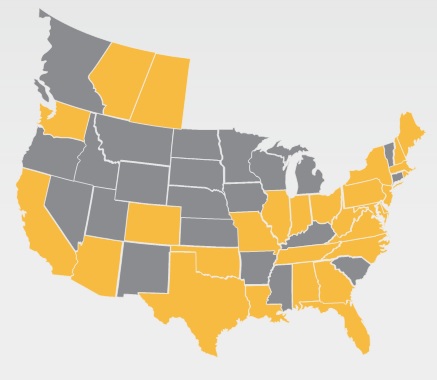
ATS is the leading provider of traffic safety, mobility and compliance solutions for state & local governments, commercial fleets and rental car companies. With nearly 300 customers and more than 3,500 Road Safety Camera Systems installed and operating throughout the United States  and Canada (yellow in the below map), ATS is the market leader for Red-Light, Speed and School Bus Stop-Arm Safety Cameras.

CU Blog - Suit Over Red Light Traffic Cameras Could Impact Millions - Photo 3

ATS is also the industry leader in toll and violation management for fleets and rental companies.  PlatePass® coverage blankets all major toll regions in North America, complying with in-vehicle transponder and license-plate (video) toll recognition systems throughout the United States and Canada.

Share this post:
, , , ,
[Top]

Disney World – Role Model for Self-Governing Entities

Go Lean Commentary

The Caribbean enjoys 80 million annual visitors, among its 30 member-states and vast cruise line industry. Impressive!

But one destination in Florida, Walt Disney World, hosted 47.5 million visitors (2009) … alone.[b]

There are lessons for the Caribbean to learn from this experience.

The book Go Lean…Caribbean serves as a roadmap for the introduction and implementation of the Caribbean Union Trade Federation (CU) to glean insight from the Walt Disney World history and experience. This is a huge subject in itself and is an appropriate topic for academic research, dissertations and business improvement books. But for this blog/commentary, there is a narrow focus, the special consideration of the “Self Governing Entity” that emerged from the Reedy Creek Improvement District that facilitated the construction and administration of the landmass that became the Walt Disney World Resort. The following encyclopedic details apply to this study:

CU Blog - Disney World - Role Model for a Self Governing Entity - Photo 1The Walt Disney World Resort, informally known as Walt Disney World or simply Disney World, is an entertainment complex in Bay Lake, Florida (mailing address is Lake Buena Vista, Florida), near Orlando, Florida and is the flagship of Disney’s worldwide theme park empire. The resort opened on October 7, 1971 and, according to Forbes Magazine, is the most visited vacation resort in the world, with an attendance of 52.5 million annually. It is owned and operated by Walt Disney Parks and Resorts, a division of The Walt Disney Company. The property covers 27,258 acres (11,031 ha; 43 sq mi), in which it houses 27 themed resort hotels, four theme parks, two water parks, four golf courses, one camping resort, one residential area and additional recreational and entertainment venues. MagicKingdom was the first and original theme park to open in the complex followed by EPCOT, Disney’s Hollywood Studios, and Disney’s Animal Kingdom which opened later throughout the 1980s and 1990s.

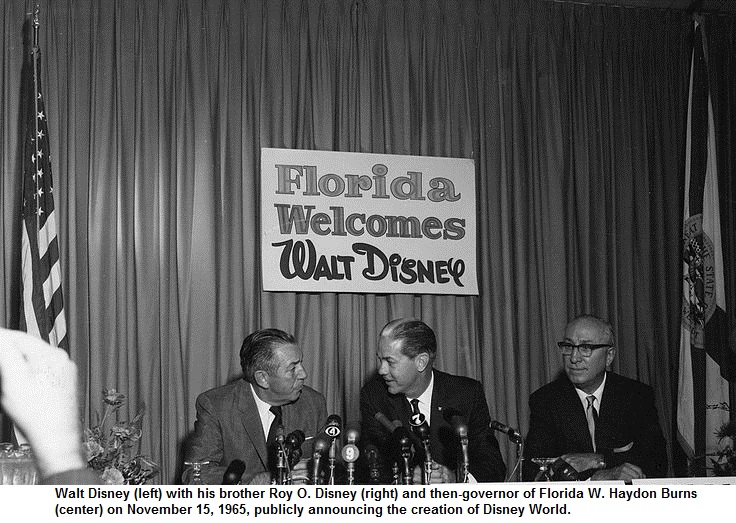
CU Blog - Disney World - Role Model for a Self Governing Entity - Photo 2Designed to supplement Disneyland in Anaheim, California, which had opened in 1955, the complex was developed by Walt Disney in the 1960s, though he died in 1966 before construction on “The Florida Project” began. After extensive lobbying, the Government of Florida created the Reedy Creek Improvement District, a special government district that essentially gave The Walt Disney Company the standard powers and autonomy of an incorporated city. Original plans called for the inclusion of an “Experimental Prototype Community of Tomorrow” (EPCOT), a planned city that would serve as a test bed for new innovations for city living.

The Reedy Creek Improvement District (RCID) is the immediate governing jurisdiction for the land of the Walt Disney World Resort. As of the late 1990s, it comprised an area of 38.6 sq mi (100 km2) within the outer limits of Orange and Osceola counties in Florida. The RCID includes the cities of BayLake and LakeBuena Vista, and unincorporated RCID land.CU Blog - Disney World - Role Model for a Self Governing Entity - Photo 3

After the success of Disneyland in California, Walt Disney began planning a second park on the East Coast. He disliked the businesses that had sprung up around Disneyland, and therefore wanted control of a much larger area of land for the new project. Walt Disney knew that his plans for the land would be easier to carry out with more independence. Among his ideas for his Florida project was his proposed EPCOT which was to be a futuristic planned city. He envisioned a real working city with both commercial and residential areas, but one that also continued to showcase and test new ideas and concepts for urban living.

Therefore, the Disney Company petitioned the Florida State Legislature for the creation of the Reedy Creek Improvement District, which would have almost total autonomy within its borders.
Wikipedia Online Encyclopedia  (Retrieved November 2, 2014) –
http://en.wikipedia.org/wiki/Walt_Disney_World

50 Year Historic Timeline:

1965

Walt Disney announces Florida Project

1966

Walt Disney dies of lung cancer at age 65

1967

Construction of Walt Disney World Resort begins

1971

MagicKingdom
Palm and Magnolia Golf Courses
Disney’s Contemporary Resort
Disney’s Polynesian Resort
Disney’s Fort    Wilderness Resort &   Campground
Roy O. Disney dies at age 78

1972

Disney’s Village Resort

1973

The Golf Resort

1974

DiscoveryIsland

1975

Walt Disney Village Marketplace

1976

Disney’s River Country

1980

Walt Disney World  ConferenceCenter

1982

Epcot

1986

The Disney Inn

1988

Disney’s Grand Floridian Resort & Spa
Disney’s Caribbean  Beach Resort

1989

Disney-MGM Studios
Disney’s Typhoon Lagoon
PleasureIsland

1990

Disney’s Yacht and Beach Club Resort
Walt Disney World Swan
Walt Disney World Dolphin

1991

Disney’s Port Orleans Resort French Quarter
Disney Vacation Club
Disney’s Old Key West Resort

1992

Disney’s Port Orleans Resort Riverside (Dixie Landings)
Bonnet Creek Golf Club

1994

Disney’s All-Star Sports Resort
Disney’s Wilderness Lodge
Shades of Green

1995

Disney’s All-Star Music Resort
Disney’s Blizzard Beach
Disney’s Fairy Tale Wedding Pavilion
Walt Disney World Speedway

1996

Disney Institute
Disney’s BoardWalk Inn and BoardWalk Villas

1997

Disney’s Coronado Springs Resort
Disney’s Wide World of Sports Complex
Downtown Disney West Side

1998

Disney’s Animal Kingdom
DisneyQuest

1999

Disney’s All-Star Movies Resort

2000

The Villas at Disney’s Wilderness Lodge

2001

Disney’s Animal Kingdom Lodge

2002

Disney’s Beach Club Villas

2003

Disney’s Pop Century Resort

2004

Disney’s Saratoga Springs Resort & Spa

2007

Disney’s Animal Kingdom Villas

2008

Disney-MGM Studios is renamed Disney’s Hollywood Studios

2009

Bay Lake Tower at Disney’s Contemporary Resort
Treehouse Villas

2011

Golden Oak at Walt Disney World Resort

2012

Disney’s Art of Animation Resort
Phase 1 of New Fantasyland

2013

The Villas at Disney’s Grand Floridian Resort & Spa

2014

Phase 2 of New Fantasyland

Wikipedia Online Encyclopedia (Retrieved November 2, 2014) –
http://en.wikipedia.org/wiki/Walt_Disney_World

The economic impact of Walt Disney World as a Self-Governing Entity (SGE) is undeniable. The resort is responsible for $18.2 billion in annual economic activity in Florida, said a study released by the theme park giant. The study found that Disney paid out nearly $1.8 billion in compensation to more than 59,000 workers in 2009.[a]

The Go Lean roadmap seek to emulate some of the strategies, tactics and implementation successes of the Walt Disney World as a SGE. This roadmap seeks to elevate the 30 Caribbean member-states with economic engines (direct and indirect spin-off activities), by assuming jurisdiction for Self-Governing Entities in the region and the Exclusive Economic Zone (EEZ) of the 1,063,000 square miles of the Caribbean Sea. This approach allows for initiation, cooperation and coordination of SGE’s (and the EEZ) to effectuate change in the region, allowing these 3 prime directives:

  • Optimization of the economic engines in order to grow the regional economy to $800 Billion GDP and create 2.2 million new jobs.
  • Establishment of a security apparatus to protect the resultant economic engines, specifically in SGE’s and the EEZ.
  • Improve Caribbean governance to support these engines.

Imagine many Disney World-style industrial developments, (not necessarily as touristic resorts), throughout the Caribbean region.

Wow! This is a game-changer.

The individual Walter Elias Disney (1901 – 1966) proved to be a game-changer. The Go Lean book posits that one person can make a difference and positively impact society; so the book advocates for a community ethos of investment in the “gifts” that individuals “bring to the table”. The book identifies the quality of geniuses and relates worthwhile returns from their investments. This mode of study allows us to consider this example of contributions from Walt Disney and his corporate/artistic creations:

 Video: The History of Walt Disney World – http://youtu.be/_6Kesbfg-Ok

The book Go Lean … Caribbean asserts that SGE’s and the EEZ can be strategic, tactical and operationally efficient for elevating Caribbean society. These points are pronounced early in the book with this Declaration of Interdependence (Pages 11 and 14), with these statements:

v.        Whereas the natural formation of our landmass and coastlines entail a large portion of waterscapes, the reality of management of our interior calls for extended oversight of the waterways between the islands. The internationally accepted 12-mile limits for national borders must be extended by International Tribunals to encompass the areas in between islands. The individual states must maintain their 12-mile borders while the sovereignty of this expanded area, the Exclusive Economic Zone, must be vested in the accedence of this Federation.

xxvi.      Whereas the Caribbean region must have new jobs to empower the engines of the economy and create the income sources for prosperity, and encourage the next generation to forge their dreams right at home, the Federation must therefore foster the development of new industries… In addition, the Federation must invigorate the enterprises related to existing industries like tourism … impacting the region with more jobs.

The subject of SGE’s has been directly addressed and further elaborated upon in these previous blog/commentaries:

https://goleancaribbean.com/blog/?p=2338 Using SGE’s to Welcome the Dreaded ‘Plutocracy’
https://goleancaribbean.com/blog/?p=2003 Where the Jobs Are – Ship-breaking under SGE Structure
https://goleancaribbean.com/blog/?p=1214 Fairgrounds as SGE and Landlords for Sports Leagues
https://goleancaribbean.com/blog/?p=286 Puerto Rico’s Comprehensive Cancer Center Project Breaks Ground – Model of Medical SGE

The Go Lean book itself details the economic principles and community ethos to adopt, plus the executions of strategies, tactics, implementations and advocacies to forge Self-Governing Entities and industrial growth in the Caribbean:

Economic Principles – People Choose because Resources are Limited Page 21
Economic Principles – All Choices Involve Costs Page 21
Economic Principles – People Respond to Incentives Page 21
Economic Principles – Economic Systems Influence Individual Choices Page 21
Economic Principles – Voluntary Trade Creates Wealth Page 21
Economic Principles – Consequences of Choices Lie in the Future Page 21
Community Ethos – Job Multiplier Page 22
Community Ethos – “Crap” Happens Page 23
Community Ethos – Lean Operations Page 24
Community Ethos – Return on Investments (ROI) Page 24
Community Ethos – Cooperatives Page 25
Community Ethos – Ways to Impact the Future Page 26
Community Ethos – Ways to Help Entrepreneurship Page 28
Community Ethos – Ways to Impact Research & Development Page 30
Community Ethos – Ways to Improve Negotiations Page 32
Community Ethos – Impact the Greater Good Page 37
Strategy – Vision – Confederating 30 Member-states in a Union Page 45
Strategy – Mission – Build   and Foster Local Economic Engines Page 45
Tactical – Fostering a Technocracy Page 64
Tactical – Growing Economy – New High Multiplier Industries Page 68
Separation of Powers – Department of State – Self-Governing Entities Page 80
Separation of Powers – Interior Department – Exclusive Economic Zone Page 82
Implementation – Ways to Pay for Change – SGE Licenses Page 101
Implementation – Steps to Implement Self-Governing Entities Page 103
Anecdote – French Guiana Space Agency – Example of a SGE Page 103
Implementation   – Benefits from the Exclusive Economic Zone Page 104
Planning – 10 Big Ideas – Self-Governing Entities Page 127
Planning – Ways to Improve Interstate Commerce Page 129
Planning – Lessons from New York City Page 137
Planning – Lessons from Omaha Page 138
Advocacy – Ways to Grow the Economy Page 151
Advocacy – Ways to Create Jobs Page 152
Advocacy – Ways to Better Manage Natural Resources – EEZ and SGE’s Page 183
Anecdote – Caribbean Industrialist & Entrepreneur Role Model Page 189
Advocacy – Ways to Promote Fairgrounds Page 192
Advocacy – Ways to Develop Ship-Building as SGE’s Page 209
Advocacy – Ways to Impact the Prison Industrial Complex as SGE’s Page 211
Advocacy – Ways to Impact the One Percent – Job Creators Inducements Page 224
Advocacy – Ways to Impact Urban Living – Self-Governing Entities Page 234
Advocacy – Ways to Impact Rural Living – Self-Governing Entities Page 235
Advocacy – Ways to Promote World-Heritage-Sites as SGE’s Page 248
Appendix – Airport Cities – Models for Self Governing Entities Page 287

There is a role for the contributions of one impactful person, or one impactful company, in this vision for the elevation and empowerment of the Caribbean homeland. The Go Lean … Caribbean roadmap invites these contributions. However, the roadmap also mitigates the threats of corporate abuse of a plutocracy. With the right applications from people, tools and techniques many SGE initiatives can have a positive impact in changing society, with minimal risks and threats of negative consequences. Walt Disney and the Reedy Creek Improvement District have demonstrated how successful SGE’s can be.

Thank you Walt Disney. Thanks for showing us the way, for providing a role model that we can emulate for our own success.

Change has come to the Caribbean. Everyone is hereby urged to lean-in to this roadmap to make the Caribbean a better place to live, work and play. 🙂

Download the book Go Lean … Caribbean – now!

——————

Appendix – Source References:

a. Retrieved November 3, 2014 from: http://www.bizjournals.com/orlando/news/2011/04/14/disneys-annual-economic-impact-182b.html

b. 2009 Attendance Walt Disney World’s 1. Magic Kingdom: 17.2 million 2. Epcot: 11.0 million 3. Disney’s Hollywood Studios: 9.7 million 4. Disney’s Animal Kingdom: 9.6 million. Retrieved November 3, 2014 from: http://www.themeparkinsider.com/flume/201004/1895/


Share this post:
, , , ,
[Top]

DC Streetcars – Model For Caribbean Re-development

Go Lean Commentary

CU Blog - DC Streetcars - Model For Caribbean Re-development - Photo 1

The US capital city of Washington D.C. is now embarking on the deployment of a streetcar system … again. Between 1862 and 1962, streetcars in Washington, D.C., were a common mode of transportation, but the system was dismantled in the early 1960s as part of a switch to bus service.

One step forward, two steps backwards!

The District now embarks on a re-deployment, pivotal to a re-development of blighted urban areas. See story here:

August 4, 2014 – The Washington D.C. Department of Transportation will begin training streetcar operators in traffic for the first time this week along H Street and Benning Road in Northeast Washington. [The full system implementation is planned for late 2014].

The DC Streetcar is a surface light rail and streetcar network under construction in Washington, D.C. The streetcars will be the first to run in the District of   Columbia since the dismantling of the previous streetcar system in 1962. The District   of Columbia began laying track in 2009 for two lines whose locations in Anacostia and Benning were chosen to revitalize blighted commercial corridors. Initially, the system will be funded and owned by the District’s Department of Transportation (DDOT).

The D.C. government owns three Czech-built Inekon streetcars (destined for the Anacostia Line) that will serve the system; as of December 2009, they were in storage at Metro’s Greenbelt Rail Yard; [but now fully engaged in test runs]. Each car is eight ft (2.438 meters) wide and 66 feet (20.12 m) long, and each train consists of three car connected sections.

The City’s hope is that now with all the new bars and restaurants opening on H Street, this streetcar line will encourage people (residents, business commuters and tourists) to visit here. Mayor Vincent Gray states “what we’re trying to do is encourage people as a part of our sustainability plan to find other ways of moving around. Eventually, this will be a 37-mile system that will get people to every ward in the District of Columbia.”
WJLA Local ABC 7 TV News
http://www.wjla.com/articles/2014/08/d-c-streetcar-operator-training-begins-this-week-105726.html
Wikipedia
Online Encyclopedia  (Retrieved November 3, 2014) –
http://en.wikipedia.org/wiki/DC_Streetcar

WJLA TV News Video: http://youtu.be/EY0d8E3304M

Why is there a need to re-start the streetcar system? Why did the streetcars end? Conspiracy theories abound. The following VIDEO portrays the story, and admittedly, there is a ring of truth:

In this excerpt from Stephen Talbot’s “Heartbeat of America” (1993), Christopher Snell explains how GM conspired with oil & tire companies to kill streetcars in cities all across America in order to create an inferior bus system that would guarantee the sale of tires, gas, and bus parts for an eternity.
VIDEO – Who Killed The Electric Street Car? – http://youtu.be/wFhsrbtQObI

The fact that Washington DC, and other cities (see VIDEO below of Portland’s effort), are re-deploying streetcars is proof-positive of the economic and logistical benefits of streetcars. Instead of gasoline or diesel vehicles, streetcars use energy-efficient electrified lines to power the vehicle up-and-down city streets. This is a win-win for all stakeholders!

Are streetcars being considered for Caribbean deployment, especially as these member-states report very high fuel costs and feature old-narrow streets?

Absolutely, yes! The book Go Lean … Caribbean asserts transportation solutions that include streetcars, light-rail, natural-gas powered vehicles and toll roads to empower the region through mass transit (Page 205).

Why not autonomous (driver-less) streetcars? This vision is one of intensive remote monitoring, plus unified command-and-control to mitigate security/safety concerns. (Think Disney World’s Mono-Rail). This is the future that is being planned, developed and tested now. The experience of the last 100 years is that those doing the planning, developing and testing for futuristic technologies are the ones that profit most from the economic gains.

The book, Go Lean … Caribbean, therefore extols the principle that R&D (research and development) activities are necessary to profit from advantages in technology. We want to do R&D here in the Caribbean. This is a mandate for the Caribbean Union Trade Federation (CU). This book serves as a roadmap for the introduction and implementation of the CU. This technocracy will assume oversight to optimize the region in the areas of:

(1) economics
(2) security
(3) lean government

This vision of an autonomous streetcar aligns with the scope of Self-Governing Entities (SGEs) throughout the Caribbean region. On these bordered grounds (technology bases, industrial parks, research campuses, theater districts, medical centers, etc), only CU federal regulation and jurisdiction apply. This allows for the nimble environment to develop, test and deploy autonomous vehicles. This is the benefit of lean governmental coordination, so that a launch of these initiatives becomes possible and probable.

Though not written with this particular initiative in mind, the Go Lean roadmap anticipates such opportunities, as pronounced in the Declaration of Interdependence, (Pages 12 & 14):

xvi.    Whereas security of our homeland is inextricably linked to prosperity of the homeland, the economic and security interest of the region needs to be aligned under the same governance. Since economic crimes … can imperil the functioning of the wheels of commerce for all the citizenry, the accedence of this Federation must equip the security apparatus with the tools and techniques for predictive and proactive interdictions.

xxvii. Whereas the region has endured a spectator status during the Industrial Revolution, we cannot stand on the sidelines of this new economy, the Information Revolution. Rather, the Federation must embrace all the tenets of Internet Communications Technology (ICT) to serve as an equalizing element in competition with the rest of the world. The Federation must bridge the digital divide and promote the community ethos that research/development is valuable and must be promoted and incentivized for adoption.

xxx.   Whereas the effects of globalization can be felt in every aspect of Caribbean life, from the acquisition of food and clothing, to the ubiquity of ICT, the region cannot only consume, it is imperative that our lands also produce and add to the international community, even if doing so requires some sacrifice and subsidy.

The CU mission is to implement the complete eco-system to deliver on market opportunities of streetcars, autonomous or driver- operated as sampled in the foregoing article. There are many strategies, tactics, implementations and advocacies that will facilitate this readiness; a sample is detailed here:

Economic Principles – Economic Systems Influence Individual Choices Page 21
Economic Principles – People Choose because Resources are Limited Page 21
Economic Principles – All Choices Involve Costs Page 21
Economic Principles – People Respond to Incentives Page 21
Economic Principles – Economic Systems Influence Individual Choices Page 21
Community Ethos – Money Multiplier Page 22
Community Ethos – Job Multiplier Page 22
Community Ethos – Lean Operations Page 24
Community Ethos – Return on Investments Page 24
Community Ethos – Ways to Impact the Future Page 26
Community Ethos – Ways to Help Entrepreneurship Page 28
Community Ethos – Ways to Promote Intellectual Property Page 29
Community Ethos – Ways to Impact Research and Development Page 30
Community Ethos – Ways to Ways to Improve Negotiations Page 32
Tactical – Separation of Powers – Emergency Management Page 76
Tactical – Separation of Powers – Department of State – SGE’s Page 80
Implementation – Security Initiatives at Start-up – Command-and-Control Page 103
Implementation – Start-up Benefits from the EEZ Page 104
Implementation – Steps to Implement Self-Governing Entities Page 105
Implementation – Ways to Improve Energy Usage – Electrified Buses/Trains Page 113
Implementation – Ways to Benefit from Globalization Page 119
Advocacy – Ways to Improve Trade Page 128
Advocacy – Ways to Create Jobs Page 152
Advocacy – Ways to Improve Governance Page 168
Advocacy – Ways to Foster Cooperatives Page 176
Advocacy – Ways to Improve Homeland Security Page 180
Advocacy – Ways to Improve Intelligence Gathering & Analysis Page 182
Advocacy – Ways to Better Manage Natural Resources Page 183
Advocacy – Ways to Foster Technology Page 197
Advocacy – Ways to Improve Transportation Page 205
Advocacy – Ways to Develop the Auto Industry Page 206
Advocacy – Ways to Impact Urban Living – Transit Options Page 234

The world is preparing for the change for more efficient mass transit options and also to deploy more autonomous systems to do the heavy-lifting of industrial engagements. A new ethos to prepare for this change has now come to the Caribbean.

This blog/commentary touches on many related issues and subjects that affect planning for Caribbean empowerment in this transportation industry-space. Many of these issues were also elaborated upon in these previous blog/commentaries:

https://goleancaribbean.com/blog/?p=2750 Walt Disney World’s example of an SGE – Their Florida Resort features autonomous “monorails”
https://goleancaribbean.com/blog/?p=2338 Mitigating the Dreaded ‘Plutocracy’, as GM practiced in the US in the past to quash the thriving Streetcar enterprises throughout the country
https://goleancaribbean.com/blog/?p=2259 The Criminalization/Abuses of American Business – Applying the many Lessons Learned
https://goleancaribbean.com/blog/?p=2126 Where the Jobs Are – Computers Reshaping the Global Job Market
https://goleancaribbean.com/blog/?p=1487 Here come the Autonomous Aircrafts/Drones … and the Concerns
https://goleancaribbean.com/blog/?p=1277 Google Self-Driving cars to mitigate highway safety concerns
https://goleancaribbean.com/blog/?p=1214 Fairgrounds as SGEs and the CU as Landlord for Sports Leagues – Great need to move masses (thousands) to stadia/arenas in short time
https://goleancaribbean.com/blog/?p=915 Go Green Caribbean – Streetcars are electric, less carbon footprint
https://goleancaribbean.com/blog/?p=829 Trains and Trucks play well together
https://goleancaribbean.com/blog/?p=673 Ghost ships – Autonomous cargo vessels without a crew

Re-deploy, re-develop, and re-boot…

All of these verbs are germane for this Go Lean roadmap. The Caribbean needs help…with transportation solutions, jobs, growing the economy, and motivating our youth to impact their future here at home… in the Caribbean.

Therefore the people of the region are urged to “lean-in” for the changes/empowerments as described in the book Go Lean … Caribbean. The benefits of this roadmap are too alluring to miss out: emergence of an $800 Billion single market economy, 2.2 million new jobs and relevance on the world scene for R&D. 🙂

Let’s all Go Lean!

Download the e-Book of Go Lean … Caribbean – free … now!

———–

VIDEO – Portland’s Streetcar revival – Federal aid has helped spur the construction of modern U.S. streetcars for the first time in 58 years. http://youtu.be/BIcVlCB0er0


Share this post:
, ,
[Top]

Caribbean Role Model – Oscar De La Renta – RIP

Go Lean Commentary

The world mourns the passing of Oscar De La Renta (1932 – 2014; age 82), the Dominican American fashion designer that became internationally known in the 1960s as one of the couturiers who dressed First Lady Jacqueline Kennedy. He was an award-winning designer who worked for Paris fashion houses Lanvin and Balmain; but is better known for his eponymous fashion house as he continued to dress leading figures, from film stars and world leaders to royalty [19], right up to weeks before his death – he dressed Amal Alamuddin for her September 27th wedding to George Clooney.

De La Renta was born in the Dominican Republic’s capital city of Santo Domingo; he remained committed and impassioned to assist his homeland, despite his permanence in the New York metropolitan area. He was a stalwart of the NYC fashion scene.

The world’s media duly recognized his passing yesterday (Monday October 20) and the contribution of his life. The following productions feature a news story and a newscast of his passing and obituary of his legacy:

1. Title: Oscar De la Renta, legendary designer, dead at 82
CU Blog - Caribbean Role Model - Oscar De La Renta - RIP - Photo 1NEW YORK (AP) — At his Fashion Week runway show in September, Oscar De La Renta sat in his usual spot: in a chair right inside the wings, where he could carefully inspect each model just as she was about to emerge in one of his sumptuous, impeccably constructed designs.

At the end of the show, the legendary designer himself emerged, supported by two of his models. He didn’t walk on his own, and didn’t go far, but he was beaming from ear to ear. He gave each model a peck on the cheek, and then returned to the wings, where models and staff could be heard cheering him enthusiastically.

De La Renta, who dressed first ladies, socialites and Hollywood stars for more than four decades, died Monday evening at his Connecticut home at age 82, only six weeks after that runway show. But not before another high-profile honor was bestowed on him: The most famous bride in the world, Amal Alamuddin, wore a custom, off-the-shoulder De La Renta gown to wed George Clooney in Venice. Photos of the smiling designer perched on a table at the dress fitting appeared in Vogue.

De La Renta died surrounded by family, friends and “more than a few dogs,” according to a handwritten statement signed by his stepdaughter Eliza Reed Bolen and her husband, Alex Bolen. The statement did not specify a cause of death, but De La Renta had spoken in the past of having cancer.

“He died exactly as he lived: with tremendous grace, great dignity and very much on his own terms,” the statement said. “While our hearts are broken by the idea of life without Oscar, he is still very much with us. … All that we have done, and all that we will do, is informed by his values and his spirit.”

The late ’60s and early ’70s were a defining moment in U.S. fashion as New York-based designers carved out a look of their own that was finally taken seriously by Europeans. De La Renta and his peers, including the late Bill Blass, Halston and Geoffrey Beene, defined American style then and now.

De La Renta’s specialty was eveningwear, though he also was known for chic daytime suits favored by the women who would gather at the Four Seasons or Le Cirque at lunchtime. His signature looks were voluminous skirts, exquisite embroideries and rich colors.

Earlier this month, first lady Michelle Obama notably wore a De La Renta dress for the first time. De La Renta had criticized her several years earlier for not wearing an American label to a state dinner in 2011.

Among Obama’s predecessors favoring De La Renta were Laura Bush, who wore an icy blue gown by De La Renta to the 2005 inaugural ball, and Hillary Rodham Clinton, who wore a gold De La Renta in 1997.

“We will miss Oscar’s generous and warm personality, his charm, and his wonderful talents.” Bush said in a statement. ” We will always remember him as the man who made women look and feel beautiful.”

A statement from former President Bill Clinton, Hillary Clinton, and Chelsea Clinton and Marc Mezvinsky, said: “Oscar’s remarkable eye was matched only by his generous heart. His legacy of philanthropy extended from children in his home country who now have access to education and health care, to some of New   York’s finest artists whose creativity has been sustained through his support.”

De La Renta made just as big a name for himself on the Hollywood red carpet — with actresses of all ages. Penelope Cruz and Sandra Bullock were among the celebrities to don his feminine and opulent gowns. His clothes even were woven into episodes of “Sex and the City,” with its style icon, Carrie Bradshaw, comparing his designs to poetry.

One actress who wore a De La Renta gown to this year’s Oscars was Jennifer Garner.

“Mr. De La Renta loved women,” she said on Monday evening, wiping away tears. “And you saw it in every design that he did. He honored women’s features, he honored our bodies. He wasn’t afraid to pull back and let the woman be the star of the look.”

De La Renta was also deeply admired by his fellow designers. “He set the bar,” designer Dennis Basso said on Instagram Monday night. “But most of all he was a refined elegant gentleman.”

The designer’s path to New York’s Seventh Avenue took an unlikely route: He left his native Dominican Republic at 18 to study painting in Spain, but soon became sidetracked by fashion. The wife of the U.S. ambassador saw some of his sketches and asked him to make a dress for her daughter — a dress that landed on the cover of Life magazine.

That led to an apprenticeship with Cristobal Balenciaga, and then De La Renta moved to France to work for Lanvin. By 1963, he was working for Elizabeth Arden couture in New York, and in 1965 he launched his own label.

He told The Associated Press in 2004 that his Hispanic roots had worked their way into his designs.

“I like light, color, luminosity. I like things full of color and vibrant,” he said.

While De La Renta made Manhattan his primary home, he often visited the Dominican Republic and kept a home there. Vogue Editor-in-Chief Anna Wintour was a frequent visitor.

CU Blog - Caribbean Role Model - Oscar De La Renta - RIP - Photo 2“His designs reflected his extraordinary personality: optimistic, fun, sunny, romantic,” Wintour wrote in a remembrance on Tuesday. “He always said accept your friends for who they are, not for who you want them to be. Oscar was everything you could want a friend to be. ”

He also had a country home in Kent, Connecticut, where he died Monday. Gardening and dancing were among his favorite diversions from work. “I’m a very restless person. I’m always doing something. The creative process never stops,” he said.

As a designer, De La Renta catered to his socialite friends and neighbors — he and his wife, Annette, were fixtures on the black-tie charity circuit — but he did make occasional efforts to reach the masses, including launching a mid-priced line in 2004 and developing a dozen or so perfumes.

He was an avid patron of the arts, serving as a board member of The Metropolitan Opera and Carnegie Hall, among others, and he devoted considerable time to children’s charities, including New Yorkers for Children. He also helped fund schools and day-care centers in La Romana and Punta Cana in his native country.

The Dominican Republic honored de la Renta with the Order of Merit of Juan Pablo Duarte and the order of Cristobol Colon. In the United States, he received the Coty American Fashion Critics Award twice, was named womens-wear designer of the year by the Council of Fashion Designers of America in 2000 and also received a lifetime achievement award from the CFDA — an organization for which he served as president in the 1980s.

Besides his own label, De La Renta spearheaded the Pierre Balmain collection from 1993-2002, marking the first time an American designed for a French couture house, and he was awarded the French Legion of Honor with the rank of commander. He also received the Gold Medal Award from the King and Queen of Spain.

De La Renta gave up the title of chief executive of his company in 2004, handing over business duties to the Bolens, but he remained active and continued to show his collections during New York Fashion Week.

De La Renta also is survived by his son, Moises, a designer at the company.

De La Renta’s first wife, French Vogue editor Francoise de Langlade, died in 1983.

Associated Press Entertainment Writer Ryan Pearson in Los Angeles also contributed to this report.
AP News Source (Retrieved October 21, 2014) –
http://news.yahoo.com/oscar-la-renta-legendary-designer-dead-82-063208260.html

——-

2. Video: NBC News Video – http://www.nbcnews.com/video/nightly-news/56275679/#56275679:

Oscar De La Renta impacted the fashion world with his contributions. He was awarded numerous honors and awards from around the world. This man of Caribbean heritage impacted the whole world.

In 1977, De La Renta launched his fragrance, OSCAR,[20] followed by an accessories line in 2001[21] and a home-wares line in 2002.[22] The new business venture included 100 home furnishings for Century Furniture featuring dining tables, upholstered chairs, and couches. In 2004, he added a less expensive line of clothing called O Oscar. De la Renta said he wanted to attract new customers whom he could not reach before.[23]

In 2006, De La Renta designed Tortuga Bay, a boutique hotel at Punta Cana Resort and Club. Tortuga Bay is a Leading Small Hotel of the World.[24] and a member of Virtuoso.[25]

The publishers of the book Go Lean…Caribbean recognize the life contributions of Oscar De La Renta as an artist, entrepreneur, industrialist and advocate for many causes that align with our quest for empowerment and elevation of Caribbean life and culture. The book serves as a roadmap for the introduction and implementation of the Caribbean Union Trade Federation (CU). The CU seeks to also empower the people of the Caribbean to lead more impactful lives in which they are better able to meet their needs and plan for a productive future. The Go Lean roadmap seeks to put Caribbean people in a place of better command-and-control of their circumstances, to develop the community ethos of assisting each other to advance in our own lives, in our individual communities and in the Caribbean as a whole.

Like Oscar De La Renta, the prime directive of the Go Lean book is also to elevate society, but instead of impacting America, the roadmap focus is the Caribbean first. In fact, the declarative statements are as follows:

  • Optimization of the economic engines in order to grow the regional economy to $800 Billion & create 2.2 million new jobs.
  • Establishment of a security apparatus to protect the resultant economic engines.
  • Improve Caribbean governance to support these engines.

Oscar De La Renta is hereby recognized as a role model that the rest of the Caribbean can emulate. He has provided a successful track record of forging change, overcoming incredible odds, managing crises to successful conclusions and paying forward to benefit the next generation. The Go Lean book posits that while economics, security and governance are all important for the sustenance of Caribbean life, pursuits like fashion, poetry, art, and beauty are the reasons we want to live. Oscar De La Renta stood as a vanguard for many of these pursuits.

The book posits that one person, despite his/her field of endeavor, can make a difference in the Caribbean, and its impact on the world; that there are many opportunities where one champion, one advocate, can elevate society. In this light, the book features 144 different advocacies, so there is inspiration for the “next” Oscar De La Renta to emerge, establish and excel right here at home in the Caribbean.

The roadmap specifically encourages the region, to lean-in and foster this “next” generation of Oscar De La Renta’s with these specific community ethos, strategies, tactics, implementations and advocacies:

Community Ethos – Minority Equalization Page 24
Community Ethos – Ways to Foster Genius Page 27
Community Ethos – Ways to Promote Intellectual Property Page 31
Community Ethos – Ways to Promote Happiness – Cultural Promotion Page 36
Community Ethos – Ways to Impact the Greater Good Page 37
Anatomy of Advocacies Page 122
Planning – Ways to Improve Trade Page 128
Planning – Ways to Better Manage Caribbean Image Page 129
Planning – Lessons from New York City – Fashion Industry Impact Page 137
Advocacy – Ways to Better Provide Clothing Page 163
Advocacy – Ways to Impact Hollywood – Image Management Page 203
Advocacy – Ways to Impact Beauty Pageants – Fashion & Economic Output Page 204
Advocacy – Ways to Preserve Caribbean Heritage Page 218
Advocacy – Ways to Improve the Arts Page 230
Appendix – New York City Economy – Fashion Economic Impact/Jobs Page 277

Fashion and clothing are priorities in the Go Lean roadmap. While food, clothing, shelter and energy are vital essentials of life, finding efficient solutions for home-spun delivery of these needs is a basis for generating wealth. The change stemming from this roadmap constitute a commitment and facilitation to provide many of our basic needs ourselves. This vision creates a lot of opportunities for contributions from a lot of different people. This quest is pronounced early in the Declaration of Interdependence at the outset of the book, pronouncing this need for regional solutions (Pages 13 & 14) with these statements:

xxi. Whereas the preparation of our labor force can foster opportunities and dictate economic progress for current and future generations, the Federation must ensure that educational and job training opportunities are fully optimized for all residents of all member-states, with no partiality towards any gender or ethnic group. The Federation must recognize and facilitate excellence in many different fields of endeavor, including sciences, languages, arts, music and sports. This responsibility should be executed without incurring the risks of further human flight, as has been the past history.

xxx. Whereas the effects of globalization can be felt in every aspect of Caribbean life, from the acquisition of food and clothing, to the ubiquity of ICT, the region cannot only consume, it is imperative that our lands also produce and add to the international community, even if doing so requires some sacrifice and subsidy.

With the participation of many advocates on many different paths for progress, the Caribbean can truly become a better place to live, work and play.

Rest in Peace Oscar De La Renta. Thank you for making “us” look good.

Download the book Go Lean … Caribbean – now!

————

Referenced Sources:

19. Wikipedia Online Encyclopedia on Oscar De La Renta. Retrieved October 21, 2014 from: http://en.wikipedia.org/wiki/Oscar_de_la_Renta
20. “Óscar de la Renta 1977”. Retrieved 10 July 2012.
21. “Óscar de la Renta 2001”. Retrieved 10 July 2012.
22. “Óscar de la Renta 2002”. Retrieved 10 July 2012.
23. Biography.com Feature. Retrieved 26 Sep 2013.  from http://www.biography.com/people/oscar-de-la-renta-9270239
24. “Luxury Hotels of the World at The Leading Hotels of the World”. Lhw.com. 29 December 2010. Retrieved 13 August 2012.
25. “Specialists in the Art of Travel, Luxury Travel Advisors”. Virtuoso (Luxury Travel Advisory). Retrieved 13 August 2012.

Share this post:
, , , ,
[Top]

Caribbean Study: 58% Of Boys Agree to Female ‘Discipline’

Go Lean Commentary

The issue in the subsequent news article relates to the guidance we give our young people. The words we say and the things we do have an impact on their standards of right and wrong. The research in this article relates to the attitudes that lead to domestic violence, and why the rest of the community may standby and tolerate it.

This point is being brought into focus in a consideration of the book Go Lean … Caribbean. The book serves as a roadmap for the introduction and implementation of the technocratic Caribbean Union Trade Federation (CU), for the economic optimization in the region.

The focus of the book is “Economics“, not domestic violence! And yet this commentary relates that there is an alignment of objectives. The Go Lean roadmap posits that the economy of the Caribbean is inextricably linked to the security (public safety) of the Caribbean.

Among the objectives to accomplish the economic elevation is the mission to retain Caribbean citizens in their homelands and repatriate the far-flung Diaspora back to the region.

Many times people flee the region to mitigate abusive situations; even more troubling, as victims they may have encountered an attitude of complacency and indifference among public safety authorities. The following article posits that this attitude is deeply entrenched in society, even among the next (younger) generation.

Title: COB Study: 58% Of Boys Believe Men Should Discipline Their Female Partners
By: Rashad Rolle, Staff Reporter
The Tribune – Bahamas Daily Newspaper – October 21, 2014

Caribbean Study 1

FIFTY-eight per cent of high school boys and 37 per cent of high school girls participating in a recent academic survey believe men should discipline their female partners, according to a new College of the Bahamas study.

The study also found that 49 per cent of boys believe women should ask permission from their male partners if they wanted to go out while 17 per cent of girls supported this view.

Of the students surveyed, 46 per cent of boys believed wives must have sex when her husband wants to, compared to 16 per cent of girls. This, according to researchers, has possible implications on debates on marital rape.

According to the study, most of the teens from both sexes believed men should be the head of their households and that both husbands and wives should submit to one another and remain committed, reflecting the country’s religious values.

The research was conducted by members of the Bahamas Crisis Centre (BCC) and COB’s academic community. Its findings appear in the latest edition of the International Journal of Bahamian Studies. The study investigated teen perspectives on relationships between the sexes and the prevalence of violence within teen relationships.

It concluded that efforts must be made to ensure adolescents adjust their behaviour before becoming adults in order to push back against a culture of violence.

It also concluded that girls are more likely than boys to use aggressive behaviour in teen relationships, such as restricting access to friends of the opposite sex.

Based on the gathered data, the study concludes that “there is a clear need for children to be taught how to respect one another from an early age.”

One thousand students from grade 10 to 12 from eight schools, including one private school, participated in the study.

According to the study, “over 80 per cent of respondents had been on a date and so had a relationship of some sort with the opposite sex,” a figure noted as higher than the 61 per cent reported in a similar study of teens in the United   States.

The study is titled Attitudes of High School Students Regarding Intimate Relationships and Gender Norms in New Providence, The Bahamas.

“The responses show that on a number of issues regarding relationships, boys and girls have different attitudes and behaviours,” the researchers wrote. “It can also be seen that large numbers of teens can be expected to be victims of controlling behaviours. The use of threats and physical force may be learnt behaviours due to the presence of violence in homes in The Bahamas.”

“Overall, it is apparent that the breakdown in adult relationships, which is considered to play an important role in the violence observed in Bahamian society, may be the consequence of adolescents not adjusting their teen behaviours when they become adults. Therefore, modifying the attitudes of children with regard to interpersonal relationships may be important in reducing long-term violence in the country. Boys and girls had different attitudes on many aspects of relationships with current or future partners, but their endorsement of stereotypes of sex-related roles and their participation in certain behaviours could be a cause for concern. Underpinning these attitudes may be issues associated with what it means to be a woman or a man in The Bahamas, and related gender norms.” http://www.tribune242.com/news/2014/oct/21/cob-study-58-boys-believe-men-should-discipline-th/
———–
The actual Research Report: ‘Attitudes of High School Students Regarding Intimate Relationships and Gender Norms in New Providence, The Bahamas’ can be found here:
http://journals.sfu.ca/cob/index.php/files/article/view/225

This CU/Go Lean roadmap has 3 prime directives:

  • Optimization of the economic engines in order to grow the regional economy and create 2.2 million new jobs.
  • Establishment of a security apparatus to protect the resultant economic engines and their relevant stakeholders.
  • Improve Caribbean governance, with a separation-of-powers between member-state administrations and the CU federal government (Executive facilitations, Legislative oversight and Judicial prudence) to support these economic/security engines.

While the subject of the Caribbean adolescent culture of violence falls on the member-state side of the separation-of-power / governance divide, the CU will entail a jurisdiction of monitoring and metering (ratings, rankings, service levels, etc) local governance and their delivery of the Social Contract.

Change has now come to the Caribbean. As the foregoing article depicts the problem of domestic violence is tied to a community ethos. This ‘negative’ ethos must be uprooted and replaced with a new, progressive spirit, starting at the adolescent level, when attitudes are pliable and sensitive to strategic messaging; see VIDEO below.

Many related issues/points were elaborated in previous blogs, sampled here:

Students developing nail polish to detect date rape drugs
Book Review: ‘Chasing Youth Culture and Getting It Right’
Muslim officials condemn abductions of Nigerian girls
Caribbean/Latin countries still view women as ‘lesser
Jamaica to receive World Bank funds to help in crime fight

The above commentaries examined global developments and related their synchronicity with the principles in the Go Lean book. There are a number of touch points that relate to domestic violence and the community attitude to dissuade such behavior. Most importantly, the Go Lean book depicts solutions. These are presented as community ethos, strategies, tactics, implementations and advocates; a sample is detailed as follows:

Community Ethos – Privacy –vs- Public Protection Page 23
Community Ethos – Whistleblower Protection Page 23
Community Ethos – Witness Security Page 23
Community Ethos – Anti Bullying & Mitigations Page 23
Community Ethos – Light Up the Dark Places Page 23
Community Ethos – Ways to Manage Reconciliations Page 34
Community Ethos – Ways to Impact the Greater Good Page 37
Strategy – Rule of Law –vs- Vigilantism Page 49
Tactical – Separation of Powers – CariPol Page 77
Implementation – Reasons to Repatriate Page 118
Planning – Ways to Improve Failed-State Indices – Law Enforcement Oversight Page 134
Advocacy – Ways to Better Manage the Social Contract Page 170
Advocacy – Ways to Impact Justice – Police Internal Affairs Auditing Page 177
Advocacy – Ways to Remediate and Mitigate Crime – Youth Crime Awareness Page 178
Advocacy – Ways to Improve Gun Control – Suspend Gun Rights during Domestic Discord Page 179
Advocacy – Ways to Improve Intelligence Gathering – Electronic Surveillance of Suspects Page 182
Advocacy – Ways to Improve Communications – Public Messaging Page 186
Advocacy – Ways to Impact the Prison Industrial Complex – Reduce Recidivism Page 211
Advocacy – Ways to Impact Foundations – Crisis Centers and Support Groups Page 219
Advocacy – Ways to Protect Human Rights – Women & Youth Focus Page 220
Advocacy – Ways to Empower Women Page 226
Advocacy – Ways to Impact Youth Page 227
Advocacy – Ways to Impact Persons with Disabilities Page 228
Appendix – Failed-State Definitions – Index for Human Rights Uneven Protection Page 273

The book Go Lean…Caribbean was written by resources from an organized movement, by people (residents and Diaspora) with passion to change/elevate their Caribbean homeland. This is personal! One of those people devoted to this Go Lean goal, Camille Russell-Smith, is a co-author of the underlying research in the foregoing news article. This research is a product of her collaboration with the Bahamas Crisis Centre (Donna Nicolls) and her role at the College of the Bahamas as a Counselor, Instructor and Workshop Facilitator for incoming freshmen students entitled “Violence in Interpersonal Relationships”.

Good job Donna Nicolls, Camille Russell-Smith and your research team; thank you for your service. Congratulations on this timely research effort.

The goal is to make the Caribbean a better place to live work and play; with justice for all, regardless of gender. This is the right thing to do! But this is not easy. This takes heavy-lifting on the part of everyone: the educators, public safety officials, community leaders and parents. The message must be strong and clear:

No More!

No More‘ is the theme of a campaign in the US to minimize the public attitudes that tolerate domestic violence. This is a great role model for the Caribbean to emulate. See the VIDEO here of the Public Service Announcement (PSA)/TV Commercial:

Video Title -‘ No More‘ PSA Campaign – https://www.youtube.com/watch?v=j70ha1PUlqk:

Download the book Go Lean … Caribbean – now!

Share this post:
, , , , ,
[Top]

Role Model for Justice – The Pinkertons

Go Lean Commentary

How do we learn from other people? By their precepts and by their examples.

Sometimes the lessons are from good, sometimes from bad and yes, sometimes from ugly examples. This commentary on the legendary Private Security firm “The Pinkertons” demonstrates the need to ensure economic engines have a security apparatus. This commentary also provides a cautionary tale of how excessive force can lead to abuse.

No Justice – No Peace!

This discussion harmonizes with the book Go Lean…Caribbean which posits that “bad actors” will always emerge to exploit opportunities in times of economic prosperity, with bad or evil intent. The book relates a number of related episodes from world history, such as the Pirates of the Caribbean (Page 181) and the Old American West (Page 142).

If only life could be so simple and we all “just get along”. However there is the reality! When the primary economic driver is tourism, the strategy is to market an image of “pleasure and paradise”. Pirates and Old West Outlaws do not fit into that image. Mitigation efforts must be exerted to ensure that chaos does not reign supreme.

This is where we learn so much from The Pinkertons, of old (though the company continues today). The historic details are as follows:

 CU Blog - Role Model for Justice - The Pinkertons - Photo 1

“We Never Sleep” – Company Motto

Pinkerton, founded as the Pinkerton National Detective Agency, is a private security guard and detective agency established in the United States by Allan Pinkerton in 1850 and currently a subsidiary of Securitas AB.[1]

Pinkerton became famous when he claimed to have foiled a plot to assassinate president-elect Abraham Lincoln, who later hired Pinkerton agents for his personal security during the Civil War.[2] Pinkerton’s agents performed services ranging from security guarding to private military contracting work. Pinkerton was the largest private law enforcement organization in the world at the height of its power.[3] By the early 1890s, the Pinkerton National Detective Agency employed more agents than there were members of the standing army of the United States of America.

During the labor strikes of the late 19th and early 20th centuries, businessmen hired the Pinkerton Agency to infiltrate unions, supply guards, keep strikers and suspected unionists out of factories, as well as recruiting “goon squads” to intimidate workers. One such confrontation was the Homestead Strike of 1892, in which Pinkerton agents were called in to reinforce the strikebreaking measures of industrialist Henry Clay Frick, acting on behalf of Andrew Carnegie. The ensuing battle between Pinkerton agents and striking workers led to the deaths of seven Pinkerton agents and nine steelworkers.[4]

The Pinkertons were also used as guards in coal, iron, and lumber disputes in Illinois, Michigan, New York, Pennsylvania, and West Virginia as well as the Great Railroad Strike of 1877 and the Battle of Blair Mountain in 1921. The organization was pejoratively called the “Pinks” by its opponents.

CU Blog - Role Model for Justice - The Pinkertons - Photo 3

The company now operates as “Pinkerton Consulting & Investigations, Inc. d.b.a. Pinkerton Corporate Risk Management”, a division of the Swedish security company SecuritasAB. The former Government Services division, PGS, now operates as Securitas Critical Infrastructure Services, Inc.[5]

At one point, the good, bad and ugly track record of The Pinkertons heightened to the point that the US Federal Government passed a landmark legislation called the Anti-Pinkerton Act in 1893. The following details apply:

The Anti-Pinkerton Act was a law passed by the U.S. Congress in 1893 to limit the government’s ability to hire strikebreakers. It is contained within 5 U.S.C. 3108 and specifically restricts the government (and Federal Territories) from hiring employees of The Pinkerton Agency or similar organizations.

So much of American history and media productions reference The Pinkertons:

  • The Pinkertons have been mentioned in season 1 and featured in seasons 2 and 3 of the HBO series “Deadwood“, and also the 1980 movie “The Long Riders,” where Pinkerton agents are depicted investigating criminal activity of the James brothers.
  • In the fourth season episode “Havre de Grace” of “Boardwalk Empire“, the character Roy Phillips is revealed to be a detective working for the agency.
  • The protagonist of the video game BioShock Infinite, Booker DeWitt, is an ex-Pinkerton, known for his violent methods in controlling strikes.
  • The character Captain Homer Jackson in the BBC series Ripper Street is also revealed as an ex-Pinkerton agent in series one.
  • Two Pinkerton Agents were featured in the movie “Legend Of Zorro”.
  • The Pinkertons are featured in the “3:10 to Yuma” remake featuring Russel Crowe and Christian Bale.
  • In Ian Fleming’s James Bond 007 Novels Felix Leiter worked for Pinkertons.
  • Three Pinkerton Agents were featured in the first season episode “Husbands & Fathers”, of the BBC America show Copper (TV series).
  • In 1966 Irwin Allen series The Time Tunnel on episode 12 “The Death Trap”, Mr. Pinkerton, with the help of the two main characters, saved President Lincoln.
  • In the Sherlock Holmes novel The Valley of Fear, Birdy Edwards is a Pinkerton agent.
  • In Cable TV network Showtime’s Penny Dreadful Season 1-Episode 8 “Grand Guignol” Ethan Chandler is confronted by 2 Pinkerton agents in a bar as his past catches up with him.
  • The song “Book, Saddle, And Go” on the 2013 album Earth Rocker from musical group “Clutch” references ‘Pinkerton Man’ – “Pinkerton man, murdering bastard, I’m gonna get even, get even with you, Get even with you”.
  • The Pinkertons, a scripted one-hour syndicated show starring Angus MacFadyen as Allan Pinkerton, debuted in 2014.[22][23]
    Actor Angus MacFadyen is set for one of the lead roles in The Pinkertons, Canadian companies Rosetta Media and Buffalo Gal Pictures’ upcoming 22-episode action-adventure detective series that is set to premiere in first-run syndication in the U.S. this fall. It has been cleared in more than 85% of the country by Rohrs Media Group on station groups including Tribune, Weigel, Hearst, LIN, Meredith, Cox and the CW PLUS. Drawing on the real cases of The Pinkerton Detective Agency, The Pinkertons follows founder Allan Pinkerton (MacFadyen), his son, William, and America’s first female detective, Kate Warne, as they solve crimes throughout the “Wild West” of the 1860s (Pinkerton is known for revolutionizing detective work by developing use of surveillance, undercover work and the mug shot). In part because of his commitment to AMC drama Turn, on which he is a regular, MacFadyen is will be a recurring guest star on The Pinkertons, not appearing in all episodes.[23]

CU Blog - Role Model for Justice - The Pinkertons - Photo 2
Promotional Video for the TV Series: The Pinkertons  https://www.youtube.com/watch?v=5Nhl9A5smo0

The security goal of Go Lean…Caribbean is for public safety! This is not the first (newly integrated) society needing public safety mitigations. The role model and history of The Pinkertons provides great insight. In 1871, Congress appropriated $50,000 to the new Department of Justice (DOJ) to form a sub-organization devoted to “the detection and prosecution of those guilty of violating federal law”. The amount was insufficient for the DOJ to fashion an integral investigating unit, so the DOJ contracted out the services to The Pinkerton National Detective Agency.[10] This is the biggest lesson for the Caribbean role model. The Pinkerton Agency had a nation-wide footprint and expedience in protecting economic engines – the US Federal government needed that expertise.

The Go Lean book calls for the establishment of “Justice Institutions” within the Caribbean at the outset of the roadmap. These institutions, similar to The Pinkertons, will have the broad scope for jurisdiction and prosecution of economic crimes throughout the entire region. In addition to economic crimes, there is the need for a military establishment in the region. Execution of the roadmap integrates and consolidates a regional naval force, escalated expeditionary forces, unified command-and-control and an intelligence gathering & analysis apparatus. But unlike The Pinkerton agency, the Caribbean’s public safety entities (law enforcement and security forces) will not be accountable to private or corporate interest, but rather accountable to a technocratic Caribbean governance.

This goal is detailed in the Go Lean book as it serves as a roadmap for the introduction and implementation of the technocratic Caribbean Union Trade Federation (CU). The CU would be set to optimize Caribbean society through economic empowerment, and the aligning security dynamics. In fact, the Go Lean roadmap has 3 prime directives:

  • Optimization of the economic engines in order to grow the regional economy to $800 Billion & create 2.2 million new jobs.
  • Establishment of a security apparatus to protect the resultant economic engines.
  • Improve Caribbean governance, (with Executive, Legislative and Judicial branches) to support these engines.

The security apparatus within this Go Lean roadmap asserts that the region (and member-states) must prepare for its own security needs. So the vision is that all Caribbean member-states authorize regional “Justice Institutions” and delegate jurisdiction to marshal and prosecute economic crimes. This delegation, or separation-of-powers, will cover law enforcement and regional defense, all encompassed in the book’s Homeland Security roadmap.

There is the need to ensure law-and-order in all 30 Caribbean member-states and the Exclusive Economic Zone (EEZ) of the Caribbean Sea. This point is pronounced early in the book with the Declaration of Interdependence (Page 12) that claims:

x.   Whereas we are surrounded and allied to nations of larger proportions in land mass, populations, and treasuries, elements in their societies may have ill-intent in their pursuits, at the expense of the safety and security of our citizens. We must therefore appoint “new guards” to ensure our public safety and threats against our society, both domestic and foreign. The Federation must employ the latest advances and best practices … to assuage continuous threats against public safety.

xvi. Whereas security of our homeland is inextricably linked to prosperity of the homeland, the economic and security interest of the region needs to be aligned under the same governance. Since economic crimes, including piracy and other forms of terrorism, can imperil the functioning of the wheels of commerce for all the citizenry, the accedence of this Federation must equip the security apparatus with the tools and techniques for predictive and proactive interdictions.

The Caribbean appointing “new guards”, or a security pact to ensure public safety has been previously detailed in these blogs/ commentaries:

https://goleancaribbean.com/blog/?p=2259 Economic Crime Enforcement – The Criminalization of American Business
https://goleancaribbean.com/blog/?p=1965 America’s Navy – 100 Percent – Model for Caribbean
https://goleancaribbean.com/blog/?p=1531 A Lesson in History: 100 Years Ago – World War I
https://goleancaribbean.com/blog/?p=1487 Here come the Drones … and the Concerns
https://goleancaribbean.com/blog/?p=1076 Caribbean “Terrorists” travel   to Venezuela for jihadist training
https://goleancaribbean.com/blog/?p=392 Jamaica to receive World Bank funds to help in crime fight
https://goleancaribbean.com/blog/?p=341 US slams Caribbean human rights practices
https://goleancaribbean.com/blog/?p=273 10 Things We Want from the US and 10 Things We Don’t Want …

The treaty to establish the “new guards”, the Homeland Security Force and Federal Justice Department within the Caribbean Union Trade Federation gets legal authorization from a Status of Forces Agreement with the initiation of the confederation. This process would be “Step One, Day One” in the Go Lean roadmap. The Go Lean book also details a series of community ethos, strategies, tactics, implementations and advocacies to provide increased public safety & security in the Caribbean region:

Community Ethos – Economic Principle – Consequences of Choices Lie in Future Page 21
Community Ethos – Security Principle – Privacy –vs- Public Protection Page 23
Community Ethos – Security Principle – Intelligence Gathering Page 23
Community Ethos – Security Principle – Crap” Happens Page 23
Community Ethos – Governing Principle – Lean Operations Page 24
Community Ethos – Governing Principle – Cooperatives Page 25
Community Ethos – Ways to Improve Sharing Page 35
Community Ethos – Ways to Impact the Greater Good Page 37
Strategy – Vision – Trade Federation with Proxy Powers of a Confederacy Page 45
Strategy – Vision – Defense Pact to Defend Against Systemic Threats Page 45
Tactical – Confederating a Non-Sovereign Union Page 63
Tactical – Fostering a Technocracy Page 64
Tactical – Separation of Powers – Homeland Security Page 75
Tactical – Separation of Powers – Justice Department – CariPol: Marshals and Investigations Page 77
Tactical – Separation of Powers – Justice Department – Witness Protection Page 77
Implementation – Ways to Pay for Change Page 101
Implementation – Start-up Security Initiatives Page 103
Implementation – Start-up Benefits from the EEZ – Security – Interdictions & Piracy Page 104
Implementation – Steps to Implement Self-Governing Entities – Security and Justice Page 105
Implementation – Ways to Foster International Aid – Military Aid Page 115
Planning – Ways to Make the Caribbean Better Page 131
Planning – Ways to Improve Failed-State Indices – Law Enforcement Oversight Page 134
Planning – Lessons Learned from the West Indies (WI) Federation – WI Regiment Page 135
Planning – Lessons from the American West – Law & Order Page 139
Advocacy – Ways to Grow the Economy Page 151
Advocacy – Ways to Improve Governance Page 168
Advocacy – Ways to Better Manage the Social Contract Page 170
Advocacy – Ways to Improve Leadership – Art of War Applications Page 171
Advocacy – Ways to Impact Justice Page 177
Advocacy – Ways to Reduce Crime Page 178
Advocacy – Ways to Improve for Gun Control Page 179
Advocacy – Ways to Improve Homeland Security Page 180
Advocacy – Ways to Mitigate Terrorism Page 181
Advocacy – Ways to Improve Intelligence Gathering & Analysis Page 182
Advocacy – Ways to Protect Human Rights Page 220
Appendix – Art of War Chapters – Chapter 7 – Engaging The Security Force Page 327

The history of The Pinkertons depicts honorable men (and women) engaging an honorable cause (law and order), but not always in an honorable manner. Their motto was “we never sleep” but their ethos appeared to be “by any means necessary”. Yes, bad actors will always emerge, but people of goodwill do not need to use bad behavior to stop bad things from happening – two wrongs don’t make a right.

The Go Lean roadmap calls for justice institutions of the CU to execute their role in a just manner, to impact the Greater Good. This does not happen accidently, this must be the output of a technocratic system bent on efficiency and effectiveness. The Go Lean roadmap ensures accountability, transparency, checks-and-balances in the execution of the rule-of-law. This is the change for the Caribbean. Public Safety, Law Enforcement and Homeland Security is necessary to make the Caribbean a better place to live, work and play. Everyone in the Caribbean, the people and institutions, are hereby urged to lean-in to this elevation of society.

Download the e-Book of Go Lean … Caribbean – free … now!

————————————

Source References:
1. “Pinkerton Government Services, Inc.: Private Company Information – Businessweek”. investing.businessweek.com. Retrieved 24 September 2012.
2. Green, James (2006). Death in the Haymarket: A Story of Chicago, the First Labor Movement, and the Bombing that Divided Gilded Age America. Pantheon Books.  Page 43
3. TM Becker (1974). “The place of private police in society: An area of research for the Social Sciences”. Social Problems (Social Problems) 21 (3): 438–453. doi:10.1525/sp.1974.21.3.03a00110. JSTOR 799910.
4. Krause, Paul (1992). The Battle for Homestead, 1890-1892: Politics, Culture, and Steel. University of Pittsburgh Press.  Page 20-21
5. http://www.linkedin.com/company/pinkerton-government-services
10. Churchill, Ward (Spring 2004). “From the Pinkertons to the PATRIOT Act: The Trajectory of Political Policing in the United States, 1870 to the Present”. The New Centennial Review 4 (1): 1–72. doi:10.1353/ncr.2004.0016. Archived from the original on 2009-07-29.
22. “The Pinkertons TV Series”. Rosetta Media and Buffalo Gal Pictures. Retrieved 2014-10-11.
23. Andreeva, Nellie (July 23, 2014). “Angus MacFadyen Set To Play Allan Pinkerton In Syndicated Drama Series ‘The Pinkertons’”. Deadline Hollywood (Penske Business Media, LLC). Retrieved 2014-10-11.

Share this post:
, , , ,
[Top]

A Lesson in History – Rockefeller’s Pipeline

Go Lean Commentary

This book Go Lean…Caribbean was written in 2013 in Omaha, Nebraska, in the shadow of one of the world’s richest men, Warren Buffett. The book posits that location is very important for the proper perspective when developing an empowerment plan. The book quotes the Bible scripture at Proverbs 22:29: “Have you beheld a man skillful in his work? Before kings is where he will station himself”. (Page 137). If this was the time of the Roman Empire, an empowerment roadmap like Go Lean would have to be written in Rome.

On the other hand, if this roadmap was written in 1885, at the start of the American Industrial domination, the author would have to be in the shadow of Industrialist John D. Rockefeller in New York City. See VIDEO below.

The Go Lean book posits that one person can make a difference and positively impact their society; so the book advocates for a community ethos of investment in the “gifts” that individuals “bring to table”. The book identifies the quality of geniuses and relates worthwhile returns from their investments. This mode of study allows us to consider this example of contributions from the industrial role model of Mr. Rockefeller and his prudent implementation of pipelines:

JCU Blog - A Lesson in History - Rockefeller Pipeline - Photo 1ohn Davison Rockefeller, Sr. (July 8, 1839 – May 23, 1937) was an American business magnate and philanthropist. He was a co-founder of the Standard Oil Company, which dominated the oil industry and was the first great U.S. business trust. Rockefeller revolutionized the petroleum industry, and along with other key contemporary industrialists such as Andrew Carnegie, defined the structure of modern philanthropy. In 1870, he co-founded Standard Oil Company and actively ran it until he officially retired in 1897.[3]

Rockefeller founded Standard Oil as an Ohio partnership with his brother William along with Henry Flagler, Jabez A. Bostwick, chemist Samuel Andrews, and a silent partner, Stephen V. Harkness. As Kerosene and Gasoline grew in importance, Rockefeller’s wealth soared and he became the world’s richest man and the first American worth more than a billion dollars.[a] Adjusting for inflation, he is often regarded as the richest person in history.[4][5][6][7]

His fortune was mainly used to create the modern systematic approach of targeted philanthropy. He was able to do this through the creation of foundations that had a major effect on medicine, education and scientific research.[8] His foundations pioneered the development of medical research and were instrumental in the eradication of hookworm and yellow fever.

Rockefeller was also the founder of both the University of Chicago and RockefellerUniversity and funded the establishment of Central Philippine University in the Philippines. He was a devoted Northern Baptist and supported many church-based institutions. Rockefeller adhered to total abstinence from alcohol and tobacco throughout his life.[9] He was a faithful congregant of the Erie Street Baptist Mission Church, where he taught Sunday school, and served as a trustee, clerk, and occasional janitor.[10][11] Religion was a guiding force throughout his life, and Rockefeller believed it to be the source of his success. Rockefeller was also considered a supporter of capitalism based in a perspective of social Darwinism, and is often quoted saying “The growth of a large business is merely a survival of the fittest”.[12][13]
Wikipedia Online Encyclopedia  (Retrieved October 18, 2014) –
http://en.wikipedia.org/wiki/John_D._Rockefeller

Living for almost 98 years and accumulating vast wealth, Mr. Rockefeller was highly accomplished. He was an early adoptor of Kerosene oil and earned his initial fortune by fostering entrepreneurship and Research & Development (R&D) around the then-cutting-edge product; see VIDEO below. One accomplishment that aligns with this Go Lean roadmap is Mr. Rockefeller’s strategic, tactical and operational applications of pipelines; see Appendix below. He used pipelines to spur his production, acquire raw materials, deliver finished goods to customers, mitigate against threats, and neutralize competition and opposition.

The book Go Lean … Caribbean also asserts that pipelines can be strategic, tactical and operationally efficient for building community wealth in the Caribbean region. They can mitigate challenges from Mother Nature, create jobs and grow the economy at the same time. The book purports that a new technology-enhanced industrial revolution is emerging, in which there is more efficiency for installing-monitoring-maintaining pipelines. Caribbean society must participate in these developments, in order to “survive with the fittest”. This point is pronounced early in the book with this Declaration of Interdependence (Page 14), with these statements:

xxvi.      Whereas the Caribbean region must have new jobs to empower the engines of the economy and create the income sources for prosperity, and encourage the next generation to forge their dreams right at home, the Federation must therefore foster the development of new industries, like that of … pipelines …

xxvii.      Whereas the region has endured a spectator status during the Industrial Revolution, we cannot stand on the sidelines of this new economy, the Information Revolution. Rather, the Federation must embrace all the tenets of Internet Communications Technology (ICT) to serve as an equalizing element in competition with the rest of the world. The Federation must bridge the digital divide and promote the community ethos that research/development is valuable and must be promoted and incentivized for adoption.

This book Go Lean… Caribbean, serves as a roadmap for the introduction and implementation of the technocratic Caribbean Union Trade Federation (CU) to elevate the 30 Caribbean member-states. This Federation will assume jurisdiction for the 1,063,000 square-mile Caribbean Sea, in an Exclusive Economic Zone. This approach allows for cooperation and coordination for pipelines among the member-states; this will thusly effectuate change in the region by allowing these 3 prime directives:

  • Optimization of the economic engines in order to grow the regional economy to $800 Billion GDP and create 2.2 million new jobs.
  • Establishment of a security apparatus to protect the resultant economic engines.
  • Improve Caribbean governance to support these engines.

The subject of pipelines has been addressed and further elaborated upon in these previous blog/commentaries:

https://goleancaribbean.com/blog/?p=1817 Caribbean grapples with intense new cycles of flooding & drought
https://goleancaribbean.com/blog/?p=1516 Floods in Minnesota, Drought in California – Why Not Share?

The Go Lean book itself details the economic principles and community ethos to adopt, plus the executions of strategies, tactics, implementations and advocacies to forge pipelines, Research & Development and industrial growth in the Caribbean:

Economic Principles – People Choose because Resources are Limited Page 21
Economic Principles – All Choices Involve Costs Page 21
Economic Principles – People Respond to Incentives Page 21
Economic Principles – Economic Systems Influence Individual Choices Page 21
Economic Principles – Voluntary Trade Creates Wealth Page 21
Community Ethos – Job Multiplier Page 22
Community Ethos – “Crap” Happens Page 23
Community Ethos – Lean Operations Page 24
Community Ethos – Return on Investments (ROI) Page 24
Community Ethos – Cooperatives Page 25
Community Ethos – Ways to Help Entrepreneurship Page 28
Community Ethos – Ways to Promote Intellectual Property Page 29
Community Ethos – Ways to Impact Research & Development Page 30
Community Ethos – Ways to Improve Negotiations Page 32
Community Ethos – Impact the Greater Good Page 37
Anecdote – Pipeline Transport – Strategies, Tactics & Implementations Page 43
Strategy – Vision – Confederating 30 Member-states in a Union Page 45
Strategy – Agents of Change – Technology Page 57
Tactical – Fostering a Technocracy Page 64
Tactical – Growing Economy – New High Multiplier Industries Page 68
Separation of Powers – Interstate Commerce Administration Page 79
Separation of Powers – Interior Department – Exclusive Economic Zone Page 82
Implementation – Assemble – Pipeline as a Focused Activity Page 96
Implementation – Ways to Pay for Change Page 101
Implementation – Benefits from the Exclusive Economic Zone Page 104
Implementation – Ways to Develop a Pipeline Industry Page 107
Implementation – Ways to Deliver Page 109
Planning – 10 Big Ideas – Pipeline Projects Page 127
Planning – Ways to Improve Interstate Commerce Page 129
Planning – Lessons from New York City Page 137
Planning – Lessons from Omaha Page 138
Advocacy – Ways to Grow the Economy Page 151
Advocacy – Ways to Create Jobs Page 152
Advocacy – Ways to Better Manage the Social Contract – Infrastructure Page 170
Advocacy – Ways to Ways to Impact Public Works – Ideal for Pipelines Page 175
Advocacy – Ways to Foster Cooperatives Page 176
Advocacy – Ways to Better Manage Natural Resources – Water Resources Page 183
Anecdote – Caribbean Industrialist & Entrepreneur Role Model Page 189
Advocacy – Ways to Impact Extractions – Pipeline Strategy Alignment Page 195
Advocacy – Ways to Improve Emergency Management Page 196
Advocacy – Ways to Foster Technology Page 197
Advocacy – Ways to Impact Wall Street – Adopt Advanced Financial Products Page 200
Advocacy – Ways to Improve Monopolies – Foster Cooperatives Page 202
Advocacy – Ways to Improve Transportation – Pipeline Options Page 205
Appendix – Interstate Compacts Page 278
Appendix – Pipeline Maintenance Robots Page 283

The economic principles of pipelines are sound. Pipelines can be used to bring resources from a source to a destination in a steady consistency, fulfilling the economic supply-demand conundrum. The Go Lean roadmap envisions pipelines solutions for resources like water, natural gas, electricity cables, and telecommunication cables – above ground and underwater.

We have the pipeline example of the prudence and success of one of the world’s richest men (ever) as a model, that of John D. Rockefeller. He also provides a role model for us in the Caribbean in other endeavors of life:

Research & Development (Kerosene & Gasoline)
Cooperatives & Trusts
Creative Financing & Securities Oversight
Fostering Genius
Philanthropic Foundations
Educational Empowerments
Spiritual Guidance

The contributions of a committed person can be impactful indeed in this vision for the elevation and empowerment of the Caribbean homeland. The Go Lean … Caribbean roadmap invites these contributions; (the roadmap mitigates the threats of corporate abuse of a plutocracy). Like Mr. Rockefeller’s model describes, we also invite pipelines, with their strategic, tactical and operational implementations. With the right applications from people, tools and techniques any movement can have an impact in a changing society.

Change has come to the Caribbean. Everyone is hereby urged to lean-in to this roadmap to make the Caribbean a better place to live, work and play. 🙂

Download the book Go Lean…Caribbean now!

———

Video: Rockefeller’s Standard Oil

John D. Rockefeller built an oil empire by guaranteeing a uniform quality for his Standard Oil Kerosene – History Channel.

http://www.history.com/topics/john-d-rockefeller/videos/rockefellers-standard-oil

—————————————————————————————-

APPENDIX – Rockefeller and his Pipeline Reality

In 1877, Standard Oil clashed with the Pennsylvania Railroad, its chief hauler. Rockefeller had envisioned the use of pipelines as an alternative transport system for oil and began a campaign to build and acquire them.[40]

At this stage the company did not actually drill for oil; it merely refined it. In 1879 an association of producers completed the Tidewater Pipeline, running from oil fields in Bradford to the Reading Railroad at Williamsport, Pennsylvania. This innovation demonstrated that crude oil could be shipped cheaply over long distances by pipeline – much more cheaply than by rail, in fact. Standard Oil quickly responded by beginning construction of its own network of pipelines, [installing over 4,000 miles]. Before Tidewater, Standard Oil had made good profits refining oil in Cleveland and other points and shipping it by rail. But the cost-efficiency of pipeline transport made it imperative to ship crude oil to shipping points and refine it there.[39]

The railroads, seeing Standard’s incursion into the transportation and pipeline fields, struck back and formed a subsidiary to buy and build oil refineries and pipelines.[41] Standard countered and held back its shipments and, with the help of other railroads, started a price war that dramatically reduced freight payments and caused labor unrest as well. Rockefeller eventually prevailed and the railroad sold all its oil interests to Standard. But in the aftermath of that battle, in 1879 the Commonwealth of Pennsylvania indicted Rockefeller on charges of monopolizing the oil trade, starting an avalanche of similar court proceedings in other states and making a national issue of Standard Oil’s business practices.[42]

Monopoly – Cause and Effect

CU Blog - A Lesson in History - Rockefeller Pipeline - Photo 2Standard Oil gradually gained almost complete control of oil refining and marketing in the United States through horizontal integration. In the Kerosene industry, Standard Oil replaced the old distribution systems with its own vertical system. It supplied Kerosene by tank cars that brought the fuel to local markets, and tank wagons then delivered to retail customers, thus bypassing the existing network of wholesale jobbers.[43] Despite improving the quality and availability of Kerosene products while greatly reducing their cost to the public (the price of Kerosene dropped by nearly 80% over the life of the company), Standard Oil’s business practices created intense controversy; [this is typical plutocratic behavior]. Standard’s most potent weapons against competitors were underselling, differential pricing, and secret transportation rebates.[44] The firm was attacked by journalists and politicians throughout its existence, in part for these monopolistic methods, giving momentum to the antitrust movement. By 1880, according to the New York World newspaper, Standard Oil was “the most cruel, impudent, pitiless, and grasping monopoly that ever fastened upon a country.”[45] To the critics Rockefeller replied, “In a business so large as ours….. some things are likely to be done which we cannot approve. We correct them as soon as they come to our knowledge.”[45]

At that time, many legislatures had made it difficult to incorporate in one state and operate in another. As a result, Rockefeller and his associates owned dozens of separate corporations, each of which operated in just one state; the management of the whole enterprise was rather unwieldy. In 1882, Rockefeller’s lawyers created an innovative form of corporation to centralize their holdings, giving birth to the Standard Oil Trust.[46] The “trust” was a corporation of corporations, and the entity’s size and wealth drew much attention. Nine trustees, including Rockefeller, ran the 41 companies in the trust.[46] The public and the press were immediately suspicious of this new legal entity, but other businesses seized upon the idea and emulated it, further inflaming public sentiment. Standard Oil had gained an aura of invincibility, always prevailing against competitors, critics, and political enemies. It had become the richest, biggest, most feared business in the world, seemingly immune to the boom and bust of the business cycle, consistently racking up profits year after year.[47]

Standard Oil’s vast American empire included 20,000 domestic wells, 4,000 miles of pipeline, 5,000 tank cars, and over 100,000 employees.[47] Its share of world oil refining topped out above 90% but slowly dropped to about 80% for the rest of the century.[48] In spite of the formation of the trust and its perceived immunity from all competition, by the 1880s Standard Oil had passed its peak of power over the world oil market. Rockefeller finally gave up his dream of controlling all the world’s oil refining, he admitted later, “We realized that public sentiment would be against us if we actually refined all the oil.”[48] Over time foreign competition and new finds abroad eroded his dominance. In the early 1880s, Rockefeller created one of his most important innovations. Rather than try to influence the price of crude oil directly, Standard Oil had been exercising indirect control by altering oil storage charges to suit market conditions. Rockefeller then decided to order the issuance of certificates against oil stored in its pipelines. These certificates became traded by speculators, thus creating the first oil-futures market which effectively set spot market prices from then on. The National Petroleum Exchange opened in Manhattan in late 1882 to facilitate the oil futures trading.[49]

The invention of the light bulb gradually began to erode the dominance of Kerosene for illumination. But Standard Oil adapted, developing its own European presence, expanding into natural gas production [and distribution] in the U.S., then into Gasoline for automobiles, which until then had [only] been considered a waste product.[52]

In 1887, Congress created the Interstate Commerce Commission which was tasked with enforcing equal rates for all railroad freight, but by then Standard Oil depended more on pipeline transport.[54]

– (Retrieved October 18, 2014 from: http://en.wikipedia.org/wiki/John_D._Rockefeller)

Cited References:
a.      Fortune Magazine lists the richest Americans not by the changing value of the dollar but by percentage of GDP: Rockefeller is credited with a Wealth/GDP of 1/65.
———–
3.             “John D. and Standard Oil”. Bowling   GreenStateUniversity. Retrieved 2008-05-13.
4.             “The Richest Americans”. Fortune (CNN). Retrieved May 6, 2010.
5.             “Top 10 Richest Men of All Time”. AskMen.com. Retrieved 2007-05-29.
6.             “The Rockefellers”. PBS. Retrieved 2007-05-29.
7.             “The Wealthiest Americans Ever”. The New York Times. July 15, 2007. Retrieved 2007-07-17.
8.             Fosdick, Raymond Blaine (1989). The story of the Rockefeller Foundation. Transaction Publishers.
9.             Martin, Albro (1999), “John D. Rockefeller”, Encyclopedia Americana Page 23
10.         Chernow, Ron (1998). Titan: The Life of John D. Rockefeller, Sr. Random House, Page 52.
11.         “The 9 most amazing facts about John D. Rockefeller”. Oil Patch Asia.
12.         Richard Hofstadter et al. Sep 1, p. 45.
13.         Schultz, Duane P; Schultz, Sydney Ellen, A History of Modern Psychology, p. 128
———–
39.         Enclycopedia.com Online Resource. “Standard Oil Company – Pipelines. Retrieved October 19, 2014 from: http://www.encyclopedia.com/topic/Standard_Oil_Company.aspx
40.         Chernow 1998, p. 171.
41.         Segall, Grant (2001). John D. Rockefeller: Anointed With Oil. OxfordUniversity Press., p. 57.
42.         Segall 2001, p. 58.
43.         Chernow 1998, p. 253.
44.         Chernow 1998, p. 258.
45.         Segall 2001, p. 60.
46.         Segall 2001, p. 61.
47.         Chernow 1998, p. 249.
48.         Segall 2001, p. 67.
49.         Chernow 1998, p. 259.
50.         Chernow 1998, p. 242.
51.         Chernow 1998, p. 246.
52.         Segall 2001, p. 68.
53.         Segall 2001, pp. 62–63.
54.         Rockefeller, John D (1984) [1909]. Random Reminiscences of Men and Events. New York: Sleepy Hollow Press and Rockefeller Archive Center, Page 48.

Share this post:
, , , ,
[Top]

Book Review: ‘The Protest Psychosis’

Go Lean Commentary

Life, liberty and the pursuit of happiness…

These words are from the US Declaration of Independence,  but how many actually believe these words apply to all Americans? This important part of this very important American document is not exclusively American; it is reflected repeatedly in values from the Enlightenment Era (1650 to 1700) that became fundamental to a lot of protest movements around the world. This is also true of the movement to protest the status quo in the Caribbean region today. This movement is underpinned by the book Go Lean … Caribbean in its efforts to elevate Caribbean society.

Many times protesters have been viewed as insane by contemporaries and especially their adversaries. This oppositional practice was far too common in the US during the slavery era, and just recently during the Civil Rights Movement in the latter half of the 20th Century. This was the point of the book The Protest Psychosis: How Schizophrenia Became a Black Disease” by Professor Jonathan Metzl. This review paragraph summarizes the book:

A powerful account of how cultural anxieties about race shaped American notions of mental illness The civil rights era is largely remembered as a time of sit-ins, boycotts, and riots. But a very different civil rights history evolved at the Ionia State Hospital for the Criminally Insane in Ionia, Michigan. In “The Protest Psychosis“, psychiatrist and cultural critic Jonathan Metzl tells the shocking story of how schizophrenia became the diagnostic term overwhelmingly applied to African American protesters at Ionia–for political reasons as well as clinical ones. Expertly sifting through a vast array of cultural documents, Metzl shows how associations between schizophrenia and blackness emerged during the tumultuous decades of the 1960s and 1970s – and he provides a cautionary tale of how anxieties about race continue to impact doctor-patient interactions in our seemingly postracial America.
http://www.alibris.com/search/books/isbn/9780807001271?qwork=#search-anchor
- Photo 3

From this historic perspective, there are many lessons to consider for the Caribbean empowerment effort.

The Caribbean is not detached from the underlying narrative of The Protest Psychosis book; this region benefited greatly from the US Civil Rights Movement. Though there may not have been many sit-ins, protest marches (a la the “March on Washington”) in the Caribbean, there was a natural spin-off. All of the Caribbean have a majority Black population (except for one, the French Caribbean island of Saint Barthélemy), that were suppressed, repressed and oppressed until the Civil Rights Movement and De-colonization-Majority Rule Movements manifested. There is the need now for a new protest movement. The Caribbean status quo still reflects economic suppression, repression and oppression; the societal abandon rate is so abominable that 70 percent of college educated citizens leave, resulting in a debilitating brain drain.

  • Will the demands to change Caribbean society today require “psychotic” protests?
  • Will a conservative population or empowered governing elite emerge to halt change and demand that the status quo continue unabated?
  • Who will be the new champions of change this time?
  • Will their advocacy be so impassioned that their motives and actions will be labeled as deranged or insane?

Insanity and Schizophrenia are all serious subjects within the field of mental health, not to be taken lightly. Imagine then, the weight of authority thrust upon the diagnosis of a Clinical Psychiatrist when he or she labels some protester with these diagnoses. Imagine too, how such protests can be undermined just by tossing around these labels. This is a serious issue that requires some sober reflection.

Sober reflection is the appropriate descriptor of the following podcast, a 30-minute interview with the author of the referenced book.

The book review follows:

Book Review Podcast Presented by: Lynne Malcolm
Title: The Protest Psychosis: How Schizophrenia Became a Black Disease.
By: Professor Jonathan Metzl

Psychiatrist Jonathan Metzl treats people in the clinic whose lives are afflicted by severe psychosis. But he also documents an explosive ‘other’ history of schizophrenia, and what he sees as its transformation from a diagnosis of feminine docility or creative eccentricity, to one given to angry black men during the civil rights era. You’ll never see medicine and the mind in quite the same light again.

About the Presenter: Lynne Malcolm

- Photo 1Lynne Malcolm is passionate about people and their personal experience and when she least expected it – she discovered the power of radio to tell their stories. She is also Executive Producer of RN’s (Radio National) Science Unit.

Lynne has received a number of awards for her work in radio including Bronze & Gold Medals in the New York Radio Festivals International Awards, the Michael Daley Award for Journalism in Science, finalist status in the Eureka Awards. She has also won 2 Mental Health Services media achievement awards for All in the Mind, one in 2007 for her series on schizophrenia, and one in 2013 for 2 programs on youth mental health.

Lynne is delighted to be hosting All In the Mind because she finds the workings of the human mind and how that affects our lives endlessly fascinating.
All In The Mind – Radio National, Australia Broadcast Corporation Saturday 1 May 2010 1:00PM
http://www.abc.net.au/radionational/programs/allinthemind/the-protest-psychosis/3041652

Podcast: http://youtu.be/9zc0mI5HgF8

This consideration of such sober topics aligns with the book Go Lean… Caribbean. The book addresses many serious aspects of Caribbean life.  While the Go Lean book is not a reference source for science, mental health or psychiatry, it does glean from “social science” concepts in communicating the plan to elevate Caribbean society. The book serves as a roadmap for the introduction and implementation of the technocratic Caribbean Union Trade Federation (CU). The complete prime directives are described as:

  • Optimize the economic engines of the Caribbean to elevate and grow the regional economy to $800 Billion.
  • Establish a security apparatus to protect the resultant economic engines.
  • Improve Caribbean governance to support these engines.

The Go Lean … Caribbean roadmap constitutes a change for the region, a plan to consolidate 30 member-states into a Trade Federation with the tools/techniques to bring immediate change to the region to benefit one and all member-states. The ethos to effectuate this change in the region will require courage, advocacy and passion. It is our sincere hope that these attributes will not be considered “crazy or insane”.

This vision may seem “insane” to some.

The Go Lean roadmap immediately calls for the establishment of a federal Health Department with some oversight over the region’s mental health administrations – due to funding, ratings and rankings. The focus on mental health will be as stern as all other health concerns (cancer, trauma, virus, immunizations). This direct correlation of mental health issues with the economy has been previously detailed in Go Lean blog/commentaries, as sampled here:

Guyana Wrestles With High Rate of Suicides
Recessions and Public Health in the Caribbean Region

In addition, Big Pharmaceutical companies had some vested interest in the mis-diagnosis of psychotic drugs; this familiar malpractice has been the subject of a previous blog. (See Haldol photo/advertising above).

The Go Lean roadmap calls for the immediate coordination of the region’s healthcare needs. This point is declared early in the Go Lean book, commencing with this opening pronouncement in the Declaration of Interdependence (Page 12), as follows:

ix.  Whereas the realities of healthcare … cannot be ignored and cannot be afforded without some advanced mitigation, the Federation must arrange for health plans to consolidate premiums of both healthy and sickly people across the wider base of the entire Caribbean population. The mitigation should extend further to disease management, wellness, mental health, obesity and smoking cessation programs.

The foregoing Book Review recited a dysfunction in the US during the Civil Rights Movement of blatantly labeling everyone desirous of social change as just being schizophrenic/insane. This was an abuse of the Psychiatric profession and the Hippocratic oath (for Doctors to do no harm).  Schizophrenia is a serious disorder. This was barely understood until recently in medical science history. See the VIDEO clip (below) from the movie: “A Beautiful Mind”.

We have the need for protest movements in the Caribbean now. But we also need to be technocratic in the management of our mental health needs – no blatant assignment of labels just to “shoo” away protesters or Advocates for change. The Go Lean book details the community ethos to forge change; plus the executions of the following strategies, tactics, implementations and advocacies to impact the region’s healthcare to ensure no abuse of the mental health process:

Assessment – Caribbean Single Market & Economy Page 15
Assessment – Dutch Caribbean – Integration & Secessions Page 16
Assessment – French Caribbean – Organization & Discord Page 17
Assessment – Puerto Rico – The Greece of the Caribbean Page 18
Community Ethos – Security Principles – Privacy versus Public Protection Page 23
Community Ethos – Security Principles – Anti-Bullying and Mitigation Page 23
Community Ethos – Security Principles – “Crap” Happens Page 23
Community Ethos – Governing Principles – Lean Operations Page 24
Community Ethos – Governing Principles – Cooperatives Page 24
Community Ethos – Governing Principles – Non-Government Organizations Page 25
Community Ethos – Ways to Impact the Future Page 26
Community Ethos – Ways to Foster Genius Page 27
Community Ethos – Ways to Promote Happiness Page 36
Community Ethos – Impact the Greater Good Page 37
Strategy – Vision – Confederate 30 Member-States Page 45
Strategy – Mission – Reform   our Health Care Response Page 47
Strategy – Agents of Change – Aging Diaspora Page 57
Tactical – Fostering a Technocracy Page 64
Tactical – How to Grow the Economy to $800 Billion Page 67
Separation of Powers – Department of Health Page 86
Implementation – Ways to Deliver Page 109
Planning – Ways to Make the Caribbean Better Page 131
Planning – Ways to Improve Failed-State Indices Page 134
Planning – Lessons from Indian Reservations – Hopelessness & Mental Health Page 148
Advocacy – Ways to Grow the Economy Page 151
Advocacy – Ways to Improve Healthcare Page 156
Advocacy – Ways to Better Manage the Social Contract Page 170
Advocacy – Ways to Foster Cooperatives Page 176
Advocacy – Ways to Improve Emergency Management – Trauma Medicine Page 196
Advocacy – Ways to Impact the Prison Industrial Complex Page 211
Advocacy – Ways to Improve Elder-Care Page 225
Advocacy – Ways to Empower Women Page 226

Caribbean society is now imperiled; it is in crisis due to deficiencies in economics, security and governance. It should be considered insanity for people to just apathetically accept the status quo. Apathy should not be an option; the options should be “fight or flight”. But far too often, “flight” was selected.

Change has now come to our region; everyone should engage! There is the need for a permanent union to provide efficient stewardship for Caribbean economy, security and governing engines. The Go Lean…Caribbean posits that there are problems, agents of change, that are too big for just any one member-state to tackle alone, there must be a regional solution. This multi-state technocratic administration of the CU may be our best option.

The foregoing article/AUDIO podcast, the Book Review on The Protest Psychosis alludes that 1-out-of-every-100 persons are afflicted with Schizophrenia and related issues (depression and anxiety disorders). The commonly accepted fact is that brain chemistry changes in a lot of people (men and women) as they age, or women enduring child birth or menopause. So many people are affected – perhaps one in every family. Monitoring, managing and mitigating the issues of mental health impacts the Greater Good – the greatest good for the greatest number of people.

The people and institutions of the region are hereby urged to lean-in to this Go Lean roadmap. We can make the Caribbean a better homeland to live, work and play. 🙂

Download the free e-Book of Go Lean … Caribbean – now!

————-

Video: Selected Scenes of Schizophrenia from the movie “A Beautiful Mind”- https://www.youtube.com/watch?v=Yqj1DhUKJco

- Photo 2

Share this post:
, , , , ,
[Top]