At this moment (Thursday October 16), there is a Category 4 Hurricane (Gonzalo) bearing down on a Caribbean member-state (Bermuda), and yet this commentary is focusing on another type of natural disaster: Earthquakes.
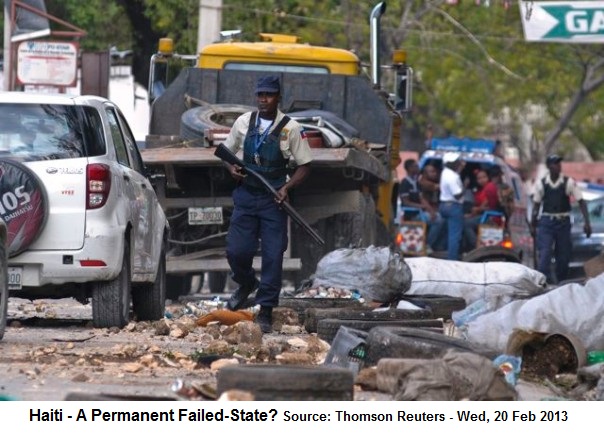
January 2010 saw a devastating tremor hit Haiti. The whole world came to a halt – from Haiti’s perspective – the island nation has still not recovered.
Hurricanes. Earthquakes. This is the reality of Caribbean life – we have to contend with natural disasters; some with advanced warnings, some with no warnings at all.
In the past, our region has not done well managing the crisis associated with natural disasters. In fact, this was a motivation for the origination of the book, Go Lean … Caribbean. We do not have the luxury of “sticking our head in the sand” and pretending that there is no problem. Rather, we must prepare.
The foregoing news article/VIDEO is an example of earthquake preparation around the world, but especially in a region (US Eastern Seaboard) that usually do not have to contend with the threat of earthquakes; and yet got a surprising “shake” in August 2011:
Title: Damaged National Cathedral Hosts ‘Great ShakeOut’ Earthquake Drill By: Alex DeMetrick, General Assignment Reporter
WASHINGTON (WJZ) – There’s nothing like an earthquake to get your attention, and the large quake Maryland felt three years ago is helping to spread the word to prepare for another.
Alex DeMetrick reports it’s all part of the great shakeout campaign.
Depending on where you were three years ago, experiencing a 5.8 magnitude earthquake made an impression.
And you didn’t have to be scrambling out of the Washington Monument.
Maryland rocked all over.
“The Earth’s crust here is old; it’s cold. It transmits energy very effectively. Sort of rings like a bell,” said Dr. David Applegate, U.S. Geological Survey.
And because it could ring again, the Mid-Atlantic region is now part of the Great ShakeOut.
With the National Cathedral as a backdrop, the day is used to promote “drop, cover and hold on” in a quake.
“Something as simple as a book could hurt you, or a bookshelf could hurt, so you don’t want to try and run out, especially in our area here,” said Wendy Phillips, FEMA program specialist.
Bricks and masonry can fall. Thousands of pounds worth fell from the top of the National Cathedral.
“Top of the tower is the absolute worst,” said James Shepherd, director of preservation at the National Cathedral. “So those are the areas that really released the energy. Those are the areas we have the most damage.”
Repairs made the inside safe, although work still continues at the rear of the cathedral.
Just this reinforcement effort has cost $10 million.
Another $22 million will have to be found to strengthen the structure’s flying buttresses.
If it isn’t done, “what that means if there’s an earthquake, the stones move,” Shepherd said.
While repairs may still take years, the cathedral is a reminder the next earthquake could happen any time.
“Absolutely, earthquakes have defied efforts to give a short term prediction, so an earthquake in the east, less frequent, but the shaking can be a real issue over a wide area,” Applegate said.
The Go Lean book posits that earthquakes are outside of our control and can easily wreak havoc on one Caribbean island after another. This regional threat is due to the active Enriquillo fault-line in the Greater Antilles (Jamaica, Cuba, Hispaniola and Puerto Rico) and the Lesser Antilles subduction zone (also known for volcanoes) along the rim of the Eastern Caribbean basin. Already there have been a number of small quakes in a few Caribbean islands for 2014, including Puerto Rico, Dominican Republic, Martinique, Barbados and others.
So the earthquake threat is real. The foregoing article/VIDEO advocates preparing people in the region to survive quaking and shaking. The Caribbean has to be on guard for danger from seismic activities – we have failed miserably in the past, as in Haiti.
A previous blog/commentary asserted that the risk of earthquakes plus the constant threats during the annual hurricane season creates the need for a full-time sentinel to monitor, mitigate and manage the risks of natural disasters in the region. This is the mandate for the technocratic Caribbean Union Trade Federation (CU) for the 30 member-states of the Caribbean region. The Go Lean … Caribbean roadmap describes the CU’s prime directives as empowering the region’s economic engines, providing homeland security assurances and preparing/responding the region’s governance for natural disasters.
The point of natural disaster preparation, especially in the era of climate change, is pronounced early in the book with this Declaration of Interdependence (Page 11), with this opening statement:
i. Whereas the earth’s climate has undeniably changed resulting in more severe tropical weather storms, it is necessary to prepare to insure the safety and security of life, property and systems of commerce in our geographical region. As nature recognizes no borders in the target of its destruction, we also must set aside border considerations in the preparation and response to these weather challenges.
The Go Lean book details the economic principles and community ethos to adopt, plus the executions of the following strategies, tactics, implementations and advocacies to prepare for the eventuality of earthquakes and hurricanes in Caribbean communities:
Economic Principles – People Respond to Incentives
Page 21
Economic Principles – Economic Systems Influence Individual Choices
Page 21
Economic Principles – Consequences of Choices Lie in the Future
Page 21
Community Ethos – “Crap” Happens
Page 23
Community Ethos – Lean Operations
Page 24
Community Ethos – Return on Investments (ROI)
Page 24
Community Ethos – Ways to Impact the Future
Page 26
Community Ethos – Ways to Improve Sharing
Page 35
Community Ethos – Impact the Greater Good
Page 37
Strategy – Vision – Confederating 30 Member-states in a Union
Page 45
Strategy – Agents of Change – Climate Change
Page 57
Tactical – Fostering a Technocracy
Page 64
Tactical – Separation of Powers – Emergency Management Agency
Page 76
Implementation – Ways to Deliver
Page 109
Implementation – Ways to Foster International Aid – Haiti’s Earthquakes
Page 115
Planning – 10 Big Ideas – Homeland Security Pact
Page 127
Advocacy – Ways to Grow the Economy
Page 151
Advocacy – Ways to Improve for Natural Disasters
Page 184
Advocacy – Ways to Improve Emergency Management
Page 196
This is the change that has come to the region: the Caribbean is accepting that it is undoubtedly an earthquake zone.
There is the need for a regional sentinel to coordinate the preparation for earthquakes among the Caribbean member-states. There is the need for participation in the ‘Great ShakeOut’ Earthquake Drill, as related in the foregoing article and VIDEO, for this year (but its too late) and next year, and henceforth.
Natural disasters are unavoidable in the Caribbean. But we can prepare for them, we can make the Caribbean a better place to live, work and play. These elevations are identified, qualified and proposed in the book Go Lean…Caribbean; the mitigations are not just reactive, but also proactive.
All of the Caribbean, the people and institutions, are urged to lean-in to the roadmap from this book – and to “drop, cover and hold-on”.
This Caribbean member-state, Guyana, is Number One …
Not Number One on the list of most productive countries, but Number One on this infamous list: as the country with the highest rate of suicides in the world, according to the latest WHO report. (Suriname is also in the Top 10, at Number 6).
This is a tragedy!
The book Go Lean… Caribbean claims that this region is the best address in the world…physically. And yet this below article asserts that per capita, more people voluntarily “check-out permanently” here than anywhere else in the world. In a previous blog, this commentary presented that this same country Guyana is also Number One in the region with a 89% brain drain among college graduates.
This is not a coincidence, this is a crisis!
Title: Sleepy Guyana Wrestles With High Rate of Suicides Lesbeholden, Guyana – The young man responds all too easily when asked whether he knows anyone who has committed suicide in his village, a sleepy cluster of homes and rum shops surrounded by vast brown fields of rice awaiting harvest.
Less than a year ago, Omadat Ramlackhan recalls, his younger brother swallowed pesticide after a drunken argument with their father and died five days later. “I don’t know what got into him,” the 23-year-old said. “It just happened like that.”
It wasn’t the family’s first brush with suicide. His stepmother, Sharmilla Pooran, volunteers that her brother hanged himself and the man’s son tried to do the same but survived, with rope marks on his neck to remember it. She once contemplated killing herself.
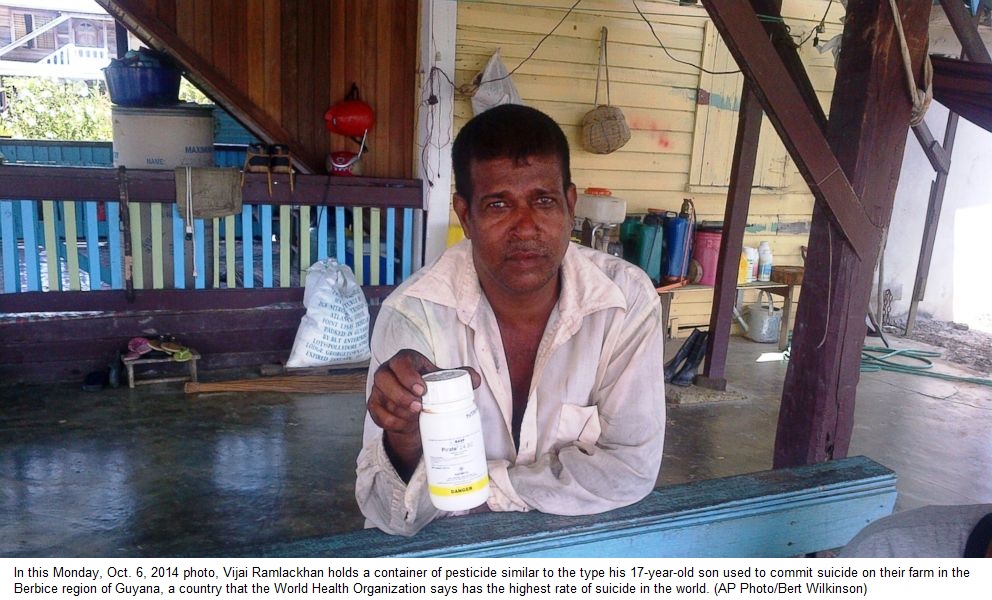
The fact that self-inflected harm is such a presence in the lives of this family is not surprising given that they live in an area that Guyana’s Ministry of Health has designated the “suicide belt,” in a country that the World Health Organization says in a new report has the highest rate of suicide in the world.
Guyana, a largely rural country at the northeastern edge of South America, has a suicide rate four times the global average, ahead of North Korea, South Korea, and Sri Lanka. Neighboring Suriname was the only other country from the Americas in the top 10.
There seem to be a number of reasons that Guyana tops the list, including deep rural poverty, alcohol abuse and easy access to deadly pesticides. It apparently has nothing to do with the mass cult suicide and murder of more than 900 people in 1978 at Jonestown, the event that made the country notorious.
“It’s not that we are a population that has this native propensity for suicide or something like that,” said Supriya Singh-Bodden, founder of the non-governmental Guyana Foundation. “We have been trying to live off the stigma of Jonestown, which had nothing to do with Guyana as such. It was a cult that came into our country and left a very dark mark.”
Just before the WHO published its report last month, the foundation cited rampant alcoholism as a major factor in its own study of the suicide phenomenon, which has been a subject of concern in Guyana for years. In 2010, the government announced it was training priests, teachers and police officers to help identify people at risk of killing themselves in Berbice, the remote farming region along the southeast border with Suriname where 17-year-old Ramdat Ramlackhan committed suicide after quarreling with his father, Vijai.
More recently, the government has sought to restrict access to deadly pesticides, though that is difficult in a country dependent on agriculture. In May, authorities announced a suicide-prevention hotline would be established and Health Minister Bheri Ramsarran said he would deploy additional nurses and social-service workers in response to the WHO report.
Some countries have had success with national strategies in bringing down the number of people who take their own lives, according to the WHO. The number of suicides rose rapidly in Japan in the late 1990s, but started to decrease in 2009 amid government prevention efforts and as discussion of the subject became less taboo.
It has declined in China and India as a result of urbanization and efforts to control the most common means of suicide, said Dr. Alan Berman, a senior adviser to the American Association of Suicidology and a contributor to the WHO report.
“A certain proportion of suicides are rather impulsive and if you can restrict access to the means of suicide, whether it’s by pesticides, or by firearms or by bridge, you can thwart the behavior and give people an opportunity to change their minds,” Berman said.
The WHO estimates there are more than 800,000 suicides around the world per year. Statistics on the subject are unreliable because in some places the practice is stigmatized, or illegal.
The agency found Guyana, which has a population of about 800,000, had an age-adjusted rate of just over 44 per 100,000 people based on 2012 data. For males alone, it was nearly 71 per 100,000. In raw numbers, there are about 200 per year and 500 attempts, according to local health authorities. The U.S. overall rate was 12 per 100,000.
Most occur in Berbice, a flat, sun-baked expanse of farmlands along the river that forms the border with Suriname, where similar social and economic conditions prevail and which was 6th on the WHO list, just ahead of Mozambique.
“Suicides tend to be higher in rural areas than urban areas,” Berman said. “If I’m living in rural Montana, or if I’m living in rural India or in rural Suriname the question then is if I need help for whatever is going on with me how am I going to get it?”
It is a touchy subject in Guyana. The country is divided politically and ethnically between the descendants of people brought from Africa as slaves and the descendants of people brought from India, both Hindus and Muslims, as indentured workers to replace them.
Berbice has many people of Hindus of Indian descent and, as a result, suicide is often portrayed in Guyana as a largely Hindu phenomenon. But Singh-Bodden of the Guyana Foundation said that may be because self-inflicted death among the Hindus of Berbice is more likely to be reported as such. Their study, for example, found little reporting of suicide among native Amerindians who live in the country’s rugged interior.
“I don’t buy into the argument necessarily that it’s an ethnic thing, that Indo Guyanese are more susceptible to suicide,” she said. “There has been a lot of suicide among mixed people as well. I honestly believe it’s the hopelessness.”
Pooran, describing her family’s experiences, said her brother apparently killed himself after struggling with health problems for years and difficult home life. She said she thought about taking her own life while cleaning her house after a day’s work at a local sawmill.
“One day, I picked up the poison and thought about drinking it but I called God’s name and then realized my husband would just get another woman and soon forget me,” she said. “Don’t think I would do that today.”
——— By Bert Wilkinson in Guyana and Ben Fox reported from Miami. Associated Press News Wire Service (Retrieved 10-15-2014) – http://abcnews.go.com/international/wirestory/sleepy-guyana-wrestles-high-rate-suicides-26174156
There is something providential about this crisis as the Go Lean… Caribbean book also asserts that “a crisis is a terrible thing to waste”. The book declares (Page 36) that a man/woman needs three things to be happy:
Deficiency
Mitigation
1.
Something to do
Jobs
2.
Someone to love
Repatriation of Diaspora
3.
Something to hope for
Future-focus
The book serves as a roadmap to mitigate these 3 deficiencies within Caribbean life, rural communities and also in The Guianas (Guyana & Suriname).
The subject of suicide is not a light matter and should not be ignored. It addresses one of the most serious aspects of the science of Mental Health. The Go Lean book is not a reference source for science, but it does glean from “social science” concepts in communicating the plan to elevate Caribbean society. The book thusly serves as a roadmap for the introduction and implementation of the technocratic Caribbean Union Trade Federation (CU). The complete prime directives are described as:
Optimize the economic engines of the Caribbean to elevate the regional economy and create 2.2 million new job.
Establish a security apparatus to protect the resultant economic engines.
Improve Caribbean governance to support these engines.
The Go Lean roadmap immediately calls for the establishment of a regional sentinel, a federal Health Department, to monitor, manage and mitigate public health issues in the region. This focus includes mental health in its focus, just as seriously as any other health concern like cancer, trauma, bacterial/viral epidemiology. This direct correlation of physical/mental health issue with the Caribbean (and American) economy has been previously detailed in Go Lean blog/commentaries, as sampled here:
Being first on a list is not uncommon for the Caribbean – Cuba’s famous tobacco-cigar is already declared “Among the Best in the World”. This is the kind of notoriety we want with our global image; not suicides. No one wants to live in a society where these mental health crises remain unmitigated. But the foregoing article relates that suicide rates in Guyana (and Suriname) needs to be arrested.
A lot is at stake.
The Go Lean roadmap immediately calls for the coordination of the region’s healthcare needs. This point is declared early in the Go Lean book, commencing with this opening pronouncement in the Declaration of Interdependence (Page 12), as follows:
ix. Whereas the realities of healthcare … cannot be ignored and cannot be afforded without some advanced mitigation, the Federation must arrange for health plans to consolidate premiums of both healthy and sickly people across the wider base of the entire Caribbean population. The mitigation should extend further to disease management, wellness, mental health, obesity and smoking cessation programs.
The Go Lean … Caribbean roadmap constitutes a change for the region, a plan to consolidate 30 member-states into a Trade Federation with the tools/techniques to bring immediate change to the region to benefit one and all member-states. This includes the monitoring/tracking/studying the physical and mental health trends. This empowerment would allow for better coordination with member-states, non-governmental organizations (NGOs) and the World Health Organization (WHO).
The book details Happiness as a community ethos that first must be adopted; this refers to the appropriate attitude/spirit to forge change in the region. Go Lean details this and other ethos; plus the executions of the following strategies, tactics, implementations and advocacies to impact the region’s public [mental] health:
Community Ethos – Deferred Gratification
Page 21
Community Ethos – Economics Influence Choices
Page 21
Community Ethos – “Crap” Happens
Page 23
Community Ethos – Lean Operations
Page 24
Community Ethos – Cooperatives
Page 24
Community Ethos – Non-Government Organizations
Page 25
Community Ethos – Ways to Impact the Future
Page 26
Community Ethos – Ways to Impact Turn-Around
Page 33
Community Ethos – Ways to Promote Happiness
Page 36
Community Ethos – Impact the Greater Good
Page 37
Strategy – Vision – Confederate 30 Member-States
Page 45
Strategy – Mission – Reform our Health Care Response
Page 47
Strategy – Agents of Change – Aging Diaspora
Page 57
Tactical – Fostering a Technocracy
Page 64
Separation of Powers – Department of Health
Page 86
Implementation – Ways to Deliver
Page 109
Implementation – Reasons to Repatriate
Page 118
Planning – Ways to Make the Caribbean Better
Page 131
Planning – Ways to Improve Failed-State Indices
Page 134
Planning – Lessons from Indian Reservations – Suicides
Page 148
Advocacy – Ways to Grow the Economy
Page 151
Advocacy – Ways to Improve Healthcare
Page 156
Advocacy – Ways to Better Manage the Social Contract
Page 170
Advocacy – Ways to Foster Cooperatives
Page 176
Advocacy – Ways to Improve Emergency Management
Page 196
Advocacy – Ways to Impact Rural Living
Page 235
Advocacy – Ways to Impact/Re-boot The Guianas
Page 241
Guyana is a “failing” state, economy-wise. The CU mitigation to re-boot the economy there (& the region) is Step One for minimizing the risk of suicide. The foregoing news article links economic downturns and rural poverty to suicide risks. All in all, there is the need for better stewardship for Caribbean society, the economy, security and governing engines.
Who will provide this better stewardship? Who will take the lead? The book Go Lean…Caribbean provide 370 pages of turn-by-turn directions for how the CU is to provide this role for the region. The people are hereby urged to lean-in to this Go Lean roadmap, to make the Caribbean a better place to live, work and play. 🙂
In the 1970’s, when the Concorde Supersonic Transport (SST) jets were designed, developed and deployed, with a 30 year life-span, that time seemed so far off. But that time has now come and gone. Yes, cutting-edge has an expiration date.
It is difficult to think, now in 2014, that 1970’s technologies may still be cutting-edge, except that there are no other Supersonic Transport vehicles for civilian use today. So despite all the scientific and technological advances in the last 40 years, in this area, the world has gone backwards.
There are a lot of lessons here for us to consider with the history of the Concorde, taking into account that the SST had commercial applications, safety concerns and governing issues. This subject therefore parallels with the book Go Lean… Caribbean. The following is the historic reference of the Concorde:
Aérospatiale-BAC Concorde is a retired turbojet-powered supersonic passenger airliner or supersonic transport. It is one of only two SSTs to have entered commercial service; the other was the Tupolev Tu-144; (built by the Soviet Union under the direction of the Tupolev design bureau, headed by Alexei Tupolev; their prototype first flew on 31 December 1968 near Moscow, two months before the first flight of Concorde. The Tu-144 first went supersonic on 5 June 1969, and on 26 May 1970 became the first commercial transport to exceed Mach 2). The Concorde was jointly developed and produced by France-owned Aérospatiale and the British Aircraft Corporation (BAC) under an Anglo-French treaty. First flown in 1969, the Concorde entered service in 1976 and continued commercial flights for 27 years.
Reflecting the treaty between the British and French governments which led to the Concorde’s construction, the name Concorde is from the French word concorde, which has an English equivalent, concord. Both words mean agreement, harmony or union.
The Concorde needed to fly long distances to be economically viable; this required high efficiency. (Turbojets were found to be the best choice of engines.[68] The engine used was the twin spool Rolls-Royce/Snecma Olympus 593, a development of the Bristol engine first used for the Avro Vulcan bomber, and developed into an afterburning supersonic variant for the BAC TSR-2 strike bomber.[69] Rolls-Royce’s own engine proposed for the SST aircraft at the time of Concorde’s initial design was the RB.169 [70]). Among other destinations, the Concorde flew regular transatlantic flights from London Heathrow and Paris-Charles de Gaulle Airport to New York JFK, Washington Dulles and Barbados in the Caribbean; it flew these routes in less than half the time of other airliners. Only 20 aircraft were ever built, so the development of Concorde was a substantial economic loss; Air France and British Airways also received considerable government subsidies to purchase them.
While commercial jets took eight hours to fly from New York to Paris, the average supersonic flight time on the transatlantic routes was just under 3.5 hours. The Concorde’s maximum cruising altitude was 60,000 feet, (while subsonic airliners typically cruise below 40,000 feet), and an average cruise speed of Mach 2.02, about 1155 knots (2140 km/h or 1334 mph), more than twice the speed of conventional aircraft.[107]
The Concorde’s drooping nose, enabled the aircraft to switch between being streamlined to reduce drag and achieve optimum aerodynamic efficiency, and not obstructing the pilot’s view during taxi, takeoff, and landing operations. Due to the high angle of attack, the long pointed nose obstructed the view and necessitated the capability to droop to ensure visibility and FAA approval in the US.
The Concorde was retired in 2003 due to a general downturn in the aviation industry after the aircraft’s only crash in 2000 (killing 113 people onboard and on the ground), the 9/11 terrorist attacks in 2001, and a decision by Airbus (the successor firm of Aerospatiale) and BAC, to discontinue maintenance support.[5] Wikipedia Online Encyclopedia (Retrieved October 13, 2014) – http://en.wikipedia.org/wiki/Concorde
See the foregoing VIDEO for a synopsis of the Concorde’s 27-year history:
Video Title – Concorde: 27 Supersonic Years:
This review of the historicity of the Concorde is more than just an academic discussion; the aircraft was always presented as a glimpse into the future. Likewise, the book Go Lean…Caribbean is future-focused, aspiring to economic principles that dictate that “consequences of choices lie in the future”. The book serves as a roadmap for the introduction and implementation of the technocratic Caribbean Union Trade Federation (CU). This confederation effort (aligning many former colonies of the same sponsoring countries of Great Britain and France that designed, developed and deployed the Concorde SST project) will spur a lot of technologically-driven industrial developments.
What have we learned from the 27-year history of the Concorde, in terms of economics, security and governing lessons? How will these lessons help us today?
Crisis is a terrible thing to waste – The end of World War II saw an immediate clash and conflict between Soviet-backed communist countries versus Western democracies. There was an “arms and space” race. The Anglo-Franco treaty to design-develop the Concorde was a manifestation of that competition. While the US invested in supersonic technology for military applications, the Anglo-Franco treaty allowed for a civilian application, and exploitation of a populous market for those with capitalistic adherence. The Go Lean roadmap posits that the Caribbean is also in a crisis (on the losing end of globalization, advancing technology and economic dysfunction). The CU will incubate and foster industrial policy to better explore science, technology, engineering and mechanical (STEM) initiatives. With 80 million annual visitors across 30 different member-states, (many of them islands), we have the overall need for air transport solutions and a built-in market acceptance.
Promote opportunities for Research & Development – As far back as October 1956, the UK’s Ministry of Supply asked key Subject Matter Experts to form a new study group, the Supersonic Transport Advisory Committee or STAC,[12] with the explicit goal of developing a practical SST design and finding industry partners to build it. The ethos expressed by this specialty group foresaw that huge economic and security benefits could yield by developing cutting-edge solutions in the air-transport industry space . The Go Lean roadmap posits that appropriate investments must be prioritized for new industrial solutions, such as with Information & Communications Technologies. The Go Lean book posits that large states or small ones can have a “level-playing field” by exploring innovative solutions for the New Economy.
New “community ethos” can be adopted by the general public – The Concorde aircraft was regarded by many people as an aviation icon and an engineering marvel. During flight testing of the pre-production SST aircraft, it visited a number of “allied” foreign countries. It was not uncommon for ten-mile traffic jams to build up around airports as crowds of a hundred thousand and more gathered to look over the aircraft that was designed to bring faster-than-sound flight within reach of anyone with the price of a plane ticket.[25]The CU will employ messaging and image management to forge new attitudes about technology, R&D, entrepreneurship, intellectual property and STEM initiatives in the region.
Negotiate as partners not competitors – France had 3 nationally supported companies (state-owned Sud Aviation and Nord-Aviation, plus private firm Dassault Group) in the aero-space industry, but no jet-engine solution. The British company Rolls Royce had demonstrated great market leadership with jet engines. A collaboration was apropos. The CU maintains that, negotiation is an art and a science. More can be accomplished by treating negotiating counterparts as a partner, rather than not an adversary.
Cooperatives and sharing schemes lighten burdens among partners – In 1967, at the start of the new Anglo-Franco consortium, there was the intent to produce one long-range and one short-range SST version. However, prospective customers showed no interest in the short-range version and it was dropped.[25] The consortium secured orders (i.e., non-binding options) for over 100 of the long-range version from the major airlines of the day: Pan Am, BOAC, and Air France were the launch customers, with six Concordes each. Other airlines in the order book included Panair do Brasil, Continental Airlines, Japan Airlines, Lufthansa, American Airlines, United Airlines, Air India, Air Canada, Braniff, Singapore Airlines, Iran Air, Olympic Airways, Qantas, CAAC (China), Middle East Airlines, and TWA.[25][30][31] At the time of the first flight (1969) the options list contained 74 orders from 16 airlines. The important function for the CU in these cooperative initiatives is command-and-control.For the Concorde project the labor of up to 50,000 (including sub-contractors and suppliers) people had to be efficiently coordinated. The CU will employ cooperatives and sharing schemes for limited scopes within the prime directives of optimizing the economic, security and governing engines.
Bureaucratic response to crisis impede progress – At the end of the pre-production trials, there were orders for 74 aircrafts for 16 airlines, but in the end only 20 Concorde jets were ever manufactured. What happened? Geo-political crisis. Concorde SSTs required more fuel usage compared to subsonic aircrafts. The 1970’s saw a number of crises involving steeply rising oil prices (OPEC, Iran Revolution, etc.)[148] and new wide-body aircrafts, such as the Boeing 747, had recently made subsonic aircrafts significantly more efficient and presented a low-risk option for airlines.[50]. The governmental bureaucracy of the two national governments impeded tactical responses and adjustments to these agents-of-change, resulting in cancellation of unfulfilled orders … and also any continuous technological upgrades to the SST program. “There have always been those who want to go faster and those who think the present speed (of ox-cart, stagecoach, sailing ship) was fast enough”.[25]The Go Lean roadmap calls for the establishment of Self-Governing Entities (SGE), regulated at the federal level, to facilitate R&D in industrial settings. Under this scheme, government negotiation is only required at the outset/initiation; no further bureaucratic stalemates beyond the start-up. Tactically, SGE’s can nimbly adapt to the demands of the global marketplace. This is the manifestation of a lean technocracy.
“Crap” Happens – While the Concorde had initially held a great deal of customer interest, the project was hit by a large number of order cancellations. There was a crash of the competing Soviet Tupolev Tu-144 at the Paris Le Bourget air show in 1973; this shocked potential buyers, and public concern over the environmental issues presented by supersonic aircrafts. Also, the issue of sonic booms and takeoff-noise pollution produced a shift in public opinion of SSTs. By 1976 only four nations remained as prospective buyers: Britain, France, China, and Iran.[43] But only Air France and British Airways (the successor to BOAC) ever took up their orders, with the two governments taking a cut of any profits made.[44] The United States cancelled the Boeing 2707, its rival supersonic transport program, in 1971. Observers have suggested that opposition to the Concorde on grounds of noise pollution had been encouraged by the United States Government, as it lacked its own competitor.[45] The US, India, and Malaysia all ruled out Concorde supersonic flights over the noise concern, although some of these restrictions were later relaxed.[46][47] This lesson constitutes the security scope of the Concorde SST historic consideration. The Go Lean roadmap anticipates that things would go wrong, and plans for risk mitigations in advance. This includes man-made, industrial and natural disasters. In addition, there is the governance plan for the CU to have jurisdiction over the region’s aviation regulations – much like the FAA (Federal Aviation Admin.) in the US.
Consider the Greater Good– In the end, the realization of a noise pollution threat never materialized with Concorde SSTs – more fear than actualization. A progressive path forward from 1976 should have resulted in even faster supersonic transportation options at cheaper prices by today, 40 years later. Author and Professor Douglas Ross characterized restrictions placed upon Concorde operations by President Jimmy Carter’s administration (1977 – 1981) as having been an act of protectionism for American aircraft manufacturers.[48]To the contrary, the Caribbean need policies for the Greater Good. With island tourism being the primary economic driver in the region, we need proactive air-transport solutions to facilitate visitors’ easy access to Caribbean hospitality. The Greater Good philosophy is directly quoted as: “It is the greatest good to the greatest number of people which is the measure of right and wrong”. The CU/Go Lean roadmap calls for a number of measures that strike directly at this Greater Good mandate.
The related subjects of technology-bred innovations and history lessons have been a frequent topic for Go Lean blog/commentaries, as sampled here:
The purpose of the Go Lean roadmap is to shift the downward trends in the Caribbean today, to reverse course and elevate Caribbean society. The CU, applying lessons from the Concorde history, has prime directives proclaimed as follows:
Optimization of the economic engines in order to grow the regional economy to $800 Billion & create 2.2 million new jobs.
Establishment of a security apparatus to protect the resultant economic engines.
Improve Caribbean governance to support these engines.
While the Go Lean book is not written as an analysis of the Concorde, the following detail considerations of community ethos, strategies, tactics, implementations and advocacies in the book are still helpful to empower Caribbean society:
Community Ethos – Economic Systems Influence Choices & Incentives
Page 21
Community Ethos – Consequences of Choices Lie in the Future
Page 21
Community Ethos – “Crap” Happens
Page 23
Community Ethos – Ways to Impact the Future
Page 26
Community Ethos – Ways to Improve Negotiations
Page 32
Community Ethos – Ways to Manage Reconciliations
Page 34
Community Ethos – Ways to Improve Sharing
Page 35
Community Ethos – Ways to Impact the Greater Good
Page 37
Strategy – Vision – Integrate region into a Single Market Economy
Page 45
Strategy – Agents of Change – Technology
Page 57
Strategy – Agents of Change – Globalization
Page 57
Tactical – Separation of Powers – Department of State – SGE Administration
Page 80
Tactical – Separation of Powers – Transportation Department – Aviation Admin
Page 84
Implementation – Ways to Pay for Change
Page 101
Implementation – Foreign Policy Initiatives at Start-up
Page 102
Implementation – Security Initiatives at Start-up
Page 103
Implementation – Steps to Implement Self-Governing Entities
Page 105
Implementation – Ways to Deliver
Page 109
Implementation – Ways to Benefit from Globalization
Page 119
Planning – Ways to Ways to Model the EU
Page 130
Planning – Ways to Better Manage Image
Page 133
Planning – Lessons Learned from the defunct West Indies Federation
Page 134
Planning – Lessons from Detroit
Page 140
Advocacy – Ways to Grow the Economy
Page 151
Advocacy – Ways to Create Jobs
Page 152
Advocacy – Ways to Foster Cooperatives
Page 176
Advocacy – Ways to Enhance Tourism in the Caribbean Region – Air Lifts
Page 190
Advocacy – Ways to Market Southern California – Transportation Options
Page 194
Advocacy – Ways to Foster Technology
Page 197
Advocacy – Ways to Improve Transportation
Page 205
The image of the Concorde was that of cutting-edge technology for its entire 27-year run. But cutting-edge does have an expiration date; so there must be the culture of continuous enhancing and upgrading any cutting-edge innovation. This is true in the new world of Internet Communications Technologies (ICT), where innovations emerge every year; sometimes even a few times during the year. The battleground has changed, from the Concorde’s frontier of aero-space to the ever-changing frontiers of cyber-space. The Go Lean movement asserts that the culture/attitude/ethos, to be constantly innovative, is most crucial in this new economy, where the only constant is change itself.
Now is the time for all of the Caribbean to learn the lessons from the 27-year history of the Concorde. The people and governing institutions of the region are hereby urged to lean-in for the empowerments described in the book Go Lean … Caribbean. This is a big deal for the region; the current economic engines need technology-based innovations in general, and air transport solutions in particular. This is one way we can make our homeland a better place to live, work, and play. 🙂
Referenced Sources: 5. “UK | Concorde grounded for good”. BBC News. 2003-04-10. Retrieved 2013-06-15. 12. Conway, Eric (2005). High-Speed Dreams: NASA and the Technopolitics of Supersonic Transportation, 1945–1999. JHU Press. Page 39. 25.“Early History.”concordesst.com. Retrieved 8 September 2007. 30. “Aerospace: Pan Am’s Concorde Retreat”. Time, 12 February 1973. 12 February 1973. 31. “Vertrag mit Luken”. Der Spiegel. 13 March 1967. Retrieved 6 November 2012. 43. “Concordes limited to 16”. Virgin Islands Daily News, 5 June 1976. 44. “Payments for Concorde”. British Airways. Retrieved 2 December 2009. 45. Lewis, Anthony (12 February 1973). “Britain and France have wasted billions on the Concorde”. The New York Times, 12 February 1973. 46.“Malaysia lifting ban on the use Of its Airspace by the Concorde”. The New York Times, 17 December 1978. 17 December 1978. Retrieved 30 June 2011. 47.“News from around the world”. Herald-Journal, 13 January 1978. Retrieved 30 June 2011. 48. Ross, Douglas (March 1978). The Concorde Compromise: The Politics of Decision-making. Bulletin of the Atomic Scientists. p. 46. 49. Marston, Paul (16 August 2000). “Is this the end of the Concorde dream?”. London: Daily Telegraph, 16 August 2000. 50. Ross, Douglas (March 1978). The Concorde Compromise: The Politics of Decision-making. Bulletin of the Atomic Scientists, pp. 47–49. 68. Birtles, Philip. Concorde, pp. 62–63. Vergennes, Vermont: Plymouth Press, 2000. 69. “Rolls Royce Olympus history.”wingweb.co.uk. Retrieved 15 January 2010. 70.Aero Engines 1962, Flight International, 28 June 1962: 1018 107. Schrader, Richard K. (1989). Concorde: The Full Story of the Anglo-French SST. Kent, UK: Pictorial Histories Pub. Co., p. 64. 148.B.CAL drops Concorde plans but asks for Hong Kong licence. Flight International Magazine, posted 30 June 1979, p. 2331.
…especially in the hospitality industry. (Remember Travel Agents?!)
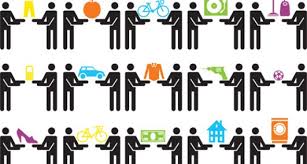
The book and accompanying blog/commentaries for Go Lean…Caribbean posit that the Sharing Economy can emerge more fully in the Caribbean. The Internet & Communications Technology (ICT) provides the tools and techniques. Visitors/tourists will be able to easily search and book houses, condominiums and apartments by connecting directly to the homeowner. This will be a win-win for the homeowner and their guests.
This change is ecstasy for some, but agony for others.
Navigating the world of change is a mission of the Go Lean book. The book posits that the Bed & Breakfast (B&B) industry has evolved with the emerging internet culture and now allow families to share their high-end homes with strangers (and business travelers), in lieu of resort properties (Page 35). This development, like many agents-of-change, brings winners and losers. Hotel room nights and collection of municipal hotel taxes can all be imperiled if this ICT-Sharing development proceeds unchecked. This is why Go Lean promotes “sharing” as a community ethos, so as to mitigate the perils of this industry. We need online sharing tools to target the Caribbean, especially during the peaks of event tourism (festivals, carnivals, fairs). But we need our hotel taxes too.
The challenge with the Sharing Economy, for room rentals and many other areas of life, is one-step forward-two steps-backwards.
See the foregoing news article and the following VIDEO, that depicts the emergence of the company Airbnb:
Video Source:NBC News TODAY Show (Retrieved October 8, 2014) –
Corporate travelers are getting creative, using the Internet and home rental sites like Airbnb to find alternative housing rather than checking into hotels. NBC’s Joe Fryer reports. http://on.today.com/2x9Sicg
————–
Title:Democratizing the Sharing Economy – The Center for Popular Economics By: Anders Fremstad
The internet has sharply reduced the cost of peer-to-peer transactions. In the 1990s and 2000s, Craigslist and eBay made it much easier to buy and sell secondhand goods, and these sites now facilitate over a million transactions a day. More recently, online platforms associated with the “sharing economy” are helping friends, neighbors, and even strangers borrow, lend, and rent goods. Travellers can reserve a spare room through Airbnb or find a free place to crash on Couchsurfing. People can find a ride on Uber or rent a neighbor’s car on RelayRides. Neighbors can increasingly borrow tools, gear, and appliances free-of-charge on NeighborGoods, Sharetribe, and similar sites.
Most observers celebrate how the sharing economy lowers the cost of accessing goods, but there is a growing debate over how these online platforms should be regulated. Unfortunately, this debate ignores how many of the fundamental problems with the sharing economy arise from its corporate nature. The solution may not be to simply regulate the corporate sharing economy but to also democratize the sharing economy by empowering the people who use these platforms to determine how they work. … Source:http://www.populareconomics.org/democratizing-the-sharing-economy/ Posted 06-24-2014; retrieved 10-10-2014
The book serves asa roadmap for the introduction and implementation of the technocratic Caribbean Union Trade Federation (CU). The roadmap posits that many issues and challenges for a Sharing Economy can only be managed with feasible economies-of-scale. The CU market size of 30 member-states and 42 million people will allow for the leverage to consolidate, collaborate and confederate the organizational dynamics to tackle these issues.
The book Go Lean…Caribbean anticipates the compelling issues associated with room sharing in the emerging new economy.
The book asserts that before the strategies, tactics and implementations of the roadmap can be deployed, the affected communities must first embrace a progressive community ethos. The book defines this “community ethos” as the fundamental character or spirit of a culture; the underlying sentiment that informs the beliefs, customs, or practices of society; dominant assumptions of a people or period. The Go Lean book stresses that the current community ethos must change and the best way to motivate people to adapt their values and priorities is in response to a crisis. The roadmap recognizes this fact with the pronouncement that the Caribbean is in crisis, and that “a crisis is a terrible thing to waste”. The region is devastated from external factors: global economic recession, globalization and rapid technology changes.
Cause and effect!
The Go Lean roadmap promotes development activity for the new ICT global economy, first in the anticipation and then in response of the demands of the Sharing Economy. Even if there is no international trade realization, these developments are needed for the integrated domestic “Single Market”. The roadmap incubates these industrial initiatives to promote the practice:
Caribbean Cloud – The Go Lean roadmap calls for the establishment of the Caribbean Cloud, an online community and social media initiative dubbed as myCaribbean.gov. This effort will be exerted by the Caribbean Postal Union (CPU) so as to impact allCaribbean stakeholders: residents, businesses, Diaspora, trading partners, visitors – a universe of 150 million people. TheCaribbean region accommodates 80 million visitors every year. The strategy of maintaining contact with previous visitors steadily increases the universe … and potential customer-base.
Mobile Applications – The Go Lean roadmap defines the mastery of time-&-space as strategic for succeeding in mobile apps development and deployment for the region (Page 35). Products like AirBnB and competitors, master mobile apps so that dynamic decisions and impulse buying can be exploited on behalf of touristic properties. Imagine a customer seeing an advertising billboard for a Caribbean resort in a North American city, in the middle of a snow storm, at the moment the desire to partake of Caribbean hospitality may be a great inclination.
The book asserts that to adapt to the new Sharing Economy, there must be a new internal optimization of the region’s strengths. This is defined in the following statement of the opening Declaration of Interdependence (Page 14):
xxvii. Whereas the region has endured a spectator status during the Industrial Revolution, we cannot stand on the sidelines of this new economy, the Information Revolution. Rather, the Federation must embrace all the tenets of Internet Communications Technology (ICT) to serve as an equalizing element in competition with the rest of the world. The Federation must bridge the digital divide and promote the community ethos that research/development is valuable and must be promoted and incentivized for adoption.
Something old, something new, something borrowed, something blue – Old Adage regarding marriage and weddings.
The quest to elevate Caribbean society includes embracing the “New Economy” and also optimizing ongoing economic engines; in this case tourism. This can be likened to a marriage. The CU will employ technologically innovative products and services to marry the “New Economy” with the “Old Economy”. This impact is pronounced in the CU‘s prime directives, identified with the following 3 statements:
Optimization of the economic engines in order to grow the regional economy to $800 Billion & create 2.2 million new jobs.
Establishment of a security apparatus to protect the resultant economic engines.
Improve Caribbean governance to support these engines.
The subject in this blog/commentary, of focusing on the intersection of the “Old Economy” with the “New Economy”, the 100-year old tourism product with the brand new internet, is a big challenge, requiring brand new leadership. This Agent-of-Change is impacting all aspects of commerce in the modern world, including the tourism product.
This subject of “New Economy’s” shared hospitality services has been previously covered in these Go Lean blogs, highlighted here in the following samples:
Incubator firm (Temasek) backs Southeast Asia cab booking app GrabTaxi
In line with the foregoing article and VIDEO, the Go Lean book details the applicable community ethos, strategies, tactics, implementation and advocacies as a roadmap to foster this change/empowerment in the region for the Sharing Economy and to impact the tourism product:
Community Ethos – Ways to Impact the Future
Page 26
Community Ethos – Ways to Help Entrepreneurship
Page 28
Community Ethos – Promote Intellectual Property
Page 29
Community Ethos – Ways to Bridge the Digital Divide
Page 31
Community Ethos – Ways to Improve Sharing
Page 35
Strategy – Confederate 30 Caribbean Member-States
Page 45
Strategy – Customers – Citizens, Diaspora and Visitors
Page 47
Strategy – Agents of Change – Technology
Page 57
Tactical – Separation of Powers – Caribbean Cloud
Page 74
Tactical – Separation of Powers – Caribbean Postal Union (CPU)
Page 78
Implementation – Year 1 / Assemble Phase – Establish CPU
Page 96
Implementation – 10 Trends in Implementing Data Centers
Page 106
Implementation – Improve Mail Services – Electronic Supplements
Page 108
Implementation – Ways to Impact Social Media
Page 111
Advocacy – Ways to Benefit from Globalization – Level Playing Field with ICT
Page 129
Advocacy – Ways to Grow the Economy
Page 151
Advocacy – Ways to Create Jobs
Page 152
Advocacy – Revenue Sources for Regional Administrations
Page 172
Advocacy – Ways to Enhance Tourism
Page 190
Advocacy – Ways to Impact Events
Page 191
Advocacy – Ways to Market Southern California
Page 194
Advocacy – Ways to Foster Technology
Page 197
Advocacy – Ways to Foster e-Commerce
Page 198
Advocacy – Ways to Impact Main Street
Page 201
Advocacy – Ways to Promote Call Centers
Page 212
Advocacy – Ways to Impact the Diaspora
Page 217
Appendix – Urban Bicycle Sharing Model
Page 352
The roadmap posits that the CU will foster and incubate the Shared Economy and the Mobile Apps industry, thereby forging entrepreneurial incentives and jobs. Under the right climate, innovations can thrive. We need that climate here in the Caribbean; we must remain competitive, as a people and as a tourism market. As related in the foregoing article and VIDEO, the general market is embracing the Shared Economy.
The world has changed!
This change can be good. We can make the Caribbean, a better place to live, work and play.
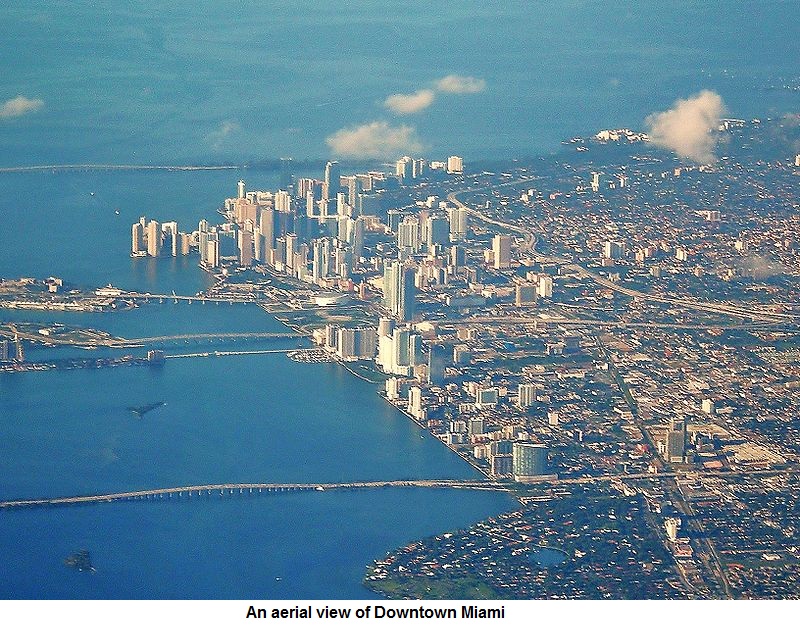
The Greater Miami Metropolitan Area has provided refuge to many of the Caribbean Diaspora.
Thank you Miami.
But make no mistake: Miami has benefited as well.
This fact is based on a proven economic principle that growth in population means growth in the economy. In parallel, declines in populations could lead to declines in economic growth. This point was vividly depicted in this previous blog commentary: Having Less Babies is Bad for the Economy; with this quoted reference:
We tend to think economic growth comes from working harder and smarter. But economists attribute up to a third of it to more people joining the workforce each year than leaving it. The result is more producing, earning and spending. – http://www.huffingtonpost.com/2014/05/07/birth-rate-economy_n_5281597.html
According to the below article (Appendix and VIDEOS below), the Miami Metropolitan Area has benefited greatly from the infusion of Caribbean refugees into its population. The benefits to the metropolitan area have been economic, cultural and also in governing leadership. This brings to the fore a compelling mission of the book Go Lean…Caribbean, to elevate Caribbean society so as to encourage the repatriation of the Diaspora back to their homelands.
Title: South Florida Caribbean’s – November 2006 The Caribbean Island Nations, has an overall population of over 40 million. … In the US, they number over 25 million (Strategy Research Corporation). The Caribbean population in the U.S. Diaspora has grown by over 6.4 million in the last decade.
SOUTH FLORIDA CARIBBEANS – November 2006
• An estimated 400,000 Caribbean nationals live in South Florida.
• More than 92,000 Jamaicans live in BrowardCounty and more than 32,000 Jamaicans live in Miami-Dade.
• Haitians make up the second-largest ethnic group in Miami-DadeCounty —109,817 — after Cubans, and are second to Jamaicans in Broward with 88,121.
North Miami, Dade County, Florida according to the 2000 census, has a population of 60,036 and is home to 18,656 Haitians, the most of any city in the county.
As at May 4, 2007 there are 10 Haitian elected officials now serving in the Florida Legislature and Miami-Dade municipalities. Another Haitian politician, North Miami Beach Councilman John Patrick Julien, won the primary but faces a runoff May 15, 2007 with developer Gary Goldman. … • Broward County added more new black residents (92,378) than any other county between 2000 and 2005, while Miami-Dade County added about 10,528, The surge is driven by Caribbeans.
• Broward’s black population grew 22 percent from 2000 to 2005; 34 percent among Caribbeans.
• Broward, Miami-Dade and Palm Beach counties are home to about one-fifth of the 785,771 Jamaicans living in the United States. … Just as we argue that Cubans go to Miami and Mexicans to Texas for geographic and cultural blending in, we can make the same argument for West Indians in South Florida. It’s a natural habitat.” … SOURCE: U.S. Census
Editors note: The above figures are very conservative Caribbean Business Community (North America) Inc.(Retrieved 10-10-2014) – http://www.caribbeanbusinesscommunity.com/newsletters/caribbeans_abroad.html
The book Go Lean…Caribbean champions the causes of retaining Caribbean citizens in the Caribbean, and inviting the Diaspora back to their homelands. These intentions were pronounced early in the book with these statements in the Declaration of Interdependence (Pages 13):
xix. Whereas our legacy in recent times is one of societal abandonment, it is imperative that incentives and encouragement be put in place to first dissuade the human flight, and then entice and welcome the return of our Diaspora back to our shores. This repatriation should be effected with the appropriate guards so as not to imperil the lives and securities of the repatriated citizens or the communities they inhabit. The right of repatriation is to be extended to any natural born citizens despite any previous naturalization to foreign sovereignties.
xx. Whereas the results of our decades of migration created a vibrant Diaspora in foreign lands, the Federation must organize interactions with this population into structured markets. Thus allowing foreign consumption of domestic products, services and media, which is a positive trade impact. These economic activities must not be exploited by others’ profiteering but rather harnessed by Federation resources for efficient repatriations.
Looking at this quest from the point-of-view of Miami introduces a paradox: Miami’s success versus Caribbean failure.
According to Miami’s history, the metropolitan area has benefited, population-wise, with every Failed-State episode in the Caribbean. This is describing a win-lose scenario, where the Caribbean losses resulted in Miami’s gains. The following list describes the Caribbean countries that experienced near-Failed-State status, detailed in the Go Lean book, that effected change (growth) in Miami:
Cuba (Page 236)
Dominican Republic (Pages 237, 306)
Haiti (Page 238)
Jamaica (Page 239)
Trinidad (Page 240)
US Territories – Puerto Rico & US Virgin Islands (Page 244)
British Caribbean Territories (Page 245)
Dutch Caribbean Territories (Page 246)
French Caribbean Territories (Page 247)
With Miami’s location at the bottom of the Florida peninsula, it protrudes into the tropics – 50 miles West from the Bahamas and 90 miles North from Cuba. For the local community, this Caribbean proximity was perceived as a disadvantage, a misfortune, but the Caribbean infusion instead has proven to be an asset, a win for Miami. As many Caribbean member-states flirted with failure, Miami succeeded, despite being on the frontlines and having to absorb many incoming refugees.
But now, change has now come to the Caribbean … as detailed in the Go Lean book.
The Go Lean book serves as a roadmap for the introduction and implementation of the technocratic Caribbean Union Trade Federation (CU) to bring positive change. The CU‘s prime directives are identified with the following 3 statements:
Optimization of the economic engines in order to grow the regional economy to $800 Billion & create 2.2 million new jobs.
Establishment of a security apparatus to protect the resultant economic engines.
Improve Caribbean governance to support these engines.
Will these changes reverse the patterns of success for Miami? Will more for Caribbean member-states mean less for Miami? Will Cuba’s return to democracy cause a crash for the Cuban-American investments in Miami? Will a stabilization of Haiti finally shift the successes of Haitian-Americans back to their homeland? Will an end of Caribbean Sclerosis (economic dysfunction) finally mean the English-speaking Caribbean will abandon Miami as their destination of hopes-and-dreams (see Appendix and VIDEOS below)? Will a successful execution of the Go Lean roadmap reverse the patterns of success for Miami? These ill-fated scenarios do not have to be the conclusion. The Go Lean roadmap for an elevated Caribbean, can be a win-win for Miami and the Caribbean.
The Go Lean book defines “luck” as the intersection of preparation and opportunity (Page 3). With the execution of the Go Lean roadmap, the change that comes to the Caribbean, and accompanying success should not mean failure for Miami. No, Miami can get “lucky” … purposely, with these impending changes. With Miami’s physical location it can continue to facilitate a lot of trade and logistics for the Latin America and Caribbean region.
The Go Lean roadmap calls for elevating the Caribbean’s GDP from $378 Billion (2010) to $800 Billion. The Miami community can benefit from this regional growth, with some shrewd strategies on their part. (The Go Lean roadmap includes shrewd strategies for elevating the Caribbean, not Miami).
Caribbean stakeholders are hereby urged to lean-in to the community ethos, shrewd strategies, tactics, implementations and advocacies to finally re-boot Caribbean society; as detailed in the book Go Lean…Caribbean, sampled here:
Assessment – Anecdote – Caribbean Single Market & Economy
Today, Miami is a better place to live, work and play … due in many ways to the contributions of the Caribbean Diaspora. The Cuban, Dominican and Afro-Caribbean (Haitian, Jamaican, Bahamian) communities dominate the culture of South Florida, resulting in a distinctive character that has made Miami unique as a travel/tourist destination; see VIDEOS below that vividly describe the positive input of the Caribbean culture on Miami:
This is now a new day for the Caribbean; with the empowerments identified, qualified and proposed in the Go Lean book, the region will also be a better place to live, work and play. We urge all to lean-in to this roadmap, those residing in the region and the Diaspora, especially those in Miami.
Hispanic or Latino of any race were 41.6% [2,312,929] of the population
The city proper is home to less than one-thirteenth of the population of South Florida. Miami is the 42nd most populous city in the United States. [But] the Miami Metropolitan Area, which includes Miami-Dade, Broward and Palm Beach counties, had a combined population of more than 5.5 million people, ranked seventh largest in the United States,[44] and is the largest metropolitan area in the Southeastern United States. As of 2008, the United Nations estimates that the Miami Urban Agglomeration is the 44th-largest in the world.[45]
The 2010 US Census file for “Hispanic or Latino Origin” reports[46] that: 34.4% of the population had Cuban origin, 8.7% South American ( 3.2% Colombian), 7.2% Nicaraguan, 5.8% Honduran, and 2.4% Dominican origin. In 2004, the United Nations Development Program (UNDP) reported that Miami had the highest proportion of foreign-born residents of any major city worldwide (59%), followed by Toronto (50%).
As of 2010, there were 183,994 households of which 14.0% were vacant.[47] As of 2000, 26.3% had children under the age of 18 living with them, 36.6% were married couples living together, 18.7% have a female head of household with no husband present, and 37.9% were non-families. 30.4% of all households were made up of individuals and 12.5% had someone living alone who was 65 years of age or older. The average household size was 2.61 and the average family size was 3.25. The age distribution was 21.7% under the age of 18, 8.8% from 18 to 24, 30.3% from 25 to 44, 22.1% from 45 to 64, and 17.0% who were 65 years of age or older. The median age was 38 years. For every 100 females there were 98.9 males. For every 100 females age 18 and over, there were 97.3 males.
In 2009, the median income for a household in the city was $29,812, and the median income for a family was $33,814. The per capita income for the city was $19,846. About 21.7% of families and 26.3% of the population were below the poverty line.
In 1960, non-Hispanic whites represented 80% of Miami-Dade county’s population.[48] In 1970, the Census Bureau reported Miami’s population as 45.3% Hispanic, 32.9% non-Hispanic White, and 22.7% Black.[49] Miami’s explosive population growth has been driven by internal migration from other parts of the country, primarily up until the 1980s, as well as by immigration, primarily from the 1960s to the 1990s. Today, immigration to Miami has slowed significantly and Miami’s growth today is attributed greatly to its fast urbanization and high-rise construction, which has increased its inner city neighborhood population densities, such as in Downtown, Brickell, and Edgewater, where one area in Downtown alone saw a 2,069% increase in population in the 2010 Census. Miami is regarded as more of a multicultural mosaic, than it is a melting pot, with residents still maintaining much of, or some of their cultural traits. The overall culture of Miami is heavily influenced by its large population of Hispanics and blacks mainly from the Caribbean islands.
1. Even a broken clock is right … twice a day. 2. Greed is good … for incentivizing innovation.
According to the transcript in the below VIDEO, “Cancer is so pervasive that it touches virtually every family in this country. More than one out of three Americans will be diagnosed with some form of it in their lifetime. And as anyone who’s been through it knows, the shock and anxiety of the diagnosis is followed by a second jolt: the high price of cancer drugs.”
“If 1-in-3 Americans are at risk for cancer, Caribbean citizens cannot be far behind”. So declares the book Go Lean…Caribbean (Page 157). This is not speculative, this is real … life and death. The principal author for the Go Lean book dedicated the book to his sister who had recently died after losing her battle with cancer. 42 years earlier, their mother died of the same cause.
The opening quotations relate the underlying theme of this commentary, that the cost of cancer drugs is a distortion of the “free market”; reflective of American “crony” capitalism. Also, that despite an obvious broken eco-system, failed-state status in Cuba, this Caribbean country “does cancer drugs right”. This point is related in the following article:
Title #1: Medimpex to sell Cuban ‘scorpion’ cancer drug here [in Jamaica] By: HG Helps, Editor-at-Large
helpsh@jamaicaobserver.com
HUNGARIAN drug distribution company Medimpex has been granted exclusive rights to import and sell to retailers the Cuban cancer-fighting drug Vidatox.
The drug, produced by protein peptides from the venom of the blue or Rhopalrus Junceus scorpion — endemic to Cuba — will be available in Jamaican pharmacies before the end of October, an official of Medimpex told the Jamaica Observer.
“On September 18, we signed a contract with Cuban company Labiofam, which distributes Vidatox and we are awaiting the first shipment in another four weeks,” Medimpex’s Managing Director Laszlo Bakon said.
“We see a huge potential for the drug in Jamaica, because cancer is one of the leading causes of death in Jamaica and other countries of the world.
“The demand is definitely there. We have held meetings with oncologists in Jamaica and the feedback from them and the rest of the market is good. It is a unique cancer treatment,” Bakon said.
Jamaica’s Ministry of Health approved the introduction of Vidatox to the shelves of local pharmacies, following its registration on June 18, when a team of technocrats from the socialist country visited.
Early indications are that the cost of the oral drug could be in the region of US$150 for a 30ml bottle, which normally represents two months’ usage.
Vidatox is already being used in Asia, Europe, North, South and Central America.
The drug has been used to treat cancer-related ailments among the Cuban population for over 200 years. This followed 15 years of clinical research spearheaded by Cuban biologist Misael Bordier and tests involving more than 10,000 people — 3,500 of them foreigners — which yielded positive results in improving quality of life, retarding tumour growth and boosting the immune system in cancer patients.
The drug is said to be safe, with no side effects, and is principally used along with conventional medicines.
“The Cubans have done their job and from now on it will be our job to put it on the market. There is a lot of scepticism from the western world about the drug, but the truth always triumphs. When they see what happens to patients, then they will believe. We have clinical proof that Vidatox works,” said Bakon, who is also Hungary’s honorary consul in Jamaica.
Cuba’s Ambassador to Jamaica, Yuri Gala Lopez, hailed the new business alliances.
“I hope that doctors in Jamaica will take advantage of this partnership, as steps like this will strengthen the already close relationship between Jamaica and Cuba,” Gala Lopez said.
Bakon said that there would be sharp monitoring of the use of the drug and meetings have been held with the National Health Fund and the Jamaica Cancer Society, but no direct communication has been established with the management of public hospitals yet. Jamaica Observer Daily Newspaper = Posted 09-24-2012; Retrieved 10-07-2014 http://www.jamaicaobserver.com/news/Medimpex-to-sell-Cuban–scorpion–cancer-drug-here_12606863
Why is the cost of cancer drugs so high in the US?
One theory was posited in a recent Go Lean blog, that related that Big Pharma, the Pharmaceutical industry, dictates standards of care in the field of medicine, more so than may be a best-practice. The blog painted a picture of a familiar scene where pharmaceutical salesmen slip in the backdoor to visit doctors to showcase latest product lines; the foregoing VIDEO relates that there are commission kick-backs in these arrangements. The Go Lean book posits that the Caribbean must take its own lead in the battle of health, wellness and cancer. The US eco-system is mostly motivated by profit.
Cuba is right, on this matter. As they demonstrate, we can do better in the Caribbean homeland, and still glean economic benefits.
The Go Lean book strategizes a roadmap for economic empowerment in the region, clearly relating that healthcare, and pharmaceutical (cancer drug) acquisitions are important in the quest to make the Caribbean a better place to live, work and play. At the outset of the Go Lean book, in the Declaration of Interdependence (Page 11), these points are pronounced:
viii. Whereas the population size is too small to foster good negotiations for products and commodities from international vendors, the Federation must allow the unification of the region as one purchasing agent, thereby garnering better terms and discounts.
ix. Whereas the realities of healthcare and an aging population cannot be ignored and cannot be afforded without some advanced mitigation, the Federation must arrange for health plans to consolidate premiums of both healthy and sickly people across the wider base of the entire Caribbean population. The mitigation should extend further to disease management, wellness, obesity and smoking cessation programs.
The Go Lean serves as a roadmap for the implementation and introduction of the technocratic Caribbean Union Trade Federation (CU). The CU‘s prime directives are identified with the following 3 statements:
Optimization of the economic engines in order to grow the regional economy to $800 Billion & create 2.2 million new jobs.
Establishment of a security apparatus to protect the resultant economic engines.
Improve Caribbean governance to support these engines.
Previous blog/commentaries addressed issues of capitalistic conflicts in American medical practices, compared to other countries, and the Caribbean. The following sample applies:
The foregoing news article and VIDEO provides an inside glimpse in the retailing of cancer groups bred from a research discipline. Obviously, the innovators and developers of drugs have the right to glean the economic returns of their research. The two foregoing articles (#1-Print and #2-VIDEO) show two paths, one altruistic and one bent on greed. In the Caribbean, Cuba currently performs a lot of R&D into cancer, diabetes and other ailments. The Go Lean roadmap posits that more innovations will emerge in the region as a direct result of the CU prioritization on science, technology, engineering and medical (STEM) activities on Caribbean R&D campuses and educational institutions.
The Caribbean Union Trade Federation has the prime directive of optimizing the economic, security and governing engines of the region. The foregoing article and VIDEO depicts that research is very important to identify and qualify best-practices in health management for the public. This is the manifestation and benefit of Research & Development (R&D). The roadmap describes this focus as a community ethos and promote R&D as valuable for the region. The following list details additional ethos, strategies, tactics, implementations and advocacies to optimize the region’s health deliveries and R&D investments:
Community Ethos – Deferred Gratification
Page 21
Community Ethos – Economic Systems Influence Individual Choices and Incentives
Page 21
Community Ethos – The Consequences of Choices Lie in the Future
Page 21
Community Ethos – Governing Principles – Lean Operations – Group Purchasing
Page 24
Community Ethos – Governing Principles – Return on Investments
Page 24
Community Ethos – Governing Principles – Cooperatives
Page 25
Community Ethos – Non-Government Organizations
Page 25
Community Ethos – Ways to Impact Research & Development (R&D)
Page 30
Community Ethos – Ways to Promote Happiness
Page 36
Community Ethos – Ways to Impact the Greater Good
Page 37
Strategy – Integrate and unify region in a Single Market
Page 45
Strategy – Agents of Change – Globalization
Page 57
Tactical – Fostering a Technocracy
Page 64
Tactical – Separation of Powers – Health Department
Page 86
Tactical – Separation of Powers – Drug Administration
Page 87
Implementation – Ways to Pay for Change
Page 101
Implementation – Ways to Implement Self-Government Entities – R&D Campuses
Page 105
Implementation – Ways to Deliver
Page 109
Planning – Ways to Improve Trade
Page 128
Planning – Ways to Make the Caribbean Better
Page 131
Advocacy – Ways to Improve Healthcare
Page 156
Advocacy – Ways to Better Manage the Social Contract
Page 170
Advocacy – Ways Foster Cooperatives
Page 176
Advocacy – Ways to Improve Emergency Management
Page 196
Advocacy – Ways to Impact Foundations
Page 219
Advocacy – Ways to Impact Persons with Disabilities
Page 228
Appendix – Emergency Management – Medical Trauma Centers
Page 336
The Go Lean roadmap does not purport to be an authority on medical or cancer research best-practices. The CU economic-security-governance empowerment plan should not direct the course of direction for cancer research and/or treatment. But something is wrong here. The pharmaceutical companies cannot claim any adherence to any “better nature” in their practices. Their motive is strictly profit …
The King of Pop, Michael Jackson, released a song with the title: “They don’t [really] care about us”; he very well could have been talking about Big Pharma; (https://www.youtube.com/watch?v=QNJL6nfu__Q). The foregoing CBS 60 Minutes VIDEO relates one drug, Gleevec, as a top selling option for industry giant Novartis, “bringing in more than $4 billion a year in sales. $35 billion since the drug came to market. There are now several other drugs like it. So, you’d think with the competition, the price of Gleevec would have come down. Yet, the price of the drug tripled from $28,000 a year in 2001 to $92,000 a year in 2012”.
This is not economics, which extols principles like the “law of diminishing returns”, or “competition breathes lower prices and higher quality”. No, the cancer drug industry is just a “pure evil” version of American Crony Capitalism.
This is not the role model upon which we want to build Caribbean society.
We can do better in the Caribbean – thanks to Cuba, we have done better. We can use this ethos to impact the Greater Good; this means life-or-death. This is the heavy-lifting of the CU. We can make the Caribbean a better place to live, work, heal and play.
The below news article relates to our most vulnerable victims in society, our children under age 2. The article helps us to appreciate that they need to be protected.
This report was published by a recognized technocratic institution, the Children’s Hospital of Philadelphia (CHOP), a previously referenced source for the publishers of the book Go Lean…Caribbean. Many of the research of CHOP have relevance for Caribbean life and the Go Lean elevation effort.
The CHOP research is published as follows:
Title: Antibiotic Use by Age 2 Associated With Obesity Risk
Repeated exposure to broad-spectrum antibiotics in the first two years of life is associated with early childhood obesity, say researchers from The Children’s Hospital of Philadelphia in a retrospective study based on data from electronic health records from the extensive CHOP Care Network.
Studying early life events that may affect how the body regulates weight
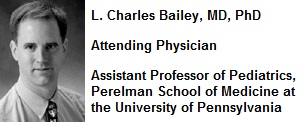
The researchers found that children with four or more exposures to broad spectrum antibiotics during infancy were particularly more likely to be at risk for obesity. The study, published online September 29, 2014 in JAMA Pediatrics, did not directly examine cause and effect, said Charles Bailey, MD, PhD, (See Photo) lead author of the study, but he added, “as pediatricians, we’re interested in whether events that happen early in life might reset the baseline and have a long-term effect on how the body regulates weight.”
The researchers were intrigued by the emerging idea that the microbial population that begins to colonize in infants’ intestines shortly after birth, known as the microbiome, plays an important role in establishing energy metabolism. Previous studies have shown that antibiotic exposure influences the microbiome’s diversity and composition. “The thought is that the microbiome may be critically dependent on what is going on during infancy,” Bailey added.
The study team analyzed electronic health records from 2001 to 2013 of 64,580 children with annual visits at ages 0 to 23 months, as well as one or more visits at ages 24 to 59 months within the CHOP Care Network. They assessed the relationships between antibiotic prescription and related diagnoses before age 24 months and the development of obesity in the following three years.
Broad-spectrum drugs associated with obesity but not narrow-spectrum drugs
The investigators saw the association with broad-spectrum drugs, but they reported no significant association between obesity and narrow-spectrum drugs. For this study, they classified first-line therapy for common pediatric infections, such as penicillin and amoxicillin, as narrow-spectrum. They considered broad-spectrum antibiotics to include those recommended in current guidelines as second-line therapy.
“Treating obesity is going to be a matter of finding the collection of things that together have a major effect, even though each alone has only a small effect,” said Patricia DeRusso, MD, director of the Healthy Weight Program and vice president of Medical Staff Affairs at Children’s Hospital who was the senior author of the study. “Part of what we are exploring in this study is one of those factors that we can possibly modify in the way we take care of kids and make it better.”
Future investigations are needed involving multiple large pediatric health systems that will take a broader look at several populations and how adopting guidelines that accentuate the use of narrow-spectrum antibiotics might affect patients’ risk of obesity, Dr. Bailey said. In addition to supporting this type of research locally, CHOP is also a key contributor to networks such as PEDSnet that link many children’s hospitals to make more effective clinical research possible. Researchers also are looking at ways the microbial communities living in infants’ intestines are swayed by dietary and environmental factors.
Early intervention is key
Childhood obesity has more than doubled in children over the past 30 years, according to the Centers for Disease Control and Prevention. Many will remain obese into adulthood and be susceptible to heart disease, type 2 diabetes, stroke, several types of cancer, and osteoarthritis. Medical researchers at CHOP want to identify ways to intervene as early as possible, in order to avert the lifetime of medical, developmental, and social problems associated with obesity.
More information
“Association of Antibiotics in Infancy With Early Childhood Obesity” JAMA Pediatrics, published online on September 29, 2014 doi:10.1001/jamapediatrics.2014.1539
Dr. Bailey’s coauthors were Christopher Forrest, MD, PhD; Peixin Zhang, PhD; Thomas M. Richards, MS; Alice Livshits, BS; and Patricia A. DeRusso, MD, MS.
This research project was funded by an unrestricted donation to The Children’s Hospital of Philadelphia’s Healthy Weight Program from the American Beverage Foundation for a Healthy America.
Contact: Joey McCool, The Children’s Hospital of Philadelphia, 267-426-6070 or McCool@email.chop.edu Children’s Hospital of Philadelphia Web Site – Posted 9-30-2014 http://www.chop.edu/news/antibiotic-use-by-age-2-associated-with-obesity-risk.html
Why is antibiotics misuse so high in American society*?
One theory is that Big Pharma, the Pharmaceutical industry, dictates standards of care in the field of medicine, more so than may be a best-practice. (Picture the scene of a Pharmaceutical Salesperson slipping in the backdoor to visit a doctor and showcase latest product lines).
This subject of damaging health effects deriving from capitalistic practices in medicine aligns with Go Lean … Caribbean (Page 157), as it posits that Cancer treatment (in the US) has been driven by the profit motive, more so than a quest for wellness and/or a cure.
This is not the model we want to effect the well-being of our young children.
The Go Lean roadmap specifies where we are as a region (minimal advanced medicine options), where we want to go (elevation of Caribbean society in the homeland for all citizens to optimize wellness) and how we plan to get there – confederating as a Single Market entity. While the Go Lean book strategizes a roadmap for economic empowerment, it clearly relates that healthcare, and pharmaceutical acquisitions are important in the quest to make the Caribbean a better place to live, work and play. At the outset of the Go Lean book, in the Declaration of Interdependence (Page 11), these points are pronounced:
viii. Whereas the population size is too small to foster good negotiations for products and commodities from international vendors, the Federation must allow the unification of the region as one purchasing agent, thereby garnering better terms and discounts.
ix. Whereas the realities of healthcare and an aging population cannot be ignored and cannot be afforded without some advanced mitigation, the Federation must arrange for health plans to consolidate premiums of both healthy and sickly people across the wider base of the entire Caribbean population. The mitigation should extend further to disease management, wellness, obesity and smoking cessation programs.
The Go Lean book is not a medical reference or science book, but it does touch on medical issues, especially as they relate to community economics. The publishers of the book are not trying to dictate policies for medical practice; that would be out-of-scope for Go Lean, which serves as a roadmap for the implementation and introduction of the technocratic Caribbean Union Trade Federation (CU). The CU‘s prime directives are identified with the following 3 statements:
Optimization of the economic engines in order to grow the regional economy to $800 Billion & create 2.2 million new jobs.
Establishment of a security apparatus to protect the resultant economic engines.
Improve Caribbean governance to support these engines.
Previous blog/commentaries addressed similar issues as the foregoing article. The following sample applies:
The Caribbean Union Trade Federation has the prime directive of optimizing the economic, security and governing engines of the region. The foregoing article/VIDEO depicts that research is very important to identify and qualify best-practices in health management for the public. Obviously the scourge of obesity is unwelcomed. Nutrition education is a key mitigation, but the foregoing article/VIDEO proclaims another driver that is outside of the control of the afflicted, or their families. This is the manifestation and benefits of Research & Development (R&D). The roadmap describes this focus as a community ethos. Then it goes on to stress that the CU must promote the community ethos that R&D is valuable and must be incentivized for adoption. The following list details additional ethos, strategies, tactics, implementations and advocacies to optimize the region’s health deliveries:
Community Ethos – Deferred Gratification
Page 21
Community Ethos – The Consequences of Choices Lie in the Future
Page 21
Community Ethos – Governing Principles – Return on Investments
Page 24
Community Ethos – Cooperatives
Page 25
Community Ethos – Non-Government Organizations
Page 25
Community Ethos – Ways to Impact Research & Development (R&D)
Page 30
Community Ethos – Ways to Promote Happiness
Page 36
Community Ethos – Ways to Impact the Greater Good
Page 37
Strategy – Integrate and unify region in a Single Market
Page 45
Strategy – Agents of Change – Globalization
Page 57
Tactical – Fostering a Technocracy
Page 64
Tactical – Separation of Powers – Health Department
Page 86
Tactical – Separation of Powers – Drug Administration
Page 87
Implementation – Ways to Pay for Change
Page 101
Implementation – Ways to Implement Self-Government Entities – R&D Campuses
Page 105
Implementation – Ways to Deliver
Page 109
Planning – Ways to Make the Caribbean Better
Page 131
Advocacy – Ways to Improve Healthcare
Page 156
Advocacy – Ways to Better Manage the Social Contract
Page 170
Advocacy – Ways Foster Cooperatives
Page 176
Advocacy – Ways to Improve Emergency Management
Page 196
Advocacy – Ways to Impact Foundations
Page 219
Advocacy – Ways to Impact Youth – Healthcare
Page 227
Advocacy – Ways to Impact Persons with Disabilities
Page 228
Appendix – Emergency Management – Medical Trauma Centers
Page 336
The foregoing news/VIDEO story depicted analysis administered by the Children’s Hospital of Philadelphia, a teaching and research facility for the care of children. There is a need for more such R&D on obesity causes and drivers. In the Caribbean, Cuba currently performs a lot of R&D into cancer, diabetes and other ailments. The Go Lean roadmap posits that more innovations will emerge in the region as a direct result of the CU prioritization on science, technology, engineering and medical (STEM) activities on Caribbean R&D campuses and educational institutions.
The Go Lean roadmap does not purport to be an authority on medical best-practices. The CU economic-security-governance empowerment plan should not direct the course of direction for obesity research and treatment. Neither should pharmaceutical salesmen. Their motive is strictly profit …
The CU motive, to impact the Greater Good, mandates monitoring progress in obesity research, the causes and effects. The hope is to minimize the affliction. This is the heavy-lifting the Caribbean region needs. This means life-or-death for some. All of the Caribbean is hereby urged to lean-in to this roadmap for Caribbean elevation.
“The first rule of antibiotics is try not to use them, and the second rule is try not to use too many of them.” – The ICU Book[70]
Inappropriate antibiotic treatment and overuse of antibiotics have contributed to the emergence of antibiotic-resistant bacteria. Self prescription of antibiotics is an example of misuse.[71] Many antibiotics are frequently prescribed to treat symptoms or diseases that do not respond to antibiotics or that are likely to resolve without treatment. Also incorrect or suboptimal antibiotics are prescribed for certain bacterial infections.[41][71] The overuse of antibiotics, like penicillin and erythromycin, have been associated with emerging antibiotic resistance since the 1950s.[56][72] Widespread usage of antibiotics in hospitals has also been associated with increases in bacterial strains and species that no longer respond to treatment with the most common antibiotics.[72]
Common forms of antibiotic misuse include excessive use of prophylactic antibiotics in travelers and failure of medical professionals to prescribe the correct dosage of antibiotics on the basis of the patient’s weight and history of prior use. Other forms of misuse include failure to take the entire prescribed course of the antibiotic, incorrect dosage and administration, or failure to rest for sufficient recovery. Inappropriate antibiotic treatment, for example, is their prescription to treat viral infections such as the common cold. One study on respiratory tract infections found “physicians were more likely to prescribe antibiotics to patients who appeared to expect them”.[73] Multifactorial interventions aimed at both physicians and patients can reduce inappropriate prescription of antibiotics.[74]
Referenced Sources:
41. Slama TG, Amin A, Brunton SA, et al. (July 2005). “A clinician’s guide to the appropriate and accurate use of antibiotics: the Council for Appropriate and Rational Antibiotic Therapy (CARAT) criteria”. Am. J. Med. 118 Suppl 7A (7): 1S–6S. doi:10.1016/j.amjmed.2005.05.007
56. Pearson, Carol (28 February 2007). “Antibiotic Resistance Fast-Growing Problem Worldwide”. Voice Of America. Archived from the original on 2 December 2008. Retrieved 29 December 2008.
70. Marino PL (2007). “Antimicrobial therapy”. The ICU book. Hagerstown, MD: Lippincott Williams & Wilkins. p. 817. ISBN978-0-7817-4802-5.
71. Larson E (2007). “Community factors in the development of antibiotic resistance”. Annu Rev Public Health 28: 435–447. doi:10.1146/annurev.publhealth.28.021406.144020. PMID 17094768.
72. Hawkey PM (September 2008). “The growing burden of antimicrobial resistance”. J. Antimicrob. Chemother. 62 Suppl 1: i1–9. doi:10.1093/jac/dkn241. PMID 18684701.
73. Ong S, Nakase J, Moran GJ, Karras DJ, Kuehnert MJ, Talan DA (2007). “Antibiotic use for emergency department patients with upper respiratory infections: prescribing practices, patient expectations, and patient satisfaction”. Annals of Emergency Medicine 50 (3): 213–20. doi:10.1016/j.annemergmed.2007.03.026. PMID 17467120.
74. Metlay JP, Camargo CA, MacKenzie T, et al. (2007). “Cluster-randomized trial to improve antibiotic use for adults with acute respiratory infections treated in emergency departments”. Annals of Emergency Medicine 50 (3): 221–30. doi:10.1016/j.annemergmed.2007.03.022. PMID 17509729
The Chinese company Alibaba Group is another model for the Caribbean Postal Union (CPU): our logistics solution for delivering the mail … and modern commerce – 21st Century trade – to the Caribbean region.
The US Postal Service (USPS) is not the model for the Caribbean. The book Go Lean…Caribbean describes the USPS as a failing enterprise (Page 99). Alibaba, on the other hand, just went public on the New York Stock Exchange (NYSE), raising $25 Billion in the first week.
Alibaba Group Holding Limited is a publicly traded Hangzhou-based group of Internet-based e-commerce businesses, including business-to-business online web portals, online retail and payment services, a shopping search engine and data-centric cloud computing services. The group began in 1999 when Jack Ma founded the website Alibaba.com, a business-to-business portal to connect Chinese manufacturers with overseas buyers. In 2012, two of Alibaba’s portals handled 1.1 trillion yuan ($170 Billion) in sales.[13] The company primarily operates in the People’s Republic of China (PRC), and at closing time, on the date of its historic initial public offering (IPO), 19 September 2014, Alibaba’s market value was measured as US$231 Billion.[14]. Analysts says that performance marketing will play a key role in meeting the financial markets’ expectations of such market valuation [15]
In September 2013, the company sought an IPO in the United States after a deal could not be reached with Hong Kong regulators.[16] Planning occurred over 12 months before the company’s market debut in September 2014. The NYSE Alibaba ticker symbol is “BABA.N”, while the pricing of the IPO initially raised US$21.8 billion,[17][14] which later increased to US$25 billion, making it the largest IPO in history.[18] However, buyers weren’t purchasing actual shares in the group, since China forbids foreign ownership, but rather just shares in a Cayman Islands shell corporation.[19]
Alibaba’s consumer-to-consumer portal Taobao Marketplace, similar to US-based eBay.com, features nearly a billion products and is one of the 20 most-visited websites globally. The Group’s websites accounted for over 60% of the parcels delivered in China by March 2013,[13] and 80% of the nation’s online sales by September 2014.[14] Alipay, an online payment escrow service, accounts for roughly half of all online payment transactions within China.[20]
Alipay.com is a third-party online payment platform with no transaction fees.[1] It was launched in China in 2004 by Alibaba Group and its founder Jack Ma. According to analyst research report, Alipay has the biggest market share in China with 300 million users and control of just under half of China’s online payment market in February 2014. According to Credit Suisse, the total value of online transactions in China grew from an insignificant size in 2008 to around RMB 4 trillion (US$660 billion) in 2012.[2]
Alipay provides an escrow service, in which consumers can verify whether they are happy with goods they have bought before releasing money to the seller. This service was offered for what the company says are China’s weak consumer protection laws, which have reduced consumer confidence in C2C (Consumer-to-Consumer) and even B2C (Business-to-Consumer) quality control.
The company says Alipay operates with more than 65 financial institutions including Visa and MasterCard[3] to provide payment services for Taobao and Tmall as well as more than 460,000 Chinese businesses. Internationally, more than 300 worldwide merchants use Alipay to sell directly to consumers in China. It currently supports transactions in 12 foreign currencies.
The payment methods are MasterCard, Visa, Boleto Bancário, Transferência Bancária, Maestro, WebMoney, and QIWI Кошелек as of May 2014.[4]
The PBOC (People’s Bank of China), China’s central bank, issued licensing regulations in June 2010 for third-party payment providers. It also issued separate guidelines for foreign-funded payment institutions. Because of this, Alipay, which accounts for half of China’s non-bank online payment market, was restructured as a domestic company controlled by Alibaba CEO Jack Ma in order to facilitate the regulatory approval for the license.[5] The 2010 transfer of Alipay’s ownership was controversial, with media reports in 2011 that Yahoo! and Softbank (Alibaba Group’s controlling shareholders) were not informed of the sale for nominal value. Chinese business publications Century Weekly criticised Ma, who stated that Alibaba Group’s board of directors was aware of the transaction.[6] The incident was criticized in foreign and Chinese media as harming foreign trust in making Chinese investments.[7] The ownership dispute was resolved by Alibaba Group, Yahoo!, and Softbank in July 2011.[8]
In 2013 Alipay launched a financial product platform called Yu’ebao.[9] As of June 2013 the company still had what it called “a minor paperwork problem” with the China Securities Regulatory Commission, but the company said that they planned to expand the product while these are sorted out.[10] Wikipedia Online Encyclopedia – Retrieved October 2, 2014 http://en.wikipedia.org/wiki/Alipay
Alibaba’s 2013 revenues amounted to USD 7.5 billion[11] with 22,000 employees (March 2014).[12] This Alibaba model relates to the Caribbean in so many ways, including the fact that it is a Cayman Islands incorporated business entity.
If the CPU can duplicate some of Alibaba’s success, that would be a win-win. The focus of the CPU is not just postal mail, but rather logistics. Alibaba does so much more than just sell Chinese manufactured goods online, it facilitates a complete eco-system for Small-Medium-Enterprises (SME’s) to thrive: finding customers for their wares and collecting payments. (The end result is the generation of $170 billion in commerce). We need that functionality in the Caribbean. Alibaba is therefore a good model, not just for the CPU but the entire Caribbean Union Trade Federation (CU). The book Go Lean…Caribbean, serves as a roadmap for the introduction and implementation of the technocratic CU.
Alibaba was the brainchild of just one person, Jack Ma.
This VIDEO demonstrates an additional theme from the Go Lean book, that one person can make a difference in transforming society:
Jack Ma and Alibaba have greatly impacted Chinese society, elevating the economic engines. This result synchronizes with the Go Lean roadmap for elevating Caribbean society. The CU will employ technologically innovative products and services to impact its prime directives; identified with the following 3 statements:
Optimization of the economic engines in order to grow the regional economy to $800 Billion & create 2.2 million new jobs.
Establishment of a security apparatus to protect the resultant economic engines.
Improve Caribbean governance to support these engines.
The Go Lean roadmap seeks to change the entire eco-system of Caribbean commerce and the interaction with postal operations. This vision is defined early in the book (Page 12 & 14) in the following pronouncements in the Declaration of Interdependence:
xv. Whereas the business of the Federation and the commercial interest in the region cannot prosper without an efficient facilitation of postal services, the Caribbean Union must allow for the integration of the existing mail operations of the governments of the member-states into a consolidated Caribbean Postal Union, allowing for the adoption of best practices and technical advances to deliver foreign/domestic mail in the region.
xxvii. Whereas the region has endured a spectator status during the Industrial Revolution, we cannot stand on the sidelines of this new economy, the Information Revolution. Rather, the Federation must embrace all the tenets of Internet Communications Technology (ICT) to serve as an equalizing element in competition with the rest of the world. The Federation must bridge the digital divide and promote the community ethos that research/development is valuable and must be promoted and incentivized for adoption.
Email and text messages have replaced “snail” mail in advanced economy countries for personal written communications. Electronic Bill Presentation & Payments (EBP&P) schemes are transforming business-to-consumer interactions, and electronic funds transfer/electronic commerce is the norm for payments. So ICT must be a prominent feature of any Caribbean empowerment plan. This is why creating the CPU and the Caribbean Cloud is “Step One, Day One” in the Go Lean roadmap. This is the by-product of assembling regional organs into a single entity with multilateral cooperation and a separation-of-powers (Page 71). The roadmap also includes establishment of the Caribbean Central Bank (CCB), as a cooperative among existing Central Banks, and its facilitation of electronic payments schemes so as to enable the region’s foray into electronic commerce and trade marketplaces, as depicted with the Alibaba/Alipay model in the foregoing article and VIDEO.
The Go Lean book details a series of community ethos, strategies, tactics, implementations and advocacies to foster the best practices for the delivery of the CPU and trade marketplaces in the Caribbean region:
Community Ethos – Deferred Gratification
Page 21
Community Ethos – Economic Principles – All Choices Involve Costs
Page 21
Community Ethos – Economic Principles – People Respond to Incentives
Page 21
Community Ethos – Economic Principles – Economic Systems Influence Choices
Page 21
Community Ethos – Economic Principles – Voluntary Trade Creates Wealth
Page 21
Community Ethos – Economic Principles – The Consequence of Choice Lie in Future
Page 21
Community Ethos – Job Multiplier
Page 22
Community Ethos – Lean Operations
Page 24
Community Ethos – Cooperatives
Page 25
Community Ethos – Ways to Impact the Future
Page 26
Community Ethos – Ways to Help Entrepreneurship
Page 28
Community Ethos – Promote Intellectual Property
Page 29
Community Ethos – Ways to Bridge the Digital Divide
Page 31
Strategy – Agents of Change – Technology
Page 57
Strategy – Agents of Change – Globalization
Page 57
Tactical – Fostering a Technocracy
Page 64
Tactical – How to Grow the Economy to $800 Billion – ‘East Asian Tigers’ Model
Page 67
Tactical – Separation of Powers – Postal Services
Page 78
Tactical – Separation of Powers – Interstate Commerce Administration
Page 79
Implementation – Year 1 / Assemble Phase – Establish CPU
Page 96
Implementation – Anecdote – Mail Services – US Dilemma
Page 99
Implementation – Ways to Pay for Change – Group Purchasing Organizations (GPO)
Page 101
Implementation – Ways to Optimize Mail Service & myCaribbean.gov Marketplace
Page 108
Implementation – Ways to Deliver
Page 109
Implementation – Ways to Impact Social Media
Page 111
Implementation – Ways to Benefit from Globalization
Page 119
Planning – Ways to Improve Trade – GPO’s
Page 128
Planning – Ways to Improve Interstate Commerce
Page 129
Advocacy – Ways to Grow the Economy
Page 151
Advocacy – Ways to Create Jobs
Page 152
Advocacy – Ways to Mitigate Black Markets
Page 165
Advocacy – Ways to Foster Cooperatives
Page 176
Anecdote – Caribbean Industrialist – Role Model Butch Stewart
Page 189
Advocacy – Ways to Foster Technology – Incubators Strategy
Page 197
Advocacy – Ways to Foster e-Commerce
Page 198
Advocacy – Reforms for Banking Regulations
Page 199
Advocacy – Ways to Impact Wall Street
Page 200
Advocacy – Ways to Impact Main Street
Page 201
According to the foregoing article, trade business models can be very successful as a strategy to grow the regional economy. Increased trade will undoubtedly mean increased job opportunities. The CU/CPU/CCB/Go Lean plan is to foster and incubate key industries for this goal, incorporating many of the best practices as related in the foregoing article and VIDEO; imagine a Caribbean-based marketplace – www.myCaribbean.gov – with 150 million subscribers (Page 74). Alibaba is now worth over US$231 Billion, though it is a recent start-up. This is a role model for the CU/CPU/CCB/Go Lean roadmap to follow, a methodical start-up with technocratic efficiency.
Now is the time for all of the Caribbean, the people and governing institutions (like Postal Operations), to lean-in for the changes in the book Go Lean … Caribbean. This is a Big Idea for the region, that of a Cyber Caribbean effort (Page 127), in which trade marketplaces play a major role. This roadmap is not just a plan for delivering the mail; it is also the delivery of the hopes and dreams of generations of Caribbean stakeholders; it is about delivering the future: a better place to live, work and play. 🙂
The publishers of the book Go Lean…Caribbean want to forge change in the Caribbean. Is it possible to change the attitudes of an entire community, country or region? Has that ever been done before for an entire community? When?
Yes, and yes. 1942…
The book relates a great case study, that of the history of the United States during World War II, where the entire country postponed immediate gratification, endured hard sacrifices, and became convinced that their future (after the war) would be better than their past (before the war).
The foregoing article is a scholarly work on that subject, the events of 1942, and the subsequent years of World War II.
Title: The Auto Industry Goes to War
Did the U.S. manufacture of automobiles come to a halt during World War II?
Yes, it halted completely. No cars, commercial trucks, or auto parts were made from February 1942 to October 1945.
On January 1, 1942, all sales of cars, as well as the delivery of cars to customers who had previously contracted for them, were frozen by the government’s Office of Production Management. As a temporary measure, local rationing boards could issue permits allowing persons who had contracted for cars before January 1st to secure delivery.
President Roosevelt established the War Production Board on January 16, 1942. It superseded the Office of Production Management. The WPB regulated the industrial production and allocation of war materiel and fuel. That included coordinating heavy manufacturing, and the rationing of vital materials, such as metals, rubber, and oil. It also established wage and price controls.
All manufacturers ended their production of automobiles on February 22, 1942. The January 1942 production quota had been a little over 100,000 automobiles and light trucks. The units manufactured at the beginning of February would bring up the total number of vehicles in a newly established car stockpile to 520,000. These would be available during the duration of the war for rationed sales by auto dealers to purchasers deemed “essential drivers.”
Representatives from the auto industry formed the Automotive Council for War Production in April 1942, to facilitate the sharing of resources, expertise, and manpower in defense production contracting.
The auto industry retooled to manufacture tanks, trucks, jeeps, airplanes, bombs, torpedoes, steel helmets, and ammunition under massive contracts issued by the government. Beginning immediately after the production of automobiles ceased, entire factories were upended almost overnight. Huge manufacturing machines were jack hammered out of their foundations and new ones brought in to replace them. Conveyors were stripped away and rebuilt, electrical wires were bundled together and stored in the vast factory ceilings, half-finished parts were sent to steel mills to be re-melted, and even many of the dies that had been used in the fabrication of auto parts were sent to salvage.
The government’s Office of Price Administration imposed rationing of gasoline and tires and set a national speed limit of 35 mph.
By April 1944, only 30,000 new cars out of the initial stockpile were left. Almost all were 1942 models and customers required a permit to make the purchase. The Office of Price Administration set the price. The government contemplated rationing used car sales as well, but that was finally deemed unnecessary. The government estimated that about a million cars had been taken off the road by their owners, to reserve for their own use after the war.
In the autumn of 1944, looking then toward the end of the war, Ford, Chrysler, Nash, and Fisher Body of General Motors received authorization from the War Production Board to do preliminary work on experimental models of civilian passenger cars, on condition that it not interfere with war work and that employees so used be limited to planning engineers and technicians. Limits were also set on the amount of labor and materials the companies could divert to this.
During the war, the automobile and oil companies continued to advertise heavily to insure that the public did not forget their brand names. Companies also were proud to proclaim their patriotic role in war production, and their advertisements displayed the trucks, aircraft, and munitions that they were making to do their part in combat.
In addition, auto advertisements encouraged the public to patronize local auto dealers’ service departments so that car repairs could help extend the lives of the cars their customers had bought before the war. In the last couple of years of the war, the auto companies also used their advertisements to heighten public anticipation of the end of the war and the resumption of car and truck manufacturing, with advertising copy such as Ford’s “There’s a Ford in Your Future.”
About the Author
Historian John Buescher is an author and professor who formerly headed Tibetan language broadcasts at Voice of America. His Ph.D. is from the University of Virginia and he has published extensively on the history of Tibetan and Indian Buddhism and on the history of 19th-century American spiritualism.
Bibliography a. John Alfred Heitmann, The Automobile and American Life. Jefferson, NC: McFarland, 2009. pp. 119-130. b. James J. Flink, The Automobile Age. Cambridge: MIT Press, 1988. pp. 275-76. c. Automobile Manufacturers Association, Freedom’s Arsenal: The Story of the Automotive Council for War Production. Detroit: Automobile Manufacturers Association, 1950. Teaching History.org – National History Education Clearinghouse (Retrieved 09/29/2014) – http://www.teachinghistory.org/history-content/ask-a-historian/24088
This relates a commitment so vital to a community that everyone was willing to sacrifice and lean-in for the desired outcome. This requires effective messaging.
The book Go Lean…Caribbean serves as a roadmap for the introduction and implementation of the Caribbean Union Trade Federation (CU); an initiative to bring change, empowerment, to the Caribbean region; to make the region a better place to live, work and play. This Go Lean roadmap also has initiatives to foster a domestic (region-wide) automotive industry. So there are a lot of benefits to glean by studying the American track record, even the periods of halted production. The Go Lean book posits that permanent change for Caribbean society will only take root as a result of adjustments to the community attitudes, the national spirit that drives the character and identity of its people. This is identified in the book as “community ethos”.
The purpose of the book/roadmap though is not just the ethos changes, but rather the elevation/empowerment of Caribbean society. In total, the Caribbean empowerment roadmap has these 3 prime directives:
Optimization of the economic engines in order to grow the regional economy to $800 Billion & create 2.2 million new jobs.
Establishment of a security apparatus to protect the resultant economic engines.
Improve Caribbean governance and industrial policies to support these engines.
The roadmap details the following community ethos, plus the execution of these strategies, tactics, implementation and advocacies to forge the identified permanent change in the region:
Community Ethos – Deferred Gratification
Page 21
Community Ethos – Economic Principles – People Choose
Page 21
Community Ethos – Economic Principles – People Respond to Incentives in Predictable Ways
Page 21
Community Ethos – Economic Principles – The Consequences of Choices Lie in the Future
Page 21
Community Ethos – Governing Principles – Lean Operations
Page 24
Community Ethos – Governing Principles – Cooperatives
Page 25
Community Ethos – Ways to Impact the Future
Page 26
Community Ethos – Ways to Help Entrepreneurship
Page 28
Community Ethos – Ways to Impact Research & Development
Page 30
Community Ethos – Ways to Impact Turn-Arounds
Page 33
Community Ethos – Ways to Improve Sharing
Page 35
Community Ethos – Ways to Promote Happiness
Page 36
Community Ethos – Ways to Impact the Greater Good
Page 37
Strategy – Vision – Confederate 30 Member-States
Page 45
Strategy – Mission – Foster New Industries
Page 46
Tactical – Confederating a Permanent Union
Page 63
Tactical – Fostering a Technocracy
Page 64
Implementation – Ways to Pay for Change
Page 101
Implementation – Ways to Deliver
Page 109
Planning – 10 Big Ideas for the Caribbean
Page 127
Planning – Ways to Make the Caribbean Better
Page 131
Planning – Reasons Why the CU Will Succeed
Page 132
Planning – Lessons Learned from 2008
Page 136
Advocacy – Ways to Grow the Economy
Page 151
Advocacy – Ways to Create Jobs
Page 152
Advocacy – Ways to Improve Communications
Page 186
Advocacy – Ways to Develop Auto Industry
Page 206
Advocacy – Ways to Preserve Caribbean Heritage
Page 218
Previously Go Lean blog/commentaries have considered historic references and stressed fostering the proper and appropriate community ethos for the Caribbean to prosper. The following sample applies:
Egalitarianism versus Anarchism – Community Ethos Debate
All in all, there is a certain community ethos associated with populations that have endured crises. It is a focus on the future, a deferred gratification as investment for future returns. These attributes have been promoted by the Go Lean book as necessary traits to forge change in the Caribbean region. We need our own Caribbean flavor of this community ethos, in our manifestation of industrial policy.
The world was at the precipice, near implosion, in 1942 (World War II) … (and again in 2008 during the Great Recession). In order to endure the crises, many people had to endure sacrifice; but the entire community had to adopt the community ethos of deferred gratification. The industrial policy adjusted accordingly, with little objection from the public in general. A lot of good came from these sacrifices.
There are lessons for the Caribbean today to consider from the development of industrial policy in US history during World War II:
• Priorities can change in times of crisis. A crisis is a terrible thing to waste.
• Having a domestic manufacturing industry gives control of domestic production capability.
• Efficiency and effectiveness in one industry can be transferred to other industries; it is disciplined competence that is the real asset.
• Lowest cost is not the only criteria for providing out-sourced contracts.
• Limited raw materials are valuable, even as recycled materials.
• Interdependence with partners can avoid crisis in the first place, and mitigate the damage from realized threats.
Now the Caribbean is in crisis, still reeling from 2008; we must endure, we must sacrifice and we must defer gratification. Now is the time to lean-in to this roadmap for Caribbean change, as depicted in the book Go Lean…Caribbean. We cannot afford to standby and watch our world implode. This was the case in 1942 and again in 2008. We must have a hand in our own destiny; an integrated (Single) market of 42 million people is large enough to be consequential in world negotiations.
We urge all Caribbean stakeholders (residents, Diaspora, governmental leaders, visitors, investors, etc.) to lean-in to this roadmap for change. 🙂
In addition to the abundance of published materials on Maslow, the book Go Lean…Caribbean qualifies the same 8 levels of needs (Page 231). This definition of needs also applies to the subject of Climate Change and the foregoing Book Review of the new publication by author Naomi Klein entitled This Changes Everything: Capitalism vs. the Climate. This source book relates that the systems of capitalism run conflict with the ideals of fighting Climate Change. This commentary asserts that those who dissent are limiting their advent of Maslow’s Hierarchy to Level 1 and/or 2, while advocates to cure/mitigate Climate Change are navigating above Level 3, all the way to Level 8.
The profit motive is powerful; according to the foregoing article/book review, the practice of capitalism dictates seeking the shortest path to profit. Many are spellbound by profit, to make millions or simply to maintain jobs, to the point that they will sacrifice the higher level needs to only ensure Basic (Level 1) and Security/Safety (Level 2) needs.
This short-sighted view “cuts off the nose to spite the face”; it sacrifices the long-term for the sake of the short-term.
The book review follows:
Book Review: Heather Mallick, Columnist Title: Naomi Klein has written the book of the modern era This Changes Everything: Capitalism vs. the Climate – gives the reader the tools to discuss the coming disaster intelligently.
The planet is headed for a climate catastrophe, and soon. Make that now. Your reaction will be either a quick calculation as to whether you’ll be able to die in time to skip the whole thing, or an appalled realization that your children are in for pain and your grandchildren for a terrible fate.
But your starter task should be reading Naomi Klein’s This Changes Everything: Capitalism vs. the Climate. Meticulously researched and briskly rational in tone, her just-published book is one of the basic texts of the modern era, by which I mean since the Scotsman James Watt invented the coal-fired steam engine in 1776. Hasn’t perdition come quickly on its wee cloven hooves?
Until then power came from water wheels. With Watt’s device, owners could build factories near the urban poor, hire cheaply, cut prices and stabilize production that used to depend on the whims of weather. Ironically it’s weather that will finish us off now. Capitalism is magical until it isn’t. Skip ahead 240 years and here we are, basically doomed by its profit formula.
Klein’s book is an essential purchase in that it tells you precisely what you need to know to discuss the climate dilemma intelligently: it covers historical context, environmental science, fossil fuel finance, our current version of capitalism, political history, climate change denial, environmentalism’s failures, suggested quack-scientific remedies that will “block” the sun, green energy and how people are working locally to blockade carbon extraction because nothing else is being done. It is factual rather than emotive.
Fascinatingly, it portrays fossil fuel corporations as victims of their own nature. Programmed like computers, they could not reverse themselves even if they wished to. Only governments can do it. Even then, international free-trade agreements allow corporations to sue nations to stop this, the very reason smart Germany has just objected to Canada’s new European trade deal. Stephen Harper knuckled under to corporations but the Germans are smarter than that.
This magnificent textbook has already been attacked by people who didn’t read it, apparently for the high school reason that Klein is too famous, or that the book is too hard on the West. But science has spoken. There are 2,795 gigatons (a gigaton is 1 billion metric tons) of fossil fuel reserves already claimed by industry that will be extracted and burned. “We know how much more carbon can be burned between now and 2050 and still leave us a solid chance (roughly 80 per cent) of keeping warming below 2 degrees Celsius,” writes Klein. “That amount is 565 gigatons.”
That’s 2,795 vs. 565, not even faintly close, and humans haven’t agreed even in principle to slow down. “2 degrees now looks like a utopian dream,” Klein writes, and 4 degrees is reliably said to be “incompatible with any reasonable characterization of an organized, equitable and civilized global community,” a.k.a. life as we sort of know it. Many experts say we’ll go far beyond 4 degrees.
The joy and genius of capitalism is how it takes the shortest path to profit, but it is as bad as communism at trashing earth, water and air. Something has to reshape capitalism or we are fried. Humans want to fob the problem off on other humans, which is not how it works on this pretty blue ball spinning through the sky. We may not suffer equally but we’ll all suffer.
A big wheel is already rolling. There is produce we can’t buy as drought crisps farmland in California, a state that hasn’t even banned private swimming pools. We are seeing the hottest summers on record and abnormally harsh winters, violent storms, more smog alerts, nations like the U.K. and cities like New York hit by flooding, Brazil hit by drought.
Author: Naomi Klein
We may blame China and India, accusing them of blithely polluting as we claim to virtuously filter North American effluent. But we outsourced our pollution to Asia. As Klein reports, “The rise in emissions from goods produced in developing countries but consumed in industrialized ones was six times greater than the emissions savings of industrialized countries.” China will stop polluting when we stop buying their cheap stuff. Are you going to stop? Are you?
Klein’s question is this: do you go along to get along or do you fight back? This Changes Everything is basic reading and no one will take you seriously until you’ve read every single page.
Heather Mallick’s column appears Monday and Wednesday on the op-ed page and Saturday in News. hmallick@thestar.ca
The Star – Toronto’s Daily Newspaper – Book Review – Sunday September 28, 2014 – http://www.thestar.com/opinion/commentary/2014/09/28/naomi_klein_has_written_the_book_of_the_modern_era_mallick.html
The Go Lean book also details the impending crisis of Climate Change and then declares that “a crisis is a terrible thing to waste”, calling for the establishment of a regional administration to monitor, mitigate and manage the threats of Climate Change. The Go Lean book posits that the Caribbean region is at the frontline of the battleground of Climate Change, and that there is the need to save life-and-limb due to increased occurrences of devastating hurricanes, flooding, forest fires, droughts, rising sea levels, and alterations in fish stock.
This Go Lean book serves as a roadmap for the introduction and implementation of the technocratic Caribbean Union Trade Federation (CU). The prime directives of this agency are described as:
Optimize the economic engines of the Caribbean to elevate the regional economy to grow to $800 Billion and create 2.2 million new jobs.
Establish a security apparatus to protect the resultant economic engines.
Improve Caribbean governance and industrial policies to support these engines.
The Go Lean roadmap calls for the CU to serve as the regional administration to optimize economy, homeland security and governance engines for the Caribbean, especially in the fight of Climate Change battleground frontline status. But the needs of the economy, capitalistic principles and Climate Change mitigations do not have to clash/conflict; they can co-exist.
This is the first pronouncement (Page 11) of the opening Declaration of Interdependence that bears a direct reference to this foregoing article and source book:
i. Whereas the earth’s climate has undeniably changed resulting in more severe tropical weather storms, it is necessary to prepare to insure the safety and security of life, property and systems of commerce in our geographical region. As nature recognizes no borders in the target of its destruction, we also must set aside border considerations in the preparation and response to these weather challenges.
The source book also relates to the concepts of capitalism. Though it is the surviving system from the 20th Century debate versus Communism, it is far from being a perfect commerce system. But it can be managed and manipulated for the Greater Good. This point was also pronounced on Page 13 of the Declaration of Interdependence in the Go Lean book:
xxiv. Whereas a free market economy can be induced and spurred for continuous progress, the Federation must install the controls to better manage aspects of the economy: jobs, inflation, savings rate, investments and other economic principles. Thereby attracting direct foreign investment because of the stability and vibrancy of our economy.
The Go Lean roadmap is designed to deliver many empowerment activities to elevate Caribbean society. These activities will carefully balance the needs of the Caribbean and the needs of the planet: we need jobs, yes, but we do not need to increase our carbon footprint.
The issues of Climate Change have been repeatedly addressed and further elaborated upon in these previous blog/commentaries:
The Go Lean book declares that we must adopt a community ethos, the appropriate attitude/spirit, to forge change in our region; then details the executions of the following strategies, tactics, implementations and advocacies to better impact the region’s resources and eco-systems, especially in considering the preparations and consequences of Climate Change:
Community Ethos – Deferred Gratification
Page 21
Community Ethos – Economic Systems Influence Individual Choices / Incentives
Page 21
Community Ethos – The Consequences of Choices Lie in the Future
Page 21
Community Ethos – “Crap” Happens
Page 23
Community Ethos – Lean Operations
Page 24
Community Ethos – Cooperatives
Page 24
Community Ethos – Non-Government Organizations
Page 25
Community Ethos – Ways to Impact the Future
Page 26
Community Ethos – Ways to Improve Sharing
Page 35
Community Ethos – Impact the Greater Good
Page 37
Strategy – Vision – Confederating 30 Member-States into a Single Market
Page 45
Strategy – Vision – Foster Local Economic Engines for Basic Needs
Page 45
Strategy – Mission – Prepare for Natural Disasters
Page 45
Strategy – Agents of Change – Climate Change
Page 57
Strategy – Agents of Change – Globalization
Page 57
Tactical – Confederating a Permanent Union
Page 63
Tactical – Fostering a Technocracy
Page 64
Separation of Powers – Emergency Management
Page 76
Separation of Powers – Interstate Commerce Administration
Page 79
Separation of Powers – Meteorological & Geological Service
Page 79
Separation of Powers – Fisheries and Agriculture Department
Page 88
Implementation – Assemble Regional Organs into a Single Market Economy
Page 96
Implementation – Ways to Pay for Change
Page 101
Implementation – Security Initiatives at Start-up – Unified Command & Control
Page 103
Implementation – Industrial Policy for CU Self Governing Entities
Page 103
Implementation – Ways to Deliver
Page 109
Implementation – Ways to Foster International Aid
Page 115
Implementation – Ways to Benefit from Globalization
Page 119
Planning – Big Ideas for the Caribbean Region
Page 127
Planning – Ways to Make the Caribbean Better
Page 131
Advocacy – Ways to Grow the Economy
Page 151
Advocacy – Ways to Create Jobs
Page 152
Advocacy – Ways to Improve Governance
Page 168
Advocacy – Ways to Better Manage the Social Contract
Page 170
Advocacy – Ways to Impact Public Works
Page 175
Advocacy – Ways to Foster Cooperatives
Page 176
Advocacy – Ways to Improve for Natural Disasters
Page 184
Advocacy – Ways to Improve Emergency Management
Page 196
Advocacy – Ways to Impact Wall Street
Page 200
Advocacy – Ways to Impact Main Street
Page 201
Advocacy – Ways to Improve Fisheries
Page 210
Appendix – History of Puerto Rican Migration to US & Effects of Hurricanes
Page 303
Appendix – US Virgin Islands Economic Timeline with Hurricane Impacts
Page 305
The foregoing book review and the source book discusses the threats of Climate Change on the planet. We have no option to ignore these debates. We are involved whether we want to be or not – we are on the frontlines of this battle. Apathy is not an option!
Change has come to our region; more devastating change is imminent. There is the need for a permanent union to provide efficient stewardship for Caribbean economy, security and governing engines. There must be that constant balancing act between capitalism and the planet. The Go Lean…Caribbean posits that these problems, these agents of change, are too big for just any one member-state to tackle alone, there must be a regional solution. This multi-state technocratic administration of the CU may be our best option.
The people and institutions of the region are hereby urged to lean-in to this Go Lean roadmap, to embrace the mitigations for the impending changes to the planet due to Climate Change. We can still make the Caribbean a better homeland to live, work and play. 🙂

 A previous blog/commentary asserted that the risk of earthquakes plus the constant threats during the annual hurricane season creates the need for a full-time sentinel to monitor, mitigate and manage the risks of natural disasters in the region. This is the mandate for the technocratic Caribbean Union Trade Federation (CU) for the 30 member-states of the Caribbean region. The Go Lean … Caribbean roadmap describes the CU’s prime directives as empowering the region’s economic engines, providing homeland security assurances and preparing/responding the region’s governance for natural disasters.