Where the Jobs Are – Animation and Game Design

Go Lean Commentary

Live, work and play…

These are three activities that we heavily focus on in the Caribbean. But with modernity, we have to now adjust to the new reality that some of these expressions may be digital as opposed to physical.

cu-blog-where-the-jobs-are-animation-and-game-design-photo-1The below embedded article asserts that a round of new jobs are to be found in the executions for this digital world; this is becoming a new playground. This is a glimpse of industrial growth for the 21st Century; this is the sphere of Internet & Communications Technologies (ICT).

The book Go Lean…Caribbean recognizes the emergence of this new playground; it seeks to make the Caribbean homeland a better place to live, work and play. It makes the claim that innovation and economic growth can result from a progressive community ethos. The book defines this “community ethos” as the fundamental character or spirit of a culture; the underlying sentiment that informs the beliefs, customs, or practices of society; dominant assumptions of a people or period. The book thereafter recommends the ethos of Fostering Genius (Page 27), so as to not only consume this industry’s product offering, but facilitating development and production. The skills to participate in the art and science of this development may not apply to just everyone; it may be limited to a “gifted few”, a “talented tenth”. This is why all the other attendant functions must also be facilitated to engage this activity, such as Helping Entrepreneurship (Page 28), Promoting Intellectual Property (Page 29), Impacting Research and Development or R&D (Page 30) and Bridging the Digital Divide (Page 31).

The landscape for Animation and Game Design is not an easy one; there is heavy-lifting for all stakeholders (government, educators, entrepreneurs, and students). For the “champions” that endure and traverse the obstacles and deliver, they will reap what they sow: a slice of a US$332 Billion pie. Consider the story here, from an engaged Jamaica-focused blogger:

Title: Jamaica’s US$332 billion dollar Industry heralded in CXC’s Animation and Game Design
By: Blogger Lindsworth Deer; posted October 3, 2016; retrieved November 18, 2016 from: https://lindsworthdeer.wordpress.com/2016/10/03/cxcs-animation-and-game-design/

cu-blog-where-the-jobs-are-animation-and-game-design-photo-2“Part of the thrust for CXC is that students should be able to leave school with some employable skills, so instead of leaving school and applying for a job, you can leave school and create jobs for yourselves and other people. This is where the world is going and part of CXC’s mandate is to assure the global human competitiveness of the Caribbean region” – Quotation from the Assistant Registrar, Public Information and Customer Service at the Caribbean Examinations Council (CXC), Cleveland Sam as he commented on the introduction of Animation and Video Game Design to CAPE.

2016 is going to be an amazing year for the Animation and Video Game Design Community in Jamaica.

This as the CXC (Caribbean Examination Council) is now introducing the Animation and Game Design as a subject (Gunn, 2016, September 8) for the CAPE (Caribbean Advanced Proficiency Examination) Exams.

Launched on Saturday 12 March 2016 at the KingstOOn Festival in Jamaica (CXC, 2016, March 8), this course is set to be a blast. You can download the Animation and Game Design syllabus free from the CXC Website once you follow the procedure (Deer, 2015, November 18) to get a free syllabus.

The new subject will be made up of two (2) units:

  • The Fundamentals of Animation and Game Design
  • Interactive Design and Game Development

Modules that are a part of these Units are as follows:

  • Understanding Animation
  • Game Design
  • Drawing and Layouts
  • Story and Character Development

It’s also a part of the move towards e-Testing (Murdoch, 2016, August 13) by the CXC in January 2017 beginning with CSEC multiple choice (Paper 01) exams only. By 2018, all subjects (Spence, 2016, May 19) will be taken via e-Testing in all territories offering the exams.

The Exams for the subject will be administered online and has no written component, making them geared more towards Kinesthetic (Bucknell University, 2014) and Visual (Carleton University, 2012, May 15) learners and to a lesser extend Auditory and Tactile or Read/Write learners (Saint Leo University, 2015, August 4).

So far, CXC’s e-Testing bandwidth requirements seem a bit much for the small island of Antigua and Barbuda (Murdoch, 2016, September 20), prompting a delay in testing until the bandwidth available at High School is improved following the passing of their Telecommunication Bill 2016.

Jamaica will soon follow suit with e-Testing for CXC Exams.

Animation and Game Design – Making Jamaica a producer of original Animation and Video Game Content
Animation and Game Design is the second subject to go paperless and online since Digital Media, which was launched in 2013. Interestingly, the course will not require the training of new teachers, as Teachers of Visual Arts or IT (Information Technology) can basically use the syllabus and do workshops (The Jamaica Observer, 2016, September 11) to make the transition to teach the subject.

Animation and Game Design is part of a raft of new subjects that have been launched as far back as 2014.

  • Agricultural Science
  • Tourism
  • Entrepreneurship
  • Performing Arts
  • Physical Education and Sport

Effectively students will be learning a practical skill by the time they leave High School, which will make it easier for them to become entrepreneurs (Deer, 2016, May 6) in the budding Animation and Video Game Design Industry in Jamaica.

In the long run, it’ll also make Jamaica a producer of animated content instead of a consumer as pointed out by Assistant Registrar, Public Information and Customer Service at the Caribbean Examinations Council (CXC), Cleveland Sam, quote: “This is where the world is going and part of CXC’s mandate is to assure the global human competitiveness of the Caribbean region”.

Student Entrepreneurs – Animation and Video Game Design a US$332 billion dollars per annum Industry
These students, who can become animators and Game Designers straight out of high school, may even become producers of content for the Education Sector (Deer, 2014, October 20), tapping into the US$112 Billion Video Global Gaming Industry as Dr. Joseph Saulter had envisioned.

Potentially Jamaicans can also tap into the US$69 million of the US$220 billion annual Global Animation Industry over a five (5) year period (Deer, 2014, August 2) according to the World Bank.

That’s a total of US$332 billion dollars annually from both the Animation and Video Gaming industries combined up for grabs by student Animators and Video Game Designers. This potential means that a rethink of education may be necessary, especially as Animation and Video Games can be used effectively to teach Primary School Children (Deer, 2016, June 23) under the Tablets in School Program.

There is even evidence that Tablet usage, with the right type of content might be effective in jumpstarting the fine motor skills (Deer, 2016, October 2) of toddlers. Having fine motor skills is key towards developing Kinesthetic (Bucknell University, 2014) and Visual (Carleton University, 2012, May 15)learning in children.

This could make Animation and Video Games for Education is itself a rapidly growing area, especially if you can code apps in multiple languages (Deer, 2016, July 19), tapping into a global marketplace seeking Jamaican Animation and Video Game design content.

So the Minister of Education, Youth and Information, Senator the Hon. Ruel Reid is seeking to re-align the entire Education sector towards the idea of Animation and Video Game design playing a part in the Education Sector, quote: “The entire education training system has to be re-aligned to labour market demands, due to these emerging trends in terms of occupations. We have to reorganise our school training programme and curriculum in that regard”.

So re-align the Ministry of Education must, as Animation and Video Game Design is a US$332 billion dollars per annum low hanging fruit. That is, once you have the right equipment and software (Deer, 2013, September 3) to get your content produced, marketed and sold into the Global marketplace online!

Here’s the link:

Animation and Game Design syllabus

References:

  1. BucknellUniversity. (2014). Kinesthetic Learning in the Classroom. Retrieved from http://www.facstaff.bucknell.edu/jvt002/Docs/ASEE-2008b.pdf
  2. CarletonUniversity. (2012, May 15). Why Use Media to Enhance Teaching and Learning. Retrieved from http://serc.carleton.edu/sp/library/media/why.html
  3. Deer, L. (2013, September 3).  Animation after Kingstoon – How to make a Video Game for PC, Smartphone and Tablet. Retrieved from http://mythoughtsontechnologyandjamaica.blogspot.com/2013/09/animation-after-kingstoon-how-to-make.html
  4. Deer, L. (2014, August 2). Animation after KingstOON – World Bank Invests US$20 million in Jamaican Animation BPO Brother from another Mother with Great Expectations. Retrieved from  http://mythoughtsontechnologyandjamaica.blogspot.com/2014/08/animation-after-kingstoon-world-bank.html
  5. Deer, L. (2014, October 20). Prof. Joseph Saulter’s Digital Game Design and Development Conference – US$112 Billion Video Gaming Industry may be Jamaicans Next BPO. Retrieved from http://mythoughtsontechnologyandjamaica.blogspot.com/2014/10/prof-joseph-saulters-digital-game.html
  6. SaintLeoUniversity. (2015, August 4). The 3 Types of Learning Styles & How to Use Them for College Success. Retrieved from http://blog.centers.saintleo.edu/blog/the-3-types-of-learning-styles-how-to-use-them-for-college-success
  7. Deer, L. (2015, November 18). How to download CSEC, CCSLC and CAPESyllabuses for Free from CXC. Retrieved from https://lindsworthdeer.wordpress.com/2015/11/18/how-to-download-csec-ccslc-and-cape-syllabuses-for-free-from-cxc/
  8. CXC. (2016, March 8). CXC Launching CAPEAnimation and Game Design Syllabus. Retrieved from http://www.cxc.org/cxc-launching-cape-animation-and-game-design-syllabus/
  9. Deer, L. (2016, May 6). How 9-y-o and Millennials in Jamaica are becoming CEO Entrepreneurs to avoid the Cubicle Rat Race. Retrieved from http://mythoughtsontechnologyandjamaica.blogspot.com/2016/05/millennials-CEO-Entrepreneurs.html
  10. Spence, M. (2016, May 19). CXC to complete e-test phase in by 2018. Retrieved from http://www.caymanreporter.com/2016/05/19/cxc-to-complete-e-test-phase-in-by-2018/
  11. Deer, L. (2016, June 23). Why Tablet in School Rollout in September 2016 means Contractors and Kinesthetic Content coming. Retrieved from http://mythoughtsontechnologyandjamaica.blogspot.com/2016/06/Tablet-in-School-Rollout-September-2016-Kinesthetic-Content.html
  12. Deer, L. (2016, July 19). Why Coding in HTML and CSS3 and speaking Spanish needed in Jamaica. Retrieved from https://lindsworthdeer.wordpress.com/2016/07/19/coding-html-css3-spanish/
  13. Murdoch, K. (2016, August 13).CXC to move to full e-marking and introduces e-testing. http://antiguaobserver.com/cxc-to-move-to-full-e-marking-and-introduces-e-testing/
  14. Gunn, T. (2016, September 8). CAPEStudents to do Animation and Game Design. Retrieved from http://jis.gov.jm/cape-students-animation-game-design/
  15. The Jamaica Observer. (2016, September 11). CAPE offers animation, game design. Retrieved from http://www.jamaicaobserver.com/magazines/career/CAPE-offers-animation–game-design_73483
  16.  Murdoch, K. (2016, September 20). Minister promises increased bandwidth as CXC e-testing delayed. Retrieved from http://antiguaobserver.com/minister-promises-increased-bandwidth-as-cxc-e-testing-delayed/
  17. Deer, L. (2016, October 2). University of London and King’s College London Research indicates toddlers love touchscreens. Retrieved from https://lindsworthdeer.wordpress.com/2016/10/02/toddlers-love-touchscreens/

The theme of this article aligns with the book Go Lean…Caribbean which calls for the elevation of Caribbean economics. The book asserts that the Caribbean region has been losing the battle of globalization and technology. The consequences of our defeat is the sacrifice of our most precious treasures, our people. The assessment of all 30 Caribbean member-states is that every community has lost human capital to the brain drain. Some communities, like Puerto Rico and the US Virgin Islands have suffered with an abandonment rate of more than 50% and others have had no choice but to stand on the sideline and watch as more than 70% of college-educated citizens flee their homelands for foreign shores.

If there is a Caribbean champion in the field of Animation and Game Design, the expectation would be that he/she would take “his” talents to South Beach … or Southern California or Southern New York or Southern Canada or Southern England, etc. (This relates to the drama of basketball superstar LeBron James relocating from his beloved hometown of Cleveland, Ohio to the Caribbean Diasporic city of Miami, Florida in the Summer of 2010; see the anecdote and application in the Go Lean book Page 42).

Yes, there are both “push and pull” factors as to why these ones leave, but the destination countries, North America and Western Europe, may not be such ideal alternatives. Their middle-class is shrinking; everything has changed…everywhere! These communities are all struggling to sow-reap economic opportunities from ICT, in which size does not matter. Innovation does. Innovation, inspiration, creativity and software development. This can emerge from any corner of the globe: Silicon Valley or a Silicon Beach in the Caribbean. (As of late, China has become a center of activity for this Animation and Game Design industry). All that is needed is the community will; (community ethos). We can compete with them (China, North America, Europe, anyone) by reforming and transforming our Caribbean homeland to employ the community will.

Consideration for the Animation and Game Design industry is not just all about fantasy, there is a sober sense of reality as well; a US$332 Billion industry is sober enough. Video and electronic games – including for smart phones – are very popular among children and adults alike. See Appendix A below for a trailer for the movie “Angry Birds“,  which is based on the video game popular among children. Also see Appendix B for a glimpse of a popular game among adults, “Grand Theft Auto“.

The Go Lean book posits that there is a need to re-focus, re-boot, and optimize the engines of commerce so as to make the Caribbean a better place to live, work and play. Considering the foregoing article, there is the opportunity to create jobs in the industry space for Animation and Game Design. We  welcome the initiatives of the Caribbean Examinations Council (CXC).

imagesCXC is familiar to the Go Lean movement. In a previous blog-commentary, the Council’s role in fostering Math and Science competence (STEM) in the English-speaking Caribbean was examined. Now the focus is on fostering education for Animation and Game Design; this is one step further up the STEM/ICT food chain. This is where education and economics (jobs and entrepreneurship) converge.

The book Go Lean… Caribbean, serves as a roadmap for the introduction and implementation of the technocratic Caribbean Union Trade Federation (CU) with the charter to facilitate jobs in the region. The book posits that ICT can be a great equalizer for the Caribbean to better compete with the rest of the world, relating the experiences of Japan – the #3 global economy – who have competed successfully with great strategies and technocratic execution despite being a small country of only 120+ million people. This modeling of Japan, and other successful communities, aligns with this CU charter; as defined by these 3 prime directives:

  • Optimization of economic engines in order to grow the regional economy to $800 Billion and create 2.2 million new jobs.
  • Establishment of a security apparatus to protect the resultant economic.
  • Improve Caribbean governance to support these engines.

Early in the Go Lean book, the responsibility to create jobs was identified as an important function for the CU with these pronouncements in the Declaration of Interdependence (Pages 14):

xxvi.  Whereas the Caribbean region must have new jobs to empower the engines of the economy and create the income sources for prosperity, and encourage the next generation to forge their dreams right at home, the Federation must therefore foster the development of new industries, like that of ship-building, automobile manufacturing, prefabricated housing, frozen foods, pipelines, call centers, and the prison industrial complex. In addition, the Federation must invigorate the enterprises related to existing industries tourism, fisheries and lotteries – impacting the region with more jobs.

xxvii. Whereas the region has endured a spectator status during the Industrial Revolution, we cannot stand on the sidelines of this new economy, the Information Revolution. Rather, the Federation must embrace all the tenets of Internet Communications Technology (ICT) to serve as an equalizing element in competition with the rest of the world. The Federation must bridge the digital divide and promote the community ethos that research/development is valuable and must be promoted and incentivized for adoption.

xxviii. Whereas intellectual property can easily traverse national borders, the rights and privileges of intellectual property must be respected at home and abroad. The Federation must install protections to ensure that no abuse of these rights go with impunity, and to ensure that foreign authorities enforce the rights of the intellectual property registered in our region.

xxx.  Whereas the effects of globalization can be felt in every aspect of Caribbean life, from the acquisition of food and clothing, to the ubiquity of ICT, the region cannot only consume, it is imperative that our lands also produce and add to the international community, even if doing so requires some sacrifice and subsidy.

According to the foregoing article, Animation and Game Design is emerging in the Caribbean. The regional educational institutions (schools and testing agencies) have recognized the need to foster development in this industry space.

The Go Lean roadmap goes further. We assert that the 42 million people of the Caribbean region can become better consumers of this industry and promoters too. We need some attendant functions, like banking support (with an electronic payment scheme) and infrastructure governance. In addition to the book, previously Go Lean blog-commentaries detailed benefits, issues and challenges of a comprehensive ICT strategy. See this sample here of previous blog-commentaries:

https://goleancaribbean.com/blog/?p=8823 Lessons from China – WeChat: Model for Caribbean Social Media
https://goleancaribbean.com/blog/?p=8817 Lessons from China – Mobile Game Apps: The New Playground
https://goleancaribbean.com/blog/?p=8704 MetroCard – Model for the Caribbean Dollar
https://goleancaribbean.com/blog/?p=8262 Uber App: UberEverything in Africa
https://goleancaribbean.com/blog/?p=7806 Skipping School to become Tech Giants
https://goleancaribbean.com/blog/?p=5668 Move over Mastercard/Visa
https://goleancaribbean.com/blog/?p=5435 China Internet Policing – Model for the Caribbean
https://goleancaribbean.com/blog/?p=4793 Truth in Commerce – Learning from Yelp and India’s Model
https://goleancaribbean.com/blog/?p=4381 Net Neutrality: It Matters Here …
https://goleancaribbean.com/blog/?p=1416 Amazon’s new FIRE Smartphone and Apps
https://goleancaribbean.com/blog/?p=486 Temasek firm backs Southeast Asia cab booking app

This CU/Go Lean roadmap posits that the Caribbean must incubate a software development industry – for games and other functionality – thereby forging entrepreneurial incentives and facilitating the infrastructure upgrades so that software innovations – including Animation and Game Design – can thrive.

This means a lot for the community, not just the direct designer-programmer jobs, but the indirect ones as well. The Go Lean book detailed the principle of job multipliers, how certain industries are better than others for generating multiple indirect jobs down the line for each direct job on a company’s payroll. Industries relating to STEM (Science, Technology, Engineering and Mathematics/Medicine) and ICT fields have demonstrated high job-multiplier rates of 3.0 to 4.1 factors (Page 260).

The Go Lean… Caribbean book details the creation of 2.2 million new jobs for the Caribbean region, many embracing ICT skill-sets. How? By adoption of certain community ethos, plus the executions of key strategies, tactics, implementations and advocacies. The following is a sample from the book:

Community Ethos – Deferred Gratification Page 21
Community Ethos – Economic Principle – Economic Systems Influence Choices & Incentives Page 21
Community Ethos – Economic Principle – Voluntary Trade Creates Wealth Page 21
Community Ethos – Consequences of Choices Lie in the Future Page 21
Community Ethos – Job Multiplier Page 22
Community Ethos – Anti-Bullying and Mitigation – Geniuses tend to be bullied early Page 23
Community Ethos – Lean Operations Page 24
Community Ethos – Return on Investments Page 24
Community Ethos – Ways to Impact the Future Page 26
Community Ethos – Ways to Foster Genius Page 27
Community Ethos – Ways to Help Entrepreneurship Page 28
Community Ethos – Ways to Promote Intellectual Property Page 29
Community Ethos – Ways to Impact Research & Development Page 30
Community Ethos – Ways to Bridge the Digital Divide Page 31
Strategy – Mission – Education Without Further Brain Drain Page 46
Tactical – Fostering a Technocracy Page 64
Tactical – Tactics to Forge an $800 Billion Economy – Japanese Model Page 69
Tactical – Tactics to Forge an $800 Billion Economy – High Multiplier Industries Page 70
Tactical – Separation of Powers – Commerce Department – Patents & Copyrights Page 78
Tactical – Separation of Powers – Labor Department – On-the-job Training Page 89
Implementation – Ways to Pay for Change Page 101
Implementation – Trends in Implementing Data Centers Page 106
Implementation – Ways to Deliver Page 109
Implementation – Ways to Impact ICT and Social Media Page 111
Planning – Ways to Improve Trade Page 128
Advocacy – Ways to Grow the Economy Page 151
Advocacy – Ways to Create Jobs Page 152
Advocacy – Ways to Improve Education Page 159
Advocacy – Ways to Impact Labor Markets and Unions Page 164
Advocacy – Ways to Foster Empowering Immigration – STEM Resources Page 174
Advocacy – Ways to Foster Technology Page 197
Advocacy – Ways to Foster e-Commerce Page 198
Advocacy – Ways to Impact Youth Page 227
Appendix – Growing 2.2 Million Jobs in 5 Years Page 257
Appendix – Job Multipliers Page 259

So the CU/Go Lean roadmap calls for fostering job-creating developments, incentivizing many high-tech start-ups and incubating viable companies. This plan is to create 2.2 million new jobs; but from where? Previous blog-commentaries detailed options … as follows:

https://goleancaribbean.com/blog/?p=9203 Where the Jobs Are – Employer Models in the United States
https://goleancaribbean.com/blog/?p=6089 Where the Jobs Are – Futility of Minimum Wage
https://goleancaribbean.com/blog/?p=2857 Where the Jobs Are – Entrepreneurism in Junk
https://goleancaribbean.com/blog/?p=2126 Where the Jobs Are – Computers Reshaping Global Job Market
https://goleancaribbean.com/blog/?p=2025 Where the Jobs Are – Attitudes & Images of the Diaspora
https://goleancaribbean.com/blog/?p=2003 Where the Jobs Are – One Scenario: Ship-breaking
https://goleancaribbean.com/blog/?p=1698 Where the Jobs Are – STEM Jobs Are Filling Slowly

The primary ingredient for this roadmap’s success  recipe must be Caribbean people. This means we need to foster and incite participation for our young people into STEM fields “early and often”. A second ingredient will be the support of the community – the “community will” – while not everyone will be a direct participant, everyone will be impacted. We must encourage and spur any future “achiever”. This is a consistent theme in the Go Lean book, that one person can make a difference.

The Caribbean can be the best address on the planet, with solutions for our deficiencies – like jobs. Let’s get started, by leaning-in to the turn-by-turn directions of the Go Lean roadmap.

Yes, we can make our homeland a better place to live, work and play. 🙂

Download the book Go Lean … Caribbean – now!

—————–

Appendix A VIDEO – The Angry Birds Movie – Official Theatrical Trailer – https://youtu.be/QRmKa7vvct4

Published on Jan 26, 2016

In the 3D animated comedy, The Angry Birds Movie, we’ll finally find out why the birds are so angry.

The movie takes us to an island populated entirely by happy, flightless birds – or almost entirely. In this paradise, Red (Jason Sudeikis, We’re the Millers, Horrible Bosses), a bird with a temper problem, speedy Chuck (Josh Gad in his first animated role since Frozen), and the volatile Bomb (Danny McBride, This is the End, Eastbound and Down) have always been outsiders. But when the island is visited by mysterious green piggies, it’s up to these unlikely outcasts to figure out what the pigs are up to.

Featuring a hilarious, all-star voice cast that includes Bill Hader (Trainwreck, Inside Out), Maya Rudolph (Bridesmaids, Sisters), and Peter Dinklage (Game of Thrones), as well as Kate McKinnon (Saturday Night Live, Ghostbusters), Keegan-Michael Key (Key & Peele), Tony Hale (Veep, Arrested Development), Tituss Burgess (Unbreakable Kimmy Schmidt), Ike Barinholtz (Neighbors, Sisters), Hannibal Buress (Daddy’s Home, Broad City), Jillian Bell (22 Jump Street), Danielle Brooks (Orange is the New Black), Latin music sensation Romeo Santos, YouTube stars Smosh (Ian Hecox and Anthony Padilla), and country music superstar Blake Shelton, who writes and performs the original song “Friends,” the Columbia Pictures/Rovio Entertainment film is directed by Fergal Reilly and Clay Kaytis and produced by John Cohen and Catherine Winder. The screenplay is by Jon Vitti, and the film is executive produced by Mikael Hed and David Maisel.

——————-

Appendix B VIDEO – Grand Theft Auto V: The Official Launch Trailer – https://youtu.be/hBvMSP7cI-Q

Published on Nov 10, 2014 – Grand Theft Auto V was launched on November 18, 2014 for on PlayStation®4.
A player can transfer from previous Grand Theft Auto Online characters and progression from PlayStation®3 or Xbox 360 to PlayStation®4. See more here: http://www.rockstargames.com/v
Intense Violence, Blood and Gore, Nudity, Mature Humor, Strong Language, Strong Sexual Content, Use of Drugs and Alcohol.
©2008-2014 Rockstar Games, Inc. Rockstar Games, Rockstar North, Grand Theft Auto, the GTA Five, and the Rockstar Games R* marks and logos are trademarks and/or registered trademarks of Take-Two Interactive Software, Inc. in the U.S.A. and/or foreign countries.
 

Share this post:
, , , ,

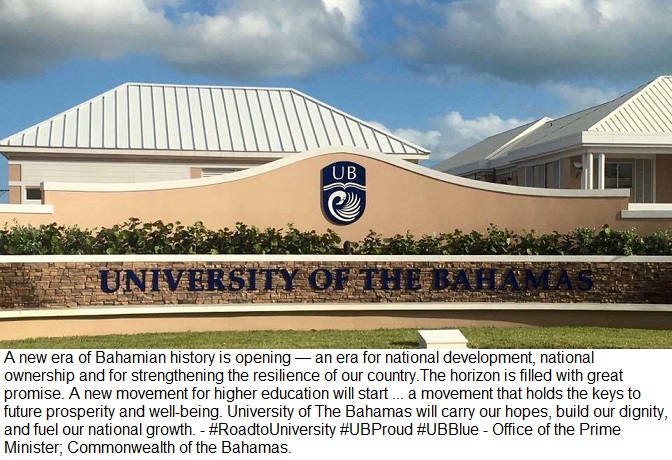
Bahamas Welcomes the New University

Go Lean Commentary

cu-blog-welcoming-the-new-university-photo-1

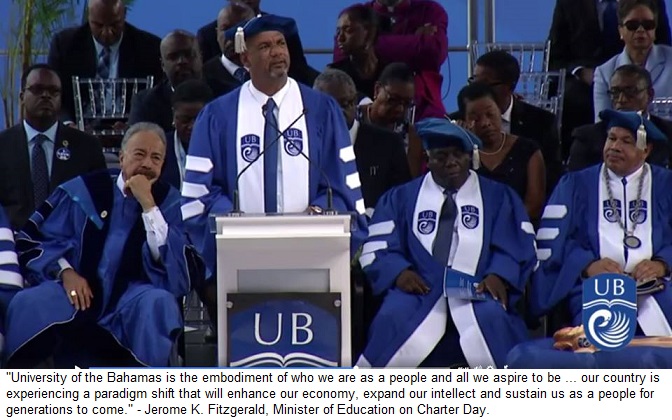
Dateline Thursday, November 10, 2016 – It’s a BIG moment for the Bahamas; its Charter Day; their College of the Bahamas (COB) has now graduated to the University of the Bahamas (UB). This is a B.H.A.G. (Big Hairy Audacious Goal)! Congratulations! We welcome this new University.

VIDEO – Bahamas Welcomes First University https://youtu.be/g7sxdmrj1bM

Published on Nov 10, 2016 – Evening Newscast from ZNS Television – Bahamas State-own TV and Radio Network – on Charter Day.

This B.H.A.G. was the plan “all the while”. In 2014 when COB published their 2025 Master Plan, this commentary chimed in. Our conclusion:

The institution was only reaching for the lamp-post. (The commentary preferred that COB “reached for the stars”).

We received feedback-criticism for that assessment. We heard specific responses like:

“Not Accurate! The Go Lean commentary ignored the real world constraints that COB must manage”.

This commentary is a response to that response.

After 2 years of reflection, it is our conclusion that the COB Master Plan 2025 was indeed a “good start”. The previous assessment was that the College-University Master Plan was deficient, that it did not “stretch” far enough to address the Agents of Change (globalization and technology) affecting the Caribbean and the educational needs of this island-nation. But now, after 2 years of “observing and reporting” on the effort to reform and transform failing communities, we have come to appreciate that some changes must be evolutionary as opposed to revolutionary. That 2014 blog was extremely insightful; it accurately described “what” was needed in the arena of tertiary education in the Bahamas (and other Caribbean member-states), but it too was deficient …

… it did not stress the “why”, “how”  and “when”. Let’s do that now; this is an update to that previous submission:

Why?

cu-blog-welcoming-the-new-university-photo-2

Answering all the questions of “why”, “how” and “when” is reflective of the comprehensiveness of the book Go Lean…Caribbean. The book serves as a roadmap for the introduction and implementation of the technocratic Caribbean Union Trade Federation (CU). This roadmap assesses that the Caribbean – Bahamas included – is in crisis.

Why a crisis?

There is a dire problem with societal abandonment. Even students are guilty of blame. Many times they leave their Caribbean homeland to matriculate abroad and never return. In general, the region’s abandonment rate among tertiary educated citizens is reported at 70%.

So there needs to be a viable alternative to studying abroad. There needs to be a good local educational institution. This is what was expected in the COB-UB Master Plan in 2014 and what is expected today. As the sole tertiary education institution in the Bahamas, it would be expected that a Master Plan would have better addressed this crisis. As this is bigger than just academics; this addresses all societal engines. The CU/Go Lean roadmap embeds concern for all these engines in its prime directives; identified with the following 3 statements:

  • Optimization of the economic engines in order to grow the regional economy to $800 Billion & create 2.2 million new jobs.
  • Establishment of a security apparatus to protect the resultant economic engines.
  • Improve Caribbean governance to support these engines.

This prime directive relates to universities as well. They can effect change in their community; see Appendix-VIDEO below. The Go Lean book posits that the Caribbean’s crisis is a “terrible thing to waste”. Therefore the roadmap seeks to change the entire eco-system of Caribbean education. This vision is defined early in the book (Page 13 & 14) in the following pronouncements in the Declaration of Interdependence:

xix. Whereas our legacy in recent times is one of societal abandonment, it is imperative that incentives and encouragement be put in place to first dissuade the human flight, and then entice and welcome the return of our Diaspora back to our shores…

xxi. Whereas the preparation of our labor force can foster opportunities and dictate economic progress for current and future generations, the Federation must ensure that educational and job training opportunities are fully optimized for all residents of all member-states, with no partiality towards any gender or ethnic group. The Federation must recognize and facilitate excellence in many different fields of endeavor, including sciences, languages, arts, music and sports. This responsibility should be executed without incurring the risks of further human flight, as has been the past history.

xxvii. Whereas the region has endured a spectator status during the Industrial Revolution, we cannot stand on the sidelines of this new economy, the Information Revolution. Rather, the Federation must embrace all the tenets of Internet Communications Technology (ICT) to serve as an equalizing element in competition with the rest of the world. The Federation must bridge the digital divide and promote the community ethos that research/development is valuable and must be promoted and incentivized for adoption.

Universities play an important role in cementing the societal fabric of their communities. In a previous blog-commentary, the American experience was detailed; the number one employers in each state were listed. In 16 of the 50 states, the largest employer was an entity within that State’s University System.  The following intelligence was gleaned:

  • The education eco-system is important for more than  just enrolled student bodies; whole communities are affected. Just consider the California example … indicative of all the other states where a University System is the largest employer: The University … system, which has campuses in Berkeley, Davis, Irvine, Los Angeles, Riverside, Merced, Santa Cruz, Santa Barbara, San Diego, and San Francisco, is the largest employer in the state. The university network also includes the UCLA Health System, which consists of 5 medical centers, and three national laboratories.
  • Jobs come from disruptive systems of commerce – Big-Box retailer Walmart has undermined the business models of the previous delivery solutions for food, clothing and shelter (home goods). They are now the largest employer in 19 states.

So … how and when?

How? – 10 Ways to Improve the University

What should have been featured in a Master Plan/roadmap for effectuating change in the tertiary education landscape for the Bahamas? The following community ethos, strategies, tactics and implementations from the Go Lean book (in the order of appearance in the book) depict how to improve a Caribbean university eco-system for the educational charter:

Ways to Impact the Future – Forward focus, not legacy; Future success is not guaranteed; must be fostered Page 26
Ways to Foster Genius – Identify them early and foster/protect them through out their development Page 27
Ways to Impact Research & Development – Size does not matter; commitment does Page 30
Steps to Implement Self-Governing Entities – Invite other universities for Healthcare and specialty Campuses Page 105
Ways to Improve Education – Manage Brain Drain as an enemy; with a comprehensive Battle Plan Page 159
Ways to Impact Student Loans –  People cannot repay if they are not around; conditionalize all grants Page 160
Ways to Empower Immigration – Import the skills (teachers and students) we do not have Page 174
Ways to Impact Public Works – Need cutting edge campuses to attract and retain stakeholders Page 175
Ways to Improve Libraries – Outreach into neighborhoods; bring the learning to the people Page 187
Ways to Foster Technology – e-Learning makes for virtual campuses; keep rural people at home Page 197

cu-blog-welcoming-the-new-university-photo-3

How? – 10 Ways the University Can Impact the Community

As conveyed in the Appendix VIDEO below, universities usually have an effect on their communities above-and-beyond academics. There is the concept of the Company town, or in this case University town, in which one or more universities may be the primary economic driver. The US has many such towns, think Gainesville-Florida, Tallahassee-Florida, Athens-Georgia, Lincoln-Nebraska, Ann Arbor-Michigan and others.

How can an education institution in the Caribbean region execute a plan to impact the economic, security and governing engine of its community?

The Go Lean book details these community ethos, strategies, tactics, implementations and advocacies to foster peripheral benefits for all who live, work and play in the Caribbean region. See sample here of peripheral-auxiliary benefits from the Go Lean book (in the order of appearance in the book):

Ways to Help Entrepreneurship – Models abound where Incubators started on University Campuses Page 28
Ways to Promote Intellectual Property – Respect for Other People’s IP must start with the Intellectuals Page 29
Ways to Bridge the Digital Divide – Campuses should lead this revolution Page 31
Ways to Impact Social Media – .EDU (Education) websites should dominate traffic Page 111
Ways to Foster International Aid – Need Visiting Faculty and Exchange Students Page 115
Ways to Benefit from Globalization – Need foreign students here, not just local students going abroad Page 187
Ways to Impact Housing – Model of Ann Arbor shows Mixed-Use Developments embedded in “Cityscape” Page 160
Ways to Improve Communications – Common strategy for Campus “Public” Radio and TV Page 185
Ways to Promote Fairgrounds – CU built Stadia/arenas; Intercollegiate Sports only missing landlords Page 194
Ways to Improve Sports – Foster an Intercollegiate Sports eco-system in the region with other colleges Page 229

How? – Models

Education initiatives are a familiar feature of the Go Lean movement. Consider the many previous blog-commentaries relating lessons-learned (good and bad) and models on education reform from other communities. See the sample here:

https://goleancaribbean.com/blog/?p=8669 Detroit makes Community College free
https://goleancaribbean.com/blog/?p=7806 Skipping School to become Tech Giants
https://goleancaribbean.com/blog/?p=6269 Education & Economics: Welcome Mr. President
https://goleancaribbean.com/blog/?p=5482 For-Profit Education: Plenty of Profit; Little Education
https://goleancaribbean.com/blog/?p=4487 FAMU – Finally, A Model for Facilitating Economic Opportunity
https://goleancaribbean.com/blog/?p=2183 Lessons Learned from Textbook Price-gouging
https://goleancaribbean.com/blog/?p=2171 Sports Role Model – Turn On the SEC Network
https://goleancaribbean.com/blog/?p=709 Student debt holds back many would-be home buyers

When?

Now is the time for all of the Caribbean, the people and governing institutions, to lean-in for the empowerments described in the book Go Lean … Caribbean. This Big Deal for the region leads first with economic empowerments, including education solutions.

Wake up all you teachers
Time to teach a new way
Maybe then they’ll listen
To what you have to say.
Song: Wake Up Everybody; performed by Harold Melvin and the Blue Notes (1975)
Source: Retrieved November 2, 2016 from: http://www.metrolyrics.com/wake-up-everybody-lyrics-harold-melvin-the-blue-notes.html

This Go Lean book is not the COB/UB Master Plan; the institution must address their own planning, but ultimately the requirements detailed in the book are what the Caribbean are relevant for the region: better education options, better jobs, better entrepreneurial opportunities, better economic growth and better prospects to live, work and play in the Caribbean. The Bahamas in particular, and the Caribbean region as a whole, needs the deliveries of this roadmap from Go Lean … Caribbean.

This roadmap is conceivable, believable and achievable. Let’s all lean-in.

Let’s all lean-in now!

Congratulations … and welcome to the new University of the Bahamas. Welcome to the fight!

🙂

Download the book Go Lean … Caribbean – now!

———-

Appendix VIDEORodney Smith – Address at the Bahamas Business Outlookhttps://vimeo.com/118522660

Rodney Smith – Address at The Bahamas Business Outlook Jan. 29th, 2015 from University of The Bahamas on Vimeo.

Jan. 29th, 2015 – University President Rodney Smith addresses the Bahamas Chamber of Commerce in preview of the new University of the Bahamas.

Share this post:
, ,
[Top]

Forging Change: Panem et Circenses

Go Lean Commentary

The dead language of Latin is alive-and-well for conveying some of the most intense perplexities.

Consider:

  • Habeas Corpus* = “There is a body…”
  • Carpe Diem = “Seize the Day”
  • Panem et Circenses = …

cu-blog-forging-change-panem-et-circenses-photo-1That last one is unfamiliar; the rough translation is “Bread and Circuses”. In all of these Latin expressions, there is more to the meaning than just the simple word-for-word translation. There is a deep thought-process underlying.

Bread and circuses or (more generally) food and entertainment, is regarded as typically satisfying the desires of the masses of people; hence used allusively of anything which pleases and pacifies the people, thus helping a government to further its political ends.

In other words, to some bad actors, they seek the opportunity to manipulate the public by first satisfying the shallow requirements of the populace – sustenance and amusement – while the actors pursue a more nefarious agenda; capitalizing on people’s selfishness that may ultimately provide for their own wider neglect.

That’s malevolence…

… there is also a benevolent strategy: First suffice the basic needs, a few social needs (amusement) and the approval of the people can be sought for heavy-lifting – to elevate all of society to a greater cause. (This alludes to Abraham Maslow’s Hierarchy of Needs in which society’s needs are classified as elevating levels starting with #1-Biological, #2-Social/Security, #3-Belonging/Love … #8-Transcendence; see Appendix B below).

This is a recommended strategy by the movement behind the book Go Lean … Caribbean to forge change in Caribbean society: to satisfy the people’s needs for sustenance and amusement then urge the masses to adopt a new vision and new values.

So sustenance first. How do we ensure that the people have their means of survival – bread, food or sustenance – so that we can engage them further for higher level needs? This is a mission described in the Go Lean book (Page 162); there is an advocacy for food, its sourcing, supply and consumption:

10 Ways to Better Manage Food Consumption

Food - Photo 1

The mechanics for this Change-Agent are already in place, with the Caribbean tradition of Carnival. In a previous blog-commentary, it was related that festivals/events are important; they empower economics – see VIDEO here – and fortify cultural pride. See a full encyclopedic reference to Carnival in Appendix A below. All in all, they make the Caribbean a better place to live, work, and play. This is also a mission described in the Go Lean book (Page 191) in this advocacy for events:

10 Ways to Impact Events

VIDEO – The Business of Carnival – https://youtu.be/H90AfmQoRI4

Published on Mar 3, 2014 – Rio de Janeiro’s Samba Schools Parade is billed as the greatest show on earth, but Carnival is also a multimillion dollar business that generates thousands of jobs and injects big money into the local economy. CCTV’s Lucrecia Franco has more.

The Go Lean book and movement serves as a roadmap for the introduction of the technocratic Caribbean Union Trade Federation (CU). The CU is set to optimize Caribbean society through economic empowerment, yes, but there are security and governing dynamics as well. Therefore the Go Lean roadmap has 3 prime directives:

  • Optimization of the economic engines in order to grow the regional economy to $800 Billion & create 2.2 million new jobs.
  • Establishment of a security apparatus to ensure public safety and protect the economic engines.
  • Improve Caribbean governance to support these engines.

The Go Lean book presents a plan to reboot economic engines (jobs, educational and entrepreneurial opportunities), optimize the security apparatus (anti-crime and public safety) and accountable governance – through regional alliances – for all citizens (including many minority factions). The majority of the population must acquiesce and accept the new values in order to allow the societal empowerments – the new vision – to take hold.

All work and no play, makes Jack a dull boy. All play and no work makes Jack a dumb boy – Old Adage

Caribbean society have traditionally featured a preoccupation with fun and amusement: “Fun in the Sun”; have a great time; party!

  • No Problem, Mon
  • Don’t Worry, Be Happy – (Song has an island beat and rhythm).
  • Feeling Hot, Hot, Hot
  • Come to Jamaica and feel alright

The Go Lean roadmap seeks to forge change, to elevate the Caribbean’s societal engines, with a proper balance of work and play. We want to provide great options for meaningful and prosperous work (jobs); plus we want to have fun. The Go Lean quest is to make the region a better place to live, work and play. How do we forge this change?

The challenges and strategies for forging change have been identified in a series of previous Go Lean blog-commentaries over the past 2 years, this is the seventh submission. These were presented as follows, in reverse chronological order:

  1.      Forging Change – Panem et Circenses (Today)
  2.      Forging Change – Herd Mentality (October 11, 2016)
  3.      Forging Change – ‘Something To Lose’ (November 18, 2015)
  4.      Forging Change – ‘Food’ for Thought (April 29, 2015)
  5.      Forging Change – Music Moves People (December 30, 2014)
  6.      Forging Change – The Sales Process (December 22, 2014)
  7.      Forging Change – The Fun Theory (September 9, 2014)

This commentary is urging Caribbean stakeholders to work to please and pacify their people, then work – behind the scenes – to further the societal elevation goals. This strategy to forge change is not presented to be nefarious or malevolent, but rather to pursue the Greater Good. This is defined in the Go Lean book (Page 37) by Jeremy Bentham (1748-1832, a British philosopher, jurist, and social reformer) as …

… “the greatest good to the greatest number of people which is the measure of right and wrong”.

Why “behind the scenes”?

There must be the hard and heavy-lifting process of identifying and fostering those in the community with “genius” capability. A genius is different from everyone else, although they maybe fairly easy to spot, defining exactly what makes one person a genius is a little trickier.

Everyone who loves sausage, should not look at it being made; the process is ugly; but the end result is delicious. – Old Adage.

The Go Lean/CU roadmap asserts that forging change in the Caribbean will be a hard, heavy-lift of a process; many alternate strategies – the 7 from above – may have to be engaged. Any one person can make a difference and positively impact society; such a person can be a champion for any Caribbean cause, though the cause may be different from one champion to another. There are many different strengths among different people, many which may even be considered genius capability. While not everyone can be a genius in terms of mathematics or the sciences, many more do possess genius qualifiers in different endeavors. According to the Go Lean book (Page 27), some researchers & theorists argue that the concept of genius may be too limiting and doesn’t really give a full view of intelligence; they assert that intelligence is a combination of many factors; thereby concluding that genius can be found in many different abilities and endeavors.

This is the community ethos – fundamental character/spirit of a culture; the underlying sentiment that informs the beliefs, customs, or practices of society – of fostering genius. The Go Lean book explains (Page 20) that this and other community ethos are not easy to imbrue on a society. It likens the process to an individual attempting to quit smoking. Not only are there physiological challenges, but psychological ones as well, to the extent that it can be stated with no uncertainty that “change begins in the head”. In psycho-therapy the approach to forge change for an individual is defined as “starting in the head (thoughts, visions), penetrating the heart (feelings, motivations) and then finally manifesting in the hands (actions). This same body analogy is what is purported in this Go Lean book for how the Caribbean is to forge change – following this systematic flow:

  • Head – Plans, models and constitutions
  • Heart – Community Ethos
  • Hands – Actions, Reboots, and Turn-arounds

The Go Lean/CU roadmap involves doing this heavy-lifting “behind the scenes” with identifying and fostering genius, while the masses enjoy Panem et Circenses.

Employing – all of these 7 – strategies to forge change in the Caribbean will be worth it in the end. This is not nefarious nor malevolent. This only makes our homeland a better place to live, work and play.

The Go Lean book presented the roadmap to imbrue the Caribbean region with new community ethos, plus new strategies, tactics, implementation and advocacies to execute to forge change in the region. The following is a sample of these specific details from the book:

Community Ethos – Deferred Gratification Page 21
Community Ethos – Economic Principles – People Choose Page 21
Community Ethos – Economic Principles – People Respond to Incentives in Predictable Ways Page 21
Community Ethos – Economic Principles – Economic Systems Influence Individual Choices Page 21
Community Ethos – Economic Principles – The Consequences of Choices Lie in the Future Page 21
Community Ethos – Governing Principles – Minority Equalization Page 23
Community Ethos – Governing Principles – Lean Operations Page 24
Community Ethos – Governing Principles – Cooperatives Page 25
Community Ethos – Ways to Impact the Future Page 26
Community Ethos – Ways to Help Entrepreneurship Page 28
Community Ethos – Ways to Promote Intellectual Property Page 29
Community Ethos – Ways to Impact Research & Development – Social Experiments Page 30
Community Ethos – Ways to Bridge the Digital Divide Page 31
Community Ethos – Ways to Impact Turn-Arounds Page 33
Community Ethos – Ways to Promote Happiness Page 36
Community Ethos – Ways to Impact the Greater Good Page 37
Strategy – Vision – Confederate 30 Member-States Page 45
Strategy – Mission – Celebrate the Music, Sports, Art and Culture of the Caribbean Page 46
Tactical – Confederating a Permanent Union Page 63
Tactical – Fostering a Technocracy Page 64
Tactical – Separation-of-Powers – CU Federal Agencies versus Member-State Governments Page 71
Implementation – Ways to Pay for Change Page 101
Implementation – Ways to Deliver Page 109
Planning – 10 Big Ideas for the Caribbean Region Page 127
Planning – Ways to Make the Caribbean Better Page 131
Planning – Reasons Why the CU Will Succeed Page 132
Planning – Lessons from Omaha – College World Series Model Page 138
Advocacy – Ways to Grow the Economy Page 151
Advocacy – Ways to Create Jobs Page 152
Advocacy – Ways to Better Manage the Social Contract Page 170
Advocacy – Ways to Improve Communications – Community Messaging Page 186
Advocacy – Ways to Improve Libraries Page 187
Advocacy – Ways to Enhance Tourism Page 190
Advocacy – Ways to Impact Events Page 191
Advocacy – Ways to Promote Fairgrounds Page 192
Advocacy – Ways to Preserve Caribbean Heritage Page 218
Advocacy – Ways to Improve the Arts Page 230
Advocacy – Ways to Promote Music Page 231

The empowerments in the Go Lean book calls for permanent change. This is possible. The people of the Caribbean only want opportunities; they want to be able to provide for their families, and offer a future of modernity to their children. Plus they want amusement, entertainment, happiness and fun. They want Panem et Circenses. This is a feature of Caribbean culture.

CU Blog - Caribbean must work together to address rum subsidies - Photo 1The Go Lean roadmap offers the technocratic execution of these deliverables. Imagine all the great cuisine and food options in the region. Imagine the rum options. Plus, imagine identifying and fostering the genius abilities of entertainers (singers, dancers, artists, musicians, performers, etc.). The end-product of their genius is good times, an elevation of Caribbean culture … to be consumed by all of the Caribbean stakeholders – residents and tourists alike. This is not a distraction; this is a business model. From the outset, the book recognized the significance of fun and festivities in this roadmap with these statements in the opening Declaration of Interdependence (Page 12 & 14):

Preamble: We hold these truths to be self-evident, that all men are created equal, that they are endowed by their Creator with certain unalienable rights, that among these are life, liberty and the pursuit of happiness 

xxi.  Whereas the preparation of our labor force can foster opportunities and dictate economic progress for current and future generations, the Federation must ensure that educational and job training opportunities are fully optimized for all residents of all member-states, with no partiality towards any gender or ethnic group. The Federation must recognize and facilitate excellence in many different fields of endeavor, including sciences, languages, arts, music and sports. This responsibility should be executed without incurring the risks of further human flight, as has been the past history.

xxxii. Whereas the cultural arts and music of the region are germane to the quality of Caribbean life, and the international appreciation of Caribbean life, the Federation must implement the support systems to teach, encourage, incentivize, monetize and promote the related industries for arts and music in domestic and foreign markets. These endeavors will make the Caribbean a better place to live, work and play.

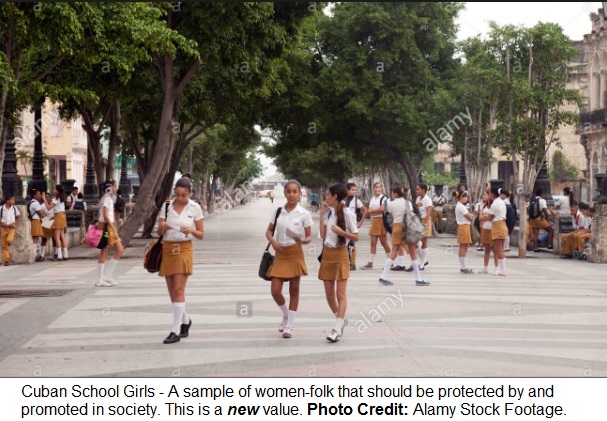
CU Blog - Post-Mortem of Junkanoo Carnival - Photo 2Success from the Go Lean roadmap on the Caribbean will not make it unique in the business model of fun and festivities. There are many other communities that have flourished in this strategy; think Carnival/Mardi Gras in Rio De Janeiro, New Orleans even the Caribbean member-state of Trinidad. By extension, the Caribbean Carnival tradition have been exported to Diaspora cities: the largest examples being Caribana in Toronto and Notting Hill in London. The Go Lean roadmap wants to extend these initiatives and harvest even more economic benefits from events; we welcome the new Carnival tradition in the Bahamas – see photo here – and long for a resurgence of the Cuban tradition; see Appendix A below.

These Carnival-“Circenses” events are not presented as distractions, rather they are among the business model for a new Caribbean. The Go Lean book details that 9,000 jobs can be created from this strategy. There is even a role model for the Caribbean to emulate, that of the City of Sturgis in the US State of South Dakota. See Bottom Line details in the Appendix C below.

The movement behind the Go Lean book asks and answers the question: How to forge change in the Caribbean? There are many options; one is Panem et Circenses. The whole Caribbean region is urged to lean-in to this roadmap. Success in this regard is conceivable, believable and achievable. We can make the Caribbean a better place to live, work and play through “food and amusement”. 🙂

Download the book Go Lean … Caribbean – now!

———

* Citation Reference – What is Habeas Corpus

https://ccrjustice.org/home/get-involved/tools-resources/fact-sheets-and-faqs/faqs-what-habeas-corpus

———

Appendix A – Carnival

Carnival is a Western Christian festive season that occurs before the liturgical season of Lent.[1] The main events typically occur during February or early March, during the period historically known as Shrovetide (or Pre-Lent). Carnival typically involves a public celebration and/or parade combining some elements of a circus, masks, and a public street party. People wear masks and costumes during many such celebrations, allowing them to lose their everyday individuality and experience a heightened sense of social unity.[2] Excessive consumption of alcohol,[3] meat, and other foods proscribed during Lent is extremely common. Other common features of carnival include mock battles such as food fights; social satire and mockery of authorities; the grotesque body displaying exaggerated features especially large noses, bellies, mouths, and phalli or elements of animal bodies; abusive language and degrading acts; depictions of disease and gleeful death; and a general reversal of everyday rules and norms.[4][5]

The term Carnival is traditionally used in areas with a large Catholic presence.

Rio de Janeiro‘s carnival is considered the world’s largest, hosting approximately two million participants per day. In 2004, Rio’s carnival attracted a record 400,000 foreign visitors.[10]

Caribbean
Most Caribbean islands celebrate Carnival. The largest and most well-known is in Trinidad and Tobago. The Dominican republic, Guyana, Antigua, Aruba, Bonaire, Cayman Islands, Cuba, Curaçao, Barbados, Dominica, Haiti, Grenada, Guadeloupe, Jamaica, Saba, Sint Eustatius (Statia), Sint Maarten, Saint Lucia, Saint Kitts, Saint Thomas, U.S. Virgin Islands, Saint Vincent, and the Grenadines hold lengthy carnival seasons and large celebrations.

Carnival is an important cultural event in the Dutch Antilles. Festivities include “jump-up” parades with beautifully colored costumes, floats, and live bands as well as beauty contests and other competitions. Celebrations include a middle-of-the-night j’ouvert (juvé) parade that ends at sunrise with the burning of a straw King Momo, cleansing sins and bad luck. On Statia, he is called Prince Stupid.

Carnival has been celebrated in Cuba since the 18th century. Participants don costumes from the island’s cultural and ethnic variety. After Fidel Castro’s Communist Revolution, Carnival’s religious overtones were suppressed. The events remained, albeit frowned upon by the state. Carnival celebrations have been in decline throughout Cuba since then.
Source: Retrieved 11-15-16 from: https://en.wikipedia.org/wiki/Carnival#Caribbean

———

Appendix B – Quotation: Bottom Line on the Maslow’s Hierarchy of Needs

Models of human behavior have been undisputedly cataloged by Abraham Maslow’s Hierarchy of Needs. The hierarchy, shown as a pyramid, is a visual representation of the order in which humans are innately drawn towards fulfilling personal needs. At the bottom, or base level, are basic, survival elements (food, water, shelter and security/safety). As these are obtained, there are natural urges for emotional stability (belongingness, self-esteem, social acceptance) and, according to Maslow’s 1943 version, the top level of the pyramid was defined as complex understanding (beauty, justice, realizing one’s full potential). Maslow later revised his original work (1967) and subsequently added “transcendence” to the pyramid’s peak, which is to help others to achieve self-actualization. – Book: Go Lean … Caribbean, Page 231.

The full list is as follows:

Level 1 – Biological and Physiological needs
Level 2 – Security/Safety needs
Level 3 – Belongingness and Love needs
Level 4 – Esteem needs
Level 5 – Cognitive needs
Level 6 – Aesthetic needs
Level 7 – Self-Actualization needs
Level 8 – Transcendence needs

———

Appendix C – Quotation: Bottom Line on the Sturgis, South Dakota
Sturgis is a city in Meade County, South Dakota, United States. The population was 6,627 as of the 2010 census. It is the county seat of Meade County and is named after General Samuel D. Sturgis. Sturgis is famous for being the location of one of the largest annual motorcycle events in the world, which [started in 1938 and] is held annually on the first full week of August. Motorcycle enthusiasts from around the world flock to this usually sleepy town during the Sturgis Motorcycle Rally. The focus of a motorcycle rally was originally racing and stunts. Then in 1961, the rally was expanded to include the “Hill Climb” and Motocross races.[145]

The attendance was tallied in excess of 600,000 visitors in the year 2000. The City of Sturgis has calculated that the Rally brings over $800 million to South Dakota annually. (The City of Sturgis earned almost $270,000 in 2011 from just selling event guides and sponsorships). Rally-goers are a mix of white-collar and blue-collar workers and are generally welcomed as an important source of income for Sturgis and surrounding areas. The rally turns local roads into “parking lots”, and draws local law enforcement away from routine patrols. [The City frequently contracts with law enforcement officers from near-and-far for supplemental support-enforcements during the rally]. (See Appendix J of Sturgis City Rally Department’s Statistics [in the Go Lean book on Page 288]).

[Sturgis generates a lot of media attention]. Annual television coverage of the festival by the [cable TV network] VH1 Classic includes interviews and performances as well as rock music videos. Also, the Travel Channel repeatedly shows two one-hour documentaries about Sturgis.

Share this post:
, , , , , ,
[Top]

‘Time to Go’ – Public Schools for Black-and-Brown

Go Lean Commentary

Let’s understand the expectation:

“You emigrate from the Caribbean to the US – to New York City – to give your children – the next generation – a better opportunity for life, liberty and the pursuit of happiness; you automatically assume that the public schools will be excellent, above-average or at least acceptable”. – Book: Go Lean … CaribbeanPage 126.

Sorry to burst your bubble. But the reality is far different than the expectation.

cu-blog-time-to-go-public-schools-for-blacks-and-hispanics-photo-1

This is the conclusion of the below article, that immigrant students are imperiled more than ordinary in the New York City’s schools. The prospects for the next generation may not be as bright as “you” had hoped. This undermines the whole premise of the “push and pull” for emigration in the first place. (“Push” refers to the societal defects in the Caribbean that moves people to want to get way; and “pull” factors refer to the impressions and perceptions that America is better).

That “pull” expectation was from before – 1970’s and 1980’s; see Anecdote in the Appendix below – but today the disposition in New York City’s schools is just dire. See the news article here:

Title: City finds most poverty-stricken or homeless public school students are Black, Hispanic
By: Ben Chapman and Lisa Colangelo
Black and Hispanic kids are more likely to face a variety of challenges in public classrooms, according to data the city Education Department released Tuesday.

The majority of students who were homeless or live in poverty are black or Hispanic, according to the report, which is mandated by the City Council.

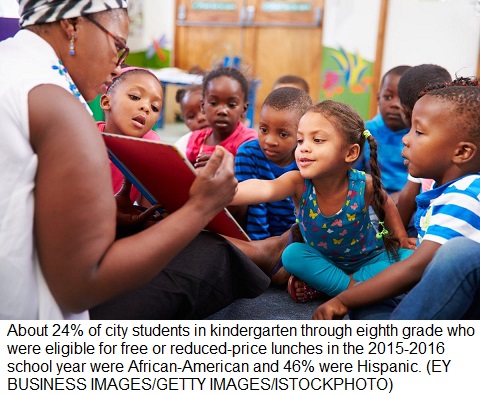
About 24% of city students in kindergarten through eighth grade who were eligible for free or reduced-price lunches in the 2015-2016 school year were African-American and 46% were Hispanic.

Additionally, about 33% of the K-8 students who live in temporary housing — which includes homeless shelters and those doubled up with friends and relatives — are black and 54% are Hispanic.

City Education Department officials said they have started a number of initiatives to make schools more diverse, including support for LGBT students, helping more black and Hispanic students apply to the city’s elite specialized high schools and encouraging high-performing schools to admit more low-income students.

But Mona Davids of the NYC Parents Union said the city is “skirting the issue of desegregating the city school system.”

“Encouraging schools isn’t enough,” she said. “There needs to be a top-down mandate.”
Source: New York Daily News; Posted November 2, 2016′ retrieved November 13, 2016 from: http://www.nydailynews.com/new-york/education/city-finds-black-hispanic-public-school-kids-hardships-article-1.2854566

This – the foregoing – is not the expectation that Caribbean immigrants had, but it is what it is! While this article relates to New York, the anecdotal experience is the same in urban communities across the US.

The majority population in the Caribbean member-states is Black and Hispanic, or more typically classified as Black-and-Brown. So this foregoing article is really referring to “us”, the Caribbean Diaspora living in the US. This strategy – emigrate for education sake – employed by previous Caribbean immigrants now needs a reality check.

The purpose of this commentary is to relate two strong points of contention:

  • Dissuade the high emigration rates of Caribbean citizens to the American homeland.
  • Encourage the Caribbean Diaspora to repatriate back to their ancestral homeland.

According to the foregoing article, emigrating to New York City (NYC) may be one step forward, two steps backwards. So this commentary asserts that it is easier for the Black-and-Brown populations in the Caribbean to prosper where planted in the Caribbean, rather than emigrating to foreign countries, like the United States, to foreign cities like NYC. This disposition applies to Caribbean students, yes, but to teachers as well; see the Appendix VIDEO below relating a consistent drama for imported-Caribbean teachers in NYC.

This commentary is the completion of the series from the movement behind the book Go Lean … Caribbean, in consideration of reasons why the Diaspora should repatriate back to the Caribbean homeland. There was an original 3-part series, with these submissions:

  1.     Time to Go: Spot-on for Protest
  2.     Time to Go: No Respect for our Hair
  3.     Time to Go: Logic of Senior Immigration

Now, this new extension to the series considers the additional topics as detailed in this series as follows:

  1.     Time to Go: Marginalizing Our Vote
  2.     Time to Go: American Vices; Don’t Follow
  3.     Time to Go: Public Schools for Black-and-Brown

All of these commentaries relate to the Caribbean disposition in the United States. The Go Lean book (and movement) serves as a roadmap for the introduction of the technocratic Caribbean Union Trade Federation (CU). The CU is set to optimize Caribbean society through economic, security and governing optimizations. Therefore the Go Lean roadmap has 3 prime directives:

  • Optimization of the economic engines in order to grow the regional economy to $800 Billion & create 2.2 million new jobs.
  • Establishment of a security apparatus to ensure public safety and protect the economic engines.
  • Improve Caribbean governance – including empowerments for education – to support these engines.

The “push and pull” factors do imperil Caribbean life. We push our citizens out. Then the resultant effect is a brain drain and even more endangerment to our society: less skilled workers, less entrepreneurs, less law-abiding citizens, less capable public servants – we lose our best and leave the communities with the rest. This create a crisis.

cu-blog-vision-and-values-for-a-new-caribbean-photo-2The Go Lean roadmap posits that the entire Caribbean is in crisis now; so many of our citizens have fled for refuge in the US and other foreign countries, but the refuge is a mirage. The “grass is not necessarily greener on the other side”. Life in the US, in New York City for example, is definitely not optimized for the Caribbean’s Black-and-Brown. There is a challenge to reform and transform the community in the US; and there is a challenge to reform and transform the community in the Caribbean. It is easier to fix the Caribbean than to fix the American eco-system. It is Time to Go! Our Caribbean people can better prosper where planted in the Caribbean.

Rich, poor, middle-class …

The Go Lean book asserts that every community has poor people. The Caribbean has poverty; and the US has poverty. With the empowerments in the Go Lean roadmap, it will be easier to elevate from poverty in the Caribbean. Education is one such empowerment. The US still has some societal defects – racism for example – that are so imbrued that they are tied to the country’s DNA. As alluded to in the foregoing news article, segregation, de jure or de facto, is a deterrence to optimized educational opportunities. This is why the Go Lean movement posits that it is easier to effect change at home in the Caribbean, than in the foreign country of the US.

Education is key … in the Go Lean roadmap. We cannot effect an elevation from poverty to middle-class without education. Research by Economists have established that every additional year of schooling an individual increases their earnings by about 10%. This is a very impressive rate of return. The Go Lean book quotes these proven economic studies, showing the impact that additional years of education have had on individuals’ earning power (Page 258).  If the Caribbean Diaspora, the Black-and-Brown in New York City cannot get fair educational opportunities in New York, then we declare that it is “Time to Go“. We are hereby preparing for their return – fixing our defects – rebooting our education eco-system.

The Go Lean book posits that Caribbean stakeholders made many flawed education decisions in the past, both individually and community-wise. (Consider the example of Government grants, loans and scholarships for students that ended up never returning “home”). The vision of the CU is a confederation of the 30 member-states of the Caribbean to do the heavy-lifting of championing better educational policies. There is the structure of a separation-of-powers between CU agencies and the individual member-states.

The Go Lean roadmap provides turn-by-turn directions on how to reform the Caribbean education systems, economy, governance and Caribbean society as a whole. This roadmap admits that because the Caribbean is in crisis, this “crisis would be a terrible thing to waste”. As a planning tool, the roadmap commences with a Declaration of Interdependence, pronouncing the approach of regional integration (Page 12 & 14) as a viable solution to elevate the region’s educational opportunities:

xix. Whereas our legacy in recent times is one of societal abandonment, it is imperative that incentives and encouragement be put in place to first dissuade the human flight, and then entice and welcome the return of our Diaspora back to our shores

xxi. Whereas the preparation of our labor force can foster opportunities and dictate economic progress for current and future generations, the Federation must ensure that educational and job training opportunities are fully optimized for all residents of all member-states, with no partiality towards any gender or ethnic group. The Federation must recognize and facilitate excellence in many different fields of endeavor, including sciences, languages, arts, music and sports. This responsibility should be executed without incurring the risks of further human flight, as has been the past history.

xxvii. Whereas the region has endured a spectator status during the Industrial Revolution, we cannot stand on the sidelines of this new economy, the Information Revolution. Rather, the Federation must embrace all the tenets of Internet Communications Technology (ICT) to serve as an equalizing element in competition with the rest of the world. The Federation must bridge the digital divide and promote the community ethos that research/development is valuable and must be promoted and incentivized for adoption.

Change has now come. The driver of this change is technology and globalization. Under the tenants of globalization, the Caribbean labor pool is a commodity; their talents are subject to the economic realities of supply-and-demand. The Go Lean book posits therefore that the governmental administrations of the region should invest in better education options, and as much technological education advances (like e-Learning) as possible, for its citizens. The bottom-line motive should be the Greater Good – “the greatest good for the greatest number of people which is the measure of right and wrong – not profit nor emigration.

How exactly do we accomplish this goal? The book details those policies; and other ethos to adopt, plus the executions of the following strategies, tactics, implementations and advocacies to impact the education eco-system in the Caribbean region:

Foreword – Lean On Me Film – Inspiration for Educational Reform Page 5
Community Ethos – Deferred Gratification Page 21
Community Ethos – People Respond to Incentives Page 21
Community Ethos – Job Multiplier Page 22
Community Ethos – Lean Operations Page 24
Community Ethos – Return on Investments (ROI) Page 24
Community Ethos – Ways to Impact the Future Page 26
Community Ethos – Ways to Foster Genius Page 27
Community Ethos – Ways to Help Entrepreneurship – Incubator Training Page 28
Community Ethos – Ways to Impact the Greater Good Page 37
Tactical – Separation of Powers – Education Department Page 85
Tactical – Separation of Powers – Labor Department – On-the-Job-Training Oversight Page 89
Planning – Lessons from New York City Page 137
Advocacy – Ways to Grow the Economy Page 151
Advocacy – Ways to Create Jobs Page 152
Advocacy – Ways to Improve Education Page 159
Advocacy – Ways to Improve Governance Page 169
Advocacy – Ways to Improve Libraries Page 187
Advocacy – Ways to Foster Technology Page 197
Appendix – Education and Economic Growth Page 258
Appendix – Measuring Education with Standardized Testing Page 266

The subject of “pull” (from the “push and pull” dynamics) has been frequently blogged on in other Go Lean commentaries; as sampled here with these entries relating American “pull” factors:

https://goleancaribbean.com/blog/?p=8431 Bahamas Issued US Travel Advisory Citing Police Violence
https://goleancaribbean.com/blog/?p=8202 Respect for Minorities: Lessons Learned from American Dysfunction
https://goleancaribbean.com/blog/?p=8099 Caribbean Image: ‘Less Than’?
https://goleancaribbean.com/blog/?p=7221 Street naming for Martin Luther King unveils the real America
https://goleancaribbean.com/blog/?p=7204 ‘The Covenant with Black America’ – Ten Years Later
https://goleancaribbean.com/blog/?p=6189 A Lesson in History – Hurricane ‘Katrina’ exposed a “Climate of Hate”
https://goleancaribbean.com/blog/?p=5733 Better than America? Yes, We Can!
https://goleancaribbean.com/blog/?p=5527 American Defects: Racism – Is It Over?
https://goleancaribbean.com/blog/?p=5333 Racial Legacies: Cause and Effect
https://goleancaribbean.com/blog/?p=546 American Model: Book Review – ‘The Divide’ – … Injustice in the Age of the Wealth Gap
https://goleancaribbean.com/blog/?p=273 10 Things We Don’t Want from the US: Racism against minorities

Underlying to the Go Lean/CU prime directive of elevating the economics, security and governing engines of the Caribbean, is the desire to make the Caribbean homeland, a better place to live, work and play. Saying that it is “Time to Go“, must mean that we are ready to receive our Caribbean Diaspora from New York City and other destinations. Are we ready, now?

As related previously: frankly, no …

… but we are ready, willing and able to start the change process, to reform and transform the Caribbean. This is the intent of the book Go Lean … Caribbean. This subject of improving the conditions for successful Caribbean repatriation has been blogged in previous Go Lean commentaries; as sampled here:

https://goleancaribbean.com/blog/?p=8530 Tired Waiting? Time to Reform & Transform the Caribbean
https://goleancaribbean.com/blog/?p=7151 The Caribbean is Looking for Heroes … ‘to Return’
https://goleancaribbean.com/blog/?p=5304 Mitigating the Eventual Abuse of Power

The Go Lean/CU roadmap asserts that America should not be presented as the panacea for all of the Caribbean ills – we must reform and transform our own society. While America does so many things right, the country acts poorly towards its Black-and-Brown citizens. Our people, the Black-and-Brown of the Caribbean, can expect more success from less effort in the Caribbean region than in the US, especially education-wise.

It is Time to Go … back home.

Now is the time for all of the Caribbean, the people and governing institutions, to lean-in for the empowerments described in the book Go Lean … Caribbean. This is the roadmap to elevate the Caribbean; to make our homeland a better place to live, work, learn and play. 🙂

Download the book Go Lean … Caribbean – now!

———

Appendix – Anecdote # 15 – Repatriated Resident: Pearline Anglin (Page 126)

Bold = Author

Pearline Anglin has returned to Jamaica after living abroad (New York City, United States) for over 35 years. Why leave NYC and go to Jamaica, when so many Jamaicans would rather emigrate to New York? Simple, she never envisioned spending her “golden” years in America. She is now retired and has to contend with all the challenges of growing old. In her mind there are challenges everywhere; she would rather face her challenges at “home” rather than be a constant “alien’ in a foreign land. At home, her accent does not set her apart; her preference for food and drink is common among all her neighbors and is consumed by everyone else. Most importantly, she has no unbearable winters to contend with.

So why leave when you have such an obvious love for your country/culture? Ms. Anglin intimated that her decision to emigrate was based on the need to give her children a better life, a better future. (She has 7 children, all of whom live in the US; plus an additional son that died as an infant). The children needed opportunities for education; such as would not require a large investment for private schools. She knew that the public education systems in the US were better than the public education  system in Jamaica. And then there were the economic realities. Ms. Anglin first emigrated to Canada, as it was easier to expatriate there. Then she returned to Jamaica for a short period. Her mother, now deceased, had US residency at this point and was able to sponsor Pearline, and then later Pearline sponsored her children. (The time apart from the children required that she remit monies back home, at least monthly, for their care).This started the flow of all the family “abandoning” their homeland. (Ms. Anglin has 2 siblings who also emigrated to the NYC area). To this day, her 7 children and 19 grand and great-grandchildren all live abroad.

How would you feel if your children or grandchildren decide to return to their Caribbean roots? Ms. Anglin revealed that while she feels “good” about a decision like that, there must be more to such a plan. They must prepare for such a return thoroughly, and responsibly; they would have to consider all aspects of life and living in the islands. She is not holding her breath.

How do you feel about Caribbean Security? Most disappointed – considering what life used to be like in Jamaica, she is troubled at the pervasive crime in or near the cities, like Montego Bay. As an older woman she has to live very cautiously, she does not go out at night and takes many other precautions. This is a beloved vision for her, where security would be more assured for Caribbean people. Other areas of concern for the future would include better health care facilities nearby so that she does not have to venture so far from her Black River area home (St. Elizabeth Parrish) to seek professional medical attention.

How do you feel about Caribbean Economy? Same as the economy in New York – recessions and economic downturns affect everyone. There are problems in Jamaica, there are problems too in the US. One cannot run away from economic challenges, rather one must equip themselves with the tools to compete, wherever they are.

Do you long for life back in the US? She really loved New York; but do not consider it an ideal lifestyle for the elderly. The hustle-and-bustle is perhaps too great!

Where do you consider to be the best place to live? For her considerations, there is no place like home, Jamaica.

———

Appendix VIDEO – Caribbean Teachers Treated Like ‘Indentured Servants’ by NYC Board of Education – https://youtu.be/kPmVuoH1xsQ

Uploaded on Apr 18, 2011 – Judith Hall, who heads the Association of International Educators and also teaches at Marie Curie High School in the Bronx, and Bertha Lewis from the Black Institute, an advocacy organization, voiced concerns on Monday’s “Inside City Hall” about what they call false promises by the Department of Education to Caribbean teachers.

Share this post:
, ,
[Top]

‘Time to Go’ – American Vices. Don’t Follow!

Go Lean Commentary

Sex, …
Drugs …
… and Rock-n-Roll.

America has taken the lead in the fostering of these vices for the rest of the world. 🙁

For the Caribbean looking to American leadership, the stern advice here is to not follow these American vices:

Sex

cu-blog-time-to-go-american-vices-dont-follow-photo-2While natural and normal, there is a distortion in America with the promotion of pornography. Comedian Bill Maher joked “that America invented the internet, then filled it with porn”; see Pornhub profile here and “List of Websites By Traffic” in the Appendix below:

Pornhub, part of the Pornhub NETWORK campaign, is a pornographic video sharing website and the largest pornography site on the Internet.[4][5] Pornhub was launched in Montreal, providing professional and amateur photography since 2007. Pornhub also has offices and servers in San Francisco, Houston, New Orleans and London. In March 2010, Pornhub was bought by Manwin (now known as MindGeek), which owns numerous other porn websites.As of 2009, three of the largest porn sites “RedTube, YouPorn and PornHub -collectively make up 100 million unique visitors”.[12]
Malvertising – Researcher Conrad Longmore claims that advertisements displayed by the sites were found to contain malware programs, which install harmful files on users’ machines without their permission. Longmore told the BBC that two popular sites – XHamster and PornHub – pose the greatest threat.[28]Source: https://en.wikipedia.org/wiki/Pornhub retrieved November 12, 2016.
[On the List of Websites By Traffic in the Appendix below, pornographic sites are # 57, 60, 67, 78, 139 and 190]

Drugs

cu-blog-time-to-go-american-vices-dont-followMarijuana legalization is now the norm for 40 percent of the American population. (A previous blog-commentary details the challenges of decriminalizing drugs in the Caribbean region). See the story here:
Title: A Bunch of States Just Legalized Weed, Which Is Great Because We All Need It Now
California’s referendum to legalize marijuana in the world’s sixth-largest economy passed Tuesday night. So did voter measures in Massachusetts and Nevada. Maine’s referendum was still being counted early Wednesday morning, and Arizona’s was poised to lose. Three other states passed medical marijuana reforms, and a fourth appeared likely to do so. This means that in eight states (plus Washington, D.C.) weed will be legal for recreational purposes, and in sum, 28 will have some kind of legalization on the books.

It’s a good thing that a large chunk of America will soon be able toke up at their leisure, because for the next four years, we are really going to need it.

The conventional wisdom about the 2016 ballot measures was that their approval would make federal legalization truly inevitable — millions of Americans are already using marijuana within the letter of state law. This has created a $6 billion industry, and those figures are only likely to continue to multiply. While the Obama administration has continued to go after some growers and sellers, it has largely allowed state legalization to take its course. The state policies certainly aren’t perfect, but they’re ultimately good and just: Currently, there are hundreds of thousands of marijuana-possession arrests every year, and they disproportionately affect (read: ruin the lives of) poor minorities. Treating marijuana more like alcohol and less like heroin changes that.

Of course, now all that could go up in smoke. If it wanted to, a Trump administration could undo the progress marijuana regulation has made in an instant. As one reform advocate told the Washington Post: “The prospect of Rudy Giuliani or Chris Christie as attorney general does not bode well.” Sure doesn’t! But what policy implication of a Trump presidency does?

Someone pass me some of the strong stuff.
By: Jonathan L. Fischer, Slate senior editor.
Source: Slate Online Magazine; Posted November 9, 2016 from: http://www.slate.com/blogs/the_slatest/2016/11/09/a_bunch_of_states_just_legalized_weed_good_we_all_need_it.html

————

VIDEO – Big Pot: The Commercial Takeover – http://www.cbsnews.com/videos/big-pot-the-commercial-takeover

November 7, 2016 – CBSN Originals explores the rapidly changing landscape of legal marijuana, traveling to five states and Canada to interview key figures on all sides of the issue.

Rock-n-Roll

cu-blog-time-to-go-american-vices-dont-follow-photo-3America gave birth to this musical art-form; but is now leading the music industry into a downward spiral of dissolution, dissension and dysfunction. The sad state of the music industry is a frequent topic for this commentary and the underlying book Go Lean…Caribbean. This subject was exhausted in a “Lessons Learned Case Study” regarding Music Piracy: See Appendix ZT – To Catch A Thief –  Page 351. Many previous blog-commentaries have detailed the sad state of the music industry:

The vice associated with Rock-n-Roll is that of cultural nullification. The Go Lean book details this debate as deliberated in France: cultural preservation versus cultural nullification from American Rock-n-Roll. France held its ground … and today, the city of Paris enjoys 30 million tourists and $25 Billion in culture/tourism spending …annually.

This commentary asserts that it is easier for Caribbean people to prosper where planted in the Caribbean, rather than emigrating to foreign countries, like the United States.

But, globalization being what it is, means that left unchecked, we will see all of these American vices in our communities, whether we want them or not.

This commentary declares: We do not want them.

This point aligns with the book Go Lean…Caribbean, which states that American leadership is not always focused on the best interest of America, but rather the best interest of special interest groups. We cannot submit, yield and follow their lead in fostering our own society. The book supports the notion that the Caribbean can be an even better place compared to America for Caribbean people if we adhere to the community ethos of the Greater Good, “the greatest good for the greatest number of people which is the measure of right and wrong.” – Page 37.

If we succeed at adopting this community ethos – underlying sentiment that informs the beliefs, customs, or practices of our society – then we can make our homeland a better place to live, work and play. There is the need to optimize the economic, security and governing engines in the Caribbean region to pursue these goals, not American values.

This is a continuation from the previous 3-part series from the movement behind the book Go Lean … Caribbean, in consideration of reasons why the Diaspora should repatriate back to the Caribbean homeland. The previous commentaries detailed:

  1.     Time to Go: Spot-on for Protest
  2.     Time to Go: No Respect for our Hair
  3.     Time to Go: Logic of Senior Immigration

Now, this new extension to the series considers the additional topics as detailed in this series as follows:

  1.     Time to Go: Marginalizing Our Vote
  2.     Time to Go: American Vices; Don’t Follow
  3.     Time to Go: Public Schools for Black-and-Brown

All of these commentaries relate to the Caribbean disposition in the United States. The Go Lean book and movement serves as a roadmap for the introduction of the technocratic Caribbean Union Trade Federation (CU). The CU is set to optimize Caribbean society through economic, security and governing optimizations. Therefore the Go Lean roadmap has 3 prime directives:

  • Optimization of the economic engines in order to grow the regional economy to $800 Billion & create 2.2 million new jobs.
  • Establishment of a security apparatus to ensure public safety and protect the economic engines.
  • Improve Caribbean governance to support these engines.

The Go Lean roadmap posits that the Caribbean region is in crisis now, and so many are quick to flee for refuge in foreign countries. But the “grass is not necessarily greener on the other side”. Considering the actual vices in American society – which will only get worse with time – life there is definitely not optimized for Caribbean people. As mentioned in the foregoing, the Black-and-Brown of America are the ones that have been imperiled the most because of the drug eco-system. The Go Lean book asserts that because every community has bad actors – the Caribbean has bad actors and the US has bad actors – there is the obvious need to reform and transform the region, security-wise. This point is pronounced early in the book with the Declaration of Interdependence (Page 12) that claims:
x.  Whereas we are surrounded and allied to nations of larger proportions in land mass, populations, and treasuries, elements in their societies may have ill-intent in their pursuits, at the expense of the safety and security of our citizens. We must therefore appoint “new guards” to ensure our public safety and threats against our society, both domestic and foreign. The Federation must employ the latest advances and best practices of criminology and penology to assuage continuous threats against public safety. The Federation must allow for facilitations of detention for [domestic and foreign] convicted felons of federal crimes, and should over-build prisons to house trustees from other jurisdictions.

xvi. Whereas security of our homeland is inextricably linked to prosperity of the homeland, the economic and security interest of the region needs to be aligned under the same governance. Since economic crimes, including piracy and other forms of terrorism, can imperil the functioning of the wheels of commerce for all the citizenry, the accedence of this Federation must equip the security apparatus with the tools and techniques for predictive and proactive interdictions.

The Caribbean appointing “new guards” or a security apparatus to ensure public safety and justice assurance is a comprehensive endeavor, that will encapsulate the needs of all Caribbean stakeholders: governments, institutions and citizens (residents and Diaspora).

An important mission of the Go Lean roadmap is to dissuade the high emigration rates of Caribbean citizens to the American homeland. This means being conscious of why people flee – “push” and “pull” reasons – and monitoring the societal engines to ensure improvement – optimization. (“Push” refers to the societal defects in the Caribbean that moves people to want to get way; and “pull” factors refer to the impressions and perceptions that America is better). A second mission is to encourage the repatriation of the Caribbean Diaspora back to their ancestral homeland, where the dangers associated with these vices are less intense.

There is risk to security and justice assurance on all sides of the issue of vices – this is heavy-lifting. The book details this complexity, with a focus on the community ethos, strategies, tactics, implementations and advocacies to monitor, manage and mitigate the security risks to Caribbean society. The following is a sample list:

Community Ethos – Deferred Gratification Page 21
Community Ethos – Job Multiplier Page 22
Community Ethos – Privacy versus Public Protection Page 23
Community Ethos – Light Up the Dark Places Page 23
Community Ethos – Ways to Impact Research & Development Page 30
Community Ethos – Ways to Impact the Greater Good Page 37
Strategy – Vision – Integration of Single Market Economy Page 45
Strategy – Agents of Change – Globalization Page 57
Tactical – Fostering a Technocracy Page 64
Tactical – Separation of Powers – Homeland Security Page 75
Tactical – Separation of Powers – Justice Department Page 77
Implementation – Security Initiatives at Start-up Page 103
Advocacy – Ways to Grow the Economy Page 151
Advocacy – Ways to Ways to Mitigate Black Markets Page 165
Advocacy – Ways to Improve Governance Page 168
Advocacy – Ways to Better Manage the Social Contract Page 170
Advocacy – Ways to Impact Justice Page 177
Advocacy – Ways to Remediate and Mitigate Crime Page 178
Advocacy – Ways to Improve Homeland Security Page 180
Advocacy – Ways to Impact the Prison Industrial Complex – Parole Eco-System Page 211
Advocacy – Ways to Preserve Caribbean Heritage Page 218
Appendix – Mediating as French Culture and Economics Collide Page 311

Now is the time for all of the Caribbean, the people and governing institutions, to lean-in for the empowerments described in the book Go Lean … Caribbean.

For a long time these vices that are now being unleashed on American soil were heavily regulated by other societies; the governments and leaders were protecting the people from destructive behavior. These vices are still destructive despite any American Stamp of Approval. This is not the lead we want to follow.

“Disregard them! They are blind guides. If a blind man leads a blind man, both will fall into a pit.”. – Matthew 15:14 Berean Study Bible.

America has lost its moral high ground. It is Time to Go!

As reported in previous commentaries, justice – for its Black-and-Brown populations – is already a fallacy in the US. Now personal virtue is also becoming frivolous in their society. The country is so duplicitous: there is so much that America does right, but there is so much that America does poorly – and people that they do not respect – that we want to mitigate those influences in our homeland.

It is the conclusion of this Go Lean movement that the “grass is not greener on the American side”. We can do better. We can make our homeland a better place to live, work and play. All Caribbean stakeholders are hereby urged to lean-in to this Go Lean/CU roadmap to elevate the Caribbean. 🙂

Download the book Go Lean … Caribbean – now!

———-

Appendix – List of Websites By Traffic

Site

Domain

Alexa top 100 websites
(As of September 4, 2016)[3]

Type

Principal country

Google google.com 1 Internet services and products  U.S.
YouTube youtube.com 2 Video sharing  U.S.
Facebook facebook.com 3 Social network  U.S.
Baidu baidu.com 4 Search engine  China
Yahoo! yahoo.com 5 Portal and media  U.S.
Amazon amazon.com 6 E-commerce and cloud computing  U.S.
Wikipedia wikipedia.org 7 Encyclopedia  U.S.
Tencent QQ qq.com 8 Portal  China
Google India google.co.in 9 Search engine  India
Twitter twitter.com 10 Social network  U.S.
Windows Live live.com 11 Emailweb services and software suite  U.S.
Taobao taobao.com 12 Online shopping  China
Google Japan google.co.jp 13 Search engine  Japan
Bing bing.com 14 Search engine  U.S.
Instagram instagram.com 15 Photo sharing and social media  U.S.
Sina Weibo weibo.com 16 Social network  China
Sina Corp sina.com.cn 17 Portal and instant messaging  China
LinkedIn linkedin.com 18 Professional Social network  U.S.
Yahoo! Japan yahoo.co.jp 19 Portal  Japan
MSN msn.com 20 Portal  U.S.
VK vk.com 21 Social network  Russia
Google Germany google.de 22 Search engine  Germany
Yandex yandex.ru 23 Search engine  Russia
Hao123 hao123.com 24 Web directories  China
Google UK google.co.uk 25 Search engine  UK
Reddit reddit.com 26 social news networking, entertainment  U.S.
eBay ebay.com 27 Online auctions and shopping  U.S.
Google France google.fr 28 Search engine  France
t.co t.co 29 URL shortening for links on Twitter  U.S.
Tmall tmall.com 30 Retail  China
Google Brazil google.com.br 31 Search engine  Brazil
360 Safeguard 360.cn 32 Internet security and anti-trojan software  China
Sohu sohu.com 33 Portal  China
Amazon Japan amazon.co.jp 34 E-commerce  Japan
Pinterest pinterest.com 35 Social media  U.S.
Mail.ru mail.ru 36 Portal  Russia
Onclickads onclickads.net 37 Online advertising network  U.S.
Netflix netflix.com 38 Streaming TV and movies  U.S.
Google Italy google.it 39 Search engine  Italy
Google Russia google.ru 40 Search engine  Russia
Microsoft microsoft.com 41 Software and technology  U.S.
Google Spain google.es 42 Search engine  Spain
WordPress.com wordpress.com 43 Blogging and social media  U.S.
Guangming Daily gmw.cn 44 Newspaper  China
Tumblr tumblr.com 45 Social media  U.S.
PayPal PayPal.com 46 Payment system  U.S.
Blogspot blogspot.com 47 Blogging  U.S.
Imgur imgur.com 48 Image sharing  U.S.
Stack Overflow stackoverflow.com 49 Question and answer site  U.S.
AliExpress aliexpress.com 50 Online shopping  China
Naver Naver.com 51 Portal  Korea
Odnoklassniki ok.ru 52 Social Networking  Russia
Apple Inc. apple.com 53 Technology and software  U.S.
GitHub github.com 54 Source code hosting service  U.S.
Google Mexico google.com.mx 55 Search Engine  Mexico
China Daily chinadaily.com.cn 56 Newspaper  China
XVideos xvideos.com 57 Pornography  U.S.
IMDb imdb.com 58 FilmTV show, and video game database  U.S.
Google Korea google.co.kr 59 Search Engine  Korea
Pornhub pornhub.com 60 Pornography  Canada
FC2 Portal fc2.com 61 Portal  Japan
Jingdong Mall jd.com 62 E-commerce  China
Blogger blogger.com 63 Blogging  U.S.
NetEase 163.com 64 Portal  China
Google Canada google.ca 65 Search engine  Canada
Google Hong Kong google.com.hk 66 Search engine  Hong Kong
xHamster xhamster.com 67 Pornography  Cyprus
WhatsApp whatsapp.com 68 Instant Messaging  U.S.
Amazon India amazon.in 69 E-commerce  India
Microsoft Office office.com 70 Online Office Suite  U.S.
Google Turkey google.com.tr 71 Search engine  Turkey
Tianya Club tianya.cn 72 Internet forum  China
Google Indonesia google.co.id 73 Search engine  Indonesia
Youku youku.com 74 Video sharing  China
Rakuten rakuten.co.jp 75 E-commerce  Japan
Craigslist craigslist.org 76 Classified advertising  U.S.
Amazon Germany amazon.de 77 E-commerce  Germany
Bonga Cams bongacams.com 78 Pornography  U.S.
Nicovideo nicovideo.jp 79 Video sharing  Japan
Google Poland google.pl 80 Search engine  Poland
Soso.com soso.com 81 Search engine  China
Bilibili bilibili.com 82 Video sharing  China
Dropbox dropbox.com 83 File hosting service  U.S.
Xinhua News Agency xinhuanet.com 84 News  China
Outbrain outbrain.com 85 Content marketing  U.S.
Pixnet pixnet.net 86 Social networkphoto sharingblogging  Taiwan
Alibaba Group alibaba.com 87 E-commerce and portal  China
Alipay alipay.com 88 Payment system  China
Microsoft Online microsoftonline.com 89 Software as a service  U.S.
Google Taiwan google.com.tw 90 Search engine  Taiwan
Booking.com booking.com 91 Booking engine  Netherlands
Google file storage googleusercontent.com 92 File hosting service  U.S.
Google Australia google.com.au 93 Search Engine  Australia
PopAds popads.net 94 Pop-up advertising  Costa Rica
CNTV cntv.cn 95 Television  China
Zhihu zhihu.com 96 Question and answer site  China
Amazon UK amazon.co.uk 97 E-commerce  UK
Diply diply.com 98 Entertainment  Canada
Cốc Cốc coccoc.com 99 Search engine and web browser  Vietnam
CNN cnn.com 100 News  U.S.
BBC bbc.co.uk 101 News  U.K.
Twitch twitch.tv 102 Livestreams  U.S.
Wikia wikia.com 103 Wikis  U.S.
Google Thailand google.co.th 111 Search engine  Thailand
Google Argentina google.com.ar 112 Search engine  Argentina
Go.com go.com 118 Disney portal  U.S.
Google Netherlands google.nl 119 Search engine  Netherlands
eBay UK ebay.co.uk 127 E-commerce  U.K.
KickassTorrents kat.cr 137 Torrents  Costa Rica
XNXX xnxx.com 139 Pornography  Poland[5]
Grupo Globo globo.com 155 Search engine  Brazil
Google Ukraine google.com.ua 163 Search engine  Ukraine
Universo Online uol.com.br 167 Portal  Brazil
Avito avito.ru 170 E-commerce  Russia
Google Colombia google.com.co 182 Search engine  Colombia
RedTube redtube.com 190 Pornography  U.S.
Google Vietnam google.com.vn 209 Search engine  Vietnam
Google Philippines google.com.ph 214 Search engine  Philippines
DoubleClick doubleclick.net 234 Ad serving  U.S.
Onet.pl onet.pl 261 Web portal  Poland
Google Ad Services googleadservices.com 1319 Advertising  U.S.
AccuWeather accuweather.com 331 Weather forecasting  U.S.
Google Web Light googleweblight.com 30447 Webpage transcoder for slow connections  U.S.
Yahoo Answers answers.yahoo.com N/A[notes 2] Question and answer site  U.S.

 Source: https://en.wikipedia.org/wiki/List_of_most_popular_websites retrieved November 12, 2016


Share this post:
, ,
[Top]

‘Time to Go’ – Marginalizing Our Vote

Go Lean Commentary

cu-blog-time-to-go-marginalizing-our-vote-photo-5The US Election is now over.

Yippee! Now, the country – the world for that matter – can get back to business as usual.

The business as usual in the United States is the business of the United States, not necessarily the business of the rest of the world, and definitely not the business of the Caribbean. This commentary has always maintained that the Caribbean needs to take its own lead, rather than depend on American leadership; we do not want to be parasites – anymore – rather, we want to be a protégé. Parasites are people, not policies, so the Caribbean political leadership must be concerned about Caribbean people, not just policies.

It is parasitic of the Caribbean to have the affinity to abandon our homeland so readily. For those that go to the US – as reported in a recent blog-commentary: the estimate of the number of Caribbean Diaspora living in the US is projected up to 22 million – the refuge they seek in America may be elusive or non-existent, especially politically. Why is this the case?

The answer is that the destination, the United States, does not value Black-and-Brown people en masse. Sure, one or a few persons can find success and respect, but in general, this people is marginalized.

Is this a fair judgment?

Yes, indeed. This manifestation is so bad that the United States should not be considered a refuge for the Caribbean Diaspora. What’s more, those of the Diaspora in the US should seriously consider that its “Time To Go“.

This marginalization of the Black-and-Brown population is evident in how the country’s allows them to vote. The Black Vote is monolithic. 90+% of the Black population belong to one partisan alignment, the Democratic Party.

All Blacks are Democrats and the Democratic Party caters to Blacks. Why and how did this come about? See the full story here:

AUDIO PODCAST – http://www.npr.org/sections/codeswitch/2014/07/14/331298996/why-did-black-voters-flee-the-republican-party-in-the-1960s


———
Title: Why Did Black Voters Flee The Republican Party In The 1960s?
By: Karen Grigsby Bates

If you’d walked into a gathering of older black folks 100 years ago, you’d have found that most of them would have been Republican.

Wait… what?

Yep. Republican. Party of Lincoln. Party of the Emancipation. Party that pushed not only Black Votes but black politicians during that post-bellum period known as Reconstruction.

Today, it’s almost the exact opposite. That migration of Black Voters away from the GOP reached its last phase 50 years ago this week.

Walking through the Farmer’s Market at 18th Street and La Cienega Boulevard in Los Angeles, a mixture of Angelenos strolled the asphalt parking lot, surveying rows of leafy produce and ripe stone fruit. Virtually all the people I approached who were registered voters were registered to one party.

“I’m affiliated with the Democratic party, of course!” laughs Arthur Little, a thin man in shorts and electric turquoise-framed sun glasses.

“Why ‘of course’?” I asked.

“Because I think of it as the party that is at least officially interested in putting people’s rights before corporate rights,” Little shakes his head. “I don’t even know why a black person even would be a Republican,” he muses, as he walks off with his teenaged son.

Darlene Lee-Bolgen, eyeballing fresh fingerlings and young onions, said she was worried about income inequality, and she didn’t believe that was a Republican concern. “It doesn’t seem like they’re for the regular people, for civil rights… they’re not doing anything to help the people. They’re all for themselves.”

Black Voters began supporting the Democratic party in greater numbers almost a century ago. But the events of 1964 marked a dramatic shift in voting patterns that’s still with us today.

ap6410010461

A More Even Distribution
Vincent Hutchings, a political scientist who studies voter patterns at the University of Michigan, says the first major shift in black party affiliation away from the Republican Party happened during the Depression. Franklin Roosevelt’s second administration — led by the New Deal — made the Democrats a beacon for black Americans deeply affected by the crushing poverty that was plaguing the country.

But many Black Voters stuck with the party of Lincoln.

“The data suggests that even as late as 1960, only about two-thirds of African-Americans were identified with the Democratic Party,” he says. “Now, two-thirds is a pretty big number. But when you compare it to today, that number hovers at about 90 percent.”

Ninety percent. So what happened?

Well, according to Hutchings and to TuftsUniversity historian Peniel Joseph, Barry Goldwater happened.

“Barry Goldwater, for Republicans, becomes a metaphor for the Republican response for this revolution that’s happening in the United States,” Joseph says.

The “revolution” was Freedom Summer, the period 50 years ago when hundreds of college students, most of them white, had journeyed to Mississippi to help black Mississippians become registered voters. The state’s response to that integrated movement had been swift — and violent. Less than a month before the GOP met for its national convention in San Francisco, organizers Andrew Goodman, James Chaney (who was African-American and Mississippi-born) and Michael Schwerner had been kidnapped on a dark back road in NeshobaCounty. The only hint that they’d existed was Schwerner’s charred Ford station wagon.

The media attention that followed the men’s disappearance roiled the entire South. (Their bodies would be found in early August, buried in the shallow earthen works of a dam.)

Then, two weeks after the men’s disappearance and mere days before the GOP convention opened, Lyndon Johnson signed the Civil Rights Act into law, making discrimination in public venues illegal.

Peniel Joseph says the events outside the GOP’s convention hall affected what went on under its roof. Supporters of the presumed front-runner, liberal New York Gov. Nelson Rockefeller, were blindsided by the party’s well-organized conservative wing, which nominated Arizona’s Sen. Barry Goldwater. His nickname was “Mr. Conservative.”

Goldwater can be seen as the godfather (or maybe the midwife) of the current Tea Party. He wanted the federal government out of the states’ business. He believed the Civil Rights Act was unconstitutional — although he said that once it had been enacted into law, it would be obeyed. But states, he said, should implement the law in their own time. Many white southerners, especially segregationists, felt reassured by Goldwater’s words. Black Americans, says Vince Hutchings, felt anything but:

“African-Americans heard the message that was intended to be heard. Which was that Goldwater and the Goldwater wing of the Republican party were opposed not only to the Civil Rights Act, but to the civil rights movement, in large part, as well.”

An Abrupt Exit From The GOP
When Goldwater, in his acceptance speech, famously told the ecstatic convention “extremism in the defense of liberty is no vice,” he was speaking of “a very specific notion of liberty,” says Peniel Joseph: “Small government, a government that doesn’t give out handouts to black people. A government that doesn’t have laws that interfere with states’ rights. A government that is not conducting a war on poverty.”

It was a signal both sides heard loud and clear. Goldwater attracted the white Southern votes his advisers thought were essential, paving the way for the “Southern Strategy” that Richard Nixon and Ronald Reagan would use successfully in later years. And the third of black Republican voters remaining speedily exited the party.

“It was an abrupt shift,” says Hutchings. “For [the] relatively few — but still not trivial — fraction of blacks, they moved aggressively, and almost unanimously, into the Democratic Party.”

And Black Voters have stayed there, in increasing numbers, ever since. Not that all of them want to be.

Back at the farmer’s market, Jasmine Patton-Grant, in a flower-patterned sundress, sells lavender soap and lotions to passers-by. She says she grew up in a family of Democrats, going into the voting booth with her father when she was a toddler and voting in elections — national and local — since she was legally able to vote. She considers voting a privilege and her civic obligation. And she says she’s sick of the choices she sees before her.

“I’m a Democrat only because I’ve inherited that from my family,” she explains. “It’s not as if I’d ever be a Republican, but I’m completely dissatisfied with both parties.”

Which suggests if an alternative comes along that Patton-Gant and others find attractive, the Black Voter party affiliation percentages might change yet again.
Source: National Public Radio (NPR); Published July 14, 2014; retrieved November 4, 2016: http://www.npr.org/sections/codeswitch/2014/07/14/331298996/why-did-black-voters-flee-the-republican-party-in-the-1960s

If Blacks do vote, they are expected to vote Democrat. This monolith allows any opposition to neutralize their vote by the simple strategies of Redistricting & Malapportionment; see Appendix A below.

The 2016 Election is now over and the winner for President is the Republican’s Donald Trump. He won the Electoral College vote, despite his opponent Hillary Clinton winning the popular vote. This is the fact, despite Mr. Trump exhibiting blatant racist, misogynist and abusive behavior. Very few Black people voted for him. But the marginalization of the Black Vote, allows the Republican Party to completely disenfranchise the entire Black participation in the political process. The Democrats have the majority registration of the US population, yet the Republicans have won the Presidency and the Congress (with majorities in both chambers: House of Representatives and the Senate).

This commentary asserts that it is easier for the Black-and-Brown populations in the Caribbean to prosper where planted in the Caribbean, rather than emigrating to the United States. It would be better too, for this population to repatriate to their Caribbean homelands. Based on the 2016 Presidential campaign, no doubt it is “Time to Go“.

This point aligns with the book Go Lean…Caribbean, which states that while the blatant racist attitudes and actions may now be considered politically incorrect and the presence of a Black President, the foundations of institutional racism in the US have become even more entrenched. The book supports the notion that the Caribbean can be an even better place to live for the Caribbean people, once we make the homeland a better place to live, work and play. At least out votes count and matter.

This is a continuation from the previous 3-part series from the movement behind the book Go Lean … Caribbean, in consideration of reasons why the Diaspora should repatriate back to the Caribbean homeland. The previous commentaries detailed:

  1.     Time to Go: Spot-on for Protest
  2.     Time to Go: No Respect for our Hair
  3.     Time to Go: Logic of Senior Immigration

Now, this new extension to the series considers the additional topics as detailed in this series as follows:

  1.     Time to Go: Marginalizing Our Vote
  2.     Time to Go: American Vices; Don’t Follow
  3.     Time to Go: Public Schools for Black-and-Brown

All of these commentaries relate to the Caribbean image and disposition as minorities in the United States, while being a majority in the Caribbean region. The quest is to reform and transform the Caribbean member-states so that they can be better societies to live, work and play. Then, only then, can the trend of emigrating to the US end. The US should not be a land of refuge for Caribbean people; we need to find refuge at home.

The Go Lean book and movement serves as a roadmap for the introduction of the technocratic Caribbean Union Trade Federation (CU). The CU is set to optimize Caribbean society through economic empowerment, security and governing optimizations. The Go Lean roadmap thusly has these 3 prime directives:

  • Optimization of the economic engines in order to grow the regional economy to $800 Billion & create 2.2 million new jobs.
  • Establishment of a security apparatus to ensure public safety and protect the economic engines.
  • Improve Caribbean governance to support these engines.

The Go Lean roadmap posits that the “grass is not necessarily greener on the other side”; life in the US, is definitely not optimized for the Caribbean’s Black-and-Brown people.

The Go Lean book asserts that every community has bad actors and the Caribbean region needs to prepare, to remediate and mitigate for bad actors. But the problem of marginalization of the Black Vote,  is not just a factor of “bad actors”, it is a bad foundation in the American DNA.

Let’s consider one example – in the Appendix B below – in the city of Houston, Texas. First, these are the demographic facts:

Racial composition 2010[94] 1990[25] 1970[25]
White 50.5% 52.7% 73.4%
Black or African American 23.7% 28.1% 25.7%,[96]
Hispanic or Latino 43.7% 27.6% 11.3%[95]
Asian 6.0% 4.1% 0.4%

Source: Retrieved November 11, 2016 from: https://en.wikipedia.org/wiki/Houston#Demographics

cu-blog-time-to-go-marginalizing-our-vote-photo-3b

With these numbers, the normal expectation is that half of the Congressmen representing the Greater Houston area would be Black-or-Brown, 4 of the 8 seats, but instead the actual number is 2, or 25 percent of the actual seats; see photos in Appendix B below. Why? “Gerrymandering” to link together all the Black neighborhoods – despite their location – so that they can all be represented by only a few Democratic congressional seats, and then all the other seats would go to the White Republicans.

This practice is obvious and unapologetic in Texas.

cu-blog-time-to-go-marginalizing-our-vote-photo-2Unfortunately other American cities – North and South, East and West – feature this same practice. This portrays a deficiency in democratic justice – the precept of one man one vote.

This fact supports the Go Lean assertion: It is “Time To Go“. We can and must do better in promoting justice for Caribbean people than the Americans do. This point is pronounced early in the book with the Declaration of Interdependence (Page 12) that claims:

x.   Whereas we are surrounded and allied to nations of larger proportions in land mass, populations, and treasuries, elements in their societies may have ill-intent in their pursuits, at the expense of the safety and security of our citizens. We must therefore appoint “new guards” to ensure our public safety and threats against our society, both domestic and foreign. The Federation must employ the latest … to assuage continuous threats against public safety.

The Caribbean appointing “new guards” to ensure justice assurance is a comprehensive endeavor, that will encapsulate the needs of all Caribbean stakeholders: governments, institutions and citizens (residents and Diaspora alike).

An important mission of the Go Lean roadmap is to dissuade the high emigration rates of Caribbean citizens to the American homeland. This means being conscious of why people flee – “push” and “pull” reasons – and monitoring the societal engines to ensure improvement – optimization. (“Push” refers to the societal defects in the Caribbean that moves people to want to get way; and “pull” factors refer to the impressions and perceptions that America is better). There is the need for good messaging that the Black Vote is only marginalized in the US. In addition to this messaging, there is also a mission to encourage the repatriation of the Caribbean Diaspora back to their ancestral homeland.

To attract our Diaspora for repatriation, we must be better in the Caribbean, than in the past. How do we accomplish that? The Go Lean book details how; with a series of community ethos, strategies, tactics, implementations and advocacies to better optimize our Caribbean life (economic and security concerns):

Community Ethos – Consequences of Choices Lie in Future Page 21
Community Ethos – Economic Principle – Consequences of Choices Lie in Future Page 21
Community Ethos – Minority Equalization Page 24
Community Ethos – Ways to Impact the Greater Good Page 37
Tactical – Confederating a non-sovereign union Page 63
Tactical – Fostering a Technocracy Page 64
Tactical – Separation of Powers – CU Federal Agencies -vs- Member-states Page 75
Implementation – Ways to Pay for Change Page 101
Implementation – Ways to Impact Elections Page 116
Implementation – Reasons to Repatriate Page 118
Planning – Big Ideas – Regional Single Market Page 127
Planning – Ways to Make the Caribbean Better Page 131
Planning – Ways to Better Manage the Caribbean Image Page 133
Advocacy – Ways to Grow the Economy Page 151
Advocacy – Ways to Create Jobs Page 152
Advocacy – Ways to Improve Governance Page 168
Advocacy – Ways to Better Manage the Social Contract Page 170
Advocacy – Ways to Improve Leadership Page 171
Advocacy – Ways to Impact Justice Page 177
Advocacy – Ways to Reduce Crime Page 178
Advocacy – Ways to Improve Homeland Security Page 180
Advocacy – Ways to Impact the Diaspora Page 217

This subject of lowering American “pull” has been frequently blogged on in other Go Lean commentaries; as sampled here with these entries relating American “pull” factors:

https://goleancaribbean.com/blog/?p=8431 Bahamas Issued US Travel Advisory to the US Citing Police Violence
https://goleancaribbean.com/blog/?p=8202 Respect for Minorities: Lessons Learned from American Dysfunction
https://goleancaribbean.com/blog/?p=8200 Respect for Minorities: Climate of Hate
https://goleancaribbean.com/blog/?p=8099 Caribbean Image: ‘Less Than’?
https://goleancaribbean.com/blog/?p=7749 Lessons from Regional Elections
https://goleancaribbean.com/blog/?p=7221 Street naming for Martin Luther King unveils the real America
https://goleancaribbean.com/blog/?p=6189 A Lesson in History – Hurricane ‘Katrina’ exposed Black America’s Disenfranchisement
https://goleancaribbean.com/blog/?p=5733 Better than America? Yes, We Can!
https://goleancaribbean.com/blog/?p=5527 American Defects: Racism – Is It Over?
https://goleancaribbean.com/blog/?p=5333 Racial Legacies: Cause and Effect
https://goleancaribbean.com/blog/?p=273 10 Things We Don’t Want from the US: Racial institutions against minorities

Underlying to the Go Lean/CU prime directive of elevating the economics, security and governing engines of the Caribbean, is the desire to make the Caribbean homeland, a better place to live, work and play for all. We do not want to marginalize any segment of our populations. For this, we must remain “on guard”.

The Go Lean roadmap seeks to remediate and mitigate any abuse of power of any majority group against a minority segment. We want to ensure our Caribbean communities are more appealing than the American counterparts; we do not want American defects here. While we entreat American leaders to work towards remediating their own defects, fixing the US is not within our scope; fixing the Caribbean is our only charter.

Once we have our reformations in place, then it is “Time to Go“.

The intent of the book Go Lean … Caribbean is to prepare the region for the return of all of our people, back to these shores. This point is also pronounced early in the book with the Declaration of Interdependence (Pages 13 & 14), as stated:

xix.    Whereas our legacy in recent times is one of societal abandonment, it is imperative that incentives and encouragement be put in place to first dissuade the human flight, and then entice and welcome the return of our Diaspora back to our shores. This repatriation should be effected with the appropriate guards so as not to imperil the lives and securities of the repatriated citizens or the communities they inhabit. The right of repatriation is to be extended to any natural born citizens despite any previous naturalization to foreign sovereignties.

xxxiii.   Whereas lessons can be learned and applied from the study of the recent history of other societies, the Federation must formalize statutes and organizational dimensions to avoid the pitfalls of [such] communities …

The Go Lean book was composed with the community ethos in mind of the Greater Good, “the greatest good for the greatest number of people” – Page 37. This is NOT the based community ethos for the United States – too bad! We can and must do better!

The disenfranchisement of the Caribbean’s Black-and-Brown in this week’s federal election, is a reminder that “grass is not greener on the American side”. While an earnest effort is needed everywhere to improve society, such efforts will be more successful in the Caribbean than in the US for the Caribbean Diaspora. The underlying legacy of racism in America may still be too hard to assuage.

All Caribbean stakeholders are hereby urged to lean-in to this Go Lean/CU roadmap to elevate the Caribbean; to make our homeland a better place to live, work and play. 🙂

Download the book Go Lean … Caribbean – now!

———

Appendix A – Redistricting & Malapportionment

Each state determines its own district boundaries, either through legislation or through non-partisan panels. “Malapportionment” is unconstitutional and districts must be approximately equal in population (see Wesberry v. Sanders). Additionally, Section 2 of the Voting Rights Act of 1965 prohibits redistricting plans that are intended to, or have the effect of, discriminating against racial or language minority voters.[11] Aside from malapportionment and discrimination against racial or language minorities, federal courts have allowed state legislatures to engage in gerrymandering for the benefit of political parties or incumbents.[12][13] In a 1984 case, Davis v. Bandemer, the Supreme Court held that gerrymandered districts could be struck down on the basis of the Equal Protection Clause, but the Court did not articulate a standard for when districts are impermissibly gerrymandered. However, the court overruled Davis in 2004 in Vieth v. Jubelirer,and Court precedent currently holds gerrymandering to be a political question. According to calculations made by Burt Neuborne using criteria set forth by the American Political Science Association, about 40 seats, less than 10% of the House membership, is chosen through a genuinely contested electoral process, given bipartisan gerrymandering.[14][15]

———

Appendix B – Houston’s Congressional Districts

cu-blog-time-to-go-marginalizing-our-vote-photo-3

cu-blog-time-to-go-marginalizing-our-vote-photo-3a

Texas is the second largest state in the United States by both area (after Alaska) and population (after California). While California has 53 Congressional seats, Texas has 36. Houston is its largest city, within city limit dimensions; (see the table below). But the Greater Metropolitan Area of Houston–The Woodlands–Sugar Land is the country’s 5th largest urban-suburban area; (behind New York, Chicago, Los Angeles and the Greater Dallas-Fort Worth Metroplex). The recorded population is 6,490,180 as of the 2010 U.S. Census. There are 8 representatives for this area in the US Congress, 2 of them are Black.

The City of Houston has historically voted Democratic except for its affluent western and west-central portions, including the River OaksWestchaseMemorial, and Uptown areas, as well as the Kingwood and Clear Lake City master-planned communities on Houston’s far northeast and southeast sides, respectively. All these areas, populated mostly by wealthy WASPS (White Anglo-Saxon Protestants), favor and are almost entirely represented both in Congress and in the Texas Legislature by Republicans. Democrats’ strongest areas are within Loop 610, and in the largely poor and minority northern, eastern, and southern portions of Houston. Most of these areas have sizable Hispanic populations, though some northern and southern parts of the city have mostly notable African American communities. Democrats are also stronger in the more liberal Neartown area, which is home to a large artist and LGBT community, and Alief, which houses a sizable Asian American population.] In 2008, almost every county in the region voted for Republican John McCain; only Harris County [(Houston)] was won by Democratic candidate Barack Obama, by a small margin (51%–49%).[59] Galveston has long been a staunch Democratic stronghold, with the most active Democratic county establishment in the state.[60]

cu-blog-time-to-go-marginalizing-our-vote-photo-4a

cu-blog-time-to-go-marginalizing-our-vote-photo-4b

cu-blog-time-to-go-marginalizing-our-vote-photo-4c

cu-blog-time-to-go-marginalizing-our-vote-photo-4d

cu-blog-time-to-go-marginalizing-our-vote-photo-4e

cu-blog-time-to-go-marginalizing-our-vote-photo-4f

cu-blog-time-to-go-marginalizing-our-vote-photo-4g

cu-blog-time-to-go-marginalizing-our-vote-photo-4h

Texas Top 10 Cities – By Official Population

Rank Place name 2015 population 2010 Census
1 Houston 2,296,224 2,100,389 9.34%
2 San Antonio 1,469,845 1,327,407 10.73%
3 Dallas 1,300,092 1,197,816 8.53%
4 Austin 931,820 790,390 17.89%
5 Fort Worth 833,319 741,206 12.42%
6 El Paso 681,124 649,121 4.93%
7 Arlington 388,125 365,438 6.20%
8 Corpus Christi 324,074 305,215 6.17%
9 Plano 283,558 259,841 9.12%
10 Laredo 255,473 236,091 8.20%

https://en.wikipedia.org/wiki/United_States_congressional_delegations_from_Texas

https://en.wikipedia.org/wiki/Greater_Houston

Share this post:
, ,
[Top]

Blog # 500 – Vision and Values for a ‘New’ Caribbean

Go Lean Commentary

“Do what you have always done…get what you always got”.

This Old Adage is consistent with so many other wise proverbs:

“A fool does the same thing over again and again expecting a different result”.

“One cannot get blood out of  stone”.

“Whatever one sows, that will he also reap.” – Galatians 6:7

“Whoever sows sparingly will also reap sparingly, and whoever sows bountifully will also reap bountifully.” – 2 Corinthians 9:6

Those last two are from the Bible. That reference source should give these proverbs, and this line of reasoning some validity and a claim to authority.

Book CoverThe book Go Lean … Caribbean – available to download for free – asserts a similar position, that the Caribbean is in crisis, due to a continuation of the same bad values, practices and vision. It is high time now for a new vision and new values.

“A crisis is a terrible thing to waste” – Go Lean book Page 8.

This crisis can be used to reform and transform the region.

This commentary in support of the Go Lean book is a milestone; this is blog-commentary # 500.

All of these previous commentaries and the underlying book posits that the Caribbean is in crisis; that the region of 42 million people in the 30 member-states is dysfunctional … to the point of flirting with Failed-State status. There is a need for reform.

Failed-States? How do we measure failure?

For one, our region has an atrocious societal abandonment rate, one of the worst in the world, according to the World Bank. Our failing brain drain rate is reported as 70 percent of our tertiary-educated citizens having fled the homeland for foreign shores; some lands report as high as 89%.

70% … this is no way to nation-build. Why did they leave? For “push and pull” reasons. This has been communicated to the governments and leaders of the region and yet still, the problem persists. They have not taken action to curb the problem. There is thusly, the need for a new vision…

VISION

cu-blog-vision-and-values-for-a-new-caribbean-photo-1The Go Lean book serves as a roadmap for the technocratic Caribbean Union Trade Federation (CU). The CU constitutes a new vision for the Caribbean; a confederation of the 30 member-states into a Single Market. This technocratic structure allows for the execution of the following prime directive:

  • Optimization of the economic engines in order to grow the regional economy to $800 Billion & create 2.2 million new jobs.
  • Establishment of a security apparatus to ensure public safety and protect the resultant economic engines.
  • Improvement of Caribbean governance to support these engines.

This is a different vision than anything the Caribbean region has seen manifested before. But there was a previous dream of an integrated Caribbean entity, the ill-fated West Indies Federation of 1958 – 1962. That previous plan only considered the British colonies at that time. This new vision, the CU, is a roadmap for all regional neighbors, despite their colonial legacies. So the 30 member-states include all British, French, Dutch and American territories, plus the independent states (including Spanish-speaking.

The previous 499 blogs identified, qualified and proposed details of this new vision; see a sample as follows:

https://goleancaribbean.com/blog/?p=9480 Benefiting from the Destinations of our Diaspora – A Series
https://goleancaribbean.com/blog/?p=9455 Fixing Climate Change
https://goleancaribbean.com/blog/?p=9068 Securing the Homeland – A Series
https://goleancaribbean.com/blog/?p=9038 A New Vision for Charity Management
https://goleancaribbean.com/blog/?p=8669 A New Vision for College Education
https://goleancaribbean.com/blog/?p=8590 Building Caribbean Infrastructure – A Series
https://goleancaribbean.com/blog/?p=8379 Fostering Centers of Economic Activity
https://goleancaribbean.com/blog/?p=8045 How Local Economies Benefit From Small Businesses
https://goleancaribbean.com/blog/?p=7977 Economic Transformations: A Series
https://goleancaribbean.com/blog/?p=7963 Being a Good Neighbor for Puerto Rico
https://goleancaribbean.com/blog/?p=7920 How to Jump-start Technology Hubs
https://goleancaribbean.com/blog/?p=7866 A New Vision for a Profitable Sports Eco-System
https://goleancaribbean.com/blog/?p=7646 Going from ‘Good to Great’
https://goleancaribbean.com/blog/?p=7449 ‘Crap Happens’ – A Vision of Planning and Response
https://goleancaribbean.com/blog/?p=7412 Restoring Cuba
https://goleancaribbean.com/blog/?p=6867 A Viable Plan to Address High Consumer Prices
https://goleancaribbean.com/blog/?p=6341 A New Vision for Tourism Stewardship
https://goleancaribbean.com/blog/?p=6089 Where the Jobs Are – Beyond Minimum Wage
https://goleancaribbean.com/blog/?p=833 A New Currency Regime

Why will this new vision succeed while the old plans failed? For one…

VALUES

… new values in particular.

These new values are presented in the Go Lean book as community ethos. This is defined as …

… the fundamental spirit of a culture; the underlying sentiment that informs the beliefs, customs, or practices of a society.

Unfortunately, the old community ethos were part-and-parcel of the societal defects in the Caribbean. Many members of the Diaspora left the region because they were “pushed” by the bad values. Now after assimilating the culture and values of the more advanced economy countries, they see the need to reform and transform their original homeland. Consider this example:

In a recent Facebook (FB) Survey, this one question was asked of the Diaspora and FB Friends in different Caribbean countries:

If an undocumented women is a victim of domestic violence, should she be offered protective services from the police and courts? Capturing 100 responses, the Yes/No answers were as follows:

  • Diaspora: 100% Yes
  • Bahamas: 60% Yes
  • Jamaica: 85% Yes
  • Barbados: 90% Yes
  • Turks and Caicos Islands: 92% Yes

Consider this reality, civil and human rights should not be conditional on immigration status; right is right. The woman is a victim, in need of protection; this is the tenants of any “Social Contract“; defined as the implied covenant where citizens surrender some of their freedoms and submit to the authority of the State in exchange for protection of remaining natural and legal rights. – Go Lean book, Page 170.

This above drama depicts the need for new community ethos.

The previous 499 blogs identified, qualified and proposed details of new values the region needs to adapt; see a sample here:

https://goleancaribbean.com/blog/?p=8815 Harvesting Organs: Being Prepared with the Right Values
https://goleancaribbean.com/blog/?p=8200 Respect for Minorities: Climate of Hate – A Series
https://goleancaribbean.com/blog/?p=8155 Gender Inequality => ‘Brain Drain’
https://goleancaribbean.com/blog/?p=6937 Women in Politics – Yes, They Can!
https://goleancaribbean.com/blog/?p=6836 Role Model – #FatGirlsCan
https://goleancaribbean.com/blog/?p=6718 Lessons on Values from the US Civil War – A Series
https://goleancaribbean.com/blog/?p=6434 Strong Black Women – Weak Values on Hair
https://goleancaribbean.com/blog/?p=5901 Mitigating Elderly Suicide
https://goleancaribbean.com/blog/?p=5784 Proper View of LGBT Rights
https://goleancaribbean.com/blog/?p=5733 Better than America? Yes, We Can!
https://goleancaribbean.com/blog/?p=5720 Disability Advocacy: Reasonable Accommodations
https://goleancaribbean.com/blog/?p=5529 Mitigating American Crony-Capitalism Defects
https://goleancaribbean.com/blog/?p=5304 Mitigating the Eventual ‘Abuse of Power’
https://goleancaribbean.com/blog/?p=5287 Making the Right Decision Between Life -vs- Profit
https://goleancaribbean.com/blog/?p=7490 Mitigating Interpersonal Violence – A Series
https://goleancaribbean.com/blog/?p=3078 Mitigating Sexual Assaults; Protecting the Victims
https://goleancaribbean.com/blog/?p=2522 The Cost of Life-or-Death Cancer Drugs
https://goleancaribbean.com/blog/?p=1020 No Toleration of Racism in Sports
https://goleancaribbean.com/blog/?p=789 Why Take Our Own Lead? America’s War on the Caribbean

The Go Lean…Caribbean book is a 370-page publication that presents the solutions for all of the Caribbean region, all the 4 language groups (Dutch, English, French and Spanish) by describing 144 different missions to elevate the economic, security and governing engines of the region. This is a serious answer to a serious crisis.

cu-blog-vision-and-values-for-a-new-caribbean-photo-2This book is published by a community development foundation made up of mostly Caribbean Diaspora. These ones left their beloved homeland, but didn’t leave their love for the homeland. They long to return! But not to the same lands they left; but rather they want the Caribbean to reform and transform.

For this goal, they are willing to devote their time, talents and treasuries. But they need help; they cannot do it all themselves. They need the other stakeholders (residents, governments, tourists and trading partners) to wake up and join this movement, this quest to elevate the Caribbean to a better place to live, work and play.

Wake Up … all you people.

Sounds familiar?

This was a familiar cry in the 1975 song – embedded here; (see the lyrics in the Appendix below). This song promotes a new vision and new values for society. See the AUDIO-VIDEO here:

AUDIO-VIDEOWake Up Everybody – Original Version (Teddy Pendergrass, Harold Melvin & the Blue Notes) – https://youtu.be/-TDfPgd3Kyc

Uploaded on Sep 23, 2011 – The original full-length song recorded in 1975. It’s a classic.

The Caribbean Diaspora – living abroad in the US, Canada, the UK and Western Europe – were always taught that the Caribbean is the greatest address on the planet, and yet it was essential that they leave to forge their existence elsewhere. They left for “push and pull” reasons.

“Push and pull” is tied to vision and values.

Many of this Diaspora have endured, flourished and thrived in these foreign lands, but it is not home; they are still only alien residents.  They need, want and deserve their homeland, but as a better destination, as a “New” Caribbean.

The Go Lean book assert that this quest – to make the Caribbean a better place to live, work and play – is conceivable, believable and achievable; providing that we bring the new vision and new values.

Wake Up …. everybody!

🙂

Download the book Go Lean … Caribbean – now!

————-

Appendix – Lyrics: Wake Up Everybody” by Harold Melvin & the Blue Notes

Wake up everybody no more sleepin’ in bed
No more backward thinkin’ time for thinkin’ ahead
The world has changed so very much
From what it used to be
There is so much hatred war an’ poverty
Wake up all the teachers time to teach a new way
Maybe then they’ll listen to whatcha have to say
‘Cause they’re the ones who’s coming up and the world is in their hands
When you teach the children teach em the very best you can

The world won’t get no better if we just let it be
The world won’t get no better we gotta change it yeah, just you and me

Wake up all the doctors make the ol’ people well
They’re the ones who suffer an’ who catch all the hell
But they don’t have so very long before the Judgment Day
So won’t cha make them happy before they pass away
Wake up all the builders time to build a new land
I know we can do it if we all lend a hand
The only thing we have to do is put it in our mind
Surely things will work out they do it every time

The world won’t get no better if we just let it be
The world won’t get no better we gotta change it yeah, just you and me

Change it yeah, change it yeah, just you and me
Change it yeah, change it yeah
Can’t do it alone, need some help y’all
Can’t do it alone
Can’t do it alone yeah, yeah
Wake up everybody, wake up everybody
Need a little help y’all
Need a little help
Need some help y’all

Change the world
What it used to be
Can’t do it alone, need some help
Wake up everybody
Get up , get up, get up, get up
Wake up, come on, come on
Wake up everybody

Songwriters: Jonathan Howsman Davis, James Christian Shaffer, David Randall Silveria, Reginald Arvizu, Brian Welch
Source: Retrieved November 2, 2016 from: http://www.metrolyrics.com/wake-up-everybody-lyrics-harold-melvin-the-blue-notes.html


Share this post:
, , ,
[Top]

10 Things We Want from India and 10 Things We Do Not Want

Go Lean Commentary

The publishers of the book Go Lean…Caribbean truly believe that the Caribbean is the “greatest address in the world”. But where there is a reference to “greatest or greater”, there must be “lesser” too. The unfortunate reality is that Caribbean people have fled their homeland with all the greater attributes to relocate to lesser destinations.

🙁

Why? While the beauty is here in the Caribbean region, so much more is missing and/or defective in our homeland.

Where are these lesser destinations that have teased the Caribbean citizens away? As previously depicted in a full series of blog-commentaries, the following locales were detailed as follows:

  1. 10 Things We Want from the US and 10 Things We Do Not Want
  2. 10 Things We Want from Canada and 10 Things We Do Not Want
  3. 10 Things We Want from the UK and 10 Things We Do Not Want
  4. 10 Things We Want from Europe and 10 Things We Do Not Want

There are other “lesser” destinations, that despite this status are doing better than the Caribbean at progressing their societal engines (economics and security). We can benefit by considering these other countries, take the examples of India and China. These ones are doing so much better at economic growth and homeland security. Already, we have considered …

What Things We Want from China and What Things We Do Not Want.

Now we need to examine:

What Things We Want from India and What Things We Do Not Want

cu-blog-10-things-we-from-india-photo-2

The Caribbean has a unique relationship with India. While Caribbean people are not fleeing their homeland to relocate to India, there is a historic Diaspora issue associated with Caribbean-India relations: Indentured Servitude. At the end of the era of Caribbean slavery (1830’s to 1840’s), the plantation system required a replacement labor source; many Indian nationals were thusly “recruited” as Indentured Servants to the region (British, Dutch, and French colonies). This history is detailed in the Go Lean book as relating to one British colony, Guyana; see the reference here:

The Bottom Line on Guyana’s Indentured Indians
The British Empire abolished slavery effective August 1, 1834. But to appease the plantation/slave owners’ need for labor in the Caribbean colonies, Parliament allowed them to continue extracting more labor from these victims for 4 more years. As 1838 approached, there was a need for a new source of cheap labor. The solution was the introduction of indentured servants from India – the first 396 arrived on May 5, 1838 – thus starting a flow of immigrants to the British West Indies that resulted in such large numbers that the populations of Guyana and Trinidad are near 50% for those countries today.

The majority of Indian immigrants were drawn from North India with smaller batches coming from the Tamil and Telugu districts of South India. They were recruited, very often on spurious promises, by professional recruiters, largely assisted by paid local agents. Intimidation, coercion and deception were very often used to recruit Indian laborers. Women, in particular, were very vulnerable. When laborers were difficult to enlist, the recruiters resorted to such illegal practices as kidnapping and forced detention. This program continued from 1838 until 1917 with over 500 ship voyages for 238,909 indentured Indian immigrants coming to Guyana; while 75,898 of them or their children returned to India.

Today, the population of Guyana is over 772,000, of which 90% reside on the narrow coastal strip of approximately 10% of the total land area of Guyana. The largest ethnic group is the Indo-Guyanese (known as East Indians), descendants of the indentured laborers from India; they now make up 43.5% of the population, according to the 2002 census. They are followed by the Afro-Guyanese, the descendants of slaves from Africa, who constitute 30.2%. Guyanese of mixed heritage make up 16.7%, while the indigenous peoples (Amerindians) make up 9.1%.

cu-blog-10-things-we-from-india-photo-1The descendants of this Indian Diaspora have grown in numbers and power (economic and political) in the region; they form a large demographic in Guyana, Trinidad, Jamaica, Suriname and other islands; see Appendix. They are part of the fabric of our society. They are home in the Caribbean; and we are at home with them. These ones, as a Indian Diaspora, want a connection with their Indian ancestral homeland. They have to remain conscious of the Good, Bad and Ugly from India. They desire the Good and want to be on alert for the Bad – influences that they do not want. 

We can truly benefit from a place like India … if we apply these 5 L’s in this competitive analysis:

  • Look
  • Listen
  • Learn
  • Lend-a-hand
  • Lead

After centuries of sub-standard living, India is on the move – on the rise – even emerging as an Economic Power. We can look, listen and learn from the Indian eco-system; their mainland (the Republic of India) and Diaspora. We can lend-a-hand in reforming and transforming our own Caribbean region – as India has had to do – and we can eventually lead a reboot and turn-around of Caribbean society; again as India has done.

So here is a laundry list of the Good and the Bad and how (in italics) the roadmap to elevate Caribbean society, the book Go Lean…Caribbean, describes how the lessons should be applied in the implementation of the Caribbean Union Trade Federation (CU):

Indian Imports

10 GOOD Things We Want from India

10 BAD Things We Don’t Want from India

1

Market of 1.2 billion “Size does matter” and India is the 2nd largest in the world, with their 1.2 billion people; China is the largest population with 1.3 Billion. This massive consumer market has basic needs (food, clothing, shelter, energy, telecommunication and media) to satisfy, so profit and jobs are at stake in these needs fulfillment. But more jobs are needed, so export of services is vital for India. The Go Lean roadmap directs solutions to satiate the needs of the 42 million people of a Caribbean Single Market; it then assumes that once we fulfill our own basic needs, more profit is to be gained in exporting the excess provisions to the rest of the world. Hordes of Immigrants  India’s colonial heritage allows for English language proficiency throughout the country. With telecom advances, call centers and technology developments are perfect fits for export services and job creation. Many of the technological savvy personnel are able to emigrate to foreign markets to provide these services. Now throughout the English world, Indians are omnipresent in STEM fields. The Go Lean roadmap incubates Call Centers and STEM careers, starting early in the education process. Following the Indian model, there are call center opportunities in 4 languages: English, Dutch, French and Spanish. The roadmap anticipates 12,000 new jobs for Call Centers.

2

Trade in Services  India executes a model of Business Process Outsourcing that allows their residents to live in India and work for foreign companies. They get to export their talents without abandoning their homeland. This is win-win for globalism. The Go Lean roadmap calls for strenuous oversight for the region’s industrial policies, especially with the structure of Self-Governing Entities, creating 2.2 million jobs. Illicit Trade  Many times Indian factories manufacture and export products (pharmaceuticals & chemicals) that are illegal in other countries, due to environmentally harmful. Being a Global Citizen should accept the precept that what is bad in one country should be respected as bad every where. The Go Lean plan stresses environmental protection &  the policies to solicit adherence from foreign partners.

3

Trade in Media – Bollywood  India’s 1.2 Billion people make a great media market. Their production industry – Bollywood – fully exploit their domestic, regional and Diaspora markets. The CU/Go Lean roadmap seeks to model Bollywood in the Caribbean region. We have the full Caribbean market (42 million) plus the Diaspora (20 million) and tourists (80 million/year) to cater to. Vengeful Labor Laws  Whenever India conflicts with Pakistan (often occurrence), they impose restrictions on Bollywood stakeholders of Pakistan/Muslim descent. This vengeful-ness undermines the film industry. The Go Lean roadmap calls for labor policies to be embedded in the CU treaty – bilaterally ratified – so no political episodes would undermine industrial labor commitments.

4

Infrastructure Build India is embarking on the Delhi-Mumbai Industrial Corridor. This is a ribbon of development that traverses 6 states along a route from the city of Delhi to Mumbai. This infrastructure will allow for new industrial implementations (ports, highways, bridges, etc) to create jobs and startups. The Go Lean roadmap calls for new strategies to facilitate infrastructure projects. This will result in attracting Direct Foreign Investors, entrepreneurial startups; so more jobs. Rural Abandonment
India industrial development had previously focused on the urban areas, abandoning the rural areas to pervasive poverty. The new Delhi-Mumbai Industrial Corridor is designed to integrate rural, suburban and urban areas but it will be costly and may endanger public finances. The CU structure calls for autonomous Self-Governing Entities that do not depend on member-states finances. The SGE’s themselves are responsible for their finances.

5

Multi-Language India has 22 languages to contend with, plus English, from their colonial legacy. Their society has been successful with integrating multi-languages and still maintain social cohesion. The CU/Go Lean roadmap strategizes confederating 30 member-states of 4 languages and 5 colonial heritage. There is the need for social cohesion in this Single Market. Religious Orthodoxy – Caste While Hindu is the most popular religion in India, there are winners and losers of this faith, especially with their concept of the Caste system – though now legally outlawed. This is an orthodoxy for class oppression. Despite separation of Church and State, the CU/Go Lean roadmap features minority equalization and protections despite any religious orthodoxy; human rights supersedes.

 Indian Imports (cont’d)

10 GOOD Things We Want from India

10 BAD Things We Don’t Want from India

6

Security Assurance – International Respect  India has Nuclear Capability, so their enemies must respect their borders and treaties. They are not treated inconsequentially on the world scene. The CU does not desire Nuclear Capability, but we do want international respect and regard for the rule of our laws. The planned security apparatus uses alliances with Nuclear Powers (US, Britain & France) plus our own strong Standby Force for defense of our homeland. Disunity => Secession  The country (Photo) that sought independence from the UK constitutes 8  countries today. The disunity amongst 19th century India resulted in many secessions. If these states had formed a Single Market, more prosperity would have resulted. The CU/Go Lean roadmap strategizes a Single Market despite different sovereignties. The leverage of 30 member-states into 1 confederation is win-win for all.

7

Settled History  India has recorded history for at least 5000 years; during this millennia, many (domestic and foreign) groups have been victims and victimizers. India has settled this history finally, in that there is no manifested “Revenge-Seeking” threats – a Failed-State attribute. The CU/Go Lean roadmap measures Failed-State metrics for encroachments that may jeopardize public safety and justice assurance. There is also a plan for Truth and Reconciliation Commissions to settle unresolved issues. Hatred of Neighbors  The entrench differences between Hindus and Muslims could not be settled within the same borders, so therefore India’s independence from the British Empire mandated  Pakistan as a separate (Muslim) state. The animosity of these two states have not been settled – there is no status of “live and let live”. The Go Lean roadmap stresses the need for strong defenses so as to demand respect of sworn enemies, but first seeks reconciliation and diplomacy to settle conflicts.

8

Diaspora Outreach  Emigration has been a practice of Indian society for centuries, so they have a far-flung Diaspora. Indian business and government officials work hard in reaching out to this Diaspora for trade and tourism. The Go Lean roadmap includes a comprehensive trade strategy to better engage the Caribbean Diaspora. They should be able to acquire products, services and media from the Caribbean and repatriate funds and people more readily. Encouraging Emigration  Indian seems to encourage their STEM professionals emigrating to foreign shores and then repatriating funds to the home country. While not de jure, this encouragement seem “de facto”. This constant brain drain cannot be good for Indian society and economy., short or long term. The Go Lean roadmap calls for official government policies to dissuade emigration. We need the STEM resources in our homeland and will thusly foster their development and maturation.

9

Religious Toleration  India is a medley of ethnic societies; despite Hindi being the primary language, there are many other language (22) and religious groups. They co-exist. The CU/Go Lean roadmap recognizes the significance of religion, but favors no one religion over another. So European religions are on par with Eastern religions (Hindu, Buddha, etc.) and Animist sects (Voodoo, Santeria, Amerindian spiritualism). Patriarchy
All religions on the Indian Sub-Continent feature a patriarchy, where men not only headed their households, but exerted a suppression of women folk; they were treated as property. For example, Hindu widows were not allowed to remarry, because their legacies were “owned” by their now-dead husbands. The Go Lean roadmap promotes human rights despite any religious orthodoxy.

10

Family Unity  Back in the homeland, it is common for many generations of Indian families to live together; this allows for automatic elder care and childcare arrangements. This status quo continues despite rural-to-urban migrations. The Go Lean roadmap encourages family unity, with the emphasis on repatriation; keeping families together in the Caribbean is a win-win. An additional benefit is the encouragement to the youth to plan for a future at home. Family Planning – Size / Infanticide  1.2 Billion is over-population; ; India thusly started a small family initiative. So infanticide threats are high as couples may not get the sex they want with  1/2 children. This low respect for infant life, brings a disrespect for human rights. The Caribbean has no threat of excessive population, our population is declining because of the excessive brain drain/societal abandonment. Our region is able to allow individual family planning: large or small families.

CU Blog - Build It and They Will Come - India's $90 Billion Investment - Photo 1

Like it or not, the Caribbean has to be constantly aware of our competitive analysis with the rest of the world; we are currently losing in any “race to the top”; this is the peril of globalization. Economically we are Third World; many of our people live a sub-standard life. Then we lose even more when our people flee to go to more prosperous countries – brain drain – at the expense of societal abandonment to our communities. This abandonment rate is 70% for our college-educated classes. Communities cannot thrive with such a disposition; the “race to the top” becomes even more imperiled.

The premise of the Go Lean book is that the Caribbean does have a fighting chance for the globalization “race to the top”. We have one huge advantage:

We have the “greatest address in the world” in terms of terrain, fauna/flora, hospitality, culture, food, drink (rum) and tobacco (cigars).

This is the quest of the Go Lean movement, to make the Caribbean homeland a better place to live, work and play. It urges us to study the good, bad and ugly of our society and that of other places and then to apply lessons-learned in our efforts to transform the Caribbean. India has been a frequent topic for considerations from the Go Lean movement (book and blogs). The opening Declaration of Interdependence (Page 14) recognized that there is value in considering the Good and Bad examples of places like India, with this statement:

xxxiii. Whereas lessons can be learned and applied from the study of the recent history of other societies, the Federation must formalize statutes and organizational dimensions to avoid the pitfalls of communities…. On the other hand, the Federation must also implement the good examples learned from developments/communities….

In addition, the book specifically addresses the disposition of India – and other similar emerging economies – with these direct references of community ethos, strategies, tactics, implementations and advocates:

Community Ethos – Deferred Gratification Page 21
Community Ethos – Economic Principles: People Choose because Resources are Limited Page 21
Community Ethos – Economic Principles: All Choices Involve Costs Page 21
Community Ethos – Economic Principles: Voluntary Trade Creates Wealth Page 21
Community Ethos – Economic Principles: Consequences of Choices Lie in the Future Page 21
Community Ethos – Money Multiplier Page 22
Community Ethos – Job Multiplier Page 22
Community Ethos – Lean Operations Page 24
Community Ethos – Return on Investments Page 24
Community Ethos – Cooperatives Page 25
Community Ethos – Ways to Impact the Future Page 26
Community Ethos – Impact the Greater Good Page 37
Strategy – Vision – Integrate and Consolidate into a Single Market Page 45
Strategy – Mission – Facilitating Currency Union, Caribbean Dollar Page 45
Strategy – Mission – Collaborate for the Caribbean Central Bank Page 45
Anecdote – Caribbean Currencies Page 64
Tactical – Fostering a Technocracy Page 64
Tactical – $800 Billion Economy – How and When – Trade Page 67
Tactical – Recovering from Economic Bubbles Page 69
Tactical – Separation-of-Powers – Caribbean Central Bank Page 73
Implementation – Assemble Caribbean Central Bank Page 96
Implementation – Ways to Pay for Change Page 101
Implementation – Start-up Benefits from the EEZ Page 104
Implementation – Steps to Implement Self-Governing Entities Page 105
Implementation – Trade Mission Objectives Page 117
Implementation – Ways to Benefit Globalization Page 119
Planning – Ways to Improve Trade Page 128
Advocacy – Ways to Grow the Economy Page 151
Advocacy – Ways to Create Jobs Page 152
Advocacy – Ways to Improve Governance Page 168
Advocacy – Ways to Foster Cooperatives Page 176
Advocacy – Ways to Impact Urban Living Page 234
Advocacy – Ways to Impact Rural Living Page 235

In addition, this subject of India and our Caribbean trade empowerment has been directly addressed and further elaborated upon in these previous blog/commentaries:

https://goleancaribbean.com/blog/?p=8602 Build It and They Will Come – India’s $90 Billion Investment
https://goleancaribbean.com/blog/?p=3028 India is doing better than many Emerging Market countries.
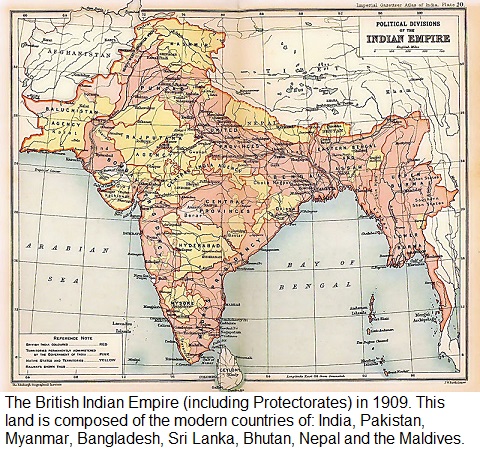
The Go Lean book serves as a roadmap for the introduction and implementation of the CU. India is out-of-scope for the CU/Go Lean roadmap. Our scope is to impact the Caribbean’s economic, security and governing engines, not Indian society.

All in all, there are Good lessons and Bad lessons that we can learned from India. As a region, we can also be an emerging economy as India is designated. Yes, we can!

So let’s pay more than the usual attention to the developments of India. Everyone is urged to lean-in to this Go Lean/CU roadmap for the Caribbean Union Trade Federation, to make our Caribbean homeland a better place to live, work and play. 🙂

Download the book Go Lean … Caribbean – now!

———–

Appendix VIDEOThe Caribbean East Indians (Part 1 of 2)https://youtu.be/oxFrQd6lVzA

Published on Apr 29, 2015 – The “East Indians” of the Caribbean and Caribbean rim countries are the descendants of immigrants from the Indian sub-continent. Despite their name they are no relation to the indigenous aboriginal “Indians” who inhabit or formerly inhabited the area. The East Indians are, along with Black Afro-Caribbeans (“West Indians”), one of the two major ethnic groups in Trinidad and Tobago, Guyana and Suriname. There are also East Indian communities in Jamaica (one estimate for 1980 gives the East Indian population as 50,000), Grenada and the French islands of Martinique and Guadeloupe.

Indians were first brought to the Caribbean from the mid-1840s to work on white-owned sugar plantations as indentured labour to replace newly freed African slaves. The majority of immigrants were young men; later disturbances on the plantations forced the authorities to try and correct the imbalance. Indenture was usually for five years and the labourer was subject to restricting and paternalistic regulations which were sometimes described as “a new system of slavery”. After an initial number of years it was possible for the labourer to return to India but since many were offered land in order to entice them to stay near the estates, most stayed in their new country.

The racial tensions and stereotypes of later years were formed during the colonial period. Indians worked for less than Africans and were regarded as cheap and malleable labour. There were differences of culture between the Hindu and Muslim Indians and the Christian Africans. While the Africans, who were more likely to be literate in English, filled the jobs in the urban and commercial sectors, Indians were most likely to remain labourers and small farmers.

See Part 2 of 2: https://www.youtube.com/watch?v=-qeM2BecjNI

Share this post:
,
[Top]

10 Things We Want from China and 10 Things We Do Not Want

Go Lean Commentary

Like it or not, the Caribbean is in competition with the rest of the world – and we are losing!

Economically we are Third World. So we lose even more when our people flee to go to more prosperous countries, at the expense of societal abandonment to our communities.

It is what it is – we lose 70% of our college-educated to the brain drain – no community can thrive with such a disposition. So we are losing in the modern battles of trade and globalization. It is a crisis.

Alas, a crisis is a terrible thing to waste!

This is the premise of the book Go Lean…Caribbean; it posits (Page 3) that the Caribbean has a fighting chance for survival in the modern world because we have one huge advantage:

We have the “greatest address in the world”…

… this is in terms of terrain, fauna/flora, hospitality, culture, food, drink (rum) and tobacco (cigars).

It seems so illogical, to have this advantage and yet to lose in the global war for prosperity.

cu-blog-10-things-we-from-china-photo-2Again, it is what it is! People leave … a large number of Caribbean people have fled and now live abroad. They live in places like the US, Canada, the UK and Europe. There is so much for us to learn from these foreign destinations, as this commentary has considered. We have asked (and answered) the questions, poised as follows:

  • Why do our Diaspora leave – this greatest address in the world – and what can we learn from their experiences?
  • What can we gather for the Pros and Cons of life in those foreign abodes?

This consideration was completed in a series detailing the destinations for our fleeing countrymen. The full series was detailed as follows:

  1.   10 Things We Want from the US and 10 Things We Do Not Want
  2.   10 Things We Want from Canada and 10 Things We Do Not Want
  3.   10 Things We Want from the UK and 10 Things We Do Not Want
  4.   10 Things We Want from Europe and 10 Things We Do Not Want

Now we must consider other countries, not ones that our Diaspora has fled to, but rather ones that compete with us and are doing MUCH BETTER jobs of contending in this competitive environment. We must consider China and India:

What Things Do We Want from China and Things We Do Not Want

What Things Do We Want from India and Things We Do Not Want

The stakeholders of this Go Lean…Caribbean movement truly believe that the Caribbean is the “greatest address in the world”. Yet so much is missing and/or defective in our region. We can truly benefit from places like China and India if we apply these 5 L’s in this competitive analysis:

  • Look
  • Listen
  • Learn
  • Lend-a-hand
  • Lead

Let’s start with China. They went from “zero to hero”, emerging as an economic Super Power in short order. We can look, listen and learn from the Chinese eco-system; their mainland (the Peoples Republic of China), the special territories of Hong Kong and Taiwan (the Republic of China). We can lend-a-hand in reforming and transforming our own Caribbean region – as China has had to do – and we can eventually lead a reboot and turn-around of Caribbean society; again as China has done.

This is the quest of the Go Lean movement, to make the Caribbean homeland a better place to live, work and play. Previously, these Go Lean blog-commentaries have considered the competitive analysis of the US, Canada, the UK and Europe to discern how we compete with these foreign locales. The competition is for our young people; we want them to set their sights – their hopes and dreams – on a viable future, right here in the Caribbean homeland and not to have to consider fleeing – like so many of their previous generations – to have the measures of success that the modern world conveys.

CU Blog - Caribbean Ghost Towns - It Could Happen - Photo 7This Go Lean book makes an honest assessment of the Caribbean, our failing and our advantages. It urges us to study the good, bad and ugly of our society and that of other places and then to apply lessons-learned in our efforts to transform the Caribbean. China has been a frequent topic for considerations from the Go Lean movement (book and blogs). The opening Declaration of Interdependence (Page 14) recognized that there is value in considering the Good and Bad examples of places like China, with this statement:

xxxiii. Whereas lessons can be learned and applied from the study of the recent history of other societies, the Federation must formalize statutes and organizational dimensions to avoid the pitfalls of communities…. On the other hand, the Federation must also implement the good examples learned from developments/communities….

So there are things that the Caribbean want and things that we do not want from places like China. Here is a laundry list of the Good and the Bad and how the roadmap to elevate Caribbean society, the book Go Lean…Caribbean, describes how the lessons should be applied in the implementation of the Caribbean Union Trade Federation (CU):

Chinese Imports

10 GOOD Things We Want from China

10 BAD Things We Don’t Want from China

1

Market of 1.3 billion If “size does matter” then China is ‘King of Kings’; their 1.3 billion population cannot be ignored for trade. Considering modernity, this massive consumer market have basic needs (food, clothing, shelter, energy, telecommunication and media) that must be satisfied. So much profit (jobs) is to be gained by trying to provide for these needs. The Go Lean roadmap is based on the premise that Caribbean member-states need a bigger population, and so seeks the leverage of 42 million people in the region. The roadmap also seeks to explore all profit-seeking opportunities to first satiate the basic needs of those 42 million people. Profit-seeking – not greed – is not a bad ethos; there must be growth in a community, otherwise people leave to seek profit elsewhere. The CU seeks to grow the regional GDP to US$800 Billion over 5 years, by facilitating the regional market and also trade with China. Bullying China realizes that “size does matter” and with its 1.3 billion population, they can “throw their weight around”. The current conflict in the South China Sea is a manifestation of that bullying ethos. China can be a “bad actor” at times; and they are a nuclear power. Though China has not displayed any military aggression towards the Caribbean, our security apparatus must be “on guard”. The Go Lean roadmap anticipates the emergence of “bad actors”, so mitigations need to be proactive and reactive. The roadmap therefore stresses economics and security measures equally. We are not in the “nuclear club” and do not seek that status, so we must continue our alliance with nuclear powers. Our current alliance are based on proximity and colonial status, as the United States, the United Kingdom and France are all nuclear capable and have active Caribbean territories.

2

Capital China is now starting to exert its economic muscles in the Caribbean – they bring the wallets of their State-run entities, i.e. Export-Import Bank (China Exim Bank). The Caribbean region needs these foreign investments. They put the “money where the mouth is” as many China funded infrastructure projects in the Caribbean are managed by State-run engineering and construction firms. The CU/Go Lean roadmap calls for strenuous oversight for the regions monetary policy (Caribbean Dollar), thereby fostering better accountability and transparency. Exploitation of Environment Chinese cities are notoriously bad for pollution; many residents wear surgical masks daily. In the 2008 Beijing Olympics, many foreign athletes had to mitigate by going to venues only on participation days. The government’s “anything goes” ethos also apply in the rural areas, with an overall lack of environmental protection.
The CU/Go Lean stresses environmental protection in the Exclusive Economic Zone and the Self-Governing Entities, plus the ratings-&-rankings of the member-states delivery for the Social Contract forces adherence and compliance.

3

Trade & Economic Growth China has grown tremendously in the past few decades by “opening up” and adopting the tenants of this one economic principle: “Voluntary Trade Creates Wealth”. The lesson for the Caribbean is that even with a much smaller 42 million population base, we can still grow our economy and trade outreach – plus we have the destination and culture the world wants. So we have a lot to trade on. The CU is a Trade federation so the emphasis is on all aspects of trade. See the book’s Trade SHIELD principles. Trade Barrier China imposes restrictions on its trade imports to block too much foreign imports, even for intellectual property. But this is a product of negotiation. China could be better exposed to the beauty of Caribbean culture and related products, but first there must be effective messaging to correct their fallacies about Afro-Caribbean image. The Go Lean roadmap calls for a Sentinel for Caribbean image. A lot of the fallacies in China stem from false white supremacy precepts. The CU will “message this out”.

4

Infrastructure Build China has been active in the Caribbean region regarding infrastructure projects; they have built stadia, hotels, airports, bridges and other projects. The engineering skills are greatly appreciated, especially when accompanied with Chinese funding options. The Go Lean roadmap calls for new strategies to facilitate infrastructure projects. We need partners like China’s State-run engineering and construction firms. Shoddy Workmanship
Even China itself questions the workmanship of its State-run engineering and construction firms. For the 2008 Beijing Olympics the primary stadium – Bird Nest – was engineered by a German firm. Also, the recent Baha Mar project in the Bahamas, is plagued with quality concerns. The CU structure calls for advancing the engineering competence in the region, over time, so that Caribbean stakeholders can facilitate these projects ourselves.

5

Progressive Technocracy The Chinese government is headed mostly by technocrats as opposed to lawyers and politicians; (Go Lean book Page 64). Their steady societal growth of the recent decades is reflective of a technocratic ethos. The Go Lean roadmap details community ethos that reflect technocratic principles, like: Lean Operations, Return on Investments, Cooperatives, Incubators, NGO’s and R&D. Religious Orthodoxy While atheistic communism is the official principle of China’s government, religious institutions are still thriving, along with many negative orthodoxy: human rights abuses for minority groups, superstitions of ingredients from endangered animals (elephant & rhino tusks, shark fins, etc.). The CU/Go Lean roadmap features minority equalization and protections despite any religious orthodoxy.

Chinese Imports (cont’d)

10 GOOD Things We Want from China

10 BAD Things We Don’t Want from China

6

Protected economy China is a good example of economic stewards protecting their economy for domestic stakeholders first. Consider the mandate for movies; only a minimum is allowed from foreign producers, thereby fostering a domestic industry. The CU, while encouraging foreign participation, sees the value of incentivizing (subsidies) domestic participants for greater colloquialism; this will create more local jobs. Restricted economy China’s protective motives go too far; it is now considered restrictive; consider the blocking of outside internet and e-commerce. A bilateral approach should allow for more give-and-take.
The CU/Go Lean roadmap calls for negotiated bilateral trade permissiveness. We must give-and-take; this is the only way to “win” with globalization.

7

Justice Principles China has multi-layers of governance: national, provincial and municipal. Yet, still there are justice accords that the country ensures. In addition, there are treaties that China has ratified. This compliance ensures some accountability. The CU/Go Lean roadmap prioritizes justice among its community values. Even though local and national governance exist, there is accountability to regional justice institutions; with the deployment of the CariPol and Caribbean Court. International Justice Adherence China often plays the role of “bad actor” for enforcement of international accords. Take the case of “Legal High” for example. This drama involves legal drugs used to mix narcotics for sale in Black Markets, think “Meth”. In most cases, the drugs come from factories in China; see this BBC story and the Appendix VIDEOThe Go Lean roadmap prepares the region for mitigations against “bad actors”, domestic and foreign. The security apparatus will work lock-step with CU Trade efforts.

8

Commitment to Sports The Chinese legacies for soccer/football , basketball and even their Olympic models (Track & Field) inspire athletes that they can earn a living based on their talents, disciplines and abilities. The governments attempt to identify those with genius qualifiers as early as possible and then foster the skills progressively as they mature. The Go Lean roadmap includes a comprehensive sport promotion and administration apparatus to facilitate amateur, collegiate and professional sports careers. Unsportsmanlike Competition Chinese athletes push themselves to the full limits, many times beyond unreasonableness. During recent Olympics, many Chinese female gymnasts were much younger than required for their psychological development. Plus with the threat of performance enhancing drugs, many bad sportsmanship have been expressed. The Go Lean roadmap calls for rebooting sports eco-system to include an Anti-Doping agency within the CU Trade Federation to elevate regulation and enforcement.

9

Commitment to Progressive Healthcare With 1.3 Billion people, there will be classes of rich, poor and middle class. But with the communistic structure, a safety net is supposed to be there for all; but with that market size, the “least common denominator” will be low. Ancient Chinese medicine is fully supported by the government, but, the best example of the country’s health progression is available to Armed Forces personnel. The CU/Go Lean roadmap prioritizes advances in health care for all citizens in the region. There are deliverables for cancer treatments, mental health and universal plans. Organ Transplants According to a previous blog, China has a lot of mileage in the medical history of organ transplantation and the impact on social values. This is a recent history anywhere, as the medical capability only became viable since the 1970′s. With the billions of people living in the rural areas, it is not inconceivable that “bad actors” view the masses as prime harvesting grounds for organ transplantation. The Go Lean roadmap allows for a regional registry and protections for organ transplantation across the 42 million population, as bad actors will appear here too.

10

Family Cohesion It is common for multiple generations of Chinese families to live in the same house; this allows for automatic elder care and childcare arrangements.
The Go Lean roadmap encourages repatriation; family reunification is one additional benefit. This will also encourage the Caribbean youth to plan for a future at home.
Family Planning – Size Decades ago, China started its One Child policy to mitigate population explosion. The threat of infanticide is high as couples may not get the One Child sex they want.
Rather than excessive population, the Caribbean population is declining because of the excessive brain drain/societal abandonment. We can encourage any family planning preference for our region.

In addition, the book specifically addresses China and Taiwan with these direct references of community ethos, strategies, tactics, implementations and advocates:

Community Ethos – Voluntary Trade Creates Wealth Page 21
Community Ethos – Consequences of Choices Lie in the Future Page 21
Community Ethos – Money Multiplier Page 22
Community Ethos – Job Multiplier Page 22
Community Ethos – Cooperatives Page 25
Community Ethos – Impact the Greater Good Page 37
Strategy – CU Vision and Mission Page 45
Strategy – Customers – Foreign Direct Investors Page 48
Strategy – Agents of Change – Globalization Page 57
Tactical – Confederating a Permanent Union Page 63
Tactical – Fostering a Technocracy Page 64
Tactical – $800 Billion Economy – How and When – Trade Page 67
Tactical – $800 Billion Economy – How? Example of WWII Rebuild in China/Taiwan Page 69
Tactical – Growth Approach – Trade and Globalization Page 70
Tactical – Separation of Powers – Cari-Pol – Marshalls & Investigations Page 77
Tactical – Separation of Powers – Caribbean Court of Justice Page 90
Implementation – Ways to Pay for Change Page 101
Implementation – Ways to Deliver Page 109
Implementation – Trade Mission Objectives Page 117
Implementation – Ways to Benefit Globalization Page 119
Planning – Ways to Improve Trade Page 128
Planning – Ways to Improve Interstate Commerce Page 129
Advocacy – Ways to Grow the Economy Page 151
Advocacy – Ways to Create Jobs Page 152
Advocacy – Ways to Improve Governance Page 168
Advocacy – Ways to Better Manage the Social Contract Page 170
Advocacy – Ways to Impact Justice Page 177
Appendix – Trade S.H.I.E.L.D. Principles Page 264

In addition, this subject of China and our Caribbean trade empowerment has been directly addressed and further elaborated upon in these previous blog/commentaries:

https://goleancaribbean.com/blog/?p=8823 Lessons from China – WeChat: Model for Caribbean Social Media
https://goleancaribbean.com/blog/?p=8819 Lessons from China – South China Seas: Exclusive Economic Zones
https://goleancaribbean.com/blog/?p=8817 Lessons from China – Mobile Games Apps: The new Playground
https://goleancaribbean.com/blog/?p=8815 Lessons from China – Organ Transplantation: Facts and Fiction
https://goleancaribbean.com/blog/?p=8813 Lessons from China – Why China will soon be Hollywood’s #1 market
https://goleancaribbean.com/blog/?p=8799 Lessons from China – Too Big To Ignore
https://goleancaribbean.com/blog/?p=6231 China’s Caribbean Playbook: America’s Script
https://goleancaribbean.com/blog/?p=5435 China Internet Policing – Model for Caribbean
https://goleancaribbean.com/blog/?p=2488 Role Model Jack Ma brings Trade Marketplace Alibaba to America
https://goleancaribbean.com/blog/?p=294 Bahamas and China’s New Visa Agreement

cu-blog-10-things-we-from-china-photo-1 The Go Lean book serves as a roadmap for the introduction and implementation of the CU. Our scope is to impact the Caribbean’s economic, security and governing engines, not Chinese society. While Caribbean people are not fleeing their homeland to relocate to China. there is a Diaspora issue associated with Caribbean-China relations: Indentured Servitude. At the end of the era of Caribbean slavery (1830’s to 1840’s), the plantation system required a replacement labor source; many Chinese nationals were thusly “recruited” as Indentured Servants to the region – British, French and Spanish lands – see here:

There were two main waves of Chinese migration to the Caribbean region. The first wave of Chinese consisted of indentured labourers who were brought to the Caribbean predominantly Trinidad, British Guiana and Cuba, to work on sugar plantations during the post-Emancipation period. The second wave was comprised of free voluntary migrants, consisting of either small groups (usually relatives) to British Guiana, Jamaica and Trinidad from the 1890’s to the 1940’s. In fact the most modern Caribbean Chinese are descended from this second group. – Caribbean-Atlas.com

Derivatives of the 18,000-plus Chinese immigrants are still here in the Caribbean today. These descendents have grown in numbers and power (economic and political) in the region. They are part of the fabric of our society. They are home in the Caribbean; and we are at home with them; see the profile of the Lee-Chen families in this previous blog-commentary. This is our Chino-Caribbean heritage. These ones, as a Chinese Diaspora, desire these imports from China and are on alert for influences they do not want.

All in all, there are Good lessons and Bad lessons that we can learned from China. We can also advance “from zero to hero”, as China has done. Yes, we can!

So let’s pay more than the usual attention to the developments of China, to China and from China. Everyone is urged to lean-in to this Go Lean/CU roadmap for the Caribbean Union Trade Federation, to make our Caribbean homeland a better place to live, work and play. 🙂

Download the book Go Lean … Caribbean – now!

———–

Appendix VIDEOWhat goes on inside a Chinese ‘legal high’ factory? BBC Newshttps://youtu.be/BnhgWG-cp5w

Published on Sep 6, 2016 – The BBC has been shown footage filmed inside a laboratory in China that makes so-called “legal highs”. The sale, distribution and manufacture of the drugs was banned in the UK in 2016 as many of them were found to have lethal side effects.

But Radio 4’s File on Four programme managed to order a small sample of a legal high from an online supplier in China.
The drug was posted to the UK concealed inside a plastic container designed to hold a water softener.
Please subscribe HERE http://bit.ly/1rbfUog


Share this post:
,
[Top]

10 Things We Want from Europe and 10 Things We Do Not Want

Go Lean Commentary

The phrase “New World” assumes that there was an “Old World“.

CU Blog - A Lesson in History - Royal Charter - Truth and Consequence - Photo 3The Old World would refer to Europe. The New World on the other hand, refers to the lands in the Western Hemisphere – North, Central and South America, plus the Caribbean – that was first opened up with the 1492 Discovery by Christopher Columbus. After the first 100 years of legal and papal wrangling, the settlement of the New World by diverse European powers commenced in earnest in the 1600’s. This started a period of colonization by Imperial powers from Europe grappling for dominance and/or some presence in the Americas.

This colonization historicity was detailed in the book Go Lean…Caribbean; it summarized the European history of ebb-and-flow of the colonial power struggle in the Americas in general and in the Caribbean region in particular; see these samples:

The Bottom Line on European Colonialism  – (Page 241)
The European colonial period was the era from the 1500s to the mid-1900s when several European powers (Spain, Britain, the Netherlands, France and Portugal) established colonies in the Americas, in a “Space Race” to dominate the New World. The Northern Coast of South America became a typical New World battleground for conflict and pushing between these powers, and many military campaigns and diplomatic initiatives (treaties) ensued. … When did this European Colonial “push-shove-match” end? Not until almost 500 years later, after World War II, after the effects of that war left all these European powers drained – of finances and the will to continue.

***********

Appendix – US Virgin Islands – Economy Past, Present & Future  – (Page 305)
The Virgin Islands were held by many European powers, including Spain, Great Britain, the Netherlands, France, and Denmark-Norway. The Danish West India Company settled on Saint Thomas in 1672, on Saint John in 1694, and purchased Saint Croix from France in 1733. The islands became royal Danish colonies in 1754, named the Danish-West Indian Islands. Like other Caribbean islands, sugarcane, produced by slave labor, drove the islands’ economy during the 18th and early 19th centuries, until the abolition of slavery by Danish Governor Peter von Scholten on July 3, 1848.

During the submarine warfare phases of the First World War, the United States, fearing that the islands might be seized by Germany as a submarine base, … approached Denmark with a view to buying them. After a few months of negotiations, a selling price of $25 million in United States gold coin was agreed. (This is equivalent to $2.2 Billion in 2012 dollars @ $1770 per ounce)…. The United States took possession of the islands on March 31, 1917.

To recap, here are the European countries that have shown “interest” in the Caribbean:

Britain
Denmark
Germany
The Netherlands
Norway
France
Portugal
Spain

cu-blog-10-things-we-from-europe-photo-2

The Old World powers came to the New World, liked what they saw and fought over it. As referenced above, these Caribbean territories featured an economy based on African slavery. In the end, the European colonizers left the island and coastal territories, mostly in the hands of the descendants of former slaves. These mature empires and advanced democracies left these shores without the needed governance to lead their own affairs efficiently or effectively. Today, all of these European countries (listed above) function as better societies than their former colonies here in the Caribbean.

This is a sad but true reality. The Caribbean could be argued to be the “greatest address in the world”, in terms of terrain, fauna/flora, hospitality, culture, food, drink (rum) and tobacco (cigars). Yet, a large number of Caribbean people have fled and now live abroad. They live in places like the US, Canada, the UK and the European countries listed above.

This seems illogical, considering all the blood, sweat and tears for domination here in the Caribbean over the years, decades and centuries. But it is what it is! People leave … in droves. They do not only leave to go somewhere else (the destinations), but rather they leave just to get away from “here”.

So for Europe – not considering the UK-Britain-England this time – we must ask the questions of our Diaspora there:

  • Why do they now live in Europe and what can we learn from that experience?
  • What can we gather for the Pros and Cons of European life?

This commentary is Part 4 of 4 in a series examining the destinations of the Caribbean Diaspora. The full series is as follows:

  1. 10 Things We Want from the US and 10 Things We Do Not Want
  2. 10 Things We Want from Canada and 10 Things We Do Not Want
  3. 10 Things We Want from the UK and 10 Things We Do Not Want
  4. 10 Things We Want from Europe and 10 Things We Do Not Want

The stakeholders of this Go Lean … Caribbean movement truly believe that the Caribbean is the “greatest address in the world”. Yet still, we have an atrocious record of societal abandonment. This disposition is so acute that we report 70% of the region’s college-educated classes have fled the region for refuge elsewhere.

Refuge? An appropriate word, as there are “push and pull” reasons why Caribbean citizens leave such beauty to relocate to the cold and unknown places like Europe. Our societal defects – in the economic, security and governing engines – are that bad.

This is a crisis! Alas, the Go Lean book also asserts that a “crisis is a terrible thing to waste” (Page 8). Let’s look, listen and learn from the European mainland, and then let’s lend-a-hand and then eventually lead a reboot and turn-around of Caribbean society. We can do better than our recent past. We must do better!

This is the quest of the Go Lean book and subsequent movement, to make the Caribbean a better place to live, work and play. Previously, these Go Lean blog-commentaries have looked inward and identified the many facets of our societal defects. Now, this commentary looks at these refuge countries that our people flee to, and glean the Good and Bad of those destinations. We want our people back … and to not lose anymore; so consider this review a competitive analysis to discern how we compete with these foreign locales. We want our young people to set their sights – their hopes and dreams – on a viable future, right here in the Caribbean homeland.

This honest assessment requires that we study the things that we, in the Caribbean, want and things that we do not want from places like Europe ; (the UK was previously considered separatedly). Here is a laundry list of the Good and the Bad and how the roadmap to elevate Caribbean society, the book Go Lean…Caribbean, describes how the lessons should be applied in the implementation of the Caribbean Union Trade Federation (CU):

European Imports

10 GOOD Things We Want from Europe

10 BAD Things We Don’t Want from Europe

1

Profit-Seeking Many people frame the motivation for New World expansion as the quest to expand sovereign empires, or a quest for religious missions; but many historians put the motivation accurately at “profit”. First there was the gold and other precious metals extracted from the Americas, then after exhaustion, then came slavery to exploit the agricultural opportunities for crops not grown in Europe: cotton, sugar cane, tobacco, etc. The Go Lean roadmap accepts that profit-seeking – not greed – is not a bad ethos; there must be growth in a community, otherwise people leave to seek profit elsewhere. The CU seeks to grow the regional GDP to US$800 Billion over 5 years. History of Aggression To protect the Empire expansion goals, countries were willing to be aggressive militarily; as a result there where many scrimmages in the Caribbean, and many islands changed hands from one power to another. That aggression continued for the hundreds of years since the start of colonization of the New World, leading to World War I and World War II. Though there has not been any global conflicts in the 70 years since WW II, the community ethos is there, to become aggressive easily. The Go Lean roadmap anticipates the emergence of “bad actors”, so mitigations need to be proactive and reactive. The roadmap therefore stresses economics and security measures equally.

2

Tourists Tourism is still the primary economic driver for the Caribbean region. While there is a lot of competition for European tourists, the Caribbean continues to make the case that its region is the best tourist destination in the world. The region wants to continue to appeal to Europeans of all demographic persuasions to come visit the islands for stay-overs (land-based hotels) and/or cruise ships. We want to forge vacation options and traffic for the upper, middle and lower classes of European society. See VIDEO in the Appendix below. The CU forges plans, advocacies and re-boots to further enhance the Caribbean tourism product array. Latent Racism For societies to promote the exploitation of slaves, there must have been an underlying creed of racism, or racial supremacy. This emerges from time to time, as reflected recently with the Middle East Refugee crisis.  People with this mindset may not have a problem with coming to a Black majority Caribbean destination for leisure travel; it may be fun for them to be pampered by “servants”, but not so much for those facilitating the service. The Go Lean roadmap promotes racial equality in a free market. But accepting that the past was tainted, the roadmap also invites Truth and Reconciliation Commissions to settle many prior conflicts.

3

Capital There are many Financial Centers around the world and in Europe (Zurich, Paris, London, etc.). They have the capital the Caribbean needs for Direct Foreign Investments. To be attractive for these opportunities, we have to facilitate the corporate governance to allow for full transparency and accountability. The Go Lean roadmap calls for the emergence of a new financial eco-system around the Caribbean Dollar (C$) managed by a regional technocratic Caribbean Central Bank. This structure will allow for more liquidity in the existing regional stock exchanges. Austerity The European Sovereign Debt Crisis (2009 – 2012) is mostly over now. But the remediation required more taxes and spending cuts, austerity. But economists assert that economic growth is the best way to counteract recession. So austerity measures may be a flawed strategy. The Go Lean roadmap presents strategies, tactics and implementation to grow the economy … sharply. The plan is to create 2.2 million new jobs and the incubation of many entrepreneurial endeavors. There is also the plan to streamline municipal operations and finances. This execution will eliminate the need for austerity measures.

4

Education System Germany provides tuition-free colleges (see Photo). Many other European states feature progressive education systems that foster more STEM careers. This commitment starts at kindergarten school and follows suit all the way up to college. Rather than incurring mounds of debt, the European model is a state investment in its youth. The Go Lean roadmap seeks to reboot the education eco-system and invest in STEM fields. One strategy is to deploy more e-Learning schemes. This will benefit people in urban and rural addresses of the Caribbean. Study Abroad Going off to school is one of the most exciting times in a young student’s life, but for the CaribbeanEuropeanOverseasTerritories, it is also a rite of “passage” to the Diaspora. Places like Aruba, Curacao, Guadeloupe and Martinique have the experience of hosting graduations one week and final emigration-trips the next week. The CU/Go Lean roadmap seek to turn-around the tertiary education environment in the Caribbean, so that local students do not have to leave. They are encouraged to study in-country.

5

Health Care/Dental CareMany European member-states feature a Universal Health scheme. These programs provide examples of successful healthcare for all of its citizens. They ensure that everyone has access and quality delivery, including dental care. They have coverage for indigents, alleviating price shocks.The Go Lean roadmap calls for schemes to mandate healthcare insurance for every adult. With the leverage across the 30 member-states and 42 million people, the wholesale costs of products/services would be reduced. GMO’sThere are Crony-Capitalists in most European powers, especially in the agricultural sectors. Leave unchecked, GMO’s could easily become the standard and deployed to the general public. (This is the American experience).The European Medicines Agency is a model for the corresponding Caribbean Medicine-Food-Nutrition regulatory agency. The Go Lean roadmap calls for strict food labeling, resembling the EU more so than the deceit/ American bad example. Life is more important than profit.  

European Imports (cont’d)

10 GOOD Things We Want from Europe

10 BAD Things We Don’t Want from Europe

6

Human Rights Ideals The Nobel Prize is awarded by a committee in Stockholm, Sweden. Plus the United Nations Human Rights Commission is based in The Hague in the Netherlands. European are the most active in watching human/civil rights abuses around the world. The CU/Go Lean roadmap features monitoring for human rights in the Caribbean region. There is the need, we have a pattern of hatred towards certain minority groups. Same Sex Marriage While there is a need for human rights and civil rights, many consider Same Sex Marriage to be “a bridge too far” too fast. For those communities with orthodox religious traditions, they balk at Same Sex Marriage being shoved on them. The CU advocates for human rights and civil rights. There must be a compromise to extend property and privacy rights without insulting religious standards.

7

Social Safety Nets The Western European nations all feature Democratic Socialism as the form of government, even with monarchs in some countries. This structure allows for more social “Safety Nets”, like unemployment benefits, welfare and disability. The people are still “covered” even if their plans for their life and career do not succeed. This incentivizes people to stay “home” for the “good, bad and the ugly”. To benefit the “Greater Good”, the CU plans a lot of “Safety Nets” for when Crap Happens, financed through insurance schemes: premiums and claims, spread across a wide region for more leverage (42 million people). Taxes on Poor People The European states featuring Democratic Socialism feature a high tax structure – (see Photo/Chart below). This means poor people have the same tax burden as rich people. The preference is now to consider a progressive tax scheme where the rich bear a heavier burden than the poor, through either consumption or sliding scale. The CU/Go Lean roadmap proposes new balanced tax schemes that mostly “skim off the top”. The CU will deploy systems to help member-state governments do better at collecting their tax revenues. Overall the Caribbean tax burden will increase, but only marginally.
8

Police Training Security concerns are equally important in nation-building. With economic prosperity comes “bad actors”, so good law-enforcement is vital for social cohesion. In Europe, the incidences of police-civil-rights abuses is lower than say the Americans, one reason is good police training. The CU does not want a repeat of Cop-on-Black violence that the Americans experience. We want to follow the European models more for best-practices. War on Terror Considering the historic past with former colonized people, the European mainland has to be “on guard” for bad actors and terrorism attacks; there have been recent attacks in France, Belgium and Germany. The EU is now cooperating with security intelligence globally to mitigate these threats. The CU seeks to implement a comprehensive security apparatus with robust intelligence gathering and analysis.

9

Media Arts – Film, TV, Music & e-Games While prospects for many traditional 20th Century jobs and industries (factories, auto, steel, mining) have declined in Europe due to the competitive imbalance of globalization and technology, electronic media-related industries now flourish. The challenge of language translation has been mitigated with technology – a global market has emerged. The CU roadmap posits that art and music can drive big economic returns. The only way to win in the global marketplace is to ensure that “we” produce/contribute and not just consume. The CU will ensure the complete eco-system is there to identify, foster & compensate stakeholders for this new world of electronic media.. Cultural Neutralizations – Domination of Euro-centric There are other cultures other than just White-Europeans. European (White) media brings European values, and these may not always advocate what’s best for Caribbean life. If not abated, the world gets the impression that Black-and-Brown only “takes”, rather than “give” to the world’s cultural landscape. Afro-Caribbean culture must be preserved and promoted to the rest of the world. The Go Lean book compares cultural protectionism as employed in France versus the free market approach. While France doesn’t lead many of the world’s media output, they maintain and promote their unique culture. This propels their tourism: 25 million to Paris alone.

10

Sports Professionalism The European legacies for Soccer/Football and even their Olympic models (Track & Field) inspire athletes that they can earn a living based on their talents, disciplines and abilities. The Go Lean roadmap includes a comprehensive sport promotion and administration apparatus to facilitate amateur, collegiate and professional sports careers. Win at all costs ethic There is a worldwide movement to curb the sports world of performance enhancing drugs. Many European stakeholders have been identified and censured for bad sportsmanship in this area. The Go Lean roadmap calls for rebooting sports eco-system to include an Anti-Doping agency within the CU Trade Federation to elevate regulation and enforcement.
cu-blog-10-things-we-from-europe-photo-1

Europe has been a frequent topic for considerations from the Go Lean movement (book and blogs). The opening Declaration of Interdependence (Page 14) recognized that there is value in considering the Good and Bad examples of Europe, with this statement:

xxxiii. Whereas lessons can be learned and applied from the study of the recent history of other societies, the Federation must formalize statutes and organizational dimensions to avoid the pitfalls of communities like East Germany …. On the other hand, the Federation must also implement the good examples learned from developments/communities like … Germany….

Not just life in Europe is addressed by the Go Lean book, but also life in the remaining European Overseas Territories in the Caribbean (Dutch & French). The CU treaty includes the DutchTerritories (Netherland Antilles: Aruba, Bonaire, Curaçao, Sint Maarten, Saba, and Sint Eustatius) and also these FrenchTerritories (Guadeloupe, Martinique, Saint Martin and Saint Barthélemy, and French Guiana eventually).

Though France and the Netherlands are among the most prosperous economies in the world, that prosperity has not always extended to these islands.

In addition, the book specifically addresses Europe, Dutch/French Territories and the Caribbean Diaspora in Europe with these direct references of community ethos, strategies, tactics, implementations and advocates:

Community Ethos – Economic Systems Influence Individual Choices Page 21
Community Ethos – Voluntary Trade Creates Wealth Page 21
Community Ethos – Minority Equalizations – 4 Languages; One People Page 24
Strategy – Invite empowering immigrants – Like STEM stakeholders from Europe Page 46
Tactical – Confederation Models – i.e. Denmark, Sweden, Norway Page 63
Tactical – Separation of Powers – Homeland Security – Model of NATO Page 75
Tactical – Separation of Powers – Health Department – Medicine-Food-Nutrition Administration Page 87
Implementation – Assemble Dutch and FrenchTerritories into the Caribbean Union Page 96
Implementation – Trade Mission Objectives – Trade Mission Offices: Paris, Amsterdam, Spain Page 117
Implementation – Reason to Repatriate – From Europe Page 118
Implementation – Ways to Promote Independence – Autonomous Rule for Territories Page 120
Planning – Ways to Improve Trade – Trade to Diaspora in Europe Page 128
Planning – Ways to Model the European Union Page 130
Advocacy – Ways to Grow the Economy – Encourage More Foreign Investment from Europe Page 151
Advocacy – Ways to Better Manage the Social Contract Page 170
Advocacy – Ways to Foster Cooperatives – Models from French Origins Page 178
Advocacy – Ways to Impact the Diaspora – Large Pockets in Holland and France Page 218
Advocacy – Ways to ImpactDutchTerritories Page 246
Advocacy – Ways to ImpactFrenchTerritories Page 247
Appendix – The Guianas Historic Timeline – Sample European Grappling Page 307

In addition, previous Go Lean blog/commentaries addressed many issues in regards to Europe, the Dutch/French Overseas Territories and the interactions of Caribbean people that live there in Europe; see sample list here:

https://goleancaribbean.com/blog/?p=7834 French Caribbean ready for the Martinique Surf Pro
https://goleancaribbean.com/blog/?p=6247 Tragic images show refugee crisis at a tipping point in Europe
https://goleancaribbean.com/blog/?p=5818 European Country of Greece: From Bad to Worse
https://goleancaribbean.com/blog/?p=4971 The Legacy of Royal Charters in Europe: Good & Bad
https://goleancaribbean.com/blog/?p=3090 Introduction to Europe – All Grown Up
https://goleancaribbean.com/blog/?p=2809 A Lesson in History – Economics of East Berlin, Germany
https://goleancaribbean.com/blog/?p=1364 Uber Demonstrations Snarl Traffic from London to Berlin
https://goleancaribbean.com/blog/?p=1193 EU willing to fund study on cost of not having CARICOM
https://goleancaribbean.com/blog/?p=1020 Revolutionary Changes needed in European Soccer
https://goleancaribbean.com/blog/?p=833 The Euro – One currency, Divergent Economies

The Go Lean book serves as a roadmap for the introduction and implementation of the CU. Our scope is to impact the Caribbean’s economic, security and governing engines, not European society. But we do hope to engage the Caribbean Diaspora living there. Perhaps even entice them to consider a Caribbean repatriation. 🙂

There are Good lessons and Bad lessons that we can learned from Europe. The Old World can now teach the New World important new lessons.

So let’s pay more than the usual attention to the lessons from “over there”. Everyone is urged to lean-in to this Go Lean/CU roadmap for the Caribbean Union Trade Federation, to make our homeland a better place to live, work and play. 🙂

Download the book Go Lean … Caribbean – now!

———–

Appendix VIDEOCayman looks to boost tourism from Europehttps://youtu.be/s6rQ5lsRp-Y

Uploaded on Jan 21, 2008 – Charles Clifford, Minister of Tourism for the Cayman Islands. The islands in the Caribbean are looking to boost tourism from the European region. The Mandarin Oriental is also planning to open a property in the islands. The interview was conducted by Breaking Travel News at Caribbean Marketplace.

Share this post:
,
[Top]