Category: Ethos

Rwanda’s Catholic bishops apologize for genocide

Go Lean Commentary

Is mainstream religion a force for moral good in modern society … in the Caribbean? In Africa? Anywhere?

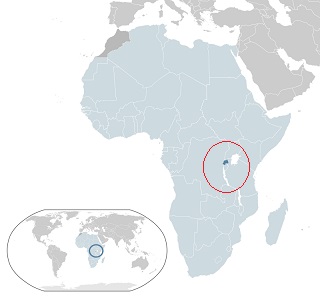
cu-blog-rwandas-catholic-bishops-apologize-for-genocide-photo-3This is a timely discussion right now as there are a lot of threats and dissension in the world, mostly spurred on by religious extremism; think: Islamic terrorists, Shia – Shiite conflicts, Hindu-India versus Muslim Pakistan, Anglicanism versus Catholicism in Northern Ireland. Many samples and examples abound. The case in point for this consideration is the religious-fueled genocide in Rwanda in 1994; see the country’s flag here.

The religious institutions have a tarnished record; not always being a force for moral good in society. They have betrayed the vows and values they are supposed to be committed to. Instead, they have become “drunk with the blood of so many innocent people”.

This reality and cautionary tale from Rwanda provides us a deep lesson, though of a religious nature. See this core scripture:

A mysterious name was written on her forehead: “Babylon the Great, Mother of All Prostitutes and Obscenities in the World.”
I could see that she was drunk–drunk with the blood of God’s holy people who were witnesses for Jesus. I stared at her in complete amazement. – Revelation 17:5 – 6; New Living Translation

Who/What is Babylon the Great? (See Appendix A below).

For one religious group founded in the Caribbean – Rastafarians – they assign the identity to the country of the United States of America. But most religious scholars assign the identity to the world’s orthodox religions.

Some theologians make a narrow accusation and declare that “there can be only one conclusion: The Vatican [(Roman Catholic Headquarters)] is the Mystery Babylon of Revelation; they relate that this false religious system that has deceived the people of the world that will be destroyed at the time of Armageddon”.

Whatever your faith, being associated with Babylon the Great is not a good thing. “She” has a vengeful reckoning in store.

As depicted in a previous blog-commentary, the religions of Christendom have a sullied past! Unfortunately that “past” is not only centuries ago, as chronicled in the recent experiences in 1994 with the Rwandan Ethnic Cleansing. This sad drama is in the news again, as the Roman Catholic Church has now just issued a formal apology for its actions and in-actions in those atrocities.

Considering the real history, they are guilty as charged; see the news story here:

Title: Rwanda: Catholic bishops apologize for role in genocide
By: Ignatius Ssuuna
KIGALI, Rwanda (AP) — The Catholic Church in Rwanda apologized on Sunday for the church’s role in the 1994 genocide, saying it regretted the actions of those who participated in the massacres.

cu-blog-rwandas-catholic-bishops-apologize-for-genocide-photo-2“We apologize for all the wrongs the church committed. We apologize on behalf of all Christians for all forms of wrongs we committed. We regret that church members violated (their) oath of allegiance to God’s commandments,” said the statement by the Conference of Catholic Bishops, which was read out in parishes across the country.

The statement acknowledged that church members planned, aided and executed the genocide, in which over 800,000 ethnic Tutsis and moderate Hutus were killed by Hutu extremists.

In the years since the genocide — which was sparked by a contentious plane crash that killed the then-president, a Hutu — the local church had resisted efforts by the government and groups of survivors to acknowledge the church’s complicity in mass murder, saying those church officials who committed crimes acted individually.

Many of the victims died at the hands of priests, clergymen and nuns, according to some accounts by survivors, and the Rwandan government says many died in the churches where they had sought refuge.

The bishops’ statement is seen as a positive development in Rwanda’s efforts at reconciliation.

“Forgive us for the crime of hate in the country to the extent of also hating our colleagues because of their ethnicity. We didn’t show that we are one family but instead killed each other,” the statement said.

The statement was timed to coincide with the formal end Sunday of the Holy Year of Mercy declared by Pope Francis to encourage greater reconciliation and forgiveness in his church and in the world, said Bishop Phillipe Rukamba, spokesman for the Catholic Church in Rwanda.

Tom Ndahiro, a Rwandan genocide researcher, said he hoped the church’s statement will encourage unity among Rwandans.

“I am also happy to learn that in their statement, bishops apologize for not having been able to avert the genocide,” he said.

========

cu-blog-rwandas-catholic-bishops-apologize-for-genocide-photo-1

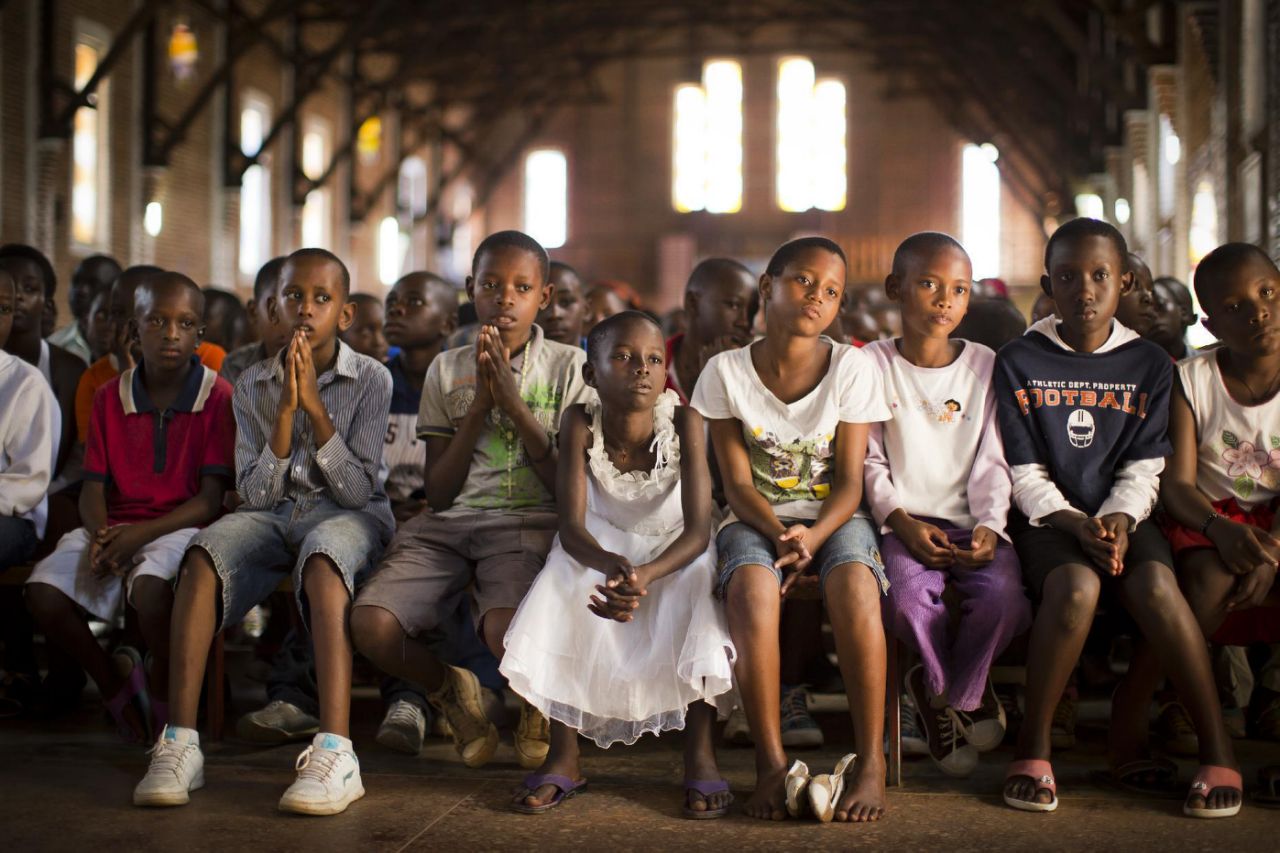
Photo Caption – In this Sunday, April 6, 2014 file photo, Rwandan children listen and pray during a Sunday morning service at the Saint-Famille Catholic church, the scene of many killings during the 1994 genocide, in the capital Kigali, Rwanda. The Catholic Church in Rwanda apologized on Sunday, Nov. 20, 2016, for the church’s role in the 1994 genocide, saying it regretted the actions of those who participated in the massacres. (AP Photo/Ben Curtis, File)
The recap: “800,000 ethnic Tutsis and moderate Hutus were killed by Hutu extremists” during the Rwanda Holocaust in 1994. (This history was dramatized in the movie Hotel Rwanda; see Appendix B VIDEO below).

How does a community – like Rwanda in the foregoing – repent, forgive and reconcile from such a bad legacy?

“Confession is good for the soul”!

This commentary is part-and-parcel of the effort to reform and transform the Caribbean. We too, have some atrocities to reconcile. Plus we have many recent bad actions to reckon with. Think:

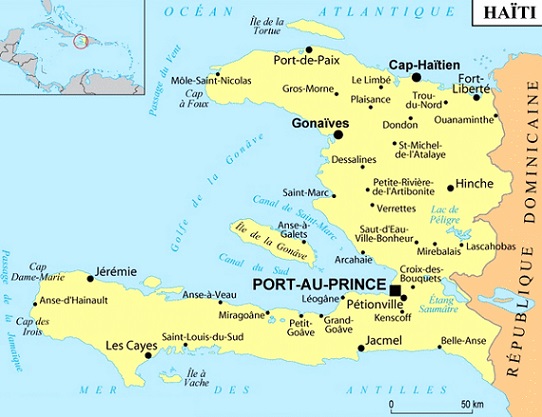
  • Haiti
  • Cuba
  • Guyana
  • Belize

The book Go Lean…Caribbean posits that any success in reforming and transforming the Caribbean must include a unified region – we need to be a Single Market – despite the 30 different member-states, 5 different colonial legacies and 4 different languages. We have a lot of differences – just like the differences of Hutus and Tutsis in Rwanda – and a history of dysfunction. We must consider the ancient and modern conflicts some member-states have had with others.

The book serves as a roadmap for the introduction and implementation of the Caribbean Union Trade Federation (CU). A mission of the roadmap is to reverse the prior “human flight” and invite the Diaspora back to the homeland. Accepting that many people fled the Caribbean seeking refuge, means that we must mitigate these causes of prior distress; and reconcile them. “Old parties” returning to their communities can open a lot of “old wounds” – Rwanda never reconciled their Hutu-Tutsi conflicts before 1994. Therefore an additional mission is to facilitate formal reconciliations, much like the model in South Africa with the Truth & Reconciliation Commissions (TRC). This mission will assuage these Failed-State indicators and threats (Page 272):

  • “Revenge seeking” groups
  • Group Grievances

The foregoing article depicts a bad episode in history of Rwanda and the Catholic Church’s complexities. The best-practice is to repent, forgive and reconcile. Repentance would include desisting in the bad behavior, confession and making amends. Religious orthodoxy is responsible for a lot of harm in the world. To finally answer the opening question: Is mainstream religion a force for moral good in modern society … in the Caribbean?

The answer is: No!

The Go Lean movement (book and blogs) have identified many bad community ethos – fundamental character or spirit of a culture; the underlying sentiment that informs the beliefs, customs, or practices of a group or society; the dominant assumptions of a people or period – that the Caribbean region needs to desist, confess and make amends. Many of these are based on religious orthodoxy; consider:

The Go Lean movement (book and blogs) also details good-positive community ethos that the people of the region need to adopt. The motivating ethos underlying the Go Lean roadmap is the Greater Good. This is defined as “the greatest good to the greatest number of people which is the measure of right and wrong” – Jeremy Bentham (1748-1832), a British philosopher, jurist, and social reformer. What is ironic is the fact that the Greater Good ethos aligns with the true values of most of the orthodox religions identified above; such as this scripture:

Pure and genuine religion in the sight of God the Father means caring for orphans and widows in their distress and refusing to let the world corrupt you. – James 1:27; New Living Translation

This CU/Go Lean mission is to elevate society for Caribbean people in the Caribbean. There is the need to monitor the enforcement of human rights and stand “on guard” against movements towards Failed-State status. The Go Lean roadmap calls for the CU to assume that role. Using cutting edge delivery of best practices, the CU will employ strategies, tactics and implementations to impact its prime directives; identified with the following 3 statements:

  • Optimization of the economic engines in order to grow the regional economy to $800 Billion & create 2.2 million new jobs.
  • Establishment of a security apparatus to ensure public safety assurances and protect the region’s economic engines.
  • Improvement of Caribbean governance to support these engines.

The Go Lean book speaks of the Caribbean as in crisis and posits that this crisis can be averted, that it is a “terrible thing to waste”. The Go Lean roadmap seeks to optimize the entire Caribbean economic/security/governance eco-system. This vision is defined early in the book (Page 12) in the following pronouncements in the Declaration of Interdependence:

xi. Whereas all men are entitled to the benefits of good governance in a free society, “new guards” must be enacted to dissuade the emergence of incompetence, corruption, nepotism and cronyism at the peril of the people’s best interest. The Federation must guarantee the executions of a social contract between government and the governed.

xii. Whereas the legacy in recent times in individual states may be that of ineffectual governance with no redress to higher authority, the accedence of this Federation will ensure accountability and escalation of the human and civil rights of the people for good governance, justice assurances, due process and the rule of law. As such, any threats of a “failed state” status for any member state must enact emergency measures on behalf of the Federation to protect the human, civil and property rights of the citizens, residents, allies, trading partners, and visitors of the affected member state and the Federation as a whole.

xiii. Whereas the legacy of dissensions in many member-states (for example: Haiti and Cuba) will require a concerted effort to integrate the exile community’s repatriation, the Federation must arrange for Reconciliation Commissions to satiate a demand for justice.

The Go Lean book details a lot more, a series of assessments, community ethos, strategies, tactics, implementations and advocacies to ensure a safe and just society in the Caribbean region:

Community Ethos – Economic Systems Influence Choices & Incentives Page 21
Community Ethos – People Respond to Incentives Page 21
Community Ethos – Consequences of Choices Lie in the Future Page 21
Community Ethos – Ways to Impact Turn-Arounds Page 33
Community Ethos – Ways to Manage Reconciliations Page 34
Community Ethos – Ways to Promote Happiness Page 36
Community Ethos – Ways to Impact the Greater Good Page 37
Strategy – Vision – Confederating a Non-Sovereign Union of 30 Member-states Page 45
Strategy – Mission – Keep the next generation at home; Repatriate Diaspora Page 46
Tactical – Separation of Powers – Truth & Reconciliation Courts Page 78
Implementation – Ways to Deliver Page 109
Implementation – Reasons to Repatriate Page 118
Anatomy of Advocacies Page 122
Planning – Ways to Improve Image Page 133
Planning – Improve Failed-State Indices Page 134
Advocacy – Ways to Grow the Economy Page 151
Advocacy – Ways to Better Manage the Social Contract Page 170
Advocacy – Ways to Impact Justice – Truth & Reconciliation Commissions Page 177
Advocacy – Ways to Preserve Caribbean Heritage Page 218
Appendix – Failed State Indicators & Definitions Page 271
Appendix – Dominican Republic’s Trujillo Regime – Ethnic Cleansing Page 306

The foregoing article conveys that the country of Rwanda is making efforts to come to grips with their atrocious past. This was not a Black-White conflict, but rather a Black-on-Black drama. This drama therefore relates to the Caribbean as we have majority Black populations in almost every Caribbean member-state. Now is the time for all of the Caribbean, the people and governing institutions, to lean-in for the empowerments described in the book Go Lean … Caribbean. There is reason to believe that we too can reform and transform our bad community ethos, as causes, advocacies and campaigns have shown success in previous societies. The Go Lean roadmap relates the experiences of how these single causes/advocacies have been forged throughout the world (Page 122 – Anatomy of Advocacies):

Frederick Douglass Abolition of African-American Slavery
Mohandas Gandhi Indian Independence
Dr. Martin Luther King African-American Civil Rights Movement
Nelson Mandela South Africa’s Anti-Apartheid
Cesar Chavez Migrant Farm Workers in the US
Candice Lightner Mothers Against Drunk Driving (MADD)

The Caribbean can succeed too, in our efforts to improve the Caribbean community ethos. Consider this sample of previous blog-commentaries that delve into aspects of forging change in the Caribbean community ethos:

https://goleancaribbean.com/blog/?p=9428 Forging Change: Herd Mentality
https://goleancaribbean.com/blog/?p=9017 Proclaim ‘International Caribbean Day’
https://goleancaribbean.com/blog/?p=8200 Respect for Minorities: Climate of Hate
https://goleancaribbean.com/blog/?p=7628 ‘A Change Is Gonna Come’
https://goleancaribbean.com/blog/?p=5695 Repenting, Forgiving and Reconciling the Past
https://goleancaribbean.com/blog/?p=4971 A Lesson in History – Royal Charter: Truth & Consequence
https://goleancaribbean.com/blog/?p=3929 Success Recipe: Add Bacon to Eggs
https://goleancaribbean.com/blog/?p=3915 ‘Change the way you see the world; you change the world you see’
https://goleancaribbean.com/blog/?p=3780 Forging a ‘National Sacrifice‘ Ethos
https://goleancaribbean.com/blog/?p=623 ‘Only at the precipice, do they change’

The Go Lean movement wants to help reform and transform the Caribbean. We see the crisis; we recognize that status quo, including the root causes and influences. We perceive the harmful effects of the religious orthodoxy. Yet we do not want to ban religion! Just the opposite, we know that religion can be a force for moral good in society, when practiced right. But we also know that religion can give birth to extremist passions and foster the worst sentiments in the human psyche. This too is presented in the Bible:

1 “I have told you these things so that you won’t abandon your faith. 2 For you will be expelled from the synagogues, and the time is coming when those who kill you will think they are doing a holy service for God3 This is because they have never known the Father or me. 4 Yes, I’m telling you these things now, so that when they happen, you will remember my warning…

A “Separation of Church and State” is the standard in the advanced democracies; this is now embedded in the implied Social Contract. Unfortunately this is not the norm in the Caribbean. Just consider these continued practices that demonstrate a highly charged religiosity in the region:

The Go Lean book defines the Social Contract as follows:

“Citizens surrender some of their freedoms and submit to the authority of the State in exchange for protection of remaining natural and legal rights” – Page 170.

The Caribbean Social Contract specifies that governments must protect their citizens, those in Christendom or not. Human rights assume a religious neutrality; even those who are “Spiritual But Not Religious” – see Appendix C below – must be respected and protected.

The vision for a new religiously neutral Caribbean specifies new community ethos for the homeland, one being the practice of reconciling conflicts from the past; to make an accounting (lay bare), repent, forgive and then hopefully forget the long history of human rights abuses. All of this heavy-lifting will contribute towards the effort to make the region a better homeland to live, work and play. We urge all to lean-in to this roadmap.

Closing exhortation about Babylon the Great:

Then I heard another voice calling from heaven, “Come away from her, my people. Do not take part in her sins, or you will be punished with her. – Revelation 18:4 – New Living Translation

Let him with ears, hear…

Download the book Go Lean … Caribbean – now!

———-

Appendix A – Cultural importance of “Babylon”

Due to Babylon’s historical significance as well as references to it in the Bible, the word “Babylon” in various languages has acquired a generic meaning of a large, bustling diverse city. Examples include:

  • Babilonas (Lithuanian name for “Babylon”)—a real estate development in Lithuania.
  • Babylon is used in reggae music as a concept in the Rastafari belief system, denoting the materialistic capitalist world.
  • Babylon 5—a science fiction series about a multi-racial futuristic space station.
  • Babylon A.D. takes place in New York City, decades in the future.

———-

Appendix B VIDEO – Hotel Rwanda (2004) – Official Movie Trailer – https://youtu.be/qZzfxL90100

Uploaded on Jun 18, 2011
Director: Terry George
Starring: Don Cheadle, Sophie Okonedo, Nick Nolte and Joaquin Phoenix.

———-

Appendix C AUDIO Podcast – Spiritual But Not Religious – http://www.humanmedia.org/catalog/excerpts/141_spiritual_not_religious.mp3


 

Share this post:
, , , ,

Blog # 500 – Vision and Values for a ‘New’ Caribbean

Go Lean Commentary

“Do what you have always done…get what you always got”.

This Old Adage is consistent with so many other wise proverbs:

“A fool does the same thing over again and again expecting a different result”.

“One cannot get blood out of  stone”.

“Whatever one sows, that will he also reap.” – Galatians 6:7

“Whoever sows sparingly will also reap sparingly, and whoever sows bountifully will also reap bountifully.” – 2 Corinthians 9:6

Those last two are from the Bible. That reference source should give these proverbs, and this line of reasoning some validity and a claim to authority.

Book CoverThe book Go Lean … Caribbean – available to download for free – asserts a similar position, that the Caribbean is in crisis, due to a continuation of the same bad values, practices and vision. It is high time now for a new vision and new values.

“A crisis is a terrible thing to waste” – Go Lean book Page 8.

This crisis can be used to reform and transform the region.

This commentary in support of the Go Lean book is a milestone; this is blog-commentary # 500.

All of these previous commentaries and the underlying book posits that the Caribbean is in crisis; that the region of 42 million people in the 30 member-states is dysfunctional … to the point of flirting with Failed-State status. There is a need for reform.

Failed-States? How do we measure failure?

For one, our region has an atrocious societal abandonment rate, one of the worst in the world, according to the World Bank. Our failing brain drain rate is reported as 70 percent of our tertiary-educated citizens having fled the homeland for foreign shores; some lands report as high as 89%.

70% … this is no way to nation-build. Why did they leave? For “push and pull” reasons. This has been communicated to the governments and leaders of the region and yet still, the problem persists. They have not taken action to curb the problem. There is thusly, the need for a new vision…

VISION

cu-blog-vision-and-values-for-a-new-caribbean-photo-1The Go Lean book serves as a roadmap for the technocratic Caribbean Union Trade Federation (CU). The CU constitutes a new vision for the Caribbean; a confederation of the 30 member-states into a Single Market. This technocratic structure allows for the execution of the following prime directive:

  • Optimization of the economic engines in order to grow the regional economy to $800 Billion & create 2.2 million new jobs.
  • Establishment of a security apparatus to ensure public safety and protect the resultant economic engines.
  • Improvement of Caribbean governance to support these engines.

This is a different vision than anything the Caribbean region has seen manifested before. But there was a previous dream of an integrated Caribbean entity, the ill-fated West Indies Federation of 1958 – 1962. That previous plan only considered the British colonies at that time. This new vision, the CU, is a roadmap for all regional neighbors, despite their colonial legacies. So the 30 member-states include all British, French, Dutch and American territories, plus the independent states (including Spanish-speaking.

The previous 499 blogs identified, qualified and proposed details of this new vision; see a sample as follows:

https://goleancaribbean.com/blog/?p=9480 Benefiting from the Destinations of our Diaspora – A Series
https://goleancaribbean.com/blog/?p=9455 Fixing Climate Change
https://goleancaribbean.com/blog/?p=9068 Securing the Homeland – A Series
https://goleancaribbean.com/blog/?p=9038 A New Vision for Charity Management
https://goleancaribbean.com/blog/?p=8669 A New Vision for College Education
https://goleancaribbean.com/blog/?p=8590 Building Caribbean Infrastructure – A Series
https://goleancaribbean.com/blog/?p=8379 Fostering Centers of Economic Activity
https://goleancaribbean.com/blog/?p=8045 How Local Economies Benefit From Small Businesses
https://goleancaribbean.com/blog/?p=7977 Economic Transformations: A Series
https://goleancaribbean.com/blog/?p=7963 Being a Good Neighbor for Puerto Rico
https://goleancaribbean.com/blog/?p=7920 How to Jump-start Technology Hubs
https://goleancaribbean.com/blog/?p=7866 A New Vision for a Profitable Sports Eco-System
https://goleancaribbean.com/blog/?p=7646 Going from ‘Good to Great’
https://goleancaribbean.com/blog/?p=7449 ‘Crap Happens’ – A Vision of Planning and Response
https://goleancaribbean.com/blog/?p=7412 Restoring Cuba
https://goleancaribbean.com/blog/?p=6867 A Viable Plan to Address High Consumer Prices
https://goleancaribbean.com/blog/?p=6341 A New Vision for Tourism Stewardship
https://goleancaribbean.com/blog/?p=6089 Where the Jobs Are – Beyond Minimum Wage
https://goleancaribbean.com/blog/?p=833 A New Currency Regime

Why will this new vision succeed while the old plans failed? For one…

VALUES

… new values in particular.

These new values are presented in the Go Lean book as community ethos. This is defined as …

… the fundamental spirit of a culture; the underlying sentiment that informs the beliefs, customs, or practices of a society.

Unfortunately, the old community ethos were part-and-parcel of the societal defects in the Caribbean. Many members of the Diaspora left the region because they were “pushed” by the bad values. Now after assimilating the culture and values of the more advanced economy countries, they see the need to reform and transform their original homeland. Consider this example:

In a recent Facebook (FB) Survey, this one question was asked of the Diaspora and FB Friends in different Caribbean countries:

If an undocumented women is a victim of domestic violence, should she be offered protective services from the police and courts? Capturing 100 responses, the Yes/No answers were as follows:

  • Diaspora: 100% Yes
  • Bahamas: 60% Yes
  • Jamaica: 85% Yes
  • Barbados: 90% Yes
  • Turks and Caicos Islands: 92% Yes

Consider this reality, civil and human rights should not be conditional on immigration status; right is right. The woman is a victim, in need of protection; this is the tenants of any “Social Contract“; defined as the implied covenant where citizens surrender some of their freedoms and submit to the authority of the State in exchange for protection of remaining natural and legal rights. – Go Lean book, Page 170.

This above drama depicts the need for new community ethos.

The previous 499 blogs identified, qualified and proposed details of new values the region needs to adapt; see a sample here:

https://goleancaribbean.com/blog/?p=8815 Harvesting Organs: Being Prepared with the Right Values
https://goleancaribbean.com/blog/?p=8200 Respect for Minorities: Climate of Hate – A Series
https://goleancaribbean.com/blog/?p=8155 Gender Inequality => ‘Brain Drain’
https://goleancaribbean.com/blog/?p=6937 Women in Politics – Yes, They Can!
https://goleancaribbean.com/blog/?p=6836 Role Model – #FatGirlsCan
https://goleancaribbean.com/blog/?p=6718 Lessons on Values from the US Civil War – A Series
https://goleancaribbean.com/blog/?p=6434 Strong Black Women – Weak Values on Hair
https://goleancaribbean.com/blog/?p=5901 Mitigating Elderly Suicide
https://goleancaribbean.com/blog/?p=5784 Proper View of LGBT Rights
https://goleancaribbean.com/blog/?p=5733 Better than America? Yes, We Can!
https://goleancaribbean.com/blog/?p=5720 Disability Advocacy: Reasonable Accommodations
https://goleancaribbean.com/blog/?p=5529 Mitigating American Crony-Capitalism Defects
https://goleancaribbean.com/blog/?p=5304 Mitigating the Eventual ‘Abuse of Power’
https://goleancaribbean.com/blog/?p=5287 Making the Right Decision Between Life -vs- Profit
https://goleancaribbean.com/blog/?p=7490 Mitigating Interpersonal Violence – A Series
https://goleancaribbean.com/blog/?p=3078 Mitigating Sexual Assaults; Protecting the Victims
https://goleancaribbean.com/blog/?p=2522 The Cost of Life-or-Death Cancer Drugs
https://goleancaribbean.com/blog/?p=1020 No Toleration of Racism in Sports
https://goleancaribbean.com/blog/?p=789 Why Take Our Own Lead? America’s War on the Caribbean

The Go Lean…Caribbean book is a 370-page publication that presents the solutions for all of the Caribbean region, all the 4 language groups (Dutch, English, French and Spanish) by describing 144 different missions to elevate the economic, security and governing engines of the region. This is a serious answer to a serious crisis.

cu-blog-vision-and-values-for-a-new-caribbean-photo-2This book is published by a community development foundation made up of mostly Caribbean Diaspora. These ones left their beloved homeland, but didn’t leave their love for the homeland. They long to return! But not to the same lands they left; but rather they want the Caribbean to reform and transform.

For this goal, they are willing to devote their time, talents and treasuries. But they need help; they cannot do it all themselves. They need the other stakeholders (residents, governments, tourists and trading partners) to wake up and join this movement, this quest to elevate the Caribbean to a better place to live, work and play.

Wake Up … all you people.

Sounds familiar?

This was a familiar cry in the 1975 song – embedded here; (see the lyrics in the Appendix below). This song promotes a new vision and new values for society. See the AUDIO-VIDEO here:

AUDIO-VIDEOWake Up Everybody – Original Version (Teddy Pendergrass, Harold Melvin & the Blue Notes) – https://youtu.be/-TDfPgd3Kyc

Uploaded on Sep 23, 2011 – The original full-length song recorded in 1975. It’s a classic.

The Caribbean Diaspora – living abroad in the US, Canada, the UK and Western Europe – were always taught that the Caribbean is the greatest address on the planet, and yet it was essential that they leave to forge their existence elsewhere. They left for “push and pull” reasons.

“Push and pull” is tied to vision and values.

Many of this Diaspora have endured, flourished and thrived in these foreign lands, but it is not home; they are still only alien residents.  They need, want and deserve their homeland, but as a better destination, as a “New” Caribbean.

The Go Lean book assert that this quest – to make the Caribbean a better place to live, work and play – is conceivable, believable and achievable; providing that we bring the new vision and new values.

Wake Up …. everybody!

🙂

Download the book Go Lean … Caribbean – now!

————-

Appendix – Lyrics: Wake Up Everybody” by Harold Melvin & the Blue Notes

Wake up everybody no more sleepin’ in bed
No more backward thinkin’ time for thinkin’ ahead
The world has changed so very much
From what it used to be
There is so much hatred war an’ poverty
Wake up all the teachers time to teach a new way
Maybe then they’ll listen to whatcha have to say
‘Cause they’re the ones who’s coming up and the world is in their hands
When you teach the children teach em the very best you can

The world won’t get no better if we just let it be
The world won’t get no better we gotta change it yeah, just you and me

Wake up all the doctors make the ol’ people well
They’re the ones who suffer an’ who catch all the hell
But they don’t have so very long before the Judgment Day
So won’t cha make them happy before they pass away
Wake up all the builders time to build a new land
I know we can do it if we all lend a hand
The only thing we have to do is put it in our mind
Surely things will work out they do it every time

The world won’t get no better if we just let it be
The world won’t get no better we gotta change it yeah, just you and me

Change it yeah, change it yeah, just you and me
Change it yeah, change it yeah
Can’t do it alone, need some help y’all
Can’t do it alone
Can’t do it alone yeah, yeah
Wake up everybody, wake up everybody
Need a little help y’all
Need a little help
Need some help y’all

Change the world
What it used to be
Can’t do it alone, need some help
Wake up everybody
Get up , get up, get up, get up
Wake up, come on, come on
Wake up everybody

Songwriters: Jonathan Howsman Davis, James Christian Shaffer, David Randall Silveria, Reginald Arvizu, Brian Welch
Source: Retrieved November 2, 2016 from: http://www.metrolyrics.com/wake-up-everybody-lyrics-harold-melvin-the-blue-notes.html


Share this post:
, , ,
[Top]

Forging Change: Herd Mentality

Go Lean Commentary

This is an accepted fact about communities, taken from the science of Anthropology and Sociology: in any grouping, there are only a few leaders but a large number of followers. This is the principle of the Alpha Male or Female; see Appendix. It turns out that this fact is a key strategy for forging change:

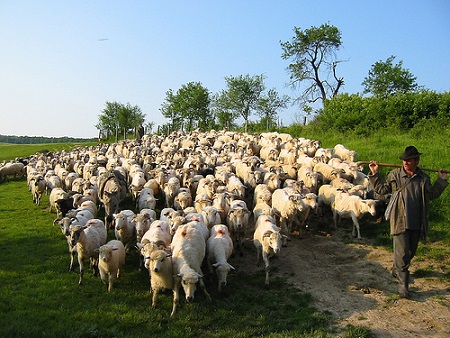
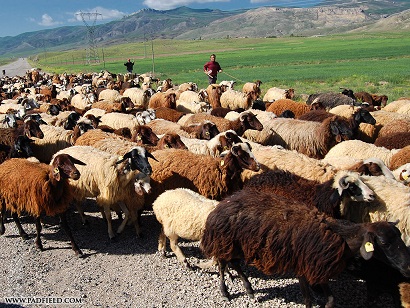
“Everyone knows that we are sheep. It takes only the strong to break out from the herd mentality” – Published YouTube comment on the below VIDEO.

cu-blog-forging-change-herd-mentality-photo-1

The movement behind the book Go Lean…Caribbean wants to forge change in the Caribbean. We have consider many different strategies, tactics and tools for forging change. Here’s another: skip the Alpha Male-Female and target the herd.

So is it that easy? We simply need to exploit the herd mentality and we can get hordes of people to conform, reform and transform. That is an exciting prospect, especially considering the positive value when leaders in a community want to pursue the Greater Good.

See as this is portrayed in this VIDEO here:

VIDEO – Social experiment – most people are sheep – https://youtu.be/MEhSk71gUCQ

Published on Aug 31, 2016 – Hidden camera…

This experiment is very thought-provoking. Sheep, goats and other animals follow a herd mentality. Apparently, humans too!

cu-blog-forging-change-herd-mentality-photo-3

The motives of the movement behind the book Go Lean…Caribbean is to forge change in the Caribbean. Plain and simple! The strategies, tactics and implementations from the book is designed to elevate the Caribbean for all stakeholders, to make the homeland a better place to live, work and play. This is conceivable, believable and achievable if we bypass the Alpha Males and target the rest of the herd. These ones can be led and influenced to adopt new community ethos. This is defined as:

“the fundamental character or spirit of a culture; the underlying sentiment that informs the beliefs, customs, or practices of a group or society”.

The Go Lean book asserts that with strenuous efforts, new community ethos can be adopted. The book cites samples, examples and Role Models:

  • Smoking Cessation – Page 20 – At one point in the 1960’s, 67 percent of American adults smoked cigarettes. Today, smokers are a fringed segment of society, almost as “outlaws”. The cessation efforts are identified as an approach to forge change for an individual, “starting in the head (thoughts, visions), penetrating the heart (feelings, motivations) and then finally manifesting in the hands (actions). Role Model – Alpha Male-Female: Surgeon General.
  • Civil Rights – Page 122 –  Even though the slaves were emancipated in America in 1865, the African-American population did not enjoy the freedom, justice and equality of full citizenship. The effort to bring Civil Rights to the Southern US succeeded only with millions of people protesting in a non-violent movement. Eventually the government leaders complied and made changes to laws guaranteeing equal protection. Role Model – Alpha Male: Martin Luther King.
  • Farm Migrant Labor – Page 122 – The Latino American farm workers’ struggle was presented as a moral cause with nationwide support by Labor and Civil Rights leaders. By the 1970’s, the strategies and tactics of this movement had forced agricultural businesses and growers to grant respect to migrant workers, which helped to improve conditions for 50,000 field workers in California & Florida. Role Model – Alpha Male: Cesar Chavez.
  • Drunk Driving – Page 122 – The values and attitudes of drunk-driving needed to change in America. Families endured heartache and pain because of the tragic loss of innocents due to negligence by inebriated drivers. Change was forged in this advocacy by challenging acceptance, laws and enforcement. Eventually the general attitudes – bars, passengers and drivers – changed for the good.  Role Model – Alpha Female: Candice Lightner, Mothers Against Drunk Driving or MADD.

The Go Lean book presents a plan to reboot economic engines (jobs, educational and entrepreneurial opportunities), optimize the security apparatus (anti-crime and public safety) and accountable governance (regional alliances) for all citizens … including many minority factions. The majority of the population must acquiesce and accept the new ethos in order to allow the societal empowerments to take hold.

Caribbean society have traditionally featured a parasite disposition – to their European colonial masters, or the American SuperPower, in effect an Alpha Male. As a region, we have been drawn to the “shadows”, gleaning opportunities from the leftovers from the host countries, think tourism-hospitality, off-shore banking, and the business of vices: cigar and rum production. The quest now  is a turn-around, to be a protégé, rather than just a parasite.

The Go Lean book serves as a roadmap for the introduction and implementation of the technocratic Caribbean Union Trade Federation (CU) to make the region a better place to live, work and play. This is a roadmap to forge a Single Market of the 30 member-states of 4 language groups and 42 million people. If the region is to “herd”, they should be led to this elevated destination.

The challenge and alternate strategies for forging change have been identified in a series; see these previous Go Lean blog-commentaries, published over the past 2 years:

  1.       Forging Change – The Fun Theory (September 9, 2014)
  2.       Forging Change – The Sales Process (December 22, 2014)
  3.       Forging Change – Music Moves People (December 30, 2014)
  4.       Forging Change – ‘Food’ for Thought (April 29, 2015)
  5.       Forging Change – ‘Something To Lose’ (November 18, 2015)
  6.       Forging Change – Herd Mentality (Today)

This commentary – Number 6 – is urging the herding the people of the Caribbean to a new protégé destination – that sounds unnerving. But there is nothing nefarious or malevolent about this Go Lean roadmap. As detailed in this previous blogs, the efforts to forge change in the region are not intended for any one person or organization to wrestle power or the elevation of any one leader. The roadmap features only one objective: the Greater Good. This is defined in the book (Page 37) by Jeremy Bentham (1748-1832), a British philosopher, jurist, and social reformer as …

… “the greatest good to the greatest number of people which is the measure of right and wrong”.

The Go Lean book and accompanying blogs all accept that forging this change in the Caribbean will be hard, heavy-lifting. There may not be just one strategy; we may have to employ all 6. This would be worth it in the end, with these sought-after prime directives:

  • Optimization of the economic engines, creating 2.2 million new jobs and growing the regional economy to $800 Billion GDP.
  • Establishment of a security apparatus to protect the resultant economic engines and ensure better public safety for stakeholders of the Caribbean.
  • Improvement of Caribbean governance – with a separation-of-powers between member-states and the CU federal agencies – to support these engines.

As depicted in the foregoing VIDEO, “most people are sheep”; they can be cajoled and persuaded to change, to improve their habits and practices. The act of cajoling and persuading implies messaging campaigns. With campaigns from the technocratic leadership of the CU, the Caribbean as a region can be reformed and transformed to becoming a new destination: a better place to live, work and play.

The Go Lean book presented the roadmap for reach the people, to herd them effectively and efficiently. The roadmap details the new community ethos to adopt, plus the execution of strategies, tactics, implementation and advocacies to forge change in the region. The following is a sample of these specific details from the book:

Community Ethos – Deferred Gratification Page 21
Community Ethos – Economic Principles – People Choose Page 21
Community Ethos – Economic Principles – People Respond to Incentives in Predictable Ways Page 21
Community Ethos – Economic Principles – Economic Systems Influence Individual Choices Page 21
Community Ethos – Economic Principles – The Consequences of Choices Lie in the Future Page 21
Community Ethos – Governing Principles – Minority Equalization Page 23
Community Ethos – Governing Principles – Lean Operations Page 24
Community Ethos – Governing Principles – Cooperatives Page 25
Community Ethos – Ways to Impact the Future Page 26
Community Ethos – Ways to Help Entrepreneurship Page 28
Community Ethos – Ways to Promote Intellectual Property Page 29
Community Ethos – Ways to Impact Research & Development – Social Experiments Page 30
Community Ethos – Ways to Bridge the Digital Divide Page 31
Community Ethos – Ways to Impact Turn-Arounds Page 33
Community Ethos – Ways to Improve Sharing Page 35
Community Ethos – Ways to Promote Happiness Page 36
Community Ethos – Ways to Impact the Greater Good Page 37
Strategy – Vision – Confederate 30 Member-States Page 45
Strategy – Mission – Celebrate the Music, Sports, Art, People and Culture of the Caribbean Page 46
Tactical – Confederating a Permanent Union Page 63
Tactical – Fostering a Technocracy Page 64
Implementation – Ways to Pay for Change Page 101
Implementation – Ways to Deliver Page 109
Planning – 10 Big Ideas for the Caribbean Region Page 127
Planning – Ways to Make the Caribbean Better Page 136
Planning – Reasons Why the CU Will Succeed Page 137
Advocacy – Ways to Grow the Economy Page 151
Advocacy – Ways to Create Jobs Page 152
Advocacy – Ways to Improve Communications – Community Messaging Page 186
Advocacy – Ways to Improve Libraries Page 187
Advocacy – Ways to Impact Hollywood – Mastery of Visual Arts & Storytelling Page 202
Advocacy – Ways to Preserve Caribbean Heritage Page 218
Advocacy – Ways to Impact Youth – Impressionable Age for New Work Ethic Page 227
Advocacy – Ways to Improve the Arts Page 230

The quest to change the Caribbean will require convincing people through messaging campaigns. We have seen the effectiveness of this strategy with movies; we have influential actor – of Caribbean heritage (Bahamas) – Sidney Poitier as a fitting Role Model:

Movies are an amazing business model. People give money to spend a couple of hours watching someone else’s creation and then leave the theater with nothing to show for the investment; except perhaps a different perspective. That is all!

But no one wants to live in a world without this art-form, without movies. Those few hours can entertain, engage and transform; sometimes even “break new ground” and change the world. So movies and movie stars can be extremely influential in modern society. This is the power of the arts, and this art-form in particular. – Blog: How Sidney Poitier changed cinema by demanding and deserving a difference

The empowerments in the Go Lean book calls for permanent change. This is possible. The people of the Caribbean only want opportunities; they want to be able to provide for their families, and offer a future of modernity to their children. It is an “easy sell” to convince people that the best-practices in the roadmap will bring benefits. Especially with reporting of the success of the same best practices in other locations. This point was pronounced in the opening Declaration of Interdependence (Page 14) in the book with this statement:

xxxiii. Whereas lessons can be learned and applied from the study of the recent history of other societies, the Federation must formalize statutes and organizational dimensions to avoid the pitfalls of communities like East Germany, Detroit, Indian (Native American) Reservations, Egypt and the previous West Indies Federation. On the other hand, the Federation must also implement the good examples learned from developments/communities like New York City, Germany, Japan, Canada, the old American West and tenants of the US Constitution.

cu-blog-forging-change-herd-mentality-photo-2In general, being called sheep is not “derisive”. It is a complement when the comparison is made to goats – (The Bible; Matthew 25: 31–46). While this is a reference to a grouping of benevolence versus malevolence, for this commentary, there is similarity in sheep and goats as they both display a herd mentality; they follow the lead and assimilate the habits, practices and ethos of the Alpha Male-Female.

The CU/Go Lean seeks to assume the role of the Alpha Male-Female. We encourage all Caribbean stakeholders – residents, institutions and governments – to lean-in now, to the Go Lean roadmap. 🙂

Download the book Go Lean … Caribbean – now!

————-

Appendix – Alpha Males-Females

In studies of social animals, the highest ranking individual is sometimes designated as the alpha. Males, females, or both, can be alphas, depending on the species. Where one male and one female fulfill this role together, they are sometimes referred to as the alpha pair. Other animals in the same social group may exhibit deference or other species-specific subordinate behaviours towards the alpha or alphas.

Alpha animals usually gain preferential access to food and other desirable items or activities, though the extent of this varies widely between species. Male or female alphas may gain preferential access to sex or mates; in some species, only alphas or an alpha pair reproduce.

Alphas may achieve their status by superior physical strength and aggression, or through social efforts and building alliances within the group.[1]

Source: https://en.wikipedia.org/wiki/Alpha_(ethology) retrieved October 10, 2016.

Share this post:
, ,
[Top]

Charity Management: Grow Up Already!

cu-blog-charity-management-grow-up-already-photo-7

Go Lean Commentary

“Don’t be a stock on the shelf” – Bob Marley: Pimpers Paradise – Album: Uprising – 1980.

What does the lyrics of this song mean? (See VIDEO here). The analysis is that it is poetic and prophetic. The song has a personal indictment and a community indictment. The lyrics directly address a young girl who stumbles into a party lifestyle; being victimized by abusers or “pimps”. The warning is that she would be considered nothing more than a commodity – to be counted on for illicit profits – rather than a real human with hopes and dreams. As for the community indictment, this submission on SongMeanings.com conveys an insightful point:

General Comment
I’ve always had the impression that this song is about Jamaica, Bob’s mother-country, and its contradictions, described through the technique of personification. If this were the case, most of the girl’s attributes and actions would refer to the whole community of Jamaicans and not to a single person, as it first appears. What makes this song so beautiful is the sadness, tenderness and pride of Marley’s lyrics and voice, as he describes his people’s use and abuse of drugs, its innate tendency to smile, have fun and carry on in spite of the poverty, violence and harshness which characterizes life in that country, and above all its vulnerability to the lies, deception and empty promises of politicians and elites in general, a vulnerability which forces most people into a lifelong submission and which gives this song its title.
By: dettawalker on April 19, 2015

There is a vulnerability to lies, deception and empty promises in the Caribbean. Other people have raised money under the guise of helping our region, but then only kept the monies for themselves … mostly. There is the need for philanthropy, charitable donations and community development, but we need to take the lead for this ourselves, rather than the potential of being victimized by others.

This is not a theory; this is a fact! Remember the $500 million raised by the American Red Cross to benefit Haiti after the 2010 Earthquake; the money mostly disappeared with little manifestation in Haiti. 🙁

Perhaps this is a by-product of the attitude of depending on “other peoples money”; this is so familiar in the Caribbean. For the past 50 years of Caribbean integration movements (West Indies Federation, Organization of Eastern Caribbean States and Caribbean Community or CariCom), the focus had been on soliciting aid – begging – from the richer North American and European nations.

Today, our message to Caribbean stakeholders is: Grow Up Already!

Truly, at what point is it expected that we would mature and take care of our own responsibilities?

Answer: Now! Half-pass now!

This point was eloquently conveyed in a previous blog-commentary, where it related how Caribbean member-states use “development funds” (International Aid) for budgetary support for the governments to fulfill their responsibilities in the Social Contract. As a reminder, this implied Social Contract refers to the arrangement where citizens surrender some of their freedoms and submit to the authority of the State in exchange for protection of remaining natural and legal rights. This contract authorizes the State to raise revenues from taxes and fees, but “one cannot get blood from a stone”. The 30 Caribbean member-states are mostly all Third World countries; they hover near the poverty line.

Yet still, the book Go Lean … Caribbean asserts it is high-time for this region to grow up and adapt best-practices to elevate our society. We can improve all societal engines: economics, security and governance. This theme is weaved throughout the Go Lean book which serves as a roadmap for the introduction and implementation of the technocratic Caribbean Union Trade Federation (CU). This Go Lean/CU roadmap has the vision of elevating Caribbean society by optimizing these engines. Observe the prime directives as published in the book:

  • Optimization of the economic engines in order to grow the regional economy to $800 Billion & create 2.2 million new jobs.
  • Establishment of a security apparatus to protect the resultant engines and mitigate internal and external “bad actors”.
  • Improvement of Caribbean governance to support these engines, including a separation-of-powers between the CU federal government and the member-states.

The Bible states …

… “anyone with ears to hear should listen and understand!” – Matthew 11:15; New Living Translation.

This does not mean that gleaning the wisdom of the fallacy of other people taking the lead for our development will eliminate our poverty. No; we are still a region of Third Word countries; that same Bible translation continues that “you will always have the poor among you” –  Matthew 26:11. We simply need to take the lead ourselves of soliciting aid, collecting the aid and managing the distribution of that aid and the resultant accountability. This is no “rocket science”; in fact, it is no science at all. It is mostly an art, and there are competent role models who perform these functions well; we only need to adapt their best-practices.

Consider this company Brewco Marketing; they consider themselves “the marketing vehicle for America’s most trusted brands”. This is a fitting analysis as this company currently conducts marketing campaigns to raise money to benefit impoverished people in several Caribbean countries, the Dominican Republic for example.

cu-blog-charity-management-grow-up-already-photo-9

cu-blog-charity-management-grow-up-already-photo-2

cu-blog-charity-management-grow-up-already-photo-1

cu-blog-charity-management-grow-up-already-photo-3

cu-blog-charity-management-grow-up-already-photo-8

cu-blog-charity-management-grow-up-already-photo-4

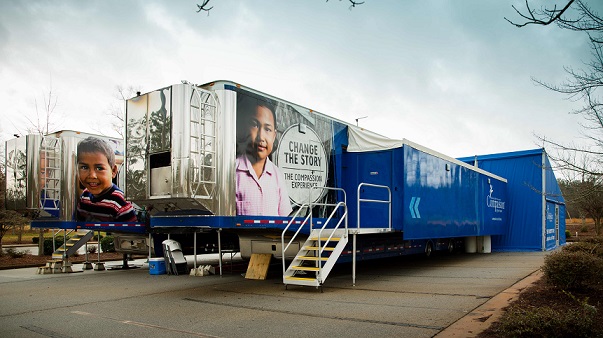
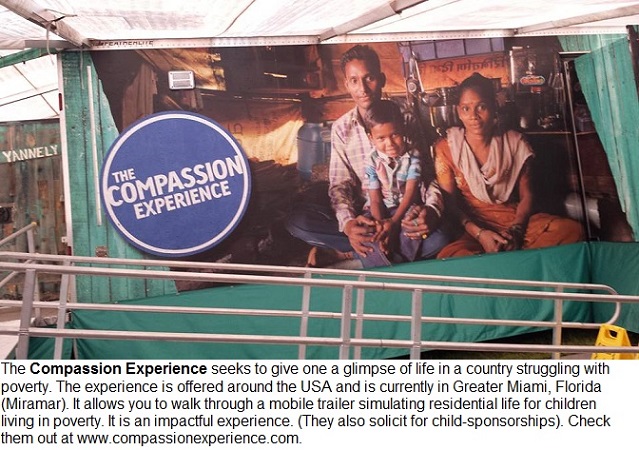
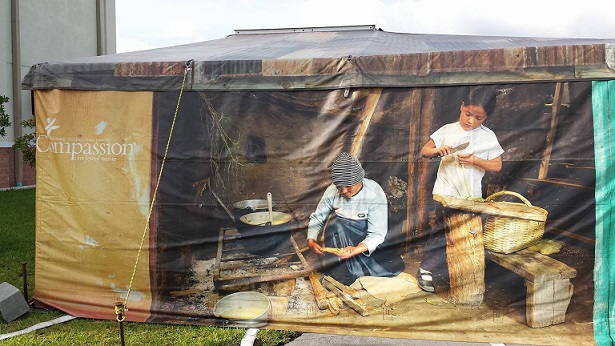
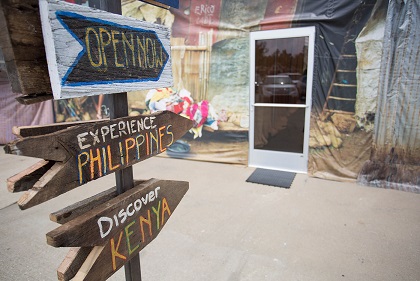
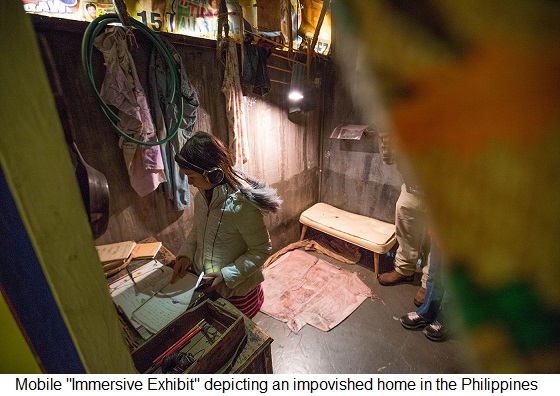
cu-blog-charity-management-grow-up-already-photo-6Brewco Marketing Group – see Appendix VIDEO below – is a leading experiential marketing company specializing in strategy, design, in-house fabrication, activation and program management. They provide these marketing services for other companies: for-profit corporations and not-for-profit charities. One such client is Compassion International, a Christian child sponsorship organization dedicated to the long-term development of children living in poverty around the world. They are headquartered in the US city of Colorado Springs, Colorado; but they function in 26 countries such as Bolivia, Colombia, Mexico, Haiti, Kenya, India and the Dominican Republic. According to the Wikipedia page on this charity, (retrieved September 12, 2016), this organization provides aid to more than 1,700,000 children.

Bravo Compassion International! See an example here of the type of faith-based advocacy Compassion International is conducting in our Caribbean region; in this case, the Dominican Republic: http://changetour.compassion.com/experience-dominican-republic/    

But, consider that Compassion International outsources to a for-profit marketing firm – Brewco – to solicit funding. What is Brewco’s motivation? Simple: Profit.

While not impugning any bad motives to Brewco or Compassion International, this commentary asserts for self-sufficiency, that “charity begins at home”. This is a basic prerequisite for a mature society.

This consideration aligns with the strategies, tactics, implementations and advocacies of the book Go Lean…Caribbean. The declaration is that the Caribbean must be front-and-center in providing for our own solutions. The alternative of someone else taking the lead for our solution, despite how altruistic the motives, seems to be lacking…every time! Consider this encyclopedia detail on criticism of “Child Sponsorship” charities:

Critics have argued that child sponsorship could alienate the relatively privileged sponsored children from their peers and may perpetuate harmful stereotypes about third-world citizens being helpless. They also claim that child sponsorship causes cultural confusion and unrealistic aspirations on the part of the recipient, and that child sponsorship is expensive to administer.[8][9] This latter problem has led some charities to offer information about a “typical” child to sponsors rather than one specifically supported by the sponsor. In some cases charities have been caught sending forged updates from deceased children.[10]

The Effective Altruism community – social movement that applies evidence and reason to determining the most effective ways to improve the world – generally opposes child sponsorship as a type of donor illusionGivewell – American non-profit charity evaluator – describes sponsorship thusly:[11]

  • Illusion: through an organization such as “Save the Children“, your money supports a specific child.
  • Reality: as “Save the Children” now discloses: “Your sponsorship contributions are not given directly to a child. Instead, your contributions are pooled with those of other sponsors to provide community-based programming for all eligible children in the area.”

Source: https://en.wikipedia.org/wiki/Child_sponsorship retrieved September 12, 2016

cu-blog-charity-management-grow-up-already-photo-5

This – reality of Big Charity – is just another example of Crony-Capitalism. See the running inventory list of all the Crony-Capitalism models that proliferate in the US, here at https://goleancaribbean.com/blog/?p=5529.

Considering this reality, we exclaim to the Caribbean: Grow up already!

The Go Lean book declares (Page 115) that:

“Haiti [in particular and the Caribbean in general] – should not be a perennial beggar; the Caribbean should not be perennial beggars, but we do need capital/money, especially to get started”.

The Go Lean movement (book and blogs) posits that the Caribbean must not be vulnerable to these American Crony-Capitalistic forces.

We do not need some external entity fleecing the public in our name – under the guise of charities but retain vast majorities of the funding as administrative costs – executive salary and bonuses – rather than the intended benefactors.

The Caribbean must do better!

The book Go Lean…Caribbean pursues the quest to elevate the Caribbean region through economic, security and governing empowerments. This includes oversight and guidance for Non-Governmental Organizations (NGO’s) in the region. The Go Lean/CU roadmap provides for better stewardship for the Caribbean homeland; and it describes NGO’s as additional Caribbean stakeholders. Governance to this vital area is part of the maturity our region must show; it is not about independence, but rather it conveys the community ethos of interdependence. This point was pronounced early in the Go Lean book, in the opening Declaration of Interdependence (Pages 11 & 14) with these acknowledgements and statements:

xi.   Whereas all men are entitled to the benefits of good governance in a free society, “new guards” must be enacted to dissuade the emergence of incompetence, corruption, nepotism and cronyism at the peril of the people’s best interest. The Federation must guarantee the executions of a social contract between government and the governed.

xii. Whereas the legacy in recent times in individual states may be that of ineffectual governance with no redress to higher authority, the accedence of this Federation will ensure accountability and escalation of the human and civil rights of the people for good governance, justice assurances, due process and the rule of law. As such, any threats of a “failed state” status for any member state must enact emergency measures on behalf of the Federation to protect the human, civil and property rights of the citizens, residents, allies, trading partners, and visitors of the affected member state and the Federation as a whole.

xxxiii. Whereas lessons can be learned and applied from the study of the recent history of other societies, the Federation must formalize statutes and organizational dimensions to avoid the pitfalls of [other] communities.

This is the quest of CU/Go Lean roadmap: to provide new guards for a more competent Caribbean administration … by governmental organizations and non-governmental organizations. Under this roadmap, NGO’s would be promoted, audited and overseen by CU administrators. The CU would be legally authorized as “deputies” of the member-state governments.

The Go Lean book stresses key community ethos, strategies, tactics, implementations and advocacies necessary to turn-around the eco-systems of Caribbean governance. These points are detailed in the book as follows:

Community Ethos – Deferred Gratification Page 21
Community Ethos – Economic Principles – Respond to Incentives in Predictable Ways Page 21
Community Ethos – Economic Principles – Economic Systems Influence Individual Choices Page 21
Community Ethos – Economic Principles – Consequences of Choices Lie in the Future Page 21
Community Ethos – Security Principles – Intelligence Gathering Page 23
Community Ethos – Security Principles – “Crap” Happens Page 23
Community Ethos – Governing Principles – Cooperatives Page 25
Community Ethos – Ways to Impact the Future Page 26
Community Ethos – Ways to Impact Turn-Arounds Page 33
Community Ethos – Ways to Improve Sharing – Emergency Response Page 35
Community Ethos – Ways to Impact the Greater Good Page 37
Strategy – Vision – Confederate all 30 member-states/ 4 languages into a Single Market Page 45
Strategy – Mission – Prepare for the eventuality of natural disasters Page 45
Strategy – Agents of Change – Climate Change Page 57
Tactical – Ways to Foster a Technocracy Page 64
Tactical – Growing the Economy – Post WW II European Marshall Plan/Recovery Model Page 68
Tactical – Separation-of-Powers – CU Federal Government versus Member-State Governance Page 71
Tactical – Separation-of-Powers – Treasury Department – Shared Property Recording Systems Page 74
Tactical – Separation-of-Powers – State Department – Liaison/Oversight for NGO’s Page 80
Tactical – Separation-of-Powers – Interior Department – Housing & Urban Authority Page 83
Implementation – Assemble All Regionally-focus Organizations of All Caribbean Communities Page 96
Implementation – Ways to Pay for Change Page 101
Implementation – Ways to Foster International Aid Page 115
Planning – 10 Big Ideas – Cuba & Haiti Marshall Plans Page 127
Planning – Ways to Make the Caribbean Better Page 131
Planning – Ways to Improve Failed-State Indices – Governance and the Social Contract Page 134
Advocacy – Ways to Grow the Economy Page 151
Advocacy – Ways to Create Jobs Page 152
Advocacy – Ways to Improve Housing – Optimizing Property Registration Process Page 152
Advocacy – Ways to Improve Governance Page 168
Advocacy – Ways to Better Manage the Social Contract Page 170
Advocacy – Ways to Improve Homeland Security Page 180
Advocacy – Ways to Improve for Natural Disasters – Enhanced local response and recovery Page 184
Advocacy – Ways to Develop a Pre-Fab Housing Industry – One solution ideal for Slums Page 207
Advocacy – Ways to Impact the Dominican Republic Page 237
Advocacy – Ways to Re-boot Haiti Page 238

These subjects – Charity Management, Philanthropy and International Aid – have been a source of consistent concern for the Go Lean movement. Consider the details from these previous blog-commentaries:

https://goleancaribbean.com/blog/?p=8243 Facebook Founder’s Philanthropy Project Makes First Major Investment
https://goleancaribbean.com/blog/?p=7989 ‘Getting over’ with ‘free money’ for societal transformations
https://goleancaribbean.com/blog/?p=7896 The Logistics of Disaster Relief
https://goleancaribbean.com/blog/?p=6129 Innovative Partnership Aids Farm Workers
https://goleancaribbean.com/blog/?p=3432 OECS diplomat has dire warning for Caribbean countries
https://goleancaribbean.com/blog/?p=1763 Bill & Melinda Gates Foundation Philanthropy Efforts

So the Caribbean experience with Charity Management in the past and at present is not ideal. How do we apply this insight to impact our future executions?

The primary strategy for improving Charity Management is to keep the administration local; this includes the fund development and the decision-making.

Looking at the great models and samples from Compassion International and Brewco Marketing, can we deploy mobile trailers and immersive exhibits? Can we deploy smart phone apps or tablets with walk-along narration to convey the desperate need for international aid in the Caribbean? Can we foster an eco-system with monthly billing, credit card transactions, or text-message billing?

Yes, we can …

… and this is the “grown up” thing to do, after being burned so often by outsiders.

When I was a child, I spoke and thought and reasoned as a child. But when I grew up, I put away childish things. – 1 Corinthians 13:11 – New Living Translation

The Go Lean roadmap seeks to empower and elevate Caribbean societal engines. We have a lot to do, the Go Lean book describes it as heavy-lifting. We see the American Crony-Capitalism in action. We do not want to follow their lead. We want to learn from their good and bad examples and models. (It is out-of-scope for the Go Lean movement to fix America). We simply want to fix our Caribbean society to be more self-reliant, both proactively and reactively.

Our quest is simple, a regional effort to make the Caribbean homeland a better place to live, work and play. 🙂

Download the free e-Book of Go Lean … Caribbean – now!

———–

Appendix VIDEO – Brewco Marketing Group – https://vimeo.com/101107626

The company’s offerings: from long-term experiential brand strategy to overall program execution and management. Engaging audiences where they work, live and play.

———–

Appendix VIDEO – Interactive Tour Immerses Visitors Into Daily Life in a Foreign Country – http://vimeo.com/73958461

Preview of The Compassion Experience from The Compassion Experience on Vimeo.

Retrieved September 12, 2016 – A self-guided tour will immerse visitors in the lives of the children. Through the use of an iPod, a headset and over 1,700 square feet of interactive space, visitors will see the children’s homes, walk through schools and markets, and hear life-changing stories of hope—all from the perspective of a child whose life began in poverty. This free event is appropriate for all ages and is an excellent opportunity for anyone who has never had the chance to travel outside the U.S. to get a small glimpse of what life can be like in developing countries. See more at http://changetour.compassion.com/


Share this post:
, , ,
[Top]

Proclaim ‘International Caribbean Day’

Go Lean Commentary

There are some special non-Holidays on the calendar; consider:

These dates are special in that they celebrate culture; the culture of the Irish and Mexicans. Now, there is a movement to add August 1st to that non-Holiday Culture Celebration tradition; this effort is to establish Caribbean Day. (This date was originally codified as Emancipation Day in 1834 for all slaves in the British Empire).

cu-blog-proclaim-international-caribbean-day-photo-3

The Caribbean Day colors are blue yellow and black, as demonstrated in the logo here,
to depict the Caribbean sun against the blue sky touching the deep blue Caribbean Sea.

The petition is being made to the Caribbean Community (CariCom) Secretariat for the Caribbean member-states to resolve to recognize August 1, every year, as the International Caribbean Day. The petitioners want the Caribbean governments to do their part, then they will take the lead to advocate this as an International Cultural Day, in the mold of St. Patrick’s Day and Cinco De Mayo.

Petitioners? Advocates?

There is a whole movement. Consider the actual petition here from Change.org, and the Letter to the CariCom Secretariat in the Appendix below:

In Caribbean history the extraordinary importance of the 1st August 1834 is inescapable as the date which restored human dignity to the mass of Caribbean inhabitants. Today we are many people living together in harmony, respect and one love. Our descendent Caribbean children across the world are a rainbow of races, colours, and nationalities, however there is the ever growing risk that identities become diluted and confused. Therefore our movement say: on this one day people of Caribbean heritage should join in thanks giving and celebration to recognize our joint history, future and the warm fact that we all belong!

Sign this petition

This petition – along with below letter – will be delivered to:

  • Caribbean Community (CARICOM) Secretariat
    CARICOM (15 heads of Caribbean nations)

Adviser, Public Information Unit CariCom
Mr. Leonard Robertson

Source: Change.org Petition; retrieved September 10, 2016 from: https://www.change.org/p/caricom-15-heads-of-caribbean-nations-proclaim-international-caribbean-day

cu-blog-proclaim-international-caribbean-day-photo-1A champion of this movement is Attorney Hamilton Daley. As a lawyer, he is a “member of the Bar” in Jamaica and in the UK. He is a member of the Caribbean Diaspora; and a role model for enacting change and empowerment for the Caribbean image.

See an interview in the Appendix-VIDEO below where he explains the fundamentals of the movement. Also see an assortment of his commentaries here: http://jamaicans.com/author/hamiltondaley/.

The Caribbean Diaspora, broadly interpreted, contains all those born in the Caribbean region but now live abroad. The term legacy – a subset of the Diaspora – refers more to those born abroad but known to have Caribbean ancestry.

This subject of Caribbean Diaspora is also an important consideration in the book Go Lean … Caribbean . It relates a societal elevation plan for the Caribbean region that accepts the premise that the member-states have experienced too high an abandonment rate. Far too many Caribbean citizens have fled their tropical homes and created a new life on foreign shores. Yet, the love and affinity they hold for their homeland is undeniable. They must be factored in as stakeholders of any effort to pursue change in the region. The quest is simple, to make the Caribbean a better place to live, work and play, so that future generations of Caribbean citizens do not have to flee as well. Then to incentivize the people who have left – the Diaspora – to consider a return … someday.

As Diasporas go, our experience is not the first, nor the worst. We have the Irish history and example to glean lessons from. Their Diaspora is considered over 100 million people, while the island population is below 10 million. Despite any desire to do better, our current disposition so parallels Ireland’s history. Just like the Irish, our Diaspora love their country and culture, but have to live abroad; they want conditions to be different (better) at home to consider any repatriation.

Over the centuries, the Irish Diaspora endured a lot of misery, resistance and discrimination in their foreign homes. As related in a previous commentary, the usual path for new immigrants is one of eventual celebration, but only after a “long train of abuses”: rejection, anger, protest, bargaining, toleration and eventual acceptance. But now today, people the world over wear green on March 17th as a statement of acceptance and celebration of Irish people and culture. This is now viewed as a proud heritage for what they have endured and accomplished. The Caribbean Day movement wants to model this success for persons of Caribbean heritage.

Ditto for the Go Lean movement. Just like the Caribbean Day movement, both efforts are inclusive of all language groups, not just the English-speaking Caribbean. This is demonstrated by first petitioning CariCom, which now includes Dutch-speaking Suriname and French/Creole-speaking Haiti. The Go Lean movement takes their effort further by targeting the Dutch Antilles, French Antilles, US Virgin Islands and the neighboring Spanish Caribbean territories (Cuba, Dominican Republic and Puerto Rico), in addition to CariCom. The Go Lean book relates that these 30 member-states – with 42 million people – all share the same societal abandonment disposition. The book considers Puerto Rico, for example, that had an on-island population of 3,725,789 in 2010, but Puerto Ricans living abroad in the US mainland was 4,623,716; (Page 303).

The Go Lean book serves as a roadmap for the introduction and implementation of the Caribbean Union Trade Federation (CU), a technocratic federal government to administer and optimize the economic/security/ governing engines of all 30 member-states. The quest is to provide a better direct stewardship, applying lessons-learned from global best practices.

There are a lot of lessons for the Caribbean to learn from these other cultures: Ireland … and Mexico. There is a constant need for better societal engines: economic, security, and governance. Fulfilling these needs is the underlying theme behind this Go Lean movement, to “appoint new guards” for all of the region to make the Caribbean homeland a better place to live, work and play. This Declaration of Interdependence is pronounced at the outset of the Go Lean book (Page 11):

xi. Whereas all men are entitled to the benefits of good governance in a free society, “new guards” must be enacted to dissuade the emergence of incompetence, corruption, nepotism and cronyism at the peril of the people’s best interest. The Federation must guarantee the executions of a social contract between government and the governed.

The Go Lean movement declares solidarity with the Caribbean Day movement. This alignment is more than just feelings, but words and actions as well. The promoters of the Go Lean movement conducted a structured interview with the identified promoter of the Caribbean Day movement, Hamilton Daley (or HD; Author = Bold). Consider his responses here as related to these parallel tracks to elevate Caribbean image and reality:

Tell me your story:

HD: I am the founder of Caribbean Day Movement International, which started as a social media based movement to establish recognition of 1st August as a date of cultural significance for the international Caribbean community – CARIBBEAN DAY.  I am a dual qualified lawyer simultaneously practicing in both London, UK and the Caribbean, Jamaica.  I maintain offices and homes in both jurisdictions.

Though your aspiration is to unite Caribbean people through out the world, how would you feel if your children return to a Caribbean destination for permanent residency?

HD: I would be very pleased.

Considering all your travels, where in the world would you consider the best place to live?

HD: I am obviously biased in my opinion. But this has always been a motivation for the Caribbean Day movement, to convey to the world that our Caribbean homelands are the best addresses in the world. This “fact” is not always recognized, accepted or valued in the world.

But our Caribbean people have obviously abandoned their homeland, for good reasons, what we call “push and pull”: defects in the region’s economic, security and governing engines. How do you feel about the Caribbean economy?

HD: There is much room for beneficial improvement with some coordination, which sadly is lacking at the moment.

How do you feel about Caribbean security?

HD: Personal security is an issue of concern in some places, more so than in others. This is definitely a societal defect that needs to be remediated and mitigated.

Accepting that the Caribbean in general and Jamaica in particular is your homeland, what would you want to see there in … 5 years?

HD: I would hope to see all generations of Jamaicans from kindergarten to grandparents celebrating their Caribbean heritage on August 1st. I would also want to see Jamaica become a successful trading partner and better realize it’s full potential within the Caribbean family of nations and in doing so, develop its global brand.

What would you want to see in Jamaica in … 10 years?

HD: I would want to see the issues which perpetuate crime, violence and corruption to become tamed or made historical in keeping of a greater developed nation. I would want to see strong ties and bonds with the broad global Caribbean community.

What would you want to see in Jamaica in … … 20 years?

HD: I would want to see Jamaica established and reaffirmed as a safe, progressive “diamond” destination – stable, beautiful and valuable – and a strong player in the region and inclusive Caribbean Diaspora.

Thank you for your responses and your commitment to the Caribbean. We see you; we hear you and we feel your passion. We entreat you to look here, going forward, for more on solutions.

The Go Lean movement has collected the complaints of the Caribbean Diaspora like Hamilton Daley. This book was the response. The book declared that the Caribbean is in crisis, but posits that a “crisis is a terrible thing to waste” (Page 8). The book asserts that the solution for the Caribbean crisis is within reach:

The Go Lean movement is not affiliated with the CariCom or any of its agencies or institutions. This movement is not an attempt to re-boot the CariCom, but rather a plan to re-boot the Caribbean. This movement was bred from the frustrations of the Diaspora, longing to go home, to lands of opportunities. But this is not a call for a revolt against the governments, agencies or institutions of the Caribbean region, but rather a petition for a peaceful transition and optimization of the economic, security and governing engines in the region.

The Go Lean book details a 5-year roadmap, with turn-by-turn directions, for transforming our homeland. The following is a sample of the assessments, community ethos, strategies, tactics, implementations and advocacies to impact the Caribbean region for this turnaround:

Assessment – CariCom Single Market & Economy Hope and Failure Page 15
Assessment – Dutch Caribbean – Integration & Secessions Page 16
Assessment – French Caribbean – Organization & Discord Page 17
Assessment – Puerto Rico – The Greece of the Caribbean Page 18
Prologue – New CariCom Model Urged Page 20
Community Ethos – Economic Principle – Economic Systems Influence Choices & Incentives Page 21
Community Ethos – Economic Principle – Consequences of Choices Lie in the Future Page 21
Community Ethos – Job Multiplier Page 22
Community Ethos – Lean Operations Page 24
Community Ethos – Ways to Promote Happiness Page 36
Community Ethos – Ways to Impact the Greater Good Page 37
Strategy – Vision – Confederating a Non-Sovereign Union Page 45
Strategy – Mission – Keep the next generation at home Page 46
Strategy – Mission – Invite & Incentivize Diaspora Repatriation Page 46
Tactical – Fostering a Technocracy Page 64
Tactical – Tactics to Forge an $800 Billion Economy Page 67
Tactical – Separation of Powers Page 71
Implementation – Ways to Pay for Change Page 101
Implementation – Ways to Deliver Page 109
Implementation – Reasons to Repatriate to the Caribbean Page 118
Implementation – Ways to Promote Independence – Interdependence Page 120
Planning – 10 Big Ideas – A Single Market in the G-20 Page 127
Planning – Ways to Make the Caribbean Better Page 131
Planning – Ways to Better Manage Image – Not Unwanted Aliens Page 133
Advocacy – Ways to Grow the Economy Page 151
Advocacy – Ways to Create Jobs Page 152
Advocacy – Ways to Improve Governance Page 168
Advocacy – Ways to Impact the Diaspora Page 217
Advocacy – Ways to Impact the BritishTerritories Page 245

The efforts of the Caribbean Day movement is needed and very much welcomed by the promoters of the Go Lean movement. Even for the Diaspora living abroad, this Caribbean Day movement will have positive effect on Caribbean image. This subject has been a source of concern for the Go Lean movement. Consider the details from these previous blog-commentaries:

https://goleancaribbean.com/blog/?p=8724 Remembering Marcus Garvey: His Image and Perception is relevant today
https://goleancaribbean.com/blog/?p=8099 Caribbean Image: ‘Less Than’?
https://goleancaribbean.com/blog/?p=2025 Image of the Caribbean Diaspora – Butt of the Joke
https://goleancaribbean.com/blog/?p=857 Caribbean Image: Dreadlocks

In addition, the subject of “push and pull” resulting in an increased Diaspora has been examined further in many related Go Lean blog-commentaries; see sample list here:

https://goleancaribbean.com/blog/?p=8155 Gender Equality Referendum Outcome: Brain Drain Bound
https://goleancaribbean.com/blog/?p=7866 Switching Allegiances: Athletes move on to represent other countries
https://goleancaribbean.com/blog/?p=7682 Role Model Frederick Douglass: Single Cause – Death or Diaspora
https://goleancaribbean.com/blog/?p=7151 The Caribbean is Looking for Heroes … ‘to Return’
https://goleancaribbean.com/blog/?p=5759 Bad example of Greece – Crisis leading to abandonment of Doctors
https://goleancaribbean.com/blog/?p=5733 Better than America? Yes, We Can!
https://goleancaribbean.com/blog/?p=5695 Repenting, Forgiving and Reconciling the Past
https://goleancaribbean.com/blog/?p=5088 Immigrants account for 1 in 11 Blacks in USA
https://goleancaribbean.com/blog/?p=2547 Miami’s Success versus Caribbean Failure
https://goleancaribbean.com/blog/?p=2251 The Reality of Names of Caribbean people
https://goleancaribbean.com/blog/?p=1433 Caribbean loses more than 70 percent of tertiary educated to brain drain
https://goleancaribbean.com/blog/?p=273 10 Things We Don’t Want from the US – Discrimination of Immigrations

The Go Lean book posits (Page 3) that the Caribbean islands are among the greatest addresses in the world. But instead of the world “beating a path” to these doors, the people of the Caribbean have “beat down their doors” to get out; despite the absence of any famine, or war for that matter. This is classic societal abandonment – plain an simple.

This must stop … now! We must fix the defects that “push” our people away, and dissuade the “pull” factors that lure unsuspecting Caribbean citizens to believe that life is better “there”, wherever.

We wish Hamilton Daley and the Caribbean Day success, while we work in our quest to make our homeland a better place to live, work and play.; thusly keeping more of our citizens at home and away from the Diaspora. 🙂

Download the free e-Book of Go Lean … Caribbean – now!

——–

Appendix- VIDEO: Hamilton Daley (Caribbean Day) || Exclusive Interview || The Sylbourne Show – https://youtu.be/5SQlsDpIRN8

Published on Aug 22, 2016 – Joining us on the red chair we have Hamilton Daley. Mr Daley has held an illustrious career as a lawyer in both the UK and Jamaica and is the founder of the Caribbean Day Movement International. He wants to see August 1st to be declared CARIBBEAN DAY!

——–

Appendix – Actual Open Letter to CariCom:

We look forward to being still together to see this Day, here is our case:

We, the undersigned are representative of the views of persons and organisations based in or associated with countries of CARICOM membership, and expatriate Caribbean communities in the UK, USA and Canada, and other world destinations where people of Caribbean heritage may reside. Our sole purpose and cause of this our gathering is to request that CARICOM place on its agenda for regional consideration and approval, the issue of proclaiming international Caribbean Day to be on the 1st August each year.

The reason we make this request is that the Caribbean and its people have to date no single date to recognise their identity as one connected community. We make this request in recognition that CARICOM reflects the interest not only of the people resident in its member states, but also the hopes of millions of expatriates, their offsprings, relatives and associates, residing outside CARICOM’s geographical region. In common, we all, regardless of our Caribbean ancestry, age, race, creed or nationality, harbour only positive ambitions for the success and development of the Caribbean region.

During any Cricket World Cup tournament, people of Caribbean allegiance across the globe rally behind our united international sporting icons the West Indies Cricket team.

Further, we observe that for the English-speaking Caribbean, we share a degree of common representational politics in the form of the region’s international institution CARICOM. We have a Caribbean Court of Justice, and a regional University with its campuses situated across three CARICOM countries. The framework for a Caribbean Single Market Economy is in place and the region has introduced a CARICOM passport. We note also at the CARICOM heads of government summit held in Antigua in July 2014, those discussions announced the formulation of a five year strategic plan for “repositioning the Community and identifying priorities and activities that would meet the challenges of the international environment”. Amongst other things, the said plan included building economic resilience, social resilience and strengthening the CARICOM spirit of community.

We remind you that on the 25 March 2007, the 15 independent member nations comprising CARICOM agreed by resolution to synchronize a minute’s silence in commemoration of the 1807 Abolition of the Trans-Atlantic Slave Trade. The significance of this synchronized one minute, we say, is now historical in defining a moment in time when the Caribbean first sought to synchronise a sentiment across all peoples of its nations. It is maintaining and building upon this foundation that we invite CARICOM to proclaim an international Caribbean Day.

The vision of an international ‘Caribbean Day‘ is linked to the concept of celebrating the ‘rebirth’ of our Region on the 1st August. Many countries of the English-speaking Caribbean, including Jamaica, Barbados and Trinidad and Tobago already celebrate Emancipation Day on the 1st August. However, with respect whilst it is important that we should each never forget our history, we implore that as a developing region, the emphasis on going forward for the next 200 years should now be to create annual dynamism, rather than a day of reflection to reminisce the date colonial slavery ended.

In truth, whilst not forgetting our history, it is also right to free our minds if devotion to remembrance might keep us on the ground – instead of just keeping us grounded. For, it is our destiny that we as a people will forever rise and be greater than our past.

Therefore, we say; the past does not define our future, and we look to the words of a great man who did a good thing, after 25 years of personal sacrifice for the cause of his fellow men: “The time for the healing of the wounds has come. The moment to bridge the chasms that divide us has come. The time to build is upon us.” – Nelson Mandela

A vision of a ‘Caribbean Day’ would be an international day of celebration by Caribbean people of all races, colours and faiths, as part of one Caribbean family. It would be a day which forever promises to present the opportunity for those who reside overseas to pamper their nostalgia, as well as provide a boost to regional tourism whereby our visitors could annually island hop through the celebrations.

A ‘Caribbean Day’ would be a day in the yearly calendar when the Caribbean diasporas would gather in their communities, wherever they may congregate across the globe. It would be an immense family day, where inter-Island relationships and our children’s children would at last enjoy a day to celebrate their common Caribbean heritage.

We consider the concerns of the Caribbean diasporas, whom with each generation born overseas loses sense of ties to the Caribbean. We consider also the quantitative effect of brain drain on the region’s developing economies because the flow of talent may forever be lost to the region. We are of the view that a Caribbean Day would create job opportunities, commercial incentives and re-invigorate community ties regardless of geography and generational distance.

If the World can readily recognise dates like 14th February, 1st April and 25th December, surely it can come to recognise our 1st August Caribbean Day.

We implore upon the heads of CARICOM to endorse the proclamation of an international ‘Caribbean Day’.

Thank You.

CARIBBEAN DAY MOVEMENT FOR ITS ESTABLISHMENT

Share this post:
, , ,
[Top]

Zika’s Drug Breakthrough

Go Lean Commentary:

As related previously, the Zika virus is proving to be a real “4-Letter” word. Many repercussions have emerged in all aspects of societal life: economics, security and governance. The virus first activated in Brazil, then in the Caribbean. Now, there are reported incidences in Florida.

Bienvenido a Miami!

Now the best practice for Public Health officials is to dissuade pregnant women – and all hoping to someday get pregnant – from traveling to Latin America and the Caribbean…

… and now Miami and other Florida destinations.

Considering the economic consequences (tourism), is there any surprise that there is a breakthrough in drug treatment for Zika, and what’s more that this breakthrough is emerging from Florida. This aligns with a previous commentary, that only at the precipice …

Consider this article here of the medical breakthrough:

Title: FSU research team makes Zika drug breakthrough
By: Kathleen Haughney

CU Blog - Zika Drug Breakthrough - Photo 1A team of researchers from Florida State University, Johns Hopkins University and the National Institutes of Health has found existing drug compounds that can both stop Zika from replicating in the body and from damaging the crucial fetal brain cells that lead to birth defects in newborns.

One of the drugs is already on the market as a treatment for tapeworm.

“We focused on compounds that have the shortest path to clinical use,” said FSU Professor of Biological Science Hengli Tang. “This is a first step toward a therapeutic that can stop transmission of this disease.”

Tang, along with Johns Hopkins Professors Guo-Li Ming and Hongjun Song and National Institutes of Health scientist Wei Zheng identified two different groups of compounds that could  potentially be used to treat Zika — one that stops the virus from replicating and the other that stops the virus from killing fetal brain cells, also called neuroprogenitor cells.

One of the identified compounds is the basis for a drug called Nicolsamide, a U.S. Food and Drug Administration approved drug that showed no danger to pregnant women in animal studies. It is commonly used to treat tapeworm.

This could theoretically be prescribed by a doctor today, though tests are still needed to determine a specific treatment regimen for the infection.

Their work is outlined in an article published Monday by Nature Medicine.

Though the Zika virus was discovered in 1947, there was little known about how it worked and its potential health implications — especially among pregnant women — until an outbreak occurred in South America last year. In the United States, there have been 584 cases of pregnant women contracting Zika, though most of those are travel related. As of Friday, there have been 42 locally transmitted cases in Florida.

The virus, among other diseases, can cause microcephaly in fetuses leading them to be born with severe birth defects.

“It’s so dramatic and irreversible,” Tang said. “The probability of Zika-induced microcephaly occurring doesn’t appear to be that high, but when it does, the damage is horrible.”

Researchers around the world have been feverishly working to better understand the disease — which can be transmitted both by mosquito bite and through a sexual partner — and also to develop medical treatments.

Tang, Ming and Song first met in graduate school 20 years ago and got in contact in January because Tang, a virologist, had access to the virus and Ming and Song, neurologists, had cortical stem cells that scientists needed for testing.

The group worked at a breakneck pace with researchers from Ming and Song’s lab, traveling back and forth between Baltimore and Tang’s lab in Tallahassee where they had infected the cells with the virus.

In early March, the group was the first team to show that Zika indeed caused cellular phenotypes consistent with microcephaly, a severe birth defect where babies are born with a much smaller head and brain than normal.

They immediately delved into follow-up work and teamed with NIH’s Zheng, an expert on drug compounds, to find potential treatments for the disease.

Researchers screened 6,000 compounds that were either already approved by the FDA or were in the process of a clinical trial because they could be made more quickly available to people infected by Zika.

“It takes years if not decades to develop a new drug,” Song said. “In this sort of global health emergency, we don’t have time. So instead of using new drugs, we chose to screen existing drugs. In this way, we hope to create a therapy much more quickly.”

All of the researchers are continuing the work on the compounds and hope to begin testing the drugs on animals infected with Zika in the near future.

The research was supported by the National Institutes of Health, FloridaStateUniversity, EmoryUniversity and the Maryland Stem Cell Research Fund.

Other institutions contributing to the research are the Zhejiang University School of Medicine in China, Emory University and the Icahn School of Medicine. Emily Lee, a Florida State University graduate student working with Tang, shared the first authorship position with Assistant Professor of Biology at Emory Zhexing Wen and NIH scientist Miao Xu.
Source: Florida State University Press Release – Posted August 29, 2016; retrieved September 3, 2016 from: http://news.fsu.edu/news/science-technology/2016/08/29/fsu-research-team-makes-zika-drug-breakthrough/

—————-

VIDEO FSU research team makes Zika drug breakthrough – https://youtu.be/E8lfY07yWqY

Published on Aug 29, 2016 – A Florida State, Johns Hopkins and NIH team of researchers has identified existing drug compounds that can both stop Zika from replicating in the body and from damaging crucial fetal brain cells that lead to birth defects in newborns.

—————-

AUDIO – Florida State University SoundCloud – https://soundcloud.com/floridastateuniversity/fsu-researchers-make-zika-drug-breakthrough

FSU researchers make Zika drug breakthrough

Somehow, when it comes to Zika and tourism, there seems to always be some inconvenient truths. This is not the first time, inconvenient truths have emerged with this pandemic; and it will not be surprising if this is not the last time.

The book Go Lean…Caribbean relates that there are economic and security consequences tied to public health crises. It relates the bitter experiences of cancer and the quest to optimize the treatment options for Caribbean citizens. As demonstrated by cancer, and now Zika, health crises bring a lot of governmental complications.

The book does not purport to be a roadmap for public health, but rather a roadmap for elevating Caribbean society by optimizing the economic, security and governing engines in the region. Yet, within this roadmap is the strategy to incentivize medical research and facilitate treatment options and workable solutions. In fact this roadmap invites the community spirit to encourage research and development (R&D), and to invite role models like Professor Hengli Tang and the medical research team at the university in the foregoing story.

The Go Lean book serves as a roadmap for the implementation and introduction of the technocratic Caribbean Union Trade Federation (CU). The CU‘s prime directives are identified with the following 3 statements:

  • Optimization of the economic engines in order to grow the regional economy to $800 Billion & create 2.2 million new jobs.
  • Establishment of a security apparatus to protect the economic engines, including the monitoring and response of epidemiological threats.
  • Improve Caribbean governance to support these engines, including a separation-of-powers between CU agencies and member-states.

One feature of the Go Lean roadmap is the emphasis on community ethos. The book explains, that the Caribbean communities must adopt a fundamental spirit, an underlying sentiment, that would inform the beliefs, customs, and practices to embrace research and development. A community ethos for R&D must be purposeful; we cannot accidentally fall into it..

Another feature of the Go Lean roadmap is the adoption of Self-Governing Entities (SGE). These are to be featured as dedicated, bordered grounds that are ideal for medical research and treatment campuses. SGE requires a hybrid governance involving the CU federal agencies and local administrators – at the start-up.

The Go Lean roadmap clearly relates that healthcare and pharmaceutical drug research are important in the quest to make the Caribbean a better place to live, work and play. At the outset of the Go Lean book, in the Declaration of Interdependence (Page 11), these points are pronounced as essential for the Caribbean:

viii.   Whereas the population size is too small to foster good negotiations for products and commodities from international vendors, the Federation must allow the unification of the region as one purchasing agent, thereby garnering better terms and discounts.

ix. Whereas the realities of healthcare and an aging population cannot be ignored and cannot be afforded without some advanced mitigation, the Federation must arrange for health plans to consolidate premiums of both healthy and sickly people across the wider base of the entire Caribbean population. The mitigation should extend further to disease management, wellness, obesity and smoking cessation programs.

Previous blog/commentaries addressed issues related to medical research and drug research & practices, sampled here:

Doing More for Cancer – Philanthropist-Billionaire invest in R&D
Capitalism of Drug Patents – Pricing Dysfunctions
The Cost of Cancer Drugs
Antibiotics Misuse Linked to Obesity in the US
CHOP Research: Climate Change May Bring More Kidney Stones
Welcoming Innovators and Entrepreneurs under an SGE Structure
Medical Research Associates Kidney Stones and Climate Change – Innovative!
New Research and New Hope in the Fight against Alzheimer’s Disease
Research in Diabetes Detection – Novartis and Google develop ‘smart’ contact lens
New Cuban Cancer medication registered in 28 countries
Puerto Rico’s Comprehensive Cancer Center Project Breaks Ground – Model of Medical SGE

Kudos to the research team at Florida State University; they have responded at a time of crisis for the State of Florida – the only American State with live Zika mosquitoes – and have forged a solution. This is a fine lesson for the Caribbean to learn …

… Zika is a crisis, and a “crisis would be a terrible thing to waste”.

One local community, Wynwood, in Miami is ground-zero for the Zika battleground. Their current disposition is that business output in the affected areas has been retarded. As related in this article, this summer season has been slower than normal – the peak time is in the winter months:

Zika changes a way of life in Wynwood

After more than 15 local cases of the Zika virus in Wynwood — the first instance of the virus spreading within continental U.S. borders — the artsy district quickly became “ground zero” for the exotic illness.

“It’s definitely slowed down business considerably,” an employee at Fireman Derek’s Bake Shop said Sunday morning. “Usually we do really good on weekends, but today it’s been super slow.”

Source: Retrieved September 5, 2016 from: http://www.miamiherald.com/news/health-care/article94223717.html

CU Blog - Zika Drug Breakthrough - Photo 2

————–

VIDEO – Wynwood baker’s newest creation — shrine to Zika – http://www.miamiherald.com/news/local/community/miami-dade/article93717707.html

After all of the news of Zika cases in the neighborhood near his Wynood business slowed down his walk-in business, Zak the Baker, decided to make a new creation — a shrine to Zika. The light-hearted shrine was made to make people smile and not take things – Emily Michot emichot@miamihereald.com

The foregoing news article and VIDEO-AUDIO productions provide an inside glimpse into the medical research discipline. Obviously, the motivation of the medical research is to protect the economic engines of the Florida economy. The State was at the “precipice and only then, has the needed empowerment” emerged.

The Go Lean roadmap posits that more R&D is needed in the Caribbean too. We need the community ethos to prioritize and encourage careers in science, technology, engineering and mathematics/medicine (STEM). We have a Zika problem in the Caribbean region too. We need innovations too. We need R&D at our educational institutions and SGE campuses.

This is an issue of economics, security and governance…

… and this is a familiar drama:

  • Ebola – While not an American problem, when American citizens become afflicted in 2014, the US response was inspiringly genius, deploying a potential cure within a week.
  • SARS – During the “heyday” of the SARS crisis, travel and transport to Hong Kong virtually came to a grinding halt! Hong Kong had previously enjoyed up to 14 million visitors annually; they were a gateway to the world. The SARS epidemic became a pandemic because of this status. Within weeks of the outbreak, SARS had spread from Hong Kong to infect individuals in 37 countries in early 2003.s

The CU has the prime directive of optimizing the economic, security and governing engines of the Caribbean region. The foregoing article and VIDEO-AUDIO productions depict that research is very important to new medical innovations and break-throughs. This is the manifestation and benefits of Research & Development (R&D). The book describes this focus as a community ethos and promotes R&D as valuable for the region. The following list details additional ethos, strategies, tactics, implementations and advocacies to optimize the region’s health deliveries and R&D investments:

Community Ethos – Deferred Gratification Page 21
Community Ethos – Economic Systems Influence Individual Choices and Incentives Page 21
Community Ethos – The Consequences of Choices Lie in the Future Page 21
Community Ethos – Governing Principles – Return on Investments Page 24
Community Ethos – Governing Principles – Cooperatives Page 25
Community Ethos – Non-Government Organizations Page 25
Community Ethos – Ways to Impact Research & Development (R&D) Page 30
Community Ethos – Ways to Impact the Greater Good Page 37
Strategy – Integrate and unify region in a Single Market Page 45
Strategy – Agents of Change – Globalization Page 57
Tactical – Fostering a Technocracy Page 64
Tactical – Separation of Powers – Health Department Page 86
Tactical – Separation of Powers – Drug Administration Page 87
Implementation – Ways to Pay for Change Page 101
Implementation – Ways to Implement Self-Government Entities – R&D Campuses Page 105
Implementation – Ways to Deliver Page 109
Planning –  Ways to Improve Trade Page 128
Planning –  Ways to Make the Caribbean Better Page 131
Advocacy – Ways to Improve Healthcare Page 156
Advocacy – Ways to Better Manage the Social Contract Page 170
Advocacy – Ways Foster Cooperatives Page 176
Advocacy – Ways to Enhance Tourism Page 190
Advocacy – Ways to Impact Cruise Tourism Page 193
Advocacy – Ways to Improve Emergency Management Page 196
Advocacy – Ways to Impact Foundations Page 219
Appendix – Emergency Management – Medical Trauma Centers Page 336

The Go Lean roadmap does not purport to be an authority on medical research best practices. This economic-security-governance empowerment plan should not direct the course of direction for epidemiology or pharmacological research and/or treatment. But this war against Zika has dire consequences for tourism-based economies – this descriptor fits most of the Caribbean. So we must pay more than the usual attention to the issue. And we must incentivize those with the passion … and genius to make an impact in this area.

The champions for this issue in the Caribbean might come down to the contributions of just a few people, or maybe just one. This is the reality of genius qualifiers. Not everyone can do it. So those who cannot, need to step aside and not abate those that can. Epidemiology or pharmacological research & development is no time for egalitarianism.

Now is the time for all of the Caribbean, the people and governing institutions, to lean-in for the empowerments in the book Go Lean … Caribbean. This is a Big Idea for the region, one where SGE’s, R&D and geniuses can soar. We can make the Caribbean a better place to live, work, heal and play. 🙂

Download the free e-Book of Go Lean … Caribbean – now!


Share this post:
, , , ,
[Top]

ENCORE: A reflection on ‘Labor’ on Labor Day

In the US and Canada, it is the Labor Day holiday weekend.

Many countries have an equivalent of Labor Day, a date set aside to honor and celebrate workers, or the movement to empower workers in society. Many of the historicity of these movements were tied to labor unions.

More than 80 countries celebrate International Workers’ Day on May 1 – the ancient European holiday of May Day.

Consider this Encore of the blog-commentary from June 18, 2015, discussing the trends in the labor markets, which depict a decline of collective bargaining:

==================

Title: Economic Principle: Wage-Seeking – Market Forces -vs- Collective Bargaining

Go Lean Commentary

The field of Economics is unique! We all practice it every day, no matter the level of skill or competence. There is even the subject area in basic education branded Home Economics, teaching the students the fundamentals of maintaining, supporting and optimizing a home environment. Most assuredly, economics is an art and a science, albeit a social science.

In a previous blog/commentary, Scotman’s Adam Smith was identified as the father of modern macro-economics. Though he lived from 1723 to 1790, his writings defined advanced economic concepts even in this 21st Century. His landmark book An Inquiry into the Nature and Causes of the Wealth of Nations qualified the divisions of income into these following categories: profit, wage, and rent.[4] We have previously explored profit-seeking (a positive ethos that needs to be fostered in the Caribbean region) and rent-seeking (a negative effort that proliferates in the Caribbean but needs to be mitigated), so now the focus of this commentary is on the activity of wage-seeking, and the concepts of governance and public choice theory to allow for maximum employment.

This is hard! Change has come to the world of wage-seekers – the middle classes are under attack; the labor-pool of most industrialized nations have endured decline, not in the numbers, but rather in prosperity. While wage-earners have not kept pace with inflation, top-earners (bonuses, commissions and business profits) have soared; (see Photo).

CU Blog - Economic Principles - Wage-Seeking - Market forces -vs- Collective Bargaining - Photo 2As a direct result, every Caribbean member-state struggles with employment issues in their homeland. In fact, this was an initial motivation for the book Go Lean…Caribbean, stemming from the fall-out of the 2008 Great Recession, this publication was presented as a roadmap for the introduction and implementation of the Caribbean Union Trade Federation (CU) to elevate the economic, security and governing engines of the Caribbean region to create 2.2 million new jobs, despite global challenges.

Needless to say, the global challenge is far more complex than Home Economics. The Go Lean book describes the effort as heavy-lifting; then proceeds to detail the turn-by-turn directions of a roadmap to remediate and mitigate wage-seeking.

The roadmap channels the Economic Principles and best-practices of technocrats like Adam Smith and 11 other named economists, many of them Nobel Laureates. A review of the work of these great men and woman constitute “Lessons in Economic Principles”. Why would these lessons matter in the oversight of Caribbean administration? Cause-and-effect!

Profit 4The root of the current challenge for wage-seekers is income equality; and this is bigger than just the Caribbean. It is tied to the global adoption of globalization and technology/ automation – a product of global Market Forces as opposed to previous Collective Bargaining factors. This relates back to the fundamental Economic Principle of “supply-and-demand”; but now the “supply” is global. This photo/”process flow” here depicts the ingredients of Market Forces. When there is the need for labor, the principle of comparative analysis is employed, and most times the conclusion is to “off-shore” the labor efforts, and then import the finished products. This is reversed of the colonialism that was advocated by Adam Smith; instead of the developed country providing factory labor for Third World consumption, the developed nation (i.e. United States) is now in the consumer-only role, with less and less production activities, for products fabricated in the Third World. This reality is not sustainable for providing prosperity to the middle classes, to the wage-seekers.

As a community, we may not like the laws of Economics, but we cannot ignore them. The Go Lean book explains the roles and significance of Economic Principles … with this excerpt (Page 21):

While money is not the most important factor in society, the lack of money and the struggle to acquire money creates challenges that cannot be ignored. The primary reason why the Caribbean has suffered so much human flight in the recent decades is the performance of the Caribbean economy. Though this book is not a study in economics, it recommends, applies and embraces these 6 core Economic Principles as sound and relevant to this roadmap:

  1. People Choose: We always want more than we can get and productive resources (human, natural, capital) are always limited. Therefore, because of this major economic problem of scarcity, we usually choose the alternative that provides the most benefits with the least cost.
  2. All Choices Involve Costs: The opportunity cost is the next best alternative you give up when you make a choice. When we choose one thing, we refuse something else at the same time.
  3. People Respond to Incentives in Predictable   Ways: Incentives are actions, awards, or rewards that determine the choices people make. Incentives can be positive or negative. When incentives change, people change their behaviors in predictable ways.
  4. Economic Systems Influence Individual Choices and Incentives: People cooperate and govern their actions through both written and unwritten rules that determine methods of allocating scarce resources. These rules determine what is produced, how it is produced, and for whom it is produced. As the rules change, so do individual choices, incentives, and behavior.
  5. Voluntary Trade Creates Wealth: People specialize in the production of certain goods and services because they expect to gain from it. People trade what they produce with other people when they think they can gain something from the exchange. Some benefits of voluntary trade include higher standards of living and broader choices of goods and services.
  6. The Consequences of Choices Lie in the Future: Economists believe that the cost and benefits of decision making appear in the future, since it is only the future that we can influence. Sometimes our choices can lead to unintended consequences.

Source: Handy Dandy Guide (HDC) by the National Council on Economic Education (2000)

The Go Lean book describes the end result of the application of best-practices in this field of economics over the course of a 5-year roadmap: the CU … as a hallmark of technocracy. But the purpose is not the edification of the region’s economists, rather to make the Caribbean homeland “better places to live, work and play” for its citizens. This branding therefore puts emphasis on the verb “work”; the nouns “jobs” and “wages” must thusly be a constant focus of the roadmap.

Brain Drain 70 percent ChartThis Go Lean book declares that the Caribbean eco-system for job-creation is in crisis … due to the same global dilemma. The roadmap describes the crisis as losing a war, the battle of globalization and technology. The consequence of the defeat is 2 undesirable conditions: income inequality and societal abandonment, citizens driven away to a life in the Diaspora. This assessment currently applies in all 30 Caribbean member-states, as every community has lost human capital to emigration. Some communities, like Puerto Rico and the US Virgin Islands have suffered with an abandonment rate of more than 50% and others have watched more than 70% of college-educated citizens flee their community for foreign shores. Even education is presented as failed investments as those educated in the region and leave to find work do not even return remittances in proportion to their costs of development. (See Table 4.1 in the Photo)

The Go Lean book therefore posits that there is a need to re-focus, re-boot, and optimize the labor/wage-seeking engines so as to create more jobs with livable wages. Alas, this is not just a Caribbean issue, but a global (i.e. American) one as well. See the following encyclopedic references for wage-seeking and Collective Bargaining to fully understand the complexities of these global issues:

Encyclopedia Reference #1: Wage-Seeking
(Source: https://en.wikipedia.org/wiki/Wage)

A wage is monetary compensation paid by an employer to an employee in exchange for work done. Payment may be calculated as a fixed amount for each task completed (a task wage or piece rate), or at an hourly or daily rate, or based on an easily measured quantity of work done.

Wages are an example of expenses that are involved in running a business.

Payment by wage contrasts with salaried work, in which the employer pays an arranged amount at steady intervals (such as a week or month) regardless of hours worked, with commission which conditions pay on individual performance, and with compensation based on the performance of the company as a whole. Waged employees may also receive tips or gratuity paid directly by clients and employee benefits which are non-monetary forms of compensation. Since wage labour is the predominant form of work, the term “wage” sometimes refers to all forms (or all monetary forms) of employee compensation.

Determinants of wage rates
Depending on the structure and traditions of different economies around the world, wage rates will be influenced by market forces (supply and demand), legislation, and tradition. Market forces are perhaps more dominant in the United States, while tradition, social structure and seniority, perhaps play a greater role in Japan.[6]

Wage Differences
Even in countries where market forces primarily set wage rates, studies show that there are still differences in remuneration for work based on sex and race. For example, according to the U.S. Bureau of Labor Statistics, in 2007 women of all races made approximately 80% of the median wage of their male counterparts. This is likely due to the supply and demand for women in the market because of family obligations. [7] Similarly, white men made about 84% the wage of Asian men, and black men 64%.[8] These are overall averages and are not adjusted for the type, amount, and quality of work done.

Real Wage
The term real wages refers to wages that have been adjusted for inflation, or, equivalently, wages in terms of the amount of goods and services that can be bought. This term is used in contrast to nominal wages or unadjusted wages. Because it has been adjusted to account for changes in the prices of goods and services, real wages provide a clearer representation of an individual’s wages in terms of what they can afford to buy with those wages – specifically, in terms of the amount of goods and services that can be bought.

See Table of European Model in the Appendix below. (The European Union is the model for the Caribbean Union).

———-

Encyclopedia Reference #2: Collective Bargaining
(Source: https://en.wikipedia.org/wiki/Collective_bargaining)

WPR: Marches & PicketsCollective Bargaining is a process of negotiation between employers and a group of employees aimed at reaching agreements to regulate working conditions. The interests of the employees are commonly presented by representatives of a trade union to which the employees belong. The collective agreements reached by these negotiations usually set out wage scales, working hours, training, health and safety, overtime, grievance mechanisms, and rights to participate in workplace or company affairs.[1]

The union may negotiate with a single employer (who is typically representing a company’s shareholders) or may negotiate with a group of businesses, depending on the country, to reach an industry wide agreement. A collective agreement functions as a labor contract between an employer and one or more unions.

The industrial revolution brought a swell of labor-organizing in [to many industrialized countries, like] the US. The American Federation of Labor (AFL) was formed in 1886, providing unprecedented bargaining powers for a variety of workers.[11] The Railway Labor Act (1926) required employers to bargain collectively with unions. While globally, International Labour Organization Conventions (ILO) were ratified in parallel to the United Nations efforts (i.e. Declaration of Human Rights, etc.). There were a total of eight ILO fundamental conventions [3] all ascending between 1930 and 1973, i.e. the Freedom of Association and Protection of the Right to Organise Convention (1949).

The Go Lean book presents a roadmap on how to benefit from the above Economic Principles – and how to empower communities anew – in the midst of tumultuous global challenges. This roadmap addresses more than economics, as there are other areas of societal concern. This is expressed in the CU charter; as defined by these 3 prime directives:

  • Optimization of economic engines in order to grow the regional economy to $800 Billion and create 2.2 million new jobs.
  • Establishment of a security apparatus to protect the resultant economic.
  • Improvement of Caribbean governance to support these engines.

Early in the Go Lean book, the responsibility to create jobs was identified as an important function for the CU with these pronouncements in the Declaration of Interdependence (Pages 14):

xix.  Whereas our legacy in recent times is one of societal abandonment, it is imperative that incentives and encouragement be put in place to first dissuade the human flight, and then entice and welcome the return of our Diaspora back to our shores.

xxi.  Whereas the preparation of our labor force can foster opportunities and dictate economic progress for current and future generations, the Federation must ensure that educational and job training opportunities are fully optimized for all residents of all member-states, with no partiality towards any gender or ethnic group. The Federation must recognize and facilitate excellence in many different fields of endeavor, including sciences, languages, arts, music and sports. This responsibility should be executed without incurring the risks of further human flight, as has been the past history.

xxiv. Whereas a free market economy can be induced and spurred for continuous progress, the Federation must install the controls to better manage aspects of the economy: jobs, inflation, savings rate, investments and other economic principles. Thereby attracting direct foreign investment because of the stability and vibrancy of our economy.

xxvi.  Whereas the Caribbean region must have new jobs to empower the engines of the economy and create the income sources for prosperity, and encourage the next generation to forge their dreams right at home, the Federation must therefore foster the development of new industries, like that of ship-building, automobile manufacturing, prefabricated housing, frozen foods, pipelines, call centers, and the prison industrial complex. In addition, the Federation must invigorate the enterprises related to existing industries tourism, fisheries and lotteries – impacting the region with more jobs.

According to an article from the Economic Policy Institute, entitled The Decline of Collective Bargaining and the Erosion of Middle-class Incomes in Michigan by Lawrence Mishel (September 25, 2012), the challenges to middle class income are indisputable, and the previous solution – Collective Bargaining – is no longer as effective as in the past. (The industrial landscape of Michigan had previously been identified as a model for the Caribbean to consider). See a summary of the article here (italics added) and VIDEO in the Appendix:

In Michigan between 1979 and 2007, the last year before the Great Recession, the state’s economy experienced substantial growth and incomes rose for high-income households. But middle-class incomes did not grow. The Michigan experience is slightly worse than but parallels that of the United States as a whole, where middle-class income gains were modest but still far less than the income gains at the top. What the experience of Michiganders and other Americans makes clear is that income inequality is rising, and it has prevented middle-class incomes from growing adequately in either Michigan or the nation.

The key dynamic driving this income disparity has been the divergence between the growth of productivity—the improvement in the output of goods and services produced per hour worked—and the growth of wages and benefits (compensation) for the typical worker. It has been amply documented that productivity and hourly compensation grew in tandem between the late 1940s and the late 1970s, but split apart radically after 1979. Nationwide, productivity grew by 69.1 percent between 1979 and 2011, but the hourly compensation of the median worker (who makes more than half the workforce but less than the other half) grew by just 9.6 percent (Mishel and Gee 2012; Mishel et al. 2012). In other words, since 1979 the typical worker has hardly benefited from improvements in the economy’s ability to raise living standards and, consequently, middle-class families’ living standards have barely budged since then. This phenomenon has occurred across the nation, including in Michigan.

This divergence between pay and productivity and the corresponding failure of middle-class incomes to grow is strongly related to the erosion of collective bargaining. And collective bargaining has eroded more in Michigan than in the rest of the nation, helping to explain Michigan’s more disappointing outcomes.

Research three decades ago by economist Richard Freeman (1980) showed that collective bargaining reduces wage inequality, and all the research since then (see Freeman 2005) has confirmed his finding. Collective bargaining reduces wage inequality for three reasons. The first is that wage setting in collective bargaining focuses on establishing “standard rates” for comparable work across business establishments and for particular occupations within establishments. The outcome is less differentiation of wages among workers and, correspondingly, less discrimination against women and minorities. A second reason is that wage gaps between occupations tend to be lower where there is collective bargaining, and so the wages in occupations that are typically low-paid tend to be higher under collective bargaining. A third reason is that collective bargaining has been most prevalent among middle-class workers, so it reduces the wage gaps between middle-class workers and high earners (who have tended not to benefit from collective bargaining).

Collective bargaining also reduces wage inequality in a less-direct way. Wage and benefit standards set by collective bargaining are often followed in workplaces not covered by collective bargaining, at least where there is extensive coverage by collective bargaining in particular occupations and industries. This spillover effect means that the impact of collective bargaining on the wages and benefits of middle-class workers extends far beyond those workers directly covered by an agreement.

Source: http://www.epi.org/publication/bp347-collective-bargaining/

The siren call went out 20 years ago, of the emergence of an “Apartheid” economy, a distinct separation between the classes: labor and management. Former US Secretary of Labor Robert Reich (1993 – 1997 during the Clinton Administration’s First Term) identified vividly, in this 1996 Harvard Business Review paper, that something was wrong with the U.S. economy then; (it is worst now):

CU Blog - Economic Principles - Wage-Seeking - Market forces -vs- Collective Bargaining - Photo 3That something is not the country’s productivity, technological leadership, or rate of economic growth, though there is room for improvement in all those areas. That something is an issue normally on the back burner in U.S. public discourse: the distribution of the fruits of economic progress. For many, the rise in AT&T’s stock after it announced plans [on January 3, 1996] to lay off 40,000 employees crystallized the picture of an economy gone haywire, with shareholders gaining and employees losing as a result of innovation and advances in productivity.

Has the distribution of the benefits of economic growth in the United States in fact gone awry? Is the nation heading toward an apartheid economy—one in which the wealthy and powerful prosper while the less well-off struggle? What are the facts? What do they mean? Are there real problems—and can they be solved?

Deploying solutions for the problem of income equality in the Caribbean is the quest of the Go Lean/CU roadmap. The book identified Agents of Change (Page 57) that is confronting the region, (America as well); they include: Globalization and Technology. A lot of the jobs that paid a “living wage” are now being shipped overseas to countries with lower wage levels, or neutralized by the advancement of technology. Yes, computers are reshaping the global job market, so even Collective Bargaining may fail to counter any eventual obsolescence of wage-earners, their valuation and appreciation; (see Encyclopedic Article # 2). The Go Lean book, and previous blog/commentaries, therefore detailed the campaign to not just consume technology, but to also innovate, produce and distribute the computer-enabled end-products. Therefore industries relating to STEM (Science, Technology, Engineering and Mathematics/Medicine) are critical in the roadmap. Not only do these careers yield good-paying direct jobs, but also factor in the indirect job market, and the job-multiplier rate (3.0 to 4.1) for down-the-line employment (Page 260) opportunities.

The Go Lean… Caribbean book details the creation of 2.2 million new jobs for the Caribbean region, many embracing ICT/STEM skill-sets. This is easier said than done, so how does Go Lean purpose to deliver on this quest? By the adoption of certain community ethos, plus the executions of key strategies, tactics, implementations and advocacies. The following is a sample from the book:

Assessment – Puerto Rico – Extreme Unemployment – The Greece of the Caribbean Page 18
Community Ethos – Deferred Gratification Page 21
Community Ethos – Job Multiplier Page 22
Community Ethos – Anti-Bullying and Mitigation Page 23
Community Ethos – Lean Operations Page 24
Community Ethos – Return on Investments Page 24
Community Ethos – Ways to Impact the Future Page 26
Community Ethos – Ways to Foster Genius Page 27
Community Ethos – Ways to Help Entrepreneurship Page 28
Community Ethos – Ways to Promote Intellectual Property – Key to ICT Careers Page 29
Community Ethos – Ways to Impact Research and Development – Germaine for STEM jobs Page 30
Community Ethos – Ways to Close the Digital Divide – Vital for fostering ICT careers Page 31
Strategy – Mission – Education Without Further Brain Drain Page 46
Strategy – Agents of Change – Technology Page 57
Strategy – Agents of Change – Globalization Page 57
Tactical – Fostering a Technocracy Page 64
Tactical – Tactics to Forge an $800 Billion Economy – East Asian Tigers Model Page 69
Tactical – Tactics to Forge an $800 Billion Economy – High Multiplier Industries Page 70
Tactical – Tactics to Forge an $800 Billion Economy – Trade and Globalization Page 70
Tactical – Separation of Powers – Commerce Department – Patents & Copyrights Page 78
Implementation – Steps to Implement Self-Governing Entities – As Job-creating Engines Page 105
Implementation – Ways to Benefit from Globalization – Technology: The Great Equalizer Page 119
Planning – Ways to Improve Trade Page 128
Planning – Ways to Model the EU Page 130
Planning – Lessons Learned from 2008 – Income Equality Now More Pronounced Page 136
Advocacy – Ways to Grow the Economy Page 151
Advocacy – Ways to Create Jobs Page 152
Advocacy – Ways to Improve Education – e-Learning Options Page 159
Advocacy – Ways to Impact Labor Markets and Unions – Collective Bargaining Best-Practices Page 164
Advocacy – Ways to Foster Empowering Immigration – STEM Resources Page 174
Advocacy – Ways to Foster Technology – Credits, Incentives and Investments Page 197
Advocacy – Ways to Foster e-Commerce – Optimize Remittance Methods Page 198
Advocacy – Ways to Help the Middle Class – Exploit Globalization Page 223
Appendix – Growing 2.2 Million Jobs in 5 Years Page 257
Appendix – Job Multipliers – Direct & Indirect Job Correlations Page 259
Appendix – Emigration Bad Example – Puerto Rican Population in the US Mainland Page 304

The CU will foster job-creating developments, incentivizing many high-tech start-ups and incubating viable companies. The primary ingredient for CU success will be Caribbean people, so we must foster and incite participation of many young people into fields currently sharing higher job demands, like ICT and STEM, so as to better impact their communities. A second ingredient will be the support of the community – the Go Lean movement recognizes the limitation that not everyone in the community can embrace the opportunity to lead in these endeavors. An apathetic disposition is fine-and-well; we simply must not allow that to be a hindrance to those wanting to progress – there are both direct jobs and indirect jobs connected with the embrace of ICT/STEM disciplines. The community ethos or national spirit, must encourage and spur “achievers” into roles where “they can be all they can be”. Go Lean asserts that one person can make a difference … to a community (Page 122).

Other subjects related to job empowerments for wage-seekers in the region have been blogged in other Go Lean…Caribbean commentaries, as sampled here:

https://goleancaribbean.com/blog/?p=4240 Immigration Policy Exacerbates Worker Productivity Crisis
https://goleancaribbean.com/blog/?p=3694 Jamaica-Canada employment programme pumps millions into local economy
https://goleancaribbean.com/blog/?p=3473 Haiti to Receive $70 Million Grant to Expand Caracol Industrial Park to Create Jobs and Benefit from Globalization
https://goleancaribbean.com/blog/?p=3446 Forecast for higher unemployment in Caribbean in 2015
https://goleancaribbean.com/blog/?p=3164 Michigan Unemployment Model – Then and Now
https://goleancaribbean.com/blog/?p=2857 Where the Jobs Are – Entrepreneurism in Junk
https://goleancaribbean.com/blog/?p=2800 The Geography of Joblessness
https://goleancaribbean.com/blog/?p=2750 Disney World’s example of Self Governing Entities and Economic Impacts of 70,000 jobs; 847,000+ Puerto Ricans now live in the vicinity.
https://goleancaribbean.com/blog/?p=2126 Where the Jobs Are – Computers Reshaping Global Job Market
https://goleancaribbean.com/blog/?p=2025 Where the Jobs Are – Attitudes & Images of the Caribbean Diaspora in US
https://goleancaribbean.com/blog/?p=2003 Where the Jobs Are – Ship-breaking under the SGE Structure
https://goleancaribbean.com/blog/?p=1698 Where the Jobs Are – STEM Jobs Are Filling Slowly
https://goleancaribbean.com/blog/?p=1683 Where the Jobs Were – British public sector now strike over ‘poverty pay’
https://goleancaribbean.com/blog/?p=1214 Where the Jobs Are – Fairgrounds as SGE & Landlords for Sports Leagues
https://goleancaribbean.com/blog/?p=273 10 Things We Don’t Want from the US – Job Discrimination of Immigrations

The Caribbean is arguably the best address on the planet, but “man cannot live on beauty alone”, there is the need for a livelihood as well. This is the challenge, considering the reality of unemployment in the region; the jobless rate among the youth is even higher.

The crisis of income inequality for the US is a direct result of free trade agreements, like NAFTA, and China’s Preferential Trading Status. Despite this status, we can benefit from the realities of globalization; jobs are being moved to conducive locations with lower labor costs.  We should invite these investors to look for cheaper labor options, here in the Caribbean region (Haiti, Dominican Republic, Jamaica, etc.). This is the same reality as in Europe with different wage levels for the different countries (see Appendix below); the Caribbean also has these wage differences.

The Go Lean roadmap seeks to foster higher-paying job options: Call Centers, Offshore Software Development Centers, R&D Medical campuses, light-manufacturing and assembly plants for “basic needs” products (food, clothing shelter, energy, and transportation) for Caribbean consumption. This is the successful model of Japan, China and the “East Asia Tigers” economies; these are manifestations of effective Economic Principles.

The Go Lean book therefore digs deeper, providing turn-by-turn directions to get to the desired Caribbean results: a better place to live, work and play. 🙂

Download the free e-Book of Go Lean … Caribbean – now!

————-

Appendix – List of European countries by average wage (USA & Japan added for comparison)

(Source: https://en.wikipedia.org/wiki/List_of_European_countries_by_average_wage)

2014 Annual values (in national currency) for a family with two children with one average salary, including tax credits and allowances.[1] Net amount is computed after Taxes, Social Security and Family Allowances; the result is provided in both the National Currency and the Euro, if different. The table, sorted from highest Net amount to the lowest, is presented as follows:

State Gross Net (Natl. Curr) Net (Euro)
Switzerland 90,521.98 86,731.20 71,407.21
Luxembourg 54,560.39 52,041.36 52,041.36
Norway 542,385.96 415,557.87 49.,741.20
Denmark 397,483.78 289,292.48 38,806.20
Iceland 6,856,099.69 5,872.114.66 37,865.07
UNITED STATES 56,067 45,582 37,671
Sweden 407,974.45 335,501.45 36,874.37
Netherlands 48,855.70 36,648.71 36,648.71
United Kingdom 35,632.64 28,960.38 35,925.65
Belgium 46,464.41 35,810.55 35,810.55
Italy 41,462.67 24,539.93 35,539.93
Germany 45,952.05 36,269.23 35,269.23
France 38,427.35 30,776.75 34,776.75
Ireland 34,465.85 34,382.63 34,382.63
Austria 42,573.25 33,666.04 33,666.04
Finland 42,909.72 32,386.59 32,386.59
JAPAN 4,881,994.24 4,132.432.02 29,452.16
Spain 26,161.81 22,129.78 22,129.78
Greece 24,201.50 17,250.24 17,250.24
Slovenia 17,851.28 15,882.53 15,882.53
Portugal 17,435.71 15,140.25 15,140.25
Estonia 12,435.95 11,176.87 11,176.87
Czech Republic 312,083.83 306,153.76 11,118.31
Slovakia 10,342.10 9,778.16 9,778.16
Poland 42,360.01 34,638.77 8,278.27
Hungary 3,009,283.93 2,530.280.97 8,196.30
Turkey 28,370.00 21,072.12 7,250.00

————-

Appendix VideoCollective Bargaining and Shared Prosperity: Michigan, 1979 – 2009 http://youtu.be/PcT4jK89JmE

Published on September 27, 2012 – This VIDEO depicts the positive effects of Collective Bargaining on the quest for income equality in the US State of Michigan; and the sad consequence of the widening income inequality when Collective Bargaining is less pervasive.
This reflect the “Observe and Report” functionality of the Go Lean…Caribbean promoters in the Greater Detroit-Michigan area.

Share this post:
, , , ,
[Top]

Lessons from China – Mobile Game Apps: The New Playground

Go Lean Commentary

Oh the games people play now
Every night and every day now
Never meaning what they say now
Never saying what they mean
Song Lyrics: Joe South, “Games People Play” – 1969

Games are just a way of life. We start playing them as children and we do not stop…even into old age; think “Shuffle Board” for the elderly. Where there are games and play, there must also be playgrounds, whether physical or virtual.

CU Blog - Lessons from China - Mobile Game Apps - The New Playground - Photo 1Not all games are physical, requiring an actual playground; we must also count board games, games of chance and the new phenomena of electronic games (Video and Smartphone). This focus of Smartphone games or Apps seem to be all the rage. Considering just one country China, we glean so much insight about their “flourishing market” for Mobile Game Apps:

… the biggest in the world, in fact. In 2015, that market was worth 7 billion dollars, with 400 million gamers consuming 10,000 games released that year alone. That’s about 27 new games a day. – Except from below article.

From a perspective of China, there is a lot of business opportunities in the business of games. Considering the economic laws of “supply and demand”, there is a lot of demand in … China.

“There is gold in dem there hills”. – Outcry for the California Gold Rush of 1849

The “hills” in this case refers to the 1.3 billion people in China. That’s a lot of people, and a lot of demand. This is commentary 4 of 6 in consideration of the good and bad lessons from China. The other commentaries detailed in this series are as follows:

  1. History of China Trade: Too Big to Ignore
  2. Why China will soon be Hollywood’s largest market
  3. Organ Transplantation: Facts and Fiction
  4. Mobile Game Apps: The new Playground
  5. South China Seas: Exclusive Economic Zones
  6. WeChat: Model for Caribbean Social Media – www.MyCaribbean.gov

All of these commentaries relate to nation-building, stressing the community investments required to facilitate the short-term, mid-term and long-term needs of our communities. But this one commentary stresses the viability of Mobile Game Apps (applications), positing that if any entity (individual, company or community) that invest in the development of Mobile Game Apps – the new playground – for China and other markets, that there would be some definite returns, reaping of the benefits.

CU Blog - Lessons from China - Mobile Game Apps - The New Playground - Photo 3With 1.3 billion people, the entities that foster innovation for electronic games for China will surely enjoy the resultant economic benefits – those who sow will reap – such as entrepreneurship and jobs. This fact is among the lessons, good and bad, for the Caribbean to learn from China. This is a fine model for economic empowerment; consider the experiences of the Mobile Game App Candy Crush Saga below in Appendix A – $633,000 in revenue per day! Wow!.

The book Go Lean…Caribbean recognizes the emergence of this new playground; it seeks to make the Caribbean homeland a better place to live, work and play. It makes the claim that innovation and economic growth can result from a progressive community ethos. The book defines this “community ethos” as the fundamental character or spirit of a culture; the underlying sentiment that informs the beliefs, customs, or practices of society; dominant assumptions of a people or period. The book thereafter recommends the ethos of Entrepreneurship (Page 28), Intellectual Property Promotion (Page 29), Bridging the Digital Divide (Page 30) and fostering Research and Development or R&D (Page 31).

The landscape for Mobile Game Apps in China is not easy; it is heavy-lifting with all the government rules, regulations and restrictions. But for the “champion” that endures and traverses the obstacles and deliver: Gold! Consider the story here, from this VIDEO:

VIDEO Title – Did China Just Kill Its Mobile Game Industry?  – https://youtu.be/8sSeOShvXik

Published on Jul 13, 2016 – Mobile Video Games are a huge industry in China, whether Android or iOS. But insane new censorship laws might spell game over for the industry.
Contribute! Join the China Uncensored 50-Cent Army!
https://www.patreon.com/ChinaUncensored

China Uncensored is a weekly satire show produced by NTD Television. The views expressed do not necessarily represent those of Epoch Times.

See the full transcript of the VIDEO in Appendix B below.

The foregoing news story, about Mobile Game Apps, validates the strategies, tactics and implementations of the Go Lean book, which had placed a priority on Mobile Applications – The book defines the mastery of time-&-space as strategic for succeeding in mobile apps development and deployment for the region (Page 35), specifying this encyclopedic detail:

The Bottom Line on Mobile Applications
A mobile application (or app) is a software application designed to run on smart-phones, tablet computers and other mobile devices. They are usually available through application distribution platforms, which are typically operated by the owner of the mobile operating system, such as the Apple App Store, Google Play, Windows Phone Store, and BlackBerry App World. Some apps are free, while others must be bought. Usually, they are downloaded from the platform to a target device, such as an iPhone, BlackBerry, Android phone or Windows Phone, but sometimes they can be downloaded to laptops or desktops. The term “app” is now popular; in 2010 it was named “Word of the Year” by the American Dialect Society.

Mobile apps were originally offered for general productivity and information retrieval, including email, calendar, contacts, and stock market and weather information. However, public demand and the availability of developer tools drove rapid expansion into other categories, such as mobile games, factory automation, GPS and location-based services, banking, order-tracking, ticket purchases [and sharing services]. The popularity of mobile applications has continued to rise, as their usage has become increasingly prevalent across mobile phone users. [The resultant mobile commerce is obvious] as many choose to think of Mobile Commerce as meaning “a retail outlet in your customer’s pocket.”

Due to these conditions, consumer sharing applications have now become intuitive; supplying demand at the right place and right time, dynamically or pre-scheduled.

The book, Go Lean…Caribbean, serves as a roadmap for the introduction and implementation of the Caribbean Union Trade Federation (CU). This administration must ensure that there is accountability and transparency in the governance of the Information Technology Arts and Sciences. The book stresses that the current community spirit/ethos must change. What can motivate people to change their values and priorities? Compelling external and internal drivers! The roadmap commences with the statement that the Caribbean is in crisis, and that “a crisis is a terrible thing to waste”. The region is devastated from external factors: globalization and rapid technology changes. The book then posits that to adapt, there must be a new internal optimization of the region’s strengths. This is defined in (Page 14) of the Declaration of Interdependence:

xxvii. Whereas the region has endured a spectator status during the Industrial Revolution, we cannot stand on the sidelines of this new economy, the Information Revolution. Rather, the Federation must embrace all the tenets of Internet Communications Technology (ICT) to serve as an equalizing element in competition with the rest of the world. The Federation must bridge the digital divide and promote the community ethos that research/development is valuable and must be promoted and incentivized for adoption.

In line with the foregoing story, the Go Lean book details some applicable community ethos, strategies, tactics, implementations and advocacies to better foster these qualities and their resulting benefits. See the sample list here:

Community Ethos – Deferred Gratification Page 21
Community Ethos – Economic Principles – All Choices Involve Costs Page 21
Community Ethos – Economic Principles – Consequences of Choices Lie in the Future Page 21
Community Ethos – Governing Principles – Return of Investments Page 24
Community Ethos – Ways to Impact Research & Development Page 30
Community Ethos – Ways to Improve Sharing Page 35
Strategy – Agents of Change – Technology Page 57
Strategy – Agents of Change – Globalization Page 57
Tactical – How to Grow to an $800 Billion Economy – Trade and Globalization Page 70
Tactical – Separation-of-Powers – www.myCaribbean.gov Portal Page 74
Tactical – Separation-of-Powers – Caribbean Postal Union Page 78
Implementation – Assemble Caribbean Postal Union – Facilitator for www.MyCaribbean.gov Page 96
Implementation – Ways to Deliver Page 109
Implementation – Ways to Impact Social Media Page 111
Planning – 10 Big Ideas – # 8 – Cyber-Caribbean Page 127
Planning – Ways to Better Manage Image – Jamaican Yardies Example Page 133
Advocacy – Ways to Grow the Economy Page 151
Advocacy – Ways to Foster Cooperatives Page 176
Advocacy – Ways to Improve Communications – Foster new ethos Page 186
Advocacy – Ways to Foster Technology Page 197
Advocacy – Ways to Foster e-Commerce Page 198
Advocacy – Reforms for Banking Regulations – Foster e-Payments Page 199
Advocacy – Ways to Impact Main Street Page 201
Advocacy – Ways to Impact Urban Living – Mobile Apps – Time & Space Page 234

There is a lot to learn from the analysis of market conditions for Mobile Apps in China and other communities. The lessons of successes and failures of these deployments were further elaborated upon in these previous blog-commentaries:

https://goleancaribbean.com/blog/?p=8262 Uber App: UberEverything in Africa
https://goleancaribbean.com/blog/?p=5648 Taylor Swift withholds Album from Apple Music App
https://goleancaribbean.com/blog/?p=4793 Truth in Commerce – Learning from Yelp and India’s Model
https://goleancaribbean.com/blog/?p=3974 Google and Mobile Phones – Here comes Change
https://goleancaribbean.com/blog/?p=1416 Amazon’s new FIRE Smartphone and Apps
https://goleancaribbean.com/blog/?p=486 Temasek firm backs Southeast Asia cab booking app

The roadmap posits that the CU will incubate a Mobile Apps industry, forge entrepreneurial incentives and facilitate the infrastructure upgrades so that innovations can thrive. As related in the foregoing story, with some collaboration with a local Chinese company, we in the Caribbean can even gain access to the 1.3 billion potential customers in China.

That’s a lot of low hanging fruit:

  • Imagine the jobs.
  • Imagine the entrepreneurial opportunities.
  • Imagine the generated foreign currency.
  • Imagine the …

We need a lot of imagination … to conceive, design and develop Video Games and Mobile Game Apps. Where do we look for this imagination? Clue: Not from the generation of people playing “Shuffle Board”.

Video Games and Mobile Apps are designed for and by the generation identified as Millennials.

Millennials are also known as the Millennial Generation[1] or Generation Y, abbreviated to Gen Y). They are the demographic cohort between Generation X and Generation Z. There are no precise dates for when the generation starts and ends. Demographers and researchers typically use the early 1980s as starting birth years and use the mid-1990s to the early 2000s as final birth years for the Millennial Generation.

This question of who do we look for to champion our cause in fostering a Video Game and Mobile App industry must consider the Caribbean youth or Millennials. This population has always been identified as critical stakeholders in the Go Lean/CU roadmap. The book identified and qualified the challenge of reaching this group with these opening words:

Our youth, the next generation, may not be inspired to participate in the future workings of their country; they may measure success only by their exodus from their Caribbean homeland.

The promoters of the Go Lean movement conducted a structured interview with a Millennial Mobile Game App Designer and Developer, Faisal Kahn (FK). He is also a student matriculating in Asia (Karachi, Pakistan) and makes the following contributions to this discussion on China’s vision of Mobile Game Apps; (he is also the Web Designer / Social Media Coordinator for the Go Lean movement; see a sample of his portfolio at www.goleancaribbean.com). Consider these responses here related to his insights and experiences regarding Mobile Game Apps:

Considering China’s government regulating impressions of Chinese people, is it important to depict different ethnic groups?

FK : No, it is not important, except from a marketing point of view then. As you know, the game industry wants to sell more and more games, so they add different ethnic groups in the game story to make the game more fun and to add more violence to the game.

Is it important to portray different political, religious and cultural scenarios?

FK: No, its not important because it can spread hate between politics, religions and cultures. But there is a new trend in the Gaming Industry to add more religious and political themes. I think this is unfortunate and unbecoming.

How important is “violence” in your game design? How important is “sex” in your game design?

FK: Game designers are always looking for ways to make their games more interesting and increase the amount of time people will spend playing them. So they add Adult Content (for ages 18+) like “violence” and “sex”. Even though it is rated for adults, that makes teenagers more eager to purchase the game and play it. These days teenagers think that without “violence” and “sex” the video games are boring.

Do you plan for multiple languages? In spoken words? In written text?

FK: Yes, if we want to target the whole world and get them all interested in the game, then we have to add languages like Italian, French and Spanish. All-around the world, except for China, most people understand and play games in English; the exceptions are the Italians, French and Spanish; those language groups normally don’t understand English well enough to consume these games, and they try to learn English. China is a special exception because the government there doesn’t allow the sale of games made in America, especially those games in which there is war between China and America.

Do you plan for In-Game Purchases in your game design?

FK: Teenagers spend their money on games and for in-game purchases; they want more fun out of their games and they don’t mind spending few more bucks to buy special items or new Downloadable Content (DLC). If they will not get new items and new DLCs, then they will be bored from the ones they are using again and again. So yes, in-game purchases are vital for success in any video game design.

Do you plan for Social Media interactions in your game design?

FK: Yes. And this is a simple, obvious question. Absolutely yes … because Social Media is the best way to market games to reach out to the targeted users, the teens and “gamers”.

We have so much to learn about the Mobile Game App industry; we have so many lessons to learn from China. Their large population creates a viable market for Mobile Game Apps. A specific lesson we learned from China is the need for balance in governmental stewardship. China does not want games that denigrate Chinese culture, politics or people, so their approach is more totalitarian in scope. We want to be more balanced in the Caribbean region, but we do need to be “on guard” for defamations against the Caribbean image; for example, the game Grand Theft Auto use of the Uptown Yardies (Jamaican) is a negative depiction of a Rasta Gang that should be mitigated.

So the ideal is a Mobile Game App industry that reflects positively of a free society, yet still fosters commerce, electronic commerce and entrepreneurship. We can tailor Mobile Apps with diverse languages (like Mandarin) to appeal to foreign markets, like China.

CU Blog - Lessons from China - Mobile Game Apps - The New Playground - Photo 2

Sample Video Games Popular on the Market today.

The Caribbean is hereby urged to lean-in to this Go Lean confederation roadmap. These efforts can help our region, create jobs and entrepreneurial opportunities, to help make the Caribbean homeland a better place to live, work and play. 🙂

Download the free e-Book of  Go Lean … Caribbean – now!

—————

Appendix A – “Candy Crush Saga” Reception

Candy Crush Saga is a mobile match-three puzzle video game released by King on April 12, 2012, for Facebook, other versions for iOSAndroidWindows Phone, and Windows 10 followed. It is a variation on their browser game Candy Crush.[1]

According to review aggregator website Metacritic, the game received an average review score of 79/100, indicating generally positive reviews.[5] Ellie Gibson of Eurogamer referred to Candy Crush Saga as 2013’s “Game of the Year”.[6]

Candy Crush Saga had over ten million downloads in December 2012.[7] In July 2013, it was estimated that Candy Crush Saga at the time had about 6.7 million active users and earned revenue of $633,000 per day in the US section of the iOS App Store alone.[8] In November 2013, the game had been installed 500 million times across Facebook and iOS and Android devices.[9] According to Business Insider, Candy Crush Saga is the most downloaded iOS app for 2013.[10] In 2014, Candy Crush Saga players spent over $1.33 billion on in-app purchases which was a decline from the previous year, since in the second half of 2013 players spent over $1.04 billion.[3]

Candy Crush received particular mention in Hong Kong media, with reports that one in seven Hong Kong citizens plays the game.[11] The game is also featured in [Music Artist] Psy‘s music video “Gentleman“.[12] In December 2013, King entered the Japanese market with a series of television commercials in Japan, and by December 4 it had become the 23rd most downloaded game in Japan on Android devices and number 1 most downloaded from the App Store.[13]

Source: Retrieved 08/28/2016 from: https://en.wikipedia.org/wiki/Candy_Crush_Saga#Reception

—————

Appendix B – Transcript – China Uncensored: Did China Just Kill Its Mobile Game Industry?

By Chris Chappell

Your princess isn’t in another castle. She’s been kidnapped by…Chinese censors.

Video games makers are no strangers to censorship. Now there are a lot of different opinions about the degree to which video games should or shouldn’t be censored—mainly over the level of violence. But as of the beginning of this month, China has taken video game censorship to a whole new level.

For years, the Chinese regime had banned video game consoles. Although that ban has now been lifted—restrictions apply. And it’s left a void that allowed a flourishing mobile game market.

The biggest in the world, in fact. In 2015, that market was worth 7 billion dollars, with 400 million gamers consuming 10,000 games released that year alone. That’s about 27 new games a day.

But this is about to be a thing of the past. As of this month, Chinese censors will need to approve every mobile game before it’s released. Games that are already released will have to retroactively get approval before an October deadline.

The government organ in charge of this is the State Administration of Press, Publication, Radio, Film and Television. And now apparently games? The guidelines allow the Chinese authorities to ban pretty much any game they want.

For example, some developers in China have reported their games got canned because they contained English words. Not politically charged words. Pointless video game words like “mission start” and “warning.” Others have reported similar problems with games containing traditional Chinese characters—that’s what they use in Hong Kong and Taiwan, but not the Mainland.

Doesn’t stop there. The Cyberspace Administration of China is the agency responsible for censorship and control over China’s Internet. Starting August 1st, mobile app developers will be required to give users’ personal information to the agency. That’s crazy! I much prefer to voluntarily give all my information up.

But this isn’t just about censorship. It’s also about business. And this is going to kill the indie game scene in China. The mobile game market in China is super competitive. According to one developer interviewed by Sixth Tone, “If you’re lucky a game will make you 1,500 yuan.”

That’s about 200 bucks. But getting your new game approved can cost over 2,000. Why so much? Well, for one, don’t expect the censors to download your game. They don’t have time! You, the developer, have to send them a phone with an active sim card and data plan, and your game pre-installed. Two phones if you’re publishing on iOS and Android. It’s a pretty sweet gig, being a Chinese censor. It also can take up to 3 months to get your game approved. If you’re an indie developer, working alone, investing your own money into a project, that’s a long wait for a return on investment. That is, if everything works smoothly.

This basically means most indie game makers won’t be able to survive. Instead, they’ll get stomped on—like proverbial goombas—by big corporations like Tencent and Netease, companies with close ties to the government.

Now these new restrictions don’t apply to foreign game makers. They were taken care of back in February. Foreign companies are required to work with domestic content providers. And they now need to get approval from… SAPPRFT… for online publication of any “creative works.”

Wait, so does that mean they don’t need approval if their games aren’t very creative? There might be a future for Great Giana Sisters after all!

So what do you think about the future of gaming in China? Is there room for a sequel? Or will it be…game over? Leave your comments below.
Source: The Epoch Times Magazine – Posted 08/13/2016; retrieved 08/28/2016 from: http://www.theepochtimes.com/n3/2114481-china-uncensored-did-china-just-kill-its-mobile-game-industry/


Share this post:
, , ,
[Top]

Lessons from China – Harvesting Organs: Facts & Fiction

Go Lean Commentary

There are so many lessons from China.

There are so many …

… everything in China.

The country has 1.3 billion people. That’s a lot of people. That’s a lot of lessons, good and bad. This commentary is 3 of 6 in consideration the good and bad lessons from China. The other commentaries detailed in this series are as follows:

  1. History of China Trade: Too Big to Ignore
  2. Why China will soon be Hollywood’s largest market
  3. Organ Transplantation: Facts and Fiction
  4. Mobile Games Apps: The new Playground
  5. South China Seas: Exclusive Economic Zones
  6. WeChat: Model for Caribbean Social Media – www.MyCaribbean.gov

All of these commentaries relate to nation-building, stressing the community investments required to facilitate the short-term, mid-term and long-term needs of our communities.

CU Blog - Lessons from China - Harvesting Organs - Photo 1With 1.3 billion people, a country will have all dispositions and statuses: young, old, strong, weak, healthy, and sick. There will always be the need for a range of health care: from preventative all the way up to advanced trauma. Therefore, the need for organ transplantation will arise, maybe even more often than in smaller-populated countries. We can learn a lot by considering China’s vision and values in this dramatic area of modern life.

China has a lot of mileage in the medical history of organ transplantation and the impact on social values. This is a recent history anywhere, as the medical capability only became viable since the 1970’s.

This commentary is in consideration of the book Go Lean…Caribbean; it serves as a roadmap for the introduction and implementation of the technocratic Caribbean Union Trade Federation (CU) to provide better stewardship for the region’s economic and healthcare eco-systems. The book actually conveys that healthcare is an economic consideration. It is a matter of life-and-death that requires community investments even when the issue itself is NOT life or death.

There are a lot of preventative health care decisions that community leaders have to make, for example: vaccinations, hospital availability, nursing standards and trauma center logistics. There is a certain level of delivery for Third World countries – the Caribbean member-states are mostly all Third Word. The goal of this Go Lean roadmap is to elevate the region from this status quo. How does the Third World handle advanced healthcare issues like organ transplantation?

Answer: Not well.

The Go Lean book details the sad reality of abuse and exploitation traditionally experienced in Third World cases involving organ transplantations. The book relates (Page 214):

The Bottom Line on Organ Trade
Organ trade is the trade involving inner organs (heart, liver, kidneys, cornea, etc.) of a human for transplantation. In the 1970s pharmaceuticals that prevent organ rejection were introduced. This along with a lack of medical regulation helped foster the organ market. The problem of organ trafficking is widespread, although data on the exact scale of the organ market is difficult to obtain. (Most organ trade involves kidney or liver transplants). There is a worldwide shortage of organs available for transplantation, yet trade in human organs is illegal in all countries, except Iran.

Many countries had a program for legal transplant exchange, but have all universally abandoned the practice.

Most countries now allow donors to give organs if they are related or emotionally close to the recipient. But in China, there is a program for organs to be procured from executed prisoners. According to the World Health Organization (WHO), international organ trade amounted to 66,000 kidney transplants, 21,000 liver transplants, and 6000 heart transplants in 2005, but WHO estimated that 5% of all those procedures where engaged in commercial transactions.

WHO states that, “Payment for…organs is likely to take unfair advantage of the poorest and most vulnerable groups, undermining altruistic donation and leads to profiteering and human trafficking.”

Imagine China; just recently elevating from Third World status; and only in the urban communities. They have billions of people living in the rural areas. It would not be inconceivable that some “bad actors” may view the masses as prime harvesting grounds for organ transplantation. (The Go Lean book posits that “bad actors” are inevitable in every society; the Caribbean history is littered with stories of the emergence of “bad actors”).

Inconceivable? Not according to this news article and VIDEO here:

Title: Angry Claims and Furious Denials Over Organ Transplants in China

CU Blog - Lessons from China - Harvesting Organs - Photo 2HONG KONG — Eyes flashing, lips curled in operatic scorn, a middle-aged woman holding a placard reading “Evil Cult Falun Gong!” ordered me off the sidewalk outside Hong Kong’s convention center, where organ transplant specialists from around the world were gathered.

“Go away!” she shouted. “You’re no good!”

My crime? After interviewing her as she stood with a group called the Anti-Cult Association, she had spotted me interviewing a woman at a competing demonstration of practitioners of Falun Gong, a meditation and exercise-based spiritual practice that the Chinese government outlawed as a cult in 1999, jailing many practitioners. The Anti-Cult Association says it is a civil society organization, but its aims closely reflect the Chinese government’s.

Falun Gong adherents say that after the movement was banned, many were blood-typed in detention, and thousands became a secret source of organs for human transplants. The Chinese government and the Anti-Cult Association, which, according to its website, promotes “Confucian thinking and science,” deny this.

The searing debate over forced organ extraction is not new. For about 15 years it has raged, between the Chinese government and its supporters and Falun Gong practitioners and investigators. But as hundreds of the world’s leading transplant surgeons, including from China, gathered at the Transplantation Society’s biennial meeting in Hong Kong this week and last, the issue seemed more explosive than ever — perhaps because the meeting was on Chinese soil for the first time, bringing the debate closer to home.

The accusations of forced organ extraction were “ridiculous,” Huang Jiefu, a former deputy health minister who is in charge of overhauling China’s organ donation system, said in a speech. The Chinese government says that it switched from a system dependent on executed prisoners to one based on voluntary, nonprisoner donations on Jan. 1, 2015.

“I’m in stress,” Dr. Huang said of the accusations. “I couldn’t sleep well enough at night.”

“There is wild speculation” of “100,000 transplants per year from executed prisoners in China,” he added, possibly conflating the issues of using organs from prisoners convicted of capital crimes and organs from prisoners of conscience.

Some investigators and Falun Gong adherents say that their compiled data from individual hospitals shows at least 60,000 organ transplants a year, about six times the official total of about 10,000 last year, and that the difference is made up by forced organ extractions from prisoners of conscience.

In a cafe at the convention center, David Matas and David Kilgour, who first published a report on the issue in 2006, said they were familiar with the widespread skepticism, even hostility, not just from the Chinese government but from many outside China, including the news media. (An update to their book, “Bloody Harvest,” this time with Ethan Gutmann, author of “The Slaughter,” came out this year.)

The statistics cited by investigators and Falun Gong practitioners are overwhelming, they agreed. And, by definition, the victims are dead, and cannot speak.

“Nameless, voiceless,” said Mr. Kilgour, a former member of the Canadian Parliament.

Many Falun Gong adherents have also alienated people with claims tinged with hysteria, a byproduct of the urgency of the topic and an “in-your-face” propagandistic style widespread in China, they said.

“The Falun Gong community, they don’t read the reports” of human rights organizations, said Mr. Matas, a rights lawyer. “They don’t talk the human rights language, and they’re disorganized. Everybody does what they want,” undercutting their credibility, he said.

What if, one day, the allegations were proved to be true, as accusations of Nazi genocide against the Jews were? How would the Chinese government deal with it then?

“Probably they would say this is an aberration, the responsibility of a few people,” Mr. Matas said.

———

Related:

Chinese Claim That World Accepts Its Organ Transplant System Is Rebutted –  AUG. 19, 2016

Debate Flares on China’s Use of Prisoners’ Organs as Experts Meet in Hong Kong – AUG. 17, 2016

Doctor’s Plan for Full-Body Transplants Raises Doubts Even in Daring China – JUNE 11, 2016

China Bends Vow on Using Prisoners’ Organs for Transplants – NOV. 16, 2015

———

VIDEO – China’s Shocking Military Secret REVEALED – https://youtu.be/bIxE5kZXjsY

Published on Jul 6, 2016 – For more than 15 years, Chinese military hospitals across China have kept a closely guarded secret. Doctors at private hospitals know about it, and even participate. But no one dares reveal it to the public.

Say it ain’t so…

… that “bad actors” in China may exploit a class of people to harvest their organs. The experience of exploiting a class of people is something familiar to the Caribbean. From the history journals, we are reminded of local examples; our region played host to the ethnic cleansing of indigenous people, African Slave Trade & Slavery, and Piracy. The book Go Lean…Caribbean asserts that the vision and values of a community must be conditioned for a society to endure such exploitation. The book describes this “vision and value” factor as the term “community ethos”:

“… the fundamental character or spirit of a culture; the underlying sentiment that informs the beliefs, customs, or practices of a group or society; dominant assumptions of a people or period; practices of a group or society; dominant assumptions of a people or period” Page 20.

What is the community ethos of China?

… such that the claims of forced harvesting of organs would gain such notoriety?

This question requires an onsite inspection and investigation. The promoters of the Go Lean movement conducted a structured interview with a Caribbean (Bahamas) Exchange Student who matriculated in China; she made the following contributions to this discussion on China’s vision and values. So as to protect her identity, she is being referred to here as “Bahama Mama“. Consider these responses related to her China experiences:

Give us details of your China experience:

Bahama Mama: I participated in a Exchange Program between the College of the Bahamas and Nanjing University of Information Science and Technology in Nanjing, Jiangsu Province, in the Peoples Republic of China. That city, while the largest in Jiangsu with its 8,187,828 residents, is not the largest in China, not even close.

Is China a country that you would consider emigrating to?

Bahama Mama: No. They have a lot more jobs in China, but it is not home. I felt foreign and would probably always feel like a foreigner there.

What were you most impressed with while in China?

Bahama Mama: Their infrastructure to accommodate so many people.

Did you perceive that the voluminous population created a sense of worthlessness among the Chinese people?

Bahama Mama: No. The culture in the country created a sense of value for Chinese people among Chinese people. But the perception is different for foreigners among them; their community sense of worth for foreigners is lower.

The Go Lean book conveys that community ethos can be remediated, that new ethos can be adopted. It is not easy but possible. The book likens the process to “the effort to quit smoking”. This roadmap calls on the CU Trade Federation to take the lead in forging the needed changes to the region’s community ethos as it relates to nation-building. This is Step One in rebooting the economic-security-governing engines. The premise is simple: while we are a different culture than China, people are “the same” everywhere, with good and bad tendencies. Classes of people have also been exploited in our region, while not harvesting for organs, we must be “on guard” for this potential threat.

The Go Lean book details an advocacy for organ transplantation in the Caribbean region, with a focus to be “on guard” for exploitation. The book relates (Page 214) how organ transplantation is to be introduced to the region:

Lean-in for the Caribbean Union Trade Federation (CU)
This [confederation] treaty allows for the unification of the region into one market, thereby expanding to an economy of 30 member-states, 42 million people and a GDP of over $800 Billion (circa 2010). In addition to empowering the economic engines, this treaty calls for a collective security pact for the member-states so as to assuage systemic threats, security risks and organized crime. One CU mission is to eliminate any “black market” viability by installing a regional/federal administration for Organ Donor Registration, Procurement and Distribution for the Caribbean. The CU advocates the policy of presumed consent, (successful in Brazil, US and many EU nations), but different in that “opt-in” is the default setting. Citizens can easily “opt-out” (Drivers License, Medical Directives, Last Will and Testament, witnessed statements to family/friends) or next-of-kin can override [the decision] on-demand.

The challenge for managing an organ transplantation eco-system may be too big for any one Caribbean member-state alone; there is the need for this regional technocracy. The population is far too small in some of our member-states. The whole region is better, while no billions as in China, the 42 million of the entire region is adequate for effective matching. The stewardship for this effort was pronounced in the opening of the Go Lean book, with these statements in the Declaration of Interdependence (Pages 11 – 13):

ix.   Whereas the realities of healthcare and an aging population cannot be ignored and cannot be afforded without some advanced mitigation, the Federation must arrange for … disease management, wellness, mental health, obesity and smoking cessation programs. The Federation must [also] proactively anticipate the demand and supply of organ transplantation as developing countries are often exploited by richer neighbors for illicit organ trade.

xi.   Whereas all men are entitled to the benefits of good governance in a free society, “new guards” must be enacted to dissuade the emergence of incompetence, corruption, nepotism and cronyism at the peril of the people’s best interest. The Federation must guarantee the executions of a social contract between government and the governed.

xii.  Whereas the legacy in recent times in individual states may be that of ineffectual governance with no redress to higher authority, the accedence of this Federation will ensure accountability and escalation of the human and civil rights of the people for good governance, justice assurances, due process and the rule of law. As such, any threats of a “failed state” status for any member state must enact emergency measures on behalf of the Federation to protect the human, civil and property rights of the citizens, residents, allies, trading partners, and visitors of the affected member state and the Federation as a whole.

xvi. Whereas security of our homeland is inextricably linked to prosperity of the homeland, the economic and security interest of the region needs to be aligned under the same governance. Since economic crimes, including piracy and other forms of terrorism, can imperil the functioning of the wheels of commerce for all the citizenry, the accedence of this Federation must equip the security apparatus with the tools and techniques for predictive and proactive interdictions.

The Go Lean book, and previous blog/commentaries, stressed the key community ethos, strategies, tactics, implementations and advocacies necessary to provide better stewardship to the Caribbean medical eco-system for an eventual organ transplantation offering. These points are detailed in the book as follows:

Community Ethos – Deferred Gratification Page 21
Community Ethos – Economic Principles – All Choices Involve Costs Page 21
Community Ethos – Economic Principles – Consequences of Choices Lie in the Future Page 21
Community Ethos – Security Principles – Whistleblower Protection Page 23
Community Ethos – Security Principles – Anti-Bullying and Mitigation Page 23
Community Ethos – Security Principles – “Crap” Happens Page 23
Community Ethos – Governing Principles – Minority Equalization Page 24
Community Ethos – Governing Principles – Lean Operations Page 24
Community Ethos – Governing Principles – Cooperatives Page 25
Community Ethos – Governing Principles – Non-Government Organizations (NGO) Page 25
Community Ethos – Ways to Impact the Future – Count on the Greedy to be Greedy Page 26
Community Ethos – Ways to Impact Research & Development Page 30
Community Ethos – Ways to Improve Sharing Page 35
Community Ethos – Ways to Impact the Greater Good Page 37
Strategy – Mission – Reform our Health Care Industries Page 46
Strategy – Mission – Provide for Organ Procurement Page 46
Strategy – Agents of Change – Aging Diaspora Page 57
Strategy – Agents of Change – Globalization Page 57
Tactical – Confederating a Permanent Union of 30 Member-States Page 63
Tactical – Separation-of-Powers – Health Department Page 86
Implementation – Assemble Caribbean Organ Procurement Authority Page 96
Implementation – Ways to Deliver – Quality Assurance Page 109
Planning – 10 Big Ideas – Creating a Single Market Page 127
Advocacy – Ways to Improve Healthcare Page 156
Advocacy – Ways to Improve Governance Page 168
Advocacy – Ways to Better Manage the Social Contract Page 170
Advocacy – Ways to Foster Cooperatives Page 176
Advocacy – Ways to Impact Justice – Regional Sentinel Page 177
Advocacy – Ways to Improve Communications – Foster new ethos Page 186
Advocacy – Ways to Improve Organ Transplantation Page 214
Appendix – Lied Transplant Center – Omaha, Nebraska, USA Page 339
Appendix – Organ Transplants from Animals: Examining the Possibilities Page 341

There is a lot to learn from the analysis of medical stewardship of other communities. The lessons of successes and failures of other communities’ medical practices and policies were further elaborated upon in these previous blog-commentaries:

https://goleancaribbean.com/blog/?p=7822 Cancer: Doing More
https://goleancaribbean.com/blog/?p=7586 Blink Health: The Cure for High Drug Prices
https://goleancaribbean.com/blog/?p=7327 Zika – A 4-Letter Word
https://goleancaribbean.com/blog/?p=6580 Capitalism of Drug Patents
https://goleancaribbean.com/blog/?p=2522 The Cost of Cancer Drugs
https://goleancaribbean.com/blog/?p=1143 Health-care fraud in America; criminals take $272 billion a year

China has a large population: 1.3 billion people. Many of its cities have large numbers. As previously mentioned, the City of Nanjing has 8,187,828 residents. Other Chinese cities feature even larger populations:

Source: Retrieved August 27, 2016 from: https://en.wikipedia.org/wiki/List_of_cities_proper_by_population

Notice the reality for Chinese urban life in the VIDEO here:

VIDEO – Beijing Subway, Line 13, morning rush hour – just a little crowded – https://youtu.be/xG-meaGqg-M

Published on Jul 22, 2013 – July 18, 7:30 am, likely the Xierqi subway station on Line 13. http://beijingcream.com/2013/07/beiji…
Source: http://v.youku.com/v_show/id_XNTg0Nzc…

Bullying and class oppression is not so inconceivable with numbers like this.

The Go Lean book relates that this situation is manifested time and again, all over the world. The Go Lean book provides the roadmap to anticipate class oppression, to monitor and mitigate it. The book declares (Page 23):

… “bad actors” will also emerge thereafter to exploit the opportunities, with good, bad and evil intent. A Bible verse declares: “What has been will be again, what has been done will be done again; there is nothing new under the sun” – Ecclesiastes 1:9 New International Version.

We have so many lessons to learn from China. The large population calls for extra mitigations in the area of organ transplantation. The quest for survival by those that are sick (and rich) will cause them to entertain options … at the expense of others… of the lower classes.

That is not justice.

The lesson learned from China is that we must be “on guard” for threats against justice. There must be a justice sentinel for the Caribbean region.

The Caribbean is hereby urged to lean-in to this Go Lean confederation roadmap. Everyone – people, institutions and governments – can benefit from the consideration of this roadmap to make the Caribbean a better place to live, work, heal and play. 🙂

Download the book Go Lean … Caribbean – now!

Share this post:
, , ,
[Top]

A Lesson in History: Haiti 1804

Go Lean Commentary

There are important lessons to learn from history. This commentary considers one particular lesson: the repercussions and consequences from Slavery and the Slave Trade.

CU Blog - A Lesson in History - Haiti 1804 - Photo 3Today – August 23 – is the official commemoration of the Slave Trade, as declared by UNESCO (United Nations Educational Scientific and Cultural Organization). It measures the date that the 1791 Slave Rebellion in Haiti commenced.

“All of humanity is part of this story, in its transgressions and good deeds” – Irina Bokova, UNESCO Director-General

This is a very important lesson that we glean from this history, no matter our race or homeland. Let’s consider this lesson from the perspective of the Caribbean and for the benefit of Caribbean elevation.

In jurisprudence, there is the concept of felony murder.

… if a perpetrator robs a liquor store and the clerk has a heart-attack and dies, that perpetrator, once caught is tried for felony murder. The definition is the consequence of death in the act of committing a felony. What’s ironic is this charge would also apply if its a co-perpetrator that dies of the heart-attack rather than a victim-clerk.

This justice standard also applies with family discipline. If/when a child is being naughty and accordingly a sibling is unintentionally hurt, the naughty behavior will almost always be punished for the injury, because it was linked to the bad behavior.

A lesson learned from family discipline; and a lesson learned from criminal law. All of these scenarios present consequences to bad, abusive behavior. This sets the stage for better understanding of this important lesson from the international history of the year 1804. After 200 years of the Slave Trade, repercussions and consequences were bound to strike. This happened in the Caribbean country of Haiti. The following catastrophic events transpired in the decade leading up to 1804:

  • 1791 Slave Rebellion – See Appendix A below – A direct spinoff from the French Revolution’s demand for equality
  • Leadership of Louverture – As Governor-General, Toussaint Louverture sought to return Haiti to France without Slavery.
  • Resistance to Slavery – The French planned and attempted to re-instate Slavery
  • Free Republic – The first Black State in the New World
  • 1804 Massacre of the French – See Appendix B below – An illogical solution that killing Whites would prevent future enslavement. 

Make no mistake, the Massacre of 1804 – where 3,000 to 5,000 White men, women and children were killed – was a direct consequence of Slavery and the Slave Trade.

See VIDEO here of a comprehensive TED story:

VIDEO – The Atlantic Slave Trade: What too few textbooks told you – https://youtu.be/3NXC4Q_4JVg

Published on Dec 22, 2014 – Slavery has occurred in many forms throughout the world, but the Atlantic slave trade — which forcibly brought more than 10 million Africans to the Americas — stands out for both its global scale and its lasting legacy. Anthony Hazard discusses the historical, economic and personal impact of this massive historical injustice.
Lesson by Anthony Hazard, animation by NEIGHBOR.
View full lesson: http://ed.ted.com/lessons/the-atlanti…

  • Category – Education
  • License – Standard YouTube License

The review of the historic events is more than just an academic discussion, the book Go Lean…Caribbean aspires to economic principles that dictate that “consequences of choices lie in the future”. The book serves as a roadmap for the introduction and implementation of the technocratic Caribbean Union Trade Federation (CU). Haiti – the poorest country in the Western Hemisphere – is one of the 30 member-states for this Caribbean confederacy.

The people of the Caribbean need to understand the cause of this country’s decline and dysfunction; and by extension, the cause of dysfunction for the rest of the Caribbean. It is tied to the events of 1804. How will this lesson help us today?

  • Reality of the Legacy – The new Black State of Haiti was censored, sanctioned and scorned upon by all European powers (White people). According to a previous blog-commentary, to finally be recognized, France required the new country of Haiti to offset the income that would be lost by French settlers and slave owners; they demanded compensation amounting to 150 million gold francs. After a new deal was struck in 1838, Haiti agreed to pay France 90 million gold francs (the equivalent of €17 billion today). It was not until 1952 that Haiti made the final payment on what became known as its “Independence Debt”. Many analysts posit that the compensation Haiti paid to France throughout the 19th century “strangled development” and hindered the “evolution of the country”. The CU/Go Lean book assessed the near-Failed-State status of Haiti – “it is what it is”; Haiti is as bad as advertised – and then strategized solutions to reboot the economic-security-governing engines of this Republic.  
  • Security assurances must be enabled to complement economics objectives – Slavery was introduced to the New World as an economic empowerment strategy, though it was flawed in its premise of oppressing the human rights of a whole class of humans. The only way to succeed for the centuries that it survived was with a strong military backing – fear of immediate death and destruction. The CU/Go Lean premise is that economics engines and security apparatus must work hand-in-hand. This is weaved throughout the roadmap.
  • Minority Equalization – The lessons of slavery is that race divides societies; and when there is this division, there is always the tendency for one group to put themselves above other groups. Many times the divisions are for majority population groups versus minorities. If the planners of the new Caribbean want to apply lessons from Slavery’s history, we must allow for justice institutions to consider the realities of minorities. The CU security pact must defend against regional threats, including domestic terrorism. This includes gangs and their junior counterparts, bullies. The CU plans for community messaging in the campaign for anti-bullying and mitigations.
  • Reconciliation of issues are not optional, more conflict will emerge otherwise – The issues that caused division in Haiti where not dealt with between 1791 and 1803. A “Great Day of Reckoning” could not be avoided. The Natural Law instinct was to avenge for past atrocities – “an eye for an eye”. The CU/Go Lean roadmap accepts that an “eye for an eye” justice stance would result in a lot of “blindness”; so instead of revenge, the strategy is justice by means of Truth & Reconciliation Commissions – a lesson learned from South Africa – to deal with a lot of the  latent issues from the last Caribbean century (i.e. Cuba, Haiti, Dominican Republic, etc).

The purpose of the Go Lean roadmap is to turn-around the downward trends in the Caribbean today, to reverse course and elevate Caribbean society. The CU, applying lessons from best-practices, has prime directives proclaimed as follows:

  • Optimization of the economic engines in order to grow the regional economy to $800 Billion & create 2.2 million new jobs.
  • Establishment of a security apparatus to protect the resultant economic engines.
  • Improve Caribbean governance to support these engines.

The Go Lean book details a series of assessments, community ethos, strategies, tactics, implementations and advocacies to empower all the factions in the Caribbean region:

Community Ethos – Deferred Gratification Page 21
Community Ethos – Economic Systems Influence Choices & Incentives Page 21
Community Ethos – Consequences of Choices Lie in the Future Page 21
Community Ethos – “Crap” Happens Page 23
Community Ethos – Minority Equalization Page 24
Community Ethos – Ways to Impact the Future Page 26
Community Ethos – Ways to Manage Reconciliations Page 34
Community Ethos – Ways to Improve Sharing Page 35
Community Ethos – Ways to Promote Happiness Page 36
Community Ethos – Ways to Impact the Greater Good Page 37
Strategy – Vision –  Integrate region for Economics & Security Page 45
Strategy – Agents of Change – Globalization Page 57
Tactical – Separation of Powers – Department of Homeland Security Page 75
Tactical – Separation of Powers – Department of Justice Page 77
Implementation – Assemble Existing Super-national Institutions Page 96
Implementation – Ways to Pay for Change Page 101
Implementation – Foreign Policy Initiatives at Start-up Page 102
Implementation – Security Initiatives at Start-up Page 103
Implementation – Ways to Deliver Page 109
Implementation – Ways to Promote Independence Page 120
Planning – Ways to Make the Caribbean Better Page 131
Planning – Ways to Improve Failed-State Indices Page 134
Planning – Lessons from the US Constitution Page 145
Advocacy – Ways to Grow the Economy Page 151
Advocacy – Ways to Create Jobs Page 152
Advocacy – Ways to Better Manage the Social Contract Page 170
Advocacy – Ways to Foster Cooperatives Page 176
Advocacy – Ways to Impact Justice Page 177
Advocacy – Ways to Improve Homeland Security Page 180
Advocacy – Ways to Mitigate Terrorism Page 181
Advocacy – Ways to Protect Human Rights Page 220
Advocacy – Battles in the War on Poverty Page 222
Advocacy – Ways to Re-boot Haiti Page 238

Why bother with all this dark talk about Slavery and the Slave Trade?

UNESCO has provided a clear answer for this question with this declarative statement:

Ignorance or concealment of major historical events constitutes an obstacle to mutual understanding, reconciliation and cooperation among peoples. UNESCO has thus decided to break the silence surrounding the Slave Trade and Slavery that have concerned all continents and caused the great upheavals that have shaped our modern societies.

The subject of Slavery and the Slave Trade relates to economic, security and governing functioning in a society. The repercussions and consequences of 1804 lingers down to this day. There have been a number of blog-commentaries by the Go Lean promoters that have developed related topics. See a sample list here:

https://goleancaribbean.com/blog/?p=8724 Remembering African Nationalist Marcus Garvey: Still Relevant Today
https://goleancaribbean.com/blog/?p=7682 Frederick Douglass – Pioneer & Role Model for Single Cause: Abolition
https://goleancaribbean.com/blog/?p=7221 Street naming for Martin Luther King reveals continued racial animosity
https://goleancaribbean.com/blog/?p=5695 Repenting, Forgiving and Reconciling the Past Bad Deeds
https://goleancaribbean.com/blog/?p=5123 A Lesson in History – Royal Charters: Zimbabwe -vs- South Africa
https://goleancaribbean.com/blog/?p=4971 A Lesson in History – Royal Charters: Truth & Consequence
https://goleancaribbean.com/blog/?p=451 CariCom position on Slavery/Colonization Reparations

This commentary purports that there have been watershed events in history since the emergence of the slave economy. They include:

  • 1804 – Haiti’s Massacre of White Slave Advocates
  • 1861 – US Civil War – A Demonstration of the Resolve of the “Pro” and “Anti” Slavery Camps
  • 1914 – World War I: “Line in the Sand”
  • 1948 – United Nations Declaration of Human Rights

No doubt the Massacre of 1804 was a crisis. It was not wasted; it was used in a good way to escalate the abolition of the Slave Trade in 1807. It was also used in a bad way to justify further oppression of the African Diaspora in the New World.

A pivotal year.

Let’s learn from this year of 1804; and from the repercussions and consequences from that year. In many ways, the world has not moved! Racism and the suppression of the African race lingers … even today … in Europe and in the Americas.

Our goal is to reform and transform the Caribbean, not Europe or America. We hereby urge everyone in the Caribbean – people, institutions and governments – to lean-in to this Go Lean roadmap. It is time now to move. We must get the Caribbean region to a new destination, one where opportunity meets preparation. This is the destination where the Caribbean is a better homeland to live, work and play. 🙂

Download the book Go Lean … Caribbean – now!

—————

Appendix A Title: International Day for the Remembrance of the Slave Trade and its Abolition 2016

— Message from Irina Bokova, Director-General of UNESCO —

CU Blog - A Lesson in History - Haiti 1804 - Photo 1In the night of 22 to 23 August 1791, men and women, torn from Africa and sold into slavery, revolted against the slave system to obtain freedom and independence for Haiti, gained in 1804. The uprising was a turning point in human history, greatly impacting the establishment of universal human rights, for which we are all indebted.

The courage of these men and women has created obligations for us. UNESCO is marking International Day for the Remembrance of the Slave Trade and its Abolition to pay tribute to all those who fought for freedom, and, in their name, to continue teaching about their story and the values therein. The success of this rebellion, led by the slaves themselves, is a deep source of inspiration today for the fight against all forms of servitude, racism, prejudice, racial discrimination and social injustice that are a legacy of slavery.

The history of the slave trade and slavery created a storm of rage, cruelty and bitterness that has not yet abated. It is also a story of courage, freedom and pride in newfound freedom. All of humanity is part of this story, in its transgressions and good deeds. It would be a mistake and a crime to cover it up and forget. Through its project The Slave Route, UNESCO intends to find in this collective memory the strength to build a better world and to show the historical and moral connections that unite different peoples.

In this same frame of mind, the United Nations proclaimed the International Decade for People of African Descent (2015-2024). UNESCO is contributing to it through its educational, cultural and scientific programmes so as to promote the contribution of people of African descent to building modern societies and ensuring dignity and equality for all human beings, without distinction.
Source: Retrieved August 23, 2016 from: http://www.unesco.org/new/en/unesco/events/prizes-and-celebrations/celebrations/international-days/slave-trade-and-its-abolition/

Slave Ship

—————

Appendix B Title: 1804 Haiti Massacre

The 1804 Haiti Massacre was a massacre carried out against the remaining white population of native Frenchmen and French Creoles (or Franco-Haitians) in Haiti by Haitian soldiers by the order of Jean-Jacques Dessalines who had decreed that all those suspected of conspiring in the acts of the expelled army should be put to death.[1] Throughout the nineteenth century, these events were well known in the United States where they were referred to as “the horrors of St. Domingo” and particularly polarized Southern public opinion on the question of the abolition of slavery.[2][3]

The massacre, which took place in the entire territory of Haiti, was carried out from early February 1804 until 22 April 1804, and resulted in the deaths of between 3,000 and 5,000 people of all ages and genders.[4]

Squads of soldiers moved from house to house, torturing and killing entire families.[5] Even whites who had been friendly and sympathetic to the black population were imprisoned and later killed.[6] A second wave of massacres targeted white women and children.[6]

Writers Dirk Moses and Dan Stone wrote that it served as a form of revenge by an oppressed group that exacted out against those who had previously dominated them.[7]

Aftermath
By the end of April 1804, some 3,000 to 5,000 people had been killed[23] and the white Haitians were practically eradicated. Only three categories of white people, except foreigners, were selected as exceptions and spared: the Polish soldiers who deserted from the French army; the little group of German colonists invited to Nord-Ouest (North-West), Haiti before the revolution; and a group of medical doctors and professionals.[14] Reportedly, also people with connections to officers in the Haitian army were spared, as well as the women who agreed to marry non-white men.[23]

Dessalines did not try to hide the massacre from the world. In an official proclamation of 8 April 1804, he stated, “We have given these true cannibals war for war, crime for crime, outrage for outrage. Yes, I have saved my country, I have avenged America”.[14] He referred to the massacre as an act of national authority. Dessalines regarded the elimination of the white Haitians an act of political necessity, as they were regarded as a threat to the peace between the black and the colored. It was also regarded as a necessary act of vengeance.[23]

Dessalines was eager to assure that Haiti was not a threat to other nations and that it sought to establish friendly relations also to nations where slavery was still allowed.[26]Dessalines’ secretary Boisrond-Tonnerre stated, “For our declaration of independence, we should have the skin of a white man for parchment, his skull for an inkwell, his blood for ink, and a bayonet for a pen!”[27]

In the 1805 constitution, all citizens were defined as “black”,[28] and white men were banned from owning land.[23][29]

The 1804 massacre had a long-lasting effect on the view of the Haitian Revolution and helped to create a legacy of racial hostility in Haitian society.[28]

At the time of the civil war, a major reason for southern whites, most of whom did not own slaves, to support slave-owners (and ultimately fight for the Confederacy) was fear of a genocide similar to the Haitian Massacre of 1804. This was explicitly referred to in Confederate discourse and propaganda.[30][31]

The torture and massacre of whites in Haiti, normally known at the time as “the horrors of St. Domingo“, was a constant and prominent theme in the discourse of southern political leaders and had influenced American public opinion since the events took place.
Source: Retrieved August 22, 2016 from: https://en.wikipedia.org/wiki/1804_Haiti_massacre

CU Blog - A Lesson in History - Haiti 1804 - Photo 2


Share this post:
, , ,
[Top]