Category: Social

Nature or Nurture: Change Still Possible

Go Lean Commentary

What is wrong … with America? Why are they so dysfunctional with … Guns, School ShootingsPolice-on-Black shootings?

Question: Is the American problem Nature … or it Nurture?

Answer: It’s American Psychology!
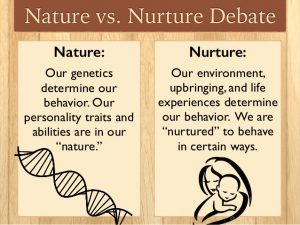
Psychology is not so new a science … it goes way back in history – i.e. Plato, Aristotle,  John Locke (1690), René Descartes (1637), etc..

One of the oldest arguments in the history of psychology is the Nature vs Nurture debate. Each of these sides have good points that it’s really hard to decide whether a person’s development is predisposed in his DNA, or a majority of it is influenced by this life experiences and his environment. – https://explorable.com/nature-vs-nurture-debate

Which factor – Nature or Nurture – attributes to the development of Caribbean society?

VIDEO – Nature vs. Nurture – Psy 101 – https://youtu.be/chzDR3feSHY

PsychU
Published on Jul 10, 2015 – Does our personality and behavior come about from our upbringing and environment or do we have genetic predispositions that influence us to act a certain way? Let’s discuss how psychologists tackle the issue!

The book Go Lean…Caribbean – available to download for free – asserts that there are standard traits for Caribbean society and people – community ethos – that are so entrenched that they could be considered as embedded in the DNA. The Go Lean book defines community ethos as:

… the fundamental character or spirit of a culture; the underlying sentiment that informs the beliefs, customs, or practices of a group or society; dominant assumptions of a people or period. – Page 20

But alas, “community ethos” can be changed.

The Go Lean book prescribes how to recognize the ethos and most importantly: how to change ethos.

The Caribbean’s “community ethos” did not start in the Caribbean; alas, they started in Europe. So a study of the European ethos during the time of the discovery of the New World must be considered; we must learn from those lessons – we are directly affected.

In a previous Go Lean commentary, it was developed that the historicity of American and Caribbean society – make  that the whole New World – was premised on the European philosophy of White Supremacy; that it was acceptable for those peoples to exploit the native people of the New World – or the transplanted slaves – as long as they infused Christianity into these conquered people.

Such a fallacy!

So the Nature of the Caribbean refers to the normal assumption – community ethos – that inhabitants are Less Than and not equipped to foster a workable society. Alas, this Nature can be changed!

One way of changing that default Nature, is by Nurturing the needed values that the regional community needs to thrive as functioning societies. This destination is not automatic; it must be forged … with strenuous effort – heavy-lifting. This must be the new societal priority.

Underlying to Caribbean history is the Nature (DNA) of the New World colonizers; they brought Crony-Capitalism and White Supremacy – in this order – to their new lands of influence. This natural assumption that Europeans had the right to rule and exploit the land and dominate native people was an obvious attribute for hundreds of years (half a millennium).

Take for example this evidence in the history of discovery:

  • The New World was discovered in 1492, slavery started in 1600’s. What happened in 1500’s? Search for Gold. This is proof-positive that European Crony-Capitalism superseded all other community values in the New World colonization quest.
  • French Revolution brought equality and egalitarianism to the French world, but shortly thereafter, “they” wanted to re-install slavery in the French Caribbean, even in rebellious Haiti.

Where personal Nature is failing, the recompense must come from the process in Nurturing. (Consider the example of Crony-Capitalism; change can be forged by attacking the pocketbook through boycotts, embargo and blockades).

This commentary commences a 4-part series on Nature or Nurture for “community ethos”. This entry is 1 of 4 in this series from the movement behind the book Go Lean … Caribbean in consideration of root causes of some societal defects – specific examples in the US and UK – and how to overcome them. There is much that can be learned from history, good, bad and ugly. The other commentaries in the series are cataloged as follows:

  1. Nature or Nurture: Black Marchers see gun violence differently
  2. Nature or Nurture: Cop-on-Black Shootings – Embedded in America’s DNA; Whites Yawn>
  3. Nature or Nurture: UK City of Bristol still paying off Slavery Debt
  4. Nature or Nurture: Nurturing comes from women; “they” impacted the Abolition of Slavery

All of these commentaries relate to “why” the New World has the societal defects that are so prominent – and so illogical – and  “how” the stewards for a new Caribbean can assuage these defects and the resultant failing dispositions among Caribbean society. Though the traits may be consistent in the hemisphere, our efforts to reform and transform is limited to the Caribbean.

The subject of gun violence in America is truly one of those subjects, where a logical society seems to ignore logic. (America is the richest, most powerful society in the history of civilizations). It is outright stupidity! A previous blog-commentary related that stupidity persists when “someone is profiting”. (In a free society, special interest groups – who often have an economic motive – can conduct promotional campaigns to control public opinion).

So in America, it is a fact that different population groups have different experiences and values for guns. See this reality as portrayed in this news article, about Black protesters seeing gun violence differently than their White counterparts:

Title: Black Marchers See Gun Violence Differently
By: Alexa Spencer

WASHINGTON — Adia Granger knows gun violence intimately.  The 16-year-old lives in Baltimore, the city with the highest murder rate of any major city in America.

Of the 343 people killed in Baltimore last year, 295 died by gunfire, more than New York City or Los Angeles, cities with more than 10 times Baltimore’s population.  Gun-related deaths accounted for 88 percent of the city’s homicides.

Many of the victims were young.  Markel Scott, 19, shot six times. Steven Jackson, 18, shot in the head. Shaquan Raymone Trusty, 16, shot multiple times in the upper body. Tyrese Davis, 15, and  Jeffrey Quick, 15, shot in same neighborhood within blocks of one another.

Adia’s own cousin was shot while walking home from work.  Like her cousin, most all of them victims were black.

Their deaths were the reason she and a group of classmates from Western High School were among the more than 800,000 who rallied in the nation’s capital to demand more action to deal with gun violence.

“I came here to represent Baltimore,” Adia said.

Adia was among several bus loads of students sent to the march by Baltimore Mayor Catherine Pugh. For them, gun violence is not new. It is a longstanding issue.

Adia, a high school junior, joined the national movement for gun control sparked by the Parkland shooting by marching out of her school in March,   Like many other protestors,  she said she wanted the federal government should do more to address the issue.

“It’s unacceptable what is going on,” Adia said, “and Congress has not done anything about it.,”

Adia was among many black citizens that were present to protest not only against mass shootings, but also police brutality and gun violence that plagues neighborhoods of color.

Frederick Shelton, 43, stood aside the packed streets, holding a sign that read: If the opposite of pro is con…what is the opposite of progress?”

The message of his sign, Shelton said is “We’re not moving forward.”

“It’s just a matter of time before any of us get shot, because our federal government is not doing anything,” he said. “We’re all just sitting around waiting for the next mass shooting. It could be you. It could be me. And that’s a horrible way to live.”

Shelton teaches English as a second language to immigrant students in Washington.   He said his students are uniquely affected by gun laws and said he participated in the march to make their lives better. He suggested the federal government reserve guns for military personnel only.

“I believe that there is no place for guns in our society,” he said. “Guns are for the military.”

Tameka Garner-Barry, 38-year-old mother of three, brought her sons, 2, 5, and 11, to the march to “reclaim” their schools and their community. Her children, though young, have recognized the problem and wanted to be at the march to speak out.

“These are issues and concerns that they’ve had, so it’s only right that they come out and voice their opinions and let their voices be heard,” Garner-Barry said.

Standing at his mother’s hip, 5-year-old Bryson chipped in his feelings.

“I feel like people have to stop the violence,” he said, “because people are getting hurt.”

Garner-Barry said she wanted to see the removal of guns from the streets and heightened security in school.

“I want Congress to know that we do control the vote, and that we take these issues seriously,” she said, “and I want the NRA to be dismissed altogether,”

Nia Smith, 21, a graduating senior film production major at Howard University from Chicago, was also at the march.

Chicago had the highest number of murders two years in a row.    In 2016, 771 were killed.  The number declined to 650 murdered in 2017, still higher than the number of murders in Los Angeles and New York City combined.

“Gun violence has always been a part of my life,” Smith said. “I have had family members that I’ve lost to gun violence.”

Though the march addressed gun violence, including some speakers who tlked abut gun violence against African-American men and women, she said she felt as though certain forms of gun violence, such as police brutality, were overlooked by protesters because of class and race.

“They fail to see that gun violence is gun violence, period…the police and the perpetrators of the classroom shootings,” Smith said.

To fully combat the issue, there must be support across racial lines, she said.

“I don’t think they should be separated,” she said. “I think white people should march the way they marched today for the Black Lives Matter movement. They all died the same way. They all died by a bullet.”

Source: Howard University News Service; posted March 26, 2018; retrieved April 7, 2018 from: http://www.hunewsservice.com/news/view.php/1033085/Black-Marchers-See-Gun-Violence-Differen

A previous blog-commentary related how the 2nd Amendment originated during slavery so as to provide additional rights to the slave-owning populations to regulate (police) their slave majorities on plantations.

Despite the historic developments, the requirements for the Black American population appears to be different than for the White population; (this writer attended one of the “March For Our Lives” events on March 24, 2018). This is the manifestation of the Nature psychology.

While this is an American drama, there is much that the Caribbean can glean, in terms of lessons learned. The book Go Lean…Caribbean serves as a roadmap for the introduction and implementation of the technocratic Caribbean Union Trade Federation (CU), for the elevation of Caribbean society – for all member-states. The book presents 370 pages of instructions for how to reform and transform our Caribbean member-states. It stresses the key community ethos that needs to be adopted, plus the strategies, tactics, implementations and advocacies necessary to shepherd a better society.

The book stresses that reforming and transforming the Caribbean societal engines must be a regional pursuit. This was an early motivation for the roadmap, as pronounced in the opening Declaration of Interdependence (Pages 12 – 13):

xi. Whereas all men are entitled to the benefits of good governance in a free society, “new guards” must be enacted to dissuade the emergence of incompetence, corruption, nepotism and cronyism at the peril of the people’s best interest. The Federation must guarantee the executions of a social contract between government and the governed.

xvi. Whereas security of our homeland is inextricably linked to prosperity of the homeland, the economic and security interest of the region needs to be aligned under the same governance. Since economic crimes … can imperil the functioning of the wheels of commerce for all the citizenry, the accedence of this Federation must equip the security apparatus with the tools and techniques for predictive and proactive interdictions.

xxiv. Whereas a free market economy can be induced and spurred for continuous progress, the Federation must install the controls to better manage aspects of the economy: jobs, inflation, savings rate, investments and other economic principles. Thereby attracting direct foreign investment because of the stability and vibrancy of our economy.

The Go Lean book provides directions on “how” to adopt new community ethos, plus the strategies, tactics, implementations and advocacies to execute so as to reboot, reform and transform the societal engines of Caribbean society. Considering the failings in the US, the Go Lean roadmap calls for remediation and mitigation for gun control, despite the race issues. We want to elevate our society beyond the initial racial Nature in Caribbean history.

Change can be forged, by Nurturing a better community ethos. We have a long track record of advocates and activists working to change the default orthodoxy. They protest, campaign, speak out for a cause, lobby, cajole, take to the streets and march; they engage the voting process and support – or oppose – candidates in line, or out of line, with their cause. This is referred to as forging change from the Bottom-Up. They may even use Civil Disobedience tactics.

Have you been to jail for justice?

This is an important question and statement for forging change in society. See how this has been portrayed in this song-VIDEO recapping many of the causes during the hey-day of the Counter-Culture: Civil Rights, Women’s rights, Anti-War protests, etc.. The lyrics are included in the Appendix below.

VIDEO – Peter, Paul and Mary – Have You Been To Jail For Justice – https://youtu.be/rCbhOc1VZ6k

Kwan CS
Published on Sep 26, 2016 – Peter, Paul and Mary – Have You Been To Jail For Justice

For many of the Caribbean’s bad Nature, the Go Lean roadmap seeks to Nurture change with good messaging to the heart of the youth; this is one proven method for forging change among the next generation. Beyond that, meeting the needs of the population is important for optimizing the societal engines in a community. This is easier said than done, but this quest is the purpose of the CU/Go Lean roadmap; this roadmap has these 3 prime directives for optimizing our societal engines:

The Caribbean does not have the same population demographic as the neighboring American states. We can more easily distance ourselves from the racial dysfunction in American society. We have majority Black populations among 29 of the 30 member-states.  We only need to deliver best practices going forward; after formal reconciliation from our dysfunctional past.

Despite our differences, the Caribbean does need to reform and transform our society. We have many societal defects of our own. That cited song stressed this ethos:

The more you study history
The less you can deny it
A rotten law stays on the books
’til folks with guts defy it!

Yes, we can … exert the energy, display the guts and internal fortitude to change our society, to reform and transform. This is how we can make our homeland a better place to live, work and play. 🙂

Download the free e-Book of Go Lean … Caribbean – now!

Sign the petition to lean-in for this roadmap for the Caribbean Union Trade Federation.

———-

Appendix – Lyrics: Peter, Paul and Mary – Have You Been To Jail For Justice 

(Written by Anne Feeney)

Was it Cesar Chavez or Rosa Parks that day?
Some say Dr. King or Ghandi
Set them on their way
No matter who your mentors are
It’s pretty plain to see
That if you’ve been to jail for justice
You’re in good company

Have you been to jail for justice?
I want to shake your hand
‘Cause sitting in and laying down
Are ways to take a stand
Have you sung a song for freedom
Or marched that picket line?
Have you been to jail for justice?
Then you’re a friend of mine

You law abiding citizens
Come listen to this song
Laws are made by people
And people can be wrong
Once unions were against the law
But slavery was fine
Women were denied the vote
While children worked the mine
The more you study history
The less you can deny it
A rotten law stays on the books
’til folks with guts defy it!

Have you been to jail for justice?
I want to shake your hand
‘Cause sitting in and laying down
Are ways to take a stand
Have you sung a song for freedom
Or marched that picket line?
Have you been to jail for justice?
Then you’re a friend of mine

Well the law is supposed to serve us
And so are the police
When the system fails
It’s up to us to speak our piece
We must be ever vigilant
For justice to prevail
So get courage from your convictions
Let ’em haul you off to jail!

Have you been to jail for justice?
I want to shake your hand
‘Cause sitting in and laying down
Are ways to take a stand
Have you sung a song for freedom
Or marched that picket line?
Have you been to jail for justice?
Then you’re a friend of mine
Have you been to jail for justice
Then you’re a friend of mine

Source: Retrieved April 8, 2018 from: https://genius.com/Peter-paul-and-mary-have-you-been-to-jail-for-justice-lyrics
Share this post:
, , ,

Change! Be the Change – Linda Brown, RIP

Go Lean Commentary

This could be just an empty platitude …

Be the Change you want to see in the world. 

… and then there are people who actually did it, not just say it!

Rest in Peace, Linda Brown.

The world is mourning the passing of Linda Brown, who died on Monday (March 26, 2018) at the age of 76. (See link to “Condolences” in Appendix B below). She was the little “Brown” in the landmark American legal case “Brown versus Board of Education”. On her behalf, the country changed! The US Supreme Court overturned the previous rulings maintaining the dignity-defying legacies of “Separate But Equal” and started the journey for full diversity in American society.

Rather that wishing for change, Linda Brown went on to Be The Change, as a Civil Rights icon.

As a little girl, Brown was at the center of the historic Brown vs. Board of Education case, which ultimately ended segregation in U.S. public schools. – Source: Huffington Post 

This actuality has been fittingly highlighted by the movement behind the book Go Lean … Caribbean. In a previous blog-commentary, it was detailed how the Supreme Court case “Brown vs. Board of Education” set a far-reaching precedence whose reverberations shook the whole world, even the Caribbean:

The issues pronounced here in the Go Lean book highlights an important factoid: de jure versus de facto

  • de jure = according to law
  • de facto = in reality

As a result of the 1954 Supreme Court’s decision, the de jure policy of the US was that of racial equality. But in reality, that decision didn’t manifest on the streets for the everyday man. The facts did not change the fiction, racism continued to dominate the American eco-system, even today. The aft-mentioned 20 million African-Americans in the US were viewed, treated and labeled as “Less Than“.

The case for little Linda Brown started the journey from de jure to de facto; eventually the de facto advanced closer to the de jure. We are here today, in a more racially-equitable America, because of that journey that was started for young Linda Brown. She will always be identified as an icon for constitutional progress – a constant feature of Constitutional History.
Now we say goodbye to Linda; but with a gracious heart full of gratitude for her accomplished life of “shifting the needle” towards a more harmonious society.

What a great role model, even for us in the Caribbean; of the 30 member-states that caucus as the political Caribbean, 29 have a non-White majority. Civil Rights matters here too! “We” all benefited from American progress as the regional hegemony. We all benefited from Linda Brown.

What a model she provided. We too, can Be the Change we want to see in the world.

Yes, this movement has consistently asserted that one man or one woman can make a difference in society. Linda Brown proved it! So too, can you, me or any Caribbean stakeholder. This is what the book Go Lean…Caribbean – available to download for free – have pronounced. The book posits that one person – advocating for progress – can make a difference (Page 122). It relates:

An advocacy is an act of pleading for, supporting, or recommending a cause or subject. For this book, it’s a situational analysis, strategy or tactic for dealing with a narrowly defined subject.

Advocacies are not uncommon in modern history. There are many that have defined generations and personalities. Consider these notable examples from the last two centuries in different locales around the world:

  • Frederick Douglas
  • Mohandas Gandhi
  • Martin Luther King
  • Nelson Mandela
  • Cesar Chavez – [American Farm Workers Advocate]
  • Candice Lightner – (Advocate for Mothers Against Drunk Driving]

The Go Lean book seeks to advocate for the Caribbean, not the US, and for the people who love our homeland. Yet still we can learn lessons from American Constitutional History (Page 145) – “separate but equal” was always a fallacy despite one Supreme Court ruling after another. We now hope to direct our regional stakeholders in our own Way Forward based on best-practices gleaned from America’s dysfunctional past. (Also see book’s Epilogue excerpt in the Appendix A below).

The book serves as a roadmap for the introduction and implementation of the technocratic Caribbean Union Trade Federation (CU), to reform and transform our communities, by elevating our societal engines – for all member-states. This CU/Go Lean roadmap has these 3 prime directives:

  • Optimization of the economic engines in order to grow the regional economy to $800 Billion and create 2.2 million new jobs.
  • Establishment of a security apparatus to ensure public safety and protect the resultant economic engines.
  • Improve Caribbean governance to support these engines, including a separation-of-powers between the member-states and CU federal agencies.

The Go Lean book stresses that reforming and transforming the Caribbean societal engines must be a regional pursuit – we must become a pluralistic democracy: Black, White, African-descended, European-descended, Asia-descended, Aboriginal, etc.. Our problems are too big for any one Caribbean member-state to contend with alone. This was an early motivation for the roadmap, as pronounced in the opening Declaration of Interdependence (Pages 12 – 14):

xi. Whereas all men are entitled to the benefits of good governance in a free society, “new guards” must be enacted to dissuade the emergence of incompetence, corruption, nepotism and cronyism at the peril of the people’s best interest. The Federation must guarantee the executions of a social contract between government and the governed.

xii. Whereas the legacy in recent times in individual states may be that of ineffectual governance with no redress to higher authority, the accedence of this Federation will ensure accountability and escalation of the human and civil rights of the people for good governance, justice assurances, due process and the rule of law. As such, any threats of a “failed state” status for any member state must enact emergency measures on behalf of the Federation to protect the human, civil and property rights of the citizens, residents, allies, trading partners, and visitors of the affected member state and the Federation as a whole.

xxxiii. Whereas lessons can be learned and applied from the study of the recent history of other societies, the Federation must formalize statutes and organizational dimensions to avoid the pitfalls of communities like East Germany, Detroit, Indian (Native American) Reservations, Egypt and the previous West Indies Federation. On the other hand, the Federation must also implement the good examples learned from developments / communities like New York City, Germany, Japan, Canada, the old American West and tenants of the US Constitution.

The Go Lean book provides 370-pages of turn-by-turn instructions on “how” to adopt new community ethos, plus the strategies, tactics, implementations and advocacies to execute so as to reboot, reform and transform the societal engines of Caribbean society. One entry is “10 Lessons from the US Constitution” (Page 145), detailing the adjustments and optimizing of the “living” document over the years:

The Bottom Line on Constitutional Law
The US Constitution was written in the late 18th Century, adopted on September 17, 1787, by the Constitutional Convention in Philadelphia, Pennsylvania, and ratified by conventions in 11 states. It went into effect on March 4, 1789. It was not the start, nor the end of the constitution theory process for the United States. But underlying to the codification on paper was the ideals verbalized in the Declaration of Independence of 1776, which defined that All Men Are Created Equal and Endowed by their Creator with Certain Unalienable Rights for Life, Liberty and the Pursuit of Happiness.

A nearly 250-year review of the process shows one consistent pattern, a desire to do better. While not perfect, the United States of America always tried to do better, from one generation to another. Whereas the Colonial/ Revolutionary America featured a country of great privileges for rich (land-owning) white Englishmen, a slow turn in societal evolution saw those privileges extended to the everyday white man, then to new immigrants, then to women, then to minorities, then to the disabled, and now to all, even those with alternative lifestyles.

The Go Lean movement calls on every man, woman and child in the Caribbean to be an advocate and a champion, or at least appreciate the championing efforts of previous advocates. Their examples can truly help us today with our passions and purpose. Consider this sample of prior blog/commentaries where advocates and role models have been elaborated upon:

https://goleancaribbean.com/blog/?p=14541 Viola Desmond – One Woman Made a Difference
https://goleancaribbean.com/blog/?p=14139 Carter Woodson – One Man Made a Difference … for Black History
https://goleancaribbean.com/blog/?p=10801 Caribbean Roots: John Carlos – The Man. The Moment. The Movement
https://goleancaribbean.com/blog/?p=10114 Caribbean Roots: Esther Rolle of ‘Good Times’
https://goleancaribbean.com/blog/?p=9300 Edward Snowden – One Person Making a Difference
https://goleancaribbean.com/blog/?p=8495 The NBA’s Tim Duncan – Champion On and Off the Court
https://goleancaribbean.com/blog/?p=8165 Role Model Muhammad Ali’s Greatest Fight
https://goleancaribbean.com/blog/?p=7682 Frederick Douglass: Role Model for Single Cause – Death or Diaspora
https://goleancaribbean.com/blog/?p=866 Role Model Bob Marley: The legend lives on!

Thank you Linda Brown, for your good role model … and Rest in Peace. See VIDEO below.

The movement behind Go Lean book, the planners of a new Caribbean, stresses that the same as change impacted the delivery of Civil Rights in America – which eventually transformed their society – a ‘change will also come’ to the Caribbean. This commentary continues this short 3-part series on “Change” in society. The full catalog of commentaries in this series are as follows:

  1. Change! Observing the Change – Student Marches for Gun Control Reform and Action
  2. Change! Be the Change – RIP Linda Brown; the little girl in “Brown vs Board of Education”
  3. Change! Forging Change – Citibank’s Model of “Corporate Vigilantism”

All of these commentaries give insights on “how” the planners of the new Caribbean can persuade people, establishments and institutions to forge change in their communities.

Remember the 5 L‘s. We want to learn from the US Constitutional History– the good, bad and ugly lessons. As planners for this new Caribbean, we have looked, listened, learned and lend-a-hand for the American experience; we are now ready to lead our own homeland to be a better place to live, work and play. 🙂

Download the free e-Book of Go Lean … Caribbean – now!

Sign the petition to lean-in for this roadmap for the Caribbean Union Trade Federation.

————–

Appendix A – Epilogue – Future Focus – Brown v. Board of Education (1954)

This was a landmark United States Supreme Court case in which the Court declared state laws establishing separate public schools for black and white students unconstitutional. The decision overturned the Plessy v. Ferguson decision of 1896, which allowed state-sponsored segregation, insofar as it applied to public education. Handed down on May 17, 1954, the Warren Court’s (between 1953 and 1969, when Earl Warren served as Chief Justice) unanimous decision (9–0) stated that “separate educational facilities are inherently unequal”. As a result, de jure racial segregation was ruled a violation of the Equal Protection Clause of the United States Constitution (Fourteenth Amendment). This ruling paved the way for integration and was a major victory of the civil rights movement.

This landmark ruling created chaos for nearly 60 years; the animosity created was real and every aspect of American society was affected. (Most legislative assemblies in the southern states passed resolutions and sanctions condemning the Supreme Court decision, though the federal law superseded all state legislations). Cities and urban areas suffered from white flight, where white Americans fled the cities to move out to the suburbs to avoid the integration of urban schools; with their flight went their capital and tax base. Many American cities have still not recovered, for example Detroit filed for Bankruptcy in July 2013 after suffering the pangs of distress from this white flight for 60 years.

So why would the learned men on the Supreme Court make this unanimous ruling and caused so much havoc on American life. Were they not wise, could they not “read the writing on the wall”? The answer is an emphatic No! They knew the real beneficiary of their judgment would come later. Their wisdom was strewn from the experience of modern society waging two world wars, the last of which was just concluded 9 years earlier. They saw the rampage, saw of devastation of 60 million deaths around the world and appreciated the wisdom that a downtrodden people would not stay down, that they would rise and revolt, that they would risk their lives and that of their children to pursue freedom. The Warren Court knew that the status quo of race inequality could not continue, but in order to effectuate that change would take writing-off an entire generation (or two). That time had come, the generation was now (1954); but the hope was with the next generation, and so the curative measures started with the children of that day, so that inevitably, future generations would inhabit an America that would not judge its people by the color of their skins, but rather the content of their character.

Source: Book Go Lean … Caribbean Page 251

————–

Appendix B – Condolences – Civil Rights Icon Linda Brown Remembered On Twitter: ‘Rest In Power’- https://www.huffingtonpost.com/entry/linda-brown-death-tributes_us_5ab9f841e4b054d118e65b09

“Generations stand on your shoulders.”

See the condolences, comments and tributes in the link here from many, public servants and private individuals, celebrities and commoners alike.

————–

Appendix C VIDEO – Remembering The Life Of Linda Brown | Morning Joe | MSNBChttps://youtu.be/MGefY55K8LM


MSNBC

Published on Mar 27, 2018 –
Linda Brown, the Kansas girl at the center of the 1954 Supreme Court ruling that struck down racial segregation in schools, has died at age 76.
» Subscribe to MSNBC: http://on.msnbc.com/SubscribeTomsnbc

About: MSNBC is the premier destination for in-depth analysis of daily headlines, insightful political commentary and informed perspectives. Reaching more than 95 million households worldwide, MSNBC offers a full schedule of live news coverage, political opinions and award-winning documentary programming — 24 hours a day, 7 days a week.

Share this post:
, , , ,
[Top]

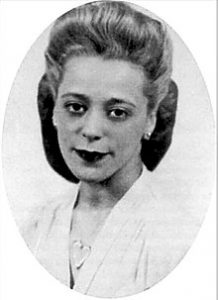
Viola Desmond – One Woman Made a Difference

Go Lean Commentary

In North America, there is Black History Month and there is Women’s History Month …

This story – about Canadian Viola Desmond – is both!

Viola Desmond challenged racial segregation at a cinema in New Glasgow, Nova Scotia, in 1946. She refused to leave a whites-only area of the Roseland Theatre and was convicted of a minor tax violation for the one-cent tax difference between the seat she had paid for and the seat she used which was more expensive. Desmond’s case is one of the most publicized incidents of racial discrimination in Canadian history and helped start the modern civil rights movement in Canada.


In 2010, Viola Desmond was granted a posthumous pardon, the first to be granted in Canada.[2][3] The government of Nova Scotia also apologized for prosecuting her for tax evasion and acknowledged she was rightfully resisting racial discrimination.[4] … In late 2018 Desmond will be the first Canadian born woman to appear alone on a $10 bill which was unveiled by Finance Minister Bill Morneau and Bank of Canada governor Stephen Poloz during a ceremony at the Halifax Central Library on March 8, 2018.[5][6] Desmond was also named a National Historic Person in 2018.[7]

[Reverend] Dr. William Pearly Oliver – [a Social Justice Champion in the vein of Martin Luther King] – reflecting on the case 15 years later[21] stated regarding Desmond’s legacy:

    “… this meant something to our people. Neither before or since has there been such an aggressive effort to obtain rights. The people arose as one and with one voice. This positive stand enhanced the prestige of the Negro community throughout the Province. It is my conviction that much of the positive action that has since taken place stemmed from this …”.

Desmond is often compared to Rosa Parks, given they both challenged racism by taking seats in a Whites only section and contributed to the rise of the Civil Rights Movement.
Source: Retrieved March 14, 2018 from: https://en.wikipedia.org/wiki/Viola_Desmond

Yes, one woman, or one man, can make a difference in society. Viola Desmond proved it! Her commitment to justice and righteous principles compelled her community to take note and make a change.

“Wanna make the world a better place, take a look at yourself and make a change.” – Michael Jackson’s song: Man in the Mirror (1987).

Canada today is a very progressive society. From the Caribbean perspective, Canada is now a role model for a pluralistic democracy and Climate Change action. As is the experience, positive reform always starts with one person. In a previous blog-commentary, the movement behind the book Go Lean…Caribbean explained how immigrants to a new community (and minorities) normally go through a long train of abuse, then toleration, followed by acceptance and then finally celebration. Today, Canada is celebrating Viola Desmond; see the news article in the Appendix below.

The success of this community – Canada – has been hard fought, but they did the heavy-lifting and now are enjoying the fruitage of their labor. People from all over the world “are beating down the doors to get in”.

Poor Caribbean communities. We have NOT done the heavy-lifting and our people “are beating down the doors to get out”. (Many times, they flee to Canada for refuge).

This is what the book Go Lean…Caribbean – available to download for free – warned: “Push and Pull” factors are resulting in an abandonment of Caribbean homelands for foreign shores like Canada; (Page 3). Now to learn and apply this lesson.

The Viola Desmond story resonates with us in the Caribbean. Since she was a Black Woman and the majority population of 28 of the 30 Caribbean member-states is Black, we share the same ancestral heritage – Africa – colonial origins – slave trade – and history of oppression as Canadian Blacks. Plus a large number of our Caribbean Diaspora who fled their homeland lives in Canada – one estimate is near a million.

The Go Lean book posits that one person – an advocate like Desmond – can make a difference (Page 122). It relates:

An advocacy is an act of pleading for, supporting, or recommending a cause or subject. For this book, it’s a situational analysis, strategy or tactic for dealing with a narrowly defined subject.

Advocacies are not uncommon in modern history. There are many that have defined generations and personalities. Consider these notable examples from the last two centuries in different locales around the world:

  • Frederick Douglas
  • Mohandas Gandhi
  • Martin Luther King
  • Nelson Mandela
  • Cesar Chavez
  • Candice Lightner

The Go Lean book seeks to advocate and correct the Caribbean, not Canada, and the people who love our homeland. Yet still we can learn lessons from Canada’s history (Page 146) and direct our regional stakeholders to a Way Forward based on best-practices gleaned from Canada’s dysfunctional past. The book, in its 370 pages, serves as a roadmap for the introduction and implementation of the technocratic Caribbean Union Trade Federation (CU), to move our society to a brighter future, by elevating our societal engines – for all member-states. This CU/Go Lean roadmap has these 3 prime directives:

  • Optimization of the economic engines in order to grow the regional economy to $800 Billion and create 2.2 million new jobs.
  • Establishment of a security apparatus to ensure public safety and protect the resultant economic engines.
  • Improve Caribbean governance to support these engines, including a separation-of-powers between the member-states and CU federal agencies.

The book stresses that reforming and transforming the Caribbean societal engines must be a regional pursuit – we must become a pluralistic democracy: Black, White, Red and Yellow. Our problems are too big for any one Caribbean member-state to contend with alone. This was an early motivation for the roadmap, as pronounced in the opening Declaration of Interdependence (Pages 12 – 14):

xi. Whereas all men are entitled to the benefits of good governance in a free society, “new guards” must be enacted to dissuade the emergence of incompetence, corruption, nepotism and cronyism at the peril of the people’s best interest. The Federation must guarantee the executions of a social contract between government and the governed.

xix. Whereas our legacy in recent times is one of societal abandonment, it is imperative that incentives and encouragement be put in place to first dissuade the human flight, and then entice and welcome the return of our Diaspora …

xxxii. Whereas the cultural arts … of the region are germane to the quality of Caribbean life, and the international appreciation of Caribbean life, the Federation must implement the support systems to teach, encourage, incentivize, monetize and promote the related industries for arts … in domestic and foreign markets. These endeavors will make the Caribbean a better place to live, work and play.

xxxiii. Whereas lessons can be learned and applied from the study of the recent history of other societies, the Federation must formalize statutes and organizational dimensions to avoid the pitfalls of communities like East Germany, Detroit, Indian (Native American) Reservations, Egypt and the previous West Indies Federation. On the other hand, the Federation must also implement the good examples learned from developments/ communities …

The Go Lean book provides 370-pages of turn-by-turn instructions on “how” to adopt new community ethos, plus the strategies, tactics, implementations and advocacies to execute so as to reboot, reform and transform the societal engines of Caribbean society.

The Go Lean movement calls on every man, woman and child in the Caribbean to be an advocate and a champion, or at least appreciate the championing efforts of previous advocates. Their examples can truly help us today with our passions and purpose. Consider this sample of prior blog/commentaries where advocates and role models have been elaborated upon:

https://goleancaribbean.com/blog/?p=14139 Carter Woodson – One Man Made a Difference … for Black History
https://goleancaribbean.com/blog/?p=11963 Oscar López Rivera – The ‘Nelson Mandela’ of the Caribbean?
https://goleancaribbean.com/blog/?p=11442 Caribbean Roots: Al Roker – ‘Climate Change’ Defender
https://goleancaribbean.com/blog/?p=10801 Caribbean Roots: John Carlos – The Man. The Moment. The Movement
https://goleancaribbean.com/blog/?p=10114 Caribbean Roots: Esther Rolle of ‘Good Times’
https://goleancaribbean.com/blog/?p=9948 Caribbean Roots: Sammy Davis, Jr.
https://goleancaribbean.com/blog/?p=9300 Edward Snowden – One Person Making a Difference
https://goleancaribbean.com/blog/?p=8724 Remembering Marcus Garvey: Still Relevant Today
https://goleancaribbean.com/blog/?p=8495 The NBA’s Tim Duncan – Champion On and Off the Court
https://goleancaribbean.com/blog/?p=8328 YouTube Millionaire: ‘Tipsy Bartender’ Bahamas Origins
https://goleancaribbean.com/blog/?p=8165 Role Model Muhammad Ali’s Greatest Fight
https://goleancaribbean.com/blog/?p=7682 Frederick Douglass: Role Model for Single Cause – Death or Diaspora
https://goleancaribbean.com/blog/?p=866 Bob Marley: The Role Model and Legend … lives on!

Thank you Viola Desmond, for being a good role model, and a reminder: Black Girls Rock!

We conclude about Viola Desmond as we do about our own Caribbean champions and advocates; we said (Go Lean book Valedictions on Page 252):

Thank you for your service, love and commitment to all Caribbean people. We will take it from here.

The movement behind Go Lean book, the planners of a new Caribbean stresses that a ‘change is going to come’ our way. We have endured failure for far too long; we have seen what works and what does not. We want to learn from Canada’s History – the good, bad and ugly lessons.

There are the 5 L‘s. We have now Looked, Listened, Learned and Lend-a-hand; we are now ready to Lead our region to a better destination, to being a homeland that is better to live, work and play. Let’s move! 🙂

Download the free e-Book of Go Lean … Caribbean – now!

Sign the petition to lean-in for this roadmap for the Caribbean Union Trade Federation.

————

Appendix – Viola Desmond On New Canadian $10 Bill

March 12, 2018 – Canadian hero Viola Desmond is the face on the new $10 bill in Canada, which goes into circulation at the end of March.

Viola Desmond was thrown in jail in Nova Scotia in 1946 because, in a movie theatre, she wanted to sit downstairs where the white people were allowed to sit. She didn’t want to sit up in the balcony, where the black people had to sit. The police held her in jail overnight. The dignified and brave Desmond paid a fine of $20 the next day, even though she had done nothing wrong. Today, we think of her for being a brave advocate for the rights of African-Canadians and helping to inspire the human rights movement in Canada.

(Learn more about Desmond on Historica Canada’s Viola Desmond page.)

It is a great honour to have your face on a country’s money. This is the first time an African-Canadian woman has been featured on Canadian paper money. (Queen Elizabeth is featured on the $20 bill.)

There’s something else interesting about the new bill. For the first time, it is vertical, meaning it’s meant to be looked at up-and-down rather than horizontally (across).

The new bill also features a number of images that are reminders of human rights. For instance, there is an image of the Canadian Museum for Human Rights, in Winnipeg, Manitoba, where Desmond’s story is part of the permanent collection. There is an image of a feather, to recognize rights and freedoms for Canada’s Indigenous Peoples. And it features a paragraph from the Canadian Charter of Rights and Freedoms (section 15, which says, “Every individual is equal before and under the law.”

Viola Desmond’s sister, Wanda Robson, was one of the first people in Canada to receive a copy of the new $10 bill. In a Bank of Canada video (below), she said her sister’s photo on it is “so life-like. It’s as if she’s in this room!”

Source: Retrieved March 14, 2018 from http://teachingkidsnews.com/2018/03/12/viola-desmond-on-new-canadian-10-bill/

Related Videos
The video below (1:00) is a “Heritage Minute” produced by Historica Canada. It tells the story of Viola Desmond.

——–

VIDEO – Heritage Minutes: Viola Desmond – https://youtu.be/ie0xWYRSX7Y

Historica Canada
Published on Feb 2, 2016 – The story of Viola Desmond, an entrepreneur who challenged segregation in Nova Scotia in the 1940s. The 82nd Heritage Minute in Historica Canada’s collection. For more information about Viola Desmond, visit: http://www.thecanadianencyclopedia.ca…

——–

Additional Video: Wanda Robson sees Canada’s new $10 note featuring her sister (Viola Desmond) for the first time  – https://youtu.be/dfdlPrglcS8

Share this post:
, , , ,
[Top]

March Madness 2018 – ENCORE

Go Lean Commentary

Welcome to March. Welcome to Madness. But the focus here is on basketball, not Mental Health.
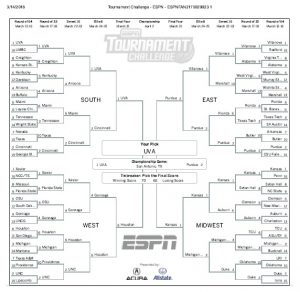
Wow, what a mania!

March is time for the NCAA Division I Basketball Tournament. This is where 68 teams come together in a single-elimination tournament to determine who would be the National Champion. The number 68 is deceptive; it is really a tournament of 64, with 60 secured teams and 8 teams having to compete in “play-in” games to determine the last 4. Then it is …

64 => 32 => Sweet 16 => Elite 8 => Final 4 => 2 Finalists => 1 Champion

This is simple math! Basketball is a simple game – 5 players on each side with one ball and 2 baskets. Minimal expense for fielding a basketball team … and yet …

… there is NO eco-system for College Basketball in the Caribbean.

Ouch! That is madness!

Frequently, the movement behind the book Go Lean…Caribbean repeats this urging – see the many related blog-commentaries:

There is an opportunity for the sports eco-system to thrive in the Caribbean region.

This was also the strong point of this previous blog from March 20, 2014. That submission is encored here below.

But first, enjoy the NCAA’s March Madness 2018. Submit your own bracket; mine is shown here.

Also view a VIDEO here of a “Break-down” analysis of this year’s tournament:

VIDEO – Breaking down the NCAA March Madness tournament matchups – https://youtu.be/DdGMLOd0-K0

Posted March 12, 2018 – The brackets are set for college basketball’s March Madness tournament where 68 teams will compete for the national championship. CBS Sports columnist Bill Reiter joins CBSN to break down the tournament matchups.

=================
CampionExcelsiorK20120911IA

ENCORE Title: Collegiate Sports in the Caribbean

Sports play a big role in Caribbean culture. Education plays a big role in the empowerment of communities. There is a junction between sports and academics; this is the sphere of college athletics.

Cuba has 37 universities…alone. In total, the Caribbean has 42 million people (2010 figures) in all 30 member-states. So surely there is enough of a student population to field sports teams.

More so, there is a fan base in the communities to complete the eco-system of sports spectators and community pride. Yet, there is very little college sports being facilitated in the region right now. Despite the breadth and talent base to form leagues and rivalries among the established universities within the Caribbean. Any system for college athletics is noticeably lacking.

This is the mission of the Caribbean Union Trade Federation (CU); to function as a Caribbean version of the National Collegiate Athletic Association (NCAA) in the US. We have much to learn from this organization’s history, successes & failures.

“The NCAA was founded in 1906 to protect young people from the dangerous and exploitive athletics practices of the time,” so states the NCAA on its official website.[a]

According to Dan Treadway, Associate Blog Editor for the Huffington Post online news magazine[b]:

The NCAA often likes to harp on tradition and the sanctity of the term “student-athlete,” but it fails to recognize its true roots.

The association in fact got its start because, at the time of its creation, football was in danger of being abolished as a result of being deemed too dangerous a sport. During the 1905 season alone, 18 college and amateur players died during games. In response to public outcry, Theodore Roosevelt, an unabashed fan of the sport, gathered 13 football representatives at the White House for two meetings at which those in attendance agreed on reforms to improve safety. What would later become known as the NCAA was formed shortly after on the heels of this unifying safety agreement.

Collegiate Sports is now big money; an economic eco-system onto itself. How much money does the NCAA make?

For the 2010-11 fiscal year, the NCAA revenue was $845.9 million, (not including College Football). Total rights (broadcast & licensing) payment for 2010-11 was $687 million, of all NCAA revenue. The remaining revenues are mostly event ticket sales.

How did the NCAA go from being an agreement to promote safety standards so as to prevent death on the playing field, to a multi-million dollar enterprise? Chalk that up to 100 years of social evolution.

The book Go Lean … Caribbean serves as a roadmap to advance to the end of the evolutionary process and establish the economic engines to empower the Caribbean region, even in areas like sports and culture.

So how to build sports franchises anew? How will colleges & universities create success from collegiate athletics? It’s a complex “art and science”, but first, it starts with facilities – the CU’s Fairground administration will fund, build and manage sports venues. The CU will be the landlord; the academic institutions, the tenants.

The Go Lean roadmap navigates the changed landscape of globalization and pronounces that change has come to the Caribbean but the region is not prepared. Despite the great appreciation for sports, and the excellent talent of its athletes, there is no business model for the consumption of Caribbean collegiate athletics.

Now, for much of the Caribbean, the population tunes in and pays for cable/satellite TV service to consume American collegiate athletic programming. But how many people in the region are watching Caribbean college sporting activities? None. Though there is a demand, undoubtedly, there is no supply process in place.

In the adjoining table in the Appendix, 36 schools are identified that are capable of fielding credible sports teams, if the appropriate facilitations were in place.

There is the demand. What’s missing is the organized market for consumption. The implementation of this Go Lean roadmap fills this void. This completes the supply!

Applying the model of the NCAA, much can be learned. We can copy their success, and learn from their pitfalls. The NCAA credits tremendous revenues for itself, but not necessarily for all of their members. Under NCAA supervision, the majority of athletic programs, in fact, lose money and are subsidized by funds from their respective university. While the NCAA is needed for academic integrity in college sports, many times, it fails at this responsibility. They lack the CU’s lean execution ethos.

After 100 years later, does the world still need the NCAA? Absolutely! For more than the collective bargaining/negotiations role for the business side of college athletics. They are also the governing body for college athletics, ensuring fairness and good sportsmanship. For the Caribbean Union, this role is to be assumed by the CU Sports Administration, to provide technocratic efficiencies. The resultant eco-system facilitates the CU mandate, to make the region a better place to live, work and play.

Download the book Go Lean … Caribbean – now!

Sign the petition to lean-in for the roadmap for the Caribbean Union Trade Federation.

———————-

APPENDIX A – References:
ahttp://www.ncaa.org/wps/wcm/connect/public/NCAA/About+the+NCAA/History
b – http://www.huffingtonpost.com/ daniel-treadway/johnny-manziel-ncaa-eligibility_b_3020985.html

———————-

APPENDIX B – Caribbean Regional Colleges & Universities

Member-state

Legacy

Name

Antigua and Barbuda

British

Antigua State College
Aruba

Dutch

University of Aruba
Bahamas

British

College of the Bahamas
Barbados

British

University of the West Indies – Cave Hill, American University
Belize

British

University of Belize
Galen University
Bermuda

British

Bermuda College (Community College)
Cuba

Spanish

University of Havana Universidad de Oriente, Polytechnic University José Antonio Echeverría
Dominican Republic

Spanish

Universidad Autónoma de Santo Domingo (UASD) – (English: Autonomous University of Santo Domingo)
French Caribbean

French

University of the French West Indies and Guiana Guadeloupe Campus, Martinique Campus, French Guiana Campus
Guyana

British

University of Guyana
Haiti

French

Caribbean University / Université Caraïbe, Université d’Haiti
Jamaica

British

University of the West Indies – Mona, University of Technology (U-Tech), Mico University College, Northern Caribbean University (NCU), University College of the Caribbean (UCC), International University of the Caribbean (IUC)
Netherlands Antilles

Dutch

University of Curaçao
Curaçao
Sint Maarten University of St. Martin
Puerto Rico

USA/

Spanish

Caribbean University, Metropolitan University, University of Puerto Rico, University of Turabo
Suriname

Dutch

University of Suriname Anton de Kom Universiteit van Suriname
Trinidad and Tobago

British

University of the West Indies – Saint Augustine University of Southern Caribbean (USC) University of Trinidad and Tobago (UTT)
US Virgin Islands

USA

University of the Virgin Islands

Share this post:
, ,
[Top]

International Women’s Day – Protecting Rural Women – ENCORE

Can’t we all just get along?

The answer is “No”! Don’t be naïve!

The book Go Lean…Caribbean sought to reform and transform the societal engines of the 30 member-states that caucus as the political Caribbean. This region is in dire straits, with some countries flirting with Failed-State status. But all the problems here are not just economic. No, there are security deficiencies as well. Therefore the book declares (Page 23):

… “bad actors” will also emerge thereafter to exploit the opportunities, with good, bad and evil intent.

This movement behind the Go Lean book has therefore monitored security dynamics for the Caribbean homeland. The hope is to apply lessons-learn from other regions and ensure that we mitigate all threats and risks.

One such lesson is the security needs for our female population: Caribbean women and girls. There are many threats for women and girls that we need to be “on guard” for. Not all of our populations live in cities; no, many reside in rural areas or remote islands here in the tropics. According to the United Nations (UN) Commission on the Status of Women, there is the need to draw attention to the dilemma and challenges of rural women, who make up over a quarter of the world population, and are being left behind in every measure of development.

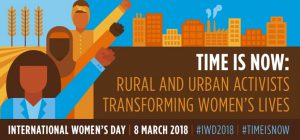
Today – March 8, 2018 – is International Women’s Day; the theme this year is “Time is Now: Rural and urban activists transforming women’s lives”. The UN says:

This year, International Women’s Day comes on the heels of unprecedented global movement for women’s rights, equality and justice. This has taken the form of global marches and campaigns, including #MeToo and #TimesUp in the United States of America and their counterparts in other countries, on issues ranging from sexual harassment and femicide to equal pay and women’s political representation.

Join us to transform the momentum into action, to empower women in all settings, rural and urban, and to celebrate the activists who are working relentlessly to claim women’s rights and realize their full potential.

The #TimeisNow.

————-

VIDEO – Time is Now: Rural and Urban Activists Transforming Women’s Lives – https://youtu.be/XgwlEWzXUrE

In her message for International Women’s Day on March 8 [2018], UN Women Executive Director Phumzile Mlambo-Ngcuka draws attention to the work of rural and urban activists who have fought for women’s rights and gender equality. Read the full message here.

Our Caribbean women require protections and public safety measures ideally suited for their exact needs. They need the fulfillment of the Social Contract on their behalf. This Social Contract is defined as:

… citizens surrender some of their freedoms and submit to the authority of the State in exchange for protection of remaining natural and legal rights.

Poor Nigeria; or better stated: poor rural Nigerian girls.

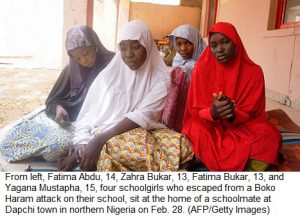
4 years ago, we reported on an abduction of 270 girls by terrorist group Boko Haram from a government school in the Nigerian State (Province) of Chibok; see the ENCORE of that blog-commentary below. Now we learn that it has happened again, 110 schoolgirls have been abducted in northern city of Dapchi (in the same province as Chibok). See news link here:

The recent Boko Haram abduction of 110 schoolgirls in Dapchi, Nigeria, drew immediate comparisons to the 2014 abduction of more than 270 girls from a school in Chibok. Beyond the media spotlight, what do we know about Boko Haram’s efforts to abduct — and recruit — women and girls?

The full Washington Post story-analysis can be found here: https://www.washingtonpost.com/news/monkey-cage/wp/2018/03/08/boko-haram-has-kidnapped-more-girls-heres-what-we-know/?utm_term=.a9801d06cec0

Where are the military-security forces, police, world enforcement agencies in this repeated drama?

Where is the outrage? Where is the New World Order? Where is the #MeToo movement and #TimesUp movement?

Is their absence tied to the fact that this is Africa – a Shit-hole country? Or the fact that these girls are all Black girls and Less Than – do Black Lives Matter?

The Caribbean societal elevation effort – Go Lean roadmap – is for the Caribbean only. Can we ensure that we have the necessary protections in place for our women and girls? Not just for those in the urban areas, but the rural communities as well. This seems to be the defect in Nigeria.

This is also the theme of this UN Special Commemoration, the International Women’s Day and the need to better protect, secure and empower women and girls in rural communities.

The truth is: We cannot all “just get along”. There must be the protections in Caribbean society to ensure that the Strong Do Not Abuse the Weak. This is the vision for a new Caribbean stewardship. See this point about abducted Nigerian girls developed in the previous blog-commentary below here:

————-

Go Lean Commentary – Muslim officials condemn abductions of Nigerian girls

Nigerian Girls

Abducting little girls from a boarding school in the middle of the night is just criminal! There is nothing religious or political about this action.

This is not just terrorism – in the classic sense – this is simply felonious behavior. This is evidenced further by the fact that the perpetrators have promised to sell the girls into slavery. The word “sell” has the connotation of obtaining money for this action. This is criminal and should therefore be condemned by every civilized society in the world.

Failure to marshal against these crimes is just failure – indicative of a Failed-State. Nigeria has a bad image of deceitful practices. So it is only appropriate to ask: is this truly a case of abduction, or could it all be one big Nigerian scam? Despite the obvious “cry wolf” reference, we must side with the innocent victims here. But, as is cited to in the foregoing news article, there are many people who feel that Nigeria hasn’t done enough for these girls. Only now that other countries have stepped up to assist/oversee has the government become more accountable.

Another group of victims in this drama are the peace-loving Islamic adherents. The actions of Boko Haram are casting dispersions on the whole religion. This terrorist group is not practicing the true teachings of Islam; in fact these actions are condemned as criminal even in the Muslim world.

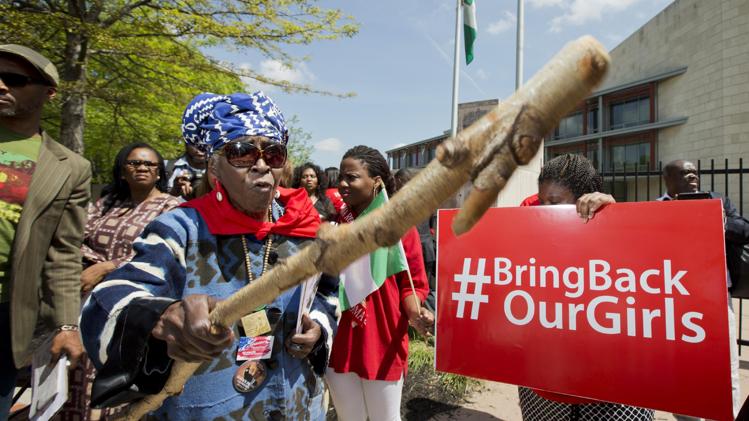
AP*; Photo by: Manuel Balce Ceneta

The abduction three weeks ago of hundreds of schoolgirls in Nigeria by the Muslim extremist group Boko Haram is now generating worldwide attention and condemnation. Muslim leaders in various countries have criticized Boko Haram’s leader for using Islamic teachings as his justification for threatening to sell the girls into slavery. Others have focused on what they view as a slow response by Nigeria’s government to the crisis. The British and French governments announced Wednesday that they would send teams of experts to complement the U.S. team heading to Nigeria to help with the search for the girls, and Nigeria’s president said China has also offered assistance.

Some of the reactions to the crisis:

— EGYPT: Muslim religious officials strongly condemned Boko Haram. Religious Endowments Minister Mohammed Mohktar Gomaa said “the actions by Boko Haram are pure terrorism, with no relation to Islam, especially the kidnapping of the girls. These are criminal, terrorist acts.” According to the state news agency MENA, he said “these disasters come from cloaking political issues in the robes of religion and from peddling religion for secular interests, something we warn incessantly against.”

The sheik of the Cairo-based Al-Azhar, one of Sunni Islam’s most prestigious institutions, demanded the group release the girls, saying it “bears responsibility for any harm suffered by these girls.” The group’s actions “completely contradict Islam and its principles of tolerance,” Sheik Ahmed el-Tayeb said.

— PAKISTAN: Dawn, an English language newspaper in Pakistan, published an opinion piece that takes Nigeria to task for not moving against Boko Haram. “The popular upsurge in Nigeria in the wake of the latest unspeakable atrocity provides some scope for hoping that the state will finally act decisively to obliterate the growing menace,” wrote columnist Mahir Ali. “Naturally, the lives and welfare of the abducted girls must be an absolute priority. Looking back a few years hence, it would also provide a degree of satisfaction to be able to pinpoint the moment when Boko Haram sealed its own fate by going much too far.”

— INDONESIA: In the world’s most populous Muslim-majority country, the Jakarta Post published an editorial Wednesday condemning the Boko Haram leader for “wrongly” citing Islamic teaching as his excuse for selling the abducted girls into slavery. Recalling the Taliban’s shooting of 15-year-old Pakistani girl Malala Yousafzai in 2012 because of her outspokenness in defense of girls’ right to an education, the editorial said: “Malala’s message needs to be conveyed to all people who use their power to block children’s access to education. It is saddening that religion is misused to terrorize people and to kill the future leaders of the world.”

The newspaper also criticized Nigerian President Goodluck Jonathan, noting that “only after international condemnation and street demonstrations poured in did President Jonathan tell his nation that he would take all necessary actions to return the young women to their parents and schools, while also acknowledging that the whereabouts of the abductees remained unknown.”

— SWEDEN: In an editorial posted on the left-wing news website politism.se, blogger Nikita Feiz criticized the international community for its slow response and asked why the situation hadn’t triggered as loud a reaction as when Malala was shot in Pakistan. “Looking at the situation in Nigeria, Malala appears like a false promise from the West that it would stand up for girls’ rights to attend school without fear of being subjected to sexual exploitation and abuse,” she said. “It is difficult not to draw the conclusion that the West’s assurance to act for girls’ rights suddenly isn’t as natural when it comes to girls’ rights in a country in Africa.”

A Swedish women’s network called StreetGaris is planning a demonstration outside the Foreign Ministry on Friday to demand more action from the international community. Participants are encouraged to wear a head wrap or red clothes in solidarity with the girls and their relatives.

— UNITED STATES: The U.S. government is sending to Nigeria a team of technical experts, including American military and law enforcement personnel skilled in intelligence, investigations, hostage negotiating, information sharing and victim assistance, as well as officials with expertise in other areas — but not U.S. armed forces.

“In the short term our goal is obviously is to help the international community, and the Nigerian government, as a team to do everything we can to recover these young ladies,” President Barack Obama told NBC on Tuesday. “But we’re also going to have to deal with the broader problem of organizations like this that … can cause such havoc in people’s day-to-day lives.”

In an editorial, The New York Times faulted the Nigerian government for not aggressively responding to the abductions. “Mr. Jonathan, who leads a corrupt government that has little credibility, initially played down the group’s threat and claimed security forces were in control,” the newspaper said. “It wasn’t until Sunday, more than two weeks after the kidnappings, that he called a meeting of government officials, including the leader of the girls’ school, to discuss the incident.”

— BRITAIN: Prime Minister David Cameron’s office said Britain will send a small team of experts to complement the U.S. team being sent by Obama. The announcement was made Wednesday after Cameron spoke to the Nigerian president. The team will be sent as soon as possible and will include specialists from several departments. Experts have said special forces may be sent to the region. The issue has heated up in recent days with protests over the weekend outside the Nigerian Embassy in London and an increasing number of newspaper editorials calling for action to rescue the girls.

— FRANCE: Foreign Minister Laurent Fabius told lawmakers on Wednesday that France is ready to send a “specialized team … to help with the search and rescue” of the kidnapped girls. “In the face of such an appalling act, France, like other democratic nations, must react,” Fabius said. “This crime will not go unpunished.” Fabius gave no details of the team, except to say it’s among those already in the region. France has soldiers in Niger, Cameroon and Mali, where it is fighting Islamic insurgents, as well as in Central African Republic.

— CHINA: Chinese Premier Li Keqiang, arriving Wednesday in Nigeria for a state visit, did not specifically mention the abductions in a transcript of a joint press conference with Nigeria’s president, instead making only a general reference to the “need to work together to oppose and fight terrorism.” In his remarks, Jonathan said China “promised to assist Nigeria in our fight against terror especially in our commitment and effort to rescue the girls that were taken away from a secondary school.” He did not offer specifics.

— BRAZIL: The foreign ministry issued a statement Tuesday condemning the abductions. “In conveying the feelings of solidarity to the families of the victims and to the people and the Government of Nigeria, the Brazilian Government reiterates its strong condemnation of all acts of terrorism,” the statement said.

—-

* Associated Press correspondents Lee Keath in Cairo, Michelle Faul in Lagos, Nigeria, Gregory Katz in London, Malin Rising in Stockholm, Masha Macpherson in Paris and Stan Lehman in Sao Paulo, Brazil contributed to this report.

Associated Press – Online News – May 7, 2014 http://news.yahoo.com/muslim-officials-condemn-abductions-girls-160020053.html

This book Go Lean … Caribbean is a roadmap for the introduction and implementation of the Caribbean Union Trade Federation (CU), so as to elevate the delivery of economic and security solutions in the Caribbean. One specific mission is to manage against encroachments of the Failed-State index.

At the outset, the roadmap identified an urgent need to mitigate against organized crime & terrorism, and to ensure human rights protection. This is pronounced in this clause in the opening Declaration of Interdependence (Page 12)

xxi.   Whereas the legacy in recent times in individual states may be that of ineffectual governance with no redress to higher authority, the accedence of this Federation will ensure accountability and escalation of the human and civil rights of the people for good governance, justice assurances, due process and the rule of law. As such, any threats of a “failed state” status for any member state must enact emergency measures on behalf of the Federation to protect the human, civil and property rights of the citizens, residents, allies, trading partners, and visitors of the affected member state and the Federation as a whole.

The Go Lean roadmap projects that the CU will facilitate monitoring and accountability of regional law enforcement and homeland security institutions. This type of behavior will not be tolerated in the Caribbean. This CU effort will be coordinated in conjunction with and on behalf of the Caribbean member-states.

On that note, the Caribbean Union Trade Federation, if it was already in existence, would vociferously condemn the abduction of the Nigerian girls. Hence the CU would be added to the long list of condemnations in the foregoing article. But these would not be hollow words, but would be accompanied by the required actions to ensure that such a disposition could not thrive in the CU region. This commitment is detailed as these community ethos, strategies, tactics, implementations and advocates:

Community Ethos – Public Protection over Privacy Page 23
Community Ethos – Anti-Bullying and Mitigation Page 23
Community Ethos – Intelligence Gathering Page 23
Community Ethos – Minority Equalization Page 24
Community Ethos – Impact the Greater Good Page 37
Strategy – Placate & Pacify International Monitors Page 48
Separation of Powers – Homeland Security Page 75
Separation of Powers – Justice Department Page 77
Implementation –  Security Initiatives at Start-up Page 103
Planning – Ways to Improve Failed-State Indices Page 134
Advocacy – Manage the Social Contract Page 170
Advocacy – Ways to Impact Justice Page 177
Advocacy – Ways to Reduce Crime Page 178
Advocacy – Ways to Improve Homeland Security Page 180
Advocacy – Ways to Mitigate Terrorism Page 181
Advocacy –  Ways to Protect Human Rights Page 220
Advocacy –  Ways to Empower Women Page 226
Advocacy –  Ways to Impact Youth Page 227

In contrast with the events in Nigeria, local crimes against women, young or old will not be tolerated in the CU. Everyone, regardless of gender, will be guaranteed the right to life, liberty and the pursuit of happiness (and education for that matter). This will be standard, whether the world is watching or not.

However, we want the world to watch. We want to show how we feverishly protect our people, with assurance that the Caribbean is the world’s best address to live, work, learn and play. 🙂

Download the free e-Book of Go Lean … Caribbean – now!

Sign the petition to lean-in for this roadmap for the Caribbean Union Trade Federation. 

Share this post:
, , ,
[Top]

Repairing the Breach: Mental Health Realities

Go Lean Commentary

Who are the manliest of the manly men?

The Ballers!

No doubt! Talented, athletic and rich. All the men want to be them and all the women want to be with them.

And yet, these ones too have the need for Mental Health services.

If this is the truth for the “greatest of the greats”, how much more so for the “lesser of the Less Than‘s”?
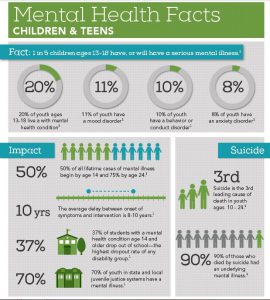
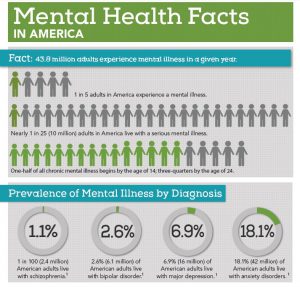
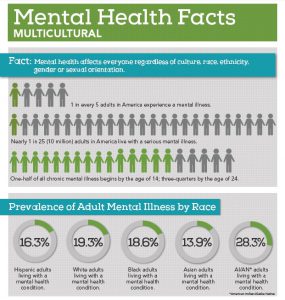
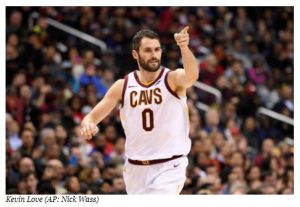
” Everyone is going through something that we can’t see ” – quote by Kevin Love: NBA All-Star and Cleveland Cavaliers Forward.

Kevin Love is in the news right now for something other than basketball, rather Mental Health requirements for men and boys. See the story here, as reported in this PODCAST from NPR’s daily show On-Point:

AUDIO-PODCAST: NPR On-Point: We Need to Talk About Mental Health of Men – https://www.npr.org/player/embed/591984234/591984273

Published March 8, 2018 – Basketball superstar Kevin Love opens up about his panic attacks. Are men getting the kind of Mental Health support they need?

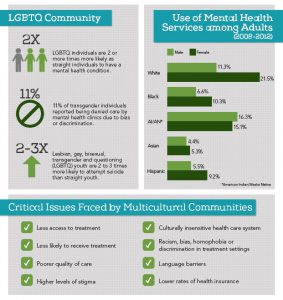
The American experience in Mental Health should be a cautionary tale for neighboring countries. These statistics were related in a previous commentary by the movement behind the book Go Lean…Caribbean:

America is very much troubled with their management of [transactional and degenerative] mental weakness:

Mental Health is a real concern for the population in general and for men in particular. One of the biggest problems is that men rarely want to admit to any problems or seek any help. Yet, the evidence of dysfunction is there:

  • Substance Abuse (Drugs and Alcohol)
  • Suicide

Volumes have been written on the subject. One prominent book is mentioned in the foregoing PODCAST, with this quote:

“A man is as likely to ask for help with Mental Health as he is to ask for directions”. – Terry Real, Psychologist and Author of the book “I Don’t Want to Talk About It: Overcoming the Secret Legacy of Male Depression“. See the critical review in the Appendix below.

This is not just an American issue; where it is reported that 1 in 5 adults experience mental illness in a given year.

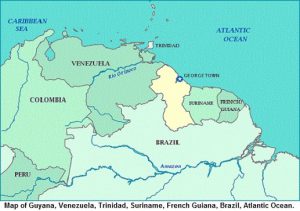
The Caribbean also has an atrocious record with Mental Health. If we measure Mental Health deficiencies by substance abuse and suicide, then we are in crisis. Recently (reported in a previous blog-commentary), one Caribbean member-state, Guyana, was rated Number One worldwide for suicides … per capita; Suriname was slightly behind at Number Six

There is a movement to effect change in the Caribbean, among our Black men and boys. We cannot seriously consider the needs of this population without considering the Mental Health realities in the region. We have a lot more information about America’s Mental Health dispositions than we do about the Caribbean’s – this is an expected consequence of Third World status. But we know that there are Mental Health inadequacies. We can glean some insights by analyzing the Mental Health indices from Caribbean-born immigrants in the US. A recent study published this summary:

… a national study found that the small number of Blacks of Caribbean ancestry included in the sample had higher levels of psychological stress compared with US born Blacks,24 and another national study found that persons of Black Caribbean ancestry had a lower frequency of heavy drinking compared with US Blacks in general.25
Footnotes:
24. Williams DR. Race, stress, and mental health: findings from the Commonwealth Minority Health Survey. In: Hogue C, Hargraves M, Scott-Collins K, eds. Minority Health in America: Findings and Policy Implication from the Commonwealth Fund Minority Health Survey. Baltimore, Md: Johns Hopkins University Press; 2000:209–243.

25. Dawson DA. Beyond black, white and Hispanic: race, ethnic origin and drinking patterns in the United States. J Subst Abuse. 1998;10:321–338.

Currently, there is no Caribbean governmental singularity. While there are some integration efforts by language groups (CariCom for English-speaking, Netherland Antilles, French Overseas territories, etc.), there is no one entity to tabulate consumption of Mental Health services in the full Caribbean region.

According to a White Paper by a Caribbean academician, Dr. Donald McCartney of the Bahamas, the Black men and boys of the Caribbean region is a dysfunctional population sub-group. This group is a “hurt people” that “hurt people”. These ones are victims and villains and have experienced a breach in good citizenship. The White Paper addresses the question: “How to repair this breach?”. See that full White Paper here, and an Excerpt as follows:

Repairing the Breach in the Caribbean – Excerpt

By: Donald M. McCartney, D.M., MPA, MSc.Ed. (Hons.), B.A., T.C.

On 16 April 1889, while speaking on the occasion of the 27th anniversary of the abolition of slavery, Frederick Douglass attempted to harness and clarify the defining questions that were of importance, at the time, with respect to Black men and boys. … He raised the following crucial and defining questions:

  1. How does one protect a group from public dissection as if it existed as a mere aberration in the society?
  2. How does one create for that group a group concept so that it is able to sustain itself as a self-respecting group within (the Caribbean) a society, which views it as an aberration?

The answers to these questions must be sought as we search for a way out of the morass in which we, as a people, find ourselves.

Questions, regarding Black men and boys, are being raised … these questions are being revived because many, too many Black men and boys are not a part of the economic structure or the body politic. Upon close examination, it becomes clear that many of them are not in community with their ethnic group.

For the most part, Black men and boys live in isolation, better yet, they are marginalized. They find it difficult to connect with society in general and the significant persons in their lives in particular.

Even though [this] question goes far beyond Black men and boys, it is directly related to our young men in particular and their inability to participate and develop within the body politic and the economic structure of the Caribbean:

How do we expect to engage Black men and boys in constructive dialogue and participation within Caribbean society? …

In order to accomplish the goal of creating a better society for all stakeholders, there must be an integrated plan of action.

See the full White Paper here: https://goleancaribbean.com/blog/?p=14392

Surely, part of the problem of Black men and boys must be related to Mental Health. There is the need for viable solutions for the Caribbean region to consider.

This commentary revisits the foregoing White Paper; even though there is no mention of Mental Health, this is a consideration of the full width-and-breadth of Caribbean dysfunction. This submission therefore supplements the recent 4-part series on Repairing the Breach; using the foregoing White Paper by Dr. McCartney as the premise. This entry is a Plus-One for the 4 parts of the series from the movement behind the book Go Lean … Caribbean in consideration of solutions – Way Forward – to assuage the plight of Black men and boys. The other commentaries in the series were cataloged as follows:

  1. Repairing the Breach: Hurt People Hurt People
  2. Repairing the Breach: Crime – Need, Greed, Justice & Honor
  3. Repairing the Breach: One Option – National Youth Service
  4. Repairing the Breach: Image Impacts Economics
    ———–
  5. Repairing the Breach: Mental Health Realities

While all of the previous commentaries related to “how” the stewards for a new Caribbean can assuage the failing dispositions of the Caribbean among our Black men and boys, this supplemental submission highlights the need for universal Mental Health offerings in this region. Think of universal Mental Health as a quilt, a web or fabric with additions and subtractions. All new triggers add to the quilt, all remediation and Mental Health provisions subtract from it. Caribbean communities are re-thinking their views on recreational drug use. There is a movement to legalize and de-criminalize marijuana in society; this was reported previously about Jamaica and see this breaking news here of new legal acceptance in the country of Antigua and Barbuda. With this reality, there is the need for Caribbean Mental Health stakeholders to double-down the outreach for supportive services.

This discussion is relevant for the movement behind the Go Lean book, which serves a roadmap for the introduction and implementation of the technocratic Caribbean Union Trade Federation (CU); there-in is an advocacy to “Improve Healthcare“ in general (Page 156), but It also delves into strategies, tactics and implementations to provide more Mental Health solutions in the Caribbean region. The book projects this regional-federal law that summarizes the need:

Caribbean (Persons) with Disabilities
Modeled after Americans with Disability Act, the Caribbean people with physical and mental disabilities should have equal rights and the provisions of “reasonable accommodations” by the institutions and establishments in the Caribbean. This move would extend a “welcome mat” to tourists, residents and repatriates alike, who may not be considered fully whole, but can still contribute to society and the economic engines, with small adjustments …

In fact, the prime directives of the Go Lean roadmap for the CU federal administration is described as follows:

We have considered a lot of lessons-learned in prior Go Lean commentaries that we glean by considering the US experiences. But the reality of the Black men and boys in the Caribbean is even worse than the disposition of African-Americans in the US (or other Diasporic countries). So we need Mental Health solutions front-and-center if we hope to Repair the Breach in this region. This has been a consistent subject in these previous blog-commentaries; consider this sample:

https://goleancaribbean.com/blog/?p=14087 Opioids Addiction and the FDA – ‘Fox guarding the Henhouse’

The American Opioid crisis is a self-made crisis due to the country’s blatant Crony-Capitalism. Big Pharma was allowed to peddle their addictive drugs on an unwitting public, and the regulator, the FDA, was complicit. This American model is a caution for us in the Caribbean.

https://goleancaribbean.com/blog/?p=11052 Managing the ‘Strong versus the Weak’ – Mental Disabilities

The creed to protect the Weak from being abused by the Strong is age-old as an honor code. All societies have those that are mentally weak; the Social Contract must allow for protection and remediation of these ones.

https://goleancaribbean.com/blog/?p=5901 The Demographic Theory of Elderly Suicide

Failures in Mental Health delivery results in suicides. Among senior citizens, this prevalence is due to the fact that they may not consider themselves as relevant in modern society. We can learn from others on Mental Health remediation and solutions for Caribbean senior citizens.

https://goleancaribbean.com/blog/?p=2633 Book Review: ‘The Protest Psychosis’

Advocates for change have often been labeled as insane for not accepting their status quo. This Protest Psychosis often is a distortion by the powerful to resist change and abuse those mandating improvement.

https://goleancaribbean.com/blog/?p=2602 Guyana and Suriname Wrestle With High Rates of Suicides

Failures in Mental Health delivery results in suicides and some Caribbean countries have it worse than anywhere else in the world. Sad!

https://goleancaribbean.com/blog/?p=2105 Recessions and Public Physical and Mental Health

Mental Health disorders can spark when the economy sours. Public Health officials need to be “on guard” for Mental Health fallout during periods of economic recession.

https://goleancaribbean.com/blog/?p=1751 New Hope in the Fight against Alzheimer’s Disease

Everyone ages, and so Alzheimer’s disease is a guaranteed risk in every community. This is a Mental Health reality that must be planned for, so as to ensure the best outcomes for communities.

As related above, men in general do not like to acknowledge the need for Mental Health services, so Caribbean stewards must do some heavy-lifting with its Black men and boys to Repair the Breach they present in this society. There is a Way-Forward for effecting change and elevation.

Repairing the Breach in the Caribbean means “fixing our defects” in the service and delivery of Mental Health remediation. But this challenge is too big for any one member-state alone; this is why we need the economies-of-scale and leverage of an integrated Single Market; the Caribbean region is comprised of 30 member-states and 42 million people. This point was pronounced early in the Go Lean book with the Declaration of Interdependence (Pages 11 – 13) with many statements that demonstrate the need to collaborate so as to optimize Caribbean communities and elevate our Social Contract services:

ix. Whereas the realities of healthcare and an aging population cannot be ignored and cannot be afforded without some advanced mitigation, the Federation must arrange for health plans to consolidate premiums of both healthy and sickly people across the wider base of the entire Caribbean population. The mitigation should extend further to disease management, wellness, mental health, obesity and smoking cessation programs. …

xi. Whereas all men are entitled to the benefits of good governance in a free society, “new guards” must be enacted to dissuade the emergence of incompetence, corruption, nepotism and cronyism at the peril of the people’s best interest. The Federation must guarantee the executions of a Social Contract between government and the governed.

xii. Whereas the legacy in recent times in individual states may be that of ineffectual governance with no redress to higher authority, the accedence of this Federation will ensure accountability and escalation of the human and civil rights of the people for good governance, justice assurances, due process and the rule of law. As such, any threats of a “failed state” status for any member state must enact emergency measures on behalf of the Federation to protect the human, civil and property rights of the citizens, residents, allies, trading partners, and visitors of the affected member state and the Federation as a whole.

The American role model for Mental Health care and support is not ideal; we must pay more than the usual attention and try to do better in the Caribbean. That should not be as hard, when the motive is the Greater Good. This would mean removing the institutional racism and Crony-Capitalism of American life.

The Go Lean book provides a roadmap for doing better, detailing 370-pages of turn-by-turn directions to better optimize the societal engines of economics, security and governance to better deliver on the Social Contract. All segments of the population need support with Mental Health concerns; Black men and boys need it especially, because “hurt people hurt people”.

Repairing the Breach for this population includes identifying, qualifying, proposing and delivering good Mental Health solutions. Only then can our homeland be a better place to live, work and play. 🙂

Download the free e-Book of Go Lean … Caribbean – now!

Sign the petition to lean-in for this roadmap for the Caribbean Union Trade Federation.

————

Appendix – Book Review: “I Don’t Want to Talk About It: Overcoming the Secret Legacy of Male Depression” (1998)

By: Terrence Real

A revolutionary and hopeful look at depression as a silent epidemic in men that manifests as workaholism, alcoholism, rage, difficulty with intimacy, and abusive behavior by the cofounder of Harvard’s Gender Research Project.

Twenty years of experience treating men and their families has convinced psychotherapist Terrence Real that depression is a silent epidemic in men—that men hide their condition from family, friends, and themselves to avoid the stigma of depression’s “un-manliness.” Problems that we think of as typically male—difficulty with intimacy, workaholism, alcoholism, abusive behavior, and rage—are really attempts to escape depression. And these escape attempts only hurt the people men love and pass their condition on to their children.

This groundbreaking book is the “pathway out of darkness” that these men and their families seek. Real reveals how men can unearth their pain, heal themselves, restore relationships, and break the legacy of abuse. He mixes penetrating analysis with compelling tales of his patients and even his own experiences with depression as the son of a violent, depressed father and the father of two young sons.

Source: Retrieved March 11, 2018 from: https://www.amazon.com/Dont-Want-Talk-About-Overcoming/dp/0684835398


Share this post:
, , ,
[Top]

Repairing the Breach: Image Impacts Economics

Go Lean Commentary

Here is an American experience that the Caribbean region can learn from and take to heart:

  • Martin Luther King was a great man – No Doubt!
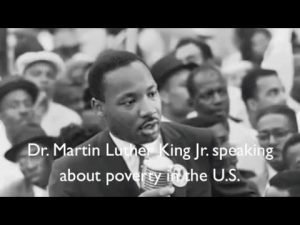
  • When a community names a street “Martin Luther King Street/Drive/Boulevard”, the property values … go down!

Wait, What?!

This is a matter of image … impacting economics. This point was highlighted in a previous blog-commentary:

“In many instances (but not all), public opposition has led King’s name to be socially and geographically marginalized within cities, which has worked to stigmatize these streets and create public anxiety about renaming more prominent streets”.

See more in Appendix A below.

This is not about justice; this is about the economic reality.

According to a White Paper by a Caribbean academician, Dr. Donald McCartney of the Bahamas, the Black men and boys of the Caribbean region is a dysfunctional population sub-group. Their outworking on the general society is one of crime, violence and image degradation.  They are victims and villains and have experienced a breach in good citizenship in our society – “hurt people hurt people”. The White Paper addresses the question: “How to repair this breach?”. It also identifies some viable solutions for the region to consider. See that full White Paper here, and an Excerpt as follows:

White Paper Title: Repairing the Breach in the Caribbean – EXCERPT
By: Dr. Donald McCartney

 Questions, regarding Black men and boys, are being raised … these questions are being revived because many, too many Black men and boys are not a part of the economic structure or the body politic. Upon close examination, it becomes clear that many of them are not in community with their ethnic group.

For the most part, Black men and boys live in isolation, better yet, they are marginalized. They find it difficult to connect with society in general and the significant persons in their lives in particular.

The spiraling  murder rate and other acts of violence (particularly against young men and the elderly), makes it clear, that many Black men and boys in the Caribbean, pose a serious and critical problem of interpersonal violence in every corridor and thoroughfare that Caribbean peoples and residents must cross. Consequently, Black men and boys in the Caribbean are feared, demonized and vilified.

Even though [this] question goes far beyond Black men and boys, it is directly related to our young men in particular and their inability to participate and develop within the body politic and the economic structure of the Caribbean:

… How do we expect to engage Black men and boys in constructive dialogue and participation within Caribbean society while, at the same time, refurbishing the image that has now been unfairly placed upon the entire population of Black men and boys?

… In order to accomplish the goal of creating a better society for all stakeholders, there must be an integrated plan of action.

See the full White Paper here: https://goleancaribbean.com/blog/?p=14392

This commentary completes the 4-part series on Repairing the Breach; using the foregoing White Paper by Dr. McCartney as the premise. This entry is 4 of 4 in this series from the movement behind the book Go Lean … Caribbean in consideration of solutions – Way Forward – to assuage the plight of Black men and boys. The other commentaries in the series are cataloged as follows:

  1. Repairing the Breach: Hurt People Hurt People
  2. Repairing the Breach: Crime – Need, Greed, Justice & Honor
  3. Repairing the Breach: One Option – National Youth Service
  4. Repairing the Breach: Image Impacts Economics; Get on board!

While all of these commentaries relate to “how” the stewards for a new Caribbean can assuage the failing dispositions of the Caribbean among our Black men and boys, this final submission highlights the economic consequence of having a substantial segment of the population in a dysfunctional state: it depresses the economic value on the whole community.

Economics is an important consideration for this discussion. There is an “elastic” relationship – see Appendix B – between community economics and community dysfunction. When there are failures in the economic engines, then the good people in the community leave and abandon the homeland. This causes a spiral to a worse disposition in that the number of dysfunctional men and boys increase compared to the overall population. With a majority Black population in 29 of the 30 Caribbean member-states, the focus of this series of commentary has been on the problematic population of Black men and boys.

The opening role model referred to Rev Dr. Martin Luther King, Jr.. His Civil Rights advocacy helped elevate the image of the African American population; his life course made a huge impact. Just before his death (assassination) in 1968, he waged another campaign addressing issues of economic justice; one historic report related:

King traveled the country to assemble “a multiracial army of the poor” that would march on Washington to engage in nonviolent civil disobedience at the Capitol until Congress created an “economic bill of rights” for poor Americans.[156][157]

… The campaign culminated in a march on Washington, D.C., demanding economic aid to the poorest communities of the United States.

King and the SCLC (Southern Christian Leadership Council) called on the government to invest in rebuilding America’s cities. He felt that Congress had shown “hostility to the poor” by spending “military funds with alacrity and generosity.” He contrasted this with the situation faced by poor Americans, claiming that Congress had merely provided “poverty funds with miserliness.”[157] His vision was for change that was more revolutionary than mere reform: he cited systematic flaws of “racism, poverty, militarism and materialism”, and argued that “reconstruction of society itself is the real issue to be faced.”[161]

The Poor People’s Campaign was controversial … [and] its demands were unrealized… .

———

VIDEO – MLK, Poor People’s Campaign, and Economic Justice – https://youtu.be/DNR_28RberA

Published on Jan 20, 2015  

The “baton” for a Poor People’s Campaign has been passed on to a new generation: the Repairers of the Breach, founded in 2015 by the Rev. Dr. William J. Barber, II. This is a nonpartisan not-for-profit organization that seeks to build a moral agenda rooted in a framework that uplifts the deepest moral and constitutional values to redeem the heart and soul of the country (America). They declare that the moral public concerns of faith traditions should be how society treats the poor, women, LGBTQ people, children, workers, immigrants, communities of color, and the sick. The name of this modern Poor People’s Campaign is derived from the same scriptural premise as the foregoing White Paper by Dr. McCartney: Isaiah 58:9-12, to …
“raise up the foundations of many generations and … be called the repairer of the breach, the restorer of streets to dwell in”.

See the portrayal here of the new the Poor People’s Campaign/Repairers of the Breach in this VIDEO:

VIDEORevival: Time for a Moral Revolution of Values https://youtu.be/7UYxPoDxPnU

Repairers of the Breach

Published on Aug 30, 2016 – An overview of the powerful 2016 Revival tour being led by Rev. Dr. William J. Barber, II, Rev. Dr. James A Forbes, Jr., Rev. Traci Blackmon and Sister Simone Campbell.

This discussion is relevant for the movement behind the Go Lean book – there is an advocacy to “Battle Against Poverty“ (Page 222). It delves into strategies, tactics and implementations to mitigate economic chaos in the Caribbean region. In fact, the prime directives of the roadmap strewn from the book is described as follows:

These role players – Rev. Dr. Martin Luther King, Jr. and Rev. Dr. William J. Barber, II – are American role models with a scope of impacting America. There is the need for our own Caribbean effort. This is the quest of the Go Lean book. It serves as a roadmap for the introduction and implementation of the technocratic Caribbean Union Trade Federation (CU). The goal of the roadmap is to elevate Caribbean societal engines, to Repair the Breach for all the population in the region, but especially too, Black men and boys.

The reality of the Black men and boys in the Caribbean is even worse than the disposition of African-Americans in the US (or other Diasporic countries). We are considered “Less Than“, even among the population of “Less Than” North Americans and Europeans. This has been a consistent subject in previous Go Lean blog-commentaries; consider this sample:

https://goleancaribbean.com/blog/?p=11420 ‘Black British’ and ‘Less Than’
https://goleancaribbean.com/blog/?p=8099 Caribbean Image: ‘Less Than’?
https://goleancaribbean.com/blog/?p=5088 Immigrants account for 1 in 11 Blacks in USA
https://goleancaribbean.com/blog/?p=4613 The Image of Ireland and the Irish – A Diasporic People
https://goleancaribbean.com/blog/?p=2547 Image of Miami’s Success Due to Caribbean Failure
https://goleancaribbean.com/blog/?p=2251 The Image and Reality of Ethnic Names
https://goleancaribbean.com/blog/?p=2025 Image of the Caribbean Diaspora – Butt of the Joke
https://goleancaribbean.com/blog/?p=857 Lesser Image of Caribbean “Dreadlock hairstyles”

This is real talk about the Caribbean Black men and boys.

We will not assuage the Caribbean Less Than image until we Repair the Breach. Thank you “Dr. McCartney” for your White Paper, showing us a Way-Forward for effecting change.

This is also the goal of the Go Lean/CU roadmap, to reform and transform our region’s societal engines so that all of our people, including Black men and boys, can prosper where planted here in our Caribbean homeland. We must fix our identified societal defects!

“Fixing our defects” is a point that is pronounced early in the Go Lean book with the Declaration of Interdependence (Pages 12 & 13) with many statements that demonstrate the need to remediate Caribbean communities and elevate the disposition of our young men and women:

xi. Whereas all men are entitled to the benefits of good governance in a free society, “new guards” must be enacted to dissuade the emergence of incompetence, corruption, nepotism and cronyism at the peril of the people’s best interest. The Federation must guarantee the executions of a social contract between government and the governed.

xii. Whereas the legacy in recent times in individual states may be that of ineffectual governance with no redress to higher authority, the accedence of this Federation will ensure accountability and escalation of the human and civil rights of the people for good governance, justice assurances, due process and the rule of law. As such, any threats of a “failed state” status for any member state must enact emergency measures on behalf of the Federation to protect the human, civil and property rights of the citizens, residents, allies, trading partners, and visitors of the affected member state and the Federation as a whole.

xix. Whereas the preparation of our labor force can foster opportunities and dictate economic progress for current and future generations, the Federation must ensure that educational and job training opportunities are fully optimized for all residents of all member-states, with no partiality towards any gender or ethnic group. The Federation must recognize and facilitate excellence in many different fields of endeavor, including sciences, languages, arts, music and sports. This responsibility should be executed without incurring the risks of further human flight, as has been the past history.

xxiv. Whereas the Caribbean region must have new jobs to empower the engines of the economy and create the income sources for prosperity, and encourage the next generation to forge their dreams right at home, the Federation must therefore foster the development of new industries, like that of ship-building, automobile manufacturing, pre-fabricated housing, frozen foods, pipelines, call centers, and the prison industrial complex. In addition, the Federation must invigorate the enterprises related to existing industries like tourism, fisheries and lotteries – impacting the region with more jobs.

The American role models of Rev. Dr. Martin Luther King, Jr. and Rev. Dr. William J. Barber, II does not mean that the US is the desired model for the Caribbean to emulate. While Black men and boys amount to only 6.5 percent of the US population – they are minorities there – but they are the majority population group in their Caribbean homelands – that makes a difference. The majority status allows for race – and other matters outside of an individual’s control – to not be a reason for continuous oppression.  Repairing the Breach is the opposite of oppression.

Repairing the Breach in our societal eco-system for our Caribbean youth would also mean success for our Caribbean image, local and abroad.

The only image we seek is the worldwide recognition as the greatest place on the planet to live, work and play. 🙂

Download the free e-Book of Go Lean … Caribbean – now!

Sign the petition to lean-in for this roadmap for the Caribbean Union Trade Federation.

———–

Appendix A – Additional References on MLK Street Naming Economics

———–

Appendix B – Economic Elasticity

Elasticity is a measure of a variable’s sensitivity to a change in another variable. In business and economics, elasticity refers the degree to which individuals, consumers or producers change their demand or the amount supplied in response to price or income changes.

Source: Investopedia definition for “Elasticity”; retrieved March 7, 2018 from: https://www.investopedia.com/terms/e/elasticity.asp

Share this post:
, ,
[Top]

Repairing the Breach: One Option – National Youth Service – ENCORE

Blood, sweat and tears …

… that is all we want from the people in our Caribbean communities. If people sacrifice for their community then they tend to be more loyal to it.

There are problems in the Caribbean for managing our young people – they are not loyal to the concept of community – so we need to consider strategies, tactics and implementation for change. Some segments of the population are more troubled than others; in particular the disposition among “Black men and boys” in the Caribbean is of serious concern.

One option to effect change in this target population is a Military-style Draft …

Wait, what?!

We want to change/improve the Caribbean member-states. Any attempt to change Caribbean society’s community ethos must start with the youth. But when we say “blood”, we are not contemplating any sacrifice of our young men on the altar of the God of War. Rather, as related in the previous commentary encored below, our region is missing the ingredient of wholesale commitment of these young men to any national cause. Thusly, the recommendation is for conscription/draft into a National Youth Service (NYS) program but for the entire Caribbean region; see the ENCORE below.

This is a workable plan! When people sacrifice their blood, sweat and tears for a homeland, then they are less willing to disregard or abandon that homeland. We need this ingredient … urgently.
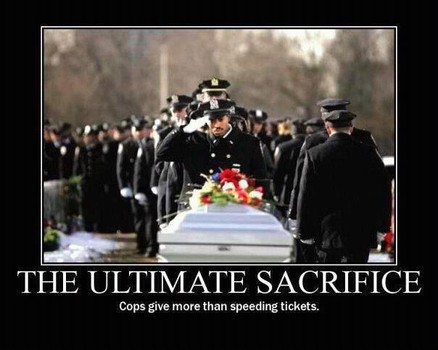
According to a White Paper by an academician, Dr. Donald McCartney of the Bahamas, the Black men and boys of our region need to be productive contributors to our society. He asserted that this population had experienced a breach in good citizenship in our society – “hurt people hurt people” – so he composed a White Paper to address this question of “How to repair this breach?” and identified some viable solutions for the region to consider. See that full White Paper here, and an Excerpt as follows:

White Paper Title: Repairing the Breach in the Caribbean – EXCERPT
By: Dr. Donald McCartney


As we approach the 200th anniversary of the abolition of slavery in the British Empire, the same questions, regarding Black men and boys, are being raised again.

These questions are being revived because many, too many Black men and boys are not a part of the economic structure or the body politic. Upon close examination, it becomes clear that many of them are not in community with their ethnic group.

For the most part, Black men and boys live in isolation, better yet, they are marginalized. They find it difficult to connect with society in general and the significant persons in their lives in particular.

The spiraling  murder rate and other acts of violence (particularly against young men and the elderly), makes it clear, that many Black men and boys in the Caribbean, pose a serious and critical problem of interpersonal violence in every corridor and thoroughfare that Caribbean peoples and residents must cross. Consequently, Black men and boys in the Caribbean are feared, demonized and vilified.

There is a breach within the fabric of Caribbean society, which has led to a breach in the lives of Black Caribbean males. A serious attempt must be made to repair this breach at all cost.

There must be a regional response with respect to the issues confronting Black men and boys in the Caribbean. This is no time for throwing up our hands as a gesture of capitulation, (posing the useless question: “What is wrong with these young men?) and rolling our eyes. It is time for action…serious sustained, positive action!

See the full White Paper here: https://goleancaribbean.com/blog/?p=14392

This commentary continues the 4-part series on Repairing the Breach; using the foregoing White Paper by Dr. McCartney as the premise. This entry is 3 of 4 in this series from the movement behind the book Go Lean … Caribbean in consideration of solutions to assuage the plight of Black men and boys. The other commentaries in the series are cataloged as follows:

  1. Repairing the Breach: Hurt People Hurt People
  2. Repairing the Breach: Crime – Need, Greed, Justice & Honor
  3. Repairing the Breach: One Option – National Youth Service
  4. Repairing the Breach: Image Impacts Economics

While all of these commentaries relate to “how” the stewards for a new Caribbean can assuage the failing dispositions of the Caribbean among our Black men and boys, this one in particular proposes a revolutionary approach on constricting all young people (males only initially) into a National Youth Service or public service in the region in general. The White Paper proposed these 3 questions, that the NYS scheme addresses:

  • First: How do we bring relief and assistance to communities and families that are experiencing the great hurt and harm of violent behaviour?
  • Secondly: How do we find a way to reestablish community and make inroads into violent behaviour, the major social problem of the day? 
  • Thirdly: How do we expect to engage Black men and boys in constructive dialogue and participation within Caribbean society while, at the same time, refurbishing the image that has now been unfairly placed upon the entire population of Black men and boys?

See here as follows, the ENCORE of the original blog-commentary from January 15, 2015 detailing the specificities of the National Youth Service scheme as an expression of the National Sacrifice community ethos:

——————

Go Lean Commentary – National Sacrifice – The Missing Ingredient

CU Blog - National Sacrifice - The Missing Ingredient - Photo 3The term National Sacrifice is defined here as the willingness to die for a greater cause; think “King/Queen and Country”. This spirit is currently missing in the recipe for “community” in the Caribbean homeland.

To be willing to die for a cause means that one is willing to live for the cause. Admittedly, “dying” is a bit extreme. The concept of “sacrifice” in general is the focus of this commentary.

The publishers of the book Go Lean…Caribbean wants to forge change in the Caribbean, we want to change the attitudes for an entire community, country and region. We have the track record of this type of commitment being exemplified in other communities. (Think: The US during WW II). Now we want to bring a National Sacrifice attitude to the Caribbean, as it is undoubtedly missing. This is evidenced by the fact the every Caribbean member-state suffers from alarming rates of societal abandonment: 70% of college educated population in the English states have left in a brain drain, while the US territories have lost more than 50% of their populations).

The book Go Lean…Caribbean opens with the acknowledgement that despite having the “greatest address in the world… the people of the Caribbean have beat down their doors to get out”, (Page 5).

CU Blog - National Sacrifice - The Missing Ingredient - Photo 4The book Go Lean…Caribbean serves as a roadmap for the introduction and implementation of the Caribbean Union Trade Federation (CU); a confederation to bring change, empowerment, to the Caribbean region; to make the region a better place to live, work and play for all stakeholders (residents, visitors, businesses, organizations – NGO’s and governments). This Go Lean roadmap also has initiatives to foster solutions for the Caribbean youth. The Go Lean book posits that permanent change for Caribbean society will only take root as a result of adjustments to the community attitudes, the national spirit that drives the character and identity of its people. This is identified in the book as “community ethos”; and that one such character, National Sacrifice is sorely missing in this region.

Any attempts to change Caribbean society’s community ethos must start with the youth.

At no point should it be construed that this commentary is advocating sacrificing young men (and women) on the altar of the God of War. But rather, this commentary laments the missing ingredients of wholesale commitment to any national cause. Thusly, the recommendation is for conscription/draft (Appendix B) into a National Youth Service (NYS) program for the Caribbean. Take it one step further and make the Youth Service program regional in its scope rather than “national”; with applicable exemptions for:

  • military/police enrollments
  • student/research deferments (at regional institutions)
  • religious/missionary assignments
  • medical/disability exceptions

This quest relates a commitment so vital to a community that everyone should be willing to sacrifice and lean-in for the desired outcome. This Caribbean effort is not new to the world; it is currently being championed by a Washington-DC-based global Non-Government Organization (NGO) branded the Innovations in Civic Participation (ICP). Much can be learned from analyzing their successes … and failures. See details here:

Innovations in Civic Participation – NGO – Leaders for Youth Civic Engagement (Retrieved 01/15/2015):

Innovations in Civic Participation (ICP) is a global leader in the field of Youth Civic Engagement. ICP envisions a world where young people in every nation are actively engaged in improving their lives and their communities through civic participation. We believe that well-structured youth service programs can provide innovative solutions to social and environmental issues, while helping young people develop skills for future employment and active citizenship.

ICP carries out its mission through four main activities:

  1. Incubating innovative models for youth service programs;
  2. Creating and expanding global networks;
  3. Conducting research and publicizing information on youth civic engagement, especially national youth service and service-learning; and
  4. Serving as a financial intermediary to support program innovation and policy development.

In addition to these activities, ICP regularly consults with its extensive network of over 2,500 academics, policymakers, program entrepreneurs, and other leaders in the field on program and policy work.

Contact Information:

Innovations in Civic Participation
P.O. Box 39222
Washington, DC 20016
202-775-0290

http://www.icicp.org/about-us/

A quest for a National Youth Service has previously been advocated in Sub-Saharan Africa (see Appendix C). There, the NYS was designed to explore the potential to foster youth employability, entrepreneurship, and sustainable livelihoods. This effort stemmed from an existing tradition of NYS programs in Sub-Saharan Africa, which were originally designed to cultivate a sense of national identity and mobilize skills for development in post-independence nations; (see Appendix A). Today, NYS programs operate in the context of a deepening regional youth unemployment crisis, which averages over 20 percent, according to African Economic Outlook. NYS programs engage hundreds of thousands of young people each year and have the potential to equip them with strong civic skills and prepare them for employment and livelihood opportunities.

Despite its potential as an economic strategy, little is still known about how effective NYS programs are at increasing youth employability in Africa. But there is no doubt for the commitment to community that is forged from these efforts. Young people cry, sweat, and bleed for their community, embedding a desire to sacrifice for the Greater Good.

This corresponds with the Bible precept: “There is more happiness in giving than in receiving” – Acts 20:35

There are NYS programs already deployed or proposed for these Caribbean member-states, (though many have been snagged or stalled):

CU Blog - National Sacrifice - The Missing Ingredient - Photo 1

The purpose of the Go Lean book/roadmap is more than just the embedding of new community ethos, but rather the elevation/empowerment of Caribbean society. In total, the Caribbean empowerment roadmap has these 3 prime directives:

  • Optimization of the economic engines in order to grow the regional economy to $800 Billion & create 2.2 million new jobs.
  • Establishment of a security apparatus to protect the resultant economic engines.
  • Improve Caribbean governance and industrial policies to support these engines.

The roadmap details the following community ethos, plus the execution of these strategies, tactics, implementation and advocacies to forge permanent change in the region:

Community Ethos – Deferred Gratification Page 21
Community Ethos – Economic Principles – People Choose Page 21
Community Ethos – Economic Principles – People Respond to Incentives in Predictable Ways Page 21
Community Ethos – Economic Principles – The Consequences of Choices Lie in the Future Page 21
Community Ethos – Governing Principles – Lean Operations Page 24
Community Ethos – Governing Principles – Cooperatives Page 25
Community Ethos – Ways to Impact the Future Page 26
Community Ethos – Ways to Impact a Turn-Around Page 33
Community Ethos – Ways to Improve Sharing Page 35
Community Ethos – Ways to Promote Happiness Page 36
Community Ethos – Ways to Impact the Greater Good Page 37
Strategy – Vision – Confederate 30 Member-States Page 45
Strategy – Mission – Enact a Defense Pact to Defend the Homeland Page 45
Strategy – Mission – Keep the next generation at home Page 46
Tactical – Confederating a Permanent Union Page 63
Tactical – Fostering a Technocracy Page 64
Tactical – Separation-of-Powers Between CU & Member-States Governments Page 71
Implementation – Assemble – Incorporating all the existing regional organizations Page 96
Implementation – Ways to Pay for Change Page 101
Implementation – Security Initiatives at Start-up Page 103
Implementation – Ways to Deliver Page 109
Planning – 10 Big Ideas for the Caribbean – Confederation Without Sovereignty Page 127
Planning – Ways to Make the Caribbean Better Page 131
Planning – Lessons Learned from the West Indies Federation – Military Units Page 135
Advocacy – Ways to Grow the Economy Page 151
Advocacy – Ways to Create Jobs Page 152
Advocacy – Ways to Better Manage the Social Contract Page 170
Advocacy – Ways to Manage Federal Civil Service Page 173
Advocacy – Ways to Improve Homeland Security Page 181
Advocacy – Ways to Improve Communications Page 186
Advocacy – Ways to Preserve Caribbean Heritage Page 218
Advocacy – Ways to Impact Youth Page 227
Appendix – 30,000 Federal Employees Page 299
Appendix – Previous West Indies Integration – Caribbean Regiment Page 301

Previously Go Lean blog/commentaries have considered historic references and have also stressed fostering the proper and appropriate community ethos for the Caribbean to prosper; and reported on the repercussions and consequences of bad ethos. The following sample applies:

https://goleancaribbean.com/blog/?p=2830 Bad Ethos: Jamaica’s Public Pension Under-funded
https://goleancaribbean.com/blog/?p=2809 A Lesson in Bad Community Ethos : East Berlin/Germany
https://goleancaribbean.com/blog/?p=2480 A Lesson in History: Community Ethos of WW II
https://goleancaribbean.com/blog/?p=2297 A Lesson in History – Booker T versus Du Bois – to Change a Bad Community Ethos
https://goleancaribbean.com/blog/?p=1531 A Lesson in History: 100 Years Ago – World War I – Cause and Effect in Community Ethos
https://goleancaribbean.com/blog/?p=841 Having Less Babies is Bad for the Economy – Need People
https://goleancaribbean.com/blog/?p=623 Only at the Precipice, Do Communities Change
https://goleancaribbean.com/blog/?p=353 Book Review: ‘Wrong – Nine Economic Policy Disasters and What We Can Learn…’
https://goleancaribbean.com/blog/?p=228 Egalitarianism versus Anarchism – Community Ethos Debate

All in all, there is a certain community ethos associated with populations that have endured change. It is a National Sacrifice, a deferred gratification and focus on the future. Any losses of privileges are appreciated by the entire community, not just the affected individual or family member. This is the purpose of the US Memorial Day Holiday on the last Monday in May, honoring the military service of all our men and women in uniform, their families at home, and those who have made the ultimate sacrifice in dying for their country. A quest to unite the country in remembrance and appreciation of the fallen and to serve those who are grieving is a good way to forge a community ethos of National Sacrifice.

See VIDEO here of a community’s great honor to a slain soldier:

VIDEO: Sky Mote: Community Honors a Fallen Soldier from El Dorado County with a Hero’s Welcome –   http://youtu.be/MVQORRQvTpU

Published on Aug 17, 2012 – Starting with a Marine Honor Guard carrying the transfer case containing the body of Staff Sgt. Sky R. Mote of El Dorado, CA, upon arrival at Dover Air Force Base, Del. on Sunday Aug. 12, 2012. (AP Photo/Jose Luis Magana). Then continuing with the great Welcome Home the community gave. His family will never forget!

Though this Fallen Soldier is mourned and missed, his sacrifice is duly acknowledged, appreciated and honored in his hometown. This community spirit creates a value system for public service and National Sacrifice.

The US is not the only country that memorializes their war dead. Those countries that do, experience less societal abandonment. The British Commonwealth of Nations (representative of 18 Caribbean member-states) shows likewise homage to their Fallen Soldiers. The Commonwealth War Graves Commission (CWGC) is responsible for maintaining the war graves of 1.7 million service personnel that died in the First and Second World Wars fighting for Commonwealth member states. Founded in 1917 (as the Imperial War Graves Commission), the Commission has constructed 2,500 war cemeteries, and maintains individual graves at another 20,000 sites around the world.[107] The vast majority of the latter [however] are civilian cemeteries in Great Britain. (Source: http://en.wikipedia.org/wiki/Commonwealth_War_Graves_Commission).

The former British colonies did not adopt this National Sacrifice value system. As most Caribbean (notwithstanding the US Territories) member-states do not even have a (work-free) holiday to honor the sacrifices of those that fought, bled and/or died for their country.

No appreciation, no sacrifice; no sacrifice, no victory. It is that simple!

It is the recommendation of this blog/commentary that all Caribbean member-states should mandate a civilian conscription service for their citizens (1 year between ages 18 and 25); it is common for a confederation – the CU for the Caribbean – to marshal a multi-state, allied military force. Then the CU should facilitate a complete eco-system of engaging the conscripted NYS participants to serve and protect the people and resources of the Caribbean. After which, the communities should show proper appreciation and honor to those that make these sacrifices for “King/Queen and Country”, from all conscription services: military service, public and civilian.

(Many times school teachers and administrators are lowly paid; their service to their country is a great sacrifice).

Veteran-style benefits should thusly be considered for all these “national” servants. This commitment from the community would go far in forging deep loyalty within the citizenry, thus mitigating quick abandonment of the homeland.

There is a separation-of-powers between the CU federal agencies and Caribbean member-states, so the CU would have no authority on how member-states manage, appreciate or honor their civil servants; unless some CU grants/funding apply. But for CU personnel, the practice will be institutionalized to recognize the service of long-time civil servants (active or retired) and their sacrifices. So for any human resource that die in the line of duty, the funeral processions will be filled with pomp and circumstance, much like the foregoing VIDEO.

“The [servants] who perform well are to be considered worthy of double honor, especially those who work hard …” – Bible 1 Timothy 5:17

Now is the time to lean-in to this roadmap for Caribbean change, as depicted in the book Go Lean…Caribbean. All the mitigations and empowerments in this roadmap require people to remain in the homeland. No people, no hope! A community ethos, a spirit or attitude of sacrifice for the Greater Good is a great start to forge change; no sacrifice, no victory.

🙂

Download the book Go Lean … Caribbean – now!

Sign the petition to lean-in for this roadmap for the Caribbean Union Trade Federation.

——————-

Appendix A – ICP Studies and Results

Overview of the National Youth Service Landscape in Sub-Saharan Africa

National Youth Service Project on Employability, Entrepreneurship and Sustainable Livelihoods in Sub-Saharan Africa: Synthesis Report

——————

Appendix B – Conscription (or Drafting)
This is the compulsory enlistment of people in some sort of National Service, most often military service.[2] Conscription dates back to antiquity and continues in some countries to the present day under various names. The modern system of near-universal national conscription for young men dates to the French Revolution in the 1790s, where it became the basis of a very large and powerful military. Most European nations later copied the system in peacetime, so that men at a certain age would serve 1–8 years on active duty and then transfer to the reserve force.

CU Blog - National Sacrifice - The Missing Ingredient - Photo 2Conscription is controversial for a range of reasons, including conscientious objection to military engagements on religious or philosophical grounds; political objection, for example to service for a disliked government or unpopular war; and ideological objection, for example, to a perceived violation of individual rights. Those conscripted may evade service, sometimes by leaving the country.[4] Some selection systems accommodate these attitudes by providing alternative service outside combat-operations roles or even outside the military, such as civil service in Austria and Switzerland.

As of the early 21st century, many states no longer conscript soldiers, relying instead upon professional militaries with volunteers enlisted to meet the demand for troops. The ability to rely on such an arrangement, however, presupposes some degree of predictability with regard to both war-fighting requirements and the scope of hostilities. Many states that have abolished conscription therefore still reserve the power to resume it during wartime or times of crisis.[5] (Source: http://en.wikipedia.org/wiki/Conscription)

National Service is a common name for mandatory or volunteer government service programmes. The term became common British usage during and for some years following the Second World War. Many young people spent one or more years in such programmes. Compulsory military service typically requires all citizens, or all male citizens, to participate for a period of a year (or more in some countries) during their youth, usually at some point between the age of 18 and their late twenties. (Source: http://en.wikipedia.org/wiki/National_service)

——————

Appendix C  – National Youth Service Corps in Nigeria
The National Youth Service Corps (NYSC) is an organisation set up by the Nigerian government to involve the country’s graduates in the development of the country. There is no military conscription in Nigeria, but since 1973 graduates of universities and later polytechnics have been required to take part in the National Youth Service Corps (NYSC) program for one year.[1] This is known as national service year.

“Corp” members are posted to cities far from their city of origin. They are expected to mix with people of other tribes, social and family backgrounds, to learn the culture of the indigenes in the place they are posted to. This action is aimed to bring about unity in the country and to help youths appreciate other ethnic groups.

There is an “orientation” period of approximately three weeks spent in a camp away from family and friends. There is also a “passing out ceremony” at the end of the year and primary assignment followed by one month of vacation.

The program has also helped in creating entry-level jobs for many Nigerian youth. An NYSC forum dedicated to the NYSC members was built to bridge the gap amongst members serving across Nigeria and also an avenue for members to share job information and career resources as well as getting loans from the National Directorate Of Employment.

The program has been met with serious criticism by a large portion of the country. The NYSC members have complained of being underpaid, paid late or not paid at all.[2] Several youths carrying out the NYSC program have been killed in the regions they were sent to due to religious violence, ethnic violence or political violence.[3]

A series of bomb and other violent attacks, especially in the North, rocked the country’s stability in the period preceding the 2011 gubernatorial and presidential elections. Most common of these attacks was perpetuated by the Islamist extremist terrorist group called Boko Haram. “Boko Haram” means “Western education is a sin” in the local hausa dialect in Nigeria. The group “Boko Haram” is against western education and wants to establish an Islamic state in Nigeria’s northern region.

Worst hit were National Youth Service Corps members, some of whom lost their lives.
(Source: http://en.wikipedia.org/wiki/National_Youth_Service_Corps)

Share this post:
, , ,
[Top]

Repairing the Breach: Crime – Need, Greed, Justice & Honor – ENCORE

Here is an interesting fact about “Black men and boys” in the country of the United States:

They amount to 6.5 percent of the total US population.

They amount to 40.2 percent of the prison population.

Surely, there are some special issues associated with this special interest group. In the field of Public Health Management, there is the concept of “Triage”; consider this definition here:

tri·age

noun: (in medical use) the assignment of degrees of urgency to wounds or illnesses to decide the order of treatment of a large number of patients or casualties.

verb: assign degrees of urgency to (wounded or ill patients).

So the concept of “Triage” allows for immediate, expedited attention to those suffering more. The fact that more and more “Black men or boys” are entrusted to the criminal justice system – true in the Caribbean as well – indicates that this population needs more help. More and more, they are the victims and villains of crime. It brings to mind these questions:

  • What can we do to Repair the Breach for “Black men or boys”?
  • How can we reduce crime since this is so prevalent among this special sub-population?

These are legitimate questions. There are answers. We can explore these answers so as to Repair the Breach. This expression is derived from a White Paper by an academician, Dr. Donald McCartney of the Bahamas. He composed a White Paper to address this question of “How to repair this breach?” and identified some viable solutions for the Bahamas and the rest the Caribbean, especially related to the crime problem. See that full White Paper here, and an Excerpt as follows:

White Paper Title: Repairing the Breach in the Caribbean – EXCERPT
By: Dr. Donald McCartney


As we approach the 200th anniversary of the abolition of slavery in the British Empire, the same questions, regarding Black men and boys, are being raised again.


The spiraling  murder rate and other acts of violence (particularly against young men and the elderly), makes it clear, that many Black men and boys in the Caribbean, pose a serious and critical problem of interpersonal violence in every corridor and thoroughfare that Caribbean peoples and residents must cross. Consequently, Black men and boys in the Caribbean are feared, demonized and vilified.


The answers to these questions must be found; so that we can free those Black men and boys who have become slaves to violence and crime. We must come to the realization that, that which impacts Black men and boys impacts all Caribbean people and those who reside among us.


The primary aim will be to create a long-term structure of sustained intervention for Black men and boys who find themselves in trouble. The emphasis of the [remediating] Thurston Foundation will be on systemic change that will bring together a multiplicity of ideas in an effort to reduce violence and crime, thus making the Caribbean’ social life whole again.

The Thurston Foundation must not shape itself around the issue of violenceViolence, in the Caribbean, has been painted with a broad brush because Black men and boys are looked upon as the face of the violence.  This violence appears to have immobilized law abiding citizens into a state of panic and fear.

See the full White Paper here: https://goleancaribbean.com/blog/?p=14392

This commentary continues the 4-part series on Repairing the Breach; using the foregoing White Paper by Dr. McCartney as the premise. This entry is 2 of 4 in this series from the movement behind the book Go Lean … Caribbean in consideration of solutions to assuage the plight of Black men and boys. The other commentaries in the series are cataloged as follows:

  1. Repairing the Breach: Hurt People Hurt People
  2. Repairing the Breach: Crime – Need, Greed, Justice & Honor
  3. Repairing the Breach: One Option – National Youth Service
  4. Repairing the Breach: Image Impacts Economics

While all of these commentaries relate to “how” the stewards for a new Caribbean can assuage the failing dispositions of the Caribbean among our Black Men and boys, this one in particular addresses the root causes of possible solutions to mitigate and reduce crime.

This is an ENCORE of a previous blog-commentary addressing crime and inter-personal violence. This original submission from February 18, 2016 cataloged the reasons for street crimes as: 1. Need, 2. Greed, and 3. Justice. Though not re-published here, an additional form of violence was addressed in a different prior blog, though not a street crime: 4. Domestic Violence – the act of wife-battering.

There are certain ethnic groups where domestic violence is more prominent than others. Sadly, our communities in the Caribbean is prominent for this 4th category of crime as well; honor or not, it is still criminal. Many times, men in our society feel that it is their honor to discipline their wives … as they see fit. Remediating and reducing crime among our Black men and boys, means help-seeking for domestic abusers.

See here below, for the ENCORE of the blog-commentary on assessing, mitigating and reducing the crimes based on 1. Need, 2. Greed, and 3. Justice:

—————–

Go Lean Commentary – A Lesson in the History of Interpersonal Violence – Street Crimes

No justice, no peace!

The movement behind the book Go Lean … Caribbean, and accompanying blogs, has prioritized public safety and remediating/mitigating crime as paramount for the region. Despite the focus on economics, the book asserts that to elevate Caribbean society there must be a focus on the region’s security and governing engines to provide justice assurances. So in addition to economic empowerments (jobs, investments, education, entrepreneurship, etc.), the book posits that security concerns must also be front-and-center in any roadmap along with these economic efforts.

This is easier said than done.

In the previous blog/commentary in this series, the effort to reduce crime and remediate violence was identified as an “Art” and “Science”. This heavy reliance on artists and scientists have provided a lot of history for us to study and glean best-practices in this cause. What can we learn today from a study in the history of interpersonal violence as related to street violence?

This is commentary 2 of 3 considering this subject of interpersonal violence, and how it relates to the Caribbean homeland in 2016. The historic issues addressed are:

  1. Duels
  2. Street Violence
  3. Domestic Violence

Street violence stems from 3 considerations: 1. Need, 2. Greed, and 3. Justice.

CU Blog - A Lesson in the History of Interpersonal Violence - Street Crimes - Photo 3The Go Lean book serves as a roadmap for the introduction and implementation of the technocratic Caribbean Union Trade Federation (CU) to elevate the region’s economic, security and governing engines. The roadmap has these 3 prime directives:

  • Optimization of the economic engines in order to grow the regional economy and create 2.2 million new jobs.
  • Establishment of a security apparatus to provide public safety and protect the resultant economic engines from economic crimes.
  • Improve Caribbean governance, with a separation-of-powers between member-state administrations and the CU federal government (Executive facilitations, Legislative oversight and judicial prudence) to support these economic/security engines.

So the CU/Go Lean roadmap addresses the issue of more jobs; this will lower the “need” factor for crime; (there is no expectation that these efforts would fully eliminate violent crime; but this start will mitigate the risks). The book relates that with the emergence of new economic drivers, that “bad actors” will also emerge thereafter to exploit the opportunities, with good, bad and evil intent. The second factor, “greed” is tied to opportunities. The executions of the Go Lean roadmap (Page 23) are specifically designed to minimize opportunities for crime with these security mandates:

  • Adapt the Ethos: Public Protection over Privacy
  • Embrace Electronic Payment Systems – Carry less cash
  • Whistleblower Protection – Consider all allegation, anonymous and overt
  • Witness Security & Protection – Ensure Justice Process
  • Youth Crime Awareness & Prevention; Anti-Bullying and Mitigation – “Nip it in the bud
  • Intelligence Gathering – Universal Video Surveillance
  • Light Up the Dark Places – Eliminate the figurative and literal “shadows”
  • Prison Industrial Complex – Engage to reduce recidivism

The third contributor, justice, is tied to street riots, civil unrest and other outbursts against perceived injustices. The marching call of many of these movements is “No Justice; No Peace”.

Consider here the historicity of street violence (including sexual violence from strangers) in this AUDIO Podcast (48 minutes) here:

Click on Photo here to Play AUDIO Podcast; Click BACK to Return

CU Blog - A Lesson in the History of Interpersonal Violence - Street Crimes - Photo 2

What’s Behind Trends In U.S. Violent Crime Rates?
Guest Host: Indira Lakshmanan; posted February 9, 2016 – For more than 20 years violent crime rates in the U.S. states have been declining, but data from the first six months of 2015 suggest an unwelcome change: The FBI reports that from January and June 2015 overall violent crime was up nearly 2% and homicides jumped more than 6 percent with spikes in both small towns and big cities. The Justice Department cautioned it’s too soon to know whether the latest data signals an upturn in violence in America. Join us to talk about what drove violent crime down so dramatically over the last two decades in the U.S. and what could be ahead.
Six People Murdered On Chicago's South Side As City's Homicides Rise

Guests

  • Khalil Muhammad director, Schomburg Center for Research in Black Culture  New York Public Library
  • Paul Butler professor, Georgetown Law School
  • Barry Latzer emeritus professor of criminal justice,  John Jay College of Criminal Justice, CUNY  most recent book: “The Rise and Fall of Violent Crime in America”

The foregoing AUDIO Podcast relates the experience of the Black and Brown populations in the American criminal-justice system. There is no doubt, there is a “divide in America’s execution of their justice mandates”. But, the scope of the Go Lean/CU roadmap is to reform and transform the Caribbean, not America. We need to do better here, in our homeland. America’s success and failure does relate to us, as many of our Diaspora lives there, but frankly, the Go Lean book asserts that it is easier to fix the Caribbean, than to fix America. We simply need to keep our people at home. We need to minimize the “push and pull” reasons that drive them away. Curbing crime here – a “push” factor – helps this cause; messaging the real experiences of our Black and Brown Diaspora as they engage the criminal justice system in the US should also help our cause, in lowering the “pull” factors.

So let’s fix the Caribbean!

The quest of the Go Lean movement is to elevate Caribbean society above our dysfunctional past. We can improve upon public safety! The goal of the roadmap is to optimize society through economic empowerment, security & justice optimization, and also governing efficiencies in the region, since these are inextricably linked to this same elevation endeavor.

The cause-and-effect of failing economics leads to increasing criminality, the “need” factor. So the cause-and-effect of improving economics should therefore lead to lesser criminal activities. Improved security facilitation (i.e. intelligence gathering and analysis) should reduce the opportunities for crimes of convenience, thus mitigating the “greed” factor. Funding grants to improve Justice institutions (Police, Courts, Prison Industrial Complex), their transparency and accountability, should lower the outcries for justice. Thus the Go Lean/CU has devised a tactic of publishing rankings-and-ratings (i.e. Best Places in the Caribbean To Live …); this should exacerbate failings and failures more prominently to the monitoring public, at home and abroad.

The motivation of this Go Lean/CU roadmap is the basic principle, described in the book (Page 21), that “Economic Systems Influence Individual Choices and Incentives”.

This roadmap fully envisions the integration of shepherding – leadership – for the Caribbean region’s economic, security and governing initiatives under the same organization: the Caribbean Union Trade Federation. These points are pronounced early in the Go Lean book (Page 12) with these opening Declaration of Interdependence statements:

x.   Whereas we are surrounded and allied to nations of larger proportions in land mass, populations, and treasuries, elements in their societies may have ill-intent in their pursuits, at the expense of the safety and security of our citizens. We must therefore appoint “new guards” to ensure our public safety and threats against our society, both domestic and foreign. The Federation must employ the latest advances and best practices … to assuage continuous threats against public safety.

xi.   Whereas all men are entitled to the benefits of good governance in a free society, “new guards” must be enacted to dissuade the emergence of incompetence, corruption, nepotism and cronyism at the peril of the people’s best interest. The Federation must guarantee the executions of a social contract between government and the governed.

xii.  Whereas the legacy in recent times in individual states may be that of ineffectual governance with no redress to higher authority, the accedence of this Federation will ensure accountability and escalation of the human and civil rights of the people for good governance, justice assurances, due process and the rule of law. As such, any threats of a “failed state” status for any member state must enact emergency measures on behalf of the Federation to protect the human, civil and property rights of the citizens, residents, allies, trading partners, and visitors of the affected member state …

xiii. Whereas the legacy of dissensions in many member-states …  will require a concerted effort to integrate the exile community’s repatriation, the Federation must arrange for Reconciliation Commissions to satiate a demand for justice.

xvi. Whereas security of our homeland is inextricably linked to prosperity of the homeland, the economic and security interest of the region needs to be aligned under the same governance. Since economic crimes, including piracy and other forms of terrorism, can imperil the functioning of the wheels of commerce for all the citizenry, the accedence of this Federation must equip the security apparatus with the tools and techniques for predictive and proactive interdictions.

The Caribbean appointing “new guards”, or a security pact to ensure justice and public safety will include many strategies, tactics and implementations deemed “best-practice”, including an advanced Intelligence Gathering and Analysis effort to mitigate and remediate street crime in the region, and also to optimize the “art and science” of crime, including prison reform; (see Page 211 of the Go Lean book for a discussion on criminology and penology). The Go Lean book details the series of community ethos, strategies, tactics, implementations and advocacies to optimize justice institution and provide increased public safety – “top-down” and “bottoms up”  – in the Caribbean region:

Community Ethos – Economic Systems Influence Individual Choices Page 21
Community Ethos – Consequences of Choices Lie in Future Page 21
Community Ethos – Security Principles Page 22
Community Ethos – Ways to Manage Reconciliations Page 34
Community Ethos – Ways to Impact the Greater Good Page 37
Tactical – Vision – Forge a Single Market economy Page 45
Tactical – Confederating a non-sovereign union Page 63
Tactical – Fostering a Technocracy Page 64
Tactical – Separation of Powers – Homeland Security Page 75
Tactical – Separation of Powers – Justice Department Page 77
Tactical – Separation of Powers – CariPol: Marshals &   Investigations Page 77
Tactical – Separation of Powers – Witness Protection Page 77
Implementation – Start-up Security Initiatives Page 103
Implementation – Ways to Foster International Aid – Security   Assistance Page 115
Implementation – Reasons to Repatriate – Security Optimization Page 118
Planning – Ways to Make the Caribbean Better Page 131
Planning – Ways to Improve Failed-State Indices – Mitigate Organized Crime & Gangs Page 134
Planning – Lessons from the American West – Law & Order Lessons Page 142
Planning – Lessons from Egypt – Lackluster Law & Order affects Economy Page 143
Advocacy – Ways to Grow the Economy Page 151
Advocacy – Ways to Improve Governance Page 168
Advocacy – Ways to Better Manage the Social Contract Page 170
Advocacy – Ways to Impact Justice Page 177
Advocacy – Ways to Reduce Crime Page 178
Advocacy – Ways to Improve for Gun Control Page 179
Advocacy – Ways to Improve Homeland Security Page 180
Advocacy – Ways to Mitigate Terrorism – Mitigate Bullying and Gangs early Page 181
Advocacy – Ways to Improve Intelligence Gathering and Analysis Page 182
Advocacy – Ways to Impact the Prison Industrial Complex Page 211
Advocacy – Ways to Protect Human Rights Page 220

Other  subjects related to crime, justice and security empowerments for the region have been blogged in other Go Lean…Caribbean commentary, as sampled here:

https://goleancaribbean.com/blog/?p=7179 SME Declaration: ‘Change Leaders in Crime Fight’
https://goleancaribbean.com/blog/?p=6385 Wi-Fi Hot Spots Run By Hackers Are Targeting Tourists
https://goleancaribbean.com/blog/?p=5307 8th Violent Crime Warning to Bahamas Tourists
https://goleancaribbean.com/blog/?p=5304 Mitigating the Eventual ‘Abuse of Power’
https://goleancaribbean.com/blog/?p=5238 #ManifestJustice – Lessons for the Prison Eco-System
https://goleancaribbean.com/blog/?p=4863 A Picture is worth a thousand words; video, a million to expose corruption
https://goleancaribbean.com/blog/?p=4447 Probe of Ferguson-Missouri finds bias from cops, courts
https://goleancaribbean.com/blog/?p=4360 Dreading the ‘Caribbean Basin Security Initiative’
https://goleancaribbean.com/blog/?p=4308 911 – Emergency Response: System in Crisis
https://goleancaribbean.com/blog/?p=3881 Intelligence Agencies to Up Cyber Security Cooperation
https://goleancaribbean.com/blog/?p=2994 Justice Strategy: Special Prosecutors and Commissions of Inquiry
https://goleancaribbean.com/blog/?p=2684 Role Model for Justice, Anti-Crime & Security: The Pinkertons
https://goleancaribbean.com/blog/?p=1554 Status of Forces Agreement = Security Pact
https://goleancaribbean.com/blog/?p=1143 American White Collar fraud; criminals take $272 billion/year in healthcare
https://goleancaribbean.com/blog/?p=392 Jamaica to receive World Bank funds to help in crime fight
https://goleancaribbean.com/blog/?p=273 10 Things We Don’t Want from the US – #4: Gun Rights/2nd Amendment

The vision of the Go Lean roadmap is to make the Caribbean homeland, a better place to live, work and play. This means measurable reduction (mitigating and remediation) of interpersonal violence in the region. The Go Lean book presents a regional solution – CariPol et al – to remediate and mitigate street crime in the Caribbean, featuring details of strategies, tactics and implementations designed from world class best-practices to reduce street violence in the region.

The premise in the Go Lean book is that “bad actors” will always emerge, from internal and external origins. We must be prepared and on-guard to defend our homeland against all threats, foreign and domestic, including street crime and interpersonal violence. Plus, we must accomplish this goal with maximum transparency, accountability, and commitment to due-process and the rule-of-law. Thusly, there is a place for closed-circuit TV (CCTV), dashboard and body cameras. If there is the community “will”, the CU will ensure the “way”!

An additional mission is to lower the “push” factors (from “push-and-pull” reference) so that our citizens are not led to flee their homeland for foreign (North American and European) shores. Where we have failed in the past, we now want to reform and transform our communities, so that we can re-invite our Diaspora to return; this time, offering security assurances. Among the many reasons people emigrate or refuse to repatriate, is victimization of interpersonal violence or fear of crime.

There is “good, bad and ugly” in every society. We must therefore mitigate the “need, greed and justice” reasons for interpersonal violence in our society.

So all stakeholders in the Caribbean – people and institutions – are urged to lean-in to this Go Lean roadmap for the elevation of the Caribbean’s societal engine: economy, security and governance. The roadmap calls for the CU to do the heavy-lifting, so as to impact the Greater Good for justice, peace and security. This is conceivable, believable and achievable.  🙂

Download the book Go Lean … Caribbean – now!

Sign the petition to lean-in for this roadmap for the Caribbean Union Trade Federation.

Share this post:
, ,
[Top]

Repairing the Breach: ‘Hurt People Hurt People’

Go Lean Commentary

Black men and boys” …

… this is a special group in the population of the New World, the Americas. This group has been victims and villains. To the point that academicians and clinicians alike can conclude that “hurt people hurt people”.

Societal defects within this group are higher than normal, compared to other populations groups. This includes violence, delinquencies, incarceration, repression and hopelessness.
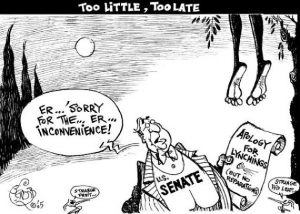
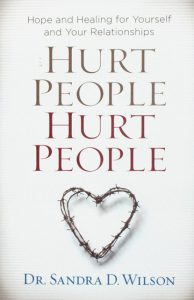
It is hard to be a “Black man or boy” … in the Americas.

This statement could have been echoed from the 1600’s all the way up to today.

One of the greatest advocates for Black causes, abolitionist Frederick Douglass (1818 – 1895), was right when he said:

“If there is no struggle, there is no progress.”

However, we say:

“For there to be victory, there must be a struggle; for there to be victory, there must be losers.”

The New World experience for people of African descent is one of struggle; but our people have made a lot of progress over the last 2 centuries especially; that means we have “ruffled a lot of feathers” along the way. Caribbean music icon Bob Marley worded it perfectly in a song that was released posthumously: “Buffalo Soldier”. The lyrics say:

Fighting on arrival; fighting for survival.

That fight though, was not always successful.

The experience of the Black men and boys in the New World is that these ones have often been hurt. Consider just the US experience with Lynchings in the Appendix A and Appendix VIDEO below, where “a total of 4,733 persons had died by lynching since 1882”; (Black men and boys were almost always the victims, with a few sprinkling of women here and there).

There is no excusing, rationalizing or minimizing this injustice. This “hurt” was state-action, state-sponsored and extra-judicial via mob-violence. (Other countries in the Americas also had lynchings, not just the Southern States of the US).

With this above introduction, is there any wonder that the crime rate is higher for Black men and boys than any other sub-group in the population? This is the accepted premise that “hurt people hurt people” – see Appendix C below.

This fact causes  breach in society. How do “we” repair this breach in societal dynamics?

This question was posed by an academician, Dr. Donald McCartney of the Bahamas. He composed a White Paper to address this question of “How to repair this breach?” and identified some viable solutions, not just for the Bahamas, but for all the Caribbean. Considering that 29 of the 30 countries that caucus with the political Caribbean possess a majority Black (or non-White) population, this is an apropos discussion for this movement behind the book Go Lean…Caribbean. See that full White Paper here, and an Excerpt as follows:

White Paper Title: Repairing the Breach in the Caribbean – EXCERPT
By: Dr. Donald McCartney

As we approach the 200th anniversary of the abolition of slavery in the British Empire, the same questions, regarding Black men and boys, are being raised again.

These questions are being revived because many, too many Black men and boys are not a part of the economic structure or the body politic. Upon close examination, it becomes clear that many of them are not in community with their ethnic group.

For the most part, Black men and boys live in isolation, better yet, they are marginalized. They find it difficult to connect with society in general and the significant persons in their lives in particular.

The spiraling  murder rate and other acts of violence (particularly against young men and the elderly), makes it clear, that many Black men and boys in the Caribbean, pose a serious and critical problem of interpersonal violence in every corridor and thoroughfare that Caribbean peoples and residents must cross. Consequently, Black men and boys in the Caribbean are feared, demonized and vilified.

See the full White Paper here: https://goleancaribbean.com/blog/?p=14392

The Caribbean has some work to do. The Go Lean book serves as a roadmap for effecting change in the Caribbean; it introduces the technocratic Caribbean Union Trade Federation (CU) as a vehicle to bring about the desired change in the region’s societal engines (economics, security and governing).

Our situation is bad, a crisis even! Some of our communities can even be categorized as Failed-States. But the Go Lean book asserts that a “crisis is a terrible thing to waste”. Thusly, this movement has formulated a roadmap to elevate the societal engines in the Caribbean. The book confesses that “this” is a Big Deal – heavy-lifting – but lays out the Way Forward with best-practices, strategies, tactics, implementations and advocacies, so as to conclude:

Yes, we can!

The first step in Repairing the Breach must be the recognition that “hurt people hurt people”. Rather than throwing these people away, we need to work to reconcile them into Caribbean society. This is the modus operandi of the foregoing White Paper by Dr, McCartney.

But throw away, run away, flee away and outright abandonment is exactly what has been happening; this is the current disposition of Caribbean youth. Too many people leave, and their absence damages the fabric of Caribbean society. The region is suffering a debilitating brain-drain rate estimated at 70% with some countries reporting up to 81%. This alarming abandonment rate is due to “push-and-pull” factors.

  • “Push” refers to the overbearing deficiencies in the homeland that forces people to seek refuge.
  • “Pull” refers to the lure that the “grass is greener on the other side” in foreign lands like the US, Canada and EU countries.

The next step to Repair the Breach therefore is to work to keep our people here at home. The quest of the Go Lean roadmap in lowering these “push-and-pull” factors is therefore paramount.

This Go Lean/CU roadmap is designed to provide better stewardship (governance), to ensure that the failures of the past, in the Caribbean and other regions – like the US – do not re-occur here in the Caribbean homeland. The book posits that the United States should not be the model for us to follow in the Caribbean – consider the atrocities in Appendix A; that country has racism embedded in its DNA and it still re-surfaces. No, we must NOT fashion ourselves as parasites of the US, but rather pursue a status as a protégé, benefiting from their lessons-learned but molding our own better society.

It is what it is! We cannot go backwards and change the past; no, all we can do is change-improve the future.

Therefore, the Go Lean movement advocates for Black Caribbean people to stay in the Caribbean, positing that it is easier – after the required reformation and transformation – to “prosper where planted here” than to emigrate to foreign shores.

The book Go Lean … Caribbean posits that America is plagued with institutional racism and Crony-Capitalism. It is therefore not the eco-system for the Caribbean to model. Rather the roadmap designs more empowerments for all of Caribbean society.

In general, the CU will employ better strategies, tactics and implementations to impact its prime directives; identified with the following 3 statements:

  • Optimization of the economic engines in order to grow the regional economy to $800 Billion & create 2.2 million new jobs.
  • Establishment of a security apparatus to protect the resultant economic engines and mitigate internal and external threats.
  • Improvement of Caribbean governance to support these engines.

Early in the Go Lean book, this need for careful technocratic stewardship of the regional Caribbean economy was pronounced (Declaration of Interdependence – Page 12 – 13) with these acknowledgements and statements:

xi. Whereas all men are entitled to the benefits of good governance in a free society, “new guards” must be enacted to dissuade the emergence of incompetence, corruption, nepotism and cronyism at the peril of the people’s best interest. The Federation must guarantee the executions of a social contract between government and the governed.

xii.   Whereas the legacy in recent times in individual states may be that of ineffectual governance with no redress to higher authority, the accedence of this Federation will ensure accountability and escalation of the human and civil rights of the people for good governance, justice assurances, due process and the rule of law. As such, any threats of a “failed state” status for any member state must enact emergency measures on behalf of the Federation to protect the human, civil and property rights of the citizens, residents, allies, trading partners, and visitors of the affected member state and the Federation as a whole.

xxiv. Whereas a free market economy can be induced and spurred for continuous progress, the Federation must install the controls to better manage aspects of the economy: jobs, inflation, savings rate, investments and other economic principles. Thereby attracting direct foreign investment because of the stability and vibrancy of our economy.

The Go Lean book presents 370 pages of instructions for how to reform and transform the Caribbean member-states. It stresses the key community ethos, strategies, tactics, implementations and advocacies necessary to shepherd a better society.

This commentary commences a 4-part series on Repairing the Breach; using the foregoing White Paper by Dr. McCartney as the premise. This entry is 1 of 4 in this series from the movement behind the book Go Lean … Caribbean in consideration of solutions to assuage the plight of Black men and boys. The other commentaries in the series are cataloged as follows:

  1.  Repairing the Breach: ‘Hurt People Hurt People’
  2.  Repairing the Breach: Crime – Need, Greed, Justice & Honor
  3.  Repairing the Breach: One Option – National Youth Service
  4.  Repairing the Breach: Image Impacts Economics

All of these commentaries relate to “how” the stewards for a new Caribbean can assuage the Caribbean failing dispositions among our Black Men and boys. We recognize that something is wrong … today, as has been the case ever since Black men and boys were first brought to the New World. Yes, this problem dates back to slavery and the original Slave Trade.

The Go Lean roadmap declares that “enough is enough” with the Failed-State statuses and societal abandonment in the Caribbean region. Why should our people leave for an uncertain future, when it could be easier for the average person to remediate and mitigate defects in the Caribbean homeland? This is better than submitting to institutional racism of a foreign land, i.e. USA. That is equivalent to “jumping from the frying pan to the fire”.

It is time for the proper empowerments in the Caribbean! It is time to build a better society. The strategies, tactics and implementations proposed in the book Go Lean…Caribbean are conceivable, believable and achievable. We can do these! We can be better.

Everyone in the Caribbean are hereby urged to lean-in for this Go Lean roadmap. 🙂

Download the free e-book of Go Lean … Caribbean – now!

Sign the petition to lean-in for this roadmap for the Caribbean Union Trade Federation. 

———–

Appendix A: Lynchings in the US

Statistics for lynchings have traditionally come from three sources primarily, none of which covered the entire historical time period of lynching in the United States. Before 1882, no reliable statistics are assembled on a national level. In 1882, the Chicago Tribune began to systematically tabulate lynchings. In 1908, the Tuskegee Institute began a systematic collection of lynching reports under the direction of Monroe Work at its Department of Records, drawn primarily from newspaper reports. Monroe Work published his first independent tabulations in 1910, although his report also went back to the starting year 1882.[109] Finally, in 1912, the National Association for the Advancement of Colored People started an independent record of lynchings. The numbers of lynchings from each source vary slightly, with the Tuskegee Institute’s figures being considered “conservative” by some historians.[57]

Tuskegee Institute, now Tuskegee University, defined conditions that constituted a recognized lynching, a definition which became generally accepted by other compilers of the era:

“There must be legal evidence that a person was killed. That person must have met death illegally. A group of three or more persons must have participated in the killing. The group must have acted under the pretext of service to Justice, Race, or Tradition.”

The records of Tuskegee Institute remain the single most complete source of statistics and records on this crime since 1882 for all states, although modern research has illuminated new incidents in studies focused on specific states in isolation.[110] As of 1959, which was the last time that Tuskegee Institute’s annual report was published, a total of 4,733 persons had died by lynching since 1882. To quote the report,

“Except for 1955, when three lynchings were reported in Mississippi, none has been recorded at Tuskegee since 1951. In 1945, 1947, and 1951, only one case per year was reported. The most recent case reported by the institute as a lynching was that of Emmett Till, 14, a Negro who was beaten, shot to death, and thrown into a river at Greenwood, Mississippi on August 28, 1955…For a period of 65 years ending in 1947, at least one lynching was reported each year. The most for any year was 231 in 1892. From 1882 to 1901, lynchings averaged more than 150 a year. Since 1924, lynchings have been in a marked decline, never more than 30 cases, which occurred in 1926…”[111]

The Equal Justice Initiative in Montgomery, Alabama reported 3,959 American victims of “racial terror lynchings” in 12 Southern states from 1877 to 1950.

Most, but not all lynchings ceased during the 1960s.[21][31] The murder of Michael Donald in Alabama in 1981 was the last recorded lynching in the United States. [Though many Hate Crimes have been recorder and/or prosecuted since then].

Source: Wikipedia Online Encyclopedia – retrieved March 1, 2018 from: https://en.wikipedia.org/wiki/Lynching_in_the_United_States#Statistics


———–

Appendix B VIDEO – The Origins of Lynching Culture in the United States – https://youtu.be/hPdh46k7b38

Published on Apr 7, 2015 – How did the practice of lynching begin and evolve in American history? How did Ida B. Wells, a black female investigative journalist, start to challenge some of the entrenched practices of the South? Watch Paula Giddings, professor of Afro-American Studies at Smith College, explore one of the most challenging topics in U.S. history: the history and origins of lynching. Find out more: https://www.facinghistory.org/mocking…

———–

Appendix C – Book: Hurt People Hurt People: Hope and Healing for Yourself and Your Relationships

By: Dr. Sandra D. Wilson (Author)

Summary:

“Hurt people hurt people” is more than a clever phrase. Hurt people hurt others because they themselves have been hurt. And each one of us has been hurt to one degree or another. As that damage causes us to become defensive and self-protective, we may lash out at others. Hurting becomes a vicious cycle.

Review:

“Dr. Sandy Wilson knows why people hurt, where they hurt, and how to heal those hurts. She gets right to the heart of these matters in her very insightful and provocative book. It is a must read for anyone who wants to break free from the bondage of unhealed personal hurts.”     -Dr. Chris Thurman, author of The Lies We Believe

Source: Posted September 21, 2015; retrieved March 2, 2018 from: https://www.amazon.com/Hurt-People-Healing-Yourself-Relationships/dp/1627074848

Share this post:
, , , ,
[Top]