Category: Social

Proclaim ‘International Caribbean Day’

Go Lean Commentary

There are some special non-Holidays on the calendar; consider:

These dates are special in that they celebrate culture; the culture of the Irish and Mexicans. Now, there is a movement to add August 1st to that non-Holiday Culture Celebration tradition; this effort is to establish Caribbean Day. (This date was originally codified as Emancipation Day in 1834 for all slaves in the British Empire).
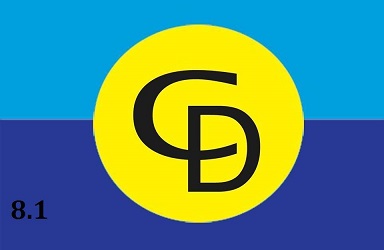
cu-blog-proclaim-international-caribbean-day-photo-3

The Caribbean Day colors are blue yellow and black, as demonstrated in the logo here,
to depict the Caribbean sun against the blue sky touching the deep blue Caribbean Sea.

The petition is being made to the Caribbean Community (CariCom) Secretariat for the Caribbean member-states to resolve to recognize August 1, every year, as the International Caribbean Day. The petitioners want the Caribbean governments to do their part, then they will take the lead to advocate this as an International Cultural Day, in the mold of St. Patrick’s Day and Cinco De Mayo.

Petitioners? Advocates?

There is a whole movement. Consider the actual petition here from Change.org, and the Letter to the CariCom Secretariat in the Appendix below:

In Caribbean history the extraordinary importance of the 1st August 1834 is inescapable as the date which restored human dignity to the mass of Caribbean inhabitants. Today we are many people living together in harmony, respect and one love. Our descendent Caribbean children across the world are a rainbow of races, colours, and nationalities, however there is the ever growing risk that identities become diluted and confused. Therefore our movement say: on this one day people of Caribbean heritage should join in thanks giving and celebration to recognize our joint history, future and the warm fact that we all belong!

Sign this petition

This petition – along with below letter – will be delivered to:

  • Caribbean Community (CARICOM) Secretariat
    CARICOM (15 heads of Caribbean nations)

Adviser, Public Information Unit CariCom
Mr. Leonard Robertson

Source: Change.org Petition; retrieved September 10, 2016 from: https://www.change.org/p/caricom-15-heads-of-caribbean-nations-proclaim-international-caribbean-day
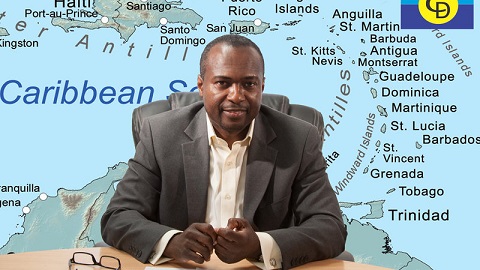
cu-blog-proclaim-international-caribbean-day-photo-1A champion of this movement is Attorney Hamilton Daley. As a lawyer, he is a “member of the Bar” in Jamaica and in the UK. He is a member of the Caribbean Diaspora; and a role model for enacting change and empowerment for the Caribbean image.

See an interview in the Appendix-VIDEO below where he explains the fundamentals of the movement. Also see an assortment of his commentaries here: http://jamaicans.com/author/hamiltondaley/.

The Caribbean Diaspora, broadly interpreted, contains all those born in the Caribbean region but now live abroad. The term legacy – a subset of the Diaspora – refers more to those born abroad but known to have Caribbean ancestry.

This subject of Caribbean Diaspora is also an important consideration in the book Go Lean … Caribbean . It relates a societal elevation plan for the Caribbean region that accepts the premise that the member-states have experienced too high an abandonment rate. Far too many Caribbean citizens have fled their tropical homes and created a new life on foreign shores. Yet, the love and affinity they hold for their homeland is undeniable. They must be factored in as stakeholders of any effort to pursue change in the region. The quest is simple, to make the Caribbean a better place to live, work and play, so that future generations of Caribbean citizens do not have to flee as well. Then to incentivize the people who have left – the Diaspora – to consider a return … someday.

As Diasporas go, our experience is not the first, nor the worst. We have the Irish history and example to glean lessons from. Their Diaspora is considered over 100 million people, while the island population is below 10 million. Despite any desire to do better, our current disposition so parallels Ireland’s history. Just like the Irish, our Diaspora love their country and culture, but have to live abroad; they want conditions to be different (better) at home to consider any repatriation.

Over the centuries, the Irish Diaspora endured a lot of misery, resistance and discrimination in their foreign homes. As related in a previous commentary, the usual path for new immigrants is one of eventual celebration, but only after a “long train of abuses”: rejection, anger, protest, bargaining, toleration and eventual acceptance. But now today, people the world over wear green on March 17th as a statement of acceptance and celebration of Irish people and culture. This is now viewed as a proud heritage for what they have endured and accomplished. The Caribbean Day movement wants to model this success for persons of Caribbean heritage.

Ditto for the Go Lean movement. Just like the Caribbean Day movement, both efforts are inclusive of all language groups, not just the English-speaking Caribbean. This is demonstrated by first petitioning CariCom, which now includes Dutch-speaking Suriname and French/Creole-speaking Haiti. The Go Lean movement takes their effort further by targeting the Dutch Antilles, French Antilles, US Virgin Islands and the neighboring Spanish Caribbean territories (Cuba, Dominican Republic and Puerto Rico), in addition to CariCom. The Go Lean book relates that these 30 member-states – with 42 million people – all share the same societal abandonment disposition. The book considers Puerto Rico, for example, that had an on-island population of 3,725,789 in 2010, but Puerto Ricans living abroad in the US mainland was 4,623,716; (Page 303).

The Go Lean book serves as a roadmap for the introduction and implementation of the Caribbean Union Trade Federation (CU), a technocratic federal government to administer and optimize the economic/security/ governing engines of all 30 member-states. The quest is to provide a better direct stewardship, applying lessons-learned from global best practices.

There are a lot of lessons for the Caribbean to learn from these other cultures: Ireland … and Mexico. There is a constant need for better societal engines: economic, security, and governance. Fulfilling these needs is the underlying theme behind this Go Lean movement, to “appoint new guards” for all of the region to make the Caribbean homeland a better place to live, work and play. This Declaration of Interdependence is pronounced at the outset of the Go Lean book (Page 11):

xi. Whereas all men are entitled to the benefits of good governance in a free society, “new guards” must be enacted to dissuade the emergence of incompetence, corruption, nepotism and cronyism at the peril of the people’s best interest. The Federation must guarantee the executions of a social contract between government and the governed.

The Go Lean movement declares solidarity with the Caribbean Day movement. This alignment is more than just feelings, but words and actions as well. The promoters of the Go Lean movement conducted a structured interview with the identified promoter of the Caribbean Day movement, Hamilton Daley (or HD; Author = Bold). Consider his responses here as related to these parallel tracks to elevate Caribbean image and reality:

Tell me your story:

HD: I am the founder of Caribbean Day Movement International, which started as a social media based movement to establish recognition of 1st August as a date of cultural significance for the international Caribbean community – CARIBBEAN DAY.  I am a dual qualified lawyer simultaneously practicing in both London, UK and the Caribbean, Jamaica.  I maintain offices and homes in both jurisdictions.

Though your aspiration is to unite Caribbean people through out the world, how would you feel if your children return to a Caribbean destination for permanent residency?

HD: I would be very pleased.

Considering all your travels, where in the world would you consider the best place to live?

HD: I am obviously biased in my opinion. But this has always been a motivation for the Caribbean Day movement, to convey to the world that our Caribbean homelands are the best addresses in the world. This “fact” is not always recognized, accepted or valued in the world.

But our Caribbean people have obviously abandoned their homeland, for good reasons, what we call “push and pull”: defects in the region’s economic, security and governing engines. How do you feel about the Caribbean economy?

HD: There is much room for beneficial improvement with some coordination, which sadly is lacking at the moment.

How do you feel about Caribbean security?

HD: Personal security is an issue of concern in some places, more so than in others. This is definitely a societal defect that needs to be remediated and mitigated.

Accepting that the Caribbean in general and Jamaica in particular is your homeland, what would you want to see there in … 5 years?

HD: I would hope to see all generations of Jamaicans from kindergarten to grandparents celebrating their Caribbean heritage on August 1st. I would also want to see Jamaica become a successful trading partner and better realize it’s full potential within the Caribbean family of nations and in doing so, develop its global brand.

What would you want to see in Jamaica in … 10 years?

HD: I would want to see the issues which perpetuate crime, violence and corruption to become tamed or made historical in keeping of a greater developed nation. I would want to see strong ties and bonds with the broad global Caribbean community.

What would you want to see in Jamaica in … … 20 years?

HD: I would want to see Jamaica established and reaffirmed as a safe, progressive “diamond” destination – stable, beautiful and valuable – and a strong player in the region and inclusive Caribbean Diaspora.

Thank you for your responses and your commitment to the Caribbean. We see you; we hear you and we feel your passion. We entreat you to look here, going forward, for more on solutions.

The Go Lean movement has collected the complaints of the Caribbean Diaspora like Hamilton Daley. This book was the response. The book declared that the Caribbean is in crisis, but posits that a “crisis is a terrible thing to waste” (Page 8). The book asserts that the solution for the Caribbean crisis is within reach:

The Go Lean movement is not affiliated with the CariCom or any of its agencies or institutions. This movement is not an attempt to re-boot the CariCom, but rather a plan to re-boot the Caribbean. This movement was bred from the frustrations of the Diaspora, longing to go home, to lands of opportunities. But this is not a call for a revolt against the governments, agencies or institutions of the Caribbean region, but rather a petition for a peaceful transition and optimization of the economic, security and governing engines in the region.

The Go Lean book details a 5-year roadmap, with turn-by-turn directions, for transforming our homeland. The following is a sample of the assessments, community ethos, strategies, tactics, implementations and advocacies to impact the Caribbean region for this turnaround:

Assessment – CariCom Single Market & Economy Hope and Failure Page 15
Assessment – Dutch Caribbean – Integration & Secessions Page 16
Assessment – French Caribbean – Organization & Discord Page 17
Assessment – Puerto Rico – The Greece of the Caribbean Page 18
Prologue – New CariCom Model Urged Page 20
Community Ethos – Economic Principle – Economic Systems Influence Choices & Incentives Page 21
Community Ethos – Economic Principle – Consequences of Choices Lie in the Future Page 21
Community Ethos – Job Multiplier Page 22
Community Ethos – Lean Operations Page 24
Community Ethos – Ways to Promote Happiness Page 36
Community Ethos – Ways to Impact the Greater Good Page 37
Strategy – Vision – Confederating a Non-Sovereign Union Page 45
Strategy – Mission – Keep the next generation at home Page 46
Strategy – Mission – Invite & Incentivize Diaspora Repatriation Page 46
Tactical – Fostering a Technocracy Page 64
Tactical – Tactics to Forge an $800 Billion Economy Page 67
Tactical – Separation of Powers Page 71
Implementation – Ways to Pay for Change Page 101
Implementation – Ways to Deliver Page 109
Implementation – Reasons to Repatriate to the Caribbean Page 118
Implementation – Ways to Promote Independence – Interdependence Page 120
Planning – 10 Big Ideas – A Single Market in the G-20 Page 127
Planning – Ways to Make the Caribbean Better Page 131
Planning – Ways to Better Manage Image – Not Unwanted Aliens Page 133
Advocacy – Ways to Grow the Economy Page 151
Advocacy – Ways to Create Jobs Page 152
Advocacy – Ways to Improve Governance Page 168
Advocacy – Ways to Impact the Diaspora Page 217
Advocacy – Ways to Impact the BritishTerritories Page 245

The efforts of the Caribbean Day movement is needed and very much welcomed by the promoters of the Go Lean movement. Even for the Diaspora living abroad, this Caribbean Day movement will have positive effect on Caribbean image. This subject has been a source of concern for the Go Lean movement. Consider the details from these previous blog-commentaries:

https://goleancaribbean.com/blog/?p=8724 Remembering Marcus Garvey: His Image and Perception is relevant today
https://goleancaribbean.com/blog/?p=8099 Caribbean Image: ‘Less Than’?
https://goleancaribbean.com/blog/?p=2025 Image of the Caribbean Diaspora – Butt of the Joke
https://goleancaribbean.com/blog/?p=857 Caribbean Image: Dreadlocks

In addition, the subject of “push and pull” resulting in an increased Diaspora has been examined further in many related Go Lean blog-commentaries; see sample list here:

https://goleancaribbean.com/blog/?p=8155 Gender Equality Referendum Outcome: Brain Drain Bound
https://goleancaribbean.com/blog/?p=7866 Switching Allegiances: Athletes move on to represent other countries
https://goleancaribbean.com/blog/?p=7682 Role Model Frederick Douglass: Single Cause – Death or Diaspora
https://goleancaribbean.com/blog/?p=7151 The Caribbean is Looking for Heroes … ‘to Return’
https://goleancaribbean.com/blog/?p=5759 Bad example of Greece – Crisis leading to abandonment of Doctors
https://goleancaribbean.com/blog/?p=5733 Better than America? Yes, We Can!
https://goleancaribbean.com/blog/?p=5695 Repenting, Forgiving and Reconciling the Past
https://goleancaribbean.com/blog/?p=5088 Immigrants account for 1 in 11 Blacks in USA
https://goleancaribbean.com/blog/?p=2547 Miami’s Success versus Caribbean Failure
https://goleancaribbean.com/blog/?p=2251 The Reality of Names of Caribbean people
https://goleancaribbean.com/blog/?p=1433 Caribbean loses more than 70 percent of tertiary educated to brain drain
https://goleancaribbean.com/blog/?p=273 10 Things We Don’t Want from the US – Discrimination of Immigrations

The Go Lean book posits (Page 3) that the Caribbean islands are among the greatest addresses in the world. But instead of the world “beating a path” to these doors, the people of the Caribbean have “beat down their doors” to get out; despite the absence of any famine, or war for that matter. This is classic societal abandonment – plain an simple.

This must stop … now! We must fix the defects that “push” our people away, and dissuade the “pull” factors that lure unsuspecting Caribbean citizens to believe that life is better “there”, wherever.

We wish Hamilton Daley and the Caribbean Day success, while we work in our quest to make our homeland a better place to live, work and play.; thusly keeping more of our citizens at home and away from the Diaspora. 🙂

Download the free e-Book of Go Lean … Caribbean – now!

——–

Appendix- VIDEO: Hamilton Daley (Caribbean Day) || Exclusive Interview || The Sylbourne Show – https://youtu.be/5SQlsDpIRN8

Published on Aug 22, 2016 – Joining us on the red chair we have Hamilton Daley. Mr Daley has held an illustrious career as a lawyer in both the UK and Jamaica and is the founder of the Caribbean Day Movement International. He wants to see August 1st to be declared CARIBBEAN DAY!

——–

Appendix – Actual Open Letter to CariCom:

We look forward to being still together to see this Day, here is our case:

We, the undersigned are representative of the views of persons and organisations based in or associated with countries of CARICOM membership, and expatriate Caribbean communities in the UK, USA and Canada, and other world destinations where people of Caribbean heritage may reside. Our sole purpose and cause of this our gathering is to request that CARICOM place on its agenda for regional consideration and approval, the issue of proclaiming international Caribbean Day to be on the 1st August each year.

The reason we make this request is that the Caribbean and its people have to date no single date to recognise their identity as one connected community. We make this request in recognition that CARICOM reflects the interest not only of the people resident in its member states, but also the hopes of millions of expatriates, their offsprings, relatives and associates, residing outside CARICOM’s geographical region. In common, we all, regardless of our Caribbean ancestry, age, race, creed or nationality, harbour only positive ambitions for the success and development of the Caribbean region.

During any Cricket World Cup tournament, people of Caribbean allegiance across the globe rally behind our united international sporting icons the West Indies Cricket team.

Further, we observe that for the English-speaking Caribbean, we share a degree of common representational politics in the form of the region’s international institution CARICOM. We have a Caribbean Court of Justice, and a regional University with its campuses situated across three CARICOM countries. The framework for a Caribbean Single Market Economy is in place and the region has introduced a CARICOM passport. We note also at the CARICOM heads of government summit held in Antigua in July 2014, those discussions announced the formulation of a five year strategic plan for “repositioning the Community and identifying priorities and activities that would meet the challenges of the international environment”. Amongst other things, the said plan included building economic resilience, social resilience and strengthening the CARICOM spirit of community.

We remind you that on the 25 March 2007, the 15 independent member nations comprising CARICOM agreed by resolution to synchronize a minute’s silence in commemoration of the 1807 Abolition of the Trans-Atlantic Slave Trade. The significance of this synchronized one minute, we say, is now historical in defining a moment in time when the Caribbean first sought to synchronise a sentiment across all peoples of its nations. It is maintaining and building upon this foundation that we invite CARICOM to proclaim an international Caribbean Day.

The vision of an international ‘Caribbean Day‘ is linked to the concept of celebrating the ‘rebirth’ of our Region on the 1st August. Many countries of the English-speaking Caribbean, including Jamaica, Barbados and Trinidad and Tobago already celebrate Emancipation Day on the 1st August. However, with respect whilst it is important that we should each never forget our history, we implore that as a developing region, the emphasis on going forward for the next 200 years should now be to create annual dynamism, rather than a day of reflection to reminisce the date colonial slavery ended.

In truth, whilst not forgetting our history, it is also right to free our minds if devotion to remembrance might keep us on the ground – instead of just keeping us grounded. For, it is our destiny that we as a people will forever rise and be greater than our past.

Therefore, we say; the past does not define our future, and we look to the words of a great man who did a good thing, after 25 years of personal sacrifice for the cause of his fellow men: “The time for the healing of the wounds has come. The moment to bridge the chasms that divide us has come. The time to build is upon us.” – Nelson Mandela

A vision of a ‘Caribbean Day’ would be an international day of celebration by Caribbean people of all races, colours and faiths, as part of one Caribbean family. It would be a day which forever promises to present the opportunity for those who reside overseas to pamper their nostalgia, as well as provide a boost to regional tourism whereby our visitors could annually island hop through the celebrations.

A ‘Caribbean Day’ would be a day in the yearly calendar when the Caribbean diasporas would gather in their communities, wherever they may congregate across the globe. It would be an immense family day, where inter-Island relationships and our children’s children would at last enjoy a day to celebrate their common Caribbean heritage.

We consider the concerns of the Caribbean diasporas, whom with each generation born overseas loses sense of ties to the Caribbean. We consider also the quantitative effect of brain drain on the region’s developing economies because the flow of talent may forever be lost to the region. We are of the view that a Caribbean Day would create job opportunities, commercial incentives and re-invigorate community ties regardless of geography and generational distance.

If the World can readily recognise dates like 14th February, 1st April and 25th December, surely it can come to recognise our 1st August Caribbean Day.

We implore upon the heads of CARICOM to endorse the proclamation of an international ‘Caribbean Day’.

Thank You.

CARIBBEAN DAY MOVEMENT FOR ITS ESTABLISHMENT
Share this post:
, , ,

Zika’s Drug Breakthrough

Go Lean Commentary:

As related previously, the Zika virus is proving to be a real “4-Letter” word. Many repercussions have emerged in all aspects of societal life: economics, security and governance. The virus first activated in Brazil, then in the Caribbean. Now, there are reported incidences in Florida.

Bienvenido a Miami!

Now the best practice for Public Health officials is to dissuade pregnant women – and all hoping to someday get pregnant – from traveling to Latin America and the Caribbean…

… and now Miami and other Florida destinations.

Considering the economic consequences (tourism), is there any surprise that there is a breakthrough in drug treatment for Zika, and what’s more that this breakthrough is emerging from Florida. This aligns with a previous commentary, that only at the precipice …

Consider this article here of the medical breakthrough:

Title: FSU research team makes Zika drug breakthrough
By: Kathleen Haughney

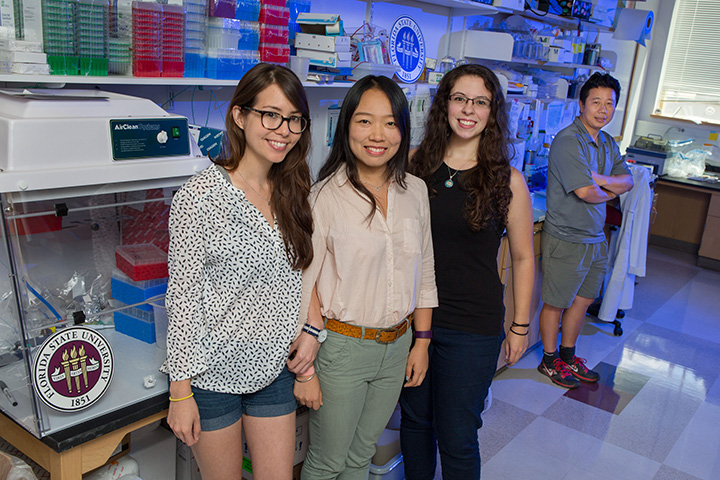
CU Blog - Zika Drug Breakthrough - Photo 1A team of researchers from Florida State University, Johns Hopkins University and the National Institutes of Health has found existing drug compounds that can both stop Zika from replicating in the body and from damaging the crucial fetal brain cells that lead to birth defects in newborns.

One of the drugs is already on the market as a treatment for tapeworm.

“We focused on compounds that have the shortest path to clinical use,” said FSU Professor of Biological Science Hengli Tang. “This is a first step toward a therapeutic that can stop transmission of this disease.”

Tang, along with Johns Hopkins Professors Guo-Li Ming and Hongjun Song and National Institutes of Health scientist Wei Zheng identified two different groups of compounds that could  potentially be used to treat Zika — one that stops the virus from replicating and the other that stops the virus from killing fetal brain cells, also called neuroprogenitor cells.

One of the identified compounds is the basis for a drug called Nicolsamide, a U.S. Food and Drug Administration approved drug that showed no danger to pregnant women in animal studies. It is commonly used to treat tapeworm.

This could theoretically be prescribed by a doctor today, though tests are still needed to determine a specific treatment regimen for the infection.

Their work is outlined in an article published Monday by Nature Medicine.

Though the Zika virus was discovered in 1947, there was little known about how it worked and its potential health implications — especially among pregnant women — until an outbreak occurred in South America last year. In the United States, there have been 584 cases of pregnant women contracting Zika, though most of those are travel related. As of Friday, there have been 42 locally transmitted cases in Florida.

The virus, among other diseases, can cause microcephaly in fetuses leading them to be born with severe birth defects.

“It’s so dramatic and irreversible,” Tang said. “The probability of Zika-induced microcephaly occurring doesn’t appear to be that high, but when it does, the damage is horrible.”

Researchers around the world have been feverishly working to better understand the disease — which can be transmitted both by mosquito bite and through a sexual partner — and also to develop medical treatments.

Tang, Ming and Song first met in graduate school 20 years ago and got in contact in January because Tang, a virologist, had access to the virus and Ming and Song, neurologists, had cortical stem cells that scientists needed for testing.

The group worked at a breakneck pace with researchers from Ming and Song’s lab, traveling back and forth between Baltimore and Tang’s lab in Tallahassee where they had infected the cells with the virus.

In early March, the group was the first team to show that Zika indeed caused cellular phenotypes consistent with microcephaly, a severe birth defect where babies are born with a much smaller head and brain than normal.

They immediately delved into follow-up work and teamed with NIH’s Zheng, an expert on drug compounds, to find potential treatments for the disease.

Researchers screened 6,000 compounds that were either already approved by the FDA or were in the process of a clinical trial because they could be made more quickly available to people infected by Zika.

“It takes years if not decades to develop a new drug,” Song said. “In this sort of global health emergency, we don’t have time. So instead of using new drugs, we chose to screen existing drugs. In this way, we hope to create a therapy much more quickly.”

All of the researchers are continuing the work on the compounds and hope to begin testing the drugs on animals infected with Zika in the near future.

The research was supported by the National Institutes of Health, FloridaStateUniversity, EmoryUniversity and the Maryland Stem Cell Research Fund.

Other institutions contributing to the research are the Zhejiang University School of Medicine in China, Emory University and the Icahn School of Medicine. Emily Lee, a Florida State University graduate student working with Tang, shared the first authorship position with Assistant Professor of Biology at Emory Zhexing Wen and NIH scientist Miao Xu.
Source: Florida State University Press Release – Posted August 29, 2016; retrieved September 3, 2016 from: http://news.fsu.edu/news/science-technology/2016/08/29/fsu-research-team-makes-zika-drug-breakthrough/

—————-

VIDEO FSU research team makes Zika drug breakthrough – https://youtu.be/E8lfY07yWqY

Published on Aug 29, 2016 – A Florida State, Johns Hopkins and NIH team of researchers has identified existing drug compounds that can both stop Zika from replicating in the body and from damaging crucial fetal brain cells that lead to birth defects in newborns.

—————-

AUDIO – Florida State University SoundCloud – https://soundcloud.com/floridastateuniversity/fsu-researchers-make-zika-drug-breakthrough

FSU researchers make Zika drug breakthrough

Somehow, when it comes to Zika and tourism, there seems to always be some inconvenient truths. This is not the first time, inconvenient truths have emerged with this pandemic; and it will not be surprising if this is not the last time.

The book Go Lean…Caribbean relates that there are economic and security consequences tied to public health crises. It relates the bitter experiences of cancer and the quest to optimize the treatment options for Caribbean citizens. As demonstrated by cancer, and now Zika, health crises bring a lot of governmental complications.

The book does not purport to be a roadmap for public health, but rather a roadmap for elevating Caribbean society by optimizing the economic, security and governing engines in the region. Yet, within this roadmap is the strategy to incentivize medical research and facilitate treatment options and workable solutions. In fact this roadmap invites the community spirit to encourage research and development (R&D), and to invite role models like Professor Hengli Tang and the medical research team at the university in the foregoing story.

The Go Lean book serves as a roadmap for the implementation and introduction of the technocratic Caribbean Union Trade Federation (CU). The CU‘s prime directives are identified with the following 3 statements:

  • Optimization of the economic engines in order to grow the regional economy to $800 Billion & create 2.2 million new jobs.
  • Establishment of a security apparatus to protect the economic engines, including the monitoring and response of epidemiological threats.
  • Improve Caribbean governance to support these engines, including a separation-of-powers between CU agencies and member-states.

One feature of the Go Lean roadmap is the emphasis on community ethos. The book explains, that the Caribbean communities must adopt a fundamental spirit, an underlying sentiment, that would inform the beliefs, customs, and practices to embrace research and development. A community ethos for R&D must be purposeful; we cannot accidentally fall into it..

Another feature of the Go Lean roadmap is the adoption of Self-Governing Entities (SGE). These are to be featured as dedicated, bordered grounds that are ideal for medical research and treatment campuses. SGE requires a hybrid governance involving the CU federal agencies and local administrators – at the start-up.

The Go Lean roadmap clearly relates that healthcare and pharmaceutical drug research are important in the quest to make the Caribbean a better place to live, work and play. At the outset of the Go Lean book, in the Declaration of Interdependence (Page 11), these points are pronounced as essential for the Caribbean:

viii.   Whereas the population size is too small to foster good negotiations for products and commodities from international vendors, the Federation must allow the unification of the region as one purchasing agent, thereby garnering better terms and discounts.

ix. Whereas the realities of healthcare and an aging population cannot be ignored and cannot be afforded without some advanced mitigation, the Federation must arrange for health plans to consolidate premiums of both healthy and sickly people across the wider base of the entire Caribbean population. The mitigation should extend further to disease management, wellness, obesity and smoking cessation programs.

Previous blog/commentaries addressed issues related to medical research and drug research & practices, sampled here:

Doing More for Cancer – Philanthropist-Billionaire invest in R&D
Capitalism of Drug Patents – Pricing Dysfunctions
The Cost of Cancer Drugs
Antibiotics Misuse Linked to Obesity in the US
CHOP Research: Climate Change May Bring More Kidney Stones
Welcoming Innovators and Entrepreneurs under an SGE Structure
Medical Research Associates Kidney Stones and Climate Change – Innovative!
New Research and New Hope in the Fight against Alzheimer’s Disease
Research in Diabetes Detection – Novartis and Google develop ‘smart’ contact lens
New Cuban Cancer medication registered in 28 countries
Puerto Rico’s Comprehensive Cancer Center Project Breaks Ground – Model of Medical SGE

Kudos to the research team at Florida State University; they have responded at a time of crisis for the State of Florida – the only American State with live Zika mosquitoes – and have forged a solution. This is a fine lesson for the Caribbean to learn …

… Zika is a crisis, and a “crisis would be a terrible thing to waste”.

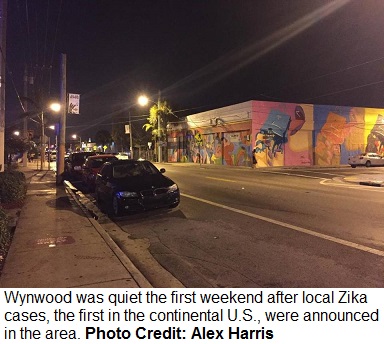
One local community, Wynwood, in Miami is ground-zero for the Zika battleground. Their current disposition is that business output in the affected areas has been retarded. As related in this article, this summer season has been slower than normal – the peak time is in the winter months:

Zika changes a way of life in Wynwood

After more than 15 local cases of the Zika virus in Wynwood — the first instance of the virus spreading within continental U.S. borders — the artsy district quickly became “ground zero” for the exotic illness.

“It’s definitely slowed down business considerably,” an employee at Fireman Derek’s Bake Shop said Sunday morning. “Usually we do really good on weekends, but today it’s been super slow.”

Source: Retrieved September 5, 2016 from: http://www.miamiherald.com/news/health-care/article94223717.html

CU Blog - Zika Drug Breakthrough - Photo 2

————–

VIDEO – Wynwood baker’s newest creation — shrine to Zika – http://www.miamiherald.com/news/local/community/miami-dade/article93717707.html

After all of the news of Zika cases in the neighborhood near his Wynood business slowed down his walk-in business, Zak the Baker, decided to make a new creation — a shrine to Zika. The light-hearted shrine was made to make people smile and not take things – Emily Michot emichot@miamihereald.com

The foregoing news article and VIDEO-AUDIO productions provide an inside glimpse into the medical research discipline. Obviously, the motivation of the medical research is to protect the economic engines of the Florida economy. The State was at the “precipice and only then, has the needed empowerment” emerged.

The Go Lean roadmap posits that more R&D is needed in the Caribbean too. We need the community ethos to prioritize and encourage careers in science, technology, engineering and mathematics/medicine (STEM). We have a Zika problem in the Caribbean region too. We need innovations too. We need R&D at our educational institutions and SGE campuses.

This is an issue of economics, security and governance…

… and this is a familiar drama:

  • Ebola – While not an American problem, when American citizens become afflicted in 2014, the US response was inspiringly genius, deploying a potential cure within a week.
  • SARS – During the “heyday” of the SARS crisis, travel and transport to Hong Kong virtually came to a grinding halt! Hong Kong had previously enjoyed up to 14 million visitors annually; they were a gateway to the world. The SARS epidemic became a pandemic because of this status. Within weeks of the outbreak, SARS had spread from Hong Kong to infect individuals in 37 countries in early 2003.s

The CU has the prime directive of optimizing the economic, security and governing engines of the Caribbean region. The foregoing article and VIDEO-AUDIO productions depict that research is very important to new medical innovations and break-throughs. This is the manifestation and benefits of Research & Development (R&D). The book describes this focus as a community ethos and promotes R&D as valuable for the region. The following list details additional ethos, strategies, tactics, implementations and advocacies to optimize the region’s health deliveries and R&D investments:

Community Ethos – Deferred Gratification Page 21
Community Ethos – Economic Systems Influence Individual Choices and Incentives Page 21
Community Ethos – The Consequences of Choices Lie in the Future Page 21
Community Ethos – Governing Principles – Return on Investments Page 24
Community Ethos – Governing Principles – Cooperatives Page 25
Community Ethos – Non-Government Organizations Page 25
Community Ethos – Ways to Impact Research & Development (R&D) Page 30
Community Ethos – Ways to Impact the Greater Good Page 37
Strategy – Integrate and unify region in a Single Market Page 45
Strategy – Agents of Change – Globalization Page 57
Tactical – Fostering a Technocracy Page 64
Tactical – Separation of Powers – Health Department Page 86
Tactical – Separation of Powers – Drug Administration Page 87
Implementation – Ways to Pay for Change Page 101
Implementation – Ways to Implement Self-Government Entities – R&D Campuses Page 105
Implementation – Ways to Deliver Page 109
Planning –  Ways to Improve Trade Page 128
Planning –  Ways to Make the Caribbean Better Page 131
Advocacy – Ways to Improve Healthcare Page 156
Advocacy – Ways to Better Manage the Social Contract Page 170
Advocacy – Ways Foster Cooperatives Page 176
Advocacy – Ways to Enhance Tourism Page 190
Advocacy – Ways to Impact Cruise Tourism Page 193
Advocacy – Ways to Improve Emergency Management Page 196
Advocacy – Ways to Impact Foundations Page 219
Appendix – Emergency Management – Medical Trauma Centers Page 336

The Go Lean roadmap does not purport to be an authority on medical research best practices. This economic-security-governance empowerment plan should not direct the course of direction for epidemiology or pharmacological research and/or treatment. But this war against Zika has dire consequences for tourism-based economies – this descriptor fits most of the Caribbean. So we must pay more than the usual attention to the issue. And we must incentivize those with the passion … and genius to make an impact in this area.

The champions for this issue in the Caribbean might come down to the contributions of just a few people, or maybe just one. This is the reality of genius qualifiers. Not everyone can do it. So those who cannot, need to step aside and not abate those that can. Epidemiology or pharmacological research & development is no time for egalitarianism.

Now is the time for all of the Caribbean, the people and governing institutions, to lean-in for the empowerments in the book Go Lean … Caribbean. This is a Big Idea for the region, one where SGE’s, R&D and geniuses can soar. We can make the Caribbean a better place to live, work, heal and play. 🙂

Download the free e-Book of Go Lean … Caribbean – now!


Share this post:
, , , ,
[Top]

ENCORE: A reflection on ‘Labor’ on Labor Day

In the US and Canada, it is the Labor Day holiday weekend.

Many countries have an equivalent of Labor Day, a date set aside to honor and celebrate workers, or the movement to empower workers in society. Many of the historicity of these movements were tied to labor unions.

More than 80 countries celebrate International Workers’ Day on May 1 – the ancient European holiday of May Day.

Consider this Encore of the blog-commentary from June 18, 2015, discussing the trends in the labor markets, which depict a decline of collective bargaining:

==================

Title: Economic Principle: Wage-Seeking – Market Forces -vs- Collective Bargaining

Go Lean Commentary

The field of Economics is unique! We all practice it every day, no matter the level of skill or competence. There is even the subject area in basic education branded Home Economics, teaching the students the fundamentals of maintaining, supporting and optimizing a home environment. Most assuredly, economics is an art and a science, albeit a social science.

In a previous blog/commentary, Scotman’s Adam Smith was identified as the father of modern macro-economics. Though he lived from 1723 to 1790, his writings defined advanced economic concepts even in this 21st Century. His landmark book An Inquiry into the Nature and Causes of the Wealth of Nations qualified the divisions of income into these following categories: profit, wage, and rent.[4] We have previously explored profit-seeking (a positive ethos that needs to be fostered in the Caribbean region) and rent-seeking (a negative effort that proliferates in the Caribbean but needs to be mitigated), so now the focus of this commentary is on the activity of wage-seeking, and the concepts of governance and public choice theory to allow for maximum employment.

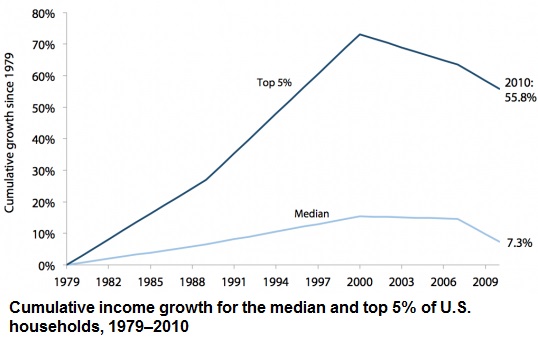
This is hard! Change has come to the world of wage-seekers – the middle classes are under attack; the labor-pool of most industrialized nations have endured decline, not in the numbers, but rather in prosperity. While wage-earners have not kept pace with inflation, top-earners (bonuses, commissions and business profits) have soared; (see Photo).

CU Blog - Economic Principles - Wage-Seeking - Market forces -vs- Collective Bargaining - Photo 2As a direct result, every Caribbean member-state struggles with employment issues in their homeland. In fact, this was an initial motivation for the book Go Lean…Caribbean, stemming from the fall-out of the 2008 Great Recession, this publication was presented as a roadmap for the introduction and implementation of the Caribbean Union Trade Federation (CU) to elevate the economic, security and governing engines of the Caribbean region to create 2.2 million new jobs, despite global challenges.

Needless to say, the global challenge is far more complex than Home Economics. The Go Lean book describes the effort as heavy-lifting; then proceeds to detail the turn-by-turn directions of a roadmap to remediate and mitigate wage-seeking.

The roadmap channels the Economic Principles and best-practices of technocrats like Adam Smith and 11 other named economists, many of them Nobel Laureates. A review of the work of these great men and woman constitute “Lessons in Economic Principles”. Why would these lessons matter in the oversight of Caribbean administration? Cause-and-effect!

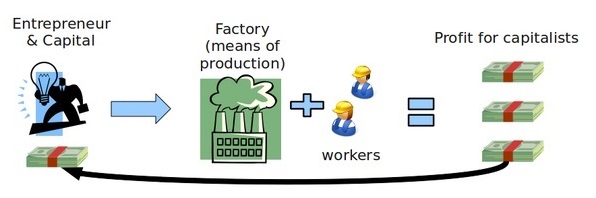
Profit 4The root of the current challenge for wage-seekers is income equality; and this is bigger than just the Caribbean. It is tied to the global adoption of globalization and technology/ automation – a product of global Market Forces as opposed to previous Collective Bargaining factors. This relates back to the fundamental Economic Principle of “supply-and-demand”; but now the “supply” is global. This photo/”process flow” here depicts the ingredients of Market Forces. When there is the need for labor, the principle of comparative analysis is employed, and most times the conclusion is to “off-shore” the labor efforts, and then import the finished products. This is reversed of the colonialism that was advocated by Adam Smith; instead of the developed country providing factory labor for Third World consumption, the developed nation (i.e. United States) is now in the consumer-only role, with less and less production activities, for products fabricated in the Third World. This reality is not sustainable for providing prosperity to the middle classes, to the wage-seekers.

As a community, we may not like the laws of Economics, but we cannot ignore them. The Go Lean book explains the roles and significance of Economic Principles … with this excerpt (Page 21):

While money is not the most important factor in society, the lack of money and the struggle to acquire money creates challenges that cannot be ignored. The primary reason why the Caribbean has suffered so much human flight in the recent decades is the performance of the Caribbean economy. Though this book is not a study in economics, it recommends, applies and embraces these 6 core Economic Principles as sound and relevant to this roadmap:

  1. People Choose: We always want more than we can get and productive resources (human, natural, capital) are always limited. Therefore, because of this major economic problem of scarcity, we usually choose the alternative that provides the most benefits with the least cost.
  2. All Choices Involve Costs: The opportunity cost is the next best alternative you give up when you make a choice. When we choose one thing, we refuse something else at the same time.
  3. People Respond to Incentives in Predictable   Ways: Incentives are actions, awards, or rewards that determine the choices people make. Incentives can be positive or negative. When incentives change, people change their behaviors in predictable ways.
  4. Economic Systems Influence Individual Choices and Incentives: People cooperate and govern their actions through both written and unwritten rules that determine methods of allocating scarce resources. These rules determine what is produced, how it is produced, and for whom it is produced. As the rules change, so do individual choices, incentives, and behavior.
  5. Voluntary Trade Creates Wealth: People specialize in the production of certain goods and services because they expect to gain from it. People trade what they produce with other people when they think they can gain something from the exchange. Some benefits of voluntary trade include higher standards of living and broader choices of goods and services.
  6. The Consequences of Choices Lie in the Future: Economists believe that the cost and benefits of decision making appear in the future, since it is only the future that we can influence. Sometimes our choices can lead to unintended consequences.

Source: Handy Dandy Guide (HDC) by the National Council on Economic Education (2000)

The Go Lean book describes the end result of the application of best-practices in this field of economics over the course of a 5-year roadmap: the CU … as a hallmark of technocracy. But the purpose is not the edification of the region’s economists, rather to make the Caribbean homeland “better places to live, work and play” for its citizens. This branding therefore puts emphasis on the verb “work”; the nouns “jobs” and “wages” must thusly be a constant focus of the roadmap.

Brain Drain 70 percent ChartThis Go Lean book declares that the Caribbean eco-system for job-creation is in crisis … due to the same global dilemma. The roadmap describes the crisis as losing a war, the battle of globalization and technology. The consequence of the defeat is 2 undesirable conditions: income inequality and societal abandonment, citizens driven away to a life in the Diaspora. This assessment currently applies in all 30 Caribbean member-states, as every community has lost human capital to emigration. Some communities, like Puerto Rico and the US Virgin Islands have suffered with an abandonment rate of more than 50% and others have watched more than 70% of college-educated citizens flee their community for foreign shores. Even education is presented as failed investments as those educated in the region and leave to find work do not even return remittances in proportion to their costs of development. (See Table 4.1 in the Photo)

The Go Lean book therefore posits that there is a need to re-focus, re-boot, and optimize the labor/wage-seeking engines so as to create more jobs with livable wages. Alas, this is not just a Caribbean issue, but a global (i.e. American) one as well. See the following encyclopedic references for wage-seeking and Collective Bargaining to fully understand the complexities of these global issues:

Encyclopedia Reference #1: Wage-Seeking
(Source: https://en.wikipedia.org/wiki/Wage)

A wage is monetary compensation paid by an employer to an employee in exchange for work done. Payment may be calculated as a fixed amount for each task completed (a task wage or piece rate), or at an hourly or daily rate, or based on an easily measured quantity of work done.

Wages are an example of expenses that are involved in running a business.

Payment by wage contrasts with salaried work, in which the employer pays an arranged amount at steady intervals (such as a week or month) regardless of hours worked, with commission which conditions pay on individual performance, and with compensation based on the performance of the company as a whole. Waged employees may also receive tips or gratuity paid directly by clients and employee benefits which are non-monetary forms of compensation. Since wage labour is the predominant form of work, the term “wage” sometimes refers to all forms (or all monetary forms) of employee compensation.

Determinants of wage rates
Depending on the structure and traditions of different economies around the world, wage rates will be influenced by market forces (supply and demand), legislation, and tradition. Market forces are perhaps more dominant in the United States, while tradition, social structure and seniority, perhaps play a greater role in Japan.[6]

Wage Differences
Even in countries where market forces primarily set wage rates, studies show that there are still differences in remuneration for work based on sex and race. For example, according to the U.S. Bureau of Labor Statistics, in 2007 women of all races made approximately 80% of the median wage of their male counterparts. This is likely due to the supply and demand for women in the market because of family obligations. [7] Similarly, white men made about 84% the wage of Asian men, and black men 64%.[8] These are overall averages and are not adjusted for the type, amount, and quality of work done.

Real Wage
The term real wages refers to wages that have been adjusted for inflation, or, equivalently, wages in terms of the amount of goods and services that can be bought. This term is used in contrast to nominal wages or unadjusted wages. Because it has been adjusted to account for changes in the prices of goods and services, real wages provide a clearer representation of an individual’s wages in terms of what they can afford to buy with those wages – specifically, in terms of the amount of goods and services that can be bought.

See Table of European Model in the Appendix below. (The European Union is the model for the Caribbean Union).

———-

Encyclopedia Reference #2: Collective Bargaining
(Source: https://en.wikipedia.org/wiki/Collective_bargaining)

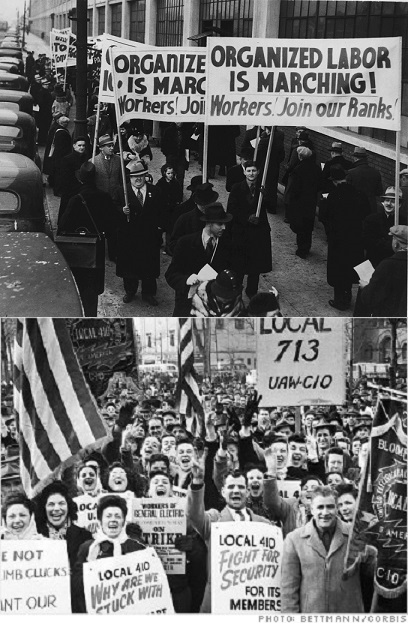
WPR: Marches & PicketsCollective Bargaining is a process of negotiation between employers and a group of employees aimed at reaching agreements to regulate working conditions. The interests of the employees are commonly presented by representatives of a trade union to which the employees belong. The collective agreements reached by these negotiations usually set out wage scales, working hours, training, health and safety, overtime, grievance mechanisms, and rights to participate in workplace or company affairs.[1]

The union may negotiate with a single employer (who is typically representing a company’s shareholders) or may negotiate with a group of businesses, depending on the country, to reach an industry wide agreement. A collective agreement functions as a labor contract between an employer and one or more unions.

The industrial revolution brought a swell of labor-organizing in [to many industrialized countries, like] the US. The American Federation of Labor (AFL) was formed in 1886, providing unprecedented bargaining powers for a variety of workers.[11] The Railway Labor Act (1926) required employers to bargain collectively with unions. While globally, International Labour Organization Conventions (ILO) were ratified in parallel to the United Nations efforts (i.e. Declaration of Human Rights, etc.). There were a total of eight ILO fundamental conventions [3] all ascending between 1930 and 1973, i.e. the Freedom of Association and Protection of the Right to Organise Convention (1949).

The Go Lean book presents a roadmap on how to benefit from the above Economic Principles – and how to empower communities anew – in the midst of tumultuous global challenges. This roadmap addresses more than economics, as there are other areas of societal concern. This is expressed in the CU charter; as defined by these 3 prime directives:

  • Optimization of economic engines in order to grow the regional economy to $800 Billion and create 2.2 million new jobs.
  • Establishment of a security apparatus to protect the resultant economic.
  • Improvement of Caribbean governance to support these engines.

Early in the Go Lean book, the responsibility to create jobs was identified as an important function for the CU with these pronouncements in the Declaration of Interdependence (Pages 14):

xix.  Whereas our legacy in recent times is one of societal abandonment, it is imperative that incentives and encouragement be put in place to first dissuade the human flight, and then entice and welcome the return of our Diaspora back to our shores.

xxi.  Whereas the preparation of our labor force can foster opportunities and dictate economic progress for current and future generations, the Federation must ensure that educational and job training opportunities are fully optimized for all residents of all member-states, with no partiality towards any gender or ethnic group. The Federation must recognize and facilitate excellence in many different fields of endeavor, including sciences, languages, arts, music and sports. This responsibility should be executed without incurring the risks of further human flight, as has been the past history.

xxiv. Whereas a free market economy can be induced and spurred for continuous progress, the Federation must install the controls to better manage aspects of the economy: jobs, inflation, savings rate, investments and other economic principles. Thereby attracting direct foreign investment because of the stability and vibrancy of our economy.

xxvi.  Whereas the Caribbean region must have new jobs to empower the engines of the economy and create the income sources for prosperity, and encourage the next generation to forge their dreams right at home, the Federation must therefore foster the development of new industries, like that of ship-building, automobile manufacturing, prefabricated housing, frozen foods, pipelines, call centers, and the prison industrial complex. In addition, the Federation must invigorate the enterprises related to existing industries tourism, fisheries and lotteries – impacting the region with more jobs.

According to an article from the Economic Policy Institute, entitled The Decline of Collective Bargaining and the Erosion of Middle-class Incomes in Michigan by Lawrence Mishel (September 25, 2012), the challenges to middle class income are indisputable, and the previous solution – Collective Bargaining – is no longer as effective as in the past. (The industrial landscape of Michigan had previously been identified as a model for the Caribbean to consider). See a summary of the article here (italics added) and VIDEO in the Appendix:

In Michigan between 1979 and 2007, the last year before the Great Recession, the state’s economy experienced substantial growth and incomes rose for high-income households. But middle-class incomes did not grow. The Michigan experience is slightly worse than but parallels that of the United States as a whole, where middle-class income gains were modest but still far less than the income gains at the top. What the experience of Michiganders and other Americans makes clear is that income inequality is rising, and it has prevented middle-class incomes from growing adequately in either Michigan or the nation.

The key dynamic driving this income disparity has been the divergence between the growth of productivity—the improvement in the output of goods and services produced per hour worked—and the growth of wages and benefits (compensation) for the typical worker. It has been amply documented that productivity and hourly compensation grew in tandem between the late 1940s and the late 1970s, but split apart radically after 1979. Nationwide, productivity grew by 69.1 percent between 1979 and 2011, but the hourly compensation of the median worker (who makes more than half the workforce but less than the other half) grew by just 9.6 percent (Mishel and Gee 2012; Mishel et al. 2012). In other words, since 1979 the typical worker has hardly benefited from improvements in the economy’s ability to raise living standards and, consequently, middle-class families’ living standards have barely budged since then. This phenomenon has occurred across the nation, including in Michigan.

This divergence between pay and productivity and the corresponding failure of middle-class incomes to grow is strongly related to the erosion of collective bargaining. And collective bargaining has eroded more in Michigan than in the rest of the nation, helping to explain Michigan’s more disappointing outcomes.

Research three decades ago by economist Richard Freeman (1980) showed that collective bargaining reduces wage inequality, and all the research since then (see Freeman 2005) has confirmed his finding. Collective bargaining reduces wage inequality for three reasons. The first is that wage setting in collective bargaining focuses on establishing “standard rates” for comparable work across business establishments and for particular occupations within establishments. The outcome is less differentiation of wages among workers and, correspondingly, less discrimination against women and minorities. A second reason is that wage gaps between occupations tend to be lower where there is collective bargaining, and so the wages in occupations that are typically low-paid tend to be higher under collective bargaining. A third reason is that collective bargaining has been most prevalent among middle-class workers, so it reduces the wage gaps between middle-class workers and high earners (who have tended not to benefit from collective bargaining).

Collective bargaining also reduces wage inequality in a less-direct way. Wage and benefit standards set by collective bargaining are often followed in workplaces not covered by collective bargaining, at least where there is extensive coverage by collective bargaining in particular occupations and industries. This spillover effect means that the impact of collective bargaining on the wages and benefits of middle-class workers extends far beyond those workers directly covered by an agreement.

Source: http://www.epi.org/publication/bp347-collective-bargaining/

The siren call went out 20 years ago, of the emergence of an “Apartheid” economy, a distinct separation between the classes: labor and management. Former US Secretary of Labor Robert Reich (1993 – 1997 during the Clinton Administration’s First Term) identified vividly, in this 1996 Harvard Business Review paper, that something was wrong with the U.S. economy then; (it is worst now):

CU Blog - Economic Principles - Wage-Seeking - Market forces -vs- Collective Bargaining - Photo 3That something is not the country’s productivity, technological leadership, or rate of economic growth, though there is room for improvement in all those areas. That something is an issue normally on the back burner in U.S. public discourse: the distribution of the fruits of economic progress. For many, the rise in AT&T’s stock after it announced plans [on January 3, 1996] to lay off 40,000 employees crystallized the picture of an economy gone haywire, with shareholders gaining and employees losing as a result of innovation and advances in productivity.

Has the distribution of the benefits of economic growth in the United States in fact gone awry? Is the nation heading toward an apartheid economy—one in which the wealthy and powerful prosper while the less well-off struggle? What are the facts? What do they mean? Are there real problems—and can they be solved?

Deploying solutions for the problem of income equality in the Caribbean is the quest of the Go Lean/CU roadmap. The book identified Agents of Change (Page 57) that is confronting the region, (America as well); they include: Globalization and Technology. A lot of the jobs that paid a “living wage” are now being shipped overseas to countries with lower wage levels, or neutralized by the advancement of technology. Yes, computers are reshaping the global job market, so even Collective Bargaining may fail to counter any eventual obsolescence of wage-earners, their valuation and appreciation; (see Encyclopedic Article # 2). The Go Lean book, and previous blog/commentaries, therefore detailed the campaign to not just consume technology, but to also innovate, produce and distribute the computer-enabled end-products. Therefore industries relating to STEM (Science, Technology, Engineering and Mathematics/Medicine) are critical in the roadmap. Not only do these careers yield good-paying direct jobs, but also factor in the indirect job market, and the job-multiplier rate (3.0 to 4.1) for down-the-line employment (Page 260) opportunities.

The Go Lean… Caribbean book details the creation of 2.2 million new jobs for the Caribbean region, many embracing ICT/STEM skill-sets. This is easier said than done, so how does Go Lean purpose to deliver on this quest? By the adoption of certain community ethos, plus the executions of key strategies, tactics, implementations and advocacies. The following is a sample from the book:

Assessment – Puerto Rico – Extreme Unemployment – The Greece of the Caribbean Page 18
Community Ethos – Deferred Gratification Page 21
Community Ethos – Job Multiplier Page 22
Community Ethos – Anti-Bullying and Mitigation Page 23
Community Ethos – Lean Operations Page 24
Community Ethos – Return on Investments Page 24
Community Ethos – Ways to Impact the Future Page 26
Community Ethos – Ways to Foster Genius Page 27
Community Ethos – Ways to Help Entrepreneurship Page 28
Community Ethos – Ways to Promote Intellectual Property – Key to ICT Careers Page 29
Community Ethos – Ways to Impact Research and Development – Germaine for STEM jobs Page 30
Community Ethos – Ways to Close the Digital Divide – Vital for fostering ICT careers Page 31
Strategy – Mission – Education Without Further Brain Drain Page 46
Strategy – Agents of Change – Technology Page 57
Strategy – Agents of Change – Globalization Page 57
Tactical – Fostering a Technocracy Page 64
Tactical – Tactics to Forge an $800 Billion Economy – East Asian Tigers Model Page 69
Tactical – Tactics to Forge an $800 Billion Economy – High Multiplier Industries Page 70
Tactical – Tactics to Forge an $800 Billion Economy – Trade and Globalization Page 70
Tactical – Separation of Powers – Commerce Department – Patents & Copyrights Page 78
Implementation – Steps to Implement Self-Governing Entities – As Job-creating Engines Page 105
Implementation – Ways to Benefit from Globalization – Technology: The Great Equalizer Page 119
Planning – Ways to Improve Trade Page 128
Planning – Ways to Model the EU Page 130
Planning – Lessons Learned from 2008 – Income Equality Now More Pronounced Page 136
Advocacy – Ways to Grow the Economy Page 151
Advocacy – Ways to Create Jobs Page 152
Advocacy – Ways to Improve Education – e-Learning Options Page 159
Advocacy – Ways to Impact Labor Markets and Unions – Collective Bargaining Best-Practices Page 164
Advocacy – Ways to Foster Empowering Immigration – STEM Resources Page 174
Advocacy – Ways to Foster Technology – Credits, Incentives and Investments Page 197
Advocacy – Ways to Foster e-Commerce – Optimize Remittance Methods Page 198
Advocacy – Ways to Help the Middle Class – Exploit Globalization Page 223
Appendix – Growing 2.2 Million Jobs in 5 Years Page 257
Appendix – Job Multipliers – Direct & Indirect Job Correlations Page 259
Appendix – Emigration Bad Example – Puerto Rican Population in the US Mainland Page 304

The CU will foster job-creating developments, incentivizing many high-tech start-ups and incubating viable companies. The primary ingredient for CU success will be Caribbean people, so we must foster and incite participation of many young people into fields currently sharing higher job demands, like ICT and STEM, so as to better impact their communities. A second ingredient will be the support of the community – the Go Lean movement recognizes the limitation that not everyone in the community can embrace the opportunity to lead in these endeavors. An apathetic disposition is fine-and-well; we simply must not allow that to be a hindrance to those wanting to progress – there are both direct jobs and indirect jobs connected with the embrace of ICT/STEM disciplines. The community ethos or national spirit, must encourage and spur “achievers” into roles where “they can be all they can be”. Go Lean asserts that one person can make a difference … to a community (Page 122).

Other subjects related to job empowerments for wage-seekers in the region have been blogged in other Go Lean…Caribbean commentaries, as sampled here:

https://goleancaribbean.com/blog/?p=4240 Immigration Policy Exacerbates Worker Productivity Crisis
https://goleancaribbean.com/blog/?p=3694 Jamaica-Canada employment programme pumps millions into local economy
https://goleancaribbean.com/blog/?p=3473 Haiti to Receive $70 Million Grant to Expand Caracol Industrial Park to Create Jobs and Benefit from Globalization
https://goleancaribbean.com/blog/?p=3446 Forecast for higher unemployment in Caribbean in 2015
https://goleancaribbean.com/blog/?p=3164 Michigan Unemployment Model – Then and Now
https://goleancaribbean.com/blog/?p=2857 Where the Jobs Are – Entrepreneurism in Junk
https://goleancaribbean.com/blog/?p=2800 The Geography of Joblessness
https://goleancaribbean.com/blog/?p=2750 Disney World’s example of Self Governing Entities and Economic Impacts of 70,000 jobs; 847,000+ Puerto Ricans now live in the vicinity.
https://goleancaribbean.com/blog/?p=2126 Where the Jobs Are – Computers Reshaping Global Job Market
https://goleancaribbean.com/blog/?p=2025 Where the Jobs Are – Attitudes & Images of the Caribbean Diaspora in US
https://goleancaribbean.com/blog/?p=2003 Where the Jobs Are – Ship-breaking under the SGE Structure
https://goleancaribbean.com/blog/?p=1698 Where the Jobs Are – STEM Jobs Are Filling Slowly
https://goleancaribbean.com/blog/?p=1683 Where the Jobs Were – British public sector now strike over ‘poverty pay’
https://goleancaribbean.com/blog/?p=1214 Where the Jobs Are – Fairgrounds as SGE & Landlords for Sports Leagues
https://goleancaribbean.com/blog/?p=273 10 Things We Don’t Want from the US – Job Discrimination of Immigrations

The Caribbean is arguably the best address on the planet, but “man cannot live on beauty alone”, there is the need for a livelihood as well. This is the challenge, considering the reality of unemployment in the region; the jobless rate among the youth is even higher.

The crisis of income inequality for the US is a direct result of free trade agreements, like NAFTA, and China’s Preferential Trading Status. Despite this status, we can benefit from the realities of globalization; jobs are being moved to conducive locations with lower labor costs.  We should invite these investors to look for cheaper labor options, here in the Caribbean region (Haiti, Dominican Republic, Jamaica, etc.). This is the same reality as in Europe with different wage levels for the different countries (see Appendix below); the Caribbean also has these wage differences.

The Go Lean roadmap seeks to foster higher-paying job options: Call Centers, Offshore Software Development Centers, R&D Medical campuses, light-manufacturing and assembly plants for “basic needs” products (food, clothing shelter, energy, and transportation) for Caribbean consumption. This is the successful model of Japan, China and the “East Asia Tigers” economies; these are manifestations of effective Economic Principles.

The Go Lean book therefore digs deeper, providing turn-by-turn directions to get to the desired Caribbean results: a better place to live, work and play. 🙂

Download the free e-Book of Go Lean … Caribbean – now!

————-

Appendix – List of European countries by average wage (USA & Japan added for comparison)

(Source: https://en.wikipedia.org/wiki/List_of_European_countries_by_average_wage)

2014 Annual values (in national currency) for a family with two children with one average salary, including tax credits and allowances.[1] Net amount is computed after Taxes, Social Security and Family Allowances; the result is provided in both the National Currency and the Euro, if different. The table, sorted from highest Net amount to the lowest, is presented as follows:

State Gross Net (Natl. Curr) Net (Euro)
Switzerland 90,521.98 86,731.20 71,407.21
Luxembourg 54,560.39 52,041.36 52,041.36
Norway 542,385.96 415,557.87 49.,741.20
Denmark 397,483.78 289,292.48 38,806.20
Iceland 6,856,099.69 5,872.114.66 37,865.07
UNITED STATES 56,067 45,582 37,671
Sweden 407,974.45 335,501.45 36,874.37
Netherlands 48,855.70 36,648.71 36,648.71
United Kingdom 35,632.64 28,960.38 35,925.65
Belgium 46,464.41 35,810.55 35,810.55
Italy 41,462.67 24,539.93 35,539.93
Germany 45,952.05 36,269.23 35,269.23
France 38,427.35 30,776.75 34,776.75
Ireland 34,465.85 34,382.63 34,382.63
Austria 42,573.25 33,666.04 33,666.04
Finland 42,909.72 32,386.59 32,386.59
JAPAN 4,881,994.24 4,132.432.02 29,452.16
Spain 26,161.81 22,129.78 22,129.78
Greece 24,201.50 17,250.24 17,250.24
Slovenia 17,851.28 15,882.53 15,882.53
Portugal 17,435.71 15,140.25 15,140.25
Estonia 12,435.95 11,176.87 11,176.87
Czech Republic 312,083.83 306,153.76 11,118.31
Slovakia 10,342.10 9,778.16 9,778.16
Poland 42,360.01 34,638.77 8,278.27
Hungary 3,009,283.93 2,530.280.97 8,196.30
Turkey 28,370.00 21,072.12 7,250.00

————-

Appendix VideoCollective Bargaining and Shared Prosperity: Michigan, 1979 – 2009 http://youtu.be/PcT4jK89JmE

Published on September 27, 2012 – This VIDEO depicts the positive effects of Collective Bargaining on the quest for income equality in the US State of Michigan; and the sad consequence of the widening income inequality when Collective Bargaining is less pervasive.
This reflect the “Observe and Report” functionality of the Go Lean…Caribbean promoters in the Greater Detroit-Michigan area.

Share this post:
, , , ,
[Top]

Remembering Marcus Garvey: Still Relevant Today

Go Lean Commentary

The relations between the Caribbean and the United States of America have had a bumpy ride in the past. Consider just these few incidences:

But now, the people of the Caribbean has forgiven the US and now approve “life” within its borders….

… as so many Caribbean citizens have now fled to life in the US, as residents. There has been some reconciliation of the past … to allow for this normalized status quo.

But there is one more rift in the Caribbean-American history to consider, that of Marcus Garvey. Can this historicity also be re-approached, revisited, redeemed and reconciled? Is there a need for repentance?

In a previous commentary from this Go Lean movement, it was established how we cannot always leave past events in the past. At times, we must re-approach historic injustices so as to recognize the pain and legacy caused; only then can true reconciliation occur.

America had a bad legacy in terms of race relations. Has that country of the US reformed since the days of Marcus Garvey?

Accordingly, some stakeholders in the US Congress want that repentance, in the form of a posthumous pardon. See the story here:

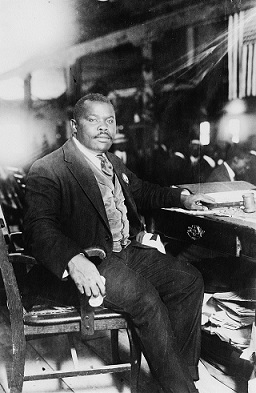
CU Blog - Remembering Marcus Garvey - Still Relevant Today - Photo 3Title: U.S. Congresswoman Wants President Obama to Pardon Marcus Garvey
Marcus Garvey, Jamaica’s national hero who was charged with mail fraud in the United States could be in line for a presidential pardon if Congresswoman Yvette Clarke gets her way. Clarke is working to ensure that Garvey is exonerated before Obama steps down from his post in January 2017. Clarke announced the potential action in a speech to the Jamaica Diaspora after receiving the first Talawah Award for Politics. According to Clarke, two other congressional representatives – Charles Rangel and John Conyers – will join her in making sure that Garvey receives a pardon and that his name is cleared.

In 1923, Garvey was arrested in the U.S. on charges of mail fraud and spent two years in a federal prison before being deported back to Jamaica. In the years following, a number of governments and organizations lobbied authorities in the U.S. to expunge the record of Jamaica’s national hero. Clarke was one of seven Jamaicans presented with the Inaugural Talawah Awards for their contributions to both their homeland and their adopted home.
Source: Jamaicans.com – Lifestyle E-zine; posted: 05/15/2016; Retrieved 08/19/2016 from: http://jamaicans.com/u-s-congresswoman-wants-president-obama-pardon-marcus-garvey/

The subject of Marcus Garvey – see Appendix & VIDEO below – is very important from a Jamaican perspective. He is considered a National Hero in his homeland, where he was awarded the “Order of National Hero” posthumously in 1964; an esteemed honor awarded by the government (Parliament) of Jamaica and one of its first official acts after independence.

But the story of Marcus Garvey is more than just a “treasure to one, trash to another” consideration. Recognizing Jamaican value and worth, means recognizing Jamaica’s endurance despite a history of oppression, repression and suppression. Remember, there was a world, not very long ago, of no civil rights and intensed colonization. Marcus Garvey transcended that world. In effect, Jamaicans are saying to the world: “You see Marcus Garvey; you see me”.

Garvey was given major prominence as a national hero during Jamaica’s move towards independence. As such, he has numerous tributes there. The first of these is the Garvey statue and shrine in Kingston’s National Heroes Park. Among the honors to him in Jamaica are his name upon the Jamaican Ministry of Foreign Affairs; a major highway bearing his name and the Marcus Garvey Scholarship tenable at the University of the West Indies sponsored by The National Association of Jamaican and Supportive Organizations, Inc (NAJASO) since 1988.

Garvey’s birthplace, 32 Market Street, St. Ann’s Bay, Jamaica, has a marker signifying it as a site of importance in the nation’s history.[64]His likeness is on the 20-dollar coin and 25-cent coin. Garvey’s recognition is probably most significant in Kingston, Jamaica.
Source: Retrieved August 20, 2016 from: https://en.wikipedia.org/wiki/Marcus_Garvey

The book Go Lean…Caribbean posits that any attempt at unification of the Caribbean 30 member-states must consider the ancient and modern injustices some member-states have experienced (within themselves and with other nations). The book serves as a roadmap for the introduction and implementation of the Caribbean Union Trade Federation (CU). A mission of the roadmap is to champion the cause of Caribbean Image. For far too long, Caribbean people have been classified as “Less Than”, as parasites rather than protégés. Therefore an additional mission of the roadmap is to facilitate formal reconciliations, (much consideration is given to the model in South Africa with their Truth & Reconciliation Commissions (TRC)). But this commentary posits, that we need reconciliations in foreign relations too, (i.e. Caribbean / United States).

The approach is simple, correct the bad “community ethos” from the past. The African-American and African-Caribbean populations were oppressed, repressed an suppressed in the “White” world of the 1920’s. A good “community ethos” now is to repent, forgive and reconcile from that legacy.

“Community Ethos” is described in the Go Lean book as the fundamental character or spirit of a culture; the underlying sentiment that informs the beliefs, customs, or practices of a group or society; the dominant assumptions of a people or period. America has surely transformed – the current President, Barack Obama is of African-American heritage. Has that transformation advanced to the point of taking ownership of past misdeeds.

We truly hope so! But show us, by recognizing and redeeming the bad acts of the US federal government against Marcus Garvey. This year marks the 8th and final year of the Obama administration. He has always had the power to grant a pardon to the “good name” of Marcus Garvey. When requested before in 2011, his stance was that it is his policy not to consider requests for posthumous pardons. His assertion is that they should be enjoyed only by the living.

But more is involved, Mr. President. A pardon would send a message to the world about African-American and African-Caribbean heroes:

In hindsight, they should be held in high esteem for doing so much in a world that valued them so little!

The historicity of Marcus Garvey is a powerful role model for today’s Caribbean. He was truly an Advocate for the African race universally. (This race represents the majority of the population of all the Caribbean member-states except the French Overseas Territory of Saint Barthélemy). He championed this cause in words (speeches and writings), actions, commitments and sacrifice. He truly gave a full measure of blood, sweat and tears. He presented his vision and values in his quest to unify and elevate the Black race.

Our emulation of Marcus Garvey is a lot less ambitious, rather than the African-ethnic world, our scope is just the elevation of the 30 Caribbean member-states. Rather than the narrow focus of Blacks in general, our scope involves all current Caribbean ethnicities and languages. We are trying to “raise the tide in the Caribbean waters so that all boats will be elevated”. Further, as communicated in previous blog-commentaries, we are not trying to impact the United States of America – beyond help to our Diaspora – nor the continent of Africa – beyond providing them a great model of our technocratic deliveries. Our mission is a lot more laser-focused than that of Marcus Garvey; we are simply trying to make our Caribbean homeland a better place to live, work and play.

This CU/Go Lean mission is to elevate Caribbean society through cutting edge delivery of best practices, strategies, tactics and implementations. The prime directives of this movement is defined as the following 3 statements:

  • Optimization of the economic engines in order to grow the regional economy to $800 Billion & create 2.2 million new jobs.
  • Establishment of a security apparatus for public safety and to protect the resultant economic engines.
  • Improvement of Caribbean governance to support these engines.

The Go Lean book speaks of the Caribbean past, as it relates to the American past. The legacy of the common sufferings of slavery and racial repression should create a common bond; this bond should unite all of the Black World. It should also unite the Caribbean into accepting a premise of interdependence for solutions in the economic-security-governance eco-systems. This common need was defined early in the book (Page 10) in the following pronouncements in the Declaration of Interdependence:

Preamble: As the history of our region and the oppression, suppression and repression of its indigenous people is duly documented, there is no one alive who can be held accountable for the prior actions, and so we must put aside the shackles of systems of repression to instead formulate efficient and effective systems to steer our own destiny.

As the colonial history of our region was initiated to create economic expansion opportunities for our previous imperial masters, the structures of government instituted in their wake have not fostered the best systems for prosperity of the indigenous people. Despite this past, we thrust our energies only to the future, in adapting the best practices and successes of the societies of these previous imperial masters and recognizing the positive spirit of their intent and vow to learn from their past accomplishments and mistakes so as to optimize the opportunities for our own citizenry to create a more perfect bond of union.

xi. Whereas all men are entitled to the benefits of good governance in a free society, “new guards” must be enacted to dissuade the emergence of incompetence, corruption, nepotism and cronyism at the peril of the people’s best interest. The Federation must guarantee the executions of a social contract between government and the governed.

xii. Whereas the legacy in recent times in individual states may be that of ineffectual governance with no redress to higher authority, the accedence of this Federation will ensure accountability and escalation of the human and civil rights of the people for good governance, justice assurances, due process and the rule of law. As such, any threats of a “failed state” status for any member state must enact emergency measures on behalf of the Federation to protect the human, civil and property rights of the citizens, residents, allies, trading partners, and visitors of the affected member state and the Federation as a whole.

xiii. Whereas the legacy of dissensions in many member-states (for example: Haiti and Cuba) will require a concerted effort to integrate the exile community’s repatriation, the Federation must arrange for Reconciliation Commissions to satiate a demand for justice.

The Go Lean book details a lot more, a series of assessments, community ethos, strategies, tactics, implementations and advocacies to glean lessons from history and impact the Caribbean-side of the common Black experience:

Community Ethos – Deferred Gratification – Example of Black America of Olden Days Page 21
Community Ethos – Economic Systems Influence Choices & Incentives Page 21
Community Ethos – People Respond to Incentives Page 21
Community Ethos – Consequences of Choices Lie in the Future Page 21
Community Ethos – Ways to Impact Turn-Arounds Page 33
Community Ethos – Ways to Manage Reconciliations Page 34
Community Ethos – Ways to Promote Happiness Page 36
Community Ethos – Ways to Impact the Greater Good Page 37
Strategy – Vision – Confederating a Non-Sovereign Union of 30 Member-states Page 45
Strategy – Mission – Keep the next generation at home; Repatriate Diaspora Page 46
Tactical – Separation of Powers – Truth & Reconciliation Courts Page 78
Implementation – Ways to Deliver Page 109
Implementation – Reasons to Repatriate Page 118
Anatomy of Advocacies Page 122
Planning – Ways to Improve Image Page 133
Planning – Improve Failed-State Indices Page 134
Advocacy – Ways to Grow the Economy Page 151
Advocacy – Ways to Better Manage the Social Contract Page 170
Advocacy – Ways to Impact Justice – Truth & Reconciliation Commissions Page 177
Advocacy – Ways to Impact Hollywood – Managing Image through Films Page 203
Advocacy – Ways to Preserve Caribbean Heritage Page 218

The foregoing article relates the second request to US President Obama to extend a pardon to the legacy of Marcus Garvey. This is important to “us” in the Caribbean.

Just do it!

Obama claims to be a friend of the Caribbean, though many times his policies have worked contrary to the Caribbean’s best interests. Consider these examples:

https://goleancaribbean.com/blog/?p=7689 Obama – Bad For Caribbean Status Quo
https://goleancaribbean.com/blog/?p=4935 A Lesson Learned from Obama’s Caribbean Visit
https://goleancaribbean.com/blog/?p=1674 Obama’s Plans for $3.7 Billion Immigration Crisis Funds

The Go Lean/CU roadmap addresses the past, present and future challenges of Caribbean empowerment and image.

Now is the time for all of the Caribbean, the people and governing institutions, to lean-in for the empowerments described in the book Go Lean … Caribbean. There is reason to believe that these empowerment efforts can be successful. We have the legacy of so many National Heroes; we can now stand on their shoulders and reach even greater heights.

The Go Lean roadmap conveys how single causes have successfully been forged throughout the world (Page 122 – Anatomy of Advocacies) by individual Advocates. There is consideration for these examples:

Please note, while this movement petitions for reconciliation of the sullied past in race relations, there is no request for reparations. The Go Lean book punctuates this point with the following quotation:

We cannot ignore the past, as it defines who we are, but we do not wish to be shackled to the past either, for then, we miss the future. So we must learn from the past, our experiences and that of other states in similar situations, mount our feet solidly to the ground and then lean-in, to reach for new heights; forward, upward and onward. – Page 5

The new ethos being developed for the Caribbean by this Go Lean movement, is to reconcile conflicts from the past; to repent, forgive and hopefully forget the long history of human rights abuses from the past. All of this effort is heavy-lifting, but the Bible gives us an assurance that makes all the effort worthwhile:

Then you will know the truth, and the truth will set you free. – John 8:32; New International Version

🙂

Download the book Go Lean … Caribbean – now!

=============

Appendix VIDEO – Marcus Garvey — Look For Me In The Whirlwind (Review)https://youtu.be/hS3Y5RhBPd8

Published on Oct 8, 2012 – Black History Studies team (BHS) presents their Marcus Garvey screening, at the Marcus Garvey Centre in Tottenham. Sis Sonia Scully interviews film goers in the break, to find out how they’re receiving the Friday Black History Month screenings.

=============

Appendix – Marcus Garvey Biography Wiki

Marcus Mosiah Garvey, Jr., (17 August 1887 – 10 June 1940),[2] was a Jamaican political leader, publisher, journalist, entrepreneur, and orator who was a proponent of the Pan-Africanism movement, to which end he founded the Universal Negro Improvement Association and African Communities League (UNIA-ACL).[3] He also founded the Black Star Line, a shipping and passenger line which promoted the return of the African diaspora to their ancestral lands.

CU Blog - Remembering Marcus Garvey - Still Relevant Today - Photo 1Prior to the 20th century, leaders such as Prince HallMartin DelanyEdward Wilmot Blyden, and Henry Highland Garnet advocated the involvement of the African diaspora in African affairs. Garvey was unique in advancing a Pan-African philosophy to inspire a global mass movement and economic empowerment focusing on Africa known as Garveyism.[3] Promoted by the UNIA as a movement of African Redemption, Garveyism would eventually inspire others, ranging from the Nation of Islam to the Rastafari movement (some sects of which proclaim Garvey as a prophet.)[4]

Garveyism intended persons of African ancestry in the diaspora to “redeem” the nations of Africa and for the European colonial powers to leave the continent. His essential ideas about Africa were stated in an editorial in the Negro World entitled “African Fundamentalism”, where he wrote: “Our union must know no clime, boundary, or nationality… to let us hold together under all climes and in every country…”[5]

After years of working in the Caribbean, Garvey left Jamaica to live in London from 1912 to 1914, where he attended Birkbeck College, taking classes in law and philosophy. He also worked for the African Times and Orient Review, published by Dusé Mohamed Ali, who was a considerable influence on the young man. Garvey sometimes spoke at Hyde Park‘s Speakers’ Corner.

In 1914, Garvey returned to Jamaica, where he organized the Universal Negro Improvement Association (UNIA).

The UNIA held an international convention in 1921 at New York City’s MadisonSquareGarden. Also represented at the convention were organizations such as the Universal Black Cross Nurses, the Black Eagle Flying Corps, and the Universal African Legion. Garvey attracted more than 50,000 people to the event and in his cause. The UNIA had 65,000 to 75,000 members paying dues to his support and funding. The national level of support in Jamaica helped Garvey to become one of the most influential leaders of the 20th century on the island.[13]

After corresponding with Booker T. Washington, head of the Tuskegee Institute in Alabama and a national African-American leader in the United States, Garvey traveled by ship to the U.S., arriving on 23 March 1916 aboard the SS Tallac. He intended to make a lecture tour and to raise funds to establish a school in Jamaica modeled after Washington’s Institute. Garvey visited Tuskegee, and afterwards, visited with a number of black leaders.

After moving to New York, he found work as a printer by day. He was influenced by Hubert Harrison. At night he would speak on street corners, much as he did in London’s Hyde Park. Garvey thought there was a leadership vacuum among African Americans. On 9 May 1916, he held his first public lecture in New York City at St Mark’s Church in-the-Bowery and undertook a 38-state speaking tour.

The next year in May 1917, Garvey and thirteen others formed the first UNIA division outside Jamaica. They began advancing ideas to promote social, political, and economic freedom for black people. On 2 July, the East St. Louis riots broke out. On 8 July, Garvey delivered an address, entitled “The Conspiracy of the East St. Louis Riots”, at Lafayette Hall in Harlem. During the speech, he declared the riot was “one of the bloodiest outrages against mankind”, condemning America’s claims to represent democracy when black people were victimized “for no other reason than they are black people seeking an industrial chance in a country that they have laboured for three hundred years to make great”. It is “a time to lift one’s voice against the savagery of a people who claim to be the dispensers of democracy”.[14]

Garvey worked to develop a program to improve the conditions of ethnic Africans “at home and abroad” under UNIA auspices. On 17 August 1918, he began publishing the Negro World newspaper in New York, which was widely distributed. Garvey worked as an editor without pay until November 1920. He used Negro World as a platform for his views to encourage growth of the UNIA.[15] By June 1919, the membership of the organization had grown to over two million, according to its records.

On 27 June 1919, the UNIA set up its first business, incorporating the Black Star Line of Delaware, with Garvey as President. By September, it acquired its first ship. Much fanfare surrounded the inspection of the S.S. Yarmouth and its rechristening as the S.S. Frederick Douglass on 14 September 1919. Such a rapid accomplishment garnered attention from many.[15] The Black Star Line also formed a fine winery, using grapes harvested only in Ethiopia. During the first year, the Black Star Line’s stock sales brought in $600,000. This caused it to be successful during that year. It had numerous problems during the next two years: mechanical breakdowns on its ships, what it said were incompetent workers, and poor record keeping. The officers were eventually accused of mail fraud.[15]

Edwin P. Kilroe, Assistant District Attorney in the District Attorney’s office of the County of New York, began an investigation into the activities of the UNIA. He never filed charges against Garvey or other officers.

By August 1920, the UNIA claimed four million members. The number has been questioned because of the organization’s poor record keeping.[15] That month, the International Convention of the UNIA was held. With delegates from all over the world attending, 25,000 people filled Madison Square Garden on 1 August 1920 to hear Garvey speak.[16]Over the next couple of years, Garvey’s movement was able to attract an enormous number of followers. Reasons for this included the cultural revolution of the Harlem Renaissance, the large number of West Indians who immigrated to New York, and the appeal of the slogan “One God, One Aim, One Destiny,” to black veterans of the first World War.[17]

CU Blog - Remembering Marcus Garvey - Still Relevant Today - Photo 2Garvey also established the business, the Negro Factories Corporation. He planned to develop the businesses to manufacture every marketable commodity in every big U.S. industrial center, as well as in Central America, the West Indies, and Africa. Related endeavors included a grocery chain, restaurant, publishing house, and other businesses.

Convinced that black people should have a permanent homeland in Africa, Garvey sought to develop Liberia. It had been founded by the American Colonization Society in the 19th century as a colony to free blacks from the United States. Garvey launched the Liberia program in 1920, intended to build colleges, industrial plants, and railroads as part of an industrial base from which to operate. He abandoned the program in the mid-1920s after much opposition from European powers with interests in Liberia.

Sometime around November 1919, the Bureau of Investigation or BOI (after 1935, the Federal Bureau of Investigation) began an investigation into the activities of Garvey and the UNIA. … Although initial efforts by the BOI were to find grounds upon which to deport Garvey as “an undesirable alien”, a charge of mail fraud was brought against Garvey in connection with stock sales of the Black Star Line after the U.S. Post Office and the Attorney General joined the investigation.[36]

The accusation centered on the fact that the corporation had not yet purchased a ship, which had appeared in a BSL brochure emblazoned with the name “Phyllis Wheatley” (after the African-American poet) on its bow. The prosecution stated that a ship pictured with that name had not actually been purchased by the BSL and still had the name “Orion” at the time; thus the misrepresentation of the ship as a BSL-owned vessel constituted fraud. The brochure had been produced in anticipation of the purchase of the ship, which appeared to be on the verge of completion at the time. However, “registration of the Phyllis Wheatley to the Black Star Line was thrown into abeyance as there were still some clauses in the contract that needed to be agreed.”[37] In the end, the ship was never registered to the BSL.

Garvey chose to defend himself. In the opinion of his biographer Colin Grant, Garvey’s “belligerent” manner alienated the jury. … Of the four Black Star Line officers charged in connection with the enterprise, only Garvey was found guilty of using the mail service to defraud. His supporters called the trial fraudulent, [a miscarriage of justice].

He initially spent three months in the Tombs Jail awaiting approval of bail. While on bail, he continued to maintain his innocence, travel, speak and organize the UNIA. After numerous attempts at appeal were unsuccessful, he was taken into custody and began serving his sentence at the Atlanta Federal Penitentiary on 8 February 1925.[41] Two days later, he penned his well known “First Message to the Negroes of the World From Atlanta Prison”, wherein he made his famous proclamation: “Look for me in the whirlwind or the storm, look for me all around you, for, with God’s grace, I shall come and bring with me countless millions of black slaves who have died in America and the West Indies and the millions in Africa to aid you in the fight for Liberty, Freedom and Life.”[42]

Garvey’s sentence was eventually commuted by President Calvin Coolidge. Upon his release in November 1927, Garvey was deported via New Orleans to Jamaica, where a large crowd met him in Kingston. Though the popularity of the UNIA diminished greatly following Garvey’s expulsion, he nevertheless remained committed to his political ideals.[44]

Garvey continued active in international civil rights, politics and business in the West Indies and Europe.

Garvey died in London on 10 June 1940, at the age of 52, having suffered two strokes. Due to travel restrictions during World War II, his body was interred (no burial mentioned but preserved in a lead-lined coffin) within the lower crypt in St. Mary’s Catholic cemetery in London near KensalGreenCemetery. Twenty years later, his body was removed from the shelves of the lower crypt and taken to Jamaica, where the government proclaimed him Jamaica’s first national hero and re-interred him at a shrine in the National Heroes Park.[52]

Influence

Schools, colleges, highways, and buildings in Africa, Europe, the Caribbean, and the United States have been named in his honor. The UNIA red, black, and green flag has been adopted as the Black Liberation Flag. Since 1980, Garvey’s bust has been housed in the Organization of American States‘ Hall of Heroes in Washington, D.C.

Malcolm X‘s parents, Earl and Louise Little, met at a UNIA convention in Montreal. Earl was the president of the UNIA division in Omaha, Nebraska, and sold the Negro World newspaper, for which Louise covered UNIA activities.[53]

Kwame Nkrumah named the national shipping line of Ghana the Black Star Line in honor of Garvey and the UNIA. Nkrumah also named the national football team the Black Stars as well. The black star at the centre of Ghana’s flag is also inspired by the Black Star.

During a trip to Jamaica, Martin Luther King and his wife Coretta Scott King visited Garvey’s shrine on 20 June 1965 and laid a wreath.[54] In a speech he told the audience that Garvey “was the first man of color to lead and develop a mass movement. He was the first man on a mass scale and level to give millions of Negroes a sense of dignity and destiny. And make the Negro feel he was somebody.”[55]

King was a posthumous recipient of the first Marcus Garvey Prize for Human Rights on 10 December 1968, issued by the Jamaican Government and presented to King’s widow. In 2002, scholar Molefi Kete Asante listed Garvey on his list of 100 Greatest African Americans.[56]

Source: Retrieved August 20, 2016 from: https://en.wikipedia.org/wiki/Marcus_Garvey


Share this post:
, , ,
[Top]

The Movie ‘Hidden Figures’ – Art Imitating Life

#GoLeanCommentary

** August 26, 2016 **

This day is the 98th birthday for “Katherine Johnson”.

CU Blog - 'Hidden Figures' - Art Imitating Life - Photo 2

Who is Katherine Johnson? And why is she important in the discussion of Caribbean empowerment?

Katherine Johnson (1918 – ) was a rocket scientist, physicist, and mathematician before there were rocket scientists. Why is this important? It is as 19th century Essayist Oscar Wilde dubbed it:

“Life imitates Art far more than Art imitates Life”.

The focus here is on the “Art imitating Life”; no, even further than “art” is the “science”. The “art” in this case is the movie “Hidden Figures”. The “science” is the mathematics associated with rockets and trajectory: Rocket Science.

The movie HIDDEN FIGURES is the incredible untold story of Katherine Johnson (Taraji P. Henson), Dorothy Vaughn (Octavia Spencer) and Mary Jackson (Janelle Monáe)—brilliant African-American women working at NASA, who served as the brains behind one of the greatest operations in history: the launch of astronaut John Glenn into orbit, a stunning achievement that restored the nation’s confidence, turned around the Space Race, and galvanized the world. The visionary trio crossed all gender and race lines to inspire generations to dream big. – 20 Century Fox Studio

This is the power associated with film. It’s an art that can promote a science. This is in harmony with a previous blog/commentary – by the Go Lean … Caribbean movement – regarding Caribbean Diaspora member and Hollywood great, Sidney Poitier, it was declared that …

… “Movies are an amazing business model. People give money to spend a couple of hours watching someone else’s creation and then leave the theater with nothing to show for the investment; except perhaps a different perspective”.

The untold story of Katherine Johnson is not so “unfamiliar” to the African-American experience. There has been millions of similar tales, where those with genius-qualifying abilities had to languish in a world where they were considered “less than“. (See the Appendix VIDEO below).

Oh, how wrong that world was!

Today, we tell the tale of Katherine Johnson. We celebrate her for her accomplishments and inspiration she provides to future generations of scientists, mathematicians, African-descendents and women. She is the definition of “Shero”; she is all of that! See how this is portrayed in the new film here, opening in January 2017:

VIDEO: Movie Trailer ‘Hidden Figures’ – https://youtu.be/RK8xHq6dfAo

Published on August 14, 2016 – Watch the new trailer for [the movie] #HiddenFigures, based on the incredible untold true story. Starring Taraji P. Henson, Octavia Spencer & Janelle Monáe. In theaters this January [2017].

Why is this discussion of Katherine Johnson important in the discussion of Caribbean empowerment?

R_1980-L-00022 001This is a story of one person making a difference! Her accomplishments required a resolve, determination and conviction to not buckle under the acute pressure to maintain the status quo. Her efforts and life’s pursuits helped to forge change in her homeland for her and all others that followed. The book Go Lean … Caribbean identified subjects like this as advocates; relating that their successful completion of their advocacy tend to benefit more than just them but the whole world (Page 122).

The story of Katherine Johnson is now being told as a movie. Movies can be effective for the goal of displaying a better view of people … and the community failings they have had to overcome. Previous Go Lean commentaries presented details of other movies that had the potential of reflecting and effecting change in society. See this sample here:

‘Concussion’ – The Movie; The Cause
Lesson from ‘Star Wars’ – ‘Heroes can return’
The Movie ‘Good Hair’ and the Strong Black Woman
Movie ‘Tomorrowland’ – Feed the Right Wolf
Documentary Movie: ‘Merchants of Doubt’ – Scary Proposition
Movie Lesson: ‘Only at the precipice, do they change’

The heroism of Katherine Johnson is against the backdrop of America’s segregation past. There is no way to justify America’s days of racial separation and oppression. Good riddance!

Surely, today our communities reflect a more inclusive environment. Surely?

Unfortunately, no!

America, still, and the Caribbean more, is plagued with a “climate of hate” in too many places. Far too often, in our own backyards, a class of people is oppressed, repressed and suppressed just because …

… the reasons do not even matter. It is just plain wrong and unwise and unproductive for our mission to retain our local geniuses.

Our community needs all hands on deck, with everybody contributing: all races, all genders, all ages, all classes of people. This point has also been conveyed in previous Go Lean commentaries; consider this sample here:

Respect for Minorities: Climate of Hate
Gender Equality Referendum Outcome: Impact on the ‘Brain Drain’
The Plea for Women in Politics
A Lesson in Civil War History – Compromising Human Rights
Socio-Economic Change: The Demographic Theory of Elderly Suicide
LGBT & Buggery in Jamaica – ‘Say It Ain’t So’!
The ‘Luck of the Irish’ – Past, Present and Future Lessons
10 Things We Don’t Want from the US: #7 Discrimination of Immigrants

The book Go Lean…Caribbean (and subsequent blog/commentaries) relates that we must do better than the American history. We have a problem now with societal abandonment for “push and pull” reasons. In order to encourage people to stay home and impact their homeland, we need to protect and promote those with genius qualifiers. There is a lot at stake.

This Go Lean book serves as a roadmap for the introduction and implementation of the technocratic Caribbean Union Trade Federation (CU). Fostering genius is very important to this movement. The book states (Page 27):

The CU assumes a mission of working with educational and youth agencies to identify and foster “genius” in our society, as early as possible. Geniuses are different from everyone else, although they maybe fairly easy to spot, defining exactly what makes one person a genius is a little trickier. Some researchers & theorists argue that the concept of genius is too limiting and doesn’t really give a full view of intelligence; they feel that intelligence is a combination of many factors; thereby concluding that genius can be found in many different  abilities and endeavors. The CU posits that any one person can make a difference and positively impact their society; so the community ethos of investment in this specially identified group, geniuses, would always be a worthwhile endeavor.

Fostering STEM (Science, Technology, Engineering and Mathematics) careers is integral to the Go Lean/CU roadmap. The goal is to identify students early with high aptitude in STEM areas, then develop them through academies and science fairs. The CU will even fund free tuition for these ones at local colleges/universities or forgive-able loans for those wishing to matriculate abroad. This is a matter of community ethos, defined as in the book as the fundamental spirit of a culture that drives the beliefs, customs and practices of a society. The book refers to this spirit motivating our Focus on the Future. This spirit would be embedded in every aspect of the Go Lean/CU roadmap. See here how the prime directives reflects this:

  • Optimization the economic engines of the Caribbean to elevate the regional economy to grow to $800 Billion and create 2.2 million new (direct & indirect) jobs, including STEM-related industries with a projection of 40,000 Research & Development direct jobs and 20,000 Technology direct jobs.
  • Establishment of a security apparatus to protect the people and economic engines.
  • Improvement of Caribbean governance to support these economic and security engines.

The Go Lean roadmap provides turn-by-turn directions on how to reform Caribbean STEM education initiatives – also the economic and governance aspects as a whole. The roadmap opens with a Declaration of Interdependence, pronouncing the approach of regional integration (Page 13 & 14) as a viable solution to elevate the region’s educational opportunities:

xix.  Whereas our legacy in recent times is one of societal abandonment, it is imperative that incentives and encouragement be put in place to first dissuade the human flight, and then entice and welcome the return of our Diaspora back to our shores …

xxi.  Whereas the preparation of our labor force can foster opportunities and dictate economic progress for current and future generations, the Federation must ensure that educational and job training opportunities are fully optimized for all residents of all member-states, with no partiality towards any gender or ethnic group. The Federation must recognize and facilitate excellence in many different fields of endeavor, including sciences, languages, arts, music and sports. This responsibility should be executed without incurring the risks of further human flight, as has been the past history.

xxvii. Whereas the region has endured a spectator status during the Industrial Revolution, we cannot stand on the sidelines of this new economy, the Information Revolution. Rather, the Federation must embrace all the tenets of Internet Communications Technology (ICT) to serve as an equalizing element in competition with the rest of the world. The Federation must bridge the digital divide and promote the community ethos that research/development is valuable and must be promoted and incentivized for adoption.

The Go Lean book envisions the CU – a confederation of the 30 member-states of the Caribbean chartered to do the heavy-lifting of empowering and elevating the Caribbean economy. The mission is to mitigate further brain drain of Caribbean citizens with STEM abilities.  The book details the economic principles and community ethos to adopt, plus the executions of strategies, tactics, implementations and advocacies to optimize STEM initiatives in the Caribbean region:

Community Ethos – Deferred Gratification Page 21
Community Ethos – Economic Systems Influence Choices & Incentives Page 21
Community Ethos – Job Multiplier – Indirect Jobs from Direct Ones Page 22
Community Ethos – Anti-Bullying and Mitigation Page 23
Community Ethos – Minority Equalization Page 24
Community Ethos – Return on Investments Page 24
Community Ethos – Ways to Impact the Future – Foster a Future Focus Page 27
Community Ethos – Ways to Foster Genius – For STEM & other fields Page 26
Community Ethos – Ways to Help Entrepreneurship Page 28
Community Ethos – Promote Intellectual Property Page 29
Community Ethos – Ways to Impact Research & Development Page 30
Community Ethos – Ways to Close the Digital Divide Page 31
Community Ethos – Ways to Impact the Greater Good Page 37
Anecdote – Valedictorian and Caribbean Diaspora Member Page 38
Strategy – Customers – Citizens, Business Community & Diaspora Page 47
Strategy – Meeting Region’s Needs Today, Preparing For Future Page 58
Tactical – Separation of Powers – Patent, Standards, & Copyrights Page 78
Tactical – Separation of Powers – Education Department Page 85
Implementation – Assemble all Super-Regional Governing Entities Page 96
Implementation – Trends in Implementing Data Centers Page 106
Implementation – Ways to Deliver Page 109
Implementation – Better Manage Debt – Better Student Loans Dynamics Page 114
Planning – Ways to Improve Trade Page 128
Planning – Ways to Make the Caribbean Better Page 131
Advocacy – Ways to Grow the Economy Page 151
Advocacy – Ways to Create Jobs Page 152
Advocacy – Ways to Improve Education Page 159
Advocacy – Ways to Impact Student Loans – Forgivable Provisions Page 160
Advocacy – Ways to Foster Empowering Immigration – STEM Professionals Page 174
Advocacy – Ways to Foster Technology Page 197
Advocacy – Ways to Impact the Diaspora Page 217

Katherine Johnson Receives Presidential Medal of FreedomThe Go Lean movement celebrates Katherine Johnson today as a role model in STEM. (Though she is an African-American with no Caribbean connection). She is recognized worldwide – just wait until the movie is released – as a woman of accomplishment – in 2015 she was awarded the Presidential Medal of Freedom:

“So if you think your job is pressure-packed, hers meant that forgetting to carry the one might send somebody floating off into the solar system.” – US President Barack Obama said in honoring Katherine Johnson on November 24, 2015.

This day – August 26 – is also Women’s Equality Day – commemorating women being granted the right to vote in the US on August 26, 1920.

So we celebrate all women that strive to achieve; there are those that do a lot; there are also women that choose to do little, or nothing. We celebrate them too. That is their equal right!

Yes, we can all do better than the past experiences from our communities. The Caribbean can be better!

Now is the time for all of the Caribbean, women and men, to lean-in for the empowerments described in the book Go Lean … Caribbean. This roadmap will result in more positive socio-economic changes throughout the region; it will make the Caribbean a better place to live, work and play. 🙂

Download the book Go Lean … Caribbean – now!

——-

Appendix VIDEO: Celebrating Katherine Johnson’s Great Mind – Human Computerhttps://youtu.be/Bdr9QBRcPEk

Published on Sep 1, 2015 – In the early days of spaceflight, if NASA needed to plot a rocket’s path or confirm a computer’s calculations, they knew who to ask: Katherine Johnson.

Share this post:
, , ,
[Top]

This Day In History: Jamaican Innovation for Hip Hop

#GoLeanCommentary

CU Blog - This Day In History - Jamaican Innovation for Hip Hop - Photo 1This day – August 11 – in 1973 …

… a member of the Caribbean Diaspora – Jamaica – may have changed the world … for Hip Hop. On this day in 1973, Clive Campbell – better known to history as DJ Kool Herc – helped out his sister by “DJ-ing” her birthday party in a recreation room in The Bronx. History shows that he used his inspiration and influence from his Caribbean musical roots to innovate a music style and performance that would subsequently change the world … for good …

… or bad.

It’s music; you be the judge.

Musical taste is like “beauty” … in the “eye of the beholder”. The main thing is that the music made you listen and maybe learned something about the urban experience of America … and now the world.

See the story of Clive Campbell aka DJ Kool Herc here:

Title: This Day In History: 1973 – Hip Hop is born at a birthday party in the Bronx

Like any style of music, hip hop has roots in other forms, and its evolution was shaped by many different artists, but there’s a case to be made that it came to life precisely on this day in 1973, at a birthday party in the recreation room of an apartment building in the west Bronx, New York City. The location of that birthplace was 1520 Sedgwick Avenue, and the man who presided over that historic party was the birthday girl’s brother, Clive Campbell—better known to history as DJ Kool Herc, founding father of hip hop.

Born and raised to the age of 10 in Kingston, Jamaica, DJ Kool Herc began spinning records at parties and between sets his father’s band played while he was a teenager in the Bronx in the early 1970s. Herc often emulated the style of Jamaican “selectors” (DJs) by “toasting” (i.e., talking) over the records he spun, but his historical significance has nothing to do with rapping. Kool Herc’s contribution to hip hop was even more fundamental.

DJ Kool Herc’s signature innovation came from observing how the crowds would react to different parts of whatever record he happened to be playing: “I was noticing people used to wait for particular parts of the record to dance, maybe [to] do their specialty move.” Those moments tended to occur at the drum breaks—the moments in a record when the vocals and other instruments would drop out completely for a measure or two of pure rhythm. What Kool Herc decided to do was to use the two turntables in a typical DJ setup not as a way to make a smooth transition between two records, but as a way to switch back and forth repeatedly between two copies of the same record, extending the short drum break that the crowd most wanted to hear. He called his trick the Merry Go-Round. Today, it is known as the “break beat.” [(See Appendix VIDEO below).]

By the summer of 1973, DJ Kool Herc had been using and refining his break-beat style for the better part of a year. His sister’s party on August 11, however, put him before his biggest crowd ever and with the most powerful sound system he’d ever worked. It was the success of that party that would begin a grassroots musical revolution, fully six years before the term “hip hop” even entered the popular vocabulary.
Source: History Channel – This Day In History – Posted & Retrieved August 11, 2016 from: http://www.history.com/this-day-in-history/hip-hop-is-born-at-a-birthday-party-in-the-bronx

CU Blog - This Day In History - Jamaican Innovation for Hip Hop - Photo 2

Can we – in the Caribbean and from the Caribbean – change the world again?

Yes, we can!

This consideration is in line with the book Go Lean … Caribbean. It serves as a roadmap for the introduction and implementation of the technocratic Caribbean Union Trade Federation (CU). This CU strives to advance Caribbean culture with these 3 prime directives:

  • Optimization of the economic engines in order to grow the regional economy to $800 Billion and create 2.2 million new jobs.
  • Establishment of a security apparatus to protect the resultant economic engines.
  • Improve Caribbean governance.

This will not be the first time a Caribbean personality has changed the world through music (and hopefully not the last). Previously, this blog-commentary detailed the influence of music icon Bob Marley. Today, his name is synonymous with Reggae and socially-conscious music. RIP Bob Marley (1945 – 1981).

The Go Lean book identifies, in total, 169 different musical/national combinations of genres throughout the Caribbean. From these styles, Hip Hop has had its origins and roots. And then the transformation continued, with more inspiration back to the Caribbean sounds and more social messaging (classic of Reggae) going  back to the Hip Hop sound.

Music does not stand still; it evolves. An excellent example of this cross-meshing is the musical genre of Reggaeton:

Reggaetón is a genre of music characterized by its repetitive beat rhythm that originated in Puerto Rico. Its roots can be traced back to the “underground” music of the island during the late 90’s, when music borrowing elements of reggae, rap, and hip-hop was being performed (in Spanish) in small, unofficial venues. Bootleg recordings and word of mouth were the means of distribution for this music until 1997. In 1998 eventually that music coalesced into what today is known as Reggaeton. The music’s popularity skyrocketed in the early 2000s as it spread to North American, European, Asian, and African audiences.[1] Source: Retrieved 08/11/2016 from: https://en.wikipedia.org/wiki/Reggaeton.

See sample Reggaetón song here: https://youtu.be/uHgnebZ_jYo

The movement behind the Go Lean book asserts that “one person can make a difference”. So just like Bob Marley, Clive Campbell aka DJ Kool Herc, should be recognized for his contributions to music, culture and Caribbean identity. This one Caribbean character has made a difference while residing as an alien in a foreign land. He has forge an example and a sample of how other Caribbean stakeholders can do more in the arts and impact the world – we can build a city on “rock-and-roll”.

Too bad he made this impact after leaving his Caribbean home of Jamaica.

Alas, we now bring the quest for change to Jamaica and all of the rest of the Caribbean. And that quest includes music and the arts. Early in the Go Lean book, the contributions that music can make is pronounced as an community ethos for the entire region to embrace, (Declaration of Interdependence – Page 15) with these statements:

xxxii. Whereas the cultural arts and music of the region are germane to the quality of Caribbean life, and the international appreciation of Caribbean life, the Federation must implement the support systems to teach, encourage, incentivize, monetize and promote the related industries for arts and music in domestic and foreign markets. These endeavors will make the Caribbean a better place to live, work and play.

This Go Lean/CU roadmap recognizes that a prerequisite for advancing society is a change in the community ethos – the fundamental spirit of a culture that drives the beliefs, customs and practices – in that society. Music should be appreciated for the truth of its power; it “can soothe the savage beast”. It can communicate culture and impact the economics for a people. One person, or a group of people can do this, can make a difference.

The following list from the Go Lean book details the community ethos, strategies, tactics, implementations and advocacies to foster the next generation of artist:

Community Ethos – Ways to Foster Genius Page 27
Community Ethos – Promote Intellectual Property Page 29
Community Ethos – Ways to Promote Happiness Page 36
Community Ethos – Impact the Greater Good Page 37
Strategy – Vision – Unified CaribbeanSingle Market Page 45
Tactical – Separation of Powers – Patents & Copyrights Page 78
Tactical – Separation of Powers – Culture Administration Page 81
Implementation – Ways to Impact Social Media Page 111
Advocacy – Ways to Make the Caribbean Better Page 131
Advocacy – Ways to Impact Hollywood Page 203
Advocacy – Ways to Promote Music Page 231
Advocacy – Ways to Re-boot Jamaica Page 239

Thank you Clive Campbell aka DJ Kool Herc; see Appendix VIDEO below.

Thank you for setting the pathway for success for new generations of talented, inspirational and influential artists – musical geniuses of Caribbean heritage – who are sure to follow. These artists, too will “rock the world”.

We are hereby “banking” on it here in the Caribbean, as communicated further in that Declaration of Interdependence – Page 13:

xxi. Whereas the preparation of our labor force can foster opportunities and dictate economic progress for current and future generations, the Federation must ensure that educational and job training opportunities are fully optimized for all residents of all member-states, with no partiality towards any gender or ethnic group. The Federation must recognize and facilitate excellence in many different fields of endeavor, including sciences, languages, arts, music and sports. This responsibility should be executed without incurring the risks of further human flight, as has been the past history.

The Go Lean book posits “a change is going to come” to the Caribbean. The people, institutions and governance of region are all urged to “lean-in” to this roadmap for change and empowerment. Let’s do this … and make our homeland – all of the Caribbean – a better place to live, work and play.

🙂

Download the book Go Lean … Caribbean – now!

Sign the petition to lean-in for this roadmap for the Caribbean Union Trade Federation.

————

Appendix VIDEO – Kool DJ Herc, Merry Go Round – https://youtu.be/Hw4H2FZjfpo

Uploaded on Oct 26, 2009 – Kool DJ Herc describing how he invented the idea of playing two breakbeats together.

Share this post:
, , , , , , ,
[Top]

ENCORE: Caribbean’s Olympic Dreams

It’s time for the Olympics!

The Olympic Games are considered to be the world’s foremost sports competition.[2] These modern games are the leading international sporting events (featuring summer and winter sports competitions) in which thousands of athletes from around the world – more than 200 nations – participate in the variety of athletic feats.

The Caribbean is duly represented, with a variety of athletes competing for their ancestral home countries – see photos in the Appendix below – and even some competing for adopted residential countries. This brings to mind a question of whether the Caribbean can someday, maybe, quite possibly consider the wild dream of hosting the games in one of its member-states. This proposition has been debated and dismissed; see this previous blog-commentary from March 12, 2014 regarding this laughable assertion. Ha ha ha …

This commentary is encored here today, August 5, 2016, on the occasion of the opening day of the XXXI Olympiad in Rio de Janiero, Brazil. See VIDEO here showcasing media coverage in the Caribbean member-state of the Cayman Islands:

VIDEOOlympics 2016 in Rio, Brazil – Flow brings Caribbean coverage – https://youtu.be/5LP9mje0bHo

Retrieved August 5, 2016 – Get ready for the action in Rio with Flow, Official broadcast partner of the 2016 Olympic Games for the Caribbean.

=================

Go Lean Commentary

Freedom of speech is great for the flow of information in a democracy. But freedom of speech has its limits, notwithstanding libel, slander and defamation possibilities. If a person yells out “FIRE, FIRE” in a crowded theater, knowing that there is no fire, the resultant panic and crush of people fleeing for the exits is actually criminally liable. In some jurisdiction, if death results, the culprit can be charged with statues against “depraved indifference”. Wow, that could be serious!

On the other hand, there is the practice of dreaming and acting on dreams. Some of the biggest accomplishments in world history, started as someone’s dreams. Once actuated, one step after another led to the eventual fulfillment of the dream. Once actuated, one step after another led to the eventual fulfillment of the dream. See this article here from Caribbean Journal Online News Site; retrieved 02/12/2014 from http://www.caribjournal.com/2014/02/13/caribbean-idea-could-the-caribbean-host-the-olympic-games/:

thumbWhile the Caribbean has become relatively accustomed to dominating at the Summer Olympics, this year’s crop of Caribbean winter athletes has us thinking. With all of the Caribbean’s continued success in international athletics, why couldn’t the region (or one of the countries in the region host the Summer Olympics? 

The Olympics has been held in the US, Asia, Australia, Europe and (soon) South America, but never in the Caribbean.  So we looked around the region to think about which countries could, at least hypothetically host the Games. The Games must be based in a single city; given much of the region’s size, the Games would likely need to be held across an entire island, though perhaps nominally based in a city.  

A potential Caribbean host country would also need several major qualities: a large enough territory to host the myriad events held in the Summer Games; a high enough level of infrastructural development; a big enough airport and a hotel stock large enough that it could expand without too much difficulty to meet the needs of the Games. We isolated several Caribbean islands: Jamaica, Hispaniola (Haiti and the Dominican Republic), Trinidad and Tobago, Guadeloupe, Puerto Rico.

Jamaica is large enough and its hotel stock is big enough, but its infrastructural development would need work; given Jamaica’s brand equity around the world (and its athletic dominance), this could be a natural choice, with Montego Bay being the best fit for a single city given its topography. Hispaniola would be the most provocative choice: could two neighbors that often have a stormy relationship bridge their divides and come together for international sport? Lack of infrastructure, particularly on the Haitian side, would be an issue, but adding that infrastructure would also enormously benefit the western half of the island.

Could the Games be held in Port-au-Prince and Santo Domingo together? Trinidad and Tobago has the infrastructural development, the territorial size, and the airport, but a small hotel stock. Could Port of Spain host the Games with many events held in Tobago? A system of fast ferries and increased flights would make for an entertaining twin-island Olympics.

 Guadeloupe would be a bit of a wild card; its roads and infrastructural development far outpace much of the region; it has enough undeveloped land and a relatively large size. Could the Games spread across each of the islands of the archipelago? Puerto Rico is large, with developed infrastructure, and it’s part of the United States, with a relatively robust hotel stock and strong existing sports infrastructure. Of course, its debt problems would pose a significant hindrance to hosting the Games in the next few decades.

Cuba is another option, although the continued embargo from the United States would likely be a significant stumbling block. Otherwise, the island has the size, infrastructure and level of development to be considered. There’s another option — what about a regionally-hosted Olympics? Would the IOC ever support something like that? Would the Caribbean grant temporary approval for foreign airlines to operate regional service? Would a fast-ferry company seize on the opportunity?

If the region could source the majority of the funding from sponsorship’s and other external sources, the benefits of new hotels, infrastructure, investment and prestige could be significant. But the Caribbean would need to ensure that the foreign money was enough that it didn’t put it any further into already-crippling debt. Ultimately, the question is this: instead of spending billions on developed countries hosting the Games, why not spend the same money for an Olympic Games that actually leads to development?

Imagine a Trinidad or a Jamaica or a Hispaniola with fresh, modern hotels, large stadia and, crucially, sparkling new roads (not to mention the vast tourism marketing potential of hosting the Games). Of course, there’s another major issue: the weather. Summer in the Caribbean means the risk of hurricanes. But with major storms popping up across the globe, is the Caribbean really alone in that risk anymore? And couldn’t Olympic development be done at a hurricane-proof standard?

What do you think? Could the Caribbean ever host an Olympic Games?

The Caribbean hosting the Olympics is just dreaming, not reporting. Most men and women standing on the podium receiving their winning medals can trace their origins back to some dream. A dream for the athlete, coach and/or parent. Sometimes, too the whole community is dreaming. Is the thought of the Caribbean hosting the Olympics some day just a dream now in 2014 or can the “dominoes” be put in place that once actuated can lead to an eventual successful bid to host some future Olympiad?

Tipping the “dominoes” to enable a better business environment is the mission of the book Go Lean … Caribbean; [it serves as a roadmap for the introduction and implementation of the technocratic Caribbean Union Trade Federation (CU)]. This even applies to sports. The books purports that sports can be a great economic driver for the region, and that the business model of the Olympics can be forged in the region on a minor scale. In fact the book proposes the CU Games as a bi-annual event that encompasses many Olympic-style events, more than just Track & Field. This approach would bring the necessary regional integration necessary to develop any long time plans for a big dream of the Olympics.

This commentary declares that the merits of the foregoing article is pure rubbish. No one Caribbean country possesses the population base and economic engine to make an Olympic bid viable. While comparisons can be made for Greece, the host country for the 2004 Summer Olympics, this example is a better argument for opposition of any Olympic hosting. Greece experienced much financial distress as a result of their Olympic hosting; the country was near insolvency during the European Sovereign Debt crisis of 2009 – 2012, if not for the bail-outs of the European Union.

To the contrary, the entire Caribbean region tallies 42 million people and the results of economic integration can yield a GDP of $800 Billion (2010). Greece on the other hand had a population count of 10.8 million and GDP of $250 for the same period.

Lastly, the Go Lean roadmap calls for the emergence of the Caribbean dollar unified currency. This structure would spur the elevation of the region’s capital markets for stocks and bonds. This approach would satisfy the liquidity needs to finance the construction of any and all sporting facilities required for sporting events.

Download the e-Book of Go Lean … Caribbean – free … now!

—————

Appendix – Caribbean Olympic Hopefuls …

… for example, this sample from Jamaica, Grenada, the Bahamas and Trinidad.

CU Blog - Caribbean's Olympic Dream - Photo 1

CU Blog - Caribbean's Olympic Dream - Photo 4

CU Blog - Caribbean's Olympic Dream - Photo 3

CU Blog - Caribbean's Olympic Dream - Photo 2

Share this post:
, , ,
[Top]

Tired Waiting? Download the e-Book NOW!

Go Lean Commentary

“Now I tired waiting”.

Book CoverThe book Go Lean … Caribbean is now available to download as an e-Book … for free.

Get the e-Book here NOW!

What is the big deal?

Well, this book purports to be the answer … for what ails the Caribbean.

The book asserts that the Caribbean is in crisis; that the region of 42 million people in the 30 member-states is dysfunctional … to the point of flirting with Failed-State status. It is that serious!

The book posits that one identifying symptom is the high societal abandonment rate. The countries of the Caribbean region are experiencing a brain drain where 70 percent – on the average – of the tertiary-educated have fled for foreign shores.

70% …
… this is no way to nation-build.

Brain Drain 70 percent ChartThese alarming abandonment rates have been communicated to the governments and leaders of the region and yet still, the problem persists. They have not taken action to curb the problem.

Comes now the book Go Lean…Caribbean. This serves as a roadmap for the introduction and implementation of the technocratic Caribbean Union Trade Federation (CU). This 370-page publication presents the solutions for all the region, all the 4 language groups (Dutch, English, French and Spanish) by describing 144 different missions to elevate the economic, security and governing engines of the region. This is a serious answer to a serious crisis.

This book is published by a community development foundation made up of mostly Caribbean Diaspora. These ones have grown tired of waiting.

“Now I tired waiting”?
I’ve come to fix the …

This familiar refrain in the Caribbean has been repeated time and again, even sang in melody and rhyme. See/listen here, the classic Calypso song from the legendary Mighty Sparrow (and the lyrics in the Appendix below):

VIDEOMighty Sparrow – Mr. Walker – https://youtu.be/i5d9WzncTew

Published on Oct 22, 2012 – This song describes a frustrated man who was promised to marry a  “not so beautiful” woman, but who was more prosperous economically than himself. This is presented here as a metaphor, of the frustration of waiting for change and finally taking positive action to effect the change oneself.
Album : Party Classics. 1986
All ownership belong to the copyright holder. There is no assumption of infringement here.

The Caribbean Diaspora – living abroad in the US, Canada and Western Europe – were always taught to believe that the Caribbean is the greatest address on the planet, and yet it was essential that they leave to forge an existence elsewhere. They have endured in these foreign lands, but they are still only alien residents.  It is not home!

If only there were some solutions for their homeland?

Solutions for the Caribbean are the prime directives of the Go Lean/CU roadmap; just consider these:

  • Optimization of the economic engines in order to grow the regional economy to $800 Billion & create 2.2 million new jobs.
  • Establishment of a security apparatus to ensure public safety and protect the resultant economic engines.
  • Improve Caribbean governance to support these engines.

Puerto Rico Flag

The quest of the Go Lean/CU roadmap is direct: to make the Caribbean a better place to live, work and play. The book presents how this quest is conceivable, believable and achievable. It posits that the foundation is now in place, and we only need some technocratic deliveries to move the Caribbean member-states from the current status quo to the new destination: a better homeland. This presents a solution where our youth will no longer have to leave, and our older generations can relish a return back home.

“Now I tired waiting”, I come to fix … “the situation”. We now present you the “fix”!

🙂

Download the e-Book of Go Lean … Caribbean – free … now!

———–

Appendix – Lyrics: Mighty Sparrow – Mr. Walker

She ugly yes, but she wearing them expensive dress
The People say she ugly, but she father full a money
Oh Lord Mamma, woy woy

Good morning Mister Walker
I come to see your daughter
Oh, Mister Walker!
I come to see your daughter
Sweet Rosemarie, she promise she gone marry me
And now I tired waiting!
I come to fix the wedding

After the wedding day, I don’t care what nobody say
Everytime I take a good look at she face I see a bankbook
Oh Lord Mamma, woy woy

Good morning Mister Walker
I come to see your daughter
Hmm, Mister Walker!
I come to see your daughter
Sweet Rosemarie, she promise she gone marry me
And now I tired waiting!
I come to fix the wedding, woy

Apart from that, they say how she so big and fat
When she dress they tantalize she, saying monkey wearing mini
Oh Lord Mamma, woy woy

Good morning Mister Walker
I come to see your daughter
Oy, Mister Walker!
I come to see your daughter
Sweet Rosemarie, she promise she gone marry me
And now I tired waiting!
I come to fix the wedding, Hmm

All I know, is I don’t intend to let she go
Cause if she was a beauty, nothing like me could get she
Oh Lord Mamma, woy woy

Good morning Mister Walker
I come to see your daughter
Oy, Mister Walker!
I come to see your daughter
Sweet Rosemarie, she promise she gone marry me
And now I tired waiting!
I come to fix the wedding, oh

Source: Retrieved July 27, 2016 from: http://www.lyricsmode.com/lyrics/m/mighty_sparrow/mr_walker.html

Share this post:
, , , ,
[Top]

ENCORE: Tim Duncan Retires

CU Blog - Tim Duncan Retires - Photo 1The Champ is calling it quits…

… after 19 years in the NBA, contributing solidly to his team and league, while maintaining a low-key presence, Tim Duncan rides into the sunset on a career that has taken his team to the playoffs every year, won 2 League MVPs, 5 NBA championships, 3 NBA Finals MVP, 15 All Stars appearances and the 1997-98 Rookie of the Year Award.

Is he one of the greatest players of all time? … the greatest “Power Forward” perhaps?

In typical fashion, he downplays any talk of his greatness. This is consistent with his humble demeanor ever since he was the No. 1 overall pick out of Wake Forest in 1997. He said he never pays attention to comparisons between himself and other all-time greats:

“I don’t really care where the rankings go,” he said. ”I’m in the conversation. I’m OK with that. That’s above and beyond anything I ever thought I’d ever be. That in itself is an honor.”

VIDEO – Tim Duncan: Career High Performance (53 points)https://youtu.be/P9wOz1fBtmg


Uploaded on Jul 31, 2011 – 19-28 FG, 15-15 FT, 11 rebounds

As follows is the 2014 Go Lean Commentary when he decided to re-sign for the final 2 years of his career, entitled:

St Croix’s Tim Duncan to Return to Spurs For Another Season

Congratulations Tim Duncan. You deserve your champion’s accolades.

Tim Duncan Photo

This commentary has previously sided with Mr. Duncan’s opponent in the recent NBA Finals. Here below are the previous blogs citing a hope for the Miami Heat’s dominance in the NBA Playoff tournament.

https://goleancaribbean.com/blog/?p=1148 Sports Bubble – Franchise values in basketball
https://goleancaribbean.com/blog/?p=689 eMerge conference aims to jump-start Miami tech hub

But talent recognizes talent!

It is also good news, according to this foregoing news article, that Mr. Duncan will be returning for at least one more season.

By: The Caribbean Journal Staff

Tim Duncan isn’t going anywhere.

The St Croix native, who recently won his fifth NBA championship, will be returning to the San Antonio Spurs for his 18th NBA season.

The team announced Monday that the 38-year-old Duncan had exercised his player option for the 2014-2015 season, putting to rest any notion that he would be retiring.

Duncan helped the Spurs to a dominant 4-1 series win over the Miami Heat in this month’s NBA Finals.

The Christiansted native is one of five players in the history of the NBA to win five championships and five MVPs (either NBA Finals or regular season), along with Michael Jordan, Magic Johnson, Bill Russell and Kareem Abdul-Jabbar.

Duncan leads all active players in career wins, with 898.
Caribbean Journal Online News Source  (Posted 06-23-2014; retrieved 06-26-2014) –
http://www.caribjournal.com/2014/06/23/st-croixs-tim-duncan-to-return-to-spurs-for-another-season/

There is something bigger than sports alone at play here. As the foregoing news article depicts, Mr. Duncan is a member of the Caribbean Diaspora. He is recognized as one of the best in his field of endeavor; perhaps one of the best of all time. This is a claim of the book Go Lean … Caribbean, that sports require a genius qualifier and that genius  ability can be found in abundance in the Caribbean. Mr. Duncan makes us all proud: Christiansted, St. Croix, the US Virgin Islands and all of the Caribbean.

The Go Lean book serves as a roadmap for the introduction and implementation of the Caribbean Union Trade Federation (CU), a technocratic federal government to administer and optimize the economic/security/ governing engines of the region’s 30 member-states. At the outset, the roadmap recognizes the value of sports with these statements in the Declaration of Interdependence (Page 13 & 14):

xxvi.     Whereas the preparation of our labor force can foster opportunities and dictate economic progress for current and future generations, the Federation must ensure that educational and job training opportunities are fully optimized for all residents of all member-states, with no partiality towards any gender or ethnic group. The Federation must recognize and facilitate excellence in many different fields of endeavor, including sciences, languages, arts, music and sports. This responsibility should be executed without incurring the risks of further human flight, as has been the past history.

xxxi.     Whereas sports have been a source of great pride for the Caribbean region, the economic returns from these ventures have not been evenly distributed as in other societies. The Federation must therefore facilitate the eco-systems and vertical industries of sports as a business, recreation, national pastime and even sports tourism – modeling the Olympics.

The Go Lean roadmap calls for the market organizations to better explore the economic opportunities for sports. Sports can be big business! But even when money is not involved, other benefits abound. As such the CU will enhance the engines to elevate sports at all levels: amateur, intercollegiate and professional.

The other issue related to Tim Duncan is that of “image”. Mr. Duncan could be a proud ambassador of Caribbean character. Personally, he does not advocate any political or economic agenda, so others must do that for him. As a public figure, his story is free to relate to the listening world of how impactful a Caribbean heritage can be.

The subjects of sports and Caribbean image have been related in many previous Go Lean blogs; highlighted here in the following samples:

a. https://goleancaribbean.com/blog/?p=1446 Caribbean   Players in the 2014 World Cup
b. https://goleancaribbean.com/blog/?p=1341 College   World Series Time
c. https://goleancaribbean.com/blog/?p=1214 The Art &   Science of Temporary   Stadiums – No White Elephants
d. https://goleancaribbean.com/blog/?p=1148 Sports Bubble –   Franchise values in   basketball
e. https://goleancaribbean.com/blog/?p=1020 Sports Revolutionary: Advocate Jeffrey Webb
f. https://goleancaribbean.com/blog/?p=857 Caribbean Image: Dreadlocks
g. https://goleancaribbean.com/blog/?p=498 Book Review: ‘The Sports Gene’
h. https://goleancaribbean.com/blog/?p=334 Bahamians Make Presence Felt In Libyan   League
i. https://goleancaribbean.com/blog/?p=318 Collegiate Sports in the Caribbean
j. https://goleancaribbean.com/blog/?p=60 Could the Caribbean Host the Olympic Games?

The book Go Lean…Caribbean has an economic empowerment agenda, but there are still huge benefits for the region related to sports. The strategy is to consolidate the region’s 30 member-states / 4 languages into a Single Market of 42 million people – leverage for a viable sports landscape. The CU facilitation of applicable venues (stadia, arenas, fields, temporary structures) on CU-owned fairgrounds plus the negotiations for broadcast/streaming rights/licenses will elevate the art, science and genius of sports as an enterprise in the region.

Now is the time for all of the Caribbean to lean-in to the following community ethos, strategies, tactics, implementations and advocacies detailed in the book Go Lean … Caribbean to re-boot the delivery of the regional solutions to elevate the Caribbean region through sports:

Community Ethos – People Respond to Incentives in Predictable Ways Page 21
Community Ethos – Return on Investments Page 24
Community Ethos – Ways to Foster Genius Page 27
Community Ethos – Ways to Improve Negotiations Page 32
Community Ethos – Ways to Promote Happiness Page 36
Strategic – Vision – Integrating Region in to a Single Market Page 45
Strategic – Staffing – Sporting Events at Fairgrounds Page 55
Tactical – Fostering a Technocracy Page 64
Tactical – Separation of Powers – Sports & Culture Administration Page 81
Tactical – Separation of Powers – Fairgrounds Administration Page 83
Implementation – Steps to Implement Self-Governing Entities (Fairgrounds) Page 105
Implementation – Ways to Deliver Page 109
Planning – Ways to Make the Caribbean Better Page 131
Advocacy – Ways to Grow the Economy Page 151
Advocacy – Ways to Improve Local Government – Parks & Recreation Page 169
Advocacy – Ways to Impact Events Page 191
Advocacy – Ways to Promote Fairgrounds Page 192
Advocacy – Ways to Foster Technology Expositions Page 197
Advocacy – Ways to Improve Sports Page 229
Advocacy – Ways to Impact Urban Living – Sports Leagues Page 234

The foregoing article celebrates a Caribbean Champion. But there is more to celebrate with Caribbean life, culture and the homeland. With the Go Lean executions, we can all be champions, by making the Caribbean a better place to live, work and play.

Download the book Go Lean … Caribbean – now!


Share this post:
, , , ,
[Top]

Bahamas Issued US Travel Advisory Citing Police Violence

Go Lean Commentary

The news in the below article is common … the other way around.

The United States government frequently post Travel Advisories for tourists to foreign countries, even the Caribbean in general and the Bahamas – the country of focus – in particular. But this time, the tables are turned. See the Travel Alert preceded by a related news article here:

Title: The Bahamas Just Issued A Travel Advisory For The U.S., Citing Police Violence
By:Salvador Hernandez, BuzzFeed News Reporter

CU Blog - Bahamas Issued US Travel Advisory Citing Police Violence - Photo 1

Sub-title: “Young males are asked to exercise extreme caution in affected cities in their interactions with the police. Do not be confrontational.”

The Bahamas on Friday issued a travel advisory [as follows] for citizens planning to go to the United States, warning them about the tensions in some cities over the shooting of young black men.

“Do not get involved in political or other demonstrations under any circumstances and avoid crowds,” the government warned.

The Ministry of Foreign Affairs and Immigration specifically warned young males to be aware of how they interact with U.S. police officers, telling them to “exercise extreme caution.”

“In particular, young males are asked to exercise extreme caution in affected cities in their interactions with the police,” the advisory states. “Do not be confrontational and cooperate.”

The advisory comes after five officers in Dallas were shot and killed Thursday by a sniper targeting police. Seven other officers were injured in the attack.

About 800 protesters were marching in the Dallas after police killings of black men in Louisiana and Minnesota. On Friday, protests against police violence against black men also occurred in Atlanta, New York, and Phoenix.

The warning from the Ministry of of Foreign Affairs was also posted on the government’s Ministry of Environment and Housing Facebook page, and Consulate General’s New York website, and its own Facebook page.

The U.S. issues similar advisories when violence has broken out in other countries. For example, the State Department issued travel advisories for France after the terror attacks in Paris, in Bangladesh after 20 hostages were killed, and Mexico during a wave of drug cartel violence.

While some countries have warned its citizens about crime in foreign cities, a warning about possible unrest in the U.S. is uncommon.

An official with the U.S. Department of State declined to comment on the warning issued by the Bahamas.

———–

Alert!

Ministry of Foreign Affairs and Immigration Issues Travel Advisory for Bahamians traveling to United States of America

CU Blog - Bahamas Issued US Travel Advisory Citing Police Violence - Photo 2

For Immediate Release

8 July 2016

The Ministry of Foreign Affairs and Immigration has taken a note of the recent tensions in some American cities over shootings of young black males by police officers.

At the commencement of the Independence holiday weekend, many Bahamians will no doubt use the opportunity to travel, in particular to destinations in the United States.

We wish to advise all Bahamians traveling to the US but especially to the affected cities to exercise appropriate caution generally. In particular young males are asked to exercise extreme caution in affected cities in their interactions with the police. Do not be confrontational and cooperate.

If there is any issue please allow consular offices for The Bahamas to deal with the issues. Do not get involved in political or other demonstrations under any circumstances and avoid crowds.

The Bahamas has consular offices in New York, Washington, Miami and Atlanta and honorary consuls in Los Angeles, Denver, Chicago and Houston.

Their addresses are on the Ministry’s website – mofa.gov.bs

Pay attention to the public notices and news announcements in the city that you are visiting.

Be safe, enjoy the holiday weekend and be sensible.

Source: Posted July 8, 2016 from: http://mofa.gov.bs/ministry-of-foreign-affairs-and-immigration-issues-travel-advisory-for-bahamians-traveling-to-united-states-of-america/

——————-

VIDEO – Officer lashes out at ‘racist’ cops in viral video – http://www.cnn.com/videos/us/2016/07/09/officer-lashes-out-racist-cops-viral-video-newday.cnn

Cleveland police officer Nakia Jones posted a video on Facebook strongly criticizing “racist” police officers. Source: CNN

This is not a “cry wolf” scenario; there have been some real tragic episodes impacting the American social order… especially this week. Consider this recap:

  • A Facebook video vent viral showing white police officers killing a black man, Alton Sterling, in Baton Rouge, Louisiana on Tuesday.
  • A Facebook video vent viral showing a white police officer killing a black man, Philando Castile, in Minneapolis, Minnesota on Wednesday.
  • On Thursday, a sniper – Micah Johnson, a Black man – opened fire on white police officers protecting a protest rally in Dallas, Texas by the Black Lives Matter movement, killing 5 officers and injuring 7 others, claiming to be enraged by the Cop-on-Black killings above.

Yes, there is the need for this unprecedented* advisory.

According to the book Go Lean…Caribbean, advisories of this sort need to be permanent, not just temporary. This is due to the many societal distresses incurred by Bahamians and Caribbean citizens traveling to the US for permanent residency; these ones should be warned. This book posits that it is easier for the Black-and-Brown populations of the Caribbean to prosper where planted in the Caribbean rather than fleeing to the US for refuge.

Neither societies are perfect! But the Go Lean book asserts that the societal engines in the Caribbean are easier to optimize than the societal defects in the American homeland.

The Go Lean book and movement serves as a roadmap for the introduction of the technocratic Caribbean Union Trade Federation (CU). With the word ‘Trade‘ in the CU‘s branding, obviously the CU is set to optimize Caribbean society through economic empowerment; but the truth of the matter is that the security dynamics of the region are inextricably linked to this economic endeavor. Therefore the Go Lean roadmap has 3 prime directives:

  • Optimization of the economic engines in order to grow the regional economy to $800 Billion & create 2.2 million new jobs.
  • Establishment of a security apparatus to ensure public safety and protect the economic engines.
  • Improve Caribbean governance to support these engines.

The Go Lean roadmap posits that the Caribbean region must work to optimize its society. So the request is that all Caribbean member-states form and empower a federal government to execute a limited scope on Caribbean nations and territories.  The goal is to confederate under a unified entity for both economic and security causes. The Caribbean’s public safety must be holistic!

The Go Lean roadmap puts the focus on the Greater Good. This is defined as “the greatest good to the greatest number of people which is the measure of right and wrong.” – Jeremy Bentham (1748-1832).

The US has bad actors.

The Caribbean has bad actors.

The Bahamas has bad actors.

The book contends that bad actors emerges just as a result of economic success. This point is pronounced early in the book with the Declaration of Interdependence (Page 12) that claims:

x.   Whereas we are surrounded and allied to nations of larger proportions in land mass, populations, and treasuries, elements in their societies may have ill-intent in their pursuits, at the expense of the safety and security of our citizens. We must therefore appoint “new guards” to ensure our public safety and threats against our society, both domestic and foreign. The Federation must employ the latest advances and best practices … to assuage continuous threats against public safety.

xvi. Whereas security of our homeland is inextricably linked to prosperity of the homeland, the economic and security interest of the region needs to be aligned under the same governance. Since economic crimes, including piracy and other forms of terrorism, can imperil the functioning of the wheels of commerce for all the citizenry, the accedence of this Federation must equip the security apparatus with the tools and techniques for predictive and proactive interdictions.

The Caribbean appointing “new guards”, or a security pact to ensure public safety is a comprehensive endeavor, encapsulating the needs of all Caribbean stakeholders: governments, institutions and residents.

As the Bahamas Ministry of Foreign Affairs give a travel advisory to Black Bahamians (90% of population) traveling to the US to avoid danger in interacting with the US police establishment, the planners for an elevated Caribbean society, the Go Lean movement, give warning that the presence and practices of our American neighbors are not always benevolent for us in the Caribbean.

This is a mission of the Go Lean roadmap, to dissuade the high emigration rates of Caribbean citizens to the American homeland.

Why do they flee?

“Push” and “pull” reasons.

Where as “push” refers to the societal defects in the Caribbean that moves people to want to get away, “pull” factors, on the other hand, refer to the impressions and perceptions that America is better.

These travel advisories now say to Caribbean people: America could be harmful to your health and welfare!

Touché

Let’s hope these advisories lower the “pull” factors.

The Go Lean book details a series of community ethos, strategies, tactics, implementations and advocacies to provide better optimized Caribbean life (economic and security concerns):

Community Ethos – Consequences of Choices Lie in Future Page 21
Community Ethos – Economic Principle – Consequences of Choices Lie in Future Page 21
Community Ethos – Privacy –vs- Public Protection Page 23
Community Ethos – Intelligence Gathering Page 23
Community Ethos – “Crap” Happens Page 23
Community Ethos – Minority Equalization Page 24
Community Ethos – Cooperatives Page 25
Community Ethos – Ways to Manage Reconciliations Page 34
Community Ethos – Ways to Improve Sharing Page 35
Community Ethos – Ways to Impact the Greater Good Page 37
Tactical – Confederating a non-sovereign union Page 63
Tactical – Fostering a Technocracy Page 64
Tactical – Separation of Powers – CU Federal Agencies -vs- Member-states Page 75
Implementation – Ways to Pay for Change Page 101
Implementation – Start-up Foreign Policy Initiatives Page 102
Implementation – Start-up Security Initiatives Page 103
Implementation – Reasons to Repatriate Page 118
Planning – Big Ideas – Regional Single Market Page 127
Planning – Ways to Make the Caribbean Better Page 131
Planning – Ways to Better Manage the Caribbean Image Page 133
Advocacy – Ways to Grow the Economy Page 151
Advocacy – Ways to Create Jobs Page 152
Advocacy – Ways to Improve Governance Page 168
Advocacy – Ways to Better Manage the Social Contract Page 170
Advocacy – Ways to Improve Leadership Page 171
Advocacy – Ways to Impact Justice Page 177
Advocacy – Ways to Reduce Crime Page 178
Advocacy – Ways to Improve Homeland Security Page 180
Advocacy – Ways to Improve Intelligence Gathering/Analysis Page 182
Advocacy – Ways to Improve for Natural Disasters – Many flee after disasters Page 184
Advocacy – Ways to Impact the Diaspora Page 217
Advocacy – Ways to Preserve Caribbean Heritage Page 218
Advocacy – Ways to Protect Human Rights Page 220
Advocacy – Ways to Impact Urban Living Page 234
Advocacy – Ways to Impact US Territories Page 244

If only we had Caribbean member-states giving travel advisories to Caribbean citizens in the past; with warnings like:

Caution: Abandoning  your homeland is bad for you … and your homeland.

… or …

Caution: The grass is not greener on the other side.

This subject of “push and pull” has been frequently blogged on in other Go Lean commentaries; as sampled here with these entries muting American “pull” factors:

https://goleancaribbean.com/blog/?p=8202 Respect for Minorities: Lessons Learned from American Dysfunction
https://goleancaribbean.com/blog/?p=8200 Respect for Minorities: Climate of Hate
https://goleancaribbean.com/blog/?p=8099 Caribbean Image: ‘Less Than’?
https://goleancaribbean.com/blog/?p=7221 Street naming for Martin Luther King unveils the real America
https://goleancaribbean.com/blog/?p=7204 ‘The Covenant with Black America’ – Ten Years Later
https://goleancaribbean.com/blog/?p=6189 A Lesson in History – Hurricane ‘Katrina’ exposed a “Climate of Hate”
https://goleancaribbean.com/blog/?p=5733 Better than America? Yes, We Can!
https://goleancaribbean.com/blog/?p=5527 American Defects: Racism – Is It Over?
https://goleancaribbean.com/blog/?p=5333 Racial Legacies: Cause and Effect
https://goleancaribbean.com/blog/?p=5304 Mitigating the Eventual Abuse of Power
https://goleancaribbean.com/blog/?p=4863 Video Evidence of American Injustice
https://goleancaribbean.com/blog/?p=4360 Dreading the American: ‘Caribbean Basin Security Initiative’
https://goleancaribbean.com/blog/?p=1020 A European Sport’s Problem with Blatant Racism – Also Relevant
https://goleancaribbean.com/blog/?p=546 American Model: Book Review – ‘The Divide’ – … Injustice in the Age of the Wealth Gap
https://goleancaribbean.com/blog/?p=341 Hypocritical US slams Caribbean human rights practices
https://goleancaribbean.com/blog/?p=273 10 Things We Don’t Want from the US: Racism against immigrants

Underlying to the prime directive of elevating the economics, security and governing engines of the Caribbean, is the desire to make the Caribbean homeland, a better place to live, work and play. We know “bad actors” will emerge – they always do – so travel advisories will continue to be issued on both sides: Caribbean  and American. We want proactive and reactive mitigations to ensure our Caribbean communities are safe for our stakeholders (residents and visitors). We entreat the American forces to work towards ensuring safety for our Caribbean citizens when they are visiting or studying in the US. We do not want “bad actors” in either homeland disrupting the peace.

The Go Lean roadmap was composed with the community ethos of the Greater Good foremost; “the needs of the many outweighing the needs of the few” (Page 37). All Caribbean stakeholders are hereby urged to lean-in to this roadmap. 🙂

Download the book Go Lean … Caribbean – now!

—————

* Appendix – Unusual Advisories on Travel to the United States

News Article Title: 25 Unusual Foreign Travel Warnings for Visiting the U.S. By: Shaunacy Ferro

What do foreign tourists worry about when they visit the U.S.? Expensive emergency healthcare, overly sensitive attitudes towards nude sunbathing, and gross tap water, apparently. That’s according to travel warnings for potential U.S. tourists from around the world. These government-issued advisories can seem like common sense for Americans, but they also reveal significant cultural differences between the U.S. and other countries.

Most countries warn their citizens of America’s high rates of both firearm possession and crime. Don’t anger Americans, several countries subtly hint, lest they have a gun. Many warn visitors to get travel insurance since, unlike at home, they won’t be covered by a national healthcare system should they get injured. Others provide even more specific advice to avoid certain neighborhoods and businesses. Here are 25 unexpected travel warnings from around the world aimed at those visiting the U.S. [(Click here for the actual details of each of these headlines)]:

1.  DON’T GET RIPPED OFF AT AN ORLANDO GAS STATION (UK)

2. TAKE CARE OF THE FLOWERS (CHINA

3. DO NOT USE HOTMAIL OR GMAIL (AUSTRALIA)

4. DO NOT STALK ANYONE (GERMANY)

5. WATCH OUT FOR GUNS AT NIGHTTIME (CANADA)

6. STAY AWAY FROM THE EAST COAST (CHINA

7. REALLY, WATCH OUT FOR GUNS (GERMANY)

8. DOORS MIGHT BE CLOSED (RUSSIA

9. DO NOT INSPIRE ROAD RAGE (CHINA

10. DO NOT TALK TO PROSTITUTES (GERMANY)

11. DON’T PEE IN THE STREET (SWITZERLAND

12. DON’T JOKE ABOUT BOMBS (UK)

13. TRY TO AVOID BEING NAKED (GERMANY

14. FEEL FREE TO SHACK UP (AUSTRIA)

15. DON’T CUT IN LINE (CHINA

16. DON’T EXPECT AIR TRAVEL TO BE SAFE (CANADA)

17. VACCINES DON’T CAUSE AUTISM (MEXICO)

18. THE TAP WATER TASTES GROSS (AUSTRIA

19. THE AMERICAN DREAM ISN’T REAL (RUSSIA

20. EXPECT HARASSMENT IN ARIZONA (MEXICO) 

21. YOU MIGHT GET EXTRADITED (RUSSIA

22. WATCH OUT FOR EXPENSIVE DOCTOR VISITS (AUSTRALIA)

23. DON’T LEAVE TRASH IN YOUR CAR (CANADA)

24. TAXI DRIVERS KNOW NOTHING (RUSSIA

25. PAY YOUR TRAFFIC TICKETS (GERMANY)

Source: Retrieved July 9, 2016 from: http://mentalfloss.com/article/68276/25-unusual-foreign-travel-warnings-visiting-us


Share this post:
, , , ,
[Top]