Category: Strategy

Lessons Learned from 2008: Too Big to Fail –vs- Too Small to Thrive

Go Lean Commentary

It is now 10 years later. The world is remembering the Financial Crisis of 2008.

This is the anniversary of the peak day, that of Lehman Brothers bankruptcy filing on September 15, 2008. The world has endured a lot since that time, we have looked, listened and learned. We have even added some new phraseology to our vocabulary; think …

… “Too Big to Fail”, a theory in economics that asserts that certain corporations, particularly financial institutions, are so large and so interconnected that their failure would be disastrous to the greater economic system, and that they therefore must be supported by government when they face potential failure.[1] .

“Too Big to Fail” was a Big Deal. This is more than just an academic discussion – see AUDIO Podcast below. In 2008 the biggest impact of the global financial contagions was the dilution of net worth for the citizens of the affected countries: US, Canada and Western Europe. These economies are the primary source of Caribbean tourists; since tourism is the primary economic driver, this was a real problem for the pocketbooks of every individual and institution in the region.

This is the continuation of a series of commentaries relating the Lessons Learned from 2008.  This one – entry 2 of 4 in this series from the movement behind the book Go Lean … Caribbean – is in consideration of the “economic chaos” that led-up to the 2008 Financial Crisis and the contrast between “Too Big to Fail” and “Too Small to Thrive”. Due to the contagions of 2008, the Caribbean also had economic collapse, but not because our banks are too big; rather they are too small – think parasite attached to a sick host – they have no leverage or shock-absorption from servicing the full region.

The commentaries in the series are fully cataloged as follows:

  1. Lessons Learned from 2008 –The Long View – ENCORE
  2. Lessons Learned from 2008 – Too Big to Fail –vs- Too Small to Thrive
  3. Lessons Learned from 2008 – Righting The Wrong – ENCORE
  4. Lessons Learned from 2008 – Still Recovering

All of these commentaries relate to “how” the stewards for a new Caribbean can shepherd the economic engines of the region to apply the best-practices to finally make progress; move forward, not stand still and not go backwards.

The book Go Lean…Caribbean serves as a roadmap to implement the technocratic Caribbean Union Trade Federation (CU) and Caribbean Central Bank (CCB) to provide better economic stewardship, to ensure that failures of the past do not re-occur.

What economic failures?

In a previous Go Lean blog-commentaries, it was detailed how our region has had to endure financial crises; yes this includes the Too Big to Fail collapse in the US but also home-grown ones in our neighborhood. The financial system we live in today has been transformed because of the impact and consequence of previous crises. So the banks that have the Too Big to Fail designation now get additional protection and can thusly grow – with less regard to risk. And grow, they have!

NEW YORK – MARCH 24: (FILE PHOTO) The JP Morgan Chase building is seen March 24, 2008 in New York City. The banking giant posted a $2.7 billion profit in the second quarter July 16, 2009, a 36% jump from 2008. Revenues were up 39%, at $25.62 billion. (Photo by Chris Hondros/Getty Images)

This was the summary from this news article/PODCAST here, where it explains that “just six banks now manage more than half the assets in the whole banking industry”. In fact, one sample bank, JPMorganChase, now manages US$2.8 trillion in assets; that’s more than the gross domestic product of Canada, Italy or Brazil. Listen to the PODCAST here and see that full transcript in the Appendix below:

Audio-Podcast– Once “too small to thrive,” now some banks are “too big to fail” –https://play.publicradio.org/api-2.0.1/d/podcast/marketplace/segments/2018/09/11/mp_20180911_seg_19_64.mp3

So how and why did community banking become national banking or global banking? One word: Consolidation. The foregoing PODCAST quotes:

“There’s been a tremendous amount of consolidation during the last four decades,” … “The American banking system went from about 13 or 14,000 commercial banks four decades ago down to closer to 5,000 now.”

This is the advocacy for the Caribbean, here in the Go Lean book. The strategy is for all the 30 member-states in the region to consolidate, collaborate and confederate to form a Single Market economy. The regional leverage allows for more growth because of a larger, stronger market. This consolidation – across 30 countries of 5 different colonial legacies and 4 languages – is for banking as well. This is to be shepherded by the CCB, a formal cooperative (collusion) of all the Central Banks in the region. The CCB will be ready for the heavy-lifting of this regional stewardship.

Without this cooperative, we will never have “Too Big to Fail”, instead we will only have “Too Small to Thrive”.

So imagine 1 currency, the Caribbean Dollar! Imagine the proliferation and liquidity of vibrant Capitals/Securities Market.

Welcome to the new Caribbean economy.

Here is where the Lessons from 2008 weigh heavy. A consolidated, integrated banking system will mean more linkages among the member-states of a new economic union. So the issue of financial contagions among these linked communities will now be a constant concern – so there must be a constant sentinel: the Caribbean Central Bank.

The prime directive of the CU/CCB roadmap is to optimize the economic engines of the region despite the reality of financial contagions. This need was pronounced early in the Go Lean book, in the Declaration of Interdependence – (Page 13):

xxv. Whereas the legacy of international democracies had been imperiled due to a global financial crisis, the structure of the Federation must allow for financial stability and assurance of the Federation’s institutions. To mandate the economic vibrancy of the region, monetary and fiscal controls and policies must be incorporated as proactive and reactive measures. These measures must address threats against the financial integrity of the CU and of the member-states.

The foregoing PODCAST relates the peril associated with banks only tied to a mono-industrial local economy; this quotation:

… Texas, where oil was king in the ‘80s. Texas had more banks than any other state. Regional banks, like those in Texas, were not diversified. They were tied to the local economy. So when the price of oil fell to $10 a barrel, hundreds of Texas banks failed.

The foregoing PODCAST helps us to appreciate the regional vision: We do NOT want to be “Too Small to Thrive”, but we do not want to grow to be “Too Big to Fail” either. There must be a happy medium, a “Goldilocks” destination.

VIDEO – Goldilocks and the Three Bears – https://youtu.be/PGI-4MrC_b8

TheLearningStation – Kids Songs and Nursery Rhymes

Published on Jul 8, 2016 – Your children will love this popular children’s fairy tale, “Goldilocks and the Three Bears” song and story! Goldilocks and the Three Bears is from the CD and CD Download “La Di Da, La Di Di, Dance with Me.” “La Di Da, La Di Di, Dance with Me”.

CD Download: http://store.learningstationmusic.com…

“La Di Da, La Di Di, Dance with Me” CD http://store.learningstationmusic.com…  

The Go Lean book provides 370-pages of turn-by-turn instructions on “how” to adopt new community ethos, plus the strategies, tactics, implementations and advocacies to execute so as to reboot, reform and transform the societal engines of Caribbean society … including banking and monetary control. We must have the technocratic bank supervision and oversight: assessing risk factors, monitoring risks, managing leverage and regulating industry performances.  There is an advocacy in the book that relates specifically to bank supervision; consider the specific plans, excerpts and headlines from the book on Page 199 entitled:

10 Reforms for Banking Regulations

1 Lean-in for the Caribbean Single Market
This treaty allows for the unification of the region into one market, creating a single economy of 30 member-states, 42 million people and the GDP impact of over $800 Billion. In addition, the CU treaty creates a security apparatus to defend against regional threats and systemic risks. When it comes to banking, without proper oversight, the financial systems can imperil the region’s economic security. Deficient oversight can also foster an environment for lawlessness with bad actors exploiting the lack of controls for money laundering, tax evasion and even funding terrorists. Many countries in the region have (had) a vibrant offshore banking industry. But with international reforms from the OECD (an arm of the IMF), US Treasury/Justice Departments, and other institutions, there has been external and internal pressure to reform the industry to curb illegal activities and cooperate more with cross border investigations. … The CU economic and security reboot will bring the balanced oversight, plus added protections like deposit insurance.
2 Foreign Currency Considerations
The Caribbean Dollar (C$) will be traded in the international market, so the need for various currencies will be minimized. Domestic currency devaluations were among the Failed-State indices that drove a lot of Caribbean citizens to emigrate. The reforms associated with securing the new regional currency, C$, is therefore vital. For example, all casinos in the region will be expected to “game” in Caribbean dollars.
3 Debit Cards & e-Government Disbursements
4 e-Purse and Internet Commerce
5 NFC and Mobile Payment Systems
6 Mortgage Banking
7 Credit Card Banking
8 Fair Credit Reporting
9 Fair Collection Practices
10 Bankruptcy Reform

The related subjects of banking oversight and optimizing  financial governance have been a frequent topic for Go Lean blog-commentaries; see a sample here:

Leading with Money Matters – The Almighty Dollar
Failure to Launch – Economics: The Quest for a ‘Single Currency
West African Case Study: ECOWAS to Launch ‘Single Currency’
Transforming ‘Money’ Countrywide
European Central Bank launch 1 Trillion Euro Stimulus
For Canadian Banks: Caribbean is a ‘Bad Bet’
5 Steps of a Bubble – Learning to make a resilient economy
Canadian Imperial Bank of Commerce failing investment in FirstCaribbean Bank
Barbados Central Bank records $3.7m loss in 2013
Dominica raises EC$20 million on regional securities market

The 2008 Great Recession / Financial Crisis exposed the trappings of the interconnected global economy. If we, in the Caribbean, are going to “play in this sandbox” – transact in this marketplace – then we must be prepared and On Guard, for the risks, threats and dangers.

Big Hairy Audacious Goal (BHAG)!

We were not prepared in 2008! We were Too Small to Thrive.

We must be ready now … and going forward! We must learn and apply this lesson from 2008.

This is the quest of the Go Lean/CU/CCB roadmap, to elevate the societal engines of the region, the member-states individually and the Single Market as a whole. Yes, we can! The roadmap details these 3 prime directives:

This quest is the BHAG for the Caribbean region, but it is conceivable, believable and achievable. Now is the time for change; time for all regional stakeholders, individuals and institutions, creditors and debtors, to lean-in to this roadmap for the CU and CCB.

The functioning of this roadmap is complex and complicated, requiring heavy-lifting. But the destination of this roadmap is simple: a better place to live, work and play. 🙂

Download the free e-Book of Go Lean … Caribbean – now!

Sign the petition to lean-in for this roadmap for the Caribbean Union Trade Federation.

——————–

APPENDIX – Once “too small to thrive,” now some banks are “too big to fail”
By: Sabri Ben-Achour

The idea behind “too big to fail,” of course, is that some institutions are just so massive and interconnected that their failure would mean disaster for the economy.

And today? Lots of firms seem to fit that classification.

Let’s just take JPMorgan Chase. It manages $2.8 trillion. That’s more than the gross domestic product of Canada, Italy or Brazil. Just six banks manage more than half the assets in the whole banking industry. Most of them would be considered too big to fail.

There was a time when banks were small and plentiful.

“At the all-time peak in the United States, around 1921 or 1922, there were 31,000 or 32,000 banks,” said Richard Sylla, New York University financial historian and professor emeritus.

The Great Depression wiped out thousands of banks, but for about 40 years after that, the number was stable. Until it wasn’t.

“There’s been a tremendous amount of consolidation during the last four decades,” Sylla said. “The American banking system went from about 13 or 14,000 commercial banks four decades ago down to closer to 5,000 now.”

One reason there were so many banks is because state laws ensured it. Federal law left the regulation of bank branches up to states. Different states had different rules, and rules within states could be pretty restrictive.

“For most of American history, banks were not able to cross state lines,” said Frederic Mishkin, Columbia University professor of banking and financial institutions. “In some states you could only have only one branch.”

Some banks lobbied for it to be this way, Mishkin said.

“This actually was a way for banks to not be as competitive, and particularly if you’re a bank in one state you don’t want to have people from other states come in and take away some of your business. So you’ll fight like hell to keep them out,” he said.

Just because there were a lot of banks back in the ‘70s and ‘80s does not mean they were good banks.

“I lived in Chicago in the 1980s, and the service was just horrendous because the competition was just terrible,” Mishkin said. “I had a case where they had a check that that was forged. They cashed it and they’re supposed to give me the money back. I never got it back. So it was a different world.”

But the real problem for banks of that era was that because they were small, they were fragile, said Robert Hendershott, hedge fund portfolio manager and Santa Clara University associate professor of finance. “Having tens of thousands of tiny little banks is economically insane,” he said. “It is not an efficient way to organize a banking system.”

Today we talk about banks being too big to fail, but back then they had the opposite problem.

“The U.S. banking industry was too small to thrive,” Hendershott said.

He points to Texas, where oil was king in the ‘80s. Texas had more banks than any other state. Regional banks, like those in Texas, were not diversified. They were tied to the local economy. So when the price of oil fell to $10 a barrel, hundreds of Texas banks failed. The number of banks in the United States also shrank during the thrift crisis in the late ‘80s and the recession in the early ‘90s.

It’s at this point that Congress started to take notice, and in 1994, it passed the Interstate Banking and Branching Efficiency Act.

“That was where Congress tore down all the barriers and banks became free to merge and grow across state lines,” Hendershott said.

And that is exactly what banks did. Through the Great Recession, banks consolidated even further as some failed and were bought up by others. And more banks went from “too small to thrive” to “too big to fail.”

This story is part of Divided Decade, a yearlong series examining how the financial crisis changed America. 

Source: Posted September 11, 2018; retrieved September 17, 2018 from: https://www.marketplace.org/2018/09/11/economy/divided-decade/once-too-small-thrive-now-some-banks-are-too-big-fail

Share this post:
, , ,

Naomi Osaka’s recipe for success: Caribbean Meld

Go Lean Commentary

There is actually a recipe for success on the world stage, one that has just been applied by tennis superstar Naomi Osaka in winning the 2018 US Open over fan-favorite Serena Williams. The recipe:

Meld Caribbean distinctiveness with that of other cultures.


Wait what?!

This sounds so familiar, even fictionalized! Those who are fans of the science fiction franchise Star Trek will remember the mantra of the cybernetic life form “The Borg”. Their announcement when attacking potential victims were as follows:

”We are the Borg. Lower your shields and surrender your ships. We will add your biological and technological distinctiveness to our own. Your culture will adapt to service us. Resistance is futile.” – Source

This is “Art imitating Life”! We see this recipe at work with this new sports champion and beneficiary of this international melding: Naomi Osaka.

She is a professional tennis player who represents Japan internationally. She is the first Japanese citizen to winGrand Slam singles tournament, defeating Serena Williams in the final of the 2018 US Open.[6] Osaka has reached a career-high world ranking of No. 7.[4] She was born to a Haitian father, Leonard “San” François, and a Japanese mother, Tamaki Osaka .[7]

This story, beyond its relevance to sports, has a Caribbean relevance because of Osaka’s parentage. The meld – noun/verb: blend – had produced an end-product that has accomplished more than any one component has accomplished on its own. Osaka is the first Japanese citizen to win a Grand Slam event, and needless-to-say, the first Haitian.  It has not been easy:

In racially homogeneous Japan, Osaka is considered hāfu, which is Japanese for biracial.[10] Her Japanese grandfather was furious when he found out that her mother was romantically involved with a black man. As a result of the interracial relationship, her mother did not have contact with her family for over ten years.[8] In a 2016 interview, Osaka said: “When I go to Japan, people are confused. From my name, they don’t expect to see a black girl.”[11]Wikipedia

This biography provides a lesson-learned for the rest of the Caribbean, and the world for that matter:

  • To our Caribbean brothers and sisters, we entreat you to embrace pluralism; good things come from the embrace of our differences.
  • To the rest of world, we declare that the Caribbean identity is not “Less Than”. We bring a strength of character and ethos that adds value and elevates any community where we meld.

If we can successfully meld and conquer a challenge on the world stage, how much more so can we meld our distinctiveness here at home or in our regional neighborhood to accomplish greater feats. This is the message of the movement behind the book Go Lean…Caribbean, which asserts that great Caribbean progress is in store when we meld – integrate, collaborate and confederate. The book – available to download for free – serves as a roadmap for the introduction and implementation of the technocratic Caribbean Union Trade Federation (CU), for the elevation of Caribbean society – for all member-states.

This CU/Go Lean roadmap has these 3 prime directives:

  • Optimization of the economic engines in order to grow the regional economy to $800 Billion and create 2.2 million new jobs. There are many industrial expressions that we will have to make in order to reach these goals, including the facilitation of the Art & Science of Sports.
  • Establishment of a security apparatus to ensure public safety and protect the resultant economic engines.
  • Improve Caribbean governance to support these engines, including a separation-of-powers between the member-states and CU federal agencies.

The book stresses that reforming and transforming the Caribbean societal engines must be a regional pursuit. This was an early motivation for the roadmap, as pronounced in the opening Declaration of Interdependence (Pages 12 – 14):

xi. Whereas all men are entitled to the benefits of good governance in a free society, “new guards” must be enacted to dissuade the emergence of incompetence, corruption, nepotism and cronyism at the peril of the people’s best interest. The Federation must guarantee the executions of a social contract between government and the governed.

xvi. Whereas security of our homeland is inextricably linked to prosperity of the homeland, the economic and security interest of the region needs to be aligned under the same governance. Since economic crimes … can imperil the functioning of the wheels of commerce for all the citizenry, the accedence of this Federation must equip the security apparatus with the tools and techniques for predictive and proactive interdictions.

xxiv. Whereas a free market economy can be induced and spurred for continuous progress, the Federation must install the controls to better manage aspects of the economy: jobs, inflation, savings rate, investments and other economic principles. Thereby attracting direct foreign investment because of the stability and vibrancy of our economy.

xxxi. Whereas sports have been a source of great pride for the Caribbean region, the economic returns from these ventures have not been evenly distributed as in other societies. The Federation must therefore facilitate the eco-systems and vertical industries of sports as a business, recreation, national pastime and even sports tourism …

The Go Lean book provides 370-pages of turn-by-turn instructions on “how” to adopt new community ethos, plus the strategies, tactics, implementations and advocacies to execute so as to reboot, reform and transform the societal engines for all member-states in the Caribbean region.

The story of Naomi Osaka is about more than just her heritage. She is an excellent athlete of her own making. It takes blood, sweat and tears to excel at the highest level of her sport. For Osaka to beat Serena Williams – earning $3.8 million – that was no fluke; that was the full measure of her athletic prowess; that was heavy-lifting. Even now, all the attention is on Serena losing, rather than Osaka winning; see the VIDEO here and the related story in the Appendix below:

VIDEO – US Open Highlights – https://nyp.st/2CM60t5

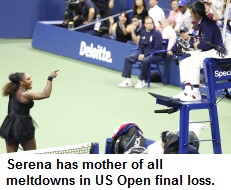
Published September 8, 2018 – Serena has mother of all meltdowns in US Open final loss.

Heavy-lifting in sports is a familiar theme for this Go Lean movement; we recognize that there could be more economic rewards if the regional stewards do a better job of facilitating a viable sports eco-system – we have few expressions of professional sports and no intercollegiate system in the region. We have previously elaborated on how the Art & Science of sports can be used to help elevate our societal engines. Re-consider these previous blog-commentaries:

https://goleancaribbean.com/blog/?p=11287 Creating a legacy in pro-Surfing
https://goleancaribbean.com/blog/?p=8495 Basketball Great and Caribbean Role Model: Tim Duncan
https://goleancaribbean.com/blog/?p=7866 Caribbean Track & Field Athletes monetize their talents “elsewhere”
https://goleancaribbean.com/blog/?p=1446 Caribbean Players in the World Cup
https://goleancaribbean.com/blog/?p=1020 Advocates and Revolutionaries for Caribbean Sports

So how can we foster more people in our Caribbean region to be like Naomi Osaka, people who can help to elevate our society and the global image of Caribbean contributions to the world? The Go Lean book addressed this question; within its 370-pages of instructions for impacting society, in the specific details for fostering more world-class athletes. Consider the summaries, excerpts and headlines from this one advocacy in the book on Page 229 entitled:

10 Ways to Improve Sports

1 Lean-in for the Caribbean Single Market
This will allow for the unification of the region of 30 member-states into a single market of 42 million people and a GDP exceeding $800 Billion (per 2010). This market size and multi-lingual realities allows for broadcasting rights with SAP-style language options for English, Spanish, French and Dutch. This makes the region attractive for media contracts for broadcast rights, spectrum auctions and sports marketing. The Olympics have demonstrated that sports can be profitable “big business”, and a great source of jobs and economic activity. The CU will copy the Olympic model, and harness the potential in many other sporting endeavors, so as to make the region a better place to live, work and play.
2 CU Games
Promote the CU Games, every 2 years, as the ascension of the CARIFTA Games for Amateur and now Professional Athletes. The CU Games Administration will also partner with all National Olympic Committees. This administration applies to feeder games, trials and qualification events. The ultimate goal is to field a world-class competitive Olympic Team representing the entire Caribbean. While the CARIFTA Games are for track-and-field events only, the CU Games will resemble a mini-Olympics with multi-sports (boxing, football/soccer, tennis, volleyball, sailing, baseball/softball, etc.)
3 Fairgrounds as Sport Venues
The CU Fairgrounds (managed by the Interior Department) will have the infrastructure to fund, build and maintain sports arenas and “stadiums” (stadia) in local markets. The mantra is “build it and they will come”, so the CU building and managing world-class sport facilities will result in a more organized industry and the emergence of vertical markets.
4 Regulate Amateur, Professional & Academically-Aligned Leagues
5 Establish Sports Academies
6 “Super” Amateur Sport Association
7 Regulator/Registrar of Scholar-Athletes – Assuage Abandonment
8 Sports Tourism
9 Professional Agents and Player Management Oversight (a la Bar/Lawyer Associations).
10 Impanel the CU Anti-Doping Agency

Congratulation Naomi Osaka!

… and thank you … for making it easier for us to impress on the world that Caribbean-anything is not “Less Than”. That argument is now easier to make.

It is now also easier to convey the message that “Yes, we can” forge a “pluralistic” democracy and make our homeland a better place to live, work and play. 🙂

Download the free e-Book of Go Lean … Caribbean – now!

Sign the petition to lean-in for this roadmap for the Caribbean Union Trade Federation.

—————–

Appendix – It’s shameful what US Open did to Naomi Osaka
Opinion by: Maureen Callahan

Naomi Osaka, 20 years old, just became the first player from Japan to win a Grand Slam.

Yet rather than cheer Osaka, the crowd, the commentators and US Open officials all expressed shock and grief that Serena Williams lost.
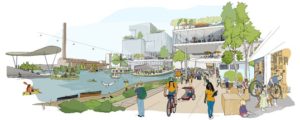
Osaka spent what should have been her victory lap in tears. It had been her childhood dream to make it to the US Open and possibly play against Williams, her idol, in the final.

It’s hard to recall a more unsportsmanlike event.

Here was a young girl who pulled off one of the greatest upsets ever, who fought for every point she earned, ashamed.

At the awards ceremony, Osaka covered her face with her black visor and cried. The crowd booed her. Katrina Adams, chairman and president of the USTA, opened the awards ceremony by denigrating the winner and lionizing Williams — whose ego, if anything, needs piercing.

“Perhaps it’s not the finish we were looking for today,” Adams said, “but Serena, you are a champion of all champions.” Addressing the crowd, Adams added, “This mama is a role model and respected by all.”

That’s not likely the case now, not after the world watched as Serena Williams had a series of epic meltdowns on the court, all sparked when the umpire warned her: No coaching from the side. Her coach was making visible hand signals.

“I don’t cheat to win,” Williams told him. “I’d rather lose.”

She couldn’t let it go, going back multiple times to berate the umpire. At one point she called him a thief.

“You stole a point from me!” she yelled.

After her loss, Williams’s coach admitted to ESPN that he had, in fact, been coaching from the stands, a code violation. The warning was fair.

Everything that followed is on Williams, who is no stranger to tantrums. Most famously, she was tossed from the US Open in 2009 after telling the line judge, “I swear to God I’ll take the f—king ball and shove it down your f—king throat.” John McEnroe was taken aback. Even Williams’s mother, Oracene Price, couldn’t defend her daughter’s outburst.

“She could have kept her cool,” Price said.

On Saturday, she also could have tried to be gracious in defeat. No matter how her fans try to spin this, Williams was anything but. Upon accepting her finalist award, she gave parsimonious praise to her competitor while telling the crowd she felt their pain.

“Let’s try to make this the best moment we can,” she said in part, “and we’ll get through it . . . let’s not boo anymore. We’re gonna get through this and let’s be positive, so congratulations, Naomi.”

Osaka accepted her trophy while choking back tears. She never smiled. When asked if her childhood dream of playing against Williams matched the reality, she politely sidestepped the question.

“I’m sorry,” Osaka said. “I know that everyone was cheering for her and I’m sorry it had to end like this.”

She turned to Williams. “I’m really grateful I was able to play with you,” Osaka said. “Thank you.” She bowed her head to Williams, and Williams just took it — no reciprocation, no emotion.

Osaka, a young player at the beginning of her career, showed grit, determination and maturity on that court and off.

She earned that trophy. Let’s recall that this wasn’t Osaka’s first victory over Williams — she beat Williams back in March, causing a hiccup in that great comeback narrative.

Osaka earned her moment as victor at the US Open, one that should have been pure joy. If anything was stolen during this match, it was that.

Source: New York Post Newspaper – Posted September 8, 2018; retrieved September 12, 2018 from: https://nypost.com/2018/09/08/its-shameful-what-us-open-did-to-naomi-osaka/

Share this post:
, , ,
[Top]

Manifesting High-Tech Neighborhoods

Go Lean Commentary

Previously … we said:

“Build it and they will come”.

Now … we are saying:

Get out of the way and ‘they’ will come and build it.

It could be that simple – there are players who want the opportunity to test their theories, manifest their visions and explore their ideas. They will come to you and build High-Tech neighborhoods, but only if you let them, not trample on their sensibilities and not block their progress.

Are you willing to cooperate in a climate like that? Can you “live and let live”?

The answer is not so obvious. A lot of people treasure their independence. They are willing to endure whatever disposition in life as long as they “do it their way”. This is why Self-Governing Entities are so critical in this plan for a new Caribbean.

Self-Governing Entities (SGE), as defined in the book Go Lean … Caribbean, allows communities to apply changes to a limited geographic area. (Truth be told, it is hard to change whole countries; it is easier to change just a small area at a time).

The Go Lean book serves as a roadmap for the introduction and implementation of the technocratic Caribbean Union Trade Federation (CU), for the elevation of Caribbean society – for all member-states, bottoms-up neighborhood by neighborhood. The book defines SGE’s as follows (Page 30):

Self-Governing Entities
The CU will promote and administer all Self-Governing Entities (SGE) throughout the region. This refers to scientific labs, industrial parks, commercial campuses, experimental hospitals, and even foreign bases. These facilities will not be subject to the laws of the local states of their address, rather CU, international, foreign sovereignty, or maritime laws, thus spurring [Research & Development or] R&D.

Who will be the owners/investors of the Self-Governing Entities that embark in the new Caribbean?

Many candidates abound! Here is one example. Here is Google – and their subsidiary Sidewalk Labs – as they engage their test-plan and manifest their vision for a limited urban area … in Toronto, Canada. See the full story here:

Title: Google’s parent company just reached an agreement with Toronto to plan a $50 million high-tech neighborhood
By: Leanna Garfield

  • On Tuesday (07/31/2018) morning, Waterfront Toronto’s board unanimously agreed to work with Sidewalk Labs to develop a 12-acre swath of the city into a high-tech neighborhood.
  • Sidewalk Labs, the urban-innovation arm of Google’s parent company, Alphabet, had committed $10 million for the planning process, and an additional $40 million in investment has now been unlocked. The entire development is expected to cost at least $1 billion.
  • The company has been quiet about the exact plans for the neighborhood, but its CEO, Dan Doctoroff, has spoken about how urban environments could be improved through self-driving cars, machine learning, high-speed internet, and embedded sensors that track energy usage.

——————

Sidewalk Labs — the urban-innovation arm of Google’s parent company, Alphabet — just got the green light to plan a high-tech neighborhood on Toronto’s waterfront.

On Tuesday morning, the board of Waterfront Toronto, the organization administering revitalization projects along the Canadian city’s waterfront, unanimously agreed to work with the company to design the neighborhood. Final approval to physically develop the plans is likely to happen next year.

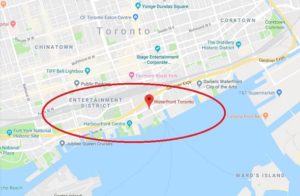

Called Quayside, the neighborhood will be designed to prioritize “sustainability, affordability, mobility, and economic opportunity,” according to Sidewalk Labs. The city of Toronto and Sidewalk Labs call the larger project “Sidewalk Toronto.”

Sidewalk had already committed $10 million for the planning process, and an additional $40 million in investment was unlocked with the board’s approval. The entire 12-acre development, however, is expected to cost at least $1 billion, The Wall Street Journal estimated.

The agreement “lays out a path towards a transparent, collaborative partnership with Waterfront Toronto and the people of Toronto,” Josh Sirefman, Sidewalk Labs’ head of development, told Business Insider in a statement. “We look forward to working together to develop a groundbreaking plan to improve the lives of people living in Toronto and cities like it around the world.”

The company has been quiet about the exact plans for the neighborhood, but Sidewalk Labs’ CEO, Dan Doctoroff, has spoken about how urban environments could be improved through self-driving cars, machine learning, high-speed internet, and embedded sensors that track energy usage.

“We are excited to take this next step with Sidewalk Labs to set the stage for a transformational project on the waterfront that addresses many critical urban issues faced by Toronto and other cities around the world,” Waterfront Toronto tweeted Tuesday.

Based on 2017 renderings, it looks as if Sidewalk Labs wants Quayside to be a mixed-use, pedestrian-friendly neighborhood. The preliminary illustrations include bike-share systems, apartment housing, bus lines, and parks.

The project has been in the works for more than a year. In March 2017, Sidewalk Labs responded to Toronto’s request for proposals to redevelop the waterfront parcel. The planning process kicked off with a community town-hall meeting in November where residents discussed their thoughts and concerns about the project.

Business Insider previously reported that locals had expressed worries that Quayside could become a “new Silicon Valley,” bringing issues like gentrification, higher housing prices, and income inequality.

The plan-development agreement became public on Tuesday afternoon after Waterfront Toronto and Sidewalk Labs signed the deal.
Source: Business Insider Magazine – posted July 31, 2018; retrieved September 6, 2018 from: https://www.businessinsider.com/google-sidewalk-labs-toronto-neighborhood-2018-7?utm_content=buffer2ecae

From the Caribbean to Google: “We want some of that!

It is our hope that with the appropriate governmental structure in place, Google (Alphabet) may bring some of those investment dollars – see related Appendix VIDEO – to our Caribbean shores. This type of investor was an early motivation for this roadmap for regional cooperation and confederation, as pronounced in the opening Declaration of Interdependence (Pages 13):

xxiv. Whereas a free market economy can be induced and spurred for continuous progress, the Federation must install the controls to better manage aspects of the economy: jobs, inflation, savings rate, investments and other economic principles. Thereby attracting direct foreign investment because of the stability and vibrancy of our economy.

Following and studying the machinations of the Google company/enterprise is a good idea. This company “puts its money where its mouth is”. We have previously identified these Research & Development efforts that have manifested over the years:

https://goleancaribbean.com/blog/?p=3974 Google and Mobile Phones – Here comes change
https://goleancaribbean.com/blog/?p=1743 Google and Novartis to develop ‘smart’ contact lens
https://goleancaribbean.com/blog/?p=1277 The need for highway safety innovations – here comes Google

In a previous Go Lean blog-commentary, it was related how it is much easier to reform and transform a country by focusing on families, neighborhoods and cities. Do this again and again, and the whole nation, even the region is transformed.

Imagine Caribbean islands and coastal states with SGE’s peppered throughout the region. This is the new Caribbean that is being presented: reforming and transforming the full region, one neighborhood at a time. Imagine too, if the transformations are technological: electric street cars, self-driving vehicles, high-speed internet, and smart energy systems.

The Art & Science of cities is very important for this Go Lean roadmap to elevate Caribbean society. The Go Lean book applied detailed analyses of a number of cities (Caribbean city: Freeport, Bahamas; American cities: New York City; Omaha, Nebraska; Detroit, Michigan; Los Angeles City-County), then proceeded to detail the needed strategies, tactics and implementation to reform Caribbean urban areas. In fact, the CU/Go Lean roadmap has these 3 prime directives:

  • Optimization of the economic engines in order to grow the regional economy to $800 Billion and create 2.2 million new jobs. This roadmap calls for Self-Governing Entities, even in urban area, so as to optimize industrial policy.
  • Establishment of a security apparatus to ensure public safety and protect the resultant economic engines. Urban areas always have additional protections compared to rural areas.
  • Improve Caribbean governance to support these engines, including a separation-of-powers between the member-states and CU federal agencies. SGE’s are managed only at the federal level, but there must be negotiations with local/municipal governments.

The Go Lean book provides 370-pages of turn-by-turn instructions on “how” to adopt new community ethos, plus the strategies, tactics, implementations and advocacies to execute so as to reboot, reform and transform the societal engines of Caribbean society … including the urban communities. There is even one advocacy that relates specifically to urban optimization; consider the specific plans, excerpts and headlines from the book on Page 234 entitled:

10 Ways to Impact Urban Living

1 Lean-in for the Caribbean Single Market
This treaty allows for the unification of the region into one market, thereby expanding to an economy of 30 countries, 42 million people and a GDP of over $800 Billion (according to 2010 metrics). The mission of the CU is to enhance the economic engines of the region, fostering institutions like capital markets, secondary mortgage funds and consumer credit reporting. These initiatives will facilitate local governments and town-planning efforts by providing the financing vehicles, and eco-system, for the real estate developers and municipal governments to predict the supply-and-demand..
2 Self-Governing Entities

The CU will promote and administer all self-governing entities (SGE) throughout the region. This refers to scientific labs, industrial parks, commercial campuses, experimental hospitals, and even foreign bases. These facilities will not be subject of the laws of the local states of their address, rather CU, international, foreign sovereignty, or maritime laws; but depend on the local infrastructure to provide basic needs. Thereby creating jobs and economic activity.

3 Proximity to Healthcare
4 Online Education Facilitation
5 Optimizing Transportation Options

The CU will spearhead transportation solutions for intra-city transit, so as to assuage urban traffic congestion. This will include rail options such as above-ground light-rail and street cars on the major arterial roads. The development of toll roads, with price-traffic elasticity, is a basic CU strategy for urban transportation infrastructure. So too, is bicycle options; the CU will foster local deployments of bicycle paths, dedicated lanes and on-demand bike sharing/rental programs; (see Appendix ZU). Bike Sharing is a synergistic solution for health/wellness and transportation. A lot of urban areas in the Caribbean region are old cities, designed centuries ago; therefore they have small quaint streets – perfect for bicycling.

6 In-sourcing
7 Service Continuity – ITIL
8 Financial Guarantees
9 Big Data Analysis

The CU’s embrace of e-Government and e-Delivery models allows for a lot of data to be collected and analyzed so as to measure many aspects of Caribbean life, including: trade, economic, consumption, societal values and macro-performance, and media consumption. This way, “course adjustments” can be made to strategic and tactical pursuits.

10 Legislative Oversight

In addition to the book, previous Go Lean commentaries related details of urban life and how best-practices can be applied so as to make the Caribbean homeland a better place to live, work and play. Here is a sample of previous blogs:

https://goleancaribbean.com/blog/?p=11386 Making Better Cities
https://goleancaribbean.com/blog/?p=8573 Build a Street Car System and Harvesting the Growth
https://goleancaribbean.com/blog/?p=6016 Model of Urban Solutions – Cooperative Refrigeration
https://goleancaribbean.com/blog/?p=4587 Burlington, Vermont: First city to be powered 100% by renewables
https://goleancaribbean.com/blog/?p=3641 ‘We Built This City …’
https://goleancaribbean.com/blog/?p=3326 M-1 Rail: Alternative Motion in the Motor City
https://goleancaribbean.com/blog/?p=1731 Ode to Omaha, a Model City
https://goleancaribbean.com/blog/?p=1596 Book Review: ‘Prosper Where You Are Planted’

The Go Lean book and these accompanying blogs posit that economic success can be forged by doubling-down on R&D in Caribbean cities. We can improve one urban neighborhood at a time. Before we know it, we have changed the whole region.

We can do better, than our Status Quo.

There are many role models to follow.

The foregoing example – Google-Sidewalk Labs in Toronto, Canada – is a manifestation that the change we seek is conceivable, believable and achievable. Yes, we can … make our homelands better places to live, work and play. 🙂

Download the free e-book of Go Lean … Caribbean – now!

Sign the petition to lean-in for this roadmap for the Caribbean Union Trade Federation.

—————–

Appendix VIDEO – Inside the construction project promising to transform Toronto’s waterfront – https://youtu.be/PAgTA6tQdZs

CityNews Toronto
Published on Jun 27, 2018 – It’s a $1.25 billion multi-year project that promises to transform how Torontonians live, work and play along the waterfront. Tina Yazdani checks in on the creation of a new shoreline and flood protection system in the Portlands.

Share this post:
, ,
[Top]

Sad: ‘Only the Good Die Young’ – ENCORE

What a sad story! The favorite son of a prominent family left his Caribbean home for college in the US. He excelled while matriculating there and stayed on after college. He was an up-and-coming professional in a dynamic metropolis – the Big City.

This sad story continues with the harsh reality of Urban America setting in. He was gunned down in his own apartment, by a Police Officer who was at the wrong address.

This sad story is the Caribbean version of the fable of the Country Mouse and the City Mouse – preferring security to opulence. Or that it is better to prosper where planted in the Caribbean than to venture to the Big City and live a Fast & Furious life. This was the assertion in a previous blog-commentary from the movement behind the book Go Lean…Caribbean; see below.

This sad story is actually a true story. The victim is St. Lucia born-and-raised Botham Jean. He was shot and killed this past Thursday at his residence in Dallas, Texas. See an aligning news story here:

Title: Government Extends Condolences to the Jean Family
Press Release:-  The Government of Saint Lucia extends deepest condolences to former Permanent Secretary Ms. Allison Jean following the sudden death of her son, Mr. Botham Shem Jean.

Acting Prime Minister Honourable Ezechiel Joseph, speaking on behalf of the Government of Saint Lucia, stated that the tragic circumstances leading to the death of the 26-year-old in Dallas, Texas, has come as a shock and stated that “our thoughts and prayers are with Ms. Jean, the Jean family and friends during this difficult time.”

Minister Joseph explained that The Embassy of Saint Lucia to the United States of America will do all within its power to assist the family in this time of great sorrow.

Ms. Jean is a long serving member of the Public Service and most recently served as Permanent Secretary in the Department of Education, Innovation and Gender Relations.
Source: Posted September 7, 2018; retrieved September 9, 2018 from: https://stluciatimes.com/2018/09/07/government-extends-condolences-to-the-jean-family/

Related news articles:

  1. https://abc13.com/police-dallas-officer-fatally-shoots-man-after-going-into-wrong-apartment/4171229/
  2. https://stluciatimes.com/2018/09/09/botham-jean-and-officer-amber-guyger-didnt-pose-together-for-a-photo/

Our deepest condolences to the Jean Family … who now have to endure this great loss.

See this previous blog-commentary that hypothesizes the theory that the Caribbean Diaspora would do better in their Caribbean homeland. They can actually work to reform and transform their ancestral communities, as opposed to contending with the societal defects in the US. Here-now is that previous submission from April 10, 2017:

——————-

Go Lean Commentary – To Live or Die in L.A.

CU Blog - 'To Live and Die in L.A.' - Photo 1b

“… live so fast and die so young…”
“… it’s like a jungle, sometimes it makes me wonder how I keep from going under…” – Rap Song: The Message – Grandmaster Flash & The Furious Five

Considering the edict of “life imitating art and art imitating life”, this has always been a subject of sharp debate and contrast. Is it better to live “fast & furious”, even though there might be a shorter mortality, or is it better to go slow and last longer, as far away from risky propositions as possible?

Shockingly, this is also a Caribbean debate: is it better to emigrate to L.A., New York, Miami, Toronto, London, Paris or any other foreign destination for faster success, or prosper where planted in the Caribbean homeland?

From an American perspective, this debate is best personified with a comparison of California versus the rest of the US. Los Angeles (L.A.) is the principal metropolis of the State of California and all of the West Coast for that matter.

But this debate is bigger than just a consideration of L.A. or California – see Appendix below – it spans the test of time. Even ancient philosopher Aesop presented this dilemma in the fable of “The Tortoise and The Hare”, in which the nimble jack-rabbit lost out to the slow-and-methodical tortoise in a race – this fable is universally accepted as a metaphor for the race of life.

Poets, songwriters, historians, and philosophers have all chimed in on this profound debate. Some claim that it is better to “live large”, make the “world your oyster”, even if that means having a short lifespan than to live a quiet ignoble life where the joys of life are rationed out for longevity instead.

Whenever a celebrity dies young, this debate rages anew. Consider some of the philosophical headlines:

The book Go Lean … Caribbean discusses this contrast; it draws reference to the American Dream versus the California Dream. Consider this excerpt from Page 223:

The Bottom Line on the American Dream
The American Dream is a national ethos of the United States, a set of ideals in which freedom includes the opportunity for prosperity and success, and an upward social mobility achieved through hard work. This idea of the American Dream is rooted in the US Declaration of Independence which proclaims that “all men are created equal… endowed by their Creator with certain inalienable rights” including “Life, Liberty and the pursuit of Happiness.” The meaning of the “American Dream” has changed over history, and includes components as home-ownership and upward mobility. A lot of people followed the American Dream to achieve a greater chance of becoming rich. For example, the discovery of gold in California in 1849 brought in 100,000 men looking for their fortune overnight—and a few did find it. Thus was born the California Dream of instant success. Historian H. W. Brands noted that in the years after the Gold Rush, the California Dream spread across the nation:

  • “The old American Dream … was the dream of the Puritans, of Benjamin Franklin’s “Poor Richard” … of men and women content to accumulate their modest fortunes a little at a time, year by year by year. The new dream was the dream of instant wealth, won in a twinkling by audacity and good luck. [This] golden dream . . . became a prominent part of the American psyche”. Today, some posit that the ease of achieving this Dream changes with technological advances, available infrastructure, regulations, state of the economy, and the evolving cultural values of the US demographics.

The Go Lean book serves as a roadmap to introduce the technocratic Caribbean Union Trade Federation (CU) to elevate the region’s societal engines – economics, homeland security and governance – of the 30 Caribbean member-states. In fact, the prime directives of the roadmap includes the following 3 statements:

  • Optimization of the economic engines in order to grow the regional economy to $800 Billion & create 2.2 million new jobs.
  • Establishment of a security apparatus to ensure public safety and protect the resultant economic engines.
  • Improve Caribbean governance for all people, even visiting tourists, to support these engines.

CU Blog - 'To Live and Die in L.A.' - Photo 2The quest is to minimize the paradox of future-planning/decision-making for Caribbean citizens. We want to make the Caribbean region better places to live, work and play; this way our citizens would not have to leave … to ‘live and die in L.A., or NYC, or Miami, or any other American, Canadian or European city. The truth of the matter is people die more readily in America due to gun-violence, and automobile accidents than they die in the Caribbean.

No doubt!

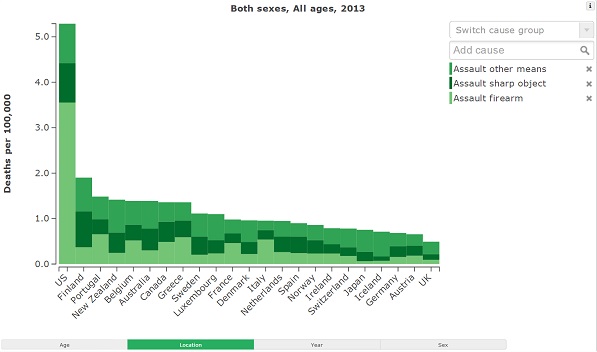
  • Visualizing gun deaths: Comparing the U.S. to rest of the world
    Whenever a mass shooting occurs, a debate about gun violence ensues. An often-cited counter to the point about the United States’ high rates of gun homicides is that people in other countries kill one another at the same rate using different types of weapons. It’s not true.
    Compared to other countries with similar levels of development or socioeconomic status, the United States has exceptional homicide rates, and it’s driven by gun violence.
    CU Blog - 'To Live and Die in L.A.' - Photo 3
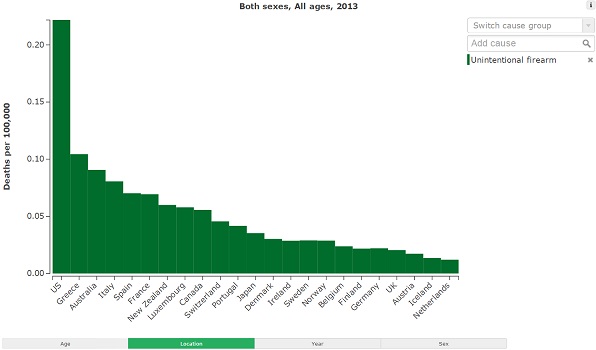
    Another issue that gets less attention is how many people die from firearms accidentally. Again, the U.S. has much higher rates of unintentional death from firearms compared to other countries.
    CU Blog - 'To Live and Die in L.A.' - Photo 4
  • U.S. has highest car crash death rate, despite progress, CDC says
    More people die in car crashes each year in the United States than in other high-income countries, the Centers for Disease Control and Prevention said in a report …
    In 2013, more than 32,000 people died on U.S. roads, roughly 90 fatalities a day, according to the CDC.
    The U.S. has seen a 31% reduction in its motor vehicle death rate per capita over the past 13 years. But compared with 19 other wealthy countries, which have declined an average of 56% during the same period, the U.S. has the slowest decrease.

A previous Go Lean blog-commentary highlighted other statistics of premature deaths (and disability) in the US due to societal defects:

But the truth is a two-sided coin …

… on the flipside, life in America is more prosperous than in any Caribbean member-state.

The Go Lean book introduces the Caribbean Union Trade Federation (CU) as an inter-governmental agency for the 30 member-states, to provide a better – technocratic – stewardship for Caribbean life, to make it more prosperous … at home. The book identifies that we have a crisis – our failing societal engines – but asserts that this crisis would be a terrible thing to waste. We can use the urgency to introduce and implement effective community ethos, strategies, tactics, implementations and advocacies to reboot, reform and transform the engines of Caribbean society.

We do not want our people to ‘live and die in L.A. …’. We want them to prosper right here in the Caribbean. How sad when our families do move to the US (and other countries) and fall victim to fatalities. Consider these headlines:

There are good and bad people everywhere. Bad things happen to good people … everywhere. The Bible declares that “time and unforeseen occurrences befall us all” (Ecclesiastes 9:11). Yet still, post-mortem analyses (crash investigations and autopsies) are always necessary to ascertain the root-causes and the lessons-learned:

What could have been done to prevent the loss of life?

This commentary is not asserting that Caribbean people will not be hurt if they remain in the Caribbean. There are car accidents, murders, robberies, rapes and other assaults in the 30 member-states as well.

But follow the numbers!

We are not #1 for either gun violence or auto deaths, like our American counterparts. This is just a matter odds, probabilities and trends; the preponderance for fatalities cannot be ignored.

The Go Lean book contends that as a people, we must be prepared for accidents, emergencies and security risks (Page 196). It asserts that bad actors will emerge just as a result of economic successes in the region. This point is pronounced early in the book with the Declaration of Interdependence (Page 12) that claims:

x. Whereas we are surrounded and allied to nations of larger proportions in land mass, populations, and treasuries, elements in their societies may have ill-intent in their pursuits, at the expense of the safety and security of our citizens. We must therefore appoint “new guards” to ensure our public safety and threats against our society, both domestic and foreign. The Federation must employ the latest advances and best practices … to assuage continuous threats against public safety.

xvi. Whereas security of our homeland is inextricably linked to prosperity of the homeland, the economic and security interest of the region needs to be aligned under the same governance. Since economic crimes, including piracy and other forms of terrorism, can imperil the functioning of the wheels of commerce for all the citizenry, the accedence of this Federation must equip the security apparatus with the tools and techniques for predictive and proactive interdictions.

There is this expression of wisdom, commonly referred to as the Serenity Prayer; it is a prayer written by the American theologian Reinhold Niebuhr[1][2] (1892–1971). The best-known form is:

  • God, grant me the serenity to accept the things I cannot change,
  • Courage to change the things I can,
  • And wisdom to know the difference.

The Go Lean book describes the need for the Caribbean to appoint “new guards” to apply this wisdom – to change the things we can change. The purpose of this security pact is to ensure public safety as a comprehensive endeavor, encapsulating the needs of all Caribbean stakeholders: residents and visitors alike.

We cannot impact Los Angeles, the US or any other foreign city, more than messaging to our Diaspora there. But we can forge change in our Caribbean homeland.

Applying the edict of “life imitating art and art imitating life”, let’s ‘live and die’ here in the Caribbean. Let’s apply the wisdom from the fictional character Spock (the Vulcan Commander on the TV Show/films Star Trek):

May we live long and prosper.

Now is the time for all of the Caribbean – the people and leaders – to lean-in for the empowerments described here in the book Go Lean…Caribbean. It is conceivable, believable and achievable to prosper where planted here in the region; to make the Caribbean a better place to live, work and play. 🙂

Download the free e-book of Go Lean … Caribbean – now!

Sign the petition to lean-in for the roadmap for the Caribbean Union Trade Federation.

————-
Appendix Review – Book/Movie: To Live and Die in L.A.

Sub-title: A 1984 novel by former Secret Service agent Gerald Petievich is the basis for the 1985 movie of the same name.

CU Blog - 'To Live and Die in L.A.' - Photo 1

A harrowing tale of the dark underside of America’s West Coast metropolis. Two U.S. Treasury agents, partners and antagonists, are drawn into a matrix of violence and corruption, southern California-style, that becomes a journey through a sunlit hell – at the end of which they become experts on the thin line between what it takes to live – and die – in L.A. – Source: Retrieved 04-10-2017 from: https://www.amazon.com/Live-Die-L-A-Gerald-Petievich/dp/1466219645

The action thriller film was directed by William Friedkin and based on the novel by Petievich, and co-written by the both men. The film features William Petersen, Willem Dafoe and John Pankow among others. The film tells the story of the lengths to which two Secret Service agents go to arrest a counterfeiter. – Source: Retrieved 04-10-2017 from: https://en.wikipedia.org/wiki/To_Live_and_Die_in_L.A._(film)

See Trailer in the Appendix VIDEO below.

Storyline
Working largely in cases of counterfeiting, L.A. based Secret Service agent Richie Chance exhibits reckless behavior which according to his longtime and now former partner Jimmy Hart will probably land him in the morgue before he’s ready to retire. That need for the thrill manifests itself in his personal life by his love of base jumping. Professionally, it is demonstrated by the fact that he is sextorting a parolee named Ruth Lanier, who feeds him information in return for him not sending her back to prison for some trumped up parole violation. With his new partner John Vukovich, Chance is more determined than ever, based on recent circumstances, to nab known longtime counterfeiter Ric Masters, who is more than willing to use violence against and kill anyone who crosses him. Masters is well aware that the Secret Service is after him. Masters’ operation is somewhat outwardly in disarray, with Chance being able to nab his mule, Carl Cody, in the course of moving some of the fake money , and one of his associates, a lawyer named Max Waxman, probably stealing money from him. Partly with information from Ruth, Chance is trying to find and exploit the weaknesses in Masters’ operation. To accomplish his goal, Chance takes more and more unethical and illegal measures, which may be problematic for Vukovich, who comes from a family of police officers who are sworn to uphold the law. Written by Huggo

————-
VIDEO – To Live and Die in L.A. – http://www.imdb.com/videoplayer/vi1755645209

A fearless Secret Service agent will stop at nothing to bring down the counterfeiter who killed his partner.

Stars: William Petersen, Willem Dafoe, John Pankow

Share this post:
, ,
[Top]

Caribbean Unity? Need French Antilles

Go Lean Commentary

Bedrock, Baby!

This is the lesson being learned in San Francisco for the new Salesforce Tower: If you’re going to build a skyscraper, make sure it has a good foundation. While a building can go up with a weak foundation, there will be structural problems along the way. See Appendix VIDEO for the story of the Millennium Tower sinking, and leaning.

This is an important lesson for the Caribbean; there is a need for integration, consolidation and collaboration among the Caribbean member-states. But, we need a good foundation; we need full participation from all the neighbors (Dutch, English, French and Spanish speaking islands). Just look at this photo here, depicting that the French Antilles territories of Guadeloupe and Martinique are “next door” to English-speaking Caribbean island nation-states:

(The island of Saint Martin is shared as a French territory and Dutch territory – this is considered a legal condominium; St Bartholomew is also on the list of current French Caribbean islands; but French Guiana – on the South American mainland next to Suriname completes the list of French territories; Haiti gained independence from France in 1804).

This is the assertion of the movement behind the book Go Lean … Caribbean. This book declares that Caribbean regional governance is deficient and inadequate; there must be a regional integration that integrates the entire region. Yes, the existing Caribbean Community (CariCom) integration effort without the French territories is like building a skyscraper on a shaky foundation. What a skyscraper really needs is: Bedrock, Baby!
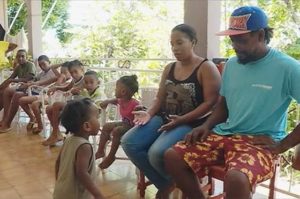
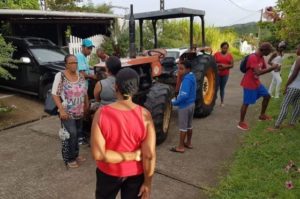
What Caribbean integration really needs is: Complete participation of all the neighbors in the neighborhood.

This is the purpose of this commentary, to lament the inadequacies because of Caribbean disunity. This is the continued focus of this series of commentaries on the joke (absurdity) of the premise that there is some Caribbean unity; this is a mirage. This submission is 3 of 4 from the Go Lean movement. The urging is that the full Caribbean – all 30 member-states – must confederate and consolidate; otherwise our communities will not thrive, maybe, not even survive. The assessment is that the prior attempts of nation-building – without some sort of alliance – is just a joke!

The other commentaries in the series are cataloged as follows:

  1. Caribbean Unity? What a joke – Tourism Missteps
  2. Caribbean Unity? – Ross University Saga
  3. Caribbean Unity? – No Freedom of Movement in/out of French Antilles
  4. Caribbean Unity? – Religion’s Role: False Friend

All of these commentaries relate to “how” the stewards for a new Caribbean can finally foster unity in this region. The previous formal exercises in regional integration were flawed at the foundation; this includes the current Caribbean Community or CariCom plus the previous attempt among the English-speaking islands: the disastrous West Indies Federation, and the attempt in the Dutch-speaking islands, the now-defunct Netherlands Antilles. These many iterations ignored the bedrock foundational principle of: Liberty, Equality and Fraternity.

Those 3 principles sound familiar …

Yes, they are the values of the French Revolutionary movement. This is relevant because the French are also among the World Powers that discovered, exploited and colonized the Caribbean. To this day, they claim the afore-mentioned 4 territories in the region.

This commentary is not a criticism of the French eco-system or history, except for calling out their failure to integrate with their Caribbean neighbors. The country of France was always front-and-center in the enlightenment movement as their Declaration of the Rights of the Man and of the Citizen of 1789, together with Magna Carta, the English Bill of Rights, and the United States Bill of Rights, inspired in large part the 1948 United Nations Universal Declaration of Human Rights.[4]

Human rights – or Liberty, Equality and Fraternity – does not fit the description of colonies in these French Antilles. They are being administered remotely from Metropolitan France (Paris) rather than exercising autonomy to partner with their next door neighbors. As a result of this failing, we have no Freedom of Movement between the French Antilles and their neighbors – but there is Freedom of Movement in the European Union (and the Schengen Area). See the plight highlighted in this news story:

Title # 1: Dominican family facing expulsion from Martinique
A Dominican family of nine have been threatened with expulsion from Martinique, one year after fleeing there in the aftermath of hurricane Maria, local news reports have said.

The family, seven children and their parents, have been asked to leave Martinique this Thursday, August 16, 2018, according to Martinique 1Ere.

The online publication said the Dominican immigrants have all been living at the home of the children’s grandmother in the community of Prêcheur.

However,  since arriving in Martinique the visitors could not obtain a residence permit and must leave Martinique for their native Dominica, Martinique 1Ere reported.

The Mayor of the area,  Marcellin Nadeau, is reportedly opposed to the expulsion and has cited the historical links of the community with Dominicans.

Hurricane Maria blasted across Dominica on the night of September 18, 2017, with torrential rain and gusts of some 160 mph.

Damage to the Island was estimated at over $EC 2 billion and some one fifth of the population is said to have sought refuge in other countries in the aftermath of the storm.
Source: St. Lucia Times – posted August 15, 2018; retrieved August 29, 2018 from: https://stluciatimes.com/2018/08/15/dominican-family-facing-expulsion-from-martinique/

—————-

Title # 2: Martinique: Supporters mobilise against expulsion of Dominican family
Residents of the community of Prêcheur in Martinique Friday morning began mobilising to prevent the expulsion of a Dominican family, local news reports say.

The nine Dominicans had sought refuge in the French overseas territory following the passage of Hurricane Maria, which devastated Dominica last year.

According to Martinique 1 Ere, since 6:30 Friday morning, several inhabitants of Prêcheur, began mobilising to prevent the departure of Durand family.

The family, seven children and their parents, had been living with the children’s grandmother in Martinique for the past year.

They were due to leave Martinique Friday because they do not have a residence permit.

Local news reports said the family made several attempts to obtain the permit but failed to do so.

They were originally due to leave on Thursday, August 16, but the authorities gave them a few more hours to prepare for their departure, it was reported.

Residents of the community where the visitors have been staying have stated their intention to block access to the port at Fort de France to prevent the Dominicans from leaving, Martinique 1 Ere has reported.

The online publication quoted lawyer, Camille Célénice, as saying that a request for a residence permit must be filed Friday morning in the presence of the Mayor of  Prêcheur, Marcellin Nadeau.

Nadeau is reported to be opposed to the move to expel the Dominican family, citing the historical links of the town with its neighbours from Dominica.
Source: St. Lucia Times – posted August 17, 2018; retrieved August 29, 2018 from: https://stluciatimes.com/2018/08/17/martinique-supporters-mobilise-against-expulsion-of-dominican-family/

It is apparent from this article, that refuge-seekers from hurricane-damaged areas seek refuge in their neighborhoods, first. It is only logical that displaced people will only want to move the shortest distances possible. If your island is only 40 miles away, then despite the divergent colonial heritage, that proximity overrides any cultural affinity.

Culture can move and adapt to a land; a land cannot move and adapt to a culture.

The Go Lean book serves as a roadmap for the introduction and implementation of the Caribbean Union Trade Federation (CU), an intergovernmental entity to empower all of the Caribbean member-states – the independent and dependent territories. This new regime for the Caribbean needs the islands in the French Antilles. But, the French Antilles need the CU, too. Accordingly, there is a lot of discord in those lands; see this opening anecdote from the Go Lean book on Page 17:

Anecdote # 3

French Caribbean – Organization & Discord

The terms French Caribbean, French West Indies or French Antilles all refer to the five territories currently under French sovereignty in the Antilles islands and related areas of the Caribbean. There are two organizational types:

1. Overseas departments are constituencies of France that are outside metropolitan France. They have the same political status as metropolitan departments. As integral parts of France and the European Union, overseas departments are represented in the National Assembly, Senate, and Economic and Social Council, vote to elect European Parliament (MEP), and also use the Euro as their currency. Under the 1946 Constitution of the Fourth Republic, the French colonies were defined as overseas departments. Since 1982, following the French government’s policy of decentralization, overseas departments have elected regional councils with powers similar to those of the regions of metropolitan France. As a result of a constitutional revision that occurred in 2003, these regions are now to be called overseas regions; though there is no difference in relevance or function.

o Guadeloupe (Basse-Terre & Grande-Terre); plus dependencies: Les Saintes, Marie-Galante, La Désirade
o Martinique
o French Guiana – actually on the South America mainland

2. Overseas collectivities are first-order administrative divisions of France. These constitute some former French overseas territories and other French overseas entities with a particular status, all of which became collectivities by constitutional reform on 28 March 2003. For the Caribbean, they include:

o Saint Martin – the northern part of the island shared with a Dutch Territory
o Saint Barthélemy

There is recent history of discord in the French Caribbean. Saint Barthélemy has a more developed and prosperous economy than its previous administrative “big brother” Guadeloupe. Duty-free port attractions, retail trade, high-end tourism and its luxury hotels/villas have increased that island’s standard of living for its citizens, even exceeding metropolitan France. Plus, unlike most Caribbean islands, the population of Saint “Barths” is mostly of European ancestry. With the 2003 constitutional reforms, the populations of the French territories of Saint Barthélemy and Saint Martin were given the choice to remain within France or alter their status; they voted in favor of secession from Guadeloupe and to form separate overseas collectivities of France. In July 2007, these island communes were officially detached from Guadeloupe and became two separate French overseas collectivities with their own local administration and own deputies in the French National Assembly and Senate.

There is also discord in Guadeloupe and Martinique. The average salary in Guadeloupe is lower than in mainland France while the unemployment and poverty rates on both islands are double those found in metropolitan France; these islands suffered the 2nd and 3rd highest unemployment rates in the European Union (2007), and #1 in youth unemployment.

In January/February 2009, an umbrella group of approximately fifty labor unions and other associations called for a €200 ($260 USD) monthly pay increase for Guadeloupe and Martinique’s low income workers. The protesters had proposed that authorities “lower business taxes as a top up to company finances” to pay for the €200 pay raises. Employers and business leaders in Guadeloupe had said that they could not afford the salary increase. The strike lasted 44 days, during the high season, and escalated to “the verge of revolt”, finally ending with an accord in March 2009 in which the French government agreed to raise the salaries of the lowest paid by the requested €200 and granted the petitioners top 20 demands. Tourism suffered greatly during this time and affected the 2010 tourist season as well; the islands were believed to have lost millions of dollars in tourism revenues due to cancelled vacations and closed hotels. The strikes exposed deep ethnic, racial, and class tensions and disparities – discord – within the French Caribbean territories.

<—————————->

Hurricanes are a serious threat for Caribbean life. This is true for the French Caribbean as well. There is nothing that Paris can do to eliminate the threat! (Notwithstanding the COP 21 Paris Accords to mitigate Greenhouse Gases to retard the effects of Climate Change).

All the Caribbean must band together to cope. This includes all islands of all colonial heritage. This was the opening declaration in the Go Lean book (Page 5), quoting the lyrics of the popular 1970 song “Lean On Me”:

Second Verse
If there is a load you have to bear
That you can’t carry
I’m right up the road
I’ll share your load
If you just call me

The current governance in the Caribbean is inadequate for dealing with the challenges of Climate Change; this is affecting all facets of our society: economics, security and governance. Rather than an intra-island focus, all these lands need to look to the full region and then convene, consolidate, collude, confederate and collaborate with each other to make the homelands better places to live, work and play. A regional construct is the focus of the technocratic CU; it is designed to shepherd the economic engines, while also guarding against all security challenges – including preparation and response for natural disasters.

The Go Lean/CU roadmap will employ strategies, tactics and implementations to impact its prime directives; identified with the following 3 statements:

This directive transcends national borders, languages or culture. It just delivers …

This was always the hope for the Caribbean Single Market and Economy (CSME), the initiative spurred by CariCom; but it never delivered. This new regime embraces the spirit of CariCom – the need for integration – but with an execution foundation that goes down to the bedrock.

The book Go Lean…Caribbean – available to download for free – opened with an honest assessment there must be a regional interdependence. This assessment was pronounced in the opening Declaration of Interdependence (Pages 12 – 13):

i. Whereas the earth’s climate has undeniably changed resulting in more severe tropical weather storms, it is necessary to prepare to insure the safety and security of life, property and systems of commerce in our geographical region. As nature recognizes no borders in the target of its destruction, we also must set aside border considerations in the preparation and response to these weather challenges.

xi. Whereas all men are entitled to the benefits of good governance in a free society, “new guards” must be enacted to dissuade the emergence of incompetence, corruption, nepotism and cronyism at the peril of the people’s best interest. The Federation must guarantee the executions of a social contract between government and the governed.

xvi. Whereas security of our homeland is inextricably linked to prosperity of the homeland, the economic and security interest of the region needs to be aligned under the same governance. Since economic crimes … can imperil the functioning of the wheels of commerce for all the citizenry, the accedence of this Federation must equip the security apparatus with the tools and techniques for predictive and proactive interdictions.

xxiv. Whereas a free market economy can be induced and spurred for continuous progress, the Federation must install the controls to better manage aspects of the economy: jobs, inflation, savings rate, investments and other economic principles. Thereby attracting direct foreign investment because of the stability and vibrancy of our economy.

The Go Lean book provides 370-pages of turn-by-turn instructions on “how” to adopt new community ethos, plus the strategies, tactics, implementations and advocacies to execute so as to transform the Caribbean society, even the French Antilles. Consider the Chapter excerpts and headlines from this sample on Page 239 entitled:

10 Ways to Impact French Territories

1 Lean-in for Caribbean Integration
The CU will allow for the unification of the region into one market, thereby creating a single economy of 30 member-states for 42 million people with the scale to effect change; the CU does not involve sovereignty. The treaty includes the French Overseas Territories of Guadeloupe, Martinique, Saint Martin and Saint Barthélemy, but not French Guiana initially. Though France is one of the biggest economies, French economic prosperity has not always extended to these islands
2 Trading Partners based on Nature not Politics
One original motive of French colonialism was the facilitation of trade. That need is even more pronounced now. But with the changes of globalization, technology and the demographic regionalization it is more fitting to trade with neighbors, based on natural location, rather than political alignment. The CU extends that push with this Trade Federation.
3 Homeland Security Pact – NATO style
4 Disaster Preparation & Response
Mother Nature, and the reality of hurricanes, plays no favorites for one island versus another due to political alliance. The CU will better plan/prepare/respond, with a professional Emergency Management Agency and recover with elite financial products (i.e. reinsurance sidecars) powered by capital markets to restore economic engines in the islands.
5 Caribbean Dollar and the Caribbean Central Bank
6 Emigration Circuit Breaker
7 EU Participants
8 Cruise Line Collective Bargaining
9 Paris Hand-off / Proxy
10 Host Country Entitlements

The Caribbean must foster a better homeland that allows for Free Movement of People … and also better disaster preparation and response. This Go Lean movement has previously detailed many related issues and advocacies for the French Caribbean and their full participation in this regional construct; consider this sample of previous blog-commentaries:

https://goleancaribbean.com/blog/?p=13319 Making a ‘Pluralistic Democracy’ – Freedom of Movement
https://goleancaribbean.com/blog/?p=12581 State of the Union – Annexation: French Guiana
https://goleancaribbean.com/blog/?p=11287 Creating a Legacy in Pro-Surfing in Martinique
https://goleancaribbean.com/blog/?p=10554 Welcoming the French
https://goleancaribbean.com/blog/?p=10043 Caribbean Integration Plan for Greater Prosperity
https://goleancaribbean.com/blog/?p=382 Guadeloupe, Martinique, St Maarten Join the ACS

The reasons why people abandon a beloved homeland is due to 2 reasons: “push” and “pull” factors. “Push” would refer to the resultant deficient infrastructure forcing stakeholders to abandon the community, and “pull” would refer to the perception that there are better economic opportunities elsewhere. The French Antilles have many of the same problems as the rest of the Caribbean. Societal defects abound, to the point that many of the people – and institutions – flee their homelands. This is true even more so right after a disastrous storm – a “push” factor. In the foregoing news articles, the displacement drama was associated with the aftermath of Category 5 Hurricane Maria in Dominica. Since all Caribbean member-states are “in the same boat”, all territories-countries should “pick up an oar” and collaborate on solutions.

(The absolute latest news on this Dominican family: Stay of Execution on Deportation –  https://stluciatimes.com/2018/08/29/martinique-decision-pending-on-expulsion-of-dominican-family/).

In summary, the Go Lean roadmap seeks to reboot and relaunch the integration effort. But this time, with all Caribbean member-states (30), not just the English-speaking, but partnering with the French Antilles and Spanish-speaking states as well. Due to our Climate Change realities, our region must reform and transform the Caribbean’s societal engines so as to better allow for our tropical realities.

Let’s be better – together.

All Caribbean stakeholders – including European governments (i.e. France and The Netherlands) – are urged to lean-in to this roadmap for change … and empowerment. We need “all hands on deck” to make this region a better place to live work and play. 🙂

Download the book Go Lean … Caribbean – now!

Sign the petition to lean-in for this roadmap for the Caribbean Union Trade Federation.

—————-

Appendix VIDEO – The Leaning Tower of San Francisco – https://youtu.be/qKtlZc-u9TU

Published on November 5, 2017 – The Millennium Tower opened to great acclaim with high-priced, posh apartments. But those accolades and property values are sinking, along with the building’s foundation. No Bedrock! Jon Wertheim reports.

See full story here: https://www.cbs.com/shows/60_minutes/video/nn9f_o573SfUTgnxuseZn5qbLYNtHCQI/the-leaning-tower-of-san-francisco/

Share this post:
, , , ,
[Top]

Caribbean Unity? What a Joke – Tourism Missteps

Go Lean Commentary

A house divided against itself, cannot stand. – 16th US President Abraham Lincoln

This Dead President – the Savior of the American Union – is right! A homeland cannot have unity, harmony or leverage if it is divided.

Being divided, things go from “bad to worse”.

For the Caribbean, despite the 30 different member-states, it is really just one house; we are all in the “same boat”, so then, we can think of it as the same “house boat”. 🙂

As a region, we are divided!

Why are we so dysfunctional in this regard?

One clue: Lack of war.

Wait, what?!

Yes, the opening comment by President Lincoln was uttered in the build-up to that country’s Civil War. In addition, the model that the Caribbean should be emulating, that of the European Union, was only possible after all the devastation and losses of World War II. Yes, this is a human reality:

Only at the precipice do people change.

This commentary declares that despite a lack of war, our Caribbean region is at “the precipice”. We have already suffered disasters, abandonment, insolvency and corruption. The only thing we have been spared, compared to other communities that were forced to unite, is the “blood on the streets”. (Though there are some that assess our uncontrollable crime problem as “blood on the streets”). So why have we not succeeded in any unification movement?

We have tried, but we only have failure to show for our efforts.

This is the focus of this series of commentaries on Caribbean unity – make that disunity. This first one – entry 1 of 4 in this series from the movement behind the book Go Lean … Caribbean – is in consideration of the “misstep” in our societal attitudes – defects – that prevents us from collaborating and partnering together. We do not reform nor transform like other communities; we do not confederate nor consolidate; we somehow think that we are better than our neighbors and can survive alone – “Its Better in …

The commentaries in the series are cataloged as follows:

  1. Caribbean Unity? What a joke – Tourism Missteps
  2. Caribbean Unity? – Ross University Saga
  3. Caribbean Unity? – No Freedom of Movement in/out of French Antilles
  4. Caribbean Unity? – Religion’s Role: False Friend

All of these commentaries relate to “how” the stewards for a new Caribbean can shepherd unity in this region. But first we must accept that Caribbean Unity is a joke.

Ask anyone! Most people do not even realize that the full Caribbean region is 42 million people. Why is this surprising?

There is no unity!

Our primary outreach to the world – tourism – is a competition among the islands, rather than a collaboration. The fastest growing segment of Caribbean tourism is the cruise industry; and they are banking on our disunity, playing one port-of-call against another – to our peril. This charge of disunity is not just our movement’s complaint alone; no, even many government leaders lament this actuality. Consider here, this news article which asserts the same premise:

Title: Tourism can bring Caribbean together
Press Release:–  Tourism has enormous potential to promote Caribbean regional integration. So said Jamaica’s Tourism Minister, Edmund Bartlett who, at the time, was addressing the 54th annual general meeting of the St. Lucia Hotel & Tourism Association, which was held Friday (June 20) at Harbour Club St. Lucia. He was the featured guest speaker at the AGM.

“The Caribbean is the most tourism-dependent region in the world,” said Bartlett, adding, “The sector generates investments and jobs for all the islands and supports overall economic growth through critical sectoral linkages. The tourism sector, by its very nature, also promotes some of the main values of regional integration as tourism involves the close contact and interaction of millions of individuals from diverse cultural, ethnic, racial, socio-economic and national backgrounds working together for mutually-beneficial exchanges.’

Describing the tourism sector in the Caribbean as “cutting across many spheres, sectors and boundaries,” Bartlett characterized the sector as “a shared model of development for the region,” and one that shares a special place among Caribbean states.

“The sector thus provides considerable scope for collaboration and cooperation among many stakeholders at the regional level in a wide range of areas including; investment and product development, human resource development, tourism awareness, research and statistics, access and transportation, regional facilitation, environmental and cultural sustainability, marketing, communications and addressing crime that involves visitors,” said Jamaica’s tourism minister.

Bartlett buttressed his assertion by noting that CARICOM leaders attending the 29th Inter-Sessional Meeting of the Conference of Heads of Government of CARICOM held at Port-au-Prince, Haiti in February 2018 had acknowledged tourism as the Caribbean’s largest economic sector and declared that it needs to be “stimulated urgently and sustainably for the region’s long-term development prospects.”

Bartlett further noted that at the 39th CARICOM Heads of Government meeting held in Jamaica July 2, the regional leaders in attendance reaffirmed their commitment to the effective implementation of the CSME, which is aimed at facilitating the expansion of investment and trade in goods and services, and the free movement of people across the region.

“Tourism is also a catalyst for promoting the successful implementation of the Caribbean Single Market and Economy (CSME) framework which has been the leading initiative developed by CARICOM to promote regional integration,” he added.

Moreover, tourism could become a catalyst for increased intra-regional travel and a value-added component to diversify the region’s tourism product and spread the benefits of tourism across the region, said Bartlett. “Intra-regional tourism provides vast economic exchange and opportunities for the regional economy that would have otherwise gone to countries such as the USA, Canada and England. This form of inward-looking tourism is also a very practical approach to reversing the over-dependence of the region’s tourism sector on international markets,” Bartlett added.

Citing the recent signing of the Multi-lateral Air Services Agreement (MASA) by CARICOM heads as one of the region’s most noted successes in the promotion of intra-regional tourism, Bartlett said it could help to make travelling within and beyond the Caribbean much easier. The MASA is aimed at creating a liberalized environment that is consistent with emerging WTO aviation policies.

“It is anticipated that the full implementation of MASA will improve connectivity and facilitate increased trade in goods and services, including tourism. MASA has been expanded to include the conditions for a single security check for direct transit passengers on multi-stop intra-Community flights,” said Bartlett.

In addition, he said the Caribbean Tourism Organization’s (CTO) aviation task force is currently working with intra-Caribbean carriers to ensure hassle-free movement and to boost connectivity around the region.

These include legal and regulatory concerns, safety and security issues, taxation and the high cost of airline tickets and the passenger’s experience, which involves persons requiring a visa to travel,” said Bartlett.

He suggested the development of a regional tourism rating or classification scheme as yet another way of deepening regional integration through tourism and enhancing the visitor experience, provided common standards and criteria could be agreed upon and the scheme is furnished with adequate resources and managed effectively and impartially

“Such a scheme could ensure a level of quality assurance for visitors and stimulate product and service quality improvement through the objective benchmarking of visitor facilities and service standards,” said Bartlett.

Bartlett also envisions the “economic convergence between complimentary economies” in the Caribbean through tourism as another way of deepening regional economic integration, citing this as an emergent perspective in the region.

“The suggestion was that there were better opportunities for growth through a more rational approach to economic integration between geographically proximate, complementary economies linked to much-improved transport infrastructure. This was not meant to replace CARICOM but to be a new route to economic convergence in the Caribbean basin.”

Bartlett acknowledged, however, that there are a number of obstacles that must be overcome in the quest to establish a sustainable regional tourism sector.

“It is no secret that there remain several impediments to the development of a sustainable regional tourism sector, including: the general lack of emphasis and promotion of intra-regional tourism at national levels, the prohibitive cost of intra-regional travel, continued restrictions to free movement and insufficient harmonization and coordination in the area of disaster risk management.”

The Caribbean’s vulnerability to climate change constitute another of the threats” to the region’s tourism sector, said Bartlett, stressing that these issues necessitate sophisticated resilience mechanisms and crisis management systems.

“Indeed, it was this spirit of regional cooperation that led to the recent conceptualization of the Caribbean Disaster Resilience Centre, the first of its kind in the region, which will be established at the University of the West Indies Mona,” he added.

Bartlett concluded by urging the Caribbean states to work together in order to take full advantage of tourism’s vast untapped potential to promote the sustainable development of the region.

“We must thus find common ground on a number of issues and strengthen our cooperation in a number of shared areas to ensure that tourism development truly brings us together,” he added.

Several government officials attended the SLHTA AGM, including Prime Minister Allen Chastanet, Minister for Tourism, Dominic Fedee, Minister for Agriculture, Ezechiel Joseph, Minister for Infrastructure, Stephenson King, Minister for Home Affairs, Hermangild Francis, and Minister for Health and Wellness Mary Isaac. Also present were Mayor of Castries, Peterson Francis, Parliamentary Representative for Castries South, Ernest Hilaire, several private sector executives and members of the diplomatic corps.

— END Press Release

About the Saint Lucia Hotel and Tourism Association (SLHTA) 
The Saint Lucia Hotel and Tourism Association (SLHTA) is a private non-profit membership organization [that provides sound and dynamic leadership for its members; it functions as the principal intermediary for tourism service providers and an influential lobby for tourism development issues].

Source: Posted July 31, 2018; retrieved August 22, 2018 from: https://stluciatimes.com/2018/07/31/tourism-can-bring-caribbean-together/

As related in the foregoing, these words by the Jamaica Tourism Minister ring loud:

“The tourism sector … promotes some of the main values of regional integration”

What a joke!

Don’t get it twisted! There is no Caribbean integration. We all think there should be; but we all acknowledge that such a construct does not exist. This fact has been proclaimed time and again by the movement behind the book Go Lean…Caribbean – available to download for free. Just recently, this previous blog-commentary asserted the need to unite after natural disasters:

… this is a matter of image and geographic misconceptions, more so than it is about disasters or even tourism. The world is telling the Caribbean: Better band together to assuage your challenges. We are united in affliction, we might as well be united in solutions. Yes, it is no longer optional for our region to confederate as a Single Market.

Confederation is not a bad thing!

Tourism is the current dominant industry; the goal is to “stand on the shoulders” of previous accomplishments, add infrastructure not possible by just one member-state alone and then reap the benefits. Imagine this manifestation in just this one new strategy: inter-island ferries that connect all islands for people, cars and goods.

The movement behind the book Go Lean … Caribbean seeks to reboot the economic engines of the Caribbean member-states. So while tourism is the region’s primary economic driver, the status quo is inadequate for providing the needs of the people in the region, and inadequate for dealing with the challenges of nation-building. We must do better! We must collaborate and not compete.

The Go Lean book serves as a roadmap for the introduction and implementation of the Caribbean Union Trade Federation (CU). The CU is designed to be a technocratic intergovernmental entity that shepherds economic growth for the full Caribbean region and mitigate against related security challenges. The goal is to use this new regional focus to reboot and optimize the region’s commerce or economics; plus the aligning security and governing engines.

The Go Lean/CU roadmap will employ strategies, tactics and implementations to impact its prime directives; identified with the following 3 statements:

The Go Lean book provides 370-pages of turn-by-turn instructions on “how” to adopt new community ethos, plus the strategies, tactics, implementations and advocacies to execute so as to elevate the Caribbean’s tourism product, across the full region. The book features anecdotes and Case Studies assessing the integration among Caribbean member-states, or the lack there of. One anecdote introduces the non-government organization (NGO), the Caribbean Hotel & Tourism Association and their plea for integration strategies. See this except from that anecdote in the book (Page 60):

Anecdote # 9 – Caribbean Strategy: Hotel & Tourism Association

Hotel Association urges Caribbean governments to take action…
By Caribbean News Now – Published on August 31, 2010 MONTEGO BAY, Jamaica — Caribbean Hotel and Tourism Association President Josef Forstmayr has called for urgent action by all Caribbean governments for a sustainable cooperative marketing and promotion fund and regional integration and removal of barriers for intra-Caribbean travel. …..Forstmayr also quoted Robert Crandall, former Chairman of American Airlines, who remarked at the annual Caribbean Hotel and Tourism Investment Conference (CHTIC) in May [2010] with, “The Caribbean is uniquely dependent on tourism. Everyone involved in travel and tourism knows that our industry is immensely important to the world economy, generating and supporting – either directly or indirectly – about one in eleven jobs worldwide.”

.

Here in the Caribbean, it is even more important. On a number of islands, travel and tourism accounts for more than 50% of all employment, and on some islands for more than 75%. Overall, about 20% of Caribbean employment is travel and tourism dependent – something on the order of 2.5 million jobs.”

.

Crandall also urged that “travel and tourism should be at the center of our collective consciousness since the Caribbean is more dependent on travel and tourism than almost any other region. Of the 10 countries in the world most dependent on tourism, seven are in the Caribbean.” …

.
[Forstmayr] noted that American Airlines’ Robert Crandall “told us that 18 years ago in 1992, at a meeting held in Kingston, the Caribbean heads of government agreed to collaborate in a partnership with the private sector to organize and sustain – the key word is sustain – a regional marketing fund. However, despite substantial private sector contributions from CHTA and our members in 1993 which resulted in a regional advertising program and a 10.4% increase in visitor traffic to the Caribbean, governments cannot agree on a sustainable funding mechanism for a regional marketing program now.”

A tactic the book seeks to optimize is the promotion of the regional tourism product – think; island hopping (see Appendix), universal customs clearance, foreign gateway airports – by enabling such a promotion-administration role-responsibility into a Cabinet level department. This is described in the book as follows on Page 88 with the section title:

D. Commerce Department

D1 – Tourism and Film Promotion and Administration
This department will work in conjunction with the Tourism Promotion arms of each member states (not exclusive); the same too with film, video, and media productions. There is the opportunity to exploit regional tourism efforts like cruise ships, conventions, island hopping, foreign gateway airports, and excess inventory marketing. This agency will also spearhead a Regional Language Translation 24-hour Call Center to accommodate the needs for any foreign visitors in the region.

Imagine island hopping like this – see Appendix VIDEO

… flying into one Caribbean airport – i.e. St. Martin in the Leeward Islands or Montego Bay in Jamaica – and receiving a “Customs Clearing” for all 30 Caribbean member-states. Wow! This is Free Movement of People, a benefit of a Single Market.

The Go Lean book explains that there is the need for better stewardship of the economic engines on these touristic islands. There are obvious challenges to being on an island – it is what it is! Optimizing island life was an original intent of the Go Lean roadmap. The opening Declaration of Interdependence stresses this (Page 11) with these pronouncements:

iii. Whereas the natural formation of the landmass for our society is that of an archipelago of islands, inherent to this nature is the limitation of terrain and the natural resources there in. We must therefore provide “new guards” and protections to ensure the efficient and effective management of these resources.

iv. Whereas the natural formation of the landmass is in a tropical region, the flora and fauna allows for an inherent beauty that is enviable to peoples near and far. The structures must be strenuously guarded to protect and promote sustainable systems of commerce paramount to this reality.

vi. Whereas the finite nature of the landmass of our lands limits the populations and markets of commerce, by extending the bonds of brotherhood to our geographic neighbors allows for extended opportunities and better execution of the kinetics of our economies through trade. This regional focus must foster and promote diverse economic stimuli.

The Go Lean movement has previously detailed many related issues and advocacies for regional tourism promotion and administration. Consider this sample of previous blog-commentaries:

https://goleancaribbean.com/blog/?p=15380 Industrial Reboot – Cruise Tourism 2.0 – Offering a Glimpse
https://goleancaribbean.com/blog/?p=15378 Industrial Reboot – Regional Tourism 2.0 – Middle Markets Targets
https://goleancaribbean.com/blog/?p=15376 Industrial Reboot – Culture 101 – Tourism & Culture “Together”
https://goleancaribbean.com/blog/?p=15374 Industrial Reboot – Lottery 101 – A local Raffle could be Win-Win!
https://goleancaribbean.com/blog/?p=15059 Regional Tourism Coordination – No Longer Optional
https://goleancaribbean.com/blog/?p=14989 Regional Tourism Plan: Attract more Snowbirds
https://goleancaribbean.com/blog/?p=14767 The Need for Better Stewardship for Caribbean Air Travel
https://goleancaribbean.com/blog/?p=13700 Increasing Tourism Market Share
https://goleancaribbean.com/blog/?p=12668 Lessons from Colorado: Common Sense of Eco-Tourism
https://goleancaribbean.com/blog/?p=11224 Loose Lips Sink Ships – The Dangers to Tourism from Hate Speech
https://goleancaribbean.com/blog/?p=6341 What’s Next for Tourism Stewardship
https://goleancaribbean.com/blog/?p=5307 Being On Guard for Violent Threats to Tourists
https://goleancaribbean.com/blog/?p=5210 Cruise Ship Commerce – Getting Ready for Change
https://goleancaribbean.com/blog/?p=2750 Disney World – A Role Model for Touristic Self-Governing Entities
https://goleancaribbean.com/blog/?p=2571 Preparing for the Sharing Economy –vs- Hotel Rooms
https://goleancaribbean.com/blog/?p=235 Tourism’s Changing Profile

The Caribbean has a problem. So many of our people flee their beloved homelands. The reasons they leave are defined as both “push” and “pull”. Pull refers to the perception that there are better economic opportunities abroad, so our citizens are lured or pulled to make a living elsewhere.

The reasons people leave is not just because “they are pulled”. Sometimes, they are pushed as well. This refers to our people fleeing in search of refuge. Economic refuge is perhaps the largest reasons why our citizens have abandoned their beloved homelands – a 70 percent brain drain rate has been reported among the professional classes. Since the economics of the region is principally based on tourism, we understand this cause-and-effect. Yes, for a primary industry, we sure do have a lot of defects in our business model. We have a “divided house” and the divisions are evident and obvious.

We must do better! We must start by working together … with our fellow Caribbean neighbors. We must collaborate and cooperate, not just compete. This is our only hope for future survival. Plus, we have role models in history to emulate; (US Civil War & Post-WWII Europe).

So we must reform and transform the Caribbean’s societal engines so as to elevate our tourism product. The simple functions of a regional tourist packages/customs clearance is not “a bridge too far”. Yes, we can!

This is the quest of the Go Lean roadmap. These practical measures are conceivable, believable and achievable.

All Caribbean stakeholders – governments and citizens alike – are urged to lean-in to this roadmap for change … and empowerment. We can make our region a better place to live work and play. 🙂

Download the e-Book of Go Lean … Caribbean – now!

Sign the petition to lean-in for this roadmap for the Caribbean Union Trade Federation.

——————–

Appendix VIDEO – Island Hopping the Caribbean Islands: Aruba, Bonaire, Curacao Adventures – https://youtu.be/erlk8h4txV8

Marko Roth // World Traveller
Published on Jul 8, 2016 –
Explore the mind blowing beauty of the Caribbean! The crystal clear waters with dolphins and turtles, the island hopping to Aruba, Bonaire and Curacao in small airplanes and the friendly locals made our time in the Caribbean worthwhile. We went scuba diving with dolphins, went sailing in the blue ocean and explored stunning caves. Read the full story on http://www.markoroth.com/caribbean-ab…

Check out all the details of our adventure on http://www.forthatmoment.de/2016/04/2…

Category: Travel & Events

Share this post:
, , ,
[Top]

Plastics and Styrofoam – A Mitigation Plan

Go Lean Commentary

So where do all the used plastics – and Styrofoam – go?

In a landfill …

… and may not degrade for a thousand years!

But for the ones that end up in the water (oceans and seas), they too do not degrade. They linger, pollute and disrupt eco-systems.

No one can just “stick their head in the sand”; this issue must be addressed, the crisis must be assuaged, the threat must be mitigated. See this crisis as depicted in this VIDEO here:

VIDEO – How Much Plastic is in the Ocean? – https://youtu.be/YFZS3Vh4lfI

It’s Okay To Be Smart

Published on Mar 28, 2017 – What can you do to make the oceans plastic-free?

Ocean plastic pollution is a massive environmental problem. Millions of tons of plastic waste enter the ocean every year, even plastic that goes in the trash can often ends up in the sea! This week we learn about the Great Pacific Garbage Patch and look at the dangers ocean plastic poses to ocean animals. Plus, a few tips for you to reduce your own plastic use!

Sample Resources

Plastic Oceans Foundation: http://www.plasticoceans.org/

United Nations “Clean Seas” program: http://www.cleanseas.org/

Ocean plastic pollution resources from Monterey Bay Aquarium: https://www.montereybayaquarium.org/c…

Welcome to the Caribbean! We are 30 member-states in an all-coastal region – with many archipelagos (i.e. the Bahamas alone features over 700 islands). We have a lot of waterways and seascapes to contend with … and manage! So this global problem of plastics and Styrofoam is a local problem too.

Think global; act local!

What are we doing in our Caribbean region to mitigate the problem of plastics and Styrofoam? One member-state, St. Lucia, has proposed something; see the full news story here:

Title: Saint Lucia to ban Styrofoam and plastics

August 13th, 2018 – Saint Lucia plans to phase-out Styrofoam food service containers and plastics, both plates and cups, beginning December 1, 2018, with a total ban on their importation before the end of next year.

The announcement came in a statement from Minister of Education, Innovation, Gender Relations and Sustainable Development, Doctor Gale Rigobert.

Rigobert said the Government of Saint Lucia is cognizant of the negative impact on the environment and human health from food service containers made from Polystyrene and Expanded Polystyrene, also known as Styrofoam, along with Plastics.

However, she observed that the administration recognises that the healthier alternative to these products, such as biodegradable and compostable food service containers, are more costly.

” We are doing our very best to alleviate this issue,” the minister explained.

She disclosed that over the last few months, the Department of Sustainable Development, in partnership with other key agencies such as the Saint Lucia Solid Waste Management Authority, the Department of Finance, the Ministry of Commerce and the Customs and Excise Department, has been working towards the development of a strategy to eliminate single use plastics, polystyrene and expanded polystyrene from the Saint Lucia market.

“To date, we have completed fiscal analyses, conducted a survey of the key suppliers of these products and we have also identified suppliers of the biodegradable and compostable food service containers, all this to ensure that Saint Lucia creates the enabling environment to facilitate this process,” Rigobert stated.

She explained that in light of this, the Department of Sustainable Development will be taking a phased approach to facilitate a smooth transition for all stakeholders.

“The phase-out, along with a ban on the importation of Styrofoam food service containers, and plastics, both plates and cups, will commence December 1, 2018 with a total ban culminating by November 30, 2019:”

Rigovert revealed that in order to ensure adequate sensitisation, the Department of Sustainable Development will continue its campaign to educate the general public on the options they have available to them during this phase.

“With respect to plastic bottles, discussions are ongoing with major stakeholders to finalize legislation that would curb and control their use,” the minister noted.

“I encourage you to join the fight to reduce your dependency on single use plastics and Styrofoam by utilizing re-useable bottles, food containers, cutlery and shopping bags. Let us act responsibly in our everyday consumption and production,”Rigobert stated.
Source: St. Lucia Times – Daily Newspaper – Posted 08-13-2018; retrieved 08-21-2018: https://stluciatimes.com/2018/08/13/saint-lucia-to-ban-styrofoam-and-plastics/

This problem is bigger than just the Caribbean member-state of St Lucia. They did not start this fight; nor can they finish it. This is BIG Deal that is too big for any one member-state or the full Caribbean region alone. This will require a global effort, including some Caribbean mitigation!

But here in the Caribbean, we cannot expect others to do all the heavy-lifting and clean-up; we must do our share; clean-up our own environment. This has been a frequent theme by the movement behind the book Go Lean … Commentaryavailable for download now. In the book, and in previous Go Lean blog-commentaries, it was asserted that we – the Caribbean region – must do our share to “Go Green” so as to assuage our own contributions to global pollution and greenhouse gases; yes, we must keep our own neighborhoods clean and optimize our own industrial footprint, so that we may be less hypocritical – have moral authority – in calling for reform from the big polluting nations. This sample – as follows – depicts some previous blog-commentaries that relates this theme:

https://goleancaribbean.com/blog/?p=14832 Counter-culture: Manifesting Change – Environmentalism
https://goleancaribbean.com/blog/?p=14174 Canada: “Follow Me” for Model on Environmental Action
https://goleancaribbean.com/blog/?p=12724 Lessons from Colorado: Water Management Arts & Sciences
https://goleancaribbean.com/blog/?p=12144 Book Review: ‘Sea Power’ – The Need for Good Oversight
https://goleancaribbean.com/blog/?p=9455 Fix ‘Climate Change’ and other Environmental Issues? Yes, We Can
https://goleancaribbean.com/blog/?p=2465 Book Review: ‘This Changes Everything: Capitalism vs. the Climate’
https://goleancaribbean.com/blog/?p=2276 Climate Change May Affect Food Supply Within a Decade
https://goleancaribbean.com/blog/?p=1656 Blue is the New Green
https://goleancaribbean.com/blog/?p=915 Go ‘Green’ … Caribbean

From the foregoing news articles and these previous blog-commentaries, we see the compelling need for a concerted anti-pollution-Go Green effort in our region. We must “Reduce, Re-use, Recycle”. Who will stand-up and lead this charge?

“Here I am, send me” – The Bible; Isaiah 6:8

This is the charter of the Go Lean book. It serves as a roadmap for the introduction and implementation of the technocratic Caribbean Union Trade Federation (CU). The roadmap depicts how this federal government is designed to stand-up and lead the charge to assuage and mitigate the threats on Caribbean life. The book identifies a list of crises as Agents of Change that are crippling our way of life. We can add pollution to that list. As a Single Market, we need a regional sentinel to be on guard and to tackle these “plastics pollution” problems.

Why regional?

Because the national effort has been unsuccessful; in many cases, even unknown, unavailable and unfunded.

No, individual member-states will not be able to succeed in this effort; we need a regional effort; it is too big to tackle alone; so we must acknowledge our regional dependency or interdependence to have any chance of success. This vision is embedded in the opening Declaration of Interdependence, pronouncing as follows, (Pages 11, 12):

vi. Whereas the finite nature of the landmass of our lands limits the populations and markets of commerce, by extending the bonds of brotherhood to our geographic neighbors allows for extended opportunities and better execution of the kinetics of our economies through trade. This regional focus must foster and promote diverse economic stimuli.

viii. Whereas the population size is too small to foster good negotiations for products and commodities from international vendors, the Federation must allow the unification of the region as one purchasing agent, thereby garnering better terms and discounts.

x. Whereas we are surrounded and allied to nations of larger proportions in land mass, populations, and treasuries, elements in their societies may have ill-intent in their pursuits, at the expense of the safety and security of our citizens. We must therefore appoint “new guards” to ensure our public safety and threats against our society, both domestic and foreign. …

xi. Whereas all men are entitled to the benefits of good governance in a free society, “new guards” must be enacted to dissuade the emergence of incompetence, corruption, nepotism and cronyism at the peril of the people’s best interest. The Federation must guarantee the executions of a social contract between government and the governed.

The Go Lean book and previous blog-commentaries posit that the “whole is worth more than the sum of its parts”, that from this roadmap disparate Caribbean nations can speak with “one voice” … collectively as a Single Market and be heard. The international community – the big polluters – would therefore have more respect and accountability to our regional Caribbean entity, rather than the many (30) Small Island Development States. But while contributing to the problem ourselves, though on a smaller scale, we cannot just say to these big polluters:

“You break it, you fix it”.

No, we must unite and take our stand in this fight … to mitigate plastics and Styrofoam … and advocate for change!

As related in the Go Lean roadmap, the CU Trade Federation is designed to elevate Caribbean society, but not just against pollution, rather these other engines in the regional construct as well. The roadmap therefore has these 3 prime directives:

  • Optimize the economic engines of the Caribbean to elevate the regional economy to grow to $800 Billion & create 2.2 million new jobs.
  • Establish a security apparatus to ensure public safety and protect the resultant economic engines over the seas & land.
  • Improve Caribbean governance to support these engines.

So the CU will serve as the regional administrator to optimize the economy, homeland security and governing engines for the Caribbean. These efforts are already important in the fight for Climate Change abatement; so the same can apply for the mitigation of polluting plastics and Styrofoam.

The Go Lean book provides 370-pages of turn-by-turn instructions on “how” to adopt new community ethos, plus the strategies, tactics, implementations and advocacies to execute so as to reboot, reform and transform the societal engines of Caribbean society. This is the heavy-lifting that we must do to sustain our planet, region, island and communities.

We can all do more!

Some hotel resorts in the Caribbean have already embraced the strategy of being early-adopters of plastics-Styrofoam bans. See a related article here from St Lucia:

Bay Gardens Resorts discontinues use of Expanded Polystyrene EPS (Styrofoam) products https://stluciatimes.com/2017/02/17/bay-gardens-resorts-discontinues-use-expanded-polystyrene-eps-styrofoam-products/

Change has come to the Caribbean region. This heavy-lifting is the quest of the CU/Go Lean roadmap; to make the Caribbean region more self-reliant collectively; to act more proactively and reactively for our own emergencies and natural disaster events; and to be more efficient in our governance.

If “plastics pollution” is not arrested, then even more devastating changes will come. So there is the need for our region to establish a regional Sentinel, a permanent union to provide efficient stewardship for our economic, security and governing engines.

Now is the time for all of the Caribbean, the people and governing institutions, to lean-in to the efforts and empowerments to mitigate and abate “plastics pollution”. It is also time to lean-in to this roadmap described in the book Go Lean … Caribbean. Plastic pollution is a Big Deal. We have other Big Deals too, so as to reform and transform our society. We must make our waterways and homelands better places to live, work and play. 🙂

Download the e-Book of Go Lean … Caribbean – now!

Sign the petition to lean-in for this roadmap for the Caribbean Union Trade Federation.

Share this post:
, , , ,
[Top]

Industrial Reboot – Cruise Tourism 2.0 – ENCORE


“If you can’t beat ’em, join ’em”

Tourism in the Caribbean has been impacted by the disrupting eco-system of Cruise ships. More and more visitors shift from stay-overs – flying in on a jet and taking it slow at a resort hotel – to consuming the Caribbean ports-of-call on cruise ships. This is not all good; there are some dire consequences. The economic engines are all in shambles because of this shift. The result is less economic impact to the local markets.

When a cruise ship arrives in port, over 4,000 passengers disembark – they are the 800-pound Gorilla – their presence is felt; the ship cannot be ignored and cannot be dismissed …
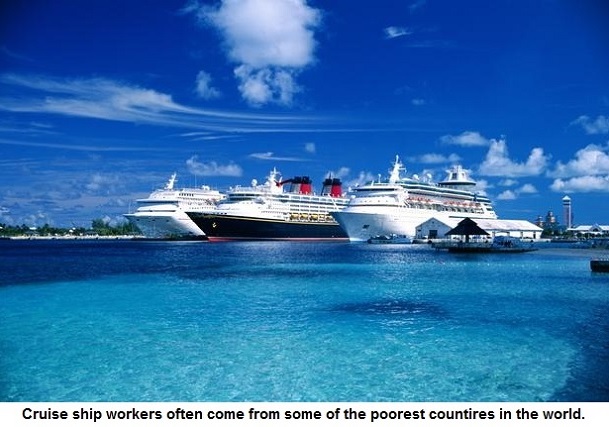
… we cannot beat this industrial giant, so we have to join them [… then beat them].

This “joining-beating” refers to an Industrial Reboot. Yes, as a region, we must first stop the bleeding, then reboot our industrial landscape so as to explore the opportunities associated with Cruise Tourism.

What? How? Why?

Rebooting the industrial landscape means understanding the macro-economic factors affecting a community and then applying changes to assuage negative developments and to exploit the positives. This 800-pound Gorilla is hard to “beat” alone, each Caribbean country will have to collectively-bargain with the Cruise industry – along with the other Caribbean countries – to have any hope of negotiating for changes to this industrial landscape.

This thought is what was related in a previous blog-commentary, from May 6, 2015, by the movement behind the book Go Lean…Caribbean:

The book … opens with the thesis (Page 3) that the problems of the Caribbean are too big for any one member-state to tackle alone. Some of the most popular cruise destinations include the Bahamas, Jamaica, Cayman Islands and Saint Martin. Alone, these port cities/member states cannot effect change on this cruise line industry. But together, as one unified front, the chances for success improves exponentially. The unified front is the Caribbean Union Trade Federation (CU). The term Union is more than a coincidence; it was branded as such by design. The Go Lean book serves as a roadmap for the introduction and implementation of the CU.

The vision of this integration movement is for the region to function as a Single Market.

The book Go Lean…Caribbean asserts that we cannot just maintain the status quo – 1.0 – with Cruise Tourism. The port-city merchants are not happy; the rest of the tourism landscape is not happy; the passengers are not happy; and the cruise line employees are not happy. The book relates:

The Bottom Line for the Caribbean Cruise Industry
The Caribbean is the number one (1) destination for the cruise line industry, with some 10 million passengers a year and an annual growth of 7.4% since 1980. But each cruise line serves multiple ports and so can play one market against the other. They are the “800 pound gorilla that can sleep wherever it chooses”. The cruise line industry “squeezes every bit of copper out of a penny”, challenging their stakeholders to optimize their business model more and more every year – they maximize revenues from the marketplace and minimize their spending. And yet, without the Caribbean as a whole, their product is far less appealing. – Page 193

The only people that are happy with cruise operations are the shareholders of the cruise lines. (It is doubtful that many of these one would be Caribbean stakeholders). The Cruise Tourism 1.0 business model needs to transform to 2.0.

This Go Lean book presents a roadmap to elevate the economic engines in Caribbean society; it details new strategies, tactics and implementations to reboot the Cruise Tourism eco-system. One tactic is to deploy a scheme for Passenger Payment Cards (smartcards or smart-phone applications) that function on the ships and at the port cities. This scheme will also employ NFC technology (Near Field Communications) – so as to glean the additional security benefits of shielding private financial data of the guest and passengers.

Another tactic is to double-down on Culture! We would want to overwhelm cruise passengers with our unique culture. Under 1.0, these passengers only consume a port-city for portions of 1 day. So we need to fill the port-side harbors, courtyards and verandas with so much locally-produced cultural expressions; think: art, parades, dance, song, storytelling, souvenirs …

    … modeling Walt Disney World’s 4 Parks and their afternoon character parades …

… we must overload our guests-passengers so that they feel underserved by the cruise experience, and would prefer a fuller experience. Cruises should be likened to Movie Trailers: “Previews of Coming Attractions”.

This new technological, cultural and economic scheme will usher in change for Cruise Commerce. The Go Lean book projects that 800 new direct jobs can be created just with the proposed Cruise Passenger Payment Card. (Even more indirect jobs – 3.75-to-1 multiplier rate – can be created). This is how the industrial landscape of the Caribbean region can be rebooted, by starting with this mandatory smartcard/chip-card for every cruise passenger.

For this month of July 2018, the phraseology “reboot” has been a consistent theme. This commentary has previously identified a number of different industries that can be rebooted under this Go Lean roadmap. See the list of previous submissions on Industrial Reboots here:

  1. Industrial RebootsFerries 101 – Published June 27, 2017
  2. Industrial RebootsPrisons 101 – Published October 4, 2017
  3. Industrial RebootsPipeline 101 – Published October 5, 2017
  4. Industrial RebootsFrozen Foods 101 – Published October 6, 2017
  5. Industrial RebootsCall Centers 101 – Published July 2, 2018
  6. Industrial RebootsPrefab Housing 101 – Published July 14, 2018
  7. Industrial RebootsTrauma 101 – Published July 18, 2018
  8. Industrial RebootsAuto-making 101 – Published July 19, 2018
  9. Industrial RebootsShipbuilding 101 – Published July 20, 2018
  10. Industrial RebootsFisheries 101 – Published July 23, 2018
  11. Industrial RebootsLottery 101 – Published July 24, 2018
  12. Industrial RebootsCulture 101 – Published July 25, 2018
  13. Industrial RebootsTourism 2.0 – Published July 27, 2018
  14. Industrial Reboots – Cruise Tourism 2.0 – Published Today – July 30, 2018

This 14th (and final) submission to the commentary considers the basics of economic stewardship (financial payments, collective bargaining and labor relations) for the Cruise Tourism industry and how it can harness many jobs if we reboot our industrial landscape to optimize the industry. There is no need for a new commentary; this subject had already been elaborated upon previously. See here the highlights of these two Encores of Go Lean commentaries:

  1. RBC EZPay – Ready for Change” from  January 23, 2015
  2. Cruise Ship Commerce – Getting Ready for Change” from May 6, 2015

See the Encores here:

————————-

1. Go Lean CommentaryRBC EZPay – Ready for Change

It’s time to introduce the Caribbean Dollar (C$) as a regional currency. Though there will be coins and notes, the primary focus will be on electronic transactions. This is the future!

Electronic Payments schemes (card-based & internet) are very important in the strategy to elevate the Caribbean economy, bring change and empower people, process and profits.

According to the subsequent news article, the regional banks – in this case the Royal Bank of Canada (RBC) – are ready for this change.

This Go Lean/CU/CCB roadmap looks to employ electronic payments schemes to impact the growth of the regional economy. There are two CU schemes that relate to this foregoing news story, as they require the demonstrated POS terminals:

  • Cruise Passenger Smartcards – The Go Lean roadmap posits that the cruise industry needs the Caribbean more than the Caribbean needs the industry. But the cruise lines have embedded rules/regulations designed to maximize their revenues at the expense of the port-side establishments. The CU solution is to deploy a scheme for smartcards that function on the ships and at the port cities.
  • e-Commerce Facilitation – The Go Lean roadmap defines that the Caribbean Dollar (C$) will be mostly cashless, an accounting currency. So the Caribbean Central Bank (CCB) will settle all C$ electronic transactions (MasterCard-Visa style or ACH style) and charge interchange/clearance fees. This scheme allows for the emergence of full-throttle e-Commerce activities.

The focus of these schemes is not technology, its economics.  These electronic payments provide the impetus for M1, the economic measurement of currency/money in circulation (M0) plus overnight bank deposits. As M1 values increase, there is a dynamic to create money “from thin-air”, called the money multiplier. The more money in the system, the more liquidity for investment and industrial expansion opportunities.

See the full blog-commentary here.

————————-

2. Go Lean Commentary – Cruise Ship Commerce – Getting Ready for Change

This is the focus of this commentary and advocacy. There are strict divisions of labor on cruise ships – wait staff and cabin stewards are reserved for citizens from Third World countries like the Caribbean and Asia – with terrible pay scales – while the officers/leadership roles are reserved for Europeans-only – Scandinavians proliferate. We appreciate the fact they set aside jobs for people of the Caribbean, but it is unacceptable that job advancements are unattainable. The resultant discrimination is real. Cruise ships, and other maritime vessels in general, are the last bastion of segregation. Descriptors like “modern-day-slavery”, “sweatships” and “extreme poverty” are far too common. Case in point, many ship-domestic staff are “tip earners”, paid only about US$50 a month and expected to survive on the generosity of the passengers’ gratuity.

This is a human resource matter and thusly will be within the sphere of influence for the new HR executive at [Royal Caribbean Cruise Lines or] RCL. While many ships are only governed by maritime laws, injustice is injustice. Good shepherding of Caribbean economic eco-system requires some focus to these bad practices.

The confederacy goal entails accepting that there is interdependence among the Caribbean member-states. Implementation-wise, this shifts the responsibility for cruise line negotiations to a region-wide, professionally-managed, deputized technocracy that can result in greater production and greater accountability.

An advocacy, in this case collective bargaining, on behalf of the oppressed workers in Caribbean waters is a just and honorable cause. The quest of this Go Lean movement is to make the Caribbean region better to live, work and play. Labor practices on cruise ships are therefore within scope of the CU.

This is the change … that now confronts the new RCL HR executive. But the CU quest to elevate Caribbean society should not run afoul of this or any cruise line’s modus operandii. The CU sets out to be their trading partner, not adversarial opponent. This should be win-win.

See the full blog-commentary here.

————-

Download the free e-Book of Go Lean … Caribbean – now!

Sign the petition to lean-in for this roadmap for the Caribbean Union Trade Federation.

Share this post:
, , , ,
[Top]

Industrial Reboot – Tourism 2.0

Go Lean Commentary

“I would rather have 1 percent of 100 people than 100 percent of one person” – Famous Quotation

Think about this famous quotation; according to arithmetic, 100 X 1 = 1 X 100. The two sides of this equation amount to the same total. But strategy-wise, it is better for the “1 percent of 100 people”.
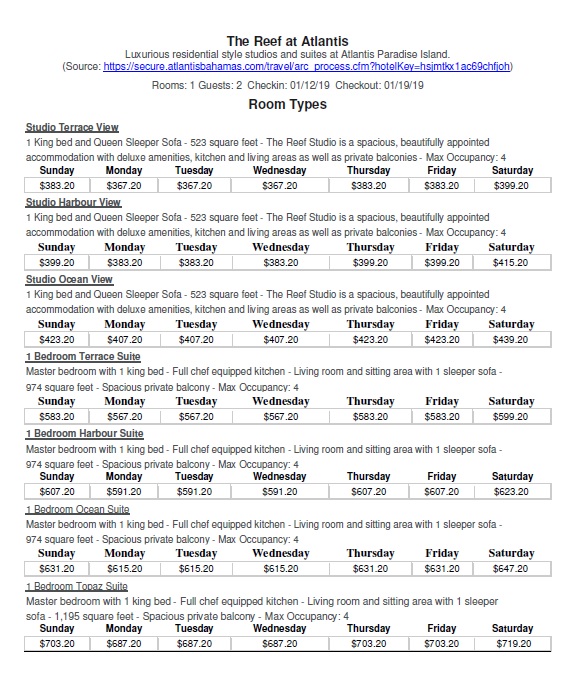
Why?

It is far easier to get people to elevate from 1 percent to contribute more – think 2 percent – but impossible to get a person to give more than 100 percent. So with a little effort, our formula can total to 200 (100 X 2). Maybe even more …

This is the strategy being proposed to reboot the industrial landscape of tourism for the Caribbean. The strategy employed by the 30 member-states is that they want “High Net Worth” tourists. The price point during the peak season are easily $500 per night at resort hotels. The flaw of this strategy is that the target population who can consume those prices is limited. This is Caribbean Tourism 1.0.

Caribbean Tourism 2.0 assumes that we can offer a great visitor experience to more people – middle class and working class – for lower prices. (See Appendix VIDEO). Imagine 5 beds rented for $100 per night. While the grand totals may be the same (1 X $500 = 5 X $100), the 2.0 approach creates a lot more economic spin-off opportunities than the 1.0 approach. 5 people, for example, eat more than 1 person; drink more rum; smoke more cigars; acquire more souvenirs; take more tours, etc.

We have many successful role models to consider. Think:

  1. Orlando, Florida who hosts Disney World and Universal Studios – enjoys 75 million tourists each year. 
  2. The tiny town of Sturgis, South Dakota annually hosts an 10-day event with over 500,000 attendees.

The book Go Lean … Caribbean asserts that the Caribbean industrial landscape must be reformed and transformed. Our Caribbean economic landscape is in shambles! Tourism is currently our primary economic driver in the region, and it is under assault; more and more visitors shift from stay-overs to cruise arrivals. Cruise packages are much cheaper than stay-overs – see photos here:

——————– Hotel Options ——————

———- Cruise Options (same dates) ———–

While cruises may be easier on the wallet, they are harder on our Caribbean economy. Having less tourist-stay-overs means less economic impact to the local markets – hotels, restaurants, taxis, souvenir retail sales, etc.. Jobs are at stake!

This cannot be ignored! As a region, we must reboot our industrial landscape and add more job-creating options.

The book Go Lean…Caribbean – available to download for free – serves as a roadmap for the introduction and implementation of the technocratic Caribbean Union Trade Federation (CU); this is a confederation of all 30 member-states to execute a reboot of the Caribbean economic eco-system. The quest is to introduce best-practices so as to optimize the economic engines in the local communities.

On the surface, a strategy to trade services based on the Caribbean’s assets of sun, sand, surf and sea is not a BAD approach. The problem was embedded when the stakeholders developed a lazy attitude towards the delivery of such services. The stewards of the tourism product preferred to cater to the few “High Net Worth” individuals rather than the masses. They opted to get $100 from 1 person, rather than $1 from 100 people.

Unfair criticism?

Just notice the bad practices with air travel out of Caribbean airports – the taxes are more than the airfare.

This is the wrong community ethos; defined as:

“the fundamental character or spirit of a culture; the underlying sentiment that informs the beliefs, customs, or practices of a group or society; dominant assumptions of a people or period” – Go Lean book Page 20

A change to the community ethos is the first advocacy of this new Reboot Tourism 2.0 endeavor. This “High Net Worth” first strategy is simply not working! The economic returns of the tourism status quo is simply not there!

Our cupboards are bare!

There are many more advocacies … depicted in the CU/Go Lean roadmap! In fact, the roadmap has these 3 prime directives:

  • Optimization of the economic engines in order to grow the regional economy to $800 Billion & create 2.2 million new jobs.
  • Establishment of a security apparatus to ensure public safety and protect the resultant economic engines.
  • Improvement of Caribbean governance to support these engines, including a separation-of-powers between the member-states and CU federal agencies.

Rather than lazy; it is time for heavy-lifting. The Go Lean book stresses that reforming and transforming Caribbean tourism and the relevant local economic engines may be Too Big a burden for just one member-state alone; it must be a regional pursuit. This was an early motivation for the roadmap, as pronounced in the opening Declaration of Interdependence (Pages 11 – 13):

iv. Whereas the natural formation of the landmass is in a tropical region, the flora and fauna allows for an inherent beauty that is enviable to peoples near and far. The structures must be strenuously guarded to protect and promote sustainable systems of commerce paramount to this reality.

vi. Whereas the finite nature of the landmass of our lands limits the populations and markets of commerce, by extending the bonds of brotherhood to our geographic neighbors allows for extended opportunities and better execution of the kinetics of our economies through trade. This regional focus must foster and promote diverse economic stimuli.

xxiv. Whereas a free market economy can be induced and spurred for continuous progress, the Federation must install the controls to better manage aspects of the economy: jobs, inflation, savings rate, investments and other economic principles. Thereby attracting direct foreign investment because of the stability and vibrancy of our economy.

xxvi. Whereas the Caribbean region must have new jobs to empower the engines of the economy and create the income sources for prosperity, and encourage the next generation to forge their dreams right at home, the Federation must therefore foster the development of new industries, like that of ship-building, automobile manufacturing, prefabricated housing, frozen foods, pipelines, call centers, and the prison industrial complex. In addition, the Federation must invigorate the enterprises related to existing industries like tourism, fisheries and lotteries – impacting the region with more jobs.

This is what this CU/Go Lean roadmap has presented, a plan to …

  • foster the development of new industries
  • invigorate the enterprises related to existing industries like tourism

In fact, this commentary has previously identified a number of different industries that can be rebooted under this Go Lean roadmap. See the list of previous submissions on Industrial Reboots here:

  1. Industrial RebootsFerries 101 – Published June 27, 2017
  2. Industrial RebootsPrisons 101 – Published October 4, 2017
  3. Industrial RebootsPipeline 101 – Published October 5, 2017
  4. Industrial RebootsFrozen Foods 101 – Published October 6, 2017
  5. Industrial RebootsCall Centers 101 – Published July 2, 2018
  6. Industrial RebootsPrefab Housing 101 – Published July 14, 2018
  7. Industrial RebootsTrauma 101 – Published July 18, 2018
  8. Industrial RebootsAuto-making 101 – Published – July 19, 2018
  9. Industrial RebootsShipbuilding 101 – Published – July 20, 2018
  10. Industrial RebootsFisheries 101 – Published – July 23, 2018
  11. Industrial RebootsLottery 101 – Published – July 24, 2018
  12. Industrial RebootsCulture 101 – Published – July 25, 2018
  13. Industrial Reboots – Tourism 2.0 – Published Today – July 27, 2018

There is the need for an Industrial Reboot and we can apply this even in our Tourism offerings.

Do what we have always done; get what we have always got.

This is the urging of the movement behind the Go Lean book: Do something different! Apply different strategies, tactics and implementations to impact change to the tourism eco-system. We do not want to go backwards; forward only. So we want resort hotels to continue their business model and even improve upon it. But, we want to do more; to stand on the shoulders of all the current accomplishments – consider the possibility of doubling-down in our outreach to the Snowbirds market in the Appendix below – and reach ever greater heights.

How … do we accomplish this?

The Go Lean book provides 370-pages of turn-by-turn instructions on “how” to adopt new community ethos, plus the strategies, tactics, implementations and advocacies to execute so as to reboot, reform and transform the societal engines of Caribbean society, including All-Things-Economic. There is a lot of consideration in the book for optimizing tourism, travel and transport across the Caribbean region. Notice these treatments from the book, in order of appearance:

  • 10 Ways to Improve Sharing (Page 35)
    #9 – Bed & Breakfast (B&B) – Online & Mobile Reservations
    The B&B industry has emerged from family sharing their homes with strangers to near-high end resort facilities. All in all, it is basically residences sharing their hospitality with guests. The CU will facilitate the mobile eco-systems for more Caribbean homes to share “beds and meals”, especially during the peaks of event tourism (festivals, carnivals, fairs).
  • 10 Ways to Improve Trade (Page 128)
    #8 – Tourism Enhancers
    A mission of the CU is to enhance the tourism prospects for the region. The CU will deploy the resources to attract back the Diaspora to repatriate to the islands. This includes the health delivery systems. This opens more opportunity for new markets; retirement/snowbirds, medical tourists, event tourists, High-End (One Percent) & Celebrity marketing, etc..
  • 10 Ways to Enhance Tourism in the Caribbean Region (Page 190)
    #1 – Special Festival Events
    Promote multi-day events in the style of Sturgis (Appendix J on Page 288), Coachella, and Milwaukee’s SummerFest. The CU will liberalize the loitering laws, allow for camping & car/van sleeping, public showers, food trucks, open canister for alcohol, etc. (Jamaica’s SunFest is a start). To facilitate traffic, jurisdictional governments should grant temporary motorcycle licenses and arranged for optimal shipping logistics.
  • 10 Ways to Impact Events (Page 191)
    #2 – Fairgrounds – Venues with Permanent and Temporary Facilities
    The CU will operate Fairgrounds with the charter of promoting and facilitating events year round and harvesting the economic benefits, civic pride and personal self-actualization. The fairgrounds can host existing events, if local authorities need bigger-better facilities – though the CU will not solicit such events so as not to undermine the historical significance. The CU holds law enforcement jurisdiction over the fairgrounds and will deputize “Rangers” for security.
  • 10 Ways to Promote Fairgrounds (Page 192)
    #2 – Self-Governing Entities (SGE)
    The vision of CU fairgrounds entail SGE’s for their administration. With the zoning and jurisdictional independence, similar to Disney World in Florida, direct foreign investments would be incentivized. Similar to industrial parks, these fair parks will be able to contemplate public works projects as long as the business model (future income) is viable. Funding can be provided by means of the regional capital markets: municipal bonds and stock issuance.
  • 10 Ways to Market Southern California (Page 194)
    #4 – Los Angeles County is one of the Richest Municipalities in the World
    Some cities are magnets for ultra-high net worth (UHNW) individuals, and the cities with the most of this wealthy class average approximately one in 3,075 people. Los Angeles is second on the list for UHNW; Wall Street-infused New York City is first. In addition to the entertainment industry and media moguls, the city is also a shipping/trade hub. The CU member-states and the region as a whole should target tourism marketing to go where the money is.
  • 10 Ways to Improve Transportation (Page 205)
    #3 – Turnpike: Ferries
    For the most part, the CU member-states are islands thereby allowing for a viable means of transportation via sea navigation. By deploying ferries, the CU facilitates passenger travel for business and leisure, (see model – Appendix IC on Page 280)

The Go Lean book asserts (Page 257) that many jobs can be forged, if we adopt a different community ethos – spirit of a culture that informs the beliefs, customs and practices – and seek to produce, not just consume. The book details this count:

Tourism – New markets, opening new opportunities and new traffic; sharing: 30,000 

Events – Festivals and other event staff at CU Fairgrounds: 9,000  

Fairgrounds – Direct maintenance/support jobs at CU Fairgrounds: 10,000 

The Go Lean movement (book and blogs) prepares the Caribbean region for this new business model for Tourism 2.0. In addition to these new 49,000 industry jobs; there is also the reality of indirect jobs – unrelated service and attendant functions – at a 3.75 multiplier rate would add another 183,750 jobs.

This constitutes an industrial reboot … on an old economic engine.

The thought of new twists to enhance tourism is not new for this Go Lean roadmap; there have been a number of previous blog-commentaries by the Go Lean movement that referenced economic opportunities embedded in the new industrial footprint of hosting, catering and facilitating visitors to our region. See a sample list here:

https://goleancaribbean.com/blog/?p=13700 Increasing Tourism Market Share
https://goleancaribbean.com/blog/?p=12668 Lessons from Colorado: Common Sense of Eco-Tourism
https://goleancaribbean.com/blog/?p=11287 Creating a Sports Tourism Legacy in Pro-Surfing
https://goleancaribbean.com/blog/?p=11033 The Prospects of Medical Tourism – Dangers and Opportunities
https://goleancaribbean.com/blog/?p=6341 The Demand for New Tourism Stewardship
https://goleancaribbean.com/blog/?p=4145 The Prospects of Art-Monument-Heritage Tourism

In summary, our Caribbean tourism eco-system needs a reboot – we need to create more jobs and derive more value from our industrial investments. A better job-creation ability would help us to make our homeland a better place to live, work and play. Failures in this endeavor is one of the reasons why so many Caribbean citizens have abandoned their beloved homeland, to seek refuge some where else.

Imagine the shame of greeting a clerk or maid with a strong Caribbean accent at a hotel in some foreign country – they left to go work a tourism-based job abroad. So sad! We must create a new economic landscape by rebooting our old industrial landscape.

Yes, we can … reboot our tourism landscape to 2.0, and create new jobs – and other economic opportunities.

We urge all Caribbean stakeholders to lean-in to this roadmap for economic empowerment. This vision – of a brighter tourism landscape – is conceivable, believable and achievable. 🙂

Download the free e-Book of Go Lean … Caribbean – now!

Sign the petition to lean-in for this roadmap for the Caribbean Union Trade Federation.

————-

Appendix – The Bottom Line on Snowbirds

A snowbird is someone from the U.S. Northeast, U.S. Midwest, Pacific Northwest, or Canada who spends a large portion of winter in warmer locales such as California, Arizona, Florida, Texas, the Carolinas, or elsewhere along the Sun Belt region of the southern and southwest United States, Mexico, and areas of the Caribbean.

Snowbirds are typically retirees, and business owners who have a second home in a warmer location or whose business can be easily moved from place to place, such as flea market and swap meet vendors. Some snowbirds carry their homes with them, as [RV’s or] campers (mounted on bus or truck frames) or as boats following the east coast Intracoastal waterway. In the past snowbirds were frequently wealthy with independent income who maintained several seasonal residences and shifted residence with the seasons to avail themselves of the best time to be at each location; this custom has declined considerably due to changing patterns of taxation and the relative ease of long-distance travel compared with earlier times.

Many of these “snowbirds” also use their vacation time to declare permanent residency in low- or no-tax income tax states (where the tax bases are augmented by high tourism taxes), and claim lower non-resident income taxes in their home states. Canadian snowbirds usually make sure they retain residency in Canada in order to retain health benefits.
Source: Book Go Lean…Caribbean Page 190.

————-

Appendix VIDEO – How to Travel to the Caribbean CHEAP – https://youtu.be/xHCoBZw1Qt0

IrixGuy’s Adventure Channel
Published on Jun 25, 2016 – How to travel to the Caribbean affordably. This is how to travel to the Caribbean on a budget. I hope that you enjoy this video and please share with others! Be sure to check out my other Caribbean travel advice videos too! #Caribbean #travel #how-to

Filmed with http://goo.gl/AXHBdZ camera. Edited with the following equipment http://goo.gl/63pfsh. Contains royalty-free music from YouTube Content Creator Audio Library.


Share this post:
, ,
[Top]

Industrial Reboot – Culture 101

Go Lean Commentary

Every Caribbean member-state has a Cabinet-level official that spearheads the tourism effort:

  • Minister of Tourism
  • Secretary of Tourism
  • Executive Director, Tourism Agency/Company

There is no doubt that Tourism Stewards are Revenue Officers, as tourism is the primary economic activity in the Caribbean region. This is also true for other countries in other regions. Paris, France is a case in point, as that city enjoys 25 million tourists annually.

Why do people visit Paris?

Not for sun, sand or surf. No, the answer is culture. Parisian culture is responsible for Parisian economic engines.


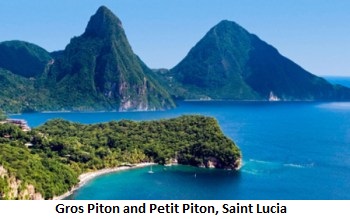
“Economy and culture: it’s the same fight!” – Jack Lang, 2-time Minister of Culture (1988 – 1992; 1981 – 1986), Republic of France; (under President François Mitterrand)

In some Caribbean countries, “Tourism and Culture” are administered by the same agency, i.e. Ministry of Tourism Sports and Culture in St. Vincent and the Grenadines; (see photo here). Now the BIG country of China is embarking on the same model, as reported in this recent news article:

Title: China Creates Ministry of Culture and Tourism
The Chinese government has officially inaugurated the Ministry of Culture and Tourism, which will help to boost the work culture in China and also helps to increase the work efficiency.

Former Chinese minister of culture Luo Shugang was elected as the new Minister of Culture and Tourism, and Li Jinzao was appointed Vice Minister.

It is as part of a widespread institutional reshuffle, China forms this new department to boost the cultural part in the country.

Huang Kunming, member of the Political Bureau of the Communist Party of China (CPC) Central Committee and head of the Publicity Department of the CPC Central Committee, attended the inauguration ceremony.

While addressing a symposium Sunday, Huang Kunming said that the establishment of the Ministry of Culture and Tourism would strengthen the Communist Party of China’s overall leadership over the work of culture and tourism. This is a new move by the Government of China to promote the country’s culture in international hemisphere.

Huang Kunming called on the Ministry of Culture and Tourism to hold the new era, assume new missions, and have more confidence in the Chinese culture. Huang also asked the ministry to realize the policies and decisions made by the CPC Central Committee.
Source: Posted April 10, 2018; retrieved July 24, 2018 from: https://www.caribbeannewsdigital.com/en/noticia/china-creates-ministry-culture-and-tourism

There are benefits to be derived for the Caribbean member-states to prioritize their culture as a revenue product. This would mean providing a structure for the world to enjoy our culture, through the visitations and explorations of tourism and/or through media productions. So the goal here is to better explore the industrialization of culture.

This is the urging of the movement behind the book Go Lean…Caribbean; the book asserts (Page 218) that Caribbean culture must be preserved and protected. While we want to be a member of global society, we strongly want to maintain what makes our cultural influences special and unique. The book supports the notion that the Caribbean is the greatest address on the planet, not just because of the terrain, fauna and flora; but also for the culture, festivals, food, music, dance, rum, cigars and our unique history. We have a fusion of African, Amer-Indian, European and Asian influences that cannot be found anywhere else on the planet; see Appendix VIDEO.

Plus, we have 21 UNESCO World Heritage Sites in our neighborhood. 🙂

Despite these synergies, our societal engines (economics, security and governance) are dysfunctional. The Go Lean book posits that the unique cultural dynamism of the region has not being fully explored; especially not regionally. Instead of competing in tourism and culture, this book urges that all regional member-states coordinate, collaborate, cooperate and confederate. Our whole, will be more than the sum of our parts. This is the dynamic of regional leverage.

We must reboot the industrial landscape, around our cultural dynamism, in order to create new economic opportunities, like jobs. We need such a new economic landscape because the current one is in shambles! This is due to the primary driver in the region – Tourism – being under assault. For example, more and more visitors shift from stay-overs to cruise arrivals. In addition to these visitors not having much time to embrace the local culture, the communities also suffer an economic blow to the local markets, as less spending is noticed.

So as a region, we must reboot our industrial landscape around our culture so as to add more cultural explorations, which will also mean more participation from all relevant stakeholders. The Go Lean book explains that doubling-down on the different areas of culture – events, music, arts, historic heritage sites – can result in more jobs. See here:

Direct jobs for Festivals and other event staff at Fairgrounds: 9,000  

Direct jobs for managing music industry and media consumption: 2,900  

Direct jobs (production, cast & crew) for film, TV and internet streaming: 2,000

Direct jobs for managing artist/exhibition & media consumption: 700  

Direct jobs for managing, promoting UNESCO World Heritage Sites: 1,000

The Go Lean book prepares the business model for these expressions of culture in the Caribbean region. Yes, business model refers to jobs, entrepreneurial opportunities, trade transactions, etc. In addition to these 15,600 industry jobs; there is also the reality of indirect jobs – unrelated service and attendant functions – at a 3.75 multiplier rate would add another 58,750 jobs.

This constitutes an industrial reboot! The book Go Lean…Caribbean – available to download for free – serves as a roadmap for the introduction and implementation of the technocratic Caribbean Union Trade Federation (CU); this is a confederation of all 30 member-states to execute a reboot of the Caribbean economic eco-system. This CU/Go Lean roadmap has these 3 prime directives:

  • Optimization of the economic engines in order to grow the regional economy to $800 Billion & create 2.2 million new jobs.
  • Establishment of a security apparatus to ensure public safety and protect the resultant economic engines.
  • Improvement of Caribbean governance to support these engines, including a separation-of-powers between the member-states and CU federal agencies.

The Go Lean book stresses that reforming and transforming the Caribbean economic engines must be a regional pursuit. This was an early motivation for the roadmap, as pronounced in the opening Declaration of Interdependence (Pages 13 – 14):

xxiv.  Whereas a free market economy can be induced and spurred for continuous progress, the Federation must install the controls to better manage aspects of the economy: jobs, inflation, savings rate, investments and other economic principles. Thereby attracting direct foreign investment because of the stability and vibrancy of our economy.

xxvi.  Whereas the Caribbean region must have new jobs to empower the engines of the economy and create the income sources for prosperity, and encourage the next generation to forge their dreams right at home, the Federation must therefore foster the development of new industries, like that of ship-building, automobile manufacturing, prefabricated housing, frozen foods, pipelines, call centers, and the prison industrial complex. In addition, the Federation must invigorate the enterprises related to existing industries like tourism, fisheries and lotteries – impacting the region with more jobs.

xxxii. Whereas the cultural arts and music of the region are germane to the quality of Caribbean life, and the international appreciation of Caribbean life, the Federation must implement the support systems to teach, encourage, incentivize, monetize and promote the related industries for arts and music in domestic and foreign markets. These endeavors will make the Caribbean a better place to live, work and play.

This is the vision of an industrial reboot! This transformation is where and how new jobs can be created in the Caribbean. Accordingly, the CU will also facilitate an eco-system for Self-Governing Entities (SGE), an ideal concept for artist colonies, educational institutions and entertainment zones with the exclusive federal regulation/promotion activities. Imagine bordered campuses or urban districts – with theaters, film sound-stages, artists studios and exhibition halls.

The focus for the Go Lean roadmap is to recognize the economic benefits of fostering the arts. See here, how this subject is further elaborated on in the Go Lean book (Page 218) with the French example (debate) of Cultural Mandates -vs- Free Market Adherences:

The Bottom Line on French Cultural Mandates

The French cultural endeavors are effectively managed by the government’s Ministry of Culture; which is in charge of national museums & monuments; managing the national archives and regional culture centers, and promoting & protecting the arts (visual, plastic, theatrical, musical, dance, architectural, literary, televisual & cinematographic) in France and abroad. The Ministry is also charged with maintaining the French identity. The cabinet post was created by President Charles de Gaulle in 1959 with the goal of realizing the right to culture, incorporated in the French constitution and the Universal Declaration of Human Rights (1948). De Gaulle’s aim was to democratize access to culture and elevate the “grandeur” of post-war France.

Under President François Mitterrand the Minister of Culture, Jack Lang, showed himself to be far more open to popular cultural production, including jazz, rock and roll, rap music, graffiti art, cartoons, comic books, fashion and food. His famous phrase “economy and culture: it’s the same fight” is representative of his commitment to cultural democracy and to active national sponsorship and participation in cultural production. Under Minister Jacques Toubon (1993 – ‘95), a number of laws were enacted for the preservation of the French language, both in advertisements and on the radio (80% of songs in French), ostensibly in reaction to the presence of English. – Wikipedia

… versus …

Allowing the Free Market
As digital multimedia evolves and emerges as both a business and creative opportunity, France’s culture of subsidy guarantees that it will always be more important for the artistes to be French first and creative second. As industrial policies go, that is hardly a recipe for success. For example, France has actually had a deputy cultural minister in charge of funding development of French rock ‘n’ roll. But American Top 40 radio stations never had to worry about a French Invasion.Also, the French had poured billions of francs into Groupe Bull – the state-supported computer company – in a desperate bid to keep France in the forefront of digital hardware and software systems. While Bull did OK in France; in the rest of the world – in the global marketplace – it failed miserably.

Why do the French think the results will be any better with their cultural policy? The answer is simple: arrogance and a total misunderstanding of market forces. What really galls the French elite, of course, is that while the bourgeoisie and proletariat always choose with their ballots to preserve French culture, they always overwhelmingly vote for American pop culture with their francs. American television shows consistently kick the stuffing out of French shows in terms of popularity. Steven Spielberg does better box office than Jean-Jacques Beneix. – Wired Magazine May, 1994

The Go Lean movement (book and blogs) details the principles of SGE’s and job multipliers, how certain industries are better than others for generating multiple indirect jobs down the line (or off-campus) for each direct job on the SGE’s payroll. The arts hold the same promise. Plus with the beauty of the arts, it is time, talent and treasuries well-spent just in the execution of this business model.

Any time spent singing and dancing … is not a waste!

The Go Lean book provides 370-pages of turn-by-turn instructions on “how” to adopt new community ethos, plus the strategies, tactics, implementations and advocacies to execute so as to reboot, reform and transform the societal engines of Caribbean society. One advocacy in rebooting the industrial landscape is to work to preserve the cultural heritage of the regional member-states; consider the  specific plans, excerpts and headlines from the book on Page 206 entitled:

10 Ways to Preserve Caribbean Heritage

1 Lean-in for the Caribbean Single Market
This regional re-boot will allow for the unification of the region into one market, thereby creating a single economy of 30 member-states, 42 million people and a GDP of over $800 Billion. The CU will assume the primary coordination for the region’s economy and image, because “economy and culture is the same fight”. Despite the legacies of 4 European cultures and the ubiquity of the American neighborhood, a CU mission is to preserve Caribbean heritage and culture.
2 Media Priorities (See Appendix W on Page 311: “Mediating as French Culture and Economics Collide“)

Like the French, this region may have to impose a system of quotas and subsidies for domestic production – in order to preserve “diversity” and an important Caribbean industry. As France is insisting on excluding such subsidies from a proposed EU-USA free-trade agreement, the CU may need to follow suit with such a policy to ensure local programs.

3 Mitigate Human Flight

As the “Dodo” bird became extinct, cultural extinction occurs too. Many aboriginal cultures have vanished from the New World, like the Aztec and Caribe tribes; (though some Taino influence remains). Human flight has the negative impact of assimilating a people in their new homelands. A CU mission is to mitigate this threat, and spur repatriation.

4 Legacies – Less Caribbean
5 Festivals
6 Music
7 Art – Public Places
8 Properties – Historical Preservation
9 Turn-around Strategies
10 Natural Resources (Fish, Animal Species)

Cultural preservation is not a new subject for this Go Lean roadmap; there have been a number of previous blog-commentaries by the Go Lean movement that referenced the economic opportunities embedded in the exposé of Caribbean culture. These submissions have highlighted what an industrial expression of culture can achieve:

https://goleancaribbean.com/blog/?p=14211 Enjoy Carnival and Be Safe!
https://goleancaribbean.com/blog/?p=12304 Caribbean Festival of the Arts – Past, Present and Future
https://goleancaribbean.com/blog/?p=9860 Forging Change Thru Arts & Artists
https://goleancaribbean.com/blog/?p=9712 Forging Change Thru Panem et Circenses (Food & Festivals)
https://goleancaribbean.com/blog/?p=7685 Joy. Pain. Sunshine. Rain. – A Message of Happiness
https://goleancaribbean.com/blog/?p=3641 ‘We Built This City …’ on Art, Music and Culture
https://goleancaribbean.com/blog/?p=866 Bob Marley: A Caribbean Cultural Legend Lives On!

In summary, our Caribbean region needs a better job-creation capability to make our homeland better. In fact, one of the reasons why so many Caribbean citizens have emigrated away from the homeland is the job-creation dysfunction. Creating a new economic landscape will require rebooting the industrial landscape.

Yes, we can … do this! We urge all Caribbean stakeholders to lean-in to this roadmap for economic empowerment. We urge everyone to explore and exploit our great Caribbean culture; this could help to make our homeland a better place to live, work and play. 🙂

Download the free e-Book of Go Lean … Caribbean – now!

Sign the petition to lean-in for this roadmap for the Caribbean Union Trade Federation.

—————-

Appendix VIDEO – Here’s how the Caribbean became the most Racially Diverse Region in the World – https://youtu.be/fAZBLzWCUbU

Masaman

Published on May 1, 2017 – This is how the Caribbean became the most racially diverse region on the planet, after having it’s ancestry and genetics permanently altered through European colonialism and migration.

In this video, I’m going to give the rundown for several Caribbean countries such as Cuba, Haiti, Jamaica, the Dominican Republic, Trinidad and Tobago, along with many others. We will look at the demographic history, and just what spawned the drastic fluctuations in the racial makeup of the region.

We’re also going to touch on many of the surrounding areas such as Central America, the Gullah coast, as well as the Guianas of South America.

Please let me know your thoughts on my analysis, especially if you live in, or have ancestry from the region. Videos over the latter regions will be released soon. Thanks for watching!


Share this post:
, , ,
[Top]