Category: Strategy

Repairing the Breach: One Option – National Youth Service – ENCORE

Blood, sweat and tears …

… that is all we want from the people in our Caribbean communities. If people sacrifice for their community then they tend to be more loyal to it.

There are problems in the Caribbean for managing our young people – they are not loyal to the concept of community – so we need to consider strategies, tactics and implementation for change. Some segments of the population are more troubled than others; in particular the disposition among “Black men and boys” in the Caribbean is of serious concern.

One option to effect change in this target population is a Military-style Draft …

Wait, what?!

We want to change/improve the Caribbean member-states. Any attempt to change Caribbean society’s community ethos must start with the youth. But when we say “blood”, we are not contemplating any sacrifice of our young men on the altar of the God of War. Rather, as related in the previous commentary encored below, our region is missing the ingredient of wholesale commitment of these young men to any national cause. Thusly, the recommendation is for conscription/draft into a National Youth Service (NYS) program but for the entire Caribbean region; see the ENCORE below.

This is a workable plan! When people sacrifice their blood, sweat and tears for a homeland, then they are less willing to disregard or abandon that homeland. We need this ingredient … urgently.

According to a White Paper by an academician, Dr. Donald McCartney of the Bahamas, the Black men and boys of our region need to be productive contributors to our society. He asserted that this population had experienced a breach in good citizenship in our society – “hurt people hurt people” – so he composed a White Paper to address this question of “How to repair this breach?” and identified some viable solutions for the region to consider. See that full White Paper here, and an Excerpt as follows:

White Paper Title: Repairing the Breach in the Caribbean – EXCERPT
By: Dr. Donald McCartney


As we approach the 200th anniversary of the abolition of slavery in the British Empire, the same questions, regarding Black men and boys, are being raised again.

These questions are being revived because many, too many Black men and boys are not a part of the economic structure or the body politic. Upon close examination, it becomes clear that many of them are not in community with their ethnic group.

For the most part, Black men and boys live in isolation, better yet, they are marginalized. They find it difficult to connect with society in general and the significant persons in their lives in particular.

The spiraling  murder rate and other acts of violence (particularly against young men and the elderly), makes it clear, that many Black men and boys in the Caribbean, pose a serious and critical problem of interpersonal violence in every corridor and thoroughfare that Caribbean peoples and residents must cross. Consequently, Black men and boys in the Caribbean are feared, demonized and vilified.

There is a breach within the fabric of Caribbean society, which has led to a breach in the lives of Black Caribbean males. A serious attempt must be made to repair this breach at all cost.

There must be a regional response with respect to the issues confronting Black men and boys in the Caribbean. This is no time for throwing up our hands as a gesture of capitulation, (posing the useless question: “What is wrong with these young men?) and rolling our eyes. It is time for action…serious sustained, positive action!

See the full White Paper here: https://goleancaribbean.com/blog/?p=14392

This commentary continues the 4-part series on Repairing the Breach; using the foregoing White Paper by Dr. McCartney as the premise. This entry is 3 of 4 in this series from the movement behind the book Go Lean … Caribbean in consideration of solutions to assuage the plight of Black men and boys. The other commentaries in the series are cataloged as follows:

  1. Repairing the Breach: Hurt People Hurt People
  2. Repairing the Breach: Crime – Need, Greed, Justice & Honor
  3. Repairing the Breach: One Option – National Youth Service
  4. Repairing the Breach: Image Impacts Economics

While all of these commentaries relate to “how” the stewards for a new Caribbean can assuage the failing dispositions of the Caribbean among our Black men and boys, this one in particular proposes a revolutionary approach on constricting all young people (males only initially) into a National Youth Service or public service in the region in general. The White Paper proposed these 3 questions, that the NYS scheme addresses:

  • First: How do we bring relief and assistance to communities and families that are experiencing the great hurt and harm of violent behaviour?
  • Secondly: How do we find a way to reestablish community and make inroads into violent behaviour, the major social problem of the day? 
  • Thirdly: How do we expect to engage Black men and boys in constructive dialogue and participation within Caribbean society while, at the same time, refurbishing the image that has now been unfairly placed upon the entire population of Black men and boys?

See here as follows, the ENCORE of the original blog-commentary from January 15, 2015 detailing the specificities of the National Youth Service scheme as an expression of the National Sacrifice community ethos:

——————

Go Lean Commentary – National Sacrifice – The Missing Ingredient

CU Blog - National Sacrifice - The Missing Ingredient - Photo 3The term National Sacrifice is defined here as the willingness to die for a greater cause; think “King/Queen and Country”. This spirit is currently missing in the recipe for “community” in the Caribbean homeland.

To be willing to die for a cause means that one is willing to live for the cause. Admittedly, “dying” is a bit extreme. The concept of “sacrifice” in general is the focus of this commentary.

The publishers of the book Go Lean…Caribbean wants to forge change in the Caribbean, we want to change the attitudes for an entire community, country and region. We have the track record of this type of commitment being exemplified in other communities. (Think: The US during WW II). Now we want to bring a National Sacrifice attitude to the Caribbean, as it is undoubtedly missing. This is evidenced by the fact the every Caribbean member-state suffers from alarming rates of societal abandonment: 70% of college educated population in the English states have left in a brain drain, while the US territories have lost more than 50% of their populations).

The book Go Lean…Caribbean opens with the acknowledgement that despite having the “greatest address in the world… the people of the Caribbean have beat down their doors to get out”, (Page 5).

CU Blog - National Sacrifice - The Missing Ingredient - Photo 4The book Go Lean…Caribbean serves as a roadmap for the introduction and implementation of the Caribbean Union Trade Federation (CU); a confederation to bring change, empowerment, to the Caribbean region; to make the region a better place to live, work and play for all stakeholders (residents, visitors, businesses, organizations – NGO’s and governments). This Go Lean roadmap also has initiatives to foster solutions for the Caribbean youth. The Go Lean book posits that permanent change for Caribbean society will only take root as a result of adjustments to the community attitudes, the national spirit that drives the character and identity of its people. This is identified in the book as “community ethos”; and that one such character, National Sacrifice is sorely missing in this region.

Any attempts to change Caribbean society’s community ethos must start with the youth.

At no point should it be construed that this commentary is advocating sacrificing young men (and women) on the altar of the God of War. But rather, this commentary laments the missing ingredients of wholesale commitment to any national cause. Thusly, the recommendation is for conscription/draft (Appendix B) into a National Youth Service (NYS) program for the Caribbean. Take it one step further and make the Youth Service program regional in its scope rather than “national”; with applicable exemptions for:

  • military/police enrollments
  • student/research deferments (at regional institutions)
  • religious/missionary assignments
  • medical/disability exceptions

This quest relates a commitment so vital to a community that everyone should be willing to sacrifice and lean-in for the desired outcome. This Caribbean effort is not new to the world; it is currently being championed by a Washington-DC-based global Non-Government Organization (NGO) branded the Innovations in Civic Participation (ICP). Much can be learned from analyzing their successes … and failures. See details here:

Innovations in Civic Participation – NGO – Leaders for Youth Civic Engagement (Retrieved 01/15/2015):

Innovations in Civic Participation (ICP) is a global leader in the field of Youth Civic Engagement. ICP envisions a world where young people in every nation are actively engaged in improving their lives and their communities through civic participation. We believe that well-structured youth service programs can provide innovative solutions to social and environmental issues, while helping young people develop skills for future employment and active citizenship.

ICP carries out its mission through four main activities:

  1. Incubating innovative models for youth service programs;
  2. Creating and expanding global networks;
  3. Conducting research and publicizing information on youth civic engagement, especially national youth service and service-learning; and
  4. Serving as a financial intermediary to support program innovation and policy development.

In addition to these activities, ICP regularly consults with its extensive network of over 2,500 academics, policymakers, program entrepreneurs, and other leaders in the field on program and policy work.

Contact Information:

Innovations in Civic Participation
P.O. Box 39222
Washington, DC 20016
202-775-0290

http://www.icicp.org/about-us/

A quest for a National Youth Service has previously been advocated in Sub-Saharan Africa (see Appendix C). There, the NYS was designed to explore the potential to foster youth employability, entrepreneurship, and sustainable livelihoods. This effort stemmed from an existing tradition of NYS programs in Sub-Saharan Africa, which were originally designed to cultivate a sense of national identity and mobilize skills for development in post-independence nations; (see Appendix A). Today, NYS programs operate in the context of a deepening regional youth unemployment crisis, which averages over 20 percent, according to African Economic Outlook. NYS programs engage hundreds of thousands of young people each year and have the potential to equip them with strong civic skills and prepare them for employment and livelihood opportunities.

Despite its potential as an economic strategy, little is still known about how effective NYS programs are at increasing youth employability in Africa. But there is no doubt for the commitment to community that is forged from these efforts. Young people cry, sweat, and bleed for their community, embedding a desire to sacrifice for the Greater Good.

This corresponds with the Bible precept: “There is more happiness in giving than in receiving” – Acts 20:35

There are NYS programs already deployed or proposed for these Caribbean member-states, (though many have been snagged or stalled):
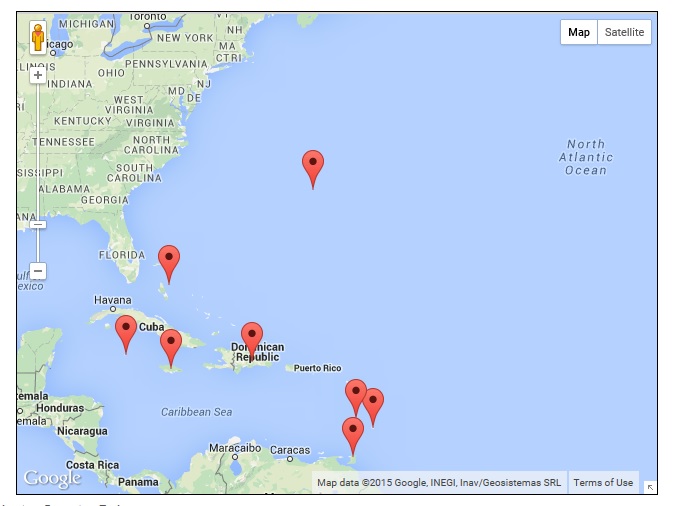
CU Blog - National Sacrifice - The Missing Ingredient - Photo 1

The purpose of the Go Lean book/roadmap is more than just the embedding of new community ethos, but rather the elevation/empowerment of Caribbean society. In total, the Caribbean empowerment roadmap has these 3 prime directives:

  • Optimization of the economic engines in order to grow the regional economy to $800 Billion & create 2.2 million new jobs.
  • Establishment of a security apparatus to protect the resultant economic engines.
  • Improve Caribbean governance and industrial policies to support these engines.

The roadmap details the following community ethos, plus the execution of these strategies, tactics, implementation and advocacies to forge permanent change in the region:

Community Ethos – Deferred Gratification Page 21
Community Ethos – Economic Principles – People Choose Page 21
Community Ethos – Economic Principles – People Respond to Incentives in Predictable Ways Page 21
Community Ethos – Economic Principles – The Consequences of Choices Lie in the Future Page 21
Community Ethos – Governing Principles – Lean Operations Page 24
Community Ethos – Governing Principles – Cooperatives Page 25
Community Ethos – Ways to Impact the Future Page 26
Community Ethos – Ways to Impact a Turn-Around Page 33
Community Ethos – Ways to Improve Sharing Page 35
Community Ethos – Ways to Promote Happiness Page 36
Community Ethos – Ways to Impact the Greater Good Page 37
Strategy – Vision – Confederate 30 Member-States Page 45
Strategy – Mission – Enact a Defense Pact to Defend the Homeland Page 45
Strategy – Mission – Keep the next generation at home Page 46
Tactical – Confederating a Permanent Union Page 63
Tactical – Fostering a Technocracy Page 64
Tactical – Separation-of-Powers Between CU & Member-States Governments Page 71
Implementation – Assemble – Incorporating all the existing regional organizations Page 96
Implementation – Ways to Pay for Change Page 101
Implementation – Security Initiatives at Start-up Page 103
Implementation – Ways to Deliver Page 109
Planning – 10 Big Ideas for the Caribbean – Confederation Without Sovereignty Page 127
Planning – Ways to Make the Caribbean Better Page 131
Planning – Lessons Learned from the West Indies Federation – Military Units Page 135
Advocacy – Ways to Grow the Economy Page 151
Advocacy – Ways to Create Jobs Page 152
Advocacy – Ways to Better Manage the Social Contract Page 170
Advocacy – Ways to Manage Federal Civil Service Page 173
Advocacy – Ways to Improve Homeland Security Page 181
Advocacy – Ways to Improve Communications Page 186
Advocacy – Ways to Preserve Caribbean Heritage Page 218
Advocacy – Ways to Impact Youth Page 227
Appendix – 30,000 Federal Employees Page 299
Appendix – Previous West Indies Integration – Caribbean Regiment Page 301

Previously Go Lean blog/commentaries have considered historic references and have also stressed fostering the proper and appropriate community ethos for the Caribbean to prosper; and reported on the repercussions and consequences of bad ethos. The following sample applies:

https://goleancaribbean.com/blog/?p=2830 Bad Ethos: Jamaica’s Public Pension Under-funded
https://goleancaribbean.com/blog/?p=2809 A Lesson in Bad Community Ethos : East Berlin/Germany
https://goleancaribbean.com/blog/?p=2480 A Lesson in History: Community Ethos of WW II
https://goleancaribbean.com/blog/?p=2297 A Lesson in History – Booker T versus Du Bois – to Change a Bad Community Ethos
https://goleancaribbean.com/blog/?p=1531 A Lesson in History: 100 Years Ago – World War I – Cause and Effect in Community Ethos
https://goleancaribbean.com/blog/?p=841 Having Less Babies is Bad for the Economy – Need People
https://goleancaribbean.com/blog/?p=623 Only at the Precipice, Do Communities Change
https://goleancaribbean.com/blog/?p=353 Book Review: ‘Wrong – Nine Economic Policy Disasters and What We Can Learn…’
https://goleancaribbean.com/blog/?p=228 Egalitarianism versus Anarchism – Community Ethos Debate

All in all, there is a certain community ethos associated with populations that have endured change. It is a National Sacrifice, a deferred gratification and focus on the future. Any losses of privileges are appreciated by the entire community, not just the affected individual or family member. This is the purpose of the US Memorial Day Holiday on the last Monday in May, honoring the military service of all our men and women in uniform, their families at home, and those who have made the ultimate sacrifice in dying for their country. A quest to unite the country in remembrance and appreciation of the fallen and to serve those who are grieving is a good way to forge a community ethos of National Sacrifice.

See VIDEO here of a community’s great honor to a slain soldier:

VIDEO: Sky Mote: Community Honors a Fallen Soldier from El Dorado County with a Hero’s Welcome –   http://youtu.be/MVQORRQvTpU

Published on Aug 17, 2012 – Starting with a Marine Honor Guard carrying the transfer case containing the body of Staff Sgt. Sky R. Mote of El Dorado, CA, upon arrival at Dover Air Force Base, Del. on Sunday Aug. 12, 2012. (AP Photo/Jose Luis Magana). Then continuing with the great Welcome Home the community gave. His family will never forget!

Though this Fallen Soldier is mourned and missed, his sacrifice is duly acknowledged, appreciated and honored in his hometown. This community spirit creates a value system for public service and National Sacrifice.

The US is not the only country that memorializes their war dead. Those countries that do, experience less societal abandonment. The British Commonwealth of Nations (representative of 18 Caribbean member-states) shows likewise homage to their Fallen Soldiers. The Commonwealth War Graves Commission (CWGC) is responsible for maintaining the war graves of 1.7 million service personnel that died in the First and Second World Wars fighting for Commonwealth member states. Founded in 1917 (as the Imperial War Graves Commission), the Commission has constructed 2,500 war cemeteries, and maintains individual graves at another 20,000 sites around the world.[107] The vast majority of the latter [however] are civilian cemeteries in Great Britain. (Source: http://en.wikipedia.org/wiki/Commonwealth_War_Graves_Commission).

The former British colonies did not adopt this National Sacrifice value system. As most Caribbean (notwithstanding the US Territories) member-states do not even have a (work-free) holiday to honor the sacrifices of those that fought, bled and/or died for their country.

No appreciation, no sacrifice; no sacrifice, no victory. It is that simple!

It is the recommendation of this blog/commentary that all Caribbean member-states should mandate a civilian conscription service for their citizens (1 year between ages 18 and 25); it is common for a confederation – the CU for the Caribbean – to marshal a multi-state, allied military force. Then the CU should facilitate a complete eco-system of engaging the conscripted NYS participants to serve and protect the people and resources of the Caribbean. After which, the communities should show proper appreciation and honor to those that make these sacrifices for “King/Queen and Country”, from all conscription services: military service, public and civilian.

(Many times school teachers and administrators are lowly paid; their service to their country is a great sacrifice).

Veteran-style benefits should thusly be considered for all these “national” servants. This commitment from the community would go far in forging deep loyalty within the citizenry, thus mitigating quick abandonment of the homeland.

There is a separation-of-powers between the CU federal agencies and Caribbean member-states, so the CU would have no authority on how member-states manage, appreciate or honor their civil servants; unless some CU grants/funding apply. But for CU personnel, the practice will be institutionalized to recognize the service of long-time civil servants (active or retired) and their sacrifices. So for any human resource that die in the line of duty, the funeral processions will be filled with pomp and circumstance, much like the foregoing VIDEO.

“The [servants] who perform well are to be considered worthy of double honor, especially those who work hard …” – Bible 1 Timothy 5:17

Now is the time to lean-in to this roadmap for Caribbean change, as depicted in the book Go Lean…Caribbean. All the mitigations and empowerments in this roadmap require people to remain in the homeland. No people, no hope! A community ethos, a spirit or attitude of sacrifice for the Greater Good is a great start to forge change; no sacrifice, no victory.

🙂

Download the book Go Lean … Caribbean – now!

Sign the petition to lean-in for this roadmap for the Caribbean Union Trade Federation.

——————-

Appendix A – ICP Studies and Results

Overview of the National Youth Service Landscape in Sub-Saharan Africa

National Youth Service Project on Employability, Entrepreneurship and Sustainable Livelihoods in Sub-Saharan Africa: Synthesis Report

——————

Appendix B – Conscription (or Drafting)
This is the compulsory enlistment of people in some sort of National Service, most often military service.[2] Conscription dates back to antiquity and continues in some countries to the present day under various names. The modern system of near-universal national conscription for young men dates to the French Revolution in the 1790s, where it became the basis of a very large and powerful military. Most European nations later copied the system in peacetime, so that men at a certain age would serve 1–8 years on active duty and then transfer to the reserve force.
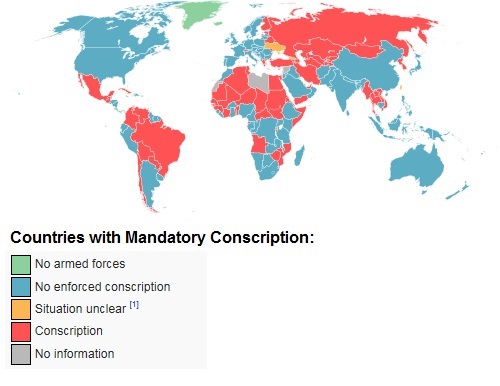
CU Blog - National Sacrifice - The Missing Ingredient - Photo 2Conscription is controversial for a range of reasons, including conscientious objection to military engagements on religious or philosophical grounds; political objection, for example to service for a disliked government or unpopular war; and ideological objection, for example, to a perceived violation of individual rights. Those conscripted may evade service, sometimes by leaving the country.[4] Some selection systems accommodate these attitudes by providing alternative service outside combat-operations roles or even outside the military, such as civil service in Austria and Switzerland.

As of the early 21st century, many states no longer conscript soldiers, relying instead upon professional militaries with volunteers enlisted to meet the demand for troops. The ability to rely on such an arrangement, however, presupposes some degree of predictability with regard to both war-fighting requirements and the scope of hostilities. Many states that have abolished conscription therefore still reserve the power to resume it during wartime or times of crisis.[5] (Source: http://en.wikipedia.org/wiki/Conscription)

National Service is a common name for mandatory or volunteer government service programmes. The term became common British usage during and for some years following the Second World War. Many young people spent one or more years in such programmes. Compulsory military service typically requires all citizens, or all male citizens, to participate for a period of a year (or more in some countries) during their youth, usually at some point between the age of 18 and their late twenties. (Source: http://en.wikipedia.org/wiki/National_service)

——————

Appendix C  – National Youth Service Corps in Nigeria
The National Youth Service Corps (NYSC) is an organisation set up by the Nigerian government to involve the country’s graduates in the development of the country. There is no military conscription in Nigeria, but since 1973 graduates of universities and later polytechnics have been required to take part in the National Youth Service Corps (NYSC) program for one year.[1] This is known as national service year.

“Corp” members are posted to cities far from their city of origin. They are expected to mix with people of other tribes, social and family backgrounds, to learn the culture of the indigenes in the place they are posted to. This action is aimed to bring about unity in the country and to help youths appreciate other ethnic groups.

There is an “orientation” period of approximately three weeks spent in a camp away from family and friends. There is also a “passing out ceremony” at the end of the year and primary assignment followed by one month of vacation.

The program has also helped in creating entry-level jobs for many Nigerian youth. An NYSC forum dedicated to the NYSC members was built to bridge the gap amongst members serving across Nigeria and also an avenue for members to share job information and career resources as well as getting loans from the National Directorate Of Employment.

The program has been met with serious criticism by a large portion of the country. The NYSC members have complained of being underpaid, paid late or not paid at all.[2] Several youths carrying out the NYSC program have been killed in the regions they were sent to due to religious violence, ethnic violence or political violence.[3]

A series of bomb and other violent attacks, especially in the North, rocked the country’s stability in the period preceding the 2011 gubernatorial and presidential elections. Most common of these attacks was perpetuated by the Islamist extremist terrorist group called Boko Haram. “Boko Haram” means “Western education is a sin” in the local hausa dialect in Nigeria. The group “Boko Haram” is against western education and wants to establish an Islamic state in Nigeria’s northern region.

Worst hit were National Youth Service Corps members, some of whom lost their lives.
(Source: http://en.wikipedia.org/wiki/National_Youth_Service_Corps)

Share this post:
, , ,

Repairing the Breach: ‘Hurt People Hurt People’

Go Lean Commentary

Black men and boys” …

… this is a special group in the population of the New World, the Americas. This group has been victims and villains. To the point that academicians and clinicians alike can conclude that “hurt people hurt people”.

Societal defects within this group are higher than normal, compared to other populations groups. This includes violence, delinquencies, incarceration, repression and hopelessness.
It is hard to be a “Black man or boy” … in the Americas.

This statement could have been echoed from the 1600’s all the way up to today.

One of the greatest advocates for Black causes, abolitionist Frederick Douglass (1818 – 1895), was right when he said:

“If there is no struggle, there is no progress.”

However, we say:

“For there to be victory, there must be a struggle; for there to be victory, there must be losers.”

The New World experience for people of African descent is one of struggle; but our people have made a lot of progress over the last 2 centuries especially; that means we have “ruffled a lot of feathers” along the way. Caribbean music icon Bob Marley worded it perfectly in a song that was released posthumously: “Buffalo Soldier”. The lyrics say:

Fighting on arrival; fighting for survival.

That fight though, was not always successful.

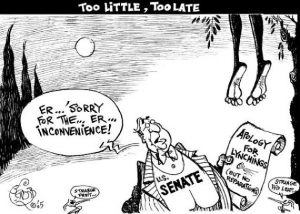
The experience of the Black men and boys in the New World is that these ones have often been hurt. Consider just the US experience with Lynchings in the Appendix A and Appendix VIDEO below, where “a total of 4,733 persons had died by lynching since 1882”; (Black men and boys were almost always the victims, with a few sprinkling of women here and there).

There is no excusing, rationalizing or minimizing this injustice. This “hurt” was state-action, state-sponsored and extra-judicial via mob-violence. (Other countries in the Americas also had lynchings, not just the Southern States of the US).

With this above introduction, is there any wonder that the crime rate is higher for Black men and boys than any other sub-group in the population? This is the accepted premise that “hurt people hurt people” – see Appendix C below.

This fact causes  breach in society. How do “we” repair this breach in societal dynamics?

This question was posed by an academician, Dr. Donald McCartney of the Bahamas. He composed a White Paper to address this question of “How to repair this breach?” and identified some viable solutions, not just for the Bahamas, but for all the Caribbean. Considering that 29 of the 30 countries that caucus with the political Caribbean possess a majority Black (or non-White) population, this is an apropos discussion for this movement behind the book Go Lean…Caribbean. See that full White Paper here, and an Excerpt as follows:

White Paper Title: Repairing the Breach in the Caribbean – EXCERPT
By: Dr. Donald McCartney

As we approach the 200th anniversary of the abolition of slavery in the British Empire, the same questions, regarding Black men and boys, are being raised again.

These questions are being revived because many, too many Black men and boys are not a part of the economic structure or the body politic. Upon close examination, it becomes clear that many of them are not in community with their ethnic group.

For the most part, Black men and boys live in isolation, better yet, they are marginalized. They find it difficult to connect with society in general and the significant persons in their lives in particular.

The spiraling  murder rate and other acts of violence (particularly against young men and the elderly), makes it clear, that many Black men and boys in the Caribbean, pose a serious and critical problem of interpersonal violence in every corridor and thoroughfare that Caribbean peoples and residents must cross. Consequently, Black men and boys in the Caribbean are feared, demonized and vilified.

See the full White Paper here: https://goleancaribbean.com/blog/?p=14392

The Caribbean has some work to do. The Go Lean book serves as a roadmap for effecting change in the Caribbean; it introduces the technocratic Caribbean Union Trade Federation (CU) as a vehicle to bring about the desired change in the region’s societal engines (economics, security and governing).

Our situation is bad, a crisis even! Some of our communities can even be categorized as Failed-States. But the Go Lean book asserts that a “crisis is a terrible thing to waste”. Thusly, this movement has formulated a roadmap to elevate the societal engines in the Caribbean. The book confesses that “this” is a Big Deal – heavy-lifting – but lays out the Way Forward with best-practices, strategies, tactics, implementations and advocacies, so as to conclude:

Yes, we can!

The first step in Repairing the Breach must be the recognition that “hurt people hurt people”. Rather than throwing these people away, we need to work to reconcile them into Caribbean society. This is the modus operandi of the foregoing White Paper by Dr, McCartney.

But throw away, run away, flee away and outright abandonment is exactly what has been happening; this is the current disposition of Caribbean youth. Too many people leave, and their absence damages the fabric of Caribbean society. The region is suffering a debilitating brain-drain rate estimated at 70% with some countries reporting up to 81%. This alarming abandonment rate is due to “push-and-pull” factors.

  • “Push” refers to the overbearing deficiencies in the homeland that forces people to seek refuge.
  • “Pull” refers to the lure that the “grass is greener on the other side” in foreign lands like the US, Canada and EU countries.

The next step to Repair the Breach therefore is to work to keep our people here at home. The quest of the Go Lean roadmap in lowering these “push-and-pull” factors is therefore paramount.

This Go Lean/CU roadmap is designed to provide better stewardship (governance), to ensure that the failures of the past, in the Caribbean and other regions – like the US – do not re-occur here in the Caribbean homeland. The book posits that the United States should not be the model for us to follow in the Caribbean – consider the atrocities in Appendix A; that country has racism embedded in its DNA and it still re-surfaces. No, we must NOT fashion ourselves as parasites of the US, but rather pursue a status as a protégé, benefiting from their lessons-learned but molding our own better society.

It is what it is! We cannot go backwards and change the past; no, all we can do is change-improve the future.

Therefore, the Go Lean movement advocates for Black Caribbean people to stay in the Caribbean, positing that it is easier – after the required reformation and transformation – to “prosper where planted here” than to emigrate to foreign shores.

The book Go Lean … Caribbean posits that America is plagued with institutional racism and Crony-Capitalism. It is therefore not the eco-system for the Caribbean to model. Rather the roadmap designs more empowerments for all of Caribbean society.

In general, the CU will employ better strategies, tactics and implementations to impact its prime directives; identified with the following 3 statements:

  • Optimization of the economic engines in order to grow the regional economy to $800 Billion & create 2.2 million new jobs.
  • Establishment of a security apparatus to protect the resultant economic engines and mitigate internal and external threats.
  • Improvement of Caribbean governance to support these engines.

Early in the Go Lean book, this need for careful technocratic stewardship of the regional Caribbean economy was pronounced (Declaration of Interdependence – Page 12 – 13) with these acknowledgements and statements:

xi. Whereas all men are entitled to the benefits of good governance in a free society, “new guards” must be enacted to dissuade the emergence of incompetence, corruption, nepotism and cronyism at the peril of the people’s best interest. The Federation must guarantee the executions of a social contract between government and the governed.

xii.   Whereas the legacy in recent times in individual states may be that of ineffectual governance with no redress to higher authority, the accedence of this Federation will ensure accountability and escalation of the human and civil rights of the people for good governance, justice assurances, due process and the rule of law. As such, any threats of a “failed state” status for any member state must enact emergency measures on behalf of the Federation to protect the human, civil and property rights of the citizens, residents, allies, trading partners, and visitors of the affected member state and the Federation as a whole.

xxiv. Whereas a free market economy can be induced and spurred for continuous progress, the Federation must install the controls to better manage aspects of the economy: jobs, inflation, savings rate, investments and other economic principles. Thereby attracting direct foreign investment because of the stability and vibrancy of our economy.

The Go Lean book presents 370 pages of instructions for how to reform and transform the Caribbean member-states. It stresses the key community ethos, strategies, tactics, implementations and advocacies necessary to shepherd a better society.

This commentary commences a 4-part series on Repairing the Breach; using the foregoing White Paper by Dr. McCartney as the premise. This entry is 1 of 4 in this series from the movement behind the book Go Lean … Caribbean in consideration of solutions to assuage the plight of Black men and boys. The other commentaries in the series are cataloged as follows:

  1.  Repairing the Breach: ‘Hurt People Hurt People’
  2.  Repairing the Breach: Crime – Need, Greed, Justice & Honor
  3.  Repairing the Breach: One Option – National Youth Service
  4.  Repairing the Breach: Image Impacts Economics

All of these commentaries relate to “how” the stewards for a new Caribbean can assuage the Caribbean failing dispositions among our Black Men and boys. We recognize that something is wrong … today, as has been the case ever since Black men and boys were first brought to the New World. Yes, this problem dates back to slavery and the original Slave Trade.

The Go Lean roadmap declares that “enough is enough” with the Failed-State statuses and societal abandonment in the Caribbean region. Why should our people leave for an uncertain future, when it could be easier for the average person to remediate and mitigate defects in the Caribbean homeland? This is better than submitting to institutional racism of a foreign land, i.e. USA. That is equivalent to “jumping from the frying pan to the fire”.

It is time for the proper empowerments in the Caribbean! It is time to build a better society. The strategies, tactics and implementations proposed in the book Go Lean…Caribbean are conceivable, believable and achievable. We can do these! We can be better.

Everyone in the Caribbean are hereby urged to lean-in for this Go Lean roadmap. 🙂

Download the free e-book of Go Lean … Caribbean – now!

Sign the petition to lean-in for this roadmap for the Caribbean Union Trade Federation. 

———–

Appendix A: Lynchings in the US

Statistics for lynchings have traditionally come from three sources primarily, none of which covered the entire historical time period of lynching in the United States. Before 1882, no reliable statistics are assembled on a national level. In 1882, the Chicago Tribune began to systematically tabulate lynchings. In 1908, the Tuskegee Institute began a systematic collection of lynching reports under the direction of Monroe Work at its Department of Records, drawn primarily from newspaper reports. Monroe Work published his first independent tabulations in 1910, although his report also went back to the starting year 1882.[109] Finally, in 1912, the National Association for the Advancement of Colored People started an independent record of lynchings. The numbers of lynchings from each source vary slightly, with the Tuskegee Institute’s figures being considered “conservative” by some historians.[57]

Tuskegee Institute, now Tuskegee University, defined conditions that constituted a recognized lynching, a definition which became generally accepted by other compilers of the era:

“There must be legal evidence that a person was killed. That person must have met death illegally. A group of three or more persons must have participated in the killing. The group must have acted under the pretext of service to Justice, Race, or Tradition.”

The records of Tuskegee Institute remain the single most complete source of statistics and records on this crime since 1882 for all states, although modern research has illuminated new incidents in studies focused on specific states in isolation.[110] As of 1959, which was the last time that Tuskegee Institute’s annual report was published, a total of 4,733 persons had died by lynching since 1882. To quote the report,

“Except for 1955, when three lynchings were reported in Mississippi, none has been recorded at Tuskegee since 1951. In 1945, 1947, and 1951, only one case per year was reported. The most recent case reported by the institute as a lynching was that of Emmett Till, 14, a Negro who was beaten, shot to death, and thrown into a river at Greenwood, Mississippi on August 28, 1955…For a period of 65 years ending in 1947, at least one lynching was reported each year. The most for any year was 231 in 1892. From 1882 to 1901, lynchings averaged more than 150 a year. Since 1924, lynchings have been in a marked decline, never more than 30 cases, which occurred in 1926…”[111]

The Equal Justice Initiative in Montgomery, Alabama reported 3,959 American victims of “racial terror lynchings” in 12 Southern states from 1877 to 1950.

Most, but not all lynchings ceased during the 1960s.[21][31] The murder of Michael Donald in Alabama in 1981 was the last recorded lynching in the United States. [Though many Hate Crimes have been recorder and/or prosecuted since then].

Source: Wikipedia Online Encyclopedia – retrieved March 1, 2018 from: https://en.wikipedia.org/wiki/Lynching_in_the_United_States#Statistics


———–

Appendix B VIDEO – The Origins of Lynching Culture in the United States – https://youtu.be/hPdh46k7b38

Published on Apr 7, 2015 – How did the practice of lynching begin and evolve in American history? How did Ida B. Wells, a black female investigative journalist, start to challenge some of the entrenched practices of the South? Watch Paula Giddings, professor of Afro-American Studies at Smith College, explore one of the most challenging topics in U.S. history: the history and origins of lynching. Find out more: https://www.facinghistory.org/mocking…

———–

Appendix C – Book: Hurt People Hurt People: Hope and Healing for Yourself and Your Relationships

By: Dr. Sandra D. Wilson (Author)

Summary:

“Hurt people hurt people” is more than a clever phrase. Hurt people hurt others because they themselves have been hurt. And each one of us has been hurt to one degree or another. As that damage causes us to become defensive and self-protective, we may lash out at others. Hurting becomes a vicious cycle.

Review:

“Dr. Sandy Wilson knows why people hurt, where they hurt, and how to heal those hurts. She gets right to the heart of these matters in her very insightful and provocative book. It is a must read for anyone who wants to break free from the bondage of unhealed personal hurts.”     -Dr. Chris Thurman, author of The Lies We Believe

Source: Posted September 21, 2015; retrieved March 2, 2018 from: https://www.amazon.com/Hurt-People-Healing-Yourself-Relationships/dp/1627074848

Share this post:
, , , ,
[Top]

Legislating Morality – Yes, We Can

Go Lean Commentary

We have always heard: “No one can legislate morality”.

But truth be told, that is a fallacy. With the proper application of best-practices, we can legislate – pass laws – and change people’s attitudes and actions about habits and practices. Follow-up, messaging and enforcement is key! In modern society, we have seen this repeatedly in one community after another. Let’s examine … with the experiences with some common vices.

The book Go Lean…Caribbean – available to download for free – present numerous examples of advocates and their advocacies where they have labored to change their community (or nation) attitude and actions towards certain causes. The book addresses this whole subject under the topic of “community ethos”. This is defined as the fundamental character or spirit of a culture; the underlying sentiment that informs the beliefs, customs, or practices of society; dominant assumptions of a people or period. Think of the derivative term: “work ethic”.

Can we change community ethos?

Yes, indeed …

… but it is not easy; in fact the Go Lean book identifies the effort as heavy-lifting, but the movement behind the book volunteers for the task of executing change for the Caribbean.

The Go Lean book serves as a roadmap for the introduction and implementation of the technocratic Caribbean Union Trade Federation (CU), for the elevation of Caribbean society – for all member-states. This CU/Go Lean roadmap has these 3 prime directives:

  • Optimization of the economic engines in order to grow the regional economy to $800 Billion and create 2.2 million new jobs.
  • Establishment of a security apparatus to ensure public safety and protect the resultant economic engines.
  • Improve Caribbean governance to support these engines, including a separation-of-powers between the member-states and CU federal agencies.

We have seen changes to public morality: from bad to good; and from good to bad. We have seen the bad community ethos of “drunk driving” and “white supremacy” relegated to an “unbecoming” status in good citizenship. But we have also seen the good ethos of recreational drugs prohibition become accepted and demand for decriminalization and legalization. (In the US, Marijuana legalization is now the norm for 40 percent of the American population).

Change continues …

These changes have been duly documented by the movement behind the Go Lean book in these previous blog-commentaries:

https://goleancaribbean.com/blog/?p=13882 Managing ‘Change’ in California
https://goleancaribbean.com/blog/?p=12703 Lessons from Colorado: Legalized Marijuana – Heavy-lifting!
https://goleancaribbean.com/blog/?p=9646 ‘Time to Go’ – American Vices, i.e. Marijuana. Don’t Follow!
https://goleancaribbean.com/blog/?p=1386 Puff Peace – The Debate  for Marijuana in Jamaica

This is not just a phenomenon in the Americas; success in legislating morality have also been experienced in the Old Country; consider this European example in France.

Imagine the French and their affinity for Red Wine (Bordeaux), and Champagne and Cognac and Sherry … (There is also the traditions of the French Caribbean islands and their mastery of the rum eco-system). See Appendix VIDEO below.

These are export products for the Republic of France and indicative of the complex French culture. Yet, this country has legislated morality and reduce their alcohol consumption, by means of Evin Loi or Evan’s Law; see summary here from Wikipedia:

The loi Évin is the French alcohol and tobacco policy law passed in 1991. It takes its name from Claude Évin, then Minister of Health, who proposed it to Parliament. …

Before the law, French advertising laws discriminated against non-French producers. However, Scotch whisky producers challenged France in the European Court of Justice and won. France was condemned and required to change the law in 1980 but did not produce satisfactory legislation until 1991, with the enactment of Loi Evin, which affected both alcohol and tobacco policies. …

The provisions of the law reinforce the restrictions placed on tobacco and alcohol and their advertising by its predecessor Loi Veil (1976), legalising abortion. …

Alcohol advertisements are prohibited on television or in cinemas. The law requires strict control over messages and images and the inclusion in all advertisements of a message to the effect that alcohol abuse is dangerous to one’s health.

So this French law regulated alcohol advertising; advertising affected alcohol demand; so the end result on alcohol consumption are as reported in the following article:

“It has had a huge impact on the consumption of alcohol in France,” says Dr Mick Loftus, the anti-drinks campaigner and a former president of the GAA. “In 1960, the average adult in France consumed 30 litres of alcohol. Today, that figure is down to 13.5 litres and it’s mainly thanks to Loi Evin.

See full article in Appendix below.

Related Article:
Alcohol policy in France – Between traditions and paradoxes
https://intra.tai.ee/images/eventlist/events/27-11-15-alkokonverents_4_Craplet.pdf

The movement behind the Go Lean book asserts that Caribbean community ethos can be changed; even further, that Caribbean societal defects can be assuaged. But before the strategies, tactics, implementations and advocacies of a roadmap to elevate a society can be deployed, the affected society must first embrace a progressive community ethos. This is where legislating morality becomes so important. Yes, we can effect change in our region.

The Go Lean book provides 370-pages of turn-by-turn instructions on “how” to adopt new community ethos, plus the strategies, tactics, implementations and advocacies to execute so as to transform the societal engines of Caribbean society, regarding a lot of matters of morality. The Go Lean book cites (Page 122) one particular example of an advocate campaigning to legislate America’s morality. See this quotation here:

Candice Lightner
Mothers Against Drunk Driving (MADD)
Ms. Lightner forged change in her country (United States) values and attitudes with her founding of this organization. She advocated change in attitudes, acceptance, laws and enforcement so that families would be spared the heartache she personally experienced with the tragic lost of her daughter to a drunk driver in the 1970’s. One woman made a difference!

The Go Lean book asserts that every community has bad actors – stemming from bad community ethos. There must be “new guards” to assuage any risks and threats in society. This point is pronounced early in the book with the Declaration of Interdependence (Pages 12 – 13) that claims:

x. Whereas we are surrounded and allied to nations of larger proportions in land mass, populations, and treasuries, elements in their societies may have ill-intent in their pursuits, at the expense of the safety and security of our citizens. We must therefore appoint new guards to ensure our public safety and threats against our society, both domestic and foreign. The Federation must employ the latest advances and best practices of criminology and penology to assuage continuous threats against public safety. The Federation must allow for facilitations of detention for [domestic and foreign] convicted felons of federal crimes, and should over-build prisons to house trustees from other jurisdictions.

xi. Whereas all men are entitled to the benefits of good governance in a free society, “new guards” must be enacted to dissuade the emergence of incompetence, corruption, nepotism and cronyism at the peril of the people’s best interest. The Federation must guarantee the executions of a social contract between government and the governed.

xvi. Whereas security of our homeland is inextricably linked to prosperity of the homeland, the economic and security interest of the region needs to be aligned under the same governance. Since economic crimes, including piracy and other forms of terrorism, can imperil the functioning of the wheels of commerce for all the citizenry, the accedence of this Federation must equip the security apparatus with the tools and techniques for predictive and proactive interdictions.

Societies change …

We have all seen it; think seat belts, smoking, high fat diets. Leaders can legislate change and morality. It works … eventually. There are heavy-lifting involved, like messaging and enforcement. But if the effort persists, the values, priorities and motivations of people in communities can transform, for the better or the worse. Let’s work for better!

The Caribbean wants (or should want) to be an elevated society; to be a better homeland and a better place to live, work and play. So we urged everyone in the region to lean-in to this roadmap for change, and to pay more than the usual attention to other communities and their developments and manifestations for change. Let’s study their successes and failures. 🙂

Download the free e-Book of Go Lean … Caribbean – now!

Sign the petition to lean-in for this roadmap for the Caribbean Union Trade Federation.

———

Appendix: Alcohol Action – Advocating to reduce alcohol harm in Ireland

Title: How To Tackle The Drink Link To Sport? Just Ask The French

We know it as the Heineken Cup, but in France they call European rugby’s leading club competition the H Cup.

And when Liverpool FC played there in the Europa Cup some years ago, they had to wear shirts free of their then sponsor Carlsberg.

These are just two examples of the very strict anti-alcohol policies that have been in place in France for more than two decades.

From Indpendent.ie

While Irish people are used to drinks companies sponsoring a diverse range of sports, music festivals and arts events, as well as extensive alcohol-related advertising across the media, a whole new generation in France has grown up never seeing a single drinks ad or attending an event sponsored by a drinks company.

It’s thanks to Loi Evin (Evin’s Law – named after the then health minister Claude Evin) and it has been a feature of life in France since 1991. Advocates keen to curb binge-drinking in this country believe it is a model that we should adopt.

“It has had a huge impact on the consumption of alcohol in France,” says Dr Mick Loftus, the anti-drinks campaigner and a former president of the GAA. “In 1960, the average adult in France consumed 30 litres of alcohol. Today, that figure is down to 13.5 litres and it’s mainly thanks to Loi Evin.

“If you go to France now, you’ll rarely see the sort of drink-to-get-drunk culture that’s so prevalent here. There, there isn’t the same emphasis on consuming alcohol in order to have a good time that’s long been the case in Ireland. The fact that alcohol is not associated with fun events like music festivals and sport has helped shift the perception French people have with alcohol. Generally speaking, drinking alcohol is seen as something to do with food.”

The origins of the law are rooted in old French protectionist polices of curbing the promotion of “foreign” goods in order to give their indigenous products an advantage.

UK drinks firms took the fight to European courts in the 1970s and ’80s, and French lawmakers were eventually forced to level the playing field by also banning the promotion of home-grown alcohol companies.

The ruling continues to outrage the country’s wine industry. “They treat us as if we were making a dangerous product,” Burgundy winemaker Pascale Chicotot told The New York Times. “We are not terrorists. Wine is not a dangerous product. Wine is a noble thing.”

Yet, anti-alcoholism advocates in France believe it is this very restriction that is helping to reduce consumption across the board. Leading campaigner Dr Alain Rigaud says Loi Evin has had a significant positive impact: “The law has been efficient in correcting excesses in the form and the content of advertising messages and it is essential for the implementation of an overall and coherent preventative effort.”

Yet, he contends that it is still too soon to gauge its full consequences.

“The effectiveness of the law on younger generations will not be felt for several decades,” he says.

Despite the restrictions, there is evidence of growing alcohol misuse among teenagers in France since Evin Law was introduced. A recent survey there shows a rise of 17pc in this age group who said they had consumed five or more drinks in one session in the previous 30 days.

It’s a problem that is causing French authorities considerable disquiet, especially as the 2009 ruling that raised the legal purchase age from 16 to 18 does not appear to have had an impact.

Meanwhile, some lobbyists who favour the retention of alcohol’s relationship with sport, argue that sponsorship simply gives one brand a competitive advantage over another but does not influence consumption trends.

“We analysed consumption, sponsorship spend and disposable income per head in all the major markets,” said the authors of a report on behalf of the Sponsorship Today consultancy.

“There was a very clear correlation between consumption and disposable income, but no clear pattern regarding sponsorship spend and consumption.

“In Germany, for example, beer consumption per capita is among the highest in the world, but sports sponsorship spending is comparatively low, whereas in Portugal sponsorship spend is high, but consumption is low. The findings are not definitive proof of no impact, but they add to the body of research that suggests that sponsorship is not a major contributory factor in increasing alcohol consumption.”

Mick Loftus does not agree.

“If we want to protect the health of our young people, we need to have a blanket ban on all promotion of alcohol, including the sponsorship of sports event and we should look to France for a model. We simply won’t be serious as a nation about coming to terms with our alcohol problem until we do that.”

Source: Alcohol Ireland – Posted June 2013; retrieved February 27, 2018 from: http://alcoholireland.ie/how-to-tackle-the-drink-link-to-sport-just-ask-the-french/

———

Appendix VIDEO – Is French Wine the Best in the World? | #WineWars | French Guy Cooking – https://youtu.be/4u_PRozZsWw 

Jamie Oliver – Drinks

Published on Jan 26, 2015 – Alex – AKA Food Tuber French Guy Cooking – enters the #WineWars ring to fight the corner for French wine. Alex thinks French wine is the best in the world – but is he right? In this video he shows us three of his favourite French wines – a red (J. Boutin Saint-Joseph), a white (Alsace Gewurztraminer) and a rosé (Coteaux du Cap Corse: Domaine Pieretti Rosé).

Which country do YOU think produces the best wine in the world?

Leave a comment and get involved on social media using the hashtag #WineWars.

Share this post:
, ,
[Top]

Leading with Money Matters – Competing for New Industries

Go Lean Commentary

Iron sharpens iron – The Bible; Proverbs 27:17; see more at Appendix B below.

Are we ready for the competition … among ourselves?

It’s coming. It always does.

When one subject is trying to be the best-in-the-world in a particular field of endeavor, there is always the need to compete with other contenders for the best-in-the-world status.

In the Caribbean, we know this scenario well, We have seen it time and again with our track-and-field athletes. Think Usain Bolt.
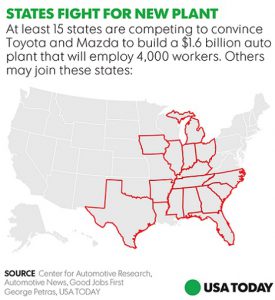
As related in a previous blog-commentary by the movement behind the book Go Lean … Caribbean, companies and Direct Foreign Investors many times seek out new cities to build factories, plants and corporate offices. Many times the “seek out” effort involves considering one city-state-country in competition with another.

Get ready Caribbean, this competition will impact you … more and more. And this “iron sharpening iron” competition will only increase the opportunity for success by urging us to pursue quality, excellence and competence for the needs of companies and Direct Foreign Investors.

This is the quest of the book Go Lean…Caribbean – available to download for free. The book calls for the elevation of Caribbean economics, security and governance. Placing greater emphasis on economics and industrial empowerment beyond the default tourism resorts, the book serves as a roadmap for the introduction and implementation of the technocratic Caribbean Union Trade Federation (CU). This CU/Go Lean roadmap has these 3 prime directives:

  • Optimization of the economic engines in order to grow the regional economy to $800 Billion & create 2.2 million new jobs.
  • Establishment of a security apparatus to ensure public safety and protect the resultant economic engines.
  • Improve Caribbean governance to support these engines, including a separation-of-powers between the member-states and CU federal agencies.

Despite the fact the individual cities may have to compete against each other, this Go Lean/CU roadmap stresses that reforming and transforming the Caribbean societal engines will first require regional leverage and synergy. Individually, no Caribbean community may have the assets to attract relocating factories, plants and corporate offices. So we have to reboot our industrial landscape first.

This is the reboot …

Accordingly, the Go Lean/CU roadmap facilitates an eco-system for Self-Governing Entities (SGE), an ideal concept for factories, plants, corporate offices and other industrial expressions like shipyards,  aerospace bases and even prisons. The exclusive federal regulation and promotion activities of SGE’s lie within the CU jurisdiction solely. Imagine bordered campuses – with a combination of fencing, walls and/or moats/canals – that designates the exclusivity of the commercial, security and administration to a superlative governance above the member-states.

This is transforming! This is the vision of an industrial reboot! This is where and how the jobs are to be created.

The Go Lean movement (book and blogs) details the principles of SGE’s and job multipliers, how certain industries are better than others for generating multiple indirect jobs down the line (or off-campus) for each direct job on the SGE’s payroll. In previous blog-commentaries, it was related how certain industries are perfectly suited for the Caribbean, as long as the structure was an independent SGE. These commentaries asserted that many new direct and indirect jobs will be facilitated. See further elaboration in this sample of previous blog-commentaries here:

https://goleancaribbean.com/blog/?p=13138 Industrial Reboot – Prisons 101
The business model for a Prison Industrial Complex allows for host-landlord facilities to get paid from the responsible jurisdictions for housing their inmates. This model will create jobs, entrepreneurial opportunities, trade transactions and more.
https://goleancaribbean.com/blog/?p=13420 A Lesson in History – Whaling Expeditions
The business prospects for ship-breaking are ideal for the SGE concept. Many jobs will result.
https://goleancaribbean.com/blog/?p=12581 State of the Union – Annexation: French Guiana
The European Space Agency in French Guiana is prominently featured in the Go Lean book – Page 105 – as a model for Self-Governing Entities (SGE). The hope – as expressed in the book – is that this territory, and all the French Antilles,  would someday join the regional neighborhood of the CU Trade Federation.
https://goleancaribbean.com/blog/?p=12146 Commerce of the Seas – Shipbuilding Model of Ingalls
Industrial plants for Shipbuilding is perfectly suited for the Caribbean; the SGE structure will allow for better economic (capital), security and governing engines.
https://goleancaribbean.com/blog/?p=7822 Cancer Research: Doing More
The Go Lean roadmap calls for more medical R&D initiatives but on Caribbean shores. The roadmap strategizes the adoption of SGE’s to employ medical research and treatment campuses.
https://goleancaribbean.com/blog/?p=3473 Haiti to Receive Grants to Expand Caracol Industrial Park
There is this industrial park in Haiti that a an premature model of the SGE concept. The existing park is plagued with turmoil, but it is a good start. SGE’s would be ideal.
https://goleancaribbean.com/blog/?p=2750 Disney World – Role Model for Self-Governing Entities
This indisputably successful SGE was originally considered for a Caribbean city, but we lost out to Orlando, Florida. Now they enjoy the 57 million guests per year. 🙁
https://goleancaribbean.com/blog/?p=1214 The Art & Science of Temporary Stadiums – No White Elephants
The SGE concept can also be successful with sports endeavors. Considering the good and bad lessons learned from Olympics, the economic benefits can be huge.

This vision of a superlative industrial landscape – SGE’s – was an early motivation for the Go Lean roadmap, as pronounced in the opening Declaration of Interdependence (Pages 12 – 13):

xi. Whereas all men are entitled to the benefits of good governance in a free society, “new guards” must be enacted to dissuade the emergence of incompetence, corruption, nepotism and cronyism at the peril of the people’s best interest. The Federation must guarantee the executions of a social contract between government and the governed.

xxiv.  Whereas a free market economy can be induced and spurred for continuous progress, the Federation must install the controls to better manage aspects of the economy: jobs, inflation, savings rate, investments and other economic principles. Thereby attracting direct foreign investment because of the stability and vibrancy of our economy.

xxvi.  Whereas the Caribbean region must have new jobs to empower the engines of the economy and create the income sources for prosperity, and encourage the next generation to forge their dreams right at home, the Federation must therefore foster the development of new industries, like that of … the prison industrial complex. In addition, the Federation must invigorate the enterprises related to existing industries like tourism, fisheries and lotteries – impacting the region with more jobs.

Under this SGE scheme, there will still be the need for inter-city competition, in terms of which locality to place the SGE. Here is where “iron could sharpen iron”. Local communities can get better and better in support of industrial entities – the job-creating engines – by challenging the support dynamics among each other. Notice the similar experience in the USA Today news article in Appendix A below. Notice how 15 different American states have been “jumping through the hoops” to  compete for the 4,000 direct jobs of an auto assembly plant to be located in a city within their jurisdiction.

The end-result of inter-city/inter-state competition will be more excellence … and more jobs. This is how Money Matters can lead to societal reforms.

This commentary is 2nd of a 5-part series from the movement behind the book Go Lean … Caribbean in consideration of Money Matters for leading the Caribbean down a different path from their status quo. The full commentaries in the series are cataloged as follows:

  1. Leading with Money Matters: Follow the Jobs
  2. Leading with Money Matters: Competing for New Industries
  3. Leading with Money Matters: Almighty Dollar
  4. Leading with Money Matters: As Goes Housing, Goes the Market
  5. Leading with Money Matters: Lottery Hopes and Dreams

All of these commentaries relate to “how” the stewards for a new Caribbean can persuade the region stakeholders to follow the economic empowerment plan. Seeing the “jumping through the hoops” that communities are willing to do – to attract job creators – it is logical to conclude that the economic principle is correct, that people will “respond to economic incentives”. This principle is the premise for the Go Lean quest to reform and transform the economic engines of the Caribbean member-states. We have to “dangle money” in order to get people to conform.

In summary, forging change in the Caribbean will require the region to finally get the art and science of job-creation right. If new factories, plants and corporate offices can serve as a job-creation bonanza then we need to attract them ourselves; we need our “iron to sharpen iron” so that we can excel at recruiting and attracting new industrial entities, local home-grown ones or Direct Foreign Investors.

This heavy-lifting plan is conceivable, believable and achievable. Yes, we can lead with Money Matters and make our Caribbean homeland a better place to live, work and play. We urge all Caribbean stakeholders to lean-in to this roadmap. 🙂

Download the free e-Book of Go Lean … Caribbean – now!

Sign the petition to lean-in for this roadmap for the Caribbean Union Trade Federation.

———–

Appendix A – Title: With code name, how Toyota-Mazda set off secret race for 4,000-job plant

One of the biggest potential job-creating bonanzas in the country, a giant new auto plant proposed by Toyota and Mazda, began in secret with a mysterious code name.

Now it has become a full-blown race among states to try to reel in the $1.6-billion project that will create 4,000 good-paying direct jobs and thousands of other indirect jobs.

The two Japanese automakers recently issued a blind request for proposals to states in the Midwest, mid-Atlantic and South, according to two people familiar with the plans who were not authorized to speak publicly because the process was confidential.

Told only that an unidentified employer was weighing its options for a massive project under the code name Project Mitt, state economic development officials delivered preliminary proposals, including potential tax incentives, job training programs and infrastructure investments.

When the Japanese automakers publicly revealed their joint venture two weeks ago, they made it clear they had not yet picked a site. State economic development offices are now in high gear.

No fewer than a dozen states are believed to have a shot at landing the automotive factory, which automotive industry researchers say could create several times as many jobs at nearby employers.

Job-creating projects of this magnitude are rare — it would be only the fourth U.S. assembly plant in a decade when it opens in 2021 — so Toyota and Mazda are expecting contenders to roll out the red carpet for their 50-50 joint venture.

Also making the project a plum, Toyota, in particular, takes “a very long-term view” that should keep its giant plant in place for half a century or more, said Ron Harbour, an expert on auto manufacturing sites who works for consultancy Oliver Wyman.

“You have to be able to say you’ve got the workforce, you’ve got the land, you’ve got the transportation systems and rail spurs, community college and education and a place where people want to live,” said Kristin Dziczek, director of industry, labor and economics at the Center for Automotive Research. “Once you’ve got all that, tax incentives come into play.”

But unlike the recent contest to land smartphone components manufacturer Foxconn’s first U.S. plant — which Wisconsin won after delivering a massive incentives package — tax breaks might not be enough to seal the deal.

Access to a dependable labor force, a vibrant community and enough contiguous land close to power and transportation infrastructure could make the difference, said Bradley Migdal, senior managing director and business incentives expert at Cushman & Wakefield.

Toyota, which hired commercial real estate firm Jones Lang LaSalle to help manage the process, declined to discuss states under consideration.

“We are just beginning the discovery process ,” Toyota said in a statement. “As we solidify our plans, we will share more information about the selection process.”

Mazda spokesman Jeremy Barnes, in an email, said, “I do know that no decisions have been made at this time, and that all options remain on the table.”

Here’s a look at some of the key states in the mix:

Alabama

Why it could win: Low-cost labor, bustling auto sector.

Why it could lose: Might not have enough workers.

Alabama’s vibrant auto manufacturing sector could help or hurt.

Three auto assembly plants made more than 1 million vehicles in 2016 in Alabama. The industry employed nearly 40,000 people in a right-to-work state desperate for good-paying jobs.

State development officials declined to directly discuss any efforts to land a proposed Toyota-Mazda assembly plant.

But Gov. Kay Ivey said new incentives laws have made Alabama more attractive to expanding companies. The changes she signed into law in May raised the annual state incentives cap to $300 million.

Ivey said Alabama’s reputation as “a proven manufacturing state” also helps.

Alabama has Hyundai, Mercedes-Benz and Toyota plants. North Alabama is the “more likely area” for the project if Alabama lands it, Montgomery Mayor Todd Strange said.

Brad Harper, Montgomery Advertiser

Arkansas

Why it could win: Was a finalist for the last new Toyota plant.

Why it could lose: Too far away from suppliers.

Arkansas was a finalist for the Toyota factory that opened in Blue Springs, Miss., in 2011.

Arkansas Economic Development Commission spokesman Jeff Moore said the state “certainly has interest” again.

Arkansas has broad latitude in issuing bonds to raise funds for infrastructure, land acquisition and job training.

The Economic Development Commission also administers sales tax exemptions, income tax credits and a payroll rebate program.

“We certainly have a very good toolbox of incentives to assist,” Moore said.

Kevin Hardy, Des Moines Register

Georgia

Why it could win: Worker training programs, enticing location.

Why it could lose: Lack of ties to Toyota operations.

Georgia is host to one of the newest U.S. assembly plants: the Kia factory in West Point, which opened in 2009, which has some 3,000 workers today.

One of the state’s key selling points is its geography. Interstate 75 runs right through it.

Among Georgia’s most compelling arguments is that its worker training programs are among “the best in the country,” said Bradley Migdal, the Cushman & Wakefield site expert.

Georgia Department of Economic Development communications director Stefanie Paupeck Harper declined to say whether the state has discussed a deal with Toyota and Mazda. But she said the state’s “hundreds” of suppliers could help.

“Automotive companies will not find another state that has a better combination of logistics, workforce, quality of life and proven record of success than Georgia,” Harper said.

Nathan Bomey, USA TODAY

Indiana

Why it could win: Already has a Toyota plant and is close to other operations, including Toyota’s Kentucky plant and Michigan engineering campus.

Why it could lose: The job market is so strong that the automakers might have a hard time finding enough employees.

Toyota has a 19-year-old factory in southern Indiana that builds the Sequoia sport-utility vehicle and Sienna minivan and is undergoing a $600 million expansion.

Overall, the auto industry employs more than 100,000 people in Indiana. Honda, Subaru and Chrysler each have initiated expansions there since 2010.

While the strong presence of auto factories and suppliers could make Indiana a viable contender for the Toyota-Mazda plant, existing facilities also might be one reason why the state gets passed over, said Mohan Tatikonda, an operations management professor for the Indiana University Kelley School of Business.

With Indiana’s unemployment rate at a near-record-low 3%, Toyota and Mazda could have concerns about finding employees.

“If we have multiple companies seeking generally the same labor skill, then laborers or their representatives can seek out a higher price,” Tatikonda said. “So, if that’s the case, a company may seek to go to a place where there’s less competition for a ready labor force.”

A spokeswoman for the Indiana Economic Development Corp. declined comment.

James Briggs, Indianapolis Star

Iowa

Why it could win: Dependable manufacturing workforce; no competition with other assembly plants.

Why it could lose: Too far away from suppliers.

Toyota has already asked Iowa for information on specific sites that could house a new assembly plant with room for suppliers to grow, said Debi Durham, director of the Iowa Economic Development Authority.

Iowa Gov. Kim Reynolds said the state is “extremely competitive” in its hunt for the Toyota-Mazda plant but wouldn’t comment on potential incentives.

“We are going to do everything we can ― up to a limit. You have to know where you draw a line,” Reynolds said. “But we’re competitive. This would be great for the state of Iowa.”

The Hawkeye state can tout a “second-to-none” work force, low energy costs and regular rankings that place the cost of doing business in Iowa among the lowest in the nation, she said.

The state routinely doles out forgivable loans, tax credits and tax refunds for companies that pledge to create or maintain jobs.

While Iowa isn’t known for automotive manufacturing, state officials have made a concerted effort to reach out to carmakers over the last year in an effort to recruit a new assembly plant.

Kevin Hardy, Des Moines Register

Kentucky

Why it could win: Toyota already has a massive factory in Georgetown, Ky.; close to numerous suppliers; likely to offer major incentives.

Why it could lose: If Toyota decides it’s already exhausted the local workforce for talent.Toyota’s 8 million-square-foot, 8,200-job Georgetown, Ky., facility makes more than 500,000 Camry, Lexus and Avalon vehicles per year. Toyota is investing $1.3 billion into plant upgrades.

The state also boasts two Ford factories in Louisville and General Motors’ Chevrolet Corvette plant in Bowling Green.

The factory draws from 350 suppliers and commodities vendors, 100 of them in Kentucky.

Gov. Matt Bevin told auto executives that a shovel-ready 1,550-acre site in central Kentucky, south of Elizabethtown near Interstate 65, is an ideal location for the investment.

Bevin pushed successfully for a right-to-work law and other business-friendly measures this year, and pledged to compete aggressively against rival states. “I say giddy up,” he said.

Grace Schneider, Louisville Courier-Journal

Michigan

Why it could win: Traditional home to the nation’s auto industry — and Toyota engineering has its engineering facility in the Wolverine State.

Why it could lose: If the automakers fear potential unionization.

While Michigan is home to the Detroit Three auto companies — not to mention engineering centers for virtually every major automaker and numerous suppliers — the state’s union history has long scared off foreign automakers from considering a manufacturing presence there. In fact, no foreign automaker operates an assembly plant in Michigan.

But “it’s not as much of a deterrent” anymore, said Glenn Stevens, vice president of the Detroit Regional Chamber. “Michigan previously was not a right-to-work state, as it is now. And even though the UAW has incredibly strong relationships with some companies in Michigan, there are also companies here that are not unionized.”

Gov. Rick Snyder signed legislation in 2012 that gives every worker the right to choose for themselves whether to join a union, arguing it would position it to better compete with states in the South that are more hostile to labor unions.

Gov. Rick Snyder signed a package of bills in July that would provide significant tax incentives for manufacturers, aiming to lure Foxconn.

“Michigan is absolutely the best location in the U.S. for this joint plant to be established, due to our leadership in automotive research & development, especially on mobility issues. We also have a strong pipeline of engineers and professional trades talent,” Snyder said in a statement.

Stevens also argued that Michigan has the manufacturing workforce necessary to support such a project and points out that Toyota employs 1,600 at engineering centers in the Ann Arbor area.

Brent Snavely, Detroit Free Press

Mississippi

Why it could win: Landed the last new Toyota plant.

Why it could lose: If Toyota believes the local workforce can’t sustain another factory.

The Toyota plant in Blue Springs, Miss. opened in 2011 and employs about 2,000 people. The state also has Nissan’s 5,000-person assembly plant in Canton.

Even with two major plants, the state can easily accommodate another and gin up training dollars to assure Toyota of a competent workforce, said Scott Waller, interim chief executive of the Mississippi Economic Council.

“Today the incentives are workforce based,” Waller said. “It’s all workforce driven. There’s absolutely no question Mississippi can be successful.”

–Ted Evanoff, Memphis Commercial-Appeal

North Carolina

Why it could win: No automotive assembly plants to compete with for talent.

Why it could lose: If the state is viewed as not having enough of a manufacturing workforce.

North Carolina doesn’t have any automotive assembly plants, which could prove enticing to Toyota because of the chance to bolster its political clout from the swing-state’s congressional delegation.

But the Tar Heel State has 26,000 workers at companies that supply the auto industry.

North Carolina’s tech-savvy Research Triangle could prove enticing, said John Boyd, head of Boyd Co. Inc., a location consultant.

–Ted Evanoff, Memphis Commercial-Appeal

Ohio

Why it could win: Strong manufacturing workforce; centrally located; many local suppliers.

Why it could lose: Not a right-to-work state.

JobsOhio said the state boasts several sites of more than 1,000 acres that are ready for a manufacturing plant to break ground quickly.

Toyota already has factories in neighboring Indiana and Kentucky and an engineering headquarters in Michigan. Locating its next plant in a Midwest state such as Ohio would keep it close to parts suppliers, saving time and money. Ohio is within a day’s drive of 75% of the country’s auto assembly plants and their accompanying parts networks, JobsOhio said.

Officially, Ohio isn’t saying whether it’s trying to land the Toyota-Mazda plant.

“We do not share whether or not we are in project discussions with companies,” said Matt Englehart, a spokesman for JobsOhio, the state’s privatized economic development arm.

But Gov. John Kasich and JobsOhio. the state’s privatized economic development arm, have shown a willingness to dole out incentives to keep auto-related jobs. Those moves included offering tax breaks to keep a Cleveland-area Ford truck plant open.

Chrissie Thompson, Cincinnati Enquirer

South Carolina

Why it could win: Growing automotive sector.

Why it could lose: If the automakers decide the job market is too crowded.

Finding the workers for such a plant could be a tall order, in part because of the state’s flourishing manufacturing sector. But state leaders said they have a proven track record for rising to the challenge by investing in training programs.

“We are a state that houses BMW, Volvo, Mercedes-Benz and Boeing,” South Carolina Department of Commerce spokeswoman Adrienne Fairwell said. “We have a workforce that is ready and available and we can create the workforce where necessary because we have the tools, tactics and strategies to do it.”

State economic development experts touted the region’s highly skilled workers, transportation hubs and cluster of auto suppliers. The upstate region, located in the northwestern portion of the state, is a manufacturing powerhouse, said Mark Farris, president of the Greenville Area Development Corporation.

But Ken Crews, training manager at German auto-parts supplier Stueken North America, said he has struggled to find new workers with the right combination of skills and work ethic for his plant.

Jermaine Whirl, vice president for economic development and corporate training at Greenville Tech, finding requires may require casting a wider net geographically and getting able-bodied workers back into the labor force.

Anna B. Mitchell, The Greenville News

Tennessee

Why it could win: Significant, growing automotive sector; perfect location for logistical purposes; strong business climate.

Why it could lose: If the automakers decide there aren’t enough workers.

Tennessee has been waiting for this moment. A decade ago, the state purchased land with the specific purpose of landing a Toyota plant that never came.

“There will be a lot (of) people fighting hard for that plant, and we intend to be at the lead,” Tennessee Gov. Bill Haslam told the Associated Press.

Hoping to lure the Toyota plant that eventually went to Blue Springs, Miss., Tennessee acquired property dubbed the Memphis Regional Megasite. The site, which remains unused, is 4,100 acres situated 32 miles east of Memphis on vacant farm land along Interstate 40.

Site selection consultants said it’s one of Tennessee’s leading candidates for industrial investment.

Tennessee already has spent more than $140 million on the Memphis Megasite, building roads and water and sewer lines.

–Ted Evanoff, Memphis Commercial-Appeal

Source: Posted Aug. 17, 2017; retrieved February 16, 2018 from: https://www.usatoday.com/story/money/cars/2017/08/17/toyota-mazda-auto-plant/573213001/

———-

VIDEO – Toyota, Mazda building $1.6B plant in USA – https://www.usatoday.com/videos/money/cars/2017/08/04/toyota-mazda-building-1.6b-plant-usa/104285082/

Posted Aug. 17, 2017 – President Trump applauded Toyota and Mazda’s plan to set up the joint venture in the USA and create up to 4,000 jobs. Wochit

———–

Appendix B: Tomorrow’s World Commentary: Iron Sharpens Iron

The Bible offers good advice on what to look for—and what to avoid—when choosing friends. One well-known principle of positive friendship is given in the Old Testament book of Proverbs: “As iron sharpens iron, so a person sharpens his friend” (Proverbs 27:17New English Translation). What does this scripture mean, and how can this idea direct your friendships?

According to The Bible Knowledge Commentary, “When iron is rubbed against another piece of iron it shapes and sharpens it. Similarly people can help each other improve by their discussions, criticisms, suggestions, and ideas.” The image of a chef using a rod of steel to sharpen a knife is a good example of using strong metals to improve the instrument.

Listen to the AUDIO file or read the remainder of this Bible Study subject here:

Source: https://www.tomorrowsworld.org/magazines/2016/march-april/iron-sharpens-iron posted March-April 2016 retrieved February 16, 2018.

Share this post:
, , ,
[Top]

Leading with Money Matters – Follow the Jobs

Go Lean Commentary

When people say it’s the principle and not the money, chances are: it’s the money. – Murphy’s Law on Money

Yes, there are more important things in life than money, but without money, those important things fall by the wayside, or never get pursued.

This is the nature of man. Psychologist Abraham Maslow addressed this subject in a comprehensive way. He established a “Hierarchy of Needs” that accurately depicted this fact that basic needs (food, clothing, shelter, safety, etc.) will always be the first priority. Efforts in pursuit of higher-level needs – art, beauty, esteem, etc. – will only be engaged once those basic needs are satiated.

This premise is not in doubt, especially in times of peace. (Yes, the sword/gun is most persuasive, but not lasting).

So considering the 3 societal engines of a community – economics, security and governance – it is so much easier to lead and get people to voluntarily comply – to lean-in – through economic means rather than by any security or governing directives.

For the vast majority of the world’s population, money plays a huge part in their decision-making. So this new movement to shepherd the Caribbean – group behind the book Go Lean…Caribbean – accepts that the best way to get regional buy-in is to lead with Money Matters.

This commentary is the first of a 5-part series from the movement behind the book Go Lean … Caribbean in consideration of Money Matters for leading the Caribbean down a different path from their status quo. The other commentaries in the series are cataloged as follows:

  1. Leading with Money Matters: Follow the Jobs
  2. Leading with Money Matters: Competing for New Industries
  3. Leading with Money Matters: Almighty Dollar
  4. Leading with Money Matters: As Goes Housing, Goes the Market
  5. Leading with Money Matters: Lottery Hopes and Dreams

All of these commentaries relate to “how” the stewards for a new Caribbean can persuade the region’s stakeholders to follow this empowerment roadmap. It is logical to conclude that people will “follow the money”. This conforms with the Go Lean quest to reform and transform the economic engines of the Caribbean member-states so that they can be better places to live, work and play. We have to “dangle money in front of our subjects”. Then, only then, will we get their attention. This is sad, but true!

The Go Lean book – available to download for free – declares that Caribbean society must change; the economic engines must be rebooted, and optimized, otherwise our society will simply not survive, not on the current trajectory.

If people are money motivated – and they are – then economic incentives should work. This point is presented in the Go Lean book (Page 21), quoting proven economic principles:

  • People Respond to Incentives in Predictable Ways:
    Incentives are actions, awards, or rewards that determine the choices people make. Incentives can be positive or negative. When incentives change, people change their behaviors in predictable ways.
  • Economic Systems Influence Individual Choices and Incentives:
    People cooperate and govern their actions through both written and unwritten rules that determine methods of allocating scarce These rules determine what is produced, how it is produced, and for whom it is produced. As the rules change, so do individual choices, incentives, and behavior.

Any attempt to empower Caribbean economics must start with a focus on jobs. Frankly, there are not enough jobs in the region, for any one of the 30 countries.

Due to this deficiency, people will respond to the availability or the absence of jobs. This is a fact today and was a fact for hundreds of years:

“Go West, Young Man” …

… is a phrase often credited to the American author and newspaper editor Horace Greeley concerning America’s expansion westward, related to the then-popular concept of Manifest Destiny. … Greeley later used the quote in his own editorial in 1865. Greeley favored westward expansion. – Source

In the mid 19th Century (1800’s), the US was expanding beyond the original 13 colonies into the Western parts of the continent:

  • Louisiana Purchase in 1804
  • Settling the War of 1812 with the compromise for the Northwest Territories (Ohio, Indiana, Illinois, Michigan, Wisconsin)
  • Texas Annexation in 1832
  • Annexation of Oregon Territory in 1846
  • New Mexico-California Acquisition in 1848

As the East Coast experienced economic stagnation, the sage advice was to “Go West” to seek jobs and entrepreneurial opportunities (like mining for precious metals: gold, silver, etc.).

This same advice is being followed in the Caribbean … today.

The region is in the throes of economic stagnation and people are leaving to “Go West”, many to the US, to find jobs. Our Caribbean people are being both “Pushed” and “Pulled”:

  • Push” refers to people who feel compelled to leave to find jobs, or better jobs; they seek refuge in this foreign land. “Refuge” is an appropriate word; because of economic defects in the homeland, people find that they must leave.
  • Pull”, on the other hand refers to the lure of a more prosperous life abroad; our people are emigrating for strong economics reasons; even many low level jobs in the foreign lands are more prosperous than professional ones at home.

The Number One employer in many Caribbean countries is the government, the Public Service; think Teachers, Nurses, government clerks, etc.. But even if people are able to get these jobs, the compensation is normally too small …

This is the true experience! Well trained, professionals, are inclined to flee due to the deficient pay. Notice this experience in this news article here:

Title: Pay up! – Educate Jamaica says $250,000 monthly salary needed to keep mathematics and science teachers in classroom
By: Gleaner Contributor Andre Poyser

Education Think Tank, Educate Jamaica, has estimated that it will take a minimum monthly salary of $250,000 to stem the flow of mathematics and science teachers leaving the classroom.

Data from the Ministry of Education indicate that 494 mathematics and science teachers exited the public education system in 2015.

According to the Think Tank, “24 to 36 months from now will see the biggest exodus of mathematics and science teachers from Jamaican classrooms”.

This exodus, it says, can only be halted by offering these teachers a monthly salary of $250,000.

A trained teacher at the entry level earns approximately $90,000 after tax.

“Only a salary of J$250,000 each month (after tax) will tempt these teachers to stay or tempt Jamaicans to return from these overseas countries to take up back their jobs. The other option will be for Jamaica to recruit teachers from Asian, South American and African countries such as Nigeria and Ghana to fill the gap being left,” the Think Tank said in an article on its website.

Explaining how he arrived at this figure, Ainsworth Darby, Chief Executive of Educate Jamaica, said he compared the salaries of teachers in the United Kingdom and the United States.

Darby also argued that a proposal to offer scholarships to attract more students to train as mathematics and science teachers should be complemented by offering more pay to these teachers.

WRONG DECISION
News reports have indicated that education minister Ronald Thwaites has backed down from a controversial differentiated-payment proposal for math and science teachers.

Darby however, believes this was a wrong decision that should be revisited. He also argued that the recruitment measure announced by Thwaites will not be enough to effectively fill the gap of mathematics and science teachers leaving the system.

Thwaites has said the proposal to pay math and science teachers more than their colleagues will not be dismissed.

However, he said the ministry hopes that the recruitment measure will help to replace the more than 500 math and science teachers who have left local classrooms within the last 12 months.

Source: Retrieved from The Jamaica Gleaner Daily Newspaper – January 27, 2016 from: http://jamaica-gleaner.com/article/news/20160127/pay-educate-jamaica-says-250000-monthly-salary-needed-keep-mathematics-and

Wait, what?!?!

The dollar amounts discussed in this foregoing article refer to Jamaican Dollars. The exchange rate at this time 1 US Dollar to 80 Jamaican Dollars ($J) or 1 J$ equals 0.0080 US$. So the reference to “a trained teacher at the entry level [that] earns approximately $90,000 after tax” is actually referring to:

    J$90,000 = US $720
    The recommended salary of J$250,000 equals US$2,000.

On the other hand, in the US, entry level jobs at Fast Food restaurant chain, McDonalds, is now starting in excess of US$9 per hour OR J$1,125. So a monthly salary, assuming 40-hour work weeks, would be J$180,000 (US$9 X 40 X 4 or $1,440).

Wow, that McDonalds minimum pay of $9/hr-plus … is more than Jamaica’s Public Service professionals. (The experience is similar in other countries).

This matter is all relative. While Caribbean member-states are complaining about “too low” wages for their Public Service employees, US workers are complaining about “too low” wages in the US. According to the foregoing, we are not competing in the Caribbean; we appear to not even me trying to compete.

Whatever a man is sowing, this he will also reap! – The Bible; Galatians 6:7

The disposition of the Caribbean economic landscape is dire.

If we want to reform and transform – we do – the stakeholder must effect change, some how. This is the quest of the Go Lean roadmap. We want to make Caribbean homeland a better place to live, work and play.

How?

The book serves as a roadmap for the introduction and implementation of the technocratic Caribbean Union Trade Federation (CU), for the elevation of Caribbean society – for all member-states. This CU/Go Lean roadmap has these 3 prime directives:

  • Optimization of the economic engines in order to grow the regional economy to $800 Billion & create 2.2 million new jobs.
  • Establishment of a security apparatus to ensure public safety and protect the resultant economic engines.
  • Improve Caribbean governance to support these engines, including a separation-of-powers between the member-states and CU federal agencies.

The plan is simple, create Two Pies for regional economics. In a previous Go Lean commentary, it related:

In order to reboot the societal engines there must be these Two Pies. The CU Trade Federation is designed to lead, fund and facilitate regional empowerment plans. But the plan is NOT for the individual member-states to write checks to the CU so as to share one state’s treasuries with another state. Rather, the CU Trade Federation creates its own funding – from regionalized services – and then encumbers the funds for each member-state to deliver the economic, security and governing  mandates. This is analogized as Two Pies:

  • One ‘pie‘ to represent the existing budgets of the member-states and how they distribute their government funding between government services (education, healthcare, etc.), security measures (Police, Coast Guards)
  • One ‘pie‘ to represent the CU funding from exclusive activities (Spectrum Auctions, Lottery, Exploration Rights, Licenses, Foreign-Aid, etc.).

For the CU pie, the strategy, tactic and implementation is for competitive salaries (compensation and benefits) for Federal Public Servants (Page 173). Plus, the CU roadmap deputizes the member-state governments for a lot of their functionality – i.e. Post Office – so that will lighten the load for the existing government payroll even further. Lastly, the CU automation and lean practices will optimize overall government delivery: do more with less.

The Go Lean book stresses that reforming and transforming the Caribbean societal engines (economics, security and governance) must be a regional pursuit. This was an early motivation for the roadmap, as pronounced in the opening Declaration of Interdependence (Pages 12 – 13):

xi. Whereas all men are entitled to the benefits of good governance in a free society, “new guards” must be enacted to dissuade the emergence of incompetence, corruption, nepotism and cronyism at the peril of the people’s best interest. The Federation must guarantee the executions of a social contract between government and the governed.

xvi. Whereas security of our homeland is inextricably linked to prosperity of the homeland, the economic and security interest of the region needs to be aligned under the same governance. Since economic crimes … can imperil the functioning of the wheels of commerce for all the citizenry, the accedence of this Federation must equip the security apparatus with the tools and techniques for predictive and proactive interdictions.

xxiv. Whereas a free market economy can be induced and spurred for continuous progress, the Federation must install the controls to better manage aspects of the economy: jobs, inflation, savings rate, investments and other economic principles. Thereby attracting direct foreign investment because of the stability and vibrancy of our economy.

xxvi.  Whereas the Caribbean region must have new jobs to empower the engines of the economy and create the income sources for prosperity, and encourage the next generation to forge their dreams right at home, the Federation must therefore foster the development of new industries, like that of … frozen foods … impacting the region with more jobs.

In total, the Go Lean book provides 370-pages of turn-by-turn instructions on “how” to adopt new community ethos, plus the strategies, tactics, implementations and advocacies to execute so as to reboot, reform and transform the societal engines of Caribbean society.

So what should the planners for a new Caribbean regime do next? Or do first, since the CU Trade Federation is not currently in force?

Lead with Money Matters.

Money is not the only option, but it is the best, most efficient and effective choice. Consider the other options of security or governance:

Show up to reform a community’s security apparatus or governance and you must convene (the stakeholders), collaborate, consensus-build and compromise. That is not easy! But try to reform economics by showing up with a boatload of money and boatload of jobs; people will line-up around the corner to comply, capitulate and consume those jobs.

Boom! Economic reform is easier!

The evidence shows that our Caribbean citizens have been abandoning their Caribbean communities and those government Public Service jobs to flee to foreign shores, looking for work, like those American minimum wage jobs.

One man’s trash is another man’s treasure.
(See the Appendix & VIDEO below).

We can and must do better. We must create job options here at home. This has been a familiar theme for previous Go Lean commentaries; consider this sample:

https://goleancaribbean.com/blog/?p=14191 Where the Jobs Are – The Option of ‘Gigs’
https://goleancaribbean.com/blog/?p=13420 Where the Jobs Are – Lessons from Whaling Gigs
https://goleancaribbean.com/blog/?p=13184 Where the Jobs Are – Industrial Reboot; A Series
https://goleancaribbean.com/blog/?p=9751 Where the Jobs Are – Animation and Game Design
https://goleancaribbean.com/blog/?p=6089 Where the Jobs Are – Futility of Minimum Wage
https://goleancaribbean.com/blog/?p=2857 Where the Jobs Are – Entrepreneurism in Junk
https://goleancaribbean.com/blog/?p=2126 Where the Jobs Are – Computers Reshaping Global Job Market
https://goleancaribbean.com/blog/?p=2025 Where the Jobs Are – Attitudes & Images of the Diaspora
https://goleancaribbean.com/blog/?p=2003 Where the Jobs Are – One Scenario: Ship-breaking

In summary, forging change in the Caribbean will mean doing better at job creation. Plain and simple!

There is a plan, here and now, to execute such a charter. This plan is conceivable, believable and achievable. But it is heavy-lifting too.

So let’s get busy …

… in the hard work of optimizing our society. Let’s lean-in to this plan to lead with Money Matters and make our Caribbean homeland a better place to live, work and play. We urge every Caribbean stakeholders to lean-in to this roadmap. 🙂

Download the free e-book of Go Lean … Caribbean – now!

Sign the petition to lean-in for this roadmap for the Caribbean Union Trade Federation. 

——————

Appendix Title: McDonald’s Joins Trend in Raising Pay

Sub-title: Pay will be at least $1 per hour more than minimum wage—franchisees excluded

By: Annie Gasparro and Eric Morath

McDonald’s Corp. plans to raise wages by more than 10% for workers at U.S. restaurants it operates—fresh evidence of the rising wage pressure in the American labor market.

Starting July 1, McDonald’s will pay at least $1 an hour more than the local minimum wage for employees at the roughly 1,500 restaurants it owns in the U.S.

The move follows similar efforts by other U.S. employers including WalMart Stores …

Read the full article here:

Source – Posted Wall Street Journal April 1, 2015; retrieved February 15, 2018 from: https://www.wsj.com/articles/mcdonalds-to-raise-hourly-pay-for-90-000-workers-1427916364

———

VIDEO – McDonalds Will Pay at Least $1 per Hour More than Minimum Wage – http://www.wsj.com/video/mcdonald-to-raise-hourly-pay-by-10/CC71E017-D357-4AF1-A71F-7381C5BF0232.html

McDonald’s will raise the pay for 90,000 workers by 10%, or $1 over the minimum wage, by July. WSJ’s Annie Gasparro reports.

Share this post:
, ,
[Top]

Canada: “Follow Me” for Model on ‘Climate Change’ Action

Go Lean Commentary

It is good to have friends …

    … people who share comradery with you, empathize with your challenges and are willing to collaborate with you on solutions.

For the Caribbean, when it comes to Climate Change concerns, we have that friend … Canada. Yippee!

But that was not always the case. This is now only possible because of new leadership. Back in 2015, Canada elected a new government and Prime Minister – Justin Trudeau. Out with the old, in with the new; see 2015 news article in Appendix below. Rather than “sticking their head in the sand” – this means you United States of America – Canada is “taking the reins” to forge attitudinal change among the world’s Great Powers.

But Canada’s motivation is more than just being the “leader of the pack”, they have real concerns, risks and threats:

Canada, the second largest country in the world by total area, is comprised by ten provinces and three territories. Canada also has the longest total coastline among all of the countries of the world, at 125,567 miles.
Countries With The Most Coastline – World Atlas 

If Climate Change is to continue unabated, this country has a lot to lose – catastrophic storms, melting ice caps, thawing permafrost and rising sea level.

Ditto for the Caribbean. (We similarly have lots of coastlines).

Truly, Canada can look at their Caribbean brethren – Canada’s shares the same British Colonial heritage with 18 of the 30 Caribbean member-states – and pronounce: Follow Me!

This declaration was truly the theme of the presentation by Catherine McKenna, Minister of Environment and Climate Change as she visited the US cities of Miami, Florida and Houston, Texas. Listen to the full AUDIO-Podcast news story here:

Newswire Title: Minister of Environment and Climate Change, Catherine McKenna, promotes NAFTA, climate action, and ocean protection, in Houston and Miami

Canada NewsWire – MIAMI, Jan. 24, 2018 – Canada’s Minister of Environment and Climate Change, Catherine McKenna, travelled to Houston, Texas; and Miami, Florida, to promote NAFTA, increased collaboration on ocean health, coastal solutions, clean technology, and renewable energy opportunities.

In Houston, Minister McKenna met with the Mayor of Houston, Sylvester Turner. Mayor Turner is Co-Chair of US Climate Mayors, a coalition of 391 US mayors working together to meet the goals of the Paris Agreement. They discussed NAFTA and the importance of the Canada-US trade relationship to the economy of Houston and of Texas. Texas sells $24.1 billion in goods and services to Canada, and 459 700 jobs depend on trade and investment with Canada. The Mayor noted that the city remains a global oil-and-gas centre while diversifying and taking advantage of the opportunity of clean growth and renewable energy.

During her visit to Houston, the Minister visited BP’s Wind Energy Remote Operations Center, where logistics and conditions for 16 wind farms across the US are monitored. Today, Texas produces more wind energy than any US state, and power generated by wind is expected to exceed coal-generated power in the state, in 2018.

As part of the Climate Campus tour, Minister McKenna visited the University of Houston, where she met with professors and students working on energy and environment law. She also met with researchers at the new Hurricane Resilience Research Institute created after Hurricane Harvey. The Institute is focused on issues including flood-mitigation management during severe storms and the building of resilient communities. Minister McKenna hosted a town hall at Texas A&M University at Galveston and met with ocean scientists looking at ocean health, energy, and maritime complex and visited one of the University’s ocean research vessels.

In Miami, Minister McKenna emphasized the importance of NAFTA to the Florida economy at a round table with Florida businesses and trade associations and in discussions with the Mayor of South Miami, Philip Stoddard. Canada is Florida’s most important economic partner. Each year, Canada and Florida trade $8 billion worth of goods, and 620 000 jobs in Florida depend on trade with Canada.

Minister McKenna met with representatives of NextEra Energy, Inc., North America’s largest generator of energy from wind and sun and the third-largest utility in the US. They discussed opportunities for further investment by NextEra Energy in Canada’s North as well as in provinces such as Alberta, Saskatchewan, and Ontario.

The Minister visited the Brickell City Centre Climate Ribbon and the City of Miami Beach Convention Center. These two sites showcase how the city is adapting to sea-level rise and more frequent, intense, and prolonged tidal flooding exacerbated by climate change. The Climate Ribbon, which was designed in part by Guelph-based company RWDI, spans the length of three city blocks and acts as an architectural air conditioner in the summer and umbrella when it rains.

The City of Miami Beach Convention Center has the world’s single-largest pumping station, which removes displaced groundwater that is surging due to rising sea levels. The Convention Center is home to a living sea wall and natural mangroves, which help to mitigate and adapt to the impacts of flooding caused by climate change.

The Minister also convened a round table of ocean and environmental experts to discuss Canada’s G7 presidency focus on ocean protection and marine litter.

Quotes
“My meetings in Houston and Miami reinforced the strong ties between Canada and these important Canadian partners on trade and the environment. I was heartened to see the shared commitment by local governments and business to NAFTA and the good middle-class jobs it creates in both countries. It was also incredible to see the transition of the economies of both Houston and Miami toward clean growth and to meet with innovative clean-energy and clean-technology companies, many of which are looking at investment opportunities in Canada. I was also impressed by the leadership from the mayors of both Houston and Miami on climate change as well as the efforts to build more communities more resilient to extreme weather events.” – Catherine McKenna, Minister of Environment and Climate Change

View original content: http://www.newswire.ca/en/releases/archive/January2018/24/c5640.html

——–

AUDIO-Podcast – Canadian Minister Of Environment And Climate Change Visits Miami – https://soundcloud.com/wlrn/444pm-canadian-minister-of-environment-and-climate-change-visits-miami

Published on February 5, 2018 – The Canadian Minister of Environment and Climate Change, Catherine McKenna, promotes Climate Action and ocean protection in Miami.

The book Go Lean…Caribbean and accompanying blogs have asserted that the threat of Climate Change is real. There is no scientific doubt of this reality – just consider the destructive realities of this past hurricane season – the only doubt is political. If the US wants to deny this reality, they do so at their own peril – remember the American territory of Puerto Rico. Canada is prepared to take the lead, to put the Western Hemisphere on its shoulders and carry the load for arresting Climate Change.

Thank you Canada for this model. Now, we – the Caribbean – need to step up to carry our own load for better mitigation of Climate Change threats; we need to do our part in lowering our own carbon footprint. We can make a difference. Canada can make a difference. As related in a previous blog-commentary, the same as the threat of Acid Rain was subjugated, so too, curative measures can be put in place to lower the greenhouse gases in the environment. This is why Canada has a Champion for the Environment – Catherine McKenna – at the Cabinet level.

Good model …

The book Go Lean…Caribbean – available to download for free – prepares the Caribbean region for the heavy-lifting of monitoring, managing and mitigating the acute risks of Climate Change to the environment from a Caribbean perspective. These Climate Change threats are real for us: Global Warming and rising sea-levels. We must act now! Though no Caribbean country is among the BIG polluters, we must still act, just so that we are not hypocritical … and provide a good model ourselves.

Then there are the economic issues. Catherine McKenna, in the foregoing presentation to Miami officials, related that there is no need for a trade-off between environment and economics. No, it can be economically sound, and even advantageous, to cater to environmental needs. Imagine the fuel cost savings from alternative energy options, new industrial expressions for transportation solutions and construction jobs for retrofitting previous structures.

The Go Lean book serves as a roadmap for the introduction and implementation of the technocratic Caribbean Union Trade Federation (CU), for the elevation of Caribbean society – for all member-states. This CU/Go Lean roadmap has these 3 prime directives:

  • Optimization of the economic engines in order to grow the regional economy to $800 Billion and create 2.2 million new jobs.
  • Establishment of a security apparatus to ensure public safety and protect the resultant economic engines.
  • Improve Caribbean governance to support these engines, including a separation-of-powers between the member-states and CU federal agencies.

The effort to reform and transform the Caribbean societal engines as a regional pursuit has always been among the motivations of this Go Lean roadmap, as pronounced in the opening Declaration of Interdependence (Pages 12 – 13):

i. Whereas the earth’s climate has undeniably changed resulting in more severe tropical weather storms, it is necessary to prepare to insure the safety and security of life, property and systems of commerce in our geographical region. As nature recognizes no borders in the target of its destruction, we also must set aside border considerations in the preparation and response to these weather challenges.

iii. Whereas the natural formation of the landmass for our society is that of an archipelago of islands, inherent to this nature is the limitation of terrain and the natural resources there in. We must therefore provide “new guards” and protections to ensure the efficient and effective management of these resources.

iv. Whereas the natural formation of the landmass is in a tropical region, the flora and fauna allows for an inherent beauty that is enviable to peoples near and far. The structures must be strenuously guarded to protect and promote sustainable systems of commerce paramount to this reality.

xi. Whereas all men are entitled to the benefits of good governance in a free society, “new guards” must be enacted to dissuade the emergence of incompetence, corruption, nepotism and cronyism at the peril of the people’s best interest. The Federation must guarantee the executions of a social contract between government and the governed.

xvi. Whereas security of our homeland is inextricably linked to prosperity of the homeland, the economic and security interest of the region needs to be aligned under the same governance. Since economic crimes … can imperil the functioning of the wheels of commerce for all the citizenry, the accedence of this Federation must equip the security apparatus with the tools and techniques for predictive and proactive interdictions.

xxiv. Whereas a free market economy can be induced and spurred for continuous progress, the Federation must install the controls to better manage aspects of the economy: jobs, inflation, savings rate, investments and other economic principles. Thereby attracting direct foreign investment because of the stability and vibrancy of our economy.

The Go Lean book provides 370-pages of turn-by-turn instructions on “how” to adopt new community ethos, plus the strategies, tactics, implementations and advocacies to execute so as to monitor, manage and mitigate the challenges of Climate Change. The book also present lessons from Canada. One advocacy specifically focuses on the path of wisdom Canada undertook during the course of its 150-year history. That advocacy (Page 146) is entitled: 10 Lessons from Canada’s History; consider some specific plans, excerpts and headlines from that advocacy in the book:

1 Lean-in for the Caribbean Single Market
This treaty calls for the confederation of the Caribbean region into a single market of 30 member-states and 42 million people, similar to the original 1867 confederation for Canada. The history of Canada synchronizes with the aspirations of the CU Trade Federation. In this Canadian context, confederation generally describes the political process that united the colonies in the 1860s and related events, and the subsequent incorporation of other colonies and territories. Today, Canada is a “G8” advanced economy, made up of 10 provinces and 3 territories, ranking among the largest in the world, due its abundant natural resources and well-developed trade networks, including one with the US, a long and complex relationship. Canada has been a Northern Star, as a guide and refuge to Caribbean hopes and dreams.
2 Confederation for Defense – Strength in Numbers

The American Civil War caused security threats for Canada. The Union (US North) encouraged Irish immigration and sourced their Army (a million-man strong) with many Irish fighters. Since many Irish immigrants maintained animosity towards the British, there were documented cases of terroristic attacks against Canadian targets, i.e. the Fenian (an Irish Brotherhood) raids. This corresponded with the Little Englander philosophy, whereby Britain no longer wanted to maintain troops in its colonies.

Confederation was therefore necessary to promote security for the related colonies of Ontario, Quebec, New Brunswick and Nova Scotia – amounting to a population of slightly over 2 million people

3 Multiple Cultural Legacies and Languages
4 Better than a Republic – (Civil War Lesson for a Technocracy)
5 Assuage Human Flight – Provide Alternative
6 Neighbor: Frienemy

Despite the cooperation needed for the St. Lawrence Waterway – (see Appendix UA) – the stated US desire, doctrine of Manifest Destiny, was to govern the entire North American continent. The US had fought wars against English-Canada interests and many believed that the US would annex the other colonies governed directly by England, as the US acquired the Oregon Territory. These reasons provided the motivation for the initial Canadian Confederation to expand from coast-to-coast, and serve as a role-model for the CU to target the entire region of the Caribbean Sea geography.

7 Aboriginal Relations Need Local Governance
8 Mastering Natural Resources

The Oil, Fisheries, Forest/Timber of Canada has been managed to contribute success to its economic engines. Plus, strategic Public Works (see Canadian Pacific Railway in Appendix UB) have provided great models for the CU today.

9 Federal / Provincial Outsourcing
10 Population Concerns – Not enough Natural Growth

In addition, the book presents these Appendices that details more examples of prudence in Canada’s history:

  • Appendix UA – St. Lawrence Waterway (Page 308)
  • Appendix UB – Canadian Pacific Railway (Page 309)

Lastly, these previous blog-commentaries detail a lot of the issues and developments in the quest for the Caribbean to lower our own carbon footprint and mitigate for Climate Change. See this sample:

https://goleancaribbean.com/blog/?p=13985 EU Assists Barbados to Go Green
https://goleancaribbean.com/blog/?p=11858 Looking and Learning from the Cautionary Tale of Kiribati
https://goleancaribbean.com/blog/?p=10367 The Science of Green Batteries
https://goleancaribbean.com/blog/?p=9455 Fix ‘Climate Change’ – Yes, We Can
https://goleancaribbean.com/blog/?p=7449 Due to Climate Change, ‘Crap Happens’ – So What Now?
https://goleancaribbean.com/blog/?p=7103 COP21 – ‘Climate Change’ Acknowledged
https://goleancaribbean.com/blog/?p=6893 A Meteorologist’s View On Climate Change
https://goleancaribbean.com/blog/?p=6016 ‘Hotter than July’ – Reality in the Caribbean
https://goleancaribbean.com/blog/?p=4673 Climate Change‘ Merchants of Doubt … to Preserve Profits!!
https://goleancaribbean.com/blog/?p=2465 Book: ‘This Changes Everything: Capitalism vs. the Climate’
https://goleancaribbean.com/blog/?p=2276 Climate Change May Affect Food Supply Within a Decade
https://goleancaribbean.com/blog/?p=1883 Climate Change May Bring More Kidney Stones
https://goleancaribbean.com/blog/?p=1817 Caribbean grapples with intense cycles of flooding & drought
https://goleancaribbean.com/blog/?p=915 Go ‘Green’ … Caribbean

We must learn from Canada and prepare for new governmental leadership to shepherd our homeland. We have the heavy-lifting task of championing Climate Change, to minimize further damage to our region. We have no further excuse! We know that the US will not take the lead in this regards; we must look elsewhere and within!

Now is the time for all of the Caribbean – the people, businesses, institutions and governments – to lean-in for the optimizations and opportunities to abate Climate Change and to lean-in to this Go Lean roadmap. This emulates Canada.

We must stand-up for ourselves; and while “things are bad” environmentally; the Caribbean disposition will only get worse if nothing is done. We must start this quest ourselves! While this quest is easier said than done, and takes a lot of heavy-lifting, it is conceivable, believable and achievable to make our homeland a better place to live, work and play. 🙂

Download the free e-book of Go Lean … Caribbean – now!

Sign the petition to lean-in for this roadmap for the Caribbean Union Trade Federation.

———-

Appendix – Climate change ‘important priority,’ Canada’s new environment minister says

The international community is “really excited” to see Canada back at the table for climate change talks in Paris, Canada’s new environment and climate change minister said Tuesday.

Catherine McKenna, who is in Paris meeting with environment and energy ministers from around the world in advance of the UN climate change conference, said the Canadian delegation has received a “huge reception” and she has made it clear that climate change will be a “very important priority” for the new Liberal government.



“We haven’t been at these types of climate negotiations and what I’ve learned is that there’s a real appetite to get a global framework, a new global framework to tackle climate change,” McKenna said Tuesday. “But there’s still a lot of work to do.”

Former prime minister Stephen Harper skipped the UN climate change summit in New York last year, but he did send his environment minister. Under the Conservative government, Canada withdrew from the Kyoto agreement that required developed countries to reduce their emissions by 2012.

See the rest of the article at this link here:
Source: Posted November 10, 2015; retrieved February 6, 2018 from: https://www.ctvnews.ca/politics/climate-change-important-priority-canada-s-new-environment-minister-says-1.2651321

Related 2015 VIDEO:

Published November 10, 2015 – Minister of Environment and Climate Change Catherine McKenna says she “will do whatever she can” to help the climate talks.

Share this post:
, ,
[Top]

ENCORE: Its Time to Watch the SuperBowl … and Commercials … Again

Go Lean Commentary

It’s SuperBowl time again. This year the BIG game is being played on February 4, 2018 in Minneapolis, Minnesota between the New England Patriots (again) and the Philadelphia Eagles.

Expect BIG happenings and BIG fanfare and a BIG audience. And hopefully an exciting game.

Also, with that BIG audience, expect BIG TV commercials, and a BIG price tag for those ads … (NBC will charge an average of $5 million for a 30-second spot).

See here below, an ENCORE of the blog-commentary from January 29, 2015 detailing the economic impact of SuperBowl commercials. The business model is still the same, so we can expect that the TV spots will try even harder to solicit and entertain us this year … again.

————

CU Blog - Watch the SuperBowl ... Commercials - Photo 2The publishers of the book Go Lean…Caribbean encourages you to watch the Big Game on Sunday (February 1, 2015), Super Bowl XLIX from Phoenix –area, Arizona, between the New England Patriots and the Seattle Seahawks. Pull for your favorite team and enjoy the half-time show (Katy Perry). It’s all free! It’s being paid for by the advertisers.

So as to complete the full economic cycle, be sure to watch the commercials; because this is Big Money; Big Stakes and a Big Deal. The 2014 version, Super Bowl XLVIII on FOX Broadcast Network was the most watched television program in US history with 111.5 million viewers.[15][16] The Super Bowl half-time show featuring Bruno Mars was the most watched ever with 115.3 million viewers.[15][16] Now, it’s not just TV, but “second- screen” (computers, tablets & mobile devices) as well; this is now tweet-along-with-us programming; notice the #BestBuds Twitter identifier in the following Ad:

VIDEO http://youtu.be/EIUSkKTUftU  – 2015 Budweiser Clydesdale Beer Run

Published on Jan 23, 2015 – It’s time for your Super Bowl beer run. Don’t disappoint a Clydesdale. Choose Budweiser for you and your #BestBuds on epic Super Bowl weekend!

For $4.5 million per 30 second ad, an advertiser had better get the “maximum bang for the buck”; but 30 seconds is still only 30 seconds. Enter the “second-screen”; now advertisers can stretch the attention of their audience by directing them to internet websites, Twitter followings and even YouTube videos and Facebook videos.

See these related stories, (sourced mostly from Variety.com – Hollywood & Entertainment Business Magazine; (retrieved 01-29-2015):

1. WATCH: Super Bowl 2015 Commercials

Audiences no longer need to wait until the Big Game to watch Super Bowl commercials, with an increasing number of marketers opting to release their spots days before kickoff. This year is no different, with Budweiser, Budweiser, Bud Light, Kia, Mercedes-Benz USA, T-Mobile, Victoria’s Secret, BMW, even Paramount with “Hot Tub Time Machine 2,” among those having already posted their ads online [on sites like YouTube].

The reason? The high cost to play the Super Bowl promo blitz is one. At around $4.5 million per 30 second ad, buying time during the match up between the Seattle Seahawks and New England Patriots is at record levels. NBC is airing the game February 1.

2. Super Bowl Ads: NBC Turns to Tumblr to Post Spots After They Air on TV

NBC Sports has launched a new Super Bowl page on Yahoo’s [social media site] Tumblr that the programmer will use to feature Super Bowl XLIX’s TV ads immediately after they air on NBC on Sunday, February 1.

The new NBC Sports Tumblr page, accessible via NBCSports.com/Ads, will be populated with original content ahead of Super Bowl Sunday created by the NBC Sports’ marketing media team, as well as from re-blogging NFL-related Tumblr posts. On game day, the page will convert into a hub for Super Bowl TV ads.

3. NBCU Will Use Super Bowl XLIX Free Live-Stream to Promote Pay-TV Online Services

NBCUniversal will launch an 11-hour free digital video stream — centered around live coverage of this year’s Super Bowl — in a bid to get users to log in to its “TV Everywhere” (TVE) services across its broadcast and cable portfolio the rest of the year.

The Peacock’s “Super Stream Sunday” event will include NBC’s presentation of the Super Bowl, as well as the halftime show toplined by Katy Perry. The live-stream will kick off at 12 p.m. ET on Feb. 1 with NBC’s pregame coverage and concludes with an airing of a new episode of primetime drama “The Blacklist” at approximately 10 p.m. ET.

Ordinarily, access to the NBC Sports Live Extra and NBC.com content requires users to log in using credentials from participating [Pay] TV providers. The free promo is aimed at driving usage of TVE, to ensure those subscribers keep paying for television service.

“We are leveraging the massive digital reach of the Super Bowl to help raise overall awareness of TV Everywhere by allowing consumers to explore our vast TVE offering with this special one-day-only access,” said Alison Moore, GM and Exec VP of TV Everywhere for NBCU.

NBC does not have NFL live-streaming rights on smartphone devices, which the league has granted exclusively to Verizon Wireless. As such, the “Super Stream Sunday” content will be available on tablets and desktop computers.

4. Facebook may be the big winner of this year’s Super Bowl

For  retailer Freshpet, a new ad campaign video was released to both YouTube and Facebook this past December. It quickly went viral. That wasn’t that surprising. The surprising part was the disparity between views on YouTube compared to Facebook.  On YouTube, the video has racked up around 7.5 million views so far. On Facebook, the figure is 20 million. “It was fairly eye-opening,” he says. “Things are evolving really quickly.”

With stats like that, this might be the first year in which views of Super Bowl ads on Facebook eclipse those of YouTube.

No wonder then that many advertisers in the big game are looking to go Facebook native.

Show-business has changed. Sports has changed. TV has changed…

… there is now time-shifted viewing (DVR) and on-demand platforms offering an alphabetical menu of shows.

These changes are where this commentary relates to the Caribbean. The changing TV landscape affects the Caribbean region as well, or at least it should. This book Go Lean… Caribbean, serves as a roadmap for the introduction and implementation of the technocratic Caribbean Union Trade Federation (CU). The roadmap has 3 prime directives:

  • Optimization of economic engines in order to grow the regional economy to $800 Billion and create 2.2 million new jobs.
  • Establishment of a security apparatus to protect the resultant economic engines and marshal against economic crimes.
  • Improve Caribbean governance to support these engines.

CU Blog - Watch the SuperBowl ... Commercials - Photo 1The roadmap recognizes and fosters more sports business in the region. The genius qualifiers – athletic talent – of many Caribbean men and women are already heightened. The goal now is foster the local eco-system in the homeland so that those with talent would not have to flee the region to garner the business returns on their athletic investments. This Go Lean economic empowerment roadmap strategizes to create a Single Media Market to leverage the value of broadcast rights for the entire region, utilizing all the advantages of cutting edge ICT offerings. The result: an audience of 42 million people across 30 member-states and 4 languages, facilitating television, cable, satellite and internet streaming wherever economically viable.

Early in the book, the benefits of sports and technology empowerment is pronounced in the Declaration of Interdependence (Page 13 & 14), with these opening statements:

xiii.      Whereas the preparation of our labor force can foster opportunities and dictate economic progress for current and future generations, the Federation must ensure that educational and job training opportunities are fully optimized for all residents of all member-states, with no partiality towards any gender or ethnic group. The Federation must recognize and facilitate excellence in many different fields of endeavor, including sciences, languages, arts, music and sports. This responsibility should be executed without incurring the risks of further human flight, as has been the past history.

xiv.      Whereas the region has endured a spectator status during the Industrial Revolution, we cannot stand on the sidelines of this new economy, the Information Revolution. Rather, the Federation must embrace all the tenets of Internet Communications Technology (ICT) to serve as an equalizing element in competition with the rest of the world. The Federation must bridge the digital divide and promote the community ethos that research/development is valuable and must be promoted and incentivized for adoption.

xv.      Whereas intellectual property can easily traverse national borders, the rights and privileges of intellectual property must be respected at home and abroad. The Federation must install protections to ensure that no abuse of these rights go with impunity, and to ensure that foreign authorities enforce the rights of the intellectual property registered in our region.

xxxi.      Whereas sports have been a source of great pride for the Caribbean region, the economic returns from these ventures have not been evenly distributed as in other societies. The Federation must therefore facilitate the eco-systems and vertical industries of sports as a business, recreation, national pastime and even sports tourism – modeling the Olympics.

The region has the eco-system of free broadcast television, and the infrastructure for internet streaming. So the issues being tracked for this year’s Super Bowl have bearing in the execution of this roadmap.

The Go Lean roadmap was developed with the community ethos in mind to forge change and build up the communities around the sports world, plus the execution of related strategies, tactics, implementations and advocacies to make the change permanent. The following is a sample of these specific details from the book:

Community Ethos – People Respond to Incentives in Predictable Ways Page 21
Community Ethos – Return on Investments Page 24
Community Ethos – Ways to Foster Genius Page 27
Community Ethos – Promote Intellectual Property Page 29
Community Ethos – Ways to Promote Happiness Page 36
Community Ethos – Ways to Impact the Greater Good Page 37
Strategic – Vision – Consolidating the Region in to a   Single Market Page 45
Strategic – Staffing – Sporting Events at Fairgrounds Page 55
Tactical – Fostering a Technocracy Page 64
Tactical – Separation of Powers – Sports & Culture Administration Page 81
Tactical – Separation of Powers – Fairgrounds Administration Page 83
Implementation – Steps to Implement Self-Governing Entities – Fairgrounds Page 105
Implementation – Ways to Deliver Page 109
Planning – 10 Big Ideas – #5 Four Languages in Unison / #8 Cyber Caribbean Page 127
Planning – Ways to Make the Caribbean Better Page 131
Advocacy – Ways to Grow the Economy Page 151
Advocacy – Ways to Create Jobs Page 152
Advocacy – Ways to Improve Education – Sports Academies to Foster Talent Page 159
Advocacy – Ways to Improve Local Government – Parks & Recreation Page 169
Advocacy – Ways to Impact Events Page 191
Advocacy – Ways to Promote Fairgrounds Page 192
Advocacy – Ways to Foster Technology – Intellectual Property Protections Page 197
Advocacy – Ways to Empower Women Page 226
Advocacy – Ways to Impact Youth Page 227
Advocacy – Ways to Improve Sports Page 229
Advocacy – Ways to Impact Urban Living – Sports Leagues Page 234

This commentary previously featured subjects related to developing the eco-systems of the sports business, as sampled here:

https://goleancaribbean.com/blog/?p=3999 Breaking New Ground in the Changing Show-business Eco-System
https://goleancaribbean.com/blog/?p=3641 ‘We Built This City on ‘ …Show-business
https://goleancaribbean.com/blog/?p=3414 Levi’s® Stadium: A Team Effort for the Big Business of Sports
https://goleancaribbean.com/blog/?p=3244 Sports Role Model – Broadcasting / Internet Streaming: espnW.
https://goleancaribbean.com/blog/?p=2222 Sports Role Model – Playing For Pride … And More
https://goleancaribbean.com/blog/?p=2171 Sports Role Model – Turn On the SEC Network
https://goleancaribbean.com/blog/?p=2152 Sports Role Model – US versus the World
https://goleancaribbean.com/blog/?p=1446 Caribbean Players in the 2014 World Cup
https://goleancaribbean.com/blog/?p=1341 Sports Role Model – College World Series Time
https://goleancaribbean.com/blog/?p=1148 Sports Bubble – Franchise values in basketball
https://goleancaribbean.com/blog/?p=1092 Aereo – Model for the Future of TV Blending with the Internet
https://goleancaribbean.com/blog/?p=1020 Sports Revolutionary: Advocate Jeffrey Webb
https://goleancaribbean.com/blog/?p=318 Collegiate Sports in the Caribbean
https://goleancaribbean.com/blog/?p=273 10 Things We Want from the US – # 10: Sports Professionalism
https://goleancaribbean.com/blog/?p=60 Could the Caribbean Host the Olympic Games?

The Go Lean book focuses primarily on economic issues, but it recognizes that sports and its attendant functions can build up a community, nation and region. But the quest to re-build, re-boot and re-tool the Caribbean will be more than just kids-play, it must model the Super Bowl and act like a Big Business.

The Go Lean roadmap describes the heavy-lifting activities for the many people, organizations and governments to accomplish this goal. But the goal is conceivable, believable and achievable. We can make the region a better place to live, work and play.

🙂

Download the free e-book of Go Lean … Caribbean – now!

Sign the petition to lean-in for this roadmap for the Caribbean Union Trade Federation.

Share this post:
, , , ,
[Top]

Opioids and the FDA – ‘Fox guarding the Henhouse’

Go Lean Commentary

“Absolutely criminal…” – US Senator reviewing the FDA handling of America’s Opioid crisis.

Saying “the grass is not greener on the other side” is just too simplistic a criticism of the American eco-system for pharmaceutical use … and abuse. Pain is real and need to be mitigated, but the American experience is one of dysfunction.

Yet, this is to be expected, when one places the ‘fox to guard the henhouse’.

This is not just our opinion alone. This aligns with the criticism of the FDA’s Former Head; they are supposed to be the Watch-Dog. (While the Watch-Dog for them is supposed to be the US Congress, providing checks-and-balances over the Executive Branch, FDA included). See this related story-criticism here:

VIDEO: Former FDA Head weighs in on Opioid epidemic – https://youtu.be/QEzSJRBQ9RU


CBS Evening News
Posted May 9, 2016 – Each day in America, 78 people die from overdosing on painkillers. Doctor David Kessler, former head of the FDA from 1990 to 1997, called the rise of America’s Opioid crisis “one of the great mistakes of modern medicine.” Jim Axelrod has more.

Yet, still we continue to say, despite the simplicity of the criticism:  the grass is not greener on the American side. Mature communities address the problems that they face; they monitor, manage and mitigate them. To allow a problem to persist, to take lives and then do nothing or little about it makes stakeholders blood-guilty. This is a direct indictment from the Judeo-Christian moral code, the Bible; see the justice standard here:

29 But if a bull was in the habit of goring and its owner had been warned but he would not keep it under guard and it killed a man or a woman, the bull is to be stoned and its owner is also to be put to death. 30 If a ransom* is imposed on him, he must give as the redemption price for his life* all that may be imposed on him. – Exodus 21: 29, 30

Analysis
[In Bible times], certain deliberate acts that indirectly caused or could have resulted in the death of another person were considered tantamount to deliberate murder. For example, the owner of a goring bull who disregarded previous warnings to keep the animal under guard could be put to death if his bull killed someone. In some cases, however, a ransom could be accepted in place of the life of the owner. Undoubtedly the judges would take circumstances into consideration in such a case. (Ex 21:29, 30) Also, an individual scheming to have another person killed by presenting false testimony was himself to be put to death.—Deuteronomy 19:18-21.

But this standard is not the reality of America, where the original 2 societal defects America was built on still persists:

Shockingly, this indictment of the FDA – who is supposed to protect American people – raises a Caribbean debate:

Is it better to emigrate to America or any other foreign destination for economic success, or prosper where planted in the Caribbean homeland?

The movement behind the book Go Lean … Caribbean campaigns to inform the people of the Caribbean that life is not idyllic in America, that death is more readily because of a greater disregard of life, especially of those of minority (non-white) ethnicities.

Some might argue that “this” charge is not fair, nor accurate!

And yet … as reported in a previous blog-commentary (and highlighted in the foregoing VIDEO), millions suffer from Opioid addictions – 33,000 die every year.  This is not new, as the evidence suggest this is decades old, and yet the FDA “slept”; truly, the ‘fox guarding the henhouse’.

🙁

The Go Lean book serves as a roadmap to introduce the technocratic Caribbean Union Trade Federation (CU) to elevate the region’s societal engines – economics, homeland security and governance – of the 30 Caribbean member-states. In fact, the prime directives of the roadmap includes the following 3 statements:

  • Optimization of the economic engines in order to grow the regional economy to $800 Billion & create 2.2 million new jobs.
  • Establishment of a security apparatus to ensure public safety and protect the resultant economic.
  • Improve Caribbean governance for all people, even minority groups, to support these engines.

The quest of the Go Lean book and movement is to minimize the lure for America to Caribbean citizens. We need our people to Stay Home, and so we want to make the Caribbean region better places to live, work and play. People only leave because they believe that life abroad will be better. So facts to the contrary should go far in quelling such misconceptions.

In this movement for a new Caribbean, we do not want to be like America, we want to be Better! While this is heavy-lifting, it is not impossible, just start without the two known societal defects: Institutional Racism, and Crony-Capitalism.

No one is being fooled, the Opioid crisis in the US has persisted because Big Pharma is profiting. This is what a previous Go Lean commentary lamented, “stupidity persists in society when ‘someone’ is getting rich and want to preserve their profits, even at the expense of human life. This is so familiar, as in the same playbook of Big Tobacco for the entire 20th Century; see/listen to the Podcast in the Appendix below.

When it comes to chronic pain relief, the CDC is asking doctors and patients to think about alternatives to opioids.

We do not want our people to die ignominiously in America due to some opioid overdose. And so, we do not want our citizens to have to leave … in the first place. But the truth is a two-sided coin…

… on the flipside, life in America is more prosperous than in any Caribbean member-state.

(Recently, the American President Donald J. Trump, even referred to the Caribbean member-state of Haiti as a “shit-hole” country).

As related previously, the Go Lean book, in its 370 pages, introduces the Caribbean Union Trade Federation as an inter-governmental agency for the 30 member-states, to provide a better – technocratic – stewardship for Caribbean life, to make it more prosperous … at home. The book identifies that we have a crisis – our failing societal engines – but asserts that this crisis would be a terrible thing to waste. We can use the urgency – we do not want to be bloodguilty –  to introduce and implement effective community ethos, strategies, tactics, implementations and advocacies to reboot, reform and transform the economic engines of Caribbean society.

The Go Lean book contends that as a people, we must be prepared for accidents and illnesses – pain is normal. It asserts that bad actors – and bad incidences – will emerge just as a result of economic successes in the region. This point is pronounced early in the book with the Declaration of Interdependence (Page 12) that claims:

xi. Whereas we are surrounded and allied to nations of larger proportions in land mass, populations, and treasuries, elements in their societies may have ill-intent in their pursuits, at the expense of the safety and security of our citizens. We must therefore appoint “new guards” to ensure our public safety and threats against our society, both domestic and foreign. The Federation must employ the latest advances and best practices … to assuage continuous threats against public safety.

xvi. Whereas security of our homeland is inextricably linked to prosperity of the homeland, the economic and security interest of the region needs to be aligned under the same governance. Since economic crimes, including piracy and other forms of terrorism, can imperil the functioning of the wheels of commerce for all the citizenry, the accedence of this Federation must equip the security apparatus with the tools and techniques for predictive and proactive interdictions.

As related above, for us to become a mature society, we must address the risks and problems that we face; we must monitor, manage and mitigate them. The Go Lean book describes the need for the Caribbean to appoint “new guards” to protect the people, not exploit them, this should be a lesson learned from the US. The purpose of the CU security pact will be to ensure public safety as a comprehensive endeavor, encapsulating the needs of all Caribbean stakeholders: residents and visitors alike.

Consider this sample of previous blog-commentaries that have expanded on this theme:

https://goleancaribbean.com/blog/?p=13746 Security Dreams for the Caribbean Basin
https://goleancaribbean.com/blog/?p=13251 A Better Way to Manage Hurricane Risks
https://goleancaribbean.com/blog/?p=12949 Being Mature to Handle Charity Management
https://goleancaribbean.com/blog/?p=12930 Managing Dangers, Disasters and Emergencies
https://goleancaribbean.com/blog/?p=11808 Not Ignoring the Public Health Risks of ‘Concussions’
https://goleancaribbean.com/blog/?p=11654 Righting A Wrong – A Series on Ensuring Public Safety: Air Bags
https://goleancaribbean.com/blog/?p=10959 See Something; Say Something; Do Something
https://goleancaribbean.com/blog/?p=10771 Logical Addresses – It Could Mean ‘Life or Death’
https://goleancaribbean.com/blog/?p=2105 Monitoring the Risks of Economics on Public Health

We want to “live long and prosper”. We want to prosper right here in the Caribbean. How sad it would be for a family to move to the US (and other countries) and fall victim to a voluntary opioid addiction … and overdose … and death.

So we urge all Caribbean stakeholders to lean-in for the empowerments of this Go Lean roadmap. It is conceivable, believable and achievable to plant here and prosper here in our Caribbean region.

Yes, we can make our homelands better places to live, work and play. 🙂

Download the free e-book of Go Lean … Caribbean – now!

Sign the petition to lean-in for the roadmap for the Caribbean Union Trade Federation.

———–

Appendix AUDIO – Opioids As The New Big Tobacco – https://www.npr.org/2017/06/30/534969884/opioids-as-the-new-big-tobacco

Posted June 30, 2017 – A wave of litigation by state attorneys general against the biggest opioid manufacturers and distributors feels reminiscent of lawsuits brought by states in the 1990s against the tobacco industry.


Share this post:
, ,
[Top]

The Spoken and Unspoken on Haiti

Go Lean Commentary

The US President said what?! 

He – Donald J. Trump – called Haiti a “shit-hole” country while negotiating the details for an immigration reform bill with his political opponents.

This declaration spewed controversy and disgust in the US … and abroad; even here in the Caribbean. See VIDEO’s here:

VIDEO 1 – The U.S.’s complicated relationship with a country Trump called a ‘shitholehttp://wapo.st/2ATEOSZ

According to the Washington Post, this is how ignorant you have to be to call Haiti a ‘shithole’.

President Trump’s defenders don’t know anything about Haiti’s history — or the United States’s. See the full article here: https://www.washingtonpost.com/news/posteverything/wp/2018/01/12/this-is-how-ignorant-you-have-to-be-to-call-haiti-a-shithole/?utm_term=.f82e10bad3d8

———-

VIDEO 2 – CNN and Fox News hosts react to Trump’s ‘shithole’ remark – https://youtu.be/NrynNeqx48I

Published on Jan 12, 2018 – President Trump referred to African nations and Haiti as “shithole” countries on Jan. 11. Here’s how hosts on CNN and Fox News reacted. Subscribe to The Washington Post on YouTube: http://bit.ly/2qiJ4dy

Follow us:
Twitter: https://twitter.com/washingtonpost
Instagram: https://www.instagram.com/washingtonp…
Facebook: https://www.facebook.com/washingtonpost/

See commentary from the Caribbean Intelligentsia here posted on the regional site Caribbean News Now:

Commentary: President Trump’s ‘shithole’ comments unfortunately deserve follow up

By: Youri A Kemp

In a bi-partisan meeting with Democrat and Republican lawmakers on immigration and particularly on the Deferred Action for Childhood Arrivals (DACA) portion of the immigration reform package, in an unprecedented show of extreme ignorance and crassness, the president of the USA, Donald Trump, referred to Haiti, El Salvador and African countries as “shitholes”.

No further comment [is] necessary, but I will comment anyway. I will because the overt stupidity of such a statement, particularly a statement made in the presence of Democrat and Republican lawmakers, shows how “off the rails” and “loose with his mouth” President Trump is.

For me personally, I cry foul on such comments. As everyone should. The president, or any world leader, should not be using such language in the open and especially not disparaging other countries, no matter how he or the grouping may feel about the issue.

See the full commentary here: http://wp.caribbeannewsnow.com/2018/01/12/commentary-president-trumps-shithole-comments-unfortunately-deserve-follow/#comment-1747 

Source: Caribbean New Noe e-Zine; posted January 12, 2018; retrieved January 16, 2018

No wait, it wasn’t “shit-hole” that he said, it was “shit-house”.

No wait, maybe he didn’t say these at all!

Just what is spoken and what is unspoken about the disposition of Haiti in the minds of American leaders?

The Bible says:

“From the abundance of the heart, the mouth speaks” – Luke 6:45

For people to say something like the above about a Caribbean country shows that truly, they have no regard for that country. Take away their words and study their actions (i.e. policies) and we see a consistent trend – spoken or unspoken – that there is really no regard for Haiti – and other Caribbean member-states.

The movement behind the book Go Lean…Caribbean – available to download for free – have said a lot about Haiti. We have told the truth, and the truth is not pretty.

Haiti is effectively a Failed-State.

Yet, still we make this statements in love – not hate; not bias; not prejudice nor blatant racism. We have also followed-up from “talking this talk” to “walking the walk” and have presented an Action Plan, a Way Forward for reforming and transforming Haiti. We have been doing this all along – since the start of these commentaries. See the previous submissions here:

https://goleancaribbean.com/blog/?p=13916 Haiti – Beauty ‘Only a Mother Can Love’
Many women sacrifice to help Haiti create jobs and elevate their society. The Go Lean roadmap presents a model for Self-Governing Entities as a job-creating engine.
https://goleancaribbean.com/blog/?p=13105 Fixing Haiti – Can the Diaspora be the Answer?
Any plan that encourages people to leave their homeland and try to remember it later when they find success, double-downs on failure. We need solutions that encourage our people to prosper where planted in the homeland, like Haiti.
https://goleancaribbean.com/blog/?p=10336 A Lesson in History: Haiti’s Reasonable Doubt
There is the little-known history of an American occupation in Haiti in 1915. This suppressed, oppressed and repressed this island-nation further. Haiti needs to accept that America is not always its friend.
https://goleancaribbean.com/blog/?p=8767 A Lesson in History: Haiti 1804
Haiti has the proud legacy of being the first successful Slave Rebellion to liberate its people and start the effort of nation-building. Though Haiti became a Republic, they paid a steep price for the brazen acts of 1804.
https://goleancaribbean.com/blog/?p=8508 Support sought for kids left behind by UN troops in Haiti.
The UN’s efforts to help Haiti was a good intention, but there were many bad consequences. Rather than the UN, Haiti needs its neighbors to help.
https://goleancaribbean.com/blog/?p=7896 The Logistics of Disaster Relief
When Caribbean communities suffer from disasters – earthquakes and hurricanes – we need technocratic efficiency to manage the relief and response. The past track record is truly sad.
https://goleancaribbean.com/blog/?p=5695 Repenting, Forgiving and Reconciling the Past
Haiti has been on the “wrong-side” of so many atrocities, there must be a reconciliation focus to have peace with neighbors, going forward.
https://goleancaribbean.com/blog/?p=5462 In Search Of The Red Cross’ $500 Million In Haiti Relief.
The 2010 earthquake devastation brought-in a lot of money that somehow never made it to Haiti. This proves that Caribbean people need the maturity to manage charities ourselves.
https://goleancaribbean.com/blog/?p=5333 France – Haiti Legacy: Cause and Effect – Still matters today.
As finally the President of France made a proclamation of acknowledgement that the Republic of Haiti has endured a long legacy of paying a debt (in blood and finances) for the natural right of freedom.
https://goleancaribbean.com/blog/?p=3662 Migrant flow into US from Caribbean spikes. Haitians take to the dangerous seas in desperation to flee their homeland.
https://goleancaribbean.com/blog/?p=3473 Haiti to Receive $70 Million Grant to Expand Caracol Industrial Park. This is a model for Self-Governing Entities that the Go Lean roadmap stresses.
https://goleancaribbean.com/blog/?p=2907 Local Miami Haitian leaders protest Bahamian immigration policy.
Bad treatment of Haitians is not just limited to Americans; other Caribbean countries (the Bahamas in this case) are guilty of unfair treatment. The Go Lean strategy is to elevate the entire region, not one country over another.
https://goleancaribbean.com/blog/?p=2547 Miami’s Success versus Caribbean Failure
Miami is thriving now, mostly due to the contributions of the Caribbean Diaspora.
https://goleancaribbean.com/blog/?p=1773 Miami’s Caribbean Marketplace Re-opens. The City of Miami now celebrates their Haitian community as opposed to the initial ridicule and rejection. This appears to be standard arc – rejection => toleration => acceptance => celebration – for all new immigrants.

All of this messaging comprise the Way Forward as prescribed in the book Go Lean…Caribbean. The book serves as a roadmap for the introduction and implementation of the technocratic Caribbean Union Trade Federation (CU), for the elevation of Caribbean society – for all member-states. This CU/Go Lean roadmap has these 3 prime directives:

  • Optimization of the economic engines in order to grow the regional economy to $800 Billion and create 2.2 million new jobs.
  • Establishment of a security apparatus to ensure public safety and protect the resultant economic engines.
  • Improve Caribbean governance to support these engines, including a separation-of-powers between the member-states and CU federal agencies.

The book stresses that reforming and transforming the Caribbean societal engines must be a regional pursuit of Caribbean people doing the work themselves for the Caribbean. This Way Forward was an early motivation for the roadmap, as pronounced in the opening Declaration of Interdependence (Pages 12 – 13):

x. Whereas we are surrounded and allied to nations of larger proportions in land mass, populations, and treasuries, elements in their societies may have ill-intent in their pursuits, at the expense of the safety and security of our citizens. We must therefore appoint “new guards” to ensure our [own] public safety and threats against our society, both domestic and foreign. …

xii. Whereas all men are entitled to the benefits of good governance in a free society, “new guards” must be enacted to dissuade the emergence of incompetence, corruption, nepotism and cronyism at the peril of the people’s best interest. The Federation must guarantee the executions of a social contract between government and the governed.

xvi. Whereas security of our homeland is inextricably linked to prosperity of the homeland, the economic and security interest of the region needs to be aligned under the same governance. Since economic crimes … can imperil the functioning of the wheels of commerce for all the citizenry, the accedence of this Federation must equip the security apparatus with the tools and techniques for predictive and proactive interdictions.

xxiv. Whereas a free market economy can be induced and spurred for continuous progress, the Federation must install the controls to better manage aspects of the economy: jobs, inflation, savings rate, investments and other economic principles. Thereby attracting direct foreign investment because of the stability and vibrancy of our economy.

The Go Lean book provides 370-pages of turn-by-turn instructions on “how” to adopt new community ethos, plus the strategies, tactics, implementations and advocacies to execute so as to reboot, reform and transform the societal engines of Caribbean society, including Haiti. We urge every Caribbean stakeholder to lean-in to this roadmap.

We must do this ourselves – as a confederation, a brotherhood – rather than waiting for other people to lead us or love us. Because frankly …

They don’t!

So let’s get busy in the hard-work and heavy-lifting to make our Caribbean homeland a better place to live, work and play. 🙂

Download the free e-book of Go Lean … Caribbean – now!

Sign the petition to lean-in for this roadmap for the Caribbean Union Trade Federation.

Share this post:
, ,
[Top]

Haiti – Beauty ‘Only a Mother Can Love’

Go Lean Commentary

The Caribbean is among the most beautiful addresses on the planet.

Consider the tropical islands, coastal beaches, waterscapes, flora, fauna, etc.

This is true among most of the Caribbean member-states in the region …

… Haiti, not included! (Just yet! Stay tuned!)

While this country has some beautiful terrain, poverty and mis-management has sullied a lot of its natural beauty. In some places, Haiti is a land where “only a mother can love”.

Yet still, many mothers have stepped in, stepped up and are showing love to this land!

May we all be inspired by their examples. Consider the news story in this article here:

Title: These Haitian women were doing great in U.S. — and then returned to aid quake-hit nation

Croix-Des-Bouquets, Haiti — Regine Theodat had just passed the bar exam and at 25 years old was beginning a promising, if predictable, career in U.S. corporate law. She went to work, to spin class, home and to bed.

“Wake up and repeat,” she recalled. “I was very much a corporate lawyer — very strait-laced; not very adventurous.”

Then on Jan. 12, 2010, a magnitude-7.0 earthquake struck Haiti, killing hundreds of thousands of people. And the child of immigrants who left Haiti for greater opportunities did something shocking. She traded her comfortable life in Boston for the chaos of the poorest country in the Americas.

Aid groups and volunteers from around the world also poured into Haiti. Most have left. But eight years later, Theodat is still here.

She is among a small army, most of them women, who returned to Haiti and started businesses. Theodat makes food and cocktails. Another woman supplies castor oil beauty products to North American stores, including Whole Foods. Some of the others sell fruit smoothies, jewelry and chocolate.
More Haitians may soon be returning from the U.S., but not voluntarily. The Trump administration announced in November that “temporary protected status” for 59,000 Haitians will end in 2019. Many will have limited opportunities back home. VIDEO

What’s more, remittances make up almost a third of Haiti’s GDP, so for each person deported, several local people suffer. For those with education, drive and money, however, moving back is a chance to create jobs and help change practices that many believe perpetuate poverty.

Family members thought Theodat was insane for going back to a country they’d left in the 1980s.

“They said, ‘She’ll be back. The first demonstration that happens, she’ll be back. The first rocks she sees thrown, she’ll be back,’” she said. She has indeed seen a lot, but she has stayed.

Theodat spent her first year running a human rights clinic, until she found out that Haitians really wanted something else. “People kept asking me for jobs,” she said.

So she teamed up with two collaborators from her human right work, including a man she later married. They launched MyaBèl, a restaurant and cocktail bar in Croix-des-Bouquets, the hometown of Theodat’s family located northeast of Port-au-Prince.

Then they started bottling drinks and sauces in a middle-class house on a dirt side street and began a farm to supply fresh ingredients.

MyaBèl now sells products at more than a dozen Haitian supermarkets and boutiques. It employs 18 people and works with 65 farmers. This year, Theodat was nominated for an entrepreneur of the year award.

Jezila Brunis, 37, a single mother of three, makes minimum wage, about $5.50 a day, in the workshop. She’s able to send her children to school, and she likes the process of washing and chopping ingredients, feeding them into mixers and cooking them on a stove-top. “I’m always learning new things,” she said.

Even paying the minimum is a challenge because other costs — generators, fuel, imports and wear-and-tear on vehicles — are extremely high, Theodat said. Hiring and managing people is difficult because so few held jobs before, and they often fail to do basics, such as keeping kitchen doors closed, getting to work on time and finishing tasks quickly. Five out of the restaurant’s original six employees lost their jobs.

Most Haitians subsist in part on farms or work informally, so unemployment is hard to measure. But the World Bank says almost 60% of Haiti’s 11 million people live in poverty. In May, the insurance company FM Global rated Haiti the worst place to do business among 130 countries it studied.

Theodat came face-to-face with endemic corruption the first time she went to pay taxes. She was told she needed to pay someone to speed up the process. “I refused,” she said. “And then I just sat there until I was able to do it the way I was supposed to do it.” She did the same with immigration and customs.

Some of the émigrés couldn’t cut it. “They came, they tried, Haiti pummeled them, and they left,” said Isabelle Clérié, who came home to work with local entrepreneurs after studying anthropology in the U.S. “Some were able to stick it out, and through some truly big challenges.”

“One of the most valuable exports from Haiti is our brains,” she said. “It’s been really great to see these people come back.”

Unlike Theodat, Corinne Joachim Sanon long planned to start a business in Haiti. She grew up in Port-au-Prince, graduated from high school at 16 and headed to the University of Michigan to study industrial engineering. She was in Wharton’s business program when the earthquake struck, destroying her family home and killing her grandmother.

She launched Askanya, Haiti’s first bean-to-bar chocolate company, in her grandmother’s childhood home in Ouanaminthe, a town on the border with the Dominican Republic. The company works with cacao and sugar cooperatives representing more than 3,000 growers and employs 10 people full time.

One of them is Jocelyne Diomètre, 34, who had been a maid in the Dominican Republic and hated the hassle of crossing the border every day. At Askanya, she is working in her own country for the first time.

Askanya sells bars at scores of locations across Haiti and the U.S. Boosted by recognition at festivals in Seattle and Paris, Joachim Sanon is looking to expand production and double its number of growers.

MyaBèl is also growing, clearing and planting more than 30 acres of idle land. It is planning to hire local people to make machines for the workshop. Theodat said the company must increase production to meet local demand and then start exporting to the U.S., creating more jobs.

Theodat and Joachim Sanon know that returning émigrés can’t end poverty in Haiti. “I don’t think I’m going to go to bed and wake up and Haiti is going to be totally different,” Theodat said.

Refusing to take part in corruption might result in incremental change. Theodat also believes the more collaborative style of émigrés has been rubbing off on their local counterparts.

Joachim Sanon is encouraged that a Haitian company is now competing with Askanya by selling high-end chocolate bars. “Sometimes you want to see someone else succeed first before you try to put your toe in the water,” she said.

“It’s definitely changing the image of Haiti,” she said. “It creates a momentum.”

—–
Contributing: Michel Joseph. 

This story was produced in association with Round Earth Media, which trains and supports young journalists around the world.

Source: USA Today – Posted December 22, 2017; retrieved January 9, 2017 from:

https://www.usatoday.com/story/news/world/2017/12/22/these-haitian-women-were-doing-great-u-s-and-then-returned-aid-quake-hit-nation/938639001/ 

Related: Trump administration to send Haiti earthquake victims home in 2019 – See Appendix VIDEO below.

This commentary is about Haiti’s community re-development, jobs, image and pride. Plus the “Sheroes” who are transforming the country!

This foregoing article aligns with the movement behind the book Go Lean…Caribbean – available to download for free. The movement double-downs on the homeland; it advocates for the Caribbean Diaspora – like the above “Sheroes” – to return to their communities and for in-country residents to not leave in the first place. While no society is perfect anywhere in the world, the Go Lean book posits that the Caribbean is easier to reform and transform. Plus the inherent beauty of the islands, coastal states, cultures and hospitality makes the heavy-lifting to transform our community worth all the effort and sacrifice.

There is no doubt that Haiti has seen a lot of dysfunction; the country flirts with Failed-State status. But change is afoot – see A Supplication for Haiti in the Appendix below – here comes that change: “New Guards”. The Go Lean book serves as a roadmap for the introduction and implementation of the technocratic Caribbean Union Trade Federation (CU), for the elevation of Caribbean society – New Guards for all member-states. This CU/Go Lean roadmap has these 3 prime directives:

  • Optimization of the economic engines in order to grow the regional economy to $800 Billion and create 2.2 million new jobs. One strategy is to deploy industrial campuses, work-yards and job-sites as Self-Governing Entities (SGE’s).
  • Establishment of a security apparatus to protect the resultant economic engines, especially on the SGE’s.
  • Improve Caribbean governance to support these engines, including a separation-of-powers between the member-states and CU federal agencies. This allows for Self-Governing Entities independent of Haiti’s local government. Yippee!!!

The book stresses that reforming and transforming the Caribbean societal engines must be a regional pursuit. This was an early motivation for the roadmap, as pronounced in the opening Declaration of Interdependence (Pages 12 – 13):

xi. Whereas all men are entitled to the benefits of good governance in a free society, “new guards” must be enacted to dissuade the emergence of incompetence, corruption, nepotism and cronyism at the peril of the people’s best interest. The Federation must guarantee the executions of a social contract between government and the governed.

xii.  Whereas the legacy in recent times in individual states may be that of ineffectual governance with no redress to higher authority, the accedence of this Federation will ensure accountability and escalation of the human and civil rights of the people for good governance, justice assurances, due process and the rule of law. As such, any threats of a “failed state” status for any member state must enact emergency measures on behalf of the Federation to protect the human, civil and property rights of the citizens, residents, allies, trading partners, and visitors of the affected member state and the Federation as a whole.

xiii. Whereas the legacy of dissensions in many member-states (for example: Haiti and Cuba) will require a concerted effort to integrate the exile community’s repatriation, the Federation must arrange for Reconciliation Commissions to satiate a demand for justice.

xix. Whereas our legacy in recent times is one of societal abandonment, it is imperative that incentives and encouragement be put in place to first dissuade the human flight, and then entice and welcome the return of our Diaspora back to our shores. This repatriation should be effected with the appropriate guards so as not to imperil the lives and securities of the repatriated citizens or the communities they inhabit. The right of repatriation is to be extended to any natural born citizens despite any previous naturalization to foreign sovereignties.

xxiv. Whereas a free market economy can be induced and spurred for continuous progress, the Federation must install the controls to better manage aspects of the economy: jobs, inflation, savings rate, investments and other economic principles. Thereby attracting direct foreign investment because of the stability and vibrancy of our economy.

The Go Lean book provides 370-pages of turn-by-turn instructions on “how” to adopt new community ethos, plus the strategies, tactics, implementations and advocacies to execute so as to reboot, reform and transform the societal engines of Caribbean society. One advocacy is the deployment of Self-Governing Entities – industrial sites though physically located in a member-state, like Haiti, actually administered by agencies of the CU Federation (Page 105). Another advocacy is the Reboot of Haiti. The book posits that solutions for the Caribbean must first come from the Caribbean. Therefore, the roadmap calls for a Caribbean-styled Marshall Plan. (A similar advocacy is provided for Cuba). See this definition here, from Page 238:

The Bottom Line on the Marshall Plan

By the end of World War II much of Europe was devastated. The Marshall Plan, (officially the European Recovery Program, ERP), named after the then Secretary of State and retired general George Marshall, was the American program to aid Europe where the United States gave monetary support to help rebuild European economies after the end of the war. During the four years (1948 – 1952) that the plan was operational, US $13 billion in economic and technical assistance was given to help the recovery of the European countries. The plan looked to the future, and did not focus on the destruction caused by the war.

Much more important were efforts to modernize European industrial and business practices using high-efficiency American models, reduce artificial trade barriers, and instill a sense of hope and self-reliance. By 1952 as the funding ended, the economy of every participant state had surpassed pre-war levels; for all Marshall Plan recipients, output in 1951 was at least 35% higher than in 1938. Over the next two decades, Western Europe enjoyed unprecedented growth and prosperity. Generally, economists agree that the Marshall Plan was one of the first elements of European integration, as it erased trade barriers and set up institutions to coordinate the economy on a continental level—that is, it stimulated the total political reconstruction of Western Europe.

Today, the European Union, the latest successor of the integration effort, is the world largest integrated economy.

Consider too some specific plans, excerpts and headlines for the objective of engaging the Marshall Plan concept for Haiti; this too is found in the book on Page 238, entitled:

10 Ways to Reboot Haiti

1 Lean-in for the Caribbean Single Market
This regional re-boot will allow for the unification of the region into one market, thereby creating a single economy of 30 member-states, 42 million people and a GDP of over $800 Billion. Following the model of European integration, the CU will be the representative and negotiating body for Haiti and the entire region for all trade and security issues.
2 Marshall Plan for Haiti

Haiti is the poorest nation in the Western Hemisphere. But what they have is impassioned human capital as opposed to financial capital or valuable minerals. The CU is a total economic reboot for this country, one that involves developing internally and not thru emigration. To reboot Haiti will require a mini-Marshall Plan. The infrastructure, for the most part, is archaic compared to modern societies. The engines of the CU will enable a rapid upgrade of the infra-structure and some “low hanging fruit” for returns on the investment.

3 Leap Frog Philosophy

There is no need to move Haiti’s technology infrastructure baseline from the 1960’s, then to the 1970’s, and so on. Rather, the CU’s vision is to move Haiti to where technology is going, not coming from. This includes advanced urban planning concepts like electrified light-rail, prefab house constructions, alternative energies and e-delivery of governmental services and payment systems.

4 Repatriation and Reconciliation of the Haitian Diaspora
5 Access to Capital Markets
6 National Historic Places
7 World Heritage Sites
8 Labor, Immigration and Movement of People
The recovery plan for Haiti would discourage the emigration of the population. Haiti has a population base (10 million) that can imperil other islands if too many Haitians relocate within the Caribbean. As a result, the CU will expend the resources and facilitate the campaign to dissuade relocation for the first 10 years of the ascension of the CU [Treaty]. During these first 10 years, Haitians visiting other CU member states, with Visa’s, with careful monitoring to ensure compliance.
9 Educational Mandates

Whereas the CU educational facilitation is satisfied at the secondary level, there will be a greater need for Adult Education in Haiti. Because of the decades of poverty, illiteracy is more dire in Haiti than in other CU state. There will be no age limitation for the educational opportunities. The macro-economic principle is “every year of education raises a country’s GDP”; this will allow for easy pickings of the economic “low hanging fruit”.

10 Language Neutrality of the Union … French and Creole

According to the foregoing news article, a big concern for Haiti is the lack of jobs – the article cited a 60 percent poverty/unemployment rate. The Go Lean roadmap seeks to assuage this economic challenge by the facilitation of formal jobs and informal gigs, especially on the Self-Governing Entity job sites. Welcome to the Gig Economy

A gig economy is an environment in which temporary positions are common and organizations contract with independent workers for short-term engagements. The trend toward a gig economy has begun. A study by financial systems company, Intuit, predicted that by 2020, 40 percent of American workers would be independent contractors. – Source

We can ride this trend in the Caribbean as well. Haiti would be perfectly suited. Consider here, how the Go Lean movement identified many opportunities and expressions of the Gig Economy in these previous blog-commentaries:

https://goleancaribbean.com/blog/?p=13420 Lessons on Gigs from the History of Whaling Expedition
https://goleancaribbean.com/blog/?p=8262 UberEverything in Africa – Model of Gigs
https://goleancaribbean.com/blog/?p=6129 Lessons Learned from US Migrant Farm Workers on Seasonal Gigs
https://goleancaribbean.com/blog/?p=4145 Gigs for Eco-Tourism and World Heritage Sites
https://goleancaribbean.com/blog/?p=2857 Gig Economy Model – Entrepreneurism in Junk
https://goleancaribbean.com/blog/?p=2571 AirBnB Gig Economy Options Materializing
https://goleancaribbean.com/blog/?p=2003 Ship-breaking – One Job/Gig Scenario
https://goleancaribbean.com/blog/?p=1364 Uber Gigs Backlash Shows the Community Impact

Jobs in the Gig Economy are counted in the Go Lean roadmap as these are direct jobs; there is also the reality of indirect jobs – unrelated service and attendant functions – at a 3.75 multiplier rate would add even more to the job-creation effort.

According to the foregoing news article, there are many women in Haiti that have given a full measure to impact their communities and foster new jobs and economic activities. Such good news! How blessed they are:

The Lord gives the word; the women who announce the good news are a great host – English Standard Version

We urge all Caribbean stakeholders to lean-in to this roadmap to make the homeland a better place to live, work and play. 🙂

Download the free e-Book of Go Lean … Caribbean – now!

Sign the petition to lean-in for this roadmap for the Caribbean Union Trade Federation.

————

Appendix – Poem: A Supplication for Haiti!

Here’s my supplication for my brothers and sisters of Haiti:

Do not beg people to love you.
If you are successful in your begging,
it will not be love that you get, it will be pity!

Do you want to be pitied … as an individual?

Do you want to be pitied as a community; do you want to be pitied as a country?

This is most apropos on the heels of America ending her charity towards you – below. Yet, do not beg!

You do not want to be pitied by the world. You want to be honored by the world … for showing your proud heritage, as the progenitor of freedom for the New World.

Show them your pride. Show them your dignity.

————

Appendix VIDEO – US Ending Temporary Permits for Haitians – https://www.usatoday.com/videos/news/nation/2017/11/21/u.s.-ending-temporary-permits-haitians/107896498/

AP Nov. 21, 2017 – The Trump administration said Monday it is ending a temporary residency permit program that has allowed almost 60,000 citizens from Haiti to live and work in the United States since a 2010. Haitian advocates quickly criticized the decision.

Share this post:
, , ,
[Top]