Category: Strategy

After Dorian, Rebuilding Partners: China Versus America

Go Lean Commentary

There are a number of phases of post-Hurricane activities:

  • Rescue
  • Relief
  • Restoration
  • Recovery
  • Rebuilding

After Hurricane Dorian, the rescue operations in the Northern Bahamas is now done – 54 people have officially been counted as dead due to this storm – though it is widely accepted that the death toll will increase … once all the family notifications are complete.

Relief supplies are being funneled to the victims and displaced people have been relocated to temporary housing options. Power is being restored in some areas. The recovery is on the way; it is time now to think about rebuilding … and who will profit from it.

So for the Bahamas, its time to take stock of who are your friends and who are only “strangers”.

In your hour of need, the big Super Power, the United States of America, extended some help but drew a line, thereby making this statement:

You’re just a neighbor; you are not family.
[This translates to: “You’re Not Welcome”.]

See this exemplified in this news article here:

Title: US Official Says No Protected Status For People Fleeing The Bahamas
A senior official in the administration of President Donald Trump has been quoted by CBS News as saying that the US will not be granting protected status to people fleeing hurricane destruction in Bahamas.

It’s something the Trump administration had said was a possibility, as the White House seeks to restrict the flow of immigrants into the country.

Some persons are permitted to live and work in the United States under a program known as Temporary Protected Status (TPS).

It is estimated that some 300,000 have qualified after fleeing their countries because of war, hurricanes, earthquakes or other conditions that make life dangerous in their native countries.

According to NBC News the status would have allowed Bahamians to work and live in the U.S. until it is deemed safe to return home.

Bahamians will be permitted to enter the United States temporarily if they have the correct travel documents, but will not be granted work permits, it was reported.

See the full story here: Posted September 13, 2019; retrieved September 24, 2019 from: https://stluciatimes.com/us-official-says-no-protected-status-for-people-fleeing-the-bahamas/

Rebuilding will mean new budgets, supplies, equipment, construction labor and architectural-design services. So now is the time to start profit-taking from the rebuild activities. Who do we share that profit with: America or China; or maybe some other entity. Well, these same Americans, who quickly declared “Not Welcome” are quick to “call dibs” on a “piece of the profit pie”. See a related news story here:

Title: Rubio: U.S. must rebuild Bahamas
The United States cannot allow China to exploit the recovery and rebuilding of The Bahamas after Hurricane Dorian for its own nefarious purposes and gain “a foothold just 50 miles from the coast of Florida”, U.S. Senator Marco Rubio said on Saturday.

“By targeting the Bahamian government in this period of crisis, Beijing would be making the same opportunistic play to access critical foreign infrastructure,” Rubio wrote in an op-ed in the Miami Herald.

“But in this case, the national security threat is especially perilous, as it would give China a foothold just 50 miles from the coast of Florida.

“We cannot allow this to happen. It is on us to take the lead in helping the Bahamian people with their near-term, life-or-death struggle as only the U.S. and our military can, but also to be reliable partners over the long term.” …

See the full article here: The Nassau Guardian – Posted September 16, 2019; retrieved September 24, 2019 from: https://thenassauguardian.com/2019/09/16/rubio-u-s-must-rebuild-bahamas/

Concerns about China? There is reason for America to be competitive with China, as the Chinese are here in the Caribbean too; with their own agenda for national development. See this article petitioning for their help in rebuilding parts of the Bahamas:

Title: Speaker: China Should Consider Developing Southeast Bahamas
By: Khrisna Russell, Deputy Chief Reporter

HOUSE Speaker Halson Moultrie yesterday recommended to a People’s Republic of China delegation that its country consider developing the southeast region of the Bahamas to shift the population concentration from the northwest Bahamas.

It was also his suggestion that China help this country with relocating the Bahamas Department of Correctional Services from New Providence to Little Inagua.

Speaker Moultrie made the recommendations during a courtesy call with Dr Cai Dafend, vice chairman of the Standing Committee of the National People’s Congress of China.

Dr Dafend and a 14-member delegation held brief discussions in the Senate with the Speaker, his deputy Donald Saunders and Chief Clerk David Forbes Friday.

At the time, the Chinese official announced his government would give an additional $500,000US to the Bahamas for Hurricane Dorian relief efforts.

See the full article here: Bahamas Daily Newspaper The Tribune – Posted September 20, 2019; retrieved September 24, 2019 from: http://www.tribune242.com/news/2019/sep/20/speaker-china-should-consider-developing-southeast/

China versus America …

… can we be any more “lucky” to have admiring suitors – from competing Super Powers – willing to lend us a development hand.

We give China a “scholarship” that they may be viewed as a Super Power. While their Single Market GDP is smaller than the USA, only by a little, their transformation in the last 40 years cannot be ignored; nor their 1.3 billion population. – see this VIDEO here from a previous blog-commentary:

VIDEO – How China became the world’s second largest economy – https://youtu.be/_sV5P_F3frY

CNN Business
Published on Oct 6, 2015 – More than 500 million people have been lifted out of poverty since China’s economic reforms began in 1978.

What is America’s motive? ? According to a previous blog-commentary, the United States of America has always assumed that the Caribbean is in their sphere of influence … exclusively; (even going to war to ensure it; think Cuba, Grenada & Panama). This was the summary of that blog’s assertions:

  • … We can always count on America to pursue what’s in America’s best interest, and this may not always align with Caribbean objectives. So we must take our own lead for our own self-interest.
  • American priorities change with presidential administrations

What is China’s motive? According to this previous blog-commentary, China is simply executing America’s Expansionism Playbook:

… the same playbook of the United States of America in building the world’s largest Single Market economy. (Remember, with the Army Corp of Engineers, the US built the Panama Canal, but with more strings attached). China is simply following the same American script – minus the cronyism and militarism – of promoting trade of their products, services and capital.

Capital? Yes, many of the projects highlighted in the foregoing news articles are being financed by China’s state-owned banks and lending institutions. They are “putting their money, where their mouth is”. These are economic battles only!

So beyond America and China, where else can we turn?

It would be a nice thought if the Bahamas could turn to their neighbors, to come to their aid. This is the quest of the movement behind the 2013 book Go Lean…Caribbean: to consolidate, integrate and streamline Caribbean member-states so as to be prepared for and to respond after disasters in the region. The book declares that all of the Caribbean is in crisis, but that a “crisis is a terrible thing to waste”. It is only at the precipice do people change! We should now re-think any previous objection to regionalism.

Yes indeed, the Caribbean member-states should take the lead for our best self-determination. We should do the heavy-lifting ourselves!

While this quest is easier said than done, it is conceivable, believable and achievable to pursue this aspiration.

The Go Lean book asserts that a unified, integrated Single Market of all 30 Caribbean member-states would represent a $800 Billion economy. The solutions will be there for a leveraged entity – introduced as the Caribbean Union Trade Federation (CU) – to be “On Guard” for all regional challenges, including the new reality of Climate Change in the Caribbean. The book presents many strategies, tactics and implementations to address the development and funding (capital) needs in the region, before, during and after hurricanes.

This theme – standing up together to tackle the challenges of tropical life – aligns with previous Go Lean commentaries; see a sample list here:

https://goleancaribbean.com/blog/?p=17559 Dealing with Hurricane Seasons – Year after Year
https://goleancaribbean.com/blog/?p=17282 Way Forward – For True Independence: Territory Realities
https://goleancaribbean.com/blog/?p=17135 Way Forward – Caribbean States Learn their status with America
https://goleancaribbean.com/blog/?p=15996 Good Governance: Stepping Up in an Emergency
https://goleancaribbean.com/blog/?p=15886 Industrial Reboot for Caribbean Casualty Insurance & Reinsurance
https://goleancaribbean.com/blog/?p=15310 Industrial Reboot for Medical Emergencies – Trauma 101
https://goleancaribbean.com/blog/?p=12466 Being On Guard for Unstable ‘Volcano States’
https://goleancaribbean.com/blog/?p=9038 Post-Disaster Charity Management – Caribbean People Must Grow Up Already!
https://goleancaribbean.com/blog/?p=7963 ‘Like a Good Neighbor’ – Being there for each Caribbean Community
https://goleancaribbean.com/blog/?p=7449 ‘Crap Happens’ – Hurricanes, Earthquakes, etc. – So What Now?
https://goleancaribbean.com/blog/?p=6103 Sum of All Fears – ‘On Guard’ Against Deadly Threats

The Bahamas and other Caribbean member-states have consistently been parasites of the American hegemony…

… do we now want to be parasites of China.

The answer is an emphatic No! Rather than parasites, we want to be protégés.

This is the quest and the position of the Go Lean roadmap, that …

Yes, We Can

… we can work together to reboot our Caribbean homeland; we can rescue, relieve, restore, recover and rebuild … with own resources and on own our terms. We can do the heavy-lifting ourselves to make the Caribbean homeland a better place to live, work and play.  🙂

About the Book
The book Go Lean…Caribbean serves as a roadmap for the introduction and implementation of the technocratic Caribbean Union Trade Federation (CU), for the elevation of Caribbean society – for all member-states. This CU/Go Lean roadmap has these 3 prime directives:

  • Optimization of the economic engines in order to grow the regional economy to $800 Billion and create 2.2 million new jobs.
  • Establishment of a security apparatus to ensure public safety and protect the resultant economic engines.
  • Improve Caribbean governance to support these engines, including a separation-of-powers between the member-states and CU federal agencies.

The Go Lean book provides 370-pages of turn-by-turn instructions on “how” to adopt new community ethos, plus the strategies, tactics, implementations and advocacies to execute so as to reboot, reform and transform the societal engines of Caribbean society.

Download the free e-Book of Go Lean … Caribbean – now!

Who We Are
The movement behind the Go Lean book – a non-partisan, apolitical, religiously-neutral Community Development Foundation chartered for the purpose of empowering and re-booting economic engines – stresses that reforming and transforming the Caribbean societal engines must be a regional pursuit. This was an early motivation for the roadmap, as pronounced in the opening Declaration of Interdependence (Pages 11 – 13):

i. Whereas the earth’s climate has undeniably changed resulting in more severe tropical weather storms, it is necessary to prepare to insure the safety and security of life, property and systems of commerce in our geographical region. As nature recognizes no borders in the target of its destruction, we also must set aside border considerations in the preparation and response to these weather challenges.

xi. Whereas all men are entitled to the benefits of good governance in a free society, “new guards” must be enacted to dissuade the emergence of incompetence, corruption, nepotism and cronyism at the peril of the people’s best interest. The Federation must guarantee the executions of a social contract between government and the governed.

xvi. Whereas security of our homeland is inextricably linked to prosperity of the homeland, the economic and security interest of the region needs to be aligned under the same governance. Since economic crimes … can imperil the functioning of the wheels of commerce for all the citizenry, the accedence of this Federation must equip the security apparatus with the tools and techniques for predictive and proactive interdictions.

xxiv. Whereas a free market economy can be induced and spurred for continuous progress, the Federation must install the controls to better manage aspects of the economy: jobs, inflation, savings rate, investments and other economic principles. Thereby attracting direct foreign investment because of the stability and vibrancy of our economy.

Sign the petition to lean-in for this roadmap for the Caribbean Union Trade Federation.

Share this post:
, , ,

After Dorian, ‘Fool Me Twice’ on Flooding

Go Lean Commentary

A Caribbean island – the Northern Bahamas island of Grand Bahama – just got hit with a once in a lifetime Category 5 Hurricane Dorian. Once in a lifetime for a dog (average life span 12 – 15 years), but not for a human (average lifespan 70 – 80 years). No, this island was equally devastated by the following storms:
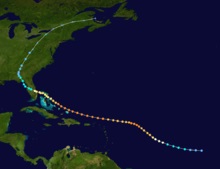
  • Hurricane Frances (August 2004) – Several feet of water flooded the international airport at Freeport.[28] In the Bahamas, insurers and reinsurers estimated industry insured losses at about $300 million (2004 dollars).[29]
  • Hurricane Jeanne (September 2004) – Because Hurricane Frances struck only about two weeks prior, numerous houses were still patched with plastic sheeting on their roofs, while other residents were still living with neighbors or relatives. Officials urged residents in low-lying homes to evacuate. Shelters were set up at the churches and schools on Abaco Islands, Eleuthera and Grand Bahama.
  • Hurricane Wilma (2005) – The hurricane produced hurricane-force winds[38] and a powerful storm surge, flooding southwestern coastal areas of Grand Bahama and destroying hundreds of buildings. In western settlements on the island of Grand Bahama, graves were washed up with skeletal remains lying in the streets. Damage totaled about $100 million almost entirely on the western half of the island. The central portion of Grand Bahama, including in and around Freeport, reported minor to moderate damage, while the eastern end received little to no damage.[39]

Get it?! Fool me once, shame on you; fool me twice, shame on me!

Who’s fooling who?

The culprit here is Mother Nature, yes, but there are other stakeholders to blame; think:

  • Public Works / Infrastructure – Surely with such a preponderance to flood, storm water management and solutions must be put in place. Think: levies, dykes, sea walls, and parks as storm retention ponds; see VIDEO below.
  • Insurance Companies – Reports are that insurance carriers are reticent to cover flood casualty; see Appendix below.

So ‘Shame on Freeport’ for not remediating the threats of storm surge, in the 15 years since Hurricane Frances. This is NOT the product of learning from the “Cautionary Tales” of the many low-lying urban areas around the world; think New Orleans, Louisiana, USA or the European country of Holland (or The Netherlands).

Flood control is not a luxury for those communities, nor should it be for Grand Bahama Island; it must be embedded in the Way Forward for Freeport. According to a previous blog-commentary, “there is a thesis that flooding could be prevented”. The Dutch experience and their historicity in flood control provides lessons-learned for us; (see the Appendix VIDEO on the lessons from The Netherlands).

More than just low-lying communities are affected; every coastal community needs to be On Guard. See the mitigation plans here being pursued in some communities, with the adoption of spill-ways and retention ponds to handle storm surges:

VIDEOStorm-resistant parks are helping cities defend themselves against floodinghttps://www.cbsnews.com/news/storm-resistant-parks-that-are-helping-cities-defend-themselves-from-flooding-2019-09-17/

Posted September 17, 2019 – Flooding from storm surges and heavy rainfall can be one of the most devastating effects of storms — and scientists say Climate Change is making those storms worse. Often, engineers build barriers like sea walls and levees to protect coastal cities. But now, there’s a new, prettier approach: public parks that are also storm-resistant.

One of those parks, Hunter’s Point South Park, sits on the edge of New York’s East River. The park boasts rows of seasonal plants, winding paths, and breathtaking views. But that’s not all: the flower beds disguise a ditch and filtration system that captures water and slowly releases it back into the river; synthetic turf absorbs water, too.

“In a big, heavy storm, we almost have a half a million gallons of water being held here, detained, until the tide or the storm leaves, and then it goes right back to the river,” said Tom Balsley, who designed the park with Michael Manfredi and Marion Weiss.

See the full transcript of this episode in this Series, in the link here: https://www.cbsnews.com/news/storm-resistant-parks-that-are-helping-cities-defend-themselves-from-flooding-2019-09-17/

About This Series
In our “Eye on Earth” series, we’re looking ahead to a landmark United Nations Climate Action Summit next week. CBS News is the only broadcast network participating in the “Covering Climate Now” Project, in partnership with 250 other news outlets. We’re highlighting the health of our planet with our own original reporting.

Climate Change is now our reality. One storm after another will always be a threat for Caribbean communities – Rinse and Repeat is more than just a “Shampoo Instruction” here, its our daily weather report. We would be fools not to be prepared. So being On Guard was the motivation for the 2013 book Go Lean…Caribbean. It identified these 4 Agents of Change affecting the Caribbean region …

  • Climate Change
  • Technology
  • Globalization
  • Aging Diaspora

… and prioritized Climate Change as the paramount threat.

This theme – Better Water Management and Flood Mitigation in the wake of Climate Change – aligns with many previous Go Lean commentaries; see a sample list here:

https://goleancaribbean.com/blog/?p=18228 After Dorian, The Science of Power Restoration
https://goleancaribbean.com/blog/?p=13155 Industrial Reboot – Pipelines and other Public Works
https://goleancaribbean.com/blog/?p=12856 Hurricane Flooding – ‘Who Knew?’
https://goleancaribbean.com/blog/?p=12724 Lessons from Colorado: Water Management Arts & Sciences
https://goleancaribbean.com/blog/?p=7235 Flint, Michigan – A Cautionary Tale in Water Management
https://goleancaribbean.com/blog/?p=1817 Caribbean grapples with intense new cycles of flooding & drought

The Go Lean book addressed the heavy-lighting that Caribbean communities need to do to strengthen their infrastructure for the realities of this new threatening world, where coastal flooding is a constant. There is the need to reboot our Public Works!

The book posits that a Caribbean region Public Works reboot may be too big for any one member-state alone; there is the need to consolidate and confederate a Single Market entity to successfully reform and transform our societal engines. That Single Market entity is the Caribbean Union Trade Federation (CU). This is the actual title of one advocacy in the Go Lean book. Consider the specific plans, excerpts and headlines here from Page 175, entitled:

10 Ways to Impact Public Works

1 Lean-in for the Caribbean Single Market entity: Caribbean Union Trade Federation (CU)
The CU is chartered to unify the Caribbean region into one single market of 42 million people across 30 member-states, thereby re-engineering the economic engines in and on behalf of the region, including a currency & monetary union. This new eco-system allows for the design, funding and construction of Public  Works and Infrastructural projects. …There are a number of inter-state projects that must be coordinated on the federal level. There will also be projects that are “Too Big for One State” that will be facilitated by the CU. …
2 Union Atlantic Turnpike
3 Pipelines and PCP (Pneumatic Capsule Pipeline)
4 Regional Power Grid
5 Self-Governing Entities (SGE)

The CU will promote and administer SGE’s throughout the region; these include industrial parks, hospitals, prisons, scientific labs, foreign military bases. SGE’s are only subject to CU laws, so they are self-regulated in terms of zoning and monopolies. Thus the SGE’s will yield many Public Works initiatives, spin-off jobs and economic activities.

6 Enterprise Zones
7 Empowerment Zones
8 Monopolies

The UN grants the CU the monopoly rights for an Exclusive Economic Zone, so the focus must be on quality delivery. The CU plan is to liberalize management of monopolies, with tools like ratings/rankings against best practices. Plus technological accommodations for ICT allows for cross-competition from different modes (satellite, cable, phone).

9 Cooperatives
10 Capital Markets

A Single Market and currency union will allow for the emergence of viable capital markets for stocks and bonds (public and private), thereby creating the economic engine to fuel growth and development. This forges financial products for “pre” disaster project funding (drainage, levies, dykes, sea walls) and post disaster recovery (reinsurance sidecars)

In summary, we do not want to be fools by NOT preparing for the next flood. It is coming! This should be a real concern for all Caribbean communities; this especially should be a priority for Freeport, Grand Bahama, Bahamas:

You have been hit with a 20 foot storm surge … twice! Now – no excuses – you must build levies, dykes, sea walls and storm-resistant parks as depicted in the foregoing VIDEO.

Insurance companies will be disinclined to write flood-casualty policies without such a mitigation – they are not fools. Their business model is all about identifying risks, mitigating and managing risk:

  • Hurricane Dorian is “definitely the biggest event” that we have encountered – See story in the Appendix below.
  • “Bahamian property and casualty insurers, which have relatively thin capital bases of their own compared to their developed country counterparts, buy huge quantities of reinsurance annually to help spread/minimize the risks they underwrite”. – Source.
  • “… we need to be aware of things like flooding, prepare accordingly and pay attention to it.” – Source.
  • Reinsurance‘ is a vital industrial strategy for the Caribbean Way Forward; see previous blog-commentary here.

So to Freeport, and the rest of the Caribbean, if you do NOT want to become a Ghost Town, you must engage these mitigations. This is how we can make our homeland a better place to live, work and play, by working together to reboot our infrastructure to ensure that after the inevitable storms, we can still rebuild, restore and recover. 🙂

About the Book
The book Go Lean…Caribbean serves as a roadmap for the introduction and implementation of the technocratic Caribbean Union Trade Federation (CU), for the elevation of Caribbean society – for all member-states. This CU/Go Lean roadmap has these 3 prime directives:

  • Optimization of the economic engines in order to grow the regional economy to $800 Billion & create 2.2 million new jobs.
  • Establishment of a security apparatus to ensure public safety and protect the resultant economic engines.
  • Improve Caribbean governance to support these engines, including a separation-of-powers between the member-states and CU federal agencies.

The Go Lean book provides 370-pages of turn-by-turn instructions on “how” to adopt new community ethos, plus the strategies, tactics, implementations and advocacies to execute so as to reboot, reform and transform the societal engines of Caribbean society.

Download the free e-Book of Go Lean … Caribbean – now!

Who We Are
The movement behind the Go Lean book – a non-partisan, apolitical, religiously-neutral Community Development Foundation chartered for the purpose of empowering and re-booting economic engines – stresses that reforming and transforming the Caribbean societal engines must be a regional pursuit. This was an early motivation for the roadmap, as pronounced in the opening Declaration of Interdependence (Pages 12 – 13):

i. Whereas the earth’s climate has undeniably changed resulting in more severe tropical weather storms, it is necessary to prepare to insure the safety and security of life, property and systems of commerce in our geographical region. As nature recognizes no borders in the target of its destruction, we also must set aside border considerations in the preparation and response to these weather challenges.

xi. Whereas all men are entitled to the benefits of good governance in a free society, “new guards” must be enacted to dissuade the emergence of incompetence, corruption, nepotism and cronyism at the peril of the people’s best interest. The Federation must guarantee the executions of a social contract between government and the governed.

xvi. Whereas security of our homeland is inextricably linked to prosperity of the homeland, the economic and security interest of the region needs to be aligned under the same governance. Since economic crimes … can imperil the functioning of the wheels of commerce for all the citizenry, the accedence of this Federation must equip the security apparatus with the tools and techniques for predictive and proactive interdictions.

xxiv. Whereas a free market economy can be induced and spurred for continuous progress, the Federation must install the controls to better manage aspects of the economy: jobs, inflation, savings rate, investments and other economic principles. Thereby attracting direct foreign investment because of the stability and vibrancy of our economy.

Sign the petition to lean-in for this roadmap for the Caribbean Union Trade Federation.

——————

Appendix – Title: $500m Dorian Payout ‘Biggest I Have Seen’
By NEIL HARTNELL, Tribune Business Editor
Insurers yesterday estimated that Hurricane Dorian claims payouts could “easily exceed” $500m, with one top executive revealing: “It’s definitely the biggest event I’ve ever seen.”

Tim Ingraham, Summit Insurance Company’s president, told Tribune Business that the industry wanted the damage assessment and claims process “to be moving a lot quicker” but had been frustrated by the difficulties associated with accessing the parts of Abaco hardest hit by the category five storm.

His counterpart at RoyalStar Assurance, Anton Saunders, added that the entire Bahamian property and casualty industry was “trying every possible solution” to get loss adjusters into Marsh Harbour and the surrounding Abaco cays so that the process of damages and claims assessment could begin in earnest more than a week after the battering from Dorian.

Pledging that claims will be “fairly paid” based on each individual insurance contract, Mr Saunders reassured Bahamian homeowners and businesses that RoyalStar and the other local underwriters would “stand by them through thick and thin”.

He also urged clients “not to be alarmed” by the release from AM Best, the international insurance credit rating agency, that placed four property and casualty insurers – Bahamas First, RoyalStar, Security and General Insurance and Summit – “under review” as a result of the likely nine-figure claims payouts that will result from the devastation inflicted by Dorian.

“There’s going to be a significant number of people uninsured or underinsured. In the past a large number of persons have been underinsured, but we can’t speak to this loss precisely because it’s very difficult to get into … ”

Mr Ingraham and Mr Saunders differed on whether Dorian’s payout will impact Bahamian property and casualty premium rates moving forward, with the former arguing it was likely to contribute to an increase and the latter deferring an answer until RoyalStar spoke to its reinsurers.

See the full story here, posted September 10, 2019 and retrieved September 18, 2019 from: http://www.tribune242.com/news/2019/sep/10/500m-dorian-payout-biggest-i-have-seen/

Related Story: Insurer’s Flood Claims Equal 30% Of Profits

——————

Appendix VIDEO  – Sea change: How the Dutch confront the rise of the oceans – https://youtu.be/3J5ZoPFhSGM

Posted August 27, 2017 – Windmills are more than just a traditional part of the Dutch landscape; they have played a key role in the war the Dutch have been waging against the ocean for the past thousand years. Our Cover Story is reported by Martha Teichner. (This story was previously broadcast on May 21, 2017.)

Share this post:
, , ,
[Top]

After Dorian, Regionalism – ‘How you like me now?’

Go Lean Commentary

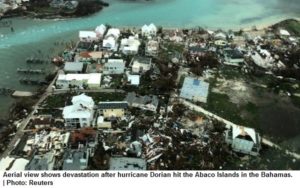
The Caribbean region has come to the aid of the Bahamas, in this their time of distress after the strong devastation of Category 5 Hurricane Dorian.

But some stakeholders in this region would rather tell this country: “I told you so …”.

They had been so proud and loud in rejecting the tenants of regionalism. Now they need help.

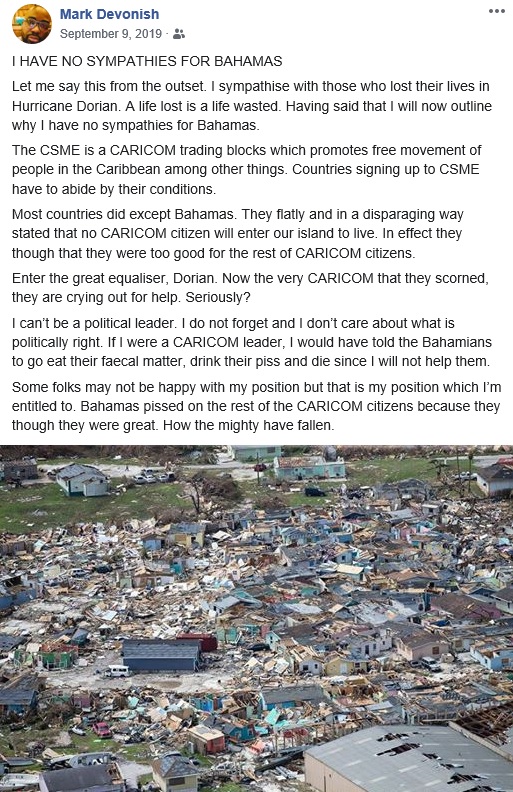
See the September 9, 2019 Facebook posting “I have no Sympathies for the Bahamas” by one commentator here; (Click to Enlarge or see the full text in Appendix C below).

Yes, the Bahamas rejected the Caribbean Single Market and Economy initiative – see Appendices A & B below – because they did not want the 42 million people in the region to just freely venture in-and-out of its borders for activities like “live, work and play”. A previous blog-commentary from July 10, 2018 reported:

According to the Bahamas Prime Minister’s [Hubert Minnis] issue with CSME is the Free Movement of People. The country would rather maintain its independence than to succumb to a new “free movement” regime whereby people can freely move from one Caribbean member-state to another for any activity: live, work or play. …

Now Hurricane Dorian happened and the country has been impacted; people have died (official toll at 51 as of today, but expected to rise into the hundreds); plus 60,000 people have been displaced. The country sent out an SOS and the most fervent response have come from those same scorned regional partners. Here are some examples:

Title: Guyana donating US$200,000 to hurricane-hit Bahamas
The Government of Guyana will be donating $41.6M (US$200,000) to The Bahamas to aid in relief following the battering by Hurricane Dorian.

This declaration was made last  evening, by the Minister of State, Dawn Hastings, during the ‘Rise Bahamas’ telethon programme, aired on the National Communications Network (NCN), according to the Department of Public Information (DPI). …
See the full story here, posted and retrieved September 16, 2019: https://www.stabroeknews.com/2019/09/16/news/guyana/guyana-donating-us200000-to-hurricane-hit-bahamas-hastings/

—————-

Title: CDEMA Pushes On
By:
Rachelle Agard
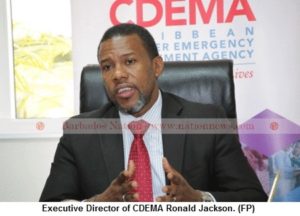
Dateline September 13, 2019 – The Caribbean Disaster Emergency Management Agency (CDEMA) continues to play an integral role in assisting the islands of Grand Bahama and Abaco which were devastated by Category 5 Hurricane Dorian earlier this month.

“At the moment, between the government of The Bahamas, the international military and/ or Caribbean military, we have over 1 000 boots on the ground, a quarter of which is from Caribbean troops.

“We must also recognise that The Bahamas is close to the US mainland and will also have a relationship with the US and would have benefitted from US resources. We signed an MOU recently with the Kingdom of the Netherlands. Part of the MOU sees CDEMA benefitting from the Dutch military capabilities, so we requested their support and they have deployed a vessel with 700 military artisans which arrived on Wednesday to provide a good boost,” he said of the organisation which is made up of 18 governments. …

See the full story here, retrieved September 16, 2019: https://www.nationnews.com/nationnews/news/241773/cdema-pushes

—————-

Title: Dominica to Assist Bahamas after Hurricane Dorian

The government of Dominica reported the actions taken to help the Bahamas and announced a contribution of US$100,000.

The government of Dominica announced a plan to help the Bahamian government and its people who were hit for three days by category 5 Hurricane Dorian on Sept. 1, seven people have been reported killed by the storm.

“From our experience with Hurricane Maria in 2017, we know that it will be a long and challenging road to recovery in the Bahamas. We encourage all Dominicans to continue to lift the Government and people of the Bahamas in their prayers and encourage the donor community to be proactive in responding to their needs,” said the country’s Prime Minister, Reginald Austrie. …

See the full store here, posted September 3, 2019; retrieved  September 16, 2019 from: https://www.telesurenglish.net/news/Dominican-Republic-to-Assist-Bahamas-after-Hurricane-Dorian-20190903-0025.html

—————
VIDEO – Ship Set To Leave Bermuda With Aid For Bahamas, Sept 8 2019 – https://youtu.be/9jWTQAiudPg

bernewsdotcom
http://bernews.com | Bermuda | Minister Wayne Caines press conference on board the Royal Navy HMS Protector

Regionalism has it benefits, people come to your aid when you send out an SOS. There is “give” and there is “take”.

The summary of the Caribbean Single Market & Economy (CSME) effort is that an integrated regional economy brings leverage, so “many hands make big job small”. In that previous blog-commentary from July 10, 2018 it related the benefits of the confederation roadmap as described in the 2013 book Go Lean…Caribbean:

Righting a Wrong: The Bahamas Needs to Re-think CSME
The Go Lean roadmap is designed to elevate the Caribbean region, to be better destinations to live, work and play. The movement therefore fosters strategies, tactics and implementation to better foment the region …

The Go Lean book was published in November 2013, projecting verbiage like “the Caribbean is in Crisis; alas a crisis is a terrible thing to waste” (Page 8). According to many observations in the Go Lean blogs-commentaries – click here – the Northern Bahamas was in a dire crisis, in need of immediate remediation, even before Hurricane Dorian. The crisis is exacerbated now. The recommendation of the movement behind the Go Lean book is to confederate now!

The Go Lean roadmap calls for a technocratic administration to allow the Caribbean region to embrace the economic benefits of a Single Market and a regional Security Pact – with the needed Disaster Preparation and Response organizations. The points of effective, technocratic stewardship for a regional security apparatus have thusly been elaborated upon in many previous blog-commentaries. Consider this sample here:

https://goleancaribbean.com/blog/?p=18182 Disaster Relief: Helping, Not Hurting
https://goleancaribbean.com/blog/?p=15996 Good Governance: Stepping Up in an Emergency
https://goleancaribbean.com/blog/?p=13746 Failure to Launch – Security: Caribbean Basin Security Dreams
https://goleancaribbean.com/blog/?p=12466 State of the Union: Unstable ‘Volcano States’
https://goleancaribbean.com/blog/?p=9455 Fix ‘Climate Change’ – Yes, We Can
https://goleancaribbean.com/blog/?p=7449 ‘Crap Happens’ – So What Now?
https://goleancaribbean.com/blog/?p=6103 Sum of All Fears – ‘On Guard’ Against Deadly Threats
https://goleancaribbean.com/blog/?p=5002 Managing a ‘Clear and Present Danger’

What should be the advocacy priority of a technocratic regional government? Guaranteeing safety and security of our people before, during and after any natural disaster.

The Bahamas must do better than in the past; the Caribbean must do better than in the past. We all need to lean on each other. Remember the 2nd Stanza of the 1971 song “Lean On Me” by Bill Withers:

If there is a load you have to bear
That you can’t carry
I’m right up the road
I’ll share your load
If you just call me


This is how we can make the Bahamas and all of the Caribbean a better place to live, work and play, by working together with our regional stakeholders to rebuild, restore and recover. 🙂

About the Book
The book Go Lean…Caribbean serves as a roadmap for the introduction and implementation of the technocratic Caribbean Union Trade Federation (CU), for the elevation of Caribbean society – for all member-states. This CU/Go Lean roadmap has these 3 prime directives:

  • Optimization of the economic engines in order to grow the regional economy to $800 Billion and create 2.2 million new jobs.
  • Establishment of a security apparatus to ensure public safety and protect the resultant economic engines.
  • Improve Caribbean governance to support these engines, including a separation-of-powers between the member-states and CU federal agencies.

The Go Lean book provides 370-pages of turn-by-turn instructions on “how” to adopt new community ethos, plus the strategies, tactics, implementations and advocacies to execute so as to reboot, reform and transform the societal engines of Caribbean society.

Download the free e-Book of Go Lean … Caribbean – now!

Who We Are
The movement behind the Go Lean book – a non-partisan, apolitical, religiously-neutral Community Development Foundation chartered for the purpose of empowering and re-booting economic engines – stresses that reforming and transforming the Caribbean societal engines must be a regional pursuit. This was an early motivation for the roadmap, as pronounced in the opening Declaration of Interdependence (Pages 12 – 13):

i. Whereas the earth’s climate has undeniably changed resulting in more severe tropical weather storms, it is necessary to prepare to insure the safety and security of life, property and systems of commerce in our geographical region. As nature recognizes no borders in the target of its destruction, we also must set aside border considerations in the preparation and response to these weather challenges.

xi. Whereas all men are entitled to the benefits of good governance in a free society, “new guards” must be enacted to dissuade the emergence of incompetence, corruption, nepotism and cronyism at the peril of the people’s best interest. The Federation must guarantee the executions of a social contract between government and the governed.

xvi. Whereas security of our homeland is inextricably linked to prosperity of the homeland, the economic and security interest of the region needs to be aligned under the same governance. Since economic crimes … can imperil the functioning of the wheels of commerce for all the citizenry, the accedence of this Federation must equip the security apparatus with the tools and techniques for predictive and proactive interdictions.

Sign the petition to lean-in for this roadmap for the Caribbean Union Trade Federation.

——————-

Appendix A – Bahamas maintains stance against CSME

By: Royston James

The Bahamas will maintain its stance against joining the Caribbean Single Market and Economy (CSME), despite increased pressure from certain regional heads to expand the initiative.

The CSME seeks to create a single, enlarged economic space by removing certain restrictions, the result of which would allow the free movement of goods and services, people and capital and technology.

“In spite of what you may read in the newspaper, we have discussed CSME, [but] The Bahamas is not and will not be a part of CSME,” Prime Minister Dr. Hubert Minnis said upon returning from Jamaica on Saturday.

“The Bahamas will not allow the free movement of people within our boundaries. So we are not a part of CSME. That must be clear, so that you do not feel that [because of] what has transpired there that Caribbean nationals would be able to move into The Bahamas quite regularly.

“We have our rules, our laws, and they will continue to apply.”

Full implementation of the CSME was high on the agenda of the CARICOM meeting held last Thursday. At least three CARICOM heads called for a review of the program by its member states and for regional leaders to find the political will to see the program expanded and made more efficient.

Addressing CARICOM, Barbados Prime Minister Mia Mottley opined that “psychological impediments and the closed mindsets in some quarters of officialdom” can be attributed to the slow progress of the CSME.

Antigua and Barbuda Prime Minister Gaston Browne and CARICOM Secretary General Irwin LaRocque also pushed for more to be achieved. CARICOM Chairman and Jamaican Prime Minister Andrew Holness said at a press conference following the CARICOM meeting that a special meeting on CSME will be held in Trinidad and Tobago in November.

Under the first Christie administration, the CSME issue featured prominently in local debates with strong opposition to The Bahamas joining the initiative being expressed in many quarters. Debate died down only after the government at the time publicly announced that The Bahamas would not join any bloc that would lead to the free movement of people in the country.

Source: Posted July 9, 2018 retrieved July 10, 2018 from: https://thenassauguardian.com/2018/07/09/bahamas-maintains-stance-against-csme/

——————-

Appendix B – No Caricom Without Referendum

By Sir Randol Fawkes – June 1993

I often wondered what The Caribbean Community’s Common Market (CARICOM) was up to. But now that I know, I wish to sound a warning to all true Bahamians to hold fast to the “Christian values and the Rules of Law” as enshrined in the Preamble to our Independence Constitution of July 10th, 1973, because some power-hungry politicians to the South are planning to invade our homeland and to steal our birthright away.

Simple enough? Dictatorship is always simple, monosyllabic and quick. Under a democracy we have a right to be properly briefed on CARICOM before being required to vote, “Yes” or “No” on whether the Bahamas should become a full Member State of the Caribbean Community’s CARICOM. The Rt. Hon. James F. Mitchell further expostulated, “One flag means we speak on the podium of the United Nations with one clear voice. One voice means one passport, one citizenship and all that flows from a single citizenship. Secondly, one Ministry of Finance is essential to provide the economic development which our people crave. This union will need to show results, and this authority which negotiates and secures financing must be responsible for the repayment of that finance.”

Make no mistake about it, These Caribbeans who will descend on Bahamian soil in July offering CARICOM as a panacea for all ills, intend to destroy our national flag: the Black, the Gold and the Aquamarine; silence our National Anthem, Lift Up Your Heads to the Rising Sun Bahama land, abolish Bahamian citizenship and our passports; eliminate Bahamian autonomy and thereafter superimpose upon us a leviathan dictatorship with a network of cells throughout the Caribbean – all done without first a people’s forum in which all voices – pro and con could be heard and ultimately expressed in a Constitutional Referendum.

Source: Retrieved July 10, 2018 from: http://www.sirrandolfawkes.com/yahoo_site_admin/assets/docs/No_Caricom_Without_Referendum1.216134242.pdf

——————-

Appendix C – Mark Devonish: I HAVE NO SYMPATHIES FOR BAHAMAS

Let me say this from the outset. I sympathise with those who lost their lives in Hurricane Dorian. A life lost is a life wasted. Having said that I will now outline why I have no sympathies for Bahamas.

The CSME is a CARICOM trading blocks which promotes free movement of people in the Caribbean among other things. Countries signing up to CSME have to abide by their conditions.

Most countries did except Bahamas. They flatly and in a disparaging way stated that no CARICOM citizen will enter our island to live. In effect they though that they were too good for the rest of CARICOM citizens.

Enter the great equaliser, Dorian. Now the very CARICOM that they scorned, they are crying out for help. Seriously?

I can’t be a political leader. I do not forget and I don’t care about what is politically right. If I were a CARICOM leader, I would have told the Bahamians to go eat their fecal matter, drink their piss and die since I will not help them.

Some folks may not be happy with my position but that is my position which I’m entitled to. Bahamas pissed on the rest of the CARICOM citizens because they though they were great. How the mighty have fallen.

Source: Posted September 9 at 7:27 PM; retrieved September 16, 2019.

Share this post:
, , ,
[Top]

More Storms: Rinse and Repeat – Encore

I have friends …

… that live in North America and Europe. They always ask about visiting the many beautiful islands of the Caribbean. I strongly urge them to come on down and “be our guest“; to consume our hospitality, enjoy our culture, food, spirits, cigars, festivals, fishing, resorts and cruises.

But, I caution them: Do not come between August 15 and September 15; this is the peak of our mean season! This is when we Rinse and Repeat.

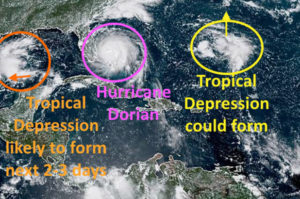
This has often been the case over the years – see Table 1 below – and this is true this year as well. The Bahamas just endured Category 5 Hurricane Dorian and now … there are other storms on the radar screen, in the vicinity. See photo here:

Rinse and Repeat is more than just a shampoo instruction, it is what we endure in the Caribbean region every year during Hurricane Season. Lastly, it is also the title of a previous blog-commentary from August 30, 2017.

Table 1 – Highest Number of named storm occurrences by month
Month
Storms Season
January 1 1938195119782016
February 1 1952
March 1 1908
April 1 199220032017
May 2 18872012
June 3 188619361968
July 5 2005
August 8 20042012
September 8 20022010
October 8 1950
November 3 2005
December 2 18872003
Based on data from: U.S. NOAA Coastal Service Center – Historical Hurricane Tracks Tool
† – Highest number for month by virtue of being only known season to see a storm form

Again, imagine 8 named storms in the same month; that is truly Rinse and Repeat. This is our reality. It is only apropos to Encore that previous blog-commentary here-now:

———–

Go Lean Commentary – Disaster Preparation: ‘Rinse and Repeat’

The reality of Caribbean life: we must contend with natural disasters, not of our making, “again and again”. The situation can be described as “Rinse and Repeat“.

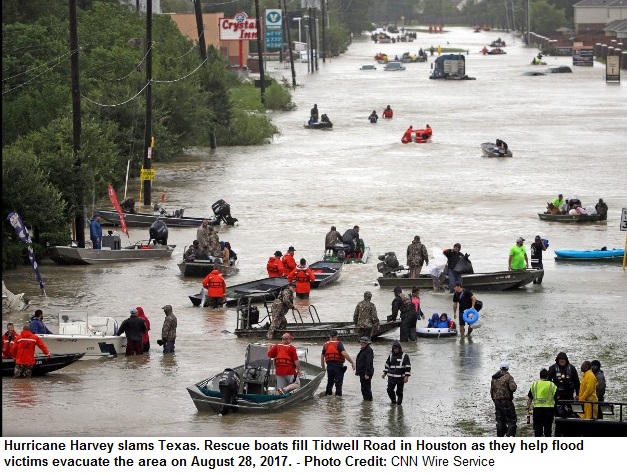
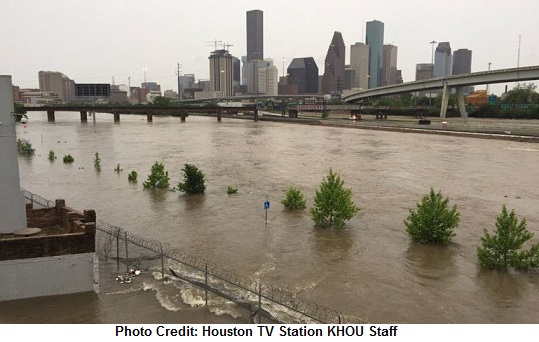
Climate Change is not of our making, but it is our problem. Truth be told, it is not just our problem alone; the whole planet is affected. Right now this moment, the Greater Metropolitan area of Houston, Texas USA is suffering “pangs of distress”; see the VIDEO in the Appendix below. CU Blog - Disaster Preparation - Rinse and Repeat - Photo 1

It is what it is!

Some communities have done a better job than others in preparing for the unavoidable:

“Some communities”? “Better job“? That is not us … in the Caribbean!

As related in a previous Go Lean commentary, our Caribbean region has failed … in our managing this Agent-of-Change:

… we do not have the luxury of “sticking our head in the sand” and pretending that these problems will simply go away. The region has been devastated with this dysfunction and mis-management. Some 70% of Caribbean college-educated citizens have already fled their homelands in an undisputed brain drain. It’s time now to manage change differently than the Caribbean has done as of late. It’s time now to “Go Lean”.

The book Go Lean…Caribbean – available to download for free – serves as a roadmap for the introduction and implementation of the technocratic Caribbean Union Trade Federation (CU), for the elevation of Caribbean society – for all member-states. This CU/Go Lean roadmap has these 3 prime directives for us to do a better job:

  • Optimization of the economic engines in order to grow the regional economy to $800 Billion and create 2.2 million new jobs. This includes an efficient Emergency Management apparatus to ensure business continuity.
  • Establishment of a security apparatus to ensure public safety and protect the resultant economic engines.
  • Improve Caribbean governance to support these engines, including a separation-of-powers between the member-states and CU federal agencies. We can “move” member-state governments simply through funding, rankings and ratings.

The book stresses that reforming and transforming the Caribbean societal engines must be a regional pursuit. This was an early motivation for the roadmap, as pronounced in the opening Declaration of Interdependence (Pages 12 – 13):

i. Whereas the earth’s climate has undeniably changed resulting in more severe tropical weather storms, it is necessary to prepare to insure the safety and security of life, property and systems of commerce in our geographical region. As nature recognizes no borders in the target of its destruction, we also must set aside border considerations in the preparation and response to these weather challenges.

xi. Whereas all men are entitled to the benefits of good governance in a free society, “new guards” must be enacted to dissuade the emergence of incompetence, corruption, nepotism and cronyism at the peril of the people’s best interest. The Federation must guarantee the executions of a social contract between government and the governed.

xvi. Whereas security of our homeland is inextricably linked to prosperity of the homeland, the economic and security interest of the region needs to be aligned under the same governance. Since economic crimes … can imperil the functioning of the wheels of commerce for all the citizenry, the accedence of this Federation must equip the security apparatus with the tools and techniques for predictive and proactive interdictions.

xxiv. Whereas a free market economy can be induced and spurred for continuous progress, the Federation must install the controls to better manage aspects of the economy: jobs, inflation, savings rate, investments and other economic principles. Thereby attracting direct foreign investment because of the stability and vibrancy of our economy.

The Go Lean book provides 370-pages of turn-by-turn instructions on “how” to adopt new community ethos, plus the strategies, tactics, implementations and advocacies to execute so as to reboot, reform and transform the societal engines of Caribbean society, for better preparation for natural disasters. Consider the Chapter excerpts and headlines here from this sample on Page 184 entitled:

10 Ways to Improve for Natural Disasters

1

Emergence of the Caribbean Union
Lean-in for the Caribbean Single Market & Economy initiative as the Caribbean Union Trade Federation. This allows for the unification of the 30 member-states into one market, thereby spreading the risk and premium base across a market of 42 million people. The Caribbean member-states have Hurricane Katrina styled disasters (relatively speaking) every year.

2

Caribbean Emergency Management Agency – Federal Disaster Declarations
Modeled after FEMA in the US, this agency will be charged with the preparation, response and reconstruction for the regions for the eventual manifestations of hurricanes, earthquakes, tsunamis, flooding and other declared disasters, natural and man-made like medical epidemic, drought, pollution, oil spills, terrorism, etc.

3

Support Services for First Responders
Training, licensing and standards for Emergency Managers, Paramedics, Firefighters, Search and Rescue resources. For major disasters, some of these resources will come from international origins; they will need the support services (language translation, guides, maps, etc.) and coordination to maximize their results.

4

Animal Partner Training and Development
Maintain plantations for the training, development and boarding of “search & rescue” dogs, cadavers dogs and other service animals (horses, mules, pigs, etc.) so that there will be local resources within the region. (We cannot always depend on international responses in light of other regions experiencing their own disasters). These animals need not be owned by any one member-state, they can be on loan from CU resources.

5

Siren Warnings & Notifications
The CU will install tornado-style alarms/sirens in all major municipalities. In addition, the CU will implement tsunami warning messaging (emails/text) in coastal areas & seismic meters throughout the region in the affected “fault-line” areas.

6

Airlift & Sealift Authorizations
The CU Emergency Management Agency can license, regulate and authorize (air & sea) vessels and vehicles for emergency deployment in a disaster zone, before during and after the disastrous event.

7

JUA-style Insurance Fund
The fiduciary management of premiums and claims to allow the immediate response for reconstruction after disasters. These financial services, sidecars traded in markets can be direct or indirect as in reinsurance or insurer-of-last-resort.

8

Economic Crime Enforcement During and After Disasters
The CU will police, investigate and prosecute price gouging, insurance red lining and other economic crimes of both the “white collar” and “blue collar” variety. Once a CU-member-state declares a Disaster Emergency, new rules (quasi-Marshall Law) goes into effect. The CU will review and prosecute the actions of civilians and institutions alike.

9

Disaster Declaration Loans
Once there’s a Federal Disaster Declaration, the CU will make funds available for low-interest loans for communities to fund reconstructions. With tourism as a major “cash crop” the goal will be to restore the locality as a tourist destination as soon as possible, as even the perception of prolonged disaster damage can affect future bookings and travel plans.

10

Building Codes and Standards
Through peer review, the CU will regionalize the standards of building codes to assuage the threat of hurricanes and earthquakes, ensuring a higher survivability rate in the Caribbean islands. Due to economic pressures, when buildings and homes cannot be retrofitted, they will be rated for evacuation during hurricane warnings, or earthquake after-shocks.

The Caribbean must foster a better disaster preparation and response apparatus. We must do it now! Lives are at stake.

Just look at our American neighbors – they are suffering right now in the Greater Metropolitan area of Houston, Texas.

CU Blog - Hurricane Flooding - Who Knew - Photo 1b

While Climate Change is the underlying Agent-of-Change, it is outside of our control. This does not imply that there is no remediation for Climate Change; there is. In fact …

Fix ‘Climate Change’ – Yes, We Can

CU Blog - Disaster Preparation - Rinse and Repeat - Photo 2

We do not have the resources (time, talent and treasuries) to fix Climate Change for the planet ourselves, but we can fix it in our Caribbean region. This is a “Lesson in History” that our community has learned … from back in 1863:

There is an important lesson to learn in considering the history of the American Civil War. The war was fought over the issue of slavery. This was an ugly institution for those condemned as slaves. In the United States, that ugly disposition extended beyond the slaves themselves to the entire Black race. Though individuals could be set free, laws in the country could push them back into slavery without any due process. This was the case with the “Fugitive Slave Act of 1850″. Any Black person could be detained as a runaway slave and returned to any alleged Slave Master in the South; no matter any proof or the truth, or lack there-of. In many jurisdictions, a Black man could not even testify against white people. (This was the basis for the autobiographical book – by Solomon Northup – and movie “12 Years A Slave”).

To be Black in the America of those days, one “could not win, could not break-even and could not get out of the game”. There was no neutral destination in America. The optimal option was the only option, to work towards the end of slavery.

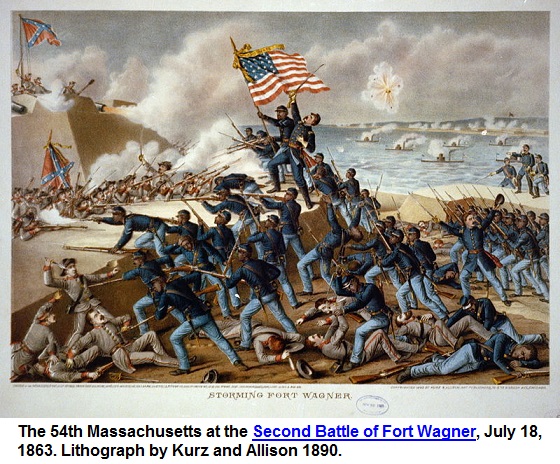
For this reason many Blacks joined the war effort, at great sacrifice to themselves and their community. This was a matter of principle! There is an important lesson for the Caribbean from this history[1] :

    The 54th Regiment Massachusetts Volunteer Infantry was an infantry regiment that saw extensive service in the Union Army during the American Civil War. The regiment was one of the first official African-American units in the United States during the Civil War.

CU Blog - A Lesson in History - During the Civil War - Principle not Principal - Photo 1

Remediating and mitigating Climate Change will be a battle. We need our own “Voluntary Infantry“ in this fight.

“We have a dog in this fight” – English language slang.

In the Caribbean, we must confederate and implement the institutions to work to remediate and mitigate Climate Change. We must “join in this fight”; we must Go Green and we must Go Blue. We have to be prepared for natural disasters – they will come … assuredly every season, some Caribbean destination will be impacted. We must be prepared to:

Rinse and Repeat.

If we are ready, to quickly respond, offer relief and rebuild – so as to guarantee the business continuity – we would then do a better job in our quest to make our homeland a better place to live, work and play. 🙂

Download the free e-Book of Go Lean … Caribbean – now!

Sign the petition to lean-in for this roadmap for the Caribbean Union Trade Federation.

———–

Appendix VIDEO – Historic flooding inundates Texas, hampering rescue efforts – https://youtu.be/Da-VS39gdfQ

PBS NewsHour
Published on Aug 27, 2017 – Houston’s mayor on Sunday urged his constituents in the nation’s fourth-largest city to stay off roadways as the state of Texas continues to contend with unprecedented flooding from Hurricane Harvey, now classified as a tropical storm. Officials said rising waters would reach catastrophic proportions, with more than 2,500 emergency calls made overnight in Houston alone. Hari Sreenivasan has more.

Share this post:
, , , ,
[Top]

Regulating Plastics in the Bahamas – So Little; So Late – Encore

Plastics have been identified as “unbecoming” for the Caribbean environment. One country after another is now starting to regulate them and maybe even ban them.

Considering the 500 year history of Caribbean society, plastics are new …

… the proliferation emerged in the last 100 years. But the acknowledgement is now universal that they are destructive for the planet’s landscape and seascape.

While plastics are dutiful, plentiful and cheap, they are strictly optional; there are many viable alternatives; think glass, paper, wood and ceramics.

Here again:

  • plastic bags ==> paper bags
  • plastic bottles ==> glass bottles
  • plastic straws ==> paper straws
  • plastic cups ==> ceramic cups
  • plastic stirrers ==> wood stirrers

Plastics may be cheaper than all of these alternatives! But economically, plastics costs more … in the end! This is due to the disposal costs; or worse still: the destruction to the environment.

Caribbean communities that depend on the trade of touristic services must not jeopardize the sand and sea of the region. Tropical beauty is a strong selling point. Same too for the Fisheries.

One country after another is starting to implement regulations to eliminate plastic shopping bags, food utensils, straws and Styrofoam. Last year, August 21, 2018, the movement behind the book Go Lean…Caribbean related the efforts of the Caribbean country of Saint Lucia for their mitigation of plastics and Styrofoam. Now, we see that an additional country, the Bahamas, is also deploying their ban on plastics, starting in January 2020.

In fact, 40 other countries have already implemented such bans.

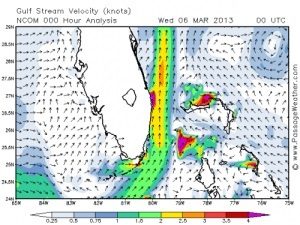
This is late for the Bahamas to only now be implementing this ban – they have always been vulnerable. In addition to their near-400,000 residents, they also hosts more than 3 million tourists annually (stay-overs and cruise passengers). But the location of the archipelago chain exposes it to unwanted marine debris (plastics) as a result of ocean currents and wave patterns – see the Gulfstream photo above.

The Bahamas is late! They should have been front-and-center with any mitigation efforts.

See this article here that describes the Bahamas plan for January 2020. Notice the emphasis on “plastic bags” and the little focus on other examples of single-use plastics. See the article here:

Title: Ferreira: Bahamas to join more than 40 countries that has banned plastic bags

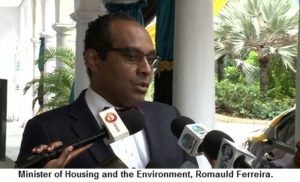
NASSAU, BAHAMAS – Minister of Environment and Housing, Romauld Ferreira, during his contribution to the 2019/2020 Budget debate on Tuesday night, said the Bahamas is expected to join more than 40 countries that have introduced a ban on plastic bags.

The government’s proposed ban on plastic bags is set to take effect in January 2020.

Ferreira said the Government will ensure that the move offers minimal disruption to businesses and their operation.  He said his ministry will also inform and educate the public through a number of town hall meetings heading into 2020.

“The ministry’s education is also advancing the message of a healthier Bahamas through this initiative as the improper use of plastics is associated with various forms of environmental pollution and environmental degradation, which ultimately affects an individual’s health and well-being,” Ferreira said.

The proposed ban comes on the heels of several warnings issued by local environmental and climate experts who have stressed that non-biodegradable products such as plastic bags and Styrofoam have contributed to environmental issues.

Director of Energy and Environment with the Bahamas Chamber of Commerce, Debbie Deal, told Eyewitness News Online Wednesday that  back in April 2018, the Ministry of Environment signed a Memorandum of Understanding with The Bahamas Chamber of Commerce, to ensure that businesses would be prepared for enforcement of the 2020 ban.

Deal said the implementation of the ban should not be an issue.

“VAT was [pushed] from 7.5 to 12 per cent and  on July 1, 2019 it came into effect. We as a people were able to make that transition in a month’s time, so I personally think that a year and 9 months is sufficient to make that transition,” Deal said.

Meanwhile, Trevor Davis, the co-owner of Quality Home Center on Blue Hill Road said as his business prepares to replace plastic bags with reusable shopping bags, the move, while costly, will bring down the cost of bags for business owners as the new bags are reusable.

Source: Posted June 12, 2019; retrieved from: https://ewnews.com/ferreira-bahamas-to-join-more-than-40-countries-that-has-banned-plastic-bags

While we applaud the Bahamas for this tardy effort; it must be acknowledged that it is: so little; so late!

It is very apropos to Encore that previous blog-commentary from August 21, 2018. See that blog-commentary here-now:

——————–

Go Lean CommentaryPlastics and Styrofoam – A Mitigation Plan

So where do all the used plastics – and Styrofoam – go?

In a landfill …

… and may not degrade for a thousand years!

But for the ones that end up in the water (oceans and seas), they too do not degrade. They linger, pollute and disrupt eco-systems.

No one can just “stick their head in the sand”; this issue must be addressed, the crisis must be assuaged, the threat must be mitigated. See this crisis as depicted in this VIDEO here:

VIDEO – How Much Plastic is in the Ocean? – https://youtu.be/YFZS3Vh4lfI

It’s Okay To Be Smart

Published on Mar 28, 2017 – What can you do to make the oceans plastic-free?

Ocean plastic pollution is a massive environmental problem. Millions of tons of plastic waste enter the ocean every year, even plastic that goes in the trash can often ends up in the sea! This week we learn about the Great Pacific Garbage Patch and look at the dangers ocean plastic poses to ocean animals. Plus, a few tips for you to reduce your own plastic use!

Sample Resources

Plastic Oceans Foundation: http://www.plasticoceans.org/

United Nations “Clean Seas” program: http://www.cleanseas.org/

Ocean plastic pollution resources from Monterey Bay Aquarium: https://www.montereybayaquarium.org/c…

Welcome to the Caribbean! We are 30 member-states in an all-coastal region – with many archipelagos (i.e. the Bahamas alone features over 700 islands). We have a lot of waterways and seascapes to contend with … and manage! So this global problem of plastics and Styrofoam is a local problem too.

Think global; act local!

What are we doing in our Caribbean region to mitigate the problem of plastics and Styrofoam? One member-state, St. Lucia, has proposed something; see the full news story here:

Title: Saint Lucia to ban Styrofoam and plastics

August 13th, 2018 – Saint Lucia plans to phase-out Styrofoam food service containers and plastics, both plates and cups, beginning December 1, 2018, with a total ban on their importation before the end of next year.

The announcement came in a statement from Minister of Education, Innovation, Gender Relations and Sustainable Development, Doctor Gale Rigobert.

Rigobert said the Government of Saint Lucia is cognizant of the negative impact on the environment and human health from food service containers made from Polystyrene and Expanded Polystyrene, also known as Styrofoam, along with Plastics.

However, she observed that the administration recognises that the healthier alternative to these products, such as biodegradable and compostable food service containers, are more costly.

” We are doing our very best to alleviate this issue,” the minister explained.

She disclosed that over the last few months, the Department of Sustainable Development, in partnership with other key agencies such as the Saint Lucia Solid Waste Management Authority, the Department of Finance, the Ministry of Commerce and the Customs and Excise Department, has been working towards the development of a strategy to eliminate single use plastics, polystyrene and expanded polystyrene from the Saint Lucia market.

“To date, we have completed fiscal analyses, conducted a survey of the key suppliers of these products and we have also identified suppliers of the biodegradable and compostable food service containers, all this to ensure that Saint Lucia creates the enabling environment to facilitate this process,” Rigobert stated.

She explained that in light of this, the Department of Sustainable Development will be taking a phased approach to facilitate a smooth transition for all stakeholders.

“The phase-out, along with a ban on the importation of Styrofoam food service containers, and plastics, both plates and cups, will commence December 1, 2018 with a total ban culminating by November 30, 2019:”

Rigovert revealed that in order to ensure adequate sensitisation, the Department of Sustainable Development will continue its campaign to educate the general public on the options they have available to them during this phase.

“With respect to plastic bottles, discussions are ongoing with major stakeholders to finalize legislation that would curb and control their use,” the minister noted.

“I encourage you to join the fight to reduce your dependency on single use plastics and Styrofoam by utilizing re-useable bottles, food containers, cutlery and shopping bags. Let us act responsibly in our everyday consumption and production,”Rigobert stated.
Source: St. Lucia Times – Daily Newspaper – Posted 08-13-2018; retrieved 08-21-2018: https://stluciatimes.com/2018/08/13/saint-lucia-to-ban-styrofoam-and-plastics/

This problem is bigger than just the Caribbean member-state of St Lucia. They did not start this fight; nor can they finish it. This is BIG Deal that is too big for any one member-state or the full Caribbean region alone. This will require a global effort, including some Caribbean mitigation!

But here in the Caribbean, we cannot expect others to do all the heavy-lifting and clean-up; we must do our share; clean-up our own environment. This has been a frequent theme by the movement behind the book Go Lean … Commentaryavailable for download now. In the book, and in previous Go Lean blog-commentaries, it was asserted that we – the Caribbean region – must do our share to “Go Green” so as to assuage our own contributions to global pollution and greenhouse gases; yes, we must keep our own neighborhoods clean and optimize our own industrial footprint, so that we may be less hypocritical – have moral authority – in calling for reform from the big polluting nations. This sample – as follows – depicts some previous blog-commentaries that relates this theme:

https://goleancaribbean.com/blog/?p=14832 Counter-culture: Manifesting Change – Environmentalism
https://goleancaribbean.com/blog/?p=14174 Canada: “Follow Me” for Model on Environmental Action
https://goleancaribbean.com/blog/?p=12724 Lessons from Colorado: Water Management Arts & Sciences
https://goleancaribbean.com/blog/?p=12144 Book Review: ‘Sea Power’ – The Need for Good Oversight
https://goleancaribbean.com/blog/?p=9455 Fix ‘Climate Change’ and other Environmental Issues? Yes, We Can
https://goleancaribbean.com/blog/?p=2465 Book Review: ‘This Changes Everything: Capitalism vs. the Climate’
https://goleancaribbean.com/blog/?p=2276 Climate Change May Affect Food Supply Within a Decade
https://goleancaribbean.com/blog/?p=1656 Blue is the New Green
https://goleancaribbean.com/blog/?p=915 Go ‘Green’ … Caribbean

From the foregoing news articles and these previous blog-commentaries, we see the compelling need for a concerted anti-pollution-Go Green effort in our region. We must “Reduce, Re-use, Recycle”. Who will stand-up and lead this charge?

“Here I am, send me” – The Bible; Isaiah 6:8

This is the charter of the Go Lean book. It serves as a roadmap for the introduction and implementation of the technocratic Caribbean Union Trade Federation (CU). The roadmap depicts how this federal government is designed to stand-up and lead the charge to assuage and mitigate the threats on Caribbean life. The book identifies a list of crises as Agents of Change that are crippling our way of life. We can add pollution to that list. As a Single Market, we need a regional sentinel to be on guard and to tackle these “plastics pollution” problems.

Why regional?

Because the national effort has been unsuccessful; in many cases, even unknown, unavailable and unfunded.

No, individual member-states will not be able to succeed in this effort; we need a regional effort; it is too big to tackle alone; so we must acknowledge our regional dependency or interdependence to have any chance of success. This vision is embedded in the opening Declaration of Interdependence, pronouncing as follows, (Pages 11, 12):

vi. Whereas the finite nature of the landmass of our lands limits the populations and markets of commerce, by extending the bonds of brotherhood to our geographic neighbors allows for extended opportunities and better execution of the kinetics of our economies through trade. This regional focus must foster and promote diverse economic stimuli.

viii. Whereas the population size is too small to foster good negotiations for products and commodities from international vendors, the Federation must allow the unification of the region as one purchasing agent, thereby garnering better terms and discounts.

x. Whereas we are surrounded and allied to nations of larger proportions in land mass, populations, and treasuries, elements in their societies may have ill-intent in their pursuits, at the expense of the safety and security of our citizens. We must therefore appoint “new guards” to ensure our public safety and threats against our society, both domestic and foreign. …

xi. Whereas all men are entitled to the benefits of good governance in a free society, “new guards” must be enacted to dissuade the emergence of incompetence, corruption, nepotism and cronyism at the peril of the people’s best interest. The Federation must guarantee the executions of a social contract between government and the governed.

The Go Lean book and previous blog-commentaries posit that the “whole is worth more than the sum of its parts”, that from this roadmap disparate Caribbean nations can speak with “one voice” … collectively as a Single Market and be heard. The international community – the big polluters – would therefore have more respect and accountability to our regional Caribbean entity, rather than the many (30) Small Island Development States. But while contributing to the problem ourselves, though on a smaller scale, we cannot just say to these big polluters:

“You break it, you fix it”.

No, we must unite and take our stand in this fight … to mitigate plastics and Styrofoam … and advocate for change!

As related in the Go Lean roadmap, the CU Trade Federation is designed to elevate Caribbean society, but not just against pollution, rather these other engines in the regional construct as well. The roadmap therefore has these 3 prime directives:

  • Optimize the economic engines of the Caribbean to elevate the regional economy to grow to $800 Billion & create 2.2 million new jobs.
  • Establish a security apparatus to ensure public safety and protect the resultant economic engines over the seas & land.
  • Improve Caribbean governance to support these engines.

So the CU will serve as the regional administrator to optimize the economy, homeland security and governing engines for the Caribbean. These efforts are already important in the fight for Climate Change abatement; so the same can apply for the mitigation of polluting plastics and Styrofoam.

The Go Lean book provides 370-pages of turn-by-turn instructions on “how” to adopt new community ethos, plus the strategies, tactics, implementations and advocacies to execute so as to reboot, reform and transform the societal engines of Caribbean society. This is the heavy-lifting that we must do to sustain our planet, region, island and communities.

We can all do more!

Some hotel resorts in the Caribbean have already embraced the strategy of being early-adopters of plastics-Styrofoam bans. See a related article here from St Lucia:

Bay Gardens Resorts discontinues use of Expanded Polystyrene EPS (Styrofoam) products https://stluciatimes.com/2017/02/17/bay-gardens-resorts-discontinues-use-expanded-polystyrene-eps-styrofoam-products/

Change has come to the Caribbean region. This heavy-lifting is the quest of the CU/Go Lean roadmap; to make the Caribbean region more self-reliant collectively; to act more proactively and reactively for our own emergencies and natural disaster events; and to be more efficient in our governance.

If “plastics pollution” is not arrested, then even more devastating changes will come. So there is the need for our region to establish a regional Sentinel, a permanent union to provide efficient stewardship for our economic, security and governing engines.

Now is the time for all of the Caribbean, the people and governing institutions, to lean-in to the efforts and empowerments to mitigate and abate “plastics pollution”. It is also time to lean-in to this roadmap described in the book Go Lean … Caribbean. Plastic pollution is a Big Deal. We have other Big Deals too, so as to reform and transform our society. We must make our waterways and homelands better places to live, work and play. 🙂

Download the e-Book of Go Lean … Caribbean – now!

Sign the petition to lean-in for this roadmap for the Caribbean Union Trade Federation.

Share this post:
, , , , ,
[Top]

What Went Wrong? Losing the Best; Nation-building with the Rest

“The one walking with the wise will become wise, but the one who has dealings with the stupid will fare badly”. – The Bible – Proverbs 13:20 NWT

There is no doubt that our Caribbean communities are suffering from a bad case of societal abandonment. Everyone in the Caribbean knows someone that has left. In fact, whenever there is a colleague we know from the hometown that is skilled and competent, we would expect them to leave and be disappointed if they have not; see this dramatized in the Appendix VIDEO; caution for Strong Language.

Search your heart, you know it to be true. That Valedictorian from High School, if he/she is still in the Caribbean, you are puzzled right?
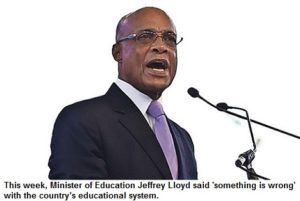
This is our dilemma!

If/when all the best students leave, the remnant only reflect the rest – Less Than best students.

One Caribbean country – The Bahamas – has been faced with this reality. As their Brain Drain rate gets worse and worse, they are now measuring the academic performance of the remaining students, and the grade is bad:

‘D’ Average.

See the full news article here:

Title: Results Expose Failing Schools
By: Khrisna Russell, Deputy Chief Reporter
A DAY after Education Minister Jeff Lloyd said “something is wrong” with the country’s educational system, officials withheld an official subject letter grade breakdown for the Bahamas General Certificate of Secondary Education examination results, which also show that of 6,692 students who sat the national tests this year, only 521 or 7.8 per cent, scored a C or above in mathematics, English and a science subject.

This is about a nine per cent decrease compared to last year.

This lack of detailed BGCSE statistics raises questions over how students fared in individual test subjects and highlights challenges this country faces regarding the readiness of youth to adjust to life after high school where they are expected to transition into the work force or college.

However, sources within the Ministry of Education told The Tribune this year’s test scores did not depart greatly from the dismal grade trends seen in both 2015 and 2016.

On Wednesday Mr Lloyd told educators during an event in Grand Bahama that they could not continue to rest on their laurels while the national exam results remain at a D average.
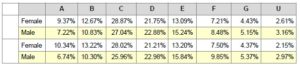

“For the last 10 years or more, the BGCSE results have shown not (any) improvement; we started out with a D, we are still at a D – something is wrong,” the minister said during the Ministry of Education’s annual Teachers’ Enrichment Day. The event was held at the Jack Hayward High School gymnasium on Wednesday.

He continued: “There is no way to camouflage it; there is no way to excuse it; something is wrong and we must fix it.”

He went on to stress the only way the issue could be corrected was to go back to the beginning and start with preschoolers.

In 2015, core subjects of mathematics and English averaged an E and D+ respectively. In 2016, the ministry did not release letter grades per subject, but then Minister of Education Jerome Fitzgerald confirmed at the time that the grades were not much different from those of 2015.

Prior to 2015, subject letter grades were released with the official BGCSE and Bahamas Junior Certificate (BJC) exam tests scores. The following year, the ministry broke away from its traditional analysis, only giving a general overview and percentage calculations per letter grade. This year, the Ministry of Education also did not hold its usual press conference to officially release the results, this time opting to disseminate the details of the tests by email.

Results
“In 2017, a total of 521 candidates received at least a grade C or better in mathematics, English language and a science,” the press release accompanying the 2017 results noted. “This represents a decrease of 9.23 per cent when compared to 2016 which had a total of 574 candidates. There were 570 candidates in 2015; 588 in 2014 and 561 candidates in 2013.”

According to the new results, there were 2,141 As; 3,000 Bs; 7,065 Cs; 5,569 Ds; 3,496 Es; 1,936 Fs; 1,184 Gs and 710 Us for the BGCSE exams.

Regarding the number of students who sat these tests, there were 6,692, or a 3.95 per cent increase compared to the 6,438 test takers in 2016.

A further breakdown of the results showed in 2017, a total of 1,493 candidates obtained a minimum grade of D in at least five subjects. This represents an increase of 2.33 per cent from 2016, which had a total of 1,459 candidates.

There were also 1,534 candidates achieving this mark in 2015; 1,545 in 2014 and 1,626 in 2013.

In addition, a total of 880 candidates received at least grade C in five or more subjects in 2017 compared with 903 candidates in 2016.

This represents a decrease of 2.55 per cent. There were 961 candidates in 2015; 922 candidates in 2014 and 996 in 2013 in this category.

The Bahamas Junior Certificate (BJC) examination results were not much different when compared with the BGCSE test scores.

Of the 12,120 students who took the tests in 2017, only 1,326 or 10.94 per cent of candidates achieved at least a C in mathematics, English and a science.

“This represents a 14.67 per cent decrease when compared with 2016, which had a total of 1,554 candidates. There were 1,479 candidates in 2015; 1,651 candidates in 2014 and 1,302 candidates in 2013,” the Ministry of Education said in its press release.

The BJC results also show there were 3,831 As; 7,033 Bs; 9,395 Cs; 8,036 Ds; 6,036 Es; 4,508 Fs; 2,954 Gs and 2,565 Us.

“When compared with 2016, there is a percentage decrease noted at grades A, C, E and U and increases at B, D, F and G. It is interesting to note that this is the second consecutive year the percentage at U has decreased.

“Overall, the percentage of candidates achieving grades A – D decreased this year when compared with last year,” the Ministry of Education said.

Source: Posted August 31, 2017; retrieved July 29, 2019 from: http://www.tribune242.com/news/2017/sep/01/results-expose-failing-schools/

While this article is from 2017; an except of the full Ministry of Education Report (MOE) for the 2017-2018 Academic Year is also hereby attached in Appendix below. This commentary is hereby published during mid-summer 2019; so we only have analysis based on that 2018 report. See a related news article on the latest MOE Report from September 3, 2018:

Title: Exam Passes Down Again
By: Khrisna Russell, Deputy Chief Reporter
STUDENTS who took the Bahamas General Certificate of Secondary Education (BGCSE) examinations performed marginally worse this year [2018] in comparison with those who took the national tests in 2017.

See the full article here: Retrieved July 29, 2019 from: http://www.tribune242.com/news/2018/sep/04/exam-passes-down-again/

This has not always been the case. What Went Wrong?

Simple: This grade is an average!

In the past, there were better students in the Bahamian educational eco-system. If you total all of those test scores and divide by the count, you get the average. If you then take away all the higher earners and calculate the average again, the result is an even lower average score. Repeat this process again and again and the overall average lowers.

Welcome to the ‘D’ Grade Reality. This is indicative that the best-of-the-best have left, are leaving and unless something is done, will continue to leave.

(“An apple doesn’t fall far from a tree”; so most good students have children that are good students; most bad students rarely have children that are good students. This is Nature and Nurture).

This commentary completes the July series from the movement behind the book Go Lean…Caribbean. This submission follow through on the theme “What Went Wrong?“, focuses on Caribbean defects and dysfunctions in every aspect of Caribbean life; many which have been addressed and remediated by other societies – think North America and Europe yes, but even Asian communities. So this creates the pressure of Push and Pull, in which our people leave to seek refuge in those places.

While this is entry 6-of-6, the full catalog were published as follows:

  1. What Went Wrong? Asking ‘Why’ is Important
  2. What Went Wrong? ‘We’ never had our war!
  3. What Went Wrong? ‘7 to 1’ – Caribbean ‘Less Than’
  4. What Went Wrong? ‘Be our Guest’ – The Rules of Hospitality
  5. What Went Wrong? Failing the Lessons from Infrastructure 101
  6. What Went Wrong? Losing the Best; Nation-building with the Rest

Though the foregoing news article cites the Bahamas, the experience of falling test scores have befallen all Caribbean communities. In this What Went Wrong series, we did not only detail the timelines of the faults and breaks, but also drew reference to the need for a comprehensive roadmap for reforming and transforming the Caribbean region – all member states, individually and collectively. So the solutions here-in are for the Bahamas and the rest of the region.

The problems of failing Caribbean education scores are too big for any one member-state alone, we would need the leverage of the whole Caribbean neighborhood – despite the language, race, colonial heritage or political structure – to forge the change and solutions.

Forge the change and solutions?
The Go Lean movement (book and previous blog-commentaries) asserts that technology, Internet Communications Technology (ICT) in fact – can be the great equalizer in education solutions so that smaller countries can compete with larger ones worldwide.  Imagine, right on our islands, coastal shores, rural settlements, barrios and ghettos, our students can have the best-of-the best for instruction, knowledge base, tutorials and reference sources.

Yes, we can … correct What Went Wrong in our Caribbean education evolution with these different strategies, tactics and implementations. See how this theme was developed and presented in these previous blog-commentaries:

Title: Future Focused – Personal Development and the Internet – November 8, 2017

“I believe that children are the future; teach them well and let them lead the way”.

That is just a song; but this is life.

  • What is the hope for the Caribbean youth to be transformed in their development compared to past generations?
  • What transformations are transpiring in the region that shows willingness for the people and institutions to embrace the needed change?

In 2017, a focus on the future for young people must also consider “cyber reality” and/or the Internet. This consideration is embedded in the Go Lean roadmap. In fact, the book presents the good stewardship so that Internet & Communications Technologies (ICT) can be a great equalizing element for leveling the playing field in competition with the rest of the world. …

The Go Lean book presents the plan to deploy many e-Learning provisions so as to deliver on the ICT promise in educating our Caribbean youth. The book references the roles and responsibilities of e-Learning in many iterations; this shows the Future Focus of the Go Lean roadmap; …

The future – of electronic learning systems – is now! The technology is ready and the Caribbean youth is ready. We only need to deploy the delivery models to allow our students to matriculate online. See the profile of this American company that is currently available:

http://www.k12.com/

———–

Title: Future Focused – College, Caribbean Style – November 10, 2017

A huge step in making [distance learning] happen occurred with the development of the personal computer and the Internet. It took a while for modem technology to gain use in distance learning, but once it did, online educational platforms started popping up all over the place, first by connecting private computers directly, but later on the Internet. Add in the benefits of updated teleconferencing technologies, and it’s no wonder that six million postsecondary students take at least one fully online class every year.

Related:

————

Title: Managing the ‘Strong versus the Weak’ – Lower Ed. –  April 27, 2017
(Avoiding the bad American example)

We need more e-Learning options in our Caribbean homeland, for all education levels: K-12 and college. There are many successful models and best practices to adopt. We are in position to pick, choose and refuse products and services from all our foreign trading partners, including from the US. (We must assuredly avoid their societal defects).

One successful model is “iReady”  [used by Miami-Dade Country School District].

The purpose of the Go Lean movement is not education, rather it is presenting a roadmap to reform and transform the societal engines (economics, security and governance) of the Caribbean. We must reboot to stop the Brain Drain. But education is important! Education is directly related to economics. See how this theme was developed in many previous Go Lean commentaries; see a sample list here:

https://goleancaribbean.com/blog/?p=16882 Exploring Medical School Opportunities … as Economic Engines
https://goleancaribbean.com/blog/?p=15543 Ross University Relocation Saga: There Goes Economy and Jobs
https://goleancaribbean.com/blog/?p=13952 Welcoming the Caribbean Intelligentsia: Educated Economists Role
https://goleancaribbean.com/blog/?p=6269 Education & Economics: Welcome Mr. President
https://goleancaribbean.com/blog/?p=4487 Role Model FAMU – No. 3 for Facilitating Economic Opportunity
https://goleancaribbean.com/blog/?p=1433 Caribbean loses over 70 percent of tertiary educated to Brain Drain

All of the Caribbean feature societal defects and dysfunctions. A lot went wrong! Now that we have diagnosed that, we can better prescribe remedies.

We cannot go back in time and correct the Caribbean Bad Start – associated with slavery and colonialism – we can only go forward from here and weed out the bad community ethos; then adopt the good ones, plus strategies, tactics and implementations that we need to reboot society.

Yes, we can.

This is the assertion of the movement behind the Go Lean…Caribbean book and the resultant roadmap. So we urge all Caribbean stakeholders to lean-in to this roadmap to make our homeland a better place to live, work, learn and play. 🙂

About the Book
The book Go Lean…Caribbean serves as a roadmap for the introduction and implementation of the technocratic Caribbean Union Trade Federation (CU), for the elevation of Caribbean society – for all member-states. This CU/Go Lean roadmap has these 3 prime directives:

  • Optimization of the economic engines in order to grow the regional economy to $800 Billion and create 2.2 million new jobs.
  • Establishment of a security apparatus to ensure public safety and protect the resultant economic engines.
  • Improve Caribbean governance to support these engines, including a separation-of-powers between the member-states and CU federal agencies.

The Go Lean book provides 370-pages of turn-by-turn instructions on “how” to adopt new community ethos, plus the strategies, tactics, implementations and advocacies to execute so as to reboot, reform and transform the societal engines of Caribbean society.

Download the free e-Book of Go Lean … Caribbean – now!

Who We Are
The movement behind the Go Lean book – a non-partisan, apolitical, religiously-neutral Community Development Foundation chartered for the purpose of empowering and re-booting economic engines – stresses that reforming and transforming the Caribbean societal engines must be a regional pursuit. This was an early motivation for the roadmap, as pronounced in the opening Declaration of Interdependence (Pages 12 – 13):

xi. Whereas all men are entitled to the benefits of good governance in a free society, “new guards” must be enacted to dissuade the emergence of incompetence, corruption, nepotism and cronyism at the peril of the people’s best interest. The Federation must guarantee the executions of a social contract between government and the governed.

xvi. Whereas security of our homeland is inextricably linked to prosperity of the homeland, the economic and security interest of the region needs to be aligned under the same governance. Since economic crimes … can imperil the functioning of the wheels of commerce for all the citizenry, the accedence of this Federation must equip the security apparatus with the tools and techniques for predictive and proactive interdictions.

xxiv. Whereas a free market economy can be induced and spurred for continuous progress, the Federation must install the controls to better manage aspects of the economy: jobs, inflation, savings rate, investments and other economic principles. Thereby attracting direct foreign investment because of the stability and vibrancy of our economy.

Sign the petition to lean-in for this roadmap for the Caribbean Union Trade Federation. 

————-

Reference: The Ministry of Education submits the results of the 2018 Bahamas Junior Certificate (BJC) and the Bahamas General Certificate of Secondary Education (BGCSE) examinations.

Excerpts:

… The national examinations are all graded on a seven (7) point scale, i.e., High-Up: A – Lowest of the low: G – all grades indicate a measure of positive achievement. Grade ‘A’ denotes the highest level of performance while grade ‘G’ denotes the lowest level. …

BGCSE Grade Outcome Statistics

Females continue to outperform males receiving higher percentages at A – C and lower percentages at E – U. Males outperformed females at D. It is interesting to note that females increased in percentage at grades A and B this year while males decreased in performance at A – C. It is unfortunate that males also increased in percentage at grades E – G. Positively, both males and females decreased in percentage at U.

See full report at this: https://www.bahamaslocal.com/files/BJC%20&%20BGCSE%202018%20Results.pdf posted August 2018; retrieved Bahamas Ministry of Education; July 29, 2019.

————-

Appendix VIDEO – Good Will Hunting | ‘The Best Part of My … (HD) – Ben Affleck, Matt Damon | MIRAMAX – https://youtu.be/Xv7eeMikM_w

Miramax

Published on Dec 15, 2015 – Chuckie (Ben Affleck) gives Will (Matt Damon) a friendly dose of reality.
In this scene: Will (Matt Damon), Chuckie (Ben Affleck)
About Good Will Hunting:
The most brilliant mind at America’s top university isn’t a student; he’s the kid who cleans the floors. Will Hunting is a headstrong, working-class genius who is failing the lessons of life. After one too many run-ins with the law, Will’s last chance is a psychology professor, who might be the only man who can reach him. Finally forced to deal with his past, Will discovers that the only one holding him back is himself.
Starring, in alphabetical order: Ben Affleck, Casey Affleck, Matt Damon, Minnie Driver, Cole Hauser, Stellan Skarsgård, Robin Williams
About Miramax:
Miramax is a global film and television studio best known for its highly acclaimed, original content.
Visit Miramax on our WEBSITE: https://www.miramax.com/ Good Will Hunting | ‘The Best Part of My Day’ (HD) – Ben Affleck, Matt Damon | MIRAMAX
Share this post:
, , , ,
[Top]

What Went Wrong? Asking ‘Why’ is Important – Encore

“There is something wrong in the Caribbean.”
These are the opening words of the 2013 book Go Lean … Caribbean. So what is wrong? What went wrong? When did it go wrong? And just for “kibbles-and-bits”: What can we do about it?

These are very important questions that the stewards of the Caribbean must consider and be honest with the answers. The truth as to “what went wrong” is as important as a Physician’s (Doctor’s) diagnosis and treatment plan. If its the right assessment then the right therapy can be put in place.

This is the purpose of this July series from the movement behind the Go Lean book. (Every month – continuous since June 2015 – there is a comprehensive series on the width-and-breath of Caribbean life: past, present and future). This month, the focus is on the “History of the Caribbean Societal Dysfunctions – What Went Wrong”. Other societies – think Japanese aggression or Nazi Supremacy dreams – have had defects and have addressed their shortcomings and have resulted in turn-around. This has not been true of most of the Caribbean; we have not remediated many of the problems that dated back to the origins of our society. Thus this series requires our consideration; notice the full catalog here:

  1. What Went Wrong? Asking ‘Why’ is Important
  2. What Went Wrong? ‘We’ never had our war!
  3. What Went Wrong? ‘7 to 1’ – Caribbean ‘Less Than’
  4. What Went Wrong? ‘Be our Guest’ – The Rules of Hospitality
  5. What Went Wrong? Failing the Lessons from Infrastructure 101
  6. What Went Wrong? Losing the Best; Nation-building with the Rest

In this series, reference is made to the need for a comprehensive roadmap for elevating the societal engines of the Caribbean member-states. We must get past the societal defects if we want to have a future. In fact, there is no guarantee that there will be a future, unless we do the heavy-lifting to reform and transform our society. The book Go Lean…Caribbean provides a roadmap for the implementation for the Caribbean Union Trade Federation (CU) to finally address the societal defects.

What went wrong? We need to know. The opening sentence in the book made the declarative statement that “something is wrong” and then goes on to explain that the problem is societal abandonment:
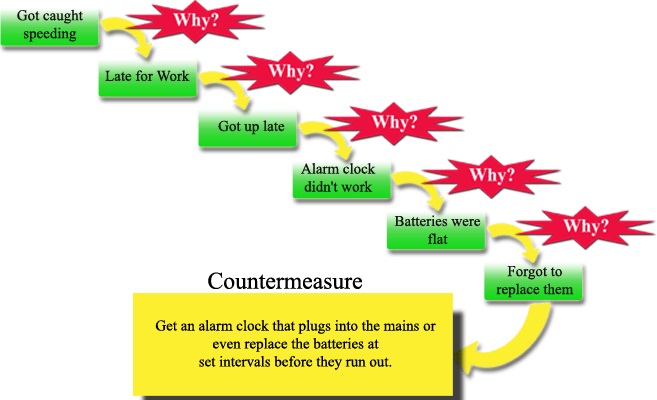
… instead of the world “beating a path” to these doors, the people of the Caribbean have “beat down their doors” to get out.

Why do Caribbean citizens abandon their homelands?

This question was asked before …

… in a previous Go Lean blog-commentary; it found that the answer to the question raises another question; then answering that new question raised another one. This process repeated … in 7 iterations. These iterations are documented in that previous blog-commentary from April 7, 2016 entitled “Being Lean: Asking the Question ‘Why’ x Times“. It is only apropos to Encore that blog-commentary here-now:

—————

Go Lean Commentary Being Lean: Asking the Question ‘Why’ 5 Times

“The Caribbean is arguably the greatest address on the planet”, as declared in the book Go Lean…Caribbean. (This “greatest” attribute is defined for terrain, culture and hospitality). Yet the region has an unconscious-able brain drain rate, where 70 percent of the tertiary-educated population has fled.

Why!?

This question has been asked repeatedly! Many times the published answers are really describing the symptoms and not the root-causes. In the end, the answer is not so easy! The Go Lean book defines it as heavy-lifting. The Go Lean approach is an examination of the word “Lean”. In the book the word is presented as a noun, a verb and an adjective; all inclusive of the agile concept. The lean/agile concept is an understanding that value is a derived-result from a continuously optimizing key process, that repeats as a cycle .. again and again.

The Go Lean book (Page 4) relates that …

… lean thinking changes the focus of management from optimizing separate technologies, assets, and vertical departments to optimizing the flow of products and services through entire value streams that flow horizontally across technologies, assets, and departments to customers.

One expression of the lean methodology that can be used to dissect/”add value” to the key question (” Why such a high brain drain rate”) in this commentary is the iterative interrogative technique: 5 Why’s. See details of this agile-lean technique below. Using this technique, the 5 Why’s needs to be extended to 7 actual Why questions, as follows:

Problem: Why do Caribbean citizens abandon their homelands?

  1. “Push and Pull” reasons. “Push”, as in people fleeing to find refuge and “pull” in the perception (though false) that life is better on foreign shores. Why?
  2. Societal defects – in the region – are so acute. Why?
  3. Societal engines (responsible for economics, security & governance) not optimized. Why?
  4. Colonial Masters did not engage best-practices. Why?
  5. Foreign Policy in the colonies was to just keep them dependent. Why?
  6. Colonizers promoted home country commerceMercantilism; slavery in the colonies, but not at home (i.e. Serfism, French Revolution). Why?
  7. European Community Ethos: OK to exploit African Race as declared by Pope Innocent VIII.

s - Photo 1

s - Photo 2

See the encyclopedic details and a related VIDEO here:

Reference Title: 5 Whys
Source: 
Wikipedia Online Encyclopedia – Retrieved 04/07/2016 from: https://en.wikipedia.org/wiki/5_Whys

5 Whys is an iterative interrogative technique used to explore the cause-and-effect relationships underlying a particular problem.[1] The primary goal of the technique is to determine the root cause of a defect or problem by repeating the question “Why?” Each question forms the basis of the next question. The “5” in the name derives from an empirical observation on the number of iterations typically required to resolve the problem.

The technique was formally developed by Sakichi Toyoda and was used within the Toyota Motor Corporation during the evolution of its manufacturing methodologies. In other companies, it appears in other forms. Under Ricardo Semler, Semco practices “three whys” and broadens the practice to cover goal setting and decision making.[2]

Not all problems have a single root cause. If one wishes to uncover multiple root causes, the method must be repeated asking a different sequence of questions each time.

The method provides no hard and fast rules about what lines of questions to explore, or how long to continue the search for additional root causes. Thus, even when the method is closely followed, the outcome still depends upon the knowledge and persistence of the people involved.

—–

The questioning for this example could be taken further to a sixth, seventh, or higher level, but five iterations of asking why is generally sufficient to get to a root cause. The key is to encourage the trouble-shooter to avoid assumptions and logic traps and instead trace the chain of causality in direct increments from the effect through any layers of abstraction to a root cause that still has some connection to the original problem. Note that, in this example, the fifth why suggests a broken process or an alterable behaviour, which is indicative of reaching the root-cause level.

It is interesting to note that the last answer points to a process. This is one of the most important aspects in the 5 Why approach – the real root cause should point toward a process that is not working well or does not exist.[3] Untrained facilitators will often observe that answers seem to point towards classical answers such as not enough time, not enough investments, or not enough manpower. These answers may be true, but they are out of our control. Therefore, instead of asking the question why?, ask why did the process fail?

A key phrase to keep in mind in any 5 Why exercise is “people do not fail, processes do”.

Rules of performing “5 Whys”

In order to carry out the 5-Why analysis properly, following advices should be kept:

  1. It is necessary to engage the management in 5 Whys standard in the company. For the analysis itself, remember about right working group. Also consider facilitator presence for more difficult topics.
  2. Use paper or whiteboard instead of computers.
  3. Write down the problem and make sure that all people understand it.
  4. Distinguish causes from symptoms.
  5. Take care of the logic of cause-and-effect relationship.
  6. Make sure that root causes certainly lead to the mistake by reversing the sentences created as a result of the analysis with the use of expression “and therefore”.
  7. Try to make our answers more precise.
  8. Look for the cause step by step. Don’t jump to conclusions.
  9. Base on facts and knowledge.
  10. Assess the process, not people.
  11. Never leave “human error”, “worker’s inattention”, etc. as the root cause.
  12. Take care of the atmosphere of trust and sincerity.
  13. Ask the question “why” until the root cause is determined, i.e. such cause the elimination of which will cause that the error will not occur again.[7]

Criticism

While the 5 Whys is a powerful tool for engineers or technically savvy individuals to help get to the true causes of problems, it has been criticized … as being too basic a tool to analyze root causes to the depth that is needed to ensure that they are fixed.[8] Reasons for this criticism include:

  • Tendency for investigators to stop at symptoms rather than going on to lower-level root causes.
  • Inability to go beyond the investigator’s current knowledge – cannot find causes that they do not already know.
  • Lack of support to help the investigator ask the right “why” questions.
  • Results are not repeatable – different people using 5 Whys come up with different causes for the same problem.
  • Tendency to isolate a single root cause, whereas each question could elicit many different root causes.

These can be significant problems when the method is applied through deduction only. On-the-spot verification of the answer to the current “why” question before proceeding to the next is recommended to avoid these issues. In addition, performing logical tests for necessity and sufficiency at each level can help avoid the selection of spurious causes and promote the consideration of multiple root causes.[9]

s - Photo 3

————————

VIDEO – 5 Whys Root Cause Analysis Problem Solving Tool–Video Training – https://youtu.be/zvkYFZUsBnw

Uploaded on Jul 23, 2009 – The 5 Whys (Free 6-Page PDF at http://www.velaction.com/5-whys/ ) is one of the simplest problem solving tools used in Lean manufacturing and Lean offices. This presentation shows how to use the 5 Whys, and what to watch out for. Created and presented by Jeff Hajek of Velaction Continuous Improvement.
Category: How to & Style
License: Standard YouTube License

Wow, the root cause “Why Caribbean citizens abandon their homelands” is tied to the community ethos and embedded racial inequalities in the ancient European world. Now that we know – thanks to the iterative interrogative technique – we can deploy new community ethos plus new strategies, tactics, implementations and advocacies to turn-around Caribbean failings into opportunities for success.

The Go Lean book identifies Toyota Motor Company as a role model for deploying agile/lean methodologies in delivering quality. Quality delivery is a mission of the Go Lean movement. The book serves as a roadmap for the introduction and implementation for the technocratic Caribbean Union Trade Federation (CU). As a federal government, there will be the need to employ agile/lean methodologies to ensure that a small organizational footprint can provide the facilitations to enhance the region’s economic, security and governing engines. For a regional population of 42 million, the plan is to only engage 30,000 federal civil servants, but with a lot of systems and agile methodologies. That is lean!

By being lean, the stewards of this new Caribbean can fulfill the Go Lean vision: a better region to live, work and play. In the end, we would dissuade the brain drain, and then eventually invite the Diaspora to return, to repatriate to their ancestral homelands.

The Go Lean book was constructed with community ethos – national spirit that drives the character and identity of its people – in mind, plus the execution of strategies, tactics, implementation and advocacies to keep the regional government lean. The following is a sample of these specific details from the book:

Preface – Use of “Lean” in the Public Sphere Page 4
Community Ethos – Deferred Gratification Page 21
Community Ethos – Economic Principles – Economic Systems Influence Individual Choices Page 21
Community Ethos – Economic Principles – The Consequences of Choices Lie in the Future Page 21
Community Ethos – Governing Principles – Lean Operations Page 24
Community Ethos – Ways to Impact the Future Page 26
Community Ethos – Ways to Help Entrepreneurship – Incubators Page 28
Community Ethos – Ways to Impact Research & Development Page 30
Community Ethos – Ways to Improve Sharing Page 35
Community Ethos – Ways to Promote Happiness Page 36
Community Ethos – Ways to Impact the Greater Good Page 37
Strategy – Mission – Build and foster local economic engines Page 45
Tactical –  Separation of Powers: Federal Administration versus Member-States Governance Page 71
Implementation – Ways to Pay for Change Page 101
Implementation – Reasons to Repatriate to the Caribbean Page 118
Planning – Ways to Make the Caribbean Better Page 131
Advocacy – Ways to Grow the Economy Page 151
Advocacy – Ways to Create Jobs Page 152
Advocacy – Ways to Improve Governance in the Caribbean Region Page 168
Advocacy – Ways to Better Manage the Social Contract Page 170
Advocacy – Ways to Improve Leadership Page 171
Advocacy – Ways to Manage Federal Civil Service Page 173
Advocacy – Ways to Impact the Diaspora Page 217
Advocacy – Ways to Preserve Caribbean Heritage Page 218

The Go Lean roadmap presents the CU as a real organizational structure. So all the references in the foregoing encyclopedic reference regarding agile-lean organizations, enterprises, companies and/or firms could apply directly and indirectly to the CU Trade Federation. Yet, the federal agencies and civil servants are not the only focus of the Go Lean/CU roadmap. The prime directives of this roadmap is to reach out into the community and impact the societal engines in these ways:

  • Optimization of the economic engines in order to grow the regional economy to $800 Billion & create 2.2 million new jobs.
  • Establishment of a security apparatus to protect the resultant economic engines.
  • Improve Caribbean governance to support these engines.

Previously, Go Lean blogs detailed other opportunities to deploy agile methodologies. Consider this sample:

https://goleancaribbean.com/blog/?p=7646 Methodology for going from ‘Good to Great
https://goleancaribbean.com/blog/?p=6921 “Live. Work. Play. Repeat” – Need for Agile Rewards program
https://goleancaribbean.com/blog/?p=6016 Case Study of a Lean Utility to Assuage Excessively Hot Weather
https://goleancaribbean.com/blog/?p=3956 Art and Science of Collaboration
https://goleancaribbean.com/blog/?p=3152 The formal process of Making a Great Place to Work®
https://goleancaribbean.com/blog/?p=915 Go Green Caribbean – Pursuits for Lean energy in the region

The message to the people of the Caribbean region is that the Caribbean’s past is not to be the Caribbean’s future. The catalyst for change in the Caribbean is the CU. This “heavy-lifting” task to implement agile/lean methodologies in the Caribbean is the charter of the CU technocracy.

Now is the time for all Caribbean stakeholders – residents, Diaspora, businesses and institutions – to lean-in for the optimizations and empowerments described in the book Go Lean … Caribbean. Yes, we can make the region a better homeland to live, work and play. 🙂

Download the book Go Lean … Caribbean – now!

Share this post:
, ,
[Top]

Profiting from the Migration Crisis – Encore

The Migrant Crisis in the US is very acute right now … and very sad. Underlying to this drama, is the concern over Homeland Security and decency while ensuring Human Rights.

In the Caribbean, many of our member-states are affected by this crisis, either on the supply-side or the demand-side.

  • On the supply-side, we have countries that border the US territories – think: Bahamas, Belize, Dominican Republic, British Virgin Islands – so people flee to these member-states – as an intermediary step – in an attempt to “pursue refuge or asylum” in the US. (The US now wants asylum-seekers to apply only in these 3rd-Party countries).
  • On the other hand, on the demand-side, we are also involved in this drama. Many of those who seek refuge in the US are from Caribbean states – think: Cuba, Haiti, etc.. In fact, in some member-states our societal emigration-abandonment rates are so high that we have lost 70 percent, on the average, of our professional citizens to foreign shores – many have emigrated to the US.

Is the grass greener on the American-side, so as to impact the demand in our region for our citizens to want to migrate there?

Our Caribbean people do leave … due to “Push and Pull” reasons. “Push” refers to the societal defects in the Caribbean that moves people to want to get way, while “pull” refers to the impressions and perceptions (true or false) that America is better.

The purpose of this commentary is two-fold:

  • to dissuade the high emigration rates of Caribbean citizens to the American homeland.
  • to structure our societal engines – economics, security & governance – to better avail the economic opportunities related to America’s homeland security.

Migrants have been told that they are not invited and not welcomed in the US; yet they still come anyway; the audacity of Human Rights!

What’s a country, in this case the United States, to do?

Answer: Throw money at it!

We can benefit our regional economy more by facilitating the engines to deliver on the Homeland Security needs of the US; while optimizing concern for Human Rights.

Can we do more on the supply-side to avail the opportunities associated with this immigration crisis? Yes; yes indeed – remember, our previous proposition on Prisons 101.

This rich country – USA – needs lots of help. So far their delivery has been so poor – think: separating small children from mothers and “kids in cages” – that there have been comparisons to the “Concentration Camps” by Nazi Germany during World War II.

“Concentration Camps”?!?!

This is not our words alone; rather this is the assessment by “Concentration Camp” survivors. See the news story here:

For the past two weeks, Americans have debated whether the notoriously cramped and dirty detention centers on the southern border can be called “concentration camps.” For at least one Holocaust survivor, the answer is a resounding yes.

Ruth Bloch was 17 years old when she was separated from her family. While living in Holland in 1942, her father, mother, and brother were arrested and sent to concentration camps, where they were eventually killed. Bloch remained in Holland working as a seamstress at a fur factory, sewing fur-lined coats for German troops. She was eventually sent to Vught concentration camp in Holland in 1943, before being eventually transported to Auschwitz.

Now, at 93, she told The Daily Beast that she looks back at that time and can relate to the thousands of migrants, including small children, being held at camps after crossing the border into the U.S. to seek refuge.

See the full story here; posted by The Daily Beast on July 8, 2019 : https://www.yahoo.com/news/holocaust-survivor-yes-border-detention-084846706.html

Accompanying VIDEO:

We can do better than “Concentration Camps”!

The movement behind the book Go Lean … Caribbean asserts that we should look, listen and learn from this full drama; then we should lend-a-hand. In this case our lending-a hand can be building “optimized” Detention Centers in our Caribbean communities and servicing these “patrons” for the US … for a profit.

(The 5 L’s of leadership progression is defined as 1. Look, 2. Listen, 3. Learn, 4. Lend-a-hand and 5. Lead).

Homeland Security is traditionally a big area for spending. So “Yes we can” profit from this crisis; other countries have done so – ‘catered’ a foreign Detention Center and made money – think: Nauru on behalf of Australia. This is the model we want to emulate here in the Caribbean, outside the US borders.

We have discussed Nauru before; it is only apropos to re-consider or Encore that discussion now. See how the prospect of this business model was presented in this Encore of the previous blog-commentary from July 9, 2014 – 5 years ago:

—————–

Go Lean Commentary – Obama’s Plans for $3.7 Billion Immigration Crisis Funds

If only we were ready now!

$3.7 Billion in new spending in communities that really do not want the activity.

This, according to the below article, is the ground situation regarding the current immigration crisis on the US-Mexico border with children from Guatemala, El Salvador and Honduras. The US government, Obama Administration, is requesting additional funding from Congress of $3.7 Billion to better interdict and respond during this crisis. The biggest part of the expense will be the detention functionality for the apprehended trustees.

This is a crisis … and this crisis is a terrible thing to waste!

By: Mary Bruce

Detainees sleep and watch television in a holding cell where hundreds of mostly Central American immigrant children are being processed and held at the U.S. Customs and Border Protection Nogales Placement Center on June 18, 2014, in Nogales, Arizona. Ross D. Franklin-Pool/Getty Images

Detainees sleep and watch television in a holding cell where hundreds of mostly Central American immigrant children are being processed and held at the U.S. Customs and Border Protection Nogales Placement Center on June 18, 2014, in Nogales, Arizona. Ross D. Franklin-Pool/Getty Images

President Obama today is requesting $3.7 billion to cope with the humanitarian crisis on the border and the spike in illegal crossings by unaccompanied minors from Central America.

Roughly half of the funding would go to the Department of Health and Human Services to provide care for the surge of children crossing the border, including additional beds.

The rest would be split between several departments to tackle the issue on both sides of the border, including $1.6 billion to the Departments of Homeland Security and Justice to boost law enforcement at the Southwest border and pay for additional immigration judge teams, among other things, and $300 million to the State Department to tackle the root causes of this crisis and to send a clear message to these countries not to send children illegally to the U.S.

Today’s funding request is separate from policy changes that the administration is also seeking to speed up the deportation of the children, most of whom are from Guatemala, El Salvador and Honduras. The White House sent a letter to Congressional leadership last week requesting the legal changes to make it easier to send them home.

According to a White House official, greater administrative authority as well as the additional resources will help make it more efficient and expeditious to process and return the children.

What remains unclear is how much faster this additional funding would make the process to send children back to their home countries. White House officials today declined to speculate on such timing, but the administration has said that most of the unaccompanied minors will likely be “sent home.”

“Based on what we know about these cases, it is unlikely that most of these kids will qualify for humanitarian relief. And what that means is it means that they will not have a legal basis for remaining in this country and will be returned,” White House Press Secretary Josh Earnest said Monday.

The White House has yet to say how many of the roughly 52,000 children that have been apprehended this year have been sent back to Central America. Today, officials offered only the total figure, including adults. So far this year, Immigration and Customs Enforcement has removed almost 233,000, that includes over 87,000 to Central American countries.

Here’s a detailed look at some of the ways the president wants to spend $3.7 billion to deal with the influx of unaccompanied minors, according to the White House.

$364 MILLION:

To pay for operational costs of responding to the significant rise in apprehensions of unaccompanied children and families, including overtime and temporary duty costs for Border Patrol agents, contract services and facility costs to care for children while in CBP custody, and medical and transportation service arrangement.

$39.4 MILLION:

To increase air surveillance capabilities that would support 16,526 additional flight hours for border surveillance and 16 additional crews for unmanned aerial systems to improve detection and interdiction of illegal activity.

$109 MILLION:

To provide for immigration and customs enforcement efforts, including expanding the Border Enforcement Security Task Force program, doubling the size of vetted units in El Salvador, Guatemala, and Honduras, and expanding investigatory activities by ICE Homeland Security Investigations.

$879 MILLION:

To pay for detention and removal of apprehended undocumented adults traveling with children, expansion of alternatives to detention programs for these individuals, and additional prosecution capacity for adults with children who cross the border unlawfully.

$45.4 MILLION:

To hire approximately 40 additional immigration judge teams, including those anticipated to be hired on a temporary basis. This funding would also expand courtroom capacity including additional video conferencing and other equipment in support of the additional immigration judge teams. These additional resources, when combined with the FY 2015 Budget request for 35 additional teams, would provide sufficient capacity to process an additional 55,000 to 75,000 cases annually.
ABC News Online News Video Source (Retrieved 07/08/2014) – http://abcnews.go.com/blogs/politics/2014/07/obamas-plans-for-3-7-billion-immigration-crisis-funds/

ABC News | ABC Sports News

The overriding theme of the foregoing news article is the need for professional detention capabilities. Within this crisis, the publishers of the book Go Lean…Caribbean see opportunities for commerce.

The book posits that the region must prepare its own security apparatus for its own security needs. But while we are building facilities (prisons, jails, detention centers, etc) for our own needs, we can employ the strategy of over-building and insourcing for other jurisdictions. Had we been ready now, with this Go Lean plan, we would have been able to embrace the opportunities presented by this Central American Children Crisis. This point is pronounced early in the book with the Declaration of Interdependence (Page 12) that claims:

x.   Whereas we are surrounded and allied to nations of larger proportions in land mass, populations, and treasuries, elements in their societies may have ill-intent in their pursuits, at the expense of the safety and security of our citizens. We must therefore appoint “new guards” to ensure our public safety and threats against our society, both domestic and foreign. The Federation must employ the latest advances and best practices of criminology and penology to assuage continuous threats against public safety. The Federation must allow for facilitations of detention for convicted felons of federal crimes, and should over-build prisons to house trustees from other jurisdictions.

xvi. Whereas security of our homeland is inextricably linked to prosperity of the homeland, the economic and security interest of the region needs to be aligned under the same governance. Since economic crimes … can imperil the functioning of the wheels of commerce for all the citizenry, the accedence of this Federation must equip the security apparatus with the tools and techniques for predictive and proactive interdictions.

The Go Lean roadmap facilitates the introduction and implementation of the technocratic Caribbean Union Trade Federation (CU). With 2 American territories in the Caribbean (Puerto Rico & the US Virgin Islands), it would be a simple proposal to Washington to offer to house these Central American Children in a Caribbean detention center, until some disposition is finalized regarding their individual cases. Then portions of that $3.7 Billion could be earned here, in the Caribbean.

The book asserts that the CU can copy the model of the small Pacific island country of Nauru (Page 290).  As of July 2013 the detention center there was holding 545 asylum seekers on behalf of Australia … for a fee, assuaging an immigration crisis for Australia.

In addition to government spending, there will be the bonus of private spending from the visitors and family members of the detainees.

Just like that: Commerce!

This is the goal of Go Lean…Caribbean, to confederate under a unified entity made up of all 30 Caribbean member-states. Then provide homeland security for “our neighborhood”, contending with man-made and natural threats. The CU security goal is for public safety! The CU is set to optimize Caribbean society through a number of missions. The Go Lean roadmap has 3 prime directives:

  • Optimization of the economic engines in order to grow the regional economy to $800 Billion & create 2.2 million new jobs.
  • Establishment of a security apparatus to protect the resultant economic engines.
  • Improve Caribbean governance to support these engines.

In recent blog submissions, this commentary highlighted the security provisions that must be enacted to improve homeland security, as soon as possible:

https://goleancaribbean.com/blog/?p=1554 Status of Forces Agreement = Security Pact
https://goleancaribbean.com/blog/?p=1076 References to the Caribbean Regional Security System

If only those provisions were in place already!

We console with the communities dealing with this crisis; already there have been protests from townspeople where the existing American detention facilities are located. We also console with the refugees fleeing the crime, violence and despair in their homeland; this Go Lean roadmap is the Caribbean’s aspiration to mitigate against a similar Failed-State status (Page 134).

Underlying to the prime directive of elevating the economics, security and governing engines of the Caribbean is the desire to make the Caribbean homeland, a better place to live, work and play (Page 131) and to impact the Greater Good (Page 37) because “the needs of the many should outweigh the needs of the few”.

Download the free e-Book of Go Lean … Caribbean – now!

Share this post:
, , , , , ,
[Top]

‘Ross Perot’, RIP, was right! – Encore

In the US, it’s Presidential campaign time … again. This time for the November 2020 balloting.

Candidates are jockeying for attention, contributions and eyeballs. Debates abound: winners and losers are emerging.

There is a lot of drama … again.

But now reference is being made to a previous campaign in 1992 when there was a viable 3rd Party Candidate: H. Ross Perot. He garnered 18.9 percent of all votes for the presidency that year; (but he captured no electoral votes).

Ross Perot died this week. 🙁

The theme of his campaign was that the US signed very Bad Trade Deals and that “sound you hear is all the jobs being sucked dry and sent to Mexico”.

He was right!

America did make Bad Trade Deals, NAFTA in particular. Jobs did leave … for Mexico. The angst over this historicity allowed for the emergence of another bad American phenomena: Donald Trump.

These are not our words … alone. See this news-editorial here:

Title: Ross Perot — the father of Trump

By John F. Harris
Dateline: July 9, 2019 – Ross Perot died early Tuesday morning at 89, an event that surely left many Americans with an embarrassed thought: Wait, what? … I am pretty sure I thought he was already dead.

The contrast between the quietude of Perot’s last aging years and the blaring trumpets of his 20th-century business and political career is so stark it takes some effort now to recall how large this cocksure Texas bantam once loomed.
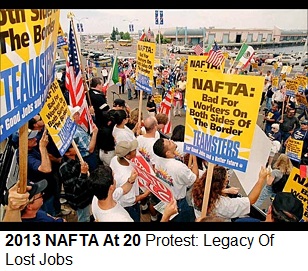
A touch of exaggeration is standard in obituaries, but it doesn’t take much in Perot’s case. He was a secular prophet who in his time anticipated and personified the disruptive currents of the present.

Whether that’s a compliment, of course, depends on what you think of the present. But for people who on occasion (perhaps several times a week) respond to the news in the Trump era by thinking to themselves, I can’t believe this is happening, Perot’s story is a useful reminder that norm-shattering, cult-of-personality politics is not an exclusively recent phenomenon.

A quarter-century before Donald Trump, Perot was a brash, can-do showman who expressed contempt for politics as usual and promised voters who shared his disdain that the path to national greatness was to send an autocratic businessman with a touch of jingo to the White House to kick ass in Washington.

Perot said cozy, insider self-dealing had corrupted Washington and was screwing over average Americans, and he complained that free-trade agreements such as NAFTA were raw deals for workers and the economy. This message from 1992 is a linear ancestor of the one that echoes to some degree in both parties and vaulted Trump to the presidency in 2016.

He also said budget deficits of some $250 billion annually would bankrupt the country, a message that sounds quaint at a time of trillion-dollar deficits that even onetime fiscal hawks no longer are especially agitated about.

Read the full article at: https://news.yahoo.com/ross-perot-father-trump-004715960.html

In another campaign for another year – 2016 – similar declarations were made by candidate Bernie Sanders. (He is running for President again in 2020). This commentary published a blog then relating this Bad Trade Deal advocacy. It is only apropos to Encore that blog from April 9, 2016 again here-now:

————-

Go Lean Commentary – An Ode to Detroit – Good Luck on Trade!

It’s now time to say “goodbye and good luck” to the City of Detroit with these passing words, lessons and advice …

A commonly accepted economic principle declares that “Voluntary Trade Creates Wealth”.

Really? The City of Detroit, Michigan seems to have not “gotten the memo”.

The actual principle is summarized in the book Go Lean … Caribbean (Page 21) as follows:

Voluntary Trade Creates Wealth – People specialize in the production of certain goods and services because they expect to gain from it. People trade what they produce with other people when they think they can gain something from the exchange. Some benefits of voluntary trade include higher standards of living and broader choices of goods and services.

Detroit is branded the Motor City or Motown for being the capital of the American Automotive industry, (all the Big 3 car-makers – General Motors, Ford and Chrysler – are based in this metropolitan area). From a trade perspective, automobiles are among the most successful American exports. According to this simple logic – trade creates wealth and Detroit is home to one of America’s best trade products – there should be win-win for all stakeholders in the vertical automotive industry, including the local communities. Right?

Not quite! This is NOT the reality.

CU Blog - An Ode to Detroit - Good luck on Trade - Photo 1

CU Blog - An Ode to Detroit - Good luck on Trade - Photo 2

This article below, just in time for the US presidential elections – posted on March 8, 2016 – and the arrival of the main candidates for the Democratic and Republican nominations, reveal the truth of life in today’s Detroit … and the dire consequence of free trade:

The City of Detroit has gone from one of the country’s richest in the 1960s to one of the poorest [today].

The once-thriving automotive hub is pocked by blighted homes and crime and has more children living in extreme poverty than any of the nation’s 50 largest cities. Manufacturing job losses devastated neighboring communities, sowing more than 20 years of resentment among white, working-class Democrats over the North American Free Trade Agreement.
Source: MSN Social Media Site; (posted 03-08-2016; retrieved April 9, 2016) .

The publishers of the Go Lean book have been in Detroit to “observe and report” on the turn-around and rebirth of the once-great-but-now-distressed city and its nearby communities; (we have also considered the dysfunction of Flint and the promise of Ann Arbor). There have been so many lessons to learn from Michigan: good, bad and ugly. Consider this sample here conveyed in previous blogs/commentaries:

https://goleancaribbean.com/blog/?p=7601 Beware of Vulture Capitalists
https://goleancaribbean.com/blog/?p=7268 Detroit giving schools their ‘Worst Shot’
https://goleancaribbean.com/blog/?p=7235 Flint, Michigan – A Cautionary Tale
https://goleancaribbean.com/blog/?p=6965 Secrecy, corruption and ‘conflicts of interest’ pervade state governments
https://goleancaribbean.com/blog/?p=6609 Before and After Photos Showing Detroit’s Riverfront Transformation
https://goleancaribbean.com/blog/?p=6269 Education & Economics: Welcome to Detroit, Mr. President
https://goleancaribbean.com/blog/?p=6022 Caribbean Diaspora in Detroit … Celebrating Heritage
https://goleancaribbean.com/blog/?p=5597 The Dire Strait of Unions and Collective Bargaining
https://goleancaribbean.com/blog/?p=5055 A Lesson from an Empowering Family in Detroit
https://goleancaribbean.com/blog/?p=4913 Ann Arbor: Model for ‘Start-up’ Cities
https://goleancaribbean.com/blog/?p=4476 De-icing Detroit’s Winter Roads: Impetuous & Short Term
https://goleancaribbean.com/blog/?p=3713 NEXUS: Facilitating Detroit-Windsor Cross-Border Commerce
https://goleancaribbean.com/blog/?p=3326 M-1 Rail: Alternative Motion in the Motor City
https://goleancaribbean.com/blog/?p=3311 Detroit to exit historic bankruptcy
https://goleancaribbean.com/blog/?p=3164 Michigan Unemployment – Then and Now
https://goleancaribbean.com/blog/?p=2480 A Lesson in History: Community Ethos of WW II
https://goleancaribbean.com/blog/?p=1656 Blue is the New Green – Managing Michigan’s Water Resources
https://goleancaribbean.com/blog/?p=970 JP Morgan Chase’s $100 million Detroit investment – Not just for the Press

The full news article from the MSN Social Media Site is embedded here, retrieved from – http://www.msn.com/en-us/news/politics/michigan-a-critical-showdown-for-sanders-to-mount-comeback/ar-BBqsehO?li=BBnb7Kz&ocid=ieslice:

Title: Michigan ‘a critical showdown’ for Sanders to mount comeback
By: Heidi M. Przybyla

CU Blog - An Ode to Detroit - Good luck on Trade - Photo 3The State of Michigan could be Bernie Sanders’ last, best chance to challenge Hillary Clinton’s hold on the Democratic presidential race.

The Midwestern industrial state, which holds its primary Tuesday [(March 8, 2016)], is the ideal audience for Sanders’ campaign message about “unfair” trade agreements, income inequality and a “rigged economy.”

“This is ground zero for trade,” said Rep. Debbie Dingell, D-Mich. “People are frustrated. It’s been almost 15 years, and they’re not better off than they were,” said the first-term Democrat, who is backing Clinton.

Yet Clinton has consistently led in polls — a Monmouth University Poll out Monday showed her up 13 points. “If he can’t win in Michigan, where can he win besides these small caucus states?” said Susan Demas, publisher of Inside Michigan Politics, a political analysis newsletter. Sanders campaign manager Jeff Weaver is calling Michigan “a critical showdown.”

Mississippi also holds a primary on Tuesday, and Clinton is favored there.

The city of Detroit has gone from one of the country’s richest in the 1960s to one of the poorest. The once-thriving automotive hub is pocked by blighted homes and crime and has more children living in extreme poverty than any of the nation’s 50 largest cities. Manufacturing job losses devastated neighboring communities, sowing more than 20 years of resentment among white, working-class Democrats over the North American Free Trade Agreement.

Sanders is hitting Clinton hard on the trade issue, including a recent ad picturing abandoned homes and factories. NAFTA was championed by her husband, former president Bill Clinton, though the former first lady is trying to distance herself from a number of those policies.

Michigan could expose some of Clinton’s longer-term vulnerabilities. Some of the state’s most powerful unions, including the Teamsters, the AFL-CIO and the United Auto Workers, traditional Democratic allies, haven’t endorsed a candidate. Many union rank-and-file backed her husband in 1992 and 1996 but are now supporting Sanders or Republican front-runner Donald Trump.

“She’s also competing with Donald Trump, who’s made this a strong issue and not backed down on the currency trade issue,” said Dingell. “There’s a lot of pent-up anger, and Donald Trump let’s them release it,” she said.

Sanders may be indirectly helping Trump. At campaign rallies, he has repeatedly slammed Clinton on trade, listing it as a key area where they disagree. Sanders says he led opposition to NAFTA and permanent normal trade relations with China, which he says resulted in the loss of millions of middle-class jobs and “a race to the bottom.” His campaign, in a March 3 news release, dubbed Clinton the “outsourcer-in-chief.”

Clinton has been trying to distance herself from the 1990s-era policy. In the Flint debate, she tried to distinguish her record from that of her husband’s. As a senator, she voted against a Central American trade agreement, the only multinational pact that came before her, she said. More recently, she’s come out against the Trans-Pacific Partnership.

Nearing closer to the nomination, Clinton has begun to discuss the role Sanders would need to play in unifying the party. During a town hall forum Monday in Grand Rapids, she talked extensively about how she encouraged her voters to back Barack Obama in 2008.

“I had a lot of passionate supporters who did not feel like they wanted to support then-Sen. Obama. I worked as hard as I could. I nominated him at the convention. I made the case, because he and I shared a lot of the same views,” she said.

“We have differences, but those differences pale in comparison to what we see going on with the Republicans right now,” said Clinton.

Clinton’s supporters acknowledge a Michigan loss is unlikely to deter Sanders. Several testy exchanges in the Flint debate highlighted festering tensions between the two, and Sanders is flush with campaign donations to keep him going.

“I think Hillary Clinton will win Michigan,” said Dingell. “But I think Sen. Sanders plans on staying in this race for a while.”

Contributing writer: Nicole Gaudiano

News Update: Senator Bernie Sanders won the Michigan Democratic primary.

There is a strong current against free trade deals in big industrial cities in the American north. At this juncture (April 9, 2016), Bernie Sanders has won the last 7 state primaries with his “unfair trade” message:

  • Idaho
  • Utah
  • Alaska
  • Hawaii
  • Washington
  • Wisconsin
  • Wyoming

But chances are, these trade agreements will not disappear, even under a new president – to be elected later this year. (Listen to the related AUDIO podcast in the Appendix below).

These free trade agreements are ratified treaties with other countries that are not so easily dismantled. Plus, the US business interest has proven to be formidable in their obstructionism to radical changes to their status quo.

The Go Lean movement asserts that there is a Crony-Capitalistic influence in the US that creates a societal defect for forging change. In this case, trade deals like NAFTA allow big corporations to shift labor costs to alternate locales with lower payroll costs. This commentary has related that the money motivation with this strategy may be too much to overcome in the America of 2016.

Good luck to Detroit.

Hope and Change? Not here, not now.

The book Go Lean… Caribbean urges Caribbean citizens not to be swayed by the false perception of refuge in America. The grass is NOT greener on this side.

Yes, the status quo in the overall US is better than the status quo in the Caribbean, but change is afoot. This movement – book and blogs – posits that it is easier to reform and transform the Caribbean member-states than to attempt to change America. The Go Lean book serves as a roadmap for the introduction and implementation of the technocratic Caribbean Union Trade Federation (CU). This represents a confederation of the 30 member-states of the Caribbean region, including the US Territories (2): Puerto Rico and the US Virgin Islands); the French Territories (5); 6 Dutch Territories constituted as 1 member; British Overseas Territories (5) and independent states and Republics (17).

This CU/Go Lean roadmap extols a priority of trade in the execution of its prime directives. Economic stability and progress is fundamental to forging an elevated society. As observed in Detroit, dysfunction in a community’s economic engine, brings about dysfunction in other facets of societal life. This explains why Detroit is also plagued with rampant crime. (During the course of the Go Lean movement’s observing-and-reporting on Detroit, there were some acute criminal activities, like the one case where a mother was adjudicated for killing and storing 2 dead children in her kitchen freezer). Likewise, the City has been plagued with one instance after another of ineffectual governance or municipal corruption. (A recent ex-Mayor – Kwame Kilpatrick – lingers in federal prison on federal corruption convictions). This is why the CU prime directives feature economics, security and governance, as defined by these 3 statements here:

  • Optimize the Caribbean economic engines of the region to grow the GDP of the economy to $800 billion and create 2.2 million new jobs.
  • Establish a security apparatus to protect the resultant economic engines in the Caribbean.
  • Improve Caribbean governance – including municipal, state and federal administrations – to support these engines.

The Go Lean roadmap seeks to reform the Caribbean, not the City of Detroit nor America. The roadmap opens with the call for the consolidation of trade negotiation for the region – treating everyone as equals. This point is echoed early, and often, in the book, commencing with these opening pronouncements in the Declaration of Interdependence (Pages 11 – 14), as follows:

viii. Whereas the population size is too small to foster good negotiations for products and commodities from international vendors, the Federation must allow the unification of the region as one purchasing agent, thereby garnering better terms and discounts.

xi. Whereas all men are entitled to the benefits of good governance in a free society, “new guards” must be enacted to dissuade the emergence of incompetence, corruption, nepotism and cronyism at the peril of the people’s best interest. The Federation must guarantee the executions of a social contract between government and the governed.

xvi. Whereas security of our homeland is inextricably linked to prosperity of the homeland, the economic and security interest of the region needs to be aligned under the same governance. Since economic crimes … can imperil the functioning of the wheels of commerce for all the citizenry, the accedence of this Federation must equip the security apparatus with the tools and techniques for predictive and proactive interdictions.

xxiv. Whereas a free market economy can be induced and spurred for continuous progress, the Federation must install the controls to better manage aspects of the economy: jobs, inflation, savings rate, investments and other economic principles. Thereby attracting direct foreign investment because of the stability and vibrancy of our economy.

xxx. Whereas the effects of globalization can be felt in every aspect of Caribbean life, from the acquisition of food and clothing, to the ubiquity of ICT, the region cannot only consume, it is imperative that our lands also produce and add to the international community, even if doing so requires some sacrifice and subsidy.

The Go Lean roadmap therefore constitutes a change for the Caribbean. This provides the tools/techniques to bring immediate elevation to the region to benefit one and all member-states. The book details the community ethos to forge such change; plus the executions of the following strategies, tactics, implementations and advocacies to make the changes permanent:

Community Ethos – Deferred Gratification Page 21
Community Ethos – Economic Systems Influence Individual Choices Page 21
Community Ethos – Voluntary Trade Creates Wealth Page 21
Community Ethos – Lean Operations Page 24
Community Ethos – Return on Investments Page 24
Community Ethos – Cooperatives Page 24
Community Ethos – Ways to Improve Negotiations Page 30
Community Ethos – Impact the Greater Good Page 37
Strategy – Unified Region in a Single Market Economy Page 45
Strategy – Customers – The Business Community Page 47
Strategy – Agents of Change – Globalization Page 57
Tactical – Confederating a Permanent Union Page 63
Tactical – Fostering a Technocracy Page 64
Tactical – Growth Approach – Trade and Globalization Page 70
Tactical – Separation of Powers – Interstate Commerce Admin Page 79
Tactical – Separation of Powers – Office of Trade Negotiations Page 80
Implementation – Ways to Pay for Change Page 101
Implementation – Foreign Policy Initiatives at Start-up Page 102
Implementation – Ways to Deliver Page 109
Implementation – Trade Mission Office Objectives Page 116
Planning – Ways to Improve Trade Page 128
Planning – Ways to Improve Interstate Commerce Page 129
Planning – Lessons Learned from Detroit Page 140
Advocacy – Ways to Grow the Economy Page 151
Advocacy – Ways to Create Job Page 152
Advocacy – Ways to Improve Housing – Lesson from Detroit to raze Dilapidated housing Page 161
Advocacy – Ways to Improve Governance Page 168
Advocacy – Ways to Improve Local Government Page 169
Advocacy – Ways to Better Manage the Social Contract Page 170
Advocacy – Ways to Foster Cooperatives Page 176
Advocacy – Ways to Impact Main Street Page 201

The issues in this commentary are important for the development of Caribbean region. There is the need to fully participate in trade agreements; it is the only way to fully compete in a globalized marketplace. But there is the need for a new regulatory regime for the Caribbean market, as free market dynamics are normally based on supply-and-demand. The Caribbean member-states, with their small population and market-sizes have not been able to compete with the voluminous demand nor voluminous supply of some of the bigger countries (i.e. China, India, EU, the US, etc). The consolidated CU market would be different … and better!

The Go Lean book is a detailed turn-by-turn, step-by-step roadmap for how to lean-in to a new trade regime. We now urge everyone in the region – all stakeholders: citizens, visitors, direct foreign investors, trading-partners, business establishments – to lean-in to this roadmap. With this plan, we would have reason to believe in “Hope and Change” for the Caribbean region, for it to be a better place to live, work and play.

So as we move onto another American locale (Miami) for final preparation for an eventual repatriation, here’s our advice to the Caribbean Diaspora living in Detroit: Go home and help with this Go Lean roadmap to elevate the Caribbean …

… and to the people of Detroit, we say: Good luck. We invite you too, to come and visit us in the Caribbean … often. 🙂

Download the book Go Lean…Caribbean now!

————-

APPENDIX – AUDIO Podcast: Free Trade On The Campaign Trail – http://www.npr.org/podcasts/510053/on-point-with-tom-ashbrook#

Posted March 8, 2016 – From Trump to Sanders, free trade is getting a thumping on the campaign trail. Could, would the United States really turn it around? Plus: inspecting stalled millennial wage growth.

Share this post:
, , ,
[Top]

Forging Change – ‘That’s What Friends Are For’

Go Lean Commentary

It seems simple enough:

Keep smiling, keep shining
Knowing you can always count on me, for sure
That’s what friends are for
For good times and bad times
I’ll be on your side forever more
That’s what friends are for – Song, sung by Dionne Warwick & Friends; (see Appendix below).

This is a song; but not just “pie in the sky” sentiment.

VIDEO – Dionne Warwick, Stevie Wonder, Elton John, Gladys Knight – That’s what friends are for – https://youtu.be/66Qkf2Jm6pc

Published on Feb 27, 2013 – For educational purposes only and no copyright infringement intended. All materials used belong to their respective rightful and lawful owners.

About the artist: Dionne Warwick (born Marie Dionne Warrick; December 12, 1940) is an American singer, actress and TV show host, who became a United Nations Global Ambassador for the Food and Agriculture Organization, and a United States Ambassador of Health.

Having been in a partnership with songwriters Burt Bacharach and Hal David, Warwick ranks among the 40 biggest hit makers of the entire rock era (1955–2012), based on the Billboard Hot 100 Pop Singles Charts. As of January 2013, Warwick ranks second behind only Aretha Franklin (who has a total of 88 charted Billboard singles) as the most-charted female vocalist of all time with 56 of Dionne’s singles making the Billboard Hot 100 between 1962 and 1998.

  • Category: Education 
  • Music in this video
    Song: That’s What Friends Are For
  • Artist: Dionne Warwick with Elton John, Gladys Knight & Stevie Wonder
  • Writers: Carole Bayer Sager, Burt Bacharach
  • Licensed to YouTube by: SME (on behalf of Legacy Recordings); UBEM, ASCAP, CMRRA, BMI – Broadcast Music Inc., BMG Rights Management, LatinAutor – Warner Chappell, AMRA, UMPI, PEDL, Warner Chappell, LatinAutor, ARESA, and 10 Music Rights Societies

In the Caribbean, we want and need a cohesive neighborhood of friendly member-states; we want a brotherhood, a Union, a Caribbean Union. This regional quest is conceivable, believable and achievable. Yes, we can!

Ms. Dionne Warwick was just here, in concert in Miami, Florida on July 6, 2019. This writer got to consume her fabulous show. I was not the only one to acknowledge her and celebrate her; no, the State of Florida, Miami-Dade County and the City of Miami all made special tributes to her; she was presented with accolades, awards, presentations and the “Key to the City” – https://patch.com/florida/miami/dionne-warwick-gets-love-sweet-love-miami.

She closed her show with that iconic song … and she reminded us that “collaboration & friendship” is also key for forging change in society. This is the quest for the 2013 book Go Lean … Caribbean; it serves as a roadmap for the introduction and implementation of the technocratic Caribbean Union Trade Federation (CU). That song is best known as a collaboration effort – Dionne Warwick with Elton John, Gladys Knight & Stevie Wonder – to advocate for change, support and social justice during the 1980’s AIDS Crisis.

The 4 “friends” assembled in 1985 and recorded the song for the American Foundation for AIDS Research (AmFAR) charity; this was during the early days of the disease affliction. It raised over $3 million for the cause.

Today, there is also a crisis for Caribbean unity; we need our friends. The Go Lean book opens (Page 3) with a declaration:

There is something wrong in the Caribbean. It is the greatest address in the world for its 4 language groups, but instead of the world “beating a path” to these doors, the people of the Caribbean have “beat down their doors” to get out. For some Caribbean countries, their population has declined or been flat for the last 3 decades. This is only possible if despite new births and the absence of war, people are fleeing. This scenario, human flight, is a constant threat to prosperity for all the Caribbean despite their colonial legacies. Our youth, the next generation, may not be inspired to participate in the future workings of their country; they may measure success only by their exodus from their Caribbean homeland.

Many people love their homelands and yet still begrudgingly leave; this is due mainly to the lack of economic opportunities. The Caribbean [must] … look for other opportunities for economic expansion. The requisite investment of the resources (time, talent, treasuries) for this goal may be too big for any one Caribbean member-state. Rather, shifting the responsibility to a region-wide, professionally-managed, deputized technocracy will result in greater production and greater accountability. This deputized agency is the Caribbean Union Trade Federation (CU). This book advocates that all Caribbean member-states (independent & dependent) lean-… to this plan for confederacy, collaboration and convention.

This Go Lean roadmap is calling for confederacy and camaraderie among the Caribbean Community; as if we are all brothers and friends. In fact, this has been a prominent advocacy as of late; see this theme highlighted in these previous blog-commentaries from this Go Lean movement:

https://goleancaribbean.com/blog/?p=17693 ‘Free Market’ Versus … Cooperatives – Simple Solution
One of the original motivations for communism was a supposed camaraderie and fraternity among its adherents. In fact, the expression “Comrade” is usually interchangeable for “fellow communist”, “Brother” or “friend”. With “cooperatives”, we can still have camaraderie and friendship without any communism.
https://goleancaribbean.com/blog/?p=15580 Caribbean Unity? Religion’s Role: False Friend
It has long been established that just because these lands are “Christian”, that fact itself does not make them “Brothers”. More is needed than just a nominal “Christian” label; there must be the concerted effort for fellowship, camaraderie and friendship.
https://goleancaribbean.com/blog/?p=14101 Wait, ‘We Are The World’
After Hurricane Maria devastated several Caribbean member-states in 2017; Puerto Rico was gravely impacted. In the mode of ‘We Are The World‘, many “friends” – led by Lin-Manuel Miranda – assembled and recorded a song to aid Puerto Rico.
https://goleancaribbean.com/blog/?p=11544 Forging Change: Collective Bargaining
This is part of the technocratic process that we must employ in the neighborhood to get along and work together. We must come together as friends and then collectively bargain with other stakeholders so as to get the greatest benefits for our region. This is the scientific method to solving social & economic problems, in counter distinction to the traditional political or philosophic approaches.
https://goleancaribbean.com/blog/?p=7963 ‘Like a Good Neighbor’ – Being there for Puerto Rico
T
he US Territory of Puerto Rico needs a Good Neighbor right now. They do not need State Farm; they need the US Government to change the laws to allow them to re-structure their heavy debt “load”. In effect, this community is in crisis, facing financial disaster and needs a helping hand. Lin-Manuel Miranda was on a mission to help Puerto Rico by getting Congress to change Bankruptcy Laws to apply to PR again.

Music has a certain power … to reach people and motivate them to feel and move. A previous blog-commentary stated:

… “music” can be used to forge change. The Go Lean book declares that before any real change takes root in the Caribbean that we must reach the heart, that there must be an adoption of new community ethos – the national spirit that drives the character and identity of its people. We must therefore use effective and efficient drivers to touch the heart and forge this change. How? Here’s one suggestion:

    Oh, my music makes you dance
    And gives you spirit to take a chance
    And I wrote some rock ‘n roll so you can move
    Music fills your heart
    Well that’s a real fine place to start

Dionne Warwick has the soundtrack to make people feel and move.

[She] ranks among the 41 biggest hit makers of the entire rock era, based on the Billboard Hot 100 Pop Singles Charts. She is one of the most-charted female vocalists of all time, with 56 of her singles making the Billboard Hot 100 between 1962 and 1998, and 80 singles making all Billboard charts combined.[1]

This afore-mentioned song – “That’s What Friends Are For” – was a massive hit, becoming the number-one single of 1986 in the United States, and winning the Grammy Awards for Best Pop Performance by a Duo or Group with Vocals and Song of the Year. In total, Ms. Warwick has been nominated for 14 Grammys, while garnering 5 wins; see the full chart here:

Year Nominee / work Award Result
1965 Walk On By (song) Best Rhythm and Blues Recording Nominated
1968 Alfie Best Female Pop Vocal Performance Nominated
I Say a Little Prayer Best Contemporary Female Solo Vocal Performance Nominated
1969 Do You Know the Way to San Jose Best Female Pop Vocal Performance Won
1970 This Girl’s in Love with You Best Female Pop Vocal Performance Nominated
1971 I’ll Never Fall in Love Again Best Female Pop Vocal Performance Won
1975 Then Came You” (with The Spinners) Best Pop Vocal Performance by a Duo, Group with Vocals Nominated
1980 I’ll Never Love This Way Again Best Female Pop Vocal Performance Won
Déjà Vu Best Female R&B Vocal Performance Won
1987 That’s What Friends Are For
(with Elton JohnGladys Knight & Stevie Wonder)
Record of the Year Nominated
Best Pop Performance by a Duo or Group with Vocal Won
Friends Best Female Pop Vocal Performance Nominated
1992 “Superwoman” (with Gladys Knight & Patti LaBelle) Best R&B Vocal Performance by a Duo or Group Nominated
2014 Now Best Traditional Pop Vocal Album Nominated

In the CU/Go Lean roadmap to change the Caribbean, music gets it’s due respect. This point is detailed in the  Declaration of Interdependence at the outset of the book, pronouncing this need for regional solutions (Page 14):

xxxii. Whereas the cultural arts and music of the region are germane to the quality of Caribbean life, and the international appreciation of Caribbean life, the Federation must implement the support systems to teach, encourage, incentivize, monetize and promote the related industries for arts and music in domestic and foreign markets. These endeavors will make the Caribbean a better place to live, work and play.

The Go Lean roadmap does accept that the burden to change and elevate the societal engines of the Caribbean is too big for any one Caribbean member-state alone – we need our friends.

That’s what friends are for!

Thusly, the Go Lean book and roadmap advocates for a fellowship and collaboration among all Caribbean member-states, despite any differences in languages or colonial heritage. The strategy is to confederate all the 30 member-states into an integrated Single Market.

Thank you Ms. Dionne Warwick for entertaining us and reminding us that we can forge great friendships with our neighbors and that great benefits await us:

For good times and bad times
I’ll be on your side forever more

Yes, forging a [regional] friendship is one way to make the Caribbean homeland a better place to live, work and play. We urge all Caribbean stakeholders to lean-in to this roadmap to elevate Caribbean society. Yes, we can! 🙂

About the Book
The book Go Lean…Caribbean serves as a roadmap for the introduction and implementation of the technocratic Caribbean Union Trade Federation (CU), for the elevation of Caribbean society – for all member-states. This CU/Go Lean roadmap has these 3 prime directives:

  • Optimization of the economic engines in order to grow the regional economy to $800 Billion and create 2.2 million new jobs.
  • Establishment of a security apparatus to ensure public safety and protect the resultant economic engines.
  • Improve Caribbean governance to support these engines, including a separation-of-powers between the member-states and CU federal agencies.

The Go Lean book provides 370-pages of turn-by-turn instructions on “how” to adopt new community ethos, plus the strategies, tactics, implementations and advocacies to execute so as to reboot, reform and transform the societal engines of Caribbean society.

Download the free e-Book of Go Lean … Caribbean – now!

Who We Are
The movement behind the Go Lean book – a non-partisan, apolitical, religiously-neutral Community Development Foundation chartered for the purpose of empowering and re-booting economic engines – stresses that reforming and transforming the Caribbean societal engines must be a regional pursuit. This was an early motivation for the roadmap, as pronounced in the opening Declaration of Interdependence (Pages 12 – 13):

xi. Whereas all men are entitled to the benefits of good governance in a free society, “new guards” must be enacted to dissuade the emergence of incompetence, corruption, nepotism and cronyism at the peril of the people’s best interest. The Federation must guarantee the executions of a social contract between government and the governed.

xvi. Whereas security of our homeland is inextricably linked to prosperity of the homeland, the economic and security interest of the region needs to be aligned under the same governance. Since economic crimes … can imperil the functioning of the wheels of commerce for all the citizenry, the accedence of this Federation must equip the security apparatus with the tools and techniques for predictive and proactive interdictions.

xxiv. Whereas a free market economy can be induced and spurred for continuous progress, the Federation must install the controls to better manage aspects of the economy: jobs, inflation, savings rate, investments and other economic principles. Thereby attracting direct foreign investment because of the stability and vibrancy of our economy.

Sign the petition to lean-in for this roadmap for the Caribbean Union Trade Federation.

—————

Appendix – Song Lyrics: “That’s What Friends Are For” – (1985)

And I never thought I’d feel this way
And as far as I’m concerned
I’m glad I got the chance to say
That I do believe, I love you

And if I should ever go away
Well, then close your eyes and try
To feel the way we do today
And then if you can remember

Keep smiling, keep shining
Knowing you can always count on me, for sure
That’s what friends are for
For good times and bad times
I’ll be on your side forever more
That’s what friends are for

Well, you came and opened me
And now there’s so much more I see
And so by the way
I thank you

Oh and then for the times when we’re apart
Well, then close your eyes and know
The words are coming from my heart
And then if you can remember

Keep smiling and keep shining
Knowing you can always count on me, for sure
That’s what friends are for
In good times and bad times
I’ll be on your side forever more
That’s what friends are for

Keep smiling, keep shining
Knowing you can always count on me, for sure
That’s what friends are for
For good times and bad times
I’ll be on your side forever more
That’s what friends are for

Keep smiling, keep shining
Knowing you can always count on me, for sure
‘Cause I tell you, that’s what friends are for
Whoa, good times and the bad times
I’ll be on your side forever more
That’s what friends are for

Source: Retrieved July 9, 2019 from: https://www.azlyrics.com/lyrics/dionnewarwick/thatswhatfriendsarefor.html

Share this post:
, , ,
[Top]