Category: Implementation

The Future of CariCom

Go Lean Commentary

The Future of CARICOM - PhotoCariCom has been both a success and a failure!

CariCom has succeeded in bringing together most of the Caribbean and instilling the values of regional integration.

The CariCom has failed … with almost everything else!

CariCom = Successful Plan; Failed Execution.

The book Go Lean … Caribbean is a roadmap for the introduction and implementation of the Caribbean Union Trade Federation (CU), as the next phrase of regional integration. The roadmap has compiled the assessment of what is wrong with the Caribbean Community as a construct; (applying lessons learned from the previous failed integration effort – West Indies Federation). Then it proceeds to detail how-what-why to manifest the requested change, and to do it right this time. This roadmap is a GPS-style, turn-by-turn direction on how to get from the status quo to the desired destination.

The foregoing news article echoes many of the same sentiments about the CariCom’s failures and inadequacies.

By: Michael W Edghill*, CJ Contributor

Recently, noted columnist on Caribbean affairs, Sir Ronald Sanders, authored an article that appeared in numerous publications throughout the Caribbean.

The catalyst for his work appears to have been the remarks of Dr. Ralph Gonsalves, Prime Minister of St Vincent & the Grenadines. Dr. Gonsalves, never one to be accused of timidity, who commented in April on the failings of CariCom states to embrace the integration process.

Taking the lead from the Prime Minister, Sanders elaborated upon some of the difficulties that have inhibited the integration process and placed much of the blame for the shortcomings of the integration process squarely at the feet of the Heads of Government of the member states.

Their lack of initiative over the years, no doubt attributed to domestic political considerations, has left CariCom as more of a theoretical body as opposed to a functional body like that of the EU.

In April of 2011, the University of the West Indies Institute of International Relations issued a report on the status of Caribbean Regional Integration.

The comprehensive report identified a number of issues that have inhibited the integration process.

Among the contributing factors were the weakness of CariCom institutions and the difficulties of integrating economies of such divergent scales.

The report went on to make numerous suggestions on how to structurally change CariCom to create an effective body.

Rather than focusing on the detailed and complex suggestions (though wholly rational, reasonable, and worthy of a closer look) for moving the integration process forward, perhaps a few robust initiatives would provide the needed catalyst for advancing towards a functional CariCom.

Restructuring the CariCom governing body: This idea would necessitate the creation of a political study group to evaluate the failings of the current CariCom governing structure outside of the widely held view that the Heads of Government of member states hold too much power in CariCom as an institution.

There are assuredly other institutional weaknesses that prohibit the governing body of CariCom from being effective. Identifying those weakness and coming up with workable solutions based upon those elements of governance that are more successful in supranational bodies like the EU would go a long way in reestablishing a reorganized CariCom as a functional institution as opposed to a theoretical institution with limited success in Caribbean integration.

Full integration of the Dominican Republic into CariCom: For too long, CariCom has been mired in indecisiveness over the question of admitting the Dominican Republic into CariCom. The recent citizenship crisis between the DR and Haiti has not helped this issue. That being said, the time has come for CariCom to finalize this question and find a way to integrate the Dominican Republic into CariCom. One of the problems that CariCom has had with integration over the years is finding a way to fairly work within the varied economies of scale that exist within the body. The unstated reality is that Trinidad & Tobago has been unwilling to serve as an underwriter for regional economic stability in the way that Germany has for the EU. The integration of the Dominican Republic should serve as a catalyst for a renewed and extensive look at how to make this work in CariCom. The DR would

add another large and growing economy to CariCom thereby potentially alleviating any perceived economic burden that integration may impose. Perhaps the creation of a scaled system of economic contribution would be a simultaneous negotiation along with the integration of the Dominican Republic. While the various possibilities are numerous, the time has come for action on this issue. And depending on the results of the integration of the Dominican Republic into CariCom, a look at the relationship between Cuba and CariCom may be subsequently appropriate. (Although the country’s controversial citizenship ruling last year will remain an impediment).

Utilizing the “new” CariCom as a unified body in new trade/investment agreements: Much like the agreement between the EU and CariForum, a ‘new’ CariCom (as created by fulfilling the prior two suggestions) should have the ability to enter into new supranational trade agreements in a stronger position and with a unified voice.

Discussions of the validity and value of ‘free trade’ as a driver of upward economic mobility for all in society are valuable but cannot overcome the overwhelming evidence that creation of new ‘free trade’ zones is the current wave in international economic relations.

Having a stronger voice in these discussions is necessary for member states that hope to continue economic growth in the future.

The “new” CariCom would be primed for negotiations on how to engage with NAFTA to the benefit of its member states.

Likewise, a new CariCom has the potential to open up a whole new range of investment opportunities, especially for those interested in renewable energy investment. If there is one thing that the individual states of the Caribbean seem to be unified on currently, it is the need to address climate change and the creation of more renewable energy sources in the Caribbean.

The ability to explore those investment opportunities as a regional body as opposed in individual states appears, at least superficially, to be of great value to the CariCom member states.

These ideas are all simply possibilities, however, and will go nowhere without the political will of the current Heads of Government of CariCom member states.

As with any supranational organization, members have to be willing to give of their authority in the first place for any changes to take place. It is now a matter of whether member states are willing to concede that there is a pressing problem with full integration within CariCom and take the steps necessary to ensure a vibrant CariCom for the future.

* Michael W Edghill, a Caribbean Journal contributor, teaches courses in US Government & in Latin America & the Caribbean. His work has also appeared in the Yale Journal of International Affairs and Americas Quarterly.

Caribbean Journal Online News Source – May 6, 2014
http://www.caribjournal.com/2014/05/06/the-future-of-caricom/

The roadmap therefore does not focus on the CariCom but rather, focuses on the Caribbean; the 42 million people (per 2010 figures) within the 30 member-states of 4 different languages (Dutch, English, French, Spanish), and 5 different administrative legacies (American, British, Dutch, French, Spanish).

The roadmap thereby sets out to accomplish 3 prime directives:

1. Optimize the economic engines so as to grow the regional economy to $800 Billion and create 2.2 million new jobs.

2. Establish a security apparatus (including emergency management) around the economic engines so as to mitigate the eventual emergence of “bad actors”.

3. Improve Caribbean governance.

At the outset, the roadmap pronounces a preamble of this significance in the Declaration of Interdependence (Page 10):

When, in the course of human events, it becomes necessary for one people to unite with others so as to connect them together to collaborate, confederate and champion the challenges that face them, we the people of Caribbean democracies find it necessary to accede and form a confederated Union, the Caribbean Union Trade Federation, with our geographic neighbors of common interest.

This is a big change compared to what the CariCom purports to offer. The CU aspires to do the heavy-lifting to impact change to this region. This commitment is codified in this roadmap, with details of community ethos, strategies, tactics, implementations and advocates; as follows:

Community Ethos – Forging Change Page 20
Strategy – CU Vision and Mission Page 45
Tactical – Fostering a Technocracy Page 64
Tactical – Separation of Powers – Federal versus Page 71
Implementation –  A Detailed Five Year Plan Page 95
Implementation –  Assembling US Territories Page 96
Implementation –  Ways to Pay for Change Page 101
Planning – Ways to Model the EU Page 130
Planning – Lessons from the Previous Federation Page 135
Advocacy – Ways to Grow the Economy Page 151
Advocacy – Ways to Improve Governance Page 168
Advocacy – Ways to Improve Homeland Security Page 180
Advocacy –  Preserve Caribbean Heritage Page 218

In contrast with the CariCom, the CU aspires to elevate the entire Caribbean, with a mission to stop the gut-wrenching brain drain/human flight and encourage repatriation of the far-flung Caribbean Diaspora. These objectives are neither in the CariCom charter nor any of its executions.

The CU is structured, empowered, energized and funded to not just be a theoretical body but a functional body, primed to make the Caribbean a better place to live, work, learn and play. 🙂
Download the free e-book of Go Lean … Caribbean – now!

Share this post:
, , ,

A Lesson in History – America’s War on the Caribbean

Go Lean Commentary
War on Caribbean 1

“Never kill yourself for someone who is willing to watch you die” – Inspired Expression.

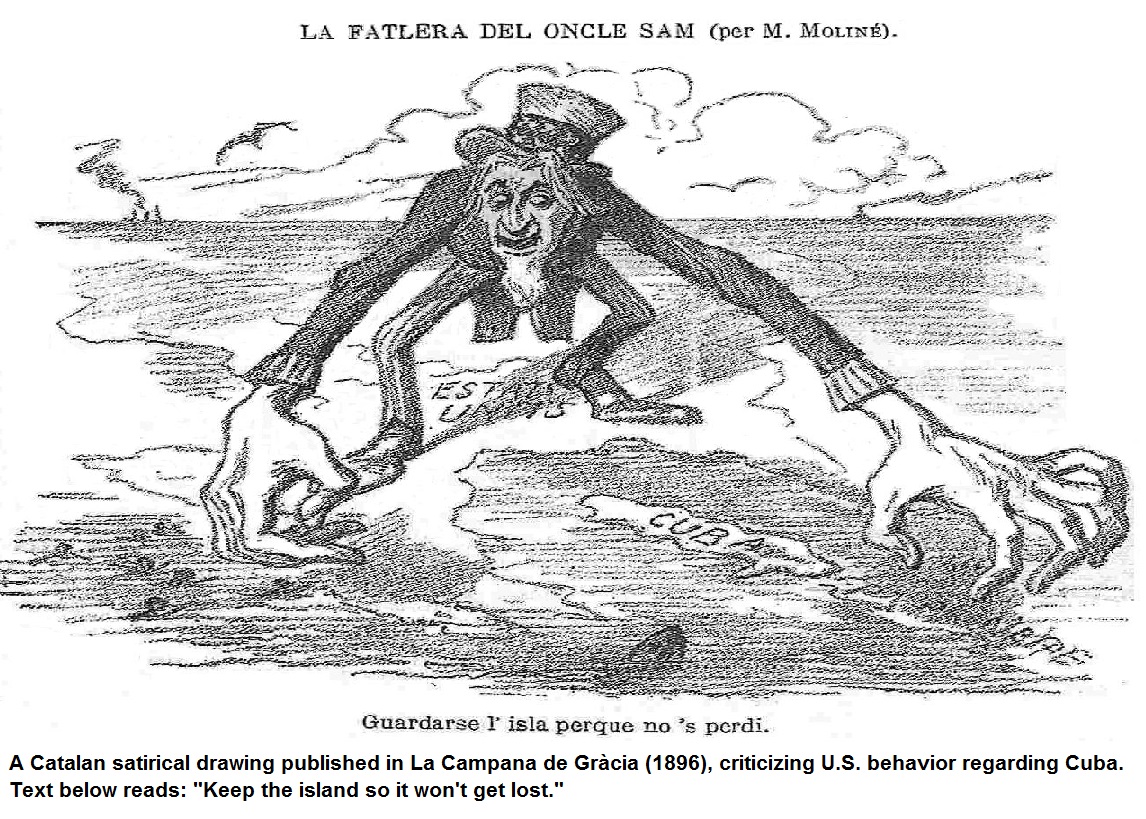
The United States of America fought an actual war, for 10 weeks, in the Caribbean theater in 1898. This was the war against the Spanish Empire, or more commonly known as the Spanish American War.

This is a lesson from an actual history:

These events transpired during the decline of the Spanish Empire. After centuries of vast colonial expansion, at this point, only a few of its vast territories remained. Revolts against Spanish rule had occurred for some years, in the Caribbean territories (Cuba, Dominican Republic and Puerto Rico), especially in Cuba. There had been war scares before. But in the late 1890s, American public opinion became agitated by an anti-Spanish propaganda; led by influential journalists such as Joseph Pulitzer and William Randolph Hearst, who used yellow journalism to criticize Spanish administration of Cuba.

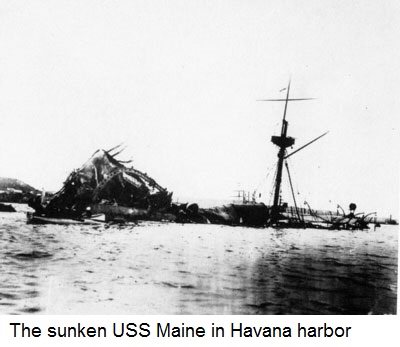
Then there was the mysterious sinking of the American battleship USS Maine in Havana harbor on February 15, 1898, which was believed to be and reported as a sabotage attack by Spanish forces. This created political pressure, from Congress and certain industrialists, to push the administration of Republican President William McKinley into a war he had hoped to avoid.[a]

The US Constitution (Article 1 Section 8) forbids that the country can NOT go to war unless provoked. With the sinking of the USS Maine, the government had its constitutional provocation.

Compromise was sought by Spain, but rejected by the United States which sent an ultimatum to Spain demanding it surrender control of Cuba. Consequently war was formally declared, first by Madrid, then by Washington on April 25, 1898.[a]

The ten-week war was fought in both the Caribbean and the Pacific, but the main issue that emerged was that of Cuban independence. American naval power proved decisive, allowing US expeditionary forces to disembark in Cuba against a Spanish garrison already brought to its knees by nationwide Cuban insurgent attacks and further wasted by yellow fever. With two obsolete Spanish squadrons sunk in Santiago de Cuba and Manila Bay and a third, more modern fleet recalled home to protect Spain’s coasts, Madrid sued for peace.[b] As a result, today, Cuba and the Dominican Republic enjoy independence, and Puerto Rico is an American territory, by choice – after many public referendums on the question of independence.

What was the motivation for this war?

Earlier, in 1823, US President James Monroe enunciated the Monroe Doctrine, which stated that the United States would not tolerate further efforts by European governments to colonize land or interfere with states in the Americas; however, Spain’s colony in Cuba was exempted. Before the Civil War Southern interests attempted to have the US purchase Cuba and make it new slave territory. The proposal failed, and subsequently the national attention shifted to the build-up towards the Civil War.[c]

But the “dye had been cast”. Cuba attracted America’s attention; little note was made of the Philippines, Guam, or Puerto Rico. The Spanish Government regarded Cuba as a province of Spain rather than a colony, and depended on it for prestige and trade. It would only be extracted with a war.

In 1976, the US Navy’s own historian (Admiral Hyman G. Rickover’s published book How the Battleship Maine Was Destroyed) declared that the sinking of the USS Maine — the justification for America’s entry into the Spanish-American War — was probably caused by an internal explosion of coal, rather than an attack by Spanish forces.[d]
Sources: See Citations in the Appendix below.

What is the lesson here for the Caribbean and today’s effort to integrate and unify the Caribbean economy? First, there are these principles, that should not be ignored, if we truly want progress/success:

  • In 1918 US Senator Hiram Warren Johnson is purported to have said: “The first casualty when war comes is truth”.
  • “War is a racket” – Smedley Butler, one of the most highly-decorated military men of all time, and the man who prevented a coup against Franklin D. Roosevelt.
  • The Bible declares that: “For there is nothing hidden that will not become manifest” – Luke 8:17

War on Caribbean 2There will be no chance for success in the Caribbean region if this effort goes against American security/foreign policy interest. This is a consistent theme in the book Go Lean … Caribbean, it serves as a roadmap for the introduction and implementation of the Caribbean Union Trade Federation (CU); it asserts that the economy of the Caribbean is inextricably linked to the security of the Caribbean. The roadmap therefore proposes an accompanying Security Pact to accompany the CU treaty’s economic empowerment efforts. The plan is to cooperate, collaborate and confer with American counterparts, not oppose them. In fact, two American territories (Puerto Rico and the US Virgin Islands) are included in this CU roadmap.

To establish a better American-Caribbean partnership, the Go Lean book presents a series of community ethos that must be adapted to forge this change. In addition, there are these specific strategies, tactics, implementation and advocacies to apply:

Community Ethos – new Economic Principles Page 21
Community Ethos – new Security Principles Page 22
Community Ethos – Minority Equalization Page 24
Community Ethos – Lean Operations Page 24
Community Ethos – Cooperatives Page 25
Community Ethos – Manage Reconciliations Page 25
Community Ethos – Impacting the Greater Good Page 34
Strategy – Customers – Public and Governments Page 47
Tactical – Fostering a Technocracy Page 64
Tactical – Homeland Security – Naval Operations Page 75
Tactical – Homeland Security – Militias Page 75
Implementation – Assemble – US Overseas Territory Page 96
Implementation – Foreign Policy Initiatives at Start-up Page 102
Implementation – Security Initiatives at Start-up Page 103
Implementation – Ways to Improve Mail Service Page 108
Implementation – Trade Mission Objectives Page 116
Implementation – Ways to Promote Independence Page 120
Planning – Ways to Model the EU Page 130
Planning – Lessons Learned from the W.I. Federation Page 135
Planning – Lessons from the US Constitution Page 145
Advocacy – Ways to Better Manage the Social Contract Page 170
Advocacy – Ways to Foster Cooperatives Page 176
Advocacy – Ways to Improve Homeland Security Page 180
Advocacy – Ways to Improve Intelligence Gathering Page 182
Advocacy – Ways to Enhance Tourism Page 190
Advocacy – Ways to Market Southern California Page 194
Advocacy – Ways to Preserve Caribbean Heritage Page 218
Advocacy – Ways to Re-boot Cuba Page 236
Advocacy – Ways to Impact the Dominican Republic Page 237
Advocacy – Ways to Impact US Territories Page 244

After this consideration, the conclusions are straight forward:

  • The Caribbean should take the lead for our best self-determination. We must do the heavy-lifting. We can always count on America to pursue what’s in America’s best interest, and this may not always align with Caribbean objectives. So we must take our own lead for our own self-interest.
  • American priorities change with presidential administrations.

Now is the time to lean-in to this roadmap for Caribbean change, as depicted in the book Go Lean…Caribbean. At this time, there is no American agenda or contrarian policy that may dissuade us – but that’s only today. We need to act fast before a new American crisis emerges, (or one is created artificially).

Download the book Go Lean … Caribbean – now!

————-

Appendix References

a. Beede, Benjamin R., ed. (1994), The War of 1898 and U.S. Interventions, 1898–1934, Taylor & Francis, ISBN 978-0-8240-5624-7. An encyclopedia. Pages 120; 148.

b. Dyal, Donald H; Carpenter, Brian B.; Thomas, Mark A. (1996), Historical Dictionary of the Spanish American War, Greenwood Press, ISBN 0-313-28852-6. Pages 108 – 109.

c. Wikipedia treatment on the Spanish American Way. Retrieved May 5, 2014 from: http://en.wikipedia.org/wiki/Spanish_American_War

d. “The Destruction of USS Maine”. Department of the Navy — Naval History and Heritage Command. Retrieved May 5, 2014 from: http://www.history.navy.mil/faqs/faq71-1.htm

Share this post:
, , , , ,
[Top]

Cuban cancer medication registered in 28 countries

Go Lean Commentary

Medicine 2While the below news article is about great cancer and diabetes drugs developed in the Caribbean, this commentary has an underlying theme about “American Exceptionalism”.

American exceptionalism is the theory that the United States is qualitatively different from other nation states.[a] In this view, US exceptionalism stems from its emergence from a revolution, becoming what political scientist Seymour Martin Lipset called “the first new nation” and developing a uniquely American ideology, “Americanism”, based on liberty, egalitarianism, individualism, republicanism, populism and laissez-faire. This ideology itself is often referred to as “American exceptionalism.”[b]

Although the term does not necessarily imply superiority, many neoconservative and other American conservative writers have promoted its use in that sense. To them, the US is like the Biblical “City upon a Hill”[c][d]

This subject matter aligns with the publication Go Lean … Caribbean, which serves as a roadmap for the introduction and implementation of the Caribbean Union Trade Federation (CU). The Go Lean roadmap maintains that other peoples (nations) have dreams as well; the American Dream is not the only aspiration to hope for. This foregoing article presses the point about innovation in cancer and diabetes drugs – that emerged from Cuba.

Posted: March 29, 2014

HAVANA, Cuba – Nimotuzumab, a Cuban monoclonal antibody humanized to treat cancer, is registered in 28 countries, mainly in South America, Africa and Asia, in addition to Cuba.

Specialists at the Center of Molecular Immunology, an institution of the BioCubaFarma Business Group, said that the product has shown its effectiveness in various cases of malignant tumours.

Indicated for tumours in the head and neck in advanced stages, brain tumours and of the esophagus, Nimotuzumab is also used in other oncological ailments of the colon, rectum and liver, and in lung cancer among other locations.

The monoclonal antibody and its results will be the focus, on March 25-27, of the eighth global scientific meeting on Nimotuzumab – Nimomeeting 2014.

With Havana’s Convention Center as its venue, the forum will bring together over 200 experts from some 20 nations, as well as about 20 international biopharmaceutical companies interested in sharing experiences about the medication, the therapeutics of which are used in the medical specialties of oncology, oncopediatrics, radiotherapy, pediatrics and neurosurgery, among others.

Meanwhile, Cuba is trying to take its diabetic foot ulcer drug known as Heberprot-P into the European market.

Heberprot-P is a product based on human growth factor currently being administered in some 20 countries, mostly in Latin America.

According to the marketing director of the Havana-based Genetic Engineer and Biotechnology Center, Ernesto Lopez, the pre-clinical stage of the product, known in Europe as Epipropt, was carried out with good toxicological and safety results.

In Spain, with an estimate 40,000 patients needing the Cuban drug, tests were carried out with no negative toxic results. The product has been developed since 2012 for research studies in other European nations.

According to studies, amputation of lower limbs was reduced fourfold, with the surgical procedure in Europe currently costing over 50,000 Euros, and treatment of the condition some 20,000 Euros.

It is the amputation of lower limbs as a direct consequence of diabetic foot ulcer that the Cuban medication avoids with a period of treatment of only six to seven months.

Along with the therapeutic action on serious ulcers, the treatment has demonstrated a preventive nature in countries like Cuba, Venezuela, and Ecuador.

Source: Caribbean News Now Online Newspaper – Retrieved 04-13-2014 http://www.caribbeannewsnow.com/topstory-Cuban-cancer-medication-registered-in-28-countries-20429.html

While the Go Lean book strategizes a roadmap for economic empowerment, it clearly relates that healthcare, disease management, cancer treatments and medicines are germane to the Caribbean quest for health, wealth and happiness. At the outset of the Go Lean book, in the Declaration of Interdependence (Page 10 & 11 respectively), these points are pronounced:

Preamble: While our rights to exercise good governance and promote a more perfect society are the natural assumptions among the powers of the earth, no one other than ourselves can be held accountable for our failure to succeed if we do not try to promote the opportunities that a democratic society fosters.

ix. Whereas the realities of healthcare and an aging population cannot be ignored and cannot be afforded without some advanced mitigation, the Federation must arrange for health plans to consolidate premiums of both healthy and sickly people across the wider base of the entire Caribbean population. The mitigation should extend further to disease management, wellness, obesity and smoking cessation programs. The Federation must proactively anticipate the demand and supply of organ transplantation as developing countries are often exploited by richer neighbors for illicit organ trade.

Cuba is not on friendly terms with the United States. A trade embargo was implemented in 1962 as a temporary measure to dissuade the island’s socialist leanings. Now, after 52 years, the embargo continues. Generations of Cubans and generations of Americans have come and gone without witnessing a normalized relationship between Cuba and its largest neighbor, the US. Millions too have died of the scourge of cancer, estimated by one source as afflicting 1-out-of-3 Americans [e]

(Personal note: the primary author of the book Go Lean … Caribbean was inspired to write this roadmap, after his sister died after a 32-year battle with cancer – See Dedication Page 2).

MedicineThe scourge of cancer and the realities of diabetes were not the motivation for composing the book Go Lean … Caribbean. But rather, the bigger goal of elevating Caribbean society. The Caribbean Union Trade Federation has the prime directive of optimizing the economic, security and governing engines of the region. The foregoing article depicts the benefits that can emerge as a result of innovation in science, technology, engineering and medicine (STEM). Cuba will be able to trade these advance medicines globally to the markets needing their therapeutic benefits. This is a win-win!

Under the Go Lean roadmap, more such developments will emerge … from all corners of the Caribbean. There are also obvious tangential benefits to the people of the Caribbean regarding public health administration and wellness.

The following list details the strategies, tactics, implementations and advocacies to optimize the region’s health deliveries:

Community Ethos – Cooperatives Page 25
Community Ethos – Non-Government Organizations Page 25
10 Ways to Impact Research and Development Page 30
10 Ways to Impact the Greater Good Page 37
Separation of Powers – Patent, Standards, & Copyrights Office Page 78
Separation of Powers – Health Department Page 86
Separation of Powers – Drug Administration Page 87
10 Ways to Implement Self-Government Entities Page 105
10 Trade Mission Objectives Page 116
10 Ways to Benefit from Globalization Page 119
10 Ways to Improve Healthcare Page 156
10 Ways to Impact Cancer Page 157
10 Ways to Impact Entitlements Page 158
10 Ways to Better Manage the Social Contract Page 170
10 Ways Foster Cooperatives Page 176
10 Ways to Improve Organ Transplants Page 214
10 Ways to Improve Elder-Care Page 225
10 Ways to Impact Persons with Disabilities Page 228
10 Ways to Re-boot Cuba Page 236

The foregoing article establishes that many patients around the world will benefit from medical innovations fostered in the Caribbean, in Cuba. The Go Lean roadmap posits that there are a lot of benefits the Caribbean can/will make to facilitate a better life for populations throughout the world. Executing these plans, following the roadmap, will be better for the Caribbean population too.

The United States of America should take heed.

Download the book Go Lean … Caribbean – now!

———

Appendix – References

a. Winfried Fluck; Donald E. Pease; John Carlos Rowe (2011). Re-Framing the Transnational Turn in American Studies. UPNE. p. 207. Retrived 4/16/2014 from: http://books.google.com/books?id=ccz81DWudCAC&pg=PA207

b. American Exceptionalism: A Double-Edged Sword. Seymour Martin Lipset. New York, N.Y.: W.W. Norton & Co., Inc. 1996. Page 18. ISBN 0-393-03725-8.

c. Harold Koh, “America’s Jekyll-and-Hyde Exceptionalism”, in Michael Ignatieff, ed., American Exceptionalism and Human Rights, p. 112

d. A “City upon a Hill” is a phrase from the Bible parable of Salt and Light in Jesus’s Sermon on the Mount. In Matthew 5:14, he tells his listeners, “You are the light of the world. A city that is set on a hill cannot be hidden.” It has become popular with American politicians.

e. Website http://www.preventcancer.com/losing/ – Retrieved Nov. 2013 / Wikipedia.org general subject treatment for the War on Cancer – Retrieved Nov. 2013.


Share this post:
, , ,
[Top]

CXC and UK publisher hosting CCSLC workshops in Barbados

Go Lean Commentary

images“Fattening frogs for snakes” – Jamaican expression.

As a region the Caribbean have invested much time, talents and treasuries for the education of our youth. Hooray for our efforts! This is an honorable commitment and those laboring in this profession, as depicted in the foregoing news article, should be duly recognized and applauded.

But…

… “do what we’ve always done, and we get what we always got” – Old Adage.

For far too often, the Caribbean has been grooming and preparing their young people to contribute and enhance the society… of other countries. And thus the intersection of the two expressions above, and this imagery: “sacrificing our babies on the altar of global trade”. See a related news story here:

BRIDGETOWN, Barbados — Over 50 secondary school teachers in Barbados stand to benefit from a series of workshops to be hosted by the Caribbean Examinations Council (CXC) and UK-based publisher Nelson Thornes on 7 and 8 April 2014 in Barbados.

The four workshops will be hosted over the two days and will focus on English and mathematics for the Caribbean Certificate of Secondary Level Competence (CCSLC).

The workshops will be facilitated by Novelette McLean-Francis, senior education officer responsible for linguistics in the ministry of education, Jamaica, and a published author; and Grace Smith, a Barbadian educator and one of the authors of the CCSLC mathematics text.

Two workshops will be hosted each day and teachers from the 22 public secondary schools in Barbados are expected to attend.

Registrar Dr. Didacus Jules stated, “These CCSLC workshops are very timely as over the next four weeks CXC is working with the United Kingdom National Academic Recognition Information Centre (UK NARIC) to benchmark CCSLC with similar qualifications internationally.”

“Ensuring that teachers are well equipped to deliver the CCSLC programme effectively will impact positively on students’ performance and on the benchmarking exercise,” Jules noted.

“Nelson Thornes, part of Oxford University Press, is delighted to be running the workshops for teachers across Barbados for the CCSLC qualification,” Sarah Townsend, Caribbean marketing campaign manager with Oxford University Press Education Division said. “Our aim is to provide a full understanding of the syllabus and what is expected in classrooms. Alongside this, teachers will gain valuable knowledge of how the texts came together and the authors’ experience of being involved in the teaching of CCSLC.”

“Working in conjunction with CXC and the ministry of education, we have invited teachers to attend one of the sessions for either mathematics or English, and we hope to be able to fully support them in their on-going quest of teaching CCSLC English and mathematics,” Townsend explained.

The Caribbean Certificate of Secondary Level Competence was introduced to schools in Barbados in September 2013.
Source: Caribbean News Now Online News Site; posted April 3, 2014; retrieved April 4, 2014 from: http://www.caribbeannewsnow.com/barbados.php?news_id=20558&start=0&category_id=26

CU Blog - CXC and UK publisher hosting CCSLC workshops in Barbados - Photo 2This subject matter aligns with the prime directive of the book Go Lean … Caribbean to re-boot the economic engines of the Caribbean to assuage the human flight problem that has afflicted so many Caribbean communities, for more than 50 years. The book, serving as a roadmap for the introduction and implementation of the Caribbean Union Trade Federation (CU) posits that education has been a failure for this region. Almost everywhere else education dynamics elevate a society, raising GDP by 1 percent for every additional (aggregate) year of schooling. But this is not true for the Caribbean; even though the educated population have fostered their abilities there, they have “taken their talents to South Beach”; and South Bronx; and South Toronto; and South London; and the South Paris, etc.

So education and economics must be intertwined. This is explored in full details in the book. This roadmap provides turn-by-turn directions for escalating educational resources (and results) in the region. As a planning tool, the roadmap commences with a Declaration of Interdependence, pronouncing regional integration (Page 12) as the approach to elevate educational opportunities:

xxi. Whereas the preparation of our labor force can foster opportunities and dictate economic progress for current and future generations, the Federation must ensure that educational and job training opportunities are fully optimized for all residents of all member-states, with no partiality towards any gender or ethnic group. The Federation must recognize and facilitate excellence in many different fields of endeavor, including sciences, languages, arts, music and sports. This responsibility should be executed without incurring the risks of further human flight, as has been the past history.

This optimization will apply to all levels of instructions: primary, secondary and tertiary.

The strategy is to confederate all the 30 member-states of the Caribbean, despite their language and legacy, into an integrated “single market”. Tactically, this will allow a separation-of-powers between the member-states governments (including their education proxies) and federal agencies, allowing the type of third party regional oversight as identified in the foregoing article, with entities like the United Kingdom National Academic Recognition Information Centre and Oxford University Press. Notice the leanings of those organizations: British. Instead, the Go Lean roadmap advocates the multi-lingual educational guidance for English, Dutch, French and Spanish all under CU federal administration.

Under this roadmap, the CariCom-backed Caribbean Examinations Council (CXC) would be integrated into a CU Cabinet Department of Education; this is detailed in the book (Page 85). Most importantly the roadmap recognizes that there are the costs dynamics for education, so the funding mechanisms are fully explored in 10 Ways to Pay for Change (Page 101).

Why is the expectation for education success so different in Go Lean…Caribbean compared to the status quo? Why haven’t the strategies and tactics described in this roadmap been employed by the member-states already?

Quite simply, the book posits that the problems for the Caribbean are too big for any one member-state to solve alone; there must be a regional solution! The problem of human flight/brain drain is described as resulting from “push-and-pull” factors. So the required solution is more than just a few bright ideas, taught in a workshop; there is the need for a new eco-system.

Go Lean … Caribbean introduces that eco-system, as a roadmap to make the Caribbean a better place to live, work, learn and play.

No more “fattening frogs for snakes”!

🙂

Download the book Go Lean … Caribbean – now!

Share this post:
, , , ,
[Top]

CARICOM Chairman to deliver address on reparations

Go Lean Commentary

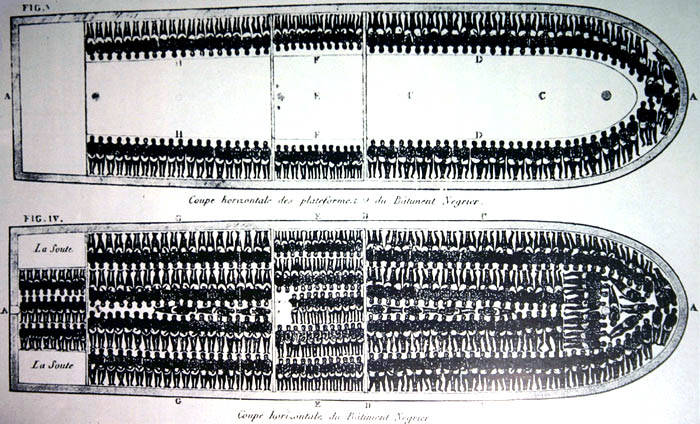
Slave ShipThe book Go Lean … Caribbean aligns with one objective depicted in the below news article: to reconcile the flawed economic policies of the past and lean-in for the optimization of the Caribbean future. Beyond this stance, the book deviates from these advocates calling for reparations from the colonial powers that participated in the slave trade, slavery or colonial suppression of the indigenous people.

Reparations stress at its root, a sense of entitlement to other people’s resources. The book, on the other hand, serves as a roadmap for the regional integration of the 42 million people and 30 member states of the Caribbean with the implementation of the Caribbean Union Trade Federation (CU). This roadmap advocates the reconciliation of the economic and security engines to grow the region’s economy from $378 Billion (2010) to $800 Billion in a 5 year time span.

NEW YORK, United States, Friday March 28, 2014, CMC – Chairman of the Caribbean Community (CARICOM) grouping, Prime Minister Dr. Ralph Gonsalves of St. Vincent and the Grenadines will address an international forum in reparations in the United States next month.

Gonsalves will deliver the feature address at the April 19 forum titled “Revitalizing the Reparations Movement,” organized by the New York-based Institute of the Black World 21st Century (IBW).

IBW described Gonsalves as “one of the leading voices in the Americas demanding that the former European colonial powers pay reparations to Caribbean and South American countries for centuries of African enslavement, native genocide and colonial exploitation”.

The forum will be held in collaboration with the Center for Inner City Studies and the Samuel DeWitt Proctor Conference.

IBW said among the specially invited guests will be Detroit’s congressman John Conyers, Sr., dean of the US Congressional Black Caucus, and sponsor of HR-40, the Reparations Study Bill and Louis Farrakhan, leader of the Nation of Islam.

“A primary goal of the forum is to revitalize the reparations movement in the USA by revisiting the Durban Resolution on the Trans-Atlantic Slave Trade, presenting an update on HR-40 and examining the status of CARICOM’s reparations initiative,” IBW said.

“We are delighted and honored to have Prime Minister Gonsalves keynote this critical forum on reparations, a subject of fundamental historical justice that is near and dear to the hearts of Black people around the world,” said IBW’s president Dr. Ron Daniels.

Director of Chicago’s Inner City Studies, Dr. Conrad Worrill, said “our ancestors will be pleased that the reparations movement is being re-energized from the Caribbean islands”.

“In demanding reparations, CARICOM is vindicating the vestiges of the Trans-Atlantic slave trade,” he added.

CARICOM leaders at their inter-sessional summit in St, Vincent and the Grenadines earlier this month discussed the reparation issue and hope to have a meeting with European leaders in June.

The leaders unanimously adopted a 10-point plan that would seek a formal apology for slavery; debt cancellation from former colonizers, such as Britain,

France, Spain and the Netherlands; and reparation payments to repair the persisting “psychological trauma” from the days of plantation slavery.

The Go Lean roadmap commences with this ideal embedded in the Declaration of Interdependence, pronouncing as follows, (Page 10):

As the colonial history of our region was initiated to create economic expansion opportunities for our previous imperial masters, the structures of government instituted in their wake have not fostered the best systems for prosperity of the indigenous people. Despite this past, we thrust our energies only to the future, in adapting the best practices and successes of the societies of these previous imperial masters and recognizing the positive spirit of their intent and vow to learn from their past accomplishments and mistakes so as to optimize the opportunities for our own citizenry to create a more perfect bond of union.

The subject matter of reparation is polarizing, based on assumptions that the Caribbean is comprised of mostly African or Ameri-Indian peoples. While many CARICOM states do possess a majority Black population, this is not so within the larger Caribbean, of whom the CU confederates. There are also large populations of European (White) ethnicities, Indian, and Chinese descendants that should also unite.

— UPDATE (Sep 30, 2015) – See VIDEO in the Appendix regarding the UK Prime Minister’s recent visit to Jamaica

There is a benefit, however, that can be garnered from compensatory talks with European nations, that of making “Aid” more empowering. The roadmap details an advocacy on the roles and responsibilities of fostering International Aid (Page 115). So while the political leaders of the CARICOM may be exerting energies to “guilt” these Europeans leaders to “pay up”, the CU Trade Federation will instead work to improve trade and re-boot the economic engines of the region.

It is a known fact that most of the resources of the European powers are tied to the strength of their economies, not the reserves gathered up from centuries of exploiting African slaves and their descendants. The country with the largest reserves is the USA; but their gold in Fort Knox is only estimated at $800 Billion, while their economy is $16 Trillion of GDP output … annually. So reparation is not a winning formula; it assumes some abundant stockpile of savings. This is a flawed logic and strategy. On the other hand, the Caribbean needs to create 2.2 million new jobs; this is only possible with the turn-around strategies as detailed in the roadmap of Go Lean … Caribbean.

So as a policy decision for the economic strategies of the region, the Go Lean book and movement recommends:

    Re-boot – Yes!
    Reparations – No!

Download the free e-Book of Go Lean … Caribbean – now!

———

Appendix VIDEO – Slavery Reparations Dominate David Cameron’s Jamaica Visit – https://youtu.be/al453a8rLy8

Published on Sep 30, 2015 – UK Prime Minister David Cameron’s visit to Jamaica was overshadowed by slavery reparation calls, which he rejected. The legacy of slavery is still ever-present for 14 Caribbean countries calling on their former colonial masters to pay billions in reparations.
Share this post:
, ,
[Top]

Jamaica to receive World Bank funds to help in crime fight

Go Lean Commentary

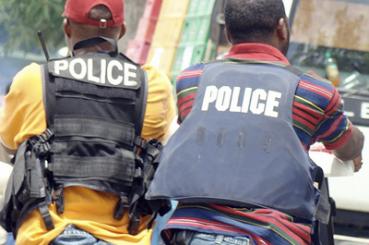
images-Caribbean-jamaica_police_498560223The publisher of the book Go Lean … Caribbean commends the Government of Jamaica and the Washington DC-based World Bank institution for their diligent effort to forge solutions to some of the crucial challenges of Jamaica. Crime has proceeded to cast such a “dark cloud” on Jamaica that the country is near the assessment of a “Failed-State”. The societal problems in Jamaica are so bad that many different advocacies from the Go Lean book can be applied to bring much needed improvements to the island. The book thusly serves as a roadmap for the implementation of the Caribbean Union Trade Federation (CU), a regional entity projected to also forge solutions for the Caribbean region as a whole and Jamaica in particular.

WASHINGTON D.C. – The World Bank says more than 80,000 Jamaican citizens will benefit from improved services, basic infrastructure and targeted crime and violence interventions in 18 vulnerable inner-city communities as a result of a US$42 million project for integrated community development.

The Washington-based financial institution said the new project is a continuation of the partnership between the Jamaica government and the World Bank on upgrading some of the country’s most vulnerable and volatile communities.

It said the project builds on the success of the “Inner City Basic Services for the Poor Project” to address accelerating urban decay and declining citizen security.

“The project aims to foster a more inclusive society in Jamaica by improving the quality of life of marginalized city dwellers,” said Sophie Sirtaine, World Bank country director for the Caribbean.

“It also aims to prevent crime and violence by engaging youth in public safety initiatives and providing them with job skills training,” she added.

As a result of the funding, Sirtaine said more than 50,000 people will benefit from improved solid waste management services, street lighting, paved roads and drainage.

She said residents in the 18 communities would “feel safer” and that 1200 families will have their piped water connection repaired and 4,500 residents receiving educational and skills training.

“As we strive to advance the targets of the Vision 2030, where access to reliable services and adequate infrastructure is the norm, enhancing community safety and security is a priority,” said Scarlette Gillings, managing director of the Jamaica Social Investment Fund.

“And these communities are places of choice to live, work, raise families and do business,” she added.

In the Kingston Metropolitan Area, the World Bank said poverty has doubled in two years from seven per cent in 2008 to more than 14 per cent in 2010.

It also said youth unemployment is on the rise, with more than 50 per cent of young people unemployed, adding that homicides and other violent crimes rates are among “the highest in the Latin America and Caribbean region”.

Source: Caribbean360.com – Caribbean Online Magazine (Retrieved 03/20/2014) http://www.caribbean360.com/index.php/business/1107320.html#ixzz2wvpxCnMA

While the foregoing article identifies these 3 objectives of the announced project: improved services, basic infrastructure and targeted crime & violence interventions, the Go Lean roadmap depicts 144 missions for the CU to engage, and provides the turn-by-turn directions on how to implement and ensure their success. At the outset of the book (Page 12), public safeguards are identified as prime directives in the Declaration of Interdependence:

x. Whereas we are surrounded and allied to nations of larger proportions in land mass, populations, and treasuries, elements in their societies may have ill-intent in their pursuits, at the expense of the safety and security of our citizens. We must therefore appoint “new guards” to ensure our public safety and threats against our society, both domestic and foreign. The Federation must employ the latest advances and best practices of criminology and penology to assuage continuous threats against public safety.

xvi. Whereas security of our homeland is inextricably linked to prosperity of the homeland, the economic and security interest of the region needs to be aligned under the same governance. Since economic crimes … can imperil the functioning of the wheels of commerce for all the citizenry, the antecedence of this Federation must equip the security apparatus with the tools and techniques for predictive and proactive interdiction.

In addition to crime, the roadmap targets delivery of government services, identifying best practices in agile methodologies to guarantee fewer defects and more efficiency; (Pages 109 & 147). In fact, the name Go Lean refers to the commitment to lean project management methodologies in the structure of the CU; this is defined in the book’s Preface (Page 4).

Lastly, the book also details investments and the impact of pipelines in the region, recognizing that this field is an “art and a science”. These investments are identified as strategic, tactical and operational in their Caribbean deliveries (Page 43). This synchronizes with the World Bank and Jamaica’s initiatives to help the municipalities to better provide quality services with their Vision 2030 plan.

The book Go Lean … Caribbean is an economic empowerment plan for the Caribbean first and foremost. This means addressing the underlying issues that mitigate poverty: jobs, education and economic growth; (Page 222). The CU projects the creation of 2.2 million new jobs regionally while growing the economy to $800 Billion. This roadmap, once executed, should help Jamaica (and equally all 30 Caribbean member-states) shed this “Failed-State” eventuality.

Download the book Go Lean … Caribbean – now!

Share this post:
, ,
[Top]

Bahamas Debate: Was Prime Minister Behind On Tax?

Go Lean Commentary

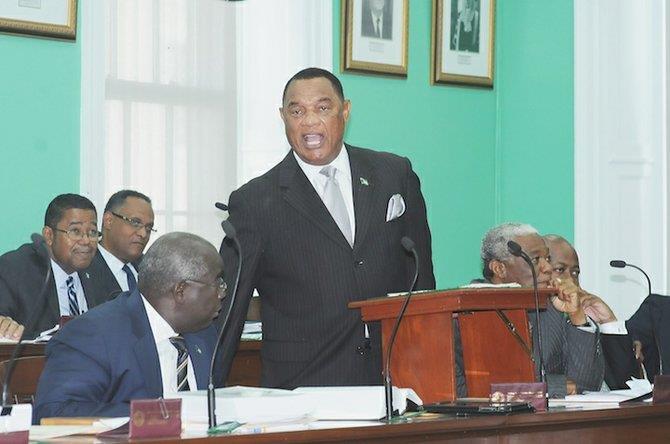
Photo - Perry Christie in ParliamentThe news article below is from The Tribune, a daily newspaper that covers the Bahamas. The story touches on a critical mission and motivation of the Caribbean Union Trade Federation (CU):

To re-boot the revenue systems that the region’s member-state governments depend on.

The book Go Lean … Caribbean, which serves as a roadmap for implementing the Caribbean Union Trade Federation, commences with an opening Declaration of Interdependence. In Verse XIV (Page 12) it pronounces:

Whereas government services cannot be delivered without the appropriate funding mechanisms, “new guards” must be incorporated to assess, accrue, calculate and collect revenues, fees and other income sources for the Federation and member-states. The Federation can spur government revenues directly through cross-border services and indirectly by fostering industries and economic activities not possible without the Union.

The below article crystalizes a debate. The country is mid-stream in implementing a new eco-system for assessing – collecting a Value-Added Tax (VAT). The proponents of the VAT are convinced that this is the panacea for the failure of real property tax collection, where even prominent politicians admit to not complying with the current taxing requirement. The foregoing debate is that maybe even the Prime Minister, Perry G. Christie, is delinquent, or may have been in the past. See the article here:

By: Khrisna Virgil, Tribune Staff Reporter (kvirgil@tribunemedia.net)

FNM (Bahamian Opposition Party) Deputy leader Loretta Butler-Turner is calling on Prime Minister Perry Christie to fully disclose whether he at some point fell behind in paying his real property taxes, and, if so, the years involved.

Branding him as the worst Prime Minister the Bahamas has seen to date, Mrs Butler-Turner criticised Mr Christie following his admission that he was unaware of which PLP parliamentarians, if any, were in arrears with their taxes.

The comments came amid a wave of backlash sparked following VAT advisor Ishmael Lightbourne’s confession that he had not paid real property taxes over the last decade. He owe’s the government more than $7,000.

The Christie administration has been heavily criticised since news of Mr Lightbourne’s delinquent account went public, especially as the government struggles to make its case that VAT is a suitable revenue-generating system.

It was Mrs Butler-Turner’s opinion that Mr Christie was “the most incompetent and irresponsible Prime Minister and Minister of Finance since the advent of Cabinet government in the Bahamas. He is very good at pleading ignorance and very poor at accepting responsibility.

“For the sake of accountability and responsibility might Mr. Christie advise if there were years when he did not pay his real property taxes in a timely manner and how many years this involved?

“If Mr Christie failed to ask (PLP parliamentarians), he is even more incompetent and slacker as Prime Minister than previously thought.

“He now says, ‘I will in fact review that with a view to seeing those of us who are in arrears of the various requirements in terms of taxes and with a view to advising them to meet the payments.’

“Why is he just doing this now, nearly two years after returning to office and on the eve of introducing legislation on VAT, legislation that has been postponed on three occasions by an incompetent government?

“He wants the Bahamian people to pay taxes and wants to raise taxes on law-abiding citizens, including the poor, but doesn’t know who in his own ranks are paying taxes? Is there one standard for the Bahamian people and another standard for PLP parliamentarians?”

Mrs Butler-Turner accused the Christie administration of being one of double standards, made clear, she said, by the actions of some PLPs. She added that seemingly it does not matter if taxes are raised or lowered because there are members of the government who simply do not pay.
Source: The Tribune – Daily newspaper online site (Retrieved 02/26/2014) –http://www.tribune242.com/news/2014/feb/26/fnm-deputy-was-prime-minister-behind-tax/

There are countless anecdotes in the Bahamas, and other countries with similar tax schemes and regimes, where property taxes had not been paid for decades, and only when there is a need for property title transfer (sale or inheritance), does the issue of tax collection become relevant. Does that anecdote also apply to the current Bahamian Prime Minister? This is not known here and now! Nor is it considered in the Go Lean book. The charge in the foregoing article seems to be more of a sensational political volley, rather than a statement of fact.

The CU, on the other hand, takes an apolitical, non-partisan stance. Further the Go Lean book asserts  that even the originator of Christianity, Jesus Christ, advised his followers to “pay Caesar’s things to Caesar”. This is found in a Chapter entitled:

10 Lessons from the Bible (Page 144).

(Note: the Bahamas claims to be a Christian nation).

The CU mission is to implement the complete eco-system for property tax assessment, registration and collections. The roadmap advocates an optimized tactic where the CU operates as a technocratic deputized agency and acquires “Receivables” for a country’s property taxes, in advance, and then subsequently facilitates collections and servicing. Imagine the Bahamas, and other similar member-states, under this new regime, receiving a warrant (securitized payment) of 80% of the amount of tax revenues that should be collected in a “perfect scenario” – 10 Ways to Pay For Change (Page 101). It then becomes the job of the CU’s technocratic professionals to complete the collection cycle – removing any political prejudices from the process – 10 Ways to Improve Credit Ratings (Page 155).

Without a doubt, this approach is far better than the status quo.

Download the book Go Lean … Caribbean – now!


Share this post:
,
[Top]

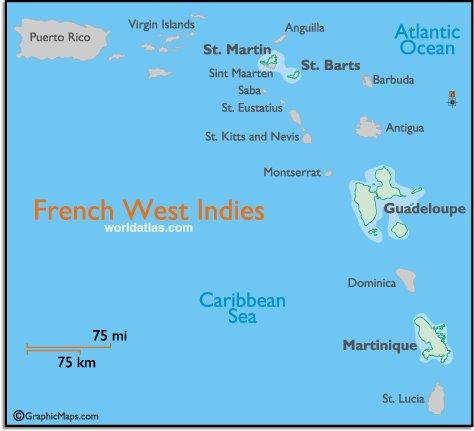
Guadeloupe, Martinique, St Maarten Join the ACS

Go Lean Commentary

French Caribbean MapThe SFE Foundation, publishers of the book Go Lean … Caribbean welcomes these French Caribbean states into this brotherhood of Caribbean states. We embrace the idea of regional integration, as described in the below article, and push for an even “deeper dive into waters” of confederation, collaboration and convention.

The book Go Lean … Caribbean serves as a roadmap to navigate the integration and consolidation of all 30 member-states into the Caribbean Union Trade Federation (CU). The CU will equally represent these French-speaking Caribbean member-states along with their Dutch, English and Spanish counterparts. The Go Lean roadmap posits that the region is ill-prepared to compete on the world’s stage without this proposed integration. The book declares interdependence among these member-states to form a single market & economy of 42 million people and the potential for an $800 Billion GDP. The end-result will furnish a Caribbean Union that our young people can saddle their dreams to for a consequential future.

For this movement we welcome Guadeloupe, Martinique & St Maarten, and encourage this embrace by other French territories. See news article here:

By the Caribbean Journal staff:
Guadeloupe, Martinique and St Maarten have all joined the Association of Caribbean States (ACS) as associate members.

The three Caribbean territories acceded to the ACS during the regional group’s Ministerial Council meeting in Trinidad last week.

“It is important that we remain a player in the region and that we strengthen the bonds between us and the Nations of the Caribbean,” St Maarten Prime Minister Sarah Wescot-Wiliams said following the move. “One of the things I have been stressing is regarding our responsibilities and roles that we have to take on as a country. One of those is participation in regional and international organizations. Now we have the capacity to meet with the ACS which [gives] us a voice in the region.”

Serge Letchimy, President of Martinique’s Regional Council, said regional integration had been a priority of his tenure, with a view toward “anchoring Martinique in its geographical environment.”

The territories’ accession to the ACS was first announced [at the outset of this 19th Ordinary Meeting of the Ministerial Council].

Martinique and Guadeloupe’s relationship with the sovereign territories of the Caribbean, and how it should develop, continues to be a question for the region.

Last year, a report recommended that Martinique and Guadeloupe integrate economically with the Organization of Eastern Caribbean States – (www.caribjournal.com/2013/04/08/report-urges-oecs-economic-integration-for-martinique-guadeloupe/).

Source:  Caribbean Journal Online News Source; retrieved 02/21/2014 from: http://www.caribjournal.com/2014/02/21/guadeloupe-martinique-st-maarten-join-association-of-caribbean-states/

The Caribbean needs all hands on deck for the region’s societal elevation goals. Consider these organizational dynamics of the ACS and the OECS:

ACS

The Association of Caribbean States (ACS) is a union of nations centered on the Caribbean Basin. It was formed with the aim of promoting consultation, cooperation, and concerted action among all the countries of the Caribbean. The primary purpose of the ACS is to develop greater trade between the nations, enhance transportation, develop sustainable tourism, and facilitate greater and more effective responses to local natural disasters – Wikipedia.com.

It comprises twenty-five member states and four associate members. The convention establishing the ACS was signed on July 24, 1994 in Cartagena de Indias, Colombia. The secretariat of the organization is located in Port of Spain, Trinidad and Tobago.

Antigua & Barbuda Cuba Guyana Panama Venezuela
Bahamas Dominica Haiti St. Kitts & Nevis Aruba
Barbados Dominican Republic Honduras St. Lucia Curaçao
Belize El Salvador Jamaica St. Vincent & Grenadines France
Colombia Grenada Mexico Suriname Turks & Caicos Islands
Costa Rica Guatemala Nicaragua Trinidad and Tobago

Caribbean Sea Agenda
One agenda adopted by the ACS has been an attempt to secure the designation of the Caribbean Sea as a special zone in the context of sustainable development; it is pushing for the UN to consider the Caribbean Sea as an invaluable asset that is worth protecting and treasuring. The organization has sought to form a coalition among member states to devise a United Nations General Assembly resolution to ban the transshipment of nuclear materials through the Caribbean Sea and the Panama Canal.

OECS

The Organization of Eastern Caribbean States (OECS), created in 1981, is an inter-governmental organization dedicated to economic harmonization and integration, protection of human and legal rights, and the encouragement of good governance between the countries/dependencies of the Eastern Caribbean states of Antigua & Barbuda, Dominica, Grenada, Montserrat, St. Kitts & Nevis, St. Lucia and St. Vincent & Grenadines. Anguilla and the British Virgin Islands are associate member states.
Source: Wikipedia.com.

The Go Lean roadmap aligns with the ACS and OECS agenda – all hands on deck – with the implementation plan of an Exclusive Economic Zone for the Caribbean Sea. This plan is therefore conceivable,believable and achievable. 🙂

Download the book Go Lean … Caribbean – now!

Share this post:
, , , ,
[Top]

How to Create Money from Thin Air

money-magic-rival-logoGo Lean Commentary

“Money does not grow on trees”, according to the old adage.

If it did then the tree would be special, it would be producing a chattel good that is designated as monetary currency. Even still, this scenario would not be “thin air”, it will be trading goods for goods. This can be illustrated with a barter exchange of fruit for some other merchandise, say silver. If the silver is viewed as money, then the process of growing and harvesting the fruit will result in money (silver) being acquired based on the fruit from the tree. So money can grow on trees!

Something more amazing happens in our modern economic system, money is created out of “thin air” – no trees, no fruit, no silver. How is this possible? This is accomplished through the Commercial/Central Banking system.

First of all, banks are financial institutions that take in deposits from people and use their money to give out loans to others. The reason why banks provide this service [to the community] for free is because they earn a profit by letting people deposit their money. Banks charge higher interests rates on the money they lend out compared to the money deposited. All in all, banks are both borrowers and lenders. People trust banks to store their money. The deposits allow banks to lend out money with higher interest rates with the expectancy that the loans will be paid back.

Banks have something called a required reserve ratio, mandated by the Central Bank; (the “Fed” in the US). This is the ratio of reserves to total deposits that banks are supposed to keep as reserves. Banks also have the right to increase the reserve ratio. They lend out the remaining percentage. For example, the bank has a 10% reserve ratio meaning it reserves 10% of its total deposits. It will then lend out the remaining 90%. When a person deposits $100, the bank is able to lend out $90 and keeps $10 for reserves. The $10 does not count as money since it is used as a reserve and may not be used for lending. So far, the bank has $100 and $90 currency loaned out. This is a total of $190 created as opposed to $100 before. Currency held by the public is money.

Of course, the borrower doesn’t simply keep the $90 but he will spend it. For instance, he will spend his money for a pair of soccer cleats at the Nike store. Now the Nike store has $90 but it will then deposit it back into the bank. The cycle then repeats itself. If the bank has more borrowers, it will certainly make a profit. If it lends again, it will lend out $81 and keep $9 on reserves.

The way banks create money is a cycle and over time, the profit compounds on top of each other and the original $100 can be [extended] potentially [to as high as] $1,000.[a]

So the new $900, compared to the original $100, is created from “thin air”.

“To whomever much is given, of him will much be required” – Luke 12:48 (World English Bible)

This scripture is quoted in the book Go Lean … Caribbean, in the advocacy “10 Ways to Improve Leadership” (Page 171) showing the great responsibility and accountability of leaders managing monetary affairs; they can create money out of “thin air”. This power, however, has often been abused by Caribbean officials and has resulted in tragic cases of hyper-inflation, currency devaluation and ultimately: human flight – people’s money lost value overnight due to no fault of their own. The same as money can be created, it can also disappear into “thin air”– Anecdote (Page 149) & Appendices (Pages 315 – 7).

The Go Lean roadmap does not just state the problems but provides solutions as well. Those solutions are proposed in the implementation of the Caribbean Union Trade Federation (CU) and the adjoined technocratic Caribbean Central Bank (CCB), as an independent agency. The mandates in the Go Lean roadmap focus on inflation (Page 153), foreign exchange (Page 154), interest rates/credit ratings (Page 155) & debt management (Page 114). The CCB is to be led by professionals who are well trained to execute the leadership roles for a unified Caribbean currency. They will be “given much”; because the CU is modeled after the European Union and the European Central Bank (ECB) – see (Page 130). The CCB leaders will be schooled in the arts and sciences of monetary affairs by the ECB. In addition, the leaders of the existing Central Banks of each member-state will serve as Governors of the CCB with appointments for 14 years, thus insulating them from political influences and persuasions – see “10 Reforms for Banking Regulations” (Page 199). This is the hallmark of a technocracy!

The book Go Lean … Caribbean serves as a roadmap for Caribbean economic optimization. It posits that the creation of money will be enhanced when all Caribbean member-states integrate their currencies into a single currency, the Caribbean Dollar (C$), and also their economies into a “Single” Market. The economic initiatives will create new services, jobs, investments and opportunities.

Yes, the end result will be money created out of “thin air”, but more so because of a vibrant economy than just the deposit-loan-commercial banking paradigm.

The originating activity, as defined in the roadmap, is the stimulus for economic gains. The roadmap projects an $800 Billion economy (GDP) after the 5-year implementation, up from $278 Billion. These numbers will be manifested with the creation of 2.2 million new jobs, and a better place to live-work-play.

🙂

Download the book Go Lean … Caribbean – now!

——-

Appendix – Reference:

a. Wiki-Answers; retrieved on 03/19/2014 from http://wiki.answers.com/Q/How_are_banks_able_to_create_money.

Share this post:
, ,
[Top]

Caribbean leaders convene for CARICOM summit in St Vincent

Go Lean Commentary

imagesThe forgoing news article highlights many problems with the current Caribbean Community (CariCom); as was also identified in the book Go Lean … Caribbean. The book declares that CariCom has failed in its quest to integrate and elevate the region’s economies.

But there is some special value that can be gleaned from the regional construct. That value is tied to the existing ratification for regional integration for 15 member-states, 5 associate member-states, and 9 observer states. At the outset of the book, an assessment is made of dispositions of all Caribbean states, of all language groups, and the failed execution of the CariCom as a construct. The book’s Prologue declares that all Caribbean member-states must lean-in for change. That change is the ascension of a better regional integrated entity, the Caribbean Union Trade Federation (CU). The book serves as a roadmap for the introduction and implementation of the CU.

The roadmap’s publisher, the SFE Foundation, respectfully disagrees with the Prime Minister of St. Vincent & the Grenadines, the Honorable Ralph Gonsalves. Though he is elected to speak on behalf of the population of the 120,000 of his country, the Go Lean roadmap echoes the cries of a 10-million-strong Diaspora for all the Caribbean, of all 4 languages. While Mr. Gonsalves proclaims “more of the same”, these members of the Diaspora have already cast a dissenting vote, with their “feet and their wallets”, as they fled their Caribbean homelands taking their time, talents and treasuries with them. Undoubtedly, the Diaspora still have a love for their homelands and cultural heritage to be preserved. So through the pages of this book and interactions on Social Media, they have voted their democratic preference: a No for the CariCom status quo, and a Yes for a “deeper dive” into the integration “waters”. It is thusly an unequivocal Declaration of Interdependence.

See the news story here:

By: Peter Richards

KINGSTOWN, St. Vincent – Caribbean Community (CARICOM) leaders began their inter-sessional summit here on Monday reiterating the importance of the regional integration movement to the socio-economic and political development of the region.

Host Prime Minister and CARICOM Chairman, Dr. Ralph Gonsalves said that 41-year-old 15-member grouping was not designed as a central government for a “bundle of disparate territories” neither was it a unitary state or federation or confederation.

“The Revised Treaty of Chaguaramas conceives CARICOM as a community of sovereign states. Its centre has been deliberately designed as a weak superstructure which constantly gropes for consensus.

“That is what the political market can bear, that is the reality which the broad citizenry in the community has endorsed.”

Gonsalves said that neither the political leadership as a collective nor the populations as a whole have an appetite for much more than what is currently on offer in the treaty commitments.

“So our political mandate is to ensure that what is fashioned in the Revised Treaty is implemented optimally. To achieve this we must first love and care for CARICOM, secondly we must ensure that the organs of the Community work as intended and that its decisions are implemented in each nation-state of the Community”

He said thirdly, the political leaders and populations in each nation posses the requisite political will for CARICOM’s optimal functioning as structured.

Gonsalves told the summit that a compelling agenda for CARICOM has been outlined by numerous studies, including one by Trinidad and Tobago’s Foreign Affairs Minister Winston Dookeran and that a “strategic path is being further elaborated by CARICOM.

Gonsalves said that CARICOM is frequently lambasted for its failure or refusal to implement the decisions of its treaty based institutions.

“Invariably, the CARICOM Secretariat is excoriated for this implementation deficit. However, the Secretariat is not CARICOM, it is the central administrative instrument of CARICOM but it possesses no authority to compel enforcement of decisions of the various Councils of Ministers and the Heads of State and Government conference.”

Gonsalves said that in the absence of an executive CARICOM Commission, buttressed by the requisite constitutional or legal authority, the central responsibility for the implementation of CARICOM’s decisions rests with the governments of the individual nation-states.

“Thus, each government is enjoined in its responsibility, nay its solemn obligation to put appropriate institutional

arrangements in its national executive and administrative apparatuses to facilitate the speedy and efficacious implementation of CARICOM decisions.”

Gonsalves told his regional colleagues that to be sure, the delivery of the Secretariat’s administrative and coordinated functions ought to be enhanced even as he acknowledged that the implementation deficit has to be put “squarely where it belongs, at the level of national governments. “Accordingly, vaunted change drivers cannot reasonably facilitate meaningful change in decision-making and implementation in CARICOM if the individual governments or several of them do not embrace a commitment, made manifest through structured arrangements day-to-day, in the making and implementation of CARICOM’s decision.”

“So the success of the CARICOM enterprise truly begins with the political leaderships, though it does not end with us alone. It ends with us, our national populations and national institutions massaged by the balm of our regional apparatuses,” Gonsalves said.

He said while the summit here has a “long agenda” the subjects to be discussed or reviewed for determination all have one focus, “the improvement in the quality of life and living of the people of our CARICOM region.

”Our deliberations at this conference do not take place in an abstract world, but ina lived [in a world where] global, regional and national conditions [are] stuffed with possibilities and limitations.

“The real world of life, living, and production compel us at this time to reflect centrally on measures for strengthening our regional and national economies including the fortification of the Caribbean Single Market and Economy (CSME|), addressing efficaciously the existential challenge of climate change, improving markedly the delivery of air and sea transportation and enhancing citizen security”.

Gonsalves said that apart from these issues there were also the perennial matters such as governance, institutional and administrative arrangements of CARICOM deemed “best suited to achieve CARICOM purposes”.

In her address to the conference, outgoing CARICOM Chairman, Prime Minister Kamla Persad Bissessar said that she was pleased one of the major outcomes of the last summit was the approval for the establishment of the Commission on the Economy to advise regional governments on solutions that would lead to growth and development.

“The Commission’s work has already begun and with a deep appreciation of the fact that sustainable development can only be achieved through the free movement of people and goods, reliable transportation across the region has also become a top priority. “

The Trinidad and Tobago Prime Minister said that in planning for the future of the region, her country would continue to take its responsibility “very seriously in linking our progress to the region’s success.

“As one of the founding members of the Community, we have worked hard to build a reputation on good faith that wherever we seek our best diplomatic and bilateral interests on the global stage, so too will we seek the best interests of CARICOM.”

She said more critical to the sustainability of the region “is our need to work decisively to eradicate crime and threats to the safety of the people of CARICOM.

“In this regard, Trinidad & Tobago proposed an amendment to the agenda of this meeting for the ratification of the Arms Trade Treaty and support for Trinidad and Tobago’s CARICOM-endorsed bid to Host the Secretariat in Port of Spain.”

She said the Arms Trade Treaty provides the region with a significant component in the global fight against the trade of conventional arms in illicit markets.

To date 116 States have signed the ATT, including all CARICOM members, except Haiti.

Eleven States have ratified the Treaty thereby expressing their consent to be legally bound by its provisions. They are Iceland, Guyana, Antigua and Barbuda, Nigeria, Costa Rica, Mexico, Trinidad and Tobago, Grenada, Panama and Norway.

But Prime Minister Persad Bissessar said for the ATT to come into force, Article 22 requires the signatures and early ratification by 50 signatory States so that the Treaty can come into force with the minimum of delay.

She said Mexico and Chile have already formally pledged support for Trinidad and Tobago’s CARICOM-endorsed bid to host the ATT Secretariat.

“However, among CARICOM member States, only Guyana, Antigua and Barbuda, Trinidad and Tobago and Grenada have so far ratified the ATT.

“In addition, I want to urge CARICOM member-states to prepare to participate, once more with an unified approach, in the negotiations that will ensue before and after the ATT comes into force.”
Source: Caribbean360.com – Caribbean Online Magazine (Retrieved 03/10/2014) –
http://www.caribbean360.com/index.php/news/st_vincent_news/1107238.html#axzz2vZjwuqhO

This Go Lean book serves as a roadmap for the implementation of the CU, as a technocratic federal government to administer and optimize the economic, security and governing engines of the region’s 30 member-states. This is a viable solution to many common problems. The same problems that led to the human and capital flight that has imperiled the region, as many countries have lost large populations.

Mr. Gonsalves proclaimed that “the success of the CARICOM enterprise truly begins with the political leaderships”. To the contrary, the Go Lean roadmap proclaims that success in the region cannot commence from a “top-down” approach, the leaders are simply not equipped to devise solutions; nor can the success proceed from a “bottom-up” approach, because the common “man on the street” just does not have the answers. But rather, the road to success must emerge from a Special Interest Group of those trained, fostered and groomed specifically for this task (champions of related battles[b] [d] in recent history). The book identifies this quality as technocratic and prescribes the CU as a technocracy.[a][c]

The issue of leadership (and governance) is presented as paramount for the successful turn-around of the Caribbean dispositions; see Appendix VIDEO.

And so now is the time to stop with the status quo and forge change by implementing the Five Year roadmap advocated in the book Go Lean … Caribbean. The benefits of this plan are too tempting to ignore: emergence of an $800 Billion dollar economy, 2.2. million new jobs, new industries, services and opportunities for the youth of the Caribbean and even an invitation to the Diaspora to repatriate.

Now finally, in contrast to the CariCom reality and prospects, with the Go Lean implementations, the Caribbean region can become a better place to live, work and play for all citizens.

Download the book Go Lean … Caribbean now!

———-

Appendix VIDEO – Good Leaders -vs- Bad Leaders – https://youtu.be/TnAPe3mXOqA

Published on Jul 13, 2013 – This is a video that highlights some of the differences between a Good Leader and a Bad Leader
  • Category: Education
  • License: Standard YouTube License

———–

Appendix – Go Lean Book References

a.  Fostering a Technocracy – Page 64
b.  10 Lessons Learned from 2008 – Page 136
c.  10 Ways to Foster Genius – Page 27
d.  SFE Foundation – Who We ArePage 8


Share this post:
, ,
[Top]