Category: Implementation

First Steps – Congressional Interstate Compacts – No Vote; No Voice

Go Lean Commentary

The United States of America is the richest, most powerful nation on the planet and yet …

… [for] the US Territories of Puerto Rico and the Virgin Islands, … American economic prosperity does not always extend to the islands. The emigration (brain & capital drain) for these islands has been acute for over 100 years and continues, unchecked today. The pattern of the US Territories is what the rest of the [Caribbean] region does not want: half abandoned; where the emigrated population exceeds the on-island population. These islands are paradise – there should be no reason to leave. – Book Go Lean…Caribbean Page 244

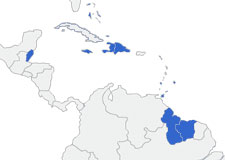
Of the 30 member-states that constitute the Caribbean, only these two – Puerto Rico (PR) and the US Virgin Islands (USVI) – gets American culture, commerce and systems of governance. So any plan to elevate the Caribbean region must also consider the legal and constitutional mandates of the US. The First Steps for these US Territories would be an Interstate Compact.

This is not good; these lands find themselves between a rock and a hard place! See VIDEO here:

AM JOY Posted 10/14/17 – Puerto Rico and U.S. Virgin Islands: Part of U.S.
As Puerto Rico and the U.S. Virgin Islands struggle to recover, Joy Reid speaks with residents and political leaders about why hurricane relief has been slower in these American territories.

What is really sad is that these territories have no vote and therefore no voice in the process to find solutions. (Territories have no vote in Congress, only formal States).

This commentary is Part 3 of a 6-part series from the movement behind the book Go Lean … Caribbean in consideration of the First Steps for instituting a new regime in governance for the Caribbean homeland. The other commentaries in the series are cataloged as follows:

  1. First Steps: EU – Free European Money – To Start at Top
  2. First Steps: UK – Dignified and Efficient
  3. First Steps: US – Congressional Interstate Compacts – No Vote; No Voice
  4. First Steps: CariCom – One-Man-One-Vote Defects
  5. First Steps: Deputize ‘Me’! 
  6. First Steps: A Powerful C.P.U.

All of these commentaries relate to “how” the Caribbean can finally get started with adapting the organizational structures to optimize the region’s societal engines. The Caribbean is in North America and the US is the Big Dog of the region. So any consideration for leading from the Top must partner with American stakeholders. Though these considerations only apply to the 2 US territories, there are lessons for all the Caribbean, as we can glean wisdom and insight on how a roadmap can reform and transform the Caribbean member-states so that they can be better places to live, work and play.

The book Go Lean…Caribbean – available to download for free – serves as a roadmap for the introduction and implementation of the technocratic Caribbean Union Trade Federation (CU), for the elevation of Caribbean society – for all 30 member-states, including the US Territories. This CU/Go Lean roadmap has these 3 prime directives:

  • Optimization of the economic engines in order to grow the regional economy and create new jobs; (how about 2.2 million).
  • Establishment of a security apparatus to ensure public safety and protect the resultant economic engines.
  • Improve Caribbean governance to support these engines, including a separation-of-powers between the member-states and CU federal agencies. (CU federal is not to be confused with US federal; these are different entities).

The book stresses that reforming and transforming the Caribbean societal engines must be a regional pursuit. This was an early motivation for the roadmap, as pronounced in the opening Declaration of Interdependence (Pages 12 – 13):

xi. Whereas all men are entitled to the benefits of good governance in a free society, “new guards” must be enacted to dissuade the emergence of incompetence, corruption, nepotism and cronyism at the peril of the people’s best interest. The Federation must guarantee the executions of a social contract between government and the governed.

xvi. Whereas security of our homeland is inextricably linked to prosperity of the homeland, the economic and security interest of the region needs to be aligned under the same governance. Since economic crimes … can imperil the functioning of the wheels of commerce for all the citizenry, the accedence of this Federation must equip the security apparatus with the tools and techniques for predictive and proactive interdictions.

xxiii.  Whereas many countries in our region are dependent Overseas Territory of imperial powers, the systems of governance can be instituted on a regional and local basis, rather than requiring oversight or accountability from distant masters far removed from their subjects of administration. The Federation must facilitate success in autonomous rule by sharing tools, systems and teamwork within the geographical region.

xxiv. Whereas a free market economy can be induced and spurred for continuous progress, the Federation must install the controls to better manage aspects of the economy: jobs, inflation, savings rate, investments and other economic principles. Thereby attracting direct foreign investment because of the stability and vibrancy of our economy.

The Go Lean book provides 370-pages of turn-by-turn instructions for a Way Forward, a guide on “how” to adopt new community ethos, plus the strategies, tactics, implementations and advocacies to execute so as to reboot, reform and transform the societal engines of Caribbean society. One advocacy in the book (Page 244) is entitled “10 Ways to Impact US Territories“; this allows for the delivery of best practices to introduce the new CU regime. Washington would be considered an “overseas master” for Caribbean stewardship. Though they do not need the CU to impact the US – notwithstanding the Diaspora living there – there is the need for this CU treaty to impact the efficiency of these American territories.

St Johns, US Virgin Islands

Forging change in the American Caribbean territories means starting at the Top (leaders) and starting at the Bottom (citizens). But the leaders in Puerto Rico and the USVI cannot engage any cross-border initiatives without the US Congress; this is the premise of Interstate Compacts; these are necessary to partner with American stakeholders across borders and State-lines. See the full details on these Compacts in the Appendix Reference below.

Imagine the irony …
The people of the American Caribbean cannot even vote on the empowerments necessary to assuage their own crises; they have no self-determination. Yes, each territories have a non-voting member in House of Representatives of the US Congress, but because the representative is non-voting makes him/her inconsequential to other voting representatives; their voice is muted. In addition, there is no representation at all in the US Senate; truly no voice.

The Action Plan in this new Caribbean regime, this Way Forward, wants to put the Caribbean destiny in the hands of Caribbean stakeholders. This is only fair … and just. This is not our opinion alone; none other than the United Nations have made this declaration. In a previous Go Lean blog-commentary, this fact was revealed, as follows:

Many others – including the United Nations, who have declared PR technically “a colony” – feel that the Puerto Rico-Washington relationship is dysfunctional, that there should be a friendly divorce.

Other blog-commentaries detailed the challenges and crises of life in Puerto Rico and the US Virgin Islands; see sample here:

https://goleancaribbean.com/blog/?p=13391 After Maria, Destruction and Defection for Puerto Rico
https://goleancaribbean.com/blog/?p=12959 After Irma, America Should Scrap the ‘Jones Act’
https://goleancaribbean.com/blog/?p=12274 State of the Union – Spanish Caribbean
https://goleancaribbean.com/blog/?p=12126 Commerce of the Seas – Stupidity of the Jones Act
https://goleancaribbean.com/blog/?p=11963 Oscar López Rivera: The ‘Nelson Mandela’ of the Caribbean? Not!
https://goleancaribbean.com/blog/?p=11647 Righting a Wrong: Puerto Rico’s Bankruptcy
https://goleancaribbean.com/blog/?p=10771 Logical Addresses – ‘Life or Death’ Consequences
https://goleancaribbean.com/blog/?p=6867 How to address high consumer prices
https://goleancaribbean.com/blog/?p=6693 Ten Puerto Rico Police Accused of Criminal Network
https://goleancaribbean.com/blog/?p=4551 US Territories – Between a ‘rock and a hard place’
https://goleancaribbean.com/blog/?p=599 Ailing Puerto Rico open to radical economic fixes

The US Territories of PR and the USVI should lean-in to this Go Lean roadmap – in fact all Caribbean stakeholders should lean-in – in order to be better, here in the Caribbean, to make our homeland better places to live, work and play. 🙂

Download the free e-book of Go Lean … Caribbean – now!

Sign the petition to lean-in for this roadmap for the Caribbean Union Trade Federation.

============

Appendix: Congressional Consent and the Permission for States to Enter into Interstate Compacts
By: Steven Blevins

When our Founding Fathers wrote the Constitution, they included language that grants states the authority to enter into interstate agreements to achieve a common purpose. This directive, found in Article I, Section 10, Clause 3 of the Constitution, is known as the Compacts Clause. In it, the founders asserted, in part, that “no state shall, without the consent of Congress enter into any agreement or compact with another state, or with a foreign power.”1 This often-overlooked clause of the Constitution also grants Congress the power to approve or deny the validity of a compact—a concept called congressional consent.

The founders included the compact clause in the Constitution to protect the dual-sovereign nature of the democratic government structure, while also promoting the ability of the states to cooperatively solve problems. While the Founding Fathers believed interstate cooperation was an important and necessary feature of American democracy, they feared states would use this authority to enter into agreements that would alter the federal balance of power. To avoid such an event, the compact clause instructs states entering into interstate compacts to obtain congressional consent for the agreement to be valid.

Types of Compacts Requiring Congressional Approval
A literal interpretation of the compact clause would conclude all interstate agreements must obtain the approval of Congress before they take effect and carry the weight of law. The Supreme Court, however, has ruled that “any” does not mean “all” in the context of interstate compacts and congressional consent. To clear up the ambiguity of the compact clause, the U.S. Supreme Court in Virginia v. Tennessee held that Congress must approve only two types of compacts:

  • Those compacts that alter the balance of political power between the state and federal government; or
  • Those compacts that intrude on a power reserved to Congress.

Thus, when a compact does not touch on either of those two items, the courts have ruled the federal government does not have a direct interest in the compact and congressional consent is not technically required.2 Essentially, if federal supremacy is threatened, then congressional consent is required for the compact to be valid. On the other hand, if federal supremacy is not threatened, then an absence of congressional consent will not render the compact invalid.

Categories of Congressional Consent
Noticeably absent from the compact clause are specific procedures the states must follow to obtain consent and Congress must follow when granting it. Although the text of the Constitution is void of any specific direction, it is generally understood that Congress specifies consent in one of three ways:

  1. Explicitly
    Most frequently seen in compacts that resolve boundary disputes, this type of consent is granted after the compact has been adopted by the requisite number of state legislatures and is submitted by the member states to Congress for approval. In these instances, Congress is able to review, amend and/or revise the agreement and, as a result, is able to provide a clear determination of approval or disapproval. Therefore, explicit congressional consent is sometimes considered desirable, even if it is not strictly required at the time the compact is created.
  2. Implicitly
    Most notably seen in the form of border compacts, which establish or alter the boundaries of a state as result of conflicting territorial claims, congressional consent may be implied when actions by the states and federal government demonstrate approval of the compact.3Such actions usually include federal legislation supporting the terms of a compact or legislation that strengthens the objective of a specific compact. Given its uncertain nature, implied consent should not be assumed by compacting states.
  3. Pre-emptively
    Congress may give its approval in advance by adopting legislation encouraging states to enter into an interstate compact for a specific purpose.4In these instances, Congress grants consent before the compact reaches critical mass, meaning that once the required number of states adopts the compact, it becomes enforceable. While pre-emptive consent deprives Congress the opportunity to review the compact and its objectives once it is drafted, it often encourages states to cooperatively resolve a policy challenge they otherwise might not have addressed.
    There are also several recent examples of Congress pre-emptively granting states consent to explore the use of interstate compacts. Notable examples include the Environmental Protection Act of 2005, which granted three or more contiguous states the right to enter into an electric transmission line siting compact, and the Nonadmitted Insurance and Reinsurance Act contained in the Dodd-Frank Wall Street Reform and Consumer Protection Act of 2010, which encouraged states to explore the use of interstate compacts to create uniformity in the surplus lines insurance industry. The Council of State Governments, through its National Center for Interstate Compacts, has assisted states in exploring the appropriateness of an interstate compact to address each of the challenges highlighted above.

The process of congressional approval mirrors that of the legislative approval process of any other federal statute. The House or Senate introduces compact bills, but both congressional bodies must approve it, and the president must sign the compact into law.

Withholding Consent
Congressional consent is a political judgment rather than a legal judgment —essentially a gratuitous action by Congress.5 With this notion in mind, Congress may withhold consent when it feels approval may lead to “imprudent combinations, dangerous joint action or intrusion on traditional federal matters” or “has the potential to alter the balance of power between the states and federal government.”6 Congress faces essentially no limitations in its authority to grant or withhold consent.

When presented with a compact seeking adoption, Congress has the authority to either deny approval or alter the compact as presented by the states by imposing various limitations and conditions on the compact or the member states. If Congress does amend the compact, however, member states are not required to adopt the revised compact. If the member states choose to adopt the amended legislation, they concede to Congress’ changes to the compact.7

Congress’ Ability to Amend, Withdraw or Repeal Congressional Consent
If Congress so chooses, it may amend or “change the landscape” of a compact via legislation.8 In fact, “the granting of congressional consent in no way limits Congress’s right to exercise its legislative prerogatives, even to the extent that such an exercise significantly impacts or impairs the workings of an interstate compact.”9 Additionally, the binding authority of interstate compacts approved by Congress is important. Once Congress grants consent, all compacting states are bound to the terms of the agreement. “While congressional consent may transform an interstate compact into federal law, consent does not transform a compact into a binding agreement between the states and Congress.”10

Two federal court decisions provide guidance about whether Congress may withdraw consent. In Tobin v. United States11 and Mineo v. Port Authority of New York-New Jersey,12 the court held that once congressional consent was given, Congress could not withdraw consent nor place additional stipulations on the compact. Congress can, however, work around this legal requirement by amending the proposed compact in a way that specifically enables it to withdraw consent at a future date. The judiciary has not made any declaration on whether such a maneuver is legal.13 The courts have, however, noted that withdrawing consent after the fact “would be damaging to the very concept of interstate compacts.”14

Federalization of Interstate Compacts
Once Congress grants consent, a compact then becomes federal law. In the case of Cuyler v. Adams,15 the court articulated congressional consent “transforms the States’ agreement into federal law under the Compact Clause.”16 Thus, “once Congress gives consent, the compact is presumptively transformed into the law of the United States absent compelling evidence that consent was not required.”17

This transformation from state-created agreement into federal law is unique. In no other context does a state law become “federalized” with such miniscule influence by the federal government than in the congressional approval of interstate compacts. This “transformation” effect also places the compact within the scope of federal jurisdiction while insulating the compact from constitutional attack.18

———–

For more information about congressional consent of interstate compacts, when it is appropriate and how to go about seeking it, please visit NCIC’s website at www.csg.org/compacts.

References:

1 U.S. Constitution, Art. I, Sec. 10, Cl. 3.

U.S. Steel Corp. v. Multistate Tax Commission, 434 U.S. 452 (1978).

3 See , e.g., Georgia v. South Carolina, 4 97 U.S. 376 (1990), wherein Georgia brought suit against South Carolina over the location of their boundary along the Savannah River; Michigan v. Wisconsin, 270 U.S. 295, 308 (1926), wherein suit was brought to determine the boundary between Michigan and Wisconsin from the mouth of the Montreal river at Lake Superior to this ship channel entrance from Lake Michigan into Green Bay; Vermont v. New Hampshire, 289 U.S. 593 (1933), wherein Vermont brought suit against New Hampshire over the determination of the boundary line with involving the Connecticut River.

Petty v. Tennessee-Missouri Bridge Commission, 359 U.S. 275, 281-82 (1959).

College Savings Bank v. Florida Prepaid Postsecondary Education Expense Board, 527 U.S. 666 (1999) “Granting of consent is a gratuity on the part of Congress not a right that the states possess under the Constitution.”

6 Broun, Caroline N., Buenger, Michael L., McCabe, Michael H., & Masters, Richard L. (2006) p. 41. “The Evolving Use and the Changing Role of Interstate Compacts: A Practitioner’s Guide.” Chicago: American Bar Association.

7 Broun, et al. p. 43-7. Also see Arizona v. California, 373 U.S. 546 (1963).

8 Broun, et al. p. 43. Also see Arizona v. California, 373 U.S. 546 (1963). Also see Merrion v. Jicarilla Apache Tribe, 455 U.S. 130, 148 (1982) “Contractual arrangements remain subject to subsequent legislation by the presiding sovereign.”

9 Broun, et al. p. 43. Also see, Arizona v. California, 373 U.S. 546 (1963) wherein the Supreme Court held Congress acted within its realm of authority when it created a plan to manage and operate the Colorado River even though it had previously granted consent to the Colorado River Compact whose purpose was to assist in the management and operation of the body of water.

10 Broun, et al. p. 44.

11 Tobin v. United States, 306 F.2d 270, 273 (D.C. Cir. 1962).

12 Mineo v. Port Authority of New York-New Jersey, 779 F.2d 939 (3d Cir. 1985).

13 Broun, et al. p. 43.

14 Tobin v. United States, 306 F.2d 270, 273 (D.C. Cir. 1962).

15 Cuyler v. Adams, 449 U.S. 433 (1981).

16 Ibid.

17 Broun, et al. p. 43. Also see Old Town Trolley Tours of Wash. V. Wash. Metro. Area Transit Commission,129 F.3d 201, 204 (D.C. Cir.1997); Reed v. Farley, 512 U.S. 339 (1994).

18 Broun, et al. p. 56.

Source: The Council of State Governments; posted July 5, 2011; retrieved January 20, 2018 from: http://knowledgecenter.csg.org/kc/content/congressional-consent-and-permission-states-enter-interstate-compacts

Share this post:
, , ,

First Steps – Following the ‘Dignified and Efficient’ British Model

Go Lean Commentary

Of the 30 member-states that constitute the Caribbean, the highest count of the 4 language groups is English – 18 territories. The British eco-system assimilated these 18 lands with the English language, culture, commerce and systems of governance.

This commentary is Part 2 of a 6-part series from the movement behind the book Go Lean … Caribbean in consideration of the First Steps for instituting a new regime in governance for the Caribbean homeland. The other commentaries in the series are cataloged as follows:

  1.  First Steps: EU – Free European Money – To Start at Top
  2.  First Steps: UK – Dignified and Efficient
  3.  First Steps: US – Congressional Interstate Compacts – No Vote; No Voice 
  4.  First Steps: CariCom – One-Man-One-Vote Defects 
  5.  First Steps: Deputize ‘Me’! 
  6.  First Steps: A Powerful C.P.U.

All of these commentaries relate to “how” the Caribbean can finally get started with adapting the organizational structures to optimize the region’s societal engines. This is the consideration of leading from the Top. This would apply to the Anglophone Caribbean, who all operate on constitutional structures based on the English Constitution or Westminster. But there are lessons for all the Caribbean, as we can glean how the Go Lean roadmap can reform and transform the Caribbean member-states so that they can be better places to live, work and play.

So looking at the British model for governance – where Queen Elizabeth II is the Head of State – means considering the concepts of “the Dignified and the Efficient”, as defined in the book The English Constitution by Walter Bagehot:

What was crucial, he [(Bagehot)] insisted, was to understand the difference between the ‘dignified parts’ of the constitution and the ‘efficient parts’ (admitting that they were not ‘separable with microscopic accuracy’). The former ‘excite and preserve the reverence of the population’, the latter are ‘those by which it, in fact, works and rules’.

England had a ‘double set’ of institutions – the dignified ones ‘impress the many’ while the efficient ones ‘govern the many’. The dignified or ‘theatrical’ parts of the system played the essential role of winning and sustaining the loyalty and confidence of the mass of ordinary people whose political capacities were minimal or non-existent they helped the state to gain authority and legitimacy, which the efficient institutions could then use. Bagehot was an unashamed elitist who believed bleakly that the ‘lower orders’ and the ‘middle orders’ were ‘narrow-minded, unintelligent, incurious’. Throughout The English Constitution, there are references to ‘the coarse, dull, contracted multitude’, ‘the poor and stupid’, ‘the vacant many’, ‘the clownish mass’.
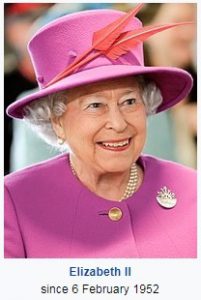
The dignified parts of the constitution were complicated, imposing, old and venerable; but the efficient parts were simple and modern. The ‘efficient secret’ at the heart of it all was ‘the close union’ and ‘nearly complete fusion’ of executive and legislative powers in the Cabinet – the ‘board of control’ which rules the nation. ‘The use of the Queen, in a dignified capacity, is incalculable’, opened the chapters of the book dealing with the monarchy. It acted as a ‘disguise’ and strengthened the government through its combination of mystique and pageantry. He famously summed up the monarch’s role as involving ‘the right to be consulted, the right to encourage, the right to warn’. – Source.

Under the British system, there is a lot of pomp-and-pageantry – theatrics. This is the sphere of the monarchy, as the Royal Family performs all the ceremonial functionality – think: launching ships, grand openings, receiving ambassadors, etc.. The government – Cabinet, Prime Minister’s Office, etc. – on the other hand perform the governing efficiency – there is a separation-of-powers between “the Dignified and the Efficient”. There is advantage to a structure of delivery specialization; it allows for laser-focus and minimal distractions. This is the beauty of a technocracy.

The book Go Lean…Caribbean – available to download for free – serves as a roadmap for the introduction and implementation of the technocratic Caribbean Union Trade Federation (CU), for the elevation of Caribbean society – for all member-states. The book (Page 64) cited the model of monarchies in the design of this Trade Federation:

Model of Constitutional Monarchy
Despite hundreds of years of government evolutions with the Republic system, there are still many modern democracies that maintain constitutional monarchies (i.e. UK, Netherlands, Spain & Canada). Their preference is justified in the logic where a President may only be respected by his party. Rather, a technocratic monarch (King or Queen) must transcend party politics and rule for the betterment of all subjects. (Queen Elizabeth II has ruled for 60 years out of a sense of duty).

A political climate is simply inescapable, with classic democracies – see the VIDEO on the Queen wielding apolitical power in the Appendix below. The goal of the Go Lean/CU roadmap is simply to govern better, to be …

Apolitical – Loved by All
Partisan politics can lead to scenarios where politicians refuse to execute their constitutional mandates; just out of spite of each other …. Even worst, when political sides are so polarized, dreaded consequences can ensue, like civil wars (think: US conflict over slavery in 1860). A technocracy seeks a better governing system, one in which the administration is apolitical and therefore the potential to be loved by all; or equally despised by all (think: Greek Austerity in 2012). Thus, technocracies are more patriotic than political.

Considering “Dignified” versus “Efficient”, there is no “dignified” role with the CU structure, just apolitical efficiency. The pomp-and-pageantry remains with the member-states. Overall, this Go Lean/CU roadmap seeks to deliver on just one efficient charter, to elevate Caribbean society; this is expressed as a prime directives, with these 3 statements:

  • Optimization of the economic engines in order to grow the regional economy to $800 Billion and create 2.2 million new jobs.
  • Establishment of a security apparatus to ensure public safety and protect the resultant economic engines.
  • Improvement of Caribbean governance to support these engines, including our own separation-of-powers between the member-states and CU federal agencies. Any existence of Dignified would be found at member-states; the CU is only efficient.

The book stresses that reforming and transforming the Caribbean societal engines must be a regional pursuit. This was an early motivation for the roadmap, as pronounced in the opening Declaration of Interdependence (Pages 12 – 13):

xi. Whereas all men are entitled to the benefits of good governance in a free society, “new guards” must be enacted to dissuade the emergence of incompetence, corruption, nepotism and cronyism at the peril of the people’s best interest. The Federation must guarantee the executions of a social contract between government and the governed.

xvi. Whereas security of our homeland is inextricably linked to prosperity of the homeland, the economic and security interest of the region needs to be aligned under the same governance. Since economic crimes … can imperil the functioning of the wheels of commerce for all the citizenry, the accedence of this Federation must equip the security apparatus with the tools and techniques for predictive and proactive interdictions.

xxiii.  Whereas many countries in our region are dependent Overseas Territory of imperial powers, the systems of governance can be instituted on a regional and local basis, rather than requiring oversight or accountability from distant masters far removed from their subjects of administration. The Federation must facilitate success in autonomous rule by sharing tools, systems and teamwork within the geographical region.

xxiv.  Whereas a free market economy can be induced and spurred for continuous progress, the Federation must install the controls to better manage aspects of the economy: jobs, inflation, savings rate, investments and other economic principles. Thereby attracting direct foreign investment because of the stability and vibrancy of our economy.

Reforming and transforming the Caribbean member-states means including the governing stakeholders for all Anglophone territories. Of the 18, 17 require some interaction with the UK Foreign & Commonwealth Office – see Appendix below – to enact new laws; (Trinidad & Tobago is now a Republic). Imagine the challenge of this UK Commonwealth Office … now … and over the last 5 decades. They have had to manage both the “Dignified” and the “Efficient” for all the British territories in the Caribbean and watch one territory after another pursue independence.

Note: Governor Generals in the independent countries, despite the official job descriptions of representing the Head of State – The Queen – do not actually report directly to the Queen, but rather to this UK Commonwealth Office. See this functionality of the UK Commonwealth outreach in this Press Release here:

Press Release: PM to call for revitalised Commonwealth at reception ahead of 2018 Heads of Government Meeting

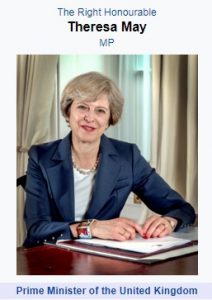
Posted 19 September 2017 – From: Prime Minister’s Office, 10 Downing Street and The Rt Hon Theresa May MP

The Prime Minister will co-host a reception for Commonwealth leaders tonight in the margins of the UN General Assembly in New York where she will set out the need for a wholesale revitalisation of the Commonwealth if it is to thrive and serve its 2.4 billion citizens into the 21st century.

She will also launch the theme for the 2018 Commonwealth Heads of Government Meeting – Towards a Common Future – and set out the four main goals for the summit, due to be held in the UK next spring:

  • prosperity: boosting intra-Commonwealth trade and investment
  • security: increasing cooperation across security challenges including global terrorism, organised crime and cyber attacks
  • fairness: promoting democracy, fundamental freedoms and good governance across the Commonwealth
  • sustainability: building the resilience of small and vulnerable states to deal with the effects of climate change and other global crises

The biggest meeting of Heads of Government the UK has ever hosted, the summit will take place in iconic venues in London and Windsor including Buckingham Palace, St James’s Palace and Windsor Castle from 16-20 April 2018. It will bring together up to 52 Commonwealth leaders, up to 52 Foreign Ministers and thousands of people from across business and civil society, representing the Commonwealth’s vibrant and diverse global network.

Also speaking at the reception will be co-host Prime Minister Muscat of Malta as the current Commonwealth chair, the Commonwealth Secretary-General, and youth representatives drawn from across the Commonwealth who will help to deliver the Commonwealth Youth Forum at next year’s summit.

In her speech, the Prime Minister will outline the need for the Commonwealth to have a clearer purpose, and be better able to address the global challenges we face. With 60% of its population under 30, she will also talk about the need for the Commonwealth to respond to the concerns and priorities of its young people.

Speaking ahead of the reception, the Prime Minister said:

    As the world changes, so must the Commonwealth if it is to rise to the new challenges that the 21st century presents. It is the responsibility of all members to ensure we are working together towards a common future that will meet the needs of all our peoples, particularly our youth. I look forward to this unique organisation coming together at next year’s Heads of Government Meeting to pursue an ambitious agenda for a more prosperous, secure, fair and sustainable future for everyone.

Source: Retrieved January 18, 2018 from: https://www.gov.uk/government/news/pm-to-call-for-revitalised-commonwealth-at-reception-ahead-of-2018-heads-of-government-meeting

While we appreciate London’s efforts, the Caribbean is proposing its own Way Forward with the CU as part of a new regime.

The Go Lean book provides 370-pages of turn-by-turn instructions for a Way Forward, a guide on “how” to adopt new community ethos, plus the strategies, tactics, implementations and advocacies to execute so as to reboot, reform and transform the societal engines of Caribbean society. One advocacy in the book is entitled “10 Ways to Impact British Territories“; this allows for the delivery of best practices to introduce the new CU regime. London would be considered an “overseas master” for Caribbean stewardship. While the UK is one of the biggest (richest) economies in the world, British economic prosperity has not always extended to these islands. Though they do not need the CU to impact the United Kingdom – notwithstanding the Diaspora living there – there is the need for this CU treaty to impact efficiency of all the Anglophone nations and Overseas Territories.

The Go Lean/CU roadmap does not override the sovereignty of the 30 member-states. So this foregoing Dignified role continues. The CU is simply a deputized agency for delivering the apolitical efficiency of the Social Contract.

According to the Go Lean book (Page 96), the roadmap calls for the functionality of “assembling” all the regional stakeholders in the Caribbean into the Trade Federation, including the “overseas masters” during the first year of the confederation plan. We cannot just consider Europe as a singularity. No, for the United Kingdom has voted to divorce themselves from the European Union construct.

So we want to make our homeland a better place to live, work and play, and our “overseas masters” want our Caribbean nations to be elevated, all we need now is the “will and the way”. We urge all to lean-in to this roadmap for change and empowerment. 🙂

Download the free e-Book of Go Lean … Caribbean – now!

Sign the petition to lean-in for this roadmap for the Caribbean Union Trade Federation.

————

Appendix – UK Foreign and Commonwealth Office

The Foreign and Commonwealth Office (FCO), commonly called the Foreign Office, is a department – [agency to exercise executive authority] – of the Government of the United Kingdom. It is responsible for protecting and promoting British interests worldwide. It was created in 1968 by merging the Foreign Office and the Commonwealth Office.

The head of the FCO is the Secretary of State for Foreign and Commonwealth Affairs, commonly abbreviated to “Foreign Secretary” (currently Boris Johnson, who took office on 13 July 2016). This is regarded as one of the four most prestigious positions in the Cabinet– the Great Offices of State – alongside those of Prime MinisterChancellor of the Exchequer and Home Secretary.

The FCO is managed from day to day by a civil servant, the Permanent Under-Secretary of State for Foreign Affairs, who also acts as the Head of Her Majesty’s Diplomatic Service. This position is held by Sir Simon McDonald, who took office on 1 September 2015.

Source: Wikipedia Online Reference retrieved January 18, 2018 from: https://en.wikipedia.org/wiki/British_government_departments


————

Appendix VIDEO – What Powers Does the Queen of England Actually Have? – https://youtu.be/wiDCwqpupj8

Today I Found Out

Published on Jul 21, 2017 – A short while ago we wrote about the fact Queen Elizabeth II needs neither a passport nor driving license thanks to a quirk of British law. But what other powers does the Queen of many titles have and what could she theoretically do if she decided to flex the full might of the authority she wields? As it turns out, thanks to the Royal Prerogative, a terrifying amount if she really felt like it, or, at least, assuming parliament went by the letter of the law and they and the people didn’t decide to stage a little revolt.

  • Category: Education
  • License: Standard YouTube License
Share this post:
, ,
[Top]

First Steps – Free European Money – To Start at Top

Go Lean Commentary

Do I look like I have a plan? – Sarcasm by ‘The Joker’, the villain advocating for anarchy in the 2008 movie Batman: The Dark Knight

Most definitely, yes we do!

Despite the reality of a regional crisis, there is a plan to stop the bad trend of Caribbean people abandoning their homeland and emigrating away to North American and European destinations. Consider these thoughts:

  1. Do you know the Golden Rule; it’s he who has the gold that makes the rules.
  2. In the best control conditions of time, temperature and pressure, people will do … as they damn well please.

This is the conundrum of forging change in Caribbean society; where do we start, the Top (leaders) or the Bottom (people)?

The book Go Lean…Caribbean – available to download for free – declares: Both!

The fact that both approaches must be engaged at the same time depicts both a Top-Down plan plus a Bottoms-Up plan. The quest is that Caribbean society must change – if it is to survive – so either and both approaches are pursued.

Yes, we can …

The book serves as a roadmap for the introduction and implementation of the technocratic Caribbean Union Trade Federation (CU), for the elevation of Caribbean society – for all member-states. This CU/Go Lean roadmap has these 3 prime directives:

  • Optimization of the economic engines in order to grow the regional economy to $800 Billion and create 2.2 million new jobs.
  • Establishment of a security apparatus to ensure public safety and protect the resultant economic engines.
  • Improve Caribbean governance to support these engines, including a separation-of-powers between the member-states and CU federal agencies.

This commentary is the first of a 6-part series from the movement behind the book Go Lean … Caribbean in consideration of the First Steps for instituting this new regime for the Caribbean homeland. The other commentaries in the series are cataloged as follows:

  1.     First Steps: EU – Free European Money – To Start at Top
  2.     First Steps: UK – Dignified and Efficient
  3.     First Steps: US – Congressional Interstate Compacts – No Vote; No Voice
  4.     First Steps: CariCom – One-Man-One-Vote Defects
  5.     First Steps: Deputize ‘Me’!
  6.     First Steps: A Powerful C.P.U.

All of these commentaries relate to “how” the Caribbean can finally get started with adapting the organizational structures to optimize the region’s societal engines. This is the consideration of leading from the Top. This conforms with the Go Lean quest to reform and transform the Caribbean member-states so that they can be better places to live, work and play. Then, only then, can we stop the bad trend of our people emigrating away to North American and European destinations.

Where there is no vision, the people perish. – The Bible Proverbs 29:18.

In a previous Go Lean commentary, it related:

Yes, the societal defects of the Caribbean can be fixed – remediated and mitigated – but “if it is going to be, it starts with me”; it is necessary for all stakeholders to engage in the effort to turn-around the Caribbean. To forge change, the region must consider top-down and bottoms-up approaches, so we need the multitude of Caribbean people (bottoms-up) and politicians and community leaders (top-down) to lean-in to this quest to turn-around the community. Yes, it starts with “me”, as in everyone.

The people of the Caribbean are more ordinary than they are extraordinary, they just want what everyone else wants: opportunities, peace & security, good stewardship, and the fulfillment of the Social Contract (implication that people will surrender their natural rights to the State in exchange for protection of other human and civil rights).

People deserve this and demand this – they will petition their leaders, cry-and-complain, and even take to streets if necessary. But once these Social Contract deliverables are delivered, Caribbean people will do what people everywhere do: comply with any new regime. This is the plan to lead from the Bottom – demand change – this is the easy part, leading from the Top on the other hand is the mystery.
This is easier said than done…

The Go Lean book stresses that reforming and transforming the Caribbean societal engines must be a regional pursuit. This was an early motivation for the roadmap, as pronounced in the opening Declaration of Interdependence (Pages 12 – 13):

xi. Whereas all men are entitled to the benefits of good governance in a free society, “new guards” must be enacted to dissuade the emergence of incompetence, corruption, nepotism and cronyism at the peril of the people’s best interest. The Federation must guarantee the executions of a social contract between government and the governed.

xvi. Whereas security of our homeland is inextricably linked to prosperity of the homeland, the economic and security interest of the region needs to be aligned under the same governance. Since economic crimes … can imperil the functioning of the wheels of commerce for all the citizenry, the accedence of this Federation must equip the security apparatus with the tools and techniques for predictive and proactive interdictions.

xxiv. Whereas a free market economy can be induced and spurred for continuous progress, the Federation must install the controls to better manage aspects of the economy: jobs, inflation, savings rate, investments and other economic principles. Thereby attracting direct foreign investment because of the stability and vibrancy of our economy.

The Go Lean book provides 370-pages of turn-by-turn instructions on “how” to adopt new community ethos, plus the strategies, tactics, implementations and advocacies to execute so as to reboot, reform and transform the societal engines of Caribbean society. (One implementation is the assembly of all regional organizations and “overseas masters”: French, Dutch and British authorities, separately and in concert with the European Union).

This all sounds good, but what do “we” do next … or first, since the CU Trade Federation is not currently in force?

Accordingly, the strong urging here is to “follow the money”! There are available grants from organizations like the EU to conform, comply and “confederate as a regional entity to bring about change”. Yes, the EU provides Aid for Trade between the Caribbean and the EU. To strengthen the competitiveness of economic operators as well as the integration process of our countries in the global economy, the EU provides development cooperation in the region.

Note: The Caribbean region following the EU’s lead automatically includes the EU’s Caribbean jurisdictions: Dutch and French sovereign territories (17 lands). CARIFORUM – see below – includes 15 other nations. So these efforts are intended to be Caribbean-universal.

See a sample reference here, with excerpts from the European Union Commission website – and a related Pro-Con discussion VIDEO:

Title: European Commission Trade Policy for the Caribbean
The EU’s trade and development partnership with the Caribbean stretches back over more than 30 years. In October 2008 Antigua and Barbuda, The Bahamas, Barbados, Belize, Dominica, Grenada, Guyana, Jamaica, Saint Lucia, Saint Vincent and the Grenadines, Saint Kitts and Nevis, Surinam, Trinidad, Tobago, and the Dominican Republic signed with the EU the CARIFORUM-EU Economic Partnership Agreement. Haiti signed the agreement in December 2009, but is not yet applying it pending ratification.

The agreement also comes with substantial EU aid for trade.

The purpose of the agreement is to make it easier for people and businesses from the two regions to invest in and trade with each other and thus to help Caribbean countries grow their economies and create jobs.

The EU-CARIFORUM Economic Partnership in Practice

Trade picture
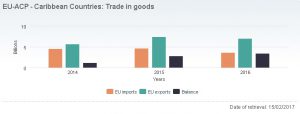
The EU is CARIFORUM’s second largest trading partner, after the US. CARIFORUM runs a trade deficit with the EU. In other words, CARIFORUM countries export less in goods and services to the EU than they import from the EU.

The main exports from the Caribbean to the EU are in:

  • fuel and mining products, notably petroleum gas and oils;
  • bananas, sugar and rum;
  • minerals, notably gold, corundum, aluminium oxide and hydroxide, and iron ore products;
  • fertilisers.

The main imports into the Caribbean from the EU are in:

  • boats and ships, cars, constructions vehicles and engine parts;
  • phone equipment;
  • milk and cream;
  • spirit drinks.

EU and Caribbean
Economic Partnership Agreements set out to help African Caribbean and Pacific (ACP) countries to improve their trade. The Economic Partnership Agreement between the EU and the 15 Caribbean countries provides predictability in the market access into the EU for these countries. The agreement will lead to a general opening of the EU market beyond WTO commitments in the services sectors, including creative and entertainment industries. It ensures duty-free-quota-free market access into the EU for all products. With regard to EU exports to the region, EU exports of sensitive products will gradually be liberalised over a period of 25 years. The Economic Partnership Agreement with the EU will make it possible for CARIFORUM companies to set up a commercial presence in the EU.

The Economic Partnership Agreement between the EU and the 15 Caribbean countries  is in part a free trade agreement, or FTA. And like any FTA, it opens up trade in goods between the two regions. But unlike other FTAs, the EU-Caribbean Economic Partnership Agreement goes further. In fact, it’s a wide-ranging partnership putting trade at the service of development.

That is because the agreement:

  • also opens up trade in services and investment;
  • makes it easier to do business in the Caribbean – governments there have made commitments in many areas directly affecting trade, like rules to ensure fair competition;
  • comes with financial support from the EU to help Caribbean:
    • governments implement the accord; and
    • businesses to use the EPA to export more and attract more outside investment.

In recent years CARIFORUM countries have been integrating more closely with each other. This is part of their strategy to play a fuller role in global trade, and to offer the economies of scale and simpler rules which are vital to attract more foreign investment.

The EU-Caribbean Economic Partnership Agreement helps to consolidate this process, by making it easier to export goods and services between:

  • the fourteen countries of the Caribbean Community, or CARICOM, and the Dominican Republic, which together make up CARIFORUM;
  • these fifteen CARIFORUM countries (CARICOM plus the Dominican Republic) and seventeen territories in the Caribbean with direct links to EU countries (four French ‘outermost regions’ and thirteen ‘overseas territories’ – six British, six Dutch and one French)


Trading with Caribbean

This can include support for building new transport, energy or telecommunications infrastructure, investments in agriculture, fisheries and services.

  • Help for exporters from developing countries
    • The EU’s Trade Helpdesk supports small traders in developing countries by helping them access the EU market, and provides information on EU rules and regulations.
    • The International Trade Center (ITC) supports several development projects across the world.
    • The ITC’s Standards Map provides information on standards, codes of conduct and audit protocols for international trade.
    • The Small Traders Capacity Building program supports developing countries in administration, training, and information on tariffs, trade flows, standards, etc.

Source: Retrieved January 16, 2018 from: http://ec.europa.eu/trade/policy/countries-and-regions/regions/caribbean/</a

——–

VIDEO – DISCUSSION | E.U – A.C.P Economic Partnership Agreement – https://youtu.be/la-ZQRfnUrY

Strong Body and Mind

Published on Jun 7, 2016 – E.U – A.C.P Economic Partnership Agreement Economic Partnership Agreements (EPAs) are trade and development agreements negotiated between the EU and African, Caribbean and Pacific (ACP) partners engaged in regional economic integration processes. Take a look at the various arguments, do some research then let me know your thoughts on the subject. European Commission – Economic partnerships: http://ec.europa.eu/trade/policy/coun…

This foregoing reference is not just a document of talking points; it is an actual Action Plan. In fact, the Actions have already manifested in the region, as related in this previous Go Lean blog-commentary describing the EU’s sponsor of Green Energy initiatives in the country of Barbados; they gave 1.12 million Euros (US$1.37 million) towards the advancement of energy self-sufficiency from renewable resources. This is the first payment of a total contribution of 3 million Euros.

Needless to say, EU money comes with strings attached – see the foregoing VIDEO. They are leading the leaders of the Caribbean. This constitutes a Top-Down approach for forging change in society.

Top-Down and Bottoms-Up – this is the First Step! The Go Lean roadmap (Page 96) calls for this functionality – “assembling” all the regional stakeholders in the Caribbean, including the “overseas masters” – for the first year of the confederacy plan. (Since this book was published in 2013, the United Kingdom has divorced themselves from the EU).

Forging change is a common theme by this Go Lean movement. Consider these previous 10 blog-commentaries that detailed approaches for forging change, in reverse chronological order:

  1. Forging Change – Collective Bargaining (April 28, 2017)
  2. Forging Change – Addicted to Home (April 14, 2017)
  3. Forging Change – Arts & Artists (December 1, 2016)
  4. Forging Change – Panem et Circenses (November 15, 2016)
  5. Forging Change – Herd Mentality (October 11, 2016)
  6. Forging Change – ‘Something To Lose’ (November 18, 2015)
  7. Forging Change – ‘Food’ for Thought (April 29, 2015)
  8. Forging Change – Music Moves People (December 30, 2014)
  9. Forging Change – The Sales Process (December 22, 2014)
  10. Forging Change – The Fun Theory (September 9, 2014)

As related in these commentaries, forging change is how the Go Lean roadmap will make our Caribbean homeland a better place to live, work and play. We urge every Caribbean stakeholder to lean-in to this roadmap to elevate the societal engines of the region. 🙂

Download the free e-book of Go Lean … Caribbean – now!

Sign the petition to lean-in for this roadmap for the Caribbean Union Trade Federation.

Share this post:
,
[Top]

Managing ‘Change’ in California

Go Lean Commentary

This is a Big Deal

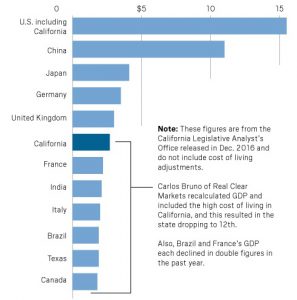
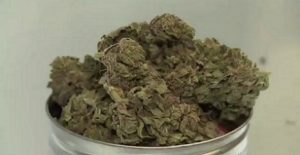
California, the biggest state in the Union (USA) – #6 GDP if ranked as an independent country – has enacted legislation to legitimize recreational marijuana use. Wow, what a ‘change’ to manage! That’s 37 million people, millions of cars and billions of dollars. The implementation of this New Order will surely be heavy-lifting.

For the Caribbean, let’s pay more than the usual attention for lessons learned for our own Big Deal implementation. See the VIDEO on California’s challenge here:

VIDEO – California residents line up to buy recreational marijuana – https://www.today.com/video/california-residents-line-up-to-buy-recreational-marijuana-1127548995762


Posted January 2, 2018 – Vendors in The Golden State began selling recreational marijuana legally on Monday, a milestone moment in the push to legalize marijuana across the country. NBC’s Jacob Soboroff has the report for TODAY from Los Angeles.

Again, California is managing the ‘change’ of implementing the legalization of recreational marijuana use, while the Caribbean needs to implement a roadmap to forge change in its societal engines (economics, security and governance) for the 30 member-states of our region.

The book Go Lean…Caribbean – available to download for free – serves as a roadmap for the introduction and implementation of the technocratic Caribbean Union Trade Federation (CU), for the elevation of Caribbean society – for all member-states. This CU/Go Lean roadmap has these 3 prime directives:

  • Optimization of the economic engines in order to grow the regional economy to $800 Billion and create 2.2 million new jobs.
  • Establishment of a security apparatus to ensure public safety and protect the resultant economic engines.
  • Improve Caribbean governance to support these engines, including a separation-of-powers between the member-states and CU federal agencies.

The State of California is taking on the heavy-lifting of this marijuana legalization while the US federal government continues to consider the drug as illegal. But California is NOT the first state; that distinction belongs to Colorado. The movement behind the Go Lean book has explored Colorado and observed-and-reported on the societal developments there. Notice these main points from a previous blog-commentary entitled – Lessons from Colorado: Legalized Marijuana: Heavy-lifting! – from August 17, 2017:

… in 2017, the phrase “Rocky Mountain High” has a total different meaning, because the State of Colorado has since legalized recreational use of marijuana.

This is not an easy topic; this is heavy …

There are so many lessons we can learn from the debate, legalization, implementation and regulation of this product in this State. All in all, it is heavy-lifting. This is the theme of this series of commentaries of lessons that have been learned by Caribbean stakeholders visiting, observing and reporting on the US State of Colorado.

We have so much in common and so much in contrast. One commonality to consider is how Colorado is now associated with marijuana consumption. …

“Welcome to our club”! This has always been the image of Caribbean people and culture – think: Rasta Man smoking Ganja.

California … Colorado … other states to follow, according to another previous blog-commentary after the last American General Election on November 8, 2016. That submission was entitled – Time to Go: American Vices; Don’t Follow and quoted:

Marijuana legalization is now the norm for 40 percent of the American population. …
Voter measures [passed] in Massachusetts and Nevada. Maine’s referendum was still being counted early Wednesday morning, and Arizona’s was poised to lose. Three other states passed medical marijuana reforms, and a fourth appeared likely to do so. This means that in eight states (plus Washington, D.C.) weed will be legal for recreational purposes, and in sum, 28 will have some kind of legalization on the books.

There will be a lot of security and governing dynamics that these states – like California – will now have to manage, since the process will decriminalize marijuana use, after a long history of criminalization. This is a BIG DEAL considering that many people may be in a penal status – active or parole – for marijuana use or trafficking. Wow, indeed; this is a BIG transformation!

This point too, was addressed in a previous blog-commentary entitled – Marijuana in Jamaica – ‘Puff Peace’:

There are moral, religious, legal and psychological (treatment) issues associated with this topic; and there is history – good and bad. Any jurisdiction decriminalizing the use of marijuana has to contend with the previous messaging to the community of: “Just say no to drugs”.

The [Go Lean] book asserts that before the strategies, tactics, implementations and advocacies of a roadmap to elevate a society can be deployed, the affected society must first embrace a progressive community ethos. The book defines this “community ethos” as the fundamental character or spirit of a culture; the underlying sentiment that informs the beliefs, customs, or practices of society; dominant assumptions of a people or period. Think of the derivative term: “work ethic”.

Marijuana is a mood-altering drug; it has negative effects, one being preponderance for apathy, to tune out of any active engagement. In the US, even in the states where marijuana is legal, most firms/governments still screen staffers (new hires and veterans) and ban consumption of the drug. The reason is simple: Apathy does not make for industriousness.

The Go Lean book provides 370-pages of turn-by-turn instructions on “how” to adopt new community ethos, plus the strategies, tactics, implementations and advocacies to execute so as to transform the societal engines of Caribbean society, regarding the whole drug eco-system. The Go Lean book asserts that every community has bad actors, and with a more liberal-progressive attitude towards a once-illegal drug, community attitudes must be paramount. There must be “new guards” to assuage any threats from this practice on society. This point is pronounced early in the book with the Declaration of Interdependence (Pages 12 – 13) that claims:

x. Whereas we are surrounded and allied to nations of larger proportions in land mass, populations, and treasuries, elements in their societies may have ill-intent in their pursuits, at the expense of the safety and security of our citizens. We must therefore appoint new guards to ensure our public safety and threats against our society, both domestic and foreign. The Federation must employ the latest advances and best practices of criminology and penology to assuage continuous threats against public safety. The Federation must allow for facilitations of detention for [domestic and foreign] convicted felons of federal crimes, and should over-build prisons to house trustees from other jurisdictions.

xi. Whereas all men are entitled to the benefits of good governance in a free society, “new guards” must be enacted to dissuade the emergence of incompetence, corruption, nepotism and cronyism at the peril of the people’s best interest. The Federation must guarantee the executions of a social contract between government and the governed.

xvi. Whereas security of our homeland is inextricably linked to prosperity of the homeland, the economic and security interest of the region needs to be aligned under the same governance. Since economic crimes, including piracy and other forms of terrorism, can imperil the functioning of the wheels of commerce for all the citizenry, the accedence of this Federation must equip the security apparatus with the tools and techniques for predictive and proactive interdictions.

So legalizing marijuana in the BIG market of California will be about more than just managing change, it will also be about managing risks. The Go Lean book relates that managing risk is more than just “One Act”, there is lengthy, engaged process (Page 76):

  • Education
  • Mentoring
  • Monitoring
  • Mitigation
  • Licensing
  • Coordination

Let’s see how this process goes for California. While this state’s independent streak has made it a “maverick” among the other American states – see Independence Movement detailed in this previous blog – this effort with marijuana may be “biting off more than they can chew”. This is truly a BIG DEAL!

We need to pay attention, as there are parallels for California compared to the full Caribbean:

This writer, having lived in California for 10 years, can conclude that California wants the same thing that the Caribbean wants (or should want): to be an elevated society; to be a better homeland, a better place to live, work and play. 🙂

Let’s observe-and-report on these California’s developments and manifestations, their successes and failures.

Download the free e-Book of Go Lean … Caribbean – now!

Sign the petition to lean-in for this roadmap for the Caribbean Union Trade Federation.

Share this post:
, ,
[Top]

Amazon: Then and Now

Go Lean Commentary

Time flies when you are …

Time just flies … PERIOD!

18 years can go by real fast.

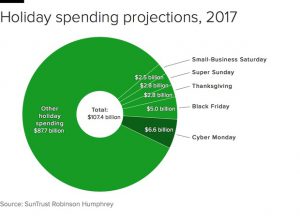
It was only 18 years ago (1999) that Amazon was this small budding company in Seattle, Washington USA. Now today, they are huge … and transforming how America shops … for Christmas and beyond!

Notice the graphic here:

In a previous blog-commentary by the movement behind the book Go Lean … Caribbean, it was asserted that the retail industry – the greatest benefactor of the Christmas holiday shopping tradition with the estimate $107.4 Billion for 2017 – is being threatened by the Retail Apocalypse of e-Commerce in general and the internet-based mover-shaker company of Amazon in particular.

See the story here on Cyber Monday 2017 in the related VIDEO here:

Title Cyber Monday: Who won online shopping’s biggest day?

VIDEO – CNET Surveys Holiday Shopping Trends – https://www.cbsnews.com/videos/cnet-surveys-holiday-shopping-trends/


Published November 28, 2017 – Monday [(November 27)] broke shopping records, becoming America’s largest-ever online shopping day. Some $6.6 billion in sales were generated, according to Adobe Analytics, which tracks 80 percent of online shopping activity. By 10 a.m. Monday, $840 million had already been spent online, Adobe said — a jump of 17 percent from the year before.

Spending on Cyber Monday typically peaks in the evening, between 8 and 11 p.m., and shopping activity during that time on Monday exceeded that of a typical 24-hour day, according to Adobe Analytics.

So where are we spending all that money? In a word: Amazon (AMZN). The e-commerce giant accounts for somewhere between 45 percent and 50 percent of all sales by volume, according to separate estimates from SunTrust Robinson Humphrey and GBH Insights.
….
See the rest of the news article in the Appendix below.

How did they – Amazon – get here … so quickly?

Amazon: Then and Now

See here the width-and-breath of Amazon.com in 1999 in this 60 minutes Interview/Story:

VIDEO – What they said in 1999 about Amazon.com – https://youtu.be/6cTjhzSgdwE

Startup Cat

Published on Nov 20, 2017 – Interview look the year when the internet dotcom bubble burst dramatically. What they were saying about Amazon.com and Jeff Bezos?

Now see the width-and-breath of Amazon today … with this CNBC Feature/Story:

VIDEO – Inside Amazon Empire Documentary 2017 – https://youtu.be/_JnRzt8_YQc

Interesting Facts

Published on Sep 28, 2017 – Inside Amazon Empire Documentary 2017

———-

The Go Lean movement pays more than the usual attention to this “Amazon” business enterprise. We want to copy their good examples … and avoid their bad examples.

This company is a model for the Caribbean’s own venture into e-Commerce. The Go Lean book describes the design for the Caribbean Postal Union and the www.myCaribbean.gov web-portal so as to perform a lot of the same functionality that Amazon does in the USA.

The book Go Lean…Caribbean serves as a roadmap for the introduction and implementation of the technocratic Caribbean Union Trade Federation (CU) and the Caribbean Postal Union (CPU). These entities are designed to address the “Agents of Change“ in modern society, but for a Caribbean scope only.  The “Agents of Change” at play in the foregoing news sources, according to the book (Page 57), are defined as follows:

  • Technology
  • Globalization

Amazon and its CEO Jeff Bezos are role models that we can copy in the Caribbean. It is our assessment that one person can make a difference in society. Look at the impact of this one man – Jeff Bezos – in the fast-time of 18 years, since 1999. These above Agents-of-Change have disrupted Caribbean life in the past; now we need to be our own Change Agents. We need to forge our own change in our society so that we can survive as a culture on the world stage.

The future is not assured if we do not take a hold of our societal engines. We must reboot our industrial landscape to foster new opportunities (jobs, entrepreneurism and industrial development). This is the charter of the CU. In fact, the following 3 statements are identified as the prime directives of this CU charter:

  • Optimization of the economic engines in order to grow the regional economy to $800 Billion & create 2.2 million new jobs.
  • Establishment of a security apparatus to protect the resultant economic engines.
  • Improve Caribbean governance – as e-Commerce alters sales & border taxes – to support these engines.

What Amazon did and does, is the epitome of what the Caribbean Union Trade Federation needs to do to reboot Caribbean society. Amazon disrupted the status quo in so many industries – think: book retailers & movie rentals – and transformed markets to exploit opportunities and derive profits. This is the “Sum of All Caribbean Dreams“.

This reference to Caribbean Dreams is presented early in the Go Lean book with these opening pronouncements in the Declaration of Interdependence (Page 12 – 14):

xv. Whereas the business of the Federation and the commercial interest in the region cannot prosper without an efficient facilitation of postal services, the Caribbean Union must allow for the integration of the existing mail operations of the governments of the member-states into a consolidated Caribbean Postal Union, allowing for the adoption of best practices and technical advances to deliver foreign/domestic mail in the region.

xxiv. Whereas a free market economy can be induced and spurred for continuous progress, the Federation must install the controls to better manage aspects of the economy: jobs, inflation, savings rate, investments and other economic principles. Thereby attracting direct foreign investment because of the stability and vibrancy of our economy.

xxvii. Whereas the region has endured a spectator status during the Industrial Revolution, we cannot stand on the sidelines of this new economy, the Information Revolution. Rather, the Federation must embrace all the tenets of Internet Communications Technology (ICT) to serve as an equalizing element in competition with the rest of the world. The Federation must bridge the digital divide and promote the community ethos that research/development is valuable and must be promoted and incentivized for adoption.

The business models of Amazon have been further elaborated upon in previous blog-commentaries, as follows:

https://goleancaribbean.com/blog/?p=13091 Amazon Opens Search for HQ2
Amazon is accepting bids for a 2nd headquarters in North America. The city that lands HQ2 will have a lot to celebrate, as this enterprise can create many high-paying direct jobs – 50,000 – and have an indirect stimulus on the rest of the economy. This is a feature of Amazon that “we” want to model in the Caribbean.
https://goleancaribbean.com/blog/?p=12291 Big Tech’s Amazon – The Retailers’ Enemy
Big Tech companies like Amazon have the treasuries, talent and temperament (culture, values and commitment) to change the world, for good and for bad. The Amazon threat had been “all things internet”, but now they are attempting to dominate the physical retail space as well, with their acquisition of Whole Foods grocery stores.
https://goleancaribbean.com/blog/?p=11358 Retail Apocalypse – Preparing for the Inevitable
There is feast and famine “in the cards” for the retail eco-system. On one end of the spectrum , there will be prosperity for electronic commerce stakeholders, but on the other end, for brick-and-mortar establishments, there will be a Retail Apocalypse. This is not just a future problem as the, the threat has already manifested!
https://goleancaribbean.com/blog/?p=9839 Amazon and Alibaba’s Cloud allows for global reach
This model, with cutting-edge data centers, is the new colonialism. Amazon and Alibaba are people-intensive companies – lots of employment – but Information Technology (I.T.) companies too.
https://goleancaribbean.com/blog/?p=7297 Death of the ‘Department Store’: Exaggerated or Eventual
Modern technology and electronic commerce has transformed many aspects of society; much has been added and much taken away. Just consider: cameras, watches, pagers, maps, calculators, calendars, payphones, books, music and more. The related industries have also been affected: travel agencies, music retailers, book retailers, newspapers, travel agencies and Big Box retailers. Amazon is to blame for many of the transformations.
https://goleancaribbean.com/blog/?p=7023 Thanksgiving & American Commerce – Past, Present and Amazon
To better understand American commerce, one must understand Cyber Monday and its dominant player Amazon. This company demonstrates how to be lean and technocratic as it employs cutting-edge automation  and robotics. They are a great model for a new Caribbean.
https://goleancaribbean.com/blog/?p=1416 Model of an E-Commerce Fulfillment Company: Amazon
Amazon is the model for the Caribbean Postal Union (CPU): our means for delivering the mail. Considering the US, one might think that the American model would be the US Postal Service (USPS). No, the Go Lean book relates how the USPS is a failing enterprise, while Amazon flourishes with growth, capital and profits.

Understanding the Amazon business model is very important for the Caribbean’s effort to reform and transform the region. Creating the CPU and the Caribbean Cloud is “Step One, Day One” in the Go Lean roadmap. This will be a direct result of assembling and integrating the governmental agencies for postal mail for all 30 Caribbean member-states. The strategy calls for a separation-of-powers between the CU entities, like the CPU and the entities of the Caribbean member-states.

This is a win-win approach. Imagine the jobs! (See the indirect jobs production in the Appendix VIDEO below).

These postal agencies, under the current models, are inefficient, ineffective and unprofitable. But following the Amazon model can be transformative. We can do this; we can impact our communities and retail eco-systems in such positive ways.

We urge everyone in the Caribbean – citizens, businesses and governments – to lean-in to the empowerments in the CU/Go Lean roadmap. We can make our region better places to live, work and play. 🙂

Download the free e-book of Go Lean … Caribbean – now!

Sign the petition to lean-in for the roadmap for the Caribbean Union Trade Federation.

———-

AppendixCyber Monday: Who won online shopping’s biggest day? – Cont’d

By: Irina Ivanova, MoneyWatch

Amazon’s revenue take is somewhat smaller, thanks to the large number of third-party sellers on its platform. Amazon will have about 24 percent of the online shopping share this holiday season, STRH estimated, up from 20 percent last year.

eBay (EBAY), the online auction site, is the second-largest online shopping site, but its share of sales is in the “high single digits,” said Youssef Squali, managing director and senior analyst at STRH. Walmart (WMT) is No. 3.

Other factors feed into making this an exceptionally strong season for Amazon, not least of which is the availability of the Echo speaker and other “smart home” devices, which funnel shopping through the giant cybermerchant.

“Given a record breaking Prime Day in 2Q, continued momentum in 3Q, and the fact that this is just the second holiday season offering monthly Prime memberships (a service we view as most compelling during the holidays), we expect a record breaking holiday season for the company,” STRH analysts wrote in a note. Amazon’s market share typically peaks in the fourth quarter, they added.

The breakneck pace of Cyber Monday shopping comes on the heels of a strong retail showing over Thanksgiving day and Black Friday, the latter of which set an online sales record. Macy’s (M), JCPenney (JCP) and Kohl’s (KSS) each reported strong or record-setting sales over the weekend. Foot traffic in stores on Black Friday fell only about 1 percent from last year, according to ShopperTrak — less than many had feared.

Shoppers are bolstered by record stock market highs and soaring home values, analysts said.

“The economy is doing well, and when consumers feel confident, they’re going to spend,” said Aaron Shapiro, CEO of Huge, a digital marketing company.

“So far it’s been a really strong holiday season. The biggest winner has been the internet,” said Shapiro. “Combined with the fact that people tend to shop at the last minute, that portends a really strong holiday shopping season.”

Big as it may get, Cyber Monday is no match for the world’s largest shopping holiday. That would be China’s Singles’ Day, on Nov. 11, which this year generated a whopping $25 billion in sales (not to mention some 300,000 tons of carbon dioxide). Not bad for a holiday that’s less than a decade old.

Source: © 2017 CBS Interactive Inc. – Posted November 28; retrieved November 28, 2017 from: https://www.cbsnews.com/news/cyber-monday-who-won-the-biggest-day-in-online-shopping/

———-

Appendix VIDEO – Amazon Last Mile – https://www.cbsnews.com/videos/amazon-program-hires-self-employed-couriers/

Amazon’s FLEX, a little-known program to get your package to your doorstep.

Share this post:
, , , ,
[Top]

Future Focused – e-Government Portal 101

Go Lean Commentary

It is really important to transform the Caribbean for the future. It will require rebooting all societal engines: economics, security and governance.

In the course of this series of blog-commentaries on the Caribbean Future, we have addressed the economic issues, particularly related to education; we have addressed homeland security and we have addressed media (radio). This final submission is Part 5 of 5 in this series and it contemplates a preview of the future of government engagement. The full series is catalogued as follows:
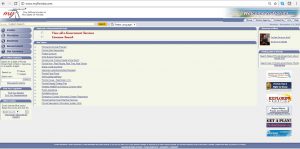
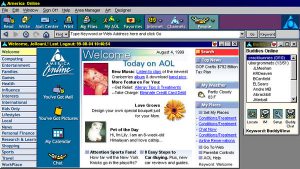
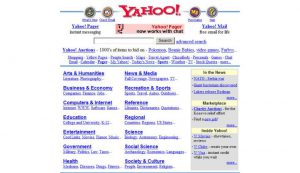
  1. Future FocusedPersonal Development and the Internet
  2. Future FocusedCollege, Caribbean Style
  3. Future FocusedRadio is Dead
  4. Future FocusedPolicing the Police
  5. Future Focused – e-Government Portal 101

The Caribbean status quo is dire. But our future can be so much better. This is the power of hope!

The subject of hope has been a consistent subject for this movement behind the book Go Lean…Caribbean – available to download for free. In a previous commentary, it was related that “Hope and Change” is vital to engage the young people in society. Without change, young people will demand it! This is because a vital ingredient of youth is hope, if they see no hope, then they will just disengage and abandon their community. That blog included  this excerpt:

There are some protest movements – around the world  – in recent times where young people have engaged to get attention, to foment their prospects for Hope and Change:

  • Arab Spring – Young people in one Arab & North African country after another stood-up in protest of their status quo.
  • Occupy Wall Street – Young people in the US complained in enduring street protests outside Wall Street.

The book Go Lean…Caribbean … chronicled the rise of these protest movements. It showed how people at the grass-roots level are able to effect change on the policies and priorities of their country. This is the bottoms-up strategy for forging change; there is also the top-down strategy: getting the political leaders to propose new legislation. Both approaches could be effective in the quest to elevate the 30 member-states in the Caribbean region. The State of our Caribbean Union is that we are in need; we must reform and transform our region; it is not optional; it must be done in order to offer “Hope and Change” to the young people of the Caribbean. [Otherwise,] the book states in the opening (Page 3):

    Our youth, the next generation, may not be inspired to participate in the future workings of their country; they may measure success only by their exodus from their Caribbean homeland.

So without hope, we have no children – they will leave; without children, we have no future!

This is an important discussion. We must forge change in Caribbean society to dissuade our young people from leaving. This is what the Go Lean book presents, a workable roadmap to effect change in all societal engines. In fact, the roadmap features these 3 Future Focused prime directives:

  • Optimization of the economic engines in order to grow the regional economy to $800 Billion & create 2.2 million new jobs.
  • Establishment of a security apparatus to ensure public safety and protect the resultant economic engines.
  • Improve Caribbean governance to support these engines, including a separation-of-powers between the member-states and CU federal agencies.

In each Caribbean member-state, the government is the largest employer! So we must engage governing processes in order to foster change. How can we improve Caribbean governance so as to bring change to our society?

Among the strategies, tactics and implementations in the Go Lean roadmap, is the deployment of e-Government services, systems and solutions. The Go Lean book explains how this implementation can streamline operations – lean, no heavy bureaucracy – for every level of government: municipal, state and the CU federal level. A type of computing implementation can leverage productivity against a very small level of staffing. See how a lean structure is portrayed in the book (Page 51):

A lot of office automation and data processing can be provided in-house by [for] member-state governments by [the CU] simply installing / supporting computer mainframe/midrange systems, servers, and client workstations; plus supplementing infrastructural needs like power and mobile communications. The CU’s delivery of ICT [(Internet & Communications Technologies)] systems, e-Government, contact center and in-source services (i.e. property tax systems [and www.myCaribbean.gov]) can put the burden on systems continuity at the federal level and not the member-states. (This is the model of Canada with the federal delivery of provincial systems and services – some Provincial / Territorial presence / governance is completely “virtual”).

The Go Lean book presents the plan to deploy many e-Government provisions so as to deliver on the ICT promise. This is what it means to be Lean – maximize value while minimizing waste. The book references the roles and responsibilities of these e-Government models in many iterations; this shows the Future Focus of the Go Lean roadmap; see a sample here:

  • 10 Ways to Close the Digital Divide (Page 31)
    #9 – Smart Phones & Mobile Apps
    There are business drivers for the further development of mobile applications. With the proliferation of smart-phones, consumers have a computer in their pocket that is more powerful than mainframe computers from the 1970’s. Mobile applications allow for the coordination of “time and place” to convert internet browsing to real-time purchasing. The CU will capitalize on this growth and even deploy mobile apps of our own (i.e. appointments processing, bar codes) for myCaribbean.gov portal and e-government deliveries.
  • 10 Ways to Improve Sharing (Page 35)
    #2 – Data / Social Network
    The CU will deploy a MyCaribbean.gov web portal (including mobile) to allow every citizen access to e-Delivery of government services. The CU … will thereafter spearhead the effort to capture as much raw data as possible from the portal and other e-Government data repositories throughout the region. This will allow the sharing of economic, census, trade, consumption, macro performance and sociological data.
  • Separation of Powers (Page 74)
    A3 – Treasury Department: Union Revenue Administration
    The CU deployment of e-Government services for federal and member-state government functionality will allow economies of scale for all stakeholders. This is envisioned for property records-tax assessment-collections, income taxes, auto registrations, vital records, human resources-payroll, back-office (accounting), and regulatory-compliance-audit functionality. In addition, a lot of government services will be delivered electronically: email, cash disbursements on a card-based benefits card, ACH and electronic funds transfer measure for expenditures and revenue collections.
  • 10 Ways to Improve Mail Service (Page 108)
    #10 – Post Office Buildings with e-Government Kiosks
    Post Office (PO) facilities will have kiosks and access booths so that citizens can interact with different CU and State governmental agencies. (Similar to processing passports at US Post Offices). Time slots will have to be reserved or rationed. All CU e-Government interactions can be delivered via the web (e-Delivery) or at PO …
  • 10 Ways to Deliver (Page 109)
    #9 – Big Data Analysis
    The CU’s embrace of e-Government and e-Delivery models allows for a lot of data to be collected and analyzed so as to measure many aspects of Caribbean life, including: trade, economic, consumption, societal values and macro-performance, and media consumption. This way, “course adjustments” can be made to strategic and tactical pursuits.
  • 10 Ways to Impact Social Media (Page 111)
    #6 – Contact Center for e-Government Services
    The CU will deliver government services with the embrace of Internet & Communication Technologies (ICT). Caribbean stakeholders can interact with CU government (plus CU-enabled member-states) via web, social media and phone portals. When in-personal attention is needed, video conferencing options (Skype, Google+) will be a supplemental tool.
  • 10 Ways to Impact Elections (Page 116)
    #6 – e-Government – Registration
    The CU will allow for economies-of-scale with local government by deploying e-Government services. This is envisioned for voter registration and vital records system processing. While the CU does not have responsibility for local elections, the member-states can in-source the processing to the CU to enjoy the cost savings, & service optimizations.
  • 10 Big Ideas (Page 127)
    #8 – Cyber Caribbean
    Forge electronic commerce industries so that the internet communications technology (ICT) can be a great equalizer in economic battles of global trade. This includes e-Government (outsourcing and in-sourcing for member-states systems) and e-Delivery, Postal Electronic Last Leg mail, e-Learning and wireline/wireless/satellite initiatives.
  • 10 Ways to Measure Progress (Page 146)
    #7 – myCaribbean.gov Portal
    The www.myCaribbean.gov web/mobile portal will allow every citizen access to e-Delivery of government services. The Commerce Department will thereafter spearhead the effort to capture as much raw data as possible from the portal and other e-Government data repositories throughout the region. This allows for more consumption and sociological data.

The future – with the deployments of electronic government systems – is now! See the sample example of the US State of Florida here; most interactions with that government can be consumed via their http://www.myflorida.com/ portal:

< Click to Enlarge >

The technology is ready and the need is acute, so Caribbean people must get ready and deploy e-Government now.

It is easier than one may think – see a sample VIDEO demonstration here; instead of software, imagine this Perceptive Customer Portal for Government Services:

VIDEO – A Guide to Using the New Perceptive Software Customer Portal – https://youtu.be/40WDRhoQ6fY

Lexmark Enterprise Software

Published on Feb 16, 2015 – The new Perceptive Software Customer Portal is a single sign-on, one-stop shop for the Community, Cases, Knowledgebase, Product Documentation, Technical Overviews and more. This handy demo demonstrates how to navigate the new portal and its features to maximize your Perceptive experience and investment.

There would be no need to engage advanced computer programmers to launch the www.myCaribbean.gov portal. Complete software packages can be bought “off the shelf”; see an article on software package options in the Appendix below.

e-Government had been discussed in previous blog-commentaries, depicting the Future Focus of the CU/Go Lean roadmap:

https://goleancaribbean.com/blog/?p=13321 ICT Model: Making a Pluralistic Democracy and Multilingual Society
https://goleancaribbean.com/blog/?p=7991 Transformations: Caribbean Postal Union – Delivering the Future
https://goleancaribbean.com/blog/?p=888 How to Re-invent Government in a Digital Image – Book Review

Let’s do this; this e-Governmental transformation! Let’s do all of these Future Focused activities detailed in this 5-part series:

  1. Future FocusedPersonal Development and the Internet
  2. Future FocusedCollege, Caribbean Style
  3. Future FocusedRadio is Dead
  4. Future FocusedPolicing the Police
  5. Future Focused – e-Government Portal 101

This is the kind of Future Focused efforts that are needed to reform and transform Caribbean governments and society in general. We must transform our governments, and create the new CU Trade Federation – a federal government – now. We urge all stakeholders to lean-in to this CU/Go Lean roadmap to make the Caribbean a better place to live, work and play. 🙂

Download the free e-Book of Go Lean … Caribbean – now!

Sign the petition to lean-in for this roadmap for the Caribbean Union Trade Federation.

————-

Appendix – What is Portal Software?
By: Cathy Reisenwitz in IT Management

Y’all know what a portal looks like.

A portal provides selective access to information and people. It features, at a minimum, built-in content management functionality including document management and search.

Here are some things you might want to put behind your portal:

  • E-mail
  • Customer relationship management (CRM) tools
  • Company/organization information/news
  • Workgroups
  • Electronic bulletin boards
  • Group chat
  • Calendars

Here is an overview of what portal software is, what it does, where it’s going, and what to ask your vendors.

Portal software vs alternative kinds of software
Some people use intranet software for portal functionality. But portal software often offers more options, automation functionality, organization help, and interactivity, according to SearchCIO.

Many IT departments are looking accomplish their portal goals without using traditional portal software.  Similarly, vendors are abandoning the “portal” terminology. “The term ‘portal’ is outdated and holds negative associations for the many organizations where the portal initiatives have failed, or grown old or stale,” according to Gartner researchers Jim Murphy and Gene Phifer, writing in Elevate Your Horizontal Portal to a Digital Experience Platform.

“In addition, ‘portal’ lacks any appeal to an increasingly business- (versus IT-)savvy audience.” In Build an Enduring Portal Strategy for a Wave of Change on the Web Murphy points out that a “portal” doesn’t offer any inherent business value itself. Plus, many vendors don’t want to compete with established portal players.

More and more portal software vendors are using qualitative terms such as “experience” and “engagement” to describe their products, according to Murphy and Phifer.

Some organizations use web content management systems (WCMs), social platforms, and e-commerce platforms to create portals. “A WCM product is often a better choice as the anchor technology for an enterprise portal,” Murphy and Phifer write. Others use and extend other software, including ERP or CRM. The rest build their portal platforms using a multiple open-source tools and components. Murphy and Phifer recommend a digital experience platform.

Gartner no longer includes portal software in its Hype Cycles. The Hype Cycle for Human-Machine Interface, 2016 includes digital experience platform (DXP) frameworks, which evolved from portals and WCM. The change from portal to DXP began in 2009, when software vendors began to offer platforms for creating the digital experience because “traditional approaches for creating web, portal and mobile assets were not meeting end-user or IT needs.”

Whatever you want to call it, there’s still demand for an easy, reliable, authoritative, and accessible way to store and access relevant information to support decisions and activities.

Who’s buying portal software?
Many “digital experience” and “engagement” vendors are reaching out to chief marketing officers, heavily promoting the marketing use case because digital marketing is making the investments in digital experience.

The two types of portal software
Gartner categorizes portal software into “lean” and “robust.”

Murphy and Phifer contrast lean portals with comprehensive, robust suites. Lean portals can often pay for themselves with increased efficiencies faster than portal products from larger, more-established vendors. “While organizations adopting traditional, heavyweight portals or emerging UXPs may take years to avail themselves of even 20% of the full range of capabilities, organizations adopting lean portals employ 80% of the functionality they need within months,” Murphy and Phifer write.

However, if you’ve got complex, legacy systems in place that must integrate with your portal, you may not be able to go lean.

Popular portal software vendors

According to SearchCIO, Corechange, Epicentric, Hummingbird, and Plumtree are leading portal softwares.

The Hype Cycle for Human-Machine Interface, 2016 lists Adobe, Backbase, IBM, Liferay, Microsoft, Oracle, Oxcyon, Salesforce, SAP, and Sitecore as sample vendors in the DXP space.

Source: Posted December 14, 2016; retrieved November 14, 2017 from: https://blog.capterra.com/what-is-portal-software/

Share this post:
, , ,
[Top]

Industrial Reboot – Pipelines 101

Go Lean Commentary 

CU Blog - Industrial Reboot - Pipelines 101 - Photo 0There is the need to create jobs in the Caribbean. Where and how do we proceed?

First, we must reboot our industrial landscape; and the “art and science” of pipelines can be pivotal, especially in light of the recent eruptions in natural disasters. There were 2 major hurricanes in September 2017 – Irma and Maria – and the devastation in some member-states has been almost complete – i.e. remember Barbuda. A great benefit of over-ground, underground and underwater pipelines is that they can be sustained during hurricanes…and can help to quickly restore power and the systems of commerce.

The movement behind the book Go Lean … Caribbean posits that it is possible to create the required jobs that we need and has presented a roadmap for 2.2 million jobs. But the book warns that for this task to be successful, it is heavy-lifting. The entire industrial landscape must be rebooted. There is now a full catalog for this Industrial Reboot 101 effort and this commentary is 3 of 4 in this occasional series. The full series is as follows:

  1. Industrial Reboot – Ferries 101
  2. Industrial Reboot – Prisons 101
  3. Industrial Reboot – Pipelines 101
  4. Industrial Reboot – Frozen Foods 101

Continuing with pipelines, a recent blog-commentary detailed how diverse pipeline technologies can help restore post-storm normality in quick order:

  • Flood Control drainage pipelines
    CU Blog - Industrial Reboot - Pipelines 101 - Photo 3b
    CU Blog - Industrial Reboot - Pipelines 101 - Photo 3a
    CU Blog - Industrial Reboot - Pipelines 101 - Photo 3c
  • Underground-piped and underwater-piped electrical cables – see specifications sample in Appendix A
    CU Blog - After Irma, the Science of Power Restoration - Photo 1

CU Blog - Industrial Reboot - Pipelines 101 - Photo 4The book Go Lean … Caribbean details more; it asserts that pipelines can be strategic, tactical and operationally efficient for building community wealth in the Caribbean region. Yes, they can mitigate challenges from Mother Nature, create jobs and grow the economy at the same time. The book purports that a new technology-enhanced industrial revolution is emerging, in which there is more efficiency for installing-monitoring-maintaining pipelines. Caribbean society must participate in these developments, in order to “survive with the fittest”. This point is pronounced early in the book with this Declaration of Interdependence (Page 14), with these statements:

xxvi. Whereas the Caribbean region must have new jobs to empower the engines of the economy and create the income sources for prosperity, and encourage the next generation to forge their dreams right at home, the Federation must therefore foster the development of new industries, like that of … pipelines

xxvii. Whereas the region has endured a spectator status during the Industrial Revolution, we cannot stand on the sidelines of this new economy, the Information Revolution. Rather, the Federation must embrace all the tenets of Internet Communications Technology (ICT) to serve as an equalizing element in competition with the rest of the world. The Federation must bridge the digital divide and promote the community ethos that research/development is valuable and must be promoted and incentivized for adoption.

This Go Lean book serves as a roadmap for the introduction and implementation of the technocratic Caribbean Union Trade Federation (CU) to elevate the 30 Caribbean member-states. This Federation will assume jurisdiction for the 1,063,000 square-mile Caribbean Sea, in an Exclusive Economic Zone (EEZ). This approach allows for cooperation and coordination for pipelines among the member-states, The Go Lean book specifically identifies that pipelines can impact these societal engines (Page 96):

  • Economics – Pipelines bring resources from the source to the destination in a steady consistency, thereby fulfilling the economic supply-demand conundrum. This is vital for resources like water, energy elements (oil, gas, & minerals) – see Appendix B –  electricity, and telecommunications lines. There are newer innovations planned for pipelines, like Pneumatic Capsules, to allow for the transport of cargo, and even the far-reaching testing for high-speed passenger travel.
  • Governance – Administration to include a separation-of-powers between the member-states and CU federal agencies.
  • Security – This category does not refer to some military application, but rather public safety/security provisions. Pipelines can be erected in web design formations to allow transport from source to destination via alternate routes if ever extraordinary conditions (storms) impact normal flow – see model in Appendix C – this is modeled after the internet’s worldwide-web. There is also an element of economic security with the emergence of pipeline maintenance jobs to engineer, maintain and monitor installations.
    • Emergency – Tourism is the region’s primary industry driver so pipeline spills/accidents may have a major impact on the fauna/flora of the islands. But there are “best practices” to apply to mitigate the risks associated with pipelines. The web design approach also facilitates a recovery plan for emergencies. So when a Hurricane Watch is declared anywhere in the region, (normal 3 days from landfall), the mandate is that all pipeline flow must cease.

The subject of pipelines has also been addressed and further elaborated upon in these previous blog/commentaries:

https://goleancaribbean.com/blog/?p=6867 Pipelines can address high consumer prices
https://goleancaribbean.com/blog/?p=2670 A Lesson in History – Rockefeller’s Pipeline
https://goleancaribbean.com/blog/?p=1817 Caribbean grapples with intense new cycles of flooding & drought
https://goleancaribbean.com/blog/?p=1516 Floods in Minnesota, Drought in California – Why Not Share?

The Go Lean book provides 370 pages of details on the economic principles and community ethos to adopt, plus the executions of strategies, tactics, implementations and advocacies to forge pipelines and industrial growth in the Caribbean:

Economic Principles – Economic Systems Influence Individual Choices Page 21
Community Ethos – Job Multiplier Page 22
Community Ethos – “Crap” Happens – So we must be prepared Page 23
Community Ethos – Lean Operations Page 24
Community Ethos – Return on Investments (ROI) Page 24
Community Ethos – Cooperatives Page 25
Community Ethos – Ways to Impact the Future Page 26
Community Ethos – Ways to Help Entrepreneurship Page 28
Community Ethos – Ways to Promote Intellectual Property Page 29
Community Ethos – Ways to Impact Research & Development Page 30
Community Ethos – Ways to Improve Sharing Page 35
Community Ethos – Impact the Greater Good Page 37
Anecdote – Pipeline Transport – Strategies, Tactics & Implementations Page 43
Strategy – Agents of Change – Technology Page 57
Tactical – Fostering a Technocracy Page 64
Tactical – Growing Economy – New High Multiplier Industries Page 68
Separation of Powers – Interstate Commerce Administration Page 79
Separation of Powers – Interior Department – Exclusive Economic Zone Page 82
Implementation – Assemble – Pipeline as a Focused Activity Page 96
Implementation – Ways to Pay for Change Page 101
Implementation – Benefits from the Exclusive Economic Zone Page 104
Implementation – Ways to Develop a Pipeline Industry Page 107
Implementation – Ways to Deliver Page 109
Planning – 10 Big Ideas – Pipeline Projects Page 127
Planning – Ways to Improve Interstate Commerce Page 129
Planning – Lessons from New York City Page 137
Planning – Lessons from Omaha Page 138
Advocacy – Ways to Grow the Economy Page 151
Advocacy – Ways to Create Jobs Page 152
Advocacy – Ways to Better Manage the Social Contract – Infrastructure Page 170
Advocacy – Ways to Ways to Impact Public Works – Ideal for Pipelines Page 175
Advocacy – Ways to Foster Cooperatives Page 176
Advocacy – Ways to Better Manage Natural Resources – Water Resources Page 183
Anecdote – Caribbean Industrialist & Entrepreneur Role Model Page 189
Advocacy – Ways to Impact Extractions – Pipeline Strategy Alignment Page 195
Advocacy – Ways to Improve Emergency Management Page 196
Advocacy – Ways to Foster Technology Page 197
Advocacy – Ways to Improve Monopolies – Foster Cooperatives Page 202
Advocacy – Ways to Improve Transportation – Pipeline Options Page 205
Appendix – Interstate Compacts – Needed for Pipelines in US Territories Page 278
Appendix – Pipeline Maintenance Robots Page 283
Appendix – North Dakota Example – Oil Drilling Economic-Societal Effects Page 334

The economic principles of pipelines are sound.

The Go Lean book details that the Caribbean can create …

2,000 direct jobs building/maintaining pipelines, tunnels, and the regional power grid

These are direct jobs; there is also the reality of indirect jobs – unrelated service and attendant functions – at a 3.75 multiplier rate would add another 7,500 jobs. That makes a total of 9,500 jobs.

Hurricanes are so dire and disruptive that they need to be mitigated. We need pipelines and we need them NOW!

How” would the Caribbean region reboot, reform and transform their societal engines to develop a Pipeline industry. This is the actual title of one advocacy in the Go Lean book. Consider the specific plans, excerpts and headlines here from Page 107, entitled:

10 Ways to Develop a Pipeline Industry

1

Lean-in for the Caribbean Single Market
The CU will allow for the unification of the region into one market, thereby creating a single economy of 30 member-states, 42 million people and a GDP of over $800 Billion. The CU envisions applications to connect the member states with a network of pipelines/tunnels/cables; facilitated at the federal level due to cross-border implications and oversight of the region’s energy/environment missions. Another dimension that aligns with the CU is fostering hi-technology jobs.

2

Pneumatic Cargo TubesThe CU is ideal for the implementation of PCP systems to handle containers and trailers through underwater, underground and above-ground pipelines powered by magnetic levitation systems (ILM). There are some pre-defined sites well-fitted for PCP: 7 miles between Venezuela & Trinidad; Nassau’s cruise/cargo port to an intermodal exchange site, etc..

3

Underwater Tunnels

4

Underwater Pipes and CablesThe CU will employ the best practices, arts and sciences to install underwater pipelines and underwater cables. (Cables are flexible and can be inserted in/out of pipes). All pipes can be treated with an epoxy to withstand salt-water erosion.

5

Fresh WaterSome CU islands have water resource challenges (i.e. Antigua). They installed desalination as a solution. An alternate solution is now water pipelines. The CU will install the infrastructure to transport water from source to target via pipelines.

6

Oil-to-Oil RefineryThere are oil-producing states with the CU. (Plus, a lot of oil explorations engagements). There are also a number of oil refineries. The CU envisions above-ground/undersea pipelines to connect refineries to oil sources/shipping terminals.

7

High Intensity Power LinesThe CU will deploy a regional power grid, which is now feasible with the unified market. With the reality of island chains, and the reality of new technologies (like HVDC), the high intensity power lines can be mounted underground or underwater, (see Appendix below), in a solo fashion or in other CU built/maintained tunnels/pipelines.

8

Natural Gas on Land

9

Emergency ManagementThe CU treaty grants jurisdiction of strategic pipelines to federal governing authorities. The CU will apply the world’s best-in-breed tools, best-practice techniques and systems for ensuring the viability and integrity of pipelines:

  • Maintenance – The CU will engage pipe crawlers (robots) for inspections to assuage pipeline risks (Appendix IF).
  • Incidents – Every incident must be rated for severity: Stratification 1 (leakage); “Strat” 2 (shutdown). While all incidents will be reported and published on the CU portal, Strat 3 (property damage) and 4 (loss of life) must have public hearings.
  • Disasters – The CU region have seasonal threats of hurricanes, and these dictate extraordinary measures and disaster recovery plans for Emergency Managers. The CU will mandate remediation & pipeline shutdown during storm warnings.

10

Tourism / Eco ImpactThe primary economic engine for the Caribbean is tourism. The CU will always promote and protect this industry. But pipelines can co-exist, and the natural/pristine environs can be protected! The CU envisions underground pipeline in urban/suburban areas, above ground pipelines in rural areas and underwater pipeline to connect the islands.

In summary, we need jobs; our Caribbean job creation dysfunction is acute. Jobs in the Pipeline industry are stable, reliable and providential to facilitate growth in other industries and to assure business continuity. These infrastructural enhancements would help us to make our homeland a better place to live, work and play.

Pipeline = Infrastructure! A region-wide pipeline deployment = Industrial Reboot!

CU Blog - Industrial Reboot - Pipelines 101 - Photo 1

Yes, we can … reboot our industrial landscape and deploy our own web of pipelines; consider the US model in Appendix C. We can create new jobs – and other economic opportunities – that the Caribbean region needs. We urge all Caribbean stakeholders – governments and citizens – to lean-in to this roadmap for economic empowerment. We can make all of the Caribbean homeland better places to live, work and play. 🙂

Download the free e-Book of Go Lean … Caribbean – now!

Sign the petition to lean-in for this roadmap for the Caribbean Union Trade Federation.

———–

Appendix A Title: Underwater High Intensity Power Lines

High-Voltage Direct Current (HVDC) Light technology is designed to transmit power over long distances in both underground and under-water settings. HVDC Light technology, offered by ABB – the German Industrial powerhouse, leading in the development and implementation of HVDC technology.

Buried HVDC is a feasible technology for the Caribbean Union Regional Power Grid. Its feasibility is based upon several factors that include it being a time-tested technology, having suitable cable capacity, utilizing efficient and small footprint converter stations.

A classical HVDC transmission has a power of more than 100 Megawatts (MW) and many are in the 1,000 – 3,000 MW range. There are classical HVDC transmissions that use overhead lines (OHL) and some that use undersea (and underground) cables (or combinations of cables and lines). ABB’s HVDC Light technology uses underground or submarine cables with an economical upper power range now reaching 1,200 MW and ±500 kV.

HVDC can be used to span OHL routes with a length of 1,000 km (about 600 miles) or more and undersea routes (submarine cables) from a length of 60 km (about 40 miles) upwards more economically than with alternating current (AC). Direct current has the advantage over alternating current that it does not cause eddy currents and can thus make use of the full cross section of the cable. Heat losses are lower because of the lower resistance for the same cross-section. Incidentally: Power losses with AC voltage are higher under water than in the air or underground because with deep sea cables it is not possible to use compensating elements (coils, capacitors) against inductive and capacitive losses.

The modern form of HVDC transmission uses technology developed extensively in the 1930s in Sweden at ASEA (a founding company of ABB). More specific to this document, buried HVDC has been employed in land and submarine transmission settings for many decades. This technology has been used most extensively in Europe, and is now being proposed for long distance high-voltage transmission lines in the northeast and eastern areas of the USA. The Champlain Hudson Power Express, a 333 mile-long transmission line from the U.S. – Canadian border to New York City, is currently in the EIS preparation stage. The transmission system will consist of two 5 inch diameter cables to be laid under water and on land. The proposed route will start at the U.S. – Canadian border, travel south through Lake Champlain and along railroad right of ways, and then enter the Hudson River south of Albany. The power will ultimately go to a converter station in Astoria Queens.

Working examples of HVDC buried land and underwater lines include: Cross Sound, across 42 kilometers of the Long Island Sound (New York); the Trans-Bay HVDC cable project under construction in California connecting Pittsburg in East Bay to San Francisco; a large number of working HVDC submarine cables transporting power between Europe and Scandinavia, between the UK and France, between the islands of New Zealand, and between Italy and Greece.

HVDC requires terminals, or converter stations, at the line ends. A significant feature of the HVDC Light transmission system is that an HVDC Light converter station has a much smaller size than even a classical HVDC converter station, and certainly is much smaller in size than an AC substation. A significant characteristic of HVDC Light cable is its excellent ability to stabilize AC voltage at the terminals. This is especially important for wind parks, where the variation in wind speed can cause severe voltage fluctuations. Additional technical aspects of this cable include: 1) if the cable is damaged, HVDC protection reduces the current and voltage to zero in a fraction of a second so there is no possibility of damage to persons and infrastructure, 2) the HVDC transmission system uses underwater and underground cables that are solid, are made from non-flammable materials, are well insulated, and contain no liquids or gels.

The burial of HVDC Light cable is similar to that of fiber-optic cables because the equipment used for trenching and the depths at which the cables are laid are comparable (1 to 1.5 m below the surface). In some relevant projects, underground cables are installed using modified pipeline installation equipment. The strength and flexibility of HVDC Light cables make them suitable for submarine use. They can be laid in deeper waters and on rough bottoms.

CU Blog - Industrial Reboot - Pipelines 101 - Photo 2

Source: ABB Technical Specification documents

———–

Appendix B VIDEO – Key US gasoline pipeline now ready to carry more fuel, just days after Harvey – https://youtu.be/NOG4j6PHv10

CBS North Carolina
Published on Aug 31, 2017 – Key US gasoline pipeline aims to carry more fuel by Sunday; Cooper urges caution.

———–

Appendix C VIDEO – Animated map of the major oil and gas pipelines in the US – https://youtu.be/MEIerHQ9IAw

Business Insider
Published on Dec 31, 2015 – The United States is the world’s largest consumer of oil, using over 19 million barrels a day in 2014. This high level of consumption wouldn’t be possible without the 2.5 million mile network of pipeline used to transport the fuel from its source to the market.

Business Insider is the fastest growing business news site in the US. Our mission: to tell you all you need to know about the big world around you. The BI Video team focuses on technology, strategy and science with an emphasis on unique storytelling and data that appeals to the next generation of leaders – the digital generation.

See a related VIDEO here at https://youtu.be/JXRFIqtCMzM that showcases pipeline safety, disaster and recovery dimensions.


Share this post:
, , ,
[Top]

ENCORE: The Requirement for Better Security – ‘Must Love Dogs’

One Minute Las Vegas Was Rocking; the Next It Was ‘World War III’ – Report of October 1, 2017 attack at a Country Music Festival
CU Blog - Must Love Dogs ENCORE - Photo 1

It is obvious that tourism and terrorism do not “make good dance partners”. Las Vegas enjoys 47 million tourists year, but with last night’s terrorist attack, there may be the need for some security enhancements at tourist and festival venues.

This is the similar awareness after the May 2017 attack at the Ariana Grande concert in Manchester, England

… and the June 2016 Pulse Night Club shooting in Orlando, Florida.

The advocacy from the lessons-learned from all of these events is “Want Better Security? Must Love Dogs“. There are opportunities for bomb-sniffing and gun-sniffing dogs at venues and surrounding areas. This is the exact theme of a previous blog-commentary. Here is an ENCORE of that commentary:

———————

Go Lean Commentary – Want Better Security? Must Love Dogs

So you want to secure your homeland against terror and other threats? Here’s a key requirement:

‘Must Love Dogs’

This is so true; man’s best friend can also be our best partner for mitigating threats of terroristic acts in public places. This is common sense … now that we have seen how devious the terrorists can be, exploiting soft targets right outside any hard target zones.

This is a fresh concern as there was a terrorist attack at the Manchester Arena in Manchester, England last night (May 22, 2017). The attacker was an ISIS-backed suicide bomber who positioned himself among the exiting concert-goers for a show at the Arena. (The artist is American teen pop-sensation Ariana Grande, a fan-favorite among teenage girls and boys). He detonated his “Improvised Explosive Device” (IED) right outside the security zone while people were exiting to leave. So far, the death toll is 22, with 59 injuries. See full details on the story, aftermath and investigation here:

ISIS Claims Responsibility for Manchester Concert Attack; 22 Dead

Manchester Arena – Situation Normal
CU Blog - 'Must Love Dogs' - Photo 4

CU Blog - 'Must Love Dogs' - Photo 3

CU Blog - 'Must Love Dogs' - Photo 2

Manchester Arena – Monday Night May 22, 2017

CU Blog - 'Must Love Dogs' - Photo 1

CU Blog - 'Must Love Dogs' - Photo 5

Expect more revelations of the motives and bitter consequences of this attack against “innocence”.

This is a matter of serious concern for planners of a new Caribbean. This is Terrorism 101; this is affecting the whole world and our world. Though this attack was far away from the Caribbean islands, it was not far away from Caribbean people, as related in a previous blog-commentary from the promoters of the book Go Lean…Caribbean, there is a large Caribbean Diaspora in Manchester.

The book Go Lean…Caribbean – available to download for free – serves as a roadmap for the introduction and implementation of the technocratic Caribbean Union Trade Federation (CU), for the elevation of Caribbean society – for all member-states. The book asserts that the needed security apparatus to better defend against the modern threats of terrorism is too much for any one Caribbean member-state alone. There must be a regional integrated and confederated solution. This CU/Go Lean roadmap has these 3 prime directives:

  • Optimization of the economic engines in order to grow the regional economy and create new jobs.
  • Establishment of a security apparatus to ensure public safety and protect the resultant economic engines.
  • Improve Caribbean governance to support these engines, including a separation-of-powers between the member-states and CU federal agencies.

The book stresses that reforming and transforming the Caribbean societal engines must be a regional pursuit. This was an early motivation for the roadmap, as pronounced in the opening Declaration of Interdependence (Pages 12 – 13):

x. Whereas we are surrounded and allied to nations of larger proportions in land mass, populations, and treasuries, elements in their societies may have ill-intent in their pursuits, at the expense of the safety and security of our citizens. We must therefore appoint “new guards” to ensure our public safety and threats against our society, both domestic and foreign. The Federation must employ the latest advances and best practices of criminology and penology to assuage continuous threats against public safety. …

xi. Whereas all men are entitled to the benefits of good governance in a free society, “new guards” must be enacted to dissuade the emergence of incompetence, corruption, nepotism and cronyism at the peril of the people’s best interest. The Federation must guarantee the executions of a social contract between government and the governed.

xvi. Whereas security of our homeland is inextricably linked to prosperity of the homeland, the economic and security interest of the region needs to be aligned under the same governance. Since economic crimes … can imperil the functioning of the wheels of commerce for all the citizenry, the accedence of this Federation must equip the security apparatus with the tools and techniques for predictive and proactive interdictions.

Is there anything more that could have been done to prevent this Manchester Terrorist Attack? Let the post-trauma analysis begin! For one, the planners of the new Caribbean security apparatus have always presented this ingredient to the recipe for security success:

Must love dogs!

- Photo 6

In a previous blog-commentary, it was related how specially-trained canines can help to better secure the Caribbean homeland. Consider this quotation:

The subject of animals and animal companionship is also pivotal in the roadmap for elevating Caribbean society, especially for the security engines. The Go Lean book posits (Page 185) that better command of Animal Husbandry can facilitate better security around the region’s economic engines. Dogs feel a lot less intrusive and less intimidating than formal security screening, or personnel patrolling with AK47 automatic rifles.  Imagine a beautiful Caribbean beach scene with a plain clothes “officer” walking along with specialty dogs, or more exactly:

  • Drug Sniffing Dogs
  • Bomb [and Gun] Sniffing Dogs
  • Service/Therapy Dogs

This is one implementation that could have been deployed to mitigate the terrorism threat in Manchester … and everyday here in the Caribbean. Yes, this is in hindsight; this is “Monday Morning Quarterbacking“. This is not fair to the 22 lives lost in Manchester, but this is most importantly a pledge, not to let those lives die in vain. Let’s apply the lessons-learned.

This implementation with service dogs is just one “how”. The Go Lean book provides 370-pages of turn-by-turn instructions on “how” to adopt new community ethos, plus the strategies, tactics, implementations and advocacies to execute so as to better ensure homeland security in the Caribbean region.

Consider this one chapter (and Case Study) … where the Go Lean book fully detailed the advocacy of Animal Husbandry; see  these headlines from Page 185:

Case Study: Trikos K9 Warriors
When the bombs went off at the Boston Marathon [in April 2013], highly trained dogs were rushed to the scene to search for more explosives. Boston Police have said dogs swept the streets in the morning and a second time just an hour before the first marathoners crossed the finish line. It’s considered likely that the bombers planted their devices well after the dogs finished sweeping the area. Since 9/11, dogs have been used more than ever because nothing has proven more effective against hidden bombs than the nose of a working dog. The best of them serve with U.S. Special Operations, so much of what they do is classified, but by looking at the trainers, Trikos K9 Warriors (www.trikos.com) – on a 20-acre ranch in rural Cooper, Texas – one gets a rare glimpse inside the secretive world of these elite dogs. Most of them are from one breed, Belgian Malinois.
Dogs and their handlers work as a team, train as a team, and they go through so much together their bond is as strong as a band of brothers. In Afghanistan, they led their units and protected them in battlefields littered with hidden bombs. Per former Navy SEAL and Trikos Founder Mike Ritland: “same thing that they do for [the troops] overseas, detect explosives, they can do on American streets; plus they can run faster than 30 miles an hour so they can help take down suspects”.
See Appendix below for VIDEO from CBS News Magazine “60 Minutes”.


10 Ways to Improve Animal Husbandry

1 Lean-in for Caribbean Integration
The CU treaty allows for the unification of the region into one market, thereby impaneling a federal layer for oversight of the economy and security of the 30 member-states and 42 million people. One CU mission is to facilitate better security around the region’s economic engines. Another mission is to make the Caribbean a better place to live, work and play. In considering the needs of the 42-million population, there must be some consideration for their animals. Beyond the CU overseeing food-supply regulations and spearheading the security benefits of employing specially trained service animals, the CU will spur philanthropy for more animal husbandry efforts, such as foundations advocating Spay/Neuter goals for dogs/cats. Lastly, the CU will coalesce with local authorities to ensure “dog parks” in urban/suburban areas.
2 Plantations for Bomb Sniffing Dogs
The CU assumes the responsibility to assuage systemic risks and economic crimes. This includes marshaling defensive support for events/festivals, against terrorism and cross border gangs. The US model of Trikos K9 Warriors will be adopted with Belgian Malinois dogs, to breed them on plantations and train them to detect and interdict explosives.
3 Cadaver Dogs / Drug Sniffing Dogs / Drug Sniffing Pigs
The CU will install plantations for dogs and pigs (Vietnamese Potbellies are especially acute) to train them to detect drugs/contraband and cadavers. The CU will maintain animals on-the-ready for acquisition by local and federal police.
4 Police K9 Units
Each member-state may currently have a platoon of K9 police dogs, but their average service life is less than 10 years. So there is always a constant need for service animals. These needs will henceforth be fulfilled locally within the region.
5 Horses for Mounted Police
Many polices forces have a Mounted Police Squad. These are especially critical for patrols at events and crowded locales. The CU will facilitate the acquisition and training of horses for the region’s Mounted Police units. These breeding and training plantations are ideal for rural area development, thus spurning an economic benefit.
6 Water Focus – Seals and Dolphins
Service animals are not only the land variety. There are aquatic mammals as well: seals and dolphins. These species are excellent for securing maritime and naval operations – the CU are all islands and coastal states. The best practice is to mount mobile cameras on these mammals and have them patrol a specified grid. The economies of scale of the CU will allow for the deployment of these creative solutions while any one member-state alone cannot justify the investment.
These deployments should not be secretive, but rather exposed to local/foreign media for image promotion.
7 Service Dogs for the Blind / Disabled – Domestic and Tourists
8 Comfort Animals for Therapies and Treatment
9 Bio-Medical Farms (Pigs, Baboons)
10 Agricultural Considerations – Animals for Foods

The Go Lean movement (book and preceding blog-commentaries) relate that security is not automatic, innate nor natural – Freedom is not Free. There is heavy-lifting involved in protecting the homeland for Caribbean stakeholders: residents and visitors. This point was detailed in these previous blog-commentaries:

https://goleancaribbean.com/blog/?p=11332 Boston Bombing Anniversary – Learning Lessons
https://goleancaribbean.com/blog/?p=10959 See Something, Say Something … Do Something
https://goleancaribbean.com/blog/?p=10566 Funding the Caribbean Security Pact
https://goleancaribbean.com/blog/?p=10222 Waging a Successful War on Terrorism
https://goleancaribbean.com/blog/?p=9072 Securing the Homeland – On the Ground
https://goleancaribbean.com/blog/?p=6103 Sum of All Fears – ‘On Guard’ Against Deadly Threats
https://goleancaribbean.com/blog/?p=5307 8th Violent Crime Warning to Bahamas Tourists
https://goleancaribbean.com/blog/?p=5002 Managing a ‘Clear and Present Danger’
https://goleancaribbean.com/blog/?p=1965 America’s Navy – 100 Percent – Model for Caribbean Regional Security
https://goleancaribbean.com/blog/?p=1832 American Drug-arrested inmates to be deported – Look-out Caribbean
https://goleancaribbean.com/blog/?p=1554 Status of Forces Agreement for Regional Security Pact
https://goleancaribbean.com/blog/?p=1487 Here come the Drones … and the Concerns
https://goleancaribbean.com/blog/?p=392 Jamaica received World Bank funds to help in crime fight

The quest of the Go Lean roadmap is to make the Caribbean homeland, a better place to live, work and play. This means measurable reduction (mitigating and remediation) of crime, interpersonal violence and systemic threats in the region. The Go Lean book presents a regional solution to remediate and mitigate crime and terrorism in the Caribbean, featuring details of strategies, tactics and implementations designed based on best-practices from around the world. The book’s vision is quite simple:

If we fail to plan, then we plan to fail.

The premise in the Go Lean book is that “bad actors” will always emerge, from internal and external origins. We must be prepared and on-guard to defend our homeland against all threats, foreign and domestic, including terrorism and interpersonal violence. Plus, we must accomplish this goal with maximum transparency, accountability, and commitment to due-process and the rule-of-law. Thusly, there is a place for many tools and techniques, think: closed-circuit TV (CCTV), dashboard and body cameras.

The title on this commentary – ‘Must Love Dogs’ – puns the title of the 2005 Movie of the same name. That movie was not about Terrorism nor about dogs. (It was about a couple who met through an internet dating site that matched their dog-loving profiles).

See a review of the movie here: http://www.rogerebert.com/reviews/must-love-dogs-2005.
CU Blog - 'Must Love Dogs' - Photo 0

Yes, we can – with our “love for dogs” – make our homeland a better-safer place to live, work and play. 🙂

Download the free e-Book of Go Lean … Caribbean – now!

Sign the petition to lean-in for this roadmap for the Caribbean Union Trade Federation.

—————

Appendix VIDEO – Sniffing Out Bombs: America’s most elite dogs – https://youtu.be/FsnPAQ137fY

Published on Apr 21, 2013 – Lara Logan gets a rare look into the secretive world of working dogs — some of whose capabilities are military secrets — and their handlers.

Share this post:
, , , ,
[Top]

ENCORE: America’s Race Relations – Spot-on for Protest

The protest action of “Kneeling during the National Anthem” has become huge.

CU Blog - ENCORE - Spot on for Protest - Photo 1

See the full news article here: https://www.nytimes.com/2017/09/25/sports/football/cowboys-cardinals-anthem-protest.html?mcubz=3

This issue was also huge this day last year – with the below blog-commentary – when NFL quarterback Colin Kaepernick began this protest. What is different now? A lot! Starting with the President of the United States, Donald J. Trump. He seems to want to take America backwards by asserting that NFL players who take a knee should be fired.

CU Blog - ENCORE - Spot on for Protest - Photo 2 CU Blog - ENCORE - Spot on for Protest - Photo 3

Well, now whole teams are taking the knee and the league is universally blasting the President.

The President? This is the Leader of the Free World?

This commentary asserted then on September 26, 2016 and is presented here as an ENCORE now, “It is Time To Go! America is not home for Caribbean people”. See here:

——–

Go Lean Commentary – Time To Go – Spot-on for Protest

Here’s an interesting little-known tidbit about Abraham Lincoln – the liberator and emancipator of the American slaves:

Initially, he felt that the freed slaves needed to leave America. He felt that they would never be treated as equals in the land that had previously held them as slaves for 250 years. He advocated for places like the Caribbean (Haiti & British colonies), Central America (Belize & Panama), South America (Guyana) or Africa (Liberia).
Source Book: Colonization After Emancipation: Lincoln and the Movement for Black Resettlement.
CU Blog - A Lesson in History - Before the Civil War - Human Right Not Compromise - Photo 3

Now, 150 years later, perhaps his thinking was “spot-on”.

These 150 years since the formal emancipation has seen a continuous suppression, repression and oppression of the Black race in America. Could they have had a better disposition in the Caribbean, with its Black majority rule?

This commentary asserts that it is easier for the Black-and-Brown populations in the Caribbean to prosper where planted in the Caribbean, rather than emigrating to foreign countries, like the United States.

We agree with Abraham Lincoln’s gut instinct; he was “spot on”.

This point aligns with the book Go Lean…Caribbean, which states that while the blatant racist attitudes and actions may now be considered politically incorrect, the foundations of institutional racism in the US have become even more entrenched. The book supports the notion that the Caribbean can be an even better place to live for the Caribbean’s Black-and-Brown populations, once we make the homeland a better place to live, work and play.

There is the need to optimize the economic, security and governing engines in the Caribbean region. This commentary is 1 of 3 from the movement behind the book Go Lean … Caribbean, in consideration of the rhymes-and-reasons to repatriate back to the Caribbean homeland. The other commentaries detailed in this series are as follows:

  1.   Time to Go – Spot-on for Protest
  2.   Time to Go – No respect for our Hair
  3.   Time to Go – Logic of Senior Emigration

All of these commentaries relate to the Caribbean image and disposition as a majority Black region. No racial supremacy is advocated in this book nor by this movement. The motivation is simply for the Greater Good. This is defined as …

the greatest good to the greatest number of people which is the measure of right and wrong.” – Jeremy Bentham (1748-1832).

The Go Lean book and movement serves as a roadmap for the introduction of the technocratic Caribbean Union Trade Federation (CU). The CU is set to optimize Caribbean society through economic empowerment, yes, but there are security and governing dynamics as well. Therefore the Go Lean roadmap has 3 prime directives:

  • Optimization of the economic engines in order to grow the regional economy to $800 Billion & create 2.2 million new jobs.
  • Establishment of a security apparatus to ensure public safety, justice assurances and protect the economic engines.
  • Improve Caribbean governance to support these engines.

The Go Lean roadmap posits that the Caribbean region is in crisis now, and so many are quick to flee for refuge in foreign countries. But the “grass is not necessarily greener on the other side”; life in the US, for example, is definitely not optimized for the Caribbean’s Black-and-Brown. It is “spot-on” that there is need for protest, anguish and outright fear for the interactions of Black men and the American police/law enforcement establishment.

The Go Lean book asserts that every community has bad actors. The Caribbean has bad actors; and the US has bad actors. But because of the obvious need for reform and to transform the region, it may be easier to effect change at home, than in the foreign country of the US.

Besides, many (non-Black) people in the US, don’t even think they need to change anything. They think there is no problem – everything is fine – notwithstanding the proliferation of Cop-On-Black killings. See a related news article here regarding legendary NFL Head Coach Mike Ditka; (despite these developments, Mr. Ditka continues to be honored and esteemed in the Caribbean):

Title: Mike Ditka to Colin Kaepernick: ‘Get the hell out’ if you don’t like America
By: Bryan Armen Graham
Sub-title: Mike Ditka spared no criticism of Colin Kaepernick’s national anthem protest.

cu-blog-time-to-go-spot-on-for-protest-photo-1

Hall of Fame coach Mike Ditka has leveled blistering criticism at Colin Kaepernick’s decision to kneel during the national anthem, saying he has “no respect” for the San Francisco 49ers quarterback whose protest has sparked a national discussion over racial injustice, inspired dozens of NFL players to follow suit and landed him on the cover of Time magazine.

“I think it’s a problem, anybody who disrespects this country and the flag,” the longtime NFL coach said in a radio interview on KRLD-FM in Dallas. “If they don’t like the country, if they don’t like our flag, get the hell out. That’s what I think.

“I have no respect for Colin Kaepernick. He probably has no respect for me, that’s his choice. My choice is that I like this country, I respect our flag, and I don’t see all the atrocities going on in this country that people say are going on.

“I see opportunities if people want to look for opportunity. Now if they don’t want to look for them, then you can find problems with anything, but this is the land of opportunity because you can be anything you want to be if you work. Now if you don’t work, that’s a different problem.”

The 76-year-old Ditka, who was inducted into the Pro Football Hall of Fame in 1988, is one of two people in NFL history to win a league title as a player, an assistant coach and a head coach. He graduated from local hero to Chicago icon during an 11-year coaching stint with the Bears that included the team’s only Super Bowl win during the 1985 season, then retired permanently after a failed comeback with the New Orleans Saints in 1999.

A well-known conservative, Ditka publicly flirted with running against Democratic candidate Barack Obama, then a state senator, for the open seat in the US Senate vacated by Illinois senator Peter Fitzgerald in 2004. No one then could have imagined how the election would ultimately propel Obama to the presidency in four years’ time.

“Biggest mistake I’ve ever made,” he told the Dickinson Press in 2013. “Not that I would have won, but I probably would have and he wouldn’t be in the White House.”

In March, Ditka called Obama “the worst president we’ve ever had”.

“Barack Obama is a fine man,” he added. “He’s pleasant, he’d be great to play golf with. He’s not a leader.”
Source: The Guardian Daily Newspaper Online Site; Posted September 23, 2016; retrieved September 25, 2016:
https://www.theguardian.com/sport/2016/sep/23/mike-ditka-colin-kaepernick-get-the-hell-out-anthem-protest
cu-blog-time-to-go-spot-on-for-protest-photo-2

Photograph: Jordan Strauss/Invision/AP

The protagonist in this drama is NFL Quarterback Colin Kaepernick; he has started a protest against the treatment of African-Americans in the US. He asserts that too many unarmed Black Men has died, as of recent, by the hands of White Police Officers. While others share this view, including the African-American President of the US Barack Obama, Mr. Kaepernick is voicing his protest by refusing to stand during the singing of the national anthem at the start of his NFL football games. This protest has fostered a lot of attention … and discord to this issue.

The underlying injustice of Cop-on-Black killings is acute. There is a need for community outrage; it is “spot-on” that anyone would protest. Kudos to Colin Kaepernick! Since he started his protest stance on August 26, 2016, at least 15 more “Black men have been killed by law enforcement officers” as of September 20, 2016; (but there has been 2 more highly publicized killings since this posting: Keith Lamont Scott in Charlotte, North Carolina, and Terence Crutcher in Tulsa, Oklahoma).

The foregoing article gives the instruction for people to leave who do not agree with the American status quo. But can they really? Could the liberated slaves in Lincoln’s day leave for elsewhere? How about the countless cries over the centuries and decades for Black American Nationalism; (as in Marcus Garvey)? Was there an alternative homeland for their consideration? This reminds us of the movie dialogue from the 1982 movie An Officer and a Gentlemen. Remember this exchange:

Foley: You can forget it! You’re out!

Mayo: Don’t you do it! Don’t! You… I got nowhere else to go! I got nowhere else to g… I got nothin’ else.

Seriously, for the majority of Black America, they have no where else to go. The Caribbean Diaspora who represent 1 in 11 Blacks in the US, on the other hand, have the option of repatriating home.

We welcome them! We declare that it is “Time to Go“. We are hereby preparing for their return – fixing our defects – monitoring our “bad actors”.

We have to consider that police officers can also be “bad actors”. The book contends that the Caribbean must better prepare for bad actors, that we will see more of them. With the plan for economic success, comes the eventuality of even more bad actors, just as a result of economic success. This point is pronounced early in the book with the Declaration of Interdependence (Page 12) that claims:

x.   Whereas we are surrounded and allied to nations of larger proportions in land mass, populations, and treasuries, elements in their societies may have ill-intent in their pursuits, at the expense of the safety and security of our citizens. We must therefore appoint “new guards” to ensure our public safety and threats against our society, both domestic and foreign. The Federation must employ the latest advances and best practices of criminology and penology to assuage continuous threats against public safety. The Federation must allow for facilitations of detention for [domestic and foreign] convicted felons of federal crimes, and should over-build prisons to house trustees from other jurisdictions.

xvi. Whereas security of our homeland is inextricably linked to prosperity of the homeland, the economic and security interest of the region needs to be aligned under the same governance. Since economic crimes, including piracy and other forms of terrorism, can imperil the functioning of the wheels of commerce for all the citizenry, the accedence of this Federation must equip the security apparatus with the tools and techniques for predictive and proactive interdictions.

The Caribbean appointing “new guards”, or a security pact to ensure public safety and justice assurance is a comprehensive endeavor, that will encapsulate the needs of all Caribbean stakeholders: governments, institutions and residents.

An important mission of the Go Lean roadmap is to dissuade the high emigration rates of Caribbean citizens to the American homeland. Secondly, there is a mission to encourage the repatriation of the Caribbean Diaspora back to their ancestral homeland.

This means being conscious of why people flee – “push” and “pull” reasons – and monitoring the societal engines to ensure improvement – optimization. (“Push” refers to the societal defects in the Caribbean that moves people to want to get way; and “pull” factors refer to the impressions and perceptions that America is better).

An increased perception that “one would be shoot by a White police officer” should lower the “pull” factor. We would think …
See VIDEO here:

VIDEO – I Am Afraid I Will Be Killed By Police – https://youtu.be/9DD64urEx28

Published on Jul 7, 2016 by Kevin OnStage. See more from this commentator here:
http://kevonstage.com/store
http://kevonstage.com/booking

The Go Lean book details a series of community ethos, strategies, tactics, implementations and advocacies to better optimize our Caribbean life (economic and security concerns):

Community Ethos – Consequences of Choices Lie in Future Page 21
Community Ethos – Economic Principle – Consequences of Choices Lie in Future Page 21
Community Ethos – Whistleblower Protection Page 23
Community Ethos – Anti-Bullying and Mitigation Page 23
Community Ethos – Minority Equalization Page 24
Community Ethos – Return on Investments Page 24
Community Ethos – Cooperatives Page 25
Community Ethos – Ways to Manage Reconciliations Page 34
Community Ethos – Ways to Improve Sharing Page 35
Community Ethos – Ways to Impact the Greater Good Page 37
Tactical – Confederating a non-sovereign union Page 63
Tactical – Fostering a Technocracy Page 64
Tactical – Separation of Powers – CU Federal Agencies -vs- Member-states Page 75
Implementation – Ways to Pay for Change Page 101
Implementation – Start-up Foreign Policy Initiatives Page 102
Implementation – Start-up Security Initiatives Page 103
Implementation – Reasons to Repatriate Page 118
Planning – Big Ideas – Regional Single Market Page 127
Planning – Ways to Make the Caribbean Better Page 131
Planning – Ways to Better Manage the Caribbean Image Page 133
Advocacy – Ways to Grow the Economy Page 151
Advocacy – Ways to Create Jobs Page 152
Advocacy – Ways to Improve Governance Page 168
Advocacy – Ways to Better Manage the Social Contract Page 170
Advocacy – Ways to Improve Leadership Page 171
Advocacy – Ways to Impact Justice Page 177
Advocacy – Ways to Reduce Crime Page 178
Advocacy – Ways to Improve Homeland Security Page 180
Advocacy – Ways to Improve Intelligence Gathering/Analysis Page 182
Advocacy – Ways to Improve for Natural Disasters – Many flee after disasters Page 184
Advocacy – Ways to Impact the Diaspora Page 217
Advocacy – Ways to Preserve Caribbean Heritage Page 218
Advocacy – Ways to Protect Human Rights Page 220
Advocacy – Ways to Impact Urban Living Page 234
Advocacy – Ways to Impact US Territories Page 244

This subject of “push and pull” has been frequently blogged on in other Go Lean commentaries; as sampled here with these entries relating American “pull” factors:

https://goleancaribbean.com/blog/?p=8431 Bahamas Issued US Travel Advisory Citing Police Violence
https://goleancaribbean.com/blog/?p=8202 Respect for Minorities: Lessons Learned from American Dysfunction
https://goleancaribbean.com/blog/?p=8200 Respect for Minorities: Climate of Hate
https://goleancaribbean.com/blog/?p=8099 Caribbean Image: ‘Less Than’?
https://goleancaribbean.com/blog/?p=7221 Street naming for Martin Luther King unveils the real America
https://goleancaribbean.com/blog/?p=7204 ‘The Covenant with Black America’ – Ten Years Later
https://goleancaribbean.com/blog/?p=6189 A Lesson in History – Hurricane ‘Katrina’ exposed a “Climate of Hate”
https://goleancaribbean.com/blog/?p=5733 Better than America? Yes, We Can!
https://goleancaribbean.com/blog/?p=5527 American Defects: Racism – Is It Over?
https://goleancaribbean.com/blog/?p=5333 Racial Legacies: Cause and Effect
https://goleancaribbean.com/blog/?p=1020 Also a European Sports Problem
https://goleancaribbean.com/blog/?p=546 American Model: Book Review – ‘The Divide’ – … Injustice in the Age of the Wealth Gap
https://goleancaribbean.com/blog/?p=341 Hypocritical US slams Caribbean human rights practices
https://goleancaribbean.com/blog/?p=273 10 Things We Don’t Want from the US: Racism against minorities

Underlying to the Go Lean/CU prime directive of elevating the economics, security and governing engines of the Caribbean, is the desire to make the Caribbean homeland, a better place to live, work and play. We know “bad actors” will emerge – even as law enforcement officers – so we need to be “on guard”.

We want proactive and reactive mitigations for abuse of power. We want to ensure our Caribbean communities are safe for our stakeholders (residents and visitors). We entreat the American forces to work towards remediating their own defects. But fixing the US is not within our scope; fixing the Caribbean is our only mission.

Saying that it is “Time to Go“, must mean that we are ready to receive our oft-scattered Caribbean Diaspora. Are we ready, now?

Frankly, no …

… but were are ready, willing and able to start the change process, to reform and transform. This was the intent of the book Go Lean … Caribbean. The book contends that the Caribbean must prepare for the return of all of our people, back to these shores. This means people in a good disposition and bad (sick, aged, unemployed, destitute, imprisoned, etc.). This point is pronounced early in the book with the Declaration of Interdependence (Pages 12 & 13) that claims:

xiii. Whereas the legacy of dissensions in many member-states … will require a concerted effort to integrate the exile community’s repatriation, the Federation must arrange for Reconciliation Commissions to satiate a demand for justice.

xviii. Whereas all citizens in the Federation member-states may not have the same physical abilities, reasonable accommodations must be made so that individuals with physical and mental disabilities can still access public and governmental services so as to foster a satisfactory pursuit of life’s liberties and opportunities for happiness.

xix. Whereas our legacy in recent times is one of societal abandonment, it is imperative that incentives and encouragement be put in place to first dissuade the human flight, and then entice and welcome the return of our Diaspora back to our shores. This repatriation should be effected with the appropriate guards so as not to imperil the lives and securities of the repatriated citizens or the communities they inhabit. The right of repatriation is to be extended to any natural born citizens despite any previous naturalization to foreign sovereignties.

xxvi. Whereas the Caribbean region must have new jobs to empower the engines of the economy and create the income sources for prosperity, and encourage the next generation to forge their dreams right at home, the Federation must therefore foster the development of new industries, like that of ship-building, automobile manufacturing, prefabricated housing, frozen foods, pipelines, call centers, and the prison industrial complex. In addition, the Federation must invigorate the enterprises related to existing industries like tourism, fisheries and lotteries – impacting the region with more jobs.

The book details the needed security provisions that need to be put in place to optimize Caribbean life. See this quotation here (Page 118):

“New Guards” for Public Safety
The CU implements the anti-crime measures and provides special protections for classes of repatriates and retirees. Crimes against these special classes are marshaled by the CU, superseding local police. Since the CU will also install a penal system, with probation and parole, the region can institute prisoner exchange programs and in-source detention for foreign governments, especially for detainees of Caribbean heritage.

This subject of improving the conditions for successful Caribbean repatriation has been blogged in previous Go Lean commentaries; as sampled here:

https://goleancaribbean.com/blog/?p=5304 Mitigating the Eventual Abuse of Power
https://goleancaribbean.com/blog/?p=5002 Managing a ‘Clear and Present Danger’
https://goleancaribbean.com/blog/?p=4360 Dreading the American: ‘CaribbeanBasin Security Initiative’
https://goleancaribbean.com/blog/?p=4308 911 – Emergency Response: System in Crisis

The Go Lean roadmap was composed with the community ethos of the Greater Good foremost; for all peoples – Black, Brown, White, Yellow, Red. We advocate for a color-blind society …

… and justice for all.

This is an American concept … in words only. In practice, America has always fallen short in its delivery of justice and opportunities for its Black-and-Brown populations. There is so much that America does right, that we want to model; there is so much that America does poorly, that we want to mitigate. The “grass is not greener on the other side”. Effort is needed anywhere, everywhere, to improve society. But for the Black-and-Brown of the Caribbean, more success from less effort can be expected in the Caribbean than in the US; the underlying foundation of racism in America may be just too hard to unseat.

All Caribbean stakeholders are hereby urged to lean-in to this Go Lean/CU roadmap to elevate the Caribbean; to make our homeland a better place to live, work and play. 🙂

Download the free e-Book of Go Lean … Caribbean – now!

Share this post:
, , ,
[Top]

After Irma, Failed State Indicators: Destruction and Defection

Go Lean Commentary

CU Blog - After Irma, Barbuda Becomes a 'Ghost Town' - Photo 3What happens after a community is devastated by a catastrophic hurricane?

Many things; mostly all bad:

This is not just theoretical; this is the current disposition in the Caribbean after the recent Category 5 Hurricane Irma. These descriptors are all indicative of a Failed State status. This is a familiar theme for this movement behind the 2013 book Go Lean…Caribbean – available to download for free – (and the subsequent blog-commentaries). The book opens (Page 3) with this introduction to the subject of failure in the Caribbean:

Failure is just too familiar. Already we have member-states …  on the verge of a Failed-State status… . These states are not contending with the challenges of modern life: changing weather patterns, ever-pervasive technology, and the “flat world” of globalization. To reverse the fortunes of these failing states, and guide others in the opposite direction to a destination of prosperity, the Caribbean must re-boot the regional economy and systems of commerce.

CU Blog - After Irma, Failed-State Indicator - Death or Diaspora - Photo 1Hurricanes are tied to failure and Failed-State Indicators. The consequences of hurricanes are more than just natural, there is also the preponderance for people to leave their homelands afterwards – to defect. See a related story (article & VIDEO) in the Appendix below in which a family sought asylum in Canada for refuge from their devastated community.

In Failed-State formal-speak, the Go Lean book (Page 271) details 2 indicators or indices: Mounting Demographic Pressures (DP) and Massive Movement of Refugees (REF). These downward movements are indicators of Failed-State status – a bad report on the Fail-State index is simply a reflection of a miserable existence in society:

  • Mounting Demographic Pressures
    Pressures on the population such as disease and natural disasters make it difficult for the government to protect its citizens or demonstrate a lack of capacity or will. This indicator include pressures and measures related to:
    Natural Disaster, Disease, Environment, Pollution, Food Scarcity, Malnutrition, Water Scarcity, Population Growth, Youth or Age Bulge, and Mortality
  • Massive Movement of Refugees or IDPs
    Forced uprooting of large communities as a result of random or targeted violence and/or repression, causing food shortages, disease, lack of clean water, land competition, and turmoil that can spiral into larger humanitarian and security problems, both within and between countries. This indicator refers to refugees leaving or entering a country. This indicator include pressures and measures related to:
    Displacement, Refugee Camps, IDP (Internally Displaced Persons) Camps, Disease Related to Displacement, Refugees per capita, and IDPs per capita.

This commentary completes the 4-part series on the Aftermath of Hurricane Irma. There are a lot of mitigation and remediation efforts that can be done to lessen the impact of this and future storms. There are lessons that we must consider; there are reforms we must make; there are problems we must solve. The full list of the 4 entries of this series are detailed as follows:

  1. Aftermath of Hurricane Irma – America Should Scrap the ‘Jones Act’
  2. Aftermath of Hurricane Irma – Barbuda Becomes a ‘Ghost Town’
  3. Aftermath of Hurricane Irma – The Science of Power Restoration
  4. Aftermath of Hurricane Irma – Failed State Indicators: Destruction and Defection

Despite the manifested threats of Climate Change-fueled hurricanes, we must engage the heavy-lifting to make the Caribbean homeland a better place to live, work and play. Otherwise people flee the oppression, repression and suppression of being “home”.

In a previous blog-commentary about 19th Century Slavery Abolition icon Frederick Douglass, it revealed his theme when he went to the British island of Ireland to commiserate with that people on their oppression-repression-suppression plight. He asserted …

… that if an oppressed population didn’t find refuge, the only outcome would be Death or Diaspora.

The Diaspora prophecy happened, then in Ireland and today, especially here in the Caribbean! (In a previous blog, it was revealed that after 1840, emigration from Ireland became a massive, relentless, and efficiently managed national enterprise. In 1890 40% of Irish-born people were living abroad. By the 21st century, an estimated 80 million people worldwide claimed some Irish descent; which includes more than 36 million Americans who claim Irish as their primary ethnicity).

Caribbean citizens are also pruned to emigrate … to foreign shores (North America and Europe) seeking refuge. In a previous blog-commentary it was asserted that the US – the homeland  for Frederick Douglass – has experienced accelerated immigration in recent years. Published rates of societal abandonment among the college educated classes have reported an average of 70 percent in most member-states, with some countries (i.e. Guyana) tallying up to 89 percent. For this reason, there is solidarity for the Diaspora of Ireland and the Diaspora of the Caribbean.

The publishers of the Go Lean book are also steadfast and committed to one cause: arresting the societal abandonment of Caribbean communities. This would lessen the future Diaspora. This would be good!

The book Go Lean…Caribbean serves as a roadmap for the introduction and implementation of the technocratic Caribbean Union Trade Federation (CU), for the elevation of Caribbean society – for all member-states. This CU/Go Lean roadmap has these 3 prime directives:

  • Optimization of the economic engines in order to grow the regional economy to $800 Billion and create 2.2 million new jobs.
  • Establishment of a security apparatus to ensure public safety and protect the resultant economic engines. This security pact encompasses an emergency planning/response apparatus to deal with the reality of natural disasters. Otherwise, the affected population becomes refugees and the member-state moves towards Failed-State status. The CU mandate is to protect against any Failed-State encroachments.
  • Improve Caribbean governance to support these engines, including a separation-of-powers between the member-states and CU federal agencies.

The book stresses that reforming and transforming the Caribbean societal engines must be a regional pursuit. This was an early motivation for the roadmap, as pronounced in the opening Declaration of Interdependence (Pages 12 – 13):

xi. Whereas all men are entitled to the benefits of good governance in a free society, “new guards” must be enacted to dissuade the emergence of incompetence, corruption, nepotism and cronyism at the peril of the people’s best interest. The Federation must guarantee the executions of a social contract between government and the governed.

xii. Whereas the legacy in recent times in individual states may be that of ineffectual governance with no redress to higher authority, the accedence of this Federation will ensure accountability and escalation of the human and civil rights of the people for good governance, justice assurances, due process and the rule of law. As such, any threats of a “failed state” status for any member state must enact emergency measures on behalf of the Federation to protect the human, civil and property rights of the citizens, residents, allies, trading partners, and visitors of the affected member state and the Federation as a whole.

xvi. Whereas security of our homeland is inextricably linked to prosperity of the homeland, the economic and security interest of the region needs to be aligned under the same governance. Since economic crimes … can imperil the functioning of the wheels of commerce for all the citizenry, the accedence of this Federation must equip the security apparatus with the tools and techniques for predictive and proactive interdictions.

The Go Lean book provides 370-pages of turn-by-turn instructions on “how” to adopt new community ethos, plus the strategies, tactics, implementations and advocacies to execute so as to reboot, reform and transform the societal engines of Caribbean society, to reverse the trending to Failed-State status. Consider the Chapter excerpts and headlines from this sample on Page 134 entitled:

10 Ways to Improve Failed-State Indices

1

Lean-in for the Caribbean Union Trade Federation
This will allow for the unification of the region into one market of 42 million people across 30 member-states, thereby creating an economic zone to protect the interest of the participant trading partner-member-states. The GDP of the region will amount to $800 Billion (circa 2010). In addition, the treaty calls for a collective security agreement of the member states so as to ensure homeland security and assuage against systemic threats. The CU will ensure that law-and-order persist during times of distress. When a member state declares a State of Emergency, due to natural disaster or civil unrest, this triggers an automatic CU response – this is equivalent to the governmental dialing 911.

2

Image and Defamation
When a country’s primary foreign currency generator is tourism/hospitality, just the perception of a weak or failing state could be devastating. The index is a number that can rise and fall, like a credit score, so any upward movement in the index triggers the negative perception. The pressures are not only internal; there may be external entities that can have a defaming effect: credit rating, country risk, threat assessment, K-n-R (Kidnap and Ransom) insurance rates. The CU will manage the image of the region’s member-states against defamation and work to promote a better image.

3

Local Government and the Social Contract
The Social Contract is the concept that individuals have consented, either explicitly or tacitly, to surrender some of their freedoms and submit to the authority of the State in exchange for protection of their remaining rights (natural and legal). People therefore expect their government (national or municipal) to provide public safety, health, education and other services. The CU will facilitate overhead services for local governments and access to financial markets to fund capital infrastructure investments. The member-states will therefore have more accountability and reporting to CU institutions.

4

Law Enforcement Oversight
The CU will maintain jurisdiction for economic crimes and regional threats. Plus, the CU will collaborate and facilitate local law enforcement with grants of equipment and training to better fulfill their roles. Lastly, the regional security treaty will grant the CU the audit and compliance responsibility for “use of force” investigations and internal affairs.

5

Military and Political Monitoring
The CU will carefully monitor the activities of the military units (Army, Navy and Coast Guard) – this accountability will be the by-product of increased CU funding. The CU will assume the Judge Advocate General role for military justice affairs. For cross border engagements, the National armed forces will be marshaled by the CU’s Commander-in-Chief.

6

Crime/Homeland Intelligence
The CU will install advanced systems, processes, and personnel for intelligence gathering and analysis to assist public safety institutions. This includes terrestrial and satellite surveillance systems, phone eavesdropping, data mining and predictive modeling. The findings will be used to mitigate risks and threats (gangs, anarchy, and organized crime).

7

Minority and Human Rights 

8

Election Outsourcing

9

War Against Poverty
As a Trade Federation charged with facilitating the economic engines for the region, the CU operations will have positive effect on jobs and growing the local economies. The CU has a complete battle plan for the War on Poverty.

10

Big Data
The CU will embrace an e-Government and e-Delivery model. There will be a lot of data to collect and analyze. In addition, the CU Commerce Department will function as a regional OECD (Organization of Economic Cooperation and Development), accumulating and measuring economic metrics and statistical analysis. Any decline in Failed-State indices will be detected, and managed in both a predictive and reactionary manner.

The Caribbean must foster a better disaster preparation and response apparatus. We cannot just count on the kindness of strangers. America – the Super Power in our region – is busy … with it’s own hurricane aftermath. Our Way Forward must come from our own making. Otherwise, our people will just leave. People abandon the Caribbean homeland after every storm, not because of the severity of storms but the encroachments towards Failed-States status.

Failed-States = oppression, suppression and repression of the citizens of a country. This rule was true in the days of Frederick Douglass and it is true today:

If an oppressed people don’t find relief and refuge, the only outcome would be Death or Diaspora.

We must do better here in the Caribbean; we must make our homeland a better place to live, work and play. 🙂

Download the free e-book of Go Lean … Caribbean – now!

Sign the petition to lean-in for this roadmap for the Caribbean Union Trade Federation.

———-

Appendix – Title: Family arrives in Ontario after fleeing Hurricane Irma

CU Blog - After Irma, Failed-State Indicator - Death or Diaspora - Photo 2

A family has abandoned their home in the Bahamas, and spent their life savings to escape the threat of Hurricane Irma.

Desiree Johnson and her two sons fled without a plan. They say they know they made an impulsive decision, but felt they had no other choice. The Johnsons arrived at PearsonInternationalAirport around 10:30 p.m. on Thursday.

“I didn’t sleep at all, I paced the floor, I walked, I tried to call. It was not a good feeling”, Johnson told CTV Barrie.

The family of three doesn’t have any relatives or friends in Toronto, but they say they know Canada is a country with a caring reputation.  They don’t know what tomorrow will bring, but they have already reached out to several community agencies looking for help.

Irma’s pounding of the southern Bahamas also brings back terrifying memories of a previous storm.

“It was very scary, we were out for about 2 months – no water, no lights, some places no food”, Johnson recalls. Her 35-year-old son, Jevon Johnson, says he found the meaning of terror during Hurricane Matthew.

The family is now planning on asking the federal government to remain in Canada. Johnson says she wants an opportunity for two of her three sons to start a new life. Her third son was left behind in Bahamas, as the family didn’t have enough money to escape all together.

Source: CTV News Posted September 8, 2017 from: http://barrie.ctvnews.ca/family-arrives-in-ontario-after-fleeing-hurricane-irma-1.3581810

———–

VIDEO – Bahamian Family Flee to Canada Seeking Refuge from Hurricane Irma – https://youtu.be/g25cywl7V-w

Share this post:
, , ,
[Top]