Category: Planning

Blog # 800 – An Inconvenient Truth – Caribbean Version

Go Lean Commentary

There was a film released in 2006 entitled An Inconvenient Truth. This capped the campaign by former US Vice-President Al Gore (1993-2001) to educate citizens about global warming; this was a comprehensive slide show that he estimated to have given more than a thousand times.  This film was part documentary and part prophecy. When asked of the need for a sequel, Co-Producer Laurie David responded:

“God, do we need one, everything in that movie has come to pass. At the time we did the movie, there was Hurricane Katrina; now we have extreme weather events every other week. The update has to be incredible and shocking.”[149]

Incredible and shocking is also our Inconvenient Truth for the Caribbean. The prophecy highlighted in that 2006 documentary manifested in the Caribbean in the years since. There was a sequel to that original film, the 2017 An Inconvenient Sequel: Truth to Power. The tagline for the movie was:

Fight like your world depends on it.

See a Trailer of the sequel in Appendix B below.

Here is where we are in the Caribbean – our world depends on our fighting to assuage the great threats to our society. These are defined in the book Go Lean…Caribbean – available to download for free. The book serves as a roadmap for the introduction and implementation of the technocratic Caribbean Union Trade Federation (CU), for the elevation and protection of Caribbean society – for all member-states.

In the book, the threats are described as Agents of Change (Page 57), none more challenging than Climate Change for us:

  • Climate Change – This issue is a major concern for the whole world, but particularly impactful on the Caribbean. There is some debate as to the causes of Climate Change, but no question as to its outcome: temperatures are rising, droughts prevail, and most devastating, hurricanes are more threatening. The CU roadmap must address the causes of Climate Change and most assuredly its consequences. The CU federal government must therefore advocate systems and schemes for a lower carbon footprint. Notwithstanding, the CU must implement recovery measures to respond, react and rebuild from the ever-more-devastating hurricanes.
  • Technology – Internet & Communications Technologies (ICT) is dynamically shifting the world. There are also industrial changes taking place, as in more efficient manufacturing methods, automation/robotics, and transportation options … in response to Climate Change, i.e. Green Energy options.
  • Aging Diaspora – Those that expatriated in the 1950’s and 1960’s now comprise an aging Diaspora – with the desire to return to the “town of their boyhood”. With inadequacies to prepare and respond to natural disasters, the repatriations may not happen.
  • Globalization – We are competing against a “flat” world. Any one country can provide a competitive delivery of the needs and wants of any other society, no matter where they are located physically.

*************

Inconvenient Truth 1

What is inconvenient is that we do not have a partner in the United States of America. We must raise the mantle ourselves and fight for our own cause. President Trump has wiped out all Global Climate Change initiatives by the US federal government. So this government is headed by someone that does not even believe the scientific certainty of Climate Change.

This actuality was boldly lamented in the book, in the opening Declaration of Interdependence (Page 11):

i. Whereas the earth’s climate has undeniably changed resulting in more severe tropical weather storms, it is necessary to prepare to insure the safety and security of life, property and systems of commerce in our geographical region. As nature recognizes no borders in the target of its destruction, we also must set aside border considerations in the preparation and response to these weather challenges.

Inconvenient Truth 2

Natural Disaster preparation and response is reflective of our priorities. Hurricane Maria exposed the deficiency among the American stakeholders. Puerto Rico got no love from Washington; even in death the misery was understated, under-valued and undercounted. Despite this bad report, President Trump continues to defend his administration actions, despite irrefutable evidence to the contrary; see article in Appendix A.

Our other colonial legacies were equally unprepared:

The Go Lean book asserts that the full region of 30 member-states must come together – ourselves – to optimize the societal engines of economics, security and governance. We have delivered a “day late and a dollar short” on so many mitigations – consider our Catastrophic Risk Insurance Funds.

Inconvenient Truth 3

Rising Sea Levels may cover the coral islands.

The geology of the Caribbean has resulted inn 2 kinds of islands: Volcanic versus Coral (Reef). The volcanic islands tend to be mountainous, while coral islands tend to be flat. Climate Change have a real devastating effects on coral islands. Already the Pacific island-nation of Kiribati is facing extinction from high sea-level rise. This same fate awaits many Caribbean member-states. This is why many Caribbean states are members of the formal SIDS (Small Islands Development States).

Inconvenient Truth 4

Seaweed is not so innocent. The beautiful beaches are no longer “so beautiful” without strenuous re-engineering, This is a direct result of Climate Changehttps://stluciatimes.com/2018/03/04/fisheries-department-supports-sargassum-cleanup/

Inconvenient Truth 5

Our Diaspora is not returning. The original implied contract was for Caribbean citizens to emigrate abroad then come back home for retirement. Due to societal defects, many of the Diaspora are not returning; even to support their elderly parents; rather, they have been bringing their elderly to the foreign destinations. There is also a Climate Change angle, winters in northern locations – think: Canada – is milder due to global warming.

Inconvenient Truth 6

We are doubling-down on economic failure.

The primary economic engine in the Caribbean region is based on tourism. There is the need to diversify; yet the member-states have been doubling-down on the failing business models in tourism rather than investing in better models. Consider the example of resort-casino gambling.

Inconvenient Truth 7

We are doubling-down on our societal defects and hate.

Our people leave their Caribbean homes for “Push” and “Pull” reasons. “Pull” refers to the lure that life is better abroad, but “push” refers to the societal defects that drive people away to seek refuge. The Caribbean region does not embrace the “live and let live” ethos, so minority groups have experienced a Climate of Hate.

This is inconvenient and sad!

***********

These Inconvenient Truths are consistent for the movement behind the Go Lean book. The original book, and subsequent blog-commentaries, detailed the assessment in current Caribbean society, and then advocated for a new Caribbean – with new community ethos, strategies, tactics and implementations.

This submission is a new milestone; this is blog-commentary # 800.

These prior entries posit that the Caribbean status quo is truly in crisis. Alas, this crisis is a terrible thing to waste. Let’s reform and transform now! Yes, we can!

This is the quest of the Go Lean movement, to forge a Single Market and a technocratic government for the 30 Caribbean member-states. But the Go Lean book asserts that this effort is too big a task for just for Caribbean member-state alone, so the book urges all 30 member-states to convene, confederate and collaborate in order to effect change. This CU/Go Lean roadmap has these 3 prime directives:

  • Optimization of the economic engines in order to grow the regional economy to $800 Billion and create 2.2 million new jobs. (The issue of jobs alone is paramount to any Hope and Change movement in the region).
  • Establishment of a security apparatus to ensure public safety and protect the resultant economic engines.
  • Improve Caribbean governance to support these engines, including a separation-of-powers between the member-states and CU federal agencies.

The book stresses that reforming and transforming Caribbean communities must be a regional pursuit. This was an early motivation for the roadmap, as pronounced in the opening Declaration of Interdependence (Pages 11 – 14):

xi. Whereas all men are entitled to the benefits of good governance in a free society, “new guards” must be enacted to dissuade the emergence of incompetence, corruption, nepotism and cronyism at the peril of the people’s best interest. The Federation must guarantee the executions of a social contract between government and the governed.

xii. Whereas the legacy in recent times in individual states may be that of ineffectual governance with no redress to higher authority, the accedence of this Federation will ensure accountability and escalation of the human and civil rights of the people for good governance, justice assurances, due process and the rule of law. As such, any threats of a “failed state” status for any member state must enact emergency measures on behalf of the Federation to protect the human, civil and property rights of the citizens, residents, allies, trading partners, and visitors of the affected member state and the Federation as a whole.

xvi. Whereas security of our homeland is inextricably linked to prosperity of the homeland, the economic and security interest of the region needs to be aligned under the same governance. Since economic crimes … can imperil the functioning of the wheels of commerce for all the citizenry, the accedence of this Federation must equip the security apparatus with the tools and techniques for predictive and proactive interdictions.

xxiv. Whereas a free market economy can be induced and spurred for continuous progress, the Federation must install the controls to better manage aspects of the economy: jobs, inflation, savings rate, investments and other economic principles. Thereby attracting direct foreign investment because of the stability and vibrancy of our economy.

The Go Lean book accepts that the Caribbean region – all 30 member-states – is currently at a Failing disposition. But we can do better and be better. First, we must acknowledged our Inconvenient Truths.

And then work or fight towards reforming and transforming our society. Our world depends on it!

This is hard, heavy-lifting, but this roadmap is conceivable, believable and achievable. Let’s get started. Let’s make our homeland a better place to live, work and play. 🙂

Download the free e-book of Go Lean … Caribbean – now!

Sign the petition to lean-in for this roadmap for the Caribbean Union Trade Federation.

—————–

Appendix A – Trump questions Puerto Rico death toll, prompting San Juan mayor to call him ‘delusional’ and ‘paranoid’

WASHINGTON – President Donald Trump on Thursday questioned a report putting the death toll from last year’s catastrophic hurricane in Puerto Rico at nearly 3,000. He also called the new estimate an effort by Democrats to discredit him.
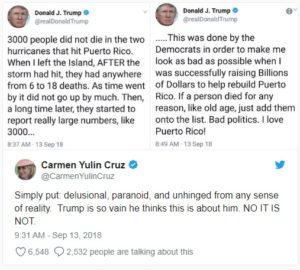
San Juan’s mayor described the president’s claim as “delusional” and even prominent Republicans such as House Speaker Paul Ryan distanced themselves from Trump’s tweets about Puerto Rico.

“This was done by the Democrats in order to make me look as bad as possible when I was successfully raising Billions of Dollars to help rebuild Puerto Rico,” Trump wrote on Twitter. “If a person died for any reason, like old age, just add them onto the list. Bad politics. I love Puerto Rico!”

Trump’s comments, which come as his administration prepares for Hurricane Florence to hit the East Coast, led both Democratic and Republican lawmakers to weigh in countering his claim. When Hurricane Maria hit Puerto Rico last year, it devastated homes and infrastructure and left large swaths of the territory without power for months.

Ryan, pressed by reporters on Trump’s tweet, said he disagreed with the president but would not comment on whether he thought Trump should apologize.

Ryan said he had  “no reason to dispute” the findings of a study commissioned by Puerto Rico’s government that put its death toll at nearly 3,000 people.

“Those are just the facts of what happens when a horrible hurricane hits an isolated place like an island,” Ryan said when asked about Trump’s tweet.

Sen. Marco Rubio, a Florida Republican who has been outspoken on the government’s response to the storm, lamented in a tweet that the deaths had become political. He repeated the study’s findings that 3,000 more people died on the island after the hurricane than during comparable periods.

“Both Fed & local gov made mistakes,” Rubio wrote. “We all need to stop the blame game & focus on recovery, helping those still hurting & fixing the mistakes.”

Florida Gov. Rick Scott, a Republican and early Trump supporter, said he disagreed with the president.

“I’ve been to Puerto Rico 7 times & saw devastation firsthand,” Scott, now a candidate for Senate, posted on Twitter. “The loss of any life is tragic; the extent of lives lost as a result of Maria is heart wrenching. I’ll continue to help PR.”

Ron DeSantis, a former Republican congressman running for governor in Florida, also disputed Trump’s assertion. “He doesn’t believe any loss of life has been inflated,” spokesman Stephen Lawson said in an emailed statement.

As his team braces for Hurricane Florence, Trump has praised his administration’s responses to deadly storms – including in Puerto Rico.

San Juan mayor Cruz responded, …

“Simply put: delusional, paranoid, and unhinged from any sense of reality.”

“Trump is so vain he thinks this is about him. NO IT IS NOT,” Cruz wrote on Twitter.

Puerto Rico Gov. Ricardo Rosselló said he “strongly denounced” what he described as questioning the impact of the storm for political purposes.

“The victims and the people of Puerto Rico do not deserve to have their pain questioned,” he said in a statement. “It is not time to deny what happened, it is time to make sure that it does not happen again.”

Democrats on Capitol Hill blasted Trump.

“Only Donald Trump could see the tragedy in Puerto Rico and conclude that he is the victim,” said Sen. Ed Markey, D-Mass. “May God bless the souls of the nearly 3,000 Americans that died in Puerto Rico and may he take pity on your soul Mr. President.”

Without mentioning Trump by name, Rep. Sheila Jackson Lee, D-Texas, a member of the House Committee on Homeland Security, slammed the “cavalier” tweeting about the number of deaths in Puerto Rico.

“You have lost compassion for people who are diverse,” she said.

Trump’s Thursday morning tweets focused on a George Washington University study released last month that examined the toll from Hurricane Maria. From September 2017 to February 2018, 2,975 people died, according to that study, which was commissioned by Puerto Rico’s government.

Late Thursday, deputy press secretary Hogan Gidley pushed back on criticism of the Trump’s response to Maria in a statement, saying the administration provided “unprecedented support to Puerto Rico.” Gidley said Cruz and the “liberal media” have tried to “exploit the devastation by pushing out a constant stream of misinformation and false accusations.”

In addition to force of the hurricane itself, many people in Puerto Rico died because disease and infection due to the lack of electricity and drinkable water on the island. The storm destroyed homes and and crippled roads, bridges, and hospitals.

George Washington University said Thursday it stands by the methodology used in the report and said the work was conducted with “complete independence and freedom from any kind of interference.”

“We are confident that the number – 2,975 – is the most accurate and unbiased estimate of excess mortality to date,” the school said in a statement.

Trump also took heat after he visited Puerto Rico in the aftermath of the Sept. 20, 2017, storm. The president tossed paper towels to Puerto Rican residents at a local relief center, angering storm victims and others who saw his actions as insensitive.

After his tweets Thursday, Democrats accused Trump of minimizing the death toll for callous political reasons.

Andrew Gillum, the Democratic candidate for governor in Florida, slammed Trump’s tweet.

“No death is partisan and our brothers and sisters in Puerto Rico deserved better from @realDonaldTrump before, during, and after the hurricane.”

The House Democratic Caucus tweeted that Trump “won’t acknowledge the thousands of Americans who died on his watch,” and added, “Even worse, Republicans have no interest in holding this administration accountable and ensuring that Congress is prepared to respond to these disasters.”

A report released this summer by the Federal Emergency Management Agency identified deficiencies in the administration’s response, including that the agency was not adequately staffed heading into the hurricane season. In the months leading up to Maria’s approach, FEMA had 10,683 people on hand, about 86 percent of the agency’s target, the report found.

The report found that the island itself was not prepared for such a storm, which contributed to widespread loss of power and communications – hampering the response.

A Government Accountability Office report last week confirmed many of those findings, and also noted that 54 percent of the FEMA workers deployed last year were serving in a role they were not qualified to perform. Staffing shortfalls complicated many aspects of the response, including the effort to move people into temporary housing in the mainland, the GAO found.

“The 2017 hurricanes and wildfires highlighted some longstanding issues and revealed other emerging response and recovery challenges,” the report said.

Source: USA Today newspaper – Posted September 13, 2018; retrieved September 14, 2018 from: https://www.usatoday.com/story/news/politics/2018/09/13/donald-trump-without-evidence-questions-puerto-rico-death-toll/1288118002/

—————–

Appendix B VIDEO – An Inconvenient Sequel: Truth To Power (2017) – Official Trailer – https://youtu.be/huX1bmfdkyA

Published on Mar 28, 2017 – Watch the new trailer for An Inconvenient Sequel: Truth to Power, the sequel to An Inconvenient Truth. In theatres July 28, 2017. #BeInconvenient

Climate Changes, Truth Does Not.

A decade after AN INCONVENIENT TRUTH brought Climate Change into the heart of popular culture, comes the riveting and rousing follow-up that shows just how close we are to a real energy revolution. Vice President Al Gore continues his tireless fight traveling around the world training an army of climate champions and influencing international climate policy. Cameras follow him behind the scenes – in moments both private and public, funny and poignant — as he pursues the inspirational idea that while the stakes have never been higher, the perils of Climate Change can be overcome with human ingenuity and passion.

Official Movie Site: http://www.inconvenientsequel.com/

Facebook: https://www.facebook.com/AnInconvenie…

Twitter: https://twitter.com/aitruthfilm

Instagram: https://www.instagram.com/aninconveni…

Share this post:
, , ,

‘Time to Go’ – Racist History of Loitering

Go Lean Commentary 

The cruel, inhumane institution of slavery finally ended in the United States … on which date?

This was not meant to be a multiple choice! But rather, these answers demonstrate the continuous flow of racist oppression that had befallen the African-American experience, despite these identifiable dates ending the practices and legacy of America’s Original Sin.

Why so lingering here, when the practice was so much more easily disbanded elsewhere; think British Empire in 1834.

This commentary asserts than the Southern United States – the former Confederate States/Slave States – never embraced the end of slavery because of this philosophical premise here:

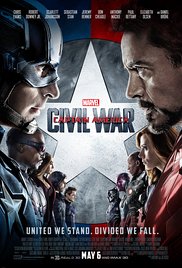
“An empire toppled by its enemies can rise again, but one which crumbles from within, is dead forever. ” – Popular Quotation from the Character Baron Zemo in the Marvel film Captain America: Civil Wars

Say it ain’t so! The Confederate South was toppled by its enemies (the non-Slave Northern States), their same spirit of racial superiority rose again. If the South had evolved on their own to assuage their societal defects, things may have been different for the Black minority there among the White majority.

While racial disparity in the US is a national reality, attitudes in the Southern States continued to reflect blatant White Supremacy. Since this was tolerated in the South, there was spin-off in the rest of the country. Truthfully, oppression, suppression and repression of the African race became the community ethos in the whole country: blatant in the South; subtle in the North and in the West. Community ethos is defined as:

The fundamental character or spirit of a culture; the underlying sentiment that informs the beliefs, customs, or practices of a group or society; dominant assumptions of a people or period.

Considering the foregoing historic timeline, loitering laws against African-Americans, is the focus of this commentary. There have been a number of high profile cases of Blacks being discriminated against in general society. See related VIDEO‘s here:

VIDEO 1 – Racist History of Loitering – https://youtu.be/jQuT0gO2X0o


Splinter

Published on May 16, 2018 – What is the line between “loitering” and just “hanging out”? Turns out, the enforcement of loitering laws often has less to do with committing the act and more to do with the skin color of the person who does:

Subscribe to Splinter: https://goo.gl/BwuJiy

————-

VIDEO 2 – Somebody Called The Cops On Me In My Own Building – https://youtu.be/LzQsYc_k4Tk


HuffPost
Published on May 18, 2018 – Someone called the police on him for suspected armed robbery. The reality? He was moving into his New York City apartment.

Subscribe to HuffPost today: http://goo.gl/xW6HG

Get More HuffPost Read: https://www.huffingtonpost.com/

Racial disparity in the US is still a reality. As related in the above VIDEO‘s, “you’re already criminalized when you have Black skin”.

This commentary asserts that it is easier for the Black-and-Brown populations in the Caribbean to prosper where planted in the Caribbean, rather than emigrating to foreign countries, like the United States. So the urging is as follows:

All Black-and-Brown Caribbean people exiling in the US, we entreat you: It’s Time to Go!

All Black-and-Brown people in the Caribbean wanting to emigrate to the US, we entreat you to Stay Home!

This point aligns with the book Go Lean…Caribbean, which states that while the blatant racist attitudes and actions may now be considered politically incorrect, the foundations of institutional racism in the US are entrenched. The book supports the notion that the Caribbean can be an even better place to live for the Caribbean’s Black-and-Brown, once we make the homeland a better place to live, work and play. Our quest is to optimize the economic, security and economic engines in the Caribbean region so as to dissuade our people from leaving and encourage the Diaspora to repatriate.

This commentary – Number 9 – continues a series from the movement behind the book Go Lean … Caribbean, in consideration of the rationale to return back to the Caribbean homeland. The other commentaries – published in September 2016 and beyond – detailed in this series are as follows:

  1. Time to Go: Spot-on for Protest
  2. Time to Go: No Respect for our Hair
  3. Time to Go: Logic of Senior Immigration
  4. Time to Go: Marginalizing Our Vote
  5. Time to Go: American Vices; Don’t Follow
  6. Time to Go: Public Schools for Black-and-Brown

Now, we consider 5 new entries along that same theme; they are identified as follows:

  1. Time to Go: Windrush – 70th Anniversary
  2. Time to Go: Mandatory Guns – Say it Ain’t So
  3. Time to Go: Racist History of Loitering
  4. Time to Go: Blacks Get Longer Sentences From ‘Republican’ Judges
  5. Time to Go: States must have Population Increases

All of these commentaries in this series relate to the disposition of the Caribbean Diaspora in foreign countries; in the case of this one, the United States of America. The Go Lean book and movement serves as a roadmap for the introduction of the technocratic Caribbean Union Trade Federation (CU). The CU is set to optimize Caribbean society through economic, security and governing optimizations. Therefore the Go Lean roadmap has 3 prime directives:

  • Optimization of the economic engines in order to grow the regional economy to $800 Billion & create 2.2 million new jobs.
  • Establishment of a security apparatus to ensure public safety and protect the economic engines.
  • Improve Caribbean governance to support these engines.

The Go Lean roadmap posits that the Caribbean region is in crisis now, and so many are quick to flee for refuge in foreign countries. But the “grass is not necessarily greener on the other side”. Here in the Caribbean, Black-and-Brown people are not arrested for being Black-and-Brown – they are the majority population. But they are a minority in the US; and that society is definitely not optimized for Caribbean people.

The Go Lean book asserts that every community has bad actors. The Caribbean has bad actors; and the US has bad actors. But because of the obvious need for reform and to transform the region, it may be easier to effect change at home, than in the foreign country of the US. Besides, many (non-Black) people in the US, don’t even think they need to change anything. They think there is no problem – they are perfectly allowed to call the police because a Black person is in their presence … loitering, or drinking coffee, or studying, or moving.

African Americans may have no where else to go, but the Black-and-Brown of the Caribbean can go back to the Caribbean. This is the urging now: It’s Time to Go!

This was a motivation of the Go Lean roadmap, we have to prepare for the Diaspora’s return; we have to fix our defects and mitigate for our “bad actors”; bad actors always emerge. This point is pronounced early in the book with the Declaration of Interdependence (Page 12) that claims:

x. Whereas we are surrounded and allied to nations of larger proportions in land mass, populations, and treasuries, elements in their societies may have ill-intent in their pursuits, at the expense of the safety and security of our citizens. We must therefore appoint “new guards” to ensure our public safety and threats against our society, both domestic and foreign. The Federation must employ the latest advances and best practices of criminology and penology to assuage continuous threats against public safety. The Federation must allow for facilitations of detention for [domestic and foreign] convicted felons of federal crimes, and should over-build prisons to house trustees from other jurisdictions.

xvi. Whereas security of our homeland is inextricably linked to prosperity of the homeland, the economic and security interest of the region needs to be aligned under the same governance. Since economic crimes, including piracy and other forms of terrorism, can imperil the functioning of the wheels of commerce for all the citizenry, the accedence of this Federation must equip the security apparatus with the tools and techniques for predictive and proactive interdictions.

The Caribbean appointing “new guards”, or a security pact to ensure public safety and justice assurance is part of the comprehensive effort of reforming the societal engines in our region. Security lapses are among the reasons why people left – they were pushed to seek refuge. So better delivering on the Social Contract – citizens surrender some of their freedoms and submit to the authority of the State in exchange for protection of remaining natural and legal rights – sends the message that we are readying the homeland for our far-flung Diaspora to finally come home.

The Go Lean book provides 370-pages of turn-by-turn instructions on “how” to adopt new community ethos, plus the strategies, tactics, implementations and advocacies to execute so as to reform and transform the societal engines of Caribbean society. Accepting that we have been inadequate in delivering security needs to our citizens in the past, we must now do better, not just in security promises, but in security deliveries. In addition, the Go Lean movement have presented many previous blog-commentaries on regional security and the assurance of public safety; consider this sample here:

https://goleancaribbean.com/blog/?p=14482 International Women’s Day – Protecting Rural Women
https://goleancaribbean.com/blog/?p=14424 Repairing the Breach: Crime – Need, Greed, Justice & Honor
https://goleancaribbean.com/blog/?p=13664 Managing High Profile Sexual Harassment Accusations
https://goleancaribbean.com/blog/?p=13476 Future Focused – Policing the Police
https://goleancaribbean.com/blog/?p=13126 The Requirement for Better Security – ‘Must Love Dogs’
https://goleancaribbean.com/blog/?p=12400 Accede the Caribbean Regional Arrest Treaty
https://goleancaribbean.com/blog/?p=10959 See Something, Say Something … Do Something
https://goleancaribbean.com/blog/?p=10566 Funding the Caribbean Security Pact
https://goleancaribbean.com/blog/?p=10222 Waging a Successful War on ‘Terrorism’
https://goleancaribbean.com/blog/?p=9072 Securing the Homeland – A Series featuring “On the Ground, Air and Sea”
https://goleancaribbean.com/blog/?p=5002 Managing a ‘Clear and Present Danger’
https://goleancaribbean.com/blog/?p=4360 Dreading the American: ‘Caribbean Basin Security Initiative’
https://goleancaribbean.com/blog/?p=4308 911 – Improving Emergency Response

The Go Lean roadmap was composed with the community ethos of the Greater Good – the greatest good for the greatest number of people – Black, Brown, White, Yellow or Red. We advocate for a pluralistic democracy

… and justice for all.

While this is an American concept … in words only, we have the opportunity to manifest this in the Caribbean. America does many things right, but they feature a lot of societal defects still, so we have the opportunity to do a pluralistic democracy Better than America.

This is the quest of the Go Lean/CU roadmap. We urge all Caribbean stakeholders to lean-in to this roadmap to elevate the Caribbean; to make our homeland a better place to live, work and play. 🙂

Download the book Go Lean … Caribbean – now!

Sign the petition to lean-in for this roadmap for the Caribbean Union Trade Federation.

————

APPENDIX – The Bottom Line on Peonage – Book: Go Lean … Caribbean (Page 211)

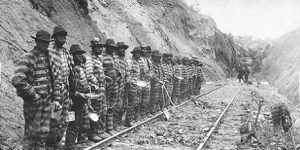
Peonage, involuntary servitude, existed historically during the colonial period, especially in Latin America and areas of Spanish rule, as well as in the Southern United States … after slavery was abolished. These States passed “Black Codes” to control the freed “Black” population. Peonage was essentially debt slavery, where a person was held against their will to work off an alleged debt to someone who had purchased them. This was the language, buying and selling, that was used for inmates purchased from county jails and state prison systems. They often declared as vagrant those who were [simply] unemployed.
Under such laws, local officials arbitrarily arrested tens of thousands, and charged them with fines and court costs. (By the beginning of the 20th century, 40% of blacks in the South were imprisoned in peonage). Merchants, farmers or business owners could pay their debts, and the prisoners had to work off the debt. Prisoners were “sold” or leased as forced laborers to operators of coal mines, lumber camps, brickyards, railroads, quarries and farm plantations, with the fees for their labor going to the States. Overseers often used severe deprivation, beatings and other abuses as “discipline”.

By 1942, the jail/prison peonage system came to an end with public exposure of the abuses and atrocities, advances of the American Communist movement, congressional hearings and public outcry.

Share this post:
, , ,
[Top]

Viola Desmond – One Woman Made a Difference

Go Lean Commentary

In North America, there is Black History Month and there is Women’s History Month …

This story – about Canadian Viola Desmond – is both!

Viola Desmond challenged racial segregation at a cinema in New Glasgow, Nova Scotia, in 1946. She refused to leave a whites-only area of the Roseland Theatre and was convicted of a minor tax violation for the one-cent tax difference between the seat she had paid for and the seat she used which was more expensive. Desmond’s case is one of the most publicized incidents of racial discrimination in Canadian history and helped start the modern civil rights movement in Canada.

In 2010, Viola Desmond was granted a posthumous pardon, the first to be granted in Canada.[2][3] The government of Nova Scotia also apologized for prosecuting her for tax evasion and acknowledged she was rightfully resisting racial discrimination.[4] … In late 2018 Desmond will be the first Canadian born woman to appear alone on a $10 bill which was unveiled by Finance Minister Bill Morneau and Bank of Canada governor Stephen Poloz during a ceremony at the Halifax Central Library on March 8, 2018.[5][6] Desmond was also named a National Historic Person in 2018.[7]

[Reverend] Dr. William Pearly Oliver – [a Social Justice Champion in the vein of Martin Luther King] – reflecting on the case 15 years later[21] stated regarding Desmond’s legacy:

    “… this meant something to our people. Neither before or since has there been such an aggressive effort to obtain rights. The people arose as one and with one voice. This positive stand enhanced the prestige of the Negro community throughout the Province. It is my conviction that much of the positive action that has since taken place stemmed from this …”.

Desmond is often compared to Rosa Parks, given they both challenged racism by taking seats in a Whites only section and contributed to the rise of the Civil Rights Movement.
Source: Retrieved March 14, 2018 from: https://en.wikipedia.org/wiki/Viola_Desmond

Yes, one woman, or one man, can make a difference in society. Viola Desmond proved it! Her commitment to justice and righteous principles compelled her community to take note and make a change.

“Wanna make the world a better place, take a look at yourself and make a change.” – Michael Jackson’s song: Man in the Mirror (1987).

Canada today is a very progressive society. From the Caribbean perspective, Canada is now a role model for a pluralistic democracy and Climate Change action. As is the experience, positive reform always starts with one person. In a previous blog-commentary, the movement behind the book Go Lean…Caribbean explained how immigrants to a new community (and minorities) normally go through a long train of abuse, then toleration, followed by acceptance and then finally celebration. Today, Canada is celebrating Viola Desmond; see the news article in the Appendix below.

The success of this community – Canada – has been hard fought, but they did the heavy-lifting and now are enjoying the fruitage of their labor. People from all over the world “are beating down the doors to get in”.

Poor Caribbean communities. We have NOT done the heavy-lifting and our people “are beating down the doors to get out”. (Many times, they flee to Canada for refuge).

This is what the book Go Lean…Caribbean – available to download for free – warned: “Push and Pull” factors are resulting in an abandonment of Caribbean homelands for foreign shores like Canada; (Page 3). Now to learn and apply this lesson.

The Viola Desmond story resonates with us in the Caribbean. Since she was a Black Woman and the majority population of 28 of the 30 Caribbean member-states is Black, we share the same ancestral heritage – Africa – colonial origins – slave trade – and history of oppression as Canadian Blacks. Plus a large number of our Caribbean Diaspora who fled their homeland lives in Canada – one estimate is near a million.

The Go Lean book posits that one person – an advocate like Desmond – can make a difference (Page 122). It relates:

An advocacy is an act of pleading for, supporting, or recommending a cause or subject. For this book, it’s a situational analysis, strategy or tactic for dealing with a narrowly defined subject.

Advocacies are not uncommon in modern history. There are many that have defined generations and personalities. Consider these notable examples from the last two centuries in different locales around the world:

  • Frederick Douglas
  • Mohandas Gandhi
  • Martin Luther King
  • Nelson Mandela
  • Cesar Chavez
  • Candice Lightner

The Go Lean book seeks to advocate and correct the Caribbean, not Canada, and the people who love our homeland. Yet still we can learn lessons from Canada’s history (Page 146) and direct our regional stakeholders to a Way Forward based on best-practices gleaned from Canada’s dysfunctional past. The book, in its 370 pages, serves as a roadmap for the introduction and implementation of the technocratic Caribbean Union Trade Federation (CU), to move our society to a brighter future, by elevating our societal engines – for all member-states. This CU/Go Lean roadmap has these 3 prime directives:

  • Optimization of the economic engines in order to grow the regional economy to $800 Billion and create 2.2 million new jobs.
  • Establishment of a security apparatus to ensure public safety and protect the resultant economic engines.
  • Improve Caribbean governance to support these engines, including a separation-of-powers between the member-states and CU federal agencies.

The book stresses that reforming and transforming the Caribbean societal engines must be a regional pursuit – we must become a pluralistic democracy: Black, White, Red and Yellow. Our problems are too big for any one Caribbean member-state to contend with alone. This was an early motivation for the roadmap, as pronounced in the opening Declaration of Interdependence (Pages 12 – 14):

xi. Whereas all men are entitled to the benefits of good governance in a free society, “new guards” must be enacted to dissuade the emergence of incompetence, corruption, nepotism and cronyism at the peril of the people’s best interest. The Federation must guarantee the executions of a social contract between government and the governed.

xix. Whereas our legacy in recent times is one of societal abandonment, it is imperative that incentives and encouragement be put in place to first dissuade the human flight, and then entice and welcome the return of our Diaspora …

xxxii. Whereas the cultural arts … of the region are germane to the quality of Caribbean life, and the international appreciation of Caribbean life, the Federation must implement the support systems to teach, encourage, incentivize, monetize and promote the related industries for arts … in domestic and foreign markets. These endeavors will make the Caribbean a better place to live, work and play.

xxxiii. Whereas lessons can be learned and applied from the study of the recent history of other societies, the Federation must formalize statutes and organizational dimensions to avoid the pitfalls of communities like East Germany, Detroit, Indian (Native American) Reservations, Egypt and the previous West Indies Federation. On the other hand, the Federation must also implement the good examples learned from developments/ communities …

The Go Lean book provides 370-pages of turn-by-turn instructions on “how” to adopt new community ethos, plus the strategies, tactics, implementations and advocacies to execute so as to reboot, reform and transform the societal engines of Caribbean society.

The Go Lean movement calls on every man, woman and child in the Caribbean to be an advocate and a champion, or at least appreciate the championing efforts of previous advocates. Their examples can truly help us today with our passions and purpose. Consider this sample of prior blog/commentaries where advocates and role models have been elaborated upon:

https://goleancaribbean.com/blog/?p=14139 Carter Woodson – One Man Made a Difference … for Black History
https://goleancaribbean.com/blog/?p=11963 Oscar López Rivera – The ‘Nelson Mandela’ of the Caribbean?
https://goleancaribbean.com/blog/?p=11442 Caribbean Roots: Al Roker – ‘Climate Change’ Defender
https://goleancaribbean.com/blog/?p=10801 Caribbean Roots: John Carlos – The Man. The Moment. The Movement
https://goleancaribbean.com/blog/?p=10114 Caribbean Roots: Esther Rolle of ‘Good Times’
https://goleancaribbean.com/blog/?p=9948 Caribbean Roots: Sammy Davis, Jr.
https://goleancaribbean.com/blog/?p=9300 Edward Snowden – One Person Making a Difference
https://goleancaribbean.com/blog/?p=8724 Remembering Marcus Garvey: Still Relevant Today
https://goleancaribbean.com/blog/?p=8495 The NBA’s Tim Duncan – Champion On and Off the Court
https://goleancaribbean.com/blog/?p=8328 YouTube Millionaire: ‘Tipsy Bartender’ Bahamas Origins
https://goleancaribbean.com/blog/?p=8165 Role Model Muhammad Ali’s Greatest Fight
https://goleancaribbean.com/blog/?p=7682 Frederick Douglass: Role Model for Single Cause – Death or Diaspora
https://goleancaribbean.com/blog/?p=866 Bob Marley: The Role Model and Legend … lives on!

Thank you Viola Desmond, for being a good role model, and a reminder: Black Girls Rock!

We conclude about Viola Desmond as we do about our own Caribbean champions and advocates; we said (Go Lean book Valedictions on Page 252):

Thank you for your service, love and commitment to all Caribbean people. We will take it from here.

The movement behind Go Lean book, the planners of a new Caribbean stresses that a ‘change is going to come’ our way. We have endured failure for far too long; we have seen what works and what does not. We want to learn from Canada’s History – the good, bad and ugly lessons.

There are the 5 L‘s. We have now Looked, Listened, Learned and Lend-a-hand; we are now ready to Lead our region to a better destination, to being a homeland that is better to live, work and play. Let’s move! 🙂

Download the free e-Book of Go Lean … Caribbean – now!

Sign the petition to lean-in for this roadmap for the Caribbean Union Trade Federation.

————

Appendix – Viola Desmond On New Canadian $10 Bill

March 12, 2018 – Canadian hero Viola Desmond is the face on the new $10 bill in Canada, which goes into circulation at the end of March.

Viola Desmond was thrown in jail in Nova Scotia in 1946 because, in a movie theatre, she wanted to sit downstairs where the white people were allowed to sit. She didn’t want to sit up in the balcony, where the black people had to sit. The police held her in jail overnight. The dignified and brave Desmond paid a fine of $20 the next day, even though she had done nothing wrong. Today, we think of her for being a brave advocate for the rights of African-Canadians and helping to inspire the human rights movement in Canada.

(Learn more about Desmond on Historica Canada’s Viola Desmond page.)

It is a great honour to have your face on a country’s money. This is the first time an African-Canadian woman has been featured on Canadian paper money. (Queen Elizabeth is featured on the $20 bill.)

There’s something else interesting about the new bill. For the first time, it is vertical, meaning it’s meant to be looked at up-and-down rather than horizontally (across).

The new bill also features a number of images that are reminders of human rights. For instance, there is an image of the Canadian Museum for Human Rights, in Winnipeg, Manitoba, where Desmond’s story is part of the permanent collection. There is an image of a feather, to recognize rights and freedoms for Canada’s Indigenous Peoples. And it features a paragraph from the Canadian Charter of Rights and Freedoms (section 15, which says, “Every individual is equal before and under the law.”

Viola Desmond’s sister, Wanda Robson, was one of the first people in Canada to receive a copy of the new $10 bill. In a Bank of Canada video (below), she said her sister’s photo on it is “so life-like. It’s as if she’s in this room!”

Source: Retrieved March 14, 2018 from http://teachingkidsnews.com/2018/03/12/viola-desmond-on-new-canadian-10-bill/

Related Videos
The video below (1:00) is a “Heritage Minute” produced by Historica Canada. It tells the story of Viola Desmond.

——–

VIDEO – Heritage Minutes: Viola Desmond – https://youtu.be/ie0xWYRSX7Y

Historica Canada
Published on Feb 2, 2016 – The story of Viola Desmond, an entrepreneur who challenged segregation in Nova Scotia in the 1940s. The 82nd Heritage Minute in Historica Canada’s collection. For more information about Viola Desmond, visit: http://www.thecanadianencyclopedia.ca…

——–

Additional Video: Wanda Robson sees Canada’s new $10 note featuring her sister (Viola Desmond) for the first time  – https://youtu.be/dfdlPrglcS8

Share this post:
, , , ,
[Top]

International Women’s Day – Protecting Rural Women – ENCORE

Can’t we all just get along?

The answer is “No”! Don’t be naïve!

The book Go Lean…Caribbean sought to reform and transform the societal engines of the 30 member-states that caucus as the political Caribbean. This region is in dire straits, with some countries flirting with Failed-State status. But all the problems here are not just economic. No, there are security deficiencies as well. Therefore the book declares (Page 23):

… “bad actors” will also emerge thereafter to exploit the opportunities, with good, bad and evil intent.

This movement behind the Go Lean book has therefore monitored security dynamics for the Caribbean homeland. The hope is to apply lessons-learn from other regions and ensure that we mitigate all threats and risks.

One such lesson is the security needs for our female population: Caribbean women and girls. There are many threats for women and girls that we need to be “on guard” for. Not all of our populations live in cities; no, many reside in rural areas or remote islands here in the tropics. According to the United Nations (UN) Commission on the Status of Women, there is the need to draw attention to the dilemma and challenges of rural women, who make up over a quarter of the world population, and are being left behind in every measure of development.

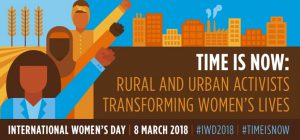
Today – March 8, 2018 – is International Women’s Day; the theme this year is “Time is Now: Rural and urban activists transforming women’s lives”. The UN says:

This year, International Women’s Day comes on the heels of unprecedented global movement for women’s rights, equality and justice. This has taken the form of global marches and campaigns, including #MeToo and #TimesUp in the United States of America and their counterparts in other countries, on issues ranging from sexual harassment and femicide to equal pay and women’s political representation.

Join us to transform the momentum into action, to empower women in all settings, rural and urban, and to celebrate the activists who are working relentlessly to claim women’s rights and realize their full potential.

The #TimeisNow.

————-

VIDEO – Time is Now: Rural and Urban Activists Transforming Women’s Lives – https://youtu.be/XgwlEWzXUrE

In her message for International Women’s Day on March 8 [2018], UN Women Executive Director Phumzile Mlambo-Ngcuka draws attention to the work of rural and urban activists who have fought for women’s rights and gender equality. Read the full message here.

Our Caribbean women require protections and public safety measures ideally suited for their exact needs. They need the fulfillment of the Social Contract on their behalf. This Social Contract is defined as:

… citizens surrender some of their freedoms and submit to the authority of the State in exchange for protection of remaining natural and legal rights.

Poor Nigeria; or better stated: poor rural Nigerian girls.

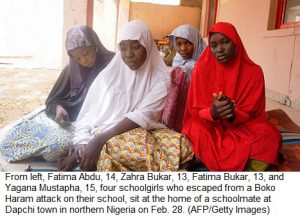
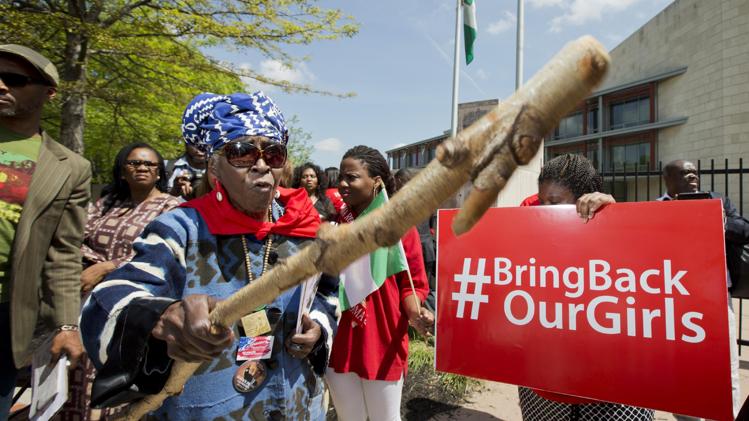
4 years ago, we reported on an abduction of 270 girls by terrorist group Boko Haram from a government school in the Nigerian State (Province) of Chibok; see the ENCORE of that blog-commentary below. Now we learn that it has happened again, 110 schoolgirls have been abducted in northern city of Dapchi (in the same province as Chibok). See news link here:

The recent Boko Haram abduction of 110 schoolgirls in Dapchi, Nigeria, drew immediate comparisons to the 2014 abduction of more than 270 girls from a school in Chibok. Beyond the media spotlight, what do we know about Boko Haram’s efforts to abduct — and recruit — women and girls?

The full Washington Post story-analysis can be found here: https://www.washingtonpost.com/news/monkey-cage/wp/2018/03/08/boko-haram-has-kidnapped-more-girls-heres-what-we-know/?utm_term=.a9801d06cec0

Where are the military-security forces, police, world enforcement agencies in this repeated drama?

Where is the outrage? Where is the New World Order? Where is the #MeToo movement and #TimesUp movement?

Is their absence tied to the fact that this is Africa – a Shit-hole country? Or the fact that these girls are all Black girls and Less Than – do Black Lives Matter?

The Caribbean societal elevation effort – Go Lean roadmap – is for the Caribbean only. Can we ensure that we have the necessary protections in place for our women and girls? Not just for those in the urban areas, but the rural communities as well. This seems to be the defect in Nigeria.

This is also the theme of this UN Special Commemoration, the International Women’s Day and the need to better protect, secure and empower women and girls in rural communities.

The truth is: We cannot all “just get along”. There must be the protections in Caribbean society to ensure that the Strong Do Not Abuse the Weak. This is the vision for a new Caribbean stewardship. See this point about abducted Nigerian girls developed in the previous blog-commentary below here:

————-

Go Lean Commentary – Muslim officials condemn abductions of Nigerian girls

Nigerian Girls

Abducting little girls from a boarding school in the middle of the night is just criminal! There is nothing religious or political about this action.

This is not just terrorism – in the classic sense – this is simply felonious behavior. This is evidenced further by the fact that the perpetrators have promised to sell the girls into slavery. The word “sell” has the connotation of obtaining money for this action. This is criminal and should therefore be condemned by every civilized society in the world.

Failure to marshal against these crimes is just failure – indicative of a Failed-State. Nigeria has a bad image of deceitful practices. So it is only appropriate to ask: is this truly a case of abduction, or could it all be one big Nigerian scam? Despite the obvious “cry wolf” reference, we must side with the innocent victims here. But, as is cited to in the foregoing news article, there are many people who feel that Nigeria hasn’t done enough for these girls. Only now that other countries have stepped up to assist/oversee has the government become more accountable.

Another group of victims in this drama are the peace-loving Islamic adherents. The actions of Boko Haram are casting dispersions on the whole religion. This terrorist group is not practicing the true teachings of Islam; in fact these actions are condemned as criminal even in the Muslim world.

AP*; Photo by: Manuel Balce Ceneta

The abduction three weeks ago of hundreds of schoolgirls in Nigeria by the Muslim extremist group Boko Haram is now generating worldwide attention and condemnation. Muslim leaders in various countries have criticized Boko Haram’s leader for using Islamic teachings as his justification for threatening to sell the girls into slavery. Others have focused on what they view as a slow response by Nigeria’s government to the crisis. The British and French governments announced Wednesday that they would send teams of experts to complement the U.S. team heading to Nigeria to help with the search for the girls, and Nigeria’s president said China has also offered assistance.

Some of the reactions to the crisis:

— EGYPT: Muslim religious officials strongly condemned Boko Haram. Religious Endowments Minister Mohammed Mohktar Gomaa said “the actions by Boko Haram are pure terrorism, with no relation to Islam, especially the kidnapping of the girls. These are criminal, terrorist acts.” According to the state news agency MENA, he said “these disasters come from cloaking political issues in the robes of religion and from peddling religion for secular interests, something we warn incessantly against.”

The sheik of the Cairo-based Al-Azhar, one of Sunni Islam’s most prestigious institutions, demanded the group release the girls, saying it “bears responsibility for any harm suffered by these girls.” The group’s actions “completely contradict Islam and its principles of tolerance,” Sheik Ahmed el-Tayeb said.

— PAKISTAN: Dawn, an English language newspaper in Pakistan, published an opinion piece that takes Nigeria to task for not moving against Boko Haram. “The popular upsurge in Nigeria in the wake of the latest unspeakable atrocity provides some scope for hoping that the state will finally act decisively to obliterate the growing menace,” wrote columnist Mahir Ali. “Naturally, the lives and welfare of the abducted girls must be an absolute priority. Looking back a few years hence, it would also provide a degree of satisfaction to be able to pinpoint the moment when Boko Haram sealed its own fate by going much too far.”

— INDONESIA: In the world’s most populous Muslim-majority country, the Jakarta Post published an editorial Wednesday condemning the Boko Haram leader for “wrongly” citing Islamic teaching as his excuse for selling the abducted girls into slavery. Recalling the Taliban’s shooting of 15-year-old Pakistani girl Malala Yousafzai in 2012 because of her outspokenness in defense of girls’ right to an education, the editorial said: “Malala’s message needs to be conveyed to all people who use their power to block children’s access to education. It is saddening that religion is misused to terrorize people and to kill the future leaders of the world.”

The newspaper also criticized Nigerian President Goodluck Jonathan, noting that “only after international condemnation and street demonstrations poured in did President Jonathan tell his nation that he would take all necessary actions to return the young women to their parents and schools, while also acknowledging that the whereabouts of the abductees remained unknown.”

— SWEDEN: In an editorial posted on the left-wing news website politism.se, blogger Nikita Feiz criticized the international community for its slow response and asked why the situation hadn’t triggered as loud a reaction as when Malala was shot in Pakistan. “Looking at the situation in Nigeria, Malala appears like a false promise from the West that it would stand up for girls’ rights to attend school without fear of being subjected to sexual exploitation and abuse,” she said. “It is difficult not to draw the conclusion that the West’s assurance to act for girls’ rights suddenly isn’t as natural when it comes to girls’ rights in a country in Africa.”

A Swedish women’s network called StreetGaris is planning a demonstration outside the Foreign Ministry on Friday to demand more action from the international community. Participants are encouraged to wear a head wrap or red clothes in solidarity with the girls and their relatives.

— UNITED STATES: The U.S. government is sending to Nigeria a team of technical experts, including American military and law enforcement personnel skilled in intelligence, investigations, hostage negotiating, information sharing and victim assistance, as well as officials with expertise in other areas — but not U.S. armed forces.

“In the short term our goal is obviously is to help the international community, and the Nigerian government, as a team to do everything we can to recover these young ladies,” President Barack Obama told NBC on Tuesday. “But we’re also going to have to deal with the broader problem of organizations like this that … can cause such havoc in people’s day-to-day lives.”

In an editorial, The New York Times faulted the Nigerian government for not aggressively responding to the abductions. “Mr. Jonathan, who leads a corrupt government that has little credibility, initially played down the group’s threat and claimed security forces were in control,” the newspaper said. “It wasn’t until Sunday, more than two weeks after the kidnappings, that he called a meeting of government officials, including the leader of the girls’ school, to discuss the incident.”

— BRITAIN: Prime Minister David Cameron’s office said Britain will send a small team of experts to complement the U.S. team being sent by Obama. The announcement was made Wednesday after Cameron spoke to the Nigerian president. The team will be sent as soon as possible and will include specialists from several departments. Experts have said special forces may be sent to the region. The issue has heated up in recent days with protests over the weekend outside the Nigerian Embassy in London and an increasing number of newspaper editorials calling for action to rescue the girls.

— FRANCE: Foreign Minister Laurent Fabius told lawmakers on Wednesday that France is ready to send a “specialized team … to help with the search and rescue” of the kidnapped girls. “In the face of such an appalling act, France, like other democratic nations, must react,” Fabius said. “This crime will not go unpunished.” Fabius gave no details of the team, except to say it’s among those already in the region. France has soldiers in Niger, Cameroon and Mali, where it is fighting Islamic insurgents, as well as in Central African Republic.

— CHINA: Chinese Premier Li Keqiang, arriving Wednesday in Nigeria for a state visit, did not specifically mention the abductions in a transcript of a joint press conference with Nigeria’s president, instead making only a general reference to the “need to work together to oppose and fight terrorism.” In his remarks, Jonathan said China “promised to assist Nigeria in our fight against terror especially in our commitment and effort to rescue the girls that were taken away from a secondary school.” He did not offer specifics.

— BRAZIL: The foreign ministry issued a statement Tuesday condemning the abductions. “In conveying the feelings of solidarity to the families of the victims and to the people and the Government of Nigeria, the Brazilian Government reiterates its strong condemnation of all acts of terrorism,” the statement said.

—-

* Associated Press correspondents Lee Keath in Cairo, Michelle Faul in Lagos, Nigeria, Gregory Katz in London, Malin Rising in Stockholm, Masha Macpherson in Paris and Stan Lehman in Sao Paulo, Brazil contributed to this report.

Associated Press – Online News – May 7, 2014 http://news.yahoo.com/muslim-officials-condemn-abductions-girls-160020053.html

This book Go Lean … Caribbean is a roadmap for the introduction and implementation of the Caribbean Union Trade Federation (CU), so as to elevate the delivery of economic and security solutions in the Caribbean. One specific mission is to manage against encroachments of the Failed-State index.

At the outset, the roadmap identified an urgent need to mitigate against organized crime & terrorism, and to ensure human rights protection. This is pronounced in this clause in the opening Declaration of Interdependence (Page 12)

xxi.   Whereas the legacy in recent times in individual states may be that of ineffectual governance with no redress to higher authority, the accedence of this Federation will ensure accountability and escalation of the human and civil rights of the people for good governance, justice assurances, due process and the rule of law. As such, any threats of a “failed state” status for any member state must enact emergency measures on behalf of the Federation to protect the human, civil and property rights of the citizens, residents, allies, trading partners, and visitors of the affected member state and the Federation as a whole.

The Go Lean roadmap projects that the CU will facilitate monitoring and accountability of regional law enforcement and homeland security institutions. This type of behavior will not be tolerated in the Caribbean. This CU effort will be coordinated in conjunction with and on behalf of the Caribbean member-states.

On that note, the Caribbean Union Trade Federation, if it was already in existence, would vociferously condemn the abduction of the Nigerian girls. Hence the CU would be added to the long list of condemnations in the foregoing article. But these would not be hollow words, but would be accompanied by the required actions to ensure that such a disposition could not thrive in the CU region. This commitment is detailed as these community ethos, strategies, tactics, implementations and advocates:

Community Ethos – Public Protection over Privacy Page 23
Community Ethos – Anti-Bullying and Mitigation Page 23
Community Ethos – Intelligence Gathering Page 23
Community Ethos – Minority Equalization Page 24
Community Ethos – Impact the Greater Good Page 37
Strategy – Placate & Pacify International Monitors Page 48
Separation of Powers – Homeland Security Page 75
Separation of Powers – Justice Department Page 77
Implementation –  Security Initiatives at Start-up Page 103
Planning – Ways to Improve Failed-State Indices Page 134
Advocacy – Manage the Social Contract Page 170
Advocacy – Ways to Impact Justice Page 177
Advocacy – Ways to Reduce Crime Page 178
Advocacy – Ways to Improve Homeland Security Page 180
Advocacy – Ways to Mitigate Terrorism Page 181
Advocacy –  Ways to Protect Human Rights Page 220
Advocacy –  Ways to Empower Women Page 226
Advocacy –  Ways to Impact Youth Page 227

In contrast with the events in Nigeria, local crimes against women, young or old will not be tolerated in the CU. Everyone, regardless of gender, will be guaranteed the right to life, liberty and the pursuit of happiness (and education for that matter). This will be standard, whether the world is watching or not.

However, we want the world to watch. We want to show how we feverishly protect our people, with assurance that the Caribbean is the world’s best address to live, work, learn and play. 🙂

Download the free e-Book of Go Lean … Caribbean – now!

Sign the petition to lean-in for this roadmap for the Caribbean Union Trade Federation. 

Share this post:
, , ,
[Top]

Welcoming the Caribbean Intelligentsia

Go Lean Commentary

Who knew?

    … the Caribbean has an Intelligentsia?

Well blow me away with a whisper! This fact is surprising new information for this movement behind the book Go Lean … Caribbean

    … and we should know as we “wrote the book” on the Caribbean.

So there are college degree programs at universities in North America that cover the subject matter of “Caribbean Studies”. This would normally include the sociology, anthropology and historicity of the region; its people, traditions, culture, institutions and industries.

    Big question mark on that last one!

It’s hard to think that there may be intelligent people studying the Caribbean industrial and economic eco-system and their credentials are not scorned in academic circles.

The truth is, the Caribbean is devoid of so much smart out-workings – there are many societal defects – that it’s hard to think there is an intelligentsia for this region:

in·tel·li·gent·si·a
noun

  1. Google: intellectuals or highly educated people as a group, especially when regarded as possessing culture and political influence.
  2. Merriam-Webster: intellectuals who form an artistic, social, or political vanguard or elite.

The opening assessment in the Go Lean book explained that there is undoubtedly a Caribbean geographical region; but there is no unified Caribbean society or culture. Rather there is crisis; there are 30 disjointed, unorganized member-states rimming the Caribbean Sea that has no universal leverage, comradery nor brotherhood. Even the Bible says:

Two are better than one because they have a good return for their labor. 10 For if either of them falls, the one will lift up his companion. But woe to the one who falls when there is not another to lift him up. 11 Furthermore, if two lie down together they keep warm, but how can one be warm alone? 12 And if one can overpower him who is alone, two can resist him. A cord of three strands is not quickly torn apart. – Ecclesiastes 4: 9-12

So for any existing Caribbean intelligentsia in the status quo, it must be for English-speaking territories alone, or Dutch-speaking alone (minus Suriname), or French-speaking alone (minus Haiti), or Spanish-speaking (though there is no unity even among those 3 countries: Cuba, Dominican Republic and Puerto Rico).

It is time now for a change; for the emergence of a Caribbean intelligentsia for all of the Caribbean, for all 30 member-states.

The book Go Lean…Caribbean – available to download for free – serves as a roadmap for the introduction and implementation of the technocratic Caribbean Union Trade Federation (CU), for the elevation of all Caribbean society – for all 30 member-states in all 4 language groups. This CU/Go Lean roadmap has these 3 prime directives:

  • Optimization of the economic engines in order to grow the regional economy to $800 Billion and create 2.2 million jobs.
  • Establishment of a security apparatus to ensure public safety and protect the resultant economic engines.
  • Improve Caribbean governance to support these engines, including a separation-of-powers between the member-states and CU federal agencies.

The book stresses that Caribbean societal engines must be reformed and transformed at a regional level. This shows the need for an intelligentsia influence on Caribbean society. This was an early motivation for the roadmap, as pronounced in the opening Declaration of Interdependence (Pages 12 – 13):

xi. Whereas all men are entitled to the benefits of good governance in a free society, “new guards” must be enacted to dissuade the emergence of incompetence, corruption, nepotism and cronyism at the peril of the people’s best interest. The Federation must guarantee the executions of a social contract between government and the governed.

xii. Whereas the legacy in recent times in individual states may be that of ineffectual governance with no redress to higher authority, the accedence of this Federation will ensure accountability and escalation of the human and civil rights of the people for good governance, justice assurances, due process and the rule of law. As such, any threats of a “failed state” status for any member state must enact emergency measures on behalf of the Federation to protect the human, civil and property rights of the citizens, residents, allies, trading partners, and visitors of the affected member state and the Federation as a whole.

xvi. Whereas security of our homeland is inextricably linked to prosperity of the homeland, the economic and security interest of the region needs to be aligned under the same governance. Since economic crimes … can imperil the functioning of the wheels of commerce for all the citizenry, the accedence of this Federation must equip the security apparatus with the tools and techniques for predictive and proactive interdictions.

xxiv. Whereas a free market economy can be induced and spurred for continuous progress, the Federation must install the controls to better manage aspects of the economy: jobs, inflation, savings rate, investments and other economic principles. Thereby attracting direct foreign investment because of the stability and vibrancy of our economy.

There is the need for a Caribbean Intelligentsia. This normally includes:

  • Think Tanks
  • Advisory Councils
  • Standards Organizations
  • Community Development Foundations
  • Organized Philanthropists
  • Non-Government social agencies

There have been so many expressions of intelligence-lacking practices (Stupidity, Orthodoxy and even Rent-Seeking) in Caribbean society that influence and guidance from well-educated, intelligent stakeholders need to be encouraged.

The Go Lean book provides 370-pages of turn-by-turn instructions on “how” to adopt new community ethos, plus the strategies, tactics, implementations and advocacies to execute so as to reboot, reform and transform the societal engines of Caribbean society: economics, security and governance. Intelligence-lacking practices can be found in all these three spheres of society.

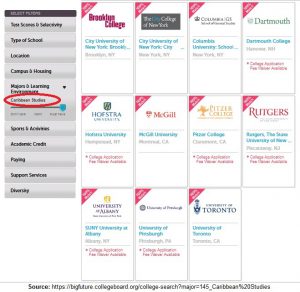
So teach away, all you colleges and universities, identified here from the online resource website CollegeBoard.org; (and learn more about the College Board in the Appendix VIDEO below):

College Search: Caribbean Studies

11 results

City University of New York: Brooklyn College

Brooklyn, NY

City University of New York: City College

New York, NY

Columbia University: School of General Studies

New York, NY

Dartmouth College

Hanover, NH

College Application Fee Waiver Available

Hofstra University

Hempstead, NY

College Application Fee Waiver Available

McGill University

Montreal, CA

Pitzer College

Claremont, CA

College Application Fee Waiver Available

Rutgers, The State University of New Jersey: New Brunswick/Piscataway Campus

Piscataway, NJ

College Application Fee Waiver Available

SUNY University at Albany

Albany, NY

College Application Fee Waiver Available

University of Pittsburgh

Pittsburgh, PA

College Application Fee Waiver Available

University of Toronto

Toronto, CA

Source: Retrieved January 11, 2018 from: https://bigfuture.collegeboard.org/college-search?major=145_Caribbean%20Studies

So we entreat you universities … to teach your ‘Caribbean Studies’; and then lets apply the teachings – the arts and the sciences – the scientific methods and technocratic best practices.

See how the Go Lean book considers specific plans, excerpts and headlines for the objective of Fostering a Technocracy; this is found in the book on Page 64:

Fostering a Technocracy

1 Lean-in for the Caribbean Single Market
This CU treaty calls for a technocratic confederation of the Caribbean region into a Single Market of 30 member-states and 42 million people. The term technocracy was originally used to designate the application of the scientific method to solving social & economic problems, in counter distinction to the traditional political or philosophic approaches. The CU must start as a technocratic confederation – a Trade Federation – rather than evolving to this eventuality due to some Failed-State status or insolvency.
2 Economists & Engineers – not Lawyers nor Politicians

The concept of a technocracy remains mostly hypothetical, though some nations have been considered as such in the sense of being governed primarily by technical experts in various fields of governmental decision-making. A technocrat has come to mean either ‘a member of a powerful technical elite’, or ‘someone who advocates the supremacy of technical experts’. Scientists, engineers, economists, and technologists, who have knowledge, expertise, or skills, would compose the governing body, instead of politicians and businesspeople. In a technocracy, decision makers would be selected based upon how knowledgeable and skillful they are in their fields. Even the leaders of the Communist Party of China are mostly professional engineers. The Five-Year plans of the People’s Republic of China have enabled them to plan ahead in a technocratic fashion to build projects such as the National Trunk Highway System, the High-speed rail system, and the Three Gorges Dam.

3 Professional Emergency Managers

The CU treaty calls for a collective security agreement for the Caribbean member-states to prepare-respond to natural disasters, emergency incidents and assuage against systemic threats against the homeland. The CU employs the professional arts and sciences of Emergency Management to spread the costs and risks across the entire region. Outside of hurricanes or earthquakes, the emergency scope includes medical trauma, pandemic incidents and   industrial accidents (i.e. oil or chemical spills) – any scenario that can impact the continuity of the economic engines and/or community.

4 Apolitical – Loved by All
5 Model of Constitutional Monarchy
6 Constitutional Mandates – Supporting Democracy

The Nobel Prize winning Public Choice Theory posits that public stakeholders (politicians & bureaucrats), tend to act in their own self-interest. The CU, in true technocratic fashion, will codify constitutional mandates (ie. lottery/school funding).

7 Balance Budget Constraints
8 Federal Civil Service – Guarantee Fair Treatment
9 Service Level Agreements

The CU is a proxy organization, chartered to execute deputized functions on behalf of member-states; this means a task-oriented philosophy with “Service Level Agreements” in place; i.e. 80% of all phone calls answered within 20 seconds.

10 ITIL – Systematic Assurances

The formal ITIL (Information Technology Infrastructure Library) discipline is the art/science that describes processes, procedures, tasks, and checklists for managing risks associated with information technology deployments, to ensure the optimal uptime. This includes the CU’s Continuity & Availability Management, Change Control & Release Management.

The Go Lean roadmap seeks to assuage the societal defects in the Caribbean region. This means identifying, qualifying and engaging curative strategies and tactics. This is a familiar theme for this Go Lean movement; the charter of the organization is to function as an Intelligentsia Group unto itself. Consider here, some previous blog-commentaries that have highlighted organizations, best-practices and new community attitudes, all under a consistent theme of the “Role of the Intelligentsia“. See the sample of prior submissions here:

https://goleancaribbean.com/blog/?p=13890 Role of Intelligentsia: We Need to Talk and Collaborate on Solutions
https://goleancaribbean.com/blog/?p=13524 Role of Intelligentsia: Future Focused – e-Government Portal 101
https://goleancaribbean.com/blog/?p=13321 Role of Intelligentsia: Making a Pluralistic Multilingual Democracy
https://goleancaribbean.com/blog/?p=12949 Role of Intelligentsia: Grow Up Already for Charity Management:
https://goleancaribbean.com/blog/?p=12621 Role of Intelligentsia: ‘If it is going to be, it starts with me’
https://goleancaribbean.com/blog/?p=11812 Role of Intelligentsia: Planning for Hope and Change
https://goleancaribbean.com/blog/?p=11759 Role of Intelligentsia: Understand the Market, Plan the …
https://goleancaribbean.com/blog/?p=11598 Role of Intelligentsia: Give us your Time, Talent and Treasuries
https://goleancaribbean.com/blog/?p=11358 Role of Intelligentsia: Preparing for the Inevitable Retail Apocalypse
https://goleancaribbean.com/blog/?p=10351 Role of Intelligentsia: ‘Culture Eats Strategy For Breakfast’
https://goleancaribbean.com/blog/?p=10166 Role of Intelligentsia: Looking Back at the Obama Years
https://goleancaribbean.com/blog/?p=9428 Role of Intelligentsia: Forging Change with a Herd Mentality
https://goleancaribbean.com/blog/?p=7769 Role of Intelligentsia: Being Lean – Asking the Question ‘Why’ 5 Times
https://goleancaribbean.com/blog/?p=7646 Role of Intelligentsia: Going from ‘Good to Great’
https://goleancaribbean.com/blog/?p=6341 Role of Intelligentsia: Tourism Stewardship
https://goleancaribbean.com/blog/?p=2709 Role of Intelligentsia: Caribbean Academic Study: Boy-Girl ‘Discipline’

Having educated individuals in society is good for society … and good for the individuals – see Appendix VIDEO below. These ones eventually make up the intelligentsia. If put to use this intelligentsia can be a source for good.

It was shocking and unbelievable that there is supposed to be a Caribbean Intelligentsia, individuals or groups studying the Caribbean’s past and planning the future. This can easily become the role-responsibilities of today’s students matriculating in the field of ‘Caribbean Studies’. They are out there! So let’s be shocked no more. The message to the people of the Caribbean region henceforth is that the Caribbean’s past is not necessarily condemned to be the Caribbean’s future.

Change has come! The CU will do the “heavy-lifting” to effect change, to implement agile/lean methodologies in the region, in the member-states and in the new federal agencies. Welcome to a  technocracy!

Now is the time for all Caribbean stakeholders – residents, Diaspora, businesses and institutions – to lean-in for the optimizations and empowerments described in the book Go Lean … Caribbean. Yes, we can make the region a better homeland to live, work and play. 🙂

Download the free e-Book of Go Lean … Caribbean – now!

Sign the petition to lean-in for this roadmap for the Caribbean Union Trade Federation. 

———–

Appendix VIDEO – Five Ways Education Pays: Having a college degree means a richer life in every way!https://youtu.be/spNDLD2KRuA

The College Board
Published on Nov 28, 2011 – For most students who go to college, the increase in their lifetime earnings far outweighs the costs of their education. That’s a powerful argument for college. But more income is by no means the only positive outcome students can expect. Learn about all the ways that a college degree can transform your life and lifestyle for the better!

  • Category: Education 
  • License: Standard YouTube License


Share this post:
,
[Top]

A Lesson from Star Wars Movie: ‘We Need Heroes’ – ENCORE

This is the BIG news for the weekend of December 15, 2017:

Star Wars: The Last Jedi” was a box office force this weekend.

“The Last Jedi,” the eighth installment in the “Star Wars” saga, premiered this [past] weekend to the second-biggest opening ever in North America. It brought in an estimated $220 million, according to Disney. – CNN posted December 18, 2017 from: http://money.cnn.com/2017/12/17/media/star-wars-last-jedi-opening-weekend-box-office/index.html 

The lure of Star Wars was also embraced by the movement behind the book Go Lean … Caribbean. In a previous blog-commentary from December 22, 2015 when the movie Star Wars Episode 7 “The Force Awakens” was released, a parallel was shown between the standard Hero’s Journey dramatic path and what the Caribbean region needs:

Our heroes to return … to the homeland.

Here is an ENCORE of that previous Episode 7 blog-commentary on this occasion of Episode 8.

————-

Go Lean CommentaryThe Caribbean is Looking For Heroes … to Return

In the Caribbean, we need a hero, we need lots of heroes …

… need a hero
I’m holding out for a hero ’til the end of the night
He’s gotta be strong
And he’s gotta be fast
And he’s gotta be fresh from the fight
I need a hero
I’m holding out for a hero ’til the morning light
He’s gotta be sure
And it’s gotta be soon
And he’s gotta be larger than life
(Song by Bonnie Tyler 1984; see VIDEO & Lyrics at https://youtu.be/OBwS66EBUcY; see Appendix)

We must reform and transform our Caribbean society. We know that one person – a hero – can make a difference, and we need to encourage those contributions.

Heroes are not born, they are forged. According to noted Mythologist Joseph Campbell, hero candidates go through a consistent pattern of a journey to become bona-fide heroes.

CU Blog - The Caribbean is Looking for Heroes to Return - Photo 1Who is Joseph Campbell and why does his opinion matter? He is the inspiration behind the big hit movie franchise Star Wars. All things Star Wars are en vogue right now. According to IMDB.com, this movie which opened just days ago – Star Wars Episode 7 “The Force Awakens”; (see Appendix) – had the biggest US box office opening of any movie … ever. See the box office results here in the photo, retrieved December 22, 2015.

This is an amazing feat, considering that Joseph Campbell has been dead since 1987. But Star Wars creator, George Lucas drew his story-line from Joseph Campbell’s inspirations in the cataloging of the “Hero’s Journey” in his writings. See article here:

Title: Role Model Joseph Campbell
In 1949 Joseph Campbell (1904-1987) made a big splash in the field of mythology with his book The Hero With a Thousand Faces. This book built on the pioneering work of German anthropologist Adolph Bastian (1826-1905), who first proposed the idea that myths from all over the world seem to be built from the same “elementary ideas.” Swiss psychiatrist Carl Jung (1875-1961) named these elementary ideas “archetypes,” which he believed to be the building blocks not only of the unconscious mind, but of a collective unconscious. In other words, Jung believed that everyone in the world is born with the same basic subconscious model of what a “hero” is, or a “mentor” or a “quest,” and that’s why people who don’t even speak the same language can enjoy the same stories.

Jung developed his idea of archetypes mostly as a way of finding meaning within the dreams and visions of the mentally ill: if a person believes they are being followed by a giant apple pie, it’s difficult to make sense of how to help them. But if the giant apple pie can be understood to represent that person’s shadow, the embodiment of all their fears, then the psychotherapist can help guide them through that fear, just as Yoda guided Luke on Dagoba. If you think of a person as a computer and our bodies as “hardware,” language and culture seem to be the “software.” Deeper still, and apparently common to all homo sapians, is a sort of built-in “operating system” which interprets the world by sorting people, places, things and experiences into archetypes.

CU Blog - The Caribbean is Looking for Heroes to Return - Photo 2Campbell’s contribution was to take this idea of archetypes and use it to map out the common underlying structure behind religion and myth. He proposed this idea in The Hero With a Thousand Faces, which provides examples from cultures throughout history and all over the world. Campbell eloquently demonstrates that all stories are expressions of the same story-pattern, which he named the “Hero’s Journey,” or the “monomyth.” This sounds like a simple idea, but it suggests an incredible ramification, which Campbell summed up with his adage “All religions are true, but none are literal.” That is, he concluded that all religions are really containers for the same essential truth, and the trick is to avoid mistaking the wrappings for the diamond.

[Star Wars Creator George] Lucas had already written two drafts of Star Wars when he rediscovered Joseph Campbell’s The Hero With a Thousand Faces in 1975 (having read it years before in college). This blueprint for “The Hero’s Journey” gave Lucas the focus he needed to draw his sprawling imaginary universe into a single story.

Note that the Wachowski Brothers’ wonderful film The Matrix is carefully built on the same blueprint:

Campbell

Star Wars

The Matrix

I: Departure
The call to adventure Princess Leia’s message “Follow the white rabbit”
Refusal of the call Must help with the harvest Neo won’t climb out window
Supernatural aid Obi-wan rescues Luke from sandpeople Trinity extracts the “bug” from Neo
Crossing the first threshold Escaping Tatooine Neo is taken out of the Matrix for the first time
The belly of the whale Trash compactor Torture room
II: Initiation
The road of trials Lightsaber practice Sparring with Morpheus
The meeting with the goddess Princess Leia (wears white, in earlier     scripts was a “sister” of a mystic order) The Oracle
Temptation away from the true path1 Luke is tempted by the Dark Side Cypher (the failed messiah) is tempted by the world of comfortable illusions
Atonement with the Father Darth and Luke reconcile Neo rescues and comes to agree (that he’s The One) with his father-figure, Morpheus
Apotheosis (becoming god-like) Luke becomes a Jedi Neo becomes The One
The ultimate boon Death Star destroyed Humanity’s salvation now within reach
III: Return
Refusal of the return “Luke, come on!” Luke wants to     stay to avenge Obi-Wan Neo fights agent instead of running
The magic flight Millennium Falcon “Jacking in”
Rescue from without Han saves Luke from Darth Trinity saves Neo from agents
Crossing the return threshold Millennium Falcon destroys pursuing TIE fighters Neo fights Agent Smith
Master of the two worlds Victory ceremony Neo’s declares victory over machines in final phone call
Freedom to live Rebellion is victorious over Empire Humans are victorious over machines

Source: Fan Site for Obscure Star Wars Inspirations; retrieved December 20, 2015 from: http://www.moongadget.com/origins/myth.html

But one can argue, these are just movies, “make believe”; these are not real people nor real life. That would be a true statement of facts (there is no “Luke Skywalker” nor “Neo” as historical characters), but the principles of a “Hero’s Journey” is real, and present in real life. This is just another example of “life imitating art”. In a previous blog-commentary regarding Caribbean Diaspora member and Hollywood great, Sidney Poitier, it was declared that …

“Movies are an amazing business model. People give money to spend a couple of hours watching someone else’s creation and then leave the theater with nothing to show for the investment; except perhaps a different perspective”.

 CU Blog - The Caribbean is Looking for Heroes to Return - Photo 3
 CU Blog - The Caribbean is Looking for Heroes to Return - Photo 4

These movies do bring a different perspective. According to the foregoing, there are Three Acts to the “Hero’s Journey”:

I.   Departure
II.  Initiation
III. Return

The publishers of the book Go Lean…Caribbean recognize the one person can make positive, heroic contributions to his community; and that this role must be forged in society. The book serves as a roadmap for the introduction and implementation of the Caribbean Union Trade Federation (CU). The CU seeks to foster the genius qualifiers in Caribbean citizens. Not everyone can be heroes, but society must be structured to allow heroes to soar. Because …

… one man (or woman) can make a difference! Such a person can impact their community, country … and the whole world.

“The only thing necessary for the triumph of evil is for good men to do nothing” – Edmund Burke; 1729 – 1797; an Irish statesman, member of British Parliament and supporter of the American Revolution.

The Caribbean has fostered the hero process, but according to the Three Acts established by Joseph Campbell, our heroes stopped at Act II, they do not “Return”.

CU Blog - The Caribbean is Looking for Heroes to Return - Photo 5

They make their heroic contributions to other communities and not their homeland. The Caribbean, thusly “fattens frogs for snakes”. Consider the bad consequences of this reality, as in our brain drain among the college-educated population, which is up to a 70% rate within the entire region.

A quest of the Go Lean/CU roadmap is to lower the “Push and Pull” factors that causes so many Caribbean citizens to flee their beloved homeland. In addition, another quest is to incentivize the far-flung Diaspora to return to the Caribbean. Success in these quests will take a “Hero’s Journey”.

The villain in this real-life story is the poor performing Caribbean economy. So the prime directive of the Go Lean book is to elevate Caribbean society, and its societal engines … defined in these declarative statements, as follows:

  • Optimization of the economic engines in order to grow the regional economy and create 2.2 million new jobs.
  • Establishment of a security apparatus to protect the resultant societal engines again foreign and domestic threats.
  • Improvement Caribbean governance to support these engines.

The Go Lean book posits that one person, despite their field of endeavor, can make a difference in the Caribbean, and its impact on the world; that there are many opportunities where one advocate, one champion, one “hero” can elevate society. In this light, the book features 144 different advocacies, so there is inspiration for the “next hero” to emerge and excel right here at home in the Caribbean.

The roadmap specifically encourages the region to lean-in, to foster heroes and champions with these specific community ethos, strategies, tactics, implementations and advocacies:

Community Ethos – Forging Change Page 20
Community Ethos – People Respond to Incentives in Predictable Ways Page 21
Community Ethos – Economic Systems Influence Individual Choices Page 21
Community Ethos – Whistleblower Protection Page 23
Community Ethos – Anti-Bullying and Mitigation Page 23
Community Ethos – Minority Equalization Page 24
Community Ethos – Ways to Foster Genius Page 27
Community Ethos – Ways to Impact the Greater Good Page 37
Strategy – Mission – Dissuade Societal Abandonment Page 45
Strategy – Mission – Incentivize Repatriation Page 45
Strategy – Mission – Protect Repatriates with heightened   Public Safety Page 45
Anatomy of Advocacies – Examples of Individuals Who Made Impact Page 122
Planning – Ways to Make the Caribbean Better Page 131
Advocacy – Ways to Improve Governance Page 168
Advocacy – Ways to Better Manage the Social Contract Page 170
Advocacy – Ways to Improve Leadership Page 171
Advocacy – Ways to Impact Justice Page 177
Advocacy – Ways to Remediate and Mitigate Crime Page 178
Advocacy – Ways to Impact Hollywood – Global Box Office – Imitating Life Page 203
Advocacy – Ways to Preserve Caribbean Heritage Page 218
Advocacy – Ways to Improve the Arts Page 230

The Caribbean region wants a more optimized society.

This book posits that “bad actors” – even villains: the “Dark Side of the Force” – will emerge to exploit inefficient economic, security and governing models.  Early in the book, the pressing need to streamline protections – for citizens and institutions – was pronounced in the Declaration of Interdependence (Page 12), with these opening statements:

x. Whereas we are surrounded and allied to nations of larger proportions in land mass, populations, and treasuries, elements in their societies may have ill-intent in their pursuits, at the expense of the safety and security of our citizens. We must therefore appoint “new guards” to ensure our public safety and threats against our society, both domestic and foreign.

xi. Whereas all men are entitled to the benefits of good governance in a free society, “new guards” must be enacted to dissuade the emergence of incompetence, corruption, nepotism and cronyism at the peril of the people’s best interest. The Federation must guarantee the executions of a social contract between government and the governed.

xii. Whereas the legacy in recent times in individual states may be that of ineffectual governance with no redress to higher authority, the accedence of this Federation will ensure accountability and escalation of the human and civil rights of the people for good governance, justice assurances, due process and the rule of law. As such, any threats of a “failed state” status for any member state must enact emergency measures on behalf of the Federation to protect the human, civil and property rights of the citizens, residents, allies, trading partners, and visitors of the affected member state and the Federation as a whole.

xvi. Whereas security of our homeland is inextricably linked to prosperity of the homeland, the economic and security interest of the region needs to be aligned under the same governance. Since economic crimes, including … forms of terrorism, can imperil the functioning of the wheels of commerce for all the citizenry, the accedence of this Federation must equip the security apparatus with the tools and techniques for predictive and proactive interdictions.

The Go Lean book explicitly acknowledges that optimizing society is not easy; it requires strenuous, heroic efforts; heavy-lifting. That is the quest of the CU/Go Lean roadmap. Other subjects related to heroic efforts of role models have been blogged in other Go Lean…Caribbean commentaries, as sampled here:

https://goleancaribbean.com/blog/?p=5964 Movie Review: ‘Tomorrowland’ – ‘Feed the right wolf’ in Society
https://goleancaribbean.com/blog/?p=5648 Music Role Model Taylor Swift withholds Album from Apple Music
https://goleancaribbean.com/blog/?p=5506 Role Model: Edward Snowden – One Person Making a Difference
https://goleancaribbean.com/blog/?p=3490 How One Entrepreneur Can Rally a Whole Community
https://goleancaribbean.com/blog/?p=2726 Caribbean Role Model – Oscar De La Renta – RIP
https://goleancaribbean.com/blog/?p=1731 Role Model Warren Buffet – An Ode to Omaha
https://goleancaribbean.com/blog/?p=1596 Book Review: ‘Prosper Where You Are Planted’
https://goleancaribbean.com/blog/?p=866 Role Model Bob Marley: The Legend Lives On!
https://goleancaribbean.com/blog/?p=209 Role Model: Advocate Kevin Connolly

The Go Lean roadmap posits that the CU should foster the genius potential in Caribbean citizens and incubate their potential to maximum production. We should let “heroes be heroes” in their fields of endeavor here at home, no matter how diverse. Many Caribbean Diaspora has done this exactly, abroad in benefiting other communities, while their homelands languish.

They have departed – Act I.
They have initiated as heroes – Act II.
But, they have NOT returned – no Act III.

Enough already!

The roadmap pronounces that we need the participation of many advocates on many different paths for progress. By facilitating, fostering and furthering these initiative, we can have our heroes return to be heroic at home. Only then, will the Caribbean truly become a better place to live, work and play. 🙂

Download the free e-Book of Go Lean … Caribbean – now!

Sign the petition to lean-in for the roadmap for the Caribbean Union Trade Federation.

————

Appendix VIDEO – Bonnie Tyler – I Need a Hero (Lyrics) – https://youtu.be/OBwS66EBUcY

————

Appendix VIDEO – Star Wars: The Force Awakens Trailer (Official) – https://youtu.be/sGbxmsDFVnE

Published on Oct 19, 2015 – Watch the official trailer for Star Wars: The Force Awakens, [opened] in theaters December 18, 2015.

Share this post:
, ,
[Top]

After Irma, Failed State Indicators: Destruction and Defection

Go Lean Commentary

CU Blog - After Irma, Barbuda Becomes a 'Ghost Town' - Photo 3What happens after a community is devastated by a catastrophic hurricane?

Many things; mostly all bad:

This is not just theoretical; this is the current disposition in the Caribbean after the recent Category 5 Hurricane Irma. These descriptors are all indicative of a Failed State status. This is a familiar theme for this movement behind the 2013 book Go Lean…Caribbean – available to download for free – (and the subsequent blog-commentaries). The book opens (Page 3) with this introduction to the subject of failure in the Caribbean:

Failure is just too familiar. Already we have member-states …  on the verge of a Failed-State status… . These states are not contending with the challenges of modern life: changing weather patterns, ever-pervasive technology, and the “flat world” of globalization. To reverse the fortunes of these failing states, and guide others in the opposite direction to a destination of prosperity, the Caribbean must re-boot the regional economy and systems of commerce.

CU Blog - After Irma, Failed-State Indicator - Death or Diaspora - Photo 1Hurricanes are tied to failure and Failed-State Indicators. The consequences of hurricanes are more than just natural, there is also the preponderance for people to leave their homelands afterwards – to defect. See a related story (article & VIDEO) in the Appendix below in which a family sought asylum in Canada for refuge from their devastated community.

In Failed-State formal-speak, the Go Lean book (Page 271) details 2 indicators or indices: Mounting Demographic Pressures (DP) and Massive Movement of Refugees (REF). These downward movements are indicators of Failed-State status – a bad report on the Fail-State index is simply a reflection of a miserable existence in society:

  • Mounting Demographic Pressures
    Pressures on the population such as disease and natural disasters make it difficult for the government to protect its citizens or demonstrate a lack of capacity or will. This indicator include pressures and measures related to:
    Natural Disaster, Disease, Environment, Pollution, Food Scarcity, Malnutrition, Water Scarcity, Population Growth, Youth or Age Bulge, and Mortality
  • Massive Movement of Refugees or IDPs
    Forced uprooting of large communities as a result of random or targeted violence and/or repression, causing food shortages, disease, lack of clean water, land competition, and turmoil that can spiral into larger humanitarian and security problems, both within and between countries. This indicator refers to refugees leaving or entering a country. This indicator include pressures and measures related to:
    Displacement, Refugee Camps, IDP (Internally Displaced Persons) Camps, Disease Related to Displacement, Refugees per capita, and IDPs per capita.

This commentary completes the 4-part series on the Aftermath of Hurricane Irma. There are a lot of mitigation and remediation efforts that can be done to lessen the impact of this and future storms. There are lessons that we must consider; there are reforms we must make; there are problems we must solve. The full list of the 4 entries of this series are detailed as follows:

  1. Aftermath of Hurricane Irma – America Should Scrap the ‘Jones Act’
  2. Aftermath of Hurricane Irma – Barbuda Becomes a ‘Ghost Town’
  3. Aftermath of Hurricane Irma – The Science of Power Restoration
  4. Aftermath of Hurricane Irma – Failed State Indicators: Destruction and Defection

Despite the manifested threats of Climate Change-fueled hurricanes, we must engage the heavy-lifting to make the Caribbean homeland a better place to live, work and play. Otherwise people flee the oppression, repression and suppression of being “home”.

In a previous blog-commentary about 19th Century Slavery Abolition icon Frederick Douglass, it revealed his theme when he went to the British island of Ireland to commiserate with that people on their oppression-repression-suppression plight. He asserted …

… that if an oppressed population didn’t find refuge, the only outcome would be Death or Diaspora.

The Diaspora prophecy happened, then in Ireland and today, especially here in the Caribbean! (In a previous blog, it was revealed that after 1840, emigration from Ireland became a massive, relentless, and efficiently managed national enterprise. In 1890 40% of Irish-born people were living abroad. By the 21st century, an estimated 80 million people worldwide claimed some Irish descent; which includes more than 36 million Americans who claim Irish as their primary ethnicity).

Caribbean citizens are also pruned to emigrate … to foreign shores (North America and Europe) seeking refuge. In a previous blog-commentary it was asserted that the US – the homeland  for Frederick Douglass – has experienced accelerated immigration in recent years. Published rates of societal abandonment among the college educated classes have reported an average of 70 percent in most member-states, with some countries (i.e. Guyana) tallying up to 89 percent. For this reason, there is solidarity for the Diaspora of Ireland and the Diaspora of the Caribbean.

The publishers of the Go Lean book are also steadfast and committed to one cause: arresting the societal abandonment of Caribbean communities. This would lessen the future Diaspora. This would be good!

The book Go Lean…Caribbean serves as a roadmap for the introduction and implementation of the technocratic Caribbean Union Trade Federation (CU), for the elevation of Caribbean society – for all member-states. This CU/Go Lean roadmap has these 3 prime directives:

  • Optimization of the economic engines in order to grow the regional economy to $800 Billion and create 2.2 million new jobs.
  • Establishment of a security apparatus to ensure public safety and protect the resultant economic engines. This security pact encompasses an emergency planning/response apparatus to deal with the reality of natural disasters. Otherwise, the affected population becomes refugees and the member-state moves towards Failed-State status. The CU mandate is to protect against any Failed-State encroachments.
  • Improve Caribbean governance to support these engines, including a separation-of-powers between the member-states and CU federal agencies.

The book stresses that reforming and transforming the Caribbean societal engines must be a regional pursuit. This was an early motivation for the roadmap, as pronounced in the opening Declaration of Interdependence (Pages 12 – 13):

xi. Whereas all men are entitled to the benefits of good governance in a free society, “new guards” must be enacted to dissuade the emergence of incompetence, corruption, nepotism and cronyism at the peril of the people’s best interest. The Federation must guarantee the executions of a social contract between government and the governed.

xii. Whereas the legacy in recent times in individual states may be that of ineffectual governance with no redress to higher authority, the accedence of this Federation will ensure accountability and escalation of the human and civil rights of the people for good governance, justice assurances, due process and the rule of law. As such, any threats of a “failed state” status for any member state must enact emergency measures on behalf of the Federation to protect the human, civil and property rights of the citizens, residents, allies, trading partners, and visitors of the affected member state and the Federation as a whole.

xvi. Whereas security of our homeland is inextricably linked to prosperity of the homeland, the economic and security interest of the region needs to be aligned under the same governance. Since economic crimes … can imperil the functioning of the wheels of commerce for all the citizenry, the accedence of this Federation must equip the security apparatus with the tools and techniques for predictive and proactive interdictions.

The Go Lean book provides 370-pages of turn-by-turn instructions on “how” to adopt new community ethos, plus the strategies, tactics, implementations and advocacies to execute so as to reboot, reform and transform the societal engines of Caribbean society, to reverse the trending to Failed-State status. Consider the Chapter excerpts and headlines from this sample on Page 134 entitled:

10 Ways to Improve Failed-State Indices

1

Lean-in for the Caribbean Union Trade Federation
This will allow for the unification of the region into one market of 42 million people across 30 member-states, thereby creating an economic zone to protect the interest of the participant trading partner-member-states. The GDP of the region will amount to $800 Billion (circa 2010). In addition, the treaty calls for a collective security agreement of the member states so as to ensure homeland security and assuage against systemic threats. The CU will ensure that law-and-order persist during times of distress. When a member state declares a State of Emergency, due to natural disaster or civil unrest, this triggers an automatic CU response – this is equivalent to the governmental dialing 911.

2

Image and Defamation
When a country’s primary foreign currency generator is tourism/hospitality, just the perception of a weak or failing state could be devastating. The index is a number that can rise and fall, like a credit score, so any upward movement in the index triggers the negative perception. The pressures are not only internal; there may be external entities that can have a defaming effect: credit rating, country risk, threat assessment, K-n-R (Kidnap and Ransom) insurance rates. The CU will manage the image of the region’s member-states against defamation and work to promote a better image.

3

Local Government and the Social Contract
The Social Contract is the concept that individuals have consented, either explicitly or tacitly, to surrender some of their freedoms and submit to the authority of the State in exchange for protection of their remaining rights (natural and legal). People therefore expect their government (national or municipal) to provide public safety, health, education and other services. The CU will facilitate overhead services for local governments and access to financial markets to fund capital infrastructure investments. The member-states will therefore have more accountability and reporting to CU institutions.

4

Law Enforcement Oversight
The CU will maintain jurisdiction for economic crimes and regional threats. Plus, the CU will collaborate and facilitate local law enforcement with grants of equipment and training to better fulfill their roles. Lastly, the regional security treaty will grant the CU the audit and compliance responsibility for “use of force” investigations and internal affairs.

5

Military and Political Monitoring
The CU will carefully monitor the activities of the military units (Army, Navy and Coast Guard) – this accountability will be the by-product of increased CU funding. The CU will assume the Judge Advocate General role for military justice affairs. For cross border engagements, the National armed forces will be marshaled by the CU’s Commander-in-Chief.

6

Crime/Homeland Intelligence
The CU will install advanced systems, processes, and personnel for intelligence gathering and analysis to assist public safety institutions. This includes terrestrial and satellite surveillance systems, phone eavesdropping, data mining and predictive modeling. The findings will be used to mitigate risks and threats (gangs, anarchy, and organized crime).

7

Minority and Human Rights 

8

Election Outsourcing

9

War Against Poverty
As a Trade Federation charged with facilitating the economic engines for the region, the CU operations will have positive effect on jobs and growing the local economies. The CU has a complete battle plan for the War on Poverty.

10

Big Data
The CU will embrace an e-Government and e-Delivery model. There will be a lot of data to collect and analyze. In addition, the CU Commerce Department will function as a regional OECD (Organization of Economic Cooperation and Development), accumulating and measuring economic metrics and statistical analysis. Any decline in Failed-State indices will be detected, and managed in both a predictive and reactionary manner.

The Caribbean must foster a better disaster preparation and response apparatus. We cannot just count on the kindness of strangers. America – the Super Power in our region – is busy … with it’s own hurricane aftermath. Our Way Forward must come from our own making. Otherwise, our people will just leave. People abandon the Caribbean homeland after every storm, not because of the severity of storms but the encroachments towards Failed-States status.

Failed-States = oppression, suppression and repression of the citizens of a country. This rule was true in the days of Frederick Douglass and it is true today:

If an oppressed people don’t find relief and refuge, the only outcome would be Death or Diaspora.

We must do better here in the Caribbean; we must make our homeland a better place to live, work and play. 🙂

Download the free e-book of Go Lean … Caribbean – now!

Sign the petition to lean-in for this roadmap for the Caribbean Union Trade Federation.

———-

Appendix – Title: Family arrives in Ontario after fleeing Hurricane Irma

CU Blog - After Irma, Failed-State Indicator - Death or Diaspora - Photo 2

A family has abandoned their home in the Bahamas, and spent their life savings to escape the threat of Hurricane Irma.

Desiree Johnson and her two sons fled without a plan. They say they know they made an impulsive decision, but felt they had no other choice. The Johnsons arrived at PearsonInternationalAirport around 10:30 p.m. on Thursday.

“I didn’t sleep at all, I paced the floor, I walked, I tried to call. It was not a good feeling”, Johnson told CTV Barrie.

The family of three doesn’t have any relatives or friends in Toronto, but they say they know Canada is a country with a caring reputation.  They don’t know what tomorrow will bring, but they have already reached out to several community agencies looking for help.

Irma’s pounding of the southern Bahamas also brings back terrifying memories of a previous storm.

“It was very scary, we were out for about 2 months – no water, no lights, some places no food”, Johnson recalls. Her 35-year-old son, Jevon Johnson, says he found the meaning of terror during Hurricane Matthew.

The family is now planning on asking the federal government to remain in Canada. Johnson says she wants an opportunity for two of her three sons to start a new life. Her third son was left behind in Bahamas, as the family didn’t have enough money to escape all together.

Source: CTV News Posted September 8, 2017 from: http://barrie.ctvnews.ca/family-arrives-in-ontario-after-fleeing-hurricane-irma-1.3581810

———–

VIDEO – Bahamian Family Flee to Canada Seeking Refuge from Hurricane Irma – https://youtu.be/g25cywl7V-w

Share this post:
, , ,
[Top]

Slave Trade – International Day of Rememberance – ENCORE

Today – August 23 – is a BIG day in Caribbean history; it is the “International Day for Remembrance of the Slave Trade and its Abolition“.

CU Blog - Encore - International Day of Remembrance for the Slave Trade - Photo 1

Yes, that is a real thing!

Not only was the Slave Trade a real thing, but so too this Remembrance. In fact the United Nations Educational Scientific and Cultural Organization (UNESCO) had actually commissioned an artist – Rodney Leon, an American architect of Haitian descent – to erect a monument, at the UN’s New York Headquarters, to highlight these 3 elements:

  • FIRST ELEMENT: “Acknowledge the tragedy” is a three dimensional map inscribed on the interior of the memorial. This map highlights the African continent at the centre of the slave trade and illustrates the global scale, complexity and impact of the triangular slave trade.
  • SECOND ELEMENT: “Consider the legacy” features a full-scale human replica carved out of black Zimbabwean granite. This element illustrates the extreme conditions under which millions of African people were transported during the middle passage. The sculpture represents the spirit of the men, women and children who lost their lives in the transatlantic slave trade.
  • THIRD ELEMENT: “Lest we forget” is a triangular reflecting pool where visitors can honour the memory of the millions of souls that were lost.

Source retrieved August 23, 2017 from: http://www.unesco.org/new/en/unesco/events/prizes-and-celebrations/celebrations/international-days/slave-trade-and-its-abolition-2017/the-ark-of-return-memorial/

The Memorial can be visited at:

      United Nations Visitors Plaza
      1st Avenue and 46th Street
      New York, NY 10017

———

VIDEO – The Ark of Return – https://youtu.be/sqeMLnxHmy4

Published on Jul 20, 2015 – United Nations – After winning a design competition sponsored by UNESCO in 2013, Rodney Leon’s masterpiece, the Ark of Return, which is the Permanent Memorial in honour of the Victims of Slavery and the Transatlantic Slave Trade, was officially unveiled in New York on 25th March 2015.

Category: News & Politics

License: Standard YouTube License

This commemoration is presented with an Encore of the blog-commentary from this day last year (2016) which detailed: “A Lesson in History – Haiti 1804“. This day in 1791 – when Haiti’s slave rebellion began – turns out to be a BIG day in that country’s history as well. See the Encore here:

—————————–

Go Lean Commentary – A Lesson in History – Haiti 1804

There are important lessons to learn from history. This commentary considers one particular lesson: the repercussions and consequences from Slavery and the Slave Trade.

CU Blog - A Lesson in History - Haiti 1804 - Photo 3Today – August 23 – is the official commemoration of the Slave Trade, as declared by UNESCO (United Nations Educational Scientific and Cultural Organization). It measures the date that the 1791 Slave Rebellion in Haiti commenced.

“All of humanity is part of this story, in its transgressions and good deeds” – Irina Bokova, UNESCO Director-General

This is a very important lesson that we glean from this history, no matter our race or homeland. Let’s consider this lesson from the perspective of the Caribbean and for the benefit of Caribbean elevation.

In jurisprudence, there is the concept of felony murder.

… if a perpetrator robs a liquor store and the clerk has a heart-attack and dies, that perpetrator, once caught is tried for felony murder. The definition is the consequence of death in the act of committing a felony. What’s ironic is this charge would also apply if its a co-perpetrator that dies of the heart-attack rather than a victim-clerk.

This justice standard also applies with family discipline. If/when a child is being naughty and accordingly a sibling is unintentionally hurt, the naughty behavior will almost always be punished for the injury, because it was linked to the bad behavior.

A lesson learned from family discipline; and a lesson learned from criminal law. All of these scenarios present consequences to bad, abusive behavior. This sets the stage for better understanding of this important lesson from the international history of the year 1804. After 200 years of the Slave Trade, repercussions and consequences were bound to strike. This happened in the Caribbean country of Haiti. The following catastrophic events transpired in the decade leading up to 1804:

        • 1791 Slave Rebellion – See Appendix A below – A direct spinoff from the French Revolution’s demand for equality
        • Leadership of Louverture – As Governor-General, Toussaint Louverture sought to return Haiti to France without Slavery.
        • Resistance to Slavery – The French planned and attempted to re-instate Slavery
        • Free Republic – The first Black State in the New World
        • 1804 Massacre of the French – See Appendix B below – An illogical solution that killing Whites would prevent future enslavement. 

Make no mistake, the Massacre of 1804 – where 3,000 to 5,000 White men, women and children were killed – was a direct consequence of Slavery and the Slave Trade.

See VIDEO here of a comprehensive TED story:

VIDEO – The Atlantic Slave Trade: What too few textbooks told you – https://youtu.be/3NXC4Q_4JVg

Published on Dec 22, 2014 – Slavery has occurred in many forms throughout the world, but the Atlantic slave trade — which forcibly brought more than 10 million Africans to the Americas — stands out for both its global scale and its lasting legacy. Anthony Hazard discusses the historical, economic and personal impact of this massive historical injustice.
Lesson by Anthony Hazard, animation by NEIGHBOR.
View full lesson: http://ed.ted.com/lessons/the-atlanti…

  • Category – Education
  • License – Standard YouTube License

The review of the historic events is more than just an academic discussion, the book Go Lean…Caribbean aspires to economic principles that dictate that “consequences of choices lie in the future”. The book serves as a roadmap for the introduction and implementation of the technocratic Caribbean Union Trade Federation (CU). Haiti – the poorest country in the Western Hemisphere – is one of the 30 member-states for this Caribbean confederacy.

The people of the Caribbean need to understand the cause of this country’s decline and dysfunction; and by extension, the cause of dysfunction for the rest of the Caribbean. It is tied to the events of 1804. How will this lesson help us today?

        • Reality of the Legacy – The new Black State of Haiti was censored, sanctioned and scorned upon by all European powers (White people). According to a previous blog-commentary, to finally be recognized, France required the new country of Haiti to offset the income that would be lost by French settlers and slave owners; they demanded compensation amounting to 150 million gold francs. After a new deal was struck in 1838, Haiti agreed to pay France 90 million gold francs (the equivalent of €17 billion today). It was not until 1952 that Haiti made the final payment on what became known as its “Independence Debt”. Many analysts posit that the compensation Haiti paid to France throughout the 19th century “strangled development” and hindered the “evolution of the country”. The CU/Go Lean book assessed the near-Failed-State status of Haiti – “it is what it is”; Haiti is as bad as advertised – and then strategized solutions to reboot the economic-security-governing engines of this Republic.  
        • Security assurances must be enabled to complement economics objectives – Slavery was introduced to the New World as an economic empowerment strategy, though it was flawed in its premise of oppressing the human rights of a whole class of humans. The only way to succeed for the centuries that it survived was with a strong military backing – fear of immediate death and destruction. The CU/Go Lean premise is that economics engines and security apparatus must work hand-in-hand. This is weaved throughout the roadmap.
        • Minority Equalization – The lessons of slavery is that race divides societies; and when there is this division, there is always the tendency for one group to put themselves above other groups. Many times the divisions are for majority population groups versus minorities. If the planners of the new Caribbean want to apply lessons from Slavery’s history, we must allow for justice institutions to consider the realities of minorities. The CU security pact must defend against regional threats, including domestic terrorism. This includes gangs and their junior counterparts, bullies. The CU plans for community messaging in the campaign for anti-bullying and mitigations.
        • Reconciliation of issues are not optional, more conflict will emerge otherwise – The issues that caused division in Haiti where not dealt with between 1791 and 1803. A “Great Day of Reckoning” could not be avoided. The Natural Law instinct was to avenge for past atrocities – “an eye for an eye”. The CU/Go Lean roadmap accepts that an “eye for an eye” justice stance would result in a lot of “blindness”; so instead of revenge, the strategy is justice by means of Truth & Reconciliation Commissions – a lesson learned from South Africa – to deal with a lot of the  latent issues from the last Caribbean century (i.e. Cuba, Haiti, Dominican Republic, etc).

The purpose of the Go Lean roadmap is to turn-around the downward trends in the Caribbean today, to reverse course and elevate Caribbean society. The CU, applying lessons from best-practices, has prime directives proclaimed as follows:

        • Optimization of the economic engines in order to grow the regional economy to $800 Billion & create 2.2 million new jobs.
        • Establishment of a security apparatus to protect the resultant economic engines.
        • Improve Caribbean governance to support these engines.

The Go Lean book details a series of assessments, community ethos, strategies, tactics, implementations and advocacies to empower all the factions in the Caribbean region:

Community Ethos – Deferred Gratification Page 21
Community Ethos – Economic Systems Influence Choices & Incentives Page 21
Community Ethos – Consequences of Choices Lie in the Future Page 21
Community Ethos – “Crap” Happens Page 23
Community Ethos – Minority Equalization Page 24
Community Ethos – Ways to Impact the Future Page 26
Community Ethos – Ways to Manage Reconciliations Page 34
Community Ethos – Ways to Improve Sharing Page 35
Community Ethos – Ways to Promote Happiness Page 36
Community Ethos – Ways to Impact the Greater Good Page 37
Strategy – Vision –  Integrate region for Economics & Security Page 45
Strategy – Agents of Change – Globalization Page 57
Tactical – Separation of Powers – Department of Homeland Security Page 75
Tactical – Separation of Powers – Department of Justice Page 77
Implementation – Assemble Existing Super-national Institutions Page 96
Implementation – Ways to Pay for Change Page 101
Implementation – Foreign Policy Initiatives at Start-up Page 102
Implementation – Security Initiatives at Start-up Page 103
Implementation – Ways to Deliver Page 109
Implementation – Ways to Promote Independence Page 120
Planning – Ways to Make the Caribbean Better Page 131
Planning – Ways to Improve Failed-State Indices Page 134
Planning – Lessons from the US Constitution Page 145
Advocacy – Ways to Grow the Economy Page 151
Advocacy – Ways to Create Jobs Page 152
Advocacy – Ways to Better Manage the Social Contract Page 170
Advocacy – Ways to Foster Cooperatives Page 176
Advocacy – Ways to Impact Justice Page 177
Advocacy – Ways to Improve Homeland Security Page 180
Advocacy – Ways to Mitigate Terrorism Page 181
Advocacy – Ways to Protect Human Rights Page 220
Advocacy – Battles in the War on Poverty Page 222
Advocacy – Ways to Re-boot Haiti Page 238

Why bother with all this dark talk about Slavery and the Slave Trade?

UNESCO has provided a clear answer for this question with this declarative statement:

Ignorance or concealment of major historical events constitutes an obstacle to mutual understanding, reconciliation and cooperation among peoples. UNESCO has thus decided to break the silence surrounding the Slave Trade and Slavery that have concerned all continents and caused the great upheavals that have shaped our modern societies.

The subject of Slavery and the Slave Trade relates to economic, security and governing functioning in a society. The repercussions and consequences of 1804 lingers down to this day. There have been a number of blog-commentaries by the Go Lean promoters that have developed related topics. See a sample list here:

https://goleancaribbean.com/blog/?p=8724 Remembering African Nationalist Marcus Garvey: Still Relevant Today
https://goleancaribbean.com/blog/?p=7682 Frederick Douglass – Pioneer & Role Model for Single Cause: Abolition
https://goleancaribbean.com/blog/?p=7221 Street naming for Martin Luther King reveals continued racial animosity
https://goleancaribbean.com/blog/?p=5695 Repenting, Forgiving and Reconciling the Past Bad Deeds
https://goleancaribbean.com/blog/?p=5123 A Lesson in History – Royal Charters: Zimbabwe -vs- South Africa
https://goleancaribbean.com/blog/?p=4971 A Lesson in History – Royal Charters: Truth & Consequence
https://goleancaribbean.com/blog/?p=451 CariCom position on Slavery/Colonization Reparations

This commentary purports that there have been watershed events in history since the emergence of the slave economy. They include:

  • 1804 – Haiti’s Massacre of White Slave Advocates
  • 1861 – US Civil War – A Demonstration of the Resolve of the “Pro” and “Anti” Slavery Camps
  • 1914 – World War I: “Line in the Sand”
  • 1948 – United Nations Declaration of Human Rights

No doubt the Massacre of 1804 was a crisis. It was not wasted; it was used in a good way to escalate the abolition of the Slave Trade in 1807. It was also used in a bad way to justify further oppression of the African Diaspora in the New World.

A pivotal year.

Let’s learn from this year of 1804; and from the repercussions and consequences from that year. In many ways, the world has not moved! Racism and the suppression of the African race lingers … even today … in Europe and in the Americas.

Our goal is to reform and transform the Caribbean, not Europe or America. We hereby urge everyone in the Caribbean – people, institutions and governments – to lean-in to this Go Lean roadmap. It is time now to move. We must get the Caribbean region to a new destination, one where opportunity meets preparation. This is the destination where the Caribbean is a better homeland to live, work and play. 🙂

Download the book Go Lean … Caribbean – now!

—————

Appendix A Title: International Day for the Remembrance of the Slave Trade and its Abolition 2016

— Message from Irina Bokova, Director-General of UNESCO —

CU Blog - A Lesson in History - Haiti 1804 - Photo 1In the night of 22 to 23 August 1791, men and women, torn from Africa and sold into slavery, revolted against the slave system to obtain freedom and independence for Haiti, gained in 1804. The uprising was a turning point in human history, greatly impacting the establishment of universal human rights, for which we are all indebted.

The courage of these men and women has created obligations for us. UNESCO is marking International Day for the Remembrance of the Slave Trade and its Abolition to pay tribute to all those who fought for freedom, and, in their name, to continue teaching about their story and the values therein. The success of this rebellion, led by the slaves themselves, is a deep source of inspiration today for the fight against all forms of servitude, racism, prejudice, racial discrimination and social injustice that are a legacy of slavery.

The history of the slave trade and slavery created a storm of rage, cruelty and bitterness that has not yet abated. It is also a story of courage, freedom and pride in newfound freedom. All of humanity is part of this story, in its transgressions and good deeds. It would be a mistake and a crime to cover it up and forget. Through its project The Slave Route, UNESCO intends to find in this collective memory the strength to build a better world and to show the historical and moral connections that unite different peoples.

In this same frame of mind, the United Nations proclaimed the International Decade for People of African Descent (2015-2024). UNESCO is contributing to it through its educational, cultural and scientific programmes so as to promote the contribution of people of African descent to building modern societies and ensuring dignity and equality for all human beings, without distinction.
Source: Retrieved August 23, 2016 from: http://www.unesco.org/new/en/unesco/events/prizes-and-celebrations/celebrations/international-days/slave-trade-and-its-abolition/

Slave Ship

—————

Appendix B Title: 1804 Haiti Massacre

The 1804 Haiti Massacre was a massacre carried out against the remaining white population of native Frenchmen and French Creoles (or Franco-Haitians) in Haiti by Haitian soldiers by the order of Jean-Jacques Dessalines who had decreed that all those suspected of conspiring in the acts of the expelled army should be put to death.[1] Throughout the nineteenth century, these events were well known in the United States where they were referred to as “the horrors of St. Domingo” and particularly polarized Southern public opinion on the question of the abolition of slavery.[2][3]

The massacre, which took place in the entire territory of Haiti, was carried out from early February 1804 until 22 April 1804, and resulted in the deaths of between 3,000 and 5,000 people of all ages and genders.[4]

Squads of soldiers moved from house to house, torturing and killing entire families.[5] Even whites who had been friendly and sympathetic to the black population were imprisoned and later killed.[6] A second wave of massacres targeted white women and children.[6]

Writers Dirk Moses and Dan Stone wrote that it served as a form of revenge by an oppressed group that exacted out against those who had previously dominated them.[7]

Aftermath
By the end of April 1804, some 3,000 to 5,000 people had been killed[23] and the white Haitians were practically eradicated. Only three categories of white people, except foreigners, were selected as exceptions and spared: the Polish soldiers who deserted from the French army; the little group of German colonists invited to Nord-Ouest (North-West), Haiti before the revolution; and a group of medical doctors and professionals.[14] Reportedly, also people with connections to officers in the Haitian army were spared, as well as the women who agreed to marry non-white men.[23]

Dessalines did not try to hide the massacre from the world. In an official proclamation of 8 April 1804, he stated, “We have given these true cannibals war for war, crime for crime, outrage for outrage. Yes, I have saved my country, I have avenged America”.[14] He referred to the massacre as an act of national authority. Dessalines regarded the elimination of the white Haitians an act of political necessity, as they were regarded as a threat to the peace between the black and the colored. It was also regarded as a necessary act of vengeance.[23]

Dessalines was eager to assure that Haiti was not a threat to other nations and that it sought to establish friendly relations also to nations where slavery was still allowed.[26]Dessalines’ secretary Boisrond-Tonnerre stated, “For our declaration of independence, we should have the skin of a white man for parchment, his skull for an inkwell, his blood for ink, and a bayonet for a pen!”[27]

In the 1805 constitution, all citizens were defined as “black”,[28] and white men were banned from owning land.[23][29]

The 1804 massacre had a long-lasting effect on the view of the Haitian Revolution and helped to create a legacy of racial hostility in Haitian society.[28]

At the time of the civil war, a major reason for southern whites, most of whom did not own slaves, to support slave-owners (and ultimately fight for the Confederacy) was fear of a genocide similar to the Haitian Massacre of 1804. This was explicitly referred to in Confederate discourse and propaganda.[30][31]

The torture and massacre of whites in Haiti, normally known at the time as “the horrors of St. Domingo“, was a constant and prominent theme in the discourse of southern political leaders and had influenced American public opinion since the events took place.
Source: Retrieved August 22, 2016 from: https://en.wikipedia.org/wiki/1804_Haiti_massacre

CU Blog - A Lesson in History - Haiti 1804 - Photo 2


Share this post:
, , ,
[Top]

Lessons from Colorado: How the West Was Won

Go Lean Commentary

CU Blog - Lesson from Colorado - How the West Was Won - Photo 0

America – a large country that spans from sea to shiny sea –  is the richest, most powerful country in the world. That is today; but this was not always the case. In fact, when the country started in 1776, it only featured 13 colonies (States today) on the mid-coast of the Atlantic Ocean, from Georgia up to New Hampshire. There were no territories on the coast of the Gulf of Mexico nor near the western extremities of the Pacific Ocean.

Question: How and why did the expansion happen from East to West?

Answer: Its complicated!

It was a philosophy embedded in all societal engines of early America (economics, security and governance), branded Manifest Destiny – see the encyclopedic definition in the Appendix below.

The book Go Lean…Caribbean makes an important point about US history and its quest to expand across the North American continent. The book asserts that there are lessons for the Caribbean to glean and learn about nation-building. This is how the subject is addressed in the book: How the West Was Won. This declarative statement is presented as a question and an answer (Page 142) under this title:

10 Lessons from the American West

The Bottom Line on How the West Was Won

The concept of Cowboys (and Indians), riding off in the sunset is embedded into every American child’s DNA. The Old West has been a constant feature and inspiration in American literature, film and TV shows; the concept is enamored by readers and movie-goers around the world. In 1997 the film: How the West Was Won (1962) was selected for preservation in the US National Film Registry by the Library of Congress as being “culturally, historically, or aesthetically significant”. In addition to the film, this title is featured in a number of American media productions:

  • How the West Was Won (TV series), a 1970s television series loosely based on the film
  • How the West Was Won (Bing Crosby album) (1959)
  • How the West Was Won (Led Zeppelin album), a 2003 live album featuring the band live in 1972
  • How the West Was Won, a 2002 album by rapper Luni Coleone
  • How the West Was Won, a song by Laibach on the 1987 album Opus Dei

Despite the projected image, the America of Old was always a pluralistic democracy; there were Africans (slaves and their descendants), Native Americans, Asians (Chinese, Japanese, Pacific Islanders, etc.) and Eastern Europeans. Those that worked so hard to build America were men, women and children of many races and ethnicities. So the “concept of Cowboys riding off in the sunset [that] is embedded into every American child’s DNA” was inaccurately portrayed as only those of White Anglo-Saxon Protestant (WASP) persuasion.

Question: How the West Was Won?

Answer: With the contributions of many different people. See VIDEO here:

VIDEO: African-American Cowboy – PART 1https://youtu.be/JAr2UzErToA

Published on Jun 9, 2010 – Documentary: “African-American Cowboy: The Forgotten Man of the West”. Had to break it into two parts due to YouTube requirements at the time. You can find the complete 14-minute documentary at https://www.youtube.com/watch?v=5jwlM….

PART II: https://youtu.be/kvgh7Pr8s-E

  • Category: Education
  • License: Standard YouTube License

Yes, there were Black Cowboys … the image and brand of those who “Won the West” needs to be pluralistic, not just WASP.

… this is the charter of the Black American West Museum and Heritage Center in Denver, Colorado. This site “preserves the history and culture of those African American men and women who helped settle and develop the American West. Located in the former home of Dr. Justina Ford, the first Black woman doctor in Denver. Exhibits on African American cowboys including Bill Pickett“.

CU Blog - Lesson from Colorado - How the West Was Won - Photo 3a

CU Blog - Lesson from Colorado - How the West Was Won - Photo 3b

African-American cowboys made up approximately 25% of the 35,000 cowboys in the Western Frontier during the 1870s and 1880s.

This is truly How the West Was Won.

This museum presents a unique collection of artifacts and profiles of people, things and equipment of Black Cowboys and their stories of contributions to the great American Western experience.

The emphasis of the museum’s collection is the contribution of black cowboys, ranchers, farmers, miners and buffalo soldiers on the development of the West . The artifacts are available to scholars with advance reservation.

CU Blog - Lesson from Colorado - How the West Was Won - Photo 1a

CU Blog - Lesson from Colorado - How the West Was Won - Photo 2

CU Blog - Lesson from Colorado - How the West Was Won - Photo 1b

Field Trips and Guided Tours
The museum offers students an educational and entertaining experience through guided tours or a self-directed outing. The museum tour meets the Colorado Model Content Standards and can be customized to your students’ educational needs.  – Source: BAWMHC.org

There are many lessons that Caribbean stakeholders can learn from developments in Denver and the State of Colorado. This is the theme of this series of commentaries on lessons that have been learned by Caribbean stakeholders visiting, observing and reporting on the US State of Colorado. (All non-encyclopedic photos in this commentary were snapped in Colorado by Bahamian student Camille Lorraine).

We have so much in common with this community. We have also built our Caribbean homelands with the blood, sweat and tears of many different contributors. In particular, Caribbean member-states have demographic compositions of Africans (29 of 30 territories have this majority), European, Amerindians and Asians (Indian, Chinese, etc.).

This commentary continues the 5-part series – this is entry 3 of 5 – on the subject of Lessons from Colorado. There are so many lessons that we must consider from this land-locked US State; good ones and bad ones. In fact, the full list of 5 entries are detailed as follows:

  1. Lessons from Colorado – Common Sense of Eco-Tourism
  2. Lessons from Colorado – Legalized Marijuana: Heavy-lifting!
  3. Lessons from Colorado – How the West Was Won
  4. Lessons from Colorado – Water Management Art & Science
  5. Lessons from Colorado – Black Ghost Towns – “Booker T. turning in his grave”

The book Go Lean…Caribbean calls for the elevation of Caribbean society, to re-focus, re-boot, and optimize all the societal engines so as to make the 30 member-states of the Caribbean a better place to live, work and play.  Thank you Colorado for this lesson from the past on how museums can play a vital role in disseminating truth and fostering reconciliation; these are necessary ingredients for nation-building of a multicultural society.

In a previous blog-commentary commemorating the opening of the new museum in Washington, DC – National Museum of African American History and Culture – it was highlighted how America featured some dark episodes in its history, but that the historic sacrifices of the African sons and daughters contributed greatly to the great society that America became:

This discussion of museums and reconciliations align with the objections of the book Go Lean…Caribbean, in that it serves as a roadmap for the introduction and implementation of the technocratic Caribbean Union Trade Federation (CU). The purpose of this roadmap is to elevate the economy in our Caribbean region, while harnessing the individual genius abilities – as in the arts. This Go Lean/CU roadmap employs strategies, tactics and implementations to impact its prime directives; identified with the following 3 statements:

  • Optimization of the economic engines in order to grow the regional economy to $800 Billion & create 2.2 million new jobs.
  • Establishment of a security apparatus to protect the resultant economic engines.
  • Improve Caribbean governance to support these engines.

While the Go Lean book is primarily an economic elevation roadmap for the Caribbean, it also details the eco-systems surrounding the business of the arts; there is consideration for jobs and entrepreneurship. The book declares (Page 230) that “art can be a business enabler, [while also serving as an] expression for civic pride and national identity”.

There is even a plan to foster museums that commemorate Caribbean history and culture in a new Caribbean Capital District. (The roadmap calls for a neutral location, among the 30 member-states, to host leaders of the Federation’s Executive, Legislative and Judicial branches of government). See the quotation here from the book (Page 230):

      CU Administered Museums
      Modeled after the Smithsonian, the CU “mother” (first-tier) museums will be placed in the Capital District. There will also be “child” museums scattered through out the regions with touring exhibitions.

The Go Lean book identified this vision of reconciliations-museums-art early in the book (Page 10 – 14), as implied in the following pronouncements in the opening Declaration of Interdependence:

      Preamble: As the history of our region and the oppression, suppression and repression of its indigenous people is duly documented, there is no one alive who can be held accountable for the prior actions, and so we must put aside the shackles of systems of repression to instead formulate efficient and effective systems to steer our own destiny.
      As the colonial history of our region was initiated to create economic expansion opportunities for our previous imperial masters, the structures of government instituted in their wake have not fostered the best systems for prosperity of the indigenous people.
      xxxii. Whereas the cultural arts and music of the region are germane  to the quality of Caribbean life, and the international appreciation of Caribbean life, the Federation must implement the support systems to teach, encourage, incentivize, monetize and promote the related industries for arts and music in domestic and foreign markets. These endeavors will make the Caribbean a better place to live, work and play.

In addition, there were other commentaries that also addressed the wisdom of museums-monuments and the business of the arts; see this sample here:

https://goleancaribbean.com/blog/?p=9897 Wynward’s Art Walk – The Energy of the Arts
https://goleancaribbean.com/blog/?p=4145 The African Monument in Dakar, Senegal, Africa
https://goleancaribbean.com/blog/?p=3292 Art Basel Miami – a Testament to the Spread of Art & Culture

There are lessons that the Caribbean today can learn from Colorado’s past. There are economic benefits – imagine art and monument tourism – to many stakeholders; the Go Lean roadmap calls for a federal museum in the CU‘s Capital District.

Most importantly, there are benefits from reconciling the past with the present; to tell the truth of How the West Was Won:

The Good Old Days weren’t always good and tomorrow isn’t as bad as it seems – Song Lyrics: “Keeping the Faith” by Billie Joel.

Now is the time for all of the Caribbean, the people (Cowboys & Indians) and societal leaders (business, security and government), to lean-in to this Go Lean roadmap. Caribbean causes can also be won! We can all work to make our homelands better places to live, work and play. 🙂

Download the book Go Lean … Caribbean – now!

Sign the petition to lean-in for this roadmap for the Caribbean Union Trade Federation.

————

Appendix – Manifest Destiny

CU Blog - Lesson from Colorado - How the West Was Won - Photo 4

In the 19th century, manifest destiny was a widely held belief in the United States that its settlers were destined to expand across North America. There are three basic themes to manifest destiny:

  • The special virtues of the American people and their institutions
  • The mission of the United States to redeem and remake the west in the image of agrarian America
  • An irresistible destiny to accomplish this essential duty[3]

Historian Frederick Merk says this concept was born out of “a sense of mission to redeem the Old World by high example … generated by the potentialities of a new earth for building a new heaven”.[4]

Historians have emphasized that “manifest destiny” was a contested concept—pre-civil war Democrats endorsed the idea but many prominent Americans (such as Abraham Lincoln, Ulysses S. Grant, and most Whigs) rejected it. Historian Daniel Walker Howe writes, “American imperialism did not represent an American consensus; it provoked bitter dissent within the national polity … Whigs saw America’s moral mission as one of democratic example rather than one of conquest.”[5]

Newspaper editor John O’Sullivan is generally credited with coining the term manifest destiny in 1845 to describe the essence of this mindset, which was a rhetorical tone;[6] however, the unsigned editorial titled “Annexation” in which it first appeared was arguably written by journalist and annexation advocate Jane Cazneau.[7] The term was used by Democrats in the 1840s to justify the war with Mexico and it was also used to divide half of Oregon with the United Kingdom. But manifest destiny always limped along because of its internal limitations and the issue of slavery, says Merk. It never became a national priority. By 1843 John Quincy Adams, originally a major supporter of the concept underlying manifest destiny, had changed his mind and repudiated expansionism because it meant the expansion of slavery in Texas.[8]

Merk concluded:

From the outset Manifest Destiny—vast in program, in its sense of continentalism—was slight in support. It lacked national, sectional, or party following commensurate with its magnitude. The reason was it did not reflect the national spirit. The thesis that it embodied nationalism, found in much historical writing, is backed by little real supporting evidence.[9]

The day before finalizing the wording of the Declaration of Independence, John Adams wrote to his wife, Abigail “I am apt to believe that [Independence Day] will be celebrated, by succeeding Generations, as the great anniversary Festival. It ought to be commemorated, as the Day of Deliverance by solemn Acts of Devotion to God Almighty. It ought to be solemnized with Pomp and Parade, with shews, Games, Sports, Guns, Bells, Bonfires and Illuminations from one End of this Continent to the other from this Time forward forever more.”[10]

Source: Retrieved August 19, 2017 from: https://en.wikipedia.org/wiki/Manifest_destiny

Share this post:
, ,
[Top]

Caribbean Festival of the Arts – Past, Present and Future

Go Lean Commentary

CU Blog - Caribbean Festival of Arts - Past, Present, Future - Photo 1Picture this: A Multi-disciplinary Arts Festival promoting the best of the best of Caribbean art and artists – musicians, authors, visual artists, dancers, actors, and craftsmen. This is the Caribbean Festival of the Arts or CARIFESTA, an ongoing concern since 1972 with its 13th rendition this summer – see Appendix A below.

With this being the 13th, considering the previous 12 renditions; surely CARIFESTA events are deemed successful.

Surely … but first, there is the need to define success …

  • Return on Investment? Then the answer is No.
  • Patron-Visitor-Tourist Traffic? No!
  • Continuation and growth of the event? No!
  • Acknowledgement that art is important for the promotion of Caribbean culture? Yes.

Why such a duplicitous gauge of success?

In the 45 years since the inaugural event in 1972, CARIFESTA has only been held sporadically and periodically. This year’s event (August 17 – 27, 2017 in Barbados) is only the 13th one in the 45 year history. See the full list of events here:

Carifesta

Date

Host

Carifesta I August 25 – September 15, 1972 Guyana
Carifesta II July 23 – August 2, 1976 Jamaica
Carifesta III 1979 Cuba
Carifesta IV July 19 – August 3, 1981 Barbados
Carifesta V August 22 – 28, 1992 Trinidad & Tobago
Carifesta VI August, 1995 Trinidad & Tobago
Carifesta VII August 17 – 26, 2000 Saint Kitts & Nevis
Carifesta VIII August 25 – 30, 2003 Suriname
Carifesta IX September, 2006 Trinidad & Tobago
Carifesta X Cancelled The Bahamas
Carifesta X August 22–31, 2008 Guyana
Carifesta XI Cancelled The Bahamas
Carifesta XI August 16–26, 2013 Suriname
Carifesta XII August 21–30, 2015 Haiti
Carifesta XIII August 17 – 27, 2017 Barbados

CARIFESTA is a microcosm of what is wrong in the Caribbean: greatest address on the planet in terms of terrain, culture and talent, but deficient in economics, security and governance.

Enough already! Here comes change!

The book Go Lean…Caribbean – available to download for free – asserts that the sponsors of the CARIFESTA event, CARICOM or Caribbean Community, is the problem. This regional body, though possessing good intentions, is a failure in its execution of any plan to elevate Caribbean society. The book declares that it is past time to retire CARICOM and replace it with a new, better expression for regional integration. CARICOM has been successful in only one area: getting the region to accept the merits of regional integration and collaboration.

The Go Lean book on the other hand, serves as a roadmap for the introduction and implementation of the technocratic Caribbean Union Trade Federation (CU), ; this is the alternative regional plan for the elevation of Caribbean society – this time for all 30 member-states and the 4 language groups (Dutch, English, French and Spanish).

Within the Go Lean roadmap, there is a mission to apply technocratic efficiencies to better promote and manage events.

Addressing all that is wrong with CARIFESTA, this CU/Go Lean roadmap has these 3 prime directives:

  • Optimization of the economic engines in order to grow the regional economy to $800 Billion and create 2.2 million new jobs.
  • Establishment of a security apparatus to ensure public safety and protect the resultant economic engines.
  • Improve Caribbean governance to support these engines, including a separation-of-powers between the member-states and CU federal agencies.

The book stresses that reforming and transforming the Caribbean societal engines must be a regional pursuit. This was an early motivation for the roadmap, as pronounced in the opening Declaration of Interdependence (Pages 12 – 14):

xi. Whereas all men are entitled to the benefits of good governance in a free society, “new guards” must be enacted to dissuade the emergence of incompetence, corruption, nepotism and cronyism at the peril of the people’s best interest. The Federation must guarantee the executions of a social contract between government and the governed.

xxi. Whereas the preparation of our labor force can foster opportunities and dictate economic progress for current and future generations, the Federation must ensure that educational and job training opportunities are fully optimized for all residents of all member-states, with no partiality towards any gender or ethnic group. The Federation must recognize and facilitate excellence in many different fields of endeavor, including sciences, languages, arts, music and sports. This responsibility should be executed without incurring the risks of further human flight, as has been the past history.

xxiv.  Whereas a free market economy can be induced and spurred for continuous progress, the Federation must install the controls to better manage aspects of the economy: jobs, inflation, savings rate, investments and other economic principles. Thereby attracting direct foreign investment because of the stability and vibrancy of our economy.

xxxii. Whereas the cultural arts and music of the region are germane to the quality of Caribbean life, and the international appreciation of Caribbean life, the Federation must implement the support systems to teach, encourage, incentivize, monetize and promote the related industries for arts and music in domestic and foreign markets. These endeavors will make the Caribbean a better place to live, work and play.

The Go Lean book provides 370-pages of turn-by-turn instructions on “how” to adopt new community ethos, plus the strategies, tactics, implementations and advocacies to execute so as to reboot, reform and transform the societal engines of Caribbean society. One mission of the Go Lean/CU roadmap is the plan to remediate the eco-system for the arts and artists in the Caribbean. The book considers best-practices from around the world in formulating an economic model for funding…

… there are many multi-disciplinary arts festivals around the world that have a consistent (annual) successful event. How do they fund their operations? Consider one example … in the White Paper highlighted in Appendix B below.

The Go Lean roadmap seeks to foster best-practices for the business eco-system for the arts. This quest has been addressed in many previous Go Lean commentaries; see sample here:

https://goleancaribbean.com/blog/?p=10910 Day of Happiness – Music-style
https://goleancaribbean.com/blog/?p=9897 Art Walk – It’s a ‘Real Thing’ in Wynwood
https://goleancaribbean.com/blog/?p=9883 Art Basel 2016 – A Testament to the Business of the Arts
https://goleancaribbean.com/blog/?p=9860 Forging Change: Arts & Artists
https://goleancaribbean.com/blog/?p=9151 The New Smithsonian African-American Museum
https://goleancaribbean.com/blog/?p=6310 Media Arts Case Study: Farewell to ‘Sábado Gigante’
https://goleancaribbean.com/blog/?p=5251 Post-Mortem of Inaugural Bahamas Junkanoo Carnival
https://goleancaribbean.com/blog/?p=4145 The African Renaissance Monument in Dakar, Senegal, Africa
https://goleancaribbean.com/blog/?p=2726 Caribbean Artist Role Model – Oscar De La Renta – RIP
https://goleancaribbean.com/blog/?p=2415 How ‘The Lion King’ roared into Show-Business history

While this commentary is a rebuke of previous governing oversight for the last 12 events over the 45 years, the movement behind this Go Lean roadmap wishes nothing but the greatest success for this 13th rendition of CARIFESTA later this summer. According to the Related Articles in Appendix C, good progress is being made in preparation for this year’s event.

CU Blog - Caribbean Festival of Arts - Past, Present, Future - Photo 2

CU Blog - Caribbean Festival of Arts - Past, Present, Future - Photo 3

Hopefully CARIFESTA organizers have learned lessons and applied best-practices for the execution of this year’s event. Caribbean artists deserve every opportunity to foster their talents. They deserve an optimized business eco-system both locally and regionally. Then there are the patrons (visitors, attendees and spectators), these ones too deserve every opportunity to fully explore the best of the best of Caribbean arts and artists.

The Go Lean roadmap demands a better future for regional artists and artistic events; here is a sample list – from the book – of the many community ethos, strategies, tactics, implementation and advocacies for better events:

Community Ethos – People Respond to Incentives Page 23
Community Ethos – Return on Investments Page 24
Community Ethos – Cooperatives Page 25
Community Ethos – Ways to Impact the Future Page 26
Community Ethos – Ways to Foster Genius – Performance Excellence Page 27
Community Ethos – Ways to Improve Sharing Page 35
Community Ethos – Ways to Promote Happiness Page 36
Community Ethos – Ways to Impact the Greater Good Page 37
Strategy – Customers – Business Community Page 47
Strategy – Customers – Visitors / Tourists Page 47
Strategy – Competitors – Event Patrons Page 55
Separation of Powers – Emergency Mgmt. Page 76
Separation of Powers – Tourism Promotion Page 78
Separation of Powers – Sports & Culture Administration Page 81
Separation of Powers – Fairgrounds Administration Page 83
Separation of Powers – Turnpike Operations Page 84
Steps to Implement Self-Governing Entities Page 105
Ways to Foster Cooperatives Page 176
Ways to Improve Intelligence Gathering Page 182
Ways to Improve [Service] Animal Husbandry Page 185
Ways to Enhance Tourism Page 190
Ways to Impact Events Page 191
Ways to Promote Fairgrounds Page 192
Ways to Impact Hollywood [& Media Industry] Page 203
Ways to Improve Transportation – Elaborate Ferry Network Page 205
Ways to Preserve Caribbean Heritage Page 218
Ways to Improve the Arts Page 230
Ways to Promote Music Page 231

Now is the time to lean-in for this roadmap to reform and transform the Caribbean; we can make our homeland a better place to live, work and play for all stakeholders, artists and art lovers alike. 🙂

Download the free e-Book of Go Lean … Caribbean – now!

Sign the petition to lean-in for this roadmap for the Caribbean Union Trade Federation.

———–

Appendix A – Caribbean Festival of Arts Wiki Page

Caribbean Festival of Arts, commonly known as CARIFESTA, is an international multicultural event organized on a periodic basis by the countries of the Caribbean. The main purpose is to gather artists, musicians, authors, and to exhibit the folkloric and artistic manifestations of the Caribbean and Latin American region.

History

The first Caribbean Festival of Arts took place in 1972. This event was organized by Guyana’s then President Forbes Burnham, based on a similar event that took place in Puerto Rico in 1952. He held a number of conferences with Caribbean artists and writers that eventually led to the first Carifesta.

CARIFESTA was conceived out of an appeal from a regional gathering of artists who were at the time participating in a Writers and Artists Convention in Georgetown, Guyana, in 1970 and which coincided with Guyana’s move to Republican status.

The three main considerations with regard to the

  • The Festival should be inspirational and should provide artists with the opportunity to discuss among themselves techniques and motivations
  • It should be educational in that the people of the Caribbean would be exposed to the values emerging from the various art forms and it should relate to people and be entertaining on a scale and in a fashion that would commend itself to the Caribbean people
  • The regional creative festival was first held in Georgetown, Guyana in 1972, attracting creative artistes from over 30 Caribbean and Latin American countries.

It is a celebration of the ethnic and racial diversity which separately and collectively created cultural expressions that are wonderfully unique to the Caribbean.

The cultural village life of CARIFESTA is intended to be a mixture of the States of the Caribbean Community (CARICOM); the wider Caribbean, Latin America; and a representation of Africa, Asia, Europe and North America It is a vision of the peoples with roots deep in Asia, Europe and Africa, coming together to perform their art forms and embracing literature inspired by the Caribbean’s own peculiar temperament; paintings drawn from the awe inspiring tropical ecology; and the visionary inheritance of our forefathers

Aims

According to the CARICOM Organisation, CARIFESTA aims[1] to:

  • depict the life of the people of the region – their heroes, morale, myth, traditions, beliefs, creativeness, ways of expression.
  • show the similarities and the differences of the people of the Caribbean and Latin America
  • create a climate in which art can flourish so that artists would be encouraged to return to their homeland.
  • awaken a regional identity in Literature.
  • stimulate and unite the cultural movement throughout the region.

Described as something of an artistic and cultural “Olympics” observed by both regional and international states, the festival includes both a cultural opening and closing ceremony with many diverse events in between, including:

  • Drama – ranging from elaborate musical productions to comedy, fantasy, ritual, history, folk plays and legend.
  • Music – concerts, recitals and musical shows provide tantalising folk rhythms, soul-searching jazz, as well as pop, classics and ballet. There are Indian tablas, African drums, Caribbean steel pan, piano, violin, flute and guitar – in other words, music for every taste.
  • Visual Art – exhibitions of sculpture, graphics, paintings, drawings, and photographs are a visual testimony of each country’s art forms.
  • Literature – an anthology of new writing from the Caribbean region is produced for CARIFESTA, and authors often launch their works at the festivals. There are also poetry recitals and lecture discussions at universities and Conference centres.
  • Folklore – groups from over a dozen countries reveal the colour and the mystery of Caribbean and Latin American folklore and legend, among them the Conjunto Folklorico Nacionale of Cuba, the Ol’Higue and Baccos of Guyana, Shango dancers from Trinidad, Shac Shac musicians from Dominica.
  • Crafts – among the unusual events at CARIFESTA will be live demonstrations of ceramics, wood carving, painting and drawing.
  • Dance – this part of the programme is all-embracing and covers courtly Javanese dancing, intricate ballet, earthy folk plays, dramatic modern choreography, classical Indian movements, spontaneous improvisations and pop.
  • Heritage Exhibitions – host countries such as Guyana and Suriname that boast diverse heritage showcase cultural exhibits and anthropological studies of the indigenous people.
  • Family Life – CARIFESTA usually includes “Kid Zones” and family workshops to educate and entertain families.

Source: Wikipedia Online Encyclopedia – Retrieved June 26, 2017 from: https://en.wikipedia.org/wiki/Caribbean_Festival_of_Arts

———–

Appendix B – Report Snippets: Multidisciplinary Arts: Approaches to Funding

A. INTRODUCTION

This report summarizes the findings of the International Federation of Arts Councils and Culture Agencies’ (IFACCA) 38th D’Art question on approaches to funding multidisciplinary arts, which was developed and conducted jointly by the Canada Council for the Arts (CC) and the Australia Council for the Arts(AC).1

The survey was distributed via IFACCA to approximately 75 international arts councils and related bodies in early March 2009. Twelve funding bodies responded fully to the survey, including 10 national funding bodies and two municipal funders for a response rate of 16%. Therefore this survey should only be considered as a sample or snapshot of approaches to funding multidisciplinary arts.

B. APPROACH AND METHODOLOGY

The consultants have based their analysis on the complete sample of responses to D’Art question 38. A total of 13 responses were received from public funders in 10 countries. …

The countries included in the analysis of this report therefore include: Canada, Australia, New Zealand, Singapore, England, Finland, Sweden, Cuba, Colombia. (A list of survey respondents is included in Annex 1).

C. ANALYSIS OF SURVEY RESPONSES

Summary

Overall, definitions of multidisciplinary arts are broad and inclusive, with an emphasis on the presence of more than one discipline, which may extend beyond the arts, in a single artistic process, product or a larger event. Some funders make a distinction between multidisciplinary arts activity that combines multiple disciplines in one activity, and interdisciplinary arts, typically describing an emergent practice, exploratory or integrative process.

Some funders are interested in developing sustainable communities, and encourage indigenous and community arts practices, such as Maori or Malay arts or circus arts.

Some funders internationally provide support to new media through separate programs, though most acknowledge that interdisciplinary artists may also use new media. In some countries, support for multidisciplinary arts extends as well to new critical practices, and to Aboriginal or other culturally diverse art forms.

Most funders responding to the survey indicated that they use peers to assess funding applications. Assessment criteria can be either specially tailored to multidisciplinary arts, or be more general, and may include artistic merit, viability, impact, artistic development and strategic considerations.

Among responders who reported on their resource allocations, resources earmarked for multidisciplinary arts range from 3% of total granting budgets to 11%.

Source: Posted by the  International Federation of Arts Councils and Culture Agencies in November 2009; retrieved June 26, 2017 from: http://media.ifacca.org/files/D’Art38Multidisciplinary.pdf

———–

Appendix C – Related Articles

1. http://today.caricom.org/tag/carifesta-2017/

May 11, 2017 – Programme Manager for Culture and Community Development at the Caribbean Community (CARICOM) Secretariat, Dr. Hilary Brown, said that Barbados was “on a good track so far”, as it prepared to host the Region’s largest arts festival from August 17 to 27.


2. http://www.carifesta.net/

Bridgetown, Barbados, May 30, 2017 – Musicians from around the region will have the unique opportunity to display their talent for International buyers and promoters when the CARIFESTA XIII Music Showcase comes off at the Grand Market and Buyers Shopping Mall at the Lloyd Erskine Sandiford Centre (LESC) from August 19th to 26th 2017.

Another innovation for CARIFESTA XIII, this showcase offers the opportunity for Caribbean original works of music to be performed before a number of international music buyers who have been especially invited to the Festival to expose them to the vast array of talented musicians we have among us in this region.

3. https://www.facebook.com/carifestabarbados/photos/a.368801826824493.1073741828.367559130282096/438103509894324/?type=3&theater

June 13,2017 – 21 National Delegations are confirmed for Carifesta 2017; 17 Caricom, 1 Dutch Caribbean, 1 French Caribbean, 1 Central Latin American, 1 South American. We welcome Venezuela as the newest addition!

Anguilla
Antigua & Barbuda
Bahamas
Barbados
Belize
Bermuda
Cayman Islands
Curacao -Dutch Caribbean
Dominica
Grenada
Guadeloupe- French Caribbean
Guyana
Haiti
Jamaica
Montserrat
Nicaragua- Central American
St. Lucia
St. Vincent & the Grenadines
Trinidad & Tobago
Turks & Caicos
Venezuela

INDEPENDENT GROUPS from Antigua, St.Lucia, Trinidad & Tobago, USVI, and the Diaspora in Canada have also registered. See you from August 17-27! #CarifestaXIII #Barbados #summer2017 #thesummerofculture

See the promotional VIDEO here:

————-

VIDEO – CARIFESTA XIII Barbados Presentation & Welcome – https://youtu.be/xhiYLdsdM7g

Published on June 27, 2017 – CARIFESTA XIII Barbados Presentation and welcome from Caribbean Soca Queen Alison Hinds.

Share this post:
, , ,
[Top]