Category: Planning

State of the American Union – Indian Termination Policy

Go Lean Commentary

When Christopher Columbus discovered the New World on his initial voyage in 1492, he brought along with him Benedictine Priests as missionaries for any native people encountered.

Encounter they did!

From this start, the quest to assimilate native people (dubbed “Indians” by all European colonizers) – to make them civilized Christians – had started in earnest and didn’t end until …

… what time is it? 🙁

CU Blog - State of the American Union - Indian Termination Policies - Photo 2

CU Blog - State of the American Union - Indian Termination Policies - Photo 3

CU Blog - State of the American Union - Indian Termination Policies - Photo 4

The experience of European colonizers versus indigenous tribes is similar throughout the New World, but the historic model of the quest to assimilate native people is best represented by the American experience. There were the colonial efforts and early American efforts – make that wars – but eventually there was a compromise for the “White” people to co-exist with the native people, to grant them “tribal sovereignty”. This quest is codified in the American Constitution and further expanded in the Tenth Amendment (Bill of Rights); see this quotation here:

It may be noted that while Native American tribal sovereignty is partially limited as “domestic dependent nations,” so too is the sovereignty of the federal government and the individual states – each of which is limited by the other. The will of the people underlies the sovereignty of both the U.S. federal government and the states, but neither sovereignty is absolute and each operates within a system of dual sovereignty. According to the reservation clause of the Tenth Amendment, the federal state possesses only those powers delegated to it by the Constitution (expressly or implicitly), while all other powers are reserved to the individual states or to the people. For example, the individual states hold full police powers. On the other hand, the individual states, like the Indian tribes, cannot print currency or conduct foreign affairs, or exercise other powers assigned by the Constitution to the federal state. Viewed in this light, tribal sovereignty is a form of parallel sovereignty[1] within the U.S. constitutional framework, constrained by but not subordinate to other sovereign entities. – Source: Wikipedia

The book Go Lean…Caribbean – available to download for free – details a study of the Native American efforts to preserve and elevate their society while amongst the general American population. They failed (and continue to fail) miserably. The US has a long bad history of ethnic genocide and discrimination – see the VIDEO in Appendix B below – this had been the State of their American Union.

The Go Lean book asserts that there are lessons from Indian Reservations for the Caribbean region to learn and apply in our efforts to elevate our Caribbean region. The Go Lean book serves as a roadmap for the introduction and implementation of the technocratic Caribbean Union Trade Federation (CU), for the elevation of Caribbean society – for all member-states. A CU mission is to integrate resources to field a confederated response to economic challenges and security threats. This strategy was not applied by the Indian-Native American tribes during their history. After losing many one-on-one battles against the stronger US Army; they were forced into treaties that relegated them to these Reservations.

The official American policy did not stop with Reservations; it migrated to an Indian Termination Policy – an attempt to assimilate Native American people into mainstream society, into the American Union. See more here:

Indian Termination was the policy of the United States from the mid-1940s to the mid-1960s.[1] It was shaped by a series of laws and policies with the intent of assimilating Native Americans into mainstream American society. Assimilation was not new. The belief that indigenous people should abandon their traditional lives and become “civilized” had been the basis of policy for centuries. But what was new was the sense of urgency, that with or without consent, tribes must be terminated and begin to live “as Americans”.[2] To that end, Congress set about ending the special relationship between tribes and the federal government. The intention was to grant Native Americans all the rights and privileges of citizenship, reduce their dependence on a bureaucracy whose mismanagement had been documented, and eliminate the expense of providing services for native people.[3]

In practical terms, the policy ended the U.S. government’s recognition of sovereignty of tribes, trusteeship over Indian reservations, and exclusion of state law applicability to native persons. From the government’s perspective Native Americans were to become taxpaying citizens, subject to state and federal taxes as well as laws, from which they had previously been exempt.[4]

From the native standpoint, Northern Cheyenne former U.S. Senator from Colorado Ben Nighthorse Campbell said of assimilation and termination in a speech delivered in Montana[5]:

    “If you can’t change them, absorb them until they simply disappear into the mainstream culture. …In Washington’s infinite wisdom, it was decided that tribes should no longer be tribes, never mind that they had been tribes for thousands of years.” – Ben Nighthorse Campbell, Opening Keynote Address.

The policy for termination of tribes collided with the Native American peoples’ own desires to preserve native identity, reflected in an activism that increased after World War II and survived through the anti-collectivism era of Joseph McCarthy. The termination policy was changed in The Sixties and rising activism resulted in the ensuing decades of restoration of tribal governments and increased Native American self-determination.

See the links to the detailed Table of Contents on the Indian Termination Policy in Appendix A below.

The Go Lean book posits that if the Native American tribes were able to integrate and consolidate to one unified effort they would have been so much more successful. This is not our contention alone.

Today – May 22, 2017 – marks the 75th birthday of the late Native American Activist Richard Oakes; this is the Google Doodle in his honor. His quest was to unite all Native American tribes in their struggle for civil rights. This was a noble gesture on his part, worthy of his devotion and sacrifice; (he was assassinated on September 20, 1972).

CU Blog - State of the American Union - Indian Termination Policies - Photo 1

See the related VIDEO here:

VIDEO – Activist Richard Oakes delivers the Alcatraz proclamation – http://www.express.co.uk/life-style/science-technology/807660/richard-oakes-activist-biography-death-michael-morgan-assassination-google-doodle

Richard Oakes has been honoured with a special Google Doodle – today May 22, 2017 – which shows him alongside three locations that defined his life and legacy.

The illustration features the Mohawk Indian reservation in Akwesasne – where Oakes was born, Alcatraz Island – where he launched a 19-month occupation, and Pit River – where he helped to recover tribal land.

The book Go Lean … Caribbean has a similar quest as the foregoing activist and advocacy, for the 30 member-states of the Caribbean region to convene, collaborate and confederate. There are many benefits to flow from such an unification effort.

These benefits are pronounced in the Go Lean/CU roadmap as the prime directives, with these 3 statements:

  • Optimization of the economic engines in order to grow the regional economy to $800 Billion and create 2.2 million new jobs.
  • Establishment of a security apparatus to ensure public safety and protect the resultant economic engines.
  • Improvement of Caribbean governance to support these engines, including a separation-of-powers between the member-states and CU federal agencies.

The Go Lean book stresses that reforming and transforming the Caribbean societal engines must be a regional pursuit. This was an early motivation for the roadmap, as pronounced in the opening Declaration of Interdependence (Pages 12 – 14):

xi. Whereas all men are entitled to the benefits of good governance in a free society, “new guards” must be enacted to dissuade the emergence of incompetence, corruption, nepotism and cronyism at the peril of the people’s best interest. The Federation must guarantee the executions of a social contract between government and the governed.

xvi. Whereas security of our homeland is inextricably linked to prosperity of the homeland, the economic and security interest of the region needs to be aligned under the same governance. Since economic crimes … can imperil the functioning of the wheels of commerce for all the citizenry, the accedence of this Federation must equip the security apparatus with the tools and techniques for predictive and proactive interdictions.

xxiv. Whereas a free market economy can be induced and spurred for continuous progress, the Federation must install the controls to better manage aspects of the economy: jobs, inflation, savings rate, investments and other economic principles. Thereby attracting direct foreign investment because of the stability and vibrancy of our economy.

xxxiii. Whereas lessons can be learned and applied from the study of the recent history of other societies, the Federation must formalize statutes and organizational dimensions to avoid the pitfalls of communities like East Germany, Detroit, Indian (Native American) Reservations, Egypt and the previous West Indies Federation. On the other hand, the Federation must also implement the good examples learned from developments/communities like New York City, Germany, Japan, Canada, the old American West and tenants of the US Constitution.

The Go Lean book provides 370-pages of turn-by-turn instructions on “how” to adopt new community ethos, plus the strategies, tactics, implementations and advocacies to execute so as to reboot, reform and transform the societal engines of Caribbean society.

Consider this one chapter … where the Go Lean book fully detailed the lessons learned from Native American Reservations; see  these headlines from Page 141:

10 Lessons from Indian Reservations

1

Lean-in for Caribbean Integration
The CU treaty calls for the unification of the 30 member-states in a Single Market of 42 million people. The CU mission is to integrate resources to field a confederated response to economic challenges and security threats. This strategy was not applied by the Indian tribes. After losing many one-on-one battles against the stronger US Army; they were forced into treaties that relegated them to Reservations. While the CU gets its legal authority through national treaties, these can be counted as assets (strengths), guaranteeing specific rights and privileges, rather than weaknesses. The synergy from inter-tribe cooperation was never a feature of Indian life – no benefits from brotherhood and confederation. US integration of multiple cultures led to economic prosperity, while the Reservations never enjoyed the American Dream.

2

Image Management

3

Heritage As Hostage
More than 80 years after the [original 1890] battle, beginning on February 27, 1973, Wounded Knee [Creek on the Lakota Pine Ridge Indian Reservation] was the site of another incident, a 71-day standoff between militants of the American Indian Movement (AIM) — who had chosen the site for its symbolic value — and federal law enforcement officials. The legacy of the 1890 massacre had lingered up to that point, and continues even now. The Lakota strategized their engagement in the US as if they are Prisoners-of-War rather than full American citizens. The lesson for the CU is to facilitate the future, not burden children with anguish against past sins.

4

Sovereignty – Subject Only to Congress
All Indian Reservations were codified by treaties with the US federal government. This allows semi-autonomousjurisdiction from any domicile State. This is the basis for the establishment of casino gambling on reservations, though not legal in that state. The CU advocates the establishment of Self Governing Entities that are regulated only by the CU.

5

Casinos – Managed by Gaming Professionals

6

Economic Empowerment – Audacity of Hope
Treaties (and subsequent statues) between Reservation tribes and federal government have strived for new economic empowerments: fishing, hunting, some tribes have even begun herding buffalo and catching wild salmon for market.

7

Alcoholism – Absence of Hope
Reservations suffer from a disproportionately high rate of poverty and alcoholism – a continuing problem since founding. These are symptoms of the hopelessness that stems from societal isolation. Some tribes now try to police alcohol on and off the Reservation. The CU accepts that Prohibition tactics do not work and it dissuades economics, like tourism.

8

Brain Drain – Absence of Hope
Reservations have historically been economically depressed, with minimal job prospects. The end result, like the CU, people leave/flee. [For example,] today, one half of all identified Lakota live off the Reservation (55,000 of 103,255 from 1990 census).

9

Reservation Health and Suicides – Absence of Hope
The population on Reservations, like Pine Ridge, SD [in South Dakota], has among the shortest life expectancies (male: 47 years; female: 52) in the Western Hemisphere. The infant mortality rate is five times the US national average, and sadly, the suicide rate for adolescents is four times the national average. The CU mitigation is to promote a better place to live/work/ play.

10

Entitlements – Absence of Hope
Reservations residents are entitled to a share of tribal revenues from gaming, hunting and other economic activities. Plus with additional federal benefits, there is a weakened, work ethic. The CU advocates “work-fare” over welfare.

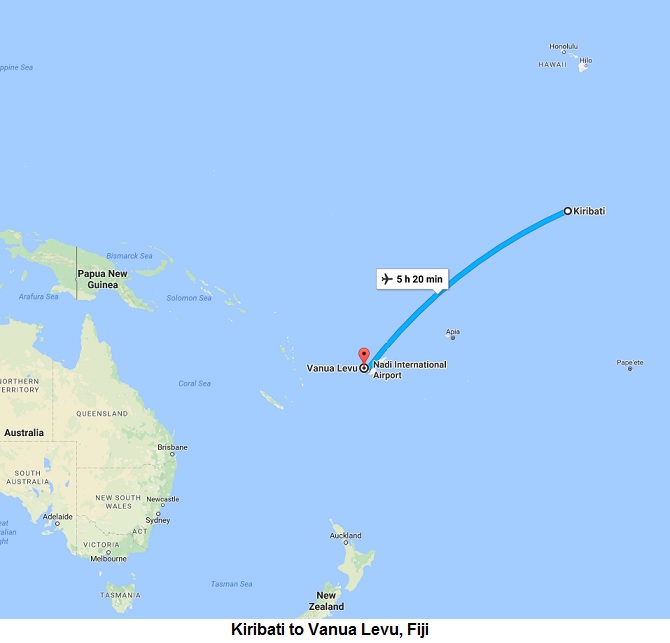
The Go Lean movement (book and preceding blog-commentaries) relates that cultures and countries are not guaranteed to survive: many native tribes and cultures have been assimilated. In fact, in a recent blog it was detailed how the Central Pacific island-nation of Kiribati is on course to lose all of its land territory due to global warming and the resultant higher sea-levels. They have thusly used their national treasuries to buy land elsewhere (Fiji) with the intent of relocating their people there. This will undoubtedly result in all new children being awarded Fiji birth certificates; and after 2 – 3 generations, the original culture of Kiribati will be extinct, lost to time and tides.

The book Go Lean…Caribbean and accompanying blogs have asserted that without remediation and mitigation efforts, there is no guarantee that countries and/or cultures can survive. The book therefore urges the Caribbean region to act! Already, the English-speaking nations have lost 70 percent of the tertiary educated populations to the Brain Drain, while the US Territories experience an even higher rate of societal abandonment. The Dutch and French Caribbean countries, with their automatic EU citizenship status have the same cultural extinction concerns. Notice these points further developed in these previous blogs:

https://goleancaribbean.com/blog/?p=11858 Welcome to Kiribati – Say “Hello” and “Goodbye”
https://goleancaribbean.com/blog/?p=10554 Welcoming the French to these Cultural Extinction Concerns
https://goleancaribbean.com/blog/?p=7151 The Caribbean is Looking for Heroes … ‘to Return’
https://goleancaribbean.com/blog/?p=4613 Lessons from Ireland – Diaspora Past, Present and Future
https://goleancaribbean.com/blog/?p=4551 US Territories – Between a ‘rock and a hard place’
https://goleancaribbean.com/blog/?p=4263 The State of Aruba’s Economy
https://goleancaribbean.com/blog/?p=4185 Caribbean Ghost Towns: It Could Happen…Again
https://goleancaribbean.com/blog/?p=2818 DR President Medina on the economy: ‘God will provide’
https://goleancaribbean.com/blog/?p=2602 Guyana and Suriname Wrestle With High Rates of Suicides
https://goleancaribbean.com/blog/?p=1433 Region loses more than 70% of tertiary educated to Brain Drain

Henry Ford Quote - Vanity of Government EntitlementsThe foregoing is a true and accurate history of the United States of America. Considering their treatment of Native Americans, there should be no rush for the Black-and-Brown of the Caribbean to seek refuge in the US. The book Go Lean posits that fleeing the Caribbean homeland  equates to “jumping from the frying-pan into the fire”. What’s more, the Go Lean book asserts – in the quest to lower the rate of societal abandonment – that it is easier to remediate social defects in the Caribbean homeland than to attempt to remediate the American eco-system. The “grass is not greener on the other side”.

We must learn from the experiences of the Native American Tribes and Reservations – in the US and other countries – and reboot our homeland to reform and transform our societal engines, to avoid any possible cultural termination-extinction fate.

We hereby urge all Caribbean stakeholders –governments and people (residents and Diaspora) – to lean-in to this Go Lean roadmap to continue to accentuate our culture. We must work against extinction and societal abandonment by making our homeland a better place to live, work and play. 🙂

Download the free e-book of Go Lean … Caribbean – now!

Sign the petition to lean-in for this roadmap for the Caribbean Union Trade Federation.

————–

Appendix A – Indian Termination Policy Contents

[The detailed content on the Indian Termination Policy is catalogued as follows:]

Source: Wikipedia Online Encyclopedia; retrieved May 22, 2017 from: https://en.wikipedia.org/wiki/Indian_termination_policy

————–

Appendix B VIDEO – The Tragedy of Wounded Knee  https://youtu.be/0EdRT56WK7Q

Uploaded on Jan 22, 2011 – Not even the powers of the Ghost Dance could save the victims of the Wounded Knee Massacre.

  • Category: Education
  • License: Standard YouTube License


Share this post:
, ,

Welcome to Kiribati – Hello and Goodbye

Go Lean Commentary

Islands are the greatest places to live … until they are not.

There is nothing better than being surrounded by water on all sides: beach or bay, just having that vista is preferred. Until, higher tides come in … and stay.

CU Blog - Welcome to Kiribati - Hello and Goodbye - Photo 3

CU Blog - Welcome to Kiribati - Hello and Goodbye - Photo 4

CU Blog - Welcome to Kiribati - Hello and Goodbye - Photo 5

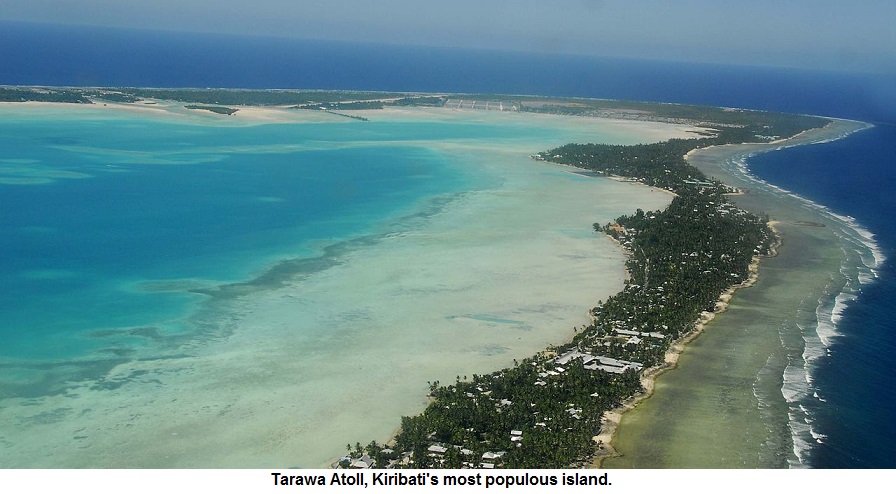
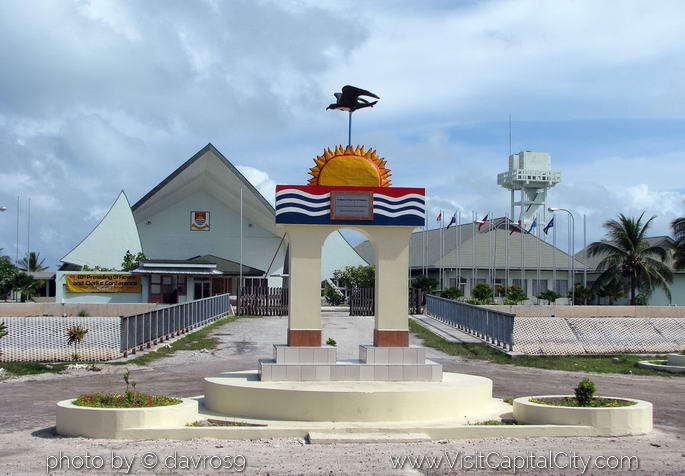
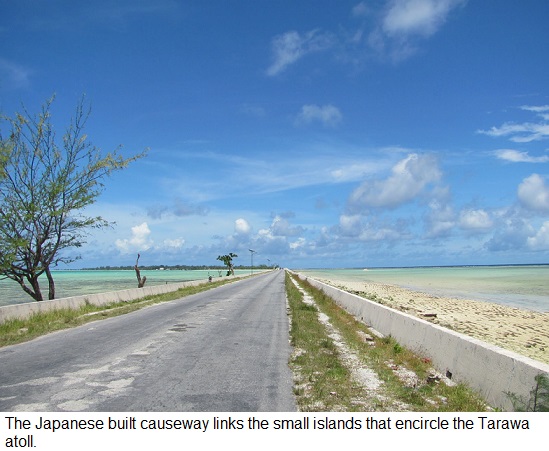
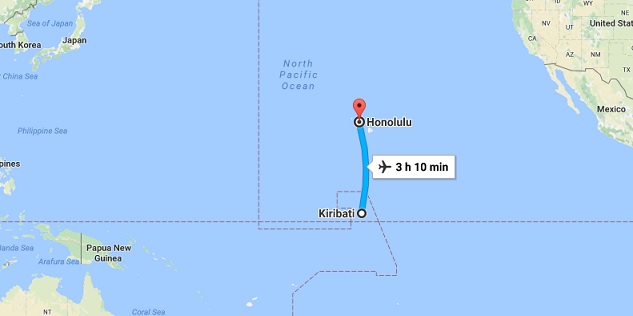
Welcome to Kiribati, an island nation (archipelago of 33 atolls and reef islands) in the central Pacific Ocean. This nation is strategically located at the crossroads of the Eastern and Western Hemispheres, straddling the equator and the International Date Line; so it is the only country in all 4 hemispheres. (Source: Wikipedia)

CU Blog - Welcome to Kiribati - Hello and Goodbye - Photo 1Say ‘Hello’ to Kiribati.

Kiribati is also the first country expected to lose all its land territory to global warming. In June 2008, the then-President Anote Tong said that the country has reached “the point of no return.” He added, “to plan for the day when you no longer have a country is indeed painful but I think we have to do that.”[31][32][33][34]

This just got real …

The book Go Lean…Caribbean and accompanying blogs have asserted that there is no guarantee that countries and/or cultures must survive. Some of them do not!

Remember the Babylonians, Mayans, Lucayans, and others. Despite the array of archeological evidence of their historicity, their culture (language and traditions) simply no longer exist.

Kiribati can also no longer exist. In fact, in early 2012, the government of Kiribati purchased the 2,200-hectare Natoavatu Estate on the second largest island of Fiji, Vanua Levu. At the time it was widely reported[35][36][37] that the government planned to evacuate the entire population of Kiribati to Fiji. In April 2013, President Tong began urging citizens to evacuate the islands and migrate elsewhere.[38]

CU Blog - Welcome to Kiribati - Hello and Goodbye - Photo 2

We could … say ‘Goodbye’ to Kiribati. See the VIDEO here:

VIDEO – Kiribati: The country killed by Climate Change – Truthloader – https://youtu.be/-jMddhJNr9U

Published on Jun 18, 2014 – Kiribati is a tiny nation of 100,000 people living on dozens of islands over a huge area of the South Pacific. And it is set to become the first state completely destroyed by climate change. The government estimates the country will vanish beneath the waves by 2050 due to rising sea levels and coastal erosion, and has an official policy of evacuating the native population. At the same time, it is doing everything it can to protect the pristine ocean environments within its territorial waters, so that even once the country is gone the nature will survive. It’s a pretty sad story.
Subscribe to our channel: http://bit.ly/TRUsub

The fate of Kiribati is a cautionary tale for the Caribbean. “There but for the Grace of God go I”.

The Go Lean book anticipated the Agents of Change impacting the region, Climate Change is most prominent. This is the direct result of the excessive amount of carbon emitted into the planet’s atmosphere. The Small Islands States like Kiribati and the Caribbean are not the BIG polluters most responsible for this disposition – the US is #1 and China is #2 – but we are among the most affected. So we need to be front-and-center in the protests and advocacy for Climate Change mitigations.

The book Go Lean…Caribbean – available to download for free – prepares the Caribbean region for the heavy-lifting of monitoring, managing and mitigating the acute risks of Global Warming, Climate Change and rising sea-levels. We must act now!

The book serves as a roadmap for the introduction and implementation of the technocratic Caribbean Union Trade Federation (CU), for the elevation of Caribbean society – for all member-states. This CU/Go Lean roadmap has these 3 prime directives:

  • Optimization of the economic engines in order to grow the regional economy to $800 Billion and create 2.2 million new jobs.
  • Establishment of a security apparatus to ensure public safety and protect the resultant economic engines.
  • Improve Caribbean governance to support these engines, including a separation-of-powers between the member-states and CU federal agencies.

The book stresses that there are external and internal considerations. As any one country in the Caribbean region may be too small to get attention of the watching world, the whole region on the other hand – 30 member-states and 42 million people – operating as a Single Market and One Voice can have more of an impact.  Internally, we must “get our own house in order”, so the effort is to reform and transform the Caribbean societal engines as part of this regional pursuit. This was an early motivation for the roadmap, as pronounced in the opening Declaration of Interdependence (Pages 11 – 13):

i. Whereas the earth’s climate has undeniably changed resulting in more severe tropical weather storms, it is necessary to prepare to insure the safety and security of life, property and systems of commerce in our geographical region. As nature recognizes no borders in the target of its destruction, we also must set aside border considerations in the preparation and response to these weather challenges.

iii. Whereas the natural formation of the landmass for our society is that of an archipelago of islands, inherent to this nature is the limitation of terrain and the natural resources there in. We must therefore provide “new guards” and protections to ensure the efficient and effective management of these resources.

iv. Whereas the natural formation of the landmass is in a tropical region, the flora and fauna allows for an inherent beauty that is enviable to peoples near and far. The structures must be strenuously guarded to protect and promote sustainable systems of commerce paramount to this reality.

xi. Whereas all men are entitled to the benefits of good governance in a free society, “new guards” must be enacted to dissuade the emergence of incompetence, corruption, nepotism and cronyism at the peril of the people’s best interest. The Federation must guarantee the executions of a social contract between government and the governed.

xvi. Whereas security of our homeland is inextricably linked to prosperity of the homeland, the economic and security interest of the region needs to be aligned under the same governance. Since economic crimes … can imperil the functioning of the wheels of commerce for all the citizenry, the accedence of this Federation must equip the security apparatus with the tools and techniques for predictive and proactive interdictions.

xxiv. Whereas a free market economy can be induced and spurred for continuous progress, the Federation must install the controls to better manage aspects of the economy: jobs, inflation, savings rate, investments and other economic principles. Thereby attracting direct foreign investment because of the stability and vibrancy of our economy.

The Go Lean book provides 370-pages of turn-by-turn instructions on “how” to adopt new community ethos, plus the strategies, tactics, implementations and advocacies to execute so as to monitor, manage and mitigate the challenges of Climate Change.

In addition, these previous blog-commentaries detailed a lot of the issues and developments for the Caribbean’s Climate Change efforts:

https://goleancaribbean.com/blog/?p=11442 Caribbean Roots: Al Roker – ‘Climate Change’ Defender
https://goleancaribbean.com/blog/?p=9455 Fix ‘Climate Change’ – Yes, We Can
https://goleancaribbean.com/blog/?p=7449 Due to Climate Change, ‘Crap Happens’ – So What Now?
https://goleancaribbean.com/blog/?p=7103 COP21 – ‘Climate Change’ Acknowledged
https://goleancaribbean.com/blog/?p=6893 A Meteorologist’s View On Climate Change
https://goleancaribbean.com/blog/?p=6016 ‘Hotter than July’ – Reality in the Caribbean
https://goleancaribbean.com/blog/?p=4673 Climate Change‘ Merchants of Doubt … to Preserve Profits!!
https://goleancaribbean.com/blog/?p=2465 Book: ‘This Changes Everything: Capitalism vs. the Climate’
https://goleancaribbean.com/blog/?p=2276 Climate Change May Affect Food Supply Within a Decade
https://goleancaribbean.com/blog/?p=2119 Cooling Effect – Oceans and the Climate
https://goleancaribbean.com/blog/?p=1883 Climate Change May Bring More Kidney Stones
https://goleancaribbean.com/blog/?p=1817 Caribbean grapples with intense cycles of flooding & drought
https://goleancaribbean.com/blog/?p=926 Conservative heavyweights have solar industry in their sights
https://goleancaribbean.com/blog/?p=915 Go ‘Green’ … Caribbean

We must learn from Kiribati – and other locales – and prepare our homeland as well. We must prepare for the good, bad and the ugly (think extinction). Things can get better, we can make our homeland a better place to live, work and play – but this is not automatic; this quest will require a lot of heavy-lifting. 🙂

Download the free e-book of Go Lean … Caribbean – now!

Sign the petition to lean-in for this roadmap for the Caribbean Union Trade Federation.

Share this post:
,
[Top]

Blog # 600 – State of Caribbean Union: Hope and Change

Go Lean Commentary

Here’s a fact of life: Young people always need Hope and Change.

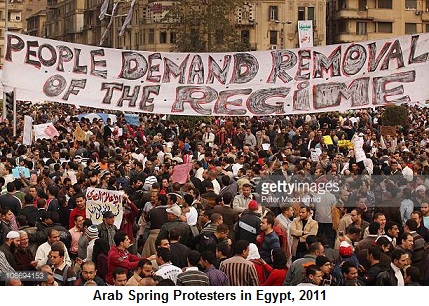
To ensure this, there have been protest movements – around the world  – in recent times where young people have engaged to get attention, to foment their prospects for Hope and Change. Consider:

  • Arab Spring – Young people in one Arab & North African country after another stood-up in protest of their political & economic status quo.
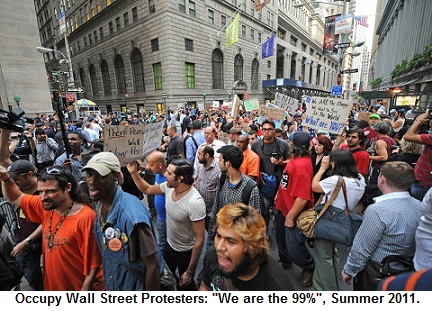
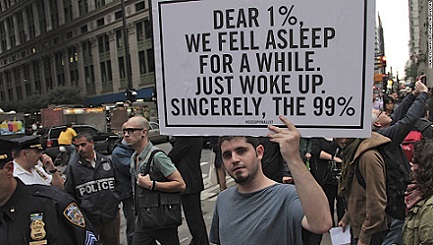
  • Occupy Wall Street – Young people in the US complained in enduring street and sleep-in protests outside Wall Street.

The book Go Lean…Caribbean – available to download for free – chronicled the rise of these protest movements (Pages 143, 160, 200 & 224). It showed how people at the grass-roots level are able to effect change on the policies and priorities of their country. This is the bottoms-up strategy for forging change; there is also the top-down strategy: getting the political leaders to propose new legislation. Both approaches could be effective in the quest to elevate the 30 member-states in the Caribbean region. The State of our Caribbean Union is that we are in crisis; we must reform and transform our region; it is not optional; it must be done in order to offer Hope and Change to the young people of the Caribbean.

The book states this urgency in the opening (Page 3):

CU Blog - State of Caribbean Union - Hope and Change - Photo 1Our youth, the next generation, may not be inspired to participate in the future workings of their country; they may measure success only by their exodus from their Caribbean homeland.

Nine years ago (2008), young voters in the US thronged rapturous rallies for then-presidential-candidate Barack Obama. Then again, early in the 2016 Presidential campaign, young people flocked to candidate Bernie Sanders. Despite the end-result, the natural idealism of youth always looks for political expression. Usually …

Currently, there is no grass-roots change-protest movement in the Caribbean – this is the State of the Caribbean Union. There needs to be … such a movement! This is according to this commentator-columnist scanning this region’s political landscape. See his strong urging here:

Title: Why the concerns of Caribbean youth matter
By: David Jessop

In much of the world, young people feel economically marginalized, politically alienated and in a struggle against insecurity and inequity.

In the Caribbean, it is little different. Lack of opportunity, the absence of generational change, high levels of unemployment, discrimination based on gender or sexual orientation, and the slow pace of change, are abiding aspects of the lives of many in the younger generation.

However, unlike their counterparts in other regions of the world, where frustration with the political class and anger with the old order have led to new political movements and protest, no similar region-wide or sustained manifestation of dissent has occurred. Instead, in recent years, protests have been limited and disconnected.

Part of the answer as to why this should be seems to lie in the Caribbean’s smallness and fragmentation. While life in micro-states offers proximity to political and economic opportunity, size also imposes limits on dreams and aspiration. When set alongside the seemingly boundless prospects for material gain in North America and US cultural penetration, the same smallness is almost guaranteed to heighten frustration with the slow pace of national development.

The consequence is a sense of disillusion among many young people, and a desire by many of the best, brightest and better educated to seek avenues of escape to other parts of the world.

Dr Terri-Ann Gilbert Roberts, a UWI/SALISES research fellow who was recently nominated by Caribbean youth to be the UN secretary general’s youth envoy, and who is engaged in research, policy and programme formulation on issues affecting children and youth, speaks with knowledge of the topic.

She believes that while young people in the Anglophone Caribbean may not express their frustrations in traditional highly-visible ways, their concerns are palpable, and can be seen and heard in their online and offline conversations in their communities, and in student and youth organisation debates.

She says that the reason that the views of Caribbean youth do not manifest themselves in large-scale anti-government street protests of the type seen in other parts of the Americas, is not because young people do not share the same concerns about their future, the inclusiveness of Caribbean society, or the accountability of public officials. Instead, she believes that because the Anglophone Caribbean has relatively stable democratic traditions, freedom of expression, a free press, and smallness, young people feel that that their shared concerns are known, but are not adequately addressed.

She argues that because “many young people have lost confidence in the capacity of formal governance processes and structures to address their concerns”, they “question the practical value of investment in large-scale protests in which their voices may be ignored and their actions will not influence change”.

While others believe that the absence of protest in the region is a good thing and reflects the homogeneous nature of Caribbean society, the absence of any real basis for public dialogue with those who may lead or vote for tomorrow’s Caribbean, says much about the region’s malaise, and more importantly its future development.

In common with other societies, many in the older generation in the Caribbean seem to want to hold on to the past and the status they have achieved, sometimes making it seem that all that matters is the jealous guarding of privilege.

Unfortunately, this has resulted in an absence of progress, and bestows legitimacy on defending the political and economic status quo. The consequence is that many nations and regional structures remain locked into thinking that is well past its sell by date, whether it be in relation to politics, the public sector, or business. The effect is to create responses that are inward looking, deeply protective, and lacking leadership, or ambition when it comes to the future for the young. It is reflected in the falling youth voter numbers in many Caribbean nations.

Dr Gilbert-Roberts argues that these frustrations have resulted in a clear majority of Caribbean young people refocussing on what she describes as “self-regulated, constructive and pragmatic spaces for online and offline dialogue” to form a basis for their everyday politics.

Putting this another way, she says that, in the Caribbean, young people are now seeking change in those parts of society over which they have power and influence. She cites as the political expression of this, youth movements in some parts of the region that are calling for public transparency and accountability that seek to audit government processes rather than make generic criticisms of government; environmental clubs; youth clubs that offer homework programmes for children; and offers of peer counselling and mentorship.

There are of course regional variations.

In the Dominican Republic, there is generational mobility but this largely only applies to the well-educated sons and daughters of the elite and the county’s expanding professional classes. In Cuba, its government has belatedly recognised the need to make strenuous efforts to include young people who want more in the way of personal freedoms and materially, while keeping the country’s social gains.

In other parts of the region there are exceptional, often female free thinkers in politics and business. There are young entrepreneurs in the services sector and agriculture who see Caribbean opportunity in new ways. There are very able individuals who in private acknowledge they would seek positions of leadership if politics was less tribal. And there are also large numbers of young men who feel uncertain about their place in society and feel threatened.

Dr Gilbert-Roberts, and others who prefer to speak off the record, observe that the level of frustration may now be growing faster than the capacity of youth groups to respond to the needs in their communities.

“We are already seeing increasing numbers of peaceful civil society protests involving young people: for example, marches in Jamaica against violence against children and women, alongside more disruptive protests, for example in Dominica in relation to oppositional politics… If and when these youth movements join up, and connect with the broader frustrations of other segments of the society, we will begin to see new and more visible forms of expression which could also become catalysts for change,” she observes.

Addressing youth alienation, declining educational standards, and the glass ceiling on aspiration, requires high level leadership and action. If the concerns of the region’s young people are not recognised and embraced by its political and business class, change and new thinking could well be driven by unmanaged events.

About the Author: David Jessop is a consultant to the Caribbean Council and can be contacted at
david.jessop@caribbean-council.org. Previous columns can be found at www.caribbean-council.org
Source: Caribbean News Network – Posted May 13, 2017; retrieved May 16, 2017 from: http://www.caribbeannewsnow.com/headline-Commentary%3A-The-View-from-Europe%3A-Why-the-concerns-of-Caribbean-youth-matter-34441.html

It is important to glean these main points from this foregoing article by David Jessop (Caribbean Council Consultant), to better understand the State of the Caribbean Union and the lack of Hope and Change aspirations here:

  • The Caribbean status quo is failing from the perspective of young people – there is a “glass ceiling of aspiration”:
    • Lack of opportunity
    • Absence of generational change
    • High levels of unemployment
    • Discrimination based on gender or sexual orientation
    • Slow pace of change
  • Other regions – i.e. Arab Spring – have active or recent political movements and protests
  • Caribbean youth do complain … in small voice and online
  • The smallness of most of the Caribbean member-states lead to fragmentation and disunity
  • Entrenched leaders want to conservatively hold on to the status privilege
  • There is a foundation for change: democratic institutions, freedom of speech and press; even small starts in Cuba.
  • These ones are challenging orthodoxy, particularly many female free thinkers in politics, business and entrepreneurism.
  • But young people seem settled on only changing the periphery: demanding transparency, accountability and audits
  • There is the need for more disruptive transformation: “out with the old; in with the change”.

These main points of the foregoing article correspond to the Go Lean movement, the original book and blog-commentaries, especially among the last 100 or so, the most recent milestone. This submission is a new milestone; this is blog-commentary # 600. These prior entries posit that the Caribbean status quo is truly in crisis, and that any alternative destination (North America or Western Europe) is not a fitting refuge for the Caribbean Black-and-Brown.

Really, the assertion is that the best option for Hope and Change in the Caribbean is to work to reform and transform the Caribbean, all 30 member-states for the full population of 42 million people. (This is the quest of the Go Lean movement, to forge a Single Market and a technocratic government for the 30 Caribbean member-states). Consider these consistent themes from these previous blog-commentary samples:

The Go Lean book and accompanying blogs studied the good, bad and ugly lessons from a number of communities around the world – see the most recent American protest movement in the Appendix VIDEO below – and then presented a plan to grow the Caribbean regional economy, create jobs, secure the homeland and optimize governance.

CU Blog - State of Caribbean Union - Hope and Change - Photo 2

CU Blog - State of Caribbean Union - Hope and Change - Photo 3

CU Blog - State of Caribbean Union - Hope and Change - Photo 4

Yes, we can.

But the Go Lean book asserts that this effort is too big a task for just one Caribbean member-state alone, so the book urges all 30 member-states to convene, confederate and collaborate in order to effect change. As such, the Go Lean book serves as a roadmap for the introduction and implementation of the technocratic Caribbean Union Trade Federation (CU), for the elevation of Caribbean society – for all member-states. This CU/Go Lean roadmap has these 3 prime directives:

  • Optimization of the economic engines in order to grow the regional economy to $800 Billion and create 2.2 million new jobs. (The issue of jobs alone is paramount to any Hope and Change movement in the region).
  • Establishment of a security apparatus to ensure public safety and protect the resultant economic engines.
  • Improve Caribbean governance to support these engines, including a separation-of-powers between the member-states and CU federal agencies.

The book stresses that reforming and transforming the Caribbean societal engines must be a regional pursuit. This was an early motivation for the roadmap, as pronounced in the opening Declaration of Interdependence (Pages 11 – 14):

viii. Whereas the population size is too small to foster good negotiations for products and commodities from international vendors, the Federation must allow the unification of the region as one purchasing agent, thereby garnering better terms and discounts.

xi. Whereas all men are entitled to the benefits of good governance in a free society, “new guards” must be enacted to dissuade the emergence of incompetence, corruption, nepotism and cronyism at the peril of the people’s best interest. The Federation must guarantee the executions of a social contract between government and the governed.

xii. Whereas the legacy in recent times in individual states may be that of ineffectual governance with no redress to higher authority, the accedence of this Federation will ensure accountability and escalation of the human and civil rights of the people for good governance, justice assurances, due process and the rule of law. As such, any threats of a “failed state” status for any member state must enact emergency measures on behalf of the Federation to protect the human, civil and property rights of the citizens, residents, allies, trading partners, and visitors of the affected member state and the Federation as a whole.

xvi. Whereas security of our homeland is inextricably linked to prosperity of the homeland, the economic and security interest of the region needs to be aligned under the same governance. Since economic crimes … can imperil the functioning of the wheels of commerce for all the citizenry, the accedence of this Federation must equip the security apparatus with the tools and techniques for predictive and proactive interdictions.

xxiv. Whereas a free market economy can be induced and spurred for continuous progress, the Federation must install the controls to better manage aspects of the economy: jobs, inflation, savings rate, investments and other economic principles. Thereby attracting direct foreign investment because of the stability and vibrancy of our economy.

xxvi.Whereas the Caribbean region must have new jobs to empower the engines of the economy and create the income sources for prosperity, and encourage the next generation to forge their dreams right at home, the Federation must therefore foster the development of new industries, like that of ship-building, automobile manufacturing, prefabricated housing, frozen foods, pipelines, call centers, and the prison industrial complex. In addition, the Federation must invigorate the enterprises related to existing industries like tourism… – impacting the region with more jobs.

The Go Lean book accepts that the current (failing) State of the Caribbean Union does not have to be a permanent disposition. Under the Go Lean roadmap, a 5-year plan, we can do better; all of the Caribbean can do better. This roadmap (370-page book) provides the “how”, the turn-by-turn details of the community ethos to adopt, plus the strategies, tactics, implementations and advocacies to execute so as to reboot, reform and transform the societal engines of Caribbean society.

This commentary is 1 of 5 in a non-sequential series on the State of the Caribbean Union. This series depicts the dysfunctional and defective state of affairs (economics, security and governance) throughout the entire region; there are some common traits. These have been assessed by the Go Lean movement. The full entries of all the blog-commentaries in this series are as follows:

  1. State of the Caribbean Union – Lacking Hope and Change
  2. State of the Caribbean Union – Dysfunctional Spanish Caribbean
  3. State of the Caribbean Union – Deficient  Westminster System
  4. State of the Caribbean Union – Unstable Volcano States
  5. State of the Caribbean Union – Self-Interest of Americana

Can we change the State of the Caribbean Union? Yes, we can. We need our own Hope and Change movement … anew … here at home. We need to make our homeland a better place to live, work and play. 🙂

Download the free e-book of Go Lean … Caribbean – now!

Sign the petition to lean-in for the roadmap for the Caribbean Union Trade Federation.

————-

Appendix VIDEO – Trump inspires grassroots protest movement – http://www.cnn.com/videos/politics/2017/02/03/trump-grassroots-protest-movement-todd-tsr-dnt.cnn

Posted February 3, 2017 – CNN’s Brian Todd reports on the surge of anti-Trump protests across the United States. – Source: CNN

Share this post:
, , ,
[Top]

UPDATE: Understand the Market, Plan the …

Update – Go Lean Commentary

“The Prime Minister bet his administration on the prospect of Carnival and now, its election time.” – Previous Go Lean commentary.

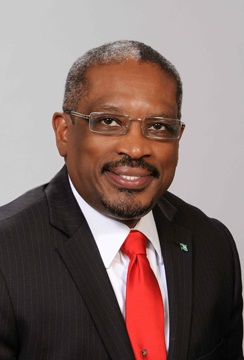
It’s official, that bet has failed! The Prime Minister (PM) of the Bahamas and leader of the Progressive Liberal Party (PLP) – Perry G. Christie – has been defeated. See full story here (posted 05/11/2017):

PLP Feel The Heat In FNM Landslide Win

CU Blog - UPDATE - PM Christie and Bahamas Junkanoo Carnival - Photo 1

CU Blog - Understand the Market, Plan the ... - Photo 2

New Prime Minister Dr. Hubert Minnis

Out with the old, in with the new!

This commentary has observed-and-reported on the Bahamas for the last 5 years and the “bet” that the PM made was related to more than just Carnival; he also bet on:

  • Music Festival-Event – The Fyre Festival event was a fiasco; it went up in flames on April 28, 2017 after getting government permissions and support beforehand. The mass population of Bahamian stakeholders – other than the government – knew nothing of this event until it was an international embarrassment – a “Black-eye”.
  • Value-Added Tax – New 7.5% Sales & Use tax implementation increased the tax burden on the poor more than the rich.
  • Baha Mar Resort & Casino – $2 Billion Resort & Casino stalled due to government meddling in the Developer-Banker conflict.
  • Grand Bahama (Freeport) – 2nd City economic progress stalled; decisions on extending Investment Tax Credits were inexplicably stalled and extended for 6-month intervals, until it was finally granted for a reasonable period.

So when the outgoing PM dissolved Parliament on April 11, 2017 and called elections for May 10, it was the only chance for the people to vocalize their displeasure. They shouted an almost unanimous veto of Christie’s policies and administration, giving the Opposition Party (Free National Movement) 35 of the 39 seats in the House of Assembly – see Polling Results in Appendix B below. (We wish all success to the new government of Dr. Hubert Minnis, but our plan is different, better, as it relates to the full region of all 30 Caribbean member-states, not just the Bahamas alone.)

It is obvious that the outgoing PM also failed in the primary functionality of any Planning apparatus:

Understand the Market; Plan the … [Enterprise]

This point is detailed in the book Go Lean…Caribbean as a necessary responsibility for the new Caribbean Union Trade Federation (CU).  The CU is presented as a technocratic solution to the societal defects for the Bahamas and the rest of the Caribbean – 30 member-states in total. The book quotes (Page 57):

What are the Agents of Change that will affect our customers [citizens] and our competitors in the future?

Shakespeare described change as “an undiscovered country”. No one knows exactly what will happen next and when. The best practice is to monitor the developments in the marketplace, adapt and adjust as soon as possible. This description of a nimble response is the purpose behind “Agile” project management and other Lean management methodologies.

The CU will be lean.

Assuming a role to “understand the market and plan the business” requires looking at the business landscape today and planning the strategic, tactical, and operational changes to keep pace with the market and ahead of competitors. Strategic changes that must be accounted for now, includes: Technology, Aging Diaspora, Globalization and Climate Change.

Understanding the market means taking an accurate assessment of the status quo. What truly are the needs and wants of the community; and how much solution can we really provide, so as to balance our promises? This is Planning 101; understanding the market and planning the business, planning the security apparatus, planning the government, planning the Federation.

Federation?

This is the quest for the movement behind the book Go Lean…Caribbean. The book serves as a roadmap for the introduction and implementation of the Caribbean Union Trade Federation (CU). This Federation is an initiative to bring change and empowerment to the Caribbean region; to make the region a better place to live, work and play. This Go Lean roadmap has these 3 prime directives:

  • Optimization of the economic engines in order to grow the regional economy to $800 Billion & create 2.2 million new jobs.
  • Establishment of a security apparatus to ensure public safety for all Caribbean stakeholders and protect the resultant economic engines.
  • Improvement of Caribbean governance to support these engines.

The book features 144 different missions; all centered on a technocracy to elevate the societal engines of economics, security and governance. This is not easy; in fact the book describes this quest – unifying of the region of 42 million people into one Single Market – as heavy-lifting; paralleling the CU effort as a Caribbean version of the American Moon Shot in the 1960’s (Page 127). See this quote here:

The Bottom Line on Kennedy’s Quest for the Moon
On 25 May 1961, US President John F. Kennedy announced his support for the American Space program’s “Apollo” missions and redefined the ultimate goal of the Space Race in an address to a special joint session of Congress: “I believe that this nation should commit itself to achieving the goal, before this decade is out, of landing a man on the moon and returning him safely to the earth”. His justification for the Moon Race was both that it was vital to national security and that it would focus the nation’s energies in other scientific and social fields. [10] This quest was succeeded. At 10:56 pm EDT, on 20 July 1969, the first human (American Astronaut Neil Armstrong) ventured out of the Apollo 11 landing craft and set foot on the Moon declaring: “one small step for man, one giant leap for mankind“. [11]

Other countries have had subsequent moon landings. See VIDEO here:

VIDEO – The History of: The Apollo Space Program – https://youtu.be/kAxWaqM5M80

Published on Apr 27, 2014 – The History Of series intends to inform and entertain viewers about recorded events in human history.

Support this channel: http://www.patreon.com/RobertDavis

For more information about the Apollo Space Program visit the Wikipedia page here: http://en.wikipedia.org/wiki/Apollo_p…
Music: Hans Zimmer – What Are You Going To Do When You Are Not Saving The World (Man of Steel Soundtrack) https://www.youtube.com/watch?v=qpBnx…

Thanks for watching.

  • Category: Education
  • License: Standard YouTube License
This commentary is all about the functionality of planning. Drawing reference to the Go Lean book’s treatment of planning, Page 125 listed this preface:

Planning
The Caribbean Union Trade Federation roadmap catalogs where we are as a region and where we plan to go. This section drills down on the advocacies important for planning the future of the Caribbean.

The issues identified in this section will be incorporated in the CU Treaty with member-states and then in the subsequent constitution, (after an organized Constitution Convention).

Scriptural Quotation – Proverbs 29:18 (King James Version):

    Where there is no vision, the people perish …

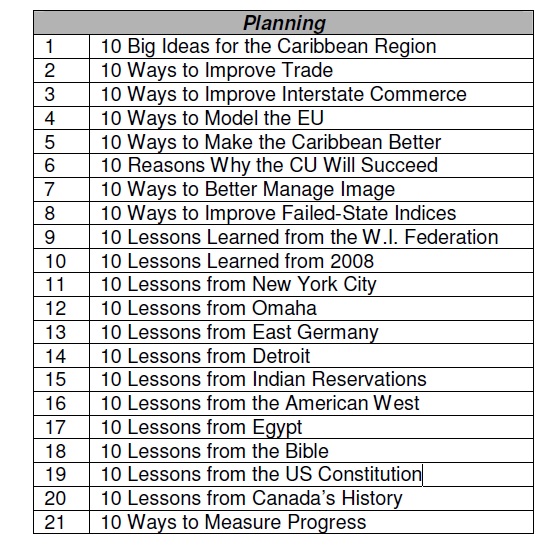
The book then proceeds to list these chapters on planning for the Caribbean stakeholders to consider:

CU Blog - Understand the Market, Plan the ... - Photo 1

The topics in the photo depict a community ethos – the national spirit that drives the character and identity of its people – of learning from other societies who have succeeded and failed at the planning-governing process. This vision was anticipated from the beginning of the Go Lean book, opening with these pronouncements in the Declaration of Interdependence (Pages 12 – 14):

xi. Whereas all men are entitled to the benefits of good governance in a free society, “new guards” must be enacted to dissuade the emergence of incompetence, corruption, nepotism and cronyism at the peril of the people’s best interest.  The Federation must guarantee the executions of a social contract between government and the governed.

xii. Whereas the legacy in recent times in individual states may be that of ineffectual governance with no redress to higher authority, the accedence of this Federation will ensure accountability and escalation of the human and civil rights of the people for good governance, justice assurances, due process and the rule of law. As such, any threats of a “failed state” status for any member state must enact emergency measures on behalf of the Federation to protect the human, civil and property rights of the citizens, residents, allies, trading partners, and visitors of the affected member state and the Federation as a whole.

xxxiii. Whereas lessons can be learned and applied from the study of the recent history of other societies, the Federation must formalize statutes and organizational dimensions to avoid the pitfalls of communities like East Germany, Detroit, Indian (Native American) Reservations, Egypt and the previous West Indies Federation. On the other hand, the Federation must also implement the good examples learned from developments/communities like New York City, Germany, Japan, Canada, the old American West and tenants of the US Constitution.

There is planning first … and then there is delivery.

Planning and delivery are 2 separate and distinct functionalities, but one drives the other. The Go Lean movement, with the branding of Lean in the name is all about the art-and-science of project delivery. The book explains (Page 4) that the Caribbean Union Trade Federation considers the word lean to be a noun, a verb and an adjective. It considers lean as a “core idea to maximize value while minimizing waste. Simply [put], lean means creating more value for stakeholders with fewer resources. A lean organization understands value and focuses its key processes to continuously increase it. The ultimate goal is to provide perfect value to the customer/constituent/beneficiary through a perfect value creation process that has zero waste.”

With confidence we can declare that the CU will “understand the market and plan the delivery”. Truly, then …

… “a Change Is Gonna Come”!

The Go Lean book declares that for permanent change to take place there must first be an adoption of new community ethos. The roadmap was constructed with the new community ethos in mind (see Page 20), plus the execution of strategies, tactics, implementation and advocacies to deliver on the plans for an elevated Caribbean.

Yes, this plan, the Go Lean roadmap is conceivable, believable and achievable. We can make the Caribbean region – all 30 member-states – better homelands to live, work and play. 🙂

Download the free e-Book of Go Lean … Caribbean – now!

Sign the petition to lean-in for the roadmap for the Caribbean Union Trade Federation. 

————-

Appendix A – Cited Footnote References

10 – Kennedy, John F. (25 May 1961). “Special Message to the Congress on Urgent National Needs”. Historical Resources. John F. Kennedy Presidential Library and Museum. p. 4. Retrieved 16 August 2010.

11 – Murray, Charles; Catherine Bly Cox (1990). Apollo: The Race to the Moon. New York: Touchstone (Simon & Schuster). ISBN 0-671-70625-X.

————-

Appendix B – General Election 2017

Commonwealth of The Bahamas – *OFFICIAL RESULTS*

Note: Her Excellency Dame Marguerite Pindling, Governor-General of The Bahamas, has invited Prime Minister-elect Hubert Minnis to be sworn in at Government House at 5 pm [on May 11, 2017].

—–
Free National Movement (35 seats)
✔Hubert Minnis (Killarney)
✔K. Peter Turnquest (East Grand Bahama)
✔Adrian Gibson (Long Island)
✔Brensil Rolle (Garden Hills)
✔Brent Symonette (St. Anne’s)
✔Carlton Bowleg Jr. (North Andros & the Berry Islands)
✔Desmond Bannister (Carmichael)
✔D. Halson Moultrie (Nassau Village)
✔Darren Allan Henfield (North Abaco)
✔Dionisio D’Aguilar (Freetown)
✔Donald L. Saunders (Tall Pines)
✔Duane Sands (Elizabeth)
✔Elsworth Johnson (Yamacraw)
✔Frankie Campbell (Southern Shores)
✔Frederick McAlpine (Pineridge)
✔Hank Johnson (Central & South Eleuthera)
✔Iram Lewis (Central Grand Bahama)
✔James Albury (Central &a South Abaco)
✔Jeffrey Lloyd (South Beach)
✔Lanisha Tolle (Sea Breeze)
✔Mark Humes (Fort Charlotte)
✔Marvin Dames (Mount Moriah)
✔Michael Foulkes (Golden Gates)
✔Michael Pintard (Marco City)
✔Miriam Reckly-Emmanuel (MICAL)
✔Pakeisha Parker-Edgecombe (West Grand Bahama & Bimini)
✔Reece Chipman (Centreville)
✔Renward Wells (Bamboo Town)
✔Reuben Rahming (Pinewood)
✔Rickey Mackey (North Eleuthera)
✔Romauld “Romi” Ferreira (Marathon)
✔Shenendon Cartwright (St. Barnabas)
✔Shonel Ferguson (Fox Hill)
✔Travis Robinson (Bain’s & Grant’s Town)
✔Vaughn Miller (Golden Isles)

—–
Progressive Liberal Party (4 seats)
✔Phillip Davis (Cat Island, Rum Cay and San Salvador)
✔Picewell Forbes (Mangrove Cay & South Andros)
✔Glenys Hanna-Martin (Englerston)
✔Chester Cooper (Exumas & Ragged Island)

Share this post:
, ,
[Top]

Robots Building Houses – More than Fiction

Go Lean Commentary

Robotic Builder - Photo 2What do you want to do when you grow up?

This is the familiar career planning question that is asked of young ones. Today, the responders may answer with noble careers like: doctor, lawyer, accountant, computer programmer, engineer, etc. Rarely, do we hear answers like bricklayer, mason or carpenter; though these too are noble professions. But food, clothing and shelter are basic needs that everyone must make provision for. So if our young people are not yearning for those jobs, how will the needs be fulfilled?

In the US, there is the sarcastic joke that the country brings in “immigrants” to do the jobs Americans don’t want to do; think migrant farmers, sweat shops and construction sites. But “now” … emerges a new option:

Robots!

Robotic Builder - Photo 3

Yes, the word “now” is appropriate. The idea of robots building houses is not so science fiction; not so far-fetch in the future; and not so unlikely. This is happening now! See the news article & VIDEO’s here:

Title: Meet The Robots That Will Build Your Next House
By: Tyler Durden

The U.S. residential construction industry employs 100’s of thousands of people each year in various skilled trades that earn hourly pay rates ranging from minimum wage to $100 per hour, or more.

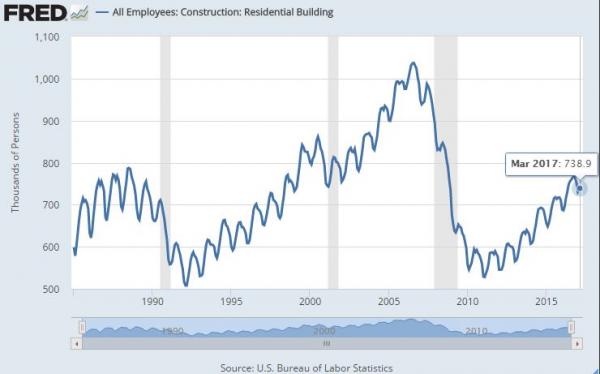
Per BLS statistics, the residential housing space employed over 1 million people at the height of the housing bubble and now accounts for nearly 750,000 jobs.

Of course, just like the auto industry, many of those jobs can be done at a fraction of the cost and with much greater precision by industrial robots.  Moreover, those robots work inside a warehouse where they’re immune from the negative consequences of weather and can work 365 days per year without compromising construction integrity.

As Blueprint Robotics’ CEO, Jerry Smalley, points out, nearly 60% of a custom home can be built inside a warehouse and shipped on a standard flatbed truck to its destination for installation. [(See Blueprint Robotics VIDEO below.)]

Production starts with the most precise robot in our factory, the WBZ-160 beam-center. This saw cuts the top and bottom plates for our wall, and pre-drills for the installation of plumbing, venting and electrical rough-in that is soon to be installed.

It’s all pre-determined by the plans you provide. Everything in our factory is pre-cut: drilled, trimmed, fastened and routed with CNC precision.

Once we’ve got the lumber cut, we move to the Framing Station. This machine produces 40 linear feet of framed wall in about 11 minutes. Because robots are executing the nail pattern, it’s incredibly precise. The nail will never be outside of the stud: no misses here.

The wall comes out of the framing station and moves to our Drywall Bridge Station. Here we put a layer of OSB on the frame followed by a layer of drywall. The OSB is nailed to the stud, while the drywall is glued to the OSB and screwed to the stud. The Drywall Bridge Station is also where any openings in the wall, doors, windows, outlets and switches are precisely cut to perfectly square dimensions.

As Bloomberg notes, modular houses, at least in the U.S., used to be reserved for smaller, cheaper homes and that stigma restricted the industry from taking market share in the high-end McMansion neighborhoods.  But, that is all gradually changing as modern technology allows companies like Blueprint to manufacture far more complicated custom homes rather than the simple ‘boxes’ of the past.

Today’s plants are capable of producing bigger buildings with more elaborate designs. The Blueprint factory in Baltimore – see VIDEO #1 below – is one of the first in the U.S. to use robots, Fleisher said. Taller multifamily buildings, dorms and hotels are increasingly being manufactured indoors. And so are mansions that sell for millions.

“Some builders won’t even advertise they work with modular companies like us,” said Myles Biggs, general manager of Ritz-Craft Corp.’s Pennsylvania construction facility. “You could be driving past a modular home and not even know it, because it looks just like one next door.”

Ritz-Craft can deliver a single-family house in six to eight weeks, on average. Having an indoor facility means weather delays are rarely a factor. Each worker is given a narrow concentration, like tiling floors or sanding drywall, which increases production speed. People without any background in construction can become skilled laborers in two weeks, according to Biggs.

There doesn’t seem to be any stigma for customers of Connecticut Valley Homes, a builder that assembles factory-made components on lots in New England, including near the stately mansions of Greenwich. The East Lyme-based firm is “booming at moment,” with deposits for 42 houses, up about 50 percent from the same time last year, said Dave Cooper, senior building consultant. The company built only eight homes in 2011, when the housing market was hitting bottom.

Looks like Bill Gates will soon have a lot more robots to tax in the residential construction space.

Source: Posted April 17, 2017; retrieved May 9, 2017 from: http://www.zerohedge.com/news/2017-04-17/meet-robots-will-build-your-next-house

———-

VIDEO # 1 – Blueprint Robotics – https://youtu.be/1Rx04wVn7vM

Uploaded on Jul 21, 2016 – A better way to build.

———-

VIDEO # 2 – Robot bricklayer can build a whole house in two days – https://youtu.be/V72Hm3PIM3Q

Published on Jun 26, 2015 – Robot bricklayer can build a whole house in two days

An Australian engineer has built a robot that can build houses in two hours, and could work every day to build houses for people.
Human house-builders have to work for four to six weeks to put a house together, and have to take weekends and holidays. The robot can work much more quickly and doesn’t need to take breaks.

Hadrian could take the jobs of human bricklayers. But its creator, Mark Pivac, told PerthNow that it was a response to the lack of available workers — the average age of the industry is getting much higher, and the robot might be able to fill some of that gap.

“People have been laying bricks for about 6000 years and ever since the industrial revolution, they have tried to automate the bricklaying process,” Pivac told PerthNow, which first reported his creation. But despite the thousands of years of housebuilding, most bricklaying is still done by hand.
Hadrian works by laying 1000 bricks an hour, letting it put up 150 houses a year.

It takes a design of the house and then works out where all of the bricks need to go, before cutting and laying each of them. It has a 28-foot arm, which is used to set and mortar the brick, and means that it doesn’t need to move during the laying.
Pivac will now work to commercialise the robot, first in West Australia but eventually globally.

http://www.independent.co.uk/life-sty…

The subjects of robots building houses and 3-D Printing of construction materials are just part of the “joys and pains” of modern life: one step forward; two steps backwards.

Yes, this news is not all positive; there are a lot of downsides with developments like robotic fabrication. For instance:

Jobs

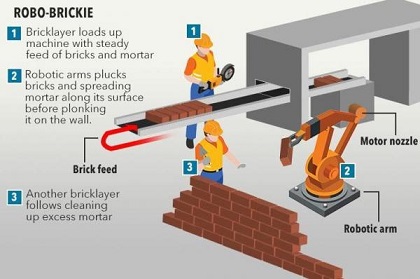
The foregoing article referred to the eventually – the transformative change – depicted in this photo here and a related AUDIO-Podcast from National Public Radio (NPR):

Robotic Builder - Photo 1

AUDIO-Podcast Title: Robots and Our Automated Future – http://www.npr.org/podcasts/510053/on-point-with-tom-ashbrook

Posted May 8, 2017 – Will your next home be built by robots? We’ll look at the growing robot boom and American jobs.

So the planners of the societal engines must consider this eventually. They must “understand the market and plan the business [economy]”. This is the charter of planning organizations. There must be such a role for the Caribbean, so declares the book Go Lean…Caribbean. It warns (Page 126) of the dreaded prophecy from the Bible:

Where there is no vision, the people perish – Proverbs 29:18 (King James Version)

As noted in the foregoing, robotic fabrication can be deemed the “Robot Apocalypse”; it is a matter of serious concern for a lot of communities. The fear is NOT that robots will take over the planet and annihilate the humans, but rather take the jobs.

This is no long-range forecast; this is the current threat. Notice the systems being tested and deployed in the Appendices below; this acute transformation is happening now in real life. The Go Lean book also asserted (Page 260) that construction industry jobs have a job multiplier factor of up to 9.1, where each direct job would indirectly support 9.1 other jobs. All of this would be at risk with the Robot Apocalypse hitting the construction-homebuilding industry. 🙁

The book Go Lean…Caribbean serves as a roadmap for the introduction and implementation of the technocratic Caribbean Union Trade Federation (CU). The book acknowledges that “Agents of Change” have now impacted the Caribbean region so negatively that the communities are now in crisis. Alas, the book declares that this “crisis is a terrible thing to waste”.

The book seeks to prepare the region for 4 Agents of Change, identifying these 2 (Page 57) as related to this commentary:

  • Technology
  • Globalization

The underlying issue with the Robot Apocalypse or robotic fabrication is that the technological systems and end-products can be developed anywhere around the world and shipped to our region for deployment. The threat is that these changes will undermine the societal engines in the process. Imagine the trade deficit with foreign countries that develop, manufacture and ship these systems and end-products – this fact affects our foreign currency reserves. Imagine too, our communities’ security needs, because of the preponderance of hurricanes and earthquakes in our region. Lastly the shock to the national tax rolls (no payroll-pension contributions) will impact the governing apparatus as well. This would truly be apocalyptic as these 3 societal engines – economic, security and governance – constitute the foundations of our society. This corresponds with the prime directives of the Go Lean/CU roadmap, which declares the quest as follows:

  • Optimization of the economic engines in order to grow the regional economy to $800 Billion & create 2.2 million new jobs.
  • Establishment of a security apparatus to ensure public safety (i.e. building standards) and protect the resultant economic engines.
  • Improvement of Caribbean governance – remembering that robots do not pay income taxes – to support these engines.

The changes, challenges and opportunities of robotic fabrication equipment had been previously detailed in August 2015 in a blog-commentary related to 3D Printing. This quotation here succinctly foretells the future societal “apocalypse”:

The new reality of 3D Printing is now changing business models. Imagine distributed manufacturing where the additive manufacturing process would be combined with cloud computing technologies to allow for decentralized and geographically independent distributed production.[74] For example, make a car, with parts sourced from different locations by different 3D Printers. Under this new scheme, the creation of chattel goods will be a product of intellectual property.

The future is exciting!

Here comes change! Consider the governmental consequences:

    If Caribbean governments depend on ‘Customs Duties’ of manufactured goods for a revenue source, they are hereby put on notice that this revenue stream will dry up. In many countries, (the Bahamas for example), the duty rates for automobiles are on a sliding scale from the high of 85% down to 55%. With an average costs of US$25,000, that is a lot of lost revenue for a member-state to adjust to.

The future is scary!

The book Go Lean…Caribbean focuses heavily on the future, and how to manage, monitor, and mitigate the changes (good and bad) that the future will bring. This acute transformation of 3D Printing is a good model of the type of innovation the Go Lean book anticipates. The book posits that the Caribbean region must not only be on the consuming end of these developments; we must create, develop and contribute to the innovations. This means jobs!

The job-creating initiatives start by fostering genius in Caribbean stakeholders who demonstrate competence in Science, Technology, Engineering and Mathematics (STEM). This will eventually apply to government revenue officials, but initially the focus will be more on the youth markets, as these ones adapt more readily to acute transformations.

This vision was pronounced early in the book with these statements in the opening Declaration of Interdependence (Pages 12 – 14) about the need for the Caribbean Union Trade Federation:

xiv. Whereas government services cannot cannot be delivered without the appropriate funding mechanisms, “new guards” must be incorporated to assess, accrue, calculate and collect revenues, fees and other income sources for the Federation and member-states. The Federation can spur government revenues directly through cross-border services and indirectly by fostering industries and economic activities not possible without this Union.

xxii. Whereas the preparation of our labor force can foster opportunities and dictate economic progress for current and future generations, the Federation must ensure that educational and job training opportunities are fully optimized for all residents of all member-states, with no partiality towards any gender or ethnic group. The Federation must recognize and facilitate excellence in many different fields of endeavor, including sciences, languages, arts, music and sports. This responsibility should be executed without incurring the risks of further human flight, as has been the past history.

xxvi. Whereas the Caribbean region must have new jobs to empower the engines of the economy and create the income sources for prosperity, and encourage the next generation to forge their dreams right at home, the Federation must therefore foster the development of new industries, like that of ship-building, automobile manufacturing, prefabricated housing, frozen foods, pipelines, call centers, and the prison industrial complex. In addition, the Federation must invigorate the enterprises related to existing industries like tourism, fisheries and lotteries – impacting the region with more jobs.

xxvii. Whereas the region has endured a spectator status during the Industrial Revolution, we cannot stand on the sidelines of this new economy, the Information Revolution. Rather, the Federation must embrace all the tenets of Internet Communications Technology (ICT) to serve as an equalizing element in competition with the rest of the world. The Federation must bridge the digital divide and promote the community ethos that research/development is valuable and must be promoted and incentivized for adoption.

xxviii. Whereas intellectual property can easily traverse national borders, the rights and privileges of intellectual property must be respected at home and abroad. The Federation must install protections to ensure that no abuse of these rights go with impunity, and to ensure that foreign authorities enforce the rights of the intellectual property registered in our region.

xxx. Whereas the effects of globalization can be felt in every aspect of Caribbean life, from the acquisition of food and clothing, to the ubiquity of ICT, the region cannot only consume, it is imperative that our lands also produce and add to the international community, even if doing so requires some sacrifice and subsidy.

The changes being anticipated with robotic fabrication and robot-aided construction dictates that our region explore the possibilities of Prefabricated Housing. The Caribbean region – all 30 member-states – has a constant need to rebuild, renew and restore our housing deliveries. This is mostly due to the preponderance of natural disasters in our region; think hurricanes and earthquakes. The Go Lean book fully detailed the eco-system of Prefabricated Homes; see  the headlines here of this advocacy from Page 207:

10 Ways to Develop a Pre-Fab Housing Industry

1 Leverage the Single Market
This calls for the need to supply the full population of 42 million people in all 30 member-states; the CU would be able to Research-and-Develop varying pre-fabricated housing options. Pre-Fab homes are becoming popular in the EU and North America as they are cheaper compared to many existing homes on the market.
2 Fashionable Design
3 Energy Optimizations
4 Raw Materials
Houses are normally built with the raw material that is abundant in the area; lands with red dirt, produce a lot of brick houses, while forest areas build wooden houses. The CU will apply the same strategies, but with the consideration of the need to withstand hurricanes. As such, components of homes (walls) built from concrete blocks may be prevalent.
5 Assembly Plants
Prefabricated buildings consist of several factory-built components or units that are assembled on-site to complete the unit. The prefab house requires much less (on-site) labor as compared to conventional houses. But there is the need for much skilled/creative labor in the design and manufacturing cycles/sites – thus a boon to CU job-creation efforts. Where to erect the assembly plants will be a subject of “community will”. The CU will allow for an open bidding process.
6 Supply Chain Solutions (Contractors)
7 Transport/Logistics
8 Showrooms and Marketing
9 Mortgages – Retail and Secondary Markets
10 Homeowners Casualty Insurance

Overall, the Go Lean book stresses the community ethos, strategies, tactics, implementations and advocacies to reboot, reform and transform the societal engines of Caribbean society, so as to benefit from changes coming due to this Robot Apocalypse. Though not directly mentioned in the book, the Robot Apocalypse is planned for in the Go Lean book. A comprehensive view of  the technocratic stewardship for the region’s societal engines, including the industrial policy to foster basic needs (in this case housing), is presented in the book. The points of effective, technocratic industrial stewardship were further elaborated upon in previous blog/commentaries. Consider this sample:

https://goleancaribbean.com/blog/?p=11358 Retail Apocalypse – Preparing for the Inevitable
https://goleancaribbean.com/blog/?p=10869 Bill Gates: ‘Tax the Robots’
https://goleancaribbean.com/blog/?p=8294 ‘Olli’ – The Self-Driving Public Transit Vehicle
https://goleancaribbean.com/blog/?p=5376 Drones to be used for Insurance Damage Claims
https://goleancaribbean.com/blog/?p=3384 Pleas to Detroit on Technology in Cars
https://goleancaribbean.com/blog/?p=1487 Here come the Drones … and the Concerns
https://goleancaribbean.com/blog/?p=1277 The need for Google’s highway safety innovations
https://goleancaribbean.com/blog/?p=673 Autonomous Ghost Ships

Warning to all building-construction stakeholders in the Caribbean: Change is coming!

The Caribbean is arguably the best address on the planet, but the ability to adapt and stay ahead of changes is definitely missing. This Go Lean roadmap is conceivable, believable and achievable for turning around our dire disposition.

Now is the time for all stakeholders of Caribbean – homeowners, home builders, bankers and governments (income tax revenues are greatly impacted) – to lean-in for the empowerments for technological assimilation described here-in and in the book Go Lean … Caribbean. This is where industry is going, not soon, but now today. Everyone is hereby urged to lean-in to this guidance to get to the region to its desired destination: a better place to live, work and play. 🙂

Download the free e-Book of Go Lean … Caribbean – now!

Sign the petition to lean-in for the roadmap for the Caribbean Union Trade Federation. 

—————–

Appendix VIDEO’s


Share this post:
, , ,
[Top]

‘May the 4th Be With You’ – an ENCORE Plea to our Heroes to Return

It’s Life imitating Art; see this quotation:

CU Blog - May the 4th Be With You

Say “May the 4th Be With You” out loud …

… and you’ll hear the pun that Star Wars fans worldwide have turned into a rallying cry to proclaim their love of the saga. It’s the worldwide day to say “May the Force be with you” to all, and celebrate the beloved Star Wars story that binds our galaxy together.

One of the earliest known records of “May the 4th” used in popular culture is in 1979, as described here by author Alan Arnold while he was chronicling the making of The Empire Strikes Back for Lucasfilm:

    Friday, May 4, 1979 – “Margaret Thatcher has won the election and become Britain’s first woman prime minister. To celebrate their victory her party took a half page of advertising space in the London Evening News. This message, referring to the day of victory, was ‘May the Fourth Be With You, Maggie. Congratulations,’ further proof of the extent to which ‘Star Wars’  has influenced us all.”

Once the Internet allowed Star Wars fans around the world to connect with one another, May the 4th soon became a grassroots tradition each year, with fans online and offline proclaiming it “Star Wars Day.”

While the idea of May the 4th did not start with Lucasfilm, the film company that created Star Wars has fully embraced the spirit of fandom that makes the day so special. StarWars.com as well as the official Star Wars social media channels (hashtag #StarWarsDay) help spread the word and showcase fan activity. More and more official partners have offered sales, giveaways and exclusives, and have hosted parties and other activities to mark the day.

The lure of Star Wars was also embraced by the movement behind the book Go Lean … Caribbean. In a previous blog-commentary from December 22, 2015 when the movie Star Wars Episode 7 “The Force Awakens” was released, a parallel was shown between the standard Hero’s Journey dramatic path and what the Caribbean region needs:

Our heroes to return … to the homeland.

Here is an ENCORE of that previous blog-commentary on this occasion of ‘May the 4th’ 2017.

————-

Go Lean CommentaryThe Caribbean is Looking For Heroes … to Return

In the Caribbean, we need a hero, we need lots of heroes …

… need a hero
I’m holding out for a hero ’til the end of the night
He’s gotta be strong
And he’s gotta be fast
And he’s gotta be fresh from the fight
I need a hero
I’m holding out for a hero ’til the morning light
He’s gotta be sure
And it’s gotta be soon
And he’s gotta be larger than life
(Song by Bonnie Tyler 1984; see VIDEO & Lyrics at https://youtu.be/OBwS66EBUcY; see Appendix)

We must reform and transform our Caribbean society. We know that one person – a hero – can make a difference, and we need to encourage those contributions.

Heroes are not born, they are forged. According to noted Mythologist Joseph Campbell, hero candidates go through a consistent pattern of a journey to become bona-fide heroes.

CU Blog - The Caribbean is Looking for Heroes to Return - Photo 1Who is Joseph Campbell and why does his opinion matter? He is the inspiration behind the big hit movie franchise Star Wars. All things Star Wars are en vogue right now. According to IMDB.com, this movie which opened just days ago – Star Wars Episode 7 “The Force Awakens”; (see Appendix) – had the biggest US box office opening of any movie … ever. See the box office results here in the photo, retrieved December 22, 2015.

This is an amazing feat, considering that Joseph Campbell has been dead since 1987. But Star Wars creator, George Lucas drew his story-line from Joseph Campbell’s inspirations in the cataloging of the “Hero’s Journey” in his writings. See article here:

Title: Role Model Joseph Campbell
In 1949 Joseph Campbell (1904-1987) made a big splash in the field of mythology with his book The Hero With a Thousand Faces. This book built on the pioneering work of German anthropologist Adolph Bastian (1826-1905), who first proposed the idea that myths from all over the world seem to be built from the same “elementary ideas.” Swiss psychiatrist Carl Jung (1875-1961) named these elementary ideas “archetypes,” which he believed to be the building blocks not only of the unconscious mind, but of a collective unconscious. In other words, Jung believed that everyone in the world is born with the same basic subconscious model of what a “hero” is, or a “mentor” or a “quest,” and that’s why people who don’t even speak the same language can enjoy the same stories.

Jung developed his idea of archetypes mostly as a way of finding meaning within the dreams and visions of the mentally ill: if a person believes they are being followed by a giant apple pie, it’s difficult to make sense of how to help them. But if the giant apple pie can be understood to represent that person’s shadow, the embodiment of all their fears, then the psychotherapist can help guide them through that fear, just as Yoda guided Luke on Dagoba. If you think of a person as a computer and our bodies as “hardware,” language and culture seem to be the “software.” Deeper still, and apparently common to all homo sapians, is a sort of built-in “operating system” which interprets the world by sorting people, places, things and experiences into archetypes.

CU Blog - The Caribbean is Looking for Heroes to Return - Photo 2Campbell’s contribution was to take this idea of archetypes and use it to map out the common underlying structure behind religion and myth. He proposed this idea in The Hero With a Thousand Faces, which provides examples from cultures throughout history and all over the world. Campbell eloquently demonstrates that all stories are expressions of the same story-pattern, which he named the “Hero’s Journey,” or the “monomyth.” This sounds like a simple idea, but it suggests an incredible ramification, which Campbell summed up with his adage “All religions are true, but none are literal.” That is, he concluded that all religions are really containers for the same essential truth, and the trick is to avoid mistaking the wrappings for the diamond.

[Star Wars Creator George] Lucas had already written two drafts of Star Wars when he rediscovered Joseph Campbell’s The Hero With a Thousand Faces in 1975 (having read it years before in college). This blueprint for “The Hero’s Journey” gave Lucas the focus he needed to draw his sprawling imaginary universe into a single story.

Note that the Wachowski Brothers’ wonderful film The Matrix is carefully built on the same blueprint:

Campbell

Star Wars

The Matrix

I: Departure
The call to adventure Princess Leia’s message “Follow the white rabbit”
Refusal of the call Must help with the harvest Neo won’t climb out window
Supernatural aid Obi-wan rescues Luke from sandpeople Trinity extracts the “bug” from Neo
Crossing the first threshold Escaping Tatooine Neo is taken out of the Matrix for the first time
The belly of the whale Trash compactor Torture room
II: Initiation
The road of trials Lightsaber practice Sparring with Morpheus
The meeting with the goddess Princess Leia (wears white, in earlier     scripts was a “sister” of a mystic order) The Oracle
Temptation away from the true path1 Luke is tempted by the Dark Side Cypher (the failed messiah) is tempted by the world of comfortable illusions
Atonement with the Father Darth and Luke reconcile Neo rescues and comes to agree (that he’s The One) with his father-figure, Morpheus
Apotheosis (becoming god-like) Luke becomes a Jedi Neo becomes The One
The ultimate boon Death Star destroyed Humanity’s salvation now within reach
III: Return
Refusal of the return “Luke, come on!” Luke wants to     stay to avenge Obi-Wan Neo fights agent instead of running
The magic flight Millennium Falcon “Jacking in”
Rescue from without Han saves Luke from Darth Trinity saves Neo from agents
Crossing the return threshold Millennium Falcon destroys pursuing TIE fighters Neo fights Agent Smith
Master of the two worlds Victory ceremony Neo’s declares victory over machines in final phone call
Freedom to live Rebellion is victorious over Empire Humans are victorious over machines

Source: Fan Site for Obscure Star Wars Inspirations; retrieved December 20, 2015 from: http://www.moongadget.com/origins/myth.html

But one can argue, these are just movies, “make believe”; these are not real people nor real life. That would be a true statement of facts (there is no “Luke Skywalker” nor “Neo” as historical characters), but the principles of a “Hero’s Journey” is real, and present in real life. This is just another example of “life imitating art”. In a previous blog-commentary regarding Caribbean Diaspora member and Hollywood great, Sidney Poitier, it was declared that …

“Movies are an amazing business model. People give money to spend a couple of hours watching someone else’s creation and then leave the theater with nothing to show for the investment; except perhaps a different perspective”.

 CU Blog - The Caribbean is Looking for Heroes to Return - Photo 3
 CU Blog - The Caribbean is Looking for Heroes to Return - Photo 4

These movies do bring a different perspective. According to the foregoing, there are Three Acts to the “Hero’s Journey”:

I.   Departure
II.  Initiation
III. Return

The publishers of the book Go Lean…Caribbean recognize the one person can make positive, heroic contributions to his community; and that this role must be forged in society. The book serves as a roadmap for the introduction and implementation of the Caribbean Union Trade Federation (CU). The CU seeks to foster the genius qualifiers in Caribbean citizens. Not everyone can be heroes, but society must be structured to allow heroes to soar. Because …

… one man (or woman) can make a difference! Such a person can impact their community, country … and the whole world.

“The only thing necessary for the triumph of evil is for good men to do nothing” – Edmund Burke; 1729 – 1797; an Irish statesman, member of British Parliament and supporter of the American Revolution.

The Caribbean has fostered the hero process, but according to the Three Acts established by Joseph Campbell, our heroes stopped at Act II, they do not “Return”.

CU Blog - The Caribbean is Looking for Heroes to Return - Photo 5

They make their heroic contributions to other communities and not their homeland. The Caribbean, thusly “fattens frogs for snakes”. Consider the bad consequences of this reality, as in our brain drain among the college-educated population, which is up to a 70% rate within the entire region.

A quest of the Go Lean/CU roadmap is to lower the “Push and Pull” factors that causes so many Caribbean citizens to flee their beloved homeland. In addition, another quest is to incentivize the far-flung Diaspora to return to the Caribbean. Success in these quests will take a “Hero’s Journey”.

The villain in this real-life story is the poor performing Caribbean economy. So the prime directive of the Go Lean book is to elevate Caribbean society, and its societal engines … defined in these declarative statements, as follows:

  • Optimization of the economic engines in order to grow the regional economy and create 2.2 million new jobs.
  • Establishment of a security apparatus to protect the resultant societal engines again foreign and domestic threats.
  • Improvement Caribbean governance to support these engines.

The Go Lean book posits that one person, despite their field of endeavor, can make a difference in the Caribbean, and its impact on the world; that there are many opportunities where one advocate, one champion, one “hero” can elevate society. In this light, the book features 144 different advocacies, so there is inspiration for the “next hero” to emerge and excel right here at home in the Caribbean.

The roadmap specifically encourages the region to lean-in, to foster heroes and champions with these specific community ethos, strategies, tactics, implementations and advocacies:

Community Ethos – Forging Change Page 20
Community Ethos – People Respond to Incentives in Predictable Ways Page 21
Community Ethos – Economic Systems Influence Individual Choices Page 21
Community Ethos – Whistleblower Protection Page 23
Community Ethos – Anti-Bullying and Mitigation Page 23
Community Ethos – Minority Equalization Page 24
Community Ethos – Ways to Foster Genius Page 27
Community Ethos – Ways to Impact the Greater Good Page 37
Strategy – Mission – Dissuade Societal Abandonment Page 45
Strategy – Mission – Incentivize Repatriation Page 45
Strategy – Mission – Protect Repatriates with heightened   Public Safety Page 45
Anatomy of Advocacies – Examples of Individuals Who Made Impact Page 122
Planning – Ways to Make the Caribbean Better Page 131
Advocacy – Ways to Improve Governance Page 168
Advocacy – Ways to Better Manage the Social Contract Page 170
Advocacy – Ways to Improve Leadership Page 171
Advocacy – Ways to Impact Justice Page 177
Advocacy – Ways to Remediate and Mitigate Crime Page 178
Advocacy – Ways to Impact Hollywood – Global Box Office – Imitating Life Page 203
Advocacy – Ways to Preserve Caribbean Heritage Page 218
Advocacy – Ways to Improve the Arts Page 230

The Caribbean region wants a more optimized society.

This book posits that “bad actors” – even villains: the “Dark Side of the Force” – will emerge to exploit inefficient economic, security and governing models.  Early in the book, the pressing need to streamline protections – for citizens and institutions – was pronounced in the Declaration of Interdependence (Page 12), with these opening statements:

x. Whereas we are surrounded and allied to nations of larger proportions in land mass, populations, and treasuries, elements in their societies may have ill-intent in their pursuits, at the expense of the safety and security of our citizens. We must therefore appoint “new guards” to ensure our public safety and threats against our society, both domestic and foreign.

xi. Whereas all men are entitled to the benefits of good governance in a free society, “new guards” must be enacted to dissuade the emergence of incompetence, corruption, nepotism and cronyism at the peril of the people’s best interest. The Federation must guarantee the executions of a social contract between government and the governed.

xii. Whereas the legacy in recent times in individual states may be that of ineffectual governance with no redress to higher authority, the accedence of this Federation will ensure accountability and escalation of the human and civil rights of the people for good governance, justice assurances, due process and the rule of law. As such, any threats of a “failed state” status for any member state must enact emergency measures on behalf of the Federation to protect the human, civil and property rights of the citizens, residents, allies, trading partners, and visitors of the affected member state and the Federation as a whole.

xvi. Whereas security of our homeland is inextricably linked to prosperity of the homeland, the economic and security interest of the region needs to be aligned under the same governance. Since economic crimes, including … forms of terrorism, can imperil the functioning of the wheels of commerce for all the citizenry, the accedence of this Federation must equip the security apparatus with the tools and techniques for predictive and proactive interdictions.

The Go Lean book explicitly acknowledges that optimizing society is not easy; it requires strenuous, heroic efforts; heavy-lifting. That is the quest of the CU/Go Lean roadmap. Other subjects related to heroic efforts of role models have been blogged in other Go Lean…Caribbean commentaries, as sampled here:

https://goleancaribbean.com/blog/?p=5964 Movie Review: ‘Tomorrowland’ – ‘Feed the right wolf’ in Society
https://goleancaribbean.com/blog/?p=5648 Music Role Model Taylor Swift withholds Album from Apple Music
https://goleancaribbean.com/blog/?p=5506 Role Model: Edward Snowden – One Person Making a Difference
https://goleancaribbean.com/blog/?p=3490 How One Entrepreneur Can Rally a Whole Community
https://goleancaribbean.com/blog/?p=2726 Caribbean Role Model – Oscar De La Renta – RIP
https://goleancaribbean.com/blog/?p=1731 Role Model Warren Buffet – An Ode to Omaha
https://goleancaribbean.com/blog/?p=1596 Book Review: ‘Prosper Where You Are Planted’
https://goleancaribbean.com/blog/?p=866 Role Model Bob Marley: The Legend Lives On!
https://goleancaribbean.com/blog/?p=209 Role Model: Advocate Kevin Connolly

The Go Lean roadmap posits that the CU should foster the genius potential in Caribbean citizens and incubate their potential to maximum production. We should let “heroes be heroes” in their fields of endeavor here at home, no matter how diverse. Many Caribbean Diaspora has done this exactly, abroad in benefiting other communities, while their homelands languish.

They have departed – Act I.
They have initiated as heroes – Act II.
But, they have NOT returned – no Act III.

Enough already!

The roadmap pronounces that we need the participation of many advocates on many different paths for progress. By facilitating, fostering and furthering these initiative, we can have our heroes return to be heroic at home. Only then, will the Caribbean truly become a better place to live, work and play. 🙂

Download the free e-Book of Go Lean … Caribbean – now!

Sign the petition to lean-in for the roadmap for the Caribbean Union Trade Federation.

————

Appendix VIDEO – Bonnie Tyler – I Need a Hero (Lyrics) – https://youtu.be/OBwS66EBUcY

————

Appendix VIDEO – Star Wars: The Force Awakens Trailer (Official) – https://youtu.be/sGbxmsDFVnE

Published on Oct 19, 2015 – Watch the official trailer for Star Wars: The Force Awakens, [opened] in theaters December 18, 2015.

Share this post:
, ,
[Top]

‘Black British’ and ‘Less Than’

Go Lean Commentary

Truth be told, a Black person speaking with a British accent gets more respect than a Black person speaking with a Caribbean slang or a ‘Hip-hop’ /‘Jive’ dialect.

cu-blog-10-things-we-from-the-uk-photo-1It is what it is! Notice this portrayal in the Appendix VIDEO where many Afro-Caribbean citizens in Britain, seem to self-identify more as British than their Caribbean heritage;  (POINT 5).

Does this mean that the Black British person is better off on the world stage? Sadly no! The actuality of Blackness still means “Less Than“.

The problem is not the Blackness, but rather Whiteness, the proliferation of White Supremacy … throughout the world.

This is the assertion of the movement behind the book Go Lean … Caribbean, in consideration of reasons why the Diaspora should repatriate back to the Caribbean homeland and why the Caribbean youth should not even depart their homelands in the first place. This thesis was presented in a 9-part series, with these submissions:

  1. Time to Go: Spot-on for Protest
  2. Time to Go: No Respect for our Hair
  3. Time to Go: Logic of Senior Immigration
  4. Time to Go: Marginalizing Our Vote
  5. Time to Go: American Vices; Don’t Follow
  6. Time to Go: Public Schools for Black-and-Brown
  7. Stay Home! Remembering ‘High Noon’ and the Propensity for Bad American Societal Defects
  8. Stay Home! Immigration Realities in the US
  9. Stay Home! Outreach to the Diaspora – Doubling-down on Failure

All of these prior commentaries related to the disposition of the Caribbean Diaspora in the United States; now we take a look at England, Britain or the United Kingdom. There is a difference … supposedly.

“Britain has done a great job as painting itself as the humanitarian, with the US being the torturer. But that shit ain’t true.” – Patrisse Cullors, co-founder of the Black Lives Matter movement.

The purpose of this commentary – considering these source materials below – is to relate the following 5 strong points of contention; (these labels are shown throughout this commentary where applicable):

  • POINT 1 – The world is not fair, equal or just; and if you are of the Black-and-Brown races, the injustice is even more pronounced.
  • POINT 2 – Charity begins at home! There is a need to reform and transform society wherever you are. No one else will reform your homeland; you must!
  • POINT 3 – Leaving home, hurts home.
  • POINT 4 – The children of the Diaspora identify more with their current home, than their parent’s ancestral home.
  • POINT 5 – When the children do not want to identify with your land of heritage, it is Time to Go, to take them back home.

See this interview here relating Black British reality, with VICE News (UK Desk), the provocative media outlet that exposes the harsh realities of daily life in the Third World and the “First World”; (find more on VICE in Appendix A):

Title: We Spoke to the Activist Behind #BlackLivesMatter About Racism in Britain and America
By: Michael Segalov

… Patrisse Cullors is co-founder of Black Lives Matter — the movement and oft-trending hashtag. Based in LA ([Los Angeles]), she’s been on the front line at uprisings across the US in response to a wave of high-profile deaths of black people in police custody.

CU Blog - Black British and 'Less Than' - Photo 1

[While] on a speaking tour of the UK and Ireland, heading to communities, universities, and holding meetings in Parliament. VICE caught up with Patrisse on the train from Brighton to London in the midst of a hectic schedule. VICE chatted [with her] about how she’s spreading the Black Lives Matter movement across the globe, what’s happening in the States at the moment, and why that’s relevant to the UK.

VICE: Tell us about the origins of the Black Lives Matter movement.
Patrisse Cullors:
 After George Zimmerman was acquitted of the murder of Trayvon Martin, back in July 2013, myself and two friends came up with the hashtag. My friend Alicia had written a love letter to folks, saying, “Our Lives Matter, Black Lives Matter.”

I put a hashtag in front—within days people were using it across the world. We’re talking about all black lives; we weren’t just talking about black men dying in the hands of the police. We’re talking about black women, black trans people, black queer people. We want to show that under the current system of white supremacy, anti-blackness has major consequences. Inside the US, and around the world, anti-black racism has global consequences. Black Lives Matter is a call to action—it’s a mantra, a testimony.

How did you end up at the heart of it?
I’ve been organizing since I was 16. I came out as queer, and was kicked out of home. Along with a bunch of other young queer women of color, we raised each other. We also dealt with poverty, being black and brown in the USA, and trying to figure out how to live our daily lives. My brother was incarcerated in LA county jails at 19, and he was almost killed by the sheriffs. They beat him. They tortured him and brutalized him. This was my awakening, seeing how far the state will go, and how they treat our families.

Most disturbing was the lack of support and absolute neglect that my brother and my family faced after he was brutalized. Part of my upbringing was a feeling of rage, but I also knew I could do something about it. With my mentors, and a civil rights organization, I learned my craft over 11 years. I focused on the school-to-prison pipeline [where young people go straight from school into the juvenile criminal justice system], environmental justice, and police violence.

You’ve been in the UK for a week, how has it been, and how does the situation here relate to the USA?

In theory the UK has a significant amount of structures to allow for accountability, of law enforcement in particular. That’s the theory. But in the US we don’t really have these structures to allow for accountability. There aren’t really independent investigators; its just very rare for prosecutions for law enforcement. And so, being here, I’ve realized, there are some systems in place that might actually be good for the US. It just seems those systems don’t work.

Then there are the similarities, the ways in which black people are treated—it’s outright racism. From Christopher Alder being brutalized on tape, hearing the officers calling him racist slurs, to the G4S guards who killed Jimmy Mubenga with racist texts on their phones. You have that same hatred, these white supremacist ideologies coming out of both of our countries. And here too, justice is not being served. We have Mike Brown, no justice. We have Eric Garner, no justice. Here we see the same: Mark Duggan, Sean Rigg. The list is vast.

Is this stuff talked about in the States, like how in the UK we’re aware over here about what’s going on in Ferguson?
Here’s the thing, black people in the US don’t know what’s happening here in the UK. I’m well read, well educated, and coming here and learning these stories I’m like, “Why don’t I know about this? Why haven’t we heard?” The US is very insular. The UK has an image of being better, a humane society in which there isn’t the same level of racism. But now I have a very different perspective that I’m going to take home and talk about. Britain has done a great job as painting itself as the humanitarian, with the US being the torturer. But that shit ain’t true.

Here in the UK there’ve been solidarity actions. People shut down the streets in London and Westfield shopping center too. What’s the impact of these things for people on the ground? Do you notice?
Yes, it was noticed. We’ve seen all the work folks are doing on the ground. From here, where you guys shut down Westfield, to Spain and Brazil. In Israel, African refugees are using the Black Lives Matter mantra to talk about law enforcement violence by the Israeli police. We see it, and we’re in awe. We wanted and needed it to go global.

Where is this going? What happens next?
There are 23 Black Lives Matter chapters right now, in the US, Canada, and Ghana. We need to uplift the local struggles across the country, as well as pushing for greater accountability for law enforcement.

We want legislation that will see divestment from law enforcement and investing in poor communities. We want to build a national project linking families who have been impacted by state violence, with a national database that looks at individual law enforcement officers and agencies. We also want to look at how to develop a system of independent investigation. We want to figure out a victim’s bill of rights, to counter the police bill of rights. Until then, we’re gonna shut shit down.
Source: VICE (UK) News; Posted February 2 2015; retrieved April 20, 2017 from: https://www.vice.com/en_us/article/patrisse-cullors-interview-michael-segalov-188?utm_source=vicetwitterus

See related VIDEO’s here on Britain’s Black History; (POINT 1 and POINT 4):

For Caribbean people, the world thinks of us as “Less Than”, whether we are in the Caribbean or in the Diaspora in the UK, Europe or North America. We take the “Less Than” brand with us wherever we go. This is a crisis! The movement behind the book Go Lean…Caribbean seeks to use this crisis, to elevate the Caribbean brand …. globally.

Why is the Caribbean brand perceived as “Less Than”?

Yes, first there is the reality check of being Black-and-Brown in a White world. But also due to our own mis-management of our homeland. It is the greatest address on the planet, and yet our people beat down the doors to get out. Already we have lost 70 percent of our professional classes. So we send this subtle message to the world that “we would foul up the ground wherever we stand”; (POINT 1).

We – the Caribbean region as a collective – must do better; be better! We can reboot, reform and transform from this bad history and bad image; (POINT 2). How?

While easier said than done, this is the comprehensive action plan of the Go Lean book. The book serves as a roadmap for the introduction of the technocratic Caribbean Union Trade Federation (CU). The CU is designed to optimize Caribbean society in the homeland – though there are many benefits to the Diaspora as well – through economic, security and governing optimizations. Therefore the Go Lean roadmap has 3 prime directives:

  • Optimization of the economic engines in order to grow the regional economy to $800 Billion & create 2.2 million new jobs.
  • Establishment of a security apparatus to ensure public safety and protect the economic engines.
  • Improve Caribbean governance – including empowerments for image promotion – to support these engines.

Reforming or transforming the UK, Britain or England is not within scope of the Go Lean/CU effort, notwithstanding the impact on our Diaspora there. But the subject of “Image” is inseparable from any discussion of elevating the Caribbean brand. So this commentary is on image, the facts and fiction of being a minority in a majority world or being an immigrant to a foreign country. This applies to any consideration of the Caribbean Diaspora in the British Isles, where their numbers have been reported between 4 and 5 percent of the population;  (POINT 4). Consider these encyclopedic details:

British African Caribbean (or Afro-Caribbean) people are residents of the United Kingdom who are of West Indian background and whose ancestors were primarily natives or indigenous to Africa. As immigration to the United Kingdom from Africa increased in the 1990s, the term has sometimes been used to include UK residents solely of African origin, or as a term to define all Black British residents, though the phrase “African and Caribbean” has more often been used to cover such a broader grouping. The most common and traditional use of the term African-Caribbean community is in reference to groups of residents’ continuing aspects of Caribbean culture, customs and traditions in the United Kingdom.

CU Blog - Black British and 'Less Than' - Photo 2A majority of the African-Caribbean population in the UK is of Jamaican origin; other notable representation is from Trinidad and Tobago, Saint Kitts and Nevis, Barbados, Grenada, Antigua and Barbuda, Saint Lucia, Dominica, Montserrat, Anguilla, Saint Vincent and the Grenadines, Guyana (which although located on the South American mainland is culturally similar to the Caribbean and was historically considered to be part of the British West Indies), and Belize.

African-Caribbean people are present throughout the United Kingdom with by far the largest concentrations in London and Birmingham.[1]  Significant communities also exist in other population centres, notably Manchester, Bradford, Nottingham, Coventry, Luton, Slough, Leicester, Bristol, Gloucester, Leeds, Huddersfield, Sheffield, Liverpool and Cardiff. In these cities, the community is traditionally associated with a particular area, such as Brixton, Harlesden, Stonebridge, Dalston, Lewisham, Tottenham, Peckham in London, West Bowling and Heaton in Bradford, Chapeltown in Leeds,[2] St. Pauls in Bristol,[3] or Handsworth and Aston in Birmingham or Moss Side in Manchester. According to the 2011 census, the largest number of African-Caribbean people are found in Croydon, south London.
Source: Retrieved April 20, 2017 from: https://en.wikipedia.org/wiki/British_African-Caribbean_people

There are a number of insights to glean looking at the demographics of the Afro-Caribbean population in the UK. (See Appendix B below). All in all, the Afro-Caribbean populations in the UK prefer to identify themselves more as British than as Caribbean;  (POINT 4).

See this portrayal in the Appendix VIDEO below.

Despite the 60 years of futility, our Caribbean people continue to leave, abandoning our homeland; (POINT 3). This is bad; bad for the people and bad for the homeland. Our people “jump from the frying pan to the fire”:

  • Distress continues …
  • Oppression persists …
  • Image: “Less Than”!

This commentary asserts that it is easier for the Black-and-Brown populations in the Caribbean to prosper where planted in the Caribbean, rather than emigrating to foreign countries, like the UK. The reasons for the emigration in the first place have been identified as “push and pull”. “Push” refers to the societal defects in the Caribbean that drive people to move away (POINT 2); and “pull” factors refer to the impressions and perceptions that life abroad, as in England, is better. More details apply regarding these elusive “pull” factors:

  • The UK is NOT the #1 destination for the English-speaking Caribbean Diaspora, not anymore; that distinction is now towards the US. Today’s trending is for more and more new immigration to the US as opposed to the UK; Canada is Number 2.
  • While the “pull” factor had been compelling in the past, the decision-making of Caribbean emigrants – looking to flee – now needs a reality check! (POINT 1)
  • “Pull” is further exacerbated by the “push” factors; all of these  continue to imperil Caribbean life; we push our citizens out. Then the resultant effect is a brain drain and even more endangerment to our society: less skilled workers; less entrepreneurs; less law-abiding citizens; less capable public servants – we lose our best and leave the communities with the rest. This creates even more of a crisis; (POINT 2).

The Go Lean roadmap posits that the entire Caribbean is in crisis now (POINT 3); so many of our citizens have fled for refuge in the UK and other countries, but the refuge is a mirage. The “grass is not necessarily greener on the other side”. Life in the UK is not optimized for Caribbean people. It is easier to fix the Caribbean than to fix the British eco-system. For our Diaspora there: it is Time to Go! For our populations in the Caribbean, looking to depart: Stay! Our people can more easily prosper where planted in the Caribbean … with the identified mitigations and remediation here-in.

The Go Lean book posits that Caribbean stakeholders made many flawed decisions in the past, both individually and community-wise;  (POINT 2). But now, the Go Lean/CU roadmap is new (and improved). This is a vision of the CU as a confederation of the 30 member-states of the Caribbean to do the heavy-lifting of championing better nation-building policies,  to reboot the region’s economic-security-governing engines. For one, there is the structure of a separation-of-powers between CU agencies and the individual member-states. So there are “two pies”, so citizens get to benefit from both their member-states’ efforts and that of the CU Trade Federation.

The Go Lean roadmap provides turn-by-turn directions on how to reform the society as a whole. This roadmap admits that because the Caribbean is in crisis, this “crisis would be a terrible thing to waste”. As a planning tool, the roadmap commences with a Declaration of Interdependence, pronouncing the approach of regional integration (Page 10 – 14) as a viable solution to elevate the regional engines:

Preamble: And while our rights to exercise good governance and promote a more perfect society are the natural assumptions among the powers of the earth, no one other than ourselves can be held accountable for our failure to succeed if we do not try to promote the opportunities that a democratic society fosters.
As the history of our region and the oppression, suppression and repression of its indigenous people is duly documented, there is no one alive who can be held accountable for the prior actions, and so we must put aside the shackles of systems of repression to instead formulate efficient and effective systems to steer our own destiny.

xi. Whereas all men are entitled to the benefits of good governance in a free society, “new guards” must be enacted to dissuade the emergence of incompetence, corruption, nepotism and cronyism at the peril of the people’s best interest. The Federation must guarantee the executions of a social contract between government and the governed.

xii. Whereas the legacy in recent times in individual states may be that of ineffectual governance with no redress to higher authority, the accedence of this Federation will ensure accountability and escalation of the human and civil rights of the people for good governance, justice assurances, due process and the rule of law. As such, any threats of a “failed state” status for any member state must enact emergency measures on behalf of the Federation to protect the human, civil and property rights of the citizens, residents, allies, trading partners, and visitors of the affected member state and the Federation as a whole.

xix. Whereas our legacy in recent times is one of societal abandonment, it is imperative that incentives and encouragement be put in place to first dissuade the human flight, and then entice and welcome the return of our Diaspora back to our shores

xx. Whereas the results of our decades of migration created a vibrant Diaspora in foreign lands, the Federation must organize interactions with this population into structured markets. Thus allowing foreign consumption of domestic products, services and media, which is a positive trade impact. These economic activities must not be exploited by others’ profiteering but rather harnessed by Federation resources for efficient repatriations.

The Go Lean book details the community ethos to adopt, plus the executions of the strategies, tactics, implementations and advocacies to impact the eco-systems in the Caribbean region.

The book provides these recommendations in regards to the dynamics of Diaspora living:

  • Encourage the Caribbean Diaspora to repatriate back to their ancestral homeland – (10 Reasons to Repatriate to the Caribbean – Page 118).
  • Dissuade the high emigration rates of Caribbean citizens to foreign stories – (10 Ways to Make the Caribbean Better – Page 131).

These subjects (Repatriation and Diaspora) have been frequently commented on in other Go Lean blogs  (POINT 4); as sampled here with these entries:

https://goleancaribbean.com/blog/?p=11244 ‘To Live and Die in L.A.’ or London …
https://goleancaribbean.com/blog/?p=9485 10 Things We Don’t Want from the UK
https://goleancaribbean.com/blog/?p=8099 Caribbean Image: ‘Less Than’?
https://goleancaribbean.com/blog/?p=7151 The Caribbean is Looking for Heroes … ‘to Return’
https://goleancaribbean.com/blog/?p=1683 British public sector workers strike over ‘poverty pay’

The book also relates the significance of image/brand management, as with this advocacy: “10 Ways to Better Manage Image” (Page 133):

The Bottom Line on Martin, Malcolm, Mandela, Muhammad and Marley
The majority of the Caribbean population descends from an African ancestry – a legacy of slavery from previous centuries. Despite the differences in nationality, culture and language, the image of the African Diaspora is all linked hand-in-hand. And thus, when Martin Luther King, Malcolm X, Nelson Mandela, Muhammad Ali and Bob Marley impacted the world with their contributions, the reverberations were felt globally, not just in their homelands. It is hard for one segment of the black world to advance when other segments have a negative global image. This is exemplified with the election of Barack Obama as US President; his election was viewed as an ascent for the entire Black race.

Overall, we must elevate the Caribbean brand. There are active movements now to accentuate the  image/brand; consider:

Proclaim ‘International Caribbean Day’

The African Renaissance Monument

Declared “Best in the World”

Accentuate Caribbean Image Tied to the Dreadlocks Hairstyles

Underlying to the Go Lean/CU prime directive of elevating the economics, security and governing engines of the Caribbean, is the desire to make the Caribbean homeland better, to reform and transform our society. If we can do this, we will dissuade the high emigration rate for our young people. But saying that it is “Time to Go“, must mean that we are ready to receive our Caribbean Diaspora from London and other British cities. Are we?

We are not! But this Go Lean roadmap gets us started. This is the intent of the book Go Lean … Caribbean.

The Go Lean/CU roadmap asserts that Britain should not be presented as the panacea for Caribbean ills – we must reform and transform our own society. While Britain or the UK does some things well, that country does not always act justly towards Black-and-Brown people of Caribbean descent;  (POINT 5). We must do this ourselves (POINT 2); our region needs the empowerments here-in (jobs, economic growth and brand/image enhancement).

Now is the time for all of the Caribbean, the people and governing institutions, to lean-in for the empowerments described in the book Go Lean … Caribbean. This is the roadmap to elevate the Caribbean; to make our homeland a better place to live, work and play. 🙂

Download the book Go Lean … Caribbean – now!

Sign the petition to lean-in for this roadmap for the Caribbean Union Trade Federation.

———–

Appendix A – Vice News

Vice News (stylized as VICE News) is Vice Media, Inc.‘s current affairs channel, producing daily documentary essays and video through its website and YouTube channel. It promotes itself on its coverage of “under-reported stories”.[1] Vice News was created in December 2013 and is based in New York City, though it has bureaus worldwide.

Background
In December 2013, Vice Media expanded its international news division into an independent division dedicated to news exclusively and created Vice News. Vice Media put $50 million into its news division, setting up 34 bureaus worldwide and drawing praise for its in-depth coverage of international news.[2] Vice News has primarily targeted a younger audience comprised predominantly of millennials, the same audience to which its parent company appeals.[3]

History
Before Vice News was founded, Vice published news documentaries and news reports from around the world through its YouTube channel alongside other programs. Vice had reported on events such as crime in Venezuela, the Israeli-Palestinian conflict, protests in Turkey, the North Korean regime, and the Syrian Civil War through their own YouTube channel and website. After the creation of Vice News as a separate division, its reporting greatly increased with worldwide coverage starting immediately with videos published on YouTube and articles on its website daily.[5]
Source: https://en.wikipedia.org/wiki/Vice_News

———–

Appendix B – British Afro-Caribbean Demographics

Based on a variety of official sources and extrapolating from figures for England alone, the estimates for the number of people in Britain born in the West Indies grew from 15,000 in 1951, to 172,000 in 1961 and 304,000 in 1971, and then fell slightly to 295,000 in 1981. The estimates for the population of ethnic West Indian in 1981 were between 500,000 and 550,000.[26]

In the UK Census of 2001, 565,876 people classified themselves in the category ‘Black Caribbean’, amounting to around 1 percent of the total population.[38] Of the “minority ethnic” population, which amounted to 7.9 percent of the total UK population, Black Caribbean people accounted for 12.2 percent.[38] In addition, 14.6 percent of the minority ethnic population (equivalent to 1.2 per cent of the total population) identified as mixed race, of whom around one third stated that they were of mixed Black Caribbean and White descent.[38]

In the latest, the 2011 Census of England and Wales, 594,825 individuals specified their ethnicity as “Caribbean” under the “Black/African/Caribbean/Black British” heading, and 426,715 as “White and Black Caribbean” under the “Mixed/multiple ethnic group” heading.[35] In Scotland, 3,430 people classified themselves as “Caribbean, Caribbean Scottish or Caribbean British” and 730 as “Other Caribbean or Black” under the broader “Caribbean or Black” heading.[36] In Northern Ireland, 372 people specified their ethnicity as “Caribbean”.[37] The published results for the “Mixed” category are not broken down into sub-categories for Scotland and Northern Ireland as they are for England and Wales.[36][37] The greatest concentration of Black Caribbean people is found in London, where 344,597 residents classified themselves as Black Caribbean in the 2011 Census, accounting for 4.2 per cent of the city’s population.[35]

The UK Census records respondents’ countries of birth and the 2001 Census recorded 146,401 people born in Jamaica, 21,601 from Barbados, 21,283 from Trinidad and Tobago, 20,872 from Guyana, 9,783 from Grenada, 8,265 from Saint Lucia, 7,983 from Montserrat, 7,091 from Saint Vincent and the Grenadines, 6,739 from Dominica, 6,519 from Saint Kitts and Nevis, 3,891 from Antigua and Barbuda and 498 from Anguilla.[39]

Detailed country-of-birth data from the 2011 Census is published separately for England and Wales, Scotland and Northern Ireland. In England and Wales, 160,095 residents reported their country of birth as Jamaica, 22,872 Trinidad and Tobago, 18,672 Barbados, 9,274 Grenada, 9,096 St Lucia, 7,390 St Vincent and the Grenadines, 7,270 Montserrat, 6,359 Dominica, 5,629 St Kitts and Nevis, 3,697 Antigua and Barbuda, 2,355 Cuba, 1,812 The Bahamas and 1,303 Dominican Republic. 8,301 people reported being born elsewhere in the Caribbean, bringing the total Caribbean-born population of England and Wales to 264,125. Of this number, 262,092 were resident in England and 2,033 in Wales.[40] In Scotland, 2,054 Caribbean-born residents were recorded,[41] and in Northern Ireland 314.[42]Guyana is categorised as part of South America in the Census results, which show that 21,417 residents of England and Wales, 350 of Scotland and 56 of Northern Ireland were born in Guyana. Belize is categorised as part of Central America. 1,252 people born in Belize were recorded living in England and Wales, 79 in Scotland and 22 in Northern Ireland.[41][42][40]
Source: Retrieved April 20, 2017 from: https://en.wikipedia.org/wiki/British_African-Caribbean_people#Demography

———–

Appendix VIDEO – Do you call yourself Black British? – https://youtu.be/i3dgzdsAZug

Published on Oct 21, 2016

Share this post:
, ,
[Top]

Fake News? Welcome to America

Go Lean Commentary

American media lives in a land of fantasy.

Consider these Fake News instances:

cu-blog-fake-news-welcome-to-america-photo-1

cu-blog-fake-news-welcome-to-america-photo-2

This is probably true of their news output because so many of the corporate structures that own non-fiction news operations also own fiction-based media operations. Consider these examples of same ownership:

Fox News 21st Century Fox Movie Studio
NBC News / CNBC / MSNBC Universal Pictures
CBS News Simon-Shuster Book Publishing
ABC News Disney Studios; Pixar; Marvel Studios; LucasFilms;
Touchstone Pictures
Cable News Network (CNN) Warner Brothers Movie Studio

No doubt, this fact – knowing where the bread is buttered – contributes to the duality and duplicity of these corporate citizens.

Now there is a new phenomenon in the world of media duality and duplicity: Fake News.

This is more malicious than initial appearances. See/hear the full story here in this Podcast and the subsequent VIDEO:

Title: How Fake News Spreads & Why People Believe It

Published December 14, 2016 – Buzzfeed News’ media editor, Craig Silverman, dissects how false stories during the presidential campaign were spread on Facebook and monetized by Google Ad Sense. Also, critic at-large John Powers shares six things he loved this year that he didn’t get around to reviewing.

—————

VIDEO – The onslaught of fake news – http://www.cbsnews.com/videos/the-onslaught-of-fake-news/

Posted December 18, 2016 (9:53 minutes) – In these partisan, high-tech times, are the news stories we Americans read, see, and hear fact or fiction? Senior correspondent Ted Koppel examines the landscape of lies and slander disguised as news stories, spread via social media, that bear little relation to facts. (VIDEO plays best in Internet Explorer).

Fake News appear to just be another example of American Crony-Capitalism where they exploit the public good for private gain. Media has frequently been  used to exploit the people. This commentary previously detailed the focus on fantasy as opposed to the vital facts of weather reporting.

Weather information is vital in different situations; think hurricanes. But news and information is vital everyday, rain or shine. So a situation where Fake News may thrive would be counterproductive to society. Many Americans — 62 percent to be exact — get some news from social media, according to the Pew Research Center. Of that group, 18 percent say they do so “often”.

This consideration aligns with the book Go Lean…Caribbean; this book serves as a roadmap for the introduction and implementation of the technocratic Caribbean Union Trade Federation (CU). This empowerment effort represents a change for the region, calling on all 30 member-states in the region to confederate and provide their own solutions in the areas of economics, security and governance. News and information relates to all three areas. The CU/Go Lean roadmap has these prime directives:

  • Optimization of the economic engines in order to grow the regional economy to $800 Billion GDP and create 2.2 million new jobs.
  • Establishment of a security apparatus to enhance public safety and protect the resultant economic engines against “bad actors”.
  • Improvement of Caribbean governance to support these engines.

The new emergence of Fake News seems apropos for the American eco-system, where fame seems more important than facts and style more important than substance:

Fame or infamy, either one is preferable to being forgotten – Hollywood Actress Lauren Bacall – Go Lean book Page 194.

This is a time when the American eco-system appears to be dysfunctional and filled with bad intent. No wonder the American eco-system is transforming from industrial to consumer, with trade deficits with all the industrial giants in the world; think Germany, Japan, South Korea and China.

The Caribbean is looking, listening and learning from the American model. We do NOT want to follow suit!

Yes, we want to develop our own social media – site: www.myCaribbean.gov – but with better rules for minimizing Fake News compared to the current American examples. Notice the mitigation now been deployed by Facebook & Google in the link here:

http://www.nbcnews.com/tech/tech-news/facebook-google-crack-down-fake-news-advertising-n684101

cu-blog-fake-news-welcome-to-america-photo-3The book Go Lean…Caribbean asserts that the Caribbean region must not allow the US to take the lead for our own nation-building, that American capitalistic interest tends to highjack policies intended for the Greater Good. This assessment is logical considering that the 2016 Presidential Election may have been a victim of this systemic disinformation. This is an issue of security.

This broken system in America does not have to be modeled in the Caribbean. Change has now come. The driver of this change is technology and globalization. The Go Lean roadmap provides turn-by-turn directions on how to forge this change in the region for a reboot of these Caribbean societal systems, including media institutions. This roadmap is thusly viewed as more than just a planning tool, pronouncing this point early in the Declaration of Interdependence (Page 13) with this statement:

xvi.    Whereas security of our homeland is inextricably linked to prosperity of the homeland, the economic and security interest of the region needs to be aligned under the same governance. Since economic crimes…can imperil the functioning of the wheels of commerce for all the citizenry, the accedence of this Federation must equip the security apparatus with the tools and techniques for predictive and proactive interdictions.

The Go Lean book purports that the Caribbean can – and must – do better. The vision of the CU is a confederation of the 30 member-states of the Caribbean to do the heavy-lifting of optimizing economic-security-governing engines. The  Go Lean book details the policies and other community ethos to adopt, plus the executions of the following strategies, tactics, implementations and advocacies to elevate Caribbean society, and mandate a society based on truth:

Community Ethos – Deferred Gratification Page 21
Community Ethos – Consequences of Choices Lie in the Future Page 21
Community Ethos – Privacy versus Public Protection Page 23
Community Ethos – Whistleblower Protection Page 23
Community Ethos – Light Up the Dark Places Page 23
Community Ethos – Anti-Bullying and Mitigation Page 23
Community Ethos – Intelligence Gathering Page 23
Community Ethos – Lean Operations Page 24
Community Ethos – Ways to Improve Sharing Page 35
Community Ethos – Ways to Impact the Greater Good Page 37
Strategy – Agents of Change – Technology Page 57
Strategy – Agents of Change – Globalization Page 57
Tactical – Separation of Powers – Emergency Management – Notifications Page 75
Tactical – Separation of Powers – Communications and Media Authority Page 79
Implementation – Security Initiatives at Start-up Page 103
Implementation – Ways to Impact Social Media Page 111
Implementation – Ways to Impact Elections Page 116
Implementation – Ways to Benefit from Globalization Page 119
Planning – Lessons Learned from 2008 – Lax Regulations Page 136
Advocacy – Ways to Grow the Economy Page 151
Advocacy – Ways to Create Jobs Page 152
Advocacy – Ways to Improve Governance Page 169
Advocacy – Ways to Better Manage the Social Contract Page 171
Advocacy – Ways to Impact Justice Page 177
Advocacy – Ways to Improve Homeland Security Page 180
Advocacy – Ways to Improve Intelligence Gathering & Analysis Page 182
Advocacy – Ways to Improve Communications Page 186
Advocacy – Ways to Foster Technology Page 197
Advocacy – Ways to Foster e-Commerce Page 198
Advocacy – Ways to Impact Main Street Page 201
Advocacy – Ways to Impact Hollywood – Media Industrial Complex Page 220

The foregoing Audio-Podcast and VIDEO relate the serious concern for Caribbean planners. While the US is the world’s largest Single Market economy, we want to only model some of the American example. We would rather foster a business climate to benefit the Greater Good, not just some special interest group.

There are many Go Lean blog commentaries that have echoed this point, addressing the subject of the Caribbean avoiding American consequences. See sample here:

https://goleancaribbean.com/blog/?p=9648 Bad American Model – Public Schools for Black-and-Brown
https://goleancaribbean.com/blog/?p=9646 Bad American Model – American Vices. Don’t Follow!
https://goleancaribbean.com/blog/?p=9626 Bad American Model – Marginalizing Our Vote
https://goleancaribbean.com/blog/?p=9038 Charity Management: The Need for Self-Rule
https://goleancaribbean.com/blog/?p=6893 American Meteorologists Views On Climate Change
https://goleancaribbean.com/blog/?p=5482 American For-Profit Education: Plenty of Profit; Little Education
https://goleancaribbean.com/blog/?p=4076 American Media Fantasies -vs- Weather Realities
https://goleancaribbean.com/blog/?p=2338 How Caribbean can Mitigate the Dreaded ‘Plutocracy’
https://goleancaribbean.com/blog/?p=2259 The Criminalization of American Business
https://goleancaribbean.com/blog/?p=1143 Health-care fraud in America; Criminals take $272 billion a year
https://goleancaribbean.com/blog/?p=273 10 Things We Don’t Want from the US – American Self-Interest Policies

The book Go Lean…Caribbean posits that many problems of the region are too big for any one member-state to solve alone, but that we do not need American leadership, rather instead, we need the technocracy of the CU Trade Federation. The purpose this roadmap is to make our Caribbean homeland a better place to live, work, and play. Fake News does not fit into that vision, though it is inevitable if we allow online media to be molded by the American example. We do not want to be America; we want to be better.

We also do not want China’s internet policing models; this is too restrictive and too little regard for the freedom of the press. We want the provisions and benefits as described in the Go Lean book. This posits that to succeed as a society, and to succeed in our regional deployment of social media, the Caribbean must not only consume, but must also create, produce, and distribute intellectual property products and services. We need to be motivated for the Greater Good.

We do need regional oversight and regulation … for our airwaves and broadband networks, but not too heavy and not too light.

May this bad history of Fake News in America in 2016 be a cautionary tale for the Caribbean. A tale of how not to proceed.

Lesson learned! 🙂

Download the book Go Lean … Caribbean – now!


Share this post:
, , , ,
[Top]

Integration Plan for Greater Caribbean Prosperity

Go Lean Commentary

cu-blog-integration-plan-for-greater-caribbean-prosperity-photo-2

“Muddling Through” …

… this is the assessment from the below news article, assessing what the Caribbean’s economic prospects would be if the current administrative processes and current economic roadmap were to continue.

Yet, this commentary asserts that the Caribbean’s economic engines are in crisis… but that this crisis would be a terrible thing to waste. Therefore there is the urgent need to reform and transform the societal engines so as to obtain greater Caribbean prosperity.

This subject – how to get greater Caribbean prosperity – is the theme of this commentary and this news article (and VIDEO) here:

Title: Report outlines scenarios for greater Caribbean prosperity
WASHINGTON, United States (CMC) — A new report has underscored how more integration and better governance “hold the key” to greater prosperity in Latin America and the Caribbean.

cu-blog-integration-plan-for-greater-caribbean-prosperity-photo-1The report commissioned by the Inter-American Development Bank (IDB) non-profit Atlantic Council describes a baseline “business as usual” scenario that would see 57 million more Latin Americans and Caribbean citizens joining the middle class over the coming 14 years, assuming that the governments continue largely on their current course.

Titled “Latin America and the Caribbean 2030: Future Scenarios” the report was discussed by IDB  President Luis Alberto Moreno and the Atlantic Council’s Jason Marczak with representatives of the business, academic and diplomatic communities.

The IDB said annual gross domestic product (GDP) growth rate in this scenario would be 2.4 percent, slightly outperforming the US growth rate of 2.2 percent.

The region would face growing challenges in the areas of income distribution, demographic changes and climate change impacts, the IDB said.

However, the report indicates that global and regional trends, combined with ambitious domestic reforms, could put Latin America and the Caribbean on a path toward faster growth and prosperity.

It offers positive scenarios in which the region embraces better governance and more integration, leading to a doubling of infrastructure investments, big reductions in homicides and less tax evasion, among other pluses.

On the other hand, less optimistic scenarios based on a more fragmented region forecast continued high crime, more political instability, low productivity, dependence on commodity exports, and difficulties in attracting foreign investments, the IDB said.

“Latin America and the Caribbean 2030: Future Scenarios,” written by Marczak, and Peter Engelke, of its Strategic Foresight Initiative, outlines several alternative scenarios as to how the region could unfold.

“Muddling Through” the base-case scenario, shows what current trends point to modest economic fortunes and relatively stable democracies.

Among its findings, the middle class increases to 345 million people by 2030.

“Governance on the Rise or an Illicit World Afloat” looks at the potential for qualitative jumps in governance on the heels of active citizen engagement and digital revolutions or, alternatively, the potential for corruption scandals, transnational crime and weakened rule of law.

With better governance, the IDB said regional economy grows by an additional seven to 10 per cent. But foreign direct investment shrinks by more than 50 per cent in a scenario of growing crime and impunity.

“Toward Integration or Fragmentation Prevails” foresees what could happen if countries cooperate in making investments and joint policies in finance, labour markets, energy, infrastructure and education.

In a contrasting scenario, the IDB said some countries may be “pulled toward different economic poles, making the region less coherent than ever”.

“The future holds great promise but also the risk of great uncertainty. Looking to 2030, middle-class growth, stronger economies, healthier people, and greater security will come only through a call to action today,” Marczak said.
Source: Jamaica Gleaner – Daily Newspaper; posted 12/02/2016; retrieved 12/13/2016 from: http://www.jamaicaobserver.com/news/Report-outlines-scenarios-for-greater-Caribbean-prosperity

————

VIDEO – Latin America and the Caribbean 2030: Future Scenarios – https://youtu.be/tgfc_QDhd-4

Published on Dec 6, 2016 – Inter-American Development Bank – Strategic foresight is critical to moving a country or region in the right direction. Leaders nearly everywhere in the world are overwhelmed by the crush of events, focusing their attention on the present rather than the long term. Latin America and the Caribbean is no different, and a new report by the Atlantic Council and commissioned by the IDB explores the future scenarios that will shape the public policy debate in the region in the next 15 years.

The foregoing article summarizes that greater prosperity can be had by embracing regional integration; as sampled here:

… more integration and better governance “hold the key” to greater prosperity.

So what will be the embraced choice of Caribbean stakeholders? Do you want to “muddle through” or do you want greater prosperity?

Duh!!!

(See the full report in the link in the Appendix below).

This has been the assertion all along – that interdependence and regional integration is better than the status quo – by the movement behind the book Go Lean…Caribbean, and all of its many aligning blog-commentaries. This aligns with the African proverb:

If you want to go fast, go alone. If you want to go far, go together.

This book Go Lean… Caribbean serves as a roadmap for the introduction and implementation of the technocratic Caribbean Union Trade Federation (CU), a graduated iteration of previous regional integration efforts for the democracies and territories in and around the Caribbean Sea. The following 3 prime directives are explored in full details in the roadmap:

  • Optimization of the economic engines in order to grow the regional economy to $800 Billion & create 2.2 million new jobs.
  • Establishment of a security apparatus to protect the resultant economic engines.
  • Improve Caribbean governance to support these engines.

This roadmap seeks to reboot the regional engines so as to reform and transform Caribbean society.

All in all, the book and accompanying blogs declare that the proposed CU Trade Federation is an expression successful integration. It calls for all of the Caribbean, all 30 member-states need to confederate, collaborate, and convene for solutions to the dysfunctional societal eco-systems. This is expressed as a pronouncement in the opening Declaration of Interdependence, (Page 11) with the following statement:

While our rights to exercise good governance and promote a more perfect society are the natural assumptions among the powers of the earth, no one other than ourselves can be held accountable for our failure to succeed if we do not try to promote the opportunities that a democratic society fosters.

The vision is for a confederation of the 30 member-states of the Caribbean into an integrated Single Market ; this means the Dutch, English, French and Spanish speaking territories. This also includes the US territories of Puerto Rico and the US Virgin Islands. Tactically, the CU allows for a separation-of-powers between the member-state governments and the new federal agencies.

The Caribbean member-states have a lot of the same problems as other regions around the world – think income distribution, demographic changes and climate change impacts – the best practice for mitigating these problems is to integrate regional neighbors. These problems tend to be too big for any one member-state to contend with alone.

According to the foregoing, in addition to assuaging the negatives, there is the positive result of growing the economy by numbers like “seven to 10 per cent” annually. This point also aligns with the Go Lean book (Page 67), which asserted that the Caribbean Single Market can enjoy hyper-growth, with compounded figures like:

Year 1

Year 2

Year 3

Year 4

Year 5

Total

20%

20%

15%

15%

12%

113%

The Go Lean book details these series of community ethos, strategies, tactics, implementations and advocacies designed to facilitate the delivery of the regional solutions; see here:

Anecdote – Caribbean Single Market & Economy Page 15
Community Ethos – Money Multiplier Page 22
Community Ethos – Job Multiplier Page 22
Community Ethos – Lean Operations Page 24
Community Ethos – Cooperatives Page 25
Community Ethos – Ways to Impact the Future Page 26
Community Ethos – Ways to Impact the Greater Good Page 37
Strategic – Vision – Integrated Region in a Single Market Page 45
Strategic – Vision – Agents of Change Page 57
Tactical – Confederating a Non-sovereign Union Page 63
Tactical – Fostering a Technocracy Page 64
Tactical – Growing to $800 Billion Regional Economy Page 67
Tactical – Separation of Powers Page 71
Anecdote – Turning Around CariCom – the Single Market Page 92
Anecdote – “Lean” in Government Page 93
Implementation – Ways to Pay for Change Page 101
Implementation – Foreign Policy Initiatives at Start-up Page 102
Implementation – Security Initiatives at Start-up Page 103
Implementation – Ways to Deliver Page 109
Planning – Big Ideas for the Caribbean Region Page 127
Planning – Ways to Model the EU Page 130
Advocacy – Ways to Grow the Economy Page 151
Anecdote – Governmental Integration: CariCom Parliament Page 167
Advocacy – Ways to Improve Governance Page 168
Advocacy – Ways to Foster Cooperatives Page 176
Advocacy – Ways to Improve Homeland Security Page 180

Due to the many failures in the Caribbean region, many people have fled to find refuge in foreign countries, resulting in a debilitating brain drain. While the Caribbean needs its people, these people need a better Caribbean society – more prosperous.

The Go Lean roadmap for the CU stresses the need for a fully integrated Caribbean Single Market. The foregoing article recommends accelerating the implementation of the CU so as to bring forth the benefits of the regional integration effort. The people needs the Single Market and the Single Market needs the people.

This is the consistent theme – to dive deeper in the waters of an integrated Single Market – in so many previous Go Lean blog-commentaries; see sample here:

https://goleancaribbean.com/blog/?p=9487 Things We Want from Europe: Model of an Integrated Economy
https://goleancaribbean.com/blog/?p=8351 A Lesson in Economic Fallacies – Independence: Hype or Hope
https://goleancaribbean.com/blog/?p=7929 Chambers’ Strategy: A Great Role Model for Caribbean Integration
https://goleancaribbean.com/blog/?p=7896 Caribbean Integration Model for Disaster Relief
https://goleancaribbean.com/blog/?p=7789 Caribbean Integration Model for Global Trade
https://goleancaribbean.com/blog/?p=7749 Caribbean Integration Model for Regional Elections
https://goleancaribbean.com/blog/?p=7601 Caribbean Integration Model for Caribbean Sovereign Debt
https://goleancaribbean.com/blog/?p=7586 Caribbean Integration Model to Cure High Drug Prices
https://goleancaribbean.com/blog/?p=7327 Caribbean Integration Model for Disease Control
https://goleancaribbean.com/blog/?p=7103 Caribbean Integration Model for Mitigating Climate Change
https://goleancaribbean.com/blog/?p=6399 Caribbean Integration Model for Mitigating Income Inequality
https://goleancaribbean.com/blog/?p=6341 Caribbean Integration Model for Tourism Stewardship
https://goleancaribbean.com/blog/?p=6103 Caribbean Integration Model to Mitigate Deadly Threats
https://goleancaribbean.com/blog/?p=1193 EU Willing to Fund Study on Discontinuing Caribbean Integration
https://goleancaribbean.com/blog/?p=833 European Integration Currency Model: One Currency

Now is the time for all of the Caribbean – the people and governing institutions – to lean-in for the Caribbean integration re-boot, this Caribbean Union Trade Federation. We no longer want to just “muddle through”; now is the time to make this region more prosperous, a better place to live, work and play. 🙂

Download the book Go Lean … Caribbean – now!

———-

Appendix Reference

Download the full report – Latin America and the Caribbean 2030: Future Scenarios here:

http://www.atlanticcouncil.org/images/publications/Final_LAC2030-Report.pdf

Share this post:
,
[Top]

Lessons from China – South China Seas: Exclusive Economic Zones

Go Lean Commentary

There is a risk for war, right now, on the other side of the Earth. Have you been paying attention? Do you understand the issues?

Understanding the geo-political issues affecting China means understanding the United Nations Convention on the Law of the Sea (UNCLOS).

CU Blog - Lessons from China - South China Seas - Exclusive Economic Zone - Photo 1This is an old international maritime law that dates from the days of piracy all the way down to today with modern updates and trends. This is the international convention that governs the 200-mile Exclusive Economic Zone along the coastline of a country. There is a hot issue in the South China Seas region right now involving China and its neighbors.

This issue is so urgent and emergent that many analysts believe dysfunctions in this regards can lead to war.

See photos in Appendix B below.

There has now been an update in this case. This update is furnished by the Hague Tribunal for the UNCLOS.

This news story here speaks of the ruling in the Hague about the disposition of China’s claims regarding their Exclusive Economic Zone in the South China Seas. See story here:

VIDEOSouth China Sea Ruling: 5 Things to Know https://youtu.be/qOeEMsdYzm4

Published on Jul 15, 2016 – China’s South China Sea ambitions have been denied! The ruling by a United Nations Convention on the Law of the Sea tribunal in the Hague said China’s claims to the South China Sea have “no legal basis.” Is this a victory for the Philippines? The United States? Or will this lead to war? Find out on this episode of China Uncensored!

MORE EPISODES:

Indonesia “Attacks” China in South China Sea
https://www.youtube.com/watch?v=WS5qi…

China Defends South China Sea from Japanese Aggression
https://www.youtube.com/watch?v=pg7BM…

US Sends Destroyers to South China Sea — Is War Next?
https://www.youtube.com/watch?v=nC8wR…

Will China Provoke War in South China Sea
https://www.youtube.com/watch?v=MxU6w…

Why is this discussion about conflicts in the South China Seas – see Appendix A – important to us in the Caribbean region?

The focus is on the concept of an Exclusive Economic Zone (EEZ); see Appendix C. This is an applicable reference for the Caribbean as we have a similar quest, to extend oversight for the Caribbean Sea. This point had been detailed in a previous blog-commentary regarding the Association of Caribbean States (ACS); an excerpt follows:

One agenda adopted by the ACS has been an attempt to secure the designation of the Caribbean Sea as a special zone in the context of sustainable development; it is pushing for the UN to consider the Caribbean Sea as an invaluable asset that is worth protecting and treasuring. The organization has sought to form a coalition among member states to devise a United Nations General Assembly resolution to ban the transshipment of nuclear materials through the Caribbean Sea and the Panama Canal. The Go Lean roadmap aligns with this agenda with the implementation plan of an Exclusive Economic Zone for these seas.

This commentary is part of a series on China. This is commentary 5 of 6 in consideration of the good and bad lessons from China. The other commentaries detailed in this series are as follows:

  1. History of China Trade: Too Big to Ignore
  2. Why China will soon be Hollywood’s largest market
  3. Organ Transplantation: Facts and Fiction
  4. Mobile Game Apps: The new Playground
  5. South China Seas: Exclusive Economic Zones
  6. WeChat: Model for Caribbean Social Media – www.MyCaribbean.gov

All of these commentaries relate to nation-building, stressing the community investments required to facilitate the short-term, mid-term and long-term needs of our communities. But this one commentary identifies China as a “bully” in the neighborhood of the South China Seas. So the lesson for the Caribbean is how to deal with a bully.

What empowers China as a bully in this conflict? Their size! China, with its 1.3 billion people, is the largest country bordering on the South China Seas. Truth be told, China is the largest country in the world. That 1.3 billion population is … 1.3 billion. It is hard for those observing-and-reporting from North America to comprehend the perspective. The US has 320 million people; the Caribbean, as a consolidated region is 42 million. Size does matter!

This is the guidance from the book Go Lean … Caribbean. It serves as a roadmap – turn by turn directions – for the introduction and implementation of the Caribbean Union Trade Federation (CU). This confederation treaty is designed to leverage the 30 member-states of the Caribbean so as to get some economy-of-scale. The book asserts that some problems in the region are too big for anyone member-state to contend with alone. An integrated Single Market of all 42 million people across the 30 member-states allows us to stand-up more forthrightly to bullies in our region. And we do have bullies.

This is the strategy for the Caribbean region to elevate its society. In fact, the roadmap has these 3 prime directives:

  • Optimization of the economic engines in order to grow the regional economy to $800 Billion & create 2.2 million new jobs.
  • Establishment of a security apparatus – with oversight of the EEZ – to provide public safety and protect the resultant economic engines of the Caribbean homeland.
  • Improvement of Caribbean governance – with oversight of the EEZ – to support these engines.

The implementation of the CU allows for the designation of more Exclusive Economic Zones, the consolidation existing EEZ’s and the deployment of a security apparatus to ensure protections in these zones.

Where does an 800 pound sleep? Anywhere he wants” – Old Wives Tale

Injustice anywhere is a threat to justice everywhere.” – Quotation from Martin Luther King, Jr.

“The only thing necessary for the triumph of evil is for good men to do nothing” – Edmund Burke; 1729 – 1797

It is important to remember from this commentary, the primary lesson from China is the undeniable size of their market, population and military. Without even trying, China can be a bully!

The Caribbean does not need to stand-up to China – but we stand up on the side of justice. We are not a world Super-Power, nor do we aspire to be. We leave that role to our allies in NATO (the North American Treaty Organization including the US and Western European states). Nonetheless, our region will be stronger with the 42 million; while no billions as in China, our consolidated size will allow us to stand-up to regional threats: border encroachments, narco-terrorism and piracy. This need for  security strength was pronounced in the opening of the Go Lean book, with these statements in the Declaration of Interdependence (Pages 11 – 13):

v.  Whereas the natural formation of our landmass and coastlines entail a large portion of waterscapes, the reality of management of our interior calls for extended oversight of the waterways between the islands. The internationally accepted 12-mile limits for national borders must be extended by International Tribunals to encompass the areas in between islands. The individual states must maintain their 12-mile borders while the sovereignty of this expanded  area, the Exclusive Economic Zone, must be vested in the accedence of this Federation.

x.   Whereas we are surrounded and allied to nations of larger proportions in land mass, populations, and treasuries, elements in their societies may have ill-intent in their pursuits, at the expense of the safety and security of our citizens. We must therefore appoint “new guards” to ensure our public safety and threats against our society, both domestic and foreign.

xi.  Whereas all men are entitled to the benefits of good governance in a free society, “new guards” must be enacted to dissuade the emergence of incompetence, corruption, nepotism and cronyism at the peril of the people’s best interest. The Federation must guarantee the executions of a social contract between government and the governed.

xii. Whereas the legacy in recent times in individual states may be that of ineffectual governance with no redress to higher authority, the accedence of this Federation will ensure accountability and escalation of the human and civil rights of the people for good governance, justice assurances, due process and the rule of law. As such, any threats of a “failed state” status for any member state must enact emergency measures on behalf of the Federation to protect the human, civil and property rights of the citizens, residents, allies, trading partners, and visitors of the affected member state and the Federation as a whole.

xvi. Whereas security of our homeland is inextricably linked to prosperity of the homeland, the economic and security interest of the region needs to be aligned under the same governance. Since economic crimes, including piracy and other forms of terrorism, can imperil the functioning of the wheels of commerce for all the citizenry, the accedence of this Federation must equip the security apparatus with the tools and techniques for predictive and proactive interdictions.

The Go Lean book, and previous blog/commentaries, stressed the key community ethos, strategies, tactics, implementations and advocacies necessary to provide better homeland security to the Caribbean region, and to foster development, administration and protections in the Caribbean EEZ. These points are detailed in the book as follows:

Community Ethos – Deferred Gratification Page 21
Community Ethos – Economic Principles – All Choices Involve Costs Page 21
Community Ethos – Economic Principles – Economic Systems Influence Individual Choices Page 21
Community Ethos – Economic Principles – Voluntary Trade Creates Wealth Page 21
Community Ethos – Economic Principles – Consequences of Choices Lie in the Future Page 21
Community Ethos – Security Principles – Anti-Bullying and Mitigations Page 22
Community Ethos – Security Principles – Intelligence Gathering Page 23
Community Ethos – Security Principles – “Crap” Happens Page 23
Community Ethos – Governing Principles – Lean Operations Page 24
Community Ethos – Governing Principles – Return on Investments Page 24
Community Ethos – Governing Principles – Cooperatives Page 25
Strategy – Agents of Change – Globalization Page 57
Tactical – Fostering a Technocracy Page 64
Tactical – Separation of Powers – Homeland Security Department Page 75
Tactical – Separation of Powers – Coast Guard and Naval Authority Page 75
Tactical – Separation of Powers – Militia Page 75
Implementation – Ways to Pay for Change – EEZ Exploration Rights Page 101
Implementation – Security Initiatives at Start-up Page 103
Implementation – Start-up Benefits from the EEZ Page 104
Advocacy – Ways to Grow the Economy – Enterprise Zones & Empowerment Zones Page 151
Advocacy – Ways to Improve Governance Page 168
Advocacy – Ways to Improve Homeland Security Page 180
Advocacy – Ways to Mitigate Terrorism – Piracy Page 181
Advocacy – Ways to Better Manage Natural Resources Page 183
Advocacy – Ways to Improve Emergency Management Page 196
Advocacy – Ways to Improve Fisheries – Model of Alaska EEZ Page 210
Appendix – Cape Cod Wind Farm – Model for Caribbean EEZ Page 335

Other subjects related to security, anti-bullying and justice empowerments for the region have been blogged in previous Go Lean…Caribbean commentaries, as sampled here:

https://goleancaribbean.com/blog/?p=7896 The Need for Local Administration: The Logistics of Disaster Relief
https://goleancaribbean.com/blog/?p=7449 ‘Crap Happens’ – Planning and Execution
https://goleancaribbean.com/blog/?p=7345 ISIS reaches the Caribbean Region
https://goleancaribbean.com/blog/?p=7119 Role Model for the Caribbean: African Standby Force
https://goleancaribbean.com/blog/?p=6247 Tragic images show Mediterranean Sea Refugee Crisis
https://goleancaribbean.com/blog/?p=6103 Sum of All Fears – ‘On Guard’ Against Deadly Threats
https://goleancaribbean.com/blog/?p=5462 Case of American NGO Bullying: Red Cross’ Missing $500 Million In Haiti Relief
https://goleancaribbean.com/blog/?p=5183 A Lesson in History – Cinco De Mayo and Mexico’s Security Lapses
https://goleancaribbean.com/blog/?p=5002 Managing a ‘Clear and Present Danger’
https://goleancaribbean.com/blog/?p=4360 Dreading the ‘CaribbeanBasin Security Initiative’
https://goleancaribbean.com/blog/?p=1965 America’s Navy – 100 Percent – Model for Caribbean
https://goleancaribbean.com/blog/?p=1554 Status of Forces Agreement = Security Pact
https://goleancaribbean.com/blog/?p=1076 Regional Threat: Trinidad Muslims travel for Jihadist training
https://goleancaribbean.com/blog/?p=809 Muslim officials condemn bullying and abductions of Nigerian girls
https://goleancaribbean.com/blog/?p=535 Remembering and learning from Boston’s Terror Attack
https://goleancaribbean.com/blog/?p=273 10 Things We Want from the US – #4: Pax Americana

The Caribbean sorely needs the empowerments in this roadmap to mitigate threats and ensure protections on our seaways and waterscapes. The key is the Exclusive Economic Zone designation.

This is an important lesson being learned from consideration of China. EEZ dimensions should not be left up to vague interpretations. There is need for surety! In fact, the Go Lean book (Page 101) asserts that this surety will subsequently have long-ranging economic implications:

EEZ Exploration Rights
Representing the member-states, the CU will petition the UN for an Exclusive Economic Zone (EEZ) for the areas between the islands. All economic activity in these non-state areas (underwater cables, oil/gas drilling, mines, etc.) will be awarded & regulated by the CU.
Exploratory rights are awarded for license fees upfront.

We have this and other important lessons from China. Their large population makes them a venerable threat to all their smaller neighboring countries. There is the need for security and justice mitigations in their region.

There is the need for security and justice mitigations in our region, too. Justice takes a constant effort – a sentinel. This is the role envisioned for the CU and its security apparatus.

“On guard” … for threats against justice.

Now is the time for all of the Caribbean – the people, institutions and governments – to lean-in for these justice assurances described in the book Go Lean … Caribbean. This effort will make the Caribbean homeland a better, safer, place to live, work and play. 🙂

Download the free e-Book of Go Lean … Caribbean – now!

————-

Appendix A – South China Sea

The South China Sea is a marginal sea that is part of the Pacific Ocean, encompassing an area from the Karimata and Malacca Straits to the Strait of Taiwan of around 3,500,000 square kilometres (1,400,000 sq mi). The area’s importance largely results from one-third of the world’s shipping sailing through its waters and that it is believed to hold huge oil and gas reserves beneath its seabed.[2]

It is located[3]:

The minute South China Sea Islands, collectively an archipelago, number in the hundreds. The sea and its mostly uninhabited islands are subject to competing claims of sovereignty by several countries. These claims are also reflected in the variety of names used for the islands and the sea.

Geography

States and territories with borders on the sea (clockwise from north) include: the People’s Republic of China (including Macau and Hong Kong), the Republic of China (Taiwan), the Philippines, Malaysia, Brunei, Indonesia, Singapore, and Vietnam.

Major rivers that flow into the South China Sea include the PearlMinJiulongRedMekongRajangPahangPampanga, and Pasig Rivers.
Source: Retrieved August 30 from: https://en.wikipedia.org/wiki/South_China_Sea

————-

Appendix B – Photos of Military Escalations

CU Blog - Lessons from China - South China Seas - Exclusive Economic Zone - Photo 2


CU Blog - Lessons from China - South China Seas - Exclusive Economic Zone - Photo 5


CU Blog - Lessons from China - South China Seas - Exclusive Economic Zone - Photo 4

CU Blog - Lessons from China - South China Seas - Exclusive Economic Zone - Photo 3

————-

Appendix C – Exclusive Economic Zone

An Exclusive Economic Zone (EEZ) is a sea zone prescribed by the United Nations Convention on the Law of the Sea over which a state has special rights regarding the exploration and use of marine resources, including energy production from water and wind.[1] It stretches from the baseline out to 200 nautical miles (nmi) from its coast. In colloquial usage, the term may include the continental shelf. The term does not include either the territorial sea or the continental shelf beyond the 200 nmi limit. The difference between the territorial sea and the exclusive economic zone is that the first confers full sovereignty over the waters, whereas the second is merely a “sovereign right” which refers to the coastal state’s rights below the surface of the sea. The surface waters, as can be seen in the map, are international waters.[2]

Generally, a state’s EEZ extends to a distance of 200 nautical miles (370 km) out from its coastal baseline. The exception to this rule occurs when EEZs would overlap; that is, state coastal baselines are less than 400 nautical miles (740 km) apart. When an overlap occurs, it is up to the states to delineate the actual maritime boundary.[3] Generally, any point within an overlapping area defaults to the nearest state.[4]

A state’s Exclusive Economic Zone starts at the landward edge of its territorial sea and extends outward to a distance of 200 nautical miles (370.4 km) from the baseline. The Exclusive Economic Zone stretches much further into sea than the territorial waters, which end at 12 nmi (22 km) from the coastal baseline (if following the rules set out in the UN Convention on the Law of the Sea).[5] Thus, the EEZ includes the contiguous zone. States also have rights to the seabed of what is called the continental shelf up to 350 nautical miles (648 km) from the coastal baseline, beyond the EEZ, but such areas are not part of their EEZ. The legal definition of the continental shelf does not directly correspond to the geological meaning of the term, as it also includes the continental rise and slope, and the entire seabed within the EEZ.

The following is a list of the largest Exclusive Economic Zones; by country with a few noticeable deviations:

Country EEZ Kilometers2 Additional Details
United States 11,351,000 The American EEZ – the world’s largest – includes the Caribbean overseas territories of Puerto Rico and the US Virgin Islands.
France 11,035,000 The French EEZ includes the Caribbean overseas territories of Guadeloupe, Martinique, Saint Martin, Saint Barthélemy and French Guiana.
Australia 8,505,348 Australia has the third largest exclusive economic zone, behind the United States and France, with the total area actually exceeding that of its land territory. Per the UN convention, Australia’s EEZ generally extends 200 nautical miles (370 km) from the coastline of Australia and its external territories, except where a maritime delimitation agreement exists with another state.[15]The United Nations Commission on the Limits of the Continental Shelf confirmed, in April 2008, Australia’s rights over an additional 2.5 million square kilometres of seabed beyond the limits of Australia’s EEZ.[16][17] Australia also claimed, in its submission to the UN Commission on the Limits of the Continental Shelf, additional Continental Shelf past its EEZ from the Australian Antarctic Territory,[18] but these claims were deferred on Australia’s request. However, Australia’s EEZ from its Antarctic Territory is approximately 2 million square kilometres.[17]
Russia 7,566,673
United Kingdom 6,805,586 The UK includes the Caribbean territories of Anguilla, Bermuda, Cayman Islands, Montserrat, Turks & Caicos and the British Virgin Islands.
Indonesia 6,159,032
Canada 5,599,077 Canada is unusual in that its EEZ, covering 2,755,564 km2, is slightly smaller than its territorial waters.[20] The latter generally extend only 12 nautical miles from the shore, but also include inland marine waters such as Hudson Bay (about 300 nautical miles (560 km; 350 mi) across), the Gulf of Saint Lawrence and the internal waters of the Arctic archipelago.
Japan 4,479,388 In addition to Japan’s recognized EEZ, it also has a joint regime with Republic of (South) Korea and has disputes over other territories it claims but are in dispute with all its Asian neighbors (Russia, Republic of Korea and China).
New Zealand 4,083,744
Chile 3,681,989
Brazil 3,660,955 In 2004, the country submitted its claims to the United Nations Commission on the Limits of the Continental Shelf (CLCS) to extend its maritime continental margin.[19]
Mexico 3,269,386 Mexico’s EEZ comprises half of the Gulf of Mexico, with the other half claimed by the US.[32]
Micronesia 2,996,419 The Federated States of Micronesia comprise around 607 islands (a combined land area of approximately 702 km2 or 271 sq mi) that cover a longitudinal distance of almost 2,700 km (1,678 mi) just north of the equator. They lie northeast of New Guinea, south of Guam and the Marianas, west of Nauru and the Marshall Islands, east of Palau and the Philippines, about 2,900 km (1,802 mi) north of eastern Australia and some 4,000 km (2,485 mi) southwest of the main islands of Hawaii. While the FSM’s total land area is quite small, its EEZ occupies more than 2,900,000 km2 (1,000,000 sq mi) of the Pacific Ocean.
Denmark 2,551,238 The Kingdom of Denmark includes the autonomous province of Greenland and the self-governing province of the Faroe Islands. The EEZs of the latter two do not form part of the EEZ of the European Union.
Papua New Guinea 2,402,288
China 2,287,969
Marshall Islands 1,990,530 The Republic of the Marshall Islands is an island country located near the equator in the Pacific Ocean, slightly west of the International Date Line. Geographically, the country is part of the larger island group of Micronesia. The country’s population of 68,480 people is spread out over 24 coral atolls, comprising 1,156 individual islands and islets. The land mass amounts to 181 km2 (70 sq mi) but the EEZ is 1,990,000 km2, one of the world’s largest.
Portugal 1,727,408 Portugal has the 10th largest EEZ in the world. Presently, it is divided in three non-contiguous sub-zones:

Portugal submitted a claim to extend its jurisdiction over additional 2.15 million square kilometers of the neighboring continental shelf in May 2009,[44] resulting in an area with a total of more than 3,877,408 km2. The submission, as well as a detailed map, can be found in the Task Group for the extension of the Continental Shelf website.

Spain disputes the EEZ’s southern border, maintaining that it should be drawn halfway between Madeira and the Canary Islands. But Portugal exercises sovereignty over the SavageIslands, a small archipelago north of the Canaries, claiming an EEZ border further south. Spain objects, arguing that the SavageIslands do not have a separate continental shelf,[45] citing article 121 of the United Nations Convention on the Law of the Sea.[46]

Philippines 1,590,780 The Philippines’ EEZ covers 2,265,684 (135,783) km2[41].
Solomon Islands 1,589,477
South Africa 1,535,538
Fiji 1,282,978 Fiji is an archipelago of more than 332 islands, of which 110 are permanently inhabited, and more than 500 islets, amounting to a total land area of about 18,300 square kilometres (7,100 sq mi).
Argentina 1,159,063
Spain 1,039,233
Bahamas 654,715
Cuba 350,751
Jamaica 258,137
Dominican Republic 255,898
Barbados 186,898
Netherlands 154,011 The Kingdom of the Netherlands include the Antilles islands of Aruba. Bonaire, Curacao, Saba, Sint Maarten and Sint Eustatius
Guyana 137,765
Suriname 127,772
Haiti 126,760
Antigua and Barbuda 110,089
Trinidad and Tobago 74,199
St Vincent and the Grenadines 36,302
Belize 35,351
Dominica 28,985
Grenada 27,426
Saint Lucia 15,617
Saint Kitts and Nevis 9,974

(Source: http://en.wikipedia.org/wiki/Exclusive_economic_zone)


Share this post:
, , ,
[Top]