Category: Economics

Industrial Reboot – Culture 101

Go Lean Commentary

Every Caribbean member-state has a Cabinet-level official that spearheads the tourism effort:

  • Minister of Tourism
  • Secretary of Tourism
  • Executive Director, Tourism Agency/Company

There is no doubt that Tourism Stewards are Revenue Officers, as tourism is the primary economic activity in the Caribbean region. This is also true for other countries in other regions. Paris, France is a case in point, as that city enjoys 25 million tourists annually.

Why do people visit Paris?
Not for sun, sand or surf. No, the answer is culture. Parisian culture is responsible for Parisian economic engines.

“Economy and culture: it’s the same fight!” – Jack Lang, 2-time Minister of Culture (1988 – 1992; 1981 – 1986), Republic of France; (under President François Mitterrand)

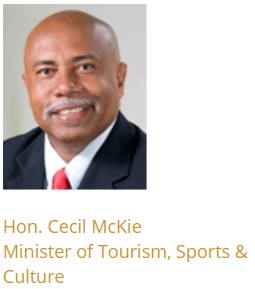
In some Caribbean countries, “Tourism and Culture” are administered by the same agency, i.e. Ministry of Tourism Sports and Culture in St. Vincent and the Grenadines; (see photo here). Now the BIG country of China is embarking on the same model, as reported in this recent news article:

Title: China Creates Ministry of Culture and Tourism
The Chinese government has officially inaugurated the Ministry of Culture and Tourism, which will help to boost the work culture in China and also helps to increase the work efficiency.

Former Chinese minister of culture Luo Shugang was elected as the new Minister of Culture and Tourism, and Li Jinzao was appointed Vice Minister.

It is as part of a widespread institutional reshuffle, China forms this new department to boost the cultural part in the country.

Huang Kunming, member of the Political Bureau of the Communist Party of China (CPC) Central Committee and head of the Publicity Department of the CPC Central Committee, attended the inauguration ceremony.

While addressing a symposium Sunday, Huang Kunming said that the establishment of the Ministry of Culture and Tourism would strengthen the Communist Party of China’s overall leadership over the work of culture and tourism. This is a new move by the Government of China to promote the country’s culture in international hemisphere.

Huang Kunming called on the Ministry of Culture and Tourism to hold the new era, assume new missions, and have more confidence in the Chinese culture. Huang also asked the ministry to realize the policies and decisions made by the CPC Central Committee.
Source: Posted April 10, 2018; retrieved July 24, 2018 from: https://www.caribbeannewsdigital.com/en/noticia/china-creates-ministry-culture-and-tourism

There are benefits to be derived for the Caribbean member-states to prioritize their culture as a revenue product. This would mean providing a structure for the world to enjoy our culture, through the visitations and explorations of tourism and/or through media productions. So the goal here is to better explore the industrialization of culture.


This is the urging of the movement behind the book Go Lean…Caribbean; the book asserts (Page 218) that Caribbean culture must be preserved and protected. While we want to be a member of global society, we strongly want to maintain what makes our cultural influences special and unique. The book supports the notion that the Caribbean is the greatest address on the planet, not just because of the terrain, fauna and flora; but also for the culture, festivals, food, music, dance, rum, cigars and our unique history. We have a fusion of African, Amer-Indian, European and Asian influences that cannot be found anywhere else on the planet; see Appendix VIDEO.

Plus, we have 21 UNESCO World Heritage Sites in our neighborhood. 🙂

Despite these synergies, our societal engines (economics, security and governance) are dysfunctional. The Go Lean book posits that the unique cultural dynamism of the region has not being fully explored; especially not regionally. Instead of competing in tourism and culture, this book urges that all regional member-states coordinate, collaborate, cooperate and confederate. Our whole, will be more than the sum of our parts. This is the dynamic of regional leverage.

We must reboot the industrial landscape, around our cultural dynamism, in order to create new economic opportunities, like jobs. We need such a new economic landscape because the current one is in shambles! This is due to the primary driver in the region – Tourism – being under assault. For example, more and more visitors shift from stay-overs to cruise arrivals. In addition to these visitors not having much time to embrace the local culture, the communities also suffer an economic blow to the local markets, as less spending is noticed.

So as a region, we must reboot our industrial landscape around our culture so as to add more cultural explorations, which will also mean more participation from all relevant stakeholders. The Go Lean book explains that doubling-down on the different areas of culture – events, music, arts, historic heritage sites – can result in more jobs. See here:

Direct jobs for Festivals and other event staff at Fairgrounds: 9,000  

Direct jobs for managing music industry and media consumption: 2,900  

Direct jobs (production, cast & crew) for film, TV and internet streaming: 2,000

Direct jobs for managing artist/exhibition & media consumption: 700  

Direct jobs for managing, promoting UNESCO World Heritage Sites: 1,000
The Go Lean book prepares the business model for these expressions of culture in the Caribbean region. Yes, business model refers to jobs, entrepreneurial opportunities, trade transactions, etc. In addition to these 15,600 industry jobs; there is also the reality of indirect jobs – unrelated service and attendant functions – at a 3.75 multiplier rate would add another 58,750 jobs.

This constitutes an industrial reboot! The book Go Lean…Caribbean – available to download for free – serves as a roadmap for the introduction and implementation of the technocratic Caribbean Union Trade Federation (CU); this is a confederation of all 30 member-states to execute a reboot of the Caribbean economic eco-system. This CU/Go Lean roadmap has these 3 prime directives:

  • Optimization of the economic engines in order to grow the regional economy to $800 Billion & create 2.2 million new jobs.
  • Establishment of a security apparatus to ensure public safety and protect the resultant economic engines.
  • Improvement of Caribbean governance to support these engines, including a separation-of-powers between the member-states and CU federal agencies.

The Go Lean book stresses that reforming and transforming the Caribbean economic engines must be a regional pursuit. This was an early motivation for the roadmap, as pronounced in the opening Declaration of Interdependence (Pages 13 – 14):

xxiv.  Whereas a free market economy can be induced and spurred for continuous progress, the Federation must install the controls to better manage aspects of the economy: jobs, inflation, savings rate, investments and other economic principles. Thereby attracting direct foreign investment because of the stability and vibrancy of our economy.

xxvi.  Whereas the Caribbean region must have new jobs to empower the engines of the economy and create the income sources for prosperity, and encourage the next generation to forge their dreams right at home, the Federation must therefore foster the development of new industries, like that of ship-building, automobile manufacturing, prefabricated housing, frozen foods, pipelines, call centers, and the prison industrial complex. In addition, the Federation must invigorate the enterprises related to existing industries like tourism, fisheries and lotteries – impacting the region with more jobs.

xxxii. Whereas the cultural arts and music of the region are germane to the quality of Caribbean life, and the international appreciation of Caribbean life, the Federation must implement the support systems to teach, encourage, incentivize, monetize and promote the related industries for arts and music in domestic and foreign markets. These endeavors will make the Caribbean a better place to live, work and play.

This is the vision of an industrial reboot! This transformation is where and how new jobs can be created in the Caribbean. Accordingly, the CU will also facilitate an eco-system for Self-Governing Entities (SGE), an ideal concept for artist colonies, educational institutions and entertainment zones with the exclusive federal regulation/promotion activities. Imagine bordered campuses or urban districts – with theaters, film sound-stages, artists studios and exhibition halls.

The focus for the Go Lean roadmap is to recognize the economic benefits of fostering the arts. See here, how this subject is further elaborated on in the Go Lean book (Page 218) with the French example (debate) of Cultural Mandates -vs- Free Market Adherences:

The Bottom Line on French Cultural Mandates

The French cultural endeavors are effectively managed by the government’s Ministry of Culture; which is in charge of national museums & monuments; managing the national archives and regional culture centers, and promoting & protecting the arts (visual, plastic, theatrical, musical, dance, architectural, literary, televisual & cinematographic) in France and abroad. The Ministry is also charged with maintaining the French identity. The cabinet post was created by President Charles de Gaulle in 1959 with the goal of realizing the right to culture, incorporated in the French constitution and the Universal Declaration of Human Rights (1948). De Gaulle’s aim was to democratize access to culture and elevate the “grandeur” of post-war France.

Under President François Mitterrand the Minister of Culture, Jack Lang, showed himself to be far more open to popular cultural production, including jazz, rock and roll, rap music, graffiti art, cartoons, comic books, fashion and food. His famous phrase “economy and culture: it’s the same fight” is representative of his commitment to cultural democracy and to active national sponsorship and participation in cultural production. Under Minister Jacques Toubon (1993 – ‘95), a number of laws were enacted for the preservation of the French language, both in advertisements and on the radio (80% of songs in French), ostensibly in reaction to the presence of English. – Wikipedia

… versus …

Allowing the Free Market
As digital multimedia evolves and emerges as both a business and creative opportunity, France’s culture of subsidy guarantees that it will always be more important for the artistes to be French first and creative second. As industrial policies go, that is hardly a recipe for success. For example, France has actually had a deputy cultural minister in charge of funding development of French rock ‘n’ roll. But American Top 40 radio stations never had to worry about a French Invasion.Also, the French had poured billions of francs into Groupe Bull – the state-supported computer company – in a desperate bid to keep France in the forefront of digital hardware and software systems. While Bull did OK in France; in the rest of the world – in the global marketplace – it failed miserably.

Why do the French think the results will be any better with their cultural policy? The answer is simple: arrogance and a total misunderstanding of market forces. What really galls the French elite, of course, is that while the bourgeoisie and proletariat always choose with their ballots to preserve French culture, they always overwhelmingly vote for American pop culture with their francs. American television shows consistently kick the stuffing out of French shows in terms of popularity. Steven Spielberg does better box office than Jean-Jacques Beneix. – Wired Magazine May, 1994

The Go Lean movement (book and blogs) details the principles of SGE’s and job multipliers, how certain industries are better than others for generating multiple indirect jobs down the line (or off-campus) for each direct job on the SGE’s payroll. The arts hold the same promise. Plus with the beauty of the arts, it is time, talent and treasuries well-spent just in the execution of this business model.

Any time spent singing and dancing … is not a waste!

The Go Lean book provides 370-pages of turn-by-turn instructions on “how” to adopt new community ethos, plus the strategies, tactics, implementations and advocacies to execute so as to reboot, reform and transform the societal engines of Caribbean society. One advocacy in rebooting the industrial landscape is to work to preserve the cultural heritage of the regional member-states; consider the  specific plans, excerpts and headlines from the book on Page 206 entitled:

10 Ways to Preserve Caribbean Heritage

1 Lean-in for the Caribbean Single Market
This regional re-boot will allow for the unification of the region into one market, thereby creating a single economy of 30 member-states, 42 million people and a GDP of over $800 Billion. The CU will assume the primary coordination for the region’s economy and image, because “economy and culture is the same fight”. Despite the legacies of 4 European cultures and the ubiquity of the American neighborhood, a CU mission is to preserve Caribbean heritage and culture.
2 Media Priorities (See Appendix W on Page 311: “Mediating as French Culture and Economics Collide“)

Like the French, this region may have to impose a system of quotas and subsidies for domestic production – in order to preserve “diversity” and an important Caribbean industry. As France is insisting on excluding such subsidies from a proposed EU-USA free-trade agreement, the CU may need to follow suit with such a policy to ensure local programs.

3 Mitigate Human Flight

As the “Dodo” bird became extinct, cultural extinction occurs too. Many aboriginal cultures have vanished from the New World, like the Aztec and Caribe tribes; (though some Taino influence remains). Human flight has the negative impact of assimilating a people in their new homelands. A CU mission is to mitigate this threat, and spur repatriation.

4 Legacies – Less Caribbean
5 Festivals
6 Music
7 Art – Public Places
8 Properties – Historical Preservation
9 Turn-around Strategies
10 Natural Resources (Fish, Animal Species)

Cultural preservation is not a new subject for this Go Lean roadmap; there have been a number of previous blog-commentaries by the Go Lean movement that referenced the economic opportunities embedded in the exposé of Caribbean culture. These submissions have highlighted what an industrial expression of culture can achieve:

https://goleancaribbean.com/blog/?p=14211 Enjoy Carnival and Be Safe!
https://goleancaribbean.com/blog/?p=12304 Caribbean Festival of the Arts – Past, Present and Future
https://goleancaribbean.com/blog/?p=9860 Forging Change Thru Arts & Artists
https://goleancaribbean.com/blog/?p=9712 Forging Change Thru Panem et Circenses (Food & Festivals)
https://goleancaribbean.com/blog/?p=7685 Joy. Pain. Sunshine. Rain. – A Message of Happiness
https://goleancaribbean.com/blog/?p=3641 ‘We Built This City …’ on Art, Music and Culture
https://goleancaribbean.com/blog/?p=866 Bob Marley: A Caribbean Cultural Legend Lives On!

In summary, our Caribbean region needs a better job-creation capability to make our homeland better. In fact, one of the reasons why so many Caribbean citizens have emigrated away from the homeland is the job-creation dysfunction. Creating a new economic landscape will require rebooting the industrial landscape.

Yes, we can … do this! We urge all Caribbean stakeholders to lean-in to this roadmap for economic empowerment. We urge everyone to explore and exploit our great Caribbean culture; this could help to make our homeland a better place to live, work and play. 🙂

Download the free e-Book of Go Lean … Caribbean – now!

Sign the petition to lean-in for this roadmap for the Caribbean Union Trade Federation.

—————-

Appendix VIDEO – Here’s how the Caribbean became the most Racially Diverse Region in the World – https://youtu.be/fAZBLzWCUbU

Masaman

Published on May 1, 2017 – This is how the Caribbean became the most racially diverse region on the planet, after having it’s ancestry and genetics permanently altered through European colonialism and migration.

In this video, I’m going to give the rundown for several Caribbean countries such as Cuba, Haiti, Jamaica, the Dominican Republic, Trinidad and Tobago, along with many others. We will look at the demographic history, and just what spawned the drastic fluctuations in the racial makeup of the region.

We’re also going to touch on many of the surrounding areas such as Central America, the Gullah coast, as well as the Guianas of South America.

Please let me know your thoughts on my analysis, especially if you live in, or have ancestry from the region. Videos over the latter regions will be released soon. Thanks for watching!


Share this post:
, , ,

Industrial Reboot – Fisheries 101

Go Lean Commentary

Go Fish!

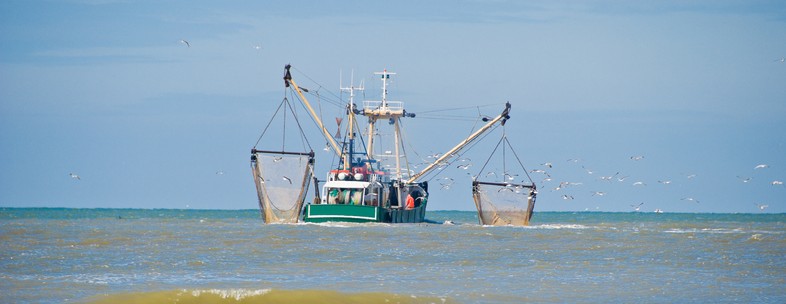
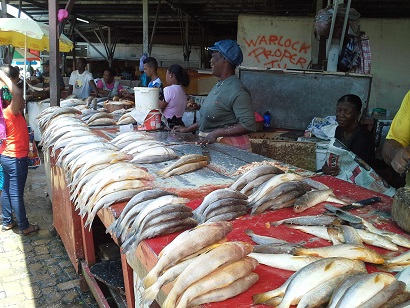
It seems like a simple directive: Fishing. It’s one of the world’s oldest professions, sports and hobbies. As long as a person is close to a body of water – with fish – they can improvise, hustle and acquire food to feed their families. But sadly, in the Caribbean, we do not consume enough fish – see Appendix B below – and have under-utilized our Fisheries industry.

In many jurisdictions, there is a legal distinction between commercial fishing and amateur/sport fishing. The focus of this commentary is on commercial fishing. For the full history of the Caribbean, there has always been a commercial fishing industry … and yet, there are a lot of inadequacies in this industrial eco-system. Consider:

  • There are no canneries in the Caribbean, beyond the “closed” one in Mayaquez, Puerto Rico.
  • Fish stocks are threatened regionally – see more here: http://www.jamaicaobserver.com/news/Caribbean-fishing-industry-at-risk_69808
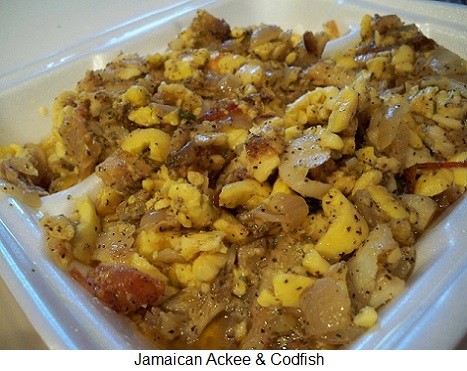
  • The National food of Jamaica – Ackee & Codfish – while delicious and indicative of the native culture, actually features North Atlantic Cod … from Norway; not a locally harvested fish.

This is part of the assessment of the Caribbean failing economic engines. The book Go Lean…Caribbean – a roadmap for the introduction and implementation of the Caribbean Union Trade Federation (CU) – relates:

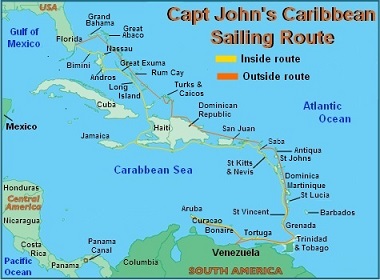
Previous Caribbean societies lived off the land and the sea; but today, the region depends extensively on imports, even acquiring large quantities of seafood, despite the 1,063,000 square miles of the Caribbean Sea. The CU Trade Federation is a technocracy, empowered to reboot the economic engines of the member-states, by fostering new industries (new “purse”) across the entire region and deploying solutions to better exploit the opportunities of the global trade market. Thus generating all new revenues; with no need to re-distribute any existing “purse” among the member-states.

The book Go Lean…Caribbean asserts that the business model of commercial fishing can harness a lot of jobs. This book asserts, at Page 257, that this roadmap to elevate the economic engines in Caribbean society can succeed and projects that 4,000 new direct jobs – direct jobs on fishing vessels, aquaculture sites, canneries and distribution – can be created with strategic endeavors for the Fisheries. (Even more indirect jobs – 15,000 based on a 3.75-to-1 multiplier rate – can be created).  This is how the industrial landscape of the Caribbean region can be rebooted, by doubling-down on the effort to enhance this fisheries industry. So this strategy from this Go Lean book can result in 19,000 jobs in total.

Fishing is an old industry and yet there is still an opportunity to reboot this part of our industrial landscape. Rather than looking forward, the Go Lean roadmap looks side-ways to the best tactics and best practices of this global industry. Consider these suggestions:

  • Cooperatives – Fishery cooperatives allow fishermen and industry players to pool their resources in certain (non-competitive) areas of activity. This strategy is vital for sharing the cost and expense of installing piers/docks, locating systems (Loran-C & GPS), canneries, refrigerated warehouses and transportation solutions.
  • Canneries – The CU will sponsor co-ops to manage canneries for different foods, including seafood i.e. mackerel.
  • Aqua-culture – the controlled harvesting of fish, crustaceans, mollusks and aquatic plants using farm-like conditions and practices. (Think incubating fertile eggs in a laboratory).
  • Mari-culture – practiced in marine environments and underwater habitats where aquatic plants are embedded to protect fish beds and reefs.

Despite these popular practices, there is something new in  this strategy for the Caribbean: Size!

The requisite investment of the resources for this goal may be too big for any one Caribbean member-state alone. So rather, the Go Lean strategy is to shift the responsibility to a region-wide, professionally-managed, deputized technocracy; this will result in greater production and greater accountability.

We need the greater production of a new economic landscape in our region. The current one is in shambles! This is due to the primary driver in the region – Tourism – being under assault; more and more visitors shift from stay-overs to cruise arrivals. So this means less economic impact to the local markets. So as a region, we must reboot our industrial landscape and add more job-creating options.

The Go Lean book prepares the business model around delivering better on basic needs – food, clothing and shelter. We need the fisheries to supplement the food provisions. In fact, seafood may even be a better source of protein than the land-based options of beef, pork and poultry – think of the additives, antibiotics and steroids. Fish is sounding better and better!

This constitutes an industrial reboot for the Greater Good. We must mine these treasures from the sea. See this thought elaborated upon in this recent news article in Appendix A below. Also, we ask this question of Caribbean stakeholders: “Why not eat more fish?” in Appendix B.

The book Go Lean…Caribbean – available to download for free – presents the confederation roadmap of all 30 member-states to execute a reboot of the Caribbean economic eco-system. This CU/Go Lean roadmap has these 3 prime directives:

  • Optimization of the economic engines in order to grow the regional economy to $800 Billion & create 2.2 million new jobs.
  • Establishment of a security apparatus to ensure public safety and protect the resultant economic engines on the Caribbean homelands and Seas.
  • Improvement of Caribbean governance to support these engines, including a separation-of-powers between the member-states and CU federal agencies. There will be a Federal Fisheries Department for regional oversight of the EEZ.

As related previously, rebooting the homeland of the Caribbean region will mean rebooting the economic engine of the Caribbean Sea. This commentary has previously identified a number of different industries that can be rebooted under this Go Lean roadmap. See the list of previous submissions on Industrial Reboots here:

  1. Industrial RebootsFerries 101 – Published June 27, 2017
  2. Industrial RebootsPrisons 101 – Published October 4, 2017
  3. Industrial RebootsPipeline 101 – To be published October 6, 2017
  4. Industrial RebootsFrozen Foods 101 – To be published October 6, 2017
  5. Industrial RebootsCall Centers 101 – Published July 2, 2018
  6. Industrial RebootsPrefab Housing 101 – Published July 14, 2018
  7. Industrial RebootsTrauma 101 – Published July 18, 2018
  8. Industrial RebootsAuto-making 101 – Published – July 19, 2018
  9. Industrial Reboots – Shipbuilding 101 – Published – July 20, 2018
  10. Industrial Reboots – Fisheries 101 – Published Today – July 23, 2018

The Go Lean book stresses that reforming and transforming the Caribbean economic engines must be a regional pursuit. This was an early motivation for the roadmap, as pronounced in the opening Declaration of Interdependence (Pages 12 – 13):

v. Whereas the natural formation of our landmass and coastlines entail a large portion of waterscapes, the reality of management of our interior calls for extended oversight of the waterways between the islands. The internationally accepted 12-mile limits for national borders must be extended by International Tribunals to encompass the areas in between islands. The individual states must maintain their 12-mile borders while the sovereignty of this expanded area, the Exclusive Economic Zone, must be vested in the accedence of this Federation.

xxiv.  Whereas a free market economy can be induced and spurred for continuous progress, the Federation must install the controls to better manage aspects of the economy: jobs, inflation, savings rate, investments and other economic principles. Thereby attracting direct foreign investment because of the stability and vibrancy of our economy.

xxvi.  Whereas the Caribbean region must have new jobs to empower the engines of the economy and create the income sources for prosperity, and encourage the next generation to forge their dreams right at home, the Federation must therefore foster the development of new industries, like that of ship-building, automobile manufacturing, prefabricated housing, frozen foods, pipelines, call centers, and the prison industrial complex. In addition, the Federation must invigorate the enterprises related to existing industries like tourism, fisheries and lotteries – impacting the region with more jobs.

Accordingly, the CU will facilitate the eco-system for Exclusive Economic Zones (EEZ) and Self-Governing Entities (SGE). These SGE’s are ideal for the Fisheries industry – with its exclusive federal regulation/promotion activities. Imagine bordered campuses – with docks, canneries, refrigerated warehouses, cooperative refrigeration utilities and backup power generations.

There are ideal role models that the Caribbean Sea can emulate. First understand the UN’s Law of the Sea in the Appendix VIDEO below. Then consider the example of Alaska. See the details here from the Go Lean book at Page 210:

The Bottom Line on Alaska Exclusive Economic Zone
Alaska is one of the most bountiful fishing regions in the world, producing a wide variety of seafood. The fisheries of Alaska are recognized as some of the best-managed fisheries in the world, providing thousands of jobs and a vital, long term economic engine for Alaska communities and the state. Over 4.1 billion pounds of fish and shellfish worth over $1.8 billion were harvested in Alaska waters in 2010, keeping Alaska in first place [globally] for value of landings.-AKRDC.org
.
As with other countries, the 200 nautical miles Exclusive Economic Zone (EEZ) off the coast of the United States gives its fishing industry special rights. It covers 4.38 million square miles.The US Government established the North Pacific Fishery Management Council with jurisdiction over the 900,000-squaremiles of the EEZ for the Gulf of Alaska, Bering Sea and Aleutian Islands. This region provides rich marine resources: Pacific salmon, shellfish (shrimp, crab), ground-fish, flatfish, Pacific halibut, herring, and more. The salmon species in Alaska generally produce good harvests, though some stocks are declining. The Aleutian Islands are a series of over 300 rocky islands, stretching over 1,000 miles from southwest Alaska to Russia. They are home to the largest fishing port in the U.S., Dutch Harbor. In 2005, about 30,000 square miles of sea-floor around the Aleutian Islands were permanently closed and certain destructive fishing practices banned.

To fully explore Fisheries, there must be art and science! See the high level view of UNCLOS in the Appendix VIDEO below.

The Go Lean movement (book and blogs) details the principles of SGE’s and job multipliers, how certain industries are better than others for generating multiple indirect jobs down the line (or off-campus) for each direct job on the SGE’s payroll.

This is the vision of an industrial reboot! This transformation is where and how the jobs are to be created.

The Go Lean book provides 370-pages of turn-by-turn instructions on “how” to adopt new community ethos, plus the strategies, tactics, implementations and advocacies to execute so as to reboot, reform and transform the societal engines of Caribbean society. In addition to  Federal Fisheries Department, there is an advocacy for rebooting the industrial landscape to better foster the Fisheries industry; consider the specific plans, excerpts and headlines from the book on Page 210 entitled:

10 Ways to Improve Fisheries

1 Lean-in for the Caribbean Single Market
The CU will allow for the unification of the region into one market, thereby creating a single economy of 30 member-states, 42 million people and a GDP of over $800 Billion (2010). One mission of the CU is to facilitate the food supply so that the region can feed itself, more from local production and less from trade; this includes yields from fisheries. The Caribbean Sea generates a large fishing industry for the surrounding countries, accounting for half a million metric tons (1.1 billion pounds) of fish per year. And yet, the region still imports fish from Alaska. (Alaska imports none from the Caribbean).
2 UN Petition – Effort initiated by the ACS

The CU seeks a designation of an Exclusive Economic Zone for the Caribbean Seas, must like the US enjoys with the waters surrounding Alaska-Aleutian Islands. This new zone should also feature the international waters between the islands. The CU will oversee this zone to coordinate economic activity, protect the natural environment against hazards and ensure the security measures for the assurance of the homelands. These requests are in line with the UN charter. [See more on the UNCLOS in the Appendix VIDEO below].

3 Common Pool Resources (Lobster, Conch, Grouper, Flying Fish)

Though the waters between the islands may be uninhabited, their resources can still be depleted. The CU will govern the common pool resources to promote the sustainability of fish stock. Fishing for lobster, conch, grouper, “flying fish” and other species must be controlled, with limited harvesting seasons, otherwise there will be none for future generations.-

4 Cooperatives
5 Aqua-culture and Mari-culture
6 Fishing Tourism and Yachting Enthusiasts
7 Marine Financing
8 Coast Guard hand-off to CU Naval Authority

The US Coast Guard does assume a lot of patrol duties in the Caribbean, even though only small portions of the region (Puerto Rico) are in their jurisdiction. The CU will not discourage any over-coverage the USCG provides, but the prime responsibility for policing, search-and-rescue, and interdiction for the region rest with the CU and the Naval Authority.

9 ICE Cooperation
10 Maritime Emergency Management

The CU will deploy the necessary resources for maritime emergencies in the region. While the US Coast Guard provides some emergency response today; the direct responsibility would belong to the CU Naval Authority. As such, the CU sponsored Trauma Centers will allow for airlifting hurt-or-sick fishermen on fishing vessels and CU agencies will marshal the effort to prepare and prevent emergencies with disaster recovery and business continuity plans for industry players.

The subject of Caribbean fisheries is not new for this Go Lean roadmap; there have been a number of previous blog-commentaries by the Go Lean movement that referenced economic opportunities embedded in this industry. See a sample list here:

https://goleancaribbean.com/blog/?p=12144 Commerce of the Seas – Book Review: ‘Sea Power’
https://goleancaribbean.com/blog/?p=9070 Securing the Homeland – From the Seas
https://goleancaribbean.com/blog/?p=8819 Lessons from China – South China Seas: Exclusive Economic Zones
https://goleancaribbean.com/blog/?p=3594 Lessons Learned from Queen Conch
https://goleancaribbean.com/blog/?p=2119 Cooling Effect – Oceans and the Climate

In summary, our Caribbean homeland needs jobs; the home “waters” need jobs too. A better job-creation ability would help us to make our homeland a better place to live, work and play. In fact, one of the reasons why so many Caribbean citizens have emigrated away from the homeland is the job-creation dysfunction. Creating a new economic landscape will require rebooting our industrial landscape.

Yes, we can … reboot our industrial landscape, and create the necessary new jobs – and other economic opportunities.

We urge all Caribbean stakeholders to lean-in to this roadmap for economic empowerment. A new disposition among the Fisheries do amplify the fact that this Go Lean roadmap is necessary – we must reboot. 🙂

Download the free e-Book of Go Lean … Caribbean – now!

Sign the petition to lean-in for this roadmap for the Caribbean Union Trade Federation.

—————

Appendix A – The Caribbean: What to Eat

A few decades ago, the Caribbean people thought their food not good enough for the annual hoards of vacationing tourists. They considered their local dishes too native and uninteresting, and chose to offer visitors French food instead. Fortunately, after constant demand, Caribbean hoteliers and restauranteurs now offer a variety of traditional foods throughout the islands.

From the lush tropical vegetation of the Caribbean comes an astonishing array of fruit. There are coconuts, pineapples, passion fruits, papayas, mangoes, apples, oranges, bananas, melons, figs, pomegranate, and limes. Others include the breadfruit, ugli, naseberry, tamarind, sapodilla, soursop, plantains, cherimoya, monstera, loquat, carambola, guava, and mamey sapote. Some exotic fruits are not exported because they are too delicate, which is why many Caribbean fruits are unfamiliar to those who do not travel to the Islands.

Some fruits are enjoyed right off the trees as part of a meal or snack, but many are used for a variety of both sweet and savory dishes. Mangos and papayas are used in drinks, desserts like sherbets and mousse, and in fiery chutneys. Coconuts are used for coconut bread, coconut ice cream, flan, and that world-famous Pina Colada. Coconut milk is also used for meat sauces, and even cooked with beans. Plantains, which are similar to bananas, are eaten grilled, fried, prepared as crispy chips, or baked in meat pies.

Vegetables, likewise, are prolific on the islands. Yams, pumpkin, yuca, calabaza, callaloo, chayote, sweet potatoes, okra, tomatoes, zuchinni, cucumbers, and bell peppers are all used to their full advantage. A variety of legumes are also popular, especially black beans used in popular Cuban black bean soup. Other common beans are pigeon peas, black-eyed peas, and red beans. Most bean dishes are served with rice and cornbread, similar to Creole menus of the Southern U.S.

Poultry dishes are widespread throughout the Caribbean, mostly because chicken is the most economical meat. It is often marinated with ginger, lime, and chiles before grilling. Beef and pork dishes are common in Caribbean cuisine, but more so on the Spanish Islands. Goat, and less popular lamb, are used on some islands. Curried Goat is a holiday specialty of Jamaica.

Treasures from the sea are another reason to experience Caribbean cuisine. These are the fresh fish, shellfish, and other tropical delicacies caught daily in the warm waters of the Caribbean Sea. Hundreds of varieties of fish are available, including sea bass, swordfish, pompano, mullet, kingfish, yellowtail, tuna, wahoo, snapper, grouper, mackerel, and dolphin fish. They are grilled, baked, or served in chowders and stews.

Salt codfish is a Caribbean specialty. Its most common presentations are in salads and stews, or with scrambled eggs. Shellfish like the spiny lobster and shrimp are ubiquitous, and both given the special Caribbean touch with specialties like Lobster Creole and Coconut Shrimp. Other Carribean specialties include conch, sea urchin, and turtle.

Probably because of the preponderance of sugar cane in the islands, desserts are an important part of a Caribbean meal. They come in every form, from cakes, dumplings, bread and rice puddings, to flan, souffle and mousse. There are also frozen ices and sherbets. Many desserts utilize local fresh and dried fruits, sometimes sweet potatoes, pumpkin, and avocado; rum is sometimes an ingredient.

By no means are all Caribbean dishes fiery hot and spicy, but chiles are the most widespread form of Caribbean seasoning. It is not unusual when dining in the islands, that a bottle of local hot sauce be available to patrons.

To truly experience Caribbean cuisine, it is wise to seek out the regional specialties, especially if you are staying at a fine resort hotel. Remember that just because there is a hibiscus flower on the plate, doesn’t mean the dish is authentic!

Source: Food-Wine Magazine January 2007 – retrieved July 22, 2018 from: https://www.foodwine.com/destinations/caribbean/cariwhat.html

—————

Appendix B – Why don’t they eat more fish in the Caribbean?

By  Tyler Cowen

David Lomita, a loyal MR [(Marginal Revolution)] reader, asks me:

I have often wondered why, given that they are a bunch of small islands, that so many of the more famous dishes of Caribbean countries are meat and not fish.  The woman of this house is Jamaican and she is much more proud of jerk than of escabeche fish.  Puerto Rico has its lechon, Cuban food has ropa de viejo and so on.
I don’t have any data here … but independently I have wondered about a similar question.  I see a few possible factors:

  1. Often fish are available, and excellent, immediately right near the ocean.  Transport and adequate refrigeration are not to be taken for granted.  In any case, those dishes won’t always become iconic national recipes.  Note also that a lot of the fish consumed will be boiled, spiced, and salted, presumably for health and storage reasons.
  2. Food is an energy source, and meat is often superior to fish in this regard, especially for diets which may otherwise lack calories.  For the same reason such meals also can be more carbohydrate-heavy than the typical daily diet.
  3. Cows, chickens, and pigs are media for savings.  Fish are not.  Why not invest in some insurance while you are planning your food supply?  Keep in mind that local banking systems often do not serve the poor very well.  Furthermore it may be easier to own a chicken than to catch a fish.  Fishing is low-productivity in many parts of the Caribbean, due to poor knowledge and implementation of aquaculture.
  4. Which countries are we talking about?  In the wealthier Trinidad and Jamaica, retail fish shops are common (that link is useful more generally)  In Barbados, U.S. Virgin Islands, and the Cayman Islands, culinary infrastructure is quite good and there is plenty of wealth.  In Haiti and Cuba, the two most populous nations in the Caribbean, economic conditions are dire.
  5. Never overlook the heavy hand of government, plus a lack of resource management expertise: “Most of the governments of the islands aim at self-sufficiency in fish production. Some, such as Antigua, try to prohibit exports; others, such as Jamaicaand Trinidad, limit imports. All of them are giving more attention to post-harvest practices both at sea and on shore, processing and storage, and to improved marketing and distribution. Many are now more interested in assessment of their resources, and collecting statistics to determine the best management practices to sustain the stocks.”

By the way, here is a very good recent piece on the rising cost of food imports in the Caribbean, especially Jamaica.

Source: Marginal Revolution Online Magazine – Posted August 5, 2013. See the full article and readers comments here; retrieved July 23, 2018 from: https://marginalrevolution.com/marginalrevolution/2013/08/why-dont-they-eat-more-fish-in-the-caribbean.html

—————

Appendix VIDEO – Law of the Sea – https://youtu.be/j_R3zQvwAuw

Published on Mar 21, 2016

Recorded with http://screencast-o-matic.com

  • Category: Education
  • License: Standard YouTube License


Share this post:
, , ,
[Top]

Industrial Reboot – Shipbuilding 101 – ENCORE

Rebooting the industrial landscape means understanding the macro-economic factors affecting a community and then applying changes to assuage negative developments and to exploit the positives.

Understanding the macro factors means embracing the Laws of Economics 101: Supply-and-Demand.

As related in a previous blog-commentary by the movement behind the book Go Lean…Caribbean:

The ‘Law of Supply-and-Demand’ is almost as natural as the ‘Law of Gravity’. Leave it alone and it will pre-determine what will happen in the marketplace. But just like Gravity could be defied – consider airplanes & rockets – so too the Law of Supply-and-Demand could be defied supplemented and exacerbated – consider Crony-Capitalism and protectionism – with the industrial prodding of shipbuilding.

The shipbuilding industry has become a favorite for government leaders to manipulate the supply and demand dynamics for – consider the Jones Act in the US – because this industry creates so many …

Jobs

The book Go Lean…Caribbean asserts that the business model of shipbuilding can harness a lot of jobs. This book presents a roadmap to elevate the economic engines in Caribbean society and projects that 15,000 new direct jobs can be created with strategic endeavors for the shipbuilding industry. (Even more indirect jobs – 3.75-to-1 multiplier rate – can be created).  This is how the industrial landscape of the Caribbean region can be rebooted, by doubling-down on the effort to foster a shipbuilding industry.

We need a new economic landscape in our region. The current one is in shambles! This is due to the primary driver in the region – Tourism – being under assault; more and more visitors shift from stay-overs to cruise arrivals. So this means less economic impact to the local markets. As a region, we must reboot our industrial landscape and add more job-creating options.

How?

This commentary has previously identified a number of different industries that can be rebooted under this Go Lean roadmap. See the list of previous submissions on Industrial Reboots here:

  1. Industrial RebootsFerries 101 – Published June 27, 2017
  2. Industrial RebootsPrisons 101 – Published October 4, 2017
  3. Industrial RebootsPipeline 101 – Published October 5, 2017
  4. Industrial RebootsFrozen Foods 101 – Published October 6, 2017
  5. Industrial RebootsCall Centers 101 – Published July 2, 2018
  6. Industrial RebootsPrefab Housing 101 – Published July 14, 2018
  7. Industrial RebootsTrauma 101 – Published July 18, 2018
  8. Industrial RebootsAuto-making 101 – Published July 19, 2018
  9. Industrial Reboots – Shipbuilding 101 – Published Today – July 20, 2018

This commentary considers the basics of the shipbuilding industry and how it can harness many jobs if we reboot our industrial landscape to foster the industry. There is no need for a new commentary; this subject had already been elaborated upon in that previous Go Lean commentary. That submission is hereby Encored here:

——————–

Go Lean Commentary Commerce of the Seas – Shipbuilding Model of Ingalls

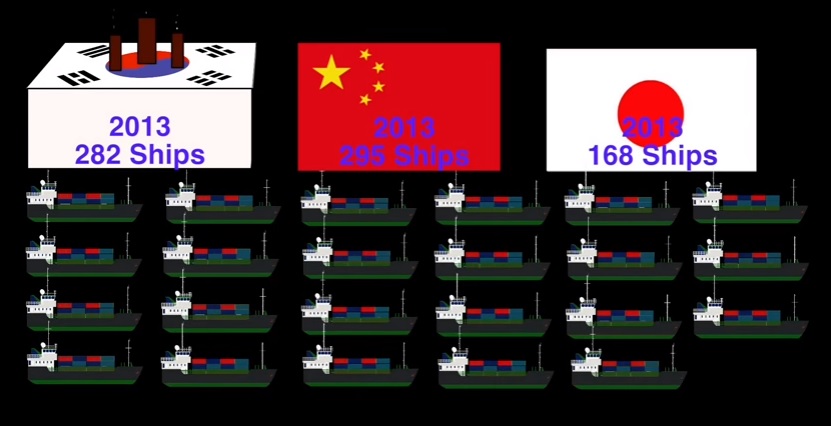
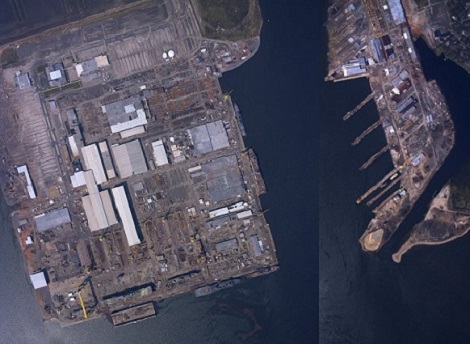
The ‘Law of Supply-and-Demand’ is almost as natural as the ‘Law of Gravity’; leave it alone and it will pre-determine what will happen … in the marketplace. But just like the ‘Law of Gravity’ can bend and be defied (think airplanes and rockets), so too the ‘Law of Supply-and-Demand’ can bend and be defied. A great example of defying ‘Supply-and-Demand’ is the Crony-Capitalism (subsidies and protectionist schemes) in the highly-protected Ship-Building industry. (See the Appendix below regarding OECD Ship-Building Industry monitoring efforts).

CU Blog - Commerce of the Seas - Model of Ingalls - Photo 1

CU Blog - Commerce of the Seas - Model of Ingalls - Photo 2

Look at the numbers in the 2 photos above. It is apparent that the US distorts the Supply-and-Demand factors for Ship-Building in its market; their protectionist laws prevent the international market from supplying domestic shipping needs. This is bad! Though there is the need for some government-aid, to protect jobs and defense options,  the US model of Crony-Capitalism is a blatant distortion – Source: https://youtu.be/GpwzoDGDGAQ.

Ship-Building can be a strategic industry! The book Go Lean…Caribbean asserts that 15,000 new direct jobs can be created with strategic endeavors for the Ship-Building industry in the region. (Even more indirect jobs applies – multiplier rate of 3-to-1).  The Go Lean book calls for the elevation of Caribbean economics, positing that governmental entities must stimulate and incubate this industry. The book surveyed the world looking for industrial opportunities that could be fully explored in the Caribbean region where the natural resources of the region could be considered; the region is known for sun, sand and sea.

Tourism is a natural assumption for utilizing these “sun, sand and sea“ resources, but with the recent inadequacies of this industry, there needs to be more diversity in our commercial offerings; ship-building – which needs the sea – was identified as an ideal supplement and alternative for regional commerce. This reference to “regional commerce” refers to the economic interest that the 30 member-states in the Caribbean have to consider to provide job and entrepreneurial opportunities for its people. So this Ship-Building focus prioritizes the “Commerce of the Seas” concept. This commentary is 3 of 4 in a series considering the Lessons in Economic History related to “Commerce of the Seas”, the Crony-Capitalism in laws and practices around the maritime eco-system in the United States … and other countries. The full series is as follows:

  1. Commerce of the Seas – Stupidity of the Jones Act
  2. Commerce of the Seas – Book Review: ‘Sea Power’
  3. Commerce of the Seas – Shipbuilding Model of Ingalls
  4. Commerce of the Seas – Lessons from Alang (India)

There are many Lessons in Economic History for the Caribbean to glean by considering the actuality of this industry. Let’s consider the role model of just one American shipbuilding entity: Ingalls Shipbuilding Company in Pascagoula, Mississippi. See the reference source here, describing the business model for building ships to ‘Supply’ any open ‘Demand’ in the commercial market:

Title: Ingalls Shipbuilding 

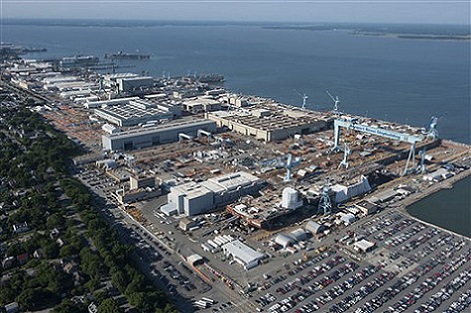
Ingalls Shipbuilding is a shipyard located in Pascagoula, Mississippi, United States, originally established in 1938, and is now part of Huntington Ingalls Industries. It is a leading producer of ships for the United States Navy, and at 12,500 employees, the largest private employer in Mississippi.

CU Blog - Commerce of the Seas - Model of Ingalls - Photo 3

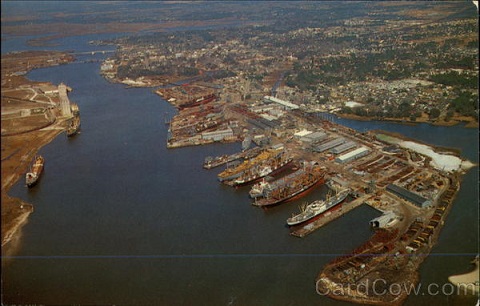
Pascagoula River and Ingalls Shipyard

CU Blog - Commerce of the Seas - Model of Ingalls - Photo 5

History

In 1938, Ingalls Shipbuilding Corporation was founded by Robert Ingersoll Ingalls, Sr. (1882–1951) of Birmingham, Alabama, on the East Bank of the PascagoulaRiver in Mississippi.[1] Ingalls was located where the Pascagoula River runs into the Gulf of Mexico. It started out building commercial ships including the USS George Clymer (APA-27), which took part in Liberty Fleet Day 27 September 1941. In the 1950s Ingalls started bidding on Navy work, winning a contract in 1957 to build 12 nuclear-powered attack submarines.

Litton Industries acquired Ingalls in 1961, and in 1968 expanded its facilities to the other side of the river. Ingalls reached a high point of employment in 1977, with 27,280 workers. In April 2001, Litton was acquired by the Northrop Grumman Corporation.[2]

On August 29, 2005, Ingalls facilities were damaged by Hurricane Katrina; most of the ships in dock and construction escaped serious harm. While shipbuilding was halted for a while due to the destruction of many buildings, most vehicles, and the large overhead cranes, the facility continues to operate today.

On March 31, 2011, Northrop Grumman spun off its shipbuilding sector (including Ingalls Shipbuilding) into a new corporation, Huntington Ingalls Industries.

In 2015, Ingalls Shipbuilding Company signed a contract with US Navy for new destroyers, littoral combat ships and new landing craft. USS John Finn (DDG-113) was one of the first destroyers was launched on March 28. Company also is building Ralph Johnson (DDG 114), Paul Ignatius (DDG 117) and Delbert D. Black (DDG 119).

On March 21, 2015, the new San Antonio LPD 17-class amphibious ship John P. Murtha (LPD 26) was ceremonially christened. The vessel having been launched on October 30 and scheduled to be delivered in 2016.

On March 27, 2015, the shipyard received construction contracts for their next destroyers. Ingalls Shipbuilding Company was awarded a $604.3 million contract modification to build the yet-to-be-named DDG 121.

On March 31, 2015, the shipyard also received another contract with a $500 million fixed price to build the eighth National Security Cutter (NSC) for the US Coast Guard. Most of them will be under construction until 2019. The cutters are the most advanced ships ever built for the Coast Guard. [3]

On June 30, 2016, Ingalls Shipbuilding signed a contract with US Navy to build the U.S. Navy’s next large-deck amphibious assault warship. The contract included planning, advanced engineering and procurement of long-lead material, is just over $272 million. If options are exercised, the cumulative value of the contract would be $3.1 billion.[4]

Ships built

Source: Retrieved 06-11-2017 from Wikipedia: https://en.wikipedia.org/wiki/Ingalls_Shipbuilding

———–

VIDEO – Ingalls Shipbuilding Promotional Video – https://youtu.be/EFl8Tl0ImJo

Published on Jan 10, 2017 – Ingalls Shipbuilding is located in Pascagoula, Mississippi on 800 acres of the most important real estate in America. With 11,000 employees, Ingalls is the largest manufacturing employer in Mississippi and a major contributor to the economic growth of both Mississippi and Alabama. Our 77-year legacy has continuously proven we have the talent, experience and facilities to simultaneously build more classes of ships than any other shipyard in America.

We are the builder-of-record for 35 Aegis DDG 51 class guided missile destroyers, LHA 6 class large deck amphibious ships, National Security Cutters for the U.S. Coast Guard and the sole builder of the Navy’s fleet of San Antonio (LPD 17) class amphibious assault ships. Ingalls Shipbuilding has what it takes to build the capital ships that keep America and our allies safe.

Additional VIDEO consideration: https://youtu.be/0pak_gKglqo – Ingalls shows ‘Shipyard of the Future’.

Considering that 90% of all trade transports by water, there is natural demand for shipbuilding. There is a lot of supply as well.

Ingalls Shipbuilding Company is a definite beneficiary of government-aided commerce in the US; most of their shipbuilding engagements are government contracts. They are a leading producer of ships for the US Navy or Coast Guard, and at 12,500 employees, the largest private employer in Mississippi. As related in the first commentary in this series, the Jones Act has protected maritime commerce and shipbuilding for American stakeholders like Ingalls.

It is ‘high tide’ for the Caribbean to engage some protectionism strategies. Considering that the Caribbean region is the #1 market for the Cruise Line industry, collective bargaining should be prioritized to direct some shipbuilding business to local entities in this industry. The book Go Lean… Caribbean posits that as a unified region – a Single Market – the power of collective bargaining is possible. The book serves as a roadmap for the introduction and implementation of the technocratic Caribbean Union Trade Federation (CU) with the charter to facilitate jobs in the region. We should explore the benefits of the shipbuilding (and ship-breaking) industry. This aligns with the CU charter; as defined by these 3 prime directives:

  • Optimization of economic engines in order to grow the regional economy to $800 Billion and create 2.2 million new jobs.
  • Establishment of a security apparatus to protect the resultant economic.
  • Improve Caribbean governance to support these engines.

Early in the Go Lean book, this responsibility to create jobs was identified as an important function for the CU with this pronouncement in the Declaration of Interdependence (Pages 14):

xxiv.  Whereas a free market economy can be induced and spurred for continuous progress, the Federation must install the controls to better manage aspects of the economy: jobs, inflation, savings rate, investments and other economic principles. Thereby attracting direct foreign investment because of the stability and vibrancy of our economy.

xxvi.  Whereas the Caribbean region must have new jobs to empower the engines of the economy and create the income sources for prosperity, and encourage the next generation to forge their dreams right at home, the Federation must therefore foster the development of new industries, like that of ship-building…. In addition, the Federation must invigorate the enterprises related to existing industries tourism, fisheries and lotteries – impacting the region with more jobs.

Accordingly, the CU will facilitate the eco-system for Self-Governing Entities (SGE), an ideal concept for shipyards, with its exclusive federal regulation/promotion activities.

The Go Lean movement (book and blogs) also details the principle of job multipliers, how certain industries are better than others for generating multiple indirect jobs down the line for each direct job on a company’s payroll. In a previous blog-commentary, it was related that the shipbuilding industry has a job-multiplier rate of 3.0. So once the job-multiplier rate is applied to the 15,000 direct shipbuilding jobs, generating 45,000 indirect jobs, the full economic impact is 60,000. This is transforming!

The Go Lean book provides 370-pages of turn-by-turn instructions on “how” to reform and transform the Caribbean, starting first with how to adopt new community ethos, plus the strategies, tactics, implementations and advocacies to execute so as to transform the maritime commerce to benefit Caribbean society. Consider the Chapter excerpts and headlines from this sample on Page 209 related to Ship-Building:

10 Ways to Develop Ship-Building

1

Lean-in for Caribbean Integration
The CU will allow for the unification of the region into one market, creating an economy of 30 member-states, 42 million people and 2010 GDP over $800 Billion. All of the member-states are either islands or coastal, therefore there are lots of coastline and harbors. Boats, yachts and ships are therefore plentiful in the region. Consistent with the CU’s mission for globalization, the region cannot just consume these vessels; we must create and build as well. There is a history of boat-building in the islands (slopes, schooners, clippers), but what had been missing to forge a formidable industry is the capital and the community “will”. The CU will now fill those gaps. The CU will tap the capital markets to secure long-term funding (stocks/bonds), prepare the labor force for advanced skill-sets, and negotiate treaties with “mature” EU states (i.e. Holland, Ireland) for master-apprentice labor-coaching. Boats, yachts and ships are considered durable goods, the opposite of planned obsolescence. …

2

Cooperatives Movement – “Many hands make heavy job light

3

Ferry Operations – Demand & Supply
The CU envisions a fleet of ferries, to service the individual islands, in a scheme dubbed “Union Atlantic Turnpike”. The proliferation of scheduled ferries, synchronized with trains and trucks will depict a continuous logistic network. This constitutes the demand for ferries. The CU will henceforth award the contracts for building and maintaining the ferries to local industry players – this constitutes the supply. The CU will therefore foster a ship-building “incubator”.

4

Spin-off Strategy – Low-risk Contracts
The CU vision is to deploy a “spin-off” strategy for ship-owning patrons. The CU region needs ships. Therefore, the CU will incentivize patrons to “go local” with their ship-building/maintenance needs. A domestic ship-building industry is a great source of skilled/high-wage jobs. So there are many ways to exploit the cost-benefit equation for a win-win.

5

Cruise Ship Dry-Dock – Let’s Make-A-Deal
The Caribbean region is the Number One market for the Cruise Line industry. Big expenses for Cruise Lines are port charges and landing fees. The CU will offer rebates and incentives for the Cruise Lines to use local dry-docks for retro-fittings and refurbishing.

6

Yacht Development – Catering to a Special Market

7

Sailboats – For Every Man
The history of Caribbean boat building is rich with sailing crafts; cruise ships evolved from local Banana-Boats. The CU will channel that history, passion and ethos for the region to design/develop best-inbred sailboats, big and small.

8

Boat Shows and Open Houses – Show and Tell

9

Regattas – More than Just Winning a Race
The history of the region has highlighted ships, boats and boat building. There is the tradition of Regattas, used to showcase the islands boat building prowess. [199] The CU now intends to feature Regattas in the same manner that automakers feature auto racing (NASCAR, IndyCar, Formula-One), as a demonstration platform for their art and science.

10

Maritime Emergencies – Professional Response
The CU will deploy the necessary equipment and training for the ship-building industry to respond to maritime emergencies in the region. Therefore a disabled cruise ship will have the rapid response of “support-barges”, tug boats, dredging equipment, portable generators. This effort will be marshaled by the CU Emergency Management Agency.

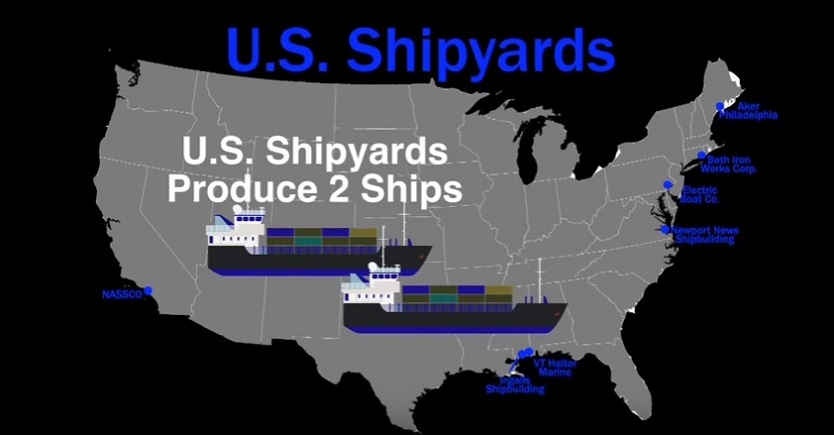
The CU will foster shipbuilding as an industrial supplement and alternative to tourism. We have the resources (waterscapes, ports and harbors), the skills and the passionate work-force. We only need the Commerce of the Seas. The Caribbean people are now ready for this industrial empowerment. But we need to be cautious as to which role model we emulate. The US does provide material support and subsidies to their shipbuilding industry, but their protection laws – i.e. the Jones Act – have nullifies the positive effects of a Free Market. While other countries build and launch hundreds of ships every year, the US model only produce 2. That’s a lot of missing jobs, and artificially induced high prices.

In the Caribbean, we must do better. Fortunately, we do not have the Crony-Capitalism of the Jones Act to deter us. We can follow other – better – models to progress our societal investments in this industry. This is the assertion of the Go Lean roadmap.

We hereby urge all Caribbean stakeholders – governments and citizens – to lean-in to this Go Lean roadmap to foster this industrial development, so that our region can be a better homeland and seas to live, work and play. 🙂

Download the free e-book of Go Lean … Caribbean – now!

Sign the petition to lean-in for this roadmap for the Caribbean Union Trade Federation.

———–
Appendix – The OECD Council Working Party on Shipbuilding

(OECD = Organization of Economic Cooperation and Development)

The OECD Council Working Party on Shipbuilding (WP6) seeks to progressively establish normal competitive conditions in the industry. It encourages transparency through data collection and analysis, and seeks to expand policy dialogue with non-OECD economies that have significant shipbuilding industries. WP6 is the only international body that can influence and guide government policies by identifying and, where possible, eliminating factors that distort the shipbuilding market.

The Working Party is chaired by Ambassador Elin Østebø Johansen, Permanent Representative of Norway to the OECD. Participating OECD members are: Denmark, Finland, Germany, Italy, Japan, Korea, Netherlands, Norway, Poland, Portugal, Sweden and Turkey. Croatia and Romania are full participants in the Working Party, and the Russian Federation participates as an observer. The European Commission, representing the European Union, also participates in WP6 meetings.

What does the Working Party on Shipbuilding do?
The WP6 has placed a high priority on encouraging policy dialogues, and on establishing close working relationships with non-OECD economies. In particular, these economies were invited to participate on an equal footing with OECD members in the negotiations on a shipbuilding agreement that ran from 2002 until 2005, and Brazil, China, Croatia, the Philippines, Romania, the Russian Federation, Chinese Taipei and Ukraine participated in those negotiations. Although the negotiations were eventually halted, a close working relationship has continued with all of these economies.

The WP6 organizes regular workshops aimed at facilitating the exchange of information on policy and industry developments, and as well as the economies already mentioned, other participants have come from India, and Indonesia, amongst others.

The WP6 has also worked closely with industry groups representing shipbuilders, ship owners, ship operators and trade union interests, so that a wide range of perspectives can be taken into account by WP6 members during their formulation of policy responses to address issues and challenges faced by the global shipbuilding sector.

What is the relevance of the Working Party to non-OECD economies and industry?

While the world’s shipbuilding industry has been through a period of record production, it was severely affected by the 2008 global financial crisis, and recent years have seen very low levels of new orders received by virtually all shipyards. The global industry now faces a number of challenges, most notably global excess capacity, which will place the economic viability of the industry under pressure in some parts of the world.

Persistent worldwide overcapacity may encourage governments to provide support through subsidies and other measures, as well as spur other market distorting practices, which can create major structural problems even in the most efficient shipbuilding industries. But potential market distortions can be addressed through close co-operation among economies with significant shipbuilding sectors and the active involvement of industry.

———-

INVENTORY OF GOVERNMENT SUPPORT MEASURES

The Inventory of Government Subsidies and Other Support Measures is a regular exercise for the WP6. The main aim of this exercise is to provide transparency and continuity of data on support measures for the shipbuilding industry. As well as WP6 participants, the Inventory provides some information on the support measures in Partner economies.

Share this post:
, , ,
[Top]

Industrial Reboot – Auto-making 101

Go Lean Commentary

Allow me to introduce this concept of planned obsolescence. This is the policy in industrial design and economics that calls for …

… designing a product with an artificially limited useful life, so it will become obsolete (that is, unfashionable or no longer functional) after a certain period of time. [1] The rationale behind the strategy is to generate long-term sales volume by reducing the time between repeat purchases (referred to as “shortening the replacement cycle”).[2]Wikipedia.

Let’s understand this better: you are a stock on the shelf!

There are planners out there that are designing products that you need that can last longer, but purposely choose to give it a short life so as to force you to “come again” and “buy again”. Considering all the stakeholders in such a transaction: buyers -vs- seller; consumers -vs- producers, who do you think benefits the most? No doubt:

The producer-seller!

So if you have to build an economy from scratch, you should try to forge a producer economy, rather than a consumer economy. Likewise, if you are to reboot an economy, this logic dictates that you should revisit all the consumer industries and ascertain as to whether they can be converted into producing industries. This is especially true of the auto industry.

The book Go Lean … Caribbean asserts that the Caribbean industrial landscape can be transformed so that many basic needs can be provisioned domestically, rather than imported. This is even true of the auto industry. This is the Go Lean quest!

The basic needs in focus of course include food, clothing and shelter. But the Caribbean reality has a supplemental list, consider energy, telecommunications, medical trauma and transportation. Every Caribbean community have a proliferation of automobiles, but despite the 42 million people in the 30 member-states, there are no auto manufacturers in the region at all. Our status is worse than initial appearances, not only do we not have any assembly plants, but no parts suppliers either. We are completely inconsequential on the automotive supply-chain.

The planners in the global automotive industry simply consider the Caribbean region as consumers, and not producers by any stretch of the imagination. This is sad, because many jobs are at stake in the automotive manufacturing industry.

“Somebody, throw us a bone!”

This is the urging of the movement behind the Go Lean book; the book asserts (Page 257) that many jobs can be forged, if we adopt a different community ethos – spirit of a culture that informs the beliefs, customs and practices – and seek to produce, not just consume. The book details this count:

Direct jobs in the design, fabrication and logistics for new autos: 12,000  

There is an Old Adage: “Divide and Conquer”. This is the reality of the Caribbean disposition; there are 30 different and separate countries-territories. If we are able to “buck this trend”, a consolidated-integrated Single Market would amount to 42 million people.

If only …

The Go Lean book prepares the business model for transportation solutions in the Caribbean region. The book ask the question: “Why can’t we contemplate our own auto manufacturing business model?” Yes, business model refers to jobs, entrepreneurial opportunities, trade transactions, etc. In addition to these industry jobs; there is also the reality of indirect jobs – unrelated service and attendant functions – at a 3.75 multiplier rate would add another 45,000 jobs.

This constitutes an industrial reboot. We have successful role models to consider … and lessons to learn.

Consider the Republic of Iran. When their society was sanctioned in 1979, their easy access to American, Japanese and European automobiles were curtailed; their solution:

    They developed a domestic auto manufacturing industry for their 82 million people. See this encyclopedic reference:

Iran’s automotive industry is the third most active industry of the country, after its oil and gas industry, accounting for 10% of Iran’s GDP and 4% of the workforce (700,000 persons).[1][2][3][4]

Iran developed a significant automotive industry with annual production of up to 200,000 units under the Mohammad Reza Shah Pahlavi‘s regime. But after the Iranian Revolution of 1979 production drastically decreased due to Iran–Iraq War and international sanctions. Since the early 2000s, automobile production in Iran has grown exponentially. Iran’s automobile production crossed the 1 million mark in 2007/2008. Today, Iran is the 18th largest automaker in the world and one of the largest in Asia, with annual production of more than 1.6 million.[5] In 2009 Iran ranked fifth in car production growth standing next to China, Taiwan, Romania and India.[6]

The Iranian manufacturers currently produce six different types of vehicle, including passenger cars, 4WD, trucks, buses, minibuses, and pickup trucks. … About 75% of local output is passenger cars, with pick-ups the next largest category, accounting for around 15%.[9]Source: Wikipedia.

We have no sanctions in the Caribbean (notwithstanding Cuba). We should, must be able to foster our own automotive productions. Iran did … with both hands tied behind it’s back – see Appendix VIDEO. Hopefully, in the Caribbean, we can at least try.

The book Go Lean…Caribbean – available to download for free – serves as a roadmap for the introduction and implementation of the technocratic Caribbean Union Trade Federation (CU); this is a confederation of all 30 member-states to execute a reboot of the Caribbean economic eco-system. This CU/Go Lean roadmap has these 3 prime directives:

  • Optimization of the economic engines in order to grow the regional economy to $800 Billion & create 2.2 million new jobs.
  • Establishment of a security apparatus to ensure public safety and protect the resultant economic engines.
  • Improvement of Caribbean governance to support these engines, including a separation-of-powers between the member-states and CU federal agencies.

The Caribbean economic landscape is in shambles! This is due to the primary driver in the region – Tourism – being under assault; more and more visitors shift from stay-overs to cruise arrivals. So this means less economic impact to the local markets. As a region, we must reboot our industrial landscape and add more job-creating options.

This commentary has previously identified a number of different industries that can be rebooted under this Go Lean roadmap. See the list of previous submissions on Industrial Reboots here:

  1. Industrial RebootsFerries 101 – Published June 27, 2017
  2. Industrial RebootsPrisons 101 – Published October 4, 2017
  3. Industrial RebootsPipeline 101 – Published October 5, 2017
  4. Industrial RebootsFrozen Foods 101 – Published October 6, 2017
  5. Industrial RebootsCall Centers 101 – Published July 2, 2018
  6. Industrial RebootsPrefab Housing 101 – Published July 14, 2018
  7. Industrial RebootsTrauma 101 – Published July 18, 2018
  8. Industrial Reboots – Auto-making 101 – Published Today – July 19, 2018

The Go Lean book stresses that reforming and transforming the Caribbean economic engines must be a regional pursuit. This was an early motivation for the roadmap, as pronounced in the opening Declaration of Interdependence (Pages 12 – 13):

xxiv.  Whereas a free market economy can be induced and spurred for continuous progress, the Federation must install the controls to better manage aspects of the economy: jobs, inflation, savings rate, investments and other economic principles. Thereby attracting direct foreign investment because of the stability and vibrancy of our economy.

xxvi.  Whereas the Caribbean region must have new jobs to empower the engines of the economy and create the income sources for prosperity, and encourage the next generation to forge their dreams right at home, the Federation must therefore foster the development of new industries, like that of ship-building, automobile manufacturing, prefabricated housing, frozen foods, pipelines, call centers, and the prison industrial complex … impacting the region with more jobs.

xxvii. Whereas the region has endured a spectator status during the Industrial Revolution, we cannot stand on the sidelines of this new economy, the Information Revolution. Rather, the Federation must embrace all the tenets of Internet Communications Technology (ICT) to serve as an equalizing element in competition with the rest of the world. The Federation must bridge the digital divide and promote the community ethos that research/development is valuable and must be promoted and incentivized for adoption.

Accordingly, the CU will facilitate the eco-system for Self-Governing Entities (SGE), an ideal concept for auto manufacturing with its exclusive federal regulation/promotion activities. Imagine bordered campuses – with R&D Concept Cars, test tracks, railroad lines, shipping docks and backup power generations. The focus for the Go Lean roadmap is locally provisioning for basic needs – being a protégé of advanced democracy countries and not just a parasite, thrown hither-and-thither to the winds of change. This is the fallout of the Planned Obsolescence strategy, as further elaborated on in the book (Page 206), with this addition to the definition here:

The Bottom Line on Planned Obsolescence
… Planned obsolescence has potential benefits for a producer because the consumer is under pressure to purchase again, whether from the same manufacturer (a replacement part or a newer model), or from a competitor which might also rely on planned obsolescence. Firms that pursue this strategy believe that the additional sales revenue it creates more than offsets the additional costs of research and development. Critics of this policy claim the process wastes and exploits customers, uses up resources in making changes that at times may only be cosmetic. Supporters, on the other hand, claim planned obsolescence drives technological advances and contributes to material well-being. They claim that a market structure of planned obsolescence and rapid innovation may be preferred to long-lasting products and slow innovation; that market success requires a perpetual innovation cycle. Planned obsolescence works best when a producer has at least an oligopoly. When a market becomes more competitive, product life-spans tend to increase. When Japanese vehicles with longer life-spans entered the American market in the 1960s and 1970s, American carmakers were forced to respond by building more durable products.

As a community, we would want to be on the driving end – pun intended – of Planned Obsolescence, not the receiving end – we do not just want to be a “stock on the shelf”.

The Go Lean movement (book and blogs) details the principles of SGE’s and job multipliers, how certain industries are better than others for generating multiple indirect jobs down the line (or off-campus) for each direct job on the SGE’s payroll.

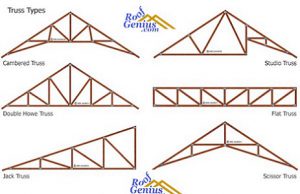
This is the vision of an industrial reboot! This transformation is where and how new jobs are to be created in the Caribbean.

The Go Lean book provides 370-pages of turn-by-turn instructions on “how” to adopt new community ethos, plus the strategies, tactics, implementations and advocacies to execute so as to reboot, reform and transform the societal engines of Caribbean society. One advocacy in rebooting the industrial landscape is to develop some sort of automotive manufacturing industry; consider the  specific plans, excerpts and headlines from the book on Page 206 entitled:

10 Ways to Develop the Auto Industry

1 Lean-in for the Caribbean Single Market
The CU will allow for the unification of the region into one market, thereby creating a single economy of 30 member-states, 42 million people and a GDP of over $800 Billion. The people of the region have cars, and will continue to need cars. There is no demand shortages for the region; in addition, the CU as the regional Taxi Commission will also furnish demand for a fleet customized as taxi cabs; modeling the NYC model – see Appendix ZG. The CU will take the lead in facilitating the vertical industries to supply the needs of a domestic auto industry. The CU’s economic engines allows for investment capital to finance the supply mechanisms and a media complex to forge a constant demand.
2 Do It Yourself – Domestic Manufacturer
A domestic auto industry is a great source for jobs for a skilled and high-wage labor force. Fulfilling the automotive needs of the CU market will create a lot of economic spin-off activity. In the US, the Detroit 3 maintains 240,000 jobs, but impact an additional 3 million jobs in related communities; see Appendix C3. By continuing to buy cars from the US, then Detroit gets the multiplier benefits of CU auto purchases rather than the CU; the same for Germany, Japan, etc. The CU will foster the local manifestation of the global auto industry to grow the domestic economy and deduct from the trade deficit. Invitations will be made to entities like Ford, GM, Volkswagen, Fiat, Toyota, Nissan, etc to deploy a local assembly plant in a CU member-state. After one company thrives from this foothold, other firms will definitely follow.
3 Bring on the future – “Lego” – Modular Platforms
Auto manufacturing disciplines are changing. Companies, like Volkswagen (VW) have adopted a modular platform approach that allows multiple brands and models (VW: includes Audi, Citroen, Bentley, Lamborghini, etc.) to share base components: engines, transmissions, ventilation systems, etc. [185] This allows for the global distribution of plug compatible parts to be assembled for models servicing different markets. Assembly plants can be erected anywhere.
4 Embrace Alternative Energy & Hybrids
5 Optimize the Logistics Industry
Automobiles are assembled at factories, but the ensemble parts are made at supplier plants all over the world. The assembly factories have to receive the parts, just in time, so as to not impede production. [184] The CU will optimize the transportation modes to ensure that doing business in the region is not a deterrent to success. Once the autos are completed, they then need to get to the marketplace, as automakers do not sell directly to the consumers, they distribute through dealerships. So vertical industries are promoted to ship, and relocate completed vehicles.
6 Exploit Service and Maintenance
7 Don’t forget “After-Market” Parts
8 Help Regional Businesses Find Foreign Markets – Export
9 Promote Auto Shows
10 Re-capture Recycled Materials

Automobile transportation solutions are not new for this Go Lean roadmap; there have been a number of previous blog-commentaries by the Go Lean movement that referenced the economic opportunities embedded in the industrial footprint of cars. See a sample list here:

https://goleancaribbean.com/blog/?p=11649 Righting a Wrong: Volkswagen Emissions Crisis
https://goleancaribbean.com/blog/?p=8650 Now it’s Detroit’s turn to rescue Silicon Valley
https://goleancaribbean.com/blog/?p=7056 Electric Cars: ‘Necessity is the Mother of Invention’
https://goleancaribbean.com/blog/?p=1277 The need for highway safety innovations – here comes Google

In summary, our Caribbean region need jobs. A better job-creation ability would help us to make our homeland a better place to live, work and play. In fact, one of the reasons why so many Caribbean citizens have emigrated away from the homeland is the job-creation dysfunction. Creating a new economic landscape will require rebooting the industrial landscape.

Yes, we can … reboot our industrial landscape, and create new jobs – and other economic opportunities.

We urge all Caribbean stakeholders to lean-in to this roadmap for economic empowerment. Other countries with less partnerships have exploited the market opportunities of auto-making; so can we; this Go Lean roadmap is viable. J

Sign the petition to lean-in for this roadmap for the Caribbean Union Trade Federation.

—————

Appendix VIDEO – Iran Automotive Industry – https://youtu.be/mB8buctuO3w

PressTV

Published on Oct 26, 2014 – Iran’s leading auto manufacturer, Iran Khodro, has presented five new products at the 2014 Tabriz Auto Expo. This only days after it started the mass production of TU3 engines for type 2, Peugeot 206 cars. IKCO has experienced a boom in production since October 2013. The 2014 production target is 600,000 sets of car and IKCO is already 2% ahead of planning. Meanwhile, the 2014 Tabriz Auto Expo itself is quite intriguing with nearly 450 Iranian and foreign companies taking part. A great chance to see current automobile models, debuts, and the latest spare parts to pimp your ride!

Share this post:
, , ,
[Top]

Industrial Reboot – Prefab Housing 101

Go Lean Commentary

Is housing just a commodity, available to the highest bidder, or a basic right that everyone is entitled to?

The answer to this question should be obvious: no matter the income level, there is the need for housing – basic needs are cataloged as food, clothing and shelter – so there must be housing solutions for all in society, the rich, middle class and the poor.

Here’s the disclosure: All housing types can benefit from pre-fabricated housing methods – see Photos below.

Prefabricated buildings consist of several factory-built components or units that are assembled on-site to complete the unit. The economic beauty of this method is the requirement for labor in the fabrication site and the assembly site. Fostering that labor means jobs and allows for an Industrial Reboot based on familiar techniques. Already, a popular prefabrication technique is utilized widely in the construction industry with Roof Trusses.

The book Go Lean … Caribbean – available to download for free – focuses on fostering Industrial Reboots for the Caribbean region. The book serves as a roadmap for the introduction and implementation of the technocratic Caribbean Union Trade Federation (CU). It identifies the strategic and tactical genius of Roof Trusses (Page 207):

The Bottom Line on Roof Trusses
In architecture a truss is a structure comprising one or more triangular units constructed with straight members whose ends are connected at joints referred to as nodes. Simple trusses are composed entirely of triangles because of the stability of this shape and the methods of analysis used to calculate the forces within them. The planar truss, pitched truss, or common truss is used primarily for roofs.Prefabrication is the practice of assembling components of a structure in a factory or other manufacturing site, and transporting complete assemblies or sub-assemblies to the construction site. Roof trusses are most commonly prefabricated. A prefabricated roof truss system is an engineered shop fabricated wood frame system that is installed on the building at the job site. It is installed on the typical timber or concrete belt beam and typically spans from one load bearing wall to another load bearing wall. Prefabricated roofs are used on almost any type of roof and are preferred when resistance to high wind speed is required because it can be quickly engineered, or when rapid site installation is required.This is the winning formula for acceptance of prefab homes. Despite objections to prefabrication strategies/concepts, no one objects to prefabricated roof trusses; the market acceptance for homes should “build-up” from this “juncture”.

The Go Lean book opened with a focus on basic needs. At the very beginning – Page 3 – the role for the CU was defined:

The CU should better provide for the region’s basic needs (food, clothing, energy and shelter), and then be in position to help supply the rest of the world. Previous Caribbean societies lived off the land and the sea; but today, the region depends extensively on imports …

For industries that depend on providing basic needs, there is an opportunity to reboot the industrial landscape and business model. There is the opportunity to launch a Prefab Housing industry.

Jobs are at stake.

According to the book Go Lean … Caribbean (Page 257) , there could be this many jobs:

Direct jobs in the design, fabrication and logistics for new pre-fab homes: 8,000

The Go Lean book prepares the business model of Prefab Housing for consumption in the Caribbean. Yes, business model refers to jobs, entrepreneurial opportunities, trade transactions, etc. In addition to these industry jobs; there is also the reality of indirect jobs – unrelated service and attendant functions – at a 3.75 multiplier rate would add another 30,000 jobs.

This constitutes an Industrial Reboot.

There is the need to supplement the housing deliveries in the Caribbean region; so factory-built homes should have a place. But, we are not talking manufactured homes, as in mobile homes or trailers. No, we are talking previously-made and fabulous, or pre-fab. Thus these homes can supply the demand for rich and middle class residents. See the samples from Appendix K; of the Go Lean book on Page 289. In addition, there are vast options for prefab homes from recycled shipping containers. These are ideal for affordable housing solutions, or even replacements for  “Shanty Towns”; see Appendix Commentary.

Providing quality housing for “pennies on the dollar” is an ideal objective for the Go Lean movement, or those pursuing the Greater Good. This Industrial Reboot pursues the Greater Good mandate; it is wise to try to please residents, advocates, entrepreneurs, bankers and governmental officials. This is in addition to the roadmap’s prime directive, defined as follows:

  • Optimization of the economic engines in order to grow the regional economy to $800 Billion & create 2.2 million new jobs.
  • Establishment of a security apparatus to ensure public safety and protect the resultant economic engines.
  • Improvement of Caribbean governance to support these engines, including a separation-of-powers between the member-states and CU federal agencies.

This Industrial Reboot is badly needed in the Caribbean region as our current economic landscape – based on Tourism – is in shambles!

Tourism is under assault in every Caribbean member-state due to the fact that many visitors shift from stay-overs to cruise arrivals. This means less economic impact to the local markets. So as a region, we must reboot our industrial landscape so as to create more jobs … from alternate sources. What options do we have?

This commentary has previously identified a number of different industries that can be rebooted under this Go Lean roadmap. See this list of previous submissions under the title Industrial Reboots:

  1. Industrial RebootsFerries 101 – Published June 27, 2017
  2. Industrial RebootsPrisons 101 – Published October 4, 2017
  3. Industrial RebootsPipeline 101 – Published October 6, 2017
  4. Industrial RebootsFrozen Foods 101 – Published October 6, 2017
  5. Industrial RebootsCall Centers 101 – Published July 2, 2018
  6. Industrial Reboots – Prefab Housing 101 – Published Today – July 14, 2018

The Go Lean book stresses that reforming and transforming the Caribbean economic engines must be a regional pursuit. This was an early motivation for the roadmap, as pronounced in the opening Declaration of Interdependence (Pages 12 – 13):

xxiv.  Whereas a free market economy can be induced and spurred for continuous progress, the Federation must install the controls to better manage aspects of the economy: jobs, inflation, savings rate, investments and other economic principles. Thereby attracting direct foreign investment because of the stability and vibrancy of our economy.

xxvi.  Whereas the Caribbean region must have new jobs to empower the engines of the economy and create the income sources for prosperity, and encourage the next generation to forge their dreams right at home, the Federation must therefore foster the development of new industries, like that of ship-building, automobile manufacturing, prefabricated housing, frozen foods, pipelines, call centers … – impacting the region with more jobs.

Accordingly, the CU will facilitate the eco-system for Self-Governing Entities (SGE), an ideal concept for Prefab Housing with its exclusive federal regulation/promotion activities. Imagine bordered campuses – with backup power generations, extra wide roads, railroad lines and shipping docks. The Go Lean movement (book and blogs) details the principles of SGE’s and job multipliers, how certain industries are better than others for generating multiple indirect jobs down the line (or off-campus) for each direct job on the SGE’s payroll.

This is the vision of an industrial reboot! This transformation is where and how the jobs are to be created.

The Go Lean book provides 370-pages of turn-by-turn instructions on “how” to adopt new community ethos, plus the strategies, tactics, implementations and advocacies to execute so as to reboot, reform and transform the societal engines of Caribbean society. One advocacy in rebooting the industrial landscape is to foster a Prefab Housing industry; consider the  specific plans, excerpts and headlines from the book on Page 207 entitled:

10 Ways to Develop a Prefab Housing Industry

1 Lean-in for the Caribbean Single Market
This treaty allows for the unification of the region into one market, thereby expanding to an economy of 30 countries, 42 million people and GDP of over $800 Billion (circa 2010). One mission of the CU is to enable the region to facilitate its own shelter (plus food & clothing). A successful campaign to repatriate the Diaspora, and attract Retirement/Medical Tourists creates a new demand level for housing. The supply of housing will be met with different solutions, including Prefabricated options. In terms of demand, Pre-Fab homes are becoming popular in the EU and North America as they are cheaper compared to many existing homes on the market. The 2007-2009 Global Financial crisis, however, deflated the cost of regular houses in North America and Europe, so the “cheaper” benefits was not so valued during/after this crisis period. But the CU is a different market than the North America or Europe, resembling the Third World more so than the developed world, so a lot of the current housing is sub-standard and need to be replaced anyway.
2 Fashionable Design
3 Energy Optimizations

To minimize the cost of energy, the CU will encourage design inclusions of solar panels, solar-water-heater, Energy-Star appliance in the Pre-fab-ulous homes. The CU region is also ideal for home “wind” turbines. The design of well air circulated ceilings, so that ceiling fans and the trade-winds alone, can satisfy artificial cooling needs (most of the times).

4 Raw Materials
5 Assembly Plants
6 Supply Chain Solutions (Contractors)
7 Transport/Logistics
8 Showrooms and Marketing
9 Mortgages – Retail and Secondary Markets

Traditionally, manufactured homes do not qualify for mortgages; they are treated as auto loans, not home mortgages. The CU will provide a secondary industry as an inducement for the retail mortgage firms to supply the direct demand.

10 Homeowners Casualty Insurance

Pre-Fab-ulous houses will be built with the structural integrity to withstand typical tropical storms/hurricanes. The CU will facilitate the Property Casualty insurance industry by offering Reinsurance sidecar options on the capital markets.

The subject of housing needs and deliveries is not new for this Go Lean roadmap; there have been a number of previous blog-commentaries by the Go Lean movement that referenced economic opportunities embedded in the housing industry. See a sample list here:

https://goleancaribbean.com/blog/?p=14250 Leading with Money Matters – As Goes Housing, Goes the Market
https://goleancaribbean.com/blog/?p=11737 Robots Building Houses – More than Fiction
https://goleancaribbean.com/blog/?p=11638 Righting a Wrong: The 2008 Housing Crisis
https://goleancaribbean.com/blog/?p=10373 Science of Sustenance – CLT Housing
https://goleancaribbean.com/blog/?p=7659 Pre-Fab Housing and Elder-Care Conjunction
https://goleancaribbean.com/blog/?p=1896 The Crisis in Black Homeownership

Prefab housing is a subset of the general housing industry; but there is a different kind of art and science for this economic endeavor! See the best practice and prospects for prefab manufacturing described in the Appendix VIDEO below.

The Caribbean has a lot of dysfunction when it comes to housing; this is indicative of our near-Failed-State status. We need all the help we can get! We have a constant risk of natural disasters (think: hurricanes and earthquakes) that consistently impact the homes in the region. There is always a need to build and rebuild. This creates the demand for Prefab Housing.

Even successful communities need creative housing solutions. Consider the sad experience of the working class in Silicon Valley, in Northern California (San Francisco Bay Area). People there cannot afford local homes on minimum wage jobs, even two or three jobs. So imagine some of the Prefab homes, discussed here-in, being offered in the Silicon Valley area. While this seems viable, the scope of the Go Lean movement is limited to the Caribbean, not San Francisco. This is just a lesson-learned for us. See more on the Silicon Valley problem in this Youtube VIDEO here: https://youtu.be/6dLo8ES4Bac.

The demand is there. We now need to be a part of the supply solution.

In summary, our Caribbean region need a better job-creation ability than is reflected in the regional status quo. If we are successful in creating more jobs, then boom, just like that, our homeland is a better place to live, work and play. With this success, we should be able to retain more of our Caribbean citizens, as one of the reasons why so many Caribbean citizens have emigrated away from the homeland is the job-creation dysfunction. Prefab Housing can also be a part of the housing solution for inviting the Diaspora to repatriate to the Caribbean homeland.

So rebooting the industrial landscape is necessary and wise; we can contribute to a reality where we can prosper where planted in the Caribbean homeland.

Yes, we can … do this: reboot our industrial landscape, and create new jobs – and provide better housing solutions, for our people, the rich, the poor and all classes in between.

We urge all Caribbean stakeholders to lean-in to this roadmap for economic empowerment. 🙂

Download the free e-Book of Go Lean … Caribbean – now!

Sign the petition to lean-in for this roadmap for the Caribbean Union Trade Federation.

—————-

APPENDIX Commentary – Bahamas Blogger Monte A. Pratt

AN ALTERNATE SOLUTION TO SHANTYTOWN HOUSING DILEMMA – Part 1

The Government has issued a July 31st deadline for all Shantytown persons to vacate their illegally built homes. However, there seems to be no planned relocation program to assist these persons. They are pretty much on their own.

These Shantytowns are a disaster just waiting to happen… they have been very lucky so far that many persons have not been killed in any of these Shantytown fires. Not to mention the health hazard these places are to the many surrounding residences.

Considering all of the above ‘negative’ factors, as a solution to this unwanted ‘vexing problem’, Government should seriously consider allowing the development ‘Container Home Parks’ to relocate and properly re-house these persons.

Container Homes (pictured below) are built from discarded (old) shipping containers is fast becoming a housing solution around the world… even in America. Not only as a clear solution to this problem, they can be a ‘quick solution that is ‘cost-effective’. These houses will be highly fire rated and they can withstand hurricanes.

In fact, once they are properly cleared, the government can give the same Shantytown ‘landowners’ to properly plan, install proper utility infrastructure and erect such ‘low cost’ container homes on these same site locations. Renting the same.

In fact, once they are properly cleared, the government can give the same Shantytown ‘landowners’ (and others) permission to properly plan, install proper utility infrastructure and erect such ‘low cost’ container homes on these same site locations. Renting the same.

This offered solution is by far better than the current situation. This move by Government is the first attempt by any administration to deal with this ‘decades’ old plaguing Shantytown problem throughout the country. (Click on photo to enlarge).

Source: Posted July 7, 2018; retrieved July 13, 2018 from: https://www.facebook.com/monte.a.pratt/posts/10156627694904059:27 )

—————

AN ALTERNATE SOLUTION TO SHANTYTOWN HOUSING DILEMMA – Part 2

It is interesting to see the many ‘negative responses’ from so many Bahamians to my Part-1 proposition for the building of Container Home Parks to replace Haitian Shantytowns. We, Bahamians are too ’emotional’ and that is why we are so easily ‘politically manipulated’. We are not analytic in our thoughts.

That being said, we should also look at the BIG PICTURE of the immigration dilemma that we are now confronted with. That is the ECONOMIC IMPACT of this ‘vexing’ immigration situation. The old saying: ‘When life gives a ‘lemon’ make lemonade. Can we turn this problem ‘lemon’ into ‘lemonade’?
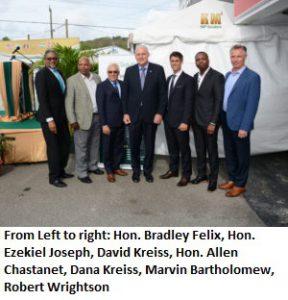
The fact is, many of these (illegal or not) persons are essential to the development of our economy. Don’t be fooled, the fact is, our already fragile construction and agricultural industries will collapse without these KEY WORKERS … that’s because they are more reliable and are also willing to work hard.

Many of these persons are taking the jobs that Bahamians are NOT prepared to do – working in the ‘hot sun’ – especially in construction, agriculture and the landscaping business. Some are making more money than many Bahamians.

By taking on these jobs, they too are making money and many can afford to pay the rents charged. Many live in Shantytowns for economic reasons. That is to SAVE their money to send it home. Estimates are, Haitians send annually some $15 million dollars back home to Haiti from The Bahamas.

Haitian Shantytowns are a ‘fixture housing lifestyle’ that they are accustom to! Shantytowns will not change unless these persons, the residents are forced to change this LIFESTYLE… and/or they are educated about the dangers (fire and health hazard conditions – see pictures below) that they are now living in these clustered and poorly built ‘housing shacks’.

These folks ain’t going nowhere, the Government December 31st deadline has come and gone, and no one has left the country… Since government[s] seem not to have the inability to get them to leave the country, then we should regularize them and properly integrate them into civil society. As there are properly integrated into civic society – make them adhere to the ‘LAW’ of the land.

As most of these folks are already working, once regularized, they can now have ‘bank accounts’ and do business in a right and proper way. By letting them work legally, they can contribute by paying work permits, national insurance and other taxes – that which not now happens – just like everyone else, and the country’s economy will be positively impacted. It will grow to the benefit of the government and the country.

So based on my proposition concept, the creation of Container Home Parks is beyond JUST HOUSING these persons, it is far more. And that why it is more important to resolve this vexing problem in eliminating these Shantytowns and thereby improving these persons lifestyle, at the same time growing the economy via their too; also making their tax contributions.

The TRUTH is, any such ‘massive deportation’ loss will most certainly hurt the country’s economy. More importantly, these people are already a burden on our Medical and Education Systems. So why not regularize them and properly integrate them into the civil society and make them ‘Tax Payers’ too?

Footnote: In qualifying the above, I am not including those ‘illegal persons’ that just came in the last 5 years or so – they should be sent back home. But rather those persons that have been living in The Bahamas for decades, and persons that were born here and only know The Bahamas.

Source: Posted July 8, 2018; retrieved July 13, 2018 from: https://www.facebook.com/monte.a.pratt/posts/10156636669644059

—————-

Appendix VIDEO –  BBC News at 10 – 17.11.16 Prefab houses could solve housing crisis – https://youtu.be/ixMEUWQNFTU

Kieran Simmonds

Published on Nov 17, 2016

Share this post:
, , ,
[Top]

Industrial Reboot – Call Centers 101

Go Lean Commentary

There used to be a time … when you called a place:

Call me at home, at work, or the private club.

Now, with mobile and smartphones, you call a person, not a place.

Everything has changed, and with it the business models of organizations that depend on the telephony activity.

Need to ‘Call a cab’?!
Nope, use an app!

For industries that depended on phone calls; they now have to reboot their industrial landscape and business model. This is bad! This is good! As it opens the opportunity for jobs in the Call Center industry.

With modern Internet Communications Technology (ICT) – think Voice-over-IP – a phone call can originate or terminate around the globe, but feel/sound like it is next door. The premise of this business model for the Caribbean is simple: Why not make those calls / answer the phone here in the Caribbean?

Jobs are at stake.

According to the book Go Lean … Caribbean (Page 257) , there could be this many jobs:

Direct and indirect jobs at physical and virtual call centers: 12,000

The Go Lean book prepares the business model of Call Centers for consumption in the Caribbean. Yes, business model refers to jobs, entrepreneurial opportunities, trade transactions, etc. In addition to these industry jobs; there is also the reality of indirect jobs – unrelated service and attendant functions – at a 3.75 multiplier rate would add another 45,000 jobs.

This constitutes an industrial reboot.

There are a number of call center installations currently in the region – see Appendix; but this Industrial Reboot measure is doubling-down on this business model. This is a wise strategy!

Notice the fine experiences being enjoyed right now in the Caribbean country of St. Lucia, with this news article here about one company – KM2 Solutions – that has expanded their Call Center footprint in this island, adding an additional 400 jobs:

Title: KM2 Solutions opens second call center in St Lucia, plans to add 400 new jobs

(PRESS RELEASE VIA SNO) – KM2 Solutions, a leading US-based, contact center services provider has opened a new facility in St. Lucia, expanding their footprint of service locations to 9 centers in 6 countries.

The 12,000 square feet Massade facility opened officially on June 19 in a ceremony graced by the Honourable Prime Minister.

Site Director Marvin Bartholomew said the company’s expansion here is an “exciting one that creates significant opportunities for an additional 400 brilliant and talented Saint Lucians. The spillover effect that the increased employment has on the economy is tremendous, and we are thrilled to be able to contribute to the island’s economic growth”.

KM2 Solutions first introduced its services to Saint Lucia in 2004 and has since continuously operated from its 20,000 square-foot office space, with capacity for 500 agents. Its new facility is about 25 minutes from the original center and is located firmly within the island’s tourism belt and population centre, providing the double positive of being able to attract excellent talent in large numbers while also hosting clients in an area known for beautiful beaches and wonderful hospitality.

Prime Minister of Saint Lucia the Honourable Allen Chastanet, who was present at Tuesday’s ceremony, lauded the investment of KM2 and thanked its principals for having confidence in the island’s economic standing and its talent.

Speaking at the official opening on Tuesday, KM2 President & CEO David Kreiss, said, “This is truly a tremendous occasion and opportunity. Our productivity and quality here is excellent, our clients love the island and are always impressed with our operations and the wonderful agents and management team. To be able to create capacity to do more of that is something we’ve always wanted to do. Naturally we’re thrilled to be able accomplish our goal of exceeding our clients’ expectations while providing an engaging and rewarding career to so many.

KM2 Solutions continues to provide clients with support in the areas of customer service and care, sales, retention, technical support, loan processing (pre-funding, originations, verifications, welcome calls), loan servicing and first-party collections, back-office services, and other functions for clients in a wide range of vertical markets.

The opening ceremony was held in at the new location on Tuesday, June 19th.

Source: Posted June 22, 2018; retrieved July 2, 2018 from: https://www.stlucianewsonline.com/km2-solutions-opens-second-call-center-in-st-lucia-plans-to-add-400-new-jobs/

The book Go Lean…Caribbean – available to download for free – serves as a roadmap for the introduction and implementation of the technocratic Caribbean Union Trade Federation (CU); this is a confederation of all 30 member-states to execute a reboot of the Caribbean economic eco-system. This CU/Go Lean roadmap has these 3 prime directives:

  • Optimization of the economic engines in order to grow the regional economy to $800 Billion & create 2.2 million new jobs.
  • Establishment of a security apparatus to ensure public safety and protect the resultant economic engines.
  • Improvement of Caribbean governance to support these engines, including a separation-of-powers between the member-states and CU federal agencies.

The Caribbean economic landscape is in shambles!

The primary driver in the region – Tourism – is under assault; more and more visitors shift from stay-overs to cruise arrivals. This means less economic impact to the local markets. As a region, we must reboot our industrial landscape and add more job-creating options.

This commentary has previously identified a number of different industries that can be rebooted under this Go Lean roadmap. See the list of previous submissions on Industrial Reboots here:

  1. Industrial RebootsFerries 101 – Published June 27, 2017
  2. Industrial RebootsPrisons 101 – Published October 4, 2017
  3. Industrial RebootsPipeline 101 – Published October 6, 2017
  4. Industrial RebootsFrozen Foods 101 – Published October 6, 2017
  5. Industrial Reboots – Call Centers 101– Published Today – July 2, 2018

The Go Lean book stresses that reforming and transforming the Caribbean economic engines must be a regional pursuit. This was an early motivation for the roadmap, as pronounced in the opening Declaration of Interdependence (Pages 12 – 13):

xxiv.  Whereas a free market economy can be induced and spurred for continuous progress, the Federation must install the controls to better manage aspects of the economy: jobs, inflation, savings rate, investments and other economic principles. Thereby attracting direct foreign investment because of the stability and vibrancy of our economy.

xxvi.  Whereas the Caribbean region must have new jobs to empower the engines of the economy and create the income sources for prosperity, and encourage the next generation to forge their dreams right at home, the Federation must therefore foster the development of new industries, like that of … the prison industrial complex. In addition, the Federation must invigorate the enterprises related to existing industries like tourism, fisheries and lotteries – impacting the region with more jobs.

xxvii. Whereas the region has endured a spectator status during the Industrial Revolution, we cannot stand on the sidelines of this new economy, the Information Revolution. Rather, the Federation must embrace all the tenets of Internet Communications Technology (ICT) to serve as an equalizing element in competition with the rest of the world. The Federation must bridge the digital divide and promote the community ethos that research/development is valuable and must be promoted and incentivized for adoption.

Accordingly, the CU will facilitate the eco-system for Self-Governing Entities (SGE), an ideal concept for Call Centers with its exclusive federal regulation/promotion activities. Imagine bordered campuses – with Internet Pop Hubs and backup power generations. The focus for the Go Lean roadmap is on Contact Center, not just Call Center. See the difference definition here:

The Bottom Line on Contact Centers
Contact Center refers to the next step in the evolution of Call Centers. With the advances in Internet and Communications Technologies (ICT), a service provider of tele-services functions can be located anywhere in the world. This is the case with the proliferation of this industry in the Philippines – employing 350,000 people in 2011, and India with 330,000 jobs.  (Jamaica and Antigua have a nascent industry). Contact Centers today do more than just phone calls, but rather business process outsourcing (BPO), including email, IM, web chat, social media and work flow processing on behalf of 3rd party clients.

Contact Centers require art and science! See the best practice described in the Appendix VIDEO below. (Though humorous, the strong point is made: there is an art to “blending in”).
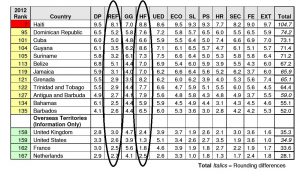
The Go Lean movement (book and blogs) details the principles of SGE’s and job multipliers, how certain industries are better than others for generating multiple indirect jobs down the line (or off-campus) for each direct job on the SGE’s payroll.

This is the vision of an industrial reboot! This transformation is where and how the jobs are to be created.

The Go Lean book provides 370-pages of turn-by-turn instructions on “how” to adopt new community ethos, plus the strategies, tactics, implementations and advocacies to execute so as to reboot, reform and transform the societal engines of Caribbean society. One advocacy in rebooting the industrial landscape is to foster the Contact Center industry; consider the  specific plans, excerpts and headlines from the book on Page 212 entitled:

10 Ways to Promote Contact Centers

1 Lean-in for the Caribbean Single Market
Lean-in for the Caribbean Single Market & Economy and the Caribbean Union Trade Federation (CU). This will allow for the unification of the region of 30 member-states into one market of 42 million people, thereby creating the economies-of-scale to deploy technological infrastructure like fiber optics wire-line networks, broadband, wireless (WiMax), and satellite capability to generate a recognizable return on investment; this roadmap projects 12,000 new jobs. The CU will embrace e-Delivery for government services thereby becoming one of the Contact Center industry’s biggest clients.
2 Laissez-fare Utility Regulations – in SGE’s
3 Enterprise and Empowerment Zones
The CU will promote Self Governing Entities (SGE) as specific limited geographical areas (Industrial Parks, Corporate Campuses) as Enterprise and Empowerment Zones for this contact center industry. Traditionally, Enterprise Zones allow for certain tax rebates and access to grant monies or low interest loans. (Empowerment Zones go a step further in promoting revitalization of under-privileged and/or blighted areas). A concentration of multiple players in defined and controlled areas will allow for communications bandwidth, secondary power supply systems, parking and commuter express options as viable solutions. There is a realistic consequence of thousands of jobs at the same place/same time.
4 Underwater Cables
5 Outreach
The CU will send trade missions to foreign markets to solicit clients for this industry, in fact the implementation of the federation specifies create Trade Mission Offices in key international cities. This outreach includes participation in Trade Shows and industry events around the world; (similar to “Thailand-branded goods and services” global promotions).
6 Capitalize on Multi-lingual Society
7 Consumer Rights
8 Promote Work-at-Home Options
9 Big Data – Analysis and Business Intelligence
The practice of data analysis must be promoted as a fine art in the region. Certifications and accreditations at the CU level will add value and financial benefits to this skill set for industry participants. Economic incentives (grants, forgive-able loans, tax rebates) will be in place to promote the related industries and spin the wheels of commerce in this area.
10 Presidential Medal of Recognition

Contact Centers are not new for this Go Lean roadmap; there have been a number of previous blog-commentaries by the Go Lean movement that referenced economic opportunities embedded in the Contact Center industry. See a sample list here:

https://goleancaribbean.com/blog/?p=15075 e-Government 3.0 – Call Centers to engage citizens
https://goleancaribbean.com/blog/?p=14191 Scheduling for Call Centers & ‘Gigs’
https://goleancaribbean.com/blog/?p=13524 Future Focused – e-Government Portals and Call Centers
https://goleancaribbean.com/blog/?p=13321 Making a ‘Pluralistic Democracy’ – Multilingual Realities
https://goleancaribbean.com/blog/?p=11184 JPMorganChase spent $10 billion on ‘Fintech’ for 1 year
https://goleancaribbean.com/blog/?p=8262 Role Model: UberEverything in Africa

In summary, our Caribbean region need jobs. A better job-creation ability would help us to make our homeland a better place to live, work and play. In fact, one of the reasons why so many Caribbean citizens have emigrated away from the homeland is the job-creation dysfunction. Creating a new economic landscape will require rebooting the industrial landscape.

Yes, we can … reboot our industrial landscape, and create new jobs – and other economic opportunities.

We urge all Caribbean stakeholders to lean-in to this roadmap for economic empowerment. The fact that Call Centers currently exists amplifies the fact that this Go Lean roadmap is viable. Make that conceivable, believable and achievable. 🙂

Download the free e-Book of Go Lean … Caribbean – now!

Sign the petition to lean-in for this roadmap for the Caribbean Union Trade Federation.

—————

APPENDIX – Company Profile: KM2 Solutions

Company KM² Solutions was founded on the idea that world-class outsourcing services could be conducted close to home.

KM2 Solutions was founded by David Kreiss (K) and Gary Meyers (M) in 2004 with its original facility in St. Lucia.

At the time, few companies were able to offer the diversified services at the competitive rates that KM2 was offering.  New business was quick to follow. By 2007 KM2 had opened facilities in Barbados and Grenada, utilizing the same model that had been so effective in St. Lucia.  As a small but growing company, KM2 Solutions was able to take on outsourcing ventures that the major players dismissed as too small or overly complicated.  The ability to adapt to client-specific needs while still delivering outstanding, industry-leading performance has been the cornerstone of the company’s success.

The Honduras and Dominican Republic sites were added in recent years to provide clients with technically adept, fully bilingual agents.  Today, KM2’s global footprint reaches 6 countries with over 3,000 employees, and continued plans for expansion into new geographic locations and business segments.

KM2 Solutions is privately held, thus eliminating the pressures of meeting shareholder and analyst expectations.  The company’s focus will always be on the client and developing long-term relationships through unparalleled service and attention to detail.

Source: Retrieved July 2, 2018 from: http://www.km2solutions.com/company/

—————

VIDEO – KM2 Solutions – Exceeding Your Expectations – https://youtu.be/k_7lBshw8IQ

Published on Jun 17, 2015 – About KM² Solutions KM² Solutions is a leading provider of nearshore business process outsourcing (BPO) services, specializing in the finance, telecom, media, and technology industries. With contact centers throughout the Caribbean and Central America (St. Lucia, Barbados, Grenada, Dominican Republic, and Honduras), KM² provides clients with cost-effective, bilingual solutions for customer care, sales and retention, collections, customer support, and back office processing, through voice, chat, mobile, and email.

For further information, please contact: Joe Wester VP Sales at (262) 790-2656 www.km2solutions.com

—————–

Appendix VIDEO – White Voice – https://www.imdb.com/title/tt5688932/videoplayer/vi184531737

Scene from the 2018 movie Sorry to Bother You.
In an alternate present-day version of Oakland (California), telemarketer Cassius Green discovers a magical key to professional success – White Voice – propelling him into a macabre universe.

Share this post:
, ,
[Top]

‘Time to Go’ – States must have ‘population increases’

Go Lean Commentary

“We need more people” – News Article conclusion below.

Economics is a complex social science. But it all boils now to advanced variations of this simple law:

Supply and demand

Whether it’s a product, service or population, there must be a good measure of supply and demand for eco-systems to work. When either side of the equation becomes dysfunctional, the supply or the demand, the stewards of the eco-system (company leaders or community leaders) must effect change in either the supply-side or demand-side, or both.

This is the actuality of the US State of Vermont today. They need more people! They need more supply and more demand. ‘Things’ are bad now, but will get even worse going forward if there are no mitigations to the current trends.

  • Vermont’s aging population … the median age nationally has increased by almost five years to 37.8 while Vermont’s has increased by 10 years
  • rapidly shrinking tax base
  • 16,000 fewer workers [now] than [they had] in 2009
  • “Must think outside the box …”

So that State is willing to pay $10,000 to people to move into the State.

Wait, what?

See the full news article and related VIDEO here:

Title: Vermont will pay you $10,000 to move there and work from home
By: Abigail Hess

Considering leaving the big city behind in favor of somewhere scenic? Now could be the right time.

On Wednesday, Quartz reports, Vermont Governor Phil Scott signed a bill into law that will pay people $10,000 if they move to Vermont and work remotely for an employer out of state. The Remote Worker Grant Program will take effect on January 1, 2019, and will help cover moving, living and working expenses. Grants can be used for relocation, computer software and hardware, broadband internet and access to a co-working space.

Currently, Vermont has budgeted funds to support 100 grants for the first three years and 20 additional workers each year from then on. Grant recipients will receive $10,000 over two years that will be distributed on a first-come, first-served basis.

This policy is intended to address Vermont’s aging population. While the state may be rich in beautiful landscapes and maple syrup, it has a rapidly shrinking tax base.

“Vermont continues to age, and age faster than the nation as a whole,” writes Art Woolf for the Burlington Free Press. “Over the past quarter of a century, the median age nationally has increased by almost five years to 37.8 while Vermont’s has increased by 10 years.”

This trend has made Vermont one of the oldest states in the nation.

In addition to the remote worker grant program, the bill also launches the state’s Stay-to-Stay initiative. The program, aimed at convincing the state’s 13 million annual tourists to permanently relocate to Vermont, will be organized by the Vermont Department of Tourism and Marketing and will connect visitors with local employers, entrepreneurs, community leaders and potential neighbors.

“We have about 16,000 fewer workers than we did in 2009. That’s why expanding our workforce is one of the top priorities of my administration,” Scott said in a statement. “We must think outside the box to help more Vermonters enter the labor force and attract more working families and young professionals to Vermont. That’s exactly what the Department of Tourism and Marketing did with this program for out-of-state visitors who may be interested in living full-time in Vermont, and I’m excited to see it move forward.”

The initiative will take place over four weekends and will be piloted in three communities. One of those selected communities is Brattleboro, Vermont. “The one thing we need more of in Vermont is people,” says Adam Grinold, executive director of the Brattleboro Development Credit Corporation. “We need more visitors, we need more employees, we need more business owners. We need more people.”

Source: CNBC Consumer & Business News – posted May 31, 2018; retrieved June 27, 2018 from: https://www.cnbc.com/2018/05/31/vermont-will-pay-you-10000-to-move-there-and-work-from-home.html

————

VIDEO – Move to Vermont, make $10,000 –  https://youtu.be/Q5Pum5HfNkQ


Published on Jun 1, 2018 – Fox Business News’ Tracee Carrasco on a new bill signed in Vermont allowing the state to offer $10,000 to those who move there and work remotely for out-of-state employers.

  • Category: News and Politics
  • License: Standard YouTube License

Vermont has a problem and they are willing to throw money at it for resolution. This just might work! Another observed-and-confirmed principle in Economics is that:

People Respond to Incentives in Predictable Ways

Think about the viability for Vermont. There are candidate individuals (and families) out there. These ones do work from home and can reside/live anywhere. Why not do it – reside – in Vermont and work from Vermont? Especially if “someone” will pay for it. These candidates have to live somewhere:

… an entity will pay you $10,000 to do something – Reside –  that you would otherwise have to do for free, or pay for!

This challenge for Vermont parallels with challenges for the Caribbean homeland. This commentary continues the series on Time to Go back to the Caribbean homeland as residents. In this instance, we are considering the reality for life in communities that constantly lose their population. Things will go from bad to worse. Considering the assessment of our Caribbean member-states:

Oops, too late! We are already Failing!
(See Appendix F below for references to Failed-State Indices for Caribbean member-states)

We have lost, and will continue to lose, so many of our professional population – one report measured the abandonment rate at 70 percent. Something must be done! Solutions must be sought!

This is commentary Number 11 in this series from the movement behind the book Go Lean … Caribbean which started in September 2016 with the first 6 issues. Now, this commentary, examines the actuality of an American State trying to recruit “good” people away from their current abodes. This is something we must be conscious of. Our advocacy is simple:

  • Our Caribbean Diaspora need to plan to repatriate to the region – we need them back!
  • While our young people, in the homeland, many times set their sights on foreign (American) shores – we need to dissuade this.

So, is this a competition? Are we trying to recruit people to come to the Caribbean instead of going to Vermont?

Ready or not, we have a battle on our hands.

The Go Lean book – available to download for free – serves as a roadmap for the technocratic Caribbean Union Trade Federation (CU). The book specifically states (Page 49):

Who are our competitors and how do we stack up against them?

Considering the customers of the CU (citizens, governments, business community, Diaspora, visitors, bank depositors, investors, monitors, NGOs), who else will be competing for their attention? From the Trade Federation perspective, this “attention” includes their time, talents, and their treasuries. Even as basic as the citizens of the region, though we’d like to think that we have a captive audience, the truth of the matter is that other role-players are campaigning to the same marketplace and audience. Consider the aspect of media: Caribbean citizens can listen to radio, watch television and read newspapers/magazines from anywhere around the world. Also, consider the City of Miami – Florida; they brand themselves as the “gateway to the Americas”. So they would rather provide most of the services – for profit – that the CU intends to provide for its citizens.

The world is flat … and as such, all societies are now competitors for the resources of Caribbean society. …

(The US State of Kansas is also incentivizing people to move there. See here: https://youtu.be/d7Gj1wDfKFM)

Vermont is cold … in the winter months! The same as Canada, the UK and Europe; they are all cold-weather locations during the winter season, yet the Caribbean has lost large numbers to those countries – our Diaspora. Weather is therefore nullified as a competitive disadvantage; it’s all about economics … and security … and governance. See more here:

The Go Lean roadmap posits that the Caribbean region is in crisis now, and so many are quick to flee for refuge in foreign countries. But the “grass is not necessarily greener on the other side”. Those destinations need our “new blood” the same as we need our people to remain. But in those countries, racial disparities continue to present challenges for new immigrants, especially those of Black-and-Brown characteristics. It is therefore easier and better for all stakeholders, that our people remain in the homeland; plus for those that have departed, that they would repatriate to the homeland.

But words alone will not suffice, we must also compete.

No, we do not need to give $10,000 to each individual. But we do need to invest … in our people and our infrastructure! We must give the effort to reform and transform our societies. We do have defects; we do have inadequacies; we are flirting with a Failed-State status. So we have heavy-lifting to do! The Go Lean/CU roadmap is designed for that heavy-lifting … to optimize Caribbean society through economic, security and governing empowerments. The Go Lean roadmap has these 3 prime directives for optimizing our societal engines:

This is the conclusion (for now) on this series of commentaries on this theme Time to Go! There are 11 in total, starting in September 2016; those 6 submissions were as follows:

  1. Time to Go: Spot-on for Protest
  2. Time to Go: No Respect for our Hair
  3. Time to Go: Logic of Senior Immigration
  4. Time to Go: Marginalizing Our Vote
  5. Time to Go: American Vices; Don’t Follow
  6. Time to Go: Public Schools for Black-and-Brown

Now, we consider these 5 new entries along that same theme:

  1. Time to Go: Windrush – 70th Anniversary
  2. Time to Go: Mandatory Guns – Say it Ain’t So
  3. Time to Go: Racist History of Loitering
  4. Time to Go: Blacks Get Longer Sentences From ‘Republican’ Judges
  5. Time to Go: States must have Population Increases

All of these commentaries relate to Caribbean people and their disposition in foreign lands and why they need to Go Back Home. Communities need their populations to grow! Our Caribbean member-states need our populations to grow. So many macro-economic programs – pensions, unemployment insurance, etc. – need gradual increases to remain solvent!

This subject is a familiar theme for this Go Lean commentary. This movement has consistently related the economic realities from societal abandonment. Less is not more! Consider these prior submissions:

https://goleancaribbean.com/blog/?p=14954 Overseas Workers Programs are not the Panacea; they create crises
https://goleancaribbean.com/blog/?p=14746 Calls for Repatriation Strategy to reverse Abandonment
https://goleancaribbean.com/blog/?p=13391 After Hurricane Maria : Destruction and Defection for Puerto Rico
https://goleancaribbean.com/blog/?p=12996 After Irma, Failed-State Indicators: Destruction and Defection
https://goleancaribbean.com/blog/?p=9203 Where the Jobs Are – Employers in the United States – They want our cheap labor
https://goleancaribbean.com/blog/?p=8155 Referendum Outcome: Impact on the ‘Brain Drain’
https://goleancaribbean.com/blog/?p=5759 Bad Role Model: Pressed by Debt Crisis, Doctors Leave Greece in Droves
https://goleancaribbean.com/blog/?p=4278 Businesses Try to Stave-off Brain Drain as “Baby Boomers” Retire
https://goleancaribbean.com/blog/?p=4185 Caribbean Ghost Towns: It Could Happen…Again
https://goleancaribbean.com/blog/?p=2547 Miami’s Success versus Caribbean Failure
https://goleancaribbean.com/blog/?p=841 Having Less Babies is Bad for the Economy

To Caribbean people: do not move to Vermont. While they are good people there – they are a great role model to emulate in terms of Green Energy initiative – it is not home. The Black-and-Brown of the Caribbean may forever be a minority there as their demographics feature 90.5% Non-Hispanic White with only 1.2% Black, 2.3% Hispanic and 2.7% Asian. This is still America; a society not built for the Caribbean’s Black-and-Brown. It is a dangerous proposition to be Black in America.

But to better compete, we must still “take care of our business” at home. The Go Lean book identifies the reasons why people abandon their homeland as “push and pull”. While the “push” refers to the societal defects that people take refuge from, the “pull” is mostly due to messaging. Our people perceive that the US is better for them, and that landing in the US will assuage all societal short-comings.

This is far from the truth. And it’s cold … in the winter!

You see! Good messaging will help mitigate our societal abandonment rate.

The Go Lean book asserts that it is easier for the Black-and-Brown populations in the Caribbean to prosper where planted in the Caribbean, rather than in Vermont or any American State, or Canada or Europe.

We need our Caribbean people to remain in the homeland, and they need to Stay Home! This is the quest of the Go Lean/CU roadmap. The book presents 370 pages of instructions for how to reform and transform our Caribbean member-states. It stresses the key community ethos that needs to be adopted, plus the strategies, tactics, implementations and advocacies necessary to optimize the societal engines in a community.

No doubt, it is Time to Go! We urge all Caribbean stakeholder, in the homeland and in the Diaspora to lean-in to this Go Lean/CU roadmap. This is our quest to reform and transform our society and make it better to live, work and play. 🙂

Download the free e-Book of Go Lean … Caribbean – now!

Sign the petition to lean-in for this roadmap for the Caribbean Union Trade Federation.

————-

APPENDIX F – CU Indicators & Definitions

The Bottom Line on the Failed States Index  – Go Lean … Caribbean (Page 134)
The Failed States Index (Appendix F) is an annual ranking of 177 nations based on their levels of stability and capacity. The Index is compiled by the Fund for Peace Institute, an independent, nonpartisan, 501(c)(3) non-profit research and educational organization, based in Washington DC, that works to prevent violent conflict and promote sustainable security. As a leader in the conflict assessment and early warning field, the Fund for Peace focuses on the problems of weak and failing states. The strength of the Failed States Index is its ability to distill millions of pieces of information into a form that is relevant as well as easily digestible and informative, as an indicator code.

Each Indicator is rated on a 1 to 10 scale with 1 (low) being the most stable and 10 (high) being the most at-risk of collapse and violence. Think of it as trying to bring down a fever, with high being dangerous, low being acceptable. An obvious example, consider Somalia, the state’s complete inability to provide public services for its citizens would warrant a score of 10 for the Public Service indicator. Conversely, Sweden’s extensive provision of health, education & other public services would produce a 1 or 2 for that indicator. – Fund For Peace®

Source: Appendix F of Go Lean … Caribbean (Pages 271 – 272)

For the Caribbean Failed-State rankings, some states are too small for consideration (i.e. Antigua, St. Kitts, etc.) and the Overseas Territories (Aruba, St. Martin, etc.) are not considered due to the fact that their legacy countries are ranked. The rankings for 2012 are as following:

Failing Indicator:

REF – Massive Movement of Refugees or IDPs
Forced uprooting of large communities as a result of random or targeted violence and/or repression, causing food shortages, disease, lack of clean water, land competition, and turmoil that can spiral into larger humanitarian and security problems, both within and between countries. This indicator refers to refugees leaving or entering a country.
This indicator include pressures and measures related to: Displacement, Refugee Camps, IDP (Internally Displaced Persons) Camps, Disease Related to Displacement, Refugees per capita, and IDPs per capita.

HF – Chronic and Sustained Human Flight and Brain Drain
When there is little opportunity, people migrate, leaving a vacuum of human capital. Those with resources often leave before, or just as, conflict erupts. This “brain drain” of professionals, intellectuals and political dissidents fearing persecution or repression is an indicating of the failing status of a state. Other features are voluntary emigration of “the middle class”, particularly economically productive segments of the population, such as entrepreneurs, businesspeople, artisans and traders, due to economic deterioration. The end result is the growth of exile communities and Diasporas.
This indicator include pressures and measures related to: Migration per capita, Human Capital, and Emigration of Educated Population

Share this post:
, ,
[Top]

Regional Tourism Coordination – No Longer Optional

Go Lean Commentary

No one can hide anymore!

There are 30 different member-states, with 5 different colonial legacies and 4 different languages, and yet people around the world only considers our region as One Caribbean:

Event Consequence to Perception
Devastating hurricane Oops, the Caribbean is unable to function commercially
Devastating earthquake Oops, the Caribbean is unable to function commercially
Emergence of a pandemic Oops, the Caribbean is unable to function commercially

All of the Caribbean member-states are in this “same boat”, so this is a matter of image and geographic misconceptions, more so than it is about disasters.

So, good or bad, the fate of one Caribbean member-state is tied to the other member-states, when it comes to tourism. See this point conveyed in this news article here:

Title: Geographic misconceptions hurting Caribbean economies
By Sarah Peter

Nassau, Bahamas – The mistaken perception among many travelers of the complete devastation of the Caribbean in the wake of the 2017 hurricane season caused further economic destruction to the region’s economy.
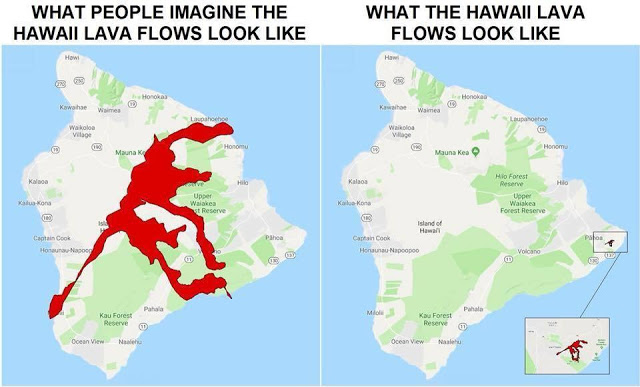
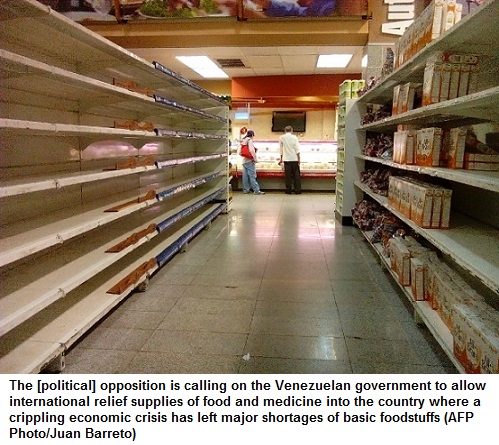
That’s according to the Chair of the Caribbean Tourism Organization (CTO), Joy Jibrilu. She raised the concern amid staggering losses among countries which were not impacted by the 2017 Hurricane season.

Jibrilu says following the devastation caused by hurricanes Irma and Maria to some islands in the region, many travelers called and canceled for countries who were not impacted by the storm.

This resulted in a significant drop in hotel room demand across the entire Caribbean. In light of that another disaster, an economic storm, was created which resulted in great losses in tourism revenue and a challenge for tourism officials.

“All our travel partners, all of them without exception called and said that we have heard the Caribbean  is closed.”

She further added that  Caribbean islands irrespective of if they were not actually impacted by the storm were economically  affected.

We all lost when people were not sure if or when to book if they canceled. You saw a dip in bookings because people thought that the islands which were not impacted were. We must quantify the figures of lost business so we can share the story with the world to tell them how serious it is. “

The chair of the CTO says that over one billion US dollars in tourism revenue was lost in the wake of last year’s hurricane season, the costliest hurricane season on record.

Jibrilu, who is also the Director of Tourism for the island of Barbados says the region’s reconstruction and recovery effort has been estimated at close to  6 billion dollars.

“Tourism is the region’s greatest driver of foreign exchange tax revenue and reliable vehicle of poverty reduction and human capital development for the region’s small island developing states. The tragedy is that the dampening of demand occurred even among islands that were not in the path of the storm.  This contributes to  an economic disaster as tourism visitation dropped of resulting in significant losses in revenue.”

Jilbrilu blamed the international media for the problem. She says their reports describes the region as if it was one country as opposed to several different islands. The chairman of the CTO says this inaccurate reporting is costing a region millions and negatively impacting lives in the region.

“First of all if we look at international news reporters when they talk about a hurricane they say the “Caribbean” has been impacted. They generalize and say the entire Caribbean. As a result, people look at the Caribbean as a whole unit as oppose to all these different countries, thousands of miles away from each other. To put it in context the Bahamas alone from north to south covers one hundred thousand square miles that is further than the distance of  Toronto to New York.  So if a storm happens in New York no one would say I am not going to Toronto. They just would not, it just does not make sense but when people lump the Caribbean  together as just one region ( as if it was just one country ) it  is negative.”

Jilbrilu says the region’s economy and people lives depend on accurate reporting and think making the international media more aware of this matter is a matter of economic prosperity or suffering for the region’s people.

“What we have done is to educate people of the geography of the Caribbean, that the same time it takes to travel from the Bahamas to Barbados is the same as traveling from London in the UK to Rome, Italy. So what happens to the Bahamas does not impact Barbados and vice versa.  We really  want to get that message out.”

Jilbrilu made the disclosure at the 2018 annual Caribbean Aviation Meetup in the Bahamas. Dubbed as the Caribbean region’s largest aviation conference the annual event brings together major players from the aviation and tourism industries aimed at tackling problems faced by the  World and the Caribbean’s Tourism and Aviation industries.
Source: Posted and retrieved June 15, 2018 from: https://stluciatimes.com/2018/06/15/geographic-misconceptions-hurting-caribbean-economies/

As related in the foregoing, the whole world knew of the 2017 devastation from Hurricanes Irma and Maria. But the affected (wiped-out) islands were only Barbuda, Grenada and Puerto Rico. And yet:

… following the devastation caused by hurricanes Irma and Maria to some islands in the region, many travelers called and canceled for countries who were not impacted.

Again, this is a matter of image and geographic misconceptions, more so than it is about disasters or even tourism. The world is telling the Caribbean: Better band together to assuage your challenges. We are united in affliction, we might as well be united in solutions. Yes, it is no longer optional for our region to confederate as a Single Market. This, we must do!

Confederation is not a bad thing! In a previous blog-commentary, it was asserted that our Caribbean member-states all suffer from the same inadequate image, and thusly we can all benefit from a regional elevation. Yes, the effect of regional integration could be an Increased Caribbean Tourism Market Share. That commentary quoted:

It’s time to take inventory of Caribbean tourism:

It has been weighed in the balance; it has been measured …
It has been found wanting!

Tourism is the current dominant industry; the goal is to “stand on the shoulders” of previous accomplishments, add infrastructure not possible by just one member-state alone and then reap the benefits. Imagine this manifestation in just this one new strategy: inter-island ferries that connect all islands for people, cars and goods.

The movement behind the book Go Lean … Caribbean seeks to reboot the economic engines of the Caribbean member-states. So while tourism is the region’s primary economic driver, it is inadequate for providing the needs of the people in the region, and inadequate for dealing with the crisis of natural disasters. We must do better!

The Go Lean book serves as a roadmap for the introduction and implementation of the Caribbean Union Trade Federation (CU). The CU is designed to be a technocratic intergovernmental entity that shepherds economic growth for the Caribbean region and mitigate against all security-disaster challenges. The goal is to reboot and optimize the region’s economic, security and governing engines with a regional focus.

The Go Lean/CU roadmap will employ strategies, tactics and implementations to impact its prime directives; identified with the following 3 statements:

  • Optimization of the economic engines in order to grow the regional economy to $800 Billion & create 2.2 million new jobs.
  • Establishment of a security apparatus to ensure public safety and protect the resultant economic engines. This includes a professional disaster planning and response organization.
  • Improvement of Caribbean governance to support these engines, including a separation-of-powers between the member-states and CU federal agencies, as in Self-Governing Entities.

The Go Lean book provides 370-pages of turn-by-turn instructions on “how” to adopt new community ethos, plus the strategies, tactics, implementations and advocacies to execute so as to elevate Caribbean image in good times and bad. One advocacy seeks to optimize the Caribbean tourism brand throughout the world; consider some specific plans, excerpts and headlines from the book on Page 133 entitled:

10 Ways to Better Manage Image

1 Lean-in for the Caribbean Single Market
This will allow for the unification of the region into one market of 42 million people across 30 member-states, with a GDP of $800 Billion (according to 2010 figures). In addition, the treaty calls for collective bargaining with foreign countries and industry representatives for causes of significance to the Caribbean community. There are many times when the media portray a “negative” depiction of Caribbean life, culture and people. The CU will have the scale to effectuate negotiations to better manage the region’s image, and the means by which to enforce the tenets.
2 Media Industrial Complex
The Caribbean Central Bank will settle electronic payments transactions; this will allow electronic commerce to flourish in the region. With the payment mechanisms in place, music, movies, TV shows and other media (domestic and foreign) can be paid for and downloaded legally. For a population base of 42 million, this brings a huge economic clout.
3 Respect for Intellectual Property
4 Sentinel in Hollywood
5 Anti-Defamation League
This Pro-Jewish organization provides a great model for marshalling against negative stereotypes that can belittle a race. The CU will study, copy, and model a lot of the successes of the Anti-Defamation League. This organization can also be consulted with to coach the CU’s efforts. (Consider the example of Uptown Yardies Rasta Gang in the game Grand Theft Auto [206]).
6 Power of the Boycott
The CU is an economic negotiating bloc. The power to ban, boycott and censure trade in intellectual property is a powerful deterrent for producers to be balanced in their media portrayals. A CU federal agency will assume the role to rate pending moves, as performed by MPAA in the US. While the content may not be banned outright, placing a Rated R, NC-17 or X label to a film will affect the economic results from the box office. This is the “power of the purse”.
7 Freedom of the Press
8 Libel and Slander Litigation and Enforcement
9 Public Relations and Press Releases
To facilitate effective communications, the CU’s agencies will embrace the role of “Press Secretaries” to disseminateaccurate records, news and portrayals of Caribbean life. This role is Offensive rather than the above Defensive tactics.
10 Image Award Medals and Recognition
Following the model of the NAACP Image Awards, the CU will recognize and give accolades for individual and institutions that portray a positive “image” of Caribbean life and CU initiatives. This would be similar to the Presidential Medal of … / Congressional Medal of …

The likelihood of more hurricanes in the Caribbean is undeniable. This is further exacerbated with the reality of Climate Change. Our Caribbean region must be prepared to Rinse & Repeat. It is no longer an option to maybe manage our image on a regional level. The world must know that we are bigger than just whatever island has been recently impacted by a natural disaster. This challenge is heavy-lifting because, as a region, we rarely muster an adequate response to our natural disasters.

The Go Lean book explains further that the Caribbean region must install a security apparatus with the directive to prepare and respond to natural disasters. The efficiency and effectiveness of a Caribbean Emergency Management Agency must be streamlined to ensure the world of the business continuity of our systems of commerce. This quotation is derived from the book at Page 184:

Modeled after FEMA in the US, this agency will be charged with the preparation, response and reconstruction for the regions for the eventual manifestations of hurricanes, earthquakes, tsunamis, flooding and other declared disasters, natural and man-made like medical epidemic, drought, pollution, oil spills, terrorism, etc.

This is what it means to be a technocracy, to promote the best delivery arts and sciences, in this case for Professional Emergency Management; as explained further at Page 64:

The CU treaty calls for a collective security agreement for the Caribbean member-states to prepare-respond to natural disasters, emergency incidents and assuage against systemic threats against the homeland. The CU employs the professional arts and sciences of Emergency Management to spread the costs and risks across the entire region. Outside of hurricanes or earthquakes, the emergency scope includes medical trauma, pandemic incidents and industrial accidents (i.e. oil or chemical spills) – any scenario that can impact the continuity of the economic engines and/or community.

This above scenario describes the dynamics of regional tourism promotion and protection. Yes, managing regional tourism means optimizing the planning and response for natural disasters. This is no longer optional for this homeland. We are compelled to invest in this integration and collaboration. We must have the leverage to spread the costs, risks and premium base across the entire region. Only then will the rest of the world know that any hurricane in the Caribbean does not mean a shutdown of the entire Caribbean region. Our image will then be:

Be our guests … in rain and shine.

Consider this Hawaiian example; yes this problem of promoting tourism while contending with natural disasters is not just an issue for the Caribbean. Rather, the US State of Hawaii is contending with the same thing right now, with the active Kīlauea volcano. See related news VIDEO in the Appendix below.

There is the need for better stewardship of the economic engines on touristic islands, be it Hawaii or the Caribbean. It is what it is! And our situations will worsen; things will get worse before they get worst. This is due to the reality and eventuality of Climate Change. This need to assuage against the threats and realities of Climate Change was an original intent of the Go Lean roadmap. The opening Declaration of Interdependence stresses this (Page 11) in the first of many pronouncements:

i. Whereas the earth’s climate has undeniably changed resulting in more severe tropical weather storms, it is necessary to prepare to insure the safety and security of life, property and systems of commerce in our geographical region. As nature recognizes no borders in the target of its destruction, we also must set aside border considerations in the preparation and response to these weather challenges.

The Go Lean movement has previously detailed many related issues and advocacies for disaster awareness and abatement. Consider this sample of previous blog-commentaries:

https://goleancaribbean.com/blog/?p=15012 In Life or Death: No Love for Puerto Rico
https://goleancaribbean.com/blog/?p=14925 ‘Climate Change’ Reality!? Numbers Don’t Lie
https://goleancaribbean.com/blog/?p=14832 Example of Manifesting Environmental Change
https://goleancaribbean.com/blog/?p=13391 After Maria, Failed-State Indicators: Destruction and Defection for Puerto Rico
https://goleancaribbean.com/blog/?p=12996 After Irma, Failed State Indicators: Destruction and Defection
https://goleancaribbean.com/blog/?p=12977 After Irma, Barbuda Becomes a ‘Ghost Town’
https://goleancaribbean.com/blog/?p=12900 The Logistics of Disaster Relief
https://goleancaribbean.com/blog/?p=12879 Disaster Preparation: ‘Rinse and Repeat’
https://goleancaribbean.com/blog/?p=11858 Looking and Learning from the Cautionary Tale of Kiribati
https://goleancaribbean.com/blog/?p=9455 Fix ‘Climate Change’ – Yes, We Can
https://goleancaribbean.com/blog/?p=7103 COP21 – ‘Climate Change’ Acknowledged
https://goleancaribbean.com/blog/?p=6893 A Meteorologist’s View On Climate Change
https://goleancaribbean.com/blog/?p=4673 Climate Change‘ Merchants of Doubt … to Preserve Profits!!
https://goleancaribbean.com/blog/?p=2465 Book: ‘This Changes Everything: Capitalism vs. the Climate’
https://goleancaribbean.com/blog/?p=2276 Climate Change May Affect Food Supply Within a Decade
https://goleancaribbean.com/blog/?p=1883 Climate Change May Bring More Kidney Stones
https://goleancaribbean.com/blog/?p=1817 Caribbean grapples with intense cycles of flooding & drought

In summary, the issues in this commentary relate more to image and geographic misconceptions than they do tourism and natural disasters. Do we have the global reputation to “take a punch and stand back up”.

Unfortunately, no!

So we must reform and transform the Caribbean’s societal engines so as to assuage the dangers of Climate Change and natural disasters; pandemics too. This is the quest of the Go Lean roadmap, and this is not just a pipe dream; it is conceivable, believable and achievable for our regional stakeholders to do better and be better.

All Caribbean stakeholders – residents and tourists alike – are urged to lean-in to this roadmap for change … and empowerment. Yes, we can make the region a better place to live work and play. 🙂

Sign the petition to lean-in for this roadmap for the Caribbean Union Trade Federation.

—————-

Appendix VIDEO – Hawaii tourism hit hard by Kilauea volcano eruption – https://youtu.be/89ppKLS5ufI

CBS Evening News
Published on Jun 2, 2018 – As molten lava destroys more homes in Hawaii, police have been ordered to arrest people who refuse to evacuate. Thousands have already been forced to flee to safety. Now, dramatic images broadcast around the world are having another impact — on tourism. CBS News correspondent Carter Evans reports.

Share this post:
, , ,
[Top]

“Venezuela” – ‘On the Menu’ in California – ENCORE

“Gavin Newsom wants to turn this State into Venezuela” …
Republicans are always underdogs in [California] statewide contests, Nehring said, but he sees Newsom as vulnerable to the perception that he’s elitist and out of touch.

Still, Cox showed no signs of moderating the aggressive tone that generated excitement among conservatives, saying “Gavin Newsom wants to turn this state into Venezuela.”

… the aggressive tone of this accusation has generated a lot of excitement among conservatives. Here’s the background: Gavin Newsom is the Democratic Party’s nominee for Governor of California – the General Election will be November 6, 2018 – he is currently the Lieutenant Governor and also the former Mayor of San Francisco. He is a liberal icon in a liberal State.

Yet the one criticism that is sticking to candidate Newsom by Republican Party candidate John Cox is the fearful pattern of Venezuela.

Yes, Venezuela is “On the Menu” in California. But wait, that should be our ‘vantage point’ in the Caribbean!

… this was the theme of a previous blog-commentary from the movement behind the book Go Lean…Caribbean. Venezuela is in our neighborhood – with a long coastline on the Caribbean Sea – dysfunctions there spillover to our Caribbean member-states. It’s time to Encore that blog from May 31, 2016 . See the Encore as follows:

——————–

Go Lean Commentary – Venezuela: Watching a ‘Train Wreck in Slow Motion’>

Watching Venezuela now is like watching a “train wreck … in slow motion”.

- Photo 1Didn’t we just see this recently … in a land far-far away – Greece? If the Venezuela parallel with Greece continues, we will be able to accurately predict that “things will get worse before it gets worse!”

This is not just an academic consideration for Caribbean stakeholders, as Venezuela boasts a vast coastline on the Caribbean Sea; they also share a border with one Caribbean member-state, Guyana, and supplies the region with a lot of its oil. And just recently with its PetroCaribe initiative, Venezuela was one hope to help eradicate poverty in the Caribbean. But now Venezuela is having a tough time protecting its own self from the pangs of poverty.

Many people are now waking up – inside and outside Venezuela – to the harsh realities that a Failed-State is emerging in our neighborhood, right in front of our eyes. Unfortunately, we – the Caribbean – are all too familiar. Consider here how Venezuela’s political institutions are crumbling:

  • The opposition parties refused to collaborate with the governing officials
  • Riots in the streets
  • Assassinations of government officials
  • Economy in shambles
  • Currency in disarray
  • Cupboards and store shelves are bare – see Photo above
  • Basic government services – social contract – are not being executed
  • External parties – UNASUR – are coming in to intercede

See the news article here conveying this harsh reality in Venezuela:

Title: Venezuelan officials, opposition meet mediators over standoff
By: Ernesto Tovar

- Photo 2Caracas (AFP) – Venezuelan officials and opposition foes have held separate secret meetings in the Dominican Republic with a group of ex-world leaders seeking a way out of political crisis, officials said, as an ex-military reserve leader was shot dead.

Representatives of both sides of Venezuela’s political standoff met former Spanish prime minister Jose Luis Rodriguez Zapatero, former Dominican president Leonel Fernandez and Panama’s ex-president Martin Torrijos “in recent days” under the auspices of the Union of South American Nations, UNASUR, to seek a “framework for a national dialogue,” the organization said in a statement.

The mediating former leaders found “a desire for dialogue on both sides,” for which new meetings were proposed to “agree on an agenda that meets the requirements of each party and a method for engaging in national dialogue,” the statement said.

The meetings were the initiative of President Nicolas Maduro, Venezuelan Foreign Minister Delcy Rodriguez tweeted, saying the effort “promotes peace, respect for the rule of law and the defense of sovereignty and territorial integrity.”

The main center-right opposition group Democratic Unity Roundtable (MUD) said in a statement that its conditions for the talks were the holding of a referendum over Maduro’s recall, freeing political prisoners, allowing exiles to return and “an end to prosecutions for political persecution.”

The opposition is also calling on the government to allow international relief supplies of food and medicine into the country and seek to end a crippling economic crisis “generated by official corruption and an economic model that is spreading misery.”

The three former leaders also held talks with Maduro and the opposition under UNASUR auspices in Caracas two weeks ago.

Publicly, the two sides could not be further apart.

MUD which blames Maduro for the economic crisis, accuses the electoral authorities of dragging their feet in processing their petition for a referendum on removing the socialist leader from office.

Although a survey last month showed 68 percent of Venezuelans want Maduro to leave office and to hold new elections, he has said the referendum drive has “very little support.”

Venezuela has the world’s largest oil reserves, but its economy is reeling from the collapse in global crude prices.

Venezuelans are experiencing severe food and medicine shortages compounded by the world’s highest inflation — almost 190 percent in 2015, which the International Monetary Fund predicts will balloon to 700 percent in 2016.
Source: Yahoo/AFP Online News – Retrieved May 29, 2016 from: https://www.yahoo.com/news/venezuelan-officials-opposition-meet-mediators-over-standoff-020940920.html?nhp=1

Yet still, there are a lot of lessons for the Caribbean to consider from this crisis – a “crisis is a terrible thing to waste” declares the book Go Lean … Caribbean (Page 8). As a region with past and present Failed-States, we must not fail to discern these lessons.

- Photo 6For starters, there is a super-national organization that Venezuelan stakeholders are able to escalate to for mediation, the Union of South American Nations – UNASUR according to the Spanish-language acronym. A super-national organization – for mediation and conflict resolution – is also the goal of the Caribbean Union Trade Federation (CU). In both cases, the goal is to model the European Union. See details and VIDEO of the UNASUR organization in the Appendices below:

The UNASUR organization, as described below, is part of the Latin American integration movement, combining the efforts of the Andean Community and the Southern Common Market (Mercosur). This should be the primary strategy for mitigating Failed-State status in South America. While Venezuela is a sovereign state, they can still be held accountable to their neighbors in UNASUR; this would be a product of peer pressure and the threat of sanctions. Too bad this integration movement is not complete in its construct, as this would have been most effective in stopping this “slow motion train wreck”.

In fact, in the 2004 South American Summit, representatives of these twelve South American nations participated:

1 These countries are also considered to be associate members of Mercosur.
2 These countries are also considered to be associate members of the Andean Community.
C Caribbean Community (CARICOM) member state
L Latin American Integration Association (ALADI) member state
M Accessing member to Mercosur
Source: Retrieved May 31, 2016 from: https://en.wikipedia.org/wiki/Union_of_South_American_Nations

The leaders of these countries announced the intention of modeling the new community in the mold of the European Union, including a unified passport, a parliament and, eventually, a single currency. The then Secretary General of the Andean Community – Allan Wagner – speculated at that time that the advanced union like the EU should be possible within the next fifteen years. Based on these experiences in Venezuela, this integration movement is a “day late and a dollar short”.

The actuality of Venezuela is more than just a cautionary tale for the Caribbean, it is also a Caribbean problem. In addition to the presence of Caribbean Community member-states of Guyana and Suriname, many aspects of Venezuelan life parallel those of the Caribbean in general and in specifics – see these previous blog-commentaries:

Mono-Industrial Economy

Majority of consumer goods imported and pricey

Close proximity with other countries, not suffering this failing status

Long legacy of bad community ethos regarding fiscal responsibilities

Validation of regional criticism

High societal abandonment rate

Large Diaspora abroad

Challenge of security / public safety

Incompetent governance

Being at the brink of disaster, at the precipice, is perhaps the only time communities are willing to reform and transform. This reality is what inspired the book Go Lean…Caribbean to serve as a roadmap for the introduction and implementation of the technocratic Caribbean Union Trade Federation (CU). The events of the 2008 Global Financial Crisis was the trigger for the composition of this book. Will Venezuela now use this crisis to forge change for its society?

Will the Caribbean forge change by just “observing and reporting” on Venezuela? There are many lessons to learn and the Caribbean community is urged not to ignore. The lessons learned, and codified in the pages of the Go Lean book can now be enhanced with the examination of the realities of Venezuela. This examination must consider the reality of the economic, security and governing aspects of Venezuelan society and the resultant consequences on their neighbors.

Like the UNASUR initiative, the Go Lean roadmap calls for a confederation of the 30 member-states of the Caribbean into a Single Market of 42 million people so as to leverage the governing burden across a separation-of-powers: a federal government and member-state government. This allows a new response to national crisis (economic, security and governance). This vision is at the root of the Go Lean roadmap, embedded in the opening Declaration of Interdependence (Page 12 – 13):

x. Whereas we are surrounded and allied to nations of larger proportions in land mass, populations, and treasuries, elements in their societies may have ill-intent in their pursuits, at the expense of the safety and security of our citizens. We must therefore appoint “new guards” to ensure our public safety and threats against our society, both domestic and foreign. The Federation must employ the latest advances and best practices … to assuage continuous threats against public safety.

xii. Whereas the legacy in recent times in individual states may be that of ineffectual governance with no redress to higher authority, the accedence of this Federation will ensure accountability and escalation of the human and civil rights of the people for good governance, justice assurances, due process and the rule of law. As such, any threats of a “failed state” status for any member state must enact emergency measures on behalf of the Federation to protect the human, civil and property rights of the citizens, residents, allies, trading partners, and visitors of the affected member state and the Federation as a whole.

xvi. Whereas security of our homeland is inextricably linked to prosperity of the homeland, the economic and security interest of the region needs to be aligned under the same governance. Since economic crimes, including piracy and other forms of terrorism, can imperil the functioning of the wheels of commerce for all the citizenry, the accedence of this Federation must equip the security apparatus with the tools and techniques for predictive and proactive interdictions.

xxiv. Whereas a free market economy can be induced and spurred for continuous progress, the Federation must install the controls to better manage aspects of the economy: jobs, inflation, savings rate, investments and other economic principles. Thereby attracting direct foreign investment because of the stability and vibrancy of our economy.

The following details from the book Go Lean … Caribbean are the community ethos, strategies, tactics, implementations and advocacies necessary to effect the turn-around of the Caribbean societal engines – to learn from failing communities (like Greece and Venezuela):

Community Ethos – Economic Systems Influence Individual Choices Page 21
Community Ethos – Economic Principles – Money Multiplier Page 21
Community Ethos – Governing Principles – Lean Operations Page 24
Community Ethos – Ways to Impact the Future Page 26
Community Ethos – Ways to Impact Turn-Arounds Page 33
Community Ethos – Ways to Impact the Greater Good Page 37
Strategy – Vision – Confederate all 30 Member-States into a Single Market Page 47
Strategy – Mission – Build and foster local economic engines Page 45
Strategy – Mission – Fortify the stability of our mediums of exchange Page 45
Strategy – Mission – Dissuade further Brain Drain Page 46
Tactical – Confederating a Permanent Union Page 63
Tactical – Fostering a Technocracy Page 64
Tactical – Separation of Powers – Federal Government versus Member-States Page 71
Implementation – Assemble all Member-States Page 96
Implementation – Ways to Pay for Change Page 101
Implementation – Foreign Policy Initiatives at Start-up – Relationship with Venezuela Page 102
Implementation – Ways to Foster International Aid Page 115
Planning – Ways to Model the European Union Page 130
Planning – Ways to Improve Failed-State Indices Page 134
Planning – Lessons Learned from 2008 – The Global Financial Crisis Page 136
Advocacy – Ways to Grow the Economy Page 151
Advocacy – Ways to Create Jobs Page 152
Advocacy – Better Manage the Social Contract Page 170
Advocacy – Ways to Preserve Caribbean Heritage Page 218
Advocacy – Ways to Protect Human Rights Page 218
Advocacy – Ways to Re-boot Cuba – Marshall Plan Tactic for Failed-States Page 236
Advocacy – Ways to Re-boot Haiti – Marshall Plan Tactic for Failed-States Page 238
Appendix – Caribbean Failed-State Indicators and Definitions Page 271

Unless mitigated, Venezuela will become a Failed-State. We hope that the country, and their South American neighbors can secure their society to assure peace and the protection of human rights.

We also have near Failed-States in the Caribbean: Think: Haiti, Puerto Rico and Cuba; plus a host of countries just slightly behind them. We have to foster our own turn-around strategies for our region.

Venezuela is out of scope for the Go Lean roadmap; our quest is to reform and transform the Caribbean. The roadmap declares that the responsibility for fixing the Caribbean though must fall first-and-foremost on the Caribbean, its people and institutions. The effort is not easy; the Go Lean book describes it as heavy-lifting. But the returns will be worth the investment. This is true for Venezuela … and the Caribbean.

This is the goal of the Go Lean roadmap: to make the Caribbean a better place to live, work and play. 🙂

———————-

Appendix – Union of South American Nations – UNASUR

- Photo 3The Union of South American Nations (USAN; Spanish: Unión de Naciones SuramericanasUNASUR; Portuguese: União de Nações Sul-Americanas,UNASUL; Dutch: Unie van Zuid-Amerikaanse NatiesUZAN) is an intergovernmental regional organization comprising 12 South American countries.

The UNASUR Constitutive Treaty was signed on 23 May 2008 – [legally completing the integration between the Andean Community and the Southern Common Market (Mercosur) nations] – at the Third Summit of Heads of State, held in Brasília, Brazil.[7] According to the Constitutive Treaty, the Union’s headquarters will be located in Quito, Ecuador.[2] On 1 December 2010, Uruguay became the ninth state to ratify the UNASUR treaty, thus giving the union full legality.[8][9] As the Constitutive Treaty entered into force on 11 March 2011, UNASUR became a legal entity during a meeting of Foreign Ministers in Mitad del Mundo, Ecuador, where they had laid the foundation stone for the Secretariat Headquarters.[10] The South American Parliament will be located in Cochabamba, Bolivia, while the headquarters of its bank, the Bank of the South are located in Caracas,Venezuela.[2]

On 4 May 2010, at a heads of state summit held in Campana, 47 miles north of Buenos Aires, former Argentine President Néstor Kirchner was unanimously elected the first Secretary General of UNASUR for a two-year term.

Structure

At the moment, the provisional structure of the UNASUR is as follows:

  • A permanent Secretariat is to be established in Quito, Ecuador. The Secretary General, with a two-year mandate, is to be elected on a consensual basis among the Heads of State of the member states. Former Argentine President Néstor Kirchner was designated the first Secretary General on 4 May 2010.[20]
  • The presidents of the member nations will have an annual meeting, which will have the superior political mandate. The first meeting was in Brasília (Brazil) on 29–30 September 2005. The second meeting was in Cochabamba (Bolivia) on 8–9 December 2006. The third meeting was held in Brasília on 23 May 2008.
  • - Photo 5The Presidency Pro Tempore, is exercised for a one-year period on a pro tempore basis by one of the heads of state of each UNASUR Member State, the succession following alphabetical order. The first leader to occupy this position was Chilean President Michelle Bachelet. According to Decisions Reached in the Political Dialogue[21] which was signed during the First South American Energy Summit.
  • The ministers of foreign affairs of each country will meet once every six months. They will formulate concrete proposals of action and of executive decision. The President of the Mercosur’s permanent representatives committee and the director of the Mercosur’s department, the Andean Community’s general secretary, the general secretary of the Latin American Integration Association (ALADI) and the permanent secretaries of any institution for regional cooperation and integration, Amazon Cooperation Treaty Organization among others, will also be present at these meetings.
  • Sectorial Ministers’ meeting will be called upon by the presidents. The meetings will be developed according to Mercosur’s and CAN’s mechanisms.
  • On 9 December 2005, a special commission was established in charge of advancing the process of South American Integration. It consists of 12 members, whose function is to elaborate proposals that will help the process of integration between the South American nations.

An Executive Commission, which was created by the II CSN meeting, was transformed in the Political Commission or Delegates Council, according to Decisions Reached in the Political Dialogue.[21]

- Photo 4
=============================

APPENDIX – VIDEO – UNASUR –  https://youtu.be/rNjkr7y8-Kc

Published on Apr 16, 2016 – The Union of South American Nations, or UNASUR, marks its ninth anniversary this Sunday, April 17 with a 12-kilometer race in Ecuador with the aim of “bringing the regional body closer to the people.” The UNASUR Secretary-General Ernesto Samper resumed in a few words what the bloc is all about: “To promote peace, democracy and respect of human rights, as well as a Latin American integration. http://multimedia.telesurtv.net/v/una…

Share this post:
, ,
[Top]

“Profiting” from Hurricanes – ENCORE

If only there was a way to make money on the hurricane season …

… there is.

Its called reinsurance sidecars – where investors buy-in to the risks and returns of insurance premiums.

Yes, we can …

This was detailed in a previous blog-commentary from the movement behind the book Go Lean…Caribbean. As we embark on the Hurricane Season 2018, it is important to remember that there is a better way – a Way Forward – to optimize Caribbean life. Let’s Encore that blog from October 13, 2017 here-now:

——————

Go Lean Commentary – Funding Caribbean Risk

A penny saved is … a penny.

This is not exactly how the expression goes. It is supposed to refer to the good habit of “saving money”, which is a positive community ethos – underlying sentiment that informs the beliefs, customs, or practices. “Saving money” is a practice that the stewards of any society should advocate for its people. It’s a simple formula: Earn money; spend some; save some!

CU Blog - Funding Caribbean Risk - Photo 0This is easier said than done. A practice of saving money – for a rainy day or any catastrophe – takes discipline, the discipline not to spend. One tactic is to pay yourself first! Before paying other overhead expenses, the priority would be to set aside monies in a savings program or some insurance program. Yes, an insurance strategy could be even smarter for rainy days or catastrophes; it allows the hedging of risks by leveraging across a wider pool; more people – savers – put-in and only a few … or just one withdraws. This is also the approach of the thoughtful Caribbean Catastrophe Risk Insurance Fund (CCRIF).

It is very sad when communities are not able to save or insure a “Rainy Day” fund for when it rains, especially in the tropical region where it doesn’t just rain, but pours and storms.

What is sadder is when the heavy-lifting of “savings” or insurance is done, but the dollar amount is not enough; because a “penny saved is only just a penny”.

This is the Caribbean dilemma, today. We have just experienced 2 devastating hurricanes – Irma and Maria – that have wreaked havoc on our region. We now need to tap the “Rainy Day” fund and frankly, it is simply not enough!

See the actuality of this dilemma in the news article here and the related VIDEO on CCRIF:

Title: CCRIF to make payouts to countries affected by Hurricane Irma

The Caribbean Catastrophe Risk Insurance Facility (CCRIF SPC) will be making payouts totaling over US$15 million to three Caribbean countries affected by Hurricane Irma earlier this week.

“The CCRIF board and team offer condolences for the loss of life and hope these funds will provide some assistance. We stand ready to support the Government and people of these CCRIF countries as they recover from the effects of this devastating hurricane,” said CCRIF chief executive officer, Isaac Anthony.

Payments totaling US$15.2 million
The CCRIF plans to pay US$6.7 million to Antigua and Barbuda, US$6.5 million to Anguilla and US$2.2 million to St. Kitts-Nevis.

The storm has been blamed for at least 10 deaths and millions of dollars in property damages as it made its way through the Lesser Antilles this week.

In the case of Barbuda, Prime Minister Gaston Browne has ordered an immediate evacuation of some 1,800 people on the island. The government has also announced a state of emergency.

“Nothing is functional in Barbuda,” Browne said, adding that he has given instructions that ‘every single soul must be taken out of Barbuda”.

Verifying payouts
The CCRIF is verifying the payout calculations and is in discussion with the three governments about arrangements for the transfer of these funds. The transfer will be completed within 14 days after the storm, as mandated by CCRIF’s operational guidelines.

“Anguilla and St. Kitts & Nevis also have Excess Rainfall (XSR) policies and CCRIF is assessing if these policies were triggered by the rains from Hurricane Irma, which may possibly result in a second payout under those policies. The assessment under the XSR policies will be determined in the next few days,” the CCRIF added.

Segregated portfolio company
The CCRIF SPC is a segregated portfolio company, owned, operated and registered in the Caribbean. It limits the financial impact of catastrophic hurricanes, earthquakes and excess rainfall in the Caribbean and, since 2015, Central American governments by quickly providing short-term liquidity when a parametric insurance policy is triggered.

Since its inception in 2007, the facility has made 22 payouts for hurricanes, earthquakes and excess rainfall to 10-member governments totaling approximately US$69 million.

It said the new payments will bring the total payouts to approximately US$85 million. Last year CCRIF made payouts totaling US$29 million to four countries after Hurricane Matthew.

Source: Posted September 9, 2017; retrieved October 13, 2017 from: https://www.caribbeannationalweekly.com/caribbean-breaking-news-featured/ccrif-make-payouts-countries-affected-hurricane-irma/

———–

VIDEO – WorldBank CCRIF Caribbean Gold – https://youtu.be/IlZ56ON9KnI

CCRIF SPC

Published on Feb 28, 2017 – Working towards sovereign risk protection in the Caribbean and Central America.

We now know what CCRIF is; how it works; and who can engage this program in terms of investors and beneficiaries; see more encyclopedic details in the Appendix A below. But …

… it is the assessment of this commentary that CCRIF is flawed and inadequate for the Caribbean’s needs.

  • The CCRIF is designed for 1-in-15 year hurricane (Source: http://www.ccrif.org/content/rtfs-faqs). Truth be told, thanks to Climate Change we are seeing storms yearly.
  • There is a catastrophic trigger – complicated formula – which generates a “measly” payout for a hurricane or earthquake.
  • This is a sovereign fund only and the trigger level is dependent on the coverage purchased by individual countries.
  • The pool is too small. Member governments may purchase coverage which triggers for a ‘one-in-15-year’ hurricane and a ‘one-in-20-year’ earthquake, with maximum coverage of US$100M available for each peril. The cost of coverage is a direct function of the amount of risk being transferred, ensuring no cross-subsidisation of premiums and a level playing field for all participants.

This fund is “too little, too late” for what the region needs. But like all other Caribbean integration (CariCom) efforts, it is a good start! Still after 50 years of autonomous rule, the expectation is not just for a start, it is for solutions.

While the habit of “saving” or paying for insurance is a best-practice, the financial amount is important for the subjective assessment of success. The foregoing news article relates that $15.2 million will be paid-out to the affected countries. But this amount is so small, too small! Consider just for Hurricane Irma alone, the estimated damage amount has been tabulated at $62.87 billion. While $50 Billion of that amount relates to the US Mainland, the rest is the Caribbean. So the Caribbean’s share is $12.9 Billion; – see Chart here:

CU Blog - Funding Caribbean Risk - Photo 1

CU Blog - Funding Caribbean Risk - Photo 3

On the other hand. Hurricane Maria, has estimates for damages at $51.2 billion. None of that amount relates to the US Mainland, the amount is all Caribbean, considering Puerto Rico and the US Virgin Islands; see Chart here:

CU Blog - Funding Caribbean Risk - Photo 2

CU Blog - Funding Caribbean Risk - Photo 4

An immediate result of these storms on the Caribbean will probably be the defection of masses of people from the region. As of this date – October 12, 2017 – Puerto Rico is still not relieved nor recovered from Hurricane Maria. In fact 84% of the island still does not have power. Since Puerto Ricans are American citizens, they have freedom of movement from the island to the US Mainland. In addition, many of the other Caribbean islands will also suffer abandonment as the Diaspora is large in North America and Europe; so bonafide family connections will allow for their emigration. Expect more societal abandonment in the region!

The quest of the movement behind the book Go Lean…Caribbean – available to download for free – is to lower the abandonment rates of our Caribbean citizens fleeing the homeland. Our quest is conceivable, believable and achievable. But the status quo of the Caribbean Catastrophe Insurance Funds is inadequate; it must improve. It must reform and transform.

The Go Lean book describes a Way Forward. The book serves as a roadmap for the introduction and implementation of the technocratic Caribbean Union Trade Federation (CU), for the elevation of Caribbean society – for all member-states. This CU/Go Lean roadmap has these 3 prime directives:

  • Optimization of the economic engines in order to grow the regional economy to $800 Billion and create 2.2 million new jobs.
  • Establishment of a Homeland Security and Emergency Management apparatus to ensure public safety and protect the resultant economic engines.
  • Improve Caribbean governance to support these engines, including a separation-of-powers between the member-states and CU federal agencies.

The book stresses that reforming and transforming the Caribbean societal engines must be a regional pursuit. This was an early motivation for the roadmap, as pronounced in the opening Declaration of Interdependence (Pages 12 – 13):

xi. Whereas all men are entitled to the benefits of good governance in a free society, “new guards” must be enacted to dissuade the emergence of incompetence, corruption, nepotism and cronyism at the peril of the people’s best interest. The Federation must guarantee the executions of a social contract between government and the governed.

xvi. Whereas security of our homeland is inextricably linked to prosperity of the homeland, the economic and security interest of the region needs to be aligned under the same governance. Since economic crimes … can imperil the functioning of the wheels of commerce for all the citizenry, the accedence of this Federation must equip the security apparatus with the tools and techniques for predictive and proactive interdictions.

xxiv. Whereas a free market economy can be induced and spurred for continuous progress, the Federation must install the controls to better manage aspects of the economy: jobs, inflation, savings rate, investments and other economic principles. Thereby attracting direct foreign investment because of the stability and vibrancy of our economy.

Way Forward
The Go Lean book provides 370-pages of turn-by-turn instructions on “how” to adopt new community ethos, plus the strategies, tactics, implementations and advocacies to execute so as to reboot, reform and transform the societal engines of Caribbean society, despite the reality and risks of natural disasters. Accepting that the CCRIF is a government-member-state solution, the Go Lean book proposes a supplement of private solutions, instruments facilitated by the region’s Capital Markets – think the Caribbean version of Wall Street. The Go Lean book proposal is for region-wide (all 30 member-states; 4 language groups) private insurance companies and Re-insurance Side-cars traded on the Capital Markets.

Re-insurance Side-cars is a derivative product – see Appendix B below.

Consider these sample references to Re-insurance Side-cars in the book:

Tactical – Separation of Powers – Emergency Management Agency
There is also an economic/financial scope for this department. As the effort for a comprehensive property-casualty fund to cover the entire Caribbean region will also be coordinated by this agency. The classic solution is a large pool of premium payers and claims filed by the affected area. Beyond this model, there are also advanced products like re-issuance side-cars for market assimilation. The public can then invest and profit from the threat/realization of regional risks. This derivative product is a bet, a gamble, but in the end, the result is an insurance fund of last resort, much like the Joint Underwriters Agency (JUA) in Florida.
Page 76
Implementation – 10 Ways to Pay for Change
#8 Homeland Security – Hurricane Insurance Fund
The risk pool for a 42-million population is so much lower than each member-state’s sole mitigation efforts. The CU will establish (contract with a service provider) reinsurance funds (& sidecars) from Day One, and glean the excess premiums-over-claims as profit.
Page 101
Advocacy – Ways to Improve Housing
#7 Hurricane Risk Reinsurance Fund
This fund fits the Emergency Management objectives of rebuilding and restoring after disasters. This is similar to Florida’s Joint Underwriters Association but instead regulated at the CU so as to maximize the premium pool.
Page 161
Advocacy – 10 Revenue Sources
#9 Natural Disaster Insurance Fund
The CU’s Emergency Management Agency will maintain a regional reinsurance fund to offset the casualty coverage for insurance carriers in the region. The difference between premiums and claims constitute revenues for the CU.
Page 172
Advocacy – 10 Ways to Impact Public Works
#10 Capital Markets
A Single Market and currency union will allow for the emergence of viable capital markets for stocks and bonds (public and private), thereby creating the economic engine to fuel growth and development. This forges financial products for “pre” disaster project funding (drainage, levies, dykes, sea walls) and post disaster recovery (reinsurance sidecars).
Page 175
Advocacy – 10 Ways to Improve for Natural Disasters
#7 JUA-style Insurance Fund
The fiduciary management of premiums and claims to allow the immediate response for reconstruction after disasters. These financial services, sidecars traded in markets can be direct or indirect as in reinsurance or insurer-of-last-resort.
Page 184
Advocacy – 10 Ways to Improve for Emergency Management
#8 Casualty Insurance Plans – Reinsurance “Sidecars”
There is also a financial battlefield for Emergency Management. Reinsurance “sidecars” allow investment bonds to be issued in the financial marketplaces to raise casualty insurance capital. The differences between premiums and claims (plus reserves) equal the profit to be shared with investors. The end result should be an insurance fund of last resort.
Page 196
Advocacy – 10 Ways to Develop a Pre-Fab Housing Industry
#10 Homeowners Casualty Insurance
Pre-Fab-ulous houses will be built with the structural integrity to withstand typical tropical storms/hurricanes. The CU will facilitate the Property Casualty insurance industry by offering Reinsurance sidecar options on the capital markets.
Page 207
Advocacy – 10 Ways to Improve Fisheries
#7 Marine Financing
There is also a financial element to facilitating the Fisheries industry. Most fishing vessels require financing and insurance products. These areas have gotten more challenging with “climate change” and the higher propensity of hurricanes. The CU will adopt advanced financial products for the region’s capital-securities markets (i.e. Reinsurance sidecars), to offer the prospects of risk-and-reward to investors, thus inviting more capital to the fisheries marketplace.
Page 210
Advocacy – 10 Ways to Help the Middle Class
Prepare for Healthcare Realities
While a Middle Class family may obtain a degree of financial security, just one catastrophic illness or injury can wipe out a family’s fortunes overnight. This is the proper place for insurance programs, and reinsurance to hedge the risk for carriers. The CU will proactively institute the measures (industry) to protect Middle Class prospects from this real threat.
Page 223
Advocacy – 10 Ways to Impact The Guianas
#4 Disaster Planning, Preparation & Response
Hurricanes are not as dire a threat for The Guianas as the Caribbean islands, yet still there are many natural disasters for this region to contend with, namely floods and earthquakes. The CU will better plan-prepare-respond, with Public Works initiatives (dams, reservoirs) and a professional Emergency Management Agency to recover with elite financial products (i.e. reinsurance sidecars) powered by regional capital markets to restore economic engines in these Guiana states.
Page 241
Advocacy – 10 Ways to Impact Belize
#7 Disaster Planning, Preparation & Response
Mother Nature, and the reality of hurricanes, has been a source of contention in Belize’s history. The CU will better plan-prepare-respond with a professional Emergency Management Agency and recover with elite financial products (i.e. reinsurance sidecars) powered by capital markets so as to restore economic engines in Belize.
Page 243
Advocacy – 10 Ways to Impact US Territories
Advocacy – 10 Ways to Impact British Territories
Advocacy – 10 Ways to Impact Dutch Territories
Advocacy – 10 Ways to Impact French Territories
#4 Disaster Preparation & Response
Mother Nature, and the reality of hurricanes, plays no favorites for one island versus another due to political alliance. The CU will better plan-prepare-respond, with a professional Emergency Management Agency and recover with elite financial products (i.e. reinsurance sidecars) powered by regional capital markets to quickly restore economic engines in the islands.
Page 244
Page 245
Page 246
Page 247 

As an individual or community, to devote a lot of time, talent and treasury to the practice of saving for a rainy-day fund is a positive ethos. To only get a measly payoff – after all that effort – is a negative. The manifestation of this measly scenario calls into question the whole viability of the Caribbean “pooled” risk strategy.

We must do better! Solutions abound!

Engaging a bigger-better regional risk pool, makes our quest realistic: a better homeland to live, work and play.  We urge all Caribbean stakeholders – governments and citizens alike – to lean-in for the empowerments described here in the book Go Lean…Caribbean. 🙂

Download the free e-Book of Go Lean … Caribbean – now!

Sign the petition to lean-in for this roadmap for the Caribbean Union Trade Federation.

———

Appendix A – Caribbean Catastrophe Risk Insurance Facility Segregated Portfolio Company (CCRIF SPC)

[This CCRIF SPC] is an insurance company headquartered in the Cayman Islands.[1] The sixteen original member-countries of CCRIF included participants in CARICOM, and the membership of the Board of Directors is selected by CARICOM and by the Caribbean Development Bank.[2]

Founded in 2007,[3] CCRIF is the first multi-country risk pool in the world, and was the first insurance instrument to successfully develop parametric policies backed by both traditional and capital markets.[4] These parametric polices release funds based upon factors of a calamity such as rainfall or wind speed, which can speed up the payout of policies rather than after damages are assessed. Unused funds are kept as reserves for the CCRIF. The fund can also draw upon $140 million in funds underwritten by reinsurance.[5]

Other regions have since setup similar government disaster instance including in the African Union and the Pacific Islands Forum.[5]

Source: Retrieved October 13, 2017 from:  https://en.wikipedia.org/wiki/Caribbean_Catastrophe_Risk_Insurance_Facility_Segregated_Portfolio_Company

———

Appendix B – Reinsurance sidecars

Reinsurance sidecars, conventionally referred to as “sidecars”, are financial structures that are created to allow investors to take on the risk and return of a group of insurance policies (a “book of business”) written by an insurer or reinsurer (henceforth re/insurer) and earn the risk and return that arises from that business. A re/insurer will only pay (“cede”) the premiums associated with a book of business to such an entity if the investors place sufficient funds in the vehicle to ensure that it can meet claims if they arise. Typically, the liability of investors is limited to these funds. These structures have become quite prominent in the aftermath of Hurricane Katrina as a vehicle for re/insurers to add risk-bearing capacity, and for investors to participate in the potential profits resulting from sharp price increases in re/insurance over the four quarters following Katrina. An earlier and smaller generation of sidecars were created after 9/11 for the same purpose.

Market growth following 9-11 and Hurricane Katrina
In the years following 9-11, the idea of raising funds from capital markets investors in addition to re/insurers to support quota-shares arose and a handful of such ventures were consummated (Olympus, DaVinci, Rockridge). These were the first true sidecars, and were a natural outgrowth of the development of re/insurance as an asset class in the form of catastrophe bonds.

Following Hurricane Katrina, the sidecar idea became very prominent among investors because it was seen as a way to participate in the risk/return of the higher-priced (“hard”) reinsurance market without investing in either existing reinsurers (who might have liabilities from the past that would undermine returns) or new reinsurers (“newcos” that would have a lengthy and expensive “ramp up” period).

Source: Retrieved October 13, 2017 from: https://en.wikipedia.org/wiki/Reinsurance_sidecar


Share this post:
, ,
[Top]